US10729671B2 - Zinc complexes of hydrazones and (thio)semicarbazones and their use for the treatment of cancer - Google Patents
Zinc complexes of hydrazones and (thio)semicarbazones and their use for the treatment of cancer Download PDFInfo
- Publication number
- US10729671B2 US10729671B2 US15/545,975 US201615545975A US10729671B2 US 10729671 B2 US10729671 B2 US 10729671B2 US 201615545975 A US201615545975 A US 201615545975A US 10729671 B2 US10729671 B2 US 10729671B2
- Authority
- US
- United States
- Prior art keywords
- cycloalkyl
- alkyl
- independently selected
- alkynyl
- alkenyl
- Prior art date
- Legal status (The legal status is an assumption and is not a legal conclusion. Google has not performed a legal analysis and makes no representation as to the accuracy of the status listed.)
- Active
Links
- 0 *.*/C(C)=N\NC1=NC=CC1.CC.[1*]/C([2*])=N/CC(=[Y])N([3*])[4*] Chemical compound *.*/C(C)=N\NC1=NC=CC1.CC.[1*]/C([2*])=N/CC(=[Y])N([3*])[4*] 0.000 description 13
- CWQAXKGGGHIFOX-LDADJPATSA-N C/C(=N\C/C1=N/C2=C(C=CC=C2)C1)C1=CC=CC=N1 Chemical compound C/C(=N\C/C1=N/C2=C(C=CC=C2)C1)C1=CC=CC=N1 CWQAXKGGGHIFOX-LDADJPATSA-N 0.000 description 2
- APCHVCWTOPGCLC-LDADJPATSA-N C/C(=N\C/C1=N/C2=C(C=CC=C2)N1C)C1=CC=CC=N1 Chemical compound C/C(=N\C/C1=N/C2=C(C=CC=C2)N1C)C1=CC=CC=N1 APCHVCWTOPGCLC-LDADJPATSA-N 0.000 description 2
- DHGYBEOPNBJDES-CXUHLZMHSA-N C/C(=N\CC1=NC2=C(C=CC=C2)S1)C1=NC=CN1 Chemical compound C/C(=N\CC1=NC2=C(C=CC=C2)S1)C1=NC=CN1 DHGYBEOPNBJDES-CXUHLZMHSA-N 0.000 description 2
- QLCTYQYEXKMVLR-LICLKQGHSA-N C/C(=N\N/C1=N/C2=C(C=CC=C2)O1)C1=CC=CC=N1 Chemical compound C/C(=N\N/C1=N/C2=C(C=CC=C2)O1)C1=CC=CC=N1 QLCTYQYEXKMVLR-LICLKQGHSA-N 0.000 description 2
- FCOKIXXAAMPRTG-LICLKQGHSA-N C/C(=N\N/C1=N/C2=C(C=CC=C2)S1)C1=C(O)C=CC=C1 Chemical compound C/C(=N\N/C1=N/C2=C(C=CC=C2)S1)C1=C(O)C=CC=C1 FCOKIXXAAMPRTG-LICLKQGHSA-N 0.000 description 2
- WKVJAFTUYKOSOR-LICLKQGHSA-N C/C(=N\N/C1=N/C2=C(C=CC=C2)S1)C1=CC=CC=N1 Chemical compound C/C(=N\N/C1=N/C2=C(C=CC=C2)S1)C1=CC=CC=N1 WKVJAFTUYKOSOR-LICLKQGHSA-N 0.000 description 2
- MHDZNYNDDCHXRN-XNTDXEJSSA-N C/C(=N\NC(=S)N1CCC1)C1=CC(N(C)C)=CC=N1 Chemical compound C/C(=N\NC(=S)N1CCC1)C1=CC(N(C)C)=CC=N1 MHDZNYNDDCHXRN-XNTDXEJSSA-N 0.000 description 2
- GKDSTRSBRNCXJB-MDWZMJQESA-N C/C(=N\NC(=S)N1CCC1)C1=NC=CN=C1 Chemical compound C/C(=N\NC(=S)N1CCC1)C1=NC=CN=C1 GKDSTRSBRNCXJB-MDWZMJQESA-N 0.000 description 2
- SGLILPLVIPBGLY-KEBDBYFISA-N CC(=N\NC1=NC2=C(C=CC=C2)S1)/C1=N/C2=C(C=CC=C2)N1 Chemical compound CC(=N\NC1=NC2=C(C=CC=C2)S1)/C1=N/C2=C(C=CC=C2)N1 SGLILPLVIPBGLY-KEBDBYFISA-N 0.000 description 2
- BTGQRVYGIRAWLN-UHFFFAOYSA-N CC(C)(C)C1=NC2=CC=CC=C2N1.CC(C)(C)C1=NC=CC=C1.CC(C)(C)C1=NC=CN1.CC(C)(C)C1=NC=CN=C1 Chemical compound CC(C)(C)C1=NC2=CC=CC=C2N1.CC(C)(C)C1=NC=CC=C1.CC(C)(C)C1=NC=CN1.CC(C)(C)C1=NC=CN=C1 BTGQRVYGIRAWLN-UHFFFAOYSA-N 0.000 description 2
- SNMKWUGYFGGEIP-HTXNQAPBSA-N CC(C)/C(=N\CC1=NC2=C(C=CC=C2)S1)C1=CC=CC=N1 Chemical compound CC(C)/C(=N\CC1=NC2=C(C=CC=C2)S1)C1=CC=CC=N1 SNMKWUGYFGGEIP-HTXNQAPBSA-N 0.000 description 2
- TZNMIPZSCBKLDZ-LDADJPATSA-N CC/C(=N\C/C1=N/C2=C(C=CC=C2)S1)C1=CC=CC=N1 Chemical compound CC/C(=N\C/C1=N/C2=C(C=CC=C2)S1)C1=CC=CC=N1 TZNMIPZSCBKLDZ-LDADJPATSA-N 0.000 description 2
- YONYSJQWNZOMRV-FLPKAINGSA-N C.C/C(=N/N/C1=N/C2=C(C=CC=C2)C1)C(C)(C)C.CC Chemical compound C.C/C(=N/N/C1=N/C2=C(C=CC=C2)C1)C(C)(C)C.CC YONYSJQWNZOMRV-FLPKAINGSA-N 0.000 description 1
- QNOAHIGULHFIGS-UBTFDZPSSA-N C.C/C(=N\NC(=O)N1CCC1)C1=CC=CC=N1.C/C(=N\NC(=S)N1CCC1)C1=CC=CC=N1.O=C=O.[H]CN(CC(=O)O)CC(=O)O Chemical compound C.C/C(=N\NC(=O)N1CCC1)C1=CC=CC=N1.C/C(=N\NC(=S)N1CCC1)C1=CC=CC=N1.O=C=O.[H]CN(CC(=O)O)CC(=O)O QNOAHIGULHFIGS-UBTFDZPSSA-N 0.000 description 1
- XTMJHJRPXPFKGP-ONVROZJHSA-N C.C/C(=N\NC1=NC2=C(C=C(F)C=C2)S1)C1=CC=CC=N1.C/C(=N\NC1=NC2=C(C=CC(F)=C2)S1)C1=CC=CC=N1.C/C(=N\NC1=NC2=C(C=CC=C2)S1)C1=NC=CN1.CC(C)/C(=N\NC1=NC2=C(C=CC=C2)S1)C1=CC=CC=N1 Chemical compound C.C/C(=N\NC1=NC2=C(C=C(F)C=C2)S1)C1=CC=CC=N1.C/C(=N\NC1=NC2=C(C=CC(F)=C2)S1)C1=CC=CC=N1.C/C(=N\NC1=NC2=C(C=CC=C2)S1)C1=NC=CN1.CC(C)/C(=N\NC1=NC2=C(C=CC=C2)S1)C1=CC=CC=N1 XTMJHJRPXPFKGP-ONVROZJHSA-N 0.000 description 1
- JGIDTKIJDGKXLQ-LZMXEPDESA-N C.C/C(=N\NC1=NC2=C(C=CC=C2)S1)C1=CC=CC=N1 Chemical compound C.C/C(=N\NC1=NC2=C(C=CC=C2)S1)C1=CC=CC=N1 JGIDTKIJDGKXLQ-LZMXEPDESA-N 0.000 description 1
- CHSUJLJULPKEAT-UHFFFAOYSA-N C.C1=CC=C2C=NC=CC2=C1.C1=CC=C2C=NC=CC2=C1.C1=CC=C2N=CC=CC2=C1.C1=CC=C2N=CC=CC2=C1.C1=CC=C2OC=NC2=C1.C1=CC=C2SC=NC2=C1.C1=COC=N1.C1=CSC=N1.CC(C)(C)C.CC(C)(C)C.CC(C)(C)C.CC(C)(C)C.CC(C)(C)C.CC(C)(C)C.CC(C)(C)C.CC(C)(C)C.CC(C)(C)C.CC(C)(C)C.CC(C)(C)C1=CC=CC=C1.CC(C)(C)C1=NC2=CC=CC=C2O1.CC(C)(C)C1=NC2=CC=CC=C2S1.CC(C)(C)C1=NC=CC2=CC=CC=C21.CC(C)(C)C1=NC=CC=C1.CC(C)(C)C1=NC=CC=N1.CC(C)(C)C1=NC=CN=C1.CC(C)(C)C1=NC=CO1.CC(C)(C)C1=NC=CS1.CC(C)(C)C1=NC=NC=C1.CC(C)(C)C1=NN=CC=C1.CN1C2=CC=CC=C2N=C1C(C)(C)C.CN1C=CN=C1.CN1C=CN=C1C(C)(C)C.CN1C=NC2=CC=CC=C21 Chemical compound C.C1=CC=C2C=NC=CC2=C1.C1=CC=C2C=NC=CC2=C1.C1=CC=C2N=CC=CC2=C1.C1=CC=C2N=CC=CC2=C1.C1=CC=C2OC=NC2=C1.C1=CC=C2SC=NC2=C1.C1=COC=N1.C1=CSC=N1.CC(C)(C)C.CC(C)(C)C.CC(C)(C)C.CC(C)(C)C.CC(C)(C)C.CC(C)(C)C.CC(C)(C)C.CC(C)(C)C.CC(C)(C)C.CC(C)(C)C.CC(C)(C)C1=CC=CC=C1.CC(C)(C)C1=NC2=CC=CC=C2O1.CC(C)(C)C1=NC2=CC=CC=C2S1.CC(C)(C)C1=NC=CC2=CC=CC=C21.CC(C)(C)C1=NC=CC=C1.CC(C)(C)C1=NC=CC=N1.CC(C)(C)C1=NC=CN=C1.CC(C)(C)C1=NC=CO1.CC(C)(C)C1=NC=CS1.CC(C)(C)C1=NC=NC=C1.CC(C)(C)C1=NN=CC=C1.CN1C2=CC=CC=C2N=C1C(C)(C)C.CN1C=CN=C1.CN1C=CN=C1C(C)(C)C.CN1C=NC2=CC=CC=C21 CHSUJLJULPKEAT-UHFFFAOYSA-N 0.000 description 1
- ZTROEAUXTSYPMX-UHFFFAOYSA-N C.CC(C)(C)C1=CC2=CC=CC=C2C=N1.CC(C)(C)C1=NC2=CC=CC=C2C=C1.CC(C)(C)C1=NC2=CC=CC=C2N1.CC(C)(C)C1=NC2=CC=CC=C2O1.CC(C)(C)C1=NC2=CC=CC=C2S1.CC(C)(C)C1=NC=CC2=CC=CC=C21.CC(C)(C)C1=NC=CC=C1.CC(C)(C)C1=NC=CC=N1.CC(C)(C)C1=NC=CN1.CC(C)(C)C1=NC=CN=C1.CC(C)(C)C1=NC=CO1.CC(C)(C)C1=NC=CS1.CC(C)(C)C1=NC=NC=C1.CC(C)(C)C1=NN=CC=C1.CC(C)C1=C2N=CC=CC2=CC=C1.CC(C)C1=C2N=CCC2=CC=C1.CC(C)C1=NC2=CC=CC=C2C1 Chemical compound C.CC(C)(C)C1=CC2=CC=CC=C2C=N1.CC(C)(C)C1=NC2=CC=CC=C2C=C1.CC(C)(C)C1=NC2=CC=CC=C2N1.CC(C)(C)C1=NC2=CC=CC=C2O1.CC(C)(C)C1=NC2=CC=CC=C2S1.CC(C)(C)C1=NC=CC2=CC=CC=C21.CC(C)(C)C1=NC=CC=C1.CC(C)(C)C1=NC=CC=N1.CC(C)(C)C1=NC=CN1.CC(C)(C)C1=NC=CN=C1.CC(C)(C)C1=NC=CO1.CC(C)(C)C1=NC=CS1.CC(C)(C)C1=NC=NC=C1.CC(C)(C)C1=NN=CC=C1.CC(C)C1=C2N=CC=CC2=CC=C1.CC(C)C1=C2N=CCC2=CC=C1.CC(C)C1=NC2=CC=CC=C2C1 ZTROEAUXTSYPMX-UHFFFAOYSA-N 0.000 description 1
- WJEKQWPBZHUVFV-HYMQDMCPSA-N C/C(=N/N/C1=N/C2=C(C=CC=C2)C1)C(C)(C)C.CC Chemical compound C/C(=N/N/C1=N/C2=C(C=CC=C2)C1)C(C)(C)C.CC WJEKQWPBZHUVFV-HYMQDMCPSA-N 0.000 description 1
- SENROMQVXHJMFM-VCHYOVAHSA-N C/C(=N\CC1=NC2=C(C=C(F)C=C2)S1)C1=CC=CC=N1 Chemical compound C/C(=N\CC1=NC2=C(C=C(F)C=C2)S1)C1=CC=CC=N1 SENROMQVXHJMFM-VCHYOVAHSA-N 0.000 description 1
- KPHOHQDFWQFZNQ-VCHYOVAHSA-N C/C(=N\CC1=NC2=C(C=CC(F)=C2)S1)C1=CC=CC=N1 Chemical compound C/C(=N\CC1=NC2=C(C=CC(F)=C2)S1)C1=CC=CC=N1 KPHOHQDFWQFZNQ-VCHYOVAHSA-N 0.000 description 1
- DEOHYKPKAQFZJI-GIJQJNRQSA-N C/C(=N\NC1=NC2=C(C=C(F)C=C2)S1)C1=CC=CC=N1 Chemical compound C/C(=N\NC1=NC2=C(C=C(F)C=C2)S1)C1=CC=CC=N1 DEOHYKPKAQFZJI-GIJQJNRQSA-N 0.000 description 1
- BVNKDAAWEJTNOD-GIJQJNRQSA-N C/C(=N\NC1=NC2=C(C=CC(F)=C2)S1)C1=CC=CC=N1 Chemical compound C/C(=N\NC1=NC2=C(C=CC(F)=C2)S1)C1=CC=CC=N1 BVNKDAAWEJTNOD-GIJQJNRQSA-N 0.000 description 1
- HOEWJCAIMYJCKR-UZDXJANESA-N C/C(=N\NC1=NC2=C(C=CC=C2)N1)C1=NC=CC=C1.C/C(=N\NC1=NC2=C(C=CC=C2)N1C)C1=NC=CC=C1.C/C(=N\NC1=NC2=C(C=CC=C2)O1)C1=CC=CC=N1.C/C(=N\NC1=NC2=C(C=CC=C2)S1)C1=CC=CC=C1O.C/C(=N\NC1=NC2=C(C=CC=C2)S1)C1=NC2=C(C=CC=C2)N1.CC/C(=N\NC1=NC2=C(C=CC=C2)S1)C1=CC=CC=N1 Chemical compound C/C(=N\NC1=NC2=C(C=CC=C2)N1)C1=NC=CC=C1.C/C(=N\NC1=NC2=C(C=CC=C2)N1C)C1=NC=CC=C1.C/C(=N\NC1=NC2=C(C=CC=C2)O1)C1=CC=CC=N1.C/C(=N\NC1=NC2=C(C=CC=C2)S1)C1=CC=CC=C1O.C/C(=N\NC1=NC2=C(C=CC=C2)S1)C1=NC2=C(C=CC=C2)N1.CC/C(=N\NC1=NC2=C(C=CC=C2)S1)C1=CC=CC=N1 HOEWJCAIMYJCKR-UZDXJANESA-N 0.000 description 1
- ZETATXOPAQZFID-MDWZMJQESA-N C/C(=N\NC1=NC=CS1)C1=CC=CC=N1 Chemical compound C/C(=N\NC1=NC=CS1)C1=CC=CC=N1 ZETATXOPAQZFID-MDWZMJQESA-N 0.000 description 1
- VWPLMJWQKQVMQL-UHFFFAOYSA-N C1=CC=C2C=NC=CC2=C1.C1=CC=C2C=NC=CC2=C1.C1=CC=C2N=CC=CC2=C1.C1=CC=C2N=CC=CC2=C1.C1=CC=C2N=CCC2=C1.C1=CC=C2OC=NC2=C1.C1=CC=C2SC=NC2=C1.C1=CNC=N1.C1=COC=N1.C1=CSC=N1.CC(C)(C)C.CC(C)(C)C.CC(C)(C)C.CC(C)(C)C.CC(C)(C)C.CC(C)(C)C1=CC=CC=C1.CC(C)(C)C1=NC2=CC=CC=C2N1.CC(C)(C)C1=NC2=CC=CC=C2O1.CC(C)(C)C1=NC2=CC=CC=C2S1.CC(C)(C)C1=NC=CC=C1.CC(C)(C)C1=NC=CC=N1.CC(C)(C)C1=NC=CN1.CC(C)(C)C1=NC=CN=C1.CC(C)(C)C1=NC=CO1.CC(C)(C)C1=NC=CS1.CC(C)(C)C1=NC=NC=C1.CC(C)(C)C1=NN=CC=C1.CC(C)C.CC(C)C.CC(C)C.CC(C)C.CC(C)C.CC(C)C.CC(C)C1=NC=CC2=CC=CC=C21.CN1C2=CC=CC=C2N=C1C(C)(C)C.CN1C=NC2=CC=CC=C21 Chemical compound C1=CC=C2C=NC=CC2=C1.C1=CC=C2C=NC=CC2=C1.C1=CC=C2N=CC=CC2=C1.C1=CC=C2N=CC=CC2=C1.C1=CC=C2N=CCC2=C1.C1=CC=C2OC=NC2=C1.C1=CC=C2SC=NC2=C1.C1=CNC=N1.C1=COC=N1.C1=CSC=N1.CC(C)(C)C.CC(C)(C)C.CC(C)(C)C.CC(C)(C)C.CC(C)(C)C.CC(C)(C)C1=CC=CC=C1.CC(C)(C)C1=NC2=CC=CC=C2N1.CC(C)(C)C1=NC2=CC=CC=C2O1.CC(C)(C)C1=NC2=CC=CC=C2S1.CC(C)(C)C1=NC=CC=C1.CC(C)(C)C1=NC=CC=N1.CC(C)(C)C1=NC=CN1.CC(C)(C)C1=NC=CN=C1.CC(C)(C)C1=NC=CO1.CC(C)(C)C1=NC=CS1.CC(C)(C)C1=NC=NC=C1.CC(C)(C)C1=NN=CC=C1.CC(C)C.CC(C)C.CC(C)C.CC(C)C.CC(C)C.CC(C)C.CC(C)C1=NC=CC2=CC=CC=C21.CN1C2=CC=CC=C2N=C1C(C)(C)C.CN1C=NC2=CC=CC=C21 VWPLMJWQKQVMQL-UHFFFAOYSA-N 0.000 description 1
- TWJUHUJXMDYHGU-UHFFFAOYSA-N C1=CC=C2C=NC=CC2=C1.C1=CC=C2C=NC=CC2=C1.C1=CC=C2N=CC=CC2=C1.C1=CC=C2N=CC=CC2=C1.C1=CC=C2OC=NC2=C1.C1=CC=C2SC=NC2=C1.C1=COC=N1.C1=CSC=N1.CC(C)(C)C.CC(C)(C)C.CC(C)(C)C.CC(C)(C)C.CC(C)(C)C.CC(C)(C)C.CC(C)(C)C.CC(C)(C)C.CC(C)(C)C.CC(C)(C)C.CC(C)(C)C1=CC=CC=C1.CC(C)(C)C1=NC2=CC=CC=C2O1.CC(C)(C)C1=NC2=CC=CC=C2S1.CC(C)(C)C1=NC=CC2=CC=CC=C21.CC(C)(C)C1=NC=CC=N1.CC(C)(C)C1=NC=CN=C1.CC(C)(C)C1=NC=CO1.CC(C)(C)C1=NC=CS1.CC(C)(C)C1=NC=NC=C1.CC(C)(C)C1=NN=CC=C1.CN1C2=CC=CC=C2N=C1C(C)(C)C.CN1C=CN=C1.CN1C=CN=C1C(C)(C)C.CN1C=NC2=CC=CC=C21 Chemical compound C1=CC=C2C=NC=CC2=C1.C1=CC=C2C=NC=CC2=C1.C1=CC=C2N=CC=CC2=C1.C1=CC=C2N=CC=CC2=C1.C1=CC=C2OC=NC2=C1.C1=CC=C2SC=NC2=C1.C1=COC=N1.C1=CSC=N1.CC(C)(C)C.CC(C)(C)C.CC(C)(C)C.CC(C)(C)C.CC(C)(C)C.CC(C)(C)C.CC(C)(C)C.CC(C)(C)C.CC(C)(C)C.CC(C)(C)C.CC(C)(C)C1=CC=CC=C1.CC(C)(C)C1=NC2=CC=CC=C2O1.CC(C)(C)C1=NC2=CC=CC=C2S1.CC(C)(C)C1=NC=CC2=CC=CC=C21.CC(C)(C)C1=NC=CC=N1.CC(C)(C)C1=NC=CN=C1.CC(C)(C)C1=NC=CO1.CC(C)(C)C1=NC=CS1.CC(C)(C)C1=NC=NC=C1.CC(C)(C)C1=NN=CC=C1.CN1C2=CC=CC=C2N=C1C(C)(C)C.CN1C=CN=C1.CN1C=CN=C1C(C)(C)C.CN1C=NC2=CC=CC=C21 TWJUHUJXMDYHGU-UHFFFAOYSA-N 0.000 description 1
- DBCUQOJNNMEYRJ-UHFFFAOYSA-N C1=CC=C2C=NC=CC2=C1.C1=CC=C2C=NC=CC2=C1.C1=CC=C2N=CC=CC2=C1.C1=CC=C2N=CC=CC2=C1.C1=CC=C2OC=NC2=C1.C1=CC=C2SC=NC2=C1.C1=COC=N1.C1=CSC=N1.CC(C)(C)C.CC(C)(C)C.CC(C)(C)C.CC(C)(C)C.CC(C)(C)C.CC(C)(C)C.CC(C)(C)C.CC(C)(C)C.CC(C)(C)C.CC(C)(C)C.CC(C)(C)C1=NC2=CC=CC=C2O1.CC(C)(C)C1=NC2=CC=CC=C2S1.CC(C)(C)C1=NC=CC2=CC=CC=C21.CC(C)(C)C1=NC=CC=C1.CC(C)(C)C1=NC=CC=N1.CC(C)(C)C1=NC=CN=C1.CC(C)(C)C1=NC=CO1.CC(C)(C)C1=NC=CS1.CC(C)(C)C1=NC=NC=C1.CC(C)(C)C1=NN=CC=C1.CN1C2=CC=CC=C2N=C1C(C)(C)C.CN1C=CN=C1.CN1C=CN=C1C(C)(C)C.CN1C=NC2=CC=CC=C21 Chemical compound C1=CC=C2C=NC=CC2=C1.C1=CC=C2C=NC=CC2=C1.C1=CC=C2N=CC=CC2=C1.C1=CC=C2N=CC=CC2=C1.C1=CC=C2OC=NC2=C1.C1=CC=C2SC=NC2=C1.C1=COC=N1.C1=CSC=N1.CC(C)(C)C.CC(C)(C)C.CC(C)(C)C.CC(C)(C)C.CC(C)(C)C.CC(C)(C)C.CC(C)(C)C.CC(C)(C)C.CC(C)(C)C.CC(C)(C)C.CC(C)(C)C1=NC2=CC=CC=C2O1.CC(C)(C)C1=NC2=CC=CC=C2S1.CC(C)(C)C1=NC=CC2=CC=CC=C21.CC(C)(C)C1=NC=CC=C1.CC(C)(C)C1=NC=CC=N1.CC(C)(C)C1=NC=CN=C1.CC(C)(C)C1=NC=CO1.CC(C)(C)C1=NC=CS1.CC(C)(C)C1=NC=NC=C1.CC(C)(C)C1=NN=CC=C1.CN1C2=CC=CC=C2N=C1C(C)(C)C.CN1C=CN=C1.CN1C=CN=C1C(C)(C)C.CN1C=NC2=CC=CC=C21 DBCUQOJNNMEYRJ-UHFFFAOYSA-N 0.000 description 1
- DCIVVBBWQMOVCO-CPNJWEJPSA-N C1=CN=C2C(=C1)CCC/C2=N\NC1=NC2=C(C=CC=C2)O1 Chemical compound C1=CN=C2C(=C1)CCC/C2=N\NC1=NC2=C(C=CC=C2)O1 DCIVVBBWQMOVCO-CPNJWEJPSA-N 0.000 description 1
- GYINVIIQVGQIDJ-CPNJWEJPSA-N C1=CN=C2C(=C1)CCC/C2=N\NC1=NC2=C(C=CC=C2)S1 Chemical compound C1=CN=C2C(=C1)CCC/C2=N\NC1=NC2=C(C=CC=C2)S1 GYINVIIQVGQIDJ-CPNJWEJPSA-N 0.000 description 1
- LWXQBALCZSKCRD-NMOKDUCBSA-L CC1=N2N=C(N(C)C)S[Zn]234(SC(N(C)C)=N/N3=C(\C)C2=CC(OCCN(C)C)=CC=N24)N2=CC=C(OCCN(C)C)C=C12 Chemical compound CC1=N2N=C(N(C)C)S[Zn]234(SC(N(C)C)=N/N3=C(\C)C2=CC(OCCN(C)C)=CC=N24)N2=CC=C(OCCN(C)C)C=C12 LWXQBALCZSKCRD-NMOKDUCBSA-L 0.000 description 1
- LDFOMUXXPRRILC-WVWZWRPUSA-N CC1=N2N=C3SC4=C(C=CC=C4)[N-]3[Zn+2]234(N2=C1C=CC=C2)N1=C(C=CC=C1)/C(C)=N\3N=C1SC2=C(C=CC=C2)[N-]14 Chemical compound CC1=N2N=C3SC4=C(C=CC=C4)[N-]3[Zn+2]234(N2=C1C=CC=C2)N1=C(C=CC=C1)/C(C)=N\3N=C1SC2=C(C=CC=C2)[N-]14 LDFOMUXXPRRILC-WVWZWRPUSA-N 0.000 description 1
- ONUGAXGRBNMGFR-HYARGMPZSA-N [H]N(C(=S)N/N=C(\C)C1=CC=CC=N1)C1CCN(C2=CC=CC=N2)CC1 Chemical compound [H]N(C(=S)N/N=C(\C)C1=CC=CC=N1)C1CCN(C2=CC=CC=N2)CC1 ONUGAXGRBNMGFR-HYARGMPZSA-N 0.000 description 1
Images


Classifications
-
- A—HUMAN NECESSITIES
- A61—MEDICAL OR VETERINARY SCIENCE; HYGIENE
- A61K—PREPARATIONS FOR MEDICAL, DENTAL OR TOILETRY PURPOSES
- A61K31/00—Medicinal preparations containing organic active ingredients
- A61K31/28—Compounds containing heavy metals
- A61K31/315—Zinc compounds
-
- A—HUMAN NECESSITIES
- A61—MEDICAL OR VETERINARY SCIENCE; HYGIENE
- A61K—PREPARATIONS FOR MEDICAL, DENTAL OR TOILETRY PURPOSES
- A61K31/00—Medicinal preparations containing organic active ingredients
- A61K31/33—Heterocyclic compounds
- A61K31/395—Heterocyclic compounds having nitrogen as a ring hetero atom, e.g. guanethidine or rifamycins
- A61K31/435—Heterocyclic compounds having nitrogen as a ring hetero atom, e.g. guanethidine or rifamycins having six-membered rings with one nitrogen as the only ring hetero atom
- A61K31/44—Non condensed pyridines; Hydrogenated derivatives thereof
- A61K31/4427—Non condensed pyridines; Hydrogenated derivatives thereof containing further heterocyclic ring systems
- A61K31/443—Non condensed pyridines; Hydrogenated derivatives thereof containing further heterocyclic ring systems containing a five-membered ring with oxygen as a ring hetero atom
-
- A—HUMAN NECESSITIES
- A61—MEDICAL OR VETERINARY SCIENCE; HYGIENE
- A61K—PREPARATIONS FOR MEDICAL, DENTAL OR TOILETRY PURPOSES
- A61K31/00—Medicinal preparations containing organic active ingredients
- A61K31/33—Heterocyclic compounds
- A61K31/395—Heterocyclic compounds having nitrogen as a ring hetero atom, e.g. guanethidine or rifamycins
- A61K31/435—Heterocyclic compounds having nitrogen as a ring hetero atom, e.g. guanethidine or rifamycins having six-membered rings with one nitrogen as the only ring hetero atom
- A61K31/44—Non condensed pyridines; Hydrogenated derivatives thereof
- A61K31/4427—Non condensed pyridines; Hydrogenated derivatives thereof containing further heterocyclic ring systems
- A61K31/4436—Non condensed pyridines; Hydrogenated derivatives thereof containing further heterocyclic ring systems containing a heterocyclic ring having sulfur as a ring hetero atom
-
- A—HUMAN NECESSITIES
- A61—MEDICAL OR VETERINARY SCIENCE; HYGIENE
- A61K—PREPARATIONS FOR MEDICAL, DENTAL OR TOILETRY PURPOSES
- A61K31/00—Medicinal preparations containing organic active ingredients
- A61K31/33—Heterocyclic compounds
- A61K31/395—Heterocyclic compounds having nitrogen as a ring hetero atom, e.g. guanethidine or rifamycins
- A61K31/435—Heterocyclic compounds having nitrogen as a ring hetero atom, e.g. guanethidine or rifamycins having six-membered rings with one nitrogen as the only ring hetero atom
- A61K31/44—Non condensed pyridines; Hydrogenated derivatives thereof
- A61K31/4427—Non condensed pyridines; Hydrogenated derivatives thereof containing further heterocyclic ring systems
- A61K31/4439—Non condensed pyridines; Hydrogenated derivatives thereof containing further heterocyclic ring systems containing a five-membered ring with nitrogen as a ring hetero atom, e.g. omeprazole
-
- A—HUMAN NECESSITIES
- A61—MEDICAL OR VETERINARY SCIENCE; HYGIENE
- A61P—SPECIFIC THERAPEUTIC ACTIVITY OF CHEMICAL COMPOUNDS OR MEDICINAL PREPARATIONS
- A61P35/00—Antineoplastic agents
-
- C—CHEMISTRY; METALLURGY
- C07—ORGANIC CHEMISTRY
- C07D—HETEROCYCLIC COMPOUNDS
- C07D277/00—Heterocyclic compounds containing 1,3-thiazole or hydrogenated 1,3-thiazole rings
- C07D277/60—Heterocyclic compounds containing 1,3-thiazole or hydrogenated 1,3-thiazole rings condensed with carbocyclic rings or ring systems
- C07D277/62—Benzothiazoles
- C07D277/68—Benzothiazoles with hetero atoms or with carbon atoms having three bonds to hetero atoms with at the most one bond to halogen, e.g. ester or nitrile radicals, directly attached in position 2
- C07D277/82—Nitrogen atoms
-
- C—CHEMISTRY; METALLURGY
- C07—ORGANIC CHEMISTRY
- C07D—HETEROCYCLIC COMPOUNDS
- C07D401/00—Heterocyclic compounds containing two or more hetero rings, having nitrogen atoms as the only ring hetero atoms, at least one ring being a six-membered ring with only one nitrogen atom
- C07D401/02—Heterocyclic compounds containing two or more hetero rings, having nitrogen atoms as the only ring hetero atoms, at least one ring being a six-membered ring with only one nitrogen atom containing two hetero rings
- C07D401/12—Heterocyclic compounds containing two or more hetero rings, having nitrogen atoms as the only ring hetero atoms, at least one ring being a six-membered ring with only one nitrogen atom containing two hetero rings linked by a chain containing hetero atoms as chain links
-
- C—CHEMISTRY; METALLURGY
- C07—ORGANIC CHEMISTRY
- C07D—HETEROCYCLIC COMPOUNDS
- C07D403/00—Heterocyclic compounds containing two or more hetero rings, having nitrogen atoms as the only ring hetero atoms, not provided for by group C07D401/00
- C07D403/02—Heterocyclic compounds containing two or more hetero rings, having nitrogen atoms as the only ring hetero atoms, not provided for by group C07D401/00 containing two hetero rings
- C07D403/12—Heterocyclic compounds containing two or more hetero rings, having nitrogen atoms as the only ring hetero atoms, not provided for by group C07D401/00 containing two hetero rings linked by a chain containing hetero atoms as chain links
-
- C—CHEMISTRY; METALLURGY
- C07—ORGANIC CHEMISTRY
- C07D—HETEROCYCLIC COMPOUNDS
- C07D413/00—Heterocyclic compounds containing two or more hetero rings, at least one ring having nitrogen and oxygen atoms as the only ring hetero atoms
- C07D413/02—Heterocyclic compounds containing two or more hetero rings, at least one ring having nitrogen and oxygen atoms as the only ring hetero atoms containing two hetero rings
- C07D413/12—Heterocyclic compounds containing two or more hetero rings, at least one ring having nitrogen and oxygen atoms as the only ring hetero atoms containing two hetero rings linked by a chain containing hetero atoms as chain links
-
- C—CHEMISTRY; METALLURGY
- C07—ORGANIC CHEMISTRY
- C07D—HETEROCYCLIC COMPOUNDS
- C07D417/00—Heterocyclic compounds containing two or more hetero rings, at least one ring having nitrogen and sulfur atoms as the only ring hetero atoms, not provided for by group C07D415/00
- C07D417/02—Heterocyclic compounds containing two or more hetero rings, at least one ring having nitrogen and sulfur atoms as the only ring hetero atoms, not provided for by group C07D415/00 containing two hetero rings
- C07D417/12—Heterocyclic compounds containing two or more hetero rings, at least one ring having nitrogen and sulfur atoms as the only ring hetero atoms, not provided for by group C07D415/00 containing two hetero rings linked by a chain containing hetero atoms as chain links
Definitions
- TP53 is the most commonly mutated gene in human cancer for which no effective targeted anti-cancer drug exists.
- the majority of TP53 mutations (>70%) are mis-sense mutations that generate a defective protein that is generally found at high levels in cancer cells due to loss of MDM2 negative feedback.
- Restoring the function of p53 in mouse models of cancer is highly therapeutic. Reactivating mutant p53 using small molecules has been highly sought after, yet remains an elusive goal in the development of cancer therapeutics.
- This invention provides novel complexes, kits, and methods directed toward refolding TP53 mutant proteins into their wild-type conformations by treatment with zinc(II)metallo-chaperone complexes.
- one aspect of the present invention provides a complex comprising Zn 2+ and a compound of formula (Ia) or (IIa):
- the ring A is a fused benzo or heteroaryl ring
- R 1 is selected from the group consisting of:
- R 1 is optionally substituted with one or more groups independently selected from halo, cyano, hydroxy, nitro, —N(R a ) 2 , carboxy, phenyl, (C 1 -C 6 )alkyl, (C 2 -C 6 )alkenyl, (C 2 -C 6 )alkynyl, (C 3 -C 6 )cycloalkyl, (C 1 -C 6 )alkoxy, (C 1 -C 6 )alkanoyl, (C 1 -C 6 )alkoxycarbonyl, (C 2 -C 6 )alkanoyloxy, (C 4 -C 6 )heterocycloalkyl, (C 2 -C 6 )alkylaminocarbonyl and (C 2 -C 6 )alkanoylamino wherein any phenyl, (C 1 -C 6 )alkyl, (C 2 -C 6 )alkenyl,
- R 2 is selected from the group consisting of H, phenyl, heteroaryl, (C 1 -C 6 )alkyl, (C 2 -C 6 )alkenyl, (C 2 -C 6 )alkynyl, and (C 3 -C 6 )cycloalkyl, wherein any phenyl, heteroaryl, (C 1 -C 6 )alkyl, (C 2 -C 6 )alkenyl, (C 2 -C 6 )alkynyl, (C 3 -C 6 )cycloalkyl and C 4 -C 6 heterocycloalkyl, is optionally substituted with one or more groups independently selected from halo, —N(R b ) 2 , (C 3 -C 6 )cycloalkyl, (C 1 -C 6 )alkoxy, (C 2 -C 6 )alkanoyloxy, (C 2 -C 6 )alkoxycarbonyl, (C 2
- R 3 and R 4 are each independently selected from H, (C 1 -C 6 )alkyl, piperidinyl, or piperazinyl, which piperidinyl or piperazinyl is optionally substituted with pyridyl; or R 3 and each R 4 taken together with the nitrogen to which they are attached form a 3, 4, 5, 6, 7, 8, or 9 membered ring that is optionally substituted with one or more groups independently selected from the group consisting of halo;
- Y is S, O, or Se
- each R a is independently selected from the group consisting of H, (C 1 -C 6 )alkyl, (C 2 -C 6 )alkenyl, (C 2 -C 6 )alkynyl, (C 3 -C 6 )cycloalkyl, (C 1 -C 6 )alkanoyl, and (C 1 -C 6 )alkoxycarbonyl, wherein any (C 1 -C 6 )alkyl, (C 2 -C 6 )alkenyl, (C 2 -C 6 )alkynyl, (C 3 -C 6 )cycloalkyl, (C 1- C 6 )alkanoyl, and (C 1 -C 6 )alkoxycarbonyl, (C 2 -C 6 )alkoxycarbonyl, (C 2 -C 6 ) alkylaminocarbonyl, and (C 2 -C 6 ) alkanoylamino is optionally substituted with one or more
- each R b is independently selected from the group consisting of H, (C 1 -C 6 )alkyl, (C 2 -C 6 )alkenyl, (C 2 -C 6 )alkynyl, (C 3 -C 6 )cycloalkyl, (C 1 -C 6 )alkanoyl, and (C 1 -C 6 )alkoxycarbonyl, wherein any (C 1 -C 6 )alkyl, (C 2 -C 6 )alkenyl, (C 2 -C 6 )alkynyl, (C 3 -C 6 )cycloalkyl, (C 1 -C 6 )alkanoyl, and (C 1 -C 6 )alkoxycarbonyl, (C 2 -C 6 )alkoxycarbonyl, (C 2 -C 6 ) alkylaminocarbonyl, and (C 2 -C 6 ) alkanoylamino is optionally substituted with one
- R c is independently selected from the group consisting of H and (C 1 -C 6 )alkyl that is optionally substituted with one or more groups independently selected from halo, (C 3 -C 6 )cycloalkyl, and (C 1 -C 6 )alkoxy;
- X is S, O, —CH ⁇ CH—, or N—R aa ;
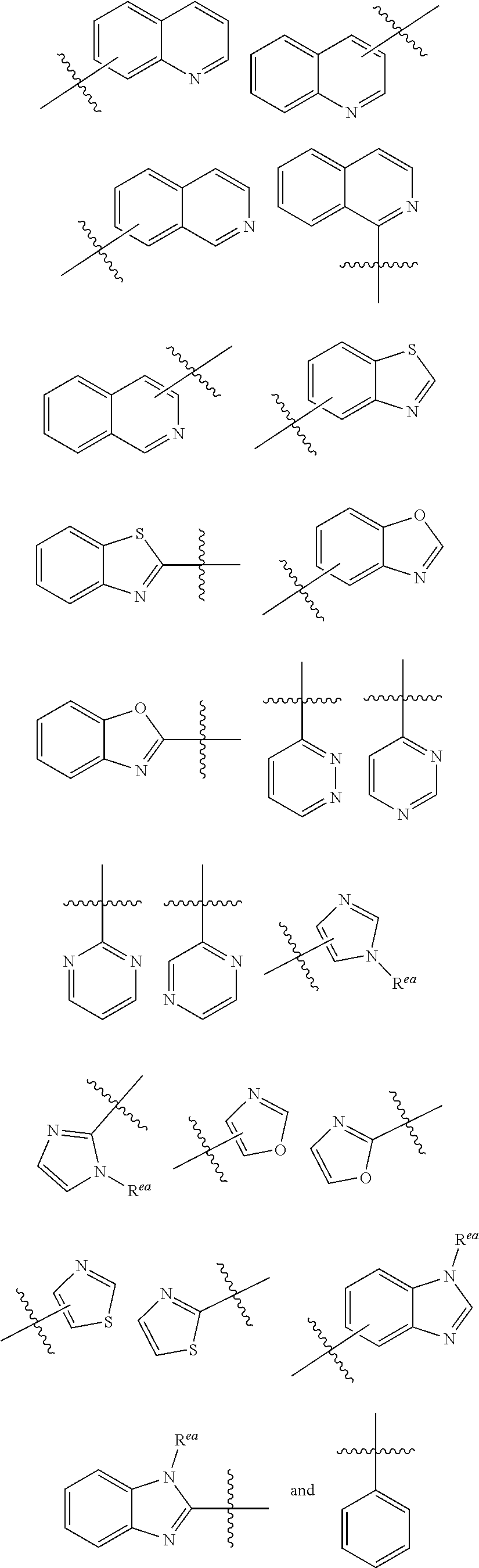
- HET is selected from the group consisting of:
- HET is optionally substituted with one or more (e.g. 1, 2, 3, or 4) groups independently selected from halo, cyano, hydroxy, nitro, —N(R aa ) 2 , carboxy, phenyl, (C 1 -C 6 )alkyl, (C 2 -C 6 )alkenyl, (C 2 -C 6 )alkynyl, (C 3 -C 6 )cycloalkyl, (C 1 -C 6 )alkoxy, (C 1 -C 6 )alkanoyl, (C 1 -C 6 )alkoxycarbonyl, (C 2 -C 6 )alkanoyloxy,
- one or more (e.g. 1, 2, 3, or 4) groups independently selected from halo, cyano, hydroxy, nitro, —N(R aa ) 2 , carboxy, phenyl, (C 1 -C 6 )alkyl, (C 2 -C 6
- any phenyl, (C 1 -C 6 )alkyl, (C 1 -C 6 )alkoxy, (C 2 -C 6 )alkenyl, (C 2 -C 6 )alkynyl, and (C 3 -C 6 )cycloalkyl is optionally substituted with one or more groups independently selected from halo, azido, cyano, hydroxy, nitro, —N(R ba ) 2 , carboxy, (C 3 -C 6 )cycloalkyl, (C 1 -C 6 )alkanoyl, (C 1 -C 6 )alkoxycarbonyl, (C 2 -C 6 )alkanoyloxy, and (C 1 -C 6 )alkoxy that is optionally substituted with carboxy;
- each R 2a is independently selected from the group consisting of H, phenyl, (C 1 -C 6 )alkyl, (C 2 -C 6 )alkenyl, (C 2 -C 6 )alkynyl, and (C 3 -C 6 )cycloalkyl, wherein any phenyl, (C 1 -C 6 )alkyl, (C 2 -C 6 )alkenyl, (C 2 -C 6 )alkynyl, and (C 3 -C 6 )cycloalkyl, is optionally substituted with one or more groups independently selected from halo, —N(R Ca ) 2 , (C 3 -C 6 )cycloalkyl, (C 1 -C 6 )alkoxy, and (C 2 -C 6 )alkanoyloxy;
- n 0, 1, 2, 3, or 4;
- each R 3a is independently selected from halo, cyano, hydroxy, nitro, —N(R da ) 2 , carboxy, phenyl, (C 1 -C 6 )alkyl, (C 2 -C 6 )alkenyl, (C 2 -C 6 )alkynyl, (C 3 -C 6 )cycloalkyl, (C 1 -C 6 )alkoxy, (C 1- C 6 )alkanoyl, (C 2 -C 6 )alkoxycarbonyl, and (C 2 -C 6 )alkanoyloxy, wherein any phenyl, (C 1 -C 6 )alkyl, (C 2 -C 6 )alkenyl, (C 2 -C 6 )alkynyl, (C 1 -C 6 )alkoxy, and (C 3 -C 6 )cycloalkyl, is optionally substituted with one or more groups independently selected from halo,
- R aa is selected from the group consisting of H, (C 1 -C 6 )alkyl, (C 2 -C 6 )alkenyl, (C 2 -C 6 )alkynyl, (C 3 -C 6 )cycloalkyl, (C 1 -C 6 )alkanoyl, and (C 1 -C 6 )alkoxycarbonyl, wherein any (C 1 -C 6 )alkyl, (C 2 -C 6 )alkenyl, (C 2 -C 6 )alkynyl, (C 3 -C 5 )cycloalkyl, (C 1 -C 6 )alkanoyl, and (C 1 -C 6 )alkoxycarbonyl, is optionally substituted with one or more groups independently selected from halo, (C 3 -C 6 )cycloalkyl, —N(R ga ) 2 , morpholino, and (C 1 -C 6 )al
- each R ba is independently selected from the group consisting of H, (C 1 -C 6 )alkyl, (C 2 -C 6 )alkenyl, (C 2 -C 6 )alkynyl, (C 3 -C 6 )cycloalkyl, (C 1 -C 6 )alkanoyl, and (C 1 -C 6 )alkoxycarbonyl, wherein any (C 1 -C 6 )alkyl, (C 2 -C 6 )alkenyl, (C 2 -C 6 )alkynyl, (C 3 -C 6 )cycloalkyl, (C 1 -C 6 )alkanoyl, and (C 1 -C 6 )alkoxycarbonyl, is optionally substituted with one or more groups independently selected from halo, (C 3 -C 6 )cycloalkyl, heteroaryl, and (C 1 -C 6 )alkoxy; or two R ba taken together with the nitrogen
- each R ca is independently selected from the group consisting of H, (C 1 -C 6 )alkyl, (C 2 -C 6 )alkenyl, (C 2 -C 6 )alkynyl, (C 3 -C 6 )cycloalkyl, (C 1 -C 6 )alkanoyl, and (C 1 -C 6 )alkoxycarbonyl, wherein any (C 1 -C 6 )alkyl, (C 2 -C 6 )alkenyl, (C 2 -C 6 )alkynyl, (C 3 -C 6 )cycloalkyl, (C 1 -C 6 )alkanoyl, and (C 1 -C 6 )alkoxycarbonyl, is optionally substituted with one or more groups independently selected from halo, (C 3 -C 6 )cycloalkyl, and (C 1 -C 6 )alkoxy; or two R Ca taken together with the nitrogen to which they are
- each R da is independently selected from the group consisting of H, (C 1 -C 6 )alkyl, (C 2 -C 6 )alkenyl, (C 2 -C 6 )alkynyl, (C 3 -C 6 )cycloalkyl, (C 1 -C 6 )alkanoyl, and (C 1 -C 6 )alkoxycarbonyl, wherein any (C 1 -C 6 )alkyl, (C 2 -C 6 )alkenyl, (C 2 -C 6 )alkynyl, (C 3 -C 6 )cycloalkyl, (C 1 -C 6 )alkanoyl, and (C 1 -C 6 )alkoxycarbonyl, is optionally substituted with one or more groups independently selected from halo, (C 3 -C 6 )cycloalkyl, and (C 1 -C 6 )alkoxy; or two R da taken together with the nitrogen to which they are
- R ca is independently selected from the group consisting of H and (C 1 -C 6 )alkyl that is optionally substituted with one or more groups independently selected from halo, (C 3 -C 6 )cycloalkyl, —N(R fa ) 2 , and (C 1 -C 6 )alkoxy;
- each R fa is independently selected from the group consisting of H, (C 1 -C 6 )alkyl, (C 2 -C 6 )alkenyl, (C 2 -C 6 )alkynyl, (C 3 -C 6 )cycloalkyl, (C 1 -C 6 )alkanoyl, and (C 1 -C 6 )alkoxycarbonyl, wherein any (C 1 -C 6 )alkyl, (C 2 -C 6 )alkenyl, (C 2 -C 6 )alkynyl, (C 3 -C 6 )cycloalkyl, (C 1 -C 6 )alkanoyl, and (C 1 -C 6 )alkoxycarbonyl, is optionally substituted with one or more groups independently selected from halo, (C 3 -C 6 )cycloalkyl, and (C 1 -C 6 )alkoxy; or two R fa taken together with the nitrogen
- each R ga is independently selected from the group consisting of H, (C 1 -C 6 )alkyl, (C 2 -C 6 )alkenyl, (C 2 -C 6 )alkynyl, (C 3 -C 6 )cycloalkyl, (C 1 -C 6 )alkanoyl, and (C 1 -C 6 )alkoxycarbonyl, wherein any (C 1 -C 6 )alkyl, (C 2 -C 6 )alkenyl, (C 2 -C 6 )alkynyl, (C 3 -C 6 )cycloalkyl, (C 1 -C 6 )alkanoyl, and (C 1 -C 6 )alkoxycarbonyl, is optionally substituted with one or more groups independently selected from halo, (C 3 -C 6 )cycloalkyl, and (C 1 -C 6 )alkoxy; or two R ga taken together with the nitrogen to which they are
- R 1 is 2-pyridinyl
- R 2 is not H or (C 1 -C 6 )alkyl
- Another aspect of the present invention provides a method of inhibiting cancer cell growth comprising administering to a human afflicted with cancer, an amount of a complex having a Zn 2+ ion.
- Another aspect of the present invention provides a method comprising:
- Another aspect of the present invention provides a method comprising: diffusing a charge neutral complex comprising a Zn 2+ ion across a plasma membrane of a cell under conditions where the Zn 2+ ion will bind to a native ligation site of a mutant p53 inside the cell.
- Another aspect of the present invention provides a method comprising: contacting a cell having a mutant p53 with a charge neutral complex comprising a Zn 2+ ion under conditions where the complex enters the cell and induces a wild-type conformation change in the mutant p53.
- Another aspect of the present invention provides a pharmaceutical composition
- a pharmaceutical composition comprising, in a pharmaceutically acceptable carrier, a compound to release zinc to p53.
- Another aspect of the present invention provides a method of inhibiting cancer cell growth, comprising administering to an animal (e.g. a human), an effective amount of a compound or complex as described herein.
- an animal e.g. a human
- Another aspect of the present invention provides a method of inhibiting cancer cell growth, comprising administering to a human in need thereof, an effective amount of a complex as described herein and further comprising administering to the human a zinc supplement.
- Another aspect of the present invention provides a method of inhibiting cancer cell growth comprising administering to a human afflicted with cancer, an amount of a neutral complex having a Zn 2+ ion, effective to inhibit growth of cancer cells in the human.
- Another aspect of the present invention provides a method comprising: binding a Zn 2+ ion to a monomer in a ratio of 2:1 (monomer:zinc) to form a complex outside a cell; diffusing the complex including the Zn 2+ ion across a plasma membrane of the cell; and binding the Zn 2+ ion to a native ligation site of a mutant p53 inside the cell.
- Another aspect of the present invention provides a method comprising: binding one or more zinc atoms in an extracellular environment of a cell having a mutant p53; and transporting the one or more zinc atoms into the cell to induce a wild-type conformation change in the mutant p53.
- the invention further includes methods of preparing, methods of separating, and methods of purifying of the complexes described herein.
- FIG. 1 shows the X-ray structure of compound 18 [Zn(C 1 ) 2 ]; ORTEP drawing from X-ray crystallographic data.
- FIG. 2 illustrates the potency of Zn (II) complex 18.
- halo is fluoro, chloro, bromo, or iodo.
- Alkyl, alkoxy, alkenyl, alkynyl, etc. denote both straight and branched groups; but reference to an individual radical such as propyl embraces only the straight chain radical, a branched chain isomer such as isopropyl being specifically referred to.
- allyl refers to a substituent, molecular fragment, or radical having the chemical formula —CH 2 —CH ⁇ CH 2 .
- benzyl refers to a substituent, molecular fragment, or radical having the chemical formula —CH 2 C 6 H 5 .
- butyl refers to a four-carbon alkyl radical, substituent, or molecular fragment having the chemical formula —C 4 H 9 .
- cyclopropyl refers to a radical, substituent, or molecular fragment having a chemical structure derived from cyclopropane and having the chemical formula C 3 H 5 .
- ethyl refers to an alkyl substituent, radical, or molecular fragment having the chemical formula —C 2 H 5 .
- isopropyl refers to a propyl with a group attached to the secondary carbon.
- methyl refers to an alkyl derived from methane and containing one carbon atom bonded to three hydrogen atoms and having the chemical formula —CH 3 .
- propyl refers to a linear three-carbon alkyl substituent, molecular fragment, or radical having the chemical formula —C 3 H 7 .
- phenyl refers to a cyclic group of atoms, radical, substituent, or molecular fragment having the chemical formula —C 6 H 5 .
- the atom to which the bond is attached includes all stereochemical possibilities.
- a bond in a compound formula herein is drawn in a defined stereochemical manner (e.g. bold, bold-wedge, dashed or dashed-wedge)
- a bond in a compound formula herein is drawn in a defined stereochemical manner (e.g. bold, bold-wedge, dashed or dashed-wedge)
- the atom to which the stereochemical bond is attached is enriched in the absolute stereoisomer depicted unless otherwise noted.
- the compound may be at least 51% the absolute stereoisomer depicted.
- the compound may be at least 60% the absolute stereoisomer depicted.
- the compound may be at least 80% the absolute stereoisomer depicted.
- the compound may be at least 90% the absolute stereoisomer depicted. In another embodiment, the compound may be at least 95 the absolute stereoisomer depicted. In another embodiment, the compound may be at least 99% the absolute stereoisomer depicted.
- (C 1 -C 6 )alkyl can be methyl, ethyl, propyl, isopropyl, butyl, iso-butyl, sec-butyl, pentyl, 3-pentyl, or hexyl;
- (C 3 -C 6 )cycloalkyl can be cyclopropyl, cyclobutyl, cyclopentyl, or cyclohexyl;
- (C 1 -C 6 )alkoxy can be methoxy, ethoxy, propoxy, isopropoxy, butoxy, iso-butoxy, sec-butoxy, pentoxy, 3-pentoxy, or hexyloxy;
- (C 2 -C 6 )alkenyl can be vinyl, allyl, 1-propenyl, 2-propenyl, 1-butenyl, 2-butenyl, 3-butenyl, 1-pentenyl, 2-pentenyl, 3-pentenyl, 4-penten
- each HET is independently selected from the group consisting of:
- HET is optionally substituted with one or more groups independently selected from halo, cyano, hydroxy, nitro, —N(R a ) 2 , carboxy, phenyl, (C 1 -C 6 )alkyl, (C 2 -C 6 )alkenyl, (C 2 -C 6 )alkynyl, (C 3 -C 6 )cycloalkyl, (C 1 -C 6 )alkoxy, (C 1 -C 6 )alkanoyl, (C 1 -C 6 )alkoxycarbonyl, and (C 2 -C 6 )alkanoyloxy, wherein any phenyl, (C 1 -C 6 )alkyl, (C 2 -C 6 )alkenyl, (C 2 -C 6 )alkynyl, and (C 3 -C 6 )cycloalkyl, is optionally substituted with one or more groups independently selected from halo, cyano,
- each HET is independently selected from the group consisting of:
- HET is optionally substituted with one or more groups independently selected from (C 1 -C 6 )alkyl and —N(R a ) 2 .
- R 2 is selected from the group consisting of H, methyl, ethyl, propyl, isopropyl, butyl, tert-butyl, allyl, cyclopropyl, phenyl, benzyl, CH 2 CH 2 OCH 3 , and CH 2 CH 2 —N(CH 3 ) 2 .
- R 2 is selected from the group consisting of methyl, ethyl, isopropyl, and tert-butyl.
- ZMC1, NTA (Zn 2+ -binding homolog), and A6 (structural homolog) to increase intracellular [Zn 2+ ] free was evaluated by treating cells with the fluorescent Zn 2+ indicator FluoZin-3-AM (FZ3-AM) in complete media and imaging them using confocal microscopy.
- FZ3-AM fluorescent Zn 2+ indicator FluoZin-3-AM
- ZMC1 increased intracellular [Zn 2+ ] free as indicated by increased fluorescence, but NTA and A6 did not.
- MC metallochaperone
- NTA binds Zn 2+ with an affinity similar to that of ZMC1, but it cannot cross either liposomal or cellular membranes, likely because it possesses negative charges.
- Zn 2+ -binding proteins from the serum e.g. albumin
- FBS fetal bovine serum
- Zn 2+ -binding proteins from the serum e.g. albumin
- A6 therefore likely does not increase intracellular [Zn 2+ ] free in culture because K d,A6 is greater than extracellular [Zn 2+ ] free .
- both an appropriate Zn 2+ K d and ionophore activity influence ZMC1 activity.
- a liposomal leakage assay was performed using the self-quenching fluorophore calcein.
- calcein When calcein is encapsulated at concentrations above 4 mM its fluorescence is decreased via self-quenching. Leakage is detected by a fluorescence increase as the dye dilutes and its fluorescence dequenches. At the highest concentrations of ZMC1 and ZnCl 2 a significant fluorescence increase was not detected. Disruption of liposomes can also be detected by alteration of their size distribution.
- ZMC1-mediated Zn 2+ transport was quantified in cells.
- the kinetics of intracellular [Zn 2+ ] free increase was measured by loading HEK293 and TOV112D cells with FZ3-AM, treating the cells with ZMC1 and ZnCl 2 , and monitoring fluorescence by time-lapse microscopy.
- FBS complete media
- cells were treated and imaged in Ca 2+ and Mg 2+ -free Earle's Balanced Salt Solution supplemented with 10 mM HEPES pH 7.4 (EBSS/H ( ⁇ )Ca/Mg).
- FZ3-AM, RZ-3 (K + salt), and cell culture media were purchased from Life Technologies. DOPC was purchased from Avanti Polar Lipids. ZMC1 and A6 were similarly obtained. Zn 2+ (ZMC1) 2 was synthesized and crystallized.
- HEK293 and TOV112D cells were purchased from ATCC and maintained in DMEM+GlutaMAX with 10% FBS and 1 mg/mL penicillin-streptomycin under a 5% CO 2 atmosphere at 37° C. All non-cell based experiments were conducted in 50 mM Tris pH 7.2, 0.1 M NaCl at 25° C.
- Initial Zn 2+ import/export was quantified by fitting the first 10-30 s of data after each treatment to a line and converted to units of flux using the following Eqn 1:
- J i ⁇ ⁇ ⁇ F ⁇ ⁇ ⁇ t ⁇ ( F ma ⁇ ⁇ x - F m ⁇ ⁇ i ⁇ ⁇ n [ RZ ⁇ ⁇ 3 ] ) ⁇ ( SA Vol ) Eqn ⁇ ⁇ 1
- J i is the initial flux
- ⁇ F/ ⁇ t is the slope of the fit line
- F max is RZ-3 fluorescence in the presence of saturating Zn 2+ and 1% TritonX-100
- F min is RZ-3 fluorescence in the presence of excess EDTA and 1% TritonX-100
- [RZ3] is the concentration of encapsulated RZ-3
- SA/Vol is the surface area to volume ratio calculated assuming hollow spheres of the mean diameter determined by DLS.
- Intracellular [Zn 2+ ] free Imaging TOV112D or HEK293 cells (40,000 cells/well) were plated on either 8-well BD Falcon chambered culture slides (Corning Life Sciences) or 8-chambered #1.5 Nunc Lab-Tek II chambered coverglasses (Thermo Scientific) treated with poly-L-lysine. After 48 h, cells were washed 2 ⁇ 5 m in serum-free media and incubated with 1 ⁇ M FZ3-AM for 40 m at 37° C. Cells were then washed 2 ⁇ 5 m in either EBSS/H ( ⁇ )Ca/Mg or phenol-red free DMEM+10% FBS containing the indicated treatments for 20 m before imaging.
- Hoechst 33342 For nuclear colocalization, 1 ⁇ g/mL Hoechst 33342 was also included. Cells were imaged using a Zeiss LSM510 META NLO confocal microscope equipped with 37° C. environmental control chamber. FZ3 and Hoechst 33342 were excited at 488 nm (argon laser) and 790 nm (Chameleon Ti:sapphire laser), respectively. To determine the kinetics of fluorescence change, each background-subtracted image in the time-lapse series was integrated in ImageJ and normalized to the integrated fluorescence of the first frame after treatment.
- each cell was analyzed in the treated, 50 ⁇ M PYR/ZnCl 2 (1:1), and 100 ⁇ M TPEN images by taking the mean fluorescence of an ROI inside the cell subtracted by an ROI immediately outside the cell measured in ImageJ.
- the [Zn 2+ ] free for each cell was then calculated by Eqn 2:
- [ Zn 2 + ] free F - F m ⁇ ⁇ i ⁇ ⁇ n F ma ⁇ ⁇ x - F ⁇ K d Eqn . ⁇ 2
- F, F max , and F min are fluorescence in the treatment, PYR/ZnCl 2 , and TPEN images, respectively
- K d is that of FZ3 for Zn 2+ (15 nM) (31).
- the number of cells analyzed in each trial ranged from 54-163.
- DMEM+10% FBS was treated with 5 g Chelex 100 resin per 100 mL media for 1 hour with gentle shaking. The media was then decanted and filtered through 0.2 m sterile filter. TOV112D cells were then incubated with 1 ⁇ M ZMC1 in untreated media, Chelex-treated media, or media+10 ⁇ M TPEN at 37° C. for 2 h, fixed, and stained with PAB240 and PAB1640.
- FIG. 1 shows the ORTEP drawing of the X-ray structure of compound 18.
Landscapes
- Chemical & Material Sciences (AREA)
- Organic Chemistry (AREA)
- Health & Medical Sciences (AREA)
- Public Health (AREA)
- Medicinal Chemistry (AREA)
- Veterinary Medicine (AREA)
- Pharmacology & Pharmacy (AREA)
- Life Sciences & Earth Sciences (AREA)
- Animal Behavior & Ethology (AREA)
- General Health & Medical Sciences (AREA)
- Epidemiology (AREA)
- Chemical Kinetics & Catalysis (AREA)
- Nuclear Medicine, Radiotherapy & Molecular Imaging (AREA)
- General Chemical & Material Sciences (AREA)
- Pharmaceuticals Containing Other Organic And Inorganic Compounds (AREA)
Abstract

Description

or an ion or poly-ion thereof, wherein:

wherein R1 is optionally substituted with one or more groups independently selected from halo, cyano, hydroxy, nitro, —N(Ra)2, carboxy, phenyl, (C1-C6)alkyl, (C2-C6)alkenyl, (C2-C6)alkynyl, (C3-C6)cycloalkyl, (C1-C6)alkoxy, (C1-C6)alkanoyl, (C1-C6)alkoxycarbonyl, (C2-C6)alkanoyloxy, (C4-C6)heterocycloalkyl, (C2-C6)alkylaminocarbonyl and (C2-C6)alkanoylamino wherein any phenyl, (C1-C6)alkyl, (C2-C6)alkenyl, (C2-C6)alkynyl, and (C3-C6)cycloalkyl, is optionally substituted with one or more groups independently selected from halo, cyano, hydroxy, nitro, —N(Ra)2, carboxy, (C3-C6)cycloalkyl, (C1-C6)alkoxy, (C1-C6)alkanoyl, (C1-C6)alkoxycarbonyl, (C2-C6)alkanoyloxy, (C4-C6)heterocycloalkyl, (C2-C6)alkylaminocarbonyl and (C2-C6)alkanoylamino;

wherein HET is optionally substituted with one or more (e.g. 1, 2, 3, or 4) groups independently selected from halo, cyano, hydroxy, nitro, —N(Raa)2, carboxy, phenyl, (C1-C6)alkyl, (C2-C6)alkenyl, (C2-C6)alkynyl, (C3-C6)cycloalkyl, (C1-C6)alkoxy, (C1-C6)alkanoyl, (C1-C6)alkoxycarbonyl, (C2-C6)alkanoyloxy,

wherein any phenyl, (C1-C6)alkyl, (C1-C6)alkoxy, (C2-C6)alkenyl, (C2-C6)alkynyl, and (C3-C6)cycloalkyl, is optionally substituted with one or more groups independently selected from halo, azido, cyano, hydroxy, nitro, —N(Rba)2, carboxy, (C3-C6)cycloalkyl, (C1-C6)alkanoyl, (C1-C6)alkoxycarbonyl, (C2-C6)alkanoyloxy, and (C1-C6)alkoxy that is optionally substituted with carboxy;

wherein HET is optionally substituted with one or more groups independently selected from halo, cyano, hydroxy, nitro, —N(Ra)2, carboxy, phenyl, (C1-C6)alkyl, (C2-C6)alkenyl, (C2-C6)alkynyl, (C3-C6)cycloalkyl, (C1-C6)alkoxy, (C1-C6)alkanoyl, (C1-C6)alkoxycarbonyl, and (C2-C6)alkanoyloxy, wherein any phenyl, (C1-C6)alkyl, (C2-C6)alkenyl, (C2-C6)alkynyl, and (C3-C6)cycloalkyl, is optionally substituted with one or more groups independently selected from halo, cyano, hydroxy, nitro, —N(Ra)2, carboxy, (C3-C6)cycloalkyl, (C1-C6)alkoxy, (C1-C6)alkanoyl, (C1-C6)alkoxycarbonyl, and (C2-C6)alkanoyloxy.

wherein HET is optionally substituted with one or more groups independently selected from (C1-C6)alkyl and —N(Ra)2.

where Ji is the initial flux, ΔF/Δt is the slope of the fit line, Fmax is RZ-3 fluorescence in the presence of saturating Zn2+ and 1% TritonX-100, Fmin is RZ-3 fluorescence in the presence of excess EDTA and 1% TritonX-100, [RZ3] is the concentration of encapsulated RZ-3, and SA/Vol is the surface area to volume ratio calculated assuming hollow spheres of the mean diameter determined by DLS.
Intracellular [Zn2+]free Imaging
TOV112D or HEK293 cells (40,000 cells/well) were plated on either 8-well BD Falcon chambered culture slides (Corning Life Sciences) or 8-chambered #1.5 Nunc Lab-Tek II chambered coverglasses (Thermo Scientific) treated with poly-L-lysine. After 48 h, cells were washed 2×5 m in serum-free media and incubated with 1 μM FZ3-AM for 40 m at 37° C. Cells were then washed 2×5 m in either EBSS/H (−)Ca/Mg or phenol-red free DMEM+10% FBS containing the indicated treatments for 20 m before imaging. For nuclear colocalization, 1 μg/mL Hoechst 33342 was also included. Cells were imaged using a Zeiss LSM510 META NLO confocal microscope equipped with 37° C. environmental control chamber. FZ3 and Hoechst 33342 were excited at 488 nm (argon laser) and 790 nm (Chameleon Ti:sapphire laser), respectively. To determine the kinetics of fluorescence change, each background-subtracted image in the time-lapse series was integrated in ImageJ and normalized to the integrated fluorescence of the first frame after treatment. For quantification of intracellular [Zn2+]free, each cell was analyzed in the treated, 50 μM PYR/ZnCl2 (1:1), and 100 μM TPEN images by taking the mean fluorescence of an ROI inside the cell subtracted by an ROI immediately outside the cell measured in ImageJ. The [Zn2+]free for each cell was then calculated by Eqn 2:
Where F, Fmax, and Fmin are fluorescence in the treatment, PYR/ZnCl2, and TPEN images, respectively, and Kd is that of FZ3 for Zn2+ (15 nM) (31). To minimize the effects of outliers the lowest and highest 5% of cells in each series were rejected, and the remaining values averaged to give the value from that experiment. The number of cells analyzed in each trial ranged from 54-163. For nuclear colocalization, treated, PYR/ZnCl2, and TPEN treated images costained with Hoechst 33342 were aligned and each pixel subjected to Eqn. 2 in MATLAB (MathWorks). The resultant images were Gaussian mean filtered and false-colored by calculated [Zn2+]free.
p53-R175H Immunofluorescence


| TABLE 1 | |||
| COM- | |||
| POUND | Activity | ||
| | Structure | TOV112D | |
| 1 |
 |
++ |
| 2 |
 |
+++ |
| 3 |
 |
+++ |
| 4 |
 |
+++ |
| 7 |
 |
ND |
| 8 |
 |
ND |
| 9 |
 |
+++ |
| 10 |
 |
+++ |
| 11 |
 |
+++ |
| 12 |
 |
+ |
| 13 |
 |
+ |
| 14 |
 |
+++ |
| 15 |
 |
+++ |
| 18 |
 |
+++ |
| +++, most active; | ||
| ++, moderately active; | ||
| +, less active | ||
Claims (13)




Priority Applications (1)
| Application Number | Priority Date | Filing Date | Title |
|---|---|---|---|
| US15/545,975 US10729671B2 (en) | 2015-01-27 | 2016-01-27 | Zinc complexes of hydrazones and (thio)semicarbazones and their use for the treatment of cancer |
Applications Claiming Priority (4)
| Application Number | Priority Date | Filing Date | Title |
|---|---|---|---|
| US201562108415P | 2015-01-27 | 2015-01-27 | |
| US201562258261P | 2015-11-20 | 2015-11-20 | |
| US15/545,975 US10729671B2 (en) | 2015-01-27 | 2016-01-27 | Zinc complexes of hydrazones and (thio)semicarbazones and their use for the treatment of cancer |
| PCT/US2016/015190 WO2016123250A1 (en) | 2015-01-27 | 2016-01-27 | Zinc complexes of hydrazones and (thio)semicarbazones and their use for the treatment of cancer |
Publications (2)
| Publication Number | Publication Date |
|---|---|
| US20180000772A1 US20180000772A1 (en) | 2018-01-04 |
| US10729671B2 true US10729671B2 (en) | 2020-08-04 |
Family
ID=55300813
Family Applications (1)
| Application Number | Title | Priority Date | Filing Date |
|---|---|---|---|
| US15/545,975 Active US10729671B2 (en) | 2015-01-27 | 2016-01-27 | Zinc complexes of hydrazones and (thio)semicarbazones and their use for the treatment of cancer |
Country Status (2)
| Country | Link |
|---|---|
| US (1) | US10729671B2 (en) |
| WO (1) | WO2016123250A1 (en) |
Cited By (2)
| Publication number | Priority date | Publication date | Assignee | Title |
|---|---|---|---|---|
| US12280065B2 (en) | 2019-04-23 | 2025-04-22 | Rutgers, The State University Of New Jersey | Pharmaceutical compounds and therapeutic methods |
| US12344626B2 (en) | 2019-04-23 | 2025-07-01 | Rutgers, The State University Of New Jersey | Pharmaceutical compounds and therapeutic methods |
Families Citing this family (6)
| Publication number | Priority date | Publication date | Assignee | Title |
|---|---|---|---|---|
| WO2016123253A1 (en) | 2015-01-27 | 2016-08-04 | Rutgers, The State University Of New Jersey | Hydrazne derivatives for the treatment of cancer |
| WO2016123242A1 (en) | 2015-01-27 | 2016-08-04 | Rutgers, The State University Of New Jersey | (thio)semicarbazone derivatives and their use for treating cancer |
| US10221133B2 (en) | 2015-01-27 | 2019-03-05 | Rutgers, The State University Of New Jersey | (Thio, oxo, and seleno) semicarbazone complexes with zinc and their use for treating cancer |
| WO2018081612A1 (en) * | 2016-10-31 | 2018-05-03 | Actavalon, Inc. | Compounds and methods for treating cancer |
| CN109651357A (en) * | 2017-10-11 | 2019-04-19 | 中国科学院上海有机化学研究所 | 6,7- dihydro -5H- quinoline -8- hydrazone analog derivative iron chelating agents and its purposes for preparing anti-tumor drug |
| WO2020219587A1 (en) * | 2019-04-23 | 2020-10-29 | Rutgers, The State University Of New Jersey | Pharmaceutical compounds and therapeutic methods |
Citations (14)
| Publication number | Priority date | Publication date | Assignee | Title |
|---|---|---|---|---|
| US4665173A (en) | 1982-03-31 | 1987-05-12 | Klayman Daniel L | 2-acetyl- and 2-propionylpyridine selenosemicarbazones |
| WO2001094340A1 (en) | 2000-06-05 | 2001-12-13 | Innovationsagentur Gesellschaft M.B.H. | Heterocyclic hydrazones for use as anti-cancer agents |
| WO2006019955A2 (en) | 2004-07-14 | 2006-02-23 | President And Fellows Of Harvard College | Antiviral methods and compositions |
| WO2006101740A2 (en) | 2005-03-18 | 2006-09-28 | The Regents Of The University Of California | Compounds having activity in correcting mutant-cftr processing and uses thereof |
| WO2007035489A2 (en) | 2005-09-16 | 2007-03-29 | Government Of The United States Of America, As Represented By The Secretary, Department Of Health And Human Services | Methods of treating or preventing cancer using pyridine carboxaldehyde pyridine thiosemicarbazone radiosensitizing agents |
| US20080118576A1 (en) | 2006-08-28 | 2008-05-22 | Dan Theodorescu | Prediction of an agent's or agents' activity across different cells and tissue types |
| WO2009039553A1 (en) | 2007-09-27 | 2009-04-02 | The Walter And Eliza Hall Institute Of Medical Research | Benzothiazole compounds |
| WO2012175962A1 (en) | 2011-06-20 | 2012-12-27 | Medical Research Council | COMPOUNDS FOR USE IN STABILISING p53 MUTANTS |
| US20130345164A1 (en) | 2010-04-21 | 2013-12-26 | University Of Medicine And Dentistry Of New Jersey | Treatments for cellular proliferative disorders and identification thereof |
| US20140142266A1 (en) | 2011-04-27 | 2014-05-22 | Zeon Corporation | Polymerizable compound, polymerizable composition, polymer, and optically anisotropic body |
| WO2015021456A1 (en) | 2013-08-09 | 2015-02-12 | The Regents Of The University Of California | Small molecules to enhance p53 activity |
| WO2016123253A1 (en) | 2015-01-27 | 2016-08-04 | Rutgers, The State University Of New Jersey | Hydrazne derivatives for the treatment of cancer |
| WO2016123242A1 (en) | 2015-01-27 | 2016-08-04 | Rutgers, The State University Of New Jersey | (thio)semicarbazone derivatives and their use for treating cancer |
| WO2016123246A1 (en) | 2015-01-27 | 2016-08-04 | Rutgers, The State University Of New Jersey | (thio, oxo and seleno) semicarbazone complexes with zinc and their use for treating cancer |
-
2016
- 2016-01-27 WO PCT/US2016/015190 patent/WO2016123250A1/en not_active Ceased
- 2016-01-27 US US15/545,975 patent/US10729671B2/en active Active
Patent Citations (18)
| Publication number | Priority date | Publication date | Assignee | Title |
|---|---|---|---|---|
| US4665173A (en) | 1982-03-31 | 1987-05-12 | Klayman Daniel L | 2-acetyl- and 2-propionylpyridine selenosemicarbazones |
| WO2001094340A1 (en) | 2000-06-05 | 2001-12-13 | Innovationsagentur Gesellschaft M.B.H. | Heterocyclic hydrazones for use as anti-cancer agents |
| US7112680B2 (en) | 2000-06-05 | 2006-09-26 | Austria Wirtschaftsservice Gesellschaft Mit Beschrankter Haftung | Heterocyclic hydrazones for use as anti-cancer agents |
| WO2006019955A2 (en) | 2004-07-14 | 2006-02-23 | President And Fellows Of Harvard College | Antiviral methods and compositions |
| WO2006101740A2 (en) | 2005-03-18 | 2006-09-28 | The Regents Of The University Of California | Compounds having activity in correcting mutant-cftr processing and uses thereof |
| WO2007035489A2 (en) | 2005-09-16 | 2007-03-29 | Government Of The United States Of America, As Represented By The Secretary, Department Of Health And Human Services | Methods of treating or preventing cancer using pyridine carboxaldehyde pyridine thiosemicarbazone radiosensitizing agents |
| US20080118576A1 (en) | 2006-08-28 | 2008-05-22 | Dan Theodorescu | Prediction of an agent's or agents' activity across different cells and tissue types |
| WO2009039553A1 (en) | 2007-09-27 | 2009-04-02 | The Walter And Eliza Hall Institute Of Medical Research | Benzothiazole compounds |
| US20130345164A1 (en) | 2010-04-21 | 2013-12-26 | University Of Medicine And Dentistry Of New Jersey | Treatments for cellular proliferative disorders and identification thereof |
| US20140142266A1 (en) | 2011-04-27 | 2014-05-22 | Zeon Corporation | Polymerizable compound, polymerizable composition, polymer, and optically anisotropic body |
| WO2012175962A1 (en) | 2011-06-20 | 2012-12-27 | Medical Research Council | COMPOUNDS FOR USE IN STABILISING p53 MUTANTS |
| WO2015021456A1 (en) | 2013-08-09 | 2015-02-12 | The Regents Of The University Of California | Small molecules to enhance p53 activity |
| WO2016123253A1 (en) | 2015-01-27 | 2016-08-04 | Rutgers, The State University Of New Jersey | Hydrazne derivatives for the treatment of cancer |
| WO2016123242A1 (en) | 2015-01-27 | 2016-08-04 | Rutgers, The State University Of New Jersey | (thio)semicarbazone derivatives and their use for treating cancer |
| WO2016123246A1 (en) | 2015-01-27 | 2016-08-04 | Rutgers, The State University Of New Jersey | (thio, oxo and seleno) semicarbazone complexes with zinc and their use for treating cancer |
| US20180002280A1 (en) | 2015-01-27 | 2018-01-04 | Rutgers, The State University Of New Jersey | (thio, oxo, and seleno) semicarbazone derivatives and their use for treating cancer |
| US20180000806A1 (en) | 2015-01-27 | 2018-01-04 | Rutgers, The State University Of New Jersey | Hydrazone derivatives for the treatment of cancer |
| US20180002279A1 (en) | 2015-01-27 | 2018-01-04 | Rutgers, The State University Of New Jersey | (thio, oxo, and seleno) semicarbazone complexes with zinc and their use for treating cancer |
Non-Patent Citations (48)
Cited By (2)
| Publication number | Priority date | Publication date | Assignee | Title |
|---|---|---|---|---|
| US12280065B2 (en) | 2019-04-23 | 2025-04-22 | Rutgers, The State University Of New Jersey | Pharmaceutical compounds and therapeutic methods |
| US12344626B2 (en) | 2019-04-23 | 2025-07-01 | Rutgers, The State University Of New Jersey | Pharmaceutical compounds and therapeutic methods |
Also Published As
| Publication number | Publication date |
|---|---|
| US20180000772A1 (en) | 2018-01-04 |
| WO2016123250A1 (en) | 2016-08-04 |
Similar Documents
| Publication | Publication Date | Title |
|---|---|---|
| US10604481B2 (en) | (Thio, oxo and seleno) semicarbazone complexes with zinc and their use for treating cancer | |
| US20180000772A1 (en) | Zinc complexes of hydrazones and (thio)semicarbazones and their use for the treatment of cancer | |
| US10828288B2 (en) | Hydrazone derivatives for the treatment of cancer | |
| US10604480B2 (en) | (Thio, oxo, and seleno) semicarbazone derivatives and their use for treating cancer | |
| US8796312B2 (en) | Heteroaryl derivatives as CFTR modulators | |
| US7846951B2 (en) | Thiazoles and oxazoles useful as modulators of ATP-binding cassette transporters | |
| JP6109937B2 (en) | Fusion pyrimidines as inhibitors of the p97 complex | |
| AU2023282309B2 (en) | Inhibiting ataxia telangiectasia and RAD3-related protein (ATR) | |
| US8314085B2 (en) | Agent for overcoming resistance to anti-cancer agent | |
| EP3643716B1 (en) | Heteroaryl compound having pharmaceutical activity | |
| CN112274656A (en) | Preparation method and application of macrocyclic amphiphilic self-assembled nanoparticles capable of delivering combined medicaments to tumor tissues in proportion | |
| CN115135645B (en) | ATF6 modulators and uses thereof | |
| WO2022006412A2 (en) | Conjugates of ampk inhibitors and protac degraders and related uses | |
| JP6852199B2 (en) | 7-Substituted pyrorotriazine compounds or pharmaceutically acceptable salts thereof, and methods and uses thereof. | |
| EP3774795B1 (en) | 4-(1h- imidazol- 5- yl) -1h-pyrrolo [2, 3-b] pyridines for use in the treatment of leukaemias, lymphomas and solid tumors | |
| US12280065B2 (en) | Pharmaceutical compounds and therapeutic methods | |
| CN106231900A (en) | Compound and using method thereof | |
| US11604141B2 (en) | Zinc-selective fluorescent probes for emission-ratiometric imaging | |
| US20250376445A1 (en) | Compounds and methods for yap/tead modulation and indications therefor | |
| US20230095530A1 (en) | Compound used as ret kinase inhibitor and application thereof | |
| Gosangi et al. | Novel 1, 2, 3-triazolium-based dicationic amphiphiles synthesized using click-chemistry approach for efficient plasmid delivery | |
| US12435059B2 (en) | AMP-activated protein kinase inhibitors and methods of making and using the same | |
| Bogdanov et al. | Synthesis and structure of push–pull merocyanines based on barbituric and thiobarbituric acid | |
| Acosta Quintero et al. | Similar molecular constitutions but different conformations and different supramolecular assemblies in two related fused tetracyclic benzo [b] pyrimido [5, 4-f] azepine derivatives | |
| CA3150653C (en) | Fused cyclic compound capable of degrading protein and use thereof |
Legal Events
| Date | Code | Title | Description |
|---|---|---|---|
| FEPP | Fee payment procedure |
Free format text: ENTITY STATUS SET TO SMALL (ORIGINAL EVENT CODE: SMAL); ENTITY STATUS OF PATENT OWNER: SMALL ENTITY |
|
| STPP | Information on status: patent application and granting procedure in general |
Free format text: NOTICE OF ALLOWANCE MAILED -- APPLICATION RECEIVED IN OFFICE OF PUBLICATIONS |
|
| STPP | Information on status: patent application and granting procedure in general |
Free format text: NOTICE OF ALLOWANCE MAILED -- APPLICATION RECEIVED IN OFFICE OF PUBLICATIONS |
|
| STPP | Information on status: patent application and granting procedure in general |
Free format text: DOCKETED NEW CASE - READY FOR EXAMINATION |
|
| STPP | Information on status: patent application and granting procedure in general |
Free format text: NOTICE OF ALLOWANCE MAILED -- APPLICATION RECEIVED IN OFFICE OF PUBLICATIONS |
|
| AS | Assignment |
Owner name: RUTGERS, THE STATE UNIVERSITY OF NEW JERSEY, NEW JERSEY Free format text: ASSIGNMENT OF ASSIGNORS INTEREST;ASSIGNORS:AUGERI, DAVID J.;BENCIVENGA, ANTHONY F.;CARPIZO, DARREN R.;AND OTHERS;SIGNING DATES FROM 20160222 TO 20160302;REEL/FRAME:053048/0941 Owner name: THE RESEARCH FOUNDATION FOR THE STATE UNIVERSITY OF NEW YORK, NEW YORK Free format text: ASSIGNMENT OF ASSIGNORS INTEREST;ASSIGNORS:BLANDEN, ADAM;LOH, STEWART N.;REEL/FRAME:053049/0149 Effective date: 20160222 |
|
| STPP | Information on status: patent application and granting procedure in general |
Free format text: PUBLICATIONS -- ISSUE FEE PAYMENT VERIFIED |
|
| STCF | Information on status: patent grant |
Free format text: PATENTED CASE |
|
| CC | Certificate of correction | ||
| MAFP | Maintenance fee payment |
Free format text: PAYMENT OF MAINTENANCE FEE, 4TH YR, SMALL ENTITY (ORIGINAL EVENT CODE: M2551); ENTITY STATUS OF PATENT OWNER: SMALL ENTITY Year of fee payment: 4 |