US10728192B2 - Apparatus and method for message reference management - Google Patents
Apparatus and method for message reference management Download PDFInfo
- Publication number
- US10728192B2 US10728192B2 US16/712,952 US201916712952A US10728192B2 US 10728192 B2 US10728192 B2 US 10728192B2 US 201916712952 A US201916712952 A US 201916712952A US 10728192 B2 US10728192 B2 US 10728192B2
- Authority
- US
- United States
- Prior art keywords
- message
- graphical
- display
- displayed
- content
- Prior art date
- Legal status (The legal status is an assumption and is not a legal conclusion. Google has not performed a legal analysis and makes no representation as to the accuracy of the status listed.)
- Active
Links
Images




Classifications
-
- H—ELECTRICITY
- H04—ELECTRIC COMMUNICATION TECHNIQUE
- H04L—TRANSMISSION OF DIGITAL INFORMATION, e.g. TELEGRAPHIC COMMUNICATION
- H04L65/00—Network arrangements, protocols or services for supporting real-time applications in data packet communication
- H04L65/40—Support for services or applications
- H04L65/401—Support for services or applications wherein the services involve a main real-time session and one or more additional parallel real-time or time sensitive sessions, e.g. white board sharing or spawning of a subconference
- H04L65/4015—Support for services or applications wherein the services involve a main real-time session and one or more additional parallel real-time or time sensitive sessions, e.g. white board sharing or spawning of a subconference where at least one of the additional parallel sessions is real time or time sensitive, e.g. white board sharing, collaboration or spawning of a subconference
-
- H—ELECTRICITY
- H04—ELECTRIC COMMUNICATION TECHNIQUE
- H04L—TRANSMISSION OF DIGITAL INFORMATION, e.g. TELEGRAPHIC COMMUNICATION
- H04L12/00—Data switching networks
- H04L12/02—Details
- H04L12/16—Arrangements for providing special services to substations
- H04L12/18—Arrangements for providing special services to substations for broadcast or conference, e.g. multicast
- H04L12/1813—Arrangements for providing special services to substations for broadcast or conference, e.g. multicast for computer conferences, e.g. chat rooms
- H04L12/1822—Conducting the conference, e.g. admission, detection, selection or grouping of participants, correlating users to one or more conference sessions, prioritising transmission
-
- H04L51/12—
-
- H04L51/16—
-
- H—ELECTRICITY
- H04—ELECTRIC COMMUNICATION TECHNIQUE
- H04L—TRANSMISSION OF DIGITAL INFORMATION, e.g. TELEGRAPHIC COMMUNICATION
- H04L51/00—User-to-user messaging in packet-switching networks, transmitted according to store-and-forward or real-time protocols, e.g. e-mail
- H04L51/07—User-to-user messaging in packet-switching networks, transmitted according to store-and-forward or real-time protocols, e.g. e-mail characterised by the inclusion of specific contents
- H04L51/18—Commands or executable codes
-
- H—ELECTRICITY
- H04—ELECTRIC COMMUNICATION TECHNIQUE
- H04L—TRANSMISSION OF DIGITAL INFORMATION, e.g. TELEGRAPHIC COMMUNICATION
- H04L51/00—User-to-user messaging in packet-switching networks, transmitted according to store-and-forward or real-time protocols, e.g. e-mail
- H04L51/21—Monitoring or handling of messages
- H04L51/212—Monitoring or handling of messages using filtering or selective blocking
-
- H—ELECTRICITY
- H04—ELECTRIC COMMUNICATION TECHNIQUE
- H04L—TRANSMISSION OF DIGITAL INFORMATION, e.g. TELEGRAPHIC COMMUNICATION
- H04L51/00—User-to-user messaging in packet-switching networks, transmitted according to store-and-forward or real-time protocols, e.g. e-mail
- H04L51/21—Monitoring or handling of messages
- H04L51/214—Monitoring or handling of messages using selective forwarding
-
- H—ELECTRICITY
- H04—ELECTRIC COMMUNICATION TECHNIQUE
- H04L—TRANSMISSION OF DIGITAL INFORMATION, e.g. TELEGRAPHIC COMMUNICATION
- H04L51/00—User-to-user messaging in packet-switching networks, transmitted according to store-and-forward or real-time protocols, e.g. e-mail
- H04L51/21—Monitoring or handling of messages
- H04L51/216—Handling conversation history, e.g. grouping of messages in sessions or threads
-
- H04L51/36—
-
- H—ELECTRICITY
- H04—ELECTRIC COMMUNICATION TECHNIQUE
- H04L—TRANSMISSION OF DIGITAL INFORMATION, e.g. TELEGRAPHIC COMMUNICATION
- H04L51/00—User-to-user messaging in packet-switching networks, transmitted according to store-and-forward or real-time protocols, e.g. e-mail
- H04L51/56—Unified messaging, e.g. interactions between e-mail, instant messaging or converged IP messaging [CPM]
-
- H—ELECTRICITY
- H04—ELECTRIC COMMUNICATION TECHNIQUE
- H04L—TRANSMISSION OF DIGITAL INFORMATION, e.g. TELEGRAPHIC COMMUNICATION
- H04L65/00—Network arrangements, protocols or services for supporting real-time applications in data packet communication
- H04L65/1066—Session management
- H04L65/1069—Session establishment or de-establishment
-
- H—ELECTRICITY
- H04—ELECTRIC COMMUNICATION TECHNIQUE
- H04L—TRANSMISSION OF DIGITAL INFORMATION, e.g. TELEGRAPHIC COMMUNICATION
- H04L65/00—Network arrangements, protocols or services for supporting real-time applications in data packet communication
- H04L65/1066—Session management
- H04L65/1083—In-session procedures
- H04L65/1093—In-session procedures by adding participants; by removing participants
-
- H—ELECTRICITY
- H04—ELECTRIC COMMUNICATION TECHNIQUE
- H04L—TRANSMISSION OF DIGITAL INFORMATION, e.g. TELEGRAPHIC COMMUNICATION
- H04L51/00—User-to-user messaging in packet-switching networks, transmitted according to store-and-forward or real-time protocols, e.g. e-mail
- H04L51/04—Real-time or near real-time messaging, e.g. instant messaging [IM]
- H04L51/046—Interoperability with other network applications or services
-
- H—ELECTRICITY
- H04—ELECTRIC COMMUNICATION TECHNIQUE
- H04L—TRANSMISSION OF DIGITAL INFORMATION, e.g. TELEGRAPHIC COMMUNICATION
- H04L51/00—User-to-user messaging in packet-switching networks, transmitted according to store-and-forward or real-time protocols, e.g. e-mail
- H04L51/07—User-to-user messaging in packet-switching networks, transmitted according to store-and-forward or real-time protocols, e.g. e-mail characterised by the inclusion of specific contents
- H04L51/10—Multimedia information
Definitions
- the present invention relates to computer messaging and more particularly to management thereof.
- an apparatus and method are disclosed for improving computer operational efficiency through message linkage management.
- Electronic communication provides a very efficient manner of information exchange.
- messages are exchanged between multiple parties in order to convey information.
- two users operate respective client devices and effectively engage in conversation by transmitting messages between each other.
- Such communication may be in the form of a single continuous stream of back and forth messaging.
- more than two users may be communicating in a single continuous stream. While a single stream of messages may be transmitted in an ongoing sequence, it is also possible to have multiple channels, each with their own respective stream of messages.
- a “conversation” of messages may be short or it may occur over an extended period of time. Such a period of time can last for hours, days, or even years. During the process of such a conversation, a large quantity of messages may be transmitted between multiple users. Typically, in order to reference an earlier message within a stream of messages, it may be desirable to scroll or somehow visually traverse through messages until an earlier message is located.
- FIG. 1 is a block diagram that illustrates an exemplary network with associated computing devices in accordance with an exemplary embodiment of the present invention.
- FIG. 2 is a block diagram that illustrates details of an exemplary client device in accordance with an exemplary embodiment of the present invention.
- FIG. 3 illustrates an exemplary interface portal of a client device in accordance with an exemplary embodiment of the present invention.
- FIG. 4 is a flowchart diagram that illustrates exemplary message referencing in accordance with an exemplary embodiment of the present invention.
- FIG. 5 is a flowchart diagram that illustrates exemplary message referencing in accordance with a further exemplary embodiment of the present invention.
- FIG. 6 is a block diagram that illustrates an exemplary network with associated computing devices in accordance with a further exemplary embodiment of the present invention.
- FIG. 7 is a block diagram that illustrates an exemplary network with associated computing devices in accordance with yet another exemplary embodiment of the present invention.
- FIGS. 8A-8D are exemplary screen shots that illustrate exemplary operation of an exemplary embodiment of the present invention.
- FIG. 9 is an exemplary screen shot that illustrates exemplary operation of an exemplary embodiment of the present invention.
- FIGS. 10A-10C are exemplary screen shots that illustrate exemplary operation of an exemplary embodiment of the present invention.
- FIGS. 11A-11D are exemplary screen shots that illustrate exemplary operation of an exemplary embodiment of the present invention.
- FIG. 12 is an exemplary screen shot that illustrates exemplary operation of an exemplary embodiment of the present invention.
- FIGS. 13A-13D are exemplary screen shots that illustrate exemplary operation of an exemplary embodiment of the present invention.
- a method for referencing a message comprises the steps of receiving selection of an area or object associated with the message on a display, optionally providing an indication that the selection of the area or object has been received, allowing a further message to be formed with a link to the message, wherein the link is associated with the further message responsive to the selection, and causing display of the information associated with the message responsive to selection of a further area or portion.
- the present invention relates to messaging and in particular to the ability of one message to reference another message.
- messaging what is referred to is the ability for one or more users to provide a series of messages.
- Messages typically occur in a stream, wherein each message comprises data.
- the data included in messages is often text, but this is merely exemplary as messages can include other content, including possibly any kind of data (e.g. audio, video, animation, graphics, web links, photos, etc.).
- a method and apparatus improves the operation of a computer device, by providing links that enable a computer device to operate with greater efficiency.
- the invention when one message references another message, and time has elapsed between the two messages, the invention enables a computer device to operate with advantages over the prior art. For example, in the prior art, to enable one message to reference an earlier message, a search for the earlier message can be inefficient, time consuming, can delay message response while an earlier message is located, and can request that data stored in memory be duplicated.
- the use of visual display of an earlier message (or portions thereof) and selection in various manners to be described below, enables message referencing in a manner that enables faster computer processing and more efficient use of computer devices for exemplary forms of communication such as messaging.
- Messaging has become a very popular form of electronic communication due to its affordability and ease of use.
- users may exchange numerous messages regarding a diverse range of topics.
- the users may use the messages to discuss, for example, group activities, to solicit opinions about various topics, or simply exchange short conversations with friends or co-workers.
- One of the drawbacks to using typical chat messaging systems is the sequential nature of the messages sent and received. For example, messages often appear in a channel or log in chronological order. If a user in a group chat session comes back from a meeting after several hours, they may be confronted with a bunch of messages.
- the group chat sessions are often characterized by short bursts of dialog around a given topic. By the time a user views the messages, the topic may have changed several times. This makes it difficult for a user to post a response to a previous message that is within context of the ongoing message conversation.
- references such as context-based references
- chat messages such as chat messages
- This allows a user to generate and insert a (reference) object into a (chat) message stream that links or otherwise references a chat message (such as a prior message or later message) the user intended to send.
- the techniques disclosed herein may be particularly beneficial in certain types of communication platforms.
- the communication platform described herein is an exemplary chat messaging platform. It is envisioned that one skilled in the art could make and use the methods and systems described herein with other types of communication platforms.
- Some of these communication platforms may include, for example, text messaging, short message services (SMS), e-mails and other types of similar on-line communication platforms for facilitating electronic information exchanges between client devices of a plurality of users.
- SMS short message services
- e-mails and other types of similar on-line communication platforms for facilitating electronic information exchanges between client devices of a plurality of users.
- chat messaging described herein is merely exemplary, as other forms of messaging may also be used in accordance with exemplary embodiments of the present invention.
- chat message session refers to a series of messages that are exchanged between one or more users, wherein for more than one user the users are in a group of users.
- the new message is sent to other users in the group. For example, if a first user adds a new message to the chat message session between three users in a group, then the new message may be sent to other selected users of the group, such as the second user and/or the third user.
- the chat message session may simulate a real-life conversation because users may communicate to the group at large, or to a specific person or a subset of the people in the group.
- a user may want add a new message that is related to a previous message in the chat message session.
- the reply message may appear out of context and could be confusing to other users in the session. This is because the chat message sessions often include numerous messages that may have been entered over a short period of time.
- Some group messaging users employ various strategies to minimize the effect of their writing messages when trying to refer to or reply to a previous message in the session.
- a user may copy and paste the prior message into the text message entry bar and then add additional text.
- the user may include addition information in the new message to make it clear what is being responded to.
- the user may specify the message being referenced by identifying and referencing something unique about the message such as who sent it, the date and/or the time it was sent.
- identifying and referencing something unique about the message such as who sent it, the date and/or the time it was sent.
- extra text entry space may not be available in a chat message system that limits the amount of data that can be entered into a given message.
- the user may miss some important information if they cut and paste only a portion of the previous message or the identifying information regarding the previous message may not be complete or accurate.
- a first message (“message”) may be one of several messages.
- a second message (“further message”) may also be one of the several messages. It may be desirable for the second message to reference the first message.
- “reference” what is meant is that there is a connection between the second message and the first message.
- the connection may be for example a link. With such a link, while the second message is being viewed, some aspect of the first message may also be viewed.
- the aspect of the first message may be, for example, all of the first message, part of the first message, a modified form of all or part of the first message, and/or data associated with the first message.
- Exemplary associated data may include a user (or some form of identification of the user) associated with the first message, a date and/or time associated with the first message, Gucci and/or some other data associated with the first message.
- a “reference object” is inserted into a text entry box that is being used to form a second message so that (after the second message is transmitted) a “display object” can be displayed (with the second message) that references the first message.
- the reference and display object are the same while in another embodiment of the present invention the reference and display object are different.
- the reference object, or the display object, or both, references the first message as more clearly described below.
- Chat messages are thus beneficially enhanced to provide users with additional information related to the meaning of their electronic conversations without introducing expensive overhead or burdensome retrieval mechanisms.
- a user may make a selection associated with a first message which then automatically inserts a reference object into a text entry bar of a chat message system.
- the reference object may provide a link to automatically identify and access data from the first message.
- the user may then add additional text in the text message box before or after the reference object.
- a display object associated with the first message is included in the newly posted second message. If multiple messages are referenced then one or more of the display objects are displayed in the newly posted message. It is also possible for the same message to be referenced multiple times by different new messages at any time in the chat message session.
- computer processing efficiency is improved through the use of links and without simply duplicating previously inputted data. Efficiency is also improved by enabling access to at least a portion of previously available data without a need to manually locate the previously available data.
- Each display object can then be activated in the chat session in several ways. For example, by hovering over and/or selecting the display object, text data (or other data or portions thereof) associated with the referenced first message may be displayed (e.g., above, to the side of, below) with respect to the newly posted message.
- the information thus provides the reader with immediate and useful context relating to the message they are reading by allowing them to see the message that is referenced.
- other visual or audio mechanisms can be added to highlight the display object.
- the display object may displayed in a different text color, font size, or a change to a portion or all of the background of the referred message or include various type of animation effects.
- first and second messages are merely being used to identify two messages that have been separately entered into a computer system (and then, for example, sent).
- first message is sent before the second message, although this merely exemplary (i.e. the order may be reversed).
- a computer program product may be installed and/or a service may be selected from a cloud-computing environment in order to obtain the benefits of the techniques described herein.
- the computer program product may be downloaded onto a client device.
- a user may elect to download the computer program product from a service associated with an online server.
- the client device may transmit a request for the computer program product over a network and, in response, receive the computer program product from the service.
- the computer program product may be installed locally on the client device or stored at the service and may be accessed through the client device, for example, via a mobile web browser.
- software to achieve the above results is stored in a cloud computing environment.
- the software is stored in local client devices.
- the software is stored in a combination of a cloud computing environment and (one or more) local client device(s).
- FIG. 1 is a block diagram that illustrates an exemplary network with associated computing devices in accordance with an exemplary embodiment of the present invention.
- two or more computing devices e.g., client devices
- a first participant/client device may engage in a chat session with a second participant/client device via a network.
- communications network 100 includes a plurality of computing devices such as client devices 101 a - 101 e which may include for example, a base station, a personal data assistant (PDA), a laptop/netbook and a tablet as well as computing server devices and (e.g., computing devices that can be located at a number of different receiving stations).
- PDA personal data assistant
- the various devices may be interconnected via a network or direct connection and/or may be coupled via a communications network (e.g., a LAN, WAN, the Internet, etc. that may be wired or wireless).
- the computing devices may communicate with each other before accessing the communication network.
- the network may include a database running on or in communication with the server device and/or the client devices or some combination thereof.
- the database may store reference objects and/or display objects related to one or more chat messages.
- Server 190 is also illustrated.
- Server 190 includes computing device 120 , computing device 130 , a terminal for data input and/or display, etc. Communication may occur via network 140 .
- client devices such as devices 101 a and 101 b are shown, it is understood that fewer or more client devices such as client devices 101 x and 101 z (not shown) may also be included).
- Memory for storing data that is useful in accordance with an exemplary embodiment of the present invention may be included in the form database 110 .
- the “first message” and the “second message” are both entered into the same computing device.
- further messages may or may not be included from a source outside of the computing device from which the “first message” and “second message” are entered.
- a single user may enter the “first message” on one computing device and the “second message” on another computing device.
- FIG. 2 is a block diagram that illustrates details of an exemplary client device in accordance with an exemplary embodiment of the present invention.
- the system may facilitate the transfer of electronic communications between computing devices of two or more users or participants over a communication network.
- the system can include one or more servers (e.g. a server device), which provide access or a communication link between a plurality of client devices in order to facilitate communication between two or more client devices over a network.
- the system may include an interface portal that provides for the display of network content, such as chat messages of a chat message session or any other type of network data received in response to a transmitted chat message.
- FIG. 2 illustrates a plurality of client devices 101 a - 101 z .
- features of the invention may be included on a server 190 (shown in FIG. 1 ) or on a client device 101 a - 101 z .
- Exemplary client device 101 x is illustrated.
- Client device 101 x may include I/O device driver(s) 141 (and/or related database structures), processing device(s) 142 (and/or related database structures) and memory 143 .
- Memory 143 may include data memory 143 a and instruction memory 143 b .
- One or more drivers may include a message engine and/or a link engine as more fully described below.
- the system may include a reference generation module by itself or part of the engines described below.
- the reference generation module may generate and transmit the references (or links) in a chat session that can be perceived by users of the client devices of the system (i.e. visual objects).
- the functionality of the reference generation module can exist in a fewer or greater number of modules than what is shown, with such modules residing at one or more computing devices, which may be geographically dispersed.
- FIG. 3 illustrates an exemplary interface portal 310 of a client device 101 x in accordance with an exemplary embodiment of the present invention.
- the interface portal provides an example interface in which a chat messaging session can be engaged by a number of users that are represented by the participant icons 310 a - 310 e on the portal.
- the interface portal may include several panels that include a channel/dialog panel that displays the different chat session groups that a particular user has joined.
- the interface portal displays a plurality of chat messages exchanged by the users.
- the interface portal includes a message window panel that may include a count of the current participants and a text entry region that allows the participants to insert and reformat the text (i.e., bold, italics, color), add a link (hypertext link) or other type of data into a chat session.
- a message window panel may include a count of the current participants and a text entry region that allows the participants to insert and reformat the text (i.e., bold, italics, color), add a link (hypertext link) or other type of data into a chat session.
- Each message that is entered into the text entry region is displayed in the message window panel.
- the messages can be augmented with one or more references to a previous message in the chat session.
- FIG. 4 is a flowchart diagram that illustrates exemplary message referencing in accordance with an exemplary embodiment of the present invention.
- “selection” of an area or object associated with a 1 st message is received.
- the selection may be accomplished through different mechanisms. Selection can be accomplished with a click, a hovering, with the cursor, the finger, etc.
- the selection may entail moving a cursor or some other indicator over to a 1 st message or an area associated with a 1 st message so that an object or area associated with the 1 st message can then be selected.
- the object being selected is a display object, an area with defined limits.
- the area may have an exemplary shape, size, color, pattern, identification, etc.
- the text of the 1 st message or portion thereof may be selected.
- One exemplary method of selection is moving a cursor and then subsequent selection using an I/O device such as a mouse that is controlling the cursor.
- a touch sensitive screen may be used. Selection may then be accomplished by touching the touch sensitive screen in some manner including the use of a finger, stylus, etc.
- a cursor, finger, or stylus are examples of a “further object” and where the “further object” is placed is a step in the process of obtaining selection by placing the further object over where the area associated with the message or the object is displayed.
- the additional action(s) may be, for example, sending communication (i.e. a message or other data) to a location that is predefined or defined by data associated with the 1 st message.
- the action may occur with the selection, at optional step 420 (below), or at other times.
- an indication is provided that the selection of step 410 has been received.
- the indication may be in many exemplary forms including a visual indication.
- the visual indication may include for example the display of a dot on a screen.
- the indication of receipt of the selection may include the insertion of a reference object in a text input box. This will be further described below.
- step 420 is included in some exemplary embodiments, it may be omitted (or temporarily omitted) in other exemplary embodiments. Thus, for example, in one exemplary embodiment, no visible indication is provided that the selection of step 410 has occurred (or has been received).
- a 2 nd message is allowed to be formed with a link to the 1 st message.
- the link may be a reference object, a display object, or a reference object which is the same as the display object.
- the link is associated with the 2 nd message and references the 1 st message. Furthermore, the link is created responsive to the receipt of the selection of step 410 . This link is further described below.
- a text entry box is provided.
- the text entry box may appear on a screen as a place where the second message is formed before transmitted.
- Selection of the area of object (i.e. display object) associated with first message may result in the visual indication described with reference to step 420 , or may result in another indication.
- the indication may be (or additionally may be) insertion (and/or display) of the reference object into the text entry box.
- step 440 display of information is caused responsive to selection of a further area or object associated with a) the 1 st message and b) the link.
- the 2 nd message may be displayed with a display object (i.e. the area associated with the second message and associated with the link to the first message) after the second message is transmitted. Selection of the display object will cause information to be displayed.
- the information may be some or all of the 1 st message, or some type of identifying information or user information associated with the 1 st message, for example.
- FIG. 5 is a flowchart diagram that illustrates exemplary message referencing in accordance with a further exemplary embodiment of the present invention.
- a visual structure to facilitate text entry may be included.
- the visual structure may be a text entry bar. As characters are typed using an I/O device, for example, the characters may appear in the text entry bar.
- the text entry bar may be optionally hidden, the text may be sent, and the text that was inputted into the text entry bar may be repositioned so that it appears with other messages that have been sent and received.
- a visual indication is provided to the user that the client device that will transmit the completed message is ready for the completed message to be created.
- a user clicks on an area or portion of a 1 st message to be referenced by a 2 nd message.
- the area may include a display object as more fully described below.
- a “click” may refer to some sort of selection.
- the area being clicked may include text that is included in the 1 st message itself, and area occupied by the 1 st message as it appears on a screen, a display object with a defined border, a display object where the border is not clearly defined, etc.
- the process of clicking or selection will cause the 2 nd message to be able to reference the 1 st message.
- a reference object is inserted into a text entry bar. By inserting the object into the text entry bar, intent to reference the 1 st message is indicated. This step is optional.
- the “selection” described in step 520 causes automatic insertion of the reference object into the text entry bar in step 530 .
- the reference object that includes the link to the first message appears in the text entry bar.
- This “one click” process of having the reference object be displayed (or be inserted) into the text message bar enables advantageous computer processor performance.
- one could manually insert a link to the first message in the second message but creation and insertion of such a link is time consuming and subject to errors.
- the inventors have determined that such a link could be created by selecting (i.e. highlighting) data (i.e.
- a link to the first message associated with the first message, copying the selection (performed for example with a mouse right click), moving a cursor to the text entry bar, selecting a location in the text entry bar, and pasting the selection (of the link) into the text entry bar.
- This procedure assumes that a link (that references the first message) is visually displayed in some manner so that the above procedure can be performed.
- One advantage of exemplary embodiments of the present invention is that the process has been automated, so that selection of a display object (as it appears or may be selected on the display) causes the reference object to appear in the text entry bar, preferably with no other steps performed by the user (or with fewer steps performed by the user than with the select/copy/select/paste procedure outlined above).
- step 540 the 2 nd message is completed. Subsequently, an instruction is provided to transmit the 2 nd message.
- the 2 nd message is displayed.
- the 2 nd message may be displayed in various places including, for example, a client device from which the message was transmitted, a client device to which the message is transmitted, a device where a message is displayed without being transmitted outside of the device, etc.
- step 560 after the 2 nd message is displayed (with the display object), selection of the display object causes display of the 1 st message, a portion of the 1 st message, data associated with the 1 st message, etc.
- a unique identifier may be assigned to each message.
- Generation of a reference object may be initiated by an event that occurs and is detected by software (that is causing or related to the display of the messages on the client device).
- an event “listener” is waiting for an interaction with the display objects.
- the selection of the display object is routed to software that will create a reference object, and ultimately a display object. Furthermore, selection of the display object causes the unique identifier of the message associated with the display object to be stored in a database. That unique identifier will then be associated with the reference object as the reference object is created.
- a visual icon for example
- the visual icon that represents the reference object is thus inserted, for example, into the text entry bar.
- the reference object is linked to the identifier that has been stored for the message associated with the display object that has been selected. After the message (i.e. the “second message” described above) has been transmitted, the display object is created and, again, the display object may be associated with the identifier that has been stored in the database for the message associated with the earlier display object that has been selected.
- the display object may be represented by a visual icon with defined borders, or it may be represented by some other visual method, such as text associated with a message or space (i.e. space that appears on a display) that overlaps or is adjacent to a message.
- FIG. 6 is a block diagram that illustrates an exemplary network with associated computing devices in accordance with a further exemplary embodiment of the present invention.
- FIG. 6 illustrates that 1 st client device 101 A and 2 nd client device 101 B are coupled to network 140 .
- Network 140 may be, for example, the Internet.
- Message server 190 is also shown coupled to network 140 .
- message server 190 includes a message engine and a link engine.
- a memory is also included.
- the message engine is for a) receiving selection of an area or object associated with a message on a display; and b) providing an indication that selection of area or object associated with the message has been received.
- the link engine is for a) allowing a further message to be formed with a link to the message, wherein the link is associated with the further message responsive to the selection; and b) causing display of information associated with the message responsive to selection of a further area or portion associated with i) the further message; and ii) the link.
- FIG. 7 is a block diagram that illustrates an exemplary network with associated computing devices in accordance with yet another exemplary embodiment of the present invention.
- FIG. 7 differs from FIG. 6 in that, in FIG. 6 , the message engine and link engine are included in message server 190 .
- 1 st client device 101 a and 2 nd client device 101 b each includes a respective message engine and link engine.
- FIGS. 8 through 11 are exemplary screen shots that illustrate exemplary operation of an exemplary embodiment of the present invention.
- FIG. 8A-8D illustrates operation of an exemplary embodiment of the present invention.
- a plurality of messages have already been sent so that, in effect, a conversation (or chat) is occurring between 2 users.
- EK ErikKatz
- MC MarcCohen
- MC has sent a message to EK: “Anything you want to review with me?”
- MC now wants to send EK another message in which MC responds to EK's message “Can you send me the conference link?” (hereafter, “first message”).
- a text message box is displayed to the person who is sending the response to the first message—the response being the “second message”.
- the person sending the first message (and receiving the second message) will be referred to as the 1 st user and the person sending the 2 nd message (and receiving the 1 st message) will be referred to as the 2 nd user.
- the text message box is displayed to the 2 nd user so that the 2 nd user can enter the message (i.e. the second message) that will be transmitted to the 1 st user.
- the 2 nd user wishes to reference the 1 st message.
- the 1 st message is shown with a display object, namely 10:10 AM.
- the 2 nd user will select the display object.
- Selection of the display object is accomplished by various techniques including positioning a cursor over the display object and clicking, placing a finger over the display object on a touch screen, etc. These forms of selection are merely exemplary because selection can also include selecting another area associated with the 1 st message, and object associated with the 1 st message, text associated with the 1 st message, etc. It is also noted that selection is accomplished by viewing whatever is to be selected on a display and by physical movement (or virtual movement) of what is being used to perform the selection.
- FIG. 8 also illustrates that once the display object is selected, part of the selection process may include changing how the display object is displayed.
- FIG. 8A illustrates a user clicking on the time
- this is merely exemplary as other areas of the object (or associated with the object) may be selected for initiating creation of the reference object during the process of creating the second message.
- FIG. 8B illustrates what occurs after the display object associated with the 1 st message has been selected.
- FIG. 8B illustrates that a reference object has been inserted into the text entry box.
- the reference object shown of example in FIG. 8B is “ErikKatz 10:10 AM EST”.
- the manner in which the reference object (i.e. name and time) is merely exemplary.
- the reference object shown in FIG. 8B includes a link to the 1 st message.
- the 1 nd message is transmitted, the 1 st user will receive the 2 nd message and the 2 nd message will include a display object. Selecting the display object in the 2 nd message by the 1 st user will cause the 1 st message, or some aspect of the 1 st message to be displayed.
- a reference object is inserted into a message when a message is created and a display object is displayed after the 2 nd message (or any message) is received and displayed to the 1 st user (or any user).
- Both the reference object and the display object reference the 1 st message.
- the reference object and the display object may both be a link to the 1 st message.
- the reference object and the display object both include the same link to the 1 st message.
- the reference object may include a 1 st link to the 1 st message, wherein the 1 st link is replaced in the display object with a 2 nd link to the 1 st message.
- the reference object and the display object both link to the 1 st message but differ in how they appear on a display. This is further described below.
- FIG. 8B also illustrates that once the reference object has been inserted into the text message box, the 2 nd user can continue to add text into the text message box.
- FIG. 8B illustrates additional text added into the text message box after the reference object has been inserted into the text message box. It is understood, however, that in some exemplary embodiments text can be added into the text message box before the reference object is added into the text message box.
- the 2 nd user After user 2 has completed entering text into the text message box and causing the reference object to be added into the text message box, the 2 nd user is then able to transmit the 2 nd message. After transmitting the 2 nd message, the 2 nd message will then appear as part of the chat. This is shown in FIG. 8C .
- the 2 nd message appears as part of the chat and the reference object has been replaced with a display object.
- the visual appearance of the display object is somewhat different than the visual appearance of the reference object that appeared in FIG. 8B . This variation in visual appearance between the reference object and the display object is merely exemplary.
- FIG. 8C illustrates how the 1 st user is able to view the chat (although the view being seen by the 2 nd user might be similar or identical).
- the 1 st user is then able to view the 1 st message, or a portion thereof, or data associated therewith, by selecting the display object.
- Selection again, can include touching of a touchscreen above where the display object is displayed, virtual selection with a cursor, etc.
- the 1 st message (or portion thereof, or data associated therewith) may appear on the screen. This is illustrated in FIG. 8D .
- the 1 st message, or portion thereof, appearing on the screen may appear by the 1 st user selecting the display object, the 2 nd user selecting the display object, or both.
- a reference object has the visual appearance “Sona G. 10:15 am” in the text entry box.
- the label portion “Sona G.” represents identifying information of the user that entered the previous chat message and the label “10:15 am” identifies the time the message with entered into the chat messaging system.
- other identifying information such as the date in which the chat message was sent, can be included in the reference object display label.
- the identifying information for the reference object may include various other types of information, for example, plain text, images, audio/video mediums and other types of identifying information.
- the identifying information can also be inferred, derived or looked-up info.
- the link could provide information over and above that which was included in the actual message—i.e., address and phone number—or even an advertisement or coupon based on the content or some known attributes of the 1 st message.
- address and phone number or even an advertisement or coupon based on the content or some known attributes of the 1 st message.
- the Ref Pop can be an ad—this is a desirable way to have an ad embedded by known users into messages other users will see.
- the reference object in one or more exemplary embodiments, can be inserted anywhere in the text entry box.
- the reference object can be inserted to the left or right of the text entry box cursor either initially or at any time after the user has initiated their message.
- the location of the insertion of the reference object is controlled by the location of the text box cursor.
- the reference object can also be in another form, such as a highlighted background color that serves to indicate that the second message is linked to the first message (i.e. clicking anywhere the background color appears) would reveal the popup message.
- the user may include additional text that can be entered into the text entry box either before or after the placement of the reference object.
- multiple previous messages can be referenced and included in the message stream. If multiple messages are referenced then one or more of the reference objects are displayed. For example, the user may select a display object associated with the date/time filed of a second chat message. The interaction of the user with the display object may activate the reference generation module of the chat messaging system for the second chat message. A second reference object noting certain identifying information of the chat message may be inserted in the text entry box of the interface portal. The second reference object, in one or more exemplary embodiments, can be inserted anywhere in the text entry box. As noted above, the user may include additional text that can be entered into the text entry box either before or after the placement of the second reference object. It is possible for the same message to be referenced multiple times by different new messages at any time in the future (or in the past).
- FIG. 9 illustrates an exemplary embodiment in which two previous messages are being referenced. As shown, two display objects have been selected. Therefore, two different reference objects have been inserted into the text entry box. The resulting message, once sent will include two different display objects.
- FIGS. 10A-10C illustrate a further exemplary embodiment of the present invention.
- a message may include two different display objects, and a different action occurs depending upon which display object is selected. To put it another way, a different action may occur depending upon which part of a message is selected for creation of a reference object.
- selection of the display object 10:10 AM results in the display of the message associated with the display object 10:10 AM.
- selection of the display object that is represented as the person's face results in the display of location (e.g. GPS information) of that person.
- the display of contact information is merely exemplary as any other type of data may also be displayed (e.g. contact information, a hyperlink, etc.).
- display of location information is the result of set up information that is pre-stored prior to selection of the display object.
- location information e.g. GPS information
- FIG. 10B as a result of the selection of the two display objects in FIG. 10A , two corresponding reference objects are inserted into the text entry box.
- FIG. 10C illustrates that after the message that has been entered in FIG. 10B is transmitted, the message then appears with two corresponding display objects. Furthermore, FIG. 10C illustrates that by hovering over (i.e. selecting) the right-most display object, a map showing the location of ErikKatz appears. This map is merely exemplary.
- FIGS. 11A-11D illustrate a further exemplary embodiment of the present invention. These figures illustrate how it is possible to reference something other than a text message.
- a photo is being referenced.
- the referenced photo optionally indicates an area of interest that has been indicated by a user.
- a stream of exemplary messages include photographs.
- Deena wishes to give advice regarding JeffC's photograph. Deena selects JeffC's photograph so that a reference object (and subsequent display object) can be created that references JeffC's photograph. But, Denna has also selected a portion of JeffC's photograph (shown in the figure by a white circle).
- FIG. 11B illustrates that a reference object has been inserted into the text entry box that references JeffC's photo with the white dot selected portion.
- Deena has sent the message, which now appears with a display object that corresponds to the reference object that was inserted into the text entry box in FIG. 11B .
- FIG. 11D when the display object is selected, the photo (with the indicated portion—indicated by an “x”) appears (in this embodiment as a pop up).
- FIG. 12 illustrates an exemplary embodiment of the present invention in which, when a display object is selected, an image based on additional data appears based on predefined rules.
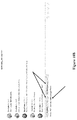
- the predefined rule is that when a display object for ErikKatz is selected, an image showing the location of ErikKatz (based for example on GPS data) also appears. While the image shown in FIG. 12 is a map with location data, this image is merely exemplary.
- FIGS. 13A-D illustrate a further exemplary embodiment of the present invention, in which selection of a display object does not reference a previously displayed (or later displayed message) but instead references other data—in this example an advertisement.
- the display object for the Chipotle message has been referenced.
- FIG. 13B a reference object corresponding to the display object referenced in FIG. 13A is inserted into the text entry box.
- FIG. 13C illustrates an exemplary image that appears when the display object illustrated in FIG. 13C is selected.
- the exemplary image may appear as a popup, but this is merely exemplary as the image may appear using other display mechanisms.
- Selection as in the other embodiments can be in the form of hovering, a click (form an I/O device such as a mouse), or some other action.
- the exemplary image in the popup includes a link that can be selected for a further action to occur.
- clicking the link results in the user (i.e. the user that created the message with the display object) receiving a promotion (i.e. free food).
- the promotion can be sent as a data transmission in a variety of manners including text, email, a popup, etc.
- the text can be sent, for example, simultaneously with the display of a popup on the screen where the display object has been selected.
- the result of the actions described is the display of a popup that includes a link which, when clicked results in a data transmission with a discount coupon (for example).
- a discount coupon for example.
- Other actions may occur upon selection of a field in such an exemplary popup, or instead of or in addition to display of the popup.
- Exemplary actions include initiation of an SMS text message, saving messages to an application (such as Evernote), popping up an additional window (which may also include a link that can be selected for further action to occur), and/or other actions.
- a first message is displayed before a second message is formed with a reference object (that may be converted to a display object).
- the information associated with the first message that is displayed is at least a portion (e.g. text) of the first message that was displayed.
- FIGS. 13A-D show a feature in place of, or in addition to the above feature.
- a first message is displayed before a second message is formed with a reference object (that may be converted to a display object).
- information associated with the first message that is displayed is other than any portion of the message that was displayed (e.g. an advertisement).
- the first message and the second message are part of a stream of messages.
- a stream of messages includes a plurality of messages sent one after another, i.e. one message appears, another message appears after the earlier message, etc. Multiple messages may exist between the first and second messages, or the first and second messages may be adjacent to each other in the stream.
- the stream of messages may exist, for example, in a single channel of communication (although messages across multiple channels of communication are also contemplated).
- a display can be (continuously) scrolled from the earlier message to the later message.
- the reference object may be removed from the text entry box in response to a user interaction with the reference object. If the user is using a touch screen display, the reference object may be removed by pressing on that area of the display. In other implementations, the reference object may be removed by the user clicking on the reference object with, e.g., a mouse. In some exemplary embodiments, the reference object may be deleted by using the text entry cursor back space over/delete the object.
- the display object when the message is sent via a network as shown in FIGS. 1 and 2 , the display object is included in the newly posted message.
- the display object is visually distinguishable from text entered by the user along with the object.
- the display object may be a different text color, font size or include animation to distinguish it from the normal text data.
- the user may still be able to edit or remove the display object.
- the user may first select the object by, for example, clicking on the object.
- a window or other kinds of display may appear at the interface portal with respect to the reference object.
- the user may then delete the display object using any of the techniques described above.
- the user in an exemplary embodiment of the present invention, may replace or add one more different display objects, by selecting a display object associated with a different previous chat message.
- the window may be closed and the interface portal will be automatically updated with the new or deleted display objects. This update is also transmitted to the other user that received the newly posted message so that their respective interface portals likewise reflect the current state of the newly posted message.
- a previously (or later) sent message can be edited to include a display object that was not previously associated with the sent message.
- a user may enable the reference object in several ways. For example, the user may move a mouse over a portion of the display object. As shown in FIG. 8D , a popup window (or view) may be shown that displays the data from the previous chat message that is referenced by the display object. By hovering over and/or selecting the display object the text of the referenced message is displayed [above, to the side of, below] the chat message.
- the user may toggle through successive display objects when more than one is added to the chat message.
- the display object can serve a dual purpose of a control which, when activated, toggles through successive previous chat messages appearing in the popup window.
- the display objects provide a reader with immediate and useful context relating to the message they are reading.
- the popup window may include hyperlinks, attachments (e.g. documents, photos, movies), or other embedded actionable items (such as “print” or “share”).
- the popup window can be passive or active. Thus, for example, clicking on a hyperlink that appears in a popup window can result in viewing of the target to the hyperlink, downloading an embedded attachment, etc.
- a user can “jump” to the original referenced message (and thus locate and change a display to the original placement of a message within a stream of messages).
- the display object or link object can be embedded in the “REF Pop.”
- a REF Pop refers to a window that is displayed in response to a user hovering or clicking on a display object.
- the user may click on hypertext or another object and that object will launch an action such as a jump to the original message (e.g., the message being referenced).
- This and other actions may be launched from the REF Pop as well as following a hypertext link or perhaps even launching a form or listening to an audio recording or viewing an image.
- the REF Pop may be more than a passive read only display—in some cases a user can interact with it for deeper/further functionality.
- various other types of visual or audio mechanisms can be activated in response to the user enabling the reference object.
- the display label associated with the object may change in text color, font size.
- an animation may be displayed at the reference object. The changes can be to the referenced object “in place” or elsewhere on the interface portal.
- the reference object may be enabled depending on the amount of force applied. For example, if the user presses on the touchscreen at the reference object, the popup window may be shown that displays the previous chat message, which provides the reader with context to the chat message that is currently being read.
- the invention may be useful across multiple channels. Assume, for example, that one conversation is occurring in one channel and another communication is occurring in another channel. Thus, a “second message” can be created in one channel based on a “first message” that appears in another channel.
- nested references may be available. For example, if a reference is made to a prior message which also contains a display object (and so on), a feature may be available to view all nested messages together. In other words, assume one display object references a message with a display object, and that display object references another message with a display object. In this exemplary embodiment, all the messages referenced by display objects (in nested formation) may be displayed together.
- the ability to view a first message (or other data) while a second message is in an area of a display that was being viewed allows efficient operation of a computing device without manual searching for the first message.
- This improvement to the technology of computer devices conveys other benefits as well.
- the ability to insert the reference object into the text entry box through a single click (or with fewer operations than with other methods) enables information associated with a message to be easily available (i.e. displayable) by reference to another message.
- the ability to include multiple references to other messages in a single message facilitates commenting and referencing more than one message at the same time without tedious specification and description of more than one message.
- a computer system may be included and/or operated within which a set of instructions, for causing the machine to perform any one or more of the methodologies discussed herein, may be executed.
- the machine may be connected (e.g., networked) to other machines in a local area network (LAN), an intranet, an extranet, or the Internet.
- the machine may operate in the capacity of a server or a client machine in a client-server network environment, or as a peer machine in a peer-to-peer (or distributed) network environment.
- the machine may be a personal computer (PC), a tablet PC, a set-top box (STB), a personal digital assistant (PDA), a cellular telephone, a web appliance, a server, a network router, switch or bridge, or any machine capable of executing a set of instructions (sequential or otherwise) that specify actions to be taken by that machine.
- PC personal computer
- PDA personal digital assistant
- STB set-top box
- WPA personal digital assistant
- a cellular telephone a web appliance
- server a server
- network router network router
- switch or bridge or any machine capable of executing a set of instructions (sequential or otherwise) that specify actions to be taken by that machine.
- machine shall also be taken to include any collection of machines that individually or jointly execute a set (or multiple sets) of instructions to perform any one or more of the methodologies discussed herein.
- the exemplary computer system includes a processing device, a main memory (e.g., read-only memory (ROM), flash memory, dynamic random access memory (DRAM) (such as synchronous DRAM (SDRAM) or Rambus DRAM (RDRAM), etc.), a static memory (e.g., flash memory, static random access memory (SRAM), etc.), and a data storage device, which communicate with each other via a bus.
- main memory e.g., read-only memory (ROM), flash memory, dynamic random access memory (DRAM) (such as synchronous DRAM (SDRAM) or Rambus DRAM (RDRAM), etc.
- DRAM dynamic random access memory
- SDRAM synchronous DRAM
- RDRAM Rambus DRAM
- static memory e.g., flash memory, static random access memory (SRAM), etc.
- SRAM static random access memory
- Processing device represents one or more general-purpose processing devices such as a microprocessor, central processing unit, or the like. More particularly, the processing device may be complex instruction set computing (CISC) microprocessor, reduced instruction set computer (RISC) microprocessor, very long instruction word (VLIW) microprocessor, or processor implementing other instruction sets, or processors implementing a combination of instruction sets. Processing device may also be one or more special-purpose processing devices such as an application specific integrated circuit (ASIC), a field programmable gate array (FPGA), a digital signal processor (DSP), network processor, or the like. Processing device is configured to execute listings manager logic for performing the operations and steps discussed herein.
- CISC complex instruction set computing
- RISC reduced instruction set computer
- VLIW very long instruction word
- ASIC application specific integrated circuit
- FPGA field programmable gate array
- DSP digital signal processor
- network processor or the like.
- Computer system may further include a network interface device.
- Computer system also may include a video display unit (e.g., a liquid crystal display (LCD) or a cathode ray tube (CRT)), an alphanumeric input device (e.g., a keyboard), a cursor control device (e.g., a mouse), and a signal generation device (e.g., a speaker).
- a video display unit e.g., a liquid crystal display (LCD) or a cathode ray tube (CRT)
- an alphanumeric input device e.g., a keyboard
- a cursor control device e.g., a mouse
- a signal generation device e.g., a speaker
- Data storage device may include a machine-readable storage medium (or more specifically a computer-readable storage medium) having one or more sets of instructions (e.g., reference generation module) embodying any one or more of the methodologies of functions described herein.
- the reference generation module may also reside, completely or at least partially, within main memory and/or within processing device during execution thereof by computer system; main memory and processing device also constituting machine-readable storage media.
- the reference generation module may further be transmitted or received over a network via network interface device.
- Machine-readable storage medium may also be used to store the device queue manager logic persistently. While a non-transitory machine-readable storage medium is shown in an exemplary embodiment to be a single medium, the term “machine-readable storage medium” should be taken to include a single medium or multiple media (e.g., a centralized or distributed database, and/or associated caches and servers) that store the one or more sets of instructions. The term “machine-readable storage medium” shall also be taken to include any medium that is capable of storing or encoding a set of instruction for execution by the machine and that causes the machine to perform any one or more of the methodologies of the present invention. The term “machine-readable storage medium” shall accordingly be taken to include, but not be limited to, solid-state memories, and optical and magnetic media.
- components and other features described herein can be implemented as discrete hardware components or integrated in the functionality of hardware components such as ASICs, FPGAs, DSPs or similar devices.
- these components can be implemented as firmware or functional circuitry within hardware devices.
- these components can be implemented in any combination of hardware devices and software components.
- the disclosure is related to an apparatus for performing the operations herein.
- This apparatus may be specially constructed for the required purposes or it may comprise a general purpose computing device selectively activated or reconfigured by a computer program stored therein.
- a computer program may be stored in a non-transitory computer readable storage medium, such as, but not limited to, any type of disk including floppy disks, optical disks, CD-ROMs and magnetic-optical disks, read-only memories (ROMs), random access memories (RAMs), EPROMs, EEPROMs, magnetic or optical cards, flash memory devices including universal serial bus (USB) storage devices (e.g., USB key devices) or any type of media suitable for storing electronic instructions, each of which may be coupled to a computer system bus.
- USB universal serial bus
Landscapes
- Engineering & Computer Science (AREA)
- Computer Networks & Wireless Communication (AREA)
- Signal Processing (AREA)
- Multimedia (AREA)
- Business, Economics & Management (AREA)
- General Business, Economics & Management (AREA)
- General Engineering & Computer Science (AREA)
- Information Transfer Between Computers (AREA)
Abstract
Description
Claims (30)
Priority Applications (8)
| Application Number | Priority Date | Filing Date | Title |
|---|---|---|---|
| US16/712,952 US10728192B2 (en) | 2015-11-10 | 2019-12-12 | Apparatus and method for message reference management |
| US16/746,412 US10999226B2 (en) | 2015-11-10 | 2020-01-17 | Apparatus and method for message image reference management |
| US16/931,283 US10805247B1 (en) | 2015-11-10 | 2020-07-16 | Method and apparatus for requesting private replies in messaging |
| US17/065,494 US11522821B2 (en) | 2015-07-06 | 2020-10-07 | Method and apparatus for interaction in a messaging system |
| US18/073,652 US20230094375A1 (en) | 2015-11-10 | 2022-12-02 | Sender Directed Messaging Pinning |
| US18/535,572 US11973731B2 (en) | 2015-11-10 | 2023-12-11 | System and methods for subsidiary channel-based thread communications |
| US18/640,465 US12425362B2 (en) | 2015-11-10 | 2024-04-19 | Apparatus and method for flow-through editing in a quote-reply messaging system |
| US18/939,448 US20250080480A1 (en) | 2015-11-10 | 2024-11-06 | Message edit and reply management in a quote-reply messaging system |
Applications Claiming Priority (11)
| Application Number | Priority Date | Filing Date | Title |
|---|---|---|---|
| US201562253229P | 2015-11-10 | 2015-11-10 | |
| US201662358719P | 2016-07-06 | 2016-07-06 | |
| US201762446067P | 2017-01-13 | 2017-01-13 | |
| US15/431,077 US9860198B1 (en) | 2017-01-13 | 2017-02-13 | Apparatus and method for message reference management |
| US201762518905P | 2017-06-13 | 2017-06-13 | |
| US15/858,696 US10025475B1 (en) | 2017-01-13 | 2017-12-29 | Apparatus and method for message reference management |
| US201862666137P | 2018-05-03 | 2018-05-03 | |
| US16/014,578 US11388120B2 (en) | 2015-11-10 | 2018-06-21 | Parallel messaging apparatus and method thereof |
| US201862783410P | 2018-12-21 | 2018-12-21 | |
| US16/376,427 US10547575B2 (en) | 2015-11-10 | 2019-04-05 | Apparatus and method for control of access to communication channels |
| US16/712,952 US10728192B2 (en) | 2015-11-10 | 2019-12-12 | Apparatus and method for message reference management |
Related Parent Applications (2)
| Application Number | Title | Priority Date | Filing Date |
|---|---|---|---|
| US16/376,427 Continuation US10547575B2 (en) | 2015-07-06 | 2019-04-05 | Apparatus and method for control of access to communication channels |
| US16/376,427 Continuation-In-Part US10547575B2 (en) | 2015-07-06 | 2019-04-05 | Apparatus and method for control of access to communication channels |
Related Child Applications (2)
| Application Number | Title | Priority Date | Filing Date |
|---|---|---|---|
| US16/746,412 Continuation-In-Part US10999226B2 (en) | 2015-07-06 | 2020-01-17 | Apparatus and method for message image reference management |
| US16/931,283 Continuation-In-Part US10805247B1 (en) | 2015-07-06 | 2020-07-16 | Method and apparatus for requesting private replies in messaging |
Publications (2)
| Publication Number | Publication Date |
|---|---|
| US20200120051A1 US20200120051A1 (en) | 2020-04-16 |
| US10728192B2 true US10728192B2 (en) | 2020-07-28 |
Family
ID=67392518
Family Applications (2)
| Application Number | Title | Priority Date | Filing Date |
|---|---|---|---|
| US16/376,427 Active US10547575B2 (en) | 2015-07-06 | 2019-04-05 | Apparatus and method for control of access to communication channels |
| US16/712,952 Active US10728192B2 (en) | 2015-07-06 | 2019-12-12 | Apparatus and method for message reference management |
Family Applications Before (1)
| Application Number | Title | Priority Date | Filing Date |
|---|---|---|---|
| US16/376,427 Active US10547575B2 (en) | 2015-07-06 | 2019-04-05 | Apparatus and method for control of access to communication channels |
Country Status (1)
| Country | Link |
|---|---|
| US (2) | US10547575B2 (en) |
Cited By (1)
| Publication number | Priority date | Publication date | Assignee | Title |
|---|---|---|---|---|
| US20240267347A1 (en) * | 2015-11-10 | 2024-08-08 | Wrinkl, Inc. | Apparatus and method for flow-through editing in a quote-reply messaging system |
Families Citing this family (27)
| Publication number | Priority date | Publication date | Assignee | Title |
|---|---|---|---|---|
| US8713467B1 (en) * | 2013-08-09 | 2014-04-29 | Palantir Technologies, Inc. | Context-sensitive views |
| US10805247B1 (en) | 2015-11-10 | 2020-10-13 | Wrinkl, Inc. | Method and apparatus for requesting private replies in messaging |
| US10897432B2 (en) * | 2017-12-04 | 2021-01-19 | Microsoft Technology Licensing, Llc | Chat-enabled messaging |
| US20190238605A1 (en) * | 2018-01-31 | 2019-08-01 | Salesforce.Com, Inc. | Verification of streaming message sequence |
| US10812435B2 (en) * | 2018-02-28 | 2020-10-20 | Ringcentral, Inc. | Systems and methods for suppressing repetitive notifications about messages in messaging groups |
| FR3089088A1 (en) * | 2018-11-22 | 2020-05-29 | Orange | Sharing management and message sharing methods, messaging devices of distinct types implementing them |
| US11150881B2 (en) * | 2018-12-14 | 2021-10-19 | Roku, Inc. | Advanced layer editor |
| US11533286B1 (en) * | 2019-08-01 | 2022-12-20 | Meta Platforms, Inc. | Systems and methods for multilevel comment threading |
| USD941874S1 (en) | 2019-10-03 | 2022-01-25 | Meta Platforms, Inc. | Display screen with animated graphical user interface |
| US11194447B2 (en) * | 2019-10-31 | 2021-12-07 | Slack Technologies, Llc | Apparatuses, computer program products, and methods for group-based communication channel organization |
| US11750539B2 (en) * | 2020-01-31 | 2023-09-05 | Slack Technologies, Llc | Method, apparatus, and computer program product for generating an electronic announcement for display in a group-based communication interface |
| US10951564B1 (en) * | 2020-04-17 | 2021-03-16 | Slack Technologies, Inc. | Direct messaging instance generation |
| US11778001B2 (en) * | 2020-06-29 | 2023-10-03 | Avaya Management L.P. | Conferencing application with instant messaging persona |
| US11516170B2 (en) * | 2020-12-03 | 2022-11-29 | Slack Technologies, Llc | Integrating a third-party platform into a communication platform |
| CN114827066B (en) * | 2021-01-18 | 2024-02-20 | 北京字跳网络技术有限公司 | Information processing method, apparatus, electronic device and storage medium |
| US11444903B1 (en) * | 2021-02-26 | 2022-09-13 | Slack Technologies, Llc | Contextual discovery and design of application workflow |
| US11431665B1 (en) * | 2021-03-03 | 2022-08-30 | Microsoft Technology Licensing, Llc | Dynamically controlled permissions for managing the communication of messages directed to a presenter |
| US11588779B2 (en) * | 2021-04-23 | 2023-02-21 | Slade Technologies, Inc. | Systems and methods for sharing channels in a group-based communication platform |
| CN113364668B (en) * | 2021-05-27 | 2022-12-09 | 维沃移动通信有限公司 | Message reminding method and device and electronic equipment |
| JP7748060B2 (en) * | 2021-07-21 | 2025-10-02 | 株式会社サテライトオフィス | Message sending system, message sending system program |
| CN114124591B (en) | 2021-11-22 | 2024-04-05 | 抖音视界有限公司 | Speaking user selection method, speaking user selection device, electronic equipment and storage medium |
| US11943190B2 (en) | 2022-06-09 | 2024-03-26 | Microsoft Technology Licensing, Llc | Fork and return point selection for sidebar communication threads |
| US11968160B2 (en) * | 2022-06-09 | 2024-04-23 | Microsoft Technology Licensing, Llc | Sidebar communication threads within pre-existing threads |
| US11799814B1 (en) | 2022-06-09 | 2023-10-24 | Microsoft Technology Licensing, Llc | Sidebar communication threads |
| US11991136B1 (en) | 2022-06-09 | 2024-05-21 | Microsoft Technology Licensing, Llc | Final message composition for sidebar communication threads |
| US12015581B1 (en) | 2023-07-13 | 2024-06-18 | Kyndryl, Inc. | Selectively exclude recipients from an end-to-end encryption enabled group chat |
| US12355581B1 (en) * | 2023-12-20 | 2025-07-08 | Zoom Communications Inc. | Breakout chat channels |
Citations (20)
| Publication number | Priority date | Publication date | Assignee | Title |
|---|---|---|---|---|
| US20050198584A1 (en) | 2004-01-27 | 2005-09-08 | Matthews David A. | System and method for controlling manipulation of tiles within a sidebar |
| US20060031361A1 (en) | 2004-07-01 | 2006-02-09 | International Business Machines Corporation | Method and apparatus for conversational annotation for instant messaging systems |
| US20090094288A1 (en) | 2005-01-11 | 2009-04-09 | Richard Edmond Berry | Conversation Persistence In Real-time Collaboration System |
| US20090119371A1 (en) * | 2007-11-02 | 2009-05-07 | International Business Machines Corporation | Synchronization of questions and answers in a collaborative messaging environment |
| US20100299599A1 (en) | 2009-05-19 | 2010-11-25 | Samsung Electronics Co., Ltd. | Mobile device and method for executing particular function through touch event on communication related list |
| US20110289406A1 (en) * | 2010-05-21 | 2011-11-24 | Sony Ericsson Mobile Communications Ab | User Interface for a Touch Sensitive Display on an Electronic Device |
| US20120198360A1 (en) | 2006-09-29 | 2012-08-02 | International Business Machines Corporation | Spinning off chat threads |
| US20140096033A1 (en) | 2008-03-06 | 2014-04-03 | Software Hot-House Ltd. | Enhancements to unified communications and messaging systems |
| US20140143684A1 (en) | 2012-11-21 | 2014-05-22 | Samsung Electronics Co., Ltd. | Message-based conversation operation method and mobile terminal supporting the same |
| US20140195621A1 (en) * | 2013-01-08 | 2014-07-10 | Vmware, Inc. | Intelligent chat system |
| US8832569B2 (en) | 2006-01-25 | 2014-09-09 | International Business Machines Corporation | Scrolling chat for participation in multiple instant messaging conversations |
| US9218603B2 (en) * | 2009-05-07 | 2015-12-22 | Gopesh Kumar | Method for providing a conference system allowing advisors to offer conference sessions to clients |
| US9262455B2 (en) | 2011-07-27 | 2016-02-16 | Google Inc. | Indexing quoted text in messages in conversations to support advanced conversation-based searching |
| US20160179773A1 (en) * | 2014-12-22 | 2016-06-23 | Yun Hung Shen | Device and Its Method for Post-Processing Conversation Contents in a Communication Software |
| US9426102B1 (en) | 2012-03-15 | 2016-08-23 | Google Inc. | Efficient conversation transmission to mobile clients |
| US20160294742A1 (en) * | 2002-05-31 | 2016-10-06 | Microsoft Technology Licensing, Llc | Multiple personalities in chat communications |
| US9860198B1 (en) | 2017-01-13 | 2018-01-02 | Wrinkl, Inc. | Apparatus and method for message reference management |
| US9971500B2 (en) | 2014-06-01 | 2018-05-15 | Apple Inc. | Displaying options, assigning notification, ignoring messages, and simultaneous user interface displays in a messaging application |
| US20180159812A1 (en) | 2016-12-06 | 2018-06-07 | Whatsapp Inc. | Techniques to visualize messaging flow |
| US9996248B2 (en) | 2013-04-02 | 2018-06-12 | Samsung Electronics Co., Ltd. | Apparatus and method for providing private chat in group chat |
-
2019
- 2019-04-05 US US16/376,427 patent/US10547575B2/en active Active
- 2019-12-12 US US16/712,952 patent/US10728192B2/en active Active
Patent Citations (20)
| Publication number | Priority date | Publication date | Assignee | Title |
|---|---|---|---|---|
| US20160294742A1 (en) * | 2002-05-31 | 2016-10-06 | Microsoft Technology Licensing, Llc | Multiple personalities in chat communications |
| US20050198584A1 (en) | 2004-01-27 | 2005-09-08 | Matthews David A. | System and method for controlling manipulation of tiles within a sidebar |
| US20060031361A1 (en) | 2004-07-01 | 2006-02-09 | International Business Machines Corporation | Method and apparatus for conversational annotation for instant messaging systems |
| US20090094288A1 (en) | 2005-01-11 | 2009-04-09 | Richard Edmond Berry | Conversation Persistence In Real-time Collaboration System |
| US8832569B2 (en) | 2006-01-25 | 2014-09-09 | International Business Machines Corporation | Scrolling chat for participation in multiple instant messaging conversations |
| US20120198360A1 (en) | 2006-09-29 | 2012-08-02 | International Business Machines Corporation | Spinning off chat threads |
| US20090119371A1 (en) * | 2007-11-02 | 2009-05-07 | International Business Machines Corporation | Synchronization of questions and answers in a collaborative messaging environment |
| US20140096033A1 (en) | 2008-03-06 | 2014-04-03 | Software Hot-House Ltd. | Enhancements to unified communications and messaging systems |
| US9218603B2 (en) * | 2009-05-07 | 2015-12-22 | Gopesh Kumar | Method for providing a conference system allowing advisors to offer conference sessions to clients |
| US20100299599A1 (en) | 2009-05-19 | 2010-11-25 | Samsung Electronics Co., Ltd. | Mobile device and method for executing particular function through touch event on communication related list |
| US20110289406A1 (en) * | 2010-05-21 | 2011-11-24 | Sony Ericsson Mobile Communications Ab | User Interface for a Touch Sensitive Display on an Electronic Device |
| US9262455B2 (en) | 2011-07-27 | 2016-02-16 | Google Inc. | Indexing quoted text in messages in conversations to support advanced conversation-based searching |
| US9426102B1 (en) | 2012-03-15 | 2016-08-23 | Google Inc. | Efficient conversation transmission to mobile clients |
| US20140143684A1 (en) | 2012-11-21 | 2014-05-22 | Samsung Electronics Co., Ltd. | Message-based conversation operation method and mobile terminal supporting the same |
| US20140195621A1 (en) * | 2013-01-08 | 2014-07-10 | Vmware, Inc. | Intelligent chat system |
| US9996248B2 (en) | 2013-04-02 | 2018-06-12 | Samsung Electronics Co., Ltd. | Apparatus and method for providing private chat in group chat |
| US9971500B2 (en) | 2014-06-01 | 2018-05-15 | Apple Inc. | Displaying options, assigning notification, ignoring messages, and simultaneous user interface displays in a messaging application |
| US20160179773A1 (en) * | 2014-12-22 | 2016-06-23 | Yun Hung Shen | Device and Its Method for Post-Processing Conversation Contents in a Communication Software |
| US20180159812A1 (en) | 2016-12-06 | 2018-06-07 | Whatsapp Inc. | Techniques to visualize messaging flow |
| US9860198B1 (en) | 2017-01-13 | 2018-01-02 | Wrinkl, Inc. | Apparatus and method for message reference management |
Non-Patent Citations (16)
| Title |
|---|
| blog.standuply.com [online], "Top 50 Features of Slack to Boost Your Productivity," Sep. 2016, [retrieved on Dec. 11, 2019], retrieved from: URL<https://blog.standuply.com/50-additional-features-of-slack-to-boost-your-productivity-959ee56f7893>, 5 pages. |
| Bustle.com [online], "How to Retweet With a Comment, aka Use the Life-Changing Feature Twitter Just Added," Apr. 7, 2015, [retrieved on Dec. 11, 2019], retrieved from: URL<https://www.bustle.com/articles/74648-how-to-retweet-with-a-comment-aka-use-the-life-changing-feature-twitter-just-added>, 4 pages. |
| Corban Tech [online], "Narwhal: The Best Reddit Client | Apps (App Walkthrough," Dec. 16, 2016, [retrieved on Dec. 11, 2019], retrieved from: URL<https://www.youtube.com/watch?v=78wgtwP1hKE>, 1 page (Video Submission). |
| engadget.com [online], "WhatsApp can quote messages you want to respond to," Jun. 2016, [retrieved on Dec. 11, 2019], retrieved from: URL<https://www.engadget.com/2016/06/12/whatsapp-quote-messages/>, 3 pages. |
| express.co.uk [online], "WhatsApp quietly introduced a brand-new way to reply to your messages," Jun. 13, 2016, [retrieved on Dec. 16, 2019] retrieved from: URL<https://www.express.co.uk/life-style/science-technology/679325/WhatsApp-How-To-Quote-Message-In-Reply-iOS-Android-Chat>, 4 page. |
| HubSpot.com [online], "How to Retweet the Right Way (With a Comment) on Twitter," Apr. 15, 2015, [retrieved on Dec. 11, 2019], retrieved from: URL<https://blog.hubspot.com/blog/tabid/6307/bid/27675/how-to-retweet-the-right-way-in-4-easy-steps.aspx>, 16 pages. |
| Mashable.com [online], "Twitter Updates TweetDeck, Allows Users to Edit and Retweet," Mar. 22, 2012, [retrieved on Dec. 11, 2019], retrieved from: URL<https://mashable.com/2012/03/22/tweetdeck-rt-updates/>, 3 pages. |
| outlook.uservoice.com [online], "Outlook for Android: Swipe Options, swipe left for reply, swipe right for forward. please add these options," Sep. 30, 2015, [retrieved on Dec. 11, 2019], retrieved from: URL<https://outlook.uservoice.com/forums/293346-outlook-for-android/suggestions/9992319-swipe-options-swipe-left-for-reply-swipe-right-f>, 5 pages. |
| PCT International Search Report and Written Opinion in International Appln. No. PCT/US2018/13462, dated Jan. 12, 2018, 7 pages. |
| Plexus Worldwide [online], "How to Use the New Retweet Function on Twitter | Social Media Solutions," Apr. 7, 2015, [retrieved on Dec. 11, 2019], retrieved from: URL<https://www.youtube.com/watch?v=h9mAP8vwiQ>, 1 page. (Video Submission). |
| slack.com [online], "Share messages in Slack: From channels to search-learn how Slack works from top to bottom!," [retrieved on Dec. 16, 2019] retrieved from: URL<https://slack.com/help/articles/203274767-Share-messages-in-Slack>, 1 page. |
| slack.com [online], "Using Slack ," 2019, [retrieved on Dec. 11, 2019], retrieved from: URL<https://slack.com/help/articles/203274767>, 5 pages. |
| slack.com [online], "Share messages in Slack: From channels to search—learn how Slack works from top to bottom!," [retrieved on Dec. 16, 2019] retrieved from: URL<https://slack.com/help/articles/203274767-Share-messages-in-Slack>, 1 page. |
| slackhq.com [online], "Sharing messages in Slack ," May 2016, [retrieved on Dec. 11, 2019], retrieved from: URL<https://slackhq.com/sharing-messages-in-slack>, 5 pages. |
| T5 by Robin Good [online], "Free open-source distributed alternative to Twitter: Mastodon," Oct. 10, 2016 [retrieved on Dec. 11, 2019], retrieved from: URL<tools.robingood.com/site/contents/content/765621/2016-10-06/free-open-source-distributed-alternative-to-twitter-mastodon>, 2 pages (Video Submission). |
| Tech & Design [online], "How to Retweet anything iPhone iPad iPod Mac," Jul. 18, 2015, [retrieved on Dec. 11, 2019], retrieved from: URL<https://www.youtube.com/watch?v=6D_MkQO0zjY>, 1 page (Video Submission). |
Cited By (2)
| Publication number | Priority date | Publication date | Assignee | Title |
|---|---|---|---|---|
| US20240267347A1 (en) * | 2015-11-10 | 2024-08-08 | Wrinkl, Inc. | Apparatus and method for flow-through editing in a quote-reply messaging system |
| US12425362B2 (en) * | 2015-11-10 | 2025-09-23 | Wrinkl, Inc. | Apparatus and method for flow-through editing in a quote-reply messaging system |
Also Published As
| Publication number | Publication date |
|---|---|
| US20200120051A1 (en) | 2020-04-16 |
| US10547575B2 (en) | 2020-01-28 |
| US20190238489A1 (en) | 2019-08-01 |
Similar Documents
| Publication | Publication Date | Title |
|---|---|---|
| US20200120051A1 (en) | Apparatus and method for message reference management | |
| US10025475B1 (en) | Apparatus and method for message reference management | |
| US9860198B1 (en) | Apparatus and method for message reference management | |
| EP2699029B1 (en) | Method and device for providing a message function | |
| US9792015B2 (en) | Providing visualizations for conversations | |
| US9542365B1 (en) | Methods for generating e-mail message interfaces | |
| US12373756B2 (en) | Contextual workflow buttons | |
| US12107816B2 (en) | Interactive components for user collaboration | |
| CN114780190B (en) | Message processing method, device, electronic equipment and storage medium | |
| CN113300938A (en) | Message sending method and device and electronic equipment | |
| US10078627B2 (en) | Collaboration cards for communication related to a collaborated document | |
| US12177270B2 (en) | Real-time updates for document collaboration sessions in a group-based communication system | |
| US12476837B2 (en) | Scheduled synchronous multimedia collaboration sessions | |
| US12099770B1 (en) | Displaying predicted tasks based on changing devices | |
| US12307551B2 (en) | Machine learning based on graphical element generator for communication platform | |
| US12141523B1 (en) | Automatic structure selection and content fill within a group-based communication system | |
| US20240427546A1 (en) | Systems and methods for screen sharing | |
| US20260095459A1 (en) | Contextual message forwarding in a group-based communication system | |
| US12425362B2 (en) | Apparatus and method for flow-through editing in a quote-reply messaging system | |
| US12452198B2 (en) | Displaying a summary based on exchanging messages | |
| US12238060B2 (en) | Integrating structured data containers via templates for communication platform | |
| US11902228B1 (en) | Interactive user status | |
| US20240232806A1 (en) | Integrating Structured Data Containers into Virtual Spaces for Communication Platform | |
| US20250080480A1 (en) | Message edit and reply management in a quote-reply messaging system | |
| US12568059B2 (en) | Updating communications with machine learning and platform context |
Legal Events
| Date | Code | Title | Description |
|---|---|---|---|
| FEPP | Fee payment procedure |
Free format text: ENTITY STATUS SET TO UNDISCOUNTED (ORIGINAL EVENT CODE: BIG.); ENTITY STATUS OF PATENT OWNER: SMALL ENTITY |
|
| AS | Assignment |
Owner name: WRINKL INC., NEW YORK Free format text: ASSIGNMENT OF ASSIGNORS INTEREST;ASSIGNORS:COHEN, MARC A.;KATZ, ERIC S.;REEL/FRAME:051271/0966 Effective date: 20191205 |
|
| AS | Assignment |
Owner name: WRINKL, INC., NEW YORK Free format text: CORRECTIVE ASSIGNMENT TO CORRECT THE RECEIVING PARTY PREVIOUSLY RECORDED AT REEL: 051271 FRAME: 0966. ASSIGNOR(S) HEREBY CONFIRMS THE ASSIGNMENT;ASSIGNORS:COHEN, MARK A.;KATZ, ERIC S.;REEL/FRAME:051381/0933 Effective date: 20191205 |
|
| FEPP | Fee payment procedure |
Free format text: ENTITY STATUS SET TO SMALL (ORIGINAL EVENT CODE: SMAL); ENTITY STATUS OF PATENT OWNER: SMALL ENTITY |
|
| AS | Assignment |
Owner name: WRINKL, INC;, NEW YORK Free format text: CORRECTIVE ASSIGNMENT TO CORRECT THE THE SPELLING OF ASSIGNEES NAMES PREVIOUSLY RECORDED ON REEL 051381 FRAME 0933. ASSIGNOR(S) HEREBY CONFIRMS THE THE CORRECT ASSIGNEES ARE MARC. A COHEN AND ERIK S. KATZ;ASSIGNORS:COHEN, MARC A.;KATZ, ERIK S.;REEL/FRAME:051985/0533 Effective date: 20191205 |
|
| AS | Assignment |
Owner name: WRINKL, INC., NEW YORK Free format text: CORRECTIVE ASSIGNMENT TO CORRECT THE ASSIGNEE NAME PREVIOUSLY RECORDED AT REEL: 051985 FRAME: 0533. ASSIGNOR(S) HEREBY CONFIRMS THE ASSIGNMENT;ASSIGNORS:COHEN, MARC A.;KATZ, ERIK S.;REEL/FRAME:052133/0469 Effective date: 20191205 |
|
| STPP | Information on status: patent application and granting procedure in general |
Free format text: RESPONSE TO NON-FINAL OFFICE ACTION ENTERED AND FORWARDED TO EXAMINER |
|
| STPP | Information on status: patent application and granting procedure in general |
Free format text: PUBLICATIONS -- ISSUE FEE PAYMENT VERIFIED |
|
| STCF | Information on status: patent grant |
Free format text: PATENTED CASE |
|
| IPR | Aia trial proceeding filed before the patent and appeal board: inter partes review |
Free format text: TRIAL NO: IPR2021-00883 Opponent name: FACEBOOK, INC., INSTAGRAM, LLC, AND WHATSAPP, LLC Effective date: 20210507 |
|
| IPRC | Trial and appeal board: inter partes review certificate |
Kind code of ref document: K1 Free format text: INTER PARTES REVIEW CERTIFICATE; TRIAL NO. IPR2021-00883, MAY 7, 2021 INTER PARTES REVIEW CERTIFICATE FOR PATENT 10,728,192, ISSUED JUL. 28, 2020, APPL. NO. 16/712,952, DEC. 12, 2019 INTER PARTES REVIEW CERTIFICATE ISSUED MAY 4, 2023 Effective date: 20230504 |
|
| MAFP | Maintenance fee payment |
Free format text: PAYMENT OF MAINTENANCE FEE, 4TH YR, SMALL ENTITY (ORIGINAL EVENT CODE: M2551); ENTITY STATUS OF PATENT OWNER: SMALL ENTITY Year of fee payment: 4 |