US10723952B2 - Polymerizable compound and optically anisotropic body - Google Patents
Polymerizable compound and optically anisotropic body Download PDFInfo
- Publication number
- US10723952B2 US10723952B2 US15/517,441 US201515517441A US10723952B2 US 10723952 B2 US10723952 B2 US 10723952B2 US 201515517441 A US201515517441 A US 201515517441A US 10723952 B2 US10723952 B2 US 10723952B2
- Authority
- US
- United States
- Prior art keywords
- group
- formula
- compound represented
- oco
- coo
- Prior art date
- Legal status (The legal status is an assumption and is not a legal conclusion. Google has not performed a legal analysis and makes no representation as to the accuracy of the status listed.)
- Active
Links
- 0 [1*]CCC(C)CCCSP Chemical compound [1*]CCC(C)CCCSP 0.000 description 45
- XTWNAXBUUTYLHA-UHFFFAOYSA-N CC1=CC(C)=C(C)C=C1.CC1=CC(C)=C(C)C=C1.CC1=CC(C)=C2C=CC=CC2=C1C.CC1=CC(C)=C2C=CC=CC2=C1C.CC1=CC=C2/C=C(C)\C=C/C2=C1C.CC1=CC=C2C(=C1)C=CC(C)=C2C.CC1CCC(C)C(C)C1.CC1CCC(C)C(C)C1 Chemical compound CC1=CC(C)=C(C)C=C1.CC1=CC(C)=C(C)C=C1.CC1=CC(C)=C2C=CC=CC2=C1C.CC1=CC(C)=C2C=CC=CC2=C1C.CC1=CC=C2/C=C(C)\C=C/C2=C1C.CC1=CC=C2C(=C1)C=CC(C)=C2C.CC1CCC(C)C(C)C1.CC1CCC(C)C(C)C1 XTWNAXBUUTYLHA-UHFFFAOYSA-N 0.000 description 3
- BTWHKPVXEOJZGK-UHFFFAOYSA-M B.C1CCOC1.C=CC(=O)OCCCCCCOC1=CC=C(O)C=C1.CC(=O)C1CCC(C(=O)O)CC1.CC(=O)C1CCC(CO)CC1.CC(=O)C1CCC(COS(C)(=O)=O)CC1.COCCOCCNC1=NC2=CC=CC=C2S1.CS(=O)(=O)Cl.N.O[Na].[H]C(=O)C1=CC(C2CCC(CCC)CC2)=CC=C1O.[H]C(=O)C1=CC(C2CCC(CCC)CC2)=CC=C1OCC1CCC(C(=O)O)CC1.[H]C(=O)C1=CC(C2CCC(CCC)CC2)=CC=C1OCC1CCC(C(=O)OC2=CC=C(OCCCCCCOC(=O)C=C)C=C2)CC1.[H]C(=O)C1=CC(C2CCC(CCC)CC2)=CC=C1OCC1CCC(C(C)=O)CC1 Chemical compound B.C1CCOC1.C=CC(=O)OCCCCCCOC1=CC=C(O)C=C1.CC(=O)C1CCC(C(=O)O)CC1.CC(=O)C1CCC(CO)CC1.CC(=O)C1CCC(COS(C)(=O)=O)CC1.COCCOCCNC1=NC2=CC=CC=C2S1.CS(=O)(=O)Cl.N.O[Na].[H]C(=O)C1=CC(C2CCC(CCC)CC2)=CC=C1O.[H]C(=O)C1=CC(C2CCC(CCC)CC2)=CC=C1OCC1CCC(C(=O)O)CC1.[H]C(=O)C1=CC(C2CCC(CCC)CC2)=CC=C1OCC1CCC(C(=O)OC2=CC=C(OCCCCCCOC(=O)C=C)C=C2)CC1.[H]C(=O)C1=CC(C2CCC(CCC)CC2)=CC=C1OCC1CCC(C(C)=O)CC1 BTWHKPVXEOJZGK-UHFFFAOYSA-M 0.000 description 1
- CIFYCKYUFIRISI-UHFFFAOYSA-N C#CC(=O)OC.C=C(F)C(=O)OC.C=C1CC(C)OC1=O.CCC1(COC)COC1.CN1C(=O)C=CC1=O.COC(=O)C1CC2C=CC1C2.COCC1(C)COC1.COCC1CCC2OC2C1.CS Chemical compound C#CC(=O)OC.C=C(F)C(=O)OC.C=C1CC(C)OC1=O.CCC1(COC)COC1.CN1C(=O)C=CC1=O.COC(=O)C1CC2C=CC1C2.COCC1(C)COC1.COCC1CCC2OC2C1.CS CIFYCKYUFIRISI-UHFFFAOYSA-N 0.000 description 1
- RTTVCYOKFSVRGD-UHFFFAOYSA-N C#CC(=O)OC.C=C(F)C(=O)OC.C=C1CC(C)OC1=O.CN1C(=O)C=CC1=O.COC(=O)C1(C)CC2C=CC1C2.COC(=O)C1CC2C=CC1C2.CS Chemical compound C#CC(=O)OC.C=C(F)C(=O)OC.C=C1CC(C)OC1=O.CN1C(=O)C=CC1=O.COC(=O)C1(C)CC2C=CC1C2.COC(=O)C1CC2C=CC1C2.CS RTTVCYOKFSVRGD-UHFFFAOYSA-N 0.000 description 1
- QDYQBRSGVZBTTR-QXHNJFEQSA-N C#CC(=O)OCCCOC1=CC=C(CCOC(=O)C2=CC3=C(C=C2)/C=C(C2=CC=C(C4=C5C=CC=CC5=C(/C=C/C(=O)O)C(/C=N/NC5=NC6=C(N=CC=N6)S5)=C4)C(F)=C2F)\C=C/3)C=C1.C=CC(=O)OCCCCOC1=CC=C(CCC(=O)OC2=CC3=C(C=C2)/C=C(C2=CC=C(C4=CC=C(CCC)C=C4)C(/C=N/NC4=NC5=C(C=CC6=NSN=C65)S4)=C2F)\C=C/3)C=C1 Chemical compound C#CC(=O)OCCCOC1=CC=C(CCOC(=O)C2=CC3=C(C=C2)/C=C(C2=CC=C(C4=C5C=CC=CC5=C(/C=C/C(=O)O)C(/C=N/NC5=NC6=C(N=CC=N6)S5)=C4)C(F)=C2F)\C=C/3)C=C1.C=CC(=O)OCCCCOC1=CC=C(CCC(=O)OC2=CC3=C(C=C2)/C=C(C2=CC=C(C4=CC=C(CCC)C=C4)C(/C=N/NC4=NC5=C(C=CC6=NSN=C65)S4)=C2F)\C=C/3)C=C1 QDYQBRSGVZBTTR-QXHNJFEQSA-N 0.000 description 1
- IYZWSOWFMSCRDL-UHFFFAOYSA-L C#CC1=CC=C(C2=CC=C(CCCCC)C=C2)C=C1.C=CC(=O)OCCCCCCOC1=CC=C(C(=O)O)C=C1.C=CC(=O)OCCCCCCOC1=CC=C(C(=O)OC2=CC=C(CCC3=CC=C(C4=CC=C(CCCCC)C=C4)C=C3)C=C2C=N)C=C1.CCCCC1=CC=C(C2=CC=C(C#CC3=CC=C(O)C=C3)C=C2)C=C1.CCCCCC1=CC=C(C2=CC=C(CCC3=CC=C(O)C=C3)C=C2)C=C1.Cl[Mg]Cl.N.NC1=NC2=C(C=CC=C2)S1.NC1=NC2=CC=CC=C2S1.OC1=CC=C(I)C=C1.[HH].[H]C(=O)C1=CC(CCC2=CC=C(C3=CC=C(CCCCC)C=C3)C=C2)=CC=C1O.[H]C(=O)C1=CC(CCC2=CC=C(C3=CC=C(CCCCC)C=C3)C=C2)=CC=C1OC(=O)C1=CC=C(OCCCCCCOC(=O)C=C)C=C1.[I-3] Chemical compound C#CC1=CC=C(C2=CC=C(CCCCC)C=C2)C=C1.C=CC(=O)OCCCCCCOC1=CC=C(C(=O)O)C=C1.C=CC(=O)OCCCCCCOC1=CC=C(C(=O)OC2=CC=C(CCC3=CC=C(C4=CC=C(CCCCC)C=C4)C=C3)C=C2C=N)C=C1.CCCCC1=CC=C(C2=CC=C(C#CC3=CC=C(O)C=C3)C=C2)C=C1.CCCCCC1=CC=C(C2=CC=C(CCC3=CC=C(O)C=C3)C=C2)C=C1.Cl[Mg]Cl.N.NC1=NC2=C(C=CC=C2)S1.NC1=NC2=CC=CC=C2S1.OC1=CC=C(I)C=C1.[HH].[H]C(=O)C1=CC(CCC2=CC=C(C3=CC=C(CCCCC)C=C3)C=C2)=CC=C1O.[H]C(=O)C1=CC(CCC2=CC=C(C3=CC=C(CCCCC)C=C3)C=C2)=CC=C1OC(=O)C1=CC=C(OCCCCCCOC(=O)C=C)C=C1.[I-3] IYZWSOWFMSCRDL-UHFFFAOYSA-L 0.000 description 1
- NRUBMODIYOFEJZ-UHFFFAOYSA-L C#CC1=CC=C(CCCC)C=C1.C=CC(=O)OCCCCCCOC1=CC=C(C(=O)O)C=C1.C=CC(=O)OCCCCCCOC1=CC=C(C(=O)OC2=CC=C(C#CC3=CC=C(CCCC)C=C3)C=C2C=N)C=C1.CCCCC1=CC=C(C#CC2=CC=C(O)C=C2)C=C1.Cl[Mg]Cl.N.NC1=NC2=C(C=CC=C2)S1.NC1=NC2=CC=CC=C2S1.OC1=CC=C(I)C=C1.[H]C(=O)C1=C(O)C=CC(C#CC2=CC=C(CCCC)C=C2)=C1.[H]C(=O)C1=CC(OC(=O)C2=CC=C(OCCCCCCOC(=O)C=C)C=C2)=CC=C1C#CC1=CC=C(CCCC)C=C1 Chemical compound C#CC1=CC=C(CCCC)C=C1.C=CC(=O)OCCCCCCOC1=CC=C(C(=O)O)C=C1.C=CC(=O)OCCCCCCOC1=CC=C(C(=O)OC2=CC=C(C#CC3=CC=C(CCCC)C=C3)C=C2C=N)C=C1.CCCCC1=CC=C(C#CC2=CC=C(O)C=C2)C=C1.Cl[Mg]Cl.N.NC1=NC2=C(C=CC=C2)S1.NC1=NC2=CC=CC=C2S1.OC1=CC=C(I)C=C1.[H]C(=O)C1=C(O)C=CC(C#CC2=CC=C(CCCC)C=C2)=C1.[H]C(=O)C1=CC(OC(=O)C2=CC=C(OCCCCCCOC(=O)C=C)C=C2)=CC=C1C#CC1=CC=C(CCCC)C=C1 NRUBMODIYOFEJZ-UHFFFAOYSA-L 0.000 description 1
- IVRQRHOXIDJPIB-UHFFFAOYSA-L C#CC1=CC=C(CCCCC)C=C1.C=CC(=O)OCCCCCCOC1=CC=C(C(=O)O)C=C1.C=CC(=O)OCCCCCCOC1=CC=C(C(=O)OC2=CC=C(CCC3=CC=C(CCCCC)C=C3)C=C2C=N)C=C1.CCCCCC1=CC=C(C#CC2=CC=C(O)C=C2)C=C1.CCCCCC1=CC=C(CCC2=CC=C(O)C=C2)C=C1.Cl[Mg]Cl.N.NC1=NC2=C(C=CC=C2)S1.NC1=NC2=CC=CC=C2S1.OC1=CC=C(I)C=C1.[HH].[H]C(=O)C1=CC(CCC2=CC=C(CCCCC)C=C2)=CC=C1O.[H]C(=O)C1=CC(CCC2=CC=C(CCCCC)C=C2)=CC=C1OC(=O)C1=CC=C(OCCCCCCOC(=O)C=C)C=C1.[IH-2] Chemical compound C#CC1=CC=C(CCCCC)C=C1.C=CC(=O)OCCCCCCOC1=CC=C(C(=O)O)C=C1.C=CC(=O)OCCCCCCOC1=CC=C(C(=O)OC2=CC=C(CCC3=CC=C(CCCCC)C=C3)C=C2C=N)C=C1.CCCCCC1=CC=C(C#CC2=CC=C(O)C=C2)C=C1.CCCCCC1=CC=C(CCC2=CC=C(O)C=C2)C=C1.Cl[Mg]Cl.N.NC1=NC2=C(C=CC=C2)S1.NC1=NC2=CC=CC=C2S1.OC1=CC=C(I)C=C1.[HH].[H]C(=O)C1=CC(CCC2=CC=C(CCCCC)C=C2)=CC=C1O.[H]C(=O)C1=CC(CCC2=CC=C(CCCCC)C=C2)=CC=C1OC(=O)C1=CC=C(OCCCCCCOC(=O)C=C)C=C1.[IH-2] IVRQRHOXIDJPIB-UHFFFAOYSA-L 0.000 description 1
- ZETVQIJGIMVSHX-RPFUJNRCSA-N C(#CC1=CC=CC=C1)C1=CC=CC=C1.C1=CC2=C(C=C1)C1=C(C=CC=C1)C=C2.C1=CC2=C(C=C1)CC=C2.C1=CC2=C(C=C1)CCC2.C1=CC2=C(C=C1)CCCC2.C1=CC2=CC3=C(C=CC=C3)C=C2C=C1.C1=CC=C(/C=C/C2=CC=CC=C2)C=C1.C1=CC=C(C2=CC3=C(C=CC=C3)C=C2)C=C1.C1=CC=C(C2=CC=C(C3=CC=CC=C3)C=C2)C=C1.C1=CC=C(C2=CC=CC=C2)C=C1.C1=CC=C2C=CC=CC2=C1.C1=CC=CC=C1 Chemical compound C(#CC1=CC=CC=C1)C1=CC=CC=C1.C1=CC2=C(C=C1)C1=C(C=CC=C1)C=C2.C1=CC2=C(C=C1)CC=C2.C1=CC2=C(C=C1)CCC2.C1=CC2=C(C=C1)CCCC2.C1=CC2=CC3=C(C=CC=C3)C=C2C=C1.C1=CC=C(/C=C/C2=CC=CC=C2)C=C1.C1=CC=C(C2=CC3=C(C=CC=C3)C=C2)C=C1.C1=CC=C(C2=CC=C(C3=CC=CC=C3)C=C2)C=C1.C1=CC=C(C2=CC=CC=C2)C=C1.C1=CC=C2C=CC=CC2=C1.C1=CC=CC=C1 ZETVQIJGIMVSHX-RPFUJNRCSA-N 0.000 description 1
- IKUQNEYEVFDZAR-POEMYJRGSA-N C(#CC1=CC=CC=C1)C1=CC=CC=C1.C1=CC2=C(C=C1)C1=C(C=CC=C1)C=C2.C1=CC2=CC3=C(C=CC=C3)C=C2C=C1.C1=CC=C(/C=C/C2=CC=CC=C2)C=C1.C1=CC=C(C2=CC3=C(C=CC=C3)C=C2)C=C1.C1=CC=C(C2=CC=C(C3=CC=CC=C3)C=C2)C=C1.C1=CC=C(C2=CC=CC=C2)C=C1.C1=CC=C2C=CC=CC2=C1.C1=CC=CC=C1 Chemical compound C(#CC1=CC=CC=C1)C1=CC=CC=C1.C1=CC2=C(C=C1)C1=C(C=CC=C1)C=C2.C1=CC2=CC3=C(C=CC=C3)C=C2C=C1.C1=CC=C(/C=C/C2=CC=CC=C2)C=C1.C1=CC=C(C2=CC3=C(C=CC=C3)C=C2)C=C1.C1=CC=C(C2=CC=C(C3=CC=CC=C3)C=C2)C=C1.C1=CC=C(C2=CC=CC=C2)C=C1.C1=CC=C2C=CC=CC2=C1.C1=CC=CC=C1 IKUQNEYEVFDZAR-POEMYJRGSA-N 0.000 description 1
- ISSNTKWJBAXSAD-UHFFFAOYSA-N C.C.C.C.C.C.C.C.C.C.C.C1CO1.C=C(C(=O)O)C(F)(F)F.C=C(C(=O)OCCOC1CCC(C2CCC(C(=O)O)CC2)CC1)C(F)(F)F.C=C(C(=O)OCCOC1CCC(C2CCC(C(=O)OC(C)(C)C)CC2)CC1)C(F)(F)F.C=C(C(=O)OCCOC1CCC(C2CCC(C(=O)OC3=CC4=C(C=C3)C(C=N)=C(OC(=O)C3=CC=C(C5=CC=C(C6CCC(CCCCC)CC6)C=C5)C=C3)C=C4)CC2)CC1)C(F)(F)F.C=C(C(=O)OCCOC1CCC(C2CCC(C(=O)OC3=CC4=C(C=C3)C(C=O)=C(O)C=C4)CC2)CC1)C(F)(F)F.C=C(C(=O)OCCOC1CCC(C2CCC(C(=O)OC3=CC4=C(C=C3)C(C=O)=C(OC(=O)C3=CC=C(C5=CC=C(C6CCC(CCCCC)CC6)C=C5)C=C3)C=C4)CC2)CC1)C(F)(F)F.CC(C)(C)O.CC(C)(C)OC(=O)C1=CC=C(C2=CC=C(O)C=C2)C=C1.CC(C)(C)OC(=O)C1=CC=C(C2=CC=C(OCCO)C=C2)C=C1.CC(C)(C)OC(=O)C1CCC(C2CCC(OCCO)CC2)CC1.CCCCCC1CCC(C2=CC=C(C3=CC=C(C(=O)O)C=C3)C=C2)CC1.CCCCCCCCN/C1=N/C2=C(C=CC3=C2C=CC=C3)S1.CCCCCCCCN/C1=N/C2=C(C=CC3=C2C=CC=C3)S1.N.O=C(O)C(F)(F)F.O=C(O)C1=CC=C(C2=CC=C(O)C=C2)C=C1.O=CC1=C(O)C=CC2=C1C=CC(O)=C2.[HH].[I-13] Chemical compound C.C.C.C.C.C.C.C.C.C.C.C1CO1.C=C(C(=O)O)C(F)(F)F.C=C(C(=O)OCCOC1CCC(C2CCC(C(=O)O)CC2)CC1)C(F)(F)F.C=C(C(=O)OCCOC1CCC(C2CCC(C(=O)OC(C)(C)C)CC2)CC1)C(F)(F)F.C=C(C(=O)OCCOC1CCC(C2CCC(C(=O)OC3=CC4=C(C=C3)C(C=N)=C(OC(=O)C3=CC=C(C5=CC=C(C6CCC(CCCCC)CC6)C=C5)C=C3)C=C4)CC2)CC1)C(F)(F)F.C=C(C(=O)OCCOC1CCC(C2CCC(C(=O)OC3=CC4=C(C=C3)C(C=O)=C(O)C=C4)CC2)CC1)C(F)(F)F.C=C(C(=O)OCCOC1CCC(C2CCC(C(=O)OC3=CC4=C(C=C3)C(C=O)=C(OC(=O)C3=CC=C(C5=CC=C(C6CCC(CCCCC)CC6)C=C5)C=C3)C=C4)CC2)CC1)C(F)(F)F.CC(C)(C)O.CC(C)(C)OC(=O)C1=CC=C(C2=CC=C(O)C=C2)C=C1.CC(C)(C)OC(=O)C1=CC=C(C2=CC=C(OCCO)C=C2)C=C1.CC(C)(C)OC(=O)C1CCC(C2CCC(OCCO)CC2)CC1.CCCCCC1CCC(C2=CC=C(C3=CC=C(C(=O)O)C=C3)C=C2)CC1.CCCCCCCCN/C1=N/C2=C(C=CC3=C2C=CC=C3)S1.CCCCCCCCN/C1=N/C2=C(C=CC3=C2C=CC=C3)S1.N.O=C(O)C(F)(F)F.O=C(O)C1=CC=C(C2=CC=C(O)C=C2)C=C1.O=CC1=C(O)C=CC2=C1C=CC(O)=C2.[HH].[I-13] ISSNTKWJBAXSAD-UHFFFAOYSA-N 0.000 description 1
- LNBVBDQCYFKDET-UHFFFAOYSA-N C.C.C.C.C.C.CC(C)(C)C1=CC(C(C)(C)C)=C(O)C(C(C)(C)C)=C1.CC(C)(C)C1=CC(CC2=CC(C(C)(C)C)=C(O)C(C(C)(C)C)=C2)=CC(C(C)(C)C)=C1O.CC(C)(C)CC(C)(C)C1=CC(CN2/N=C3/C=CC=C/C3=N/2)=C(O)C=C1.CC1=C(C(C2=C(C)C=C(O)C(C(C)(C)C)=C2)C(C)C)C=C(C(C)(C)C)C(O)=C1.CC1=C(CC2=C(C)C=C(O)C(C(C)(C)C)=C2)C=C(C(C)(C)C)C(O)=C1.CC1=C(SC2=C(C)C=C(O)C(C(C)(C)C)=C2)C=C(C(C)(C)C)C(O)=C1.CC1=CC=C(O)C(N2/N=C3/C=CC=C/C3=N/2)=C1.CCC1=CC(C(C)(C)C)=C(O)C(C(C)(C)C)=C1.CCC1CCC(C2=CC(C(C)(C)C)=C(O)C(C(C)(C)C)=C2)CC1 Chemical compound C.C.C.C.C.C.CC(C)(C)C1=CC(C(C)(C)C)=C(O)C(C(C)(C)C)=C1.CC(C)(C)C1=CC(CC2=CC(C(C)(C)C)=C(O)C(C(C)(C)C)=C2)=CC(C(C)(C)C)=C1O.CC(C)(C)CC(C)(C)C1=CC(CN2/N=C3/C=CC=C/C3=N/2)=C(O)C=C1.CC1=C(C(C2=C(C)C=C(O)C(C(C)(C)C)=C2)C(C)C)C=C(C(C)(C)C)C(O)=C1.CC1=C(CC2=C(C)C=C(O)C(C(C)(C)C)=C2)C=C(C(C)(C)C)C(O)=C1.CC1=C(SC2=C(C)C=C(O)C(C(C)(C)C)=C2)C=C(C(C)(C)C)C(O)=C1.CC1=CC=C(O)C(N2/N=C3/C=CC=C/C3=N/2)=C1.CCC1=CC(C(C)(C)C)=C(O)C(C(C)(C)C)=C1.CCC1CCC(C2=CC(C(C)(C)C)=C(O)C(C(C)(C)C)=C2)CC1 LNBVBDQCYFKDET-UHFFFAOYSA-N 0.000 description 1
- HFPMPNZCLVSVJC-UHFFFAOYSA-N C.C.C.C.CC(C)(C)C1=CC(C2=CC(C(C)(C)C)=C(O)C(C(C)(C)C)=C2)=CC(C(C)(C)C)=C1O.CC(C)(C)C1=CC(CC2=CC(C(C)(C)C)=C(O)C(C(C)(C)C)=C2)=CC(C(C)(C)C)=C1O.CCCC1CCC(C2=CC(C(C)(C)C)=C(O)C(C(C)(C)C)=C2)CC1.CCCCCCCC1=CC(C(C)(C)C)=C(O)C(C(C)(C)C)=C1.CCOC(=O)CCC1=CC(C(C)(C)C)=C(O)C(C(C)(C)C)=C1.CCOC1=CC(C(C)(C)C)=C(O)C(C(C)(C)C)=C1.COC(=O)C1=CC(C(C)(C)C)=C(O)C(C(C)(C)C)=C1.COC(=O)CCC1=CC(C(C)(C)C)=C(O)C(C(C)(C)C)=C1.[C-]#[N+]C1=C(F)C=C(C2CCC(CC)CC2)C=C1O Chemical compound C.C.C.C.CC(C)(C)C1=CC(C2=CC(C(C)(C)C)=C(O)C(C(C)(C)C)=C2)=CC(C(C)(C)C)=C1O.CC(C)(C)C1=CC(CC2=CC(C(C)(C)C)=C(O)C(C(C)(C)C)=C2)=CC(C(C)(C)C)=C1O.CCCC1CCC(C2=CC(C(C)(C)C)=C(O)C(C(C)(C)C)=C2)CC1.CCCCCCCC1=CC(C(C)(C)C)=C(O)C(C(C)(C)C)=C1.CCOC(=O)CCC1=CC(C(C)(C)C)=C(O)C(C(C)(C)C)=C1.CCOC1=CC(C(C)(C)C)=C(O)C(C(C)(C)C)=C1.COC(=O)C1=CC(C(C)(C)C)=C(O)C(C(C)(C)C)=C1.COC(=O)CCC1=CC(C(C)(C)C)=C(O)C(C(C)(C)C)=C1.[C-]#[N+]C1=C(F)C=C(C2CCC(CC)CC2)C=C1O HFPMPNZCLVSVJC-UHFFFAOYSA-N 0.000 description 1
- VIHJERDOUONWFX-UHFFFAOYSA-N C.C.CCCCCCCCC Chemical compound C.C.CCCCCCCCC VIHJERDOUONWFX-UHFFFAOYSA-N 0.000 description 1
- BDVCXEMJVGUABA-QNRRWNLBSA-N C.C=C(C)C(=O)O.C=C(C)C(=O)OC1=CC(C=N)=C(C(=O)OC2=CC=C(C3=CC=C(C(=O)OCCCCC)C=C3)C=C2)C=C1.CC(=N)C1=CC=C2C(=C1)CC1=C2C=CC=C1.CC(=N\N)/C1=C/C2=C(\C=C/1)C1=C(C=CC=C1)C2.CCCCCOC(=O)C1=CC=C(C2=CC=C(O)C=C2)C=C1.O=C(O)C(F)(F)F.[H]C(=O)C1=C(C(=O)O)C=CC(C)=C1.[H]C(=O)C1=C(C(=O)OC2=CC=C(C3=CC=C(C(=O)OCCCCC)C=C3)C=C2)C=CC(C)=C1.[H]C(=O)C1=C(C(=O)OC2=CC=C(C3=CC=C(C(=O)OCCCCC)C=C3)C=C2)C=CC(O)=C1.[H]C(=O)C1=C(C(=O)OC2=CC=C(C3=CC=C(C(=O)OCCCCC)C=C3)C=C2)C=CC(OC(=O)C(=C)C)=C1.[I-15] Chemical compound C.C=C(C)C(=O)O.C=C(C)C(=O)OC1=CC(C=N)=C(C(=O)OC2=CC=C(C3=CC=C(C(=O)OCCCCC)C=C3)C=C2)C=C1.CC(=N)C1=CC=C2C(=C1)CC1=C2C=CC=C1.CC(=N\N)/C1=C/C2=C(\C=C/1)C1=C(C=CC=C1)C2.CCCCCOC(=O)C1=CC=C(C2=CC=C(O)C=C2)C=C1.O=C(O)C(F)(F)F.[H]C(=O)C1=C(C(=O)O)C=CC(C)=C1.[H]C(=O)C1=C(C(=O)OC2=CC=C(C3=CC=C(C(=O)OCCCCC)C=C3)C=C2)C=CC(C)=C1.[H]C(=O)C1=C(C(=O)OC2=CC=C(C3=CC=C(C(=O)OCCCCC)C=C3)C=C2)C=CC(O)=C1.[H]C(=O)C1=C(C(=O)OC2=CC=C(C3=CC=C(C(=O)OCCCCC)C=C3)C=C2)C=CC(OC(=O)C(=C)C)=C1.[I-15] BDVCXEMJVGUABA-QNRRWNLBSA-N 0.000 description 1
- LYTCGIKAVZPVNF-UHFFFAOYSA-N C.C=C(C)C(=O)OCCCCO.C=C(C)C(=O)OCCCCOC(=O)C1CCC(C(=O)OC2=C3C=CC=CC3=C(OC(=O)C3CCC(C4CCC(C)CC4)CC3)C=C2C=N)CC1.NC1=C/C2=C(C=CC=C2)/C=C\1.NCC1=CC2=CC=CC=C2C=C1.[H]C(=O)C1=CC(OC(=O)C2CCC(C3CCC(C)CC3)CC2)=C2C=CC=CC2=C1OC(=O)C1CCC(C(=O)O)CC1.[H]C(=O)C1=CC(OC(=O)C2CCC(C3CCC(C)CC3)CC2)=C2C=CC=CC2=C1OC(=O)C1CCC(C(=O)OCCCCOC(=O)C(=C)C)CC1.[I-11] Chemical compound C.C=C(C)C(=O)OCCCCO.C=C(C)C(=O)OCCCCOC(=O)C1CCC(C(=O)OC2=C3C=CC=CC3=C(OC(=O)C3CCC(C4CCC(C)CC4)CC3)C=C2C=N)CC1.NC1=C/C2=C(C=CC=C2)/C=C\1.NCC1=CC2=CC=CC=C2C=C1.[H]C(=O)C1=CC(OC(=O)C2CCC(C3CCC(C)CC3)CC2)=C2C=CC=CC2=C1OC(=O)C1CCC(C(=O)O)CC1.[H]C(=O)C1=CC(OC(=O)C2CCC(C3CCC(C)CC3)CC2)=C2C=CC=CC2=C1OC(=O)C1CCC(C(=O)OCCCCOC(=O)C(=C)C)CC1.[I-11] LYTCGIKAVZPVNF-UHFFFAOYSA-N 0.000 description 1
- NQQCGXTXGOXNGS-UHFFFAOYSA-N C.C=CC(=O)OCCCCCCOC1=CC=C(C(=O)O)C=C1.C=CC(=O)OCCCCCCOC1=CC=C(C(=O)OC2=CC=C(C(=O)OC3=CC=C(OC)C=C3C=N)C=C2)C=C1.CC1=CC=C(C(=O)O)C=C1.Cl.N.NC1=NC2=C(C=CC=C2)S1.NC1=NC2=CC=CC=C2S1.[H]C(=O)C1=CC(OC)=CC=C1O.[H]C(=O)C1=CC(OC)=CC=C1OC(=O)C1=CC=C(C)C=C1.[H]C(=O)C1=CC(OC)=CC=C1OC(=O)C1=CC=C(O)C=C1.[H]C(=O)C1=CC(OC)=CC=C1OC(=O)C1=CC=C(OC(=O)C2=CC=C(OCCCCCCOC(=O)C=C)C=C2)C=C1.[I-9] Chemical compound C.C=CC(=O)OCCCCCCOC1=CC=C(C(=O)O)C=C1.C=CC(=O)OCCCCCCOC1=CC=C(C(=O)OC2=CC=C(C(=O)OC3=CC=C(OC)C=C3C=N)C=C2)C=C1.CC1=CC=C(C(=O)O)C=C1.Cl.N.NC1=NC2=C(C=CC=C2)S1.NC1=NC2=CC=CC=C2S1.[H]C(=O)C1=CC(OC)=CC=C1O.[H]C(=O)C1=CC(OC)=CC=C1OC(=O)C1=CC=C(C)C=C1.[H]C(=O)C1=CC(OC)=CC=C1OC(=O)C1=CC=C(O)C=C1.[H]C(=O)C1=CC(OC)=CC=C1OC(=O)C1=CC=C(OC(=O)C2=CC=C(OCCCCCCOC(=O)C=C)C=C2)C=C1.[I-9] NQQCGXTXGOXNGS-UHFFFAOYSA-N 0.000 description 1
- JWLYDFRBMBAMCR-UHFFFAOYSA-L C.C=CC(=O)OCCCCCCOC1=CC=C(C(=O)O)C=C1.C=CC(=O)OCCCCCCOC1=CC=C(C(=O)OC2=CC=C(C3CCC(CCC)CC3)C=C2C=N)C=C1.CCCC1CCC(C2=CC=C(O)C=C2)CC1.Cl[Mg]Cl.N.NC1=NC2=C(C=CC=C2)S1.NC1=NC2=CC=CC=C2S1.[H]C(=O)C1=CC(C2CCC(CCC)CC2)=CC=C1O.[H]C(=O)C1=CC(C2CCC(CCC)CC2)=CC=C1OC(=O)C1=CC=C(OCCCCCCOC(=O)C=C)C=C1.[I-] Chemical compound C.C=CC(=O)OCCCCCCOC1=CC=C(C(=O)O)C=C1.C=CC(=O)OCCCCCCOC1=CC=C(C(=O)OC2=CC=C(C3CCC(CCC)CC3)C=C2C=N)C=C1.CCCC1CCC(C2=CC=C(O)C=C2)CC1.Cl[Mg]Cl.N.NC1=NC2=C(C=CC=C2)S1.NC1=NC2=CC=CC=C2S1.[H]C(=O)C1=CC(C2CCC(CCC)CC2)=CC=C1O.[H]C(=O)C1=CC(C2CCC(CCC)CC2)=CC=C1OC(=O)C1=CC=C(OCCCCCCOC(=O)C=C)C=C1.[I-] JWLYDFRBMBAMCR-UHFFFAOYSA-L 0.000 description 1
- OTKKPKIHAAUZID-UHFFFAOYSA-N C.C=CC(=O)OCCCCCCOC1=CC=C(C(=O)OC2=CC=C(C3=CC=C(CCC)C=C3)C(C=N)=C2)C=C1.CNC1=NC2=C(C=CC=C2)S1.CNN.ClC1=NC2=CC=CC=C2S1.N.NC1=NC2=CC=CC=C2S1.[H]C(=O)C1=CC(OC(=O)C2=CC=C(OCCCCCCOC(=O)C=C)C=C2)=CC=C1C1=CC=C(CCC)C=C1 Chemical compound C.C=CC(=O)OCCCCCCOC1=CC=C(C(=O)OC2=CC=C(C3=CC=C(CCC)C=C3)C(C=N)=C2)C=C1.CNC1=NC2=C(C=CC=C2)S1.CNN.ClC1=NC2=CC=CC=C2S1.N.NC1=NC2=CC=CC=C2S1.[H]C(=O)C1=CC(OC(=O)C2=CC=C(OCCCCCCOC(=O)C=C)C=C2)=CC=C1C1=CC=C(CCC)C=C1 OTKKPKIHAAUZID-UHFFFAOYSA-N 0.000 description 1
- NSHFCOUKAOTNDU-UHFFFAOYSA-N C.C=CC(=O)OCCCCCCOC1=CC=C(OC(=O)C2CCC(C(=O)OC3=CC=C(C4CCC(CCC)CC4)C=C3C=N)CC2)C=C1.CNC1=NC2=C(C=CC=C2)S1.N.NC1=NC2=CC=CC=C2S1.[H]C(=O)C1=CC(C2CCC(CCC)CC2)=CC=C1OC(=O)C1CCC(C(=O)OC2=CC=C(OCCCCCCOC(=O)C=C)C=C2)CC1 Chemical compound C.C=CC(=O)OCCCCCCOC1=CC=C(OC(=O)C2CCC(C(=O)OC3=CC=C(C4CCC(CCC)CC4)C=C3C=N)CC2)C=C1.CNC1=NC2=C(C=CC=C2)S1.N.NC1=NC2=CC=CC=C2S1.[H]C(=O)C1=CC(C2CCC(CCC)CC2)=CC=C1OC(=O)C1CCC(C(=O)OC2=CC=C(OCCCCCCOC(=O)C=C)C=C2)CC1 NSHFCOUKAOTNDU-UHFFFAOYSA-N 0.000 description 1
- NIYRQNUANLTCAL-UHFFFAOYSA-N C.CCCC1=CC=C(C(=O)OCCC2=CC=C(OC(=O)C3=CC(C)=C(OCCCCCCOCC4(CC)COC4)C=C3)C(C=N)=C2)C=C1.N.N=C1C2=C(C=CC=C2)C2=C1/C=C\C=C/2.N=C1C2=C(C=CC=C2)C2=C1C=CC=C2.NN.O.O=C1C2=C(C=CC=C2)C2=C1/C=C\C=C/2.[I-10] Chemical compound C.CCCC1=CC=C(C(=O)OCCC2=CC=C(OC(=O)C3=CC(C)=C(OCCCCCCOCC4(CC)COC4)C=C3)C(C=N)=C2)C=C1.N.N=C1C2=C(C=CC=C2)C2=C1/C=C\C=C/2.N=C1C2=C(C=CC=C2)C2=C1C=CC=C2.NN.O.O=C1C2=C(C=CC=C2)C2=C1/C=C\C=C/2.[I-10] NIYRQNUANLTCAL-UHFFFAOYSA-N 0.000 description 1
- HXEJBWREBUDIOW-UHFFFAOYSA-N C.COC(=O)C1(C)CC2C=CC1C2 Chemical compound C.COC(=O)C1(C)CC2C=CC1C2 HXEJBWREBUDIOW-UHFFFAOYSA-N 0.000 description 1
- NNACMOFCUIHQMU-LYGWXQJUSA-N C/C=C/OC.C=C(C(=O)OC)C(F)(F)F.C=C(C)C(=O)OC.C=CC(=O)OC.C=CCOC.C=COC.CC1CO1.CC1OC1(C)C.CCC1(COC)COC1.COCC1(C)CO1.COCC1(C)COC1.COCC1CCC2OC2C1.COCC1CO1 Chemical compound C/C=C/OC.C=C(C(=O)OC)C(F)(F)F.C=C(C)C(=O)OC.C=CC(=O)OC.C=CCOC.C=COC.CC1CO1.CC1OC1(C)C.CCC1(COC)COC1.COCC1(C)CO1.COCC1(C)COC1.COCC1CCC2OC2C1.COCC1CO1 NNACMOFCUIHQMU-LYGWXQJUSA-N 0.000 description 1
- VUGCAPASUNDFQZ-AXKSAXCBSA-N C/C=C/OC.C=C(C(=O)OC)C(F)(F)F.C=C(C)C(=O)OC.C=CC(=O)OC.C=CCOC.C=COC.CC1CO1.CC1OC1(C)C.COCC1(C)CO1.COCC1CO1 Chemical compound C/C=C/OC.C=C(C(=O)OC)C(F)(F)F.C=C(C)C(=O)OC.C=CC(=O)OC.C=CCOC.C=COC.CC1CO1.CC1OC1(C)C.COCC1(C)CO1.COCC1CO1 VUGCAPASUNDFQZ-AXKSAXCBSA-N 0.000 description 1
- MHXJXOGERDKBGX-UHFFFAOYSA-N C1=CC2=C(C1)CC=C2.C1=CC2=C(C=C1)C1=C(/C=C\C=C/1)C2.C1=CC2=C(C=C1)CC1=C(C=CC=C1)C=C2.C1=CC2=C(C=C1)CC1=C(C=CC=C1)CC2.C1=CC2=C(C=C1)CC=C2.C1=CC2=C(C=C1)CCC2.C1=CC2=C(C=C1)CCCC2.C1=CC2=C(C=CC2)C1.C1=CC=C2CC3=C(C=CC=C3)CC2=C1.C1=CCC=C1 Chemical compound C1=CC2=C(C1)CC=C2.C1=CC2=C(C=C1)C1=C(/C=C\C=C/1)C2.C1=CC2=C(C=C1)CC1=C(C=CC=C1)C=C2.C1=CC2=C(C=C1)CC1=C(C=CC=C1)CC2.C1=CC2=C(C=C1)CC=C2.C1=CC2=C(C=C1)CCC2.C1=CC2=C(C=C1)CCCC2.C1=CC2=C(C=CC2)C1.C1=CC=C2CC3=C(C=CC=C3)CC2=C1.C1=CCC=C1 MHXJXOGERDKBGX-UHFFFAOYSA-N 0.000 description 1
- PNXJAYLQQYYCFM-UHFFFAOYSA-N C1=CC2=C(C1)CC=C2.C1=CC2=C(C=C1)C1=C(/C=C\C=C/1)C2.C1=CC2=C(C=C1)CC1=C(C=CC=C1)C=C2.C1=CC2=C(C=C1)CC1=C(C=CC=C1)CC2.C1=CC2=C(C=CC2)C1.C1=CC=C2CC3=C(C=CC=C3)CC2=C1.C1=CCC=C1 Chemical compound C1=CC2=C(C1)CC=C2.C1=CC2=C(C=C1)C1=C(/C=C\C=C/1)C2.C1=CC2=C(C=C1)CC1=C(C=CC=C1)C=C2.C1=CC2=C(C=C1)CC1=C(C=CC=C1)CC2.C1=CC2=C(C=CC2)C1.C1=CC=C2CC3=C(C=CC=C3)CC2=C1.C1=CCC=C1 PNXJAYLQQYYCFM-UHFFFAOYSA-N 0.000 description 1
- IBKMFQUOVXYXLP-BRITWWSWSA-N C1=CC2=C(C=C1)SC(NC1=NC3=C(C=CC=C3)S1)=N2.CC1=CC=C(OC(=O)C2=CC(C)=C(OC(=O)C3=CC4=CC=C(OCCCOCC5CCC6OC6C5)C=C4C=C3)C=C2)C(/C=N/N(CCO)C2=NC3=C(C=CC=C3)S2)=C1.CCCC1=CC=C(COC2=C(Cl)C=C(OC(=O)C3=C/C4=CC=C(OCCCCCCOCC5(CC)COC5)C(C=N)=C4/C=C\3)C=C2)C=C1.N/C=C1/C=CC=CC1=C(N)N.[H][C@]1(OC(=O)C2=CC([N+]#[C-])=C(OC(=O)C3=CC4=CC=C(OCCCCCCOC(=O)C(=C)C)C=C4C=C3)C=C2)CCC(C)CC1C=N Chemical compound C1=CC2=C(C=C1)SC(NC1=NC3=C(C=CC=C3)S1)=N2.CC1=CC=C(OC(=O)C2=CC(C)=C(OC(=O)C3=CC4=CC=C(OCCCOCC5CCC6OC6C5)C=C4C=C3)C=C2)C(/C=N/N(CCO)C2=NC3=C(C=CC=C3)S2)=C1.CCCC1=CC=C(COC2=C(Cl)C=C(OC(=O)C3=C/C4=CC=C(OCCCCCCOCC5(CC)COC5)C(C=N)=C4/C=C\3)C=C2)C=C1.N/C=C1/C=CC=CC1=C(N)N.[H][C@]1(OC(=O)C2=CC([N+]#[C-])=C(OC(=O)C3=CC4=CC=C(OCCCCCCOC(=O)C(=C)C)C=C4C=C3)C=C2)CCC(C)CC1C=N IBKMFQUOVXYXLP-BRITWWSWSA-N 0.000 description 1
- YMUHWECPJZNTQQ-UHFFFAOYSA-M C1=CC=C(NC2=CC=CC=C2)C=C1.C1=CC=C(NC2=CC=CC=C2)C=C1.C1=COCCC1.C=C(F)C(=O)O.C=C(F)C(=O)OCCCOC1=CC=C(C(=O)OC2=C(C=N)C3=C(C=C2)C=C(CCC)C=C3)C=C1.CCCCCl.CCCCOC1=CC=C(C(=O)O)C=C1.CCCCOC1=CC=C(C(=O)OC)C=C1.COC(=O)C1=CC=C(O)C=C1.Cl.N.OCCCCl.O[Na].[H]C(=O)C1=C(O)C=CC2=C1C=CC(CCC)=C2.[H]C(=O)C1=C(OC(=O)C2=CC=C(OCCCC)C=C2)C=CC2=C1C=CC(CCC)=C2.[H]C(=O)C1=C(OC(=O)C2=CC=C(OCCCO)C=C2)C=CC2=C1C=CC(CCC)=C2.[H]C(=O)C1=C(OC(=O)C2=CC=C(OCCCOC(=O)C(=C)F)C=C2)C=CC2=C1C=CC(CCC)=C2.[I-12] Chemical compound C1=CC=C(NC2=CC=CC=C2)C=C1.C1=CC=C(NC2=CC=CC=C2)C=C1.C1=COCCC1.C=C(F)C(=O)O.C=C(F)C(=O)OCCCOC1=CC=C(C(=O)OC2=C(C=N)C3=C(C=C2)C=C(CCC)C=C3)C=C1.CCCCCl.CCCCOC1=CC=C(C(=O)O)C=C1.CCCCOC1=CC=C(C(=O)OC)C=C1.COC(=O)C1=CC=C(O)C=C1.Cl.N.OCCCCl.O[Na].[H]C(=O)C1=C(O)C=CC2=C1C=CC(CCC)=C2.[H]C(=O)C1=C(OC(=O)C2=CC=C(OCCCC)C=C2)C=CC2=C1C=CC(CCC)=C2.[H]C(=O)C1=C(OC(=O)C2=CC=C(OCCCO)C=C2)C=CC2=C1C=CC(CCC)=C2.[H]C(=O)C1=C(OC(=O)C2=CC=C(OCCCOC(=O)C(=C)F)C=C2)C=CC2=C1C=CC(CCC)=C2.[I-12] YMUHWECPJZNTQQ-UHFFFAOYSA-M 0.000 description 1
- NYTXZHDGVFHEAB-UHFFFAOYSA-N C1=CC=C(NC2=CC=CC=C2)C=C1.C=C(C)C(=O)OCCCCOC(=O)C1CCC(C(=O)OC2=C3C=CC=CC3=C(OC(=O)C3CCC(C4CCC(C)CC4)CC3)C=C2C=N)CC1.C=C(F)C(=O)OCCCOC1=CC=C(C(=O)OC2=C(C=N)C3=C(C=C2)C=C(CCC)C=C3)C=C1.CCCC1=CC=C(C(=O)OCCC2=CC=C(OC(=O)C3=CC(C)=C(OCCCCCCOCC4(CC)COC4)C=C3)C(C=N)=C2)C=C1.N=C1C2=C(C=CC=C2)C2=C1C=CC=C2.NC1=CC2=C(C=CC=C2)C=C1 Chemical compound C1=CC=C(NC2=CC=CC=C2)C=C1.C=C(C)C(=O)OCCCCOC(=O)C1CCC(C(=O)OC2=C3C=CC=CC3=C(OC(=O)C3CCC(C4CCC(C)CC4)CC3)C=C2C=N)CC1.C=C(F)C(=O)OCCCOC1=CC=C(C(=O)OC2=C(C=N)C3=C(C=C2)C=C(CCC)C=C3)C=C1.CCCC1=CC=C(C(=O)OCCC2=CC=C(OC(=O)C3=CC(C)=C(OCCCCCCOCC4(CC)COC4)C=C3)C(C=N)=C2)C=C1.N=C1C2=C(C=CC=C2)C2=C1C=CC=C2.NC1=CC2=C(C=CC=C2)C=C1 NYTXZHDGVFHEAB-UHFFFAOYSA-N 0.000 description 1
- KNCGRHKLHYQDOD-UHFFFAOYSA-N C1=CC=C(NC2=CC=CC=C2)C=C1.C=CC(=O)OCCCCCCOC1=CC=C(C(=O)OC2=C(C=N)C3=C(C=C2)/C=C(C(=O)OC2=CC=C(C)C=C2C)\C=C/3)C=C1.C=CC(=O)OCCCCOC1=CC=C2/C=C(C(=O)CC3=CC=C(C)C=C3C=N)\C=C/C2=C1.C=CC(=O)OCCCOC1=C(C=N)C=C(C(=O)OC2=CC3=C(C=C2)C=C(C(=O)OC2=CC=C(C)C=C2C)C=C3)C=C1.CNC1=NC2=C(C=CC=C2)S1.NC1=CC=C2C=CC=CC2=N1 Chemical compound C1=CC=C(NC2=CC=CC=C2)C=C1.C=CC(=O)OCCCCCCOC1=CC=C(C(=O)OC2=C(C=N)C3=C(C=C2)/C=C(C(=O)OC2=CC=C(C)C=C2C)\C=C/3)C=C1.C=CC(=O)OCCCCOC1=CC=C2/C=C(C(=O)CC3=CC=C(C)C=C3C=N)\C=C/C2=C1.C=CC(=O)OCCCOC1=C(C=N)C=C(C(=O)OC2=CC3=C(C=C2)C=C(C(=O)OC2=CC=C(C)C=C2C)C=C3)C=C1.CNC1=NC2=C(C=CC=C2)S1.NC1=CC=C2C=CC=CC2=N1 KNCGRHKLHYQDOD-UHFFFAOYSA-N 0.000 description 1
- XGWCREQGNYLILW-UHFFFAOYSA-N C1=CC=C2C=CC=CC2=C1.C1=CC=C2C=NC=CC2=C1.C1=CC=C2C=NN=CC2=C1.C1=CC=C2N=CC=CC2=C1.C1=CC=C2N=CC=NC2=C1.C1=CC=C2N=CN=CC2=C1.C1=CC=C2N=NC=CC2=C1 Chemical compound C1=CC=C2C=CC=CC2=C1.C1=CC=C2C=NC=CC2=C1.C1=CC=C2C=NN=CC2=C1.C1=CC=C2N=CC=CC2=C1.C1=CC=C2N=CC=NC2=C1.C1=CC=C2N=CN=CC2=C1.C1=CC=C2N=NC=CC2=C1 XGWCREQGNYLILW-UHFFFAOYSA-N 0.000 description 1
- DKIYTAYTMLSEFK-UHFFFAOYSA-N C1=CC=CC=C1.C1=CC=NC=C1.C1=CC=NN=C1.C1=CN=CC=N1.C1=CN=CN=C1.C1=CN=NN=C1.C1=NC=NC=N1.C1=NC=NN=C1 Chemical compound C1=CC=CC=C1.C1=CC=NC=C1.C1=CC=NN=C1.C1=CN=CC=N1.C1=CN=CN=C1.C1=CN=NN=C1.C1=NC=NC=N1.C1=NC=NN=C1 DKIYTAYTMLSEFK-UHFFFAOYSA-N 0.000 description 1
- DBYXTMSHUJAHON-HWUVENKSSA-N C=C(C(=O)OCCOC1CCC(C2CCC(C(=O)OC3=CC4=C(C=C3)C(C=N)=C(OC(=O)C3=CC=C(C5=CC=C(C6CCC(CCCCC)CC6)C=C5)C=C3)C=C4)CC2)CC1)C(F)(F)F.C=C(C)C(=O)OC1=CC(C=N)=C(C(=O)OC2=CC=C(C3=CC=C(C(=O)OCCCCC)C=C3)C=C2)C=C1.C=C(C)C(=O)OCCCOC1=CC=C2C=C(C(=O)OC3=C(C)C=C(/C=C/C(=O)OC4=CC=C(C)C=C4C=N)C=C3)C=CC2=C1.CC(=N)C1=CC=C2C(=C1)CC1=C2C=CC=C1.CC1=CC=C(OC(=O)C2=CC(C)=C(OC(=O)C3=CC4=CC=C(OCCCOC5CO5)C=C4C=C3)C=C2)C(/C=N/N(CCC(C)C)C2=NC3=C(C=CC=C3)S2)=C1.CCCCCCCCCCCCNC1=NC2=C(N=CC=C2)S1.CCCCCCCCN/C1=N/C2=C(C=CC3=C2C=CC=C3)S1 Chemical compound C=C(C(=O)OCCOC1CCC(C2CCC(C(=O)OC3=CC4=C(C=C3)C(C=N)=C(OC(=O)C3=CC=C(C5=CC=C(C6CCC(CCCCC)CC6)C=C5)C=C3)C=C4)CC2)CC1)C(F)(F)F.C=C(C)C(=O)OC1=CC(C=N)=C(C(=O)OC2=CC=C(C3=CC=C(C(=O)OCCCCC)C=C3)C=C2)C=C1.C=C(C)C(=O)OCCCOC1=CC=C2C=C(C(=O)OC3=C(C)C=C(/C=C/C(=O)OC4=CC=C(C)C=C4C=N)C=C3)C=CC2=C1.CC(=N)C1=CC=C2C(=C1)CC1=C2C=CC=C1.CC1=CC=C(OC(=O)C2=CC(C)=C(OC(=O)C3=CC4=CC=C(OCCCOC5CO5)C=C4C=C3)C=C2)C(/C=N/N(CCC(C)C)C2=NC3=C(C=CC=C3)S2)=C1.CCCCCCCCCCCCNC1=NC2=C(N=CC=C2)S1.CCCCCCCCN/C1=N/C2=C(C=CC3=C2C=CC=C3)S1 DBYXTMSHUJAHON-HWUVENKSSA-N 0.000 description 1
- RINHVHXSTYOZPD-UHFFFAOYSA-N C=C(C(=O)OCCOC1CCC(C2CCC(C(=O)OC3=CC4=C(C=C3)C(C=N)=C(OC(=O)C3=CC=C(C5=CC=C(C6CCC(CCCCC)CC6)C=C5)C=C3)C=C4)CC2)CC1)C(F)(F)F.C=C(C)C(=O)OC1=CC(C=N)=C(C(=O)OC2=CC=C(C3=CC=C(C(=O)OCCCCC)C=C3)C=C2)C=C1.C=CC(=O)NC1=NC(C2=CC3=C(C=CC=C3)C=C2)=CS1.C=CC(=O)OCCCCCCOC1=CC=C(C(=O)OC2=CC=C(OCC3=CC=C(CCC(=O)OC4=CC=C(OCC5=CC=CC=C5)C=C4)C=C3)C=C2C=N)C=C1.CC(=N)C1=CC=C2C(=C1)CC1=C2C=CC=C1.CCCCCCCCN/C1=N/C2=C(C=CC3=C2C=CC=C3)S1 Chemical compound C=C(C(=O)OCCOC1CCC(C2CCC(C(=O)OC3=CC4=C(C=C3)C(C=N)=C(OC(=O)C3=CC=C(C5=CC=C(C6CCC(CCCCC)CC6)C=C5)C=C3)C=C4)CC2)CC1)C(F)(F)F.C=C(C)C(=O)OC1=CC(C=N)=C(C(=O)OC2=CC=C(C3=CC=C(C(=O)OCCCCC)C=C3)C=C2)C=C1.C=CC(=O)NC1=NC(C2=CC3=C(C=CC=C3)C=C2)=CS1.C=CC(=O)OCCCCCCOC1=CC=C(C(=O)OC2=CC=C(OCC3=CC=C(CCC(=O)OC4=CC=C(OCC5=CC=CC=C5)C=C4)C=C3)C=C2C=N)C=C1.CC(=N)C1=CC=C2C(=C1)CC1=C2C=CC=C1.CCCCCCCCN/C1=N/C2=C(C=CC3=C2C=CC=C3)S1 RINHVHXSTYOZPD-UHFFFAOYSA-N 0.000 description 1
- GJGZHYKYDCYVOG-ILNAPMRFSA-N C=C(C)C(=O)OC1=CC=C(C(=O)OC2=C(Br)C=C(C3=CC4=C(C=C3)/C=C(C3=CC=C(NC(=O)CCC)C(/C=N/NC5=NC6=C(N=C(OC)C=C6)S5)=C3)\C=C/4)C=C2)C=C1.C=C(C)C(=O)OCCCOC1=CC=C(CCOC(=O)C2=CC=C(C3=CC=C(C4=CC=C(CSCC)C=C4)C(F)=C3)C(/C=N/NC3=NC4=C(N=CC=C4)S3)=C2)C=C1.CCCCCCCCCCN(/N=C/C1=C(F)C(C2=CC=C(/O=C(O)/C=C/C3=CC=C(OCCCCOCC4(C)COC4)C=C3)C=C2)=C(F)C=C1C1=CC=C(C(=O)NCCCC)C=C1)C1=NC2=C(N=CC=C2)S1 Chemical compound C=C(C)C(=O)OC1=CC=C(C(=O)OC2=C(Br)C=C(C3=CC4=C(C=C3)/C=C(C3=CC=C(NC(=O)CCC)C(/C=N/NC5=NC6=C(N=C(OC)C=C6)S5)=C3)\C=C/4)C=C2)C=C1.C=C(C)C(=O)OCCCOC1=CC=C(CCOC(=O)C2=CC=C(C3=CC=C(C4=CC=C(CSCC)C=C4)C(F)=C3)C(/C=N/NC3=NC4=C(N=CC=C4)S3)=C2)C=C1.CCCCCCCCCCN(/N=C/C1=C(F)C(C2=CC=C(/O=C(O)/C=C/C3=CC=C(OCCCCOCC4(C)COC4)C=C3)C=C2)=C(F)C=C1C1=CC=C(C(=O)NCCCC)C=C1)C1=NC2=C(N=CC=C2)S1 GJGZHYKYDCYVOG-ILNAPMRFSA-N 0.000 description 1
- NYLVBERZLWFORK-UHFFFAOYSA-N C=C(C)C(=O)OCCCCCCCCCCCOC(=O)C(=C)C Chemical compound C=C(C)C(=O)OCCCCCCCCCCCOC(=O)C(=C)C NYLVBERZLWFORK-UHFFFAOYSA-N 0.000 description 1
- DUSDFGWYAKUDJP-FWWRVFKASA-N C=C(C)C(=O)OCCCCOC1=CC(F)=C(C2=CC=C(C#CC3=CC4=C(C=C3)C(/C=N/N(CC3CCCCC3)C3=NC5=C(C=CC=C5)S3)=C(C3=CC=C(CCCCC)C=C3)C=C4)C=C2)C=C1.C=CC(=O)OCCCCOC1=CC=C(CCC(=O)OC2=CC=C(C3=C(Cl)C4=C(C=C3)/C(Cl)=C(C3=C5C=CC=CC5=C(CCCC(CC)CC)C(/C=N/N(C5=NC6=C(C=CC=C6)S5)C5CCCCC5)=C3)\C=C/4)C=C2)C=C1.CC(C)CCN(/N=C/C1=CC(C2=CC=C(OC(=O)C3=CC4=C(C=C3)C=C(OCCCCS)C=C4)C=C2)=C(F)C=C1C1=CC=C(C#CC(=O)O)C=C1)C1=NC2=C(C=CC=C2)S1 Chemical compound C=C(C)C(=O)OCCCCOC1=CC(F)=C(C2=CC=C(C#CC3=CC4=C(C=C3)C(/C=N/N(CC3CCCCC3)C3=NC5=C(C=CC=C5)S3)=C(C3=CC=C(CCCCC)C=C3)C=C4)C=C2)C=C1.C=CC(=O)OCCCCOC1=CC=C(CCC(=O)OC2=CC=C(C3=C(Cl)C4=C(C=C3)/C(Cl)=C(C3=C5C=CC=CC5=C(CCCC(CC)CC)C(/C=N/N(C5=NC6=C(C=CC=C6)S5)C5CCCCC5)=C3)\C=C/4)C=C2)C=C1.CC(C)CCN(/N=C/C1=CC(C2=CC=C(OC(=O)C3=CC4=C(C=C3)C=C(OCCCCS)C=C4)C=C2)=C(F)C=C1C1=CC=C(C#CC(=O)O)C=C1)C1=NC2=C(C=CC=C2)S1 DUSDFGWYAKUDJP-FWWRVFKASA-N 0.000 description 1
- YBUKAUBIUAXLAG-YNNMTRMQSA-N C=C(C)C(=O)OCCCCOC1=CC2=C(C=C1)C=C(C(=O)OC1=CC3=C(C=C1)/C=C(C1=CC=C(C4=CC=C(OC(=O)CCC)C(/C=N/NC5=NC6=C(S5)C(C)=NC(C)=N6)=C4)C=C1F)\C=C/3)C=C2.CCCC1=CC=C(C2=C(/C=N/NC3=NC4=CC5=NSN=C5C=C4S3)C=C(C3=CC4=C(C=C3)C(F)=C(OC(=O)C3=CC=C(OCCCCCCOC5CO5)C=C3)C=C4)C=C2)C=C1.CCCCCCCCN(/N=C/C1=CC(C2=CC3=C(C=C2)C(Br)=C(OC(=O)C2=CC=C(OCCCOC4OC4(C)C)C=C2)C=C3)=CC=C1C1=CC=C(OCC)C=C1)C1=NC2=C(C=CC3=C2C=CC=C3)S1 Chemical compound C=C(C)C(=O)OCCCCOC1=CC2=C(C=C1)C=C(C(=O)OC1=CC3=C(C=C1)/C=C(C1=CC=C(C4=CC=C(OC(=O)CCC)C(/C=N/NC5=NC6=C(S5)C(C)=NC(C)=N6)=C4)C=C1F)\C=C/3)C=C2.CCCC1=CC=C(C2=C(/C=N/NC3=NC4=CC5=NSN=C5C=C4S3)C=C(C3=CC4=C(C=C3)C(F)=C(OC(=O)C3=CC=C(OCCCCCCOC5CO5)C=C3)C=C4)C=C2)C=C1.CCCCCCCCN(/N=C/C1=CC(C2=CC3=C(C=C2)C(Br)=C(OC(=O)C2=CC=C(OCCCOC4OC4(C)C)C=C2)C=C3)=CC=C1C1=CC=C(OCC)C=C1)C1=NC2=C(C=CC3=C2C=CC=C3)S1 YBUKAUBIUAXLAG-YNNMTRMQSA-N 0.000 description 1
- RPVGACPZRADDCZ-ZUWPMJIXSA-N C=C(C)C(=O)OCCCOC1=CC=C(C(=O)OC2=CC=C(C3=CC=C(C(=O)OCCCCC)C=C3)C=C2/C=N/NC2=NC3=C(C=CC=C3)S2)C=C1.C=CC(=O)OCCCOC1=CC=C(C2=C(/C=N/NC3=NC4=C(C=CC=C4)S3)C=C(C3=CC=C(CCC)C=C3)C=C2)C=C1.CCCC1=CC=C(C(=O)OCCC2=CC=C(OC(=O)C3=CC(C)=C(OCCCCCCOCC4(CC)COC4)C=C3)C=C2/C=N/N(CCCCC#N)C2=NC3=C(C=CC=C3)S2)C=C1 Chemical compound C=C(C)C(=O)OCCCOC1=CC=C(C(=O)OC2=CC=C(C3=CC=C(C(=O)OCCCCC)C=C3)C=C2/C=N/NC2=NC3=C(C=CC=C3)S2)C=C1.C=CC(=O)OCCCOC1=CC=C(C2=C(/C=N/NC3=NC4=C(C=CC=C4)S3)C=C(C3=CC=C(CCC)C=C3)C=C2)C=C1.CCCC1=CC=C(C(=O)OCCC2=CC=C(OC(=O)C3=CC(C)=C(OCCCCCCOCC4(CC)COC4)C=C3)C=C2/C=N/N(CCCCC#N)C2=NC3=C(C=CC=C3)S2)C=C1 RPVGACPZRADDCZ-ZUWPMJIXSA-N 0.000 description 1
- QLBJNJGIYDBRMP-ZAHWNXQPSA-N C=C(C)C(=O)OCCCOC1=CC=C(C2=C(F)C(/C=N/N(C)C3=NC4=C(C=CC=C4)S3)=C(CCC(=O)OC3=CC=C(C4=CC=C(CCC)C=C4)C=C3F)C=C2)C=C1.C=CC(=O)OCCCCCCOC1=CC=C(C(=O)OC2=CC=C(C3CCC(CCC)CC3)C(/C=N/N(CCCC)C3=NC4=C(C=CC=C4)S3)=C2)C=C1.C=CC(=O)OCCCCCCOC1=CC=C(C(=O)OC2=CC=C(OC(=O)C3=CC=C(OCCCC)C=C3)C(/C=N/N(CCCC(F)(F)F)C3=NC4=C(C=CC=C4)S3)=C2)C=C1.CCCC1=CC=C(C(=O)OCCC2=CC=C(OC(=O)C3=CC(C)=C(OCCCCCCOCC4(CC)COC4)C=C3)C=C2/C=N/N(CCCCC#N)C2=NC3=C(C=CC=C3)S2)C=C1 Chemical compound C=C(C)C(=O)OCCCOC1=CC=C(C2=C(F)C(/C=N/N(C)C3=NC4=C(C=CC=C4)S3)=C(CCC(=O)OC3=CC=C(C4=CC=C(CCC)C=C4)C=C3F)C=C2)C=C1.C=CC(=O)OCCCCCCOC1=CC=C(C(=O)OC2=CC=C(C3CCC(CCC)CC3)C(/C=N/N(CCCC)C3=NC4=C(C=CC=C4)S3)=C2)C=C1.C=CC(=O)OCCCCCCOC1=CC=C(C(=O)OC2=CC=C(OC(=O)C3=CC=C(OCCCC)C=C3)C(/C=N/N(CCCC(F)(F)F)C3=NC4=C(C=CC=C4)S3)=C2)C=C1.CCCC1=CC=C(C(=O)OCCC2=CC=C(OC(=O)C3=CC(C)=C(OCCCCCCOCC4(CC)COC4)C=C3)C=C2/C=N/N(CCCCC#N)C2=NC3=C(C=CC=C3)S2)C=C1 QLBJNJGIYDBRMP-ZAHWNXQPSA-N 0.000 description 1
- COSOXEOZXVCFSQ-XGRSVGATSA-N C=C(C)C(=O)OCCCOC1=CC=C(C2=C(F)C(/C=N/N(C)C3=NC4=C(C=CC=C4)S3)=C(CCC(=O)OC3=CC=C(C4=CC=C(CCC)C=C4)C=C3F)C=C2)C=C1.CCCC1=CC=C(C2=CC=C(CCC3=CC=C(C4=CC5=C(C=C4)C=C(N4C(=O)C=CC4=O)C=C5)C=C3)C(/C=N/NC3=NC4=C(C=CC=C4)O3)=C2)C(F)=C1 Chemical compound C=C(C)C(=O)OCCCOC1=CC=C(C2=C(F)C(/C=N/N(C)C3=NC4=C(C=CC=C4)S3)=C(CCC(=O)OC3=CC=C(C4=CC=C(CCC)C=C4)C=C3F)C=C2)C=C1.CCCC1=CC=C(C2=CC=C(CCC3=CC=C(C4=CC5=C(C=C4)C=C(N4C(=O)C=CC4=O)C=C5)C=C3)C(/C=N/NC3=NC4=C(C=CC=C4)O3)=C2)C(F)=C1 COSOXEOZXVCFSQ-XGRSVGATSA-N 0.000 description 1
- HSIPKMYXIPOCMU-WFMSYGKMSA-N C=C(C)C(=O)OCCCOC1=CC=C(C2=C(F)C=C(CCC(=O)OC3=CC=C(C4=CC=C(SCCCC)C=C4)C=C3/C=N/N=C(\C)C3=CC4=C(C=CC=C4)S3)C=C2)C=C1.C=CC(=O)OC1=CC2=C(C=C1)/C=C(C1=CC=C(C#CC3=CC=C(C4=CC=C(OC(=O)CCCCC)C(/C=N/N(C)C5=NC6=C(C=CC=C6)S5)=C4)C=C3F)C=C1)\C=C/2.C=CC(=O)OCCCCCCOC1=CC=C(C(F)(F)OC2=CC=C(C3=CC=C(C4=CC=C(CCC)C=C4Br)C=C3/C=N/N=C(\C)C3=CC=C4C(=C3)CC3=C4C=CC=C3)C=C2)C=C1.C=CC(=O)OCCCOC1=CC=C(C2=C(F)C=C(C3=CC=C(C4=CC5=C(C=C4)C=C(CCC)C=C5)C=C3/C=N/N=C/C3=CC=C4OCOC4=C3)C=C2)C=C1 Chemical compound C=C(C)C(=O)OCCCOC1=CC=C(C2=C(F)C=C(CCC(=O)OC3=CC=C(C4=CC=C(SCCCC)C=C4)C=C3/C=N/N=C(\C)C3=CC4=C(C=CC=C4)S3)C=C2)C=C1.C=CC(=O)OC1=CC2=C(C=C1)/C=C(C1=CC=C(C#CC3=CC=C(C4=CC=C(OC(=O)CCCCC)C(/C=N/N(C)C5=NC6=C(C=CC=C6)S5)=C4)C=C3F)C=C1)\C=C/2.C=CC(=O)OCCCCCCOC1=CC=C(C(F)(F)OC2=CC=C(C3=CC=C(C4=CC=C(CCC)C=C4Br)C=C3/C=N/N=C(\C)C3=CC=C4C(=C3)CC3=C4C=CC=C3)C=C2)C=C1.C=CC(=O)OCCCOC1=CC=C(C2=C(F)C=C(C3=CC=C(C4=CC5=C(C=C4)C=C(CCC)C=C5)C=C3/C=N/N=C/C3=CC=C4OCOC4=C3)C=C2)C=C1 HSIPKMYXIPOCMU-WFMSYGKMSA-N 0.000 description 1
- OKHBXTHCFQHNGY-AFJYAFJQSA-N C=C(C)C(=O)OCCCOC1=CC=C(C2=C(F)C=C(CCC(=O)OC3=CC=C(C4=CC=C(SCCCC)C=C4)C=C3/C=N/N=C(\C)C3=CC4=C(C=CC=C4)S3)C=C2)C=C1.C=CC(=O)OCCCCOC(=O)C1=CC=C(OC(=O)/C=C/C2=CC=C(C3=CC=C(C4=CC=C(OC(=O)OCCCC)C=C4)C(Cl)=C3/C=N/N=C3\SC4=C(C=CC=C4)N3C)C=C2)C=C1 Chemical compound C=C(C)C(=O)OCCCOC1=CC=C(C2=C(F)C=C(CCC(=O)OC3=CC=C(C4=CC=C(SCCCC)C=C4)C=C3/C=N/N=C(\C)C3=CC4=C(C=CC=C4)S3)C=C2)C=C1.C=CC(=O)OCCCCOC(=O)C1=CC=C(OC(=O)/C=C/C2=CC=C(C3=CC=C(C4=CC=C(OC(=O)OCCCC)C=C4)C(Cl)=C3/C=N/N=C3\SC4=C(C=CC=C4)N3C)C=C2)C=C1 OKHBXTHCFQHNGY-AFJYAFJQSA-N 0.000 description 1
- VDCGYWOMHWDQAZ-KZOKPUCFSA-N C=C(C)C(=O)OCCCOC1=CC=C2C=C(C(=O)OC3=C(C)C=C(/C=C/C(=O)OC4=CC=C(C)C=C4C=N)C=C3)C=CC2=C1.CC1=CC=C(OC(=O)C2=CC(F)=C(OC(=O)C3=CC4=CC=C(OCCCCCCS)C=C4C=C3)C=C2)C(C=N)=C1.CCCCCCCCCCCCNC1=NC2=C(C=CC=C2)S1.CCCCNC1=NC2=C(C=CC=C2)S1.[C-]#[N+]CCCCNC1=NC2=C(C=CC=C2)S1.[H]C1(OC(=O)C2=CC(C=N)=C(OC(=O)C3=CC=C(OC(=O)C4=CC5=CC=C(OCCCOCC6CCC7OC7C6)C=C5C=C4)C(F)=C3)C=C2)CCC(CCC)CC1 Chemical compound C=C(C)C(=O)OCCCOC1=CC=C2C=C(C(=O)OC3=C(C)C=C(/C=C/C(=O)OC4=CC=C(C)C=C4C=N)C=C3)C=CC2=C1.CC1=CC=C(OC(=O)C2=CC(F)=C(OC(=O)C3=CC4=CC=C(OCCCCCCS)C=C4C=C3)C=C2)C(C=N)=C1.CCCCCCCCCCCCNC1=NC2=C(C=CC=C2)S1.CCCCNC1=NC2=C(C=CC=C2)S1.[C-]#[N+]CCCCNC1=NC2=C(C=CC=C2)S1.[H]C1(OC(=O)C2=CC(C=N)=C(OC(=O)C3=CC=C(OC(=O)C4=CC5=CC=C(OCCCOCC6CCC7OC7C6)C=C5C=C4)C(F)=C3)C=C2)CCC(CCC)CC1 VDCGYWOMHWDQAZ-KZOKPUCFSA-N 0.000 description 1
- FVXCABPCEGJKFD-YIVVEDJYSA-N C=C(C)C(=O)OCCOCCOC1=C(F)C2=C(C=C1)/C=C(C#CC1=CC=C(OCCOCCOC)C=C1/C=N/N=C/C1=CC=C3C(=C1)CC1=C3C=CC=C1)\C=C/2.C=CC(=O)OCCCCCCOC1=CC=C(C(F)(F)OC2=CC=C(C3=CC=C(C4=CC=C(CCC)C=C4Br)C=C3/C=N/N=C(\C)C3=CC=C4C(=C3)CC3=C4C=CC=C3)C=C2)C=C1.C=CCOCCCCCCCCOC1=CC=C(C#CC2=CC=C(CCCCC)C=C2/C=N/N=C/C2=CC3=C(C=C2)N(CC)C2=C3C=CC=C2)C=C1 Chemical compound C=C(C)C(=O)OCCOCCOC1=C(F)C2=C(C=C1)/C=C(C#CC1=CC=C(OCCOCCOC)C=C1/C=N/N=C/C1=CC=C3C(=C1)CC1=C3C=CC=C1)\C=C/2.C=CC(=O)OCCCCCCOC1=CC=C(C(F)(F)OC2=CC=C(C3=CC=C(C4=CC=C(CCC)C=C4Br)C=C3/C=N/N=C(\C)C3=CC=C4C(=C3)CC3=C4C=CC=C3)C=C2)C=C1.C=CCOCCCCCCCCOC1=CC=C(C#CC2=CC=C(CCCCC)C=C2/C=N/N=C/C2=CC3=C(C=C2)N(CC)C2=C3C=CC=C2)C=C1 FVXCABPCEGJKFD-YIVVEDJYSA-N 0.000 description 1
- YABZHVJKHLLVNU-UHFFFAOYSA-N C=C(C)C(=O)OCOC1=CC=C(C(=O)OC2=CC=C(CCOC(=O)C3=CC=C(OCOC(=O)C(C)=O)C=C3)C=C2)C=C1.C=C(C)C(=O)OCOC1=CC=C(C(=O)OC2=CC=C(CCOC(=O)C3=CC=C(OCOC(=O)C(C)=O)C=C3)C=C2C)C=C1.C=C(C)C(=O)OCOC1=CC=C(C(=O)OC2=CC=C(CCOC(=O)C3=CC=C(OCOC(=O)C(C)=O)C=C3)C=C2Cl)C=C1.C=C(C)C(=O)OCOC1=CC=C(C(=O)OC2=CC=C(CCOC(=O)C3=CC=C(OCOC(=O)C(C)=O)C=C3)C=C2F)C=C1 Chemical compound C=C(C)C(=O)OCOC1=CC=C(C(=O)OC2=CC=C(CCOC(=O)C3=CC=C(OCOC(=O)C(C)=O)C=C3)C=C2)C=C1.C=C(C)C(=O)OCOC1=CC=C(C(=O)OC2=CC=C(CCOC(=O)C3=CC=C(OCOC(=O)C(C)=O)C=C3)C=C2C)C=C1.C=C(C)C(=O)OCOC1=CC=C(C(=O)OC2=CC=C(CCOC(=O)C3=CC=C(OCOC(=O)C(C)=O)C=C3)C=C2Cl)C=C1.C=C(C)C(=O)OCOC1=CC=C(C(=O)OC2=CC=C(CCOC(=O)C3=CC=C(OCOC(=O)C(C)=O)C=C3)C=C2F)C=C1 YABZHVJKHLLVNU-UHFFFAOYSA-N 0.000 description 1
- JLIWYSMFCANDCA-UHFFFAOYSA-N C=C(C)C(=O)OCOC1=CC=C(C(=O)OC2=CC=C(OC(=O)C3=CC=C(OCOC(=O)C(=C)C)C=C3)C(C)=C2)C=C1.C=C(C)C(=O)OCOC1=CC=C(C(=O)OC2=CC=C(OC(=O)C3=CC=C(OCOC(=O)C(=C)C)C=C3)C=C2)C=C1.C=C(C)C(=O)OCOC1=CC=C(OC(=O)C2=CC=C(OCOC(=O)C(=C)C)C=C2)C=C1 Chemical compound C=C(C)C(=O)OCOC1=CC=C(C(=O)OC2=CC=C(OC(=O)C3=CC=C(OCOC(=O)C(=C)C)C=C3)C(C)=C2)C=C1.C=C(C)C(=O)OCOC1=CC=C(C(=O)OC2=CC=C(OC(=O)C3=CC=C(OCOC(=O)C(=C)C)C=C3)C=C2)C=C1.C=C(C)C(=O)OCOC1=CC=C(OC(=O)C2=CC=C(OCOC(=O)C(=C)C)C=C2)C=C1 JLIWYSMFCANDCA-UHFFFAOYSA-N 0.000 description 1
- YFBIGDXENCYRLH-UHFFFAOYSA-N C=CC(=O)COCCCOC1=CC=C(C(=O)OC2=CC=C(C3=CC=C(CCC)C=C3)C(C=N)=C2)C=C1.C=CC(=O)OCCCCOC1=CC=C(C(=O)O)C=C1.N.NC1=NC2=C(C=CC=C2)S1.NC1=NC2=CC=CC=C2S1.[H]C(=O)C1=CC(O)=CC=C1C1=CC=C(CCC)C=C1.[H]C(=O)C1=CC(OC(=O)C2=CC=C(OCCCCOC(=O)C=C)C=C2)=CC=C1C1=CC=C(CCC)C=C1 Chemical compound C=CC(=O)COCCCOC1=CC=C(C(=O)OC2=CC=C(C3=CC=C(CCC)C=C3)C(C=N)=C2)C=C1.C=CC(=O)OCCCCOC1=CC=C(C(=O)O)C=C1.N.NC1=NC2=C(C=CC=C2)S1.NC1=NC2=CC=CC=C2S1.[H]C(=O)C1=CC(O)=CC=C1C1=CC=C(CCC)C=C1.[H]C(=O)C1=CC(OC(=O)C2=CC=C(OCCCCOC(=O)C=C)C=C2)=CC=C1C1=CC=C(CCC)C=C1 YFBIGDXENCYRLH-UHFFFAOYSA-N 0.000 description 1
- KZEMEMMMWAPKKG-UHFFFAOYSA-N C=CC(=O)COCCCOC1=CC=C(C(=O)OC2=CC=C(C3=CC=C(CCC)C=C3)C=C2C=N)C=C1.C=CC(=O)OCCCCOC1=CC=C(C(=O)O)C=C1.N.NC1=NC2=C(C=CC=C2)S1.NC1=NC2=CC=CC=C2S1.[H]C(=N)C1=CC(C2=CC=C(CCC)C=C2)=CC=C1O.[H]C(=O)C1=CC(C2=CC=C(CCC)C=C2)=CC=C1OC(=O)C1=CC=C(OCCCCOC(=O)C=C)C=C1 Chemical compound C=CC(=O)COCCCOC1=CC=C(C(=O)OC2=CC=C(C3=CC=C(CCC)C=C3)C=C2C=N)C=C1.C=CC(=O)OCCCCOC1=CC=C(C(=O)O)C=C1.N.NC1=NC2=C(C=CC=C2)S1.NC1=NC2=CC=CC=C2S1.[H]C(=N)C1=CC(C2=CC=C(CCC)C=C2)=CC=C1O.[H]C(=O)C1=CC(C2=CC=C(CCC)C=C2)=CC=C1OC(=O)C1=CC=C(OCCCCOC(=O)C=C)C=C1 KZEMEMMMWAPKKG-UHFFFAOYSA-N 0.000 description 1
- KPBDGJOTXVPSEL-UHFFFAOYSA-N C=CC(=O)Cl.C=CC(=O)OCCCCCCOC1=CC=C(C(=O)O)C=C1.C=CC(=O)OCCCCCCOC1=CC=C(C(=O)OC2=CC=C(COC3=CC=C(CCC(=O)OC4=CC=C(OCC5=CC=CC=C5)C=C4)C=C3)C=C2C=N)C=C1.CC1=CC=C(CCC(=O)O)C=C1.CC1=CC=C(CCC(=O)OC2=CC=C(OCC3=CC=CC=C3)C=C2)C=C1.Cl.N.NC1=NC(C2=CC3=C(C=CC=C3)C=C2)=CS1.NC1=NC(C2=CC3=C(C=CC=C3)C=C2)=CS1.O=C(CCC1=CC=C(O)C=C1)OC1=CC=C(OCC2=CC=CC=C2)C=C1.OC1=CC=C(OCC2=CC=CC=C2)C=C1.[H]C(=O)C1=CC(CO)=CC=C1O.[H]C(=O)C1=CC(COC2=CC=C(CCC(=O)OC3=CC=C(OCC4=CC=CC=C4)C=C3)C=C2)=CC=C1O.[H]C(=O)C1=CC(COC2=CC=C(CCC(=O)OC3=CC=C(OCC4=CC=CC=C4)C=C3)C=C2)=CC=C1OC(=O)C1=CC=C(OCCCCCCOC(=O)C=C)C=C1 Chemical compound C=CC(=O)Cl.C=CC(=O)OCCCCCCOC1=CC=C(C(=O)O)C=C1.C=CC(=O)OCCCCCCOC1=CC=C(C(=O)OC2=CC=C(COC3=CC=C(CCC(=O)OC4=CC=C(OCC5=CC=CC=C5)C=C4)C=C3)C=C2C=N)C=C1.CC1=CC=C(CCC(=O)O)C=C1.CC1=CC=C(CCC(=O)OC2=CC=C(OCC3=CC=CC=C3)C=C2)C=C1.Cl.N.NC1=NC(C2=CC3=C(C=CC=C3)C=C2)=CS1.NC1=NC(C2=CC3=C(C=CC=C3)C=C2)=CS1.O=C(CCC1=CC=C(O)C=C1)OC1=CC=C(OCC2=CC=CC=C2)C=C1.OC1=CC=C(OCC2=CC=CC=C2)C=C1.[H]C(=O)C1=CC(CO)=CC=C1O.[H]C(=O)C1=CC(COC2=CC=C(CCC(=O)OC3=CC=C(OCC4=CC=CC=C4)C=C3)C=C2)=CC=C1O.[H]C(=O)C1=CC(COC2=CC=C(CCC(=O)OC3=CC=C(OCC4=CC=CC=C4)C=C3)C=C2)=CC=C1OC(=O)C1=CC=C(OCCCCCCOC(=O)C=C)C=C1 KPBDGJOTXVPSEL-UHFFFAOYSA-N 0.000 description 1
- KMMIUFAQWUYPNG-UHFFFAOYSA-N C=CC(=O)NC1=NC(C2=CC3=C(C=CC=C3)C=C2)=CS1.C=CC(=O)OCCCCCCOC1=CC=C(C(=O)OC2=CC=C(COC3=CC=C(CCC(=O)OC4=CC=C(OCC5=CC=CC=C5)C=C4)C=C3)C=C2C=N)C=C1.[I-14] Chemical compound C=CC(=O)NC1=NC(C2=CC3=C(C=CC=C3)C=C2)=CS1.C=CC(=O)OCCCCCCOC1=CC=C(C(=O)OC2=CC=C(COC3=CC=C(CCC(=O)OC4=CC=C(OCC5=CC=CC=C5)C=C4)C=C3)C=C2C=N)C=C1.[I-14] KMMIUFAQWUYPNG-UHFFFAOYSA-N 0.000 description 1
- DPKCFSSNEWLHNS-VWRVXWRFSA-N C=CC(=O)OC(C)(C)C.C=CC(=O)OCCCCCCCl.C=CC(=O)OCCCCCCOC1=CC=C(CCC(=O)O)C=C1.C=CC(=O)OCCCCCCOC1=CC=C(CCC(=O)OC(C)(C)C)C=C1.CC(C)(C)OC(=O)/C=C/C1=CC=C(O)C=C1.CC(C)(C)OC(=O)CCC1=CC=C(O)C=C1.N.NC1=NC2=CC=CC=C2S1.O=CO.OC1=CC=C(Br)C=C1.[H]C(=O)C1=CC(C2CCC(CCC)CC2)=CC=C1O.[H]C(=O)C1=CC(C2CCC(CCC)CC2)=CC=C1OC(=O)CCC1=CC=C(OCCCCCCOC(=O)C=C)C=C1 Chemical compound C=CC(=O)OC(C)(C)C.C=CC(=O)OCCCCCCCl.C=CC(=O)OCCCCCCOC1=CC=C(CCC(=O)O)C=C1.C=CC(=O)OCCCCCCOC1=CC=C(CCC(=O)OC(C)(C)C)C=C1.CC(C)(C)OC(=O)/C=C/C1=CC=C(O)C=C1.CC(C)(C)OC(=O)CCC1=CC=C(O)C=C1.N.NC1=NC2=CC=CC=C2S1.O=CO.OC1=CC=C(Br)C=C1.[H]C(=O)C1=CC(C2CCC(CCC)CC2)=CC=C1O.[H]C(=O)C1=CC(C2CCC(CCC)CC2)=CC=C1OC(=O)CCC1=CC=C(OCCCCCCOC(=O)C=C)C=C1 DPKCFSSNEWLHNS-VWRVXWRFSA-N 0.000 description 1
- INWIQIDIHRMBQH-NHCDSYJMSA-N C=CC(=O)OC1=CC2=C(C=C1)/C=C(C1=CC=C(C#CC3=CC=C(C4=CC=C(OC(=O)CCCCC)C(/C=N/N(C)C5=NC6=C(C=CC=C6)S5)=C4)C=C3F)C=C1)\C=C/2.CCOC(=O)OCCC1=CC=C(C2=CC3=C(C=C2)C=C(C#CC2=C(F)C=C(C4=CC=C5C=C(OCCOCC6(C)CO6)C=CC5=C4/C=N/NC4=CC=C5C=CC=CC5=N4)C=C2F)C=C3)C=C1 Chemical compound C=CC(=O)OC1=CC2=C(C=C1)/C=C(C1=CC=C(C#CC3=CC=C(C4=CC=C(OC(=O)CCCCC)C(/C=N/N(C)C5=NC6=C(C=CC=C6)S5)=C4)C=C3F)C=C1)\C=C/2.CCOC(=O)OCCC1=CC=C(C2=CC3=C(C=C2)C=C(C#CC2=C(F)C=C(C4=CC=C5C=C(OCCOCC6(C)CO6)C=CC5=C4/C=N/NC4=CC=C5C=CC=CC5=N4)C=C2F)C=C3)C=C1 INWIQIDIHRMBQH-NHCDSYJMSA-N 0.000 description 1
- UOWWORPAUGZYPQ-MHHCDSEDSA-N C=CC(=O)OC1=CC=C(C2=CC=C(C(=O)OC3=CC=C(C4=CC=C(CCCOCCC)C(/C=N/N/C(N)=C5\C=CC=C\C5=C\N)=C4Cl)C=C3)C=C2)C=C1.C=CC(=O)OCCCCCCOC1=CC=C(C(=O)OC2=CC=C(C3=CC=C(C4=CC=C(CCCC)C=C4)C=C3F)C(/C=N/N(CCCO)C3=NC4=C(C=CC=C4)S3)=C2)C=C1.C=CC(=O)OCCCOC1=CC=C(C2=C(F)C=C(C3=CC=C(OCC4=CC=C(OCCC)C=C4)C(/C=N/N(C4=NC5=C(C=CC=C5)S4)C4=NC5=C(C=CC=C5)S4)=C3)C=C2)C=C1 Chemical compound C=CC(=O)OC1=CC=C(C2=CC=C(C(=O)OC3=CC=C(C4=CC=C(CCCOCCC)C(/C=N/N/C(N)=C5\C=CC=C\C5=C\N)=C4Cl)C=C3)C=C2)C=C1.C=CC(=O)OCCCCCCOC1=CC=C(C(=O)OC2=CC=C(C3=CC=C(C4=CC=C(CCCC)C=C4)C=C3F)C(/C=N/N(CCCO)C3=NC4=C(C=CC=C4)S3)=C2)C=C1.C=CC(=O)OCCCOC1=CC=C(C2=C(F)C=C(C3=CC=C(OCC4=CC=C(OCCC)C=C4)C(/C=N/N(C4=NC5=C(C=CC=C5)S4)C4=NC5=C(C=CC=C5)S4)=C3)C=C2)C=C1 UOWWORPAUGZYPQ-MHHCDSEDSA-N 0.000 description 1
- XRPZTGXYMFACQQ-KLROIVRWSA-N C=CC(=O)OCCC(=O)OCCOC1=CC=C(C#CC2=C(F)C3=C(C=C2)C(F)=C(C2=CC=C(C4=CC=C(OCCCCC)C=C4)C=C2/C=N/NC2=NC4=C(C=CC=C4)S2)C=C3)C=C1.CCC(=O)OCCCCOC1=CC=C(/C(F)=C(\F)C2=CC=C(C3=CC=C(C4=CC=C(F)C=C4/C=N/NC4=NC(C5=CC6=C(C=CC=C6)C=C5)=CS4)C=C3)C=C2)C=C1 Chemical compound C=CC(=O)OCCC(=O)OCCOC1=CC=C(C#CC2=C(F)C3=C(C=C2)C(F)=C(C2=CC=C(C4=CC=C(OCCCCC)C=C4)C=C2/C=N/NC2=NC4=C(C=CC=C4)S2)C=C3)C=C1.CCC(=O)OCCCCOC1=CC=C(/C(F)=C(\F)C2=CC=C(C3=CC=C(C4=CC=C(F)C=C4/C=N/NC4=NC(C5=CC6=C(C=CC=C6)C=C5)=CS4)C=C3)C=C2)C=C1 XRPZTGXYMFACQQ-KLROIVRWSA-N 0.000 description 1
- VMXIOZQJLKCEHN-QUSHMRAJSA-N C=CC(=O)OCCCCCCOC1=CC=C(C#CC2=CC=C(C3=CC=C(F)C(/C=N/N=C4\SC5=C(C=CC=C5)N4C)=C3)C(F)=C2F)C=C1.C=CC(=O)OCCCOC1=CC=C(C(=O)OC2=CC=C(C(=O)OC3=CC=C(C)C=C3C)C=C2C=N)C=C1.CCC1(COCCCCCCOC2=C(F)C=C(C(=O)OC3=CC=C(C4=CC=C(C)C=C4F)C(/C=N/N=C(\C)C4=CC5=C(C=CC=C5)S4)=C3)C=C2F)COC1.CCCCNC1=NC2=C(C=CC=C2)S1 Chemical compound C=CC(=O)OCCCCCCOC1=CC=C(C#CC2=CC=C(C3=CC=C(F)C(/C=N/N=C4\SC5=C(C=CC=C5)N4C)=C3)C(F)=C2F)C=C1.C=CC(=O)OCCCOC1=CC=C(C(=O)OC2=CC=C(C(=O)OC3=CC=C(C)C=C3C)C=C2C=N)C=C1.CCC1(COCCCCCCOC2=C(F)C=C(C(=O)OC3=CC=C(C4=CC=C(C)C=C4F)C(/C=N/N=C(\C)C4=CC5=C(C=CC=C5)S4)=C3)C=C2F)COC1.CCCCNC1=NC2=C(C=CC=C2)S1 VMXIOZQJLKCEHN-QUSHMRAJSA-N 0.000 description 1
- WFDPFDWGGWEXGF-UHFFFAOYSA-N C=CC(=O)OCCCCCCOC1=CC=C(C(=O)O)C=C1.C=CC(=O)OCCCCCCOC1=CC=C(C(=O)OC2=CC=C(C(=O)O)C=C2)C=C1.C=CC(=O)OCCCCCCOC1=CC=C(C(=O)OC2=CC=C(C(=O)OC3=CC=C(C4CCC(CCC)CC4)C=C3C=N)C=C2)C=C1.N.NC1=NC2=C(C=CC=C2)S1.NC1=NC2=CC=CC=C2S1.O.O=Cl(=O)[Na].[H]C(=O)C1=CC(C2CCC(CCC)CC2)=CC=C1O.[H]C(=O)C1=CC(C2CCC(CCC)CC2)=CC=C1OC(=O)C1=CC=C(OC(=O)C2=CC=C(OCCCCCCOC(=O)C=C)C=C2)C=C1.[H]C(=O)C1=CC=C(O)C=C1.[H]C(=O)C1=CC=C(OC(=O)C2=CC=C(OCCCCCCOC(=O)C=C)C=C2)C=C1 Chemical compound C=CC(=O)OCCCCCCOC1=CC=C(C(=O)O)C=C1.C=CC(=O)OCCCCCCOC1=CC=C(C(=O)OC2=CC=C(C(=O)O)C=C2)C=C1.C=CC(=O)OCCCCCCOC1=CC=C(C(=O)OC2=CC=C(C(=O)OC3=CC=C(C4CCC(CCC)CC4)C=C3C=N)C=C2)C=C1.N.NC1=NC2=C(C=CC=C2)S1.NC1=NC2=CC=CC=C2S1.O.O=Cl(=O)[Na].[H]C(=O)C1=CC(C2CCC(CCC)CC2)=CC=C1O.[H]C(=O)C1=CC(C2CCC(CCC)CC2)=CC=C1OC(=O)C1=CC=C(OC(=O)C2=CC=C(OCCCCCCOC(=O)C=C)C=C2)C=C1.[H]C(=O)C1=CC=C(O)C=C1.[H]C(=O)C1=CC=C(OC(=O)C2=CC=C(OCCCCCCOC(=O)C=C)C=C2)C=C1 WFDPFDWGGWEXGF-UHFFFAOYSA-N 0.000 description 1
- IEMAXSOEBZASEE-UHFFFAOYSA-N C=CC(=O)OCCCCCCOC1=CC=C(C(=O)O)C=C1.C=CC(=O)OCCCCCCOC1=CC=C(C(=O)OC2=CC=C(C(=O)OC3=CC=C(CCCCC)C=C3C=N)C=C2)C=C1.CC1=CC=C(C(=O)O)C=C1.Cl.N.NC1=NC2=C(C=CC=C2)S1.NC1=NC2=CC=CC=C2S1.[H]C(=O)C1=CC(CCCCC)=CC=C1O.[H]C(=O)C1=CC(CCCCC)=CC=C1OC(=O)C1=CC=C(C)C=C1.[H]C(=O)C1=CC(CCCCC)=CC=C1OC(=O)C1=CC=C(O)C=C1.[H]C(=O)C1=CC(CCCCC)=CC=C1OC(=O)C1=CC=C(OC(=O)C2=CC=C(OCCCCCCOC(=O)C=C)C=C2)C=C1.[I-5] Chemical compound C=CC(=O)OCCCCCCOC1=CC=C(C(=O)O)C=C1.C=CC(=O)OCCCCCCOC1=CC=C(C(=O)OC2=CC=C(C(=O)OC3=CC=C(CCCCC)C=C3C=N)C=C2)C=C1.CC1=CC=C(C(=O)O)C=C1.Cl.N.NC1=NC2=C(C=CC=C2)S1.NC1=NC2=CC=CC=C2S1.[H]C(=O)C1=CC(CCCCC)=CC=C1O.[H]C(=O)C1=CC(CCCCC)=CC=C1OC(=O)C1=CC=C(C)C=C1.[H]C(=O)C1=CC(CCCCC)=CC=C1OC(=O)C1=CC=C(O)C=C1.[H]C(=O)C1=CC(CCCCC)=CC=C1OC(=O)C1=CC=C(OC(=O)C2=CC=C(OCCCCCCOC(=O)C=C)C=C2)C=C1.[I-5] IEMAXSOEBZASEE-UHFFFAOYSA-N 0.000 description 1
- XABJVFPYUNMOML-UHFFFAOYSA-N C=CC(=O)OCCCCCCOC1=CC=C(C(=O)O)C=C1.C=CC(=O)OCCCCCCOC1=CC=C(C(=O)OC2=CC=C(C3=CC=C(CCC)C=C3)C(C=N)=C2)C=C1.CCCC1=CC=C(OBO)C=C1.N.NC1=NC2=C(C=CC=C2)S1.NC1=NC2=CC=CC=C2S1.[H]C(=O)C1=CC(O)=CC=C1Br.[H]C(=O)C1=CC(O)=CC=C1C1=CC=C(CCC)C=C1.[H]C(=O)C1=CC(OC(=O)C2=CC=C(OCCCCCCOC(=O)C=C)C=C2)=CC=C1C1=CC=C(CCC)C=C1.[I-7] Chemical compound C=CC(=O)OCCCCCCOC1=CC=C(C(=O)O)C=C1.C=CC(=O)OCCCCCCOC1=CC=C(C(=O)OC2=CC=C(C3=CC=C(CCC)C=C3)C(C=N)=C2)C=C1.CCCC1=CC=C(OBO)C=C1.N.NC1=NC2=C(C=CC=C2)S1.NC1=NC2=CC=CC=C2S1.[H]C(=O)C1=CC(O)=CC=C1Br.[H]C(=O)C1=CC(O)=CC=C1C1=CC=C(CCC)C=C1.[H]C(=O)C1=CC(OC(=O)C2=CC=C(OCCCCCCOC(=O)C=C)C=C2)=CC=C1C1=CC=C(CCC)C=C1.[I-7] XABJVFPYUNMOML-UHFFFAOYSA-N 0.000 description 1
- BVXJRIRGSHBSQI-UHFFFAOYSA-N C=CC(=O)OCCCCCCOC1=CC=C(C(=O)O)C=C1.C=CC(=O)OCCCCCCOC1=CC=C(C(=O)OC2=CC=C(C3=CC=C(CCC)C=C3)C=C2C=N)C=C1.CCCC1=CC=C(OBO)C=C1.N.NC1=NC2=C(C=CC=C2)S1.NC1=NC2=CC=CC=C2S1.[H]C(=O)C1=CC(Br)=CC=C1O.[H]C(=O)C1=CC(C2=CC=C(CCC)C=C2)=CC=C1O.[H]C(=O)C1=CC(C2=CC=C(CCC)C=C2)=CC=C1OC(=O)C1=CC=C(OCCCCCCOC(=O)C=C)C=C1 Chemical compound C=CC(=O)OCCCCCCOC1=CC=C(C(=O)O)C=C1.C=CC(=O)OCCCCCCOC1=CC=C(C(=O)OC2=CC=C(C3=CC=C(CCC)C=C3)C=C2C=N)C=C1.CCCC1=CC=C(OBO)C=C1.N.NC1=NC2=C(C=CC=C2)S1.NC1=NC2=CC=CC=C2S1.[H]C(=O)C1=CC(Br)=CC=C1O.[H]C(=O)C1=CC(C2=CC=C(CCC)C=C2)=CC=C1O.[H]C(=O)C1=CC(C2=CC=C(CCC)C=C2)=CC=C1OC(=O)C1=CC=C(OCCCCCCOC(=O)C=C)C=C1 BVXJRIRGSHBSQI-UHFFFAOYSA-N 0.000 description 1
- WPZFVEPZKJDBSI-UHFFFAOYSA-N C=CC(=O)OCCCCCCOC1=CC=C(C(=O)O)C=C1.C=CC(=O)OCCCCCCOC1=CC=C(C(=O)OC2=CC=C(C3=CC=C(OCC)C=C3)C(C=N)=C2)C=C1.CCOC1=CC=C(OBO)C=C1.N.NC1=NC2=C(C=CC=C2)S1.NC1=NC2=CC=CC=C2S1.[H]C(=O)C1=CC(O)=CC=C1Br.[H]C(=O)C1=CC(O)=CC=C1C1=CC=C(OCC)C=C1.[H]C(=O)C1=CC(OC(=O)C2=CC=C(OCCCCCCOC(=O)C=C)C=C2)=CC=C1C1=CC=C(OCC)C=C1 Chemical compound C=CC(=O)OCCCCCCOC1=CC=C(C(=O)O)C=C1.C=CC(=O)OCCCCCCOC1=CC=C(C(=O)OC2=CC=C(C3=CC=C(OCC)C=C3)C(C=N)=C2)C=C1.CCOC1=CC=C(OBO)C=C1.N.NC1=NC2=C(C=CC=C2)S1.NC1=NC2=CC=CC=C2S1.[H]C(=O)C1=CC(O)=CC=C1Br.[H]C(=O)C1=CC(O)=CC=C1C1=CC=C(OCC)C=C1.[H]C(=O)C1=CC(OC(=O)C2=CC=C(OCCCCCCOC(=O)C=C)C=C2)=CC=C1C1=CC=C(OCC)C=C1 WPZFVEPZKJDBSI-UHFFFAOYSA-N 0.000 description 1
- KKKXOBRKIXTFRK-UHFFFAOYSA-L C=CC(=O)OCCCCCCOC1=CC=C(C(=O)O)C=C1.C=CC(=O)OCCCCCCOC1=CC=C(C(=O)OC2=CC=C(C3CCC(C4CCC(CCC)CC4)CC3)C=C2C=N)C=C1.CCCC1CCC(C2CCC(C3=CC=C(O)C=C3)CC2)CC1.Cl[Mg]Cl.N.NC1=NC2=C(C=CC=C2)S1.NC1=NC2=CC=CC=C2S1.[H]C(=O)C1=CC(C2CCC(C3CCC(CCC)CC3)CC2)=CC=C1O.[H]C(=O)C1=CC(C2CCC(C3CCC(CCC)CC3)CC2)=CC=C1OC(=O)C1=CC=C(OCCCCCCOC(=O)C=C)C=C1 Chemical compound C=CC(=O)OCCCCCCOC1=CC=C(C(=O)O)C=C1.C=CC(=O)OCCCCCCOC1=CC=C(C(=O)OC2=CC=C(C3CCC(C4CCC(CCC)CC4)CC3)C=C2C=N)C=C1.CCCC1CCC(C2CCC(C3=CC=C(O)C=C3)CC2)CC1.Cl[Mg]Cl.N.NC1=NC2=C(C=CC=C2)S1.NC1=NC2=CC=CC=C2S1.[H]C(=O)C1=CC(C2CCC(C3CCC(CCC)CC3)CC2)=CC=C1O.[H]C(=O)C1=CC(C2CCC(C3CCC(CCC)CC3)CC2)=CC=C1OC(=O)C1=CC=C(OCCCCCCOC(=O)C=C)C=C1 KKKXOBRKIXTFRK-UHFFFAOYSA-L 0.000 description 1
- JJWQXIXTLAJAPM-UHFFFAOYSA-N C=CC(=O)OCCCCCCOC1=CC=C(C(=O)O)C=C1.C=CC(=O)OCCCCCCOC1=CC=C(C(=O)OC2=CC=C(CCOC(=O)C3=CC=C(C4=CC=C(CCCCC)C=C4)C=C3)C=C2C=N)C=C1.CCCCCC1=CC=C(C2=CC=C(C(C)=O)C=C2)C=C1.N.NC1=NC2=C(C=CC=C2)S1.NC1=NC2=CC=CC=C2S1.[H]C(=O)C1=CC(CCO)=CC=C1O.[H]C(=O)C1=CC(CCOC(=O)C2=CC=C(C3=CC=C(CCCCC)C=C3)C=C2)=CC=C1O.[H]C(=O)C1=CC(CCOC(=O)C2=CC=C(C3=CC=C(CCCCC)C=C3)C=C2)=CC=C1OC(=O)C1=CC=C(OCCCCCCOC(=O)C=C)C=C1.[I-8] Chemical compound C=CC(=O)OCCCCCCOC1=CC=C(C(=O)O)C=C1.C=CC(=O)OCCCCCCOC1=CC=C(C(=O)OC2=CC=C(CCOC(=O)C3=CC=C(C4=CC=C(CCCCC)C=C4)C=C3)C=C2C=N)C=C1.CCCCCC1=CC=C(C2=CC=C(C(C)=O)C=C2)C=C1.N.NC1=NC2=C(C=CC=C2)S1.NC1=NC2=CC=CC=C2S1.[H]C(=O)C1=CC(CCO)=CC=C1O.[H]C(=O)C1=CC(CCOC(=O)C2=CC=C(C3=CC=C(CCCCC)C=C3)C=C2)=CC=C1O.[H]C(=O)C1=CC(CCOC(=O)C2=CC=C(C3=CC=C(CCCCC)C=C3)C=C2)=CC=C1OC(=O)C1=CC=C(OCCCCCCOC(=O)C=C)C=C1.[I-8] JJWQXIXTLAJAPM-UHFFFAOYSA-N 0.000 description 1
- HLMAVYBTUVLWDF-UHFFFAOYSA-L C=CC(=O)OCCCCCCOC1=CC=C(C(=O)O)C=C1.C=CC(=O)OCCCCCCOC1=CC=C(C(=O)OC2=CC=C(OC(=O)C3=CC=C(OCCCC)C=C3)C=C2C=N)C=C1.CCCCOC1=CC=C(C(=O)O)C=C1.Cl.Cl[Mg]Cl.N.NC1=NC2=C(C=CC=C2)S1.NC1=NC2=CC=CC=C2S1.OC1=CC=C(OC2CCCCO2)C=C1.[H]C(=O)C1=CC(O)=CC=C1OC(=O)C1=CC=C(OCCCCCCOC(=O)C=C)C=C1.[H]C(=O)C1=CC(OC(=O)C2=CC=C(OCCCC)C=C2)=CC=C1OC(=O)C1=CC=C(OCCCCCCOC(=O)C=C)C=C1.[H]C(=O)C1=CC(OC2CCCCO2)=CC=C1O.[H]C(=O)C1=CC(OC2CCCCO2)=CC=C1OC(=O)C1=CC=C(OCCCCCCOC(=O)C=C)C=C1.[IH-4] Chemical compound C=CC(=O)OCCCCCCOC1=CC=C(C(=O)O)C=C1.C=CC(=O)OCCCCCCOC1=CC=C(C(=O)OC2=CC=C(OC(=O)C3=CC=C(OCCCC)C=C3)C=C2C=N)C=C1.CCCCOC1=CC=C(C(=O)O)C=C1.Cl.Cl[Mg]Cl.N.NC1=NC2=C(C=CC=C2)S1.NC1=NC2=CC=CC=C2S1.OC1=CC=C(OC2CCCCO2)C=C1.[H]C(=O)C1=CC(O)=CC=C1OC(=O)C1=CC=C(OCCCCCCOC(=O)C=C)C=C1.[H]C(=O)C1=CC(OC(=O)C2=CC=C(OCCCC)C=C2)=CC=C1OC(=O)C1=CC=C(OCCCCCCOC(=O)C=C)C=C1.[H]C(=O)C1=CC(OC2CCCCO2)=CC=C1O.[H]C(=O)C1=CC(OC2CCCCO2)=CC=C1OC(=O)C1=CC=C(OCCCCCCOC(=O)C=C)C=C1.[IH-4] HLMAVYBTUVLWDF-UHFFFAOYSA-L 0.000 description 1
- XFAHYYNZRSDVNV-GPQJAFJDSA-N C=CC(=O)OCCCCCCOC1=CC=C(C(=O)OC2=C3C=CC=CC3=C(OC(=O)C3=CC=C(OCCCC)C=C3)C=C2/C=N/NC2=NC3=C(C=CC=C3)S2)C=C1.C=CC(=O)OCCCCCCOC1=CC=C(C2=CC(/C=N/NC3=NC4=C(C=CC=C4)S3)=C(C3=CC=C(CCC)C=C3)C=C2)C=C1.C=CC(=O)OCCCCOC1=CC=C(C2=CC=C(C(=O)OC3=CC=C(OC)C=C3/C=N/NC3=C4C=CC=CC4=CC=C3)C=C2)C=C1 Chemical compound C=CC(=O)OCCCCCCOC1=CC=C(C(=O)OC2=C3C=CC=CC3=C(OC(=O)C3=CC=C(OCCCC)C=C3)C=C2/C=N/NC2=NC3=C(C=CC=C3)S2)C=C1.C=CC(=O)OCCCCCCOC1=CC=C(C2=CC(/C=N/NC3=NC4=C(C=CC=C4)S3)=C(C3=CC=C(CCC)C=C3)C=C2)C=C1.C=CC(=O)OCCCCOC1=CC=C(C2=CC=C(C(=O)OC3=CC=C(OC)C=C3/C=N/NC3=C4C=CC=CC4=CC=C3)C=C2)C=C1 XFAHYYNZRSDVNV-GPQJAFJDSA-N 0.000 description 1
- FOKOKARHXQCJSX-REVYUYIHSA-N C=CC(=O)OCCCCCCOC1=CC=C(C(=O)OC2=CC=C(C#CC3=CC=C(CCCC)C=C3)C=C2C=N)C=C1.C=CC(=O)OCCCCCCOC1=CC=C(C(=O)OC2=CC=C(C3=CC=C(OCC)C=C3)C(/C=N/NC3=NC4=C(C=CC=C4)S3)=C2)C=C1.C=CC(=O)OCCCCCCOC1=CC=C2C=C(C(=O)OC3=CC=C(C(=O)OC4=CC=C(C(C)C)C=C4C=N)C=C3C)C=CC2=C1.NC1=C2C=CC=CC2=CC=C1.NC1=NC2=C(C=CC=C2)S1 Chemical compound C=CC(=O)OCCCCCCOC1=CC=C(C(=O)OC2=CC=C(C#CC3=CC=C(CCCC)C=C3)C=C2C=N)C=C1.C=CC(=O)OCCCCCCOC1=CC=C(C(=O)OC2=CC=C(C3=CC=C(OCC)C=C3)C(/C=N/NC3=NC4=C(C=CC=C4)S3)=C2)C=C1.C=CC(=O)OCCCCCCOC1=CC=C2C=C(C(=O)OC3=CC=C(C(=O)OC4=CC=C(C(C)C)C=C4C=N)C=C3C)C=CC2=C1.NC1=C2C=CC=CC2=CC=C1.NC1=NC2=C(C=CC=C2)S1 FOKOKARHXQCJSX-REVYUYIHSA-N 0.000 description 1
- GWOCYZLLAKAGQG-SQNXJHRASA-N C=CC(=O)OCCCCCCOC1=CC=C(C(=O)OC2=CC=C(C(=O)OC3=CC=C(C(=O)OC4=CC=C(C)C=C4C)C=C3/C=N/NC3=NC4=C(C=CC=C4)O3)C=C2)C=C1.C=CC(=O)OCCCOC1=C(/C=N/NC2=NC3=C(C=CC=C3)S2)C=C(C(=O)OC2=CC3=C(C=C2)C=C(C(=O)OC2=CC4=C(C=C2)C=C(C(=O)OC2=CC=C(C)C=C2C)C=C4)C=C3)C=C1 Chemical compound C=CC(=O)OCCCCCCOC1=CC=C(C(=O)OC2=CC=C(C(=O)OC3=CC=C(C(=O)OC4=CC=C(C)C=C4C)C=C3/C=N/NC3=NC4=C(C=CC=C4)O3)C=C2)C=C1.C=CC(=O)OCCCOC1=C(/C=N/NC2=NC3=C(C=CC=C3)S2)C=C(C(=O)OC2=CC3=C(C=C2)C=C(C(=O)OC2=CC4=C(C=C2)C=C(C(=O)OC2=CC=C(C)C=C2C)C=C4)C=C3)C=C1 GWOCYZLLAKAGQG-SQNXJHRASA-N 0.000 description 1
- USCXNVLRTMZOQG-UHFFFAOYSA-N C=CC(=O)OCCCCCCOC1=CC=C(C(=O)OC2=CC=C(C(=O)OC3=CC=C(C4CCC(CCC)CC4)C=C3C=N)C=C2)C=C1.C=CC(=O)OCCCCCCOC1=CC=C(C(=O)OC2=CC=C(C3=CC=C(CCC)C=C3)C(C=N)=C2)C=C1.C=CC(=O)OCCCCCCOC1=CC=C(CCC(=O)OC2=CC=C(C3CCC(CCC)CC3)C=C2C=N)C=C1.CNC1=NC2=C(C=CC=C2)S1.NC1=NC2=C(C=CC=C2)S1.NC1=NC2=C(C=CC=C2)S1 Chemical compound C=CC(=O)OCCCCCCOC1=CC=C(C(=O)OC2=CC=C(C(=O)OC3=CC=C(C4CCC(CCC)CC4)C=C3C=N)C=C2)C=C1.C=CC(=O)OCCCCCCOC1=CC=C(C(=O)OC2=CC=C(C3=CC=C(CCC)C=C3)C(C=N)=C2)C=C1.C=CC(=O)OCCCCCCOC1=CC=C(CCC(=O)OC2=CC=C(C3CCC(CCC)CC3)C=C2C=N)C=C1.CNC1=NC2=C(C=CC=C2)S1.NC1=NC2=C(C=CC=C2)S1.NC1=NC2=C(C=CC=C2)S1 USCXNVLRTMZOQG-UHFFFAOYSA-N 0.000 description 1
- HBQKBQHSZJXSDT-UHFFFAOYSA-N C=CC(=O)OCCCCCCOC1=CC=C(C(=O)OC2=CC=C(C(=O)OC3=CC=C(CCCCC)C=C3C=N)C=C2)C=C1.C=CC(=O)OCCCCCCOC1=CC=C(C(=O)OC2=CC=C(C3=CC=C(CCC)C=C3)C=C2C=N)C=C1.C=CC(=O)OCCCCCCOC1=CC=C(C(=O)OC2=CC=C(OC(=O)C3=CC=C(OCCCC)C=C3)C=C2C=N)C=C1.NC1=NC2=C(C=CC=C2)S1.NC1=NC2=C(C=CC=C2)S1.NC1=NC2=C(C=CC=C2)S1 Chemical compound C=CC(=O)OCCCCCCOC1=CC=C(C(=O)OC2=CC=C(C(=O)OC3=CC=C(CCCCC)C=C3C=N)C=C2)C=C1.C=CC(=O)OCCCCCCOC1=CC=C(C(=O)OC2=CC=C(C3=CC=C(CCC)C=C3)C=C2C=N)C=C1.C=CC(=O)OCCCCCCOC1=CC=C(C(=O)OC2=CC=C(OC(=O)C3=CC=C(OCCCC)C=C3)C=C2C=N)C=C1.NC1=NC2=C(C=CC=C2)S1.NC1=NC2=C(C=CC=C2)S1.NC1=NC2=C(C=CC=C2)S1 HBQKBQHSZJXSDT-UHFFFAOYSA-N 0.000 description 1
- ZHRCOXKUOHVGTF-UHFFFAOYSA-N C=CC(=O)OCCCCCCOC1=CC=C(C(=O)OC2=CC=C(C(=O)OC3=CC=C(OC)C=C3C=N)C=C2)C=C1.C=CC(=O)OCCCCCCOC1=CC=C(C(=O)OC2=CC=C(C3=CC=C(CCC)C=C3)C(C=N)=C2)C=C1.C=CC(=O)OCCCCCCOC1=CC=C(C(=O)OC2=CC=C(CCOC(=O)C3=CC=C(C4=CC=C(CCCCC)C=C4)C=C3)C=C2C=N)C=C1.NC1=NC2=C(C=CC=C2)S1.NC1=NC2=C(C=CC=C2)S1.NC1=NC2=C(C=CC=C2)S1 Chemical compound C=CC(=O)OCCCCCCOC1=CC=C(C(=O)OC2=CC=C(C(=O)OC3=CC=C(OC)C=C3C=N)C=C2)C=C1.C=CC(=O)OCCCCCCOC1=CC=C(C(=O)OC2=CC=C(C3=CC=C(CCC)C=C3)C(C=N)=C2)C=C1.C=CC(=O)OCCCCCCOC1=CC=C(C(=O)OC2=CC=C(CCOC(=O)C3=CC=C(C4=CC=C(CCCCC)C=C4)C=C3)C=C2C=N)C=C1.NC1=NC2=C(C=CC=C2)S1.NC1=NC2=C(C=CC=C2)S1.NC1=NC2=C(C=CC=C2)S1 ZHRCOXKUOHVGTF-UHFFFAOYSA-N 0.000 description 1
- ZNOMHWHAUBWCOF-AVUGFNFPSA-N C=CC(=O)OCCCCCCOC1=CC=C(C(=O)OC2=CC=C(C3=CC=C(C4=CC=C(CCCC)C=C4)C=C3F)C(/C=N/N(CCCO)C3=NC4=C(C=CC=C4)S3)=C2)C=C1.CC(C)CCN(/N=C/C1=CC(C2=CC=C(OC(=O)C3=CC4=C(C=C3)C=C(OCCCCS)C=C4)C=C2)=C(F)C=C1C1=CC=C(C#CC(=O)O)C=C1)C1=NC2=C(C=CC=C2)S1.CCC1(COCCCCCCOC2=CC=C(C(=O)OC3=C(F)C=C(C4=CC5=C(C=C4)C=C(C4=CC=C(C(C)(C)C)C=C4)C=C5)C(/C=N/N(CCCC(F)(F)F)C4=NC5=C(C=CC=C5)S4)=C3)C=C2)COC1.CCCC1=CC=C(C2=CC=C(C3=C(/C=N/N(CCCCC#N)C4=NC5=C(C=CC=C5)S4)C(F)=C(C4=CC=C(OC(=O)C5=CC=C6C=C(OCCCCCCOCC7(CC)COC7)C=CC6=C5)C=C4)C=C3)C(F)=C2)C=C1 Chemical compound C=CC(=O)OCCCCCCOC1=CC=C(C(=O)OC2=CC=C(C3=CC=C(C4=CC=C(CCCC)C=C4)C=C3F)C(/C=N/N(CCCO)C3=NC4=C(C=CC=C4)S3)=C2)C=C1.CC(C)CCN(/N=C/C1=CC(C2=CC=C(OC(=O)C3=CC4=C(C=C3)C=C(OCCCCS)C=C4)C=C2)=C(F)C=C1C1=CC=C(C#CC(=O)O)C=C1)C1=NC2=C(C=CC=C2)S1.CCC1(COCCCCCCOC2=CC=C(C(=O)OC3=C(F)C=C(C4=CC5=C(C=C4)C=C(C4=CC=C(C(C)(C)C)C=C4)C=C5)C(/C=N/N(CCCC(F)(F)F)C4=NC5=C(C=CC=C5)S4)=C3)C=C2)COC1.CCCC1=CC=C(C2=CC=C(C3=C(/C=N/N(CCCCC#N)C4=NC5=C(C=CC=C5)S4)C(F)=C(C4=CC=C(OC(=O)C5=CC=C6C=C(OCCCCCCOCC7(CC)COC7)C=CC6=C5)C=C4)C=C3)C(F)=C2)C=C1 ZNOMHWHAUBWCOF-AVUGFNFPSA-N 0.000 description 1
- FTALRIZBFFDNPQ-UHFFFAOYSA-N C=CC(=O)OCCCCCCOC1=CC=C(C(=O)OC2=CC=C(C3=CC=C(CCC)C=C3)C(C=N)=C2)C=C1.C=CC(=O)OCCCCCCOC1=CC=C(OC(=O)C2CCC(C(=O)OC3=CC=C(C4CCC(CCC)CC4)C=C3C=N)CC2)C=C1.C=CC(=O)OCCCCCCOC1=CC=C(OC(=O)C2CCC(C(=O)OC3=CC=C(C4CCC(CCC)CC4)C=C3C=N)CC2)C=C1.CCCCCCNC1=NC2=C(C=CC=C2)S1.CNC1=NC2=C(C=CC=C2)S1.CNC1=NC2=C(C=CC=C2)S1 Chemical compound C=CC(=O)OCCCCCCOC1=CC=C(C(=O)OC2=CC=C(C3=CC=C(CCC)C=C3)C(C=N)=C2)C=C1.C=CC(=O)OCCCCCCOC1=CC=C(OC(=O)C2CCC(C(=O)OC3=CC=C(C4CCC(CCC)CC4)C=C3C=N)CC2)C=C1.C=CC(=O)OCCCCCCOC1=CC=C(OC(=O)C2CCC(C(=O)OC3=CC=C(C4CCC(CCC)CC4)C=C3C=N)CC2)C=C1.CCCCCCNC1=NC2=C(C=CC=C2)S1.CNC1=NC2=C(C=CC=C2)S1.CNC1=NC2=C(C=CC=C2)S1 FTALRIZBFFDNPQ-UHFFFAOYSA-N 0.000 description 1
- HJLFISMWISGXHV-UHFFFAOYSA-N C=CC(=O)OCCCCCCOC1=CC=C(C(=O)OC2=CC=C(C3CCC(C4CCC(CCC)CC4)CC3)C=C2C=N)C=C1.C=CC(=O)OCCCCCCOC1=CC=C(OC(=O)C2CCC(C(=O)OC3=CC=C(C4CCC(CCC)CC4)C=C3C=N)CC2)C=C1.C=CC(=O)OCCCCCCOC1=CC=C(OC(=O)C2CCC(C(=O)OC3=CC=C(C4CCC(CCC)CC4)C=C3C=N)CC2)C=C1.CCCCCCNC1=NC2=C(C=CC=C2)S1.CNC1=NC2=C(C=CC=C2)S1.NC1=NC2=C(C=CC=C2)S1 Chemical compound C=CC(=O)OCCCCCCOC1=CC=C(C(=O)OC2=CC=C(C3CCC(C4CCC(CCC)CC4)CC3)C=C2C=N)C=C1.C=CC(=O)OCCCCCCOC1=CC=C(OC(=O)C2CCC(C(=O)OC3=CC=C(C4CCC(CCC)CC4)C=C3C=N)CC2)C=C1.C=CC(=O)OCCCCCCOC1=CC=C(OC(=O)C2CCC(C(=O)OC3=CC=C(C4CCC(CCC)CC4)C=C3C=N)CC2)C=C1.CCCCCCNC1=NC2=C(C=CC=C2)S1.CNC1=NC2=C(C=CC=C2)S1.NC1=NC2=C(C=CC=C2)S1 HJLFISMWISGXHV-UHFFFAOYSA-N 0.000 description 1
- LUPNPUGIIYDODM-XFTBFNTASA-N C=CC(=O)OCCCCCCOC1=CC=C(C(=O)OC2=CC=C(C3CCC(CCC)CC3)C(/C=N/N(CCCC)C3=NC4=C(C=CC=C4)S3)=C2)C=C1.C=CC(=O)OCCCCCCOC1=CC=C(C(=O)OC2=CC=C(OC(=O)C3=CC=C(OCCCC)C=C3)C(/C=N/N(CCCC(F)(F)F)C3=NC4=C(C=CC=C4)S3)=C2)C=C1.C=CCCN(/N=C/C1=CC(OC(=O)C2=CC=C(OC(=O)C3=CC=C(OCCCCCCOC(=O)C=C)C=C3)C=C2)=CC=C1OC)C1=NC2=C(C=CC=C2)S1 Chemical compound C=CC(=O)OCCCCCCOC1=CC=C(C(=O)OC2=CC=C(C3CCC(CCC)CC3)C(/C=N/N(CCCC)C3=NC4=C(C=CC=C4)S3)=C2)C=C1.C=CC(=O)OCCCCCCOC1=CC=C(C(=O)OC2=CC=C(OC(=O)C3=CC=C(OCCCC)C=C3)C(/C=N/N(CCCC(F)(F)F)C3=NC4=C(C=CC=C4)S3)=C2)C=C1.C=CCCN(/N=C/C1=CC(OC(=O)C2=CC=C(OC(=O)C3=CC=C(OCCCCCCOC(=O)C=C)C=C3)C=C2)=CC=C1OC)C1=NC2=C(C=CC=C2)S1 LUPNPUGIIYDODM-XFTBFNTASA-N 0.000 description 1
- UUFCUJYCRZKWNV-UHFFFAOYSA-N C=CC(=O)OCCCCCCOC1=CC=C(C(=O)OC2=CC=C(C3CCC(CCC)CC3)C=C2C=N)C=C1.C=CC(=O)OCCCCCCOC1=CC=C(C(=O)OC2=CC=C(CCC3=CC=C(C4=CC=C(CCCCC)C=C4)C=C3)C=C2C=N)C=C1.C=CC(=O)OCCCCCCOC1=CC=C(C(=O)OC2=CC=C(CCC3=CC=C(CCCCC)C=C3)C=C2C=N)C=C1.NC1=NC2=C(C=CC=C2)S1.NC1=NC2=C(C=CC=C2)S1.NC1=NC2=C(C=CC=C2)S1 Chemical compound C=CC(=O)OCCCCCCOC1=CC=C(C(=O)OC2=CC=C(C3CCC(CCC)CC3)C=C2C=N)C=C1.C=CC(=O)OCCCCCCOC1=CC=C(C(=O)OC2=CC=C(CCC3=CC=C(C4=CC=C(CCCCC)C=C4)C=C3)C=C2C=N)C=C1.C=CC(=O)OCCCCCCOC1=CC=C(C(=O)OC2=CC=C(CCC3=CC=C(CCCCC)C=C3)C=C2C=N)C=C1.NC1=NC2=C(C=CC=C2)S1.NC1=NC2=C(C=CC=C2)S1.NC1=NC2=C(C=CC=C2)S1 UUFCUJYCRZKWNV-UHFFFAOYSA-N 0.000 description 1
- DRBYBJFMSNCEMZ-ISQVHBKWSA-N C=CC(=O)OCCCCCCOC1=CC=C(C(=O)OC2=CC=C(OC(=O)C3=CC=C(OCCCCCCOC(=O)C=C)C=C3)C(/C=N/N=C3C4=C(C=CC=C4)C4=C3C=CC=C4)=C2)C=C1.C=CC(=O)OCCCCCCOC1=CC=C(C(=O)OC2=CC=C(OC(=O)C3=CC=C(OCCCCCCOC(=O)C=C)C=C3)C(/C=N/NC3=NC4=C(C=CC=C4)S3)=C2)C=C1.C=CC(=O)OCCCCOC(=O)C1=CC=C(OC(=O)C2CCC(C(=O)OC3=CC=C(OC(=O)C4CCC(C(=O)OC5=CC=C(C(=O)OCCCCOC(=O)C=C)C=C5)CC4)C4=C3N=C(C3=CC=C([N+](=O)[O-])C=C3)S4)CC2)C=C1 Chemical compound C=CC(=O)OCCCCCCOC1=CC=C(C(=O)OC2=CC=C(OC(=O)C3=CC=C(OCCCCCCOC(=O)C=C)C=C3)C(/C=N/N=C3C4=C(C=CC=C4)C4=C3C=CC=C4)=C2)C=C1.C=CC(=O)OCCCCCCOC1=CC=C(C(=O)OC2=CC=C(OC(=O)C3=CC=C(OCCCCCCOC(=O)C=C)C=C3)C(/C=N/NC3=NC4=C(C=CC=C4)S3)=C2)C=C1.C=CC(=O)OCCCCOC(=O)C1=CC=C(OC(=O)C2CCC(C(=O)OC3=CC=C(OC(=O)C4CCC(C(=O)OC5=CC=C(C(=O)OCCCCOC(=O)C=C)C=C5)CC4)C4=C3N=C(C3=CC=C([N+](=O)[O-])C=C3)S4)CC2)C=C1 DRBYBJFMSNCEMZ-ISQVHBKWSA-N 0.000 description 1
- RZYSAVPLXXUARI-UHFFFAOYSA-N C=CC(=O)OCCCCCCOC1=CC=C(C(=O)OC2=CC=C(OC(=O)C3=CC=C(OCCCCCCOC(=O)C=C)C=C3)C(C(=O)OCCOC(=O)C=C)=C2)C=C1.C=CC(=O)OCCCCCCOC1=CC=C(C2=CC=C(CCCOC(=O)C=C)C=N2)C=C1.C=CC(=O)OCCCCCCOC1=CC=C2C=C(C(=O)OC3=CC=C(OC(=O)C4=CC5=C(C=C4)C=C(OC(=O)C=C)C=C5)C(CCC)=C3)C=CC2=C1 Chemical compound C=CC(=O)OCCCCCCOC1=CC=C(C(=O)OC2=CC=C(OC(=O)C3=CC=C(OCCCCCCOC(=O)C=C)C=C3)C(C(=O)OCCOC(=O)C=C)=C2)C=C1.C=CC(=O)OCCCCCCOC1=CC=C(C2=CC=C(CCCOC(=O)C=C)C=N2)C=C1.C=CC(=O)OCCCCCCOC1=CC=C2C=C(C(=O)OC3=CC=C(OC(=O)C4=CC5=C(C=C4)C=C(OC(=O)C=C)C=C5)C(CCC)=C3)C=CC2=C1 RZYSAVPLXXUARI-UHFFFAOYSA-N 0.000 description 1
- IQDMXWHFLHVLFC-UHFFFAOYSA-N C=CC(=O)OCCCCCCOC1=CC=C(CCC(=O)OC2=CC=C(C3CCC(CCC)CC3)C=C2C=N)C=C1.NC1=NC2=C(C=CC=C2)S1 Chemical compound C=CC(=O)OCCCCCCOC1=CC=C(CCC(=O)OC2=CC=C(C3CCC(CCC)CC3)C=C2C=N)C=C1.NC1=NC2=C(C=CC=C2)S1 IQDMXWHFLHVLFC-UHFFFAOYSA-N 0.000 description 1
- SCTZYLLHNDEPGL-UHFFFAOYSA-M C=CC(=O)OCCCCCCOC1=CC=C(O)C=C1.C=CC(=O)OCCCCCCOC1=CC=C(OC(=O)C2CCC(COC3=CC(C=N)=C(C4=CC=C(CCC)C=C4)C=C3)CC2)C=C1.CC(=O)C1CCC(COS(C)(=O)=O)CC1.COCCOCCN/C1=N/C2=CC=CC=C2S1.COCCOCCNC1=NC2=CC=CC=C2S1.N.O[Na].[H]C(=O)C1=CC(O)=CC=C1C1=CC=C(CCC)C=C1.[H]C(=O)C1=CC(OCC2CCC(C(=O)O)CC2)=CC=C1C1=CC=C(CCC)C=C1.[H]C(=O)C1=CC(OCC2CCC(C(=O)OC3=CC=C(OCCCCCCOC(=O)C=C)C=C3)CC2)=CC=C1C1=CC=C(CCC)C=C1.[H]C(=O)C1=CC(OCC2CCC(C(C)=O)CC2)=CC=C1C1=CC=C(CCC)C=C1 Chemical compound C=CC(=O)OCCCCCCOC1=CC=C(O)C=C1.C=CC(=O)OCCCCCCOC1=CC=C(OC(=O)C2CCC(COC3=CC(C=N)=C(C4=CC=C(CCC)C=C4)C=C3)CC2)C=C1.CC(=O)C1CCC(COS(C)(=O)=O)CC1.COCCOCCN/C1=N/C2=CC=CC=C2S1.COCCOCCNC1=NC2=CC=CC=C2S1.N.O[Na].[H]C(=O)C1=CC(O)=CC=C1C1=CC=C(CCC)C=C1.[H]C(=O)C1=CC(OCC2CCC(C(=O)O)CC2)=CC=C1C1=CC=C(CCC)C=C1.[H]C(=O)C1=CC(OCC2CCC(C(=O)OC3=CC=C(OCCCCCCOC(=O)C=C)C=C3)CC2)=CC=C1C1=CC=C(CCC)C=C1.[H]C(=O)C1=CC(OCC2CCC(C(C)=O)CC2)=CC=C1C1=CC=C(CCC)C=C1 SCTZYLLHNDEPGL-UHFFFAOYSA-M 0.000 description 1
- DDNPPFVQWSIDNV-UHFFFAOYSA-N C=CC(=O)OCCCCCCOC1=CC=C(OC(=O)C2CCC(C(=O)O)CC2)C=C1.C=CC(=O)OCCCCCCOC1=CC=C(OC(=O)C2CCC(C(=O)OC3=C(C=N)C=C(C4CCC(C5CCC(CCC)CC5)CC4)C=C3)CC2)C=C1.COCCOCCBr.COCCOCCN.COCCOCCNC1=NC2=CC=CC=C2S1.COCCOCCNC1=NC2=CC=CC=C2S1.ClC1=NC2=CC=CC=C2S1.N.N.NN.O.[H]C(=O)C1=CC(C2CCC(C3CCC(CCC)CC3)CC2)=CC=C1O.[H]C(=O)C1=CC(C2CCC(C3CCC(CCC)CC3)CC2)=CC=C1OC(=O)C1CCC(C(=O)OC2=CC=C(OCCCCCCOC(=O)C=C)C=C2)CC1 Chemical compound C=CC(=O)OCCCCCCOC1=CC=C(OC(=O)C2CCC(C(=O)O)CC2)C=C1.C=CC(=O)OCCCCCCOC1=CC=C(OC(=O)C2CCC(C(=O)OC3=C(C=N)C=C(C4CCC(C5CCC(CCC)CC5)CC4)C=C3)CC2)C=C1.COCCOCCBr.COCCOCCN.COCCOCCNC1=NC2=CC=CC=C2S1.COCCOCCNC1=NC2=CC=CC=C2S1.ClC1=NC2=CC=CC=C2S1.N.N.NN.O.[H]C(=O)C1=CC(C2CCC(C3CCC(CCC)CC3)CC2)=CC=C1O.[H]C(=O)C1=CC(C2CCC(C3CCC(CCC)CC3)CC2)=CC=C1OC(=O)C1CCC(C(=O)OC2=CC=C(OCCCCCCOC(=O)C=C)C=C2)CC1 DDNPPFVQWSIDNV-UHFFFAOYSA-N 0.000 description 1
- OUFKVFNFSDUQSU-UHFFFAOYSA-N C=CC(=O)OCCCCCCOC1=CC=C(OC(=O)C2CCC(C(=O)O)CC2)C=C1.C=CC(=O)OCCCCCCOC1=CC=C(OC(=O)C2CCC(C(=O)OC3=CC=C(C4CCC(CCC)CC4)C=C3C=N)CC2)C=C1.N.NC1=NC2=C(C=CC=C2)S1.NC1=NC2=CC=CC=C2S1.[H]C(=N)C1=CC(C2CCC(CCC)CC2)=CC=C1OC(=O)C1CCC(C(=O)OC2=CC=C(OCCCCCCOC(=O)C=C)C=C2)CC1.[H]C(=O)C1=CC(C2CCC(CCC)CC2)=CC=C1O Chemical compound C=CC(=O)OCCCCCCOC1=CC=C(OC(=O)C2CCC(C(=O)O)CC2)C=C1.C=CC(=O)OCCCCCCOC1=CC=C(OC(=O)C2CCC(C(=O)OC3=CC=C(C4CCC(CCC)CC4)C=C3C=N)CC2)C=C1.N.NC1=NC2=C(C=CC=C2)S1.NC1=NC2=CC=CC=C2S1.[H]C(=N)C1=CC(C2CCC(CCC)CC2)=CC=C1OC(=O)C1CCC(C(=O)OC2=CC=C(OCCCCCCOC(=O)C=C)C=C2)CC1.[H]C(=O)C1=CC(C2CCC(CCC)CC2)=CC=C1O OUFKVFNFSDUQSU-UHFFFAOYSA-N 0.000 description 1
- FGFYEAAALQDROY-UHFFFAOYSA-L C=CC(=O)OCCCCCCOC1=CC=C(OC(=O)C2CCC(C(=O)O)CC2)C=C1.C=CC(=O)OCCCCCCOC1=CC=C(OC(=O)C2CCC(C(=O)OC3=CC=C(C4CCC(CCCCC)CC4)C=C3C=N)CC2)C=C1.CCCCCC1CCC(C2=CC=C(O)C=C2)CC1.ClC1=NC2=CC=CC=C2S1.Cl[Mg]Cl.N.NC1=NC2=C(C=CC=C2)S1.NC1=NC2=CC=CC=C2S1.NN.O.[H]C(=O)C1=CC(C2CCC(CCCCC)CC2)=CC=C1O.[H]C(=O)C1=CC(C2CCC(CCCCC)CC2)=CC=C1OC(=O)C1CCC(C(=O)OC2=CC=C(OCCCCCCOC(=O)C=C)C=C2)CC1 Chemical compound C=CC(=O)OCCCCCCOC1=CC=C(OC(=O)C2CCC(C(=O)O)CC2)C=C1.C=CC(=O)OCCCCCCOC1=CC=C(OC(=O)C2CCC(C(=O)OC3=CC=C(C4CCC(CCCCC)CC4)C=C3C=N)CC2)C=C1.CCCCCC1CCC(C2=CC=C(O)C=C2)CC1.ClC1=NC2=CC=CC=C2S1.Cl[Mg]Cl.N.NC1=NC2=C(C=CC=C2)S1.NC1=NC2=CC=CC=C2S1.NN.O.[H]C(=O)C1=CC(C2CCC(CCCCC)CC2)=CC=C1O.[H]C(=O)C1=CC(C2CCC(CCCCC)CC2)=CC=C1OC(=O)C1CCC(C(=O)OC2=CC=C(OCCCCCCOC(=O)C=C)C=C2)CC1 FGFYEAAALQDROY-UHFFFAOYSA-L 0.000 description 1
- BJKPHXOHDZNFAT-UHFFFAOYSA-N C=CC(=O)OCCCCCCOC1=CC=C(OC(=O)C2CCC(C(=O)OC3=C(C=N)C=C(C4=CC=C(C5CCC(CCC)CC5)C=C4)C=C3)CC2)C=C1.C=CC(=O)OCCCCCCOC1=CC=C(OC(=O)C2CCC(C(=O)OC3=C(C=N)C=C(C4CCC(C5CCC(CCC)CC5)CC4)C=C3)CC2)C=C1.C=CC(=O)OCCCCCCOC1=CC=C(OC(=O)C2CCC(COC3=C(C=N)C=C(C4CCC(CCC)CC4)C=C3)CC2)C=C1.COCCOCCNC1=NC2=C(C=CC=C2)S1.COCCOCCNC1=NC2=C(C=CC=C2)S1.COCCOCCOCCNC1=NC2=CC=CC=C2S1 Chemical compound C=CC(=O)OCCCCCCOC1=CC=C(OC(=O)C2CCC(C(=O)OC3=C(C=N)C=C(C4=CC=C(C5CCC(CCC)CC5)C=C4)C=C3)CC2)C=C1.C=CC(=O)OCCCCCCOC1=CC=C(OC(=O)C2CCC(C(=O)OC3=C(C=N)C=C(C4CCC(C5CCC(CCC)CC5)CC4)C=C3)CC2)C=C1.C=CC(=O)OCCCCCCOC1=CC=C(OC(=O)C2CCC(COC3=C(C=N)C=C(C4CCC(CCC)CC4)C=C3)CC2)C=C1.COCCOCCNC1=NC2=C(C=CC=C2)S1.COCCOCCNC1=NC2=C(C=CC=C2)S1.COCCOCCOCCNC1=NC2=CC=CC=C2S1 BJKPHXOHDZNFAT-UHFFFAOYSA-N 0.000 description 1
- IIBSIPFNHKWVAG-UHFFFAOYSA-N C=CC(=O)OCCCCCCOC1=CC=C(OC(=O)C2CCC(C(=O)OC3=C(C=N)C=C(C4CCC(C5CCC(CCC)CC5)CC4)C=C3)CC2)C=C1.C=CC(=O)OCCCCCCOC1=CC=C(OC(=O)C2CCC(C(=O)OC3=CC(C=N)=C(C4=CC=C(CCC)C=C4)C=C3)CC2)C=C1.C=CC(=O)OCCCCCCOC1=CC=C(OC(=O)C2CCC(COC3=C(C=N)C=C(C4CCC(C5CCC(CCC)CC5)CC4)C=C3)CC2)C=C1.COCCOCNC1=NC2=CC=CC=C2S1.COCCOCNC1=NC2=CC=CC=C2S1.COCCOCNC1=NC2=CC=CC=C2S1 Chemical compound C=CC(=O)OCCCCCCOC1=CC=C(OC(=O)C2CCC(C(=O)OC3=C(C=N)C=C(C4CCC(C5CCC(CCC)CC5)CC4)C=C3)CC2)C=C1.C=CC(=O)OCCCCCCOC1=CC=C(OC(=O)C2CCC(C(=O)OC3=CC(C=N)=C(C4=CC=C(CCC)C=C4)C=C3)CC2)C=C1.C=CC(=O)OCCCCCCOC1=CC=C(OC(=O)C2CCC(COC3=C(C=N)C=C(C4CCC(C5CCC(CCC)CC5)CC4)C=C3)CC2)C=C1.COCCOCNC1=NC2=CC=CC=C2S1.COCCOCNC1=NC2=CC=CC=C2S1.COCCOCNC1=NC2=CC=CC=C2S1 IIBSIPFNHKWVAG-UHFFFAOYSA-N 0.000 description 1
- FJXJJKPMYADMDF-UHFFFAOYSA-N C=CC(=O)OCCCCCCOC1=CC=C(OC(=O)C2CCC(C(=O)OC3=CC(C=N)=C(C4=CC=C(C5CCC(CCC)CC5)C=C4)C=C3)CC2)C=C1.C=CC(=O)OCCCCCCOC1=CC=C(OC(=O)C2CCC(COC3=C(C=N)C=C(C4CCC(C5CCC(CCC)CC5)CC4)C=C3)CC2)C=C1.C=CC(=O)OCCCOC1=CC=C(OC(=O)C2CCC(COC3=C(C=N)C=C(C4CCC(C5CCC(CCC)CC5)CC4)C=C3)CC2)C=C1.COCCOCCNC1=NC2=CC=CC=C2S1.COCCOCCNC1=NC2=CC=CC=C2S1.COCCOCCNC1=NC2=CC=CC=C2S1 Chemical compound C=CC(=O)OCCCCCCOC1=CC=C(OC(=O)C2CCC(C(=O)OC3=CC(C=N)=C(C4=CC=C(C5CCC(CCC)CC5)C=C4)C=C3)CC2)C=C1.C=CC(=O)OCCCCCCOC1=CC=C(OC(=O)C2CCC(COC3=C(C=N)C=C(C4CCC(C5CCC(CCC)CC5)CC4)C=C3)CC2)C=C1.C=CC(=O)OCCCOC1=CC=C(OC(=O)C2CCC(COC3=C(C=N)C=C(C4CCC(C5CCC(CCC)CC5)CC4)C=C3)CC2)C=C1.COCCOCCNC1=NC2=CC=CC=C2S1.COCCOCCNC1=NC2=CC=CC=C2S1.COCCOCCNC1=NC2=CC=CC=C2S1 FJXJJKPMYADMDF-UHFFFAOYSA-N 0.000 description 1
- HQLZMRAWLMRRPP-UHFFFAOYSA-N C=CC(=O)OCCCCCCOC1=CC=C(OC(=O)C2CCC(C(=O)OC3=CC(C=N)=C(C4=CC=C(CCC)C=C4)C=C3)CC2)C=C1.C=CC(=O)OCCCCCCOC1=CC=C(OC(=O)C2CCC(C(=O)OC3=CC=C(C4CCC(CCC)CC4)C=C3C=N)CC2)C=C1.C=CC(=O)OCCCCCCOC1=CC=C(OC(=O)C2CCC(COC3=CC(C=N)=C(C4=CC=C(CCC)C=C4)C=C3)CC2)C=C1.COCCOCCNC1=NC2=C(C=CC=C2)S1.COCCOCCNC1=NC2=CC=CC=C2S1.COCCOCCNC1=NC2=CC=CC=C2S1 Chemical compound C=CC(=O)OCCCCCCOC1=CC=C(OC(=O)C2CCC(C(=O)OC3=CC(C=N)=C(C4=CC=C(CCC)C=C4)C=C3)CC2)C=C1.C=CC(=O)OCCCCCCOC1=CC=C(OC(=O)C2CCC(C(=O)OC3=CC=C(C4CCC(CCC)CC4)C=C3C=N)CC2)C=C1.C=CC(=O)OCCCCCCOC1=CC=C(OC(=O)C2CCC(COC3=CC(C=N)=C(C4=CC=C(CCC)C=C4)C=C3)CC2)C=C1.COCCOCCNC1=NC2=C(C=CC=C2)S1.COCCOCCNC1=NC2=CC=CC=C2S1.COCCOCCNC1=NC2=CC=CC=C2S1 HQLZMRAWLMRRPP-UHFFFAOYSA-N 0.000 description 1
- UQQHCJSMSISSSW-UHFFFAOYSA-N C=CC(=O)OCCCCCCOC1=CC=C(OC(=O)C2CCC(C(=O)OC3=CC=C(C4CCC(CCC)CC4)C=C3C=N)CC2)C=C1.C=CC(=O)OCCCCCCOC1=CC=C(OC(=O)C2CCC(C(=O)OC3=CC=C(C4CCC(CCCCC)CC4)C=C3C=N)CC2)C=C1.C=CC(=O)OCCCCOC1=CC=C(C(=O)OC2=CC=C(C3=CC=C(CCC)C=C3)C(C=N)=C2)C=C1.NC1=NC2=C(C=CC=C2)S1.NC1=NC2=C(C=CC=C2)S1.NC1=NC2=C(C=CC=C2)S1 Chemical compound C=CC(=O)OCCCCCCOC1=CC=C(OC(=O)C2CCC(C(=O)OC3=CC=C(C4CCC(CCC)CC4)C=C3C=N)CC2)C=C1.C=CC(=O)OCCCCCCOC1=CC=C(OC(=O)C2CCC(C(=O)OC3=CC=C(C4CCC(CCCCC)CC4)C=C3C=N)CC2)C=C1.C=CC(=O)OCCCCOC1=CC=C(C(=O)OC2=CC=C(C3=CC=C(CCC)C=C3)C(C=N)=C2)C=C1.NC1=NC2=C(C=CC=C2)S1.NC1=NC2=C(C=CC=C2)S1.NC1=NC2=C(C=CC=C2)S1 UQQHCJSMSISSSW-UHFFFAOYSA-N 0.000 description 1
- MDURWUMKDDRFTE-UHFFFAOYSA-N C=CC(=O)OCCCCCCOC1=CC=C(OC(=O)C2CCC(C(=O)OC3=CC=C(C4CCC(CCC)CC4)C=C3C=N)CC2)C=C1.C=CC(=O)OCCCCCCOC1=CC=C(OC(=O)C2CCC(COC3=CC(C=N)=C(C4=CC=C(CCC)C=C4)C=C3)CC2)C=C1.C=CC(=O)OCCCCCCOC1=CC=C(OC(=O)C2CCC(COC3=CC=C(C4CCC(CCC)CC4)C=C3C=N)CC2)C=C1.COCCOCNC1=NC2=C(C=CC=C2)S1.COCCOCNC1=NC2=C(C=CC=C2)S1.COCCOCNC1=NC2=CC=CC=C2S1 Chemical compound C=CC(=O)OCCCCCCOC1=CC=C(OC(=O)C2CCC(C(=O)OC3=CC=C(C4CCC(CCC)CC4)C=C3C=N)CC2)C=C1.C=CC(=O)OCCCCCCOC1=CC=C(OC(=O)C2CCC(COC3=CC(C=N)=C(C4=CC=C(CCC)C=C4)C=C3)CC2)C=C1.C=CC(=O)OCCCCCCOC1=CC=C(OC(=O)C2CCC(COC3=CC=C(C4CCC(CCC)CC4)C=C3C=N)CC2)C=C1.COCCOCNC1=NC2=C(C=CC=C2)S1.COCCOCNC1=NC2=C(C=CC=C2)S1.COCCOCNC1=NC2=CC=CC=C2S1 MDURWUMKDDRFTE-UHFFFAOYSA-N 0.000 description 1
- WEONPXWXSFSXEU-UHFFFAOYSA-N C=CC(=O)OCCCCCCOC1=CC=C(OC(=O)C2CCC(C(=O)OC3=CC=C(C4CCC(CCC)CC4)C=C3C=N)CC2)C=C1.CCCCCCBr.CCCCCCN.CCCCCCNC1=NC2=C(C=CC=C2)S1.CCCCCCNC1=NC2=CC=CC=C2S1.ClC1=NC2=CC=CC=C2S1.N.N.NN.O.[H]C(=O)C1=CC(C2CCC(CCC)CC2)=CC=C1OC(=O)C1CCC(C(=O)OC2=CC=C(OCCCCCCOC(=O)C=C)C=C2)CC1 Chemical compound C=CC(=O)OCCCCCCOC1=CC=C(OC(=O)C2CCC(C(=O)OC3=CC=C(C4CCC(CCC)CC4)C=C3C=N)CC2)C=C1.CCCCCCBr.CCCCCCN.CCCCCCNC1=NC2=C(C=CC=C2)S1.CCCCCCNC1=NC2=CC=CC=C2S1.ClC1=NC2=CC=CC=C2S1.N.N.NN.O.[H]C(=O)C1=CC(C2CCC(CCC)CC2)=CC=C1OC(=O)C1CCC(C(=O)OC2=CC=C(OCCCCCCOC(=O)C=C)C=C2)CC1 WEONPXWXSFSXEU-UHFFFAOYSA-N 0.000 description 1
- CNVJWTDCVKAWSJ-UHFFFAOYSA-N C=CC(=O)OCCCCCCOC1=CC=C(OC(=O)C2CCC(C(=O)OC3=CC=C(C4CCC(CCC)CC4)C=C3C=N)CC2)C=C1.COCCOCCNC1=NC2=C(C=CC=C2)S1.COCCOCCNC1=NC2=CC=CC=C2S1.N.[H]C(=O)C1=CC(C2CCC(CCC)CC2)=CC=C1OC(=O)C1CCC(C(=O)OC2=CC=C(OCCCCCCOC(=O)C=C)C=C2)CC1 Chemical compound C=CC(=O)OCCCCCCOC1=CC=C(OC(=O)C2CCC(C(=O)OC3=CC=C(C4CCC(CCC)CC4)C=C3C=N)CC2)C=C1.COCCOCCNC1=NC2=C(C=CC=C2)S1.COCCOCCNC1=NC2=CC=CC=C2S1.N.[H]C(=O)C1=CC(C2CCC(CCC)CC2)=CC=C1OC(=O)C1CCC(C(=O)OC2=CC=C(OCCCCCCOC(=O)C=C)C=C2)CC1 CNVJWTDCVKAWSJ-UHFFFAOYSA-N 0.000 description 1
- GDFGLZIXSLFXLX-UHFFFAOYSA-N C=CC(=O)OCCCCCCOC1=CC=C(OC(=O)C2CCC(COC3=CC=C(C4CCC(CCC)CC4)C=C3C=N)CC2)C=C1.COCCOCCNC1=NC2=C(C=CC=C2)S1 Chemical compound C=CC(=O)OCCCCCCOC1=CC=C(OC(=O)C2CCC(COC3=CC=C(C4CCC(CCC)CC4)C=C3C=N)CC2)C=C1.COCCOCCNC1=NC2=C(C=CC=C2)S1 GDFGLZIXSLFXLX-UHFFFAOYSA-N 0.000 description 1
- DMLOOUJRQUOSOU-VUHNPDTASA-N C=CC(=O)OCCCCCCOC1=CC=C2/C=C(C3=CC=C(C4=CC=C(C5=CC=C(C6=CC=C(CCCCC)C=C6)C=C5Cl)C(F)=C4F)C(/C=N/N=C/C4=C5C=CC=CC5=CC5=C4C=CC=C5)=C3F)\C=C/C2=C1.C=CC(=O)OCCCOC1=CC=C2/C=C(C3=CC=C(C4=C(Cl)C=C(CCC(=O)OC)C(/C=N/N=C(\C5=CC=CC=C5)C5=CC=C6C=CC=CC6=C5)=C4)C=C3)\C=C/C2=C1.CCCC1=CC=C(C2=CC=C(OC(=O)C3=CC=C(OCCCOC4CO4)C=C3)C(F)=C2)C=C1/C=N/N=C/C1=CC=C2C=CC=CC2=C1 Chemical compound C=CC(=O)OCCCCCCOC1=CC=C2/C=C(C3=CC=C(C4=CC=C(C5=CC=C(C6=CC=C(CCCCC)C=C6)C=C5Cl)C(F)=C4F)C(/C=N/N=C/C4=C5C=CC=CC5=CC5=C4C=CC=C5)=C3F)\C=C/C2=C1.C=CC(=O)OCCCOC1=CC=C2/C=C(C3=CC=C(C4=C(Cl)C=C(CCC(=O)OC)C(/C=N/N=C(\C5=CC=CC=C5)C5=CC=C6C=CC=CC6=C5)=C4)C=C3)\C=C/C2=C1.CCCC1=CC=C(C2=CC=C(OC(=O)C3=CC=C(OCCCOC4CO4)C=C3)C(F)=C2)C=C1/C=N/N=C/C1=CC=C2C=CC=CC2=C1 DMLOOUJRQUOSOU-VUHNPDTASA-N 0.000 description 1
- JSZCDTXSJDIWRF-FCQHEOEOSA-N C=CC(=O)OCCCCCCOC1=CC=C2C=C(C(=O)OC3=C(/C=N/N(C(=O)C=C)C4=NC5=C(C=CC=C5)S4)C(F)=C(CCC(=O)OC4=CC=C(C)C=C4)C=C3)C=CC2=C1.C=CC(=O)OCCCCCCOC1=CC=C2C=C(CCC(=O)OC3=C(F)C(F)=C(C(F)(F)OC4=CC=C(OCCCCC)C=C4/C=N/N(CCCCCCCCCCCC)C4=NC5=C(N=CC=C5)S4)C=C3)C=CC2=C1 Chemical compound C=CC(=O)OCCCCCCOC1=CC=C2C=C(C(=O)OC3=C(/C=N/N(C(=O)C=C)C4=NC5=C(C=CC=C5)S4)C(F)=C(CCC(=O)OC4=CC=C(C)C=C4)C=C3)C=CC2=C1.C=CC(=O)OCCCCCCOC1=CC=C2C=C(CCC(=O)OC3=C(F)C(F)=C(C(F)(F)OC4=CC=C(OCCCCC)C=C4/C=N/N(CCCCCCCCCCCC)C4=NC5=C(N=CC=C5)S4)C=C3)C=CC2=C1 JSZCDTXSJDIWRF-FCQHEOEOSA-N 0.000 description 1
- NFFYWFOSJLOIAX-RLVDRYCDSA-N C=CC(=O)OCCCCCCOC1=CC=C2C=C(CCC(=O)OC3=C(F)C(F)=C(C(F)(F)OC4=CC=C(OCCCCC)C=C4/C=N/N(CCCCCCCCCCCC)C4=NC5=C(N=CC=C5)S4)C=C3)C=CC2=C1.[H]C1(C2=CC(F)=C(C3=CC(/C=N/N(C(=O)CCC)C4=NC5=C(C=CC=C5)S4)=C(OCCCCCCOC(=O)C=C)C=C3)C=C2)CCC(CCCCC)CC1.[H]C1(C2=CC(F)=C(OC(=O)/C=C/C3=CC(/C=N/N(CCO)C4=NC5=C(C=CC=C5)S4)=C(OCCCCCCOC(=O)C(=C)C)C=C3)C(F)=C2)CCC(CCC)CC1.[H][C@]1(C2=CC=C(C#CC3=CC=C(OCCCOC(=O)C=C)C=C3)C(Cl)=C2)CCC(CC)CC1/C=N/N(CCCCCCCC)C1=NC2=C(C=CC3=C2C=CC=C3)S1 Chemical compound C=CC(=O)OCCCCCCOC1=CC=C2C=C(CCC(=O)OC3=C(F)C(F)=C(C(F)(F)OC4=CC=C(OCCCCC)C=C4/C=N/N(CCCCCCCCCCCC)C4=NC5=C(N=CC=C5)S4)C=C3)C=CC2=C1.[H]C1(C2=CC(F)=C(C3=CC(/C=N/N(C(=O)CCC)C4=NC5=C(C=CC=C5)S4)=C(OCCCCCCOC(=O)C=C)C=C3)C=C2)CCC(CCCCC)CC1.[H]C1(C2=CC(F)=C(OC(=O)/C=C/C3=CC(/C=N/N(CCO)C4=NC5=C(C=CC=C5)S4)=C(OCCCCCCOC(=O)C(=C)C)C=C3)C(F)=C2)CCC(CCC)CC1.[H][C@]1(C2=CC=C(C#CC3=CC=C(OCCCOC(=O)C=C)C=C3)C(Cl)=C2)CCC(CC)CC1/C=N/N(CCCCCCCC)C1=NC2=C(C=CC3=C2C=CC=C3)S1 NFFYWFOSJLOIAX-RLVDRYCDSA-N 0.000 description 1
- AFXFTDQKBSNGOL-UHFFFAOYSA-N C=CC(=O)OCCCCOC1=CC=C(C(=O)OC2=CC=C(C3=CC=C(CCC)C=C3)C=C2C=N)C=C1.C=CC(=O)OCCCOC1=CC=C(C(=O)OC2=CC=C(C3=CC=C(CCC)C=C3)C(C=N)=C2)C=C1.C=CC(=O)OCCCOC1=CC=C(C(=O)OC2=CC=C(C3=CC=C(CCC)C=C3)C=C2C=N)C=C1.NC1=NC2=C(C=CC=C2)S1.NC1=NC2=C(C=CC=C2)S1.NC1=NC2=C(C=CC=C2)S1 Chemical compound C=CC(=O)OCCCCOC1=CC=C(C(=O)OC2=CC=C(C3=CC=C(CCC)C=C3)C=C2C=N)C=C1.C=CC(=O)OCCCOC1=CC=C(C(=O)OC2=CC=C(C3=CC=C(CCC)C=C3)C(C=N)=C2)C=C1.C=CC(=O)OCCCOC1=CC=C(C(=O)OC2=CC=C(C3=CC=C(CCC)C=C3)C=C2C=N)C=C1.NC1=NC2=C(C=CC=C2)S1.NC1=NC2=C(C=CC=C2)S1.NC1=NC2=C(C=CC=C2)S1 AFXFTDQKBSNGOL-UHFFFAOYSA-N 0.000 description 1
- PLBPGFAZVVBHPW-NQLZDBTESA-N C=CC(=O)OCCCOC1=C(C=N)C=C(C(=O)OC2=CC3=C(C=C2)C=C(C(=O)OC2=CC=C(C)C=C2C)C=C3)C=C1.C=CC(=O)OCCCOC1=CC=C(C(=O)OC2=CC=C(C(=O)OC3=CC=C(C)C=C3C)C=C2C=N)C=C1.CCCCCCCCCCCCN(/N=C/C1=C(F)C(C2=CC=C(/O=C(O)/C=C/C3=CC=C(OCCCCOCC4(C)COC4)C=C3)C=C2)=C(F)C=C1C1=CC=C(C(=O)NCCCC)C=C1)C1=NC2=C(N=CC=C2)S1.CCCCCCCCN(/N=C/C1=CC(C2=CC3=C(C=C2)C(Br)=C(OC(=O)C2=CC=C(OCCCOC4OC4(C)C)C=C2)C=C3)=CC=C1C1=CC=C(OCC)C=C1)C1=NC2=C(C=CC3=C2C=CC=C3)S1.CCCCNC1=NC2=C(C=CC=C2)S1.CNC1=NC2=C(C=CC=C2)S1 Chemical compound C=CC(=O)OCCCOC1=C(C=N)C=C(C(=O)OC2=CC3=C(C=C2)C=C(C(=O)OC2=CC=C(C)C=C2C)C=C3)C=C1.C=CC(=O)OCCCOC1=CC=C(C(=O)OC2=CC=C(C(=O)OC3=CC=C(C)C=C3C)C=C2C=N)C=C1.CCCCCCCCCCCCN(/N=C/C1=C(F)C(C2=CC=C(/O=C(O)/C=C/C3=CC=C(OCCCCOCC4(C)COC4)C=C3)C=C2)=C(F)C=C1C1=CC=C(C(=O)NCCCC)C=C1)C1=NC2=C(N=CC=C2)S1.CCCCCCCCN(/N=C/C1=CC(C2=CC3=C(C=C2)C(Br)=C(OC(=O)C2=CC=C(OCCCOC4OC4(C)C)C=C2)C=C3)=CC=C1C1=CC=C(OCC)C=C1)C1=NC2=C(C=CC3=C2C=CC=C3)S1.CCCCNC1=NC2=C(C=CC=C2)S1.CNC1=NC2=C(C=CC=C2)S1 PLBPGFAZVVBHPW-NQLZDBTESA-N 0.000 description 1
- PMAUIXGUGZVMAE-YHZALQFJSA-N C=CC(=O)OCCCOC1=CC=C(/C=C/C2=CC=C(C3=CC=C(C4=CC=C(CCCCCCCOC)C=C4)C(F)=C3F)C(/C=N/NC3=NC4=C(C=CC=C4)O3)=C2)C=C1.CC#CC1=CC=C(C2=C(/C=N/N(C3=CC=CC=C3)C3=CC=CC=C3)C3=C(C=C2)C=C(C#CC2=CC=C(C4=CC=C(SCCCCCOCC5CO5)C=C4)C(F)=C2)C=C3)C=C1.CC#CCCCCC1=CC=C(C2=C(/C=N/NC3=C4C=CC=CC4=CC=C3)C3=C(C=C2)C(Cl)=C(C#CC2=CC=C(C4=CC=C(CCCCCCO/C=C/C)C=C4F)C=C2)C=C3)C=C1 Chemical compound C=CC(=O)OCCCOC1=CC=C(/C=C/C2=CC=C(C3=CC=C(C4=CC=C(CCCCCCCOC)C=C4)C(F)=C3F)C(/C=N/NC3=NC4=C(C=CC=C4)O3)=C2)C=C1.CC#CC1=CC=C(C2=C(/C=N/N(C3=CC=CC=C3)C3=CC=CC=C3)C3=C(C=C2)C=C(C#CC2=CC=C(C4=CC=C(SCCCCCOCC5CO5)C=C4)C(F)=C2)C=C3)C=C1.CC#CCCCCC1=CC=C(C2=C(/C=N/NC3=C4C=CC=CC4=CC=C3)C3=C(C=C2)C(Cl)=C(C#CC2=CC=C(C4=CC=C(CCCCCCO/C=C/C)C=C4F)C=C2)C=C3)C=C1 PMAUIXGUGZVMAE-YHZALQFJSA-N 0.000 description 1
- ZNBBTSLBVWGZFG-UHFFFAOYSA-N C=CC(=O)OCCCOC1=CC=C(C(=O)O)C=C1.C=CC(=O)OCCCOC1=CC=C(C(=O)OC2=CC=C(C3=CC=C(CCC)C=C3)C(C=N)=C2)C=C1.N.NC1=NC2=C(C=CC=C2)S1.NC1=NC2=CC=CC=C2S1.[H]C(=O)C1=CC(O)=CC=C1C1=CC=C(CCC)C=C1.[H]C(=O)C1=CC(OC(=O)C2=CC=C(OCCCOC(=O)C=C)C=C2)=CC=C1C1=CC=C(CCC)C=C1 Chemical compound C=CC(=O)OCCCOC1=CC=C(C(=O)O)C=C1.C=CC(=O)OCCCOC1=CC=C(C(=O)OC2=CC=C(C3=CC=C(CCC)C=C3)C(C=N)=C2)C=C1.N.NC1=NC2=C(C=CC=C2)S1.NC1=NC2=CC=CC=C2S1.[H]C(=O)C1=CC(O)=CC=C1C1=CC=C(CCC)C=C1.[H]C(=O)C1=CC(OC(=O)C2=CC=C(OCCCOC(=O)C=C)C=C2)=CC=C1C1=CC=C(CCC)C=C1 ZNBBTSLBVWGZFG-UHFFFAOYSA-N 0.000 description 1
- XGHBTNZEZIOUJM-PJZULVCISA-N C=CC(=O)OCCCOC1=CC=C(C(=O)O)C=C1.C=CC(=O)OCCCOC1=CC=C(C(=O)OC2=CC=C(C3=CC=C(CCC)C=C3)C=C2/C=N/N/C2=N/C3=C(C=CC=C3)S2)C=C1.N.NC1=NC2=CC=CC=C2S1.[H]C(=N)C1=CC(C2=CC=C(CCC)C=C2)=CC=C1O.[H]C(=O)C1=CC(C2=CC=C(CCC)C=C2)=CC=C1OC(=O)C1=CC=C(OCCCOC(=O)C=C)C=C1 Chemical compound C=CC(=O)OCCCOC1=CC=C(C(=O)O)C=C1.C=CC(=O)OCCCOC1=CC=C(C(=O)OC2=CC=C(C3=CC=C(CCC)C=C3)C=C2/C=N/N/C2=N/C3=C(C=CC=C3)S2)C=C1.N.NC1=NC2=CC=CC=C2S1.[H]C(=N)C1=CC(C2=CC=C(CCC)C=C2)=CC=C1O.[H]C(=O)C1=CC(C2=CC=C(CCC)C=C2)=CC=C1OC(=O)C1=CC=C(OCCCOC(=O)C=C)C=C1 XGHBTNZEZIOUJM-PJZULVCISA-N 0.000 description 1
- ILMIHOPDVJAXTO-NLPNBHRDSA-N C=CC(=O)OCCCOC1=CC=C(C2=C(F)C=C(C3=CC=C(C4=CC5=C(C=C4)C=C(CCC)C=C5)C=C3/C=N/N=C/C3=CC=C4OCOC4=C3)C=C2)C=C1.C=CC(=O)OCCCOC1=CC=C(C2=C(F)C=C(C3=CC=C(C4=CC=C(CCC)C=C4)C=C3/C(C)=N/N=C3\SC4=C(C=CC=C4)N3C)C=C2)C=C1.C=COCCCCCCC1=CC=C(C2=C(/C=N/N=C3C4=C(C=CC=C4)C=CC4=C3C=CC=C4)C=C(C(=O)OC3=CC=C(C4=CC=C(C#N)C=C4F)C=C3)C=C2)C=C1 Chemical compound C=CC(=O)OCCCOC1=CC=C(C2=C(F)C=C(C3=CC=C(C4=CC5=C(C=C4)C=C(CCC)C=C5)C=C3/C=N/N=C/C3=CC=C4OCOC4=C3)C=C2)C=C1.C=CC(=O)OCCCOC1=CC=C(C2=C(F)C=C(C3=CC=C(C4=CC=C(CCC)C=C4)C=C3/C(C)=N/N=C3\SC4=C(C=CC=C4)N3C)C=C2)C=C1.C=COCCCCCCC1=CC=C(C2=C(/C=N/N=C3C4=C(C=CC=C4)C=CC4=C3C=CC=C4)C=C(C(=O)OC3=CC=C(C4=CC=C(C#N)C=C4F)C=C3)C=C2)C=C1 ILMIHOPDVJAXTO-NLPNBHRDSA-N 0.000 description 1
- OSDCWZQTMPWXRI-MWCCMZPXSA-N C=CC(=O)OCCCOC1=CC=C2C=C(C(=O)OC3=C(/C=N/N(COCCOC)C4=NC5=C(C=CC=C5)S4)C(Cl)=C(OCC4=CC=C(CCC)C=C4)C=C3)C=CC2=C1F.C=CC(=O)OCCCOC1=CC=C2C=C(C(=O)OC3=CC=C(C(=O)OC4=C(Cl)C=C(CCC5=CC=C(C)C=C5/C=N/N(C5=NC6=C(C=CC=C6)S5)S(=O)(=O)C5=CC=C(C)C=C5)C=C4)C=C3C)C=CC2=C1.CCCC(=O)N(/N=C/C1=C2/C=C\C(C(=O)OC3=C(C)C=C(C(=O)OC4=CC=C(C)C=C4C)C=C3)=C/C2=CC=C1OCCCCCCOCC1(CC)COC1)C1=NC2=C(C=CC=C2)S1 Chemical compound C=CC(=O)OCCCOC1=CC=C2C=C(C(=O)OC3=C(/C=N/N(COCCOC)C4=NC5=C(C=CC=C5)S4)C(Cl)=C(OCC4=CC=C(CCC)C=C4)C=C3)C=CC2=C1F.C=CC(=O)OCCCOC1=CC=C2C=C(C(=O)OC3=CC=C(C(=O)OC4=C(Cl)C=C(CCC5=CC=C(C)C=C5/C=N/N(C5=NC6=C(C=CC=C6)S5)S(=O)(=O)C5=CC=C(C)C=C5)C=C4)C=C3C)C=CC2=C1.CCCC(=O)N(/N=C/C1=C2/C=C\C(C(=O)OC3=C(C)C=C(C(=O)OC4=CC=C(C)C=C4C)C=C3)=C/C2=CC=C1OCCCCCCOCC1(CC)COC1)C1=NC2=C(C=CC=C2)S1 OSDCWZQTMPWXRI-MWCCMZPXSA-N 0.000 description 1
- BAMZQNDMGSLWBK-MBQUSDQKSA-N C=CC(=O)OCCCOC1=CC=C2C=C(C(=O)OC3=C(C)C=C(NC(=O)C4=C(/C=N/NC5=NC6=C(N=C(OC)C=C6)S5)C=CC=C4)C=C3)C=CC2=C1.C=CC(=O)OCCCOC1=CC=C2C=C(C(=O)OC3=CC=C(C(=O)OC4=C(/C=N/NC5=NC6=C(N=CC=C6)S5)C=C(C#CC5=CC=C(OC)C=C5)C=C4)C=C3C)C=CC2=C1 Chemical compound C=CC(=O)OCCCOC1=CC=C2C=C(C(=O)OC3=C(C)C=C(NC(=O)C4=C(/C=N/NC5=NC6=C(N=C(OC)C=C6)S5)C=CC=C4)C=C3)C=CC2=C1.C=CC(=O)OCCCOC1=CC=C2C=C(C(=O)OC3=CC=C(C(=O)OC4=C(/C=N/NC5=NC6=C(N=CC=C6)S5)C=C(C#CC5=CC=C(OC)C=C5)C=C4)C=C3C)C=CC2=C1 BAMZQNDMGSLWBK-MBQUSDQKSA-N 0.000 description 1
- UKYYKHIWVLXHMX-SCLQKECSSA-N C=CCCN(/N=C/C1=CC(C)=CC=C1OC(=O)/C=C/C1=CC(C)=C(OC(=O)C2=CC3=CC=C(OCCCOC(=O)C=C)C=C3C=C2)C=C1)C1=NC2=C(C=CC=C2)S1.CC1=CC=C(OC(=O)C2=CC(C)=C(OC(=O)C3=CC4=CC=C(OCCCOC5CO5)C=C4C=C3)C=C2)C(/C=N/N(CCC(C)C)C2=NC3=C(C=CC=C3)S2)=C1.[H][C@]1(OC(=O)C2=CC(C)=C(OC(=O)C3=CC4=CC=C(OCCCOC(=O)C=C)C=C4C=C3)C=C2)CCC(CCC)CC1/C=N/NC1=NC(C2=C/C3=C(C=CC=C3)/C=C\2)=CS1 Chemical compound C=CCCN(/N=C/C1=CC(C)=CC=C1OC(=O)/C=C/C1=CC(C)=C(OC(=O)C2=CC3=CC=C(OCCCOC(=O)C=C)C=C3C=C2)C=C1)C1=NC2=C(C=CC=C2)S1.CC1=CC=C(OC(=O)C2=CC(C)=C(OC(=O)C3=CC4=CC=C(OCCCOC5CO5)C=C4C=C3)C=C2)C(/C=N/N(CCC(C)C)C2=NC3=C(C=CC=C3)S2)=C1.[H][C@]1(OC(=O)C2=CC(C)=C(OC(=O)C3=CC4=CC=C(OCCCOC(=O)C=C)C=C4C=C3)C=C2)CCC(CCC)CC1/C=N/NC1=NC(C2=C/C3=C(C=CC=C3)/C=C\2)=CS1 UKYYKHIWVLXHMX-SCLQKECSSA-N 0.000 description 1
- IRMOZTAVUMQRAC-FZVPWFHSSA-N C=CCCN(/N=C/C1=CC(OC(=O)C2=CC=C(OCCCN3C(=O)C=CC3=O)C=C2)=C(Br)C=C1C1=CC2=C(C=C1)C=C(C1=CC=C(CCCCC)C=C1)C=C2)C1=NC2=C(C=CC=C2)S1.CCC1(COCCCCCCOC2=CC=C(C(=O)OC3=C(F)C=C(C4=CC5=C(C=C4)C=C(C4=CC=C(C(C)(C)C)C=C4)C=C5)C(/C=N/N(CCCC(F)(F)F)C4=NC5=C(C=CC=C5)S4)=C3)C=C2)COC1.CCCC1=CC=C(C2=CC=C(C3=C(/C=N/N(CCCCC#N)C4=NC5=C(C=CC=C5)S4)C(F)=C(C4=CC=C(OC(=O)C5=CC=C6C=C(OCCCCCCOCC7(CC)COC7)C=CC6=C5)C=C4)C=C3)C(F)=C2)C=C1 Chemical compound C=CCCN(/N=C/C1=CC(OC(=O)C2=CC=C(OCCCN3C(=O)C=CC3=O)C=C2)=C(Br)C=C1C1=CC2=C(C=C1)C=C(C1=CC=C(CCCCC)C=C1)C=C2)C1=NC2=C(C=CC=C2)S1.CCC1(COCCCCCCOC2=CC=C(C(=O)OC3=C(F)C=C(C4=CC5=C(C=C4)C=C(C4=CC=C(C(C)(C)C)C=C4)C=C5)C(/C=N/N(CCCC(F)(F)F)C4=NC5=C(C=CC=C5)S4)=C3)C=C2)COC1.CCCC1=CC=C(C2=CC=C(C3=C(/C=N/N(CCCCC#N)C4=NC5=C(C=CC=C5)S4)C(F)=C(C4=CC=C(OC(=O)C5=CC=C6C=C(OCCCCCCOCC7(CC)COC7)C=CC6=C5)C=C4)C=C3)C(F)=C2)C=C1 IRMOZTAVUMQRAC-FZVPWFHSSA-N 0.000 description 1
- JHYSMSUPIOYCMU-XMRICHIWSA-N C=COC1=CC(/C=N/N(C(=O)C=C)C2=NC3=C(C=CC=C3)S2)=C(C(=O)OC2=C(F)C=C(C3=CC=C(C4=C/C5=C(C=C(CCC)C=C5)/C=C\4)C=C3)C=C2)C=C1.CCCC1=CC2=C(C=C1)/C=C(C1=CC(Cl)=C(C3=CC=C(C(=O)OC4=C(/C=N/N(C5=NC6=C(C=CC=C6)S5)S(=O)(=O)C5=CC=C(C)C=C5)C(Cl)=C(OCCCCCCOCC5(C)COC5)C5=C4C=CC=C5)C=C3)C=C1)\C=C/2 Chemical compound C=COC1=CC(/C=N/N(C(=O)C=C)C2=NC3=C(C=CC=C3)S2)=C(C(=O)OC2=C(F)C=C(C3=CC=C(C4=C/C5=C(C=C(CCC)C=C5)/C=C\4)C=C3)C=C2)C=C1.CCCC1=CC2=C(C=C1)/C=C(C1=CC(Cl)=C(C3=CC=C(C(=O)OC4=C(/C=N/N(C5=NC6=C(C=CC=C6)S5)S(=O)(=O)C5=CC=C(C)C=C5)C(Cl)=C(OCCCCCCOCC5(C)COC5)C5=C4C=CC=C5)C=C3)C=C1)\C=C/2 JHYSMSUPIOYCMU-XMRICHIWSA-N 0.000 description 1
- MKFGSPCGSCYKQT-UHFFFAOYSA-N CC(=O)C1CCC(C(=O)O)CC1.CC1CCC(C2CCC(C(=O)O)CC2)CC1.O=C(O)C(F)(F)F.O=S(Cl)Cl.[H]C(=O)C1=CC(O)=C2C=CC=CC2=C1O.[H]C(=O)C1=CC(OC(=O)C2CCC(C3CCC(C)CC3)CC2)=C2C=CC=CC2=C1O.[H]C(=O)C1=CC(OC(=O)C2CCC(C3CCC(C)CC3)CC2)=C2C=CC=CC2=C1OC(=O)C1CCC(C(C)=O)CC1 Chemical compound CC(=O)C1CCC(C(=O)O)CC1.CC1CCC(C2CCC(C(=O)O)CC2)CC1.O=C(O)C(F)(F)F.O=S(Cl)Cl.[H]C(=O)C1=CC(O)=C2C=CC=CC2=C1O.[H]C(=O)C1=CC(OC(=O)C2CCC(C3CCC(C)CC3)CC2)=C2C=CC=CC2=C1O.[H]C(=O)C1=CC(OC(=O)C2CCC(C3CCC(C)CC3)CC2)=C2C=CC=CC2=C1OC(=O)C1CCC(C(C)=O)CC1 MKFGSPCGSCYKQT-UHFFFAOYSA-N 0.000 description 1
- ADHOLZYLQLZVIJ-KRBKXRIHSA-N CC(C(OCCOCCOc1ccc(cc(cc2)C#Cc(cc3)c(/C=N/N=C/c4ccc5-c6ccccc6Cc5c4)cc3OCCOCCOC)c2c1F)=O)=C Chemical compound CC(C(OCCOCCOc1ccc(cc(cc2)C#Cc(cc3)c(/C=N/N=C/c4ccc5-c6ccccc6Cc5c4)cc3OCCOCCOC)c2c1F)=O)=C ADHOLZYLQLZVIJ-KRBKXRIHSA-N 0.000 description 1
- GIEKEHWUAULHCR-UHFFFAOYSA-N CC(C)(C)C1=CC(C(C)(C)C)=C(O)C(N2/N=C3/C=CC(Cl)=C/C3=N/2)=C1.CC(C)(C)C1=CC(C(C)(C)C)=C(O)C(N2/N=C3/C=CC=C/C3=N/2)=C1.CC(C)(C1=CC=CC=C1)C1=CC(C(C)(C)C2=CC=CC=C2)=C(O)C(N2/N=C3/C=CC=C/C3=N/2)=C1.CC1=CC(C(C)(C)C)=C(O)C(N2/N=C3/C=CC(Cl)=C/C3=N/2)=C1.CCCCCCCCOC(=O)CCC1=CC(C(C)(C)C)=C(O)C(N2/N=C3/C=CC=C/C3=N/2)=C1.COC(=O)CCC1=CC(C(C)(C)C)=C(O)C(N2/N=C3/C=CC=C/C3=N/2)=C1 Chemical compound CC(C)(C)C1=CC(C(C)(C)C)=C(O)C(N2/N=C3/C=CC(Cl)=C/C3=N/2)=C1.CC(C)(C)C1=CC(C(C)(C)C)=C(O)C(N2/N=C3/C=CC=C/C3=N/2)=C1.CC(C)(C1=CC=CC=C1)C1=CC(C(C)(C)C2=CC=CC=C2)=C(O)C(N2/N=C3/C=CC=C/C3=N/2)=C1.CC1=CC(C(C)(C)C)=C(O)C(N2/N=C3/C=CC(Cl)=C/C3=N/2)=C1.CCCCCCCCOC(=O)CCC1=CC(C(C)(C)C)=C(O)C(N2/N=C3/C=CC=C/C3=N/2)=C1.COC(=O)CCC1=CC(C(C)(C)C)=C(O)C(N2/N=C3/C=CC=C/C3=N/2)=C1 GIEKEHWUAULHCR-UHFFFAOYSA-N 0.000 description 1
- PGRWPIHMYSHJHN-UHFFFAOYSA-N CC(C)(C)C1=CC(CCC(=O)NCCCCCCNC(=O)CCC2=CC(C(C)(C)C)=C(O)C(C(C)(C)C)=C2)=CC(C(C)(C)C)=C1O.CC(C)(C)C1=CC(CCC(=O)OCCCCCCOC(=O)CCC2=CC(C(C)(C)C)=C(O)C(C(C)(C)C)=C2)=CC(C(C)(C)C)=C1O.CC(C)(C)C1=CC(CN2C(=O)N(CC3=CC(C(C)(C)C)=C(O)C(C(C)(C)C)=C3)C(=O)N(CC3=CC(C(C)(C)C)=C(O)C(C(C)(C)C)=C3)C2=O)=CC(C(C)(C)C)=C1O.CCCCCCCCCCCCCCCCCCOC(=O)CCC1=CC(C(C)(C)C)=C(O)C(C(C)(C)C)=C1.CCCCCCCCSC1=NC(NC2=CC(C(C)(C)C)=C(O)C(C(C)(C)C)=C2)=NC(SCCCCCCCC)=N1.I[IH][I-25].I[IH][I-26].I[IH][I-27].I[IH][I-28].I[IH][I-29] Chemical compound CC(C)(C)C1=CC(CCC(=O)NCCCCCCNC(=O)CCC2=CC(C(C)(C)C)=C(O)C(C(C)(C)C)=C2)=CC(C(C)(C)C)=C1O.CC(C)(C)C1=CC(CCC(=O)OCCCCCCOC(=O)CCC2=CC(C(C)(C)C)=C(O)C(C(C)(C)C)=C2)=CC(C(C)(C)C)=C1O.CC(C)(C)C1=CC(CN2C(=O)N(CC3=CC(C(C)(C)C)=C(O)C(C(C)(C)C)=C3)C(=O)N(CC3=CC(C(C)(C)C)=C(O)C(C(C)(C)C)=C3)C2=O)=CC(C(C)(C)C)=C1O.CCCCCCCCCCCCCCCCCCOC(=O)CCC1=CC(C(C)(C)C)=C(O)C(C(C)(C)C)=C1.CCCCCCCCSC1=NC(NC2=CC(C(C)(C)C)=C(O)C(C(C)(C)C)=C2)=NC(SCCCCCCCC)=N1.I[IH][I-25].I[IH][I-26].I[IH][I-27].I[IH][I-28].I[IH][I-29] PGRWPIHMYSHJHN-UHFFFAOYSA-N 0.000 description 1
- WYHCGSHTFBHAGY-UHFFFAOYSA-N CC(C)(C)C1=CC(CCC(=O)NNC(=O)CCC2=CC(C(C)(C)C)=C(O)C(C(C)(C)C)=C2)=CC(C(C)(C)C)=C1O.CC(C)(C)C1=CC(CCC(=O)OCC(COC(=O)CCC2=CC(C(C)(C)C)=C(O)C(C(C)(C)C)=C2)(COC(=O)CCC2=CC(C(C)(C)C)=C(O)C(C(C)(C)C)=C2)COC(=O)CCC2=CC(C(C)(C)C)=C(O)C(C(C)(C)C)=C2)=CC(C(C)(C)C)=C1O.CC(C)(C)C1=CC(CCC(=O)OCCSCCOC(=O)CCC2=CC(C(C)(C)C)=C(O)C(C(C)(C)C)=C2)=CC(C(C)(C)C)=C1O.CCCCC(C1=CC(C(C)(C)C)=C(O)C(C(C)(C)C)=C1)C(C(=O)OC1CC(C)(C)N(C)C(C)(C)C1)C(=O)OC1CC(C)(C)N(C)C(C)(C)C1.II.I[IH][I-30].I[IH][I-31].I[IH][I-32].[I-33] Chemical compound CC(C)(C)C1=CC(CCC(=O)NNC(=O)CCC2=CC(C(C)(C)C)=C(O)C(C(C)(C)C)=C2)=CC(C(C)(C)C)=C1O.CC(C)(C)C1=CC(CCC(=O)OCC(COC(=O)CCC2=CC(C(C)(C)C)=C(O)C(C(C)(C)C)=C2)(COC(=O)CCC2=CC(C(C)(C)C)=C(O)C(C(C)(C)C)=C2)COC(=O)CCC2=CC(C(C)(C)C)=C(O)C(C(C)(C)C)=C2)=CC(C(C)(C)C)=C1O.CC(C)(C)C1=CC(CCC(=O)OCCSCCOC(=O)CCC2=CC(C(C)(C)C)=C(O)C(C(C)(C)C)=C2)=CC(C(C)(C)C)=C1O.CCCCC(C1=CC(C(C)(C)C)=C(O)C(C(C)(C)C)=C1)C(C(=O)OC1CC(C)(C)N(C)C(C)(C)C1)C(=O)OC1CC(C)(C)N(C)C(C)(C)C1.II.I[IH][I-30].I[IH][I-31].I[IH][I-32].[I-33] WYHCGSHTFBHAGY-UHFFFAOYSA-N 0.000 description 1
- OKZPKDYXYFTDPV-UHFFFAOYSA-N CC.CC.CC.CC.CC.CC.CC.CC.CC1=C2C=CC=CC2=CC=C1.CC1=CC2=C(C=CC=C2)C=C1.CC1=CC=CC=C1.CC1=NC2=C(C=CC=C2)N1C.CC1=NC2=C(C=CC=C2)O1.CC1=NC2=C(C=CC=C2)S1 Chemical compound CC.CC.CC.CC.CC.CC.CC.CC.CC1=C2C=CC=CC2=CC=C1.CC1=CC2=C(C=CC=C2)C=C1.CC1=CC=CC=C1.CC1=NC2=C(C=CC=C2)N1C.CC1=NC2=C(C=CC=C2)O1.CC1=NC2=C(C=CC=C2)S1 OKZPKDYXYFTDPV-UHFFFAOYSA-N 0.000 description 1
- XJWFVOAXMBXVDE-UHFFFAOYSA-N CC1(C)CC(OC(=O)CCCCCCCCC(=O)OC2CC(C)(C)NC(C)(C)C2)CC(C)(C)N1.CN1C(C)(C)CC(OC(=O)CCCCCCCCC(=O)OC2CC(C)(C)N(C)C(C)(C)C2)CC1(C)C Chemical compound CC1(C)CC(OC(=O)CCCCCCCCC(=O)OC2CC(C)(C)NC(C)(C)C2)CC(C)(C)N1.CN1C(C)(C)CC(OC(=O)CCCCCCCCC(=O)OC2CC(C)(C)N(C)C(C)(C)C2)CC1(C)C XJWFVOAXMBXVDE-UHFFFAOYSA-N 0.000 description 1
- WYNWVQHOTSBLCY-GFRRDIQOSA-N CC1=CC(C)=CC(C2=CC=C(C3=CC(/C(C)=N/N=C/C4=CC=C5/C=C\C=C/C5=C4)=C(OC(=O)CCS)C=C3)C=C2)=C1.COC1=CC2=C(C=C1)C(Cl)=C(OC(=O)C1=C/C3=C(\C=C/1)C(/C=N/N=C1C4=C(C=CC=C4)C4=C1C=CC=C4)=C(OC(=O)C1=CC=C(OCCCOCC4CO4)C=C1)C=C3)C=C2 Chemical compound CC1=CC(C)=CC(C2=CC=C(C3=CC(/C(C)=N/N=C/C4=CC=C5/C=C\C=C/C5=C4)=C(OC(=O)CCS)C=C3)C=C2)=C1.COC1=CC2=C(C=C1)C(Cl)=C(OC(=O)C1=C/C3=C(\C=C/1)C(/C=N/N=C1C4=C(C=CC=C4)C4=C1C=CC=C4)=C(OC(=O)C1=CC=C(OCCCOCC4CO4)C=C1)C=C3)C=C2 WYNWVQHOTSBLCY-GFRRDIQOSA-N 0.000 description 1
- CNONKOPUHOZJOR-UDJJEKJXSA-N CC1=CC=C(OC(=O)C2=CC(C)=C(OC(=O)C3=CC4=CC=C(OCCCOCC5CCC6OC6C5)C=C4C=C3)C=C2)C(/C=N/N(CCO)C2=NC3=C(C=CC=C3)S2)=C1.CC1=CC=C(OC(=O)C2=CC(F)=C(OC(=O)C3=CC4=CC=C(OCCCCCCS)C=C4C=C3)C=C2)C(C=N)=C1.CCCC(=O)N(/N=C/C1=C2/C=C\C(C(=O)OC3=C(C)C=C(C(=O)OC4=CC=C(C)C=C4C)C=C3)=C/C2=CC=C1OCCCCCCOCC1(CC)COC1)C1=NC2=C(C=CC=C2)S1.CCCCNC1=NC2=C(C=CC=C2)S1.[C-]#[N+]CCCCNC1=NC2=C(C=CC=C2)S1.[H]C1(OC(=O)C2=CC(C=N)=C(OC(=O)C3=CC=C(OC(=O)C4=CC5=CC=C(OCCCOCC6CCC7OC7C6)C=C5C=C4)C(F)=C3)C=C2)CCC(CCC)CC1 Chemical compound CC1=CC=C(OC(=O)C2=CC(C)=C(OC(=O)C3=CC4=CC=C(OCCCOCC5CCC6OC6C5)C=C4C=C3)C=C2)C(/C=N/N(CCO)C2=NC3=C(C=CC=C3)S2)=C1.CC1=CC=C(OC(=O)C2=CC(F)=C(OC(=O)C3=CC4=CC=C(OCCCCCCS)C=C4C=C3)C=C2)C(C=N)=C1.CCCC(=O)N(/N=C/C1=C2/C=C\C(C(=O)OC3=C(C)C=C(C(=O)OC4=CC=C(C)C=C4C)C=C3)=C/C2=CC=C1OCCCCCCOCC1(CC)COC1)C1=NC2=C(C=CC=C2)S1.CCCCNC1=NC2=C(C=CC=C2)S1.[C-]#[N+]CCCCNC1=NC2=C(C=CC=C2)S1.[H]C1(OC(=O)C2=CC(C=N)=C(OC(=O)C3=CC=C(OC(=O)C4=CC5=CC=C(OCCCOCC6CCC7OC7C6)C=C5C=C4)C(F)=C3)C=C2)CCC(CCC)CC1 CNONKOPUHOZJOR-UDJJEKJXSA-N 0.000 description 1
- UUDRHJYSDDBVDG-PYWZYXQQSA-N CCC(C)C1=CC(/C=N/N=C(\C2=CC=CC=C2)C2=CC=C3C=CC=CC3=C2)=C(C2=C/C3=CC=C(OC(=O)/C=C/C4=CC(F)=C(OCCCCCCOCC5CO5)C=C4)C(F)=C3/C=C\2)C=C1.[H]C1(C2=CC3=CC=C(C#CC4=CC=C(OCCCOCC=C)C(/C=N/N(C5=NC6=C(C=CC=C6)S5)S(=O)(=O)C5=CC=C(C)C=C5)=C4C)C(Cl)=C3C=C2)CCC(C)CC1 Chemical compound CCC(C)C1=CC(/C=N/N=C(\C2=CC=CC=C2)C2=CC=C3C=CC=CC3=C2)=C(C2=C/C3=CC=C(OC(=O)/C=C/C4=CC(F)=C(OCCCCCCOCC5CO5)C=C4)C(F)=C3/C=C\2)C=C1.[H]C1(C2=CC3=CC=C(C#CC4=CC=C(OCCCOCC=C)C(/C=N/N(C5=NC6=C(C=CC=C6)S5)S(=O)(=O)C5=CC=C(C)C=C5)=C4C)C(Cl)=C3C=C2)CCC(C)CC1 UUDRHJYSDDBVDG-PYWZYXQQSA-N 0.000 description 1
- CBRMBYXJHIQGRT-UVJFVMBGSA-N CCC(CC)CCCc(c1ccccc11)c(/C=N/N(C2CCCCC2)c2nc3ccccc3[s]2)cc1-c(ccc(c1ccc2-c(cc3)ccc3OC(CCc(cc3)ccc3OCCCCOC(C=C)=O)=O)c2Cl)c1Cl Chemical compound CCC(CC)CCCc(c1ccccc11)c(/C=N/N(C2CCCCC2)c2nc3ccccc3[s]2)cc1-c(ccc(c1ccc2-c(cc3)ccc3OC(CCc(cc3)ccc3OCCCCOC(C=C)=O)=O)c2Cl)c1Cl CBRMBYXJHIQGRT-UVJFVMBGSA-N 0.000 description 1
- QRTVRUGINMFSGH-UHFFFAOYSA-M CCC1(CO)COC1.CCCC1=CC=C(C(C)=O)C=C1.CCCCCCCCl.CCCCCCCOC1=C(C)C=C(C(=O)O)C=C1.CCCCCCCOC1=C(C)C=C(C(=O)OC)C=C1.COC(=O)C1=CC=C(O)C(C)=C1.Cl.O[Na].[H]C(=O)C1=CC(CCO)=CC=C1O.[H]C(=O)C1=CC(CCOC(=O)C2=CC=C(CCC)C=C2)=CC=C1O.[H]C(=O)C1=CC(CCOC(=O)C2=CC=C(CCC)C=C2)=CC=C1OC(=O)C1=CC(C)=C(OCCCCCCC)C=C1.[H]C(=O)C1=CC(CCOC(=O)C2=CC=C(CCC)C=C2)=CC=C1OC(=O)C1=CC(C)=C(OCCCCCCO)C=C1.[H]C(=O)C1=CC(CCOC(=O)C2=CC=C(CCC)C=C2)=CC=C1OC(=O)C1=CC(C)=C(OCCCCCCOCC2(CC)COC2)C=C1 Chemical compound CCC1(CO)COC1.CCCC1=CC=C(C(C)=O)C=C1.CCCCCCCCl.CCCCCCCOC1=C(C)C=C(C(=O)O)C=C1.CCCCCCCOC1=C(C)C=C(C(=O)OC)C=C1.COC(=O)C1=CC=C(O)C(C)=C1.Cl.O[Na].[H]C(=O)C1=CC(CCO)=CC=C1O.[H]C(=O)C1=CC(CCOC(=O)C2=CC=C(CCC)C=C2)=CC=C1O.[H]C(=O)C1=CC(CCOC(=O)C2=CC=C(CCC)C=C2)=CC=C1OC(=O)C1=CC(C)=C(OCCCCCCC)C=C1.[H]C(=O)C1=CC(CCOC(=O)C2=CC=C(CCC)C=C2)=CC=C1OC(=O)C1=CC(C)=C(OCCCCCCO)C=C1.[H]C(=O)C1=CC(CCOC(=O)C2=CC=C(CCC)C=C2)=CC=C1OC(=O)C1=CC(C)=C(OCCCCCCOCC2(CC)COC2)C=C1 QRTVRUGINMFSGH-UHFFFAOYSA-M 0.000 description 1
- HFACAWZTNLSZRW-PBMFHLAGSA-N CCC1(COCCCCCCOc(c(F)cc(C(Oc(cc2)cc(/C=N/N=C(\C)/c3cc4ccccc4[s]3)c2-c(ccc(C)c2)c2F)=O)c2)c2F)COC1 Chemical compound CCC1(COCCCCCCOc(c(F)cc(C(Oc(cc2)cc(/C=N/N=C(\C)/c3cc4ccccc4[s]3)c2-c(ccc(C)c2)c2F)=O)c2)c2F)COC1 HFACAWZTNLSZRW-PBMFHLAGSA-N 0.000 description 1
- CQUCZGWOCRIDPY-AKGVSSOZSA-N CCCC(CCC1c(cc2)cc(cc3)c2c(Cl)c3OC(c(cc2)ccc2OCCCOCC2(CC)COC2)=O)CC1/C=N/N(C(C=C)=O)c1nc2ccccc2[s]1 Chemical compound CCCC(CCC1c(cc2)cc(cc3)c2c(Cl)c3OC(c(cc2)ccc2OCCCOCC2(CC)COC2)=O)CC1/C=N/N(C(C=C)=O)c1nc2ccccc2[s]1 CQUCZGWOCRIDPY-AKGVSSOZSA-N 0.000 description 1
- BBEOTFNKAYKSRM-OKAIWCTOSA-N CCCC(Nc(c(/C=N/Nc([s]c1n2)nc1ccc2OC)c1)ccc1-c(ccc1c2)cc1ccc2-c(cc1)cc(Br)c1OC(c(cc1)ccc1OC(C(C)=C)=O)=O)=O Chemical compound CCCC(Nc(c(/C=N/Nc([s]c1n2)nc1ccc2OC)c1)ccc1-c(ccc1c2)cc1ccc2-c(cc1)cc(Br)c1OC(c(cc1)ccc1OC(C(C)=C)=O)=O)=O BBEOTFNKAYKSRM-OKAIWCTOSA-N 0.000 description 1
- DFLADAIMOYEASW-SIKHGBLLSA-N CCCC1=CC=C(C2=CC(F)=C(OC(=O)/C=C/C3=CC(C)=C(OC(=O)CCCCCS)C=C3)C(F)=C2)C(/C=N/N=C/C2=CC=C3C=CC=CC3=C2)=C1.N#CC1=CC=C(OC(=O)C2=CC=C(OC(=O)C3=CC=C(OCCCOCC4CCC5OC5C4)C=C3)C(/C=N/N=C/C3=C4C=CC=CC4=CC4=C3C=CC=C4)=C2)C=C1F.[H][C@]1(C2=C/C3=C(\C=C/2)C(Cl)=C(OC(=O)C2=CC=C(OCCCOCC4(CC)COC4)C=C2)C=C3)CCC(CCC)CC1/C=N/N(C(=O)C=C)C1=NC2=C(C=CC=C2)S1 Chemical compound CCCC1=CC=C(C2=CC(F)=C(OC(=O)/C=C/C3=CC(C)=C(OC(=O)CCCCCS)C=C3)C(F)=C2)C(/C=N/N=C/C2=CC=C3C=CC=CC3=C2)=C1.N#CC1=CC=C(OC(=O)C2=CC=C(OC(=O)C3=CC=C(OCCCOCC4CCC5OC5C4)C=C3)C(/C=N/N=C/C3=C4C=CC=CC4=CC4=C3C=CC=C4)=C2)C=C1F.[H][C@]1(C2=C/C3=C(\C=C/2)C(Cl)=C(OC(=O)C2=CC=C(OCCCOCC4(CC)COC4)C=C2)C=C3)CCC(CCC)CC1/C=N/N(C(=O)C=C)C1=NC2=C(C=CC=C2)S1 DFLADAIMOYEASW-SIKHGBLLSA-N 0.000 description 1
- HTTCJBNHPHOCNP-XMQVLGHISA-N CCCCCOc(cc1)ccc1-c(cc1)cc(/C=N/Nc2nc(cccc3)c3[s]2)c1-c(ccc1c2ccc(C#Cc(cc3)ccc3OCCOC(CCOC(C=C)=O)=O)c1F)c2F Chemical compound CCCCCOc(cc1)ccc1-c(cc1)cc(/C=N/Nc2nc(cccc3)c3[s]2)c1-c(ccc1c2ccc(C#Cc(cc3)ccc3OCCOC(CCOC(C=C)=O)=O)c1F)c2F HTTCJBNHPHOCNP-XMQVLGHISA-N 0.000 description 1
- SWVAZRRJFIAJEF-TUWCZACASA-N CCCc(cc1)cc(/C=N/N=C/c2cc3ccccc3cc2)c1-c(cc1F)cc(F)c1OC(/C=C/c(cc1OC)ccc1OC(CCCCCS)=O)=O Chemical compound CCCc(cc1)cc(/C=N/N=C/c2cc3ccccc3cc2)c1-c(cc1F)cc(F)c1OC(/C=C/c(cc1OC)ccc1OC(CCCCCS)=O)=O SWVAZRRJFIAJEF-TUWCZACASA-N 0.000 description 1
- BCEJDHGLJXNMEJ-DIPIWMKSSA-N CCCc(cc1)cc(F)c1-c1cc(/C=N/Nc2nc3ccccc3[o]2)c(CCc(cc2)ccc2-c(ccc2c3)cc2ccc3N(C(C=C2)=O)C2=O)cc1 Chemical compound CCCc(cc1)cc(F)c1-c1cc(/C=N/Nc2nc3ccccc3[o]2)c(CCc(cc2)ccc2-c(ccc2c3)cc2ccc3N(C(C=C2)=O)C2=O)cc1 BCEJDHGLJXNMEJ-DIPIWMKSSA-N 0.000 description 1
- JGZPGWSDRIIEIE-XOKHWMEBSA-N CCCc(cc1)ccc1-c(c(/C=N/Nc1nc2ccccc2[s]1)c1)ccc1-c(cc1)ccc1OCCCCCCOC(C=C)=O Chemical compound CCCc(cc1)ccc1-c(c(/C=N/Nc1nc2ccccc2[s]1)c1)ccc1-c(cc1)ccc1OCCCCCCOC(C=C)=O JGZPGWSDRIIEIE-XOKHWMEBSA-N 0.000 description 1
- SZSBSACSHLSLAP-XBQJKBNESA-N CCCc(cc1)ccc1-c(cc1)cc(/C=N/Nc2nc(cccc3)c3[s]2)c1-c(cc1)ccc1OCCCOC(C=C)=O Chemical compound CCCc(cc1)ccc1-c(cc1)cc(/C=N/Nc2nc(cccc3)c3[s]2)c1-c(cc1)ccc1OCCCOC(C=C)=O SZSBSACSHLSLAP-XBQJKBNESA-N 0.000 description 1
- SURBOAPYAPKLOM-OYDHWRMASA-N CCCc(cc1)ccc1-c(cc1)cc(F)c1OC(CCc1ccc(-c(cc2)ccc2OCCCOC(C(C)=C)=O)c(F)c1/C=N/N(C)c1nc2ccccc2[s]1)=O Chemical compound CCCc(cc1)ccc1-c(cc1)cc(F)c1OC(CCc1ccc(-c(cc2)ccc2OCCCOC(C(C)=C)=O)c(F)c1/C=N/N(C)c1nc2ccccc2[s]1)=O SURBOAPYAPKLOM-OYDHWRMASA-N 0.000 description 1
- NPQNMJYLGDAZEJ-DQGBOVQUSA-N CCSCc(cc1)ccc1-c(ccc(-c(cc1)c(/C=N/Nc2nc3cccnc3[s]2)cc1C(OCCc(cc1)ccc1OCCCOC(C(C)=C)=O)=O)c1)c1F Chemical compound CCSCc(cc1)ccc1-c(ccc(-c(cc1)c(/C=N/Nc2nc3cccnc3[s]2)cc1C(OCCc(cc1)ccc1OCCCOC(C(C)=C)=O)=O)c1)c1F NPQNMJYLGDAZEJ-DQGBOVQUSA-N 0.000 description 1
- SPTYQZOVEMSWDY-GNPKWFLJSA-N CN(c(cccc1)c1S1)/C1=N/N=C/c(cc(cc1)-c(ccc(C#Cc(cc2)ccc2OCCCCCCOC(C=C)=O)c2F)c2F)c1F Chemical compound CN(c(cccc1)c1S1)/C1=N/N=C/c(cc(cc1)-c(ccc(C#Cc(cc2)ccc2OCCCCCCOC(C=C)=O)c2F)c2F)c1F SPTYQZOVEMSWDY-GNPKWFLJSA-N 0.000 description 1
- VKDCJEVQHADDCI-UHFFFAOYSA-N CN1C=CC2=C1C=CC=C2.CN1C=NC2=C1C=CC=C2.CN1CC2=C(C=CC=C2)C1.CN1CCC2=C1C=CC=C2.CN1CCCC2=C1C=CC=C2.CN1CCOC2=C1C=CC=C2.CN1COC2=C1C=CC=C2.CN1COCC2=C1C=CC=C2.CN1CSC2=C1C=CC=C2 Chemical compound CN1C=CC2=C1C=CC=C2.CN1C=NC2=C1C=CC=C2.CN1CC2=C(C=CC=C2)C1.CN1CCC2=C1C=CC=C2.CN1CCCC2=C1C=CC=C2.CN1CCOC2=C1C=CC=C2.CN1COC2=C1C=CC=C2.CN1COCC2=C1C=CC=C2.CN1CSC2=C1C=CC=C2 VKDCJEVQHADDCI-UHFFFAOYSA-N 0.000 description 1
- LKBLPHBNKAKQRT-MSLBADPJSA-N COC(CCc(c(/C=N/N=C(\c1ccccc1)/c1cc(cccc2)c2cc1)c1)cc(Cl)c1-c(cc1)ccc1-c(ccc1c2)cc1ccc2OCCCOC(C=C)=O)=O Chemical compound COC(CCc(c(/C=N/N=C(\c1ccccc1)/c1cc(cccc2)c2cc1)c1)cc(Cl)c1-c(cc1)ccc1-c(ccc1c2)cc1ccc2OCCCOC(C=C)=O)=O LKBLPHBNKAKQRT-MSLBADPJSA-N 0.000 description 1
- NSZMJIMIWTXCDV-JBFMKSPFSA-N COc(cc1)cc(/C=N/Nc2c(cccc3)c3ccc2)c1OC(c(cc1)ccc1-c(cc1)ccc1OCCCCOC(C=C)=O)=O Chemical compound COc(cc1)cc(/C=N/Nc2c(cccc3)c3ccc2)c1OC(c(cc1)ccc1-c(cc1)ccc1OCCCCOC(C=C)=O)=O NSZMJIMIWTXCDV-JBFMKSPFSA-N 0.000 description 1
- VUEBMDVZIHQTNK-JXBRJTGESA-N N#Cc(c(F)c1)ccc1OC(c(cc1/C=N/N=C/c2c(cccc3)c3cc3c2cccc3)ccc1OC(c(cc1)ccc1OCCCOCC1C(C2)OC2CC1)=O)=O Chemical compound N#Cc(c(F)c1)ccc1OC(c(cc1/C=N/N=C/c2c(cccc3)c3cc3c2cccc3)ccc1OC(c(cc1)ccc1OCCCOCC1C(C2)OC2CC1)=O)=O VUEBMDVZIHQTNK-JXBRJTGESA-N 0.000 description 1
- WCSSCTBRCMXVQH-JKHXDHPLSA-N [H]C1(C2=C(\Cl)C3=C(\C=C/2)C(/C=N/NC2=NC4=C(N=CC=N4)S2)=C(OC(=O)C2=CC=C(OCCCOC(=O)C=C)C=C2)C=C3)CCC(CCCCC(C)C)CC1.[H]C1(C2=C/C3=CC=C(OC(=O)C4=CC(/C=N/NC5=NC6=C(C=CC7=NSN=C76)S5)=C(OCCCOC(=O)C=C)C=C4)C(Cl)=C3/C=C\2)CCC(CCC)CC1.[H]C1(C2=CC(/C=N/NC3=NC4=CC5=NSN=C5C=C4S3)=C(C3=CC(Cl)=C(OC(=O)C=C)C=C3)C(F)=C2F)CCC(C)CC1 Chemical compound [H]C1(C2=C(\Cl)C3=C(\C=C/2)C(/C=N/NC2=NC4=C(N=CC=N4)S2)=C(OC(=O)C2=CC=C(OCCCOC(=O)C=C)C=C2)C=C3)CCC(CCCCC(C)C)CC1.[H]C1(C2=C/C3=CC=C(OC(=O)C4=CC(/C=N/NC5=NC6=C(C=CC7=NSN=C76)S5)=C(OCCCOC(=O)C=C)C=C4)C(Cl)=C3/C=C\2)CCC(CCC)CC1.[H]C1(C2=CC(/C=N/NC3=NC4=CC5=NSN=C5C=C4S3)=C(C3=CC(Cl)=C(OC(=O)C=C)C=C3)C(F)=C2F)CCC(C)CC1 WCSSCTBRCMXVQH-JKHXDHPLSA-N 0.000 description 1
- YJCVLWWKGIAVBC-ZBDZYNCISA-N [H]C1(C2=C/C3=CC=C(OC(=O)C=C)C(/C=N/N(CC4CCCCC4)C4=NC5=C(C=CC=C5)S4)=C3/C=C\2)CCC(CCC)CC1.[H]C1(C2=CC(F)=C(C3=CC(/C=N/NC4=NC5=C(S4)C(C)=NC(C)=N5)=C(OC(=O)C=C)C=C3)C(F)=C2)CCC(CCC)CC1.[H]C1(C2=CC=C(OC(=O)C=C)C(/C=N/N(C3=NC4=C(C=CC=C4)S3)C3CCCCC3)=C2)CCC(CCC)CC1.[H][C@]1(C2=CC=C(C#CC3=CC=C(OCCCOC(=O)C=C)C=C3)C(Cl)=C2)CCC(CC)CC1/C=N/N(CCCCCCCC)C1=NC2=C(C=CC3=C2C=CC=C3)S1 Chemical compound [H]C1(C2=C/C3=CC=C(OC(=O)C=C)C(/C=N/N(CC4CCCCC4)C4=NC5=C(C=CC=C5)S4)=C3/C=C\2)CCC(CCC)CC1.[H]C1(C2=CC(F)=C(C3=CC(/C=N/NC4=NC5=C(S4)C(C)=NC(C)=N5)=C(OC(=O)C=C)C=C3)C(F)=C2)CCC(CCC)CC1.[H]C1(C2=CC=C(OC(=O)C=C)C(/C=N/N(C3=NC4=C(C=CC=C4)S3)C3CCCCC3)=C2)CCC(CCC)CC1.[H][C@]1(C2=CC=C(C#CC3=CC=C(OCCCOC(=O)C=C)C=C3)C(Cl)=C2)CCC(CC)CC1/C=N/N(CCCCCCCC)C1=NC2=C(C=CC3=C2C=CC=C3)S1 YJCVLWWKGIAVBC-ZBDZYNCISA-N 0.000 description 1
- JJIUXDTWBKVBDW-JRROQLTRSA-N [H]C1(C2=CC(F)=C(C3=CC(/C=N/N(C(=O)CCC)C4=NC5=C(C=CC=C5)S4)=C(OCCCCCCOC(=O)C=C)C=C3)C=C2)CCC(CCCCC)CC1.[H]C1(C2=CC(F)=C(OC(=O)/C=C/C3=CC(/C=N/N(CCO)C4=NC5=C(C=CC=C5)S4)=C(OCCCCCCOC(=O)C(=C)C)C=C3)C(F)=C2)CCC(CCC)CC1.[H]C1(OCCCCCCOC(=O)C=C)CCC(C2=C(C)C=C(C3=C(/C=N/N(COCCOC)C4=NC5=C(C=CC=C5)S4)C=C(CCC)C=C3)C=C2)CC1 Chemical compound [H]C1(C2=CC(F)=C(C3=CC(/C=N/N(C(=O)CCC)C4=NC5=C(C=CC=C5)S4)=C(OCCCCCCOC(=O)C=C)C=C3)C=C2)CCC(CCCCC)CC1.[H]C1(C2=CC(F)=C(OC(=O)/C=C/C3=CC(/C=N/N(CCO)C4=NC5=C(C=CC=C5)S4)=C(OCCCCCCOC(=O)C(=C)C)C=C3)C(F)=C2)CCC(CCC)CC1.[H]C1(OCCCCCCOC(=O)C=C)CCC(C2=C(C)C=C(C3=C(/C=N/N(COCCOC)C4=NC5=C(C=CC=C5)S4)C=C(CCC)C=C3)C=C2)CC1 JJIUXDTWBKVBDW-JRROQLTRSA-N 0.000 description 1
Classifications
-
- C—CHEMISTRY; METALLURGY
- C09—DYES; PAINTS; POLISHES; NATURAL RESINS; ADHESIVES; COMPOSITIONS NOT OTHERWISE PROVIDED FOR; APPLICATIONS OF MATERIALS NOT OTHERWISE PROVIDED FOR
- C09K—MATERIALS FOR MISCELLANEOUS APPLICATIONS, NOT PROVIDED FOR ELSEWHERE
- C09K19/00—Liquid crystal materials
- C09K19/04—Liquid crystal materials characterised by the chemical structure of the liquid crystal components, e.g. by a specific unit
- C09K19/38—Polymers
-
- A—HUMAN NECESSITIES
- A61—MEDICAL OR VETERINARY SCIENCE; HYGIENE
- A61K—PREPARATIONS FOR MEDICAL, DENTAL OR TOILETRY PURPOSES
- A61K8/00—Cosmetics or similar toiletry preparations
- A61K8/18—Cosmetics or similar toiletry preparations characterised by the composition
- A61K8/30—Cosmetics or similar toiletry preparations characterised by the composition containing organic compounds
- A61K8/33—Cosmetics or similar toiletry preparations characterised by the composition containing organic compounds containing oxygen
- A61K8/37—Esters of carboxylic acids
-
- A—HUMAN NECESSITIES
- A61—MEDICAL OR VETERINARY SCIENCE; HYGIENE
- A61K—PREPARATIONS FOR MEDICAL, DENTAL OR TOILETRY PURPOSES
- A61K8/00—Cosmetics or similar toiletry preparations
- A61K8/18—Cosmetics or similar toiletry preparations characterised by the composition
- A61K8/30—Cosmetics or similar toiletry preparations characterised by the composition containing organic compounds
- A61K8/40—Cosmetics or similar toiletry preparations characterised by the composition containing organic compounds containing nitrogen
-
- A—HUMAN NECESSITIES
- A61—MEDICAL OR VETERINARY SCIENCE; HYGIENE
- A61K—PREPARATIONS FOR MEDICAL, DENTAL OR TOILETRY PURPOSES
- A61K8/00—Cosmetics or similar toiletry preparations
- A61K8/18—Cosmetics or similar toiletry preparations characterised by the composition
- A61K8/30—Cosmetics or similar toiletry preparations characterised by the composition containing organic compounds
- A61K8/46—Cosmetics or similar toiletry preparations characterised by the composition containing organic compounds containing sulfur
-
- A—HUMAN NECESSITIES
- A61—MEDICAL OR VETERINARY SCIENCE; HYGIENE
- A61K—PREPARATIONS FOR MEDICAL, DENTAL OR TOILETRY PURPOSES
- A61K8/00—Cosmetics or similar toiletry preparations
- A61K8/18—Cosmetics or similar toiletry preparations characterised by the composition
- A61K8/30—Cosmetics or similar toiletry preparations characterised by the composition containing organic compounds
- A61K8/49—Cosmetics or similar toiletry preparations characterised by the composition containing organic compounds containing heterocyclic compounds
-
- A—HUMAN NECESSITIES
- A61—MEDICAL OR VETERINARY SCIENCE; HYGIENE
- A61K—PREPARATIONS FOR MEDICAL, DENTAL OR TOILETRY PURPOSES
- A61K8/00—Cosmetics or similar toiletry preparations
- A61K8/18—Cosmetics or similar toiletry preparations characterised by the composition
- A61K8/30—Cosmetics or similar toiletry preparations characterised by the composition containing organic compounds
- A61K8/49—Cosmetics or similar toiletry preparations characterised by the composition containing organic compounds containing heterocyclic compounds
- A61K8/494—Cosmetics or similar toiletry preparations characterised by the composition containing organic compounds containing heterocyclic compounds with more than one nitrogen as the only hetero atom
- A61K8/4966—Triazines or their condensed derivatives
-
- A—HUMAN NECESSITIES
- A61—MEDICAL OR VETERINARY SCIENCE; HYGIENE
- A61K—PREPARATIONS FOR MEDICAL, DENTAL OR TOILETRY PURPOSES
- A61K8/00—Cosmetics or similar toiletry preparations
- A61K8/18—Cosmetics or similar toiletry preparations characterised by the composition
- A61K8/30—Cosmetics or similar toiletry preparations characterised by the composition containing organic compounds
- A61K8/69—Cosmetics or similar toiletry preparations characterised by the composition containing organic compounds containing fluorine
-
- A—HUMAN NECESSITIES
- A61—MEDICAL OR VETERINARY SCIENCE; HYGIENE
- A61K—PREPARATIONS FOR MEDICAL, DENTAL OR TOILETRY PURPOSES
- A61K8/00—Cosmetics or similar toiletry preparations
- A61K8/18—Cosmetics or similar toiletry preparations characterised by the composition
- A61K8/72—Cosmetics or similar toiletry preparations characterised by the composition containing organic macromolecular compounds
- A61K8/81—Cosmetics or similar toiletry preparations characterised by the composition containing organic macromolecular compounds obtained by reactions involving only carbon-to-carbon unsaturated bonds
-
- A—HUMAN NECESSITIES
- A61—MEDICAL OR VETERINARY SCIENCE; HYGIENE
- A61Q—SPECIFIC USE OF COSMETICS OR SIMILAR TOILETRY PREPARATIONS
- A61Q19/00—Preparations for care of the skin
-
- C—CHEMISTRY; METALLURGY
- C07—ORGANIC CHEMISTRY
- C07C—ACYCLIC OR CARBOCYCLIC COMPOUNDS
- C07C251/00—Compounds containing nitrogen atoms doubly-bound to a carbon skeleton
- C07C251/72—Hydrazones
- C07C251/86—Hydrazones having doubly-bound carbon atoms of hydrazone groups bound to carbon atoms of six-membered aromatic rings
-
- C—CHEMISTRY; METALLURGY
- C07—ORGANIC CHEMISTRY
- C07C—ACYCLIC OR CARBOCYCLIC COMPOUNDS
- C07C251/00—Compounds containing nitrogen atoms doubly-bound to a carbon skeleton
- C07C251/72—Hydrazones
- C07C251/88—Hydrazones having also the other nitrogen atom doubly-bound to a carbon atom, e.g. azines
-
- C—CHEMISTRY; METALLURGY
- C07—ORGANIC CHEMISTRY
- C07C—ACYCLIC OR CARBOCYCLIC COMPOUNDS
- C07C255/00—Carboxylic acid nitriles
- C07C255/49—Carboxylic acid nitriles having cyano groups bound to carbon atoms of six-membered aromatic rings of a carbon skeleton
- C07C255/55—Carboxylic acid nitriles having cyano groups bound to carbon atoms of six-membered aromatic rings of a carbon skeleton containing cyano groups and esterified hydroxy groups bound to the carbon skeleton
-
- C—CHEMISTRY; METALLURGY
- C07—ORGANIC CHEMISTRY
- C07C—ACYCLIC OR CARBOCYCLIC COMPOUNDS
- C07C323/00—Thiols, sulfides, hydropolysulfides or polysulfides substituted by halogen, oxygen or nitrogen atoms, or by sulfur atoms not being part of thio groups
- C07C323/50—Thiols, sulfides, hydropolysulfides or polysulfides substituted by halogen, oxygen or nitrogen atoms, or by sulfur atoms not being part of thio groups containing thio groups and carboxyl groups bound to the same carbon skeleton
- C07C323/51—Thiols, sulfides, hydropolysulfides or polysulfides substituted by halogen, oxygen or nitrogen atoms, or by sulfur atoms not being part of thio groups containing thio groups and carboxyl groups bound to the same carbon skeleton having the sulfur atoms of the thio groups bound to acyclic carbon atoms of the carbon skeleton
- C07C323/52—Thiols, sulfides, hydropolysulfides or polysulfides substituted by halogen, oxygen or nitrogen atoms, or by sulfur atoms not being part of thio groups containing thio groups and carboxyl groups bound to the same carbon skeleton having the sulfur atoms of the thio groups bound to acyclic carbon atoms of the carbon skeleton the carbon skeleton being acyclic and saturated
-
- C—CHEMISTRY; METALLURGY
- C07—ORGANIC CHEMISTRY
- C07D—HETEROCYCLIC COMPOUNDS
- C07D277/00—Heterocyclic compounds containing 1,3-thiazole or hydrogenated 1,3-thiazole rings
- C07D277/02—Heterocyclic compounds containing 1,3-thiazole or hydrogenated 1,3-thiazole rings not condensed with other rings
- C07D277/20—Heterocyclic compounds containing 1,3-thiazole or hydrogenated 1,3-thiazole rings not condensed with other rings having two or three double bonds between ring members or between ring members and non-ring members
- C07D277/32—Heterocyclic compounds containing 1,3-thiazole or hydrogenated 1,3-thiazole rings not condensed with other rings having two or three double bonds between ring members or between ring members and non-ring members with hetero atoms or with carbon atoms having three bonds to hetero atoms with at the most one bond to halogen, e.g. ester or nitrile radicals, directly attached to ring carbon atoms
- C07D277/38—Nitrogen atoms
- C07D277/50—Nitrogen atoms bound to hetero atoms
-
- C—CHEMISTRY; METALLURGY
- C07—ORGANIC CHEMISTRY
- C07D—HETEROCYCLIC COMPOUNDS
- C07D277/00—Heterocyclic compounds containing 1,3-thiazole or hydrogenated 1,3-thiazole rings
- C07D277/60—Heterocyclic compounds containing 1,3-thiazole or hydrogenated 1,3-thiazole rings condensed with carbocyclic rings or ring systems
- C07D277/62—Benzothiazoles
- C07D277/64—Benzothiazoles with only hydrocarbon or substituted hydrocarbon radicals attached in position 2
- C07D277/66—Benzothiazoles with only hydrocarbon or substituted hydrocarbon radicals attached in position 2 with aromatic rings or ring systems directly attached in position 2
-
- C—CHEMISTRY; METALLURGY
- C07—ORGANIC CHEMISTRY
- C07D—HETEROCYCLIC COMPOUNDS
- C07D277/00—Heterocyclic compounds containing 1,3-thiazole or hydrogenated 1,3-thiazole rings
- C07D277/60—Heterocyclic compounds containing 1,3-thiazole or hydrogenated 1,3-thiazole rings condensed with carbocyclic rings or ring systems
- C07D277/62—Benzothiazoles
- C07D277/68—Benzothiazoles with hetero atoms or with carbon atoms having three bonds to hetero atoms with at the most one bond to halogen, e.g. ester or nitrile radicals, directly attached in position 2
- C07D277/82—Nitrogen atoms
-
- C—CHEMISTRY; METALLURGY
- C07—ORGANIC CHEMISTRY
- C07D—HETEROCYCLIC COMPOUNDS
- C07D277/00—Heterocyclic compounds containing 1,3-thiazole or hydrogenated 1,3-thiazole rings
- C07D277/60—Heterocyclic compounds containing 1,3-thiazole or hydrogenated 1,3-thiazole rings condensed with carbocyclic rings or ring systems
- C07D277/84—Naphthothiazoles
-
- C—CHEMISTRY; METALLURGY
- C07—ORGANIC CHEMISTRY
- C07D—HETEROCYCLIC COMPOUNDS
- C07D303/00—Compounds containing three-membered rings having one oxygen atom as the only ring hetero atom
- C07D303/02—Compounds containing oxirane rings
- C07D303/12—Compounds containing oxirane rings with hydrocarbon radicals, substituted by singly or doubly bound oxygen atoms
- C07D303/18—Compounds containing oxirane rings with hydrocarbon radicals, substituted by singly or doubly bound oxygen atoms by etherified hydroxyl radicals
- C07D303/20—Ethers with hydroxy compounds containing no oxirane rings
- C07D303/22—Ethers with hydroxy compounds containing no oxirane rings with monohydroxy compounds
-
- C—CHEMISTRY; METALLURGY
- C07—ORGANIC CHEMISTRY
- C07D—HETEROCYCLIC COMPOUNDS
- C07D303/00—Compounds containing three-membered rings having one oxygen atom as the only ring hetero atom
- C07D303/02—Compounds containing oxirane rings
- C07D303/48—Compounds containing oxirane rings with hetero atoms or with carbon atoms having three bonds to hetero atoms with at the most one bond to halogen, directly attached to ring carbon atoms, e.g. ester or nitrile radicals
-
- C—CHEMISTRY; METALLURGY
- C07—ORGANIC CHEMISTRY
- C07D—HETEROCYCLIC COMPOUNDS
- C07D305/00—Heterocyclic compounds containing four-membered rings having one oxygen atom as the only ring hetero atoms
- C07D305/02—Heterocyclic compounds containing four-membered rings having one oxygen atom as the only ring hetero atoms not condensed with other rings
- C07D305/04—Heterocyclic compounds containing four-membered rings having one oxygen atom as the only ring hetero atoms not condensed with other rings having no double bonds between ring members or between ring members and non-ring members
- C07D305/06—Heterocyclic compounds containing four-membered rings having one oxygen atom as the only ring hetero atoms not condensed with other rings having no double bonds between ring members or between ring members and non-ring members with only hydrogen atoms, hydrocarbon or substituted hydrocarbon radicals, directly attached to the ring atoms
-
- C—CHEMISTRY; METALLURGY
- C07—ORGANIC CHEMISTRY
- C07D—HETEROCYCLIC COMPOUNDS
- C07D339/00—Heterocyclic compounds containing rings having two sulfur atoms as the only ring hetero atoms
- C07D339/02—Five-membered rings
- C07D339/06—Five-membered rings having the hetero atoms in positions 1 and 3, e.g. cyclic dithiocarbonates
-
- C—CHEMISTRY; METALLURGY
- C07—ORGANIC CHEMISTRY
- C07D—HETEROCYCLIC COMPOUNDS
- C07D409/00—Heterocyclic compounds containing two or more hetero rings, at least one ring having sulfur atoms as the only ring hetero atoms
- C07D409/02—Heterocyclic compounds containing two or more hetero rings, at least one ring having sulfur atoms as the only ring hetero atoms containing two hetero rings
- C07D409/04—Heterocyclic compounds containing two or more hetero rings, at least one ring having sulfur atoms as the only ring hetero atoms containing two hetero rings directly linked by a ring-member-to-ring-member bond
-
- C—CHEMISTRY; METALLURGY
- C07—ORGANIC CHEMISTRY
- C07D—HETEROCYCLIC COMPOUNDS
- C07D417/00—Heterocyclic compounds containing two or more hetero rings, at least one ring having nitrogen and sulfur atoms as the only ring hetero atoms, not provided for by group C07D415/00
- C07D417/02—Heterocyclic compounds containing two or more hetero rings, at least one ring having nitrogen and sulfur atoms as the only ring hetero atoms, not provided for by group C07D415/00 containing two hetero rings
- C07D417/04—Heterocyclic compounds containing two or more hetero rings, at least one ring having nitrogen and sulfur atoms as the only ring hetero atoms, not provided for by group C07D415/00 containing two hetero rings directly linked by a ring-member-to-ring-member bond
-
- C—CHEMISTRY; METALLURGY
- C07—ORGANIC CHEMISTRY
- C07D—HETEROCYCLIC COMPOUNDS
- C07D417/00—Heterocyclic compounds containing two or more hetero rings, at least one ring having nitrogen and sulfur atoms as the only ring hetero atoms, not provided for by group C07D415/00
- C07D417/02—Heterocyclic compounds containing two or more hetero rings, at least one ring having nitrogen and sulfur atoms as the only ring hetero atoms, not provided for by group C07D415/00 containing two hetero rings
- C07D417/12—Heterocyclic compounds containing two or more hetero rings, at least one ring having nitrogen and sulfur atoms as the only ring hetero atoms, not provided for by group C07D415/00 containing two hetero rings linked by a chain containing hetero atoms as chain links
-
- C—CHEMISTRY; METALLURGY
- C07—ORGANIC CHEMISTRY
- C07D—HETEROCYCLIC COMPOUNDS
- C07D513/00—Heterocyclic compounds containing in the condensed system at least one hetero ring having nitrogen and sulfur atoms as the only ring hetero atoms, not provided for in groups C07D463/00, C07D477/00 or C07D499/00 - C07D507/00
- C07D513/02—Heterocyclic compounds containing in the condensed system at least one hetero ring having nitrogen and sulfur atoms as the only ring hetero atoms, not provided for in groups C07D463/00, C07D477/00 or C07D499/00 - C07D507/00 in which the condensed system contains two hetero rings
- C07D513/04—Ortho-condensed systems
-
- C—CHEMISTRY; METALLURGY
- C08—ORGANIC MACROMOLECULAR COMPOUNDS; THEIR PREPARATION OR CHEMICAL WORKING-UP; COMPOSITIONS BASED THEREON
- C08F—MACROMOLECULAR COMPOUNDS OBTAINED BY REACTIONS ONLY INVOLVING CARBON-TO-CARBON UNSATURATED BONDS
- C08F20/00—Homopolymers and copolymers of compounds having one or more unsaturated aliphatic radicals, each having only one carbon-to-carbon double bond, and only one being terminated by only one carboxyl radical or a salt, anhydride, ester, amide, imide or nitrile thereof
- C08F20/02—Monocarboxylic acids having less than ten carbon atoms, Derivatives thereof
- C08F20/10—Esters
- C08F20/12—Esters of monohydric alcohols or phenols
- C08F20/16—Esters of monohydric alcohols or phenols of phenols or of alcohols containing two or more carbon atoms
- C08F20/18—Esters of monohydric alcohols or phenols of phenols or of alcohols containing two or more carbon atoms with acrylic or methacrylic acids
-
- C—CHEMISTRY; METALLURGY
- C08—ORGANIC MACROMOLECULAR COMPOUNDS; THEIR PREPARATION OR CHEMICAL WORKING-UP; COMPOSITIONS BASED THEREON
- C08F—MACROMOLECULAR COMPOUNDS OBTAINED BY REACTIONS ONLY INVOLVING CARBON-TO-CARBON UNSATURATED BONDS
- C08F20/00—Homopolymers and copolymers of compounds having one or more unsaturated aliphatic radicals, each having only one carbon-to-carbon double bond, and only one being terminated by only one carboxyl radical or a salt, anhydride, ester, amide, imide or nitrile thereof
- C08F20/02—Monocarboxylic acids having less than ten carbon atoms, Derivatives thereof
- C08F20/10—Esters
- C08F20/26—Esters containing oxygen in addition to the carboxy oxygen
- C08F20/30—Esters containing oxygen in addition to the carboxy oxygen containing aromatic rings in the alcohol moiety
-
- C—CHEMISTRY; METALLURGY
- C08—ORGANIC MACROMOLECULAR COMPOUNDS; THEIR PREPARATION OR CHEMICAL WORKING-UP; COMPOSITIONS BASED THEREON
- C08G—MACROMOLECULAR COMPOUNDS OBTAINED OTHERWISE THAN BY REACTIONS ONLY INVOLVING UNSATURATED CARBON-TO-CARBON BONDS
- C08G59/00—Polycondensates containing more than one epoxy group per molecule; Macromolecules obtained by polymerising compounds containing more than one epoxy group per molecule using curing agents or catalysts which react with the epoxy groups
- C08G59/18—Macromolecules obtained by polymerising compounds containing more than one epoxy group per molecule using curing agents or catalysts which react with the epoxy groups ; e.g. general methods of curing
- C08G59/20—Macromolecules obtained by polymerising compounds containing more than one epoxy group per molecule using curing agents or catalysts which react with the epoxy groups ; e.g. general methods of curing characterised by the epoxy compounds used
-
- C—CHEMISTRY; METALLURGY
- C08—ORGANIC MACROMOLECULAR COMPOUNDS; THEIR PREPARATION OR CHEMICAL WORKING-UP; COMPOSITIONS BASED THEREON
- C08G—MACROMOLECULAR COMPOUNDS OBTAINED OTHERWISE THAN BY REACTIONS ONLY INVOLVING UNSATURATED CARBON-TO-CARBON BONDS
- C08G65/00—Macromolecular compounds obtained by reactions forming an ether link in the main chain of the macromolecule
- C08G65/02—Macromolecular compounds obtained by reactions forming an ether link in the main chain of the macromolecule from cyclic ethers by opening of the heterocyclic ring
- C08G65/04—Macromolecular compounds obtained by reactions forming an ether link in the main chain of the macromolecule from cyclic ethers by opening of the heterocyclic ring from cyclic ethers only
- C08G65/06—Cyclic ethers having no atoms other than carbon and hydrogen outside the ring
- C08G65/16—Cyclic ethers having four or more ring atoms
- C08G65/18—Oxetanes
-
- C—CHEMISTRY; METALLURGY
- C08—ORGANIC MACROMOLECULAR COMPOUNDS; THEIR PREPARATION OR CHEMICAL WORKING-UP; COMPOSITIONS BASED THEREON
- C08G—MACROMOLECULAR COMPOUNDS OBTAINED OTHERWISE THAN BY REACTIONS ONLY INVOLVING UNSATURATED CARBON-TO-CARBON BONDS
- C08G65/00—Macromolecular compounds obtained by reactions forming an ether link in the main chain of the macromolecule
- C08G65/02—Macromolecular compounds obtained by reactions forming an ether link in the main chain of the macromolecule from cyclic ethers by opening of the heterocyclic ring
- C08G65/26—Macromolecular compounds obtained by reactions forming an ether link in the main chain of the macromolecule from cyclic ethers by opening of the heterocyclic ring from cyclic ethers and other compounds
- C08G65/2603—Macromolecular compounds obtained by reactions forming an ether link in the main chain of the macromolecule from cyclic ethers by opening of the heterocyclic ring from cyclic ethers and other compounds the other compounds containing oxygen
- C08G65/2606—Macromolecular compounds obtained by reactions forming an ether link in the main chain of the macromolecule from cyclic ethers by opening of the heterocyclic ring from cyclic ethers and other compounds the other compounds containing oxygen containing hydroxyl groups
- C08G65/2612—Macromolecular compounds obtained by reactions forming an ether link in the main chain of the macromolecule from cyclic ethers by opening of the heterocyclic ring from cyclic ethers and other compounds the other compounds containing oxygen containing hydroxyl groups containing aromatic or arylaliphatic hydroxyl groups
-
- C—CHEMISTRY; METALLURGY
- C09—DYES; PAINTS; POLISHES; NATURAL RESINS; ADHESIVES; COMPOSITIONS NOT OTHERWISE PROVIDED FOR; APPLICATIONS OF MATERIALS NOT OTHERWISE PROVIDED FOR
- C09K—MATERIALS FOR MISCELLANEOUS APPLICATIONS, NOT PROVIDED FOR ELSEWHERE
- C09K19/00—Liquid crystal materials
- C09K19/04—Liquid crystal materials characterised by the chemical structure of the liquid crystal components, e.g. by a specific unit
- C09K19/06—Non-steroidal liquid crystal compounds
- C09K19/32—Non-steroidal liquid crystal compounds containing condensed ring systems, i.e. fused, bridged or spiro ring systems
-
- C—CHEMISTRY; METALLURGY
- C09—DYES; PAINTS; POLISHES; NATURAL RESINS; ADHESIVES; COMPOSITIONS NOT OTHERWISE PROVIDED FOR; APPLICATIONS OF MATERIALS NOT OTHERWISE PROVIDED FOR
- C09K—MATERIALS FOR MISCELLANEOUS APPLICATIONS, NOT PROVIDED FOR ELSEWHERE
- C09K19/00—Liquid crystal materials
- C09K19/04—Liquid crystal materials characterised by the chemical structure of the liquid crystal components, e.g. by a specific unit
- C09K19/06—Non-steroidal liquid crystal compounds
- C09K19/34—Non-steroidal liquid crystal compounds containing at least one heterocyclic ring
-
- C—CHEMISTRY; METALLURGY
- C09—DYES; PAINTS; POLISHES; NATURAL RESINS; ADHESIVES; COMPOSITIONS NOT OTHERWISE PROVIDED FOR; APPLICATIONS OF MATERIALS NOT OTHERWISE PROVIDED FOR
- C09K—MATERIALS FOR MISCELLANEOUS APPLICATIONS, NOT PROVIDED FOR ELSEWHERE
- C09K19/00—Liquid crystal materials
- C09K19/04—Liquid crystal materials characterised by the chemical structure of the liquid crystal components, e.g. by a specific unit
- C09K19/06—Non-steroidal liquid crystal compounds
- C09K19/34—Non-steroidal liquid crystal compounds containing at least one heterocyclic ring
- C09K19/3441—Non-steroidal liquid crystal compounds containing at least one heterocyclic ring having nitrogen as hetero atom
- C09K19/3483—Non-steroidal liquid crystal compounds containing at least one heterocyclic ring having nitrogen as hetero atom the heterocyclic ring being a non-aromatic ring
- C09K19/3486—Non-steroidal liquid crystal compounds containing at least one heterocyclic ring having nitrogen as hetero atom the heterocyclic ring being a non-aromatic ring the heterocyclic ring containing nitrogen and oxygen atoms
-
- C—CHEMISTRY; METALLURGY
- C09—DYES; PAINTS; POLISHES; NATURAL RESINS; ADHESIVES; COMPOSITIONS NOT OTHERWISE PROVIDED FOR; APPLICATIONS OF MATERIALS NOT OTHERWISE PROVIDED FOR
- C09K—MATERIALS FOR MISCELLANEOUS APPLICATIONS, NOT PROVIDED FOR ELSEWHERE
- C09K19/00—Liquid crystal materials
- C09K19/04—Liquid crystal materials characterised by the chemical structure of the liquid crystal components, e.g. by a specific unit
- C09K19/06—Non-steroidal liquid crystal compounds
- C09K19/34—Non-steroidal liquid crystal compounds containing at least one heterocyclic ring
- C09K19/3491—Non-steroidal liquid crystal compounds containing at least one heterocyclic ring having sulfur as hetero atom
- C09K19/3497—Non-steroidal liquid crystal compounds containing at least one heterocyclic ring having sulfur as hetero atom the heterocyclic ring containing sulfur and nitrogen atoms
-
- C—CHEMISTRY; METALLURGY
- C09—DYES; PAINTS; POLISHES; NATURAL RESINS; ADHESIVES; COMPOSITIONS NOT OTHERWISE PROVIDED FOR; APPLICATIONS OF MATERIALS NOT OTHERWISE PROVIDED FOR
- C09K—MATERIALS FOR MISCELLANEOUS APPLICATIONS, NOT PROVIDED FOR ELSEWHERE
- C09K19/00—Liquid crystal materials
- C09K19/52—Liquid crystal materials characterised by components which are not liquid crystals, e.g. additives with special physical aspect: solvents, solid particles
- C09K19/54—Additives having no specific mesophase characterised by their chemical composition
-
- A—HUMAN NECESSITIES
- A61—MEDICAL OR VETERINARY SCIENCE; HYGIENE
- A61K—PREPARATIONS FOR MEDICAL, DENTAL OR TOILETRY PURPOSES
- A61K2800/00—Properties of cosmetic compositions or active ingredients thereof or formulation aids used therein and process related aspects
- A61K2800/10—General cosmetic use
-
- A—HUMAN NECESSITIES
- A61—MEDICAL OR VETERINARY SCIENCE; HYGIENE
- A61K—PREPARATIONS FOR MEDICAL, DENTAL OR TOILETRY PURPOSES
- A61K47/00—Medicinal preparations characterised by the non-active ingredients used, e.g. carriers or inert additives; Targeting or modifying agents chemically bound to the active ingredient
- A61K47/06—Organic compounds, e.g. natural or synthetic hydrocarbons, polyolefins, mineral oil, petrolatum or ozokerite
- A61K47/22—Heterocyclic compounds, e.g. ascorbic acid, tocopherol or pyrrolidones
-
- C—CHEMISTRY; METALLURGY
- C07—ORGANIC CHEMISTRY
- C07C—ACYCLIC OR CARBOCYCLIC COMPOUNDS
- C07C2601/00—Systems containing only non-condensed rings
- C07C2601/12—Systems containing only non-condensed rings with a six-membered ring
- C07C2601/14—The ring being saturated
-
- C—CHEMISTRY; METALLURGY
- C07—ORGANIC CHEMISTRY
- C07C—ACYCLIC OR CARBOCYCLIC COMPOUNDS
- C07C2603/00—Systems containing at least three condensed rings
- C07C2603/02—Ortho- or ortho- and peri-condensed systems
- C07C2603/04—Ortho- or ortho- and peri-condensed systems containing three rings
- C07C2603/06—Ortho- or ortho- and peri-condensed systems containing three rings containing at least one ring with less than six ring members
- C07C2603/10—Ortho- or ortho- and peri-condensed systems containing three rings containing at least one ring with less than six ring members containing five-membered rings
- C07C2603/12—Ortho- or ortho- and peri-condensed systems containing three rings containing at least one ring with less than six ring members containing five-membered rings only one five-membered ring
- C07C2603/18—Fluorenes; Hydrogenated fluorenes
-
- C—CHEMISTRY; METALLURGY
- C07—ORGANIC CHEMISTRY
- C07C—ACYCLIC OR CARBOCYCLIC COMPOUNDS
- C07C2603/00—Systems containing at least three condensed rings
- C07C2603/02—Ortho- or ortho- and peri-condensed systems
- C07C2603/04—Ortho- or ortho- and peri-condensed systems containing three rings
- C07C2603/22—Ortho- or ortho- and peri-condensed systems containing three rings containing only six-membered rings
- C07C2603/24—Anthracenes; Hydrogenated anthracenes
-
- C—CHEMISTRY; METALLURGY
- C07—ORGANIC CHEMISTRY
- C07C—ACYCLIC OR CARBOCYCLIC COMPOUNDS
- C07C2603/00—Systems containing at least three condensed rings
- C07C2603/02—Ortho- or ortho- and peri-condensed systems
- C07C2603/04—Ortho- or ortho- and peri-condensed systems containing three rings
- C07C2603/30—Ortho- or ortho- and peri-condensed systems containing three rings containing seven-membered rings
- C07C2603/32—Dibenzocycloheptenes; Hydrogenated dibenzocycloheptenes
-
- C—CHEMISTRY; METALLURGY
- C09—DYES; PAINTS; POLISHES; NATURAL RESINS; ADHESIVES; COMPOSITIONS NOT OTHERWISE PROVIDED FOR; APPLICATIONS OF MATERIALS NOT OTHERWISE PROVIDED FOR
- C09K—MATERIALS FOR MISCELLANEOUS APPLICATIONS, NOT PROVIDED FOR ELSEWHERE
- C09K19/00—Liquid crystal materials
- C09K19/04—Liquid crystal materials characterised by the chemical structure of the liquid crystal components, e.g. by a specific unit
- C09K2019/0444—Liquid crystal materials characterised by the chemical structure of the liquid crystal components, e.g. by a specific unit characterized by a linking chain between rings or ring systems, a bridging chain between extensive mesogenic moieties or an end chain group
- C09K2019/0448—Liquid crystal materials characterised by the chemical structure of the liquid crystal components, e.g. by a specific unit characterized by a linking chain between rings or ring systems, a bridging chain between extensive mesogenic moieties or an end chain group the end chain group being a polymerizable end group, e.g. -Sp-P or acrylate
-
- G—PHYSICS
- G02—OPTICS
- G02F—OPTICAL DEVICES OR ARRANGEMENTS FOR THE CONTROL OF LIGHT BY MODIFICATION OF THE OPTICAL PROPERTIES OF THE MEDIA OF THE ELEMENTS INVOLVED THEREIN; NON-LINEAR OPTICS; FREQUENCY-CHANGING OF LIGHT; OPTICAL LOGIC ELEMENTS; OPTICAL ANALOGUE/DIGITAL CONVERTERS
- G02F1/00—Devices or arrangements for the control of the intensity, colour, phase, polarisation or direction of light arriving from an independent light source, e.g. switching, gating or modulating; Non-linear optics
- G02F1/01—Devices or arrangements for the control of the intensity, colour, phase, polarisation or direction of light arriving from an independent light source, e.g. switching, gating or modulating; Non-linear optics for the control of the intensity, phase, polarisation or colour
- G02F1/13—Devices or arrangements for the control of the intensity, colour, phase, polarisation or direction of light arriving from an independent light source, e.g. switching, gating or modulating; Non-linear optics for the control of the intensity, phase, polarisation or colour based on liquid crystals, e.g. single liquid crystal display cells
- G02F1/133—Constructional arrangements; Operation of liquid crystal cells; Circuit arrangements
- G02F1/1333—Constructional arrangements; Manufacturing methods
- G02F1/1335—Structural association of cells with optical devices, e.g. polarisers or reflectors
- G02F1/13363—Birefringent elements, e.g. for optical compensation
Definitions
- the present invention relates to a compound including a polymerizable group, a polymerizable composition and a polymerizable liquid crystal composition that include the compound, and an optically anisotropic body produced using the polymerizable liquid crystal composition.
- Polymerizable compounds have been used for producing various optical materials.
- a polymer having a uniform orientation can be prepared by polymerizing a polymerizable composition including a polymerizable compound which has been arranged in a pattern while being in a liquid crystal state.
- Such a polymer can be used for producing polarizing plates, phase-difference plates, and the like, which are necessary in the production of displays.
- the polymerizable composition typically includes two or more polymerizable compounds in order to meet the demands for optical properties, polymerization velocity, solubility, melting point, glass transition temperature, and the transparency, mechanical strength, surface hardness, heat resistance, and lightfastness of the polymer.
- the polymerizable compounds included in the polymerizable composition are required to enhance physical properties of the polymerizable composition without degrading the other properties of the polymerizable composition.
- phase-difference films having a low- or inverse-wavelength dependence of birefringence have been developed as a material for such phase-difference films.
- the polymerizable compounds when the polymerizable compounds are added to a polymerizable composition, the polymerizable compounds cause crystals to precipitate, that is, the polymerizable compounds degrade the preservation stability of the polymerizable composition (PTL 3).
- inconsistencies are likely to be formed in the resulting film (PTL 1 to PTL 3).
- the film having inconsistencies is used as a material for, for example, displays, nonuniformity in the brightness of the screen and unnatural colors may occur. This significantly degrades the quality of displays. Consequently, the development of a polymerizable liquid crystal compound having an inverse- or low-wavelength dependence, with which the above issues may be addressed, has been anticipated.
- Another object of the present invention is to provide a polymer produced by polymerizing the polymerizable composition and an optically anisotropic body including the polymer.
- L M represents a fluorine atom, a chlorine atom, a bromine atom, an iodine atom, a pentafluorosulfanyl group, a nitro group, a cyano group, an isocyano group, an amino group, a hydroxyl group, a mercapto group, a methylamino group, a dimethylamino group, a diethylamino group, a diisopropylamino group, a trimethylsilyl group, a dimethylsilyl group, a thioisocyano group, or a linear or branched alkyl group having 1 to 20 carbon atoms in which one —CH 2 — group or two or more —CH 2 — groups that are not adjacent to one another may be each independently replaced with —O—, —S—, —CO—, —COO—, —OCO—,
- R 2 represents a hydrogen atom or a linear or branched alkyl group having 1 to 20 carbon atoms in which one —CH 2 — group or two or more —CH 2 — groups that are not adjacent to one another may be each independently replaced with —O—, —S—, —CO—, —COO—, —OCO—, —CO—S—, —S—CO—, —O—CO—O—, —CO—NH—, —NH—CO—, —CH ⁇ CH—COO—, —CH ⁇ CH—OCO—, —COO—CH ⁇ CH—, —OCO—CH ⁇ CH—, —CH ⁇ CH—, —CF ⁇ CF—, or —C ⁇ C— and some hydrogen atoms included in the alkyl group may be replaced with fluorine atoms;
- the compound according to the present invention enables a polymerizable composition including the compound to have high preservation stability and is suitably used as a component of a polymerizable composition.
- An optically anisotropic body produced using a polymerizable liquid crystal composition including the compound according to the present invention reduces the occurrence of inconsistencies and is suitably used for producing optical materials such as phase-difference films.
- the present invention provides the compound represented by General Formula (I), a polymerizable composition and a polymerizable liquid crystal composition that include the compound, a polymer produced by polymerizing the polymerizable liquid crystal composition, and an optically anisotropic body including the polymer.
- General Formula (I) a polymerizable composition and a polymerizable liquid crystal composition that include the compound, a polymer produced by polymerizing the polymerizable liquid crystal composition, and an optically anisotropic body including the polymer.
- P represents a polymerizable group.
- P preferably represents a group selected from Formulae (P-1) to (P-20) below.
- the above polymerizable groups are polymerized by radical polymerization, radical addition polymerization, cationic polymerization, or anionic polymerization.
- Formulae (P-1), (P-2), (P-3), (P-4), (P-5), (P-7), (P-11), (P-13), (P-15), and (P-18) are preferable, Formulae (P-1), (P-2), (P-7), (P-11), and (P-13) are more preferable, Formulae (P-1), (P-2), and (P-3) are further preferable, and Formulae (P-1) and (P-2) are particularly preferable.
- S represents a spacer group or a single bond. When a plurality of S groups are present, they may be identical to or different from one another.
- the spacer group is preferably an alkylene group having 1 to 20 carbon atoms in which one —CH 2 — group or two or more —CH 2 — groups that are not adjacent to one another may be each independently replaced with —O—, —COO—, —OCO—, —OCO—O—, —CO—NH—, —NH—CO—, —CH ⁇ CH—, or —C ⁇ C—.
- S more preferably independently represents an alkylene group having 1 to 10 carbon atoms in which one —CH 2 — group or two or more —CH 2 — groups that are not adjacent to one another may be each independently replaced with —O—, —COO—, or —OCO— or a single bond and, when a plurality of S groups are present, they may be identical to or different from one another.
- S further preferably independently represents an alkylene group having 1 to 10 carbon atoms or a single bond and, when a plurality of S groups are present, they may be identical to or different from one another.
- X represents —O—, —S—, —OCH 2 —, —CH 2 O—, —CO—, —COO—, —OCO—, —CO—S—, —S—CO—, —O—CO—O—, —CO—NH—, —NH—CO—, —SCH 2 —, —CH 2 S—, —CF 2 O—, —OCF 2 —, —CF 2 S—, —SCF 2 —, —CH ⁇ CH—COO—, —CH ⁇ CH—OCO—, —COO—CH ⁇ CH—, —OCO—CH ⁇ CH—, —COO—CH 2 CH 2 —, —OCO—CH 2 CH 2 —, —CH 2 CH 2 —COO—, —CH 2 CH 2 —OCO—, —COO—CH 2 —, —OCO—CH 2 CH 2 —, —CH 2 CH 2 —COO—, —CH 2 CH 2
- X When a plurality of X groups are present, they may be identical to or different from one another (note that, P—(S—X) k — does not include an —O—O— bond).
- X preferably independently represents —O—, —S—, —OCH 2 —, —CH 2 O—, —COO—, —OCO—, —CO—S—, —S—CO—, —O—CO—O—, —CO—NH—, —NH—CO—, —COO—CH 2 CH 2 —, —OCO—CH 2 CH 2 —, —CH 2 CH 2 —COO—, —CH 2 CH 2 —OCO—, or a single bond and, when a plurality of X groups are present, they may be identical to or different from one another.
- X more preferably independently represents —O—, —OCH 2 —, —CH 2 O—, —COO—, —OCO—, —COO—CH 2 CH 2 —, —OCO—CH 2 CH 2 —, —CH 2 CH 2 —COO—, —CH 2 CH 2 —OCO—, or a single bond.
- X particularly preferably independently represents —O—, —COO—, —OCO—, or a single bond and, when a plurality of X groups are present, they may be identical to or different from one another.
- a 1 and A 2 each independently represent a 1,4-phenylene group, a 1,4-cyclohexylene group, a pyridine-2,5-diyl group, a pyrimidine-2,5-diyl group, a naphthalene-2,6-diyl group, a naphthalene-1,4-diyl group, a tetrahydronaphthalene-2,6-diyl group, a decahydronaphthalene-2,6-diyl group, or a 1,3-dioxane-2,5-diyl group.
- the above groups may be optionally substituted with one or more L substituents.
- a 1 and A 2 preferably each independently represent a 1,4-phenylene group, a 1,4-cyclohexylene group, or naphthalene-2,6-diyl which may be optionally substituted with one or more L substituents.
- a 1 and A 2 more preferably each independently represent a group selected from Formulae (A-1) to (A-11) below.
- a 1 and A 2 further preferably each independently represent a group selected from Formulae (A-1) to (A-8) and particularly preferably each independently represent a group selected from Formulae (A-1) to (A-4).
- Z 1 and Z 2 each independently represent —O—, —S—, —OCH 2 —, —CH 2 O—, —CH 2 CH 2 —, —CO—, —COO—, —OCO—, —CO—S—, —S—CO—, —O—CO—O—, —CO—NH—, —NH—CO—, —OCO—NH—, —NH—COO—, —NH—CO—NH—, —NH—O—, —O—NH—, —SCH 2 —, —CH 2 S—, —CF 2 O—, —OCF 2 —, —CF 2 S—, —SCF 2 —, —CH ⁇ CH—COO—, —CH ⁇ CH—OCO—, —COO—CH ⁇ CH—, —OCO—CH ⁇ CH—, —COO—CH 2 CH 2 —, —OCO—CH 2 CH 2 —, —CH 2 CH 2 —COO—
- the plurality of Z 1 groups and the plurality of Z 2 groups preferably each independently represent a single bond, —OCH 2 —, —CH 2 O—, —COO—, —OCO—, —CF 2 O—, —OCF 2 —, —CH 2 CH 2 —, —CF 2 CF 2 —, —CH ⁇ CH—COO—, —CH ⁇ CH—OCO—, —COO—CH ⁇ CH—, —OCO—CH ⁇ CH—, —COO—CH 2 CH 2 —, —OCO—CH 2 CH 2 —, —CH 2 CH 2 —COO—, —CH 2 CH 2 —OCO—, —CH ⁇ CH—, —CF ⁇ CF—, —C ⁇ C—, or a
- M represents a group selected from Formulae (M-1) to (M-8) below.
- M preferably each independently represents a group selected from Formulae (M-1) and (M-2) which may optionally be substituted with one or more L M and Formulae (M-3) to (M-6) which are not substituted, more preferably represents a group selected from Formulae (M-1) and (M-2) which may optionally be substituted with one or more L M , and particularly preferably represents a group selected from Formulae (M-1) and (M-2) which are not substituted.
- R 1 represents a hydrogen atom, a fluorine atom, a chlorine atom, a bromine atom, an iodine atom, a pentafluorosulfanyl group, a cyano group, a nitro group, an isocyano group, a thioisocyano group, or a linear or branched alkyl group having 1 to 20 carbon atoms in which one —CH 2 — group or two or more —CH 2 — groups that are not adjacent to one another may be each independently replaced with —O—, —S—, —CO—, —COO—, —OCO—, —CO—S—, —S—CO—, —O—CO—O—, —CO—NH—, —NH—CO—, —CH ⁇ CH—, —CF ⁇ CF—, or —C ⁇ C— and some hydrogen atoms included in the alkyl group may be replaced with fluorine atoms.
- R 1 preferably represents a hydrogen atom, a fluorine atom, a chlorine atom, a cyano group, or a linear or branched alkyl group having 1 to 12 carbon atoms in which one —CH 2 — group or two or more —CH 2 — groups that are not adjacent to one another may be each independently replaced with —O—, —COO—, —OCO—, or —O—CO—O—, more preferably represents a hydrogen atom, a fluorine atom, a chlorine atom, a cyano group, or a linear alkyl or alkoxy group having 1 to 12 carbon atoms, further preferably represents a hydrogen atom or a linear alkyl or alkoxy group having 1 to 12 carbon atoms, and particularly preferably represents a linear alkyl or alkoxy group having 1 to 12 carbon atoms,
- G represents a group selected from Formulae (G-1) and (G-2) below,
- R 2 represents a hydrogen atom or a linear or branched alkyl group having 1 to 20 carbon atoms in which one —CH 2 — group or two or more —CH 2 — groups that are not adjacent to one another may be each independently replaced with —O—, —S—, —CO—, —COO—, —OCO—, —CO—S—, —S—CO—, —O—CO—O—, —CO—NH—, —NH—CO—, —CH ⁇ CH—COO—, —CH ⁇ CH—OCO—, —COO—CH ⁇ CH—, —OCO—CH ⁇ CH—, —CH ⁇ CH—, —CF ⁇ CF—, or —C ⁇ C— and some hydrogen atoms included in the alkyl group may be replaced with fluorine atoms; W 1 represents a group having 2 to 30 carbon atoms, the group including at least one aromatic group, the group may be optionally substitute
- R 2 represents a hydrogen atom or a linear or branched alkyl group having 1 to 20 carbon atoms in which one —CH 2 — group or two or more —CH 2 — groups that are not adjacent to one another may be each independently replaced with —O—, —S—, —CO—, —COO—, —OCO—, —CO—S—, —S—CO—, —O—CO—O—, —CO—NH—, —NH—CO—, —CH ⁇ CH—COO—, —CH ⁇ CH—OCO—, —COO—CH ⁇ CH—, —OCO—CH ⁇ CH—, —CH ⁇ CH—, —CF ⁇ CF—, or —C ⁇ C— and some hydrogen atoms included in the alkyl group may be replaced with fluorine atoms.
- R 2 preferably represents a hydrogen atom or a linear or branched alkyl group having 1 to 12 carbon atoms in which some hydrogen atoms may be replaced with fluorine atoms and one —CH 2 — group or two or more —CH 2 — groups that are not adjacent to one another may be each independently replaced with —O—, —COO—, or —OCO—, more preferably represents a hydrogen atom or a linear or branched alkyl group having 1 to 12 carbon atoms in which some hydrogen atoms may be replaced with fluorine atoms, further preferably represents a hydrogen atom or a linear or branched alkyl group having 1 to 12 carbon atoms, and particularly preferably represents a hydrogen atom.
- W 1 represents a group having 2 to 30 carbon atoms, the group including at least one aromatic group.
- the group may be optionally substituted with one or more L W substituents.
- the aromatic group included in W 1 may be an aromatic hydrocarbon group, an aromatic hetero group, or a group including an aromatic hydrocarbon group and an aromatic hetero group.
- the above aromatic groups may be bonded with a single bond or a linking group or form a condensed ring.
- W 1 may further include, in addition to an aromatic group, an acyclic structure and/or a cyclic structure other than an aromatic group.
- the group represented by W 1 is preferably selected from Formulae (W-1) to (W-19) below which may optionally be substituted with one or more L W substituents.
- the above groups may include a bond at any position; two or more groups selected from the above groups may be connected to one another with a single bond to form another group; Q 1 represents —O—, —S—, —NR 3 — (where R 3 represents a hydrogen atom or an alkyl group having 1 to 8 carbon atoms), or —CO—; —CH ⁇ groups included in the above groups may be each independently replaced with a —N ⁇ group; —CH 2 — groups included in the above groups may be each independently replaced with —O—, —S—, —NR 4 — (where R 4 represents a hydrogen atom or an alkyl group having 1 to 8 carbon atoms), or —CO— providing that an —O—O— bond is not included.
- the group represented by Formula (W-1) is preferably a group selected from Formulae (W-1-1) to (W-1-8) below which may optionally be substituted with one or more L W ,
- the above groups may include a bond at any position).
- the group represented by Formula (W-7) is preferably a group selected from Formulae (W-7-1) to (W-7-7) below which may optionally be substituted with one or more L W ,
- the group represented by Formula (W-10) is preferably a group selected from Formulae (W-10-1) to (W-10-8) below which may optionally be substituted with one or more L W ,
- Formulae (W-10-1) to (W-10-8) may include a bond at any position, and R 3 represents a hydrogen atom or an alkyl group having 1 to 8 carbon atoms).
- the group represented by Formula (W-11) is preferably a group selected from Formulae (W-11-1) to (W-11-13) below which may optionally be substituted with one or more L W ,
- Formulae (W-11-1) to (W-11-13) may include a bond at any position, and R 3 represents a hydrogen atom or an alkyl group having 1 to 8 carbon atoms).
- the group represented by Formula (W-12) is preferably a group selected from Formulae (W-12-1) to (W-12-19) below which may optionally be substituted with one or more L W ,
- Formulae (W-12-1) to (W-12-19) may include a bond at any position, and R 3 represents a hydrogen atom or an alkyl group having 1 to 8 carbon atoms).
- the group represented by Formula (W-13) is preferably a group selected from Formulae (W-13-1) to (W-13-10) below which may optionally be substituted with one or more L W ,
- Formulae (W-13-1) to (W-13-10) may include a bond at any position, and R 3 represents a hydrogen atom or an alkyl group having 1 to 8 carbon atoms).
- the group represented by Formula (W-14) is preferably a group selected from Formulae (W-14-1) to (W-14-4) below which may optionally be substituted with one or more L W ,
- Formulae (W-14-1) to (W-14-4), the above groups may include a bond at any position, and R 3 represents a hydrogen atom or an alkyl group having 1 to 8 carbon atoms).
- the group represented by Formula (W-15) is preferably a group selected from Formulae (W-15-1) to (W-15-18) below which may optionally be substituted with one or more L W ,
- Formulae (W-15-1) to (W-15-18) may include a bond at any position, and R 3 represents a hydrogen atom or an alkyl group having 1 to 8 carbon atoms).
- the group represented by Formula (W-16) is preferably a group selected from Formulae (W-16-1) to (W-16-4) below which may optionally be substituted with one or more L W ,
- Formulae (W-16-1) to (W-16-4), the above groups may include a bond at any position, and R 3 represents a hydrogen atom or an alkyl group having 1 to 8 carbon atoms).
- the group represented by Formula (W-17) is preferably a group selected from Formulae (W-17-1) to (W-17-6) below which may optionally be substituted with one or more L W ,
- Formulae (W-17-1) to (W-17-6) may include a bond at any position, and R 3 represents a hydrogen atom or an alkyl group having 1 to 8 carbon atoms).
- the group represented by Formula (W-18) is preferably a group selected from Formulae (W-18-1) to (W-18-6) below which may optionally be substituted with one or more L W ,
- Formulae (W-18-1) to (W-18-6), the above groups may include a bond at any position, and R 3 represents a hydrogen atom or an alkyl group having 1 to 8 carbon atoms).
- the group represented by Formula (W-19) is preferably a group selected from Formulae (W-19-1) to (W-19-9) below which may optionally be substituted with one or more L W ,
- W 1 (in Formulae (W-19-1) to (W-19-9), the above groups may include a bond at any position, and R 3 represents a hydrogen atom or an alkyl group having 1 to 8 carbon atoms).
- the aromatic group included in W 1 is more preferably a group selected from Formulae (W-1-1), (W-7-1), (W-7-2), (W-7-7), (W-8), (W-10-6), (W-10-7), (W-10-8), (W-11-8), (W-11-9), (W-11-10), (W-11-11), (W-11-12), and (W-11-13) which may optionally be substituted with one or more L W
- W 2 represents a hydrogen atom or a linear or branched alkyl group having 1 to 20 carbon atoms in which one —CH 2 — group or two or more —CH 2 — groups that are not adjacent to one another may be each independently replaced with —O—, —S—, —CO—, —COO—, —OCO—, —CO—S—, —S—CO—, —O—CO—O—, —CO—NH—, —NH—CO—, —CH ⁇ CH—COO—, —CH ⁇ CH—OCO—, —COO—CH ⁇ CH—, —OCO—CH ⁇ CH—, —CH ⁇ CH—, —CF ⁇ CF—, or —C ⁇ C—.
- W 2 represents a group having 2 to 30 carbon atoms, the group including at least one aromatic group.
- the group may be optionally substituted with one or more L W substituents.
- W 1 and W 2 may form a ring structure together.
- W 2 preferably represents a hydrogen atom or a linear or branched alkyl group having 1 to 20 carbon atoms in which one —CH 2 — group or two or more —CH 2 — groups that are not adjacent to one another may be each independently replaced with —O—, —CO—, —COO—, —OCO—, —CH ⁇ CH—COO—, —OCO—CH ⁇ CH—, —CH ⁇ CH—, —CF ⁇ CF—, or —C ⁇ C— and some of hydrogen atoms may be replaced with fluorine atoms, more preferably represents a hydrogen atom or a linear or branched alkyl group having 1 to 20 carbon atoms in which one —CH 2 — group or two or more —CH 2 — groups that are not adjacent to one another may be each independently replaced with —O—, and further preferably represents a hydrogen atom or a linear alkyl group having 1 to 12 carbon atoms in which
- W 2 particularly preferably represents a linear alkyl group having 1 to 12 carbon atoms in which one —CH 2 — group or two or more —CH 2 — groups that are not adjacent to one another may be each independently replaced with —O—.
- W 2 represents a group having 2 to 30 carbon atoms, the group including at least one aromatic group, which may be optionally substituted with one or more L W substituents, W 2 may be identical to W 1 or different from W 1 .
- preferable example of the group represented by W 2 are the same as those described above as examples of the group represented by W 1 .
- the cyclic group represented by —NH 1 W 2 is preferably a group selected from Formulae (W-b-1) to (W-b-42) below which may optionally be substituted with one or more L W substituents,
- R 3 represents a hydrogen atom or an alkyl group having 1 to 8 carbon atoms.
- the cyclic group represented by —NW 1 W 2 is particularly preferably a group selected from Formulae (W-b-20), (W-b-21), (W-b-22), (W-b-23), (W-b-24), (W-b-25), and (W-b-33) which may optionally be substituted with one or more L W substituents.
- the cyclic group represented by ⁇ CW 1 W 2 is preferably a group selected from Formulae (W-c-1) to (W-c-81) below which may optionally be substituted with one or more L W substituents,
- R 3 represents a hydrogen atom or an alkyl group having 1 to 8 carbon atoms.
- the cyclic group represented by ⁇ CW 1 W 2 is particularly preferably a group selected from Formulae (W-c-11), (W-c-12), (W-c-13), (W-c-14), (W-c-53), (W-c-54), (W-c-55), (W-c-56), (W-c-57), and (W-c-78) which may optionally be substituted with one or more L W substituents.
- the total number of ⁇ electrons included in W 1 and W 2 is preferably 4 to 24 in consideration of wavelength dependency, preservation stability, liquid crystal properties, and ease of synthesis.
- L represents a fluorine atom, a chlorine atom, a bromine atom, an iodine atom, a pentafluorosulfanyl group, a nitro group, an isocyano group, an amino group, a hydroxyl group, a mercapto group, a methylamino group, a dimethylamino group, a diethylamino group, a diisopropylamino group, a trimethylsilyl group, a dimethylsilyl group, a thioisocyano group, or a linear or branched alkyl group having 1 to 20 carbon atoms in which one —CH 2 — group or two or more —CH 2 — groups that are not adjacent to one another may be each independently replaced with —O—, —S—, —CO—, —COO—, —OCO—, —CO—S—, —S—CO—, —O—CO—O—, —CO
- L preferably represents a fluorine atom, a chlorine atom, a pentafluorosulfanyl group, a nitro group, a methylamino group, a dimethylamino group, a diethylamino group, a diisopropylamino group, or a linear or branched alkyl group having 1 to 20 carbon atoms in which one —CH 2 — group or two or more —CH 2 — groups that are not adjacent to one another may be each independently replaced with —O—, —S—, —CO—, —COO—, —OCO—, —O—CO—O—, —CH ⁇ CH—, —CF ⁇ CF—, or —C ⁇ C— and some hydrogen atoms may be replaced with fluorine atoms, more preferably represents a fluorine atom, chlorine atom, a pentafluorosulfanyl group, a nitro group, a methylamino group, a di
- k represents an integer of 0 to 8.
- k preferably represents an integer of 0 to 4, more preferably represents an integer of 0 to 2, further preferably represents 0 or 1, and particularly preferably represents 1.
- n1 and m2 each independently represent an integer of 0 to 5.
- m1+m2 is an integer of 1 to 5.
- m1 and m2 each independently represent an integer of 1 to 4, more preferably represent an integer of 1 to 3, and particularly preferably represent 1 or 2.
- m1+m2 is preferably an integer of 1 to 4 and particularly preferably 2 or 3.
- the compound represented by General Formula (I) is more preferably a compound selected from General Formulae (I-A) to (I-D) below in consideration of inverse dependency, solubility in solvents, ease of synthesis, availability of raw materials, and liquid crystal properties,
- a 11 further preferably represents a 1,4-phenylene group that may optionally be substituted with the substituent L and, in General Formulae (I-C) and (I-D), A 11 further preferably represents a 1,4-phenylene group that may optionally be substituted with the substituent L and A 12 further preferably represents a 1,4-cyclohexylene group that may optionally be substituted with the substituent L.
- a 21 further preferably represents a 1,4-phenylene group or 1,4-cyclohexylene group which may optionally be substituted with the substituent L and A 22 further preferably represents a 1,4-cyclohexylene group which may optionally be substituted with the substituent L.
- compounds represented by General Formulae (I-A) to (I-D) are more preferable and compounds represented by Formulae (I-A) and (I-C) are particularly preferable in consideration of liquid crystal properties, ease of synthesis, and preservation stability. In the case where a higher nematic-isotropic phase transition temperature TNI is anticipated, a compound represented by General Formula (I-C) is particularly preferable.
- the compound represented by General Formula (I) is further preferably a compound selected from General Formulae (I-A-1) to (I-D-2) below in consideration of inverse dependency, solubility in solvents, ease of synthesis, availability of raw materials, and liquid crystal properties,
- the compound represented by General Formula (I) is preferably selected from the compounds represented by Formulae (I-1) to (I-134) below.
- the compound according to the present invention can be produced by the following production method.
- Formylation of the compound represented by Formula (S-1) gives the compound represented by Formula (S-2).
- An example of the reaction is conducted by a method in which the compound represented by Formula (S-1) is reacted with para-formaldehyde in the presence of magnesium chloride and a base.
- An example of the base is triethylamine.
- the compound represented by Formula (S-2) is reacted with the compound represented by Formula (S-3) in the presence of a base to produce the compound represented by Formula (S-4).
- a base examples include potassium carbonate and cesium carbonate.
- the compound represented by Formula (S-6) is reacted with the compound represented by Formula (S-7) in the presence of a base to produce the compound represented by Formula (S-8).
- a base examples include potassium carbonate and cesium carbonate.
- the compound represented by Formula (S-8) is reacted with the compound represented by Formula (S-4) in the presence of an acid catalyst to produce the compound represented by Formula (S-9).
- an acid catalyst examples include p-toluenesulfonic acid, pyridinium p-toluenesulfonate, and 10-camphorsulfonic acid.
- P, S, X, L, R 1 , W 1 , and W 2 each independently represent, the same things as those defined in General Formula (I); s each independently represents an integer of 0 to 4; t represents an integer of 0 to 3, and “halogen” represents a halogen atom or a halogen equivalent)
- the compound represented by Formula (S-10) is reacted with the compound represented by Formula (S-11) to produce the compound represented by Formula (S-12).
- An example of the above reaction may be conducted by a method in which cross-coupling is performed in the presence of a metal catalyst and a base.
- the metal catalyst include [1,1′-bis(diphenylphosphino)ferrocene]palladium(II) dichloride, palladium acetate(II), and tetrakis(triphenylphosphine)palladium(0).
- An example of the base is triethylamine.
- the above reaction may be conducted under the conditions based on, for example, the methods described in the following literature: Metal-Catalyzed Cross-Coupling Reactions (Armin de Meijere and Francois Diedrich, Wiley-VCH), Palladium Reagents and Catalysts: New Perspectives for the 21st Century (Jiro Tsuji, Wiley & Sons, Ltd.), Cross-Coupling Reactions: A Practical Guide (Topics in Current Chemistry) (S. L. Buchwald, K. Fugami, T. Hiyama, M. Kosugi, M. Miura, N. Miyaura, A. R. Muci, M. Nomura, E. Shirakawa, and K. Tamao, Springer).
- the compound represented by Formula (S-12) is reacted with the compound represented by Formula (S-13) to produce the compound represented by Formula (S-14).
- the above reaction may be conducted under conditions in which, for example, a condensing agent is used or in which the compound represented by Formula (S-13) is formed into an acid chloride, a mixed acid anhydride, or a carboxylic acid anhydride and subsequently reacted with the compound represented by General Formula (S-12) in the presence of a base.
- examples of the condensing agent include N,N′-dicyclohexylcarbodiimide, N,N′-diisopropylcarbodiimide, and 1-ethyl-3-(3-dimethylaminopropyl)carbodiimide hydrochloride.
- examples of the base include triethylamine and diisopropylethylamine.
- P, S, X, L, R 1 , W 1 , and W 2 each independently represent the same things as those defined in General Formula (I); s each independently represents an integer of 0 to 4; t represents an integer of 0 to 3; and PG represents a protecting group)
- a hydroxyl group included in the compound represented by Formula (S-16) is protected with a protecting group (PG).
- the protecting group (PG) is not limited; any protecting group capable of performing protection consistently until a deprotection step is conducted may be used.
- Preferable examples of the protecting group (PG) include those described in GREENE'S PROTECTIVE GROUPS IN ORGANIC SYNTHESIS ((Fourth Edition), PETER G. M. WUTS and THEODORA W. GREENE, A John Wiley & Sons, Inc., Publication).
- a specific example of the protecting group is a tetrahydropyranyl group.
- the protecting group (PG) included in the compound represented by Formula (S-19) is deprotected.
- the deprotection reaction may be conducted under any conditions that allow the compound represented by Formula (S-20) to be produced but is preferably conducted under the conditions described in the above literature.
- the compound represented by Formula (S-23) is reacted with, for example, hydrazine monohydrate to produce the compound represented by Formula (S-24).
- reaction conditions other than those described in the steps of Production Method 1 to 3 above include the reaction conditions described in the following literature: Jikken Kagaku Kouza (“Course on Experimental Chemistry”, edited by The Chemical Society of Japan, printed by Maruzen Co., Ltd.), Organic Syntheses (A John Wiley & Sons, Inc.), Beilstein Handbook of Organic Chemistry (Beilstein-Institut fuer Literatur der Organischen Chemie, Springer-Verlag Berlin and Heidelberg GmbH & Co.K), and Fiesers' Reagents for Organic Synthesis (John Wiley & Sons, Inc.) and the conditions revealed through online search services such as SciFinder (Chemical Abstracts Service, American Chemical Society) and Reaxys (Elsevier Ltd.).
- an appropriate reaction solvent may be used.
- the solvent is not limited; any solvent that enables a desired compound to be produced may be used.
- the solvent include tert-butyl alcohol, isobutyl alcohol, isopropyl alcohol, isopentyl alcohol, cyclohexanol, 1-butanol, 2-butanol, 1-octanol, 2-methoxyethanol, ethylene glycol, diethylene glycol, methanol, methylcyclohexanol, ethanol, propanol, chloroform, carbon tetrachloride, dichloromethane, 1,2-dichloroethane, 1,2-dichloroethylene, 1,1,2,2-tetrachloroethane, trichloroethylene, 1-chlorobutane, carbon disulfide, acetone, acetonitrile, benzonitrile, N,N-dimethylformamide, N,N-dimethylacetamide, dimethylsulfoxide
- phase-transfer catalyst In the case where the reaction is conducted under an organic: solvent-water two-phase system, a phase-transfer catalyst may be used.
- the phase-transfer catalyst include benzyltrimethylammonium chloride, polyoxyethylene(20) sorbitan monolaurate [Tween 20], and sorbitan monooleate [Span 80].
- Purification may optionally be performed in each of the above steps.
- Examples of a purification method include chromatography, recrystallization, distillation, sublimation, reprecipitation, adsorption, and liquid separation.
- examples of the purifying agent include silica gel, alumina, active carbon, active clay, Celite, zeolite, mesoporous silica, carbon nanotube, carbon nanohorn, white charcoal, charcoal, graphene, an ion-exchange resin, Japanese acid clay, silicon dioxide, diatomaceous earth, pearlite, cellulose, an organic polymer, and a porous gel.
- the compound according to the present invention is preferably included in a nematic liquid crystal composition, a smectic liquid crystal composition, a chiral smectic liquid crystal composition, or a cholesteric liquid crystal composition.
- a liquid crystal composition including the reactive compound according to the present invention may further include a compound other than the compound according to the present invention.
- the other polymerizable compound that can be used together with the polymerizable compound according to the present invention in a mixture is preferably a compound represented by General Formula (II-1) below,
- P 1 , P 2 , and P 3 each independently represent a polymerizable group
- S 1 , S 2 , and S 3 each independently represent a single bond or an alkylene group having 1 to 20 carbon atoms in which one —CH 2 — group or two or more —CH 2 — groups that are not adjacent to one another may be each independently replaced with —O—, —COO—, —OCO—, or —OCOO—
- X 1 , X 2 , and X 3 each independently represent —O—, —S—, —OCH 2 —, —CH 2 O—, —CO—, —COO—, —OCO—, —CO—S—, —S—CO—, —O—CO—O—, —CO—NH—, —NH—CO—, —SCH 2 —, —CH 2 S—, —CF 2 O—, —OCF 2 —, —
- W 3 and W 4 each independently represent hydrogen or a methyl group
- S 4 and S 5 each independently represent an alkylene group having 2 to 18 carbon atoms
- X 4 and X 5 each independently represent —O—, —COO—, —OCO—, or a single bond
- Z 5 and Z 6 each independently represent —COO— or —OCO—
- a 7 , A 8 , and A 9 each independently represent a 1,4-phenylene group that may optionally be substituted with a fluorine atom, a chlorine atom, a linear or branched alkyl group having 1 to 4 carbon atoms, or a linear or branched alkoxy group having 1 to 4 carbon atoms).
- the compound represented by General Formula (II-1) is particularly preferably selected from compounds represented by Formulae (II-1A-1) to (II-1A-4) below,
- difunctional polymerizable compound examples include the compounds represented by General Formulae (II-1B-1) to (II-1B-3) below,
- W 5 and W 6 each independently represent hydrogen or a methyl group; and S 6 and S 7 each independently represent an alkylene group having 2 to 18 carbon atoms).
- Compounds represented by Formulae (II-1B-1) to (II-1B-3) in which S 6 and S 7 each independently represent an alkylene group having 2 to 8 carbon atoms are particularly preferable.
- Specific examples of the compound represented by General Formula (II-2) include compounds represented by General Formulae (II-2-1) to (II-2-7) below,
- P 4 represents the same thing as P of General Formula (I);
- S 8 represents a single bond or an alkylene group having 1 to 20 carbon atoms in which one —CH 2 — group or two or more —CH 2 — groups that are not adjacent to one another may be each independently replaced with —O—, —COO—, —OCO—, or —O—CO—O—;
- X 6 represents a single bond, —O—, —COO—, or —OCO—;
- Z 7 represents a single bond, —COO—, or —OCO—;
- L 1 represents a fluorine atom, a chlorine atom, or a linear or branched alkyl group having 1 to 10 carbon atoms in which one —CH 2 — group or two or more —CH 2 — groups that are not adjacent to one another may be each independently replaced with —O—, —COO—, or —OCO—;
- s represents an alkylene group having 1 to
- the polymerizable liquid crystal composition including the compound according to the present invention may include a polymerizable compound that does not have liquid crystal properties in an amount such that the liquid crystal properties of the composition are not impaired significantly.
- a polymer-forming monomer or a polymer-forming oligomer may be used.
- Specific examples of such a compound include the compounds described in “Hikari Kouka Gijutsu Databook, Zairyou-hen (“Photo-curing Technology Databook, Material Section”) (monomer, oligomer, photopolymerization initiator)” (supervised by Kunihiro Ichimura and Kiyomi Kato, edited by Technonet).
- the compound according to the present invention can be polymerized without using a photopolymerization initiator
- a photopolymerization initiator may be used depending on the purpose.
- the concentration of the photopolymerization initiator in the compound according to the present invention is preferably 0.1% to 15% by mass, is more preferably 0.2% to 10% by mass, and is further preferably 0.4% to 8% by mass.
- the photopolymerization initiator include benzoin ethers, benzophenones, acetophenones, benzyl ketals, and acylphosphine oxides.
- the photopolymerization initiator examples include 2-methyl-1-(4-methylthiophenyl)-2-morpholinopropan-1-one (IRGACURE 907) and benzoic acid[1-[4-(phenylthio)benzoyl]heptylidene]amino (IRGACURE OXE 01).
- thermal polymerization initiators include an azo compound and a peroxide.
- thermal polymerization initiators include 2,2′-azobis(4-methoxy-2,4-dimethylvaleronitrile) and 2,2′-azobis(isobutyronitrile). The above polymerization initiators may be used alone or in combination of two or more.
- the liquid crystal composition according to the present invention may optionally include a stabilizer in order to enhance preservation stability.
- the stabilizer include hydroquinones, hydroquinone monoalkyl ethers, tert-butylcatechols, pyrogallols, thiophenols, nitro compounds, ⁇ -naphthylamines, ⁇ -naphthols, and nitroso compounds.
- the content of the stabilizer added to the composition is preferably 0.005% to 1% by mass, is more preferably 0.02% to 0.8% by mass, and is further preferably 0.03% to 0.5% by mass.
- the above stabilizers may be used alone or in combination of two or more. Specifieally, the stabilizer is preferably selected from the compounds represented by Formulae (III-1) to (III-35) below,
- n represents an integer of 0 to 20).
- the polymerizable liquid crystal composition may include a metal, a metal complex, a dye, a pigment, a colorant, a fluorescent material, a phosphorescent material, a surfactant, a leveling agent, a thixotropic agent, a gelatinizing agent, a polysaccharide, an ultraviolet absorber, an infrared absorber, an anti-oxidizing agent, an ion-exchange resin, a metal oxide such as titanium oxide, and the like depending on the purpose.
- a polymer produced by polymerizing a polymerizable liquid crystal composition including the compound according to the present invention may be used in various applications.
- a polymer produced by polymerizing a polymerizable liquid crystal composition including the compound according to the present invention that has not been aligned may be used for producing a light-scattering plate, a depolarization plate, or a moiré fringe-prevention plate.
- a polymer produced by polymerizing a polymerizable liquid crystal composition that has been aligned advantageously has an optical anisotropy.
- Such an optically anisotropic body can be produced by, for example, depositing a polymerizable liquid crystal composition including the compound according to the present invention on a substrate rubbed with a cloth or the like, a substrate provided with an organic thin film formed thereon, or a substrate provided with an alignment film formed thereon by the oblique deposition of SiO 2 or interposing the polymerizable liquid crystal composition between substrates and polymerizing the polymerizable liquid crystal composition.
- Examples of a method for depositing the polymerizable liquid crystal composition on a substrate include spin coating, die coating, extrusion coating, roll coating, wire bar coating, gravure coating, spray coating, dipping, and printing.
- an organic solvent may be added to the polymerizable liquid crystal composition.
- the organic solvent include a hydrocarbon solvent, a halogenated hydrocarbon solvent, an ether solvent, an alcohol solvent, a ketone solvent, an ester solvent, and aprotic solvent.
- Examples of the hydrocarbon solvent include toluene and hexane.
- Examples of the halogenated hydrocarbon solvent include methylene chloride.
- Examples of the ether solvent include tetrahydrofuran, acetoxy-2-ethoxyethane, and propylene glycol monomethyl ether acetate.
- Examples of the alcohol solvent include methanol, ethanol, and isopropanol.
- Examples of the ketone solvent include acetone, methyl ethyl ketone, cyclohexanone, ⁇ -butyrolactone, and N-methylpyrrolidones.
- Examples of the ester solvent include ethyl acetate and cellosolve.
- Examples of the aprotic solvent include dimethylformamide and acetonitrile. The above solvents may be used alone or in combination and selected appropriately with consideration of vapor pressure and solubility in the polymerizable liquid crystal composition.
- the organic solvent added to the polymerizable liquid crystal composition can be volatilized by air drying, heat drying, vacuum drying, or vacuum heat drying. It is possible to effectively increase ease of applying the polymerizable liquid crystal material to a substrate by forming an intermediate layer, such as a polyimide thin-film, on the substrate or by adding a leveling agent to the polymerizable liquid crystal material. Forming an intermediate layer, such as a polyimide thin-film, on a substrate effectively enhances the adhesion of a polymer produced by polymerizing the polymerizable liquid crystal material to the substrate.
- Examples of an alignment treatment which are other than those described above include an alignment treatment in which the flow orientation of the liquid crystal material is used and an alignment treatment in which an electric field or a magnetic field is used.
- the above alignment methods may be used alone or in combination.
- a photo alignment method may also be used as an alignment method instead of rubbing.
- the shape of the substrate is not limited to planar; the substrate may include a portion having a curved surface.
- the substrate may be composed of an organic material or an inorganic material.
- organic materials that can be used as a material for the substrate include polyethylene terephthalate, polycarbonate, polyimide, polyamide, polymethyl methacrylate, polystyrene, polyvinyl chloride, polytetrafluoroethylene, polychlorotrifluoroethylene, polyarylate, polysulfone, triacetylcellulose, cellulose, and polyether ether ketone.
- inorganic materials that can be used as a material for the substrate include silicon, glass, and calcite.
- the polymerization of a polymerizable liquid crystal composition including the compound according to the present invention is preferably performed by irradiating the polymerizable liquid crystal composition with an active energy ray, such as ultraviolet radiation or an electron beam, in order to perform polymerization in a short time.
- an active energy ray such as ultraviolet radiation or an electron beam
- ultraviolet radiation either of a polarized light source and an unpolarized light source may be used.
- the polymerization of the liquid crystal composition is performed while the liquid crystal composition is interposed between two substrates, at least one of the substrates which is irradiated with the active energy ray needs to be adequately permeable to the active energy ray.
- the conditions such as an electric field, a magnetic field, or a temperature may be changed in order to change the orientation of the other portion of the liquid crystal composition that has not yet been polymerized.
- the other portion of the liquid crystal composition is subsequently polymerized by being irradiated with the active energy ray.
- the temperature at which the liquid crystal composition is irradiated with the active energy ray is preferably within the temperature range in which the polymerizable liquid crystal composition according to the present invention is present in a liquid crystal state.
- polymerization is preferably performed at a temperature closer to room temperature, that, is, typically, 25° C., in order not to induce unintended thermal polymerization.
- the intensity of the active energy ray is preferably 0.1 mW/cm 2 to 2 W/cm 2 . If the intensity of the active energy ray is 0.1 mW/cm 2 or less, a large amount, of time may be required for the completion of photopolymerization, which degrades productivity. If the intensity of the active energy ray is 2 W/cm 2 or more, the polymerizable liquid crystal compound or the polymerizable liquid crystal composition may be degraded.
- the optically anisotropic body produced by polymerizing the composition may be subjected to a heat treatment in order to reduce initial changes in the properties of the optically anisotropic body and increase the consistency in the properties of the optically anisotropic body.
- the temperature at which the heat treatment is performed is preferably 50° C. to 250° C.
- the amount of time during which the heat treatment is performed is preferably 30 seconds to 12 hours.
- optically anisotropic body produced by the above-described method may be used alone after being removed from the substrate. Alternatively, the optically anisotropic body may also be used without being removed from the substrate. A multilayer structure constituted by the optically anisotropic bodies may also be used. The optically anisotropic body may be bonded to another substrate.
- the compound represented by Formula (I-2) was prepared from the compound represented by Formula (I-2-4) as in Example 1.
- Transition temperature (temperature rise: 5° C./min): C 62 N 95 poly
- the compound represented by Formula (I-4) was prepared as in Example 1.
- the compound represented by Formula (I-10-7) was prepared as in the preparation of the compound represented by Formula (I-8-3) in Example 8.
- the compound represented by Formula (I-10-12) was prepared by the method described in WO2012/141245A1.
- IR 3060-3030, 2975-2920, 1725, 1630, 1200, 1160, 1130, 750, 690 cm ⁇ 1 .
- the compound represented by Formula (I-13-11) was prepared as in Example 5 described in WO2014/010325A1.
- the compound represented by Formula (I-13) was prepared as in Example 1.
- the compound represented by Formula (I-14-8) was prepared as in Example 1 described in WO2014/065176A1.
- the compound represented by Formula (I-14-9) was prepared as in Example 1.
- the compound represented by Formula (I-15-6) was prepared by the method described in WO2012/141254A1.
- the compound represented by Formula (I-15) was prepared as in Example 1.
- the compound represented by Formula (I-106) was prepared as in Example 1.
- the compound represented by Formula (I-107) was prepared as in Example 1.
- the compound represented by Formula (I-108) was prepared as in Example 6, except that the compound represented by Formula (I-1-3) was replaced with the compound represented by Formula (I-108-1).
- the compound represented by Formula (I-109) was prepared as in Example 6, except, that the compound represented by Formula (I-1-3) was replaced with the compound represented by Formula (I-109-1).
- the compound represented by Formula (I-110) was prepared as in Example 7, except that the compound represented by Formula (I-1-3) was replaced with the compound represented by Formula (I-108-1).
- the compound represented by Formula (I-111) was prepared as in Example 7, except that the compound represented by Formula (I-1-3) was replaced with the compound represented by Formula (I-109-1).
- the compound represented by Formula (I-112-1) was prepared by the method described in Japanese Unexamined Patent Application Publication No. 2010-31223.
- To a reaction container 2.0 g of the compound represented by Formula (I-1-2), 3.4 g of the compound represented by Formula (I-112-1), 0.4 g of N,N-dimethylaminopyridine, and 30 mL of dichloromethane were added. While ice cooling was performed, 1.3 g of diisopropylcarbodiimide was added dropwise to the reaction container. The resulting mixture was stirred at room temperature. After the precipitate had been removed by filtration, the filtrate was cleaned with hydrochloric acid, water, and a saline solution. Then, purification was performed by column chromatography (silica gel) and recrystallization. Hereby, 3.7 g of the compound represented by Formula (I-112-2) was prepared.
- the compound represented by Formula (I-113) was prepared as in Example 22, except that the compound represented by Formula (I-1-2) was replaced with the compound represented by Formula (I-113-2).
- the compound represented by Formula (I-119) was prepared as in Example 1, except that the compound represented by Formula (I-1-1) was replaced with the compound represented by Formula (I-119-1).
- the compound represented by Formula (I-112-1) was prepared by the method described in Japanese Unexamined Patent Application Publication No. 2010-31223.
- a reaction container 2.0 g of the compound represented by Formula (I-119-2), 2,5 g of the compound represented by Formula (I-112-1), 0.4 g of N,N-dimethylaminopyridine, and 30 mL of dichloromethane were added. While ice cooling was performed, 0.9 g of diisopropylcarbodiimide was added dropwise to the reaction container. The resulting mixture was stirred at room temperature. After the precipitate had been removed by filtration, the filtrate was cleaned with hydrochloric acid, water, and a saline solution. Subsequently, purification was performed by column chromatography (silica gel) and recrystallization (dichloromethane/hexane). Hereby, 3.5 g of the compound represented by Formula (I-120-1) was prepared.
- Compounds used for evaluations were the compounds represented by Formulae (I-1) to (I-15), (I-106) to (I-120), (I-122), (I-126), and (I-127) described in Examples 1 to 33 and the compounds (R-1) to (R-3) described in PTL 1 to PTL 3, respectively.
- the stable-storage concentration of each of the evaluation compounds was measured in order to evaluate the preservation stability of the evaluation compound.
- the stable-storage concentration of an evaluation compound is the highest concentration of the evaluation compound in compositions prepared by adding the evaluation compound to a liquid crystal matrix at different concentrations that vary from 5% to 25% at intervals of 5% at which precipitation of crystals does not occur, even after the compositions are left to stand at 17.5° C. for 10 weeks.
- the liquid crystal matrix (X) used for measuring stable-storage concentration was a liquid crystal composition constituted by the following publicly known compound (X-1): 30%, compound (X-2): 30%, and compound (X-3): 40%. Table 1 shows the evaluation results.
- Example 34 Compound according to the 25% present invention (I-1)
- Example 35 Compound according to the 25% present invention (I-2)
- Example 36 Compound according to the 20% present invention (I-3)
- Example 37 Compound according to the 25% present invention (I-4)
- Example 38 Compound according to the 20% present invention (I-5)
- Example 39 Compound according to the 20% present invention (I-6)
- Example 40 Compound according to the 25% present invention (I-7)
- Example 42 Compound according to the 20% present invention (I-9)
- Example 43 Compound according to the 25% present invention (I-10)
- Example 44 Compound according to the 20% present invention (I-11)
- Example 45 Compound according to the 25% present invention (I-12)
- Example 46 Compound according to the 15% present invention (I-13)
- Example 47 Compound according to the 15% present invention (I-14)
- Example 48 Compound according to the 15% present invention (I-15)
- Example 49 Compound according to the 20% present invention (I-106)
- Example 50 Compound according to the 20% present invention (I-107)
- Example 51 Compound according to the 20% present invention (I-108)
- Example 52 Compound according to the 20% present invention (I-109)
- Example 53 Compound according to the 25% present invention (I-110)
- Example 54 Compound according to the 25% present invention (I-111)
- Example 55 Compound according to the 20% present invention (I-112)
- Example 56 Compound according to the 20% present invention (I-113)
- Example 57 Compound according to the 25% present invention (I-114)
- Example 58 Compound according to the 20% present invention (I-115)
- Example 59 Compound according to the 15% present invention (I-116)
- Example 60 Compound according to the 15% present invention (I-117)
- Example 61 Compound according to the 20% present invention (I-118)
- Example 62 Compound according to the 15% present invention (I-119)
- Example 63 Compound according to the 15% present invention (I-120)
- Example 64 Compound according to the
- Tables 1 and 2 confirm that the highest addition concentration, at which the precipitation of crystals does not occur, of each of the compounds represented by Formulae (I-1) to (I-15), (I-106) to (I-120), (I-122), (I-126), and (I-127) according to the present invention, which were used in Examples 34 to 66 is substantially equal to or higher than that of a specific one of the compounds (R-1) to (R-3) used in Comparative Examples 1 to 3 which included the same number of rings in the direction of the long axis of the molecule as the evaluation compound, that is, the compositions according to the present invention had high preservation stability.
- a polyimide solution for alignment films was applied to a glass base material having a thickness of 0.7 mm by spin coating.
- the resulting film was dried at 100° C. for 10 minutes and subsequently fired at 200° C. for 60 minutes. Hereby, a coating film was formed.
- the coating film was rubbed with a commercially available rubbing device.
- compositions each prepared by adding a specific one of the evaluation compounds to the liquid crystal matrix (X) at a concentration of 25% 1% of a photopolymerization initiator Irgacure 907 (produced by BASF SE), 0.1% of 4-methoxyphenol, and 80% of chloroform were added.
- coating liquids were prepared.
- the coating liquids were each applied to the rubbed glass base material by spin coating.
- the resulting films were dried at 80° C. for 1 minute and at 120° C. for another 1 minute. Subsequently, the films were irradiated with ultraviolet radiation for 25 seconds at an intensity of 40 mW/cm 2 using a high-pressure mercury lamp.
- evaluation films were prepared.
- the polymers prepared above were inspected with a polarizing microscope in order to evaluate the degree of inconsistency.
- Ten films of each of the evaluation compounds were prepared, and the number of inconsistencies present in each film was counted. The total number of inconsistencies present in the ten films of each evaluation compound was calculated.
- An evaluation grade of “A” was given when the number of inconsistencies was 0.
- An evaluation grade of “B” was given when the number of inconsistencies was 1.
- An evaluation grade of “C” was given when the number of inconsistencies was 5 or less.
- An evaluation grade of “D” was given when the number of inconsistencies was 6 to 10.
- An evaluation grade of “E” was given when the number of inconsistencies was 11 to 20.
- An evaluation grade of “F” was given when the number of inconsistencies was 21 or more. Tables 3 and 4 show the evaluation results.
- Example 67 Compound according to the A present invention (I-1)
- Example 68 Compound according to the A present invention (I-2)
- Example 69 Compound according to the A present invention (I-3)
- Example 70 Compound according to the A present invention (I-4)
- Example 71 Compound according to the B present invention (I-5)
- Example 72 Compound according to the B present invention (I-6)
- Example 73 Compound according to the B present invention (I-7)
- Example 74 Compound according to the B present invention (I-8)
- Example 75 Compound according to the C present invention (I-9)
- Example 76 Compound according to the C present invention (I-10)
- Example 77 Compound according to the D present invention (I-11)
- Example 78 Compound according to the D present invention (I-12)
- Example 79 Compound according to the D present invention (I-13)
- Example 80 Compound according to the D present invention (I-14)
- Example 81 Compound according to the D present invention (I-15)
- Example 82 Compound according to the B present invention (I-106)
- Example 83 Compound according to the B present invention (I-107)
- Example 84 Compound according to the B present invention (I-108)
- Example 85 Compound according to the B present invention (I-109)
- Example 86 Compound according to the B present invention (I-110)
- Example 87 Compound according to the B present invention (I-111)
- Example 88 Compound according to the A present invention (I-112)
- Example 90 Compound according to the B present invention (I-114)
- Example 91 Compound according to the C present invention (I-115)
- Example 92 Compound according to the B present invention (I-116)
- Example 93 Compound according to the C present invention (I-117)
- Example 94 Compound according to the A present invention (I-118)
- Example 95 Compound according to the B present invention (I-119)
- Example 96 Compound according to the B present invention (I-120)
- the compounds represented by Formulae (I-1) to (I-15), (I-106) to (I-120), (I-122), (I-126), and (I-127) according to the present invention are capable of forming a polymerizable composition having high preservation stability and that an optically anisotropic body including the compound according to the present invention reduces the occurrence of inconsistencies.
- the compound according to the present invention may be suitably used as a component of a polymerizable composition.
- An optically anisotropic body produced using a polymerizable liquid crystal composition including the compound according to the present invention may be suitably used for producing optical films or the like.
Landscapes
- Chemical & Material Sciences (AREA)
- Organic Chemistry (AREA)
- Health & Medical Sciences (AREA)
- Life Sciences & Earth Sciences (AREA)
- Animal Behavior & Ethology (AREA)
- General Health & Medical Sciences (AREA)
- Public Health (AREA)
- Veterinary Medicine (AREA)
- Birds (AREA)
- Epidemiology (AREA)
- Crystallography & Structural Chemistry (AREA)
- Engineering & Computer Science (AREA)
- Materials Engineering (AREA)
- Medicinal Chemistry (AREA)
- Polymers & Plastics (AREA)
- Chemical Kinetics & Catalysis (AREA)
- Emergency Medicine (AREA)
- Dermatology (AREA)
- Organic Low-Molecular-Weight Compounds And Preparation Thereof (AREA)
- Addition Polymer Or Copolymer, Post-Treatments, Or Chemical Modifications (AREA)
- Physics & Mathematics (AREA)
- Epoxy Compounds (AREA)
- Liquid Crystal Substances (AREA)
- Thiazole And Isothizaole Compounds (AREA)
- Nonlinear Science (AREA)
- Plural Heterocyclic Compounds (AREA)
- Polarising Elements (AREA)
- Mathematical Physics (AREA)
- General Physics & Mathematics (AREA)
- Optics & Photonics (AREA)
Abstract
Description

- S represents a spacer group or a single bond and, when a plurality of S groups are present, they may be identical to or different from one another;
- X represents —O—, —S—, —OCH2—, —CH2O—, —CO—, —COO—, —OCO—, —CO—S—, —S—CO—, —O—CO—O—, —CO—NH—, —NH—CO—, —SCH2—, —CH2S—, —CF2O—, —OCF2—, —CF2S—, —SCF2—, —CH═CH—COO—, —CH═CH—OCO—, —COO—CH═CH—, —OCO—CH═CH—, —COO—CH2CH2—, —OCO—CH2CH2—, —CH2CH2—COO—, —CH2CH2—OCO—, —COO—CH2—, —OCO—CH2—, —CH2—COO—, —CH2—OCO—, —CH═CH—, —N═N—, —CH═N—N═CH—, —CF═CF—, —C≡C—, or a single bond and, when a plurality of X groups are present, they may be identical to or different from one another (note that, P—(S—X)k— does not include an —O—O— bond);
- A1 and A2 each independently represent a 1,4-phenylene group, a 1,4-cyclohexylene group, a pyridine-2,5-diyl group, a pyrimidine-2,5-diyl group, a naphthalene-2,6-diyl group, a naphthalene-1,4-diyl group, a tetrahydronaphthalene-2,6-diyl group, a decahydronaphthalene-2,6-diyl group, or a 1,3-dioxane-2,5-diyl group, the above groups may be optionally substituted with one or more L substituents, and, when a plurality of A1 groups and/or a plurality of A2 groups are present, they may be identical to or different from one another;
- L represents a fluorine atom, a chlorine atom, a bromine atom, an iodine atom, a pentafluorosulfanyl group, a nitro group, an isocyano group, an amino group, a hydroxyl group, a mercapto group, a methylamino group, a dimethylamino group, a diethylamino group, a diisopropylamino group, a trimethylsilyl group, a dimethylsilyl group, a thioisocyano group, or a linear or branched alkyl group having 1 to 20 carbon atoms in which one —CH2— group or two or more —CH2— groups that are not adjacent to one another may be each independently replaced with —O—, —S—, —CO—, —COO—, —OCO—, —CO—S—, —S—CO—, —O—CO—O—, —CO—NH—, —NH—CO—, —CH═CH—COO—, —CH═CH—OCO—, —COO—CH═CH—, —OCO—CH═CH—, —CH═CH—, —CF═CF—, or —C≡C—, when a plurality of L substituents are present, they may be identical to or different from one another, and some hydrogen atoms included in the alkyl group may be replaced with fluorine atoms;
- Z1 and Z2 each independently represent —O—, —S—, —OCH2—, —CH2O—, —CH2CH2—, —CO—, —COO—, —OCO—, —CO—S—, —S—CO—, —O—CO—O—, —CO—NH—, —NH—CO—, —OCO—NH—, —NH—COO—, —NH—CO—NH—, —NH—O—, —O—NH—, —SCH2—, —CH2S—, —CF2O—, —OCF2—, —CF2S—, —SCF2—, —CH═CH—COO—, —CH═CH—OCO—, —COO—CH═CH—, —OCO—CH═CH—, —COO—CH2CH2—, —OCO—CH2CH2—, —CH2CH2—COO—, —CH2CH2—OCO—, —COO—CH2—, —OCO—CH2—, —CH2—COO—, —CH2—OCO—, —CH═CH—, —N═N—, —CH═N—, —N═CH—, —CH═N—N═CH—, —CF═CF—, —C≡C—, or a single bond, and, when a plurality of Z1 groups and/or a plurality of Z2 groups are present, they may be identical to or different from one another;
- M represents a group selected from Formulae (M-1) to (M-8) below,

the above groups may be optionally substituted with one or more LM substituents, LM represents a fluorine atom, a chlorine atom, a bromine atom, an iodine atom, a pentafluorosulfanyl group, a nitro group, a cyano group, an isocyano group, an amino group, a hydroxyl group, a mercapto group, a methylamino group, a dimethylamino group, a diethylamino group, a diisopropylamino group, a trimethylsilyl group, a dimethylsilyl group, a thioisocyano group, or a linear or branched alkyl group having 1 to 20 carbon atoms in which one —CH2— group or two or more —CH2— groups that are not adjacent to one another may be each independently replaced with —O—, —S—, —CO—, —COO—, —OCO—, —CO—S—, —S—CO—, —O—CO—O—, —CO—NH—, —NH—CO—, —CH═CH—COO—, —CH═CH—OCO—, —COO—CH═CH—, —OCO—CH═CH—, —CH═CH—, —CF═CF—, or —C≡C—, some hydrogen atoms included in the alkyl group may be replaced with fluorine atoms, and, when a plurality of LM substituents are present, they may be identical to or different from one another;
- R1 represents a hydrogen atom, a fluorine atom, a chlorine atom, a bromine atom, an iodine atom, a pentafluorosulfanyl group, a cyano group, a nitro group, an isocyano group, a thioisocyano group, or a linear or branched alkyl group having 1 to 20 carbon atoms in which one —CH2— group or two or more —CH2— groups that are not adjacent to one another may be each independently replaced with —O—, —S—, —CO—, —COO—, —OCO—, —CO—S—, —S—CO—, —O—CO—O—, —CO—NH—, —NH—CO—, —CH═CH—, —CF═CF—, or —C≡C— and some hydrogen atoms included in the alkyl group may be replaced with fluorine atoms; G represents a group selected from Formulae (G-1) and (G-2) below,

(wherein, R2 represents a hydrogen atom or a linear or branched alkyl group having 1 to 20 carbon atoms in which one —CH2— group or two or more —CH2— groups that are not adjacent to one another may be each independently replaced with —O—, —S—, —CO—, —COO—, —OCO—, —CO—S—, —S—CO—, —O—CO—O—, —CO—NH—, —NH—CO—, —CH═CH—COO—, —CH═CH—OCO—, —COO—CH═CH—, —OCO—CH═CH—, —CH═CH—, —CF═CF—, or —C≡C— and some hydrogen atoms included in the alkyl group may be replaced with fluorine atoms;
- W1 represents a group having 2 to 30 carbon atoms, the group including at least one aromatic group, the group may be optionally substituted with one or more LW substituents, LW represents a fluorine atom, a chlorine atom, a bromine atom, an iodine atom, a pentafluorosulfanyl group, a nitro group, a cyano group, an isocyano group, an amino group, a hydroxyl group, a mercapto group, a methylamino group, a dimethylamino group, a diethylamino group, a diisopropylamino group, a trimethylsilyl group, a dimethylsilyl group, a thioisocyano group, or a linear or branched alkyl group having 1 to 20 carbon atoms in which one —CH2— group or two or more —CH2— groups that are not adjacent to one another may be each independently replaced with —O—, —S—, —CO—, —COO—, —OCO—, —CO—S—, —S—CO—, —O—CO—O—, —CO—NH—, —NH—CO—, —CH═CH—COO—, —CH═CH—OCO—, —COO—CH═CH—, —OCO—CH═CH—, —CH═CH—, —CF═CF—, or —C≡C—, some hydrogen atoms included in the alkyl group may be replaced with fluorine atoms, and, when a plurality of LW substituents are present, they may be identical to or different from one another;
- W2 represents a hydrogen atom or a linear or branched alkyl group having 1 to 20 carbon atoms in which one —CH2— group or two or more —CH2— groups that are not adjacent to one another may be each independently replaced with —O—, —S—, —CO—, —COO—, —OCO—, —CO—S—, —S—CO—, —O—CO—O—, —CO—NH—, —NH—CO—, —CH═CH—COO—, —CH═CH—OCO—, —COO—CH═CH—, —OCO—CH═CH—, —CH═CH—, —CF═CF—, or —C≡C— and some hydrogen atoms included in the alkyl group may be replaced with fluorine atoms, or W2 represents a group having 2 to 30 carbon atoms, the group including at least one aromatic group, the group may be optionally substituted with one or more LW substituents; and
- W1 and W2 may form a ring structure together), and
- k represents an integer of 0 to 8, m1 and m2 each independently represent an integer of 0 to 5, and m1+m2 is an integer of 1 to 5). The present invention also provides a polymerizable composition and a polymerizable liquid crystal composition that include the above-described compound, a polymer produced by polymerizing the polymerizable liquid crystal composition, and an optically anisotropic body including the polymer.


(In Formulae (G-1) and (G-2), R2 represents a hydrogen atom or a linear or branched alkyl group having 1 to 20 carbon atoms in which one —CH2— group or two or more —CH2— groups that are not adjacent to one another may be each independently replaced with —O—, —S—, —CO—, —COO—, —OCO—, —CO—S—, —S—CO—, —O—CO—O—, —CO—NH—, —NH—CO—, —CH═CH—COO—, —CH═CH—OCO—, —COO—CH═CH—, —OCO—CH═CH—, —CH═CH—, —CF═CF—, or —C≡C— and some hydrogen atoms included in the alkyl group may be replaced with fluorine atoms; W1 represents a group having 2 to 30 carbon atoms, the group including at least one aromatic group, the group may be optionally substituted with one or more LW substituents, LW represents a fluorine atom, a chlorine atom, a bromine atom, an iodine atom, a pentafluorosulfanyl group, a nitro group, a cyano group, an isocyano group, an amino group, a hydroxyl group, a mercapto group, a methylamino group, a dimethylamino group, a diethylamino group, a diisopropylamino group, a trimethylsilyl group, a dimethylsilyl group, a thioisocyano group, or a linear or branched alkyl group having 1 to 20 carbon atoms in which one —CH2— group or two or more —CH2— groups that are not adjacent to one another may be each independently replaced with —O—, —S—, —CO—, —COO—, —OCO—, —CO—S—, —S—CO—, —O—CO—O—, —CO—NH—, —NH—CO—, —CH═CH—COO—, —CH═CH—OCO—, —COO—CH═CH—, —OCO—CH═CH—, —CH═CH—, —CF═CF—, or —C≡C—, some hydrogen atoms included in the alkyl group may be replaced with fluorine atoms, and, when a plurality of LW substituents are present, they may be identical to or different from one another; W2 represents a hydrogen atom or a linear or branched alkyl group having 1 to 20 carbon atoms in which one —CH2— group or two or more —CH2— groups that are not adjacent to one another may be each independently replaced with —O—, —S—, —CO—, —COO—, —OCO—, —CO—S—, —S—CO—, —O—CO—O—, —CO—NH—, —NH—CO—, —CH═CH—COO—, —CH═CH—OCO—, —COO—CH═CH—, —OCO—CH═CH—, —CH═CH—, —CF═CF—, or —C≡C— and some hydrogen atoms included in the alkyl group may be replaced with fluorine atoms, or W2 represents a group having 2 to 30 carbon atoms, the group including at least one aromatic group, and the group may be optionally substituted with one or more LW substituents; and W1 and W2 may form a ring structure together).


and/or a compound represented by General Formula (II-2) below,


| TABLE 1 | |||
| Stable-storage | |||
| Evaluation compound | concentration | ||
| Example 34 | Compound according to the | 25% | ||
| present invention (I-1) | ||||
| Example 35 | Compound according to the | 25% | ||
| present invention (I-2) | ||||
| Example 36 | Compound according to the | 20% | ||
| present invention (I-3) | ||||
| Example 37 | Compound according to the | 25% | ||
| present invention (I-4) | ||||
| Example 38 | Compound according to the | 20% | ||
| present invention (I-5) | ||||
| Example 39 | Compound according to the | 20% | ||
| present invention (I-6) | ||||
| Example 40 | Compound according to the | 25% | ||
| present invention (I-7) | ||||
| Example 41 | Compound according to the | 20% | ||
| present invention (I-8) | ||||
| Example 42 | Compound according to the | 20% | ||
| present invention (I-9) | ||||
| Example 43 | Compound according to the | 25% | ||
| present invention (I-10) | ||||
| Example 44 | Compound according to the | 20% | ||
| present invention (I-11) | ||||
| Example 45 | Compound according to the | 25% | ||
| present invention (I-12) | ||||
| Example 46 | Compound according to the | 15% | ||
| present invention (I-13) | ||||
| Example 47 | Compound according to the | 15% | ||
| present invention (I-14) | ||||
| Example 48 | Compound according to the | 15% | ||
| present invention (I-15) | ||||
| TABLE 2 | |||
| Stable-storage | |||
| Evaluation compound | concentration | ||
| Example 49 | Compound according to the | 20% | ||
| present invention (I-106) | ||||
| Example 50 | Compound according to the | 20% | ||
| present invention (I-107) | ||||
| Example 51 | Compound according to the | 20% | ||
| present invention (I-108) | ||||
| Example 52 | Compound according to the | 20% | ||
| present invention (I-109) | ||||
| Example 53 | Compound according to the | 25% | ||
| present invention (I-110) | ||||
| Example 54 | Compound according to the | 25% | ||
| present invention (I-111) | ||||
| Example 55 | Compound according to the | 20% | ||
| present invention (I-112) | ||||
| Example 56 | Compound according to the | 20% | ||
| present invention (I-113) | ||||
| Example 57 | Compound according to the | 25% | ||
| present invention (I-114) | ||||
| Example 58 | Compound according to the | 20% | ||
| present invention (I-115) | ||||
| Example 59 | Compound according to the | 15% | ||
| present invention (I-116) | ||||
| Example 60 | Compound according to the | 15% | ||
| present invention (I-117) | ||||
| Example 61 | Compound according to the | 20% | ||
| present invention (I-118) | ||||
| Example 62 | Compound according to the | 15% | ||
| present invention (I-119) | ||||
| Example 63 | Compound according to the | 15% | ||
| present invention (I-120) | ||||
| Example 64 | Compound according to the | 20% | ||
| present invention (I-122) | ||||
| Example 65 | Compound according to the | 20% | ||
| present invention (I-126) | ||||
| Example 66 | Compound according to the | 20% | ||
| present invention (I-127) | ||||
| Comparative | Comparative compound (R-1) | 20% | ||
| example 1 | ||||
| Comparative | Comparative compound (R-2) | 15% | ||
| example 2 | ||||
| Comparative | Comparative compound (R-3) | 5% | ||
| example 3 | ||||
| TABLE 3 | |||
| Evaluation compound | Inconsistency | ||
| Example 67 | Compound according to the | A | ||
| present invention (I-1) | ||||
| Example 68 | Compound according to the | A | ||
| present invention (I-2) | ||||
| Example 69 | Compound according to the | A | ||
| present invention (I-3) | ||||
| Example 70 | Compound according to the | A | ||
| present invention (I-4) | ||||
| Example 71 | Compound according to the | B | ||
| present invention (I-5) | ||||
| Example 72 | Compound according to the | B | ||
| present invention (I-6) | ||||
| Example 73 | Compound according to the | B | ||
| present invention (I-7) | ||||
| Example 74 | Compound according to the | B | ||
| present invention (I-8) | ||||
| Example 75 | Compound according to the | C | ||
| present invention (I-9) | ||||
| Example 76 | Compound according to the | C | ||
| present invention (I-10) | ||||
| Example 77 | Compound according to the | D | ||
| present invention (I-11) | ||||
| Example 78 | Compound according to the | D | ||
| present invention (I-12) | ||||
| Example 79 | Compound according to the | D | ||
| present invention (I-13) | ||||
| Example 80 | Compound according to the | D | ||
| present invention (I-14) | ||||
| Example 81 | Compound according to the | D | ||
| present invention (I-15) | ||||
| TABLE 4 | |||
| Evaluation compound | Inconsistency | ||
| Example 82 | Compound according to the | B | ||
| present invention (I-106) | ||||
| Example 83 | Compound according to the | B | ||
| present invention (I-107) | ||||
| Example 84 | Compound according to the | B | ||
| present invention (I-108) | ||||
| Example 85 | Compound according to the | B | ||
| present invention (I-109) | ||||
| Example 86 | Compound according to the | B | ||
| present invention (I-110) | ||||
| Example 87 | Compound according to the | B | ||
| present invention (I-111) | ||||
| Example 88 | Compound according to the | A | ||
| present invention (I-112) | ||||
| Example 89 | Compound according to the | A | ||
| present invention (I-113) | ||||
| Example 90 | Compound according to the | B | ||
| present invention (I-114) | ||||
| Example 91 | Compound according to the | C | ||
| present invention (I-115) | ||||
| Example 92 | Compound according to the | B | ||
| present invention (I-116) | ||||
| Example 93 | Compound according to the | C | ||
| present invention (I-117) | ||||
| Example 94 | Compound according to the | A | ||
| present invention (I-118) | ||||
| Example 95 | Compound according to the | B | ||
| present invention (I-119) | ||||
| Example 96 | Compound according to the | B | ||
| present invention (I-120) | ||||
| Example 97 | Compound according to the | B | ||
| present invention (I-122) | ||||
| Example 98 | Compound according to the | A | ||
| present invention (I-126) | ||||
| Example 99 | Compound according to the | B | ||
| present invention (I-127) | ||||
| Comparative | Comparative compound (R-1) | E | ||
| example 4 | ||||
| Comparative | Comparative compound (R-2) | F | ||
| example 5 | ||||
| Comparative | Comparative compound (R-3) | F | ||
| example 6 | ||||
Claims (12)


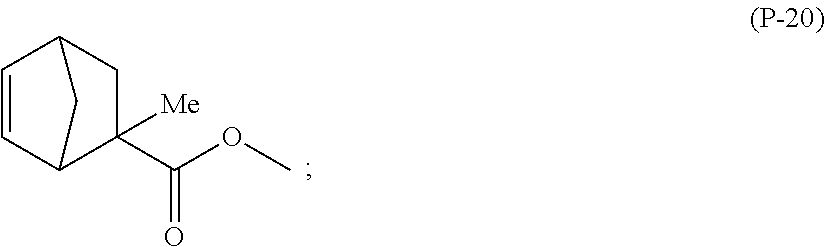


Applications Claiming Priority (3)
| Application Number | Priority Date | Filing Date | Title |
|---|---|---|---|
| JP2014208048 | 2014-10-09 | ||
| JP2014-208048 | 2014-10-09 | ||
| PCT/JP2015/078322 WO2016056542A1 (en) | 2014-10-09 | 2015-10-06 | Polymerizable compound and optically anisotropic object |
Publications (2)
| Publication Number | Publication Date |
|---|---|
| US20170306233A1 US20170306233A1 (en) | 2017-10-26 |
| US10723952B2 true US10723952B2 (en) | 2020-07-28 |
Family
ID=55653153
Family Applications (1)
| Application Number | Title | Priority Date | Filing Date |
|---|---|---|---|
| US15/517,441 Active US10723952B2 (en) | 2014-10-09 | 2015-10-06 | Polymerizable compound and optically anisotropic body |
Country Status (4)
| Country | Link |
|---|---|
| US (1) | US10723952B2 (en) |
| JP (1) | JP6217999B2 (en) |
| KR (1) | KR20170068529A (en) |
| WO (1) | WO2016056542A1 (en) |
Families Citing this family (17)
| Publication number | Priority date | Publication date | Assignee | Title |
|---|---|---|---|---|
| CN104603165B (en) * | 2012-07-09 | 2017-04-26 | 日本瑞翁株式会社 | Polymerizable compound, polymerizable composition, polymer, optically anisotropic body, and method for producing polymerizable compound |
| JP6217999B2 (en) | 2014-10-09 | 2017-10-25 | Dic株式会社 | Polymerizable compound and optical anisotropic body |
| JP6597244B2 (en) * | 2014-12-02 | 2019-10-30 | Jnc株式会社 | Liquid crystal compound, liquid crystal composition and polymer thereof |
| JP6387109B2 (en) | 2014-12-04 | 2018-09-05 | Dic株式会社 | Polymerizable compound, composition, polymer, optical anisotropic body, liquid crystal display device and organic EL device |
| JP6568103B2 (en) * | 2014-12-25 | 2019-08-28 | Dic株式会社 | Polymerizable compound and optical anisotropic body |
| CN107207652B (en) | 2015-01-16 | 2022-10-18 | Dic株式会社 | Polymerizable composition and optically anisotropic body using same |
| US11697695B2 (en) | 2015-01-16 | 2023-07-11 | Dic Corporation | Polymerizable composition and optically anisotropic body using same |
| KR20170121174A (en) | 2015-02-24 | 2017-11-01 | 디아이씨 가부시끼가이샤 | The polymerizable compound and the optically anisotropic |
| KR102624961B1 (en) * | 2015-12-07 | 2024-01-16 | 디아이씨 가부시끼가이샤 | Method for producing polymerizable compounds |
| CN108368070B (en) * | 2015-12-08 | 2023-04-28 | Dic株式会社 | Polymeric compounds and optically anisotropic substances |
| JP6055569B1 (en) * | 2016-05-18 | 2016-12-27 | 日本ゼオン株式会社 | Polymerizable compound, mixture, polymerizable liquid crystal composition, polymer, optical film, optical anisotropic body, polarizing plate, flat panel display device, organic electroluminescence display device, and antireflection film |
| JP6531870B2 (en) | 2016-07-15 | 2019-06-19 | Dic株式会社 | Polymerizable composition and optically anisotropic material using the same |
| KR20190078591A (en) * | 2016-11-22 | 2019-07-04 | 니폰 제온 가부시키가이샤 | Polymerizable compound, polymerizable composition, polymer, optical film, optically anisotropic, polarizer, flat panel display, organic electroluminescence display, antireflection film, and compound |
| WO2018128084A1 (en) * | 2017-01-06 | 2018-07-12 | Dic株式会社 | Polymerizable compound and optically anisotropic body |
| JP6369594B2 (en) * | 2017-04-27 | 2018-08-08 | 日本ゼオン株式会社 | Compound, polymerizable compound, mixture, polymerizable liquid crystal composition, polymer, optical film, optical anisotropic body, polarizing plate, flat panel display device, organic electroluminescence display device and antireflection film |
| JP7282163B2 (en) * | 2019-03-29 | 2023-05-26 | 富士フイルム株式会社 | Compound, polymerizable composition, cured product, optical film, polarizing plate and image display device |
| CN113861128B (en) * | 2021-10-28 | 2023-08-01 | 江苏创拓新材料有限公司 | Polymerizable compounds and optically anisotropic bodies |
Citations (42)
| Publication number | Priority date | Publication date | Assignee | Title |
|---|---|---|---|---|
| GB1016964A (en) | 1962-07-24 | 1966-01-12 | Cassella Farbwerke Mainkur Ag | Water-insoluble azo dyestuffs containing nitrophenyl-hydrazone residues |
| JPS6355543A (en) | 1986-08-26 | 1988-03-10 | Konica Corp | Silver halide photographic sensitive material preventing sweating phenomenon and formation of static mark |
| US5445854A (en) | 1993-11-29 | 1995-08-29 | The Dow Chemical Company | Nonlinear optical epoxy-containing compositions and crosslinked nonlinear optical polymeric composition therefrom |
| JP2005289980A (en) | 2004-03-08 | 2005-10-20 | Fuji Photo Film Co Ltd | Liquid crystal compound, liquid crystyal composition, polymer, retardation plate, and elliptical polarization plate |
| WO2005112540A2 (en) | 2004-05-21 | 2005-12-01 | Merck Patent Gmbh | Liquid crystal compounds, liquid crystal medium and liquid crystal display |
| US20070111199A1 (en) | 2005-05-23 | 2007-05-17 | Housey Gerard M | Compounds and method of identifying, synthesizing, optimizing and profiling protein modulators |
| JP2007328053A (en) | 2006-06-06 | 2007-12-20 | Dainippon Printing Co Ltd | Retardation film and method for producing retardation film |
| CN101279901A (en) | 2007-12-25 | 2008-10-08 | 四川大学 | Honokiol series derivatives, preparation method and application thereof |
| JP2009029795A (en) | 2007-06-29 | 2009-02-12 | Sumitomo Chemical Co Ltd | Polymerizable compound and optical film |
| JP2009506125A (en) | 2005-08-29 | 2009-02-12 | ジェラルド・エム・ハウシー | Theramutein modulator |
| JP2009062508A (en) | 2007-08-14 | 2009-03-26 | Fujifilm Corp | Liquid crystal composition and optically anisotropic film |
| JP2010031223A (en) | 2007-12-28 | 2010-02-12 | Sumitomo Chemical Co Ltd | Compound, optical film, and method for producing optical film |
| JP2010100541A (en) | 2008-10-21 | 2010-05-06 | Asahi Glass Co Ltd | Acrylic acid derivative compound, liquid crystalline composition, polymer liquid crystal, optical element and optical head device |
| JP2011006361A (en) | 2009-06-26 | 2011-01-13 | Sumitomo Chemical Co Ltd | Compound, optical film and method for producing optical film |
| JP2011207765A (en) | 2009-03-16 | 2011-10-20 | Sumitomo Chemical Co Ltd | Compound, optical film and method for producing optical film |
| JP2011246381A (en) | 2010-05-26 | 2011-12-08 | Sumitomo Chemical Co Ltd | Compound, optical film, and method for producing optical film |
| JP2012077055A (en) | 2010-10-06 | 2012-04-19 | Sumitomo Chemical Co Ltd | Compound, optical film, and method for producing optical film |
| US20120224245A1 (en) | 2009-10-30 | 2012-09-06 | Merck Patent Gesellschaft mit bescrankter Haftung | Polymerisable lc material and polymer film with negative optical dispersion |
| WO2012141245A1 (en) | 2011-04-15 | 2012-10-18 | 日本ゼオン株式会社 | Polymerizable compound, polymerizable composition, polymer, and optically anisotropic body |
| WO2012147904A1 (en) | 2011-04-27 | 2012-11-01 | 日本ゼオン株式会社 | Polymerizable compound, polymerizable composition, polymer, and optically anisotropic material |
| WO2012176679A1 (en) | 2011-06-24 | 2012-12-27 | 日本ゼオン株式会社 | Polymerizable compounds, polymerizable composition, polymer, and optically anisotropic body |
| WO2013157888A1 (en) | 2012-04-20 | 2013-10-24 | 주식회사 엘지화학 | Polymerizable liquid crystal compound, polymerizable liquid crystal composition, and optical anisotropic body |
| WO2013180217A1 (en) | 2012-05-30 | 2013-12-05 | 日本ゼオン株式会社 | Polymerizable compound, polymerizable composition, polymer, and optically anisotropic material |
| WO2014010325A1 (en) | 2012-07-09 | 2014-01-16 | 日本ゼオン株式会社 | Polymerizable compound, polymerizable composition, polymer, optically anisotropic body, and method for producing polymerizable compound |
| WO2014061709A1 (en) | 2012-10-19 | 2014-04-24 | 日本ゼオン株式会社 | Polymerizable compound, polymerizable composition, polymer, and optically anisotropic substance |
| WO2014065243A1 (en) | 2012-10-22 | 2014-05-01 | 日本ゼオン株式会社 | Retarder, circularly polarising plate, and image display device |
| WO2014065176A1 (en) | 2012-10-23 | 2014-05-01 | 日本ゼオン株式会社 | Polymerizable compound, polymerizable composition, polymer, and optical anistropic body |
| WO2014069515A1 (en) | 2012-10-30 | 2014-05-08 | 日本ゼオン株式会社 | Liquid crystal composition, retardation plate, image display device, and method for controlling wavelength dispersion in optically anisotropic layer |
| US20140200320A1 (en) | 2011-06-10 | 2014-07-17 | Zeon Corporation | Polymerizable compound, polymerizable composition, polymer, and optically anisotropic body |
| WO2014126113A1 (en) | 2013-02-15 | 2014-08-21 | 日本ゼオン株式会社 | Polymerizable compound, polymerizable composition, polymer, and optically anisotropic body |
| WO2014132978A1 (en) | 2013-02-28 | 2014-09-04 | 富士フイルム株式会社 | Phase difference plate, anti-reflection plate, image display device, and method for producing phase difference plate |
| WO2015025793A1 (en) | 2013-08-22 | 2015-02-26 | 日本ゼオン株式会社 | Polymerizable compound, polymerizable composition, polymer, and optical anisotropic body |
| WO2015064698A1 (en) | 2013-10-31 | 2015-05-07 | 日本ゼオン株式会社 | Polymerizable compound, polymerizable composition, polymer, and optical isomer |
| WO2015098702A1 (en) | 2013-12-25 | 2015-07-02 | Dic株式会社 | Compound containing mesogenic group, and mixture, composition, and optically anisotropic body using said compound |
| WO2015122385A1 (en) | 2014-02-12 | 2015-08-20 | 日本ゼオン株式会社 | Polymerizable compound, polymerizable composition, polymer, and optical isomer |
| WO2015122384A1 (en) | 2014-02-14 | 2015-08-20 | 日本ゼオン株式会社 | Polymerizable compound, polymerizable composition, polymer, and optically anisotropic body |
| US20150277007A1 (en) | 2014-03-31 | 2015-10-01 | Fujifilm Corporation | Liquid crystal compound, optical film, and method for producing optical film |
| WO2016056542A1 (en) | 2014-10-09 | 2016-04-14 | Dic株式会社 | Polymerizable compound and optically anisotropic object |
| WO2016088749A1 (en) | 2014-12-04 | 2016-06-09 | Dic株式会社 | Polymerizable compound, composition, polymer, optically anisotropic body, liquid crystal display device and organic el element |
| JP2016113583A (en) | 2014-12-17 | 2016-06-23 | Dic株式会社 | Polymerizable compound and optical anisotropic medium |
| US20170369783A1 (en) * | 2014-12-25 | 2017-12-28 | Dic Corporation | Polymerizable compound and optically anisotropic object |
| US20180022716A1 (en) * | 2015-02-24 | 2018-01-25 | Dic Corporation | Polymerizable compound and optical isomer |
Family Cites Families (1)
| Publication number | Priority date | Publication date | Assignee | Title |
|---|---|---|---|---|
| DE1016964B (en) * | 1953-12-15 | 1957-10-03 | Hermann Jentzsch | Method and device for the classification of wood and other substances according to their ignition properties |
-
2015
- 2015-10-06 JP JP2016549178A patent/JP6217999B2/en active Active
- 2015-10-06 KR KR1020177012369A patent/KR20170068529A/en not_active Ceased
- 2015-10-06 WO PCT/JP2015/078322 patent/WO2016056542A1/en not_active Ceased
- 2015-10-06 US US15/517,441 patent/US10723952B2/en active Active
Patent Citations (60)
| Publication number | Priority date | Publication date | Assignee | Title |
|---|---|---|---|---|
| GB1016964A (en) | 1962-07-24 | 1966-01-12 | Cassella Farbwerke Mainkur Ag | Water-insoluble azo dyestuffs containing nitrophenyl-hydrazone residues |
| JPS6355543A (en) | 1986-08-26 | 1988-03-10 | Konica Corp | Silver halide photographic sensitive material preventing sweating phenomenon and formation of static mark |
| US5445854A (en) | 1993-11-29 | 1995-08-29 | The Dow Chemical Company | Nonlinear optical epoxy-containing compositions and crosslinked nonlinear optical polymeric composition therefrom |
| JP2005289980A (en) | 2004-03-08 | 2005-10-20 | Fuji Photo Film Co Ltd | Liquid crystal compound, liquid crystyal composition, polymer, retardation plate, and elliptical polarization plate |
| US20070176145A1 (en) | 2004-03-08 | 2007-08-02 | Fuji Photo Film Co., Ltd. | Liquid crystal compound comprising two condensed and substituted rings |
| WO2005112540A2 (en) | 2004-05-21 | 2005-12-01 | Merck Patent Gmbh | Liquid crystal compounds, liquid crystal medium and liquid crystal display |
| US20070111199A1 (en) | 2005-05-23 | 2007-05-17 | Housey Gerard M | Compounds and method of identifying, synthesizing, optimizing and profiling protein modulators |
| JP2009506125A (en) | 2005-08-29 | 2009-02-12 | ジェラルド・エム・ハウシー | Theramutein modulator |
| JP2007328053A (en) | 2006-06-06 | 2007-12-20 | Dainippon Printing Co Ltd | Retardation film and method for producing retardation film |
| JP2009029795A (en) | 2007-06-29 | 2009-02-12 | Sumitomo Chemical Co Ltd | Polymerizable compound and optical film |
| JP2009062508A (en) | 2007-08-14 | 2009-03-26 | Fujifilm Corp | Liquid crystal composition and optically anisotropic film |
| CN101279901A (en) | 2007-12-25 | 2008-10-08 | 四川大学 | Honokiol series derivatives, preparation method and application thereof |
| JP2010031223A (en) | 2007-12-28 | 2010-02-12 | Sumitomo Chemical Co Ltd | Compound, optical film, and method for producing optical film |
| JP2010100541A (en) | 2008-10-21 | 2010-05-06 | Asahi Glass Co Ltd | Acrylic acid derivative compound, liquid crystalline composition, polymer liquid crystal, optical element and optical head device |
| JP2011207765A (en) | 2009-03-16 | 2011-10-20 | Sumitomo Chemical Co Ltd | Compound, optical film and method for producing optical film |
| JP2011006361A (en) | 2009-06-26 | 2011-01-13 | Sumitomo Chemical Co Ltd | Compound, optical film and method for producing optical film |
| US20120224245A1 (en) | 2009-10-30 | 2012-09-06 | Merck Patent Gesellschaft mit bescrankter Haftung | Polymerisable lc material and polymer film with negative optical dispersion |
| JP2013509458A (en) | 2009-10-30 | 2013-03-14 | メルク パテント ゲゼルシャフト ミット ベシュレンクテル ハフツング | Polymerizable LC material and polymer film with negative optical dispersion |
| JP2011246381A (en) | 2010-05-26 | 2011-12-08 | Sumitomo Chemical Co Ltd | Compound, optical film, and method for producing optical film |
| JP2012077055A (en) | 2010-10-06 | 2012-04-19 | Sumitomo Chemical Co Ltd | Compound, optical film, and method for producing optical film |
| WO2012141245A1 (en) | 2011-04-15 | 2012-10-18 | 日本ゼオン株式会社 | Polymerizable compound, polymerizable composition, polymer, and optically anisotropic body |
| US20140107247A1 (en) | 2011-04-15 | 2014-04-17 | Zeon Corporation | Polymerizable compound, polymerizable composition, polymer, and optically anisotropic body |
| WO2012147904A1 (en) | 2011-04-27 | 2012-11-01 | 日本ゼオン株式会社 | Polymerizable compound, polymerizable composition, polymer, and optically anisotropic material |
| US20140142266A1 (en) | 2011-04-27 | 2014-05-22 | Zeon Corporation | Polymerizable compound, polymerizable composition, polymer, and optically anisotropic body |
| US20140200320A1 (en) | 2011-06-10 | 2014-07-17 | Zeon Corporation | Polymerizable compound, polymerizable composition, polymer, and optically anisotropic body |
| US20140309396A1 (en) | 2011-06-24 | 2014-10-16 | Zeon Corporation | Polymerizable compounds, polymerizable composition, polymer, and optically anisotropic body |
| WO2012176679A1 (en) | 2011-06-24 | 2012-12-27 | 日本ゼオン株式会社 | Polymerizable compounds, polymerizable composition, polymer, and optically anisotropic body |
| WO2013157888A1 (en) | 2012-04-20 | 2013-10-24 | 주식회사 엘지화학 | Polymerizable liquid crystal compound, polymerizable liquid crystal composition, and optical anisotropic body |
| US20150115199A1 (en) | 2012-04-20 | 2015-04-30 | Lg Chem, Ltd. | Polymerizable liquid crystal compound, polymerizable liquid crystal composition, and optically anisotropic body |
| US20150183902A1 (en) | 2012-05-30 | 2015-07-02 | Zeon Corporation | Polymerizable compound, polymerizable composition, polymer, and optically anisotropic material |
| WO2013180217A1 (en) | 2012-05-30 | 2013-12-05 | 日本ゼオン株式会社 | Polymerizable compound, polymerizable composition, polymer, and optically anisotropic material |
| WO2014010325A1 (en) | 2012-07-09 | 2014-01-16 | 日本ゼオン株式会社 | Polymerizable compound, polymerizable composition, polymer, optically anisotropic body, and method for producing polymerizable compound |
| US20150175564A1 (en) | 2012-07-09 | 2015-06-25 | Zeon Corporation | Polymerizable compound, polymerizable composition, polymer, optically anisotropic body, and method for producing polymerizable compound |
| US20150274647A1 (en) | 2012-10-19 | 2015-10-01 | Zeon Corporation | Polymerizable compound, polymerizable composition, polymer, and optically anisotropic substance |
| WO2014061709A1 (en) | 2012-10-19 | 2014-04-24 | 日本ゼオン株式会社 | Polymerizable compound, polymerizable composition, polymer, and optically anisotropic substance |
| US20150277010A1 (en) | 2012-10-22 | 2015-10-01 | Zeon Corporation | Phase difference plate, circularly polarizing plate, and image display device |
| WO2014065243A1 (en) | 2012-10-22 | 2014-05-01 | 日本ゼオン株式会社 | Retarder, circularly polarising plate, and image display device |
| WO2014065176A1 (en) | 2012-10-23 | 2014-05-01 | 日本ゼオン株式会社 | Polymerizable compound, polymerizable composition, polymer, and optical anistropic body |
| US20150274872A1 (en) | 2012-10-23 | 2015-10-01 | Zeon Corporation | Polymerizable compound, polymerizable composition, polymer, and optical anisotropic body |
| WO2014069515A1 (en) | 2012-10-30 | 2014-05-08 | 日本ゼオン株式会社 | Liquid crystal composition, retardation plate, image display device, and method for controlling wavelength dispersion in optically anisotropic layer |
| US20150285979A1 (en) | 2012-10-30 | 2015-10-08 | Zeon Corporation | Liquid crystal composition, phase difference plate, image display device, and method for controlling wavelength dispersion in optically anisotropic layer |
| US20160002374A1 (en) | 2013-02-15 | 2016-01-07 | Zeon Corporation | Polymerizable compound, polymerizable composition, polymer, and optically anisotropic body |
| WO2014126113A1 (en) | 2013-02-15 | 2014-08-21 | 日本ゼオン株式会社 | Polymerizable compound, polymerizable composition, polymer, and optically anisotropic body |
| WO2014132978A1 (en) | 2013-02-28 | 2014-09-04 | 富士フイルム株式会社 | Phase difference plate, anti-reflection plate, image display device, and method for producing phase difference plate |
| US20160200841A1 (en) | 2013-08-22 | 2016-07-14 | Zeon Corporation | Polymerizable compound, polymerizable composition, polymer, and optical anisotropic body |
| WO2015025793A1 (en) | 2013-08-22 | 2015-02-26 | 日本ゼオン株式会社 | Polymerizable compound, polymerizable composition, polymer, and optical anisotropic body |
| WO2015064698A1 (en) | 2013-10-31 | 2015-05-07 | 日本ゼオン株式会社 | Polymerizable compound, polymerizable composition, polymer, and optical isomer |
| US20160257659A1 (en) | 2013-10-31 | 2016-09-08 | Zeon Corporation | Polymerizable compound, polymerizable composition, polymer, and optically anisotropic product |
| WO2015098702A1 (en) | 2013-12-25 | 2015-07-02 | Dic株式会社 | Compound containing mesogenic group, and mixture, composition, and optically anisotropic body using said compound |
| US20170003418A1 (en) | 2013-12-25 | 2017-01-05 | Dic Corporation | Compound containing mesogenic group, and mixture, composition, and optically anisotropic body using said compound |
| WO2015122385A1 (en) | 2014-02-12 | 2015-08-20 | 日本ゼオン株式会社 | Polymerizable compound, polymerizable composition, polymer, and optical isomer |
| US20170008833A1 (en) | 2014-02-12 | 2017-01-12 | Zeon Corporation | Polymerizable compound, polymerizable composition, polymer, and optically anisotropic product |
| WO2015122384A1 (en) | 2014-02-14 | 2015-08-20 | 日本ゼオン株式会社 | Polymerizable compound, polymerizable composition, polymer, and optically anisotropic body |
| JP2015200877A (en) | 2014-03-31 | 2015-11-12 | 富士フイルム株式会社 | Liquid crystalline compound and optical film, and production method of optical film |
| US20150277007A1 (en) | 2014-03-31 | 2015-10-01 | Fujifilm Corporation | Liquid crystal compound, optical film, and method for producing optical film |
| WO2016056542A1 (en) | 2014-10-09 | 2016-04-14 | Dic株式会社 | Polymerizable compound and optically anisotropic object |
| WO2016088749A1 (en) | 2014-12-04 | 2016-06-09 | Dic株式会社 | Polymerizable compound, composition, polymer, optically anisotropic body, liquid crystal display device and organic el element |
| JP2016113583A (en) | 2014-12-17 | 2016-06-23 | Dic株式会社 | Polymerizable compound and optical anisotropic medium |
| US20170369783A1 (en) * | 2014-12-25 | 2017-12-28 | Dic Corporation | Polymerizable compound and optically anisotropic object |
| US20180022716A1 (en) * | 2015-02-24 | 2018-01-25 | Dic Corporation | Polymerizable compound and optical isomer |
Non-Patent Citations (12)
| Title |
|---|
| Benbow John W. et al., "An Approach to Dibenzofuran Heterocycles. 1. Electron-Transfer Processes en Route to Dibenzofuran-1, 4-diones", J. Org. Chem, Jul. 1, 1997, vol. 62, No. 26, pp. 9345-9347. |
| Benbow, John W. et al., "Biaryl Formation Using the Suzuki Protocol: Considerations of Base, Halide, and Protecting Group", Pergamon, Tetrahedron Letters, 1996, vol. 37, No. 49, pp. 8829-8832. |
| Calvin, Joel et al., "Rhodium-Catalyzed and Zinc(II)-Triflate-Promoted Asymmetric Hydrogenation of Tetrasubstituted a, b-Unsaturated Ketones", Oranic Letters, 2012, vol. 14, No. 4, pp. 1038-1041. |
| Decision to Grant a Patent dated May 25, 2017, issued in counterpart Japanese Patent Application No. 2016-567448, w/English translation (6 pages). |
| International Search Report dated Dec. 22, 2015, issued in counterpart International Application No. PCT/JP2015/078322 (3 pages). |
| International Search Report dated Feb. 16, 2016, issued in counterpart Application No. PCT/JP2015/085342, with English translation (17 pages). |
| International Search Report dated May 17, 2016, issued in counterpart International Application No. PCT/JP2016/054399 (2 pages). |
| Kallitsis, J.K. et al., "Soluble Polymers with Laterally Attached Oligophenyl Units for Potential Use as Blue Luminescent Materials", Macromolecules, 1997, vol. 30, No. 10, pp. 2989-2996. |
| MacDonald, Dwight et al., "Substituted 2, 2-bisaryl-bicycloheptanes as novel and potent inhibitors of 5-lipoxygenase activating protein", Elsevier, Bioorganic & Medicinal Chemistry Letters, Jan. 29, 2008, pp. 2023-2027. |
| Notification of Reasons for Refusal dated Jan. 24, 2017, issued in counterpart Japanese Patent Application No. 2016-567448, wlEnglish translation (8 pages). |
| Szelinski, Helga et al., "Porphyrins Linked to High Acceptor Strength Cyano Quinones as Models for the Photosynthetic Reaction Center", Pergamon, Tetrahedron, vol. 52, No. 25, pp. 8497-8516. |
| Yu, Sze-Chit et al., "Self-Assembled Electroluminescent Polymers Derived from Terpyridine-Based Moieties", Advanced Materials, Oct. 2, 2003, vol. 15, No. 19, pp. 1643-1647. |
Also Published As
| Publication number | Publication date |
|---|---|
| JPWO2016056542A1 (en) | 2017-04-27 |
| WO2016056542A1 (en) | 2016-04-14 |
| US20170306233A1 (en) | 2017-10-26 |
| KR20170068529A (en) | 2017-06-19 |
| JP6217999B2 (en) | 2017-10-25 |
Similar Documents
| Publication | Publication Date | Title |
|---|---|---|
| US20170306233A1 (en) | Polymerizable compound and optically anisotropic body | |
| US10647662B2 (en) | Polymerizable compound and optically anisotropic body | |
| US10633353B2 (en) | Polymerizable compound, composition, polymer, optically anisotropic body, liquid crystal display element, and organic EL display | |
| US10597371B2 (en) | Polymerizable compound and optical isomer | |
| US11046889B2 (en) | Polymerizable compound and optically anisotropic body | |
| US10428032B2 (en) | Polymerizable compound and optically anisotropic body | |
| US10919870B2 (en) | Polymerizable compound and optically anisotropic body | |
| JP6319618B2 (en) | Polymerizable compound and optical anisotropic body | |
| JP6402976B2 (en) | Polymerizable compound and optical anisotropic body | |
| JP6241654B2 (en) | Polymerizable compound and optical anisotropic body | |
| JP6531935B2 (en) | Polymerizable compound and optically anisotropic material | |
| JP6337497B2 (en) | Polymerizable compound and optical anisotropic body | |
| JP6304529B2 (en) | Polymerizable compound and optical anisotropic body | |
| JPWO2018128084A1 (en) | Polymerizable compound and optical anisotropic body | |
| JP6550742B2 (en) | Polymerizable compound and optically anisotropic material |
Legal Events
| Date | Code | Title | Description |
|---|---|---|---|
| AS | Assignment |
Owner name: DIC CORPORATION, JAPAN Free format text: ASSIGNMENT OF ASSIGNORS INTEREST;ASSIGNORS:HORIGUCHI, MASAHIRO;KADOMOTO, YUTAKA;KUSUMOTO, TETSUO;REEL/FRAME:041889/0831 Effective date: 20170404 |
|
| STPP | Information on status: patent application and granting procedure in general |
Free format text: FINAL REJECTION MAILED |
|
| STPP | Information on status: patent application and granting procedure in general |
Free format text: DOCKETED NEW CASE - READY FOR EXAMINATION |
|
| STPP | Information on status: patent application and granting procedure in general |
Free format text: NON FINAL ACTION MAILED |
|
| STPP | Information on status: patent application and granting procedure in general |
Free format text: RESPONSE TO NON-FINAL OFFICE ACTION ENTERED AND FORWARDED TO EXAMINER |
|
| STPP | Information on status: patent application and granting procedure in general |
Free format text: NON FINAL ACTION MAILED |
|
| STPP | Information on status: patent application and granting procedure in general |
Free format text: RESPONSE TO NON-FINAL OFFICE ACTION ENTERED AND FORWARDED TO EXAMINER |
|
| STPP | Information on status: patent application and granting procedure in general |
Free format text: NOTICE OF ALLOWANCE MAILED -- APPLICATION RECEIVED IN OFFICE OF PUBLICATIONS |
|
| STPP | Information on status: patent application and granting procedure in general |
Free format text: PUBLICATIONS -- ISSUE FEE PAYMENT VERIFIED |
|
| STCF | Information on status: patent grant |
Free format text: PATENTED CASE |
|
| RR | Request for reexamination filed |
Effective date: 20200729 |
|
| LIMR | Reexamination decision: claims changed and/or cancelled |
Kind code of ref document: C1 Free format text: REEXAMINATION CERTIFICATE; CLAIMS 1-7 AND 10-12 ARE DETERMINED TO BE PATENTABLE AS AMENDED. CLAIMS 8 AND 9, DEPENDENT ON AN AMENDED CLAIM, ARE DETERMINED TO BE PATENTABLE. NEW CLAIMS 13-18 ARE ADDED AND DETERMINED TO BE PATENTABLE. Filing date: 20200729 Effective date: 20220824 |
|
| MAFP | Maintenance fee payment |
Free format text: PAYMENT OF MAINTENANCE FEE, 4TH YEAR, LARGE ENTITY (ORIGINAL EVENT CODE: M1551); ENTITY STATUS OF PATENT OWNER: LARGE ENTITY Year of fee payment: 4 |
|
| AS | Assignment |
Owner name: SHIJIAZHUANG CHENGZHI YONGHUA DISPLAY MATERIAL CO., LTD., CHINA Free format text: ASSIGNMENT OF ASSIGNORS INTEREST;ASSIGNOR:DIC CORPORATION;REEL/FRAME:067528/0688 Effective date: 20240426 |