US10718778B2 - Compositions and methods for detecting protein sulfenylation - Google Patents
Compositions and methods for detecting protein sulfenylation Download PDFInfo
- Publication number
- US10718778B2 US10718778B2 US15/313,445 US201515313445A US10718778B2 US 10718778 B2 US10718778 B2 US 10718778B2 US 201515313445 A US201515313445 A US 201515313445A US 10718778 B2 US10718778 B2 US 10718778B2
- Authority
- US
- United States
- Prior art keywords
- sulfenylation
- protein
- biological sample
- probe
- see
- Prior art date
- Legal status (The legal status is an assumption and is not a legal conclusion. Google has not performed a legal analysis and makes no representation as to the accuracy of the status listed.)
- Active
Links
- 0 *CN1C2=CC3=C(C=C2C(C)(C)/C1=C/C=C/C=C/C1=N(\C*)C2=C(C=CC=C2)C1(C)C)C(=O)C(F)C3=O.*CN1C2=CC3=C(C=C2C(C)(C)/C1=C/C=C/C=C/C=C/C1=N(\C*)C2=C(C=CC=C2)C1(C)C)C(=O)C(F)C3=O.*CN1C2=CC3=C(C=C2C(C)(C)/C1=C/C=C/C=C/C=C/C=C/C1=N(\C*)C2=C(C=CC=C2)C1(C)C)C(=O)C(F)C3=O.C=C1C2=CC=C(Cl)C3=C2/C(=C\C=C/3)C(O)=C1F.CC1=C(F)C(=O)/C2=C/C=C\C3=C2C1=CC=C3N.CC1=C(F)C(=O)/C2=C/C=C\C3=C2C1=CC=C3N1CCOCC1.CC1=C(F)C(=O)CC(C)(C)C1 Chemical compound *CN1C2=CC3=C(C=C2C(C)(C)/C1=C/C=C/C=C/C1=N(\C*)C2=C(C=CC=C2)C1(C)C)C(=O)C(F)C3=O.*CN1C2=CC3=C(C=C2C(C)(C)/C1=C/C=C/C=C/C=C/C1=N(\C*)C2=C(C=CC=C2)C1(C)C)C(=O)C(F)C3=O.*CN1C2=CC3=C(C=C2C(C)(C)/C1=C/C=C/C=C/C=C/C=C/C1=N(\C*)C2=C(C=CC=C2)C1(C)C)C(=O)C(F)C3=O.C=C1C2=CC=C(Cl)C3=C2/C(=C\C=C/3)C(O)=C1F.CC1=C(F)C(=O)/C2=C/C=C\C3=C2C1=CC=C3N.CC1=C(F)C(=O)/C2=C/C=C\C3=C2C1=CC=C3N1CCOCC1.CC1=C(F)C(=O)CC(C)(C)C1 0.000 description 18
- HLPNZSOUFUSTOR-UHFFFAOYSA-N CC.CC1=CC(C)=C2C(C3=CC4=C(C=C3)C(=O)C(F)=C4C)=C3C(C)C=C(C)N3B(F)(F)N12 Chemical compound CC.CC1=CC(C)=C2C(C3=CC4=C(C=C3)C(=O)C(F)=C4C)=C3C(C)C=C(C)N3B(F)(F)N12 HLPNZSOUFUSTOR-UHFFFAOYSA-N 0.000 description 3
- OJLNCGLSPUUXNL-UHFFFAOYSA-N CC(C)(OC(=O)C(F)C(=O)OC(C)(C(F)(F)F)C(F)(F)F)C(F)(F)F.CC(N1C(=O)C(F)C(=O)N(C(C(F)(F)F)C(F)(F)F)C1=O)C(F)(F)F Chemical compound CC(C)(OC(=O)C(F)C(=O)OC(C)(C(F)(F)F)C(F)(F)F)C(F)(F)F.CC(N1C(=O)C(F)C(=O)N(C(C(F)(F)F)C(F)(F)F)C1=O)C(F)(F)F OJLNCGLSPUUXNL-UHFFFAOYSA-N 0.000 description 2
- IVLYJQODMJXVKP-UHFFFAOYSA-N C.C=C1C2=CC=C(Cl)C3=C2/C(=C\C=C/3)C(O)=C1F.CC1=C(F)C(=O)/C2=C/C=C\C3=C2C1=CC=C3N.CC1=C(F)C(=O)/C2=C/C=C\C3=C2C1=CC=C3N1CCOCC1.CC1=C(F)C(=O)CC(C)(C)C1 Chemical compound C.C=C1C2=CC=C(Cl)C3=C2/C(=C\C=C/3)C(O)=C1F.CC1=C(F)C(=O)/C2=C/C=C\C3=C2C1=CC=C3N.CC1=C(F)C(=O)/C2=C/C=C\C3=C2C1=CC=C3N1CCOCC1.CC1=C(F)C(=O)CC(C)(C)C1 IVLYJQODMJXVKP-UHFFFAOYSA-N 0.000 description 1
- ABTPOMPLMLRWTN-UHFFFAOYSA-N C=C1/C(F)=C(/O)C2=CC=CC3=C2/C1=C\C=C/3Cl.C=C1NC(=O)NC(=O)C1F.C=C1NC(N)=NC(=O)C1F.CC1=C(F)C(=O)/C2=C/C=C\C3=C2C1=CC=C3N1CCOCC1.CC1C(F)=C(=O)C2=C/C=C\C3=C\2C\1=C/C=C3/N Chemical compound C=C1/C(F)=C(/O)C2=CC=CC3=C2/C1=C\C=C/3Cl.C=C1NC(=O)NC(=O)C1F.C=C1NC(N)=NC(=O)C1F.CC1=C(F)C(=O)/C2=C/C=C\C3=C2C1=CC=C3N1CCOCC1.CC1C(F)=C(=O)C2=C/C=C\C3=C\2C\1=C/C=C3/N ABTPOMPLMLRWTN-UHFFFAOYSA-N 0.000 description 1
- IDNQIJBIJHXNEF-UHFFFAOYSA-M C=C1OC2=CC3=C(C=C4C=CC(=O)C=C4O3)C=C2C([O-])=C1F Chemical compound C=C1OC2=CC3=C(C=C4C=CC(=O)C=C4O3)C=C2C([O-])=C1F IDNQIJBIJHXNEF-UHFFFAOYSA-M 0.000 description 1
Images



Classifications
-
- G—PHYSICS
- G01—MEASURING; TESTING
- G01N—INVESTIGATING OR ANALYSING MATERIALS BY DETERMINING THEIR CHEMICAL OR PHYSICAL PROPERTIES
- G01N33/00—Investigating or analysing materials by specific methods not covered by groups G01N1/00 - G01N31/00
- G01N33/48—Biological material, e.g. blood, urine; Haemocytometers
- G01N33/50—Chemical analysis of biological material, e.g. blood, urine; Testing involving biospecific ligand binding methods; Immunological testing
- G01N33/68—Chemical analysis of biological material, e.g. blood, urine; Testing involving biospecific ligand binding methods; Immunological testing involving proteins, peptides or amino acids
- G01N33/6803—General methods of protein analysis not limited to specific proteins or families of proteins
- G01N33/6806—Determination of free amino acids
- G01N33/6812—Assays for specific amino acids
- G01N33/6815—Assays for specific amino acids containing sulfur, e.g. cysteine, cystine, methionine, homocysteine
-
- A—HUMAN NECESSITIES
- A61—MEDICAL OR VETERINARY SCIENCE; HYGIENE
- A61K—PREPARATIONS FOR MEDICAL, DENTAL OR TOILETRY PURPOSES
- A61K49/00—Preparations for testing in vivo
- A61K49/001—Preparation for luminescence or biological staining
- A61K49/0013—Luminescence
- A61K49/0017—Fluorescence in vivo
- A61K49/005—Fluorescence in vivo characterised by the carrier molecule carrying the fluorescent agent
- A61K49/0052—Small organic molecules
-
- A—HUMAN NECESSITIES
- A61—MEDICAL OR VETERINARY SCIENCE; HYGIENE
- A61K—PREPARATIONS FOR MEDICAL, DENTAL OR TOILETRY PURPOSES
- A61K49/00—Preparations for testing in vivo
- A61K49/06—Nuclear magnetic resonance [NMR] contrast preparations; Magnetic resonance imaging [MRI] contrast preparations
- A61K49/08—Nuclear magnetic resonance [NMR] contrast preparations; Magnetic resonance imaging [MRI] contrast preparations characterised by the carrier
- A61K49/10—Organic compounds
-
- C—CHEMISTRY; METALLURGY
- C12—BIOCHEMISTRY; BEER; SPIRITS; WINE; VINEGAR; MICROBIOLOGY; ENZYMOLOGY; MUTATION OR GENETIC ENGINEERING
- C12P—FERMENTATION OR ENZYME-USING PROCESSES TO SYNTHESISE A DESIRED CHEMICAL COMPOUND OR COMPOSITION OR TO SEPARATE OPTICAL ISOMERS FROM A RACEMIC MIXTURE
- C12P21/00—Preparation of peptides or proteins
-
- G—PHYSICS
- G01—MEASURING; TESTING
- G01N—INVESTIGATING OR ANALYSING MATERIALS BY DETERMINING THEIR CHEMICAL OR PHYSICAL PROPERTIES
- G01N33/00—Investigating or analysing materials by specific methods not covered by groups G01N1/00 - G01N31/00
- G01N33/48—Biological material, e.g. blood, urine; Haemocytometers
- G01N33/50—Chemical analysis of biological material, e.g. blood, urine; Testing involving biospecific ligand binding methods; Immunological testing
- G01N33/68—Chemical analysis of biological material, e.g. blood, urine; Testing involving biospecific ligand binding methods; Immunological testing involving proteins, peptides or amino acids
- G01N33/6803—General methods of protein analysis not limited to specific proteins or families of proteins
- G01N33/6848—Methods of protein analysis involving mass spectrometry
-
- G—PHYSICS
- G01—MEASURING; TESTING
- G01N—INVESTIGATING OR ANALYSING MATERIALS BY DETERMINING THEIR CHEMICAL OR PHYSICAL PROPERTIES
- G01N2440/00—Post-translational modifications [PTMs] in chemical analysis of biological material
-
- G—PHYSICS
- G01—MEASURING; TESTING
- G01N—INVESTIGATING OR ANALYSING MATERIALS BY DETERMINING THEIR CHEMICAL OR PHYSICAL PROPERTIES
- G01N2458/00—Labels used in chemical analysis of biological material
- G01N2458/15—Non-radioactive isotope labels, e.g. for detection by mass spectrometry
-
- G—PHYSICS
- G01—MEASURING; TESTING
- G01N—INVESTIGATING OR ANALYSING MATERIALS BY DETERMINING THEIR CHEMICAL OR PHYSICAL PROPERTIES
- G01N2560/00—Chemical aspects of mass spectrometric analysis of biological material
Definitions
- the present invention relates to methods for detecting sulfenylation within thiol groups in proteins, metabolites, or materials.
- Protein sulfenylation describes the reversible post-translational modification of protein thiols by hydrogen peroxide, and plays a central role in oxidative signaling (see, e.g., Paulsen, C. E. & Carroll, K. S. 2013 Chemical Reviews 113, 4633-4679).
- Growth factor stimulation activates NADPH oxidase enzymes, releasing a local burst of hydrogen peroxide, which transiently oxidizes the nucleophilic cysteine of protein phosphatases and other proximal redox active thiols (see, e.g., Paulsen, C. E. et al., 2012 Nature Chemical Biology 8, 57-64).
- AMC active methylene compound
- This small molecule acts as a covalent trap, reacting with sulfenic acids to form a stable and irreversible thioether linkage.
- Dimedone-conjugates see, e.g., Leonard, S. E., et al., 2009 Acs Chemical Biology 4, 783-799; Poole, L. B., et al., Bioconjugate Chemistry 16, 1624-1628
- dimedone-specific monoclonal antibodies see, e.g., Seo, Y. H. & Carroll, K. S.
- the present invention provides new methods to visualize the role of protein sulfenylation in vivo, and apply such methods to characterize the functional significance of this modification in disease.
- the present invention provides mechanism-based chemical probes to analyze the spatiotemporal dynamics in cells and as a platform to image biological sulfenylation in vivo.
- the present invention provides small molecule covalent probes capable of ratiometric fluorescence imaging of a post-translational modification in live cells. Furthermore, conjugation results in a dramatic change in the fluorine electronic environment at the reactive ⁇ -carbon. This reconfiguration results in a robust 19 F-NMR change, extending detection beyond single cells.
- the present invention provides methods for detecting protein sulfenylation within cysteine residues of a protein, comprising providing a biological sample comprising one or more proteins having cysteine residues and a composition comprising a probe having a chemical moiety configured to switch from an enolate form to a di-ketone form upon conjugation with a sulfenic acid side chain of a cysteine residue.
- Such methods further involve exposing the composition to the biological sample such that an interaction between the probe and a sulfenic acid side chain of a cysteine residue results in conjugation of the probe with the sulfenic acid side chain, measuring the spectroscopic properties of the probe following exposure of the composition to the biological sample, wherein and characterizing the cysteine residues of the protein as having undegone sulfenylation if the measuring indicates the presence of the probe in a di-ketone form.
- the methods further involve identifying the protein having been characterized as having undergone sulfenylation and/or identifying the exact amino acid sites on the protein having been characterized as having undergone sulfenylation.
- the probe is selected from the group consisting of
- Z is N or C-aryl; wherein R is independently selected from hydrogen, an alkyl, vinyl, allyl, alkynyl, or aryl group having between 1-10 carbons (saturated or unsaturated) (substituted or non substituted) (having or not having one or more heteroatoms), or an aromatic or non aromatic ring structure (substituted or non substituted) (substituted or non substituted) (having or not having one or more heteroatoms), or a water-solubilizing group (sulfate, amine, carboxylic acid or other charged or polar functional handle).
- R is independently selected from hydrogen, an alkyl, vinyl, allyl, alkynyl, or aryl group having between 1-10 carbons (saturated or unsaturated) (substituted or non substituted) (having or not having one or more heteroatoms), or an aromatic or non aromatic ring structure (substituted or non substituted) (substituted or non substitute
- the probe is N-(2-aminoethyl)-2-aminoethyl-N-(2-aminoethyl)-2-aminoethyl-N-(2-aminoethyl)-2-aminoethyl-N-(2-aminoethyl)-2-aminoethyl-N-(2-aminoethyl)-2-aminoethyl
- X is either an electron-withdrawing chemical moiety or an electron donating chemical moiety.
- X is selected from C(O)H, C(O)R 1 , C(O)OH, C(O)OR 1 , C(O)R 2 , C(R 2 )3, CN, S(O) 2 OH, NH 3 + , C(O)N(R) 2 , N(R) 3 + , and NO 2 ; and wherein R 1 is independently selected from hydrogen, an alkyl, vinyl, allyl, alkynyl, or aryl group having between 1-10 carbons (saturated or unsaturated) (substituted or non substituted) (having or not having one or more heteroatoms), or an aromatic or non aromatic ring structure (substituted or non substituted) (substituted or non substituted) (having or not having one or more heteroatoms); and wherein R
- X is selected from Oxygen, N(R 1 ) 2 , NH 2 , SH, SR 1 , OH, OR 1 , NHC(O)R 1 , R 1 , benzene, C(H) ⁇ C(R) 2 ; and wherein R 1 is independently selected from hydrogen, an alkyl, vinyl, allyl, alkynyl, or aryl group having between 1-10 carbons (saturated or unsaturated) (substituted or non substituted) (having or not having one or more heteroatoms), or an aromatic or non aromatic ring structure (substituted or non substituted) (substituted or non substituted) (having or not having one or more heteroatoms).
- the probe is shown in FIGS. 8, 10 and/or 11 .
- Such methods are not limited to a particular manner of measuring the spectroscopic properties of the probe.
- the spectroscopic properties are measured with ratiometric fluorescence imaging.
- the spectroscopic properties are measured with 19 F-NMR/MRI.
- the spectroscopic properties are measured with 1 H-NMR/MRI.
- the probe is synthesized with a 13 C labeled ⁇ -carbon, and the spectroscopic properties will be measured with 13 C-NMR/MRI.
- the biological sample is an ex vivo sample obtained from a living subject.
- the biological sample is an in vitro biological sample.
- the biological sample is a living mammalian subject (e.g., a living human being, a living mouse, etc.).
- mass spectrometry is used to characterize the cysteine residues of the protein characterized as having undergone protein sulfenylation.
- the present invention provides methods of identifying pharmaceutical agents capable of inhibiting protein sulfenylation, comprising providing a pharmaceutical agent and a biological sample comprising one or more proteins having cysteine residues known to undergo sulfenylation, exposing the pharmaceutical agent to the biological sample, characterizing the cysteine residues of the one or more proteins as having or not having undergone sulfenylation with the described methods for detecting protein sulfenylation, and identifying the pharmaceutical agent as a sulfenylation inhibitor if the characterizing indicates an absence of sulfenylation.
- antibodies specific for proteins characterized as having undergone protein sulfenylation are provided.
- antibodies specific to this modification are developed and used for selective enrichment.
- such a modification is specific to the tetrahedral ⁇ -carbon.
- antibodies specific to the enzymatic degradation, breakdown, or hydrolysis products of the modification are provided.
- kits comprising one or more probes as described herein and instructions for detecting protein sulfenylation within cysteine residues of a protein with the provided one or more probes.
- the probe is selected from the group consisting of:
- Z is N or C-aryl; wherein R is independently selected from hydrogen, an alkyl, vinyl, allyl, alkynyl, or aryl group having between 1-10 carbons (saturated or unsaturated) (substituted or non substituted) (having or not having one or more heteroatoms), or an aromatic or non aromatic ring structure (substituted or non substituted) (substituted or non substituted) (having or not having one or more heteroatoms), or a water-solubilizing group (sulfate, amine, carboxylic acid or other charged or polar functional handle).
- R is independently selected from hydrogen, an alkyl, vinyl, allyl, alkynyl, or aryl group having between 1-10 carbons (saturated or unsaturated) (substituted or non substituted) (having or not having one or more heteroatoms), or an aromatic or non aromatic ring structure (substituted or non substituted) (substituted or non substitute
- the probe is N-(2-aminoethyl)-2-aminoethyl-N-(2-aminoethyl)-2-aminoethyl-N-(2-aminoethyl)-2-aminoethyl-N-(2-aminoethyl)-2-aminoethyl-N-(2-aminoethyl)-2-aminoethyl
- X is either an electron-withdrawing chemical moiety or an electron donating chemical moiety.
- X is selected from C(O)H, C(O)R 1 , C(O)OH, C(O)OR 1 , C(O)R 2 , C(R 2 )3, CN, S(O) 2 OH, NH 3 + , C(O)N(R) 2 , N(R) 3 + , and NO 2 ; and wherein R 1 is independently selected from hydrogen, an alkyl, vinyl, allyl, alkynyl, or aryl group having between 1-10 carbons (saturated or unsaturated) (substituted or non substituted) (having or not having one or more heteroatoms), or an aromatic or non aromatic ring structure (substituted or non substituted) (substituted or non substituted) (having or not having one or more heteroatoms); and wherein R
- X is selected from Oxygen, N(R 1 ) 2 , NH 2 , SH, SR 1 , OH, OR 1 , NHC(O)R 1 , R 1 , benzene, C(H) ⁇ C(R) 2 ; and wherein R 1 is independently selected from hydrogen, an alkyl, vinyl, allyl, alkynyl, or aryl group having between 1-10 carbons (saturated or unsaturated) (substituted or non substituted) (having or not having one or more heteroatoms), or an aromatic or non aromatic ring structure (substituted or non substituted) (substituted or non substituted) (having or not having one or more heteroatoms).
- the probe is shown in FIGS. 8, 10 and/or 11 .
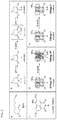
- FIG. 1 shows an “enolate to di-ketone” switch for the DiNap-1F probe.
- FIG. 2A-E shows the mechanistic rationale for the DiNap-1F probe.
- FIG. 3A-E shows labeling of BL21 cell lysates overexpressing AhpC C166S asterisk).
- FIG. 4A-C shows labeling of live HEK293T cells with DiNap1F as a function of time and H2O2.
- FIG. 5 shows gray-scaled spectroscopic properties of DiNap-AhpC C166S and TIRF microscopy B-cell hybridomas of DiNap-1F and DiNap-1.
- FIG. 6 shows the live-cell imaging of the present invention in MCF10a parent cell line or cell line overexpressing the transcription factor SNAIL.
- FIG. 7 shows a method to effectively sulfenylate active methylene compounds using thiosulfonates.
- Z in this case is any N- or O-containing pendant group.
- X is H, F, or Me.
- FIG. 8 shows additional ways to induce spectroscopic and fluorescence changes in dyes.
- FIG. 9A-C shows experimentally determined shifts in 19F NMR signals between A) F-DiNaps bearing a morpholino pendant substituent and EtSF DiNap bearing a morpholino pendant substituent, B) F-DiNaps bearing a chloro substituent and EtSF DiNap bearing a chloro substituent, and C) F-DiNaps bearing an amino substituent and MeSF DiNap bearing an amino substituent on the rings.
- FIG. 10 Shows AMCs synthesized from A) diethyl fluoromalonate or B) fluoroacetoacetate.
- FIG. 11A-C shows examples of ways the 19F NMR signal can be amplified.
- FIG. 11D shows expected small animal MRI visualization of in vivo sulfenylation.
- FIG. 12 shows the selectivity between substituted and non-substituted DiNaps carbonylated with enals acrolein and hydroxynonenal; and the selectivity over Fenton reaction conditions used to induce carbonylation.
- FIG. 13 shows gray-scaled high-performance liquid chromatography traces of solutions of F-DiNap-Cl before and following exposure with pyridoxal.
- FIG. 14 shows gray-scaled high-performance liquid chromatography traces of solutions of dimedone before and following exposure with pyridoxal.
- Sulfenic acids are labile, reversible post-translational modifications (PTM) formed by the oxidation of cysteine residues by hydrogen peroxide (see, e.g., Paulsen, C. E. & Carroll, K. S., 2013 Chemical Reviews 113, 4633-4679).
- PTM post-translational modifications
- Growth factor stimulation induces Nox activation (see, e.g., Lambeth, J.
- the sulfenic acid formed in PTP1B is protected from overoxidation by cyclization with the amide nitrogen from the next residue forming a sulfonamide (see, e.g., Tanner, J. J., et al., 2011 Antioxidants & Redox Signaling 15, 77-97), which prevents further irreversible oxidation to sulfinic (CysSO 2 H) and sulfonic (CysSO 3 H) acids (see, e.g., Paulsen, C. E. & Carroll, K. S., 2013 Chemical Reviews 113, 4633-4679).
- proteases include proteases, dehydrogenases, deubiquitinases and other redox-sensitive enzymes (see, e.g., Leonard, S. E., et al., 2009 Acs Chemical Biology 4, 783-799).
- sulfenylation is suggested to play a widespread role in immune signaling, cellular redox homeostasis, and growth factor activation.
- misregulation of sulfenylation has implications on human health, including neurodegenerative and proliferative diseases (see, e.g., Paulsen, C. E. & Carroll, K. S., 2013 Chemical Reviews 113, 4633-4679).
- AMCs Active methylene compounds
- dimedone are the primary covalent tools to study protein sulfenylation, and are limited to biochemical and proteomic analysis (see, e.g., Paulsen, C. E. & Carroll, K. S., 2013 Chemical Reviews 113, 4633-4679). Recent proteomics studies reveal a wide range of sulfenylated proteins (see, e.g., Leonard, S.
- oxidative species e.g., peroxide, superoxide, hypochloride
- non-selective ‘turn-on’ fluorophores These non-ratiometric probes are difficult to quantify, and respond to an array of reactive oxygen species. Furthermore, they are not conjugated to a protein following reaction, and as such are subject to higher levels of diffusion and localization is not correlated to protein localization.
- the present invention provides improved methods for detecting protein oxidation/sulfenylation at both in vitro and in vivo levels. Indeed, the present invention provides a new generation of probes for live-cell ratiometric fluorescence imaging of protein oxidation/sulfenylation.
- the present invention is not limited to particular types of probes for detecting cysteine oxidation and/or protein sulfenylation.
- probes are based on the small-molecule scaffold dimedone, an active methylene compound (AMC) derivative of 1,3-cyclohexanedione (see, e.g., Poole, L. B., et al., 2005 Bioconjugate Chemistry 16, 1624-1628).
- AMC active methylene compound
- These soft nucleophiles selectively and irreversibly couple to sulfenylated cysteine residues to form stable thioethers.
- Current ‘clickable’ probes such as DYn2 (see, e.g., Paulsen, C. E. & Carroll, K.
- the probes of the present invention overcome these limitations by utilizing a chemical ‘switch’ ( FIG. 1 ) that alters the spectroscopic properties of the probe after sulfenic acid conjugation.
- Such probes leverage the reactivity of dimedone to manipulate the site of reactivity: the shared ⁇ -carbon.
- Such probes provide a rationally designed, mechanism-based organic dye for visualizing a post-translational modification in living cells.
- 19 F nuclear magnetic resonance imaging ( 19 F NMR/MRI) is utilized for quantifying and visualizing a post-translational modification in living cells and tissues.
- such probes offer a multiplatform design to induce chemical and electronic changes for detection by complimentary spectroscopic imaging methods across cellular and multicellular living systems.
- the probes of the present invention overcome the limitations of existing dimedone probes, depart from existing methods, and provide opportunities to visualize protein oxidation/sulfenylation in cells and tissues. Furthermore, such probes provide opportunity to quantify the sub-cellular dynamics of protein oxidation/sulfenylation, and characterize the contribution of redox chaperones in regulating in vivo sulfenylation.
- the present invention provides the following probes for detecting protein sulfenylation/cysteine oxidation having a dimedone based structure:
- FIG. 9 shows spectroscopic properties of different probes prior to and following exposure to R—SOH.
- FIG. 13 shows spectroscopic properties of F-DiNap-Cl before and following exposure with pyridoxal.
- FIG. 14 shows spectroscopic properties of dimedone before and following exposure with pyridoxal.
- the incorporation of a blocking group inhibits other two-proton processes, such as the Knoevenagel condensation of AMCs with aldehydes.
- F-AMC analogues display a higher degree of selectivity.
- the present invention provides the following probes for detecting protein sulfenylation/cysteine oxidation having a cyanine based structure:
- the cyanine based probes are designed to modulate the fluorophore properties due to electronic changes after sulfenic acid conjugation, with by direct insertion of the dimedone scaffold within the conjugated methine, or by terminal coupling to the end of the fluorophore.
- Such “photoswitchable” probes enable super-resolution stochastic imaging of cellular protein sulfenylation.
- the present invention provides the following probes for detecting protein sulfenylation/cysteine oxidation having a BODIPY based structure:
- X is either an electron-withdrawing chemical moiety or an electron donating chemical moiety.
- X is selected from C(O)H, C(O)R 1 , C(O)OH, C(O)OR 1 , C(O)R 2 , C(R 2 )3, CN, S(O) 2 OH, NH 3 + , C(O)N(R) 2 , N(R) 3 + , and NO 2 ; and wherein R 1 is independently selected from hydrogen, an alkyl, vinyl, allyl, alkynyl, or aryl group having between 1-10 carbons (saturated or unsaturated) (substituted or non substituted) (having or not having one or more heteroatoms), or an aromatic or non aromatic ring structure (substituted or non substituted) (substituted or non substituted) (having or not having one or more heteroatoms); and wherein R
- X is selected from Oxygen, N(R 1 ) 2 , NH 2 , SH, SR 1 , OH, OR 1 , NHC(O)R 1 , R 1 , benzene, C(H) ⁇ C(R) 2 ; and wherein R 1 is independently selected from hydrogen, an alkyl, vinyl, allyl, alkynyl, or aryl group having between 1-10 carbons (saturated or unsaturated) (substituted or non substituted) (having or not having one or more heteroatoms), or an aromatic or non aromatic ring structure (substituted or non substituted) (substituted or non substituted) (having or not having one or more heteroatoms).
- the BODIPY based probes exhibit large shifts in quantum yield depending on the reduction potential of the group at the meso position by photoelectron transfer (PET).
- PET photoelectron transfer
- the 2-fluoro-1,3-dicarbonyl By installing the 2-fluoro-1,3-dicarbonyl on an electron-rich aromatic ring, the unbound enolate form suppresses fluorescence by PET. By switching from an electron-rich enolate to an electron-poor diketone, this eliminates PET and restores fluorescence.
- such probes are coupled to a second FRET donor or acceptor for use as a ratiometric probe.
- the present invention provides the following probes for detecting protein sulfenylation/cysteine oxidation having a xanthene based structure:
- the stable, negatively charged aromatic ester of a xanthene based probe converts to a dicarbonyl, which is also an active ester, resulting in rapid hydrolysis of the ester bond and formation of the fluorescent dye.
- the rate of hydrolysis is not rate-limiting.
- the present invention provides 19 F-AMC probes for detecting protein sulfenylation/cysteine oxidation.
- Examples of such 19 F-AMC probes include, but are not limited to,
- R is independently selected from hydrogen, an alkyl, vinyl, allyl, alkynyl, or aryl group having between 1-10 carbons (saturated or unsaturated) (substituted or non substituted) (having or not having one or more heteroatoms), or an aromatic or non aromatic ring structure (substituted or non substituted) (substituted or non substituted) (having or not having one or more heteroatoms).
- the present invention provides methods utilizing such 19 F-AMC probes for imaging protein sulfenylation in vivo using animal models of protein oxidation and disease ( FIG. 11D ).
- such methods will utilize mammalian subjects as in vivo models (e.g., mouse subjects, human subjects, etc.).
- simple genetic systems in bacteria and yeast will be analyzed in NMR sample tubes using a traditional 19 F-NMR instrument.
- the conserved cytosolic protein DJ-1 (PARK7) will be analyzed with such methods.
- DJ-1 is mutated in early-onset Parkinson's disease, and protects cells from oxidative stress (see, e.g., Bonifati, V.
- YajL the bacterial homologue, YajL will be analyzed with such methods.
- YajL has been shown to form mixed disulfides with a number of cytosolic proteins. Formation of these conjugates is blocked by dimedone, suggesting YajL preferentially reacts with sulfenic acids, perhaps as part of a catalytic cycle to speed the reduction of oxidized species (see, e.g., Gautier, V. et al., 2012 Journal of Molecular Biology 421, 662-670).
- Such methods will investigate the enigmatic function of mammalian DJ-1 in preventing oxidative stress and neurodegeneration.
- Table 1 shows probes of the present invention in unreacted form and following interaction with a sulfenylated protein (wherein R represents a cysteine amino acid).
- the present invention provides compositions comprising one or more of the probes of the present invention for detecting protein sulfenylation.
- the “enolate-to-diketone” switch is replaced with an “enolate-to-dicarbonyl” switch.
- another analogous, relevant functional group changes will occur (e.g., through loss of aromaticity (e.g., resulting in “caged” reactive groups to become labile)).
- the present invention provides methods for detecting protein sulfenylation at sulfenylated cysteine residues of a protein, comprising providing a biological sample comprising one or more proteins having cysteine residues and a composition comprising a probe having a chemical moiety configured to switch from an enolate form to a di-ketone form upon conjugation with a sulfenic acid side chain of a cysteine residue, exposing the composition to the biological sample such that an interaction between the probe and a sulfenic acid side chain of a cysteine residue results in conjugation of the probe with the sulfenic acid side chain, measuring the spectroscopic properties of the probe following exposure of the composition to the biological sample, wherein and characterizing the cysteine residues of the protein as having undegone sulfenylation if the measuring indicates the presence of the probe in a di-ketone form.
- the methods further comprise quantifying the amount of protein sulfenylation.
- the protein can subsequently be separated from the sample and identified.
- the methods further comprise identifying the protein having been characterized as having undergone sulfenylation and/or identifying the exact amino acid sites on the protein having been characterized as having undergone sulfenylation.
- Such methods are not limited a particular manner of measuring the spectroscopic properties of the exposed probe.
- ratiometric fluorescence imaging is used to measure the spectroscopic properties of the exposed probe.
- 19 F-NMR imaging is used to measure the spectroscopic properties of the exposed probe.
- 1 H-NMR imaging is used to measure the spectroscopic properties of the exposed probe.
- NMR signal is intended to mean an output representing the frequency of energy absorbed by a population of magnetically equivalent atoms in a magnetic field, the magnitude of energy absorbed at the frequency by the population and distribution of frequencies around a central frequency.
- the frequency of energy absorbed by with an atom in a magnetic field can be determined from the location of a peak in an NMR spectrum.
- the magnitude of energy absorbed at a frequency by a population of atoms can be determined from relative peak intensity.
- the distribution of frequencies around a central frequency can be determined from the shape of a peak in an NMR spectrum.
- a collection of nuclear magnetic resonance signals for a molecule or sample containing multiple atoms can be represented in an NMR spectrum, as an atom having a signal of characteristic frequency, intensity and line-shape.
- additional parameters that may be measured are the T1 relaxation rate (spin-lattice relaxation time) and the T2 (spin-spin relaxation time).
- the sample comprises proteins, metabolites, and/or materials having thiol groups.
- the sample is an in vitro sample.
- the sample is an in vitro sample having proteins having cysteine residues.
- the sample is an ex vivo sample.
- the sample is an ex vivo sample obtained from a subject.
- the sample is an ex vivo sample obtained from a subject suspected of experiencing aberrant protein sulfenylation.
- the sample is an in vivo sample.
- the in vivo sample is a living subject (e.g., a human subject, a mouse subject). In some embodiments, the living subject is suspected of experiencing aberrant protein sulfenylation. In some embodiments, the sample is a clinical biopsy from a subject (e.g., a human subject).
- the methods are used to determine if a subject (e.g., a human subject) is experiencing protein sulfenylation.
- such methods can be used to evaluate the efficacy of a particular type of treatment for inhibiting or facilitating protein sulfenylation.
- the present invention provides methods for detecting protein sulfenylation within cysteine residues of a protein.
- the present invention provides methods for identifying proteins having undergone sulfenylation and/or to annotate/profile particular localization of such sulfenylation.
- the present invention provides methods to determine the spatiotemporal cellular localization of normal or aberrant sulfenylation used in the technique of fluorescence microscopy.
- the present invention provides methods for screening biological samples for the presence of sulfenylated proteins.
- the present invention provides methods for identifying proteins having undergone sulfenylation and/or to annotate/profile particular locations of such sulfenylation.
- the methods further comprise identifying the protein having been characterized as having undergone sulfenylation and/or identifying the exact amino acid sites on the protein having been characterized as having undergone sulfenylation.
- biological samples e.g., complex cell lysates or tissue samples
- LC liquid chromatography
- the methods further involve proteomic analysis using bioinformatics and the raw data is searched against, for example, a defined database to identify particular proteins and to detect peptides bearing the conjugated probe to annotate and profile sites of labeling.
- Mass spectrometry refers to a method comprising employing an ionization source to generate gas phase ions from a biological entity of a sample presented on a biologically active surface, and detecting the gas phase ions with an ion detector. Comparison of the time the gas phase ions take to reach the ion detector from the moment of ionization with a calibration equation derived from at least one molecule of known mass allows the calculation of the estimated mass to charge ratio of the ion being detected.
- the term “mass spectrometer” refers to a gas phase ion spectrometer that includes an inlet system, an ionization source, an ion optic assembly, a mass analyzer, and a detector.
- the probes will contain elements with stable and well-defined isotopic distribution patterns (e.g. Cl, Br). In other embodiments, the probes will contain groups that will have known fragmentation patterns. In other embodiments, it will contain both isotopic distribution and fragmentation patterns for unenriched identification of sulfenylated proteins.
- HPLC high performance liquid chromatography
- HPLC high pressure liquid chromatography
- the methods of the present invention are used to assist in characterizing disorders involving protein sulfenylation (e.g., strokes, chronic degenerative diseases, including Parkinson's and Alzheimer's disease; Amyotrophic Lateral Sclerosis (ALS); cancer).
- disorders involving protein sulfenylation e.g., strokes, chronic degenerative diseases, including Parkinson's and Alzheimer's disease; Amyotrophic Lateral Sclerosis (ALS); cancer.
- such methods for sulfenylation detection are used to identify pharmaceutical agents (e.g., compounds, medicaments) capable of preventing or facilitating protein sulfenylation.
- pharmaceutical agents e.g., compounds, medicaments
- the present invention is not limited to particular methods for identifying pharmaceutical agents capable of preventing or facilitating protein sulfenylation.
- identification of pharmaceutical agents capable of preventing or facilitating protein sulfenylation involves, for example, exposing a sample having proteins having cysteine residues known to undergo sulfenylation to a pharmaceutical agent, detecting the presence or absence of sulfenylation with the methods of the present invention, and identifying such pharmaceutical agent as being capable of preventing or inducing protein sulfenylation if such methods are able or unable to detect sulfenylation.
- pharmaceutical agents identified as sulfenylation inhibitors are further characterized with regard to its inhibitory effect on specific proteins.
- such pharmaceutical agents identified as sulfenylation inhibitors are used in methods for treating subjects (e.g., human patients) suffering from disorders involving the aberrant occurrence of protein sulfenylation.
- pharmaceutical agents identified as sulfenylation facilitators are further characterized with regard to its facilitating effect on specific proteins.
- such pharmaceutical agents identified as sulfenylation facilitators are used in methods for treating subjects (e.g., human patients) suffering from disorders involving the aberrant occurrence of protein sulfenylation.
- kits for detecting protein sulfenylation include, for example, one or more of the described probes. In some embodiments, such probes are provided within a composition. In some embodiments, the kits further comprise instructions for utilizing the described probes for detecting the presence or absence of protein sulfenylation.
- An AMC was designed that induces a chemical switch after conjugation to a sulfenic acid, resulting in a large chemical and electronic perturbation.
- Dimedone has an extremely low pK a for a carbon acid (4.3) (see, e.g., Qian, J. et al., 2011 Chemical Communications 47, 9203-9205), rendering it completely deprotonated at physiological pH.
- dimedone reacts in its enolate form with sulfenic acids to form a stable thioether linkage, and passes through a transient diketone intermediate before it undergoes a second deprotonation to return to the enolate form. It was hypothesized that if this second deprotonation could be blocked, the probe could be trapped in its intermediate state as the diketone, and new chemical and electronic properties would be imparted.
- Lucifer Yellow FIG. 2 c
- FIG. 2 c structures of common fluorophores were surveyed, and Lucifer Yellow ( FIG. 2 c ) was selected for an initial trial due to its structural similarity to dimedone (see, e.g., Lavis, L. D. & Raines, R. T., 2008 Acs Chemical Biology 3, 142-155).
- Replacing the imide portion with the AMC of dimedone was envisioned, bridging the conjugated fluorophore with the reactive ⁇ -carbon.
- the chemical switch was installed by replacing of one of the two ⁇ -protons of dimedone with a small blocking group (either a methyl group or a fluorine).
- the blocking group rendered the dicarbonyl unable to deprotonate a second time, trapping it in the diketone form ( FIG. 2 d ), while the unblocked compound would return to the enolate ( FIG. 2 e ).
- This enolate-to-diketone conversion resulted in an increased dipole and reduced conjugation, potentially inducing a distinct spectroscopic change.
- FIG. 3A-E shows labeling of BL21 cell lysates overexpressing AhpC C166S (asterisk). As seen in FIGS.
- DiNap-1, DiNap-1F, DiNap-1methyl, and Dyn2 RhoN 3 were shown to efficiently label many endogenous sulfenylated proteins in bacterial cell lysates, including AhpC C166S, a model sulfenylated peroxiredoxin (see, e.g., Qian, J. et al., Chemical Communications 48, 4091-4093).
- DiNap-1F displayed the nearly identical labeling profile to the alkynyl dimedone DYn visualized after rhodamine-azide click conjugation ( FIGS. 3A and 3B ).
- FIG. 4A-C shows labeling of live HEK293T cells with DiNap1F as a function of time and H2O2.
- FIG. 5 shows gray-scaled spectroscopic properties of DiNap-AhpC C166S and TIRF microscopy B-cell hybridomas of DiNap-1F and DiNap-1. After conjugation to DiNap-1F, there was a dramatic loss of the excitation peak at 400 nm. This is coupled with a significant excitation red-shifting of the primary excitation peak near 490 nm, providing an excellent excitation ratiometric fluorescent probe using the common 405 nm and 488 confocal lines ( FIG. 5 ).
- DiNap-1F is a sensitive ratiometric probe for imaging oxidation in live cells.
- FIG. 6 shows the live-cell imaging of the present invention in MCF10a parent cell line or cell line overexpressing the transcription factor SNAIL.
- 19 F has comparable receptivity (83%) and isotopic abundance (100.0%) to 1 H NMR, but unlike hydrogen it is virtually absent in biological samples, providing a high intrinsic signal-to-noise (see, e.g., Knight, J. C., et al., 2011 Rsc Advances 1, 1415-1425). It also has a wide chemical shift range (300 ppm) but changes chemical shift can be measured down to ⁇ 1 ppm (see, e.g., Kitamura, N., et al., 2013 Bioorganic & Medicinal Chemistry Letters 23, 281-286).
- ⁇ -fluoro-dimedone analogues are reported to display a measurable ppm chemical shift between the sp 2 -hybridized (see, e.g., Saleur, D., et al., 2001 Journal of Organic Chemistry 66, 4543-4548) and the sp a -hybridized thioether (see, e.g., Fuchigami, T., et al., 1995 Journal of Organic Chemistry 60, 3459-3464) conjugate (see, e.g., FIG. 9 ).
- FIG. 7 shows a method to effectively sulfenylate active methylene compounds using thiosulfonates.
- Methyl methane thiosulfonate is an activated disulfide compound and a stable sulfenylating agent. In organic solvents and with a mild base, the dye is monosulfenylated in modest yields.
- FIG. 8 shows additional techniques to induce spectroscopic and fluorescence changes in dyes.
- FIG. 10 Shows AMCs synthesized from a) diethyl fluoromalonate or b) fluoroacetoacetate.
- FIG. 12 shows the selectivity between substituted and non-substituted DiNaps carbonylated with enals acrolein and hydroxynonenal; and the selectivity over Fenton reaction conditions used to induce carbonylation.
- Biological aldehydes are post-translation modifications known as carbonylation.
- Primary carbonylation involves the direct oxidation of Lys, Pro, Arg residues via the metal-catalyzed production of hydroxyl radicals from peroxide (Fenton conditions), while secondary carbonylation derives from the oxidation of polyunsaturated fatty acids by peroxide, producing unsaturated ene-als such as acrolein, or 4-hydroxynonenal which then conjugate to Cys, Lys, and His residues on proteins. Due to same input (peroxide) producing 1° and 2°, as well as sulfenylation, the present invention involves the first method to analyze sulfenic acid formation.
- FIG. 13 shows HPLC elution traces of F-DiNap-C1 before and following exposure with pyridoxal.
- FIG. 14 shows HPLC elution traces of dimedone before and following exposure with pyridoxal.
- a blocking group inhibits other two-proton processes, such as the Knoevenagel condensation of AMCs with aldehydes.
- F-AMC analogues display a higher degree of selectivity. Due to the potential prevalence of various small-molecule and protein aldehydes in complex biological samples, it becomes important to be able to parse apart aldehyde and sulfenic acid formation.
- FIG. 9 shows experimentally determined shifts in 19F NMR signals between a) F-DiNaps bearing a morpholino pendant substituent and EtSF DiNap bearing a morpholino pendant substituent, b) F-DiNaps bearing a chloro substituent and EtSF DiNap bearing a chloro substituent, and c) F-DiNaps bearing an amino substituent and MeSF DiNap bearing an amino substituent on the rings.
- FIG. 11 a - c shows examples of ways the 19F NMR signal can be amplified.
- conjugation could act as a chemical switch to trigger an environmental change sensed by the antennae fluorine nuclei ( FIG. 11 a ).
- This gain in signal (3- to 18-fold) amplifies the effect of conjugation to improve detection ( FIG. 11 b ).
- MRI contrast agents often use paramagnetic metal proximal to the pulsed nuclei to decrease the overall relaxation time. This increases the number of scans that can be taken, and increases the overall contrast and resolution of the image.
- Cell-permeable gadolinium contrast agents have been demonstrated (see, e.g., Yamane, T.
- FIG. 11 d shows expected small animal MRI visualization of in vivo sulfenylation.
- DJ-1 knockout cells bacteria and yeast deletion strains of peroxiredoxins, DJ-1/PARK7, and other redox chaperones implicated in suppressing protein sulfenylation will be utilized.
- Such intact organisms will be used to monitor the in vivo rate of AMC conjugation.
- oxidants, reductants, or antioxidants will be added to monitor the impact on protein sulfenylation. Similar experiments will then be translated to mammalian cells, particularly the DJ-1/PARK knockout cells mentioned above.
- the probes of the present invention will be tested using a similar series of biochemical assays to define reactivity and cell permeability.
- the response of such probes to peroxide addition in live cells will be tested.
- the spatial profile of sulfenylation of cancer cells including, for example, A431 cells shown to couple EGF stimulation to Nox activation and EGFR sulfenylation (see, e.g., Paulsen, C. E. et al., 2012 Nature Chemical Biology 8, 57-64) will be tested.
Landscapes
- Health & Medical Sciences (AREA)
- Life Sciences & Earth Sciences (AREA)
- Engineering & Computer Science (AREA)
- Molecular Biology (AREA)
- Chemical & Material Sciences (AREA)
- Physics & Mathematics (AREA)
- Biomedical Technology (AREA)
- Hematology (AREA)
- Urology & Nephrology (AREA)
- Immunology (AREA)
- General Health & Medical Sciences (AREA)
- Bioinformatics & Cheminformatics (AREA)
- Bioinformatics & Computational Biology (AREA)
- Medicinal Chemistry (AREA)
- Biotechnology (AREA)
- Microbiology (AREA)
- Biochemistry (AREA)
- Analytical Chemistry (AREA)
- Food Science & Technology (AREA)
- Cell Biology (AREA)
- Proteomics, Peptides & Aminoacids (AREA)
- Biophysics (AREA)
- General Physics & Mathematics (AREA)
- Pathology (AREA)
- Organic Chemistry (AREA)
- Veterinary Medicine (AREA)
- Epidemiology (AREA)
- Animal Behavior & Ethology (AREA)
- Public Health (AREA)
- Spectroscopy & Molecular Physics (AREA)
- Zoology (AREA)
- Wood Science & Technology (AREA)
- Nuclear Medicine, Radiotherapy & Molecular Imaging (AREA)
- Radiology & Medical Imaging (AREA)
- General Chemical & Material Sciences (AREA)
- Chemical Kinetics & Catalysis (AREA)
- General Engineering & Computer Science (AREA)
- Genetics & Genomics (AREA)
- Investigating Or Analysing Biological Materials (AREA)
- Peptides Or Proteins (AREA)
Abstract
Description


wherein Z is N or C-aryl; wherein R is independently selected from hydrogen, an alkyl, vinyl, allyl, alkynyl, or aryl group having between 1-10 carbons (saturated or unsaturated) (substituted or non substituted) (having or not having one or more heteroatoms), or an aromatic or non aromatic ring structure (substituted or non substituted) (substituted or non substituted) (having or not having one or more heteroatoms), or a water-solubilizing group (sulfate, amine, carboxylic acid or other charged or polar functional handle).

wherein X is either an electron-withdrawing chemical moiety or an electron donating chemical moiety. For example, in some embodiments wherein X is an electron-withdrawing chemical moiety, X is selected from C(O)H, C(O)R1, C(O)OH, C(O)OR1, C(O)R2, C(R2)3, CN, S(O)2OH, NH3 +, C(O)N(R)2, N(R)3 +, and NO2; and wherein R1 is independently selected from hydrogen, an alkyl, vinyl, allyl, alkynyl, or aryl group having between 1-10 carbons (saturated or unsaturated) (substituted or non substituted) (having or not having one or more heteroatoms), or an aromatic or non aromatic ring structure (substituted or non substituted) (substituted or non substituted) (having or not having one or more heteroatoms); and wherein R2 is a halogen (e.g., Cl, F, I). For example, in some embodiments wherein X is an electron-donating chemical moiety, X is selected from Oxygen, N(R1)2, NH2, SH, SR1, OH, OR1, NHC(O)R1, R1, benzene, C(H)═C(R)2; and wherein R1 is independently selected from hydrogen, an alkyl, vinyl, allyl, alkynyl, or aryl group having between 1-10 carbons (saturated or unsaturated) (substituted or non substituted) (having or not having one or more heteroatoms), or an aromatic or non aromatic ring structure (substituted or non substituted) (substituted or non substituted) (having or not having one or more heteroatoms).


wherein Z is N or C-aryl; wherein R is independently selected from hydrogen, an alkyl, vinyl, allyl, alkynyl, or aryl group having between 1-10 carbons (saturated or unsaturated) (substituted or non substituted) (having or not having one or more heteroatoms), or an aromatic or non aromatic ring structure (substituted or non substituted) (substituted or non substituted) (having or not having one or more heteroatoms), or a water-solubilizing group (sulfate, amine, carboxylic acid or other charged or polar functional handle).

wherein X is either an electron-withdrawing chemical moiety or an electron donating chemical moiety. For example, in some embodiments wherein X is an electron-withdrawing chemical moiety, X is selected from C(O)H, C(O)R1, C(O)OH, C(O)OR1, C(O)R2, C(R2)3, CN, S(O)2OH, NH3 +, C(O)N(R)2, N(R)3 +, and NO2; and wherein R1 is independently selected from hydrogen, an alkyl, vinyl, allyl, alkynyl, or aryl group having between 1-10 carbons (saturated or unsaturated) (substituted or non substituted) (having or not having one or more heteroatoms), or an aromatic or non aromatic ring structure (substituted or non substituted) (substituted or non substituted) (having or not having one or more heteroatoms); and wherein R2 is a halogen (e.g., Cl, F, I). For example, in some embodiments wherein X is an electron-donating chemical moiety, X is selected from Oxygen, N(R1)2, NH2, SH, SR1, OH, OR1, NHC(O)R1, R1, benzene, C(H)═C(R)2; and wherein R1 is independently selected from hydrogen, an alkyl, vinyl, allyl, alkynyl, or aryl group having between 1-10 carbons (saturated or unsaturated) (substituted or non substituted) (having or not having one or more heteroatoms), or an aromatic or non aromatic ring structure (substituted or non substituted) (substituted or non substituted) (having or not having one or more heteroatoms).


The cyanine based probes are designed to modulate the fluorophore properties due to electronic changes after sulfenic acid conjugation, with by direct insertion of the dimedone scaffold within the conjugated methine, or by terminal coupling to the end of the fluorophore. Such “photoswitchable” probes enable super-resolution stochastic imaging of cellular protein sulfenylation.

wherein X is either an electron-withdrawing chemical moiety or an electron donating chemical moiety. For example, in some embodiments wherein X is an electron-withdrawing chemical moiety, X is selected from C(O)H, C(O)R1, C(O)OH, C(O)OR1, C(O)R2, C(R2)3, CN, S(O)2OH, NH3 +, C(O)N(R)2, N(R)3 +, and NO2; and wherein R1 is independently selected from hydrogen, an alkyl, vinyl, allyl, alkynyl, or aryl group having between 1-10 carbons (saturated or unsaturated) (substituted or non substituted) (having or not having one or more heteroatoms), or an aromatic or non aromatic ring structure (substituted or non substituted) (substituted or non substituted) (having or not having one or more heteroatoms); and wherein R2 is a halogen (e.g., Cl, F, I). For example, in some embodiments wherein X is an electron-donating chemical moiety, X is selected from Oxygen, N(R1)2, NH2, SH, SR1, OH, OR1, NHC(O)R1, R1, benzene, C(H)═C(R)2; and wherein R1 is independently selected from hydrogen, an alkyl, vinyl, allyl, alkynyl, or aryl group having between 1-10 carbons (saturated or unsaturated) (substituted or non substituted) (having or not having one or more heteroatoms), or an aromatic or non aromatic ring structure (substituted or non substituted) (substituted or non substituted) (having or not having one or more heteroatoms).

wherein Z is N or C-aryl. In some embodiments, upon conjugation, the stable, negatively charged aromatic ester of a xanthene based probe converts to a dicarbonyl, which is also an active ester, resulting in rapid hydrolysis of the ester bond and formation of the fluorescent dye. The rate of hydrolysis is not rate-limiting.

(see, also,
| TABLE 1 |
 |
 |
 |
 |
 |
 |
 |
 |
 |
Claims (15)

Priority Applications (1)
| Application Number | Priority Date | Filing Date | Title |
|---|---|---|---|
| US15/313,445 US10718778B2 (en) | 2014-05-30 | 2015-05-29 | Compositions and methods for detecting protein sulfenylation |
Applications Claiming Priority (3)
| Application Number | Priority Date | Filing Date | Title |
|---|---|---|---|
| US201462005238P | 2014-05-30 | 2014-05-30 | |
| PCT/US2015/033217 WO2015184281A2 (en) | 2014-05-30 | 2015-05-29 | Compositions and methods for detecting protein sulfenylation |
| US15/313,445 US10718778B2 (en) | 2014-05-30 | 2015-05-29 | Compositions and methods for detecting protein sulfenylation |
Publications (2)
| Publication Number | Publication Date |
|---|---|
| US20170192010A1 US20170192010A1 (en) | 2017-07-06 |
| US10718778B2 true US10718778B2 (en) | 2020-07-21 |
Family
ID=54700073
Family Applications (1)
| Application Number | Title | Priority Date | Filing Date |
|---|---|---|---|
| US15/313,445 Active US10718778B2 (en) | 2014-05-30 | 2015-05-29 | Compositions and methods for detecting protein sulfenylation |
Country Status (2)
| Country | Link |
|---|---|
| US (1) | US10718778B2 (en) |
| WO (1) | WO2015184281A2 (en) |
Families Citing this family (2)
| Publication number | Priority date | Publication date | Assignee | Title |
|---|---|---|---|---|
| CN111537624A (en) * | 2020-06-25 | 2020-08-14 | 济宁医学院 | High performance liquid chromatography method for detecting long-chain fatty aldehyde in vegetable oil by virtue of pre-column derivatization of fluorescent probe |
| CN115594649B (en) * | 2022-10-24 | 2023-09-08 | 南京科络思生物科技有限公司 | Cysteine residue specific chemical probe and preparation method and application thereof |
Citations (2)
| Publication number | Priority date | Publication date | Assignee | Title |
|---|---|---|---|---|
| US20060084173A1 (en) | 2004-10-19 | 2006-04-20 | Poole Leslie B | Sulfenic acid-reactive compounds and their methods of synthesis and use in detection or isolation of sulfenic acid-containing compounds |
| US20140147905A1 (en) | 2012-11-27 | 2014-05-29 | Stephen Benkovic | Boronic and Borinic Acid Compounds as Inhibitors of Sulfenic Acid-Containing Proteins |
-
2015
- 2015-05-29 WO PCT/US2015/033217 patent/WO2015184281A2/en not_active Ceased
- 2015-05-29 US US15/313,445 patent/US10718778B2/en active Active
Patent Citations (2)
| Publication number | Priority date | Publication date | Assignee | Title |
|---|---|---|---|---|
| US20060084173A1 (en) | 2004-10-19 | 2006-04-20 | Poole Leslie B | Sulfenic acid-reactive compounds and their methods of synthesis and use in detection or isolation of sulfenic acid-containing compounds |
| US20140147905A1 (en) | 2012-11-27 | 2014-05-29 | Stephen Benkovic | Boronic and Borinic Acid Compounds as Inhibitors of Sulfenic Acid-Containing Proteins |
Non-Patent Citations (23)
| Title |
|---|
| Allison, W. S., "Formation and Reactions of Sulfenic Acids in Proteins" 1976 Accounts of Chemical Research 9, 293-299. |
| Bonifati, V. et al., "Mutations in the DJ-1 gene associated with autosomal recessive early-onset parkinsonism." 2003 Science 299, 256-259. |
| Crump, K. E., et al. "The reversible formation of cysteine sulfenic acid promotes B-cell activation and proliferation" 2009 European Journal of Immunology 42, 2152-2164. |
| Fuchigami, T., et al., "Electrolytic Partial Fluorination of Organic Compounds . . . " 1995 Journal of Organic Chemistry 60, 3459-3464. |
| Gautier, V. et al., "YajL, the Prokaryotic Homolog of the Parkinsonism-Associated Protein DJ-1, Protects Cells against Protein Sulfenylation" 2012 Journal of Molecular Biology 421, 662-670. |
| Higuchi, M. et al., "19F and 1H MRI detection of amyloid B plaques in vivo" 2005 Nature Neuroscience 8, 527-533. |
| International Search Report and Written Opinion, Int'l Patent Application No. PCT/US2015/033217, dated Nov. 9, 2015. |
| Kitamura, N., et al., "Heat-initiated detection for reduced glutathione with 19F NMR probes based on modified gold nanoparticles" 2013 Bioorganic & Medicinal Chemistry Letters 23, 281-286. |
| Klomsiri, C., et al., "Cysteine-Based Redox Switches in Enzymes" Antioxidants & Redox Signaling 14, 1065-1077 (2011). |
| Knight, J. C., et al., "Fluorinated contrast agents for magnetic resonance imaging; a review of recent developments" 2011 Rsc Advances 1, 1415-1425. |
| Lavis, L. D. & Raines, R. T., "Bright Ideas for Chemical Biology" 2008 Acs Chemical Biology 3, 142-155. |
| Leonard, S. E., et al., "Mining the Thiol Proteome for Sulfenic Acid Modifications Reveals New Targets for Oxidation in Cells" 2009 Acs Chemical Biology 4, 783-799. |
| Lopachin et al. "β-Dicarbonyl Enolates: A New Class of Neuroprotectants" J. Neurochem 116(1): 132-143, 2011. |
| Paulsen, C. E & Carroll, K. S. "Cysteine-Mediated Redoc Signaling: Chemistry, Biology, and Tools for Discovery" 2013 Chemical Reviews 113, 4633-4679. |
| Poole, L. B., et al., "Synthesis of Chemical Probes to Map Sulfenic Acid Modifications on Proteins" 2005 Bioconjugate Chemistry 16, 1624-1628. |
| Pubchem, Compound Summary for SID 119536780, Create Date: May 5, 2011 [retreived on Jul. 31, 2015]. |
| Qian, J. et al., "A simple and effective strategy for labeling cysteine sulfenic acid in proteins . . . " 2012 Chemical Communications 48, 4091-4093. |
| Qian, J. et al., "Simple synthesis of 1,3-cyclopentanedione derived probes for labeling sulfenic acid proteins" 2011 Chemical Communications 47, 9203-9205. |
| Saleur, D., et al., "Bis(acylsilanes) and Trifluoromethyltrimethylsilane: A useful system for the synthesis . . . " 2001 Journal of Organic Chemistry 66, 4543-4548. |
| Schwarz, R., et al., "19F-MRI of Perfluorononane as a Novel Contrast Modality for Gastrointestinal Imaging" 1999 Magnetic Resonance in Medicine 41, 80-86. |
| Seo, Y. H. & Carroll, K S. "Profiling protein thiol oxidation in tumor cells using sulfenic acid-specific antibodies" 2009 Proc Natl Acad Sci U S A 106, 16163-16168. |
| Tanner, J. J., et al., "Redox Regulation of Protein Tyrosine Phosphatases: Structural and Chemical Aspects" 2011 Antioxidants & Redox Signaling 15, 77-97. |
| Yamaguchi, K. et al., 2011 "Design of Chemical Shift-Switching 19F Magnetic Resonance Imaging Probe for Specific Detection of Human Monoamine Oxidase A" Journal of the American Chemical Society 133, 14208-14211. |
Also Published As
| Publication number | Publication date |
|---|---|
| WO2015184281A2 (en) | 2015-12-03 |
| US20170192010A1 (en) | 2017-07-06 |
| WO2015184281A3 (en) | 2016-01-21 |
Similar Documents
| Publication | Publication Date | Title |
|---|---|---|
| Ou et al. | Methods of measuring enzyme activity ex vivo and in vivo | |
| Espino et al. | Illuminating biological interactions with in vivo protein footprinting | |
| Paulsen et al. | Peroxide-dependent sulfenylation of the EGFR catalytic site enhances kinase activity | |
| Wang et al. | A novel near-infrared styryl-BODIPY fluorescent probe for discrimination of GSH and its application in living cells | |
| Wang et al. | A fluorescent sensor bearing nitroolefin moiety for the detection of thiols and its biological imaging | |
| Tallon et al. | Thiomethyltetrazines are reversible covalent cysteine warheads whose dynamic behavior can Be “switched off” via bioorthogonal chemistry inside live cells | |
| Li et al. | A hemicyanidin-based NIR fluorescent probe for detection of H2S and imaging study in cells and mice | |
| Lu et al. | Determination of non-protein cysteine in human serum by a designed BODIPY-based fluorescent probe | |
| Xu et al. | A near-infrared self-assembled micellar nanoprobe for highly effective detection of cysteine in vitro and in vivo | |
| Li et al. | Combination of pentafluorophenylhydrazine derivatization and isotope dilution LC-MS/MS techniques for the quantification of apurinic/apyrimidinic sites in cellular DNA | |
| Sun et al. | Chemoproteomics reveals chemical diversity and dynamics of 4-oxo-2-nonenal modifications in cells | |
| Knoop et al. | Development of a mass spectrometry based detection method for the mitochondrion‐derived peptide MOTS‐c in plasma samples for doping control purposes | |
| Muthusamy et al. | Turn-on detection of cysteine by a donor-acceptor type quinoline fluorophore: Exploring the sensing strategy and performance in bioimaging | |
| Xu et al. | A new quantification method using electrochemical mass spectrometry | |
| Wiśniewski et al. | A novel mass spectrometry‐based method for simultaneous determination of asymmetric and symmetric dimethylarginine, l‐arginine and l‐citrulline optimized for LC‐MS‐TOF and LC‐MS/MS | |
| Ding et al. | A novel intramolecular charge transfer-based near-infrared fluorescent probe with large Stokes shift for highly sensitive detection of cysteine in vivo | |
| Chang et al. | Synthesis of an electronically-tuned minimally interfering alkynyl photo-affinity label to measure small molecule–protein interactions | |
| Cho et al. | Development of a liquid chromatography/tandem mass spectrometry method for monitoring of long‐term exposure to parabens | |
| Ge et al. | A novel NIR fluorescence probe with cysteine-activated structure for specific detection of cysteine and its application in vitro and in vivo | |
| Zhi et al. | Fluorescent probe based on coumarin derivative for the selective detection of cysteine in living cells | |
| Zheng et al. | A novel ratiometric fluorescent probe for the detection and imaging of cysteine in living cells | |
| An et al. | A lysosome-targeted fluorescent probe for fluorescence imaging of hypochlorous acid in living cells and in vivo | |
| Drexler et al. | Utility of quantitative whole-body autoradiography (QWBA) and imaging mass spectrometry (IMS) by matrix-assisted laser desorption/ionization (MALDI) in the assessment of ocular distribution of drugs | |
| US10718778B2 (en) | Compositions and methods for detecting protein sulfenylation | |
| Liu et al. | Analysis of the amine submetabolome using novel isotope-coded pyrylium salt derivatization and LC-MS: Herbs and cancer tissues as cases |
Legal Events
| Date | Code | Title | Description |
|---|---|---|---|
| AS | Assignment |
Owner name: THE REGENTS OF THE UNIVERSITY OF MICHIGAN, MICHIGAN Free format text: ASSIGNMENT OF ASSIGNORS INTEREST;ASSIGNORS:MARTIN, BRENT R.;TOM, CHRISTOPHER BAKER;REEL/FRAME:040408/0952 Effective date: 20140711 Owner name: THE REGENTS OF THE UNIVERSITY OF MICHIGAN, MICHIGA Free format text: ASSIGNMENT OF ASSIGNORS INTEREST;ASSIGNORS:MARTIN, BRENT R.;TOM, CHRISTOPHER BAKER;REEL/FRAME:040408/0952 Effective date: 20140711 |
|
| STPP | Information on status: patent application and granting procedure in general |
Free format text: RESPONSE TO NON-FINAL OFFICE ACTION ENTERED AND FORWARDED TO EXAMINER |
|
| STPP | Information on status: patent application and granting procedure in general |
Free format text: FINAL REJECTION MAILED |
|
| STPP | Information on status: patent application and granting procedure in general |
Free format text: ADVISORY ACTION MAILED |
|
| STPP | Information on status: patent application and granting procedure in general |
Free format text: NON FINAL ACTION MAILED |
|
| STPP | Information on status: patent application and granting procedure in general |
Free format text: RESPONSE TO NON-FINAL OFFICE ACTION ENTERED AND FORWARDED TO EXAMINER |
|
| STPP | Information on status: patent application and granting procedure in general |
Free format text: PUBLICATIONS -- ISSUE FEE PAYMENT VERIFIED |
|
| STCF | Information on status: patent grant |
Free format text: PATENTED CASE |
|
| MAFP | Maintenance fee payment |
Free format text: PAYMENT OF MAINTENANCE FEE, 4TH YR, SMALL ENTITY (ORIGINAL EVENT CODE: M2551); ENTITY STATUS OF PATENT OWNER: SMALL ENTITY Year of fee payment: 4 |