US10717752B2 - Dehydrogenative silylation, hydrosilylation and crosslinking using pyridinediimine cobalt carboxylate catalysts - Google Patents
Dehydrogenative silylation, hydrosilylation and crosslinking using pyridinediimine cobalt carboxylate catalysts Download PDFInfo
- Publication number
- US10717752B2 US10717752B2 US15/746,448 US201615746448A US10717752B2 US 10717752 B2 US10717752 B2 US 10717752B2 US 201615746448 A US201615746448 A US 201615746448A US 10717752 B2 US10717752 B2 US 10717752B2
- Authority
- US
- United States
- Prior art keywords
- chosen
- alkyl
- unsaturated
- catalyst
- group
- Prior art date
- Legal status (The legal status is an assumption and is not a legal conclusion. Google has not performed a legal analysis and makes no representation as to the accuracy of the status listed.)
- Active, expires
Links
- 0 *C1=N([7*])[Co]2(*OOOOOOOOOOOOOOOOOOOOOOOOOOOOC)(OOC[9*])N3=C1C([2*])=C([3*])C([4*])=C3/C([5*])=N\2[6*] Chemical compound *C1=N([7*])[Co]2(*OOOOOOOOOOOOOOOOOOOOOOOOOOOOC)(OOC[9*])N3=C1C([2*])=C([3*])C([4*])=C3/C([5*])=N\2[6*] 0.000 description 15
- UDEKLGQKFGEBCJ-UHFFFAOYSA-M CCCCCCCC(=O)O[Co]123(OC(C)O1)N1=C(C=CC=C1)C1=CC(C4=CC=CC=C4)=CC(=N12)C1=N3C=CC=C1 Chemical compound CCCCCCCC(=O)O[Co]123(OC(C)O1)N1=C(C=CC=C1)C1=CC(C4=CC=CC=C4)=CC(=N12)C1=N3C=CC=C1 UDEKLGQKFGEBCJ-UHFFFAOYSA-M 0.000 description 4
- XAOFHZUOCJEBTH-UHFFFAOYSA-N C.C.C.C=CC.CC=CC[SiH3].CCC=C[SiH3].CCCC[SiH3].CCO[SiH](OCC)OCC Chemical compound C.C.C.C=CC.CC=CC[SiH3].CCC=C[SiH3].CCCC[SiH3].CCO[SiH](OCC)OCC XAOFHZUOCJEBTH-UHFFFAOYSA-N 0.000 description 2
- PUWSGKJCTMYVNZ-VJHQQVTRSA-M C.C=CC.CC=CC[SiH3].CCC=C[SiH3].CCCCCCCC(=O)O[Co]123(OC(CCCCCCC)O1)N1=C(C=CC=C1/C(C)=N\2C)/C(C)=N\3C.CCCC[SiH3].CCO[SiH](OCC)OCC Chemical compound C.C=CC.CC=CC[SiH3].CCC=C[SiH3].CCCCCCCC(=O)O[Co]123(OC(CCCCCCC)O1)N1=C(C=CC=C1/C(C)=N\2C)/C(C)=N\3C.CCCC[SiH3].CCO[SiH](OCC)OCC PUWSGKJCTMYVNZ-VJHQQVTRSA-M 0.000 description 2
- RAYGTFAXIVTQDH-UHFFFAOYSA-M C.C=CC.CC=CC[SiH3].CCC=C[SiH3].CCCCCCCC(=O)O[Co]123(OC(CCCCCCC)O1)N1=C(CCC1)C1=CC=CC(=N12)C1=N3CCC1.CCCC[SiH3].CCO[SiH](OCC)OCC Chemical compound C.C=CC.CC=CC[SiH3].CCC=C[SiH3].CCCCCCCC(=O)O[Co]123(OC(CCCCCCC)O1)N1=C(CCC1)C1=CC=CC(=N12)C1=N3CCC1.CCCC[SiH3].CCO[SiH](OCC)OCC RAYGTFAXIVTQDH-UHFFFAOYSA-M 0.000 description 2
- DCHJKWAGRWXCLW-UHFFFAOYSA-M C.C=CC.CC=CC[SiH3].CCCCCCCC(=O)O[Co]123(OC(CCCCCCC)O1)N1=C(OCC1)C1=C/C=C\C(=N/12)C1=N3CCO1.CCCC[SiH3].CCO[SiH](OCC)OCC Chemical compound C.C=CC.CC=CC[SiH3].CCCCCCCC(=O)O[Co]123(OC(CCCCCCC)O1)N1=C(OCC1)C1=C/C=C\C(=N/12)C1=N3CCO1.CCCC[SiH3].CCO[SiH](OCC)OCC DCHJKWAGRWXCLW-UHFFFAOYSA-M 0.000 description 2
- BXHJEAUHTPTKCX-VIQXSAITSA-I C.CC(=O)O[Co]123(OC(C)O1)N(C)=C(C)C1=N2C(=CC=C1)/C(C)=N\3C.CC(=O)O[Co]123(OC(C)O1)N1=C(CCC1)C1=CC=CC(=N12)C1=N3CCC1.CC1=N(C)[Co]23(OC(=O)C(C)(C)C)(OC(C(C)(C)C)O2)N2=C1C=CC=C2/C(C)=N\3C.CCCCCCCC(=O)O[Co]123(OC(C)O1)N1=C(CCC1)C1=CC=CC(=N12)C1=N3CCC1.CCCCCCCC(=O)O[Co]123(OC(CCCCCCC)O1)N(C)=C(C)C1=N2C(=CC=C1)/C(C)=N\3C Chemical compound C.CC(=O)O[Co]123(OC(C)O1)N(C)=C(C)C1=N2C(=CC=C1)/C(C)=N\3C.CC(=O)O[Co]123(OC(C)O1)N1=C(CCC1)C1=CC=CC(=N12)C1=N3CCC1.CC1=N(C)[Co]23(OC(=O)C(C)(C)C)(OC(C(C)(C)C)O2)N2=C1C=CC=C2/C(C)=N\3C.CCCCCCCC(=O)O[Co]123(OC(C)O1)N1=C(CCC1)C1=CC=CC(=N12)C1=N3CCC1.CCCCCCCC(=O)O[Co]123(OC(CCCCCCC)O1)N(C)=C(C)C1=N2C(=CC=C1)/C(C)=N\3C BXHJEAUHTPTKCX-VIQXSAITSA-I 0.000 description 2
- MHBPDCJKDPOZJU-VIQXSAITSA-I C.CC(=O)O[Co]123(OC(C)O1)N(C)=C(C)C1=N2C(=CC=C1)/C(C)=N\3C.CC(=O)O[Co]123(OC(C)O1)N1=C(CCC1)C1=CC=CC(=N12)C1=N3CCC1.CC1=N(C)[Co]23(OC(=O)C(C)(C)C)(OC(C(C)(C)C)O2)N2=C1C=CC=C2/C(C)=N\3C.CCCCCCCC(=O)O[Co]123(OC(CCCCCCC)O1)N(C)=C(C)C1=N2C(=CC=C1)/C(C)=N\3C.CCCCCCCC(=O)O[Co]123(OC(CCCCCCC)O1)N1=C(CCC1)C1=CC=CC(=N12)C1=N3CCC1 Chemical compound C.CC(=O)O[Co]123(OC(C)O1)N(C)=C(C)C1=N2C(=CC=C1)/C(C)=N\3C.CC(=O)O[Co]123(OC(C)O1)N1=C(CCC1)C1=CC=CC(=N12)C1=N3CCC1.CC1=N(C)[Co]23(OC(=O)C(C)(C)C)(OC(C(C)(C)C)O2)N2=C1C=CC=C2/C(C)=N\3C.CCCCCCCC(=O)O[Co]123(OC(CCCCCCC)O1)N(C)=C(C)C1=N2C(=CC=C1)/C(C)=N\3C.CCCCCCCC(=O)O[Co]123(OC(CCCCCCC)O1)N1=C(CCC1)C1=CC=CC(=N12)C1=N3CCC1 MHBPDCJKDPOZJU-VIQXSAITSA-I 0.000 description 2
- CAOYNTJFGRLQDD-OXHOLWBFSA-M C=CC.CC=CC[SiH3].CCCCCCCC(=O)O[Co]123(OC(CCCCCCC)O1)N(C)=C(C)C1=N2C(=CC=C1)/C(C)=N\3C.CCCC[SiH3].CCO[SiH](OCC)OCC Chemical compound C=CC.CC=CC[SiH3].CCCCCCCC(=O)O[Co]123(OC(CCCCCCC)O1)N(C)=C(C)C1=N2C(=CC=C1)/C(C)=N\3C.CCCC[SiH3].CCO[SiH](OCC)OCC CAOYNTJFGRLQDD-OXHOLWBFSA-M 0.000 description 2
- RYMKBZBFDMPPOK-BDCPAPQKSA-M C=CC.CC=CC[SiH3].CCCCCCCC(=O)O[Co]123(OC(CCCCCCC)O1)N1=C(C=CC=C1/C(C)=N\2C1=C(C)C=C(C)C=C1C)/C(C)=N\3C1=C(C)C=C(C)C=C1C.CCCC[SiH3].CCO[SiH](OCC)OCC Chemical compound C=CC.CC=CC[SiH3].CCCCCCCC(=O)O[Co]123(OC(CCCCCCC)O1)N1=C(C=CC=C1/C(C)=N\2C1=C(C)C=C(C)C=C1C)/C(C)=N\3C1=C(C)C=C(C)C=C1C.CCCC[SiH3].CCO[SiH](OCC)OCC RYMKBZBFDMPPOK-BDCPAPQKSA-M 0.000 description 2
- FLPRVLXIGKRKKT-UHFFFAOYSA-M C=CC.CC=CC[SiH3].CCCCCCCC(=O)O[Co]123(OC(CCCCCCC)O1)N1=C(CCC1)C1=CC=CC(=N12)C1=N3CCC1.CCCC[SiH3].CCO[SiH](OCC)OCC Chemical compound C=CC.CC=CC[SiH3].CCCCCCCC(=O)O[Co]123(OC(CCCCCCC)O1)N1=C(CCC1)C1=CC=CC(=N12)C1=N3CCC1.CCCC[SiH3].CCO[SiH](OCC)OCC FLPRVLXIGKRKKT-UHFFFAOYSA-M 0.000 description 2
- KRCVUKHFGCUSCL-UHFFFAOYSA-N C=CCOCC1CO1.CC=COCC1CO1.CCO[SiH](OCC)OCC.[SiH3]CC=COCC1CO1.[SiH4+]CCCOCC1CO1 Chemical compound C=CCOCC1CO1.CC=COCC1CO1.CCO[SiH](OCC)OCC.[SiH3]CC=COCC1CO1.[SiH4+]CCCOCC1CO1 KRCVUKHFGCUSCL-UHFFFAOYSA-N 0.000 description 2
- DVBCWOIYCNIBMI-UHFFFAOYSA-M C=C[Si](C)(C)O[Si](C)(C)O[Si](C)(C)O[Si](C)(C)O[Si](C)(C)O[Si](C)(C)O[Si](C)(C)O[Si](C)(C)O[Si](C)(C)O[Si](C)(C)O[Si](C)(C)O[Si](C)(C)O[Si](C)(C)O[Si](C)(C)O[Si](C)(C)O[Si](C)(C)O[Si](C)(C)O[Si](C)(C)O[Si](C)(C)O[Si](C)(C)O[Si](C)(C)O[Si](C)(C)O[Si](C)(C)O[Si](C)(C)O[Si](C)(C)O[Si](C)(C)O[Si](C)(C)O[Si](C)(C)O[Si](C)(C)O[Si](C)(C)O[Si](C)(C)O[Si](C)(C)O[Si](C)(C)O[Si](C)(C)O[Si](C)(C)O[Si](C)(C)O[Si](C)(C)O[Si](C)(C)O[Si](C)(C)O[Si](C)(C)O[Si](C)(C)O[Si](C)(C)O[Si](C)(C)O[Si](C)(C)O[Si](C)(C)O[Si](C)(C)O[Si](C)(C)O[Si](C)(C)O[Si](C)(C)O[Si](C)(C)O[Si](C)(C)O[Si](C)(C)O[Si](C)(C)O[Si](C)(C)O[Si](C)(C)O[Si](C)(C)O[Si](C)(C)O[Si](C)(C)O[Si](C)(C)O[Si](C)(C)O[Si](C)(C)O[Si](C)(C)O[Si](C)(C)O[Si](C)(C)O[Si](C)(C)O[Si](C)(C)O[Si](C)(C)O[Si](C)(C)O[Si](C)(C)O[Si](C)(C)O[Si](C)(C)O[Si](C)(C)O[Si](C)(C)O[Si](C)(C)O[Si](C)(C)O[Si](C)(C)O[Si](C)(C)O[Si](C)(C)O[Si](C)(C)O[Si](C)(C)O[Si](C)(C)O[Si](C)(C)O[Si](C)(C)O[Si](C)(C)O[Si](C)(C)O[Si](C)(C)O[Si](C)(C)O[Si](C)(C)O[Si](C)(C)O[Si](C)(C)O[Si](C)(C)O[Si](C)(C)O[Si](C)(C)O[Si](C)(C)O[Si](C)(C)O[Si](C)(C)O[Si](C)(C)O[Si](C)(C)O[Si](C)(C)O[Si](C)(C)O[Si](C)(C)O[Si](C)(C)O[Si](C)(C)O[Si](C)(C)O[Si](C)(C)O[Si](C)(C)O[Si](C)(C)O[Si](C)(C)O[Si](C)(C)O[Si](C)(C)O[Si](C)(C)O[Si](C)(C)O[Si](C)(C)O[Si](C)(C)O[Si](C)(C)O[Si](C)(C)O[Si](C)(C)O[Si](C)(C)O[Si](C)(C)O[Si](C)(C)O[Si](C)(C)O[Si](C)(C)C=C.CCCCCCCC(=O)O[Co]123(OC(CCCCCCC)O1)N1=C(CCC1)C1=N2/C(=C\C=C/1)C1=N3CCC1.[H][Si](C)(O[Si](C)(C)C)O[Si]([H])(C)O[Si]([H])(C)O[Si]([H])(C)O[Si]([H])(C)O[Si]([H])(C)O[Si]([H])(C)O[Si]([H])(C)O[Si]([H])(C)O[Si]([H])(C)O[Si]([H])(C)O[Si]([H])(C)O[Si]([H])(C)O[Si]([H])(C)O[Si]([H])(C)O[Si]([H])(C)O[Si]([H])(C)O[Si]([H])(C)O[Si]([H])(C)O[Si]([H])(C)O[Si]([H])(C)O[Si]([H])(C)O[Si]([H])(C)O[Si]([H])(C)O[Si]([H])(C)O[Si]([H])(C)O[Si]([H])(C)O[Si]([H])(C)O[Si]([H])(C)O[Si]([H])(C)O[Si](C)(C)O[Si](C)(C)O[Si](C)(C)O[Si](C)(C)O[Si](C)(C)O[Si](C)(C)O[Si](C)(C)O[Si](C)(C)O[Si](C)(C)O[Si](C)(C)O[Si](C)(C)O[Si](C)(C)O[Si](C)(C)O[Si](C)(C)O[Si](C)(C)O[Si](C)(C)C Chemical compound C=C[Si](C)(C)O[Si](C)(C)O[Si](C)(C)O[Si](C)(C)O[Si](C)(C)O[Si](C)(C)O[Si](C)(C)O[Si](C)(C)O[Si](C)(C)O[Si](C)(C)O[Si](C)(C)O[Si](C)(C)O[Si](C)(C)O[Si](C)(C)O[Si](C)(C)O[Si](C)(C)O[Si](C)(C)O[Si](C)(C)O[Si](C)(C)O[Si](C)(C)O[Si](C)(C)O[Si](C)(C)O[Si](C)(C)O[Si](C)(C)O[Si](C)(C)O[Si](C)(C)O[Si](C)(C)O[Si](C)(C)O[Si](C)(C)O[Si](C)(C)O[Si](C)(C)O[Si](C)(C)O[Si](C)(C)O[Si](C)(C)O[Si](C)(C)O[Si](C)(C)O[Si](C)(C)O[Si](C)(C)O[Si](C)(C)O[Si](C)(C)O[Si](C)(C)O[Si](C)(C)O[Si](C)(C)O[Si](C)(C)O[Si](C)(C)O[Si](C)(C)O[Si](C)(C)O[Si](C)(C)O[Si](C)(C)O[Si](C)(C)O[Si](C)(C)O[Si](C)(C)O[Si](C)(C)O[Si](C)(C)O[Si](C)(C)O[Si](C)(C)O[Si](C)(C)O[Si](C)(C)O[Si](C)(C)O[Si](C)(C)O[Si](C)(C)O[Si](C)(C)O[Si](C)(C)O[Si](C)(C)O[Si](C)(C)O[Si](C)(C)O[Si](C)(C)O[Si](C)(C)O[Si](C)(C)O[Si](C)(C)O[Si](C)(C)O[Si](C)(C)O[Si](C)(C)O[Si](C)(C)O[Si](C)(C)O[Si](C)(C)O[Si](C)(C)O[Si](C)(C)O[Si](C)(C)O[Si](C)(C)O[Si](C)(C)O[Si](C)(C)O[Si](C)(C)O[Si](C)(C)O[Si](C)(C)O[Si](C)(C)O[Si](C)(C)O[Si](C)(C)O[Si](C)(C)O[Si](C)(C)O[Si](C)(C)O[Si](C)(C)O[Si](C)(C)O[Si](C)(C)O[Si](C)(C)O[Si](C)(C)O[Si](C)(C)O[Si](C)(C)O[Si](C)(C)O[Si](C)(C)O[Si](C)(C)O[Si](C)(C)O[Si](C)(C)O[Si](C)(C)O[Si](C)(C)O[Si](C)(C)O[Si](C)(C)O[Si](C)(C)O[Si](C)(C)O[Si](C)(C)O[Si](C)(C)O[Si](C)(C)O[Si](C)(C)O[Si](C)(C)O[Si](C)(C)O[Si](C)(C)O[Si](C)(C)O[Si](C)(C)O[Si](C)(C)O[Si](C)(C)O[Si](C)(C)O[Si](C)(C)C=C.CCCCCCCC(=O)O[Co]123(OC(CCCCCCC)O1)N1=C(CCC1)C1=N2/C(=C\C=C/1)C1=N3CCC1.[H][Si](C)(O[Si](C)(C)C)O[Si]([H])(C)O[Si]([H])(C)O[Si]([H])(C)O[Si]([H])(C)O[Si]([H])(C)O[Si]([H])(C)O[Si]([H])(C)O[Si]([H])(C)O[Si]([H])(C)O[Si]([H])(C)O[Si]([H])(C)O[Si]([H])(C)O[Si]([H])(C)O[Si]([H])(C)O[Si]([H])(C)O[Si]([H])(C)O[Si]([H])(C)O[Si]([H])(C)O[Si]([H])(C)O[Si]([H])(C)O[Si]([H])(C)O[Si]([H])(C)O[Si]([H])(C)O[Si]([H])(C)O[Si]([H])(C)O[Si]([H])(C)O[Si]([H])(C)O[Si]([H])(C)O[Si]([H])(C)O[Si](C)(C)O[Si](C)(C)O[Si](C)(C)O[Si](C)(C)O[Si](C)(C)O[Si](C)(C)O[Si](C)(C)O[Si](C)(C)O[Si](C)(C)O[Si](C)(C)O[Si](C)(C)O[Si](C)(C)O[Si](C)(C)O[Si](C)(C)O[Si](C)(C)O[Si](C)(C)C DVBCWOIYCNIBMI-UHFFFAOYSA-M 0.000 description 2
- SFMYLTSOEWVTKY-UHFFFAOYSA-M C.C=CC.CC.CC=CC[SiH3].CCCCCCCC(=O)O[Co]123(OC(CCCCCCC)O1)N1=C(CCC1)C1=C/C=C\C(=N/12)C1=N3CCC1.CCCC[SiH3] Chemical compound C.C=CC.CC.CC=CC[SiH3].CCCCCCCC(=O)O[Co]123(OC(CCCCCCC)O1)N1=C(CCC1)C1=C/C=C\C(=N/12)C1=N3CCC1.CCCC[SiH3] SFMYLTSOEWVTKY-UHFFFAOYSA-M 0.000 description 1
- DRPCVBKDVQUJLZ-UHFFFAOYSA-M C.C=CC.CC.CC=CC[SiH3].CCCCCCCC(=O)O[Co]123(OC(CCCCCCC)O1)N1=C(CCC1)C1=C/C=C\C(=N/12)C1=N3CCC1.CCCC[SiH3].CC[SiH3].O Chemical compound C.C=CC.CC.CC=CC[SiH3].CCCCCCCC(=O)O[Co]123(OC(CCCCCCC)O1)N1=C(CCC1)C1=C/C=C\C(=N/12)C1=N3CCC1.CCCC[SiH3].CC[SiH3].O DRPCVBKDVQUJLZ-UHFFFAOYSA-M 0.000 description 1
- ZNDOWAZPUYFKSO-UHFFFAOYSA-M C.C=CCOCC1CO1.CCCCCCCC(=O)O[Co]123(OC(CCCCCCC)O1)N1=C(CCC1)C1=CC=CC(=N12)C1=N3CCC1.[SiH3]CC=COCC1CO1.[SiH3]CCCOCC1CO1 Chemical compound C.C=CCOCC1CO1.CCCCCCCC(=O)O[Co]123(OC(CCCCCCC)O1)N1=C(CCC1)C1=CC=CC(=N12)C1=N3CCC1.[SiH3]CC=COCC1CO1.[SiH3]CCCOCC1CO1 ZNDOWAZPUYFKSO-UHFFFAOYSA-M 0.000 description 1
- AIKHIKAETKIEAH-MVZXUNTFSA-L C/C1=N(\C)[Co]2(Cl)(Cl)N3=C(C=CC=C13)/C(C)=N\2C.C=CC.CCO[SiH](OCC)OCC Chemical compound C/C1=N(\C)[Co]2(Cl)(Cl)N3=C(C=CC=C13)/C(C)=N\2C.C=CC.CCO[SiH](OCC)OCC AIKHIKAETKIEAH-MVZXUNTFSA-L 0.000 description 1
- LQEIVMLRUHRDTB-WGQNUTSBSA-M C/C=C/OCCOCCOC(C)=O.C=CCOCCOCCOC(C)=O.CC(=O)OCCOCCOC=CC[SiH3].CC(=O)OCCOCCOCCC[SiH3].CCCCCCCC(=O)O[Co]123(OC(CCCCCCC)O1)N1=C(CCC1)C1=CC=CC(=N12)C1=N3CCC1.CCCOCCOCCOC(C)=O.[2H]CC Chemical compound C/C=C/OCCOCCOC(C)=O.C=CCOCCOCCOC(C)=O.CC(=O)OCCOCCOC=CC[SiH3].CC(=O)OCCOCCOCCC[SiH3].CCCCCCCC(=O)O[Co]123(OC(CCCCCCC)O1)N1=C(CCC1)C1=CC=CC(=N12)C1=N3CCC1.CCCOCCOCCOC(C)=O.[2H]CC LQEIVMLRUHRDTB-WGQNUTSBSA-M 0.000 description 1
- DJYBMZRKQNEWKW-LLFHEWLYSA-M C/N=C(\C)C1=CC=CC(/C(C)=N/C)=N1.C1CCOC1.CC(=O)O[Co]123(OC(C)O1)N(C)=C(C)C1=N2C(=CC=C1)/C(C)=N\3C Chemical compound C/N=C(\C)C1=CC=CC(/C(C)=N/C)=N1.C1CCOC1.CC(=O)O[Co]123(OC(C)O1)N(C)=C(C)C1=N2C(=CC=C1)/C(C)=N\3C DJYBMZRKQNEWKW-LLFHEWLYSA-M 0.000 description 1
- WVAZSVWLASIQPW-BPDXCSRGSA-K C/N=C(\C)C1=CC=CC(/C(C)=N/C)=N1.C1CCOC1.CC(C)(C)C(=O)O[Co]OC(=O)C(C)(C)C.CC1=N(C)[Co]23(OC(=O)C(C)(C)C)(OC(C(C)(C)C)O2)N2=C1C=CC=C2/C(C)=N\3C Chemical compound C/N=C(\C)C1=CC=CC(/C(C)=N/C)=N1.C1CCOC1.CC(C)(C)C(=O)O[Co]OC(=O)C(C)(C)C.CC1=N(C)[Co]23(OC(=O)C(C)(C)C)(OC(C(C)(C)C)O2)N2=C1C=CC=C2/C(C)=N\3C WVAZSVWLASIQPW-BPDXCSRGSA-K 0.000 description 1
- NXVREHQKCMBPLL-OJAQKTQKSA-N C/N=C(\C)C1=CC=CC(/C(C)=N/C)=N1.CC(=O)C1=CC=CC(C(C)=O)=N1.CN Chemical compound C/N=C(\C)C1=CC=CC(/C(C)=N/C)=N1.CC(=O)C1=CC=CC(C(C)=O)=N1.CN NXVREHQKCMBPLL-OJAQKTQKSA-N 0.000 description 1
- HGIFCKCOEYNVFL-SEKXVIIXSA-N C1=CC(C2=NCCC2)=NC(C2=NCCC2)=C1.C=CN1CCCC1=O.COC(=O)C1=NC(C(C)=O)=CC=C1.[2H]P(I)C(=O)C(F)(F)F Chemical compound C1=CC(C2=NCCC2)=NC(C2=NCCC2)=C1.C=CN1CCCC1=O.COC(=O)C1=NC(C(C)=O)=CC=C1.[2H]P(I)C(=O)C(F)(F)F HGIFCKCOEYNVFL-SEKXVIIXSA-N 0.000 description 1
- MTSVZLSHVOMBAD-UHFFFAOYSA-K C1=CC(C2=NCCC2)=NC(C2=NCCC2)=C1.CC(=O)O[Co]123(OC(C)O1)N1=C(CCC1)C1=CC=CC(=N12)C1=N3CCC1.CC(=O)O[Co]OC(C)=O Chemical compound C1=CC(C2=NCCC2)=NC(C2=NCCC2)=C1.CC(=O)O[Co]123(OC(C)O1)N1=C(CCC1)C1=CC=CC(=N12)C1=N3CCC1.CC(=O)O[Co]OC(C)=O MTSVZLSHVOMBAD-UHFFFAOYSA-K 0.000 description 1
- FLCVYSKPEXKHTP-UHFFFAOYSA-K C1=CC(C2=NCCC2)=NC(C2=NCCC2)=C1.CCCCC(CC)C(=O)O[Co]OC(=O)C(CC)CCCC.CCCCCCCC(=O)O[Co]123(OC(CCCCCCC)O1)N1=C(CCC1)C1=CC=CC(=N12)C1=N3CCC1 Chemical compound C1=CC(C2=NCCC2)=NC(C2=NCCC2)=C1.CCCCC(CC)C(=O)O[Co]OC(=O)C(CC)CCCC.CCCCCCCC(=O)O[Co]123(OC(CCCCCCC)O1)N1=C(CCC1)C1=CC=CC(=N12)C1=N3CCC1 FLCVYSKPEXKHTP-UHFFFAOYSA-K 0.000 description 1
- GAVSBYYMZYQSTA-UHFFFAOYSA-K C1=CC(C2=NCCO2)=NC(C2=NCCO2)=C1.CCCCC(CC)C(=O)O[Co]OC(=O)C(CC)CCCC.CCCCCCCC(=O)O[Co]123(OC(CCCCCCC)O1)N1=C(OCC1)C1=C/C=C\C(=N/12)C1=N3CCO1 Chemical compound C1=CC(C2=NCCO2)=NC(C2=NCCO2)=C1.CCCCC(CC)C(=O)O[Co]OC(=O)C(CC)CCCC.CCCCCCCC(=O)O[Co]123(OC(CCCCCCC)O1)N1=C(OCC1)C1=C/C=C\C(=N/12)C1=N3CCO1 GAVSBYYMZYQSTA-UHFFFAOYSA-K 0.000 description 1
- XSOBOJVZIFFQOF-UHFFFAOYSA-M C1=CC=C(C2=CC(C3=NC=CC=C3)=NC(C3=CC=CC=N3)=C2)C=C1.CCCCCCCC(=O)O[Co]123(OC(CCCCCCC)O1)N1=C(C=CC=C1)C1=CC(C4=CC=CC=C4)=CC(=N12)C1=N3C=CC=C1 Chemical compound C1=CC=C(C2=CC(C3=NC=CC=C3)=NC(C3=CC=CC=N3)=C2)C=C1.CCCCCCCC(=O)O[Co]123(OC(CCCCCCC)O1)N1=C(C=CC=C1)C1=CC(C4=CC=CC=C4)=CC(=N12)C1=N3C=CC=C1 XSOBOJVZIFFQOF-UHFFFAOYSA-M 0.000 description 1
- WUFSNCMVADNOIA-FEELYABNSA-M C=CC.CC(=O)O[Co]123(OC(C)O1)N1=C(C=CC=C1/C(C)=N\2C)/C(C)=N\3C.CC=CC[SiH3].CCCC[SiH3].[H]C Chemical compound C=CC.CC(=O)O[Co]123(OC(C)O1)N1=C(C=CC=C1/C(C)=N\2C)/C(C)=N\3C.CC=CC[SiH3].CCCC[SiH3].[H]C WUFSNCMVADNOIA-FEELYABNSA-M 0.000 description 1
- CLFOPTUYFPVZTP-UHFFFAOYSA-M C=CC.CC(C)(C)C(=O)O[Co]123(OC(C(C)(C)C)O1)N1=C(CCC1)C1=C/C=C\C(=N/12)C1=N3CCC1.CC=CC[SiH3].CCCC[SiH3].CCO[SiH](OCC)OCC Chemical compound C=CC.CC(C)(C)C(=O)O[Co]123(OC(C(C)(C)C)O1)N1=C(CCC1)C1=C/C=C\C(=N/12)C1=N3CCC1.CC=CC[SiH3].CCCC[SiH3].CCO[SiH](OCC)OCC CLFOPTUYFPVZTP-UHFFFAOYSA-M 0.000 description 1
- PWTLUXKHDSTKMX-OXHOLWBFSA-M C=CC.CC1=N(C)[Co]23(OC(=O)C(C)(C)C)(OC(C(C)(C)C)O2)N(C)=C(C)/C2=C/C=C\C1=N23.CC=CC[SiH3].CCCC[SiH3].CCO[SiH](OCC)OCC Chemical compound C=CC.CC1=N(C)[Co]23(OC(=O)C(C)(C)C)(OC(C(C)(C)C)O2)N(C)=C(C)/C2=C/C=C\C1=N23.CC=CC[SiH3].CCCC[SiH3].CCO[SiH](OCC)OCC PWTLUXKHDSTKMX-OXHOLWBFSA-M 0.000 description 1
- UJVIKPUPVGMDIP-CGTPNAJASA-M C=CC.CC=CC[SiH3].CCCCCCCC(=O)O[Co]123(OC(CCCCCCC)O1)N(C)=C(C)C1=N2C(=CC=C1)/C(C)=N\3C.CCCC[SiH3].[2H]CC Chemical compound C=CC.CC=CC[SiH3].CCCCCCCC(=O)O[Co]123(OC(CCCCCCC)O1)N(C)=C(C)C1=N2C(=CC=C1)/C(C)=N\3C.CCCC[SiH3].[2H]CC UJVIKPUPVGMDIP-CGTPNAJASA-M 0.000 description 1
- QIBPWVYVVDDVFC-IDEIXCOCSA-M C=CC.CC=CC[SiH3].CCCCCCCC(=O)O[Co]123(OC(CCCCCCC)O1)N1=C(CCC1)C1=CC=CC(=N12)C1=N3CCC1.CCCC[SiH3].[2H]CC Chemical compound C=CC.CC=CC[SiH3].CCCCCCCC(=O)O[Co]123(OC(CCCCCCC)O1)N1=C(CCC1)C1=CC=CC(=N12)C1=N3CCC1.CCCC[SiH3].[2H]CC QIBPWVYVVDDVFC-IDEIXCOCSA-M 0.000 description 1
- ITGIASRICFCYIE-UHFFFAOYSA-M C=CCOCC1CO1.CC=COCC1CO1.CCCCCCCC(=O)O[Co]123(OC(CCCCCCC)O1)N1=C(OCC1)C1=C/C=C\C(=N/12)C1=N3CCO1.CCO[SiH](OCC)OCC.[SiH3]CC=COCC1CO1.[SiH3]CCCOCC1CO1 Chemical compound C=CCOCC1CO1.CC=COCC1CO1.CCCCCCCC(=O)O[Co]123(OC(CCCCCCC)O1)N1=C(OCC1)C1=C/C=C\C(=N/12)C1=N3CCO1.CCO[SiH](OCC)OCC.[SiH3]CC=COCC1CO1.[SiH3]CCCOCC1CO1 ITGIASRICFCYIE-UHFFFAOYSA-M 0.000 description 1
- XOOYRGNDMISVNE-GMSPXAMSSA-M C=CCOCC1CO1.CCCCCCCC(=O)O[Co]123(OC(CCCCCCC)O1)N1=C(C=CC=C1/C(C)=N\2C)/C(C)=N\3C.CCO[SiH](OCC)OCC.[SiH3]C/C=C/OCC1CO1.[SiH3]C/C=C\OCC1CO1.[SiH3]CCCOCC1CO1 Chemical compound C=CCOCC1CO1.CCCCCCCC(=O)O[Co]123(OC(CCCCCCC)O1)N1=C(C=CC=C1/C(C)=N\2C)/C(C)=N\3C.CCO[SiH](OCC)OCC.[SiH3]C/C=C/OCC1CO1.[SiH3]C/C=C\OCC1CO1.[SiH3]CCCOCC1CO1 XOOYRGNDMISVNE-GMSPXAMSSA-M 0.000 description 1
- IUNAQHLGGRQSSB-UHFFFAOYSA-M C=CCOCC1CO1.CCCCCCCC(=O)O[Co]123(OC(CCCCCCC)O1)N1=C(CCC1)C1=CC=CC(=N12)C1=N3CCC1.CCO[SiH](OCC)OCC.[SiH3]CC=COCC1CO1.[SiH3]CCCOCC1CO1 Chemical compound C=CCOCC1CO1.CCCCCCCC(=O)O[Co]123(OC(CCCCCCC)O1)N1=C(CCC1)C1=CC=CC(=N12)C1=N3CCC1.CCO[SiH](OCC)OCC.[SiH3]CC=COCC1CO1.[SiH3]CCCOCC1CO1 IUNAQHLGGRQSSB-UHFFFAOYSA-M 0.000 description 1
- VWBWPAQRXPXUQW-JFPUTDNESA-M C=CCOCC1CO1.CCCCCCCC(=O)O[Co]123(OC(CCCCCCC)O1)N1=C(CCC1)C1=CC=CC(=N12)C1=N3CCC1.[2H]CC.[SiH3]/C=C/COCC1CO1.[SiH3]CC=COCC1CO1.[SiH3]CCCOCC1CO1 Chemical compound C=CCOCC1CO1.CCCCCCCC(=O)O[Co]123(OC(CCCCCCC)O1)N1=C(CCC1)C1=CC=CC(=N12)C1=N3CCC1.[2H]CC.[SiH3]/C=C/COCC1CO1.[SiH3]CC=COCC1CO1.[SiH3]CCCOCC1CO1 VWBWPAQRXPXUQW-JFPUTDNESA-M 0.000 description 1
- SCZJVONGLASAPU-OUWGIYBZSA-M C=CCOCC1CO1.CCCCCCCC(=O)O[Co]123(OC(CCCCCCC)O1)N1=C(CCC1)C1=CC=CC(=N12)C1=N3CCC1.[H]O(CC)[SiH](OCC)OCC.[SiH3]C/C=C/OCC1CO1.[SiH3]C/C=C\OCC1CO1.[SiH3]CCCOCC1CO1 Chemical compound C=CCOCC1CO1.CCCCCCCC(=O)O[Co]123(OC(CCCCCCC)O1)N1=C(CCC1)C1=CC=CC(=N12)C1=N3CCC1.[H]O(CC)[SiH](OCC)OCC.[SiH3]C/C=C/OCC1CO1.[SiH3]C/C=C\OCC1CO1.[SiH3]CCCOCC1CO1 SCZJVONGLASAPU-OUWGIYBZSA-M 0.000 description 1
- FCNIZQHYYKSWNV-WRNWBNIRSA-M C=CCOCCOCCOC(C)=O.CC(=O)OCCOCCOCCC[SiH3].CC=COCCOCCOC(C)=O.CCCCCCCC(=O)O[Co]123(OC(CCCCCCC)O1)N1=C(C=CC=C1/C(C)=N\2C)/C(C)=N\3C.[2H]CC Chemical compound C=CCOCCOCCOC(C)=O.CC(=O)OCCOCCOCCC[SiH3].CC=COCCOCCOC(C)=O.CCCCCCCC(=O)O[Co]123(OC(CCCCCCC)O1)N1=C(C=CC=C1/C(C)=N\2C)/C(C)=N\3C.[2H]CC FCNIZQHYYKSWNV-WRNWBNIRSA-M 0.000 description 1
- NVQTXDXZVXYKDL-LNPVREOASA-M C=C[Si](C)(C)O[Si](C)(C)O[Si](C)(C)O[Si](C)(C)O[Si](C)(C)O[Si](C)(C)O[Si](C)(C)O[Si](C)(C)O[Si](C)(C)O[Si](C)(C)O[Si](C)(C)O[Si](C)(C)O[Si](C)(C)O[Si](C)(C)O[Si](C)(C)O[Si](C)(C)O[Si](C)(C)O[Si](C)(C)O[Si](C)(C)O[Si](C)(C)O[Si](C)(C)O[Si](C)(C)O[Si](C)(C)O[Si](C)(C)O[Si](C)(C)O[Si](C)(C)O[Si](C)(C)O[Si](C)(C)O[Si](C)(C)O[Si](C)(C)O[Si](C)(C)O[Si](C)(C)O[Si](C)(C)O[Si](C)(C)O[Si](C)(C)O[Si](C)(C)O[Si](C)(C)O[Si](C)(C)O[Si](C)(C)O[Si](C)(C)O[Si](C)(C)O[Si](C)(C)O[Si](C)(C)O[Si](C)(C)O[Si](C)(C)O[Si](C)(C)O[Si](C)(C)O[Si](C)(C)O[Si](C)(C)O[Si](C)(C)O[Si](C)(C)O[Si](C)(C)O[Si](C)(C)O[Si](C)(C)O[Si](C)(C)O[Si](C)(C)O[Si](C)(C)O[Si](C)(C)O[Si](C)(C)O[Si](C)(C)O[Si](C)(C)O[Si](C)(C)O[Si](C)(C)O[Si](C)(C)O[Si](C)(C)O[Si](C)(C)O[Si](C)(C)O[Si](C)(C)O[Si](C)(C)O[Si](C)(C)O[Si](C)(C)O[Si](C)(C)O[Si](C)(C)O[Si](C)(C)O[Si](C)(C)O[Si](C)(C)O[Si](C)(C)O[Si](C)(C)O[Si](C)(C)O[Si](C)(C)O[Si](C)(C)O[Si](C)(C)O[Si](C)(C)O[Si](C)(C)O[Si](C)(C)O[Si](C)(C)O[Si](C)(C)O[Si](C)(C)O[Si](C)(C)O[Si](C)(C)O[Si](C)(C)O[Si](C)(C)O[Si](C)(C)O[Si](C)(C)O[Si](C)(C)O[Si](C)(C)O[Si](C)(C)O[Si](C)(C)O[Si](C)(C)O[Si](C)(C)O[Si](C)(C)O[Si](C)(C)O[Si](C)(C)O[Si](C)(C)O[Si](C)(C)O[Si](C)(C)O[Si](C)(C)O[Si](C)(C)O[Si](C)(C)O[Si](C)(C)O[Si](C)(C)O[Si](C)(C)O[Si](C)(C)O[Si](C)(C)O[Si](C)(C)O[Si](C)(C)O[Si](C)(C)O[Si](C)(C)O[Si](C)(C)O[Si](C)(C)O[Si](C)(C)O[Si](C)(C)C=C.CCCCCCCC(=O)O[Co]123(OC(CCCCCCC)O1)N(C)=C(C)C1=N2/C(=C\C=C/1)C(C)=N3C.[H][Si](C)(O[Si](C)(C)C)O[Si]([H])(C)O[Si]([H])(C)O[Si]([H])(C)O[Si]([H])(C)O[Si]([H])(C)O[Si]([H])(C)O[Si]([H])(C)O[Si]([H])(C)O[Si]([H])(C)O[Si]([H])(C)O[Si]([H])(C)O[Si]([H])(C)O[Si]([H])(C)O[Si]([H])(C)O[Si]([H])(C)O[Si]([H])(C)O[Si]([H])(C)O[Si]([H])(C)O[Si]([H])(C)O[Si]([H])(C)O[Si]([H])(C)O[Si]([H])(C)O[Si]([H])(C)O[Si]([H])(C)O[Si]([H])(C)O[Si]([H])(C)O[Si]([H])(C)O[Si]([H])(C)O[Si]([H])(C)O[Si](C)(C)O[Si](C)(C)O[Si](C)(C)O[Si](C)(C)O[Si](C)(C)O[Si](C)(C)O[Si](C)(C)O[Si](C)(C)O[Si](C)(C)O[Si](C)(C)O[Si](C)(C)O[Si](C)(C)O[Si](C)(C)O[Si](C)(C)O[Si](C)(C)O[Si](C)(C)C Chemical compound C=C[Si](C)(C)O[Si](C)(C)O[Si](C)(C)O[Si](C)(C)O[Si](C)(C)O[Si](C)(C)O[Si](C)(C)O[Si](C)(C)O[Si](C)(C)O[Si](C)(C)O[Si](C)(C)O[Si](C)(C)O[Si](C)(C)O[Si](C)(C)O[Si](C)(C)O[Si](C)(C)O[Si](C)(C)O[Si](C)(C)O[Si](C)(C)O[Si](C)(C)O[Si](C)(C)O[Si](C)(C)O[Si](C)(C)O[Si](C)(C)O[Si](C)(C)O[Si](C)(C)O[Si](C)(C)O[Si](C)(C)O[Si](C)(C)O[Si](C)(C)O[Si](C)(C)O[Si](C)(C)O[Si](C)(C)O[Si](C)(C)O[Si](C)(C)O[Si](C)(C)O[Si](C)(C)O[Si](C)(C)O[Si](C)(C)O[Si](C)(C)O[Si](C)(C)O[Si](C)(C)O[Si](C)(C)O[Si](C)(C)O[Si](C)(C)O[Si](C)(C)O[Si](C)(C)O[Si](C)(C)O[Si](C)(C)O[Si](C)(C)O[Si](C)(C)O[Si](C)(C)O[Si](C)(C)O[Si](C)(C)O[Si](C)(C)O[Si](C)(C)O[Si](C)(C)O[Si](C)(C)O[Si](C)(C)O[Si](C)(C)O[Si](C)(C)O[Si](C)(C)O[Si](C)(C)O[Si](C)(C)O[Si](C)(C)O[Si](C)(C)O[Si](C)(C)O[Si](C)(C)O[Si](C)(C)O[Si](C)(C)O[Si](C)(C)O[Si](C)(C)O[Si](C)(C)O[Si](C)(C)O[Si](C)(C)O[Si](C)(C)O[Si](C)(C)O[Si](C)(C)O[Si](C)(C)O[Si](C)(C)O[Si](C)(C)O[Si](C)(C)O[Si](C)(C)O[Si](C)(C)O[Si](C)(C)O[Si](C)(C)O[Si](C)(C)O[Si](C)(C)O[Si](C)(C)O[Si](C)(C)O[Si](C)(C)O[Si](C)(C)O[Si](C)(C)O[Si](C)(C)O[Si](C)(C)O[Si](C)(C)O[Si](C)(C)O[Si](C)(C)O[Si](C)(C)O[Si](C)(C)O[Si](C)(C)O[Si](C)(C)O[Si](C)(C)O[Si](C)(C)O[Si](C)(C)O[Si](C)(C)O[Si](C)(C)O[Si](C)(C)O[Si](C)(C)O[Si](C)(C)O[Si](C)(C)O[Si](C)(C)O[Si](C)(C)O[Si](C)(C)O[Si](C)(C)O[Si](C)(C)O[Si](C)(C)O[Si](C)(C)O[Si](C)(C)O[Si](C)(C)O[Si](C)(C)O[Si](C)(C)C=C.CCCCCCCC(=O)O[Co]123(OC(CCCCCCC)O1)N(C)=C(C)C1=N2/C(=C\C=C/1)C(C)=N3C.[H][Si](C)(O[Si](C)(C)C)O[Si]([H])(C)O[Si]([H])(C)O[Si]([H])(C)O[Si]([H])(C)O[Si]([H])(C)O[Si]([H])(C)O[Si]([H])(C)O[Si]([H])(C)O[Si]([H])(C)O[Si]([H])(C)O[Si]([H])(C)O[Si]([H])(C)O[Si]([H])(C)O[Si]([H])(C)O[Si]([H])(C)O[Si]([H])(C)O[Si]([H])(C)O[Si]([H])(C)O[Si]([H])(C)O[Si]([H])(C)O[Si]([H])(C)O[Si]([H])(C)O[Si]([H])(C)O[Si]([H])(C)O[Si]([H])(C)O[Si]([H])(C)O[Si]([H])(C)O[Si]([H])(C)O[Si]([H])(C)O[Si](C)(C)O[Si](C)(C)O[Si](C)(C)O[Si](C)(C)O[Si](C)(C)O[Si](C)(C)O[Si](C)(C)O[Si](C)(C)O[Si](C)(C)O[Si](C)(C)O[Si](C)(C)O[Si](C)(C)O[Si](C)(C)O[Si](C)(C)O[Si](C)(C)O[Si](C)(C)C NVQTXDXZVXYKDL-LNPVREOASA-M 0.000 description 1
- HDLUVUAAPJKOBQ-UHFFFAOYSA-N CC(CCCCN)=O Chemical compound CC(CCCCN)=O HDLUVUAAPJKOBQ-UHFFFAOYSA-N 0.000 description 1
- AEBJVRJEUGWVMO-LQOOZQMVSA-K CC1=CC(C)=C(/N=C(\C)C2=CC=CC(/C(C)=N/C3=C(C)C=C(C)C=C3C)=N2)C(C)=C1.CCCCC(CC)C(=O)O[Co]OC(=O)C(CC)CCCC.CCCCCCCC(=O)O[Co]123(OC(CCCCCCC)O1)N(C)=C(C)C1=N2C(=CC=C1)/C(C)=N\3C.[2H]P(I)C1=C(C)C=C(C)C=C1C.[Ar] Chemical compound CC1=CC(C)=C(/N=C(\C)C2=CC=CC(/C(C)=N/C3=C(C)C=C(C)C=C3C)=N2)C(C)=C1.CCCCC(CC)C(=O)O[Co]OC(=O)C(CC)CCCC.CCCCCCCC(=O)O[Co]123(OC(CCCCCCC)O1)N(C)=C(C)C1=N2C(=CC=C1)/C(C)=N\3C.[2H]P(I)C1=C(C)C=C(C)C=C1C.[Ar] AEBJVRJEUGWVMO-LQOOZQMVSA-K 0.000 description 1
- LVKKHDDXKSKGET-NCKHHVOJSA-K CCCCC(CC)C(=O)O[Co]OC(=O)C(CC)CCCC.CCCCCCCC(=O)O[Co]123(OC(CCCCCCC)O1)N(C)=C(C)C1=N2C(=CC=C1)/C(C)=N\3C Chemical compound CCCCC(CC)C(=O)O[Co]OC(=O)C(CC)CCCC.CCCCCCCC(=O)O[Co]123(OC(CCCCCCC)O1)N(C)=C(C)C1=N2C(=CC=C1)/C(C)=N\3C LVKKHDDXKSKGET-NCKHHVOJSA-K 0.000 description 1
- XGZGKDQVCBHSGI-UHFFFAOYSA-N CCCC[Si](OCC)(OCC)OCC Chemical compound CCCC[Si](OCC)(OCC)OCC XGZGKDQVCBHSGI-UHFFFAOYSA-N 0.000 description 1
- DVQGJDYDHQULIU-UHFFFAOYSA-N CCO[Si](CCC(C)(C)C)(OCC)OCC Chemical compound CCO[Si](CCC(C)(C)C)(OCC)OCC DVQGJDYDHQULIU-UHFFFAOYSA-N 0.000 description 1
- VBSUMMHIJNZMRM-UHFFFAOYSA-N CCO[Si](CCC1=CC=CC=C1)(OCC)OCC Chemical compound CCO[Si](CCC1=CC=CC=C1)(OCC)OCC VBSUMMHIJNZMRM-UHFFFAOYSA-N 0.000 description 1
- AOFBJTGHSYNINY-UHFFFAOYSA-N CCO[Si](CCC1CC=CCC1)(OCC)OCC Chemical compound CCO[Si](CCC1CC=CCC1)(OCC)OCC AOFBJTGHSYNINY-UHFFFAOYSA-N 0.000 description 1
- UDUKMRHNZZLJRB-UHFFFAOYSA-N CCO[Si](CCC1CCC2OC2C1)(OCC)OCC Chemical compound CCO[Si](CCC1CCC2OC2C1)(OCC)OCC UDUKMRHNZZLJRB-UHFFFAOYSA-N 0.000 description 1
- IIHJYFQVYICCQB-UHFFFAOYSA-N CCO[Si](CCCCC(C)=O)(OCC)OCC Chemical compound CCO[Si](CCCCC(C)=O)(OCC)OCC IIHJYFQVYICCQB-UHFFFAOYSA-N 0.000 description 1
- XLNRATCYWYJUOR-UHFFFAOYSA-N CCO[Si](CCCCC1=CC=CC=C1)(OCC)OCC Chemical compound CCO[Si](CCCCC1=CC=CC=C1)(OCC)OCC XLNRATCYWYJUOR-UHFFFAOYSA-N 0.000 description 1
- NKUBGQGYRDEDNA-UHFFFAOYSA-N CCO[Si](CCN1CCCC1=O)(OCC)OCC Chemical compound CCO[Si](CCN1CCCC1=O)(OCC)OCC NKUBGQGYRDEDNA-UHFFFAOYSA-N 0.000 description 1
- WBWAUFJXONIXBV-UHFFFAOYSA-N CCO[Si](CCOC(C)=O)(OCC)OCC Chemical compound CCO[Si](CCOC(C)=O)(OCC)OCC WBWAUFJXONIXBV-UHFFFAOYSA-N 0.000 description 1
Classifications
-
- C—CHEMISTRY; METALLURGY
- C07—ORGANIC CHEMISTRY
- C07F—ACYCLIC, CARBOCYCLIC OR HETEROCYCLIC COMPOUNDS CONTAINING ELEMENTS OTHER THAN CARBON, HYDROGEN, HALOGEN, OXYGEN, NITROGEN, SULFUR, SELENIUM OR TELLURIUM
- C07F7/00—Compounds containing elements of Groups 4 or 14 of the Periodic Table
- C07F7/02—Silicon compounds
- C07F7/08—Compounds having one or more C—Si linkages
- C07F7/18—Compounds having one or more C—Si linkages as well as one or more C—O—Si linkages
- C07F7/1804—Compounds having Si-O-C linkages
- C07F7/1872—Preparation; Treatments not provided for in C07F7/20
- C07F7/1876—Preparation; Treatments not provided for in C07F7/20 by reactions involving the formation of Si-C linkages
-
- B—PERFORMING OPERATIONS; TRANSPORTING
- B01—PHYSICAL OR CHEMICAL PROCESSES OR APPARATUS IN GENERAL
- B01J—CHEMICAL OR PHYSICAL PROCESSES, e.g. CATALYSIS OR COLLOID CHEMISTRY; THEIR RELEVANT APPARATUS
- B01J31/00—Catalysts comprising hydrides, coordination complexes or organic compounds
- B01J31/16—Catalysts comprising hydrides, coordination complexes or organic compounds containing coordination complexes
- B01J31/18—Catalysts comprising hydrides, coordination complexes or organic compounds containing coordination complexes containing nitrogen, phosphorus, arsenic or antimony as complexing atoms, e.g. in pyridine ligands, or in resonance therewith, e.g. in isocyanide ligands C=N-R or as complexed central atoms
- B01J31/1805—Catalysts comprising hydrides, coordination complexes or organic compounds containing coordination complexes containing nitrogen, phosphorus, arsenic or antimony as complexing atoms, e.g. in pyridine ligands, or in resonance therewith, e.g. in isocyanide ligands C=N-R or as complexed central atoms the ligands containing nitrogen
- B01J31/181—Cyclic ligands, including e.g. non-condensed polycyclic ligands, comprising at least one complexing nitrogen atom as ring member, e.g. pyridine
- B01J31/1815—Cyclic ligands, including e.g. non-condensed polycyclic ligands, comprising at least one complexing nitrogen atom as ring member, e.g. pyridine with more than one complexing nitrogen atom, e.g. bipyridyl, 2-aminopyridine
-
- B—PERFORMING OPERATIONS; TRANSPORTING
- B01—PHYSICAL OR CHEMICAL PROCESSES OR APPARATUS IN GENERAL
- B01J—CHEMICAL OR PHYSICAL PROCESSES, e.g. CATALYSIS OR COLLOID CHEMISTRY; THEIR RELEVANT APPARATUS
- B01J31/00—Catalysts comprising hydrides, coordination complexes or organic compounds
- B01J31/16—Catalysts comprising hydrides, coordination complexes or organic compounds containing coordination complexes
- B01J31/22—Organic complexes
- B01J31/2204—Organic complexes the ligands containing oxygen or sulfur as complexing atoms
- B01J31/2208—Oxygen, e.g. acetylacetonates
- B01J31/2226—Anionic ligands, i.e. the overall ligand carries at least one formal negative charge
- B01J31/223—At least two oxygen atoms present in one at least bidentate or bridging ligand
- B01J31/2239—Bridging ligands, e.g. OAc in Cr2(OAc)4, Pt4(OAc)8 or dicarboxylate ligands
-
- C—CHEMISTRY; METALLURGY
- C07—ORGANIC CHEMISTRY
- C07F—ACYCLIC, CARBOCYCLIC OR HETEROCYCLIC COMPOUNDS CONTAINING ELEMENTS OTHER THAN CARBON, HYDROGEN, HALOGEN, OXYGEN, NITROGEN, SULFUR, SELENIUM OR TELLURIUM
- C07F15/00—Compounds containing elements of Groups 8, 9, 10 or 18 of the Periodic Table
- C07F15/06—Cobalt compounds
- C07F15/065—Cobalt compounds without a metal-carbon linkage
-
- C—CHEMISTRY; METALLURGY
- C08—ORGANIC MACROMOLECULAR COMPOUNDS; THEIR PREPARATION OR CHEMICAL WORKING-UP; COMPOSITIONS BASED THEREON
- C08G—MACROMOLECULAR COMPOUNDS OBTAINED OTHERWISE THAN BY REACTIONS ONLY INVOLVING UNSATURATED CARBON-TO-CARBON BONDS
- C08G77/00—Macromolecular compounds obtained by reactions forming a linkage containing silicon with or without sulfur, nitrogen, oxygen or carbon in the main chain of the macromolecule
- C08G77/04—Polysiloxanes
- C08G77/06—Preparatory processes
- C08G77/08—Preparatory processes characterised by the catalysts used
-
- B—PERFORMING OPERATIONS; TRANSPORTING
- B01—PHYSICAL OR CHEMICAL PROCESSES OR APPARATUS IN GENERAL
- B01J—CHEMICAL OR PHYSICAL PROCESSES, e.g. CATALYSIS OR COLLOID CHEMISTRY; THEIR RELEVANT APPARATUS
- B01J2231/00—Catalytic reactions performed with catalysts classified in B01J31/00
- B01J2231/30—Addition reactions at carbon centres, i.e. to either C-C or C-X multiple bonds
- B01J2231/32—Addition reactions to C=C or C-C triple bonds
- B01J2231/323—Hydrometalation, e.g. bor-, alumin-, silyl-, zirconation or analoguous reactions like carbometalation, hydrocarbation
-
- B—PERFORMING OPERATIONS; TRANSPORTING
- B01—PHYSICAL OR CHEMICAL PROCESSES OR APPARATUS IN GENERAL
- B01J—CHEMICAL OR PHYSICAL PROCESSES, e.g. CATALYSIS OR COLLOID CHEMISTRY; THEIR RELEVANT APPARATUS
- B01J2531/00—Additional information regarding catalytic systems classified in B01J31/00
- B01J2531/80—Complexes comprising metals of Group VIII as the central metal
- B01J2531/84—Metals of the iron group
- B01J2531/845—Cobalt
Definitions
- This invention relates generally to transition metal-containing compounds, more specifically to cobalt carboxylate complexes containing pyridine di-imine ligands and their use as efficient dehydrogenative silylation, hydrosilylation, and crosslinking catalysts.
- Hydrosilylation chemistry typically involving a reaction between a silyl hydride and an unsaturated organic group, is the basis for synthetic routes to produce commercial silicone-based products like silicone surfactants, silicone fluids, silanes, as well as many addition cured products like sealants, adhesives, and silicone-based coating products.
- Typical hydrosilylation reactions use precious metal catalysts to catalyze the addition of a silyl-hydride (Si—H) to an unsaturated group, such as an olefin. In these reactions, the resulting product is a silyl-substituted, saturated compound.
- This reaction termed a dehydrogenative silylation, has potential uses in the synthesis of new silicone materials, such as silanes, silicone fluids, crosslinked silicone elastomers, and silylated or silicone-crosslinked organic polymers such as polyolefins, unsaturated polyesters, etc.
- U.S. Pat. No. 3,775,452 discloses a platinum complex containing unsaturated siloxanes as ligands. This type of catalyst is known as Karstedt's catalyst.
- Other exemplary platinum-based hydrosilylation catalysts that have been described in the literature include Ashby's catalyst as disclosed in U.S. Pat. No. 3,159,601, Lamoreaux's catalyst as disclosed in U.S. Pat. No. 3,220,972, and Speier's catalyst as disclosed in Speier, J. L.; Webster, J. A.; Barnes, G. H. J. Am. Chem. Soc. 1957, 79, 974.
- Fe(CO) 5 there are examples of the use of Fe(CO) 5 to promote limited hydrosilylations and dehydrogenative silylations.
- the use of Fe 3 (CO) 12 was also found to exhibit dehydrogenative silylation in the reaction of Et 3 SiH and styrene. (Kakiuchi, F.; Tanaka, Y.; Chatani, N.; Murai, S. J.
- a rhodium complex was found to give low to moderate yields of allyl-silanes and vinyl silanes. (Doyle, M. P.; Devora G. A.; Nevadov, A. O.; High, K. G. Organometallics, 1992, 11, 540). An iridium complex was also found to give vinyl silanes in good yields. (Falck, J. R.; Lu, B. J. Org. Chem. 2010, 75, 1701) Allyl silanes could be prepared in high yields using a rhodium complex (Mitsudo, T.; Watanabe, Y.; Hori, Y. Bull. Chem. Soc. Jpn. 1988, 61, 3011).
- Vinyl silanes could be prepared through the use of a rhodium catalyst (Murai, S.; Kakiuchi, F.; Nogami, K.; Chatani, N.; Seki, Y. Organometallics, 1993, 12, 4748).
- Dehydrogenative silylation was found to occur when iridium complexes were used (Oro, L. A.; Fernandez, M. J.; Esteruelas, M. A.; Jiminez, M. S. J. Mol. Catalysis 1986, 37, 151 and Oro, L. A.; Fernandez, M. J.; Esteruelas, M. A.; Jiminez, M. S. Organometallics, 1986, 5, 1519).
- Vinyl silanes could also be produced using ruthenium complexes (Murai, S.; Seki, Y.; Takeshita, K.; Kawamoto, K.; Sonoda, N. J. Org. Chem. 1986, 51, 3890).
- U.S. Pat. No. 5,955,555 describes the synthesis of certain iron or cobalt pyridine di-imine (PDI) complexes bearing two ionic ligands.
- the preferred anions are chloride, bromide and tetrafluoroborate.
- U.S. Pat. No. 7,442,819 describes iron and cobalt complexes of certain tricyclic ligands containing a “pyridine” ring substituted with two imino groups.
- U.S. Pat. Nos. 6,461,994, 6,657,026, and 7,148,304 describe several catalyst systems containing certain transition metal-PDI complexes.
- 7,053,020 describes a catalyst system containing, inter alia, one or more bis(arylimino) pyridine iron or cobalt catalyst.
- Chink et al describe bis(arylimino) pyridine cobalt complexes with anionic ligands (Bowman, A. C.; Milsmann, C.; Bill, E.; Lobkovsky, E.; Weyhermüller, T.; Wieghardt, K.; Chink, P. J. Inorg. Chem. 2010, 49, 6110 and Bowman, A. C.; Milsmann, C.; Atienza, C. C. H.; Lobkovsky, E.; Wieghardt, K.; Chink, P. J. J. Am. Chem. Soc.
- a particular deficiency of using strong reducing agents to activate base metal catalysts towards hydrosilylation or dehydrogenative silylation is the disproportionation of alkoxysilylhydrides to generate pyrophoric silane (SiH 4 ).
- alkyl lithiums, Grignards, and alkali metals to activate catalysts is disadvantageous.
- U.S. Patent Publication No. 2014/0343311, WO 2013/043783 and WO 2013/043846 describe the use of a promoter to activate base metal compounds and complexes towards hydrosilylation without the need for a strong reducing agent.
- the present technology provides non-precious metal-based catalysts that are effective for efficiently catalyzing dehydrogenative silylation and/or hydrosilylation using simple base metal compounds and complexes without the need to use strong reducing agents.
- the catalysts exhibit air stability, which allows the catalysts to be used in a variety of applications and conditions.
- the present invention is directed to a process for producing a silylated product comprising reacting a mixture comprising (a) an unsaturated compound containing at least one unsaturated functional group, (b) a silyl hydride containing at least one silylhydride functional group, and (c) a catalyst, optionally in the presence of a solvent, to produce a dehydrogenative silylated product, a hydrosilylated product, or a combination of a dehydrogenative silylated product and a hydrosilylated product, wherein the catalyst is a complex of the Formula (I) or an adduct thereof; Formula (II) or an adduct thereof; or a combination thereof;
- each occurrence of R 6 and R 7 is independently chosen from a C1-C18 alkyl, a C1-C18 substituted alkyl, an aryl, or a substituted aryl, where R 6 and R 7 may optionally contain at least one heteroatom;
- any two neighboring groups of R 1 , R 2 , R 3 , R 4 , R 5 , R 6 , and R 7 taken together may form a ring being a substituted or unsubstituted, saturated, or unsaturated cyclic structure;
- R 8 and R 9 is each independently, chosen from an alkyl or aryl group optionally containing at least one heteroatom
- the carboxylate is derived from substituted or unsubstituted, straight-chain, branched or cyclic aliphatic carboxylic acid or aromatic carboxylic acid, and which optionally contains one or more heteroatoms chosen from O, N, S, P, Si, F, Cl, Br, I, or a combination of two or more thereof;
- the mixture is free of a separate reducing agent and a promoter.
- R 8 and R 9 are CH 3 such that the carboxylate groups are acetate.
- R 8 and R 9 are 3-heptyl such that the carboxylate groups are 2-ethylhexanoate.
- R 8 and R 9 are C(CH 3 ) 3 .
- R 6 and R 7 are independently chosen from a C1-C10 alkyl. In one embodiment, R 6 and R 7 are each methyl. In one embodiment, R 6 and R 7 are each ethyl. In one embodiment, R 6 and R 7 are each cyclohexyl.
- R 1 -R 7 and/or R 5 -R 6 may form a ring.
- the ring(s) formed from R 1 -R 7 and/or R 5 -R 6 may be formed from carbon atoms or may include other heteroatoms (besides the imine nitrogen atom).
- R 1 -R 7 and R 5 -R 6 taken together form a 5-membered heterocyclic ring structure with the imine nitrogen.
- the ring formed R 1 -R 7 and/or R 5 -R 6 may be a five membered ring optional comprising one or more heteroatoms (other than the nitrogen from the imine group.
- the catalyst is chosen from:
- the metal carboxylate is chosen from Co(acetate) 2 .4H 2 O, anhydrous Co(acetate) 2 , or Co(2-ethylhexanoate) 2
- component (a) is chosen from an olefin, a cycloalkene, an unsaturated polyether, a vinyl-functional alkyl-capped allyl or methallyl polyether, an alkyl-capped terminally unsaturated amine, an alkyne, a terminally unsaturated acrylate or methacrylate, an unsaturated aryl ether, a vinyl-functionalized polymer or oligomer, a vinyl-functionalized silane, a vinyl-functionalized silicone, an unsaturated fatty acid, an unsaturated ester, or a combination of two or more thereof.
- component (a) is chosen from a compound of the formula: R 10 (OCH 2 CH 2 ) z (OCH 2 CHR 11 ) w —OR 12 ; R 12 O(CHR 11 CH 2 O) w (CH 2 CH 2 O) z —CR 13 2 —C ⁇ C—CR 13 2 —(OCH 2 CH 2 ) z (OCH 2 CHR 11 ) w R 12 ; H 2 C ⁇ CR 11 CH 2 O(CH 2 CH 2 O) z (CH 2 CHR 11 O) w CH 2 CR 13 ⁇ CH 2 ; or a combination of two or more thereof, wherein R 10 is chosen from an unsaturated organic group containing from 2 to 10 carbon atoms; R 12 is chosen from hydrogen, a vinyl group, or a polyether capping group of from 1 to 8 carbon atoms; each occurrence of R 11 is independently chosen from a monovalent hydrocarbon group having 1-20 carbon atoms, an aryl group, an alkaryl, an aralkyl
- component (a) is chosen from N,N-dimethylallyl amine, allyloxy-substituted polyethers, propylene, 1-butene, 1-hexene, styrene, vinylnorbornane, 5-vinyl-norbornene, 1-octadecene, cyclopentene, cyclohexene, norbornene, 3-hexene, isobutylene, 3-methyl-1-octene, polybutadiene, polyisoprene, EPDM, oleic acid, linoleic acid, methyl oleate, a vinyl siloxane of the Formula VII,
- R 14 is independently a C1-C18 alkyl, C1-C18 substituted alkyl, vinyl, aryl, or a substituted aryl, and n is greater than or equal to zero.
- component (b) is chosen from a compound of the formula R a SiH 4-a , (RO) a SiH 4-a , HSiR a (OR) 3-a , R 3 Si(CH 2 ) f (SiR 2 O) k SiR 2 H, (RO) 3 Si(CH 2 ) f (SiR 2 O) k SiR 2 H, Q u T v T p H D w D H x M H y M z , R 3 Si(CH 2 ) h SiOSiR 2 (OSiR 2 ) j OSiR 2 H, or combinations of two or more thereof where each occurrence of R is independently a C1-C18 alkyl, a C1-C18 substituted alkyl, wherein R optionally contains at least one heteroatom, each occurrence of a independently has a value from 0 to 3, f has a value of 1 to 8, k has a value of 0 to 3000, each of p, u,
- the catalyst is present in an amount of from 0.01 mole percent to 10 mole percent based on the molar quantity of the unsaturated compound to be reacted.
- the process is conducted at a temperature of between about 0° C. and about 300° C.
- the complex is immobilized on a support.
- the support is chosen from carbon, silica, alumina, MgCl 2 , zirconia, polyethylene, polypropylene, polystyrene, poly(aminostyrene), sulfonated polystyrene, or a combination of two or more thereof.
- the present invention provides a process for producing a hydrosilylated product comprising reacting a mixture comprising (a) an unsaturated compound containing at least one unsaturated functional group, (b) a silyl hydride containing at least one silylhydride functional group, and (c) a catalyst, optionally in the presence of a solvent, in order to produce the dehydrogenative silylated product, and/or hydrosilylated product wherein the catalyst is a complex of the Formula (I), (II), or a combination thereof;
- each occurrence of R 1 , R 2 , R 3 , R 4 , and R 5 is independently hydrogen, a C1-C18 alkyl, a C1-C18 substituted alkyl, an aryl, a substituted aryl, or an inert substituent, R 1 -R 5 , other than hydrogen, optionally contain at least one heteroatom;
- each occurrence of R 6 and R 7 is independently a C1-C18 alkyl, a C1-C18 substituted alkyl, an aryl, or a substituted aryl, wherein R 6 and R 7 optionally contain at least one heteroatom;
- any two neighboring groups of R 1 , R 2 , R 3 , R 4 , R 5 , R 6 , and R 7 taken together may form a ring being a substituted or unsubstituted, saturated, or unsaturated cyclic structure;
- R 8 and R 9 is each, independently, an alkyl or aryl group optionally containing at least one heteroatom
- carboxylate is derived from substituted or unsubstituted, straight-chain, branched or cyclic aliphatic carboxylic acid or aromatic carboxylic acid, and which may also contain one or more heteroatoms such as O, N, S, P, Si, F, Cl, Br, I.
- R 8 and R 9 are CH 3 such that the carboxylate groups are acetate.
- R 8 and R 9 are 3-heptyl such that the carboxylate groups are 2-ethylhexanoate.
- R 6 and R 7 are independently chosen from a C1-C10 alkyl. In one embodiment, R 6 and R 7 are each methyl. In one embodiment, R 6 and R 7 are each ethyl. In one embodiment, R 6 and R 7 are each cyclohexyl.
- any two neighboring groups of R 1 , R 2 , R 3 , R 4 , R 5 , R 6 , and R 7 may be taken to form a ring. This includes R groups that are vicinal to one another and R groups adjacent to one another but not on adjacent carbon atoms.
- R 1 -R 7 and/or R 5 -R 6 may be taken together to form a ring.
- R 1 -R 7 and R 5 -R 6 taken together form a 5-membered heterocyclic ring structure with the imine nitrogen.
- R 1 -R 2 and/or R 4 -R 5 may be taken together to form a ring.
- the ring(s) formed from R 1 -R 7 and/or R 5 -R 6 may be formed from carbon atoms or may include other heteroatoms (besides the imine nitrogen atom).
- the ring formed with the imine nitrogen may include oxygen, nitrogen, or other heteroatoms in the ring.
- the ring formed R 1 -R 7 and/or R 5 -R 6 may be a five membered ring optional comprising one or more heteroatoms (other than the nitrogen from the imine group.
- the metal carboxylate in Formula (II) may be anhydrous, a hydrated salt or may contain other solvents of crystallization.
- the metal carboxylate of Formula (II) is dissolved in a solvent.
- Suitable solvents include, but are not limited to, mineral spirits or an olefin material, e.g., an olefin similar to or the same as the substrate olefin for the reaction.
- component (a) is chosen from an olefin, a cycloalkene, an alkyl-capped allyl polyether, a vinyl-functional alkyl-capped allyl or methallyl polyether, an alkyl-capped terminally unsaturated amine, an alkyne, a terminally unsaturated acrylate or methacrylate, an unsaturated aryl ether, a vinyl-functionalized polymer or oligomer, a vinyl-functionalized silane, a vinyl-functionalized silicone, an unsaturated fatty acid, an unsaturated ester, or a combination of two or more thereof and component (b) is chosen from a compound of the formula R a SiH 4-a , (RO) a SiH 4-a , HSiR a (OR) 3-a , R 3 Si(CH 2 ) f (SiR 2 O) k SiR 2 H, (RO) 3 Si(CH 2 ) f (SiR 2 O) k SiR
- component (a) is chosen from a vinyl-functionalized silane, a vinyl-functionalized silicone, or a combination thereof.
- component (a) is chosen from a vinyl siloxane of the formula
- each occurrence of R 14 is independently a C1-C18 alkyl, a C1-C18 substituted alkyl, a vinyl, an aryl, a substituted aryl, and n is greater than or equal to zero.
- R 6 and R 7 are each methyl.
- component (b) comprises a trialkoxy silyl hydride.
- component (a) is chosen from an olefin, a cycloalkene, an alkyl-capped allyl polyether, a vinyl-functional alkyl-capped allyl or methallyl polyether, an alkyl-capped terminally unsaturated amine, an alkyne, a terminally unsaturated acrylate or methacrylate, an unsaturated aryl ether, a vinyl-functionalized polymer or oligomer, a vinyl-functionalized silane, a vinyl-functionalized silicone, an unsaturated fatty acid, an unsaturated ester, or a combination of two or more thereof.
- the catalyst is present in an amount of from 0.001 mole percent to 10 mole percent based on the molar quantity of the unsaturated compound to be reacted.
- the process is conducted at a temperature of between about 0° C. and about 300° C.
- the present invention provides process for producing a crosslinked material, comprising reacting a mixture comprising (a) a silyl-hydride containing polymer, (b) an vinyl-substituted siloxane or an unsaturated polyolefin, or combinations thereof and (c) a catalyst, optionally in the presence of a solvent, in order to produce the crosslinked material, of the Formula (I) or an adduct thereof; Formula (II), or a combination of two or more thereof:
- each occurrence of R 1 , R 2 , R 3 , R 4 , and R 5 is independently chosen from hydrogen, a C1-C18 alkyl, a C1-C18 substituted alkyl, an aryl, a substituted aryl, or an inert substituent, where R 1 -R 5 , other than hydrogen, may optionally contain at least one heteroatom;
- each occurrence of R 6 and R 7 is independently chosen from a C1-C18 alkyl, a C1-C18 substituted alkyl, an aryl, or a substituted aryl, where R 6 and R 7 may optionally contain at least one heteroatom;
- any two neighboring groups of R 1 , R 2 , R 3 , R 4 , R 5 , R 6 , and R 7 taken together may form a ring being a substituted or unsubstituted, saturated, or unsaturated cyclic structure;
- R 8 and R 9 is each independently, chosen from an alkyl or aryl group optionally containing at least one heteroatom
- the carboxylate is derived from substituted or unsubstituted, straight-chain, branched or cyclic aliphatic carboxylic acid or aromatic carboxylic acid, and which optionally contains one or more heteroatoms chosen from O, N, S, P, Si, F, Cl, Br, I, or a combination of two or more thereof;
- the mixture is free of a reducing agent and a promoter.
- R 8 and R 9 are CH 3 such that the carboxylate groups are acetate.
- R 8 and R 9 are 3-heptyl such that the carboxylate groups are 2-ethylhexanoate.
- R 6 and R 7 are independently chosen from a C1-C10 alkyl. In one embodiment, R 6 and R 7 are each methyl. In one embodiment, R 6 and R 7 are each ethyl. In one embodiment, R 6 and R 7 are each cyclohexyl.
- the reaction is conducted under an inert atmosphere.
- the reaction is conducted in the presence of a solvent selected from the group consisting of hydrocarbons, halogenated hydrocarbons, ethers, and combinations thereof.
- the reaction is carried out at a temperature of 0° C. to 300° C.
- the catalyst is present in an amount of from about 0.01 mol % to about 5 mol %.
- the present technology provides non-precious metal-based catalysts that are effective for catalyzing dehydrogenative silylation, hydrosilylation, or both.
- the catalysts have been found to be suitable for catalyzing such reactions without the need for pre-activating the catalyst (e.g., during formation of the complex) or without the need for a strong reducing agent or activator during the process.
- the present technology also provides silylation processes employing such catalysts.
- the words “example” and “exemplary” means an instance, or illustration.
- the words “example” or “exemplary” do not indicate a key or preferred aspect or embodiment.
- the word “or” is intended to be inclusive rather than exclusive, unless context suggests otherwise.
- the phrase “A employs B or C,” includes any inclusive permutation (e.g., A employs B; A employs C; or A employs both B and C).
- the articles “a” and “an” are generally intended to mean “one or more” unless context suggest otherwise.
- alkyl includes straight, branched, and cyclic alkyl groups. Specific and non-limiting examples of alkyls include, but are not limited to, methyl, ethyl, propyl, hexyl, octyl, and isobutyl.
- the alkyl group is chosen from a C1-C30 alkyl, a C1-C18 alkyl, a C2-C10 alkyl, even a C4-C6 alkyl.
- the alkyl is chosen from a C1-C6 alkyl.
- substituted alkyl refers to an alkyl group that contains one or more substituent groups that are inert under the process conditions to which the compound containing these groups is subjected.
- the substituent groups also do not substantially interfere with the hydrosilylation and dehydrogenative silylation processes described herein.
- the substituted alkyl group is a C1-C18 substituted alkyl. In other embodiments, it is a C1-C10 substituted alkyl.
- the substituents for the alkyl include, but are not limited to, the inert functional groups described herein.
- aryl refers to a non-limiting group of any aromatic hydrocarbon from which one hydrogen atom has been removed.
- An aryl may have one or more aromatic rings, which may be fused, or connected by single bonds or other groups.
- Specific and non-limiting examples of aryls include, but are not limited to, tolyl, xylyl, phenyl, and naphthalenyl.
- an aryl group may be chosen from a C6-C30 aryl, a C6-C20 aryl, even a C6-C10 aryl.
- substituted aryl refers to an aromatic group that contains one or more substituent groups that are inert under the process conditions to which the compound containing these substituent groups is subjected.
- the substituent groups also do not substantially interfere with the hydrosilylation and dehydrogenative processes described herein.
- a substituted aryl may have one or more aromatic rings, which may be fused, connected by single bonds or other groups; however, when the substituted aryl has a heteroaromatic ring, the free valence in the substituted aryl group can be to a heteroatom (such as nitrogen) of the heteroaromatic ring instead of a carbon.
- the substituents of the substituted aryl groups may contain 0 to about 30 carbon atoms, specifically from 0 to 20 carbon atoms, more specifically, from 0 to 10 carbon atoms. In one embodiment, the substituents are chosen from the inert groups described herein.
- alkenyl refers to any straight, branched, or cyclic alkenyl group containing one or more carbon-carbon double bonds, where the point of substitution can be either at a carbon-carbon double bond or elsewhere in the group.
- alkenyls include, but are not limited to, vinyl, propenyl, allyl, methallyl, and ethylidenyl norbornane.
- alkaryl refers to an aryl group comprising one or more alkyl substituents.
- alkarlyl compounds include tolyl, xylyl, etc.
- aralkyl refers to an alkyl group in which one or more hydrogen atoms have been substituted by the same number of aryl groups, which aryl groups may be the same or different from one another.
- Non-limiting examples of aralkyls include benzyl and phenylethyl.
- a process for producing a silylated product comprises reacting a mixture comprising (a) an unsaturated compound containing at least one unsaturated functional group, (b) a silyl hydride containing at least one silylhydride functional group, and (c) a catalyst, optionally in the presence of a solvent, to produce a dehydrogenative silylated product, a hydrosilylated product, or a combination of a dehydrogenative silylated product and a hydrosilylated product, wherein the catalyst is a complex of the Formula (I) or an adduct thereof; Formula (II) or an adduct thereof, or a combination of two or more thereof:
- each occurrence of R 1 , R 2 , R 3 , R 4 , and R 5 is independently chosen from hydrogen, a C1-C18 alkyl, a C1-C18 substituted alkyl, an aryl, a substituted aryl, or an inert substituent, where R 1 -R 5 , other than hydrogen, may optionally contain at least one heteroatom;
- each occurrence of R 6 and R 7 is independently chosen from a C1-C18 alkyl, a C1-C18 substituted alkyl, an aryl, or a substituted aryl, where R 6 and R 7 may optionally contain at least one heteroatom;
- any two neighboring groups of R 1 , R 2 , R 3 , R 4 , R 5 , R 6 , and R 7 taken together may form a ring being a substituted or unsubstituted, saturated, or unsaturated cyclic structure;
- R 8 and R 9 is each independently, chosen from an alkyl or aryl group optionally containing at least one heteroatom, or R 8 and R 9 may be connected (such as to provide a dicarboxylate group); and
- carboxylate is derived from substituted or unsubstituted, straight-chain, branched or cyclic aliphatic carboxylic acid or aromatic carboxylic acid, and which may also contain one or more heteroatoms such as O, N, S, P, Si, F, Cl, Br, I.
- the process comprises a catalyst of Formula (I), and R 8 and R 9 are independently chosen from a C1-C10 alkyl group.
- R 8 and R 9 are the same.
- R 8 and R 9 are different from one another.
- R 8 and R 9 are independently chosen from a C1-C7 alkyl group; a C1-C6 alkyl group; even a C2-C4 alkyl group.
- the alkyl groups may be linear or branched.
- R 8 and R 9 are CH 3 such that the carboxylate groups are acetate. In one embodiment, R 8 and R 9 are 3-heptyl such that the carboxylate groups are 2-ethylhexanoate.
- R 6 and R 7 are independently chosen from a C1-C10 alkyl. In embodiments, R 6 and R 7 are the same. In embodiments, R 6 and R 7 are different from one another. In one embodiment, R 6 and R 7 are each methyl. In one embodiment, R 6 and R 7 are each ethyl. In one embodiment, R 6 and R 7 are each cyclohexyl.
- R 1 -R 7 and R 5 -R 6 are respectively taken together to form a ring.
- the ring is a heterocyclic ring comprising the imine nitrogen.
- the ring may be a 5-10 membered ring.
- the ring formed by R 1 -R 7 and R 5 -R 6 is an unsaturated ring comprising at least one unsaturated bond.
- the ring formed by R 1 -R 7 and R 5 -R 6 is a 5-membered heterocyclic ring structure with the imine nitrogen.
- the ring formed by R 1 -R 7 and R 5 -R 6 is a 6-membered heterocyclic ring structure with the imine nitrogen.
- the ring formed by R 1 -R 7 and R 5 -R 6 is a pyridine ring.
- the ring(s) formed from R 1 -R 7 and/or R 5 -R 6 may be formed from carbon atoms or may include other heteroatoms (besides the imine nitrogen atom).
- the ring formed with the imine nitrogen may include oxygen, nitrogen, or other heteroatoms in the ring.
- Non-limiting examples of compounds that may be used as the catalyst are:
- the atoms in the rings may be unsubstituted (as shown) or may comprise a substituent group (e.g., C1-C10 alkyl, aryl, etc.).
- R 2 -R 4 are independently chosen from hydrogen, a C1-C10 alkyl, and a C6-C10 aryl.
- R 1 -R 5 may be the same or different.
- R 1 -R 5 are each hydrogen.
- each of R 2 -R 4 is hydrogen and R 1 and R 5 are each a C1-C18 alkyl.
- R 2 -R 4 is each hydrogen, and R 1 and R 5 are each a C1-C6 alkyl.
- R 1 and R 5 are each methyl.
- the coordination of the carboxylate groups to the Co center in Formula (I) may be kappa-1 coordination or kappa-2 coordination.
- Suitable catalysts of Formula (I) include:
- the carboxylic acid to form the carboxylate is not particularly limited and may be chosen as desired for a particular purpose or intended application. Any carboxylic acid having from about 2 to about 18 carbons may be used to prepare the Co-carboxylates.
- suitable carboxylic acids to form the carboxylate include, but are not limited to, acetic acid, propionic acid, hexanoic acid, nonanoic acid, decanoic acid, neo-decanoic acid, naphthoic acid, linoleic acid, naphhenic acid, tall oil acid, 2-methyl valeric acid, etc.
- the metal carboxylate in Formula (II) may be anhydrous, a hydrated salt or may contain other solvents of crystallization.
- the metal carboxylate of Formula (II) is dissolved in a solvent.
- Suitable solvents include, but are not limited to, mineral spirits or an olefin material, e.g., an olefin similar to or the same as the substrate olefin for the reaction.
- the process is conducted in the absence of an external reducing agent or promoter.
- the catalyst is not specially activated (i) during the formation of the catalyst, e.g., via a strong reducing agent, or (ii) by a separate activator or promoter to promote or initiate catalytic activity. Rather, it has been found that the present catalysts catalyze hydrosilylation reactions in the presence of the unsaturated compound (a) and silyl hydride (b) without having been (i) pre-activated” such as by a strong reducing agent, or (ii) activated in-situ by an activating agent or promoter.
- the catalysts may be activated by a silylhydride including the silylhydride (b).
- the present process does not require or employ a promoter or activator other than or external to the silyl hydride.
- the catalysts are not activated during formation.
- PDI type catalysts are often made by reacting the PDI complex with a Gringard reagent or strong reducing agent such as an alkyl lithium complex.
- the complexes of Formula (I) are formed by reacting a PDI-type compound directly with a cobalt dicarboxylate complex optionally in the presence of a solvent at room temperature.
- the catalysts may be unsupported or immobilized on a support material.
- the catalysts can be supported or immobilized on a support material, for example, carbon, silica, alumina, MgCl 2 or zirconia, or on a polymer or prepolymer, for example polyethylene, polypropylene, polystyrene, or poly(aminostyrene).
- a support material for example, carbon, silica, alumina, MgCl 2 or zirconia, or on a polymer or prepolymer, for example polyethylene, polypropylene, polystyrene, or poly(aminostyrene).
- the metal complexes can also be supported on dendrimers
- At least one of R 1 to R 7 of the metal complexes has a functional group that is effective to covalently bond to the support.
- exemplary functional groups include but are not limited to SH, COOH, NH 2 , or OH groups.
- silica supported catalyst precursors may be prepared via Ring-Opening Metathesis Polymerization (ROMP) technology as discussed in the literature, for example Kroll, R.; Eshbaumer, C.; Schubert, U. S.; Buchmeiser, M. R.; Wurst, K. Macromol. Chem. Phys. 2001, 202, 645.; Glatz, I.; Mayr, M.; Hoogenboom, R.; Schubert, U. S.; Buchmeiser, M. R. J. Chromatogr . A 2003, 1015, 65.
- RMP Ring-Opening Metathesis Polymerization
- the catalyst precursors can be immobilized on the surface of dendrimers by the reaction of Si—Cl bonded parent dendrimers and functionalized PDI in the presence of a base is as illustrated by Kim, C.; Kim, H. J. Organomet. Chem. 2003, 673, 77.
- the compound containing an unsaturated group employed in the silylation reaction may be chosen as desired for a particular purpose or intended application.
- suitable materials for the compound containing an unsaturated group include, but are not limited to, unsaturated polyethers such as alkyl-capped allyl polyethers, vinyl functionalized alkyl capped allyl or methallyl polyether; terminally unsaturated amines; alkynes; C2-C18 olefins, preferably alpha olefins; internal olefins; unsaturated cycloalkyl epoxide such as vinyl cyclohexyl epoxide; terminally unsaturated acrylates or methyl acrylates; unsaturated aryl ethers; unsaturated aromatic hydrocarbons; unsaturated cycloalkanes such as trivinyl cyclohexane; unsaturated esters and acids; vinyl-functionalized polymer or oligomer; alkenyl-functional silanes, an alken
- component (a) is chosen from an olefin, a cycloalkene, an unsaturated polyether, a vinyl-functional alkyl-capped allyl or methallyl polyether, an alkyl-capped terminally unsaturated amine, an alkyne, a terminally unsaturated acrylate or methacrylate, an unsaturated aryl ether, a vinyl-functionalized polymer or oligomer, a vinyl-functionalized silane, a vinyl-functionalized silicone, an unsaturated fatty acid, an unsaturated ester, or a combination of two or more thereof.
- Unsaturated polyethers suitable as component (a) include, for example, a compound of the formula: R 10 (OCH 2 CH 2 ) z (OCH 2 CHR 11 ) w —OR 12 ; R 12 O(CHR 11 CH 2 O) w (CH 2 CH 2 O) z —CR 13 2 —C ⁇ C—CR 13 2 —(OCH 2 CH 2 ) z (OCH 2 CHR 11 ) w R 12 ; H 2 C ⁇ CR 11 CH 2 O(CH 2 CH 2 O) z (CH 2 CHR 11 O) w CH 2 CR 13 ⁇ CH 2 ; or a combination of two or more thereof, wherein R 10 is chosen from an unsaturated organic group containing from 2 to 10 carbon atoms; R 12 is chosen from hydrogen, a vinyl group, or a polyether capping group of from 1 to 8 carbon atoms; each occurrence of R 11 is independently chosen from a monovalent hydrocarbon group having 1-20 carbon atoms, an aryl group, an alka
- component (a) examples include, but are not limited to, N,N-dimethylallyl amine, allyloxy-substituted polyethers, propylene, 1-butene, 1-hexene, styrene, vinylnorbornane, 5-vinyl-norbornene, 1-octadecene, cyclopentene, cyclohexene, norbornene, 3-hexene, isobutylene, 3-methyl-1-octene, polybutadiene, polyisoprene, EPDM, oleic acid, linoleic acid, methyl oleate, allyl glycidyl ether, 1,2-epoxy-4-vinylcyclohexane, a vinyl siloxane of the Formula VII,
- R 14 is independently a C1-C18 alkyl, C1-C18 substituted alkyl, vinyl, aryl, or a substituted aryl, and n is greater than or equal to zero.
- R 12 is vinyl, or a polyether capping group of from 1 to 8 carbon atoms such as the alkyl groups: CH 3 , n-C 4 H 9 , t-C 4 H 9 or i-C 8 H 17 , the acyl groups such as CH 3 COO, t-C 4 H 9 COO, the beta-ketoester group such as CH 3 C(O)CH 2 C(O)O, or a trialkylsilyl group.
- R 11 and R 13 are monovalent hydrocarbon groups such as the C1-C20 alkyl groups, for example, methyl, ethyl, isopropyl, 2-ethylhexyl, dodecyl and stearyl, or the aryl groups, for example, phenyl and naphthyl, or the alkaryl groups, for example, benzyl, phenylethyl and nonylphenyl, or the cycloalkyl groups, for example, cyclohexyl and cyclooctyl.
- R 13 may also be hydrogen.
- Methyl is the most preferred R 11 and R 13 groups.
- R 12 is vinyl, or a polyether capping group of from 1 to 8 carbon atoms as defined herein above.
- Each occurrence of z is 0 to 100 inclusive and each occurrence of w is 0 to 100 inclusive.
- Preferred values of z and w are 1 to 50 inclusive.
- the silylhydride (b) employed in the hydrosilylation reaction is not particularly limited. It can be chosen from a compound of the formula R a SiH 4-a , (RO) a SiH 4-a , HSiR a (OR) 3-a , R 3 Si(CH 2 ) f (SiR 2 O) k SiR 2 H, (RO) 3 Si(CH 2 ) f (SiR 2 O) k SiR 2 H, Q u T v T p H D w D H x M H y M z , R 3 Si(CH 2 ) h SiOSiR 2 (OSiR 2 ) j OSiR 2 H, or combinations of two or more thereof.
- Each occurrence of R is independently a C1-C18 alkyl, a C1-C18 substituted alkyl, wherein R optionally contains at least one heteroatom, each occurrence of a independently has a value from 0 to 3, f has a value of 1 to 8, k has a value of 0 to 3000, each of p, u, v, y and z independently has a value from 0 to 20, w and x are from 0 to 3000, provided that p+x+y equals 1 to 1000 and the valences of the all the elements in the silyl hydride are satisfied.
- M represents a monofunctional group of formula R′ 3 SiO 1/2
- D represents a difunctional group of formula R′ 2 SiO 2/2
- T represents a trifunctional group of formula R′SiO 3/2
- Q represents a tetrafunctional group of formula SiO 4/2
- an M H represents HR′ 2 SiO 1/2
- T H represents HSiO 3/2
- D H represents R′HSiO 2/2
- each occurrence of R′ is independently C1-C18 alkyl, C1-C18 substituted alkyl, wherein R′ optionally contains at least one heteroatom
- h is 1-8
- j is 0-10.
- the metal complexes of the invention can also be used in a process for preparing a silylated polyurethane, which includes the step of contacting a terminally unsaturated polyurethane polymer with a silylhydride in the presence of a complex of Formula (I), (II), or (III).
- the present invention provides a process for producing a crosslinked material, comprising reacting a mixture comprising (a) a silyl-hydride containing polymer, (b) an olefinically-substituted siloxane or an unsaturated polyolefin, or combinations thereof and (c) a catalyst, optionally in the presence of a solvent, in order to produce the crosslinked material, wherein the catalyst is a complex of the Formula (I) or an adduct thereof, Formula (II), or a combination of two or more thereof.
- the order of addition for the unsaturated compound and the silyl hydride is not limited.
- the catalyst and unsaturated compound are provided as a mixture, and the silyl hydride is added to that mixture.
- the unsaturated compound is added to a mixture of the catalyst and silyl hydride, which may be referred to herein as inverse mode addition.
- inverse mode addition is particularly suitable and may provide a process that produces reduced or minimal levels of isomers.
- silylhydride (b) and the unsaturated compound (a) may be mixed in a unsaturated compound: silylhydride molar ratio of ranging from about 5:1 to about 1:4, about 3:1 to about 1:3; from about 2:1 to about 1:2; and even in a molar ratio of 1:1 of the reactive groups.
- the molar ratio of silylhydride (b) to unsaturated compound (a) is 4:1, 2:1, even 1.6:1.
- numerical values may be combined to form new and non-disclosed ranges.
- hydrosilylation and dehydrogenative silylation process of the present invention can be done with or without a solvent, but is advantageously done solvent-free.
- Hydrocarbon solvents such as, but not limited to, hexane, cyclohexane, benzene, toluene and xylene can be used.
- Effective catalyst usage for hydrosilylation and dehydrogenative silylation ranges from 0.001 mole percent to 10 mole percent based on the molar quantity of the alkene to be reacted; 0.01 to about 5 mole percent; even 0.1 to 2.5 mole percent.
- Particularly suitable catalyst levels are from 0.1 to 5 mole percent.
- the catalyst level is from 0.2 mole percent to 1 mole percent.
- the catalyst is present in an amount of 1 ppm to 5% based on the total weight of the reactants.
- the reaction may be run at temperatures from about 0° C. up to 300° C., depending on the thermal stability of the alkene, silyl hydride and the specific pyridine diimine complex.
- the reactions are run at temperatures of from about 0 to about 150° C., from about 20 to about 100° C., about 20 to about 80° C. even from about 60 to about 80° C.
- the reaction temperature may be from about 60 to about 100° C.; even about 80 to about 100° C. Sensitivity to dehydrogenative silylation is more pronounced at the lower temperatures of this range. Heating of reaction mixtures can be done using conventional methods as well as with microwave devices.
- hydrosilylation and dehydrogenative silylation reactions of this invention can be run at sub-atmospheric and supra-atmospheric pressures. Typically, pressures from about 1 atmosphere (0.1 MPa) to about 50 atmospheres (5.1 MPa) are suitable. Higher pressures are effective with volatile and/or less reactive alkenes which require confinement to enable high conversions.
- reactors can be used in the process of this invention. Selection is determined by factors such as the volatility of the reagents and products. Continuously stirred batch reactors are conveniently used when the reagents are liquid at ambient and reaction temperature. With gaseous olefins, fixed-bed reactors and autoclave reactors can be more suitable.
- Bis(trimethylsiloxy)methylsilane (MD H M), (EtO) 3 SiH and Et 3 SiH were acquired from Momentive Performance Materials, dried over calcium hydride and distilled under reduced pressure prior to use.
- 1-Octene and allyl glycidyl ether were purchased from Aldrich, dried over calcium hydride and distilled under reduced pressure before use.
- Sodium 2-ethylhexanoate was purchased from Alfa Aesar and dried under high vacuum for 12 hours prior to use.
- Tetrabutylammonium acetate was purchased from Aldrich and dried via azeotropic distillation with toluene followed by high vacuum for 12 hours prior to use.
- SilForce® SL6100 (M vi D 120 M vi ), SilForce® SL6020 (MD 15 D H 30 M) and allyl polyether (Y10227) were acquired from Momentive Performance Materials and dried under high vacuum for 12 hours before use.
- the flask was equipped with a reflux condenser, warmed to room temperature and then to reflux with a heating mantel. After 45 minutes at reflux, the resulting bright yellow heterogeneous mixture was cooled to 0° C. in an ice water bath and aqueous HCl (20 mL, 3.5M) was slowly added. The THF was removed under reduced pressure and additional HCl (30 mL, 3.5M) was added. The reaction mixture was then heated to reflux with a heating mantel for 12 hours. The reaction mixture was cooled to room temperature, then to 0° C. in an ice water bath and aqueous NaOH (3M) was added until pH paper indicated a pH of greater than 12. DCM (100 mL) was added and the layers separated.
- TF APDI 150 mg, 0.703 mmol
- Co(OAc) 2 124 mg, 0.703 mmol
- Tetrahydrofuran 5 mL was then added and the resulting light brown mixture was rapidly stirred at ambient temperature for 12 hours to produce a medium brown mixture.
- the solvent was removed under reduced pressure and the resulting brown solid material was suspended in diethyl ether and collected by filtration onto a glass frit with additional diethyl ether rinses. The solid was dried under vacuum to yield the product as a tan powder (128 mg, 47%).
- the resulting residue was diluted with a solution of 5% ethyl ether in pentane and passed through a small column of silica gel, eluting with additional 5% ether in pentane solution (5 mL).
- the resulting clear, colorless eluent was concentrated to give the product as a clear, colorless oil (240 mg, 97%).
- the product distribution was determined by analysis of the 1 H NMR spectrum of the isolated product and comparison to authentic material.
- the resulting residue was diluted with a solution of 5% ethyl ether in pentane and passed through a small column of silica gel, eluting with additional 5% ether in pentane solution (5 mL).
- the resulting clear, colorless eluent was concentrated to give the product as a clear, colorless oil (18 mg, 7%).
- the product distribution was determined by analysis of the 1 H NMR spectrum of the isolated product and comparison to authentic material.
- the resulting residue was diluted with a solution of 5% ethyl ether in pentane and passed through a small column of silica gel, eluting with additional 5% ether in pentane solution (5 mL).
- the resulting clear, colorless eluent was concentrated to give the product as a clear, colorless oil (303 mg, 98%).
- the product distribution was determined by analysis of the 1 H NMR spectrum of the isolated product.
- the resulting residue was diluted with a solution of 5% ethyl ether in pentane and passed through a small column of silica gel, eluting with additional 5% ether in pentane solution (5 mL).
- the resulting clear, colorless eluent was concentrated to give the product as a clear, colorless oil (273 mg, 92%).
- the product distribution was determined by analysis of the 1 H NMR spectrum of the isolated product and comparison to authentic material.
- the resulting residue was diluted with a solution of 5% ethyl ether in pentane and passed through a small column of silica gel, eluting with additional 5% ether in pentane solution (5 mL).
- the resulting clear, colorless eluent was concentrated to give the product as a clear, colorless oil (204 mg, 83%).
- the product distribution was determined by analysis of the 1 H NMR spectrum of the isolated product and comparison to authentic material.
- Example 14 Procedure for Hydrosilylation of 1-octene with Reduced Catalyst Loading Utilizing Triethoxysilane and ( TF APDI)Co(2-ethylhexanoate) 2
- the resulting residue was diluted with a solution of 5% ethyl ether in pentane and passed through a small column of silica gel, eluting with additional 5% ether in pentane solution (5 mL).
- the resulting clear, colorless eluent was concentrated to give the product as a clear, colorless oil (245 mg, 99%).
- the product distribution was determined by analysis of the 1 H NMR spectrum of the isolated product and comparison to authentic material.
- the resulting residue was diluted with a solution of 5% ethyl ether in pentane and passed through a small column of silica gel, eluting with additional 5% ether in pentane solution (5 mL).
- the resulting clear, slightly yellow eluent was concentrated to give the product as a clear, slightly yellow oil (126 mg, 52%).
- the product distribution was determined by analysis of the 1 H NMR spectrum of the isolated product.
- the resulting residue was diluted with a solution of 5% ethyl ether in pentane and passed through a small column of silica gel, eluting with additional 5% ether in pentane solution (5 mL).
- the resulting clear, colorless eluent was concentrated to give the product as a clear, colorless oil (55 mg, 36%).
- the product distribution was determined by analysis of the 1 H NMR spectrum of the isolated product.
- Example 20 Hydrosilylation of Acetoxy-capped Polyether (Y10227) with MD H M and ( TF APDI)Co(2-ethylhexanoate) 2
- the resulting residue was diluted with a solution of 10% ethyl ether in pentane and passed through a small column of silica gel, eluting with additional 10% ether in pentane solution (5 mL).
- the resulting clear, colorless eluent was concentrated to give the product as a clear, colorless oil (217 mg, 87%).
- the product distribution was determined by analysis of the 1 H NMR spectrum of the isolated product.
- the septum was then removed and any remaining volatiles were removed with a stream of air.
- the resulting residue was diluted with a solution of 10% ethyl ether in pentane and passed through a small column of silica gel, eluting with additional 10% ether in pentane solution (5 mL).
- the resulting clear, colorless eluent was concentrated to give the product as a clear, colorless oil (234 mg, 94%).
- the product distribution was determined by analysis of the 1 H NMR spectrum of the isolated product.
- the resulting residue was diluted with a solution of 10% ethyl ether in pentane and passed through a small column of silica gel, eluting with additional 10% ether in pentane solution (5 mL).
- the resulting clear, colorless eluent was concentrated to give the product as a clear, colorless oil (289 mg, 96%).
- the product distribution was determined by analysis of the 1 H NMR spectrum of the isolated product.
- the resulting residue was diluted with a solution of 10% ethyl ether in pentane and passed through a small column of silica gel, eluting with additional 10% ether in pentane solution (5 mL).
- the resulting clear, colorless eluent was concentrated to give the product as a clear, colorless oil (213 mg, 86%).
- the product distribution was determined by analysis of the 1 H NMR spectrum of the isolated product.
- Example 25 Procedure for 10 Gram Total Reactant Scale Hydrosilylation of 1-octene with Reduced Catalyst Loading Utilizing Triethoxysilane and ( Me APDI)Co(2-ethylhexanoate) 2 (Regular Mode)
- the mixture of catalyst and olefin was then transferred via syringe to an argon filled 50 mL three neck round-bottomed flask equipped with stir bar, reflux condenser, temperature probe and septum. Triethoxysilane was then taken up in a syringe and added to the stirring catalyst/olefin mixture at room temperature over a period of 40 minutes. After stirring at room temperature for 60 minutes, the reaction was warmed to 40° C. and stirred for a total of 8 hours. The reaction was monitored by taking aliquots which were analyzed by both 1 H NMR and GC. The product distribution was determined by 1 H NMR analysis.
- Example 26 Procedure for 10 Gram Total Reactant Scale Hydrosilylation of 1-octene with Reduced Catalyst Loading Utilizing Triethoxysilane and ( Me APDI)Co(2-ethylhexanoate) 2 (Inverse Mode)
- the mixture of catalyst and silane was then transferred via syringe to an argon filled 50 mL three neck round-bottomed flask equipped with stir bar, reflux condenser, temperature probe and septum.
- 1-Octene was then taken up in a syringe and added to the stirring catalyst/silane mixture at room temperature over a period of 7 minutes. After stirring at room temperature for 30 minutes, the reaction was warmed to 40° C. resulting in a mild exotherm to 57° C. before returning to 40° C.
- the reaction was monitored by taking aliquots which were analyzed by both 1 H NMR and GC. The product distribution was determined by 1 H NMR analysis.
- Example 27 Procedure for 10 Gram Total Reactant Scale Hydrosilylation of 1-octene with Reduced Catalyst Loading Utilizing Triethoxysilane and ( TF APDI)Co(2-ethylhexanoate) 2 (Regular Mode)
- the mixture of catalyst and olefin was then transferred via syringe to an argon filled 50 mL three neck round-bottomed flask equipped with stir bar, reflux condenser, temperature probe and septum. Triethoxysilane was then taken up in a syringe and added to the stirring catalyst/olefin mixture at 35° C. over a period of 12 minutes. After stirring at 35° C. for 10 minutes, the reaction was warmed to 65° C. and stirred for a total of 130 minutes. The reaction was monitored by taking aliquots which were analyzed by both 1 H NMR and GC. The product distribution was determined by 1 H NMR analysis.
- Example 28 Procedure for 10 Gram Total Reactant Scale Hydrosilylation of 1-octene with Reduced Catalyst Loading Utilizing Triethoxysilane and ( TF APDI)Co(2-ethylhexanoate) 2 (Inverse Mode)
- the mixture of catalyst and silane was then transferred via syringe to an argon filled 50 mL three neck round-bottomed flask equipped with stir bar, reflux condenser, temperature probe and septum.
- 1-Octene was then taken up in a syringe and added to the stirring catalyst/silane mixture at room temperature over a period of 21 minutes.
- the reaction gently exothermed to 30° C., and after maintaining this temperature for 20 minutes after full addition, the reaction was warmed and maintained between 40 and 45° C. for an additional 40 minutes.
- the reaction was monitored by taking aliquots which were analyzed by both 1 H NMR and GC. The product distribution was determined by 1 H NMR analysis.
- Example 29 Procedure for 10 Gram Total Reactant Scale Hydrosilylation of Allyl Glycidyl Ether with Reduced Catalyst Loading Utilizing Triethoxysilane and ( TF APDI)Co(2-ethylhexanoate) 2 (Inverse Mode)
- the mixture of catalyst and silane was then transferred via syringe to an argon filled 50 mL three neck round-bottomed flask equipped with stir bar, reflux condenser, temperature probe and septum. Allyl glycidyl ether was then taken up in a syringe and added to the stirring catalyst/silane mixture at 30° C. over a period of 19 minutes. During the course of addition, the reaction gently exothermed to 40° C., and was maintained between 40 and 45° C. for an additional 20 minutes after full addition. The reaction was monitored by taking aliquots which were analyzed by both 1 H NMR and GC. The product distribution was determined by 1 H NMR analysis.
- the resulting residue was diluted with a solution of 5% ethyl ether in pentane and passed through a small column of silica gel, eluting with additional 5% ether in pentane solution (5 mL).
- the resulting clear, colorless eluent was concentrated to give a light residue which contained no identifiable hydrosilylation products by 1 H NMR.
- the cap was removed and a small aliquot was taken for 1 H NMR and GC analysis followed by the removal of any remaining volatiles with a stream of air.
- the resulting residue was diluted with a solution of 5% ethyl ether in pentane and passed through a small column of silica gel, eluting with additional 5% ether in pentane solution (5 mL).
- the resulting clear, colorless eluent was concentrated to give a clear, colorless oil (235 mg).
- the product distribution was determined by 1 H NMR analysis.
- allyl glycidyl ether 203 mg, 1.78 mmol
- triethoxysilane 292 mg, 1.78 mmol
- the vial was sealed with a septum, removed from the box and Co(2-ethylhexanoate) 2 (as a 65 wt % solution in mineral spirits from Aldrich, 10 ⁇ L, 0.018 mmol) was added through the septum via syringe.
- the resulting light blue solution was stirred at room temperature for 1.5 hours, after which the cap was removed and a small aliquot was taken for 1 H NMR and GC analysis followed by the removal of any remaining volatiles with a stream of air.
- the resulting residue was diluted with a solution of 10% ethyl ether in pentane and passed through a small column of silica gel, eluting with additional 10% ether in pentane solution (5 mL).
- the resulting clear, colorless eluent was concentrated to give a clear, colorless oil (326 mg).
- the product distribution was determined by 1 H NMR analysis.
- allyl glycidyl ether 203 mg, 1.78 mmol
- triethoxysilane 292 mg, 1.78 mmol
- the vial was sealed with a septum, removed from the box and Co(2-ethylhexanoate) 2 (as a 65 wt % solution in mineral spirits from Aldrich, 10 ⁇ L, 0.018 mmol) was added through the septum via syringe.
- the resulting light blue solution was stirred at 80° C. in an oil bath for 1.5 hours then cooled to room temperature.
- the cap was removed and a small aliquot was taken for 1 H NMR and GC analysis followed by the removal of any remaining volatiles with a stream of air.
- the resulting residue was diluted with a solution of 5% ethyl ether in pentane and passed through a small column of silica gel, eluting with additional 5% ether in pentane solution (5 mL).
- the resulting clear, colorless eluent was concentrated to give a clear, colorless oil (235 mg).
- the product distribution was determined by 1 H NMR analysis.
- olefin fluid SL6100 (1.00 g) followed by SL6020 (0.044 g) (1:2 molar ratio).
- the fluids were thoroughly mixed to give a clear, colorless solution.
- ( Me APDI)Co(2-ethylhexanoate) 2 was then added as a solution in toluene (20 ⁇ L, 0.090M) [11 ppm wt Co] which immediately dispersed into the fluid mixture.
- the vial was sealed with a cap, removed from the box and heated to 80° C. in an oil bath. After 24 hours, gel formation occurred and the cap was removed to examine the crosslinked product. A relatively soft gel was observed.
- Example 36 Cross-Linking of SL6100 and SL6020 with ( TF APDI)Co(2-ethylhexanoate) 2 at Room Temperature
- olefin fluid SL6100 (2.00 g) followed by SL6020 (0.088 g) (1:2 molar ratio).
- the fluids were thoroughly mixed to give a clear, colorless solution.
- ( TF APDI)Co(2-ethylhexanoate) 2 was then added as a solution in toluene (21 ⁇ L, 0.0036M) [2 ppm wt Co] which immediately dispersed into the fluid mixture.
- the vial was sealed with a cap, removed from the box and allowed to stand at room temperature with occasional agitation. After 68 minutes, gel formation occurred and the reaction was allowed to stand at room temperature for an additional 12 hours. A relatively hard gel was observed.
- olefin fluid SL6100 (1.00 g) followed by SL6020 (0.044 g) (1:2 molar ratio).
- the fluids were thoroughly mixed to give a clear, colorless solution.
- ( TF APDI)Co(2-ethylhexanoate) 2 was then added as a solution in toluene (40 ⁇ L, 0.00048M) [1 ppm wt Co] which immediately dispersed into the fluid mixture.
- the vial was sealed with a cap, removed from the box and heated to 80° C. in an oil bath. After 5 minutes, gel formation occurred and the reaction was heated at 80° C. for an additional 12 hours. A relatively soft gel was observed.
- Cobalt(II) 2-ethylhexanoate (as a 65 wt % solution in mineral spirits from Aldrich, 0.490 mL, 0.921 mmol) was then added in one portion via syringe and the resulting dark brown reaction mixture was rapidly stirred at room temperature for 2 hours. The flask was then equipped with a vacuum adapter and the solvent and mineral spirits were removed under reduced pressure. The resulting dark grey-brown solid material was ground to a powder and further dried under high vacuum overnight to give the product as a grey slightly purple powder (431 mg, 83%).
- the resulting residue was diluted with a solution of 5% ethyl ether in pentane and passed through a small column of silica gel, eluting with additional 5% ether in pentane solution (5 mL).
- the resulting clear, colorless eluent was concentrated to give the product as a clear, colorless oil (235 mg, 95%).
- the product distribution was determined by analysis of the 1 H NMR spectrum of the isolated product.
- Example 40 Procedure for Hydrosilylation of 1-octene with Reduced Catalyst Loading Utilizing Triethoxysilane and (PyBox)Co(2-ethylhexanoate) 2
- the resulting residue was diluted with a solution of 5% ethyl ether in pentane and passed through a small column of silica gel, eluting with additional 5% ether in pentane solution (5 mL).
- the resulting clear, colorless eluent was concentrated to give the product as a clear, colorless oil (220 mg, 89%).
- the product distribution was determined by analysis of the 1 H NMR spectrum of the isolated product.
- the resulting residue was diluted with a solution of 10% ethyl ether in pentane and passed through a small column of silica gel, eluting with additional 10% ether in pentane solution (5 mL).
- the resulting clear, colorless eluent was concentrated to give the product as a clear, colorless oil (168 mg, 68%).
- the product distribution was determined by analysis of the 1 H NMR spectrum of the isolated product.
- the resulting residue was diluted with a solution of 5% ethyl ether in pentane and passed through a small column of silica gel, eluting with additional 5% ether in pentane solution (5 mL).
- the resulting clear, colorless eluent was concentrated to give the product as a clear, colorless oil (239 mg, 97%).
- the product distribution was determined by analysis of the 1 H NMR spectrum of the isolated product.
- the resulting residue was diluted with a solution of 5% ethyl ether in pentane and passed through a small column of silica gel, eluting with additional 5% ether in pentane solution (5 mL).
- the resulting clear, colorless eluent was concentrated to give the product as a clear, colorless oil (234 mg, 95%).
- the product distribution was determined by analysis of the 1 H NMR spectrum of the isolated product.
- Example 44 Procedure for Hydrosilylation of 1-octene with dimethyl(ethoxy)silane and ( TF APDI)Co(2-ethylhexanoate) 2
- the resulting residue was diluted with a solution of 5% ethyl ether in pentane and passed through a small column of silica gel, eluting with additional 5% ether in pentane solution (5 mL).
- the resulting clear, colorless eluent was concentrated to give the product as a clear, colorless oil (195 mg, 90%).
- the product distribution was determined by analysis of the 1 H NMR spectrum of the isolated product.
- the resulting residue was diluted with a solution of 5% ethyl ether in pentane and passed through a small column of silica gel, eluting with additional 5% ether in pentane solution (5 mL).
- the resulting clear, colorless eluent was concentrated to give the product as a clear, colorless oil (249 mg, 96%).
- the product distribution was determined by analysis of the 1 H NMR spectrum of the isolated product.
Landscapes
- Chemical & Material Sciences (AREA)
- Organic Chemistry (AREA)
- Chemical Kinetics & Catalysis (AREA)
- Inorganic Chemistry (AREA)
- Engineering & Computer Science (AREA)
- Materials Engineering (AREA)
- Health & Medical Sciences (AREA)
- Medicinal Chemistry (AREA)
- Polymers & Plastics (AREA)
- Catalysts (AREA)
- Low-Molecular Organic Synthesis Reactions Using Catalysts (AREA)
Abstract
Description

wherein each occurrence of R1, R2, R3, R4, and R5 is independently chosen from hydrogen, a C1-C18 alkyl, a C1-C18 substituted alkyl, an aryl, a substituted aryl, or an inert substituent, where R1-R5, other than hydrogen, may optionally contain at least one heteroatom;


R10(OCH2CH2)z(OCH2CHR11)w—OR12;
R12O(CHR11CH2O)w(CH2CH2O)z—CR13 2—C≡C—CR13 2—(OCH2CH2)z(OCH2CHR11)wR12;
H2C═CR11CH2O(CH2CH2O)z(CH2CHR11O)wCH2CR13═CH2;
or a combination of two or more thereof, wherein R10 is chosen from an unsaturated organic group containing from 2 to 10 carbon atoms; R12 is chosen from hydrogen, a vinyl group, or a polyether capping group of from 1 to 8 carbon atoms; each occurrence of R11 is independently chosen from a monovalent hydrocarbon group having 1-20 carbon atoms, an aryl group, an alkaryl, an aralkyl, a cycloalkyl group; each occurrence of R13 is independently chosen from hydrogen, a monovalent hydrocarbon group having 1-20 carbon atoms, an aryl group, an alkaryl group, an aralkyl group, or a cycloalkyl group; each occurrence of z is 0 to 100 inclusive; and, each occurrence of w is 0 to 100 inclusive.

or a combination of two or more thereof, wherein each occurrence of R14 is independently a C1-C18 alkyl, C1-C18 substituted alkyl, vinyl, aryl, or a substituted aryl, and n is greater than or equal to zero.

wherein each occurrence of R1, R2, R3, R4, and R5 is independently hydrogen, a C1-C18 alkyl, a C1-C18 substituted alkyl, an aryl, a substituted aryl, or an inert substituent, R1-R5, other than hydrogen, optionally contain at least one heteroatom;

wherein each occurrence of R14 is independently a C1-C18 alkyl, a C1-C18 substituted alkyl, a vinyl, an aryl, a substituted aryl, and n is greater than or equal to zero.

wherein each occurrence of R1, R2, R3, R4, and R5 is independently chosen from hydrogen, a C1-C18 alkyl, a C1-C18 substituted alkyl, an aryl, a substituted aryl, or an inert substituent, where R1-R5, other than hydrogen, may optionally contain at least one heteroatom;

wherein each occurrence of R1, R2, R3, R4, and R5 is independently chosen from hydrogen, a C1-C18 alkyl, a C1-C18 substituted alkyl, an aryl, a substituted aryl, or an inert substituent, where R1-R5, other than hydrogen, may optionally contain at least one heteroatom;

It will be appreciated that the atoms in the rings may be unsubstituted (as shown) or may comprise a substituent group (e.g., C1-C10 alkyl, aryl, etc.). In embodiments, R2-R4 are independently chosen from hydrogen, a C1-C10 alkyl, and a C6-C10 aryl.


R10(OCH2CH2)z(OCH2CHR11)w—OR12;
R12O(CHR11CH2O)w(CH2CH2O)z—CR13 2—C≡C—CR13 2—(OCH2CH2)z(OCH2CHR11)wR12;
H2C═CR11CH2O(CH2CH2O)z(CH2CHR11O)wCH2CR13═CH2;
or a combination of two or more thereof, wherein R10 is chosen from an unsaturated organic group containing from 2 to 10 carbon atoms; R12 is chosen from hydrogen, a vinyl group, or a polyether capping group of from 1 to 8 carbon atoms; each occurrence of R11 is independently chosen from a monovalent hydrocarbon group having 1-20 carbon atoms, an aryl group, an alkaryl, an aralkyl, a cycloalkyl group; each occurrence of R13 is independently chosen from hydrogen, a monovalent hydrocarbon group having 1-20 carbon atoms, an aryl group, an alkaryl group, an aralkyl group, or a cycloalkyl group; each occurrence of z is 0 to 100 inclusive; and, each occurrence of w is 0 to 100 inclusive.

or a combination of two or more thereof, wherein each occurrence of R14 is independently a C1-C18 alkyl, C1-C18 substituted alkyl, vinyl, aryl, or a substituted aryl, and n is greater than or equal to zero.


 |
| Entry | Product | Catalyst Loading (mol %) | Time (h) | Isolated Yield (%) |
| 46 |
 |
0.25 | 1 | 84 |
| 47 |
 |
0.25 | 1 | 97 |
| 48 |
 |
0.5 | 1 | 74 |
| 49 |
 |
0.25 | 1 | 99 |
| 50 |
 |
0.25 | 1 | 97 |
| 51 |
 |
0.25 | 24 | 87 |
| 52 |
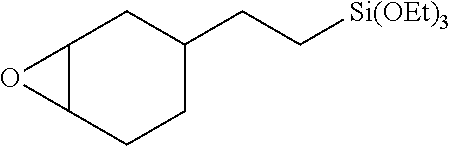 |
0.25 | 1 | 96 |
| 53 |
 |
0.25 | 1 | 93 |
| 54 |
 |
0.25 | 5 | 86 |
Claims (41)


R10(OCH2CH2)z(OCH2CHR11)w—OR12;
R12O(CHR11CH2O)w(CH2CH2O)z—CR13 2—C≡C—CR13 2—(OCH2CH2)z(OCH2CHR11)wR12;
H2C═CR11CH2O(CH2CH2O)z(CH2CHR11O)wCH2CR13═CH2;


Priority Applications (1)
| Application Number | Priority Date | Filing Date | Title |
|---|---|---|---|
| US15/746,448 US10717752B2 (en) | 2015-07-24 | 2016-07-22 | Dehydrogenative silylation, hydrosilylation and crosslinking using pyridinediimine cobalt carboxylate catalysts |
Applications Claiming Priority (3)
| Application Number | Priority Date | Filing Date | Title |
|---|---|---|---|
| US201562196408P | 2015-07-24 | 2015-07-24 | |
| PCT/US2016/043464 WO2017019473A1 (en) | 2015-07-24 | 2016-07-22 | Dehydrogenative silylation, hydrosilylation and crosslinking using pyridinediimine cobalt carboxylate catalysts |
| US15/746,448 US10717752B2 (en) | 2015-07-24 | 2016-07-22 | Dehydrogenative silylation, hydrosilylation and crosslinking using pyridinediimine cobalt carboxylate catalysts |
Publications (2)
| Publication Number | Publication Date |
|---|---|
| US20180201634A1 US20180201634A1 (en) | 2018-07-19 |
| US10717752B2 true US10717752B2 (en) | 2020-07-21 |
Family
ID=56555853
Family Applications (1)
| Application Number | Title | Priority Date | Filing Date |
|---|---|---|---|
| US15/746,448 Active 2036-11-21 US10717752B2 (en) | 2015-07-24 | 2016-07-22 | Dehydrogenative silylation, hydrosilylation and crosslinking using pyridinediimine cobalt carboxylate catalysts |
Country Status (5)
| Country | Link |
|---|---|
| US (1) | US10717752B2 (en) |
| EP (1) | EP3325492B1 (en) |
| JP (1) | JP6846423B2 (en) |
| CN (1) | CN108026126B (en) |
| WO (1) | WO2017019473A1 (en) |
Families Citing this family (4)
| Publication number | Priority date | Publication date | Assignee | Title |
|---|---|---|---|---|
| CN109111393B (en) * | 2018-08-29 | 2021-08-27 | 中国科学院青岛生物能源与过程研究所 | NNN ligand compound, cobalt-NNN complex, preparation method and application thereof |
| WO2020053357A1 (en) | 2018-09-13 | 2020-03-19 | Momentive Performance Materials Gmbh | Functional polysiloxanes |
| EP3915995B1 (en) | 2020-05-29 | 2025-11-26 | Momentive Performance Materials Inc. | Process for the stepwise synthesis of silahydrocarbons |
| CN116023662B (en) * | 2021-10-25 | 2024-02-02 | 万华化学集团股份有限公司 | Sun-screening synergistic agent, preparation method thereof and application thereof in sun-screening cosmetics |
Citations (22)
| Publication number | Priority date | Publication date | Assignee | Title |
|---|---|---|---|---|
| CS171597B1 (en) | 1974-11-29 | 1976-10-29 | ||
| US5045428A (en) * | 1989-11-22 | 1991-09-03 | Xerox Corporation | Encapsulated toner compositions and processes thereof |
| US5955555A (en) * | 1996-12-17 | 1999-09-21 | E.I. Du Pont De Nemours And Company | Polymerization of ethylene |
| US6461994B1 (en) * | 1998-09-12 | 2002-10-08 | Bp Chemicals Limited | Polymerization catalyst |
| US6657026B1 (en) * | 1998-03-12 | 2003-12-02 | Bp Chemicals Limited | Polymerization catalysts |
| US7053020B2 (en) * | 2002-09-25 | 2006-05-30 | Shell Oil Company | Catalyst systems for ethylene oligomerisation to linear alpha olefins |
| US7442819B2 (en) * | 2004-07-09 | 2008-10-28 | E. I. Du Pont De Nemours And Company | Catalysts for olefin polymerization or oligomerization |
| US20110009565A1 (en) | 2009-07-10 | 2011-01-13 | Delis Johannes G P | Hydrosilylation Catalysts |
| US7955660B2 (en) * | 2005-06-13 | 2011-06-07 | Silecs Oy | Silane monomers and siloxane polymers for semiconductor optoelectronics |
| US20120130106A1 (en) | 2010-11-24 | 2012-05-24 | Cornell University | In-situ activation of metal complexes containing terdentate nitrogen ligands used as hydrosilylation catalysts |
| US8236915B2 (en) * | 2009-07-10 | 2012-08-07 | Momentive Performance Materials Inc. | Hydrosilylation catalysts |
| US20140034331A1 (en) | 2012-08-01 | 2014-02-06 | Baker Hughes Incorporated | Fluid Mixture for Softening a Downhole Device |
| US20140051822A1 (en) | 2012-08-16 | 2014-02-20 | Princeton University | Dehydrogenative Silylation and Crosslinking Using Cobalt Catalysts |
| US20140228570A1 (en) * | 2011-09-20 | 2014-08-14 | Dow Corning Corporation | Hydrosilylation Catalysts Made With Terdentate Nitrogen Ligands And Compositions Containing The Catalysts |
| US20140231702A1 (en) * | 2011-09-20 | 2014-08-21 | Dow Corning Corporation | Cobalt Containing Hydrosilylation Catalysts and Compositions Containing the Catalysts |
| US20140249311A1 (en) | 2011-09-20 | 2014-09-04 | Dow Corning Corporation | Iron Containing Hydrosilylation Catalysts and Compositions Containing the Catalysts |
| US20140330036A1 (en) * | 2013-05-06 | 2014-11-06 | Princeton University | Saturated and unsaturated silahydrocarbons via iron and cobalt pyridine diimine catalyzed olefin silylation |
| US8895770B2 (en) * | 2010-11-24 | 2014-11-25 | Cornell University | Selective non-precious metal-catalyzed mono-hydrosilylation polyunsaturated compounds |
| US20150080536A1 (en) | 2012-08-16 | 2015-03-19 | Tianning Diao | Dehydrogenative silylation, hydrosilylation and crosslinking using cobalt catalysts |
| CN104447725A (en) | 2014-10-22 | 2015-03-25 | 浙江大学 | Chiral compound comprising iminopyridyl oxazoline and preparation method thereof |
| US20150141647A1 (en) * | 2013-11-19 | 2015-05-21 | Tianning Diao | Cobalt catalysts and their use for hydrosilylation and dehydrogenative silylation |
| US20150141648A1 (en) * | 2013-11-19 | 2015-05-21 | Tianning Diao | Cobalt catalysts and their use for hydrosilylation and dehydrogenative silylation |
Family Cites Families (2)
| Publication number | Priority date | Publication date | Assignee | Title |
|---|---|---|---|---|
| JP6125222B2 (en) * | 2012-08-16 | 2017-05-10 | モメンティブ パフォーマンス マテリアルズ インコーポレイテッド | Dehydrogenated silylation and crosslinking using cobalt catalysts |
| CN105228744B (en) * | 2013-05-15 | 2021-04-06 | 莫门蒂夫性能材料股份有限公司 | Activation of metal salts with silyl hydrides and their use in hydrosilylation reactions |
-
2016
- 2016-07-22 CN CN201680055747.4A patent/CN108026126B/en active Active
- 2016-07-22 EP EP16745367.9A patent/EP3325492B1/en active Active
- 2016-07-22 JP JP2018523374A patent/JP6846423B2/en active Active
- 2016-07-22 US US15/746,448 patent/US10717752B2/en active Active
- 2016-07-22 WO PCT/US2016/043464 patent/WO2017019473A1/en not_active Ceased
Patent Citations (23)
| Publication number | Priority date | Publication date | Assignee | Title |
|---|---|---|---|---|
| CS171597B1 (en) | 1974-11-29 | 1976-10-29 | ||
| US5045428A (en) * | 1989-11-22 | 1991-09-03 | Xerox Corporation | Encapsulated toner compositions and processes thereof |
| US5955555A (en) * | 1996-12-17 | 1999-09-21 | E.I. Du Pont De Nemours And Company | Polymerization of ethylene |
| US6657026B1 (en) * | 1998-03-12 | 2003-12-02 | Bp Chemicals Limited | Polymerization catalysts |
| US6461994B1 (en) * | 1998-09-12 | 2002-10-08 | Bp Chemicals Limited | Polymerization catalyst |
| US7053020B2 (en) * | 2002-09-25 | 2006-05-30 | Shell Oil Company | Catalyst systems for ethylene oligomerisation to linear alpha olefins |
| US7442819B2 (en) * | 2004-07-09 | 2008-10-28 | E. I. Du Pont De Nemours And Company | Catalysts for olefin polymerization or oligomerization |
| US7955660B2 (en) * | 2005-06-13 | 2011-06-07 | Silecs Oy | Silane monomers and siloxane polymers for semiconductor optoelectronics |
| US8236915B2 (en) * | 2009-07-10 | 2012-08-07 | Momentive Performance Materials Inc. | Hydrosilylation catalysts |
| US20110009565A1 (en) | 2009-07-10 | 2011-01-13 | Delis Johannes G P | Hydrosilylation Catalysts |
| US8415443B2 (en) * | 2009-07-10 | 2013-04-09 | Momentive Performance Materials Inc. | Hydrosilylation catalysts |
| US20120130106A1 (en) | 2010-11-24 | 2012-05-24 | Cornell University | In-situ activation of metal complexes containing terdentate nitrogen ligands used as hydrosilylation catalysts |
| US8895770B2 (en) * | 2010-11-24 | 2014-11-25 | Cornell University | Selective non-precious metal-catalyzed mono-hydrosilylation polyunsaturated compounds |
| US20140231702A1 (en) * | 2011-09-20 | 2014-08-21 | Dow Corning Corporation | Cobalt Containing Hydrosilylation Catalysts and Compositions Containing the Catalysts |
| US20140228570A1 (en) * | 2011-09-20 | 2014-08-14 | Dow Corning Corporation | Hydrosilylation Catalysts Made With Terdentate Nitrogen Ligands And Compositions Containing The Catalysts |
| US20140249311A1 (en) | 2011-09-20 | 2014-09-04 | Dow Corning Corporation | Iron Containing Hydrosilylation Catalysts and Compositions Containing the Catalysts |
| US20140034331A1 (en) | 2012-08-01 | 2014-02-06 | Baker Hughes Incorporated | Fluid Mixture for Softening a Downhole Device |
| US20140051822A1 (en) | 2012-08-16 | 2014-02-20 | Princeton University | Dehydrogenative Silylation and Crosslinking Using Cobalt Catalysts |
| US20150080536A1 (en) | 2012-08-16 | 2015-03-19 | Tianning Diao | Dehydrogenative silylation, hydrosilylation and crosslinking using cobalt catalysts |
| US20140330036A1 (en) * | 2013-05-06 | 2014-11-06 | Princeton University | Saturated and unsaturated silahydrocarbons via iron and cobalt pyridine diimine catalyzed olefin silylation |
| US20150141647A1 (en) * | 2013-11-19 | 2015-05-21 | Tianning Diao | Cobalt catalysts and their use for hydrosilylation and dehydrogenative silylation |
| US20150141648A1 (en) * | 2013-11-19 | 2015-05-21 | Tianning Diao | Cobalt catalysts and their use for hydrosilylation and dehydrogenative silylation |
| CN104447725A (en) | 2014-10-22 | 2015-03-25 | 浙江大学 | Chiral compound comprising iminopyridyl oxazoline and preparation method thereof |
Non-Patent Citations (9)
Also Published As
| Publication number | Publication date |
|---|---|
| WO2017019473A1 (en) | 2017-02-02 |
| CN108026126A (en) | 2018-05-11 |
| CN108026126B (en) | 2021-04-20 |
| EP3325492B1 (en) | 2019-09-18 |
| EP3325492A1 (en) | 2018-05-30 |
| US20180201634A1 (en) | 2018-07-19 |
| JP6846423B2 (en) | 2021-03-24 |
| JP2018522946A (en) | 2018-08-16 |
Similar Documents
| Publication | Publication Date | Title |
|---|---|---|
| CN102471354B (en) | Hydrosilylation catalysts | |
| US9371340B2 (en) | Dehydrogenative silylation, hydrosilylation and crosslinking using cobalt catalysts | |
| US8637626B2 (en) | Non-precious metal-containing 2,8-bis(imino)quinoline complexes and their use as hydrosilylation catalysts | |
| US9387468B2 (en) | Cobalt catalysts and their use for hydrosilylation and dehydrogenative silylation | |
| US9381506B2 (en) | Cobalt catalysts and their use for hydrosilylation and dehydrogenative silylation | |
| US9447125B2 (en) | Reusable homogeneous cobalt pyridine diimine catalysts for dehydrogenative silylation and tandem dehydrogenative-silylation-hydrogenation | |
| JP6327426B2 (en) | Hydrosilylation catalyst | |
| EP3325492B1 (en) | Dehydrogenative silylation, hydrosilylation and crosslinking using pyridinediimine cobalt carboxylate catalysts | |
| JP6620823B2 (en) | Novel isocyanide compounds and hydrosilylation reaction catalysts | |
| EP3071585B1 (en) | Cobalt catalysts and their use for hydrosilylation and dehydrogenative silylation | |
| JP6786034B2 (en) | Catalysts for hydrosilylation, hydrogenation and hydrosilane reduction reactions | |
| US20180334470A1 (en) | Dialkyl cobalt catalysts and their use for hydrosilylation and dehydrogenative silylation | |
| EP3071583B1 (en) | Dehydrogenative silylation, hydrosilylation and crosslinking using cobalt catalysts |
Legal Events
| Date | Code | Title | Description |
|---|---|---|---|
| FEPP | Fee payment procedure |
Free format text: ENTITY STATUS SET TO UNDISCOUNTED (ORIGINAL EVENT CODE: BIG.); ENTITY STATUS OF PATENT OWNER: LARGE ENTITY |
|
| AS | Assignment |
Owner name: PRINCETON UNIVERSITY, NEW JERSEY Free format text: ASSIGNMENT OF ASSIGNORS INTEREST;ASSIGNORS:CHIRIK, PAUL;SCHUSTER, CHRISTOPHER;SIGNING DATES FROM 20180125 TO 20180130;REEL/FRAME:044782/0021 Owner name: MOMENTIVE PERFORMANCE MATERIALS INC., NEW YORK Free format text: ASSIGNMENT OF ASSIGNORS INTEREST;ASSIGNORS:BOYER, JULIE;LEWIS, KENRICK;DELIS, JOHANNES G.P.;AND OTHERS;SIGNING DATES FROM 20180125 TO 20180131;REEL/FRAME:044782/0082 |
|
| STPP | Information on status: patent application and granting procedure in general |
Free format text: DOCKETED NEW CASE - READY FOR EXAMINATION |
|
| AS | Assignment |
Owner name: BNP PARIBAS, AS ADMINISTRATIVE AGENT, NEW YORK Free format text: FIRST LIEN TERM LOAN PATENT AGREEMENT;ASSIGNOR:MOMENTIVE PERFORMANCE MATERIALS INC.;REEL/FRAME:049387/0782 Effective date: 20190515 Owner name: CITIBANK, N.A., AS ADMINISTRATIVE AGENT, NEW YORK Free format text: ABL PATENT AGREEMENT;ASSIGNORS:MOMENTIVE PERFORMANCE MATERIALS INC.;MOMENTIVE PERFORMANCE MATERIALS GMBH;REEL/FRAME:049388/0252 Effective date: 20190515 Owner name: KOOKMIN BANK, NEW YORK BRANCH, AS ADMINISTRATIVE A Free format text: SECOND LIEN TERM LOAN PATENT AGREEMENT;ASSIGNOR:MOMENTIVE PERFORMANCE MATERIALS INC.;REEL/FRAME:049388/0220 Effective date: 20190515 Owner name: KOOKMIN BANK, NEW YORK BRANCH, AS ADMINISTRATIVE AGENT, NEW YORK Free format text: SECOND LIEN TERM LOAN PATENT AGREEMENT;ASSIGNOR:MOMENTIVE PERFORMANCE MATERIALS INC.;REEL/FRAME:049388/0220 Effective date: 20190515 |
|
| STPP | Information on status: patent application and granting procedure in general |
Free format text: NON FINAL ACTION MAILED |
|
| STPP | Information on status: patent application and granting procedure in general |
Free format text: RESPONSE TO NON-FINAL OFFICE ACTION ENTERED AND FORWARDED TO EXAMINER |
|
| STPP | Information on status: patent application and granting procedure in general |
Free format text: NOTICE OF ALLOWANCE MAILED -- APPLICATION RECEIVED IN OFFICE OF PUBLICATIONS |
|
| STPP | Information on status: patent application and granting procedure in general |
Free format text: NOTICE OF ALLOWANCE MAILED -- APPLICATION RECEIVED IN OFFICE OF PUBLICATIONS |
|
| STPP | Information on status: patent application and granting procedure in general |
Free format text: PUBLICATIONS -- ISSUE FEE PAYMENT VERIFIED |
|
| STCF | Information on status: patent grant |
Free format text: PATENTED CASE |
|
| AS | Assignment |
Owner name: KOOKMIN BANK NEW YORK BRANCH, NEW YORK Free format text: SECURITY INTEREST;ASSIGNOR:MOMENTIVE PERFORMANCE MATERIALS INC.;REEL/FRAME:063197/0475 Effective date: 20230329 Owner name: MOMENTIVE PERFORMANCE MATERIALS INC., NEW YORK Free format text: RELEASE BY SECURED PARTY;ASSIGNOR:KOOKMIN BANK NEW YORK;REEL/FRAME:063197/0373 Effective date: 20230329 Owner name: MOMENTIVE PERFORMANCE MATERIALS INC., NEW YORK Free format text: RELEASE OF SECURITY INTEREST;ASSIGNOR:KOOKMIN BANK NEW YORK;REEL/FRAME:063197/0373 Effective date: 20230329 |
|
| AS | Assignment |
Owner name: MOMENTIVE PERFORMANCE MATERIALS INC., NEW YORK Free format text: TERMINATION AND RELEASE OF SECURITY INTEREST IN PATENTS;ASSIGNOR:BNP PARIBAS;REEL/FRAME:063259/0133 Effective date: 20230329 Owner name: JPMORGAN CHASE BANK, N.A., NEW YORK Free format text: FIRST LIEN TERM LOAN PATENT SECURITY AGREEMENT;ASSIGNOR:MOMENTIVE PERFORMANCE MATERIALS INC.;REEL/FRAME:063213/0472 Effective date: 20230329 |
|
| MAFP | Maintenance fee payment |
Free format text: PAYMENT OF MAINTENANCE FEE, 4TH YEAR, LARGE ENTITY (ORIGINAL EVENT CODE: M1551); ENTITY STATUS OF PATENT OWNER: LARGE ENTITY Year of fee payment: 4 |
|
| AS | Assignment |
Owner name: MOMENTIVE PERFORMANCE MATERIALS INC., NEW YORK Free format text: RELEASE BY SECURED PARTY;ASSIGNOR:KOOKMIN BANK NEW YORK BRANCH;REEL/FRAME:072039/0906 Effective date: 20250717 Owner name: MOMENTIVE PERFORMANCE MATERIALS INC., NEW YORK Free format text: RELEASE OF SECURITY INTEREST;ASSIGNOR:KOOKMIN BANK NEW YORK BRANCH;REEL/FRAME:072039/0906 Effective date: 20250717 |
|
| AS | Assignment |
Owner name: MOMENTIVE PERFORMANCE MATERIALS INC., NEW YORK Free format text: RELEASE OF SECURITY INTEREST IN PATENTS PREVIOUSLY RECORDED AT REEL/FRAME (063213/0472);ASSIGNOR:JPMORGAN CHASE BANK, N.A., AS ADMINISTRATIVE AGENT;REEL/FRAME:073168/0715 Effective date: 20251022 |