US10713308B2 - Method and system for generating an offline search engine result page - Google Patents
Method and system for generating an offline search engine result page Download PDFInfo
- Publication number
- US10713308B2 US10713308B2 US15/785,719 US201715785719A US10713308B2 US 10713308 B2 US10713308 B2 US 10713308B2 US 201715785719 A US201715785719 A US 201715785719A US 10713308 B2 US10713308 B2 US 10713308B2
- Authority
- US
- United States
- Prior art keywords
- offline
- serp
- query
- search
- index
- Prior art date
- Legal status (The legal status is an assumption and is not a legal conclusion. Google has not performed a legal analysis and makes no representation as to the accuracy of the status listed.)
- Active, expires
Links
Images




Classifications
-
- G—PHYSICS
- G06—COMPUTING OR CALCULATING; COUNTING
- G06F—ELECTRIC DIGITAL DATA PROCESSING
- G06F16/00—Information retrieval; Database structures therefor; File system structures therefor
-
- G—PHYSICS
- G06—COMPUTING OR CALCULATING; COUNTING
- G06F—ELECTRIC DIGITAL DATA PROCESSING
- G06F16/00—Information retrieval; Database structures therefor; File system structures therefor
- G06F16/90—Details of database functions independent of the retrieved data types
- G06F16/95—Retrieval from the web
- G06F16/951—Indexing; Web crawling techniques
-
- G—PHYSICS
- G06—COMPUTING OR CALCULATING; COUNTING
- G06F—ELECTRIC DIGITAL DATA PROCESSING
- G06F16/00—Information retrieval; Database structures therefor; File system structures therefor
- G06F16/20—Information retrieval; Database structures therefor; File system structures therefor of structured data, e.g. relational data
- G06F16/22—Indexing; Data structures therefor; Storage structures
-
- G—PHYSICS
- G06—COMPUTING OR CALCULATING; COUNTING
- G06F—ELECTRIC DIGITAL DATA PROCESSING
- G06F16/00—Information retrieval; Database structures therefor; File system structures therefor
- G06F16/20—Information retrieval; Database structures therefor; File system structures therefor of structured data, e.g. relational data
- G06F16/24—Querying
- G06F16/242—Query formulation
- G06F16/243—Natural language query formulation
-
- G—PHYSICS
- G06—COMPUTING OR CALCULATING; COUNTING
- G06F—ELECTRIC DIGITAL DATA PROCESSING
- G06F16/00—Information retrieval; Database structures therefor; File system structures therefor
- G06F16/20—Information retrieval; Database structures therefor; File system structures therefor of structured data, e.g. relational data
- G06F16/24—Querying
- G06F16/245—Query processing
- G06F16/2457—Query processing with adaptation to user needs
- G06F16/24578—Query processing with adaptation to user needs using ranking
-
- G—PHYSICS
- G06—COMPUTING OR CALCULATING; COUNTING
- G06F—ELECTRIC DIGITAL DATA PROCESSING
- G06F16/00—Information retrieval; Database structures therefor; File system structures therefor
- G06F16/20—Information retrieval; Database structures therefor; File system structures therefor of structured data, e.g. relational data
- G06F16/24—Querying
- G06F16/248—Presentation of query results
Definitions
- the present technology generally relates to generating a search engine result page (SERP). More particularly, the present technology relates to a method and system for generating an offline SERP.
- SERP search engine result page
- Various global or local communications networks offer a user a vast amount of information.
- the information includes a multitude of contextual topics, such as but not limited to, news and current affairs, maps, company information, financial information and resources, traffic information, games and entertainment related information.
- Users use a variety of client devices (desktop, laptop, notebook, smartphone, tablets and the like) to have access to rich content (like images, audio, video, animation, and other multimedia content from such networks).
- a given user can access a resource via a communications network by two principle means.
- the given user can access a particular resource directly, either by typing an address of the resource (typically an URL or Universal Resource Locator, such as www.webpage.com) or by clicking a link in an e-mail or in another web resource.
- the given user may conduct a search using a search engine to locate a resource of interest. The latter is particularly suitable in those circumstances, where the given user knows a topic of interest, but does not know the exact address of the resource she is interested in.
- search engines There are numerous search engines available to the user. Some of them are considered to be general purpose search engines (such as YandexTM, GoogleTM Yahoo!TM and the like). Others are considered to be vertical search engines—i.e. search engines dedicated to a particular topic of search—such as MomondoTM search engine dedicated to searching flights.
- the search engine is generally configured to receive a search query from a user, to perform a search and to return a ranked search results page (SERP) to the user.
- SERP search results page
- a given user uses the YandexTM search engine to search for a hockey team.
- the user may have entered a first search query 502 (“Montreal Canadiens”).
- the user is presented with a SERP to which a screen shot is depicted in FIG. 1 as a screen shot 100 , the SERP depicted at the screen shot 100 being implemented in accordance with known techniques.
- a query interface 102 Within the screen shot 100 , the user is presented with several conventionally-known fields. Amongst these fields are: a query interface 102 , and a search results interface 104 .
- the general purpose of the query interface 102 is to enable the user (not depicted) to enter her query or a “search string” (which in this case is “Montreal Canadiens”).
- the general purpose of the search results interface 104 is to provide search results that are responsive to the user query entered into the query interface 102 .
- a first SERP 106 Within the search results interface 104 , there is shown a first SERP 106 , the first SERP 106 having, amongst other, four search results, namely a first search result 108 , which is associated with a WikipediaTM web resource, a second search result 110 associated with a National Hockey LeagueTM web resource, a third search result 112 also associated with a WikipediaTM web resource, and a fourth search result 114 associated with a TwitterTM web resource. How the search results are displayed is generally known in the art and will not be discussed at length here.
- the first search result 108 comprises a title 116 , a uniform resource locator (URL) 118 , a snippet 120 , and a favicon 122 associated with the WikipediaTM web resource.
- URL uniform resource locator
- a second search query 504 (“habs”, which is a nickname of the hockey team Montreal CanadiensTM).
- the user is presented with a SERP of which a screen shot is depicted in FIG. 2 , generally depicted at 200 .
- the user is presented with several conventionally-known fields. Amongst these fields are: the query interface 102 and the search results interface 104 .
- the search results interface 104 there is shown a second SERP 206 , the second SERP 206 having, amongst other, three search results, namely a first search result 208 associated with a WikipediaTM web resource, a second search result 210 associated with a web resource associated with amazinghabs.com, and a third search result 212 associated a web resource associated with allabouthockey.com.
- the first search result 208 comprises a title 216 , a URL 218 , a snippet 220 , and a favicon 222 associated with WikipediaTM.
- a communication network connection must be maintained between the client device and the search engine server in order for the search engine server to receive queries and transmit the search results to the client device.
- the search engine may not effectively receive the inputted search query, or effectively transfer the generated SERP to the client device for display, which can cause user dissatisfaction, to say the least.
- a simple approach is to use a cache of a browser application of the client device.
- the use of the cache is limited to previously submitted search queries and may not be used if the inputted search query is different from the previously submitted search query.
- a method includes receiving a search query from a client device via a network and in response to the received search query, determining if the received search query corresponds to one or more records of offline content.
- the records of offline content are previously determined and prior to receiving the search query.
- the method includes retrieving and providing the at least one record of offline content to the client device via the network.
- US2016/0055259 provides a method and system for presenting content summary of search results.
- an input associated with a search query is received from a user.
- One or more search results are fetched based on the search query.
- a summary of content with respect to at least one of the one or more search results is obtained.
- a search result page is presented to the user as a response to the input.
- the search results page includes the one or more search results and at least part of the summary of content.
- U.S. Pat. No. 7,707,142 provides a method and system that perform an offline search for an article.
- the aspect includes receiving a search query, determining whether the search query has been previously entered, if the search query has been previously entered, retrieving a previously stored result set, determining whether a previously stored result set meets at least one condition, and if the previously stored result set meets at least one condition, outputting the previously stored result set.
- SERP elements forming a particular SERP
- elements forming a particular SERP are not necessarily unique to any given particular SERP and may be “re-used” in a plurality of SERPs.
- FIGS. 1 and 2 one could see that even for two completely different search queries (“Montreal Canadiens” and “habs”), some SERP elements are common (or “shared”) to the first and second SERPs 106 and 206 .
- the favicon associated with the WikipediaTM web resource is displayed for a total of three times within the SERP 106 and 206 .
- the title and the URL for the first search result 108 of the SERP 106 is the same as the first search result 208 of the SERP 206 .
- the present technology has been developed on the assumption that by eliminating duplicate SERP elements, a larger amount of SERPs could possibly be pre-loaded into the client device to achieve better coverage.
- a method of processing a search query executable at an electronic device, the electronic device storing, in its permanent storage, an offline query result database, the offline query result database comprising: an offline query index storing one or more offline search queries, each of the one or more offline search queries being associated with a respective offline search engine result page (SERP) template pointer; an offline SERP template index storing one or more offline SERP templates, each of the one or more offline SERP templates comprising a list of one or more element pointers; at least one SERP elements index storing a plurality of SERP elements, each SERP element associated to at least one of the one or more element pointers, the plurality of SERP elements having been organized by a respective SERP element type; the method comprising: receiving a search query from a user associated with the electronic device; determining whether the search query is stored in the offline query index by comparing the search query against the one or more offline search queries stored therein; responsive to determining that the search query matches
- the one or more offline search queries are stored in an alphabetically sorted array and further clustered into one or more offline search queries clusters each comprising a subset of the stored offline search queries starting with the same first N characters.
- the offline query result database further comprises a partial offline query index storing one or more unique sets of characters generated based on the first N characters of the one or more offline search queries, each of the one or more unique sets of characters being associated with a respective query cluster pointer.
- the method prior to determining whether the search query is stored in the offline query index, the method further comprises: parsing a portion of the search query, the portion comprising the first N characters of the search query; determining whether the portion is stored within the partial offline query index by comparing the portion against the one or more set of characters; responsive to determining that the portion matches a given set of characters, determining the associated query cluster pointer; and accessing a given offline search query cluster based on the given query cluster pointer.
- determining whether the search query is stored in the offline query index comprises determining whether the search query is stored within the given offline search query cluster.
- each of the one of more offline search queries has a unique query position value within the offline query index; each of the one or more SERP templates corresponds to a respective offline search query; and each of the one or more SERP templates is stored within the offline SERP template index in an order determined based on the query position value of the respective offline search query.
- the associated offline SERP template comprises at least two element pointers each associated with respective SERP elements, one of the at least two element pointers having a lowest element pointer position value within the associated offline SERP template, and another one of the at least two element pointers having a highest element pointer position value within the associated offline SERP template.
- the offline SERP template pointer comprises an indication of the element pointer having the lowest position value within the associated SERP template.
- retrieving the respective SERP element comprises sequentially retrieving the respective SERP elements starting from the respective SERP element associated with the element pointer having the lowest position value and finishing after retrieving the respective SERP element associated with the associated with the element pointer having the highest position value.
- the at least one SERP elements index comprises a plurality of SERP elements indexes, each of the plurality of SERP elements indexes storing SERP elements of a specific one of the respective SERP element type.
- compiling the retrieved SERP elements comprises sequentially compiling the SERP element associated with the element pointer having the lowest position value until the SERP element associated with the element pointer having the highest position value.
- the plurality of SERP element indexes comprise: a uniform resource locator elements index; a title elements index; a snippet elements index; a favicon elements index; and an image elements index.
- the one or more offline SERP templates comprises a first offline SERP template and a second offline SERP template, the number of element pointers of the first offline SERP template being different from the number of element pointers of the second offline SERP template.
- the offline query result database has been generated and pre-loaded into the permanent storage by a search engine server via a communication network prior to execution of the method.
- the offline query result database has been generated based on SERPs previously generated by the search engine server based on third-party users' search queries.
- the at least one offline SERP template index stores a pre-defined number of offline SERP templates, the pre-defined number having been determined by an operator of the search engine server to satisfy a certain number of search queries from the user.
- each offline SERP template includes a pre-defined number of element pointers.
- determining whether the search query is stored within the search query index is in response to determining that: there is no connection between the electronic device and a search engine server to which the electronic device is coupled to via a communication network; or there is a slow connection between the electronic device and the search engine server.
- an electronic device configured to process a search query
- the electronic device comprising: an offline query result database stored in a permanent storage, the offline query result database comprising: an offline query index storing one or more offline search queries, each of the one or more offline search queries being associated with a respective offline search engine result page (SERP) template pointer; an offline SERP template index storing one or more offline SERP templates, each of the one or more offline SERP templates comprising a list of one or more element pointers; at least one SERP elements index storing a plurality of SERP elements, each SERP element associated to at least one of the one or more element pointers, the plurality of SERP elements having been organized by a respective SERP element type; at least one computer processor configured to: receive a search query from a user associated with the electronic device; determine whether the search query is stored in the offline query index by comparing the search query against the one or more offline search queries stored therein; responsive to determining that the search query matches a given offline search query, determine the offline
- the offline query result database has been generated and pre-loaded into the permanent storage by a server via a communication network prior to execution of the method.
- determining whether the search query is stored within the search query index is in response to determining that: there is no connection between the electronic device and a search engine server to which the electronic device is coupled to via a communication network; or there is a slow connection between the electronic device and the search engine server.
- a “server” is a computer program that is running on appropriate hardware and is capable of receiving requests (e.g. from electronic devices) over the network, and carrying out those requests, or causing those requests to be carried out.
- the hardware may be one physical computer or one physical computer system, but neither is required to be the case with respect to the present technology.
- the use of the expression a “at least one server” is not intended to mean that every task (e.g. received instructions or requests) or any particular task will have been received, carried out, or caused to be carried out, by the same server (i.e.
- first”, “second”, “third”, etc. have been used as adjectives only for the purpose of allowing for distinction between the nouns that they modify from one another, and not for the purpose of describing any particular relationship between those nouns.
- first server and “third server” is not intended to imply any particular order, type, chronology, hierarchy or ranking (for example) of/between the server, nor is their use (by itself) intended to imply that any “second server” must necessarily exist in any given situation.
- references to a “first” element and a “second” element does not preclude the two elements from being the same actual real-world element.
- a “first” server and a “second” server may be the same software and/or hardware, in other cases they may be different software and/or hardware.
- a “database” is any structured collection of data, irrespective of its particular structure, the database management software, or the computer hardware on which the data is stored, implemented or otherwise rendered available for use.
- a database may reside on the same hardware as the process that stores or makes use of the information stored in the database or it may reside on separate hardware, such as a dedicated server or plurality of servers.
- FIG. 1 depicts a screen shot, the screen shot depicting a SERP implemented in accordance with known techniques.
- FIG. 2 depicts another screen shot, the screen shot depicting a SERP implemented in accordance with known techniques.
- FIG. 3 depicts a system suitable for implementing embodiments of the present technology and/or being used in conjunction with implementations of the present technology.
- FIG. 4 depicts a schematic illustration of an offline query result database of a server of the system of FIG. 3 .
- FIG. 5 depicts a schematic illustration of a search query index of the offline query result database of FIG. 4 .
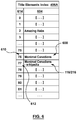
- FIG. 6 depicts a schematic illustration of a title elements index of the offline query result database of FIG. 4 .
- FIG. 7 depicts a schematic illustration of an offline SERP template index of the offline query result database of FIG. 4 .
- FIG. 8 depicts a schematic illustration of a partial offline query index of the offline query result database of FIG. 4 .
- FIG. 9 depicts a schematic illustration of an electronic device of the system of FIG. 3 .
- FIG. 10 depicts an example of a process of determining whether a new search query corresponds to an entry within the partial offline query index and search query index of offline query result database stored within the electronic device of FIG. 9 .
- FIG. 11 depicts an example of a process of determining a list of element pointers stored within the offline SERP template index of offline query result database stored within the electronic device of FIG. 9 .
- FIG. 12 depicts an example of a process of retrieving title elements stored within the title elements index of offline query result database stored within the electronic device of FIG. 9 .
- FIG. 13 depicts a screen shot of an offline SERP generated in accordance with non-limiting embodiments of the present technology.
- FIG. 14 depicts a flow chart of a method of generating an offline SERP being executable by the electronic device of the system of FIG. 1 , the method being executed in accordance with non-limiting embodiments of the present technology.
- FIG. 3 there is shown a schematic diagram of a system 300 , the system 300 being suitable for implementing non-limiting embodiments of the present technology.
- the system 300 is depicted merely as an illustrative implementation of the present technology.
- the description thereof that follows is intended to be only a description of illustrative examples of the present technology. This description is not intended to define the scope or set forth the bounds of the present technology.
- what are believed to be helpful examples of modifications to the system 300 may also be set forth below. This is done merely as an aid to understanding, and, again, not to define the scope or set forth the bounds of the present technology.
- processor may be provided through the use of dedicated hardware as well as hardware capable of executing software in association with appropriate software.
- the functions may be provided by a single dedicated processor, by a single shared processor, or by a plurality of individual processors, some of which may be shared.
- the processor may be a general purpose processor, such as a central processing unit (CPU) or a processor dedicated to a specific purpose, such as a graphics processing unit (GPU).
- CPU central processing unit
- GPU graphics processing unit
- processor or “controller” should not be construed to refer exclusively to hardware capable of executing software, and may implicitly include, without limitation, digital signal processor (DSP) hardware, network processor, application specific integrated circuit (ASIC), field programmable gate array (FPGA), read-only memory (ROM) for storing software, random access memory (RAM), and non-volatile storage.
- DSP digital signal processor
- ASIC application specific integrated circuit
- FPGA field programmable gate array
- ROM read-only memory
- RAM random access memory
- non-volatile storage Other hardware, conventional and/or custom, may also be included.
- the system 300 comprises an electronic device 302 .
- the electronic device 302 is typically associated with a user (not depicted) and, as such, can sometimes be referred to as a “client device”. It should be noted that the fact that the electronic device 302 is associated with the user does not mean to suggest or imply any mode of operation—such as a need to log in, a need to be registered or the like.
- electronic device is any computer hardware that is capable of running a software appropriate to the relevant task at hand.
- electronic devices include personal computers (desktops, laptops, netbooks, etc.), smartphones, and tablets, as well as network equipment such as routers, switches, and gateways. It should be noted that a device acting as an electronic device in the present context is not precluded from acting as a server to other electronic devices.
- the use of the expression “an electronic device” does not preclude multiple client devices being used in receiving/sending, carrying out or causing to be carried out any task or request, or the consequences of any task or request, or steps of any method described herein.
- the electronic device 302 comprises a permanent storage 306 .
- the permanent storage 306 may encompass one or more storage media and generally provides a place to store computer-executable instructions executable by a processor 304 .
- the permanent storage 306 may be implemented as a computer-readable storage medium including Read-Only Memory (ROM), hard disk drives (HDDs), solid-state drives (SSDs), and flash-memory cards.
- the electronic device 302 further comprises a volatile memory 307 .
- the volatile memory 307 may encompass one or more storage media and generally provides a place to temporarily store computer-executable instructions that are being executed by the processor 304 for the time that the computer-executable instructions are being executed by the processor 304 .
- the volatile memory 307 may be implemented as a computer-readable storage medium including Random Access Memory (RAM).
- the electronic device 302 comprises hardware and/or software and/or firmware (or a combination thereof), as is known in the art to execute a search application 308 .
- the purpose of the search application 308 is to enable the user associated with the electronic device 302 to execute a web search.
- the search application 308 comprises the aforementioned query interface 102 and the search results interface 104 .
- search application 308 is implemented is not particularly limited.
- One example of the search application 308 may be embodied in the user accessing a web site associated with a search engine to access the search application 308 .
- the search application 308 can be accessed by typing in an URL associated with YandexTM search engine at www.yandex.com.
- the search application 308 may be implemented as a search application on a portable device.
- the electronic device 302 may be implemented as a portable device, such as for example, SamsungTM GalaxyTM SIII, the electronic device 302 may be executing a YandexTM search application.
- YandexTM search application any other commercially available or proprietary browser application can be used for implementing non-limiting embodiments of the present technology.
- the electronic device 302 comprises a communication interface (not depicted) for two ways communication via a communication network 312 via a communication link 310 .
- the communication network 312 can be implemented as the Internet.
- the communication network 312 can be implemented differently, such as any wide-area communication network, local-area communications network, a private communications network and the like.
- the communication link 310 is implemented is not particularly limited and depends on how the electronic device 302 is implemented.
- the communication link 310 can be implemented as a wireless communication link (such as, but not limited to, a 3G communications network link, a 4G communications network link, a Wireless Fidelity, or WiFi®, for short, Bluetooth®, or the like) or wired (such as an Ethernet based connection).
- the system 300 further includes a search engine server 314 (or, simply, “server 314 ”) coupled to the communication network 312 .
- the server 314 can be implemented as a conventional computer server.
- the server 314 can be implemented as a DellTM PowerEdgeTM Server running the MicrosoftTM Windows ServerTM operating system.
- the server 314 can be implemented in any other suitable hardware and/or software and/or firmware or a combination thereof.
- the server 314 is a single server.
- the functionality of the server 314 may be distributed and may be implemented via multiple servers.
- the server 314 comprises a communication interface (not depicted) structured and configured to communicate with various entities (such as the electronic device 302 , and other devices potentially coupled to the communication network 312 ) via the communication network 312 .
- the server 314 comprises a server memory 318 which comprises one or more storage media and generally provides a place to store computer-executable program instructions executable by a server processor 316 .
- the server memory 318 may be implemented as tangible computer-readable storage medium including Read-Only Memory (ROM) and/or Random-Access Memory (RAM).
- the server memory 318 may also include one or more fixed storage devices in the form of, by way of example, hard disk drives (HDDs), solid-state drives (SSDs), and flash-memory cards.
- the server 314 is under control and/or management of a search engine provider, such as Yandex LLC of Lev Tolstoy Street, No. 16, Moscow, 119021, Russia.
- a search engine provider such as Yandex LLC of Lev Tolstoy Street, No. 16, Moscow, 119021, Russia.
- the server 314 can be implemented differently (such as a local searcher and the like).
- the server 314 is configured to maintain an index 324 , which contains an indication of crawled network resources (not depicted) accessible via the communication network 312 .
- the process of populating and maintaining the index 324 is generally known as “crawling”, where a crawler application 322 , contained within the server memory 318 , is configured to “visit” one or more network resources (not depicted) via the communication network 312 and to index the content thereof (such as associating a given network resource to one or more keywords).
- the crawler application 322 maintains the index 324 as an “inverted index”.
- the crawler application 322 is configured to store information about such indexed network resources in the index 324 .
- the server memory 318 contains computer-executable instructions for executing a ranking application 320 by the server processor 316 .
- the server 314 receives a search query from the search application 308 (such as, for example, “Are eyebrows considered facial hair?”)
- the server 314 is configured to execute the ranking application 320 .
- the ranking application 320 is configured to access the index 324 to retrieve an indication of the plurality of network resources that are potentially relevant to the submitted search query.
- the ranking application 320 is further configured to rank the so-retrieved potentially relevant network resources so that they can be presented in a ranked order on the search results interface 104 as a SERP (such as the first SERP 106 , the second SERP 206 ), such that the SERP presents the more relevant network resources at a top portion of the SERP (such as the first search result 108 and the second search result 110 of the first SERP 106 ).
- a SERP such as the first SERP 106 , the second SERP 206
- the server memory 318 further contains a database builder application 326 .
- the database builder application 326 comprises computer-executable program instructions executable by the server processor 316 , the computer-executable program instructions being configured to generate and populate an offline query result database 328 (described below) maintained by the server 314 .
- the manner in which the database builder application 326 populates the offline query result database 328 will be explained using the first search query 502 (“Montreal Canadiens”) and the second search query 504 (“habs”) and the first SERP 106 and second SERP 206 , respectively. It is to be expressly understood that this is done merely as an example, and it is not intended to be limitative. It should be noted that the database builder application 326 populates the offline query result database 328 using past queries. In other words, the database builder application 326 analyzes the first search query 502 and the second search query 504 that have been submitted by users prior to the database builder application 326 populating the offline query result database 328 .
- the database builder application 326 is configured to perform a preliminary assessment of the first search query 502 and the second search query 504 . More precisely, the database builder application 326 is configured to determine whether each of the first search query 502 and the second search query 504 meets at least one first condition determined by an operator (not depicted) of the server 314 . In some embodiments of the present technology, determining whether each of the first search query 502 and the second search query 504 meets the at least one first condition comprises determining a frequency of each of the first search query 502 and the second search query 504 being processed by the server 314 . For example, if it is determined that the second search query 504 is amongst, for example, the top 150 000 search queries processed by the server 314 from third party users, the first search query 502 may be deemed to meet the at least one first condition.
- the offline query result database 328 is a region specific offline query result database 328 .
- the database builder application 326 is configured to determine whether the second search query 504 is amongst, for example, the top 150 000 search queries processed by the server 314 in a specific region, such as the province of Québec (or Northern Germany or the Island of Brown in Indonesia).
- the database builder application 326 is configured to store the first search query 502 and the second search query 504 in an offline query index 402 .
- the offline query index 402 populated with one or more stored search queries 510 , including both the first search query 502 and the second search query 504 .
- the one or more stored search queries 510 are stored as an alphabetically sorted array with no duplicate entries within the offline query index 402 .
- each of the one or more stored search queries 510 has a unique query position value 516 within the offline query index 402 .
- the first search query 502 has a first query position value 512 indicating that the first search query 502 is stored as the 66 th entry within the offline query index 402 .
- the second search query 504 has a second query position value 514 indicating that the second search query 504 is stored as the 33 rd entry within the offline query index 402 . It is contemplated that the one or more stored search queries 510 could be stored in the offline query index 402 in any other manner.
- the one or more stored search queries 510 are further clustered into one or more offline search query clusters 506 .
- the one or more stored search queries 510 are clustered into, amongst other, a first offline search query cluster 506 A, a second offline search query cluster 506 B, a third offline search query cluster 506 C, and a fourth offline search query cluster 506 D.
- each of the one or more offline search query clusters 506 comprises a subset of the one or more stored search queries 510 beginning with the same number of letters that take two bytes to encode, such as either the first two letters (as is the case with English language words) or the first one letter (as is the case with Russian language words).
- the second offline search query cluster 506 B comprises all the stored search queries starting with the letters “ha” (thus, including the second search query 504 ).
- the one or more offline search query clusters 506 could be generated based on more or less than the first two bytes of the one or more stored search queries 510 .
- each of the so-created clusters can be individually compressed into a compressed stored cluster.
- the additional benefit of some of these embodiments, where the one or more stored search queries 510 are clustered (with or without individual compression), can include the ability to individually access the required offline search query cluster during the in—use phase (as will be described herein below), which allows for more efficient retrieval of information during the in-use phase.
- the database builder application 326 prior to storing the first search query 502 and the second search query 504 , is configured to optionally normalize each of the first search query 502 and the second search query 504 , by removing articles (such as, “the”, “a”, etc.), removing spaces, converting capital letters to lowercase letters, and the like.
- the database builder application 326 is further configured to store an indication of a general interest weight (not depicted) associated with the first search query 502 and the second search query 504 .
- general interest weight refers to a parameter indicative of the general popularity of the given search query being stored (amongst other queries that are stored by the database builder application 326 ), which may be determined by the number of times the given search query is submitted by third parties to the server 314 .
- the database builder application 326 is also configured to populate one or more SERP element indexes 406 .
- SERP element refers to the elements that make up a given search result on the SERP.
- the SERP element can include: the result URL, the result title, the result snippet, the result favicon, one or more images associated with the result, object cards, widgets, and the like.
- the manner in which the database builder application 326 parses and stores the different SERP elements from the first and second SERPs 106 and 206 is not limited, and may for example be done by analyzing the metadata of the first and second SERPs 106 and 206 .
- the database builder application 326 is configured to parse the different SERP elements in a specific order, such as parsing the elements of the first search result 208 first, and then moving to the second search result 210 .
- the database builder application 326 is configured to parse the SERP elements of only a subset of the search results contained within the SERP, such as the top two search results (or any other number of Nth top results).
- the database builder application 326 is further configured to, via the operator of the server 314 , apply one or more criteria in parsing the different SERP elements. For example, one criterion would cause the database builder application 326 to only parse (and thereby store in the one or more SERP element indexes 406 ) a predetermined number of images that are contained within the SERPs associated with the one or more stored search queries 510 . These predetermined numbers of images may be, for example, photos of the 1000 top searched celebrities.
- another criterion would cause the database builder application 326 to limit the text contained within a snippet, an object card, and the like, such as selecting the first 150 words, a summary, a contact information (such as a telephone number), or address related to the one or more stored search queries 510 .
- a title elements index 406 A an URL elements index 406 B, a snippet elements index 406 C, a favicon elements index 406 D, and an image elements index (not depicted). It is contemplated that the offline query result database 328 may comprise more or less than these five element indexes. Furthermore, although depicted as separate indexes, the title elements index 406 A, the URL elements index 406 B, the snippet elements index 406 C, the favicon elements index 406 D and the image elements index (not depicted) may be implemented as a single index.
- the single index may comprise a first subarray storing the SERP elements stored within the title elements index 406 A, a second subarray storing the SERP elements stored within the URL elements index 406 B, a third subarray storing the SERP elements stored within the snippet elements index 406 C, a fourth subarray storing the SERP elements stored within the favicon elements index 406 D, and a fifth subarray storing the SERP elements stored within the image elements index (not depicted).
- the title elements index 406 A populated with a plurality of stored title elements 604 , which includes the titles of the top 2 search results of the SERPs 106 and 206 (i.e. the first search results 108 , 208 and the second search results 110 , and 210 ).
- the plurality of stored title elements 604 are also stored in an alphabetically sorted array with no duplicate entries in the title elements index 406 A.
- other SERP elements may be stored in a different manner.
- the favicon elements are stored based on the associated web resource's name.
- each of the plurality of stored title elements 604 has a unique element position value 614 within the title elements index 406 A.
- the titles 116 , 216 have a first element position 612 indicating that the titles 116 , 216 is stored as a single entry in the 77 th entry of the title elements index 406 A (as they have the same spelling).
- the title 608 (which corresponds to the title of the second search result 110 , see FIG. 1 ), has a second element position 610 indicating that the title 608 is stored as the 76 th entry within the title elements index 406 A. It is contemplated that the plurality of stored title elements 604 may be stored in the title elements index 406 A in any other manner.
- the title elements index 406 A is just one example of elements indexes that can be generated as part of implementing non-limiting embodiments of the present technology. It should be understood that, in order to generate the offline SERP during in-use (as described in more detail below), the parsed SERP elements are each stored in an element index associated with the type of the SERP elements.
- the SERP element storages i.e. the aforementioned title elements index 406 A, the URL elements index 406 B, the snippet elements index 406 C, the favicon elements index 406 D and the image elements index (not depicted), as well as other element storages potentially used
- the SERP element storages are each configured to store SERP elements of a—predetermined type.
- the pre-determined type is unique amongst the SERP element storages (i.e. the aforementioned title elements index 406 A, the URL elements index 406 B, the snippet elements index 406 C, the favicon elements index 406 D and the image elements index (not depicted), as well as other element storages potentially used).
- the URL elements are parsed and stored within the URL elements index 406 B
- the snippet elements are parsed and stored within the snippet elements index 406 C
- the favicon elements are parsed and stored within the favicon elements index 406 D, and so on.
- the database builder application 326 is further configured to link the SERP elements to the associated stored search query (of the one or more stored search queries 510 ) by populating and maintaining an offline SERP template index 408 .
- the offline template index 408 that has been populated with a plurality of element pointers 702 which are each directed to a specific SERP element stored within the SERP element indexes 406 .
- pointer refers to a digital address to a specific entry within the offline query result database 328 .
- SERP template refers to a structured list of element pointers 702 that are associated with a particular SERP.
- the offline SERP template index 408 includes a first list 712 , which comprises a subset of the plurality of element pointers 702 associated with the SERP elements parsed from the first and second search results 208 , 210 of the second SERP 206 .
- the offline SERP template index 408 further includes a second list 714 , which comprises another subset of the plurality of element pointers 702 associated with the SERP elements parsed from the first and second search results 108 , 110 of the SERP 106 .
- the first list 712 comprises a first sublist 708 and a second sublist 710 .
- the first sublist 708 comprises a subset of the plurality of element pointers 702 associated with the first search result 208 .
- the second sublist 710 comprises another subset of the plurality of element pointers 702 associated with the second search result 210 .
- the first sublist 708 comprises a first element pointer 708 A associated with the title 216 , a second element pointer 708 B associated with the URL 218 , a third element pointer 708 C associated with the snippet 220 , and a fourth element pointer 708 D associated with the favicon 222 .
- Each of the plurality of element pointers 702 has a unique element pointer position value 716 within the offline SERP template index 408 .
- the first element pointer 708 A has a first element pointer position value 716 A indicating that the first element pointer 708 A is stored as the 264 th entry within the offline SERP template index 408 .
- the first element pointer position value 716 A is determined based on the query position value 516 (see FIG. 5 ) of the associated stored search query. More precisely, in a situation where the database builder application 326 is configured to parse and store four SERP elements for each of the top two search results of each of the one or more stored search queries 510 (meaning that there would consistently be eight SERP elements stored for each of the one or more stored search queries), the first element pointer position value 716 A would correspond to an eightfold value of the query position value 516 of the associated stored search query.
- the first element pointer 708 A is therefore stored at the 264 th entry within the SERP template index 408 .
- Each of the plurality of element pointers 702 is an absolute reference to a given SERP element stored within the SERP element indexes 406 .
- each of the plurality of element pointers 702 comprises two pointer references: (i) a first pointer reference indicative of a given SERP elements index from the SERP element indexes 406 , such as an indication of the above described title elements index 406 A; and (ii) a second pointer reference indicative of the element position value 614 associated with the given SERP element.
- the first pointer reference corresponds to the title elements index 406 A.
- the second pointer reference corresponds to the first SERP element position value 612 associated with the title 216 (which is “77”).
- each list (such as the first list 712 and the second list 714 ) stored in the offline SERP template index 408 comprises eight element pointers.
- the length of a specific list stored in the offline SERP template index 408 is determined based on the unique element pointer position value 716 of the first element pointer of the specific list. Taking the first list 712 as an example, the length of the first list 712 is defined as including the eight element pointers starting from the first element pointer 708 A (inclusively).
- the number of SERP elements parsed by the database builder application 326 may not be the same for each one or more stored search queries 510 .
- the manner in which the length of the specific list is determined when building the offline SERP during in-use will be described in detail below.
- each of the one or more stored search queries 510 is associated with a respective offline SERP template pointer 508 .
- the first search query 502 is associated with a first offline SERP template pointer 508 A
- the second search query 504 is associated with a second offline SERP template pointer 508 B.
- each of the offline SERP template pointers 508 is directed to a particular element pointer position value 716 of the offline SERP template index 408 (see FIG. 7 ).
- the second offline SERP template pointer 508 B is a reference to the first element pointer position value 716 A (which is “264”), and the first offline SERP template pointer 508 A is a reference to a second element pointer position value 716 B (which is “528”).
- the database builder application 326 prior to storing a new search query within the offline query index 402 , is configured to determine if the new search query has been previously stored within the offline query index 402 . If the new search query has been previously stored within the offline query index 402 , the database builder application 326 does not store the new search query within the offline query index 402 . This allows the offline query index 402 to be populated with no duplicate search query.
- the new search query is stored within the offline query result database 328 .
- the database builder application 326 is configured to store the new search query within the offline query index 402 .
- the database builder application 326 is also configured to determine whether the actual correctly spelled search query is one of the one or more stored search queries 510 .
- the database builder application 326 is configured to store the misspelled new search query in the offline query index 402 (as it meets the at least on first condition), but does not parse and store the SERP elements associated with the misspelled new search query.
- the database builder application 326 is configured to store the misspelled new search query within the offline query index 402 , and configures the offline SERP template pointer associated with the misspelled new search query to be a reference (i) to the first offline SERP element pointer 708 A (which is associated with the second search query 504 (“habs”)) within the offline SERP template index 408 (see FIG. 7 ), or (ii) to the second search query 504 (“habs”) within the offline query index 402 .
- Table 1 illustrates an example of the offline query index 402 with the misspelled new search query stored therein:
- the database builder application 326 is configured to determine whether the new search query has a synonym search query that has been previously stored in the offline query index 402 .
- synonym search query refers to a previously stored search query that has a contextual SERP similarity parameter above a predetermined threshold in relation to the new search query.
- the database builder application 326 is configured to analyze the contextual similarity between the SERP elements forming the first top Nth search results of both the new search query and the stored search query. If it is determined that a synonym search query has been previously stored within the offline query index 402 , the database builder application 326 is configured to store the new search query, but does not parse and store the SERP elements associated with the new search query.
- the database builder application 326 may store the new search query within the offline query index 402 , but instead of parsing and storing the SERP elements associated with the new search query (as done in FIGS. 6 and 7 ), the database builder application 326 configures the first offline SERP template pointer 508 A to be a reference (i) to the first offline SERP element pointer 708 A (which is associated with the second search query 504 ) within the offline SERP template index 408 (see FIG.
- Table 2 illustrates an example of the offline query index 402 with the new search query (“Montreal Canadiens”), and the synonym search query (“habs”) are stored therein.
- misspelled new search query once stored, could be directed to an associated corrected search query, which in turn is directed to an associated synonym search query.
- a special technical effect of these embodiments of the present technology includes the ability to, in a sense, “de-duplicate” offline SERPs, which results in reduced memory requirements for storing the offline SERP template index 408 within the electronic device 302 (described below), while maintaining broad coverage of potential search queries to be received by the user of the electronic device 302 .
- the misspelling and synonym de-duplication processes allow sorting a single SERP template that is used for a number of misspelled and search queries having a synonymous search query previously stored.
- the database builder application 326 is further configured to maintain and populate a partial offline query index 410 .
- the partial offline query index 410 populated with one or more unique sets of characters 802 and a respective query cluster pointer 804 .
- the one or more unique sets of characters 802 are generated based on the first two bytes of the one or more stored search queries 510 . For example, there is provided a first set of characters 802 A representative of “ha”. A first search query cluster pointer 804 A associated to the first set of characters 802 A provides the indication of the second offline search query cluster 506 B. It is contemplated that the one or more unique sets of characters 802 could be generated based on more or less than the first two characters of the one or more stored search queries 510 .
- the server 314 is configured to update the offline query result database 328 on a periodic basis, such as once a week, to include (or remove) new search queries and their associated SERPs.
- the electronic device 302 is configured to receive, via the communication interface (not depicted) a data packet 334 , from the server 314 .
- the data packet 334 comprises the offline query result database 328 and an offline SERP building application 332 . Both the offline query result database 328 and the offline SERP building application 332 are stored within the permanent storage 306 and accessible by the search application 308 .
- the manner in which the data packet 334 is transmitted is not limitative. However, due to the amount of data stored within the offline query result database 328 , it is contemplated that the data packet 334 is transmitted upon the determination that the electronic device 302 is coupled to the communication network 312 via a particular communication link 310 , such as WiFiTM.
- offline query result database 328 could be updated, on a period basis, such as once a week.
- offline SERP refers to a SERP generated within the electronic device 302 without receiving any data from the server 314 .
- the search application 308 when launched, is configured to perform a preliminary assessment of the connectivity between the electronic device 302 and the server 314 .
- the offline SERP building application 332 is triggered.
- the search application 308 is configured to, as the user enters the letters of the new search query 902 , provide query suggestions in a dropdown box (not depicted).
- the manner in which query suggestions are provided to a user entering a search query is known in the art and will not be described at length. However, suffice it to say that the query suggestions are generally provided by transmitting, from the electronic device 302 , an indication of the partially entered query, to the server 314 , and receiving in response, one or more query suggestions determined by the server 314 .
- the user has entered a partially entered query 912 , but no search query suggestions have been received by the electronic device 302 , which can be indicative of a slow, or no connection between the electronic device 302 and the server 314 .
- the offline SERP building application 332 is triggered.
- the preliminary assessment of the connectivity could be done in a different manner.
- the electronic device 302 is configured to determine if at least one second condition is met.
- the at least one second condition is met when (i) the bandwidth between the electronic device 302 and the server 314 is below a first threshold, and/or the latency between the electronic device 302 and the server 314 is above a second threshold.
- the offline SERP building application 332 is triggered.
- the search application 308 could provide an actuator 910 , which when actuated by the user, is configured to trigger the offline SERP building application 332 , thereby generating an offline SERP in response to the new search query 902 . This is particularly useful in a situation where the user is desirous in not exceeding a cellphone data plan limit.
- the offline SERP building application 332 is triggered as a result of the search application 308 being launched by the user.
- the offline SERP building application 332 is configured to display, within the dropdown box (not depicted), one or more offline search suggestions. More precisely, in response to the partially entered query 912 being entered within the query interface 102 , the offline SERP building application 332 is configured to access one of the offline search query clusters 506 that corresponds to the first two bytes of the partially entered query 912 and select a pre-determined number of stored search queries starting with the same first two bytes based on their associated general interest weight.
- the offline SERP building application 332 is configured to access one of the offline search query clusters 506 that corresponds to the first two bytes of the partially entered query 912 and select three stored search queries starting with the same first two bytes having the highest general interest weight amongst stored search queries of that cluster.
- the offline SERP building application 332 comprises computer-executable program instructions executable by the processor 304 to generate the offline SERP.
- the offline SERP building application 332 is configured to load the offline query result database 328 into the volatile memory 307 .
- the volatile memory 307 is considered to be one of the fastest storage locations available to the processor 304 , due to the amount of data contained within the offline query result database 328 , it is possible that loading the offline query result database 328 into the volatile memory 307 would cause the electronic device 302 to “crash”.
- the offline query result database 328 may be partially uploaded on the volatile memory 307 (or other storage within the electronic device 302 ) and accessed by other means, such as using memory mapping, by the processor 304 .
- FIG. 10 illustrates a non-limiting embodiment of determining whether the new search query 902 corresponds to one of the one or more stored search queries 510 .
- the offline SERP building application 332 is configured to parse the first 2 bytes encoding the new search query 902 (which corresponds to the first two letters with English language words and first letter as is the case with Russian language words) into a partial search query 1002 .
- the partial search query 1002 is compared to the one or more unique sets of characters 802 to determine if the partial search query 1002 is stored within the partial offline query index 410 .
- the manner in which the comparison is made is not limitative, and may be done using any known methods, such as the use of a top-down character comparison, a binary search comparison, and the like.
- the offline SERP building application 332 is configured to normalize the new search query 902 , such as removing spaces or articles (such as “the”, “a”, etc.).
- the offline SERP building application 332 is configured to retrieve the first search query cluster pointer 804 A associated with the first set of characters 802 A. Recalling that the first search query cluster pointer 804 A provides the indication of the second offline search query cluster 506 B, the offline SERP building application 332 consequently accesses the search query cluster 506 B of the offline query index 402 .
- the new search query 902 is then compared to the one or more stored search queries stored within the second offline search query cluster 506 B.
- the manner in which the comparison is made is not limitative, and may be done using known methods, such as a character-by-character comparison, a binary search comparison, etc.
- the offline SERP building application 332 is configured to access the offline query index 402 to determine whether the new search query 902 corresponds to one of the one or more stored search queries 510 , without accessing firstly the partial offline query index 410 .
- the new search query 902 corresponds to one of the one or more stored search queries 510 , namely the second search query 504 .
- the offline SERP template index 408 could (i) store a different number of element pointers for each of the one or more stored search queries 510 , or (ii) store a consistent number of element pointers for each one or more stored search queries 510 (such as eight element pointers for each list stored therein).
- An explanation will follow as to how the length of the first list 712 within the offline SERP template index 408 is determined by the electronic device 302 depending on the two situations described.
- the offline SERP building application is configured to retrieve two pointers from the offline query index 402 : (i) the second offline SERP template pointer 508 B associated with the second search query 504 ; and (ii) a third offline SERP template pointer 508 C, which is the offline SERP template pointer associated with a third search query (not depicted) that is the next entry to the second search query 504 .
- the offline SERP building application 332 accesses the first element pointer 708 A of the offline SERP template index 408 . More precisely, the offline SERP building application 332 is configured to access the first element pointer 708 A and tag it as a “start” of the first list 712 . The offline SERP building application 332 is further configured to access the element pointer (not depicted) associated with the third offline SERP template pointer 508 C and tag it as a “start” of a subsequent list (not numbered).
- the offline SERP building application 332 is configured to determine the length of the first list 712 . As such the offline SERP building application 332 is configured to retrieve, in order, each of the SERP elements contained within the first list 712 .
- the offline building application prior to accessing the offline SERP template index 408 , the offline building application is configured to retrieve, from the offline query index 402 , only the second offline SERP template pointer 508 B associated with the second search query 504 .
- the offline SERP building application 332 is configured to determine that the eight element pointer following the first element pointer 708 A (inclusively) is the length of the first list 712 .
- the offline SERP building application 332 is configured to retrieve, in order, each of the SERP elements contained within the first list 712 .
- the new search query 902 contained a spelling error (such as “hays” instead of “habs”).
- the offline SERP template pointer associated with the stored misspelled search query could be either (i) a copy of the second offline SERP template pointer 508 B (thus allowing the offline SERP building application 332 to access the first element pointer 708 A), or (ii) a reference to the second search query 504 (“habs”) within the offline query index 402 .
- the database builder application 326 has stored the first search query 502 as the synonym search query to the second search query 504 (to which the new search query 902 matches).
- the second offline SERP template pointer 508 B could be either (i) a copy the first offline SERP template pointer 508 A (thus allowing the offline SERP building application 332 ), or (ii) a reference to the first search query 502 within the offline query index 402 .
- the first element pointer 708 A (“Title_77”) comprises the first pointer reference that allows the database builder application 326 to access the title elements index 406 A, and the second pointer reference that allows the database builder application 326 to access and retrieve the title 216 based on the first SERP element position value 612 .
- the first element pointer 708 A is the absolute reference to the entry of the title 216 .
- the retrieval process of the SERP elements is done until arriving to the end of the first list 712 , as determined above.
- the offline SERP building application 332 is configured to determine that the element pointers 708 A- 708 D together form the first search result 208 . This determination is due to the fact the fifth element pointer (not numbered) is directed to the title elements index 406 A, which has been previously accessed by the first element pointer 708 A.
- the offline SERP building application 332 is configured to compile the retrieved SERP elements in the retrieved order.
- the offline SERP 1302 displays the first search result 208 and the second search result 210 .
- Each of the first and second results 208 , 210 is a result of the compilation of the SERP elements stored within the SERP elements indexes 406 that were retrieved using the element pointers comprising the first list 712 .
- the search application 308 is configured to, in parallel to generating the offline SERP 1302 , configured in attempting to load additional search results (such as the third search result 212 ) from the server 314 . In some embodiments, if connection is restored (or improved), and the additional search results have been received by the server 314 , the search application is configured to add, or prompt the user to refresh the offline SERP 1302 to display the additionally received search results.
- FIG. 14 there is depicted a flow chart of a method 1400 , the method 1400 being executable in accordance with non-limiting embodiments of the present technology.
- the method 1400 can be executed by the electronic device 302 .
- Step 1402 Receiving a Search Query from a User Associated with the Client Device.
- the method 1400 starts at step 1402 , where the search application 308 of the electronic device 302 receives the new search query 902 .
- the search application 308 receives a new search query 902 from the user associated with the electronic device 302 . It is assumed that the new search query 902 is the query “habs”.
- Step 1404 Determining Whether the Search Query is Stored in the Offline Query Index by Comparing the Search Query against the One or More Offline Search Queries Stored Therein.
- the offline SERP building application 332 is configured to determine whether the new search query 902 corresponds to one of the one or more stored search queries 510 stored within the offline query index 402 .
- the offline SERP building application 332 is configured to determine whether the new search query 902 corresponds to one of the one or more stored search queries 510 stored within the offline query index 402 .
- Step 1406 Responsive to Determining that the Search Query Matches a Given Offline Search Query, Determining the Offline SERP Template Pointer Associated with the Given Offline Search Query.
- the offline SERP building application 332 is configured to determine the offline SERP template pointer 508 associated with the given offline search query.
- the offline SERP building application 332 determines that the associated offline SERP template pointer is the second offline SERP template pointer 508 B.
- Step 1408 Determining, Based on the Offline SERP Template Pointer, an Associated Offline SERP Template Stored within the Offline SERP Template Index.
- the offline SERP building application 332 is configured to determine the offline SERP template that is associated with the previously determined offline SERP template pointer.
- the offline SERP building application 332 is configured to determine the length of the offline SERP template associated with the new search query, which corresponds to the first list 712 of the offline SERP template index 408 .
- Step 1410 Accessing the List Associated with the Associated Offline SERP Template.
- the offline SERP building application 332 is configured to retrieve the list comprising a subset of one or more element pointers 702 that form the associated offline SERP template.
- the offline SERP building application 332 is configured to access the first list 712 .
- Step 1412 Retrieving, for Each One or More Element Pointers Comprising the List, a Respective SERP Element, from the at Least One SERP Elements Index.
- the offline SERP building application 332 is configured to, based on the one or more element pointers 702 that comprise the list, access and retrieve the associated SERP elements from the SERP element indexes 406 .
- the offline SERP building application 332 is configured to access the title elements index 406 A and retrieve the first title 216 . Once the first title 216 is retrieved, the offline SERP building application 332 is configured to retrieve the subsequent SERP element associated with the second element pointer 708 B, until retrieving all the SERP elements associated with the first list 712 .
- Step 1414 Genericating an Offline SERP by Compiling the Retrieved SERP Elements.
- the offline SERP building application 332 is configured to compile the retrieved SERP elements.
- the offline SERP building application 332 Upon retrieving each of the SERP elements from the SERP element indexes 406 based on the element pointers contained within the first list 712 , the offline SERP building application 332 is configured to compile the so retrieved SERP elements to generate the offline SERP 1302 .
- Step 1416 Displaying the Offline SERP on the Client Device.
- the offline SERP building application 332 is configured to cause the search application 308 to display the offline SERP 1302 .
- the offline SERP 1302 is displayed on the electronic device 302 via the search application 308 .
- the present technology is directed at generating an offline SERP by obtaining a specific search result for a given position (by the use of the element pointers 702 ).
- One of the main aims of the present technology is to achieve proper coverage of the many potential search queries that the user may enter in the query interface 102 . For instance, by eliminating duplicate SERP elements by only storing one SERP element within the one or more SERP element indexes 406 that may be retrieved by the one or more SERP templates, more offline search queries (and corresponding SERPs) could be stored within the electronic device 302 via the offline query result database 328 .
- Yet another aim of the present technology is to efficiently generate the offline SERP with a reduced computation capacity requirements by the electronic device 302 .
- the present technology By storing SERP elements in different indexes (such as the title elements index 406 A) and retrieving them via pointers, the present technology not only allows better coverage, but also provides efficient use of computational resources in generating the offline SERP.
- Another aim of the present technology is to reduce the network traffic by allowing the user to find information without requesting access to the server 314 .
- the user may actuate the actuator 910 and type the name of the restaurant within the query interface 102 and launch a search.
- information relevant to the user may be displayed (since the snippets or object cards displayed within the offline SERP will likely contain address information or contact information of the institution).
- Embodiments of the present technology can be summarized as follows, expressed in numbered clauses.
- a method ( 1400 ) of processing a search query the method executable at an electronic device ( 302 ), the electronic device ( 302 ) storing, in its permanent storage ( 306 ), an offline query result database ( 328 ), the offline query result database ( 328 ) comprising:
- an offline query index ( 402 ) storing one or more offline search queries ( 510 ), each of the one or more offline search queries ( 510 ) being associated with a respective offline search engine result page (SERP) template pointer ( 508 );
- SERP offline search engine result page
- an offline SERP template index ( 408 ) storing one or more offline SERP templates ( 712 , 714 ), each of the one or more offline SERP templates ( 712 , 714 ) comprising a list of one or more ordered element pointers ( 702 );
- At least one SERP elements index ( 406 ) storing a plurality of SERP elements ( 604 ), each SERP element associated to at least one of the one or more element pointers ( 702 ), the plurality of SERP elements ( 604 ) having been organized by a respective SERP element type;
- CLAUSE 2 The method of CLAUSE 1, wherein the one or more offline search queries ( 510 ) are stored in an alphabetically sorted array, and further clustered into one or more offline search query clusters ( 506 ) each comprising a subset of the stored offline search queries ( 510 ) starting with the same first N characters.
- the offline query result database ( 328 ) further comprises a partial offline query index ( 410 ) storing one or more unique sets of characters ( 802 ) generated based on the first N characters of the one or more offline search queries ( 510 ), each of the one or more unique sets of characters ( 802 ) being associated with a respective query cluster pointer ( 804 ).
- CLAUSE 4 The method of CLAUSE 3, wherein prior to determining whether the search query ( 902 ) is stored in the offline query index ( 402 ), the method further comprises:
- CLAUSE 5 The method of CLAUSE 4, wherein determining whether the search query ( 902 ) is stored in the offline query index ( 402 ) comprises determining whether the search query ( 902 ) is stored within the given offline search query cluster ( 506 B).
- each of the one or more offline search queries ( 510 ) has a unique query position value ( 516 ) within the offline query index ( 402 );
- each of the one or more SERP templates ( 712 , 714 ) corresponds to a respective offline search query ( 510 );
- each of the one or more SERP templates ( 712 , 714 ) is stored within the offline SERP template index ( 408 ) in an order determined based on the query position value ( 516 ) of the respective offline search query ( 510 ).
- CLAUSE 7 The method of CLAUSE 6, wherein each of the one or more element pointers ( 708 A, 708 B, 708 C, 708 D) of the associated SERP template ( 712 ) has a unique element pointer position value ( 716 ) within the offline SERP template index ( 408 ).
- CLAUSE 8 The method of CLAUSE 7, wherein the associated offline SERP template ( 712 ), comprises at least two element pointers ( 708 A, 708 B, 708 C, 708 D) each associated with respective SERP elements ( 216 ), one of the at least two element pointers having a lowest element pointer position ( 716 ) within the associated offline SERP template ( 408 ), and another one of the at least two element pointers having a highest element pointer position value ( 716 ) within the associated offline SERP template ( 408 ).
- the associated offline SERP template ( 712 ) comprises at least two element pointers ( 708 A, 708 B, 708 C, 708 D) each associated with respective SERP elements ( 216 ), one of the at least two element pointers having a lowest element pointer position ( 716 ) within the associated offline SERP template ( 408 ), and another one of the at least two element pointers having a highest element pointer position value ( 716 ) within the associated offline SERP template ( 408 ).
- CLAUSE 9 The method of CLAUSE 8, wherein the offline SERP template pointer ( 508 B) comprises an indication of the element pointer ( 708 A) having the lowest position value ( 716 A) within the associated offline SERP template ( 408 ).
- CLAUSE 10 The method of CLAUSE 9, wherein retrieving the respective SERP element comprises sequentially retrieving the respective SERP elements starting from the respective SERP element associated with the element pointer having the lowest position value ( 716 ) and finishing after retrieving the respective SERP element associated with the associated with the element pointer having the highest position value ( 716 ).
- CLAUSE 11 The method of CLAUSE 10, wherein compiling the retrieved SERP elements comprises sequentially compiling the SERP element ( 216 ) associated with the element pointer ( 708 A) having the lowest position value ( 716 ) until the SERP element associated with the element pointer having the highest position value ( 716 ).
- the at least one SERP elements index ( 406 ) index comprises a plurality of SERP elements indexes ( 406 A, 406 B, 406 C, 406 D), each of the plurality of SERP elements indexes storing SERP elements ( 604 ) of a specific one of the respective SERP element type.
- CLAUSE 13 The method of CLAUSE 12, wherein the plurality of SERP element indexes comprise:
- CLAUSE 14 The method of any of the CLAUSES 1 to 13, wherein the offline query result database ( 328 ) has been generated and pre-loaded into the permanent storage ( 306 ) by a search engine server ( 314 ) via a communication network ( 312 ) prior to execution of the method ( 1400 ).
- CLAUSE 15 The method of CLAUSE 14, wherein the offline query result database ( 328 ) has been generated based on SERPs previously generated by the search engine server ( 314 ) based on third-party users' search queries.
- CLAUSE 16 The method of CLAUSE 14, wherein the offline SERP template index ( 408 ) stores a pre-defined number of offline SERP templates, the pre-defined number having been determined by an operator of the search engine server ( 314 ) to satisfy a certain number of search queries from the user.
- each offline SERP template includes a pre-defined number of element pointers.
- CLAUSE 18 The method of CLAUSE 14, wherein the one or more offline SERP templates ( 712 , 714 ) comprises a first offline SERP template ( 712 ) and a second offline SERP template ( 714 ), the number of element pointers ( 702 ) of the first offline SERP template ( 712 ) being different from the number of element pointers ( 702 ) of the second offline SERP template ( 714 ).
- CLAUSE 19 The method of any of the CLAUSES 1 to 18, wherein determining whether the search query is stored within the search query index is in response to determining that:
- An electronic device ( 302 ) configured to process a search query, the electronic device ( 302 ) comprising:
- an offline query index ( 402 ) storing one or more offline search queries ( 510 ), each of the one or more offline search queries ( 510 ) being associated with a respective offline search engine result page (SERP) template pointer ( 508 );
- SERP offline search engine result page
- an offline SERP template index ( 408 ) storing one or more offline SERP templates ( 712 , 714 ), each of the one or more offline SERP templates ( 712 , 714 ) comprising a list of one or more ordered element pointers ( 702 );
- At least one SERP elements index ( 406 ) storing a plurality of SERP elements ( 604 ), each SERP element associated to at least one of the one or more element pointers ( 702 ), the plurality of SERP elements ( 604 ) having been organized by a respective SERP element type;
- At least one computer processor ( 304 ) configured to execute the method of any one of CLAUSES 1 to 19.
Landscapes
- Engineering & Computer Science (AREA)
- Theoretical Computer Science (AREA)
- Databases & Information Systems (AREA)
- Physics & Mathematics (AREA)
- Data Mining & Analysis (AREA)
- General Engineering & Computer Science (AREA)
- General Physics & Mathematics (AREA)
- Computational Linguistics (AREA)
- Mathematical Physics (AREA)
- Software Systems (AREA)
- Artificial Intelligence (AREA)
- Information Retrieval, Db Structures And Fs Structures Therefor (AREA)
Abstract
Description
| TABLE 1 |
| |
| One or more | [ . . . ] | “habs” | [ . . . ] | “havs” |
| Stored | ||||
| query | ||||
| 510 | ||||
| |
32 | 33 | 34 | 35 |
| |
||||
| offline SERP | [ . . . ] | 264 | [ . . . ] | 264 |
| template | OR | |||
| |
Go to “Query | |||
| | ||||
| # | ||||
| 33” | ||||
| TABLE 1 |
| |
| One or more | [ . . . ] | “habs” | [ . . . ] | “Montreal |
| Stored search | Canadiens” | |||
| |
||||
| |
32 | 33 | [ . . . ] | 66 |
| |
||||
| offline SERP | [ . . . ] | 264 | [ . . . ] | 264 |
| template | OR | |||
| |
Go to “Query | |||
| | ||||
| # | ||||
| 33” | ||||
Claims (18)
Priority Applications (1)
| Application Number | Priority Date | Filing Date | Title |
|---|---|---|---|
| US16/891,323 US11347815B2 (en) | 2017-04-04 | 2020-06-03 | Method and system for generating an offline search engine result page |
Applications Claiming Priority (2)
| Application Number | Priority Date | Filing Date | Title |
|---|---|---|---|
| RU2017111250 | 2017-04-04 | ||
| RU2017111250A RU2666331C1 (en) | 2017-04-04 | 2017-04-04 | Method and system of the offline pages of search results creation |
Related Child Applications (1)
| Application Number | Title | Priority Date | Filing Date |
|---|---|---|---|
| US16/891,323 Continuation US11347815B2 (en) | 2017-04-04 | 2020-06-03 | Method and system for generating an offline search engine result page |
Publications (2)
| Publication Number | Publication Date |
|---|---|
| US20180285458A1 US20180285458A1 (en) | 2018-10-04 |
| US10713308B2 true US10713308B2 (en) | 2020-07-14 |
Family
ID=63459882
Family Applications (2)
| Application Number | Title | Priority Date | Filing Date |
|---|---|---|---|
| US15/785,719 Active 2039-02-12 US10713308B2 (en) | 2017-04-04 | 2017-10-17 | Method and system for generating an offline search engine result page |
| US16/891,323 Active 2037-11-23 US11347815B2 (en) | 2017-04-04 | 2020-06-03 | Method and system for generating an offline search engine result page |
Family Applications After (1)
| Application Number | Title | Priority Date | Filing Date |
|---|---|---|---|
| US16/891,323 Active 2037-11-23 US11347815B2 (en) | 2017-04-04 | 2020-06-03 | Method and system for generating an offline search engine result page |
Country Status (2)
| Country | Link |
|---|---|
| US (2) | US10713308B2 (en) |
| RU (1) | RU2666331C1 (en) |
Cited By (2)
| Publication number | Priority date | Publication date | Assignee | Title |
|---|---|---|---|---|
| US10992615B2 (en) * | 2017-12-01 | 2021-04-27 | Trusted Voices, Inc. | Dynamic open graph module for posting content one or more platforms |
| US12158881B2 (en) | 2022-12-13 | 2024-12-03 | Evernorth Strategic Development, Inc. | Systems and methods for automated dynamic database search queries |
Families Citing this family (6)
| Publication number | Priority date | Publication date | Assignee | Title |
|---|---|---|---|---|
| US11526565B2 (en) * | 2019-04-05 | 2022-12-13 | Ovh | Method of and system for clustering search queries |
| US20210192571A1 (en) * | 2019-12-20 | 2021-06-24 | Microsoft Technology Licensing, Llc | Cobranded search experience for publishing websites |
| CN111144128B (en) * | 2019-12-26 | 2023-07-25 | 北京百度网讯科技有限公司 | Semantic analysis method and device |
| US11210291B2 (en) * | 2020-05-11 | 2021-12-28 | Microsoft Technology Licensing, Llc | Differential indexing for fast database search |
| US11853381B2 (en) | 2020-11-13 | 2023-12-26 | Google Llc | Hybrid fetching using a on-device cache |
| CN115238157A (en) * | 2022-06-24 | 2022-10-25 | 南京秉谦信息科技有限公司 | A custom codeless query page generation system |
Citations (16)
| Publication number | Priority date | Publication date | Assignee | Title |
|---|---|---|---|---|
| US20060235829A1 (en) | 2005-04-15 | 2006-10-19 | Microsoft Corporation | Query to an electronic form |
| US20070124693A1 (en) | 2005-11-29 | 2007-05-31 | Microsoft Corporation | Unlimited history store for navigational web applications |
| US20070271245A1 (en) * | 2006-05-19 | 2007-11-22 | Rolf Repasi | System and method for searching a database |
| US20080021896A1 (en) * | 2004-01-26 | 2008-01-24 | Microsoft Corporation | Automatic query clustering |
| US20090234711A1 (en) | 2005-09-14 | 2009-09-17 | Jorey Ramer | Aggregation of behavioral profile data using a monetization platform |
| US20090292677A1 (en) | 2008-02-15 | 2009-11-26 | Wordstream, Inc. | Integrated web analytics and actionable workbench tools for search engine optimization and marketing |
| US7707142B1 (en) * | 2004-03-31 | 2010-04-27 | Google Inc. | Methods and systems for performing an offline search |
| US20120284256A1 (en) * | 2011-05-06 | 2012-11-08 | Microsoft Corporation | Location-aware application searching |
| US20130297615A1 (en) * | 2007-03-06 | 2013-11-07 | Howard D. Stewart | Clustered index with differentiated subfields |
| US20140040228A1 (en) * | 2012-07-31 | 2014-02-06 | International Business Machines Corporation | Displaying browse sequence with search results |
| WO2014025711A1 (en) | 2012-08-08 | 2014-02-13 | Microsoft Corporation | Search user interface using outward physical expressions |
| RU2560815C2 (en) | 2009-09-04 | 2015-08-20 | МАЙКРОСОФТ ТЕКНОЛОДЖИ ЛАЙСЕНСИНГ, ЭлЭлСи | Table of content for refinement of search request |
| US20160019219A1 (en) | 2014-06-30 | 2016-01-21 | Yandex Europe Ag | Search result ranker |
| US20160055259A1 (en) | 2014-08-25 | 2016-02-25 | Yahoo! Inc. | Method and system for presenting content summary of search results |
| US20160055203A1 (en) | 2014-08-22 | 2016-02-25 | Microsoft Corporation | Method for record selection to avoid negatively impacting latency |
| US20160283593A1 (en) | 2015-03-23 | 2016-09-29 | Microsoft Technology Licensing, Llc | Salient terms and entities for caption generation and presentation |
Family Cites Families (1)
| Publication number | Priority date | Publication date | Assignee | Title |
|---|---|---|---|---|
| US7882077B2 (en) * | 2006-10-17 | 2011-02-01 | Commvault Systems, Inc. | Method and system for offline indexing of content and classifying stored data |
-
2017
- 2017-04-04 RU RU2017111250A patent/RU2666331C1/en active
- 2017-10-17 US US15/785,719 patent/US10713308B2/en active Active
-
2020
- 2020-06-03 US US16/891,323 patent/US11347815B2/en active Active
Patent Citations (16)
| Publication number | Priority date | Publication date | Assignee | Title |
|---|---|---|---|---|
| US20080021896A1 (en) * | 2004-01-26 | 2008-01-24 | Microsoft Corporation | Automatic query clustering |
| US7707142B1 (en) * | 2004-03-31 | 2010-04-27 | Google Inc. | Methods and systems for performing an offline search |
| US20060235829A1 (en) | 2005-04-15 | 2006-10-19 | Microsoft Corporation | Query to an electronic form |
| US20090234711A1 (en) | 2005-09-14 | 2009-09-17 | Jorey Ramer | Aggregation of behavioral profile data using a monetization platform |
| US20070124693A1 (en) | 2005-11-29 | 2007-05-31 | Microsoft Corporation | Unlimited history store for navigational web applications |
| US20070271245A1 (en) * | 2006-05-19 | 2007-11-22 | Rolf Repasi | System and method for searching a database |
| US20130297615A1 (en) * | 2007-03-06 | 2013-11-07 | Howard D. Stewart | Clustered index with differentiated subfields |
| US20090292677A1 (en) | 2008-02-15 | 2009-11-26 | Wordstream, Inc. | Integrated web analytics and actionable workbench tools for search engine optimization and marketing |
| RU2560815C2 (en) | 2009-09-04 | 2015-08-20 | МАЙКРОСОФТ ТЕКНОЛОДЖИ ЛАЙСЕНСИНГ, ЭлЭлСи | Table of content for refinement of search request |
| US20120284256A1 (en) * | 2011-05-06 | 2012-11-08 | Microsoft Corporation | Location-aware application searching |
| US20140040228A1 (en) * | 2012-07-31 | 2014-02-06 | International Business Machines Corporation | Displaying browse sequence with search results |
| WO2014025711A1 (en) | 2012-08-08 | 2014-02-13 | Microsoft Corporation | Search user interface using outward physical expressions |
| US20160019219A1 (en) | 2014-06-30 | 2016-01-21 | Yandex Europe Ag | Search result ranker |
| US20160055203A1 (en) | 2014-08-22 | 2016-02-25 | Microsoft Corporation | Method for record selection to avoid negatively impacting latency |
| US20160055259A1 (en) | 2014-08-25 | 2016-02-25 | Yahoo! Inc. | Method and system for presenting content summary of search results |
| US20160283593A1 (en) | 2015-03-23 | 2016-09-29 | Microsoft Technology Licensing, Llc | Salient terms and entities for caption generation and presentation |
Non-Patent Citations (2)
| Title |
|---|
| Fagni et al., "Boosting the Performance of Web Search Engines: Caching and Prefetching Query Results by Exploiting Historical Usage Data", ACM Transactions on Information Systems, vol. 24, No. 1, 2006, pp. 51-78. |
| Search Report with regard to the counterpart RU Application 2017111250 completed Jan. 23, 2018. |
Cited By (2)
| Publication number | Priority date | Publication date | Assignee | Title |
|---|---|---|---|---|
| US10992615B2 (en) * | 2017-12-01 | 2021-04-27 | Trusted Voices, Inc. | Dynamic open graph module for posting content one or more platforms |
| US12158881B2 (en) | 2022-12-13 | 2024-12-03 | Evernorth Strategic Development, Inc. | Systems and methods for automated dynamic database search queries |
Also Published As
| Publication number | Publication date |
|---|---|
| US11347815B2 (en) | 2022-05-31 |
| US20200293582A1 (en) | 2020-09-17 |
| US20180285458A1 (en) | 2018-10-04 |
| RU2666331C1 (en) | 2018-09-06 |
Similar Documents
| Publication | Publication Date | Title |
|---|---|---|
| US11347815B2 (en) | Method and system for generating an offline search engine result page | |
| US10459970B2 (en) | Method and system for evaluating and ranking images with content based on similarity scores in response to a search query | |
| US10296538B2 (en) | Method for matching images with content based on representations of keywords associated with the content in response to a search query | |
| CN102625936B (en) | Query suggestions from documentation | |
| US7818324B1 (en) | Searching indexed and non-indexed resources for content | |
| US10891340B2 (en) | Method of and system for updating search index database | |
| US8560562B2 (en) | Predictive query suggestion caching | |
| US9519703B2 (en) | Refining search results for a compound search query | |
| US10289642B2 (en) | Method and system for matching images with content using whitelists and blacklists in response to a search query | |
| US20200159765A1 (en) | Performing image search using content labels | |
| US10558727B2 (en) | System and method for operating a browsing application | |
| US11537674B2 (en) | Method of and system for generating search query completion suggestion on search engine | |
| US10496686B2 (en) | Method and system for searching and identifying content items in response to a search query using a matched keyword whitelist | |
| US20150339387A1 (en) | Method of and system for furnishing a user of a client device with a network resource | |
| US11816159B2 (en) | Method of and system for generating a training set for a machine learning algorithm (MLA) | |
| US9773035B1 (en) | System and method for an annotation search index | |
| WO2013015811A1 (en) | Search query generation using query segments and semantic suggestions | |
| US20170185681A1 (en) | Method of and system for processing a prefix associated with a search query | |
| US11120096B2 (en) | Method and system for generating an object card | |
| US11568155B2 (en) | Method and system of translating a source phrase in a first language into a target phrase in a second language | |
| US12277481B2 (en) | Method of and system for generating a training set for a machine learning algorithm (MLA) |
Legal Events
| Date | Code | Title | Description |
|---|---|---|---|
| FEPP | Fee payment procedure |
Free format text: ENTITY STATUS SET TO UNDISCOUNTED (ORIGINAL EVENT CODE: BIG.); ENTITY STATUS OF PATENT OWNER: LARGE ENTITY |
|
| STPP | Information on status: patent application and granting procedure in general |
Free format text: DOCKETED NEW CASE - READY FOR EXAMINATION |
|
| AS | Assignment |
Owner name: YANDEX EUROPE AG, SWITZERLAND Free format text: ASSIGNMENT OF ASSIGNORS INTEREST;ASSIGNOR:YANDEX LLC;REEL/FRAME:044799/0923 Effective date: 20170516 Owner name: YANDEX LLC, RUSSIAN FEDERATION Free format text: ASSIGNMENT OF ASSIGNORS INTEREST;ASSIGNORS:KHALKECHEV, ROMAN VLADIMIROVICH;PLAKHOV, ANDREY GRIGORIEVICH;YANIKOV, IVAN GEORGIEVICH;REEL/FRAME:044798/0857 Effective date: 20170404 |
|
| STPP | Information on status: patent application and granting procedure in general |
Free format text: NON FINAL ACTION MAILED |
|
| STPP | Information on status: patent application and granting procedure in general |
Free format text: RESPONSE TO NON-FINAL OFFICE ACTION ENTERED AND FORWARDED TO EXAMINER |
|
| STPP | Information on status: patent application and granting procedure in general |
Free format text: PUBLICATIONS -- ISSUE FEE PAYMENT VERIFIED |
|
| STCF | Information on status: patent grant |
Free format text: PATENTED CASE |
|
| CC | Certificate of correction | ||
| AS | Assignment |
Owner name: DIRECT CURSUS TECHNOLOGY L.L.C, UNITED ARAB EMIRATES Free format text: ASSIGNMENT OF ASSIGNORS INTEREST;ASSIGNOR:YANDEX EUROPE AG;REEL/FRAME:065692/0720 Effective date: 20230912 Owner name: DIRECT CURSUS TECHNOLOGY L.L.C, UNITED ARAB EMIRATES Free format text: ASSIGNMENT OF ASSIGNOR'S INTEREST;ASSIGNOR:YANDEX EUROPE AG;REEL/FRAME:065692/0720 Effective date: 20230912 |
|
| MAFP | Maintenance fee payment |
Free format text: PAYMENT OF MAINTENANCE FEE, 4TH YEAR, LARGE ENTITY (ORIGINAL EVENT CODE: M1551); ENTITY STATUS OF PATENT OWNER: LARGE ENTITY Year of fee payment: 4 |
|
| AS | Assignment |
Owner name: Y.E. HUB ARMENIA LLC, ARMENIA Free format text: ASSIGNMENT OF ASSIGNORS INTEREST;ASSIGNOR:DIRECT CURSUS TECHNOLOGY L.L.C;REEL/FRAME:068525/0349 Effective date: 20240721 |