US10704647B2 - Tension controlling apparatus for catenary structure equipment - Google Patents

Tension controlling apparatus for catenary structure equipment Download PDF

Info

Publication number
US10704647B2
US10704647B2 US15/865,289 US201815865289A US10704647B2 US 10704647 B2 US10704647 B2 US 10704647B2 US 201815865289 A US201815865289 A US 201815865289A US 10704647 B2 US10704647 B2 US 10704647B2
Authority
US
United States
Prior art keywords
turnbuckle
starter
unit
main pole
bracket
Prior art date
Legal status (The legal status is an assumption and is not a legal conclusion. Google has not performed a legal analysis and makes no representation as to the accuracy of the status listed.)
Active, expires
Application number
US15/865,289
Other versions
US20180216701A1 (en
Inventor
Se Hyun CHOI
Jeong Hwan Kim
Sung Chan Kim
Current Assignee (The listed assignees may be inaccurate. Google has not performed a legal analysis and makes no representation or warranty as to the accuracy of the list.)
Individual
Original Assignee
Individual
Priority date (The priority date is an assumption and is not a legal conclusion. Google has not performed a legal analysis and makes no representation as to the accuracy of the date listed.)
Filing date
Publication date
Application filed by Individual filed Critical Individual
Assigned to KIM, SUNG CHAN reassignment KIM, SUNG CHAN ASSIGNMENT OF ASSIGNORS INTEREST (SEE DOCUMENT FOR DETAILS). Assignors: CHOI, SE HYUN, KIM, JEONG HWAN, KIM, SUNG CHAN
Publication of US20180216701A1 publication Critical patent/US20180216701A1/en
Application granted granted Critical
Publication of US10704647B2 publication Critical patent/US10704647B2/en
Active legal-status Critical Current
Adjusted expiration legal-status Critical

Links

Images

Classifications

    • HELECTRICITY
    • H02GENERATION; CONVERSION OR DISTRIBUTION OF ELECTRIC POWER
    • H02GINSTALLATION OF ELECTRIC CABLES OR LINES, OR OF COMBINED OPTICAL AND ELECTRIC CABLES OR LINES
    • H02G7/00Overhead installations of electric lines or cables
    • H02G7/02Devices for adjusting or maintaining mechanical tension, e.g. take-up device
    • FMECHANICAL ENGINEERING; LIGHTING; HEATING; WEAPONS; BLASTING
    • F16ENGINEERING ELEMENTS AND UNITS; GENERAL MEASURES FOR PRODUCING AND MAINTAINING EFFECTIVE FUNCTIONING OF MACHINES OR INSTALLATIONS; THERMAL INSULATION IN GENERAL
    • F16GBELTS, CABLES, OR ROPES, PREDOMINANTLY USED FOR DRIVING PURPOSES; CHAINS; FITTINGS PREDOMINANTLY USED THEREFOR
    • F16G11/00Means for fastening cables or ropes to one another or to other objects; Caps or sleeves for fixing on cables or ropes
    • F16G11/12Connections or attachments, e.g. turnbuckles, adapted for straining of cables, ropes, or wire
    • HELECTRICITY
    • H02GENERATION; CONVERSION OR DISTRIBUTION OF ELECTRIC POWER
    • H02GINSTALLATION OF ELECTRIC CABLES OR LINES, OR OF COMBINED OPTICAL AND ELECTRIC CABLES OR LINES
    • H02G1/00Methods or apparatus specially adapted for installing, maintaining, repairing or dismantling electric cables or lines
    • H02G1/06Methods or apparatus specially adapted for installing, maintaining, repairing or dismantling electric cables or lines for laying cables, e.g. laying apparatus on vehicle
    • H02G1/08Methods or apparatus specially adapted for installing, maintaining, repairing or dismantling electric cables or lines for laying cables, e.g. laying apparatus on vehicle through tubing or conduit, e.g. rod or draw wire for pushing or pulling
    • H02G1/081Methods or apparatus specially adapted for installing, maintaining, repairing or dismantling electric cables or lines for laying cables, e.g. laying apparatus on vehicle through tubing or conduit, e.g. rod or draw wire for pushing or pulling using pulling means at cable ends, e.g. pulling eyes or anchors
    • HELECTRICITY
    • H02GENERATION; CONVERSION OR DISTRIBUTION OF ELECTRIC POWER
    • H02GINSTALLATION OF ELECTRIC CABLES OR LINES, OR OF COMBINED OPTICAL AND ELECTRIC CABLES OR LINES
    • H02G7/00Overhead installations of electric lines or cables
    • H02G7/05Suspension arrangements or devices for electric cables or lines
    • H02G7/053Suspension clamps and clips for electric overhead lines not suspended to a supporting wire
    • HELECTRICITY
    • H02GENERATION; CONVERSION OR DISTRIBUTION OF ELECTRIC POWER
    • H02GINSTALLATION OF ELECTRIC CABLES OR LINES, OR OF COMBINED OPTICAL AND ELECTRIC CABLES OR LINES
    • H02G7/00Overhead installations of electric lines or cables
    • H02G7/20Spatial arrangements or dispositions of lines or cables on poles, posts or towers
    • BPERFORMING OPERATIONS; TRANSPORTING
    • B60VEHICLES IN GENERAL
    • B60MPOWER SUPPLY LINES, AND DEVICES ALONG RAILS, FOR ELECTRICALLY- PROPELLED VEHICLES
    • B60M1/00Power supply lines for contact with collector on vehicle
    • B60M1/12Trolley lines; Accessories therefor
    • B60M1/26Compensation means for variation in length
    • HELECTRICITY
    • H02GENERATION; CONVERSION OR DISTRIBUTION OF ELECTRIC POWER
    • H02GINSTALLATION OF ELECTRIC CABLES OR LINES, OR OF COMBINED OPTICAL AND ELECTRIC CABLES OR LINES
    • H02G1/00Methods or apparatus specially adapted for installing, maintaining, repairing or dismantling electric cables or lines
    • H02G1/02Methods or apparatus specially adapted for installing, maintaining, repairing or dismantling electric cables or lines for overhead lines or cables
    • H02G1/04Methods or apparatus specially adapted for installing, maintaining, repairing or dismantling electric cables or lines for overhead lines or cables for mounting or stretching

Definitions

  • the present disclosure relates to a tension controlling apparatus for catenary structure equipment, and more particularly to a tension controlling apparatus for catenary structure equipment, which can adjust tension of horizontal wires horizontally arranged between two adjacent main pole units.
  • a raceway refers to a kind of duct for electric wiring often installed on an exposed ceiling of a parking lot, a machine room or the like in a large concrete structure.
  • the raceway is installed on a floor plate, a wall, a ceiling, etc. as exposed.
  • a hanger is anchored to an indoor ceiling, and then the raceways are hung on a lower end of the hanger so that the hanger can support the load of the raceways.
  • raceway is coupled according to the positions of the hangers, and it is thus difficult to change a position where the raceway is arranged.
  • an aspect of the present disclosure is to provide a tension controlling apparatus for catenary structure equipment, which can adjust tension of horizontal wires horizontally arranged between two main pole units.
  • a tension controlling apparatus for catenary structure equipment, which adjusts tension of a horizontal wire horizontally arranged between two main pole units installed at a certain distance
  • the tension controlling apparatus including: a starter unit which is connected to a first main pole unit of the two main pole units, and connects with a first end of the horizontal wire; and a turnbuckle unit which is connected to a second main pole unit of the two main pole units, connects with a second end of the horizontal wire, and adjusts the tension of the horizontal wire.
  • the turnbuckle unit may includes a turnbuckle bracket configured to be connected to the second main pole unit; a turnbuckle connection member configured to move forward and backward in the turnbuckle bracket along a lengthwise direction of the horizontal wire and connect with the horizontal wire; and a tension adjuster configured to couple with the turnbuckle bracket, and move the turnbuckle connection member along the lengthwise direction of the horizontal wire to adjust the tension of the horizontal wire.
  • the tension controlling apparatus for the catenary structure equipment may further include a damper unit configured to connect a first side of the horizontal wire and the starter unit and adjust the tension of the horizontal wire.
  • the damper unit may include a damper spring configured to connect the horizontal wire and the starter unit; a first cylinder configured to be supported at a first side of the damper spring; a second cylinder configured to be supported at a second side of the damper spring and inserted to slide in the first cylinder; and a scale mark configured to be formed on a circumferential surface of the second cylinder to check, correct and manage a stretched extent of the damper spring.
  • the tension adjuster may include an adjustment screw configured to rotatably couple with the turnbuckle bracket; a screw turning part configured to couple with the adjustment screw to turn the adjustment screw; and a nut bracket configured to screw-couple with the adjustment screw as coupling with the turnbuckle connection member.
  • the turnbuckle bracket may include a tension adjustment slit configured to penetrate therethrough to allow the turnbuckle connection member move forward and backward.
  • the turnbuckle bracket may include a first turnbuckle plate configured to be connected to the second main pole unit; a second turnbuckle plate configured to be bent from the first turnbuckle plate and support a first side of the adjustment screw to be rotatable; a third turnbuckle plate configured to be bent from the second turnbuckle plate and parallel with the first turnbuckle plate, be connected to the second main pole unit, and including the tension adjustment slit penetrating therethrough; and a fourth turnbuckle plate configured to connect the first turnbuckle plate and the third turnbuckle plate to face the second turnbuckle plate, and support a second side of the adjustment screw to be rotatable.
  • the tension controlling apparatus may further include a turnbuckle branch member configured to be connected to and slide up and down in the second main pole unit, and couple with the turnbuckle unit.
  • the turnbuckle unit may further include a turnbuckle shaft member configured to make the turnbuckle bracket be connected to the turnbuckle branch member at various angles in a horizontal direction.
  • the starter unit may include a starter bracket configured to be connected to the first main pole unit; and a starter connection member configured to couple with the starter bracket and connect with the horizontal wire.
  • the starter bracket may include a first starter plate configured to be connected to the first main pole unit; a second starter plate configured to be bent from the first starter plate; and a fourth starter plate configured to be bent from the second starter plate and parallel with the first starter plate, and be connected to the first main pole unit.
  • the tension controlling apparatus may further include a starter branch member configured to be connected to and slide up and down in the first main pole unit, and couple with the starter unit.
  • the starter unit may further include a starter shaft member configured to make the starter bracket be connected to the starter branch member at various angles in a horizontal direction.
  • FIG. 1 is a view of showing catenary structure equipment according to one embodiment of the present disclosure
  • FIG. 2 is an enlarged perspective view of a portion where a main pole unit, a branch unit, a starter unit, and a horizontal wire are coupled according to one embodiment of the present disclosure
  • FIG. 3 is a view of showing an alternative example of a damper unit according to one embodiment of the present disclosure
  • FIG. 4 is an exploded view of the starter unit according to one embodiment of the present disclosure.
  • FIG. 5 is an enlarged perspective view of a portion where the main pole unit, the branch unit, a turnbuckle unit and the horizontal wire are coupled according to one embodiment of the present disclosure
  • FIG. 6 is an exploded view of the turnbuckle unit according to one embodiment of the present disclosure.
  • FIG. 7 is a partial cross-section view of a coupling state of the turnbuckle unit according to one embodiment of the present disclosure.
  • FIG. 8 is a plan view of a main pole member according to one embodiment of the present disclosure.
  • FIG. 9 is a plan view of the branch unit according to one embodiment of the present disclosure.
  • a tension controlling apparatus for catenary structure equipment adjusts tension of a horizontal wire horizontally arranged between two main pole units installed at a certain distance in an interior space of a concrete structure 1 .
  • the two main pole units are installed at a certain distance in the interior space of the concrete structure 1 .
  • the two main pole units may include a first main pole unit 10 a for supporting one side of the horizontal wire 20 , and a second main pole unit 10 b for supporting the other side of the horizontal wire 20 .
  • the main pole unit may include a main pole member 15 protruding from the ceiling of the concrete structure 1 .
  • the main pole unit may couple with a branch unit 30 (to be described later) which is movable up and down.
  • the horizontal wire 20 is horizontally arranged between two adjacent main pole units.
  • the horizontal wire 20 may be horizontally arranged between the first main pole unit 10 a and the second main pole unit 10 b.
  • the horizontal wire 20 may include a first horizontal wire 20 a , and a second horizontal wire 20 b arranged in parallel with the first horizontal wire 20 a .
  • the horizontal wire 20 may form two rows, and be horizontally arranged between the first main pole unit 10 a and the second main pole unit 10 b.
  • the horizontal wire 20 includes two wires, i.e. the first horizontal wire 20 a and the second horizontal wire 20 b , but not limited thereto. Alternatively, the number of horizontal wires 20 may be varied.
  • the horizontal wire 20 may be made of metal, for example, steel.
  • a wire rope may be used, but not limited thereto.
  • a member and material for the horizontal wire 20 may be replaced by a member and material which can have a flexible structure for absorbing a shaking.
  • the horizontal wire 20 may be formed with a ring at an end thereof by a ring forming member 21 .
  • the end of the horizontal wire 20 is curved to form a ring at one side thereof, and the curved end of the horizontal wire 20 and the main wire of the horizontal wire 20 are coupled by the ring forming member 21 , thereby forming the ring at the end of the horizontal wire 20 .
  • the ring forming member 21 may include a wire receiving bracket which receives the curved end of the horizontal wire 20 and the main wire of the horizontal wire 20 , a wire supporting bracket which is arranged to face the wire receiving bracket and supports the curved end of the horizontal wire 20 and the main wire of the horizontal wire 20 , and a bracket joining member which joins the wire receiving bracket and the wire supporting bracket together by screw coupling.
  • the tension controlling apparatus for the catenary structure equipment includes a starter unit 40 , and a turnbuckle unit 50 .
  • the starter unit 40 is connected to the first main pole unit 10 a of the two adjacent main pole units.
  • the starter unit 40 connects with one end of the horizontal wire 20 .
  • the starter unit 40 may include a starter bracket 41 which is connected to the first main pole unit 10 a , and a starter connection member 43 which couples with the starter bracket 41 and to which the horizontal wire 20 is connected.
  • the starter connection member 43 may include a first starter connection member to couple with the first horizontal wire 20 a , and a second starter connection member to couple with the second horizontal wire 20 b.
  • the starter bracket 41 may include a first starter plate 411 connected to the first main pole unit 10 a ; a second starter plate 412 bent from the first starter plate 411 ; and a fourth starter plate 414 bent from the second starter plate 412 , parallel with the first starter plate 411 , and connected to the first main pole unit 10 a .
  • the starter connection member 43 can be connected to the second starter plate 412 .
  • the starter bracket 41 may further include a third starter plate 413 which is bent from the second starter plate 412 to be supported facing the second starter plate 412 , and from which the fourth starter plate 414 is bent. With this, the starter connection member 43 may be connected to an overlapped portion between the third starter plate 413 and the second starter plate 412 .
  • the starter connection member 43 may include a wire connection part 431 to which the horizontal wire 20 is connected; a starter connection bolt 432 which passes through the overlapped portion between the second starter plate 412 and the third starter plate 413 ; and a starter connection nut 433 which is screw-coupling with the starter connection bolt 432 to fasten the wire connection part 431 to the starter bracket.
  • the wire connection part 431 may be formed with a wire through hole through which the horizontal wire 20 passes to form a ring.
  • the wire connection part 431 is not limited to this embodiment.
  • the wire connection part 431 may have any structure as long as it couples with the ring of the horizontal wire 20 .
  • the starter unit 40 may further include a starter shaft member 42 which makes the starter bracket 41 couple with the starter branch member 30 a of the branch unit (to be described later) at various angles in a horizontal direction. With this, the starter bracket 41 can be swiveled around the starter shaft member 42 against the starter branch member 30 a of the branch unit (to be described later).
  • the starter shaft member 42 may include a starter swivel bolt 421 which is supported on the starter bracket 41 and passes through the starter bracket 41 and the starter branch member 30 a.
  • the starter shaft member 42 may additionally include a starter swivel nut 422 which is screw-coupled to an end of the starter swivel bolt 421 to be supported on the starter bracket 41 .
  • the turnbuckle unit 50 is connected to the second main pole unit 10 b of the two adjacent main pole units.
  • the turnbuckle unit 50 couples with the other end of the horizontal wire 20 . With this, the turnbuckle unit 50 can adjust the tension of the horizontal wire 20 .
  • the turnbuckle unit 50 may include a turnbuckle bracket 51 which is connected to the second main pole unit 10 b ; a turnbuckle connection member 53 which is connected to the turnbuckle bracket 51 and movable forward and backward along a lengthwise direction of the horizontal wire 20 and to which the horizontal wire 20 is connected; and a tension adjuster 54 which is connected to the turnbuckle bracket 51 and moves the turnbuckle connection member 53 along the lengthwise direction of the horizontal wire 20 to adjust the tension of the horizontal wire 20 .
  • the turnbuckle connection member 53 may include a first turnbuckle connection member to which the first horizontal wire 20 a is connected, and a second turnbuckle connection member to which the second horizontal wire 20 b is connected.
  • the tension adjuster 54 may include a first tension adjuster which adjusts the tension of the first horizontal wire 20 a by moving the first turnbuckle connection member, and a second tension adjuster which adjust the tension of the second horizontal wire 20 b by moving the second turnbuckle connection member.
  • the turnbuckle bracket 51 may include a first turnbuckle plate 511 , a second turnbuckle plate 512 , a third turnbuckle plate 513 , and a fourth turnbuckle plate 514 .
  • the first turnbuckle plate 511 is connected to the second main pole unit 10 b .
  • the first turnbuckle plate 511 may be formed with a wire coupling slit 511 a which penetrates the first turnbuckle plate 511 and through which the turnbuckle connection member 53 is exposed.
  • the wire coupling slit 511 a may be formed longitudinally along the forward and backward moving direction of the turnbuckle connection member 53 .
  • the wire coupling slit 511 a allows a wrench, a driver or the like tool to be inserted therein so that the tool can meet the turnbuckle connection member 53 .
  • the second turnbuckle plate 512 is bent from the first turnbuckle plate 511 .
  • the second turnbuckle plate 512 may support one side of the tension adjuster 54 , i.e. one side of an adjustment screw 541 (to be described later) to be rotatable.
  • the third turnbuckle plate 513 is bent from the second turnbuckle plate 512 and parallel with the first turnbuckle plate 511 .
  • the third turnbuckle plate 513 is connected to the second main pole unit 10 b .
  • the third turnbuckle plate 513 may be formed with a tension adjustment slit 544 along which the turnbuckle connection member 53 can move forward and backward.
  • the tension adjustment slit 544 may be formed longitudinally along the forward and backward moving direction of the turnbuckle connection member 53 .
  • the tension adjustment slit 544 may be arranged to face the wire coupling slit.
  • the fourth turnbuckle plate 514 is arranged to face the second turnbuckle plate 512 and connects the first turnbuckle plate 511 and the third turnbuckle plate 513 .
  • the fourth turnbuckle plate 514 may support the other side of the tension adjuster 54 , i.e. the other side of the adjustment screw 541 (to be described later) to be rotatable.
  • the fourth turnbuckle plate 514 may be fitted to coupling slits 51 a formed in the first turnbuckle plate 511 and the third turnbuckle plate 513 .
  • the turnbuckle connection member 53 may include a coupling bolt 531 which is inserted to be movable forward and backward in the tension adjustment slit 544 as coupling with the tension adjuster 54 , and a finishing nut 533 which couples with the coupling bolt 531 .
  • the finishing nut 533 may make the horizontal wire 20 couple with the coupling bolt 531 .
  • the ring of the horizontal wire 20 is connected to an exposed portion of the coupling bolt 531 passed through the tension adjustment slit 544 , and the finishing nut 533 is screw-coupled to the coupling bolt 531 in the state that the ring of the horizontal wire 20 is arranged between a pair of finishing nuts 533 , so that the horizontal wire 20 can be coupled to the turnbuckle connection member 53 .
  • one pair of finishing nuts 533 are provided, but not limited thereto.
  • the finishing nut 533 may be provided in the singular.
  • finishing nut 533 couples with and allows the coupling bolt 531 to slide in the turnbuckle bracket 51 .
  • the coupling bolt 531 is inserted in the ring of the horizontal wire 20 .
  • the turnbuckle connection member 53 may further include a sliding supporter 532 that makes the coupling bolt 531 and the finishing nut 533 smoothly slide in the turnbuckle bracket 51 .
  • the sliding supporter 532 may be interposed between a nut bracket 543 (to be described later) of the tension adjuster 54 and the third turnbuckle plate 513 of the turnbuckle bracket 51 .
  • the sliding supporter 532 may be interposed between the third turnbuckle plate 513 of the turnbuckle bracket 51 and the finishing nut 533 .
  • the horizontal wire 20 may be supported between the sliding supporter 532 and the finishing nut 533 , and the sliding supporter 532 may be arranged between the third turnbuckle plate 513 of the turnbuckle bracket 51 and the ring of the horizontal wire 20 .
  • the sliding supporter 532 may be arranged between the third turnbuckle plate 513 of the turnbuckle bracket 51 and the finishing nut 533 .
  • the turnbuckle connection member 53 may further include a washer part 534 to improve coupling between the coupling bolt 531 and the nut bracket 543 (to be described later) of the tension adjuster 54 .
  • the washer part 534 may be arranged between the head of the coupling bolt 531 and the nut bracket 543 (to be described later) of the tension adjuster 54 , and improve the screw-coupling between the coupling bolt 531 and the nut bracket 543 (to be described later) of the tension adjuster 54 .
  • the tension adjuster 54 may include the adjustment screw 541 which is rotatably connected to the turnbuckle bracket 51 , a screw turning part 542 which couples with the adjustment screw 541 to turn the adjustment screw 541 , and the nut bracket 543 which is screw-connected to the adjustment screw 541 as coupling with the turnbuckle connection member 53 .
  • One side of the adjustment screw 541 is rotatably supported on the second turnbuckle plate 512 , and the other side of the adjustment screw 541 is rotatably supported on the fourth turnbuckle plate 514 .
  • One end of the adjustment screw 541 couples with a screw grip part 546 , and the other end of the adjustment screw 541 is provided with the screw turning part 542 .
  • the screw grip part 546 protrudes from the second turnbuckle plate 512 , and a screw supporter 547 is arranged between the screw grip part 546 and the second turnbuckle plate 512 .
  • the screw supporter 547 stabilizes the screw-coupling between the adjustment screw 541 and the screw grip part 546 when the adjustment screw 541 is turned, and makes the adjustment screw 541 be smoothly turned.
  • the turnbuckle unit 50 may further include a turnbuckle shaft member 52 which allows the turnbuckle bracket 51 to couple with a turnbuckle branch member 30 b of the branch unit (to be described later) at various angles along to the horizontal direction. With this, the turnbuckle bracket 51 can swivel in the turnbuckle branch member 30 b of the branch unit (to be described later) by the turnbuckle shaft member 52 in the horizontal direction.
  • the turnbuckle shaft member 52 may further include a turnbuckle swivel bolt 521 which is supported on the turnbuckle bracket 51 and passes through the turnbuckle bracket 51 and the turnbuckle branch member 30 b.
  • the turnbuckle shaft member 52 may additionally include a turnbuckle swivel nut 522 screw-coupling with the end of the turnbuckle swivel bolt 521 to be supported on the turnbuckle bracket 51 .
  • the tension controlling apparatus for the catenary structure equipment may further include the branch unit 30 .
  • the branch unit 30 slides up and down as coupling with the main pole unit.
  • the branch unit 30 may include the starter branch member 30 a which couples with the first main pole unit 10 a to slide up and down, and the turnbuckle branch member 30 b which couples with the second main pole unit 10 b to slide up and down.
  • the starter branch member 30 a may couple with the starter unit 40
  • the turnbuckle branch member 30 b may couple with the turnbuckle unit 50 .
  • the branch unit 30 may include a branch bracket 31 which is movable up and down in the main pole unit, a bracket fastener 33 which makes the branch bracket 31 be detachably fastened to the main pole unit, and a swivel-coupling member 34 which is provided in the branch bracket 31 .
  • the swivel-coupling member 34 may couple with the starter unit 40 or the turnbuckle unit 50 .
  • the branch bracket 31 is shaped like a ring to surround and support the main pole unit.
  • bracket fastener 33 is provided in the plural, and thus prevents the branch bracket 31 from being crushed in the main pole unit or prevents the branch bracket from being gapped in the main pole unit. Further, a member pressing portion 153 may be provided in the plural corresponding to the number of bracket fasteners 33 .
  • the main pole unit may include an adjustment guide 151 recessed or protruding longitudinally along the lengthwise direction of the main pole unit to form a vertical sliding path of the branch unit 30 .
  • the adjustment guide 151 may be longitudinally formed on the lateral surfaces of the main pole member 15 in the vertical direction.
  • the adjustment guide 151 may be arranged in the plural to be spaced apart from each other.
  • the main pole unit may be formed with a main pole fastening part 152 penetrated or recessed thereon to which a main pole fastening member is screw-coupled to be installed on the ceiling of the concrete structure 1 .
  • the main pole fastening part 152 may be provided on the top surface of the main pole member 15 .
  • the main pole unit may include the member pressing portion 153 with which the swivel-coupling member 34 of the branch unit 30 is in close-contact.
  • the member pressing portion 153 may be longitudinally formed in the vertical direction on the lateral surfaces of the main pole member 15 as spaced apart from the adjustment guide 151 .
  • the branch unit 30 may further include a slider 32 which protrudes from or recessed on the branch bracket 31 and slides along the adjustment guide 151 as fitted to the adjustment guide 151 .
  • the slider 32 may be provided in the singular or in the plural to be spaced apart from each other.
  • the adjustment guide 151 is shaped like a projection and the slider 32 is shaped like a groove, the same effects are expected.
  • the coupling state of the branch unit 30 in the main pole unit is as follows.
  • the bracket fastener 33 may press the member pressing portion 153 at a lateral side of the main pole unit.
  • the bracket fastener 33 fastens the branch bracket 31 to the main pole unit.
  • the bracket fastener 33 When the bracket fastener 33 is released from the screw-coupling with the branch bracket 31 , the bracket fastener 33 does not press the member pressing portion 153 at the lateral side of the main pole unit.
  • the branch bracket 31 is movable along the lengthwise direction of the main pole unit.
  • the swivel-coupling member 34 may couple with the starter unit 40 at multi-angles in the horizontal direction by the starter shaft member 42 . Further, the swivel-coupling member 34 may couple with the turnbuckle unit 50 at multi-angles in the horizontal direction by the turnbuckle shaft member 52 .
  • the swivel-coupling member 34 is formed with a swivel hole 341 in which the starter shaft member 42 or the turnbuckle shaft member 52 is inserted and supported.
  • the starter bracket 41 can be connected to the swivel-coupling member 34 provided in the starter branch member 30 a by the starter shaft member 42 at various angles.
  • the top and bottom of the swivel-coupling member 34 provided in the starter branch member 30 a respectively support the first starter plate 411 and the fourth starter plate 414 .
  • the starter shaft member 42 passes through the first starter plate 411 , the swivel-coupling member 34 and the fourth starter plate 414 in sequence, thereby allowing the starter bracket 41 to swivel around the starter branch member 30 a.
  • the turnbuckle bracket 51 can be connected to the swivel-coupling member 34 provided in the turnbuckle branch member 30 b by the turnbuckle shaft member 52 at various angles.
  • the top and bottom of the swivel-coupling member 34 provided in the turnbuckle branch member 30 b support the first turnbuckle plate 511 and the third turnbuckle plate 513 , respectively.
  • the turnbuckle shaft member 52 passes through the first turnbuckle plate 511 , the swivel-coupling member 34 and the third turnbuckle plate 513 in sequence, thereby allowing the turnbuckle bracket 51 to swivel around the turnbuckle branch member 30 b.
  • the tension controlling apparatus for the catenary structure equipment may further include a damper unit 70 .
  • the damper unit 70 connects the horizontal wire 20 and the starter unit 40 to adjust the tension.
  • the damper unit 70 may include a damper spring 74 of a coil type.
  • a first damping hook 741 may be extended from one end of the damper spring 74 and couple with the wire connection unit (i.e. the starter unit 40 ), and a second damping hook 742 may be extended from the other end of the damper spring 74 and couple with the horizontal wire 20 .
  • the damper unit 70 may further include a first cylinder 71 , and a second cylinder 72 .
  • the damper unit 70 may include the damper spring 74 which connects the horizontal wire 20 and the starter unit 40 or connects the horizontal wire 20 and the turnbuckle unit 50 ; the first cylinder 71 supported on one side of the damper spring 74 ; and the second cylinder 72 supported on the other side of the damper spring 74 .
  • the second cylinder 72 is inserted to slide in the first cylinder 71 .
  • the first cylinder 71 may be formed with a first hook through hole 711 through which the second damping hook 742 passes. With this, the first cylinder 71 partially surrounds and supports the second cylinder 72 .
  • the second cylinder 72 partially or entirely surrounds and supports the damper spring 74 .
  • the second cylinder 72 may be formed with a second hook through hole 721 through which the first damping hook 741 passes.
  • the damper unit 70 may further include a scale mark 73 on the circumferential surface of the second cylinder 72 .
  • the first cylinder 71 may expose or cover the scale mark 73 in accordance with a stretched extent of the damper spring 74 , and it is thus possible to check the stretched extent of the damper spring 74 with naked eyes.
  • the damper unit 70 is used together with the turnbuckle unit 50 , and it is therefore possible to check the adjusted tension of the horizontal wire 20 in accordance with an exposed degree of the scale mark 73 .
  • the reference numeral of ‘ 60 ’ indicates a connection holder that connects the ceiling of the concrete structure 1 and the horizontal wire 20 in between two adjacent main pole units and prevents the horizontal wire 20 from sagging.
  • the connection holder 60 may be provided in the plural to be spaced apart from each other along the lengthwise direction of the horizontal wire 20 .
  • the connection holder 60 may include a wire rope.
  • the wire rope may be made of metal, for example, steel, but not limited thereto.
  • the material for the wire rope may be replaced by any material as long as it can have a flexible structure capable of absorbing a shaking.
  • the reference numeral of ‘ 80 ’ indicates a main pole end cap to be coupled to the bottom of the main pole member 15 .
  • the main pole end cap 80 refers to an enclosure with the bottom and lateral surfaces to form a branch space.
  • the reference numeral of ‘ 81 indicates a detachable cover 81 detachably coupled to the lateral side of the main pole end cap 80
  • the reference numeral of ‘ 82 ’ indicates an cut-open slit formed to penetrate the lateral side of the main pole end cap 80 so that the detachable cover 81 can be separated from the lateral side of the main pole end cap 80 .
  • the reference numeral of ‘ 90 ’ indicates a free cover 90 that connects the main pole end caps 80 provided between the two adjacent main pole units.
  • the free cover 90 is shaped like a channel, supports wiring (not shown), and prevents the wiring (not shown) from being exposed to the outside.
  • the free cover 90 may be coupled to the horizontal wire 20 by a separate hanger member (not shown) or as being spaced apart from the ceiling of the concrete structure 1 .
  • the reference numeral of ‘ 100 ’ indicates a lighting unit that emits light with supplied power.
  • the lighting unit 100 may include a lighting main body to which a lamp for emitting light is coupled, and a lighting socket which is coupled to a lengthwise end of the lighting main body.
  • the lighting main body is formed with a coupling hook for coupling with the horizontal wire 20 .
  • the horizontal wire 20 is accommodated in a wire receiving portion recessed in the coupling hook, so that the lighting unit 100 can be coupled to the horizontal wire 20 .
  • the tension controlling apparatus for the catenary structure equipment it is possible to adjust the tension of the horizontal wire horizontally arranged between the two main pole units, and it is easy to adjust the position of the lighting unit.
  • the tension of the horizontal wire is adjusted to make the length of the horizontal wire be varied within a predetermined range, and the load applied to the horizontal wire is distributed to fundamentally make the lighting unit be free from shaking and impact.
  • the scale mark provided in the damper unit it is possible to check the tension of the horizontal wire, to control the stretched extent of the damper spring, and to protect the damper unit and prevent safety accidents.
  • the turnbuckle unit it is possible to mechanically and cleanly make the turnbuckle connection member for adjusting the tension of the horizontal wire be moved forward and backward, and to stabilize the coupling between the turnbuckle connection member and the tension adjuster.
  • the turnbuckle unit it is possible to make the second main pole unit and the horizontal wire be easily connected, to secure a stable support of the adjustment screw, and to prevent the turnbuckle bracket from being deformed as the adjustment screw is turned.
  • branch unit it is possible to move the turnbuckle unit up and down in the second main pole unit, thereby adjusting the installation height of the horizontal wire.
  • the turnbuckle unit is coupled at various angles in the horizontal direction in the second main pole unit, thereby securing the shortest distance between the first main pole unit and the second main pole unit for installing the horizontal wire, and making it possible to adjust the installation direction of the turnbuckle unit.
  • the starter unit it is possible to make the first main pole unit and the horizontal wire be easily coupled, and to prevent the starter unit from being deformed as the tension of the horizontal wire is adjusted.
  • branch unit it is possible to move the starter unit up and down in the first main pole unit, thereby adjusting the installation height of the horizontal wire.
  • the starter unit is coupled at various angles in the horizontal direction in the second main pole unit, thereby securing the shortest distance between the first main pole unit and the second main pole unit for installing the horizontal wire, and making it possible to adjust the installation direction of the starter unit.

Landscapes

  • Engineering & Computer Science (AREA)
  • General Engineering & Computer Science (AREA)
  • Mechanical Engineering (AREA)
  • Mutual Connection Of Rods And Tubes (AREA)
  • Buildings Adapted To Withstand Abnormal External Influences (AREA)
  • Non-Portable Lighting Devices Or Systems Thereof (AREA)

Abstract

A tension controlling apparatus for catenary structure equipment, which adjusts tension of a horizontal wire horizontally arranged between two main pole units installed leaving a certain distance includes a starter unit which is connected to a first main pole unit of the two main pole units, and connects with a first end of the horizontal wire; and a turnbuckle unit which is connected to a second main pole unit of the two main pole units, connects with a second end of the horizontal wire, and adjusts the tension of the horizontal wire.

Description

CROSS-REFERENCE TO RELATED APPLICATION
This application claims priority from Korean Patent Application No. 10-2017-0014316, filed on Feb. 1, 2017 in the Korean Intellectual Property Office, the disclosure of which is incorporated herein by reference.
BACKGROUND OF THE INVENTION (a) Field of the Invention
The present disclosure relates to a tension controlling apparatus for catenary structure equipment, and more particularly to a tension controlling apparatus for catenary structure equipment, which can adjust tension of horizontal wires horizontally arranged between two adjacent main pole units.
(b) Description of the Related Art
In general, a raceway refers to a kind of duct for electric wiring often installed on an exposed ceiling of a parking lot, a machine room or the like in a large concrete structure. The raceway is installed on a floor plate, a wall, a ceiling, etc. as exposed.
For example, a hanger is anchored to an indoor ceiling, and then the raceways are hung on a lower end of the hanger so that the hanger can support the load of the raceways.
However, when an earthquake and the like shaking happens, a conventional raceway installation structure cannot absorb such a shaking, and therefore the hanger may be separated from the ceiling or an intense shaking may cause the raceway to be separated from the hanger.
Further, the raceway is coupled according to the positions of the hangers, and it is thus difficult to change a position where the raceway is arranged.
SUMMARY OF THE INVENTION
Accordingly, the present disclosure is conceived to solve the conventional problems, and an aspect of the present disclosure is to provide a tension controlling apparatus for catenary structure equipment, which can adjust tension of horizontal wires horizontally arranged between two main pole units.
According to an aspect of the present disclosure, there is provided a tension controlling apparatus for catenary structure equipment, which adjusts tension of a horizontal wire horizontally arranged between two main pole units installed at a certain distance, the tension controlling apparatus including: a starter unit which is connected to a first main pole unit of the two main pole units, and connects with a first end of the horizontal wire; and a turnbuckle unit which is connected to a second main pole unit of the two main pole units, connects with a second end of the horizontal wire, and adjusts the tension of the horizontal wire.
The turnbuckle unit may includes a turnbuckle bracket configured to be connected to the second main pole unit; a turnbuckle connection member configured to move forward and backward in the turnbuckle bracket along a lengthwise direction of the horizontal wire and connect with the horizontal wire; and a tension adjuster configured to couple with the turnbuckle bracket, and move the turnbuckle connection member along the lengthwise direction of the horizontal wire to adjust the tension of the horizontal wire.
The tension controlling apparatus for the catenary structure equipment may further include a damper unit configured to connect a first side of the horizontal wire and the starter unit and adjust the tension of the horizontal wire.
The damper unit may include a damper spring configured to connect the horizontal wire and the starter unit; a first cylinder configured to be supported at a first side of the damper spring; a second cylinder configured to be supported at a second side of the damper spring and inserted to slide in the first cylinder; and a scale mark configured to be formed on a circumferential surface of the second cylinder to check, correct and manage a stretched extent of the damper spring.
The tension adjuster may include an adjustment screw configured to rotatably couple with the turnbuckle bracket; a screw turning part configured to couple with the adjustment screw to turn the adjustment screw; and a nut bracket configured to screw-couple with the adjustment screw as coupling with the turnbuckle connection member.
The turnbuckle bracket may include a tension adjustment slit configured to penetrate therethrough to allow the turnbuckle connection member move forward and backward.
The turnbuckle bracket may include a first turnbuckle plate configured to be connected to the second main pole unit; a second turnbuckle plate configured to be bent from the first turnbuckle plate and support a first side of the adjustment screw to be rotatable; a third turnbuckle plate configured to be bent from the second turnbuckle plate and parallel with the first turnbuckle plate, be connected to the second main pole unit, and including the tension adjustment slit penetrating therethrough; and a fourth turnbuckle plate configured to connect the first turnbuckle plate and the third turnbuckle plate to face the second turnbuckle plate, and support a second side of the adjustment screw to be rotatable.
The tension controlling apparatus may further include a turnbuckle branch member configured to be connected to and slide up and down in the second main pole unit, and couple with the turnbuckle unit.
The turnbuckle unit may further include a turnbuckle shaft member configured to make the turnbuckle bracket be connected to the turnbuckle branch member at various angles in a horizontal direction.
The starter unit may include a starter bracket configured to be connected to the first main pole unit; and a starter connection member configured to couple with the starter bracket and connect with the horizontal wire.
The starter bracket may include a first starter plate configured to be connected to the first main pole unit; a second starter plate configured to be bent from the first starter plate; and a fourth starter plate configured to be bent from the second starter plate and parallel with the first starter plate, and be connected to the first main pole unit.
The tension controlling apparatus may further include a starter branch member configured to be connected to and slide up and down in the first main pole unit, and couple with the starter unit.
The starter unit may further include a starter shaft member configured to make the starter bracket be connected to the starter branch member at various angles in a horizontal direction.
BRIEF DESCRIPTION OF THE DRAWINGS
The above and/or other aspects of the present disclosure will become apparent and more readily appreciated from the following description of the exemplary embodiments, taken in conjunction with the accompanying drawings, in which:
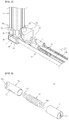
FIG. 1 is a view of showing catenary structure equipment according to one embodiment of the present disclosure;
FIG. 2 is an enlarged perspective view of a portion where a main pole unit, a branch unit, a starter unit, and a horizontal wire are coupled according to one embodiment of the present disclosure;
FIG. 3 is a view of showing an alternative example of a damper unit according to one embodiment of the present disclosure;
FIG. 4 is an exploded view of the starter unit according to one embodiment of the present disclosure;
FIG. 5 is an enlarged perspective view of a portion where the main pole unit, the branch unit, a turnbuckle unit and the horizontal wire are coupled according to one embodiment of the present disclosure;
FIG. 6 is an exploded view of the turnbuckle unit according to one embodiment of the present disclosure;
FIG. 7 is a partial cross-section view of a coupling state of the turnbuckle unit according to one embodiment of the present disclosure;
FIG. 8 is a plan view of a main pole member according to one embodiment of the present disclosure; and
FIG. 9 is a plan view of the branch unit according to one embodiment of the present disclosure.
DETAILED DESCRIPTION OF THE EMBODIMENTS
Hereinafter, embodiments of catenary structure equipment and a construction method of the same according to the present disclosure will be described with reference to the accompanying drawings. Here, the embodiments are not construed as limiting the present disclosure. Further, detailed descriptions about publicly known functions or structures may be omitted to avoid clouding the gist of the present disclosure.
Referring to FIG. 1 to FIG. 9, a tension controlling apparatus for catenary structure equipment according to one embodiment of the present disclosure adjusts tension of a horizontal wire horizontally arranged between two main pole units installed at a certain distance in an interior space of a concrete structure 1.
Here, two main pole units are installed at a certain distance in the interior space of the concrete structure 1. The two main pole units may include a first main pole unit 10 a for supporting one side of the horizontal wire 20, and a second main pole unit 10 b for supporting the other side of the horizontal wire 20.
The main pole unit may include a main pole member 15 protruding from the ceiling of the concrete structure 1. The main pole unit may couple with a branch unit 30 (to be described later) which is movable up and down.
Further, the horizontal wire 20 is horizontally arranged between two adjacent main pole units. The horizontal wire 20 may be horizontally arranged between the first main pole unit 10 a and the second main pole unit 10 b.
The horizontal wire 20 may include a first horizontal wire 20 a, and a second horizontal wire 20 b arranged in parallel with the first horizontal wire 20 a. In other words, the horizontal wire 20 may form two rows, and be horizontally arranged between the first main pole unit 10 a and the second main pole unit 10 b.
According to one embodiment of the present disclosure, the horizontal wire 20 includes two wires, i.e. the first horizontal wire 20 a and the second horizontal wire 20 b, but not limited thereto. Alternatively, the number of horizontal wires 20 may be varied.
The horizontal wire 20 may be made of metal, for example, steel. As a member for the horizontal wire 20, a wire rope may be used, but not limited thereto. A member and material for the horizontal wire 20 may be replaced by a member and material which can have a flexible structure for absorbing a shaking.
The horizontal wire 20 may be formed with a ring at an end thereof by a ring forming member 21.
For instance, the end of the horizontal wire 20 is curved to form a ring at one side thereof, and the curved end of the horizontal wire 20 and the main wire of the horizontal wire 20 are coupled by the ring forming member 21, thereby forming the ring at the end of the horizontal wire 20.
In more detail, the ring forming member 21 may include a wire receiving bracket which receives the curved end of the horizontal wire 20 and the main wire of the horizontal wire 20, a wire supporting bracket which is arranged to face the wire receiving bracket and supports the curved end of the horizontal wire 20 and the main wire of the horizontal wire 20, and a bracket joining member which joins the wire receiving bracket and the wire supporting bracket together by screw coupling.
According to one embodiment of the present disclosure, the tension controlling apparatus for the catenary structure equipment includes a starter unit 40, and a turnbuckle unit 50.
The starter unit 40 is connected to the first main pole unit 10 a of the two adjacent main pole units. The starter unit 40 connects with one end of the horizontal wire 20.
The starter unit 40 may include a starter bracket 41 which is connected to the first main pole unit 10 a, and a starter connection member 43 which couples with the starter bracket 41 and to which the horizontal wire 20 is connected. Here, the starter connection member 43 may include a first starter connection member to couple with the first horizontal wire 20 a, and a second starter connection member to couple with the second horizontal wire 20 b.
The starter bracket 41 may include a first starter plate 411 connected to the first main pole unit 10 a; a second starter plate 412 bent from the first starter plate 411; and a fourth starter plate 414 bent from the second starter plate 412, parallel with the first starter plate 411, and connected to the first main pole unit 10 a. With this, the starter connection member 43 can be connected to the second starter plate 412.
The starter bracket 41 may further include a third starter plate 413 which is bent from the second starter plate 412 to be supported facing the second starter plate 412, and from which the fourth starter plate 414 is bent. With this, the starter connection member 43 may be connected to an overlapped portion between the third starter plate 413 and the second starter plate 412.
The starter connection member 43 may include a wire connection part 431 to which the horizontal wire 20 is connected; a starter connection bolt 432 which passes through the overlapped portion between the second starter plate 412 and the third starter plate 413; and a starter connection nut 433 which is screw-coupling with the starter connection bolt 432 to fasten the wire connection part 431 to the starter bracket.
Here, the wire connection part 431 may be formed with a wire through hole through which the horizontal wire 20 passes to form a ring. The wire connection part 431 is not limited to this embodiment. Alternatively, the wire connection part 431 may have any structure as long as it couples with the ring of the horizontal wire 20.
The starter unit 40 may further include a starter shaft member 42 which makes the starter bracket 41 couple with the starter branch member 30 a of the branch unit (to be described later) at various angles in a horizontal direction. With this, the starter bracket 41 can be swiveled around the starter shaft member 42 against the starter branch member 30 a of the branch unit (to be described later).
The starter shaft member 42 may include a starter swivel bolt 421 which is supported on the starter bracket 41 and passes through the starter bracket 41 and the starter branch member 30 a.
Further, the starter shaft member 42 may additionally include a starter swivel nut 422 which is screw-coupled to an end of the starter swivel bolt 421 to be supported on the starter bracket 41.
The turnbuckle unit 50 is connected to the second main pole unit 10 b of the two adjacent main pole units. The turnbuckle unit 50 couples with the other end of the horizontal wire 20. With this, the turnbuckle unit 50 can adjust the tension of the horizontal wire 20.
The turnbuckle unit 50 may include a turnbuckle bracket 51 which is connected to the second main pole unit 10 b; a turnbuckle connection member 53 which is connected to the turnbuckle bracket 51 and movable forward and backward along a lengthwise direction of the horizontal wire 20 and to which the horizontal wire 20 is connected; and a tension adjuster 54 which is connected to the turnbuckle bracket 51 and moves the turnbuckle connection member 53 along the lengthwise direction of the horizontal wire 20 to adjust the tension of the horizontal wire 20.
Here, the turnbuckle connection member 53 may include a first turnbuckle connection member to which the first horizontal wire 20 a is connected, and a second turnbuckle connection member to which the second horizontal wire 20 b is connected.
Further, the tension adjuster 54 may include a first tension adjuster which adjusts the tension of the first horizontal wire 20 a by moving the first turnbuckle connection member, and a second tension adjuster which adjust the tension of the second horizontal wire 20 b by moving the second turnbuckle connection member.
Here, the turnbuckle bracket 51 may include a first turnbuckle plate 511, a second turnbuckle plate 512, a third turnbuckle plate 513, and a fourth turnbuckle plate 514.
The first turnbuckle plate 511 is connected to the second main pole unit 10 b. The first turnbuckle plate 511 may be formed with a wire coupling slit 511 a which penetrates the first turnbuckle plate 511 and through which the turnbuckle connection member 53 is exposed. The wire coupling slit 511 a may be formed longitudinally along the forward and backward moving direction of the turnbuckle connection member 53. The wire coupling slit 511 a allows a wrench, a driver or the like tool to be inserted therein so that the tool can meet the turnbuckle connection member 53.
The second turnbuckle plate 512 is bent from the first turnbuckle plate 511. The second turnbuckle plate 512 may support one side of the tension adjuster 54, i.e. one side of an adjustment screw 541 (to be described later) to be rotatable.
The third turnbuckle plate 513 is bent from the second turnbuckle plate 512 and parallel with the first turnbuckle plate 511. The third turnbuckle plate 513 is connected to the second main pole unit 10 b. In this case, the third turnbuckle plate 513 may be formed with a tension adjustment slit 544 along which the turnbuckle connection member 53 can move forward and backward. The tension adjustment slit 544 may be formed longitudinally along the forward and backward moving direction of the turnbuckle connection member 53. The tension adjustment slit 544 may be arranged to face the wire coupling slit.
The fourth turnbuckle plate 514 is arranged to face the second turnbuckle plate 512 and connects the first turnbuckle plate 511 and the third turnbuckle plate 513. The fourth turnbuckle plate 514 may support the other side of the tension adjuster 54, i.e. the other side of the adjustment screw 541 (to be described later) to be rotatable. Here, the fourth turnbuckle plate 514 may be fitted to coupling slits 51 a formed in the first turnbuckle plate 511 and the third turnbuckle plate 513.
Further, the turnbuckle connection member 53 may include a coupling bolt 531 which is inserted to be movable forward and backward in the tension adjustment slit 544 as coupling with the tension adjuster 54, and a finishing nut 533 which couples with the coupling bolt 531.
The finishing nut 533 may make the horizontal wire 20 couple with the coupling bolt 531. Thus, the ring of the horizontal wire 20 is connected to an exposed portion of the coupling bolt 531 passed through the tension adjustment slit 544, and the finishing nut 533 is screw-coupled to the coupling bolt 531 in the state that the ring of the horizontal wire 20 is arranged between a pair of finishing nuts 533, so that the horizontal wire 20 can be coupled to the turnbuckle connection member 53. In this embodiment, one pair of finishing nuts 533 are provided, but not limited thereto. Alternatively, the finishing nut 533 may be provided in the singular.
Further, the finishing nut 533 couples with and allows the coupling bolt 531 to slide in the turnbuckle bracket 51. In this case, the coupling bolt 531 is inserted in the ring of the horizontal wire 20.
The turnbuckle connection member 53 may further include a sliding supporter 532 that makes the coupling bolt 531 and the finishing nut 533 smoothly slide in the turnbuckle bracket 51. The sliding supporter 532 may be interposed between a nut bracket 543 (to be described later) of the tension adjuster 54 and the third turnbuckle plate 513 of the turnbuckle bracket 51.
Further, when the finishing nut 533 forms a pair, the sliding supporter 532 may be interposed between the third turnbuckle plate 513 of the turnbuckle bracket 51 and the finishing nut 533. Further, when the single finishing nut 533 is provided, the horizontal wire 20 may be supported between the sliding supporter 532 and the finishing nut 533, and the sliding supporter 532 may be arranged between the third turnbuckle plate 513 of the turnbuckle bracket 51 and the ring of the horizontal wire 20.
Further, when the single finishing nut 533 is provided, the sliding supporter 532 may be arranged between the third turnbuckle plate 513 of the turnbuckle bracket 51 and the finishing nut 533.
The turnbuckle connection member 53 may further include a washer part 534 to improve coupling between the coupling bolt 531 and the nut bracket 543 (to be described later) of the tension adjuster 54.
The washer part 534 may be arranged between the head of the coupling bolt 531 and the nut bracket 543 (to be described later) of the tension adjuster 54, and improve the screw-coupling between the coupling bolt 531 and the nut bracket 543 (to be described later) of the tension adjuster 54.
Further, the tension adjuster 54 may include the adjustment screw 541 which is rotatably connected to the turnbuckle bracket 51, a screw turning part 542 which couples with the adjustment screw 541 to turn the adjustment screw 541, and the nut bracket 543 which is screw-connected to the adjustment screw 541 as coupling with the turnbuckle connection member 53.
One side of the adjustment screw 541 is rotatably supported on the second turnbuckle plate 512, and the other side of the adjustment screw 541 is rotatably supported on the fourth turnbuckle plate 514.
One end of the adjustment screw 541 couples with a screw grip part 546, and the other end of the adjustment screw 541 is provided with the screw turning part 542.
The screw grip part 546 protrudes from the second turnbuckle plate 512, and a screw supporter 547 is arranged between the screw grip part 546 and the second turnbuckle plate 512. The screw supporter 547 stabilizes the screw-coupling between the adjustment screw 541 and the screw grip part 546 when the adjustment screw 541 is turned, and makes the adjustment screw 541 be smoothly turned.
The turnbuckle unit 50 may further include a turnbuckle shaft member 52 which allows the turnbuckle bracket 51 to couple with a turnbuckle branch member 30 b of the branch unit (to be described later) at various angles along to the horizontal direction. With this, the turnbuckle bracket 51 can swivel in the turnbuckle branch member 30 b of the branch unit (to be described later) by the turnbuckle shaft member 52 in the horizontal direction.
The turnbuckle shaft member 52 may further include a turnbuckle swivel bolt 521 which is supported on the turnbuckle bracket 51 and passes through the turnbuckle bracket 51 and the turnbuckle branch member 30 b.
Further, the turnbuckle shaft member 52 may additionally include a turnbuckle swivel nut 522 screw-coupling with the end of the turnbuckle swivel bolt 521 to be supported on the turnbuckle bracket 51.
According to one embodiment of the present disclosure, the tension controlling apparatus for the catenary structure equipment may further include the branch unit 30.
The branch unit 30 slides up and down as coupling with the main pole unit. The branch unit 30 may include the starter branch member 30 a which couples with the first main pole unit 10 a to slide up and down, and the turnbuckle branch member 30 b which couples with the second main pole unit 10 b to slide up and down. Thus, the starter branch member 30 a may couple with the starter unit 40, and the turnbuckle branch member 30 b may couple with the turnbuckle unit 50.
The branch unit 30 may include a branch bracket 31 which is movable up and down in the main pole unit, a bracket fastener 33 which makes the branch bracket 31 be detachably fastened to the main pole unit, and a swivel-coupling member 34 which is provided in the branch bracket 31. The swivel-coupling member 34 may couple with the starter unit 40 or the turnbuckle unit 50.
The branch bracket 31 is shaped like a ring to surround and support the main pole unit.
Here, the bracket fastener 33 is provided in the plural, and thus prevents the branch bracket 31 from being crushed in the main pole unit or prevents the branch bracket from being gapped in the main pole unit. Further, a member pressing portion 153 may be provided in the plural corresponding to the number of bracket fasteners 33.
Here, the main pole unit may include an adjustment guide 151 recessed or protruding longitudinally along the lengthwise direction of the main pole unit to form a vertical sliding path of the branch unit 30. The adjustment guide 151 may be longitudinally formed on the lateral surfaces of the main pole member 15 in the vertical direction. The adjustment guide 151 may be arranged in the plural to be spaced apart from each other.
The main pole unit may be formed with a main pole fastening part 152 penetrated or recessed thereon to which a main pole fastening member is screw-coupled to be installed on the ceiling of the concrete structure 1. The main pole fastening part 152 may be provided on the top surface of the main pole member 15.
The main pole unit may include the member pressing portion 153 with which the swivel-coupling member 34 of the branch unit 30 is in close-contact. The member pressing portion 153 may be longitudinally formed in the vertical direction on the lateral surfaces of the main pole member 15 as spaced apart from the adjustment guide 151.
The branch unit 30 may further include a slider 32 which protrudes from or recessed on the branch bracket 31 and slides along the adjustment guide 151 as fitted to the adjustment guide 151. The slider 32 may be provided in the singular or in the plural to be spaced apart from each other.
According to one embodiment of the present disclosure, in case that the adjustment guide 151 is shaped like a groove, the width of the adjustment guide 151 at the entrance may be narrower than the width of the adjustment guide 151 at the bottom with respect to the width direction of the groove.
Further, when the adjustment guide 151 shaped like a groove and the slider 32 shaped like a projection are fitted to each other, the slider 32 can smoothly slide in the adjustment guide 151 and be prevented from being separated from the entrance of the adjustment guide 151. Further, when the branch unit 30 moves up and down in the main pole unit, the branch unit 30 is prevented from swing in the main pole unit.
Further, when the slider 32 has a projection shape corresponding to the shape of the adjustment guide 151, a connection part between the branch bracket 31 and the slider 32 corresponds to the entrance of the adjustment guide 151, and a free end of the slider 32 corresponds to the bottom of the adjustment guide 151 with respect to the width direction of the projection.
Although the adjustment guide 151 is shaped like a projection and the slider 32 is shaped like a groove, the same effects are expected.
The coupling state of the branch unit 30 in the main pole unit is as follows. When the bracket fastener 33 is screw-connected to the branch bracket 31, the bracket fastener 33 may press the member pressing portion 153 at a lateral side of the main pole unit. Thus, the bracket fastener 33 fastens the branch bracket 31 to the main pole unit.
When the bracket fastener 33 is released from the screw-coupling with the branch bracket 31, the bracket fastener 33 does not press the member pressing portion 153 at the lateral side of the main pole unit. Thus, the branch bracket 31 is movable along the lengthwise direction of the main pole unit.
The swivel-coupling member 34 may couple with the starter unit 40 at multi-angles in the horizontal direction by the starter shaft member 42. Further, the swivel-coupling member 34 may couple with the turnbuckle unit 50 at multi-angles in the horizontal direction by the turnbuckle shaft member 52.
Thus, the swivel-coupling member 34 is formed with a swivel hole 341 in which the starter shaft member 42 or the turnbuckle shaft member 52 is inserted and supported.
With this, the starter bracket 41 can be connected to the swivel-coupling member 34 provided in the starter branch member 30 a by the starter shaft member 42 at various angles. In more detail, the top and bottom of the swivel-coupling member 34 provided in the starter branch member 30 a respectively support the first starter plate 411 and the fourth starter plate 414.
In addition, the starter shaft member 42 passes through the first starter plate 411, the swivel-coupling member 34 and the fourth starter plate 414 in sequence, thereby allowing the starter bracket 41 to swivel around the starter branch member 30 a.
Further, the turnbuckle bracket 51 can be connected to the swivel-coupling member 34 provided in the turnbuckle branch member 30 b by the turnbuckle shaft member 52 at various angles. In more detail, the top and bottom of the swivel-coupling member 34 provided in the turnbuckle branch member 30 b support the first turnbuckle plate 511 and the third turnbuckle plate 513, respectively. In addition, the turnbuckle shaft member 52 passes through the first turnbuckle plate 511, the swivel-coupling member 34 and the third turnbuckle plate 513 in sequence, thereby allowing the turnbuckle bracket 51 to swivel around the turnbuckle branch member 30 b.
According to one embodiment of the present disclosure, the tension controlling apparatus for the catenary structure equipment may further include a damper unit 70.
The damper unit 70 connects the horizontal wire 20 and the starter unit 40 to adjust the tension.
The damper unit 70 may include a damper spring 74 of a coil type. A first damping hook 741 may be extended from one end of the damper spring 74 and couple with the wire connection unit (i.e. the starter unit 40), and a second damping hook 742 may be extended from the other end of the damper spring 74 and couple with the horizontal wire 20.
The damper unit 70 may further include a first cylinder 71, and a second cylinder 72. In more detail, the damper unit 70 may include the damper spring 74 which connects the horizontal wire 20 and the starter unit 40 or connects the horizontal wire 20 and the turnbuckle unit 50; the first cylinder 71 supported on one side of the damper spring 74; and the second cylinder 72 supported on the other side of the damper spring 74.
In this case, the second cylinder 72 is inserted to slide in the first cylinder 71. The first cylinder 71 may be formed with a first hook through hole 711 through which the second damping hook 742 passes. With this, the first cylinder 71 partially surrounds and supports the second cylinder 72.
The second cylinder 72 partially or entirely surrounds and supports the damper spring 74. The second cylinder 72 may be formed with a second hook through hole 721 through which the first damping hook 741 passes.
The damper unit 70 may further include a scale mark 73 on the circumferential surface of the second cylinder 72. With this, the first cylinder 71 may expose or cover the scale mark 73 in accordance with a stretched extent of the damper spring 74, and it is thus possible to check the stretched extent of the damper spring 74 with naked eyes.
According to one embodiment of the present disclosure, the damper unit 70 is used together with the turnbuckle unit 50, and it is therefore possible to check the adjusted tension of the horizontal wire 20 in accordance with an exposed degree of the scale mark 73.
According to one embodiment of the present disclosure, the reference numeral of ‘60’ indicates a connection holder that connects the ceiling of the concrete structure 1 and the horizontal wire 20 in between two adjacent main pole units and prevents the horizontal wire 20 from sagging. The connection holder 60 may be provided in the plural to be spaced apart from each other along the lengthwise direction of the horizontal wire 20. The connection holder 60 may include a wire rope. The wire rope may be made of metal, for example, steel, but not limited thereto. The material for the wire rope may be replaced by any material as long as it can have a flexible structure capable of absorbing a shaking.
Further, the reference numeral of ‘80’ indicates a main pole end cap to be coupled to the bottom of the main pole member 15. The main pole end cap 80 refers to an enclosure with the bottom and lateral surfaces to form a branch space.
Further, the reference numeral of ‘81 indicates a detachable cover 81 detachably coupled to the lateral side of the main pole end cap 80, and the reference numeral of ‘82’ indicates an cut-open slit formed to penetrate the lateral side of the main pole end cap 80 so that the detachable cover 81 can be separated from the lateral side of the main pole end cap 80.
Further, the reference numeral of ‘90’ indicates a free cover 90 that connects the main pole end caps 80 provided between the two adjacent main pole units. The free cover 90 is shaped like a channel, supports wiring (not shown), and prevents the wiring (not shown) from being exposed to the outside. The free cover 90 may be coupled to the horizontal wire 20 by a separate hanger member (not shown) or as being spaced apart from the ceiling of the concrete structure 1.
Further, the reference numeral of ‘100’ indicates a lighting unit that emits light with supplied power. The lighting unit 100 may include a lighting main body to which a lamp for emitting light is coupled, and a lighting socket which is coupled to a lengthwise end of the lighting main body. The lighting main body is formed with a coupling hook for coupling with the horizontal wire 20. Thus, the horizontal wire 20 is accommodated in a wire receiving portion recessed in the coupling hook, so that the lighting unit 100 can be coupled to the horizontal wire 20.
In the tension controlling apparatus for the catenary structure equipment according to the present disclosure, it is possible to adjust the tension of the horizontal wire horizontally arranged between the two main pole units, and it is easy to adjust the position of the lighting unit.
Further, by the turnbuckle unit and the damper unit, the tension of the horizontal wire is adjusted to make the length of the horizontal wire be varied within a predetermined range, and the load applied to the horizontal wire is distributed to fundamentally make the lighting unit be free from shaking and impact.
Further, by the scale mark provided in the damper unit, it is possible to check the tension of the horizontal wire, to control the stretched extent of the damper spring, and to protect the damper unit and prevent safety accidents.
Further, by the detailed coupling structure of the turnbuckle unit, it is possible to mechanically and cleanly make the turnbuckle connection member for adjusting the tension of the horizontal wire be moved forward and backward, and to stabilize the coupling between the turnbuckle connection member and the tension adjuster.
Further, by the detailed coupling structure of the turnbuckle unit, it is possible to make the second main pole unit and the horizontal wire be easily connected, to secure a stable support of the adjustment screw, and to prevent the turnbuckle bracket from being deformed as the adjustment screw is turned.
Further, by the structure of the branch unit, it is possible to move the turnbuckle unit up and down in the second main pole unit, thereby adjusting the installation height of the horizontal wire.
Further, by the structure of the branch unit, the turnbuckle unit is coupled at various angles in the horizontal direction in the second main pole unit, thereby securing the shortest distance between the first main pole unit and the second main pole unit for installing the horizontal wire, and making it possible to adjust the installation direction of the turnbuckle unit.
Further, by the structure of the starter unit, it is possible to make the first main pole unit and the horizontal wire be easily coupled, and to prevent the starter unit from being deformed as the tension of the horizontal wire is adjusted.
Further, by the structure of the branch unit, it is possible to move the starter unit up and down in the first main pole unit, thereby adjusting the installation height of the horizontal wire.
Further, by the structure of the branch unit, the starter unit is coupled at various angles in the horizontal direction in the second main pole unit, thereby securing the shortest distance between the first main pole unit and the second main pole unit for installing the horizontal wire, and making it possible to adjust the installation direction of the starter unit.
Although a few exemplary embodiments of the present disclosure have been shown and described, it will be appreciated by those skilled in the art that changes may be made in these embodiments without departing from the principles and spirit of the disclosure, the scope of which is defined in the appended claims and their equivalents.

Claims (11)

What is claimed is:
1. A tension controlling apparatus for catenary structure equipment, which adjusts tension of a horizontal wire horizontally arranged between main pole units installed at a certain distance in an interior space of a concrete structure,
the tension controlling apparatus comprising:
a starter unit which is connected to a first main pole unit of two adjacent main pole units, and connects with a first end of the horizontal wire; and
a turnbuckle unit which is connected to a second main pole unit of two adjacent main pole units, connects with a second end of the horizontal wire, and adjusts the tension of the horizontal wire,
the turnbuckle unit comprising:
a turnbuckle bracket configured to be connected to the second main pole unit;
a turnbuckle connection member configured to move forward and backward in the turnbuckle bracket along a lengthwise direction of the horizontal wire and connects with the horizontal wire; and
a tension adjuster configured to couple with the turnbuckle bracket, and move the turnbuckle connection member along the lengthwise direction of the horizontal wire to adjust the tension of the horizontal wire.
2. The tension controlling apparatus according to claim 1, further comprising a damper unit configured to connect a first side of the horizontal wire and the starter unit and adjust the tension of the horizontal wire.
3. The tension controlling apparatus according to claim 2, wherein the damper unit comprises
a damper spring configured to connect the horizontal wire and the starter unit;
a first cylinder configured to be supported at a first side of the damper spring;
a second cylinder configured to be supported at a second side of the damper spring and inserted to slide in the first cylinder; and
a scale mark configured to be formed on a circumferential surface of the second cylinder to check, correct and manage a stretched extent of the damper spring.
4. The tension controlling apparatus according to claim 1, wherein the tension adjuster comprises
an adjustment screw configured to rotatably couple with the turnbuckle bracket;
a screw turning part configured to couple with the adjustment screw to turn the adjustment screw;
a nut bracket configured to screw-couple with the adjustment screw as coupling with the turnbuckle connection member, and
a tension adjustment slit configured to penetrate through the turnbuckle bracket to allow the turnbuckle connection member move forward and backward.
5. The tension controlling apparatus according to claim 4, wherein the turnbuckle bracket comprises
a first turnbuckle plate configured to be connected to the second main pole unit;
a second turnbuckle plate configured to be bent from the first turnbuckle plate and support a first side of the adjustment screw to be rotatable;
a third turnbuckle plate configured to be bent from the second turnbuckle plate and parallel with the first turnbuckle plate, be connected to the second main pole unit, and comprising the tension adjustment slit penetrating therethrough; and
a fourth turnbuckle plate configured to connect the first turnbuckle plate and the third turnbuckle plate to face the second turnbuckle plate, and support a second side of the adjustment screw to be rotatable.
6. The tension controlling apparatus according to claim 1, further comprising a turnbuckle branch member configured to be connected to and slide up and down in the second main pole unit, and couple with the turnbuckle unit.
7. The tension controlling apparatus according to claim 6, wherein the turnbuckle unit further comprises a turnbuckle shaft member configured to make the turnbuckle bracket be connected to the turnbuckle branch member at various angles in a horizontal direction.
8. The tension controlling apparatus according to claim 1, wherein the starter unit comprises
a starter bracket configured to be connected to the first main pole unit; and
a starter connection member configured to couple with the starter bracket and connect with the horizontal wire.
9. The tension controlling apparatus according to claim 8, wherein the starter bracket comprises
a first starter plate configured to be connected to the first main pole unit;
a second starter plate configured to be bent from the first starter plate; and
a fourth starter plate configured to be bent from the second starter plate and parallel with the first starter plate, and be connected to the first main pole unit.
10. The tension controlling apparatus according to claim 8, further comprising a starter branch member configured to be connected to and slide up and down in the first main pole unit, and couple with the starter unit.
11. The tension controlling apparatus according to claim 10, wherein the starter unit further comprises a starter shaft member configured to make the starter bracket be connected to the starter branch member at various angles in a horizontal direction.
US15/865,289 2017-02-01 2018-01-09 Tension controlling apparatus for catenary structure equipment Active 2039-03-09 US10704647B2 (en)

Applications Claiming Priority (2)

Application Number Priority Date Filing Date Title
KR10-2017-0014316 2017-02-01
KR1020170014316A KR101775986B1 (en) 2017-02-01 2017-02-01 Tension control device for catenary structure equipment

Publications (2)

Publication Number Publication Date
US20180216701A1 US20180216701A1 (en) 2018-08-02
US10704647B2 true US10704647B2 (en) 2020-07-07

Family

ID=59925668

Family Applications (1)

Application Number Title Priority Date Filing Date
US15/865,289 Active 2039-03-09 US10704647B2 (en) 2017-02-01 2018-01-09 Tension controlling apparatus for catenary structure equipment

Country Status (2)

Country Link
US (1) US10704647B2 (en)
KR (1) KR101775986B1 (en)

Families Citing this family (6)

* Cited by examiner, † Cited by third party
Publication number Priority date Publication date Assignee Title
KR102082246B1 (en) * 2018-08-21 2020-02-27 임원 Tensioning apparatus for connecting wire or tarp
JP7391750B2 (en) * 2020-03-31 2023-12-05 日本発條株式会社 Balancers and balancer systems
KR102158084B1 (en) * 2020-04-06 2020-09-21 주식회사 세홍 Wireway apparatus
KR102163590B1 (en) * 2020-08-03 2020-10-08 재단법인 중소조선연구원 Combined structure of composite material drive shaft and coupling part with vibration dampening and anti-loosening function
KR102489162B1 (en) * 2020-09-14 2023-01-17 주식회사 세홍 Wireway apparatus
KR200497802Y1 (en) * 2021-11-01 2024-03-05 주식회사 세홍 Wireway apparatus having a vibration proof unit

Citations (3)

* Cited by examiner, † Cited by third party
Publication number Priority date Publication date Assignee Title
JP2000154593A (en) 1998-11-19 2000-06-06 Toshiaki Okuda Reinforcing metal fitting for building structural body and reinforcing method of building structural body using its reinforcing metal fitting
US20050235594A1 (en) * 2004-04-21 2005-10-27 John Hildreth Framing system
KR100888211B1 (en) 2009-01-22 2009-03-12 율삼엔지니어링(주) Cable Breakage-proof Cable Support Bracket

Family Cites Families (1)

* Cited by examiner, † Cited by third party
Publication number Priority date Publication date Assignee Title
JP2014093873A (en) 2012-11-05 2014-05-19 Chugoku Electric Power Co Inc:The Insulator string holder

Patent Citations (3)

* Cited by examiner, † Cited by third party
Publication number Priority date Publication date Assignee Title
JP2000154593A (en) 1998-11-19 2000-06-06 Toshiaki Okuda Reinforcing metal fitting for building structural body and reinforcing method of building structural body using its reinforcing metal fitting
US20050235594A1 (en) * 2004-04-21 2005-10-27 John Hildreth Framing system
KR100888211B1 (en) 2009-01-22 2009-03-12 율삼엔지니어링(주) Cable Breakage-proof Cable Support Bracket

Also Published As

Publication number Publication date
KR101775986B1 (en) 2017-09-07
US20180216701A1 (en) 2018-08-02

Similar Documents

Publication Publication Date Title
US10704647B2 (en) Tension controlling apparatus for catenary structure equipment
US20200393118A1 (en) Casing for lighting assembly
US8328382B2 (en) Luminaire rotating frame clamping assembly
US10281122B2 (en) Luminaire junction box housing
US7874708B1 (en) T-bar mounting system
US7510159B2 (en) Hanger bar centering mechanism
US9133981B2 (en) Hanger system for suspendible illuminated fixtures
KR101776026B1 (en) Lighting installation assembly having earthquake resistant structure and catenary structure equipment combining the same
US7958684B2 (en) Track suspension device
KR101865401B1 (en) A Power line position adjusting apparatus
KR102719253B1 (en) Handrail Fixing Structure for Construction
KR200495500Y1 (en) Grab type Mounting device for hanger type lighting
KR200492628Y1 (en) Duct for wiring and lighting structure assembly using thereof and catenary structure equipment combining the same
KR100867939B1 (en) CCT Camera Ceiling Bracket
KR100751893B1 (en) Hanger for attaching ceiling material
US20220341553A1 (en) Flexible suspension lighting
KR101537804B1 (en) An led lighting apparatus
US10215372B2 (en) Catenary equipment and construction method thereof
KR101706089B1 (en) CCTV camera fixed mount for race-way
JP2020084735A (en) handrail
KR101786547B1 (en) Fixture device for supporting of catenary structure equipment and constructing method of this
JP3570199B2 (en) lighting equipment
KR101536121B1 (en) Lighting apparatus regulating irradiation of light
KR101883924B1 (en) LED type ceiling lighting
KR20190005350A (en) easy binding lighting apparatus

Legal Events

Date Code Title Description
AS Assignment

Owner name: KIM, SUNG CHAN, KOREA, REPUBLIC OF

Free format text: ASSIGNMENT OF ASSIGNORS INTEREST;ASSIGNORS:CHOI, SE HYUN;KIM, JEONG HWAN;KIM, SUNG CHAN;REEL/FRAME:044578/0681

Effective date: 20180105

FEPP Fee payment procedure

Free format text: ENTITY STATUS SET TO UNDISCOUNTED (ORIGINAL EVENT CODE: BIG.); ENTITY STATUS OF PATENT OWNER: SMALL ENTITY

FEPP Fee payment procedure

Free format text: ENTITY STATUS SET TO SMALL (ORIGINAL EVENT CODE: SMAL); ENTITY STATUS OF PATENT OWNER: SMALL ENTITY

STPP Information on status: patent application and granting procedure in general

Free format text: DOCKETED NEW CASE - READY FOR EXAMINATION

STCF Information on status: patent grant

Free format text: PATENTED CASE

MAFP Maintenance fee payment

Free format text: PAYMENT OF MAINTENANCE FEE, 4TH YR, SMALL ENTITY (ORIGINAL EVENT CODE: M2551); ENTITY STATUS OF PATENT OWNER: SMALL ENTITY

Year of fee payment: 4