US10696839B2 - Curable composition for cured in place pipes - Google Patents
Curable composition for cured in place pipes Download PDFInfo
- Publication number
- US10696839B2 US10696839B2 US16/125,077 US201816125077A US10696839B2 US 10696839 B2 US10696839 B2 US 10696839B2 US 201816125077 A US201816125077 A US 201816125077A US 10696839 B2 US10696839 B2 US 10696839B2
- Authority
- US
- United States
- Prior art keywords
- curable composition
- weight percentage
- resin
- curing
- acid
- Prior art date
- Legal status (The legal status is an assumption and is not a legal conclusion. Google has not performed a legal analysis and makes no representation as to the accuracy of the status listed.)
- Active
Links
- 0 [1*]C.[2*]C.[CH3-].[H][N+]1(*O)CCOCC1 Chemical compound [1*]C.[2*]C.[CH3-].[H][N+]1(*O)CCOCC1 0.000 description 13
- DLYGWHUJQCJNSR-UHFFFAOYSA-N CC(C)(C1=CC=C(OCC(O)COC2=CC=C(C(C)(C)C3=CC=C(OCC4CO4)C=C3)C=C2)C=C1)C1=CC=C(OCC2CO2)C=C1 Chemical compound CC(C)(C1=CC=C(OCC(O)COC2=CC=C(C(C)(C)C3=CC=C(OCC4CO4)C=C3)C=C2)C=C1)C1=CC=C(OCC2CO2)C=C1 DLYGWHUJQCJNSR-UHFFFAOYSA-N 0.000 description 1
- IPZXYTFUYBZPRV-UHFFFAOYSA-N CCCCCCCCCCCCCCOCC1CC1.CCCCCCCCCCCCCOCC1CC1.CCCCCCCCCCCCOCC1CC1 Chemical compound CCCCCCCCCCCCCCOCC1CC1.CCCCCCCCCCCCCOCC1CC1.CCCCCCCCCCCCOCC1CC1 IPZXYTFUYBZPRV-UHFFFAOYSA-N 0.000 description 1
- XLEVSRIJCACPLA-UHFFFAOYSA-N [O-][N+]1(CCO)CCOCC1 Chemical compound [O-][N+]1(CCO)CCOCC1 XLEVSRIJCACPLA-UHFFFAOYSA-N 0.000 description 1
Images
Classifications
-
- C—CHEMISTRY; METALLURGY
- C08—ORGANIC MACROMOLECULAR COMPOUNDS; THEIR PREPARATION OR CHEMICAL WORKING-UP; COMPOSITIONS BASED THEREON
- C08L—COMPOSITIONS OF MACROMOLECULAR COMPOUNDS
- C08L63/00—Compositions of epoxy resins; Compositions of derivatives of epoxy resins
-
- C—CHEMISTRY; METALLURGY
- C08—ORGANIC MACROMOLECULAR COMPOUNDS; THEIR PREPARATION OR CHEMICAL WORKING-UP; COMPOSITIONS BASED THEREON
- C08J—WORKING-UP; GENERAL PROCESSES OF COMPOUNDING; AFTER-TREATMENT NOT COVERED BY SUBCLASSES C08B, C08C, C08F, C08G or C08H
- C08J3/00—Processes of treating or compounding macromolecular substances
- C08J3/02—Making solutions, dispersions, lattices or gels by other methods than by solution, emulsion or suspension polymerisation techniques
- C08J3/03—Making solutions, dispersions, lattices or gels by other methods than by solution, emulsion or suspension polymerisation techniques in aqueous media
- C08J3/075—Macromolecular gels
-
- C—CHEMISTRY; METALLURGY
- C08—ORGANIC MACROMOLECULAR COMPOUNDS; THEIR PREPARATION OR CHEMICAL WORKING-UP; COMPOSITIONS BASED THEREON
- C08K—Use of inorganic or non-macromolecular organic substances as compounding ingredients
- C08K5/00—Use of organic ingredients
- C08K5/16—Nitrogen-containing compounds
- C08K5/34—Heterocyclic compounds having nitrogen in the ring
- C08K5/35—Heterocyclic compounds having nitrogen in the ring having also oxygen in the ring
- C08K5/357—Six-membered rings
-
- C—CHEMISTRY; METALLURGY
- C08—ORGANIC MACROMOLECULAR COMPOUNDS; THEIR PREPARATION OR CHEMICAL WORKING-UP; COMPOSITIONS BASED THEREON
- C08L—COMPOSITIONS OF MACROMOLECULAR COMPOUNDS
- C08L63/00—Compositions of epoxy resins; Compositions of derivatives of epoxy resins
- C08L63/04—Epoxynovolacs
-
- G—PHYSICS
- G06—COMPUTING OR CALCULATING; COUNTING
- G06Q—INFORMATION AND COMMUNICATION TECHNOLOGY [ICT] SPECIALLY ADAPTED FOR ADMINISTRATIVE, COMMERCIAL, FINANCIAL, MANAGERIAL OR SUPERVISORY PURPOSES; SYSTEMS OR METHODS SPECIALLY ADAPTED FOR ADMINISTRATIVE, COMMERCIAL, FINANCIAL, MANAGERIAL OR SUPERVISORY PURPOSES, NOT OTHERWISE PROVIDED FOR
- G06Q20/00—Payment architectures, schemes or protocols
- G06Q20/38—Payment protocols; Details thereof
- G06Q20/382—Payment protocols; Details thereof insuring higher security of transaction
- G06Q20/3821—Electronic credentials
- G06Q20/38215—Use of certificates or encrypted proofs of transaction rights
-
- H—ELECTRICITY
- H04—ELECTRIC COMMUNICATION TECHNIQUE
- H04L—TRANSMISSION OF DIGITAL INFORMATION, e.g. TELEGRAPHIC COMMUNICATION
- H04L9/00—Cryptographic mechanisms or cryptographic arrangements for secret or secure communications; Network security protocols
- H04L9/32—Cryptographic mechanisms or cryptographic arrangements for secret or secure communications; Network security protocols including means for verifying the identity or authority of a user of the system or for message authentication, e.g. authorization, entity authentication, data integrity or data verification, non-repudiation, key authentication or verification of credentials
- H04L9/321—Cryptographic mechanisms or cryptographic arrangements for secret or secure communications; Network security protocols including means for verifying the identity or authority of a user of the system or for message authentication, e.g. authorization, entity authentication, data integrity or data verification, non-repudiation, key authentication or verification of credentials involving a third party or a trusted authority
- H04L9/3213—Cryptographic mechanisms or cryptographic arrangements for secret or secure communications; Network security protocols including means for verifying the identity or authority of a user of the system or for message authentication, e.g. authorization, entity authentication, data integrity or data verification, non-repudiation, key authentication or verification of credentials involving a third party or a trusted authority using tickets or tokens, e.g. Kerberos
-
- H—ELECTRICITY
- H04—ELECTRIC COMMUNICATION TECHNIQUE
- H04L—TRANSMISSION OF DIGITAL INFORMATION, e.g. TELEGRAPHIC COMMUNICATION
- H04L9/00—Cryptographic mechanisms or cryptographic arrangements for secret or secure communications; Network security protocols
- H04L9/32—Cryptographic mechanisms or cryptographic arrangements for secret or secure communications; Network security protocols including means for verifying the identity or authority of a user of the system or for message authentication, e.g. authorization, entity authentication, data integrity or data verification, non-repudiation, key authentication or verification of credentials
- H04L9/3226—Cryptographic mechanisms or cryptographic arrangements for secret or secure communications; Network security protocols including means for verifying the identity or authority of a user of the system or for message authentication, e.g. authorization, entity authentication, data integrity or data verification, non-repudiation, key authentication or verification of credentials using a predetermined code, e.g. password, passphrase or PIN
- H04L9/3228—One-time or temporary data, i.e. information which is sent for every authentication or authorization, e.g. one-time-password, one-time-token or one-time-key
-
- H—ELECTRICITY
- H04—ELECTRIC COMMUNICATION TECHNIQUE
- H04L—TRANSMISSION OF DIGITAL INFORMATION, e.g. TELEGRAPHIC COMMUNICATION
- H04L9/00—Cryptographic mechanisms or cryptographic arrangements for secret or secure communications; Network security protocols
- H04L9/32—Cryptographic mechanisms or cryptographic arrangements for secret or secure communications; Network security protocols including means for verifying the identity or authority of a user of the system or for message authentication, e.g. authorization, entity authentication, data integrity or data verification, non-repudiation, key authentication or verification of credentials
- H04L9/3234—Cryptographic mechanisms or cryptographic arrangements for secret or secure communications; Network security protocols including means for verifying the identity or authority of a user of the system or for message authentication, e.g. authorization, entity authentication, data integrity or data verification, non-repudiation, key authentication or verification of credentials involving additional secure or trusted devices, e.g. TPM, smartcard, USB or software token
-
- C—CHEMISTRY; METALLURGY
- C08—ORGANIC MACROMOLECULAR COMPOUNDS; THEIR PREPARATION OR CHEMICAL WORKING-UP; COMPOSITIONS BASED THEREON
- C08J—WORKING-UP; GENERAL PROCESSES OF COMPOUNDING; AFTER-TREATMENT NOT COVERED BY SUBCLASSES C08B, C08C, C08F, C08G or C08H
- C08J2363/00—Characterised by the use of epoxy resins; Derivatives of epoxy resins
-
- C—CHEMISTRY; METALLURGY
- C08—ORGANIC MACROMOLECULAR COMPOUNDS; THEIR PREPARATION OR CHEMICAL WORKING-UP; COMPOSITIONS BASED THEREON
- C08L—COMPOSITIONS OF MACROMOLECULAR COMPOUNDS
- C08L2203/00—Applications
- C08L2203/18—Applications used for pipes
-
- H—ELECTRICITY
- H04—ELECTRIC COMMUNICATION TECHNIQUE
- H04L—TRANSMISSION OF DIGITAL INFORMATION, e.g. TELEGRAPHIC COMMUNICATION
- H04L2209/00—Additional information or applications relating to cryptographic mechanisms or cryptographic arrangements for secret or secure communication H04L9/00
- H04L2209/56—Financial cryptography, e.g. electronic payment or e-cash
Definitions
- Curable compositions comprising an epoxy resin and a curing agent are well known in the art.
- One common application for curable compositions is in the process of repairing existing pipelines (e.g., sewer or chemical pipelines). During this process, a curable composition filled liner is inserted or pulled into a damaged pipe. Once in place, the curable composition is cured with a hot water bladder or steam to form a tight-fitting replacement pipe. The resulting product, deemed a cured-in-place pipe, allows for seamless repair of a pipe with little to no excavation necessary, thereby making the process more cost effective than the alternative methods.
- existing pipelines e.g., sewer or chemical pipelines
- the curable composition For a curable composition to be adequately applied to cured-in-place applications, the curable composition must (i) have a sufficient latency period (i.e., time to form a gel) to be manageable while inserting into a damaged pipe, (ii) have enough structural integrity to fill the pipe and maintain conformity, and (iii) efficiently cure at temperatures compatible with a hot water bladder or steam.
- Conventional methods for providing a curable composition with desirable qualities (i), (ii), and (iii) include changing the structure of the epoxy resin or the curing agent, adding a diluent to reduce viscosity and increase latency periods, and adding an accelerator to reduce curing times.
- curable compositions provide inadequate results for one or more of the desirable qualities (i), (ii), and (iii).
- economic production is also needed.
- conventional curable compositions typically require high levels of curing agent or accelerator to efficiently cure at temperatures compatible with a hot water bladder or steam, or require a diluent to reduce viscosity and have a sufficient latency period (i.e., time to form a gel) to be manageable while inserting into a damaged pipe.
- Such additional components increase costs associated with materials and equipment necessary for production of the curable composition.
- curable compositions that (i) have a sufficient latency period (i.e., time to form a gel) to permit inserting into a damaged pipe, (ii) have sufficient structural integrity to fill the pipe and maintain conformity, and/or (iii) efficiently cure at temperatures compatible with a hot water bladder or steam.
- the invention provides a curable composition
- a curable composition comprising, consisting essentially of, or consisting of, (a) a resin comprising 4,4′-isopropylidenediphenol-epichlorohydrin copolymer and (b) one or more curing agents, wherein a ratio of a weight percentage of the resin to a weight percentage of the curing agent or curing agents is from about 12:1 to about 15:1.
- the invention further provides a curable composition
- a curable composition comprising, consisting essentially of, or consisting of, (a) a resin comprising 4,4′-isopropylidenediphenol-epichlorohydrin copolymer and (b) one or more curing agents wherein at least one of the one or more curing agents is of Formula (II):
- R is a C 1 -C 6 alkylene chain, wherein the hydroxyl group may be attached to any of the carbon atoms of the alkylene chain;
- R 1 and R 2 are each independently hydrogen, hydroxyl, or an optionally substituted C 1 -C 20 alkyl, C 2 -C 20 alkenyl, C 1 -C 20 haloalkyl, C 2 -C 20 haloalkenyl, or C 6 -C 10 aryl;
- X is a carboxylate anion, wherein a ratio of a weight percentage of the resin to a weight percentage of the curing agent or curing agents is from about 12:1 to about 15:1.
- the invention also provides a method of curing a cured-in-place liner, wherein the method comprises: (i) placing the cured-in-place liner in a pipe and (ii) heating the cured-in-place liner, wherein the cured-in-place liner contains a curable composition comprising, consisting essentially of, or consisting of, (a) a resin comprising 4,4′-isopropylidenediphenol-epichlorohydrin copolymer and (b) one or more curing agents, wherein a ratio of a weight percentage of the resin to a weight percentage of the curing agent or curing agents is from about 12:1 to about 15:1.
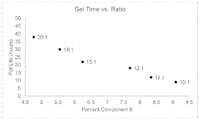
- the FIGURE shows the pot life (i.e., latency or gel time) at a temperature of 21° C. exhibited by the curable compositions set forth in the Example.
- the invention provides a curable composition
- a curable composition comprising, consisting essentially of, or consisting of, (a) a resin comprising 4,4′-isopropylidenediphenol-epichlorohydrin copolymer and (b) one or more curing agents, wherein a ratio of a weight percentage of the resin to a weight percentage of the curing agent or curing agents is from about 12:1 to about 15:1.
- the inventive curable composition described herein comprising a ratio of a weight percentage of the resin to a weight percentage of the curing agent or curing agents is from about 12:1 to about 15:1, provides a sufficient latency period (i.e., time to form a gel) to be manageable while inserting into a damaged pipe, has enough structural integrity to fill the pipe and maintain conformity, and efficiently cures at temperatures compatible with a hot water bladder or steam.
- the inventive curable composition is (i) not too viscous prior to curing such that the composition is manageable and maneuverable, (ii) not too flowable (i.e., low viscosity) prior to curing such that the composition maintains structural integrity, and (iii) has the desirable ratio of resin to curing agent such that the composition has an ideal latency period and curing time and temperature.
- the curable composition comprises a resin, wherein the resin comprises a 4,4′-isopropylidenediphenol-epichlorohydrin copolymer.
- the term “4,4′-isopropylidenediphenol-epichlorohydrin copolymer” refers to a polymer derived from monomers 4,4′-isopropylidenediphenol (“bisphenol-A”) and epichlorohydrin.
- “derived” when referring to a polymer means that the polymer has been synthesized from a formulation comprising said reagents or monomers. Accordingly, the polymer contains monomer units that are substantially the same structure of the monomer from which the monomer unit was made.
- the 4,4′-isopropylidenediphenol-epichlorohydrin copolymer can have monomer units derived from monomers, 4,4′-isopropylidenediphenol and epichlorohydrin, in any suitable ratio.
- the 4,4′-isopropylidenediphenol-epichlorohydrin copolymer can exist as an alternating copolymer, a random copolymer, a block copolymer, or a graft copolymer.
- the 4,4′-isopropylidenediphenol-epichlorohydrin copolymer is an alternating copolymer.
- the monomer units derived from 4,4′-isopropylidenediphenol and epichlorohydrin can be present in a molar ratio of about 1:1.
- the 4,4′-isopropylidenediphenol-epichlorohydrin copolymer can have a weight average molecular weight of about 400 Da or more, for example, about 500 Da or more, about 600 Da or more, about 700 Da or more, about 800 Da or more, or about 900 Da or more.
- the 4,4′-isopropylidenediphenol-epichlorohydrin copolymer can have a weight average molecular weight bounded by any two of the aforementioned endpoints.
- the 4,4′-isopropylidenediphenol-epichlorohydrin copolymer can have a weight average molecular weight of from about 400 Da to about 10,000 Da, from about 400 Da to about 8,000 Da, from about 400 Da to about 6,000 Da, from about 400 Da to about 5,000 Da, from about 400 Da to about 4,000 Da, from about 400 Da to about 2,000 Da, from about 400 Da to about 1,000 Da, from about 500 Da to about 10,000 Da, from about 600 Da to about 10,000 Da, from about 700 Da to about 10,000 Da, from about 800 Da to about 10,000 Da, from about 900 Da to about 10,000 Da, or from about 800 Da to about 5,000 Da.
- the 4,4′-isopropylidenediphenol-epichlorohydrin copolymer is of the formula:
- n is an integer from 0 to about 20 (e.g., from 0 to about 10, from 0 to about 5, from 1 to about 20, from 1 to about 10, from 1 to about 5, from 2 to about 20, from 2 to about 10, or from 2 to about 5). In preferred embodiments, n is an integer from 0 to about 10.
- the 4,4′-isopropylidenediphenol-epichlorohydrin copolymer is EPONTM Resin 828, commercially available from Hexion Inc. (Columbus, Ohio).
- the resin can comprise any suitable amount of 4,4′-isopropylidenediphenol-epichlorohydrin copolymer.
- the resin can comprise about 80 wt. % or more of the 4,4′-isopropylidenediphenol-epichlorohydrin copolymer, for example, about 82 wt. % or more, about 84 wt. % or more, about 85 wt. % or more, about 86 wt. % or more, about 88 wt. % or more, about 90 wt. % or more, about 92 wt. % or more, about 94 wt. % or more, or about 95 wt. % or more.
- the resin can comprise 100 wt. % or less of the 4,4′-isopropylidenediphenol-epichlorohydrin copolymer, for example, 99.9 wt. % or less, 99.5 wt. % or less, about 99 wt. % or less, about 98 wt. % or less, about 97 wt. % or less, about 96 wt. % or less, or about 95 wt. % or less.
- the resin can comprise the 4,4′-isopropylidenediphenol-epichlorohydrin copolymer in an amount bounded by any two of the aforementioned endpoints.
- the resin can comprises from about 80 wt. % to 100 wt. % 4,4′-isopropylidenediphenol-epichlorohydrin copolymer, from about 82 wt. % to 100 wt. %, from about 84 wt. % to 100 wt. %, from about 85 wt. % to 100 wt. %, from about 86 wt. % to 100 wt. %, from about 88 wt. % to 100 wt. %, from about 90 wt. % to 100 wt. %, from about 92 wt. % to 100 wt. %, from about 94 wt.
- % to 100 wt. % from about 95 wt. % to 100 wt. %, from about 80 wt. % to 99.9 wt. %, from about 80 wt. % to 99.5 wt. %, from about 80 wt. % to about 99 wt. %, from about 85 wt. % to about 95 wt. %, from about 90 wt. % to about 99.9 wt. %, from about 90 wt. % to about 99.5 wt. %, from about 90 wt. % to about 99 wt. %, from about 90 wt. % to about 95 wt. %, or from about 95 wt. % to 99.9 wt. %.
- the 4,4′-isopropylidenediphenol-epichlorohydrin copolymer can have any suitable intrinsic viscosity prior to curing.
- the 4,4′-isopropylidenediphenol-epichlorohydrin copolymer has an intrinsic viscosity of from about 5,000 cps to about 20,000 cps (e.g., from about 5,000 cps to about 15,000 cps, from about 5,000 cps to about 12,000 cps, from about 10,000 cps to about 20,000 cps, from about 10,000 cps to about 15,000 cps, from about 10,000 cps to about 14,000 cps, from about 10,000 cps to about 12,000 cps, or from about 11,000 cps to about 12,000 cps) when stored at a temperature of 22° C.
- the 4,4′-isopropylidenediphenol-epichlorohydrin copolymer has an intrinsic viscosity of from about 11,000 cps to about 12,000 cps when stored at a temperature of 22° C.
- 4,4′-isopropylidenediphenol-epichlorohydrin copolymer is the only component of the resin.
- the resin is free of any other component (i.e., other than 4,4′-isopropylidenediphenol-epichlorohydrin copolymer) that has a material effect on the curable composition (e.g., a diluent or a curing agent such as dicyandiamide).
- the resin consists essentially of or consists of 4,4′-isopropylidenediphenol-epichlorohydrin copolymer.
- the resin consists essentially of 4,4′-isopropylidenediphenol-epichlorohydrin copolymer
- other components present in the resin can be the starting materials necessary for the formation of the 4,4′-isopropylidenediphenol-epichlorohydrin copolymer.
- the resin consists of 4,4′-isopropylidenediphenol-epichlorohydrin copolymer
- 4,4′-isopropylidenediphenol-epichlorohydrin copolymer is the only component of the resin.
- the curable composition further comprises a diluent.
- the diluent can be any substance used to modify the viscosity of the curable composition.
- the diluent can be a monofunctional epoxide.
- the monofunctional epoxide can be an epoxide of ethylene, propylene, butylene, styrene, cyclohexene, etc., and combinations thereof.
- the diluent is a glycidyl ether of a monofunctional epoxide.
- the diluent can be a glycidyl ether of any C 4 to C 14 aliphatic or aromatic alcohols (e.g., phenol, cresols, tert-butylphenol, butanol, or 2-ethylhexanol).
- aliphatic or aromatic alcohols e.g., phenol, cresols, tert-butylphenol, butanol, or 2-ethylhexanol.
- the diluent is a monofunctional glycidyl ether.
- the term “monofunctional glycidyl ether” refers to a compound comprising an ether moiety, wherein the ether moiety has been formed between the primary alcohol substituent of glycidol and the hydroxyl group of an alkyl alcohol, aryl alcohol, arylalkyl alcohol, heteroaryl alcohol, or heteroalkyl alcohol.
- the monofunctional glycidyl ether is a compound comprising an ether moiety, wherein the ether moiety has been formed between the primary alcohol substituent of glycidol and a straight or branched, saturated or unsaturated alkyl alcohol.
- the monofunctional glycidyl ether is a compound comprising an ether moiety, wherein the ether moiety has been formed between the primary alcohol substituent of glycidol and C 12 -C 14 alkyl alcohol (“alkyl C 12 -C 14 glycidyl ether”).
- the monofunctional glycidyl ether is of the formula
- the monofunctional glycidyl ether can be EPODIL® 748, commercially available from Evonik Industries (Essen, North Rhine-Westphalia, Germany).
- the curable composition can comprise any suitable amount of diluent (e.g., monofunctional glycidyl ether).
- the curable composition can comprise 0.1 wt. % or more of the diluent, for example, 0.5 wt. % or more, about 1 wt. % or more, about 2 wt. % or more, about 3 wt. % or more, about 4 wt. % or more, or about 5 wt. % or more.
- the curable composition can comprise about 20 wt. % or less of the diluent, for example, about 18 wt. % or less, about 16 wt. % or less, about 15 wt.
- the curable composition can comprise the diluent in an amount bounded by any two of the aforementioned endpoints.
- the curable composition can comprise up to about 20 wt. % diluent, up to about 18 wt. %, up to about 16 wt. %, up to about 15 wt. %, up to about 14 wt. %, up to about 12 wt. %, up to about 10 wt.
- % up to about 8 wt. %, up to about 6 wt. %, up to about 5 wt. %, from 0.1 wt. % to about 20 wt. %, from 0.1 wt. % to about 10 wt. %, from 0.1 wt. % to about 5 wt. %, from 0.5 wt. % to about 20 wt. %, from about 1 wt. % to about 20 wt. %, from about 5 wt. % to about 15 wt. %, from 0.1 wt. % to about 10 wt. %, from about 0.5 wt. % to about 10 wt. %.
- the curable composition comprises from 0.1 wt. % to about 20 wt. % diluent. In certain embodiments, the curable composition comprises from about 1 wt. % to about 10 wt. % diluent.
- the curable composition comprises one or more curing agents.
- the term “curing agent” refers to any compound capable of reacting with the resin to produce a networked polymer comprising polyether groups.
- the curable composition comprises the resin and the one or more curing agents wherein a ratio of a weight percentage of the resin to a weight percentage of the curing agent or curing agents is from about 12:1 to about 15:1 (e.g., about 12:1 to about 14:1, about 12:1 to about 13:1, about 13:1 to about 15:1, about 14:1 to about 15:1, about 13:1 to about 14:1, about 12:1, about 13:1, about 14:1, or about 15:1).
- the weight percentage ratio of the resin to the one or more curing agents is from about 12:1 to about 14:1.
- the weight percentage ratio of the resin to the one or more curing agents is about 12:1.
- the curing agent is a carboxylic acid salt of a tertiary amine.
- at least one of the one or more curing agents is of Formula (I):
- A is —O—, —CH 2 —, or —NR′—, R′ is hydrogen or an optionally substituted C 1 -C 10 alkyl or C 2 -C 10 alkenyl group;
- R is a C 1 -C 6 alkylene chain, wherein the hydroxyl group can be attached to any of the carbon atoms of the alkylene chain;
- R 1 and R 2 are each independently hydrogen, hydroxyl, or an optionally substituted C 1 -C 20 alkyl, C 2 -C 20 alkenyl, C 1 -C 20 haloalkyl, C 2 -C 20 haloalkenyl, or C 6 -C 10 aryl; and
- X is a carboxylate anion.
- C 1 -C 10 alkyl group refers to a chemical substituent comprising from 1 to 10 (i.e., 1, 2, 3, 4, 5, 6, 7, 8, 9, or 10) carbon atoms.
- the C 1 -C 10 alkyl group can be saturated, unsaturated when the alkyl group is C 2 -C 10 (i.e., alkenyl), branched, straight-chained, cyclic when the alkyl group is C 3 -C 10 , or a combination thereof.
- C 1 -C 10 alkyl or C 2 -C 10 alkenyl groups includes methyl, ethyl, n-propyl, iso-propyl, n-butyl, sec-butyl, tert-butyl, n-pentyl, sec-pentyl, neo-pentyl, hexyl, heptyl, octyl, nonyl, cyclopentyl, cyclohexyl, propenyl, 2-butenyl, 3-butenyl, 2-pentenyl, 3-pentenyl, or 4-pentenyl.
- the C 1 -C 10 alkyl or C 2 -C 10 alkenyl group is further substituted, e.g., with one or more alkyl substituents, aryl substituents, heteroatoms, e.g., O, S, or N, or any combinations thereof.
- A is —O—, —CH 2 —, or —NH—.
- substituted means that one or more hydrogens on the designated atom or group are replaced with another group provided that the designated atom's normal valence is not exceeded.
- substituent is oxo (i.e., ⁇ O)
- two hydrogens on the carbon atom are replaced.
- substituents are permissible provided that the substitutions do not significantly adversely affect synthesis or use of the curing agent.
- R is a C 1 -C 6 alkylene chain, wherein the hydroxyl group can be present attached to any of the carbon atoms of the alkylene chain.
- C 1 -C 6 alkylene chain refers to a divalent alkyl chain (i.e., capable of connecting to two different atoms, for example, a nitrogen atom and an oxygen atom) containing from one to six carbon atoms.
- the C 1 -C 6 alkylene chain can be saturated, branched, straight-chained, cyclic when the chain is C 3 -C 6 alkylene, or a combination thereof.
- the hydroxyl group can be attached to any of the carbon atoms of the C 1 -C 6 alkylene chain such that the hydroxyl group forms a primary alcohol, secondary alcohol, or tertiary alcohol. In certain embodiments, the hydroxyl group is attached to the C 1 -C 6 alkylene chain such that the hydroxyl group forms a primary alcohol.
- R 1 and R 2 are each independently hydrogen, hydroxyl, or an optionally substituted C 1 -C 20 alkyl, C 2 -C 20 alkenyl, C 1 -C 20 haloalkyl, C 2 -C 20 haloalkenyl, or C 6 -C 10 aryl.
- C 1 -C 20 alkyl refers to a chemical substituent comprising from 1 to 20 (i.e., 1, 2, 3, 4, 5, 6, 7, 8, 9, 10, 11, 12, 13, 14, 15, 16, 17, 18, 19, or 20) carbon atoms.
- the C 1 -C 20 alkyl group can be saturated, unsaturated (i.e., C 2 -C 20 alkenyl), branched, straight-chained, cyclic when the alkyl group is C 3 -C 20 , or a combination thereof.
- C 1 -C 20 alkyl or C 2 -C 20 alkenyl groups is methyl, ethyl, n-propyl, iso-propyl, n-butyl, sec-butyl, tert-butyl, n-pentyl, sec-pentyl, neo-pentyl, hexyl, heptyl, octyl, nonyl, cyclopentyl, cyclohexyl, propenyl, 2-butenyl, 3-butenyl, 2-pentenyl, 3-pentenyl, or 4-pentenyl.
- the C 1 -C 20 alkyl or C 2 -C 20 alkenyl group is further substituted with one or more alkyl substituents, aryl substituents, heteroatoms, or combinations thereof.
- C 1 -C 20 haloalkyl refers to a C 1 -C 20 alkyl that has been substituted with one or more halogens (e.g., fluoro, chloro, bromo, iodo).
- C 1 -C 20 haloalkyl or C 2 -C 20 haloalkenyl is a perfluorinated substituent.
- C 6 -C 10 aryl refers to an aromatic chemical substituent comprising from 6 to 10 (i.e., 6, 7, 8, 9, or 10) carbon atoms.
- one or more carbon atoms of the C 6 -C 10 aryl group can be replaced with a nitrogen atom as long as the aromaticity of the C 6 -C 10 aryl group is maintained.
- An exemplary list of C 6 -C 10 aryl groups is phenyl, naphthyl, biphenyl, and pyridyl.
- the C 6 -C 10 aryl group is further substituted with one or more alkyl substituents, heteroatoms, or combinations thereof.
- each substituent is individually selected from the list and can be the same or different.
- the tertiary amine component of the one or more curing agents is of Formula (I) and is selected from N-hydroxypropylpiperidine, N-hydroxyethylmorpholine, 2-methyl-N-hydroxyethylpiperidine, 1,4-bis(2-hydroxyethyl)piperazine, N-hydroxymethylpiperidine, N-hydroxyethylpiperidine, and combinations thereof.
- X is the carboxylate anion of a carboxylic acid comprising from 1 to about 40 carbon atoms.
- the carboxylate anion can be derived by replacing the acidic hydrogen of any carboxylic acid with a suitable cation.
- the carboxylic acid comprises from 1 to about 40 carbon atoms, preferably 1 to about 24 carbon atoms.
- An exemplary list of carboxylic acids is monocarboxylic acids such as tall oil fatty acid (TOFA), oleic acid, acetic acid, propanoic acid, 2-ethylhexanoic acid, decanoic acid, and hexanoic acid, and dimeric acids such as succinic acid, glutaric acid, adipic acid, or pimelic acid.
- the carboxylic acid is acetic acid, hexanoic acid, or tall oil fatty acid.
- At least one of the one or more curing agents is of Formula (II):
- R is a C 1 -C 6 alkylene chain, wherein the hydroxyl group can be attached to any of the carbon atoms of the alkylene chain;
- R 1 and R 2 are each independently hydrogen, hydroxyl, or an optionally substituted C 1 -C 20 alkyl, C 2 -C 20 alkenyl, C 1 -C 20 haloalkyl, C 2 -C 20 haloalkenyl, or C 6 -C 10 aryl; and
- X is a carboxylate anion.
- X is the carboxylate anion of acetic acid, hexanoic acid, or tall oil fatty acid.
- At least one of the one or more curing agents is of Formula (III):
- R 1 and R 2 are each independently hydrogen, hydroxyl, or an optionally substituted C 1 -C 20 alkyl, C 2 -C 20 alkenyl, C 1 -C 20 haloalkyl, C 2 -C 20 haloalkenyl, or C 6 -C 10 aryl; and X is a carboxylate anion.
- X is the carboxylate anion of acetic acid, hexanoic acid, or tall oil fatty acid.
- At least one of the one or more curing agents is ANCAMINE® 2910 Curing Agent, commercially available from Air Products (Allentown, Pa.). In certain embodiments, at least one of the one or more curing agents is ANCAMINE® 2911 Curing Agent, commercially available from Air Products (Allentown, Pa.).
- the one or more curing agents can have any suitable intrinsic viscosity prior to curing.
- the one or more curing agents have an intrinsic viscosity of from about 1 cps to about 2,000 cps (e.g., from about 1 cps to about 1,000 cps, from about 1 cps to about 500 cps, from about 1 cps to about 200 cps, from about 10 cps to about 2,000 cps, from about 10 cps to about 1,000 cps, from about 10 cps to about 500 cps, from about 10 cps to about 200 cps, from about 30 cps to about 2,000 cps, from about 30 cps to about 1,000 cps, from about 30 cps to about 500 cps, from about 30 cps to about 200 cps, or from about 30 cps to about 60 cps) when stored at a temperature of 22° C
- the curable composition further comprises a latent curative such as dicyandiamide.
- the curable composition can comprises any suitable amount of dicyandiamide.
- the curable composition can comprise from about 0.1 wt. % to about 10 wt. % (e.g., from about 0.1 wt. % to about 5 wt %, or from about 0.1 wt. % to about 1 wt. %) of dicyandiamide.
- the curable composition is substantially free of dicyandiamide. By “substantially free” it is meant that the curable compositions comprising the one or more curing agents contain less than about 0.1 wt. %, less than about 0.05 wt. %, and in some cases 0 wt. % of dicyandiamide.
- the curable composition can comprise styrene containing compounds (e.g., styrene), in some embodiments, the curable composition is substantially free of styrene containing compounds. As used herein, “substantially free” refers to a curable composition that comprises less than about 0.5 wt. % styrene containing compounds (e.g., less than about 0.1 wt. %, less than about 0.05 wt. %, or less than about 0.01 wt. %). In certain embodiments, the curable composition does not contain a styrene containing compound.
- the curable composition can have any suitable intrinsic viscosity prior to curing.
- the curable composition has an intrinsic viscosity of from about 5,000 cps to about 20,000 cps (e.g., from about 5,000 cps to about 15,000 cps, from about 5,000 cps to about 12,000 cps, from about 8,000 cps to about 20,000 cps, from about 8,000 cps to about 15,000 cps, from about 8,000 cps to about 14,000 cps, from about 8,000 cps to about 12,000 cps, from about 8,000 cps to about 10,000 cps, or from about 9,000 cps to about 10,000 cps) when stored at a temperature of 22° C.
- the curable composition has an intrinsic viscosity of from about 9,000 cps to about 10,000 cps when stored at a temperature of 22° C.
- the curable composition further comprises one or more additives selected from pigments, dispersing agents, thixotropes, rheology modifiers, defoamers, fibers, accelerators, fillers, or any combination thereof.
- the curable composition can comprise any suitable amount of the one or more additives so long as the ratio of the weight percentage of the resin to the weight percentage of the curing agent or curing agents is from about 12:1 to about 15:1. Accordingly, the curable composition can comprise up to about 50 wt. % of the one or more additives, for example, up to about 40 wt. %, up to about 30 wt. %, up to about 20 wt. %, up to about 10 wt.
- the curable composition consists essentially of or consists of the resin and the curing agent or curing agents (i.e., contains 0 wt. % of the one or more additives).
- the curable composition can be cured at any suitable temperature.
- the curable composition can be cured at a temperature of about 60° C. to about 85° C. (e.g., about 60° C., about 65° C., about 70° C., about 75° C., about 80° C., or about 85° C.).
- the curable composition can be cured at a temperature of about 60° C. to about 85° C.
- the curable composition can be cured using a hot water bladder.
- the curable composition requires a temperature of at least about 85° C. (e.g., at least about 85° C., at least about 90° C., at least about 95° C., or at least about 100° C.).
- the curable composition can be cured at a temperature of at least about 85° C.
- the curable composition can be cured using steam.
- the start of the “kick” or “cure” can be determined by a sudden increase in temperature (e.g., an increase in temperature of at least about 10° C.) of the curable composition and/or the liner impregnated with the curable composition, or by a change in color of the liner impregnated with the curable composition (e.g., the liner turns brown).
- a longer gel time provides the user more time to insert a cured-in-place liner containing a curable composition into a pipe.
- the curable composition described herein has a gel time (i.e., time to gel) of about 12 hours to about 24 hours at a temperature of 21° C.
- the composition has a gel time of about 14 hours to about 22 hours at a temperature of 21° C. In certain embodiments, the composition has a gel time of about 16 hours to about 20 hours at a temperature of 21° C.
- the invention also provides a method of curing a cured-in-place liner, wherein the method comprises: (i) placing the cured-in-place liner in a pipe and (ii) heating the cured-in-place liner, wherein the cured-in-place liner contains a curable composition comprising, consisting essentially of, or consisting of, (a) a resin comprising 4,4′-isopropylidenediphenol-epichlorohydrin copolymer and (b) one or more curing agents, wherein a ratio of a weight percentage of the resin to a weight percentage of the curing agent or curing agents is from about 12:1 to about 15:1.
- the method comprises placing the cured-in-place liner in a pipe.
- the cured-in-place liner can be placed in the pipe by any suitable method.
- the liner can be inserted or pulled to a point of repair from an access point upstream of the point of repair or downstream of the point of repair.
- the cured-in-place liner is inserted or pulled from an access point upstream of the point of repair.
- the cured-in-place liner can be made of any suitable material.
- the cured-in-place liner can be made of felt, polyester, fiberglass, cloth, vinyl, nylon, or any other material suitable for impregnation with the curable composition, or any combination thereof.
- the pipe can be any suitable pipe used for any suitable application.
- the pipe can be used to transfer water, sewage, chemicals, or any combination thereof.
- the pipe can be any suitable size.
- the pipe can be from about 1 inch to about 20 feet in diameter, for example, from about 2 inches to about 20 feet, from about 2 inches to about 10 feet, from about 2 inches to about 5 feet, or from about 2 inches to about 1 foot. In preferred embodiments the pipe is from about 2 inches to about 10 feet in diameter.
- a curable composition comprising, (a) a resin comprising 4,4′-isopropylidenediphenol-epichlorohydrin copolymer and (b) one or more curing agents, wherein a ratio of a weight percentage of the resin to a weight percentage of the curing agent or curing agents is from about 12:1 to about 15:1.
- R is a C 1 -C 6 alkylene chain, wherein the hydroxyl group may be attached to any of the carbon atoms of the alkylene chain;
- R 1 and R 2 are each independently hydrogen, hydroxyl, or an optionally substituted C 1 -C 20 alkyl, C 2 -C 20 alkenyl, C 1 -C 20 haloalkyl, C 2 -C 20 haloalkenyl, or C 6 -C 10 aryl; and
- X is a carboxylate anion.
- R 1 and R 2 are each independently hydrogen, hydroxyl, or an optionally substituted C 1 -C 20 alkyl, C 2 -C 20 alkenyl, C 1 -C 20 haloalkyl, C 2 -C 20 haloalkenyl, or C 6 -C 10 aryl; and X is a carboxylate anion.
- a curable composition comprising, (a) a resin comprising 4,4′-isopropylidenediphenol-epichlorohydrin copolymer and (b) one or more curing agents wherein at least one of the one or more curing agents is of Formula (II):
- R is a C 1 -C 6 alkylene chain, wherein the hydroxyl group may be attached to any of the carbon atoms of the alkylene chain;
- R 1 and R 2 are each independently hydrogen, hydroxyl, or an optionally substituted C 1 -C 20 alkyl, C 2 -C 20 alkenyl, C 1 -C 20 haloalkyl, C 2 -C 20 haloalkenyl, or C 6 -C 10 aryl;
- X is a carboxylate anion, wherein a ratio of a weight percentage of the resin to a weight percentage of the curing agent or curing agents is from about 12:1 to about 15:1.
- R 1 and R 2 are each independently hydrogen, hydroxyl, or an optionally substituted C 1 -C 20 alkyl, C 2 -C 20 alkenyl, C 1 -C 20 haloalkyl, C 2 -C 20 haloalkenyl, or C 6 -C 10 aryl; and X is a carboxylate anion.
- a method of curing a cured-in-place liner comprising: (i) placing the cured-in-place liner in a pipe and (ii) heating the cured-in-place liner, wherein the cured-in-place liner contains a curable composition comprising, (a) a resin comprising 4,4′-isopropylidenediphenol-epichlorohydrin copolymer and (b) one or more curing agents, wherein a ratio of a weight percentage of the resin to a weight percentage of the curing agent or curing agents is from about 12:1 to about 15:1.
- A is —O—, —CH 2 —, or —NR′—, R′ is hydrogen or an optionally substituted C 1 -C 10 alkyl or C 2 -C 10 alkenyl group;
- R is a C 1 -C 6 alkylene chain, wherein the hydroxyl group may be attached to any of the carbon atoms of the alkylene chain;
- R 1 and R 2 are each independently hydrogen, hydroxyl, or an optionally substituted C 1 -C 20 alkyl, C 2 -C 20 alkenyl, C 1 -C 20 haloalkyl, C 2 -C 20 haloalkenyl, or C 6 -C 10 aryl; and
- X is a carboxylate anion.
- R is a C 1 -C 6 alkylene chain, wherein the hydroxyl group may be attached to any of the carbon atoms of the alkylene chain;
- R 1 and R 2 are each independently hydrogen, hydroxyl, or an optionally substituted C 1 -C 20 alkyl, C 2 -C 20 alkenyl, C 1 -C 20 haloalkyl, C 2 -C 20 haloalkenyl, or C 6 -C 10 aryl; and
- X is a carboxylate anion.
- R 1 and R 2 are each independently hydrogen, hydroxyl, or an optionally substituted C 1 -C 20 alkyl, C 2 -C 20 alkenyl, C 1 -C 20 haloalkyl, C 2 -C 20 haloalkenyl, or C 6 -C 10 aryl; and X is a carboxylate anion.
- This example demonstrates the effect of ratio of wt. % of resin to curing agent on pot life, exhibited by a curable composition at 21° C., as measured by the gel time of the curable composition.
- Curable Compositions 1-6 as set forth in Table 1 below were prepared using the ratios of resin (EPONTM Resin 828) to curing agent (ANCAMINE® 2910 Curing Agent). The resulting mixtures were put in a liner and placed at a temperature of 21° C. until a sudden change in temperature (i.e., a temperature change of at least 10° C.) of the curable compositions was observed.
- the pot life i.e., time to gel results are set forth in Table 1 and are plotted in the FIGURE.
- the pot life at 21° C. is linearly correlated with the ratio of wt. % of resin to curing agent.
- Comparative Curable Compositions 1 and 2 had too low of a viscosity to be useful for cured-in-place pipe applications.
- Comparative Curable Compositions 5 and 6 had too high of a viscosity to be useful for cured-in-place pipe applications.
- Comparative Curable Compositions 5 and 6 were too viscous to be efficiently pumped into a liner, making production difficult and their use in cured-in-place pipe applications unlikely.
Landscapes
- Chemical & Material Sciences (AREA)
- Engineering & Computer Science (AREA)
- Computer Security & Cryptography (AREA)
- Health & Medical Sciences (AREA)
- Organic Chemistry (AREA)
- Polymers & Plastics (AREA)
- Medicinal Chemistry (AREA)
- Chemical Kinetics & Catalysis (AREA)
- Dispersion Chemistry (AREA)
- Computer Networks & Wireless Communication (AREA)
- Signal Processing (AREA)
- Business, Economics & Management (AREA)
- Accounting & Taxation (AREA)
- Theoretical Computer Science (AREA)
- General Physics & Mathematics (AREA)
- General Business, Economics & Management (AREA)
- Physics & Mathematics (AREA)
- Strategic Management (AREA)
- Finance (AREA)
- Compositions Of Macromolecular Compounds (AREA)
- Epoxy Resins (AREA)
Abstract
Description

wherein R is a C1-C6 alkylene chain, wherein the hydroxyl group may be attached to any of the carbon atoms of the alkylene chain; R1 and R2 are each independently hydrogen, hydroxyl, or an optionally substituted C1-C20 alkyl, C2-C20 alkenyl, C1-C20 haloalkyl, C2-C20 haloalkenyl, or C6-C10 aryl; and X is a carboxylate anion, wherein a ratio of a weight percentage of the resin to a weight percentage of the curing agent or curing agents is from about 12:1 to about 15:1.

wherein n is an integer from 0 to about 20 (e.g., from 0 to about 10, from 0 to about 5, from 1 to about 20, from 1 to about 10, from 1 to about 5, from 2 to about 20, from 2 to about 10, or from 2 to about 5). In preferred embodiments, n is an integer from 0 to about 10. In some embodiments, the 4,4′-isopropylidenediphenol-epichlorohydrin copolymer is EPON™ Resin 828, commercially available from Hexion Inc. (Columbus, Ohio).

or combinations thereof. For example, the monofunctional glycidyl ether can be EPODIL® 748, commercially available from Evonik Industries (Essen, North Rhine-Westphalia, Germany).
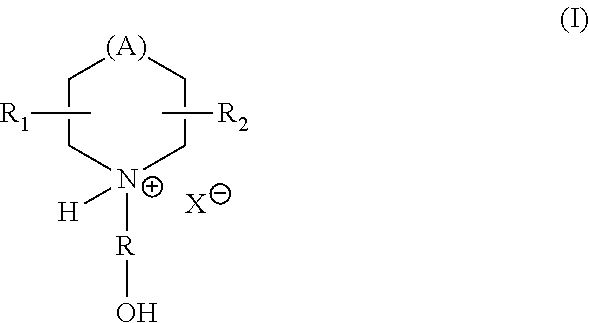
wherein A is —O—, —CH2—, or —NR′—, R′ is hydrogen or an optionally substituted C1-C10 alkyl or C2-C10 alkenyl group; R is a C1-C6 alkylene chain, wherein the hydroxyl group can be attached to any of the carbon atoms of the alkylene chain; R1 and R2 are each independently hydrogen, hydroxyl, or an optionally substituted C1-C20 alkyl, C2-C20 alkenyl, C1-C20 haloalkyl, C2-C20 haloalkenyl, or C6-C10 aryl; and X is a carboxylate anion.


wherein R1 and R2 are each independently hydrogen, hydroxyl, or an optionally substituted C1-C20 alkyl, C2-C20 alkenyl, C1-C20 haloalkyl, C2-C20 haloalkenyl, or C6-C10 aryl; and X is a carboxylate anion. In preferred embodiments of the one or more curing agents of Formula (III), X is the carboxylate anion of acetic acid, hexanoic acid, or tall oil fatty acid.

wherein A is —O—, —CH2—, or —NR′—, R′ is hydrogen or an optionally substituted C1-C10 alkyl or C2-C10 alkenyl group; R is a C1-C6 alkylene chain, wherein the hydroxyl group may be attached to any of the carbon atoms of the alkylene chain; R1 and R2 are each independently hydrogen, hydroxyl, or an optionally substituted C1-C20 alkyl, C2-C20 alkenyl, C1-C20 haloalkyl, C2-C20 haloalkenyl, or C6-C10 aryl; and X is a carboxylate anion.

wherein R is a C1-C6 alkylene chain, wherein the hydroxyl group may be attached to any of the carbon atoms of the alkylene chain; R1 and R2 are each independently hydrogen, hydroxyl, or an optionally substituted C1-C20 alkyl, C2-C20 alkenyl, C1-C20 haloalkyl, C2-C20 haloalkenyl, or C6-C10 aryl; and X is a carboxylate anion.

wherein R1 and R2 are each independently hydrogen, hydroxyl, or an optionally substituted C1-C20 alkyl, C2-C20 alkenyl, C1-C20 haloalkyl, C2-C20 haloalkenyl, or C6-C10 aryl; and X is a carboxylate anion.

wherein R is a C1-C6 alkylene chain, wherein the hydroxyl group may be attached to any of the carbon atoms of the alkylene chain; R1 and R2 are each independently hydrogen, hydroxyl, or an optionally substituted C1-C20 alkyl, C2-C20 alkenyl, C1-C20 haloalkyl, C2-C20 haloalkenyl, or C6-C10 aryl; and X is a carboxylate anion, wherein a ratio of a weight percentage of the resin to a weight percentage of the curing agent or curing agents is from about 12:1 to about 15:1.

wherein R1 and R2 are each independently hydrogen, hydroxyl, or an optionally substituted C1-C20 alkyl, C2-C20 alkenyl, C1-C20 haloalkyl, C2-C20 haloalkenyl, or C6-C10 aryl; and X is a carboxylate anion.

wherein A is —O—, —CH2—, or —NR′—, R′ is hydrogen or an optionally substituted C1-C10 alkyl or C2-C10 alkenyl group; R is a C1-C6 alkylene chain, wherein the hydroxyl group may be attached to any of the carbon atoms of the alkylene chain; R1 and R2 are each independently hydrogen, hydroxyl, or an optionally substituted C1-C20 alkyl, C2-C20 alkenyl, C1-C20 haloalkyl, C2-C20 haloalkenyl, or C6-C10 aryl; and X is a carboxylate anion.

wherein R is a C1-C6 alkylene chain, wherein the hydroxyl group may be attached to any of the carbon atoms of the alkylene chain; R1 and R2 are each independently hydrogen, hydroxyl, or an optionally substituted C1-C20 alkyl, C2-C20 alkenyl, C1-C20 haloalkyl, C2-C20 haloalkenyl, or C6-C10 aryl; and X is a carboxylate anion.

| TABLE 1 |
| Curable Composition vs. Pot Life at 21 °C. |
| Curable | Ratio of wt.% of | Pot Life at |
| Composition | Resin to Curing Agent | 21 °C. (hours) |
| 1 (Comparative) | 10:1 | 9 |
| 2 (Comparative) | 11:1 | 12 |
| 3 (Inventive) | 12:1 | 18 |
| 4 (Inventive) | 15:1 | 22 |
| 5 (Comparative) | 18:1 | 30 |
| 6 (Comparative) | 20:1 | 38 |
Claims (16)

Priority Applications (4)
| Application Number | Priority Date | Filing Date | Title |
|---|---|---|---|
| US16/125,077 US10696839B2 (en) | 2018-09-07 | 2018-09-07 | Curable composition for cured in place pipes |
| US16/885,611 US10865305B2 (en) | 2018-09-07 | 2020-05-28 | Method of curing a cured-in-place liner |
| US17/121,324 US11130858B2 (en) | 2018-09-07 | 2020-12-14 | Curable compositions for cured-in-place pipes |
| US17/472,275 US20220006633A1 (en) | 2018-09-07 | 2021-09-10 | Curable compositions for cured-in-place pipes |
Applications Claiming Priority (1)
| Application Number | Priority Date | Filing Date | Title |
|---|---|---|---|
| US16/125,077 US10696839B2 (en) | 2018-09-07 | 2018-09-07 | Curable composition for cured in place pipes |
Related Child Applications (1)
| Application Number | Title | Priority Date | Filing Date |
|---|---|---|---|
| US16/885,611 Division US10865305B2 (en) | 2018-09-07 | 2020-05-28 | Method of curing a cured-in-place liner |
Publications (2)
| Publication Number | Publication Date |
|---|---|
| US20200079953A1 US20200079953A1 (en) | 2020-03-12 |
| US10696839B2 true US10696839B2 (en) | 2020-06-30 |
Family
ID=69720477
Family Applications (4)
| Application Number | Title | Priority Date | Filing Date |
|---|---|---|---|
| US16/125,077 Active US10696839B2 (en) | 2018-09-07 | 2018-09-07 | Curable composition for cured in place pipes |
| US16/885,611 Active US10865305B2 (en) | 2018-09-07 | 2020-05-28 | Method of curing a cured-in-place liner |
| US17/121,324 Active US11130858B2 (en) | 2018-09-07 | 2020-12-14 | Curable compositions for cured-in-place pipes |
| US17/472,275 Pending US20220006633A1 (en) | 2018-09-07 | 2021-09-10 | Curable compositions for cured-in-place pipes |
Family Applications After (3)
| Application Number | Title | Priority Date | Filing Date |
|---|---|---|---|
| US16/885,611 Active US10865305B2 (en) | 2018-09-07 | 2020-05-28 | Method of curing a cured-in-place liner |
| US17/121,324 Active US11130858B2 (en) | 2018-09-07 | 2020-12-14 | Curable compositions for cured-in-place pipes |
| US17/472,275 Pending US20220006633A1 (en) | 2018-09-07 | 2021-09-10 | Curable compositions for cured-in-place pipes |
Country Status (1)
| Country | Link |
|---|---|
| US (4) | US10696839B2 (en) |
Cited By (1)
| Publication number | Priority date | Publication date | Assignee | Title |
|---|---|---|---|---|
| US11130858B2 (en) | 2018-09-07 | 2021-09-28 | Pipefusion Cipp Corporation | Curable compositions for cured-in-place pipes |
Citations (7)
| Publication number | Priority date | Publication date | Assignee | Title |
|---|---|---|---|---|
| US3792016A (en) | 1972-01-06 | 1974-02-12 | Minnesota Mining & Mfg | Metal imidazolate-catalyzed systems |
| US20070116961A1 (en) | 2005-11-23 | 2007-05-24 | 3M Innovative Properties Company | Anisotropic conductive adhesive compositions |
| US20100184925A1 (en) | 2007-06-13 | 2010-07-22 | Basf Se | Catalyst for curing epoxides |
| US20100227981A1 (en) * | 2009-03-04 | 2010-09-09 | Air Products And Chemicals, Inc. | Epoxide-based composition |
| US20140243456A1 (en) * | 2013-02-28 | 2014-08-28 | Air Products And Chemicals, Inc. | Anhydride Accelerators for Epoxy Resin Systems |
| US20160017087A1 (en) | 2014-07-16 | 2016-01-21 | Air Products And Chemicals, Inc. | Epoxide-Based Composition |
| US20180171067A1 (en) * | 2016-12-21 | 2018-06-21 | Evonik Degussa Gmbh | N-hydroxyl ethyl piperidine (nhep): a novel curing agent for epoxy systems |
Family Cites Families (2)
| Publication number | Priority date | Publication date | Assignee | Title |
|---|---|---|---|---|
| CA3111761A1 (en) | 2018-09-07 | 2020-03-12 | Pipefusion Cipp Corporation | Curable composition for cured in place pipes |
| US10696839B2 (en) | 2018-09-07 | 2020-06-30 | Pipefusion Cipp Corporation | Curable composition for cured in place pipes |
-
2018
- 2018-09-07 US US16/125,077 patent/US10696839B2/en active Active
-
2020
- 2020-05-28 US US16/885,611 patent/US10865305B2/en active Active
- 2020-12-14 US US17/121,324 patent/US11130858B2/en active Active
-
2021
- 2021-09-10 US US17/472,275 patent/US20220006633A1/en active Pending
Patent Citations (9)
| Publication number | Priority date | Publication date | Assignee | Title |
|---|---|---|---|---|
| US3792016A (en) | 1972-01-06 | 1974-02-12 | Minnesota Mining & Mfg | Metal imidazolate-catalyzed systems |
| US20070116961A1 (en) | 2005-11-23 | 2007-05-24 | 3M Innovative Properties Company | Anisotropic conductive adhesive compositions |
| US20100184925A1 (en) | 2007-06-13 | 2010-07-22 | Basf Se | Catalyst for curing epoxides |
| US20100227981A1 (en) * | 2009-03-04 | 2010-09-09 | Air Products And Chemicals, Inc. | Epoxide-based composition |
| US20140243456A1 (en) * | 2013-02-28 | 2014-08-28 | Air Products And Chemicals, Inc. | Anhydride Accelerators for Epoxy Resin Systems |
| US20140303342A1 (en) * | 2013-02-28 | 2014-10-09 | Air Products And Chemicals, Inc. | One Component Epoxy Curing Agents Comprising Hydroxyalkylamino Cycloalkanes |
| US9738750B2 (en) | 2013-02-28 | 2017-08-22 | Veonik Degussa GmbH | One component epoxy curing agents comprising hydroxyalkylamino cycloalkanes |
| US20160017087A1 (en) | 2014-07-16 | 2016-01-21 | Air Products And Chemicals, Inc. | Epoxide-Based Composition |
| US20180171067A1 (en) * | 2016-12-21 | 2018-06-21 | Evonik Degussa Gmbh | N-hydroxyl ethyl piperidine (nhep): a novel curing agent for epoxy systems |
Non-Patent Citations (9)
| Title |
|---|
| "Ancamine® 2910 Curing Agent," Air Products, Product Description, 125-15-040-US, 2015. |
| "Ancamine® 2910 Curing Agent," Air Products, Safety Data Sheet, Version 0.1, Revised Apr. 14, 2015. |
| "Epodil 748 Diluent," Air Products, Safety Data Sheet, Version 2.2, Revised Sep. 9, 2015. |
| "Epon™ Resin 828," Hexion, Safety Data Sheet, Version 19.0, Revised Feb. 3, 2015. |
| "Epon™ Resin 828," Momentive, Technical Data Sheet, Revised May 15, 2014. |
| "Epoxy Curing Agents and Modifiers: Epodil® 748 Reactive Diluent," Evonik Corporation, Product Description, May 2017. |
| European Patent Office, International Search Report in International Application No. PCT/US2018/050008 (dated Jun. 17, 2019). |
| European Patent Office, Written Opinion in International Application No. PCT/US2018/050008 (dated Jun. 17, 2019). |
| U.S. Appl. No. 16/216,311, filed Dec. 11, 2018. |
Cited By (1)
| Publication number | Priority date | Publication date | Assignee | Title |
|---|---|---|---|---|
| US11130858B2 (en) | 2018-09-07 | 2021-09-28 | Pipefusion Cipp Corporation | Curable compositions for cured-in-place pipes |
Also Published As
| Publication number | Publication date |
|---|---|
| US20210095114A1 (en) | 2021-04-01 |
| US10865305B2 (en) | 2020-12-15 |
| US20220006633A1 (en) | 2022-01-06 |
| US20200079953A1 (en) | 2020-03-12 |
| US20200291224A1 (en) | 2020-09-17 |
| US11130858B2 (en) | 2021-09-28 |
Similar Documents
| Publication | Publication Date | Title |
|---|---|---|
| US10017603B2 (en) | One component epoxy curing agents comprising hydroxyalkylamino cycloalkanes | |
| KR102094218B1 (en) | One component epoxy curing agents comprising hydroxyalkylamino cycloalkanes | |
| US4762585A (en) | Process for lining the inner surfaces of pipes or pipe sections | |
| EP2746328A1 (en) | Epoxy resin compositions using solvated solids | |
| US8513376B2 (en) | Polyamides and amidoamines from selectively modified amine amines | |
| US11130858B2 (en) | Curable compositions for cured-in-place pipes | |
| EP3497147A1 (en) | Anhydride epoxy curing agents having imidazole salt additives for epoxy resin systems | |
| AU2024204145A1 (en) | Curable composition for cured in place pipes | |
| US12378452B2 (en) | Latent epoxy-amine composition for CIPP application | |
| US11365313B2 (en) | Cardanol blocked isocyanate adhesion promotor for PVC plastisol | |
| JPH03281223A (en) | Method of lining pipes |
Legal Events
| Date | Code | Title | Description |
|---|---|---|---|
| FEPP | Fee payment procedure |
Free format text: ENTITY STATUS SET TO UNDISCOUNTED (ORIGINAL EVENT CODE: BIG.); ENTITY STATUS OF PATENT OWNER: SMALL ENTITY |
|
| FEPP | Fee payment procedure |
Free format text: ENTITY STATUS SET TO SMALL (ORIGINAL EVENT CODE: SMAL); ENTITY STATUS OF PATENT OWNER: SMALL ENTITY |
|
| AS | Assignment |
Owner name: INTELLECTUAL PROPERTY RESOURCES, INC., ILLINOIS Free format text: ASSIGNMENT OF ASSIGNORS INTEREST;ASSIGNORS:NAWRACAJ, RICHARD E.;URBIETA, GABRIEL;DEJESUS, RADAMES;REEL/FRAME:049423/0642 Effective date: 20190605 |
|
| AS | Assignment |
Owner name: CORVIXX POLYMERS CIPP CORPORATION, ILLINOIS Free format text: ASSIGNMENT OF ASSIGNORS INTEREST;ASSIGNOR:INTELLECTUAL PROPERTY RESOURCES, INC.;REEL/FRAME:049765/0538 Effective date: 20190605 |
|
| AS | Assignment |
Owner name: PIPEFUSION CIPP CORPORATION, ILLINOIS Free format text: CHANGE OF NAME;ASSIGNOR:CORVIXX POLYMERS CIPP CORPORATION;REEL/FRAME:052531/0864 Effective date: 20200224 |
|
| STCF | Information on status: patent grant |
Free format text: PATENTED CASE |
|
| MAFP | Maintenance fee payment |
Free format text: PAYMENT OF MAINTENANCE FEE, 4TH YR, SMALL ENTITY (ORIGINAL EVENT CODE: M2551); ENTITY STATUS OF PATENT OWNER: SMALL ENTITY Year of fee payment: 4 |