US10694323B2 - Platform for geo-fence social media - Google Patents
Platform for geo-fence social media Download PDFInfo
- Publication number
- US10694323B2 US10694323B2 US15/995,663 US201815995663A US10694323B2 US 10694323 B2 US10694323 B2 US 10694323B2 US 201815995663 A US201815995663 A US 201815995663A US 10694323 B2 US10694323 B2 US 10694323B2
- Authority
- US
- United States
- Prior art keywords
- content
- location
- client application
- user device
- web server
- Prior art date
- Legal status (The legal status is an assumption and is not a legal conclusion. Google has not performed a legal analysis and makes no representation as to the accuracy of the status listed.)
- Expired - Fee Related, expires
Links
- 238000000034 method Methods 0.000 claims description 22
- 238000004891 communication Methods 0.000 claims description 7
- 238000012544 monitoring process Methods 0.000 claims 2
- 238000009877 rendering Methods 0.000 claims 2
- 238000012552 review Methods 0.000 abstract description 2
- 230000015654 memory Effects 0.000 description 13
- 235000013305 food Nutrition 0.000 description 7
- 230000000694 effects Effects 0.000 description 5
- 230000001413 cellular effect Effects 0.000 description 4
- 238000010586 diagram Methods 0.000 description 4
- 230000006870 function Effects 0.000 description 4
- 235000013550 pizza Nutrition 0.000 description 4
- 238000012545 processing Methods 0.000 description 4
- 238000013475 authorization Methods 0.000 description 3
- 230000003287 optical effect Effects 0.000 description 3
- 238000004590 computer program Methods 0.000 description 2
- 238000012986 modification Methods 0.000 description 2
- 230000004048 modification Effects 0.000 description 2
- 230000003213 activating effect Effects 0.000 description 1
- 230000004913 activation Effects 0.000 description 1
- 238000013459 approach Methods 0.000 description 1
- 230000004888 barrier function Effects 0.000 description 1
- 230000008901 benefit Effects 0.000 description 1
- 230000005540 biological transmission Effects 0.000 description 1
- 238000001514 detection method Methods 0.000 description 1
- 238000005516 engineering process Methods 0.000 description 1
- 230000007274 generation of a signal involved in cell-cell signaling Effects 0.000 description 1
- 235000015220 hamburgers Nutrition 0.000 description 1
- 230000002452 interceptive effect Effects 0.000 description 1
- 238000013507 mapping Methods 0.000 description 1
- 230000001404 mediated effect Effects 0.000 description 1
- 239000003973 paint Substances 0.000 description 1
- 230000002093 peripheral effect Effects 0.000 description 1
- 230000008569 process Effects 0.000 description 1
- 230000001960 triggered effect Effects 0.000 description 1
Images




Classifications
-
- H—ELECTRICITY
- H04—ELECTRIC COMMUNICATION TECHNIQUE
- H04W—WIRELESS COMMUNICATION NETWORKS
- H04W4/00—Services specially adapted for wireless communication networks; Facilities therefor
- H04W4/02—Services making use of location information
- H04W4/021—Services related to particular areas, e.g. point of interest [POI] services, venue services or geofences
-
- H—ELECTRICITY
- H04—ELECTRIC COMMUNICATION TECHNIQUE
- H04W—WIRELESS COMMUNICATION NETWORKS
- H04W4/00—Services specially adapted for wireless communication networks; Facilities therefor
- H04W4/02—Services making use of location information
- H04W4/021—Services related to particular areas, e.g. point of interest [POI] services, venue services or geofences
- H04W4/022—Services related to particular areas, e.g. point of interest [POI] services, venue services or geofences with dynamic range variability
-
- H—ELECTRICITY
- H04—ELECTRIC COMMUNICATION TECHNIQUE
- H04L—TRANSMISSION OF DIGITAL INFORMATION, e.g. TELEGRAPHIC COMMUNICATION
- H04L67/00—Network arrangements or protocols for supporting network services or applications
- H04L67/01—Protocols
- H04L67/02—Protocols based on web technology, e.g. hypertext transfer protocol [HTTP]
-
- H—ELECTRICITY
- H04—ELECTRIC COMMUNICATION TECHNIQUE
- H04W—WIRELESS COMMUNICATION NETWORKS
- H04W4/00—Services specially adapted for wireless communication networks; Facilities therefor
- H04W4/12—Messaging; Mailboxes; Announcements
-
- H—ELECTRICITY
- H04—ELECTRIC COMMUNICATION TECHNIQUE
- H04W—WIRELESS COMMUNICATION NETWORKS
- H04W4/00—Services specially adapted for wireless communication networks; Facilities therefor
- H04W4/18—Information format or content conversion, e.g. adaptation by the network of the transmitted or received information for the purpose of wireless delivery to users or terminals
- H04W4/185—Information format or content conversion, e.g. adaptation by the network of the transmitted or received information for the purpose of wireless delivery to users or terminals by embedding added-value information into content, e.g. geo-tagging
-
- H—ELECTRICITY
- H04—ELECTRIC COMMUNICATION TECHNIQUE
- H04W—WIRELESS COMMUNICATION NETWORKS
- H04W4/00—Services specially adapted for wireless communication networks; Facilities therefor
- H04W4/20—Services signaling; Auxiliary data signalling, i.e. transmitting data via a non-traffic channel
- H04W4/21—Services signaling; Auxiliary data signalling, i.e. transmitting data via a non-traffic channel for social networking applications
Definitions
- Teachings relate to social media. More particularly, teachings relate to social media applications as applied and organized by a plurality of geo-fences.
- Social media are computer-mediated tools that allow people or companies to create, share, or exchange information of general interest. Furthermore, social media depend on mobile and web-based technologies to create highly interactive platforms through which individuals and communities share, co-create, discuss, and modify user-generated content.
- Geo-fencing is the practice of using global positioning (GPS), radio frequency identification (RFID) or cellular networks to define a geographic boundary. Then, once this “virtual barrier” is established, an administrator or user can set up triggers that send a text message, email alert, or app notification when a mobile device enters (or exits) the specified area.
- GPS global positioning
- RFID radio frequency identification
- cellular networks to define a geographic boundary.
- FIG. 1 is a block diagram illustrating a social media network according to various embodiments
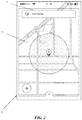
- FIG. 2 is an illustration of a content fence represented on a map
- FIG. 3 is an illustration of a content feed associated with a content fence
- FIG. 4 is an illustration of a channel creation interface
- FIG. 5 is an illustration of a content feed associated with a particular channel with an adjustable content fence
- FIG. 6 is an illustration of a menu screen
- FIG. 7 is an illustration of a content fence suggestion feed
- FIG. 8 is a flowchart illustrating content fence thresholds
- FIG. 9 is a flowchart for managing a content fence feed.
- FIG. 10 is a block diagram illustrating an example of a computing system 1800 in which at least some operations described herein can be implemented.
- a social media application that integrates with a map application which enables the creation of content corrals defined at least by geo-fences (“content fence”) is disclosed.
- Users generate content fences on maps or in reference to mapped objects which are populated by user-generated content and then are subject to a number of social features.
- the social features include, among other things, categorization, peer review, interest suggestion, threshold alerts, private and public messaging, private and public content dissemination, and cloud repository.
- Placement of content fences is related to a map application.
- Embodiments of the map application include those which are fully integrated maps in the social media application, plugin maps, and API map applications. User's select an area on the map or an object which is searchable through the map application for which to attach a content fence. Alternatively, a map searchable object is sent to the user via direct messages wherein the user may attach a content fence to the object via the direct message.
- the social media application includes user interface features that enable the user to adjust the size and character of the content fence.
- One example of the character of a content fence is a photo repository, for photographs taken within the content fence. Other examples are detailed below.
- FIG. 1 is a block diagram illustrating a social media network system 20 according to various embodiments.
- a content fence application is operated both on a server side and mobile device side.
- a processor operated server 22 and mobile devices 24 communicate directly with one another via the Internet.
- the server 22 includes server side application software 26 and the mobile device 24 includes client side application software 28 .
- the server 22 and mobile device 24 each include a processor 30 , 32
- the server 22 optionally includes map software 34 which interfaces with both the server 22 and client side application software 28 .
- the map software 34 can be fully integrated, a plugin program, a map API, or another suitable map program known in the art.
- Both the server 22 and the mobile device 24 include memory and digital storage 36 , 38 used to run application software 26 , 28 .
- the mobile device 24 includes a location aware module 40 .
- the location aware module tracks the location of the mobile device 24 and may include a GPS, cellular triangulation, WiFi triangulation, any combination of the previous, or other suitable means known in the art.
- FIG. 2 is an illustration of a content fence 42 represented on a map 44 .
- the figure includes a street map.
- the user may direct the application to adjust the view of the map 44 .
- Content fences 42 are defined by radii from a given point.
- content fences 42 may be defined as arbitrary polygons (such as polygons drawn by a user on a touchscreen depiction of a map 44 ).
- the point does not have to be fixed.
- the point may follow a mobile device 24 , or another mobile object which broadcasts location signals.
- the circular boundary of the content fence 42 has effects for a set of users whom cross the boundary while carrying a mobile device 24 . The exact nature of these effects depend on the settings and configuration of the content fence 42 .
- a user crossing in or out of the content fence 42 has no effect, whereas others may receive passive or active notifications.
- the map 44 displayed is of a segment of Hollywood, Calif.
- the content fence 42 is centered around a particular wall mural.
- FIG. 3 is an illustration of a content feed associated with a content fence 42 .
- Content fences 42 include posted content.
- a content fence 42 displays contents to a user. Shown in FIG. 3 as an illustrative example is the activated content fence 42 of FIG. 2 , a content fence 42 centered around a painted mural in Hollywood, Calif.
- users view a content fence feed 48 .
- the content fence feed 48 includes a number of elements.
- the content fence feed 48 includes a content fence title 50 that displays information about the particular content fence 42 and/or a channel that the content fence 42 belongs to.
- Content posts 54 are user generated entries of multimedia files such as text, images, video, audio, and other known user post types in the art.
- the content posts 54 are arranged in a live feed style which can be sorted a number of ways (e.g. chronological, by type, by category, by tags, etc.).
- Those users who activate the content fence 42 are enabled to generate content posts 54 by activating a post button 56 .
- the content fence feed 48 includes a sorting menu 58 where users are enabled to sort the content posts 54 . Sorting options include displaying content posts 54 only for those users who have indicated they are friends with one another, displaying all content posts 54 , displaying highly rated or recent content posts 54 , or any other suitable sorting metric known in the art.
- Some content fences 42 may be configured to enforce the requirement that users must activate the content fence 42 prior to posting while others may allow posting from anyone, regardless of whether they have activated the content fence 42 or not.
- Displayed in the content fence feed 48 as an example is a picture of a user in front of the mural for which the content fence 42 is based around.
- an aggregate user rating system is implemented. Users are enabled to down vote content posts as not being relevant. After receiving a predetermined number of “irrelevant” or “inappropriate” votes content posts 54 are removed from the content fence 42 . In this way, the content fence is protected from hosting images that do not pertain to the content fence 42 . In the pictured example, a hamburger restaurant would not be relevant to the Hollywood wall mural.
- the mural content fence 42 is a public content fence which users see merely by looking at the map where the content fence resides.
- content fences are only visible to users who are members of channels to which a content fence 42 or group of content fences 42 are associated with.
- Other functions available to users located inside of content fences 42 include direct messaging or payment authorization.
- direct messaging users who have access to a given content fence 42 (i.e. are included in the user list who may view and interact with the content fence) may send direct messages to one another while inside the content fence 42 .
- the direct messages also include group messaging.
- content fences 42 may interact with payment processing software (e.g., PayPal, Visa, Bitcoin, etc. . . . ).
- payment processing software e.g., PayPal, Visa, Bitcoin, etc. . . .
- the content fence 42 provides authorization for that transaction. For example, payment processing will not complete unless both users party to a transaction have devices located inside the content fence 42 . This helps reduce credit card fraud by verifying that the seller in the transaction is in proximity to the buyer similar to how transactions are verified by a user physically holding a credit card at a credit card machine, digital payment processing is verified via location of the user's mobile device 26 .
- FIG. 4 is an illustration of a channel creation interface 60 .
- Channels provide the application a method to categorize and restrict access to content fences. Creation of channels includes background information 62 for the channel, such as the name, a mission purpose, graphics, and other general details. Channels additionally include privacy settings 64 wherein the creating user designates the channel as public or restricted to certain users, such as friends, or a subset of friends. Users are enabled to invite other users to channels directly. Users within a channel are enabled to direct message one another with messaging functions.
- Channels are associated with one or more content fences 42 .
- Examples where a channel is connected to a single content fence 42 include: where a mobile food truck creates a channel with a mobile content fence 42 pertaining to that food truck and centers the content fence on the food truck and projects a virtual radius around the food truck through the application; where a number of friends create a single meeting location and generate a content fence 42 around that location; and where the community creates a fully public content fence 42 around a monument or tourist attraction such as the Golden Gate Bridge.
- Examples where a channel is connected to multiple content fences 42 include: where a user places an interest in obtaining certain items from a grocery store, and content fences are placed around grocery stores; where a popular artist paints murals all around a city, and content fences 42 are placed around all of the murals; and where a parent generates content fences 42 as zones where a child is expected to be. These examples are not exhaustive, but are intended to provide illustration as to the uses of content fences 42 .
- Notifications for content fences 42 are categorized into style. Such as active notifications which externally notify the user of the mobile device when changes to the content fence occur in a manner similar to an incoming SMS, MMS, or e-mail message. Alternatively there are passive notifications which only alert the user once the client application software is activated. Kinds of events a user is notified of include when a member of the channel enters or leaves the content fence 42 or when content posts are added to the content fence 42 .
- FIG. 5 is an illustration of a content feed 48 associated with a particular channel with an adjustable content fence 42 .
- Displayed is a particular channel with a single content fence 42 associated with a food truck.
- the content fence 42 follows the food truck.
- alerts are sent to those users who are in the food truck's channel, when the content fence 42 is brought to those users (rather than the users entering the circle or arbitrary polygon).
- FIG. 6 is an illustration of a menu screen. Users on their respective mobile devices 24 access the menu screen from the client application software 38 . There are options to search for channels 63 and search for content fences 65 .
- FIG. 7 is an illustration of a content fence suggestion feed 66 .
- the application software 38 includes a suggestion feed 66 .
- the suggestion feed 66 includes a current local map 68 as well as the user's location 70 (as determined by the location of their mobile device).
- the suggestion feed 66 includes suggestion filters 72 that sort and filter the suggested content in the suggestion feed 66 .
- Suggested content are content posts 74 associated with content fences 42 that are public or available to the user for other reasons (ex: the user is friends with a user who has created a channel or content fence that is shared with friends).
- the filters enable a user to see content posts 42 for available content fences 42 the user's friends are posting in, all public content fences 42 and channels close to the user's current location 70 , a combination of the above, or search for particular channels/content fences.
- the suggestion feed 66 provides suggested channels or content fences 42 to users based on a user's stated interests which are included in a user's account information stored in the server application software 26 and supplied through the client application software 38 . Stated interests, or “tags” which are shared between channels/content fences 42 and the user's account information aid the suggestion feed 66 in directing users to particular channels and content fences 42 which the user may want to join.
- the user interface further includes a notification reminder 76 for accessing notifications from crossing content fence boundaries, or when content posts 54 are added to content fences 2 that a given user is following.
- Examples of means to track a user's stated interests include content that the user has upvoted, content that the user has spent the most time viewing, or content that the user shares with others.
- a group of friends create a channel and assign content fence to a coffee shop.
- the content fence is given settings to notify all channel users when any other channel user enters the content fence. This way each user know when the others are arriving to meet one another.
- the application software includes a public content fence around the golden gate bridge which is available for anyone to add content posts of pictures around the bridge, check in, or posts stories about the bridge. Unrelated posts are voted down and disappear.
- the content fence becomes a cloud repository for society's experience of the golden gate bridge.
- a parent sets up a channel for their family, and creates a number of content fences for locations the parent expects the child to be. When the child arrives at or leaves from one of the content fences, the parent is provided with a notification.
- a group of friends create a channel and assign content fences around each other. When the friend's content fences intersect, those friends are sent notifications.
- a user generates a private content fence centered around “grocery stores” and populates the content fence with a grocery list.
- the user enters a content fence around a grocery store, identified via the map software, the user is provided with a notification and presented with the grocery list that user wrote.
- a pizza delivery service has a public channel which users can join, and content fences are placed around the pizza drivers. When the drivers approach the user who ordered the pizza, the user is notified that their pizza is nearly there and to expect someone at the door shortly.
- FIG. 8 is a flowchart illustrating content fence thresholds.
- the client application references mapping software to obtain maps and map data.
- the mobile device determines its location. This occurs through the use of GPS, or triangulation using cellular networks, or other suitable wireless networks known in the art for location mapping.
- the application software determines whether or not a content fence perimeter has been crossed. If a perimeter crossing has occurred, then the application software delivers an alert to a related mobile device. depending on the settings of the content fence or channel associated therewith, the device which receives the alert may not be the same device which triggered it.
- FIG. 9 is a flowchart for managing a content fence feed.
- the client application references mapping software to obtain maps and map data.
- the mobile device determines its location.
- the client software determines whether or not to display local content fences. This determination is made based on selected interface screens and settings within the application. If the local content fences are displayed, in step 908 , notifications for the local content fences are forwarded to the content feed.
- step 910 the client application software waits to receive a request to search for a particular content fence. If that request is received, in step 912 , the client application receives from the server application search results to display the searched content fences. In step 914 , the client application software waits receive a request to activate of select a content fence in order to display the content posts therein. In step 916 , if the activation command is received, the client application software receives from the server application the content post data of the activated content fence.
- FIG. 10 is a block diagram illustrating an example of a computing system 1800 in which at least some operations described herein can be implemented.
- the computing system may include one or more central processing units (“processors”) 1802 , main memory 1806 , non-volatile memory 1810 , network adapter 1012 (e.g., network interfaces), video display 1818 , input/output devices 1820 , control device 1822 (e.g., keyboard and pointing devices), drive unit 1024 including a storage medium 1826 , and signal generation device 1830 that are communicatively connected to a bus 1816 .
- the bus 1816 is illustrated as an abstraction that represents any one or more separate physical buses, point to point connections, or both connected by appropriate bridges, adapters, or controllers.
- the bus 1816 can include, for example, a system bus, a Peripheral Component Interconnect (PCI) bus or PCI-Express bus, a HyperTransport or industry standard architecture (ISA) bus, a small computer system interface (SCSI) bus, a universal serial bus (USB), IIC (I2C) bus, or an Institute of Electrical and Electronics Engineers (IEEE) standard 1394 bus, also called “Firewire.”
- PCI Peripheral Component Interconnect
- ISA HyperTransport or industry standard architecture
- SCSI small computer system interface
- USB universal serial bus
- I2C IIC
- IEEE Institute of Electrical and Electronics Engineers
- the computing system 1800 operates as a standalone device, although the computing system 1800 may be connected (e.g., wired or wirelessly) to other machines. In a networked deployment, the computing system 1800 may operate in the capacity of a server or a client machine in a client-server network environment, or as a peer machine in a peer-to-peer (or distributed) network environment.
- the computing system 1800 may be a server computer, a client computer, a personal computer (PC), a user device, a tablet PC, a laptop computer, a personal digital assistant (PDA), a cellular telephone, an iPhone, an iPad, a Blackberry, a processor, a telephone, a web appliance, a network router, switch or bridge, a console, a hand-held console, a (hand-held) gaming device, a music player, any portable, mobile, hand-held device, or any machine capable of executing a set of instructions (sequential or otherwise) that specify actions to be taken by the computing system.
- PC personal computer
- PDA personal digital assistant
- main memory 1006 non-volatile memory 1010 , and storage medium 1026 (also called a “machine-readable medium) are shown to be a single medium, the term “machine-readable medium” and “storage medium” should be taken to include a single medium or multiple media (e.g., a centralized or distributed database, and/or associated caches and servers) that store one or more sets of instructions 1028 .
- the term “machine-readable medium” and “storage medium” shall also be taken to include any medium that is capable of storing, encoding, or carrying a set of instructions for execution by the computing system and that cause the computing system to perform any one or more of the methodologies of the presently disclosed embodiments.
- routines executed to implement the embodiments of the disclosure may be implemented as part of an operating system or a specific application, component, program, object, module or sequence of instructions referred to as “computer programs.”
- the computer programs typically comprise one or more instructions (e.g., instructions 1004 , 1008 , 1028 ) set at various times in various memory and storage devices in a computer, and that, when read and executed by one or more processing units or processors 1802 , cause the computing system 1000 to perform operations to execute elements involving the various aspects of the disclosure.
- machine-readable storage media machine-readable media, or computer-readable (storage) media
- recordable type media such as volatile and non-volatile memory devices 1010 , floppy and other removable disks, hard disk drives, optical disks (e.g., Compact Disk Read-Only Memory (CD ROMS), Digital Versatile Disks, (DVDs)), and transmission type media such as digital and analog communication links.
- CD ROMS Compact Disk Read-Only Memory
- DVDs Digital Versatile Disks
- transmission type media such as digital and analog communication links.
- the network adapter 1012 enables the computing system 1800 to mediate data in a network 1014 with an entity that is external to the computing device 1000 , through any known and/or convenient communications protocol supported by the computing system 1000 and the external entity.
- the network adapter 1012 can include one or more of a network adaptor card, a wireless network interface card, a router, an access point, a wireless router, a switch, a multilayer switch, a protocol converter, a gateway, a bridge, bridge router, a hub, a digital media receiver, and/or a repeater.
- the network adapter 1012 can include a firewall which can, in some embodiments, govern and/or manage permission to access/proxy data in a computer network, and track varying levels of trust between different machines and/or applications.
- the firewall can be any number of modules having any combination of hardware and/or software components able to enforce a predetermined set of access rights between a particular set of machines and applications, machines and machines, and/or applications and applications, for example, to regulate the flow of traffic and resource sharing between these varying entities.
- the firewall may additionally manage and/or have access to an access control list which details permissions including for example, the access and operation rights of an object by an individual, a machine, and/or an application, and the circumstances under which the permission rights stand.
- Other network security functions can be performed or included in the functions of the firewall, can include, but are not limited to, intrusion-prevention, intrusion detection, next-generation firewall, personal firewall, etc.
- inventions introduced herein can be embodied as special-purpose hardware (e.g., circuitry), or as programmable circuitry appropriately programmed with software and/or firmware, or as a combination of special-purpose and programmable circuitry.
- embodiments may include a machine-readable medium having stored thereon instructions which may be used to program a computer (or other electronic devices) to perform a process.
- the machine-readable medium may include, but is not limited to, floppy diskettes, optical disks, compact disk read-only memories (CD-ROMs), magneto-optical disks, read-only memories (ROMs), random access memories (RAMs), erasable programmable read-only memories (EPROMs), electrically erasable programmable read-only memories (EEPROMs), magnetic or optical cards, flash memory, or other type of media/machine-readable medium suitable for storing electronic instructions.
- CD-ROMs compact disk read-only memories
- ROMs read-only memories
- RAMs random access memories
- EPROMs erasable programmable read-only memories
- EEPROMs electrically erasable programmable read-only memories
Landscapes
- Engineering & Computer Science (AREA)
- Computer Networks & Wireless Communication (AREA)
- Signal Processing (AREA)
- Information Transfer Between Computers (AREA)
- Telephonic Communication Services (AREA)
- Mobile Radio Communication Systems (AREA)
- Emergency Alarm Devices (AREA)
- Alarm Systems (AREA)
Abstract
Description
Claims (23)
Priority Applications (1)
| Application Number | Priority Date | Filing Date | Title |
|---|---|---|---|
| US15/995,663 US10694323B2 (en) | 2016-05-09 | 2018-06-01 | Platform for geo-fence social media |
Applications Claiming Priority (3)
| Application Number | Priority Date | Filing Date | Title |
|---|---|---|---|
| US201662333762P | 2016-05-09 | 2016-05-09 | |
| US15/446,574 US9992620B2 (en) | 2016-05-09 | 2017-03-01 | Platform for geo-fence social media |
| US15/995,663 US10694323B2 (en) | 2016-05-09 | 2018-06-01 | Platform for geo-fence social media |
Related Parent Applications (1)
| Application Number | Title | Priority Date | Filing Date |
|---|---|---|---|
| US15/446,574 Continuation US9992620B2 (en) | 2016-05-09 | 2017-03-01 | Platform for geo-fence social media |
Publications (2)
| Publication Number | Publication Date |
|---|---|
| US20180279077A1 US20180279077A1 (en) | 2018-09-27 |
| US10694323B2 true US10694323B2 (en) | 2020-06-23 |
Family
ID=60244230
Family Applications (2)
| Application Number | Title | Priority Date | Filing Date |
|---|---|---|---|
| US15/446,574 Expired - Fee Related US9992620B2 (en) | 2016-05-09 | 2017-03-01 | Platform for geo-fence social media |
| US15/995,663 Expired - Fee Related US10694323B2 (en) | 2016-05-09 | 2018-06-01 | Platform for geo-fence social media |
Family Applications Before (1)
| Application Number | Title | Priority Date | Filing Date |
|---|---|---|---|
| US15/446,574 Expired - Fee Related US9992620B2 (en) | 2016-05-09 | 2017-03-01 | Platform for geo-fence social media |
Country Status (8)
| Country | Link |
|---|---|
| US (2) | US9992620B2 (en) |
| EP (1) | EP3455737A4 (en) |
| JP (1) | JP2019525281A (en) |
| KR (1) | KR102119668B1 (en) |
| CN (1) | CN109154929B (en) |
| AU (2) | AU2017264396B2 (en) |
| CA (1) | CA3020536A1 (en) |
| WO (1) | WO2017196435A1 (en) |
Families Citing this family (6)
| Publication number | Priority date | Publication date | Assignee | Title |
|---|---|---|---|---|
| US10433107B1 (en) * | 2018-05-23 | 2019-10-01 | Futurewei Technologies, Inc. | System and method for enabling polygon geofence services on mobile devices |
| US10902074B2 (en) * | 2018-06-14 | 2021-01-26 | International Business Machines Corporation | Related post identification and presentation |
| US11272326B2 (en) * | 2020-01-30 | 2022-03-08 | Slack Technologies, Llc | Methods, apparatuses and computer program products for implementing communication barriers in a group-based communication system |
| US12099997B1 (en) | 2020-01-31 | 2024-09-24 | Steven Mark Hoffberg | Tokenized fungible liabilities |
| EP4102863B1 (en) * | 2020-03-09 | 2025-02-19 | Gamania Digital Entertainment Co., Ltd. | Time and location-based message management method |
| KR102438833B1 (en) * | 2020-12-29 | 2022-09-02 | (주)피플앤드테크놀러지 | User terminal-based positioning method for contact tracking |
Citations (26)
| Publication number | Priority date | Publication date | Assignee | Title |
|---|---|---|---|---|
| US20070015520A1 (en) * | 2005-07-12 | 2007-01-18 | Qwest Communications International Inc. | Efficiently determining the location of a mobile communications device system and methods |
| US20120172027A1 (en) * | 2011-01-03 | 2012-07-05 | Mani Partheesh | Use of geofences for location-based activation and control of services |
| US20130030931A1 (en) * | 2011-07-26 | 2013-01-31 | Mehran Moshfeghi | Method and System for Location Based Hands-Free Payment |
| US20130143586A1 (en) | 2011-12-02 | 2013-06-06 | Yellowpages.Com, Llc | Systems and Methods for Location Sensitive Alerts in a Mobile Communication Network |
| KR20140089537A (en) | 2011-11-09 | 2014-07-15 | 마이크로소프트 코포레이션 | Geo-fence based on geo-tagged media |
| US20140274118A1 (en) * | 2013-03-15 | 2014-09-18 | Guy CARMEL | Systems and methods for approximating geo-fencing locations |
| CN104160728A (en) | 2012-08-22 | 2014-11-19 | 电子湾有限公司 | Passive dynamic geofencing for mobile devices |
| US20150011237A1 (en) | 2011-08-19 | 2015-01-08 | Phunware, Inc. | Geo-fence entry and exit notification system |
| US20150095355A1 (en) | 2012-11-15 | 2015-04-02 | Banjo, Inc. | Systems and methods for dynamic event content curation |
| US20150163630A1 (en) | 2013-12-06 | 2015-06-11 | Mapquest, Inc. | Systems and methods for geo-location based message streams |
| US20150181016A1 (en) | 2013-12-20 | 2015-06-25 | Ebay Inc. | System and method to utilize geo-fences to limit calls to a server system from a user's mobile device |
| US20150186943A1 (en) | 2013-12-30 | 2015-07-02 | Kt Corporation | Advertisement scheme |
| US20150237475A1 (en) | 2014-02-20 | 2015-08-20 | Denice M. HENSON | Dynamic Event Notification System for Mobile Devices |
| US20150319568A1 (en) | 2013-09-10 | 2015-11-05 | Life360, Inc. | Apparatus and method for generating, displaying and implementing a geo-fence using location determination of mobile devices within a location-based group |
| US20150327015A1 (en) | 2014-05-09 | 2015-11-12 | Microsoft Corporation | Location tracking based on overlapping geo-fences |
| US20150341747A1 (en) * | 2014-05-21 | 2015-11-26 | Aol Inc. | Systems and methods for deploying dynamic geo-fences based on content consumption levels in a geographic location |
| US20160007151A1 (en) | 2013-02-22 | 2016-01-07 | Intel Corporation | Public and private geo-fences |
| US20160005077A1 (en) | 2014-07-02 | 2016-01-07 | Aol Inc. | Systems and methods for enabling access to digital content based on geographic locations visited by mobile device users |
| KR20160018838A (en) | 2013-06-28 | 2016-02-17 | 구글 인코포레이티드 | Clustering geofence-based alerts for mobile devices |
| US20160088546A1 (en) | 2014-09-19 | 2016-03-24 | Intel Corporation | Regulation via geofence boundary segment crossings |
| US20160094944A1 (en) | 2014-09-30 | 2016-03-31 | Ebay Inc. | Super geo-fences and virtual fences to improve efficiency of geo-fences |
| US9330053B1 (en) * | 2013-07-24 | 2016-05-03 | Sprint Communications Company L.P. | True push architecture for internet protocol notification |
| US20160345171A1 (en) | 2014-01-03 | 2016-11-24 | Mcafee, Inc. | Secure context sharing for priority calling and various personal safety mechanisms |
| US20170019777A1 (en) * | 2015-07-18 | 2017-01-19 | Digital Management, Inc. | Secure emergency response technology |
| US9560481B1 (en) | 2015-08-14 | 2017-01-31 | T-Mobile U.S.A, Inc. | Establishing geo-fences and related alarms |
| US20180198755A1 (en) * | 2007-06-12 | 2018-07-12 | Icontrol Networks, Inc. | Integrated security and control system with geofencing |
Family Cites Families (1)
| Publication number | Priority date | Publication date | Assignee | Title |
|---|---|---|---|---|
| US8536999B2 (en) * | 2008-07-16 | 2013-09-17 | Qualcomm Incorporated | Method for dynamic creation of a GeoFence in a wireless system |
-
2017
- 2017-03-01 US US15/446,574 patent/US9992620B2/en not_active Expired - Fee Related
- 2017-03-02 AU AU2017264396A patent/AU2017264396B2/en not_active Ceased
- 2017-03-02 CA CA3020536A patent/CA3020536A1/en not_active Abandoned
- 2017-03-02 WO PCT/US2017/020470 patent/WO2017196435A1/en not_active Ceased
- 2017-03-02 JP JP2018560001A patent/JP2019525281A/en active Pending
- 2017-03-02 KR KR1020187033415A patent/KR102119668B1/en not_active Expired - Fee Related
- 2017-03-02 EP EP17796516.7A patent/EP3455737A4/en not_active Withdrawn
- 2017-03-02 CN CN201780028584.5A patent/CN109154929B/en not_active Expired - Fee Related
-
2018
- 2018-06-01 US US15/995,663 patent/US10694323B2/en not_active Expired - Fee Related
-
2019
- 2019-09-12 AU AU2019229388A patent/AU2019229388A1/en not_active Abandoned
Patent Citations (28)
| Publication number | Priority date | Publication date | Assignee | Title |
|---|---|---|---|---|
| US20070015520A1 (en) * | 2005-07-12 | 2007-01-18 | Qwest Communications International Inc. | Efficiently determining the location of a mobile communications device system and methods |
| US20180198755A1 (en) * | 2007-06-12 | 2018-07-12 | Icontrol Networks, Inc. | Integrated security and control system with geofencing |
| US20120172027A1 (en) * | 2011-01-03 | 2012-07-05 | Mani Partheesh | Use of geofences for location-based activation and control of services |
| US20130030931A1 (en) * | 2011-07-26 | 2013-01-31 | Mehran Moshfeghi | Method and System for Location Based Hands-Free Payment |
| US20150011237A1 (en) | 2011-08-19 | 2015-01-08 | Phunware, Inc. | Geo-fence entry and exit notification system |
| KR20140089537A (en) | 2011-11-09 | 2014-07-15 | 마이크로소프트 코포레이션 | Geo-fence based on geo-tagged media |
| US20130143586A1 (en) | 2011-12-02 | 2013-06-06 | Yellowpages.Com, Llc | Systems and Methods for Location Sensitive Alerts in a Mobile Communication Network |
| CN104160728A (en) | 2012-08-22 | 2014-11-19 | 电子湾有限公司 | Passive dynamic geofencing for mobile devices |
| US20150095355A1 (en) | 2012-11-15 | 2015-04-02 | Banjo, Inc. | Systems and methods for dynamic event content curation |
| US20160007151A1 (en) | 2013-02-22 | 2016-01-07 | Intel Corporation | Public and private geo-fences |
| US20140274118A1 (en) * | 2013-03-15 | 2014-09-18 | Guy CARMEL | Systems and methods for approximating geo-fencing locations |
| KR20160018838A (en) | 2013-06-28 | 2016-02-17 | 구글 인코포레이티드 | Clustering geofence-based alerts for mobile devices |
| US9330053B1 (en) * | 2013-07-24 | 2016-05-03 | Sprint Communications Company L.P. | True push architecture for internet protocol notification |
| US20150319568A1 (en) | 2013-09-10 | 2015-11-05 | Life360, Inc. | Apparatus and method for generating, displaying and implementing a geo-fence using location determination of mobile devices within a location-based group |
| US9294876B2 (en) | 2013-09-10 | 2016-03-22 | Life360, Inc. | Apparatus and method for generating, displaying and implementing a geo-fence using location determination of mobile devices within a location-based group |
| WO2015084678A1 (en) | 2013-12-06 | 2015-06-11 | Mapquest, Inc. | Systems and methods for geo-location based message streams |
| US20150163630A1 (en) | 2013-12-06 | 2015-06-11 | Mapquest, Inc. | Systems and methods for geo-location based message streams |
| US20150181016A1 (en) | 2013-12-20 | 2015-06-25 | Ebay Inc. | System and method to utilize geo-fences to limit calls to a server system from a user's mobile device |
| US20150186943A1 (en) | 2013-12-30 | 2015-07-02 | Kt Corporation | Advertisement scheme |
| US20160345171A1 (en) | 2014-01-03 | 2016-11-24 | Mcafee, Inc. | Secure context sharing for priority calling and various personal safety mechanisms |
| US20150237475A1 (en) | 2014-02-20 | 2015-08-20 | Denice M. HENSON | Dynamic Event Notification System for Mobile Devices |
| US20150327015A1 (en) | 2014-05-09 | 2015-11-12 | Microsoft Corporation | Location tracking based on overlapping geo-fences |
| US20150341747A1 (en) * | 2014-05-21 | 2015-11-26 | Aol Inc. | Systems and methods for deploying dynamic geo-fences based on content consumption levels in a geographic location |
| US20160005077A1 (en) | 2014-07-02 | 2016-01-07 | Aol Inc. | Systems and methods for enabling access to digital content based on geographic locations visited by mobile device users |
| US20160088546A1 (en) | 2014-09-19 | 2016-03-24 | Intel Corporation | Regulation via geofence boundary segment crossings |
| US20160094944A1 (en) | 2014-09-30 | 2016-03-31 | Ebay Inc. | Super geo-fences and virtual fences to improve efficiency of geo-fences |
| US20170019777A1 (en) * | 2015-07-18 | 2017-01-19 | Digital Management, Inc. | Secure emergency response technology |
| US9560481B1 (en) | 2015-08-14 | 2017-01-31 | T-Mobile U.S.A, Inc. | Establishing geo-fences and related alarms |
Also Published As
| Publication number | Publication date |
|---|---|
| US20170325063A1 (en) | 2017-11-09 |
| WO2017196435A1 (en) | 2017-11-16 |
| JP2019525281A (en) | 2019-09-05 |
| AU2019229388A1 (en) | 2019-10-03 |
| KR102119668B1 (en) | 2020-06-08 |
| EP3455737A1 (en) | 2019-03-20 |
| CA3020536A1 (en) | 2017-11-16 |
| AU2017264396A1 (en) | 2018-11-22 |
| AU2017264396B2 (en) | 2019-09-19 |
| US9992620B2 (en) | 2018-06-05 |
| KR20190004301A (en) | 2019-01-11 |
| CN109154929B (en) | 2020-08-07 |
| CN109154929A (en) | 2019-01-04 |
| EP3455737A4 (en) | 2019-09-25 |
| US20180279077A1 (en) | 2018-09-27 |
Similar Documents
| Publication | Publication Date | Title |
|---|---|---|
| US9992620B2 (en) | Platform for geo-fence social media | |
| US10546353B2 (en) | Geo-location systems and methods | |
| US8494560B2 (en) | System, method and program product for location based services, asset management and tracking | |
| US8559980B2 (en) | Method and system for integrated messaging and location services | |
| US9712962B2 (en) | Public and private geo-fences | |
| US20130227017A1 (en) | Location associated virtual interaction, virtual networking and virtual data management | |
| US11477315B2 (en) | Contact information exchanging and content system and method for networking and marketing | |
| WO2015124449A1 (en) | An analytics server and method | |
| US11477606B2 (en) | Location-based social networking | |
| TW201240507A (en) | A method and apparatus for displaying aggregated information of location based services | |
| US9342852B1 (en) | Visual indicators for account access in a social network | |
| JP2017519312A (en) | A global exchange platform for film industry professionals | |
| US20180124060A1 (en) | Method to notify entities to preserve privacy and track compliance | |
| US20140236542A1 (en) | Interior spaces in a geo-spatial environment | |
| EP3149688A1 (en) | Personal intelligence platform | |
| CN108076439B (en) | Method and device for pushing messages based on wireless access point | |
| KR20120087323A (en) | Method and System for Managing Smart Network Using GPS | |
| KR102678394B1 (en) | System for location-based augmented reality memo advertisement service and advertisement service method of the system | |
| US20140108961A1 (en) | System and method for establishing cultural connections within an online computer system social media platform | |
| Tantothai et al. | mipMAP: A mobile application for proximate social network communication | |
| WO2015015413A2 (en) | Social network implementation techniques | |
| US20200163157A1 (en) | Systems and methods for managing hyper-localized communication networks | |
| AU2012101624A4 (en) | Methods and Systems for Facilitating a Meeting between Two or More Members of a Social Network | |
| Groh et al. | State of the art in mobile social networking on the web | |
| US20140194144A1 (en) | Processing place markers |
Legal Events
| Date | Code | Title | Description |
|---|---|---|---|
| FEPP | Fee payment procedure |
Free format text: ENTITY STATUS SET TO UNDISCOUNTED (ORIGINAL EVENT CODE: BIG.); ENTITY STATUS OF PATENT OWNER: SMALL ENTITY |
|
| FEPP | Fee payment procedure |
Free format text: ENTITY STATUS SET TO SMALL (ORIGINAL EVENT CODE: SMAL); ENTITY STATUS OF PATENT OWNER: SMALL ENTITY |
|
| STPP | Information on status: patent application and granting procedure in general |
Free format text: DOCKETED NEW CASE - READY FOR EXAMINATION |
|
| AS | Assignment |
Owner name: HIPPWARE, INC., CALIFORNIA Free format text: ASSIGNMENT OF ASSIGNORS INTEREST;ASSIGNORS:CURRY, STEVE;TAN, BENG LEONG;SIGNING DATES FROM 20170424 TO 20170504;REEL/FRAME:046812/0541 |
|
| STPP | Information on status: patent application and granting procedure in general |
Free format text: NON FINAL ACTION MAILED |
|
| STPP | Information on status: patent application and granting procedure in general |
Free format text: RESPONSE TO NON-FINAL OFFICE ACTION ENTERED AND FORWARDED TO EXAMINER |
|
| STPP | Information on status: patent application and granting procedure in general |
Free format text: NOTICE OF ALLOWANCE MAILED -- APPLICATION RECEIVED IN OFFICE OF PUBLICATIONS |
|
| STPP | Information on status: patent application and granting procedure in general |
Free format text: NOTICE OF ALLOWANCE MAILED -- APPLICATION RECEIVED IN OFFICE OF PUBLICATIONS |
|
| STPP | Information on status: patent application and granting procedure in general |
Free format text: PUBLICATIONS -- ISSUE FEE PAYMENT VERIFIED |
|
| STCF | Information on status: patent grant |
Free format text: PATENTED CASE |
|
| FEPP | Fee payment procedure |
Free format text: MAINTENANCE FEE REMINDER MAILED (ORIGINAL EVENT CODE: REM.); ENTITY STATUS OF PATENT OWNER: SMALL ENTITY |
|
| LAPS | Lapse for failure to pay maintenance fees |
Free format text: PATENT EXPIRED FOR FAILURE TO PAY MAINTENANCE FEES (ORIGINAL EVENT CODE: EXP.); ENTITY STATUS OF PATENT OWNER: SMALL ENTITY |
|
| STCH | Information on status: patent discontinuation |
Free format text: PATENT EXPIRED DUE TO NONPAYMENT OF MAINTENANCE FEES UNDER 37 CFR 1.362 |
|
| FP | Lapsed due to failure to pay maintenance fee |
Effective date: 20240623 |