US10676433B2 - Indole derivatives and their use in neurodegenerative diseases - Google Patents
Indole derivatives and their use in neurodegenerative diseases Download PDFInfo
- Publication number
- US10676433B2 US10676433B2 US16/264,097 US201916264097A US10676433B2 US 10676433 B2 US10676433 B2 US 10676433B2 US 201916264097 A US201916264097 A US 201916264097A US 10676433 B2 US10676433 B2 US 10676433B2
- Authority
- US
- United States
- Prior art keywords
- compound
- mmol
- chloro
- indole
- disease
- Prior art date
- Legal status (The legal status is an assumption and is not a legal conclusion. Google has not performed a legal analysis and makes no representation as to the accuracy of the status listed.)
- Expired - Fee Related
Links
- 0 [1*]N1C=C(C(=O)N[2*])C2=C([Y])C=CC=C21 Chemical compound [1*]N1C=C(C(=O)N[2*])C2=C([Y])C=CC=C21 0.000 description 17
- INDCGICSOJDFGT-UHFFFAOYSA-N CC1(CCNC(=O)C2=CN(C3COC3)C3=CC=CC(Cl)=C23)OCCO1 Chemical compound CC1(CCNC(=O)C2=CN(C3COC3)C3=CC=CC(Cl)=C23)OCCO1 INDCGICSOJDFGT-UHFFFAOYSA-N 0.000 description 3
- RSTDDEJXUGJOEL-UHFFFAOYSA-N CN1CCOC(CN2C=C(C(=O)NCC3CCC(F)(F)CC3)C3=C(Cl)C=CC=C32)C1 Chemical compound CN1CCOC(CN2C=C(C(=O)NCC3CCC(F)(F)CC3)C3=C(Cl)C=CC=C32)C1 RSTDDEJXUGJOEL-UHFFFAOYSA-N 0.000 description 3
- LXGYUFFRYJZLAY-UHFFFAOYSA-N COCCN1C=C(C(=O)NCC2(C3=CC=C(C(F)(F)F)C=C3)CCOCC2)C2=C(Cl)C=CC=C21 Chemical compound COCCN1C=C(C(=O)NCC2(C3=CC=C(C(F)(F)F)C=C3)CCOCC2)C2=C(Cl)C=CC=C21 LXGYUFFRYJZLAY-UHFFFAOYSA-N 0.000 description 3
- NEMYPUWIAMAEJM-UHFFFAOYSA-N O=C(NCC1(N2CCN(C3=CC=CC=C3)CC2)CCOCC1)C1=CN(C2COC2)C2=CC=CC(Cl)=C12 Chemical compound O=C(NCC1(N2CCN(C3=CC=CC=C3)CC2)CCOCC1)C1=CN(C2COC2)C2=CC=CC(Cl)=C12 NEMYPUWIAMAEJM-UHFFFAOYSA-N 0.000 description 3
- DRCDVOKFANXZIB-UHFFFAOYSA-N O=C(NCC1(O)CCC(F)(F)CC1)C1=CN(CC2CCOC2)C2=NC=CC(Cl)=C12 Chemical compound O=C(NCC1(O)CCC(F)(F)CC1)C1=CN(CC2CCOC2)C2=NC=CC(Cl)=C12 DRCDVOKFANXZIB-UHFFFAOYSA-N 0.000 description 3
- XTXMYPWEPLEUMH-UHFFFAOYSA-N O=C(NCC1(O)CCC(F)(F)CC1)C1=CN(CC2COC2)C2=NC=CC(Cl)=C12 Chemical compound O=C(NCC1(O)CCC(F)(F)CC1)C1=CN(CC2COC2)C2=NC=CC(Cl)=C12 XTXMYPWEPLEUMH-UHFFFAOYSA-N 0.000 description 3
- ZPUCYCWDGDYAOL-UHFFFAOYSA-N O=C(NCC1CCCOC1)C1=CN(C2COC2)C2=CC=CC(Cl)=C12 Chemical compound O=C(NCC1CCCOC1)C1=CN(C2COC2)C2=CC=CC(Cl)=C12 ZPUCYCWDGDYAOL-UHFFFAOYSA-N 0.000 description 3
- HYJYXNXTCDSEDH-OAQYLSRUSA-N O=C(NC[C@@]1(O)CCCC(F)(F)C1)C1=CN(CCN2CCCC2)C2=CC=CC(Cl)=C12 Chemical compound O=C(NC[C@@]1(O)CCCC(F)(F)C1)C1=CN(CCN2CCCC2)C2=CC=CC(Cl)=C12 HYJYXNXTCDSEDH-OAQYLSRUSA-N 0.000 description 3
- PEINUUJUIULAFL-KRWDZBQOSA-N CC(=O)N1CC[C@H]1CN1C=C(C(=O)CCC2CCC(F)(F)CC2)C2=C(Cl)C=CC=C21 Chemical compound CC(=O)N1CC[C@H]1CN1C=C(C(=O)CCC2CCC(F)(F)CC2)C2=C(Cl)C=CC=C21 PEINUUJUIULAFL-KRWDZBQOSA-N 0.000 description 2
- GCJWNQAYCSNNKT-UHFFFAOYSA-N CC(C(=O)N(C)C)N1C=C(C(=O)NCC2CCC(F)(F)CC2)C2=C(Cl)C=CC=C21 Chemical compound CC(C(=O)N(C)C)N1C=C(C(=O)NCC2CCC(F)(F)CC2)C2=C(Cl)C=CC=C21 GCJWNQAYCSNNKT-UHFFFAOYSA-N 0.000 description 2
- PFPYTUZMOXWWGM-UHFFFAOYSA-N CC(C)(CNC(=O)C1=CN(C2CCOC2)C2=CC=CC(Cl)=C12)C1CCCC1 Chemical compound CC(C)(CNC(=O)C1=CN(C2CCOC2)C2=CC=CC(Cl)=C12)C1CCCC1 PFPYTUZMOXWWGM-UHFFFAOYSA-N 0.000 description 2
- WLOHPYUSRYCICP-UHFFFAOYSA-N CC(C)(CNC(=O)C1=CN(C2COC2)C2=CC=CC(Cl)=C12)C1CCCC1 Chemical compound CC(C)(CNC(=O)C1=CN(C2COC2)C2=CC=CC(Cl)=C12)C1CCCC1 WLOHPYUSRYCICP-UHFFFAOYSA-N 0.000 description 2
- IGEGDMRJFHIZCP-NSDGSHKFSA-N CC(C)C1CCCCCC1.CC(C)CC1(O)CC(C)CC(F)(F)C1.CC(C)CC1(O)CCC(C)C(F)(F)C1.CC(C)CC1CC(C)CC(F)(F)C1.CC(C)CC1CC(C)CCC1(F)F.CC(C)C[C@@H]1CC(F)(F)CC[C@@H]1O.CC(C)C[C@@H]1CC(F)(F)CC[C@H]1O.CC(C)C[C@@H]1C[C@@H](C(F)(F)F)CC(F)(F)C1.CC(C)C[C@@H]1C[C@@H](C)CC(F)(F)C1.CC(C)C[C@@H]1C[C@H](C(F)(F)F)CC(F)(F)C1.CC(C)C[C@@]1(O)C[C@@H](C)CC(F)(F)C1.CC(C)C[C@H]1CC(F)(F)CC[C@@H]1O.CC(C)C[C@H]1CC(F)(F)CC[C@@H]1O.CC(C)C[C@H]1C[C@@H](C(F)(F)F)CC(F)(F)C1.CC(C)C[C@H]1C[C@H](C(F)(F)F)CC(F)(F)C1.CC(C)C[C@H]1C[C@H](C)CC(F)(F)C1.CC(C)C[C@]1(O)C[C@H](C)CC(F)(F)C1 Chemical compound CC(C)C1CCCCCC1.CC(C)CC1(O)CC(C)CC(F)(F)C1.CC(C)CC1(O)CCC(C)C(F)(F)C1.CC(C)CC1CC(C)CC(F)(F)C1.CC(C)CC1CC(C)CCC1(F)F.CC(C)C[C@@H]1CC(F)(F)CC[C@@H]1O.CC(C)C[C@@H]1CC(F)(F)CC[C@H]1O.CC(C)C[C@@H]1C[C@@H](C(F)(F)F)CC(F)(F)C1.CC(C)C[C@@H]1C[C@@H](C)CC(F)(F)C1.CC(C)C[C@@H]1C[C@H](C(F)(F)F)CC(F)(F)C1.CC(C)C[C@@]1(O)C[C@@H](C)CC(F)(F)C1.CC(C)C[C@H]1CC(F)(F)CC[C@@H]1O.CC(C)C[C@H]1CC(F)(F)CC[C@@H]1O.CC(C)C[C@H]1C[C@@H](C(F)(F)F)CC(F)(F)C1.CC(C)C[C@H]1C[C@H](C(F)(F)F)CC(F)(F)C1.CC(C)C[C@H]1C[C@H](C)CC(F)(F)C1.CC(C)C[C@]1(O)C[C@H](C)CC(F)(F)C1 IGEGDMRJFHIZCP-NSDGSHKFSA-N 0.000 description 2
- JEYNBLCSBRFKTN-UHFFFAOYSA-N CC(C)N(C)C(=O)CN1C=C(C(=O)NCC2CCC(F)(F)CC2)C2=C(Cl)C=CC=C21 Chemical compound CC(C)N(C)C(=O)CN1C=C(C(=O)NCC2CCC(F)(F)CC2)C2=C(Cl)C=CC=C21 JEYNBLCSBRFKTN-UHFFFAOYSA-N 0.000 description 2
- DUUMXOBEXCEOQJ-SFHVURJKSA-N CC(C)N1CC[C@H]1CN1C=C(C(=O)CCC2CCC(F)(F)CC2)C2=C(Cl)C=CC=C21 Chemical compound CC(C)N1CC[C@H]1CN1C=C(C(=O)CCC2CCC(F)(F)CC2)C2=C(Cl)C=CC=C21 DUUMXOBEXCEOQJ-SFHVURJKSA-N 0.000 description 2
- KFZMGEQAYNKOFK-UHFFFAOYSA-N CC(C)O Chemical compound CC(C)O KFZMGEQAYNKOFK-UHFFFAOYSA-N 0.000 description 2
- NXPKVEFCPMKZQH-UHFFFAOYSA-N CC(O)(CNC(=O)C1=CN(C2CCOC2)C2=CC=CC(Cl)=C12)C1CCCC1 Chemical compound CC(O)(CNC(=O)C1=CN(C2CCOC2)C2=CC=CC(Cl)=C12)C1CCCC1 NXPKVEFCPMKZQH-UHFFFAOYSA-N 0.000 description 2
- TXJAUBICZHCJBE-UHFFFAOYSA-N CC(O)(CNC(=O)C1=CN(C2COC2)C2=CC=CC(Cl)=C12)C1CCCC1 Chemical compound CC(O)(CNC(=O)C1=CN(C2COC2)C2=CC=CC(Cl)=C12)C1CCCC1 TXJAUBICZHCJBE-UHFFFAOYSA-N 0.000 description 2
- TYPDSXSKFFYKFJ-UHFFFAOYSA-N CC1(CN2C=C(C(=O)CCC3CCC(F)(F)CC3)C3=C(Cl)C=CC=C32)CCN1 Chemical compound CC1(CN2C=C(C(=O)CCC3CCC(F)(F)CC3)C3=C(Cl)C=CC=C32)CCN1 TYPDSXSKFFYKFJ-UHFFFAOYSA-N 0.000 description 2
- ADEBYSVWZHEMPL-UHFFFAOYSA-N CC1CC(F)(F)CC(O)(CCC(=O)C2=CN(C3COC3)C3=CC=CC(Cl)=C23)C1 Chemical compound CC1CC(F)(F)CC(O)(CCC(=O)C2=CN(C3COC3)C3=CC=CC(Cl)=C23)C1 ADEBYSVWZHEMPL-UHFFFAOYSA-N 0.000 description 2
- DDWANHAHCXHODK-UHFFFAOYSA-N CC1CC(F)(F)CC(O)(CCC(=O)C2=CN(CC3CCCO3)C3=CC=CC(Cl)=C23)C1 Chemical compound CC1CC(F)(F)CC(O)(CCC(=O)C2=CN(CC3CCCO3)C3=CC=CC(Cl)=C23)C1 DDWANHAHCXHODK-UHFFFAOYSA-N 0.000 description 2
- ZOHHCPHDGUXSKK-UHFFFAOYSA-N CC1CC(O)(CCC(=O)C2=CN(C3CCCO3)C3=CC=CC(Cl)=C23)CCC1(F)F Chemical compound CC1CC(O)(CCC(=O)C2=CN(C3CCCO3)C3=CC=CC(Cl)=C23)CCC1(F)F ZOHHCPHDGUXSKK-UHFFFAOYSA-N 0.000 description 2
- AGCAGXRISHEPCN-UHFFFAOYSA-N CC1CC(O)(CCC(=O)C2=CN(C3COC3)C3=CC=CC(Cl)=C23)CCC1(F)F Chemical compound CC1CC(O)(CCC(=O)C2=CN(C3COC3)C3=CC=CC(Cl)=C23)CCC1(F)F AGCAGXRISHEPCN-UHFFFAOYSA-N 0.000 description 2
- SPDJGGSBVPJLBF-UHFFFAOYSA-N CC1CC(O)(CNC(=O)C2=CN(C3CCOC3)C3=CC=CC(Cl)=C23)CCC1(F)F Chemical compound CC1CC(O)(CNC(=O)C2=CN(C3CCOC3)C3=CC=CC(Cl)=C23)CCC1(F)F SPDJGGSBVPJLBF-UHFFFAOYSA-N 0.000 description 2
- XEPOYNHLFNATQO-UHFFFAOYSA-N CC1CCCC(O)(CNC(=O)C2=CN(C3COC3)C3=CC=CC(Cl)=C23)C1 Chemical compound CC1CCCC(O)(CNC(=O)C2=CN(C3COC3)C3=CC=CC(Cl)=C23)C1 XEPOYNHLFNATQO-UHFFFAOYSA-N 0.000 description 2
- CTZZALQKFMXINZ-UHFFFAOYSA-N CCC1CCCC(O)(CCC(=O)C2=CN(CC3CCCO3)C3=CC=CC(Cl)=C23)C1 Chemical compound CCC1CCCC(O)(CCC(=O)C2=CN(CC3CCCO3)C3=CC=CC(Cl)=C23)C1 CTZZALQKFMXINZ-UHFFFAOYSA-N 0.000 description 2
- OEVINHHCXDNNFJ-UHFFFAOYSA-N CCC1CCCC(O)(CCC(=O)C2=CN(CCOC)C3=CC=CC(Cl)=C23)C1 Chemical compound CCC1CCCC(O)(CCC(=O)C2=CN(CCOC)C3=CC=CC(Cl)=C23)C1 OEVINHHCXDNNFJ-UHFFFAOYSA-N 0.000 description 2
- SOQSZKYSIMRFQY-UHFFFAOYSA-N CCN(CC)C(=O)CN1C=C(C(=O)NCC2CCC(F)(F)CC2)C2=C(Cl)C=CC=C21 Chemical compound CCN(CC)C(=O)CN1C=C(C(=O)NCC2CCC(F)(F)CC2)C2=C(Cl)C=CC=C21 SOQSZKYSIMRFQY-UHFFFAOYSA-N 0.000 description 2
- OYIXCRSQYWPBDP-UHFFFAOYSA-N CCOC(C)CNC(=O)C1=CN(C2COC2)C2=CC=CC(Cl)=C12 Chemical compound CCOC(C)CNC(=O)C1=CN(C2COC2)C2=CC=CC(Cl)=C12 OYIXCRSQYWPBDP-UHFFFAOYSA-N 0.000 description 2
- VLJMQXNABVXEAW-UHFFFAOYSA-N CN(C)C(=O)CN1C=C(C(=O)NCC2(O)CCC(F)(F)CC2)C2=C(Cl)C=CC=C21 Chemical compound CN(C)C(=O)CN1C=C(C(=O)NCC2(O)CCC(F)(F)CC2)C2=C(Cl)C=CC=C21 VLJMQXNABVXEAW-UHFFFAOYSA-N 0.000 description 2
- TXSXPQWGLQZLKJ-UHFFFAOYSA-N CN(C)C(CNC(=O)C1=CN(C2CCOC2)C2=CC=CC(Cl)=C12)C1CCCCC1 Chemical compound CN(C)C(CNC(=O)C1=CN(C2CCOC2)C2=CC=CC(Cl)=C12)C1CCCCC1 TXSXPQWGLQZLKJ-UHFFFAOYSA-N 0.000 description 2
- PJDGMMHQDJQFSD-HNNXBMFYSA-N CN1CC(F)(F)C[C@H]1CN1C=C(C(=O)NCC2CCC(F)(F)CC2)C2=C(Cl)C=CC=C21 Chemical compound CN1CC(F)(F)C[C@H]1CN1C=C(C(=O)NCC2CCC(F)(F)CC2)C2=C(Cl)C=CC=C21 PJDGMMHQDJQFSD-HNNXBMFYSA-N 0.000 description 2
- CSDBJNFQWITZKS-UHFFFAOYSA-N CN1CC(N2C=C(C(=O)CCC3(O)CCC(F)(F)CC3)C3=C2C=CC=C3Cl)C1 Chemical compound CN1CC(N2C=C(C(=O)CCC3(O)CCC(F)(F)CC3)C3=C2C=CC=C3Cl)C1 CSDBJNFQWITZKS-UHFFFAOYSA-N 0.000 description 2
- OWZQSMMWEFEKNW-UHFFFAOYSA-N CN1CC(N2C=C(C(=O)CCC3CCC(F)(F)CC3)C3=C2C=CC=C3Cl)C1 Chemical compound CN1CC(N2C=C(C(=O)CCC3CCC(F)(F)CC3)C3=C2C=CC=C3Cl)C1 OWZQSMMWEFEKNW-UHFFFAOYSA-N 0.000 description 2
- WRUQCCISRATVAR-UHFFFAOYSA-N CN1CC(N2C=C(C(=O)NCC3CCC(F)(F)CC3)C3=C(Cl)C=CC=C32)C1 Chemical compound CN1CC(N2C=C(C(=O)NCC3CCC(F)(F)CC3)C3=C(Cl)C=CC=C32)C1 WRUQCCISRATVAR-UHFFFAOYSA-N 0.000 description 2
- RBKVRBLFNDLDRH-UHFFFAOYSA-N CN1CCCC1CN1C=C(C(=O)CCC2CCC(F)(F)CC2)C2=C(Cl)C=CC=C21 Chemical compound CN1CCCC1CN1C=C(C(=O)CCC2CCC(F)(F)CC2)C2=C(Cl)C=CC=C21 RBKVRBLFNDLDRH-UHFFFAOYSA-N 0.000 description 2
- LPLILMYQRSBKFX-UHFFFAOYSA-N COCCN1C=C(C(=O)C(F)(F)F)C2=C1C=CC=C2Cl Chemical compound COCCN1C=C(C(=O)C(F)(F)F)C2=C1C=CC=C2Cl LPLILMYQRSBKFX-UHFFFAOYSA-N 0.000 description 2
- CHYSCCOESCYXBX-UHFFFAOYSA-N COCCN1C=C(C(=O)CCC(C)C2=CC=CC=C2Cl)C2=C(Cl)C=CC=C21 Chemical compound COCCN1C=C(C(=O)CCC(C)C2=CC=CC=C2Cl)C2=C(Cl)C=CC=C21 CHYSCCOESCYXBX-UHFFFAOYSA-N 0.000 description 2
- IPPVDMZNSCYODC-UHFFFAOYSA-N COCCN1C=C(C(=O)CCC2(C3=CC=C(C(F)(F)F)C=C3)CCOCC2)C2=C(Cl)C=CC=C21 Chemical compound COCCN1C=C(C(=O)CCC2(C3=CC=C(C(F)(F)F)C=C3)CCOCC2)C2=C(Cl)C=CC=C21 IPPVDMZNSCYODC-UHFFFAOYSA-N 0.000 description 2
- PSVDGGCEBOAMCD-UHFFFAOYSA-N COCCN1C=C(C(=O)CCC2(O)CCC(F)(F)CC2)C2=C(Cl)C=CC=C21 Chemical compound COCCN1C=C(C(=O)CCC2(O)CCC(F)(F)CC2)C2=C(Cl)C=CC=C21 PSVDGGCEBOAMCD-UHFFFAOYSA-N 0.000 description 2
- MBZVAMQTASCGDP-UHFFFAOYSA-N COCCN1C=C(C(=O)CCC2(O)CCCC(F)(F)C2)C2=C1C=CC=C2Cl Chemical compound COCCN1C=C(C(=O)CCC2(O)CCCC(F)(F)C2)C2=C1C=CC=C2Cl MBZVAMQTASCGDP-UHFFFAOYSA-N 0.000 description 2
- PXYCBCUVKZGBTC-UHFFFAOYSA-N COCCN1C=C(C(=O)CCC2CCC(F)(F)CC2)C2=C(C(F)(F)F)C=CC=C21 Chemical compound COCCN1C=C(C(=O)CCC2CCC(F)(F)CC2)C2=C(C(F)(F)F)C=CC=C21 PXYCBCUVKZGBTC-UHFFFAOYSA-N 0.000 description 2
- QZGLMQMHJUGYQW-UHFFFAOYSA-N COCCN1C=C(C(=O)CCCC2(O)CCCC2)C2=C(Cl)C=CC=C21 Chemical compound COCCN1C=C(C(=O)CCCC2(O)CCCC2)C2=C(Cl)C=CC=C21 QZGLMQMHJUGYQW-UHFFFAOYSA-N 0.000 description 2
- NUGHBQYFOSCXRU-UHFFFAOYSA-N COCCN1C=C(C(=O)CCCC2=CC=C(F)C=C2Cl)C2=C(Cl)C=CC=C21 Chemical compound COCCN1C=C(C(=O)CCCC2=CC=C(F)C=C2Cl)C2=C(Cl)C=CC=C21 NUGHBQYFOSCXRU-UHFFFAOYSA-N 0.000 description 2
- CGIFVHJNICPRRT-UHFFFAOYSA-N COCCN1C=C(C(=O)CCCC2=CC=CC=C2Cl)C2=C(Cl)C=CC=C21 Chemical compound COCCN1C=C(C(=O)CCCC2=CC=CC=C2Cl)C2=C(Cl)C=CC=C21 CGIFVHJNICPRRT-UHFFFAOYSA-N 0.000 description 2
- PNSQRPSMQQYKQC-UHFFFAOYSA-N COCCN1C=C(C(=O)NCC2(O)CCC(F)(F)CC2)C2=C(Cl)C=CN=C21 Chemical compound COCCN1C=C(C(=O)NCC2(O)CCC(F)(F)CC2)C2=C(Cl)C=CN=C21 PNSQRPSMQQYKQC-UHFFFAOYSA-N 0.000 description 2
- LTBGTIMITQYJCC-UHFFFAOYSA-N COCCN1C=C(C(=O)NCC2=CC=C3OCOC3=C2)C2=C(Cl)C=CC=C21 Chemical compound COCCN1C=C(C(=O)NCC2=CC=C3OCOC3=C2)C2=C(Cl)C=CC=C21 LTBGTIMITQYJCC-UHFFFAOYSA-N 0.000 description 2
- SLTXGZPDMSMBDV-UHFFFAOYSA-N COCCN1C=C(C(=O)NCC2=CC=CC=C2C(F)(F)F)C2=C(Cl)C=CC=C21 Chemical compound COCCN1C=C(C(=O)NCC2=CC=CC=C2C(F)(F)F)C2=C(Cl)C=CC=C21 SLTXGZPDMSMBDV-UHFFFAOYSA-N 0.000 description 2
- BWCRXMGUGOQPQF-QSTVZIRKSA-N C[C@@H]1CCC[C@](O)(CCC(=O)C2=CN(C3CCOC3)C3=CC=CC(Cl)=C23)C1 Chemical compound C[C@@H]1CCC[C@](O)(CCC(=O)C2=CN(C3CCOC3)C3=CC=CC(Cl)=C23)C1 BWCRXMGUGOQPQF-QSTVZIRKSA-N 0.000 description 2
- NRLRXEUUQBFCSQ-KZULUSFZSA-N C[C@@H]1CCC[C@](O)(CNC(=O)C2=CN(CC(F)(F)F)C3=CC=CC(Cl)=C23)C1 Chemical compound C[C@@H]1CCC[C@](O)(CNC(=O)C2=CN(CC(F)(F)F)C3=CC=CC(Cl)=C23)C1 NRLRXEUUQBFCSQ-KZULUSFZSA-N 0.000 description 2
- RVDVMVITEYCRAU-LHSJRXKWSA-N C[C@H]1CCC[C@@](O)(CCC(=O)C2=CN(C3COC3)C3=C2C(Cl)=CC=C3)C1 Chemical compound C[C@H]1CCC[C@@](O)(CCC(=O)C2=CN(C3COC3)C3=C2C(Cl)=CC=C3)C1 RVDVMVITEYCRAU-LHSJRXKWSA-N 0.000 description 2
- MDVVXLTUHBBELX-ORAYPTAESA-N C[C@H]1CCC[C@@](O)(CCC(=O)C2=CN(CC(F)(F)F)C3=CC=CC(Cl)=C23)C1 Chemical compound C[C@H]1CCC[C@@](O)(CCC(=O)C2=CN(CC(F)(F)F)C3=CC=CC(Cl)=C23)C1 MDVVXLTUHBBELX-ORAYPTAESA-N 0.000 description 2
- RWGKFXYXVQNHAC-RYVCVBLFSA-N C[C@H]1CCC[C@@](O)(CCC(=O)C2=CN(CC3CCCO3)C3=NC=CC(Cl)=C23)C1 Chemical compound C[C@H]1CCC[C@@](O)(CCC(=O)C2=CN(CC3CCCO3)C3=NC=CC(Cl)=C23)C1 RWGKFXYXVQNHAC-RYVCVBLFSA-N 0.000 description 2
- HOAVPDAERRHBGT-LHSJRXKWSA-N C[C@H]1CCC[C@@](O)(CCC(=O)C2=CN(CCC(F)F)C3=CC=CC(Cl)=C23)C1 Chemical compound C[C@H]1CCC[C@@](O)(CCC(=O)C2=CN(CCC(F)F)C3=CC=CC(Cl)=C23)C1 HOAVPDAERRHBGT-LHSJRXKWSA-N 0.000 description 2
- FVNNUXMNLGJGEY-UHFFFAOYSA-N NC(=O)CN1C=C(C(=O)NCC2CCC(F)(F)CC2)C2=C(Cl)C=CN=C21 Chemical compound NC(=O)CN1C=C(C(=O)NCC2CCC(F)(F)CC2)C2=C(Cl)C=CN=C21 FVNNUXMNLGJGEY-UHFFFAOYSA-N 0.000 description 2
- QZTWSJVILSLFNF-UHFFFAOYSA-N NC(c1c[nH]c2cccc(Cl)c12)=O Chemical compound NC(c1c[nH]c2cccc(Cl)c12)=O QZTWSJVILSLFNF-UHFFFAOYSA-N 0.000 description 2
- PWTIPWMDXOLUMR-UHFFFAOYSA-N NCCN1C=C(C(=O)CCC2CCC(F)(F)CC2)C2=C(Cl)C=CC=C21 Chemical compound NCCN1C=C(C(=O)CCC2CCC(F)(F)CC2)C2=C(Cl)C=CC=C21 PWTIPWMDXOLUMR-UHFFFAOYSA-N 0.000 description 2
- VLEDTXKAKHWXCY-UHFFFAOYSA-N O=C(C1=CN(CCC(F)F)C2=CC=CC(Cl)=C12)C(F)(F)F Chemical compound O=C(C1=CN(CCC(F)F)C2=CC=CC(Cl)=C12)C(F)(F)F VLEDTXKAKHWXCY-UHFFFAOYSA-N 0.000 description 2
- BJHNBWVRFDXMNQ-UHFFFAOYSA-N O=C(C1=CNC2=C1C(Cl)=CC=C2)C(F)(F)F Chemical compound O=C(C1=CNC2=C1C(Cl)=CC=C2)C(F)(F)F BJHNBWVRFDXMNQ-UHFFFAOYSA-N 0.000 description 2
- PJKCTIUVGDMXHN-UHFFFAOYSA-N O=C(CCC1(O)CCC(F)(F)CC1)C1=CN(C2CCCO2)C2=CC=CC(Cl)=C12 Chemical compound O=C(CCC1(O)CCC(F)(F)CC1)C1=CN(C2CCCO2)C2=CC=CC(Cl)=C12 PJKCTIUVGDMXHN-UHFFFAOYSA-N 0.000 description 2
- XPZDRSRFFTZNTB-UHFFFAOYSA-N O=C(CCC1(O)CCC(F)(F)CC1)C1=CN(CC(F)(F)F)C2=CC=CC(Cl)=C12 Chemical compound O=C(CCC1(O)CCC(F)(F)CC1)C1=CN(CC(F)(F)F)C2=CC=CC(Cl)=C12 XPZDRSRFFTZNTB-UHFFFAOYSA-N 0.000 description 2
- UKUNABAQAFHHBB-UHFFFAOYSA-N O=C(CCC1(O)CCC(F)(F)CC1)C1=CN(CC2CCCCO2)C2=CC=CC(Cl)=C12 Chemical compound O=C(CCC1(O)CCC(F)(F)CC1)C1=CN(CC2CCCCO2)C2=CC=CC(Cl)=C12 UKUNABAQAFHHBB-UHFFFAOYSA-N 0.000 description 2
- XCSRNKWBQAODQJ-UHFFFAOYSA-N O=C(CCC1(O)CCC(F)(F)CC1)C1=CN(CC2CCOC2)C2=CC=CC(Cl)=C12 Chemical compound O=C(CCC1(O)CCC(F)(F)CC1)C1=CN(CC2CCOC2)C2=CC=CC(Cl)=C12 XCSRNKWBQAODQJ-UHFFFAOYSA-N 0.000 description 2
- GJSKJQMJXWNHIQ-UHFFFAOYSA-N O=C(CCC1(O)CCC(F)(F)CC1)C1=CN(CCC(F)(F)F)C2=CC=CC(Cl)=C12 Chemical compound O=C(CCC1(O)CCC(F)(F)CC1)C1=CN(CCC(F)(F)F)C2=CC=CC(Cl)=C12 GJSKJQMJXWNHIQ-UHFFFAOYSA-N 0.000 description 2
- RUHXRTXPZHSEJH-HNNXBMFYSA-N O=C(CCC1(O)CCC(F)(F)CC1)C1=CN(C[C@@H]2CCCO2)C2=CC=CC(Cl)=C12 Chemical compound O=C(CCC1(O)CCC(F)(F)CC1)C1=CN(C[C@@H]2CCCO2)C2=CC=CC(Cl)=C12 RUHXRTXPZHSEJH-HNNXBMFYSA-N 0.000 description 2
- RUHXRTXPZHSEJH-OAHLLOKOSA-N O=C(CCC1(O)CCC(F)(F)CC1)C1=CN(C[C@H]2CCCO2)C2=CC=CC(Cl)=C12 Chemical compound O=C(CCC1(O)CCC(F)(F)CC1)C1=CN(C[C@H]2CCCO2)C2=CC=CC(Cl)=C12 RUHXRTXPZHSEJH-OAHLLOKOSA-N 0.000 description 2
- GSOMVQWUQRZVHK-UHFFFAOYSA-N O=C(CCC1(O)CCCC(C(F)(F)F)C1)C1=CN(C2COC2)C2=CC=CC(Cl)=C12 Chemical compound O=C(CCC1(O)CCCC(C(F)(F)F)C1)C1=CN(C2COC2)C2=CC=CC(Cl)=C12 GSOMVQWUQRZVHK-UHFFFAOYSA-N 0.000 description 2
- HUGNGAOLDFIFSB-UHFFFAOYSA-N O=C(CCC1(O)CCCC(F)(F)C1)C1=CN(CC2CCCO2)C2=CC=CC(Cl)=C12 Chemical compound O=C(CCC1(O)CCCC(F)(F)C1)C1=CN(CC2CCCO2)C2=CC=CC(Cl)=C12 HUGNGAOLDFIFSB-UHFFFAOYSA-N 0.000 description 2
- HUGNGAOLDFIFSB-RBFZIWAESA-N O=C(CCC1(O)CCCC(F)(F)C1)C1=CN(C[C@H]2CCCO2)C2=CC=CC(Cl)=C12 Chemical compound O=C(CCC1(O)CCCC(F)(F)C1)C1=CN(C[C@H]2CCCO2)C2=CC=CC(Cl)=C12 HUGNGAOLDFIFSB-RBFZIWAESA-N 0.000 description 2
- VMEBHMNGOBBQCK-UHFFFAOYSA-N O=C(CCC1(O)CCCC2(CC2)C1)C1=CN(C2COC2)C2=CC=CC(Cl)=C12 Chemical compound O=C(CCC1(O)CCCC2(CC2)C1)C1=CN(C2COC2)C2=CC=CC(Cl)=C12 VMEBHMNGOBBQCK-UHFFFAOYSA-N 0.000 description 2
- XZFZEVYPRHXSCY-UHFFFAOYSA-N O=C(CCC1(O)CCCCC1)C1=CN(C2COC2)C2=C1C(Cl)=CC=C2 Chemical compound O=C(CCC1(O)CCCCC1)C1=CN(C2COC2)C2=C1C(Cl)=CC=C2 XZFZEVYPRHXSCY-UHFFFAOYSA-N 0.000 description 2
- GZGZQDCDYYAPOT-UHFFFAOYSA-N O=C(CCC1CCC(F)(F)CC1)C1=CN(C2CCOC2)C2=CC=CC(Cl)=C12 Chemical compound O=C(CCC1CCC(F)(F)CC1)C1=CN(C2CCOC2)C2=CC=CC(Cl)=C12 GZGZQDCDYYAPOT-UHFFFAOYSA-N 0.000 description 2
- QZHRLGBIVOSDSS-UHFFFAOYSA-N O=C(CCC1CCC(F)(F)CC1)C1=CN(CC2CCCCC2)C2=CC=CC(Cl)=C12 Chemical compound O=C(CCC1CCC(F)(F)CC1)C1=CN(CC2CCCCC2)C2=CC=CC(Cl)=C12 QZHRLGBIVOSDSS-UHFFFAOYSA-N 0.000 description 2
- FZUNZOUSBZELRF-UHFFFAOYSA-N O=C(CCC1CCC(F)(F)CC1)C1=CN(CC2CCO2)C2=CC=CC(Cl)=C12 Chemical compound O=C(CCC1CCC(F)(F)CC1)C1=CN(CC2CCO2)C2=CC=CC(Cl)=C12 FZUNZOUSBZELRF-UHFFFAOYSA-N 0.000 description 2
- BVGSUVQGLZTTBP-UHFFFAOYSA-N O=C(CCC1CCC(F)(F)CC1)C1=CN(CC2CCOC2)C2=CC=CC(Cl)=C12 Chemical compound O=C(CCC1CCC(F)(F)CC1)C1=CN(CC2CCOC2)C2=CC=CC(Cl)=C12 BVGSUVQGLZTTBP-UHFFFAOYSA-N 0.000 description 2
- JAWBCOXCSCFTBA-UHFFFAOYSA-N O=C(CCC1CCC(F)(F)CC1)C1=CN(CCC(F)(F)F)C2=C1C(Cl)=CC=C2 Chemical compound O=C(CCC1CCC(F)(F)CC1)C1=CN(CCC(F)(F)F)C2=C1C(Cl)=CC=C2 JAWBCOXCSCFTBA-UHFFFAOYSA-N 0.000 description 2
- XUMZEOYNUSYDPN-UHFFFAOYSA-N O=C(CCC1CCC(F)(F)CC1)C1=CN(CCO)C2=CC=CC(C(F)(F)F)=C12 Chemical compound O=C(CCC1CCC(F)(F)CC1)C1=CN(CCO)C2=CC=CC(C(F)(F)F)=C12 XUMZEOYNUSYDPN-UHFFFAOYSA-N 0.000 description 2
- AVUOACMMXFMIAB-HNNXBMFYSA-N O=C(CCC1CCC(F)(F)CC1)C1=CN(C[C@@H]2CCN2)C2=CC=CC(Cl)=C12 Chemical compound O=C(CCC1CCC(F)(F)CC1)C1=CN(C[C@@H]2CCN2)C2=CC=CC(Cl)=C12 AVUOACMMXFMIAB-HNNXBMFYSA-N 0.000 description 2
- AVUOACMMXFMIAB-OAHLLOKOSA-N O=C(CCC1CCC(F)(F)CC1)C1=CN(C[C@H]2CCN2)C2=CC=CC(Cl)=C12 Chemical compound O=C(CCC1CCC(F)(F)CC1)C1=CN(C[C@H]2CCN2)C2=CC=CC(Cl)=C12 AVUOACMMXFMIAB-OAHLLOKOSA-N 0.000 description 2
- JNRTXGJLQSXQKF-UHFFFAOYSA-N O=C(CCC1CCCC(F)(F)C1)C1=CN(C2COC2)C2=CC=CC(Cl)=C12 Chemical compound O=C(CCC1CCCC(F)(F)C1)C1=CN(C2COC2)C2=CC=CC(Cl)=C12 JNRTXGJLQSXQKF-UHFFFAOYSA-N 0.000 description 2
- CPWSHOYDFQKJLI-UHFFFAOYSA-N O=C(CCC1CCCCC1)C1=CN(C2CCOC2)C2=C1C(Cl)=CC=C2 Chemical compound O=C(CCC1CCCCC1)C1=CN(C2CCOC2)C2=C1C(Cl)=CC=C2 CPWSHOYDFQKJLI-UHFFFAOYSA-N 0.000 description 2
- YNKSZRAAAPVZGW-UHFFFAOYSA-N O=C(CCC1CCCCC1)C1=CN(C2COC2)C2=C1C(Cl)=CC=C2 Chemical compound O=C(CCC1CCCCC1)C1=CN(C2COC2)C2=C1C(Cl)=CC=C2 YNKSZRAAAPVZGW-UHFFFAOYSA-N 0.000 description 2
- DWIFRACBYNOQBF-UHFFFAOYSA-N O=C(CCCC1(O)CCCC1)C1=CN(C2COC2)C2=C1C(Cl)=CC=C2 Chemical compound O=C(CCCC1(O)CCCC1)C1=CN(C2COC2)C2=C1C(Cl)=CC=C2 DWIFRACBYNOQBF-UHFFFAOYSA-N 0.000 description 2
- HUGNGAOLDFIFSB-BTYIYWSLSA-N O=C(CC[C@@]1(O)CCCC(F)(F)C1)C1=CN(C[C@@H]2CCCO2)C2=CC=CC(Cl)=C12 Chemical compound O=C(CC[C@@]1(O)CCCC(F)(F)C1)C1=CN(C[C@@H]2CCCO2)C2=CC=CC(Cl)=C12 HUGNGAOLDFIFSB-BTYIYWSLSA-N 0.000 description 2
- HUGNGAOLDFIFSB-YCRPNKLZSA-N O=C(CC[C@]1(O)CCCC(F)(F)C1)C1=CN(C[C@@H]2CCCO2)C2=CC=CC(Cl)=C12 Chemical compound O=C(CC[C@]1(O)CCCC(F)(F)C1)C1=CN(C[C@@H]2CCCO2)C2=CC=CC(Cl)=C12 HUGNGAOLDFIFSB-YCRPNKLZSA-N 0.000 description 2
- YHTNBFTWTJWDHZ-UHFFFAOYSA-N O=C(NC(C1=CC=CS1)C1CCCCC1)C1=CN(C2COC2)C2=C1C(Cl)=CC=C2 Chemical compound O=C(NC(C1=CC=CS1)C1CCCCC1)C1=CN(C2COC2)C2=C1C(Cl)=CC=C2 YHTNBFTWTJWDHZ-UHFFFAOYSA-N 0.000 description 2
- LWMNNHJNQZXFAL-UHFFFAOYSA-N O=C(NC(CCO)C1CCCCC1)C1=CN(C2CCOC2)C2=CC=CC(Cl)=C12 Chemical compound O=C(NC(CCO)C1CCCCC1)C1=CN(C2CCOC2)C2=CC=CC(Cl)=C12 LWMNNHJNQZXFAL-UHFFFAOYSA-N 0.000 description 2
- WFLGBVZWUKLQGD-UHFFFAOYSA-N O=C(NC1(C2CCCCC2)CC1)C1=CN(C2COC2)C2=CC=CC(Cl)=C12 Chemical compound O=C(NC1(C2CCCCC2)CC1)C1=CN(C2COC2)C2=CC=CC(Cl)=C12 WFLGBVZWUKLQGD-UHFFFAOYSA-N 0.000 description 2
- PBLLXZFFNURZCS-UHFFFAOYSA-N O=C(NCC(C1=CC=CC=C1)C1CCCC1)C1=CN(C2COC2)C2=CC=CC(Cl)=C12 Chemical compound O=C(NCC(C1=CC=CC=C1)C1CCCC1)C1=CN(C2COC2)C2=CC=CC(Cl)=C12 PBLLXZFFNURZCS-UHFFFAOYSA-N 0.000 description 2
- KKPOCOYQCAEGHU-UHFFFAOYSA-N O=C(NCC1(N2CCN(C3=CC=CC=C3)CC2)CCCCC1)C1=CN(C2COC2)C2=CC=CC(Cl)=C12 Chemical compound O=C(NCC1(N2CCN(C3=CC=CC=C3)CC2)CCCCC1)C1=CN(C2COC2)C2=CC=CC(Cl)=C12 KKPOCOYQCAEGHU-UHFFFAOYSA-N 0.000 description 2
- BVMSQAIVUNADLO-UHFFFAOYSA-N O=C(NCC1(O)CCC(F)(F)CC1)C1=CN(C2CCOC2)C2=CC=CC(Cl)=C12 Chemical compound O=C(NCC1(O)CCC(F)(F)CC1)C1=CN(C2CCOC2)C2=CC=CC(Cl)=C12 BVMSQAIVUNADLO-UHFFFAOYSA-N 0.000 description 2
- UBJSPAUJXROOBQ-UHFFFAOYSA-N O=C(NCC1(O)CCC(F)(F)CC1)C1=CN(C2COC2)C2=NC=CC(Cl)=C12 Chemical compound O=C(NCC1(O)CCC(F)(F)CC1)C1=CN(C2COC2)C2=NC=CC(Cl)=C12 UBJSPAUJXROOBQ-UHFFFAOYSA-N 0.000 description 2
- XFINCHDGKFBSFV-UHFFFAOYSA-N O=C(NCC1(O)CCC(F)(F)CC1)C1=CN(CC2CCCO2)C2=NC=CC(Cl)=C12 Chemical compound O=C(NCC1(O)CCC(F)(F)CC1)C1=CN(CC2CCCO2)C2=NC=CC(Cl)=C12 XFINCHDGKFBSFV-UHFFFAOYSA-N 0.000 description 2
- ORALAQJGVJKTRD-UHFFFAOYSA-N O=C(NCC1(O)CCC(F)(F)CC1)C1=CN(CC2CCO2)C2=CC=CC(Cl)=C12 Chemical compound O=C(NCC1(O)CCC(F)(F)CC1)C1=CN(CC2CCO2)C2=CC=CC(Cl)=C12 ORALAQJGVJKTRD-UHFFFAOYSA-N 0.000 description 2
- DRCDVOKFANXZIB-ZDUSSCGKSA-N O=C(NCC1(O)CCC(F)(F)CC1)C1=CN(C[C@@H]2CCOC2)C2=NC=CC(Cl)=C12 Chemical compound O=C(NCC1(O)CCC(F)(F)CC1)C1=CN(C[C@@H]2CCOC2)C2=NC=CC(Cl)=C12 DRCDVOKFANXZIB-ZDUSSCGKSA-N 0.000 description 2
- DRCDVOKFANXZIB-CYBMUJFWSA-N O=C(NCC1(O)CCC(F)(F)CC1)C1=CN(C[C@H]2CCOC2)C2=NC=CC(Cl)=C12 Chemical compound O=C(NCC1(O)CCC(F)(F)CC1)C1=CN(C[C@H]2CCOC2)C2=NC=CC(Cl)=C12 DRCDVOKFANXZIB-CYBMUJFWSA-N 0.000 description 2
- SFLOIMWLAFMSHZ-UHFFFAOYSA-N O=C(NCC1(O)CCCC(F)(F)C1)C1=CN(CC2CCCN2)C2=CC=CC(Cl)=C12 Chemical compound O=C(NCC1(O)CCCC(F)(F)C1)C1=CN(CC2CCCN2)C2=CC=CC(Cl)=C12 SFLOIMWLAFMSHZ-UHFFFAOYSA-N 0.000 description 2
- KYOXPHAUUKIAKS-UHFFFAOYSA-N O=C(NCC1(O)CCCC(F)(F)C1)C1=CN(CC2CCNC2)C2=CC=CC(Cl)=C12 Chemical compound O=C(NCC1(O)CCCC(F)(F)C1)C1=CN(CC2CCNC2)C2=CC=CC(Cl)=C12 KYOXPHAUUKIAKS-UHFFFAOYSA-N 0.000 description 2
- ZRXFLXAGQMMESA-UHFFFAOYSA-N O=C(NCC1(O)CCCC(F)(F)C1)C1=CN(CC2CNC2)C2=CC=CC(Cl)=C12 Chemical compound O=C(NCC1(O)CCCC(F)(F)C1)C1=CN(CC2CNC2)C2=CC=CC(Cl)=C12 ZRXFLXAGQMMESA-UHFFFAOYSA-N 0.000 description 2
- OYGOLYUDIIFGEU-UHFFFAOYSA-N O=C(NCC1(O)CCCC1)C1=CN(C2COC2)C2=CC=CC(Cl)=C12 Chemical compound O=C(NCC1(O)CCCC1)C1=CN(C2COC2)C2=CC=CC(Cl)=C12 OYGOLYUDIIFGEU-UHFFFAOYSA-N 0.000 description 2
- BSZBTMYXYUODRZ-UHFFFAOYSA-N O=C(NCC1CCC(C(F)(F)F)CC1)C1=CN(C2COC2)C2=CC=CC(Cl)=C12 Chemical compound O=C(NCC1CCC(C(F)(F)F)CC1)C1=CN(C2COC2)C2=CC=CC(Cl)=C12 BSZBTMYXYUODRZ-UHFFFAOYSA-N 0.000 description 2
- VAZZTYVJKDJFFS-UHFFFAOYSA-N O=C(NCC1CCC(F)(F)CC1)C1=CN(CC(=O)N2CCC2)C2=CC=CC(Cl)=C12 Chemical compound O=C(NCC1CCC(F)(F)CC1)C1=CN(CC(=O)N2CCC2)C2=CC=CC(Cl)=C12 VAZZTYVJKDJFFS-UHFFFAOYSA-N 0.000 description 2
- FJOZGEOEQGSXAW-UHFFFAOYSA-N O=C(NCC1CCC(F)(F)CC1)C1=CN(CC(=O)N2CCCC2)C2=CC=CC(Cl)=C12 Chemical compound O=C(NCC1CCC(F)(F)CC1)C1=CN(CC(=O)N2CCCC2)C2=CC=CC(Cl)=C12 FJOZGEOEQGSXAW-UHFFFAOYSA-N 0.000 description 2
- IIFHYBOYNBPFNR-UHFFFAOYSA-N O=C(NCC1CCC(F)(F)CC1)C1=CN(CC(=O)N2CCCCC2)C2=CC=CC(Cl)=C12 Chemical compound O=C(NCC1CCC(F)(F)CC1)C1=CN(CC(=O)N2CCCCC2)C2=CC=CC(Cl)=C12 IIFHYBOYNBPFNR-UHFFFAOYSA-N 0.000 description 2
- MLGGONKYUOQNCS-UHFFFAOYSA-N O=C(NCC1CCC(F)(F)CC1)C1=CN(CC(=O)N2CCOCC2)C2=CC=CC(Cl)=C12 Chemical compound O=C(NCC1CCC(F)(F)CC1)C1=CN(CC(=O)N2CCOCC2)C2=CC=CC(Cl)=C12 MLGGONKYUOQNCS-UHFFFAOYSA-N 0.000 description 2
- ZEENNZHUTPNUFX-UHFFFAOYSA-N O=C(NCC1CCC(F)(F)CC1)C1=CN(CC2CC(F)(F)C2)C2=CC=CC(Cl)=C12 Chemical compound O=C(NCC1CCC(F)(F)CC1)C1=CN(CC2CC(F)(F)C2)C2=CC=CC(Cl)=C12 ZEENNZHUTPNUFX-UHFFFAOYSA-N 0.000 description 2
- LIWOJUJKVLFKLS-UHFFFAOYSA-N O=C(NCC1CCC(F)(F)CC1)C1=CN(CC2CCCN2)C2=CC=CC(Cl)=C12 Chemical compound O=C(NCC1CCC(F)(F)CC1)C1=CN(CC2CCCN2)C2=CC=CC(Cl)=C12 LIWOJUJKVLFKLS-UHFFFAOYSA-N 0.000 description 2
- RNQUMBSSZCSQBN-UHFFFAOYSA-N O=C(NCC1CCC(F)(F)CC1)C1=CN(CC2CCO2)C2=CC=CC(Cl)=C12 Chemical compound O=C(NCC1CCC(F)(F)CC1)C1=CN(CC2CCO2)C2=CC=CC(Cl)=C12 RNQUMBSSZCSQBN-UHFFFAOYSA-N 0.000 description 2
- PPZCGQUVIQDNPL-UHFFFAOYSA-N O=C(NCC1CCC(F)(F)CC1)C1=CN(CCN2CCCC2)C2=CC=CC(Cl)=C12 Chemical compound O=C(NCC1CCC(F)(F)CC1)C1=CN(CCN2CCCC2)C2=CC=CC(Cl)=C12 PPZCGQUVIQDNPL-UHFFFAOYSA-N 0.000 description 2
- BLBOFCVFAJJLMF-UHFFFAOYSA-N O=C(NCC1CCC(F)(F)CC1)C1=CN(CCN2CCCC2=O)C2=CC=CC(Cl)=C12 Chemical compound O=C(NCC1CCC(F)(F)CC1)C1=CN(CCN2CCCC2=O)C2=CC=CC(Cl)=C12 BLBOFCVFAJJLMF-UHFFFAOYSA-N 0.000 description 2
- IFBFEVQYBARLBL-UHFFFAOYSA-N O=C(NCC1CCC(F)(F)CC1)C1=CN(CCN2CCCCC2)C2=CC=CC(Cl)=C12 Chemical compound O=C(NCC1CCC(F)(F)CC1)C1=CN(CCN2CCCCC2)C2=CC=CC(Cl)=C12 IFBFEVQYBARLBL-UHFFFAOYSA-N 0.000 description 2
- JVKPUMLFVNUGFI-UHFFFAOYSA-N O=C(NCC1CCCC(C(F)(F)F)C1)C1=CN(C2CCOC2)C2=CC=CC(Cl)=C12 Chemical compound O=C(NCC1CCCC(C(F)(F)F)C1)C1=CN(C2CCOC2)C2=CC=CC(Cl)=C12 JVKPUMLFVNUGFI-UHFFFAOYSA-N 0.000 description 2
- DZUUFEFOAJILJT-UHFFFAOYSA-N O=C(NCC1CCCC(C(F)(F)F)C1)C1=CN(C2COC2)C2=CC=CC(Cl)=C12 Chemical compound O=C(NCC1CCCC(C(F)(F)F)C1)C1=CN(C2COC2)C2=CC=CC(Cl)=C12 DZUUFEFOAJILJT-UHFFFAOYSA-N 0.000 description 2
- KPMQZMBHCVNTLJ-UHFFFAOYSA-N O=C(NCCC(F)(F)F)C1=CN(C2COC2)C2=CC=CC(Cl)=C12 Chemical compound O=C(NCCC(F)(F)F)C1=CN(C2COC2)C2=CC=CC(Cl)=C12 KPMQZMBHCVNTLJ-UHFFFAOYSA-N 0.000 description 2
- RINUYMAWGQBYQZ-UHFFFAOYSA-N O=C(NCCC1CCCC1)C1=CN(C2CCOC2)C2=CC=CC(Cl)=C12 Chemical compound O=C(NCCC1CCCC1)C1=CN(C2CCOC2)C2=CC=CC(Cl)=C12 RINUYMAWGQBYQZ-UHFFFAOYSA-N 0.000 description 2
- MYYQRXKIKSEZDQ-UHFFFAOYSA-N O=C(NCCC1CCCC1)C1=CN(C2COC2)C2=CC=CC(Cl)=C12 Chemical compound O=C(NCCC1CCCC1)C1=CN(C2COC2)C2=CC=CC(Cl)=C12 MYYQRXKIKSEZDQ-UHFFFAOYSA-N 0.000 description 2
- KJNJNRKBJCGEIL-UHFFFAOYSA-N O=C(NCCCC(F)(F)F)C1=CN(C2COC2)C2=CC=CC(Cl)=C12 Chemical compound O=C(NCCCC(F)(F)F)C1=CN(C2COC2)C2=CC=CC(Cl)=C12 KJNJNRKBJCGEIL-UHFFFAOYSA-N 0.000 description 2
- XGASOPYBRPVOEX-UHFFFAOYSA-N O=C(NCCOC1CCCC1)C1=CN(C2COC2)C2=CC=CC(Cl)=C12 Chemical compound O=C(NCCOC1CCCC1)C1=CN(C2COC2)C2=CC=CC(Cl)=C12 XGASOPYBRPVOEX-UHFFFAOYSA-N 0.000 description 2
- FINHVAFWUMJYKD-QLFBSQMISA-N O=C(NCC[C@@H]1C[C@@H]2C=C[C@H]1C2)C1=CN(C2COC2)C2=CC=CC(Cl)=C12 Chemical compound O=C(NCC[C@@H]1C[C@@H]2C=C[C@H]1C2)C1=CN(C2COC2)C2=CC=CC(Cl)=C12 FINHVAFWUMJYKD-QLFBSQMISA-N 0.000 description 2
- QHIKDOJFJBDDHF-YVEFUNNKSA-N O=C(NC[C@@H]1CCCC[C@H]1O)C1=CN(C2COC2)C2=CC=CC(Cl)=C12 Chemical compound O=C(NC[C@@H]1CCCC[C@H]1O)C1=CN(C2COC2)C2=CC=CC(Cl)=C12 QHIKDOJFJBDDHF-YVEFUNNKSA-N 0.000 description 2
- OIPFHTDSPCKTSD-GOSISDBHSA-N O=C(NC[C@@]1(O)CCCC(F)(F)C1)C1=CN(C2COC2)C2=CC=CC(Cl)=C12 Chemical compound O=C(NC[C@@]1(O)CCCC(F)(F)C1)C1=CN(C2COC2)C2=CC=CC(Cl)=C12 OIPFHTDSPCKTSD-GOSISDBHSA-N 0.000 description 2
- DZPFVUSVHAVVJR-OAQYLSRUSA-N O=C(NC[C@@]1(O)CCCC(F)(F)C1)C1=CN(CCN2CCCC2=O)C2=CC=CC(Cl)=C12 Chemical compound O=C(NC[C@@]1(O)CCCC(F)(F)C1)C1=CN(CCN2CCCC2=O)C2=CC=CC(Cl)=C12 DZPFVUSVHAVVJR-OAQYLSRUSA-N 0.000 description 2
- QHIKDOJFJBDDHF-SJKOYZFVSA-N O=C(NC[C@H]1CCCC[C@H]1O)C1=CN(C2COC2)C2=CC=CC(Cl)=C12 Chemical compound O=C(NC[C@H]1CCCC[C@H]1O)C1=CN(C2COC2)C2=CC=CC(Cl)=C12 QHIKDOJFJBDDHF-SJKOYZFVSA-N 0.000 description 2
- OIPFHTDSPCKTSD-SFHVURJKSA-N O=C(NC[C@]1(O)CCCC(F)(F)C1)C1=CN(C2COC2)C2=CC=CC(Cl)=C12 Chemical compound O=C(NC[C@]1(O)CCCC(F)(F)C1)C1=CN(C2COC2)C2=CC=CC(Cl)=C12 OIPFHTDSPCKTSD-SFHVURJKSA-N 0.000 description 2
- HYJYXNXTCDSEDH-NRFANRHFSA-N O=C(NC[C@]1(O)CCCC(F)(F)C1)C1=CN(CCN2CCCC2)C2=CC=CC(Cl)=C12 Chemical compound O=C(NC[C@]1(O)CCCC(F)(F)C1)C1=CN(CCN2CCCC2)C2=CC=CC(Cl)=C12 HYJYXNXTCDSEDH-NRFANRHFSA-N 0.000 description 2
- DZPFVUSVHAVVJR-NRFANRHFSA-N O=C(NC[C@]1(O)CCCC(F)(F)C1)C1=CN(CCN2CCCC2=O)C2=CC=CC(Cl)=C12 Chemical compound O=C(NC[C@]1(O)CCCC(F)(F)C1)C1=CN(CCN2CCCC2=O)C2=CC=CC(Cl)=C12 DZPFVUSVHAVVJR-NRFANRHFSA-N 0.000 description 2
- OHRRRYGLLFFYSF-SFHVURJKSA-N O=C(N[C@@H](C1CCCCC1)C(F)(F)F)C1=CN(C2COC2)C2=CC=CC(Cl)=C12 Chemical compound O=C(N[C@@H](C1CCCCC1)C(F)(F)F)C1=CN(C2COC2)C2=CC=CC(Cl)=C12 OHRRRYGLLFFYSF-SFHVURJKSA-N 0.000 description 2
- PGQMDLGVVPAZSG-KRWDZBQOSA-N O=C(N[C@@H](CO)C1CCCCC1)C1=CN(C2COC2)C2=C1C(Cl)=CC=C2 Chemical compound O=C(N[C@@H](CO)C1CCCCC1)C1=CN(C2COC2)C2=C1C(Cl)=CC=C2 PGQMDLGVVPAZSG-KRWDZBQOSA-N 0.000 description 2
- VLSIHNFONNPCHF-UHFFFAOYSA-N O=C(O)C1=CN(CC2CCO2)C2=CC=CC(Cl)=C12 Chemical compound O=C(O)C1=CN(CC2CCO2)C2=CC=CC(Cl)=C12 VLSIHNFONNPCHF-UHFFFAOYSA-N 0.000 description 2
- RMHLMTACCHOCRT-OAHLLOKOSA-N O=C1CC[C@H](CN2C=C(C(=O)CCC3CCC(F)(F)CC3)C3=C(Cl)C=CC=C32)N1 Chemical compound O=C1CC[C@H](CN2C=C(C(=O)CCC3CCC(F)(F)CC3)C3=C(Cl)C=CC=C32)N1 RMHLMTACCHOCRT-OAHLLOKOSA-N 0.000 description 2
- JRQYHOSCHAQJKS-UHFFFAOYSA-N OC1(COC2CCCCO2)CC1 Chemical compound OC1(COC2CCCCO2)CC1 JRQYHOSCHAQJKS-UHFFFAOYSA-N 0.000 description 2
- WDDAHMXWKXQTKQ-QVOMUQBLSA-N [H][C@@]12CC[C@@]([H])(C1)C(CNC(=O)C1=CN(C3CCOC3)C3=CC=CC(Cl)=C13)C2 Chemical compound [H][C@@]12CC[C@@]([H])(C1)C(CNC(=O)C1=CN(C3CCOC3)C3=CC=CC(Cl)=C13)C2 WDDAHMXWKXQTKQ-QVOMUQBLSA-N 0.000 description 2
- XNHJPRKAGSWPQN-CHTYNLMKSA-N [H][C@]12CC[C@]([H])(C1)C(C(C)NC(=O)C1=CN(C3CCOC3)C3=CC=CC(Cl)=C13)C2 Chemical compound [H][C@]12CC[C@]([H])(C1)C(C(C)NC(=O)C1=CN(C3CCOC3)C3=CC=CC(Cl)=C13)C2 XNHJPRKAGSWPQN-CHTYNLMKSA-N 0.000 description 2
- MMBLKIZHLXLZDT-CIRRPZLZSA-N [H][C@]12C[C@]3([H])C[C@]([H])(C1)C[C@](C(C)(C)NC(=O)C1=CN(C4COC4)C4=CC=CC(Cl)=C14)(C2)C3 Chemical compound [H][C@]12C[C@]3([H])C[C@]([H])(C1)C[C@](C(C)(C)NC(=O)C1=CN(C4COC4)C4=CC=CC(Cl)=C14)(C2)C3 MMBLKIZHLXLZDT-CIRRPZLZSA-N 0.000 description 2
- PISCYVXUTFHNEE-UHFFFAOYSA-N BrC1CC1.ClC1=C2C=CN(CCOC3CC3)C2=CC=C1.NCC1CCC(F)(F)CC1.O=C(C1=CN(CCOC2CC2)C2=CC=CC(Cl)=C12)C(F)(F)F.O=C(CCC1CCC(F)(F)CC1)C1=CN(CCOC2CC2)C2=CC=CC(Cl)=C12.O=C(O)C1=CN(CCOC2CC2)C2=CC=CC(Cl)=C12.O=C(OC(=O)C(F)(F)F)C(F)(F)F.OCCN1C=CC2=C(Cl)C=CC=C21 Chemical compound BrC1CC1.ClC1=C2C=CN(CCOC3CC3)C2=CC=C1.NCC1CCC(F)(F)CC1.O=C(C1=CN(CCOC2CC2)C2=CC=CC(Cl)=C12)C(F)(F)F.O=C(CCC1CCC(F)(F)CC1)C1=CN(CCOC2CC2)C2=CC=CC(Cl)=C12.O=C(O)C1=CN(CCOC2CC2)C2=CC=CC(Cl)=C12.O=C(OC(=O)C(F)(F)F)C(F)(F)F.OCCN1C=CC2=C(Cl)C=CC=C21 PISCYVXUTFHNEE-UHFFFAOYSA-N 0.000 description 1
- MIAGUULLOIIECX-UHFFFAOYSA-M BrC1COC1.COC(=O)C1=CN(C2COC2)C2=NC=CC(Cl)=C12.COC(=O)C1=CNC2=NC=CC(Cl)=C12.NCC1(O)CCC(F)(F)CC1.O.O=C(CCC1(O)CCC(F)(F)CC1)C1=CN(C2COC2)C2=NC=CC(Cl)=C12.O=C(O)C1=CN(C2COC2)C2=NC=CC(Cl)=C12.[Li]O Chemical compound BrC1COC1.COC(=O)C1=CN(C2COC2)C2=NC=CC(Cl)=C12.COC(=O)C1=CNC2=NC=CC(Cl)=C12.NCC1(O)CCC(F)(F)CC1.O.O=C(CCC1(O)CCC(F)(F)CC1)C1=CN(C2COC2)C2=NC=CC(Cl)=C12.O=C(O)C1=CN(C2COC2)C2=NC=CC(Cl)=C12.[Li]O MIAGUULLOIIECX-UHFFFAOYSA-M 0.000 description 1
- VSYKMKUNTGVRDI-UHFFFAOYSA-N BrC1COC1.ClC1=C2C=CN(C3COC3)C2=CC=C1.ClC1=C2C=CNC2=CC=C1.O=C(C1=CN(C2COC2)C2=CC=CC(Cl)=C12)C(F)(F)F.O=C(CCC1CCC(F)(F)CC1)C1=CN(C2COC2)C2=CC=CC(Cl)=C12.O=C(O)C1=CN(C2COC2)C2=CC=CC(Cl)=C12.O=C(OC(=O)C(F)(F)F)C(F)(F)F Chemical compound BrC1COC1.ClC1=C2C=CN(C3COC3)C2=CC=C1.ClC1=C2C=CNC2=CC=C1.O=C(C1=CN(C2COC2)C2=CC=CC(Cl)=C12)C(F)(F)F.O=C(CCC1CCC(F)(F)CC1)C1=CN(C2COC2)C2=CC=CC(Cl)=C12.O=C(O)C1=CN(C2COC2)C2=CC=CC(Cl)=C12.O=C(OC(=O)C(F)(F)F)C(F)(F)F VSYKMKUNTGVRDI-UHFFFAOYSA-N 0.000 description 1
- RHNWPDMOEVKRIA-UHFFFAOYSA-N BrCC1CCCO1.ClC1=CC=CC2=C1C=CN2.ClC1=CC=CC2=C1C=CN2CC1CCCO1.NCC1CCC(F)(F)CC1.O=C(C1=CN(CC2CCCO2)C2=C1C(Cl)=CC=C2)C(F)(F)F.O=C(CCC1CCC(F)(F)CC1)C1=CN(CC2CCCO2)C2=C1C(Cl)=CC=C2.O=C(O)C1=CN(CC2CCCO2)C2=C1C(Cl)=CC=C2.O=C(OC(=O)C(F)(F)F)C(F)(F)F Chemical compound BrCC1CCCO1.ClC1=CC=CC2=C1C=CN2.ClC1=CC=CC2=C1C=CN2CC1CCCO1.NCC1CCC(F)(F)CC1.O=C(C1=CN(CC2CCCO2)C2=C1C(Cl)=CC=C2)C(F)(F)F.O=C(CCC1CCC(F)(F)CC1)C1=CN(CC2CCCO2)C2=C1C(Cl)=CC=C2.O=C(O)C1=CN(CC2CCCO2)C2=C1C(Cl)=CC=C2.O=C(OC(=O)C(F)(F)F)C(F)(F)F RHNWPDMOEVKRIA-UHFFFAOYSA-N 0.000 description 1
- XFFDMXKVQICWKJ-UHFFFAOYSA-N BrCCOCCBr.COCCN1C=C(C(=O)CCC2(C3=CC=C(C(F)(F)F)C=C3)CCOCC2)C2=C(Cl)C=CC=C21.COCCN1C=C(C(=O)O)C2=C(Cl)C=CC=C21.N#CC1(C2=CC=C(C(F)(F)F)C=C2)CCOCC1.N#CCC1=CC=C(C(F)(F)F)C=C1.NCC1(C2=CC=C(C(F)(F)F)C=C2)CCOCC1 Chemical compound BrCCOCCBr.COCCN1C=C(C(=O)CCC2(C3=CC=C(C(F)(F)F)C=C3)CCOCC2)C2=C(Cl)C=CC=C21.COCCN1C=C(C(=O)O)C2=C(Cl)C=CC=C21.N#CC1(C2=CC=C(C(F)(F)F)C=C2)CCOCC1.N#CCC1=CC=C(C(F)(F)F)C=C1.NCC1(C2=CC=C(C(F)(F)F)C=C2)CCOCC1 XFFDMXKVQICWKJ-UHFFFAOYSA-N 0.000 description 1
- HKMOFHJWUWZPFY-UHFFFAOYSA-N C.C.C.C.C.C.CC(C)C(C)(C)C1C2CC3CC(C2)CC1C3.CC(C)C(C)C1C2CC3CC(C2)CC1C3.CC(C)CC1(C2=CC=C(C(F)(F)F)C=C2)CCOCC1.CC(C)CC1(C2=CC=CC=C2)CCCCC1.CC(C)CC1(N2CCN(C3=CC=CC=C3)CC2)CCCCC1.CC(C)CC1(O)C2CC3CC(C2)CC1C3 Chemical compound C.C.C.C.C.C.CC(C)C(C)(C)C1C2CC3CC(C2)CC1C3.CC(C)C(C)C1C2CC3CC(C2)CC1C3.CC(C)CC1(C2=CC=C(C(F)(F)F)C=C2)CCOCC1.CC(C)CC1(C2=CC=CC=C2)CCCCC1.CC(C)CC1(N2CCN(C3=CC=CC=C3)CC2)CCCCC1.CC(C)CC1(O)C2CC3CC(C2)CC1C3 HKMOFHJWUWZPFY-UHFFFAOYSA-N 0.000 description 1
- LCWYFKGZVNVXCP-UHFFFAOYSA-N C.C.C.C.CC1CCCCN1.CC1CCCNC1.CC1CCNCC1.CN1CCCCC1 Chemical compound C.C.C.C.CC1CCCCN1.CC1CCCNC1.CC1CCNCC1.CN1CCCCC1 LCWYFKGZVNVXCP-UHFFFAOYSA-N 0.000 description 1
- NGMSWJJFCDFQFP-UHFFFAOYSA-N C.C.C1CCNCC1.CC.CC1=CC=CC=C1 Chemical compound C.C.C1CCNCC1.CC.CC1=CC=CC=C1 NGMSWJJFCDFQFP-UHFFFAOYSA-N 0.000 description 1
- KRUROLALJAPIRZ-UHFFFAOYSA-N C.CC1=CC=C(S(=O)(=O)OCC2CCCCO2)C=C1.NCC1(O)CCC(F)(F)CC1.O=C(C1=CN(CC2CCCCO2)C2=CC=CC(Cl)=C12)C(F)(F)F.O=C(C1=CNC2=CC=CC(Cl)=C21)C(F)(F)F.O=C(CCC1(O)CCC(F)(F)CC1)C1=CN(CC2CCCCO2)C2=CC=CC(Cl)=C12.O=C(O)C1=CN(CC2CCCCO2)C2=CC=CC(Cl)=C12.OCC1CCCCO1 Chemical compound C.CC1=CC=C(S(=O)(=O)OCC2CCCCO2)C=C1.NCC1(O)CCC(F)(F)CC1.O=C(C1=CN(CC2CCCCO2)C2=CC=CC(Cl)=C12)C(F)(F)F.O=C(C1=CNC2=CC=CC(Cl)=C21)C(F)(F)F.O=C(CCC1(O)CCC(F)(F)CC1)C1=CN(CC2CCCCO2)C2=CC=CC(Cl)=C12.O=C(O)C1=CN(CC2CCCCO2)C2=CC=CC(Cl)=C12.OCC1CCCCO1 KRUROLALJAPIRZ-UHFFFAOYSA-N 0.000 description 1
- BTMRYSYEOPOPBR-UHFFFAOYSA-N C1=CC=CC=C1.CC Chemical compound C1=CC=CC=C1.CC BTMRYSYEOPOPBR-UHFFFAOYSA-N 0.000 description 1
- DUIWJQNHFJNGIH-UHFFFAOYSA-M C1=COCCC1.CC1(CO)CC1.CC1(COC2CCCCO2)CC1.CCOC(=O)CO.CCOC(=O)COC1CCCCO1.O=C(CCC1CCC(F)(F)CC1)C1=CN(CC2(O)CC2)C2=CC=CC(Cl)=C12.O=C(CCC1CCC(F)(F)CC1)C1=CN(CC2(OC(=O)C3=CC=CC=C3)CC2)C2=CC=CC(Cl)=C12.O=C(CCC1CCC(F)(F)CC1)C1=CNC2=CC=CC(Cl)=C21.OC1(COC2CCCCO2)CC1.O[Na] Chemical compound C1=COCCC1.CC1(CO)CC1.CC1(COC2CCCCO2)CC1.CCOC(=O)CO.CCOC(=O)COC1CCCCO1.O=C(CCC1CCC(F)(F)CC1)C1=CN(CC2(O)CC2)C2=CC=CC(Cl)=C12.O=C(CCC1CCC(F)(F)CC1)C1=CN(CC2(OC(=O)C3=CC=CC=C3)CC2)C2=CC=CC(Cl)=C12.O=C(CCC1CCC(F)(F)CC1)C1=CNC2=CC=CC(Cl)=C21.OC1(COC2CCCCO2)CC1.O[Na] DUIWJQNHFJNGIH-UHFFFAOYSA-M 0.000 description 1
- BUOXLHDJGOPMRW-BUOJPMGNSA-M C1CCOC1.CC(=O)OC(=O)C(F)(F)F.COC(CCBr)OC.COC(CCN1C=C(C(=O)C(F)(F)F)C2=C(Cl)C=CC=C21)OC.COC(CCN1C=CC2=C(Cl)C=CC=C21)OC.Cl.ClC1=C2C=CNC2=CC=C1.O=C(C1=CN(CCC(F)F)C2=CC=CC(Cl)=C12)C(F)(F)F.O=C(CCC1CCC(F)(F)CC1)C1=CN(CCC(F)F)C2=CC=CC(Cl)=C12.O=C(O)C1=CN(CCC(F)F)C2=CC=CC(Cl)=C12.O=CCCN1C=C(C(=O)C(F)(F)F)C2=C(Cl)C=CC=C21.O[K].[2H]CF Chemical compound C1CCOC1.CC(=O)OC(=O)C(F)(F)F.COC(CCBr)OC.COC(CCN1C=C(C(=O)C(F)(F)F)C2=C(Cl)C=CC=C21)OC.COC(CCN1C=CC2=C(Cl)C=CC=C21)OC.Cl.ClC1=C2C=CNC2=CC=C1.O=C(C1=CN(CCC(F)F)C2=CC=CC(Cl)=C12)C(F)(F)F.O=C(CCC1CCC(F)(F)CC1)C1=CN(CCC(F)F)C2=CC=CC(Cl)=C12.O=C(O)C1=CN(CCC(F)F)C2=CC=CC(Cl)=C12.O=CCCN1C=C(C(=O)C(F)(F)F)C2=C(Cl)C=CC=C21.O[K].[2H]CF BUOXLHDJGOPMRW-BUOJPMGNSA-M 0.000 description 1
- CDPLQVYQYRNIRE-UHFFFAOYSA-N C=CCOCCO.ICC1COCCO1.O=C(CCC1CCC(F)(F)CC1)C1=CN(CC2COCCO2)C2=CC=CC(Cl)=C12.O=C(CCC1CCC(F)(F)CC1)C1=CNC2=CC=CC(Cl)=C21 Chemical compound C=CCOCCO.ICC1COCCO1.O=C(CCC1CCC(F)(F)CC1)C1=CN(CC2COCCO2)C2=CC=CC(Cl)=C12.O=C(CCC1CCC(F)(F)CC1)C1=CNC2=CC=CC(Cl)=C21 CDPLQVYQYRNIRE-UHFFFAOYSA-N 0.000 description 1
- NIUOOMPUEOOKMK-UHFFFAOYSA-M CC(=O)C(F)(F)S(=O)(=O)F.COC(=O)C1=CN(CCO)C2=CC=CC(Cl)=C12.COC(=O)C1=CN(CCOC(F)F)C2=CC=CC(Cl)=C12.NCC1CCC(F)(F)CC1.O=C(CCC1CCC(F)(F)CC1)C1=CN(CCOC(F)F)C2=CC=CC(Cl)=C12.O=C(O)C1=CN(CCO)C2=CC=CC(Cl)=C12.O=C(O)C1=CN(CCOC(F)F)C2=CC=CC(Cl)=C12.[Cu]I Chemical compound CC(=O)C(F)(F)S(=O)(=O)F.COC(=O)C1=CN(CCO)C2=CC=CC(Cl)=C12.COC(=O)C1=CN(CCOC(F)F)C2=CC=CC(Cl)=C12.NCC1CCC(F)(F)CC1.O=C(CCC1CCC(F)(F)CC1)C1=CN(CCOC(F)F)C2=CC=CC(Cl)=C12.O=C(O)C1=CN(CCO)C2=CC=CC(Cl)=C12.O=C(O)C1=CN(CCOC(F)F)C2=CC=CC(Cl)=C12.[Cu]I NIUOOMPUEOOKMK-UHFFFAOYSA-M 0.000 description 1
- ZITWCWLGYBEBDK-UHFFFAOYSA-N CC(=O)C1=CNC2=CC=CC([Y])=C21 Chemical compound CC(=O)C1=CNC2=CC=CC([Y])=C21 ZITWCWLGYBEBDK-UHFFFAOYSA-N 0.000 description 1
- HKABSJVHVAEHAR-CEXHAYOWSA-N CC(=O)N1CC[C@H]1CC(C)C.CC(C)C(=O)CC(F)(F)F.CC(C)C(C)C(=O)N(C)C.CC(C)CC(=O)N(C)C.CC(C)CC(=O)N(C)C(C)C.CC(C)CC(F)(F)F.CC(C)CC(N)=O.CC(C)CC1(C)CCN1.CC(C)CC1(O)CC1.CC(C)CC1CC(F)(F)C1.CC(C)CC1CCCO1.CC(C)CC1CCN1.CC(C)CC1CCO1.CC(C)CC1CCOC1.CC(C)CC1CNC1.CC(C)CC1COC1.CC(C)CCC(F)(F)F.CC(C)CCC(F)F.CC(C)CCN.CC(C)CCOC(C)C.CC(C)CCOC(F)F.CC(C)CCOC1CC1.CC(C)C[C@@H]1CCCO1.CC(C)C[C@@H]1CCN1.CC(C)C[C@@H]1CCN1C.CC(C)C[C@@H]1CCN1C(C)C.CC(C)C[C@H]1CCCO1.CC(C)C[C@H]1CCN1.CC(C)C[C@H]1CCN1C.CCN(CC)C(=O)CC(C)C.COCCC(C)C Chemical compound CC(=O)N1CC[C@H]1CC(C)C.CC(C)C(=O)CC(F)(F)F.CC(C)C(C)C(=O)N(C)C.CC(C)CC(=O)N(C)C.CC(C)CC(=O)N(C)C(C)C.CC(C)CC(F)(F)F.CC(C)CC(N)=O.CC(C)CC1(C)CCN1.CC(C)CC1(O)CC1.CC(C)CC1CC(F)(F)C1.CC(C)CC1CCCO1.CC(C)CC1CCN1.CC(C)CC1CCO1.CC(C)CC1CCOC1.CC(C)CC1CNC1.CC(C)CC1COC1.CC(C)CCC(F)(F)F.CC(C)CCC(F)F.CC(C)CCN.CC(C)CCOC(C)C.CC(C)CCOC(F)F.CC(C)CCOC1CC1.CC(C)C[C@@H]1CCCO1.CC(C)C[C@@H]1CCN1.CC(C)C[C@@H]1CCN1C.CC(C)C[C@@H]1CCN1C(C)C.CC(C)C[C@H]1CCCO1.CC(C)C[C@H]1CCN1.CC(C)C[C@H]1CCN1C.CCN(CC)C(=O)CC(C)C.COCCC(C)C HKABSJVHVAEHAR-CEXHAYOWSA-N 0.000 description 1
- AVFPGXZHFRSAGW-UHFFFAOYSA-N CC(C)(C)OC(=O)N1CC(I)C1.CC(C)(C)OC(=O)N1CC(N2C=C(C(=O)C(F)(F)F)C3=C2C=CC=C3Cl)C1.CC(C)(C)OC(=O)N1CC(N2C=C(C(=O)CCC3CCC(F)(F)CC3)C3=C2C=CC=C3Cl)C1.CC(C)(C)OC(=O)N1CC(N2C=C(C(=O)O)C3=C2C=CC=C3Cl)C1.ClC1=CC=CC2=C1C=CN2.NCC1CCC(F)(F)CC1.O=C(C1=CNC2=C1C(Cl)=CC=C2)C(F)(F)F.O=C(CCC1CCC(F)(F)CC1)C1=CN(C2CNC2)C2=C1C(Cl)=CC=C2 Chemical compound CC(C)(C)OC(=O)N1CC(I)C1.CC(C)(C)OC(=O)N1CC(N2C=C(C(=O)C(F)(F)F)C3=C2C=CC=C3Cl)C1.CC(C)(C)OC(=O)N1CC(N2C=C(C(=O)CCC3CCC(F)(F)CC3)C3=C2C=CC=C3Cl)C1.CC(C)(C)OC(=O)N1CC(N2C=C(C(=O)O)C3=C2C=CC=C3Cl)C1.ClC1=CC=CC2=C1C=CN2.NCC1CCC(F)(F)CC1.O=C(C1=CNC2=C1C(Cl)=CC=C2)C(F)(F)F.O=C(CCC1CCC(F)(F)CC1)C1=CN(C2CNC2)C2=C1C(Cl)=CC=C2 AVFPGXZHFRSAGW-UHFFFAOYSA-N 0.000 description 1
- WMZDFJGHFIBRFS-UHFFFAOYSA-N CC(C)(C)OC(=O)N1CC(N2C=C(C(=O)C(F)(F)F)C3=C2C=CC=C3Cl)C1 Chemical compound CC(C)(C)OC(=O)N1CC(N2C=C(C(=O)C(F)(F)F)C3=C2C=CC=C3Cl)C1 WMZDFJGHFIBRFS-UHFFFAOYSA-N 0.000 description 1
- PLOVUWOOVXJLJK-UHFFFAOYSA-N CC(C)(C)OC(=O)N1CC(N2C=C(C(=O)CCC3(O)CCC(F)(F)CC3)C3=C2C=CC=C3Cl)C1 Chemical compound CC(C)(C)OC(=O)N1CC(N2C=C(C(=O)CCC3(O)CCC(F)(F)CC3)C3=C2C=CC=C3Cl)C1 PLOVUWOOVXJLJK-UHFFFAOYSA-N 0.000 description 1
- KPOIFIRQFARABP-UHFFFAOYSA-N CC(C)(C)OC(=O)N1CC(N2C=C(C(=O)CCC3(O)CCC(F)(F)CC3)C3=C2C=CC=C3Cl)C1.CC(C)(C)OC(=O)N1CC(N2C=C(C(=O)O)C3=C2C=CC=C3Cl)C1.CN1CC(N2C=C(C(=O)CCC3(O)CCC(F)(F)CC3)C3=C2C=CC=C3Cl)C1.Cl.NCC1(O)CCC(F)(F)CC1.O=C(CCC1(O)CCC(F)(F)CC1)C1=CN(C2CNC2)C2=C1C(Cl)=CC=C2 Chemical compound CC(C)(C)OC(=O)N1CC(N2C=C(C(=O)CCC3(O)CCC(F)(F)CC3)C3=C2C=CC=C3Cl)C1.CC(C)(C)OC(=O)N1CC(N2C=C(C(=O)O)C3=C2C=CC=C3Cl)C1.CN1CC(N2C=C(C(=O)CCC3(O)CCC(F)(F)CC3)C3=C2C=CC=C3Cl)C1.Cl.NCC1(O)CCC(F)(F)CC1.O=C(CCC1(O)CCC(F)(F)CC1)C1=CN(C2CNC2)C2=C1C(Cl)=CC=C2 KPOIFIRQFARABP-UHFFFAOYSA-N 0.000 description 1
- VWGGGLMETRYHPG-UHFFFAOYSA-N CC(C)(C)OC(=O)N1CC(N2C=C(C(=O)CCC3CCC(F)(F)CC3)C3=C2C=CC=C3Cl)C1 Chemical compound CC(C)(C)OC(=O)N1CC(N2C=C(C(=O)CCC3CCC(F)(F)CC3)C3=C2C=CC=C3Cl)C1 VWGGGLMETRYHPG-UHFFFAOYSA-N 0.000 description 1
- OXCKOWGZIXMHJW-UHFFFAOYSA-N CC(C)(C)OC(=O)N1CC(N2C=C(C(=O)O)C3=C2C=CC=C3Cl)C1 Chemical compound CC(C)(C)OC(=O)N1CC(N2C=C(C(=O)O)C3=C2C=CC=C3Cl)C1 OXCKOWGZIXMHJW-UHFFFAOYSA-N 0.000 description 1
- ILGQLMYDVIGIAR-UHFFFAOYSA-N CC(C)(C)OC(=O)N1CCC(N2C=C(C(=O)CCC3CCC(F)(F)CC3)C3=C(Cl)C=CC=C32)C1 Chemical compound CC(C)(C)OC(=O)N1CCC(N2C=C(C(=O)CCC3CCC(F)(F)CC3)C3=C(Cl)C=CC=C32)C1 ILGQLMYDVIGIAR-UHFFFAOYSA-N 0.000 description 1
- ATXSLPMHDOSGJN-UHFFFAOYSA-N CC(C)(C)OC(=O)N1CCC(N2C=C(C(=O)CCC3CCC(F)(F)CC3)C3=C(Cl)C=CC=C32)C1.CC(C)(C)OC(=O)N1CCC(O)C1.O=C(CCC1CCC(F)(F)CC1)C1=CN(C2CCNC2)C2=CC=CC(Cl)=C12.O=C(CCC1CCC(F)(F)CC1)C1=CNC2=CC=CC(Cl)=C21 Chemical compound CC(C)(C)OC(=O)N1CCC(N2C=C(C(=O)CCC3CCC(F)(F)CC3)C3=C(Cl)C=CC=C32)C1.CC(C)(C)OC(=O)N1CCC(O)C1.O=C(CCC1CCC(F)(F)CC1)C1=CN(C2CCNC2)C2=CC=CC(Cl)=C12.O=C(CCC1CCC(F)(F)CC1)C1=CNC2=CC=CC(Cl)=C21 ATXSLPMHDOSGJN-UHFFFAOYSA-N 0.000 description 1
- YXRHVMSADZPZIQ-UHFFFAOYSA-N CC(C)(C)OC(=O)N1CCCC1CN1C=C(C(=O)CCC2CCC(F)(F)CC2)C2=C(Cl)C=CC=C21 Chemical compound CC(C)(C)OC(=O)N1CCCC1CN1C=C(C(=O)CCC2CCC(F)(F)CC2)C2=C(Cl)C=CC=C21 YXRHVMSADZPZIQ-UHFFFAOYSA-N 0.000 description 1
- CFJMFLGAPNYJQD-UHFFFAOYSA-N CC(C)(C)OC(=O)N1CCCC1CN1C=C(C(=O)CCC2CCC(F)(F)CC2)C2=C(Cl)C=CC=C21.O=C(CCC1CCC(F)(F)CC1)C1=CN(CC2CCCN2)C2=CC=CC(Cl)=C12.O=C(CCC1CCC(F)(F)CC1)C1=CNC2=CC=CC(Cl)=C21.OCC1CCCC1.OCC1CCCC1 Chemical compound CC(C)(C)OC(=O)N1CCCC1CN1C=C(C(=O)CCC2CCC(F)(F)CC2)C2=C(Cl)C=CC=C21.O=C(CCC1CCC(F)(F)CC1)C1=CN(CC2CCCN2)C2=CC=CC(Cl)=C12.O=C(CCC1CCC(F)(F)CC1)C1=CNC2=CC=CC(Cl)=C21.OCC1CCCC1.OCC1CCCC1 CFJMFLGAPNYJQD-UHFFFAOYSA-N 0.000 description 1
- VMPGSWRFAHEJTP-UHFFFAOYSA-N CC(C)(C)OC(=O)N1CCCC1CO.CC1CC(CCC(=O)C2=CN(CC3CCCC3)C3=CC=CC(Cl)=C23)CC(F)(F)C1.CC1CC(CCC(=O)C2=CN(CC3CCCN3)C3=CC=CC(Cl)=C23)CC(F)(F)C1.CC1CC(CCC(=O)C2=CNC3=CC=CC(Cl)=C32)CC(F)(F)C1.CC1CC(CN)CC(F)(F)C1.O=C(O)C1=CNC2=CC=CC(Cl)=C21 Chemical compound CC(C)(C)OC(=O)N1CCCC1CO.CC1CC(CCC(=O)C2=CN(CC3CCCC3)C3=CC=CC(Cl)=C23)CC(F)(F)C1.CC1CC(CCC(=O)C2=CN(CC3CCCN3)C3=CC=CC(Cl)=C23)CC(F)(F)C1.CC1CC(CCC(=O)C2=CNC3=CC=CC(Cl)=C32)CC(F)(F)C1.CC1CC(CN)CC(F)(F)C1.O=C(O)C1=CNC2=CC=CC(Cl)=C21 VMPGSWRFAHEJTP-UHFFFAOYSA-N 0.000 description 1
- IPQOXMNRDLUCAS-LBPRGKRZSA-N CC(C)(C)OC(=O)N1CCC[C@H]1CN1C=C(C(=O)C(F)(F)F)C2=C(Cl)C=CC=C21 Chemical compound CC(C)(C)OC(=O)N1CCC[C@H]1CN1C=C(C(=O)C(F)(F)F)C2=C(Cl)C=CC=C21 IPQOXMNRDLUCAS-LBPRGKRZSA-N 0.000 description 1
- ZMIIQFPYJCKDSJ-PEONFXKBSA-N CC(C)(C)OC(=O)N1CCC[C@H]1CN1C=C(C(=O)C(F)(F)F)C2=C(Cl)C=CC=C21.CC(C)(C)OC(=O)N1CCC[C@H]1CN1C=C(C(=O)CCC2(O)CCC(F)(F)CC2)C2=C(Cl)C=CC=C21.CC(C)(C)OC(=O)N1CCC[C@H]1CN1C=C(C(=O)O)C2=C(Cl)C=CC=C21.CC(C)(C)OC(=O)N1CCC[C@H]1CO.CC[C@@H]1CCCN1C(=O)OC(C)(C)C.CN1CCC[C@H]1CN1C=C(C(=O)CCC2(O)CCC(F)(F)CC2)C2=C(Cl)C=CC=C21.Cl.NCC1(O)CCC(F)(F)CC1.O=C(C1=CNC2=CC=CC(Cl)=C21)C(F)(F)F Chemical compound CC(C)(C)OC(=O)N1CCC[C@H]1CN1C=C(C(=O)C(F)(F)F)C2=C(Cl)C=CC=C21.CC(C)(C)OC(=O)N1CCC[C@H]1CN1C=C(C(=O)CCC2(O)CCC(F)(F)CC2)C2=C(Cl)C=CC=C21.CC(C)(C)OC(=O)N1CCC[C@H]1CN1C=C(C(=O)O)C2=C(Cl)C=CC=C21.CC(C)(C)OC(=O)N1CCC[C@H]1CO.CC[C@@H]1CCCN1C(=O)OC(C)(C)C.CN1CCC[C@H]1CN1C=C(C(=O)CCC2(O)CCC(F)(F)CC2)C2=C(Cl)C=CC=C21.Cl.NCC1(O)CCC(F)(F)CC1.O=C(C1=CNC2=CC=CC(Cl)=C21)C(F)(F)F ZMIIQFPYJCKDSJ-PEONFXKBSA-N 0.000 description 1
- TWHUBBVPVGKTSJ-SFHVURJKSA-N CC(C)(C)OC(=O)N1CCC[C@H]1CN1C=C(C(=O)CCC2(O)CCC(F)(F)CC2)C2=C(Cl)C=CC=C21 Chemical compound CC(C)(C)OC(=O)N1CCC[C@H]1CN1C=C(C(=O)CCC2(O)CCC(F)(F)CC2)C2=C(Cl)C=CC=C21 TWHUBBVPVGKTSJ-SFHVURJKSA-N 0.000 description 1
- GPJJZWSFHQZLRU-XYETYKBASA-N CC(C)(C)OC(=O)N1CCC[C@H]1CN1C=C(C(=O)CCC2CCC(F)(F)CC2)C2=C(Cl)C=CC=C21.CC(C)(C)OC(=O)N1CCC[C@H]1CO.O=C(CCC1CCC(F)(F)CC1)C1=CN(C[C@@H]2CCCN2)C2=CC=CC(Cl)=C12.O=C(CCC1CCC(F)(F)CC1)C1=CNC2=CC=CC(Cl)=C21 Chemical compound CC(C)(C)OC(=O)N1CCC[C@H]1CN1C=C(C(=O)CCC2CCC(F)(F)CC2)C2=C(Cl)C=CC=C21.CC(C)(C)OC(=O)N1CCC[C@H]1CO.O=C(CCC1CCC(F)(F)CC1)C1=CN(C[C@@H]2CCCN2)C2=CC=CC(Cl)=C12.O=C(CCC1CCC(F)(F)CC1)C1=CNC2=CC=CC(Cl)=C21 GPJJZWSFHQZLRU-XYETYKBASA-N 0.000 description 1
- XVKJVGIMFDFTOX-LBPRGKRZSA-N CC(C)(C)OC(=O)N1CCC[C@H]1CN1C=C(C(=O)O)C2=C(Cl)C=CC=C21 Chemical compound CC(C)(C)OC(=O)N1CCC[C@H]1CN1C=C(C(=O)O)C2=C(Cl)C=CC=C21 XVKJVGIMFDFTOX-LBPRGKRZSA-N 0.000 description 1
- PBPDOFVDOGEJKH-UHFFFAOYSA-N CC(C)(C)OC(=O)N1CCOCC1CN1C=C(C(=O)CCC2CCC(F)(F)CC2)C2=C(Cl)C=CC=C21 Chemical compound CC(C)(C)OC(=O)N1CCOCC1CN1C=C(C(=O)CCC2CCC(F)(F)CC2)C2=C(Cl)C=CC=C21 PBPDOFVDOGEJKH-UHFFFAOYSA-N 0.000 description 1
- HENGASJXEKKORW-UHFFFAOYSA-N CC(C)(C)OC(=O)N1CCOCC1CN1C=C(C(=O)CCC2CCC(F)(F)CC2)C2=C(Cl)C=CC=C21.CC(C)(C)OC(=O)N1CCOCC1CO.O=C(CCC1CCC(F)(F)CC1)C1=CN(CC2COCCN2)C2=CC=CC(Cl)=C12.O=C(CCC1CCC(F)(F)CC1)C1=CNC2=CC=CC(Cl)=C21 Chemical compound CC(C)(C)OC(=O)N1CCOCC1CN1C=C(C(=O)CCC2CCC(F)(F)CC2)C2=C(Cl)C=CC=C21.CC(C)(C)OC(=O)N1CCOCC1CO.O=C(CCC1CCC(F)(F)CC1)C1=CN(CC2COCCN2)C2=CC=CC(Cl)=C12.O=C(CCC1CCC(F)(F)CC1)C1=CNC2=CC=CC(Cl)=C21 HENGASJXEKKORW-UHFFFAOYSA-N 0.000 description 1
- ZHKWVPPMKBYLSU-UHFFFAOYSA-N CC(C)(C)OC(=O)N1CCOCC1CO.CN1CCOCC1CN1C=C(C(=O)CCC2CCC(F)(F)CC2)C2=C(Cl)C=CC=C21.CN1CCOCC1CO.O=C(CCC1CCC(F)(F)CC1)C1=CNC2=CC=CC(Cl)=C21.OCC1CCCOC1 Chemical compound CC(C)(C)OC(=O)N1CCOCC1CO.CN1CCOCC1CN1C=C(C(=O)CCC2CCC(F)(F)CC2)C2=C(Cl)C=CC=C21.CN1CCOCC1CO.O=C(CCC1CCC(F)(F)CC1)C1=CNC2=CC=CC(Cl)=C21.OCC1CCCOC1 ZHKWVPPMKBYLSU-UHFFFAOYSA-N 0.000 description 1
- SOFYGEXATKAKGV-SFHVURJKSA-N CC(C)(C)OC(=O)N1CC[C@H]1CN1C=C(C(=O)CCC2CCC(F)(F)CC2)C2=C(Cl)C=CC=C21 Chemical compound CC(C)(C)OC(=O)N1CC[C@H]1CN1C=C(C(=O)CCC2CCC(F)(F)CC2)C2=C(Cl)C=CC=C21 SOFYGEXATKAKGV-SFHVURJKSA-N 0.000 description 1
- XDGQCNGCIFCYAW-VWWVPGROSA-N CC(C)(C)OC(=O)N1CC[C@H]1CN1C=C(C(=O)CCC2CCC(F)(F)CC2)C2=C(Cl)C=CC=C21.CC(C)(C)OC(=O)N1CC[C@H]1CO.O=C(CCC1CCC(F)(F)CC1)C1=CN(C[C@@H]2CCN2)C2=CC=CC(Cl)=C12.O=C(CCC1CCC(F)(F)CC1)C1=CNC2=CC=CC(Cl)=C21 Chemical compound CC(C)(C)OC(=O)N1CC[C@H]1CN1C=C(C(=O)CCC2CCC(F)(F)CC2)C2=C(Cl)C=CC=C21.CC(C)(C)OC(=O)N1CC[C@H]1CO.O=C(CCC1CCC(F)(F)CC1)C1=CN(C[C@@H]2CCN2)C2=CC=CC(Cl)=C12.O=C(CCC1CCC(F)(F)CC1)C1=CNC2=CC=CC(Cl)=C21 XDGQCNGCIFCYAW-VWWVPGROSA-N 0.000 description 1
- UPTUCKYLCUQJMU-UHFFFAOYSA-N CC(C)(C)OC(=O)NCCN1C=C(C(=O)CCC2CCC(F)(F)CC2)C2=C(Cl)C=CC=C21 Chemical compound CC(C)(C)OC(=O)NCCN1C=C(C(=O)CCC2CCC(F)(F)CC2)C2=C(Cl)C=CC=C21 UPTUCKYLCUQJMU-UHFFFAOYSA-N 0.000 description 1
- VQKBXDCMJCAWFF-UHFFFAOYSA-N CC(C)(C)OC(=O)NCCN1C=C(C(=O)CCC2CCC(F)(F)CC2)C2=C(Cl)C=CC=C21.CC(C)(C)OC(=O)NCCO.NCCN1C=C(C(=O)CCC2CCC(F)(F)CC2)C2=C(Cl)C=CC=C21.O=C(CCC1CCC(F)(F)CC1)C1=CNC2=CC=CC(Cl)=C21 Chemical compound CC(C)(C)OC(=O)NCCN1C=C(C(=O)CCC2CCC(F)(F)CC2)C2=C(Cl)C=CC=C21.CC(C)(C)OC(=O)NCCO.NCCN1C=C(C(=O)CCC2CCC(F)(F)CC2)C2=C(Cl)C=CC=C21.O=C(CCC1CCC(F)(F)CC1)C1=CNC2=CC=CC(Cl)=C21 VQKBXDCMJCAWFF-UHFFFAOYSA-N 0.000 description 1
- XIRUXUKRGUFEKC-ZETCQYMHSA-N CC(C)(C)OC(N1[C@H](CO)CC1)=O Chemical compound CC(C)(C)OC(N1[C@H](CO)CC1)=O XIRUXUKRGUFEKC-ZETCQYMHSA-N 0.000 description 1
- ALBOHFZHNNBACL-KRWDZBQOSA-N CC(C)(C)OC(N1[C@H](C[n]2c3cccc(Cl)c3c(C(NCC(CC3)CCC3(F)F)=O)c2)CC1)=O Chemical compound CC(C)(C)OC(N1[C@H](C[n]2c3cccc(Cl)c3c(C(NCC(CC3)CCC3(F)F)=O)c2)CC1)=O ALBOHFZHNNBACL-KRWDZBQOSA-N 0.000 description 1
- RKDFIARWPMTCHK-UHFFFAOYSA-N CC(C)(C)OC(NCC[n]1c2cccc(Cl)c2c(C(NCC(CC2)CCC2(F)F)=O)c1)=O Chemical compound CC(C)(C)OC(NCC[n]1c2cccc(Cl)c2c(C(NCC(CC2)CCC2(F)F)=O)c1)=O RKDFIARWPMTCHK-UHFFFAOYSA-N 0.000 description 1
- ANQFIGFKZXNNEG-UHFFFAOYSA-N CC(C)C(=O)N1CCCC1.CC(C)C(=O)N1CCOCC1.CC(C)C1CC2(CCC2)C1.CC(C)C1CCCO1.CC(C)C1CCNC1.CC(C)C1CCOC1.CC(C)C1CN(C)C1.CC(C)C1CN(C2CC2)C1.CC(C)C1COC1.CC(C)CC(=O)N1CCC1.CC(C)CC(=O)N1CCCC1.CC(C)CC(=O)N1CCCCC1.CC(C)CC(=O)N1CCOCC1.CC(C)CC1CCCNC1.CC(C)CC1CCNCC1.CC(C)CC1CN(C)CCO1.CC(C)CC1COCCN1.CC(C)CC1COCCN1C.CC(C)CC1COCCO1.CC(C)CCN1CCCCC1 Chemical compound CC(C)C(=O)N1CCCC1.CC(C)C(=O)N1CCOCC1.CC(C)C1CC2(CCC2)C1.CC(C)C1CCCO1.CC(C)C1CCNC1.CC(C)C1CCOC1.CC(C)C1CN(C)C1.CC(C)C1CN(C2CC2)C1.CC(C)C1COC1.CC(C)CC(=O)N1CCC1.CC(C)CC(=O)N1CCCC1.CC(C)CC(=O)N1CCCCC1.CC(C)CC(=O)N1CCOCC1.CC(C)CC1CCCNC1.CC(C)CC1CCNCC1.CC(C)CC1CN(C)CCO1.CC(C)CC1COCCN1.CC(C)CC1COCCN1C.CC(C)CC1COCCO1.CC(C)CCN1CCCCC1 ANQFIGFKZXNNEG-UHFFFAOYSA-N 0.000 description 1
- MWFHOYPZGWCKFL-UHFFFAOYSA-N CC(C)C(C)(C)C1C2CC3CC(C2)CC1C3.CC(C)C(C)C1C2CC3CC(C2)CC1C3.CC(C)CC(C)(C)C1CCCC1.CC(C)CC(C)(O)C1CCCC1.CC(C)CC(C)C1=CC=CC=C1Cl.CC(C)CC(C)C1OCCO1.CC(C)CC(C1=CC=CC=C1)C1CCCC1.CC(C)CC(F)F.CC(C)CC1(O)C2CC3CC(C2)CC1C3.CC(C)CC1CCCCC1=O.CC(C)CCC(F)(F)F.CC(C)CCC1(O)CCCC1.CC(C)CCC1=CC=C(Cl)C=C1Cl.CC(C)CCC1=CC=C(F)C=C1Cl.CC(C)CCC1=CC=CC=C1Cl.CC(C)CCC1=CC=CS1.CC(C)CCC1CC1.CC(C)CCC1CC2C=CC1C2.CC(C)CCC1CCCC1.CC(C)CCCC(F)(F)F.CC(C)CCOC1CCCC1 Chemical compound CC(C)C(C)(C)C1C2CC3CC(C2)CC1C3.CC(C)C(C)C1C2CC3CC(C2)CC1C3.CC(C)CC(C)(C)C1CCCC1.CC(C)CC(C)(O)C1CCCC1.CC(C)CC(C)C1=CC=CC=C1Cl.CC(C)CC(C)C1OCCO1.CC(C)CC(C1=CC=CC=C1)C1CCCC1.CC(C)CC(F)F.CC(C)CC1(O)C2CC3CC(C2)CC1C3.CC(C)CC1CCCCC1=O.CC(C)CCC(F)(F)F.CC(C)CCC1(O)CCCC1.CC(C)CCC1=CC=C(Cl)C=C1Cl.CC(C)CCC1=CC=C(F)C=C1Cl.CC(C)CCC1=CC=CC=C1Cl.CC(C)CCC1=CC=CS1.CC(C)CCC1CC1.CC(C)CCC1CC2C=CC1C2.CC(C)CCC1CCCC1.CC(C)CCCC(F)(F)F.CC(C)CCOC1CCCC1 MWFHOYPZGWCKFL-UHFFFAOYSA-N 0.000 description 1
- LJDIHNCUZDJZDE-UHFFFAOYSA-N CC(C)C(C)(C)C1C2CC3CC(C2)CC1C3.CC(C)C(C)C1C2CC3CC(C2)CC1C3.CC(C)CC(C)(C)C1CCCC1.CC(C)CC(C)(O)C1CCCC1.CC(C)CC(C)C1=CC=CC=C1Cl.CC(C)CC(C)F.CC(C)CC(C1=CC=CC=C1)C1CCCC1.CC(C)CC1(O)C2CC3CC(C2)CC1C3.CC(C)CC1CCCCC1=O.CC(C)CCC1(C)OCCO1.CC(C)CCC1(O)CCCC1.CC(C)CCC1=CC=CC=C1Cl.CC(C)CCC1=CC=CS1.CC(C)CCC1CC1.CC(C)CCC1CC2C=CC1C2.CC(C)CCC1CCCC1.CC(C)CCOC1CCCC1.CC1=CC=C(CCC(C)C)C(Cl)=C1.CC1=CC=C(CCC(C)C)C(Cl)=C1.CCCC(C)C.CCCCC(C)C Chemical compound CC(C)C(C)(C)C1C2CC3CC(C2)CC1C3.CC(C)C(C)C1C2CC3CC(C2)CC1C3.CC(C)CC(C)(C)C1CCCC1.CC(C)CC(C)(O)C1CCCC1.CC(C)CC(C)C1=CC=CC=C1Cl.CC(C)CC(C)F.CC(C)CC(C1=CC=CC=C1)C1CCCC1.CC(C)CC1(O)C2CC3CC(C2)CC1C3.CC(C)CC1CCCCC1=O.CC(C)CCC1(C)OCCO1.CC(C)CCC1(O)CCCC1.CC(C)CCC1=CC=CC=C1Cl.CC(C)CCC1=CC=CS1.CC(C)CCC1CC1.CC(C)CCC1CC2C=CC1C2.CC(C)CCC1CCCC1.CC(C)CCOC1CCCC1.CC1=CC=C(CCC(C)C)C(Cl)=C1.CC1=CC=C(CCC(C)C)C(Cl)=C1.CCCC(C)C.CCCCC(C)C LJDIHNCUZDJZDE-UHFFFAOYSA-N 0.000 description 1
- GAFQLSOQCYERTB-UHFFFAOYSA-N CC(C)C(C)C1CC2CCC1C2.CC(C)C(C1CCCC1)C(F)(F)F.CC(C)C(CO)C1=CC=CC(C(F)(F)F)=C1Cl.CC(C)C/C1=N/C2=C(C=CC=C2)S1.CC(C)C1CC2=C1C=CC=C2.CC(C)C1COC2=C(C=CC=C2)C1.CC(C)CC1(C2=CC=C(C(F)(F)F)C=C2)CCOCC1.CC(C)CC1(N2CCN(C3=CC=CC=C3)CC2)CCOCC1.CC(C)CC1(O)CCCC1.CC(C)CC1(O)CCCCCC1.CC(C)CC1=C(C(F)(F)F)C=CC=C1.CC(C)CC1=C(F)C=CC=C1.CC(C)CC1=C2OCCOC2=CC=C1.CC(C)CC1=CC2=C(C=C1)OCO2.CC(C)CC1=CC=C(C(F)(F)F)C=C1.CC(C)CC1=CC=CO1.CC(C)CC1CC2CCC1C2.CC(C)CC1CCCCN1.CC(C)CC1CCCCO1.CC(C)CC1CCCOC1.CC(C)CC1CCOCC1 Chemical compound CC(C)C(C)C1CC2CCC1C2.CC(C)C(C1CCCC1)C(F)(F)F.CC(C)C(CO)C1=CC=CC(C(F)(F)F)=C1Cl.CC(C)C/C1=N/C2=C(C=CC=C2)S1.CC(C)C1CC2=C1C=CC=C2.CC(C)C1COC2=C(C=CC=C2)C1.CC(C)CC1(C2=CC=C(C(F)(F)F)C=C2)CCOCC1.CC(C)CC1(N2CCN(C3=CC=CC=C3)CC2)CCOCC1.CC(C)CC1(O)CCCC1.CC(C)CC1(O)CCCCCC1.CC(C)CC1=C(C(F)(F)F)C=CC=C1.CC(C)CC1=C(F)C=CC=C1.CC(C)CC1=C2OCCOC2=CC=C1.CC(C)CC1=CC2=C(C=C1)OCO2.CC(C)CC1=CC=C(C(F)(F)F)C=C1.CC(C)CC1=CC=CO1.CC(C)CC1CC2CCC1C2.CC(C)CC1CCCCN1.CC(C)CC1CCCCO1.CC(C)CC1CCCOC1.CC(C)CC1CCOCC1 GAFQLSOQCYERTB-UHFFFAOYSA-N 0.000 description 1
- RIMKWXZWYKMZKD-UHFFFAOYSA-N CC(C)C(C)C1CC2CCC1C2.CC(C)C(C1CCCC1)C(F)(F)F.CC(C)C(CO)C1=CC=CC(C(F)(F)F)=C1Cl.CC(C)C/C1=N/C2=C(C=CC=C2)S1.CC(C)C1CC2=C1C=CC=C2.CC(C)C1COC2=C(C=CC=C2)C1.CC(C)CC1(C2=CC=C(C(F)(F)F)C=C2)CCOCC1.CC(C)CC1(N2CCN(C3=CC=CC=C3)CC2)CCOCC1.CC(C)CC1(O)CCCC1.CC(C)CC1=C(C(F)(F)F)C=CC=C1.CC(C)CC1=C(F)C=CC=C1.CC(C)CC1=C2OCCCC2=CC=C1.CC(C)CC1=CC2=C(C=C1)OCO2.CC(C)CC1=CC=CO1.CC(C)CC1CC2CCC1C2.CC(C)CC1CCCCC1.CC(C)CC1CCCCN1.CC(C)CC1CCCCO1.CC(C)CC1CCCOC1.CC1=CC=C(CC(C)C)C=C1 Chemical compound CC(C)C(C)C1CC2CCC1C2.CC(C)C(C1CCCC1)C(F)(F)F.CC(C)C(CO)C1=CC=CC(C(F)(F)F)=C1Cl.CC(C)C/C1=N/C2=C(C=CC=C2)S1.CC(C)C1CC2=C1C=CC=C2.CC(C)C1COC2=C(C=CC=C2)C1.CC(C)CC1(C2=CC=C(C(F)(F)F)C=C2)CCOCC1.CC(C)CC1(N2CCN(C3=CC=CC=C3)CC2)CCOCC1.CC(C)CC1(O)CCCC1.CC(C)CC1=C(C(F)(F)F)C=CC=C1.CC(C)CC1=C(F)C=CC=C1.CC(C)CC1=C2OCCCC2=CC=C1.CC(C)CC1=CC2=C(C=C1)OCO2.CC(C)CC1=CC=CO1.CC(C)CC1CC2CCC1C2.CC(C)CC1CCCCC1.CC(C)CC1CCCCN1.CC(C)CC1CCCCO1.CC(C)CC1CCCOC1.CC1=CC=C(CC(C)C)C=C1 RIMKWXZWYKMZKD-UHFFFAOYSA-N 0.000 description 1
- SNFQBXXKABEHCX-BCMAQSQWSA-N CC(C)C(C1CCCCC1)C(F)(F)F.CC(C)C(CCO)C1CCCCC1.CC(C)C1(C2CCCCC2)CC1.CC(C)CC(C1CCCCC1)N(C)C.CC(C)CC1(C2=CC=CC=C2)CCCCC1.CC(C)CC1(C2=CC=CS2)CCCCC1.CC(C)CC1(N2CCN(C3=CC=CC=C3)CC2)CCCCC1.CC(C)CC1(O)CCCC(C)C1.CC(C)CC1(O)CCC[C@@H](C)C1.CC(C)CC1(O)CCC[C@H](C)C1.CC(C)CC1CC(C)CC(O)C1.CC(C)CC1CCCC(C)(C)C1.CC(C)CC1CCCC(C)C1.CC(C)CC1CCCC2(CC2)C1.CC(C)C[C@@H]1CCCC(C)(C)C1.CC(C)C[C@H]1CCCC(C)(C)C1.CC(C)C[C@]1(O)CCC[C@@H](C)C1.CC(C)C[C@]1(O)CCC[C@H](C)C1.CC(C)[C@@H](C1CCCCC1)C(F)(F)F.CC(C)[C@@H](CO)C1CCCCC1 Chemical compound CC(C)C(C1CCCCC1)C(F)(F)F.CC(C)C(CCO)C1CCCCC1.CC(C)C1(C2CCCCC2)CC1.CC(C)CC(C1CCCCC1)N(C)C.CC(C)CC1(C2=CC=CC=C2)CCCCC1.CC(C)CC1(C2=CC=CS2)CCCCC1.CC(C)CC1(N2CCN(C3=CC=CC=C3)CC2)CCCCC1.CC(C)CC1(O)CCCC(C)C1.CC(C)CC1(O)CCC[C@@H](C)C1.CC(C)CC1(O)CCC[C@H](C)C1.CC(C)CC1CC(C)CC(O)C1.CC(C)CC1CCCC(C)(C)C1.CC(C)CC1CCCC(C)C1.CC(C)CC1CCCC2(CC2)C1.CC(C)C[C@@H]1CCCC(C)(C)C1.CC(C)C[C@H]1CCCC(C)(C)C1.CC(C)C[C@]1(O)CCC[C@@H](C)C1.CC(C)C[C@]1(O)CCC[C@H](C)C1.CC(C)[C@@H](C1CCCCC1)C(F)(F)F.CC(C)[C@@H](CO)C1CCCCC1 SNFQBXXKABEHCX-BCMAQSQWSA-N 0.000 description 1
- ZWCUUUYKOLQRDO-BCMAQSQWSA-N CC(C)C(C1CCCCC1)C(F)(F)F.CC(C)C(CCO)C1CCCCC1.CC(C)C1(C2CCCCC2)CC1.CC(C)CC(C1CCCCC1)N(C)C.CC(C)CC1(C2=CC=CC=C2)CCCCC1.CC(C)CC1(C2=CC=CS2)CCCCC1.CC(C)CC1(N2CCN(C3=CC=CC=C3)CC2)CCCCC1.CC(C)CC1(O)CCCC(C)C1.CC(C)CC1(O)CCC[C@@H](C)C1.CC(C)CC1(O)CCC[C@H](C)C1.CC(C)CC1CC(C)CC(O)C1.CC(C)CC1CCCC(C)(C)C1.CC(C)CC1CCCC(N)C1.CC(C)CC1CCCC2(CC2)C1.CC(C)C[C@@H]1CCCC(C)(C)C1.CC(C)C[C@H]1CCCC(C)(C)C1.CC(C)C[C@]1(O)CCC[C@@H](C)C1.CC(C)C[C@]1(O)CCC[C@H](C)C1.CC(C)[C@@H](C1CCCCC1)C(F)(F)F.CC(C)[C@@H](CO)C1CCCCC1 Chemical compound CC(C)C(C1CCCCC1)C(F)(F)F.CC(C)C(CCO)C1CCCCC1.CC(C)C1(C2CCCCC2)CC1.CC(C)CC(C1CCCCC1)N(C)C.CC(C)CC1(C2=CC=CC=C2)CCCCC1.CC(C)CC1(C2=CC=CS2)CCCCC1.CC(C)CC1(N2CCN(C3=CC=CC=C3)CC2)CCCCC1.CC(C)CC1(O)CCCC(C)C1.CC(C)CC1(O)CCC[C@@H](C)C1.CC(C)CC1(O)CCC[C@H](C)C1.CC(C)CC1CC(C)CC(O)C1.CC(C)CC1CCCC(C)(C)C1.CC(C)CC1CCCC(N)C1.CC(C)CC1CCCC2(CC2)C1.CC(C)C[C@@H]1CCCC(C)(C)C1.CC(C)C[C@H]1CCCC(C)(C)C1.CC(C)C[C@]1(O)CCC[C@@H](C)C1.CC(C)C[C@]1(O)CCC[C@H](C)C1.CC(C)[C@@H](C1CCCCC1)C(F)(F)F.CC(C)[C@@H](CO)C1CCCCC1 ZWCUUUYKOLQRDO-BCMAQSQWSA-N 0.000 description 1
- LORQWTJOVGCLGU-UHFFFAOYSA-N CC(C)C1C2CC3CC(C2)CC1C3.CC(C)CCO.CCCCC(C)C.CCOC(C)CC(C)C Chemical compound CC(C)C1C2CC3CC(C2)CC1C3.CC(C)CCO.CCCCC(C)C.CCOC(C)CC(C)C LORQWTJOVGCLGU-UHFFFAOYSA-N 0.000 description 1
- ZMGPERFDPYNCDQ-UHFFFAOYSA-N CC(C)C1C2CC3CC(C2)CC1C3.CCCC(C)C.CCCCC(C)C Chemical compound CC(C)C1C2CC3CC(C2)CC1C3.CCCC(C)C.CCCCC(C)C ZMGPERFDPYNCDQ-UHFFFAOYSA-N 0.000 description 1
- AWSQPMIYIBLOSZ-IPDIEEKMSA-N CC(C)CC1(F)CCCC(C)C1.CC(C)CC1(O)CCC(C)CC1.CC(C)CC1(O)CCCC(C(F)(F)F)C1.CC(C)CC1(O)CCCCC1C.CC(C)CC1(O)CCCCC1O.CC(C)CC1CC(C)CCC1O.CC(C)CC1CCC(O)C(C)C1.CC(C)C[C@@H]1C[C@H](C)C[C@H](O)C1.CC(C)C[C@@H]1C[C@H](C)C[C@H](O)C1.CC(C)C[C@@]1(O)CCC[C@@H](C(F)(F)F)C1.CC(C)C[C@H]1C[C@@H](O)C[C@H](C)C1.CC(C)C[C@]1(F)CCC[C@@H](C)C1.CC(C)C[C@]1(O)CCCC[C@@H]1C.CC(C)C[C@]1(O)CCCC[C@H]1C.CC(C)C[C@]1(O)CCCC[C@H]1C.CC(C)C[C@]1(O)CCC[C@H](C(F)(F)F)C1.CC(C)C[C@]1(O)CC[C@@H](C)CC1.CC(C)C[C@]1(O)CC[C@H](C)CC1.CCC1CCC(O)(CC(C)C)CC1.CCC1CCCC(O)(CC(C)C)C1.COC1CCC(CC(C)C)CC1C Chemical compound CC(C)CC1(F)CCCC(C)C1.CC(C)CC1(O)CCC(C)CC1.CC(C)CC1(O)CCCC(C(F)(F)F)C1.CC(C)CC1(O)CCCCC1C.CC(C)CC1(O)CCCCC1O.CC(C)CC1CC(C)CCC1O.CC(C)CC1CCC(O)C(C)C1.CC(C)C[C@@H]1C[C@H](C)C[C@H](O)C1.CC(C)C[C@@H]1C[C@H](C)C[C@H](O)C1.CC(C)C[C@@]1(O)CCC[C@@H](C(F)(F)F)C1.CC(C)C[C@H]1C[C@@H](O)C[C@H](C)C1.CC(C)C[C@]1(F)CCC[C@@H](C)C1.CC(C)C[C@]1(O)CCCC[C@@H]1C.CC(C)C[C@]1(O)CCCC[C@H]1C.CC(C)C[C@]1(O)CCCC[C@H]1C.CC(C)C[C@]1(O)CCC[C@H](C(F)(F)F)C1.CC(C)C[C@]1(O)CC[C@@H](C)CC1.CC(C)C[C@]1(O)CC[C@H](C)CC1.CCC1CCC(O)(CC(C)C)CC1.CCC1CCCC(O)(CC(C)C)C1.COC1CCC(CC(C)C)CC1C AWSQPMIYIBLOSZ-IPDIEEKMSA-N 0.000 description 1
- PLGJATIYIMJQNC-VOVOICCRSA-N CC(C)CC1(F)CCCC(C)C1.CC(C)CC1(O)CCC(C)CC1.CC(C)CC1(O)CCCC(C)C1.CC(C)CC1(O)CCCCC1C.CC(C)CC1(O)CCCCC1O.CC(C)CC1CC(C)CCC1O.CC(C)CC1CCC(C)C(C)C1.CC(C)C[C@@H]1C[C@H](C)C[C@H](O)C1.CC(C)C[C@@H]1C[C@H](C)C[C@H](O)C1.CC(C)C[C@@]1(O)CCC[C@@H](C)C1.CC(C)C[C@H]1C[C@@H](O)C[C@H](C)C1.CC(C)C[C@]1(F)CCC[C@@H](C)C1.CC(C)C[C@]1(O)CCCC[C@@H]1C.CC(C)C[C@]1(O)CCCC[C@H]1C.CC(C)C[C@]1(O)CCCC[C@H]1C.CC(C)C[C@]1(O)CCC[C@H](C)C1.CC(C)C[C@]1(O)CC[C@@H](C)CC1.CC(C)C[C@]1(O)CC[C@H](C)CC1.CCC1CCC(O)(CC(C)C)CC1.CCC1CCCC(O)(CC(C)C)C1.COC1CCC(CC(C)C)CC1C Chemical compound CC(C)CC1(F)CCCC(C)C1.CC(C)CC1(O)CCC(C)CC1.CC(C)CC1(O)CCCC(C)C1.CC(C)CC1(O)CCCCC1C.CC(C)CC1(O)CCCCC1O.CC(C)CC1CC(C)CCC1O.CC(C)CC1CCC(C)C(C)C1.CC(C)C[C@@H]1C[C@H](C)C[C@H](O)C1.CC(C)C[C@@H]1C[C@H](C)C[C@H](O)C1.CC(C)C[C@@]1(O)CCC[C@@H](C)C1.CC(C)C[C@H]1C[C@@H](O)C[C@H](C)C1.CC(C)C[C@]1(F)CCC[C@@H](C)C1.CC(C)C[C@]1(O)CCCC[C@@H]1C.CC(C)C[C@]1(O)CCCC[C@H]1C.CC(C)C[C@]1(O)CCCC[C@H]1C.CC(C)C[C@]1(O)CCC[C@H](C)C1.CC(C)C[C@]1(O)CC[C@@H](C)CC1.CC(C)C[C@]1(O)CC[C@H](C)CC1.CCC1CCC(O)(CC(C)C)CC1.CCC1CCCC(O)(CC(C)C)C1.COC1CCC(CC(C)C)CC1C PLGJATIYIMJQNC-VOVOICCRSA-N 0.000 description 1
- LCQDMSBUFYRNFQ-MHRRPPRFSA-N CC(C)CC1(O)C(C)CCCC1C.CC(C)CC1(O)CCC(C)(F)CC1.CC(C)CC1(O)CCCC(C)(C)C1.CC(C)CC1(O)CCCC(C)(F)C1.CC(C)CC1(O)CCCC2(CC2)C1.CC(C)CC1=CC(C)(F)CCC1.CC(C)CC1CC(C(F)(F)F)CC(C)(F)C1.CC(C)CC1CCC(C)(F)C(C)C1.CC(C)CC1CCC(C)(F)CC1.CC(C)CC1CCCC(C)(F)C1.CC(C)CC1CCCCC1(F)F.CC(C)C[C@@H]1CCC(C)(F)[C@H](C)C1.CC(C)C[C@@H]1CCCC(C)(F)C1.CC(C)C[C@@]1(F)CCC[C@@H](C)C1.CC(C)C[C@@]1(F)CCC[C@H](C)C1.CC(C)C[C@@]1(O)CCCC(C)(C)C1.CC(C)C[C@@]1(O)CCCC(C)(F)C1.CC(C)C[C@H]1CCC(C)(F)[C@H](C)C1.CC(C)C[C@H]1CCCC(C)(F)C1.CC(C)C[C@]1(F)CCC[C@H](C)C1.CC(C)C[C@]1(O)CCCC(C)(C)C1.CC(C)C[C@]1(O)CCCC(C)(F)C1.COC1(CC(C)C)CCC(C)(F)CC1 Chemical compound CC(C)CC1(O)C(C)CCCC1C.CC(C)CC1(O)CCC(C)(F)CC1.CC(C)CC1(O)CCCC(C)(C)C1.CC(C)CC1(O)CCCC(C)(F)C1.CC(C)CC1(O)CCCC2(CC2)C1.CC(C)CC1=CC(C)(F)CCC1.CC(C)CC1CC(C(F)(F)F)CC(C)(F)C1.CC(C)CC1CCC(C)(F)C(C)C1.CC(C)CC1CCC(C)(F)CC1.CC(C)CC1CCCC(C)(F)C1.CC(C)CC1CCCCC1(F)F.CC(C)C[C@@H]1CCC(C)(F)[C@H](C)C1.CC(C)C[C@@H]1CCCC(C)(F)C1.CC(C)C[C@@]1(F)CCC[C@@H](C)C1.CC(C)C[C@@]1(F)CCC[C@H](C)C1.CC(C)C[C@@]1(O)CCCC(C)(C)C1.CC(C)C[C@@]1(O)CCCC(C)(F)C1.CC(C)C[C@H]1CCC(C)(F)[C@H](C)C1.CC(C)C[C@H]1CCCC(C)(F)C1.CC(C)C[C@]1(F)CCC[C@H](C)C1.CC(C)C[C@]1(O)CCCC(C)(C)C1.CC(C)C[C@]1(O)CCCC(C)(F)C1.COC1(CC(C)C)CCC(C)(F)CC1 LCQDMSBUFYRNFQ-MHRRPPRFSA-N 0.000 description 1
- NSWVGCKXDIUXHB-NTYWYDIWSA-N CC(C)CC1(O)C(C)CCCC1C.CC(C)CC1(O)CCC(F)(F)CC1.CC(C)CC1(O)CCCC(C)(C)C1.CC(C)CC1(O)CCCC(F)(F)C1.CC(C)CC1(O)CCCC2(CC2)C1.CC(C)CC1=CC(F)(F)CCC1.CC(C)CC1CC(C(F)(F)F)CC(F)(F)C1.CC(C)CC1CCC(F)(F)C(C)C1.CC(C)CC1CCC(F)(F)CC1.CC(C)CC1CCCC(F)(F)C1.CC(C)CC1CCCCC1(F)F.CC(C)C[C@@H]1CCC(F)(F)[C@H](C)C1.CC(C)C[C@@H]1CCCC(F)(F)C1.CC(C)C[C@@]1(F)CCC[C@@H](C)C1.CC(C)C[C@@]1(F)CCC[C@H](C)C1.CC(C)C[C@@]1(O)CCCC(C)(C)C1.CC(C)C[C@@]1(O)CCCC(F)(F)C1.CC(C)C[C@H]1CCC(F)(F)[C@H](C)C1.CC(C)C[C@H]1CCCC(F)(F)C1.CC(C)C[C@]1(F)CCC[C@H](C)C1.CC(C)C[C@]1(O)CCCC(C)(C)C1.CC(C)C[C@]1(O)CCCC(F)(F)C1.COC1(CC(C)C)CCC(F)(F)CC1 Chemical compound CC(C)CC1(O)C(C)CCCC1C.CC(C)CC1(O)CCC(F)(F)CC1.CC(C)CC1(O)CCCC(C)(C)C1.CC(C)CC1(O)CCCC(F)(F)C1.CC(C)CC1(O)CCCC2(CC2)C1.CC(C)CC1=CC(F)(F)CCC1.CC(C)CC1CC(C(F)(F)F)CC(F)(F)C1.CC(C)CC1CCC(F)(F)C(C)C1.CC(C)CC1CCC(F)(F)CC1.CC(C)CC1CCCC(F)(F)C1.CC(C)CC1CCCCC1(F)F.CC(C)C[C@@H]1CCC(F)(F)[C@H](C)C1.CC(C)C[C@@H]1CCCC(F)(F)C1.CC(C)C[C@@]1(F)CCC[C@@H](C)C1.CC(C)C[C@@]1(F)CCC[C@H](C)C1.CC(C)C[C@@]1(O)CCCC(C)(C)C1.CC(C)C[C@@]1(O)CCCC(F)(F)C1.CC(C)C[C@H]1CCC(F)(F)[C@H](C)C1.CC(C)C[C@H]1CCCC(F)(F)C1.CC(C)C[C@]1(F)CCC[C@H](C)C1.CC(C)C[C@]1(O)CCCC(C)(C)C1.CC(C)C[C@]1(O)CCCC(F)(F)C1.COC1(CC(C)C)CCC(F)(F)CC1 NSWVGCKXDIUXHB-NTYWYDIWSA-N 0.000 description 1
- SVFGRLSDJCSDTF-OTSTZOCWSA-N CC(C)CC1(O)CCCCC1.CC(C)CC1CCC(C(F)(F)F)CC1.CC(C)CC1CCC(O)CC1.CC(C)CC1CCCC(C(F)(F)F)C1.CC(C)CC1CCCC(C)C1.CC(C)CC1CCCC(O)C1.CC(C)CC1CCCCC1.CC(C)CC1CCCCC1O.CC(C)CC1CCCC[C@H]1O.CC(C)CC1CCCC[C@H]1O.CC(C)CC1CCC[C@@H](C)C1.CC(C)CC1CCC[C@H](C)C1.CC(C)C[C@@H]1CCCC[C@H]1O.CC(C)C[C@@H]1CCCC[C@H]1O.CC(C)C[C@@H]1CCC[C@@H](O)C1.CC(C)C[C@H]1CCCC[C@H]1O.CC(C)C[C@H]1CCC[C@@H](O)C1.CC(C)C[C@H]1CC[C@@H](O)CC1.CC(C)C[C@H]1CC[C@@H](O)CC1.CNC(=O)C1CCCC(CC(C)C)C1.COC(=O)C1CCCC(CC(C)C)C1.COC1CCCC(CC(C)C)C1.CO[C@@H]1CCC[C@@H](CC(C)C)C1 Chemical compound CC(C)CC1(O)CCCCC1.CC(C)CC1CCC(C(F)(F)F)CC1.CC(C)CC1CCC(O)CC1.CC(C)CC1CCCC(C(F)(F)F)C1.CC(C)CC1CCCC(C)C1.CC(C)CC1CCCC(O)C1.CC(C)CC1CCCCC1.CC(C)CC1CCCCC1O.CC(C)CC1CCCC[C@H]1O.CC(C)CC1CCCC[C@H]1O.CC(C)CC1CCC[C@@H](C)C1.CC(C)CC1CCC[C@H](C)C1.CC(C)C[C@@H]1CCCC[C@H]1O.CC(C)C[C@@H]1CCCC[C@H]1O.CC(C)C[C@@H]1CCC[C@@H](O)C1.CC(C)C[C@H]1CCCC[C@H]1O.CC(C)C[C@H]1CCC[C@@H](O)C1.CC(C)C[C@H]1CC[C@@H](O)CC1.CC(C)C[C@H]1CC[C@@H](O)CC1.CNC(=O)C1CCCC(CC(C)C)C1.COC(=O)C1CCCC(CC(C)C)C1.COC1CCCC(CC(C)C)C1.CO[C@@H]1CCC[C@@H](CC(C)C)C1 SVFGRLSDJCSDTF-OTSTZOCWSA-N 0.000 description 1
- VWBNSRIRIIRJRX-GCRCMHBKSA-N CC(C)CC1(O)CCCCC1.CC(C)CC1CCC(C(F)(F)F)CC1.CC(C)CC1CCC(O)CC1.CC(C)CC1CCCC(C)C1.CC(C)CC1CCCC(C)C1.CC(C)CC1CCCC(C)C1.CC(C)CC1CCCCC1.CC(C)CC1CCCCC1O.CC(C)CC1CCCC[C@H]1O.CC(C)CC1CCCC[C@H]1O.CC(C)CC1CCC[C@@H](C)C1.CC(C)CC1CCC[C@H](C)C1.CC(C)C[C@@H]1CCCC[C@H]1O.CC(C)C[C@@H]1CCCC[C@H]1O.CC(C)C[C@@H]1CCC[C@@H](C)C1.CC(C)C[C@H]1CCCC[C@H]1O.CC(C)C[C@H]1CCC[C@@H](C)C1.CC(C)C[C@H]1CC[C@@H](C)CC1.CC(C)C[C@H]1CC[C@@H](C)CC1.CCC(=O)C1CCCC(CC(C)C)C1.CCC(=O)C1CCCC(CC(C)C)C1.CC[C@@H]1CCC[C@@H](CC(C)C)C1.COC1CCCC(CC(C)C)C1 Chemical compound CC(C)CC1(O)CCCCC1.CC(C)CC1CCC(C(F)(F)F)CC1.CC(C)CC1CCC(O)CC1.CC(C)CC1CCCC(C)C1.CC(C)CC1CCCC(C)C1.CC(C)CC1CCCC(C)C1.CC(C)CC1CCCCC1.CC(C)CC1CCCCC1O.CC(C)CC1CCCC[C@H]1O.CC(C)CC1CCCC[C@H]1O.CC(C)CC1CCC[C@@H](C)C1.CC(C)CC1CCC[C@H](C)C1.CC(C)C[C@@H]1CCCC[C@H]1O.CC(C)C[C@@H]1CCCC[C@H]1O.CC(C)C[C@@H]1CCC[C@@H](C)C1.CC(C)C[C@H]1CCCC[C@H]1O.CC(C)C[C@H]1CCC[C@@H](C)C1.CC(C)C[C@H]1CC[C@@H](C)CC1.CC(C)C[C@H]1CC[C@@H](C)CC1.CCC(=O)C1CCCC(CC(C)C)C1.CCC(=O)C1CCCC(CC(C)C)C1.CC[C@@H]1CCC[C@@H](CC(C)C)C1.COC1CCCC(CC(C)C)C1 VWBNSRIRIIRJRX-GCRCMHBKSA-N 0.000 description 1
- BHAGXNYKYRHCIM-SINFFFSOSA-N CC(C)CC1CCC(=O)C1.CC(C)CC1CCC(=O)N1C.CC(C)CC1CCCC1.CC(C)CC1CCCC1.CC(C)CC1CCCC1.CC(C)CC1CCCCN1.CC(C)CC1CCCCO1.CC(C)CC1CCCN1C.CC(C)CC1CCCN1C(C)C.CC(C)CC1CCCN1C1CC1.CC(C)CC1CCCN1CCF.CC(C)CC1CCNC1.CC(C)CC1CCOCC1.CC(C)CCN1CCCC1.CC(C)CCN1CCCC1=O.CC(C)C[C@@H]1CC(F)(F)CN1C.CC(C)C[C@@H]1CCC(=O)C1.CC(C)C[C@@H]1CCC(=O)N1C.CC(C)C[C@@H]1CCCN1C.CC(C)C[C@@H]1CCOC1.CC(C)C[C@H]1CCC(=O)C1.CC(C)C[C@H]1CCC(=O)N1C.CC(C)C[C@H]1CCCN1C.CC(C)C[C@H]1CCOC1.CC(C)C[C@H]1CNC(=O)O1 Chemical compound CC(C)CC1CCC(=O)C1.CC(C)CC1CCC(=O)N1C.CC(C)CC1CCCC1.CC(C)CC1CCCC1.CC(C)CC1CCCC1.CC(C)CC1CCCCN1.CC(C)CC1CCCCO1.CC(C)CC1CCCN1C.CC(C)CC1CCCN1C(C)C.CC(C)CC1CCCN1C1CC1.CC(C)CC1CCCN1CCF.CC(C)CC1CCNC1.CC(C)CC1CCOCC1.CC(C)CCN1CCCC1.CC(C)CCN1CCCC1=O.CC(C)C[C@@H]1CC(F)(F)CN1C.CC(C)C[C@@H]1CCC(=O)C1.CC(C)C[C@@H]1CCC(=O)N1C.CC(C)C[C@@H]1CCCN1C.CC(C)C[C@@H]1CCOC1.CC(C)C[C@H]1CCC(=O)C1.CC(C)C[C@H]1CCC(=O)N1C.CC(C)C[C@H]1CCCN1C.CC(C)C[C@H]1CCOC1.CC(C)C[C@H]1CNC(=O)O1 BHAGXNYKYRHCIM-SINFFFSOSA-N 0.000 description 1
- ICACOVDHKJWCMD-UHFFFAOYSA-N CC(C)N1CCCC1CN1C=C(C(=O)CCC2CCC(F)(F)CC2)C2=C(Cl)C=CC=C21 Chemical compound CC(C)N1CCCC1CN1C=C(C(=O)CCC2CCC(F)(F)CC2)C2=C(Cl)C=CC=C21 ICACOVDHKJWCMD-UHFFFAOYSA-N 0.000 description 1
- MGVADBUYXGVLGL-UHFFFAOYSA-N CC(C)N1CCCC1CN1C=C(C(=O)NCC2CCC(F)(F)CC2)C2=C(Cl)C=CC=C21 Chemical compound CC(C)N1CCCC1CN1C=C(C(=O)NCC2CCC(F)(F)CC2)C2=C(Cl)C=CC=C21 MGVADBUYXGVLGL-UHFFFAOYSA-N 0.000 description 1
- GSWAPKOVOZEVRX-UHFFFAOYSA-N CC(C)OCCN1C=C(C(=O)NCC2CCC(F)(F)CC2)C2=C1C=CC=C2Cl Chemical compound CC(C)OCCN1C=C(C(=O)NCC2CCC(F)(F)CC2)C2=C1C=CC=C2Cl GSWAPKOVOZEVRX-UHFFFAOYSA-N 0.000 description 1
- XNGBJLAYEZATOX-UHFFFAOYSA-N CC(CC(CNC(c1c[n](CC2OCCC2)c2cccc(Cl)c12)=O)(C1)O)CC1(F)F Chemical compound CC(CC(CNC(c1c[n](CC2OCCC2)c2cccc(Cl)c12)=O)(C1)O)CC1(F)F XNGBJLAYEZATOX-UHFFFAOYSA-N 0.000 description 1
- SOTVBLCPPXFNCG-UHFFFAOYSA-N CC1(C)CCCC(O)(CCC(=O)C2=CN(C3COC3)C3=C2C(Cl)=CC=C3)C1 Chemical compound CC1(C)CCCC(O)(CCC(=O)C2=CN(C3COC3)C3=C2C(Cl)=CC=C3)C1 SOTVBLCPPXFNCG-UHFFFAOYSA-N 0.000 description 1
- VCWYKAADFSXURJ-UHFFFAOYSA-N CC1(C)CCCC(O)(CNC(=O)C2=CN(C3CCOC3)C3=CC=CC(Cl)=C23)C1 Chemical compound CC1(C)CCCC(O)(CNC(=O)C2=CN(C3CCOC3)C3=CC=CC(Cl)=C23)C1 VCWYKAADFSXURJ-UHFFFAOYSA-N 0.000 description 1
- WRDRNKIZUGXWGL-UHFFFAOYSA-N CC1(C)CCCC(O)(CNC(=O)C2=CN(C3COC3)C3=C2C(Cl)=CC=C3)C1 Chemical compound CC1(C)CCCC(O)(CNC(=O)C2=CN(C3COC3)C3=C2C(Cl)=CC=C3)C1 WRDRNKIZUGXWGL-UHFFFAOYSA-N 0.000 description 1
- HWOSUOUQMSVQSI-UHFFFAOYSA-N CC1(C)CCCC(O)C1.CCNC(=O)C1=CN(C2CCOC2)C2=CC=CC(Cl)=C12 Chemical compound CC1(C)CCCC(O)C1.CCNC(=O)C1=CN(C2CCOC2)C2=CC=CC(Cl)=C12 HWOSUOUQMSVQSI-UHFFFAOYSA-N 0.000 description 1
- GMRMICLJEIJQLK-UHFFFAOYSA-N CC1=CC=C(S(=O)(=O)Cl)C=C1.CCC1CCOC1.Cl.NCC1(O)CCC(F)(F)CC1.O=C(C1=CN(CC2CCOC2)C2=CC=CC(Cl)=C12)C(F)(F)F.O=C(C1=CNC2=CC=CC(Cl)=C21)C(F)(F)F.O=C(CCC1(O)CCC(F)(F)CC1)C1=CN(CC2CCOC2)C2=CC=CC(Cl)=C12.O=C(O)C1=CN(CC2CCOC2)C2=CC=CC(Cl)=C12.OCC1CCOC1 Chemical compound CC1=CC=C(S(=O)(=O)Cl)C=C1.CCC1CCOC1.Cl.NCC1(O)CCC(F)(F)CC1.O=C(C1=CN(CC2CCOC2)C2=CC=CC(Cl)=C12)C(F)(F)F.O=C(C1=CNC2=CC=CC(Cl)=C21)C(F)(F)F.O=C(CCC1(O)CCC(F)(F)CC1)C1=CN(CC2CCOC2)C2=CC=CC(Cl)=C12.O=C(O)C1=CN(CC2CCOC2)C2=CC=CC(Cl)=C12.OCC1CCOC1 GMRMICLJEIJQLK-UHFFFAOYSA-N 0.000 description 1
- YNBDZQRMEDQOQM-UHFFFAOYSA-N CC1=CC=C(S(=O)(=O)OCC2CCCCO2)C=C1 Chemical compound CC1=CC=C(S(=O)(=O)OCC2CCCCO2)C=C1 YNBDZQRMEDQOQM-UHFFFAOYSA-N 0.000 description 1
- KGGOYIAJLGLIAN-UHFFFAOYSA-N CC1=CC=C(S(=O)(=O)OCC2CCCN2C(=O)OC(C)(C)C)C=C1.CC1CCCC(O)(CCC(=O)C2=CN(CC3CCCN3)C3=CC=CC(Cl)=C23)C1.CC1CCCC(O)(CCC(=O)C2=CN(CC3CCCN3CCF)C3=CC=CC(Cl)=C23)C1.CC1CCCC(O)(CCC(=O)C2=CNC3=CC=CC(Cl)=C32)C1.FCCBr Chemical compound CC1=CC=C(S(=O)(=O)OCC2CCCN2C(=O)OC(C)(C)C)C=C1.CC1CCCC(O)(CCC(=O)C2=CN(CC3CCCN3)C3=CC=CC(Cl)=C23)C1.CC1CCCC(O)(CCC(=O)C2=CN(CC3CCCN3CCF)C3=CC=CC(Cl)=C23)C1.CC1CCCC(O)(CCC(=O)C2=CNC3=CC=CC(Cl)=C32)C1.FCCBr KGGOYIAJLGLIAN-UHFFFAOYSA-N 0.000 description 1
- DMVGEWMFQIUSRQ-UHFFFAOYSA-N CC1CC(CCC(=O)C2=CN(CC3CCCC3)C3=CC=CC(Cl)=C23)CC(F)(F)C1 Chemical compound CC1CC(CCC(=O)C2=CN(CC3CCCC3)C3=CC=CC(Cl)=C23)CC(F)(F)C1 DMVGEWMFQIUSRQ-UHFFFAOYSA-N 0.000 description 1
- OMSGIDWBIQOBSB-UHFFFAOYSA-N CC1CC(CCC(=O)C2=CN(CC3CCCN3)C3=CC=CC(Cl)=C23)CC(F)(F)C1 Chemical compound CC1CC(CCC(=O)C2=CN(CC3CCCN3)C3=CC=CC(Cl)=C23)CC(F)(F)C1 OMSGIDWBIQOBSB-UHFFFAOYSA-N 0.000 description 1
- FPXGFCJPUPZCSN-UHFFFAOYSA-N CC1CC(CCC(=O)C2=CNC3=CC=CC(Cl)=C32)CC(F)(F)C1 Chemical compound CC1CC(CCC(=O)C2=CNC3=CC=CC(Cl)=C32)CC(F)(F)C1 FPXGFCJPUPZCSN-UHFFFAOYSA-N 0.000 description 1
- KXRSFKGULSVTFE-UHFFFAOYSA-N CC1CC(CNC(=O)C2=CN(CC3CCCN3)C3=CC=CC(Cl)=C23)CC(F)(F)C1 Chemical compound CC1CC(CNC(=O)C2=CN(CC3CCCN3)C3=CC=CC(Cl)=C23)CC(F)(F)C1 KXRSFKGULSVTFE-UHFFFAOYSA-N 0.000 description 1
- ANYTZFAZSHNNQZ-UHFFFAOYSA-N CC1CC(F)(F)CC(O)(CCC(=O)C2=CN(CC(F)(F)F)C3=CC=CC(Cl)=C23)C1 Chemical compound CC1CC(F)(F)CC(O)(CCC(=O)C2=CN(CC(F)(F)F)C3=CC=CC(Cl)=C23)C1 ANYTZFAZSHNNQZ-UHFFFAOYSA-N 0.000 description 1
- RNSLMPKQQLGASK-PRQZKWGPSA-N CC1CC(F)(F)CC(O)(CCC(=O)C2=CN(CC(F)(F)F)C3=CC=CC(Cl)=C23)C1.O=C(O)C1=CN(CC(F)(F)F)C2=CC=CC(Cl)=C12.[2H]CF Chemical compound CC1CC(F)(F)CC(O)(CCC(=O)C2=CN(CC(F)(F)F)C3=CC=CC(Cl)=C23)C1.O=C(O)C1=CN(CC(F)(F)F)C2=CC=CC(Cl)=C12.[2H]CF RNSLMPKQQLGASK-PRQZKWGPSA-N 0.000 description 1
- RVDVMVITEYCRAU-UHFFFAOYSA-N CC1CCCC(O)(CCC(=O)C2=CN(C3COC3)C3=CC=CC(Cl)=C23)C1 Chemical compound CC1CCCC(O)(CCC(=O)C2=CN(C3COC3)C3=CC=CC(Cl)=C23)C1 RVDVMVITEYCRAU-UHFFFAOYSA-N 0.000 description 1
- ZMMCDZUWRDMJRV-UHFFFAOYSA-N CC1CCCC(O)(CCC(=O)C2=CN(CC3CCCN3)C3=CC=CC(Cl)=C23)C1 Chemical compound CC1CCCC(O)(CCC(=O)C2=CN(CC3CCCN3)C3=CC=CC(Cl)=C23)C1 ZMMCDZUWRDMJRV-UHFFFAOYSA-N 0.000 description 1
- PPUHVZWIQQCSNK-UHFFFAOYSA-N CC1CCCC(O)(CCC(=O)C2=CN(CC3CCCN3CCF)C3=CC=CC(Cl)=C23)C1 Chemical compound CC1CCCC(O)(CCC(=O)C2=CN(CC3CCCN3CCF)C3=CC=CC(Cl)=C23)C1 PPUHVZWIQQCSNK-UHFFFAOYSA-N 0.000 description 1
- UWRZBXAOCFMILR-UHFFFAOYSA-N CC1CCCC(O)(CNC(=O)C2=CN(CC3CCCN3CCF)C3=C2C(Cl)=CC=C3)C1 Chemical compound CC1CCCC(O)(CNC(=O)C2=CN(CC3CCCN3CCF)C3=C2C(Cl)=CC=C3)C1 UWRZBXAOCFMILR-UHFFFAOYSA-N 0.000 description 1
- AIUUAKHKOQFCKF-UHFFFAOYSA-N CCC1CCOC1 Chemical compound CCC1CCOC1 AIUUAKHKOQFCKF-UHFFFAOYSA-N 0.000 description 1
- LDRPULCXZDDSGE-UHFFFAOYSA-N CCCC(F)(F)F Chemical compound CCCC(F)(F)F LDRPULCXZDDSGE-UHFFFAOYSA-N 0.000 description 1
- PSWJJWUACGHBAY-UHFFFAOYSA-N CCCC(F)(F)F.Cl.NCC1CCC(F)(F)CC1.O=C(C1=CN(CCC(F)(F)F)C2=CC=CC(Cl)=C12)C(F)(F)F.O=C(C1=CNC2=CC=CC(Cl)=C21)C(F)(F)F.O=C(CCC1CCC(F)(F)CC1)C1=CN(CCC(F)(F)F)C2=CC=CC(Cl)=C12.O=C(O)C1=CN(CCC(F)(F)F)C2=CC=CC(Cl)=C12 Chemical compound CCCC(F)(F)F.Cl.NCC1CCC(F)(F)CC1.O=C(C1=CN(CCC(F)(F)F)C2=CC=CC(Cl)=C12)C(F)(F)F.O=C(C1=CNC2=CC=CC(Cl)=C21)C(F)(F)F.O=C(CCC1CCC(F)(F)CC1)C1=CN(CCC(F)(F)F)C2=CC=CC(Cl)=C12.O=C(O)C1=CN(CCC(F)(F)F)C2=CC=CC(Cl)=C12 PSWJJWUACGHBAY-UHFFFAOYSA-N 0.000 description 1
- CAROONRGZXIUIJ-UHFFFAOYSA-N CCCNC(c1c[n](C2COC2)c2cccc(Cl)c12)=O Chemical compound CCCNC(c1c[n](C2COC2)c2cccc(Cl)c12)=O CAROONRGZXIUIJ-UHFFFAOYSA-N 0.000 description 1
- GZVWKAGBBACFPD-UHFFFAOYSA-N CCOC(=O)COC1CCCCO1 Chemical compound CCOC(=O)COC1CCCCO1 GZVWKAGBBACFPD-UHFFFAOYSA-N 0.000 description 1
- JWPIUFHZDRAHKC-SECBINFHSA-N CC[C@@H]1CCCN1C(=O)OC(C)(C)C Chemical compound CC[C@@H]1CCCN1C(=O)OC(C)(C)C JWPIUFHZDRAHKC-SECBINFHSA-N 0.000 description 1
- OGRHAFSRWRHTHX-UHFFFAOYSA-N CN(C)C(=O)CCl.CN(C)C(=O)CN1C=C(C(=O)NCC2(O)CCC(F)(F)CC2)C2=C(Cl)C=CC=C21.CN(C)C(=O)CN1C=C(C(=O)O)C2=C(Cl)C=CC=C21.NCC1(O)CCC(F)(F)CC1.O=C(O)C1=CNC2=CC=CC(Cl)=C21 Chemical compound CN(C)C(=O)CCl.CN(C)C(=O)CN1C=C(C(=O)NCC2(O)CCC(F)(F)CC2)C2=C(Cl)C=CC=C21.CN(C)C(=O)CN1C=C(C(=O)O)C2=C(Cl)C=CC=C21.NCC1(O)CCC(F)(F)CC1.O=C(O)C1=CNC2=CC=CC(Cl)=C21 OGRHAFSRWRHTHX-UHFFFAOYSA-N 0.000 description 1
- PFHPROMSGUQUMG-UHFFFAOYSA-N CN(C)C(=O)CCl.CN(C)C(=O)CN1C=C(C(=O)NCC2CCC(F)(F)CC2)C2=C(Cl)C=CC=C21.O=C(CCC1CCC(F)(F)CC1)C1=CNC2=CC=CC(Cl)=C21 Chemical compound CN(C)C(=O)CCl.CN(C)C(=O)CN1C=C(C(=O)NCC2CCC(F)(F)CC2)C2=C(Cl)C=CC=C21.O=C(CCC1CCC(F)(F)CC1)C1=CNC2=CC=CC(Cl)=C21 PFHPROMSGUQUMG-UHFFFAOYSA-N 0.000 description 1
- PPJZHOMOAZCLAA-UHFFFAOYSA-N CN(C)C(=O)CN1C=C(C(=O)NCC2CCC(F)(F)CC2)C2=C(Cl)C=CC=C21 Chemical compound CN(C)C(=O)CN1C=C(C(=O)NCC2CCC(F)(F)CC2)C2=C(Cl)C=CC=C21 PPJZHOMOAZCLAA-UHFFFAOYSA-N 0.000 description 1
- YLUYJVMIMHPVJJ-UHFFFAOYSA-N CN(C)C(=O)CN1C=C(C(=O)O)C2=C(Cl)C=CC=C21 Chemical compound CN(C)C(=O)CN1C=C(C(=O)O)C2=C(Cl)C=CC=C21 YLUYJVMIMHPVJJ-UHFFFAOYSA-N 0.000 description 1
- JPTGKOPRVRWVBW-MRXNPFEDSA-N CN1C(=O)CC[C@@H]1CN1C=C(C(=O)CCC2CCC(F)(F)CC2)C2=C(Cl)C=CC=C21 Chemical compound CN1C(=O)CC[C@@H]1CN1C=C(C(=O)CCC2CCC(F)(F)CC2)C2=C(Cl)C=CC=C21 JPTGKOPRVRWVBW-MRXNPFEDSA-N 0.000 description 1
- DQCUBLQHZPXCFD-ORXPLNGHSA-N CN1C(=O)CC[C@@H]1CN1C=C(C(=O)CCC2CCC(F)(F)CC2)C2=C(Cl)C=CC=C21.CN1C(=O)CC[C@@H]1CO.COC(=O)[C@H]1CCC(=O)C1.COC(=O)[C@H]1CCC(=O)N1C.O=C(CCC1CCC(F)(F)CC1)C1=CNC2=CC=CC(Cl)=C21.O=C1CC[C@H](C(=O)O)C1 Chemical compound CN1C(=O)CC[C@@H]1CN1C=C(C(=O)CCC2CCC(F)(F)CC2)C2=C(Cl)C=CC=C21.CN1C(=O)CC[C@@H]1CO.COC(=O)[C@H]1CCC(=O)C1.COC(=O)[C@H]1CCC(=O)N1C.O=C(CCC1CCC(F)(F)CC1)C1=CNC2=CC=CC(Cl)=C21.O=C1CC[C@H](C(=O)O)C1 DQCUBLQHZPXCFD-ORXPLNGHSA-N 0.000 description 1
- QFZVGGXYGMKBDU-OAHLLOKOSA-N CN1C(=O)CC[C@@H]1CN1C=C(C(=O)NCC2CCC(F)(F)CC2)C2=C(Cl)C=CC=C21 Chemical compound CN1C(=O)CC[C@@H]1CN1C=C(C(=O)NCC2CCC(F)(F)CC2)C2=C(Cl)C=CC=C21 QFZVGGXYGMKBDU-OAHLLOKOSA-N 0.000 description 1
- OHTBSHGXEXCIOI-RXMQYKEDSA-N CN1C(=O)CC[C@@H]1CO Chemical compound CN1C(=O)CC[C@@H]1CO OHTBSHGXEXCIOI-RXMQYKEDSA-N 0.000 description 1
- JNESLFCQRFYVHK-INIZCTEOSA-N CN1CC(F)(F)C[C@H]1CN1C=C(C(=O)CCC2CCC(F)(F)CC2)C2=C(Cl)C=CC=C21 Chemical compound CN1CC(F)(F)C[C@H]1CN1C=C(C(=O)CCC2CCC(F)(F)CC2)C2=C(Cl)C=CC=C21 JNESLFCQRFYVHK-INIZCTEOSA-N 0.000 description 1
- DRZWLPGMNVRIQY-XHNPUCBGSA-N CN1CC(F)(F)C[C@H]1CN1C=C(C(=O)CCC2CCC(F)(F)CC2)C2=C(Cl)C=CC=C21.CN1CC(F)(F)C[C@H]1CO.COC(=O)[C@@H]1CC(=O)CN1C(=O)OC(C)(C)C.COC(=O)[C@@H]1CC(F)(F)CN1C(=O)OC(C)(C)C.COC(=O)[C@@H]1C[C@@H](O)CN1C(=O)OC(C)(C)C.O=C(CCC1CCC(F)(F)CC1)C1=CNC2=CC=CC(Cl)=C21 Chemical compound CN1CC(F)(F)C[C@H]1CN1C=C(C(=O)CCC2CCC(F)(F)CC2)C2=C(Cl)C=CC=C21.CN1CC(F)(F)C[C@H]1CO.COC(=O)[C@@H]1CC(=O)CN1C(=O)OC(C)(C)C.COC(=O)[C@@H]1CC(F)(F)CN1C(=O)OC(C)(C)C.COC(=O)[C@@H]1C[C@@H](O)CN1C(=O)OC(C)(C)C.O=C(CCC1CCC(F)(F)CC1)C1=CNC2=CC=CC(Cl)=C21 DRZWLPGMNVRIQY-XHNPUCBGSA-N 0.000 description 1
- XTBIVKQOFIPRQX-YFKPBYRVSA-N CN1CC(F)(F)C[C@H]1CO Chemical compound CN1CC(F)(F)C[C@H]1CO XTBIVKQOFIPRQX-YFKPBYRVSA-N 0.000 description 1
- RZYKNTVQDMJHDB-INIZCTEOSA-N CN1CCC[C@H]1CN1C=C(C(=O)CCC2(O)CCC(F)(F)CC2)C2=C(Cl)C=CC=C21 Chemical compound CN1CCC[C@H]1CN1C=C(C(=O)CCC2(O)CCC(F)(F)CC2)C2=C(Cl)C=CC=C21 RZYKNTVQDMJHDB-INIZCTEOSA-N 0.000 description 1
- NRIQUWDZDZKGOG-HNNXBMFYSA-N CN1CCC[C@H]1CN1C=C(C(=O)NCC2(O)CCC(F)(F)CC2)C2=C(Cl)C=CC=C21 Chemical compound CN1CCC[C@H]1CN1C=C(C(=O)NCC2(O)CCC(F)(F)CC2)C2=C(Cl)C=CC=C21 NRIQUWDZDZKGOG-HNNXBMFYSA-N 0.000 description 1
- CABNPDPLVQLXIS-UHFFFAOYSA-N CN1CCOC(CN2C=C(C(=O)CCC3CCC(F)(F)CC3)C3=C(Cl)C=CC=C32)C1 Chemical compound CN1CCOC(CN2C=C(C(=O)CCC3CCC(F)(F)CC3)C3=C(Cl)C=CC=C32)C1 CABNPDPLVQLXIS-UHFFFAOYSA-N 0.000 description 1
- HSPUDGFEDSFSRN-UHFFFAOYSA-N CN1CCOCC1CN1C=C(C(=O)CCC2CCC(F)(F)CC2)C2=C(Cl)C=CC=C21 Chemical compound CN1CCOCC1CN1C=C(C(=O)CCC2CCC(F)(F)CC2)C2=C(Cl)C=CC=C21 HSPUDGFEDSFSRN-UHFFFAOYSA-N 0.000 description 1
- BESWRIIXEVGTHN-UHFFFAOYSA-N CN1CCOCC1CN1C=C(C(=O)NCC2CCC(F)(F)CC2)C2=C(Cl)C=CC=C21 Chemical compound CN1CCOCC1CN1C=C(C(=O)NCC2CCC(F)(F)CC2)C2=C(Cl)C=CC=C21 BESWRIIXEVGTHN-UHFFFAOYSA-N 0.000 description 1
- WXGKNIRSXCAEEP-UHFFFAOYSA-N CN1CCOCC1CO Chemical compound CN1CCOCC1CO WXGKNIRSXCAEEP-UHFFFAOYSA-N 0.000 description 1
- ZYZHKZXBEVYHDU-INIZCTEOSA-N CN1CC[C@H]1CN1C=C(C(=O)CCC2CCC(F)(F)CC2)C2=C(Cl)C=CC=C21 Chemical compound CN1CC[C@H]1CN1C=C(C(=O)CCC2CCC(F)(F)CC2)C2=C(Cl)C=CC=C21 ZYZHKZXBEVYHDU-INIZCTEOSA-N 0.000 description 1
- PBMUASNWNGAALP-HNNXBMFYSA-N CN1CC[C@H]1CN1C=C(C(=O)NCC2CCC(F)(F)CC2)C2=C(Cl)C=CC=C21 Chemical compound CN1CC[C@H]1CN1C=C(C(=O)NCC2CCC(F)(F)CC2)C2=C(Cl)C=CC=C21 PBMUASNWNGAALP-HNNXBMFYSA-N 0.000 description 1
- CEEXMPDQFQDXIS-UHFFFAOYSA-N COC(=O)C1=CN(C2COC2)C2=NC=CC(Cl)=C12 Chemical compound COC(=O)C1=CN(C2COC2)C2=NC=CC(Cl)=C12 CEEXMPDQFQDXIS-UHFFFAOYSA-N 0.000 description 1
- PAWUDHVVEMFGIS-UHFFFAOYSA-N COC(=O)C1=CN(CCO)C2=CC=CC(Cl)=C12 Chemical compound COC(=O)C1=CN(CCO)C2=CC=CC(Cl)=C12 PAWUDHVVEMFGIS-UHFFFAOYSA-N 0.000 description 1
- UCEGMQRNCYCTOA-UHFFFAOYSA-N COC(=O)C1=CN(CCOC(F)F)C2=CC=CC(Cl)=C12 Chemical compound COC(=O)C1=CN(CCOC(F)F)C2=CC=CC(Cl)=C12 UCEGMQRNCYCTOA-UHFFFAOYSA-N 0.000 description 1
- UPBHYYJZVWZCOZ-QMMMGPOBSA-N COC(=O)[C@@H]1CC(=O)CN1C(=O)OC(C)(C)C Chemical compound COC(=O)[C@@H]1CC(=O)CN1C(=O)OC(C)(C)C UPBHYYJZVWZCOZ-QMMMGPOBSA-N 0.000 description 1
- RQDZKOOUQIDZOG-ZETCQYMHSA-N COC(=O)[C@@H]1CC(F)(F)CN1C(=O)OC(C)(C)C Chemical compound COC(=O)[C@@H]1CC(F)(F)CN1C(=O)OC(C)(C)C RQDZKOOUQIDZOG-ZETCQYMHSA-N 0.000 description 1
- KTGCFXSELRVRFH-YFKPBYRVSA-N COC(=O)[C@H]1CCC(=O)C1 Chemical compound COC(=O)[C@H]1CCC(=O)C1 KTGCFXSELRVRFH-YFKPBYRVSA-N 0.000 description 1
- TVPGHHSXDSXGKP-XBBSGVJOSA-N COC(=O)[C@H]1CCC(=O)C1.O=C(CCC1CCC(F)(F)CC1)C1=CNC2=CC=CC(Cl)=C21.O=C1CC[C@H](CN2C=C(C(=O)CCC3CCC(F)(F)CC3)C3=C(Cl)C=CC=C32)N1.O=C1CC[C@H](CO)C1 Chemical compound COC(=O)[C@H]1CCC(=O)C1.O=C(CCC1CCC(F)(F)CC1)C1=CNC2=CC=CC(Cl)=C21.O=C1CC[C@H](CN2C=C(C(=O)CCC3CCC(F)(F)CC3)C3=C(Cl)C=CC=C32)N1.O=C1CC[C@H](CO)C1 TVPGHHSXDSXGKP-XBBSGVJOSA-N 0.000 description 1
- ABAOXDQXQHQRFA-RXMQYKEDSA-N COC(=O)[C@H]1CCC(=O)N1C Chemical compound COC(=O)[C@H]1CCC(=O)N1C ABAOXDQXQHQRFA-RXMQYKEDSA-N 0.000 description 1
- WVMXSVXOTFLXBN-UHFFFAOYSA-N COC(CCN1C=C(C(=O)C(F)(F)F)C2=C(Cl)C=CC=C21)OC Chemical compound COC(CCN1C=C(C(=O)C(F)(F)F)C2=C(Cl)C=CC=C21)OC WVMXSVXOTFLXBN-UHFFFAOYSA-N 0.000 description 1
- QTBVDMUBTMQWFR-UHFFFAOYSA-N COC(CCN1C=CC2=C(Cl)C=CC=C21)OC Chemical compound COC(CCN1C=CC2=C(Cl)C=CC=C21)OC QTBVDMUBTMQWFR-UHFFFAOYSA-N 0.000 description 1
- HQGPKMSGXAUKHT-SCSAIBSYSA-N COC([C@@H](CC1)NC1=O)=O Chemical compound COC([C@@H](CC1)NC1=O)=O HQGPKMSGXAUKHT-SCSAIBSYSA-N 0.000 description 1
- MNYMBSILSLGGBX-UHFFFAOYSA-N COCCBr.COCCN1C=C(C(=O)C(F)(F)F)C2=C1C=CC=C2Cl.COCCN1C=C(C(=O)CCC2(O)CCCC(F)(F)C2)C2=C1C=CC=C2Cl.COCCN1C=C(C(=O)O)C2=C1C=CC=C2Cl.ClC1=CC=CC2=C1C=CN2.NCC1(O)CCCC(F)(F)C1.O=C(C1=CNC2=C1C(Cl)=CC=C2)C(F)(F)F Chemical compound COCCBr.COCCN1C=C(C(=O)C(F)(F)F)C2=C1C=CC=C2Cl.COCCN1C=C(C(=O)CCC2(O)CCCC(F)(F)C2)C2=C1C=CC=C2Cl.COCCN1C=C(C(=O)O)C2=C1C=CC=C2Cl.ClC1=CC=CC2=C1C=CN2.NCC1(O)CCCC(F)(F)C1.O=C(C1=CNC2=C1C(Cl)=CC=C2)C(F)(F)F MNYMBSILSLGGBX-UHFFFAOYSA-N 0.000 description 1
- BIFXSTKLWRWUGM-UHFFFAOYSA-N COCCN1C=C(C(=O)C(F)(F)F)C2=C(C(F)(F)F)C=CC=C21 Chemical compound COCCN1C=C(C(=O)C(F)(F)F)C2=C(C(F)(F)F)C=CC=C21 BIFXSTKLWRWUGM-UHFFFAOYSA-N 0.000 description 1
- JCAVDFIIVZIDSA-UHFFFAOYSA-N COCCN1C=C(C(=O)C(F)(F)F)C2=C(C(F)(F)F)C=CC=C21.COCCN1C=C(C(=O)CCC2CCC(F)(F)CC2)C2=C(Cl)C=CC=C21.COCCN1C=C(C(=O)O)C2=C(C(F)(F)F)C=CC=C21.COCCN1C=CC2=C(C(F)(F)F)C=CC=C21.NCC1CCC(F)(F)CC1.O=C(CCC1CCC(F)(F)CC1)C1=CN(CCO)C2=CC=CC(Cl)=C12.O=C(OC(=O)C(F)(F)F)C(F)(F)F Chemical compound COCCN1C=C(C(=O)C(F)(F)F)C2=C(C(F)(F)F)C=CC=C21.COCCN1C=C(C(=O)CCC2CCC(F)(F)CC2)C2=C(Cl)C=CC=C21.COCCN1C=C(C(=O)O)C2=C(C(F)(F)F)C=CC=C21.COCCN1C=CC2=C(C(F)(F)F)C=CC=C21.NCC1CCC(F)(F)CC1.O=C(CCC1CCC(F)(F)CC1)C1=CN(CCO)C2=CC=CC(Cl)=C12.O=C(OC(=O)C(F)(F)F)C(F)(F)F JCAVDFIIVZIDSA-UHFFFAOYSA-N 0.000 description 1
- HFQPSOCQFNXMSP-UHFFFAOYSA-N COCCN1C=C(C(=O)CC(CO)C2=CC=CC(C(F)(F)F)=C2Cl)C2=C(Cl)C=CC=C21 Chemical compound COCCN1C=C(C(=O)CC(CO)C2=CC=CC(C(F)(F)F)=C2Cl)C2=C(Cl)C=CC=C21 HFQPSOCQFNXMSP-UHFFFAOYSA-N 0.000 description 1
- XRQSYPWNSHSZGX-UHFFFAOYSA-N COCCN1C=C(C(=O)CC2COC3=C(C=CC=C3)C2)C2=C(Cl)C=CC=C21 Chemical compound COCCN1C=C(C(=O)CC2COC3=C(C=CC=C3)C2)C2=C(Cl)C=CC=C21 XRQSYPWNSHSZGX-UHFFFAOYSA-N 0.000 description 1
- QAXXURWCLNTNNL-UHFFFAOYSA-N COCCN1C=C(C(=O)CCC2(C3=CC=CC=C3)CCCCC2)C2=C(Cl)C=CC=C21 Chemical compound COCCN1C=C(C(=O)CCC2(C3=CC=CC=C3)CCCCC2)C2=C(Cl)C=CC=C21 QAXXURWCLNTNNL-UHFFFAOYSA-N 0.000 description 1
- GALANXVJTIPYSI-UHFFFAOYSA-N COCCN1C=C(C(=O)CCC2(O)CCCCC2)C2=C(Cl)C=CC=C21 Chemical compound COCCN1C=C(C(=O)CCC2(O)CCCCC2)C2=C(Cl)C=CC=C21 GALANXVJTIPYSI-UHFFFAOYSA-N 0.000 description 1
- DGBJPUNMZLJBCH-UHFFFAOYSA-N COCCN1C=C(C(=O)CCC2(O)CCCCC2O)C2=C(Cl)C=CC=C21 Chemical compound COCCN1C=C(C(=O)CCC2(O)CCCCC2O)C2=C(Cl)C=CC=C21 DGBJPUNMZLJBCH-UHFFFAOYSA-N 0.000 description 1
- NYBMNIKKXCXYTP-UHFFFAOYSA-N COCCN1C=C(C(=O)CCC2(OC)CCC(F)(F)CC2)C2=C(Cl)C=CC=C21 Chemical compound COCCN1C=C(C(=O)CCC2(OC)CCC(F)(F)CC2)C2=C(Cl)C=CC=C21 NYBMNIKKXCXYTP-UHFFFAOYSA-N 0.000 description 1
- XYCBFCHZCQWZRY-UHFFFAOYSA-N COCCN1C=C(C(=O)CCC2=C3OCCOC3=CC=C2)C2=C(Cl)C=CC=C21 Chemical compound COCCN1C=C(C(=O)CCC2=C3OCCOC3=CC=C2)C2=C(Cl)C=CC=C21 XYCBFCHZCQWZRY-UHFFFAOYSA-N 0.000 description 1
- LEZNSVWEKHCYED-UHFFFAOYSA-N COCCN1C=C(C(=O)CCC2=CC=C(C(F)(F)F)C=C2)C2=C(Cl)C=CC=C21 Chemical compound COCCN1C=C(C(=O)CCC2=CC=C(C(F)(F)F)C=C2)C2=C(Cl)C=CC=C21 LEZNSVWEKHCYED-UHFFFAOYSA-N 0.000 description 1
- NWJAXDGWHKANIA-UHFFFAOYSA-N COCCN1C=C(C(=O)CCC2=CC=C3OCOC3=C2)C2=C(Cl)C=CC=C21 Chemical compound COCCN1C=C(C(=O)CCC2=CC=C3OCOC3=C2)C2=C(Cl)C=CC=C21 NWJAXDGWHKANIA-UHFFFAOYSA-N 0.000 description 1
- OJYFCXFTZJZQOE-UHFFFAOYSA-N COCCN1C=C(C(=O)CCC2=CC=CC=C2C)C2=C(Cl)C=CC=C21 Chemical compound COCCN1C=C(C(=O)CCC2=CC=CC=C2C)C2=C(Cl)C=CC=C21 OJYFCXFTZJZQOE-UHFFFAOYSA-N 0.000 description 1
- ZXXSEQJTBLTSPC-UHFFFAOYSA-N COCCN1C=C(C(=O)CCC2=CC=CC=C2F)C2=C(Cl)C=CC=C21 Chemical compound COCCN1C=C(C(=O)CCC2=CC=CC=C2F)C2=C(Cl)C=CC=C21 ZXXSEQJTBLTSPC-UHFFFAOYSA-N 0.000 description 1
- CTLGPPPYBNCPGO-UHFFFAOYSA-N COCCN1C=C(C(=O)CCC2=CC=CO2)C2=C(Cl)C=CC=C21 Chemical compound COCCN1C=C(C(=O)CCC2=CC=CO2)C2=C(Cl)C=CC=C21 CTLGPPPYBNCPGO-UHFFFAOYSA-N 0.000 description 1
- LIQZLBFWMBYEGP-UHFFFAOYSA-N COCCN1C=C(C(=O)CCC2=NC3=C(C=CC=C3)S2)C2=C(Cl)C=CC=C21 Chemical compound COCCN1C=C(C(=O)CCC2=NC3=C(C=CC=C3)S2)C2=C(Cl)C=CC=C21 LIQZLBFWMBYEGP-UHFFFAOYSA-N 0.000 description 1
- VMERTLKSBYGZKO-UHFFFAOYSA-N COCCN1C=C(C(=O)CCC2CCC(F)(F)CC2)C2=C(Cl)C=CC=C21 Chemical compound COCCN1C=C(C(=O)CCC2CCC(F)(F)CC2)C2=C(Cl)C=CC=C21 VMERTLKSBYGZKO-UHFFFAOYSA-N 0.000 description 1
- KZIURLSVIFXUQA-UHFFFAOYSA-N COCCN1C=C(C(=O)CCC2CCC(F)(F)CC2)C2=C(Cl)C=CN=C21 Chemical compound COCCN1C=C(C(=O)CCC2CCC(F)(F)CC2)C2=C(Cl)C=CN=C21 KZIURLSVIFXUQA-UHFFFAOYSA-N 0.000 description 1
- KTGOOAKHXSBODH-UHFFFAOYSA-N COCCN1C=C(C(=O)CCCC2=CC=C(Cl)C=C2Cl)C2=C(Cl)C=CC=C21 Chemical compound COCCN1C=C(C(=O)CCCC2=CC=C(Cl)C=C2Cl)C2=C(Cl)C=CC=C21 KTGOOAKHXSBODH-UHFFFAOYSA-N 0.000 description 1
- REGAQHCEBYSTAV-UHFFFAOYSA-N COCCN1C=C(C(=O)CCCC2=CC=CS2)C2=C(Cl)C=CC=C21 Chemical compound COCCN1C=C(C(=O)CCCC2=CC=CS2)C2=C(Cl)C=CC=C21 REGAQHCEBYSTAV-UHFFFAOYSA-N 0.000 description 1
- MBZVAMQTASCGDP-IBGZPJMESA-N COCCN1C=C(C(=O)CC[C@@]2(O)CCCC(F)(F)C2)C2=C(Cl)C=CC=C21 Chemical compound COCCN1C=C(C(=O)CC[C@@]2(O)CCCC(F)(F)C2)C2=C(Cl)C=CC=C21 MBZVAMQTASCGDP-IBGZPJMESA-N 0.000 description 1
- NMLZXZCCHZORPF-VFNWGFHPSA-N COCCN1C=C(C(=O)CC[C@@]2(O)CCC[C@@H](C)C2)C2=C(Cl)C=CC=C21 Chemical compound COCCN1C=C(C(=O)CC[C@@]2(O)CCC[C@@H](C)C2)C2=C(Cl)C=CC=C21 NMLZXZCCHZORPF-VFNWGFHPSA-N 0.000 description 1
- MBZVAMQTASCGDP-LJQANCHMSA-N COCCN1C=C(C(=O)CC[C@]2(O)CCCC(F)(F)C2)C2=C(Cl)C=CC=C21 Chemical compound COCCN1C=C(C(=O)CC[C@]2(O)CCCC(F)(F)C2)C2=C(Cl)C=CC=C21 MBZVAMQTASCGDP-LJQANCHMSA-N 0.000 description 1
- NMLZXZCCHZORPF-YCRPNKLZSA-N COCCN1C=C(C(=O)CC[C@]2(O)CCC[C@H](C)C2)C2=C(Cl)C=CC=C21 Chemical compound COCCN1C=C(C(=O)CC[C@]2(O)CCC[C@H](C)C2)C2=C(Cl)C=CC=C21 NMLZXZCCHZORPF-YCRPNKLZSA-N 0.000 description 1
- GOYQGOWROZOAEE-UHFFFAOYSA-N COCCN1C=C(C(=O)NC(CO)C2=CC=CC(C(F)(F)F)=C2Cl)C2=C(Cl)C=CC=C21 Chemical compound COCCN1C=C(C(=O)NC(CO)C2=CC=CC(C(F)(F)F)=C2Cl)C2=C(Cl)C=CC=C21 GOYQGOWROZOAEE-UHFFFAOYSA-N 0.000 description 1
- WNGQSZKSAOTYDD-UHFFFAOYSA-N COCCN1C=C(C(=O)NC2COC3=C(C=CC=C3)C2)C2=C(Cl)C=CC=C21 Chemical compound COCCN1C=C(C(=O)NC2COC3=C(C=CC=C3)C2)C2=C(Cl)C=CC=C21 WNGQSZKSAOTYDD-UHFFFAOYSA-N 0.000 description 1
- LIIKQOMTYSBGAC-UHFFFAOYSA-N COCCN1C=C(C(=O)NCC2(C3=CC=CC=C3)CCCCC2)C2=C(Cl)C=CC=C21 Chemical compound COCCN1C=C(C(=O)NCC2(C3=CC=CC=C3)CCCCC2)C2=C(Cl)C=CC=C21 LIIKQOMTYSBGAC-UHFFFAOYSA-N 0.000 description 1
- JRKCRSUXXRTIFW-UHFFFAOYSA-N COCCN1C=C(C(=O)NCC2(O)CCCCC2)C2=C(Cl)C=CC=C21 Chemical compound COCCN1C=C(C(=O)NCC2(O)CCCCC2)C2=C(Cl)C=CC=C21 JRKCRSUXXRTIFW-UHFFFAOYSA-N 0.000 description 1
- WYUWJIZMWMHPQB-UHFFFAOYSA-N COCCN1C=C(C(=O)NCC2(O)CCCCC2O)C2=C(Cl)C=CC=C21 Chemical compound COCCN1C=C(C(=O)NCC2(O)CCCCC2O)C2=C(Cl)C=CC=C21 WYUWJIZMWMHPQB-UHFFFAOYSA-N 0.000 description 1
- YSDWYFWAYKFQQQ-UHFFFAOYSA-N COCCN1C=C(C(=O)NCC2(OC)CCC(F)(F)CC2)C2=C1C=CC=C2Cl Chemical compound COCCN1C=C(C(=O)NCC2(OC)CCC(F)(F)CC2)C2=C1C=CC=C2Cl YSDWYFWAYKFQQQ-UHFFFAOYSA-N 0.000 description 1
- UBGRARXWFCNOSB-UHFFFAOYSA-N COCCN1C=C(C(=O)NCC2=C(F)C=CC=C2)C2=C(Cl)C=CC=C21 Chemical compound COCCN1C=C(C(=O)NCC2=C(F)C=CC=C2)C2=C(Cl)C=CC=C21 UBGRARXWFCNOSB-UHFFFAOYSA-N 0.000 description 1
- ZYDCSFKWUDMBOP-UHFFFAOYSA-N COCCN1C=C(C(=O)NCC2=C3OCCOC3=CC=C2)C2=C(Cl)C=CC=C21 Chemical compound COCCN1C=C(C(=O)NCC2=C3OCCOC3=CC=C2)C2=C(Cl)C=CC=C21 ZYDCSFKWUDMBOP-UHFFFAOYSA-N 0.000 description 1
- DRDCSFDDQJVHJK-UHFFFAOYSA-N COCCN1C=C(C(=O)NCC2=CC=C(C(F)(F)F)C=C2)C2=C(Cl)C=CC=C21 Chemical compound COCCN1C=C(C(=O)NCC2=CC=C(C(F)(F)F)C=C2)C2=C(Cl)C=CC=C21 DRDCSFDDQJVHJK-UHFFFAOYSA-N 0.000 description 1
- KRZSGWRPICQNGG-UHFFFAOYSA-N COCCN1C=C(C(=O)NCC2=CC=CO2)C2=C(Cl)C=CC=C21 Chemical compound COCCN1C=C(C(=O)NCC2=CC=CO2)C2=C(Cl)C=CC=C21 KRZSGWRPICQNGG-UHFFFAOYSA-N 0.000 description 1
- WZVIIQQULFCCKA-UHFFFAOYSA-N COCCN1C=C(C(=O)NCC2=NC3=C(C=CC=C3)S2)C2=C(Cl)C=CC=C21 Chemical compound COCCN1C=C(C(=O)NCC2=NC3=C(C=CC=C3)S2)C2=C(Cl)C=CC=C21 WZVIIQQULFCCKA-UHFFFAOYSA-N 0.000 description 1
- LRKSLRQGZSHJTM-UHFFFAOYSA-N COCCN1C=C(C(=O)NCC2CCC(F)(F)CC2)C2=C(Cl)C=CC=C21 Chemical compound COCCN1C=C(C(=O)NCC2CCC(F)(F)CC2)C2=C(Cl)C=CC=C21 LRKSLRQGZSHJTM-UHFFFAOYSA-N 0.000 description 1
- WFJNTVISNHLTNW-UHFFFAOYSA-N COCCN1C=C(C(=O)NCC2CCC(F)(F)CC2)C2=C(Cl)C=CN=C21 Chemical compound COCCN1C=C(C(=O)NCC2CCC(F)(F)CC2)C2=C(Cl)C=CN=C21 WFJNTVISNHLTNW-UHFFFAOYSA-N 0.000 description 1
- MXZGVPMFGVGNGN-UHFFFAOYSA-N COCCN1C=C(C(=O)NCCC2=CC=CS2)C2=C(Cl)C=CC=C21 Chemical compound COCCN1C=C(C(=O)NCCC2=CC=CS2)C2=C(Cl)C=CC=C21 MXZGVPMFGVGNGN-UHFFFAOYSA-N 0.000 description 1
- MFTWCPAPYQQCLJ-GOSISDBHSA-N COCCN1C=C(C(=O)NC[C@@]2(O)CCCC(F)(F)C2)C2=C(Cl)C=CC=C21 Chemical compound COCCN1C=C(C(=O)NC[C@@]2(O)CCCC(F)(F)C2)C2=C(Cl)C=CC=C21 MFTWCPAPYQQCLJ-GOSISDBHSA-N 0.000 description 1
- ITPBNOPVLSFBDV-JLTOFOAXSA-N COCCN1C=C(C(=O)NC[C@@]2(O)CCC[C@@H](C)C2)C2=C(Cl)C=CC=C21 Chemical compound COCCN1C=C(C(=O)NC[C@@]2(O)CCC[C@@H](C)C2)C2=C(Cl)C=CC=C21 ITPBNOPVLSFBDV-JLTOFOAXSA-N 0.000 description 1
- MFTWCPAPYQQCLJ-SFHVURJKSA-N COCCN1C=C(C(=O)NC[C@]2(O)CCCC(F)(F)C2)C2=C(Cl)C=CC=C21 Chemical compound COCCN1C=C(C(=O)NC[C@]2(O)CCCC(F)(F)C2)C2=C(Cl)C=CC=C21 MFTWCPAPYQQCLJ-SFHVURJKSA-N 0.000 description 1
- ITPBNOPVLSFBDV-XOBRGWDASA-N COCCN1C=C(C(=O)NC[C@]2(O)CCC[C@H](C)C2)C2=C(Cl)C=CC=C21 Chemical compound COCCN1C=C(C(=O)NC[C@]2(O)CCC[C@H](C)C2)C2=C(Cl)C=CC=C21 ITPBNOPVLSFBDV-XOBRGWDASA-N 0.000 description 1
- JHAKCFJTGXBJOR-UHFFFAOYSA-N COCCN1C=C(C(=O)O)C2=C(C(F)(F)F)C=CC=C21 Chemical compound COCCN1C=C(C(=O)O)C2=C(C(F)(F)F)C=CC=C21 JHAKCFJTGXBJOR-UHFFFAOYSA-N 0.000 description 1
- LEKJEZCJBCXNHH-UHFFFAOYSA-N COCCN1C=C(C(=O)O)C2=C1C=CC=C2Cl Chemical compound COCCN1C=C(C(=O)O)C2=C1C=CC=C2Cl LEKJEZCJBCXNHH-UHFFFAOYSA-N 0.000 description 1
- AMNACHPPCIFSCM-UHFFFAOYSA-N CS(=O)(=O)OCC(F)(F)F.Cl.NCC1(O)CCC(F)(F)CC1.O=C(C1=CN(CC(F)(F)F)C2=CC=CC(Cl)=C12)C(F)(F)F.O=C(C1=CNC2=CC=CC(Cl)=C21)C(F)(F)F.O=C(CCC1(O)CCC(F)(F)CC1)C1=CN(CC(F)(F)F)C2=CC=CC(Cl)=C12.O=C(O)C1=CN(CC(F)(F)F)C2=CC=CC(Cl)=C12 Chemical compound CS(=O)(=O)OCC(F)(F)F.Cl.NCC1(O)CCC(F)(F)CC1.O=C(C1=CN(CC(F)(F)F)C2=CC=CC(Cl)=C12)C(F)(F)F.O=C(C1=CNC2=CC=CC(Cl)=C21)C(F)(F)F.O=C(CCC1(O)CCC(F)(F)CC1)C1=CN(CC(F)(F)F)C2=CC=CC(Cl)=C12.O=C(O)C1=CN(CC(F)(F)F)C2=CC=CC(Cl)=C12 AMNACHPPCIFSCM-UHFFFAOYSA-N 0.000 description 1
- NRLRXEUUQBFCSQ-SGTLLEGYSA-N C[C@@H](CCC1)C[C@@]1(CNC(c1c[n](CC(F)(F)F)c2cccc(Cl)c12)=O)O Chemical compound C[C@@H](CCC1)C[C@@]1(CNC(c1c[n](CC(F)(F)F)c2cccc(Cl)c12)=O)O NRLRXEUUQBFCSQ-SGTLLEGYSA-N 0.000 description 1
- RVDVMVITEYCRAU-SZNDQCEHSA-N C[C@@H]1CCC[C@](O)(CCC(=O)C2=CN(C3COC3)C3=CC=CC(Cl)=C23)C1 Chemical compound C[C@@H]1CCC[C@](O)(CCC(=O)C2=CN(C3COC3)C3=CC=CC(Cl)=C23)C1 RVDVMVITEYCRAU-SZNDQCEHSA-N 0.000 description 1
- AYAONCOGJQYHSQ-XCLFUZPHSA-N C[C@@H]1CCC[C@](O)(CCC(=O)C2=CN(C3COC3)C3=NC=CC(Cl)=C23)C1 Chemical compound C[C@@H]1CCC[C@](O)(CCC(=O)C2=CN(C3COC3)C3=NC=CC(Cl)=C23)C1 AYAONCOGJQYHSQ-XCLFUZPHSA-N 0.000 description 1
- MDVVXLTUHBBELX-YJYMSZOUSA-N C[C@@H]1CCC[C@](O)(CCC(=O)C2=CN(CC(F)(F)F)C3=CC=CC(Cl)=C23)C1 Chemical compound C[C@@H]1CCC[C@](O)(CCC(=O)C2=CN(CC(F)(F)F)C3=CC=CC(Cl)=C23)C1 MDVVXLTUHBBELX-YJYMSZOUSA-N 0.000 description 1
- RZFQYOXAFBFNHL-BLVKFPJESA-N C[C@@H]1CCC[C@](O)(CCC(=O)C2=CN(CC(N)=O)C3=NC=CC(Cl)=C23)C1 Chemical compound C[C@@H]1CCC[C@](O)(CCC(=O)C2=CN(CC(N)=O)C3=NC=CC(Cl)=C23)C1 RZFQYOXAFBFNHL-BLVKFPJESA-N 0.000 description 1
- CGEVQHUVXNPWKR-HFNFZTFUSA-N C[C@@H]1CCC[C@](O)(CCC(=O)C2=CN(CC3CCCO3)C3=CC=CC(Cl)=C23)C1 Chemical compound C[C@@H]1CCC[C@](O)(CCC(=O)C2=CN(CC3CCCO3)C3=CC=CC(Cl)=C23)C1 CGEVQHUVXNPWKR-HFNFZTFUSA-N 0.000 description 1
- LMJMJIMQSXQUQI-QSTVZIRKSA-N C[C@@H]1CCC[C@](O)(CCC(=O)C2=CN(CC3CCOC3)C3=NC=CC(Cl)=C23)C1 Chemical compound C[C@@H]1CCC[C@](O)(CCC(=O)C2=CN(CC3CCOC3)C3=NC=CC(Cl)=C23)C1 LMJMJIMQSXQUQI-QSTVZIRKSA-N 0.000 description 1
- HOAVPDAERRHBGT-SZNDQCEHSA-N C[C@@H]1CCC[C@](O)(CCC(=O)C2=CN(CCC(F)F)C3=CC=CC(Cl)=C23)C1 Chemical compound C[C@@H]1CCC[C@](O)(CCC(=O)C2=CN(CCC(F)F)C3=CC=CC(Cl)=C23)C1 HOAVPDAERRHBGT-SZNDQCEHSA-N 0.000 description 1
- XEPOYNHLFNATQO-ZUOKHONESA-N C[C@@H]1CCC[C@](O)(CNC(=O)C2=CN(C3COC3)C3=CC=CC(Cl)=C23)C1 Chemical compound C[C@@H]1CCC[C@](O)(CNC(=O)C2=CN(C3COC3)C3=CC=CC(Cl)=C23)C1 XEPOYNHLFNATQO-ZUOKHONESA-N 0.000 description 1
- LUXGPHIAFLJAPG-CWTRNNRKSA-N C[C@@H]1CCC[C@](O)(CNC(=O)C2=CN(C3COC3)C3=NC=CC(Cl)=C23)C1 Chemical compound C[C@@H]1CCC[C@](O)(CNC(=O)C2=CN(C3COC3)C3=NC=CC(Cl)=C23)C1 LUXGPHIAFLJAPG-CWTRNNRKSA-N 0.000 description 1
- JEFITEQVXKDTBV-ADLMAVQZSA-N C[C@@H]1CCC[C@](O)(CNC(=O)C2=CN(CC(N)=O)C3=NC=CC(Cl)=C23)C1 Chemical compound C[C@@H]1CCC[C@](O)(CNC(=O)C2=CN(CC(N)=O)C3=NC=CC(Cl)=C23)C1 JEFITEQVXKDTBV-ADLMAVQZSA-N 0.000 description 1
- BBQGQUYUBIGQSH-XIESDHNKSA-N C[C@@H]1CCC[C@](O)(CNC(=O)C2=CN(CC3CCCO3)C3=CC=CC(Cl)=C23)C1 Chemical compound C[C@@H]1CCC[C@](O)(CNC(=O)C2=CN(CC3CCCO3)C3=CC=CC(Cl)=C23)C1 BBQGQUYUBIGQSH-XIESDHNKSA-N 0.000 description 1
- AEKNIRWZNKRJFH-JQJUUAONSA-N C[C@@H]1CCC[C@](O)(CNC(=O)C2=CN(CC3CCCO3)C3=NC=CC(Cl)=C23)C1 Chemical compound C[C@@H]1CCC[C@](O)(CNC(=O)C2=CN(CC3CCCO3)C3=NC=CC(Cl)=C23)C1 AEKNIRWZNKRJFH-JQJUUAONSA-N 0.000 description 1
- ZGIHPLKEIMIMPF-JQJUUAONSA-N C[C@@H]1CCC[C@](O)(CNC(=O)C2=CN(CC3CCOC3)C3=NC=CC(Cl)=C23)C1 Chemical compound C[C@@H]1CCC[C@](O)(CNC(=O)C2=CN(CC3CCOC3)C3=NC=CC(Cl)=C23)C1 ZGIHPLKEIMIMPF-JQJUUAONSA-N 0.000 description 1
- OUYQLHBHSMQZNU-ZUOKHONESA-N C[C@@H]1CCC[C@](O)(CNC(=O)C2=CN(CCC(F)F)C3=CC=CC(Cl)=C23)C1 Chemical compound C[C@@H]1CCC[C@](O)(CNC(=O)C2=CN(CCC(F)F)C3=CC=CC(Cl)=C23)C1 OUYQLHBHSMQZNU-ZUOKHONESA-N 0.000 description 1
- MYBLAAWZGUUWHS-DFZZDJQBSA-N C[C@H](C(C[C@@H](C1)C2)(C[C@H]1C1)C[C@@]21O)NC(c1c[n](C2COC2)c2cccc(Cl)c12)=O Chemical compound C[C@H](C(C[C@@H](C1)C2)(C[C@H]1C1)C[C@@]21O)NC(c1c[n](C2COC2)c2cccc(Cl)c12)=O MYBLAAWZGUUWHS-DFZZDJQBSA-N 0.000 description 1
- AYAONCOGJQYHSQ-RNODOKPDSA-N C[C@H]1CCC[C@@](O)(CCC(=O)C2=CN(C3COC3)C3=NC=CC(Cl)=C23)C1 Chemical compound C[C@H]1CCC[C@@](O)(CCC(=O)C2=CN(C3COC3)C3=NC=CC(Cl)=C23)C1 AYAONCOGJQYHSQ-RNODOKPDSA-N 0.000 description 1
- RZFQYOXAFBFNHL-HXPMCKFVSA-N C[C@H]1CCC[C@@](O)(CCC(=O)C2=CN(CC(N)=O)C3=NC=CC(Cl)=C23)C1 Chemical compound C[C@H]1CCC[C@@](O)(CCC(=O)C2=CN(CC(N)=O)C3=NC=CC(Cl)=C23)C1 RZFQYOXAFBFNHL-HXPMCKFVSA-N 0.000 description 1
- CGEVQHUVXNPWKR-BJZPFVDKSA-N C[C@H]1CCC[C@@](O)(CCC(=O)C2=CN(CC3CCCO3)C3=C2C(Cl)=CC=C3)C1 Chemical compound C[C@H]1CCC[C@@](O)(CCC(=O)C2=CN(CC3CCCO3)C3=C2C(Cl)=CC=C3)C1 CGEVQHUVXNPWKR-BJZPFVDKSA-N 0.000 description 1
- LMJMJIMQSXQUQI-RYVCVBLFSA-N C[C@H]1CCC[C@@](O)(CCC(=O)C2=CN(CC3CCOC3)C3=NC=CC(Cl)=C23)C1 Chemical compound C[C@H]1CCC[C@@](O)(CCC(=O)C2=CN(CC3CCOC3)C3=NC=CC(Cl)=C23)C1 LMJMJIMQSXQUQI-RYVCVBLFSA-N 0.000 description 1
- LUXGPHIAFLJAPG-BUXKBTBVSA-N C[C@H]1CCC[C@@](O)(CNC(=O)C2=CN(C3COC3)C3=NC=CC(Cl)=C23)C1 Chemical compound C[C@H]1CCC[C@@](O)(CNC(=O)C2=CN(C3COC3)C3=NC=CC(Cl)=C23)C1 LUXGPHIAFLJAPG-BUXKBTBVSA-N 0.000 description 1
- JEFITEQVXKDTBV-VOJFVSQTSA-N C[C@H]1CCC[C@@](O)(CNC(=O)C2=CN(CC(N)=O)C3=NC=CC(Cl)=C23)C1 Chemical compound C[C@H]1CCC[C@@](O)(CNC(=O)C2=CN(CC(N)=O)C3=NC=CC(Cl)=C23)C1 JEFITEQVXKDTBV-VOJFVSQTSA-N 0.000 description 1
- BBQGQUYUBIGQSH-HNOVQZRZSA-N C[C@H]1CCC[C@@](O)(CNC(=O)C2=CN(CC3CCCO3)C3=CC=CC(Cl)=C23)C1 Chemical compound C[C@H]1CCC[C@@](O)(CNC(=O)C2=CN(CC3CCCO3)C3=CC=CC(Cl)=C23)C1 BBQGQUYUBIGQSH-HNOVQZRZSA-N 0.000 description 1
- AEKNIRWZNKRJFH-KMXFRGQCSA-N C[C@H]1CCC[C@@](O)(CNC(=O)C2=CN(CC3CCCO3)C3=NC=CC(Cl)=C23)C1 Chemical compound C[C@H]1CCC[C@@](O)(CNC(=O)C2=CN(CC3CCCO3)C3=NC=CC(Cl)=C23)C1 AEKNIRWZNKRJFH-KMXFRGQCSA-N 0.000 description 1
- ZGIHPLKEIMIMPF-KMXFRGQCSA-N C[C@H]1CCC[C@@](O)(CNC(=O)C2=CN(CC3CCOC3)C3=NC=CC(Cl)=C23)C1 Chemical compound C[C@H]1CCC[C@@](O)(CNC(=O)C2=CN(CC3CCOC3)C3=NC=CC(Cl)=C23)C1 ZGIHPLKEIMIMPF-KMXFRGQCSA-N 0.000 description 1
- OUYQLHBHSMQZNU-RBZFPXEDSA-N C[C@H]1CCC[C@@](O)(CNC(=O)C2=CN(CCC(F)F)C3=CC=CC(Cl)=C23)C1 Chemical compound C[C@H]1CCC[C@@](O)(CNC(=O)C2=CN(CCC(F)F)C3=CC=CC(Cl)=C23)C1 OUYQLHBHSMQZNU-RBZFPXEDSA-N 0.000 description 1
- ULRBJKIRTCBMRW-UHFFFAOYSA-N Cl.NCC1(C2=CC=CC=C2)CCCCC1 Chemical compound Cl.NCC1(C2=CC=CC=C2)CCCCC1 ULRBJKIRTCBMRW-UHFFFAOYSA-N 0.000 description 1
- XPXYWFUTUTUQJN-UHFFFAOYSA-N ClC1=C2C=CN(C3COC3)C2=CC=C1 Chemical compound ClC1=C2C=CN(C3COC3)C2=CC=C1 XPXYWFUTUTUQJN-UHFFFAOYSA-N 0.000 description 1
- GBBOJXUUKIKICZ-UHFFFAOYSA-N ClC1=C2C=CN(CCOC3CC3)C2=CC=C1 Chemical compound ClC1=C2C=CN(CCOC3CC3)C2=CC=C1 GBBOJXUUKIKICZ-UHFFFAOYSA-N 0.000 description 1
- BHYXKBQRUTWBHL-UHFFFAOYSA-N ClC1=CC=CC2=C1C=CN2CC1CCCO1 Chemical compound ClC1=CC=CC2=C1C=CN2CC1CCCO1 BHYXKBQRUTWBHL-UHFFFAOYSA-N 0.000 description 1
- QJKIGIRDJKZDNP-KZDPQKEQSA-N ClC[C@H]1CO1.NC[C@@H](O)CN1C=C(C(=O)CCC2CCC(F)(F)CC2)C2=C(Cl)C=CC=C21.O=C(CCC1CCC(F)(F)CC1)C1=CN(C[C@H]2CO2)C2=CC=CC(Cl)=C12.O=C(CCC1CCC(F)(F)CC1)C1=CNC2=CC=CC(Cl)=C21.O=C1NC[C@H](CN2C=C(C(=O)CCC3CCC(F)(F)CC3)C3=C(Cl)C=CC=C32)O1 Chemical compound ClC[C@H]1CO1.NC[C@@H](O)CN1C=C(C(=O)CCC2CCC(F)(F)CC2)C2=C(Cl)C=CC=C21.O=C(CCC1CCC(F)(F)CC1)C1=CN(C[C@H]2CO2)C2=CC=CC(Cl)=C12.O=C(CCC1CCC(F)(F)CC1)C1=CNC2=CC=CC(Cl)=C21.O=C1NC[C@H](CN2C=C(C(=O)CCC3CCC(F)(F)CC3)C3=C(Cl)C=CC=C32)O1 QJKIGIRDJKZDNP-KZDPQKEQSA-N 0.000 description 1
- HEUSIIWQVWSSOH-UHFFFAOYSA-N FC(F)(F)CBr.O=C(CCC1CCC(F)(F)CC1)C1=CN(CC(F)(F)F)C2=CC=CC(Cl)=C12.O=C(CCC1CCC(F)(F)CC1)C1=CNC2=CC=CC(Cl)=C21 Chemical compound FC(F)(F)CBr.O=C(CCC1CCC(F)(F)CC1)C1=CN(CC(F)(F)F)C2=CC=CC(Cl)=C12.O=C(CCC1CCC(F)(F)CC1)C1=CNC2=CC=CC(Cl)=C21 HEUSIIWQVWSSOH-UHFFFAOYSA-N 0.000 description 1
- WWQGIZUTLRNTBG-UHFFFAOYSA-N ICC1COCCO1 Chemical compound ICC1COCCO1 WWQGIZUTLRNTBG-UHFFFAOYSA-N 0.000 description 1
- FFVULVBNSFTNFM-UHFFFAOYSA-N N#CC1(C2=CC=C(C(F)(F)F)C=C2)CCOCC1 Chemical compound N#CC1(C2=CC=C(C(F)(F)F)C=C2)CCOCC1 FFVULVBNSFTNFM-UHFFFAOYSA-N 0.000 description 1
- OJPHBPFAADQMKG-UHFFFAOYSA-N NC(=O)CN1C=C(C(=O)CCC2(O)CCC(F)(F)CC2)C2=C(Cl)C=CN=C21 Chemical compound NC(=O)CN1C=C(C(=O)CCC2(O)CCC(F)(F)CC2)C2=C(Cl)C=CN=C21 OJPHBPFAADQMKG-UHFFFAOYSA-N 0.000 description 1
- ALDGQBVZWPJYPU-UHFFFAOYSA-N NC(=O)CN1C=C(C(=O)CCC2(O)CCCC(F)(F)C2)C2=C(Cl)C=CN=C21 Chemical compound NC(=O)CN1C=C(C(=O)CCC2(O)CCCC(F)(F)C2)C2=C(Cl)C=CN=C21 ALDGQBVZWPJYPU-UHFFFAOYSA-N 0.000 description 1
- IAMPXQGSPRQNBZ-UHFFFAOYSA-N NC(=O)CN1C=C(C(=O)CCC2CCC(F)(F)CC2)C2=C(Cl)C=CN=C21 Chemical compound NC(=O)CN1C=C(C(=O)CCC2CCC(F)(F)CC2)C2=C(Cl)C=CN=C21 IAMPXQGSPRQNBZ-UHFFFAOYSA-N 0.000 description 1
- CWUXQQAWPUDSGQ-UHFFFAOYSA-N NC(=O)CN1C=C(C(=O)CCC2CCCC(F)(F)C2)C2=C(Cl)C=CN=C21 Chemical compound NC(=O)CN1C=C(C(=O)CCC2CCCC(F)(F)C2)C2=C(Cl)C=CN=C21 CWUXQQAWPUDSGQ-UHFFFAOYSA-N 0.000 description 1
- TUYGHWYPOGPCCA-UHFFFAOYSA-N NC(=O)CN1C=C(C(=O)NCC2(O)CCC(F)(F)CC2)C2=C(Cl)C=CN=C21 Chemical compound NC(=O)CN1C=C(C(=O)NCC2(O)CCC(F)(F)CC2)C2=C(Cl)C=CN=C21 TUYGHWYPOGPCCA-UHFFFAOYSA-N 0.000 description 1
- UXWWCLATRKFTCP-UHFFFAOYSA-N NC(=O)CN1C=C(C(=O)NCC2(O)CCCC(F)(F)C2)C2=C(Cl)C=CN=C21 Chemical compound NC(=O)CN1C=C(C(=O)NCC2(O)CCCC(F)(F)C2)C2=C(Cl)C=CN=C21 UXWWCLATRKFTCP-UHFFFAOYSA-N 0.000 description 1
- ZHBDDFFFIDFOSI-UHFFFAOYSA-N NC(=O)CN1C=C(C(=O)NCC2CCCC(F)(F)C2)C2=C(Cl)C=CN=C21 Chemical compound NC(=O)CN1C=C(C(=O)NCC2CCCC(F)(F)C2)C2=C(Cl)C=CN=C21 ZHBDDFFFIDFOSI-UHFFFAOYSA-N 0.000 description 1
- JGLUGLOJKIXUNJ-UHFFFAOYSA-N NCC1(C2=CC=C(C(F)(F)F)C=C2)CCOCC1 Chemical compound NCC1(C2=CC=C(C(F)(F)F)C=C2)CCOCC1 JGLUGLOJKIXUNJ-UHFFFAOYSA-N 0.000 description 1
- UILJOEDZGDHRCZ-UHFFFAOYSA-N NCC1(O)CCC(F)(F)CC1.O=C(C1=CN(CC2CCO2)C2=CC=CC(Cl)=C12)C(F)(F)F.O=C(CCC1(O)CCC(F)(F)CC1)C1=CN(CC2CCO2)C2=CC=CC(Cl)=C12.O=C(O)C1=CN(CC2CCO2)C2=CC=CC(Cl)=C12 Chemical compound NCC1(O)CCC(F)(F)CC1.O=C(C1=CN(CC2CCO2)C2=CC=CC(Cl)=C12)C(F)(F)F.O=C(CCC1(O)CCC(F)(F)CC1)C1=CN(CC2CCO2)C2=CC=CC(Cl)=C12.O=C(O)C1=CN(CC2CCO2)C2=CC=CC(Cl)=C12 UILJOEDZGDHRCZ-UHFFFAOYSA-N 0.000 description 1
- JAQXHMZINIMUCA-UHFFFAOYSA-N NCC1(O)CCC(F)(F)CC1.O=C(NCC1(O)CCC(F)(F)CC1)C1=CN(CC2CCCO2)C2=NC=CC(Cl)=C12.O=C(NCC1(O)CCC(F)(F)CC1)C1=CNC2=NC=CC(Cl)=C12.O=C(O)C1=CNC2=NC=CC(Cl)=C12.OCC1CCCO1 Chemical compound NCC1(O)CCC(F)(F)CC1.O=C(NCC1(O)CCC(F)(F)CC1)C1=CN(CC2CCCO2)C2=NC=CC(Cl)=C12.O=C(NCC1(O)CCC(F)(F)CC1)C1=CNC2=NC=CC(Cl)=C12.O=C(O)C1=CNC2=NC=CC(Cl)=C12.OCC1CCCO1 JAQXHMZINIMUCA-UHFFFAOYSA-N 0.000 description 1
- SZPRVMAEROLVQD-UHFFFAOYSA-N NCC[n]1c2cccc(Cl)c2c(C(NCC(CC2)CCC2(F)F)=O)c1 Chemical compound NCC[n]1c2cccc(Cl)c2c(C(NCC(CC2)CCC2(F)F)=O)c1 SZPRVMAEROLVQD-UHFFFAOYSA-N 0.000 description 1
- SAAWEYYUKARGCI-CQSZACIVSA-N NC[C@@H](O)CN1C=C(C(=O)CCC2CCC(F)(F)CC2)C2=C(Cl)C=CC=C21 Chemical compound NC[C@@H](O)CN1C=C(C(=O)CCC2CCC(F)(F)CC2)C2=C(Cl)C=CC=C21 SAAWEYYUKARGCI-CQSZACIVSA-N 0.000 description 1
- IGIMMOGWMXVIMZ-UHFFFAOYSA-N O=C(C1=CN(C2COC2)C2=CC=CC(Cl)=C12)C(F)(F)F Chemical compound O=C(C1=CN(C2COC2)C2=CC=CC(Cl)=C12)C(F)(F)F IGIMMOGWMXVIMZ-UHFFFAOYSA-N 0.000 description 1
- HKSCGXQOWCYABJ-UHFFFAOYSA-N O=C(C1=CN(CC(F)(F)F)C2=CC=CC(Cl)=C12)C(F)(F)F Chemical compound O=C(C1=CN(CC(F)(F)F)C2=CC=CC(Cl)=C12)C(F)(F)F HKSCGXQOWCYABJ-UHFFFAOYSA-N 0.000 description 1
- HXRMANGEKDUUQF-UHFFFAOYSA-N O=C(C1=CN(CC2CCCCO2)C2=CC=CC(Cl)=C12)C(F)(F)F Chemical compound O=C(C1=CN(CC2CCCCO2)C2=CC=CC(Cl)=C12)C(F)(F)F HXRMANGEKDUUQF-UHFFFAOYSA-N 0.000 description 1
- LLKVZPPSESEOPP-UHFFFAOYSA-N O=C(C1=CN(CC2CCCO2)C2=C1C(Cl)=CC=C2)C(F)(F)F Chemical compound O=C(C1=CN(CC2CCCO2)C2=C1C(Cl)=CC=C2)C(F)(F)F LLKVZPPSESEOPP-UHFFFAOYSA-N 0.000 description 1
- RWLHVVLELSJCHR-UHFFFAOYSA-N O=C(C1=CN(CC2CCOC2)C2=CC=CC(Cl)=C12)C(F)(F)F Chemical compound O=C(C1=CN(CC2CCOC2)C2=CC=CC(Cl)=C12)C(F)(F)F RWLHVVLELSJCHR-UHFFFAOYSA-N 0.000 description 1
- NONKXBORWIDABE-UHFFFAOYSA-N O=C(C1=CN(CCC(F)(F)F)C2=CC=CC(Cl)=C12)C(F)(F)F Chemical compound O=C(C1=CN(CCC(F)(F)F)C2=CC=CC(Cl)=C12)C(F)(F)F NONKXBORWIDABE-UHFFFAOYSA-N 0.000 description 1
- ZOKNJJUNNSKDBS-UHFFFAOYSA-N O=C(C1=CN(CCOC2CC2)C2=CC=CC(Cl)=C12)C(F)(F)F Chemical compound O=C(C1=CN(CCOC2CC2)C2=CC=CC(Cl)=C12)C(F)(F)F ZOKNJJUNNSKDBS-UHFFFAOYSA-N 0.000 description 1
- ZUIIAFILXNFRGY-UHFFFAOYSA-N O=C(CC(C1CCCC1)C(F)(F)F)C1=CN(C2COC2)C2=C1C(Cl)=CC=C2 Chemical compound O=C(CC(C1CCCC1)C(F)(F)F)C1=CN(C2COC2)C2=C1C(Cl)=CC=C2 ZUIIAFILXNFRGY-UHFFFAOYSA-N 0.000 description 1
- JAOHRTFDTZMJFL-UHFFFAOYSA-N O=C(CC(C1CCCCC1)C(F)(F)F)C1=CN(C2COC2)C2=C1C(Cl)=CC=C2 Chemical compound O=C(CC(C1CCCCC1)C(F)(F)F)C1=CN(C2COC2)C2=C1C(Cl)=CC=C2 JAOHRTFDTZMJFL-UHFFFAOYSA-N 0.000 description 1
- KGTRJWYLVBZGJW-UHFFFAOYSA-N O=C(CCC1(O)CCC(F)(F)CC1)C1=CN(C2CNC2)C2=C1C(Cl)=CC=C2 Chemical compound O=C(CCC1(O)CCC(F)(F)CC1)C1=CN(C2CNC2)C2=C1C(Cl)=CC=C2 KGTRJWYLVBZGJW-UHFFFAOYSA-N 0.000 description 1
- UQZGXYAVHPLKCJ-UHFFFAOYSA-N O=C(CCC1(O)CCC(F)(F)CC1)C1=CN(C2COC2)C2=CC=CC(Cl)=C12 Chemical compound O=C(CCC1(O)CCC(F)(F)CC1)C1=CN(C2COC2)C2=CC=CC(Cl)=C12 UQZGXYAVHPLKCJ-UHFFFAOYSA-N 0.000 description 1
- SRCDMXLTUAHKLU-UHFFFAOYSA-N O=C(CCC1(O)CCC(F)(F)CC1)C1=CN(C2COC2)C2=NC=CC(Cl)=C12 Chemical compound O=C(CCC1(O)CCC(F)(F)CC1)C1=CN(C2COC2)C2=NC=CC(Cl)=C12 SRCDMXLTUAHKLU-UHFFFAOYSA-N 0.000 description 1
- RUHXRTXPZHSEJH-UHFFFAOYSA-N O=C(CCC1(O)CCC(F)(F)CC1)C1=CN(CC2CCCO2)C2=CC=CC(Cl)=C12 Chemical compound O=C(CCC1(O)CCC(F)(F)CC1)C1=CN(CC2CCCO2)C2=CC=CC(Cl)=C12 RUHXRTXPZHSEJH-UHFFFAOYSA-N 0.000 description 1
- UXKPRWGATIERJL-UHFFFAOYSA-N O=C(CCC1(O)CCC(F)(F)CC1)C1=CN(CC2CCO2)C2=CC=CC(Cl)=C12 Chemical compound O=C(CCC1(O)CCC(F)(F)CC1)C1=CN(CC2CCO2)C2=CC=CC(Cl)=C12 UXKPRWGATIERJL-UHFFFAOYSA-N 0.000 description 1
- MXPTUEKKDSMSRC-UHFFFAOYSA-N O=C(CCC1(O)CCC(F)(F)CC1)C1=CN(CCC(F)F)C2=CC=CC(Cl)=C12 Chemical compound O=C(CCC1(O)CCC(F)(F)CC1)C1=CN(CCC(F)F)C2=CC=CC(Cl)=C12 MXPTUEKKDSMSRC-UHFFFAOYSA-N 0.000 description 1
- MXYACFRJDDOXBW-UHFFFAOYSA-N O=C(CCC1(O)CCCC(C(F)(F)F)C1)C1=CN(C2CCOC2)C2=CC=CC(Cl)=C12 Chemical compound O=C(CCC1(O)CCCC(C(F)(F)F)C1)C1=CN(C2CCOC2)C2=CC=CC(Cl)=C12 MXYACFRJDDOXBW-UHFFFAOYSA-N 0.000 description 1
- HFXYEUREKNGQDC-UHFFFAOYSA-N O=C(CCC1(O)CCCC(C(F)(F)F)C1)C1=CN(CC2CCCO2)C2=CC=CC(Cl)=C12 Chemical compound O=C(CCC1(O)CCCC(C(F)(F)F)C1)C1=CN(CC2CCCO2)C2=CC=CC(Cl)=C12 HFXYEUREKNGQDC-UHFFFAOYSA-N 0.000 description 1
- CHQSFWMNYGEUIH-UHFFFAOYSA-N O=C(CCC1(O)CCCC(F)(F)C1)C1=CN(C2CCNC2)C2=CC=CC(Cl)=C12 Chemical compound O=C(CCC1(O)CCCC(F)(F)C1)C1=CN(C2CCNC2)C2=CC=CC(Cl)=C12 CHQSFWMNYGEUIH-UHFFFAOYSA-N 0.000 description 1
- NTTJPBUOEDRWGL-UHFFFAOYSA-N O=C(CCC1(O)CCCC(F)(F)C1)C1=CN(C2COC2)C2=CC=CC(Cl)=C12 Chemical compound O=C(CCC1(O)CCCC(F)(F)C1)C1=CN(C2COC2)C2=CC=CC(Cl)=C12 NTTJPBUOEDRWGL-UHFFFAOYSA-N 0.000 description 1
- LZVRIQDXRZROJS-UHFFFAOYSA-N O=C(CCC1(O)CCCC(F)(F)C1)C1=CN(CC2CCCN2)C2=CC=CC(Cl)=C12 Chemical compound O=C(CCC1(O)CCCC(F)(F)C1)C1=CN(CC2CCCN2)C2=CC=CC(Cl)=C12 LZVRIQDXRZROJS-UHFFFAOYSA-N 0.000 description 1
- UMAIBYBGBZOHQS-UHFFFAOYSA-N O=C(CCC1(O)CCCC(F)(F)C1)C1=CN(CC2CCN2)C2=CC=CC(Cl)=C12 Chemical compound O=C(CCC1(O)CCCC(F)(F)C1)C1=CN(CC2CCN2)C2=CC=CC(Cl)=C12 UMAIBYBGBZOHQS-UHFFFAOYSA-N 0.000 description 1
- LKQIGUVRTRTZMM-UHFFFAOYSA-N O=C(CCC1(O)CCCC(F)(F)C1)C1=CN(CC2CCNC2)C2=CC=CC(Cl)=C12 Chemical compound O=C(CCC1(O)CCCC(F)(F)C1)C1=CN(CC2CCNC2)C2=CC=CC(Cl)=C12 LKQIGUVRTRTZMM-UHFFFAOYSA-N 0.000 description 1
- VRIAFQOLLAXUSF-UHFFFAOYSA-N O=C(CCC1(O)CCCC(F)(F)C1)C1=CN(CC2CCOC2)C2=CC=CC(Cl)=C12 Chemical compound O=C(CCC1(O)CCCC(F)(F)C1)C1=CN(CC2CCOC2)C2=CC=CC(Cl)=C12 VRIAFQOLLAXUSF-UHFFFAOYSA-N 0.000 description 1
- SPCMXYWJNLLHJL-UHFFFAOYSA-N O=C(CCC1(O)CCCC(F)(F)C1)C1=CN(CC2CNC2)C2=CC=CC(Cl)=C12 Chemical compound O=C(CCC1(O)CCCC(F)(F)C1)C1=CN(CC2CNC2)C2=CC=CC(Cl)=C12 SPCMXYWJNLLHJL-UHFFFAOYSA-N 0.000 description 1
- ODPOLHNRXXJYOX-UHFFFAOYSA-N O=C(CCC1(O)CCCC(F)(F)C1)C1=CN(CCN2CCCC2)C2=CC=CC(Cl)=C12 Chemical compound O=C(CCC1(O)CCCC(F)(F)C1)C1=CN(CCN2CCCC2)C2=CC=CC(Cl)=C12 ODPOLHNRXXJYOX-UHFFFAOYSA-N 0.000 description 1
- VMCCVZMDKGSZBZ-UHFFFAOYSA-N O=C(CCC1(O)CCCC(F)(F)C1)C1=CN(CCN2CCCC2=O)C2=CC=CC(Cl)=C12 Chemical compound O=C(CCC1(O)CCCC(F)(F)C1)C1=CN(CCN2CCCC2=O)C2=CC=CC(Cl)=C12 VMCCVZMDKGSZBZ-UHFFFAOYSA-N 0.000 description 1
- QGMRMRSHMDSACJ-UHFFFAOYSA-N O=C(CCC1(O)CCCC(F)(F)C1)C1=CN(CCN2CCCCC2)C2=CC=CC(Cl)=C12 Chemical compound O=C(CCC1(O)CCCC(F)(F)C1)C1=CN(CCN2CCCCC2)C2=CC=CC(Cl)=C12 QGMRMRSHMDSACJ-UHFFFAOYSA-N 0.000 description 1
- IFISUJPJALMDJX-UHFFFAOYSA-N O=C(CCC1(O)CCCCCC1)C1=CN(C2COC2)C2=C1C(Cl)=CC=C2 Chemical compound O=C(CCC1(O)CCCCCC1)C1=CN(C2COC2)C2=C1C(Cl)=CC=C2 IFISUJPJALMDJX-UHFFFAOYSA-N 0.000 description 1
- HVYYBKVEYZWADD-UHFFFAOYSA-N O=C(CCC1CC(C(F)(F)F)CC(F)(F)C1)C1=CN(C2COC2)C2=CC=CC(Cl)=C12 Chemical compound O=C(CCC1CC(C(F)(F)F)CC(F)(F)C1)C1=CN(C2COC2)C2=CC=CC(Cl)=C12 HVYYBKVEYZWADD-UHFFFAOYSA-N 0.000 description 1
- LAHHWCWACSTCEP-UHFFFAOYSA-N O=C(CCC1CC(C(F)(F)F)CC(F)(F)C1)C1=CN(CC2CCCO2)C2=C1C(Cl)=CC=C2 Chemical compound O=C(CCC1CC(C(F)(F)F)CC(F)(F)C1)C1=CN(CC2CCCO2)C2=C1C(Cl)=CC=C2 LAHHWCWACSTCEP-UHFFFAOYSA-N 0.000 description 1
- GWXSJMOACSDLGY-UHFFFAOYSA-N O=C(CCC1CCC(F)(F)CC1)C1=CN(C2CC3(CNC3)C2)C2=CC=CC(Cl)=C12 Chemical compound O=C(CCC1CCC(F)(F)CC1)C1=CN(C2CC3(CNC3)C2)C2=CC=CC(Cl)=C12 GWXSJMOACSDLGY-UHFFFAOYSA-N 0.000 description 1
- HSQBZPNQLYXEGC-UHFFFAOYSA-N O=C(CCC1CCC(F)(F)CC1)C1=CN(C2CCCO2)C2=CC=CC(Cl)=C12 Chemical compound O=C(CCC1CCC(F)(F)CC1)C1=CN(C2CCCO2)C2=CC=CC(Cl)=C12 HSQBZPNQLYXEGC-UHFFFAOYSA-N 0.000 description 1
- LAWINJWHVPPHTI-UHFFFAOYSA-N O=C(CCC1CCC(F)(F)CC1)C1=CN(C2CCNC2)C2=CC=CC(Cl)=C12 Chemical compound O=C(CCC1CCC(F)(F)CC1)C1=CN(C2CCNC2)C2=CC=CC(Cl)=C12 LAWINJWHVPPHTI-UHFFFAOYSA-N 0.000 description 1
- YQBHXVZKMUDFMM-UHFFFAOYSA-N O=C(CCC1CCC(F)(F)CC1)C1=CN(C2CN(C3CC3)C2)C2=C1C(Cl)=CC=C2 Chemical compound O=C(CCC1CCC(F)(F)CC1)C1=CN(C2CN(C3CC3)C2)C2=C1C(Cl)=CC=C2 YQBHXVZKMUDFMM-UHFFFAOYSA-N 0.000 description 1
- QUXZHHQCEJRCJV-UHFFFAOYSA-N O=C(CCC1CCC(F)(F)CC1)C1=CN(C2CNC2)C2=C1C(Cl)=CC=C2 Chemical compound O=C(CCC1CCC(F)(F)CC1)C1=CN(C2CNC2)C2=C1C(Cl)=CC=C2 QUXZHHQCEJRCJV-UHFFFAOYSA-N 0.000 description 1
- XJFDZHORDRCYNQ-UHFFFAOYSA-N O=C(CCC1CCC(F)(F)CC1)C1=CN(C2COC2)C2=CC=CC(Cl)=C12 Chemical compound O=C(CCC1CCC(F)(F)CC1)C1=CN(C2COC2)C2=CC=CC(Cl)=C12 XJFDZHORDRCYNQ-UHFFFAOYSA-N 0.000 description 1
- XRIHNGUFVOROOS-UHFFFAOYSA-N O=C(CCC1CCC(F)(F)CC1)C1=CN(CC2(O)CC2)C2=CC=CC(Cl)=C12 Chemical compound O=C(CCC1CCC(F)(F)CC1)C1=CN(CC2(O)CC2)C2=CC=CC(Cl)=C12 XRIHNGUFVOROOS-UHFFFAOYSA-N 0.000 description 1
- CRXYTVXIFYIGTB-UHFFFAOYSA-N O=C(CCC1CCC(F)(F)CC1)C1=CN(CC2(OC(=O)C3=CC=CC=C3)CC2)C2=CC=CC(Cl)=C12 Chemical compound O=C(CCC1CCC(F)(F)CC1)C1=CN(CC2(OC(=O)C3=CC=CC=C3)CC2)C2=CC=CC(Cl)=C12 CRXYTVXIFYIGTB-UHFFFAOYSA-N 0.000 description 1
- OGZGSKQGOMNIAU-UHFFFAOYSA-N O=C(CCC1CCC(F)(F)CC1)C1=CN(CC2CC(F)(F)C2)C2=CC=CC(Cl)=C12 Chemical compound O=C(CCC1CCC(F)(F)CC1)C1=CN(CC2CC(F)(F)C2)C2=CC=CC(Cl)=C12 OGZGSKQGOMNIAU-UHFFFAOYSA-N 0.000 description 1
- GVZBKBPCWWNGKF-UHFFFAOYSA-N O=C(CCC1CCC(F)(F)CC1)C1=CN(CC2CCCCC2)C2=CC=CC(Cl)=C12.O=C(CCC1CCC(F)(F)CC1)C1=CN(CC2CCCCC2)C2=CC=CC(Cl)=C12.O=C(CCC1CCC(F)(F)CC1)C1=CNC2=CC=CC(Cl)=C21.OCC1CCCCC1.OCC1CCCCC1 Chemical compound O=C(CCC1CCC(F)(F)CC1)C1=CN(CC2CCCCC2)C2=CC=CC(Cl)=C12.O=C(CCC1CCC(F)(F)CC1)C1=CN(CC2CCCCC2)C2=CC=CC(Cl)=C12.O=C(CCC1CCC(F)(F)CC1)C1=CNC2=CC=CC(Cl)=C21.OCC1CCCCC1.OCC1CCCCC1 GVZBKBPCWWNGKF-UHFFFAOYSA-N 0.000 description 1
- RHOCCBPUZITYQS-UHFFFAOYSA-N O=C(CCC1CCC(F)(F)CC1)C1=CN(CC2CCCCO2)C2=C1C(Cl)=CC=C2 Chemical compound O=C(CCC1CCC(F)(F)CC1)C1=CN(CC2CCCCO2)C2=C1C(Cl)=CC=C2 RHOCCBPUZITYQS-UHFFFAOYSA-N 0.000 description 1
- DSTHECAKTIPMAS-UHFFFAOYSA-N O=C(CCC1CCC(F)(F)CC1)C1=CN(CC2CCCN2)C2=CC=CC(Cl)=C12 Chemical compound O=C(CCC1CCC(F)(F)CC1)C1=CN(CC2CCCN2)C2=CC=CC(Cl)=C12 DSTHECAKTIPMAS-UHFFFAOYSA-N 0.000 description 1
- KGHHJVXFQQMASD-UHFFFAOYSA-N O=C(CCC1CCC(F)(F)CC1)C1=CN(CC2CCCN2C2CC2)C2=CC=CC(Cl)=C12 Chemical compound O=C(CCC1CCC(F)(F)CC1)C1=CN(CC2CCCN2C2CC2)C2=CC=CC(Cl)=C12 KGHHJVXFQQMASD-UHFFFAOYSA-N 0.000 description 1
- TYKHNYVCRVCWQA-UHFFFAOYSA-N O=C(CCC1CCC(F)(F)CC1)C1=CN(CC2CCCNC2)C2=CC=CC(Cl)=C12 Chemical compound O=C(CCC1CCC(F)(F)CC1)C1=CN(CC2CCCNC2)C2=CC=CC(Cl)=C12 TYKHNYVCRVCWQA-UHFFFAOYSA-N 0.000 description 1
- WNMCEXZNXNOGMF-UHFFFAOYSA-N O=C(CCC1CCC(F)(F)CC1)C1=CN(CC2CCCO2)C2=C1C(Cl)=CC=C2 Chemical compound O=C(CCC1CCC(F)(F)CC1)C1=CN(CC2CCCO2)C2=C1C(Cl)=CC=C2 WNMCEXZNXNOGMF-UHFFFAOYSA-N 0.000 description 1
- BDGIJCYGCXICQE-UHFFFAOYSA-N O=C(CCC1CCC(F)(F)CC1)C1=CN(CC2CCCO2)C2=NC=CC(Cl)=C12 Chemical compound O=C(CCC1CCC(F)(F)CC1)C1=CN(CC2CCCO2)C2=NC=CC(Cl)=C12 BDGIJCYGCXICQE-UHFFFAOYSA-N 0.000 description 1
- RODAWTXQLDOHPP-UHFFFAOYSA-N O=C(CCC1CCC(F)(F)CC1)C1=CN(CC2CCNCC2)C2=CC=CC(Cl)=C12 Chemical compound O=C(CCC1CCC(F)(F)CC1)C1=CN(CC2CCNCC2)C2=CC=CC(Cl)=C12 RODAWTXQLDOHPP-UHFFFAOYSA-N 0.000 description 1
- WFMKBOCGZWPBKT-UHFFFAOYSA-N O=C(CCC1CCC(F)(F)CC1)C1=CN(CC2CCOC2)C2=NC=CC(Cl)=C12 Chemical compound O=C(CCC1CCC(F)(F)CC1)C1=CN(CC2CCOC2)C2=NC=CC(Cl)=C12 WFMKBOCGZWPBKT-UHFFFAOYSA-N 0.000 description 1
- IXQRDUWOPPIVOG-UHFFFAOYSA-N O=C(CCC1CCC(F)(F)CC1)C1=CN(CC2CCOCC2)C2=C1C(Cl)=CC=C2 Chemical compound O=C(CCC1CCC(F)(F)CC1)C1=CN(CC2CCOCC2)C2=C1C(Cl)=CC=C2 IXQRDUWOPPIVOG-UHFFFAOYSA-N 0.000 description 1
- CIIXWJVUJFAVGJ-UHFFFAOYSA-N O=C(CCC1CCC(F)(F)CC1)C1=CN(CC2COCCN2)C2=CC=CC(Cl)=C12 Chemical compound O=C(CCC1CCC(F)(F)CC1)C1=CN(CC2COCCN2)C2=CC=CC(Cl)=C12 CIIXWJVUJFAVGJ-UHFFFAOYSA-N 0.000 description 1
- CPGVZIGOPTXDHN-UHFFFAOYSA-N O=C(CCC1CCC(F)(F)CC1)C1=CN(CC2COCCO2)C2=CC=CC(Cl)=C12 Chemical compound O=C(CCC1CCC(F)(F)CC1)C1=CN(CC2COCCO2)C2=CC=CC(Cl)=C12 CPGVZIGOPTXDHN-UHFFFAOYSA-N 0.000 description 1
- PQWXBAQKNXSQFV-UHFFFAOYSA-N O=C(CCC1CCC(F)(F)CC1)C1=CN(CCC(F)F)C2=CC=CC(Cl)=C12 Chemical compound O=C(CCC1CCC(F)(F)CC1)C1=CN(CCC(F)F)C2=CC=CC(Cl)=C12 PQWXBAQKNXSQFV-UHFFFAOYSA-N 0.000 description 1
- OUAYKSFGEPFUBW-UHFFFAOYSA-N O=C(CCC1CCC(F)(F)CC1)C1=CN(CCOC(F)F)C2=CC=CC(Cl)=C12 Chemical compound O=C(CCC1CCC(F)(F)CC1)C1=CN(CCOC(F)F)C2=CC=CC(Cl)=C12 OUAYKSFGEPFUBW-UHFFFAOYSA-N 0.000 description 1
- JLSKVIPMYRSVJG-UHFFFAOYSA-N O=C(CCC1CCC(F)(F)CC1)C1=CN(CCOC2CC2)C2=CC=CC(Cl)=C12 Chemical compound O=C(CCC1CCC(F)(F)CC1)C1=CN(CCOC2CC2)C2=CC=CC(Cl)=C12 JLSKVIPMYRSVJG-UHFFFAOYSA-N 0.000 description 1
- WNMCEXZNXNOGMF-INIZCTEOSA-N O=C(CCC1CCC(F)(F)CC1)C1=CN(C[C@@H]2CCCO2)C2=CC=CC(Cl)=C12 Chemical compound O=C(CCC1CCC(F)(F)CC1)C1=CN(C[C@@H]2CCCO2)C2=CC=CC(Cl)=C12 WNMCEXZNXNOGMF-INIZCTEOSA-N 0.000 description 1
- DSTHECAKTIPMAS-MRXNPFEDSA-N O=C(CCC1CCC(F)(F)CC1)C1=CN(C[C@H]2CCCN2)C2=CC=CC(Cl)=C12 Chemical compound O=C(CCC1CCC(F)(F)CC1)C1=CN(C[C@H]2CCCN2)C2=CC=CC(Cl)=C12 DSTHECAKTIPMAS-MRXNPFEDSA-N 0.000 description 1
- WNMCEXZNXNOGMF-MRXNPFEDSA-N O=C(CCC1CCC(F)(F)CC1)C1=CN(C[C@H]2CCCO2)C2=CC=CC(Cl)=C12 Chemical compound O=C(CCC1CCC(F)(F)CC1)C1=CN(C[C@H]2CCCO2)C2=CC=CC(Cl)=C12 WNMCEXZNXNOGMF-MRXNPFEDSA-N 0.000 description 1
- QGWAKZDGDPKBCP-AWEZNQCLSA-N O=C(CCC1CCC(F)(F)CC1)C1=CN(C[C@H]2CO2)C2=CC=CC(Cl)=C12 Chemical compound O=C(CCC1CCC(F)(F)CC1)C1=CN(C[C@H]2CO2)C2=CC=CC(Cl)=C12 QGWAKZDGDPKBCP-AWEZNQCLSA-N 0.000 description 1
- MDZMUAMWLGELQT-UHFFFAOYSA-N O=C(CCC1CCCC(F)(F)C1)C1=CN(CC2CCCN2)C2=CC=CC(Cl)=C12 Chemical compound O=C(CCC1CCCC(F)(F)C1)C1=CN(CC2CCCN2)C2=CC=CC(Cl)=C12 MDZMUAMWLGELQT-UHFFFAOYSA-N 0.000 description 1
- BMTYHOGMZLKZAN-UHFFFAOYSA-N O=C(CCC1CCCC(F)(F)C1)C1=CN(CCC(F)F)C2=CC=CC(Cl)=C12 Chemical compound O=C(CCC1CCCC(F)(F)C1)C1=CN(CCC(F)F)C2=CC=CC(Cl)=C12 BMTYHOGMZLKZAN-UHFFFAOYSA-N 0.000 description 1
- IDFIZZDMNRREKW-UHFFFAOYSA-N O=C(CCC1CCCC2(CC2)C1)C1=CN(C2COC2)C2=CC=CC(Cl)=C12 Chemical compound O=C(CCC1CCCC2(CC2)C1)C1=CN(C2COC2)C2=CC=CC(Cl)=C12 IDFIZZDMNRREKW-UHFFFAOYSA-N 0.000 description 1
- JNRTXGJLQSXQKF-ZDUSSCGKSA-N O=C(CC[C@@H]1CCCC(F)(F)C1)C1=CN(C2COC2)C2=CC=CC(Cl)=C12 Chemical compound O=C(CC[C@@H]1CCCC(F)(F)C1)C1=CN(C2COC2)C2=CC=CC(Cl)=C12 JNRTXGJLQSXQKF-ZDUSSCGKSA-N 0.000 description 1
- JNRTXGJLQSXQKF-CYBMUJFWSA-N O=C(CC[C@H]1CCCC(F)(F)C1)C1=CN(C2COC2)C2=CC=CC(Cl)=C12 Chemical compound O=C(CC[C@H]1CCCC(F)(F)C1)C1=CN(C2COC2)C2=CC=CC(Cl)=C12 JNRTXGJLQSXQKF-CYBMUJFWSA-N 0.000 description 1
- VMGVFPSJJGPLEL-UHFFFAOYSA-N O=C(NC(C1CCCC1)C(F)(F)F)C1=CN(C2COC2)C2=C1C(Cl)=CC=C2 Chemical compound O=C(NC(C1CCCC1)C(F)(F)F)C1=CN(C2COC2)C2=C1C(Cl)=CC=C2 VMGVFPSJJGPLEL-UHFFFAOYSA-N 0.000 description 1
- OHRRRYGLLFFYSF-UHFFFAOYSA-N O=C(NC(C1CCCCC1)C(F)(F)F)C1=CN(C2COC2)C2=C1C(Cl)=CC=C2 Chemical compound O=C(NC(C1CCCCC1)C(F)(F)F)C1=CN(C2COC2)C2=C1C(Cl)=CC=C2 OHRRRYGLLFFYSF-UHFFFAOYSA-N 0.000 description 1
- HQFXUSLENXOKJA-UHFFFAOYSA-N O=C(NCC(F)F)C1=CN(C2COC2)C2=CC=CC(Cl)=C12 Chemical compound O=C(NCC(F)F)C1=CN(C2COC2)C2=CC=CC(Cl)=C12 HQFXUSLENXOKJA-UHFFFAOYSA-N 0.000 description 1
- MZBILPCVOHCMPL-UHFFFAOYSA-N O=C(NCC1(O)CCC(F)(F)CC1)C1=CN(C2COC2)C2=CC=CC(Cl)=C12 Chemical compound O=C(NCC1(O)CCC(F)(F)CC1)C1=CN(C2COC2)C2=CC=CC(Cl)=C12 MZBILPCVOHCMPL-UHFFFAOYSA-N 0.000 description 1
- PZVUQXGQTPQYFL-UHFFFAOYSA-N O=C(NCC1(O)CCC(F)(F)CC1)C1=CN(CC2CCCO2)C2=CC=CC(Cl)=C12 Chemical compound O=C(NCC1(O)CCC(F)(F)CC1)C1=CN(CC2CCCO2)C2=CC=CC(Cl)=C12 PZVUQXGQTPQYFL-UHFFFAOYSA-N 0.000 description 1
- ACXDVSFQBFMOGD-UHFFFAOYSA-N O=C(NCC1(O)CCC(F)(F)CC1)C1=CN(CCC(F)F)C2=CC=CC(Cl)=C12 Chemical compound O=C(NCC1(O)CCC(F)(F)CC1)C1=CN(CCC(F)F)C2=CC=CC(Cl)=C12 ACXDVSFQBFMOGD-UHFFFAOYSA-N 0.000 description 1
- RZPBIJLQCAWIDN-UHFFFAOYSA-N O=C(NCC1(O)CCC(F)(F)CC1)C1=CNC2=NC=CC(Cl)=C12 Chemical compound O=C(NCC1(O)CCC(F)(F)CC1)C1=CNC2=NC=CC(Cl)=C12 RZPBIJLQCAWIDN-UHFFFAOYSA-N 0.000 description 1
- FVWZPVWVUCHECY-UHFFFAOYSA-N O=C(NCC1(O)CCCC(C(F)(F)F)C1)C1=CN(C2CCOC2)C2=CC=CC(Cl)=C12 Chemical compound O=C(NCC1(O)CCCC(C(F)(F)F)C1)C1=CN(C2CCOC2)C2=CC=CC(Cl)=C12 FVWZPVWVUCHECY-UHFFFAOYSA-N 0.000 description 1
- GRSYITPZSFJUED-UHFFFAOYSA-N O=C(NCC1(O)CCCC(C(F)(F)F)C1)C1=CN(CC2CCCO2)C2=CC=CC(Cl)=C12 Chemical compound O=C(NCC1(O)CCCC(C(F)(F)F)C1)C1=CN(CC2CCCO2)C2=CC=CC(Cl)=C12 GRSYITPZSFJUED-UHFFFAOYSA-N 0.000 description 1
- UXWYKTQOPCONKM-UHFFFAOYSA-N O=C(NCC1(O)CCCC(F)(F)C1)C1=CN(C2CCNC2)C2=CC=CC(Cl)=C12 Chemical compound O=C(NCC1(O)CCCC(F)(F)C1)C1=CN(C2CCNC2)C2=CC=CC(Cl)=C12 UXWYKTQOPCONKM-UHFFFAOYSA-N 0.000 description 1
- OIPFHTDSPCKTSD-UHFFFAOYSA-N O=C(NCC1(O)CCCC(F)(F)C1)C1=CN(C2COC2)C2=CC=CC(Cl)=C12 Chemical compound O=C(NCC1(O)CCCC(F)(F)C1)C1=CN(C2COC2)C2=CC=CC(Cl)=C12 OIPFHTDSPCKTSD-UHFFFAOYSA-N 0.000 description 1
- WAKNIHQTMOYGIA-UHFFFAOYSA-N O=C(NCC1(O)CCCC(F)(F)C1)C1=CN(CC2CCN2)C2=CC=CC(Cl)=C12 Chemical compound O=C(NCC1(O)CCCC(F)(F)C1)C1=CN(CC2CCN2)C2=CC=CC(Cl)=C12 WAKNIHQTMOYGIA-UHFFFAOYSA-N 0.000 description 1
- STOHQRSSMDBDPX-UHFFFAOYSA-N O=C(NCC1(O)CCCC(F)(F)C1)C1=CN(CC2CCOC2)C2=CC=CC(Cl)=C12 Chemical compound O=C(NCC1(O)CCCC(F)(F)C1)C1=CN(CC2CCOC2)C2=CC=CC(Cl)=C12 STOHQRSSMDBDPX-UHFFFAOYSA-N 0.000 description 1
- HYJYXNXTCDSEDH-UHFFFAOYSA-N O=C(NCC1(O)CCCC(F)(F)C1)C1=CN(CCN2CCCC2)C2=CC=CC(Cl)=C12 Chemical compound O=C(NCC1(O)CCCC(F)(F)C1)C1=CN(CCN2CCCC2)C2=CC=CC(Cl)=C12 HYJYXNXTCDSEDH-UHFFFAOYSA-N 0.000 description 1
- DZPFVUSVHAVVJR-UHFFFAOYSA-N O=C(NCC1(O)CCCC(F)(F)C1)C1=CN(CCN2CCCC2=O)C2=CC=CC(Cl)=C12 Chemical compound O=C(NCC1(O)CCCC(F)(F)C1)C1=CN(CCN2CCCC2=O)C2=CC=CC(Cl)=C12 DZPFVUSVHAVVJR-UHFFFAOYSA-N 0.000 description 1
- VMDYFUVHQXNZEI-UHFFFAOYSA-N O=C(NCC1(O)CCCC(F)(F)C1)C1=CN(CCN2CCCCC2)C2=CC=CC(Cl)=C12 Chemical compound O=C(NCC1(O)CCCC(F)(F)C1)C1=CN(CCN2CCCCC2)C2=CC=CC(Cl)=C12 VMDYFUVHQXNZEI-UHFFFAOYSA-N 0.000 description 1
- XFVCHTZVYDMQNV-UHFFFAOYSA-N O=C(NCC1(O)CCCCCC1)C1=CN(C2COC2)C2=C1C(Cl)=CC=C2 Chemical compound O=C(NCC1(O)CCCCCC1)C1=CN(C2COC2)C2=C1C(Cl)=CC=C2 XFVCHTZVYDMQNV-UHFFFAOYSA-N 0.000 description 1
- BICRBLIUIWVJGT-UHFFFAOYSA-N O=C(NCC1CC(C(F)(F)F)CC(F)(F)C1)C1=CN(C2COC2)C2=C1C(Cl)=CC=C2 Chemical compound O=C(NCC1CC(C(F)(F)F)CC(F)(F)C1)C1=CN(C2COC2)C2=C1C(Cl)=CC=C2 BICRBLIUIWVJGT-UHFFFAOYSA-N 0.000 description 1
- ZWUQOCKDABZQOW-UHFFFAOYSA-N O=C(NCC1CC(C(F)(F)F)CC(F)(F)C1)C1=CN(CC2CCCO2)C2=CC=CC(Cl)=C12 Chemical compound O=C(NCC1CC(C(F)(F)F)CC(F)(F)C1)C1=CN(CC2CCCO2)C2=CC=CC(Cl)=C12 ZWUQOCKDABZQOW-UHFFFAOYSA-N 0.000 description 1
- KCQXJLKOCSQFKJ-UHFFFAOYSA-N O=C(NCC1CCC(F)(F)CC1)C1=CN(C2CC3(CNC3)C2)C2=CC=CC(Cl)=C12 Chemical compound O=C(NCC1CCC(F)(F)CC1)C1=CN(C2CC3(CNC3)C2)C2=CC=CC(Cl)=C12 KCQXJLKOCSQFKJ-UHFFFAOYSA-N 0.000 description 1
- RGFNJFYPJFDBQK-UHFFFAOYSA-N O=C(NCC1CCC(F)(F)CC1)C1=CN(C2CCCO2)C2=CC=CC(Cl)=C12 Chemical compound O=C(NCC1CCC(F)(F)CC1)C1=CN(C2CCCO2)C2=CC=CC(Cl)=C12 RGFNJFYPJFDBQK-UHFFFAOYSA-N 0.000 description 1
- ZYNCIRVQJPNTOS-UHFFFAOYSA-N O=C(NCC1CCC(F)(F)CC1)C1=CN(C2CCNC2)C2=CC=CC(Cl)=C12 Chemical compound O=C(NCC1CCC(F)(F)CC1)C1=CN(C2CCNC2)C2=CC=CC(Cl)=C12 ZYNCIRVQJPNTOS-UHFFFAOYSA-N 0.000 description 1
- WZYMTEJFHFNNGW-UHFFFAOYSA-N O=C(NCC1CCC(F)(F)CC1)C1=CN(C2CN(C3CC3)C2)C2=CC=CC(Cl)=C12 Chemical compound O=C(NCC1CCC(F)(F)CC1)C1=CN(C2CN(C3CC3)C2)C2=CC=CC(Cl)=C12 WZYMTEJFHFNNGW-UHFFFAOYSA-N 0.000 description 1
- WCFUZJGYNXAKHJ-UHFFFAOYSA-N O=C(NCC1CCC(F)(F)CC1)C1=CN(C2COC2)C2=CC=CC(Cl)=C12 Chemical compound O=C(NCC1CCC(F)(F)CC1)C1=CN(C2COC2)C2=CC=CC(Cl)=C12 WCFUZJGYNXAKHJ-UHFFFAOYSA-N 0.000 description 1
- INLBEFOLKKUJOC-UHFFFAOYSA-N O=C(NCC1CCC(F)(F)CC1)C1=CN(CC(F)(F)F)C2=CC=CC(Cl)=C12 Chemical compound O=C(NCC1CCC(F)(F)CC1)C1=CN(CC(F)(F)F)C2=CC=CC(Cl)=C12 INLBEFOLKKUJOC-UHFFFAOYSA-N 0.000 description 1
- QRELKARPEHDUGY-UHFFFAOYSA-N O=C(NCC1CCC(F)(F)CC1)C1=CN(CC2(O)CC2)C2=CC=CC(Cl)=C12 Chemical compound O=C(NCC1CCC(F)(F)CC1)C1=CN(CC2(O)CC2)C2=CC=CC(Cl)=C12 QRELKARPEHDUGY-UHFFFAOYSA-N 0.000 description 1
- AUFHMXABLOELHM-UHFFFAOYSA-N O=C(NCC1CCC(F)(F)CC1)C1=CN(CC2CCCCN2)C2=CC=CC(Cl)=C12 Chemical compound O=C(NCC1CCC(F)(F)CC1)C1=CN(CC2CCCCN2)C2=CC=CC(Cl)=C12 AUFHMXABLOELHM-UHFFFAOYSA-N 0.000 description 1
- WYYOCEASRDYNES-UHFFFAOYSA-N O=C(NCC1CCC(F)(F)CC1)C1=CN(CC2CCCCO2)C2=CC=CC(Cl)=C12 Chemical compound O=C(NCC1CCC(F)(F)CC1)C1=CN(CC2CCCCO2)C2=CC=CC(Cl)=C12 WYYOCEASRDYNES-UHFFFAOYSA-N 0.000 description 1
- XOFGNJUQOOCNCA-UHFFFAOYSA-N O=C(NCC1CCC(F)(F)CC1)C1=CN(CC2CCCN2C2CC2)C2=CC=CC(Cl)=C12 Chemical compound O=C(NCC1CCC(F)(F)CC1)C1=CN(CC2CCCN2C2CC2)C2=CC=CC(Cl)=C12 XOFGNJUQOOCNCA-UHFFFAOYSA-N 0.000 description 1
- WLIGXCMWAVNXMK-UHFFFAOYSA-N O=C(NCC1CCC(F)(F)CC1)C1=CN(CC2CCCNC2)C2=CC=CC(Cl)=C12 Chemical compound O=C(NCC1CCC(F)(F)CC1)C1=CN(CC2CCCNC2)C2=CC=CC(Cl)=C12 WLIGXCMWAVNXMK-UHFFFAOYSA-N 0.000 description 1
- PSPCMSHPSBYOPA-UHFFFAOYSA-N O=C(NCC1CCC(F)(F)CC1)C1=CN(CC2CCCO2)C2=CC=CC(Cl)=C12 Chemical compound O=C(NCC1CCC(F)(F)CC1)C1=CN(CC2CCCO2)C2=CC=CC(Cl)=C12 PSPCMSHPSBYOPA-UHFFFAOYSA-N 0.000 description 1
- MEWFVOUVMRKHFH-UHFFFAOYSA-N O=C(NCC1CCC(F)(F)CC1)C1=CN(CC2CCCO2)C2=NC=CC(Cl)=C12 Chemical compound O=C(NCC1CCC(F)(F)CC1)C1=CN(CC2CCCO2)C2=NC=CC(Cl)=C12 MEWFVOUVMRKHFH-UHFFFAOYSA-N 0.000 description 1
- REUKACGWWCWKPN-UHFFFAOYSA-N O=C(NCC1CCC(F)(F)CC1)C1=CN(CC2CCNC2)C2=CC=CC(Cl)=C12 Chemical compound O=C(NCC1CCC(F)(F)CC1)C1=CN(CC2CCNC2)C2=CC=CC(Cl)=C12 REUKACGWWCWKPN-UHFFFAOYSA-N 0.000 description 1
- HGEBTOZUHJCFPT-UHFFFAOYSA-N O=C(NCC1CCC(F)(F)CC1)C1=CN(CC2CCNCC2)C2=CC=CC(Cl)=C12 Chemical compound O=C(NCC1CCC(F)(F)CC1)C1=CN(CC2CCNCC2)C2=CC=CC(Cl)=C12 HGEBTOZUHJCFPT-UHFFFAOYSA-N 0.000 description 1
- QYNKBHCYXXZUIO-UHFFFAOYSA-N O=C(NCC1CCC(F)(F)CC1)C1=CN(CC2CCOC2)C2=NC=CC(Cl)=C12 Chemical compound O=C(NCC1CCC(F)(F)CC1)C1=CN(CC2CCOC2)C2=NC=CC(Cl)=C12 QYNKBHCYXXZUIO-UHFFFAOYSA-N 0.000 description 1
- WMZUVYCOCVDMJM-UHFFFAOYSA-N O=C(NCC1CCC(F)(F)CC1)C1=CN(CC2CCOCC2)C2=CC=CC(Cl)=C12 Chemical compound O=C(NCC1CCC(F)(F)CC1)C1=CN(CC2CCOCC2)C2=CC=CC(Cl)=C12 WMZUVYCOCVDMJM-UHFFFAOYSA-N 0.000 description 1
- PAGDEUIXKSZUKR-UHFFFAOYSA-N O=C(NCC1CCC(F)(F)CC1)C1=CN(CC2COCCN2)C2=CC=CC(Cl)=C12 Chemical compound O=C(NCC1CCC(F)(F)CC1)C1=CN(CC2COCCN2)C2=CC=CC(Cl)=C12 PAGDEUIXKSZUKR-UHFFFAOYSA-N 0.000 description 1
- LLBDMFJIXKFZFS-UHFFFAOYSA-N O=C(NCC1CCC(F)(F)CC1)C1=CN(CC2COCCO2)C2=CC=CC(Cl)=C12 Chemical compound O=C(NCC1CCC(F)(F)CC1)C1=CN(CC2COCCO2)C2=CC=CC(Cl)=C12 LLBDMFJIXKFZFS-UHFFFAOYSA-N 0.000 description 1
- SRYDXJBRIMRAGG-UHFFFAOYSA-N O=C(NCC1CCC(F)(F)CC1)C1=CN(CCC(F)F)C2=CC=CC(Cl)=C12 Chemical compound O=C(NCC1CCC(F)(F)CC1)C1=CN(CCC(F)F)C2=CC=CC(Cl)=C12 SRYDXJBRIMRAGG-UHFFFAOYSA-N 0.000 description 1
- XAOCOYWGDPHENQ-UHFFFAOYSA-N O=C(NCC1CCC(F)(F)CC1)C1=CN(CCOC(F)F)C2=CC=CC(Cl)=C12 Chemical compound O=C(NCC1CCC(F)(F)CC1)C1=CN(CCOC(F)F)C2=CC=CC(Cl)=C12 XAOCOYWGDPHENQ-UHFFFAOYSA-N 0.000 description 1
- UBAOHYNHPGNRDT-UHFFFAOYSA-N O=C(NCC1CCC(F)(F)CC1)C1=CN(CCOC2CC2)C2=CC=CC(Cl)=C12 Chemical compound O=C(NCC1CCC(F)(F)CC1)C1=CN(CCOC2CC2)C2=CC=CC(Cl)=C12 UBAOHYNHPGNRDT-UHFFFAOYSA-N 0.000 description 1
- LIWOJUJKVLFKLS-HNNXBMFYSA-N O=C(NCC1CCC(F)(F)CC1)C1=CN(C[C@@H]2CCCN2)C2=CC=CC(Cl)=C12 Chemical compound O=C(NCC1CCC(F)(F)CC1)C1=CN(C[C@@H]2CCCN2)C2=CC=CC(Cl)=C12 LIWOJUJKVLFKLS-HNNXBMFYSA-N 0.000 description 1
- PSPCMSHPSBYOPA-HNNXBMFYSA-N O=C(NCC1CCC(F)(F)CC1)C1=CN(C[C@@H]2CCCO2)C2=C1C(Cl)=CC=C2 Chemical compound O=C(NCC1CCC(F)(F)CC1)C1=CN(C[C@@H]2CCCO2)C2=C1C(Cl)=CC=C2 PSPCMSHPSBYOPA-HNNXBMFYSA-N 0.000 description 1
- LIWOJUJKVLFKLS-OAHLLOKOSA-N O=C(NCC1CCC(F)(F)CC1)C1=CN(C[C@H]2CCCN2)C2=CC=CC(Cl)=C12 Chemical compound O=C(NCC1CCC(F)(F)CC1)C1=CN(C[C@H]2CCCN2)C2=CC=CC(Cl)=C12 LIWOJUJKVLFKLS-OAHLLOKOSA-N 0.000 description 1
- PSPCMSHPSBYOPA-OAHLLOKOSA-N O=C(NCC1CCC(F)(F)CC1)C1=CN(C[C@H]2CCCO2)C2=C1C(Cl)=CC=C2 Chemical compound O=C(NCC1CCC(F)(F)CC1)C1=CN(C[C@H]2CCCO2)C2=C1C(Cl)=CC=C2 PSPCMSHPSBYOPA-OAHLLOKOSA-N 0.000 description 1
- DAXNSIGPAJSPCB-UHFFFAOYSA-N O=C(NCC1CCCC(F)(F)C1)C1=CN(CC2CCCN2)C2=CC=CC(Cl)=C12 Chemical compound O=C(NCC1CCCC(F)(F)C1)C1=CN(CC2CCCN2)C2=CC=CC(Cl)=C12 DAXNSIGPAJSPCB-UHFFFAOYSA-N 0.000 description 1
- HNLLIUMJRFIKNH-UHFFFAOYSA-N O=C(NCC1CCCC(F)(F)C1)C1=CN(CCC(F)F)C2=CC=CC(Cl)=C12 Chemical compound O=C(NCC1CCCC(F)(F)C1)C1=CN(CCC(F)F)C2=CC=CC(Cl)=C12 HNLLIUMJRFIKNH-UHFFFAOYSA-N 0.000 description 1
- KVMNMOFFNRRPQH-UHFFFAOYSA-N O=C(NCC1CCCC2(CC2)C1)C1=CN(C2COC2)C2=CC=CC(Cl)=C12 Chemical compound O=C(NCC1CCCC2(CC2)C1)C1=CN(C2COC2)C2=CC=CC(Cl)=C12 KVMNMOFFNRRPQH-UHFFFAOYSA-N 0.000 description 1
- OYWYCRPFZPTSLP-GFCCVEGCSA-N O=C(NC[C@@H]1CCCC(F)(F)C1)C1=CN(C2COC2)C2=CC=CC(Cl)=C12 Chemical compound O=C(NC[C@@H]1CCCC(F)(F)C1)C1=CN(C2COC2)C2=CC=CC(Cl)=C12 OYWYCRPFZPTSLP-GFCCVEGCSA-N 0.000 description 1
- OYWYCRPFZPTSLP-LBPRGKRZSA-N O=C(NC[C@H]1CCCC(F)(F)C1)C1=CN(C2COC2)C2=CC=CC(Cl)=C12 Chemical compound O=C(NC[C@H]1CCCC(F)(F)C1)C1=CN(C2COC2)C2=CC=CC(Cl)=C12 OYWYCRPFZPTSLP-LBPRGKRZSA-N 0.000 description 1
- NXUHRYUPCSQNEW-UHFFFAOYSA-N O=C(O)C1=CN(C2COC2)C2=CC=CC(Cl)=C12 Chemical compound O=C(O)C1=CN(C2COC2)C2=CC=CC(Cl)=C12 NXUHRYUPCSQNEW-UHFFFAOYSA-N 0.000 description 1
- LMZFTSUUQPDZAV-UHFFFAOYSA-N O=C(O)C1=CN(C2COC2)C2=NC=CC(Cl)=C12 Chemical compound O=C(O)C1=CN(C2COC2)C2=NC=CC(Cl)=C12 LMZFTSUUQPDZAV-UHFFFAOYSA-N 0.000 description 1
- NCQFCPJOYGKJFU-UHFFFAOYSA-N O=C(O)C1=CN(CC(F)(F)F)C2=CC=CC(Cl)=C12 Chemical compound O=C(O)C1=CN(CC(F)(F)F)C2=CC=CC(Cl)=C12 NCQFCPJOYGKJFU-UHFFFAOYSA-N 0.000 description 1
- LJFLSTIWBNJITL-UHFFFAOYSA-N O=C(O)C1=CN(CC2CCCCO2)C2=CC=CC(Cl)=C12 Chemical compound O=C(O)C1=CN(CC2CCCCO2)C2=CC=CC(Cl)=C12 LJFLSTIWBNJITL-UHFFFAOYSA-N 0.000 description 1
- OUFJDDGTOPLEDF-UHFFFAOYSA-N O=C(O)C1=CN(CC2CCCO2)C2=C1C(Cl)=CC=C2 Chemical compound O=C(O)C1=CN(CC2CCCO2)C2=C1C(Cl)=CC=C2 OUFJDDGTOPLEDF-UHFFFAOYSA-N 0.000 description 1
- JOVDNUQFTOHBQV-UHFFFAOYSA-N O=C(O)C1=CN(CC2CCOC2)C2=CC=CC(Cl)=C12 Chemical compound O=C(O)C1=CN(CC2CCOC2)C2=CC=CC(Cl)=C12 JOVDNUQFTOHBQV-UHFFFAOYSA-N 0.000 description 1
- SFQIWHGKKYUEMS-UHFFFAOYSA-N O=C(O)C1=CN(CCC(F)(F)F)C2=CC=CC(Cl)=C12 Chemical compound O=C(O)C1=CN(CCC(F)(F)F)C2=CC=CC(Cl)=C12 SFQIWHGKKYUEMS-UHFFFAOYSA-N 0.000 description 1
- YHSFCUDMBJMXIQ-UHFFFAOYSA-N O=C(O)C1=CN(CCC(F)F)C2=CC=CC(Cl)=C12 Chemical compound O=C(O)C1=CN(CCC(F)F)C2=CC=CC(Cl)=C12 YHSFCUDMBJMXIQ-UHFFFAOYSA-N 0.000 description 1
- HHHRVAARUUBLRH-UHFFFAOYSA-N O=C(O)C1=CN(CCOC(F)F)C2=CC=CC(Cl)=C12 Chemical compound O=C(O)C1=CN(CCOC(F)F)C2=CC=CC(Cl)=C12 HHHRVAARUUBLRH-UHFFFAOYSA-N 0.000 description 1
- HRKBLHQQGPOALU-UHFFFAOYSA-N O=C(O)C1=CN(CCOC2CC2)C2=CC=CC(Cl)=C12 Chemical compound O=C(O)C1=CN(CCOC2CC2)C2=CC=CC(Cl)=C12 HRKBLHQQGPOALU-UHFFFAOYSA-N 0.000 description 1
- PAEVZTMHVRVJDT-UHFFFAOYSA-N O=C(OC1(CO)CC1)C1=CC=CC=C1 Chemical compound O=C(OC1(CO)CC1)C1=CC=CC=C1 PAEVZTMHVRVJDT-UHFFFAOYSA-N 0.000 description 1
- NQFHJAKNWCWLJL-UHFFFAOYSA-N O=C(OC1(COC2CCCCO2)CC1)C1=CC=CC=C1 Chemical compound O=C(OC1(COC2CCCCO2)CC1)C1=CC=CC=C1 NQFHJAKNWCWLJL-UHFFFAOYSA-N 0.000 description 1
- VCQLPOIRNNHRQE-UHFFFAOYSA-N O=C(c1c[nH]c2cccc(Cl)c12)NCC(CC1)CCC1(F)F Chemical compound O=C(c1c[nH]c2cccc(Cl)c12)NCC(CC1)CCC1(F)F VCQLPOIRNNHRQE-UHFFFAOYSA-N 0.000 description 1
- NVQSLRYOYCUSRV-UHFFFAOYSA-N O=C(c1c[n](C2CCNCC2)c2cccc(Cl)c12)NCC(CC1)CCC1(F)F Chemical compound O=C(c1c[n](C2CCNCC2)c2cccc(Cl)c12)NCC(CC1)CCC1(F)F NVQSLRYOYCUSRV-UHFFFAOYSA-N 0.000 description 1
- JFQOYWWBQIMYDO-CQSZACIVSA-N O=C(c1c[n](C[C@@H](CC2)NC2=O)c2cccc(Cl)c12)NCC(CC1)CCC1(F)F Chemical compound O=C(c1c[n](C[C@@H](CC2)NC2=O)c2cccc(Cl)c12)NCC(CC1)CCC1(F)F JFQOYWWBQIMYDO-CQSZACIVSA-N 0.000 description 1
- MDPSJCJCQNIUMX-AWEZNQCLSA-N O=C(c1c[n](C[C@H]2NCC2)c2cccc(Cl)c12)NCC(CC1)CCC1(F)F Chemical compound O=C(c1c[n](C[C@H]2NCC2)c2cccc(Cl)c12)NCC(CC1)CCC1(F)F MDPSJCJCQNIUMX-AWEZNQCLSA-N 0.000 description 1
- ZUDJASYMJNCZKF-YFKPBYRVSA-N O=C1CC[C@H](CO)C1 Chemical compound O=C1CC[C@H](CO)C1 ZUDJASYMJNCZKF-YFKPBYRVSA-N 0.000 description 1
- BJUDTGZOXLNOIB-CQSZACIVSA-N O=C1NC[C@H](CN2C=C(C(=O)CCC3CCC(F)(F)CC3)C3=C(Cl)C=CC=C32)O1 Chemical compound O=C1NC[C@H](CN2C=C(C(=O)CCC3CCC(F)(F)CC3)C3=C(Cl)C=CC=C32)O1 BJUDTGZOXLNOIB-CQSZACIVSA-N 0.000 description 1
- JGKPQHVZFCKKIN-CYBMUJFWSA-N O=C1NC[C@H](CN2C=C(C(=O)NCC3CCC(F)(F)CC3)C3=C(Cl)C=CC=C32)O1 Chemical compound O=C1NC[C@H](CN2C=C(C(=O)NCC3CCC(F)(F)CC3)C3=C(Cl)C=CC=C32)O1 JGKPQHVZFCKKIN-CYBMUJFWSA-N 0.000 description 1
- YOUOJEFMOLBKHC-UHFFFAOYSA-N O=CCCN1C=C(C(=O)C(F)(F)F)C2=C(Cl)C=CC=C21 Chemical compound O=CCCN1C=C(C(=O)C(F)(F)F)C2=C(Cl)C=CC=C21 YOUOJEFMOLBKHC-UHFFFAOYSA-N 0.000 description 1
- FVDOWIVOMIRGRI-UHFFFAOYSA-N OC(CNC(c1c[n](CC2OCCC2)c2cccc(Cl)c12)=O)(CCC1)CC1(F)F Chemical compound OC(CNC(c1c[n](CC2OCCC2)c2cccc(Cl)c12)=O)(CCC1)CC1(F)F FVDOWIVOMIRGRI-UHFFFAOYSA-N 0.000 description 1
- ISQVBYGGNVVVHB-UHFFFAOYSA-N OCC1CCCC1 Chemical compound OCC1CCCC1 ISQVBYGGNVVVHB-UHFFFAOYSA-N 0.000 description 1
- VSSAZBXXNIABDN-UHFFFAOYSA-N OCC1CCCCC1 Chemical compound OCC1CCCCC1 VSSAZBXXNIABDN-UHFFFAOYSA-N 0.000 description 1
- VFTQJKSRDCKVQA-UHFFFAOYSA-N OCC1CCCOC1 Chemical compound OCC1CCCOC1 VFTQJKSRDCKVQA-UHFFFAOYSA-N 0.000 description 1
- HOBJEFOCIRXQKH-SCSAIBSYSA-N OC[C@@H](CC1)NC1=O Chemical compound OC[C@@H](CC1)NC1=O HOBJEFOCIRXQKH-SCSAIBSYSA-N 0.000 description 1
- FVDOWIVOMIRGRI-VBKZILBWSA-N O[C@](CNC(c1c[n](C[C@H]2OCCC2)c2cccc(Cl)c12)=O)(CCC1)CC1(F)F Chemical compound O[C@](CNC(c1c[n](C[C@H]2OCCC2)c2cccc(Cl)c12)=O)(CCC1)CC1(F)F FVDOWIVOMIRGRI-VBKZILBWSA-N 0.000 description 1
- NLRTXCWDDPTGIY-GNXJLENFSA-N [H][C@@]12CC[C@@]([H])(C1)C(CCC(=O)C1=CN(C3COC3)C3=C1C(Cl)=CC=C3)C2 Chemical compound [H][C@@]12CC[C@@]([H])(C1)C(CCC(=O)C1=CN(C3COC3)C3=C1C(Cl)=CC=C3)C2 NLRTXCWDDPTGIY-GNXJLENFSA-N 0.000 description 1
- MEPUDURFSDHOKI-AMIUJLCOSA-N [H][C@@]12CC[C@@]([H])(C1)C(CNC(=O)C1=CN(C3COC3)C3=C1C(Cl)=CC=C3)C2 Chemical compound [H][C@@]12CC[C@@]([H])(C1)C(CNC(=O)C1=CN(C3COC3)C3=C1C(Cl)=CC=C3)C2 MEPUDURFSDHOKI-AMIUJLCOSA-N 0.000 description 1
- MYBLAAWZGUUWHS-ZPDJODPNSA-N [H][C@]12C[C@]3(O)C[C@]([H])(C1)C[C@](C(C)NC(=O)C1=CN(C4COC4)C4=C1C(Cl)=CC=C4)(C2)C3 Chemical compound [H][C@]12C[C@]3(O)C[C@]([H])(C1)C[C@](C(C)NC(=O)C1=CN(C4COC4)C4=C1C(Cl)=CC=C4)(C2)C3 MYBLAAWZGUUWHS-ZPDJODPNSA-N 0.000 description 1
- MYBLAAWZGUUWHS-DNXMCCNXSA-N [H][C@]12C[C@]3(O)C[C@]([H])(C1)C[C@]([C@@H](C)NC(=O)C1=CN(C4COC4)C4=C1C(Cl)=CC=C4)(C2)C3 Chemical compound [H][C@]12C[C@]3(O)C[C@]([H])(C1)C[C@]([C@@H](C)NC(=O)C1=CN(C4COC4)C4=C1C(Cl)=CC=C4)(C2)C3 MYBLAAWZGUUWHS-DNXMCCNXSA-N 0.000 description 1
- VDFLZJZBOGPCIM-GDTHMMTHSA-N [H][C@]12C[C@]3([H])C[C@]([H])(C1)C[C@](C(C)NC(=O)C1=CN(C4COC4)C4=C1C(Cl)=CC=C4)(C2)C3 Chemical compound [H][C@]12C[C@]3([H])C[C@]([H])(C1)C[C@](C(C)NC(=O)C1=CN(C4COC4)C4=C1C(Cl)=CC=C4)(C2)C3 VDFLZJZBOGPCIM-GDTHMMTHSA-N 0.000 description 1
Classifications
-
- C—CHEMISTRY; METALLURGY
- C07—ORGANIC CHEMISTRY
- C07D—HETEROCYCLIC COMPOUNDS
- C07D209/00—Heterocyclic compounds containing five-membered rings, condensed with other rings, with one nitrogen atom as the only ring hetero atom
- C07D209/02—Heterocyclic compounds containing five-membered rings, condensed with other rings, with one nitrogen atom as the only ring hetero atom condensed with one carbocyclic ring
- C07D209/04—Indoles; Hydrogenated indoles
- C07D209/30—Indoles; Hydrogenated indoles with hetero atoms or with carbon atoms having three bonds to hetero atoms with at the most one bond to halogen, directly attached to carbon atoms of the hetero ring
- C07D209/42—Carbon atoms having three bonds to hetero atoms with at the most one bond to halogen, e.g. ester or nitrile radicals
-
- A—HUMAN NECESSITIES
- A61—MEDICAL OR VETERINARY SCIENCE; HYGIENE
- A61P—SPECIFIC THERAPEUTIC ACTIVITY OF CHEMICAL COMPOUNDS OR MEDICINAL PREPARATIONS
- A61P1/00—Drugs for disorders of the alimentary tract or the digestive system
-
- A—HUMAN NECESSITIES
- A61—MEDICAL OR VETERINARY SCIENCE; HYGIENE
- A61P—SPECIFIC THERAPEUTIC ACTIVITY OF CHEMICAL COMPOUNDS OR MEDICINAL PREPARATIONS
- A61P1/00—Drugs for disorders of the alimentary tract or the digestive system
- A61P1/04—Drugs for disorders of the alimentary tract or the digestive system for ulcers, gastritis or reflux esophagitis, e.g. antacids, inhibitors of acid secretion, mucosal protectants
-
- A—HUMAN NECESSITIES
- A61—MEDICAL OR VETERINARY SCIENCE; HYGIENE
- A61P—SPECIFIC THERAPEUTIC ACTIVITY OF CHEMICAL COMPOUNDS OR MEDICINAL PREPARATIONS
- A61P1/00—Drugs for disorders of the alimentary tract or the digestive system
- A61P1/14—Prodigestives, e.g. acids, enzymes, appetite stimulants, antidyspeptics, tonics, antiflatulents
-
- A—HUMAN NECESSITIES
- A61—MEDICAL OR VETERINARY SCIENCE; HYGIENE
- A61P—SPECIFIC THERAPEUTIC ACTIVITY OF CHEMICAL COMPOUNDS OR MEDICINAL PREPARATIONS
- A61P11/00—Drugs for disorders of the respiratory system
-
- A—HUMAN NECESSITIES
- A61—MEDICAL OR VETERINARY SCIENCE; HYGIENE
- A61P—SPECIFIC THERAPEUTIC ACTIVITY OF CHEMICAL COMPOUNDS OR MEDICINAL PREPARATIONS
- A61P11/00—Drugs for disorders of the respiratory system
- A61P11/02—Nasal agents, e.g. decongestants
-
- A—HUMAN NECESSITIES
- A61—MEDICAL OR VETERINARY SCIENCE; HYGIENE
- A61P—SPECIFIC THERAPEUTIC ACTIVITY OF CHEMICAL COMPOUNDS OR MEDICINAL PREPARATIONS
- A61P11/00—Drugs for disorders of the respiratory system
- A61P11/06—Antiasthmatics
-
- A—HUMAN NECESSITIES
- A61—MEDICAL OR VETERINARY SCIENCE; HYGIENE
- A61P—SPECIFIC THERAPEUTIC ACTIVITY OF CHEMICAL COMPOUNDS OR MEDICINAL PREPARATIONS
- A61P13/00—Drugs for disorders of the urinary system
-
- A—HUMAN NECESSITIES
- A61—MEDICAL OR VETERINARY SCIENCE; HYGIENE
- A61P—SPECIFIC THERAPEUTIC ACTIVITY OF CHEMICAL COMPOUNDS OR MEDICINAL PREPARATIONS
- A61P13/00—Drugs for disorders of the urinary system
- A61P13/08—Drugs for disorders of the urinary system of the prostate
-
- A—HUMAN NECESSITIES
- A61—MEDICAL OR VETERINARY SCIENCE; HYGIENE
- A61P—SPECIFIC THERAPEUTIC ACTIVITY OF CHEMICAL COMPOUNDS OR MEDICINAL PREPARATIONS
- A61P17/00—Drugs for dermatological disorders
- A61P17/02—Drugs for dermatological disorders for treating wounds, ulcers, burns, scars, keloids, or the like
-
- A—HUMAN NECESSITIES
- A61—MEDICAL OR VETERINARY SCIENCE; HYGIENE
- A61P—SPECIFIC THERAPEUTIC ACTIVITY OF CHEMICAL COMPOUNDS OR MEDICINAL PREPARATIONS
- A61P17/00—Drugs for dermatological disorders
- A61P17/06—Antipsoriatics
-
- A—HUMAN NECESSITIES
- A61—MEDICAL OR VETERINARY SCIENCE; HYGIENE
- A61P—SPECIFIC THERAPEUTIC ACTIVITY OF CHEMICAL COMPOUNDS OR MEDICINAL PREPARATIONS
- A61P19/00—Drugs for skeletal disorders
- A61P19/02—Drugs for skeletal disorders for joint disorders, e.g. arthritis, arthrosis
-
- A—HUMAN NECESSITIES
- A61—MEDICAL OR VETERINARY SCIENCE; HYGIENE
- A61P—SPECIFIC THERAPEUTIC ACTIVITY OF CHEMICAL COMPOUNDS OR MEDICINAL PREPARATIONS
- A61P25/00—Drugs for disorders of the nervous system
-
- A—HUMAN NECESSITIES
- A61—MEDICAL OR VETERINARY SCIENCE; HYGIENE
- A61P—SPECIFIC THERAPEUTIC ACTIVITY OF CHEMICAL COMPOUNDS OR MEDICINAL PREPARATIONS
- A61P25/00—Drugs for disorders of the nervous system
- A61P25/08—Antiepileptics; Anticonvulsants
-
- A—HUMAN NECESSITIES
- A61—MEDICAL OR VETERINARY SCIENCE; HYGIENE
- A61P—SPECIFIC THERAPEUTIC ACTIVITY OF CHEMICAL COMPOUNDS OR MEDICINAL PREPARATIONS
- A61P25/00—Drugs for disorders of the nervous system
- A61P25/14—Drugs for disorders of the nervous system for treating abnormal movements, e.g. chorea, dyskinesia
- A61P25/16—Anti-Parkinson drugs
-
- A—HUMAN NECESSITIES
- A61—MEDICAL OR VETERINARY SCIENCE; HYGIENE
- A61P—SPECIFIC THERAPEUTIC ACTIVITY OF CHEMICAL COMPOUNDS OR MEDICINAL PREPARATIONS
- A61P25/00—Drugs for disorders of the nervous system
- A61P25/18—Antipsychotics, i.e. neuroleptics; Drugs for mania or schizophrenia
-
- A—HUMAN NECESSITIES
- A61—MEDICAL OR VETERINARY SCIENCE; HYGIENE
- A61P—SPECIFIC THERAPEUTIC ACTIVITY OF CHEMICAL COMPOUNDS OR MEDICINAL PREPARATIONS
- A61P25/00—Drugs for disorders of the nervous system
- A61P25/20—Hypnotics; Sedatives
-
- A—HUMAN NECESSITIES
- A61—MEDICAL OR VETERINARY SCIENCE; HYGIENE
- A61P—SPECIFIC THERAPEUTIC ACTIVITY OF CHEMICAL COMPOUNDS OR MEDICINAL PREPARATIONS
- A61P25/00—Drugs for disorders of the nervous system
- A61P25/22—Anxiolytics
-
- A—HUMAN NECESSITIES
- A61—MEDICAL OR VETERINARY SCIENCE; HYGIENE
- A61P—SPECIFIC THERAPEUTIC ACTIVITY OF CHEMICAL COMPOUNDS OR MEDICINAL PREPARATIONS
- A61P25/00—Drugs for disorders of the nervous system
- A61P25/24—Antidepressants
-
- A—HUMAN NECESSITIES
- A61—MEDICAL OR VETERINARY SCIENCE; HYGIENE
- A61P—SPECIFIC THERAPEUTIC ACTIVITY OF CHEMICAL COMPOUNDS OR MEDICINAL PREPARATIONS
- A61P25/00—Drugs for disorders of the nervous system
- A61P25/28—Drugs for disorders of the nervous system for treating neurodegenerative disorders of the central nervous system, e.g. nootropic agents, cognition enhancers, drugs for treating Alzheimer's disease or other forms of dementia
-
- A—HUMAN NECESSITIES
- A61—MEDICAL OR VETERINARY SCIENCE; HYGIENE
- A61P—SPECIFIC THERAPEUTIC ACTIVITY OF CHEMICAL COMPOUNDS OR MEDICINAL PREPARATIONS
- A61P29/00—Non-central analgesic, antipyretic or antiinflammatory agents, e.g. antirheumatic agents; Non-steroidal antiinflammatory drugs [NSAID]
-
- A—HUMAN NECESSITIES
- A61—MEDICAL OR VETERINARY SCIENCE; HYGIENE
- A61P—SPECIFIC THERAPEUTIC ACTIVITY OF CHEMICAL COMPOUNDS OR MEDICINAL PREPARATIONS
- A61P3/00—Drugs for disorders of the metabolism
- A61P3/04—Anorexiants; Antiobesity agents
-
- A—HUMAN NECESSITIES
- A61—MEDICAL OR VETERINARY SCIENCE; HYGIENE
- A61P—SPECIFIC THERAPEUTIC ACTIVITY OF CHEMICAL COMPOUNDS OR MEDICINAL PREPARATIONS
- A61P37/00—Drugs for immunological or allergic disorders
- A61P37/08—Antiallergic agents
-
- A—HUMAN NECESSITIES
- A61—MEDICAL OR VETERINARY SCIENCE; HYGIENE
- A61P—SPECIFIC THERAPEUTIC ACTIVITY OF CHEMICAL COMPOUNDS OR MEDICINAL PREPARATIONS
- A61P43/00—Drugs for specific purposes, not provided for in groups A61P1/00-A61P41/00
-
- A—HUMAN NECESSITIES
- A61—MEDICAL OR VETERINARY SCIENCE; HYGIENE
- A61P—SPECIFIC THERAPEUTIC ACTIVITY OF CHEMICAL COMPOUNDS OR MEDICINAL PREPARATIONS
- A61P9/00—Drugs for disorders of the cardiovascular system
- A61P9/10—Drugs for disorders of the cardiovascular system for treating ischaemic or atherosclerotic diseases, e.g. antianginal drugs, coronary vasodilators, drugs for myocardial infarction, retinopathy, cerebrovascula insufficiency, renal arteriosclerosis
-
- C—CHEMISTRY; METALLURGY
- C07—ORGANIC CHEMISTRY
- C07D—HETEROCYCLIC COMPOUNDS
- C07D401/00—Heterocyclic compounds containing two or more hetero rings, having nitrogen atoms as the only ring hetero atoms, at least one ring being a six-membered ring with only one nitrogen atom
- C07D401/02—Heterocyclic compounds containing two or more hetero rings, having nitrogen atoms as the only ring hetero atoms, at least one ring being a six-membered ring with only one nitrogen atom containing two hetero rings
- C07D401/06—Heterocyclic compounds containing two or more hetero rings, having nitrogen atoms as the only ring hetero atoms, at least one ring being a six-membered ring with only one nitrogen atom containing two hetero rings linked by a carbon chain containing only aliphatic carbon atoms
-
- C—CHEMISTRY; METALLURGY
- C07—ORGANIC CHEMISTRY
- C07D—HETEROCYCLIC COMPOUNDS
- C07D403/00—Heterocyclic compounds containing two or more hetero rings, having nitrogen atoms as the only ring hetero atoms, not provided for by group C07D401/00
- C07D403/02—Heterocyclic compounds containing two or more hetero rings, having nitrogen atoms as the only ring hetero atoms, not provided for by group C07D401/00 containing two hetero rings
- C07D403/04—Heterocyclic compounds containing two or more hetero rings, having nitrogen atoms as the only ring hetero atoms, not provided for by group C07D401/00 containing two hetero rings directly linked by a ring-member-to-ring-member bond
-
- C—CHEMISTRY; METALLURGY
- C07—ORGANIC CHEMISTRY
- C07D—HETEROCYCLIC COMPOUNDS
- C07D403/00—Heterocyclic compounds containing two or more hetero rings, having nitrogen atoms as the only ring hetero atoms, not provided for by group C07D401/00
- C07D403/02—Heterocyclic compounds containing two or more hetero rings, having nitrogen atoms as the only ring hetero atoms, not provided for by group C07D401/00 containing two hetero rings
- C07D403/06—Heterocyclic compounds containing two or more hetero rings, having nitrogen atoms as the only ring hetero atoms, not provided for by group C07D401/00 containing two hetero rings linked by a carbon chain containing only aliphatic carbon atoms
-
- C—CHEMISTRY; METALLURGY
- C07—ORGANIC CHEMISTRY
- C07D—HETEROCYCLIC COMPOUNDS
- C07D405/00—Heterocyclic compounds containing both one or more hetero rings having oxygen atoms as the only ring hetero atoms, and one or more rings having nitrogen as the only ring hetero atom
- C07D405/02—Heterocyclic compounds containing both one or more hetero rings having oxygen atoms as the only ring hetero atoms, and one or more rings having nitrogen as the only ring hetero atom containing two hetero rings
- C07D405/04—Heterocyclic compounds containing both one or more hetero rings having oxygen atoms as the only ring hetero atoms, and one or more rings having nitrogen as the only ring hetero atom containing two hetero rings directly linked by a ring-member-to-ring-member bond
-
- C—CHEMISTRY; METALLURGY
- C07—ORGANIC CHEMISTRY
- C07D—HETEROCYCLIC COMPOUNDS
- C07D405/00—Heterocyclic compounds containing both one or more hetero rings having oxygen atoms as the only ring hetero atoms, and one or more rings having nitrogen as the only ring hetero atom
- C07D405/02—Heterocyclic compounds containing both one or more hetero rings having oxygen atoms as the only ring hetero atoms, and one or more rings having nitrogen as the only ring hetero atom containing two hetero rings
- C07D405/06—Heterocyclic compounds containing both one or more hetero rings having oxygen atoms as the only ring hetero atoms, and one or more rings having nitrogen as the only ring hetero atom containing two hetero rings linked by a carbon chain containing only aliphatic carbon atoms
-
- C—CHEMISTRY; METALLURGY
- C07—ORGANIC CHEMISTRY
- C07D—HETEROCYCLIC COMPOUNDS
- C07D405/00—Heterocyclic compounds containing both one or more hetero rings having oxygen atoms as the only ring hetero atoms, and one or more rings having nitrogen as the only ring hetero atom
- C07D405/02—Heterocyclic compounds containing both one or more hetero rings having oxygen atoms as the only ring hetero atoms, and one or more rings having nitrogen as the only ring hetero atom containing two hetero rings
- C07D405/12—Heterocyclic compounds containing both one or more hetero rings having oxygen atoms as the only ring hetero atoms, and one or more rings having nitrogen as the only ring hetero atom containing two hetero rings linked by a chain containing hetero atoms as chain links
-
- C—CHEMISTRY; METALLURGY
- C07—ORGANIC CHEMISTRY
- C07D—HETEROCYCLIC COMPOUNDS
- C07D405/00—Heterocyclic compounds containing both one or more hetero rings having oxygen atoms as the only ring hetero atoms, and one or more rings having nitrogen as the only ring hetero atom
- C07D405/14—Heterocyclic compounds containing both one or more hetero rings having oxygen atoms as the only ring hetero atoms, and one or more rings having nitrogen as the only ring hetero atom containing three or more hetero rings
-
- C—CHEMISTRY; METALLURGY
- C07—ORGANIC CHEMISTRY
- C07D—HETEROCYCLIC COMPOUNDS
- C07D409/00—Heterocyclic compounds containing two or more hetero rings, at least one ring having sulfur atoms as the only ring hetero atoms
- C07D409/02—Heterocyclic compounds containing two or more hetero rings, at least one ring having sulfur atoms as the only ring hetero atoms containing two hetero rings
- C07D409/12—Heterocyclic compounds containing two or more hetero rings, at least one ring having sulfur atoms as the only ring hetero atoms containing two hetero rings linked by a chain containing hetero atoms as chain links
-
- C—CHEMISTRY; METALLURGY
- C07—ORGANIC CHEMISTRY
- C07D—HETEROCYCLIC COMPOUNDS
- C07D409/00—Heterocyclic compounds containing two or more hetero rings, at least one ring having sulfur atoms as the only ring hetero atoms
- C07D409/14—Heterocyclic compounds containing two or more hetero rings, at least one ring having sulfur atoms as the only ring hetero atoms containing three or more hetero rings
-
- C—CHEMISTRY; METALLURGY
- C07—ORGANIC CHEMISTRY
- C07D—HETEROCYCLIC COMPOUNDS
- C07D413/00—Heterocyclic compounds containing two or more hetero rings, at least one ring having nitrogen and oxygen atoms as the only ring hetero atoms
- C07D413/02—Heterocyclic compounds containing two or more hetero rings, at least one ring having nitrogen and oxygen atoms as the only ring hetero atoms containing two hetero rings
- C07D413/06—Heterocyclic compounds containing two or more hetero rings, at least one ring having nitrogen and oxygen atoms as the only ring hetero atoms containing two hetero rings linked by a carbon chain containing only aliphatic carbon atoms
-
- C—CHEMISTRY; METALLURGY
- C07—ORGANIC CHEMISTRY
- C07D—HETEROCYCLIC COMPOUNDS
- C07D417/00—Heterocyclic compounds containing two or more hetero rings, at least one ring having nitrogen and sulfur atoms as the only ring hetero atoms, not provided for by group C07D415/00
- C07D417/02—Heterocyclic compounds containing two or more hetero rings, at least one ring having nitrogen and sulfur atoms as the only ring hetero atoms, not provided for by group C07D415/00 containing two hetero rings
- C07D417/06—Heterocyclic compounds containing two or more hetero rings, at least one ring having nitrogen and sulfur atoms as the only ring hetero atoms, not provided for by group C07D415/00 containing two hetero rings linked by a carbon chain containing only aliphatic carbon atoms
-
- C—CHEMISTRY; METALLURGY
- C07—ORGANIC CHEMISTRY
- C07D—HETEROCYCLIC COMPOUNDS
- C07D417/00—Heterocyclic compounds containing two or more hetero rings, at least one ring having nitrogen and sulfur atoms as the only ring hetero atoms, not provided for by group C07D415/00
- C07D417/02—Heterocyclic compounds containing two or more hetero rings, at least one ring having nitrogen and sulfur atoms as the only ring hetero atoms, not provided for by group C07D415/00 containing two hetero rings
- C07D417/12—Heterocyclic compounds containing two or more hetero rings, at least one ring having nitrogen and sulfur atoms as the only ring hetero atoms, not provided for by group C07D415/00 containing two hetero rings linked by a chain containing hetero atoms as chain links
-
- C—CHEMISTRY; METALLURGY
- C07—ORGANIC CHEMISTRY
- C07D—HETEROCYCLIC COMPOUNDS
- C07D471/00—Heterocyclic compounds containing nitrogen atoms as the only ring hetero atoms in the condensed system, at least one ring being a six-membered ring with one nitrogen atom, not provided for by groups C07D451/00 - C07D463/00
- C07D471/02—Heterocyclic compounds containing nitrogen atoms as the only ring hetero atoms in the condensed system, at least one ring being a six-membered ring with one nitrogen atom, not provided for by groups C07D451/00 - C07D463/00 in which the condensed system contains two hetero rings
- C07D471/04—Ortho-condensed systems
Definitions
- the present invention relates to indole compounds useful as antagonists of P2X7.
- the invention also provides pharmaceutically acceptable compositions comprising compounds of the present invention and methods of using said compositions in the treatment of various disorders.
- the P2X7 receptor is a ligand-gated ion channel that belongs to the Purinergic Receptor Family.
- the receptor is expressed on many cell types related to the immune and nervous systems.
- P2X7 is expressed on microglia, oligodendrocytes and astrocytes.
- Brief activation of the P2X7 receptor channel with its endogenous ligand ATP leads to several downstream events including the processing and release of the proinflammatory cytokine IL1- ⁇ from monocytes and macrophages.
- P2X7 activation also plays an important role in regulating the glutamate release/uptake in astrocytes.
- P2X7 receptors are ionotropic receptors activated by ATP, which may regulate neurotransmission in the CNS by activating presynaptic and/or postsynaptic P2X7 receptors on central and peripheral neurons and glia (Deuchars S. A. et al., J. Neurosci. 21:7143-7152, (2001), Kanjhan R. et al., J. Comp. Neurol. 407:11-32 (1997), Le K. T. et al., Neuroscience 83:177-190 (1998)).
- IL-1 ⁇ interleukin-1 ⁇
- ATP is able to increase local release and process of IL-1 in rats through a P2X7 receptor mediated mechanism following lipopolysaccharide (LPS) intraperitoneal injections (Griffiths et al., J. Immunology Vol. 154, pages 2821-2828 (1995); Solle et al., J. Biol. Chemistry, Vol. 276, pages 125-132, (2001)).
- LPS lipopolysaccharide
- Antagonism of the P2X7 receptor is considered to be an attractive therapeutic approach for the treatment of multiple sclerosis and Alzheimer's disease, due to its significant role in dampening the CNS inflammation and supporting neuroprotection.
- the present invention provides antagonists of P2X7.
- such compounds include those of the formulae described herein, or a pharmaceutically acceptable salt thereof, wherein each variable is as defined and described herein.
- aliphatic or “aliphatic group”, as used herein, means a straight-chain (i.e., unbranched) or branched, substituted or unsubstituted hydrocarbon chain that is completely saturated or that contains one or more units of unsaturation, or a monocyclic hydrocarbon or bicyclic hydrocarbon that is completely saturated or that contains one or more units of unsaturation, but which is not aromatic (also referred to herein as “carbocycle” “cycloaliphatic” or “cycloalkyl”), that has a single point of attachment to the rest of the molecule.
- aliphatic groups contain 1-6 aliphatic carbon atoms.
- aliphatic groups contain 1-5 aliphatic carbon atoms. In other embodiments, aliphatic groups contain 1-4 aliphatic carbon atoms. In still other embodiments, aliphatic groups contain 1-3 aliphatic carbon atoms, and in yet other embodiments, aliphatic groups contain 1-2 aliphatic carbon atoms.
- “cycloaliphatic” (or “carbocycle” or “cycloalkyl”) refers to a monocyclic C 3 -C 7 hydrocarbon that is completely saturated or that contains one or more units of unsaturation, but which is not aromatic, that has a single point of attachment to the rest of the molecule.
- Exemplary aliphatic groups are linear or branched, substituted or unsubstituted C 1 -C 8 alkyl, C 2 -C 8 alkenyl, C 2 -C 8 alkynyl groups and hybrids thereof such as (cycloalkyl)alkyl, (cycloalkenyl)alkyl or (cycloalkyl)alkenyl.
- lower alkyl refers to a C 1-4 straight or branched alkyl group.
- exemplary lower alkyl groups are methyl, ethyl, propyl, isopropyl, butyl, isobutyl, and tert-butyl.
- lower haloalkyl refers to a C 1-4 straight or branched alkyl group that is substituted with one or more halogen atoms.
- heteroatom means one or more of oxygen, sulfur, nitrogen, or phosphorus (including, any oxidized form of nitrogen, sulfur, or phosphorus; the quaternized form of any basic nitrogen or; a substitutable nitrogen of a heterocyclic ring, for example N (as in 3,4-dihydro-2H-pyrrolyl), NH (as in pyrrolidinyl) or NR + (as in N-substituted pyrrolidinyl)).
- unsaturated means that a moiety has one or more units of unsaturation.
- bivalent C 1-8 (or C 1-6 ) saturated or unsaturated, straight or branched, hydrocarbon chain refers to bivalent alkylene, alkenylene, and alkynylene chains that are straight or branched as defined herein.
- alkylene refers to a bivalent alkyl group.
- An “alkylene chain” is a polymethylene group, i.e., —(CH 2 ) n —, wherein n is a positive integer, preferably from 1 to 6, from 1 to 4, from 1 to 3, from 1 to 2, or from 2 to 3.
- a substituted alkylene chain is a polymethylene group in which one or more methylene hydrogen atoms are replaced with a substituent. Suitable substituents include those described below for a substituted aliphatic group.
- alkenylene refers to a bivalent alkenyl group.
- a substituted alkenylene chain is a polymethylene group containing at least one double bond in which one or more hydrogen atoms are replaced with a substituent. Suitable substituents include those described below for a substituted aliphatic group.
- alkynylene refers to a bivalent alkynyl group.
- a substituted alkynylene chain is a group containing at least one triple bond in which one or more hydrogen atoms are replaced with a substituent. Suitable substituents include those described below for a substituted aliphatic group.
- halogen means F, Cl, Br, or I.
- aryl used alone or as part of a larger moiety as in “aralkyl”, “aralkoxy”, or “aryloxyalkyl”, refers to monocyclic and bicyclic ring systems having a total of five to fourteen ring members, wherein at least one ring in the system is aromatic and wherein each ring in the system contains three to seven ring members.
- aryl is used interchangeably with the term “aryl ring”.
- aryl refers to an aromatic ring system.
- Exemplary aryl groups are phenyl, biphenyl, naphthyl, anthracyl and the like, which optionally includes one or more substituents.
- aryl is a group in which an aromatic ring is fused to one or more non-aromatic rings, such as indanyl, phthalimidyl, naphthimidyl, phenanthridinyl, or tetrahydronaphthyl, and the like.
- heteroatom refers to nitrogen, oxygen, or sulfur, and includes any oxidized form of nitrogen or sulfur, and any quaternized form of a basic nitrogen.
- Heteroaryl groups include, without limitation, thienyl, furanyl, pyrrolyl, imidazolyl, pyrazolyl, triazolyl, tetrazolyl, oxazolyl, isoxazolyl, oxadiazolyl, thiazolyl, isothiazolyl, thiadiazolyl, pyridyl, pyridazinyl, pyrimidinyl, pyrazinyl, indolizinyl, purinyl, naphthyridinyl, and pteridinyl.
- heteroaryl and “heteroar-”, as used herein, also include groups in which a heteroaromatic ring is fused to one or more aryl, cycloaliphatic, or heterocyclyl rings, where the radical or point of attachment is on the heteroaromatic ring.
- Nonlimiting examples include indolyl, isoindolyl, benzothienyl, benzofuranyl, dibenzofuranyl, indazolyl, benzimidazolyl, benzthiazolyl, quinolyl, isoquinolyl, cinnolinyl, phthalazinyl, quinazolinyl, quinoxalinyl, 4H-quinolizinyl, carbazolyl, acridinyl, phenazinyl, phenothiazinyl, phenoxazinyl, tetrahydroquinolinyl, tetrahydroisoquinolinyl, and pyrido[2,3-b]-1,4-oxazin-3(4H)-one.
- heteroaryl group is optionally mono- or bicyclic.
- heteroaryl is used interchangeably with the terms “heteroaryl ring”, “heteroaryl group”, or “heteroaromatic”, any of which terms include rings that are optionally substituted.
- heteroarylkyl refers to an alkyl group substituted by a heteroaryl, wherein the alkyl and heteroaryl portions independently are optionally substituted.
- heterocycle As used herein, the terms “heterocycle”, “heterocyclyl”, “heterocyclic radical”, and “heterocyclic ring” are used interchangeably and refer to a stable 5- to 7-membered monocyclic or 7-10-membered bicyclic heterocyclic moiety that is either saturated or partially unsaturated, and having, in addition to carbon atoms, one or more, preferably one to four, heteroatoms, as defined above.
- nitrogen includes a substituted nitrogen.
- the nitrogen is N (as in 3,4-dihydro-2H-pyrrolyl), NH (as in pyrrolidinyl), or +NR (as in N-substituted pyrrolidinyl).
- a heterocyclic ring can be attached to its pendant group at any heteroatom or carbon atom that results in a stable structure and any of the ring atoms can be optionally substituted.
- saturated or partially unsaturated heterocyclic radicals include, without limitation, tetrahydrofuranyl, tetrahydropyranyl, tetrahydrothiophenyl pyrrolidinyl, piperidinyl, pyrrolinyl, morpholinyl, tetrahydroquinolinyl, tetrahydroisoquinolinyl, decahydroquinolinyl, oxazolidinyl, piperazinyl, dioxanyl, dioxolanyl, diazepinyl, oxazepinyl, thiazepinyl, morpholinyl, and quinuclidinyl.
- heterocycle refers to an alkyl group substituted by a heterocyclyl, wherein the alkyl and heterocyclyl portions independently are optionally substituted.
- partially unsaturated refers to a ring moiety that includes at least one double or triple bond.
- partially unsaturated is intended to encompass rings having multiple sites of unsaturation, but is not intended to include aryl or heteroaryl moieties, as herein defined.
- substituted As described herein, certain compounds of the invention contain “optionally substituted” moieties.
- substituted whether preceded by the term “optionally” or not, means that one or more hydrogens of the designated moiety are replaced with a suitable substituent. “Substituted” applies to one or more hydrogens that are either explicit or implicit from the structure (e.g.,
- an “optionally substituted” group has a suitable substituent at each substitutable position of the group, and when more than one position in any given structure is substituted with more than one substituent selected from a specified group, the substituent is either the same or different at every position.
- Combinations of substituents envisioned by this invention are preferably those that result in the formation of stable or chemically feasible compounds.
- stable refers to compounds that are not substantially altered when subjected to conditions to allow for their production, detection, and, in certain embodiments, their recovery, purification, and use for one or more of the purposes disclosed herein.
- Suitable monovalent substituents on a substitutable carbon atom of an “optionally substituted” group are independently deuterium; halogen; —(CH 2 )OR ⁇ ; —(CH 2 ) 0-4 OR ⁇ ; —O(CH 2 ) 0-4 R ⁇ , —O—(CH 2 ) 0-4 C(O)OR; —(CH 2 ) 0-4 CH(OR ⁇ ) 2 ; —(CH 2 ) 0-4 SR ⁇ ; —(CH 2 ) 0-4 Ph, which are optionally substituted with R ⁇ ; —(CH 2 ) 0-4 O(CH 2 ) 0-1 Ph which is optionally substituted with R ⁇ ; —CH ⁇ CHPh, which is optionally substituted with R ⁇ ; —(CH 2 ) 1-4 O(CH 2 ) 0-1 -pyridyl which is optionally substituted with R ⁇ ; —NO 2 ; —CN;
- Suitable monovalent substituents on R ⁇ are independently deuterium, halogen, —(CH 2 ) 0-2 R ⁇ , -(haloR ⁇ ), —(CH 2 ) 0-2 OH, —(CH 2 ) 0-2 OR ⁇ , —(CH 2 ) 0-2 CH(OR ⁇ ) 2 ; —O(haloR ⁇ ), —CN, —N 3 , —(CH 2 ) 0-2 C(O)R ⁇ , —(CH 2 ) 0-2 C(O)OH, —(CH 2 ) 0-2 C(O)OR ⁇ , —(CH 2 ) 0-2 SR ⁇ , —(CH 2 ) 0-2 SH, —(CH 2 ) 0-2 NH 2 , —(CH 2 ) 0-2 NHR ⁇ ,
- Suitable divalent substituents on a saturated carbon atom of an “optionally substituted” group include the following: ⁇ O, ⁇ S, ⁇ NNR* 2 , ⁇ NNHC(O)R*, ⁇ NNHC(O)OR*, ⁇ NNHS(O) 2 R*, ⁇ NR*, ⁇ NOR*, —O(C(R* 2 )) 2-3 O—, or —S(C(R* 2 )) 2-3 S—, wherein each independent occurrence of R* is selected from hydrogen, C 1-6 aliphatic which is substituted as defined below, or an unsubstituted 5-6-membered saturated, partially unsaturated, or aryl ring having 0-4 heteroatoms independently selected from nitrogen, oxygen, or sulfur.
- Suitable divalent substituents that are bound to vicinal substitutable carbons of an “optionally substituted” group include: —O(CR* 2 ) 2-3 O—, wherein each independent occurrence of R* is selected from hydrogen, C 1-6 aliphatic which is optionally substituted as defined below, or an unsubstituted 5-6-membered saturated, partially unsaturated, or aryl ring having 0-4 heteroatoms independently selected from nitrogen, oxygen, or sulfur.
- Suitable substituents on the aliphatic group of R* include halogen, —R ⁇ , -(haloR ⁇ ), —OH, —OR ⁇ *, —O(haloR ⁇ ), —CN, —C(O)OH, —C(O)OR ⁇ , —NH 2 , —NHR ⁇ , —NR ⁇ 2 , or —NO 2 , wherein each R ⁇ is unsubstituted or where preceded by “halo” is substituted only with one or more halogens, and is independently C 1-4 aliphatic, —CH 2 Ph, —O(CH 2 ) 0-1 Ph, or a 5-6-membered saturated, partially unsaturated, or aryl ring having 0-4 heteroatoms independently selected from nitrogen, oxygen, or sulfur.
- Suitable substituents on a substitutable nitrogen of an “optionally substituted” group include —R ⁇ , —NR ⁇ 2 , —C(O)R ⁇ , —C(O)OR ⁇ , —C(O)C(O)R ⁇ , —C(O)CH 2 C(O)R ⁇ , —S(O) 2 R ⁇ , —S(O) 2 NR ⁇ 2 , —C(S)NR ⁇ 2 , —C(NH)NR ⁇ 2 , or —N(R ⁇ )S(O) 2 R ⁇ ; wherein each R ⁇ is independently hydrogen, C 1-6 aliphatic which is optionally substituted as defined below, unsubstituted —OPh, or an unsubstituted 5-6-membered saturated, partially unsaturated, or aryl ring having 0-4 heteroatoms independently selected from nitrogen, oxygen, or sulfur, or, notwithstanding the definition above, two independent
- Suitable substituents on the aliphatic group of R ⁇ are independently halogen, —R ⁇ , -(haloR ⁇ ), —OH, —OR ⁇ , —O(haloR ⁇ ), —CN, —C(O)OH, —C(O)OR ⁇ , —NH 2 , —NHR ⁇ , —NR ⁇ 2 , or —NO 2 , wherein each R ⁇ is unsubstituted or where preceded by “halo” is substituted only with one or more halogens, and is independently C 1-4 aliphatic, —CH 2 Ph, —O(CH 2 ) 0-1 Ph, or a 5-6-membered saturated, partially unsaturated, or aryl ring having 0-4 heteroatoms independently selected from nitrogen, oxygen, or sulfur.
- the terms “optionally substituted”, “optionally substituted alkyl,” “optionally substituted “optionally substituted alkenyl,” “optionally substituted alkynyl”, “optionally substituted carbocyclic,” “optionally substituted aryl”, “optionally substituted heteroaryl,” “optionally substituted heterocyclic,” and any other optionally substituted group as used herein, refer to groups that are substituted or unsubstituted by independent replacement of one, two, or three or more of the hydrogen atoms thereon with typical substituents including, but not limited to:
- —NH 2 protected amino, —NH alkyl, —NH alkenyl, —NH alkynyl, —NH cycloalkyl, —NH— aryl, —NH-heteroaryl, —NH-heterocyclic, -dialkylamino, -diarylamino, -diheteroarylamino,
- -alkyl -alkenyl, -alkynyl, -aryl, -arylalkyl, -heteroaryl, -heteroarylalkyl, heterocycloalkyl, -cycloalkyl, -carbocyclic, -heterocyclic, polyalkoxyalkyl, polyalkoxy, -methoxymethoxy, -methoxyethoxy, —SH, —S-alkyl, —S-alkenyl, —S— alkynyl, —S— carbocyclyl, —S— aryl, —S-heteroaryl, —S-heterocyclyl, or methylthiomethyl.
- the term “pharmaceutically acceptable salt” refers to those salts which are, within the scope of sound medical judgment, suitable for use in contact with the tissues of humans and lower animals without undue toxicity, irritation, allergic response and the like, and are commensurate with a reasonable benefit/risk ratio.
- Pharmaceutically acceptable salts are well known in the art. For example, S. M. Berge et al., describe pharmaceutically acceptable salts in detail in J. Pharmaceutical Sciences, 1977, 66, 1-19, incorporated herein by reference.
- Pharmaceutically acceptable salts of the compounds of this invention include those derived from suitable inorganic and organic acids and bases.
- Examples of pharmaceutically acceptable, nontoxic acid addition salts are salts of an amino group formed with inorganic acids such as hydrochloric acid, hydrobromic acid, phosphoric acid, sulfuric acid and perchloric acid or with organic acids such as acetic acid, oxalic acid, maleic acid, tartaric acid, citric acid, succinic acid or malonic acid or by using other methods used in the art such as ion exchange.
- inorganic acids such as hydrochloric acid, hydrobromic acid, phosphoric acid, sulfuric acid and perchloric acid
- organic acids such as acetic acid, oxalic acid, maleic acid, tartaric acid, citric acid, succinic acid or malonic acid or by using other methods used in the art such as ion exchange.
- salts include adipate, alginate, ascorbate, aspartate, benzenesulfonate, benzoate, bisulfate, borate, butyrate, camphorate, camphorsulfonate, citrate, cyclopentanepropionate, digluconate, dodecylsulfate, ethanesulfonate, formate, fumarate, glucoheptonate, glycerophosphate, gluconate, hemisulfate, heptanoate, hexanoate, hydroiodide, 2-hydroxy-ethanesulfonate, lactobionate, lactate, laurate, lauryl sulfate, malate, maleate, malonate, methanesulfonate, 2-naphthalenesulfonate, nicotinate, nitrate, oleate, oxalate, palmitate, pamoate, pectinate,
- Salts derived from appropriate bases include alkali metal, alkaline earth metal, ammonium and N + (C 1-4 -alkyl) 4 salts.
- Representative alkali or alkaline earth metal salts include sodium, lithium, potassium, calcium, magnesium, and the like.
- Further pharmaceutically acceptable salts include, when appropriate, nontoxic ammonium, quaternary ammonium, and amine cations formed using counterions such as halide, hydroxide, carboxylate, sulfate, phosphate, nitrate, loweralkyl sulfonate and aryl sulfonate.
- structures depicted herein are also meant to include all isomeric (e.g., enantiomeric, diastereomeric, tautomers, and geometric (or conformational)) forms of the structure; for example, the R and S configurations for each asymmetric center, Z and E double bond isomers, and Z and E conformational isomers. Therefore, single stereochemical isomers as well as enantiomeric, diastereomeric, and geometric (or conformational) mixtures of the present compounds are within the scope of the invention. Unless otherwise stated, all tautomeric forms of the compounds of the invention are within the scope of the invention.
- structures depicted herein are also meant to include compounds that differ only in the presence of one or more isotopically enriched atoms.
- compounds having the present structures including the replacement of hydrogen by deuterium or tritium, or the replacement of a carbon by a 13 C- or 14 C-enriched carbon are within the scope of this invention.
- the group comprises one or more deuterium atoms.
- a compound of the formula I includes isotope-labeled forms thereof.
- An isotope-labeled form of a compound of the formula I is identical to this compound apart from the fact that one or more atoms of the compound have been replaced by an atom or atoms having an atomic mass or mass number which differs from the atomic mass or mass number of the atom which usually occurs naturally.
- isotopes which are readily commercially available and which can be incorporated into a compound of the formula I by well-known methods include isotopes of hydrogen, carbon, nitrogen, oxygen, phosphorus, fluorine and chlorine, for example 2 H, 3 H, 13 C, 14 C, 15 N, 18 O, 17 O, 31 P, 32 P, 35 S, 18 F and 36 Cl, respectively.
- a compound of the formula I, a prodrug, thereof or a pharmaceutically acceptable salt of either which contains one or more of the above-mentioned isotopes and/or other isotopes of other atoms is intended to be part of the present invention.
- An isotope-labeled compound of the formula I can be used in a number of beneficial ways.
- an isotope-labeled compound of the formula I into which, for example, a radioisotope, such as 3 H or 14 C, has been incorporated is suitable for medicament and/or substrate tissue distribution assays.
- radioisotopes i.e. tritium ( 3 H) and carbon-14 ( 14 C)
- 3 H tritium
- 14 C carbon-14
- Incorporation of heavier isotopes, for example deuterium ( 2 H) into a compound of the formula I has therapeutic advantages owing to the higher metabolic stability of this isotope-labeled compound. Higher metabolic stability translates directly into an increased in vivo half-life or lower dosages, which under most circumstances would represent a preferred embodiment of the present invention.
- An isotope-labeled compound of the formula I can usually be prepared by carrying out the procedures disclosed in the synthesis schemes and the related description, in the example part and in the preparation part in the present text, replacing a non-isotope-labeled reactant by a readily available isotope-labeled reactant.
- Compounds of the invention may be substituted by 18 F, for use as PET imaging agents.
- Deuterium ( 2 H) can also be incorporated into a compound of the formula I for the purpose in order to manipulate the oxidative metabolism of the compound by way of the primary kinetic isotope effect.
- the primary kinetic isotope effect is a change of the rate for a chemical reaction that results from exchange of isotopic nuclei, which in turn is caused by the change in ground state energies necessary for covalent bond formation after this isotopic exchange.
- Exchange of a heavier isotope usually results in a lowering of the ground state energy for a chemical bond and thus causes a reduction in the rate in rate-limiting bond breakage. If the bond breakage occurs in or in the vicinity of a saddle-point region along the coordinate of a multi-product reaction, the product distribution ratios can be altered substantially.
- a compound of the formula I which has multiple potential sites of attack for oxidative metabolism for example benzylic hydrogen atoms and hydrogen atoms bonded to a nitrogen atom, is prepared as a series of analogues in which various combinations of hydrogen atoms are replaced by deuterium atoms, so that some, most or all of these hydrogen atoms have been replaced by deuterium atoms.
- Half-life determinations enable favorable and accurate determination of the extent of the extent to which the improvement in resistance to oxidative metabolism has improved. In this way, it is determined that the half-life of the parent compound can be extended by up to 100% as the result of deuterium-hydrogen exchange of this type.
- Deuterium-hydrogen exchange in a compound of the formula I can also be used to achieve a favorable modification of the metabolite spectrum of the starting compound in order to diminish or eliminate undesired toxic metabolites. For example, if a toxic metabolite arises through oxidative carbon-hydrogen (C—H) bond cleavage, it can reasonably be assumed that the deuterated analogue will greatly diminish or eliminate production of the unwanted metabolite, even if the particular oxidation is not a rate-determining step. Further information on the state of the art with respect to deuterium-hydrogen exchange may be found, for example in Hanzlik et al., J. Org. Chem. 55, 3992-3997, 1990, Reider et al., J.
- a modulator is defined as a compound that binds to and/or inhibits the target with measurable affinity.
- a modulator has an IC 50 and/or binding constant of less about 50 ⁇ M.
- a modulator has an IC 50 and/or binding constant of less than about 5 ⁇ M.
- a modulator has an IC 50 and/or binding constant of between about 1 to about 5 ⁇ M.
- a modulator has an IC 50 and/or binding constant of less than about 1 ⁇ M.
- a modulator has an IC 50 and/or binding constant of between about 500 to about 1000 nM.
- a modulator has an IC 50 and/or binding constant of less than about 500 nM. In certain embodiments, a modulator has an IC 50 and/or binding constant of between about 100 to about 500 nM. In certain embodiments, a modulator has an IC 50 and/or binding constant of less than about 100 nM. In certain embodiments, a modulator has an IC 50 and/or binding constant of between about 10 to about 100 nM. In certain embodiments, a modulator has an IC 50 and/or binding constant of less than about 10 nM.
- measurable affinity and “measurably inhibit,” as used herein, means a measurable change in P2X7 activity between a sample comprising a compound of the present invention, or composition thereof, and P2X7, and an equivalent sample comprising P2X7, in the absence of said compound, or composition thereof.
- stable refers to compounds which possess stability sufficient to allow manufacture and which maintains the integrity of the compound for a sufficient period of time to be useful for the purposes detailed herein (e.g., therapeutic or prophylactic administration to a subject).
- the present invention provides a compound of formula I,
- R 1 is C 1-6 aliphatic which is optionally substituted by 1-5 of R A .
- R 1 is C 1-6 alkyl.
- R 1 is C 1-6 alkenyl.
- R 1 is C 1-6 alkynyl.
- R 1 is methyl, ethyl, n-propyl, i-propyl, n-butyl, s-butyl, t-butyl, straight chain or branched pentyl, straight chain or branched hexyl, each of which is optionally substituted by 1-5 of R A .
- R 1 is ethenyl, n-propenyl, i-propenyl, n-butenyl, s-butenyl, t-butenyl, straight chain or branched pentenyl, straight chain or branched hexenyl, each of which is optionally substituted by 1-5 of R A .
- R 1 is ethynyl, n-propynyl, i-propynyl, n-butynyl, s-butynyl, t-butynyl, straight chain or branched pentynyl, straight chain or branched hexynyl, each of which is optionally substituted by 1-5 of R A .
- R 1 is a C 5-10 aryl, a 3-8 membered saturated or partially unsaturated carbocyclic ring, a 3-7 membered heterocylic ring having 1-4 heteroatoms independently selected from nitrogen, oxygen, or sulfur, a 5-6 membered monocyclic heteroaryl ring having 1-4 heteroatoms independently selected from nitrogen, oxygen, or sulfur, a fused 7-10 membered bicyclic saturated, partially unsaturated ring, aryl, or heteroaryl ring; each of which is optionally substituted by 1-5 of R A ;
- R 1 is a 3-7 membered heterocylic ring having 1-4 heteroatoms independently selected from nitrogen, oxygen, or sulfur, which is optionally substituted by 1-5 of R A .
- R 1 is phenyl, naphthyl, cyclopropyl, cyclobutyl, cyclopentyl, cyclohexyl, cycloheptyl, adamantyl, cyclooctyl, [3.3.0]bicyclooctanyl, [4.3.0]bicyclononanyl, [4.4.0]bicyclodecanyl, [2.2.2]bicyclooctanyl, fluorenyl, indanyl, tetrahydronaphthyl, acridinyl, azocinyl, benzimidazolyl, benzofuranyl, benzothiofuranyl, benzothiophenyl, benzoxazolyl, benzthiazolyl, benztriazolyl, benztetrazolyl, benzisoxazolyl, benzisothiazolyl, benzimidazolinyl, carbazolyl,
- R 1 is pyrrolidinyl, tetrahydrofuranyl, azetidinyl, or 2-azaspiro[3.3]heptane xanthenyl; each of which is optionally substituted by 1-5 of R A .
- R 1 is —SO 2 R, —SOR, —C(O)R, —CO 2 R, or —C(O)N(R) 2 ; each of which is optionally substituted by 1-5 of R A .
- R 1 is —C(O)R, —CO 2 R, or —C(O)N(R) 2 ; each of which is optionally substituted by 1-5 of R A .
- R 1 is N-(2-aminoethyl)-2-aminoethyl-N-(2-aminoethyl)-2-aminoethyl-N-(2-aminoethyl)-2-aminoethyl-N-(2-aminoethyl)-2-aminoethyl-N-(2-aminoethyl)-2-aminoethyl
- R 2 is C 1-6 aliphatic, which is optionally substituted by 1-5 of R A .
- R 1 is C 1-6 alkyl.
- R 1 is C 1-6 alkenyl.
- R 1 is C 1-6 alkynyl.
- R 2 is methyl, ethyl, n-propyl, i-propyl, n-butyl, s-butyl, t-butyl, straight chain or branched pentyl, straight chain or branched hexyl, each of which is optionally substituted by 1-5 of R A .
- R 2 is C 5-10 aryl, a 3-8 membered saturated or partially unsaturated carbocyclic ring, a 3-7 membered heterocylic ring having 1-4 heteroatoms independently selected from nitrogen, oxygen, or sulfur, a 5-6 membered monocyclic heteroaryl ring having 1-4 heteroatoms independently selected from nitrogen, oxygen, or sulfur, a fused 7-10 membered bicyclic saturated, partially unsaturated ring, aryl, or heteroaryl ring; each of which is optionally substituted by 1-5 of R A .
- R 2 is a 3-8 membered saturated or partially unsaturated carbocyclic ring, or a 3-7 membered heterocylic ring having 1-4 heteroatoms independently selected from nitrogen, oxygen, or sulfur, each of which is optionally substituted by 1-5 of R A .
- R 2 is —SO 2 R, —SOR, —C(O)R, —CO 2 R, or —C(O)N(R) 2 .
- R 2 is
- each of R 1 , R 2 , and R A is as defined above and described in embodiments, classes and subclasses above and herein, singly or in combination.
- the present invention provides a compound of formula II,
- R 1 and R A are as defined above and described in embodiments, classes and subclasses above and herein, singly or in combination.
- the present invention provides a compound of formula III:
- R 2 is as defined above and described in embodiments, classes and subclasses above and herein, singly or in combination.
- the present invention provides a compound of formula IV:
- R 2 is as defined above and described in embodiments, classes and subclasses above and herein, singly or in combination.
- the present invention provides a compound of formula V:
- R 2 is as defined above and described in embodiments, classes and subclasses above and herein, singly or in combination.
- the present invention provides a compound of formula VI:
- R 2 is as defined above and described in embodiments, classes and subclasses above and herein, singly or in combination.
- the present invention provides a compound of formula VII:
- R 2 is as defined above and described in embodiments, classes and subclasses above and herein, singly or in combination.
- the present invention provides a compound of formula VIII:
- R 2 is as defined above and described in embodiments, classes and subclasses above and herein, singly or in combination.
- the present invention provides a compound of formula IX:
- R 2 is as defined above and described in embodiments, classes and subclasses above and herein, singly or in combination.
- the present invention provides a compound of formula X:
- R 2 is as defined above and described in embodiments, classes and subclasses above and herein, singly or in combination.
- the present invention provides a compound of formula XI:
- R 2 is as defined above and described in embodiments, classes and subclasses above and herein, singly or in combination.
- the present invention provides a compound of formula XI:
- R 2 is as defined above and described in embodiments, classes and subclasses above and herein, singly or in combination.
- the present invention provides a compound of formula XIII:
- R is as defined above and described in embodiments, classes and subclasses above and herein, singly or in combination.
- the invention provides a compound selected from Table 1:
- the present invention provides a compound selected from those depicted above, or a pharmaceutically acceptable salt thereof.
- the compounds of the invention were synthesized in accordance with Schemes below. More specific examples of compounds made utilizing the Schemes are provided in the Examples below.
- the invention provides a composition comprising a compound of this invention or a pharmaceutically acceptable derivative thereof and a pharmaceutically acceptable carrier, adjuvant, or vehicle.
- the amount of compound in compositions of this invention is such that is effective to measurably modulate P2X7 in a biological sample or in a patient.
- the amount of compound in compositions of this invention is such that is effective to measurably modulate P2X7 in a biological sample or in a patient.
- a composition of this invention is formulated for administration to a patient in need of such composition.
- patient or “subject”, as used herein, means an animal, preferably a mammal, and most preferably a human.
- compositions of this invention refers to a non-toxic carrier, adjuvant, or vehicle that does not destroy the pharmacological activity of the compound with which it is formulated.
- Pharmaceutically acceptable carriers, adjuvants or vehicles that are used in the compositions of this invention include, but are not limited to, ion exchangers, alumina, aluminum stearate, lecithin, serum proteins, such as human serum albumin, buffer substances such as phosphates, glycine, sorbic acid, potassium sorbate, partial glyceride mixtures of saturated vegetable fatty acids, water, salts or electrolytes, such as protamine sulfate, disodium hydrogen phosphate, potassium hydrogen phosphate, sodium chloride, zinc salts, colloidal silica, magnesium trisilicate, polyvinyl pyrrolidone, cellulose-based substances, polyethylene glycol, sodium carboxymethylcellulose, polyacrylates, waxes, polyethylene-polyoxypropylene-block poly
- a “pharmaceutically acceptable derivative” means any non-toxic salt, ester, salt of an ester or other derivative of a compound of this invention that, upon administration to a recipient, is capable of providing, either directly or indirectly, a compound of this invention or an inhibitorily active metabolite or residue thereof.
- compositions of the present invention are administered orally, parenterally, by inhalation spray, topically, rectally, nasally, buccally, vaginally or via an implanted reservoir.
- parenteral as used herein includes subcutaneous, intravenous, intramuscular, intra-articular, intra-synovial, intrasternal, intrathecal, intrahepatic, intralesional and intracranial injection or infusion techniques.
- the compositions are administered orally, intraperitoneally or intravenously.
- Sterile injectable forms of the compositions of this invention include aqueous or oleaginous suspension. These suspensions are formulated according to techniques known in the art using suitable dispersing or wetting agents and suspending agents.
- the sterile injectable preparation is also be a sterile injectable solution or suspension in a non-toxic parenterally acceptable diluent or solvent, for example as a solution in 1,3-butanediol.
- a non-toxic parenterally acceptable diluent or solvent for example as a solution in 1,3-butanediol.
- acceptable vehicles and solvents that are employed are water, Ringer's solution and isotonic sodium chloride solution.
- sterile, fixed oils are conventionally employed as a solvent or suspending medium.
- any bland fixed oil employed includes synthetic mono- or diglycerides.
- Fatty acids such as oleic acid and its glyceride derivatives are useful in the preparation of injectables, as are natural pharmaceutically-acceptable oils, such as olive oil or castor oil, especially in their polyoxyethylated versions.
- These oil solutions or suspensions also contain a long-chain alcohol diluent or dispersant, such as carboxymethyl cellulose or similar dispersing agents that are commonly used in the formulation of pharmaceutically acceptable dosage forms including emulsions and suspensions.
- Other commonly used surfactants such as Tweens, Spans and other emulsifying agents or bioavailability enhancers which are commonly used in the manufacture of pharmaceutically acceptable solid, liquid, or other dosage forms are also be used for the purposes of formulation.
- compositions of this invention are orally administered in any orally acceptable dosage form.
- exemplary oral dosage forms are capsules, tablets, aqueous suspensions or solutions.
- carriers commonly used include lactose and corn starch.
- Lubricating agents such as magnesium stearate, are also typically added.
- useful diluents include lactose and dried cornstarch.
- aqueous suspensions are required for oral use, the active ingredient is combined with emulsifying and suspending agents. If desired, certain sweetening, flavoring or coloring agents are optionally also added.
- compositions of this invention are administered in the form of suppositories for rectal administration.
- suppositories can be prepared by mixing the agent with a suitable non-irritating excipient that is solid at room temperature but liquid at rectal temperature and therefore will melt in the rectum to release the drug.
- suitable non-irritating excipient include cocoa butter, beeswax and polyethylene glycols.
- compositions of this invention are also administered topically, especially when the target of treatment includes areas or organs readily accessible by topical application, including diseases of the eye, the skin, or the lower intestinal tract. Suitable topical formulations are readily prepared for each of these areas or organs.
- Topical application for the lower intestinal tract can be effected in a rectal suppository formulation (see above) or in a suitable enema formulation. Topically-transdermal patches are also used.
- compositions are formulated in a suitable ointment containing the active component suspended or dissolved in one or more carriers.
- exemplary carriers for topical administration of compounds of this are mineral oil, liquid petrolatum, white petrolatum, propylene glycol, polyoxyethylene, polyoxypropylene compound, emulsifying wax and water.
- provided pharmaceutically acceptable compositions can be formulated in a suitable lotion or cream containing the active components suspended or dissolved in one or more pharmaceutically acceptable carriers.
- Suitable carriers include, but are not limited to, mineral oil, sorbitan monostearate, polysorbate 60, cetyl esters wax, cetearyl alcohol, 2-octyldodecanol, benzyl alcohol and water.
- compositions of this invention are optionally administered by nasal aerosol or inhalation.
- Such compositions are prepared according to techniques well-known in the art of pharmaceutical formulation and are prepared as solutions in saline, employing benzyl alcohol or other suitable preservatives, absorption promoters to enhance bioavailability, fluorocarbons, and/or other conventional solubilizing or dispersing agents.
- compositions of this invention are formulated for oral administration. Such formulations may be administered with or without food. In some embodiments, pharmaceutically acceptable compositions of this invention are administered without food. In other embodiments, pharmaceutically acceptable compositions of this invention are administered with food.
- compositions of the present invention that are optionally combined with the carrier materials to produce a composition in a single dosage form will vary depending upon the host treated, the particular mode of administration.
- provided compositions should be formulated so that a dosage of between 0.01-100 mg/kg body weight/day of the compound can be administered to a patient receiving these compositions.
- a specific dosage and treatment regimen for any particular patient will depend upon a variety of factors, including the activity of the specific compound employed, the age, body weight, general health, sex, diet, time of administration, rate of excretion, drug combination, and the judgment of the treating physician and the severity of the particular disease being treated.
- the amount of a compound of the present invention in the composition will also depend upon the particular compound in the composition.
- the invention provides a method for antagonizing P2X7 in a positive manner in a patient or in a biological sample comprising the step of administering to said patient or contacting said biological sample with a compound according to the invention.
- the invention is directed to the use of compounds of the invention and/or physiologically acceptable salts thereof, for antagonizing P2X7.
- the compounds are characterized by such a high affinity to P2X7, which ensures a reliable binding and preferably antagonization of P2X7.
- the substances are mono-specific in order to guarantee an exclusive and directed recognition with the single P2X7 target.
- the term “recognition” relates to any type of interaction between the specific compounds and the target, particularly covalent or non-covalent binding or association, such as a covalent bond, hydrophobic/hydrophilic interactions, van der Waals forces, ion pairs, hydrogen bonds, ligand-receptor interactions, and the like. Such association may also encompass the presence of other molecules such as peptides, proteins or nucleotide sequences.
- the present receptor/ligand-interaction is characterized by high affinity, high selectivity and minimal or even lacking cross-reactivity to other target molecules to exclude unhealthy and harmful impacts to the treated subject.
- the present invention relates to a method for antagonizing P2X7 with at least one compound of formula (I) according to the invention and/or physiologically acceptable salts thereof, under conditions such that said P2X7 receptor is antagonized.
- the system is a cellular system.
- the system is an in-vitro translation which is based on the protein synthesis without living cells.
- the cellular system is defined to be any subject provided that the subject comprises cells. Hence, the cellular system can be selected from the group of single cells, cell cultures, tissues, organs and animals.
- the method for antagonizing P2X7 is performed in-vitro.
- the prior teaching of the present specification concerning the compounds of formula (I), including any embodiments thereof, is valid and applicable without restrictions to the compounds according to formula (I) and their salts when used in the method for antagonizing P2X7.
- the prior teaching of the present specification concerning the compounds of formula (I), including any embodiments thereof, is valid and applicable without restrictions to the compounds according to formula (I) and their salts when used in the method for antagonizing P2X7.
- the compounds according to the invention exhibit an advantageous biological activity, which is easily demonstrated in cell culture-based assays, for example assays as described herein or in prior art (cf. e.g. WO 2002/09706, which is incorporated herein by reference).
- the compounds according to the invention preferably exhibit and cause an agonistic effect.
- the invention provides a method for preventing, treating or ameliorating in a subject a disease, disorder, or condition that is causally related to the aberrant activity of P2X7 receptor, which comprises administering to the subject a therapeutically effective amount of a compound of any formulae herein, or a pharmaceutically acceptable salt thereof.
- the disease or disorder is an autoimmune, inflammatory or cardiovascular disease or disorder.
- the disease or disorder is a neurodegenerative disease or disorder, including Parkinson's disease, multiple sclerosis (MS); Alzheimer's disease, diseases and disorders which are mediated by or result in neuroinflammation such as, for example traumatic brain injury, and encephalitis; centrally-mediated neuropsychiatric diseases and disorders such as, for example depression mania, bipolar disease, anxiety, schizophrenia, eating disorders, sleep disorders and cognition disorders; epilepsy and seizure disorders; prostate, bladder and bowel dysfunction such as, for example urinary incontinence, urinary hesitancy, rectal hypersensitivity, fecal incontinence, benign prostatic hypertrophy and inflammatory bowel disease; respiratory and airway disease and disorders such as, for example, allergic rhinitis, asthma and reactive airway disease and chronic obstructive pulmonary disease; diseases and disorders which are mediated by or result in inflammation such as, for example rheumatoid arthritis and osteoarthritis, myocardial infarction, various autoimmune diseases and disorders,
- MS multiple
- the disease or disorder is pain, including acute, inflammatory and neuropathic pain, chronic pain, dental pain and headache including migraine, cluster headache and tension headache.
- the disease or disorder is rheumatoid arthritis, osteoarthritis, psoriasis, allergic dermatitis, asthma, hyperresponsiveness of the airway, chronic obstructive pulmonary disease (COPD), bronchitis, septic shock, glomerulonephritis, irritable bowel disease, Crohn's disease, ulcerative colitis, atherosclerosis, growth and metastases of malignant cells, myoblastic leukaemia, diabetes, neurodegenerative disease, Alzheimer's disease, multiple sclerosis, meningitis, osteoporosis, burn injury, ischaemic heart disease, stroke, peripheral vascular disease, varicose veins, glaucoma, bipolar disorder, and neuropathic pain conditions such as diabetic neuropathy, post-herpatic neuralgia, low back pain, chemotherapy-induced neuropathic pain, fibromyalgia and spinal cord injury pain.
- COPD chronic obstructive pulmonary disease
- bronchitis septic
- the present invention is used when the use of compounds which inhibit the P2X7 receptor are expected to improve pathological conditions.
- Such cases include, for example, prevention and therapy of swelling, exacerbation of pain and bone metabolism in rheumatoid arthritis, prevention and therapy of inflammatory bowel diseases, chronic obstructive pulmonary disease (COPD) and osteoarthritis, prevention and therapy of inflammatory pain and cancer pain and IL-1 ⁇ -associated diseases such as Crohn's disease, emphysema, acute respiratory distress syndrome, adult respiratory distress syndrome, asthma, bronchitis, chronic pulmonary inflammatory diseases, silicosis, pulmonary sarcoidosis, allergic reactions, allergic contact hypersensitivity, eczema, contact dermatitis, psoriasis, sunburn, cancer, tissue ulceration, restenosis, periodontal disease, epidermolysis bullosa, osteoporosis, bone resorption disease, loosening of artificial joint implants, atherosclerosis, aortic
- the present invention encompasses a method of treating a patient suffering from a mood disorder, including those suffering from a treatment resistant form of depression, comprising administering a therapeutically effective amount of a modulator of P2X7 receptor activity to a subject suffering from said affective disorder.
- the mood disorder may be one among many of the disorders affecting mood and behavior.
- mood disorders comprise depressive disorder (that includes major depressive disorder, dysthymic disorder), bipolar disorder (includes bipolar I disorder, bipolar II disorder, cyclothymic disorder), mood disorder due to a general medical condition and substance-induced mood disorder (American Psychiatric Association: Diagnostic and Statistical Manual of Mental Disorders (DSM-IV-TR), Fourth Edition, Text Revision.
- the disorder is a depressive disorder.
- the present invention also encompasses a method of treating a patient suffering from an anxiety disorder.
- Anxiety disorders include: panic attack, agoraphobia, specific phobia, social phobia, obsessive-compulsive disorder, posttraumatic stress disorder, acute stress disorder, and generalized anxiety disorder.
- the disease or disorder is pain, selected from pain associated with postmastectomy pain syndrome, stump pain, phantom limb pain, oral neuropathic pain, Charcot's pain, toothache, venomous snake bite, spider bite, insect sting, postherpetic neuralgia, diabetic neuropathy, reflex sympathetic dystrophy, trigeminal neuralgia, osteoarthritis, rheumatoid arthritis, fibromyalgis, Guillain-Barre syndrome, meralgia paresthetica, burning-mouth syndrome, bilateral peripheral neuropathy, causalgia, sciatic neuritis, peripheral neuritis, polyneuritis, segmental neuritis, Gombault's neuritis, neuronitis, cervicobrachial neuralgia, cranial neuralgia, egniculate neuralgia, glossopharyngial neuralgia, migranous neuralgia, idiopathic neuralgia, intercostals neuralgia, mamm
- the disease or disorder is associated with inflammation, including rheumatoid arthritis, osteoarthritis, uveitis, asthma, myocardial infarction, traumatic brain injury; septic shock, atherosclerosis, chronic pulmonary obstructive disease (COPD), acute spinal cord injury, inflammatory bowel disease and immune dysfunction
- inflammation including rheumatoid arthritis, osteoarthritis, uveitis, asthma, myocardial infarction, traumatic brain injury; septic shock, atherosclerosis, chronic pulmonary obstructive disease (COPD), acute spinal cord injury, inflammatory bowel disease and immune dysfunction
- the disease or disorder is associated with pain responses or imbalances in the maintenance of basal activity of sensory nerves.
- the amine compounds of the invention have use as analgesics for the treatment of pain of various geneses or etiology, for example acute, inflammatory pain (such as pain associated with osteoarthritis and rheumatoid arthritis); various neuropathic pain syndromes (such as post-herpetic neuralgia, trigeminal neuralgia, reflex sympathetic dystrophy, diabetic neuropathy, Guillian Barre syndrome, fibromyalgia, phantom limb pain, post-mastectomy pain, peripheral neuropathy, HIV neuropathy, and chemotherapy-induced and other iatrogenic neuropathies); visceral pain, (such as that associated with gastroesophageal reflex disease, irritable bowel syndrome, inflammatory bowel disease, pancreatitis, and various gynecological and urological disorders), dental pain and headache (such as migraine, cluster headache and tension headache).
- the disease or disorder is arthritis, uveitis, asthma, myocardial infarction, traumatic brain injury, acute spinal cord injury, or inflammatory bowel disease.
- the disease or disorder is MS.
- the disease or disorder is Parkinson's disease.
- the disease or disorder is rheumatoid arthritis.
- the disease or disorder is traumatic brain injury.
- the disease or disorder is pain.
- the invention provides compounds of the invention for use as a pharmaceutical especially in the treatment or prevention of the aforementioned conditions and diseases. Also provided herein is the use of the present compounds in the manufacture of a medicament for the treatment or prevention of one of the aforementioned conditions and diseases. The present invention also provides the use of a compound of the invention or a pharmaceutically acceptable salt thereof for the manufacture of a medicament for the treatment of conditions or diseases selected from P2X7 receptor mediated conditions or diseases.
- the compounds of this invention When used to prevent the onset of a P2X7 related disease/disorder, the compounds of this invention will be administered to a patient at risk for developing the condition, typically on the advice and under the supervision of a physician, at the dosage levels described above.
- Patients at risk for developing a particular condition generally include those that have a family history of the condition, or those who have been identified by genetic testing or screening to be particularly susceptible to developing the condition.
- the invention further relates to combination therapies wherein a compound of the invention, or a pharmaceutically acceptable salt thereof, or a pharmaceutical composition or formulation comprising a compound of the invention, is administered concurrently or sequentially or as a combined preparation with another therapeutic agent or agents, for the treatment of one or more of the conditions listed.
- a compound of Formula (I) of the present invention can be administered as sole active agent or can be adminstered in combination with other agents.
- agents include non-steroidal anti-inflammatory drug (NSAIDS) such as celecoxib, rofecoxib, cimicoxib, etoricoxib, lumiracoxib, valdecoxib, deracoxib, N-(2-cyclohexyloxynitrophenyl)methane sulphonamide, COX189, ABT963, JTE-522, GW-406381, LAS-34475, CS-706, PAC-10649, SVT-2016, GW-644784, tenidap, acetylsalicylic acid (aspirin), amoxiprin, benorilate, choline magnesium salicylate, diflunisal, urgencylamine, methyl salicylate, magnesium salicylate, salicyl salicylate (salsalatee), diclofenac, aceclofenac, ace
- a compound of Formula (I) of the present invention can be combined with agents such as TNF ⁇ inhibitors such as anti-TNF monoclonal antibodies (such as Remicade, CDP-870 and D2E7) and TNF receptor immunoglobulin molecules (such as Enbrel), low dose methotrexate, lefunomide; ciclesonide; hydroxychloroquine, d-penicillamine, auranofin or parenteral or oral gold.
- TNF ⁇ inhibitors such as anti-TNF monoclonal antibodies (such as Remicade, CDP-870 and D2E7) and TNF receptor immunoglobulin molecules (such as Enbrel), low dose methotrexate, lefunomide; ciclesonide; hydroxychloroquine, d-penicillamine, auranofin or parenteral or oral gold.
- a compound of Formula (I) of the present invention can also be administered in combination with an inhibitor of proTNFalpha convertase enzyme (TACE) such as 3-Amino-N-hydroxy-a-(2-methylpropyl)-3-[4-[(2-methyl-4-quinolinyl)methoxy]phenyl]-2-oxo-1-pyrrolidineacetamide, 2(S),3(S)-Piperidinedicarboxamide, N3-hydroxy-1-methyl-N2-[4-[(2-methyl-4-quinolinyl)methoxy]phenyl], 3-Thiomorpholinecarboxamide, 4-[[4-(2-butynyloxy)phenyl]sulfonyl]-N-hydroxy-2,2-dimethyl, 5-Hexenoic acid, 3-[(hydroxyamino)carbonyl]-2-(2-methylpropyl)-6-phenyl-,2-(2-methylpropyl)-2-(methylsulfonyl)hydrazide, (2R,
- a compound of Formula (I) of the present invention can also be administered in combination with a corticosteroid such as budesonide, corticosterone, cortisol, cortisone acetate, prednisone, prednisolone, methylprednisolone, dexamethasone, betamethasone, triamcinolone, beclometasone, fludrocortisone acetate, deoxycorticosterone acetate (doca), or aldosterone.
- a corticosteroid such as budesonide, corticosterone, cortisol, cortisone acetate, prednisone, prednisolone, methylprednisolone, dexamethasone, betamethasone, triamcinolone, beclometasone, fludrocortisone acetate, deoxycorticosterone acetate (doca), or aldosterone.
- a compound of Formula (I) of the present invention can further be administered in combination with a b2-adrenergic receptor agonist such as formoterol, salbutamol (albuterol), levalbuterol, terbutaline, pirbuterol, procaterol, metaproterenol, fenoterol, bitolterol mesylate, salmeterol, bambuterol, or clenbuterol.
- a b2-adrenergic receptor agonist such as formoterol, salbutamol (albuterol), levalbuterol, terbutaline, pirbuterol, procaterol, metaproterenol, fenoterol, bitolterol mesylate, salmeterol, bambuterol, or clenbuterol.
- a compound of Formula (I) of the present invention can further be administered in combination with an antidepressant drug such as sertraline, escitalopram, fluoxetine, bupropion, paroxetine, venlafaxine, trazodone, amitriptyline, citalopram, duloxetine, mirtazapine, nortriptyline, imipramine, or lithium.
- an antidepressant drug such as sertraline, escitalopram, fluoxetine, bupropion, paroxetine, venlafaxine, trazodone, amitriptyline, citalopram, duloxetine, mirtazapine, nortriptyline, imipramine, or lithium.
- a compound of Formula (I) of the present invention can further be administered in combination with an antipsychotic drug such as chlorpromazine, fluphenazine, perphenazine, prochlorperazine, thioridazine, trifluoperazine, mesoridazine, promazine, triflupromazine, levomepromazine, promethazine, chlorprothixene, flupenthixol, thiothixene, zuclopenthixol, haloperidol, droperidol, pimozide, melperone, benperidol, triperidol, clozapine, olanzapine, risperidone, quetiapine, ziprasidone, amisulpride, paliperidone, bifeprunox, or aripiprazole.
- an antipsychotic drug such as chlorpromazine, fluphenazine, perphenazine, prochlorperazine,
- a compound of Formula (I) of the present invention can also be administered in combination with a leukotriene biosynthesis inhibitor, 5-lipoxygenase (5-LO) inhibitor or 5-lipoxygenase activating protein (FLAP) antagonist, for example, zileuton; ABT-761; fenleuton; tepoxalin; nicaraven; VIA-2291; etalocib; ketoprofen, Abt-79175; Abt-85761; N-(5-substituted) thiophene-2-alkylsulfonamides; TDT-070; licofelone; PEP-03; tenoxicam; 2,6-di-tert-butylphenol hydrazones; methoxytetrahydropyrans such as Zeneca ZD-2138; the compound SB-210661; pyridinyl-substituted 2-cyanonaphthalene compounds such as L-739-010; 2-cyanoquinoline compounds such
- a compound of Formula (I) of the present invention can be administered in combination with a receptor antagonists for leukotrienes LTB4, LTC4, LTD4, and LTE, for example, phenothiazin-3-ones such as L-651.392; amidino compounds such as CGS-25019c; benzoxalamines such as ontezolast; benzenecarboximidamides such as BIIL 284/260; and compounds such as zafirlukast, ablukast, montelukast, praniukast, verlukast (MK-679), RG-12525, Ro-245913, iralukast (CGP 45715A), BAY ⁇ 7195, and masilukast.
- a receptor antagonists for leukotrienes LTB4, LTC4, LTD4, and LTE for example, phenothiazin-3-ones such as L-651.392; amidino compounds such as CGS-25019c
- a compound of Formula (I) of the present invention can also be administered in combination with a PDE4 inhibitor including inhibitors of the isoform PDE4D.
- a compound of Formula (I) of the present invention can also be administered in combination with a antihistaminic H1 receptor antagonists including cetirizine, loratadine, desloratadine, fexofenadine, astemizole, azelastine, and chlorpheniramine.
- a compound of Formula (I) of the present invention can further be administered in combination with a gastroprotective H2 receptor antagonist.
- a compound of Formula (I) of the present invention can yet further be administered in combination with an a1- and a2-adrenoceptor agonist vasoconstrictor sympathomimetic agent, including propylhexedrine, phenylephrine, phenylpropanolamine, pseudoephedrine, naphazoline hydrochloride, oxymetazoline hydrochloride, tetrahydrozoline hydrochloride, xylometazoline hydrochloride, and ethylnorepinephrine hydrochloride.
- an a1- and a2-adrenoceptor agonist vasoconstrictor sympathomimetic agent including propylhexedrine, phenylephrine, phenylpropanolamine, pseudoephedrine, naphazoline hydrochloride, oxymetazoline hydrochloride, tetrahydrozoline hydrochloride, xylometazoline hydrochloride
- a compound of Formula (I) of the present invention can be administered in combination with anticholinergic agents including ipratropium bromide; tiotropium bromide; oxitropium bromide; pirenzepine; and telenzepine.
- anticholinergic agents including ipratropium bromide; tiotropium bromide; oxitropium bromide; pirenzepine; and telenzepine.
- the present invention still further relates to the combination of a compound of the invention together with a b1- to b4-adrenoceptor agonists including metaproterenol, isoproterenol, isoprenaline, albuterol, salbutamol, formoterol, salmeterol, terbutaline, orciprenaline, bitolterol mesylate, and pirbuterol; or methylxanthanines including theophylline and aminophylline; sodium cromoglycate; or muscarinic receptor (M1, M2, and M3) antagonist.
- a b1- to b4-adrenoceptor agonists including metaproterenol, isoproterenol, isoprenaline, albuterol, salbutamol, formoterol, salmeterol, terbutaline, orciprenaline, bitolterol mesylate, and pirbuterol; or methylxanthan
- a compound of Formula (I) of the present invention can be administered in combination with an insulin-like growth factor type I (IGF-1) mimetic.
- IGF-1 insulin-like growth factor type 1
- a compound of Formula (I) of the present invention can be administered in combination with an inhaled glucocorticoid with reduced systemic side effects, including, prednisone, prednisolone, flunisolide, triamcinolone acetonide, beclomethasone dipropionate, budesonide, fluticasone propionate, and mometasone furoate.
- a compound of Formula (I) of the present invention can be administered in combination with (a) tryptase inhibitors; (b) platelet activating factor (PAF) antagonists; (c) interleukin converting enzyme (ICE) inhibitors; (d) IMPDH inhibitors; (e) adhesion molecule inhibitors including VLA-4 antagonists; (f) cathepsins; (g) MAP kinase inhibitors; (h) glucose-6 phosphate dehydrogenase inhibitors; (i) kinin-B1- and B2-receptor antagonists; j) anti-gout agents, e.g., colchicine; (k) xanthine oxidase inhibitors, e.g., allopurinol; (1) uricosuric agents, e.g., probenecid, sulfinpyrazone, and benzbromarone; (m) growth hormone secretagogues; (n) transforming growth factor (TGFB ⁇ ; (o) platelet
- a compound of Formula (I) of the present invention can be administered in combination with an inhibitor of matrix metalloproteases (MMPs), i.e., the stromelysins, the collagenases, and the gelatinases, as well as aggrecanase; especially collagenase-1 (MMP-1), collagenase-2 (MMP-8), collagenase-3 (MMP-13), stromelysin-1 (MMP-3), stromelysin-2 (MMP-10), and stromelysin-3 (MMP-11).
- MMPs matrix metalloproteases
- a compound of Formula (I) of the present invention can be administered in combination with anticancer agents such as endostatin and angiostatin or cytotoxic drugs such as adriamycin, daunomycin, cis-platinum, etoposide, taxol, taxotere and farnesyl transferase inhibitors, VEGF inhibitors, COX-2 inhibitors and antimetabolites such as methotrexate antineoplastic agents, especially antimitotic drugs including the vinca alkaloids such as vinblastine and vincristine.
- anticancer agents such as endostatin and angiostatin or cytotoxic drugs such as adriamycin, daunomycin, cis-platinum, etoposide, taxol, taxotere and farnesyl transferase inhibitors, VEGF inhibitors, COX-2 inhibitors and antimetabolites such as methotrexate antineoplastic agents, especially antimitotic drugs including the vinca alkaloids such as vinblastine and
- a compound of Formula (I) of the present invention can be administered in combination with antiviral agents such as Viracept, AZT, aciclovir and famciclovir, and antisepsis compounds such as Valant.
- antiviral agents such as Viracept, AZT, aciclovir and famciclovir
- antisepsis compounds such as Valant.
- a compound of Formula (I) of the present invention can be administered in combination with cardiovascular agents such as calcium channel blockers, lipid lowering agents such as stating, fibrates, beta-blockers, ACE inhibitors, Angiotensin-2 receptor antagonists and platelet aggregation inhibitors.
- cardiovascular agents such as calcium channel blockers, lipid lowering agents such as stating, fibrates, beta-blockers, ACE inhibitors, Angiotensin-2 receptor antagonists and platelet aggregation inhibitors.
- a compound of Formula (I) of the present invention can be administered in combination with CNS agents such as antidepressants (such as sertraline), anti-Parkinsonian drugs (such as deprenyl, L-dopa, Requip, Mirapex, MAOB inhibitors such as selegine and rasagiline, comP inhibitors such as Tasmar, A-2 inhibitors, dopamine reuptake inhibitors, NMDA antagonists, Nicotine agonists, Dopamine agonists and inhibitors of neuronal nitric oxide synthase), and anti-Alzheimer's drugs such as donepezil, tacrine, COX-2 inhibitors, propentofylline or metrifonate.
- CNS agents such as antidepressants (such as sertraline), anti-Parkinsonian drugs (such as deprenyl, L-dopa, Requip, Mirapex, MAOB inhibitors such as selegine and rasagiline, comP inhibitors such as Tasmar, A
- a compound of Formula (I) of the present invention can be administered in combination with osteoporosis agents such as roloxifene, droloxifene, lasofoxifene or fosomax and immunosuppressant agents such as FK-506, rapamycin, cyclosporine, azathioprine, and methotrexate.
- osteoporosis agents such as roloxifene, droloxifene, lasofoxifene or fosomax
- immunosuppressant agents such as FK-506, rapamycin, cyclosporine, azathioprine, and methotrexate.
- the compounds of the invention may be combined with agents listed below.
- Non-steroidal anti-inflammatory agents including non-selective cyclo-oxygenase COX-1/COX-2 inhibitors whether applied topically or systemically (such as piroxicam, diclofenac, propionic acids such as naproxen, flurbiprofen, fenoprofen, ketoprofen and ibuprofen, fenamates such as mefenamic acid, indomethacin, sulindac, azapropazone, pyrazolones such as phenylbutazone, salicylates such as aspirin); selective COX-2 inhibitors (such as meloxicam, celecoxib, rofecoxib, valdecoxib, lumarocoxib, parecoxib and etoricoxib); cyclo-oxygenase inhibiting nitric oxide donors (CINODs); glucocorticosteroids (whether administered by topical, oral, intramuscular
- COX-2 inhibitors such
- the present invention still further relates to the combination of a compound of the invention, or a pharmaceutically acceptable salt thereof, together with a cytokine or agonist or antagonist of cytokine function, (including agents which act on cytokine signalling pathways such as modulators of the SOCS system) including alpha-, beta-, and gamma-interferons; insulin-like growth factor type I (IGF-1); interleukins (IL) including IL1 to 17, and interleukin antagonists or inhibitors such as anakinra; tumour necrosis factor alpha (TNF- ⁇ ) inhibitors such as anti-TNF monoclonal antibodies (for example infliximab; adalimumab, and CDP-870) and TNF receptor antagonists including immunoglobulin molecules (such as etanercept) and low-molecular-weight agents such as pentoxyfylline.
- a cytokine or agonist or antagonist of cytokine function including agents which act on cytokine signalling
- the invention relates to a combination of a compound of the invention, or a pharmaceutically acceptable salt thereof, with a monoclonal antibody targeting B-Lymphocytes (such as CD20 (rituximab), MRA-aIL16R and T-Lymphocytes, CTLA4-Ig, HuMax I1-15).
- B-Lymphocytes such as CD20 (rituximab), MRA-aIL16R and T-Lymphocytes, CTLA4-Ig, HuMax I1-15.
- the present invention still further relates to the combination of a compound of the invention, or a pharmaceutically acceptable salt thereof, with a modulator of chemokine receptor function such as an antagonist of CCR1, CCR3, CCR4, CCR5, CCR6, CCR7, CCR8, CCR9, CCR10 and CCR11 (for the C—C family); CXCR1, CXCR2, CXCR3, CXCR4 and CXCR5 (for the C—X—C family) and CX3CR1 for the C—X3-C family.
- a modulator of chemokine receptor function such as an antagonist of CCR1, CCR3, CCR4, CCR5, CCR6, CCR7, CCR8, CCR9, CCR10 and CCR11 (for the C—C family); CXCR1, CXCR2, CXCR3, CXCR4 and CXCR5 (for the C—X—C family) and CX3CR1 for the C—X3-C family.
- the present invention further relates to the combination of a compound of the invention, or a pharmaceutically acceptable salt thereof, with an inhibitor of matrix metalloprotease (MMPs), i.e., the stromelysins, the collagenases, and the gelatinases, as well as aggrecanase; especially collagenase-1 (MMP-1), collagenase-2 (MMP-8), collagenase-3 (MMP-13), stromelysin-1 (MMP-3), stromelysin-2 (MMP-10), and stromelysin-3 (MMP-11) and MMP-9 and MMP-12, including agents such as doxycycline.
- MMPs matrix metalloprotease
- the present invention still further relates to the combination of a compound of the invention, or a pharmaceutically acceptable salt thereof, and a leukotriene biosynthesis inhibitor, 5-lipoxygenase (5-LO) inhibitor or 5-lipoxygenase activating protein (FLAP) antagonist such as; zileuton; ABT-761; fenleuton; tepoxalin; Abbott-79175; Abbott-85761; a N-(5-substituted)-thiophene-2-alkylsulfonamide; 2,6-di-tert-butylphenolhydrazones; a methoxytetrahydropyrans such as Zeneca ZD-2138; the compound SB-210661; a pyridinyl-substituted 2-cyanonaphthalene compound such as L-739,010; a 2-cyanoquinoline compound such as L-746,530; or an indole or quinoline compound such as MK-591, MK-886, and
- the present invention further relates to the combination of a compound of the invention, or a pharmaceutically acceptable salt thereof, and a receptor antagonist for leukotrienes (LT) B4, LTC4, LTD4, and LTE4.
- a receptor antagonist for leukotrienes (LT) B4, LTC4, LTD4, and LTE4 Selected from the group consisting of the phenothiazin-3-1s such as L-651,392; amidino compounds such as CGS-25019c; benzoxalamines such as ontazolast; benzenecarboximidamides such as BIIL 284/260; and compounds such as zafirlukast, ablukast, montelukast, pranlukast, verlukast (MK-679), RG-12525, Ro-245913, iralukast (CGP 45715A), and BAY ⁇ 7195.
- phenothiazin-3-1s such as L-651,392
- the present invention still further relates to the combination of a compound of the invention, or a pharmaceutically acceptable salt thereof, and a phosphodiesterase (PDE) inhibitor such as a methylxanthanine including theophylline and aminophylline; a selective PDE isoenzyme inhibitor including a PDE4 inhibitor an inhibitor of the isoform PDE4D, or an inhibitor of PDE5.
- PDE phosphodiesterase
- the present invention further relates to the combination of a compound of the invention, or a pharmaceutically acceptable salt thereof, and a histamine type 1 receptor antagonist such as cetirizine, loratadine, desloratadine, fexofenadine, acrivastine, terfenadine, astemizole, azelastine, levocabastine, chlorpheniramine, promethazine, cyclizine, or mizolastine; applied orally, topically or parenterally.
- a histamine type 1 receptor antagonist such as cetirizine, loratadine, desloratadine, fexofenadine, acrivastine, terfenadine, astemizole, azelastine, levocabastine, chlorpheniramine, promethazine, cyclizine, or mizolastine
- the present invention still further relates to the combination of a compound of the invention, or a pharmaceutically acceptable salt thereof, and a proton pump inhibitor (such as omeprazole) or a gastroprotective histamine type 2 receptor antagonist.
- a proton pump inhibitor such as omeprazole
- a gastroprotective histamine type 2 receptor antagonist such as a gastroprotective histamine type 2 receptor antagonist.
- the present invention further relates to the combination of a compound of the invention, or a pharmaceutically acceptable salt thereof, and an antagonist of the histamine type 4 receptor.
- the present invention still further relates to the combination of a compound of the invention, or a pharmaceutically acceptable salt thereof, and an alpha-1/alpha-2 adrenoceptor agonist vasoconstrictor sympathomimetic agent, such as propylhexedrine, phenylephrine, phenylpropanolamine, ephedrine, pseudoephedrine, naphazoline hydrochloride, oxymetazoline hydrochloride, tetrahydrozoline hydrochloride, xylometazoline hydrochloride, tramazoline hydrochloride or ethylnorepinephrine hydrochloride.
- an alpha-1/alpha-2 adrenoceptor agonist vasoconstrictor sympathomimetic agent such as propylhexedrine, phenylephrine, phenylpropanolamine, ephedrine, pseudoephedrine, naphazoline hydrochloride, oxy
- the present invention further relates to the combination of a compound of the invention, or a pharmaceutically acceptable salt thereof, and an anticholinergic agents including muscarinic receptor (M1, M2, and M3) antagonist such as atropine, hyoscine, glycopyrrrolate, ipratropium bromide, tiotropium bromide, oxitropium bromide, pirenzepine or telenzepine.
- M1, M2, and M3 antagonist such as atropine, hyoscine, glycopyrrrolate, ipratropium bromide, tiotropium bromide, oxitropium bromide, pirenzepine or telenzepine.
- the present invention still further relates to the combination of a compound of the invention, or a pharmaceutically acceptable salt thereof, and a beta-adrenoceptor agonist (including beta receptor subtypes 1-4) such as isoprenaline, salbutamol, formoterol, salmeterol, terbutaline, orciprenaline, bitolterol mesylate, or pirbuterol, or a chiral enantiomer thereof.
- a beta-adrenoceptor agonist including beta receptor subtypes 1-4
- the present invention further relates to the combination of a compound of the invention, or a pharmaceutically acceptable salt thereof, and a chromone, such as sodium cromoglycate or nedocromil sodium.
- a chromone such as sodium cromoglycate or nedocromil sodium.
- the present invention still further relates to the combination of a compound of the invention, or a pharmaceutically acceptable salt thereof, with a glucocorticoid, such as flunisolide, triamcinolone acetonide, beclomethasone dipropionate, budesonide, fluticasone propionate, ciclesonide or mometasone furoate.
- a glucocorticoid such as flunisolide, triamcinolone acetonide, beclomethasone dipropionate, budesonide, fluticasone propionate, ciclesonide or mometasone furoate.
- the present invention further relates to the combination of a compound of the invention, or a pharmaceutically acceptable salt thereof, with an agent that modulates a nuclear hormone receptor such as PPARs, for example rosiglitazone.
- PPARs nuclear hormone receptor
- the present invention further relates to the combination of a compound of the invention, or a pharmaceutically acceptable salt thereof with gabapentin, lidoderm, pregablin and equivalents and pharmaceutically active isomer(s) and metabolite(s) thereof.
- the present invention further relates to the combination of a compound of the invention, or a pharmaceutically acceptable salt thereof with celecoxib, etoricoxib, lumiracoxib, rofecoxib, valdecoxib, diclofenac, loxoprofen, naproxen, paracetamol and equivalents and pharmaceutically active isomer(s) and metabolite(s) thereof.
- the present invention still further relates to the combination of a compound of the invention, or a pharmaceutically acceptable salt thereof, together with an immunoglobulin (Ig) or Ig preparation or an antagonist or antibody modulating Ig function such as anti-IgE (for example omalizumab).
- an immunoglobulin (Ig) or Ig preparation or an antagonist or antibody modulating Ig function such as anti-IgE (for example omalizumab).
- the present invention further relates to the combination of a compound of the invention, or a pharmaceutically acceptable salt thereof, and another systemic or topically-applied anti-inflammatory agent, such as thalidomide or a derivative thereof, a retinoid, dithranol or calcipotriol.
- a compound of the invention or a pharmaceutically acceptable salt thereof
- another systemic or topically-applied anti-inflammatory agent such as thalidomide or a derivative thereof, a retinoid, dithranol or calcipotriol.
- the present invention still further relates to the combination of a compound of the invention, or a pharmaceutically acceptable salt thereof, and combinations of aminosalicylates and sulfapyridine such as sulfasalazine, mesalazine, balsalazide, and olsalazine; and immunomodulatory agents such as the thiopurines, and corticosteroids such as budesonide.
- aminosalicylates and sulfapyridine such as sulfasalazine, mesalazine, balsalazide, and olsalazine
- immunomodulatory agents such as the thiopurines, and corticosteroids such as budesonide.
- the present invention further relates to the combination of a compound of the invention, or a pharmaceutically acceptable salt thereof, together with an antibacterial agent such as a penicillin derivative, a tetracycline, a macrolide, a beta-lactam, a fluoroquinolone, metronidazole, an inhaled aminoglycoside; an antiviral agent including acyclovir, famciclovir, valaciclovir, ganciclovir, cidofovir, amantadine, rimantadine, ribavirin, zanamavir and oseltamavir; a protease inhibitor such as indinavir, nelfinavir, ritonavir, and saquinavir; a nucleoside reverse transcriptase inhibitor such as didanosine, lamivudine, stavudine, zalcitabine or zidovudine; or a non-nucleoside reverse transcripta
- the present invention still further relates to the combination of a compound of the invention, or a pharmaceutically acceptable salt thereof, and a cardiovascular agent such as a calcium channel blocker, a beta-adrenoceptor blocker, an angiotensin-converting enzyme (ACE) inhibitor, an angiotensin-2 receptor antagonist; a lipid lowering agent such as a statin or a fibrate; a modulator of blood cell morphology such as pentoxyfylline; thrombolytic, or an anticoagulant such as a platelet aggregation inhibitor.
- a cardiovascular agent such as a calcium channel blocker, a beta-adrenoceptor blocker, an angiotensin-converting enzyme (ACE) inhibitor, an angiotensin-2 receptor antagonist
- ACE angiotensin-converting enzyme
- angiotensin-2 receptor antagonist angiotensin-2 receptor antagonist
- a lipid lowering agent such as a statin or a fibrate
- a modulator of blood cell morphology such as
- the present invention further relates to the combination of a compound of the invention, or a pharmaceutically acceptable salt thereof, and a CNS agent such as an antidepressant (such as sertraline), an anti-Parkinsonian drug (such as deprenyl, L-dopa, ropinirole, pramipexole, a MAOB inhibitor such as selegine and rasagiline, a comP inhibitor such as tasmar, an A-2 inhibitor, a dopamine reuptake inhibitor, an NMDA antagonist, a nicotine agonist, a dopamine agonist or an inhibitor of neuronal nitric oxide synthase), or an anti-Alzheimer's drug such as donepezil, rivastigmine, tacrine, a COX-2 inhibitor, propentofylline or metrifonate.
- a CNS agent such as an antidepressant (such as sertraline), an anti-Parkinsonian drug (such as deprenyl, L
- the present invention still further relates to the combination of a compound of the invention, or a pharmaceutically acceptable salt thereof, and an agent for the treatment of acute or chronic pain, such as a centrally or peripherally-acting analgesic (for example an opioid or derivative thereof), carbamazepine, gabapentin, pregabalin, phenyloin, sodium valproate, amitryptiline or other anti-depressant agent-s, paracetamol, CB 1 agonist, muscarinic agonist, TRPV-1 antagonist, mGluR5 agonist or a non-steroidal anti-inflammatory agent.
- analgesic for example an opioid or derivative thereof
- carbamazepine for example an opioid or derivative thereof
- gabapentin gabapentin
- pregabalin pregabalin
- phenyloin sodium valproate
- amitryptiline or other anti-depressant agent-s paracetamol
- CB 1 agonist muscarin
- the present invention further relates to the combination of a compound of the invention, or a pharmaceutically acceptable salt thereof, together with a parenterally or topically-applied (including inhaled) local anaesthetic agent such as lignocaine or a derivative thereof.
- a parenterally or topically-applied (including inhaled) local anaesthetic agent such as lignocaine or a derivative thereof.
- a compound of the present invention can also be used in combination with an anti-osteoporosis agent including a hormonal agent such as raloxifene, or a biphosphonate such as alendronate.
- an anti-osteoporosis agent including a hormonal agent such as raloxifene, or a biphosphonate such as alendronate.
- the present invention still further relates to the combination of a compound of the invention, or a pharmaceutically acceptable salt thereof, together with a: (i) tryptase inhibitor; (ii) platelet activating factor (PAF) antagonist; (iii) interleukin converting enzyme (ICE) inhibitor; (iv) IMPDH inhibitor; (v) adhesion molecule inhibitors including VLA-4 antagonist; (vi) cathepsin; (vii) kinase inhibitor such as an inhibitor of tyrosine kinase (such as Btk, Itk, Jak3 or MAP, for example Gefitinib or Imatinib mesylate), a serine/threonine kinase (such as an inhibitor of a MAP kinase such as p38, JNK, protein kinase A, B or C, or IKK), or a kinase involved in cell cycle regulation (such as a cylin dependent kinase); (vii
- a compound of the invention, or a pharmaceutically acceptable salt thereof, can also be used in combination with an existing therapeutic agent for the treatment of cancer, for example suitable agents include:
- an antiproliferative/antineoplastic drug or a combination thereof, as used in medical oncology such as an alkylating agent (for example cis-platin, carboplatin, cyclophosphamide, nitrogen mustard, melphalan, chlorambucil, busulphan or a nitrosourea); an antimetabolite (for example an antifolate such as a fluoropyrimidine like 5-fluorouracil or tegafur, raltitrexed, methotrexate, cytosine arabinoside, hydroxyurea, gemcitabine or paclitaxel); an antitumour antibiotic (for example an anthracycline such as adriamycin, bleomycin, doxorubicin, daunomycin, epirubicin, idarubicin, mitomycin-C, dactinomycin or mithramycin); an antimitotic agent (for example a vinca alkaloid such as vincri
- the method of the invention can be performed either in-vitro or in-vivo.
- the susceptibility of a particular cell to treatment with the compounds according to the invention can be particularly determined by in-vitro tests, whether in the course of research or clinical application.
- a culture of the cell is combined with a compound according to the invention at various concentrations for a period of time which is sufficient to allow the active agents to antagonize P2X7 activity, usually between about one hour and one week.
- In-vitro treatment can be carried out using cultivated cells from a biopsy sample or cell line.
- the host or subject can belong to any mammalian species, for example a primate species, particularly humans; rodents, including mice, rats and hamsters; rabbits; horses, cows, dogs, cats, etc. Animal models are of interest for experimental investigations, providing a model for treatment of human disease.
- suitable models or model systems For identification of a signal transduction pathway and for detection of interactions between various signal transduction pathways, suitable models or model systems have been developed, for example cell culture models and models of transgenic animals. For the determination of certain stages in the signal transduction cascade, interacting compounds can be utilized in order to modulate the signal.
- the compounds according to the invention can also be used as reagents for testing P2X7-dependent signal transduction pathways in animals and/or cell culture models or in the clinical diseases mentioned in this application.
- the use according to the previous paragraphs of the specification may be either performed in-vitro or in-vivo models.
- the modulation can be monitored by the techniques described in the course of the present specification.
- the in-vitro use is preferably applied to samples of humans suffering from P2X7-related disorders. Testing of several specific compounds and/or derivatives thereof makes the selection of that active ingredient possible that is best suited for the treatment of the human subject.
- the in-vivo dose rate of the chosen derivative is advantageously pre-adjusted to the P2X7 susceptibility and/or severity of disease of the respective subject with regard to the in-vitro data. Therefore, the therapeutic efficacy is remarkably enhanced.
- the invention also relates to the use of compounds according to formula (I) and/or physiologically acceptable salts thereof for the prophylactic or therapeutic treatment and/or monitoring of diseases that are caused, mediated and/or propagated by P2X7 activity. Furthermore, the invention relates to the use of compounds according to formula (I) and/or physiologically acceptable salts thereof for the production of a medicament for the prophylactic or therapeutic treatment and/or monitoring of diseases that are caused, mediated and/or propagated by P2X7 activity. In certain embodiments, the invention provides the use of a compound according to formula I or physiologically acceptable salts thereof, for the production of a medicament for the prophylactic or therapeutic treatment of a P2X7-mediated disorder.
- Compounds of formula (I) and/or a physiologically acceptable salt thereof can furthermore be employed as intermediate for the preparation of further medicament active ingredients.
- the medicament is preferably prepared in a non-chemical manner, e.g. by combining the active ingredient with at least one solid, fluid and/or semi-fluid carrier or excipient, and optionally in conjunction with a single or more other active substances in an appropriate dosage form.
- the compounds of formula (I) according to the invention can be administered before or following an onset of disease once or several times acting as therapy.
- the aforementioned compounds and medical products of the inventive use are particularly used for the therapeutic treatment.
- a therapeutically relevant effect relieves to some extent one or more symptoms of a disorder, or returns to normality, either partially or completely, one or more physiological or biochemical parameters associated with or causative of a disease or pathological condition.
- Monitoring is considered as a kind of treatment provided that the compounds are administered in distinct intervals, e.g. in order to booster the response and eradicate the pathogens and/or symptoms of the disease completely. Either the identical compound or different compounds can be applied.
- the methods of the invention can also be used to reducing the likelihood of developing a disorder or even prevent the initiation of disorders associated with P2X7 activity in advance or to treat the arising and continuing symptoms.
- prophylactic treatment is advisable if the subject possesses any preconditions for the aforementioned physiological or pathological conditions, such as a familial disposition, a genetic defect, or a previously passed disease.
- the invention furthermore relates to a medicament comprising at least one compound according to the invention and/or pharmaceutically usable derivatives, salts, solvates and stereoisomers thereof, including mixtures thereof in all ratios.
- the invention relates to a medicament comprising at least one compound according to the invention and/or physiologically acceptable salts thereof.
- a “medicament” in the meaning of the invention is any agent in the field of medicine, which comprises one or more compounds of formula (I) or preparations thereof (e.g. a pharmaceutical composition or pharmaceutical formulation) and can be used in prophylaxis, therapy, follow-up or aftercare of patients who suffer from diseases, which are associated with P2X7 activity, in such a way that a pathogenic modification of their overall condition or of the condition of particular regions of the organism could establish at least temporarily.
- the invention provides for a kit consisting of separate packs of an effective amount of a compound according to the invention and/or pharmaceutically acceptable salts, derivatives, solvates and stereoisomers thereof, including mixtures thereof in all ratios, and optionally, an effective amount of a further active ingredient.
- the kit comprises suitable containers, such as boxes, individual bottles, bags or ampoules.
- the kit may, for example, comprise separate ampoules, each containing an effective amount of a compound according to the invention and/or pharmaceutically acceptable salts, derivatives, solvates and stereoisomers thereof, including mixtures thereof in all ratios, and an effective amount of a further active ingredient in dissolved or lyophilized form.
- treatment refers to reversing, alleviating, delaying the onset of, or inhibiting the progress of a disease or disorder, or one or more symptoms thereof, as described herein.
- treatment is administered after one or more symptoms have developed.
- treatment is administered in the absence of symptoms.
- treatment is administered to a susceptible individual prior to the onset of symptoms (e.g., in light of a history of symptoms and/or in light of genetic or other susceptibility factors). Treatment is also continued after symptoms have resolved, for example to prevent or delay their recurrence.
- the compounds and compositions, according to the method of the present invention are administered using any amount and any route of administration effective for treating or lessening the severity of a disorder provided above.
- the exact amount required will vary from subject to subject, depending on the species, age, and general condition of the subject, the severity of the infection, the particular agent, its mode of administration, and the like.
- Compounds of the invention are preferably formulated in dosage unit form for ease of administration and uniformity of dosage.
- dosage unit form refers to a physically discrete unit of agent appropriate for the patient to be treated. It will be understood, however, that the total daily usage of the compounds and compositions of the present invention will be decided by the attending physician within the scope of sound medical judgment.
- the specific effective dose level for any particular patient or organism will depend upon a variety of factors including the disorder being treated and the severity of the disorder; the activity of the specific compound employed; the specific composition employed; the age, body weight, general health, sex and diet of the patient; the time of administration, route of administration, and rate of excretion of the specific compound employed; the duration of the treatment; drugs used in combination or coincidental with the specific compound employed, and like factors well known in the medical arts.
- compositions of this invention can be administered to humans and other animals orally, rectally, parenterally, intracisternally, intravaginally, intraperitoneally, topically (as by powders, ointments, or drops), bucally, as an oral or nasal spray, or the like, depending on the severity of the infection being treated.
- the compounds of the invention are administered orally or parenterally at dosage levels of about 0.01 mg/kg to about 100 mg/kg and preferably from about 1 mg/kg to about 50 mg/kg, of subject body weight per day, one or more times a day, to obtain the desired therapeutic effect.
- Liquid dosage forms for oral administration include, but are not limited to, pharmaceutically acceptable emulsions, microemulsions, solutions, suspensions, syrups and elixirs.
- the liquid dosage forms optionally contain inert diluents commonly used in the art such as, for example, water or other solvents, solubilizing agents and emulsifiers such as ethyl alcohol, isopropyl alcohol, ethyl carbonate, ethyl acetate, benzyl alcohol, benzyl benzoate, propylene glycol, 1,3-butylene glycol, dimethylformamide, oils (in particular, cottonseed, groundnut, corn, germ, olive, castor, and sesame oils), glycerol, tetrahydrofurfuryl alcohol, polyethylene glycols and fatty acid esters of sorbitan, and mixtures thereof.
- the oral compositions can also include adjuvants
- Injectable preparations for example, sterile injectable aqueous or oleaginous suspensions are formulated according to the known art using suitable dispersing or wetting agents and suspending agents.
- the sterile injectable preparation are also a sterile injectable solution, suspension or emulsion in a nontoxic parenterally acceptable diluent or solvent, for example, as a solution in 1,3-butanediol.
- acceptable vehicles and solvents that may be employed are water, Ringer's solution, U.S.P. and isotonic sodium chloride solution.
- sterile, fixed oils are conventionally employed as a solvent or suspending medium.
- any bland fixed oil can be employed including synthetic mono- or diglycerides.
- fatty acids such as oleic acid are used in the preparation of injectables.
- Injectable formulations can be sterilized, for example, by filtration through a bacterial-retaining filter, or by incorporating sterilizing agents in the form of sterile solid compositions which can be dissolved or dispersed in sterile water or other sterile injectable medium prior to use.
- the rate of compound release can be controlled.
- biodegradable polymers include poly(orthoesters) and poly(anhydrides).
- Depot injectable formulations are also prepared by entrapping the compound in liposomes or microemulsions that are compatible with body tissues.
- compositions for rectal or vaginal administration are preferably suppositories which can be prepared by mixing the compounds of this invention with suitable non-irritating excipients or carriers such as cocoa butter, polyethylene glycol or a suppository wax which are solid at ambient temperature but liquid at body temperature and therefore melt in the rectum or vaginal cavity and release the active compound.
- suitable non-irritating excipients or carriers such as cocoa butter, polyethylene glycol or a suppository wax which are solid at ambient temperature but liquid at body temperature and therefore melt in the rectum or vaginal cavity and release the active compound.
- Solid dosage forms for oral administration include capsules, tablets, pills, powders, and granules.
- the active compound is mixed with at least one inert, pharmaceutically acceptable excipient or carrier such as sodium citrate or dicalcium phosphate and/or a) fillers or extenders such as starches, lactose, sucrose, glucose, mannitol, and silicic acid, b) binders such as, for example, carboxymethylcellulose, alginates, gelatin, polyvinylpyrrolidinone, sucrose, and acacia, c) humectants such as glycerol, d) disintegrating agents such as agar-agar, calcium carbonate, potato or tapioca starch, alginic acid, certain silicates, and sodium carbonate, e) solution retarding agents such as paraffin, f) absorption accelerators such as quaternary ammonium compounds, g) wetting agents such as, for example, cetyl alcohol and gly
- Solid compositions of a similar type are also employed as fillers in soft and hard-filled gelatin capsules using such excipients as lactose or milk sugar as well as high molecular weight polyethylene glycols and the like.
- the solid dosage forms of tablets, dragees, capsules, pills, and granules can be prepared with coatings and shells such as enteric coatings and other coatings well known in the pharmaceutical formulating art. They optionally contain opacifying agents and can also be of a composition that they release the active ingredient(s) only, or preferentially, in a certain part of the intestinal tract, optionally, in a delayed manner. Examples of embedding compositions that can be used include polymeric substances and waxes.
- Solid compositions of a similar type are also employed as fillers in soft and hard-filled gelatin capsules using such excipients as lactose or milk sugar as well as high molecular weight polethylene glycols and the like.
- the active compounds can also be in micro-encapsulated form with one or more excipients as noted above.
- the solid dosage forms of tablets, dragees, capsules, pills, and granules can be prepared with coatings and shells such as enteric coatings, release controlling coatings and other coatings well known in the pharmaceutical formulating art.
- the active compound may be admixed with at least one inert diluent such as sucrose, lactose or starch.
- Such dosage forms also comprise, as is normal practice, additional substances other than inert diluents, e.g., tableting lubricants and other tableting aids such a magnesium stearate and microcrystalline cellulose.
- the dosage forms optionally also comprise buffering agents. They optionally contain opacifying agents and can also be of a composition that they release the active ingredient(s) only, or preferentially, in a certain part of the intestinal tract, optionally, in a delayed manner.
- buffering agents optionally contain opacifying agents and can also be of a composition that they release the active ingredient(s) only, or preferentially, in a certain part of the intestinal tract, optionally, in a delayed manner.
- embedding compositions that can be used include polymeric substances and waxes.
- Dosage forms for topical or transdermal administration of a compound of this invention include ointments, pastes, creams, lotions, gels, powders, solutions, sprays, inhalants or patches.
- the active component is admixed under sterile conditions with a pharmaceutically acceptable carrier and any needed preservatives or buffers as required.
- Ophthalmic formulation, ear drops, and eye drops are also contemplated as being within the scope of this invention.
- the present invention contemplates the use of transdermal patches, which have the added advantage of providing controlled delivery of a compound to the body.
- Such dosage forms can be made by dissolving or dispensing the compound in the proper medium.
- Absorption enhancers can also be used to increase the flux of the compound across the skin. The rate can be controlled by either providing a rate controlling membrane or by dispersing the compound in a polymer matrix or gel.
- the compounds of the invention can also be utilized as commercial research reagents for various medical research and diagnostic uses. Such uses can include but are not limited to: use as a calibration standard for quantifying the activities of candidate P2X7 antagonists in a variety of functional assays; use as blocking reagents in random compound screening, i.e. in looking for new families of P2X7 receptor ligands, the compounds can be used to block recovery of the presently claimed P2X7 compounds; use in the co-crystallization with P2X7 receptor, i.e.
- the compounds of the present invention will allow formation of crystals of the compound bound to P2X7, enabling the determination of receptor/compound structure by x-ray crystallography; other research and diagnostic applications, etc.; use in assays as probes for determining the expression of P2X7 on the surface of cells; and developing assays for detecting compounds which bind to the same site as the P2X7 binding ligands.
- the compounds of formula (I), their salts, isomers, tautomers, enantiomeric forms, diastereomers, racemates, derivatives, prodrugs and/or metabolites are characterized by a high specificity and stability, low manufacturing costs and convenient handling. These features form the basis for a reproducible action, wherein the lack of cross-reactivity is included, and for a reliable and safe interaction with the target structure.
- biological sample includes, without limitation, cell cultures or extracts thereof; biopsied material obtained from a mammal or extracts thereof; and blood, saliva, urine, feces, semen, tears, or other body fluids or extracts thereof.
- Antagonism of P2X7 activity in a biological sample is useful for a variety of purposes that are known to one of skill in the art. Examples of such purposes include, but are not limited to, blood transfusion, organ transplantation, biological specimen storage, and biological assays.
- Method A (Rapid LC): A Shimadzu Shim-pack XR-ODS, 3.0 ⁇ 30 mm, 2.2 ⁇ m, was used at a temperature of 50° C. and at a flow rate of 1.5 mL/min, 2 uL injection, mobile phase: (A) water with 0.1% formic acid and 1% acetonitrile, mobile phase (B) methanol with 0.1% formic acid; retention time given in minutes.
- Method B A: 0.1% TFA in H 2 O, B: 0.1% TFA in ACN:
- Step 1 Preparation of 1-(4-chloro-1-(2,2,2-trifluoroethyl)-1H-indol-3-yl)-2,2,2-trifluoro-ethanone
- Step 3 Preparation of 4-chloro-N-((4,4-difluoro-1-hydroxycyclohexyl)methyl)-1-(2,2,2-trifluoroethyl)-1H-indole-3-carboxamide
- the title compound was synthesized according to the procedure described in Example 2 using a mixture of 4-chloro-1-(2,2,2-trifluoroethyl)-1H-indole-3-carboxylic acid (0.100 g, 0.36 mmol), (1S,3S)-1-(aminomethyl)-3-methylcyclohexanol (0.052 g, 0.36 mmol), EDCI (0.083 g, 0.43 mmol), HOBt (0.059 g, 0.84 mmol), and DIPEA (0.186 g, 1.44 mmol) in DCM (10 mL) to provide 4-chloro-N-(((1S,3S)-1-hydroxy-3-methylcyclohexyl)methyl)-1-(2,2,2-trifluoroethyl)-1H-indole-3-carboxamide (0.085 g, 73%) as a white solid.
- Example 5 4-chloro-N-((3,3-difluoro-1-hydroxy-5-methylcyclohexyl)methyl)-1-(2,2,2-trifluoroethyl)-1H-indole-3-carboxamide (1) (HATU Coupling Example)
- Step 2 Preparation of 1-(4-chloro-1-(2-methoxyethyl)-1H-indol-3-yl)-2,2,2-trifluoro ethanone
- Step 4 Preparation of 4-chloro-N-((3,3-difluoro-1-hydroxycyclohexyl)methyl)-1-(2-methoxyethyl)-1H-indole-3-carboxamide
- Example 28 4-chloro-N-(2-(2-chlorophenyl)propyl)-1-(2-methoxyethyl)-1H-indole-3-carboxamide (33)
- Step 2 Preparation of 1-(4-chloro-1-(2-cyclopropoxyethyl)-1H-indol-3-yl)-2,2,2-trifluoroethanone
- Step 4 Preparation of 4-chloro-1-(2-cyclopropoxyethyl)-N-((4,4-difluorocyclohexyl) methyl)-1H-indole-3-carboxamide
- Step 1 Preparation of methyl 4-chloro-1-(2-hydroxyethyl)-1H-indole-3-carboxylate
- Step 2 Preparation of methyl 4-chloro-1-(2-(difluoromethoxy)ethyl)-1H-indole-3-carboxylate
- Step 4 Preparation of 4-chloro-N-((4,4-difluorocyclohexyl)methyl)-1-(2-(difluoromethoxy) ethyl)-1H-indole-3-carboxamide
- Step 5 Preparation of 1-((4-chloro-3-((4,4-difluorocyclohexyl)methylcarbamoyl)-1H-indol-1-yl)methyl)cyclopropyl benzoate.
- CMTP Example
- Step 6 Preparation of 4-chloro-N-((4,4-difluorocyclohexyl)methyl)-1-((1-hydroxycyclopropyl)methyl)-1H-indole-3-carboxamide
- Step 1 Preparation of tert-butyl 2-(4-chloro-3-((4,4-difluorocyclohexyl) methyl carbamoyl)-1H-indol-1-yl)ethylcarbamate
- Step 2 Preparation of 1-(2-aminoethyl)-4-chloro-N-((4,4-difluorocyclohexyl)methyl)-1H-indole-3-carboxamide
- the title compound was synthesized according to the procedure described in Example 2 using 4-chloro-1-(3,3,3-trifluoropropyl)-1H-indole-3-carboxylic acid (0.050 g, 0.172 mmol), EDCI (0.049 g, 0.223 mmol), HOBt (0.0457 g, 0.223 mmol), TEA (0.1 mL), and 1-(aminomethyl)-4,4-difluorocyclohexanol hydrochloride (0.0219 mg, 0.172 mmol) in DCM to provide 4-chloro-N-((4,4-difluoro-1-hydroxycyclohexyl)methyl)-1-(3,3,3-trifluoropropyl)-1H-indole-3-carboxamide (40 mg, 55%) as a light-yellow solid.
- Step 2 Preparation of 1-(4-chloro-1-(3,3,3-trifluoropropyl)-1H-indol-3-yl)-2,2,2-trifluoro-ethanone
- Step 4 Preparation of 4-chloro-N-((4,4-difluorocyclohexyl)methyl)-1-(3,3,3-trifluoropropyl)-1H-indole-3-carboxamide
- Step 2 Preparation of 1-[4-Chloro-1-(3,3-dimethoxy-propyl)-1H-indol-3-yl]-2,2,2-trifluoro-ethanone
- Step 3 Preparation of 3-[4-Chloro-3-(2,2,2-trifluoro-acetyl)-indol-1-yl]-propionaldehyde
- Step 4 Preparation of 1-[4-Chloro-1-(3,3-difluoro-propyl)-1H-indol-3-yl]-2,2,2-trifluoro-ethanone
- Step 6 Preparation of 4-Chloro-1-(3,3-difluoro-propyl)-1H-indole-3-carboxylic acid (4,4-di fluoro-cyclohexyl methyl)-amide
- reaction mixture was stirred at RT for overnight. After the completion of the reaction as evidenced by TLC, the reaction mixture was diluted with ethyl acetate (1 ⁇ 10 mL) then washed with aq.NaHCO 3 solution (10%, 1 ⁇ 10 mL), and washed with water and brine solution, dried over Na 2 SO 4 and concentrated under vacuum.
- Example 51 Preparation of 4-Chloro-1-(3,3-difluoro-propyl)-1H-indole-3-carboxylic acid ((1S,3S)-1-hydroxy-3-methyl-cyclohexylmethyl)-amide (79 MSC2526161)
- reaction mixture was diluted with DMSO (1 ml) and water (1 ml) then submitted to medium pressure liquid chromatography purification (Instrument: Yamazen, Column: Interchim 100 g polymeric Reverse Phase column, basic buffer) to afford the desired product 4-Chloro-1-dimethylcarbamoylmethyl-1H-indole-3-carboxylic acid (4,4-difluoro-cyclohexylmethyl)-amide (130.00 mg; 0.32 mmol) as a white solid.
- reaction mixture was diluted with DMSO (1 ml) and water (1 ml) then submitted to MPLC purification (Yamazen, Interchim 100 g polymeric Reverse Phase column, basic buffer) to afford the desired product 4-Chloro-1-dimethylcarbamoylmethyl-1H-indole-3-carboxylic acid (426.00 mg; 1.52 mmol) as a white solid.
- HATU o-(7-azabenzotriazol-1-yl)-N,N,N′,N′-tetramethyluronium hexafluoro-phosphate
- HATU 4-Chloro-1-dimethylcarbamoylmethyl-1H-indole-3-carboxylic acid
- 1-Aminomethyl-4,4-difluoro-cyclohexanol 32.36 mg; 0.20 mmol; 1.10 eq.
- n,n-diisopropylethylamine (0.12 ml; 0.71 mmol; 4.00 eq.) in DMF (1.81 ml; 23.54 mmol; 132.13 eq.) at 25° C.
- the title compound was synthesized according to the procedure described in example 53 using a mixture of 2-Bromo-N,N-dimethyl-propionamide (60.61 mg; 0.37 mmol; 1.20 eq.), 4-Chloro-1H-indole-3-carboxylic acid (4,4-difluoro-cyclohexylmethyl)-amide (100.00 mg; 0.31 mmol; 1.00 eq.) and barium hydroxide octahydrate (193.08 mg; 0.61 mmol; 2.00 eq.) in DMF (10 mL) at 50° C. to provide the desired product as a white solid.
- the title compound was synthesized according to the procedure described in example 53 using a mixture of 4-(bromoacetyl)morpholine (57.30 mg; 0.28 mmol; 1.20 eq.) and 4-chloro-N-((4,4-difluorocyclohexyl)methyl)-1H-indole-3-carboxamide (75.00 mg; 0.23 mmol; 1.00 eq.) to afford 4-Chloro-1-(2-morpholin-4-yl-2-oxo-ethyl)-1H-indole-3-carboxylic acid (4,4-difluoro-cyclohexylmethyl)-amide (54.00 mg; 0.12 mmol) as a white amorphous solid.
- Step 2 Preparation of 4-chloro-1-(2-methoxyethyl)-N-((1-phenylcyclohexyl) methyl)-1H-indole-3-carboxamide
- Step 1 Preparation of 4-(4-(trifluoromethyl) phenyl)-tetrahydro-2H-pyran-4-carbonitrile
- Step 2 Preparation of (4-(4-(trifluoromethyl) phenyl)-tetrahydro-2H-pyran-4-yl) methanamine
- Step 3 Preparation of 4-chloro-1-(2-methoxyethyl)-N-((4-(4-(trifluoromethyl) phenyl)-tetrahydro-2H-pyran-4-yl) methyl)-1H-indole-3-carboxamide
- Step 2 Preparation of 1-(4-chloro-1-(oxetan-3-yl)-1H-indol-3-yl)-2,2,2-trifluoro ethanone
- Step 4 Preparation of 4-chloro-N-((4,4-difluorocyclohexyl)methyl)-1-(oxetan-3-yl)-1H-indole-3-carboxamide
- the title compound was synthesized according to the procedure described in Example 5 using a mixture of 4-Chloro-1-oxetan-3-yl-1H-indole-3-carboxylic acid (100.00 mg; 0.40 mmol; 1.00 eq.) and trans-2-aminomethyl-1-cyclohexanol (61.61 mg; 0.48 mmol; 1.20 eq.) to afford the desired product trans-4-Chloro-1-oxetan-3-yl-1H-indole-3-carboxylic acid-2-hydroxy-cyclohexylmethyl)-amide (121.50 mg; 0.33 mmol).
- Example 74 Step 4: Preparation of cis-4-Chloro-1-oxetan-3-yl-1H-indole-3-carboxylic acid ((1R,2R)-2-hydroxy-cyclohexylmethyl)-amide (88)
- Example 84 Preparation of 4-Chloro-1-oxetan-3-yl-1H-indole-3-carboxylic acid ((1S,2S,4S)-2-bicyclo[2.2.1]hept-5-en-2-yl-ethyl)-amide (75)
- the title compound was synthesized according to the procedure described in Example 2 using 4-Chloro-1-oxetan-3-yl-1H-indole-3-carboxylic acid (200.00 mg; 0.79 mmol; 1.00 eq.), 1-(2-Amino-ethyl)-cyclopentanol (118.08 mg; 0.91 mmol; 1.15 eq.), 3-Dimethylamino-propyl)-ethyl-carbodiimide hydrochloride (198.05 mg; 1.03 mmol; 1.30 eq.), Benzotriazol-1-ol (139.60 mg; 1.03 mmol; 1.30 eq.) and Ethyl-diisopropyl-amine (0.39 ml; 2.38 mmol; 3.00 eq.) to obtain the title compound (230, 80%).
- racemic 4-chloro-N-((3,3-difluorocyclohexyl)methyl)-1-(oxetan-3-yl)-1H-indole-3-carboxamide. Separation: 200 mg of racemic compound was dissolved in 30 mL solvent consisting of MeOH:IPA:ACN 2:3:5; Column: chiralPac IC-H 2- ⁇ 250 mm; Mobil Phase: 30% 2-methanol containing 0.5% DMEA in CO2; Flow rate: 70 mL/min.
- Example 106 Preparation of 4-chloro-N-((3,3-difluoro-5-(trifluoromethyl) cyclohexyl) methyl)-1-(oxetan-3-yl)-1H-indole-3-carboxamide (91)
- Step 2 Preparation of 4-chloro-N-((4,4-difluoro-1-hydroxycyclohexyl)methyl)-1-(oxetan-2-ylmethyl)-1H-indole-3-carboxamide
- Step 2 Preparation of 1-(4-chloro-1-((tetrahydrofuran-2-yl)methyl)-1H-indol-3-yl)-2,2,2-trifluoroethanone
- Step 4 Preparation of 4-chloro-N-((4,4-difluorocyclohexyl)methyl)-1-((tetrahydrofuran-2-yl) methyl)-1H-indole-3-carboxamide
- Example 140 4-chloro-N-((3,3-difluoro-1-hydroxycyclohexyl)methyl)-1-((tetrahydrofuran-2-yl)methyl)-1H-indole-3-carboxamide (139)
- Example 141 4-chloro-N—(((S)-3,3-difluoro-1-hydroxycyclohexyl)methyl)-1-(((S)-tetrahydrofuran-2-yl)methyl)-1H-indole-3-carboxamide (130)
- Example 142 4-chloro-N—(((R)-3,3-difluoro-1-hydroxycyclohexyl)methyl)-1-(((S)-tetrahydrofuran-2-yl)methyl)-1H-indole-3-carboxamide (96)
- Example 144 Preparations of 4-chloro-N-(((1R,3R)-1-hydroxy-3-methylcyclohexyl) methyl)-1-((tetrahydrofuran-2-yl)methyl)-1H-indole-3-carboxamide (143)
- Example 146 4-chloro-N-((3,3-difluoro-1-hydroxy-5-methylcyclohexyl)methyl)-1-((tetrahydrofuran-2-yl)methyl)-1H-indole-3-carboxamide (138)
- Example 148 4-chloro-N-((1-hydroxy-3-(trifluoromethyl)cyclohexyl)methyl)-1-((tetrahydrofuran-2-yl)methyl)-1H-indole-3-carboxamide (136)
Landscapes
- Chemical & Material Sciences (AREA)
- Organic Chemistry (AREA)
- Health & Medical Sciences (AREA)
- Engineering & Computer Science (AREA)
- Bioinformatics & Cheminformatics (AREA)
- Chemical Kinetics & Catalysis (AREA)
- Animal Behavior & Ethology (AREA)
- Veterinary Medicine (AREA)
- Public Health (AREA)
- General Chemical & Material Sciences (AREA)
- Medicinal Chemistry (AREA)
- Nuclear Medicine, Radiotherapy & Molecular Imaging (AREA)
- General Health & Medical Sciences (AREA)
- Pharmacology & Pharmacy (AREA)
- Life Sciences & Earth Sciences (AREA)
- Neurosurgery (AREA)
- Biomedical Technology (AREA)
- Neurology (AREA)
- Pulmonology (AREA)
- Urology & Nephrology (AREA)
- Pain & Pain Management (AREA)
- Psychiatry (AREA)
- Immunology (AREA)
- Rheumatology (AREA)
- Dermatology (AREA)
- Psychology (AREA)
- Anesthesiology (AREA)
- Diabetes (AREA)
- Physical Education & Sports Medicine (AREA)
- Vascular Medicine (AREA)
- Cardiology (AREA)
- Heart & Thoracic Surgery (AREA)
- Obesity (AREA)
- Hematology (AREA)
- Orthopedic Medicine & Surgery (AREA)
- Child & Adolescent Psychology (AREA)
- Otolaryngology (AREA)
- Hospice & Palliative Care (AREA)
- Nutrition Science (AREA)
- Pharmaceuticals Containing Other Organic And Inorganic Compounds (AREA)
Abstract
Description

or a pharmaceutically acceptable salt thereof, wherein each of X, Y, R and R2 is as defined and described in embodiments herein.

refers to at least

and refers to at least

Unless otherwise indicated, an “optionally substituted” group has a suitable substituent at each substitutable position of the group, and when more than one position in any given structure is substituted with more than one substituent selected from a specified group, the substituent is either the same or different at every position. Combinations of substituents envisioned by this invention are preferably those that result in the formation of stable or chemically feasible compounds. The term “stable”, as used herein, refers to compounds that are not substantially altered when subjected to conditions to allow for their production, detection, and, in certain embodiments, their recovery, purification, and use for one or more of the purposes disclosed herein.

or a pharmaceutically acceptable salt thereof, wherein:
- X is CR or N;
- Y is Cl or CF3;
- R1 is C1-6 aliphatic, C5-10 aryl, a 3-8 membered saturated or partially unsaturated carbocyclic ring, a 3-7 membered heterocylic ring having 1-4 heteroatoms independently selected from nitrogen, oxygen, or sulfur, a 5-6 membered monocyclic heteroaryl ring having 1-4 heteroatoms independently selected from nitrogen, oxygen, or sulfur, a fused 7-10 membered bicyclic saturated, partially unsaturated ring, aryl, or heteroaryl ring; each of which is optionally substituted by 1-5 of RA; or R1 is —SO2R, —SOR, —C(O)R, —CO2R, or —C(O)N(R)2; each of which is optionally substituted by 1-5 of RA;
- R2 is C1-6 aliphatic, C5-10 aryl, a 3-8 membered saturated or partially unsaturated carbocyclic ring, a 3-7 membered heterocylic ring having 1-4 heteroatoms independently selected from nitrogen, oxygen, or sulfur, a 5-6 membered monocyclic heteroaryl ring having 1-4 heteroatoms independently selected from nitrogen, oxygen, or sulfur, a fused 7-10 membered bicyclic saturated, partially unsaturated ring, aryl, or heteroaryl ring; each of which is optionally substituted by 1-5 of RA; or R2 is —SO2R, —SOR, —C(O)R, —CO2R, or —C(O)N(R)2;
- each RA is independently —R, halogen, -haloalkyl, -hydroxyalkyl, —OR, —SR, —CN, —NO2, —SO2R, —SOR, —C(O)R, —CO2R, —C(O)N(R)2, —NRC(O)R, —NRC(O)N(R)2, —NRSO2R, or —N(R)2;
- each R is independently hydrogen, C1-6 aliphatic, C3-10 aryl, a 3-8 membered saturated or partially unsaturated carbocyclic ring, a 3-7 membered heterocylic ring having 1-4 heteroatoms independently selected from nitrogen, oxygen, or sulfur, or a 5-6 membered monocyclic heteroaryl ring having 1-4 heteroatoms independently selected from nitrogen, oxygen, or sulfur; each of which is optionally substituted; or
- two R groups on the same atom are taken together with the atom to which they are attached to form a C3-10 aryl, a 3-8 membered saturated or partially unsaturated carbocyclic ring, a 3-7 membered heterocylic ring having 1-4 heteroatoms independently selected from nitrogen, oxygen, or sulfur, or a 5-6 membered monocyclic heteroaryl ring having 1-4 heteroatoms independently selected from nitrogen, oxygen, or sulfur; each of which is optionally substituted.


or a pharmaceutically acceptable salt thereof, wherein each of R1 and RA is as defined above and described in embodiments, classes and subclasses above and herein, singly or in combination.

or a pharmaceutically acceptable salt thereof, wherein R2 is as defined above and described in embodiments, classes and subclasses above and herein, singly or in combination.

or a pharmaceutically acceptable salt thereof, wherein R2 is as defined above and described in embodiments, classes and subclasses above and herein, singly or in combination.

or a pharmaceutically acceptable salt thereof, wherein R2 is as defined above and described in embodiments, classes and subclasses above and herein, singly or in combination.

or a pharmaceutically acceptable salt thereof, wherein R2 is as defined above and described in embodiments, classes and subclasses above and herein, singly or in combination.

or a pharmaceutically acceptable salt thereof, wherein R2 is as defined above and described in embodiments, classes and subclasses above and herein, singly or in combination.

or a pharmaceutically acceptable salt thereof, wherein R2 is as defined above and described in embodiments, classes and subclasses above and herein, singly or in combination.

or a pharmaceutically acceptable salt thereof, wherein R2 is as defined above and described in embodiments, classes and subclasses above and herein, singly or in combination.

or a pharmaceutically acceptable salt thereof, wherein R2 is as defined above and described in embodiments, classes and subclasses above and herein, singly or in combination.

or a pharmaceutically acceptable salt thereof, wherein R2 is as defined above and described in embodiments, classes and subclasses above and herein, singly or in combination.

or a pharmaceutically acceptable salt thereof, wherein R2 is as defined above and described in embodiments, classes and subclasses above and herein, singly or in combination.

or a pharmaceutically acceptable salt thereof, wherein R is as defined above and described in embodiments, classes and subclasses above and herein, singly or in combination.
| TABLE 1 | |
 |
1 |
 |
2 |
 |
3 |
 |
4 |
 |
5 |
 |
6 |
 |
7 |
 |
8 |
 |
9 |
 |
10 |
 |
11 |
 |
12 |
 |
13 |
 |
14 |
 |
15 |
 |
16 |
 |
17 |
 |
18 |
 |
19 |
 |
20 |
 |
21 |
 |
22 |
 |
23 |
 |
24 |
 |
25 |
 |
26 |
 |
27 |
 |
28 |
 |
29 |
 |
30 |
 |
31 |
 |
32 |
 |
33 |
 |
34 |
 |
35 |
 |
36 |
 |
37 |
 |
38 |
 |
39 |
 |
40 |
 |
41 |
 |
42 |
 |
43 |
 |
44 |
 |
45 |
 |
46 |
 |
47 |
 |
48 |
 |
49 |
 |
50 |
 |
51 |
 |
52 |
 |
53 |
 |
54 |
 |
55 |
 |
56 |
 |
57 |
 |
58 |
 |
59 |
 |
60 |
 |
61 |
 |
62 |
 |
63 |
 |
64 |
 |
65 |
 |
66 |
 |
67 |
 |
68 |
 |
69 |
 |
70 |
 |
71 |
 |
72 |
 |
73 |
 |
74 |
 |
75 |
 |
76 |
 |
77 |
 |
78 |
 |
79 |
 |
80 |
 |
81 |
 |
82 |
 |
83 |
 |
84 |
 |
85 |
 |
86 |
 |
87 |
 |
88 |
 |
89 |
 |
90 |
 |
91 |
 |
92 |
 |
93 |
 |
94 |
 |
95 |
 |
96 |
 |
97 |
 |
98 |
 |
99 |
 |
100 |
 |
101 |
 |
102 |
 |
103 |
 |
104 |
 |
105 |
 |
106 |
 |
107 |
 |
108 |
 |
109 |
 |
110 |
 |
111 |
 |
112 |
 |
113 |
 |
114 |
 |
115 |
 |
116 |
 |
117 |
 |
118 |
 |
119 |
 |
120 |
 |
121 |
 |
122 |
 |
123 |
 |
124 |
 |
125 |
 |
126 |
 |
127 |
 |
128 |
 |
129 |
 |
130 |
 |
131 |
 |
132 |
 |
133 |
 |
134 |
 |
135 |
 |
136 |
 |
137 |
 |
138 |
 |
139 |
 |
140 |
 |
141 |
 |
142 |
 |
143 |
 |
144 |
 |
147 |
 |
148 |
 |
149 |
 |
150 |
 |
151 |
 |
152 |
 |
153 |
 |
154 |
 |
155 |
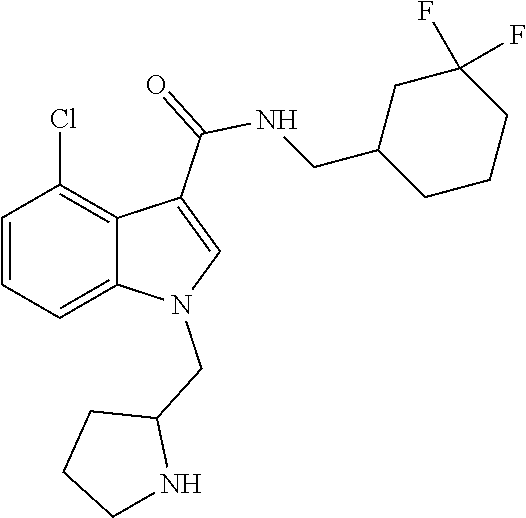 |
156 |
 |
157 |
 |
158 |
 |
159 |
 |
160 |
 |
146 |
 |
162 |
 |
163 |
 |
164 |
 |
167 |
 |
168 |
 |
169 |
 |
170 |
 |
171 |
 |
172 |
 |
173 |
 |
174 |
 |
175 |
 |
176 |
 |
177 |
 |
178 |
 |
179 |
 |
180 |
 |
181 |
 |
182 |
 |
183 |
 |
184 |
 |
185 |
 |
186 |
 |
187 |
 |
188 |
 |
189 |
 |
190 |
 |
191 |
 |
192 |
 |
193 |
 |
194 |
 |
195 |
 |
196 |
 |
197 |
 |
198 |
 |
199 |
 |
200 |
 |
203 |
 |
205 |
 |
207 |
 |
208 |
 |
209 |
 |
210 |
 |
211 |
 |
212 |
 |
213 |
 |
214 |
 |
215 |
 |
216 |
 |
217 |
 |
218 |
 |
219 |
 |
220 |
 |
221 |
 |
222 |
 |
223 |
 |
224 |
 |
225 |
 |
226 |
 |
227 |
 |
228 |
 |
229 |
 |
230 |
 |
166. |

is understood to be


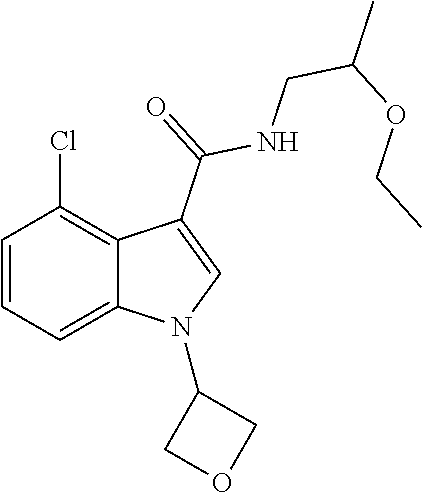


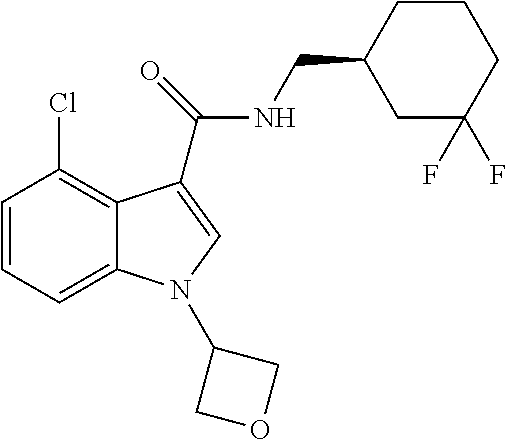


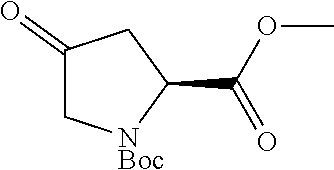


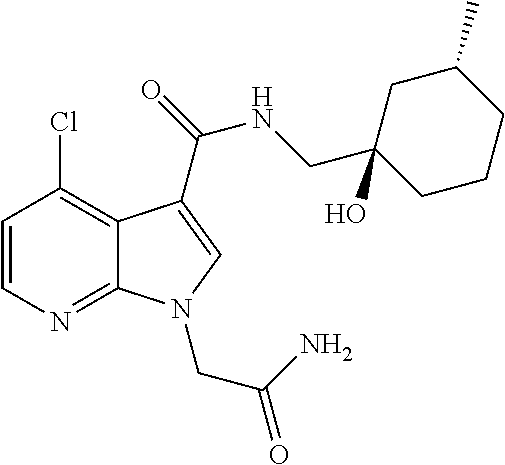


| Compound | ||
| number | hP2X7 IC50 | hTHP-1/IL-ib IC50 |
| 1 | C | E |
| 2 | B | B |
| 3 | B | C |
| 4 | B | C |
| 5 | B | C |
| 6 | C | B |
| 7 | A | B |
| 8 | B | C |
| 9 | A | C |
| 10 | B | C |
| 11 | B | |
| 12 | C | D |
| 13 | B | B |
| 14 | B | |
| 15 | B | |
| 16 | D | |
| 17 | B | C |
| 18 | E | E |
| 19 | B | C |
| 20 | B | C |
| 21 | A | B |
| 22 | C | E |
| 23 | E | |
| 24 | D | |
| 25 | D | |
| 26 | E | |
| 27 | E | |
| 28 | E | |
| 29 | C | |
| 30 | B | C |
| 31 | E | |
| 32 | C | D |
| 33 | C | E |
| 34 | C | C |
| 35 | C | C |
| 36 | C | E |
| 37 | B | B |
| 38 | B | C |
| 39 | B | C |
| 40 | B | B |
| 41 | B | A |
| 42 | E | |
| 43 | E | |
| 44 | B | C |
| 45 | E | E |
| 46 | C | |
| 47 | E | |
| 48 | C | C |
| 49 | D | |
| 50 | C | |
| 51 | B | A |
| 52 | D | |
| 53 | B | C |
| 54 | C | |
| 55 | C | |
| 56 | B | C |
| 57 | C | |
| 58 | B | C |
| 59 | B | B |
| 60 | E | |
| 61 | D | |
| 62 | B | B |
| 63 | E | |
| 64 | B | B |
| 65 | B | C |
| 66 | B | C |
| 67 | B | B |
| 68 | A | B |
| 69 | B | C |
| 70 | B | C |
| 71 | E | |
| 72 | D | E |
| 73 | C | D |
| 74 | E | E |
| 75 | A | B |
| 76 | E | |
| 77 | E | |
| 78 | E | |
| 81 | C | D |
| 82 | A | C |
| 83 | A | B |
| 84 | C | C |
| 85 | B | B |
| 86 | B | B |
| 87 | C | E |
| 88 | C | E |
| 89 | C | D |
| 90 | A | B |
| 91 | B | C |
| 92 | B | C |
| 93 | A | B |
| 94 | B | B |
| 95 | B | C |
| 97 | C | |
| 98 | C | C |
| 99 | C | |
| 100 | E | E |
| 101 | C | D |
| 102 | E | |
| 103 | C | |
| 104 | C | |
| 105 | B | C |
| 106 | D | C |
| 107 | B | C |
| 108 | B | C |
| 109 | C | D |
| 110 | C | |
| 111 | E | |
| 112 | B | C |
| 113 | B | B |
| 114 | B | C |
| 115 | C | C |
| 116 | B | B |
| 117 | B | C |
| 118 | D | B |
| 119 | C | C |
| 120 | B | B |
| 121 | B | B |
| 122 | B | B |
| 123 | C | C |
| 124 | B | B |
| 125 | B | B |
| 126 | B | B |
| 127 | B | D |
| 128 | C | C |
| 129 | C | D |
| 130 | B | B |
| 131 | B | B |
| 132 | B | B |
| 133 | B | B |
| 134 | B | C |
| 135 | B | B |
| 136 | E | |
| 137 | C | E |
| 138 | C | C |
| 139 | B | B |
| 140 | B | B |
| 141 | B | B |
| 142 | B | C |
| 143 | B | C |
| 144 | B | C |
| 146 | B | B |
| 147 | B | B |
| 148 | B | B |
| 149 | B | C |
| 150 | B | B |
| 151 | B | B |
| 152 | B | D |
| 153 | A | B |
| 154 | B | B |
| 155 | B | A |
| 156 | B | A |
| 157 | B | A |
| 158 | A | A |
| 159 | B | C |
| 160 | C | C |
| 162 | B | B |
| 163 | A | B |
| 164 | C | B |
| 166 | B | B |
| 167 | B | B |
| 168 | B | C |
| 169 | B | B |
| 170 | B | B |
| 171 | C | D |
| 172 | D | |
| 173 | A | A |
| 174 | B | B |
| 175 | C | C |
| 176 | E | E |
| 177 | C | C |
| 178 | B | B |
| 179 | C | C |
| 180 | C | D |
| 181 | C | C |
| 182 | B | B |
| 183 | B | B |
| 184 | C | C |
| 185 | B | B |
| 186 | E | E |
| 187 | B | C |
| 188 | B | B |
| 189 | B | C |
| 190 | C | C |
| 191 | C | E |
| 192 | C | |
| 193 | B | B |
| 194 | ||
| 195 | B | C |
| 196 | B | C |
| 197 | B | B |
| 198 | C | B |
| 199 | C | C |
| 200 | A | B |
| 203 | B | C |
| 205 | A | B |
| 207 | B | C |
| 208 | A | B |
| E >1 μM; | ||
| D 500-999 nM; | ||
| C 101-500 nM; | ||
| B 10-100 nM; | ||
| A <10 nM. | ||
Claims (11)


Priority Applications (1)
| Application Number | Priority Date | Filing Date | Title |
|---|---|---|---|
| US16/264,097 US10676433B2 (en) | 2014-12-15 | 2019-01-31 | Indole derivatives and their use in neurodegenerative diseases |
Applications Claiming Priority (4)
| Application Number | Priority Date | Filing Date | Title |
|---|---|---|---|
| US201462091855P | 2014-12-15 | 2014-12-15 | |
| US201562117128P | 2015-02-17 | 2015-02-17 | |
| US14/969,328 US10323000B2 (en) | 2014-12-15 | 2015-12-15 | Indole derivatives and their use in neurodegenerative diseases |
| US16/264,097 US10676433B2 (en) | 2014-12-15 | 2019-01-31 | Indole derivatives and their use in neurodegenerative diseases |
Related Parent Applications (1)
| Application Number | Title | Priority Date | Filing Date |
|---|---|---|---|
| US14/969,328 Division US10323000B2 (en) | 2014-12-15 | 2015-12-15 | Indole derivatives and their use in neurodegenerative diseases |
Publications (2)
| Publication Number | Publication Date |
|---|---|
| US20190161447A1 US20190161447A1 (en) | 2019-05-30 |
| US10676433B2 true US10676433B2 (en) | 2020-06-09 |
Family
ID=55066858
Family Applications (2)
| Application Number | Title | Priority Date | Filing Date |
|---|---|---|---|
| US14/969,328 Expired - Fee Related US10323000B2 (en) | 2014-12-15 | 2015-12-15 | Indole derivatives and their use in neurodegenerative diseases |
| US16/264,097 Expired - Fee Related US10676433B2 (en) | 2014-12-15 | 2019-01-31 | Indole derivatives and their use in neurodegenerative diseases |
Family Applications Before (1)
| Application Number | Title | Priority Date | Filing Date |
|---|---|---|---|
| US14/969,328 Expired - Fee Related US10323000B2 (en) | 2014-12-15 | 2015-12-15 | Indole derivatives and their use in neurodegenerative diseases |
Country Status (8)
| Country | Link |
|---|---|
| US (2) | US10323000B2 (en) |
| EP (1) | EP3233841A1 (en) |
| JP (1) | JP6673932B2 (en) |
| CN (1) | CN107207476B (en) |
| AU (1) | AU2015362700B2 (en) |
| CA (1) | CA2967694A1 (en) |
| IL (1) | IL252753B (en) |
| WO (1) | WO2016100281A1 (en) |
Families Citing this family (4)
| Publication number | Priority date | Publication date | Assignee | Title |
|---|---|---|---|---|
| GB201619514D0 (en) * | 2016-11-18 | 2017-01-04 | Takeda Pharmaceuticals Co | Novel compounds |
| US11008360B2 (en) | 2017-06-07 | 2021-05-18 | Institute Of Chinese Materia Medica, China Academy Of Chinese Medical Sciences | Indoleacetic acid derivative and preparation method and pharmaceutical use thereof |
| EP4076444A4 (en) * | 2019-12-18 | 2024-01-10 | Merck Sharp & Dohme LLC | INDAZOLE DERIVATIVES AND THEIR METHODS OF USE IN THE TREATMENT OF HERPES VIRUS |
| CN112876402A (en) * | 2021-01-14 | 2021-06-01 | 公安部物证鉴定中心 | Synthetic method of 5F-EMB-PICA |
Citations (5)
| Publication number | Priority date | Publication date | Assignee | Title |
|---|---|---|---|---|
| WO2002009706A1 (en) | 2000-07-27 | 2002-02-07 | Smithkline Beecham Corporation | Agonists of follicle stimulating hormone activity |
| WO2009023623A1 (en) | 2007-08-10 | 2009-02-19 | H, Lundbeck A/S | Heteroaryl amide analogues |
| WO2009108551A2 (en) | 2008-02-25 | 2009-09-03 | H. Lundbeck A/S | Heteroaryl amide analogues |
| WO2012163792A1 (en) | 2011-05-27 | 2012-12-06 | Affectis Pharmaceuticals Ag | Novel p2x7r antagonists and their use |
| US20130197046A1 (en) | 2008-03-25 | 2013-08-01 | Affectis Pharmaceuticals Ag | Novel p2x7r antagonists and their use |
Family Cites Families (1)
| Publication number | Priority date | Publication date | Assignee | Title |
|---|---|---|---|---|
| EP2105164B1 (en) * | 2008-03-25 | 2011-01-12 | Affectis Pharmaceuticals AG | Novel P2X7R antagonists and their use |
-
2015
- 2015-12-15 AU AU2015362700A patent/AU2015362700B2/en not_active Ceased
- 2015-12-15 JP JP2017550102A patent/JP6673932B2/en not_active Expired - Fee Related
- 2015-12-15 WO PCT/US2015/065716 patent/WO2016100281A1/en not_active Ceased
- 2015-12-15 EP EP15817737.8A patent/EP3233841A1/en not_active Withdrawn
- 2015-12-15 US US14/969,328 patent/US10323000B2/en not_active Expired - Fee Related
- 2015-12-15 CA CA2967694A patent/CA2967694A1/en not_active Abandoned
- 2015-12-15 CN CN201580075788.5A patent/CN107207476B/en not_active Expired - Fee Related
-
2017
- 2017-06-07 IL IL25275317A patent/IL252753B/en active IP Right Grant
-
2019
- 2019-01-31 US US16/264,097 patent/US10676433B2/en not_active Expired - Fee Related
Patent Citations (5)
| Publication number | Priority date | Publication date | Assignee | Title |
|---|---|---|---|---|
| WO2002009706A1 (en) | 2000-07-27 | 2002-02-07 | Smithkline Beecham Corporation | Agonists of follicle stimulating hormone activity |
| WO2009023623A1 (en) | 2007-08-10 | 2009-02-19 | H, Lundbeck A/S | Heteroaryl amide analogues |
| WO2009108551A2 (en) | 2008-02-25 | 2009-09-03 | H. Lundbeck A/S | Heteroaryl amide analogues |
| US20130197046A1 (en) | 2008-03-25 | 2013-08-01 | Affectis Pharmaceuticals Ag | Novel p2x7r antagonists and their use |
| WO2012163792A1 (en) | 2011-05-27 | 2012-12-06 | Affectis Pharmaceuticals Ag | Novel p2x7r antagonists and their use |
Non-Patent Citations (16)
| Title |
|---|
| American Psychiatric Association: Diagnostic and Statistical Manual of Mental Disorders (DSM-IV-TR), Fourth Edition, Text Revision. Washingtion, D.C., American Psychiatric Association, pp. 345-428, 2000. |
| Berge et al., J. Pharmaceutical Sciences, 1977, 66(1): 1-19. |
| Deuchars et al., J. Neurosci., 2001, 21: 7143-7152. |
| Foster, Adv. Drug Res., 1985, 14:1-40. |
| Gillette et al., Biochemistry, 1994, 33(10): 2927-2937. |
| Griffiths et al., J. Immunology, 1995, 154: 2821-2828. |
| Hanzlik et al., J. Org. Chem., 1990, 55(13): 3992-3997. |
| Jarman et al., Carcinogenesis, 1995, 16(4): 683-688. |
| Kanjhan et al., J. Comp. Neurol., 1997, 407: 11-32. |
| Le et al., Neuroscience, 1998, 83: 177-190. |
| Office action in corresponding JP 2017-550102 dated Jul. 18, 2019 (pp. 1-4). |
| Periodic Table of the Elements, CAS version, Handbook of Chemistry and Physics, 75th Ed. |
| Reider et al., J. Org. Chem., 1987,52: 3326-3334. |
| Smith M.B. and March J., "March's Advanced Organic Chemistry", 5th Ed., Ed., John Wiley & Sons, New York, 2001. |
| Solle et al., J. Biol. Chemistry, 2001, 276: 125-132. |
| Sorrell Thomas Organic Chemistry, University Science Books, Sausalito, 1999. |
Also Published As
| Publication number | Publication date |
|---|---|
| CA2967694A1 (en) | 2016-06-23 |
| CN107207476B (en) | 2021-03-19 |
| WO2016100281A1 (en) | 2016-06-23 |
| JP2017537982A (en) | 2017-12-21 |
| AU2015362700B2 (en) | 2020-04-16 |
| IL252753B (en) | 2019-11-28 |
| US20190161447A1 (en) | 2019-05-30 |
| AU2015362700A1 (en) | 2017-06-01 |
| US20160168090A1 (en) | 2016-06-16 |
| US10323000B2 (en) | 2019-06-18 |
| HK1244786A1 (en) | 2018-08-17 |
| CN107207476A (en) | 2017-09-26 |
| JP6673932B2 (en) | 2020-03-25 |
| IL252753A0 (en) | 2017-08-31 |
| EP3233841A1 (en) | 2017-10-25 |
Similar Documents
| Publication | Publication Date | Title |
|---|---|---|
| US9931324B2 (en) | Indolizine derivatives and their use in neurodegenerative diseases | |
| ES2944573T3 (en) | TLR7/8 antagonists and uses thereof | |
| US9399623B2 (en) | Quinoline derivatives and their use in neurodegenerative diseases | |
| US9771370B2 (en) | Compounds for the inhibition of indoleamine-2,3-dioxygenase | |
| US11634407B2 (en) | Cereblon binding compounds, compositions thereof, and methods of treatment therewith | |
| US20200369648A1 (en) | Tlr7/8 antagonists and uses thereof | |
| US10676433B2 (en) | Indole derivatives and their use in neurodegenerative diseases | |
| US20230054028A1 (en) | Pd-l1 antagonist compound | |
| HK1244786B (en) | Indole and azaindoles derivatives and their use in neurodegenerative diseases | |
| HK1240592A1 (en) | Indolizine derivatives which are applicable to neurodegenerative diseases |
Legal Events
| Date | Code | Title | Description |
|---|---|---|---|
| FEPP | Fee payment procedure |
Free format text: ENTITY STATUS SET TO UNDISCOUNTED (ORIGINAL EVENT CODE: BIG.); ENTITY STATUS OF PATENT OWNER: LARGE ENTITY |
|
| STPP | Information on status: patent application and granting procedure in general |
Free format text: RESPONSE TO NON-FINAL OFFICE ACTION ENTERED AND FORWARDED TO EXAMINER |
|
| STPP | Information on status: patent application and granting procedure in general |
Free format text: NON FINAL ACTION MAILED |
|
| STPP | Information on status: patent application and granting procedure in general |
Free format text: RESPONSE TO NON-FINAL OFFICE ACTION ENTERED AND FORWARDED TO EXAMINER |
|
| STPP | Information on status: patent application and granting procedure in general |
Free format text: NOTICE OF ALLOWANCE MAILED -- APPLICATION RECEIVED IN OFFICE OF PUBLICATIONS |
|
| ZAAA | Notice of allowance and fees due |
Free format text: ORIGINAL CODE: NOA |
|
| ZAAB | Notice of allowance mailed |
Free format text: ORIGINAL CODE: MN/=. |
|
| STPP | Information on status: patent application and granting procedure in general |
Free format text: PUBLICATIONS -- ISSUE FEE PAYMENT VERIFIED |
|
| STCF | Information on status: patent grant |
Free format text: PATENTED CASE |
|
| FEPP | Fee payment procedure |
Free format text: MAINTENANCE FEE REMINDER MAILED (ORIGINAL EVENT CODE: REM.); ENTITY STATUS OF PATENT OWNER: LARGE ENTITY |
|
| LAPS | Lapse for failure to pay maintenance fees |
Free format text: PATENT EXPIRED FOR FAILURE TO PAY MAINTENANCE FEES (ORIGINAL EVENT CODE: EXP.); ENTITY STATUS OF PATENT OWNER: LARGE ENTITY |
|
| STCH | Information on status: patent discontinuation |
Free format text: PATENT EXPIRED DUE TO NONPAYMENT OF MAINTENANCE FEES UNDER 37 CFR 1.362 |
|
| FP | Lapsed due to failure to pay maintenance fee |
Effective date: 20240609 |