US10656399B2 - Variable magnification optical system and image pickup apparatus using the same - Google Patents
Variable magnification optical system and image pickup apparatus using the same Download PDFInfo
- Publication number
- US10656399B2 US10656399B2 US15/853,235 US201715853235A US10656399B2 US 10656399 B2 US10656399 B2 US 10656399B2 US 201715853235 A US201715853235 A US 201715853235A US 10656399 B2 US10656399 B2 US 10656399B2
- Authority
- US
- United States
- Prior art keywords
- lens
- denotes
- lens unit
- optical system
- positive
- Prior art date
- Legal status (The legal status is an assumption and is not a legal conclusion. Google has not performed a legal analysis and makes no representation as to the accuracy of the status listed.)
- Expired - Fee Related, expires
Links
- 230000003287 optical effect Effects 0.000 title claims abstract description 370
- 230000014509 gene expression Effects 0.000 claims description 702
- 239000006185 dispersion Substances 0.000 claims description 76
- 101150098742 RCE1 gene Proteins 0.000 claims description 10
- 230000005499 meniscus Effects 0.000 description 174
- 230000004075 alteration Effects 0.000 description 165
- 201000009310 astigmatism Diseases 0.000 description 51
- 238000003384 imaging method Methods 0.000 description 38
- 238000010586 diagram Methods 0.000 description 20
- 230000002349 favourable effect Effects 0.000 description 18
- 238000003860 storage Methods 0.000 description 18
- 239000011521 glass Substances 0.000 description 16
- 239000000463 material Substances 0.000 description 16
- 230000000694 effects Effects 0.000 description 14
- 238000004519 manufacturing process Methods 0.000 description 11
- 230000035945 sensitivity Effects 0.000 description 5
- 101100335307 Xenopus laevis foxe4 gene Proteins 0.000 description 4
- 239000004973 liquid crystal related substance Substances 0.000 description 4
- 230000009471 action Effects 0.000 description 3
- 238000006243 chemical reaction Methods 0.000 description 3
- 238000004590 computer program Methods 0.000 description 3
- 238000004904 shortening Methods 0.000 description 3
- 239000006059 cover glass Substances 0.000 description 2
- 230000007246 mechanism Effects 0.000 description 2
- 238000004513 sizing Methods 0.000 description 2
- QIVUCLWGARAQIO-OLIXTKCUSA-N (3s)-n-[(3s,5s,6r)-6-methyl-2-oxo-1-(2,2,2-trifluoroethyl)-5-(2,3,6-trifluorophenyl)piperidin-3-yl]-2-oxospiro[1h-pyrrolo[2,3-b]pyridine-3,6'-5,7-dihydrocyclopenta[b]pyridine]-3'-carboxamide Chemical compound C1([C@H]2[C@H](N(C(=O)[C@@H](NC(=O)C=3C=C4C[C@]5(CC4=NC=3)C3=CC=CN=C3NC5=O)C2)CC(F)(F)F)C)=C(F)C=CC(F)=C1F QIVUCLWGARAQIO-OLIXTKCUSA-N 0.000 description 1
- 206010010071 Coma Diseases 0.000 description 1
- 206010073261 Ovarian theca cell tumour Diseases 0.000 description 1
- 230000008901 benefit Effects 0.000 description 1
- 230000008859 change Effects 0.000 description 1
- 230000000295 complement effect Effects 0.000 description 1
- 229910044991 metal oxide Inorganic materials 0.000 description 1
- 150000004706 metal oxides Chemical class 0.000 description 1
- AYOOGWWGECJQPI-NSHDSACASA-N n-[(1s)-1-(5-fluoropyrimidin-2-yl)ethyl]-3-(3-propan-2-yloxy-1h-pyrazol-5-yl)imidazo[4,5-b]pyridin-5-amine Chemical compound N1C(OC(C)C)=CC(N2C3=NC(N[C@@H](C)C=4N=CC(F)=CN=4)=CC=C3N=C2)=N1 AYOOGWWGECJQPI-NSHDSACASA-N 0.000 description 1
- 238000003825 pressing Methods 0.000 description 1
- 210000001747 pupil Anatomy 0.000 description 1
- 239000004065 semiconductor Substances 0.000 description 1
- 230000006641 stabilisation Effects 0.000 description 1
- 238000011105 stabilization Methods 0.000 description 1
- 230000001360 synchronised effect Effects 0.000 description 1
- 208000001644 thecoma Diseases 0.000 description 1
- KMIOJWCYOHBUJS-HAKPAVFJSA-N vorolanib Chemical compound C1N(C(=O)N(C)C)CC[C@@H]1NC(=O)C1=C(C)NC(\C=C/2C3=CC(F)=CC=C3NC\2=O)=C1C KMIOJWCYOHBUJS-HAKPAVFJSA-N 0.000 description 1
Images




Classifications
-
- G—PHYSICS
- G02—OPTICS
- G02B—OPTICAL ELEMENTS, SYSTEMS OR APPARATUS
- G02B15/00—Optical objectives with means for varying the magnification
- G02B15/14—Optical objectives with means for varying the magnification by axial movement of one or more lenses or groups of lenses relative to the image plane for continuously varying the equivalent focal length of the objective
- G02B15/145—Optical objectives with means for varying the magnification by axial movement of one or more lenses or groups of lenses relative to the image plane for continuously varying the equivalent focal length of the objective having five groups only
- G02B15/1451—Optical objectives with means for varying the magnification by axial movement of one or more lenses or groups of lenses relative to the image plane for continuously varying the equivalent focal length of the objective having five groups only the first group being positive
- G02B15/145129—Optical objectives with means for varying the magnification by axial movement of one or more lenses or groups of lenses relative to the image plane for continuously varying the equivalent focal length of the objective having five groups only the first group being positive arranged +-+++
-
- G—PHYSICS
- G02—OPTICS
- G02B—OPTICAL ELEMENTS, SYSTEMS OR APPARATUS
- G02B15/00—Optical objectives with means for varying the magnification
- G02B15/14—Optical objectives with means for varying the magnification by axial movement of one or more lenses or groups of lenses relative to the image plane for continuously varying the equivalent focal length of the objective
- G02B15/16—Optical objectives with means for varying the magnification by axial movement of one or more lenses or groups of lenses relative to the image plane for continuously varying the equivalent focal length of the objective with interdependent non-linearly related movements between one lens or lens group, and another lens or lens group
- G02B15/163—Optical objectives with means for varying the magnification by axial movement of one or more lenses or groups of lenses relative to the image plane for continuously varying the equivalent focal length of the objective with interdependent non-linearly related movements between one lens or lens group, and another lens or lens group having a first movable lens or lens group and a second movable lens or lens group, both in front of a fixed lens or lens group
- G02B15/167—Optical objectives with means for varying the magnification by axial movement of one or more lenses or groups of lenses relative to the image plane for continuously varying the equivalent focal length of the objective with interdependent non-linearly related movements between one lens or lens group, and another lens or lens group having a first movable lens or lens group and a second movable lens or lens group, both in front of a fixed lens or lens group having an additional fixed front lens or group of lenses
-
- G—PHYSICS
- G02—OPTICS
- G02B—OPTICAL ELEMENTS, SYSTEMS OR APPARATUS
- G02B15/00—Optical objectives with means for varying the magnification
- G02B15/14—Optical objectives with means for varying the magnification by axial movement of one or more lenses or groups of lenses relative to the image plane for continuously varying the equivalent focal length of the objective
- G02B15/16—Optical objectives with means for varying the magnification by axial movement of one or more lenses or groups of lenses relative to the image plane for continuously varying the equivalent focal length of the objective with interdependent non-linearly related movements between one lens or lens group, and another lens or lens group
-
- G—PHYSICS
- G02—OPTICS
- G02B—OPTICAL ELEMENTS, SYSTEMS OR APPARATUS
- G02B15/00—Optical objectives with means for varying the magnification
- G02B15/14—Optical objectives with means for varying the magnification by axial movement of one or more lenses or groups of lenses relative to the image plane for continuously varying the equivalent focal length of the objective
- G02B15/16—Optical objectives with means for varying the magnification by axial movement of one or more lenses or groups of lenses relative to the image plane for continuously varying the equivalent focal length of the objective with interdependent non-linearly related movements between one lens or lens group, and another lens or lens group
- G02B15/163—Optical objectives with means for varying the magnification by axial movement of one or more lenses or groups of lenses relative to the image plane for continuously varying the equivalent focal length of the objective with interdependent non-linearly related movements between one lens or lens group, and another lens or lens group having a first movable lens or lens group and a second movable lens or lens group, both in front of a fixed lens or lens group
- G02B15/167—Optical objectives with means for varying the magnification by axial movement of one or more lenses or groups of lenses relative to the image plane for continuously varying the equivalent focal length of the objective with interdependent non-linearly related movements between one lens or lens group, and another lens or lens group having a first movable lens or lens group and a second movable lens or lens group, both in front of a fixed lens or lens group having an additional fixed front lens or group of lenses
- G02B15/173—Optical objectives with means for varying the magnification by axial movement of one or more lenses or groups of lenses relative to the image plane for continuously varying the equivalent focal length of the objective with interdependent non-linearly related movements between one lens or lens group, and another lens or lens group having a first movable lens or lens group and a second movable lens or lens group, both in front of a fixed lens or lens group having an additional fixed front lens or group of lenses arranged +-+
-
- G—PHYSICS
- G02—OPTICS
- G02B—OPTICAL ELEMENTS, SYSTEMS OR APPARATUS
- G02B15/00—Optical objectives with means for varying the magnification
- G02B15/14—Optical objectives with means for varying the magnification by axial movement of one or more lenses or groups of lenses relative to the image plane for continuously varying the equivalent focal length of the objective
- G02B15/16—Optical objectives with means for varying the magnification by axial movement of one or more lenses or groups of lenses relative to the image plane for continuously varying the equivalent focal length of the objective with interdependent non-linearly related movements between one lens or lens group, and another lens or lens group
- G02B15/20—Optical objectives with means for varying the magnification by axial movement of one or more lenses or groups of lenses relative to the image plane for continuously varying the equivalent focal length of the objective with interdependent non-linearly related movements between one lens or lens group, and another lens or lens group having an additional movable lens or lens group for varying the objective focal length
Definitions
- the present invention relates to a variable magnification optical system and an image pickup apparatus using the same.
- variable magnification optical system As a variable magnification optical system, a variable magnification optical system which includes four lens units, or a variable magnification optical system which includes five lens units, has been known.
- variable magnification optical system which includes five lens unit has been disclosed.
- This variable magnification optical system includes a first lens unit having a positive refractive power, a second lens unit having a negative refractive power, a third lens unit having a positive refractive power, a fourth lens unit having a positive refractive power, and a fifth lens unit having a negative refractive power.
- variable magnification optical system which includes four lens units has been disclosed.
- This variable magnification optical system includes a first unit which is fixed at the time of zooming, a second unit having a negative refractive power, a third unit having either a positive refractive power or a negative refractive power, a fourth unit which includes an aperture stop and which is fixed at the time of zooming.
- variable magnification optical system which includes five lens units has been disclosed.
- This variable magnification optical system includes a first lens unit having a positive refractive power, a second lens unit having a negative refractive power, a third lens unit having a positive refractive power, a fourth lens unit having a negative refractive power, and a fifth lens unit having a positive refractive power.
- variable magnification optical system which includes a plurality of lens elements, comprises in order from an object side,
- an aperture stop is either positioned between the second lens unit and the third lens unit, or positioned in the third lens unit, and
- the first lens unit is fixed
- the second lens unit moves from the object side to an image-plane side
- the first lens unit includes at least four positive lens elements and at least two negative lens elements.
- the lens element is a lens having a medium of a refractive index higher than 1 filled between an object-side surface and an image-side surface, and not having a refracting surface between the object-side surface and the image-side surface.
- An image pickup apparatus according to at least some of the embodiments of the present invention comprises,
- an image pickup element which has an image pickup surface, and which converts an image formed on the image pickup surface by the optical system, to an electric signal, wherein
- the optical system is the abovementioned variable magnification optical system.
- FIG. 1A , FIG. 1B , and FIG. 1C are lens cross-sectional views at the time of infinite object point focusing of a variable magnification optical system according to an example 1;
- FIG. 2A , FIG. 2B , and FIG. 2C are lens cross-sectional views at the time of infinite object point focusing of a variable magnification optical system according to an example 2;
- FIG. 3A , FIG. 3B , an FIG. 3C are lens cross-sectional views at the time of infinite object point focusing of a variable magnification optical system according to an example 3;
- FIG. 4A , FIG. 4B , and FIG. 4C are lens cross-sectional views at the time of infinite object point focusing of a variable magnification optical system according to an example 4;
- FIG. 5A , FIG. 5B , and FIG. 5C are lens cross-sectional views at the time of infinite object point focusing of a variable magnification optical system according to an example 5;
- FIG. 6A , FIG. 6B , and FIG. 6C are lens cross-sectional views at the time of infinite object point focusing of a variable magnification optical system according to an example 6;
- FIG. 7A , FIG. 7B , and FIG. 7C are lens cross-sectional views at the time of infinite object point focusing of a variable magnification optical system according to an example 7;
- FIG. 8A , FIG. 8B , and FIG. 8C are lens cross-sectional views at the time of infinite object point focusing of a variable magnification optical system according to an example 8;
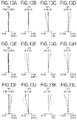
- FIG. 9A , FIG. 9B , FIG. 9C , FIG. 9D , FIG. 9E , FIG. 9F , FIG. 9G , FIG. 9H , FIG. 9I , FIG. 9J , FIG. 9K , and FIG. 9L are aberration diagrams at the time of infinite object point focusing of the variable magnification optical system according to the example 1;
- FIG. 10A , FIG. 10B , FIG. 10C , FIG. 10D , FIG. 10E , FIG. 10F , FIG. 10G , FIG. 10H , FIG. 10I , FIG. 10J , FIG. 10K , and FIG. 10L are aberration diagrams at the time of infinite object point focusing of the variable magnification optical system according to the example 2;
- FIG. 11A , FIG. 11B , FIG. 11C , FIG. 11D , FIG. 11E , FIG. 11F , FIG. 11G , FIG. 11H , FIG. 11I , FIG. 11J , FIG. 11K , and FIG. 11L are aberration diagrams at the time of infinite object point focusing of the variable magnification optical system according to the example 3;
- FIG. 12A , FIG. 12B , FIG. 12C , FIG. 12D , FIG. 12E , FIG. 12F , FIG. 12G , FIG. 12H , FIG. 12I , FIG. 12J , FIG. 12K , and FIG. 12L are aberration diagrams at the time of infinite object point focusing of the variable magnification optical system according to the example 4;
- FIG. 13A , FIG. 13B , FIG. 13C , FIG. 13D , FIG. 13E , FIG. 13F , FIG. 13G , FIG. 13H , FIG. 13I , FIG. 13J , FIG. 13K , and FIG. 13L are aberration diagrams at the time of infinite object point focusing of the variable magnification optical system according to the example 5;
- FIG. 14A , FIG. 14B , FIG. 14C , FIG. 14D , FIG. 14E , FIG. 14F , FIG. 14G , FIG. 14H , FIG. 14I , FIG. 14J , FIG. 14K , and FIG. 14L are aberration diagrams at the time of infinite object point focusing of the variable magnification optical system according to the example 6;
- FIG. 15A , FIG. 15B , FIG. 15C , FIG. 15D , FIG. 15E , FIG. 15F , FIG. 15G , FIG. 15H , FIG. 15I , FIG. 15J , FIG. 15K , and FIG. 15L are aberration diagram at the time of infinite object point focusing of the variable magnification optical system according to the example 7;
- FIG. 16A , FIG. 16B , FIG. 16C , FIG. 16D , FIG. 16E , FIG. 16F , FIG. 16G , FIG. 16H , FIG. 16I , FIG. 16J , FIG. 16K , and FIG. 16L are aberration diagrams at the time of infinite object point focusing of the variable magnification optical system according to the example 8;
- FIG. 17 is a cross-sectional view of an image pickup apparatus
- FIG. 18 is a front perspective view of the image pickup apparatus
- FIG. 19 is a rear perspective view of the image pickup apparatus.
- FIG. 20 is a block diagram of an internal circuit of main components of the image pickup apparatus.
- the basic arrangement of the variable magnification optical system of the present embodiment includes a plurality of lens elements, and includes in order from an object side, a first lens unit having a positive refractive power, a second lens unit having a negative refractive power, a third lens unit having a positive refractive power, and at least one lens unit, wherein an aperture stop is either positioned between the second lens unit and the third lens unit, or positioned in the third lens unit, and at the time of zooming from a wide angle end to a telephoto end, the first lens unit is fixed, the second lens unit moves from the object side to an image-plane side, and at least one of lens units positioned on an image side of the aperture stop moves, and the first lens unit includes at least four positive lens elements and at least two negative lens elements.
- the lens element is a lens having a medium of a refractive index higher than 1 filled between an object-side surface and an image-side surface, and not having
- the basic arrangement includes in order form the object side, the first lens unit having a positive refractive power, the second lens unit having a negative refractive power, and the third lens unit having the positive refractive power.
- the lens unit having a positive refractive power is positioned nearest to object. Therefore, the variable magnification optical system of the present embodiment is an optical system of a positive-lead type.
- An optical system of the positive-lead type is advantageous for securing a high zoom ratio and a fast F-number from the wide angle end up to the telephoto end. Consequently, even in the variable magnification optical system of the present embodiment, it is possible to secure a high zoom ratio as well as a fast F-number from the wide angle end up to the telephoto end.
- the second lens unit having a negative refractive power and the third lens unit having a positive refractive power it is possible to make the lens unit positioned on the image side of the third lens unit small-sized.
- an off-axis aberration particularly, an astigmatism and a chromatic aberration of magnification occur due to the first lens unit and the second lens unit.
- the aperture stop is disposed either between the second lens unit and the third lens unit, or in the third lens unit.
- the first lens unit is fixed.
- the first lens unit By letting the first lens unit to be fixed all the time, with respect to an image plane, it is possible to reduce a manufacturing error and to simplify a mechanical arrangement.
- the second lens unit moves from the object side to the image-plane side, and a lens unit positioned on the image side of the second lens unit (hereinafter, referred to as ‘first predetermined lens unit’) moves.
- first predetermined lens unit a lens unit positioned on the image side of the second lens unit
- the major zooming is carried out by the second lens unit, and correction of an image-plane fluctuation due to zooming is carried out by the first predetermined lens unit.
- the first predetermined lens unit is a lens unit such as the third lens unit.
- a lens unit positioned on the image side of the third lens unit (hereinafter, referred to as ‘second predetermined lens unit’) is available.
- the increase in the axial-beam diameter is suppressed on the image side of the third lens unit. Therefore, by moving the second predetermined lens unit, it is possible to carry out correction of a fluctuation in an image plane while suppressing a fluctuation in a spherical aberration and a fluctuation in the chromatic aberration magnification at the time of zooming.
- the first lens unit includes at least four positive lens elements and two negative lens elements.
- spherical aberration the astigmatism
- a longitudinal chromatic aberration a longitudinal chromatic aberration
- chromatic aberration of magnification Suppressing the occurrence of the spherical aberration and the occurrence of the longitudinal chromatic aberration at the telephoto end is advantageous for securing a fast F-number at the telephoto end.
- a variable magnification optical system of a first embodiment has the abovementioned basic arrangement, and the first lens unit includes a first positive lens element, a second positive lens element, a third positive lens element, an image-side positive lens element, and at least N number of negative lens elements, and all the negative lens elements in the first lens unit satisfy the following conditional expression (1A), and the first positive lens element, among all the positive lens elements in the first lens unit, is positioned nearest to object, and satisfies the following conditional expression (2A), and the second positive lens element is positioned nearest to the first positive lens element, and satisfies the following conditional expression (2B), and the third positive lens element is positioned nearest to the second positive lens element, and satisfies the following conditional expression (2C), and the image-side positive lens element, among all the positive lens elements in the first lens unit, is positioned nearest to image, and satisfies the following conditional expression (3): 0.5200 ⁇ ( ⁇ g,F ) ni ⁇ 0.5640 (1A), 0.5
- ( ⁇ g, F)p 1 denotes a partial dispersion ratio of the first positive lens element
- ( ⁇ g, F)p 2 denotes a partial dispersion ratio of the second positive lens element
- ( ⁇ g, F)p 3 denotes a partial dispersion ratio of the third positive lens element
- ng denotes a refractive index for a g-line
- nF denotes a refractive index for an F-line
- nC denotes a refractive index for a C-line.
- the first lens unit includes the first positive lens element, the second positive lens element, the third positive lens element, the image-side positive lens element, and at least N number of negative lens elements. Since 2 ⁇ N, at least four positive lens elements and at least two negative lens elements are used in the first lens unit.
- Conditional expression (1A) is a conditional expression related to a partial dispersion ratio of a glass material to be used in the negative lens element in the first lens unit.
- Conditional expressions (2A), (2B), (2C), and (3) are conditional expressions related to a partial dispersion ratio of a glass material to be used in the positive lens element in the first lens unit.
- the aberration for the g-line with respect to the F-line refers to an aberration for the g-line which remains when achromatized for the F-line and the C-line.
- conditional expression (1A′) be satisfied instead of conditional expression (1A).
- conditional expression (1A′′) be satisfied instead of conditional expression (1A).
- conditional expression (2A′) be satisfied instead of conditional expression (2A).
- conditional expression (2A′′) be satisfied instead of conditional expression (2A).
- conditional expression (2B′) be satisfied instead of conditional expression (2B).
- conditional expression (2B′′) be satisfied instead of conditional expression (2B).
- conditional expression (2C′) be satisfied instead of conditional expression (2C).
- conditional expression (2C′′) be satisfied instead of conditional expression (2C).
- conditional expression (3′) be satisfied instead of conditional expression (3).
- conditional expression (3) 0.5300 ⁇ ( ⁇ g,F ) pL ⁇ 0.5390 (3′′)
- a variable magnification optical system of a second embodiment has the abovementioned basic arrangement, and the first lens unit includes a first sub lens unit and a second sub lens unit, and the first sub lens unit includes the negative lens element and the positive lens element, and the second sub lens unit includes the negative lens element and the positive lens element, and the following conditional expressions (4) and (5) are satisfied: 35 ⁇ ds 1 p max ⁇ ds 1 n min ⁇ 52 (4), and 35 ⁇ ds 2 p max ⁇ ds 2 n min ⁇ 52 (5)
- ⁇ ds1nmin denotes a minimum Abbe number from among Abbe numbers for all the negative lens elements in the first sub lens unit
- ⁇ ds1pmax denotes a maximum Abbe number from among Abbe numbers for all the positive lens elements in the first sub lens unit
- ⁇ ds2nmin denotes a minimum Abbe number from among Abbe numbers for all the negative lens elements in the second sub lens unit
- ⁇ ds2pmax denotes a maximum Abbe number from among Abbe numbers for all the positive lens elements in the second sub lens unit
- the lens element is a lens having a medium of a refractive index higher than 1 filled between an object-side surface and an image-side surface, and not having a refractive surface between the object-side surface and the image-side surface.
- the first lens unit including the first sub lens unit and the second sub lens unit, it is possible to let the refractive power of the first lens unit to be shared by the two sub lens units.
- the refractive power of the first lens unit it is possible to make small both a refractive power of the first sub lens unit and a refractive power of the second sub lens unit. Consequently, it is possible to suppress an occurrence of the spherical aberration at the telephoto end in both of the first sub lens unit and the second sub lens unit.
- Conditional expression (4) and conditional expression (5) are conditional expressions related to a difference in Abbe number for the positive lens element and Abbe number for the negative lens element (hereinafter, referred to as ‘difference in Abbe number’).
- conditional expression (4) By exceeding a lower limit value of conditional expression (4), it is possible to make an arrangement such that the difference in Abbe number does not become excessively small. In this case, it is possible to improve an achromatic effect for the F-line and the C-line. Consequently, it is possible to correct favorably the longitudinal chromatic aberration and the chromatic aberration of magnification at the telephoto end. As a result, it is possible to maintain a favorable imaging performance at the telephoto end.
- conditional expression (4) it is possible to make an arrangement such that the difference in Abbe number does not become excessively large. In other words, it is possible to suppress a dispersion of the negative lens element from becoming large with respect to a dispersion of the positive lens element. In this case, since it is possible impart a refractive power of an appropriate magnitude to the negative lens element, it is possible to correct favorably the longitudinal chromatic aberration at the telephoto end. Moreover, by the negative lens element having the refractive power of appropriate magnitude, it is possible to correct the spherical aberration and the astigmatism.
- conditional expression (5) Technical significance of conditional expression (5) is same as the technical significance of conditional expression (4).
- conditional expression (4′) be satisfied instead of conditional expression (4). 40 ⁇ ds 1 p max ⁇ ds 1 n min ⁇ 51.5 (4′)
- conditional expression (4′′) be satisfied instead of conditional expression (4). 45 ⁇ ds 1 p max ⁇ ds 1 n min ⁇ 51 (4′′)
- conditional expression (5) 38 ⁇ ds 2 p max ⁇ ds 2 n min ⁇ 48 (5′)
- conditional expression (5) 40 ⁇ ds 2 p max ⁇ ds 2 n min ⁇ 44 (5′′)
- a variable magnification optical system of a third embodiment has the abovementioned basic arrangement, and the first lens unit includes a first sub lens unit and a second sub lens unit, and the first sub unit includes the negative lens element and the positive lens element, and the second sub lens unit includes the negative lens element and the positive lens element, and the following conditional expressions (6) and (7) are satisfied: ⁇ 0.0300 ⁇ ( ⁇ g,F ) s 1 p min ⁇ ( ⁇ g,F ) s 1 n max ⁇ 0.0060 (6), and ⁇ 0.0300 ⁇ ( ⁇ g,F ) s 2 p min ⁇ ( ⁇ g,F ) s 2 n max ⁇ 0.0060 (7)
- ( ⁇ g, F) s 1 nmax denotes a maximum partial dispersion ratio from among the partial dispersion ratio for all the negative lens elements in the first sub lens unit
- ( ⁇ g, F) s 1 pmin denotes a minimum partial dispersion ratio from among the partial dispersion ratio for all the positive lens elements in the first sub lens unit
- ( ⁇ g, F)s 2 nmax denotes a maximum partial dispersion ratio from among the partial dispersion ratio for all the negative lens elements in the second sub lens unit
- ng denotes a refractive index for a g-line
- nF denotes a refractive index for an F-line
- nC denotes a refractive index for a C-line.
- Conditional expression (6) and conditional expression (7) are conditional expressions related to a difference in the partial dispersion ratio of the positive lens element and the partial dispersion ratio of the negative lens element (hereinafter, referred to as ‘difference in partial dispersion ratio’).
- conditional expression (6) By exceeding a lower limit value of conditional expression (6), it is possible to make an arrangement such that the difference in partial dispersion ratio does not become excessively small. In this case, since a difference in Abbe number also becomes large, it is possible to suppress an occurrence of the longitudinal chromatic aberration and the chromatic aberration of magnification for the g-line while improving the achromatic effect for the F-line and the c-line.
- the longitudinal chromatic aberration and the chromatic aberration of magnification for the g-line are susceptible to occur.
- conditional expression (6) it is possible to make an arrangement such that the difference in the partial dispersion ratio does not become excessively large. As a result, it is possible to suppress the occurrence of the longitudinal chromatic aberration and the chromatic aberration of magnification for the g-line.
- conditional expression (7) is same as the technical significance of conditional expression (6).
- conditional expression (6′) be satisfied instead of conditional expression (6). ⁇ 0.0295 ⁇ ( ⁇ g,F ) s 1 p min ⁇ ( ⁇ g,F ) s 1 n max ⁇ 0.0100 (6′)
- conditional expression (6′′) be satisfied instead of conditional expression (6). ⁇ 0.0291 ⁇ ( ⁇ g,F ) s 1 p min ⁇ ( ⁇ g,F ) s 1 n max ⁇ 0.0170 (6′′)
- conditional expression (7′) be satisfied instead of conditional expression (7). ⁇ 0.0200 ⁇ ( ⁇ g,F ) s 2 p min ⁇ ( ⁇ g,F ) s 2 n max ⁇ 0.0080 (7′)
- conditional expression (7′′) be satisfied instead of conditional expression (7). ⁇ 0.0150 ⁇ ( ⁇ g,F ) s 2 p min ⁇ ( ⁇ g,F ) s 2 n max ⁇ 0.0090 (7′′)
- variable magnification optical system of the first embodiment it is preferable that the following conditional expression (8) be satisfied: SFpL ⁇ ( SFp 2+ SFp 3) ⁇ 0.5 ⁇ SFp 1 ⁇ 0 (8)
- Rp 1 o denotes a radius of curvature of an object-side surface of the first positive lens element
- Rp 1 i denotes a radius of curvature of an image-side surface of the first positive lens element
- Rp 2 o denotes a radius of curvature of an object-side surface of the second positive lens element
- Rp 2 i denotes a radius of curvature of an image-side surface of the second positive lens element
- Rp 3 o denotes a radius of curvature of an object-side surface of the third positive lens element
- Rp 3 i denotes a radius of curvature of an image-side surface of the third positive lens element
- RpLo denotes a radius of curvature of an object-side surface of the image-side positive lens element
- RpLi denotes a radius of curvature of an image-side surface of the image-side positive lens element.
- SFp 1 is a shape factor of the first positive lens element
- SFp 2 is a shape factor of the second positive lens element
- SFp 3 is a shape factor of the third positive lens element
- SFpL is shape factor of the image-side positive lens element.
- conditional expression (8) is a conditional expression related to the shape factors of the positive lens elements in the first lens unit.
- conditional expression (8) the shape factor of the positive lens component becomes smaller gradually from the object side to the image-plane side.
- conditional expression (8′) be satisfied instead of conditional expression (8).
- SFpL ⁇ 0.8 ⁇ ( SFp 2+ SFp 3) ⁇ 0.4 ⁇ SFp 1 ⁇ 0 (8′)
- conditional expression (8′′) be satisfied instead of conditional expression (8).
- SFpL ⁇ 0.7 ⁇ ( SFp 2+ SFp 3) ⁇ 0.35 ⁇ SFp 1 ⁇ 0 (8′′)
- variable magnification optical system of the first embodiment it is preferable that the following conditional expressions (9), (10), and (11) be satisfied: SFp1 ⁇ 0 (9), SFpL ⁇ 0 (10), and 0.05 ⁇
- Rp 1 o denotes the radius of curvature of an object-side surface of the first positive lens element
- Rp 1 i denotes the radius of curvature of an image-side surface of the first positive lens element
- RpLo denotes the radius of curvature of an object-side surface of the image-side positive lens element
- RpLi denotes the radius of curvature of an image-side surface of the image-side positive lens element.
- Conditional expression (9) is a conditional expression related to the shape factor of the first positive lens element.
- Conditional expression (10) is a conditional expression related to the shape factor of the image-side positive lens element.
- Conditional expression (11) is a conditional expression related to a ratio of the shape factor of the first positive lens element and the image-side positive lens element.
- a shape of the positive lens element is such that a refractive power of an object-side surface and a refractive power of an image-side surface are equal.
- the value of the shape factor becomes a negative value, the shape of the positive lens element is such that the refractive power of the object-side surface is larger than the refractive power of the image-side surface.
- conditional expression (9) it is possible to let the shape of the first positive lens element to be such that the refractive power of the object-side surface is larger than the refractive power of the image-side surface.
- conditional expression (10) it is possible to let a shape of the image-side positive lens element to be such that a refractive power of the object-side surface is larger than a refractive power of the image-side surface.
- conditional expression (11) By exceeding a lower limit value of conditional expression (11), it is possible to make an absolute value of the shape factor of the image-side positive lens element small with respect to an absolute value of the shape factor of the first positive lens element. In this case, in the image-side positive lens element, it is possible to suppress a curvature of the object-side surface with respect a curvature of the image-side surface. As a result, it is possible to let the shape of the image-side positive lens element to be a shape which is advantageous for securing an edge-thickness difference adequately, or in other words, a shape which is easy to manufacture.
- conditional expression (11) it is possible to make the absolute value of the shape factor of the image-side positive lens element large with respect to the absolute value of the shape factor of the first positive lens element.
- the shape of the image-side positive lens element becomes a shape which is advantageous for correction of the spherical aberration and correction of the astigmatism. Consequently, it is possible to make large the refractive power of the first lens unit while maintaining a high imaging performance. As a result, it is possible to shorten the overall length of the optical system while maintaining a high imaging performance.
- conditional expression (11′) be satisfied instead of conditional expression (11). 0.08 ⁇
- conditional expression (11′′) be satisfied instead of conditional expression (11). 0.20 ⁇
- variable magnification optical system of the first embodiment it is preferable that the following conditional expressions (10), (12), and (13) be satisfied: SFpL ⁇ 0 (10), SFp2 ⁇ 0 (12), and 0.05 ⁇
- Rp 2 o denotes the radius of curvature of an object-side surface of the second positive lens element
- Rp 2 i denotes the radius of curvature of an image-side surface of the second positive lens element
- RpLo denotes the radius of curvature of an object-side surface of the image-side positive lens element
- RpLi denotes the radius of curvature of an image-side surface of the image-side positive lens element.
- Conditional expression (12) is a conditional expression related to the shape factor of the second positive lens element.
- Conditional expression (13) is a conditional expression related to a ratio of the shape factor of the second positive lens element and the shape factor of the image-side positive lens element.
- a shape of the positive lens element is such that a refractive power of an object-side surface and a refractive power of an image-side surface are equal.
- the value of the shape factor becomes a negative value, the shape of the positive lens element is such that the refractive power of the object-side surface is larger than the refractive power of the image-side surface.
- conditional expression (10) it is possible to let the shape of the image-side positive lens element to be such that the refractive power of the object-side surface is larger than the refractive power of the image-side surface.
- conditional expression (12) it is possible to let a shape of the second positive lens element to be such that a refractive power of the object-side surface is larger than a refractive power of the image-side surface.
- conditional expression (13) By exceeding a lower limit value of conditional expression (13), it is possible to make an absolute value of the shape factor of the image-side positive lens element small with respect to an absolute value of the shape factor of the second positive lens element. In this case, in the image-side positive lens element, it is possible to suppress a curvature of the object-side surface with respect a curvature of the image-side surface. As a result, it is possible to let the shape of the image-side positive lens element to be a shape which is advantageous for securing an edge-thickness difference adequately, or in other words, a shape which is easy to manufacture.
- conditional expression (13) it is possible to make the absolute value of the shape factor of the image-side positive lens element large with respect to the absolute value of the shape factor of the second positive lens element.
- the shape of the image-side positive lens element becomes a shape which is advantageous for correction of the spherical aberration and correction of the astigmatism. Consequently, it is possible to make large the refractive power of the first lens unit while maintaining a high imaging performance. As a result, it is possible to shorten the overall length of the optical system while maintaining a high imaging performance.
- conditional expression (13′) be satisfied instead of conditional expression (13). 0.10 ⁇
- conditional expression (13′′) be satisfied instead of conditional expression (13). 0.20 ⁇
- variable magnification optical system of the first embodiment it is preferable that the following conditional expressions (10), (14), and (15) be satisfied: SFpL ⁇ 0 (10), SFp3 ⁇ 0 (14), and 0.05 ⁇
- Rp 3 o denotes the radius of curvature of an object-side surface of the third positive lens element
- Rp 3 i denotes the radius of curvature of an image-side surface of the third positive lens element
- RpLo denotes the radius of curvature of an object-side surface of the image-side positive lens element
- RpLi denotes the radius of curvature of an image-side surface of the image-side positive lens element.
- Conditional expression (14) is a conditional expression related to the shape factor of the third positive lens element.
- Conditional expression (15) is a conditional expression related to a ratio of the shape factor of the third positive lens element and the shape factor of the image-side positive lens element.
- a shape of the positive lens element is such that a refractive power of an object-side surface and a refractive power of an image-side surface are equal.
- the value of the shape factor becomes a negative value, the shape of the positive lens element is such that the refractive power of the object-side surface is larger than the refractive power of the image-side surface.
- conditional expression (10) it is possible to let the shape of the image-side positive lens element to be such that the refractive power of the object-side surface is larger than the refractive power of the image-side surface.
- conditional expression (14) it is possible to let a shape of the third positive lens element to be such that a refractive power of the object-side surface is larger than a refractive power of the image-side surface.
- conditional expression (15) By exceeding a lower limit value of conditional expression (15), it is possible to make an absolute value of the shape factor of the image-side positive lens element small with respect to an absolute value of the shape factor of the third positive lens element.
- the image-side positive lens element it is possible to suppress a curvature of the object-side surface with respect a curvature of the image-side surface.
- the shape of the image-side positive lens element it is possible to let the shape of the image-side positive lens element to be a shape which is advantageous for securing an edge-thickness difference adequately, or in other words, a shape which is easy to manufacture.
- conditional expression (15) it is possible to make the absolute value of the shape factor of the image-side positive lens element large with respect to the absolute value of the shape factor of the third positive lens element.
- the shape of the image-side positive lens element becomes a shape which is advantageous for correction of the spherical aberration and correction of the astigmatism. Consequently, it is possible to make large the refractive power of the first lens unit while maintaining a high imaging performance. As a result, it is possible to shorten the overall length of the optical system while maintaining a high imaging performance.
- conditional expression (15′) ibe satisfied instead of conditional expression (15). 0.15 ⁇
- conditional expression (15′′) be satisfied instead of conditional expression (15). 0.30 ⁇
- the first lens unit include a first negative lens element and an image-side negative lens element, and the first negative lens element be positioned nearest to object, among all the negative lens elements in the first lens unit, and the image-side negative lens element be positioned nearest to image, among all the negative lens elements in the first lens unit, and the following conditional expressions (16), (17), and (18) be satisfied: 0 ⁇ SFn1 (16), 0 ⁇ SFnL (17), and 0.2 ⁇ SFn 1 /SFnL ⁇ 2.5 (18)
- Rp 1 o denotes a radius of curvature of an object-side surface of the first negative lens element
- Rn 1 i denotes a radius of curvature of an image-side surface of the first negative lens element
- RnLo denotes a radius of curvature of an object-side surface of the image-side negative lens element
- RnLi denotes a radius of curvature of an image-side surface of the image-side negative lens element.
- Conditional expression (16) is a conditional expression related to a shape factor of the first negative lens element.
- Conditional expression (17) is a conditional expression related to a ratio of the shape factor of the first negative lens element and a shape factor of the image-side negative lens element.
- a shape of the negative lens element is such that a refractive power of an object-side surface and a refractive power of an image-side surface are equal.
- the shape of the negative lens element is such that the refractive power of the image-side surface is larger than the refractive power of the object-side surface.
- conditional expression (16) it is possible to let the shape of the first negative lens element to be such that the refractive power of the image-side surface is larger than the refractive power of the object-side surface.
- conditional expression (17) it is possible to let a shape of the image-side negative lens element to be such that a refractive power of the image-side surface is larger than a refractive power of the object-side surface.
- conditional expression (18) By exceeding a lower limit value of conditional expression (18), it is possible to make an absolute value of the shape factor of the image-side negative lens element small with respect to an absolute value of the shape factor of the first negative lens element.
- the image-side negative lens element it is possible to suppress a curvature of the image-side surface from becoming large with respect to a curvature of the object-side surface.
- a shape of the image-side negative lens element to be a concave shape with a small sag, or in other words, to be a shape that is easy to manufacture.
- conditional expression (18) By falling below an upper limit value of conditional expression (18), it is possible to make the absolute value of the shape factor of the image-side negative lens element large with respect to the absolute value of the shape factor of the first negative lens element. By making such arrangement, in the image-side negative lens element, it is possible to correct the spherical aberration, the astigmatism, and the longitudinal chromatic aberration.
- conditional expression (18′) be satisfied instead of conditional expression (18). 0.25 ⁇ SFn 1 /SFnL ⁇ 2.3 (18′)
- conditional expression (18′′) be satisfied instead of conditional expression (18). 0.30 ⁇ SFn 1/ SFnL ⁇ 0.75 (18′′)
- the first lens unit include a plurality of lens components, and include in order from the object side, a first lens component, a second lens component, a third lens component, and a fourth lens component, and the first lens component include the negative lens element and the first positive lens element, and second lens component either include the second positive lens element or include the negative lens element and the second positive lens element, and the third lens component either include the third positive lens element or include the negative lens element and the third positive lens element, and the fourth lens component include the image-side positive lens element, and the following conditional expression (19) be satisfied: ⁇ 0.5 ⁇ SFc 1 /SFc 4 ⁇ 0.4 (19)
- Rc 1 o denotes a radius of curvature of an object-side surface of the first lens component
- Rc 1 i denotes a radius of curvature of an image-side surface of the first lens component
- Rc 4 o denotes a radius of curvature of an object-side surface of the fourth lens component
- Rc 4 i denotes a radius of curvature of an image-side surface of the fourth lens component
- the lens component is one of a single lens and a cemented lens.
- Conditional expression (19) is a conditional expression related to a ratio of a shape factor of the first lens component and a shape factor of the fourth lens component.
- conditional expression (19) By exceeding a lower limit value of conditional expression (19), it is possible to make an absolute value of the shape factor of the fourth lens component small with respect to an absolute value of the shape factor of the first lens component.
- the fourth lens component it is possible to suppress a curvature of the object-side surface with respect to a curvature of the image-side surface. As a result, it is possible to suppress the spherical aberration that occurs at the object-side surface of the fourth lens component.
- a shape of the fourth lens component is a shape which is advantageous for correction of the spherical aberration and for correction of the astigmatism. Consequently, it is possible to make a refractive power of the fourth lens component large while maintaining a high imaging performance. As a result, it is possible to shorten the overall length of the optical system while maintaining a high imaging performance.
- conditional expression (19′) be satisfied instead of conditional expression (19). ⁇ 0.40 ⁇ SFc 1 /SFc 4 ⁇ 0.3 (19′)
- conditional expression (19′′) be satisfied instead of conditional expression (19).
- the first lens unit include a plurality of lens components, and include in order from the object side, a first lens component, a second lens component, a third lens component, and a fourth lens component, and the first lens component include the negative lens element and the first positive lens element, and the second lens component either include the second positive lens element or include the negative lens element and the second positive lens element, and the third lens component either include the third positive lens element or include the negative lens element and the third positive lens element, and the fourth lens component include the image-side positive lens element, and the following conditional expression (20) be satisfied: ⁇ 0.90 ⁇ SFc 2/ SFc 4 ⁇ 0.95 (20)
- Rc 2 o denotes a radius of curvature of an object-side surface of the second lens component
- Rc 2 i denotes a radius of curvature of an image-side surface of the second lens component
- Rc 4 o denotes the radius of curvature of an object-side surface of the fourth lens component
- Rc 4 i denotes the radius of curvature of an image-side surface of the fourth lens component
- the lens component is one of a single lens and a cemented lens.
- Conditional expression (20) is a conditional expression related to a ratio of a shape factor of the second lens component and a shape factor of the fourth lens component.
- conditional expression (20) By exceeding a lower limit value of conditional expression (20), it is possible to make an absolute value of the shape factor of the fourth lens component small with respect to an absolute value of the shape factor of the second lens component.
- the fourth lens component it is possible to suppress a curvature of the object-side surface with respect to a curvature of the image-side surface. As a result, it is possible to suppress the spherical aberration that occurs at the object-side surface of the fourth lens component.
- a shape of the fourth lens component is a shape which is advantageous for correction of the spherical aberration and for correction of the astigmatism. Consequently, it is possible to make a refractive power of the fourth lens component large while maintaining a high imaging performance. As a result, it is possible to shorten the overall length of the optical system while maintaining a high imaging performance.
- conditional expression (20′) be satisfied instead of conditional expression (20). ⁇ 0.85 ⁇ SFc 2/ SFc 4 ⁇ 0.90 (20′)
- conditional expression (20′′) be satisfied instead of conditional expression (20). 0.20 ⁇ SFc 2/ SFc 4 ⁇ 0.80 (20′′)
- the first lens unit include a plurality of lens components, and include in order from the object side, a first lens component, a second lens component, a third lens component, and a fourth lens component, and the first lens component include the negative lens element and the first positive lens element, and the second lens component either include the second positive lens element or include the negative lens element and the second positive lens element, the third lens component either include the third positive lens element or includes the negative lens element and the third positive lens element, and the fourth lens component include the image-side positive lens element, and the following conditional expression (21) be satisfied. 0.10 ⁇ SFc 3/ SFc 4 ⁇ 1.60 (21)
- Rc 3 o denotes a radius of curvature of an object-side surface of the third lens component
- Rc 3 i denotes a radius of curvature of an image-side surface of the third lens component
- Rc 4 o denotes the radius of curvature of an object-side surface of the fourth lens component
- Rc 4 i denotes the radius of curvature of an image-side surface of the fourth lens component
- the lens component is one of a single lens and a cemented lens.
- Conditional expression (21) is a conditional expression related to a ratio of a shape factor of the third lens component and the shape factor of the fourth lens component.
- conditional expression (21) By exceeding a lower limit value of conditional expression (21), it is possible to make an absolute value of the shape factor of the fourth lens component small with respect to an absolute value of the shape factor of the third lens component. In this case, in the fourth lens component, it is possible to suppress a curvature of the object-side surface with respect to a curvature of the image-side surface. As a result, it is possible to suppress the spherical aberration that occurs at the object-side surface of the fourth lens component.
- a shape of the fourth lens component is a shape which is advantageous for correction of the spherical aberration and for correction of the astigmatism. Consequently, it is possible to make a refractive power of the fourth lens component large while maintaining a high imaging performance. As a result, it is possible to shorten the overall length of the optical system while maintaining a high imaging performance.
- conditional expression (21′) be satisfied instead of conditional expression (21). 0.15 ⁇ SFc 3/ SFc 4 ⁇ 1.50 (21′)
- conditional expression (21′′) be satisfied instead of conditional expression (21). 0.40 ⁇ SFc 3/ SFc 4 ⁇ 1.40 (21′′)
- the first lens unit include a first sub lens unit and a second sub lens unit, and the first sub lens unit include a cemented lens of one negative lens element and one positive lens element, and the second sub lens unit include a cemented lens of one negative lens element and one positive lens element.
- the first lens unit includes at least four positive lens elements and at least two negative lens elements. In this case, when one negative lens element and one positive lens element are cemented, it is possible to dispose at least two cemented lenses in the first lens unit.
- the spherical aberration is susceptible to occur at the telephoto end.
- two cemented lenses it is possible to make a curvature of a cemented surface small in each cemented lens. As a result, it is possible to suppress an occurrence of the spherical aberration.
- the first lens unit include a first cemented lens and a second cemented lens, and the first cemented lens includes the negative lens element and the positive lens element, and the second cemented lens includes the negative lens element and the positive lens element, and the following conditional expressions (22) and (23) are satisfied: 4.0 ⁇ Rce 1/ dce 1 ⁇ 9.5 (22), and 4.0 ⁇ Rce 2/ dce 2 ⁇ 9.0 (23)
- Rce 1 denotes a radius of curvature of a cemented surface of the first cemented lens
- Rce 2 denotes a radius of curvature of a cemented surface of the second cemented lens
- dce 1 denotes an axial thickness of the first cemented lens
- dce 2 denotes an axial thickness of the second cemented lens.
- Conditional expression (22) is a conditional expression related to a ratio of the radius of curvature of the cemented surface of the first cemented lens and the axial thickness of the first cemented lens.
- Conditional expression (23) is a conditional expression related to a ratio of the radius of curvature of the cemented surface of the second cemented lens and the axial thickness of the second cemented lens.
- conditional expression (22) By exceeding a lower limit value of conditional expression (22), it is possible to make an arrangement such that the radius of curvature of the cemented surface does not become excessively small with respect to the axial thickness of the cemented lens.
- the negative lens element it is possible to suppress a curvature of a concave surface from becomes excessively large.
- a shape of the negative lens element it is possible to let a shape of the negative lens element to be a concave shape with a small sag, or in other words, to be a shape that is easy to manufacture.
- a shape of the positive lens element is a shape which is advantageous for securing an edge-thickness difference adequately, or in other words, to be a shape which is easy to manufacture.
- conditional expression (22) By falling below an upper limit value of conditional expression (22), it is possible to make the radius of curvature of the cemented surface small. In this case, since it is possible to let the cemented surface to have the refractive power of appropriate magnitude with respect to the axial thickness, it is possible to exert efficiently, an effect of correcting the longitudinal chromatic aberration and correcting the chromatic aberration of magnification of the cemented surface.
- conditional expression (23) is same as the technical significance of conditional expression (22).
- conditional expression (22′) be satisfied instead of conditional expression (22). 4.5 ⁇ Rce 1/ dce 1 ⁇ 9.0 (22′)
- conditional expression (22′′) be satisfied instead of conditional expression (22).
- conditional expression (23′) be satisfied instead of conditional expression (23). 4.5 ⁇ Rce 2/ dce 2 ⁇ 8.5 (23′)
- conditional expression (23′′) be satisfied instead of conditional expression (23).
- the first lens unit include a first cemented lens and a second cemented lens
- the first cemented lens include the negative lens element and the positive lens element
- the second cemented lens include the negative lens element and the positive lens element
- ( ⁇ g, F)ce 1 p denotes a partial dispersion ratio of the positive lens element in the first cemented lens
- ( ⁇ g, F)ce 1 n denotes a partial dispersion ratio of the negative lens element in the first cemented lens
- ⁇ dce1p denotes Abbe number for the positive lens element in the first cemented lens
- ⁇ dce1n denotes Abbe number for the negative lens element in the first cemented lens
- ( ⁇ g, F)ce 2 p denotes a partial dispersion ratio of the positive lens element in the second cemented lens
- ( ⁇ g, F)ce 2 n denotes a partial dispersion ratio of the negative lens element in the second cemented lens
- ⁇ dce2p denotes Abbe number for the positive lens element in the second cemented lens
- ⁇ dce2n denotes Abbe number for the negative lens element in the second cemented lens.
- Conditional expression (24) is a conditional expression related to the partial dispersion ratio and Abbe number for the first cemented lens.
- Conditional expression (25) is a conditional expression related to the partial dispersion ratio and Abbe number for the second cemented lens.
- conditional expression (24) By exceeding a lower limit value of conditional expression (24), it is possible to make large a difference in the partial dispersion ratio of the positive lens element and the partial dispersion ratio of the negative lens element. In this case, it is possible to make a refractive index of the negative lens element high with respect to a refractive index of the positive lens element. Consequently, correction of the spherical aberration in the negative lens element becomes easy.
- conditional expression (24) By falling below an upper limit value of conditional expression (24), it is possible to suppress an increase in the difference in the partial dispersion ratio of the positive lens element and the partial dispersion ratio of the negative lens element. Consequently, it is possible to carry out the correction of the longitudinal chromatic aberration and the chromatic aberration of magnification for the g-line with respect to the F-line.
- conditional expression (25) is same as the technical significance of conditional expression (24).
- conditional expression (24′) be satisfied instead of conditional expression (24). 0.000370 ⁇
- conditional expression (24′′) be satisfied instead of conditional expression (24).
- conditional expression (25′) be satisfied instead of conditional expression (25). 0.000230 ⁇
- conditional expression (25′′) be satisfied instead of conditional expression (25).
- the first lens unit include a first cemented lens and a second cemented lens, and the first cemented lens includes the negative lens element and the positive lens element, and the second cemented lens includes the negative lens element and the positive lens element, and the following conditional expressions (26) and (27) be satisfied: ⁇ 0.00030 ⁇ 1/( fce 1 p ⁇ dce 1 p )+1/( fce 1 n ⁇ dce 1 n ) ⁇ 0.000010 (26), and ⁇ 0.00030 ⁇ 1/( fce 2 p ⁇ dce 2 p )+1/( fce 2 n ⁇ dce 2 n ) ⁇ 0.000005 (27)
- fce 1 p denotes a focal length of the positive lens element in the first cemented lens
- fce 1 n denotes a focal length of the negative lens element in the first cemented lens
- ⁇ dce1p denotes the Abbe number for the positive lens element in the first cemented lens
- ⁇ dce1n denotes the Abbe number for the negative lens element in the first cemented lens
- fce 2 p denotes a focal length of the positive lens element in the second cemented lens
- fce 2 n denotes a focal length of the negative lens element in the second cemented lens
- ⁇ dce2p denotes the Abbe number for the positive lens element in the second cemented lens
- ⁇ dce2n denotes the Abbe number for the negative lens element in the second cemented lens.
- Conditional expression (26) is a conditional expression related to the focal length and Abbe number for the first cemented lens.
- Conditional expression (27) is a conditional expression related to the focal length and Abbe number for the second cemented lens. Both of conditional expression (26) and conditional expression (27) are conditional expressions for achromatism.
- conditional expression (26) By exceeding a lower limit value of conditional expression (26), it is possible to make large a reciprocal of a product of the focal length and Abbe number in the positive lens element. In this case, in the positive lens element, it is possible to shorten appropriately the focal length with respect to Abbe number. In other words, it is possible to make the refractive power of positive lens element large appropriately. Accordingly, since it is possible to make the refractive power of the first lens unit large, it is possible to shorten the overall length of the optical system.
- conditional expression (26) By falling below an upper limit value of conditional expression (26), it is possible to bring a reciprocal of a product of the focal length and Abbe number for the negative lens element closer to the reciprocal of the product of the focal length and Abbe number for the positive lens element. In this case, it is possible to correct the longitudinal chromatic aberration and the chromatic aberration of magnification occurred in the positive lens element at the telephoto end, in the negative lens element. Consequently, it becomes possible to maintain a favorable imaging performance at the telephoto end.
- conditional expression (27) is same as the technical significance of conditional expression (26).
- conditional expression (26′) be satisfied instead of conditional expression (26). ⁇ 0.00020 ⁇ 1/( fce 1 p ⁇ dce 1 p )+1/( fce 1 n ⁇ dce 1 n ) ⁇ 0.000020 (26′)
- conditional expression (26′′) be satisfied instead of conditional expression (26). ⁇ 0.00010 ⁇ 1/( fce 1 p ⁇ dce 1 p )+1/( fce 1 n ⁇ dce 1 n ) ⁇ 0.000050 (26′′)
- conditional expression (27′) be satisfied instead of conditional expression (27). ⁇ 0.00020 ⁇ 1/( fce 2 p ⁇ dce 2 p )+1/( fce 2 n ⁇ dce 2 n ) ⁇ 0.000010 (27′)
- conditional expression (27′′) be satisfied instead of conditional expression (27). ⁇ 0.00017 ⁇ 1/( fce 2 p ⁇ dce 2 p )+1/( fce 2 n ⁇ dce 2 n ) ⁇ 0.000015 (27′′)
- the first lens unit include a plurality of lens components, and include in order from the object side, a first lens component, a second lens component, a third lens component, and a fourth lens component, and the first lens component include the negative lens element and the first positive lens element, and the second lens component either include the second positive lens element or include the negative lens element and the second positive lens element, and
- the third lens component either include the third positive lens element or include the negative lens element and the third positive lens element
- the fourth lens component include the image-side positive lens element, and the following conditional expressions (28), (29), (30), and (31) be satisfied: 1.5 ⁇ dc 1 /dc 4 ⁇ 2.5 (28), 0.8 ⁇ dc 2 /dc 4 ⁇ 2.5 (29), 0.8 ⁇ dc 3 /dc 4 ⁇ 2.0 (30), and 0.10 ⁇ dc 4 /dG 1 ⁇ 0.22 (31)
- dc 1 denotes a thickness on an optical axis of the first lens component
- dc 2 denotes a thickness on the optical axis of the second lens component
- dc 3 denotes a thickness on the optical axis of the third lens component
- dc 4 denotes a thickness on the optical axis of the fourth lens component
- dG 1 denotes a thickness on the optical axis of the first lens unit
- the lens component is one of a single lens and a cemented lens.
- Conditional expressions (28), (29), (30), and (31) are conditional expressions related to a thickness of each lens component when the first lens unit includes four lens components.
- conditional expression (28) By exceeding a lower limit value of conditional expression (28), it is possible to keep the thickness on an optical axis of the first lens component thick with respect to the thickness on the optical axis of the fourth lens component.
- conditional expression (29) By exceeding a lower limit value of conditional expression (29), it is possible to keep the thickness on the optical axis of the second lens component thick with respect to the thickness on the optical axis of the fourth lens component.
- conditional expression (30) By exceeding a lower limit value of conditional expression (30), it is possible to keep the thickness on the optical axis of the third lens component thick with respect to the thickness on the optical axis of the fourth lens component.
- conditional expression (28) By falling below an upper limit value of conditional expression (28), it is possible to keep the thickness on the optical axis of the first lens component thin with respect to the thickness on the optical axis of the fourth lens component.
- conditional expression (29) By falling below an upper limit value of conditional expression (29), it is possible to keep the thickness on the optical axis of the second lens component thin with respect to the thickness on the optical axis of the fourth lens component.
- conditional expression (30) By falling below an upper limit value of conditional expression (31), it is possible to keep the thickness on the optical axis of the third lens component thin with respect to the thickness on the optical axis of the fourth lens component.
- the first lens unit small-sized.
- conditional expression (31) By exceeding a lower limit value of conditional expression (31), it is possible to keep the thickness on the optical axis of the fourth lens component thin with respect to the thickness on the optical axis of the first lens component. Consequently, it is possible to make the first lens unit small-sized.
- conditional expression (31) By falling below an upper limit value of conditional expression (31), it is possible to keep the thickness on the optical axis of the fourth lens component thick with respect to the thickness on the optical axis of the first lens component. As a result, it is possible to let a shape of the fourth lens component to be a lens shape that is easy to manufacture.
- the thickness on the optical axis of the first lens component is a distance from an object-side surface of the first lens component up to an image-side surface of the fourth lens component.
- conditional expression (28′) be satisfied instead of conditional expression (28).
- conditional expression (28′′) be satisfied instead of conditional expression (28).
- conditional expression (29′) be satisfied instead of conditional expression (29). 0.9 ⁇ dc 2/ dc 4 ⁇ 2.2 (29′)
- conditional expression (29′′) be satisfied instead of conditional expression (29).
- conditional expression (30′) be satisfied instead of conditional expression (30). 0.9 ⁇ dc 3/ dc 4 ⁇ 1.70 (30′)
- conditional expression (30′′) be satisfied instead of conditional expression (30).
- conditional expression (31′) be satisfied instead of conditional expression (31). 0.13 ⁇ dc 4/ dG 1 ⁇ 0.20 (31′)
- conditional expression (31′′) be satisfied instead of conditional expression (31). 0.15 ⁇ dc 4/ dG 1 ⁇ 0.19 (31′′)
- variable magnification optical system of the first embodiment it is preferable that the following conditional expressions (32), (33), and (34) be satisfied: 0.60 ⁇ fp 1 /fpL ⁇ 1.60 (32), 0.60 ⁇ fp 2 /fpL ⁇ 2.4 (33), and 0.70 ⁇ fp 3 /fpL ⁇ 1.60 (34)
- fp 1 denotes a focal length of the first positive lens element
- fp 2 denotes a focal length of the second positive lens element
- fp 3 denotes a focal length of the third positive lens element
- fpL denotes a focal length of the image-side positive lens element.
- conditional expressions (32), (33), and (34) is a conditional expression related to the focal length of the positive lens element in the first lens unit.
- conditional expression (32) By exceeding a lower limit value of conditional expression (32), it is possible to make the focal length of the first positive lens element long with respect to the focal length of the image-side positive lens element. By exceeding a lower limit value of conditional expression (33), it is possible to make the focal length of the second positive lens element long with respect to the focal length of the image-side positive lens element. By exceeding a lower limit value of conditional expression (34), it is possible to make the focal length of the third positive lens element long with respect to the focal length of the image-side positive lens element.
- conditional expression (32) By falling below an upper limit value of conditional expression (32), it is possible to make the focal length of the first positive lens element short with respect to the focal length of the image-side positive lens element. By falling below an upper limit value of conditional expression (33), it is possible to make the focal length of the second positive lens element short with respect to the focal length of the image-side positive lens element. By falling below an upper limit value of conditional expression (34), it is possible to make the focal length of the third positive lens element short with respect to the focal length of the image-side positive lens element.
- the refractive power of the first lens unit it is possible to let the refractive power of the first lens unit to be shared by the plurality of positive lens elements. In this case, it is possible to make the refractive power of the first lens unit large while suppressing an occurrence of the spherical aberration and an occurrence of the astigmatism in each positive lens element. As a result, it is possible to shorten the overall length of the optical system.
- conditional expression (32′) be satisfied instead of conditional expression (32). 0.65 ⁇ fp 1/ fpL ⁇ 1.40 (32′)
- conditional expression (32′′) be satisfied instead of conditional expression (32). 0.70 ⁇ fp 1/ fpL ⁇ 1.20 (32′′)
- conditional expression (33′) be satisfied instead of conditional expression (33). 0.65 ⁇ fp 2/ fpL ⁇ 2.2 (33′)
- conditional expression (33′′) be satisfied instead of conditional expression (33). 0.70 ⁇ fp 2/ fpL ⁇ 2.0 (33′′)
- conditional expression (34′) be satisfied instead of conditional expression (34). 0.75 ⁇ fp 3/ fpL ⁇ 1.40 (34′)
- conditional expression (34′′) be satisfied instead of conditional expression (34). 0.80 ⁇ fp 3/ fpL ⁇ 1.20 (34′′)
- the first lens unit include a first negative lens element and an image-side negative lens element, and the first negative lens element be positioned nearest to object, among all the negative lens elements in the first lens unit, and the image-side negative lens element be positioned nearest to image, among all the negative lens elements in the first lens unit, and the following conditional expression (35) be satisfied: 0.40 ⁇
- fn 1 denotes a focal length of the first negative lens element
- fnL denotes a focal length of the image-side negative lens element.
- Conditional expression (35) is a conditional expression related to a ratio of the focal length of the first negative lens element and the focal length of the image-side negative lens element.
- conditional expression (35) By exceeding a lower limit value of conditional expression (35), it is possible to let the image-side negative lens element have a refractive power of an appropriate magnitude with respect to the refractive power of the first negative lens element. Consequently, it is possible to suppress an occurrence of the spherical aberration and an occurrence of the longitudinal chromatic aberration at the telephoto end, even in the image-side negative lens element.
- conditional expression (35) By falling below an upper limit value of conditional expression (35), it is possible to let the refractive power of the image-side negative lens element to be small with respect to the refractive power of the first negative lens element. In this case, since the refractive power of the first negative lens element becomes relatively larger, it is possible to position an entrance pupil farther on the object side. As a result, it is possible to make a lens diameter of the first lens unit small.
- conditional expression (35′) be satisfied instead of conditional expression (35). 0.50 ⁇
- conditional expression (35′′) be satisfied instead of conditional expression (35). 0.55 ⁇
- the first lens unit include a plurality of lens components, and include in order from the object side, a first lens component, a second lens component, a third lens component, and a fourth lens component, and the first lens component include the negative lens component and the first positive lens component, and the second lens component either include the second positive lens element or include the negative lens element and the second positive lens element, and the third lens component either include the third positive lens element or include the negative lens element and the third positive lens element, and the fourth lens component include the image-side positive lens element, and the following conditional expressions (36), (37), and (38) be satisfied: ⁇ 0.30 ⁇ fc 4 /fc 1 ⁇ 0.40 (36), ⁇ 0.70 ⁇ fc 4 /fc 2 ⁇ 0.80 (37), and 0.10 ⁇
- fc 1 denotes a focal length of the first lens component
- fc 2 denotes a focal length of the second lens component
- fc 3 denotes a focal length of the third lens component
- fc 4 denotes a focal length of the fourth lens component
- the lens component is one of a single lens and a cemented lens.
- Conditional expressions (36), (37), and (38) are conditional expressions related to a ratio of the focal lengths of the lens components, when the first lens unit includes four lens components.
- conditional expression (36) By exceeding a lower limit value of conditional expression (36), it is possible to make the focal length of the fourth lens component short with respect to the focal length of the first lens component. BY exceeding a lower limit value of conditional expression (37), it is possible to make the focal length of the fourth lens component short with respect to the focal length of the second lens component. By exceeding a lower limit value of conditional expression (38), it is possible to make the focal length of the fourth lens component short with respect to the focal length of the third lens component.
- conditional expression (36) By falling below an upper limit value of conditional expression (36), it is possible to make the focal length of the fourth lens component long with respect to the focal length of the first lens component. By falling below an upper limit value of conditional expression (37), it is possible to make the focal length of the fourth lens component long with respect to the focal length of the second lens component. By falling below an upper limit value of conditional expression (38), it is possible to make the focal length of the fourth lens component long with respect to the focal length of the third lens component.
- the spherical aberration and the longitudinal chromatic aberration occur in the first lens component, the second lens component, and the third lens component. In all cases, it is possible to suppress an occurrence of the spherical aberration and an occurrence of the longitudinal chromatic aberration in each lens component.
- conditional expression (36′) be satisfied instead of conditional expression (36). ⁇ 0.20 ⁇ fc 4/ fc 1 ⁇ 0.20 (36′)
- conditional expression (36′′) be satisfied instead of conditional expression (36). ⁇ 0.10 ⁇ fc 4/ fc 1 ⁇ 0.05 (36′′)
- conditional expression (37′) be satisfied instead of conditional expression (37). ⁇ 0.60 ⁇ fc 4/ fc 2 ⁇ 0.70 (37′)
- conditional expression (37′′) be satisfied instead of conditional expression (37).
- conditional expression (38′) be satisfied instead of conditional expression (38). 0.15 ⁇
- conditional expression (38′′) be satisfied instead of conditional expression (38). 0.20 ⁇
- variable magnification optical system of the first embodiment it is preferable that the following conditional expression (39) be satisfied: 5 ⁇ RpLo/dpL ⁇ 12 (39)
- RpLo denotes the radius of curvature of an object-side surface of the image-side positive lens element
- dpL denotes a thickness on an optical axis of the image-side positive lens element.
- Conditional expression (39) is a conditional expression related to the radius of curvature of the object-side surface of the image-side positive lens element and the thickness of the image-side positive lens element.
- conditional expression (39) By exceeding a lower limit value of conditional expression (39), it is possible to make a diameter of the lens element small in a manufacturable range while shortening the focal length of the image-side positive lens element.
- conditional expression (39) By falling below an upper limit value of conditional expression (39), it is possible to make small the radius of curvature of the object-side surface of the image-side positive lens element. In this case, it is possible make the refractive power of the image-side positive lens element large while suppressing the spherical aberration at the telephoto end. As a result, it is possible to shorten the overall length of the optical system.
- conditional expression (39′) be satisfied instead of conditional expression (39).
- conditional expression (39′′) be satisfied instead of conditional expression (39).
- the first lens unit include at least M number of positive lens elements, and all the negative lens elements in the first lens unit satisfy the following conditional expressions (40) and (1B), and all the positive lens elements in the first lens unit satisfy the following conditional expressions (41) and (42): 43 ⁇ dni ⁇ 65 (40), 0.520 ⁇ ( ⁇ g,F ) ni ⁇ 0.580 (1B), 50 ⁇ dpj ⁇ 100 (41), and 0.520 ⁇ ( ⁇ g,F ) pj ⁇ 0.5500 (42)
- ⁇ dpj denotes Abbe number for a j th positive lens element
- Conditional expression (40) is a conditional expression related to Abbe number for a glass material to be used in the negative lens element in the first lens unit.
- Conditional expression (1B) is a conditional expression related to a partial dispersion ratio of the glass material to be used in the negative lens element in the first lens unit.
- Conditional expression (41) is a conditional expression related to Abbe number for a glass material to be used in the positive lens element in the first lens unit.
- Conditional expression (42) is a conditional expression related to a partial dispersion ratio of a glass material to be used in the positive lens element in the first lens unit.
- conditional expression (40) By exceeding a lower limit value of conditional expression (40), it is possible to keep Abbe number for the negative lens element large. In this case, it is possible to use a lens with a small dispersion. As a result, in the first lens unit, it is possible to suppress an occurrence of a chromatic aberration for the F-line and an occurrence of a chromatic aberration for the C-line.
- conditional expression (40) By falling below an upper limit value of conditional expression (40), it is possible to keep Abbe number for the negative lens element small. In this case, it is possible to make a refractive index of the negative lens element large. As a result, it is possible to correct the spherical aberration at the telephoto end that has occurred in the positive lens element.
- conditional expression (1B) By exceeding a lower limit value of conditional expression (1B), it is possible to keep the partial dispersion ratio of the negative lens element large. In this case, it is possible to make a refractive index of the negative lens element large. As a result, it is possible to correct the spherical aberration at the telephoto end.
- conditional expression (1B) By falling below an upper limit value of conditional expression (1B), it is possible to keep the partial dispersion ratio of the negative lens element small. As a result, it is possible to correct an aberration for the g-line with respect the F-line at the telephoto end, particularly, the longitudinal chromatic aberration and the chromatic aberration of magnification.
- conditional expression (41) By exceeding a lower limit value of conditional expression (41), it is possible to keep Abbe number for the positive lens element large. In this case, in the first lens unit, it is possible to suppress an occurrence of the chromatic aberration for the F-line and the chromatic aberration for the C-line.
- conditional expression (41) By falling below an upper limit value of conditional expression (41), it is possible to keep Abbe number for the positive lens element small. In this case, it is possible to make a refractive index of the positive lens element large. As a result, it is possible to suppress the spherical aberration at the telephoto end that occurs in the positive lens.
- conditional expression (42) By exceeding a lower limit value of conditional expression (42), it is possible to keep the partial dispersion ratio of the positive lens element large. In this case, it is possible to select a glass material within a range of glass materials that really exist.
- conditional expression (42) By falling below an upper limit value of conditional expression (42), it is possible to keep the partial dispersion ratio of the positive lens element small. In this case, it is possible to suppress an occurrence of an aberration for the g-line with respect to the F-line at the telephoto end, particularly, the longitudinal chromatic aberration and the chromatic aberration of magnification.
- conditional expression (40′) be satisfied instead of conditional expression (40). 43.5 ⁇ dni ⁇ 60 (40′)
- conditional expression (40′′) be satisfied instead of conditional expression (40).
- conditional expression (1B′) be satisfied instead of conditional expression (1B). 0.540 ⁇ ( ⁇ g,F ) ni ⁇ 0.5700 (1B′)
- conditional expression (1B′′) be satisfied instead of conditional expression (1B).
- conditional expression (41′) is satisfied instead of conditional expression (41). 54 ⁇ dpj ⁇ 98 (41′)
- conditional expression (41′′) be satisfied instead of conditional expression (41).
- conditional expression (42′) be satisfied instead of conditional expression (42).
- conditional expression (42′′) be satisfied instead of conditional expression (42).
- variable magnification optical system of the first embodiment it is preferable that the following conditional expression (43) be satisfied: 11 ⁇ fG 1/ fw ⁇ 16 (43)
- fG 1 denotes a focal length of the first lens unit
- fw denotes a focal length of the overall variable magnification optical system at the wide angle end.
- Conditional expression (43) is a conditional expression related to the focal length of the first lens unit with respect to the focal length of overall variable magnification optical system at the wide angle end.
- conditional expression (43) By exceeding a lower limit value of conditional expression (43), it is possible to make the focal length of the first lens unit long. As a result, it is possible to suppress an occurrence of the astigmatism and an occurrence of the chromatic aberration of magnification in the first lens unit.
- conditional expression (43) By falling below an upper limit value of conditional expression (43), it is possible to make the focal length of the first lens unit short. In this case, it is possible to suppress a height of an off-axis principal light ray on a wide-angle end side, incident on the second lens unit. Consequently, it is possible to suppress an aberration at the wide angle end that occurs in the second lens unit, such as a distortion, the chromatic aberration of magnification, and the astigmatism.
- conditional expression (43′) be satisfied instead of conditional expression (43). 12.0 ⁇ fG 1/ fw ⁇ 15.5 (43′)
- conditional expression (43′′) be satisfied instead of conditional expression (43).
- variable magnification optical system of the first embodiment it is preferable that the following conditional expression (44) be satisfied: 0.1 ⁇ fG 1/ ft ⁇ 0.6 (44)
- fG 1 denotes the focal length of the first lens unit
- ft denotes a focal length of the overall variable magnification optical system at the telephoto end.
- Conditional expression (44) is a conditional expression related to the focal length of the first lens unit with respect to the focal length of the overall variable magnification optical system at the telephoto end.
- conditional expression (44) By exceeding a lower limit value of conditional expression (44), it is possible to make the focal length of the first lens unit long. As a result, it is possible to suppress an aberration at the telephoto end that occurs in the first lens unit, particularly, the spherical aberration, the astigmatism, the longitudinal chromatic aberration, and the chromatic aberration of magnification.
- conditional expression (44) By falling below an upper limit value of conditional expression (44), it is possible to make the focal length of the first lens unit short. As a result, it is possible to shorten the overall length of the optical system at the telephoto end.
- conditional expression (44′) be satisfied instead of conditional expression (44).
- conditional expression (44′′) be satisfied instead of conditional expression (44). 0.25 ⁇ fG 1/ ft ⁇ 0.45 (44′′)
- conditional expression (45) be satisfied: 6.0 ⁇
- fG 1 denotes the focal length of the first lens unit
- fG 2 denotes a focal length of the second lens unit.
- Conditional expression (45) is a conditional expression related to a ratio of the focal length of the first lens unit with respect to the focal length of the second lens unit.
- conditional expression (45) By exceeding a lower limit value of conditional expression (45), it is possible to make the focal length of the first lens unit long with respect to the focal length of the second lens unit. As a result, it is possible to suppress an aberration at the telephoto end that occurs in the first lens unit, particularly, the spherical aberration, the astigmatism, the longitudinal chromatic aberration, and the chromatic aberration of magnification.
- conditional expression (45) By falling below an upper limit value of conditional expression (45), it is possible to make the focal length of the first lens unit short with respect to the focal length of the second lens unit. In this case, since it is possible to improve a zooming effect when the second lens unit moves, it is possible to reduce an amount of movement of the second lens unit. As a result, it is possible to shorten the overall length of the optical system.
- conditional expression (45′) be satisfied instead of conditional expression (45). 6.5 ⁇
- conditional expression (45′′) be satisfied instead of conditional expression (45). 7 ⁇
- the first lens unit include in order from the object side, the first negative lens element, the first positive lens element, the image-side negative lens element, the second positive lens element, the third positive lens element, and the image-side positive lens element, and the first negative lens element be cemented to the first positive lens element, and the image-side negative lens element be cemented to the second positive lens element.
- a lens diameter of a lens element positioned on the image side of the first negative lens element is determined by a light ray on a wide angle side.
- the first positive lens element On the image side of the first negative lens element, the first positive lens element is positioned immediately adjacent to the first negative lens element.
- the image-side negative lens element is disposed immediately adjacent to the first positive lens element.
- each negative lens element by carrying out the correction of aberration by two negative lens elements, it is possible to suppress a curvature of each negative lens element from becoming large. In this case, it is possible to let a shape of each negative lens element to be a concave shape with a small sag, or in other words, a shape that is easy to manufacture.
- the second positive lens element, the third positive lens element, and the image-side positive lens element are disposed on the image side of the image-side negative lens element.
- a lens diameter of the image-side positive lens element is smaller than a lens diameter of the other positive lens elements. Consequently, in the image-side positive lens element, even when the refractive power is made large, the thickness does not become thick. In this case, it is possible to make large the positive refractive power of the image-side positive lens element efficiently. As a result, it is possible to make the first lens unit small-sized.
- variable magnification optical system of the first embodiment it is preferable that the following conditional expression (46) be satisfied: 1.10 ⁇ fG 1/ ⁇ G 2 ⁇ 1.60 (46)
- fG 1 denotes the focal length of the first lens unit
- ⁇ G 2 denotes an amount of movement of the second lens unit from the wide angle end to the telephoto end.
- Conditional expression (46) is a conditional expression related to a ratio of the focal length of the first lens unit and the amount of movement of the second lens unit from the wide angle end up to the telephoto end.
- conditional expression (46) By exceeding a lower limit value of conditional expression (46), it is possible to make the focal length of the first lens unit long, or in other words, to make the refractive power of the first lens unit small, with respect to the amount of movement of the second lens unit. As a result, it is possible to suppress an aberration at the telephoto end that occurs in the first lens unit, particularly, the longitudinal chromatic aberration, the chromatic aberration of magnification, and the spherical aberration.
- conditional expression (46) By falling below an upper limit value of conditional expression (46), it is possible to make the focal length of the first lens unit short, or in other words, to make the refractive power of the first lens unit large, with respect to the amount of movement of the second lens unit. In this case, it is possible to suppress the amount of movement of the second lens unit at the time of zooming. As a result, it is possible to shorten the overall length of the optical system.
- conditional expression (46′) be satisfied instead of conditional expression (46). 1.20 ⁇ fG 1/ ⁇ G 2 ⁇ 1.50 (46′)
- conditional expression (46′′) be satisfied instead of conditional expression (46).
- variable magnification optical system of the first embodiment it is preferable that the following conditional expression (47) be satisfied: 0.80 ⁇ ( ⁇ 2 t/ ⁇ 2 w )/( ft/fw ) ⁇ 1.60 (47)
- ⁇ 2 t denotes a lateral magnification of the second lens unit at the time of infinite object point focusing, at the telephoto end
- ⁇ 2 w denotes a lateral magnification of the second lens unit at the time of infinite object point focusing, at the wide angle end
- ft denotes the focal length of the overall variable magnification optical system at the telephoto end
- fw denotes the focal length of the overall variable magnification optical system at the wide angle end.
- Conditional expression (47) is a conditional expression related to a zoom ratio of the second lens unit with respect to a zoom ratio of the overall variable magnification optical system.
- the zoom ratio of the second lens unit is expressed as a zooming load rate of the second lens unit.
- conditional expression (47) By exceeding a lower limit value of conditional expression (47), it is possible to make the zoom ratio of the second lens unit large with respect to the zoom ratio of the overall variable magnification optical system. In this case, since it is possible to let the second lens unit have a large zooming effect, it is possible to reduce a zooming load on the other lens units.
- third predetermined lens unit which includes the second lens unit and a lens unit positioned on the image side of the second lens unit. Consequently, it is possible to make small a space in which the third predetermined lens unit moves. As a result, it is possible to shorten the overall length of the optical system.
- conditional expression (47) By falling below an upper limit value of conditional expression (47), it is possible to make the zoom ratio of the second lens unit small with respect to the zoom ratio of the overall variable magnification optical system. In this case, since it is possible to suppress the zooming load of the second lens unit, it is possible to suppress an increase in an amount of movement of the second lens unit from the wide angle end up to the telephoto end.
- conditional expression (47′) be satisfied instead of conditional expression (47). 0.85 ⁇ ( ⁇ 2 t/ ⁇ 2 w )/( ft/fw ) ⁇ 1.50 (47′)
- conditional expression (47′′) be satisfied instead of conditional expression (47). 0.90 ⁇ ( ⁇ 2 t/ ⁇ 2 w )/( ft/fw ) ⁇ 1.45 (47′′)
- conditional expression (48) be satisfied: 1.30 ⁇
- fG 2 denotes the focal length of the second lens unit
- fw denotes the focal length of the overall variable magnification optical system at the wide angle end.
- Conditional expression (48) is a conditional expression related to a ratio of the focal length of the second lens unit and the focal length of the overall variable magnification optical system at the wide angle end.
- conditional expression (48) By exceeding a lower limit value of conditional expression (48), it is possible to make the focal length of the second lens unit long with respect to the focal length of the overall variable magnification optical system at the wide angle end, or to make the refractive power of the second lens unit small. In this case, it is possible to suppress an aberration that occur in the second lens unit at the wide angle end, particularly, the distortion, the astigmatism, and the chromatic aberration of magnification. As a result, it is possible to maintain a favorable imaging performance.
- conditional expression (48) By falling below an upper limit value of conditional expression (48), it is possible to make the focal length of the second lens unit short with respect to the focal length of the overall variable magnification optical system at the wide angle end, or in other words, to make the refractive power of the second lens unit large. In this case, it is possible to position the entrance-pupil at the wide angle end, on the object side. As a result, it is possible to make the front-lens diameter small-sized.
- conditional expression (48′) be satisfied instead of conditional expression (48). 1.35 ⁇
- conditional expression (48′′) be satisfied instead of conditional expression (48). 1.40 ⁇
- variable magnification optical system of the first embodiment it is preferable that the following conditional expression (49) be satisfied: 0.015 ⁇
- fG 2 denotes the focal length of the second lens unit
- ft denotes the focal length of the overall variable magnification optical system at the telephoto end.
- Conditional expression (49) is a conditional expression related to a ratio of the focal length of the second lens unit and the focal length of the variable magnification optical system at the telephoto end.
- conditional expression (49) By exceeding a lower limit value of conditional expression (49), it is possible to make the focal length of the second lens unit long with respect to the focal length of the variable magnification optical system at the telephoto end, or in other words, to make the refractive power of the second lens unit small. In this case, it is possible to suppress an occurrence of the astigmatism near the telephoto end. As a result, it is possible to maintain a favorable imaging performance.
- telephoto effect an effect peculiar to a telephoto optical system (hereinafter, referred to as ‘telephoto effect’) is achieved.
- conditional expression (49) By falling below an upper limit value of conditional expression (49), it is possible to make the focal length of the second lens unit short with respect to the focal length of the overall variable magnification optical system at the telephoto end, or in other words, to make the refractive power of the second lens unit large. Consequently, it is possible to enhance the telephoto effect. As a result, it is possible to shorten the overall length of the optical system.
- conditional expression (49′) be satisfied instead of conditional expression (49). 0.020 ⁇
- conditional expression (49′′) be satisfied instead of conditional expression (49).
- the second lens unit include an object-side lens element which is positioned nearest to object, and the following conditional expression (50) be satisfied: 0.90 ⁇ fG 2 L 1/ fG 2 ⁇ 2.00 (50)
- fG 2 L 1 denotes a focal length of the object-side lens element in the second lens unit
- Conditional expression (50) is a conditional expression related to a ratio of the focal length of the second lens unit and the focal length of the object-side lens element in the second lens unit (hereinafter, referred to as ‘object-side lens element LG 2 o’).
- the object-side lens element LG 2 o is a lens element positioned nearest to object, in the second lens unit.
- the object-side lens element LG 2 o is farthest from the aperture stop, in the second lens unit. At a position of the object-side lens element LG 2 o, a height of an off-axis light ray is high. Consequently, the astigmatism, the distortion, and the chromatic aberration of magnification are susceptible to occur in the object-side lens element LG 2 o.
- conditional expression (50) By exceeding a lower limit value of conditional expression (50), it is possible to make the focal length of the object-side lens element LG 2 o long with respect to the focal length of the second lens unit, or in other words, to make a refractive power of the object-side lens element small. Consequently, it is possible to suppress the astigmatism, the distortion, and the chromatic aberration of magnification that occur in the object-side lens element LG 2 o.
- conditional expression (50) By falling below an upper limit value of conditional expression (50), it is possible to make the focal length of the object-side lens element LG 2 o short with respect to the focal length of the second lens unit, or in other words, to make the refractive power of the object-side lens element LG 2 o large. In this case, it is possible to position an entrance-pupil at the wide angle end, on the object side. As a result, it is possible to make the front-lens diameter small-sized.
- conditional expression (50′) be satisfied instead of conditional expression (50). 1.10 ⁇ fG 2 L 1/ fG 2 ⁇ 1.90 (50′)
- conditional expression (50′′) be satisfied instead of conditional expression (50). 1.15 ⁇ fG 2 L 1/ fG 2 ⁇ 1.80 (50′′)
- variable magnification optical system of the first embodiment it is preferable that the following conditional expression (51) be satisfied: 0.100 ⁇
- ⁇ 2 w denotes the lateral magnification of the second lens unit at the time of infinite object point focusing, at the wide angle end.
- Conditional expression (51) is a conditional expression related to the lateral magnification of the second lens unit at the time of infinite object point focusing at the wide angle end.
- conditional expression (51) By exceeding a lower limit value of conditional expression (51), it is possible to suppress an increase in the refractive power of the second lens unit. As a result, it is possible to suppress the chromatic aberration of magnification that occurs in the second lens unit. By falling below an upper limit value of conditional expression (51), it is possible to position the entrance-pupil at the wide angle end, on the object side. As a result, it is possible to make the front-lens diameter small-sized.
- conditional expression (51′) be satisfied instead of conditional expression (51). 0.120 ⁇
- conditional expression (51′′) be satisfied instead of conditional expression (51). 0.130 ⁇
- variable magnification optical system of the first embodiment it is preferable that the following conditional expression (52) be satisfied: 3.0 ⁇
- ⁇ 2 t denotes the lateral magnification of the second lens unit at the time of infinite object point focusing, at the telephoto end.
- Conditional expression (52) is a conditional expression related to the lateral magnification of the second lens unit at the time of infinite object point focusing at the telephoto end.
- conditional expression (52) By exceeding a lower limit value of conditional expression (52), since it is possible to let the second lens unit have a large zooming effect, it is possible to reduce the zooming load on other lens units. Accordingly, it is possible to suppress an amount of movement at the time of zooming, of the third predetermined lens unit. Consequently, it is possible to make small the space in which the third predetermined lens unit moves. As a result, it is possible to shorten the overall length of the optical system.
- conditional expression (52) By falling below an upper limit value of conditional expression (52), it is possible to suppress an outspreading of aberration occurred in the first lens unit, in the second lens unit.
- conditional expression (52′) be satisfied instead of conditional expression (52). 4.0 ⁇
- conditional expression (52′′) be satisfied instead of conditional expression (52).
- the second lens unit include four lens elements, and the four lens elements include in order from the object side, a negative lens element, a negative lens element, a positive lens element, and a negative lens element.
- an image-side lens unit include the third lens unit, and a lens unit positioned on an image side of the third lens unit, and the following conditional expression (53) be satisfied: 0 ⁇ ( ⁇ Lt/ ⁇ Lw )/( ft/fw ) ⁇ 0.10 (53)
- ⁇ Lt denotes a lateral magnification of the image-side lens unit at the time of infinite object point focusing, at the telephoto end
- ⁇ Lw denotes a lateral magnification of the image-side lens unit at the time of infinite object point focusing, at the wide angle end
- ft denotes the focal length of the overall variable magnification optical system at the telephoto end
- fw denotes the focal length of the overall variable magnification optical system at the wide angle end.
- Conditional expression (53) is a conditional expression related to a zoom ratio of the image-side lens unit with respect to the zoom ratio of the variable magnification optical system.
- conditional expression (53) By exceeding a lower limit value of conditional expression (53), it is possible to make the zoom ratio of the image-side lens unit large with respect to the zoom ratio of the overall variable magnification optical system. In this case, since it is possible to let the image-side lens unit to have a large zooming effect, it is possible to reduce the zooming load on the other lens units.
- conditional expression (53) By falling below an upper limit value of conditional expression (53), it is possible to make the zoom ratio of the image-side lens unit small with respect to the zoom ratio of the overall variable magnification optical system. In this case, since it is possible to suppress the zooming load on the image-side lens unit, it is possible to suppress an increase in the amount of movement of the image-side lens unit from the wide angle end up to the telephoto end.
- conditional expression (53′) be satisfied instead of conditional expression (53). 0.010 ⁇ ( ⁇ Lt/ ⁇ Lw )/( ft/fw ) ⁇ 0.050 (53′)
- conditional expression (53′′) be satisfied instead of conditional expression (53).
- variable magnification optical system of the first embodiment it is preferable that the following conditional expression (54) be satisfied: 0.001 ⁇ ( ⁇ 3 t/ ⁇ 3 w )/( ft/fw ) ⁇ 0.80 (54)
- ⁇ 3 t denotes a lateral magnification of the third lens unit at the time of infinite object point focusing, at the telephoto end,
- ⁇ 3 w denotes a lateral magnification of the third lens unit at the time of infinite object point focusing, at the wide angle end,
- ft denotes the focal length of the overall variable magnification optical system at the telephoto end
- fw denotes the focal length of the overall variable magnification optical system at the wide angle end.
- Conditional expression (54) is a conditional expression related to a zoom ratio of the third lens unit with respect to the zoom ratio of the overall variable magnification optical system.
- conditional expression (54) By exceeding a lower limit value of conditional expression (54), it is possible to make the zoom ratio of the third lens unit large with respect to the zoom ratio of the overall variable magnification optical system. In this case, since it is possible to let the third lens unit to have a large zooming effect, it is possible to reduce the zooming load on the other lens units.
- conditional expression (54) By falling below an upper limit value of conditional expression (54), it is possible to make the zoom ratio of the third lens unit small with respect to the zoom ratio of the overall variable magnification optical system. In this case, since it is possible to suppress the zooming load on the third lens unit, it is possible to suppress an increase in the amount of movement of the third lens unit from the wide angle end up to the telephoto end. Accordingly, it is possible to suppress a fluctuation in the spherical aberration that occurs in the third lens unit at the time of zooming.
- conditional expression (54′) be satisfied instead of conditional expression (54). 0.002 ⁇ ( ⁇ 3 t/ ⁇ 3 w )/( ft/fw ) ⁇ 0.050 (54′)
- conditional expression (54′′) be satisfied instead of conditional expression (54).
- variable magnification optical system of the first embodiment it is preferable that the following conditional expression (55) be satisfied: 2.5 ⁇ fG 3/ fw ⁇ 11.0 (55)
- fG 3 denotes a focal length of the third lens unit
- fw denotes the focal length of the overall variable magnification optical system at the wide angle end.
- Conditional expression (55) is a conditional expression related to a ratio of the focal length of the third lens unit and the focal length of the overall variable magnification optical system at the wide angle end.
- conditional expression (55) By exceeding a lower limit value of conditional expression (55), it is possible to make the focal length of the third lens unit long with respect to the focal length of the overall variable magnification optical system at the wide angle end, or in other words, to make the refractive power of the third lens unit small. In this case, it is possible to suppress the spherical aberration that occurs in the third lens unit at the wide angle end. As a result, it is possible to maintain a favorable imaging performance.
- conditional expression (55) By falling below an upper limit value of conditional expression (55), it is possible to make the focal length of the third lens unit short with respect to the focal length of the overall variable magnification optical system at the wide angle end, or in other words, to make the refractive power of the third lens unit large. As a result, it is possible to shorten the overall length of the image-side lens unit.
- conditional expression (55′) be satisfied instead of conditional expression (55). 3.0 ⁇ fG 3/ fw ⁇ 10.0 (55′)
- conditional expression (55′′) be satisfied instead of conditional expression (55).
- variable magnification optical system of the first embodiment it is preferable that the following conditional expression (56) be satisfied: 0.040 ⁇ fG 3/ ft ⁇ 0.40 (56)
- fG 3 denotes the focal length of the third lens unit
- ft denotes the focal length of the overall variable magnification optical system at the telephoto end.
- Conditional expression (56) is a conditional expression related to a ratio of the focal length of the third lens unit and the focal length of the overall variable magnification optical system at the telephoto end.
- conditional expression (56) By exceeding a lower limit value of conditional expression (56), it is possible to make the focal length of the third lens unit long with respect to the focal length of the overall variable magnification optical system at the telephoto end, or in other words, to make the refractive power of the third lens unit small. In this case, it is possible to suppress the spherical aberration that occurs in the third lens unit at the telephoto end. As a result, it is possible to maintain a favorable imaging performance.
- conditional expression (56) By falling below an upper limit value of conditional expression (56), it is possible to make the focal length of the third lens unit short with respect to the focal length of the overall variable magnification optical system at the telephoto end, or in other words, to make the refractive power of the third lens unit large. As a result, it is possible to shorten the overall length of the image-side lens unit.
- conditional expression (56′) be satisfied instead of conditional expression (56). 0.060 ⁇ fG 3/ ft ⁇ 0.30 (56′)
- conditional expression (56′′) be satisfied instead of conditional expression (56).
- variable magnification optical system of the first embodiment it is preferable that the following conditional expression (57) be satisfied: 2.0 ⁇
- fG 2 denotes the focal length of the second lens unit
- fG 3 denotes the focal length of the third lens unit.
- Conditional expression (57) is a conditional expression related to a ratio of the focal length of the second lens unit and the focal length of the third lens unit.
- conditional expression (57) By exceeding a lower limit value of conditional expression (57), it is possible to make the focal length of the third lens unit long with respect to the focal length of the second lens unit, or in other words, to make the refractive power of the third lens unit small. In this case, it is possible to suppress the spherical aberration that occurs in the third lens unit. As a result, it is possible to maintain a favorable imaging performance.
- conditional expression (57) By falling below an upper limit value of conditional expression (57), it is possible to make the focal length of the third lens unit short with respect to the focal length of the second lens unit, or in other words, to make the refractive power of the third lens unit large. As a result, it is possible to shorten the overall length of the image-side lens unit.
- conditional expression (57′) be satisfied instead of conditional expression (57). 2.40 ⁇
- conditional expression (57′′) be satisfied instead of conditional expression (57). 2.50 ⁇
- the third lens unit include an object-side lens element which is positioned nearest to object, and the following conditional expression (58) be satisfied: 0.40 ⁇ fG 3 L 1/ fG 3 ⁇ 1.60 (58)
- fG 3 L 1 denotes a focal length of the object-side lens element in the third lens unit
- fG 3 denotes the focal length of the third lens unit.
- Conditional expression (58) is a conditional expression related to a ratio of the focal length of the third lens unit and the focal length of the object-side lens element in the third lens unit (hereinafter, referred to as ‘object-side lens element LG 3 o’).
- conditional expression (58) By exceeding a lower limit value of conditional expression (58), it is possible to make the focal length of the object-side lens element LG 3 o long with respect to the focal length of the third lens unit, or in other words, to make a refractive power of the object-side lens element LG 3 o small. Consequently, it is possible to suppress the spherical aberration that occurs in the object-side lens element LG 3 o. As a result, it is possible to maintain a favorable imaging performance.
- conditional expression (58) By falling below an upper limit value of conditional expression (58), it is possible to make the focal length of the object-side lens element LG 3 o short with respect to the focal length of the third lens unit, or in other words, to make the refractive power of the object-side lens element large.
- conditional expression (58′) be satisfied instead of conditional expression (58). 0.50 ⁇ fG 3 L 1/ fG 3 ⁇ 1.50 (58′)
- conditional expression (58′′) be satisfied instead of conditional expression (58). 0.55 ⁇ fG 3 L 1/ fG 3 ⁇ 1.35 (58′′)
- the third lens unit include a negative lens element, and an object-side lens element which is positioned nearest to object, and the object-side lens element have a positive refractive power, and the following conditional expression (59) be satisfied: 0.50 ⁇
- fG 3 L 1 denotes the focal length of the object-side lens element in the third lens unit
- fG 3 n denotes a focal length of the negative lens element in the third lens unit.
- Conditional expression (59) is a conditional expression related to the focal length of the object-side lens element LG 3 o and the focal length of the negative lens element in the third lens unit.
- fG 3 n is a focal length of an arbitrary negative lens element.
- conditional expression (59) By exceeding a lower limit value of conditional expression (59), it is possible to make the focal length of the negative lens element long with respect to the focal length of the object-side lens element LG 3 o, or in other words, to make a refractive power of the negative lens element small. Consequently, it is possible to suppress a coma that occurs in the negative lens near the wide angle end. As a result, it is possible to maintain a favorable imaging performance.
- conditional expression (59) it is possible to make the focal length of the negative lens element short with respect to the focal length of the object-side lens element LG 3 o, or in other words, to make the refractive power of the negative lens element large. In this case, it is possible to correct the spherical aberration that has occurred in the object-side lens element LG 3 o near the wide angle end, in the negative lens. As a result, it is possible to maintain a favorable imaging performance.
- conditional expression (59′) be satisfied instead of conditional expression (59). 0.60 ⁇
- conditional expression (59′′) be satisfied instead of conditional expression (59). 0.80 ⁇
- variable magnification optical system of the first embodiment it is preferable that the following conditional expressions (60) and (61) be satisfied: 70 ⁇ ⁇ dG 3 p max ⁇ 100 (60), and 0.5200 ⁇ ( ⁇ g,F ) G 3 p min ⁇ 0.5500 (61)
- ⁇ dG3pmax denotes a maximum Abbe number from among Abbe numbers for positive lens elements in the third lens unit
- ( ⁇ g, F)G3pmin denotes a minimum partial dispersion ratio form among partial dispersion ratio of the positive lens elements in the third lens unit.
- Conditional expression (60) is a conditional expression related to Abbe number for the positive lens element in the third lens unit.
- Conditional expression (61) is a conditional expression related to the partial dispersion ratio of the positive lens element in the third lens unit.
- conditional expression (60) By exceeding a lower limit value of conditional expression (60), it is possible to suppress the chromatic aberration that occurs in the third lens unit. As a result, it is possible to maintain a favorable imaging performance. By falling below an upper limit value of conditional expression (60), it is possible to select a glass material which is manufacturable.
- conditional expression (61) By exceeding a lower limit value of conditional expression (61), it is possible to select a glass material which is manufacturable. By falling below an upper limit value of conditional expression (61), it is possible to suppress the chromatic aberration for the g-line with respect to the F-line that occurs in the third lens unit. As a result, it is possible to maintain a favorable imaging performance.
- conditional expression (60′) be satisfied instead of conditional expression (60). It is more preferable that the following conditional expression (60′) be satisfied instead of conditional expression (60). 75 ⁇ dG 3 p max ⁇ 97 (60′)
- conditional expression (60′′) 80 ⁇ dG 3 p max ⁇ 95 (60′′)
- conditional expression (61′) be satisfied instead of conditional expression (61). 0.5300 ⁇ ( ⁇ g,F ) G 3 p min ⁇ 0.5400 (61′)
- conditional expression (61′′) be satisfied instead of conditional expression (61).
- the third lens unit include in order from the object side, an aperture stop, a positive lens element, a negative lens element, a positive lens element, and a negative lens element.
- the third lens unit include in order from the object side, an aperture stop, a positive lens element, a negative lens element, a positive lens element, and a positive lens element.
- the positive lens element (hereinafter, referred to as ‘positive lens element LG 3 p’) is disposed immediately adjacent to the aperture stop. By making such arrangement, it is possible to suppress a height of a light ray emerged from the positive lens element LG 3 p.
- the negative lens element, the positive lens element, and the negative lens element are disposed on the image side of the positive lens element LG 3 p. Since it is possible to lower a height of a light ray that passes through these lens elements, it is possible to make small a lens diameter of these lens elements.
- the third lens unit be fixed at the time of zooming.
- the third lens unit is in a state of being fixed all the time with respect to an image plane. As a result, it is possible to reduce a manufacturing error and to simplify the mechanical arrangement. Moreover, by keeping the third lens unit fixed at the time of zooming, it is possible to suppress a fluctuation in the spherical aberration that occurs in the third lens unit at the time of zooming.
- the third lens unit include a correcting lens unit, and an image be stabilized by moving the correcting lens unit in a direction perpendicular to an optical axis.
- the aperture stop is disposed either between the second lens unit and the third lens unit, or in the third lens unit.
- the third lens unit since the third lens unit is positioned near the aperture stop, the third lens unit becomes a lens unit where a height of an off-axis light ray is low in all zoom areas from the wide angle end up to the telephoto end. For such reason, in the third lens unit, even when a lens is moved in a direction perpendicular to the optical axis, a fluctuation in aberration is small.
- a lens unit which stabilizes image or in other words, the correcting lens unit is disposed in the third lens unit.
- the fourth lens unit include at least one positive lens element and at least one negative lens element.
- variable magnification optical system of the first embodiment it is preferable that only the fourth lens unit move at the time of focusing.
- the fifth lens unit include two lens elements, and the two lens elements include a negative lens element and a positive lens element.
- the fifth lens unit include in order from the object side, a negative lens element and a positive lens element, and the following conditional expressions (62) and (63) be satisfied: 3 ⁇ dG 5 p max ⁇ dgG 5 n min ⁇ 60 (62), and 0.20 ⁇ ndG 5 n max ⁇ ndG 5 p min ⁇ 0.45 (63)
- ⁇ dG5pmax denotes a maximum Abbe number from among Abbe numbers for the positive lens elements in the fifth lens unit
- ⁇ dG5nmin denotes a minimum Abbe number from among Abbe numbers for the negative lens elements in the fifth lens unit
- ndG 5 pmin denotes a minimum refractive index from among refractive indices of the positive lens elements in the fifth lens unit
- ndG 5 nmax denotes a maximum refractive index from among refractive indices of the negative lens elements in the fifth lens unit.
- conditional expression (62) By exceeding a lower limit value of conditional expression (62), it is possible to make large a difference in Abbe number for the positive lens element and Abbe number for the negative lens element. Consequently, it is possible to correct the longitudinal chromatic aberration and the chromatic aberration of magnification that occur in the fifth lens unit.
- conditional expression (62) By falling below an upper limit value of conditional expression (62), it is possible to prevent a dispersion of the negative lens element from becoming excessively large, or in other words, to prevent Abbe number from becoming excessively small. Moreover, it is possible to prevent a dispersion of the positive lens element from becoming excessively small, or in other words, to prevent Abbe number from becoming excessively large. In this case, it is possible to increase a degree of freedom of selecting a glass material. As a result, it is possible to select a glass material of an appropriate refractive index.
- conditional expression (63) By exceeding a lower limit value of conditional expression (63), it is possible to make the refractive index of the negative lens element larger than the refractive index of the positive lens element. In this case, it is possible to correct the spherical aberration that has occurred in the positive lens element, in the negative lens element. Consequently, it is possible to suppress the spherical aberration that occurs in the fifth lens unit.
- conditional expression (63) By falling below an upper limit value of conditional expression (63), it is possible to make small a difference in the refractive index of the negative lens component and the refractive index of the positive lens component. Consequently, it is possible to suppress a curvature of field that occurs in the fifth lens unit.
- conditional expression (62′) be satisfied instead of conditional expression (62). 5 ⁇ dG 5 p max ⁇ dgG 5 n min ⁇ 55 (62′)
- conditional expression (62′′) be satisfied instead of conditional expression (62). 7 ⁇ dG 5 p max ⁇ dgG 5 n min ⁇ 50 (62′′)
- conditional expression (63′) be satisfied instead of conditional expression (63). 0.24 ⁇ ndG 5 n max ⁇ ndG 5 p min ⁇ 0.44 (63′)
- conditional expression (63′′) be satisfied instead of conditional expression (63). 0.26 ⁇ ndG 5 n max ⁇ ndG 5 p min ⁇ 0.43 (63′′)
- lens units positioned on an image side of the aperture stop include a fourth lens unit having a positive refractive power, and a fifth lens unit.
- a refractive power of the fifth lens unit may be a positive refractive power or may be a negative refractive power.
- fG 4 denotes a focal length of the fourth lens unit
- fw denotes the focal length of the overall variable magnification optical system at the wide angle end.
- Conditional expression (64A) is a conditional expression related to a ratio of the focal length of the fourth lens unit and the focal length of the overall variable magnification optical system at the wide angle end.
- conditional expression (64A) By exceeding a lower limit value of conditional expression (64A), it is possible to make the focal length of the fourth lens unit long with respect to the focal length of the overall variable magnification optical system at the wide angle end, or in other words, to make the refractive power of the fourth lens unit small. As a result, it is possible to suppress the astigmatism that occurs in the fourth lens unit.
- conditional expression (64A) By falling below an upper limit value of conditional expression (64A), it is possible to make the focal length of the fourth lens unit short with respect to the focal length of the overall variable magnification optical system at the wide angle end, or in other words, to make the refractive power of the fourth lens unit large. As a result, it is possible to shorten a predetermined total length.
- the predetermined total length is an overall length of lens units including the fourth lens unit and lens units positioned on the image side of the fourth lens unit.
- conditional expression (64A′) be satisfied instead of conditional expression (64A). 4.0 ⁇ fG 4/ fw ⁇ 6.5 (64A′)
- conditional expression (64A′′) be satisfied instead of conditional expression (64A).
- variable magnification optical system of the first embodiment it is preferable that the following conditional expression (65A) be satisfied: 0.060 ⁇ fG 4/ ft ⁇ 0.250 (65A)
- fG 4 denotes the focal length of the fourth lens unit
- ft denotes the focal length of the overall variable magnification optical system at the telephoto end.
- Conditional expression (65A) is a conditional expression related to a ratio of the focal length of the fourth lens unit and the focal length of the overall variable magnification optical system at the telephoto end.
- conditional expression (65A) By exceeding a lower limit value of conditional expression (65A), it is possible to make the focal length of the fourth lens unit long with respect to the focal length of the overall variable magnification optical system at the telephoto end, or in other words, to make the refractive power of the fourth lens unit small. As a result, it is possible to suppress the astigmatism that occurs in the fourth lens unit.
- conditional expression (65A) By falling below an upper limit value of conditional expression (65A), it is possible to make the focal length of the fourth lens unit short with respect to the focal length of the overall variable magnification optical system at the telephoto end, or in other words, to make the refractive power of the fourth lens unit large. As a result, it is possible to shorten the predetermined total length.
- conditional expression (65A′) be satisfied instead of conditional expression (65A). 0.070 ⁇ fG 4/ ft ⁇ 0.200 (65A′)
- conditional expression (65A′′) be satisfied instead of conditional expression (65A).
- variable magnification optical system of the first embodiment it is preferable that the following conditional expression (66) be satisfied: 1 ⁇ p 4 z/ ⁇ 4 w (66)
- ⁇ 4 z denotes a lateral magnification of the fourth lens unit at the time of infinite object point focusing in a predetermined state
- ⁇ 4 w denotes a lateral magnification of the fourth lens unit at the time of infinite object point focusing, at the wide angle end, and
- the predetermined state is a state in which the fourth lens unit is positioned nearest to object, at the time of zooming.
- a lens unit positioned of on the image side of the aperture stop, such as the fourth lens unit, is to be moved at the time of zooming.
- conditional expression (66) Even in this case, it is possible to achieve the abovementioned action and effect.
- lens units positioned on the image side of the aperture stop include a movable lens unit, and the movable lens unit move from the image side to the object side at the time of start of zooming from the wide angle end, and move from the object side to the image side from an arbitrary intermediate state up to the telephoto end.
- the space for movement is made more efficient as compared to a case in which the lens unit is moved in one direction. Consequently, it is possible to shorten the overall length of the optical system.
- variable magnification optical system of the first embodiment it is preferable that the following conditional expressions (67) and (68) be satisfied: 75 ⁇ dG4pmax ⁇ 100 (67), and 0.5200 ⁇ ( ⁇ g,F ) G 4 p min ⁇ 0.5500 (68)
- ⁇ dG4pmax denotes a maximum Abbe number from among Abbe numbers for positive lens elements in the fourth lens unit
- ( ⁇ g, F)G4pmin denotes a minimum partial dispersion ratio from among the partial dispersion ratio of the positive lens elements in the fourth lens unit.
- Conditional expression (67) is a conditional expression related to Abbe number for the positive lens element in the fourth lens unit.
- Conditional expression (68) is a conditional expression related to the partial dispersion of the positive lens element in the fourth lens unit.
- conditional expression (67) By exceeding a lower limit value of conditional expression (67), it is possible to suppress the chromatic aberration that occurs in the fourth lens unit. As a result, it is possible to maintain a favorable imaging performance. By falling below an upper limit value of conditional expression (67), it is possible to select a glass material which is manufacturable.
- conditional expression (68) By exceeding a lower limit value of conditional expression (68), it is possible to select a glass material which is manufacturable. By falling below an upper limit value of conditional expression (68), it is possible to suppress the chromatic aberration for the g-line with respect to the F-line which occurs in the fourth lens unit. As a result, it is possible to maintain a favorable imaging performance.
- conditional expression (67′) 80 ⁇ dG4pmax ⁇ 97 (67′)
- conditional expression (67′′) be satisfied instead of conditional expression (67).
- conditional expression (68′) be satisfied instead of conditional expression (68).
- conditional expression (68′′) be satisfied instead of conditional expression (68). 0.5335 ⁇ ( ⁇ g,F ) G 4 p min ⁇ 0.5345 (68′′)
- variable magnification optical system of the first embodiment include a focusing unit on an image side of the second lens unit, and the following conditional expression (69A) be satisfied: 0.70 ⁇
- ⁇ fow denotes a lateral magnification of the focusing unit at the wide angle end
- ⁇ imgw denotes a lateral magnification of a predetermined optical system at the wide angle end
- the predetermined optical system is an optical system which includes all lens units positioned on the image side of the focusing unit.
- Conditional expression (69A) is a conditional expression related to a focusing sensitivity at the wide angle end.
- the focusing sensitivity indicates an amount of movement of image plane with respect to an amount of movement of the focusing unit on the optical axis.
- conditional expression (69A) it is possible to suppress the amount of movement of the focusing unit at the time of focusing. As a result, it is possible to suppress a fluctuation in the astigmatism at the time of focusing. Moreover, since it is possible to suppress the amount of movement of the focusing unit, it is possible to make small a space in which the focusing unit moves. As a result, it is possible to make the optical system small-sized.
- conditional expression (69A) By falling below an upper limit value of conditional expression (69A), it is possible to suppress the astigmatism that occurs in the focusing unit.
- conditional expression (69A′) be satisfied instead of conditional expression (69A). 0.80 ⁇
- conditional expression (69A′′) be satisfied instead of conditional expression (69A). 0.85 ⁇
- variable magnification optical system of the first embodiment include a focusing unit on an image side of the second lens unit, and the following conditional expression (70A) be satisfied: 0.50 ⁇
- ⁇ fot denotes a lateral magnification of the focusing unit at the telephoto end
- ⁇ imgt denotes a lateral magnification of a predetermined optical system at the telephoto end
- the predetermined optical system is an optical system which includes all lens units positioned on the image side of the focusing unit.
- Conditional expression (70A) is a conditional expression related to a focusing sensitivity at the telephoto end. Technical significance of conditional expression (70A) is same as the technical significance of conditional expression (69A).
- conditional expression (70A′) be satisfied instead of conditional expression (70A). 0.65 ⁇
- conditional expression (70A′′) be satisfied instead of conditional expression (70A). 0.70 ⁇
- the fifth lens unit be fixed at the time of zooming, and the following conditional expression (71A) be satisfied: 0.80 ⁇ ⁇ G 5 ⁇ 1.2 (71A)
- ⁇ G 5 denotes a lateral magnification of the fifth lens unit at the time of infinite object point focusing in an arbitrary zoom state.
- Conditional expression (71A) is the lateral magnification of the fifth lens unit at the time of infinite object point focusing in the arbitrary zoom state.
- the arbitrary zoom state is an arbitrary state between the wide angle end and the telephoto end.
- conditional expression (71A) By exceeding a lower limit value of conditional expression (71A), it is possible to keep an image point of the fifth lens unit same as an object-point direction of the fifth lens unit. In this case, it is possible to reduce a change in a position of image forming by the fifth lens unit. As a result, it is possible to suppress the spherical aberration that occurs in the fifth lens unit.
- the meaning of to keep the image point of the fifth lens unit same as the object-point direction of the fifth lens unit is as follows.
- the fifth lens unit is let to be a reference for example. It is assumed that an image point formed by a lens unit from the first lens unit up to the fourth lens unit is positioned on a left side (object side) of the fifth lens unit. In this state, a fact that the image point of the fifth lens unit also is positioned on the left side (object side) of the fifth lens unit is same as the image point of the fifth lens unit is same as the object-point direction of the fifth lens unit.
- the object point of the fifth lens unit is an image point for all lens units positioned on the object side of the fifth lens unit.
- conditional expression (71A) By falling below an upper limit value of conditional expression (71A), there is no outspreading of an aberration that has occurred in all the lens units positioned on the object side of the fifth lens unit. Consequently, it is possible to maintain a favorable imaging performance.
- conditional expression (71A′) be satisfied instead of conditional expression (71A). 0.90 ⁇ G5 ⁇ 1.1 (71A′)
- conditional expression (71A′′) be satisfied instead of conditional expression (71A).
- lens units positioned on the image side of the aperture stop include a fourth lens unit having a negative refractive power, and a fifth lens unit.
- a refractive power of the fifth lens unit may be a positive refractive power or may be a negative refractive power.
- variable magnification optical system of the first embodiment it is preferable that the following conditional expression (64B) be satisfied: 2.0 ⁇
- fG 4 denotes a focal length of the fourth lens unit
- fw denotes the focal length of the overall variable magnification optical system at the wide angle end.
- Conditional expression (64B) is a conditional expression related to a ratio of the focal length of the fourth lens unit and the focal length of the overall variable magnification optical system at the wide angle end.
- conditional expression (64B) By exceeding a lower limit value of conditional expression (64B), it is possible to make the focal length of the fourth lens unit long with respect to the focal length of the overall variable magnification optical system at the wide angle end, or in other words, to make the refractive power of the fourth lens unit small. As a result, it is possible to suppress the astigmatism that occurs in the fourth lens unit.
- conditional expression (64B) By falling below an upper limit value of conditional expression (64B), it is possible to make the focal length of the fourth lens unit short with respect to the focal length of the overall variable magnification optical system at the wide angle end, or in other words, to make the refractive power of the fourth lens unit large. As a result, it is possible to correct the spherical aberration that has occurred in the third lens unit.
- conditional expression (64B′) be satisfied instead of conditional expression (64B). 2.5 ⁇
- conditional expression (64B′′) be satisfied instead of conditional expression (64B). 2.70 ⁇
- fG 4 denotes the focal length of the fourth lens unit
- ft denotes the focal length of the overall variable magnification optical system at the telephoto end.
- Conditional expression (65B) is a conditional expression related to a ratio of the focal length of the fourth lens unit and the focal length of the overall variable magnification optical system at the telephoto end.
- conditional expression (65B) By exceeding a lower limit value of conditional expression (65B), it is possible to make the focal length of the fourth lens unit long with respect to the focal length of the overall variable magnification optical system at the telephoto end, or in other words, to make the refractive power of the fourth lens unit small. As a result, it is possible to suppress the astigmatism that occurs in the fourth lens unit.
- conditional expression (65B) By falling below an upper limit value of conditional expression (65B), it is possible to make the focal length of the fourth lens unit short with respect to the focal length of the overall variable magnification optical system at the telephoto end, or in other words, to make the refractive power of the fourth lens unit large. As a result, it is possible to correct the spherical aberration that has occurred in the third lens unit.
- conditional expression (65B′) be satisfied instead of conditional expression (65B). 0.045 ⁇
- conditional expression (65B′′) be satisfied instead of conditional expression (65B).
- lens units positioned on the image side of the aperture stop include a movable lens unit, and the movable lens unit move from the object side to the image side at the time of start of zooming from the wide angle end, and move from the image side to the object side from an arbitrary intermediate state up to the telephoto end.
- the space for movement is made more efficient as compared to a case in which the lens unit is moved in one direction. Consequently, it is possible to shorten the overall length of the optical system.
- variable magnification optical system of the first embodiment it is preferable that the following conditional expressions (72) and (73) be satisfied: 45 ⁇ dG4nmax ⁇ 70 (72), and 0.5200 ⁇ ( ⁇ g,F ) G 4 n min ⁇ 0.570 (73)
- ⁇ dG4nmax denotes a maximum Abbe number from among Abbe numbers for negative lens elements in the fourth lens unit
- ( ⁇ g, F)G4nmin denotes a minimum partial dispersion ratio from among the partial dispersion ratio of the negative lens elements in the fourth lens unit.
- Conditional expression (72) is a conditional expression related to Abbe number for the negative lens element in the fourth lens unit.
- Conditional expression (73) is a conditional expression related to the partial dispersion of the negative lens element in the fourth lens unit.
- conditional expression (72) is same as the technical significance of conditional expression (67).
- Technical significance of conditional expression (73) is same as the technical significance of conditional expression (68)
- conditional expression (72′) it is more preferable that the following conditional expression (72′) be satisfied instead of conditional expression (72). 50 ⁇ dG4nmax ⁇ 67 (72′)
- conditional expression (72′′) be satisfied instead of conditional expression (72).
- conditional expression (72) 55 ⁇ dG4nmax ⁇ 66 (72′′)
- conditional expression (73′) be satisfied instead of conditional expression (73).
- conditional expression (73′′) be satisfied instead of conditional expression (73). 0.540 ⁇ ( ⁇ g,F ) G 4 n min ⁇ 0.550 (73′′)
- variable magnification optical system of the first embodiment include a focusing unit on an image side of the second lens unit, and the following conditional expression (69B) be satisfied: 1.5 ⁇
- ⁇ fow denotes a lateral magnification of the focusing unit at the wide angle end
- ⁇ imgw denotes a lateral magnification of a predetermined optical system at the wide angle end
- the predetermined optical system is an optical system which includes all lens units positioned on the image side of the focusing unit.
- Conditional expression (69B) is a conditional expression related to a focusing sensitivity at the wide angle end. Technical significance of conditional expression (69B) is same as the technical significance of conditional expression (69A).
- conditional expression (69B′) be satisfied instead of conditional expression (69B). 1.70 ⁇
- conditional expression (69B′′) be satisfied instead of conditional expression (69B). 1.90 ⁇
- variable magnification optical system of the first embodiment include a focusing unit on an image side of the second lens unit, and the following conditional expression (70B) be satisfied: 1.5 ⁇
- ⁇ fot denotes a lateral magnification of the focusing unit at the telephoto end
- ⁇ imgt denotes a lateral magnification of a predetermined optical system at the telephoto end
- the predetermined optical system is an optical system which includes all lens units positioned on the image side of the focusing unit.
- Conditional expression (70B) is a conditional expression related to a focusing sensitivity at the telephoto end. Technical significance of conditional expression (70B) is same as the technical significance of conditional expression (70A).
- conditional expression (70B′) be satisfied instead of conditional expression (70B). 1.70 ⁇
- conditional expression (70B′′) be satisfied instead of conditional expression (70B). 1.90 ⁇
- variable magnification optical system of the first embodiment it is preferable that the fifth lens unit be fixed at the time of zooming, and the following conditional expression (71B) be satisfied: 0.32 ⁇ G5 ⁇ 0.55 (71B)
- ⁇ G 5 denotes a lateral magnification of the fifth lens unit at the time of infinite object point focusing in an arbitrary zoom state.
- Conditional expression (71B) is the lateral magnification of the fifth lens unit at the time of infinite object point focusing in the arbitrary zoom state. Technical significance of conditional expression (71B) is same as the technical significance of conditional expression (71A).
- conditional expression (71B′) it is more preferable that the following conditional expression (71B′) be satisfied instead of conditional expression (71B). 0.35 ⁇ G5 ⁇ 0.52 (71B′)
- conditional expression (71BA′′) be satisfied instead of conditional expression (71B). 0.40 ⁇ G5 ⁇ 0.49 (71B′′)
- An image pickup apparatus of the present embodiment includes an optical system, and an image pickup element which has an image pickup surface, and which converts an image formed on the image pickups surface by the optical system, to an electric signal, wherein the optical system is the variable magnification optical system of the present embodiment.
- lens cross-sectional views of each example will be described below.
- (a) shows a lens cross-sectional view at a wide angle end
- (b) shows a lens cross-sectional view in an intermediate focal length state
- (c) shows a lens cross-sectional view at a telephoto end.
- SA spherical aberration
- AS astigmatism
- DT distortion
- chromatic aberration of magnification in the intermediate focal length state
- (i) shows a spherical aberration (SA) at the telephoto end
- (j) shows an astigmatism (AS) at the telephoto end
- (k) shows a distortion (DT) at the telephoto end
- (l) shows a chromatic aberration of magnification (CC) at the telephoto end.
- the lens cross-sectional diagrams ar lens cross-sectional diagrams at the time of focusing to an object at infinity (at the time of infinite object point focusing).
- the aberration diagrams are aberration diagrams at the time of focusing to an object at infinity (at the time of infinite object point focusing).
- a first lens unit is denoted by G 1
- a second lens unit is denoted by G 2
- a third lens unit is denoted by G 3
- a fourth lens unit is denoted by G 4
- a fifth lens unit is denoted by G 5
- an aperture stop is denoted by S
- an image plane image pickup surface
- a cover glass C of an image pickup element is disposed between the fifth lens unit G 5 and the image plane I.
- a variable magnification optical system of an example 1 includes in order from an object side, a first lens unit G 1 having a positive refractive power, a second lens unit G 2 having a negative refractive power, a third lens unit G 3 having a positive refractive power, a fourth lens unit G 4 having a positive refractive power, and a fifth lens unit G 5 having a positive refractive power.
- An aperture stop (stop) S is disposed between the second lens unit G 2 and the third lens unit G 3 .
- the first lens unit G 1 includes a negative meniscus lens L 1 having a convex surface directed toward the object side, a biconvex positive lens L 2 , a biconvex positive lens L 3 , a negative meniscus lens L 4 having a convex surface directed toward the object side, a positive meniscus lens L 5 having a convex surface directed toward the object side, and a positive meniscus lens L 6 having a convex surface directed toward the object side.
- the negative meniscus lens L 1 and the biconvex positive lens L 2 are cemented.
- the negative meniscus lens L 4 and the positive meniscus lens L 5 are cemented.
- a first sub lens unit includes the negative meniscus lens L 1 having the convex surface direction toward the object side and the biconvex positive lens L 2 .
- a second sub lens unit includes the biconvex positive lens L 3 , the negative meniscus lens L 4 , the positive meniscus lens L 5 , and the positive meniscus lens L 6 .
- the second lens unit G 2 includes a negative meniscus lens L 7 having a convex surface directed toward the object side, a biconcave negative lens L 8 , a biconvex positive lens L 9 , and a biconcave negative lens L 10 .
- the biconvex positive lens L 9 and the biconcave negative lens L 10 are cemented.
- the third lens unit G 3 includes a biconvex positive lens L 11 , a negative meniscus lens L 12 having a convex surface directed toward the object side, a biconvex positive lens L 13 , and a negative meniscus lens L 14 having a convex surface directed toward the object side.
- the negative meniscus lens L 12 and the biconvex positive lens L 13 are cemented.
- the fourth lens unit G 4 includes a biconvex positive lens L 15 and a negative meniscus lens L 16 having a convex surface directed toward an image side.
- the biconvex positive lens L 15 and the negative meniscus lens L 16 are cemented.
- the fifth lens unit G 5 includes a negative meniscus lens L 17 having a convex surface directed toward the object side and a biconvex positive lens L 18 .
- the negative meniscus lens L 17 and the biconvex positive lens L 18 are cemented.
- the first lens unit G 1 is fixed, the second lens unit G 2 moves toward the image side, the third lens unit G 3 is fixed, the fourth lens unit G 4 , after moving toward the object side, moves toward the image side, and the fifth lens unit G 5 is fixed.
- An aspherical surface is provided to a total of five surfaces, which are, an object-side surface of the negative meniscus lens L 7 , both surfaces of the biconvex positive lens L 11 , an object-side surface of the biconvex positive lens L 15 , and an object-side surface of the negative meniscus lens L 17 .
- a variable magnification optical system of an example 2 includes in order from the object side, a first lens unit G 1 having a positive refractive power, a second lens unit G 2 having a negative refractive power, a third lens unit G 3 having a positive refractive power, a fourth lens unit G 4 having a positive refractive power, and a fifth lens unit G 5 having a positive refractive power.
- An aperture stop (stop) S is disposed between the second lens unit G 2 and the third lens unit G 3 .
- the first lens unit G 1 includes a negative meniscus lens L 1 having a convex surface directed toward the object side, a biconvex positive lens L 2 , a negative meniscus lens L 3 having a convex surface directed toward the object side, a positive meniscus lens L 4 having a convex surface directed toward the object side, a positive meniscus lens L 5 having a convex surface directed toward the object side, and a positive meniscus lens L 6 having a convex surface directed toward the object side.
- the negative meniscus lens L 1 and the biconvex positive lens L 2 are cemented.
- the negative meniscus lens L 3 and the positive meniscus lens L 4 are cemented.
- a first sub lens unit includes the negative meniscus lens L 1 having the convex surface directed toward the object side and the biconvex positive lens L 2 .
- a second sub lens unit includes the negative meniscus lens L 3 , the positive meniscus lens L 4 , the positive meniscus lens L 5 , and the positive meniscus lens L 6 .
- the second lens unit G 2 includes a negative meniscus lens L 7 having a convex surface directed toward the object side, a negative meniscus lens L 8 having a convex surface directed toward an image side, a biconvex positive lens L 9 , and a biconcave negative lens L 10 .
- the biconvex positive lens L 9 and the biconcave negative lens L 10 are cemented.
- the third lens unit G 3 includes a biconvex positive lens L 11 , a biconcave negative lens L 12 , a biconvex positive lens L 13 , and a negative meniscus lens L 14 having a convex surface directed toward the object side.
- the biconcave negative lens L 12 and the biconvex positive lens L 13 are cemented.
- the fourth lens unit G 4 includes a biconvex positive lens L 15 and a negative meniscus lens L 16 having a convex surface directed toward the image side.
- the biconvex positive lens L 15 and the negative meniscus lens L 16 are cemented.
- the fifth lens unit G 5 includes a negative meniscus lens L 17 having a convex surface directed toward the object side and a biconvex positive lens L 18 .
- the negative meniscus lens L 17 and the biconvex positive lens L 18 are cemented.
- the first lens unit G 1 is fixed, the second lens unit G 2 moves toward the image side, the third lens unit G 3 is fixed, the fourth lens unit G 4 , after moving toward the object side, moves toward the image side, and the fifth lens unit G 5 is fixed.
- An aspherical surface is provided to a total of five surfaces, which are, an object-side surface of the negative meniscus lens L 7 , both surfaces of the biconvex positive lens L 11 , an object-side surface of the biconvex positive lens L 15 , and an object-side surface of the negative meniscus lens L 17 .
- a variable magnification optical system of an example 3 includes in order from an object side, a first lens unit G 1 having a positive refractive power, a second lens unit G 2 having a negative refractive power, a third lens unit G 3 having a positive refractive power, a fourth lens unit G 4 having a positive refractive power, and a fifth lens unit G 5 having a positive refractive power.
- An aperture stop (stop) S is disposed between the second lens unit G 2 and the third lens unit G 3 .
- the first lens unit G 1 includes a negative meniscus lens L 1 having a convex surface directed toward the object side, a biconvex positive lens L 2 , a negative meniscus lens L 3 having a convex surface directed toward the object side, the biconvex positive lens L 4 , a positive meniscus lens L 5 having a convex surface directed toward the object side, and a positive meniscus lens L 6 having a convex surface directed toward the object side.
- the negative meniscus lens L 1 and the biconvex positive lens L 2 are cemented.
- the negative meniscus lens L 3 and the biconvex positive lens L 4 are cemented.
- a first sub lens unit includes the negative meniscus lens L 1 having the convex surface directed toward the object side and the biconvex positive lens L 2 .
- a second sub lens unit includes the negative meniscus lens L 3 , the biconvex positive lens L 4 , the positive meniscus lens L 5 , and the positive meniscus lens L 6 .
- the second lens unit G 2 includes a negative meniscus lens L 7 having a convex surface directed toward the object side, a biconcave negative lens L 8 , a biconvex positive lens L 9 , a negative meniscus lens L 10 having a convex surface directed toward an image side, and a positive meniscus lens L 11 having a convex surface directed toward the image side.
- the negative meniscus lens L 10 and the positive meniscus lens L 11 are cemented.
- the third lens unit G 3 includes a biconvex positive lens L 12 , a negative meniscus lens L 13 having a convex surface directed toward the object side, a biconvex positive lens L 14 , and a negative meniscus lens L 15 having a convex surface directed toward the object side.
- the negative meniscus lens L 13 and the biconvex positive lens L 14 are cemented.
- the fourth lens unit G 4 includes a biconvex positive lens L 16 , a biconvex positive lens L 17 , and a biconcave negative lens L 18 .
- the biconvex positive lens L 17 and the biconcave negative lens L 18 are the biconvex positive lens L 17 and the biconcave negative lens L 18 .
- the fifth lens unit G 5 includes a negative meniscus lens L 19 having a convex surface directed toward the object side, a biconvex positive lens L 20 , a negative meniscus lens L 21 having a convex surface directed toward the object side, and a positive meniscus lens L 22 having a convex surface directed toward the object side.
- the negative meniscus lens L 19 and the biconvex positive lens L 20 are cemented.
- the negative meniscus lens L 21 and the positive meniscus lens L 22 are cemented.
- the first lens unit G 1 is fixed, the second lens unit G 2 moves toward the image side, the third lens unit G 3 is fixed, the fourth lens unit G 4 , after moving toward the object side, moves toward the image side, and the fifth lens unit G 5 is fixed.
- An aspherical surface is provided to a total of three surfaces, which are, an object-side surface of the negative meniscus lens L 7 , and both surfaces of the biconvex positive lens L 12 .
- a variable magnification optical system of an example 4 includes in order from an object side, a first lens unit G 1 having a positive refractive power, a second lens unit G 2 having a negative refractive power, a third lens unit G 3 having a positive refractive power, a fourth lens unit G 4 having a positive refractive power, and a fifth lens unit G 5 having a positive refractive power.
- An aperture stop (stop) S is disposed between the second lens unit G 2 and the third lens unit G 3 .
- the first lens unit G 1 includes a negative meniscus lens L 1 having a convex surface directed toward the object side, a biconvex positive lens L 2 , a biconcave negative lens L 3 , a biconvex positive lens L 4 , a biconvex positive lens L 5 , and a positive meniscus lens L 6 having a convex surface directed toward the object side.
- the negative meniscus lens L 1 and the biconvex positive lens L 2 are cemented.
- the biconcave negative lens L 3 and the biconvex positive lens L 4 are cemented.
- a first sub lens unit includes the negative meniscus lens L 1 having the convex surface directed toward the object side and the biconvex positive lens L 2 .
- a second sub lens unit includes the biconcave negative lens L 3 , the biconvex positive lens L 4 , the biconvex positive lens L 5 , and the positive meniscus lens L 6 .
- the second lens unit G 2 includes a negative meniscus lens L 7 having a convex surface directed toward the object side, a negative meniscus lens L 8 having a convex surface directed toward an image side, a biconvex positive lens L 9 , and a biconcave negative lens L 10 .
- the third lens unit G 3 includes a biconvex positive lens L 11 , a negative meniscus lens L 12 having a convex surface directed toward the object side, a biconvex positive lens L 13 , and a biconcave negative lens L 14 .
- the negative meniscus lens L 12 and the biconvex positive lens L 13 are cemented.
- the fourth lens unit G 4 includes a biconvex positive lens L 15 , a biconvex positive lens L 16 , and a biconcave negative lens L 17 .
- the biconvex positive lens L 16 and the biconcave negative lens L 17 are cemented.
- the fifth lens unit G 5 includes a negative meniscus lens L 18 having a convex surface directed toward the object side, a biconvex positive lens L 19 , a negative meniscus lens L 20 having a convex surface directed toward the object side, and a positive meniscus lens L 21 having a convex surface directed toward the object side.
- the negative meniscus lens L 18 and the biconvex positive lens L 19 are cemented.
- the negative meniscus lens L 20 and the positive meniscus lens L 21 are cemented.
- the first lens unit G 1 is fixed, the second lens unit G 2 moves toward the image side, the third lens unit G 3 is fixed, the fourth lens unit G 4 , after moving toward the object side, moves toward the image side, and the fifth lens unit G 5 is fixed.
- An aspherical surface is provided to a total of three surfaces, which are, an object-side surface of the negative meniscus lens L 7 and both surfaces of the biconvex positive lens L 11 .
- a variable magnification optical system of an example 5 includes in order from an object side, a first lens unit G 1 having a positive refractive power, a second lens unit G 2 having a negative refractive power, a third lens unit G 3 having a positive refractive power, a fourth lens unit G 4 having a positive refractive power, and a fifth lens unit G 5 having a positive refractive power.
- An aperture stop (stop) S is disposed between the second lens unit G 2 and the third lens unit G 3 .
- the first lens unit G 1 includes a negative meniscus lens L 1 having a convex surface directed toward the object side, a biconvex positive lens L 2 , a negative meniscus lens L 3 having a convex surface directed toward the object side, a biconvex positive lens L 4 , a biconvex positive lens L 5 , and a positive meniscus lens L 6 having a convex surface directed toward the object side.
- the negative meniscus lens L 1 and the biconvex positive lens L 2 are cemented.
- the negative meniscus lens L 3 and the biconvex positive lens L 4 are cemented.
- a first sub lens unit includes the negative meniscus lens L 1 having the convex surface directed toward the object side and the biconvex positive lens L 2 .
- a second sub lens unit includes the negative meniscus lens L 3 , the biconvex positive lens L 4 , the biconvex positive lens L 5 , and the positive meniscus lens L 6 .
- the second lens unit G 2 includes a negative meniscus lens L 7 having a convex surface directed toward the object side, a biconcave negative lens L 8 , a biconvex positive lens L 9 , and a negative meniscus lens L 10 having a convex surface directed toward an image side.
- the third lens unit G 3 includes a biconvex positive lens L 11 , a negative meniscus lens L 12 having a convex surface directed toward the object side, a biconvex positive lens L 13 , and a biconcave negative lens L 14 .
- the negative meniscus lens L 12 and the biconvex positive lens L 13 are cemented.
- the fourth lens unit G 4 includes a biconvex positive lens L 15 , a biconvex positive lens L 16 , and a negative meniscus lens L 17 having a convex surface directed toward the image side.
- the biconvex positive lens L 16 and the negative meniscus lens L 17 are cemented.
- the fifth lens unit G 5 includes a negative meniscus lens L 18 having a convex surface directed toward the object side, a positive meniscus lens L 19 having a convex surface directed toward the object side, a negative meniscus lens L 20 having a convex surface directed toward the object side, and a positive meniscus lens L 21 having a convex surface directed toward the object side.
- the negative meniscus lens L 18 and the positive meniscus lens L 19 are cemented.
- the negative meniscus lens L 20 and the positive meniscus lens L 21 are cemented.
- the first lens unit G 1 is fixed, the second lens unit G 2 moves toward the image side, the third lens unit G 3 moves toward the image side, the fourth lens unit G 4 , after moving toward the object side, moves toward the image side, and the fifth lens unit G 5 is fixed.
- the aperture stop S moves together with the third lens unit G 3 .
- An aspherical surface is provided to a total of three surfaces, which are, an object-side surface of the negative meniscus lens L 7 and both surfaces of the biconvex positive lens L 11 .
- a variable magnification optical system of an example 6 includes in order from an object side, a first lens unit G 1 having a positive refractive power, a second lens unit G 2 having a negative refractive power, a third lens unit G 3 having a positive refractive power, a fourth lens unit G 4 having a positive refractive power, and a fifth lens unit G 5 having a positive refractive power.
- An aperture stop (stop) S is disposed in the third lens unit G 3 .
- the first lens unit G 1 includes a negative meniscus lens L 1 having a convex surface directed toward the object side, a biconvex positive lens L 2 , a biconvex positive lens L 3 , a negative meniscus lens L 4 having a convex surface directed toward the object side, a positive meniscus lens L 5 having a convex surface directed toward the object side, and a positive meniscus lens L 6 having a convex surface directed toward the object side.
- the negative meniscus lens L 1 and the biconvex positive lens L 2 are cemented.
- the negative meniscus lens L 4 and the positive meniscus lens L 5 are cemented.
- a first sub lens unit includes the negative meniscus lens L 1 having the convex surface directed toward the object side and the biconvex positive lens L 2 .
- a second sub lens unit includes the biconvex positive lens L 3 , the negative meniscus lens L 4 , the positive meniscus lens L 5 , and the positive meniscus lens L 6 .
- the second lens unit G 2 includes a negative meniscus lens L 7 having a convex surface directed toward the object side, a biconcave negative lens L 8 , a biconvex positive lens L 9 , and a negative meniscus lens L 10 having a convex surface directed toward an image side.
- the biconvex positive lens L 9 and the negative meniscus lens L 10 are cemented.
- the third lens unit G 3 includes a biconvex positive lens L 11 , a negative meniscus lens L 12 having a convex surface directed toward the object side, a biconvex positive lens L 13 , and a negative meniscus lens L 14 having a convex surface directed toward the object side.
- the negative meniscus lens L 12 and the biconvex positive lens L 13 are cemented.
- the fourth lens unit G 4 includes a biconvex positive lens L 15 and a negative meniscus lens L 16 having a convex surface directed toward the image side.
- the biconvex positive lens L 15 and the negative meniscus lens L 16 are cemented.
- the fifth lens unit G 5 includes a negative meniscus lens L 17 having a convex surface directed toward the object side and a biconvex positive lens L 18 .
- the negative meniscus lens L 17 and the biconvex positive lens L 18 are cemented.
- the first lens unit G 1 is fixed, the second lens unit G 2 moves toward the image side, the third lens unit G 3 is fixed, the fourth lens unit G 4 , after moving toward the object side, moves toward the image side, and the fifth lens unit G 5 is fixed.
- An aspherical surface is provided to a total of five surfaces, which are, an object-side surface of the negative meniscus lens L 7 , both surfaces of the biconvex positive lens L 11 , an object-side surface of the biconvex positive lens L 15 , and an object-side surface of the negative meniscus lens L 17 .
- a variable magnification optical system of an example 7 includes in order from an object side, a first lens unit G 1 having a positive refractive power, a second lens unit G 2 having a negative refractive power, a third lens unit G 3 having a positive refractive power, a fourth lens unit G 4 having a negative refractive power, and a fifth lens unit 5 having a positive refractive power.
- An aperture stop (stop) S is disposed between the second lens unit G 2 and the third lens unit G 3 .
- the first lens unit G 1 includes a negative meniscus lens L 1 having a convex surface directed toward the object side, a biconvex positive lens L 2 , a negative meniscus lens L 3 having a convex surface directed toward the object side, a positive meniscus lens L 4 having a convex surface directed toward the object side, a positive meniscus lens L 5 having a convex surface directed toward the object side, and a positive meniscus lens L 6 having a convex surface directed toward the object side.
- the negative meniscus lens L 1 and the biconvex positive lens L 2 are cemented.
- the negative meniscus lens L 3 and the positive meniscus lens L 4 are cemented.
- a first sub lens unit includes the negative meniscus lens L 1 having the convex surface directed toward the object side and the biconvex positive lens L 2 .
- a second sub lens unit includes the negative meniscus lens L 3 , the positive meniscus lens L 4 , the positive meniscus lens L 5 , and the positive meniscus lens L 6 .
- the second lens unit G 2 includes a negative meniscus lens L 7 having a convex surface directed toward the object side, a biconcave negative lens L 8 , a biconvex positive lens L 9 , and a negative meniscus lens L 10 having a convex surface directed toward an image side.
- the third lens unit G 3 includes a biconvex positive lens L 11 , a negative meniscus lens L 12 having a convex surface directed toward the object side, a biconvex positive lens L 13 , a negative meniscus lens L 14 having a convex surface directed toward the image side, and a biconvex positive lens L 15 .
- the negative meniscus lens L 12 and the biconvex positive lens L 13 are cemented.
- the fourth lens unit G 4 includes a positive meniscus lens L 16 having a convex surface directed toward the image side and a biconcave negative lens L 17 .
- the positive meniscus lens L 16 and the biconcave negative lens L 17 are cemented.
- the fifth lens unit G 5 includes a negative meniscus lens L 18 having a convex surface directed toward the object side and a biconvex positive lens L 19 .
- the negative meniscus lens L 18 and the biconvex positive lens L 19 are cemented.
- the first lens unit G 1 is fixed, the second lens unit G 2 moves toward the image side, the third lens unit G 3 is fixed, the fourth lens unit G 4 , after moving toward the image side, moves toward the object side, and the fifth lens unit G 5 is fixed.
- An aspherical surface is provided to a total of seven surfaces, which are, both surfaces of the biconcave negative lens L 8 , both surfaces of the biconvex positive lens L 11 , both surfaces of the biconvex positive lens L 15 , and an image-side surface of the biconcave negative lens L 17 .
- a variable magnification optical system of an example 8 includes in order from an object side, a first lens unit G 1 having a positive refractive power, a second lens unit G 2 having a negative refractive power, a third lens unit G 3 having a positive refractive power, a fourth lens unit G 4 having a positive refractive power, and a fifth lens unit G 5 having a negative refractive power.
- An aperture stop (stop) S is disposed between the second lens unit G 2 and the third lens unit G 3 .
- the first lens unit G 1 includes a negative meniscus lens L 1 having a convex surface directed toward the object side, a biconvex positive lens L 2 , a negative meniscus lens L 3 having a convex surface directed toward the object side, a positive meniscus lens L 4 having a convex surface directed toward the object side, a positive meniscus lens L 5 having a convex surface directed toward the object side, and a positive meniscus lens L 6 having a convex surface directed toward the object side.
- the negative meniscus lens L 1 and the biconvex positive lens L 2 are cemented.
- the negative meniscus lens L 3 and the positive meniscus lens L 4 are cemented.
- a first sub lens unit includes the negative meniscus lens L 1 having the convex surface directed toward the object side and the biconvex positive lens L 2 .
- a second sub lens unit includes the negative meniscus lens L 3 , the positive meniscus lens L 4 , the positive meniscus lens L 5 , and the positive meniscus lens L 6 .
- the second lens unit G 2 includes a negative meniscus lens L 7 having a convex surface directed toward the object side, a biconcave negative lens L 8 , a biconvex positive lens L 9 , and a biconcave negative lens L 10 .
- the biconvex positive lens L 9 and the biconcave negative lens L 10 are cemented.
- the third lens unit G 3 includes a biconvex positive lens L 11 , a negative meniscus lens L 12 having a convex surface directed toward the object side, a biconvex positive lens L 13 , and a biconcave negative lens L 14 .
- the negative meniscus lens L 12 and the biconvex positive lens L 13 are cemented.
- the fourth lens unit G 4 includes a biconvex positive lens L 15 , a biconvex positive lens L 16 , and a negative meniscus lens L 17 having a convex surface directed toward an image side.
- the biconvex positive lens L 16 and the negative meniscus lens L 17 are cemented.
- the fifth lens unit G 5 includes a negative meniscus lens L 18 having a convex surface directed toward the object side and a biconvex positive lens L 19 .
- the negative meniscus lens L 18 and the biconvex positive lens L 19 are cemented.
- the first lens unit G 1 is fixed, the second lens unit G 2 moves toward the image side, the third lens unit G 3 is fixed, the fourth lens unit G 4 , after moving toward the object side, moves toward the image side, and the fifth lens unit G 5 is fixed.
- An aspherical surface is provided to a total of four surfaces, which are, an object-side surface of the negative meniscus lens L 7 , both surfaces of the biconvex positive lens L 11 , and an object-side surface of the negative meniscus lens L 18 .
- r denotes radius of curvature of each lens surface
- d denotes a distance between respective lens surfaces
- nd denotes a refractive index of each lens for a d-line
- ⁇ d denotes an Abbe number for each lens
- WE denotes a wide angle end
- ST denotes a intermediate focal length state
- TE denotes a telephoto end.
- f denotes a focal length of the entire system
- FNO. denotes an F number
- ⁇ denotes a half angle of view
- IH denotes an image height
- BF denotes a back focus
- LTL denotes a lens total length of the optical system.
- the back focus is a unit which is expressed upon air conversion of a distance from a rearmost lens surface to a paraxial image surface.
- the lens total length is a distance from a frontmost lens surface to the rearmost lens surface plus back focus.
- each of f1, f2 . . . is a focal length of each lens unit.
- Example1 Example2 (4) ⁇ ds1pmax- ⁇ ds1nmin 47.6 45.3 (5) ⁇ ds2pmax- ⁇ ds2nmin 41.7 42.3 (6)( ⁇ g, F)s1pmin-( ⁇ g, F)s1nmax ⁇ 0.02185 ⁇ 0.01795 (7)( ⁇ g, F)s2pmin-( ⁇ g, F)s2nmax ⁇ 0.01323 ⁇ 0.01261 (8)(SFp2 + SFp3) ⁇ 0.5 ⁇ 1.29 ⁇ 1.14 (9)SFp1 ⁇ 0.52 ⁇ 0.44 (10)SFpL ⁇ 1.50 ⁇ 1.66 (11)
- variable magnification optical system of the present embodiment is especially suitable for an optical system for security camera.
- the variable magnification optical system of the present embodiment can be used for an optical system for a car-mounted camera, an optical system for a single-lens mirrorless camera, or an optical system for a compact digital camera.
- FIG. 17 is a cross-sectional view of a single-lens mirrorless camera as an electronic image pickup apparatus.
- a photographic optical system 2 is disposed inside a lens barrel of a single-lens mirrorless camera 1 .
- a mount portion 3 enables the photographic optical system 2 to be detachable from a body of the single-lens mirrorless camera 1 .
- a mount such as a screw-type mount and a bayonet-type mount is to be used.
- a bayonet-type mount is used.
- an image pickup element surface 4 and a back monitor 5 are disposed in the body of the single-lens mirrorless camera 1 .
- an image pickup element an element such as a small-size CCD (charge coupled device) or a CMOS (complementary metal-oxide semiconductor) is to be used.
- CCD charge coupled device
- CMOS complementary metal-oxide semiconductor
- variable magnification optical system described in any one of the examples from the first example to the eight example is to be used.
- FIG. 18 and FIG. 19 are conceptual diagrams of an arrangement of the image pickup apparatus.
- FIG. 18 is a front perspective view of a digital camera 40 as the image pickup apparatus
- FIG. 19 is a rear perspective view of the digital camera 40 .
- the variable magnification optical system according to the present example is used in a photographic optical system 41 of the digital camera 40 .
- the digital camera 40 includes the photographic optical system 41 which is positioned in a photographic optical path 42 , a shutter button 45 , and a liquid-crystal display monitor 47 .
- the photographic optical system 41 such as the variable magnification optical system according to the first example.
- An object image which is formed by the photographic optical system 41 is formed on an image pickup element (photoelectric conversion surface) which is provided near an image forming surface.
- the object image which has been received optically by the image pickup element is displayed on the liquid-crystal display monitor 47 which is provided to a rear surface of the camera, as an electronic image by a processing means.
- FIG. 20 is a structural block diagram of an internal circuit of main components of the digital camera 40 .
- the processing means described above includes for instance, a CDS/ADC section 24 , a temporary storage memory 117 , and an image processing section 18 , and a storage means consists of a storage medium section 19 for example.
- the digital camera 40 includes an operating section 12 , a control section 13 which is connected to the operating section 12 , the temporary storage memory 17 and an imaging drive circuit 16 which are connected to a control-signal output port of the control section 13 , via a bus 14 and a bus 15 , the image processing section 18 , the storage medium section 19 , a display section 20 , and a set-information storage memory section 21 .
- the temporary storage memory 17 , the image processing section 18 , the storage medium section 19 , the display section 20 , and the set-information storage memory section 21 are structured to be capable of mutually inputting and outputting data via a bus 22 .
- the CCD 49 and the CDS/ADC section 24 are connected to the imaging drive circuit 16 .
- the operating section 12 includes various input buttons and switches, and informs the control section 13 of event information which is input from outside (by a user of the digital camera) via these input buttons and switches.
- the control section 13 is a central processing unit (CPU), and has a built-in computer program memory which is not shown in the diagram.
- the control section 13 controls the entire digital camera 40 according to a computer program stored in this computer program memory.
- the CCD 49 is driven and controlled by the imaging drive circuit 16 , and which converts an amount of light for each pixel of the object image formed by the photographic optical system 41 to an electric signal, and outputs to the CDS/ADC section 24 .
- the CDS/ADC section 24 is a circuit which amplifies the electric signal which is input from the CCD 49 , and carries out analog/digital conversion, and outputs to the temporary storage memory 17 image raw data (Bayer data, hereinafter called as ‘RAW data’) which is only amplified and converted to digital data.
- RAW data image raw data
- the temporary storage memory 17 is a buffer which includes an SDRAM (Synchronous Dynamic Random Access Memory) for example, and is a memory device which stores temporarily the RAW data which is output from the CDS/ADC section 24 .
- the image processing section 18 is a circuit which reads the RAW data stored in the temporary storage memory 17 , or the RAW data stored in the storage medium section 19 , and carries out electrically various image-processing including the distortion correction, based on image-quality parameters specified by the control section 13 .
- the storage medium section 19 is a recording medium in the form of a card or a stick including a flash memory for instance, detachably mounted.
- the storage medium section 19 records and maintains the RAW data transferred from the temporary storage memory 17 and image data subjected to image processing in the image processing section 18 in the card flash memory and the stick flash memory.
- the display section 20 includes the liquid-crystal display monitor, and displays photographed RAW data, image data and operation menu on the liquid-crystal display monitor.
- the set-information storage memory section 21 includes a ROM section in which various image quality parameters are stored in advance, and a RAM section which stores image quality parameters which are selected by an input operation on the operating section 12 , from among the image quality parameters which are read from the ROM section.
- variable magnification optical system By using the variable magnification optical system according to the example as the photographic optical system. 41 , it is possible to let the digital camera 40 configured in such manner to be an image pickup apparatus which is a small size and able to obtain an image with high quality.
- the present invention can have various modified examples without departing from the scope of the invention.
- shapes of lenses and the number of lenses are not necessarily restricted to the shapes and the number of lenses indicated in the examples.
- the cover glass C may not be disposed necessarily.
- a lens that is not shown in the diagrams of the examples described above, and that does not have a refractive power practically may be disposed in a lens unit or outside the lens unit.
- variable magnification optical system having a small size and a high imaging performance, in which the chromatic aberration is corrected favorably, while having a small front-lens diameter, and while shortening the overall length of the optical system, and an image pickup apparatus using the same.
- the present invention is suitable for a variable magnification optical system having a small size and a high imaging performance, in which the chromatic aberration is corrected favorably, while having a small front-lens diameter, and while shortening the overall length of the optical system, and for an image pickup apparatus using the same.
Landscapes
- Physics & Mathematics (AREA)
- General Physics & Mathematics (AREA)
- Optics & Photonics (AREA)
- Nonlinear Science (AREA)
- Lenses (AREA)
- Adjustment Of Camera Lenses (AREA)
Abstract
Description
0.5200<(θg,F)ni<0.5640 (1A),
0.5200<(θg,F)p1<0.5460 (2A),
0.5200<(θg,F)p2<0.5460 (2B),
0.5200<(θg,F)p3<0.5460 (2C),
and
0.5200<(θg,F)pL<0.5600 (3)
(θg,F)=(ng−nF)/(nF−nC)
0.5250<(θg,F)ni<0.5600 (1A′)
0.5300<(θg,F)ni<0.5570 (1A″)
0.5250<(θg,F)p1<0.5410 (2A′)
0.5300<(θg,F)p1<0.5390 (2A″)
0.5250<(θg,F)p2<0.5410 (2B′)
0.5300<(θg,F)p2<0.5390 (2B″)
0.5250<(θg,F)p3<0.5410 (2C′)
0.5300<(θg,F)p3<0.5390 (2C″)
0.5250<(θg,F)pL<0.5500 (3′)
0.5300<(θg,F)pL<0.5390 (3″)
35<νds1pmax−νds1nmin<52 (4),
and
35<νds2pmax−νds2nmin<52 (5)
40<νds1pmax−νds1nmin<51.5 (4′)
45<νds1pmax−νds1nmin<51 (4″)
38<νds2pmax−νds2nmin<48 (5′)
40<νds2pmax−νds2nmin<44 (5″)
−0.0300<(θg,F)s1pmin−(θg,F)s1nmax<−0.0060 (6),
and
−0.0300<(θg,F)s2pmin−(θg,F)s2nmax<−0.0060 (7)
(θg,F)=(ng−nF)/(nF−nC),
−0.0295<(θg,F)s1pmin−(θg,F)s1nmax<−0.0100 (6′)
−0.0291<(θg,F)s1pmin−(θg,F)s1nmax<−0.0170 (6″)
−0.0200<(θg,F)s2pmin−(θg,F)s2nmax<−0.0080 (7′)
−0.0150<(θg,F)s2pmin−(θg,F)s2nmax<−0.0090 (7″)
SFpL<(SFp2+SFp3)×0.5<SFp1<0 (8)
SFpL×0.8<(SFp2+SFp3)×0.4<SFp1<0 (8′)
SFpL×0.7<(SFp2+SFp3)×0.35<SFp1<0 (8″)
SFp1<0 (9),
SFpL<0 (10),
and
0.05<|SFp1/SFpL|<0.60 (11)
0.08<|SFp1/SFpL1<0.50 (11′)
0.20<|SFp1/SFpL|<0.40 (11″)
SFpL<0 (10),
SFp2<0 (12),
and
0.05<|SFp2/SFpL|<0.95 (13)
0.10<|SFp2/SFpL|<0.80 (13′)
0.20<|SFp2/SFpL|<0.70 (13″)
SFpL<0 (10),
SFp3<0 (14),
and
0.05<|SFp3/SFpL|<1.4 (15)
0.15<|SFp3/SFpL|<1.2 (15′)
0.30<|SFp3/SFpL|<1.1 (15″)
0<SFn1 (16),
0<SFnL (17),
and
0.2<SFn1/SFnL<2.5 (18)
0.25<SFn1/SFnL<2.3 (18′)
0.30<SFn1/SFnL<0.75 (18″)
−0.5<SFc1/SFc4<0.4 (19)
−0.40<SFc1/SFc4<0.3 (19′)
−0.30<SFc1/SFc4<0.15 (19″)
−0.90<SFc2/SFc4<0.95 (20)
−0.85<SFc2/SFc4<0.90 (20′)
0.20<SFc2/SFc4<0.80 (20″)
0.10<SFc3/SFc4<1.60 (21)
0.15<SFc3/SFc4<1.50 (21′)
0.40<SFc3/SFc4<1.40 (21″)
4.0<Rce1/dce1<9.5 (22),
and
4.0<Rce2/dce2<9.0 (23)
4.5<Rce1/dce1<9.0 (22′)
5.0<Rce1/dce1<8.00 (22″)
4.5<Rce2/dce2<8.5 (23′)
5.4<Rce2/dce2<7.90 (23″)
0.000200<|(θg,F)ce1p−(θg,F)ce1n|/(νdce1p−νdce1n)<0.000700 (24),
and
0.000200<|(θg,F)ce2p−(θg,F)ce2n1/(νdce2p−νdce2n)<0.000700 (25)
0.000370<|(θg,F)ce1p−(θg,F)ce1n|/(νdce1p−νdce1n)<0.000600 (24′)
0.000390<|(θg,F)ce1p−(θg,F)ce1n|/(νdce1p−νdce1n)<0.000580 (24″)
0.000230<|(θg,F)ce2p−(θg,F)ce2n1/(νdce2p−νdce2n)<0.000360 (25′)
0.000250<|(θg,F)ce2p−(θg,F)ce2n1/(νdce2p−νdce2n)<0.000340 (25″)
−0.00030<1/(fce1p×νdce1p)+1/(fce1n×νdce1n)<−0.000010 (26),
and
−0.00030<1/(fce2p×νdce2p)+1/(fce2n×νdce2n)<−0.000005 (27)
−0.00020<1/(fce1p×νdce1p)+1/(fce1n×νdce1n)<−0.000020 (26′)
−0.00010<1/(fce1p×νdce1p)+1/(fce1n×νdce1n)<−0.000050 (26″)
−0.00020<1/(fce2p×νdce2p)+1/(fce2n×νdce2n)<−0.000010 (27′)
−0.00017<1/(fce2p×νdce2p)+1/(fce2n×νdce2n)<−0.000015 (27″)
1.5<dc1/dc4<2.5 (28),
0.8<dc2/dc4<2.5 (29),
0.8<dc3/dc4<2.0 (30),
and
0.10<dc4/dG1<0.22 (31)
1.6<dc1/dc4<2.3 (28′)
1.7<dc1/dc4<2.2 (28″)
0.9<dc2/dc4<2.2 (29′)
1.0<dc2/dc4<2.0 (29″)
0.9<dc3/dc4<1.70 (30′)
1.0<dc3/dc4<1.50 (30″)
0.13<dc4/dG1<0.20 (31′)
0.15<dc4/dG1<0.19 (31″)
0.60<fp1/fpL<1.60 (32),
0.60<fp2/fpL<2.4 (33),
and
0.70<fp3/fpL<1.60 (34)
0.65<fp1/fpL<1.40 (32′)
0.70<fp1/fpL<1.20 (32″)
0.65<fp2/fpL<2.2 (33′)
0.70<fp2/fpL<2.0 (33″)
0.75<fp3/fpL<1.40 (34′)
0.80<fp3/fpL<1.20 (34″)
0.40<|fn1/fnL|<1.9 (35)
0.50<|fn1/fnL|<1.8 (35′)
0.55<|fn1/fnL|<1.0 (35″)
−0.30<fc4/fc1<0.40 (36),
−0.70<fc4/fc2<0.80 (37),
and
0.10<|fc4/fc3|<1.40 (38)
−0.20<fc4/fc1<0.20 (36′)
−0.10<fc4/fc1<0.05 (36″)
−0.60<fc4/fc2<0.70 (37′)
0<fc4/fc2<0.60 (37″)
0.15<|fc4/fc3|<1.30 (38)
0.20<|fc4/fc3|<1.25 (38″)
5<RpLo/dpL<12 (39)
6.0<RpLo/dpL<11 (39′)
6.5<RpLo/dpL<9.5 (39″)
43<νdni<65 (40),
0.520<(θg,F)ni<0.580 (1B),
50<νdpj<100 (41),
and
0.520<(θg,F)pj<0.5500 (42)
43.5<νdni<60 (40′)
44<νdni<55 (40″)
0.540<(θg,F)ni<0.5700 (1B′)
0.5440<(θg,F)ni<0.5640 (1B″)
54<νdpj<98 (41′)
75<νdpj<96 (41″)
0.5330<(θg,F)pj<0.5420 (42′)
0.5300<(θg,F)pj<0.5450 (42″)
11<fG1/fw<16 (43)
12.0<fG1/fw<15.5 (43′)
12.5<fG1/fw<15.0 (43″)
0.1<fG1/ft<0.6 (44)
0.2<fG1/ft<0.5 (44′)
0.25<fG1/ft<0.45 (44″)
6.0<|fG1/fG2|<11 (45)
6.5<|fG1/fG2|<10.5 (45′)
7<|fG1/fG2|<10 (45″)
1.10<fG1/ΔG2<1.60 (46)
1.20<fG1/ΔG2<1.50 (46′)
1.25<fG1/ΔG2<1.45 (46″)
0.80<(β2t/β2w)/(ft/fw)<1.60 (47)
0.85<(β2t/β2w)/(ft/fw)<1.50 (47′)
0.90<(β2t/β2w)/(ft/fw)<1.45 (47″)
1.30<|fG2/fw|<2.00 (48)
1.35<|fG2/fw|<1.90 (48′)
1.40<|fG2/fw|<1.85 (48″)
0.015<|fG2/ft|<0.070 (49)
0.020<|fG2/ft|<0.060 (49′)
0.025<|fG2/ft|<0.055 (49″)
0.90<fG2L1/fG2<2.00 (50)
1.10<fG2L1/fG2<1.90 (50′)
1.15<fG2L1/fG2<1.80 (50″)
0.100<|β2w|<0.250 (51)
0.120<|β2w|<0.200 (51′)
0.130<|β2w|<0.185 (51″)
3.0<|β2t|<20 (52)
4.0<|β2t|<15 (52′)
5.0<|β2t|<12 (52″)
0<(βLt/βLw)/(ft/fw)<0.10 (53)
0.010<(βLt/βLw)/(ft/fw)<0.050 (53′)
0.013<(βLt/βLw)/(ft/fw)<0.035 (53″)
0.001<(β3t/β3w)/(ft/fw)<0.80 (54)
0.002<(β3t/β3w)/(ft/fw)<0.050 (54′)
0.004<(β3t/β3w)/(ft/fw)<0.040 (54″)
2.5<fG3/fw<11.0 (55)
3.0<fG3/fw<10.0 (55′)
3.5<fG3/fw<9.5 (55″)
0.040<fG3/ft<0.40 (56)
0.060<fG3/ft<0.30 (56′)
0.065<fG3/ft<0.27 (56″)
2.0<|fG3/fG2|<6.0 (57)
2.40<|fG3/fG2|<5.7 (57′)
2.50<|fG3/fG2|<5.5 (57″)
0.40<fG3L1/fG3<1.60 (58)
0.50<fG3L1/fG3<1.50 (58′)
0.55<fG3L1/fG3<1.35 (58″)
0.50<|fG3n/fG3L1|<3.0 (59)
0.60<|fG3n/fG3L1|<2.0 (59′)
0.80<|fG3n/fG3L1|<1.5 (59″)
70<νdG3pmax<100 (60),
and
0.5200<(θg,F)G3pmin<0.5500 (61)
75<νdG3pmax<97 (60′)
80<νdG3pmax<95 (60″)
0.5300<(θg,F)G3pmin<0.5400 (61′)
0.5340<(θg,F)G3pmin<0.5380 (61″)
3<νdG5pmax−νdgG5nmin<60 (62),
and
0.20<ndG5nmax−ndG5pmin<0.45 (63)
5<νdG5pmax−νdgG5nmin<55 (62′)
7<νdG5pmax−νdgG5nmin<50 (62″)
0.24<ndG5nmax−ndG5pmin<0.44 (63′)
0.26<ndG5nmax−ndG5pmin<0.43 (63″)
3.5<fG4/fw<7.0 (64A)
4.0<fG4/fw<6.5 (64A′)
4.3<fG4/fw<6.0 (64A″)
0.060<fG4/ft<0.250 (65A)
0.070<fG4/ft<0.200 (65A′)
0.080<fG4/ft<0.170 (65A″)
1≠p4z/β4w (66)
75<νdG4pmax<100 (67),
and
0.5200<(θg,F)G4pmin<0.5500 (68)
80<νdG4pmax<97 (67′)
90<νdG4pmax<95 (67″)
0.5300<(θg,F)G4pmin<0.5400 (68′)
0.5335<(θg,F)G4pmin<0.5345 (68″)
0.70<|FSw|<1.20 (69A)
0.80<|FSw|<1.05 (69A′)
0.85<|FSw|<1.00 (69A″)
0.50<|FSt|<1.20 (70A)
0.65<|FSt|<1.00 (70A′)
0.70<|FSt|<0.950 (70A″)
0.80<βG5<1.2 (71A)
0.90<βG5<1.1 (71A′)
0.95<βG5<1.05 (71A″)
2.0<|fG4/fw|<4.0 (64B)
2.5<|fG4/fw|<3.80 (64B′)
2.70<|fG4/fw|<3.50 (64B″)
0.040<|fG4/ft|<0.110 (65B)
0.045<|fG4/ft|<0.10 (65B′)
0.050<|fG4/ft|<0.090 (65B″)
45<νdG4nmax<70 (72),
and
0.5200<(θg,F)G4nmin<0.570 (73)
50<νdG4nmax<67 (72′)
55<νdG4nmax<66 (72″)
0.530<(θg,F)G4nmin<0.560 (73′)
0.540<(θg,F)G4nmin<0.550 (73″)
1.5<|FSw|<3.5 (69B)
1.70<|FSw|<3.0 (69B′)
1.90<|FSw|<2.7 (69B″)
1.5<|FSt|<3.5 (70B)
1.70<|FSt|<3.0 (70B′)
1.90<|FSt|<2.6 (70B″)
0.32<βG5<0.55 (71B)
0.35<βG5<0.52 (71B′)
0.40<βG5<0.49 (71B″)
Z=(y 2 /r)/[1+{1−(1+k)(y/r)2}1/2]+ A4y 4 +A6y 6 +A8y 8 +A10y 10 +A12y 12+
| Unit mm |
| Surface data |
| Surface no. | r | d | nd | νd | ||
| Object plane | ∞ | ∞ | ||||
| 1 | 332.115 | 1.46 | 1.78800 | 47.37 | ||
| 2 | 71.806 | 11.06 | 1.43875 | 94.93 | ||
| 3 | −226.752 | 0.20 | ||||
| 4 | 93.546 | 6.39 | 1.43875 | 94.93 | ||
| 5 | −15000.000 | 0.10 | ||||
| 6 | 68.619 | 1.00 | 1.69350 | 53.21 | ||
| 7 | 45.383 | 7.25 | 1.43875 | 94.93 | ||
| 8 | 199.249 | 0.10 | ||||
| 9 | 39.454 | 5.81 | 1.43875 | 94.93 | ||
| 10 | 198.187 | Variable | ||||
| 11* | 169.894 | 1.10 | 1.76450 | 49.09 | ||
| 12 | 7.316 | 4.50 | ||||
| 13 | −13.223 | 0.50 | 1.77250 | 49.60 | ||
| 14 | 819.769 | 0.54 | ||||
| 15 | 26.168 | 3.00 | 1.84666 | 23.78 | ||
| 16 | −29.385 | 0.50 | 1.72916 | 54.68 | ||
| 17 | 523.792 | Variable | ||||
| 18 (Stop) | ∞ | 1.20 | ||||
| 19* | 18.843 | 5.00 | 1.49700 | 81.54 | ||
| 20* | −72.173 | 0.66 | ||||
| 21 | 195.234 | 0.70 | 1.90043 | 37.37 | ||
| 22 | 70.000 | 3.70 | 1.49700 | 81.61 | ||
| 23 | −24.090 | 0.20 | ||||
| 24 | 97.562 | 0.60 | 1.77250 | 49.60 | ||
| 25 | 22.000 | Variable | ||||
| 26* | 19.240 | 5.30 | 1.43875 | 94.93 | ||
| 27 | −17.690 | 0.60 | 1.84666 | 23.78 | ||
| 28 | −22.901 | Variable | ||||
| 29* | 50.730 | 0.70 | 1.88300 | 40.76 | ||
| 30 | 8.671 | 3.39 | 1.53172 | 48.84 | ||
| 31 | −19.941 | Variable | ||||
| 32 | ∞ | 2.10 | 1.51633 | 64.14 | ||
| 33 | ∞ | 1.60 | ||||
| Image plane | ∞ | |||||
| Aspherical surface data |
| 11th surface | ||
| k = 0.000 | ||
| A4 = 5.49956e−05, A6 = −3.47660e−07, A8 = 5.13183e−10 | ||
| 19th surface | ||
| k = 0.000 | ||
| A4 = −2.24450e−05, A6 = 1.50738e−07 | ||
| 20th surface | ||
| k = 0.000 | ||
| A4 = 4.37691e−05, A6 = 2.13570e−07 | ||
| 26th surface | ||
| k = 0.000 | ||
| A4 = −2.90968e−05 | ||
| 29th surface | ||
| k = 0.000 | ||
| A4 = −3.96199e−05 | ||
| Zoom data |
| Zoom ratio 35.84 |
| WE | ST | TE | |||
| f | 4.85 | 28.45 | 173.88 | ||
| FNO. | 1.67 | 2.85 | 3.93 | ||
| 2ω | 65.39 | 12.34 | 2.05 | ||
| IH | 3.20 | 3.20 | 3.20 | ||
| BF (in air) | 8.20 | 8.20 | 8.19 | ||
| LTL (in air) | 147.09 | 147.09 | 147.08 | ||
| d10 | 0.60 | 32.65 | 46.79 | ||
| d17 | 47.36 | 15.31 | 1.17 | ||
| d25 | 19.09 | 7.67 | 17.59 | ||
| d28 | 6.28 | 17.70 | 7.77 | ||
| d31 | 5.21 | 5.21 | 5.21 | ||
| Unit focal length |
| f1 = 65.35 | f2 = −7.74 | f3 = 36.53 | f4 = 28.15 | f5 = 200.09 |
| Unit mm |
| Surface data |
| Surface no. | r | d | nd | νd | ||
| Object plane | ∞ | ∞ | ||||
| 1 | 457.432 | 1.46 | 1.77250 | 49.60 | ||
| 2 | 72.501 | 11.41 | 1.43875 | 94.93 | ||
| 3 | −186.335 | 1.28 | ||||
| 4 | 104.633 | 1.00 | 1.74100 | 52.64 | ||
| 5 | 56.694 | 7.97 | 1.43875 | 94.93 | ||
| 6 | 2211.340 | 0.10 | ||||
| 7 | 54.546 | 7.35 | 1.43875 | 94.93 | ||
| 8 | 533.939 | 0.10 | ||||
| 9 | 45.012 | 5.99 | 1.43875 | 94.93 | ||
| 10 | 181.373 | Variable | ||||
| 11* | 83.775 | 1.10 | 1.75501 | 51.16 | ||
| 12 | 7.250 | 4.50 | ||||
| 13 | −11.897 | 0.52 | 1.77250 | 49.60 | ||
| 14 | −127.637 | 0.46 | ||||
| 15 | 27.639 | 3.00 | 1.84666 | 23.78 | ||
| 16 | −28.203 | 0.50 | 1.72916 | 54.68 | ||
| 17 | 265.802 | Variable | ||||
| 18 (Stop) | ∞ | 1.20 | ||||
| 19* | 18.408 | 5.00 | 1.49700 | 81.54 | ||
| 20* | −74.837 | 0.66 | ||||
| 21 | −1482.452 | 0.70 | 1.90043 | 37.37 | ||
| 22 | 144.876 | 3.70 | 1.49700 | 81.61 | ||
| 23 | −22.817 | 0.20 | ||||
| 24 | 102.675 | 0.60 | 1.77250 | 49.60 | ||
| 25 | 22.345 | Variable | ||||
| 26* | 19.296 | 5.30 | 1.43875 | 94.93 | ||
| 27 | −17.975 | 0.60 | 1.84666 | 23.78 | ||
| 28 | −23.522 | Variable | ||||
| 29* | 36.510 | 0.70 | 1.88300 | 40.76 | ||
| 30 | 8.416 | 3.39 | 1.53172 | 48.84 | ||
| 31 | −26.527 | Variable | ||||
| 32 | ∞ | 2.10 | 1.51633 | 64.14 | ||
| 33 | ∞ | 1.60 | ||||
| Image plane | ∞ | |||||
| Aspherical surface data |
| 11th surface | ||
| k = 0.000 | ||
| A4 = 5.52808e−05, A6 = −3.98573e−07, A8 = 3.41394e−10 | ||
| 19th surface | ||
| k = 0.000 | ||
| A4 = −1.92794e−05, A6 = 1.64334e−07 | ||
| 20th surface | ||
| k = 0.000 | ||
| A4 = 5.13923e−05, A6 = 2.41278e−07 | ||
| 26th surface | ||
| k = 0.000 | ||
| A4 = −2.62052e−05 | ||
| 29th surface | ||
| k = 0.000 | ||
| A4 = −1.80810e−05 | ||
| Zoom data |
| Zoom ratio 35.77 |
| WE | ST | TE | |||
| f | 4.85 | 28.43 | 173.47 | ||
| FNO. | 1.67 | 2.89 | 3.99 | ||
| 2ω | 65.39 | 12.34 | 2.05 | ||
| IH | 3.20 | 3.20 | 3.20 | ||
| BF (in air) | 9.09 | 9.09 | 9.09 | ||
| LTL (in air) | 150.70 | 150.70 | 150.70 | ||
| d10 | 0.61 | 32.21 | 46.16 | ||
| d17 | 47.76 | 16.15 | 2.20 | ||
| d25 | 18.49 | 7.28 | 18.44 | ||
| d28 | 5.96 | 17.17 | 6.01 | ||
| d31 | 6.11 | 6.11 | 6.11 | ||
| Unit focal length |
| f1 = 63.75 | f2 = −7.83 | f3 = 37.42 | f4 = 28.65 | f5 = 289.87 |
| Unit mm |
| Surface data |
| Surface no. | r | d | nd | νd | ||
| Object plane | ∞ | ∞ | ||||
| 1 | 277.846 | 1.46 | 1.78590 | 44.20 | ||
| 2 | 82.632 | 9.25 | 1.43875 | 94.93 | ||
| 3 | −347.885 | 0.20 | ||||
| 4 | 131.947 | 1.00 | 1.74100 | 52.64 | ||
| 5 | 62.076 | 9.63 | 1.43875 | 94.93 | ||
| 6 | −875.388 | 0.10 | ||||
| 7 | 59.692 | 6.93 | 1.43875 | 94.93 | ||
| 8 | 1028.236 | 0.10 | ||||
| 9 | 43.728 | 5.57 | 1.43875 | 94.93 | ||
| 10 | 154.196 | Variable | ||||
| 11* | 916.021 | 1.10 | 1.75501 | 51.16 | ||
| 12 | 8.116 | 4.43 | ||||
| 13 | −17.561 | 0.52 | 1.72916 | 54.68 | ||
| 14 | 29.316 | 0.20 | ||||
| 15 | 19.601 | 2.40 | 1.85478 | 24.80 | ||
| 16 | −68.006 | 0.88 | ||||
| 17 | −21.262 | 0.50 | 1.43875 | 94.93 | ||
| 18 | −80.000 | 1.20 | 1.83400 | 37.16 | ||
| 19 | −53.703 | Variable | ||||
| 20 (Stop) | ∞ | 1.10 | ||||
| 21* | 25.879 | 5.00 | 1.49700 | 81.54 | ||
| 22* | −52.192 | 0.20 | ||||
| 23 | 116.915 | 0.70 | 1.77250 | 49.60 | ||
| 24 | 55.851 | 4.30 | 1.43875 | 94.93 | ||
| 25 | −23.726 | 0.20 | ||||
| 26 | −237.208 | 0.60 | 1.72916 | 54.68 | ||
| 27 | 29.828 | Variable | ||||
| 28 | 30.623 | 3.50 | 1.43875 | 94.93 | ||
| 29 | −27.129 | 0.10 | ||||
| 30 | 20.645 | 3.15 | 1.43875 | 94.93 | ||
| 31 | −37.135 | 0.60 | 1.80440 | 39.59 | ||
| 32 | 120.000 | Variable | ||||
| 33 | 26.106 | 0.70 | 1.81600 | 46.62 | ||
| 34 | 7.055 | 3.39 | 1.53172 | 48.84 | ||
| 35 | −88.316 | 0.80 | ||||
| 36 | 13.780 | 0.80 | 1.72916 | 54.68 | ||
| 37 | 7.200 | 2.50 | 1.43875 | 94.93 | ||
| 38 | 38.667 | Variable | ||||
| 39 | ∞ | 2.12 | 1.51633 | 64.14 | ||
| 40 | ∞ | 0.40 | ||||
| Image plane | ∞ | |||||
| Aspherical surface data |
| 11th surface | ||
| k = 0.000 | ||
| A4 = 3.47269e−05, A6 = −2.00109e−07, A8 = 3.97844e−10 | ||
| 21th surface | ||
| k = 0.000 | ||
| A4 = −1.53766e−05, A6 = 9.66591e−09 | ||
| 22th surface | ||
| k = 0.000 | ||
| A4 = 3.31032e−05, A6 = 3.04919e−08 | ||
| Zoom data |
| Zoom ratio 35.77 |
| WE | ST | TE | |||
| f | 4.85 | 28.43 | 173.44 | ||
| FNO. | 1.58 | 2.75 | 3.93 | ||
| 2ω | 66.09 | 12.31 | 2.03 | ||
| IH | 3.20 | 3.20 | 3.20 | ||
| BF (in air) | 5.29 | 5.30 | 5.30 | ||
| LTL (in air) | 154.67 | 154.68 | 154.67 | ||
| d10 | 0.60 | 33.33 | 47.72 | ||
| d19 | 48.36 | 15.62 | 1.23 | ||
| d27 | 20.69 | 10.83 | 23.74 | ||
| d32 | 6.63 | 16.48 | 3.58 | ||
| d38 | 3.50 | 3.50 | 3.50 | ||
| Unit focal length |
| f1 = 65.88 | f2 = −8.58 | f3 = 45.70 | f4 = 27.49 | f5 = 5266.15 |
| Unit mm |
| Surface data |
| Surface no. | r | d | nd | νd |
| Object plane | ∞ | ∞ | ||
| 1 | 303.491 | 1.46 | 1.77250 | 49.60 |
| 2 | 68.178 | 11.95 | 1.43875 | 94.93 |
| 3 | −120.201 | 0.20 | ||
| 4 | −412.807 | 1.00 | 1.73400 | 51.47 |
| 5 | 64.262 | 8.54 | 1.43875 | 94.93 |
| 6 | −183.839 | 0.10 | ||
| 7 | 60.295 | 7.61 | 1.43875 | 94.93 |
| 8 | −221.602 | 0.10 | ||
| 9 | 46.329 | 6.34 | 1.72916 | 54.68 |
| 10 | 87.257 | Variable | ||
| 11* | 130.500 | 1.10 | 1.80139 | 45.45 |
| 12 | 9.885 | 4.59 | ||
| 13 | −12.135 | 0.52 | 1.72916 | 54.68 |
| 14 | −197.219 | 0.20 | ||
| 15 | 53.722 | 2.40 | 1.92119 | 23.96 |
| 16 | −25.559 | 0.82 | ||
| 17 | −15.814 | 0.50 | 1.43875 | 94.93 |
| 18 | 1866.840 | Variable | ||
| 19 | ∞ | 1.10 | ||
| (Stop) | ||||
| 20* | 27.319 | 5.00 | 1.49700 | 81.54 |
| 21* | −79.395 | 1.41 | ||
| 22 | 60.427 | 0.70 | 1.77250 | 49.60 |
| 23 | 41.717 | 4.30 | 1.43875 | 94.93 |
| 24 | −23.433 | 0.20 | ||
| 25 | −208.826 | 0.60 | 1.72916 | 54.68 |
| 26 | 31.122 | Variable | ||
| 27 | 30.089 | 3.50 | 1.43875 | 94.93 |
| 28 | −28.858 | 0.10 | ||
| 29 | 21.149 | 3.15 | 1.43875 | 94.93 |
| 30 | −37.098 | 0.60 | 1.80440 | 39.59 |
| 31 | 120.000 | Variable | ||
| 32 | 31.728 | 0.70 | 1.81600 | 46.62 |
| 33 | 7.957 | 3.39 | 1.53172 | 48.84 |
| 34 | −114.251 | 0.80 | ||
| 35 | 13.892 | 0.80 | 1.72916 | 54.68 |
| 36 | 7.000 | 2.50 | 1.43875 | 94.93 |
| 37 | 76.080 | Variable | ||
| 38 | ∞ | 2.12 | 1.51633 | 64.14 |
| 39 | ∞ | 0.40 | ||
| Image plane | ∞ | |||
| Aspherical surface data |
| 11th surface |
| k = 0.000 |
| A4 = 3.73016e−05, A6 = −2.44611e−07, A8 = 1.05667e−09 |
| 20th surface |
| k = 0.000 |
| A4 = −5.41756e−06, A6 = −2.01787e−09 |
| 21th surface |
| k = 0.000 |
| A4 = 3.81261e−05, A6 = 3.24222e−08 |
| Zoom data |
| Zoom ratio 35.77 |
| WE | ST | TE | |
| f | 4.85 | 28.43 | 173.44 |
| FNO. | 1.63 | 2.87 | 4.00 |
| 2ω | 67.65 | 12.33 | 2.03 |
| IH | 3.20 | 3.20 | 3.20 |
| BF (in air) | 6.24 | 6.24 | 6.24 |
| LTL (in air) | 158.81 | 158.81 | 158.80 |
| d10 | 0.60 | 34.01 | 49.49 |
| d18 | 50.04 | 16.63 | 1.15 |
| d26 | 19.82 | 8.86 | 22.11 |
| d31 | 5.81 | 16.78 | 3.52 |
| d37 | 4.45 | 4.45 | 4.45 |
| Unit focal length |
| f1 = 65.44 | f2 = −8.73 | f3 = 44.49 | f4 = 28.45 | f5 = 667.51 |
| Unit mm |
| Surface data |
| Surface no. | r | d | nd | νd |
| Object plane | ∞ | ∞ | ||
| 1 | 149.483 | 1.46 | 1.77250 | 49.60 |
| 2 | 64.203 | 9.00 | 1.43875 | 94.93 |
| 3 | −547.013 | 0.20 | ||
| 4 | 1220.090 | 1.00 | 1.74100 | 52.64 |
| 5 | 70.964 | 8.00 | 1.43875 | 94.93 |
| 6 | −267.202 | 0.10 | ||
| 7 | 64.797 | 6.61 | 1.43875 | 94.93 |
| 8 | −455.598 | 0.10 | ||
| 9 | 46.412 | 5.17 | 1.55032 | 75.50 |
| 10 | 132.392 | Variable | ||
| 11* | 900.702 | 1.10 | 1.85135 | 40.10 |
| 12 | 8.116 | 4.62 | ||
| 13 | −11.997 | 0.52 | 1.64000 | 60.08 |
| 14 | 71.545 | 0.20 | ||
| 15 | 30.965 | 2.40 | 1.92119 | 23.96 |
| 16 | −28.834 | 1.02 | ||
| 17 | −14.153 | 0.50 | 1.43875 | 94.93 |
| 18 | −32.035 | Variable | ||
| 19 | ∞ | 1.10 | ||
| (Stop) | ||||
| 20* | 26.308 | 5.00 | 1.49700 | 81.54 |
| 21* | −25.546 | 0.20 | ||
| 22 | 120.000 | 0.70 | 1.77250 | 49.60 |
| 23 | 40.000 | 4.20 | 1.43875 | 94.93 |
| 24 | −24.600 | 0.40 | ||
| 25 | −41.272 | 0.60 | 1.72916 | 54.68 |
| 26 | 55.656 | Variable | ||
| 27 | 32.169 | 3.50 | 1.43875 | 94.93 |
| 28 | −27.075 | 0.10 | ||
| 29 | 21.518 | 3.15 | 1.43875 | 94.93 |
| 30 | −26.046 | 0.60 | 1.83400 | 37.16 |
| 31 | −230.434 | Variable | ||
| 32 | 27.145 | 0.70 | 1.81600 | 46.62 |
| 33 | 7.000 | 3.39 | 1.53172 | 48.84 |
| 34 | 357.399 | 0.80 | ||
| 35 | 12.107 | 0.80 | 1.72916 | 54.68 |
| 36 | 7.000 | 2.50 | 1.43875 | 94.93 |
| 37 | 57.152 | Variable | ||
| 38 | ∞ | 2.12 | 1.51633 | 64.14 |
| 39 | ∞ | 0.40 | ||
| Image plane | ∞ | |||
| Aspherical surface data |
| 11th surface |
| k = 0.000 |
| A4 = 5.94401e−05, A6 = −3.08338e−07, A8 = 2.85261e−10 |
| 20th surface |
| k = 0.000 |
| A4 = −1.84266e−05, A6 = −1.20098e−08 |
| 21th surface |
| k = 0.000 |
| A4 = 3.02711e−05, A6 = −9.09733e−09 |
| Zoom data |
| Zoom ratio 35.76 |
| WE | ST | TE | |
| f | 4.85 | 28.43 | 173.42 |
| FNO. | 1.66 | 2.84 | 4.00 |
| 2ω | 68.70 | 12.41 | 2.04 |
| IH | 3.20 | 3.20 | 3.20 |
| BF (in air) | 3.97 | 3.97 | 3.97 |
| LTL (in air) | 149.21 | 149.21 | 149.20 |
| d10 | 0.60 | 38.06 | 53.86 |
| d18 | 42.45 | 12.07 | 1.15 |
| d26 | 26.80 | 8.65 | 16.92 |
| d31 | 5.63 | 16.70 | 3.56 |
| d37 | 2.17 | 2.17 | 2.17 |
| Unit focal length |
| f1 = 69.25 | f2 = −8.01 | f3 = 38.75 | f4 = 25.63 | f5 = 1057.78 |
| Unit mm |
| Surface data |
| Surface no. | r | d | nd | νd |
| Object plane | ∞ | ∞ | ||
| 1 | 385.818 | 1.46 | 1.78800 | 47.37 |
| 2 | 76.258 | 10.38 | 1.43875 | 94.93 |
| 3 | −217.829 | 0.20 | ||
| 4 | 98.941 | 6.19 | 1.43875 | 94.93 |
| 5 | −1648.864 | 0.10 | ||
| 6 | 69.961 | 1.00 | 1.69350 | 53.21 |
| 7 | 44.871 | 7.07 | 1.43875 | 94.93 |
| 8 | 221.583 | 0.10 | ||
| 9 | 38.722 | 5.64 | 1.43875 | 94.93 |
| 10 | 177.036 | Variable | ||
| 11* | 378.469 | 1.10 | 1.76450 | 49.09 |
| 12 | 7.450 | 4.50 | ||
| 13 | −13.500 | 0.50 | 1.77250 | 49.60 |
| 14 | 160.541 | 0.20 | ||
| 15 | 25.091 | 3.00 | 1.84666 | 23.78 |
| 16 | −29.311 | 0.50 | 1.72916 | 54.68 |
| 17 | −346.301 | Variable | ||
| 18* | 21.945 | 3.50 | 1.49700 | 81.54 |
| 19* | −54.859 | 1.00 | ||
| 20 | ∞ | 1.00 | ||
| (Stop) | ||||
| 21 | 387.318 | 0.70 | 1.90043 | 37.37 |
| 22 | 91.656 | 3.50 | 1.49700 | 81.61 |
| 23 | −21.820 | 0.20 | ||
| 24 | 180.198 | 0.60 | 1.77250 | 49.60 |
| 25 | 24.656 | Variable | ||
| 26* | 19.626 | 5.30 | 1.43875 | 94.93 |
| 27 | −17.321 | 0.60 | 1.84666 | 23.78 |
| 28 | −22.368 | Variable | ||
| 29* | 37.289 | 0.70 | 1.88300 | 40.76 |
| 30 | 8.661 | 3.39 | 1.53172 | 48.84 |
| 31 | −25.317 | Variable | ||
| 32 | ∞ | 2.10 | 1.51633 | 64.14 |
| 33 | ∞ | 1.60 | ||
| Image plane | ∞ | |||
| Aspherical surface data |
| 11th surface |
| k = 0.000 |
| A4 = 5.16202e−05, A6 = −3.52156e−07, A8 = 7.43368e−10 |
| 18th surface |
| k = 0.000 |
| A4 = −2.27726e−05, A6 = 2.25580e−07 |
| 19th surface |
| k = 0.000 |
| A4 = 3.84649e−05, A6 = 2.78712e−07 |
| 26th surface |
| k = 0.000 |
| A4 = −2.89721e−05 |
| 29th surface |
| k = 0.000 |
| A4 = −3.38952e−05 |
| Zoom data |
| Zoom ratio 35.77 |
| WE | ST | TE | |
| f | 4.85 | 28.43 | 173.47 |
| FNO. | 1.69 | 2.98 | 3.94 |
| 2ω | 66.23 | 12.38 | 2.05 |
| IH | 3.20 | 3.20 | 3.20 |
| BF (in air) | 8.03 | 8.04 | 8.03 |
| LTL (in air) | 145.89 | 145.90 | 145.90 |
| d10 | 0.60 | 32.84 | 47.23 |
| d17 | 48.30 | 16.06 | 1.67 |
| d25 | 19.90 | 8.14 | 18.37 |
| d28 | 6.62 | 18.39 | 8.16 |
| d31 | 5.05 | 5.05 | 5.05 |
| Unit focal length |
| f1 = 65.57 | f2 = −7.82 | f3 = 37.29 | f4 = 28.19 | f5 = 197.40 |
| Unit mm |
| Surface data |
| Surface no. | r | d | nd | νd |
| Object plane | ∞ | ∞ | ||
| 1 | 138.101 | 1.20 | 1.77250 | 49.60 |
| 2 | 70.040 | 6.83 | 1.43875 | 94.93 |
| 3 | −234.969 | 0.10 | ||
| 4 | 170.536 | 1.20 | 1.69680 | 55.53 |
| 5 | 52.362 | 6.51 | 1.43875 | 94.93 |
| 6 | 1000.293 | 0.08 | ||
| 7 | 50.457 | 5.92 | 1.43875 | 94.93 |
| 8 | 279.343 | 0.08 | ||
| 9 | 48.644 | 4.62 | 1.43875 | 94.93 |
| 10 | 133.734 | Variable | ||
| 11 | 32.333 | 0.40 | 2.00100 | 29.13 |
| 12 | 8.555 | 3.23 | ||
| 13* | −21.075 | 0.89 | 1.85135 | 40.10 |
| 14* | 14.304 | 0.24 | ||
| 15 | 12.577 | 2.95 | 1.84666 | 23.78 |
| 16 | −13.891 | 0.81 | ||
| 17 | −9.769 | 0.40 | 1.67790 | 55.34 |
| 18 | 575.921 | Variable | ||
| 19 | ∞ | 0.97 | ||
| (Stop) | ||||
| 20* | 20.415 | 4.04 | 1.58313 | 59.38 |
| 21* | −38.932 | 4.70 | ||
| 22 | 48.500 | 0.81 | 1.90043 | 37.37 |
| 23 | 13.660 | 5.88 | 1.43875 | 94.93 |
| 24 | −13.840 | 0.10 | ||
| 25 | −13.608 | 0.57 | 1.83481 | 42.73 |
| 26 | −28.664 | 0.08 | ||
| 27* | 26.752 | 3.76 | 1.49710 | 81.56 |
| 28* | −17.976 | Variable | ||
| 29 | −68.232 | 1.40 | 1.84666 | 23.78 |
| 30 | −20.926 | 0.40 | 1.58313 | 59.38 |
| 31* | 8.467 | Variable | ||
| 32 | 9.962 | 0.81 | 2.00069 | 25.46 |
| 33 | 7.143 | 3.23 | 1.58313 | 59.38 |
| 34 | −34.684 | Variable | ||
| 35 | ∞ | 1.21 | 1.51633 | 64.14 |
| 36 | ∞ | 5.77 | ||
| Image plane | ∞ | |||
| Aspherical surface data |
| 13th surface |
| k = 0.000 |
| A4 = −1.97798e−04, A6 = 1.37448e−05, A8 = −1.71575e−07 |
| 14th surface |
| k = 0.000 |
| A4 = −2.20070e−04, A6 = 1.39515e−05, A8 = −2.09947e−07 |
| 20th surface |
| k = 0.000 |
| A4 = −1.78859e−05, A6 = 4.45750e−08 |
| 21th surface |
| k = 0.000 |
| A4 = 3.06858e−05, A6 = 1.18572e−08 |
| 27th surface |
| k = 0.000 |
| A4 = 1.68928e−06, A6 = 4.70097e−08 |
| 28th surface |
| k = 0.000 |
| A4 = 3.40371e−05, A6 = 5.21061e−08 |
| 31th surface |
| k = 0.000 |
| A4 = −4.94952e−05, A6 = −9.36973e−07 |
| Zoom data |
| Zoom ratio 54.98 |
| WE | ST | TE | |
| f | 4.85 | 35.96 | 266.49 |
| FNO. | 1.81 | 3.09 | 5.59 |
| 2ω | 56.53 | 8.08 | 1.11 |
| IH | 2.59 | 2.59 | 2.59 |
| BF (in air) | 7.39 | 7.39 | 7.40 |
| LTL (in air) | 143.97 | 143.97 | 143.98 |
| d10 | 0.57 | 38.90 | 53.09 |
| d18 | 53.52 | 15.18 | 0.99 |
| d28 | 2.37 | 11.87 | 2.71 |
| d31 | 17.90 | 8.40 | 17.56 |
| d34 | 0.81 | 0.81 | 0.81 |
| Unit focal length |
| f1 = 71.18 | f2 = −7.17 | f3 = 18.24 | f4 = −14.45 | f5 = 16.96 |
| Unit mm |
| Surface data |
| Surface no. | r | d | nd | νd |
| Object plane | ∞ | ∞ | ||
| 1 | 569.979 | 1.46 | 1.77250 | 49.60 |
| 2 | 75.985 | 10.73 | 1.43875 | 94.93 |
| 3 | −187.012 | 0.60 | ||
| 4 | 104.241 | 1.00 | 1.72916 | 54.68 |
| 5 | 51.286 | 8.25 | 1.43875 | 94.93 |
| 6 | 1012.541 | 0.10 | ||
| 7 | 54.835 | 7.33 | 1.43875 | 94.93 |
| 8 | 1331.770 | 0.10 | ||
| 9 | 40.745 | 5.79 | 1.43875 | 94.93 |
| 10 | 150.235 | Variable | ||
| 11* | 46.740 | 1.10 | 1.76802 | 49.24 |
| 12 | 7.127 | 4.50 | ||
| 13 | −14.834 | 0.52 | 1.75500 | 52.32 |
| 14 | 38.247 | 0.46 | ||
| 15 | 19.906 | 3.00 | 1.85478 | 24.80 |
| 16 | −33.296 | 0.50 | 1.72916 | 54.68 |
| 17 | 160.360 | Variable | ||
| 18 | ∞ | 1.20 | ||
| (Stop) | ||||
| 19* | 19.988 | 4.00 | 1.55332 | 71.68 |
| 20* | −34.874 | 0.20 | ||
| 21 | 2525.427 | 0.70 | 1.83481 | 42.71 |
| 22 | 42.994 | 3.50 | 1.43875 | 94.93 |
| 23 | −22.122 | 3.91 | ||
| 24 | −74.625 | 0.60 | 1.77250 | 49.60 |
| 25 | 25.494 | Variable | ||
| 26 | 45.576 | 2.60 | 1.43875 | 94.93 |
| 27 | −26.761 | 0.10 | ||
| 28 | 20.252 | 2.50 | 1.43875 | 94.93 |
| 29 | −28.566 | 0.60 | 1.85025 | 30.05 |
| 30 | −59.700 | Variable | ||
| 31* | 23.830 | 0.70 | 1.88300 | 40.76 |
| 32 | 7.220 | 3.00 | 1.53172 | 48.84 |
| 33 | −73.609 | Variable | ||
| 34 | ∞ | 2.12 | 1.51633 | 64.14 |
| 35 | ∞ | 0.40 | ||
| Image plane | ∞ | |||
| Aspherical surface data |
| 11th surface |
| k = 0.000 |
| A4 = 2.84705e−05, A6 = −3.53782e−07, A8 = 5.86186e−10 |
| 19th surface |
| k = 0.000 |
| A4 = −1.99519e−05, A6 = 1.14949e−07 |
| 20th surface |
| k = 0.000 |
| A4 = 4.73315e−05, A6 = 1.07728e−07 |
| 31th surface |
| k = 0.000 |
| A4 = −2.34219e−04 |
| Zoom data |
| Zoom ratio 49.99 |
| WE | ST | TE | |
| f | 4.85 | 28.43 | 242.44 |
| FNO. | 1.64 | 2.64 | 5.03 |
| 2ω | 64.88 | 12.36 | 1.45 |
| IH | 3.20 | 3.20 | 3.20 |
| BF (in air) | 2.00 | 2.01 | 2.01 |
| LTL (in air) | 149.26 | 149.26 | 149.26 |
| d10 | 0.60 | 32.70 | 46.07 |
| d17 | 47.61 | 15.51 | 2.14 |
| d25 | 19.13 | 9.54 | 26.46 |
| d30 | 10.86 | 20.45 | 3.53 |
| d33 | 0.20 | 0.20 | 0.20 |
| Unit focal length |
| f1 = 62.77 | f2 = −7.97 | f3 = 38.73 | f4 = 21.43 | f5 = −273.72 |
| Example1 | Example2 | |
| (4)υds1pmax-υds1nmin | 47.6 | 45.3 |
| (5)υds2pmax-υds2nmin | 41.7 | 42.3 |
| (6)(θg, F)s1pmin-(θg, F)s1nmax | −0.02185 | −0.01795 |
| (7)(θg, F)s2pmin-(θg, F)s2nmax | −0.01323 | −0.01261 |
| (8)(SFp2 + SFp3) × 0.5 | −1.29 | −1.14 |
| (9)SFp1 | −0.52 | −0.44 |
| (10)SFpL | −1.50 | −1.66 |
| (11)|SFp1/SFPL| | 0.35 | 0.26 |
| (12)SFp2 | −0.99 | −1.05 |
| (13)|SFp2/SFPL| | 0.66 | 0.63 |
| (14)SFp3 | −1.59 | −1.23 |
| (15)|SFp3/SFpL| | 1.06 | 0.74 |
| (16)SFn1 | 1.55 | 1.38 |
| (17)SFn2 | 4.91 | 3.37 |
| (18)SFn1/SFnL | 0.32 | 0.41 |
| (19)SFc1/SFc4 | −0.126 | −0.254 |
| (20)SFc2/SFc4 | 0.66 | 0.66 |
| (21)SFc3/SFc4 | 1.37 | 0.74 |
| (22)Rce1/dce1 | 5.7 | 5.6 |
| (23)Rce2/dce2 | 5.5 | 6.3 |
| (24)|(θg, F)ce1p-(θg, F)ce1n)|/ | 0.00045942 | 0.00039605 |
| (υdce1p-υdce1n) | ||
| (25)|(θg, F)ce2p-(θg, F)ce2n)|/ | 0.00031714 | 0.00029808 |
| (υdce2p-υdce2n) | ||
| (26)1/(fce1p × υdce1p) + | −0.000097 | −0.000093 |
| 1/(fce1n × υdce1n) | ||
| (27)1/(fce2p × υdce2p) + | −0.000016 | −0.000033 |
| 1/(fce2n × υdce2n) | ||
| (28)dc1/dc4 | 2.155 | 2.148 |
| (29)dc2/dc4 | 1.100 | 1.496 |
| (30)dc3/dc4 | 1.420 | 1.226 |
| (31)dc4/dG1 | 0.174 | 0.163 |
| (32)fp1/fpL | 1.132 | 0.896 |
| (33)fp2/fpL | 1.909 | 0.984 |
| (34)fp3/fpL | 1.189 | 1.024 |
| (35)|fn1/fnL| | 0.592 | 0.663 |
| (36)fc4/fc1 | −0.057 | −0.068 |
| (37)fc4/fc2 | 0.524 | 0.212 |
| (38)|fc4/fc3| | 0.265 | 0.977 |
| (39)RpLo/dpL | 6.793 | 7.510 |
| (40)υdni | 53.21000 | 52.64000 |
| (1B)(θg, F)ni | 0.55591 | 0.55201 |
| (41)υdpj | 94.93000 | 94.93000 |
| (42)(θg, F)pj | 0.53406 | 0.53406 |
| (43)fG1/fw | 13.469 | 13.146 |
| (44)fG1/ft | 0.376 | 0.368 |
| (45)|fG1/fG2| | 8.44 | 8.14 |
| (46)fG1/ΔG2 | 1.415 | 1.399 |
| (47)(β2t/β2w)/(ft/fw) | 0.92 | 1.00 |
| (48)|fG2/fw| | 1.595 | 1.615 |
| (49)|fG2/ft| | 0.045 | 0.045 |
| (50)fG2L1/fG2 | 1.296 | 1.351 |
| (51)|β2w| | 0.162 | 0.167 |
| (52)|β2t| | 5.351 | 5.958 |
| (53)(βLt/βLw)/(ft/fw) | 0.030 | 0.028 |
| (54)(β3t/β3w)/(ft/fw) | 0.036 | 0.028 |
| (55)fG3/fw | 7.529 | 7.716 |
| (56)fG3/ft | 0.210 | 0.216 |
| (57)|fG3/fG2| | 4.719 | 4.779 |
| (58)fG3L1/fG3 | 0.838 | 0.809 |
| (59)|fG3n/fG3L1| | ||
| Negative lens1 | 3.968 | 4.842 |
| Negative lens2 | 1.205 | 1.226 |
| (60)υdG3pmax | 81.610 | 81.610 |
| (61)(θg, F)G3pmin | 0.53745 | 0.53745 |
| (62)υdG5pmax-υdG5nmin | 8.080 | 8.080 |
| (63)ndG5nmax-ndG5pmin | 0.351 | 0.351 |
| (64A)fG4/fw | 5.802 | 5.908 |
| (64B)|fG4/fw| | — | — |
| (65A)fG4/ft | 0.162 | 0.165 |
| (65B)|fG4/ft| | — | — |
| (66)β4z/β4w | ||
| (67)υdG4pmax | 94.930 | 94.930 |
| (68)(θg, F)G4pmin | 0.534 | 0.534 |
| (69A)|FSw| | 0.900 | 0.900 |
| (69B)|FSw| | — | — |
| (70A)|FSt| | 0.932 | 0.901 |
| (70B)|FSt| | — | — |
| (71A)βG5 | 1.003 | 0.998 |
| (71B)βG5 | — | — |
| (72)υdG4nmax | — | — |
| (73)(θg, F)G4nmin | — | — |
| Example3 | Example4 | |
| (4)υds1pmax-υds1nmin | 50.7 | 45.3 |
| (5)υds2pmax-υds2nmin | 42.3 | 43.5 |
| (6)(θg, F)s1pmin-(θg, F)s1nmax | −0.02903 | −0.01795 |
| (7)(θg, F)s2pmin-(θg, F)s2nmax | −0.01261 | −0.01458 |
| (8)(SFp2 + SFp3) × 0.5 | −1.00 | −0.53 |
| (9)SFp1 | −0.62 | −0.28 |
| (10)SFpL | −1.79 | −3.26 |
| (11)|SFp1/SFpL| | 0.34 | 0.085 |
| (12)SFp2 | −0.87 | −0.48 |
| (13)|SFp2/SFpL| | 0.48 | 0.15 |
| (14)SFp3 | −1.12 | −0.57 |
| (15)|SFp3/SFpL| | 0.63 | 0.18 |
| (16)SFn1 | 1.85 | 1.58 |
| (17)SFn2 | 2.78 | 0.73 |
| (18)SFn1/SFnL | 0.66 | 2.16 |
| (19)SFc1/SFc4 | 0.062 | −0.133 |
| (20)SFc2/SFc4 | 0.41 | −0.80 |
| (21)SFc3/SFc4 | 0.63 | 0.18 |
| (22)Rce1/dce1 | 7.7 | 5.1 |
| (23)Rce2/dce2 | 5.8 | 6.7 |
| (24)|(θg, F)ce1p-(θg, F)ce1n)|/ | 0.00057226 | 0.00039605 |
| (υdce1p-υdce1n) | ||
| (25)|(θg, F)ce2p-(θg, F)ce2n)|/ | 0.00029808 | 0.00033550 |
| (υdce2p-υdce2n) | ||
| (26)1/(fce1p × υdce1p) + 1/ | −0.000082 | −0.000072 |
| (fce1n × υdce1n) | ||
| (27)1/(fce2p × υdce2p) + 1/ | −0.000040 | −0.000161 |
| (fce2n × υdce2n) | ||
| (28)dc1/dc4 | 1.924 | 2.115 |
| (29)dc2/dc4 | 1.910 | 1.504 |
| (30)dc3/dc4 | 1.245 | 1.200 |
| (31)dc4/dG1 | 0.163 | 0.170 |
| (32)fp1/fpL | 1.118 | 0.795 |
| (33)fp2/fpL | 0.967 | 0.863 |
| (34)fp3/fpL | 1.052 | 0.857 |
| (35)|fn1/fnL| | 0.943 | 1.508 |
| (36)fc4/fc1 | −0.013 | 0.175 |
| (37)fc4/fc2 | 0.173 | −0.496 |
| (38)|fc4/fc3| | 0.951 | 1.167 |
| (39)RpLo/dpL | 7.857 | 7.305 |
| (40)υdni | 52.64000 | 51.47000 |
| (1B)(θg, F)ni | 0.56309 | 0.55201 |
| (41)υdpj | 94.93000 | 94.93000 |
| (42)(θg, F)pj | 0.53406 | 0.54446 |
| (43)fG1/fw | 13.587 | 13.494 |
| (44)fG1/ft | 0.380 | 0.377 |
| (45)|fG1/fG2| | 7.68 | 7.50 |
| (46)fG1/ΔG2 | 1.398 | 1.338 |
| (47)(β2t/β2w)/(ft/fw) | 1.25 | 1.17 |
| (48)|fG2/fw| | 1.770 | 1.800 |
| (49)|fG2/ft| | 0.049 | 0.050 |
| (50)fG2L1/fG2 | 1.264 | 1.536 |
| (51)|β2w| | 0.178 | 0.174 |
| (52)|β2t| | 7.950 | 7.287 |
| (53)(βLt/βLw)/(ft/fw) | 0.022 | 0.024 |
| (54)(β3t/β3w)/(ft/fw) | 0.014 | 0.017 |
| (55)fG3/fw | 9.424 | 9.175 |
| (56)fG3/ft | 0.263 | 0.257 |
| (57)|fG3/fG2| | 5.324 | 5.099 |
| (58)fG3L1/fG3 | 0.778 | 0.934 |
| (59)|fG3n/fG3L1| | ||
| Negative lens1 | 3.912 | 4.268 |
| Negative lens2 | 1.021 | 0.893 |
| (60)υdG3pmax | 94.930 | 94.930 |
| (61)(θg, F)G3pmin | 0.53406 | 0.53406 |
| (62)υdG5pmax-υdG5nmin | 48.310 | 48.310 |
| (63)ndG5nmax-ndG5pmin | 0.377 | 0.377 |
| (64A)fG4/fw | 5.669 | 5.868 |
| (64B)|fG4/fw| | — | — |
| (65A)fG4/ft | 0.158 | 0.164 |
| (65B)|fG4/ft| | — | — |
| (66)β4z/β4w | ||
| (67)υdG4pmax | 94.930 | 94.930 |
| (68)(θg, F)G4pmin | 0.534 | 0.534 |
| (69A)|FSw| | 0.900 | 0.903 |
| (69B)|FSw| | — | — |
| (70A)|FSt| | 0.851 | 0.865 |
| (70B)|FSt| | — | — |
| (71A)βG5 | 0.965 | 0.971 |
| (71B)βG5 | — | — |
| (72)υdG4nmax | — | — |
| (73)(θg, F)G4nmin | — | — |
| Example5 | Example6 | |
| (4)υds1pmax-υds1nmin | 45.3 | 47.6 |
| (5)υds2pmax-υds2nmin | 42.3 | 41.7 |
| (6)(θg, F)s1pmin-(θg, F)s1nmax | −0.01795 | −0.02185 |
| (7)(θg, F)s2pmin-(θg, F)s2nmax | −0.01261 | −0.01323 |
| (8)(SFp2 + SFp3) × 0.5 | −0.67 | −1.20 |
| (9)SFp1 | −0.79 | −0.48 |
| (10)SFpL | −2.08 | −1.56 |
| (11)|SFp1/SFPL| | 0.38 | 0.31 |
| (12)SFp2 | −0.58 | −0.89 |
| (13)|SFp2/SFPL| | 0.28 | 0.57 |
| (14)SFp3 | −0.75 | −1.51 |
| (15)|SFp3/SFpL| | 0.36 | 0.97 |
| (16)SFn1 | 2.51 | 1.49 |
| (17)SFn2 | 1.12 | 4.58 |
| (18)SFn1/SFnL | 2.23 | 0.33 |
| (19)SFc1/SFc4 | 0.274 | −0.178 |
| (20)SFc2/SFc4 | −0.31 | 0.57 |
| (21)SFc3/SFc4 | 0.36 | 1.23 |
| (22)Rce1/dce1 | 6.1 | 6.4 |
| (23)Rce2/dce2 | 7.9 | 5.6 |
| (24)|(θg, F)ce1p-(θg, F)ce1n)|/ | 0.00039605 | 0.00045942 |
| (υdce1p-υdce1n) | ||
| (25)|(θg, F)ce2p-(θg, F)ce2n)|/ | 0.00029808 | 0.00031714 |
| (υdce2p-υdce2n) | ||
| (26)1/(fce1p × υdce1p) + 1/ | −0.000057 | −0.000094 |
| (fce1n × υdce1n) | ||
| (27)1/(fce2p × υdce2p) + 1/ | −0.000105 | −0.000019 |
| (fce2n × υdce2n) | ||
| (28)dc1/dc4 | 2.023 | 2.099 |
| (29)dc2/dc4 | 1.741 | 1.098 |
| (30)dc3/dc4 | 1.279 | 1.431 |
| (31)dc4/dG1 | 0.163 | 0.175 |
| (32)fp1/fpL | 1.035 | 1.166 |
| (33)fp2/fpL | 1.012 | 1.909 |
| (34)fp3/fpL | 1.021 | 1.135 |
| (35)|fn1/fnL| | 1.443 | 0.659 |
| (36)fc4/fc1 | 0.100 | −0.054 |
| (37)fc4/fc2 | −0.251 | 0.524 |
| (38)|fc4/fc3 | 0.980 | 0.261 |
| (39)RpLo/dpL | 8.978 | 6.866 |
| (40)υdni | 52.64000 | 53.21000 |
| (1B)(θg, F)ni | 0.55201 | 0.55591 |
| (41)υdpj | 94.93000 | 94.93000 |
| (42)(θg, F)pj | 0.54000 | 0.53406 |
| (43)fG1/fw | 14.281 | 13.521 |
| (44)fG1/ft | 0.399 | 0.378 |
| (45)|fG1/fG2| | 8.64 | 8.38 |
| (46)fG1/ΔG2 | 1.300 | 1.406 |
| (47)(β2t/β2w)/(ft/fw) | 1.41 | 0.92 |
| (48)|fG2/fw| | 1.653 | 1.613 |
| (49)|fG2/ft| | 0.046 | 0.045 |
| (50)fG2L1/fG2 | 1.201 | 1.273 |
| (51)|β2w| | 0.147 | 0.163 |
| (52)|β2t| | 7.448 | 5.339 |
| (53)(βLt/βLw)/(ft/fw) | 0.020 | 0.030 |
| (54)(β3t/β3w)/(ft/fw) | 0.015 | 0.037 |
| (55)fG3/fw | 7.991 | 7.690 |
| (56)fG3/ft | 0.223 | 0.215 |
| (57)|fG3/fG2| | 4.835 | 4.768 |
| (58)fG3L1/fG3 | 0.695 | 0.859 |
| (59)|fG3n/fG3L1| | ||
| Negative lens1 | 2.894 | 4.169 |
| Negative lens2 | 1.203 | 1.157 |
| (60)υdG3pmax | 94.930 | 81.610 |
| (61)(θg, F)G3pmin | 0.53406 | 0.53745 |
| (62)υdG5pmax-υdG5nmin | 48.310 | 8.080 |
| (63)ndG5nmax-ndG5pmin | 0.377 | 0.351 |
| (64A)fG4/fw | 5.285 | 5.814 |
| (64B)|fG4/fw| | — | — |
| (65A)fG4/ft | 0.148 | 0.163 |
| (65B)|fG4/ft| | — | — |
| (66)β4z/β4w | ||
| (67)υdG4pmax | 94.930 | 94.930 |
| (68)(θg, F)G4pmin | 0.534 | 0.534 |
| (69A)|FSw| | 0.900 | 0.880 |
| (69B)|FSw| | — | — |
| (70A)|FSt| | 0.856 | 0.910 |
| (70B)|FSt| | — | — |
| (71A)βG5 | 0.978 | 0.987 |
| (71B)βG5 | — | — |
| (72)υdG4nmax | — | — |
| (73)(θg, F)G4nmin | — | — |
| Example7 | Example8 | |
| (4)υds1pmax-υds1nmin | 45.3 | 45.3 |
| (5)υds2pmax-υds2nmin | 39.4 | 40.3 |
| (6)(θg, F)s1pmin-(θg, F)s1nmax | −0.01795 | −0.01795 |
| (7)(θg, F)s2pmin-(θg, F)s2nmax | −0.00926 | −0.01040 |
| (8)(SFp2 + SFp3) × 0.5 | −1.28 | −1.10 |
| (9)SFp1 | −0.54 | −0.42 |
| (10)SFpL | −2.14 | −1.74 |
| (11)|SFp1/SFPL| | 0.25 | 0.24 |
| (12)SFp2 | −1.11 | −1.11 |
| (13)|SFp2/SFPL| | 0.52 | 0.63 |
| (14)SFp3 | −1.44 | −1.09 |
| (15)|SFp3/SFpL| | 0.67 | 0.62 |
| (16)SFn1 | 3.06 | 1.31 |
| (17)SFn2 | 1.89 | 2.94 |
| (18)SFn1/SFnL | 1.621 | 0.45 |
| (19)SFc1/SFc4 | 0.121 | −0.290 |
| (20)SFc2/SFc4 | 0.66 | 0.70 |
| (21)SFc3/SFc4 | 0.67 | 0.62 |
| (22)Rce1/dce1 | 8.7 | 6.2 |
| (23)Rce2/dce2 | 6.8 | 5.5 |
| (24)|(θg, F)ce1p-(θg, F)ce1n)|/ | 0.00039605 | 0.00039605 |
| (υdce1p-υdce1n) | ||
| (25)|(θg, F)ce2p-(θg, F)ce2n)|/ | 0.00023490 | 0.00025839 |
| (υdce2p-υdce2n) | ||
| (26)1/(fce1p × υdce1p) + 1/ | −0.000024 | −0.000093 |
| (fce1n × υdce1n) | ||
| (27)1/(fce2p × υdce2p) + 1/ | −0.000082 | −0.000045 |
| (fce2n × υdce2n) | ||
| (28)dc1/dc4 | 1.739 | 2.106 |
| (29)dc2/dc4 | 1.669 | 1.598 |
| (30)dc3/dc4 | 1.281 | 1.267 |
| (31)dc4/dG1 | 0.174 | 0.164 |
| (32)fp1/fpL | 0.722 | 0.994 |
| (33)fp2/fpL | 0.733 | 0.979 |
| (34)fp3/fpL | 0.812 | 1.038 |
| (35)|fn1/fnL| | 1.702 | 0.814 |
| (36)fc4/fc1 | 0.463 | −0.080 |
| (37)fc4/fc2 | −0.217 | 0.116 |
| (38)|fc4/fc3| | 1.231 | 0.964 |
| (39)RpLo/dpL | 10.531 | 7.038 |
| (40)υdni | 55.53000 | 54.68000 |
| (1B)(θg, F)ni | 0.55201 | 0.55201 |
| (41)υdpj | 94.93000 | 94.93000 |
| (42)(θg, F)pj | 0.53406 | 0.53406 |
| (43)fG1/fw | 14.686 | 12.943 |
| (44)fG1/ft | 0.267 | 0.259 |
| (45)|fG1/fG2| | 9.92 | 7.88 |
| (46)fG1/ΔG2 | 1.355 | 1.381 |
| (47)(β2t/β2w)/(ft/fw) | 0.95 | 1.35 |
| (48)|fG2/fw| | 1.480 | 1.643 |
| (49)|fG2/ft| | 0.027 | 0.033 |
| (50)fG2L1/fG2 | 1.634 | 1.391 |
| (51)|β2w| | 0.134 | 0.173 |
| (52)|β2t| | 7.015 | 11.672 |
| (53)(βLt/βLw)/(ft/fw) | 0.019 | 0.015 |
| (54)(β3t/β3w)/(ft/fw) | 0.019 | 0.005 |
| (55)fG3/fw | 3.762 | 7.985 |
| (56)fG3/ft | 0.068 | 0.160 |
| (57)|fG3/fG2| | 2.542 | 4.861 |
| (58)fG3L1/fG3 | 1.292 | 0.609 |
| (59)|fG3n/fG3L1| | ||
| Negative lens1 | 0.906 | 2.223 |
| Negative lens2 | 1.340 | 1.041 |
| (60)υdG3pmax | 94.930 | 94.930 |
| (61)(θg, F)G3pmin | 0.53406 | 0.53406 |
| (62)υdG5pmax-υdG5nmin | 33.920 | 8.080 |
| (63)ndG5nmax-ndG5pmin | 0.418 | 0.351 |
| (64A)fG4/fw | — | 4.419 |
| (64B)|fG4/fw| | 2.981 | — |
| (65A)fG4/ft | — | 0.088 |
| (65B)|fG4/ft| | 0.054 | — |
| (66)β4z/β4w | ||
| (67)υdG4pmax | — | 94.930 |
| (68)(θg, F)G4pmin | — | 0.534 |
| (69A)|FSw| | — | 0.997 |
| (69B)|FSw| | 2.529 | — |
| (70A)|FSt| | — | 0.750 |
| (70B)|FSt| | 2.494 | — |
| (71A)βG5 | — | 1.015 |
| (71B)βG5 | 0.433 | — |
| (72)υdG4nmax | 59.3800 | — |
| (73)(θg, F)G4nmin | 0.5434 | — |
Claims (68)
0.5200<(θg,F)ni<0.5640 (1A),
0.5200<(θg,F)p1<0.5460 (2A),
0.5200<(θg,F)p2<0.5460 (2B),
0.5200<(θg,F)p3<0.5460 (2C),
and
0.5200<(θg,F)pL<0.5600 (3),
SFpL<(SFp2 +SFp3)×0.5<SFp1<0 (8),
SFp1<0 (9),
SFpL<0 (10),
and
0.05<|SFp1/SFpL|<0.60 (11),
SFpL<0 (10),
SFp2<0 (12),
and
0.05<|SFp2/SFpL|<0.95 (13),
SFpL<0 (10),
SFp3<0 (14),
and
0.05<|SFp3/SFpL|<1.4 (15),
0<SFn1 (16),
0<SFnL (17),
and
0.2<SFn1/SFnL<2.5 (18),
−0.5<SFc1/SFc4<0.4 (19),
−0.90<SFc2/SFc4<0.95 (20),
0.10<SFc3/SFc4<1.60 (21),
4.0<Rce1/dce1<9.5 (22),
and
4.0<Rce2/dce2<9.0 (23),
0.000200<|(θg,F) ce1p−(θg,F) ce1n|/(νdce1p−νdce1n)<0.000700 (24),
and
0.000200<|(θg,F) ce2p−(θg,F) ce2n|/(νdce2p−νdce2n)<0.000700 (25),
−0.00030<1/(fce1p×νdce1p)+1/(fce1n×νdce1n)<−0.000010 (26),
and
−0.00030<1/(fce2p×νdce2p)+1/(fce2n×νdce2n)<−0.000005 (27),
1.5<dc1/dc4<2.5 (28),
0.8<dc2/dc4<2.5 (29),
0.8<dc3/dc4<2.0 (30),
and
0.10<dc4/dG1<0.22 (31),
0.60<fp1/fpL<1.60 (32),
0.60<fp2/fpL<2.4 (33),
and
0.70<fp3/fpL<1.60 (34),
0.40<|fn1/fnL|<1.9 (35),
−0.30<fc4/fc1<0.40 (36),
−0.70<fc4/fc2<0.80 (37),
and
0.10<|fc4/fc3|<1.40 (38),
5<RpLo/dpL<12 (39),
43<νdni<65 (40),
50<νdpj<100 (41),
and
0.520<(θg,F)pj<0.5500 (42),
11<fG1/fw<16 (43),
0.1<fG1/ft<0.6 (44),
6.0<|fG1/fG2|<11 (45),
1.10<fG1/ΔG2<1.60 (46),
0.80<(β2t/β2w)/(ft/fw)<1.60 (47),
1.30<|fG2/fw|<2.00 (48),
0.015<|fG2/ft|<0.070 (49),
0.90<fG2L1/fG2<2.00 (50),
0.100<|β2w|<0.250 (51),
3.0<|β2t|<20 (52),
0<(βLt/βLw)/(ft/fw)<0.10 (53),
0.001<(β3t/β3w)/(ft/fw)<0.80 (54),
2.5<fG3/fw<11.0 (55),
0.040<fG3/ft<0.40 (56),
2.0<|fG3/fG2|<6.0 (57),
0.40<fG3L1/fG3<1.60 (58),
0.50<|fG3n/fG3L1|<3.0 (59),
70<vdG3pmax<100 (60),
and
0.5200<(θg,F) G3pmin<0.5500 (61),
3<νdG5pmax−νdgG5nmin<60 (62),
and
0.20<ndG5nmax−ndG5pmin<0.45 (63),
3.5<fG4/fw<7.0 (64A),
0.060<fG4/ft<0.250 (65A),
1≠β4z/β4w (66),
75<νdG4pmax<100 (67),
and
0.5200<(θg,F) G4pmin<0.5500 (68),
0.70<|FSw|<1.20 (69A),
0.50<|FSt|<1.20 (70A),
0.80<βG5<1.2 (71A),
2.0<|fG4/fw|<4.0 (64B),
0.040<|fG4/ft|<0.110 (65B),
1≠β4z/β4w (66),
45<νdG4nmax<70 (72),
and
0.520<(θg,F)G4nmin<0.570 (73),
1.5<|FSw|<3.5 (69B),
1.5<|FSt|<3.5 (70B),
0.32<βG5<0.55 (71B),
35<νds1pmax−νds1nmin<52 (4),
and
35<νds2pmax−νds2nmin<52 (5),
−0.0300<(θg,F)s1pmin−(θg,F)s1nmax<−0.0060 (6),
and
−0.0300<(θg,F)s2pmin−(θg,F)s2nmax<−0.0060 (7),
(θg,F)=(ng−nF)/(nF−nC),
Applications Claiming Priority (2)
| Application Number | Priority Date | Filing Date | Title |
|---|---|---|---|
| JP2017-050651 | 2017-03-15 | ||
| JP2017050651A JP2018155818A (en) | 2017-03-15 | 2017-03-15 | Variable power optical system and imaging apparatus including the same |
Publications (2)
| Publication Number | Publication Date |
|---|---|
| US20180267279A1 US20180267279A1 (en) | 2018-09-20 |
| US10656399B2 true US10656399B2 (en) | 2020-05-19 |
Family
ID=63519208
Family Applications (1)
| Application Number | Title | Priority Date | Filing Date |
|---|---|---|---|
| US15/853,235 Expired - Fee Related US10656399B2 (en) | 2017-03-15 | 2017-12-22 | Variable magnification optical system and image pickup apparatus using the same |
Country Status (3)
| Country | Link |
|---|---|
| US (1) | US10656399B2 (en) |
| JP (1) | JP2018155818A (en) |
| CN (1) | CN108627959A (en) |
Cited By (4)
| Publication number | Priority date | Publication date | Assignee | Title |
|---|---|---|---|---|
| US12066603B2 (en) | 2019-03-01 | 2024-08-20 | Olympus Corporation | Wide-angle optical system including three lens units of −++ refractive powers, and image pickup apparatus using the same |
| US12085707B2 (en) | 2019-03-01 | 2024-09-10 | Olympus Corporation | Wide-angle optical system and image pickup apparatus using the same |
| US12117602B2 (en) | 2019-03-01 | 2024-10-15 | Olympus Corporation | Wide-angle optical system and image pickup apparatus using the same |
| US12498549B2 (en) | 2021-05-28 | 2025-12-16 | Fujifilm Corporation | Zoom lens and imaging apparatus |
Families Citing this family (10)
| Publication number | Priority date | Publication date | Assignee | Title |
|---|---|---|---|---|
| JP7034728B2 (en) * | 2018-01-19 | 2022-03-14 | キヤノン株式会社 | Zoom lens and image pickup device with it |
| CN109116531B (en) * | 2018-09-30 | 2020-04-03 | 浙江大华技术股份有限公司 | a zoom lens |
| JP2021026110A (en) * | 2019-08-05 | 2021-02-22 | キヤノン株式会社 | Zoom lens and image capturing device having the same |
| CN111965804B (en) * | 2020-10-26 | 2021-04-06 | 嘉兴中润光学科技股份有限公司 | Miniaturized large-wide-angle camera device and zoom lens |
| CN112285890B (en) * | 2020-11-05 | 2024-10-22 | 安徽长庚光学科技有限公司 | Ultra-large aperture lens and digital camera and video camera with same |
| CN113589503B (en) * | 2021-07-12 | 2022-05-20 | 浙江大华技术股份有限公司 | a lens |
| JP7592575B2 (en) * | 2021-12-07 | 2024-12-02 | キヤノン株式会社 | Zoom lens and imaging device |
| CN114089522B (en) * | 2021-12-10 | 2025-03-18 | 舜宇光学(中山)有限公司 | Zoom lens |
| CN114355593B (en) * | 2021-12-29 | 2023-04-07 | 福建福光股份有限公司 | High-definition multi-component large-zoom-ratio optical zoom lens and imaging method thereof |
| CN116243468B (en) * | 2022-12-08 | 2025-08-22 | 中山联合光电研究院有限公司 | Zoom lens and imaging device |
Citations (4)
| Publication number | Priority date | Publication date | Assignee | Title |
|---|---|---|---|---|
| US7672061B2 (en) | 2007-03-26 | 2010-03-02 | Fujinon Corporation | Zoom lens and imaging device |
| US8614855B2 (en) | 2009-02-26 | 2013-12-24 | Tamron Co., Ltd. | Zoom lens |
| US8760773B2 (en) | 2012-02-28 | 2014-06-24 | Tamron Co., Ltd. | Zoom lens |
| US20160259155A1 (en) * | 2015-03-06 | 2016-09-08 | Fujifilm Corporation | Zoom lens and imaging apparatus |
-
2017
- 2017-03-15 JP JP2017050651A patent/JP2018155818A/en active Pending
- 2017-12-22 US US15/853,235 patent/US10656399B2/en not_active Expired - Fee Related
-
2018
- 2018-03-15 CN CN201810212351.7A patent/CN108627959A/en active Pending
Patent Citations (7)
| Publication number | Priority date | Publication date | Assignee | Title |
|---|---|---|---|---|
| US7672061B2 (en) | 2007-03-26 | 2010-03-02 | Fujinon Corporation | Zoom lens and imaging device |
| JP5006076B2 (en) | 2007-03-26 | 2012-08-22 | 富士フイルム株式会社 | High magnification zoom lens and imaging device |
| US8614855B2 (en) | 2009-02-26 | 2013-12-24 | Tamron Co., Ltd. | Zoom lens |
| JP5426653B2 (en) | 2009-02-26 | 2014-02-26 | 株式会社タムロン | Zoom lens |
| US8760773B2 (en) | 2012-02-28 | 2014-06-24 | Tamron Co., Ltd. | Zoom lens |
| JP5893959B2 (en) | 2012-02-28 | 2016-03-23 | 株式会社タムロン | Zoom lens |
| US20160259155A1 (en) * | 2015-03-06 | 2016-09-08 | Fujifilm Corporation | Zoom lens and imaging apparatus |
Cited By (4)
| Publication number | Priority date | Publication date | Assignee | Title |
|---|---|---|---|---|
| US12066603B2 (en) | 2019-03-01 | 2024-08-20 | Olympus Corporation | Wide-angle optical system including three lens units of −++ refractive powers, and image pickup apparatus using the same |
| US12085707B2 (en) | 2019-03-01 | 2024-09-10 | Olympus Corporation | Wide-angle optical system and image pickup apparatus using the same |
| US12117602B2 (en) | 2019-03-01 | 2024-10-15 | Olympus Corporation | Wide-angle optical system and image pickup apparatus using the same |
| US12498549B2 (en) | 2021-05-28 | 2025-12-16 | Fujifilm Corporation | Zoom lens and imaging apparatus |
Also Published As
| Publication number | Publication date |
|---|---|
| US20180267279A1 (en) | 2018-09-20 |
| CN108627959A (en) | 2018-10-09 |
| JP2018155818A (en) | 2018-10-04 |
Similar Documents
| Publication | Publication Date | Title |
|---|---|---|
| US20180267279A1 (en) | Variable magnification optical system and image pickup apparatus using the same | |
| US10222594B2 (en) | Zoom lens and image pickup apparatus including the same | |
| US9459433B2 (en) | Zoom lens and zoom lens apparatus using the same | |
| US10539767B2 (en) | Zoom lens and image pickup apparatus using the same | |
| US10295802B2 (en) | Zoom optical system and image pickup apparatus using the same | |
| US8976459B2 (en) | Zoom lens and image pickup apparatus using the same | |
| US11221463B2 (en) | Zoom lens and image pickup apparatus using the same | |
| US10656398B2 (en) | Zoom lens and image pickup apparatus using the same | |
| US10606045B2 (en) | Zoom lens and image pickup apparatus using the same | |
| US10288856B2 (en) | Variable magnification optical system and image pickup apparatus using the same | |
| US20190317335A1 (en) | Image forming optical system and image pickup apparatus using the same | |
| US9013803B2 (en) | Zoom lens and image pickup apparatus equipped with same | |
| US9513469B2 (en) | Zoom lens and image pickup apparatus using the same | |
| US9088724B2 (en) | Zoom lens and image pickup apparatus using the same | |
| US10831037B2 (en) | Zoom lens with blur correction and image pickup apparatus using the same | |
| JP5928426B2 (en) | Variable magnification optical system, imaging optical device, and digital equipment | |
| JP6699522B2 (en) | Zoom lens, imaging optical device and digital equipment | |
| US9798120B2 (en) | Zoom lens and image pickup apparatus using the same | |
| US10558025B2 (en) | Variable magnification optical system and image pickup apparatus using the same | |
| US10585267B2 (en) | Zoom lens and image pickup apparatus using the same | |
| US8416505B2 (en) | Zoom lens and image pickup apparatus using the same | |
| US9304298B2 (en) | Zoom lens and image pickup apparatus using the same | |
| US9557542B2 (en) | Zoom lens and image pickup apparatus using the same | |
| US20220217256A1 (en) | Zoom lens and image pickup apparatus including zoom lens | |
| JP2017015964A (en) | Zoom lens and imaging device including the same |
Legal Events
| Date | Code | Title | Description |
|---|---|---|---|
| AS | Assignment |
Owner name: OLYMPUS CORPORATION, JAPAN Free format text: ASSIGNMENT OF ASSIGNORS INTEREST;ASSIGNORS:FUJIKURA, TAKASHI;ZEN, YUKI;SATORI, TOMOYUKI;AND OTHERS;REEL/FRAME:044473/0772 Effective date: 20171208 |
|
| FEPP | Fee payment procedure |
Free format text: ENTITY STATUS SET TO UNDISCOUNTED (ORIGINAL EVENT CODE: BIG.); ENTITY STATUS OF PATENT OWNER: LARGE ENTITY |
|
| STPP | Information on status: patent application and granting procedure in general |
Free format text: DOCKETED NEW CASE - READY FOR EXAMINATION |
|
| STPP | Information on status: patent application and granting procedure in general |
Free format text: NON FINAL ACTION MAILED |
|
| STPP | Information on status: patent application and granting procedure in general |
Free format text: RESPONSE TO NON-FINAL OFFICE ACTION ENTERED AND FORWARDED TO EXAMINER |
|
| STPP | Information on status: patent application and granting procedure in general |
Free format text: NOTICE OF ALLOWANCE MAILED -- APPLICATION RECEIVED IN OFFICE OF PUBLICATIONS |
|
| ZAAA | Notice of allowance and fees due |
Free format text: ORIGINAL CODE: NOA |
|
| ZAAB | Notice of allowance mailed |
Free format text: ORIGINAL CODE: MN/=. |
|
| STPP | Information on status: patent application and granting procedure in general |
Free format text: PUBLICATIONS -- ISSUE FEE PAYMENT VERIFIED |
|
| STCF | Information on status: patent grant |
Free format text: PATENTED CASE |
|
| FEPP | Fee payment procedure |
Free format text: MAINTENANCE FEE REMINDER MAILED (ORIGINAL EVENT CODE: REM.); ENTITY STATUS OF PATENT OWNER: LARGE ENTITY |
|
| LAPS | Lapse for failure to pay maintenance fees |
Free format text: PATENT EXPIRED FOR FAILURE TO PAY MAINTENANCE FEES (ORIGINAL EVENT CODE: EXP.); ENTITY STATUS OF PATENT OWNER: LARGE ENTITY |
|
| STCH | Information on status: patent discontinuation |
Free format text: PATENT EXPIRED DUE TO NONPAYMENT OF MAINTENANCE FEES UNDER 37 CFR 1.362 |
|
| FP | Lapsed due to failure to pay maintenance fee |
Effective date: 20240519 |