US10637872B2 - Behavior-based authentication - Google Patents
Behavior-based authentication Download PDFInfo
- Publication number
- US10637872B2 US10637872B2 US15/439,965 US201715439965A US10637872B2 US 10637872 B2 US10637872 B2 US 10637872B2 US 201715439965 A US201715439965 A US 201715439965A US 10637872 B2 US10637872 B2 US 10637872B2
- Authority
- US
- United States
- Prior art keywords
- video service
- client device
- usage behavior
- home
- time restriction
- Prior art date
- Legal status (The legal status is an assumption and is not a legal conclusion. Google has not performed a legal analysis and makes no representation as to the accuracy of the status listed.)
- Active, expires
Links
Images


Classifications
-
- H—ELECTRICITY
- H04—ELECTRIC COMMUNICATION TECHNIQUE
- H04L—TRANSMISSION OF DIGITAL INFORMATION, e.g. TELEGRAPHIC COMMUNICATION
- H04L63/00—Network architectures or network communication protocols for network security
- H04L63/10—Network architectures or network communication protocols for network security for controlling access to devices or network resources
- H04L63/108—Network architectures or network communication protocols for network security for controlling access to devices or network resources when the policy decisions are valid for a limited amount of time
-
- H—ELECTRICITY
- H04—ELECTRIC COMMUNICATION TECHNIQUE
- H04L—TRANSMISSION OF DIGITAL INFORMATION, e.g. TELEGRAPHIC COMMUNICATION
- H04L63/00—Network architectures or network communication protocols for network security
- H04L63/08—Network architectures or network communication protocols for network security for authentication of entities
- H04L63/083—Network architectures or network communication protocols for network security for authentication of entities using passwords
-
- H—ELECTRICITY
- H04—ELECTRIC COMMUNICATION TECHNIQUE
- H04L—TRANSMISSION OF DIGITAL INFORMATION, e.g. TELEGRAPHIC COMMUNICATION
- H04L63/00—Network architectures or network communication protocols for network security
- H04L63/10—Network architectures or network communication protocols for network security for controlling access to devices or network resources
- H04L63/107—Network architectures or network communication protocols for network security for controlling access to devices or network resources wherein the security policies are location-dependent, e.g. entities privileges depend on current location or allowing specific operations only from locally connected terminals
-
- H04L67/22—
-
- H—ELECTRICITY
- H04—ELECTRIC COMMUNICATION TECHNIQUE
- H04L—TRANSMISSION OF DIGITAL INFORMATION, e.g. TELEGRAPHIC COMMUNICATION
- H04L67/00—Network arrangements or protocols for supporting network services or applications
- H04L67/50—Network services
- H04L67/535—Tracking the activity of the user
-
- H—ELECTRICITY
- H04—ELECTRIC COMMUNICATION TECHNIQUE
- H04N—PICTORIAL COMMUNICATION, e.g. TELEVISION
- H04N21/00—Selective content distribution, e.g. interactive television or video on demand [VOD]
- H04N21/20—Servers specifically adapted for the distribution of content, e.g. VOD servers; Operations thereof
- H04N21/25—Management operations performed by the server for facilitating the content distribution or administrating data related to end-users or client devices, e.g. end-user or client device authentication, learning user preferences for recommending movies
- H04N21/258—Client or end-user data management, e.g. managing client capabilities, user preferences or demographics, processing of multiple end-users preferences to derive collaborative data
- H04N21/25808—Management of client data
- H04N21/25816—Management of client data involving client authentication
-
- H—ELECTRICITY
- H04—ELECTRIC COMMUNICATION TECHNIQUE
- H04N—PICTORIAL COMMUNICATION, e.g. TELEVISION
- H04N21/00—Selective content distribution, e.g. interactive television or video on demand [VOD]
- H04N21/20—Servers specifically adapted for the distribution of content, e.g. VOD servers; Operations thereof
- H04N21/25—Management operations performed by the server for facilitating the content distribution or administrating data related to end-users or client devices, e.g. end-user or client device authentication, learning user preferences for recommending movies
- H04N21/258—Client or end-user data management, e.g. managing client capabilities, user preferences or demographics, processing of multiple end-users preferences to derive collaborative data
- H04N21/25808—Management of client data
- H04N21/25841—Management of client data involving the geographical location of the client
-
- H—ELECTRICITY
- H04—ELECTRIC COMMUNICATION TECHNIQUE
- H04W—WIRELESS COMMUNICATION NETWORKS
- H04W12/00—Security arrangements; Authentication; Protecting privacy or anonymity
- H04W12/60—Context-dependent security
- H04W12/63—Location-dependent; Proximity-dependent
- H04W12/64—Location-dependent; Proximity-dependent using geofenced areas
-
- G—PHYSICS
- G06—COMPUTING OR CALCULATING; COUNTING
- G06F—ELECTRIC DIGITAL DATA PROCESSING
- G06F21/00—Security arrangements for protecting computers, components thereof, programs or data against unauthorised activity
- G06F21/10—Protecting distributed programs or content, e.g. vending or licensing of copyrighted material ; Digital rights management [DRM]
-
- H04W12/00502—
-
- H04W12/00503—
-
- H04W12/00505—
-
- H04W12/00508—
-
- H—ELECTRICITY
- H04—ELECTRIC COMMUNICATION TECHNIQUE
- H04W—WIRELESS COMMUNICATION NETWORKS
- H04W12/00—Security arrangements; Authentication; Protecting privacy or anonymity
- H04W12/60—Context-dependent security
- H04W12/61—Time-dependent
-
- H—ELECTRICITY
- H04—ELECTRIC COMMUNICATION TECHNIQUE
- H04W—WIRELESS COMMUNICATION NETWORKS
- H04W12/00—Security arrangements; Authentication; Protecting privacy or anonymity
- H04W12/60—Context-dependent security
- H04W12/67—Risk-dependent, e.g. selecting a security level depending on risk profiles
-
- H—ELECTRICITY
- H04—ELECTRIC COMMUNICATION TECHNIQUE
- H04W—WIRELESS COMMUNICATION NETWORKS
- H04W12/00—Security arrangements; Authentication; Protecting privacy or anonymity
- H04W12/60—Context-dependent security
- H04W12/68—Gesture-dependent or behaviour-dependent
Definitions
- the present disclosure generally relates to authentication of a video service based on behavior.
- FIGS. 1 a - d are partly pictorial, partly block diagram views of a behavior based authentication system constructed and operative in accordance with an embodiment of the present disclosure
- FIG. 2 a is a partly pictorial, partly block diagram view of a first embodiment of the system of FIGS. 1 a - d;
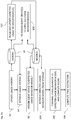
- FIGS. 2 b - c are flow charts showing exemplary steps in a method of operation of the system of FIG. 2 a;
- FIG. 3 a is a partly pictorial, partly block diagram view of a second embodiment of the system of FIGS. 1 a - d ;
- FIG. 3 b is flow chart showing exemplary steps in a method of operation of the system of FIG. 3 a.
- a method including receiving an access request for a video service from a client device, authorizing the client device to access the video service when the client device is initiating connection to the video service via a home Internet access point located in a home associated with an authorized account for the video service, determining a time restriction for access to at least part of the video service when the client device is initiating connection to the video service via a non-home Internet access point located outside of the home, a duration of the time restriction being dependent upon a usage behavior of the client device, and authorizing the client device to access the at least part of the service subject to the time restriction when the client device is initiating connection to the service via the non-home Internet access point.
- Home Based Authentication allows TV viewing while the device is in the home, but not outside the home. This may be due to two significant concerns. First, authorization credentials could be copied off the original device and distributed to rogue devices. Devices that have transient access to the home might inadvertently be given long term access to a video service they are not entitled to. Home Based Authentication also has the undesirable effect that users are challenged to login to the video services once they leave the home when they are least likely to have access to those passwords.
- FIGS. 1 a - d are partly pictorial, partly block diagram views of a behavior based authentication system 10 constructed and operative in accordance with an embodiment of the present disclosure.
- client devices in the home will typically be granted automatic access to video service(s) that the home account is subscribed to. This could of course be limited to a certain subset of video services, such as for parental rating reasons, or due to other restrictions.
- the behavior based authentication system 10 provides access outside of the home, without users being prompted for credentials, based on usage behavior in the home. Specifically, the more the user behaves as a home account user is expected to behave, the less likely it is that he/she will be prompted to log in to the system 10 .
- the system 10 includes two embodiments, a rule based embodiment (described with reference to FIGS. 2 a - c ) and a data science based embodiment (described with reference to FIGS. 3 a - b ).
- the behavior based authentication system 10 extends the device's authorization even when that device leaves the home provided the device is behaving in some expected way. So for example, if a user has watched TV on his/her iPad several times at home, then even on the train ride to work the user will not be asked to login by the behavior based authentication system 10 . After several weeks of watching at home, and on the train, the user is unlikely to be asked to login, even if the user flies to vacation for a week, as the user is still behaving within the constraints of what is expected of a home account user.
- FIG. 1 a shows a user 12 with a hand-held device 14 attempting to gain access to a video service provided by a video service provider 16 from a home 20 of the user 12 .
- Video content may be provided from the video service provider 16 or from a third party video content provider by way of example only.
- the video service provider 16 validates that the client device 14 is attempting to access the video service via a home Internet access point 18 associated with a valid user account.
- the video service provider 16 provides access to the video service while the client device 14 is connected via the home Internet access point 18 in the home 20 .
- the home 20 may include other access points such as wireless access points which are connected to the home Internet access point 18 . Even if the client device connects via one of the other access points in the home 20 , it is the identity of the home Internet access point 18 which is utilized by the video service provider 16 to determine whether the access by the client device 14 is from a home associated with a valid user account.
- the video service provider 16 also provides an authorization 22 to allow the client device 14 to connect to the video service for another 6 hours from any location, including when the client device 14 is connected to the video service, via a non-home Internet access point located outside of the home 20 .
- the non-home Internet access point may be in a non-authorized home, in an authorized home but not the authorized home of the user of the client device 14 , via a cellphone network connection (for example, but not limited to a 3G or 4G connection) or via a wireless Internet connection from a public location such as a shopping center or airport, by way of example only.
- the term “home Internet access point” and “non-home Internet access point” are used to differentiate Internet access points located in the home 20 and outside the home 20 , respectively.
- the terms “home Internet access point” and the “non-home Internet access point” do not necessarily imply that the hardware and/or software used in the access points are the same or different.
- the authorization 22 may be disposed in a token, cookie or certificate which is stored in the client device 14 for later use, by way of example only.
- FIG. 1 b shows the user 12 of the client device 14 attempting to connect to the video service outside of the home 20 .
- the client device 14 presents the video service provider 16 with the previously stored authorization 22 which is validated by the video service provider 16 .
- the video service provider 16 provides the client device 14 with access to the video service.
- the video service provider 16 may allow access to the video service to continue as long as the client device 14 does not leave the video service, i.e., the same session may continue even after the 6 hour limit has expired.
- the video service provider 16 may deny further access to the video service when the 6 hour limit expires even in the same session.
- FIG. 1 c shows the user 12 of the client device 14 attempting to connect to the video service outside of the home 20 after the expiry of the 6 hour limit.
- the client device 14 presents the video service provider 16 with the previously stored authorization 22 which is validated by the video service provider 16 .
- the video service provider 16 denies the client device 14 access to the video service.
- FIG. 1 d shows the user 12 of the client device 14 attempting to connect to the video service inside the home 20 later the same day. This additional attempt to connect to the video service provides further proof that the user 12 of the client device 14 is behaving like a home account user.
- the video service provider 16 provides an authorization 24 for the client device 14 to connect to the video service from any location for an increased time limit of 7 hours.
- FIG. 2 a is a partly pictorial, partly block diagram view of a first embodiment of the system 10 of FIGS. 1 a - d .
- FIG. 2 a shows the user 12 of the client device 14 attempting to connect to a video service of the video service provider 16 via the home Internet access point 18 in the home 20 .
- the home Internet access point 18 may be connected to the video service provider 16 by any suitable communication link, for example, but not limited to, cable, Internet Protocol, mobile communication network or any suitable combination thereof.
- the video service provider 16 typically includes a network interface 26 , a processor 28 and one or more storage devices 30 .
- the network interface 26 is operative to transmit and receive data, to and from various external devices, for example, the home Internet access point 18 and an identity provider 32 of an Internet service provider 34 .
- the storage devices 30 are operative to store data used by the processor 28 , including user history and rules, described in more detail below with reference to FIGS. 2 b - c.
- FIGS. 2 b - c are flow charts showing exemplary steps in a method of operation of the system 10 of FIG. 2 a .
- the network interface 26 is operative to receive an access request for a video service from the client device 14 (block 36 ).
- the processor 28 is operative to attempt to retrieve a previously stored authorization credential from the client device 14 (block 38 ). It should be noted that the authorization credential may not be successfully retrieved if for example the authorization credential has been deleted from the client device 14 .
- the authorization credential may not be successfully retrieved if the client device 14 has not previously been issued with an authorization credential as this is the first time the client device 14 is requesting access to the video service with a new device of the user 12 in the home 20 .
- the processor 28 continues to determine if the client device 14 is initiating connection to the video service via an access point in a home associated with an authorized account.
- the processor 28 is operative to prepare a query to determine if an identification (e.g., Internet Protocol (IP) address) of the home Internet access point 18 is associated with an authorized account for the video service (block 44 ).
- IP Internet Protocol
- the network interface 26 is operative to: send the query to the identity provider 32 of the Internet service provider 34 (block 46 ); and receive a response to the query from the identity provider 32 of the Internet service provider 34 (block 48 ).
- the identity provider generally stores a list of the homes with authorized accounts for the video service and the identities of the home Internet access points of the homes.
- the response indicates if the home Internet access point 18 is associated with an authorized account for the video service.
- the identity provider 32 may be disposed in the video service provider 16 .
- the network interface 26 may be under control of the processor 28 . It will be appreciated that other methods may be used to determine if the access request is associated with an authorized account, for example, but not limited to, using certificates or other credentials stored on the home network. If the response indicates that the home Internet access point 18 is not associated with an authorized account for the video service (branch 50 of decision point 52 ), access to the video service may be provided on provision of a valid password provided by the user 12 (block 54 ).
- the processor 28 is operative to authorize the client device 14 to access the video service when the client device is initiating connection to the video service via the home Internet access point 18 (block 58 ) located in the home 20 associated with an authorized account for the video server.
- Part of the process of the step of block 58 is to provide current access to the video service for the current request of the client device 14 .
- Part of the process of the step of block 58 is to generate an authentication credential for storage by the client device 14 for future access requests via the home Internet access point 18 .
- the authentication credential may include an identity identifying the home 20 , for example, but not limited to a subscriber ID and/or user ID.
- the identity of the home 20 is typically associated/linked with an identity of the home Internet access point 18 and stored by the processor 28 in the video service provider 16 .
- the identity of the home 20 included in the authentication credential stored by the client device 14 may then be used to retrieve the identity of the home Internet Access point 18 stored in the video service provider 16 .
- the retrieved identity of the home Internet access point 18 is then matched to the identity of an access point identified in the future access request in order to recognize the access request as coming from an access point associated with an authorized account for the video service without having to query the identity provider 32 or other such method.
- the authentication credential typically also includes an additional identification which identifies the client device 14 when the client device 14 requests access to the video service at some future time.
- the identification of the client device 14 and/or the identity of the home 20 may be used to read and write user history and other data about the client device 14 and/or the user of the client device 14 in the storage device(s) 30 , described in more detail below.
- the processor 28 is operative to determine a time restriction for access to at least part of the video service when the client device is initiating connection to the video service via a non-home Internet access point located outside of the home 20 (block 60 ). For example, access may be given to all content, including premium content, in the home 20 but only to free content outside the home 20 .
- a duration of the time restriction is dependent upon a usage behavior of the client device 14 .
- the usage behavior may be general usage behavior of the client device 14 and/or usage behavior by the client device 14 of the requested video service.
- the step of block 60 is now described in more detail with reference to the sub-steps shown in FIG. 2 c .
- the processor 28 is operative to update the usage history with the usage of the video service by the client device 14 and other usage data of the client device 14 if that data is used in decision making by the behavior based authentication system 10 (block 62 ).
- the new access request is logged by the processor 28 in a history database stored by the storage device(s) 30 .
- the processor 28 may also log when the client device 14 completes a session as well as other information, for example, but not limited to, which channels are viewed and which programs are viewed.
- the history data is logged in the history database along with the identifier of the client device 14 and/or the identity of the home 20 (created with the authentication credential). It will be appreciated that usage history may additionally or alternatively be stored in a cookie or token, discussed later, which is stored by the client device 14 .
- the processor 28 is also operative to retrieve usage history including usage history from previous sessions associated with the ID of the client device 14 and/or the identity of the home 20 (block 64 ).
- the processor 28 is operative to retrieve rules from the storage device(s) 30 (block 66 ).
- the processor 28 is operative to check compliance of the usage behavior (from the retrieved usage history including the current access attempt) of the client device 14 to the rules (block 68 ) to determine the duration of the time restriction (block 70 ).
- the time restriction is set to a first value and if the usage behavior complies with a second rule, the time restriction is set to a second value different from the first value.
- the rules are defined so that the more that the usage behavior is indicative of a home account user, the time restriction is set to a greater (and therefore more lenient) value.
- the rules may be defined so that first time access via the home Internet access point 18 sets the out-of-home duration (time restriction) to 6 hours and each subsequent access to the video service via the home Internet access point 18 increases the out-of-home duration (i.e. the time restriction) by 1 hour, optionally until some limit is reached.
- the duration of the time restriction is reset to 6 hours.
- the rules may be defined based on average access via the home Internet access point 18 over the previous month. If access is below is below X hours on average per day, then the time restriction is set to a minimum of A hours. If access is between X and Y hours on average per day, then the time restriction is set to B hours. If access is between Y and Z hours on average per day, then the time restriction is set to C hours, and so on.
- the rules may be dependent on various factors such as the day of week, time of day (e.g., nighttime usage might be more valuable as proof-of-residence) and duration of use of the video service via the home Internet access point 18 over any suitable combination of time periods.
- the rules may be different in one geographical location from another. For example, rules in one city may be different from rules in another city. For example, say that after some research it has been determined that California based users tend to watch TV in home on their iPads during the weekdays, and not outside the home very often (because they mostly drive to work), but on the weekend they often watch sports outside the home. As long as the user behaves approximately this way, the rules of the system 10 will not prompt the user for a password even on weekends.
- the rules may be different for different device types.
- the rules selected for use for a particular device 14 may be the same rules selected for another device or devices accessing the video service via the home Internet access point 18 in the same home 20 .
- the rules for devices in the same home 20 may be selected from a selection of rules based on known information about a subscriber in the home, possibly collected when the user(s) in the home originally subscribed to the video service.
- the assignment of which rules are to be used with which device 14 may be saved in the storage device(s) 30 and/or in the authorization credential generated for the client device 14 .
- the processor 28 is operative to generate an authorization credential authorizing the client device to access at least part of the video service subject to the time restriction when the client device 14 is not connected via the home Internet access point 18 (block 72 ).
- the processor 28 is operative to dispose the authorization credentials (generated in steps 58 and/or 72 ) in one of the following: a token; a cookie; or a certificate, for sending the authorization credentials to the client device (block 74 ) by way of example only. It will be appreciated that the authorization credentials may be disposed in two or more tokens, cookies or certificates or any suitable combination thereof.
- the network interface 26 is operative to send the authorization credentials in the token/cookie/certificate to the client device 14 (block 76 ).
- the cookie(s), token(s) or certificate(s) may be bound to the client device 14 using techniques known in the art of digital rights management.
- the client device 14 may request access to the video service, via a non-home Internet access point located outside of the home 20 .
- the access request is received by the network interface 26 of the video service provider 16 (block 36 ).
- the processor 28 is operative to attempt to retrieve the authorization credential from the client device 14 .
- the network interface 26 receives the authorization credentials in the token/cookie/certificate (branch 78 of the decision point 42 ).
- the authorization credentials include an identity of the home 20 .
- the processor 28 looks up the identity of the home Internet access point 18 associated with the identity of the home 20 in the storage of the video service provider 16 and compares the identity of the home Internet access point 18 with the identification of the access point used currently by the client device 14 to access the video service in order to validate the identification of the access point currently being used for access. In this case, the client device 14 is not using the home Internet access point 18 and so this authorization fails (branch 80 of decision point 82 ). At decision point 84 , the processor 28 determines if the current time is still within the time restriction included in the authorization credential.
- the processor 28 is operative to authorize the client device 14 to access at least part of the video service subject to the time restriction (and optionally limited by the time restriction such that access is stopped at the conclusion of the time restriction) (block 88 ). If the current time is after the time restriction (branch 90 ), the processor 28 generates a password request in order for the user 12 to gain access to the video service (block 92 ).
- the client device 14 may request access to the video service again via the home Internet access point 18 in the home 20 .
- the access request is received by the network interface 26 of the video service provider 16 (block 36 ).
- the processor 28 is operative to attempt to retrieve the authorization credential from the client device 14 .
- the network interface 26 receives the authorization credential in the token/cookie/certificate (branch 78 of the decision point 42 ).
- the processor 28 looks up the identity of the home Internet access point 18 associated with the identity of the home 20 in the storage of the video service provider 16 and compares the identity of the home Internet access point 18 with the identification of the access point used currently by the client device 14 to access the video service in order to validate the identification of the access point currently being used to access the video service.
- the client device 14 is accessing via the home Internet access point 18 and so this validation passes (branch 94 of decision point 82 ).
- this validation passes (branch 94 of decision point 82 ).
- access to the video service is authorized.
- the processing of the steps of blocks 60 - 76 (of FIGS. 2 b and 2 c ) is performed which may result in a different time restriction being determined based on updated usage behavior. It will be appreciated that many of the steps described above with reference with FIGS. 2 b and c may be performed in any suitable order.
- the home 20 may include one or more home Internet access points 18 for example, the home 20 may be subscribed to different Internet Service Providers. Each of the home Internet access points 18 may be associated with the authorized user account for the video service. In such a case, connection to any of the home Internet access points 18 allows the client device 14 access to the video service and also provides the client device 14 with authentication credentials for connecting to the video service outside of the home 20 without having to provide a password.
- the method of operation of FIGS. 2 b and 2 c may also be used for a home with multiple Internet access points 18 with the following changes by way of example only.
- the query may be generated to retrieve the identities of all the Internet access points 18 in the home 20 so that when the client device 14 attempts to access the video service by any of the Internet access points, the video service provider 16 may determine in step 82 of FIG. 2 b whether the client device is accessing from the home 20 of the authorized account. Alternatively or additionally, every time the client device 14 attempts to access the video service the steps of blocks 44 - 48 will first be performed and if the access is not recognized as being from an authorized account, the steps of blocks 38 , 42 and 84 will be performed.
- identity provider 32 implemented at: different Internet Service Providers; or an identity provider 32 implemented in the video service provider and/or at one or more Internet Service Providers.
- FIG. 3 a is a partly pictorial, partly block diagram view of a second embodiment of the system 10 of FIGS. 1 a - d .
- the second embodiment of the behavior based authentication system 10 of FIG. 3 a is substantially the same as the first embodiment of the system 10 of FIG. 2 a except that the rules are replaced by one or more expected usage behavior models which are learnt based on machine learning techniques from the usage history data of users of the behavior based authentication system 10 .
- the models are stored by the storage device(s) 30 of the video service provider 16 .
- the processor 28 typically runs a machine learning engine 96 which may use any appropriate machine learning algorithm, for example, but not limited to, random forests, logistic regression, or autoencoders, in order to generate one or more expected usage behavior models based on the usage history data.
- the machine learning engine 96 may generate a single expected usage behavior model or different models for different geographical regions and/or different ethnic origins and/or different age groups etc. If more than one model is used, the client device 14 attempting to access the behavior based authentication system 10 is assigned one of the models. The usage behavior of the client device 14 is compared to the selected model and a score is computed.
- the time restriction is then computed based on the score so that the higher the correlation between the usage behavior of the client device 14 and the selected model, the higher the time restriction and therefore more out of home access to the video service is approved.
- FIG. 3 b is flow chart showing exemplary steps in a method of operation of the system of FIG. 3 a .
- the method of operation described with reference to FIG. 2 b may also be used for the second embodiment of the system of FIG. 3 a except that step 60 and its sub-steps are tailored to using the behavior models rather than the rules.
- FIG. 3 b shows exemplary sub-steps of the step 60 of FIG. 2 b .
- the sub-steps shown in FIG. 3 b are tailored for the behavior models of the second embodiment of the behavior based authentication system 10 of FIG. 3 a .
- the sub-steps are now described in more detail.
- the processor 28 is operative to update the usage history (block 62 ) and retrieve the usage history (block 64 ) substantially in the same way as described with reference to FIG. 2 c .
- the processor 28 is operative to run the machine learning engine 96 to build and update the expected usage behavior model(s) based on usage behavior feedback (stored in the storage device(s) 30 as the usage history) from a plurality of client devices 14 (only one shown in the FIGS. 1 a - d , 2 a , 3 a for the sake of simplicity) (block 102 ). If the client device 14 has not been previously assigned to one of the expected usage behavior models, the processor 28 is operative to select one of the expected usage behavior models for the client device to which to compare usage behavior (block 98 ).
- Assigning the client device 14 to one of the models may be based on a geographical region and/or an ethnic group and/or an age group associated with the client device 14 by way of example only.
- Information regarding ethnic group and/or age group may be obtained from user information provided when a user in the home 20 associated with the home Internet access point 18 subscribed to the video service or based on the type of content being consumed by the client device 14 or other devices in the same home 20 as the client device 14 , by way of example only.
- the assignment of a model to the client device 14 may be updated on a periodic basis which may lead to the client device 14 being reassigned to a different one of the models.
- Updating (re-assigning) the assignment of device(s) 14 to models may be performed on a batch basis periodically (block 100 ) based on history and models stored in the storage device(s) 30 .
- the assignment of the client device 14 to one of the models may be saved in the storage device(s) 30 and/or in the authorization credential generated for the client device 14 .
- the processor 28 is operative to retrieve the previously selected expected usage behavior model from the storage device(s) 30 (block 104 ).
- the processor 28 is operative to compare the usage behavior of the client device 14 to the selected expected usage behavior model to determine the duration of the time restriction.
- the comparison step generally includes the processor 28 computing a score reflecting a similarity of the usage behavior of the client device 14 to the selected expected usage behavior model (block 106 ).
- the score may be equal to, or be a function of, a distance for example, but not limited to, a Mahalanobis distance, Kullback-Leibler distance or Hellinger distance, between the usage behavior of the client device 14 and the selected expected usage behavior model.
- the processor 28 is operative to compute the time restriction with the score as input (block 108 ).
- the time restriction is generally computed as a function of the score, e.g., F(s), where F is a function and s is the score.
- the function may be a linear function or a non-linear function whereby the time restriction increases at an increasing or decreasing rate with the score. It will be appreciated that the many of the steps described above with reference with FIG. 3 b may be performed in any suitable order.
- the processing performed by the video service provider 16 described above with reference to FIGS. 2 a -3 b may be at least partially performed by a cloud hosted application and/or at least partially using cloud hosted storage.
- some or all of the functions of the processor 28 may be combined in a single physical component or, alternatively, implemented using multiple physical components. These physical components may comprise hard-wired or programmable devices, or a combination of the two.
- at least some of the functions of the processing circuitry may be carried out by a programmable processor under the control of suitable software.
- This software may be downloaded to a device in electronic form, over a network, for example.
- the software may be stored in tangible, non-transitory computer-readable storage media, such as optical, magnetic, or electronic memory.
- software components may, if desired, be implemented in ROM (read only memory) form.
- the software components may, generally, be implemented in hardware, if desired, using conventional techniques.
- the software components may be instantiated, for example: as a computer program product or on a tangible medium. In some cases, it may be possible to instantiate the software components as a signal interpretable by an appropriate computer, although such an instantiation may be excluded in certain embodiments of the present disclosure.
Landscapes
- Engineering & Computer Science (AREA)
- Computer Security & Cryptography (AREA)
- Signal Processing (AREA)
- Computer Networks & Wireless Communication (AREA)
- Databases & Information Systems (AREA)
- General Engineering & Computer Science (AREA)
- Computer Hardware Design (AREA)
- Computing Systems (AREA)
- Multimedia (AREA)
- Computer Graphics (AREA)
- Software Systems (AREA)
- Theoretical Computer Science (AREA)
- Technology Law (AREA)
- Physics & Mathematics (AREA)
- General Physics & Mathematics (AREA)
- Two-Way Televisions, Distribution Of Moving Picture Or The Like (AREA)
Abstract
Description
Claims (15)
Priority Applications (4)
| Application Number | Priority Date | Filing Date | Title |
|---|---|---|---|
| US15/439,965 US10637872B2 (en) | 2017-02-23 | 2017-02-23 | Behavior-based authentication |
| EP18708208.6A EP3586487B1 (en) | 2017-02-23 | 2018-02-11 | Behavior-based authentication |
| PCT/IB2018/050827 WO2018154406A1 (en) | 2017-02-23 | 2018-02-11 | Behavior-based authentication |
| CN201880026413.3A CN110537359B (en) | 2017-02-23 | 2018-02-11 | Method, system, and storage medium for behavior-based authentication |
Applications Claiming Priority (1)
| Application Number | Priority Date | Filing Date | Title |
|---|---|---|---|
| US15/439,965 US10637872B2 (en) | 2017-02-23 | 2017-02-23 | Behavior-based authentication |
Publications (2)
| Publication Number | Publication Date |
|---|---|
| US20180241759A1 US20180241759A1 (en) | 2018-08-23 |
| US10637872B2 true US10637872B2 (en) | 2020-04-28 |
Family
ID=61526840
Family Applications (1)
| Application Number | Title | Priority Date | Filing Date |
|---|---|---|---|
| US15/439,965 Active 2037-06-12 US10637872B2 (en) | 2017-02-23 | 2017-02-23 | Behavior-based authentication |
Country Status (4)
| Country | Link |
|---|---|
| US (1) | US10637872B2 (en) |
| EP (1) | EP3586487B1 (en) |
| CN (1) | CN110537359B (en) |
| WO (1) | WO2018154406A1 (en) |
Cited By (4)
| Publication number | Priority date | Publication date | Assignee | Title |
|---|---|---|---|---|
| US20220405359A1 (en) * | 2019-11-01 | 2022-12-22 | Visa International Service Association | Computer-implemented method and a virtual reality device for providing behavior-based authentication in virtual environment |
| US11949967B1 (en) * | 2022-09-28 | 2024-04-02 | International Business Machines Corporation | Automatic connotation for audio and visual content using IOT sensors |
| US12041041B2 (en) * | 2019-08-21 | 2024-07-16 | Truist Bank | Location-based mobile device authentication |
| US12556404B2 (en) * | 2023-11-15 | 2026-02-17 | Bank Of America Corporation | Impersonation detection using an authentication enforcement engine |
Families Citing this family (4)
| Publication number | Priority date | Publication date | Assignee | Title |
|---|---|---|---|---|
| US10327022B2 (en) * | 2017-05-05 | 2019-06-18 | DISH Technologies L.L.C. | Geolocation of set-top boxes using machine learning |
| US10708261B2 (en) * | 2018-05-07 | 2020-07-07 | Vmware, Inc. | Secure gateway onboarding via mobile devices for internet of things device management |
| US11102542B2 (en) * | 2019-06-06 | 2021-08-24 | Rovi Guides, Inc. | Systems and methods for controlling access from a first content platform to content items available on a second content platform |
| US12231889B2 (en) * | 2020-10-19 | 2025-02-18 | Gogo Business Aviation Llc | Network authentication using monitored traffic activity |
Citations (10)
| Publication number | Priority date | Publication date | Assignee | Title |
|---|---|---|---|---|
| US20110167440A1 (en) * | 2010-01-05 | 2011-07-07 | CSC Holdings, LLC | Enhanced Subscriber Authentication Using Location Tracking |
| US8312157B2 (en) | 2009-07-16 | 2012-11-13 | Palo Alto Research Center Incorporated | Implicit authentication |
| US8824372B2 (en) | 2012-06-28 | 2014-09-02 | Cable Television Laboratories, Inc. | Location based authentication for online services |
| US8955078B2 (en) | 2011-06-30 | 2015-02-10 | Cable Television Laboratories, Inc. | Zero sign-on authentication |
| US9037111B2 (en) | 2012-07-30 | 2015-05-19 | Ncr Corporation | Location aware authentication techniques |
| US20160261621A1 (en) * | 2015-03-02 | 2016-09-08 | Verizon Patent And Licensing Inc. | Network threat detection and management system based on user behavior information |
| US9451443B1 (en) | 2011-02-04 | 2016-09-20 | CSC Holdings, LLC | Providing a service with location-based authorization |
| US20160364794A1 (en) * | 2015-06-09 | 2016-12-15 | International Business Machines Corporation | Scoring transactional fraud using features of transaction payment relationship graphs |
| US20170093875A1 (en) * | 2015-09-25 | 2017-03-30 | Charter Communications Operating, Llc | System and method for authorizing a subscriber device |
| US20170124303A1 (en) * | 2015-11-04 | 2017-05-04 | Screening Room Media, Inc. | Digital Credential System |
Family Cites Families (3)
| Publication number | Priority date | Publication date | Assignee | Title |
|---|---|---|---|---|
| US20130152173A1 (en) * | 2004-11-18 | 2013-06-13 | Contentguard Holdings, Inc. | Method, apparatus, and computer-readable medium for content access authorization |
| EP2933981B1 (en) * | 2014-04-17 | 2018-08-01 | Comptel OY | Method and system of user authentication |
| CN105827624B (en) * | 2016-04-26 | 2019-10-18 | 浙江宇视科技有限公司 | an authentication system |
-
2017
- 2017-02-23 US US15/439,965 patent/US10637872B2/en active Active
-
2018
- 2018-02-11 CN CN201880026413.3A patent/CN110537359B/en not_active Expired - Fee Related
- 2018-02-11 EP EP18708208.6A patent/EP3586487B1/en active Active
- 2018-02-11 WO PCT/IB2018/050827 patent/WO2018154406A1/en not_active Ceased
Patent Citations (10)
| Publication number | Priority date | Publication date | Assignee | Title |
|---|---|---|---|---|
| US8312157B2 (en) | 2009-07-16 | 2012-11-13 | Palo Alto Research Center Incorporated | Implicit authentication |
| US20110167440A1 (en) * | 2010-01-05 | 2011-07-07 | CSC Holdings, LLC | Enhanced Subscriber Authentication Using Location Tracking |
| US9451443B1 (en) | 2011-02-04 | 2016-09-20 | CSC Holdings, LLC | Providing a service with location-based authorization |
| US8955078B2 (en) | 2011-06-30 | 2015-02-10 | Cable Television Laboratories, Inc. | Zero sign-on authentication |
| US8824372B2 (en) | 2012-06-28 | 2014-09-02 | Cable Television Laboratories, Inc. | Location based authentication for online services |
| US9037111B2 (en) | 2012-07-30 | 2015-05-19 | Ncr Corporation | Location aware authentication techniques |
| US20160261621A1 (en) * | 2015-03-02 | 2016-09-08 | Verizon Patent And Licensing Inc. | Network threat detection and management system based on user behavior information |
| US20160364794A1 (en) * | 2015-06-09 | 2016-12-15 | International Business Machines Corporation | Scoring transactional fraud using features of transaction payment relationship graphs |
| US20170093875A1 (en) * | 2015-09-25 | 2017-03-30 | Charter Communications Operating, Llc | System and method for authorizing a subscriber device |
| US20170124303A1 (en) * | 2015-11-04 | 2017-05-04 | Screening Room Media, Inc. | Digital Credential System |
Non-Patent Citations (2)
| Title |
|---|
| Fridman et al., Active Authentication on Mobile Devices via Stylometry, Application Usage, Web Browsing, and GPS Location, 2017, IEEE Systems Journal, vol. 11, No. 2, Jun. 2017. (Year: 2017). * |
| Shih-Fu Chang, Anthony Vetro, Video Adaption: Concepts, Technologies, and Open Issues, 2005, Proc of IEEE, vol. 93, No. 1, pp. 148-158. (Year: 2005). * |
Cited By (5)
| Publication number | Priority date | Publication date | Assignee | Title |
|---|---|---|---|---|
| US12041041B2 (en) * | 2019-08-21 | 2024-07-16 | Truist Bank | Location-based mobile device authentication |
| US20220405359A1 (en) * | 2019-11-01 | 2022-12-22 | Visa International Service Association | Computer-implemented method and a virtual reality device for providing behavior-based authentication in virtual environment |
| US12277202B2 (en) * | 2019-11-01 | 2025-04-15 | Visa International Service Association | Computer-implemented method and a virtual reality device for providing behavior-based authentication in virtual environment |
| US11949967B1 (en) * | 2022-09-28 | 2024-04-02 | International Business Machines Corporation | Automatic connotation for audio and visual content using IOT sensors |
| US12556404B2 (en) * | 2023-11-15 | 2026-02-17 | Bank Of America Corporation | Impersonation detection using an authentication enforcement engine |
Also Published As
| Publication number | Publication date |
|---|---|
| CN110537359A (en) | 2019-12-03 |
| US20180241759A1 (en) | 2018-08-23 |
| EP3586487A1 (en) | 2020-01-01 |
| CN110537359B (en) | 2022-06-14 |
| EP3586487B1 (en) | 2021-04-21 |
| WO2018154406A1 (en) | 2018-08-30 |
Similar Documents
| Publication | Publication Date | Title |
|---|---|---|
| US10637872B2 (en) | Behavior-based authentication | |
| US20230092605A1 (en) | Context-based automated task performance for user contacts | |
| US11190527B2 (en) | Identity verification and login methods, apparatuses, and computer devices | |
| CA3059330C (en) | Systems and methods for dynamic flexible authentication in a cloud service | |
| US10673985B2 (en) | Router-host logging | |
| US8474017B2 (en) | Identity management and single sign-on in a heterogeneous composite service scenario | |
| US8015594B2 (en) | Techniques for validating public keys using AAA services | |
| US8898759B2 (en) | Application registration, authorization, and verification | |
| US7467401B2 (en) | User authentication without prior user enrollment | |
| JP5571854B2 (en) | User account recovery | |
| US9474011B2 (en) | Method and apparatus for providing access controls for a resource | |
| US12500881B2 (en) | System architecture for secure highly available microservice applications with decentralized authorization using hybrid attribute authority tokens used for security enforcement in cloud platforms | |
| CN108416457A (en) | Device reservation management method, device reservation management platform and system | |
| US20180288046A1 (en) | Enhanced Authentication Method Using Dynamic Geographical Location Information | |
| US9848223B2 (en) | Automatically determining restored availability of multi-channel media distributors for authentication or authorization | |
| US11785013B2 (en) | Application program access control | |
| CN116685970A (en) | Method for controlling access to services, associated method and associated apparatus | |
| US12537685B2 (en) | System architecture for secure highly available microservice applications with decentralized authorization using short-lived tokens for security enforcement in cloud platforms | |
| US12621286B2 (en) | Microservice applications with decentralized authorization enforcement in cloud platforms with multiple authentication ingress modes | |
| US12463811B2 (en) | System architecture for secure highly available microservice applications with decentralized authorization and delegated authorization controls in cloud platforms | |
| US20240380746A1 (en) | System architecture for secure highly available microservice applications with decentralized authorization enforcement in cloud platforms with multiple authentication ingress modes |
Legal Events
| Date | Code | Title | Description |
|---|---|---|---|
| AS | Assignment |
Owner name: CISCO TECHNOLOGY, INC., CALIFORNIA Free format text: ASSIGNMENT OF ASSIGNORS INTEREST;ASSIGNORS:SOLOW, HILLEL;ANIKSTER, VERED;WACHTFOGEL, DAVID;SIGNING DATES FROM 20170220 TO 20170222;REEL/FRAME:041348/0564 |
|
| AS | Assignment |
Owner name: NDS LIMITED, UNITED KINGDOM Free format text: ASSIGNMENT OF ASSIGNORS INTEREST;ASSIGNORS:BEAUMARIS NETWORKS LLC;CISCO SYSTEMS INTERNATIONAL S.A.R.L.;CISCO TECHNOLOGY, INC.;AND OTHERS;REEL/FRAME:047420/0600 Effective date: 20181028 |
|
| AS | Assignment |
Owner name: SYNAMEDIA LIMITED, UNITED KINGDOM Free format text: CHANGE OF NAME;ASSIGNOR:NDS LIMITED;REEL/FRAME:048190/0581 Effective date: 20181108 |
|
| AS | Assignment |
Owner name: SYNAMEDIA LIMITED, UNITED KINGDOM Free format text: CHANGE OF NAME;ASSIGNOR:NDS LIMITED;REEL/FRAME:048513/0297 Effective date: 20181108 |
|
| STPP | Information on status: patent application and granting procedure in general |
Free format text: FINAL REJECTION MAILED |
|
| STPP | Information on status: patent application and granting procedure in general |
Free format text: NON FINAL ACTION MAILED |
|
| STPP | Information on status: patent application and granting procedure in general |
Free format text: RESPONSE TO NON-FINAL OFFICE ACTION ENTERED AND FORWARDED TO EXAMINER |
|
| STPP | Information on status: patent application and granting procedure in general |
Free format text: NOTICE OF ALLOWANCE MAILED -- APPLICATION RECEIVED IN OFFICE OF PUBLICATIONS |
|
| STCF | Information on status: patent grant |
Free format text: PATENTED CASE |
|
| AS | Assignment |
Owner name: SYNAMEDIA LIMITED, UNITED KINGDOM Free format text: CORRECTIVE ASSIGNMENT TO CORRECT THE 26 APPLICATION NUMBERS ERRONEOUSLY RECORDED AGAINST ON THE ATTACHED LIST PREVIOUSLY RECORDED AT REEL: 048513 FRAME: 0297. ASSIGNOR(S) HEREBY CONFIRMS THE CHANGE OF NAME;ASSIGNOR:NDS LIMITED;REEL/FRAME:056623/0708 Effective date: 20181108 |
|
| MAFP | Maintenance fee payment |
Free format text: PAYMENT OF MAINTENANCE FEE, 4TH YEAR, LARGE ENTITY (ORIGINAL EVENT CODE: M1551); ENTITY STATUS OF PATENT OWNER: LARGE ENTITY Year of fee payment: 4 |