US10636153B2 - Image processing system, image processing apparatus, and image processing method for object tracking - Google Patents
Image processing system, image processing apparatus, and image processing method for object tracking Download PDFInfo
- Publication number
- US10636153B2 US10636153B2 US15/788,016 US201715788016A US10636153B2 US 10636153 B2 US10636153 B2 US 10636153B2 US 201715788016 A US201715788016 A US 201715788016A US 10636153 B2 US10636153 B2 US 10636153B2
- Authority
- US
- United States
- Prior art keywords
- image
- region
- estimated
- captured
- image region
- Prior art date
- Legal status (The legal status is an assumption and is not a legal conclusion. Google has not performed a legal analysis and makes no representation as to the accuracy of the status listed.)
- Active, expires
Links
Images



Classifications
-
- G—PHYSICS
- G06—COMPUTING OR CALCULATING; COUNTING
- G06T—IMAGE DATA PROCESSING OR GENERATION, IN GENERAL
- G06T7/00—Image analysis
- G06T7/20—Analysis of motion
- G06T7/292—Multi-camera tracking
-
- G—PHYSICS
- G06—COMPUTING OR CALCULATING; COUNTING
- G06T—IMAGE DATA PROCESSING OR GENERATION, IN GENERAL
- G06T7/00—Image analysis
- G06T7/10—Segmentation; Edge detection
- G06T7/11—Region-based segmentation
-
- G—PHYSICS
- G06—COMPUTING OR CALCULATING; COUNTING
- G06T—IMAGE DATA PROCESSING OR GENERATION, IN GENERAL
- G06T7/00—Image analysis
- G06T7/10—Segmentation; Edge detection
- G06T7/174—Segmentation; Edge detection involving the use of two or more images
-
- G—PHYSICS
- G06—COMPUTING OR CALCULATING; COUNTING
- G06T—IMAGE DATA PROCESSING OR GENERATION, IN GENERAL
- G06T7/00—Image analysis
- G06T7/20—Analysis of motion
- G06T7/254—Analysis of motion involving subtraction of images
-
- G—PHYSICS
- G06—COMPUTING OR CALCULATING; COUNTING
- G06T—IMAGE DATA PROCESSING OR GENERATION, IN GENERAL
- G06T2207/00—Indexing scheme for image analysis or image enhancement
- G06T2207/10—Image acquisition modality
- G06T2207/10016—Video; Image sequence
-
- G—PHYSICS
- G06—COMPUTING OR CALCULATING; COUNTING
- G06T—IMAGE DATA PROCESSING OR GENERATION, IN GENERAL
- G06T2207/00—Indexing scheme for image analysis or image enhancement
- G06T2207/20—Special algorithmic details
- G06T2207/20212—Image combination
- G06T2207/20224—Image subtraction
-
- G—PHYSICS
- G06—COMPUTING OR CALCULATING; COUNTING
- G06T—IMAGE DATA PROCESSING OR GENERATION, IN GENERAL
- G06T2207/00—Indexing scheme for image analysis or image enhancement
- G06T2207/30—Subject of image; Context of image processing
- G06T2207/30196—Human being; Person
-
- G—PHYSICS
- G06—COMPUTING OR CALCULATING; COUNTING
- G06T—IMAGE DATA PROCESSING OR GENERATION, IN GENERAL
- G06T2207/00—Indexing scheme for image analysis or image enhancement
- G06T2207/30—Subject of image; Context of image processing
- G06T2207/30232—Surveillance
-
- G—PHYSICS
- G06—COMPUTING OR CALCULATING; COUNTING
- G06T—IMAGE DATA PROCESSING OR GENERATION, IN GENERAL
- G06T2207/00—Indexing scheme for image analysis or image enhancement
- G06T2207/30—Subject of image; Context of image processing
- G06T2207/30241—Trajectory
Definitions
- the first related art discloses a technique in which multiple cameras are installed on a ceiling to avoid overlapping of people, a head of each person is recognized, and a position of each person is identified based on the principle of stereoscopy.
- the second related art discloses a technique of generating tracking information by chronologically connecting a person in images imaged by multiple cameras, and based on statistical information made on the precondition that a speed and a moving direction of a person can put to some extent into patterns.
- the third related art discloses a technique of tracking each object by using a template called synthesis feature amount that has been prepared according to an overlapping state, and by distinguishing each of overlapped objects.
- an image processing system includes: a camera; a storage device; and an image processing apparatus, wherein the storage device stores a plurality of captured images that are captured by the camera, and the image processing apparatus includes: a processor that executes a process including: estimating a region of an object included in captured image of a current time for each of a plurality of objects included in the captured image of the current time based on captured image of a previous time, the captured image of the current time and the captured image of the previous time being acquired from the storage device, evaluating whether to correct each of the regions of the objects estimated by the estimating, based on a combination region in which the respective regions of objects estimated by the estimating are combined, and on a difference region that is identified from a background image and the captured image of the current time, and correcting the respective regions of the objects estimated by the estimating based on a result of evaluation by the evaluating.
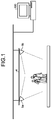
- FIG. 1 depicts one example of an image processing apparatus according to a first embodiment
- FIG. 2 is a functional block diagram depicting a configuration of the image processing apparatus according to the first embodiment
- FIG. 3 depicts one example of a data structure of image information
- FIG. 4 depicts one example of a data structure of a tracking table
- FIG. 5 depicts one example of a data structure of a recalculation table
- FIG. 6 is diagram ( 1 ) for explaining background subtraction
- FIG. 7 is diagram ( 2 ) for explaining the background subtraction
- FIG. 8 is a diagram for explaining calculation of an estimation position
- FIG. 9 is a diagram for explaining evaluation of an estimation position
- FIG. 10 is a diagram for explaining processing performed by an evaluating unit
- FIG. 11 is a flowchart indicating a procedure of processing performed by the image processing apparatus according to the first embodiment
- FIG. 12 is a flowchart indicating processing of reevaluation of a tentative position of each person
- FIG. 13 is a flowchart indicating processing of recalculation of a position of each person
- FIG. 14 is a functional block diagram depicting a configuration of an image processing apparatus according to a second embodiment
- FIG. 15 is a diagram for explaining processing performed by a correcting unit according to the second embodiment.
- FIG. 16 is a functional block diagram depicting a configuration of an image processing apparatus according to a third embodiment
- FIG. 17 is a diagram for explaining processing performed by a correcting unit according to the third embodiment.
- FIG. 18 is a functional block diagram depicting a configuration of an image processing apparatus according to a fourth embodiment
- FIG. 19 is a diagram for explaining processing performed by a selecting unit according to the fourth embodiment.
- FIG. 20 depicts one example of an image processing system
- FIG. 21 depicts one example of a hardware configuration of a computer that implements functions similar to those of the image processing apparatus.
- Patent Literature of International Publication Pamphlet No. WO 2013/108686 is based on the precondition that a speed or a moving direction of people can put to some extent into patterns.
- movement of a person at a crowded place or movement of people playing a sport are often not consistent, and the accuracy of tracking information is degraded.
- FIG. 1 depicts one example of an image processing apparatus according to a first embodiment.
- an image processing apparatus 100 is connected to cameras 5 a and 5 b that are set on a ceiling 4 .
- the cameras 5 a , 5 b output information of an image of an imaging range to the image processing apparatus 100 .
- the cameras 5 a and 5 b are collectively denoted as camera 5 as appropriate.
- the information of an image is denoted as image information.
- the image information includes multiple pieces of image data that are chronologically arranged.
- the image data includes information of a still image that has been imaged by the camera 5 at certain timing.
- the image processing apparatus 100 is a processing unit that tracks a position of each user that is included in the image information by performing image processing on the image information acquired from the camera 5 .
- FIG. 2 is a functional block diagram depicting a configuration of the image processing apparatus according to the first embodiment. As depicted in FIG. 2 , the image processing apparatus 100 includes an interface unit 110 , a display unit 120 , a storage unit 130 , and a control unit 140 .
- the interface unit 110 is a processing unit that is connected to various external devices, and that performs data communication.
- the interface unit 110 is connected to the camera 5 depicted in FIG. 1 , and acquires the image information from the camera 5 .
- the interface unit 110 outputs the image information to the control unit 140 .
- the interface unit 110 can be connected also to an input device such as a keyboard, and can accept information that is input by a user.
- the display unit 120 is a display device that displays information output from the control unit 140 .
- the display unit 120 corresponds to a liquid crystal display, a touch panel, or the like.
- the storage unit 130 has image information 131 , a tracking table 132 , and a recalculation table 133 .
- the storage unit 130 corresponds to a semiconductor memory device, such as a random-access memory (RAM), a read-only memory (ROM), and a flash memory, or a storage device, such as a hard disk drive (HDD).
- RAM random-access memory
- ROM read-only memory
- HDD hard disk drive
- the image information 131 corresponds to image information that has been acquired by the camera 5 .
- FIG. 3 depicts one example of a data structure of the image information.
- the image information 131 associates a camera identification number with time and image data.
- the camera identification number is information to identify a camera uniquely.
- the time indicates a time when image data is captured by the camera.
- the image data indicates image data that is captured by a corresponding camera at a corresponding time.
- the tracking table 132 is a table that holds information about a position of each person at each time.
- FIG. 4 depicts one example of a data structure of the tracking table. As depicted in FIG. 4 , the tracking table associates the camera identification number with a time, a person identification information, position coordinates, and a person region. Explanation of the camera identification number and the time is the same as the explanation of the camera and the time in FIG. 3 .
- the person identification information is information to identify a person included in image data that is imaged at a corresponding time uniquely.
- the position coordinates indicate coordinates of a center of gravity of a person imaged at a corresponding time.
- the person region indicates a region of a person included in image data that is imaged at a corresponding time. Although explanation is omitted, the person region can be expressed by upper left coordinates and lower right coordinates of a region of a person.
- the recalculation table 133 is a table that is used by a correcting unit 144 described later.
- FIG. 5 depicts one example of a data structure of the recalculation table. As depicted in FIG. 5 , the recalculation table 133 associates region identification information with a position coordinate and an Eval value.
- the region identification information is information to identify a region combining respective person regions uniquely.
- the region combining respective person regions is expresses as “combination region”.
- the position coordinate indicates position coordinates of each person included in the combination region.
- the Eval value is a parameter that indicates appropriateness of a corresponding combination region. Specific explanation of the Eval value is given later.
- the control unit 140 includes an accepting unit 141 , an estimating unit 142 , an evaluating unit 143 , and the correcting unit 144 .
- the control unit 140 can be implemented by a central processing unit (CPU), a micro processing unit (MPU), or the like.
- the control unit 140 can also be implemented by a hardwired logic, such as an application specific integrated circuit (ASIC) and a field programmable gate array (FPGA).
- ASIC application specific integrated circuit
- FPGA field programmable gate array
- the accepting unit 141 is a processing unit that accepts the image information 131 from the camera 5 through the interface unit 110 .
- the accepting unit 141 stores the accepted image information 131 in the storage unit 130 .
- the accepting unit 141 adds the accepted new image information to the image information 131 .
- the estimating unit 142 is a processing unit that estimates a position of a person at a time t based on the image information 131 and the tracking table 132 .
- the estimating unit 142 performs background subtraction, calculation of an estimation position, and evaluation of the estimation position, sequentially.
- FIG. 6 and FIG. 7 are diagrams for explaining the background subtraction.
- the estimating unit 142 gets a difference between image data I t and background image B t of a time t, to generate difference image M t .
- the estimating unit 142 acquires the image data I t at time t from the image information 131 .
- the estimating unit 142 uses image data that has been prepared in advance as the background image B t .
- Equation (1) coordinates (u, v) of the difference image M t is defined by Equation (1).
- I t (u, v) indicates a pixel value at the coordinates (u, v) of the image data I t .
- B t (u, v) indicates a pixel value at the coordinates (u, v) of the background image B t .
- M t ( u,v )
- the estimating unit 142 compares each region left in the difference image M t with a predetermined person size, and identifies a region having a similar size to the predetermined person size is identified as a candidate of a person. For example, the estimating unit 142 identifies a region that a difference between the predetermined person size and the size of the region left in the difference image M t is smaller than a threshold as a person region candidate.
- regions 6 a , 6 b , and 6 c are included in the difference image M t .
- the estimating unit 142 compares the sizes of the regions 6 a , 6 b , and 6 c with a predetermined person size. Out of these, a difference between the regions 6 a to 6 b and the predetermined person size is equal to or larger than a threshold, and a difference between the size of the region 6 c and the predetermined person size is smaller than the threshold.
- the estimating unit 142 defines the region 6 c as a person region candidate.
- the person region candidate defined by the background subtraction explained in FIG. 7 is denoted as a “first candidate region” appropriately.
- the region 6 c is the first candidate region.
- FIG. 8 is a diagram for explaining the calculation of an estimation position.
- FIG. 8 depicts an example of calculating an estimation position of a person at time t based on position coordinates of the person at time t- 1 and time t- 2 as one example.
- the estimating unit 142 acquires information of the position coordinates of the person at time t- 1 and time t- 2 from the tracking table 132 .
- the position coordinates of the person at time t- 1 are (x t-1 , y t-1 ), and the position coordinates of the person at time t- 2 are (x t-2 , y t-2 ).
- the estimating unit 142 identifies a movement vector from time t- 2 to time t- 1 .
- the estimating unit 142 defines coordinates at a destination of the movement vector with respect to the position coordinates (x t-1 , y t-1 ) as an estimation position (x t , y t ) of the person at time t.
- the processing of defining an estimation position of a person at time t can be performed by using a technique such as the Kalman filter disclosed in Japanese Laid-open Patent Publication No. 2010-199701 and the optical flow.
- FIG. 9 is a diagram for explaining the evaluation of an estimation position.
- the estimating unit 142 compares an image at a position of a person of time t- 1 and an image at an estimation position of time t, and evaluates whether the images are similar to each other.
- the image at the position of the person of time t- 1 corresponds to an image of the person region of time t- 1 in image data of time t- 1 .
- the position at the estimation position of time t is an image of a predetermined range with respect to the estimation position (x t , y t ) in the image data of time t.
- the predetermined range is determined in advance.
- the estimating unit 142 calculates a similarity e between the image at the position of the person and the image at the estimation position of time t based on Equation (2).
- f t (x+m, y+n) indicates a pixel value at coordinates (x+m, y+n) in the image at the estimation position of time t.
- f t (x+m ⁇ i, y+n ⁇ j) indicates a pixel value at coordinates (x+m ⁇ i, y+n ⁇ j) in the image of the person region of time t- 1 . For i and j, predetermined values are substituted.
- the estimating unit 142 determines that the image at the position of the person of time t- 1 and the image at the estimation position of time t are similar to each other when the similarity e is equal to or higher than a threshold. On the other hand, the estimating unit 142 determines that the image at the position of the person of time t- 1 and the image at the estimation position of time t are not similar to each other when the similarity e is lower than the threshold.
- the estimating unit 142 When the similarity e is lower than the threshold, the estimating unit 142 displaces the estimation position of time t, and recalculates the similarity e. The estimating unit 142 repeats the above processing until the similarity e equal to or higher than the threshold is obtained.
- the estimating unit 142 defines the estimation position of time t as a tentative position of a person at time t.
- the image at the position of the person of time t- 1 is an image 7 a
- the image at the estimation position of time t is an image 8 a
- the estimating unit 142 calculates a similarity e 1 between the image 7 a and the image 8 a .
- the estimating unit 142 displaces the estimation position of time t, and determines the image at the estimation position of time t to an image 8 b .
- the estimating unit 142 calculates a similarity e 2 between the image 7 a and the image 8 b .
- the position (center of gravity) of the image 8 b is defined as the tentative position of the person at time t.
- the estimating unit 142 When more than one person is included in the image information 131 , the estimating unit 142 performs the background subtraction, the calculation of an estimation position, and the evaluation of the estimation position for each person, and defines the tentative position of each person.
- the estimating unit 142 outputs information of the first candidate region, and information of the tentative position of each person at time t to the evaluating unit 143 .
- the evaluating unit 143 is a processing unit that evaluates whether a tentative position of each person of time t is at an appropriate position. When evaluating that a tentative position of each person is at an appropriate position, the evaluating unit 143 registers the tentative position of each person of time t in the tracking table 132 as position coordinates. On the other hand, when evaluating that a tentative position of each person is not at an appropriate position, the evaluating unit 143 outputs information of the tentative position of each person of time t, and information of the first candidate region of each person to the correcting unit 144 .
- the evaluating unit 143 calculates a first overlap rate of a first combination region in which the first candidate regions of each person are combined and a second combination region in which person regions according to the tentative position of each person are combined.
- the first overlap rate is calculated based on Equation (3). As in Equation (3), it is indicated that as the first overlap rate increases, the less OR(Sx) and OR Ex) overlap with each other.
- First Overlap Rate abs ⁇ OR(Sx)-OR(Ex) ⁇ (3)
- OR(Sx) expresses the first combination region
- OR(Ex) expresses the second combination region
- FIG. 10 is a diagram for explaining the processing performed by the evaluating unit.
- a region 10 a is the first candidate region of person A.
- a region 10 b is the first candidate region of person B.
- a region 10 c is the first candidate region of person C.
- a region obtained by combining (the number of pixels obtained by ORing) these regions 10 a , 10 b , and 10 c corresponds OR(Sx).
- a region 11 a is a person region based on a tentative position of person A.
- a region 11 b is a person region based on a tentative position of person B.
- a region 11 c is a person region based on a tentative position of person C.
- a region obtained by combining these regions 11 a , 11 b , and 11 c corresponds to OR(Ex).
- the number of pixels in a region in which OR(Sx) and OR(Ex) are not overlapped with each other is the first overlap rate.
- the evaluating unit 143 evaluate that the tentative position of each person is at an appropriate position.
- the evaluating unit 143 evaluates that the tentative position of each person is not at an appropriate position.
- the predetermined overlap rate is set in advance.
- the correcting unit 144 is a processing unit that corrects a tentative position of each person when the evaluating unit 143 has evaluated that the tentative position is not at an appropriate position. For example, the correcting unit 144 identifies an estimation position of each person at which the Eval value indicated in Equation (4) is maximized, and corrects the tentative position to the identified estimation position.
- Eval value Total Similarity+Second Overlap Rate (4)
- the correcting unit 144 calculates the similarity e between a person region of a person of time t- 1 and a person region with respect to a modified estimation position of time t based on Equation (2).
- the correcting unit 144 calculates the similarity e per person, and calculates a similarity in which the similarities e of respective persons are totalized, as the total similarity.
- the correcting unit 144 calculates a similarity e A between a person region of person A at time t- 1 and a person region based on a modified estimation position of person A at time t based on Equation (2).
- the correcting unit 144 calculates a similarity e B between a person region of person B at time t- 1 and a person region based on a modified estimation position of person B at time t based on Equation (2).
- the correcting unit 144 calculates a similarity e C between a person region of person C at time t- 1 and a person region based on a modified estimation position of person C at time t based on Equation (2).
- the correcting unit 144 totalizes the similarities e A , e B , and e C to acquire the total similarity.
- the correcting unit 144 compares the first combination region in which the first candidate regions of time t are combined and a third combination region in which person regions according to modified estimation regions of each person, to calculate the second overlap rate. For example, the correcting unit 144 calculates the number of pixels in a region in which the first combination region and the third combination region overlap with each other as the second overlap rate.
- the correcting unit 144 registers information of a modified estimation position and the Eval value in an associated manner in the recalculation table 133 .
- the information of the modified estimation position includes region identification information to identify the third combination region uniquely, and position coordinates of each person included in the third combination region.
- the correcting unit 144 repeats the above processing while modifying the modified estimation position until a termination condition is satisfied. For example, the correcting unit 144 ends the processing when the number of modification of the modified estimation position reaches a predetermined number or more.
- the correcting unit 144 can determine a direction and an amount of modification to be made when modifying the modified estimation position at random, or can modify the modified estimation position according to predetermined modification rules.
- the correcting unit 144 refers to the recalculation table 133 , and identifies region identification information with which the Eval value is maximized.
- the correcting unit 144 registers position coordinates of each person corresponding to the identified region identification information in the tracking table 132 as position coordinates of each person at time t.
- the evaluating unit 143 and the correcting unit 144 described above register position information associating with each person identification information.
- the evaluating unit 143 evaluates person identification information corresponding to position coordinates based on features of a person region at time t- 1 and the similarity to a person region based on position coordinates at time t.
- the evaluating unit 143 and the correcting unit 144 register information of a person region of time t in the tracking table 132 .
- the information of a person region is a predetermined region based on position coordinates of time t.
- FIG. 11 is a flowchart indicating the procedure of the processing performed by the image processing apparatus according to the first embodiment.
- the estimating unit 142 of the image processing apparatus 100 performs the background subtraction (step S 101 ).
- the estimating unit 142 determines whether a person is included in image data of a previous time (step S 102 ). When a person is not included in the image data (step S 102 : NO), the estimating unit 142 shifts to step S 101 .
- the estimating unit 142 calculates an estimation position of the person (step S 103 ).
- the estimating unit 142 evaluates the estimation position (step S 104 ), and tentatively determines a position of the person of a current time (step S 105 ).
- the evaluating unit 143 of the image processing apparatus 100 reevaluates the tentative position of each person (step S 106 ).
- step S 107 NO
- the evaluating unit 143 shifts to step S 109 .
- step S 107 YES
- the correcting unit 144 recalculates the position of each person (step S 108 ).
- the evaluating unit 143 or the correcting unit 144 registers information about a position of a person of the current time in the tracking table 132 (step S 109 ).
- FIG. 12 is a flowchart indicating the processing of reevaluation of a tentative position of each person.
- the evaluating unit 143 of the image processing apparatus 100 identifies the first combination region of each person based on a difference image (step S 201 ).
- the evaluating unit 143 identifies the second combination region based on a tentative position of each person (step S 202 ).
- the evaluating unit 143 calculates the first overlap rate based on the first combination region and the second combination region (step S 203 ).
- the evaluating unit 143 determines whether the first overlap rate is equal to or higher than a threshold (step S 204 ). When the first overlap rate is equal to or higher than the threshold (step S 204 : YES), the evaluating unit 143 determines to recalculate the position of the person (step S 205 ). When the first overlap rate is lower than the threshold (step S 204 : NO), the evaluating unit 143 determines not to recalculate the position of the person (step S 206 ).
- FIG. 13 is a flowchart indicating processing of the recalculation of a position of each person.
- the correcting unit 144 of the image processing apparatus 100 modifies a tentative position of each person to a modified estimation position (step S 301 ).
- the correcting unit 144 identifies the third combination region in which regions at the modified estimation position of each person are combined (step S 302 ).
- the correcting unit 144 calculates the Eval value based on the first combination region and the third combination region (step S 303 ).
- the correcting unit 144 registers information of the modified estimation position and the Eval value in an associated manner in the recalculation table 133 (step S 304 ).
- the correcting unit 144 determines whether the termination condition is satisfied (step S 305 ). When the termination condition is not satisfied (step S 305 : NO), the correcting unit 144 modifies the modified estimation position of each person (step S 307 ), and shifts to step S 302 .
- step S 305 when the termination condition is satisfied (step S 305 : YES), the correcting unit 144 corrects position coordinates of each person to position coordinates of the third combination region that maximize the Eval value (step S 306 ).
- the image processing apparatus 100 corrects a tentative position of each person when the first overlap rate of the first combination region acquired by the background subtraction and the second combination region in which person regions according to the tentative position of each person are combined is lower than a predetermined overlap rate. Therefore, a tentative position of each person can be appropriately evaluated, and corrected according to an evaluation result. Thus, tracking of more than one person can be performed accurately.
- the image processing apparatus 100 searches for a modified estimation position that maximizes the Eval value, and determines the searched modified estimation positions to positions of respective persons of the current time. Thus, a position of each person of the current time can be appropriately corrected.
- the image processing apparatus according to the second embodiment is connected to the cameras 5 a and 5 b , similarly to the image processing apparatus 100 .
- FIG. 14 is a functional block diagram depicting a configuration of the image processing apparatus according to the second embodiment.
- an image processing apparatus 200 includes the interface unit 110 , the display unit 120 , the storage unit 130 , and a control unit 210 .
- explanation of the interface unit 110 , the display unit 120 , and the storage unit 130 is the same as the explanation of the interface unit 110 , the display unit 120 , and the storage unit 130 depicted in FIG. 2 .
- the control unit 210 includes the accepting unit 141 , the estimating unit 142 , the evaluating unit 143 , and a correcting unit 211 . Out of these components, explanation of the accepting unit 141 , the estimating unit 142 , and the evaluating unit 143 is the same as the explanation of the accepting unit 141 , the estimating unit 142 , and the evaluating unit 143 depicted in FIG. 2 .
- the control unit 210 can be implemented by a CPU, an MPU, or the like. Moreover, the control unit 210 can be implemented also by a hardwired logic such as an ASIC and an FPGA.
- the correcting unit 211 is a processing unit that corrects a tentative position of each person when the evaluating unit 143 evaluates that the tentative position of each person is not at an appropriate position. For example, the correcting unit 211 identifies an estimation position of each person that maximizes the Eval value indicated in Equation (4), and corrects the tentative position to the identified estimation position.
- the correcting unit 211 modifies an estimation position of a single person that satisfies a predetermined condition, and calculates the Eval value.
- FIG. 15 is a diagram for explaining processing performed by the correcting unit according to the second embodiment. As depicted in FIG. 15 , the correcting unit 211 compares the first combination region OR(Sx) in which the first candidate regions of each person are combined and the third combination region OR(Ex′) in which person regions according to tentative positions (or modified estimation positions) of each person are combined. The correcting unit 211 identifies a difference region 20 of the first combination region OR(Sx) and the third combination region OR (Ex′).
- the correcting unit 211 compares a center of gravity of the difference region 20 and a center of gravity of each person region, and modifies the estimation position of a person region closest to the center of gravity of the difference region 20 out of the center of gravities of the respective person regions.
- the center of gravity closest to the center of gravity of the difference region 20 among centers of gravity 25 a , 25 b , and 25 c is the center of gravity 25 d .
- the correcting unit 211 modifies the estimation position of the position region of the center of gravity 25 b , and leaves the estimation positions of the other persons without modifying. For example, the correcting unit 211 corrects the estimation position of the person that satisfied the predetermined condition toward a direction of a center of gravity 20 a of the difference region, by a predetermined distance.
- the image processing apparatus 200 identifies a region of a person for which the estimation position is to be modified, and calculated the Eval value thereof based on a center of gravity of a difference image, instead of modifying estimation positions of all persons. Therefore, the modification of an estimation position to increase the Eval value can be minimized, and a tentative position can be corrected more efficiently.
- the image processing apparatus according to the third embodiment is connected to the cameras 5 a and 5 b , similarly to the image processing apparatus 100 .
- FIG. 16 is a functional block diagram depicting a configuration of the image processing apparatus according to the third embodiment.
- an image processing apparatus 300 includes the interface unit 110 , the display unit 120 , the storage unit 130 , and a control unit 310 .
- explanation of the interface unit 110 , the display unit 120 , and the storage unit 130 is the same as the explanation of the interface unit 110 , the display unit 120 , and the storage unit 130 depicted in FIG. 2 .
- the control unit 310 includes the accepting unit 141 , the estimating unit 142 , the evaluating unit 143 , and a correcting unit 311 . Out of these components, explanation of the accepting unit 141 , the estimating unit 142 , and the evaluating unit 143 is the same as the explanation of the accepting unit 141 , the estimating unit 142 , and the evaluating unit 143 depicted in FIG. 2 .
- the control unit 310 can be implemented by a CPU, an MPU, or the like. Moreover, the control unit 310 can be implemented also by a hardwired logic such as an ASIC and an FPGA.
- the correcting unit 311 is a processing unit that corrects a tentative position of each person when the evaluating unit 143 evaluates that the tentative position of each person is not at an appropriate position. For example, the correcting unit 311 identifies an estimation position of each person that maximizes the Eval value indicated in Equation (4), and corrects the tentative position to the identified estimation position, similarly to the first embodiment.
- the correcting unit 311 extracts a feature region of a person from image data of time t- 1 and before, and detects a region corresponding to the feature region of this person from image data of time t.
- the correcting unit 311 corrects a position of a person according to the region detected from the image data of time t.
- FIG. 17 is a diagram for explaining processing performed by the correcting unit according to the third embodiment.
- a feature region of a person is a face region.
- regions corresponding to person A, person B, and person C that have been extracted from the image data of time t- 1 are denoted as regions 30 a , 30 b , and 30 c , respectively.
- person regions of persons A, B, C according to tentative positions are denoted as person regions 31 a , 31 b , and 31 c .
- the correcting unit 311 adjusts positions of the person regions 31 a to 31 c such that regions corresponding to faces of the person regions 31 a to 31 c are at the regions 30 a , 30 b , and 30 c , thereby correcting the tentative positions.
- the regions corresponding to faces in the person regions 31 a and 31 c are positioned at the regions 30 a and 30 c . Therefore, the correcting unit 311 corrects the person region 31 b such that the region corresponding to the face in the person region 31 b is positioned at the region 30 b .
- a center of gravity of the person region 31 b after the correction is the position of person B after correction.
- the image processing apparatus 300 extracts a feature region of a person from image data of time t- 1 and before, detects a region corresponding to the feature region of this person from the image data of time t, and corrects the position of the person according to the region detected from the image data of time t. Thus, a tentative position can be corrected more efficiently.
- the processing according to the third embodiment uses a face image, it is effective also when people wearing similar clothes are included, or when the similarity is not acquired properly.
- the image processing apparatus according to the fourth embodiment is connected to cameras 5 a , 5 b , and 5 c .
- the cameras 5 a , 5 B, and 5 c have different imaging conditions, such as an installation position and an imaging direction, from each other.
- FIG. 18 is a functional block diagram depicting a configuration of the image processing apparatus according to the fourth embodiment.
- an image processing apparatus 400 includes the interface unit 110 , the display unit 120 , the storage unit 130 , and a control unit 410 .
- explanation of the interface unit 110 , the display unit 120 , and the storage unit 130 is the same as the explanation of the interface unit 110 , the display unit 120 , and the storage unit 130 depicted in FIG. 2 .
- the control unit 410 includes the accepting unit 141 , a selecting unit 411 , the estimating unit 142 , the evaluating unit 143 , and the correcting unit 144 . Out of these components, explanation of the accepting unit 141 , the estimating unit 142 , the evaluating unit 143 , and the correcting unit 144 is the same as the explanation of the accepting unit 141 , the estimating unit 142 , the evaluating unit 143 , and the correcting unit 144 depicted in FIG. 2 .
- the control unit 410 can be implemented by a CPU, an MPU, or the like. Moreover, the control unit 410 can be implemented also by a hardwired logic such as an ASIC and an FPGA.
- the selecting unit 411 is a processing unit that selects image data when identifying an estimation position of a person for each person.
- the selecting unit 411 selects image data of the best picture per person out of image data acquired by the cameras 5 a , 5 b , and 5 c .
- the estimating unit 142 , the evaluating unit 143 , and the correcting unit 144 perform the processing using the image data selected by the selecting unit 411 .
- the selecting unit 411 selects image data that has the largest person region thereamong as the image data of the best picture.
- FIG. 19 is a diagram for explaining processing performed by the selecting unit according to the fourth embodiment.
- respective pieces of image data 40 , 41 , and 42 are image data acquired by the camera 5 a , 5 b , and 5 c , respectively at the same time.
- regions 40 a , 40 b , and 40 c of person A, B, and C are included in the respective image data 40 , 41 , and 42 (the regions 40 a and 40 b are not present in the image data 42 ).
- the selecting unit 411 selects the image data 40 acquired by the camera 5 a as image data for tracking persons A and B.
- the selecting unit 411 selects the image data 41 acquired by the camera 5 b as image data for tracking person C.
- the selecting unit 411 informs identification of a camera that has acquired the selected image data to the estimating unit 142 , the evaluating unit 143 , and the correcting unit 144 .
- the estimating unit 142 , the evaluating unit 143 , and the correcting unit 144 perform tracking processing by using the image data imaged by the camera selected by the selecting unit 411 .
- the selecting unit 411 can perform the processing at predetermined time intervals determined by a user in advance.
- the image processing apparatus 400 according to the fourth embodiment uses image data of the best picture of the person from among multiple pieces of image data of the same time. Therefore, an estimation position of the person can be accurately determined.
- control units 140 to 410 and the storage unit 130 in a single unit of apparatus have been given, not limited thereto, they can be provided in different apparatuses separately.
- FIG. 20 depicts one example of an image processing system.
- the image processing system includes the cameras 5 a and 5 b , an image processing apparatus 500 , and a data storage 550 .
- the image processing apparatus 500 performs processing corresponding to the control units 140 to 410 described in the first to the fourth embodiments.
- the data storage 550 holds information corresponding to the storage unit 130 described in the first to the fourth embodiments.
- the processing corresponding to the respective processing units included in the control units 140 to 410 can be distributed to multiple servers, and can perform the processing corresponding to the image processing apparatuses 100 to 400 by causing the servers to cooperate with each other.
- FIG. 21 depicts one example of the hardware configuration of the computer that implements the functions similar to those of the image processing apparatus.
- a computer 600 includes a CPU 601 that performs various kinds of arithmetic processing, an input device 602 that accepts an input of data from a user, and a display 603 .
- the computer 600 includes a reading device 604 that reads a program and the like from a storage medium, an interface device 605 that communicates data with other computers through a network, and a camera 606 .
- the computer 600 includes a RAM 607 , and a hard disk device 608 that temporarily stores various kinds of information.
- the respective devices 601 to 608 are connected to a bus 609 .
- the hard disk device 608 has an accepting program 608 a , a selection program 608 b , an estimation program 608 c , an evaluation program 608 d , and a correction program 608 e .
- the CPU 601 reads the accepting program 608 a , the selection program 608 b , the estimation program 608 c , the evaluation program 608 d , and the correction program 608 e , and develops them on the RAM 607 .
- the accepting program 608 a functions as an accepting process 607 a .
- the selection program 608 b functions as a selection process 607 b .
- the estimation program 608 c functions as an estimation process 607 c .
- the evaluation program 608 d functions as an evaluation process 607 d .
- the correction program 608 e functions as a correction process 607 e.
- Processing of the accepting process 607 a corresponds to the processing of the accepting unit 141 .
- Processing of the selection process 607 b corresponds to the processing of the selecting unit 411 .
- Processing of the estimation process 607 c corresponds to the processing of the estimating unit 143 .
- Processing of the evaluating unit 607 d corresponds to the processing of the evaluating unit 143 .
- Processing of the correction process 607 e corresponds to processing of the correcting units 144 , 211 , and 311 .
- a “portable physical medium” such as a flexible disk (FD), a compact disk read-only memory (CD-ROM), a digital versatile disk (DVD), a magneto-optical disk, and an integrated circuit (IC) card inserted into the computer 600
- the respective programs 608 a to 608 e can be read by the computer 600 therefrom to be executed.
Landscapes
- Engineering & Computer Science (AREA)
- Physics & Mathematics (AREA)
- Computer Vision & Pattern Recognition (AREA)
- General Physics & Mathematics (AREA)
- Theoretical Computer Science (AREA)
- Multimedia (AREA)
- Image Analysis (AREA)
- Closed-Circuit Television Systems (AREA)
- Geometry (AREA)
Abstract
Description
M t(u,v)=|I t(u,v)−B t(u,v)| (1)
First Overlap Rate=abs{OR(Sx)-OR(Ex)} (3)
Eval value=Total Similarity+Second Overlap Rate (4)
Claims (15)
Applications Claiming Priority (2)
| Application Number | Priority Date | Filing Date | Title |
|---|---|---|---|
| JP2016227165A JP6787075B2 (en) | 2016-11-22 | 2016-11-22 | Image processing system, image processing device and image processing method |
| JP2016-227165 | 2016-11-22 |
Publications (2)
| Publication Number | Publication Date |
|---|---|
| US20180144486A1 US20180144486A1 (en) | 2018-05-24 |
| US10636153B2 true US10636153B2 (en) | 2020-04-28 |
Family
ID=62147695
Family Applications (1)
| Application Number | Title | Priority Date | Filing Date |
|---|---|---|---|
| US15/788,016 Active 2038-07-10 US10636153B2 (en) | 2016-11-22 | 2017-10-19 | Image processing system, image processing apparatus, and image processing method for object tracking |
Country Status (2)
| Country | Link |
|---|---|
| US (1) | US10636153B2 (en) |
| JP (1) | JP6787075B2 (en) |
Families Citing this family (3)
| Publication number | Priority date | Publication date | Assignee | Title |
|---|---|---|---|---|
| WO2018189880A1 (en) * | 2017-04-14 | 2018-10-18 | 株式会社ソニー・インタラクティブエンタテインメント | Information processing device, information processing system, and image processing method |
| US11039084B2 (en) * | 2017-11-14 | 2021-06-15 | VergeSense, Inc. | Method for commissioning a network of optical sensors across a floor space |
| WO2025238845A1 (en) * | 2024-05-17 | 2025-11-20 | 富士通株式会社 | Person position information estimation program, image processing device, and person position information estimation method |
Citations (6)
| Publication number | Priority date | Publication date | Assignee | Title |
|---|---|---|---|---|
| JP2004096402A (en) | 2002-08-30 | 2004-03-25 | Nec Corp | Object tracking device, object tracking method, and object tracking program |
| US20070070201A1 (en) * | 2005-09-29 | 2007-03-29 | Matsushita Electric Industrial Co., Ltd. | Object tracking method and object tracking apparatus |
| JP2009143722A (en) | 2007-12-18 | 2009-07-02 | Mitsubishi Electric Corp | Person tracking device, person tracking method, and person tracking program |
| JP2010199701A (en) | 2009-02-23 | 2010-09-09 | Fujitsu Ltd | Image processing apparatus, image processing method, and image processing program |
| WO2013108686A1 (en) | 2012-01-17 | 2013-07-25 | ソニー株式会社 | Information processing device and method, and program |
| US20190220673A1 (en) * | 2016-09-13 | 2019-07-18 | Nec Corporation | People flow estimation device, people flow estimation method, and recording medium |
Family Cites Families (3)
| Publication number | Priority date | Publication date | Assignee | Title |
|---|---|---|---|---|
| JP2003044860A (en) * | 2001-08-01 | 2003-02-14 | Nippon Hoso Kyokai <Nhk> | Video object tracking device |
| JP2004046647A (en) * | 2002-07-12 | 2004-02-12 | Univ Waseda | Moving object tracking method and apparatus based on moving image data |
| JP6276519B2 (en) * | 2013-05-22 | 2018-02-07 | 株式会社 日立産業制御ソリューションズ | Person counting device and human flow line analyzing device |
-
2016
- 2016-11-22 JP JP2016227165A patent/JP6787075B2/en not_active Expired - Fee Related
-
2017
- 2017-10-19 US US15/788,016 patent/US10636153B2/en active Active
Patent Citations (8)
| Publication number | Priority date | Publication date | Assignee | Title |
|---|---|---|---|---|
| JP2004096402A (en) | 2002-08-30 | 2004-03-25 | Nec Corp | Object tracking device, object tracking method, and object tracking program |
| US20050254686A1 (en) | 2002-08-30 | 2005-11-17 | Hirokazu Koizumi | Object trace device, object method, and object trace program |
| US20070070201A1 (en) * | 2005-09-29 | 2007-03-29 | Matsushita Electric Industrial Co., Ltd. | Object tracking method and object tracking apparatus |
| JP2009143722A (en) | 2007-12-18 | 2009-07-02 | Mitsubishi Electric Corp | Person tracking device, person tracking method, and person tracking program |
| JP2010199701A (en) | 2009-02-23 | 2010-09-09 | Fujitsu Ltd | Image processing apparatus, image processing method, and image processing program |
| WO2013108686A1 (en) | 2012-01-17 | 2013-07-25 | ソニー株式会社 | Information processing device and method, and program |
| US20150146921A1 (en) | 2012-01-17 | 2015-05-28 | Sony Corporation | Information processing apparatus, information processing method, and program |
| US20190220673A1 (en) * | 2016-09-13 | 2019-07-18 | Nec Corporation | People flow estimation device, people flow estimation method, and recording medium |
Also Published As
| Publication number | Publication date |
|---|---|
| JP6787075B2 (en) | 2020-11-18 |
| US20180144486A1 (en) | 2018-05-24 |
| JP2018084926A (en) | 2018-05-31 |
Similar Documents
| Publication | Publication Date | Title |
|---|---|---|
| TWI800692B (en) | System for disparity estimation and method for disparity estimation of system | |
| US8605946B2 (en) | Moving object detection apparatus and moving object detection method | |
| JP6525453B2 (en) | Object position estimation system and program thereof | |
| US10893207B2 (en) | Object tracking apparatus, object tracking method, and non-transitory computer-readable storage medium for storing program | |
| US10019637B2 (en) | Method and system for moving object detection with single camera | |
| US9626551B2 (en) | Collation apparatus and method for the same, and image searching apparatus and method for the same | |
| US9390506B1 (en) | Selective object filtering and tracking | |
| US9098740B2 (en) | Apparatus, method, and medium detecting object pose | |
| US9514363B2 (en) | Eye gaze driven spatio-temporal action localization | |
| US20190058887A1 (en) | Method, an apparatus and a computer program product for object detection | |
| US20170161591A1 (en) | System and method for deep-learning based object tracking | |
| WO2018059408A1 (en) | Cross-line counting method, and neural network training method and apparatus, and electronic device | |
| US11074713B2 (en) | Recognition device, recognition system, recognition method, and non-transitory computer readable recording medium | |
| WO2011113444A1 (en) | Method and apparatus for trajectory estimation, and method for segmentation | |
| US20090097739A1 (en) | People detection in video and image data | |
| US10297040B2 (en) | Image processing method, image processing apparatus and medium storing image processing program | |
| CN104850219A (en) | Equipment and method for estimating posture of human body attached with object | |
| CN114902299B (en) | Method, device, equipment and storage medium for detecting associated objects in images | |
| US20180053314A1 (en) | Moving object group detection device and moving object group detection method | |
| US20160295232A1 (en) | Image processing apparatus, image processing method, and image processing program | |
| US20180144486A1 (en) | Image processing system, image processing apparatus, and image processing method | |
| KR20180054406A (en) | Image processing apparatus and method | |
| JP2023179239A (en) | Information processing program, information processing method, and information processing device | |
| US20240221189A1 (en) | Computer-readable recording medium storing tracking program, tracking method, and information processing apparatus | |
| CN108256472A (en) | A kind of sequence of video images segmenting system and method |
Legal Events
| Date | Code | Title | Description |
|---|---|---|---|
| FEPP | Fee payment procedure |
Free format text: ENTITY STATUS SET TO UNDISCOUNTED (ORIGINAL EVENT CODE: BIG.); ENTITY STATUS OF PATENT OWNER: LARGE ENTITY |
|
| AS | Assignment |
Owner name: FUJITSU LIMITED, JAPAN Free format text: ASSIGNMENT OF ASSIGNORS INTEREST;ASSIGNORS:YAMAMOTO, TAKAYA;SASAKI, KAZUO;ABE, DAISUKE;AND OTHERS;SIGNING DATES FROM 20170913 TO 20170915;REEL/FRAME:043911/0758 |
|
| STPP | Information on status: patent application and granting procedure in general |
Free format text: DOCKETED NEW CASE - READY FOR EXAMINATION |
|
| STPP | Information on status: patent application and granting procedure in general |
Free format text: NON FINAL ACTION MAILED |
|
| STPP | Information on status: patent application and granting procedure in general |
Free format text: RESPONSE TO NON-FINAL OFFICE ACTION ENTERED AND FORWARDED TO EXAMINER |
|
| STPP | Information on status: patent application and granting procedure in general |
Free format text: NOTICE OF ALLOWANCE MAILED -- APPLICATION RECEIVED IN OFFICE OF PUBLICATIONS |
|
| STCF | Information on status: patent grant |
Free format text: PATENTED CASE |
|
| MAFP | Maintenance fee payment |
Free format text: PAYMENT OF MAINTENANCE FEE, 4TH YEAR, LARGE ENTITY (ORIGINAL EVENT CODE: M1551); ENTITY STATUS OF PATENT OWNER: LARGE ENTITY Year of fee payment: 4 |