US10635466B2 - Enhanced security using remote applications - Google Patents
Enhanced security using remote applications Download PDFInfo
- Publication number
- US10635466B2 US10635466B2 US15/373,736 US201615373736A US10635466B2 US 10635466 B2 US10635466 B2 US 10635466B2 US 201615373736 A US201615373736 A US 201615373736A US 10635466 B2 US10635466 B2 US 10635466B2
- Authority
- US
- United States
- Prior art keywords
- application
- file
- request
- end user
- user device
- Prior art date
- Legal status (The legal status is an assumption and is not a legal conclusion. Google has not performed a legal analysis and makes no representation as to the accuracy of the status listed.)
- Active, expires
Links
Images




Classifications
-
- G—PHYSICS
- G06—COMPUTING OR CALCULATING; COUNTING
- G06F—ELECTRIC DIGITAL DATA PROCESSING
- G06F9/00—Arrangements for program control, e.g. control units
- G06F9/06—Arrangements for program control, e.g. control units using stored programs, i.e. using an internal store of processing equipment to receive or retain programs
- G06F9/44—Arrangements for executing specific programs
- G06F9/455—Emulation; Interpretation; Software simulation, e.g. virtualisation or emulation of application or operating system execution engines
- G06F9/45504—Abstract machines for programme code execution, e.g. Java virtual machine [JVM], interpreters, emulators
- G06F9/45508—Runtime interpretation or emulation, e g. emulator loops, bytecode interpretation
-
- G—PHYSICS
- G06—COMPUTING OR CALCULATING; COUNTING
- G06F—ELECTRIC DIGITAL DATA PROCESSING
- G06F21/00—Security arrangements for protecting computers, components thereof, programs or data against unauthorised activity
- G06F21/60—Protecting data
- G06F21/62—Protecting access to data via a platform, e.g. using keys or access control rules
- G06F21/6218—Protecting access to data via a platform, e.g. using keys or access control rules to a system of files or objects, e.g. local or distributed file system or database
-
- G—PHYSICS
- G06—COMPUTING OR CALCULATING; COUNTING
- G06F—ELECTRIC DIGITAL DATA PROCESSING
- G06F9/00—Arrangements for program control, e.g. control units
- G06F9/06—Arrangements for program control, e.g. control units using stored programs, i.e. using an internal store of processing equipment to receive or retain programs
- G06F9/44—Arrangements for executing specific programs
- G06F9/455—Emulation; Interpretation; Software simulation, e.g. virtualisation or emulation of application or operating system execution engines
- G06F9/45533—Hypervisors; Virtual machine monitors
- G06F9/45558—Hypervisor-specific management and integration aspects
-
- G—PHYSICS
- G06—COMPUTING OR CALCULATING; COUNTING
- G06F—ELECTRIC DIGITAL DATA PROCESSING
- G06F9/00—Arrangements for program control, e.g. control units
- G06F9/06—Arrangements for program control, e.g. control units using stored programs, i.e. using an internal store of processing equipment to receive or retain programs
- G06F9/44—Arrangements for executing specific programs
- G06F9/455—Emulation; Interpretation; Software simulation, e.g. virtualisation or emulation of application or operating system execution engines
- G06F9/45533—Hypervisors; Virtual machine monitors
- G06F9/45558—Hypervisor-specific management and integration aspects
- G06F2009/45587—Isolation or security of virtual machine instances
Definitions
- Internet browsers are software applications for retrieving, presenting, and traversing information resources on the World Wide Web. These information resources are identified by uniform resource identifiers or locators (URIs/URLs) and may comprise a web page, an image, a video, or some other piece of content. Internet browsers may further be used to access information provided by web servers in private networks or files in file systems.
- URIs/URLs uniform resource identifiers or locators
- Internet browsers may further be used to access information provided by web servers in private networks or files in file systems.
- a request may be generated by the browser to a server that hosts the requested content.
- the server may provide the content to the browser, which in turn presents the content to the end user.
- Downloaded files from the Internet can present a security risk to the users of an end user computing system.
- the downloaded content may include malware, viruses, spyware, and other types of software and processes that are undesirable on the end user device. These processes may commandeer processing on the computing system, track the user during operation of the computing system, or provide some other malicious operation on the computing system. As a result, it is often desirable to manage the downloads of new files to the computing system to ensure or limit the risk presented to the end user device.
- a method of providing remote applications based on file open requests includes, in an application service, receiving, over a network, an application request from an end user device to support a file open request on the end user device, wherein the application request occurs based on a security status of a file associated with the file open request.
- the method further provides allocating a virtual node with an application to the end user device to support the application request, providing a remote connection for the application to the end user device, and opening the file in the application of the virtual node to support the file open request.
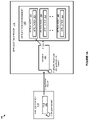
- FIG. 1 illustrates a computing environment for enhanced end user computing security using remote applications according to an implementation.
- FIG. 2 illustrates a method of operating an application service to provide remote applications to end user devices according to an implementation.
- FIG. 3 illustrates a method of operating an end user device to request remote applications according to an implementation.
- FIGS. 4A-4B illustrate an operational scenario of allocating a remote application to an end user device according to an implementation.
- FIG. 5 illustrates a data structure to manage requests to remote applications according to an implementation.
- FIGS. 6A-6B illustrate an operational scenario of allocating a remote application to an end user device according to an implementation.
- FIG. 7 illustrates an end user computing system according to an implementation.
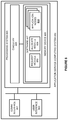
- FIG. 8 illustrates an application service computing system according to an implementation.
- end user computing devices often include software applications for the opening and manipulation of various files on the end user computing device.
- These applications may include productivity applications, such as word processing applications, spreadsheet applications, and the like, media editing applications, such as video or image editing applications, or some other type of application.
- productivity applications such as word processing applications, spreadsheet applications, and the like
- media editing applications such as video or image editing applications, or some other type of application.
- users may generate new files locally, or retrieve the files from remote sources, such as the internet or a file server. Once retrieved, the user may initiate an open operation on the file to open the file with the appropriate application. For example, the user may download a Portable Document Format (PDF) file from the internet, and initiate an open operation on a PDF file to open the file with a reader application, such Adobe Acrobat.
- PDF Portable Document Format
- an application service that enables the end user device to request and receive remote connections to applications executing on separate host computing systems.
- a request driver or service may execute on the local end user device to monitor file open operations.
- the driver or service may transfer a request to the application service to receive a remote connection to an application associated with the file type.
- the application service supplies the remote connection to a virtual node (a virtual machine or container) with the remote application, the end user device may map at least the required file to be opened by the remote application.
- This mapping of the file may include providing a network path for the file to be opened in the remote application, wherein the path may include an internet protocol address, directory, and any other path information associated with the remote application.
- this mapping may permit at least a portion of the file to be transferred from the end user device to the virtual node to be opened by the remote application.
- the mapping may permit at least a portion of the file on a file server to be transferred to the remote application (in some examples through the end user device) to the virtual node to be opened by the remote application.
- FIG. 1 illustrates a computing environment 100 for enhanced end user computing security using remote applications according to an implementation.
- Computing environment 100 includes end user device 110 and application service 120 .
- End user device 110 includes access to file 115 , which may comprise a file from the internet, a file from an attached device, such as from a universal serial bus (USB) device, a file stored on local storage, or some other file for end user device 110 .
- Application service 120 further includes broker 160 and application environment 140 , which is used to execute virtual nodes 141 - 143 .
- Application service 120 may execute in a private cloud environment or in public cloud environment in some examples, wherein virtual nodes 141 - 143 are provided as virtual machines or containers.
- End user device 110 communicates with application service 120 via communication link 170 . Although illustrated with a single end user device in communication with application service 120 , it should be understood that any number of devices may be in communication with the application service.
- application service 120 which may include one or more host computing systems, executes virtual nodes 141 - 143 with applications 151 - 153 .
- Applications 151 - 153 may comprise various applications for productivity, media editing, reading, or some other similar application.
- virtual nodes 141 - 143 may comprise full operating system virtual machines, which abstract the physical components of the host computing system.
- virtual nodes 141 - 143 may comprise virtual containers, wherein the containers may include Docker containers, Linux containers, Windows containers, jails, or another similar type of virtual containment node, which can provide an efficient management of resources from a host system.
- the resources used by the containers may include kernel resources from the host computing system, and may further include repositories and other approved resources that can be shared with other containers or processes executing on the host. However, although resources may be shared between the containers on a host, the containers are provisioned to have private access to the operating system with their own identifier space, file system structure, and network interfaces.
- end user device 110 may include a driver or service that monitors file open requests on the device.
- the driver may identify a file open request, determine whether the file can be opened via a local application based at least on a security status for the file, and if the file cannot be opened locally, transfer a request to application service 120 to receive a remote application to support the file open request.
- application service 120 identifies an application and virtual node to support the request, and provides a remote connection for the virtual node to the end user device, wherein the remote connection permits user input/output at the end user device 110 , while the application is executing via the remote host.
- FIG. 2 illustrates a method of operating an application service to provide remote applications to end user devices according to an implementation.
- the operations of FIG. 2 are referenced parenthetically in the paragraphs that follow with reference to systems and elements of computing environment 100 of FIG. 1 .
- application service 120 may include one or more host computing systems that are used to provide a platform for virtual nodes 141 - 143 .
- application service 120 receives ( 201 ) an application request from an end user device 110 to support a file open request on the end user device, wherein the request is generated based on a security status for a file associated with the file open request.
- This security status may be based on the file type (extension) of the file and/or the source of the file. In one example, all PDF files downloaded from the internet may be deemed a security risk. According, a request may be generated to receive a remote application to support the file open request.
- application service 160 allocates a virtual node with an application to end user device 110 to support the application request ( 202 ).
- the allocation may include allocating an idle virtual node that is not currently allocated to any other end user device.
- a new virtual node may be initiated to accommodate the request.
- application service 120 may initiate a new container image to support the request, or initiate a startup or wake operation on a virtual machine to support the request.
- application service 120 may provide ( 203 ) a remote connection for the application to the end user device.
- application service 120 may provide user input/output information to end user device 110 , wherein end user device 110 may use the information to provide a display of the required application and receive user input to interact with the application.
- the application in providing the remote application to end user device 110 , the application may be presented on the local device as though the application were locally executing on the end user device.
- application service 120 further opens ( 204 ) the file in the application of the virtual node. In some implementations, this opening of the file may be the result of a mapping by the end user device of at least the file to the application operating on the remote host.
- broker 160 may be used to allocate a virtual node in virtual nodes 141 - 143 .
- the request from end user device 110 may request a particular application for the file, or may include an identifier for the file type, wherein broker 160 may identify an application to support the file type.
- broker 160 may determine a node that is capable of executing the particular application to support the request.
- application service 120 may provide addressing and security information to end user device 110 to establish a remote connection to the node, permitting end user device 110 to open the file in the provided application.
- FIG. 3 illustrates a method of operating an end user device to request remote applications according to an implementation.
- the operations of FIG. 3 are referenced parenthetically in the paragraphs that follow with reference to systems and elements of computing environment 100 of FIG. 1 .
- an end user device may identify ( 301 ) a file open request for a file on the end user device.
- the end user device may identify ( 302 ) whether the file requires a remote application.
- end user device 110 may include a driver or process that determines various attributes for the file to determine whether the file may be processed via a local application or via a remote application.
- These attributes which may be used to determine a security status for the file, may include the file type, the source of the file, or some other type of information.
- the process may determine whether the file was generated locally on the device, retrieved from the intranet, retrieved from a trusted location (i.e. trusted server), downloaded from the internet, or received from an untrusted location (i.e. untrusted server). Based on the determination, which may be determined based on the data stream associated with the file, the process may request a remote application to service the request.
- the method further provides, if the file requires a remote application, transferring ( 303 ) an application request to application service 120 .
- the request to application service 120 may include an identifier for the required application, such as an application name or another similar identifier.
- the request may indicate a file type that is requested to be opened at end user device 110 . Based on the file type, application service 120 may determine the type of application that is required for the file type and allocate a virtual node to service the request.
- end user device 110 receives ( 304 ) a remote connection to an application of a virtual node.
- This remote connection permits input and output data to be exchanged between the allocated application and end user device 110 , wherein end user device 110 may display a visual representation of the application and receive input from a user of the application to interact with the application.
- end user device 110 may map ( 305 ) a file associated with the file open request to the application of the virtual node. Referring to the example in FIG. 1 , end user device 110 may map a file path to the application supplied via the virtual node from application service 120 .
- this may include providing a file open path including an application name, file path, IP address, or any other similar information to be used in providing the path of file 115 to the associated application.
- end user device 110 may use file type association (FTA), such that future files with similar attributes may be opened by the same application.
- FTA file type association
- This FTA may associate the application with files of the same file type, with files of the same-file type and source location, or some other FTA determination.
- FIGS. 4A-4B illustrate an operational scenario of allocating a remote application to an end user device according to an implementation.
- the operations of FIG. 4 are referenced parenthetically in the paragraphs that follow with reference to systems and elements of computing environment 100 of FIG. 1 .
- the operation begins, at step 1 , by identifying a file open request for file 115 on end user device 110 .
- File 115 may comprise a text document, a spreadsheet document, an image file, a movie, or some other similar type of file.
- end user device 110 determines whether the file open request qualifies for an external or remote application to be provided via application service 120 . This determination may be made based on the security status of the file, which may be determined from the file type (file extension) associated with the file and/or the source of the file in relation to end user device 115 . In the present example of FIG.
- end user device 110 determines that the file requires the use of an external application and transfers, at step 2 , an application request to broker 160 of application service 120 .
- broker 160 allocates, at step 3 , a virtual node 141 with an application 151 to support the request.
- broker 160 may, in some examples, allocate an idle virtual node that is not currently allocated for use with an end user device. In other examples, broker 160 may initiate or start a new virtual node to accommodate the request from end user device 110 .
- broker 160 may identify a requested application identifier from the application request, wherein the identifier indicates a particular application required to support the request. Once identified, broker 160 may identify an available virtual node with the required application, and may allocate the virtual node to end user device 110 and file 115 . In other implementations, in allocating the virtual node, broker 160 may identify a file type identifier in the request. Once identified, broker 160 may identify an application capable of supporting the file type and identify an available virtual node with the identified application.
- end user device 110 may map, at step 4 , file 415 to open in application 151 of virtual node 141 .
- the application service may provide remote connection information to end user device 110 , permitting end user device 110 to remotely access application 151 .
- This remote connection information may include addressing information, such as IP address information and file path information, and security information for accessing the particular virtual node.
- end user device 110 may use the path information to map file 415 to application 151 .
- file 415 may be mapped to open with an application at “http://NETWORK_ADDRESS_ 141 /programs/APPLICATION_ 151 ”, where NETWORK_ADDRESS_ 141 comprises the network address for virtual node 141 , and the remaining portion of the address directs to application 151 on the virtual node.
- end user device 110 may map additional files to application 151 using FTA.
- These additional files may include files of the same file type or files of the same file type with a similar file source. For example, all text documents from an untrusted server source may be configured to open from the same application operating in the application service.
- end user device 110 may supply the mapped file to virtual node 141 , wherein the file may be opened, at step 5 , with application 151 . Once opened, end user device 110 may exchange, at step 6 , remote connection data with virtual node 141 to provide the required operations associated with the file.
- a local file associated with the file open request such as that illustrated in FIGS. 4A and 4B
- at least a portion of the local file may be transferred from the end user device to the virtual node to be opened using the remote application.
- the file may be directed to the virtual node to be opened by the virtual node, wherein the file may be passed through the end user device to the virtual node, but not opened in an application on the end user device.
- a text edit application may be allocated in virtual node 141 .
- end user device 110 may map file 415 to open in application 151 to provide the desired operations on the file.
- virtual node 141 may provide a visual representation of the application with the file to be displayed on end user device 110 .
- end user device 110 may be configured to receive user input for the application and provide the user input to remotely executing application 151 . Additionally, because of the mapping, any modifications to be saved for the file may be stored locally on end user device 110 .
- FIG. 5 illustrates a data structure 500 to manage requests to remote applications according to an implementation.
- Data structure 500 includes uniform resource locator zones 510 with zones 511 - 515 , security values 520 , and internal or remote application identifier (ID) 530 .
- ID internal or remote application identifier
- FIG. 5 illustrates a data structure 500 to manage requests to remote applications according to an implementation.
- Data structure 500 includes uniform resource locator zones 510 with zones 511 - 515 , security values 520 , and internal or remote application identifier (ID) 530 .
- ID internal or remote application identifier
- the end user device may make a determination whether the file should be opened in a local application or an application provided by an external service. To make this determination, a process, executing on the end user device, may identify various attributes of the file and determine whether the attributes meet security criteria for requesting the external application.
- the attribute for determining whether an external application should be used is the source URL zone for the file.
- the zones include local zone 511 , corresponding to file originating on the device, intranet zone 512 , corresponding to files from devices on the intranet, trusted zone 513 , corresponding to files from trusted devices or servers, internet zone 514 , corresponding to downloads from the internet, and untrusted zones 515 corresponding to untrusted devices and servers as the source of the file.
- local zone 511 corresponding to file originating on the device
- intranet zone 512 corresponding to files from devices on the intranet
- trusted zone 513 corresponding to files from trusted devices or servers
- internet zone 514 corresponding to downloads from the internet
- untrusted zones 515 corresponding to untrusted devices and servers as the source of the file.
- an alternate data stream (ADS) associated with the file may be used, wherein the ADS includes a zone identifier for the source of the file.
- the end user device may extract the source information from the ADS to determine where the file should be opened.
- the file may be opened via a locally executing application for the end user device.
- the file is directed to be opened via a remote application, and a remote application request will be transferred to the application service.
- each end user device that uses the application service may have different rules or settings for when to trigger a remote application request.
- a first end user device may require enhanced security and may limit opening files via local applications to local zone 511 .
- an end user device with lower security requirements may permit the opening of files from zones 511 - 514 on the local device.
- file type may be used in addition to or in place of the source of the file. For example, all spreadsheet documents may be required to be opened via a remote application.
- FIGS. 6A-6B illustrate an operational scenario of allocating a remote application to an end user device according to an implementation.
- FIGS. 6A-6B include end user device 610 and application service 620 .
- End user device 610 includes files A-C 615 - 617 , which are representative of files opened locally at end user device 610 .
- Files B and C 616 - 617 share a file type 619 , which may comprise a text file type, an image file type, or some other file type.
- Application service 620 further includes application environment 640 and broker 660 , wherein broker 660 is used to allocate virtual nodes 641 - 643 in application environment 640 to requesting end user devices.
- a file open request has already been initiated for file A 615 on end user device 610 causing virtual node 641 to be allocated to end user device 610 to support the operations on file A 615 .
- end user device 610 may exchange, at step 0 , remote connection data for file A 615 and application 651 on virtual node 641 .
- this exchanging may include virtual node 641 providing a user interface for application 651 to be presented on end user device 610 , while end user device 610 may receive user input data and provide the user input data to virtual node 641 and application 651 .
- end user device 610 exchanges remote connection information with virtual node 641 , a second file open request is encountered for file B 616 , wherein file B 616 corresponds to a second file type.
- end user device 610 may determine, based on a security status associated with the file, whether the request should be handled via application service 620 . This security status may be based on the file type associated with file B 616 and/or the source of file 616 .
- end user device 610 transfers, at step 1 , an application request for file B 616 to broker 660 .
- broker 660 allocates, at step 2 , a virtual node 643 to handle operations in association with file B 616 .
- broker 660 may first determine the required application to support the request.
- the required application may be specified in the request from end user device 610 .
- a file type indicator may be provided in the request, wherein the file type indicator may be used by broker 660 in the determination of the application.
- an idle virtual node maybe allocated or a new virtual node may be started with the required application to support the request.
- a remote connection may be provided to end user device 610 permitting, at step 3 , the exchange of remote connection data for file B 616 .
- this exchange of remote connection data may be used to provide a remote user interface for application 653 at end user device 610 .
- this interface may provide a window such that the application appears as though it is locally executing on end user device 610 .
- the application may be presented within a remote desktop window, such that the user of end user device 610 may identify that the application is executing in a remote system.
- end user device 610 in providing the remote connection to end user device 610 , is configured to map file B 616 to be opened using application 653 .
- application service 620 may provide remote connection information to end user device 610 , indicating an access path for application 653 .
- This access path may include an IP address, port number, file path, and any other similar information for directing file open requests to the application.
- end user device 610 may direct file B 616 to be opened by the remote application using the access path.
- end user device 610 in addition to mapping file B 616 to application 653 on virtual node 643 , end user device 610 further uses file type association to ensure that other files opened at end user device 610 are provided to the same application.
- file type association may be used to map files of a particular type and, in some examples, source to the same application. For example, if an image is downloaded from the internet, and associated with application 653 in application service 620 , then future image downloads from the internet may also be opened with application 653 as the file type will be associated with the path to trigger application 653 .
- end user device 610 may map the open request to application 653 because it is the same file type as file B 616 . Once mapped and opened with application 653 , end user device 610 and virtual node 643 may exchange, at step 5 , remote connection data for file C 617 .
- files B and C 616 - 617 are opened at the same time, multiple user interface windows may be provided to the end user of end user device 610 . For example, if file B and C 616 - 617 comprises text documents, then two text editing windows may be provided to the user of end user device 610 .
- the remote connection with the application may be terminated. This termination may include removing the mapping of the file to the application in application service 620 , removing any file type associations on the end user device to the application, or any other similar operations to prevent future communications with the virtual node. Additionally, at application service 620 , the application service may deallocate the virtual node to the end user device, permitting the virtual node to be allocated to a new end user device. In some implementations, this deallocation may include putting the application into an idle state and reverting the application to a version prior to the operations of the user at end user device 610 .
- FIG. 7 illustrates an end user computing system 700 according to an implementation.
- Computing system 700 is representative of any computing system or systems with which the various operational architectures, processes, scenarios, and sequences disclosed herein for an end user device may be implemented.
- Computing system 700 is an example of end user device 110 and end user device 610 , although other examples may exist.
- Computing system 700 comprises communication interface 701 , user interface 702 , and processing system 703 .
- Processing system 703 is linked to communication interface 701 and user interface 702 .
- Processing system 703 includes processing circuitry 705 and memory device 706 that stores operating software 707 .
- Computing system 700 may include other well-known components such as a battery and enclosure that are not shown for clarity.
- Computing system 700 may comprise a smartphone, tablet computer, a desktop computer, a laptop computer, or some other user computing apparatus.
- Communication interface 701 comprises components that communicate over communication links, such as network cards, ports, radio frequency (RF), processing circuitry and software, or some other communication devices.
- Communication interface 701 may be configured to communicate over metallic, wireless, or optical links.
- Communication interface 701 may be configured to use Time Division Multiplex (TDM), Internet Protocol (IP), Ethernet, optical networking, wireless protocols, communication signaling, or some other communication format—including combinations thereof.
- Communication interface 701 is configured to communicate with an application service to provide remote connections to applications executing in the application service.
- User interface 702 comprises components that interact with a user to receive user inputs and to present media and/or information.
- User interface 702 may include a speaker, microphone, buttons, lights, display screen, touch screen, touch pad, scroll wheel, communication port, or some other user input/output apparatus—including combinations thereof.
- user interface 702 may be used to provide a user interface for an application executing via an application service. This may include providing a display of the application, and receiving user input with regard to the application.
- Processing circuitry 705 comprises microprocessor and other circuitry that retrieves and executes operating software 707 from memory device 706 .
- Memory device 706 may include volatile and nonvolatile, removable and non-removable media implemented in any method or technology for storage of information, such as computer readable instructions, data structures, program modules, or other data. Memory device 706 may be implemented as a single storage device, but may also be implemented across multiple storage devices or sub-systems. Memory device 706 may comprise additional elements, such as a controller to read operating software 707 . Examples of storage media include random access memory, read only memory, magnetic disks, optical disks, and flash memory, as well as any combination or variation thereof, or any other type of storage media. In some implementations, the storage media may be a non-transitory storage media. In some instances, at least a portion of the storage media may be transitory. It should be understood that in no case is the storage media a propagated signal.
- Processing circuitry 705 is typically mounted on a circuit board that may also hold memory device 706 and portions of communication interface 701 and user interface 702 .
- Operating software 707 comprises computer programs, firmware, or some other form of machine-readable program instructions. Operating software 707 includes identify module 708 , request module 709 , map module 710 , and exchange module 711 , although any number of software modules may provide the same operation. Operating software 707 may further include an operating system, utilities, drivers, network interfaces, applications, or some other type of software. When executed by processing circuitry 705 , operating software 707 directs processing system 703 to operate computing system 700 as described herein.
- identify module 708 directs processing system 703 to identify a file open request for a file at end user computing system 700 .
- This file open request may comprise an open request for a file that is locally stored on computing system 700 , or may comprise an open request for a file that may be located on an external server.
- request module 709 is used to determine whether the file should be opened via a local application on computing system 700 or should be opened via an application in an external application service. This determination may be made based on a security status for the file, which may be determined based on the file type (extension) of the file and/or the source of the file. If the file is to be opened locally, then an application will be identified on the computing system and the file opened accordingly. In contrast if the file is to be opened using the application service, request module 709 directs processing system to 703 to transfer a request using communication interface 701 to the application service.
- map module directs processing system 703 to receive information about an allocated virtual node to support the file open request, and map the file to be opened in an application on the virtual node.
- the application service may include a broker that is used to allocate a virtual node to support the application request. After allocation, the broker may provide access path information to the application in the allocated virtual node. This path information may include an IP address, a port address, a file path to the application on the virtual node, or some other similar path information. Further, the broker may also provide any security information for computing system 700 to access the particular application.
- exchange module 711 directs processing system 703 to exchange remote connection information for the application, such that a user of computing system 700 is provided with an interface for the application.
- This remote connection information may be used to provide a display of the application on computing system 700 , as well as receive user input to interface with the remote application.
- the remote connection information may be used to make the application executing in the application service appear as though the application is executing locally on the computing system, however, it should be understood that a remote session window may also be used to indicate to the user that the application is executing via the application service.
- map module 710 may further direct processing system 703 to provide FTA with other similar files on the computing system. These similar files may be defined based on the file type and/or the source of the file, such that similar files may be opened using the same application.
- FIG. 8 illustrates an application service computing system 800 according to an implementation.
- Computing system 800 is representative of any computing system or systems with which the various operational architectures, processes, scenarios, and sequences disclosed herein for an application service may be implemented.
- Computing system 800 is an example of application service 120 and 620 , although other examples may exist.
- Computing system 800 comprises communication interface 801 , user interface 802 , and processing system 803 .
- Processing system 803 is linked to communication interface 801 and user interface 802 .
- Processing system 803 includes processing circuitry 805 and memory device 806 that stores operating software 807 .
- Computing system 800 may include other well-known components such as a battery and enclosure that are not shown for clarity.
- Computing system 800 may comprise one or more serving computing systems, desktop computing systems, or any other similar computing systems capable of providing the remote application services as described herein.
- Communication interface 801 comprises components that communicate over communication links, such as network cards, ports, radio frequency (RF), processing circuitry and software, or some other communication devices.
- Communication interface 801 may be configured to communicate over metallic, wireless, or optical links.
- Communication interface 801 may be configured to use Time Division Multiplex (TDM), Internet Protocol (IP), Ethernet, optical networking, wireless protocols, communication signaling, or some other communication format—including combinations thereof.
- Communication interface 801 is configured to communicate with one or more end user devices to provide the devices with remote sessions to applications operating as virtual nodes.
- User interface 802 comprises components that interact with a user to receive user inputs and to present media and/or information.
- User interface 802 may include a speaker, microphone, buttons, lights, display screen, touch screen, touch pad, scroll wheel, communication port, or some other user input/output apparatus—including combinations thereof.
- User interface 802 may be omitted in some examples.
- Processing circuitry 805 comprises microprocessor and other circuitry that retrieves and executes operating software 807 from memory device 806 .
- Memory device 806 may include volatile and nonvolatile, removable and non-removable media implemented in any method or technology for storage of information, such as computer readable instructions, data structures, program modules, or other data. Memory device 806 may be implemented as a single storage device, but may also be implemented across multiple storage devices or sub-systems. Memory device 806 may comprise additional elements, such as a controller to read operating software 807 . Examples of storage media include random access memory, read only memory, magnetic disks, optical disks, and flash memory, as well as any combination or variation thereof, or any other type of storage media. In some implementations, the storage media may be a non-transitory storage media. In some instances, at least a portion of the storage media may be transitory. It should be understood that in no case is the storage media a propagated signal.
- Processing circuitry 805 is typically mounted on a circuit board that may also hold memory device 806 and portions of communication interface 801 and user interface 802 .
- Operating software 807 comprises computer programs, firmware, or some other form of machine-readable program instructions. Operating software 807 includes request module 808 , allocate module 809 , and application nodes 810 , although any number of software modules may provide the same operation. Application nodes 810 are representative of containers or full operating system virtual machines with a particular application to service the end user device. Operating software 807 may further include an operating system, utilities, drivers, network interfaces, applications, or some other type of software. When executed by processing circuitry 805 , operating software 807 directs processing system 803 to operate computing system 800 as described herein.
- request module 808 directs processing system 803 to receive a request from an end user device to provide a remote application for the end user device, wherein the request occurs based on a security status of a file associated with a file open request on the end user device.
- the request may expressly indicate the required application that is required for the device, however, in other examples the request may indicate a file type that is to be opened on the end user device.
- request module 808 may direct processing system 803 to identify an application that supports the defined file type.
- allocate module 809 directs processing system 803 to allocate an application node (virtual node) in application nodes 810 to provide the required application.
- allocate module 809 may initiate a new application node to support the request.
- allocate module 809 may identify an idle application node to support the request.
- allocate module 809 may further provide the end user device with a remote connection to the allocated virtual node.
- allocate module 809 may provide access path information to the application operating on the virtual node, wherein the access path information may include addressing and file path information for the application on the application node.
- the end user device may transfer the file to the application service computing system to be opened in the remote application.
- the end user device may exchange remote connection information and data with the appropriate application node, wherein the remote connection information may permit the application to be remotely displayed on the end user device, and provide user input for operations with respect to the application.
- the end user device may direct and transfer at least a portion of the file from the end user device to the corresponding path (IP address, directory, and the like) for the application on the application node, wherein the application node may provide the path for opening the file.
- the end user device may direct the file to be transferred from the server to the application on the application node, wherein the application node may provide the path for opening the required file.
- the file may be transferred directly from the serving device to the application node, however, it should be understood that in some examples the end user device may be an intermediary in the communication of the file to the serving device.
- end user device 110 can be subscriber equipment, customer equipment, access terminal, smartphone, personal digital assistant (PDA), computer, tablet computing device, e-book, Internet appliance, media player, game console, or some other user communication apparatus capable of exchanging a remote desktop connection.
- End user device 110 can include communication interfaces, network interfaces, processing systems, computer systems, microprocessors, storage systems, storage media, or some other processing devices or software systems.
- Application service 120 can include communication interfaces, network interfaces, processing systems, computer systems, microprocessors, storage systems, storage media, or some other processing devices or software systems, and can be distributed among multiple devices. Examples of application service 120 can include software such as an operating system, logs, databases, utilities, drivers, networking software, and other software stored on a computer-readable medium. Application service 120 may comprise, in some examples, one or more server computing systems, desktop computing systems, laptop computing systems, or any other computing system, including combinations thereof. In some implementations, application service 120 may provide virtual nodes 141 - 143 as full operating systems, however, due to inefficiencies of virtual machines, virtual nodes 141 - 143 may comprise containers that can be allocated to end users.
- Communication link 170 can use metal, glass, optical, air, space, or some other material as the transport media.
- Communication link 170 can use various communication protocols, such as Time Division Multiplex (TDM), asynchronous transfer mode (ATM), Internet Protocol (IP), Ethernet, synchronous optical networking (SONET), hybrid fiber-coax (HFC), circuit-switched, communication signaling, wireless communications, or some other communication format, including combinations, improvements, or variations thereof.
- Communication link 170 can be a direct link or can include intermediate networks, systems, or devices, and can include a logical network link transported over multiple physical links. Although one main link for communication link 170 is shown in FIG. 1 , it should be understood that link 170 is merely illustrative to show communication modes or access pathways.
- Communication link 170 can include many different signals sharing the same associated link, as represented by the associated lines in FIG. 1 , comprising resource blocks, access channels, paging channels, notification channels, forward links, reverse links, user communications, communication sessions, overhead communications, carrier frequencies, other channels, timeslots, spreading codes, transportation ports, logical transportation links, network sockets, packets, or communication directions.
Landscapes
- Engineering & Computer Science (AREA)
- Software Systems (AREA)
- Theoretical Computer Science (AREA)
- Physics & Mathematics (AREA)
- General Engineering & Computer Science (AREA)
- General Physics & Mathematics (AREA)
- Computer Security & Cryptography (AREA)
- Computer Hardware Design (AREA)
- Databases & Information Systems (AREA)
- General Health & Medical Sciences (AREA)
- Bioethics (AREA)
- Health & Medical Sciences (AREA)
- Information Retrieval, Db Structures And Fs Structures Therefor (AREA)
- Information Transfer Between Computers (AREA)
Abstract
Description
Claims (13)
Priority Applications (1)
| Application Number | Priority Date | Filing Date | Title |
|---|---|---|---|
| US15/373,736 US10635466B2 (en) | 2016-12-09 | 2016-12-09 | Enhanced security using remote applications |
Applications Claiming Priority (1)
| Application Number | Priority Date | Filing Date | Title |
|---|---|---|---|
| US15/373,736 US10635466B2 (en) | 2016-12-09 | 2016-12-09 | Enhanced security using remote applications |
Publications (2)
| Publication Number | Publication Date |
|---|---|
| US20180165447A1 US20180165447A1 (en) | 2018-06-14 |
| US10635466B2 true US10635466B2 (en) | 2020-04-28 |
Family
ID=62489480
Family Applications (1)
| Application Number | Title | Priority Date | Filing Date |
|---|---|---|---|
| US15/373,736 Active 2037-02-22 US10635466B2 (en) | 2016-12-09 | 2016-12-09 | Enhanced security using remote applications |
Country Status (1)
| Country | Link |
|---|---|
| US (1) | US10635466B2 (en) |
Families Citing this family (2)
| Publication number | Priority date | Publication date | Assignee | Title |
|---|---|---|---|---|
| US10924528B1 (en) * | 2018-06-29 | 2021-02-16 | Parallels International Gmbh | Method to determine use of local and remote applications in a distributed multiuser environment for shared file resources |
| CN114328423A (en) * | 2020-09-30 | 2022-04-12 | 华为技术有限公司 | File sharing method and electronic equipment |
Citations (2)
| Publication number | Priority date | Publication date | Assignee | Title |
|---|---|---|---|---|
| US20080109679A1 (en) * | 2003-02-28 | 2008-05-08 | Michael Wright | Administration of protection of data accessible by a mobile device |
| US20150058286A1 (en) * | 2013-08-23 | 2015-02-26 | Vmware, Inc. | Opening unsupported file types through remoting sessions |
-
2016
- 2016-12-09 US US15/373,736 patent/US10635466B2/en active Active
Patent Citations (2)
| Publication number | Priority date | Publication date | Assignee | Title |
|---|---|---|---|---|
| US20080109679A1 (en) * | 2003-02-28 | 2008-05-08 | Michael Wright | Administration of protection of data accessible by a mobile device |
| US20150058286A1 (en) * | 2013-08-23 | 2015-02-26 | Vmware, Inc. | Opening unsupported file types through remoting sessions |
Also Published As
| Publication number | Publication date |
|---|---|
| US20180165447A1 (en) | 2018-06-14 |
Similar Documents
| Publication | Publication Date | Title |
|---|---|---|
| US10333975B2 (en) | Enhanced computing system security using a secure browser | |
| US11394689B2 (en) | Application based network traffic management | |
| CN109768871B (en) | Method for configuring multiple virtual network cards, host machine and storage medium | |
| US9910687B2 (en) | Data flow affinity for heterogenous virtual machines | |
| US8495262B2 (en) | Using a table to determine if user buffer is marked copy-on-write | |
| US10673811B2 (en) | Updating address mapping for local and network resources | |
| US10673835B2 (en) | Implementing single sign-on in a transaction processing system | |
| US11693686B2 (en) | Enhanced management of storage repository availability in a virtual environment | |
| US10778636B2 (en) | Dynamic credential based addressing | |
| CN113361913A (en) | Communication service arranging method, device, computer equipment and storage medium | |
| US20180332006A1 (en) | Application attachment based firewall management | |
| US12250232B2 (en) | Management of bot detection in a content delivery network | |
| US10523741B2 (en) | System and method for avoiding proxy connection latency | |
| JP2004280815A (en) | Method and apparatus for server load sharing based on external port distribution | |
| US10635466B2 (en) | Enhanced security using remote applications | |
| CN113301004B (en) | Data processing method, device, communication method and virtual machine with single network card | |
| CN115665225A (en) | Method, device, target device and storage medium for establishing persistent connection | |
| CN106485159B (en) | Network security storage method and device | |
| US20180359217A1 (en) | Application based firewall rule service | |
| US20250005038A1 (en) | Data Retrieval Using Distributed Workers in a Large-Scale Data Access System | |
| US20250291770A1 (en) | Seamless NFS Server Pod Addition | |
| WO2019014353A1 (en) | Generation of data configurations for a multiple application service and multiple storage service environment | |
| US20170180308A1 (en) | Allocation of port addresses in a large-scale processing environment | |
| CN105354148A (en) | Data processing method and related apparatus | |
| WO2023011361A1 (en) | Data connection establishment method, terminal, application server, network side device, electronic device, and computer readable storage medium |
Legal Events
| Date | Code | Title | Description |
|---|---|---|---|
| AS | Assignment |
Owner name: VMWARE, INC., CALIFORNIA Free format text: ASSIGNMENT OF ASSIGNORS INTEREST;ASSIGNORS:SOMAN, SISIMON;CONOVER, MATTHEW;REEL/FRAME:042862/0453 Effective date: 20170628 |
|
| STPP | Information on status: patent application and granting procedure in general |
Free format text: FINAL REJECTION MAILED |
|
| STPP | Information on status: patent application and granting procedure in general |
Free format text: RESPONSE AFTER FINAL ACTION FORWARDED TO EXAMINER |
|
| STPP | Information on status: patent application and granting procedure in general |
Free format text: ADVISORY ACTION MAILED |
|
| STPP | Information on status: patent application and granting procedure in general |
Free format text: DOCKETED NEW CASE - READY FOR EXAMINATION |
|
| STPP | Information on status: patent application and granting procedure in general |
Free format text: NON FINAL ACTION MAILED |
|
| STPP | Information on status: patent application and granting procedure in general |
Free format text: RESPONSE TO NON-FINAL OFFICE ACTION ENTERED AND FORWARDED TO EXAMINER |
|
| STPP | Information on status: patent application and granting procedure in general |
Free format text: NOTICE OF ALLOWANCE MAILED -- APPLICATION RECEIVED IN OFFICE OF PUBLICATIONS |
|
| STCF | Information on status: patent grant |
Free format text: PATENTED CASE |
|
| MAFP | Maintenance fee payment |
Free format text: PAYMENT OF MAINTENANCE FEE, 4TH YEAR, LARGE ENTITY (ORIGINAL EVENT CODE: M1551); ENTITY STATUS OF PATENT OWNER: LARGE ENTITY Year of fee payment: 4 |
|
| AS | Assignment |
Owner name: VMWARE LLC, CALIFORNIA Free format text: CHANGE OF NAME;ASSIGNOR:VMWARE, INC.;REEL/FRAME:067102/0395 Effective date: 20231121 |
|
| AS | Assignment |
Owner name: UBS AG, STAMFORD BRANCH, CONNECTICUT Free format text: SECURITY INTEREST;ASSIGNOR:OMNISSA, LLC;REEL/FRAME:068118/0004 Effective date: 20240701 |
|
| AS | Assignment |
Owner name: OMNISSA, LLC, CALIFORNIA Free format text: PATENT ASSIGNMENT;ASSIGNOR:VMWARE LLC;REEL/FRAME:068327/0365 Effective date: 20240630 |