US10628474B2 - Probabalistic generation of diverse summaries - Google Patents
Probabalistic generation of diverse summaries Download PDFInfo
- Publication number
- US10628474B2 US10628474B2 US15/203,056 US201615203056A US10628474B2 US 10628474 B2 US10628474 B2 US 10628474B2 US 201615203056 A US201615203056 A US 201615203056A US 10628474 B2 US10628474 B2 US 10628474B2
- Authority
- US
- United States
- Prior art keywords
- text
- units
- subset
- importance
- unit
- Prior art date
- Legal status (The legal status is an assumption and is not a legal conclusion. Google has not performed a legal analysis and makes no representation as to the accuracy of the status listed.)
- Active, expires
Links
Images




Classifications
-
- G—PHYSICS
- G06—COMPUTING OR CALCULATING; COUNTING
- G06F—ELECTRIC DIGITAL DATA PROCESSING
- G06F16/00—Information retrieval; Database structures therefor; File system structures therefor
- G06F16/30—Information retrieval; Database structures therefor; File system structures therefor of unstructured textual data
- G06F16/34—Browsing; Visualisation therefor
- G06F16/345—Summarisation for human users
-
- G06F17/271—
-
- G06F17/2785—
-
- G—PHYSICS
- G06—COMPUTING OR CALCULATING; COUNTING
- G06F—ELECTRIC DIGITAL DATA PROCESSING
- G06F40/00—Handling natural language data
- G06F40/20—Natural language analysis
- G06F40/205—Parsing
- G06F40/211—Syntactic parsing, e.g. based on context-free grammar [CFG] or unification grammars
-
- G—PHYSICS
- G06—COMPUTING OR CALCULATING; COUNTING
- G06F—ELECTRIC DIGITAL DATA PROCESSING
- G06F40/00—Handling natural language data
- G06F40/30—Semantic analysis
Definitions
- Digital content management systems allow content authors to create different variants, or versions, of the same content. Content authors can assign different variants of the content to different computing contexts so that when a device requests the content, the appropriate version is automatically selected for transmission to the device (e.g., on a web site). This allows content authors to tailor content to users or devices while being compatible with computer transmission infrastructure. For example, a shorter version of content is often suitable for mobile devices, which typically have small displays that fit less information than desktop displays and are typically more difficult to read.
- the text units are probabilistically selected for inclusion in the summary
- the importance scores of the text units are converted into a probability distribution.
- a value is sampled from the probability distribution and a text unit corresponding to the sampled value is selected to include in the summary.
- the probability distribution is updated to reduce the probability that text units similar to the selected text unit are selected in subsequent iterations to include in the summary
- Probabilistically selecting text units to generate multiple summaries results in summaries that are likely to be diverse from one another.
- FIG. 2A shows an example of a user interface that can be used to provide a request to generate summaries of a text composition in accordance with embodiments of the present disclosure
- FIG. 3 is a flow diagram showing a method for generating summaries of text compositions in accordance with embodiments of the present disclosure
- FIG. 6 is a block diagram of an exemplary computing environment suitable for use in implementations of the present disclosure.
- the present application provides a technology that can be used to generate summaries of master content for variant content.
- Digital content management systems such as Adobe® Experience Manager, allow users to maintain master content (e.g., a text composition) that a user can use as a common starting point to generate many variants (e.g., summaries or other variations to the master content). It may be desirable for a user to leverage computer summarization technology in order to automatically generate different summaries that are diverse from one another in content so they can be used for different variants or provide options to the user.
- the text composition is divided into text units, such as sentences.
- a subset of the text units is selected for inclusion in the first summary based on importance scores from an importance metric that are used to evaluate the importance of including particular text units in the first summary.
- the weighting of the importance scores of text units selected for the first summary is modified to reduce the probability that the text units are selected for inclusion in the second summary.
- the weighting is modified for a text unit by reducing its corresponding importance score by a damping factor and selecting text units for the second summary using the reduced importance score.
- the first and second summaries are likely to be diverse from one another. Any number of summaries can be generated and the weighting of each text unit may be adjusted each time a summary includes the text unit. For example, a text unit that is selected for two summaries may have its importance score reduced more than a text unit that is selected for only one summary. As, the text units in the first summary are not explicitly barred from being included in subsequent summaries, the subsequent summaries can be of higher quality by including sufficiently important text units despite their modified weightings.
- the text units are probabilistically selected for inclusion in the summary
- the importance scores of the text units are converted into a probability distribution.
- a value is sampled from the probability distribution and a text unit corresponding to the sampled value is selected to include in the summary.
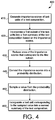
- the probability distribution is updated to reduce the probability that text units similar to the selected text unit are selected in subsequent iterations to include in the summary Probabilistically selecting text units to generate multiple summaries results in summaries that are likely to be diverse from one another.
- Implementations that modify the weighting of importance scores of text units selected for a first summary to reduce the probability that the text units are selected for a second summary can probabilistically select the text units to include in each summary
- the probability distribution can be updated to modify the weighting of the importance scores. This can include reducing the importance scores and converting the importance scores into a new probability distribution used to select text units for a summary.
- the probability distribution used to select text units for one summary can be adjusted to modify the weighting of the text units.
- the modified probability distribution can be used to select text units for another summary.
- Additional aspects of the disclosure provide for evaluating summaries of a text composition and ranking the summaries based on the evaluation.
- the text of each summary may be analyzed with respect to predefined criteria to generate an evaluation score.
- the criteria for a summary includes how well the summary conforms to at least one writing style, such as a business style, a conversational style, a particular style of sentence structure, a use of clichés, a use of tense, a level of sophistication, a style directed to a particular audience, or demographic, and more.
- users are able to quickly and accurately generate summaries of text compositions that are of high quality and diverse from one another in content. This allows the summaries to be used for different variants or provide options to the users on which to use.
- a user can, for example, select which summary suits the user's needs, which may be difficult to quantify when generating any particular summary.
- approaches described herein may incorporate any standard summarization algorithm that returns a score indicating the importance of text units in a summary (i.e., an importance score).
- the importance scores for text units can be adjusted, allowing at least one summary to be biased towards a particular topic or other quantifiable objective.
- the quantifiable objectives can be particular to the user and may be machine learned based on historic interactions of the user with generated summaries. Thus, the summaries that are generated are more likely to satisfy user objectives.
- data used to track and identify the text units of a text composition can be used to generate each summary of the text composition.
- the same initial probability distribution can be utilized to generate each summary of a text composition.
- the storage and processing require to generate multiple summaries can be significantly reduced.
- the initial importance scores and/or probability distribution can be calculated, stored, and used to select text units for each summary.
- the weighting of text units may be adjusted for each summary by applying a damping factor to the initial data.
- FIG. 1 a block diagram is provided showing an example of an operating environment in which some implementations of the present disclosure may be employed. It should be understood that this and other arrangements described herein are set forth only as examples. Other arrangements and elements (e.g., machines, interfaces, functions, orders, and groupings of functions, etc.) can be used in addition to or instead of those shown, and some elements may be omitted altogether for the sake of clarity. Further, many of the elements described herein are functional entities that may be implemented as discrete or distributed components or in conjunction with other components, and in any suitable combination and location. Various functions described herein as being performed by one or more entities may be carried out by hardware, firmware, and/or software. For instance, some functions may be carried out by a processor executing instructions stored in memory.
- operating environment 100 includes a number of user devices, such as user devices 102 a and 102 b through 102 n , network 104 , and content management system 106 .
- Content management system 106 includes interface engine 112 , text processor 114 , text unit analyzer 116 , content selector 118 , summary analyzer 120 , feedback analyzer 122 , and storage 130 .
- operating environment 100 shown in FIG. 1 is an example of one suitable operating environment.
- Each of the components shown in FIG. 1 may be implemented via any type of computing device, such as one or more of computing device 600 , described in connection to FIG. 6 , for example.
- These components may communicate with each other via network 104 , which may be wired, wireless, or both.
- Network 104 can include multiple networks, or a network of networks, but is shown in simple form so as not to obscure aspects of the present disclosure.
- network 104 can include one or more wide area networks (WANs), one or more local area networks (LANs), one or more public networks, such as the Internet, and/or one or more private networks.
- WANs wide area networks
- LANs local area networks
- public networks such as the Internet
- private networks such as the Internet
- network 104 includes a wireless telecommunications network
- components such as a base station, a communications tower, or even access points (as well as other components) may provide wireless connectivity.
- Networking environments are commonplace in offices, enterprise-wide computer networks, intranets, and the Internet. Accordingly, network 104 is not described in significant detail.
- any number of user devices, servers, and data sources may be employed within operating environment 100 within the scope of the present disclosure.
- Each may comprise a single device or multiple devices cooperating in a distributed environment.
- content management system 106 may be provided via multiple devices arranged in a distributed environment that collectively provide the functionality described herein. Additionally, other components not shown may also be included within the distributed environment.
- functionality of content management system 106 can be integrated, at least partially, into a user device, such as user device 102 a .
- content management system 106 may at least partially be a cloud computing service.
- User devices 102 a through 102 n can be client devices on a client-side of operating environment 100 , while content management system 106 can be on a server-side of operating environment 100 .
- Content management system 106 can comprise server-side software designed to work in conjunction with client-side software on user devices 102 a through 102 n so as to implement any combination of the features and functionalities discussed in the present disclosure.
- An example of such client-side software is application 110 on user device 102 a .
- Each other device shown may include a similar application, with similar functionality.
- This division of operating environment 100 is provided to illustrate one example of a suitable environment, and it is noted there is no requirement for each implementation that any combination of content management system 106 and user devices 102 a through 102 n to remain as separate entities.
- User devices 102 a through 102 n comprise any type of computing device capable of being operated by a user.
- user devices 102 a through 102 n are the type of computing devices described in relation to FIG. 6 herein.
- a user device may be embodied as a personal computer (PC), a laptop computer, a mobile device, a smartphone, a tablet computer, a smart watch, a wearable computer, a personal digital assistant (PDA), an MP3 player, a global positioning system (GPS) or device, a video player, a handheld communications device, a gaming device or system, an entertainment system, a vehicle computer system, an embedded system controller, a remote control, an appliance, a consumer electronic device, a workstation, any combination of these delineated devices, or any other suitable device.
- PC personal computer
- PDA personal digital assistant
- MP3 player MP3 player
- GPS global positioning system
- a video player a handheld communications device
- gaming device or system an entertainment system
- vehicle computer system an embedded system controller
- the user devices include one or more processors, and one or more computer-readable media.
- the computer-readable media includes computer-readable instructions executable by the one or more processors.
- the instructions may implement one or more applications, such as application 110 shown in FIG. 1 .
- Application 110 is referred to as a single application for simplicity, but its functionality can be embodied by one or more applications in practice.
- the other user devices can include one or more applications similar to application 110 .
- the application(s) may generally be any application capable of providing requests to generate summaries of text compositions to content management system 106 , as will later be described in additional detail. It is contemplated herein that “application” be interpreted broadly. As one example, an application can be installed on an operating system of a user device. As another example, an application can be a service integrated into an operating system of a user device. In various implementations, an application can be on a user device, as shown with respect to application 110 , but can at least partially be hosted server-side (e.g., on content management system 106 ). In some cases, application 110 comprises a web browser interfacing content management system 106 via a web site.
- Content management system 106 includes one or more processors, and one or more computer-readable media.
- the computer-readable media includes computer-readable instructions executable by the one or more processors.
- the instructions may implement one or more of interface engine 112 , text processor 114 , text unit analyzer 116 , content selector 118 , summary analyzer 120 , and feedback analyzer 122 shown in FIG. 1 .
- Storage 130 can comprise the computer-readable media and is configured to store computer instructions (e.g., software program instructions, routines, or services), data, and/or models used in embodiments described herein.
- storage 130 stores information or data received via the various components of content management system 106 and provides the various components with access to that information or data, as needed.
- storage 130 comprises a data store (or computer data memory). Although depicted as a single component, storage 130 may be embodied as one or more data stores and may be in the cloud. Further, the information in storage 130 may be distributed in any suitable manner across one or more data stores for storage (which may be hosted externally).
- a user is able to interact with content management system 106 , for example, using a user interface of application 110 , in order to provide one or more master text compositions to content management system 106 .
- content management system 106 includes many master text compositions in storage 130 , such as master text composition 142 .
- a user can also interact with content management system 106 , for example, using the user interface of application 110 , in order to provide one or more variant text compositions to content management system 106 .
- content management system 106 includes many variant text compositions in storage 130 , such as variant text composition 148 .
- a text composition includes computer text organized in a prearranged manner.
- the user may provide a text composition to interface engine 112 as a complete composition.
- the user may compose the text composition over interface engine 112 , such as using a word processing application. Further, a user may be permitted to use a word processing application to modify an existing text composition.
- a master content fragment refers to a data object that represents a master text composition.
- each master text composition may be assigned to a master content fragment.
- master text composition 142 is assigned to master content fragment 134 .
- the user may indicate that a preexisting text composition (e.g., previously constructed and persistently stored) is a master text composition, causing the text composition to be assigned to a master content fragment.
- the master text composition is initially constructed and persistently stored as a master content fragment.
- a master content fragment typically includes a single master text composition.
- a master content fragment can also include a master content identifier (ID), such as master content ID 144 .
- ID master content identifier
- the master content ID e.g., a universally unique identifier UUID
- UUID universally unique identifier
- content management system 106 may automatically modify a master text composition to create one or more variant text compositions (e.g., using text modification algorithms)
- modifications that may be made automatically and/or by a user include summarization, truncation, reordering of sentences, and linguistic adaptation.
- linguistic adaptation includes customizing words to a particular audience, such as based on their demographic information (e.g., age, location, etc.), to spoken language (e.g., “cookie” in American English changed to “biscuit” in British English), and the like.
- Assigning a variant text composition to a master text composition may optionally include assigning a variant content ID to the master content fragment corresponding to the master text composition.
- a variant content ID e.g., a universally unique identifier UUID
- UUID universally unique identifier
- variant text compositions are represented similar to master content fragments.
- each variant content fragment can correspond to a respective variant text composition with a respective variant content ID.
- variant content fragment 136 represents variant text composition 148 and has variant content ID 150 .
- variant text compositions e.g., variant content fragments
- variant text composition are stored and maintained separately from assigned master text compositions.
- Master text compositions may have any number of associated variant text compositions.
- Users of user devices 102 a and 102 b through 102 n can optionally assign different versions, or variants, of the content to different computing contexts so that when a device requests the content, the appropriate version is automatically selected for transmission to the device (e.g., on a web site).
- content management system 106 can receive the assignments from the user (e.g., via application 110 ).
- Content management system 106 optionally includes content selector 118 .
- content selector 118 is configured to identify the computing context associated with the request, match the computing context to one of the variant text compositions (or the master text composition) associated with the content ID, and provide the selected text composition for display on the user device (e.g., in an application, on a web page, in an operating system, in an email, in a push notification).
- Examples of computing context includes any combination of user attributes and device attributes, such as user demographic information, location information, browser information or type, hardware information or type (e.g., a hardware profile), and more.
- a content author may wish to make a summary of a text composition, such as a master text composition.
- a user may interact with interface engine 112 (e.g., via application 110 ) and provide a request to generate summaries of the text composition.
- FIG. 2A shows an example of a user interface that can be used to provide a request to generate summaries of a text composition.
- FIG. 2A shows user interface 200 A which a user can utilize to specify in the request which text composition content management system 106 will generate summaries from.
- User interface 200 A can be displayed, for example, by application 110 on user device 102 a.
- User interface 200 A can facilitate one or more options for the user to specify the text composition in the request.
- options 264 a and 264 b are shown.
- the user can select from the one or more options using user interface (UI) elements of user interface 200 A.
- UI user interface
- options 264 a and 264 b have respective radio buttons a user may use to select the corresponding option.
- selection may be implicit, for example, based on the user providing information sufficient to specify the text composition using the option.
- FIG. 2A shows two summarization preferences specified by the user.
- Summarization preference 270 specifies the number of summaries of the text composition for content management system 106 to generate and/or provide to the user in response to the request.
- Summarization preference 272 specifies a desired size for each summary.
- content management system 106 can utilize the desired size to determine the length of the generated summaries.
- the desired size can be used as a budget, or cap on the length of each summary
- FIG. 2A shows a user specifying a number of words, the desired size can be specified utilizing any suitable unit, such as a number of text units, sentences, characters, spaces, and the like.
- the user submits the request (e.g., using a UI element such as a submit button) after having specified the text composition and optionally one or more summarization preferences.
- the request could include a pointer to the text composition, such as where the text composition is located on content management system 106 .
- the request can include the text itself of the text composition, such as where the text composition was not originally present on content management system 106 .
- the request may be transmitted from the user device (e.g., via application 110 ) to content management system 106 .
- content management system 106 is configured to generate summaries of a text composition in response to a request to generate the summaries.
- the request can be, for example, from a user, such as the request described above.
- the request can be from an application or service (e.g., application 110 ) without being made by the user.
- content management system 106 includes text processor 114 , text unit analyzer 116 , content selector 118 , summary analyzer 120 , and feedback analyzer 122 .
- text processor 114 divides the text of a text composition into text units, such as sentences.
- Text unit analyzer 116 evaluates the relative importance of including each text unit in a summary of the text composition using an importance metric that outputs importance scores, such as importance scores 132 , of the text units.
- Content selector 118 selects text units of the text composition to include in the summaries based on the importance scores.
- Summary analyzer 120 evaluates generated summaries with respect to one or more criteria to determine how to provide the summaries to the user and/or which summaries to provide to the user.
- Feedback analyzer 122 analyzes user feedback on the summaries that are provided to the user and based on the analysis can update one or more machine learning models used by summary analyzer 120 to evaluate summaries, content selector 118 to select text units, and/or text unit analyzer 116 to determine the relative importance of text units.
- text processor 114 is configured to divide the text composition into text units.
- Text processor 114 can optionally determine the text units in response to the request to generate the summaries or the text units may already be determined and identified prior to the request. Determining the text units can include storing the text units such that they are individually identifiable and usable by content selector 118 , such as using a text unit identifier for each text unit along with an associated text snippet and/or pointer(s) to text of the text composition.
- a text unit refers to one or more characters grouped together using a predetermined grouping algorithm. For a particular text composition, each text unit is typically generated using the same predetermined grouping algorithm.
- Any suitable parsing algorithm can be employed to tokenize a text composition into the text units.
- the text from the text composition may be modified, such as to correct spelling and/or grammar errors in the text.
- the concepts, topics, or meaning entities of the text are unchanged.
- Text processor 114 provides the text units of the text composition to text unit analyzer 116 .
- Text unit analyzer 116 evaluates the text units with respect to an importance metric.
- the importance metric quantifies the relative importance of including each text unit in a summary.
- the relative importance for each text unit can be represented by an importance score that is output by the importance metric.
- text unit analyzer 116 can generate importance scores of the text units of the text composition, where the importance scores correspond to the importance metric.
- Any suitable importance metric can be employed.
- One suitable importance metric is based on Maximal Marginal Relevance (MMR).
- the importance metric quantifies for each text unit a level of representativeness of one or more concepts of the text unit with respect to the text composition overall.
- An importance score for a text unit can be based on how representative the text unit is of the one or more concepts, topics, or meaning entities of the text composition.
- key words known to correspond to concepts or topics could be identified from the text unit, and the importance score could be based on the number and/or weighting of those identified key words (e.g., relative to the number and/or weighting of key words identified in the text composition overall).
- the importance score of a text unit can increase with its level of representativeness of a text composition.
- the importance metric can also quantify for each text unit a level of diversity of one or more concepts of the text unit with respect to concepts of other text units.
- the importance score of a text unit can increase with the level of diversity, such as the uniqueness of the one or more concepts it covers compared to the concepts covered by other text units (e.g., the text units overall or a subset of the text units).
- the importance metric can quantify the level of diversity of one or more concepts of the text unit with respect to concepts of text units already selected to incorporate into the first summary. For example, text units can have their importance score discounted based on covering concepts similar to one or more concepts already included in a summary Basing the importance scores on diversity, text units that cover more novel concepts tend to have higher importance scores than their less novel counterparts.
- Content selector 118 determines which text units to include in the summary based on the importance scores generated by text unit analyzer 116 .
- content selector 118 employs an iterative selection process for the text units.
- content selector 118 selects at least one text unit (e.g., a single text unit each iteration) to include in the summary based on the importance scores.
- Text unit analyzer 116 updates the importance scores based on the selected at least one text unit.
- content selector 118 selects at least one of the remaining text units to include in the summary based on the updated importance scores.
- a budget dictates the summary
- Each selected text unit can have an associated cost that is applied to the budget.
- Content selector 118 can reduce the budget by the cost of any selected text units. This repeats until content selector 118 has selected each text unit to include in the summary, such as when there are no remaining text units or each of the remaining text units would exceed the remaining budget.
- content selector 118 selects a text unit to include in the summary based on the text unit having the highest importance score of the remaining text units that have not been selected to include in the summary. This or other deterministic selection of one or more text units can be utilized.
- the importance scores may be converted into positive values which can in turn be converted into a probability distribution.
- Any suitable probability distribution can be employed such as a probability distribution function or probability distribution table.
- content selector 118 may employ an iterative selection process for the text units.
- content selector 118 can probabilistically select at least one text unit to include in the summary Selected text unit(s) can be removed from the group of text units eligible to be selected in future iteration in the summary. This can include, for example, resampling from the probability distribution when a sampled value corresponds to a previously selected text unit.
- the probability distribution can be modified or updated to remove values or outcomes that correspond to a previously selected text unit.
- text unit analyzer 116 updates the probability distribution by generating a new probability distribution from the remaining text units and using the new probability distribution in to select additional text units.
- probabilistic selection of text units is employed for each given summary, the summaries that are generated are more likely to be diverse from one another in terms of concepts and/or other criteria quantified by the importance metric.
- content selector 118 could select the highest importance score of the remaining text units that have not been selected to include in the summary.
- the importance score of at least one of the remaining text unit is evaluated based on the text unit(s) selected in a given iteration.
- text unit analyzer 116 can update or modify the importance scores based on a selected text unit. This can include reducing importance scores for remaining text units based on determining a level of similarity between the remaining text units and the selected text unit. By reducing the importance scores, the weighting of the importance scores is modified, which reduces the probability of each corresponding text unit being selected for the summary. For example, in a deterministic approach to text unit selection, the text units are less likely to, for example, have the highest importance score. As another example, using a probability distribution to select text units, the text units are less likely to correspond to sampled values. This approach can be used to promote diversity within a given summary in terms of concepts and/or other criteria quantified by the importance metric.
- Text unit analyzer 116 can reduce an importance score of a remaining text unit based on a level of similarity text unit analyzer 116 determines and/or identifies between the remaining text and the selected text unit. Importance scores of highly dissimilar remaining text units may not receive any discount, or reduction. In some cases, text unit analyzer 116 evaluates similarity with respect to concepts covered by the text units, such as the same concepts or topics that may be analyzed by the importance metric.
- N i is the set of neighboring text units of text unit v i .
- the weight adjusted importance score G V i is further adjusted for each text unit v i based on the cost of text unit v i that is applied to the budget, resulting in a weight and cost adjusted importance score.
- the weight adjusted importance score G V i can be divided by the cost of text unit v i .
- a text unit that has a higher weight adjusted importance score G V i than another text unit may have a lower weight and cost adjusted importance score than the other text unit due to its cost.
- the cost adjusted importance scores can be used to select from the text units.
- Text unit analyzer 116 reduces the based importance score of the neighbor nodes, v j of the selected text unit.
- the base importance score of each neighbor of a selected text unit can be updated by multiplying the amount of its uncaptured similarity with the selected text unit, which promotes diversity in the summary.
- the summaries have an increased likelihood of being diverse from one another in terms of content.
- the likelihood of generating diverse summaries is further enhanced by modifying a weighting of importance scores of text units selected for one summary to reduce a probability of the text units being selected for another summary
- the based importance score of each text unit that has been selected in a summary is multiplied by a damping factor when utilized to generate another summary.
- a damping factor when utilized to generate another summary.
- the text units are less likely to be selected for the other summary, but still have a chance of being selected. For example, using a probability distribution, the probability of selecting text units that have a damping factor applied is reduced. In deterministic approaches, those text units are also less likely to be selected, for example by being less likely to have the highest weighted importance score. In another approach, the weighting of importance scores is modified by adjusting a probability distribution formed from the first importance scores. For example, the probability distribution employed to generate one summary can be adjusted to reduce the probability that the text units are selected in the other summary.
- the weighting of importance scores for text units can be modified for each summary that is generated from a text composition. For example, each time a text unit is selected for a given summary, the importance score can be reduced. Thus, when a given text unit is selected for a first summary, the weighting of its importance score can be reduced in selecting text units for a second summary. Furthermore, in selecting text units for a second summary, the weighting of the importance score of the given text unit can be further reduced if it has been selected to be included in the second summary Using a damping factor of 0.7 for each time the text unit is selected, and assuming the base importance score was initially 1 for the first summary, the weighting of the importance score may be reduced to 0.7 for generating the second summary, and 0.49 for generating the third summary. It will be appreciated that the weighting need not be adjusted by the same factor each time the text unit is selected for a summary. Furthermore, the weighting for different text units may be different, such as by using a different damping factor for different text units.
- summary analyzer 120 evaluates generated summaries with respect to at least one criteria to determine how to provide the summaries to the user and/or which summaries to provide to the user. For example, summary analyzer 120 can analyzing text of each summary, determine evaluation scores of each summary based on the analysis of the text, and rank the summaries by the evaluation scores. In some cases, the summaries that are displayed to the user are based on the evaluation scores and/or the ranking of the summaries. For example, the summaries may be displayed in order of their ranking (e.g., on user device 102 a , optionally in application 110 ).
- only summaries that exceed a threshold evaluation score may be provided to and/or displayed a user device.
- at least one summary may be discarded based on failing to exceed the threshold evaluation score.
- optionally content selector 118 may select text units for an additional summary in place of the discarded summary. For example, summaries may be generated until a number of summaries requested by the user to be generated exceed the threshold evaluation score.
- criteria factored into evaluation scores are assigned a weighting, representing the significance of the criteria.
- the weighting can be machined learned using at least one machine learning model.
- the machine learning models(s) can be updated based on user feedback and may be personalized to the user requesting the summaries.
- interface engine 112 can receive a selection, by the user, of a given summary from a set of summaries presented on user device 102 a in response to the request to generate the summaries.
- Feedback analyzer 122 can analyze the selection and update the machine learning model based on the selection.
- feedback analyzer 122 may analyze the selected summary with respect to various criteria and update corresponding machine learning models based on the analysis.
- content management system 106 may learn the relative importance of various criteria, or features, of summaries to users in general and/or particular users.
- the machine learned information can be applied to future rankings of summaries generated in response to requests.
- the machine learning models can be applied to importance scores in order to adjust the weightings of base importance scores of text units.
- adjustments to weightings of text units when generating a summary based on selecting a text unit for the summary can be machine learned based on the criteria.
- adjustments to weightings of text units for generating one summary based on including the text units in one or more other summaries can be machine learned based on the criteria.
- feedback analyzer 122 learns criteria corresponding to which topics a user prefers in summaries using a machine learning model and boost text units corresponding to the preferred topics.
- the criteria could be a preferred writing style of the user (e.g., a business style, a conversational style, a particular style of sentence structure, a use of clichés, a use of tense, a level of sophistication, a style directed to a particular audience, or demographic, or other features of a text unit that can be evaluated by text unit analyzer 116 ).
- FIG. 2B shows an example of a display of summaries provided to a user device in response to a request to generate summaries of a text composition.
- display 200 B can correspond to summaries provide in response to a request from a user provided using user interface 200 A of FIG. 2A .
- Display 200 B can be presented on, for example, user device 102 a in application 110 or another application.
- Display 200 B includes summaries 240 a , 240 b , and 240 c of text composition 242 , any of which can correspond to summary 140 comprising text units 152 of FIG. 1 .
- Three summaries have been generated and provided to user device 102 a based on summarization preference 270 specifying three summaries for the request.
- each summary has at most one-hundred words based on summarization preference 272 specifying a budget of one-hundred words per summary for the request.
- each of summaries 240 a , 240 b , and 240 c may be editable in display 200 B.
- display 200 B may include word processing functionality.
- each summary is provided in a respective editable text box.
- the order of summaries 240 a , 240 b , and 240 c is based on their rankings. For example, the summaries may be displayed from highest ranking at the top of display 200 B to lowest ranking at the bottom of display 200 B.
- the summaries may be displayed with their evaluation scores, which can be broken down by any of the various criteria that may be used to evaluate the summaries. This can include displayed scores or other indicates based on the evaluation scores, such as using a color code for ranges of scores.
- selecting a summary comprises the user assigning the summary to as a variant text composition of the summarized text composition.
- the summarized text can be assigned as variant text composition 148 of master text composition 142 .
- the assignment can, for example, create a new variant content fragment for the summarized text or overwrite an existing variant text composition of a variant content fragment.
- the assigned summarized text can optionally include any edits or modifications made to the text by the user.
- feedback analyzer 122 evaluates at least one of the changes made by the user and applies the evaluation to at least one machine learning mode, as described above. In some respects, the evaluation can comprise comparing the changed text to the text selected by content selector 118 .
- method 300 includes generating importance scores of text units.
- text unit analyzer 116 can generate importance scores 132 of text units of master text composition 142 .
- the text units can be identified and extracted from master text composition 142 by text processor 114 .
- the importance scores correspond to an importance metric.
- each text unit may correspond to one of the sentences of master text composition 242 of FIG. 2A .
- method 300 includes selecting a first subset of the text units for a first summary based on the importance scores.
- importance scores 132 can be used to probabilistically and/or deterministically select text units to include in a summary corresponding to summary 240 a of FIG. 2B .
- the text units of the first subset are selected iteratively, such as has been described above.
- the first subset of text units can encompass the first summary.
- method 300 includes modifying a weighting of the importance scores based on the first subset.
- text unit analyzer 116 can modifying the weighting of importance scores 132 to reduce a probability of each given text unit of the text units corresponding to the text shown with respect to summary 240 a of FIG. 2B from being selected to be included in summary 240 b .
- This can include initializing the iterative selection of text units for summary 240 b with importance scores of each text unit selected for summary 240 a as adjusted by a damping factor, while utilizing the unmodified values for the remaining text units.
- a probability distribution used to initially select a text unit for summary 240 a can be modified to reduce the probability of each given text unit of the text units corresponding to the text shown with respect to summary 240 a from being selected to be included in summary 240 b.
- method 300 includes selecting a second subset of the text units for a second summary based on the modified weighting of the importance scores.
- content selector 118 can select each text units corresponding to the text of summary 240 b shown in FIG. 2B to incorporate summary 240 b based on the modified weighting of importance scores 132 .
- Content selector 118 can utilize a similar or different approach to selection of text units, but typically employs the same selection metric used to select the text units for the first summary.
- method 400 includes generating importance scores of text units of a text composition.
- text unit analyzer 116 can generate importance scores 132 of text units of master text composition 142 .
- the text units can be identified and extracted from master text composition 142 by text processor 114 .
- the importance scores correspond to an importance metric.
- each text unit may correspond to one of the sentences of master text composition 242 of FIG. 2A .
- method 400 includes incorporating a first subset of the text units into a first summary of the text composition based on the importance scores.
- content selector 118 can probabilistically and/or deterministically select text units to include in a summary corresponding to summary 240 a of FIG. 2B based on importance scores 132 .
- the text units of the first subset are selected iteratively, such as has been described above.
- the first subset of text units can encompass the first summary
- Content selector 118 can incorporate each of the selected text units into the first summary as shown in FIG. 2B .
- method 400 includes reducing ones of the importance scores that correspond to the first subset.
- text unit analyzer 116 can reduce importance scores 132 by a damping factor for ones of the text units that were selected for summary 240 a based on those text units being selected for summary 240 a .
- the importance scores of the remaining text units may remain unmodified.
- method 400 includes converting the importance scores into a probability distribution.
- text unit analyzer 116 can convert the importance scores converting comprising the reduced scores into a probability distribution.
- method 400 includes sampling a value from the probability distribution.
- context selector 118 can sample a value from the probability distribution.
- method 400 includes incorporating a text units corresponding to the sampled value into a second summary of the text composition.
- content selector 118 can incorporate a text unit that corresponds to the outcome of the probability distribution into summary 240 b .
- the importance scores and/or probability distribution can be adjusted based on the sampled text unit and additional text units can be selected using the adjusted weightings of the importance scores. For example, the weightings may be adjusted for each iteration of an iterative selection of text units.
- method 500 includes generating importance scores of text units of a text composition.
- text unit analyzer 116 can generate importance scores 132 of text units of master text composition 142 .
- the text units can be identified and extracted from master text composition 142 by text processor 114 .
- the importance scores correspond to an importance metric.
- each text unit may correspond to one of the sentences of master text composition 242 of FIG. 2A .
- method 500 includes probabilistically selecting a text unit from a group of the text units to incorporate into a first subset based on a weighting of the importance scores.
- text unit analyzer 116 can convert the importance scores of each text unit of master text composition 142 into a probability distribution and context selector 118 can sample a value corresponding to the text unit from the probability distribution.
- Context selector 118 can select the text unit based on the sampled value.
- method 500 includes removing the selected text unit from the group of the text units and reducing a budget of the summary.
- the selected text unit can be a cost associated with being selected for the summary. Assuming, for example, that the first sentence of summary 240 a shown in FIG. 2B corresponds to the selected text unit, the cost may be, for example, seven because the text unit comprises seven words.
- budgets can cost can be measured in any suitable way. In the present example, it can be assumed that the budget is one-hundred words, as indicated in FIG. 2A .
- method 500 includes determining whether additional budget remains and whether additional text units are available to select from for the summary. For example, content selector 118 can determine whether the budget is greater than zero. Content selector 118 can also determine whether any text units remain to be selected from for the summary. This can also include determining whether any of the remaining text units can fit within the remaining budget for the summary.
- method 500 includes reducing the weighting of importance scores for similar text units to the selected text unit.
- text unit analyzer 116 can reduce the importance scores for text units text unit analyzer 116 determines are related to the selected text unit. Using a graph based approach to text unit selection, the neighbors of the selected text unit can have their importance scores reduced.
- the probability distribution used at block 520 can be updated with a new probability distribution generated using the reduced importance scores for a subsequent instance of block 520 . As another example, the probability distribution used at block 520 could be modified directly to reduce the weighting of the importance scores for the subsequent instance.
- Method 500 can repeat until at least one of the conditions analyzed at block 540 is not met. Where any of the various possible conditions of block 540 are not satisfied, method 500 proceeds to block 560 .
- method 500 includes incorporating the first subset of text units into a summary of the text composition.
- the selected text units can be incorporated into summary 240 a , as shown in FIG. 2B .
- another summary may be generated, such as summary 240 b shown in FIG. 2B .
- Summary 240 b may be generated using method 500 with the initial importance scores at block 510 being reduced for text units that have been selected for summary 240 a .
- a third summary may be generated, such as summary 240 c shown in FIG. 2B .
- Summary 240 c may be generated using method 500 with the initial importance scores at block 510 being reduced for text units that have been selected for summary 240 a and summary 240 b .
- text unit analyzer 116 can reduce importance scores of text units based on the number of previous summaries each text unit has been selected for. As an example, the text unit corresponding to the sentence “Before we buy, build, or user, we ask, is it sustainable?” in FIG. 2B can have its importance score reduced for generating summary 240 b , and further reduced for generating summary 240 c (e.g., by applying a damping factor for each time the text unit is selected).
- computing device 600 includes bus 610 that directly or indirectly couples the following devices: memory 612 , one or more processors 614 , one or more presentation components 616 , input/output (I/O) ports 618 , input/output components 620 , and illustrative power supply 622 .
- Bus 610 represents what may be one or more busses (such as an address bus, data bus, or combination thereof).
- I/O input/output
- FIG. 6 represents what may be one or more busses (such as an address bus, data bus, or combination thereof).
- FIG. 6 is merely illustrative of an exemplary computing device that can be used in connection with one or more embodiments of the present invention. Distinction is not made between such categories as “workstation,” “server,” “laptop,” “handheld device,” etc., as all are contemplated within the scope of FIG. 6 and reference to “computing device.”
- Computer-readable media can be any available media that can be accessed by computing device 600 and includes both volatile and nonvolatile media, removable and non-removable media.
- Computer-readable media may comprise computer storage media and communication media.
- Computer storage media includes both volatile and nonvolatile, removable and non-removable media implemented in any method or technology for storage of information such as computer-readable instructions, data structures, program modules, or other data.
- Computer storage media includes but is not limited to, RAM, ROM, EEPROM, flash memory or other memory technology, CD-ROM, digital versatile disks (DVDs) or other optical disk storage, magnetic cassettes, magnetic tape, magnetic disk storage or other magnetic storage devices, or any other medium which can be used to store the desired information and which can be accessed by computing device 600 .
- Computer storage media does not comprise signals per se.
- Communication media typically embodies computer-readable instructions, data structures, program modules, or other data in a modulated data signal such as a carrier wave or other transport mechanism and includes any information delivery media.
- modulated data signal means a signal that has one or more of its characteristics set or changed in such a manner as to encode information in the signal.
- communication media includes wired media such as a wired network or direct-wired connection, and wireless media such as acoustic, RF, infrared, and other wireless media. Combinations of any of the above should also be included within the scope of computer-readable media.
- Memory 612 includes computer-storage media in the form of volatile and/or nonvolatile memory.
- the memory may be removable, non-removable, or a combination thereof.
- Exemplary hardware devices include solid-state memory, hard drives, optical-disc drives, etc.
- Computing device 600 includes one or more processors that read data from various entities such as memory 612 or I/O components 620 .
- Presentation component(s) 616 present data indications to a user or other device.
- Exemplary presentation components include a display device, speaker, printing component, vibrating component, etc.
- I/O ports 618 allow computing device 600 to be logically coupled to other devices including I/O components 620 , some of which may be built in. Illustrative components include a microphone, joystick, game pad, satellite dish, scanner, printer, wireless device, etc.
- the I/O components 620 may provide a natural user interface (NUI) that processes air gestures, voice, or other physiological inputs generated by a user. In some instances, inputs may be transmitted to an appropriate network element for further processing.
- NUI may implement any combination of speech recognition, touch and stylus recognition, facial recognition, biometric recognition, gesture recognition both on screen and adjacent to the screen, air gestures, head and eye tracking, and touch recognition associated with displays on the computing device 600 .
- the computing device 600 may be equipped with depth cameras, such as stereoscopic camera systems, infrared camera systems, RGB camera systems, and combinations of these, for gesture detection and recognition. Additionally, the computing device 600 may be equipped with accelerometers or gyroscopes that enable detection of motion. The output of the accelerometers or gyroscopes may be provided to the display of the computing device 600 to render immersive augmented reality or virtual reality.
Landscapes
- Engineering & Computer Science (AREA)
- Theoretical Computer Science (AREA)
- General Engineering & Computer Science (AREA)
- Physics & Mathematics (AREA)
- General Physics & Mathematics (AREA)
- Computational Linguistics (AREA)
- General Health & Medical Sciences (AREA)
- Health & Medical Sciences (AREA)
- Audiology, Speech & Language Pathology (AREA)
- Artificial Intelligence (AREA)
- Data Mining & Analysis (AREA)
- Databases & Information Systems (AREA)
- Information Retrieval, Db Structures And Fs Structures Therefor (AREA)
- Human Computer Interaction (AREA)
Abstract
Description
G V
r j l=ΣV
Claims (20)
Priority Applications (1)
| Application Number | Priority Date | Filing Date | Title |
|---|---|---|---|
| US15/203,056 US10628474B2 (en) | 2016-07-06 | 2016-07-06 | Probabalistic generation of diverse summaries |
Applications Claiming Priority (1)
| Application Number | Priority Date | Filing Date | Title |
|---|---|---|---|
| US15/203,056 US10628474B2 (en) | 2016-07-06 | 2016-07-06 | Probabalistic generation of diverse summaries |
Publications (2)
| Publication Number | Publication Date |
|---|---|
| US20180011931A1 US20180011931A1 (en) | 2018-01-11 |
| US10628474B2 true US10628474B2 (en) | 2020-04-21 |
Family
ID=60910846
Family Applications (1)
| Application Number | Title | Priority Date | Filing Date |
|---|---|---|---|
| US15/203,056 Active 2037-12-07 US10628474B2 (en) | 2016-07-06 | 2016-07-06 | Probabalistic generation of diverse summaries |
Country Status (1)
| Country | Link |
|---|---|
| US (1) | US10628474B2 (en) |
Cited By (9)
| Publication number | Priority date | Publication date | Assignee | Title |
|---|---|---|---|---|
| US20210011937A1 (en) * | 2019-07-09 | 2021-01-14 | International Business Machines Corporation | Context-aware sentence compression |
| US20210127022A1 (en) * | 2019-10-29 | 2021-04-29 | Kabushiki Kaisha Toshiba | Information processing apparatus, information processing method, and information processing system |
| US20220189484A1 (en) * | 2020-12-15 | 2022-06-16 | Optum Technology, Inc. | Natural language processing for optimized extractive summarization |
| US20230214581A1 (en) * | 2022-01-06 | 2023-07-06 | Jpmorgan Chase Bank , N.A. | Systems and methods for quantum computing-based extractive summarization |
| US11741143B1 (en) | 2022-07-28 | 2023-08-29 | Optum, Inc. | Natural language processing techniques for document summarization using local and corpus-wide inferences |
| US20230367968A1 (en) * | 2022-05-11 | 2023-11-16 | Microsoft Technology Licensing, Llc | Text coherence classifier |
| US12217013B2 (en) | 2022-06-22 | 2025-02-04 | Unitedhealth Group Incorporated | Machine-learning based transcript summarization |
| US12361228B2 (en) | 2022-05-26 | 2025-07-15 | Unitedhealth Group Incorporated | Natural language processing techniques for machine-learning-guided summarization using hybrid class templates |
| US12406139B2 (en) | 2021-08-18 | 2025-09-02 | Optum, Inc. | Query-focused extractive text summarization of textual data |
Families Citing this family (21)
| Publication number | Priority date | Publication date | Assignee | Title |
|---|---|---|---|---|
| US10448120B1 (en) * | 2016-07-29 | 2019-10-15 | EMC IP Holding Company LLC | Recommending features for content planning based on advertiser polling and historical audience measurements |
| US10210147B2 (en) * | 2016-09-07 | 2019-02-19 | International Business Machines Corporation | System and method to minimally reduce characters in character limiting scenarios |
| US11640419B2 (en) * | 2017-10-31 | 2023-05-02 | Primer Technologies, Inc. | Management of event summary types |
| US11170158B2 (en) | 2018-03-08 | 2021-11-09 | Adobe Inc. | Abstractive summarization of long documents using deep learning |
| US11409834B1 (en) * | 2018-06-06 | 2022-08-09 | Meta Platforms, Inc. | Systems and methods for providing content |
| US11017179B2 (en) | 2018-12-28 | 2021-05-25 | Open Text Sa Ulc | Real-time in-context smart summarizer |
| US10909320B2 (en) * | 2019-02-07 | 2021-02-02 | International Business Machines Corporation | Ontology-based document analysis and annotation generation |
| CN110147535A (en) * | 2019-04-18 | 2019-08-20 | 平安科技(深圳)有限公司 | Similar Text generation method, device, equipment and storage medium |
| US11003840B2 (en) | 2019-06-27 | 2021-05-11 | Open Text Corporation | System and method for in-context document composition using subject metadata queries |
| US11423114B2 (en) | 2019-11-07 | 2022-08-23 | Open Text Holdings, Inc. | Content management systems for providing automated generation of content suggestions |
| US11620351B2 (en) | 2019-11-07 | 2023-04-04 | Open Text Holdings, Inc. | Content management methods for providing automated generation of content summaries |
| US11256735B2 (en) * | 2019-11-07 | 2022-02-22 | Open Text Holdings, Inc. | Content management systems providing automated generation of content summaries |
| US11216521B2 (en) | 2019-11-07 | 2022-01-04 | Open Text Holdings, Inc. | Content management methods for providing automated generation of content suggestions |
| CN111428032B (en) * | 2020-03-20 | 2024-03-29 | 北京小米松果电子有限公司 | Content quality evaluation method and device, electronic equipment and storage medium |
| CN114155860A (en) * | 2020-08-18 | 2022-03-08 | 深圳市万普拉斯科技有限公司 | Abstract recording method and device, computer equipment and storage medium |
| US11681876B2 (en) * | 2020-10-22 | 2023-06-20 | International Business Machines Corporation | Cascaded fact-based summarization |
| US20230122429A1 (en) * | 2021-10-17 | 2023-04-20 | International Business Machines Corporation | Summarization of customer service dialogs |
| US12093299B1 (en) * | 2023-03-30 | 2024-09-17 | Dropbox, Inc. | Generating and summarizing content blocks within a virtual space interface |
| US12088667B1 (en) | 2023-03-30 | 2024-09-10 | Dropbox, Inc. | Generating and managing multilocational data blocks |
| US12204499B2 (en) | 2023-03-30 | 2025-01-21 | Dropbox, Inc. | Virtual space platform for a content block browser |
| US20250315596A1 (en) * | 2024-04-04 | 2025-10-09 | Meta Platforms, Inc. | Methods, apparatuses and computer program products for facilitating contextual text summarization of resources in systems |
Citations (21)
| Publication number | Priority date | Publication date | Assignee | Title |
|---|---|---|---|---|
| US5924108A (en) * | 1996-03-29 | 1999-07-13 | Microsoft Corporation | Document summarizer for word processors |
| US20030110297A1 (en) * | 2001-12-12 | 2003-06-12 | Tabatabai Ali J. | Transforming multimedia data for delivery to multiple heterogeneous devices |
| US20030130837A1 (en) * | 2001-07-31 | 2003-07-10 | Leonid Batchilo | Computer based summarization of natural language documents |
| US20040117725A1 (en) * | 2002-12-16 | 2004-06-17 | Chen Francine R. | Systems and methods for sentence based interactive topic-based text summarization |
| US20040117740A1 (en) * | 2002-12-16 | 2004-06-17 | Chen Francine R. | Systems and methods for displaying interactive topic-based text summaries |
| US20040122657A1 (en) * | 2002-12-16 | 2004-06-24 | Brants Thorsten H. | Systems and methods for interactive topic-based text summarization |
| US20060206806A1 (en) * | 2004-11-04 | 2006-09-14 | Motorola, Inc. | Text summarization |
| US20060265666A1 (en) * | 1995-09-29 | 2006-11-23 | Bornstein Jeremy J | Interactive document summarization |
| US7292972B2 (en) * | 2003-01-30 | 2007-11-06 | Hewlett-Packard Development Company, L.P. | System and method for combining text summarizations |
| US7310633B1 (en) * | 2004-03-31 | 2007-12-18 | Google Inc. | Methods and systems for generating textual information |
| US20080133482A1 (en) * | 2006-12-04 | 2008-06-05 | Yahoo! Inc. | Topic-focused search result summaries |
| US20080189074A1 (en) * | 2007-02-06 | 2008-08-07 | Microsoft Corporation | Automatic evaluation of summaries |
| US20110314041A1 (en) * | 2010-06-16 | 2011-12-22 | Microsoft Corporation | Community authoring content generation and navigation |
| US20120278300A1 (en) * | 2007-02-06 | 2012-11-01 | Dmitri Soubbotin | System, method, and user interface for a search engine based on multi-document summarization |
| US20130006973A1 (en) * | 2011-06-28 | 2013-01-03 | Microsoft Corporation | Summarization of Conversation Threads |
| US20150302083A1 (en) * | 2012-10-12 | 2015-10-22 | Hewlett-Packard Development Company, L.P. | A Combinatorial Summarizer |
| US20160048511A1 (en) * | 2014-08-15 | 2016-02-18 | International Business Machines Corporation | Extraction of concept-based summaries from documents |
| US20160335234A1 (en) * | 2014-05-23 | 2016-11-17 | Codeq Llc | Systems and Methods for Generating Summaries of Documents |
| US20160350412A1 (en) * | 2015-05-25 | 2016-12-01 | Microsoft Technology Licensing, Llc | Multiple rounds of results summarization for improved latency and relevance |
| US20170228457A1 (en) * | 2016-02-09 | 2017-08-10 | Yahoo! Inc. | Scalable and effective document summarization framework |
| US20170277668A1 (en) * | 2016-03-28 | 2017-09-28 | Microsoft Technology Licensing, Llc | Automatic document summarization using search engine intelligence |
-
2016
- 2016-07-06 US US15/203,056 patent/US10628474B2/en active Active
Patent Citations (32)
| Publication number | Priority date | Publication date | Assignee | Title |
|---|---|---|---|---|
| US7882450B2 (en) * | 1995-09-29 | 2011-02-01 | Apple Inc. | Interactive document summarization |
| US20060265666A1 (en) * | 1995-09-29 | 2006-11-23 | Bornstein Jeremy J | Interactive document summarization |
| US5924108A (en) * | 1996-03-29 | 1999-07-13 | Microsoft Corporation | Document summarizer for word processors |
| US20030130837A1 (en) * | 2001-07-31 | 2003-07-10 | Leonid Batchilo | Computer based summarization of natural language documents |
| US20030110297A1 (en) * | 2001-12-12 | 2003-06-12 | Tabatabai Ali J. | Transforming multimedia data for delivery to multiple heterogeneous devices |
| US7117437B2 (en) * | 2002-12-16 | 2006-10-03 | Palo Alto Research Center Incorporated | Systems and methods for displaying interactive topic-based text summaries |
| US20040122657A1 (en) * | 2002-12-16 | 2004-06-24 | Brants Thorsten H. | Systems and methods for interactive topic-based text summarization |
| US20040117740A1 (en) * | 2002-12-16 | 2004-06-17 | Chen Francine R. | Systems and methods for displaying interactive topic-based text summaries |
| US7376893B2 (en) * | 2002-12-16 | 2008-05-20 | Palo Alto Research Center Incorporated | Systems and methods for sentence based interactive topic-based text summarization |
| US20040117725A1 (en) * | 2002-12-16 | 2004-06-17 | Chen Francine R. | Systems and methods for sentence based interactive topic-based text summarization |
| US7451395B2 (en) * | 2002-12-16 | 2008-11-11 | Palo Alto Research Center Incorporated | Systems and methods for interactive topic-based text summarization |
| US7292972B2 (en) * | 2003-01-30 | 2007-11-06 | Hewlett-Packard Development Company, L.P. | System and method for combining text summarizations |
| US7310633B1 (en) * | 2004-03-31 | 2007-12-18 | Google Inc. | Methods and systems for generating textual information |
| US20060206806A1 (en) * | 2004-11-04 | 2006-09-14 | Motorola, Inc. | Text summarization |
| US7921092B2 (en) * | 2006-12-04 | 2011-04-05 | Yahoo! Inc. | Topic-focused search result summaries |
| US20080133482A1 (en) * | 2006-12-04 | 2008-06-05 | Yahoo! Inc. | Topic-focused search result summaries |
| US20080189074A1 (en) * | 2007-02-06 | 2008-08-07 | Microsoft Corporation | Automatic evaluation of summaries |
| US7725442B2 (en) * | 2007-02-06 | 2010-05-25 | Microsoft Corporation | Automatic evaluation of summaries |
| US20120278300A1 (en) * | 2007-02-06 | 2012-11-01 | Dmitri Soubbotin | System, method, and user interface for a search engine based on multi-document summarization |
| US20110314041A1 (en) * | 2010-06-16 | 2011-12-22 | Microsoft Corporation | Community authoring content generation and navigation |
| US20140046960A1 (en) * | 2010-06-16 | 2014-02-13 | Microsoft Corporation | Community authoring content generation and navigation |
| US20130006973A1 (en) * | 2011-06-28 | 2013-01-03 | Microsoft Corporation | Summarization of Conversation Threads |
| US9116984B2 (en) * | 2011-06-28 | 2015-08-25 | Microsoft Technology Licensing, Llc | Summarization of conversation threads |
| US20150302083A1 (en) * | 2012-10-12 | 2015-10-22 | Hewlett-Packard Development Company, L.P. | A Combinatorial Summarizer |
| US20160335234A1 (en) * | 2014-05-23 | 2016-11-17 | Codeq Llc | Systems and Methods for Generating Summaries of Documents |
| US20160048511A1 (en) * | 2014-08-15 | 2016-02-18 | International Business Machines Corporation | Extraction of concept-based summaries from documents |
| US9916375B2 (en) * | 2014-08-15 | 2018-03-13 | International Business Machines Corporation | Extraction of concept-based summaries from documents |
| US20160350412A1 (en) * | 2015-05-25 | 2016-12-01 | Microsoft Technology Licensing, Llc | Multiple rounds of results summarization for improved latency and relevance |
| US20170228457A1 (en) * | 2016-02-09 | 2017-08-10 | Yahoo! Inc. | Scalable and effective document summarization framework |
| US10042924B2 (en) * | 2016-02-09 | 2018-08-07 | Oath Inc. | Scalable and effective document summarization framework |
| US20170277668A1 (en) * | 2016-03-28 | 2017-09-28 | Microsoft Technology Licensing, Llc | Automatic document summarization using search engine intelligence |
| US10169453B2 (en) * | 2016-03-28 | 2019-01-01 | Microsoft Technology Licensing, Llc | Automatic document summarization using search engine intelligence |
Non-Patent Citations (10)
| Title |
|---|
| Ani Nenkova and Kathleen McKeown (2011), "Automatic Summarization", Foundations and Trends® in Information Retrieval: vol. 5: No. 2-3, pp. 103-233. |
| Günes Erkan and Dragomir R. Radev. 2004. LexRank: graph-based lexical centrality as salience in text summarization. J. Artif. Int. Res. 22,1 (Dec. 2004), 457-479. |
| Gupta, Anand, et al. "Text summarization through entailment-based minimum vertex cover." Lexical and Computational Semantics (* SEM 2014) (2014): 75. |
| Jaime Carbonell and Jade Goldstein. 1998. The use of MMR, diversity-based reranking for reordering documents and producing summaries. In Proceedings of the 21st annual international ACM SIGIR conference on Research and development in information retrieval (SIGIR '98). ACM, New York, NY, USA, 335-336. |
| Kågebäck, Mikael, et al. "Extractive summarization using continuous vector space models." Proceedings of the 2nd Workshop on Continuous Vector Space Models and their Compositionality (CVSC)@ EACL. 2014. |
| Lin, Hui, and Jeff Bilmes. "A class of submodular functions for document summarization." Proceedings of the 49th Annual Meeting of the Association for Computational Linguistics: Human Language Technologies-vol. 1. Association for Computational Linguistics, 2011. |
| Lin, Hui, and Jeff Bilmes. "A class of submodular functions for document summarization." Proceedings of the 49th Annual Meeting of the Association for Computational Linguistics: Human Language Technologies—vol. 1. Association for Computational Linguistics, 2011. |
| Mei, Q.; Guo, J.; and Radev, D. 2010. Divrank: the interplay of prestige and diversity in information networks. In Proceedings of the 16th ACM SIGKDD international conference on Knowledge discovery and data mining, 1009-1018. ACM. |
| Socher, Richard, et al. "Dynamic pooling and unfolding recursive autoencoders for paraphrase detection." Advances in Neural Information Processing Systems. 2011. |
| Tong, H., He, J., Wen, Z., Konuru, R., Lin, C.Y.: Diversified ranking on large graphs: an optimization viewpoint. In: KDD. vol. 11, pp. 1028-1036 (2011). |
Cited By (13)
| Publication number | Priority date | Publication date | Assignee | Title |
|---|---|---|---|---|
| US11080317B2 (en) * | 2019-07-09 | 2021-08-03 | International Business Machines Corporation | Context-aware sentence compression |
| US20210011937A1 (en) * | 2019-07-09 | 2021-01-14 | International Business Machines Corporation | Context-aware sentence compression |
| US20210127022A1 (en) * | 2019-10-29 | 2021-04-29 | Kabushiki Kaisha Toshiba | Information processing apparatus, information processing method, and information processing system |
| US11811985B2 (en) * | 2019-10-29 | 2023-11-07 | Kabushiki Kaisha Toshiba | Information processing apparatus, information processing method, and information processing system |
| US20220189484A1 (en) * | 2020-12-15 | 2022-06-16 | Optum Technology, Inc. | Natural language processing for optimized extractive summarization |
| US11727935B2 (en) * | 2020-12-15 | 2023-08-15 | Optum Technology, Inc. | Natural language processing for optimized extractive summarization |
| US12406139B2 (en) | 2021-08-18 | 2025-09-02 | Optum, Inc. | Query-focused extractive text summarization of textual data |
| US20230214581A1 (en) * | 2022-01-06 | 2023-07-06 | Jpmorgan Chase Bank , N.A. | Systems and methods for quantum computing-based extractive summarization |
| US12530533B2 (en) * | 2022-05-11 | 2026-01-20 | Microsoft Technology Licensing, Llc | Text coherence classifier |
| US20230367968A1 (en) * | 2022-05-11 | 2023-11-16 | Microsoft Technology Licensing, Llc | Text coherence classifier |
| US12361228B2 (en) | 2022-05-26 | 2025-07-15 | Unitedhealth Group Incorporated | Natural language processing techniques for machine-learning-guided summarization using hybrid class templates |
| US12217013B2 (en) | 2022-06-22 | 2025-02-04 | Unitedhealth Group Incorporated | Machine-learning based transcript summarization |
| US11741143B1 (en) | 2022-07-28 | 2023-08-29 | Optum, Inc. | Natural language processing techniques for document summarization using local and corpus-wide inferences |
Also Published As
| Publication number | Publication date |
|---|---|
| US20180011931A1 (en) | 2018-01-11 |
Similar Documents
| Publication | Publication Date | Title |
|---|---|---|
| US20180011931A1 (en) | Master content summaries for variant content | |
| CN114787814B (en) | Anaphoric resolution | |
| US11868732B2 (en) | System for minimizing repetition in intelligent virtual assistant conversations | |
| US11126794B2 (en) | Targeted rewrites | |
| JP2021120874A (en) | User interaction information processing model generation method and device, user interaction information processing method and device, equipment, medium, and program | |
| US10102191B2 (en) | Propagation of changes in master content to variant content | |
| WO2017197806A1 (en) | Method for providing intelligent service, intelligent service system and intelligent terminal based on artificial intelligence | |
| KR20250004748A (en) | Automation of semantically related computing tasks across contexts | |
| US11455555B1 (en) | Methods, mediums, and systems for training a model | |
| US12393770B2 (en) | Efficient generation of review summaries | |
| CN106104427B (en) | Reformatting of input sense content | |
| US10496751B2 (en) | Avoiding sentiment model overfitting in a machine language model | |
| US20180246954A1 (en) | Natural language content generator | |
| US20250252121A1 (en) | Leveraging external summaries with llms | |
| US20250210033A1 (en) | Query replay for personalized responses in an llm powered assistant | |
| CN108304154A (en) | A kind of information processing method, device, server and storage medium | |
| US10872080B2 (en) | Reducing query ambiguity using graph matching | |
| US11545144B2 (en) | System and method supporting context-specific language model | |
| US20250148192A1 (en) | Generating alternative examples for content | |
| US20250181849A1 (en) | Systems and methods for smart entity cloning | |
| US11734588B2 (en) | Managing domain competence during a computing session | |
| US20150363473A1 (en) | Direct answer triggering in search | |
| CN116894093A (en) | Knowledge graph drives content generation | |
| KR102440635B1 (en) | Guidance method, apparatus, device and computer storage medium of voice packet recording function | |
| US20230409677A1 (en) | Generating cross-domain guidance for navigating hci's |
Legal Events
| Date | Code | Title | Description |
|---|---|---|---|
| AS | Assignment |
Owner name: ADOBE SYSTEMS INCORPORATED, CALIFORNIA Free format text: ASSIGNMENT OF ASSIGNORS INTEREST;ASSIGNORS:MODANI, NATWAR;DAHL, JONAS;JHAMTANI, HARSH;AND OTHERS;REEL/FRAME:039100/0271 Effective date: 20160707 |
|
| AS | Assignment |
Owner name: ADOBE INC., CALIFORNIA Free format text: CHANGE OF NAME;ASSIGNOR:ADOBE SYSTEMS INCORPORATED;REEL/FRAME:047687/0115 Effective date: 20181008 |
|
| STPP | Information on status: patent application and granting procedure in general |
Free format text: FINAL REJECTION MAILED |
|
| STPP | Information on status: patent application and granting procedure in general |
Free format text: DOCKETED NEW CASE - READY FOR EXAMINATION |
|
| STPP | Information on status: patent application and granting procedure in general |
Free format text: NOTICE OF ALLOWANCE MAILED -- APPLICATION RECEIVED IN OFFICE OF PUBLICATIONS |
|
| STCF | Information on status: patent grant |
Free format text: PATENTED CASE |
|
| MAFP | Maintenance fee payment |
Free format text: PAYMENT OF MAINTENANCE FEE, 4TH YEAR, LARGE ENTITY (ORIGINAL EVENT CODE: M1551); ENTITY STATUS OF PATENT OWNER: LARGE ENTITY Year of fee payment: 4 |