US10628100B2 - Electronic device that transmits usage information when communicably connected to a mediation device and device management system - Google Patents
Electronic device that transmits usage information when communicably connected to a mediation device and device management system Download PDFInfo
- Publication number
- US10628100B2 US10628100B2 US16/181,688 US201816181688A US10628100B2 US 10628100 B2 US10628100 B2 US 10628100B2 US 201816181688 A US201816181688 A US 201816181688A US 10628100 B2 US10628100 B2 US 10628100B2
- Authority
- US
- United States
- Prior art keywords
- usage information
- electronic device
- mediation
- mediation device
- memory
- Prior art date
- Legal status (The legal status is an assumption and is not a legal conclusion. Google has not performed a legal analysis and makes no representation as to the accuracy of the status listed.)
- Expired - Fee Related
Links
Images




Classifications
-
- H—ELECTRICITY
- H04—ELECTRIC COMMUNICATION TECHNIQUE
- H04L—TRANSMISSION OF DIGITAL INFORMATION, e.g. TELEGRAPHIC COMMUNICATION
- H04L67/00—Network arrangements or protocols for supporting network services or applications
- H04L67/50—Network services
- H04L67/56—Provisioning of proxy services
- H04L67/566—Grouping or aggregating service requests, e.g. for unified processing
-
- G—PHYSICS
- G06—COMPUTING OR CALCULATING; COUNTING
- G06F—ELECTRIC DIGITAL DATA PROCESSING
- G06F3/00—Input arrangements for transferring data to be processed into a form capable of being handled by the computer; Output arrangements for transferring data from processing unit to output unit, e.g. interface arrangements
- G06F3/12—Digital output to print unit, e.g. line printer, chain printer
- G06F3/1201—Dedicated interfaces to print systems
- G06F3/1202—Dedicated interfaces to print systems specifically adapted to achieve a particular effect
- G06F3/1203—Improving or facilitating administration, e.g. print management
- G06F3/1204—Improving or facilitating administration, e.g. print management resulting in reduced user or operator actions, e.g. presetting, automatic actions, using hardware token storing data
-
- G—PHYSICS
- G06—COMPUTING OR CALCULATING; COUNTING
- G06F—ELECTRIC DIGITAL DATA PROCESSING
- G06F3/00—Input arrangements for transferring data to be processed into a form capable of being handled by the computer; Output arrangements for transferring data from processing unit to output unit, e.g. interface arrangements
- G06F3/12—Digital output to print unit, e.g. line printer, chain printer
- G06F3/1201—Dedicated interfaces to print systems
- G06F3/1223—Dedicated interfaces to print systems specifically adapted to use a particular technique
- G06F3/1237—Print job management
- G06F3/1273—Print job history, e.g. logging, accounting, tracking
-
- G—PHYSICS
- G06—COMPUTING OR CALCULATING; COUNTING
- G06F—ELECTRIC DIGITAL DATA PROCESSING
- G06F3/00—Input arrangements for transferring data to be processed into a form capable of being handled by the computer; Output arrangements for transferring data from processing unit to output unit, e.g. interface arrangements
- G06F3/12—Digital output to print unit, e.g. line printer, chain printer
- G06F3/1201—Dedicated interfaces to print systems
- G06F3/1278—Dedicated interfaces to print systems specifically adapted to adopt a particular infrastructure
- G06F3/1285—Remote printer device, e.g. being remote from client or server
- G06F3/1287—Remote printer device, e.g. being remote from client or server via internet
-
- G—PHYSICS
- G06—COMPUTING OR CALCULATING; COUNTING
- G06F—ELECTRIC DIGITAL DATA PROCESSING
- G06F3/00—Input arrangements for transferring data to be processed into a form capable of being handled by the computer; Output arrangements for transferring data from processing unit to output unit, e.g. interface arrangements
- G06F3/12—Digital output to print unit, e.g. line printer, chain printer
- G06F3/1201—Dedicated interfaces to print systems
- G06F3/1278—Dedicated interfaces to print systems specifically adapted to adopt a particular infrastructure
- G06F3/1285—Remote printer device, e.g. being remote from client or server
- G06F3/1288—Remote printer device, e.g. being remote from client or server in client-server-printer device configuration
-
- H04L67/2833—
-
- G—PHYSICS
- G06—COMPUTING OR CALCULATING; COUNTING
- G06F—ELECTRIC DIGITAL DATA PROCESSING
- G06F3/00—Input arrangements for transferring data to be processed into a form capable of being handled by the computer; Output arrangements for transferring data from processing unit to output unit, e.g. interface arrangements
- G06F3/12—Digital output to print unit, e.g. line printer, chain printer
- G06F3/1201—Dedicated interfaces to print systems
- G06F3/1202—Dedicated interfaces to print systems specifically adapted to achieve a particular effect
- G06F3/121—Facilitating exception or error detection and recovery, e.g. fault, media or consumables depleted
-
- H—ELECTRICITY
- H04—ELECTRIC COMMUNICATION TECHNIQUE
- H04L—TRANSMISSION OF DIGITAL INFORMATION, e.g. TELEGRAPHIC COMMUNICATION
- H04L67/00—Network arrangements or protocols for supporting network services or applications
- H04L67/01—Protocols
- H04L67/12—Protocols specially adapted for proprietary or special-purpose networking environments, e.g. medical networks, sensor networks, networks in vehicles or remote metering networks
Definitions
- Embodiments of the present disclosure relate to an electronic device and a device management system.
- a device management system that collects and manages information on usage of an electronic device to be managed by utilizing a network such as the Internet is known. Further, in such a device management system, a mediation device may be provided in a local network in order to collect information on usage of an electronic device in the local network.
- a technology using a log collection server provided in a local network to collect print logs from client terminals and transmit the print logs accumulated in the log collection server to a management server is known.
- An exemplary embodiment of the present disclosure includes an electronic device including a processor.
- the processor generates usage information indicating usage of the electronic device according to use of the electronic device.
- the processor communicates with a mediation device.
- the mediation device is communicably connected to the electronic device through a first network and to a management device through a second network.
- the management device collects the usage information via the mediation device.
- the processor transmits to the mediation device the generated usage information when the electronic device is communicably connected to the mediation device through the first network and stores, in a memory, the generated usage information when the electronic device is disconnected from the mediation device.
- the processor transmits the usage information stored in the memory to the mediation device when the electronic device reconnects to the mediation device.
- FIG. 1 is a block diagram illustrating a system configuration of a device management system according to one of embodiments of the present disclosure
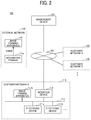
- FIG. 2 is a block diagram illustrating an example of a case in which a print log is unable to be acquired according to one of embodiments of the present disclosure
- FIG. 3 is a block diagram illustrating a hardware configuration of a computer according to one of the embodiments of the present disclosure
- FIG. 4 is a block diagram illustrating a functional configuration of a device management system according to a first embodiment of the present disclosure
- FIG. 5 is a flowchart illustrating an example of operation of an information terminal according the first embodiment of the present disclosure
- FIG. 6 is a flowchart illustrating another example of the operation of the information terminal according the first embodiment of the present disclosure
- FIG. 7 is a sequence diagram illustrating an example of operation of the device management system according to the first embodiment of the present disclosure.
- FIG. 8 is a block diagram illustrating a functional configuration of a device management system according to a second embodiment of the present disclosure.
- FIG. 9 is a flowchart illustrating an example of operation of an electronic device according the second embodiment of the present disclosure.
- FIG. 10 is a flowchart illustrating another example of the operation of the electronic device according the second embodiment of the present disclosure.
- FIG. 1 is a block diagram illustrating a system configuration of a device management system 100 according to one of embodiments of the present disclosure.
- the device management system 100 is a system in which a management device 101 uses mediation device 112 provided in a customer network A 110 to collect information on usage of one or more electronic devices, which are provided in the customer network A 110 , to be managed and manage the collected information.
- the one or more electronic devices to be managed may be also referred to as management target devices.
- the information on usage of each electronic device may be also referred to as “usage information of an electronic device” or “usage information”.
- the customer network A 110 is a local network provided by a customer such as a company using a device management service provided by the device management system 100 .
- the management device 101 may collect information on usage (usage information) of an electronic device to be managed, which is provided in other than the customer network A 110 , for example, in a customer network B 120 and a customer network C 130 and manage the collected usage information.
- the customer network A 110 includes an information terminal 111 a , an image forming apparatus 111 b , a plurality of electronic devices 111 c , 111 d , and so forth, and the mediation device 112 each of which is connected to, for example, a local area network (LAN) 113 .
- the information terminal 111 a , the image forming apparatus 111 b , and the plurality of electronic devices 111 c , 111 d , and so forth, are examples of the electronic devices to be managed by the management device 101 .
- the “electronic device 111 ” is used to indicate any electronic device among information terminal 111 a , the image forming apparatus 111 b , and the plurality of electronic devices 111 c , 111 d , and so forth.
- Examples of the information terminal 111 a include information processing devices such as a note personal computer (PC), a tablet terminal, and a smartphone.
- the information terminal 111 a has a function of controlling printing. Namely, the information terminal 111 a executes printing. With the function, the information terminal 111 a causes the image forming apparatus 111 b , which is connected through the LAN 113 , to print document data, for example.
- the image forming apparatus 111 b is, for example, a printer or a digital multifunction peripheral, having a printing function.
- the image forming apparatus 111 b prints document data under control of the information terminal 111 a , for example.
- the electronic devices 111 c and 111 d are electronic devices, such as projectors, video conference terminals, and scanners, each of which has a communication function.
- the mediation device 112 is a communication device that is communicably connected to the electronic devices 111 , which are the management target devices, through the LAN (first network) 113 , and is communicably connected to the management device 101 through a network (second network) 102 such as the Internet.
- the mediation device 112 acquires information on the usage of each of the electronic devices 111 , which are the management target devices, through the LAN 113 , and transmits the acquired usage information to the management device 101 through the network 102 .
- the management device 101 is a system that includes, for example, one or more information processing devices, such as a PC.
- the management device 101 is communicably connected to the mediation device 112 through the network 102 .
- the management device 101 collects information on the usage of each of the electronic devices 111 , which are the management target devices, provided in the customer network A 110 via the mediation device 112 and manages the collected usage information.
- the information terminal 111 a With the configuration described above, the information terminal 111 a generates a print log (an example of usage information) in which print content is recorded, when executing printing by using the image forming apparatus 111 b , for example. Then, the information terminal 111 a transmits the generated print log to the mediation device 112 through the LAN 113 .
- a print log an example of usage information
- the mediation device 112 receives the print log transmitted from the information terminal 111 a through the LAN 113 and transmits the received print log to the management device 101 through the network 102 .
- each of other electronic devices 111 which are the management target devices, generates usage information, in which usage content according to use of the corresponding electronic device 111 is recorded, and transmits the generated usage information to the mediation device 112 .
- the management device 101 can collect the information on the usage of each of the electronic devices 111 , which is are the management target devices, provided in the customer network 110 , via the mediation device 112 , which is provided in the customer network 110 .
- the information terminal 111 a is taken out of the customer network A 110 and used to execute printing by using the image forming apparatus 141 provided in an external network 140 as illustrated in FIG. 2 , for example.
- the information terminal 111 a is not able to transmit the print log to the mediation device 112 so that the management device 101 is not able to collect the print log of the information terminal 111 a.
- the information terminal 111 a temporarily stores (accumulates) the print log in a storage unit (memory) when the information terminal 111 a is not communicably connected with, or is disconnected from, the mediation device 112 .
- a storage unit memory
- the information terminal 111 a transmits the print log stored in the storage unit to the mediation device 112 and then deletes the print log from the storage unit.
- the print log includes information in which the print content is recorded as image information, or image data.
- an administrator can manage the print content printed by the information terminal 111 a in the customer network A 110 and the external network 140 , for example.
- the print log is an example of the information on the usage of each of the electronic devices 111 , which are the management target devices.
- the information on the usage of the electronic device 111 may be, for example, a communication log of a portable videoconference terminal, a projection log of a projector, or the like.
- the system configuration of the device management system 100 illustrated in FIG. 1 is merely an example. Any other suitable system configuration may be used.
- a system configuration in which the management device 101 communicates with the mediation device 112 through a firewall or the like provided in the customer network A 110 may be used.
- Each of the information terminal 111 a , the management device 101 , the image forming apparatus 111 b , the electronic devices 111 c and 111 d , and the mediation device 112 , which are illustrated in FIG. 1 , has a hardware configuration of a general-purpose computer.
- An example of the hardware configuration of a general-purpose computer 300 is described below.
- FIG. 3 is a block diagram illustrating the hardware configuration of the computer 300 according to one of the embodiments of the present disclosure.
- the computer 300 includes, for example, a central processing unit (CPU) 301 , a random access memory (RAM) 302 , a read only memory (ROM) 303 , a memory 304 , a network interface (I/F) 305 , a display 306 , an input device 307 , an external device connection I/F 308 , and a bus 309 .
- CPU central processing unit
- RAM random access memory
- ROM read only memory
- memory 304 a memory
- I/F network interface
- the CPU 301 is an arithmetic device that implements the functions of the computer 300 by reading programs and data stored in the ROM 303 , the memory 304 , or the like onto the RAM 302 and executing processing.
- the RAM 302 is a volatile memory to be used as a work area for the CPU 301 .
- the ROM 303 is a non-volatile memory that can retain the programs and data even after having been turned off.
- the memory 304 is a storage device such as a hard disk drive (HDD), a solid state drive (SSD), or the like, and stores an operating system (OS), an application program, various data, or the like.
- HDD hard disk drive
- SSD solid state drive
- OS operating system
- application program application program
- various data or the like.
- the network I/F 305 is a communication interface such as a wired or a wireless LAN for connecting the computer 300 to the network 102 or the LAN 113 .
- the network I/F 305 includes two communication interfaces.
- the display 306 is a device for displaying processing results of the computer 300 , for example.
- the input device 307 is a device for receiving an input according to a user operation. Examples of the input device 307 include a pointing device, a keyboard, and a touch panel.
- the display 306 and the input device 307 may be combined to be a display and input device, such as a touch panel display.
- the external device connection I/F 308 is an interface for connecting an external device to the computer 300 .
- the external device includes, for example, a storage device and an electronic device, such as an image forming apparatus.
- the computer 300 installs a predetermined program stored in a recording medium on the computer 300 via the external device connection I/F 308 to execute the predetermined program.
- the bus 309 is connected to each of the above-described components and transfers address signals, data signals, and various types of control signals.
- a functional configuration of the device management system 100 is described below.
- FIG. 4 is a block diagram illustrating a functional configuration of the device management system 100 according to a first embodiment of the present disclosure.
- the information terminal 111 a includes, for example, a communication unit 411 , a print control unit 412 , a print log generation unit 413 , a first transmission unit 414 , a print log storage unit 415 , a second transmission unit 416 , and a display input unit 417 .
- a communication unit 411 a print control unit 412 , a print log generation unit 413 , a first transmission unit 414 , a print log storage unit 415 , a second transmission unit 416 , and a display input unit 417 .
- Each of the above-mentioned functional units of the information terminal 111 a is implemented by the CPU 301 executing a predetermined program, for example.
- the communication unit 411 is implemented by the CPU 301 executing a program and the network I/F 305 , for example.
- the communication unit 411 connects the information terminal 111 a to the LAN 113 so that the information terminal 111 a is communicably connected to, or can communicate with, for example, the mediation device 112 and the image forming apparatus 111 b.
- the print control unit 412 is implemented by a program executed by the CPU 301 , for example.
- the print control unit 412 executes printing of document data by using the image forming apparatus 111 b and the image forming apparatus 141 , for example.
- the print log generation unit (generator) 413 is implemented by a program executed by the CPU 301 , for example.
- the print log generation unit 413 generates a print log (an example of the usage information) in which print content, a print result, or the like is recorded according to the printing executed by the print control unit 412 .
- the print log generated by the print log generation unit 413 includes information in which the print content is recorded as image information, or image data.
- the first transmission unit 414 is implemented by a program executed by the CPU 301 , for example.
- the first transmission unit 414 transmits a print log to the mediation device 112 , when the print log generation unit 413 generates the print log and when the communication unit 411 succeeds in communicating with the mediation device 112 .
- the print log storage unit (storage unit) 415 is implemented by the CPU 301 executing a program and the memory 304 , for example.
- the print log storage unit 415 stores a print log when the print log generation unit 413 generates the print log and when the communication unit 411 fails to communicate with the mediation device 112 .
- the second transmission unit 416 is implemented by a program executed by the CPU 301 , for example.
- the second transmission unit 416 transmits the print log stored in the print log storage unit 415 to the mediation device 112 , when the communication unit 411 becomes to be communicably connected to the mediation device 112 .
- the second transmission unit 416 may be a transmission unit that is separated from the first transmission unit 414 or may be a transmission unit that is combined together with the first transmission unit.
- the display input unit 417 is implemented by a program executed by the CPU 301 , for example.
- the display input unit 417 receives a user operation, such as an operation of printing, performed with the input device 307 and displays a display screen by using the display 306 , for example.
- the mediation device 112 includes, for example, a first communication unit 421 , a storage unit 422 , a second communication unit 423 , and a device information transmission unit 424 .
- Each of the above-mentioned functional units of the mediation device 112 is implemented by the CPU 301 executing a predetermined program, for example.
- the first communication unit 421 is implemented by the CPU 301 executing a program and one of two communication interfaces included in the network I/F 305 , for example.
- the first communication unit 421 connects the mediation device 112 to the LAN 113 and communicates with, for example, the information terminal 111 a , the image forming apparatus 111 b , the electronic devices 111 c , and the electronic devices 111 d.
- the second communication unit 423 is implemented by the CPU 301 executing a program and the other one of the two communication interfaces included in the network I/F 305 , for example.
- the second communication unit 423 connects the mediation device 112 to the network 102 and communicates with the management device 101 , for example.
- the storage unit 422 is implemented by the CPU 301 executing a program and the memory 304 , for example.
- the storage unit 422 stores the print logs of the information terminal 111 a received by the first communication unit 421 and the information on the usage of the electronic device 111 , for example.
- the device information transmission unit 424 is implemented by a program executed by the CPU 301 , for example.
- the device information transmission unit 424 transmits a print log of the information terminal 111 a , information on the usage of the electronic device 111 , or the like, which is stored in the storage unit 422 , to the management device 101 via the second communication unit 423 .
- the device information transmission unit 424 may transmit the print log of the information terminal 111 a , the information on the usage of the electronic device 111 , or the like, which is stored in the storage unit 422 , to the management device 101 in response to a request from the management device 101 .
- the management device 101 includes, for example, a communication unit 431 , a device information management unit 432 , a storage unit 433 , and a mediation device management unit 434 .
- a communication unit 431 a communication unit 431 , a device information management unit 432 , a storage unit 433 , and a mediation device management unit 434 .
- Each of the above-mentioned functional units of the management device 101 is implemented by the CPU 301 executing a predetermined program, for example.
- the communication unit 431 is implemented by the CPU 301 executing a program and the network I/F 305 , for example.
- the communication unit 431 connects the management device 101 to the network 102 so that the management device 101 is communicably connected to mediation device 112 , for example.
- the device information management unit 432 is implemented by a program executed by the CPU 301 , for example.
- the device information management unit 432 receives a print log of the information terminal 111 a , information on the usage of the electronic device 111 , or the like, which is transmitted from the mediation device 112 via the communication unit 431 and stores the received information in the storage unit 433 to manage the stored information.
- the storage unit 433 is implemented by the CPU 301 executing a program and the memory 304 , for example.
- the storage unit 433 stores, for example, a print log of the information terminal 111 a , information on the usage of the electronic device 111 , information on the mediation device 112 , or the like.
- the mediation device management unit 434 is implemented by, for example, a program executed by the CPU 301 and manages the mediation device 112 .
- the mediation device management unit 434 manages the information on the mediation device 112 by storing the information on the mediation device 112 in the storage unit 433 .
- the information on the mediation device 112 includes connection information (for example, address information, authentication information, etc.) for connecting to the mediation device 112 , information on the electronic devices 111 of which the usage information is collected by the mediation device 112 .
- the above-described configuration allows the management device 101 to collect the usage information, such as a print log of the information terminal 111 a to be managed, by using the mediation device 112 installed in the customer network A 110 .
- FIG. 5 is a flowchart illustrating an example of the operation of the information terminal 111 a according to the first embodiment of the present disclosure.
- the operation illustrated in FIG. 5 is an example of a process performed by the information terminal 111 a in executing printing by using the image forming apparatus 111 b , the image forming apparatus 141 , or the like.
- Step S 501 the print control unit 412 executes printing. After the print control unit 412 execute the printing in Step S 501 , the information terminal 111 a performs processing of Step S 502 and the subsequent steps.
- Step S 502 the print log generation unit 413 generates a print log (an example of the usage information) in which information such as print content or a print result is recorded.
- the print log includes, for example, information indicating what is printed, how many sheets are used to execute the printing, and how or where in the sheet the printing is executed.
- the print log generated by the print log generation unit 413 includes information in which the print content is recorded as image information, or image data.
- Step S 503 the communication unit 411 determines whether the mediation device 112 and the information terminal 111 a are communicably connected to each other through the LAN 113 or not. Namely, the communication unit 411 determines whether the mediation device 112 is communicably connected to the information terminal 111 a .
- the process proceeds to Step S 504 .
- the mediation device 112 and the information terminal 111 a are not communicably connected to each other, namely, are disconnected from each other, the process proceeds to Step S 507 .
- Step S 504 the first transmission unit 414 transmits the print log generated by the print log generation unit 413 to the mediation device 112 via the communication unit 411 .
- Step S 505 the information terminal 111 a determines whether the transmission of the print log is successful or not.
- the process performed by the information terminal 111 a proceeds to Step S 506 .
- the process performed by the information terminal 111 a proceeds to Step S 507 .
- the information terminal 111 a may determine that the transmission of the print log fails when the first transmission unit 414 retries to transmit the print log, or transmits the print log for predetermined times, which may be set by a designer or a user, and then fails to transmit the print log to the mediation device 112 , or the mediation device 112 fails to receive the print log transmitted from the information terminal 111 a .
- to “transmit for the predetermined times” or to “repeatedly transmit” may be simply referred to as to “retry”.
- Step S 506 the transmitted print log is deleted from the print log storage unit 415 .
- Step S 507 a remaining storage capacity in the print log storage unit 415 is checked.
- the print log storage unit 415 is set to store a print log within a range of a predetermined storage capacity, which may be set by a designer or a user.
- the print log storage unit 415 accordingly, checks a storage capacity available to newly store a print log in the range of the predetermined storage capacity.
- Step S 508 a determination whether there is a storage capacity available to newly store the print log (new print log) generated in Step S 502 within the range of the predetermined storage capacity in the print log storage unit 415 is made.
- a determination result indicates that the print log storage unit 415 is not available to store the generated print log
- the process proceeds to step S 509 .
- a determination result indicates that the print log storage unit 415 is available to store the generated print log
- the process proceeds to step S 510 .
- Step S 509 the oldest print log among the print logs stored in the print log storage unit 415 is deleted, and the process returns to Step S 507 .
- the print log storage unit 415 can increase the remaining storage capacity of the predetermined storage capacity.
- Step S 510 after Step S 508 the print log storage unit 415 stores the print log generated by the print log generation unit 413 in Step S 502 , by using the memory 304 , for example.
- the information terminal 111 a communicably connected to the mediation device 112 transmits, to the mediation device 112 , the print log generated according to execution of the printing.
- the information terminal 111 a which is not communicably connected to the mediation device 112 , saves the generated print log according to execution of the printing.
- FIG. 6 is another flowchart illustrating an example of the operation of the information terminal 111 a according the first embodiment of the present disclosure.
- the operation illustrated in FIG. 6 is an example of a process performed by the information terminal 111 a in reconnecting to the LAN 113 of the customer network A 110 .
- Step S 601 the information terminal 111 a detects the customer network A 110 .
- the information terminal 111 a Upon detecting the customer network A 110 in Step S 601 , the information terminal 111 a performs the processing of Step 602 and the subsequent steps. For example, when the communication unit 411 connects to the LAN 113 of the customer network A 110 , the information terminal 111 a determines that the customer network A 110 is detected.
- Step S 602 a determination whether a print log that is not transmitted to the mediation device 112 is stored in the print log storage unit 415 or not is made.
- the information terminal 111 a ends the process.
- the process performed by the information terminal 111 a proceeds to Step S 603 .
- Step S 603 the communication unit 411 determines whether the mediation device 112 and the information terminal 111 a are communicably connected to each other through the LAN 113 or not. Namely, the communication unit 411 determines whether the mediation device 112 is communicably connected to the information terminal 111 a .
- the process performed by the information terminal 111 a ends.
- the process proceeds to Step S 604 .
- Step S 604 the second transmission unit 416 transmits the print log stored in the print log storage unit 415 to the mediation device 112 via the communication unit 411 .
- step S 605 the information terminal 111 a determines whether the transmission of the print log is successful or not.
- the process performed by the information terminal 111 a proceeds to Step S 606 .
- the process performed by the information terminal 111 a ends.
- the information terminal 111 a may determine that the transmission of the print log fails when the second transmission unit 416 retries the transmission of the print log for predetermined times, which may be set by a designer or a user, and fails to transmit the print log to the mediation device 112 .
- Step S 606 the transmitted print log is deleted from the print log storage unit 415 .
- the information terminal 111 a transmits the print log stored in the print log storage unit 415 to the mediation device 112 , when becoming to be communicably connected to the mediation device 112 .
- FIG. 7 is a sequence diagram illustrating an example of the operation of the device management system 100 according to the first embodiment of the present disclosure.
- the operation, illustrated in FIG. 7 performed by the entire device management system 100 according to the first embodiment is a process corresponding to each of processes illustrated in FIG. 5 and FIG. 6 , performed by the information terminal 111 a .
- the information terminal 111 a is connected to the LAN 113 of the customer network A 110 and is communicably connected to the mediation device 112 as illustrated in FIG. 1 .
- Step S 701 the print control unit 412 of the information terminal 111 a receives an operation of printing (print operation) performed by a user via the display input unit 417 .
- Step S 702 the print control unit 412 of the information terminal 111 a generates print data to be printed by using the image forming apparatus 111 b according to the received operation of printing and transmits the print data to the image forming apparatus 111 b.
- Step S 703 the image forming apparatus 111 b prints the print data transmitted from the information terminal 111 a.
- Step S 704 the print log generation unit 413 of the information terminal 111 a generates a print log in which information such as print content, a print result, or the like of the printing performed by the print control unit 412 is recorded.
- Step S 705 the communication unit 411 of the information terminal 111 a checks whether the information terminal 111 a and the mediation device 112 are communicably connected to each other. As illustrated in FIG. 1 , the information terminal 111 a is connected to the mediation device 112 through the LAN 113 , thereby succeeding in communicating with the mediation device 112 .
- Step S 706 when the information terminal 111 a succeeds in communicating with the mediation device 112 , the first transmission unit 414 transmits the print log generated by the print log generation unit 413 to the mediation device 112 via the communication unit 411 .
- Step S 707 the print log transmitted by the first transmission unit 414 is deleted from the print log storage unit 415 of the information terminal 111 a.
- Step S 708 the device information transmission unit 424 of the mediation device 112 transmits the print log received from the information terminal 111 a via the first communication unit 421 to the management device 101 via the second communication unit 423 .
- the mediation device 112 may store the print log received from the information terminal 111 a in the storage unit 422 , and the device information transmission unit 424 may transmit the print log stored in the storage unit 422 to the management device 101 in response to a request from the management device 101 .
- Step S 709 the device information management unit 432 of the management device 101 stores the print log of the information terminal 111 a received from the mediation device 112 in the storage unit 433 .
- the print log generated by the information terminal 111 a is transmitted to the management device 101 via the mediation device 112 and stored in the management device 101 .
- Step S 710 the print control unit 412 of the information terminal 111 a receives an operation of printing (print operation) performed by the user via the display input unit 417 , for example.
- Step S 711 the print control unit 412 of the information terminal 111 a generates print data to be printed by using the image forming apparatus 141 according to the received operation of printing and transmits the print data to the image forming apparatus 141 .
- Step S 712 the image forming apparatus 141 prints the print data transmitted from the information terminal 111 a.
- Step S 713 the print log generation unit 413 of the information terminal 111 a generates a print log in which information such as print content, a print result, or the like of the printing performed by the print control unit 412 is recorded.
- Step S 714 the communication unit 411 of the information terminal 111 a checks whether the information terminal 111 a and the mediation device 112 are communicably connected to each other. As illustrated in FIG. 2 , the information terminal 111 a is not communicably connected to the mediation device 112 through the LAN 113 , thereby failing to communicate with the mediation device 112 .
- Step S 715 when the information terminal 111 a fails to communicate with the mediation device 112 , the print log storage unit 415 stores the print log generated by the print log generation unit 413 .
- the print log generated by the information terminal 111 a is stored in the information terminal 111 a.
- Step S 716 the communication unit 411 of the information terminal 111 a checks whether the information terminal 111 a and the mediation device 112 are communicably connected to each other. As illustrated in FIG. 1 , the information terminal 111 a is reconnected to the mediation device 112 through the LAN 113 , thereby succeeding in communicating with the mediation device 112 .
- Step S 717 when the information terminal 111 a succeeds in communicating with the mediation device 112 , the second transmission unit 416 of the information terminal 111 a reads the print log stored in the print log storage unit 415 .
- Step S 718 the second transmission unit 416 of the information terminal 111 a transmits the print log read from the print log storage unit 415 to the mediation device 112 via the communication unit 411 .
- Step S 719 the print log transmitted by the second transmission unit 416 is deleted from the print log storage unit 415 of the information terminal 111 a.
- Step S 720 the device information transmission unit 424 of the mediation device 112 transmits the print log received from the information terminal 111 a via the first communication unit 421 to the management device 101 via the second communication unit 423 .
- Step S 721 the device information management unit 432 of the management device 101 stores the print log of the information terminal 111 a received from the mediation device 112 in the storage unit 433 .
- the management device 101 is able to collect and manage the print logs of printing executed in the external network 140 by the information terminal 111 a , in addition to the print logs of printing executed in the customer network A 110 by the information terminal 111 a.
- the device management system 100 which collects the print logs of the information terminal 111 a , according to the present embodiment, is able to acquire the print logs of the information terminal 111 a even when the information terminal 111 a is used outside of the customer network A 110 , by using the mediation device 112 installed in the customer network A 110 .
- the management device 101 collects and manages the print logs of the information terminal 111 a is given.
- the management device 101 can also collect and manages information on usage of each of the various types of the electronic devices 111 .
- the management device 101 may collect and manage a projection log (an example of the usage information) of a portable projector (an example of the electronic device 111 ).
- the management device 101 may collect and manage a teleconference log (another example of the usage information) of a portable videoconference terminal (another example of the electronic device 111 ).
- the management device 101 collects and manages information on usage of each of the various types of the electronic devices 111 is given.
- the various types of the electronic devices are collectively or individually referred to as the electronic device 111 .
- FIG. 8 is a block diagram illustrating a functional configuration of a device management system 100 according to the second embodiment of the present disclosure.
- the electronic device 111 includes, for example, a communication unit 801 , a device control unit 802 , a usage information generation unit 803 , a first transmission unit 804 , a usage information storage unit 805 , a second transmission unit 806 , and a display input unit 807 .
- a communication unit 801 a communication unit 801 , a device control unit 802 , a usage information generation unit 803 , a first transmission unit 804 , a usage information storage unit 805 , a second transmission unit 806 , and a display input unit 807 .
- Each of the above-mentioned functional units of the electronic device 111 is implemented by the CPU 301 executing a predetermined program, for example.
- the functional configuration of the electronic device 111 according to the second embodiment is similar to that of the information terminal 111 a according to the first embodiment illustrated in FIG. 4 .
- differences from the information terminal 111 a are mainly focused.
- the communication unit 801 is implemented by the CPU 301 executing a program and the network I/F 305 , for example.
- the communication unit 801 connects the electronic device 111 to the LAN 113 so that the electronic device 111 is communicably connected to the mediation device 112 .
- the device control unit 802 is implemented by a program executed by the CPU 301 , for example.
- the device control unit 802 controls the functions of the electronic device 111 .
- the device control unit 802 controls projection of an image.
- the device control unit 802 controls communication, display processing, and the like related to conducting a video conference.
- the usage information generation unit (generator) 803 is implemented by a program executed by the CPU 301 , for example.
- the usage information generation unit 803 generates usage information (a usage log) in which usage content or a use result related to the electronic device 111 is recorded according to use of the electronic device 111 .
- the usage information generation unit 803 when the electronic device 111 is a projector, the usage information generation unit 803 generates use information including information such as a projection start time, a projection end time, information on a projected image, information on luminance, or the like.
- the usage information generation unit 803 when the electronic device 111 is a videoconference terminal, the usage information generation unit 803 generates usage information including a video conference start time, a video conference end time, video conference information, information on a communication destination, or the like.
- the usage information generated by the usage information generation unit 803 includes image information, or image data, such as a projected image or a video image of a video conference (for example, a snapshot, etc.).
- the first transmission unit 804 is implemented by a program executed by the CPU 301 , for example.
- the first transmission unit 804 transmits the usage information to the mediation device 112 , when the usage information generation unit 803 generates the usage information and when the communication unit 801 succeeds in communicating with the mediation device 112 .
- the usage information storage unit (storage unit) 805 is implemented by the CPU 301 executing a program and the memory 304 , for example.
- the usage information storage unit 805 stores the usage information generated by the usage information generation unit 803 when the communication unit 801 fails to communicate with the mediation device 112 .
- the second transmission unit 806 is implemented by a program executed by the CPU 301 , for example.
- the second transmission unit 806 transmits the usage information stored in the usage information storage unit 805 to the mediation device 112 , when the communication unit 801 becomes to be communicably connected to the mediation device 112 .
- the display input unit 807 is implemented by a program executed by the CPU 301 , for example.
- the display input unit 807 receives a user operation, such as a user operation performed with the input device 307 and displays a display screen by using the display 306 , for example.
- the functional configurations of the mediation device 112 and the management device 101 are substantially the same as those of the first embodiment, and the redundant description thereof is omitted here.
- FIG. 9 is a flowchart illustrating an example of the operation of the electronic device 111 according the second embodiment of the present disclosure.
- the operation illustrated in FIG. 9 is an example of a process performed by the electronic device 111 when the electronic device 111 is used by a user.
- the process is similar to the process performed by the information terminal 111 a according to the first embodiment described above with reference to FIG. 5 , and the redundant description thereof is omitted here.
- Step S 901 when the user uses the electronic device 111 , the electronic device 111 executes the processing of Step 902 and the subsequent steps.
- Step 902 the usage information generation unit 803 generates usage information in which usage content or a use result related to the electronic device 111 is recorded.
- Step S 903 the communication unit 801 determines whether the mediation device 112 and the electronic device 111 are communicably connected to each other through the LAN 113 or not. Namely, the mediation device 112 is communicably connected to the electronic device 111 . When the mediation device 112 and the electronic device 111 are communicably connected to each other, the process proceeds to Step S 904 . When the mediation device 112 and the electronic device 111 are not communicably connected to each other, the process proceeds to Step 907 .
- Step S 904 the first transmission unit 804 transmits the usage information generated by the usage information generation unit 803 to the mediation device 112 via the communication unit 801 .
- step S 905 the electronic device 111 determines whether the transmission of the usage information is successful or not.
- the process performed by the electronic device 111 proceeds to Step S 906 .
- the process performed by the electronic device 111 proceeds to step S 907 .
- the electronic device 111 may determine that the transmission of the usage information fails when the first transmission unit 804 retries the transmission of the usage information for predetermined times, which may be set by a designer or a user, and fails to transmit the usage information to the mediation device 112 .
- Step S 906 the transmitted usage information is deleted from the usage information storage unit 805 .
- Step S 907 a remaining storage capacity in the usage information storage unit 805 is checked.
- the usage information storage unit 805 is set to store usage information within a range of a predetermined storage capacity, which may be set by a designer or a user.
- the usage information storage unit 805 accordingly, checks a storage capacity available to newly store usage information in the predetermined storage capacity.
- Step S 908 a determination whether there is a storage capacity available to store the usage information (new usage information) generated in Step S 902 within the range of the predetermined storage capacity in the usage information storage unit 805 is made.
- a determination result indicates that the usage information storage unit 805 is not available to store generated usage information
- the process proceeds to step S 909 .
- the process proceeds to step S 910 .
- Step S 909 the oldest usage information among the stored usage information is deleted from the usage information storage unit 805 , and the process returns to Step S 907 .
- the usage information storage unit 805 can increase the remaining storage capacity of the predetermined storage capacity.
- Step S 908 after Step S 910 the usage information storage unit 805 stores the usage information generated by the usage information generation unit 803 in Step S 902 , by using the memory 304 , for example.
- the electronic device 111 communicably connected to the mediation device 112 transmits, to the mediation device 112 , the usage information generated according to the use of the electronic device 111 .
- the electronic device 111 that is not communicably connected to the mediation device 112 stores the usage information generated according to the use of the electronic device 111 .
- FIG. 10 is another flowchart illustrating an example of the operation of the electronic device 111 according the second embodiment of the present disclosure.
- the operation illustrated in FIG. 10 is an example of a process performed by the electronic device 111 in reconnecting to the LAN 113 in the customer network A 110 .
- Step S 1001 the customer network A 110 is detected.
- the electronic device 111 executes the processing of Step 1002 and the subsequent steps. For example, when the communication unit 801 connects to the LAN 113 of the customer network A 110 , the electronic device 111 determines that the customer network A 110 is detected.
- Step S 1002 a determination whether usage information that is not transmitted to the mediation device 112 is stored in the usage information storage unit 805 or not is made.
- the process performed by the electronic device 111 ends.
- the process performed by the electronic device 111 proceed to S 1003 .
- Step S 1003 the communication unit 801 determines whether the mediation device 112 and the electronic device 111 are communicably connected to each other through the LAN 113 or not. Namely, the mediation device 112 is communicably connected to the electronic device 111 . When the mediation device 112 and the electronic device 111 are not communicably connected to each other, the process performed by the electronic device 111 ends. On the other hand, when the mediation device 112 and the electronic device 111 are communicably connected to each other, the process proceeds to Step S 1004 .
- Step S 1004 the second transmission unit 806 transmits the usage information stored in the usage information storage unit 805 to the mediation device 112 via the communication unit 801 .
- Step S 1005 the electronic device 111 determines whether the transmission of the usage information is successful or not.
- the process performed by the electronic device 111 proceeds to Step S 1006 .
- the process performed by the electronic device 111 ends.
- the electronic device 111 may determine that the transmission of the usage information fails when the second transmission unit 806 retries the transmission of the usage information for predetermined times, which may be set by a designer or a user, and fails to transmit the usage information to the mediation device 112 .
- Step S 1006 the transmitted usage information is deleted from the usage information storage unit 805 .
- the electronic device 111 transmits the usage information stored in the usage information storage unit 805 to the mediation device 112 , when becoming to be communicably connected to the mediation device 112 .
- the usage information is stored within the range of the predetermined storage capacity and the usage information transmitted to the mediation device 112 is deleted. Therefore, the present embodiment can be suitably applied to any of the various types of the electronic device 111 having a relatively small storage capacity, such as a projector or a videoconference terminal.
- the information on usage of the electronic device 111 in which information on usage of the electronic device 111 is collected by using the mediation device 112 provided in a local network, the information on the usage of the electronic device 111 can be collected, even when the electronic device 111 is used outside of the local network.
- Processing circuitry includes a programmed processor, as a processor includes circuitry.
- a processing circuit also includes devices such as an application specific integrated circuit (ASIC), DSP (digital signal processor), FPGA (field programmable gate array) and conventional circuit components arranged to perform the recited functions.
- ASIC application specific integrated circuit
- DSP digital signal processor
- FPGA field programmable gate array
Landscapes
- Engineering & Computer Science (AREA)
- Theoretical Computer Science (AREA)
- Human Computer Interaction (AREA)
- Physics & Mathematics (AREA)
- General Engineering & Computer Science (AREA)
- General Physics & Mathematics (AREA)
- Computer Networks & Wireless Communication (AREA)
- Signal Processing (AREA)
- Facsimiles In General (AREA)
- Information Transfer Between Computers (AREA)
- Computer And Data Communications (AREA)
- Accessory Devices And Overall Control Thereof (AREA)
Abstract
Description
Claims (9)
Applications Claiming Priority (2)
| Application Number | Priority Date | Filing Date | Title |
|---|---|---|---|
| JP2017252638A JP7062951B2 (en) | 2017-12-27 | 2017-12-27 | Electronic devices, equipment management systems, and programs |
| JP2017-252638 | 2017-12-27 |
Publications (2)
| Publication Number | Publication Date |
|---|---|
| US20190196767A1 US20190196767A1 (en) | 2019-06-27 |
| US10628100B2 true US10628100B2 (en) | 2020-04-21 |
Family
ID=66951230
Family Applications (1)
| Application Number | Title | Priority Date | Filing Date |
|---|---|---|---|
| US16/181,688 Expired - Fee Related US10628100B2 (en) | 2017-12-27 | 2018-11-06 | Electronic device that transmits usage information when communicably connected to a mediation device and device management system |
Country Status (2)
| Country | Link |
|---|---|
| US (1) | US10628100B2 (en) |
| JP (1) | JP7062951B2 (en) |
Families Citing this family (1)
| Publication number | Priority date | Publication date | Assignee | Title |
|---|---|---|---|---|
| US12050821B2 (en) * | 2022-03-18 | 2024-07-30 | Ricoh Company, Ltd. | Information processing apparatus, information processing system, information processing method, image forming apparatus, and image forming system for acquiring a log related to communication and execution of a processing |
Citations (10)
| Publication number | Priority date | Publication date | Assignee | Title |
|---|---|---|---|---|
| JP2003319084A (en) | 2002-04-24 | 2003-11-07 | Ricoh Co Ltd | Remote monitoring device |
| JP2008033615A (en) | 2006-07-28 | 2008-02-14 | Ricoh Co Ltd | Printing system, printing control program, and recording medium |
| US20090094428A1 (en) * | 2006-01-13 | 2009-04-09 | Hitachi, Ltd. | Storage controller and data management method |
| US20100036796A1 (en) * | 2008-08-08 | 2010-02-11 | Takeshi Kajikawa | Image forming apparatus, log storing method, and computer program product |
| US20110164886A1 (en) * | 2010-01-06 | 2011-07-07 | Masaichi Sawada | Monitoring device system, image forming apparatus, and monitoring device method |
| US20110185295A1 (en) | 2010-01-26 | 2011-07-28 | Ricoh Company, Ltd. | Information processing apparatus, plug-in interaction method, and computer-readable storage medium |
| US20130016393A1 (en) * | 2011-07-14 | 2013-01-17 | Ricoh Company, Ltd. | Apparatus, system, and method of log management, and recording medium storing log management program |
| US9075971B2 (en) * | 2011-10-14 | 2015-07-07 | Canon Kabushiki Kaisha | Information processing system, image processing apparatus, user device, control method, and storage medium |
| US20150370519A1 (en) * | 2014-06-18 | 2015-12-24 | Canon Kabushiki Kaisha | Image processing apparatus, control method of image processing apparatus, and storage medium |
| US20190004759A1 (en) * | 2017-06-30 | 2019-01-03 | Canon Kabushiki Kaisha | Image forming apparatus, server apparatus, and information processing system |
Family Cites Families (4)
| Publication number | Priority date | Publication date | Assignee | Title |
|---|---|---|---|---|
| JP2000112706A (en) | 1998-09-30 | 2000-04-21 | Canon Inc | Print log total management system, print log total management method, and storage medium |
| JP2003177901A (en) | 2001-12-10 | 2003-06-27 | Konica Corp | Information processor, information processing service method, program for implementing the method, and information recording medium where the program is recorded |
| JP4102631B2 (en) | 2002-09-20 | 2008-06-18 | 株式会社リコー | Image processing system, image processing apparatus management system, management server, and image processing apparatus management method |
| US20120246297A1 (en) * | 2011-03-25 | 2012-09-27 | Vijaya Shanker | Agent based monitoring for saas it service management |
-
2017
- 2017-12-27 JP JP2017252638A patent/JP7062951B2/en not_active Expired - Fee Related
-
2018
- 2018-11-06 US US16/181,688 patent/US10628100B2/en not_active Expired - Fee Related
Patent Citations (10)
| Publication number | Priority date | Publication date | Assignee | Title |
|---|---|---|---|---|
| JP2003319084A (en) | 2002-04-24 | 2003-11-07 | Ricoh Co Ltd | Remote monitoring device |
| US20090094428A1 (en) * | 2006-01-13 | 2009-04-09 | Hitachi, Ltd. | Storage controller and data management method |
| JP2008033615A (en) | 2006-07-28 | 2008-02-14 | Ricoh Co Ltd | Printing system, printing control program, and recording medium |
| US20100036796A1 (en) * | 2008-08-08 | 2010-02-11 | Takeshi Kajikawa | Image forming apparatus, log storing method, and computer program product |
| US20110164886A1 (en) * | 2010-01-06 | 2011-07-07 | Masaichi Sawada | Monitoring device system, image forming apparatus, and monitoring device method |
| US20110185295A1 (en) | 2010-01-26 | 2011-07-28 | Ricoh Company, Ltd. | Information processing apparatus, plug-in interaction method, and computer-readable storage medium |
| US20130016393A1 (en) * | 2011-07-14 | 2013-01-17 | Ricoh Company, Ltd. | Apparatus, system, and method of log management, and recording medium storing log management program |
| US9075971B2 (en) * | 2011-10-14 | 2015-07-07 | Canon Kabushiki Kaisha | Information processing system, image processing apparatus, user device, control method, and storage medium |
| US20150370519A1 (en) * | 2014-06-18 | 2015-12-24 | Canon Kabushiki Kaisha | Image processing apparatus, control method of image processing apparatus, and storage medium |
| US20190004759A1 (en) * | 2017-06-30 | 2019-01-03 | Canon Kabushiki Kaisha | Image forming apparatus, server apparatus, and information processing system |
Non-Patent Citations (1)
| Title |
|---|
| Atsushi, Printing System Printing Control Program and Recording Medium, Feb. 14, 2008, Machine translated Japanese Patent Application Publication, JP 2008033615 Listed on IDS, all pages (Year: 2008). * |
Also Published As
| Publication number | Publication date |
|---|---|
| JP7062951B2 (en) | 2022-05-09 |
| JP2019117609A (en) | 2019-07-18 |
| US20190196767A1 (en) | 2019-06-27 |
Similar Documents
| Publication | Publication Date | Title |
|---|---|---|
| US9930492B2 (en) | Information processing system, information storage apparatus, and location information storing method | |
| US11385846B2 (en) | Printing system, server, and printing method | |
| US10120758B2 (en) | Information processing system, information processing apparatus, and information processing method for implementing a system rollback process | |
| US20170346981A1 (en) | Information processing system, information processing apparatus, and information processing method | |
| US11210152B2 (en) | Error solution information providing system, error solution information provider apparatus, and electronic apparatus | |
| US10762043B2 (en) | Information processing system, information processing apparatus, and information processing method | |
| US20150169879A1 (en) | Information processing apparatus, control method, and storage medium storing program | |
| US8266178B2 (en) | Management apparatus, information processing apparatus, and method therefor | |
| US20150149516A1 (en) | Information processing apparatus, information processing method, and storage medium | |
| US10776059B2 (en) | Information processing apparatus, information storing apparatus, and image forming system | |
| US10628100B2 (en) | Electronic device that transmits usage information when communicably connected to a mediation device and device management system | |
| US9612788B2 (en) | Terminal apparatus, information processing system, and output method | |
| US10452322B2 (en) | Information processing device, information processing system, and computer program product | |
| US10244015B2 (en) | System to control output of images to multiple devices in a network | |
| JP7180486B2 (en) | Data processing device, method and program | |
| US12073133B2 (en) | System and method for providing printing service and configured to change printer connection destination | |
| CN106357948B (en) | Remote maintenance system and remote maintenance method | |
| US10834276B2 (en) | System, management server system and control method | |
| US20130010328A1 (en) | Information processing apparatus, fax reception notification control method, and storage medium | |
| US20210144113A1 (en) | Information processing system, information processing apparatus, and information processing method | |
| US20250365380A1 (en) | Information processing system, server apparatus, and non-transitory computer-readable recording medium | |
| US20250080679A1 (en) | Image management apparatus, method of controlling image management apparatus, and storage medium | |
| US10795628B2 (en) | Information processing system, information processing apparatus, and log information management method | |
| US20250363073A1 (en) | Information processing system, server apparatus, and non-transitory computer-readable recording medium | |
| US20250272040A1 (en) | Information processing system, non-transitory computer readable medium, and information processing method |
Legal Events
| Date | Code | Title | Description |
|---|---|---|---|
| AS | Assignment |
Owner name: RICOH COMPANY, LTD., JAPAN Free format text: ASSIGNMENT OF ASSIGNORS INTEREST;ASSIGNOR:KASHIDA, YONA;REEL/FRAME:047421/0503 Effective date: 20181016 |
|
| FEPP | Fee payment procedure |
Free format text: ENTITY STATUS SET TO UNDISCOUNTED (ORIGINAL EVENT CODE: BIG.); ENTITY STATUS OF PATENT OWNER: LARGE ENTITY |
|
| STPP | Information on status: patent application and granting procedure in general |
Free format text: RESPONSE TO NON-FINAL OFFICE ACTION ENTERED AND FORWARDED TO EXAMINER |
|
| STPP | Information on status: patent application and granting procedure in general |
Free format text: FINAL REJECTION MAILED |
|
| STPP | Information on status: patent application and granting procedure in general |
Free format text: ADVISORY ACTION MAILED |
|
| STPP | Information on status: patent application and granting procedure in general |
Free format text: NOTICE OF ALLOWANCE MAILED -- APPLICATION RECEIVED IN OFFICE OF PUBLICATIONS |
|
| STCF | Information on status: patent grant |
Free format text: PATENTED CASE |
|
| FEPP | Fee payment procedure |
Free format text: MAINTENANCE FEE REMINDER MAILED (ORIGINAL EVENT CODE: REM.); ENTITY STATUS OF PATENT OWNER: LARGE ENTITY |
|
| LAPS | Lapse for failure to pay maintenance fees |
Free format text: PATENT EXPIRED FOR FAILURE TO PAY MAINTENANCE FEES (ORIGINAL EVENT CODE: EXP.); ENTITY STATUS OF PATENT OWNER: LARGE ENTITY |
|
| STCH | Information on status: patent discontinuation |
Free format text: PATENT EXPIRED DUE TO NONPAYMENT OF MAINTENANCE FEES UNDER 37 CFR 1.362 |
|
| STCH | Information on status: patent discontinuation |
Free format text: PATENT EXPIRED DUE TO NONPAYMENT OF MAINTENANCE FEES UNDER 37 CFR 1.362 |
|
| FP | Lapsed due to failure to pay maintenance fee |
Effective date: 20240421 |