US10599376B2 - Image forming apparatus, method of controlling the same, and storage medium configured to accept a user operation for deleting a page form a print job, to delete a rendering command for that page, and to update identification information of the print job based on the deleted page - Google Patents
Image forming apparatus, method of controlling the same, and storage medium configured to accept a user operation for deleting a page form a print job, to delete a rendering command for that page, and to update identification information of the print job based on the deleted page Download PDFInfo
- Publication number
- US10599376B2 US10599376B2 US16/167,894 US201816167894A US10599376B2 US 10599376 B2 US10599376 B2 US 10599376B2 US 201816167894 A US201816167894 A US 201816167894A US 10599376 B2 US10599376 B2 US 10599376B2
- Authority
- US
- United States
- Prior art keywords
- page
- print job
- pages
- information
- image data
- Prior art date
- Legal status (The legal status is an assumption and is not a legal conclusion. Google has not performed a legal analysis and makes no representation as to the accuracy of the status listed.)
- Expired - Fee Related
Links
Images




Classifications
-
- G—PHYSICS
- G06—COMPUTING OR CALCULATING; COUNTING
- G06F—ELECTRIC DIGITAL DATA PROCESSING
- G06F3/00—Input arrangements for transferring data to be processed into a form capable of being handled by the computer; Output arrangements for transferring data from processing unit to output unit, e.g. interface arrangements
- G06F3/12—Digital output to print unit, e.g. line printer, chain printer
- G06F3/1201—Dedicated interfaces to print systems
- G06F3/1202—Dedicated interfaces to print systems specifically adapted to achieve a particular effect
- G06F3/1222—Increasing security of the print job
-
- G—PHYSICS
- G06—COMPUTING OR CALCULATING; COUNTING
- G06F—ELECTRIC DIGITAL DATA PROCESSING
- G06F3/00—Input arrangements for transferring data to be processed into a form capable of being handled by the computer; Output arrangements for transferring data from processing unit to output unit, e.g. interface arrangements
- G06F3/12—Digital output to print unit, e.g. line printer, chain printer
- G06F3/1201—Dedicated interfaces to print systems
- G06F3/1202—Dedicated interfaces to print systems specifically adapted to achieve a particular effect
- G06F3/1203—Improving or facilitating administration, e.g. print management
- G06F3/1205—Improving or facilitating administration, e.g. print management resulting in increased flexibility in print job configuration, e.g. job settings, print requirements, job tickets
-
- G—PHYSICS
- G06—COMPUTING OR CALCULATING; COUNTING
- G06F—ELECTRIC DIGITAL DATA PROCESSING
- G06F3/00—Input arrangements for transferring data to be processed into a form capable of being handled by the computer; Output arrangements for transferring data from processing unit to output unit, e.g. interface arrangements
- G06F3/12—Digital output to print unit, e.g. line printer, chain printer
- G06F3/1201—Dedicated interfaces to print systems
- G06F3/1202—Dedicated interfaces to print systems specifically adapted to achieve a particular effect
- G06F3/1211—Improving printing performance
- G06F3/1212—Improving printing performance achieving reduced delay between job submission and print start
- G06F3/1213—Improving printing performance achieving reduced delay between job submission and print start at an intermediate node or at the final node
-
- G—PHYSICS
- G06—COMPUTING OR CALCULATING; COUNTING
- G06F—ELECTRIC DIGITAL DATA PROCESSING
- G06F3/00—Input arrangements for transferring data to be processed into a form capable of being handled by the computer; Output arrangements for transferring data from processing unit to output unit, e.g. interface arrangements
- G06F3/12—Digital output to print unit, e.g. line printer, chain printer
- G06F3/1201—Dedicated interfaces to print systems
- G06F3/1223—Dedicated interfaces to print systems specifically adapted to use a particular technique
- G06F3/1237—Print job management
- G06F3/1238—Secure printing, e.g. user identification, user rights for device usage, unallowed content, blanking portions or fields of a page, releasing held jobs
-
- G—PHYSICS
- G06—COMPUTING OR CALCULATING; COUNTING
- G06F—ELECTRIC DIGITAL DATA PROCESSING
- G06F3/00—Input arrangements for transferring data to be processed into a form capable of being handled by the computer; Output arrangements for transferring data from processing unit to output unit, e.g. interface arrangements
- G06F3/12—Digital output to print unit, e.g. line printer, chain printer
- G06F3/1201—Dedicated interfaces to print systems
- G06F3/1223—Dedicated interfaces to print systems specifically adapted to use a particular technique
- G06F3/1237—Print job management
- G06F3/1244—Job translation or job parsing, e.g. page banding
- G06F3/1247—Job translation or job parsing, e.g. page banding by conversion to printer ready format
-
- G—PHYSICS
- G06—COMPUTING OR CALCULATING; COUNTING
- G06F—ELECTRIC DIGITAL DATA PROCESSING
- G06F3/00—Input arrangements for transferring data to be processed into a form capable of being handled by the computer; Output arrangements for transferring data from processing unit to output unit, e.g. interface arrangements
- G06F3/12—Digital output to print unit, e.g. line printer, chain printer
- G06F3/1201—Dedicated interfaces to print systems
- G06F3/1223—Dedicated interfaces to print systems specifically adapted to use a particular technique
- G06F3/1237—Print job management
- G06F3/1253—Configuration of print job parameters, e.g. using UI at the client
- G06F3/1256—User feedback, e.g. print preview, test print, proofing, pre-flight checks
-
- G—PHYSICS
- G06—COMPUTING OR CALCULATING; COUNTING
- G06F—ELECTRIC DIGITAL DATA PROCESSING
- G06F3/00—Input arrangements for transferring data to be processed into a form capable of being handled by the computer; Output arrangements for transferring data from processing unit to output unit, e.g. interface arrangements
- G06F3/12—Digital output to print unit, e.g. line printer, chain printer
- G06F3/1201—Dedicated interfaces to print systems
- G06F3/1223—Dedicated interfaces to print systems specifically adapted to use a particular technique
- G06F3/1237—Print job management
- G06F3/1253—Configuration of print job parameters, e.g. using UI at the client
- G06F3/1258—Configuration of print job parameters, e.g. using UI at the client by updating job settings at the printer
-
- G—PHYSICS
- G06—COMPUTING OR CALCULATING; COUNTING
- G06F—ELECTRIC DIGITAL DATA PROCESSING
- G06F3/00—Input arrangements for transferring data to be processed into a form capable of being handled by the computer; Output arrangements for transferring data from processing unit to output unit, e.g. interface arrangements
- G06F3/12—Digital output to print unit, e.g. line printer, chain printer
- G06F3/1201—Dedicated interfaces to print systems
- G06F3/1223—Dedicated interfaces to print systems specifically adapted to use a particular technique
- G06F3/1237—Print job management
- G06F3/1267—Job repository, e.g. non-scheduled jobs, delay printing
-
- G—PHYSICS
- G06—COMPUTING OR CALCULATING; COUNTING
- G06F—ELECTRIC DIGITAL DATA PROCESSING
- G06F3/00—Input arrangements for transferring data to be processed into a form capable of being handled by the computer; Output arrangements for transferring data from processing unit to output unit, e.g. interface arrangements
- G06F3/12—Digital output to print unit, e.g. line printer, chain printer
- G06F3/1201—Dedicated interfaces to print systems
- G06F3/1223—Dedicated interfaces to print systems specifically adapted to use a particular technique
- G06F3/1237—Print job management
- G06F3/1274—Deleting of print job
-
- G—PHYSICS
- G06—COMPUTING OR CALCULATING; COUNTING
- G06F—ELECTRIC DIGITAL DATA PROCESSING
- G06F3/00—Input arrangements for transferring data to be processed into a form capable of being handled by the computer; Output arrangements for transferring data from processing unit to output unit, e.g. interface arrangements
- G06F3/12—Digital output to print unit, e.g. line printer, chain printer
- G06F3/1201—Dedicated interfaces to print systems
- G06F3/1278—Dedicated interfaces to print systems specifically adapted to adopt a particular infrastructure
- G06F3/1285—Remote printer device, e.g. being remote from client or server
-
- G—PHYSICS
- G06—COMPUTING OR CALCULATING; COUNTING
- G06F—ELECTRIC DIGITAL DATA PROCESSING
- G06F2206/00—Indexing scheme related to dedicated interfaces for computers
- G06F2206/15—Indexing scheme related to printer interfaces for computers, indexing schema related to group G06F3/12
- G06F2206/1514—Sub-job
-
- G—PHYSICS
- G06—COMPUTING OR CALCULATING; COUNTING
- G06F—ELECTRIC DIGITAL DATA PROCESSING
- G06F3/00—Input arrangements for transferring data to be processed into a form capable of being handled by the computer; Output arrangements for transferring data from processing unit to output unit, e.g. interface arrangements
- G06F3/12—Digital output to print unit, e.g. line printer, chain printer
- G06F3/1201—Dedicated interfaces to print systems
- G06F3/1278—Dedicated interfaces to print systems specifically adapted to adopt a particular infrastructure
- G06F3/1291—Pool of printer devices: self-managing printing devices in a network, e.g. without a server
Definitions
- the present invention relates to an image forming apparatus, a method of controlling the same, and a storage medium.
- Japanese Patent No. 4033857 is proposed a technique in which a print job that was transmitted from a host computer is temporarily stored in an image forming apparatus that has a server function, and, when user authentication is performed and a print instruction is made on another image forming apparatus for the stored print job, the print job is executed.
- “hold printing” since the printing is executed after the user authentication, it is necessary for the user to wait for print job rendering processing at the location of the other image forming apparatus. Accordingly, there is a growing desire for shortening of print job rendering processing time in “hold printing.”
- Japanese Patent Laid-Open No. 2013-225256 is proposed a technique in which a print time is shortened by using a print job transmission apparatus capable of rendering processing. Specifically, the time for performing rendering processing on the print job transmission apparatus and then transmitting the image data after the processing to an image forming apparatus and the time for transmitting the print job to the image forming apparatus and performing rendering processing on the image forming apparatus are compared, and processing is performed on the apparatus that takes the shorter amount of time. Note that these two different processes are executed simultaneously, and the result of the apparatus that completes such processing sooner is used.
- a function is provided in which, prior to printing, an output result thumbnail image (preview image) is displayed on the operation screen of the image forming apparatus.
- an output result thumbnail image preview image
- hold printing a function in which a thumbnail image for a document held on an image forming apparatus that was designated by a user is displayed, and a particular page can be deleted is known.
- the present invention enables realization of a mechanism by which, in hold printing, the time for print processing from when a print instruction is made by a user is shortened and page numbers of advance rendering images are managed correctly even in a case in which a particular page of a print job is deleted.
- the present invention provides an image forming apparatus comprising a storage device configured to store an image formation job, a memory device that stores a set of instructions, and at least one processor that executes the set of instructions to execute, for a job stored in the storage device, image processing in advance of performing image formation, and to store a processing result, which is advance process information, in association with the job stored in the storage device, to accept setting information related to image formation for the job stored in the storage device, to delete, if an instruction to delete a page is included in the accepted setting information related to image formation, image formation data of a corresponding page in the job stored in the storage device, and, in accordance with the deleted page, to update the advance process information stored in the storage device.
- the present invention provides a method of controlling an image forming apparatus comprising a storage device configured to store an image formation job, the method comprising executing, for a job stored in the storage device, image processing in advance of performing image formation, and storing a processing result, which is advance process information, in association with the job stored in the storage device, accepting setting information related to image formation for the job stored in the storage device, deleting, if an instruction to delete a page is included in the accepted setting information related to image formation, image formation data of a corresponding page in the job stored in the storage device, and, in accordance with the deleted page, updating the advance process information stored in the storage device.
- the present invention provides a non-transitory computer-readable storage medium storing a program for causing a computer to execute each step of a method of controlling an image forming apparatus comprising a storage device configured to store an image formation job, the method comprising executing, for a job stored in the storage device, image processing in advance of performing image formation, and storing a processing result, which is advance process information, in association with the job stored in the storage device, accepting setting information related to image formation for the job stored in the storage device, deleting, if an instruction to delete a page is included in the accepted setting information related to image formation, image formation data of a corresponding page in the job stored in the storage device, and, in accordance with the deleted page, updating the advance process information stored in the storage device.
- FIGS. 1A and 1B are views illustrating an example of a system configuration according to an embodiment.
- FIG. 2 is a sequence illustrating a print process flow according to an embodiment.
- FIGS. 3A to 3C are views for describing print job hold processing according to an embodiment.
- FIG. 4 is a flowchart for describing an advance process according to an embodiment.
- FIGS. 5A and 5B are flowcharts for describing a print execution processing according to an embodiment.
- FIG. 6 is a view for describing a user interface (UI) screen for print execution processing according to an embodiment.
- UI user interface
- FIG. 7 is a flowchart for describing page deletion processing according to an embodiment.
- FIGS. 8A and 8B are views for describing page deletion processing according to an embodiment.
- FIG. 9 is a flowchart for describing advance process result addition processing according to an embodiment.
- FIGS. 10A to 10D are views for describing a print job after adding an advance process result according to an embodiment.
- FIGS. 11A and 11B are views for describing print job hold processing according to an embodiment.
- FIG. 12 is a flowchart for describing an advance process according to an embodiment.
- FIG. 13 is a flowchart for describing page deletion processing according to an embodiment.
- FIGS. 14A to 14C are views for describing page management information according to an embodiment.
- FIG. 15 is a flowchart for describing advance process result addition processing according to an embodiment.
- FIGS. 16A to 16C are views for describing a print job after adding an advance process result according to an embodiment.
- FIG. 1A illustrates an example of a hardware configuration of a print system that includes an image forming apparatus of the present embodiment.
- Image forming apparatuses 101 to 103 may all be printers, such as a multi-function printer (MFP), a single function printer (SFP), and a laser beam printer (LBP).
- the image forming apparatuses 101 to 103 may be printing apparatuses for which hold printing is possible. Also, the print methods of the image forming apparatuses 101 to 103 are not limited. Also, while an example of three image forming apparatuses is illustrated in the system of FIG. 1A , a configuration that includes one or more image forming apparatuses may be employed.
- Each of the image forming apparatuses 101 to 103 is connected with a host computer (PC) 104 that makes various instructions via an Ethernet, a local area network (LAN) 105 , or the like.
- the image forming apparatuses 101 to 103 execute processing in accordance with the content of print instructions from the PC 104 . Note that in a case in which a plurality of image forming apparatuses are connected via the LAN 105 , as in the configuration illustrated in FIG. 1A , it is possible for the image forming apparatus to accept a print job from another image forming apparatus and to execute the print processing.
- the configuration of the image forming apparatus 101 will be described below as representative thereof, and a description of the configurations of the other image forming apparatuses 102 and 103 will be omitted. Below, the configurations described using the image forming apparatus 101 are similar for the image forming apparatuses 102 and 103 .
- the image forming apparatus 101 comprises a controller 110 , a print engine 111 , a card reader 112 , and an operation panel 113 .
- the controller 110 comprises hardware including a network interface (I/F) 120 , a reader I/F 121 , a panel I/F 122 , a central processing unit (CPU) 123 , a hard disk drive (HDD) 124 , a random access memory (RAM) 125 , a read only memory (ROM) 126 , a device I/F 127 , a raster image processor (RIP) 128 , and an image processing circuit 129 .
- These components can transmit/receive signals to each other over a system bus 130 .
- the controller 110 comprehensively controls the entirety of the image forming apparatus 101 based on a program that is stored in the ROM 126 or the HDD 124 .
- the network I/F 120 is realized by a LAN card, for example, and input and output of information with external apparatuses is performed by connecting to the LAN 105 .
- the reader I/F 121 is an interface unit for the card reader 112 that accepts authentication information from an external unit, and handles the role of accepting input authentication information from the external unit and conveying it to the CPU 123 .
- the panel I/F 122 is an interface unit for the operation panel (display unit) 113 , which has a display screen that can display various menus, print job information, and the like. The panel I/F 122 outputs operation screen data to the operation panel 113 . Also, the panel I/F 122 handles the role of conveying to the CPU 123 information that an operator input from the operation panel 113 .
- the CPU 123 is a central processing unit for controlling the image forming apparatus 101 overall.
- the HDD 124 is a storage apparatus, such as a hard disk drive, and stores the system software for various processing, input print jobs, image data, and the like.
- the RAM 125 is a system work memory that the CPU 123 operates, and is an image memory for temporarily storing input print jobs, image data, and the like.
- the ROM 126 is a boot ROM, and a boot program of the system is stored therein.
- the CPU 123 realizes various control that will be described later by reading programs stored in the ROM 126 or the HDD 124 into the RAM 125 as necessary and executing them.
- the device I/F 127 connects the print engine 111 and the controller 110 and performs synchronous/asynchronous transformation of image data.
- the RIP 128 which is a raster image processor, analyzes intermediate data (a display list) and expands it into an image.
- the image processing circuit 129 performs correction according to the print engine 111 and processing, such as a resolution transformation, on image data generated by analyzing a print job.
- the print engine 111 executes printing in accordance with an instruction by the controller 110 .
- the print engine 111 forms an image on a sheet (such as a recording sheet) based on print data.
- the card reader 112 has a function in which information such as an identification (ID) card of a user can be read and notifies the user information (authentication information), which is read from an ID card to the controller 110 .
- the operation panel 113 accepts operation screen data from the controller 110 , displays a screen based on the accepted data, accepts an operation instruction from a user, and notifies it to the controller 110 .
- the controller 110 includes an authentication unit 131 , a setting unit 132 , a bibliographic management unit 133 , a print control unit 134 , a job analysis unit 135 , an advance processing unit 136 , a hold control unit 137 , a print execution unit 138 , a page description language (PDL) analysis unit 139 , an intermediate data generation unit 140 , and a page deletion control unit 141 .
- the units 131 to 141 are functional units that are realized by the CPU 123 reading programs stored in the ROM 126 or the HDD 124 into the RAM 125 as necessary and executing programs.
- the authentication unit 131 accepts authentication information through the system bus 130 from the reader I/F 121 , and notifies it to the hold control unit 137 .
- the setting unit 132 performs control of input/output from/to the operation panel 113 through the system bus 130 via the panel I/F 122 .
- the bibliographic management unit 133 controls print jobs that the hold control unit 137 received and information related to the print jobs.
- the print control unit 134 obtains a print instruction input through the network I/F 120 and information of a print job, and instructs the hold control unit 137 and the print execution unit 138 to perform print job processing.
- the job analysis unit 135 performs analysis of a print job that the hold control unit 137 received.
- the advance processing unit 136 in accordance with an analysis result by the job analysis unit 135 for a print job that the hold control unit 137 received, executes print job rendering processing in advance.
- the print job rendering processing being executed in advance means that the print job is executed in advance of accepting an actual print instruction for the print job.
- the hold control unit 137 performs print job analysis and management for a print job accepted from the print control unit 134 , advance process control, print instruction to the print execution unit 138 , and page deletion instruction to the page deletion control unit 141 .
- the print execution unit 138 generates an image by performing control of the PDL analysis unit 139 , the intermediate data generation unit 140 , the RIP 128 , and the image processing circuit 129 in respect to a print job accepted by the print control unit 134 and the hold control unit 137 . Furthermore, the print execution unit 138 notifies the generated image to the print engine 111 through the device I/F 127 , and causes it to execute print processing.
- the PDL analysis unit 139 performs PDL analysis of a print job for which an instruction was accepted from the print execution unit 138 .
- the intermediate data generation unit 140 generates intermediate data based on information that the PDL analysis unit 139 analyzed.
- the page deletion control unit 141 executes page deletion processing for deleting a corresponding page of a print job for which an instruction was accepted from the hold control unit 137 .
- step S 201 the PC 104 executes user login processing in accordance with input from the user, and accepts a request to print data from an arbitrary application according to the user input in step S 202 .
- the PC 104 in step S 203 , obtains user information, in step S 204 , generates a print job by adding the obtained user information to a print job, and, in step S 205 , transmits the generated print job to the image forming apparatus 101 .
- the image forming apparatus 101 When, in step S 206 , the image forming apparatus 101 receives a print job, it saves the received print job in the HDD 124 . Then, in step S 207 , the image forming apparatus 101 extracts the user information that was added to the print job and generates bibliographic information, and, in step S 208 , saves the generated bibliographic information in the HDD 124 . Continuing on, when, in step S 209 , the image forming apparatus 101 finishes saving (holding) the bibliographic information, it starts an advance process, and, in step S 210 , it consecutively saves the results of the advance process in the HDD 124 .
- the advance process is an advance rendering process on at least a portion of the image data included in the print job, and the results thereof indicate advance rendering data.
- step S 211 the image forming apparatus 101 executes user login processing in accordance with input from the user.
- the user login destination is the image forming apparatus 102 or 103
- the processing by the image forming apparatus 101 from step S 211 may be executed on that image forming apparatus.
- the user input here may be information that is obtained by reading an ID card of the user by the card reader 112 .
- step S 212 the image forming apparatus 101 obtains user information from the user input of step S 211 , and, in step S 213 , displays a print job list for that user on the operation panel 113 .
- the image forming apparatus 101 displays, on the operation panel, list information for print jobs held in association with the obtained user information. Note that when something in the displayed print job list is selected in accordance with the user input, the image forming apparatus 101 may display on the operation panel 113 a preview image for each page of the selected print job.
- step S 214 the image forming apparatus 101 accepts an instruction, from the user via the operation panel 113 , to delete a page from a preview image for the print job being displayed on the operation panel 113 .
- step S 215 the image forming apparatus 101 executes deletion processing on the corresponding page of the selected print job, and once again saves the print job after the corresponding page deletion in the HDD 124 .
- step S 216 the image forming apparatus 101 aligns the advance process result saved in step S 210 (for example, advance rendering data) with the page deletion result of step S 215 , and performs updating or deletion.
- step S 217 when, in step S 217 , the image forming apparatus 101 receives a print instruction from the user, in step S 218 , it adds the saved result of the advance process to the print job.
- step S 219 the image forming apparatus 101 uses the advance process result of the print job, to which the advance process result was added, to execute rendering processing for finishing, and in step S 220 , performs printing and finishes the processing.
- FIG. 3A illustrates a processing procedure for a print job hold process that the controller 110 executes.
- FIG. 3B illustrates an example of configuration of a print job that the image forming apparatus receives.
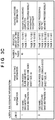
- FIG. 3C illustrates a user print job list that the controller 110 stores in the HDD 124 .
- the processing described below is realized by, for example, the CPU 123 reading a control program that is stored in the ROM 126 or the HDD 124 into the RAM 125 and executing the program.
- step S 301 the print control unit 134 receives a print job transmitted from the PC 104 , or the like, through the network I/F 120 .
- the print job is as in FIG. 3B , for example, and has header information including various initial setting information for the data, and is configured so that the data of each page (PDL data) is included thereafter.
- P1, Line1, Text1, and the like, in the information of each page are examples of drawing commands for configuring a page.
- step S 302 the print control unit 134 determines whether to hold the print job received in step S 301 or to simply print it.
- the method of determining whether to hold the job may be to indicate a hold by a parameter stored in the image forming apparatus, to analyze information embedded in the header of the print job, or the like.
- the processing advances to step S 303
- the processing advances to step S 305 .
- step S 303 the print execution unit 138 controls the PDL analysis unit 139 and the intermediate data generation unit 140 to performs analysis of the print job, and to generate image data by causing rendering processing to be executed by the RIP 128 on the generated intermediate data.
- step S 304 the print execution unit 138 , after the image data generated in step S 303 is corrected by the image processing circuit 129 , transfers the data to the print engine 111 through the device I/F 127 , thereby causing the data to be printed, and ends the processing.
- the hold control unit 137 obtains the user information included in the print job.
- the user information is indicated by “USER NAME: USER A,” but this user information need not be included in the header information of the print job, and the configuration may be such that the user information is sent separately from the transmission origin PC 104 .
- the user information may be anything that is information by which it is possible to identify the user who executed the print, such as a user name or a user ID.
- step S 306 the job analysis unit 135 obtains the print setting information and the document name included in the received print job.
- this print setting information for example, information indicating whether it is single-sided printing or double-sided printing, information as to whether to print in color or to print in monochrome (black and white), information regarding the sheet size to output, or the like, is included.
- FIG. 3B is only one example, and print data may lack some of the print setting information, and a configuration may be such that in that case, an initial setting value held in the HDD 124 or the ROM 126 is used or a value is set by the user when printing is executed.
- step S 307 the hold control unit 137 associates the user information obtained in step S 305 and the print setting information and document name obtained in step S 306 . Then, the hold control unit 137 makes this associated information one record, and adds it to the bibliographic information corresponding to the user information.
- FIG. 3C illustrates one example of bibliographic information of a user A.
- the bibliographic information of the present embodiment comprises, for example, a job ID, file information, print setting information, a number of pages, a predicted amount of time for rendering, and advance process information. Note that in the job ID, a unique value is set for each job.
- a file name and a save destination are included.
- a color mode is included, and information as to whether to print in black and white or color is included.
- the number of pages the total number of pages of the print job is included.
- the predicted amount of time for rendering a predicted amount of time required for rendering is included.
- advance process information information as to whether or not an advance process, for example, an advance rendering process, has been processed, and if it has been processed, a save destination for the processing result is included.
- step S 308 the bibliographic management unit 133 saves in the HDD 124 the bibliographic information to which the one record was added in step S 307 , and ends the processing. Also, the hold control unit 137 saves the above-described print job in the HDD 124 as the print job corresponding to the one record that was added this time. Note that upon registration of the bibliographic information of step S 308 , the predicted amount of time for rendering is not yet set, and for the advance process information, advance processing is registered as “not yet” and the advance processing result is in an unset state.
- This advance process is processing that is executed after a print job is held in the HDD 124 by the print job hold processing of FIGS. 3A to 3C .
- the processing described below is realized by, for example, the CPU 123 reading a control program that is stored in the ROM 126 or the HDD 124 into the RAM 125 and executing the program.
- step S 401 the job analysis unit 135 predicts the time that it will take for rendering processing on each page included in the print job in relation to the print job held in the HDD 124 .
- the prediction method may be any method that can predict the rendering processing time for the print job size or the PDL command content, or the like, included in the print job.
- the job analysis unit 135 instructs the bibliographic management unit 133 , and registers the prediction result in bibliographic information associated with the print job on which the advance process is being performed.
- the prediction result is information not yet registered in the foregoing step S 308 .
- step S 402 the advance processing unit 136 determines, as the result of the prediction of step S 401 , pages for which it will take a comparatively long time for rendering processing out of the pages included in the print job as pages for which it is necessary to execute the rendering processing in advance.
- the predicted amount of time for rendering of the document “job ID: 1” is as in FIG. 3C .
- the advance processing unit 136 determines that the pages that will take a long time are page 1 and page 9.
- the criteria for determining that a page will take a long time may be determined in accordance with the printing speed of the image forming apparatus that performs the printing.
- a threshold that the advance processing unit holds (for example, “10 seconds”) may be used, and it may be determined that rendering is necessary for all pages.
- the advance processing unit 136 predicts in units of pages the time needed for rendering from the PDL data included in the print job, and decides the pages on which to perform the advance process based on the results of the prediction.
- the predicted amount of time for rendering may be predicted based on the size of the PDL data of the page for which the prediction is being made, and, for example, may be predicted based on the number and types of PDL commands included in the page, or may be predicted using another method.
- step S 403 as the result of the determination of step S 402 , the advance processing unit 136 determines whether or not there is a page for which advance rendering processing is necessary. If there is, the processing advances to step S 404 , and, if not, this processing is ended.
- step S 404 the advance processing unit 136 executes rendering processing (advance rendering processing) for the pages determined to require advance rendering processing in step S 402 , and thereby generates image data.
- rendering processing advanced rendering processing
- step S 402 in a case in which there are multiple pages for which it is determined that advance rendering processing is necessary, execution may be in the page order of the print job, and execution may be started with the pages for which more time will be taken for rendering processing, and execution may be started with the pages for which less time will be taken for rendering processing.
- step S 405 the advance processing unit 136 saves in the HDD 124 image data (advance rendering data) generated in step S 404 .
- Image data in units of saved pages is associated with bibliographic information associated with the print job for which the advance process is being performed, and is managed associably with each page of the print job.
- step S 406 the advance processing unit 136 determines whether the advance rendering processing for all of the pages determined to require advance rendering processing in step S 402 has ended. If the rendering processing for all of those pages has ended, the processing advances to step S 407 , and, if not, the processing advances to step S 408 .
- step S 407 the advance processing unit 136 instructs the bibliographic management unit 133 , and adds the advance process information indicating that the result of executing the advance rendering process in the foregoing step S 405 is saved to the corresponding bibliographic information.
- the advance process information in the bibliographic information of FIG. 3C the information “done” as to whether or not the advance process has completed, and the information “/xxx/yyy/image1” and “/xxx/yyy/image9,” and the like, regarding the location of the results of the advance process are stored are added.
- the file name of the image data is linked to the corresponding page number.
- the page number is information indicating the order of pages in the print job.
- step S 408 the advance processing unit 136 determines whether there is a cancel request for the advance process in relation to the print job for which the rendering processing is being executed.
- the cancel request is generated upon acceptance of a print execution instruction corresponding to the corresponding print job or an instruction, such as a page deletion instruction. If there is no cancel request, the processing advances to step S 404 , the advance rendering processing for the next page is transitioned to, and, if there is a cancel request, this processing is ended. Note that processing such as subsequent print execution or page deletion will be described later.
- FIG. 6 illustrates an example of a user interface (UI) displayed on the operation panel 113 after user authentication.
- the processing described below is realized by, for example, the CPU 123 reading a control program that is stored in the ROM 126 or the HDD 124 into the RAM 125 and executing the program.
- step S 501 in a case in which an ID card of the user is held up to the card reader 112 , the authentication unit 131 accepts user information that the card reader 112 read from the ID card through the reader I/F 121 , and executes authentication processing.
- An example in which user information is read from the ID card of the user is given, but a known authentication method, such as one in which user information and a password are input from the operation panel 113 and user authentication is performed, may be used.
- the authentication unit 131 notifies the user information to the setting unit 132 .
- step S 502 the setting unit 132 accepts from the bibliographic management unit 133 bibliographic information corresponding to the user information that is the same as the user information obtained in step S 501 , and, based on that bibliographic information, generates a list of held print jobs. Furthermore, the setting unit 132 performs a display to the operation panel 113 through the panel I/F 122 .
- the information displayed on the operation panel 113 is indicated in reference numeral 601 of FIG. 6 , for example, and the print job list is displayed as in the example of reference numeral 602 .
- the print job list 602 for each print job, information of the document name, the document reception time, the number of pages, and the predicted processing time is displayed.
- the user can select a desired print job from the print job list 602 , and make a print instruction for the selected print job by pressing a start print button 603 . Also, the user can select a desired print job from the print job list 602 , and, by pressing a print setting button 604 , can change the print settings for the selected print job. Also, the user can select a desired print job from the print job list 602 , and, by pressing a display preview button 605 , display a preview image for the selected print job. The preview image will be described later using reference numeral 611 . Note that a user who is logged in can log out by a logout button 606 .
- step S 503 the setting unit 132 determines whether there was a preview display instruction from the user for a print job that is being displayed in the print job list 602 . In other words, it is determined whether or not the display preview button 605 was pressed. If there was a display preview instruction, the preview screen is displayed on the operation panel 113 , and the processing advances to step S 504 , and, if not, the processing advances to step S 508 .
- the preview screen displayed on the operation panel 113 is denoted by reference numeral 611 in FIG. 6 , for example, and the preview display screen for the corresponding print job is selectably displayed as in reference numeral 612 .
- the user can confirm a preview image of the document by operating in the screen of reference numeral 612 , and can make an instruction to delete a page being displayed by pressing a delete page button 613 .
- the panel I/F 122 here is one example of an accepting unit. Since image data in a print job is deleted when a delete instruction is made, in a case in which a print instruction is made thereafter, the page is not printed. Also, it is possible to make a print instruction for a print job being displayed in the preview by pressing a print start button 614 , and it is possible to return to the print job list screen 601 by pressing a back button 615 .
- a preview screen for all pages is displayed, but a configuration may be such that pages for which the advance process has already been executed are displayed to be grayed out and controlled to be unselectable. By this configuration, it is possible to prevent misalignment in the page order. Also, even in the case of displaying the preview screen so that all pages can be selected, in a case in which a page for which the advance processing has already been executed is selected, a pop-up may be displayed to warn the user that advance rendering data is already being held.
- step S 504 the setting unit 132 determines whether there was a page deletion instruction from the user for the print job that is being preview-displayed. If there is a page deletion instruction, the processing advances to step S 505 , and, if the user cancels (presses the back button 615 ) the preview display, the processing advances to step S 508 .
- a page deletion instruction means that, for example, the user operated the delete page button 613 .
- step S 505 the hold control unit 137 determines whether or not an advance process is being performed for the print job for which the page deletion instruction was made. This determination may be a determination as to whether or not an advance process is being performed by referencing registered bibliographic information as illustrated in FIG. 3C , and it may be a determination as to whether or not image data for which advance rendering processing was already performed that is associated with the bibliographic information in step S 405 of FIG. 4 exists. If an advance process is being performed for the print job, the processing advances to step S 506 , and, if not, the processing advances to step S 507 .
- step S 506 the hold control unit 137 interrupts the advance process for the print job for which the advance process is being performed.
- Information for interrupting the advance process is notified to the advance processing unit 136 , and is used for the determination as to whether or not there is a cancel request as described in step S 408 of FIG. 4 .
- the advance processing unit 136 saves as advance process information the result of the advance process saved in the HDD 124 at the point in time when the advance process was interrupted, and adds it to the corresponding bibliographic information.
- step S 507 a page deletion control unit 141 executes page deletion processing for the print job for which the page deletion instruction was made.
- the page deletion control unit 141 deletes data of the corresponding page in the print job, and updates the information of the advance process result that is saved as advance process information. Details of the page deletion processing will be described later using FIG. 7 .
- step S 508 the setting unit 132 determines whether there was a print execution instruction from the user for a print job that is being displayed in the print job list 602 . If there is a print execution instruction, the processing advances to step S 509 , and, if there is no print execution instruction, the user cancels the authentication state and ends this processing.
- the print instruction means that the user operated (pressed) the start print button 603 , for example.
- Cancelling the authentication state means that, for example, the user operated the logout button 606 .
- step S 509 the setting unit 132 notifies that the print execution instruction was made to the hold control unit 137 .
- the hold control unit 137 determines whether or not the advance process for the print job for which the print execution instruction was made has completed. This determination is made by referencing the bibliographic information and obtaining information of whether the advance process was already performed which was added in step S 407 of FIG. 4 . If the advance process has been performed for the print job, the processing advances to step S 510 , and, if not, the processing advances to step S 511 .
- step S 510 the hold control unit 137 generates a print job by performing processing to add information of the advance process result to the PDL data. Details of the advance process result adding processing will be described later using FIG. 9 .
- step S 511 the hold control unit 137 determines whether or not an advance process is being performed for the print job for which the print execution instruction was made. This determination may be a determination as to whether or not an advance process is being performed by referencing the bibliographic information similarly to determination in the foregoing step S 509 , and it may be a determination as to whether or not image data for which advance rendering processing was already performed that was associated with the bibliographic information in step S 405 of FIG. 4 exists. If an advance process is being performed for the print job, the processing advances to step S 512 , and, if not, the processing advances to step S 513 .
- step S 512 the hold control unit 137 interrupts the advance process for the print job for which the advance process is being performed.
- Information for interrupting the process is notified to the advance processing unit 136 , and is used for the determination as to whether or not there is a cancel request as described in step S 408 .
- the hold control unit 137 obtains, as the advance process information, the advance process result that is saved in the HDD 124 at the point in time when the advance process was interrupted, and adds it to the print job as described in step S 510 .
- step S 513 the print execution unit 138 executes finishing rendering processing. This processing is similar to step S 303 in a case in which no advance process result information has been added. Meanwhile, in a case in which advance process result information has been added, the print execution unit 138 uses the advance process information that the advance process result indicates, and executes the remaining rendering processing. Note that in a case in which rendering processing has been executed in advance for all pages, the rendering processing is not executed in step S 513 . Continuing on, in step S 514 , the print execution unit 138 executes the print similarly to step S 304 , and ends this processing.
- FIGS. 8A and 8B are views for describing an example of deleting a command when a page of PDL data is deleted.
- the processing described below is realized by, for example, the CPU 123 reading a control program that is stored in the ROM 126 or the HDD 124 into the RAM 125 and executing the program.
- step S 701 the page deletion control unit 141 obtains the deletion target page information from the hold control unit 137 .
- the page deletion control unit 141 opens PDL data (reference numeral 820 of FIG. 8A for example) that the hold control unit 137 is storing so that the page deletion control unit 141 can access it as a file.
- FIG. 8A is PDL data 820 prior to deletion
- FIG. 8B is PDL data 830 after the first page is deleted.
- step S 704 the page deletion control unit 141 analyzes the PDL data and outputs unchanged all commands up until detection of a “BeginPage” command, which is a page start command.
- the “BeginJob” command 801 which includes job information for PDL data, is output as is.
- step S 706 the page deletion control unit 141 determines whether the detected “BeginPage” command is for a deletion target page. In the present embodiment, since the “BeginPage” command 802 is determined to be the first page in step S 705 , and the deletion target page is “1” and matches the page number, the “BeginPage” command 802 is skipped in the reading, and the processing advances to step S 707 .
- step S 707 the page deletion control unit 141 executes processing to skip a deletion target page in the reading.
- Drawing commands in the example of FIG. 8B , the “DrawChar” command 806 , which indicates character drawing, and the “DrawRect” command 807 , which indicates rectangle drawing
- Resource control commands in the example of FIG. 8B , the “DownloadFont” command 803 , which indicates font registration, and the “DownloadChar” commands 804 and 805 , which indicates character registration
- the stored resource control command is output in step S 709 if there is a next page.
- a reason for not skipping a resource control command in the reading is that a resource control command registers resource information once in the image forming apparatus, and information that is already registered may be reused in a following page in association with an ID, or the like. For this reason, the possibility that it will be used in a subsequent page, even though the corresponding page is deleted, is considered.
- a resource control command includes information related to other pages, and, if it is deleted, it will affect printing of the other pages, and so it is necessary to leave such information.
- step S 708 the page deletion control unit 141 determines that it is a page end command (the “EndPage” command 808 in the example of FIG. 8A ).
- the processing advances to step S 712 , and, if not, the processing is returned to step S 707 .
- step S 709 the page deletion control unit 141 outputs a page start command “BeginPage” command 809 that is determined not to be for a deletion target page.
- step S 710 the page deletion control unit 141 confirms whether there is a resource control command that was saved in step S 707 , and, if there is one that was saved, outputs the resource control command.
- the page deletion control unit 141 outputs all commands until the page end command and the processing advances to step S 712 .
- there is the “DrawChar” command 812 there is the “DrawChar” command 812 , the “DrawRect” command 813 , and the “EndPage” command 814 .
- step S 712 the page deletion control unit 141 determines whether it is a job end command (in the example of FIGS. 8A and 8B , the “EndJob” command 817 ), and, when it determines that it is a job end command, the processing advances to step S 713 , and, if not, the processing is returned to step S 704 .
- step S 713 the page deletion control unit 141 outputs the job end command (the “EndJob” command 817 ).
- the PDL data 820 of FIG. 8A ends up being changed as in the PDL data 830 of FIG. 8B .
- reference numerals 802 and 806 to 808 are deleted from out of the data corresponding to page 1.
- step S 714 the page deletion control unit 141 deletes a resource control command that was saved in step S 707 if one is left. This is because there are cases, such as those in which a resource control command is left in a case in which a deletion target page is the final page, though this is not the case in the description of the present embodiment.
- step S 715 the page deletion control unit 141 obtains the advance process information of the print job for which page deletion was performed from the hold control unit 137 . If there is advance process information, the processing advances to step S 716 , and, if not, this processing is ended.
- step S 716 the page deletion control unit 141 determines whether or not there is an advance process result corresponding to the deletion target page of this flow in the advance process information obtained in step S 715 . If there is a corresponding advance process result, the processing advances to step S 717 , and, if not, the processing advances to step S 718 .
- the advance process result corresponding to the deletion target page is “/xxx/yyy/image1”, and, therefore, it is possible to determine that there is something that corresponds.
- step S 717 the page deletion control unit 141 deletes the advance process result corresponding to the deletion target page. In the case of the present embodiment it is “/xxx/yyy/image1”, and the advance process result is deleted.
- step S 718 the page deletion control unit 141 updates the information if there is an advance process result from the deletion target page onwards. In the case of the present embodiment, this corresponds to “/xxx/yyy/image9” of the job of ID 1 indicated in FIG. 3C , and the corresponding page information is updated as “/xxx/yyy/image8” in accordance with one page worth of PDL data being deleted. By this configuration, it is possible to prevent page misalignment in the advance process data. When the advance process result information update is finished, this processing is ended.
- FIG. 10A is a view for describing an example of an advance process result to which PDL data was added by advance process result addition processing.
- the processing described below is realized by, for example, the CPU 123 reading a control program that is stored in the ROM 126 or the HDD 124 into the RAM 125 and executing the program.
- step S 901 the hold control unit 137 , as the start of processing for adding the advance process result to the PDL data, adds identifier information 1001 .
- the identifier information indicates information for which the advance process result has been added, and it is sufficient that it be something by which it is possible to distinguish within the controller whether it is a character string or a numerical value.
- step S 902 the hold control unit 137 adds advance process information 1002 continuing from the identifier information added in step S 901 .
- the advance process information includes the data size for the entirety of the advance process results, the total number of pages of the target print job, page information for pages for which the advance process was performed, and the like. Regarding things such as data size and index information indicating the advance process result information that cannot be known until after later-described processing is performed, only a region for storing information is allocated, and the information is updated after the later-described processing.
- the configuration illustrated in reference numeral 1002 is only one example, and any configuration that collects information necessary for analyzing information of the advance process results may be used.
- reference numeral 1002 is a print job example of the job ID 1 in the bibliographic information of FIG. 3C , and there is information of page ID “1” and page ID “9” as advance process results, and, therefore, information of “1” and “9” is stored in the advance process page information.
- step S 903 the hold control unit 137 , continuing from the advance process information added in step S 902 , adds the advance process result information 1003 .
- the hold control unit 137 adds information in which something indicating the number of pages of the advance process results, something indicating the format, and something indicating information of the advance process results are made to be one set.
- information of the advance process results corresponding to the first page is added first, and then information of the file path at which the advance process results are stored is added.
- the hold control unit 137 adds information of the file path of the HDD 124 at which the advance process results are stored (information specifying the storage location of the advance process results) as the advance process result information.
- step S 904 the hold control unit 137 determines whether or not information of all pages for which the advance process has been completed has been added. Until the processing is performed for all of the pages, the processing of step S 903 is repeated, and, after the processing ends, the processing advances to step S 905 .
- step S 905 the hold control unit 137 updates the advance process information generated in step S 902 . The hold control unit 137 overwrites the information after the processing ends in the region that was allocated in advance for index information indicating the data size of the advance process results overall, the information of the advance process results, and the like.
- step S 906 the hold control unit 137 , continuing after the advance process results 1001 , 1002 , and 1003 generated in the processing up to step S 905 , adds PDL data 1004 .
- the PDL data is added in an original state without modification.
- FIG. 10B illustrates an example of advance process results added to the PDL data in a case in which step S 713 to step S 716 of FIG. 7 , which are features of the present embodiment, are not executed.
- the total number of pages is reduced by 1 from the original 10 to 9 (the total number of pages in reference numeral 1012 ), and since the first page is deleted in the PDL data 1014 , the second page onward have page numbers reduced by 1.
- the advance process result 1013 retains a similar structure to FIG. 10A since it is not changed or deleted in a case in which the processing of step S 713 to step S 716 is not executed.
- the page number 1 of the advance process results corresponds to PDL (page 2) prior to the deletion, and the page number 9 is associated with PDL (page 10) prior to the deletion. Accordingly, the reference relation becomes incorrect, and it becomes impossible to obtain correct output results.
- FIG. 10C illustrates an example of advance process results added to the PDL data in a case in which step S 713 to step S 716 are executed in relation to FIG. 10B .
- the total number of pages (the total number of pages in reference numeral 1022 ) and the first page of the PDL data 1024 are deleted.
- the advance process result corresponding to the first page is deleted, and the advance process result 1023 is configured so that the advance process results corresponding to the page number 9 correspond to the page number 8. Accordingly, the page numbers are not shifted, the reference relation is correct, and it is possible to obtain a correct output result.
- FIG. 10D illustrates an example in which one page is newly added as a blank page between the first page and the second page in relation to the PDL data of FIG. 10A .
- the ninth page is changed to the tenth page. Furthermore, information of the page number and the file path in the reference numeral 1033 is changed in accordance with a change in the page information for the advance process pages (the page number 9 is changed to 10 in reference numeral 1033 , and the file path is changed from image9 to image10). As in FIG. 10D , even when the number of pages increases due to the insertion of a blank page, or the like, by adjusting the page numbers in accordance with the increased number of pages, the reference relation becomes correct, and it is possible to obtain correct output results.
- the image forming apparatus stores (holds) an image formation job, and, on the stored job, executes image processing in advance of performing the image formation, and stores the processing result, which is advance process information, in association with the stored job. Also, the image forming apparatus accepts setting information related to image formation for the stored job, and, if an instruction to delete a page is included in the setting information, the image formation data for the corresponding page is deleted from the stored job. Furthermore, the image forming apparatus, in accordance with the deleted page, updates the stored advance process information.
- the image forming apparatus updates or deletes the advance process results simultaneously to page deletion corresponding to the PDL data (image formation data).
- the advance process results are managed in association with pages, it is possible to prevent page shifting from occurring and to obtain correct output results by updating the advance process results in accordance with the page deletion instruction.
- FIGS. 11A and 11B a processing procedure for print job hold processing that software ( 133 to 140 ) that each controller 110 of the image forming apparatuses 101 to 103 according to the present embodiment comprises executes will be described.
- the flowchart illustrating the content of the hold processing according to the present embodiment and the print job configuration example are similar to FIG. 3A and FIG. 3B respectively, and, therefore, the figure and description will be omitted.
- the present embodiment is a processing procedure that is similar to the flowchart of FIG. 3A , but it differs in that the page management information 1101 is generated additionally when the bibliographic information is generated in step S 307 .
- the hold control unit 137 associates the user information obtained in step S 305 and the print setting information and document name obtained in step S 306 . Then, the hold control unit 137 makes this associated information one record, and adds it to the bibliographic information corresponding to the user information.
- FIG. 11A illustrates one example of bibliographic information of a user A.
- FIG. 11A unlike FIG. 3C , has information indicating a table (for example, FIG. 11B ) in which the page number of a print job is managed by an ID as the page management information 1101 .
- the bibliographic information of the user A is exemplified.
- the bibliographic information of the present embodiment comprises, for example, a job ID, file information, print setting information, a number of pages, a predicted amount of time for rendering, advance process information, page management information, and the like. Note that in the job ID, a unique value is set for each job.
- the page management information 1101 is something in which the IDs A, B, and the like, are added to the respective page numbers included in the print job, and for which ID management is performed by a table, which is generated when the bibliographic information is generated.
- “A” is associated with the first page as the ID
- B is associated with the second page as the ID in the management.
- the advance process results of the advance process information are managed based on the ID. For example, as information indicating the save destination for the advance process results, a file name including the management ID is given, as indicated by “/xxx/yyy/imageA”, “xxx/yyy/imageI”, and the like. In such cases, imageA indicates that it is the first page, and imageI indicates that it is the ninth page.
- This advance process of FIG. 12 is processing that is executed after a print job is held in the HDD 124 by the print job hold processing of FIGS. 11A and 11B .
- the processing described below is realized by, for example, the CPU 123 reading a control program that is stored in the ROM 126 or the HDD 124 into the RAM 125 and executing the program.
- Step S 1201 to step S 1206 and step S 1208 are processes that are similar to step S 401 to step S 406 and step S 408 and so, a description thereof is omitted.
- step S 1207 the advance processing unit 136 instructs the bibliographic management unit 133 and adds save information for the results of the advance process executed in step S 1205 (processing content similar to step S 405 ) to the corresponding bibliographic information.
- the advance process information in the bibliographic information of FIG. 11A the information “done” as to whether or not the advance process has completed, and the information “/xxx/yyy/imageA” and “/xxx/yyy/imageI,” and the like, about where the results of the advance process are stored are added.
- the advance process images for the first page and the ninth page are generated, the advance process results are saved with file names in which the ID information (A and I) linked with each page is added from the table of the page management information 1101 .
- Step S 1301 to step S 1314 are processes that are similar to step S 701 to step S 714 and so, a description thereof is omitted.
- step S 1315 the page deletion control unit 141 updates the page management information 1101 in accordance with the deleted page. Updating of the page management information 1101 when the deletion target page is “1” is described using FIGS. 14A to 14C .
- FIGS. 14A to 14C There is ten pages worth of page management information 1101 as illustrated in FIG. 14A , and, in a case in which the first page is deleted, information of “ID: A” corresponding to the first page is deleted. Furthermore, the second page, which corresponds to “ID: B,” becomes the first page in accordance with the deletion. As a result, the ID management information for each page will be shifted by one respectively, and ultimately FIG. 14B will result. FIG. 14C will be described later.
- FIG. 16A is a view for describing an example of an advance process result to which PDL data was added by advance process result addition processing.
- the processing described below is realized by, for example, the CPU 123 reading a control program that is stored in the ROM 126 or the HDD 124 into the RAM 125 and executing the control program.
- Step S 1501 is processing similar to step S 901 , and so, a description is omitted.
- the hold control unit 137 adds advance process information 1602 continuing from the identifier information added in step S 1501 .
- the advance process information 1602 includes the data size for the entirety of the advance process result, the total number of pages of the target print job, page information for pages for which the advance process was performed, and the like. Regarding things such as data size and index information indicating the advance process result information that cannot be known until after later-described processing is performed, only a region for storing information is allocated, and the information is updated after the later-described processing.
- reference numeral 1602 is only one example, and any configuration that collects information necessary for analyzing information of the advance process results may be used.
- reference numeral 1602 is a print job example of the job ID 1 in the bibliographic information of FIG. 11A , and there is information of page ID “A” and page ID “I” as advance process results, and, therefore, information of “A” and “I” is stored in the advance process page information.
- step S 1503 the hold control unit 137 , continuing from the advance process information added in step S 1502 , adds the advance process result information 1603 .
- information of the advance process results corresponding to the page ID “A” is added first, and information of the file path at which the advance process results are stored is added.
- the hold control unit 137 adds information of the file path of the HDD 124 at which the advance process results are stored (information specifying the storage location of the advance process results) as the advance process result information.
- step S 1504 the hold control unit 137 determines whether or not information of all pages for which the advance process has been completed has been added. Until the processing is performed for all of the pages, the processing of step S 1503 is repeated, and, after the processing ends, the processing advances to step S 1505 .
- step S 1505 the hold control unit 137 updates the advance process information generated in step S 1502 . The information after the processing ends is written over the region that was allocated in advance for index information indicating the data size of the advance process results overall, the information of the advance process results, and the like.
- step S 1506 the hold control unit 137 continuing after the advance process results ( 1601 , 1602 , and 1603 ) generated in the processing up to step S 1505 , adds PDL data ( 1604 ).
- the PDL data is added in an original state without modification.
- the page number is denoted by ID “A”, “B” and the like, but these are mapped using the table of the page management information 1101 in FIG. 11B .
- FIGS. 16A to 16C for the advance process results that are added to the PDL data in a case in which the first page is deleted by the page deletion processing of FIG. 13 .
- FIG. 16B represents an advance process result of a case in which the first page is deleted in the page deletion processing of FIG. 13 in the present embodiment.
- the page whose page ID is “A” corresponding to the first page in reference numeral 1614 is deleted.
- the total number of pages in the advance process result 1612 is changed to decrease from “10” to “9”. The result of this is that, in relation to the page IDs “A” and “I” for which the advance process result is stored as the advance process page, it can be seen that the information of the page ID “A” becomes unneeded, and the information of the page ID “I” can be correctly referenced without the association relationship changing.
- FIG. 16C illustrates an example in which one page is newly added as a blank page between the first page (page ID “A”) and the second page (page ID “B”) in relation to the PDL data of FIG. 16A .
- the added page corresponds to page ID “K” in FIG. 16C .
- the page management information 1101 becomes as in FIG. 14C .
- the ID corresponding to the second page becomes “K” and the subsequent page information is increased by 1.
- the total number of pages in the reference numeral 1622 increases by one since the PDL data increases by one page, but it is not necessary to repair other reference relationships by managing the print job page information/advance process results by using page IDs.
- the image forming apparatus unlike in the foregoing first embodiment, manages print job page information as the page management information 1101 by using page IDs, and manages advance process results also by using page IDs. Accordingly, if the page management information 1101 is updated in accordance with a page that was deleted when a page deletion is executed, association is possible without changing information of the advance process result.
- a configuration may be taken so as to delete only the advance process data and to save the print data in a separate region and to use it only in a case in which the advance process is performed once again.
- the data is temporarily saved to a separate region, and in a case in which an instruction to add it once again is accepted, it is possible to perform the addition by using the saved data. Note that in the case of saving to a separate region, since there is a concern about memory resource depletion control may be performed to completely delete data after a predetermined time has elapsed since the saving.
- Embodiments of the present invention can also be realized by a computer of a system or an apparatus that reads out and executes computer executable instructions (e.g., one or more programs) recorded on a storage medium (which may also be referred to more fully as a ‘non-transitory computer-readable storage medium’) to perform the functions of one or more of the above-described embodiments and/or that includes one or more circuits (e.g., an application specific integrated circuit (ASIC)) for performing the functions of one or more of the above-described embodiments, and by a method performed by the computer of the system or the apparatus by, for example, reading out and executing the computer executable instructions from the storage medium to perform the functions of one or more of the above-described embodiments and/or controlling the one or more circuits to perform the functions of one or more of the above-described embodiments.
- ASIC application specific integrated circuit
- the computer may comprise one or more processors (e.g., a central processing unit (CPU), or a micro processing unit (MPU)) and may include a network of separate computers or separate processors to read out and to execute the computer executable instructions.
- the computer executable instructions may be provided to the computer, for example, from a network or the storage medium.
- the storage medium may include, for example, one or more of a hard disk, a random-access memory (RAM), a read only memory (ROM), a storage of distributed computing systems, an optical disk (such as a compact disc (CD), a digital versatile disc (DVD), or a Blu-ray Disc (BD)TM) a flash memory device, a memory card, and the like.
- print processing time from when a print instruction is made by a user can be shortened and advance rendering image page numbers can be managed correctly even in a case where a particular page of a print job is deleted.
Landscapes
- Engineering & Computer Science (AREA)
- Theoretical Computer Science (AREA)
- Human Computer Interaction (AREA)
- Physics & Mathematics (AREA)
- General Engineering & Computer Science (AREA)
- General Physics & Mathematics (AREA)
- Computer Security & Cryptography (AREA)
- Accessory Devices And Overall Control Thereof (AREA)
- Facsimiles In General (AREA)
- Record Information Processing For Printing (AREA)
Abstract
Description
Claims (18)
Applications Claiming Priority (2)
| Application Number | Priority Date | Filing Date | Title |
|---|---|---|---|
| JP2017214189A JP2019086987A (en) | 2017-11-06 | 2017-11-06 | IMAGE FORMING APPARATUS, CONTROL METHOD THEREOF, AND PROGRAM |
| JP2017-214189 | 2017-11-06 |
Publications (2)
| Publication Number | Publication Date |
|---|---|
| US20190138257A1 US20190138257A1 (en) | 2019-05-09 |
| US10599376B2 true US10599376B2 (en) | 2020-03-24 |
Family
ID=66327241
Family Applications (1)
| Application Number | Title | Priority Date | Filing Date |
|---|---|---|---|
| US16/167,894 Expired - Fee Related US10599376B2 (en) | 2017-11-06 | 2018-10-23 | Image forming apparatus, method of controlling the same, and storage medium configured to accept a user operation for deleting a page form a print job, to delete a rendering command for that page, and to update identification information of the print job based on the deleted page |
Country Status (2)
| Country | Link |
|---|---|
| US (1) | US10599376B2 (en) |
| JP (1) | JP2019086987A (en) |
Cited By (1)
| Publication number | Priority date | Publication date | Assignee | Title |
|---|---|---|---|---|
| US11245801B2 (en) * | 2020-03-31 | 2022-02-08 | Kyocera Document Solutions Inc. | Image forming apparatus and image forming method capable of changing guidance screen from terminal |
Families Citing this family (2)
| Publication number | Priority date | Publication date | Assignee | Title |
|---|---|---|---|---|
| JP7739720B2 (en) * | 2021-01-26 | 2025-09-17 | ブラザー工業株式会社 | Support Program |
| JP2023149615A (en) * | 2022-03-31 | 2023-10-13 | ブラザー工業株式会社 | Printer |
Citations (7)
| Publication number | Priority date | Publication date | Assignee | Title |
|---|---|---|---|---|
| JP4033857B2 (en) | 2004-09-03 | 2008-01-16 | キヤノンマーケティングジャパン株式会社 | Print system, print management server, print method, print management method, and program |
| US20090316171A1 (en) * | 2008-06-24 | 2009-12-24 | Konica Minolta Business Technologies, Inc. | Image forming system |
| JP2013225256A (en) | 2012-04-23 | 2013-10-31 | Konica Minolta Inc | Image forming system, print job transmission device, print job transmission method, and print job transmission program |
| US20140033090A1 (en) * | 2012-07-30 | 2014-01-30 | Brother Kogyo Kabushiki Kaisha | Image processing apparatus and storage medium storing program executable on information processing apparatus |
| US20140189396A1 (en) * | 2012-12-28 | 2014-07-03 | Canon Kabushiki Kaisha | Communication apparatus, information processing apparatus, control method for communication apparatus, control method for information processing apparatus, and computer-readable storage medium |
| US20170192724A1 (en) * | 2014-05-30 | 2017-07-06 | S-Printing Solution Co., Ltd. | Printing control method of host device connected to image forming device and host device thereof |
| US10116826B1 (en) * | 2017-04-26 | 2018-10-30 | Xerox Corporation | Method and apparatus for automatically resuming a print job from portable memory device |
Family Cites Families (1)
| Publication number | Priority date | Publication date | Assignee | Title |
|---|---|---|---|---|
| JP4533027B2 (en) * | 2004-07-16 | 2010-08-25 | キヤノン株式会社 | Printing apparatus and printing apparatus control method |
-
2017
- 2017-11-06 JP JP2017214189A patent/JP2019086987A/en active Pending
-
2018
- 2018-10-23 US US16/167,894 patent/US10599376B2/en not_active Expired - Fee Related
Patent Citations (7)
| Publication number | Priority date | Publication date | Assignee | Title |
|---|---|---|---|---|
| JP4033857B2 (en) | 2004-09-03 | 2008-01-16 | キヤノンマーケティングジャパン株式会社 | Print system, print management server, print method, print management method, and program |
| US20090316171A1 (en) * | 2008-06-24 | 2009-12-24 | Konica Minolta Business Technologies, Inc. | Image forming system |
| JP2013225256A (en) | 2012-04-23 | 2013-10-31 | Konica Minolta Inc | Image forming system, print job transmission device, print job transmission method, and print job transmission program |
| US20140033090A1 (en) * | 2012-07-30 | 2014-01-30 | Brother Kogyo Kabushiki Kaisha | Image processing apparatus and storage medium storing program executable on information processing apparatus |
| US20140189396A1 (en) * | 2012-12-28 | 2014-07-03 | Canon Kabushiki Kaisha | Communication apparatus, information processing apparatus, control method for communication apparatus, control method for information processing apparatus, and computer-readable storage medium |
| US20170192724A1 (en) * | 2014-05-30 | 2017-07-06 | S-Printing Solution Co., Ltd. | Printing control method of host device connected to image forming device and host device thereof |
| US10116826B1 (en) * | 2017-04-26 | 2018-10-30 | Xerox Corporation | Method and apparatus for automatically resuming a print job from portable memory device |
Cited By (1)
| Publication number | Priority date | Publication date | Assignee | Title |
|---|---|---|---|---|
| US11245801B2 (en) * | 2020-03-31 | 2022-02-08 | Kyocera Document Solutions Inc. | Image forming apparatus and image forming method capable of changing guidance screen from terminal |
Also Published As
| Publication number | Publication date |
|---|---|
| JP2019086987A (en) | 2019-06-06 |
| US20190138257A1 (en) | 2019-05-09 |
Similar Documents
| Publication | Publication Date | Title |
|---|---|---|
| JP6454213B2 (en) | Image output system, image processing apparatus, image output apparatus, method and program therefor | |
| US10996908B2 (en) | Print system, printing apparatus, method of controlling the printing apparatus, and storage medium that generate print data to be printed using rendered print data | |
| US11249703B2 (en) | Printing apparatus, method of controlling the same, and storage medium | |
| US10671329B2 (en) | Image forming apparatus for generating raster image data based on PDL data, using general purpose processor and raster image processor and image forming method | |
| US20140313544A1 (en) | Printing system, server, information processing apparatus, image processing apparatus, printing control method and storage medium storing program | |
| US20200285437A1 (en) | Information processing system, information processing apparatus, and information processing method | |
| US10558411B2 (en) | Server apparatus, method of controlling the server apparatus, storage medium, and printing system that determine whether to perform, in the server apparatus, rendering processing on a page of a print job | |
| US8773699B2 (en) | Information processing apparatus, printing system, and method for controlling the same | |
| US9477435B2 (en) | Image processing apparatus, information terminal, and program | |
| US10599376B2 (en) | Image forming apparatus, method of controlling the same, and storage medium configured to accept a user operation for deleting a page form a print job, to delete a rendering command for that page, and to update identification information of the print job based on the deleted page | |
| US20200278817A1 (en) | Image forming system, image forming apparatus, output method, and storage medium | |
| US12461698B2 (en) | Computer-readable storage medium, information processing device, and method for printing composite image | |
| US20190107985A1 (en) | Printing apparatus, method for controlling printing apparatus, and storage medium | |
| US11269565B2 (en) | Image forming apparatus that edits page description language based on a delete instruction, and a related control method and storage medium | |
| US20170039011A1 (en) | Printing system, printing apparatus and server used in the system, management method of print data, and medium | |
| US20160085493A1 (en) | Image forming apparatus having reservation printing function, control method for the image forming apparatus, and storage medium | |
| US20250085902A1 (en) | Computer-readable storage medium, information processing device, and method for printing composite image | |
| US20150235117A1 (en) | Image processing apparatus and image processing method | |
| US10423374B2 (en) | Image forming apparatus and method for controlling image forming apparatus for reducing print processing time | |
| KR20180068301A (en) | Image processing apparatus and method to form image on sheet using page image data and object information | |
| US20240020071A1 (en) | Computer-readable storage medium, information processing device, and method for automatically setting particular processing | |
| US10606537B2 (en) | Image forming apparatus, control method, and storage medium | |
| US20150237226A1 (en) | Printing instruction apparatus, image forming system, printing instruction method, and computer readable medium | |
| US10534567B2 (en) | Image forming apparatus and method for controlling image forming apparatus | |
| US10970008B2 (en) | Printing apparatus, control method for printing apparatus, and storage medium |
Legal Events
| Date | Code | Title | Description |
|---|---|---|---|
| FEPP | Fee payment procedure |
Free format text: ENTITY STATUS SET TO UNDISCOUNTED (ORIGINAL EVENT CODE: BIG.); ENTITY STATUS OF PATENT OWNER: LARGE ENTITY |
|
| STPP | Information on status: patent application and granting procedure in general |
Free format text: DOCKETED NEW CASE - READY FOR EXAMINATION |
|
| AS | Assignment |
Owner name: CANON KABUSHIKI KAISHA, JAPAN Free format text: ASSIGNMENT OF ASSIGNORS INTEREST;ASSIGNOR:KUBOTA, TOMOHIDE;REEL/FRAME:048187/0879 Effective date: 20181012 |
|
| STPP | Information on status: patent application and granting procedure in general |
Free format text: NON FINAL ACTION MAILED |
|
| STPP | Information on status: patent application and granting procedure in general |
Free format text: RESPONSE TO NON-FINAL OFFICE ACTION ENTERED AND FORWARDED TO EXAMINER |
|
| STPP | Information on status: patent application and granting procedure in general |
Free format text: NOTICE OF ALLOWANCE MAILED -- APPLICATION RECEIVED IN OFFICE OF PUBLICATIONS |
|
| STPP | Information on status: patent application and granting procedure in general |
Free format text: PUBLICATIONS -- ISSUE FEE PAYMENT VERIFIED |
|
| STCF | Information on status: patent grant |
Free format text: PATENTED CASE |
|
| FEPP | Fee payment procedure |
Free format text: MAINTENANCE FEE REMINDER MAILED (ORIGINAL EVENT CODE: REM.); ENTITY STATUS OF PATENT OWNER: LARGE ENTITY |
|
| LAPS | Lapse for failure to pay maintenance fees |
Free format text: PATENT EXPIRED FOR FAILURE TO PAY MAINTENANCE FEES (ORIGINAL EVENT CODE: EXP.); ENTITY STATUS OF PATENT OWNER: LARGE ENTITY |
|
| STCH | Information on status: patent discontinuation |
Free format text: PATENT EXPIRED DUE TO NONPAYMENT OF MAINTENANCE FEES UNDER 37 CFR 1.362 |
|
| FP | Lapsed due to failure to pay maintenance fee |
Effective date: 20240324 |