US10598797B2 - Switching method and portable electronic device - Google Patents
Switching method and portable electronic device Download PDFInfo
- Publication number
- US10598797B2 US10598797B2 US16/066,616 US201516066616A US10598797B2 US 10598797 B2 US10598797 B2 US 10598797B2 US 201516066616 A US201516066616 A US 201516066616A US 10598797 B2 US10598797 B2 US 10598797B2
- Authority
- US
- United States
- Prior art keywords
- barometric
- sound intensity
- electronic device
- data
- threshold
- Prior art date
- Legal status (The legal status is an assumption and is not a legal conclusion. Google has not performed a legal analysis and makes no representation as to the accuracy of the status listed.)
- Active
Links
Images


Classifications
-
- G—PHYSICS
- G06—COMPUTING OR CALCULATING; COUNTING
- G06F—ELECTRIC DIGITAL DATA PROCESSING
- G06F9/00—Arrangements for program control, e.g. control units
- G06F9/06—Arrangements for program control, e.g. control units using stored programs, i.e. using an internal store of processing equipment to receive or retain programs
- G06F9/46—Multiprogramming arrangements
- G06F9/48—Program initiating; Program switching, e.g. by interrupt
- G06F9/4806—Task transfer initiation or dispatching
- G06F9/4843—Task transfer initiation or dispatching by program, e.g. task dispatcher, supervisor, operating system
-
- G—PHYSICS
- G01—MEASURING; TESTING
- G01S—RADIO DIRECTION-FINDING; RADIO NAVIGATION; DETERMINING DISTANCE OR VELOCITY BY USE OF RADIO WAVES; LOCATING OR PRESENCE-DETECTING BY USE OF THE REFLECTION OR RERADIATION OF RADIO WAVES; ANALOGOUS ARRANGEMENTS USING OTHER WAVES
- G01S19/00—Satellite radio beacon positioning systems; Determining position, velocity or attitude using signals transmitted by such systems
- G01S19/38—Determining a navigation solution using signals transmitted by a satellite radio beacon positioning system
- G01S19/39—Determining a navigation solution using signals transmitted by a satellite radio beacon positioning system the satellite radio beacon positioning system transmitting time-stamped messages, e.g. GPS [Global Positioning System], GLONASS [Global Orbiting Navigation Satellite System] or GALILEO
- G01S19/42—Determining position
- G01S19/45—Determining position by combining measurements of signals from the satellite radio beacon positioning system with a supplementary measurement
- G01S19/46—Determining position by combining measurements of signals from the satellite radio beacon positioning system with a supplementary measurement the supplementary measurement being of a radio-wave signal type
-
- G—PHYSICS
- G01—MEASURING; TESTING
- G01C—MEASURING DISTANCES, LEVELS OR BEARINGS; SURVEYING; NAVIGATION; GYROSCOPIC INSTRUMENTS; PHOTOGRAMMETRY OR VIDEOGRAMMETRY
- G01C21/00—Navigation; Navigational instruments not provided for in groups G01C1/00 - G01C19/00
- G01C21/005—Navigation; Navigational instruments not provided for in groups G01C1/00 - G01C19/00 with correlation of navigation data from several sources, e.g. map or contour matching
-
- G—PHYSICS
- G01—MEASURING; TESTING
- G01C—MEASURING DISTANCES, LEVELS OR BEARINGS; SURVEYING; NAVIGATION; GYROSCOPIC INSTRUMENTS; PHOTOGRAMMETRY OR VIDEOGRAMMETRY
- G01C21/00—Navigation; Navigational instruments not provided for in groups G01C1/00 - G01C19/00
- G01C21/10—Navigation; Navigational instruments not provided for in groups G01C1/00 - G01C19/00 by using measurements of speed or acceleration
- G01C21/12—Navigation; Navigational instruments not provided for in groups G01C1/00 - G01C19/00 by using measurements of speed or acceleration executed aboard the object being navigated; Dead reckoning
- G01C21/16—Navigation; Navigational instruments not provided for in groups G01C1/00 - G01C19/00 by using measurements of speed or acceleration executed aboard the object being navigated; Dead reckoning by integrating acceleration or speed, i.e. inertial navigation
- G01C21/165—Navigation; Navigational instruments not provided for in groups G01C1/00 - G01C19/00 by using measurements of speed or acceleration executed aboard the object being navigated; Dead reckoning by integrating acceleration or speed, i.e. inertial navigation combined with non-inertial navigation instruments
-
- G—PHYSICS
- G01—MEASURING; TESTING
- G01C—MEASURING DISTANCES, LEVELS OR BEARINGS; SURVEYING; NAVIGATION; GYROSCOPIC INSTRUMENTS; PHOTOGRAMMETRY OR VIDEOGRAMMETRY
- G01C21/00—Navigation; Navigational instruments not provided for in groups G01C1/00 - G01C19/00
- G01C21/10—Navigation; Navigational instruments not provided for in groups G01C1/00 - G01C19/00 by using measurements of speed or acceleration
- G01C21/12—Navigation; Navigational instruments not provided for in groups G01C1/00 - G01C19/00 by using measurements of speed or acceleration executed aboard the object being navigated; Dead reckoning
- G01C21/16—Navigation; Navigational instruments not provided for in groups G01C1/00 - G01C19/00 by using measurements of speed or acceleration executed aboard the object being navigated; Dead reckoning by integrating acceleration or speed, i.e. inertial navigation
- G01C21/18—Stabilised platforms, e.g. by gyroscope
-
- G—PHYSICS
- G01—MEASURING; TESTING
- G01C—MEASURING DISTANCES, LEVELS OR BEARINGS; SURVEYING; NAVIGATION; GYROSCOPIC INSTRUMENTS; PHOTOGRAMMETRY OR VIDEOGRAMMETRY
- G01C21/00—Navigation; Navigational instruments not provided for in groups G01C1/00 - G01C19/00
- G01C21/20—Instruments for performing navigational calculations
- G01C21/206—Instruments for performing navigational calculations specially adapted for indoor navigation
-
- G—PHYSICS
- G01—MEASURING; TESTING
- G01C—MEASURING DISTANCES, LEVELS OR BEARINGS; SURVEYING; NAVIGATION; GYROSCOPIC INSTRUMENTS; PHOTOGRAMMETRY OR VIDEOGRAMMETRY
- G01C21/00—Navigation; Navigational instruments not provided for in groups G01C1/00 - G01C19/00
- G01C21/26—Navigation; Navigational instruments not provided for in groups G01C1/00 - G01C19/00 specially adapted for navigation in a road network
- G01C21/34—Route searching; Route guidance
- G01C21/3407—Route searching; Route guidance specially adapted for specific applications
- G01C21/3423—Multimodal routing
-
- G—PHYSICS
- G01—MEASURING; TESTING
- G01C—MEASURING DISTANCES, LEVELS OR BEARINGS; SURVEYING; NAVIGATION; GYROSCOPIC INSTRUMENTS; PHOTOGRAMMETRY OR VIDEOGRAMMETRY
- G01C5/00—Measuring height; Measuring distances transverse to line of sight; Levelling between separated points; Surveyors' levels
- G01C5/06—Measuring height; Measuring distances transverse to line of sight; Levelling between separated points; Surveyors' levels by using barometric means
-
- G—PHYSICS
- G01—MEASURING; TESTING
- G01D—MEASURING NOT SPECIALLY ADAPTED FOR A SPECIFIC VARIABLE; ARRANGEMENTS FOR MEASURING TWO OR MORE VARIABLES NOT COVERED IN A SINGLE OTHER SUBCLASS; TARIFF METERING APPARATUS; MEASURING OR TESTING NOT OTHERWISE PROVIDED FOR
- G01D21/00—Measuring or testing not otherwise provided for
- G01D21/02—Measuring two or more variables by means not covered by a single other subclass
-
- H—ELECTRICITY
- H04—ELECTRIC COMMUNICATION TECHNIQUE
- H04M—TELEPHONIC COMMUNICATION
- H04M1/00—Substation equipment, e.g. for use by subscribers
-
- H—ELECTRICITY
- H04—ELECTRIC COMMUNICATION TECHNIQUE
- H04W—WIRELESS COMMUNICATION NETWORKS
- H04W4/00—Services specially adapted for wireless communication networks; Facilities therefor
- H04W4/02—Services making use of location information
-
- H—ELECTRICITY
- H04—ELECTRIC COMMUNICATION TECHNIQUE
- H04W—WIRELESS COMMUNICATION NETWORKS
- H04W4/00—Services specially adapted for wireless communication networks; Facilities therefor
- H04W4/02—Services making use of location information
- H04W4/029—Location-based management or tracking services
-
- H—ELECTRICITY
- H04—ELECTRIC COMMUNICATION TECHNIQUE
- H04W—WIRELESS COMMUNICATION NETWORKS
- H04W4/00—Services specially adapted for wireless communication networks; Facilities therefor
- H04W4/30—Services specially adapted for particular environments, situations or purposes
- H04W4/40—Services specially adapted for particular environments, situations or purposes for vehicles, e.g. vehicle-to-pedestrians [V2P]
-
- H—ELECTRICITY
- H04—ELECTRIC COMMUNICATION TECHNIQUE
- H04W—WIRELESS COMMUNICATION NETWORKS
- H04W64/00—Locating users or terminals or network equipment for network management purposes, e.g. mobility management
- H04W64/006—Locating users or terminals or network equipment for network management purposes, e.g. mobility management with additional information processing, e.g. for direction or speed determination
Definitions
- the present disclosure relates to the communications field, and in particular, to a switching method and a portable electronic device.
- GPS Global Positioning System
- BLE BLUETOOTH low energy
- WI-FI Wireless Fidelity
- a positioning technology or a positioning algorithm that is targeted at the pedestrian is not completely applicable to the vehicle.
- a motion sensor such as a gyroscope, an accelerometer, or a magnetometer
- a motion signal of the pedestrian may be captured using the motion sensor to determine whether the pedestrian gets on the vehicle or gets off the vehicle.
- a motion sensor such as a gyroscope, an accelerometer, or a magnetometer
- the present disclosure provides a switching method and a portable electronic device to resolve a problem that a pedestrian and a vehicle cannot be accurately identified in order to effectively improve identification accuracy and flexibly switch between positioning of the pedestrian and positioning of the vehicle.
- a first aspect provides a switching method, where the method is applied to a portable electronic device including a barometer and a sound sensor, and the method includes obtaining, by the portable electronic device, barometric data collected by the barometer in preset duration and sound intensity data collected by the sound sensor in the preset duration, where the barometric data includes n groups of collection moments and barometric values, the sound intensity data includes n groups of collection moments and sound intensity values, the barometer and the sound sensor perform collection synchronously, and n is an integer greater than 1.
- the barometer is mainly configured to collect the barometric data in order to reflect a variation degree of atmospheric pressure.
- the barometer is usually disposed on a mainboard of the portable electronic device, for example, the barometer is integrated on a chip of a mobile phone mainboard.
- a barometer function is integrated using some applications, operating systems, or the like.
- an application, an operating system, or the like that is integrated with the barometer function may be considered as the barometer, and this is not limited herein.
- the sound sensor is mainly configured to detect sound intensity, and the sound sensor has a function of a microphone (or an audio monitoring unit).
- the preset duration is preset and may be adjusted by a user. In actual application, because the user needs a quite short time to get on a vehicle and close a door of the vehicle, the preset duration is usually within 1 second. Alternatively, in order to improve user experience, the preset duration may be user-defined. Further, in the preset duration, the barometer and the sound sensor synchronously collect data, that is, the barometer and the sound sensor simultaneously collect the data at a completely same time point or at an approximately same time point. The approximately same time point causes no great impact on the data collected by the barometer or the data collected by the sound sensor, and the impact may be ignored.
- the portable electronic device determines that the barometric data and the sound intensity data meet a preset condition, the portable electronic device switches a first positioning algorithm to a second positioning algorithm or switches a first positioning technology to a second positioning technology.
- the first positioning algorithm and the second positioning algorithm are different positioning algorithms, and the first positioning technology and the second positioning technology are different positioning technologies.
- the first positioning algorithm and the second positioning algorithm may be determined according to a specific application scenario.
- the positioning algorithm usually includes a least square method, a triangle centroid method, a weighted triangle centroid algorithm, a weighted centroid algorithm, an improved weighted centroid algorithm, and the like.
- the first positioning algorithm and the second positioning algorithm are each at least one of the foregoing positioning algorithms, and all the foregoing positioning algorithms are some existing indoor or outdoor positioning algorithms. Details are not described herein.
- the positioning technology usually includes but is not limited to a positioning technology such as the GPS, an infrared ray, an ultrasonic wave, BLUETOOTH, radio frequency identification, ultra-wideband, a WI-FI positioning technology, or ZIGBEE.
- the first positioning technology and the second positioning technology are each at least one of the foregoing positioning technologies, and all the foregoing positioning technologies are some existing indoor or outdoor positioning technologies. Details are not described herein.
- a WI-FI technology may be used for positioning. After the pedestrian gets on the vehicle, because the vehicle travels at a relatively high speed, not all geographic locations that are possibly related are covered with WI-FI.
- a positioning technology other than WI-FI may be used for positioning, to improve positioning accuracy.
- a pedestrian dead reckoning (PDR) positioning technology is used for the pedestrian
- a vehicle dead reckoning (VDR) positioning technology is used for the vehicle.
- PDR positioning technology and the VDR positioning technology positioning is implemented mainly using a motion sensor such as an accelerator or a gyroscope to detect an object moving speed, distance, and direction. It may be learned that appropriate positioning technologies are used for the pedestrian and the vehicle for high positioning accuracy.
- the preset condition includes at least one of the following, where at least one barometric value in the barometric data is greater than a first threshold and at least one sound intensity value in the sound intensity data is greater than a second threshold, the barometric value in the barometric data hops at least once and the sound intensity value in the sound intensity data hops at least once, an average value of all the barometric values in the barometric data is greater than a third threshold and an average value of all the sound intensity values in the sound intensity data is greater than a fourth threshold, an absolute value of a difference between a collection moment of a sound intensity value that is in the sound intensity data and that is greater than a second threshold and a collection moment of a barometric value that is in the barometric data and that is greater than a first threshold is less than a fifth threshold, an absolute value of a difference between a collection moment of a hopped sound intensity value in the sound intensity data and a collection moment of a hopped sound intensity value in the barometric data is less than a sixth threshold
- the portable electronic device before obtaining the barometric data collected by the barometer in the preset duration and the sound intensity data collected by the sound sensor in the preset duration, determines, using some motion sensors or the like installed on the portable electronic device, that the portable electronic device approaches the vehicle, and further triggers to obtain the barometric data collected by the barometer in the preset duration and the sound intensity data collected by the sound sensor in the preset duration.
- One motion sensor or a combination of multiple motion sensors in a gyroscope, an accelerometer, a magnetometer, or a distance sensor is used to determine that the portable electronic device approaches the vehicle.
- the distance sensor is used to detect a distance between the portable electronic device and the vehicle.
- a relative position distance between the portable electronic device and the vehicle is within a preset range, for example, the preset range is 0 to 1 meter.
- the portable electronic device after switching the first positioning algorithm to the second positioning algorithm or switching the first positioning technology to the second positioning technology, the portable electronic device stops obtaining the barometric data collected by the barometer in the preset duration and the sound intensity data collected by the sound sensor in the preset duration.
- the portable electronic device stops obtaining the barometric data collected by the barometer in the preset duration and the sound intensity data collected by the sound sensor in the preset duration such that power consumption is effectively reduced.
- the portable electronic device is prevented from low battery, a low processing rate, and the like that are caused by uninterrupted data collection performed by the barometer and the sound sensor.
- the portable electronic device after the first positioning algorithm is switched to the second positioning algorithm, if the portable electronic device determines, using some motion sensors or the like installed on the portable electronic device, that the portable electronic device leaves the vehicle, the portable electronic device switches the second positioning algorithm to the first positioning algorithm.
- the portable electronic device switches the second positioning technology to the first positioning technology.
- the positioning technology or the positioning algorithm used by the portable electronic device is restored to an initial state, that is, the second positioning algorithm is switched to the first positioning algorithm or the second positioning technology is switched to the first positioning technology such that the portable electronic device performs normal positioning according to the original positioning technology or positioning algorithm, and the positioning accuracy is effectively improved.
- the portable electronic device is usually put in a pocket, a haversack, or the like of the pedestrian, a state that the pedestrian has gotten off the vehicle is detected to determine that the portable electronic device leaves the vehicle.
- a state that the pedestrian has gotten off the vehicle is detected to determine that the portable electronic device leaves the vehicle.
- the state that the pedestrian has gotten off the vehicle is determined using one or more manners of using an on-board diagnostics (OBD) module in the vehicle to detect that the vehicle has stalled, using the accelerometer to determine that the vehicle stops, using the sound sensor to detect sound data that is generated when the pedestrian closes the door of the vehicle, using a pedometer to detect a quantity of steps of the pedestrian, or the like.
- OBD on-board diagnostics
- a second aspect provides a portable electronic device, where the portable electronic device is a portable electronic device including a barometer and a sound sensor and includes a unit that is configured to perform the method provided in the first aspect or any possible implementation of the first aspect.
- a third aspect provides a portable electronic device, where the portable electronic device is a portable electronic device including a barometer and a sound sensor and includes a detector and a processor, and the detector is connected to the processor, the detector is configured to obtain barometric data collected by the barometer in preset duration and sound intensity data collected by the sound sensor in the preset duration, where the barometric data includes n groups of collection moments and barometric values, the sound intensity data includes n groups of collection moments and sound intensity values, the barometer and the sound sensor perform collection synchronously, and n is an integer greater than 1, the processor is configured to determine that the barometric data and the sound intensity data that are obtained by the detector meet a preset condition, and switch a first positioning algorithm to a second positioning algorithm or switch a first positioning technology to a second positioning technology, and the preset condition includes at least one of the following, where at least one barometric value in the barometric data is greater than a first threshold and at least one sound intensity value in the sound intensity data is greater than a second threshold, the bar
- the processor before the detector obtains the barometric data collected by the barometer in the preset duration and the sound intensity data collected by the sound sensor in the preset duration, the processor is further configured to determine that the portable electronic device approaches a vehicle, and trigger the detector to obtain the barometric data collected by the barometer in the preset duration and the sound intensity data collected by the sound sensor in the preset duration.
- the processor is further configured to trigger the detector to stop obtaining the barometric data collected by the barometer in the preset duration and the sound intensity data collected by the sound sensor in the preset duration.
- the processor after switching the first positioning algorithm to the second positioning algorithm or switching the first positioning technology to the second positioning technology, the processor is further configured to determine that the portable electronic device leaves the vehicle, and switch the second positioning algorithm to the first positioning algorithm, or after switching the first positioning technology to the second positioning technology, the processor is further configured to determine that the portable electronic device leaves the vehicle, and switch the second positioning technology to the first positioning technology.
- a fourth aspect provides a portable electronic device, including one or more processors, a memory, a bus system, a transceiver, and one or more programs, where the processor, the memory, and the transceiver are connected using the bus system, and the one or more programs are stored in the memory, the one or more programs include an instruction, and when being executed by the portable electronic device, the instruction enables the portable electronic device to perform the method according to the first aspect or any possible implementation of the first aspect.
- a fifth aspect provides a computer readable storage medium that stores one or more programs, where the one or more programs include an instruction, and when being executed by a portable electronic device, the instruction enables the portable electronic device to perform the method according to the first aspect or any possible implementation of the first aspect.
- a sixth aspect provides a graphical user interface on a portable electronic device, where the portable electronic device includes a display, a memory, multiple application programs, and one or more processors configured to execute one or more degree stored in the memory, and the graphical user interface includes a user interface displayed using the method according to the first aspect or any possible implementation of the first aspect.
- the portable electronic device obtains the barometric data collected by the barometer in the preset duration and the sound intensity data collected by the sound sensor in the preset duration, and switches the positioning algorithm or the positioning technology when determining that the barometric data and the sound intensity data meet the preset condition such that the positioning accuracy is effectively improved.
- the pedestrian and the vehicle are identified according to the data detected by the barometer and the sound sensor, an identification procedure is simple and identification accuracy is high.
- an entire process of identifying the pedestrian and the vehicle by the portable electronic device is more intelligent and perception-free such that intelligent experience of the user is met.
- a state that the portable electronic device switches positioning is displayed on the graphical user interface in real time, that is, a positioning status of the pedestrian is updated in real time such that positioning is more intelligent, and user experience is effectively improved.
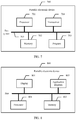
- FIG. 1 is a schematic structural diagram of a portable electronic device according to an embodiment of the present disclosure
- FIG. 2 is another schematic structural diagram of a portable electronic device according to an embodiment of the present disclosure
- FIG. 3 is a schematic flowchart of a switching method according to an embodiment of the present disclosure
- FIG. 4A is a schematic diagram of an embodiment of data collection according to an embodiment of the present disclosure.
- FIG. 4B is a schematic diagram of another embodiment of data collection according to an embodiment of the present disclosure.
- FIG. 5 is another schematic structural diagram of a portable electronic device according to an embodiment of the present disclosure.
- FIG. 6 is another schematic structural diagram of a portable electronic device according to an embodiment of the present disclosure.
- FIG. 7 is another schematic structural diagram of a portable electronic device according to an embodiment of the present disclosure.
- FIG. 8 is another schematic structural diagram of a portable electronic device according to an embodiment of the present disclosure.
- the present disclosure discloses a switching method and a portable electronic device to resolve a problem that a pedestrian and a vehicle cannot be accurately identified in order to effectively improve identification accuracy and flexibly switch between positioning of the pedestrian and positioning of the vehicle.
- the terms “first,” “second,” “third,” “fourth,” and so on are intended to distinguish between different objects but do not indicate a particular order.
- the terms “including,” “including,” or any other variant thereof, are intended to cover a non-exclusive inclusion.
- a process, a method, a system, a product, or a device that includes a series of steps or units is not limited to the listed steps or units, but optionally further includes an unlisted step or unit, or optionally further includes another inherent step or unit of the process, the method, the product, or the device.
- the portable electronic device 100 when the portable electronic device 100 is a wearable device (such as a smart watch, smart glasses, a health monitoring band, or a smart wrist strap), the portable electronic device 100 mainly includes a sensor 101 , a processor 102 , a wireless communications interface 103 , and a memory 104 .
- the sensor 101 , the processor 102 , the wireless communications interface 103 , and the memory 104 are connected using one or more buses.
- the sensor 101 is configured to collect surrounding environment data, and the sensor 101 may be any one or more of a light sensor, a sound sensor, a distance sensor, a gyroscope, a magnetometer, an accelerometer, a barometer, or a manometer.
- the processor 102 is a control center of the portable electronic device 100 , connects to all parts of the entire portable electronic device 100 using various interfaces and lines, and runs or executes a software program and/or a module stored in the memory 104 and invokes program and data stored in the memory 104 to perform various functions of the portable electronic device 100 and/or process data. For example, the processor 102 calculates the environment data collected by the sensor 101 to determine a surrounding environment status.
- the wireless communications interface 103 is configured to connect to a remote electronic device or a server using WI-FI or BLUETOOTH and exchange data.
- the memory 104 may be configured to store the software program and the module.
- a portable electronic device 200 when a portable electronic device 200 is a mobile device (such as a mobile phone, or a tablet computer), the portable electronic device 200 mainly includes a sensor 201 , a processor 202 , a wireless communications interface 203 , a memory 204 , and an input/output (I/O) interface 205 .
- the sensor 201 , the processor 202 , the wireless communications interface 203 , the memory 204 , and the I/O interface 205 are connected using one or more buses.
- the sensor 201 is configured to collect surrounding environment data, and the sensor 201 may be any one or more of a light sensor, a sound sensor, a distance sensor, a gyroscope, a magnetometer, an accelerometer, a barometer, or a manometer.
- the processor 202 is a control center of the portable electronic device 200 , connects to all parts of the entire portable electronic device 200 using various interfaces and lines, and runs or executes a software program and/or a module stored in the memory 204 and invokes program and data stored in the memory 204 to perform various functions of the portable electronic device 200 and/or process data. For example, the processor 202 calculates the environment data collected by the sensor 201 to determine a surrounding environment status.
- the wireless communications interface 203 is configured to connect to a remote electronic device or a server using WI-FI or BLUETOOTH and exchange data.
- the memory 204 may be configured to store the software program and the module.
- the I/O interface 205 is configured to implement interaction between a user and the portable electronic device 200 and/or input information to the portable electronic device 200 or convert a format of data output by the processor 202 and output the data.
- the structure may be a bus structure or a star structure, or may include more or fewer components than those shown in the figure, or combine some parts, or have different part arrangements.
- the portable electronic device in the implementations of the present disclosure includes but is not limited to a mobile phone, a mobile computer, a tablet computer, a personal digital assistant (PDA), a media player, a smart television (TV), a wearable device (such as a smart watch or smart glasses), a combination of the foregoing two or more items, or the like.
- PDA personal digital assistant
- TV smart television
- wearable device such as a smart watch or smart glasses
- a scenario to which the present disclosure is applied is described first.
- the pedestrian is positioned using a handheld (or being put in a haversack or being put in a pocket) portable electronic device.
- the portable electronic device positions the pedestrian using a WI-FI technology.
- the pedestrian gets on the vehicle, the vehicle starts travelling or the vehicle temporarily keeps a static state.
- the pedestrian moves with the vehicle.
- a geographic location of the pedestrian may not be covered with WI-FI.
- the portable electronic device still positions a location status of the pedestrian using the WI-FI technology, positioning fails or positioning is inaccurate.
- the vehicle may be covered with BLUETOOTH, and therefore, if the portable electronic device still positions the pedestrian using the WI-FI technology, accuracy may be not higher than that in implementing positioning using a BLUETOOTH technology. Therefore, it is a key to flexibly switch a positioning technology or a positioning algorithm by identifying a status of whether the pedestrian gets on the vehicle. In the other approaches, some motion sensors are used for detection to determine whether the pedestrian gets on the vehicle.
- the motion sensor is affected by an environment, terrain, or the like, data detected by the motion sensor may be unstable, and whether the user gets on the vehicle cannot be accurately identified.
- an action of manually closing a door by the pedestrian is used to determine that the user gets on the vehicle. It may be learned that if only the action of closing the door by the user is detected to determine that the user gets on the vehicle, a relatively large error is caused, and user experience is relatively poor.
- a disadvantage in the other approaches is well resolved, and whether the user gets on the vehicle is accurately identified such that the positioning technology or the positioning algorithm is flexibly switched, and positioning accuracy is improved.
- FIG. 3 is a schematic flowchart of a switching method according to an embodiment of the present disclosure. A specific process of this embodiment is as follows.
- Step 301 A portable electronic device determines that the portable electronic device approaches a vehicle.
- the portable electronic device determines, using some motion sensors integrated on the portable electronic device, whether the portable electronic device approaches the vehicle. For example, the portable electronic device detects a distance between a pedestrian and the vehicle using a distance sensor to determine the distance between the pedestrian and the vehicle, and when the distance is within a preset range, determines that the portable electronic device approaches the vehicle.
- the preset range may be 0 to 1 meter.
- another user-defined preset range or another default preset range of the portable electronic device may be used, and this is not limited herein.
- the portable electronic device when the portable electronic device approaches the vehicle, the portable electronic device is triggered to obtain barometric data collected by a barometer in preset duration and sound intensity data collected by a sound sensor in the preset duration.
- Step 302 The portable electronic device obtains barometric data collected by a barometer in preset duration and sound intensity data collected by a sound sensor in the preset duration.
- the switching method is applied to the portable electronic device including the barometer and the sound sensor.
- the barometer is mainly configured to collect the barometric data in order to reflect a variation degree of atmospheric pressure.
- the barometer is usually disposed on a mainboard of the portable electronic device, for example, the barometer is integrated on a chip of a mobile phone mainboard.
- a barometer function is integrated using some applications, operating systems, or the like.
- an application, an operating system, or the like that is integrated with the barometer function may be considered as the barometer, and this is not limited herein.
- the sound sensor is mainly configured to detect sound intensity, and the sound sensor has a function of a microphone to some extent.
- the preset duration is preset, or may be adjusted by a user. In actual application, because the user needs a quite short time to get on a vehicle and close a door of the vehicle, the preset duration is usually within 1 second. Alternatively, the preset duration may be user-defined.
- the barometric data includes n groups of collection moments and barometric values
- the sound intensity data includes n groups of collection moments and sound intensity values
- the barometer and the sound sensor perform collection synchronously
- n is an integer greater than 1.
- the barometer and the sound sensor synchronously collect data, that is, the barometer and the sound sensor simultaneously collect the data at a completely same time point or at an approximately same time point. The approximately same time point causes no great impact on the data collected by the barometer or the data collected by the sound sensor, and the impact may be ignored.
- Step 303 The portable electronic device determines whether the barometric data and the sound intensity data meet a preset condition, and if yes, performs step 304 , or if no, ends the process.
- the vehicle In actual application, the vehicle is small and enclosed space, and air flow inside the vehicle is relatively stable.
- atmospheric pressure inside the vehicle instantaneously increases, and whether the user gets on the vehicle may be determined according to this characteristic and using the barometer.
- a sound is generated when the user closes the door of the vehicle.
- the sound sensor detects an instantaneous change in sound loudness. It may be learned that accuracy is high when whether the user gets on the vehicle is determined according to two conditions of an instantaneous change in the atmospheric pressure and an instantaneous change in the sound intensity.
- the preset condition includes at least one barometric value in the barometric data is greater than a first threshold and at least one sound intensity value in the sound intensity data is greater than a second threshold.
- the portable electronic device determines a sampling time window in a default manner or in a user-defined manner. Because that the pedestrian gets on the vehicle and closes the door is a consecutive action, the portable electronic device detects, in a quite short time or even at a same moment, the instantaneous change in the atmospheric pressure inside the vehicle and the change in the sound intensity.
- a sampling time window of 300 milliseconds (ms) (sampling time window duration may be determined according to an actual test result and is not a fixed value) is determined by analyzing test data.
- the portable electronic device detects, in the sampling time window of 300 ms, that the atmospheric pressure and the sound intensity change instantaneously, it is determined whether the barometric data has the at least one barometric value that is greater than the first threshold and whether the sound intensity data has the at least one sound intensity value that is greater than the second threshold.
- the first threshold and the second threshold are each a default threshold of the portable electronic device or a user-defined threshold. Barometric data and sound intensity data at an adjacent moment are compared, and if the barometric data and the sound intensity data increase and then decrease to normal values in a relatively short time, it may be determined that the pedestrian has gotten on the vehicle.
- the preset condition includes that the barometric value in the barometric data hops at least once and the sound intensity value in the sound intensity data hops at least once.
- a horizontal axis is a time unit ms
- a vertical axis is the barometric value whose unit is hectopascals (hPa). Data of atmospheric pressure measured inside the garage is 998 hPa (around half past three in the afternoon).
- a horizontal axis is a time unit ms
- a vertical axis is the sound intensity value whose unit is decibels (dB).
- hopping is used to indicate relatively large amplitude of changing, that is, a process in which data is suddenly minimized or the data is suddenly maximized.
- hopping mainly means that the barometric data reaches a maximum peak value in a quite short time, or the sound intensity data reaches a maximum peak value in a quite short time.
- the preset condition includes an average value of all the barometric values in the barometric data is greater than a third threshold and an average value of all the sound intensity values in the sound intensity data is greater than a fourth threshold.
- the barometric data and the sound intensity data have been relatively smooth. Therefore, because of hopping, the average value of all the barometric values in the barometric data is greater than the third threshold and the average value of all the sound intensity values in the sound intensity data is greater than the fourth threshold.
- the third threshold and the fourth threshold are default thresholds of the portable electronic device or user-defined thresholds, and this is not limited herein.
- the preset condition includes an absolute value of a difference between a collection moment of a sound intensity value that is in the sound intensity data and that is greater than a second threshold and a collection moment of a barometric value that is in the barometric data and that is greater than a first threshold is less than a fifth threshold.
- whether the pedestrian gets on the vehicle is determined by determining, by means of comparison, whether the absolute value of the difference between the collection moment of the sound intensity value that is in the sound intensity data and that is greater than the second threshold and the collection moment of the barometric value that is in the barometric data and that is greater than the first threshold is less than the fifth threshold.
- the fifth threshold may be determined according to a specific test result, for example, the fifth threshold is 300 ms.
- the preset condition includes an absolute value of a difference between a collection moment of a hopped sound intensity value that is in the sound intensity data and a collection moment of a hopped sound intensity value in the barometric data is less than a sixth threshold.
- whether the pedestrian gets on the vehicle is determined by determining, by means of comparison, whether the absolute value of the difference between the collection moment of the hopped sound intensity value in the sound intensity data and the collection moment of the hopped sound intensity value in the barometric data is less than the sixth threshold.
- the sixth threshold may be determined according to a specific test result, for example, the sixth threshold is 300 ms.
- the preset condition includes an absolute value of a difference between a collection moment at which an average value of all the sound intensity values in the sound intensity data is greater than a fourth threshold and a collection moment at which an average value of all the barometric values in the barometric data is greater than a third threshold is less than a seventh threshold.
- whether the pedestrian gets on the vehicle is determined by determining, by means of comparison, whether the absolute value of the difference between the collection moment at which the average value of all the sound intensity values in the sound intensity data is greater than the fourth threshold and the collection moment at which the average value of all the barometric values in the barometric data is greater than the third threshold is less than the seventh threshold.
- the seventh threshold may be determined according to a specific test result, for example, the seventh threshold is 300 ms.
- Step 304 The portable electronic device switches a first positioning algorithm to a second positioning algorithm or switches a first positioning technology to a second positioning technology.
- the first positioning algorithm is switched to the second positioning algorithm or the first positioning technology is switched to the second positioning technology to effectively improve positioning accuracy.
- Step 305 The portable electronic device stops obtaining the barometric data collected by the barometer in the preset duration and the sound intensity data collected by the sound sensor in the preset duration.
- the portable electronic device stops obtaining the barometric data collected by the barometer in the preset duration and the sound intensity data collected by the sound sensor in the preset duration such that power consumption is effectively reduced.
- the portable electronic device is prevented from low battery, a low processing rate, and the like that are caused by uninterrupted data collection performed by the barometer and the sound sensor.
- Step 306 The portable electronic device determines that the portable electronic device leaves the vehicle, and restores to the first positioning technology or the first positioning algorithm.
- step 305 and step 306 may be performed simultaneously or may be performed successively. This may be further determined according to an actual situation and is not limited herein.
- the portable electronic device after the first positioning algorithm is switched to the second positioning algorithm, if the portable electronic device determines, using some motion sensors or the like installed on the portable electronic device, that the portable electronic device leaves the vehicle, the portable electronic device switches the second positioning algorithm to the first positioning algorithm.
- the portable electronic device after the first positioning technology is switched to the second positioning technology, if the portable electronic device determines, using some motion sensors or the like installed on the portable electronic device, that the portable electronic device leaves the vehicle, the portable electronic device switches the second positioning technology to the first positioning technology.
- the positioning technology or the positioning algorithm used by the portable electronic device is restored to an initial state, that is, the second positioning algorithm is switched to the first positioning algorithm or the second positioning technology is switched to the first positioning technology such that the portable electronic device performs normal positioning according to the original positioning technology or positioning algorithm, and the positioning accuracy is effectively improved.
- the portable electronic device is usually put in a pocket, a haversack, or the like of the pedestrian, a state that the pedestrian has gotten off the vehicle is detected to determine that the portable electronic device leaves the vehicle.
- a state that the pedestrian has gotten off the vehicle is detected to determine that the portable electronic device leaves the vehicle.
- an OBD module in the vehicle is used to detect that the vehicle has stalled, an accelerometer is used to determine that the vehicle stops, the sound sensor is used to detect sound data that is generated when the pedestrian closes the door of the vehicle, or a pedometer is used to detect a quantity of steps of the pedestrian. This is not limited herein.
- step 301 and step 304 to step 306 are all optional implementations. In some embodiments, not all of step 301 and step 304 to step 306 need to be performed, that is, only one or several ones in step 301 and step 304 to step 306 are performed. This is not limited herein.
- the following further provides a related apparatus configured to perform the foregoing method.
- FIG. 5 is a schematic structural diagram of a portable electronic device 500 according to an embodiment of the present disclosure.
- the portable electronic device 500 is a portable electronic device including a barometer and a sound sensor, and includes an obtaining module 501 and a processing module 502 .
- the obtaining module 501 is configured to obtain barometric data collected by the barometer in preset duration and sound intensity data collected by the sound sensor in the preset duration.
- the barometric data includes n groups of collection moments and barometric values
- the sound intensity data includes n groups of collection moments and sound intensity values
- the barometer and the sound sensor perform collection synchronously, and n is an integer greater than 1.
- the processing module 502 is configured to determine that the barometric data and the sound intensity data that are obtained by the obtaining module 501 meet a preset condition, and switch a first positioning algorithm to a second positioning algorithm or switch a first positioning technology to a second positioning technology.
- the preset condition includes at least one of the following, where at least one barometric value in the barometric data is greater than a first threshold and at least one sound intensity value in the sound intensity data is greater than a second threshold, the barometric value in the barometric data hops at least once and the sound intensity value in the sound intensity data hops at least once, an average value of all the barometric values in the barometric data is greater than a third threshold and an average value of all the sound intensity values in the sound intensity data is greater than a fourth threshold, an absolute value of a difference between a collection moment of a sound intensity value that is in the sound intensity data and that is greater than a second threshold and a collection moment of a barometric value that is in the barometric data and that is greater than a first threshold is less than a fifth threshold, an absolute value of a difference between a collection moment of a hopped sound intensity value in the sound intensity data and a collection moment of a hopped sound intensity value in the barometric data is less than a sixth threshold
- the obtaining module obtains the barometric data collected by the barometer in the preset duration and the sound intensity data collected by the sound sensor in the preset duration.
- the processing module switches a positioning algorithm or a positioning technology to effectively improve positioning accuracy.
- an identification procedure is simple and identification accuracy is high.
- an entire process of identifying the pedestrian and the vehicle by the processing module is more intelligent and perception-free such that intelligent experience of the user is met.
- the processing module 502 is further configured to determine that the portable electronic device approaches the vehicle, and trigger the obtaining module 501 to obtain the barometric data collected by the barometer in the preset duration and the sound intensity data collected by the sound sensor in the preset duration.
- a motion sensor such as a gyroscope, an accelerometer, a magnetometer, or a distance sensor is used to determine that the portable electronic device approaches the vehicle.
- the distance sensor is used to detect a distance between the portable electronic device and the vehicle.
- a relative position distance between the portable electronic device and the vehicle is within a preset range, for example, the preset range is 0 to 1 meter.
- the processing module 502 is further configured to, after switching the first positioning algorithm to the second positioning algorithm or switching the first positioning technology to the second positioning technology, trigger the obtaining module 501 to stop obtaining the barometric data collected by the barometer in the preset duration and the sound intensity data collected by the sound sensor in the preset duration.
- the processing module 502 stops obtaining the barometric data collected by the barometer in the preset duration and the sound intensity data collected by the sound sensor in the preset duration such that power consumption is effectively reduced.
- the portable electronic device is prevented from low battery, a low processing rate, and the like that are caused by uninterrupted data collection performed by the barometer and the sound sensor.
- the processing module 502 is further configured to determine that the portable electronic device leaves the vehicle, and switch the second positioning algorithm to the first positioning algorithm.
- the processing module 502 is further configured to determine that the portable electronic device leaves the vehicle, and switch the second positioning technology to the first positioning technology after switching the first positioning technology to the second positioning technology.
- the positioning technology or the positioning algorithm used by the portable electronic device 500 is restored to an initial state, that is, the second positioning algorithm is switched to the first positioning algorithm or the second positioning technology is switched to the first positioning technology such that the portable electronic device 500 performs normal positioning according to the original positioning technology or positioning algorithm, and the positioning accuracy is effectively improved.
- the portable electronic device 500 is usually put in a pocket, a haversack, or the like of the pedestrian, a state that the pedestrian has gotten off the vehicle is detected to determine that the portable electronic device leaves the vehicle.
- a state that the pedestrian has gotten off the vehicle is detected to determine that the portable electronic device leaves the vehicle.
- an OBD module in the vehicle is used to detect that the vehicle has stalled, the accelerometer is used to determine that the vehicle stops, the sound sensor is used to detect sound data that is generated when the pedestrian closes a door of the vehicle, or a pedometer is used to detect a quantity of steps of the pedestrian. This is not limited herein.
- the obtaining module 501 may be a software module and may be performed in a detector of the portable electronic device.
- the processing module 502 may also be a software module, and can be performed in a processor of a computer system, or may be an application-specific integrated circuit.
- FIG. 6 is a schematic structural diagram of a portable electronic device 600 according to an embodiment of the present disclosure.
- the portable electronic device 600 is a portable electronic device including a barometer and a sound sensor, and includes a detector 601 and a processor 602 .
- the detector 601 is connected to the processor 602 .
- the obtaining module 501 may be replaced with the detector 601 , and correspondingly, the processing module 502 may be replaced with the processor 602 .
- FIG. 7 is a schematic structural diagram of a portable electronic device 700 according to an embodiment of the present disclosure.
- the portable electronic device 700 includes one or more processors 701 , a memory 702 , a bus system 703 , a transceiver 704 , and one or more programs 705 .
- the processor 701 , the memory 702 , and the transceiver 704 are connected using the bus system 703 .
- the one or more programs 705 are stored in the memory 702 , the one or more programs 705 include an instruction, and when being executed by the portable electronic device 700 , the instruction enables the portable electronic device 700 to perform the method in the embodiment shown in FIG. 3 .
- an embodiment of the present disclosure further provides a computer readable storage medium that stores one or more programs.
- the one or more programs include an instruction, and when being executed by a portable electronic device, the instruction enables the portable electronic device to perform the method in the embodiment shown in FIG. 3 .
- a function of the portable electronic device in the present disclosure may be implemented according to the method in the embodiment shown in FIG. 3 .
- the portable electronic device is used to perform the method in the embodiment shown in FIG. 3 , to achieve a technical effect that can be achieved in the method embodiment.
- an embodiment of the present disclosure provides a graphical user interface on a portable electronic device 800 .
- the portable electronic device 800 includes a display 801 , a memory 802 , multiple application programs 803 , and one or more processors 804 configured to execute one or more programs stored in the memory 802 , and the graphical user interface includes a user interface displayed using the method in the embodiment shown in FIG. 3 .
- a state that the portable electronic device 800 switches positioning is displayed on the graphical user interface in real time, that is, a positioning status of a pedestrian is updated in real time such that positioning is more intelligent, and user experience is effectively improved.
- the disclosed system, apparatus, and method may be implemented in other manners.
- the described apparatus embodiment is merely an example.
- the unit division is merely logical function division and may be other division in actual implementation.
- a plurality of units or components may be combined or integrated into another system, or some features may be ignored or not performed.
- the displayed or discussed mutual couplings or direct couplings or communication connections may be implemented through some interfaces, indirect couplings or communication connections between the apparatuses or units, or electrical connections, mechanical connections, or connections in other forms.
- the units described as separate parts may or may not be physically separate, and parts displayed as units may or may not be physical units, may be located in one position, or may be distributed on a plurality of network units. Some or all of the units may be selected according to actual needs to achieve the objectives of the solutions provided in the embodiments.
- functional units in the embodiments of the present disclosure may be integrated into one processing unit, or each of the units may exist alone physically, or two or more units are integrated into one unit.
- the integrated unit may be implemented in a form of hardware, or may be implemented in a form of a software functional unit.
- the integrated unit When the integrated unit is implemented in the form of a software functional unit and sold or used as an independent product, the integrated unit may be stored in a computer readable storage medium.
- the software product is stored in a storage medium and includes several instructions for instructing a computer device (which may be a personal computer, a server, or a network device) to perform all or some of the steps of the methods described in the embodiments of the present disclosure.
- the foregoing storage medium includes any medium that can store program code, such as a universal serial bus (USB) flash drive, a removable hard disk, a read-only memory (ROM), a random access memory (RAM), a magnetic disk, or an optical disc.
- USB universal serial bus
- ROM read-only memory
- RAM random access memory
- magnetic disk or an optical disc.
- a portable electronic device, a computer readable storage medium, a graphical user interface, and a method provided in the present disclosure are described in detail above. Specific examples are used in this specification to describe the principle and implementations of the present disclosure. The foregoing embodiments are merely intended to help understand the method and idea of the present disclosure. In addition, with respect to the implementations and the application scope, modifications may be made by a person of ordinary skill in the art according to the idea of the present disclosure. Therefore, the specification shall not be construed as a limitation on the present disclosure.
Landscapes
- Engineering & Computer Science (AREA)
- Radar, Positioning & Navigation (AREA)
- Remote Sensing (AREA)
- Physics & Mathematics (AREA)
- General Physics & Mathematics (AREA)
- Computer Networks & Wireless Communication (AREA)
- Signal Processing (AREA)
- Automation & Control Theory (AREA)
- Software Systems (AREA)
- Theoretical Computer Science (AREA)
- General Engineering & Computer Science (AREA)
- Telephone Function (AREA)
- Position Fixing By Use Of Radio Waves (AREA)
- Traffic Control Systems (AREA)
Abstract
Description
Claims (20)
Applications Claiming Priority (1)
| Application Number | Priority Date | Filing Date | Title |
|---|---|---|---|
| PCT/CN2015/099325 WO2017113078A1 (en) | 2015-12-29 | 2015-12-29 | Switching method and portable electronic device |
Publications (2)
| Publication Number | Publication Date |
|---|---|
| US20190331802A1 US20190331802A1 (en) | 2019-10-31 |
| US10598797B2 true US10598797B2 (en) | 2020-03-24 |
Family
ID=59224013
Family Applications (1)
| Application Number | Title | Priority Date | Filing Date |
|---|---|---|---|
| US16/066,616 Active US10598797B2 (en) | 2015-12-29 | 2015-12-29 | Switching method and portable electronic device |
Country Status (5)
| Country | Link |
|---|---|
| US (1) | US10598797B2 (en) |
| EP (1) | EP3382426B1 (en) |
| JP (1) | JP6723530B2 (en) |
| CN (1) | CN107003900B (en) |
| WO (1) | WO2017113078A1 (en) |
Families Citing this family (8)
| Publication number | Priority date | Publication date | Assignee | Title |
|---|---|---|---|---|
| US12547484B2 (en) * | 2016-08-01 | 2026-02-10 | Snap-On Incorporated | Methods and systems for modifying diagnostic flowcharts based on flowchart performances |
| US11481690B2 (en) * | 2016-09-16 | 2022-10-25 | Foursquare Labs, Inc. | Venue detection |
| JP2018056769A (en) * | 2016-09-28 | 2018-04-05 | 京セラ株式会社 | Electronic device, control method, and control program |
| CN109696653B (en) * | 2017-10-23 | 2021-07-27 | 深圳市优必选科技有限公司 | Base station coordinate calibration method and device |
| DE112019005425T5 (en) * | 2018-10-30 | 2021-07-22 | Motional Ad Llc | REDUNDANCY IN AUTONOMOUS VEHICLES |
| CN109714480A (en) * | 2018-12-28 | 2019-05-03 | 上海掌门科技有限公司 | Working mode switching method and device for mobile terminal |
| CN111757256A (en) * | 2020-06-23 | 2020-10-09 | 华芯智能(珠海)科技有限公司 | Indoor positioning method and device |
| CN112468926B (en) * | 2020-12-15 | 2022-08-02 | 中国联合网络通信集团有限公司 | Earphone audio adjusting method and device and terminal equipment |
Citations (26)
| Publication number | Priority date | Publication date | Assignee | Title |
|---|---|---|---|---|
| US5588038A (en) | 1993-11-19 | 1996-12-24 | J.F.A. Tech., Inc. | System and method for signaling a device at a remote location over a wireless network |
| US20070239813A1 (en) * | 2006-04-11 | 2007-10-11 | Motorola, Inc. | Method and system of utilizing a context vector and method and system of utilizing a context vector and database for location applications |
| CN101369020A (en) | 2007-08-16 | 2009-02-18 | 福特环球技术公司 | System and method for combined blind spot detection and rear crossing path collision warning |
| US20100009643A1 (en) * | 2008-07-09 | 2010-01-14 | Sony Ericsson Mobile Communications Ab | Regulating power duty cycle of an rf transmitter/receiver responsive to distance moved |
| JP2010145228A (en) | 2008-12-18 | 2010-07-01 | Sanyo Electric Co Ltd | Position display apparatus and current position determination method |
| CN102279404A (en) | 2010-06-13 | 2011-12-14 | 上海伽利略导航有限公司 | Seamless positioning method and device |
| US20120059623A1 (en) | 2010-09-02 | 2012-03-08 | Casio Computer Co., Ltd. | Positioning apparatus judging moving method to control positioning timing |
| CN102645666A (en) | 2012-05-11 | 2012-08-22 | 常熟南师大发展研究院有限公司 | Indoor and outdoor positioning switching method between UWB and GPS |
| US20130054180A1 (en) * | 2011-08-29 | 2013-02-28 | James R. Barfield | Method and system for detecting a fall based on comparing data to criteria derived from multiple fall data sets |
| CN103176194A (en) | 2011-12-23 | 2013-06-26 | 中国电信股份有限公司 | Method and terminal for selecting positioning modes and mobile positioning system |
| JP2013148385A (en) | 2012-01-17 | 2013-08-01 | Cellstar Kogyo Kk | Road traffic information receiving apparatus |
| US20140064112A1 (en) * | 2012-09-06 | 2014-03-06 | Qualcomm Incorporated | Context-based position determination |
| US20140171068A1 (en) * | 2012-12-14 | 2014-06-19 | Apple Inc. | Managing states of location determination |
| US20140188381A1 (en) * | 2012-12-28 | 2014-07-03 | Lapis Semiconductor Co., Ltd. | Semiconductor device, electrical device, and method of controlling power source |
| WO2014109936A1 (en) | 2013-01-13 | 2014-07-17 | Qualcomm Incorporated | Access network node based barometric reference pressure network |
| US20140309864A1 (en) * | 2013-04-15 | 2014-10-16 | Flextronics Ap, Llc | Configurable Dash Display Based on Detected Location and Preferences |
| CN104540220A (en) | 2014-12-30 | 2015-04-22 | 中国科学院深圳先进技术研究院 | Intelligent terminal positioning method and system |
| WO2015077489A1 (en) | 2013-11-25 | 2015-05-28 | Qualcomm Incorporated | Motion state based mobile device positioning |
| US20150154711A1 (en) | 2013-12-04 | 2015-06-04 | State Farm Mutual Automobile Insurance Company | Assigning mobile device data to a vehicle |
| US20160029224A1 (en) * | 2014-07-23 | 2016-01-28 | Qualcomm Incorporated | Determination of environment characteristics from mobile device-based sensor measurements |
| US9457754B1 (en) * | 2015-07-13 | 2016-10-04 | State Farm Mutual Automobile Insurance Company | Method and system for identifying vehicle collisions using sensor data |
| US20170146970A1 (en) * | 2015-11-20 | 2017-05-25 | Samsung Electronics Co., Ltd. | Method and apparatus for operating electronic device based on environmental information |
| US20170276797A1 (en) * | 2013-05-08 | 2017-09-28 | Cm Hk Limited | Electronic devices and methods for providing location information |
| US20180364040A1 (en) * | 2017-06-20 | 2018-12-20 | Samsung Electronics Co., Ltd. | Method for determining data of barometer sensor using data obtained from motion sensor and electronic device for the same |
| US20190049242A1 (en) * | 2017-08-11 | 2019-02-14 | Zoox, Inc | Sensor perturbation |
| US20190049566A1 (en) * | 2017-08-11 | 2019-02-14 | Zoox, Inc. | Vehicle sensor calibration and localization |
-
2015
- 2015-12-29 JP JP2018534144A patent/JP6723530B2/en active Active
- 2015-12-29 EP EP15911709.2A patent/EP3382426B1/en active Active
- 2015-12-29 WO PCT/CN2015/099325 patent/WO2017113078A1/en not_active Ceased
- 2015-12-29 CN CN201580062125.XA patent/CN107003900B/en not_active Expired - Fee Related
- 2015-12-29 US US16/066,616 patent/US10598797B2/en active Active
Patent Citations (32)
| Publication number | Priority date | Publication date | Assignee | Title |
|---|---|---|---|---|
| US5588038A (en) | 1993-11-19 | 1996-12-24 | J.F.A. Tech., Inc. | System and method for signaling a device at a remote location over a wireless network |
| US20070239813A1 (en) * | 2006-04-11 | 2007-10-11 | Motorola, Inc. | Method and system of utilizing a context vector and method and system of utilizing a context vector and database for location applications |
| CN101369020A (en) | 2007-08-16 | 2009-02-18 | 福特环球技术公司 | System and method for combined blind spot detection and rear crossing path collision warning |
| US20090045928A1 (en) | 2007-08-16 | 2009-02-19 | Rao Manoharprasad K | System and method for combined blind spot detection and rear crossing path collision warning |
| CN102090114B (en) | 2008-07-09 | 2013-09-25 | 索尼爱立信移动通讯有限公司 | Adjust RF Transmitter/Receiver Power Duty Cycle in Response to Travel Distance |
| US20100009643A1 (en) * | 2008-07-09 | 2010-01-14 | Sony Ericsson Mobile Communications Ab | Regulating power duty cycle of an rf transmitter/receiver responsive to distance moved |
| CN102090114A (en) | 2008-07-09 | 2011-06-08 | 索尼爱立信移动通讯有限公司 | Adjust RF Transmitter/Receiver Power Duty Cycle in Response to Travel Distance |
| JP2010145228A (en) | 2008-12-18 | 2010-07-01 | Sanyo Electric Co Ltd | Position display apparatus and current position determination method |
| CN102279404A (en) | 2010-06-13 | 2011-12-14 | 上海伽利略导航有限公司 | Seamless positioning method and device |
| US20120059623A1 (en) | 2010-09-02 | 2012-03-08 | Casio Computer Co., Ltd. | Positioning apparatus judging moving method to control positioning timing |
| CN102435187A (en) | 2010-09-02 | 2012-05-02 | 卡西欧计算机株式会社 | Positioning device and positioning method |
| JP2012052936A (en) | 2010-09-02 | 2012-03-15 | Casio Comput Co Ltd | Positioning device, positioning method, and program |
| US20130054180A1 (en) * | 2011-08-29 | 2013-02-28 | James R. Barfield | Method and system for detecting a fall based on comparing data to criteria derived from multiple fall data sets |
| CN103176194A (en) | 2011-12-23 | 2013-06-26 | 中国电信股份有限公司 | Method and terminal for selecting positioning modes and mobile positioning system |
| JP2013148385A (en) | 2012-01-17 | 2013-08-01 | Cellstar Kogyo Kk | Road traffic information receiving apparatus |
| CN102645666A (en) | 2012-05-11 | 2012-08-22 | 常熟南师大发展研究院有限公司 | Indoor and outdoor positioning switching method between UWB and GPS |
| US20140064112A1 (en) * | 2012-09-06 | 2014-03-06 | Qualcomm Incorporated | Context-based position determination |
| US20140171068A1 (en) * | 2012-12-14 | 2014-06-19 | Apple Inc. | Managing states of location determination |
| US20140188381A1 (en) * | 2012-12-28 | 2014-07-03 | Lapis Semiconductor Co., Ltd. | Semiconductor device, electrical device, and method of controlling power source |
| CN103913751A (en) | 2012-12-28 | 2014-07-09 | 拉碧斯半导体株式会社 | Semiconductor Device, Electrical Device, And Method Of Controlling Power Source |
| WO2014109936A1 (en) | 2013-01-13 | 2014-07-17 | Qualcomm Incorporated | Access network node based barometric reference pressure network |
| US20140309864A1 (en) * | 2013-04-15 | 2014-10-16 | Flextronics Ap, Llc | Configurable Dash Display Based on Detected Location and Preferences |
| US20170276797A1 (en) * | 2013-05-08 | 2017-09-28 | Cm Hk Limited | Electronic devices and methods for providing location information |
| WO2015077489A1 (en) | 2013-11-25 | 2015-05-28 | Qualcomm Incorporated | Motion state based mobile device positioning |
| US20150154711A1 (en) | 2013-12-04 | 2015-06-04 | State Farm Mutual Automobile Insurance Company | Assigning mobile device data to a vehicle |
| US20160029224A1 (en) * | 2014-07-23 | 2016-01-28 | Qualcomm Incorporated | Determination of environment characteristics from mobile device-based sensor measurements |
| CN104540220A (en) | 2014-12-30 | 2015-04-22 | 中国科学院深圳先进技术研究院 | Intelligent terminal positioning method and system |
| US9457754B1 (en) * | 2015-07-13 | 2016-10-04 | State Farm Mutual Automobile Insurance Company | Method and system for identifying vehicle collisions using sensor data |
| US20170146970A1 (en) * | 2015-11-20 | 2017-05-25 | Samsung Electronics Co., Ltd. | Method and apparatus for operating electronic device based on environmental information |
| US20180364040A1 (en) * | 2017-06-20 | 2018-12-20 | Samsung Electronics Co., Ltd. | Method for determining data of barometer sensor using data obtained from motion sensor and electronic device for the same |
| US20190049242A1 (en) * | 2017-08-11 | 2019-02-14 | Zoox, Inc | Sensor perturbation |
| US20190049566A1 (en) * | 2017-08-11 | 2019-02-14 | Zoox, Inc. | Vehicle sensor calibration and localization |
Non-Patent Citations (17)
| Title |
|---|
| English Translation of Ioroi, S., et al., "Multiple Floor Dead Reckoning using a Smartphone built-in Sensors," Multimedia, Distributed, Cooperative, and Mobile Symposium (DICOMO2013), Information Processing Society of Japan, Jul. 2013, vol. 2013, No. 2, 27 pages. |
| Foreign Communication From a Counterpart Application, Chinese Application No. 201580062125.X, Chinese Office Action dated Apr. 24, 2019, 11 pages. |
| Foreign Communication From a Counterpart Application, European Application No. 15911709.2, Extended European Search Report dated Sep. 20, 2018, 8 pages. |
| Foreign Communication From a Counterpart Application, Japanese Application No. 2018-534144, English Translation of Japanese Office Action dated Sep. 9, 2019, 3 pages. |
| Foreign Communication From a Counterpart Application, Japanese Application No. 2018-534144, Japanese Office Action dated Sep. 9, 2019, 3 pages. |
| Foreign Communication From a Counterpart Application, PCT Application No. PCT/CN2015/099325, English Translation of International Search Report dated Aug. 26, 2016, 2 pages. |
| Foreign Communication From a Counterpart Application, PCT Application No. PCT/CN2015/099325, English Translation of Written Opinion dated Aug. 26, 2016, 6 pages. |
| Ioroi, S., et al., "Multiple Floor Dead Reckoning using a Smartphone built-in Sensors," Multimedia, Distributed, Cooperative, and Mobile Symposium (DICOMO2013), Information Processing Society of Japan, Jul. 2013, vol. 2013, No. 2, pp. 723-735. |
| Machine Translation and Abstract of Chinese Publication No. 102279404, Dec. 14, 2011, 18 pages. |
| Machine Translation and Abstract of Chinese Publication No. 102645666, Aug. 22, 2012, 16 pages. |
| Machine Translation and Abstract of Chinese Publication No. 103176194, Jun. 26, 2013, 13 pages. |
| Machine Translation and Abstract of Chinese Publication No. 104540220, Apr. 22, 2015, 13 pages. |
| Machine Translation and Abstract of Chinese Publication No. CN102090114, Sep. 25, 2013, 23 pages. |
| Machine Translation and Abstract of Chinese Publication No. CN103913751, Jul. 9, 2014, 22 pages. |
| Machine Translation and Abstract of Japanese Publication No. JP2010145228, Jul. 1, 2010, 28 pages. |
| Machine Translation and Abstract of Japanese Publication No. JP201052936, Mar. 15, 2012, 27 pages. |
| Machine Translation and Abstract of Japanese Publication No. JP2013148385, Aug. 1, 2013, 16 pages. |
Also Published As
| Publication number | Publication date |
|---|---|
| EP3382426B1 (en) | 2020-06-03 |
| CN107003900B (en) | 2020-06-02 |
| CN107003900A (en) | 2017-08-01 |
| WO2017113078A1 (en) | 2017-07-06 |
| EP3382426A4 (en) | 2018-10-24 |
| JP2019510197A (en) | 2019-04-11 |
| JP6723530B2 (en) | 2020-07-15 |
| US20190331802A1 (en) | 2019-10-31 |
| EP3382426A1 (en) | 2018-10-03 |
Similar Documents
| Publication | Publication Date | Title |
|---|---|---|
| US10598797B2 (en) | Switching method and portable electronic device | |
| US10452116B1 (en) | Determining a device state based on user presence detection | |
| CN103414488B (en) | A kind of control method, device and equipment of mobile device antenna | |
| KR20180085931A (en) | Voice input processing method and electronic device supporting the same | |
| US10228453B2 (en) | Indoor positioning method and device | |
| US11259155B2 (en) | Detection of the occurrence of an event, based on a propagation characteristic of a pressure wave | |
| EP3522101A1 (en) | Method for providing emergency service, electronic device therefor, and computer readable recording medium | |
| CN103959668A (en) | Energy efficient location tracking on smart phones | |
| KR102498362B1 (en) | Method for calculating location information and an electronic device thereof | |
| US20180227755A1 (en) | Mobile device to provide continuous authentication based on contextual awareness | |
| KR20150137504A (en) | Method for image processing and electronic device implementing the same | |
| CN110047246A (en) | Alarm method, equipment and computer readable storage medium | |
| CN110139212A (en) | Positioning processing method and related product | |
| JP2020528183A (en) | System and method for registering the location of lost items | |
| CN110753157B (en) | Terminal early warning method, system, terminal and readable storage medium | |
| CN109040457B (en) | A kind of screen brightness adjustment method and mobile terminal | |
| CN108833660B (en) | Parking space information processing method, device and mobile terminal | |
| EP4503712A1 (en) | Wireless sensing method, communication device, and storage medium | |
| JP2016511612A (en) | Spectrometer for personal context | |
| US10863018B2 (en) | Method for managing a real time detection of a scene by a wireless communication apparatus and corresponding apparatus | |
| CN119131970A (en) | Indoor intrusion detection method, device, terminal equipment and computer-readable storage medium | |
| CN120034825A (en) | Alarm prompt method, device, terminal equipment and storage medium for indoor terminal equipment | |
| EP3502619A1 (en) | Method and apparatus for determining whether a subject has entered or exited a building | |
| CN117336888A (en) | Connection method and device for ultra-wideband equipment | |
| US20200318969A1 (en) | Method and apparatus for determining whether a subject has entered or exited a building |
Legal Events
| Date | Code | Title | Description |
|---|---|---|---|
| AS | Assignment |
Owner name: HUAWEI TECHNOLOGIES CO., LTD., CHINA Free format text: ASSIGNMENT OF ASSIGNORS INTEREST;ASSIGNOR:ZHANG, YAJUN;REEL/FRAME:046219/0506 Effective date: 20171018 |
|
| FEPP | Fee payment procedure |
Free format text: ENTITY STATUS SET TO UNDISCOUNTED (ORIGINAL EVENT CODE: BIG.); ENTITY STATUS OF PATENT OWNER: LARGE ENTITY |
|
| FEPP | Fee payment procedure |
Free format text: PETITION RELATED TO MAINTENANCE FEES GRANTED (ORIGINAL EVENT CODE: PTGR); ENTITY STATUS OF PATENT OWNER: LARGE ENTITY |
|
| STPP | Information on status: patent application and granting procedure in general |
Free format text: RESPONSE TO NON-FINAL OFFICE ACTION ENTERED AND FORWARDED TO EXAMINER |
|
| STPP | Information on status: patent application and granting procedure in general |
Free format text: NOTICE OF ALLOWANCE MAILED -- APPLICATION RECEIVED IN OFFICE OF PUBLICATIONS |
|
| STPP | Information on status: patent application and granting procedure in general |
Free format text: NOTICE OF ALLOWANCE MAILED -- APPLICATION RECEIVED IN OFFICE OF PUBLICATIONS |
|
| STPP | Information on status: patent application and granting procedure in general |
Free format text: PUBLICATIONS -- ISSUE FEE PAYMENT VERIFIED |
|
| STCF | Information on status: patent grant |
Free format text: PATENTED CASE |
|
| MAFP | Maintenance fee payment |
Free format text: PAYMENT OF MAINTENANCE FEE, 4TH YEAR, LARGE ENTITY (ORIGINAL EVENT CODE: M1551); ENTITY STATUS OF PATENT OWNER: LARGE ENTITY Year of fee payment: 4 |