US10570239B1 - Surface-active two-tailed hydrophobic associated polymer and preparation method thereof - Google Patents

Surface-active two-tailed hydrophobic associated polymer and preparation method thereof Download PDF

Info

Publication number
US10570239B1
US10570239B1 US16/069,167 US201716069167A US10570239B1 US 10570239 B1 US10570239 B1 US 10570239B1 US 201716069167 A US201716069167 A US 201716069167A US 10570239 B1 US10570239 B1 US 10570239B1
Authority
US
United States
Prior art keywords
acrylamide
solution
active
methyl
associated polymer
Prior art date
Legal status (The legal status is an assumption and is not a legal conclusion. Google has not performed a legal analysis and makes no representation as to the accuracy of the status listed.)
Expired - Fee Related, expires
Application number
US16/069,167
Other versions
US20200062881A1 (en
Inventor
Yongming Li
Qiang Ren
Jinzhou Zhao
Liehui ZHANG
Current Assignee (The listed assignees may be inaccurate. Google has not performed a legal analysis and makes no representation or warranty as to the accuracy of the list.)
Southwest Petroleum University
Original Assignee
Southwest Petroleum University
Priority date (The priority date is an assumption and is not a legal conclusion. Google has not performed a legal analysis and makes no representation as to the accuracy of the date listed.)
Filing date
Publication date
Application filed by Southwest Petroleum University filed Critical Southwest Petroleum University
Assigned to SOUTHWEST PETROLEUM UNIVERSITY reassignment SOUTHWEST PETROLEUM UNIVERSITY ASSIGNMENT OF ASSIGNORS INTEREST (SEE DOCUMENT FOR DETAILS). Assignors: LI, YONGMING, REN, QIANG, ZHANG, Liehui, ZHAO, JINZHOU
Application granted granted Critical
Publication of US10570239B1 publication Critical patent/US10570239B1/en
Publication of US20200062881A1 publication Critical patent/US20200062881A1/en
Expired - Fee Related legal-status Critical Current
Adjusted expiration legal-status Critical

Links

Images

Classifications

    • CCHEMISTRY; METALLURGY
    • C08ORGANIC MACROMOLECULAR COMPOUNDS; THEIR PREPARATION OR CHEMICAL WORKING-UP; COMPOSITIONS BASED THEREON
    • C08FMACROMOLECULAR COMPOUNDS OBTAINED BY REACTIONS ONLY INVOLVING CARBON-TO-CARBON UNSATURATED BONDS
    • C08F283/00Macromolecular compounds obtained by polymerising monomers on to polymers provided for in subclass C08G
    • C08F283/06Macromolecular compounds obtained by polymerising monomers on to polymers provided for in subclass C08G on to polyethers, polyoxymethylenes or polyacetals
    • C08F283/065Macromolecular compounds obtained by polymerising monomers on to polymers provided for in subclass C08G on to polyethers, polyoxymethylenes or polyacetals on to unsaturated polyethers, polyoxymethylenes or polyacetals
    • CCHEMISTRY; METALLURGY
    • C08ORGANIC MACROMOLECULAR COMPOUNDS; THEIR PREPARATION OR CHEMICAL WORKING-UP; COMPOSITIONS BASED THEREON
    • C08FMACROMOLECULAR COMPOUNDS OBTAINED BY REACTIONS ONLY INVOLVING CARBON-TO-CARBON UNSATURATED BONDS
    • C08F283/00Macromolecular compounds obtained by polymerising monomers on to polymers provided for in subclass C08G
    • C08F283/06Macromolecular compounds obtained by polymerising monomers on to polymers provided for in subclass C08G on to polyethers, polyoxymethylenes or polyacetals
    • CCHEMISTRY; METALLURGY
    • C09DYES; PAINTS; POLISHES; NATURAL RESINS; ADHESIVES; COMPOSITIONS NOT OTHERWISE PROVIDED FOR; APPLICATIONS OF MATERIALS NOT OTHERWISE PROVIDED FOR
    • C09KMATERIALS FOR MISCELLANEOUS APPLICATIONS, NOT PROVIDED FOR ELSEWHERE
    • C09K8/00Compositions for drilling of boreholes or wells; Compositions for treating boreholes or wells, e.g. for completion or for remedial operations
    • C09K8/58Compositions for enhanced recovery methods for obtaining hydrocarbons, i.e. for improving the mobility of the oil, e.g. displacing fluids
    • C09K8/584Compositions for enhanced recovery methods for obtaining hydrocarbons, i.e. for improving the mobility of the oil, e.g. displacing fluids characterised by the use of specific surfactants
    • CCHEMISTRY; METALLURGY
    • C09DYES; PAINTS; POLISHES; NATURAL RESINS; ADHESIVES; COMPOSITIONS NOT OTHERWISE PROVIDED FOR; APPLICATIONS OF MATERIALS NOT OTHERWISE PROVIDED FOR
    • C09KMATERIALS FOR MISCELLANEOUS APPLICATIONS, NOT PROVIDED FOR ELSEWHERE
    • C09K8/00Compositions for drilling of boreholes or wells; Compositions for treating boreholes or wells, e.g. for completion or for remedial operations
    • C09K8/60Compositions for stimulating production by acting on the underground formation
    • C09K8/62Compositions for forming crevices or fractures
    • C09K8/66Compositions based on water or polar solvents
    • C09K8/68Compositions based on water or polar solvents containing organic compounds
    • CCHEMISTRY; METALLURGY
    • C09DYES; PAINTS; POLISHES; NATURAL RESINS; ADHESIVES; COMPOSITIONS NOT OTHERWISE PROVIDED FOR; APPLICATIONS OF MATERIALS NOT OTHERWISE PROVIDED FOR
    • C09KMATERIALS FOR MISCELLANEOUS APPLICATIONS, NOT PROVIDED FOR ELSEWHERE
    • C09K8/00Compositions for drilling of boreholes or wells; Compositions for treating boreholes or wells, e.g. for completion or for remedial operations
    • C09K8/60Compositions for stimulating production by acting on the underground formation
    • C09K8/62Compositions for forming crevices or fractures
    • C09K8/72Eroding chemicals, e.g. acids
    • C09K8/725Compositions containing polymers
    • CCHEMISTRY; METALLURGY
    • C09DYES; PAINTS; POLISHES; NATURAL RESINS; ADHESIVES; COMPOSITIONS NOT OTHERWISE PROVIDED FOR; APPLICATIONS OF MATERIALS NOT OTHERWISE PROVIDED FOR
    • C09KMATERIALS FOR MISCELLANEOUS APPLICATIONS, NOT PROVIDED FOR ELSEWHERE
    • C09K8/00Compositions for drilling of boreholes or wells; Compositions for treating boreholes or wells, e.g. for completion or for remedial operations
    • C09K8/60Compositions for stimulating production by acting on the underground formation
    • C09K8/84Compositions based on water or polar solvents
    • C09K8/86Compositions based on water or polar solvents containing organic compounds
    • C09K8/88Compositions based on water or polar solvents containing organic compounds macromolecular compounds
    • C09K8/882Compositions based on water or polar solvents containing organic compounds macromolecular compounds obtained by reactions only involving carbon-to-carbon unsaturated bonds

Definitions

  • the present invention relates to a surface-active two-tailed hydrophobic associated polymer for an oilfield to increase a recovery rate and perform acid fracturing, and a preparation method thereof.
  • HPAM partially hydrolyzed polyacrylamide
  • HPAM partially hydrolyzed polyacrylamide
  • the viscosity of a polymer solution drastically decreases due to hydrolysis, thermal degradation, chain curling and the like of HPAM, and therefore the requirements for enhanced oil recovery and acid fracturing of the high-temperature and high-salt oil reservoir cannot be met.
  • the solution of the hydrophobic associated polymer has efficient viscosifying property, excellent salt resistance, and better temperature resistance and shear resistance, and has a favorable application prospect in enhanced oil recovery and acid fracturing of an oil field.
  • hydrophobic monomers that have been reported so far include (methyl) acrylate monomer, styrene monomer, (methyl) acrylamide monomer, allyl monomer, and the like.
  • the styrene-type hydrophobic monomer has a rigid benzene ring and can effectively improve the temperature resistance and hydrolysis resistance of the polymer, the benzene ring is too close to a molecular main chain, which is not conducive to the copolymerization of the hydrophobic monomer and acrylamide, and also not conducive to improve the viscosifying effect of the polymer solution (Zhong Chuanyong, Characterization and Heat Resistance of AM-STD-NaAMPS Ternary Hydrophobic Associated Copolymer. Polymer Materials Science and Engineering, 2003, 19 (6): 126-130).
  • the allyl type hydrophobic monomer due to the presence of allyl groups, is not easily copolymerized with main monomer acrylamide, and the prepared hydrophobic associated polymer has a low molecular weight and an unobvious viscosifying effect (Luo Shan et al., Synthesis and Solution Property of Imidazoline-structured Hydrophobic Associated Polymer. Chemical Research and Application, 2015,27(8):1151-1156).
  • the acrylamide-type hydrophobic monomer whose structure is similar to acrylamide is conducive to a polymerization reaction, but there is a shortcoming of poor resistance to hydrolysis. (Geng Tongmou, Viscosity Behavior of Aqueous Solution of Hydrophobic Associated Water Soluble Polymer P(AM/NaAA/DiAC16). Fine Chemicals, 2007, 24(9): 914-918).
  • the hydrophobic monomer integrates the advantages of various types of hydrophobic monomers, and can more significantly improve the hydrophobic association effect of the polymer, so that the synthesized hydrophobic associated polymer achieves the purposes of temperature resistance and salt resistance.
  • the effect of the hydrogen bond gradually weakens or the hydrogen bond is broken, the hydrophilicity of the polyoxyethylene ether chain decreases, and the hydrophobicity increases, thereby allowing the polymer to exhibit a favorable thermal thickening effect within a higher temperature range, and show higher apparent viscosity in a salt solution.
  • An objective of the present invention is to provide a surface-active two-tailed hydrophobic associated polymer which integrates the advantages of a double-tail hydrophobic associated polymer and the advantages of a polymer containing a polyoxyethylene ether side chain, such that the viscosifying property, the temperature resistance, the salt resistance and the hydrolysis resistance of the hydrophobic associated polymer are remarkably improved, and overcomes the defects and deficiencies of the prior art.
  • Another objective of the present invention is to provide a preparation method of the surface-active two-tailed hydrophobic associated polymer.
  • the preparation method is reliable in principle and simple and convenient in operation.
  • the synthesized polymer can be widely used as an oil-displacing agent or an acid fracturing thickener for increasing a crude oil recovery rate in oilfield development and has a broad market application prospect.
  • the present invention adopts the following technical solution.
  • a surface-active two-tailed hydrophobic associated polymer has the following structural formula:
  • x, y, z, m, and n are percentages of structural units, where x is 75 to 85%, y is 10 to 20%, z is 0 to 5%, m is 0.1 to 0.2%, n is 0.2 to 0.5%, and x+y+z+m+n is 1; a, b and c are numbers of structural units, wherein a is 7, 9, 11, 13 or 15, b is 1 or 2, and c is 5, 7, 10, 23 or 40; R 1 and R 2 are CH 3 or H.
  • the polymer has a viscosity average molecular weight of 100 to 10,000,000.
  • the surface-active two-tailed hydrophobic associated polymer is prepared using a micellar free radical copolymerization method comprising: adding a surfactant sodium lauryl sulfate and a hydrophobic monomer N-phenethyl-N-alkyl (methyl) acrylamide or N-benzyl-N-alkyl (methyl) acrylamide into an aqueous solution containing acrylamide, acrylic acid, 2-acrylamide-2-methylpropanesulfonic acid, and surface-active macromonomer polyoxyethylene lauryl ether (methyl) acrylate, wherein the surfactant is used to solubilize the hydrophobic monomer in the formed micelle; adjusting pH to 6-8 with sodium hydroxide; and copolymerizing the hydrophobic monomer and a water-soluble monomer by means of photoinitiation to obtain the surface-active two-tailed hydrophobic associated polymer.
  • the reaction principle is as follows:
  • x, y, z, m, and n are percentages of structural units, where x is 75 to 85%, y is 10 to 20%, z is 0 to 5%, m is 0.1 to 0.2%, n is 0.2 to 0.5%, and x+y+z+m+n is 1; a, b and c are numbers of structural units, wherein a is 7, 9, 11, 13 or 15, b is 1 or 2, and c is 5, 7, 10, 23 or 40; R 1 and R 2 are CH 3 or H.
  • the polymer has a viscosity average molecular weight of 100 to 10,000,000.
  • a preparation process of the surface-active two-tailed hydrophobic associated polymer comprises the following steps:
  • the photoinitiator is azobis (isobutylamidine hydrochloride) (v50) or 2-hydroxyl-4′-(2-hydroxyethoxy)-2-methylpropiophenone (Irgacure 2959).
  • the present invention has the following beneficial effects: (1) the hydrophobic monomer with an acrylamide structure is easily copolymerized with water- soluble monomers, such as acrylamide; because the hydrophobic chain of the hydrophobic monomer has a benzene ring structure, the hydrolysis of amide groups can be effectively inhibited, and meanwhile the rigidity of molecular chains can be increased and the temperature resistance of the polymer can be improved; because the hydrophobic chain of the hydrophobic monomer contains a long-chain alkyl group, the hydrophobic association effect is achieved; the double-tail structure of the hydrophobic monomer can effectively inhibit the hydrolysis of amide groups and improve the hydrophobic association effect. Therefore, the hydrophobic associated polymer has better viscosifying property, and resistance to temperature and salt;
  • the polymer has the properties of the surfactant, and the properties of the hydrophobic associated polymer, such as viscosifying property, temperature resistance, salt resistance, and hydrolysis resistance, can be significantly improved.
  • FIG. 1 is an infrared spectrum of a surface-active two-tailed hydrophobic associated polymer.
  • FIG. 2 is a viscosity-concentration relationship curve of the surface-active two-tailed hydrophobic associated polymer.
  • FIG. 3 is a viscosity-NaCl concentration relationship curve of the surface-active two-tailed hydrophobic associated polymer.
  • FIG. 4 is a viscosity-CaCl 2 concentration relationship curve of the surface-active two-tailed hydrophobic associated polymer.
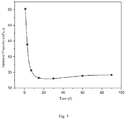
  • FIG. 5 is a viscosity-aging days relationship curve of the surface-active two-tailed hydrophobic associated polymer.
  • acrylamide (9.9 g), acrylic acid (1.6 g), 2-acrylamide-2-methylpropanesulfonic acid (1.0 g) and surface-active macromonomer polyoxyethylene lauryl ether (methyl) acrylate (0.3 g), adding distilled water and stirring uniformly, and adjusting pH to 7; then, adding N-benzyl-N-lauryl methacrylamide (0.3 g) and sodium lauryl sulfate (0.7), then adding a certain amount of distilled water such that the total mass of the solution reaches 50 g, and stirring till the solution is clear and transparent; introducing nitrogen for 15 min to remove dissolved oxygen in water; and adding an initiator v50 (0.1 wt % of total monomer mass), placing under a photoinitiation device, and reacting for 4 h.
  • FIG. 1 is an infrared spectrum of the hydrophobic associated polymer synthesized in the example 1.
  • a stretching vibration absorption peak of N-H of primary amide appears at 3408 cm ⁇ 1 ; a vibration absorption peak of methylene appears at 2926 cm ⁇ 1 ; a bending vibration absorption peak of primary amide N-H appears at 1639 cm ⁇ 1 ; a characteristic absorption peak of carbonyl appears at 1670 cm ⁇ 1 ; a stretching vibration peak of a benzene ring skeleton appears at 1530 cm ⁇ 1 ; an in-plane bending vibration absorption peak of methylene appears at 1398 cm ⁇ 1 ; a stretching vibration peak of ethyoxyl appears at 1057 cm ⁇ 1 ; an out-of-plane rocking characteristic peak of primary amide-NH 2 appears at 630 cm ⁇ 1 .
  • the polymer synthesized in the example 1 is prepared into polymer solutions of different concentrations.
  • a viscosity-concentration relationship curve of the polymer is measured at room temperature and at a shear rate of 7.34 s ⁇ 1 (as shown in FIG. 2 ).
  • the polymer has a strong hydrophobic association effect and a significant viscosifying effect.
  • the viscosity of the polymer solution at 1000 mg/L reaches 300 mPa.s, and the viscosity of the polymer solution at 2000 mg/L reaches 753.4 mPa.s.
  • the prepared hydrophobic associated polymer is prepared into a 1000 mg/L polymer solution under different salinities.
  • a change relationship of the apparent viscosity of the polymer solution along with the salinity is measured at room temperature and at a shear rate of 7.34 s ⁇ 1 (as shown in FIG. 3 and FIG. 4 ).
  • the apparent viscosity of the polymer presents a trend of decrease-increase-decrease, with a wider salt thickening area.
  • the viscosity of the polymer solution can be maintained at 10% or more under high salinity 200,000 of NaCl and 10,000 of CaCl 2 , showing a very good salt resistance effect.
  • the anti-aging property of the polymer synthesized in the example 1 is evaluated.
  • the prepared hydrophobic associated polymer is prepared into a 1000 mg/L polymer solution, deoxidant is added to the solution and then the mixture is placed in a vial, and sealed.
  • the mixture is aged in a 90° C. oven, and the viscosity of the polymer solution is measured at regular time.
  • the viscosity is basically stable after the polymer solution is aged for about 25 d.
  • the viscosity of the polymer solution can still be maintained at 30 mPa.s or more, showing good resistance to temperature, salt and aging.

Landscapes

  • Chemical & Material Sciences (AREA)
  • Organic Chemistry (AREA)
  • Life Sciences & Earth Sciences (AREA)
  • Materials Engineering (AREA)
  • Engineering & Computer Science (AREA)
  • General Life Sciences & Earth Sciences (AREA)
  • Chemical Kinetics & Catalysis (AREA)
  • Medicinal Chemistry (AREA)
  • Oil, Petroleum & Natural Gas (AREA)
  • Polymers & Plastics (AREA)
  • Health & Medical Sciences (AREA)
  • General Chemical & Material Sciences (AREA)
  • Addition Polymer Or Copolymer, Post-Treatments, Or Chemical Modifications (AREA)

Abstract

The present invention provides a surface-active two-tailed hydrophobic associated polymer and a preparation method thereof. The surface-active two-tailed hydrophobic associated polymer is prepared using a micellar free radical copolymerization method including: adding a surfactant sodium lauryl sulfate and a hydrophobic monomer N-phenethyl-N-alkyl (methyl) acrylamide or N-benzyl-N-alkyl (methyl) acrylamide into an aqueous solution containing acrylamide, acrylic acid, 2-acrylamide-2-methylpropanesulfonic acid, and surface-active macromonomer polyoxyethylene lauryl ether (methyl) acrylate, wherein the surfactant is used to solubilize the hydrophobic monomer in the formed micelle; adjusting pH to 6-8 with sodium hydroxide, and copolymerizing the hydrophobic monomer and a water-soluble monomer by means of photoinitiation. The properties, such as viscosifying property, temperature resistance, salt resistance and hydrolysis resistance, of the hydrophobic associated polymer can be effectively improved. The preparation method is reliable in principle and simple in operation and has a wide market prospect.

Description

CROSS REFERENCE TO RELATED APPLICATIONS
This application is the national phase entry of International Application NO. PCT/CN2017/085329, filed on May 22, 2017, which is based upon and claims priority to Chinese Patent Application No. 2017103420982, filed on May 16, 2017, the entire contents of which are incorporated herein by reference.
TECHNICAL FIELD
The present invention relates to a surface-active two-tailed hydrophobic associated polymer for an oilfield to increase a recovery rate and perform acid fracturing, and a preparation method thereof.
BACKGROUND
Traditional polymers, such as partially hydrolyzed polyacrylamide (HPAM), have poor temperature resistance, salt resistance, and shear resistance. Under high-temperature and high-salt conditions of an oil reservoir, the viscosity of a polymer solution drastically decreases due to hydrolysis, thermal degradation, chain curling and the like of HPAM, and therefore the requirements for enhanced oil recovery and acid fracturing of the high-temperature and high-salt oil reservoir cannot be met. For a hydrophobic associated polymer in which a small amount of hydrophobic groups are introduced into molecular chains, the solution of the hydrophobic associated polymer has efficient viscosifying property, excellent salt resistance, and better temperature resistance and shear resistance, and has a favorable application prospect in enhanced oil recovery and acid fracturing of an oil field.
The properties of a solution of a hydrophobic associated polymer depend on the structure and property of a hydrophobic monomer to a certain degree. The differences in the structure and variety of hydrophobic monomers can greatly affect the properties of the polymer. Hydrophobic monomers that have been reported so far include (methyl) acrylate monomer, styrene monomer, (methyl) acrylamide monomer, allyl monomer, and the like. Acrylate-type hydrophobic monomers, which are extremely sensitive to temperature and pH, can easily lead to the decrease of the viscosity of the polymer solution because of the loss of the association effect of the polymer (Huang Xuehong et al., Study on Properties of Water-soluble Hydrophobic Associated Poly (Acrylamide-Hexadecyl Acrylate ). Journal of Functional Polymers, 2002,14(1):90-94). Although the styrene-type hydrophobic monomer has a rigid benzene ring and can effectively improve the temperature resistance and hydrolysis resistance of the polymer, the benzene ring is too close to a molecular main chain, which is not conducive to the copolymerization of the hydrophobic monomer and acrylamide, and also not conducive to improve the viscosifying effect of the polymer solution (Zhong Chuanyong, Characterization and Heat Resistance of AM-STD-NaAMPS Ternary Hydrophobic Associated Copolymer. Polymer Materials Science and Engineering, 2003, 19 (6): 126-130). The allyl type hydrophobic monomer, due to the presence of allyl groups, is not easily copolymerized with main monomer acrylamide, and the prepared hydrophobic associated polymer has a low molecular weight and an unobvious viscosifying effect (Luo Shan et al., Synthesis and Solution Property of Imidazoline-structured Hydrophobic Associated Polymer. Chemical Research and Application, 2015,27(8):1151-1156). The acrylamide-type hydrophobic monomer whose structure is similar to acrylamide is conducive to a polymerization reaction, but there is a shortcoming of poor resistance to hydrolysis. (Geng Tongmou, Viscosity Behavior of Aqueous Solution of Hydrophobic Associated Water Soluble Polymer P(AM/NaAA/DiAC16). Fine Chemicals, 2007, 24(9): 914-918).
Compared with a single-tailed hydrophobic monomer, a double-tail hydrophobic monomer containing a benzene ring and a long-chain alkyl group (Wu Xiaoyan et al. A Surface-active Two-tailed Hydrophobic Associated Acrylamide Copolymer. Guangdong Chemical Industry, 2014, 41(22): 42-44; Jiang Feng et al. Synthesis and characterization of Two-tailed Acrylamide Hydrophobic Associated Copolymers. Journal of Chemical Industry, 2015,66(3):1215-1220) has the following advantages: by the introduction of the benzene ring, the temperature resistance and hydrolysis resistance of the polymer are effectively improved; by the introduction of the long-chain alkyl group, the hydrophobic association effect of the polymer is improved favorably; a main structure of (methyl) acrylamides is adopted to make the hydrophobic monomer easy to polymerize with acrylamide; the two-tailed structure is conductive to improve the hydrolysis resistance and hydrophobic association effect of the hydrophobic monomer. Therefore, the hydrophobic monomer integrates the advantages of various types of hydrophobic monomers, and can more significantly improve the hydrophobic association effect of the polymer, so that the synthesized hydrophobic associated polymer achieves the purposes of temperature resistance and salt resistance.
For a polymer containing polyoxyethylene ether side chains (L'alloret F et al. Aqueous solution behavior of new thermoassociative polymers. Colloid & Polymer Science, 1995, 273(12): 1163-1173; Yang Mingzhu et al. Study on Properties of Novel Thermosensitive Modified Acrylamide Copolymer. Plastics Industry, 2012, 40(4):35-38), a polyoxyethylene ether chain in the molecule and a water molecule form a hydrogen bond. As the temperature of the solution rises, the effect of the hydrogen bond gradually weakens or the hydrogen bond is broken, the hydrophilicity of the polyoxyethylene ether chain decreases, and the hydrophobicity increases, thereby allowing the polymer to exhibit a favorable thermal thickening effect within a higher temperature range, and show higher apparent viscosity in a salt solution.
SUMMARY
An objective of the present invention is to provide a surface-active two-tailed hydrophobic associated polymer which integrates the advantages of a double-tail hydrophobic associated polymer and the advantages of a polymer containing a polyoxyethylene ether side chain, such that the viscosifying property, the temperature resistance, the salt resistance and the hydrolysis resistance of the hydrophobic associated polymer are remarkably improved, and overcomes the defects and deficiencies of the prior art.
Another objective of the present invention is to provide a preparation method of the surface-active two-tailed hydrophobic associated polymer. The preparation method is reliable in principle and simple and convenient in operation. The synthesized polymer can be widely used as an oil-displacing agent or an acid fracturing thickener for increasing a crude oil recovery rate in oilfield development and has a broad market application prospect.
To fulfill said technical objectives, the present invention adopts the following technical solution.
A surface-active two-tailed hydrophobic associated polymer has the following structural formula:
Figure US10570239-20200225-C00001
in the formula, x, y, z, m, and n are percentages of structural units, where x is 75 to 85%, y is 10 to 20%, z is 0 to 5%, m is 0.1 to 0.2%, n is 0.2 to 0.5%, and x+y+z+m+n is 1; a, b and c are numbers of structural units, wherein a is 7, 9, 11, 13 or 15, b is 1 or 2, and c is 5, 7, 10, 23 or 40; R1 and R2 are CH3 or H.
The polymer has a viscosity average molecular weight of 100 to 10,000,000.
The surface-active two-tailed hydrophobic associated polymer is prepared using a micellar free radical copolymerization method comprising: adding a surfactant sodium lauryl sulfate and a hydrophobic monomer N-phenethyl-N-alkyl (methyl) acrylamide or N-benzyl-N-alkyl (methyl) acrylamide into an aqueous solution containing acrylamide, acrylic acid, 2-acrylamide-2-methylpropanesulfonic acid, and surface-active macromonomer polyoxyethylene lauryl ether (methyl) acrylate, wherein the surfactant is used to solubilize the hydrophobic monomer in the formed micelle; adjusting pH to 6-8 with sodium hydroxide; and copolymerizing the hydrophobic monomer and a water-soluble monomer by means of photoinitiation to obtain the surface-active two-tailed hydrophobic associated polymer. The reaction principle is as follows:
Figure US10570239-20200225-C00002
in the formula, x, y, z, m, and n are percentages of structural units, where x is 75 to 85%, y is 10 to 20%, z is 0 to 5%, m is 0.1 to 0.2%, n is 0.2 to 0.5%, and x+y+z+m+n is 1; a, b and c are numbers of structural units, wherein a is 7, 9, 11, 13 or 15, b is 1 or 2, and c is 5, 7, 10, 23 or 40; R1 and R2 are CH3 or H.
The polymer has a viscosity average molecular weight of 100 to 10,000,000.
A preparation process of the surface-active two-tailed hydrophobic associated polymer comprises the following steps:
(1) adding acrylamide, acrylic acid, 2-acrylamide-2-methylpropanesulfonic acid, and surface-active macromonomer polyoxyethylene lauryl ether (methyl) acrylate to distilled water, stirring uniformly, adjusting pH of the solution to 6-8 with sodium hydroxide, adding a hydrophobic monomer N-phenethyl-N-alkyl (methyl) acrylamide or N-benzyl-N-alkyl (methyl) acrylamide and a surfactant sodium lauryl sulfate, and stirring till the solution is clear and transparent, wherein the total mass percentage of reaction monomers is 25 to 30 wt %, in which acrylamide accounts for 20 to 21.5 wt %, acrylic acid accounts for 3.5 to 5 wt %, 2-acrylamide-2-methylpropanesulfonic acid accounts for 0 to 2 wt %, polyoxyethylene lauryl ether (methyl) acrylate accounts for 0.2 to 0.6 wt %, N-phenethyl-N-alkyl (methyl) acrylamide or N-benzyl-N-alkyl (methyl) acrylamide accounts for 0.2 to 0.6 wt %, and sodium lauryl sulfate accounts for 0.8 to 2.0 wt %;
(2) introducing nitrogen for 15 min to remove dissolved oxygen in water; and
(3) adding a photoinitiator and reacting for 3 to 5 h at 10 to 30° C. under a photoinitiation device to obtain viscous white colloid, i.e., the surface-active two-tailed hydrophobic associated polymer.
The photoinitiator is azobis (isobutylamidine hydrochloride) (v50) or 2-hydroxyl-4′-(2-hydroxyethoxy)-2-methylpropiophenone (Irgacure 2959).
Compared with the prior art, the present invention has the following beneficial effects: (1) the hydrophobic monomer with an acrylamide structure is easily copolymerized with water- soluble monomers, such as acrylamide; because the hydrophobic chain of the hydrophobic monomer has a benzene ring structure, the hydrolysis of amide groups can be effectively inhibited, and meanwhile the rigidity of molecular chains can be increased and the temperature resistance of the polymer can be improved; because the hydrophobic chain of the hydrophobic monomer contains a long-chain alkyl group, the hydrophobic association effect is achieved; the double-tail structure of the hydrophobic monomer can effectively inhibit the hydrolysis of amide groups and improve the hydrophobic association effect. Therefore, the hydrophobic associated polymer has better viscosifying property, and resistance to temperature and salt;
(2) by the introduction of surface-active macromonomers containing polyoxyethylene ether and long-chain alkyl groups into polymer molecular chains, the polymer has the properties of the surfactant, and the properties of the hydrophobic associated polymer, such as viscosifying property, temperature resistance, salt resistance, and hydrolysis resistance, can be significantly improved.
BRIEF DESCRIPTION OF THE DRAWINGS
FIG. 1 is an infrared spectrum of a surface-active two-tailed hydrophobic associated polymer.
FIG. 2 is a viscosity-concentration relationship curve of the surface-active two-tailed hydrophobic associated polymer.
FIG. 3 is a viscosity-NaCl concentration relationship curve of the surface-active two-tailed hydrophobic associated polymer.
FIG. 4 is a viscosity-CaCl2 concentration relationship curve of the surface-active two-tailed hydrophobic associated polymer.
FIG. 5 is a viscosity-aging days relationship curve of the surface-active two-tailed hydrophobic associated polymer.
DETAILED DESCRIPTION OF THE EMBODIMENTS
The present invention is described below in detail according to the drawings and the-examples.
I. Preparation of Surface-active Two-tailed Hydrophobic Associated Polymer
Example 1
Weighing acrylamide (10 g), acrylic acid (2.5 g) and surface-active macromonomer polyoxyethylene lauryl ether (methyl) acrylate (0.1 g), adding distilled water and stirring uniformly, and adjusting pH to 7; then, adding N-phenethyl-N-lauryl methacrylamide (0.1 g) and sodium lauryl sulfate (0.3 g), then adding a certain amount of distilled water such that the total mass of the solution reaches 50 g, and stirring till the solution is clear and transparent; introducing nitrogen for 15 min to remove dissolved oxygen in water; and adding an initiator v50 (0.016 wt % of total monomer mass), placing under a photoinitiation device, and reacting for 4 h.
Example 2
Weighing acrylamide (9.9 g), acrylic acid (1.6 g), 2-acrylamide-2-methylpropanesulfonic acid (1.0 g) and surface-active macromonomer polyoxyethylene lauryl ether (methyl) acrylate (0.3 g), adding distilled water and stirring uniformly, and adjusting pH to 7; then, adding N-benzyl-N-lauryl methacrylamide (0.3 g) and sodium lauryl sulfate (0.7), then adding a certain amount of distilled water such that the total mass of the solution reaches 50 g, and stirring till the solution is clear and transparent; introducing nitrogen for 15 min to remove dissolved oxygen in water; and adding an initiator v50 (0.1 wt % of total monomer mass), placing under a photoinitiation device, and reacting for 4 h.
Example 3
Weighing acrylamide (9.9 g), acrylic acid (1.6 g), 2-acrylamide-2-methylpropanesulfonic acid (1.0 g) and surface-active macromonomer polyoxyethylene lauryl ether (methyl) acrylate (0.3 g), adding distilled water and stirring uniformly, and adjusting pH to 7; then, adding N-phenethyl-N-lauryl methacrylamide (0.3 g) and sodium lauryl sulfate (0.7 g), then adding a certain amount of distilled water such that the total mass of the solution reaches 50 g, and stirring till the solution is clear and transparent; introducing nitrogen for 15 min to remove dissolved oxygen in water; and adding an initiator V50 (0.016 wt % of total monomer mass), placing under a photoinitiation device, and reacting for 4 h.
Example 4
Weighing acrylamide (10 g), acrylic acid (2.5 g) and surface-active macromonomer polyoxyethylene lauryl ether (methyl) acrylate (0.3 g), adding distilled water and stirring uniformly, and adjusting pH to 7; then, adding N-phenethyl-N-tetradecyl methacrylamide (0.3 g) and sodium lauryl sulfate (0.7 g), then adding a certain amount of distilled water such that the total mass of the solution reaches 50 g, and stirring till the solution is clear and transparent; introducing nitrogen for 15 min to remove dissolved oxygen in water; and adding an initiator Irgacure2959 (0.016 wt % of total monomer mass), placing under a photoinitiation device, and reacting for 4 h.
II. Structural Characterization of Surface-active Two-tailed Hydrophobic Associated Polymer
FIG. 1 is an infrared spectrum of the hydrophobic associated polymer synthesized in the example 1.
As can be seen from FIG. 1, a stretching vibration absorption peak of N-H of primary amide appears at 3408 cm−1; a vibration absorption peak of methylene appears at 2926 cm−1; a bending vibration absorption peak of primary amide N-H appears at 1639 cm−1; a characteristic absorption peak of carbonyl appears at 1670 cm−1; a stretching vibration peak of a benzene ring skeleton appears at 1530 cm−1; an in-plane bending vibration absorption peak of methylene appears at 1398 cm−1; a stretching vibration peak of ethyoxyl appears at 1057 cm−1; an out-of-plane rocking characteristic peak of primary amide-NH2 appears at 630 cm−1.
III. Viscosifying Effect Analysis of Surface-active Two-tailed Hydrophobic Associated Polymer
The polymer synthesized in the example 1 is prepared into polymer solutions of different concentrations. A viscosity-concentration relationship curve of the polymer is measured at room temperature and at a shear rate of 7.34 s−1 (as shown in FIG. 2).
As can be seen from FIG. 2, the polymer has a strong hydrophobic association effect and a significant viscosifying effect. The viscosity of the polymer solution at 1000 mg/L reaches 300 mPa.s, and the viscosity of the polymer solution at 2000 mg/L reaches 753.4 mPa.s.
IV. Sensitivity to Salt of Surface-active Two-tailed Hydrophobic Associated Polymer
A study is made for the sensitivity to salt of the polymer synthesized in the example 1. The prepared hydrophobic associated polymer is prepared into a 1000 mg/L polymer solution under different salinities. A change relationship of the apparent viscosity of the polymer solution along with the salinity is measured at room temperature and at a shear rate of 7.34 s−1 (as shown in FIG. 3 and FIG. 4).
As can be seen from FIG. 3 and FIG. 4, with the increase of the salinity, the apparent viscosity of the polymer presents a trend of decrease-increase-decrease, with a wider salt thickening area. Moreover, the viscosity of the polymer solution can be maintained at 10% or more under high salinity 200,000 of NaCl and 10,000 of CaCl2, showing a very good salt resistance effect.
V. Anti-aging Property of Surface-active Two-tailed Hydrophobic Associated Polymer
The anti-aging property of the polymer synthesized in the example 1 is evaluated. The prepared hydrophobic associated polymer is prepared into a 1000 mg/L polymer solution, deoxidant is added to the solution and then the mixture is placed in a vial, and sealed. The mixture is aged in a 90° C. oven, and the viscosity of the polymer solution is measured at regular time.
As can be seen from FIG. 5, the viscosity is basically stable after the polymer solution is aged for about 25 d. At a temperature of 90° C. and a salinity of 10×104 mg/L, the viscosity of the polymer solution can still be maintained at 30 mPa.s or more, showing good resistance to temperature, salt and aging.

Claims (6)

What is claimed is:
1. A surface-active two-tailed hydrophobic associated polymer, having comprising a structural formula as follows:
Figure US10570239-20200225-C00003
wherein in the formula, x, y, z, m, and n are percentages of a first structural units; and x is 75 to 85%, y is 10 to 20%, z is 0 to 5%, m is 0.1 to 0.2%, n is 0.2 to 0.5%; and x+y+z+m+n is 1;
a and b are numbers of a second structural units, c is the number of a third structural unit, and a is 7, 9, 11, 13 or 15, b is 1 or 2, and c is 5, 7, 10, 23 or 40;
and R1 and R2 are CH3 or H.
2. The surface-active two-tailed hydrophobic associated polymer according to claim 1, wherein the surface-active two-tailed hydrophobic associated polymer has a viscosity average molecular weight of 100 to 10,000,000.
3. A preparation process of the surface-active two-tailed hydrophobic associated polymer according to claim 1, sequentially comprising the following steps:
(1) adding acrylamide, acrylic acid, 2-acrylamide-2-methylpropanesulfonic acid, and surface-active macromonomer polyoxyethylene lauryl ether (methyl) acrylate to distilled water to obtain a first solution, stirring uniformly, adjusting pH of the first solution to 6-8 with sodium hydroxide to obtain a second solution, adding a hydrophobic monomer N-phenethyl-N-alkyl (methyl) acrylamide or N-benzyl-N-alkyl (methyl) acrylamide and a surfactant sodium lauryl sulfate to the second solution to obtain a third solution, and stirring till the third solution is clear and transparent, a total mass percentage of reaction monomers of the third solution is 25 to 30 wt %, wherein the acrylamide accounts for 20 to 21.5 wt %, the acrylic acid accounts for 3.5 to 5 wt %, the 2-acrylamide-2-methylpropanesulfonic acid accounts for 0 to 2 wt %, the polyoxyethylene lauryl ether (methyl) acrylate accounts for 0.2 to 0.6 wt %, the N-phenethyl-N-alkyl (methyl) acrylamide or the N-benzyl-N-alkyl (methyl) acrylamide accounts for 0.2 to 0.6 wt %, and the sodium lauryl sulfate accounts for 0.8 to 2.0 wt %;
(2) introducing nitrogen for 15 min to remove dissolved oxygen in the distilled water of the third solution to obtain a fourth solution; and
(3) adding a photoinitiator to the fourth solution and reacting for 3 to 5 h at 10 to 30° C. under a photoinitiation device to obtain a viscous white colloid, the viscous white colloid is the surface-active two-tailed hydrophobic associated polymer.
4. The preparation of the surface-active two-tailed hydrophobic associated polymer according to claim 3, wherein the photoinitiator is azobis (isobutylamidine hydrochloride) or 2-hydroxyl-4′-(2-hydroxyethoxy)-2-methylpropiophenone.
5. The preparation process of the surface-active two-tailed hydrophobic associated polymer according to claim 2, sequentially comprising the following steps:
(1) adding acrylamide, acrylic acid, 2-acrylamide-2-methylpropanesulfonic acid, and surface-active macromonomer polyoxyethylene lauryl ether (methyl) acrylate to distilled water to obtain a first solution, stirring uniformly, adjusting pH of the first solution to 6-8 with sodium hydroxide to obtain a second solution, adding a hydrophobic monomer N-phenethyl-N-alkyl (methyl) acrylamide or N-benzyl-N-alkyl (methyl) acrylamide and a surfactant sodium lauryl sulfate to the second solution to obtain a third solution, and stirring till the third solution is clear and transparent, a total mass percentage of reaction monomers of the third solution is 25 to 30 wt %, wherein the acrylamide accounts for 20 to 21.5 wt %, the acrylic acid accounts for 3.5 to 5 wt %, the 2-acrylamide-2-methylpropanesulfonic acid accounts for 0 to 2 wt %, the polyoxyethylene lauryl ether (methyl) acrylate accounts for 0.2 to 0.6 wt %, the N-phenethyl-N-alkyl (methyl) acrylamide or the N-benzyl-N-alkyl (methyl) acrylamide accounts for 0.2 to 0.6 wt %, and the sodium lauryl sulfate accounts for 0.8 to 2.0 wt %;
(2) introducing nitrogen for 15 min to remove dissolved oxygen in the distilled water of the third solution to obtain a fourth solution; and
(3) adding a photoinitiator to the fourth solution and reacting for 3 to 5 h at 10 to 30° C. under a photoinitiation device to obtain a viscous white colloid, the viscous white colloid is the surface-active two-tailed hydrophobic associated polymer.
6. The preparation of the surface-active two-tailed hydrophobic associated polymer according to claim 5, wherein the photoinitiator is azobis (isobutylamidine hydrochloride) or 2-hydroxyl-4′-(2-hydroxyethoxy)-2-methylpropiophenone.
US16/069,167 2017-05-16 2017-05-22 Surface-active two-tailed hydrophobic associated polymer and preparation method thereof Expired - Fee Related US10570239B1 (en)

Applications Claiming Priority (4)

Application Number Priority Date Filing Date Title
CN201710342098 2017-05-16
CN201710342098.2 2017-05-16
CN201710342098.2A CN107033293B (en) 2017-05-16 2017-05-16 A kind of double tail hydrophobic associated polymers with surface-active and preparation method thereof
PCT/CN2017/085329 WO2018209717A1 (en) 2017-05-16 2017-05-22 Two-tailed hydrophobically associating polymer having surface activity and preparation method thereof

Publications (2)

Publication Number Publication Date
US10570239B1 true US10570239B1 (en) 2020-02-25
US20200062881A1 US20200062881A1 (en) 2020-02-27

Family

ID=59537046

Family Applications (1)

Application Number Title Priority Date Filing Date
US16/069,167 Expired - Fee Related US10570239B1 (en) 2017-05-16 2017-05-22 Surface-active two-tailed hydrophobic associated polymer and preparation method thereof

Country Status (3)

Country Link
US (1) US10570239B1 (en)
CN (1) CN107033293B (en)
WO (1) WO2018209717A1 (en)

Cited By (14)

* Cited by examiner, † Cited by third party
Publication number Priority date Publication date Assignee Title
CN112300323A (en) * 2020-10-15 2021-02-02 天津中油渤星工程科技有限公司 A kind of drag-reducing and viscosity-reducing agent for oil well cement and preparation method thereof
CN113583191A (en) * 2021-07-15 2021-11-02 中国石油大学(华东) Environment-friendly high-temperature-resistant salt-resistant tackifier for water-based drilling fluid and preparation method and application thereof
CN113831482A (en) * 2021-10-20 2021-12-24 四川大学 CO based on tertiary amine group2Responsive tackifying polymer and preparation method and application thereof
CN114835851A (en) * 2022-07-04 2022-08-02 山东诺尔生物科技有限公司 Temperature-resistant and salt-resistant polyacrylamide for oil displacement and preparation method and application thereof
CN114907531A (en) * 2022-06-28 2022-08-16 西南石油大学 Preparation method of a salt-responsive hydrophobically associating polymer and application in fracturing fluid
CN116064019A (en) * 2021-10-29 2023-05-05 中国石油化工股份有限公司 Oil displacement composition and preparation method and application thereof
CN116535566A (en) * 2023-06-21 2023-08-04 中石化西南石油工程有限公司 Gelling agent for high temperature resistant acid fracturing and preparation method thereof
CN116640262A (en) * 2023-07-24 2023-08-25 东营市宝泽能源科技有限公司 Thickening agent for acidification and synthesis method thereof
CN117447648A (en) * 2023-11-23 2024-01-26 滨州乾坤化工机械有限公司 Thickened oil viscosity reducer and preparation method thereof
CN117736370A (en) * 2024-02-18 2024-03-22 东营江源化工有限公司 Thickening tackifier for temperature-resistant polyacrylamide fracturing fluid and preparation method thereof
CN118221871A (en) * 2024-04-01 2024-06-21 福州大学 Preparation and application of a hydrophobic associating zinc ion secondary battery gel electrolyte
CN118374268A (en) * 2024-05-13 2024-07-23 山东煜煌新材料有限公司 Jelly dispersion profile control agent and preparation method and application thereof
WO2025025303A1 (en) * 2023-07-29 2025-02-06 河南正佳能源环保股份有限公司 Instant polyacrylamide for offshore oil displacement and preparation method therefor
CN119955013A (en) * 2025-04-09 2025-05-09 爱森(中国)絮凝剂有限公司 A shape-complementary salt-resistant hydrophobic associating polyacrylamide for oil fracturing and preparation method thereof

Families Citing this family (12)

* Cited by examiner, † Cited by third party
Publication number Priority date Publication date Assignee Title
CN108144551B (en) * 2017-12-22 2020-01-17 长江大学 Polymerizable hyperbranched surfactant and preparation method thereof
CN110734526B (en) * 2019-10-09 2022-05-10 中国石油天然气股份有限公司 A kind of preparation method and application of double-braided polymer surfactant containing long carbon chain
CN111234097B (en) * 2020-01-15 2021-12-14 西南石油大学 A salt-tolerant five-membered hydrophobically associative polymer and its preparation method and application
CN112375177B (en) * 2020-10-20 2022-06-14 爱森(中国)絮凝剂有限公司 Novel hydrophobically associating polymer and preparation method and application thereof
CN114835863A (en) * 2021-02-01 2022-08-02 中国石油天然气股份有限公司 Thickening agent and preparation method thereof
CN113265022B (en) * 2021-04-20 2023-03-03 长江大学 Imbibition oil displacement agent and preparation method thereof
CN115404067B (en) * 2021-05-26 2023-10-03 大庆油田有限责任公司 A salt-resistant polymer and oil displacing agent system and preparation method
CN113429529A (en) * 2021-07-12 2021-09-24 西南石油大学 Preparation method of polyether-containing hydrophobic association polymer and application of polyether-containing hydrophobic association polymer in fracturing fluid
CN114106249B (en) 2021-12-21 2022-09-09 西南石油大学 A kind of supramolecular star polymer with β-CD as core and preparation method thereof
CN114262412B (en) * 2022-03-03 2022-11-01 河南博源新材料有限公司 Anti-shearing modified polyacrylamide and application thereof
CN115785347A (en) * 2022-11-10 2023-03-14 中国海洋大学 Salt-tolerant thickening agent and preparation method thereof
CN118145911B (en) * 2024-03-27 2024-10-11 四川圣吉鸿博建筑材料有限公司 High-performance concrete glue reducing agent and preparation method and application thereof

Citations (6)

* Cited by examiner, † Cited by third party
Publication number Priority date Publication date Assignee Title
CN100999875A (en) 2006-01-11 2007-07-18 丹东恒星精细化工有限公司 Acrylate emulsifying thickening agent and production process thereof
WO2012170373A2 (en) 2011-06-08 2012-12-13 Nalco Company An environmentally friendly dispersion system used in the preparation of inverse emulsion polymers
US20140287967A1 (en) 2010-01-26 2014-09-25 S.P.C.M. S.A. Water-soluble polymers for oil recovery
CN104140507A (en) 2014-07-24 2014-11-12 山东大学 Modified acrylamide water-soluble polymer containing super-long hydrophobic long chain and preparation method of modified acrylamide water-soluble polymer
CN104231169A (en) * 2014-10-14 2014-12-24 西南石油大学 Double-tailed acrylamide hydrophobic associated polymer and preparation method thereof
CN105418862A (en) 2015-12-29 2016-03-23 四川光亚聚合物化工有限公司 Hydrophobic associated polymer and preparation method thereof

Family Cites Families (4)

* Cited by examiner, † Cited by third party
Publication number Priority date Publication date Assignee Title
CN105646772B (en) * 2015-12-29 2018-03-27 四川光亚聚合物化工有限公司 A kind of hydrophobic associated polymer and preparation method thereof
CN105461855B (en) * 2015-12-29 2018-04-06 四川光亚聚合物化工有限公司 A kind of hydrophobic associated polymer and preparation method thereof
CN105646777A (en) * 2015-12-29 2016-06-08 四川光亚聚合物化工有限公司 Hydrophobic associated polymer and preparation method thereof
CN106397694B (en) * 2016-10-18 2018-12-04 西南石油大学 A kind of micro- block hydrophobic associated polymer of high salt tolerance combed and preparation method thereof

Patent Citations (7)

* Cited by examiner, † Cited by third party
Publication number Priority date Publication date Assignee Title
CN100999875A (en) 2006-01-11 2007-07-18 丹东恒星精细化工有限公司 Acrylate emulsifying thickening agent and production process thereof
US20140287967A1 (en) 2010-01-26 2014-09-25 S.P.C.M. S.A. Water-soluble polymers for oil recovery
WO2012170373A2 (en) 2011-06-08 2012-12-13 Nalco Company An environmentally friendly dispersion system used in the preparation of inverse emulsion polymers
WO2012170373A3 (en) 2011-06-08 2013-02-14 Nalco Company An environmentally friendly dispersion system used in the preparation of inverse emulsion polymers
CN104140507A (en) 2014-07-24 2014-11-12 山东大学 Modified acrylamide water-soluble polymer containing super-long hydrophobic long chain and preparation method of modified acrylamide water-soluble polymer
CN104231169A (en) * 2014-10-14 2014-12-24 西南石油大学 Double-tailed acrylamide hydrophobic associated polymer and preparation method thereof
CN105418862A (en) 2015-12-29 2016-03-23 四川光亚聚合物化工有限公司 Hydrophobic associated polymer and preparation method thereof

Non-Patent Citations (9)

* Cited by examiner, † Cited by third party
Title
Chuangrong Zhong et al., Characterization and Heat Resistance of AM-STD-NaAMPS Ternary Hydrophobic Associated Copolymer. Polymer Materials Science and Engineering, 2003, 19 (6): 126-130.
Feng Jiang et al. Synthesis and characterization of Two-tailed Acrylamide Hydrophobic Associated Copolymers. Journal of Chemical Industry,, 2015,66(3):1215-1220.
L'Alloret F et al. Aqueous solution behavior of new thermoassociative polymers. Colloid & Polymer Science, 1995, 273(12): 1163-1173.
Mingzhu Yang et al. Study on Properties of Novel Thermosensitive Modified Acrylamide Copolymer. Plastics Industry, 2012, 40(4):35-38.
Shan Luo et al., Synthesis and Solution Property of Imidazoline-structured Hydrophobic Associated Polymer, Chemical Research and Application, 2015,27(8):1151-1156.
Shang et al, CN 104231169 Machine Translation, Dec. 24, 2014 (Year: 2014). *
Tongmou Geng et al. Viscosity Behavior of Aqueous Solution of Hydrophobic Associated Water Soluble Polymer P (AM/NaAA/DiAC16). Fine Chemicals, 2007, 24(9):914-918.
Xiaoyan Wu et al. A Surface-active Two-tailed Hydrophobic Associated Acrylamide Copolymer. Guangdong Chemical Industry, 2014, 41(22): 42-44.
Xuehong Huang et al.,Study on Properties of Water-soluble Hydrophobic Associated Poly(Acrylamide-Hexadecyl Acrylate).Journal of Functional Polymers, 2002,14(1):90-94.

Cited By (22)

* Cited by examiner, † Cited by third party
Publication number Priority date Publication date Assignee Title
CN112300323B (en) * 2020-10-15 2022-06-03 天津中油渤星工程科技有限公司 Drag-reducing viscosity reducer for oil well cement and preparation method thereof
CN112300323A (en) * 2020-10-15 2021-02-02 天津中油渤星工程科技有限公司 A kind of drag-reducing and viscosity-reducing agent for oil well cement and preparation method thereof
CN113583191A (en) * 2021-07-15 2021-11-02 中国石油大学(华东) Environment-friendly high-temperature-resistant salt-resistant tackifier for water-based drilling fluid and preparation method and application thereof
CN113583191B (en) * 2021-07-15 2024-02-20 中国石油大学(华东) Environment-friendly high-temperature-resistant salt-resistant tackifier for water-based drilling fluid and preparation method and application thereof
CN113831482A (en) * 2021-10-20 2021-12-24 四川大学 CO based on tertiary amine group2Responsive tackifying polymer and preparation method and application thereof
CN113831482B (en) * 2021-10-20 2023-03-14 四川大学 CO based on tertiary amine group 2 Responsive tackifying polymer and preparation method and application thereof
CN116064019A (en) * 2021-10-29 2023-05-05 中国石油化工股份有限公司 Oil displacement composition and preparation method and application thereof
CN114907531A (en) * 2022-06-28 2022-08-16 西南石油大学 Preparation method of a salt-responsive hydrophobically associating polymer and application in fracturing fluid
CN114835851A (en) * 2022-07-04 2022-08-02 山东诺尔生物科技有限公司 Temperature-resistant and salt-resistant polyacrylamide for oil displacement and preparation method and application thereof
CN114835851B (en) * 2022-07-04 2022-09-02 山东诺尔生物科技有限公司 Temperature-resistant and salt-resistant polyacrylamide for oil displacement and preparation method and application thereof
CN116535566B (en) * 2023-06-21 2023-10-24 中石化西南石油工程有限公司 Gelling agent for high-temperature resistant acidification fracturing and preparation method thereof
CN116535566A (en) * 2023-06-21 2023-08-04 中石化西南石油工程有限公司 Gelling agent for high temperature resistant acid fracturing and preparation method thereof
CN116640262A (en) * 2023-07-24 2023-08-25 东营市宝泽能源科技有限公司 Thickening agent for acidification and synthesis method thereof
CN116640262B (en) * 2023-07-24 2023-09-19 东营市宝泽能源科技有限公司 A kind of thickening agent for acidification and its synthesis method
WO2025025303A1 (en) * 2023-07-29 2025-02-06 河南正佳能源环保股份有限公司 Instant polyacrylamide for offshore oil displacement and preparation method therefor
CN117447648A (en) * 2023-11-23 2024-01-26 滨州乾坤化工机械有限公司 Thickened oil viscosity reducer and preparation method thereof
CN117447648B (en) * 2023-11-23 2024-04-02 滨州乾坤化工机械有限公司 Thickened oil viscosity reducer and preparation method thereof
CN117736370A (en) * 2024-02-18 2024-03-22 东营江源化工有限公司 Thickening tackifier for temperature-resistant polyacrylamide fracturing fluid and preparation method thereof
CN117736370B (en) * 2024-02-18 2024-05-03 东营江源化工有限公司 A heat-resistant polyacrylamide fracturing fluid thickening and tackifying agent and preparation method thereof
CN118221871A (en) * 2024-04-01 2024-06-21 福州大学 Preparation and application of a hydrophobic associating zinc ion secondary battery gel electrolyte
CN118374268A (en) * 2024-05-13 2024-07-23 山东煜煌新材料有限公司 Jelly dispersion profile control agent and preparation method and application thereof
CN119955013A (en) * 2025-04-09 2025-05-09 爱森(中国)絮凝剂有限公司 A shape-complementary salt-resistant hydrophobic associating polyacrylamide for oil fracturing and preparation method thereof

Also Published As

Publication number Publication date
CN107033293A (en) 2017-08-11
US20200062881A1 (en) 2020-02-27
CN107033293B (en) 2018-01-23
WO2018209717A1 (en) 2018-11-22

Similar Documents

Publication Publication Date Title
US10570239B1 (en) Surface-active two-tailed hydrophobic associated polymer and preparation method thereof
US10501568B1 (en) Sulfonate lycine type hydrophobic associated polymer and preparation method thereof
CN104448125B (en) Amphoteric hydrophobically-associating polymer and preparation method thereof
CN104448127B (en) Polymer mobility control agent suitable for special high salinity reservoirs and preparation method thereof
CN104448128B (en) Polymer mobility control agent suitable for high-temperature and high-salinity harsh reservoir and preparation method of polymer mobility control agent
CN102372818B (en) Temperature and salt resistant copolymer for oil field and preparation method thereof
US8822389B2 (en) Dendritic comb-shaped polymer thickening agent, preparaton of the same and application thereof
CN106866878B (en) Polymer-type profile control agent and preparation method thereof suitable for high temperature and high salt harshness oil reservoir
CN104449636B (en) Oil displacement agent of recovery ratio and preparation method thereof is improved suitable for high temperature and high salt harshness oil reservoir
CN102585092B (en) A kind of betaine type salt-resistant polymer and preparation method thereof
CN104231169B (en) A double-tailed acrylamide hydrophobic association polymer and its preparation method
CN104693351A (en) Functional polymer with surface activity as well as preparation method and application thereof
CN110003409A (en) A kind of carbon nano-tube hybridization Heat Resistant and Salt Tolerant Polymer and preparation method thereof
CN104650301A (en) Acrylamide copolymer and its preparation method and use
CN108752505A (en) A kind of hydrophobically modified dissaving polymer and preparation method thereof
CN103555311A (en) AM/NaAA/APO (acrylamide/sodium acrylate/N-allylphenoxyacetamide) ternary polymer flooding agent and synthesis method
CN103435750B (en) Hydrophobic associated polymer containing capsaicine activity monomer and preparation method thereof
CN106397694A (en) Anti-high-salinity comb-type micro-segmented hydrophobic associated polymer and preparation method thereof
CN102391418B (en) Water-soluble hydrophobic association polymer oil displacement agent and its synthesis method
CN102464797B (en) Enether monomer, water-soluble thermothickening copolymer, preparation method, application thereof
CN104974301B (en) Application with surface active function polymer as polymer oil-displacing agent
CN108144551B (en) Polymerizable hyperbranched surfactant and preparation method thereof
CN106496406B (en) A kind of polymer and its preparation method and application of tool surface active function
CN110790862A (en) Acrylamide copolymer and preparation method and application thereof
WO2022089410A1 (en) Polyacrylamide-based symmetrically branched polymer type surfactant, preparation method therefor and application thereof

Legal Events

Date Code Title Description
AS Assignment

Owner name: SOUTHWEST PETROLEUM UNIVERSITY, CHINA

Free format text: ASSIGNMENT OF ASSIGNORS INTEREST;ASSIGNORS:LI, YONGMING;REN, QIANG;ZHAO, JINZHOU;AND OTHERS;REEL/FRAME:046312/0766

Effective date: 20180629

FEPP Fee payment procedure

Free format text: ENTITY STATUS SET TO UNDISCOUNTED (ORIGINAL EVENT CODE: BIG.); ENTITY STATUS OF PATENT OWNER: SMALL ENTITY

FEPP Fee payment procedure

Free format text: ENTITY STATUS SET TO SMALL (ORIGINAL EVENT CODE: SMAL); ENTITY STATUS OF PATENT OWNER: SMALL ENTITY

STCF Information on status: patent grant

Free format text: PATENTED CASE

FEPP Fee payment procedure

Free format text: MAINTENANCE FEE REMINDER MAILED (ORIGINAL EVENT CODE: REM.); ENTITY STATUS OF PATENT OWNER: SMALL ENTITY

LAPS Lapse for failure to pay maintenance fees

Free format text: PATENT EXPIRED FOR FAILURE TO PAY MAINTENANCE FEES (ORIGINAL EVENT CODE: EXP.); ENTITY STATUS OF PATENT OWNER: SMALL ENTITY

STCH Information on status: patent discontinuation

Free format text: PATENT EXPIRED DUE TO NONPAYMENT OF MAINTENANCE FEES UNDER 37 CFR 1.362

FP Lapsed due to failure to pay maintenance fee

Effective date: 20240225