US10568017B2 - Enabling wireless security measures based on wireless access point attributes - Google Patents

Enabling wireless security measures based on wireless access point attributes Download PDF

Info

Publication number
US10568017B2
US10568017B2 US16/370,831 US201916370831A US10568017B2 US 10568017 B2 US10568017 B2 US 10568017B2 US 201916370831 A US201916370831 A US 201916370831A US 10568017 B2 US10568017 B2 US 10568017B2
Authority
US
United States
Prior art keywords
wireless access
access points
attributes
geographic location
mobile devices
Prior art date
Legal status (The legal status is an assumption and is not a legal conclusion. Google has not performed a legal analysis and makes no representation as to the accuracy of the status listed.)
Active
Application number
US16/370,831
Other versions
US20190306781A1 (en
Inventor
Juyong Do
Martin Horváth
Current Assignee (The listed assignees may be inaccurate. Google has not performed a legal analysis and makes no representation or warranty as to the accuracy of the list.)
Gen Digital Inc
Original Assignee
Avast Software sro
Priority date (The priority date is an assumption and is not a legal conclusion. Google has not performed a legal analysis and makes no representation as to the accuracy of the date listed.)
Filing date
Publication date
Application filed by Avast Software sro filed Critical Avast Software sro
Priority to US16/370,831 priority Critical patent/US10568017B2/en
Priority to PCT/US2019/025049 priority patent/WO2019191720A1/en
Publication of US20190306781A1 publication Critical patent/US20190306781A1/en
Application granted granted Critical
Publication of US10568017B2 publication Critical patent/US10568017B2/en
Assigned to CREDIT SUISSE INTERNATIONAL, AS COLLATERAL AGENT reassignment CREDIT SUISSE INTERNATIONAL, AS COLLATERAL AGENT SECURITY INTEREST (SEE DOCUMENT FOR DETAILS). Assignors: AVAST Software s.r.o.
Assigned to AVAST SOFTWARE, S.R.O. reassignment AVAST SOFTWARE, S.R.O. RELEASE BY SECURED PARTY (SEE DOCUMENT FOR DETAILS). Assignors: CREDIT SUISSE INTERNATIONAL, AS COLLATERAL AGENT
Assigned to GEN DIGITAL AMERICAS S.R.O. reassignment GEN DIGITAL AMERICAS S.R.O. ASSIGNMENT OF ASSIGNORS INTEREST (SEE DOCUMENT FOR DETAILS). Assignors: AVAST Software s.r.o.
Assigned to Gen Digital Inc. reassignment Gen Digital Inc. ASSIGNMENT OF ASSIGNORS INTEREST (SEE DOCUMENT FOR DETAILS). Assignors: GEN DIGITAL AMERICAS S.R.O.
Active legal-status Critical Current
Anticipated expiration legal-status Critical

Links

Images

Classifications

    • HELECTRICITY
    • H04ELECTRIC COMMUNICATION TECHNIQUE
    • H04WWIRELESS COMMUNICATION NETWORKS
    • H04W12/00Security arrangements; Authentication; Protecting privacy or anonymity
    • H04W12/60Context-dependent security
    • H04W12/63Location-dependent; Proximity-dependent
    • HELECTRICITY
    • H04ELECTRIC COMMUNICATION TECHNIQUE
    • H04WWIRELESS COMMUNICATION NETWORKS
    • H04W48/00Access restriction; Network selection; Access point selection
    • H04W48/02Access restriction performed under specific conditions
    • H04W48/04Access restriction performed under specific conditions based on user or terminal location or mobility data, e.g. moving direction, speed
    • H04W12/00503
    • HELECTRICITY
    • H04ELECTRIC COMMUNICATION TECHNIQUE
    • H04WWIRELESS COMMUNICATION NETWORKS
    • H04W4/00Services specially adapted for wireless communication networks; Facilities therefor
    • H04W4/02Services making use of location information
    • H04W4/021Services related to particular areas, e.g. point of interest [POI] services, venue services or geofences

Definitions

  • the invention relates generally to computing device security, and more particularly to adaptive computing device security.
  • PoI point of interest
  • a point of interest represents a geographical location with personal importance to users in the field of location-enabled mobile computing. Identification of PoIs has become one of the pillars of the mobile communications experience. However, PoI identification (localization and characterization) is often challenging, taking significant time and resources which resources are often geographically dispersed.
  • a method is provided implemented by one or more processors, the method including scanning wirelessly by a plurality of mobile devices and selecting a plurality of wireless access points based on the scanning by the plurality of mobile devices. Particular attributes of the plurality of wireless access points are determined, and the particular attributes of the plurality of wireless access points are compared. A particular set of the plurality of wireless access points are grouped based on the comparing of the particular attributes, and a particular geographic location is assigned to the particular set of the plurality of wireless access points. A particular security protocol is assigned to the particular geographic location based on the particular attributes of the particular set of the plurality of wireless access points. A particular mobile device is determined to be positioned within a particular distance of the particular geographic location, and wireless communication of the particular mobile device is restricted based on the particular security protocol assigned to the particular geographic location.
  • a method of implementing security protocols on a mobile communication device comprising designating a particular geographic area, scanning wirelessly by a plurality of mobile devices to locate a plurality of wireless access points in the particular geographic area, and determining a number of the plurality of mobile devices that connect to one or more of the plurality of wireless access points in the particular geographic area over a particular time period. Durations of time that the plurality of mobile devices connect to the one or more of the plurality of wireless access points in the particular geographic area over the particular time period are determined, and a particular geographic location in the particular geographic area is designated.
  • a particular security protocol is assigned to the particular geographic location based on the durations of time the plurality of mobile devices connect to the one or more of the plurality of wireless access points in the particular geographic area and the number of the plurality of mobile devices that connect to the one or more of the plurality of wireless access points in the particular geographic area.
  • the method further includes determining by a particular mobile device that the particular mobile device is located within a particular distance of the particular geographic location, and applying the particular security protocol by the particular mobile device based on the particular mobile device being located within the particular distance of the particular geographic location.
  • the security system includes a plurality of mobile devices comprising processors and wireless hardware which enable a particular mobile device of the plurality of mobile devices to wirelessly scan to locate a plurality of wireless access points and determine particular attributes of the plurality of wireless access points, the particular attributes comprising service set identifiers (“SSIDs”), positions of the plurality of wireless access points, and security protocols of signals from the plurality of wireless access points.
  • the particular mobile device is further enabled to determine a position of the particular mobile device, execute a particular authentication process on the particular mobile device to permit connection by the particular mobile device to a particular wireless access point based on a particular security protocol associated with the position of the particular mobile device, and transmit the particular attributes of the plurality of wireless access points.
  • the security system further includes a server including one or more processing elements which enable the server to receive the particular attributes of the plurality of wireless access points from the plurality of mobile devices, compare the particular attributes of the plurality of wireless access points, group a particular set of the plurality of wireless access points based on the comparing of the particular attributes, assign a particular geographic location to the particular set of the plurality of wireless access points, and assign the particular security protocol to the particular geographic location based on the particular attributes of the particular set of the plurality of wireless access points.
  • a server including one or more processing elements which enable the server to receive the particular attributes of the plurality of wireless access points from the plurality of mobile devices, compare the particular attributes of the plurality of wireless access points, group a particular set of the plurality of wireless access points based on the comparing of the particular attributes, assign a particular geographic location to the particular set of the plurality of wireless access points, and assign the particular security protocol to the particular geographic location based on the particular attributes of the particular set of the plurality of wireless access points.
  • FIG. 1 is a diagram showing a system for point of interest (“PoI”) identification and implementing electronic security measures based on wireless access point attributes.
  • PoI point of interest
  • FIG. 2 is a diagram showing particular elements of the system of FIG. 1 at a lower level of abstraction.
  • FIG. 3 is a diagram showing an illustrative method for generating a PoI based on wireless access point attributes.
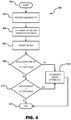
  • FIG. 4 is a diagram showing an illustrative method for applying attributes to pre-determined PoIs based on wireless access point attributes.
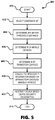
  • FIG. 5 is a diagram showing an illustrative method for generating PoIs including a security designation and restricting a mobile device based on the security designation.
  • FIG. 6 is a diagram showing an illustrative computer system for performing described methods according to the illustrative embodiments.
  • a network system 10 in which data from one or more datastores and existing attributes of particular wireless access points 20 are used to accelerate point of interest (“PoI”) identification or rapidly generate a PoI, the PoI used in enabling security wireless security measures.
  • An access point (“AP”) 20 can for example implement a WiFiTM or other wireless protocol, and existing AP attributes can include for example a service set identifier (“SSID”), a number of connected devices, or other attribute set forth in Table 1 below.
  • SSID service set identifier
  • Table 1 the attributes are gathered for example by wireless mobile communication devices 12 .
  • AP SSIDs typically provide descriptive text regarding the nature of a particular location such as whether the particular location corresponds to a public place (e.g., school name, café name, airport name) or a private place (e.g., “home”, “living room”).
  • the level of wireless activity e.g., number of connected/visited devices
  • SSID Service set identifier or network name provided by wireless access point For example, a WiFi TM network name.
  • Security Type Security protocol used to secure the communication between a device and wireless access point, for example WEP, WPA, WPA2.
  • Signal Strength RSSI received signal strength indicator
  • Location User device location coordinates GPS coordinates
  • AP location information acquired from AP.
  • a user device When a user device is connected to the AP, the user device can (download - measure the connection speed and/or ping for other upload) user devices' quality of service (“QoS”) information.
  • QoS quality of service
  • Date/time When the AP was first spotted (i.e., first entry into datastore) Password A user can submit password to public APs (e.g., “hotspots”) Category Open, open with ToA, paid, discontinued, mobile (e.g., on a train or bus). Terms of For those hotspots for example in which a device Agreement application can automatically (on behalf of the user) accept the Terms of Agreement. Comments User comments. Ratings User ratings (e.g., thumbs up/down or star rating).
  • Security check When a security check was last performed. date Security check The result of the security check. result Internet Full availability/partial availability/no availability availability and when the internet connection was checked last (e.g., a portscan).
  • Mobile communication devices 12 for convenience of description termed the “user devices 12 ”, operate in the network 8 .
  • Software and/or hardware residing on the user device 12 enables a security application 14 for device threat monitoring and/or a finder application for finding and logging wireless access points in range of the user device 12 .
  • the user device 12 can include for example a smart phone or other cellular enabled mobile device configured to operate on a wireless telecommunications network.
  • the user device 12 can include a personal computer, tablet device, or other computing device including wireless transceiver and corresponding hardware and/or software to support wireless communications.
  • the user devices 12 scan for access points 20 (e.g., WiFiTM protocol access points) and gather attribute data from access points 20 which have been scanned or connected to by the user devices 12 .
  • An AP server system 30 aggregates the gathered AP attribute data 60 (“AP data”) and distributes information including security settings determined based on the AP data 60 via the finder application 16 .
  • An AP collection server 32 receives AP data 60 from user devices 12 via the security application 14 and the finder application 16 .
  • a receiver server 34 gathers the collected AP data 60 and passes it to an AP map datastore 36 which can be implemented beneficially as a distributed file system, for example a HadoopTM Distributed File System (“HDFSTM”).
  • HDFSTM HadoopTM Distributed File System
  • a map reducer 38 performs reduction on the AP data 60 , and reduced AP data 62 is imported via an import application 40 to an AP datastore 42 .
  • the AP datastore 42 can be configured as a PostgreSQL object-relational database management system with support for geographic objects provided by PostGISTM application software.
  • the AP datastore 42 stores reduced AP data 62 including data listed in Table 1.
  • the AP datastore 42 can further store PoIs and corresponding attributes received via the user devices 12 or other data source.
  • a PoI mapping application 44 is configured to use data from the AP datastore 42 to generate PoIs with AP attributes (e.g., location, security type, category, ratings) without any predetermined or user-provided PoI.
  • the PoI mapping application 44 is further configured to apply AP attributes to existing pre-determined PoIs (“seed PoIs”) from the AP datastore 42 .
  • seed PoIs pre-determined PoIs
  • Determined and characterized PoIs and their AP attributes are stored in the PoI datastore 46 .
  • the PoI mapping application 44 is configured to cluster APs stored in the AP datastore 42 based on their geographical and attribute proximities.
  • a PoI is generated based on attributes of the dominant AP group.
  • the PoI once determined is used for managing security settings on a user device 12 in a geographic area corresponding to the PoI.
  • a request handling server 48 delivers PoI/AP data 64 to a user device 12 via the finder application 16 based on an AP list 63 showing APs (e.g., WiFiTM routers) detected by a wireless transceiver of the user device 12 .
  • the PoI/AP data 64 includes nearby PoIs, APs, AP clusters, PoI and AP attributes, and security maps based on the PoI and AP attributes.
  • Security settings for the request handling server 48 are set by a security server 52 based on data in a security datastore 50 .
  • FIG. 2 details of device security enabling processes performed in the network system 10 are shown by reference to particular software and/or hardware modules corresponding generally to lower levels of abstraction than the elements shown in FIG. 1 .
  • User devices 12 are represented by the mobile communication device 12 A, portable laptop computer 12 B, and desktop computer 12 C which execute via a processor the security application 14 and finder application 16 .
  • An AP data collector 32 A operates on the AP collection server 32 and collects AP data 60 from the mobile communication device 12 A, laptop computer 12 B, and desktop computer 12 C.
  • An AP localizer 38 A forms a component of the map reducer 38 for geographically organizing the AP data which is imported to the AP datastore 42 .
  • a PoI cyber security mapper 44 A forms a component of the PoI mapping application 44 and is configured to map PoIs based on their electronic security attributes (e.g., based on a comparison of wireless security protocols, connection type).
  • a physical security mapper 44 B also forms a component of the PoI mapping application 44 and is configured to map PoIs based on their physical security attributes (e.g., based on a comparison of comments, ratings, number of daily users).
  • Electronic security and physical security mappings are stored in the PoI datastore 46 .
  • a security map distributor 48 A enabled by the request handling server 48 distributes PoI security maps to a mobile communication device 12 A, laptop computer 12 B, or other wireless-enabled user device 12 based on a current location of the user device.
  • the finder application 16 on the user devices 12 selectively restricts connections to nearby APs based on the PoI security maps received. Restriction is implemented by the finder application 16 for example by blocking wireless data transmission from a user device 12 or blocking wireless data reception by the user device 12 .
  • An on-demand security alert module 48 B is configured to provide security alerts to the mobile communication device 12 A, laptop computer 12 B, or other wireless-enabled user device 12 enabling the finder application 16 based on PoI security maps and a current location of the user device 12 .
  • an illustrative method 200 is shown for generating a PoI, for example to be used in restricting a user device's connections to nearby APs and managing user device security settings. While the method 200 and associated processes are described with reference to the components shown in FIG. 1 , including the user device 12 , the AP server system 30 , and the AP datastore 42 , the method 200 may alternatively be performed via other suitable systems.
  • step 202 candidate APs are selected based on one or more particular criteria, for example proximity to a particular geographical location.
  • the APs within a given distance threshold e.g., 100 m
  • the AP locations in the AP datastore 42 used in the determinations of step 204 can have been estimated (e.g., by the localizer 38 A) for example based on locations of the user devices 12 (e.g., GPS-determined locations) and respective signal strengths of signals received from scanned APs by the user devices 12 providing the AP data 60 .
  • the attributes of the APs are compared and the APs are grouped by attributes such as attributes listed in Table 1 (e.g., similar SSID, BSSID, or # of users) to create candidate groups (step 206 ).
  • it is determined if the number of APs in the candidate group divided by the number of APs within the given distance from the candidate AP are greater than a first particular threshold (e.g., 0.5). In this case a lower first particular threshold (e.g., 0.3) may permit multiple PoIs in a particular geographic area.
  • a first particular threshold e.g., 0.5
  • a lower first particular threshold e.g., 0.3
  • a PoI is created based on attributes of the candidate group (e.g., location, security type, category, ratings) and the process ends (step 214 ).
  • attributes of the candidate group e.g., location, security type, category, ratings
  • the geographic location of the PoI is set as the location of the candidate AP.
  • the geographic location of the PoI can be set based on the locations of the APs in the group, for example a mean location of the APs in the group or weighted centroid of the locations of the APs in the group.
  • a step 212 it is determined if the number of APs in the candidate group are greater than a second particular threshold (e.g., 25). If “yes” is the determined response to the query step 212 , then the candidate group is considered dominant, and in a step 210 a PoI is created based on the attributes of the candidate group. If “no” is the determined response to the query step 212 , the process ends in step 214 for the particular candidate AP and a PoI is not created for the particular candidate AP.
  • a second particular threshold e.g. 25
  • the determination of whether a candidate group is considered dominant in step 208 and step 212 can be weighted based on the number of accesses made by the user devices 12 to the APs in a particular group over a particular period of time. For example a relatively higher first threshold can be applied in step 208 for a candidate group having a relatively higher average number of device accesses to APs in the candidate group, or a relatively lower second threshold can be applied in step 212 for a candidate group having a relatively higher average number of device accesses to APs in the candidate group.
  • the candidate group having more accesses to group APs in a given time period can be deemed dominant, and a PoI can be created based on the attributes of such dominant candidate group. For example a first candidate group including ten (10) WiFiTM APs and an average of one thousand (1000) accesses per day can be designated as dominant as compared with a second candidate group including twelve (12) WiFiTM APs and an average of ten (10) accesses per day, as the first candidate group is more popular, even though the first candidate group has less APs than the second candidate group.
  • PoI's locations can be pre-determined (i.e., seeded) for example based on data from an external database.
  • FIG. 4 an illustrative method 300 for applying attributes to pre-determined PoIs is shown. While the method 300 and associated processes are described with reference to the components shown in FIG. 1 , including the user device 12 , the AP server system 30 , and the AP datastore 42 , the method 300 may alternatively be performed via other suitable systems.
  • the method begins at step 301 .
  • pre-determined PoIs are provided, each including at least a geographic location, and stored for example in the PoI datastore 46 .
  • the APs within a given distance threshold e.g., 100 m
  • the AP locations in the AP datastore 42 used in the determinations of step 304 can have been estimated (e.g., by the localizer 38 A) for example based on locations of the user devices 12 (e.g., GPS-determined locations) and respective signal strengths of signals received from scanned APs by the user devices 12 providing the AP data 60 .
  • the APs are grouped by attributes (e.g., similar SSID, BSSID, and # of users) to create candidate groups (step 306 ).
  • attributes e.g., similar SSID, BSSID, and # of users
  • a lower first particular threshold e.g., 0.3
  • the candidate group is considered dominant, and in a step 310 the PoI inherits the attributes of the candidate group (e.g., security type, category, ratings). Beneficially, the geographic location of the PoI remains unchanged. Alternatively, the geographic location of the PoI can be set based on the locations of the APs in the group, for example a mean location of the APs in the group or weighted centroid of the locations of the APs in the group. If “no” is the determined response to the query step 208 , then in a step 312 , it is determined if the number of APs in the candidate group are greater than a second particular threshold (e.g., 25).
  • a second particular threshold e.g. 25
  • step 312 If “yes” is the determined response to the query step 312 , then the candidate group is considered dominant, and in the step 310 the PoI inherits the attributes of the candidate group. If “no” is the determined response to the query step 312 , the process ends (step 314 ) for the particular PoI, and the PoI is discarded or rendered inactive.
  • the determination of whether a candidate group is considered dominant in step 308 and step 312 can be weighted based on the number of accesses made by the user devices 12 to the access points in a particular candidate group over a particular period of time, for example as described above with reference to the method 200 of FIG. 3 .
  • an illustrative method 400 is shown for generating PoIs and applying wireless security setting based on generated PoIs, for example to be used in restricting connections by wireless communication devices to nearby APs and managing wireless communication device security settings. While the method 400 and associated processes are described with reference to the components shown in FIG. 1 , including the user device 12 , the AP server system 30 , and the AP datastore 42 , the method 400 may alternatively be performed via other suitable systems.
  • the method starts at a step 401 , and in a step 402 , candidate APs are selected based on one or more particular criteria, for example proximity to a particular geographical location. For each candidate AP from the AP datastore 42 , all APs within a given distance threshold (e.g., 100 m) from the candidate AP (“AP candidate group”) are determined (step 404 ).
  • the AP locations in the AP datastore 42 used in the determinations of step 404 can have been estimated (e.g., by the localizer 38 A) for example based on locations of the user devices 12 (e.g., GPS-determined locations) and respective signal strengths of signals received from scanned APs by the user devices 12 providing the AP data 60 (e.g., by triangulation).
  • a total number of mobile communication devices that connected to the APs in the candidate group within a first time period is determined.
  • a PoI is created including a security designation based at least on the number of transitory devices over the total number of mobile communication devices connected to the APs within the distance threshold of the candidate AP.
  • Wireless communication of a user device 12 located at or near the PoI is restricted by the finder application 16 based on the security designation (step 412 ) for example requiring or enabling a particular authentication process when connecting to an AP within the threshold distance from the PoI.
  • the particular authentication process can implement for example one or more of passcode authentication, face recognition authentication, fingerprint authentication, voice recognition authentication.
  • the geographic location of the PoI is set as the location of the candidate AP.
  • the geographic location of the PoI can be set based on the locations of the APs in the group, for example a mean location of the APs in the group or weighted centroid of the locations of the APs in the group.
  • the method ends at step 414 .
  • n equals the number of mobile communication devices connected to the APs within the distance threshold of the candidate AP
  • r equals the number of transitory devices over the total number of mobile communication devices that have connected to the APs over a particular time period.
  • the attributes shown are “stationary private” suggesting potentially privately-available APs, “stationary public” suggesting potentially publicly-available APs, and “transitory” suggesting publicly-available APs with high user-turnover.
  • the PoI is designated as “stationary private”.
  • security policies are applied by the finder application 16 based on attributes of the PoI at or near the geographic location of the user device 12 , for example as determined by a location determining system of the user device 12 (e.g., a Global Positioning System).
  • the finder application 16 via the operating system of the user device 12 can initiate a lock to prevent network connections to APs within a threshold distance of the PoI unless the security policy for transitory PoIs is complied with, for example two or more passwords are entered by a user of the user device 12 .
  • a particular school name e.g., “Polk High-cafeteria” and “Polk High-library”
  • a further example includes use of a BSSID (“MAC address”).
  • the first half of the MAC address identifies a vendor of the hardware and in many cases can indicate what type of user device 12 is connecting (e.g., AndroidTM mobile device, MacbookTM laptop computer).
  • a PoI type can be identified based on devices on a particular network.
  • a connection by a SonyTM PlaystationTM computer game console at a particular location may indicate a personal residence rather than a theater or grocery store. Unavailability of any desktop computer may lower the likelihood that a PoI is a personal residence.
  • FIG. 6 illustrates in abstract the function of an exemplary computer system 500 on which the systems, methods and processes described herein can execute.
  • the user device 12 and AP server system 30 , and servers included therein can each be embodied by a particular computer system 500 .
  • the computer system 500 may be provided in the form of a personal computer, laptop, handheld mobile communication device, mainframe, distributed computing system, or other suitable configuration.
  • Illustrative subject matter is in some instances described herein as computer-executable instructions, for example in the form of program modules, which program modules can include programs, routines, objects, data structures, components, or architecture configured to perform particular tasks or implement particular abstract data types.
  • the computer-executable instructions are represented for example by instructions 524 executable by the computer system 500 .
  • the computer system 500 can operate as a standalone device or can be connected (e.g., networked) to other machines. In a networked deployment, the computer system 500 may operate in the capacity of a server or a client machine in server-client network environment, or as a peer machine in a peer-to-peer (or distributed) network environment.
  • the computer system 500 can also be considered to include a collection of machines that individually or jointly execute a set (or multiple sets) of instructions to perform one or more of the methodologies described herein.
  • the exemplary computer system 500 includes a processor 502 , for example a central processing unit (CPU) or a graphics processing unit (GPU), a main memory 504 , and a static memory 506 in communication via a bus 508 .
  • a visual display 510 for example a liquid crystal display (LCD), light emitting diode (LED) display or a cathode ray tube (CRT) is provided for displaying data to a user of the system.
  • the visual display 510 can be enabled to receive data input from a user for example via a resistive or capacitive touch screen.
  • a character input apparatus 512 can be provided for example in the form of a physical keyboard, or alternatively, a program module which enables a user interactive simulated keyboard on the visual display 510 and actuatable for example using a resistive or capacitive touchscreen.
  • a pointing/selecting apparatus 514 can be provided, for example in the form of a computer mouse or enabled via a resistive or capacitive touch screen in the visual display 510 .
  • a data drive 516 , a signal generator 518 such as an audio speaker, and a network interface 520 configured for wireless or wired communication can also be provided.
  • a location determining system 517 is also provided which can include for example a GPS receiver and supporting hardware.
  • the instructions 524 and data structures embodying or used by the herein-described systems, methods, and processes, for example software instructions, are stored on computer-readable medium 522 and are accessible via the data drive 516 . Further, the instructions 524 can completely or partially reside for a particular time period in the main memory 504 or within the processor 502 when the instructions 524 are executed. The main memory 504 and the processor 502 are also as such considered computer-readable media.
  • While the computer-readable medium 522 is shown as a single medium, the computer-readable medium 522 can be considered to include a single medium or multiple media, for example in a centralized or distributed database, or associated caches and servers, that store the instructions 524 .
  • the computer-readable medium 522 can be considered to include any tangible medium that can store, encode, or carry instructions for execution by a machine and that cause the machine to perform any one or more of the methodologies described herein, or that can store, encode, or carry data structures used by or associated with such instructions.
  • the term “computer-readable storage medium” can be considered to include, but is not limited to, solid-state memories and optical and magnetic media that can store information in a non-transitory manner.
  • Computer-readable media can for example include non-volatile memory such as semiconductor memory devices (e.g., magnetic disks such as internal hard disks and removable disks, magneto-optical disks, and CD-ROM and DVD-ROM disks, Erasable Programmable Read-Only Memory (EPROM), Electrically Erasable Programmable Read-Only Memory (EEPROM), and flash memory devices).
  • semiconductor memory devices e.g., magnetic disks such as internal hard disks and removable disks, magneto-optical disks, and CD-ROM and DVD-ROM disks, Erasable Programmable Read-Only Memory (EPROM), Electrically Erasable Programmable Read-Only Memory (EEPROM), and flash memory devices.
  • the instructions 524 can be transmitted or received over a communications network, for example the communications network 8 , using a signal transmission medium via the network interface 520 operating under one or more known transfer protocols for example, FTP, HTTP, or HTTPs.
  • Examples of communication networks include a local area network (LAN), a wide area network (WAN), the Internet, mobile telephone networks, Plain Old Telephone (POTS) networks, and wireless data networks for example, WiFiTM and 3G/4G/5G cellular networks.
  • POTS Plain Old Telephone
  • wireless data networks for example, WiFiTM and 3G/4G/5G cellular networks.
  • the term “computer-readable signal medium” can further be considered to include any transitory intangible medium that is capable of storing, encoding, or carrying instructions for execution by a machine, and includes digital or analog communications signals or other intangible medium to facilitate communication of such instructions.

Landscapes

  • Engineering & Computer Science (AREA)
  • Computer Security & Cryptography (AREA)
  • Computer Networks & Wireless Communication (AREA)
  • Signal Processing (AREA)
  • Mobile Radio Communication Systems (AREA)

Abstract

A processor-implemented method including scanning wirelessly by a plurality of mobile devices and selecting a plurality of wireless access points based on the scanning by the plurality of mobile devices. Particular attributes of the plurality of wireless access points are determined, and the particular attributes of the plurality of wireless access points are compared. A particular set of the plurality of wireless access points are grouped based on the comparing of the particular attributes, and a particular geographic location is assigned to the particular set of the plurality of wireless access points. A particular security protocol is assigned to the particular geographic location based on the particular attributes of the particular set of the plurality of wireless access points. A particular mobile device is determined to be positioned within a particular distance of the particular geographic location, and wireless communication of the particular mobile device is restricted.

Description

CROSS REFERENCE TO RELATED APPLICATION
This application claims the benefit of U.S. Provisional Patent Application No. 62/651,018, filed Mar. 30, 2018, which is incorporated by reference as if fully set forth.
FIELD OF INVENTION
The invention relates generally to computing device security, and more particularly to adaptive computing device security.
BACKGROUND
A point of interest (“PoI”) represents a geographical location with personal importance to users in the field of location-enabled mobile computing. Identification of PoIs has become one of the pillars of the mobile communications experience. However, PoI identification (localization and characterization) is often challenging, taking significant time and resources which resources are often geographically dispersed.
SUMMARY
This Summary introduces simplified concepts that are further described below in the Detailed Description of Illustrative Embodiments. This Summary is not intended to identify key features or essential features of the claimed subject matter and is not intended to be used to limit the scope of the claimed subject matter.
A method is provided implemented by one or more processors, the method including scanning wirelessly by a plurality of mobile devices and selecting a plurality of wireless access points based on the scanning by the plurality of mobile devices. Particular attributes of the plurality of wireless access points are determined, and the particular attributes of the plurality of wireless access points are compared. A particular set of the plurality of wireless access points are grouped based on the comparing of the particular attributes, and a particular geographic location is assigned to the particular set of the plurality of wireless access points. A particular security protocol is assigned to the particular geographic location based on the particular attributes of the particular set of the plurality of wireless access points. A particular mobile device is determined to be positioned within a particular distance of the particular geographic location, and wireless communication of the particular mobile device is restricted based on the particular security protocol assigned to the particular geographic location.
Further provided is a method of implementing security protocols on a mobile communication device comprising designating a particular geographic area, scanning wirelessly by a plurality of mobile devices to locate a plurality of wireless access points in the particular geographic area, and determining a number of the plurality of mobile devices that connect to one or more of the plurality of wireless access points in the particular geographic area over a particular time period. Durations of time that the plurality of mobile devices connect to the one or more of the plurality of wireless access points in the particular geographic area over the particular time period are determined, and a particular geographic location in the particular geographic area is designated. A particular security protocol is assigned to the particular geographic location based on the durations of time the plurality of mobile devices connect to the one or more of the plurality of wireless access points in the particular geographic area and the number of the plurality of mobile devices that connect to the one or more of the plurality of wireless access points in the particular geographic area. The method further includes determining by a particular mobile device that the particular mobile device is located within a particular distance of the particular geographic location, and applying the particular security protocol by the particular mobile device based on the particular mobile device being located within the particular distance of the particular geographic location.
Further provided is a security system for a wireless network. The security system includes a plurality of mobile devices comprising processors and wireless hardware which enable a particular mobile device of the plurality of mobile devices to wirelessly scan to locate a plurality of wireless access points and determine particular attributes of the plurality of wireless access points, the particular attributes comprising service set identifiers (“SSIDs”), positions of the plurality of wireless access points, and security protocols of signals from the plurality of wireless access points. The particular mobile device is further enabled to determine a position of the particular mobile device, execute a particular authentication process on the particular mobile device to permit connection by the particular mobile device to a particular wireless access point based on a particular security protocol associated with the position of the particular mobile device, and transmit the particular attributes of the plurality of wireless access points. The security system further includes a server including one or more processing elements which enable the server to receive the particular attributes of the plurality of wireless access points from the plurality of mobile devices, compare the particular attributes of the plurality of wireless access points, group a particular set of the plurality of wireless access points based on the comparing of the particular attributes, assign a particular geographic location to the particular set of the plurality of wireless access points, and assign the particular security protocol to the particular geographic location based on the particular attributes of the particular set of the plurality of wireless access points.
BRIEF DESCRIPTION OF THE DRAWING(S)
A detailed understanding of illustrative embodiments may be had from the following description, given by way of example with the accompanying drawings. The Figures in the drawings and the detailed description are examples. The Figures and the detailed description are not to be considered limiting and other examples are possible. Like reference numerals in the Figures indicate like elements wherein:
FIG. 1 is a diagram showing a system for point of interest (“PoI”) identification and implementing electronic security measures based on wireless access point attributes.
FIG. 2 is a diagram showing particular elements of the system of FIG. 1 at a lower level of abstraction.
FIG. 3 is a diagram showing an illustrative method for generating a PoI based on wireless access point attributes.
FIG. 4 is a diagram showing an illustrative method for applying attributes to pre-determined PoIs based on wireless access point attributes.
FIG. 5 is a diagram showing an illustrative method for generating PoIs including a security designation and restricting a mobile device based on the security designation.
FIG. 6 is a diagram showing an illustrative computer system for performing described methods according to the illustrative embodiments.
DETAILED DESCRIPTION OF ILLUSTRATIVE EMBODIMENT(S)
Illustrative embodiments are described below with reference to the drawing figures wherein like numerals represent like elements throughout. The terms “a” and “an” as used herein do not denote a limitation of quantity, but rather denote the presence of at least one of the referenced items. Any directional signal such as top, bottom, left, right, upper and lower are taken with reference to the orientation in the various figures.
Referring to FIG. 1, a network system 10 is disclosed in which data from one or more datastores and existing attributes of particular wireless access points 20 are used to accelerate point of interest (“PoI”) identification or rapidly generate a PoI, the PoI used in enabling security wireless security measures. An access point (“AP”) 20 can for example implement a WiFi™ or other wireless protocol, and existing AP attributes can include for example a service set identifier (“SSID”), a number of connected devices, or other attribute set forth in Table 1 below. The attributes are gathered for example by wireless mobile communication devices 12. AP SSIDs typically provide descriptive text regarding the nature of a particular location such as whether the particular location corresponds to a public place (e.g., school name, café name, airport name) or a private place (e.g., “home”, “living room”). Moreover, the level of wireless activity (e.g., number of connected/visited devices) can indicate the nature of a particular location. For example if a number of devices connected to an AP 20 is greater than 50, this may suggest that the AP 20 is located in a public space like a mall (e.g., a “hotspot”), rather than a private place like a home.
TABLE 1
Stored AP Attributes
ATTRIBUTE DESCRIPTION
SSID Service set identifier or network name provided by
wireless access point (“AP”). For example, a WiFi ™
network name.
BSSID Basic service set identification - MAC address (device
ID) of wireless access point.
Security Type Security protocol used to secure the communication
between a device and wireless access point, for
example WEP, WPA, WPA2.
Signal Strength RSSI (received signal strength indicator), an
indication of the power level being received by the
antenna.
Location User device location coordinates (GPS coordinates)
where the AP was spotted, or AP location information
acquired from AP.
Measured speed When a user device is connected to the AP, the user
device can
(download - measure the connection speed and/or ping for other
upload) user devices' quality of service (“QoS”)
information.
Date/time When the AP was first spotted (i.e., first entry into
datastore)
Password A user can submit password to public APs
(e.g., “hotspots”)
Category Open, open with ToA, paid, discontinued, mobile
(e.g., on a train or bus).
Terms of For those hotspots for example in which a device
Agreement application can automatically (on behalf of the user)
accept the Terms of Agreement.
Comments User comments.
Ratings User ratings (e.g., thumbs up/down or star rating).
Number of daily Times that a user device successfully connected to
users the AP daily and durations of time the user device
connected.
Security check When a security check was last performed.
date
Security check The result of the security check.
result
Internet Full availability/partial availability/no availability
availability and when the internet connection was checked last
(e.g., a portscan).
Mobile communication devices 12, for convenience of description termed the “user devices 12”, operate in the network 8. Software and/or hardware residing on the user device 12 enables a security application 14 for device threat monitoring and/or a finder application for finding and logging wireless access points in range of the user device 12. The user device 12 can include for example a smart phone or other cellular enabled mobile device configured to operate on a wireless telecommunications network. Alternatively, the user device 12 can include a personal computer, tablet device, or other computing device including wireless transceiver and corresponding hardware and/or software to support wireless communications.
The user devices 12 scan for access points 20 (e.g., WiFi™ protocol access points) and gather attribute data from access points 20 which have been scanned or connected to by the user devices 12. An AP server system 30 aggregates the gathered AP attribute data 60 (“AP data”) and distributes information including security settings determined based on the AP data 60 via the finder application 16. An AP collection server 32 receives AP data 60 from user devices 12 via the security application 14 and the finder application 16. A receiver server 34 gathers the collected AP data 60 and passes it to an AP map datastore 36 which can be implemented beneficially as a distributed file system, for example a Hadoop™ Distributed File System (“HDFS™”). A map reducer 38 performs reduction on the AP data 60, and reduced AP data 62 is imported via an import application 40 to an AP datastore 42. Beneficially, the AP datastore 42 can be configured as a PostgreSQL object-relational database management system with support for geographic objects provided by PostGIS™ application software. The AP datastore 42 stores reduced AP data 62 including data listed in Table 1. The AP datastore 42 can further store PoIs and corresponding attributes received via the user devices 12 or other data source.
A PoI mapping application 44 is configured to use data from the AP datastore 42 to generate PoIs with AP attributes (e.g., location, security type, category, ratings) without any predetermined or user-provided PoI. The PoI mapping application 44 is further configured to apply AP attributes to existing pre-determined PoIs (“seed PoIs”) from the AP datastore 42. Determined and characterized PoIs and their AP attributes are stored in the PoI datastore 46. The PoI mapping application 44 is configured to cluster APs stored in the AP datastore 42 based on their geographical and attribute proximities. If a dominant AP group, for example a relatively large group of APs including similar attributes, exists in a particular geographic area, a PoI is generated based on attributes of the dominant AP group. The PoI once determined is used for managing security settings on a user device 12 in a geographic area corresponding to the PoI.
A request handling server 48 delivers PoI/AP data 64 to a user device 12 via the finder application 16 based on an AP list 63 showing APs (e.g., WiFi™ routers) detected by a wireless transceiver of the user device 12. The PoI/AP data 64 includes nearby PoIs, APs, AP clusters, PoI and AP attributes, and security maps based on the PoI and AP attributes. Security settings for the request handling server 48 are set by a security server 52 based on data in a security datastore 50.
Referring now also to FIG. 2, details of device security enabling processes performed in the network system 10 are shown by reference to particular software and/or hardware modules corresponding generally to lower levels of abstraction than the elements shown in FIG. 1. User devices 12 are represented by the mobile communication device 12A, portable laptop computer 12B, and desktop computer 12C which execute via a processor the security application 14 and finder application 16. An AP data collector 32A operates on the AP collection server 32 and collects AP data 60 from the mobile communication device 12A, laptop computer 12B, and desktop computer 12C. An AP localizer 38A forms a component of the map reducer 38 for geographically organizing the AP data which is imported to the AP datastore 42. A PoI cyber security mapper 44A forms a component of the PoI mapping application 44 and is configured to map PoIs based on their electronic security attributes (e.g., based on a comparison of wireless security protocols, connection type). A physical security mapper 44B also forms a component of the PoI mapping application 44 and is configured to map PoIs based on their physical security attributes (e.g., based on a comparison of comments, ratings, number of daily users). Electronic security and physical security mappings are stored in the PoI datastore 46. A security map distributor 48A enabled by the request handling server 48 distributes PoI security maps to a mobile communication device 12A, laptop computer 12B, or other wireless-enabled user device 12 based on a current location of the user device. The finder application 16 on the user devices 12 selectively restricts connections to nearby APs based on the PoI security maps received. Restriction is implemented by the finder application 16 for example by blocking wireless data transmission from a user device 12 or blocking wireless data reception by the user device 12. An on-demand security alert module 48B is configured to provide security alerts to the mobile communication device 12A, laptop computer 12B, or other wireless-enabled user device 12 enabling the finder application 16 based on PoI security maps and a current location of the user device 12.
Referring to FIG. 3, an illustrative method 200 is shown for generating a PoI, for example to be used in restricting a user device's connections to nearby APs and managing user device security settings. While the method 200 and associated processes are described with reference to the components shown in FIG. 1, including the user device 12, the AP server system 30, and the AP datastore 42, the method 200 may alternatively be performed via other suitable systems.
The method starts at step 201. In a step 202, candidate APs are selected based on one or more particular criteria, for example proximity to a particular geographical location. For each candidate AP in the AP datastore 42, the APs within a given distance threshold (e.g., 100 m) from the candidate AP are determined (step 204). The AP locations in the AP datastore 42 used in the determinations of step 204 can have been estimated (e.g., by the localizer 38A) for example based on locations of the user devices 12 (e.g., GPS-determined locations) and respective signal strengths of signals received from scanned APs by the user devices 12 providing the AP data 60. The attributes of the APs are compared and the APs are grouped by attributes such as attributes listed in Table 1 (e.g., similar SSID, BSSID, or # of users) to create candidate groups (step 206). In steps 208 and 212, it is determined if the candidate group is dominant. In a step 208, it is determined if the number of APs in the candidate group divided by the number of APs within the given distance from the candidate AP are greater than a first particular threshold (e.g., 0.5). In this case a lower first particular threshold (e.g., 0.3) may permit multiple PoIs in a particular geographic area. If “yes” is the determined response to the query step 208, then the candidate group is considered dominant, and in a step 210 a PoI is created based on attributes of the candidate group (e.g., location, security type, category, ratings) and the process ends (step 214). Beneficially, the geographic location of the PoI is set as the location of the candidate AP. Alternatively, the geographic location of the PoI can be set based on the locations of the APs in the group, for example a mean location of the APs in the group or weighted centroid of the locations of the APs in the group. If “no” is the determined response to the query step 208, then in a step 212, it is determined if the number of APs in the candidate group are greater than a second particular threshold (e.g., 25). If “yes” is the determined response to the query step 212, then the candidate group is considered dominant, and in a step 210 a PoI is created based on the attributes of the candidate group. If “no” is the determined response to the query step 212, the process ends in step 214 for the particular candidate AP and a PoI is not created for the particular candidate AP.
The determination of whether a candidate group is considered dominant in step 208 and step 212 can be weighted based on the number of accesses made by the user devices 12 to the APs in a particular group over a particular period of time. For example a relatively higher first threshold can be applied in step 208 for a candidate group having a relatively higher average number of device accesses to APs in the candidate group, or a relatively lower second threshold can be applied in step 212 for a candidate group having a relatively higher average number of device accesses to APs in the candidate group. In another configuration, if there are more than one candidate group in which “yes” is determined in step 208 but it is preferred that only one dominant group is designated, the candidate group having more accesses to group APs in a given time period can be deemed dominant, and a PoI can be created based on the attributes of such dominant candidate group. For example a first candidate group including ten (10) WiFi™ APs and an average of one thousand (1000) accesses per day can be designated as dominant as compared with a second candidate group including twelve (12) WiFi™ APs and an average of ten (10) accesses per day, as the first candidate group is more popular, even though the first candidate group has less APs than the second candidate group.
As an alternative to selecting candidate APs and then determining APs within a threshold distance from each candidate AP, PoI's locations can be pre-determined (i.e., seeded) for example based on data from an external database. Referring to FIG. 4, an illustrative method 300 for applying attributes to pre-determined PoIs is shown. While the method 300 and associated processes are described with reference to the components shown in FIG. 1, including the user device 12, the AP server system 30, and the AP datastore 42, the method 300 may alternatively be performed via other suitable systems.
The method begins at step 301. In a step 302, pre-determined PoIs are provided, each including at least a geographic location, and stored for example in the PoI datastore 46. For each candidate PoI, the APs within a given distance threshold (e.g., 100 m) from the candidate PoI are determined (step 304). The AP locations in the AP datastore 42 used in the determinations of step 304 can have been estimated (e.g., by the localizer 38A) for example based on locations of the user devices 12 (e.g., GPS-determined locations) and respective signal strengths of signals received from scanned APs by the user devices 12 providing the AP data 60. The APs are grouped by attributes (e.g., similar SSID, BSSID, and # of users) to create candidate groups (step 306). In steps 308 and 312, it is determined if the candidate group is dominant. In the step 308, it is determined if the number of APs in the candidate group divided by the number of APs within the given distance from the candidate AP are greater than a first particular threshold (e.g. 0.5). In this case a lower first particular threshold (e.g., 0.3) may permit multiple PoIs in a particular geographic area. If “yes” is the determined response to the query step 308, then the candidate group is considered dominant, and in a step 310 the PoI inherits the attributes of the candidate group (e.g., security type, category, ratings). Beneficially, the geographic location of the PoI remains unchanged. Alternatively, the geographic location of the PoI can be set based on the locations of the APs in the group, for example a mean location of the APs in the group or weighted centroid of the locations of the APs in the group. If “no” is the determined response to the query step 208, then in a step 312, it is determined if the number of APs in the candidate group are greater than a second particular threshold (e.g., 25). If “yes” is the determined response to the query step 312, then the candidate group is considered dominant, and in the step 310 the PoI inherits the attributes of the candidate group. If “no” is the determined response to the query step 312, the process ends (step 314) for the particular PoI, and the PoI is discarded or rendered inactive. The determination of whether a candidate group is considered dominant in step 308 and step 312 can be weighted based on the number of accesses made by the user devices 12 to the access points in a particular candidate group over a particular period of time, for example as described above with reference to the method 200 of FIG. 3.
Referring to FIG. 5, an illustrative method 400 is shown for generating PoIs and applying wireless security setting based on generated PoIs, for example to be used in restricting connections by wireless communication devices to nearby APs and managing wireless communication device security settings. While the method 400 and associated processes are described with reference to the components shown in FIG. 1, including the user device 12, the AP server system 30, and the AP datastore 42, the method 400 may alternatively be performed via other suitable systems.
The method starts at a step 401, and in a step 402, candidate APs are selected based on one or more particular criteria, for example proximity to a particular geographical location. For each candidate AP from the AP datastore 42, all APs within a given distance threshold (e.g., 100 m) from the candidate AP (“AP candidate group”) are determined (step 404). The AP locations in the AP datastore 42 used in the determinations of step 404 can have been estimated (e.g., by the localizer 38A) for example based on locations of the user devices 12 (e.g., GPS-determined locations) and respective signal strengths of signals received from scanned APs by the user devices 12 providing the AP data 60 (e.g., by triangulation). In step 406, a total number of mobile communication devices that connected to the APs in the candidate group within a first time period (e.g., 30 days) is determined. In a step 408, it is determined the number of the mobile communication devices (e.g., wireless user devices 12 and other devices) that connected to the APs within the threshold distance of the candidate AP (e.g., the candidate APs) and that have not connected for more than a second time period (e.g., 15 days) for more than a particular duration (e.g., 2 hours per day), hereinafter “transitory devices”. In step 410, a PoI is created including a security designation based at least on the number of transitory devices over the total number of mobile communication devices connected to the APs within the distance threshold of the candidate AP. Wireless communication of a user device 12 located at or near the PoI is restricted by the finder application 16 based on the security designation (step 412) for example requiring or enabling a particular authentication process when connecting to an AP within the threshold distance from the PoI. The particular authentication process can implement for example one or more of passcode authentication, face recognition authentication, fingerprint authentication, voice recognition authentication. Beneficially, the geographic location of the PoI is set as the location of the candidate AP. Alternatively, the geographic location of the PoI can be set based on the locations of the APs in the group, for example a mean location of the APs in the group or weighted centroid of the locations of the APs in the group. The method ends at step 414.
Referring to Table 2 below, an exemplary manner of allocating PoI attributes according to step 410 of method 400 is shown where “n” equals the number of mobile communication devices connected to the APs within the distance threshold of the candidate AP, and “r” equals the number of transitory devices over the total number of mobile communication devices that have connected to the APs over a particular time period. The attributes shown are “stationary private” suggesting potentially privately-available APs, “stationary public” suggesting potentially publicly-available APs, and “transitory” suggesting publicly-available APs with high user-turnover.
TABLE 2
POI TYPE r < 0.3 0.3 ≤ r < 0.6 0.6 ≤ r
n ≤ 10 Stationary private Stationary public Transitory
10 < n ≤ 100 Stationary public Stationary public Transitory
100 < n Stationary public Transitory Transitory
For example, as indicated in Table 2, when the total number of mobile communication devices that connected to the APs within the distance threshold of the candidate AP during a particular week is less than 10 and the number of transitory devices during that week over the total number of mobile communication devices is less than 0.3, the PoI is designated as “stationary private”. Referring to Table 3, security policies are applied by the finder application 16 based on attributes of the PoI at or near the geographic location of the user device 12, for example as determined by a location determining system of the user device 12 (e.g., a Global Positioning System).
TABLE 3
EXAMPLE
POI TYPE LOCATIONS EXAMPLE SECURITY POLICIES
Stationary Personal residence No password or single password
private
Stationary Office, school Single password
public
Transitory Train station, airport Two or more passwords (e.g.,
passcode + fingerprint)
Or single password with short
password expiration time
(e.g., 30 minutes)
For example, if a particular PoI where a user device 12 is located is classified as “transitory”, the finder application 16 via the operating system of the user device 12 can initiate a lock to prevent network connections to APs within a threshold distance of the PoI unless the security policy for transitory PoIs is complied with, for example two or more passwords are entered by a user of the user device 12.
PoIs, for example as determined in the methods described above, can be characterized based on the similar or matching attributes of the APs in the candidate group. For example if the APs in a particular candidate AP group share a particular school name (e.g., “Polk High-cafeteria” and “Polk High-library”) in the SSIDs and a large number of connected devices, then a new PoI can be created with attributes for example of: [type=public, subtype=school, name=“Polk High”, location=mean (locations of candidate group), radius=stddev (spread of locations of candidate group)].
In another example, if only one (1) AP is in an area with 2 connected user devices in total and heavier traffic at night, the location is most likely a personal residence. Thus, a new PoI can be created with attributes of: [type=private, subtype=home, location=AP location, radius=50 meters (typical AP coverage radius)].
In another example, if two (2) APs with high traffic during lunch/dinner time with duration of an average thirty (30) minutes at lunch and one (1) hour at dinner are in particular area, the area may be a restaurant. Thus, a new PoI can have attributes of: [type=public, subtype=restaurant, location=AP location, radius=100 m (typical coverage radius of two APs)].
A further example includes use of a BSSID (“MAC address”). The first half of the MAC address identifies a vendor of the hardware and in many cases can indicate what type of user device 12 is connecting (e.g., Android™ mobile device, Macbook™ laptop computer). A PoI type can be identified based on devices on a particular network. A connection by a Sony™ Playstation™ computer game console at a particular location may indicate a personal residence rather than a theater or grocery store. Unavailability of any desktop computer may lower the likelihood that a PoI is a personal residence.
FIG. 6 illustrates in abstract the function of an exemplary computer system 500 on which the systems, methods and processes described herein can execute. For example, the user device 12 and AP server system 30, and servers included therein, can each be embodied by a particular computer system 500. The computer system 500 may be provided in the form of a personal computer, laptop, handheld mobile communication device, mainframe, distributed computing system, or other suitable configuration. Illustrative subject matter is in some instances described herein as computer-executable instructions, for example in the form of program modules, which program modules can include programs, routines, objects, data structures, components, or architecture configured to perform particular tasks or implement particular abstract data types. The computer-executable instructions are represented for example by instructions 524 executable by the computer system 500.
The computer system 500 can operate as a standalone device or can be connected (e.g., networked) to other machines. In a networked deployment, the computer system 500 may operate in the capacity of a server or a client machine in server-client network environment, or as a peer machine in a peer-to-peer (or distributed) network environment. The computer system 500 can also be considered to include a collection of machines that individually or jointly execute a set (or multiple sets) of instructions to perform one or more of the methodologies described herein.
It would be understood by those skilled in the art that other computer systems including but not limited to networkable personal computers, minicomputers, mainframe computers, handheld mobile communication devices, multiprocessor systems, microprocessor-based or programmable electronics, and smart phones could be used to enable the systems, methods and processes described herein. Such computer systems can moreover be configured as distributed computer environments where program modules are enabled and tasks are performed by processing devices linked through a communications network, and in which program modules can be located in both local and remote memory storage devices.
The exemplary computer system 500 includes a processor 502, for example a central processing unit (CPU) or a graphics processing unit (GPU), a main memory 504, and a static memory 506 in communication via a bus 508. A visual display 510 for example a liquid crystal display (LCD), light emitting diode (LED) display or a cathode ray tube (CRT) is provided for displaying data to a user of the system. The visual display 510 can be enabled to receive data input from a user for example via a resistive or capacitive touch screen. A character input apparatus 512 can be provided for example in the form of a physical keyboard, or alternatively, a program module which enables a user interactive simulated keyboard on the visual display 510 and actuatable for example using a resistive or capacitive touchscreen. A pointing/selecting apparatus 514 can be provided, for example in the form of a computer mouse or enabled via a resistive or capacitive touch screen in the visual display 510. A data drive 516, a signal generator 518 such as an audio speaker, and a network interface 520 configured for wireless or wired communication can also be provided. A location determining system 517 is also provided which can include for example a GPS receiver and supporting hardware.
The instructions 524 and data structures embodying or used by the herein-described systems, methods, and processes, for example software instructions, are stored on computer-readable medium 522 and are accessible via the data drive 516. Further, the instructions 524 can completely or partially reside for a particular time period in the main memory 504 or within the processor 502 when the instructions 524 are executed. The main memory 504 and the processor 502 are also as such considered computer-readable media.
While the computer-readable medium 522 is shown as a single medium, the computer-readable medium 522 can be considered to include a single medium or multiple media, for example in a centralized or distributed database, or associated caches and servers, that store the instructions 524. The computer-readable medium 522 can be considered to include any tangible medium that can store, encode, or carry instructions for execution by a machine and that cause the machine to perform any one or more of the methodologies described herein, or that can store, encode, or carry data structures used by or associated with such instructions. Further, the term “computer-readable storage medium” can be considered to include, but is not limited to, solid-state memories and optical and magnetic media that can store information in a non-transitory manner. Computer-readable media can for example include non-volatile memory such as semiconductor memory devices (e.g., magnetic disks such as internal hard disks and removable disks, magneto-optical disks, and CD-ROM and DVD-ROM disks, Erasable Programmable Read-Only Memory (EPROM), Electrically Erasable Programmable Read-Only Memory (EEPROM), and flash memory devices).
The instructions 524 can be transmitted or received over a communications network, for example the communications network 8, using a signal transmission medium via the network interface 520 operating under one or more known transfer protocols for example, FTP, HTTP, or HTTPs. Examples of communication networks include a local area network (LAN), a wide area network (WAN), the Internet, mobile telephone networks, Plain Old Telephone (POTS) networks, and wireless data networks for example, WiFi™ and 3G/4G/5G cellular networks. The term “computer-readable signal medium” can further be considered to include any transitory intangible medium that is capable of storing, encoding, or carrying instructions for execution by a machine, and includes digital or analog communications signals or other intangible medium to facilitate communication of such instructions.
Although features and elements are described above in particular combinations, one of ordinary skill in the art will appreciate that each feature or element can be used alone or in any combination with the other features and elements. Methods described herein may be implemented in a computer program, software, or firmware incorporated in a computer-readable medium for execution by a computer or processor.
While embodiments have been described in detail above, these embodiments are non-limiting and should be considered as merely exemplary. Modifications and extensions may be developed, and all such modifications are deemed to be within the scope defined by the appended claims.

Claims (40)

What is claimed is:
1. A method implemented by one or more processors, the method comprising:
scanning wirelessly by a plurality of mobile devices;
selecting a plurality of wireless access points based on the scanning by the plurality of mobile devices;
determining particular attributes of the plurality of wireless access points;
comparing the particular attributes of the plurality of wireless access points;
grouping a particular set of the plurality of wireless access points based on the comparing of the particular attributes;
assigning a particular geographic location to the particular set of the plurality of wireless access points;
assigning a particular security protocol to the particular geographic location based on the particular attributes of the particular set of the plurality of wireless access points;
determining that a particular mobile device is positioned within a particular distance of the particular geographic location; and
restricting wireless communication of the particular mobile device based on the particular security protocol assigned to the particular geographic location.
2. The method of claim 1, the particular attributes comprising positions of the plurality of wireless access points, the method further comprising assigning the particular geographic location to the particular set of the plurality of wireless access points based on the positions of the plurality of wireless access points of the particular set of the plurality of wireless access points.
3. The method of claim 2, wherein the particular attributes comprise locations of the plurality of mobile devices where signals from the plurality of the wireless access points were received by the plurality of mobile devices, the method further comprising:
estimating positions of the plurality of wireless access points based on the locations of the plurality of mobile devices where the signals from the plurality of wireless access points were received by the plurality of mobile devices; and
determining the particular geographic location as at least one of a weighted centroid or a mean location of the positions of the plurality of wireless access points of the particular set of the plurality of wireless access points.
4. The method of claim 1, further comprising:
assigning certain attributes to the particular geographic location based on the particular attributes of the particular set of the plurality of wireless access points; and
assigning the particular security protocol to the particular geographic location based on the certain attributes of the particular geographic location.
5. The method of claim 4, further comprising:
populating a first data structure accessible via a network with the particular attributes of the plurality of wireless access points; and
populating a second data structure accessible via the network with the certain attributes of the particular geographic location.
6. The method of claim 1, further comprising:
determining matching attributes of the particular attributes of the plurality of wireless access points;
grouping the particular set of the wireless access points based on the determining of the matching attributes; and
assigning the particular geographic location to the particular set of the wireless access points based on the number of wireless access points in the particular set relative to the number of wireless access points within the particular distance of the particular geographic location.
7. The method of claim 1, further comprising:
determining matching attributes of the particular attributes of the plurality of wireless access points;
grouping the particular set of the wireless access points based on the determining of the matching attributes; and
assigning the particular geographic location to the particular set of the wireless access points based on the number of wireless access points in the particular set divided by the number of wireless access points within the particular distance of the particular geographic location exceeding a particular threshold.
8. The method of claim 1, further comprising:
determining matching attributes of the particular attributes of the plurality of wireless access points;
grouping the particular set of the wireless access points based on the determining of the matching attributes; and
assigning the particular geographic location to the particular set of the wireless access points based on the number of wireless access points in the particular set exceeding a particular threshold.
9. The method of claim 1, wherein the particular attributes comprise locations of the plurality of mobile devices where signals from the plurality of the wireless access points were received by the plurality of mobile devices and received strengths of the signals received from the plurality of wireless access points by the plurality of mobile devices, the method further comprising:
estimating positions of the plurality of wireless access points based at least on the locations of the plurality of mobile devices where the signals from the wireless access points were received and the received strengths of the signals received from the wireless access points by the plurality of mobile devices; and
determining the particular geographic location based on the estimated positions of the particular set of the wireless access points.
10. The method of claim 1, further comprising:
determining a number of device accesses by the plurality of mobile devices to the particular set of the wireless access points; and
assigning the particular geographic location to the particular set of the wireless access points based on the number of device accesses.
11. The method of claim 1, the restricting of the wireless communication comprising blocking at least one of wireless data transmission from the particular mobile device and wireless data reception by the particular mobile device.
12. The method of claim 1, the restricting of the wireless communication comprising restricting connection by the particular mobile device to a particular wireless access point of the particular set of the plurality of wireless access points.
13. The method of claim 1, the restricting of the wireless communication comprising executing a particular authentication process on the particular mobile device to permit connection by the particular mobile device to a particular wireless access point of the particular set of the plurality of wireless access points.
14. The method of claim 1, the restricting of the wireless communication comprising restricting by an application executed on the particular mobile device a connection by the particular mobile device to a particular wireless access point of the particular set of the plurality of wireless access points.
15. The method of claim 14, further comprising generating an alert on the particular mobile device based on the particular security protocol assigned to the particular geographic location.
16. The method of claim 1, further comprising:
selecting a candidate access point based on at least one predetermined criterion;
determining distances of the plurality of wireless access points from the candidate access point based on the scanning for signals by the plurality of mobile devices; and
selecting the plurality of wireless access points based on the distances of the plurality of wireless access points from the candidate access point.
17. The method of claim 16, further comprising assigning the particular geographic location to the particular set of the plurality of wireless access points as a geographic position of the candidate access point.
18. The method of claim 16, the particular attributes comprising locations of the plurality of mobile devices where signals from the wireless access points were received and received strengths of the signals received from the wireless access points, the method further comprising:
estimating positions of the plurality of wireless access points based at least on the locations of the plurality of mobile devices where the signals from the wireless access points were received and the received strengths of the signals received from the plurality of wireless access points by the plurality of mobile devices;
determining at least one of a mean location of the particular set of the plurality of wireless access points or a weighted centroid location of the particular set of the plurality of wireless access points; and
assigning the particular geographic location to the particular set of the plurality of wireless access points as the at least one of the mean location of the particular set of the plurality of wireless access points or the weighted centroid location of the particular set of the plurality of wireless access points.
19. The method of claim 16, the at least one predetermined criterion comprising a geographic constraint.
20. The method of claim 16, further comprising selecting the plurality of wireless access points based on the distances of the plurality of wireless access points from the candidate access point being within a threshold.
21. The method of claim 1, the particular geographic location comprising a geographic point of interest.
22. The method of claim 1, further comprising:
designating a geographic point of interest;
determining distances of the plurality of wireless access points from the geographic point of interest based on the scanning for signals by the plurality of mobile devices; and
selecting the plurality of wireless access points based on the distances of the plurality of wireless access points from the geographic point of interest.
23. The method of claim 22, further comprising assigning the particular geographic location to the particular set of the plurality of wireless access points as the geographic point of interest.
24. The method of claim 22, further comprising:
determining at least one of a mean location of the particular set of the plurality of wireless access points or a weighted centroid location of the particular set of the plurality of wireless access points; and
assigning the particular geographic location to the particular set of the plurality of wireless access points as the at least one of the mean location of the particular set of the plurality of wireless access points or the weighted centroid location of the particular set of the plurality of wireless access points.
25. The method of claim 1, wherein the particular attributes comprise at least one of service set identifiers (“SSIDs”) or basic service set identifications (“BSSIDs”), the method further comprising:
comparing the at least one of the SSIDs or the BSSIDs of the plurality of wireless access points; and
grouping the particular set of the plurality of wireless access points based on the comparing of the at least one of the SSIDs or the BSSIDs.
26. The method of claim 1, wherein the particular attributes comprise a number of the plurality of mobile devices that connected to each of the plurality of wireless access points, the method further comprising:
comparing the number of the plurality of mobile devices that connected to each of the plurality of wireless access points; and
grouping the particular set of the plurality of wireless access points based on the comparing of the number of the plurality of mobile devices that connected to each of the plurality of wireless access points.
27. The method of claim 1, wherein the particular attributes comprise security protocols, the method comprising:
comparing the security protocols of the plurality of wireless access points; and
grouping the particular set of the plurality of wireless access points based on the comparing of the security protocols of the plurality of wireless access points.
28. The method of claim 1, further comprising:
determining durations of time that the plurality of mobile devices connected to the plurality of wireless access points over a particular period time period; and
grouping the particular set of the plurality of wireless access points based on the durations of time that the plurality of mobile devices connected to the plurality of wireless access points over the particular period time period.
29. The method of claim 28, further comprising:
designating as transitory devices ones of the plurality of mobile devices that connected to the plurality of wireless access points less than a threshold duration over the particular time period; and
grouping the particular set of the plurality of wireless access points based on the number of transitory devices relative to the number of the plurality of mobile devices that connected to the plurality of wireless access points over the particular time period.
30. A method of implementing security protocols on a mobile communication device, the method comprising:
designating a particular geographic area,
scanning wirelessly by a plurality of mobile devices to locate a plurality of wireless access points in the particular geographic area;
determining a number of the plurality of mobile devices that connect to one or more of the plurality of wireless access points in the particular geographic area over a particular time period;
determining durations of time the plurality of mobile devices connect to the one or more of the plurality of wireless access points in the particular geographic area over the particular time period;
designating a particular geographic location in the particular geographic area;
assigning a particular security protocol to the particular geographic location based at least on the durations of time the plurality of mobile devices connect to the one or more of the plurality of wireless access points in the particular geographic area and the number of the plurality of mobile devices that connect to the one or more of the plurality of wireless access points in the particular geographic area;
determining by a particular mobile device that the particular mobile device is located within a particular distance of the particular geographic location; and
applying the particular security protocol by the particular mobile device based on the particular mobile device being located within the particular distance of the particular geographic location.
31. The method of claim 30, further comprising
designating a candidate access point based on at least one criterion; and
defining the particular geographic area by a radius extending from a position of the candidate access point.
32. The method of claim 31, further comprising designating the particular geographic location as the position of the candidate access point.
33. The method of claim 30, further comprising determining the particular geographic location as at least one of a weighted centroid or a mean location of the positions of the plurality of wireless access points.
34. The method of claim 30, further comprising connecting by the particular mobile device to a particular wireless access point in the particular geographic area by implementing a particular authentication process based on the particular security protocol assigned to the particular geographic location.
35. The method of claim 30, further comprising:
determining when the durations of time are less than a particular threshold duration; and
assigning the particular security protocol to the particular geographic location further based on the determining of when the durations of time are less than the particular threshold duration.
36. The method of claim 35, further comprising:
designating as transitory devices ones of the plurality of mobile devices which connect to the one or more of the plurality of wireless access points for less than the particular threshold duration; and
assigning the particular security protocol to the particular geographic location further based on the number of the transitory devices relative to the number of the plurality of mobile devices that connect to the one or more of the plurality of wireless access points in the particular geographic area over the particular time period.
37. The method of claim 35, further comprising:
designating as transitory devices ones of the plurality of mobile devices which connect to the one or more of the plurality of wireless access points less than a particular threshold duration during less than a particular threshold number of days during the particular time period; and
assigning the particular security protocol to the particular geographic location further based on the number of the transitory devices relative to the number of the plurality of mobile devices that connect to the one or more of the plurality of wireless access points in the particular geographic area over the particular time period.
38. The method of claim 30, wherein determining the particular mobile device is located within the particular distance of the particular geographic location comprises determining the particular mobile device is located in the particular geographic area.
39. The method of claim 30, further comprising:
determining by the scanning positions of the plurality of wireless access points; and
determining the particular geographic location as at least one of a weighted centroid or a mean location of the positions of the plurality of wireless access points.
40. A security system for a wireless network, the security system comprising:
a plurality of mobile devices comprising processors and wireless hardware which enable a particular mobile device of the plurality of mobile devices to:
wirelessly scan to locate a plurality of wireless access points;
determine particular attributes of the plurality of wireless access points, the particular attributes comprising service set identifiers (“SSIDs”), positions of the plurality of wireless access points, and security protocols of signals from the plurality of wireless access points;
determine a position of the particular mobile device;
execute a particular authentication process on the particular mobile device to permit connection by the particular mobile device to a particular wireless access point based on a particular security protocol associated with the position of the particular mobile device; and
transmit the particular attributes of the plurality of wireless access points; and
at least one server comprising at least one processing element which enables the at least one server to:
receive the particular attributes of the plurality of wireless access points from the plurality of mobile devices;
compare the particular attributes of the plurality of wireless access points;
group a particular set of the plurality of wireless access points based on the comparing of the particular attributes;
assign a particular geographic location to the particular set of the plurality of wireless access points; and
assign the particular security protocol to the particular geographic location based on the particular attributes of the particular set of the plurality of wireless access points.
US16/370,831 2018-03-30 2019-03-29 Enabling wireless security measures based on wireless access point attributes Active US10568017B2 (en)

Priority Applications (2)

Application Number Priority Date Filing Date Title
US16/370,831 US10568017B2 (en) 2018-03-30 2019-03-29 Enabling wireless security measures based on wireless access point attributes
PCT/US2019/025049 WO2019191720A1 (en) 2018-03-30 2019-03-29 Enabling wireless security measures based on wireless access point attributes

Applications Claiming Priority (2)

Application Number Priority Date Filing Date Title
US201862651018P 2018-03-30 2018-03-30
US16/370,831 US10568017B2 (en) 2018-03-30 2019-03-29 Enabling wireless security measures based on wireless access point attributes

Publications (2)

Publication Number Publication Date
US20190306781A1 US20190306781A1 (en) 2019-10-03
US10568017B2 true US10568017B2 (en) 2020-02-18

Family

ID=68057345

Family Applications (1)

Application Number Title Priority Date Filing Date
US16/370,831 Active US10568017B2 (en) 2018-03-30 2019-03-29 Enabling wireless security measures based on wireless access point attributes

Country Status (3)

Country Link
US (1) US10568017B2 (en)
CN (1) CN112055958B (en)
WO (1) WO2019191720A1 (en)

Families Citing this family (10)

* Cited by examiner, † Cited by third party
Publication number Priority date Publication date Assignee Title
CN109327887B (en) * 2018-10-24 2020-02-21 百度在线网络技术(北京)有限公司 Method and apparatus for generating information
EP3772661A1 (en) * 2019-08-09 2021-02-10 HERE Global B.V. Device localisation based on poi data and payment transaction data
US11509642B2 (en) * 2019-08-21 2022-11-22 Truist Bank Location-based mobile device authentication
US10997600B1 (en) * 2019-12-16 2021-05-04 Microsoft Technology Licensing, Llc Data transaction scheduling using crowd-sourced network data
CN112040529B (en) * 2020-09-11 2023-08-04 连尚(北京)网络科技有限公司 WiFi connection method and equipment
CN112235714B (en) * 2020-10-13 2021-05-25 平安科技(深圳)有限公司 POI positioning method and device based on artificial intelligence, computer equipment and medium
US11457370B2 (en) * 2020-12-11 2022-09-27 Hewlett Packard Enterprise Development Lp System and method for seamless live upgrade of access points using neighbor data
KR20220138981A (en) * 2021-04-07 2022-10-14 삼성전자주식회사 An electronic device providing customized group service and control method thereof
EP4376462A4 (en) * 2021-09-15 2024-11-27 Samsung Electronics Co., Ltd. ELECTRONIC DEVICE AND METHOD FOR PERFORMING COMMUNICATION VIA VIRTUAL PRIVATE NETWORK, AND COMPUTER-READABLE STORAGE MEDIUM
US12219366B2 (en) * 2022-01-12 2025-02-04 Qualcomm Incorporated Active user equipment counting

Citations (9)

* Cited by examiner, † Cited by third party
Publication number Priority date Publication date Assignee Title
US20080209521A1 (en) 2004-07-07 2008-08-28 Robert Anderson Malaney Location-Enabled Security Services in Wireless Network
US20090088182A1 (en) * 2007-10-02 2009-04-02 Piersol Kurt W Geographic tagging of network access points
US20100016022A1 (en) * 2008-07-15 2010-01-21 Sony Ericsson Mobile Communications Ab Methods and Apparatus for Providing Services Information with a Femtocell Wireless Base Station
US20100110921A1 (en) * 2008-09-29 2010-05-06 Toshiba America Research, Inc. Pre-evaluation of multiple network access points
US20110093913A1 (en) 2009-10-15 2011-04-21 At&T Intellectual Property I, L.P. Management of access to service in an access point
US20130295962A1 (en) * 2012-05-03 2013-11-07 Arun Manroa Establishing network connectivity based on location
US20140143629A1 (en) 2012-11-21 2014-05-22 Microsoft Corporation Wireless Access Point Mapping
US20150063331A1 (en) * 2012-03-30 2015-03-05 British Telecommunications Public Limited Company Access point detection
US20160323843A1 (en) 2004-10-29 2016-11-03 Skyhook Wireless, Inc. Techniques for setting quality attributes of access points in a positioning system

Family Cites Families (6)

* Cited by examiner, † Cited by third party
Publication number Priority date Publication date Assignee Title
ES2391566T3 (en) * 2004-10-29 2012-11-27 Skyhook Wireless, Inc. Database and location beacon server, method to build a location beacon database, and location-based service that uses it
KR101416599B1 (en) * 2010-07-05 2014-07-09 에스케이플래닛 주식회사 Method for Detecting Position by Using Position Determining Access Point, And Apparatus, System And Access Point therefor
US9491645B2 (en) * 2013-08-06 2016-11-08 Google Technology Holdings LLC Method and apparatus for wireless network data collection
US20150106957A1 (en) * 2013-10-10 2015-04-16 Elwha Llc Methods, systems, and devices for facilitating viable distribution of data collected by wearable computation
US20150350843A1 (en) * 2014-05-30 2015-12-03 Apple Inc. Location application program interface
US10250701B2 (en) * 2016-05-23 2019-04-02 Bayerische Motoren Werke Aktiengesellschaft Method and system for determining an actual point-of-interest based on user activity and environment contexts

Patent Citations (10)

* Cited by examiner, † Cited by third party
Publication number Priority date Publication date Assignee Title
US20080209521A1 (en) 2004-07-07 2008-08-28 Robert Anderson Malaney Location-Enabled Security Services in Wireless Network
US20130340039A1 (en) 2004-07-07 2013-12-19 Nariste Networks Pty. Ltd. Location-enabled security services in wireless network
US20160323843A1 (en) 2004-10-29 2016-11-03 Skyhook Wireless, Inc. Techniques for setting quality attributes of access points in a positioning system
US20090088182A1 (en) * 2007-10-02 2009-04-02 Piersol Kurt W Geographic tagging of network access points
US20100016022A1 (en) * 2008-07-15 2010-01-21 Sony Ericsson Mobile Communications Ab Methods and Apparatus for Providing Services Information with a Femtocell Wireless Base Station
US20100110921A1 (en) * 2008-09-29 2010-05-06 Toshiba America Research, Inc. Pre-evaluation of multiple network access points
US20110093913A1 (en) 2009-10-15 2011-04-21 At&T Intellectual Property I, L.P. Management of access to service in an access point
US20150063331A1 (en) * 2012-03-30 2015-03-05 British Telecommunications Public Limited Company Access point detection
US20130295962A1 (en) * 2012-05-03 2013-11-07 Arun Manroa Establishing network connectivity based on location
US20140143629A1 (en) 2012-11-21 2014-05-22 Microsoft Corporation Wireless Access Point Mapping

Non-Patent Citations (1)

* Cited by examiner, † Cited by third party
Title
International Search Report dated Jun. 21, 2019 for PCTUS/1925049.

Also Published As

Publication number Publication date
WO2019191720A1 (en) 2019-10-03
CN112055958B (en) 2023-01-10
CN112055958A (en) 2020-12-08
US20190306781A1 (en) 2019-10-03

Similar Documents

Publication Publication Date Title
US10568017B2 (en) Enabling wireless security measures based on wireless access point attributes
JP6694952B2 (en) Generate and publish verified location information
US9820153B2 (en) Centralized access point provisioning system and methods of operation thereof
US9046987B2 (en) Crowd formation based on wireless context information
US9894630B2 (en) ADSS enabled global roaming system
US11109258B2 (en) Crowd sourced privacy preserving access point mapping
US11627466B2 (en) Updating automatic access parameters for wireless local area networks
WO2016004198A1 (en) Network access method, apparatus, server and terminal
WO2017020553A1 (en) Method and device for establishing wireless connection
US10757556B2 (en) Device-based access point association and tracking of physical addresses
CN109275090B (en) Information processing method, device, terminal and storage medium
CN108351421A (en) Positioning method, base station and mobile terminal in mobile network
WO2020198958A1 (en) Techniques involving a security heat map
US20160050281A1 (en) Seamless peer to peer internet connectivity
WO2017084456A1 (en) Wifi hotspot processing method, device and system
CN105101089B (en) Method, related device and system for realizing positioning
US9386411B2 (en) Radio access system, controlling apparatus, and terminal apparatus
US12490309B2 (en) Systems and methods for WI-FI collision avoidance
Wang et al. A location privacy-aware method for knn query in location based services
Kikuchi et al. Location information system for access points in the heterogeneous wireless enviornment

Legal Events

Date Code Title Description
FEPP Fee payment procedure

Free format text: ENTITY STATUS SET TO UNDISCOUNTED (ORIGINAL EVENT CODE: BIG.); ENTITY STATUS OF PATENT OWNER: LARGE ENTITY

STPP Information on status: patent application and granting procedure in general

Free format text: NOTICE OF ALLOWANCE MAILED -- APPLICATION RECEIVED IN OFFICE OF PUBLICATIONS

STPP Information on status: patent application and granting procedure in general

Free format text: PUBLICATIONS -- ISSUE FEE PAYMENT VERIFIED

STCF Information on status: patent grant

Free format text: PATENTED CASE

AS Assignment

Owner name: CREDIT SUISSE INTERNATIONAL, AS COLLATERAL AGENT, UNITED KINGDOM

Free format text: SECURITY INTEREST;ASSIGNOR:AVAST SOFTWARE S.R.O.;REEL/FRAME:052582/0285

Effective date: 20200430

AS Assignment

Owner name: AVAST SOFTWARE, S.R.O., CZECH REPUBLIC

Free format text: RELEASE BY SECURED PARTY;ASSIGNOR:CREDIT SUISSE INTERNATIONAL, AS COLLATERAL AGENT;REEL/FRAME:055726/0435

Effective date: 20210322

MAFP Maintenance fee payment

Free format text: PAYMENT OF MAINTENANCE FEE, 4TH YEAR, LARGE ENTITY (ORIGINAL EVENT CODE: M1551); ENTITY STATUS OF PATENT OWNER: LARGE ENTITY

Year of fee payment: 4

AS Assignment

Owner name: GEN DIGITAL AMERICAS S.R.O., CZECHIA

Free format text: ASSIGNMENT OF ASSIGNOR'S INTEREST;ASSIGNOR:AVAST SOFTWARE S.R.O.;REEL/FRAME:071777/0341

Effective date: 20230327

Owner name: GEN DIGITAL INC., ARIZONA

Free format text: ASSIGNMENT OF ASSIGNOR'S INTEREST;ASSIGNOR:GEN DIGITAL AMERICAS S.R.O.;REEL/FRAME:071771/0767

Effective date: 20230829

Owner name: GEN DIGITAL AMERICAS S.R.O., CZECHIA

Free format text: ASSIGNMENT OF ASSIGNORS INTEREST;ASSIGNOR:AVAST SOFTWARE S.R.O.;REEL/FRAME:071777/0341

Effective date: 20230327

Owner name: GEN DIGITAL INC., ARIZONA

Free format text: ASSIGNMENT OF ASSIGNORS INTEREST;ASSIGNOR:GEN DIGITAL AMERICAS S.R.O.;REEL/FRAME:071771/0767

Effective date: 20230829