US10564808B2 - Option emphasization for call-to-action interfaces - Google Patents
Option emphasization for call-to-action interfaces Download PDFInfo
- Publication number
- US10564808B2 US10564808B2 US15/635,005 US201715635005A US10564808B2 US 10564808 B2 US10564808 B2 US 10564808B2 US 201715635005 A US201715635005 A US 201715635005A US 10564808 B2 US10564808 B2 US 10564808B2
- Authority
- US
- United States
- Prior art keywords
- user
- user device
- selectable option
- interface
- machine learning
- Prior art date
- Legal status (The legal status is an assumption and is not a legal conclusion. Google has not performed a legal analysis and makes no representation as to the accuracy of the status listed.)
- Expired - Fee Related, expires
Links
Images




Classifications
-
- G—PHYSICS
- G06—COMPUTING OR CALCULATING; COUNTING
- G06F—ELECTRIC DIGITAL DATA PROCESSING
- G06F3/00—Input arrangements for transferring data to be processed into a form capable of being handled by the computer; Output arrangements for transferring data from processing unit to output unit, e.g. interface arrangements
- G06F3/01—Input arrangements or combined input and output arrangements for interaction between user and computer
- G06F3/048—Interaction techniques based on graphical user interfaces [GUI]
- G06F3/0481—Interaction techniques based on graphical user interfaces [GUI] based on specific properties of the displayed interaction object or a metaphor-based environment, e.g. interaction with desktop elements like windows or icons, or assisted by a cursor's changing behaviour or appearance
- G06F3/0482—Interaction with lists of selectable items, e.g. menus
-
- G—PHYSICS
- G06—COMPUTING OR CALCULATING; COUNTING
- G06F—ELECTRIC DIGITAL DATA PROCESSING
- G06F3/00—Input arrangements for transferring data to be processed into a form capable of being handled by the computer; Output arrangements for transferring data from processing unit to output unit, e.g. interface arrangements
- G06F3/01—Input arrangements or combined input and output arrangements for interaction between user and computer
- G06F3/048—Interaction techniques based on graphical user interfaces [GUI]
-
- G—PHYSICS
- G06—COMPUTING OR CALCULATING; COUNTING
- G06F—ELECTRIC DIGITAL DATA PROCESSING
- G06F3/00—Input arrangements for transferring data to be processed into a form capable of being handled by the computer; Output arrangements for transferring data from processing unit to output unit, e.g. interface arrangements
- G06F3/01—Input arrangements or combined input and output arrangements for interaction between user and computer
- G06F3/048—Interaction techniques based on graphical user interfaces [GUI]
- G06F3/0481—Interaction techniques based on graphical user interfaces [GUI] based on specific properties of the displayed interaction object or a metaphor-based environment, e.g. interaction with desktop elements like windows or icons, or assisted by a cursor's changing behaviour or appearance
-
- G—PHYSICS
- G06—COMPUTING OR CALCULATING; COUNTING
- G06N—COMPUTING ARRANGEMENTS BASED ON SPECIFIC COMPUTATIONAL MODELS
- G06N20/00—Machine learning
-
- G—PHYSICS
- G06—COMPUTING OR CALCULATING; COUNTING
- G06N—COMPUTING ARRANGEMENTS BASED ON SPECIFIC COMPUTATIONAL MODELS
- G06N3/00—Computing arrangements based on biological models
- G06N3/02—Neural networks
- G06N3/08—Learning methods
- G06N3/084—Backpropagation, e.g. using gradient descent
-
- G—PHYSICS
- G06—COMPUTING OR CALCULATING; COUNTING
- G06F—ELECTRIC DIGITAL DATA PROCESSING
- G06F16/00—Information retrieval; Database structures therefor; File system structures therefor
- G06F16/20—Information retrieval; Database structures therefor; File system structures therefor of structured data, e.g. relational data
- G06F16/24—Querying
- G06F16/245—Query processing
- G06F16/2457—Query processing with adaptation to user needs
-
- G—PHYSICS
- G06—COMPUTING OR CALCULATING; COUNTING
- G06N—COMPUTING ARRANGEMENTS BASED ON SPECIFIC COMPUTATIONAL MODELS
- G06N3/00—Computing arrangements based on biological models
- G06N3/02—Neural networks
- G06N3/04—Architecture, e.g. interconnection topology
- G06N3/048—Activation functions
-
- G—PHYSICS
- G06—COMPUTING OR CALCULATING; COUNTING
- G06N—COMPUTING ARRANGEMENTS BASED ON SPECIFIC COMPUTATIONAL MODELS
- G06N5/00—Computing arrangements using knowledge-based models
- G06N5/01—Dynamic search techniques; Heuristics; Dynamic trees; Branch-and-bound
-
- G—PHYSICS
- G06—COMPUTING OR CALCULATING; COUNTING
- G06N—COMPUTING ARRANGEMENTS BASED ON SPECIFIC COMPUTATIONAL MODELS
- G06N5/00—Computing arrangements using knowledge-based models
- G06N5/02—Knowledge representation; Symbolic representation
- G06N5/022—Knowledge engineering; Knowledge acquisition
-
- G—PHYSICS
- G06—COMPUTING OR CALCULATING; COUNTING
- G06N—COMPUTING ARRANGEMENTS BASED ON SPECIFIC COMPUTATIONAL MODELS
- G06N5/00—Computing arrangements using knowledge-based models
- G06N5/04—Inference or reasoning models
- G06N5/046—Forward inferencing; Production systems
-
- G—PHYSICS
- G06—COMPUTING OR CALCULATING; COUNTING
- G06Q—INFORMATION AND COMMUNICATION TECHNOLOGY [ICT] SPECIALLY ADAPTED FOR ADMINISTRATIVE, COMMERCIAL, FINANCIAL, MANAGERIAL OR SUPERVISORY PURPOSES; SYSTEMS OR METHODS SPECIALLY ADAPTED FOR ADMINISTRATIVE, COMMERCIAL, FINANCIAL, MANAGERIAL OR SUPERVISORY PURPOSES, NOT OTHERWISE PROVIDED FOR
- G06Q10/00—Administration; Management
- G06Q10/40—Business processes related to social networking or social networking services
-
- G06Q50/01—
Definitions
- a social networking system may enable its users to interact with and share information with each other through various interfaces provided by the SNS.
- the SNS may also provide various call-to-action (CTA) interfaces to users when a selection between multiple options is required.
- CTA call-to-action
- a CTA interface may be provided to a user to register or login with the SNS.
- the selection between multiple options may create confusion for the user when the user does not understand the difference between the options. Therefore, there is a need in the art to provide improved interfaces when multiple options are presented.
- the present disclosure relates generally to option emphasization. More particularly, techniques are described for configuring a call-to-action (CTA) interface for a particular user of a social networking system (SNS) by emphasizing an option included with the CTA interface.
- CTA call-to-action
- SNS social networking system
- a machine learning system may be used to determine to emphasize a first user-selectable option instead of a second user-selectable option (sometimes referred to as an emphasization determination).
- the emphasization determination may indicate a prediction of an intent of a user to select the first user-selectable option (e.g., an intent for the user to register an account with a SNS or to login to an account of the SNS).
- an interface e.g., a graphical user interface
- the interface may be configured to emphasize the first user-selectable option, and the interface may be sent to a user device for presentation to the user.
- the emphasization determination may be made in response to receiving a request from a user device to access the SNS.
- the machine learning system (or a system using the machine learning system) may determine information associated with the user device. The information may be based on the request from the user device and/or a cookie received from the user device. For example, the information may include information stored in the cookie by the SNS or a location of the user device determined from an IP address of the user device or determined from a uniform resource locator (URL) being requested.
- URL uniform resource locator
- Examples of ways to emphasize the first user-selectable option may include modifying a color or size of the first user-selectable option or the second user-selectable option, configuring a selection focus to be associated with the first user-selectable option, modifying a layout of an interface including the first user selectable option, removing the second user-selectable option from an interface presenting the first user-selectable option, or the like.
- the machine learning system may be trained using past interactions with the SNS.
- the past interactions may be based on an existing CTA interface that includes the first and second user-selectable option.
- the training data may be obtained using many different approaches, some of which will be described herein.
- the emphasization determination described above may not involve a machine learning system. Instead, a rule or heuristic-based system may be used to determine to emphasize the first user-selectable option instead of the second user-selectable option. For example, rather than being trained from previous interactions with the SNS, the rule or heuristic-based system may be configured with a rule and/or heuristic that utilizes current information (e.g., such as a request from a user device or a cookie received from the user device) to make the emphasization determination.
- current information e.g., such as a request from a user device or a cookie received from the user device
- a method may be provided for sending an interface to a user device for presentation by the user device.
- the method may include receiving a request from the user device to access a social networking system and determining information associated with the user device.
- the user device is not actively logged into the social networking system when the request is received.
- the information associated with the user device may be based on a cookie received from the user device or the request from the user device.
- the information associated with the user device may include a locale or a country associated with the user device.
- the method may further include determining to emphasize a first user-selectable option instead of a second user-selectable option using a machine learning system that is trained from past interactions of users with the social networking system.
- the method may further include configuring an interface to send to the user device and sending the interface to the user device for presentation by the user device. Configuring the interface may include visually emphasizing the first user-selectable option.
- training data for the machine learning system may include past interactions that select a user-selectable option that is visually deemphasized or past interactions that are determined to be associated with a user with multiple accounts on the social networking system.
- the social networking system may include multiple machine learning systems, each machine learning system for different types of user-selectable options, different locations, different user devices, or the like.
- the method may further include determining, based on the information associated with the user device, the machine learning system to use to determine which user-selectable option to emphasize.
- one illustrative example includes registering or logging into the social networking system.
- the first user-selectable option may be associated with logging into the social networking system and the second user-selectable option may be associated with registering with the social networking system.
- the first user-selectable option may be associated with logging into the social networking system using a first account and the second user-selectable option may be associated with logging into the social networking system using a second account.
- FIG. 1 is a simplified block diagram of a distributed system for performing option emphasization according to certain embodiments.
- FIG. 2A depicts an example of an authentication interface according to certain embodiments
- FIG. 2B depicts an example of an account interface according to certain embodiments
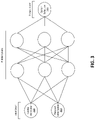
- FIG. 3 depicts a graphical representation of a machine learning system according to certain embodiments
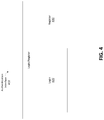
- FIG. 4 depicts an example of an authentication interface with a login option emphasized according to certain embodiments
- FIG. 5 is a simplified flowchart depicting processing performed for generating training data for a single user multiple account (SUMA) approach according to certain embodiments;
- FIG. 6 is a simplified flowchart depicting processing performed for performing option emphasization according to certain embodiments.
- FIG. 7 illustrates an example of a computer system that may be used to implement certain embodiments described herein.
- the present disclosure relates generally to option emphasization. More particularly, techniques are described for configuring a call-to-action (CTA) interface for a particular user of a social networking system (SNS) by emphasizing an option included with the CTA interface.
- CTA call-to-action
- SNS social networking system
- a machine learning system may be used to determine to emphasize a first user-selectable option instead of a second user-selectable option (sometimes referred to as an emphasization determination).
- the emphasization determination may indicate a prediction of an intent of a user to select the first user-selectable option (e.g., an intent for the user to register an account with a SNS or to login to an account of the SNS).
- an interface e.g., a graphical user interface
- the interface may be configured to emphasize the first user-selectable option, and the interface may be sent to a user device for presentation to the user.
- the emphasization determination may be made in response to receiving a request from a user device to access the SNS.
- the machine learning system (or a system using the machine learning system) may determine information associated with the user device. The information may be based on the request from the user device and/or a cookie received from the user device. For example, the information may include information stored in the cookie by the SNS or a location of the user device determined from an IP address of the user device or determined from a uniform resource locator (URL) being requested.
- URL uniform resource locator
- Examples of ways to emphasize the first user-selectable option may include modifying a color or size of the first user-selectable option or the second user-selectable option, configuring a selection focus to be associated with the first user-selectable option, modifying a layout of an interface including the first user selectable option, removing the second user-selectable option from an interface presenting the first user-selectable option, or the like.
- the machine learning system may be trained using past interactions with the SNS.
- the past interactions may be based on an existing CTA interface that includes the first and second user-selectable option.
- the training data may be obtained using many different approaches, some of which will be described herein.
- the emphasization determination described above may not involve a machine learning system. Instead, a rule or heuristic-based system may be used to determine to emphasize the first user-selectable option instead of the second user-selectable option. For example, rather than being trained from previous interactions with the SNS, the rule or heuristic-based system may be configured with a rule and/or heuristic that utilizes current information (e.g., such as a request from a user device or a cookie received from the user device) to make the emphasization determination.
- current information e.g., such as a request from a user device or a cookie received from the user device
- FIG. 1 is a simplified block diagram of a distributed system 100 for performing option emphasization according to certain embodiments.
- Distributed system 900 may include one or more systems, including social networking system (SNS) 120 , communicatively coupled with one or more user devices (e.g., user device 110 ).
- the one or more user devices may be communicatively coupled with SNS 120 via one or more communication networks (e.g., communication network 130 ).
- Examples of communication networks include, without restriction, the Internet, a wide area network (WAN), a local area network (LAN), an Ethernet network, wireless wide-area networks (WWANs), wireless local area networks (WLANs), wireless personal area networks (WPANs), a public or private network, a wired network, a wireless network, and the like, and combinations thereof.
- WAN wide area network
- LAN local area network
- Ethernet Ethernet network
- WLANs wireless local area networks
- WLANs wireless personal area networks
- public or private network a public or private network
- wired network a wireless network, and the like, and combinations thereof.
- Different communication protocols may be used to facilitate communications including both wired and wireless protocols such as IEEE 802.XX suite of protocols, TCP/IP, IPX, SAN, AppleTalk®, Bluetooth®, InfiniBand, RoCE, Fiber Channel, Ethernet, User Datagram Protocol (UDP), Asynchronous Transfer Mode (ATM), token ring, frame relay, High Level Data Link Control (HDLC), Fiber Distributed Data Interface (FDDI), and/or Point-to-Point Protocol (PPP), and others.
- IEEE 802.XX suite of protocols such as IEEE 802.XX suite of protocols, TCP/IP, IPX, SAN, AppleTalk®, Bluetooth®, InfiniBand, RoCE, Fiber Channel, Ethernet, User Datagram Protocol (UDP), Asynchronous Transfer Mode (ATM), token ring, frame relay, High Level Data Link Control (HDLC), Fiber Distributed Data Interface (FDDI), and/or Point-to-Point Protocol (PPP), and others.
- IEEE 802.XX suite of protocols such as IEEE 802.XX suite of protocols, TCP/IP, IPX
- a WWAN may be a network using an air interface technology, such as, a code division multiple access (CDMA) network, a Time Division Multiple Access (TDMA) network, a Frequency Division Multiple Access (FDMA) network, an OFDMA network, a Single-Carrier Frequency Division Multiple Access (SC-FDMA) network, a WiMax (IEEE 802.16), and so on.
- CDMA code division multiple access
- TDMA Time Division Multiple Access
- FDMA Frequency Division Multiple Access
- OFDMA OFDMA
- SC-FDMA Single-Carrier Frequency Division Multiple Access
- WiMax IEEE 802.16
- a WLAN may include an IEEE 802.11x network (e.g., a Wi-Fi network).
- a WPAN may be a Bluetooth network, an IEEE 802.15x, or some other types of network.
- System 100 depicted in FIG. 1 is merely an example and is not intended to unduly limit the scope of inventive embodiments recited in the claims.
- system 100 may have more or fewer systems than those shown in FIG. 1 , may combine two or more systems, or may have a different configuration or arrangement of systems.
- User device 110 may sometimes be referred to as a client device, or simply a client.
- User device 110 may be a computing device, such as, for example, a mobile phone, a smart phone, a personal digital assistant (PDA), a tablet computer, an electronic book (e-book) reader, a gaming console, a laptop computer, a netbook computer, a desktop computer, a thin-client device, a workstation, etc.
- PDA personal digital assistant
- e-book electronic book
- gaming console a laptop computer
- netbook computer a desktop computer
- a thin-client device a workstation, etc.
- apps may be hosted and executed by user device 110 .
- the apps may be web browser-based applications or other types of applications.
- user device 110 hosts and executes social networking application 112 , which enables a user to interact with SNS 120 .
- social networking application 112 enables a user to interact with SNS 120 .
- a user using user device 110 may log into or register with SNS 120 , post content to and share content with other members of SNS 120 , access and interact with content and services provided by SNS 120 , and the like.
- SNS 120 includes call-to-action (CTA) subsystem 122 for configuring and sending CTA interfaces (e.g., a graphical user interface that presents multiple options to a user) to user device 110 .
- CTA subsystem 122 may begin by determining to send a CTA interface to user device 110 in response to receiving a request for access to SNS 120 .
- user device 110 may communicate the request for access to SNS 120 .
- SNS 120 may then send the request (or a portion thereof) to CTA subsystem 122 .
- user device 110 may not be logged into an account associated with SNS 120 .
- the request may be to access content of SNS 120 .
- the request may be to authenticate user device 110 with SNS 120 .
- the request may be to switch between accounts of SNS 120 .
- CTA subsystem 122 may determine information associated with user device 110 , determine which user-selectable option to emphasize in the CTA interface, and configure the CTA interface based on which user-selectable option is determined to be emphasized. Such steps allow CTA subsystem 122 to customize the CTA interface for the user. CTA subsystem 122 may then send the CTA interface to user device 110 for presentation by user device 110 .
- a CTA interface may provide multiple options regarding authentication with SNS 120 (sometimes referred to as an authentication interface).
- SNS 120 sometimes referred to as an authentication interface.
- the authentication interface was configured the same for all users.
- embodiments described herein allow the authentication interface to emphasize particular options in order to guide users when interacting with the authentication interface.
- FIG. 2A depicts an example of authentication interface 210 according to certain embodiments.
- Authentication interface 210 may be presented by a user device (e.g., user device 110 ) in response to the user device requesting to access a social networking system (SNS) (e.g., SNS 120 ).
- SNS social networking system
- Authentication interface 210 may include multiple user-selectable options (e.g., a button or the like).
- authentication interface 210 includes login option 220 . Selection of login option 220 may indicate to the SNS that a user has an account with the SNS and that the user wishes to log in to the SNS using the account. In addition, selection of login option 220 may cause the user device to switch from authentication interface 210 to a login interface, allowing login information to be entered for authentication with the SNS.
- Authentication interface 210 further includes register option 230 .
- Selection of register option 230 may indicate to the SNS that a user does not have an account with the SNS and that the user wishes to register an account with the SNS.
- selection of register option 230 may cause the user device to switch from authentication interface 210 to a registration interface, allowing registration information to be entered for authentication with the SNS.
- FIG. 2A illustrates login option 220 and register option 230 as the same size and color, it should be recognized that each option may be a different color and/or size than the other.
- the layout of authentication interface 210 may be different (e.g., login option 220 may be above register option 230 ).
- FIG. 2B depicts an example of account interface 240 according to certain embodiments.
- Account interface 240 may be presented by a user device (e.g., user device 110 ) in response to the user device requesting to switch accounts associated with a social networking system (SNS) (e.g., SNS 120 ).
- SNS social networking system
- Account interface 240 may include multiple user-selectable options (e.g., a button or the like) for a user to select.
- account interface 240 includes first account option 250 and second account option 260 . Selection of an account option may indicate to the SNS that a user would like to login to a corresponding account with the SNS.
- selection of an account option may cause the user device to switch from account interface 240 to a login interface, allowing login information to be entered for authentication of the corresponding account with the SNS.
- FIG. 2B illustrates first account option 250 and second account option 260 as the same size and color, it should be recognized that each option may be a different color and/or size than the other.
- the layout of account interface 240 may be different (e.g., visibility of second account option 260 may be removed).
- CTA subsystem 122 may utilize a machine learning system to configure an interface specifically for a user.
- the machine learning system may determine a user-selectable option to emphasize in the interface based on information associated with user device 110 (i.e., the information associated with user device 110 may be input to the machine learning system). While several examples of information associated with user device 110 are described below, it should be recognized that the machine learning system may use more or less information. In addition, when some information is not available to the machine learning system for a particular session, default values may be used.
- the information used by the machine learning system may be based on the request.
- the request may include an IP address associated with the request (i.e., the IP address of user device 110 , a router used by user device 110 , or the like). Based on the IP address, a location (e.g., a city, state, country, zip code, or the like) and/or an Internet service provider (ISP) associated with user device 110 may be determined for user device 110 . The location and or the ISP may then be the information used by the machine learning system.
- the request may include a uniform resource locator (URL) associated with SNS 120 . Based on the URL, a locale may be determined for user device 110 . The locale may be included in the URL. For example, a URL may be www.fr.website.com. Accordingly, “fr” may indicate a locale. It should be recognized that other information may be determined from the URL and/or the request.
- URL uniform resource locator
- the information used by the machine learning system may also be based on a cookie (e.g., an HTTP cookie) received from user device 110 .
- the cookie may be data that was originally sent from SNS 120 and stored on user device 110 by a web browser of user device 110 .
- the cookie may either be included with the request or be received in response to a separate request from SNS 120 .
- Examples of information that may be determined from the cookie include, but is not limited to, the last account used to login to SNS 120 from user device 110 , a country associated with user device 110 , a locale associated with user device 110 , a server protocol associated with user device 110 , an operating system of user device 110 , an IP address of user device 110 , whether user device 110 consents to the cookie, content viewed while a previous account was logged into SNS 120 , the number of accounts associated with the cookie, a model year associated with user device 110 , a time since a previous login to SNS 120 from user device 110 , a number of friends for the last account that logged into SNS 120 from user device 110 , an age of a user associated with the last account that logged into SNS 120 from user device 110 , a time since last log-out event associated with SNS 120 from user device 110 , an age of the cookie, a number of logins per account of SNS 120 , activity for a previous number of days for a last account that logged into SNS 120
- While an account of SNS 120 is used in some of the examples described above, user device 110 may not be logged into the account. Instead, SNS 120 may identify the account for user device 110 without user device 110 already being logged into SNS 120 . In other embodiments, information that requires an account to be identified may not be used. In other embodiments, user device 110 may be logged into the account, which would allow CTA subsystem 122 to use information stored for the account by SNS 120 in making determinations.
- the machine learning system used to configure the interface may be selected from multiple machine learning systems based on the information determined for user device 110 .
- a different machine learning system may be configured to be associated with one or more particular characteristics.
- each machine learning system may be associated with a different locale, where different machine learning systems are used depending on a locale determined for a user device.
- Other divisions between machine learning systems may include country, user-selectable options on an interface, a type of an interface (e.g., a home page, a registration page, a login page, a profile page, a picture page, a video page, or the like), a type of server protocol, or any other type of information that is dividable between two or more categories.
- the machine learning system may be selected based on the information associated with the user device.
- FIG. 3 depicts a graphical representation of a machine learning system according to certain embodiments.
- the machine learning system depicted in FIG. 3 is a multilayer perceptron (MLP) 300 .
- MLP 300 is a computing system made up of a number of interconnected processing elements (sometimes referred to as nodes or computing nodes). Each processing element may apply a weight, a bias, and/or an activation function to data received by the processing element.
- processing elements sometimes referred to as nodes or computing nodes.
- Each processing element may apply a weight, a bias, and/or an activation function to data received by the processing element.
- it should be recognized that other types of machine learning systems may be used.
- MLP 300 is organized in layers (e.g., an input layer, one or more hidden layers, and an output layer), each layer including one or more nodes.
- Nodes that receive data from outside MLP 300 i.e., not from nodes of MLP 300
- input nodes may be called input nodes, which may be a part of the input layer.
- output nodes may be called output nodes, which may be part of the output layer.
- Data may flow from the input layer to the output layer through one or more hidden layers (each hidden layer with one or more hidden nodes). For example, the input layer may send data to a first hidden layer and the first hidden layer may send data to either a second hidden layer or an output layer.
- data may flow through the layers through connections, which may each include a weight (referred to as a weighted connection).
- Adjacent layers in MLP 300 may be fully connected to one another. For example, each node in a first layer may be connected to each node in a second layer when the second layer is adjacent to the first layer.
- a hidden layer may include one or more hidden nodes, each of which may include an activation function (e.g., a linear or non-linear function) that is applied to a sum of the weighted inputs.
- activation functions may include a sigmoid function
- a final hidden layer of the one or more hidden layers may send a sum of weighted data to an output layer, which may include one or more output nodes (e.g., option selection 330 ).
- a number of nodes in a first hidden layer may be different than a number of nodes in a second hidden layer.
- a number of nodes in a hidden layer may also be different than a number of nodes in the input layer.
- a final hidden layer of the one or more hidden layers may be fully connected to the output layer.
- the final hidden layer may be the first hidden layer or another hidden layer.
- the output layer may include one or more output nodes (e.g., option selection 330 ).
- An output node may sum data provided to the output node to produce a result to provide to a system remote from MLP 300 .
- Option selection 330 may indicate which user-selectable option to emphasize.
- the one or more output nodes may be something other than an indication of which user-selectable option to emphasize.
- the one or more output nodes may indicate a determined intent of a user, the determined intent being used to determine which user-selectable option to emphasize.
- MLP 300 may include some form of learning rule, which modifies one or more weights associated with connections between nodes according to data that is presented to MLP 300 .
- learning rules used by MLPs, one example is backpropagation.
- backpropagation learning may be a supervised process that occurs each time MLP 300 is presented with new data through a forward flow of MLP 300 (commonly referred to as feed forward).
- feed forward a forward flow of MLP 300
- an error may be calculated based on the output and a ground truth.
- the ground truth may represent what the output should have been if MLP 300 was configured correctly.
- the weights are then updated starting from the output layer and flowing to the input layer to minimize the error.
- This process may iterate through the same input and/or multiple different inputs until the error is within a threshold (e.g., less than a specific value or changed by less than a specific value across one or more iterations).
- MLP 300 may be used on new data that MLP 300 was not trained on.
- the input layer may include one or more input nodes.
- the one or more input nodes may each receive data from one or more sources that are remote from MLP 300 .
- one or more nodes of the input layer may include information determined from a cookie (e.g., an HTTP cookie) that is received from a user device (e.g., cookie information 310 ).
- the cookie may be data sent from a social networking system (SNS) (e.g., SNS 120 ) and stored on the user device by a web browser of the user device.
- SNS social networking system
- One or more nodes of the input layer may also include information determined from the request received by the SNS (e.g., request information 320 ).
- the request may include an IP address associated with the user device, which may be used to determine a country associated with the user device.
- the request may indicate to the SNS a URL associated with the SNS.
- the URL may be used to determine a locale associated with the user device when the URL includes locale information (e.g., a URL may change its domain depending on a location of the user device such as fr.website.com and au.website.com).
- the MLP 300 may be trained using training data.
- the training data may include an input (e.g., the data received by the input layer described above, which may be associated with a session) and an expected output (sometimes referred to as a ground truth) (e.g., a result of the session such as whether the first user-selectable or the second user-selectable option was selected or whether the account is indicated as being associated with a single user that has multiple accounts).
- an input e.g., the data received by the input layer described above, which may be associated with a session
- an expected output sometimes referred to as a ground truth
- a result of the session such as whether the first user-selectable or the second user-selectable option was selected or whether the account is indicated as being associated with a single user that has multiple accounts.
- SUMA single user multiple accounts
- the online interaction approach may configure an existing CTA interface to emphasize a first user-selectable option instead of a second user-selectable option (as illustrated in FIG. 4 ).
- FIG. 4 depicts an example of authentication interface 410 with login option 420 emphasized according to certain embodiments.
- Login option 420 is depicted as larger than register option 430 , thereby emphasizing login option 420 instead of register option 430 .
- an option may be emphasized in other ways, including with the use of color, the layout of authentication interface 410 , and/or by configuring a selection focus to be associated with the option.
- a session associated with the selection may be stored as training data.
- the online interaction approach is based on the fact that if a user-selectable option that is not being emphasized is selected instead of a user-selectable option that is being emphasized, it is clear that the intent of the user was to select the user-selectable option that is not being emphasized.
- a user-selectable option that is being emphasized it is not clear what the intent of the user was. For example, the user may have just picked the user-selectable option that is emphasized because it is more prominent.
- the SUMA approach may use a SUMA identification of an account to determine to use sessions associated with registering and/or logging into the account.
- a social networking system may include a system for identifying whether a single user is associated with multiple accounts. Each of the accounts identified by the system may be determined to be SUMAs. In one illustrative example, multiple accounts may be identified to be associated with a single user when each of the accounts is from a single IP address, and each account has less than a predefined number of friends.
- SNS social networking system
- a person of ordinary skill in the art will recognize many ways for determining whether an account is a SUMA, including methods utilizing machine learning systems.
- FIG. 5 is a simplified flowchart depicting processing performed for generating training data for a single user multiple account (SUMA) approach according to certain embodiments.
- the processing depicted in FIG. 5 may be implemented in software (e.g., code, instructions, program) executed by one or more processing units (e.g., processors, cores) of the respective systems, hardware, or combinations thereof.
- the software may be stored on a non-transitory storage medium (e.g., on a memory device).
- the method presented in FIG. 5 and described below is intended to be illustrative and non-limiting. Although FIG. 5 depicts the various processing steps occurring in a particular sequence or order, this is not intended to be limiting.
- the steps may be performed in some different order or some steps may also be performed in parallel.
- the processing depicted in FIG. 5 may be performed by CTA subsystem 122 , however, this is not intended to be limiting.
- the processing may be triggered at 510 , when an account from a social networking system (SNS) is determined to be one of multiple accounts associated with a user.
- SNS social networking system
- a session from the past that is associated with authentication of (e.g., registering or logging into) the account may be identified.
- the session may include an interaction with an authentication interface when choosing between whether to log in or register.
- information associated with the session is determined.
- the information may be determined based on a request for the authentication interface, a cookie received from a user device, or any other information obtainable by CTA subsystem 122 . While other examples are described herein, particular examples of the information may include a locale or country associated with the user device and data stored in the cookie (by a SNS associated with the CTA subsystem 122 ) regarding past interactions with the SNS by the user device.
- training data is obtained for a machine learning system based on the information associated with the session (sometimes referred to as session information).
- Obtaining the training data may include associating the session information with an indication that the session resulted in an account that is a SUMA. Accordingly, the machine learning system may determine when a login or registration is likely to be a SUMA after being trained using the training data described above.
- FIG. 6 is a simplified flowchart depicting processing performed for performing option emphasization according to certain embodiments.
- the processing depicted in FIG. 6 may be implemented in software (e.g., code, instructions, program) executed by one or more processing units (e.g., processors, cores) of the respective systems, hardware, or combinations thereof.
- the software may be stored on a non-transitory storage medium (e.g., on a memory device).
- the method presented in FIG. 6 and described below is intended to be illustrative and non-limiting.
- FIG. 6 depicts the various processing steps occurring in a particular sequence or order, this is not intended to be limiting. In certain embodiments, the steps may be performed in some different order or some steps may also be performed in parallel.
- the processing depicted in FIG. 6 may be performed by CTA subsystem 122 , however, this is not intended to be limiting.
- the processing may be triggered at 610 , when a request is received from a user device to access a social networking system (SNS).
- the request may be for particular content of the SNS.
- the request may be to authenticate the user device with the SNS.
- the user device may not be actively logged into the SNS. Accordingly, information associated with an account of the SNS may be unavailable because the account is not identified.
- an account associated with the SNS may be identified for a user such that data stored by the SNS for the account may be used for determining which option to emphasize.
- an authentication interface e.g., register and/or login an account
- the disclosure herein may be related to determining between any two options, such as between logging into the SNS using a first account or a second account.
- information associated with the user device is determined.
- the information may be determined from a cookie received from the user device.
- the request may include the cookie.
- the SNS may send a request for a cookie to the user device.
- the request for the cookie may cause the user device to send a cookie to the SNS.
- the information associated with the user device may also be determined from an internet protocol (IP) address included in the request to access.
- IP internet protocol
- a country associated with the user device may be determined, the country being information associated with the user device.
- the information associated with the user device may also be determined from a universal resource locator (URL) requested by the user device.
- URL universal resource locator
- a locale associated with the user device may be determined when the URL is formed based on a locale that the user device is located.
- a machine learning system may determine to emphasize a first user-selectable option instead of a second user-selectable option based on the information associated with the user device.
- the machine learning system may be trained from past interactions of users with the SNS.
- the training data for the machine learning system may include sessions where an option was selected that was not emphasized when there was a different option that was emphasized.
- the training data may include sessions that have been determined to be associated with a single user with multiple accounts (sometimes referred to as SUMA), indicating that a user should not have been given an option to register an account.
- the machine learning system may be selected from multiple machine learning systems, each machine learning system associated with a particular characteristic. For example, each machine learning system may be associated with a different locale, where different machine learning systems are used depending on a local determined for a user device. Other divisions between machine learning systems may include country, user-selectable options on a page, the particular type of page, or any other type of information that is dividable between two or more categories. The machine learning system may be selected based on the information associated with the user device.
- an interface e.g., a graphical user interface with at least the first user-selectable option
- the interface may be configured to emphasize the first user-selectable option based on the determination by the machine learning system.
- the first user-selectable option may be made a color or size that emphasizes the first user-selectable option instead of a second user-selectable option.
- the layout of the page may emphasize the first user-selectable option.
- a selection focus may be associated with the first user-selectable option when the page is presented by the user device.
- the second user-selectable option may be removed from the interface.
- emphasizing the first user-selectable option may be performed by deemphasizing the second user-selectable option.
- Deemphasizing the second user-selectable option may be performed by doing the opposite of one or more of the examples described above.
- the second user-selectable option may be made a color or size that deemphasizes the second user-selectable option.
- the interface is sent to the user device for presentation by the user device.
- FIG. 7 illustrates an example of computer system 700 , which may be used to implement certain embodiments described herein.
- computer system 700 may be used to implement any of the systems, servers, devices, or the like described above.
- computer system 700 includes various subsystems including processing subsystem 704 that communicates with a number of other subsystems via bus subsystem 702 . These other subsystems may include processing acceleration unit 706 , I/O subsystem 708 , storage subsystem 718 , and communications subsystem 1024 .
- Storage subsystem 718 may include non-transitory computer-readable storage media including storage media 722 and system memory 710 .
- Bus subsystem 702 provides a mechanism for letting the various components and subsystems of computer system 700 communicate with each other as intended. Although bus subsystem 702 is shown schematically as a single bus, alternative embodiments of bus subsystem 702 may utilize multiple buses. Bus subsystem 702 may be any of several types of bus structures including a memory bus or memory controller, a peripheral bus, a local bus using any of a variety of bus architectures, and the like.
- such architectures may include an Industry Standard Architecture (ISA) bus, Micro Channel Architecture (MCA) bus, Enhanced ISA (EISA) bus, Video Electronics Standards Association (VESA) local bus, and Peripheral Component Interconnect (PCI) bus, which may be implemented as a Mezzanine bus manufactured to the IEEE P1386.1 standard, and the like.
- ISA Industry Standard Architecture
- MCA Micro Channel Architecture
- EISA Enhanced ISA
- VESA Video Electronics Standards Association
- PCI Peripheral Component Interconnect
- Processing subsystem 704 controls the operation of computer system 700 and may comprise one or more processors, application specific integrated circuits (ASICs), or field programmable gate arrays (FPGAs).
- the processors may include single core and/or multicore processors.
- the processing resources of computer system 700 may be organized into one or more processing units 732 , 734 , etc.
- a processing unit may include one or more processors, one or more cores from the same or different processors, a combination of cores and processors, or other combinations of cores and processors.
- processing subsystem 704 may include one or more special purpose co-processors such as graphics processors, digital signal processors (DSPs), or the like.
- DSPs digital signal processors
- some or all of the processing units of processing subsystem 704 may be implemented using customized circuits, such as application specific integrated circuits (ASICs), or field programmable gate arrays (FPGAs).
- processing units in processing subsystem 704 may execute instructions stored in system memory 710 or on computer readable storage media 722 .
- the processing units may execute a variety of programs or code instructions and may maintain multiple concurrently executing programs or processes. At any given time, some or all of the program code to be executed may be resident in system memory 710 and/or on computer-readable storage media 722 including potentially on one or more storage devices.
- processing subsystem 704 may provide various functionalities described above. In instances where computer system 700 is executing one or more virtual machines, one or more processing units may be allocated to each virtual machine.
- processing acceleration unit 706 may optionally be provided for performing customized processing or for off-loading some of the processing performed by processing subsystem 704 so as to accelerate the overall processing performed by computer system 700 .
- I/O subsystem 708 may include devices and mechanisms for inputting information to computer system 700 and/or for outputting information from or via computer system 700 .
- input device is intended to include all possible types of devices and mechanisms for inputting information to computer system 700 .
- User interface input devices may include, for example, a keyboard, pointing devices such as a mouse or trackball, a touchpad or touch screen incorporated into a display, a scroll wheel, a click wheel, a dial, a button, a switch, a keypad, audio input devices with voice command recognition systems, microphones, and other types of input devices.
- User interface input devices may also include motion sensing and/or gesture recognition devices that enable users to control and interact with an input device and/or devices that provide an interface for receiving input using gestures and spoken commands.
- User interface input devices may also include eye gesture recognition devices that detects eye activity (e.g., “blinking” while taking pictures and/or making a menu selection) from users and transforms the eye gestures as inputs to an input device.
- user interface input devices may include voice recognition sensing devices that enable users to interact with voice recognition systems through voice commands.
- user interface input devices include, without limitation, three dimensional (3D) mice, joysticks or pointing sticks, gamepads and graphic tablets, and audio/visual devices such as speakers, digital cameras, digital camcorders, portable media players, webcams, image scanners, fingerprint scanners, barcode reader 3D scanners, 3D printers, laser rangefinders, and eye gaze tracking devices.
- user interface input devices may include, for example, medical imaging input devices such as computed tomography, magnetic resonance imaging, position emission tomography, and medical ultrasonography devices.
- User interface input devices may also include, for example, audio input devices such as MIDI keyboards, digital musical instruments and the like.
- User interface output devices may include a display subsystem, indicator lights, or non-visual displays such as audio output devices, etc.
- the display subsystem may be a cathode ray tube (CRT), a flat-panel device, such as that using a liquid crystal display (LCD) or plasma display, a projection device, a touch screen, and the like.
- CTR cathode ray tube
- LCD liquid crystal display
- user interface output devices may include, without limitation, a variety of display devices that visually convey text, graphics and audio/video information such as monitors, printers, speakers, headphones, automotive navigation systems, plotters, voice output devices, and modems.
- Storage subsystem 718 provides a repository or data store for storing information and data that is used by computer system 700 .
- Storage subsystem 718 provides a tangible non-transitory computer-readable storage medium for storing the basic programming and data constructs that provide the functionality of some embodiments.
- Storage subsystem 718 may store software (e.g., programs, code modules, instructions) that when executed by processing subsystem 704 provides the functionality described above. The software may be executed by one or more processing units of processing subsystem 704 .
- Storage subsystem 718 may also provide a repository for storing data used in accordance with the teachings of this disclosure.
- Storage subsystem 718 may include one or more non-transitory memory devices, including volatile and non-volatile memory devices. As shown in FIG. 7 , storage subsystem 718 includes system memory 710 and computer-readable storage media 722 .
- System memory 710 may include a number of memories including a volatile main random access memory (RAM) for storage of instructions and data during program execution and a non-volatile read only memory (ROM) or flash memory in which fixed instructions are stored.
- RAM main random access memory
- ROM read only memory
- BIOS basic input/output system
- the RAM typically contains data and/or program modules that are presently being operated and executed by processing subsystem 704 .
- system memory 710 may include multiple different types of memory, such as static random access memory (SRAM), dynamic random access memory (DRAM), and the like.
- system memory 710 may load application programs 712 that are being executed, which may include various applications such as Web browsers, mid-tier applications, relational database management systems (RDBMS), etc., program data 714 , and operating system 716 .
- application programs 712 may include various applications such as Web browsers, mid-tier applications, relational database management systems (RDBMS), etc.
- program data 714 may be loaded into system memory 710 .
- operating system 716 may load application programs 712 that are being executed, which may include various applications such as Web browsers, mid-tier applications, relational database management systems (RDBMS), etc.
- Computer-readable storage media 722 may store programming and data constructs that provide the functionality of some embodiments.
- Computer-readable media 722 may provide storage of computer-readable instructions, data structures, program modules, and other data for computer system 700 .
- Software programs, code modules, instructions that, when executed by processing subsystem 704 provides the functionality described above, may be stored in storage subsystem 718 .
- computer-readable storage media 722 may include non-volatile memory such as a hard disk drive, a magnetic disk drive, an optical disk drive such as a CD ROM, DVD, a Blu-Ray® disk, or other optical media.
- Computer-readable storage media 722 may include, but is not limited to, Zip® drives, flash memory cards, universal serial bus (USB) flash drives, secure digital (SD) cards, DVD disks, digital video tape, and the like.
- Computer-readable storage media 722 may also include, solid-state drives (SSD) based on non-volatile memory such as flash-memory based SSDs, enterprise flash drives, solid state ROM, and the like, SSDs based on volatile memory such as solid state RAM, dynamic RAM, static RAM, DRAM-based SSDs, magnetoresistive RAM (MRAM) SSDs, and hybrid SSDs that use a combination of DRAM and flash memory based SSDs.
- SSD solid-state drives
- volatile memory such as solid state RAM, dynamic RAM, static RAM, DRAM-based SSDs, magnetoresistive RAM (MRAM) SSDs, and hybrid SSDs that use a combination of DRAM and flash memory based SSDs.
- storage subsystem 718 may also include computer-readable storage media reader 720 that may further be connected to computer-readable storage media 722 .
- Reader 720 may receive and be configured to read data from a memory device such as a disk, a flash drive, etc.
- computer system 700 may support virtualization technologies, including but not limited to virtualization of processing and memory resources.
- computer system 700 may provide support for executing one or more virtual machines.
- computer system 700 may execute a program such as a hypervisor that facilitated the configuring and managing of the virtual machines.
- Each virtual machine may be allocated memory, compute (e.g., processors, cores), I/O, and networking resources.
- Each virtual machine generally runs independently of the other virtual machines.
- a virtual machine typically runs its own operating system, which may be the same as or different from the operating systems executed by other virtual machines executed by computer system 700 . Accordingly, multiple operating systems may potentially be run concurrently by computer system 700 .
- Communications subsystem 724 provides an interface to other computer systems and networks. Communications subsystem 724 serves as an interface for receiving data from and transmitting data to other systems from computer system 700 . For example, communications subsystem 724 may enable computer system 700 to establish a communication channel to one or more client devices via the Internet for receiving and sending information from and to the client devices. For example, when computer system 700 is used to implement social networking system 120 depicted in FIG. 1 , communication subsystem 724 may be used to communicate with user device 110 .
- Communication subsystem 724 may support both wired and/or wireless communication protocols.
- communications subsystem 724 may include radio frequency (RF) transceiver components for accessing wireless voice and/or data networks (e.g., using cellular telephone technology, advanced data network technology, such as 3G, 4G or EDGE (enhanced data rates for global evolution), WiFi (IEEE 802.XX family standards, or other mobile communication technologies, or any combination thereof), global positioning system (GPS) receiver components, and/or other components.
- RF radio frequency
- communications subsystem 724 may provide wired network connectivity (e.g., Ethernet) in addition to or instead of a wireless interface.
- Communication subsystem 724 may receive and transmit data in various forms. For example, in some embodiments, in addition to other forms, communications subsystem 724 may receive input communications in the form of structured and/or unstructured data feeds 726 , event streams 728 , event updates 730 , and the like. For example, communications subsystem 1024 may be configured to receive (or send) data feeds 726 in real-time from users of social media networks and/or other communication services such as web feeds and/or real-time updates from one or more third party information sources.
- communications subsystem 724 may be configured to receive data in the form of continuous data streams, which may include event streams 728 of real-time events and/or event updates 730 , that may be continuous or unbounded in nature with no explicit end.
- applications that generate continuous data may include, for example, sensor data applications, financial tickers, network performance measuring tools (e.g. network monitoring and traffic management applications), clickstream analysis tools, automobile traffic monitoring, and the like.
- Communications subsystem 724 may also be configured to communicate data from computer system 700 to other computer systems or networks.
- the data may be communicated in various different forms such as structured and/or unstructured data feeds 726 , event streams 728 , event updates 730 , and the like to one or more databases that may be in communication with one or more streaming data source computers coupled to computer system 700 .
- Computer system 700 may be one of various types, including a handheld portable device, a wearable device, a personal computer, a workstation, a mainframe, a kiosk, a server rack, or any other data processing system. Due to the ever-changing nature of computers and networks, the description of computer system 700 depicted in FIG. 7 is intended only as a specific example. Many other configurations having more or fewer components than the system depicted in FIG. 7 are possible. Based on the disclosure and teachings provided herein, a person of ordinary skill in the art will appreciate other ways and/or methods to implement the various embodiments.
- Some embodiments described herein make use of social networking data that may include information voluntarily provided by one or more users.
- data privacy may be protected in a number of ways.
- the user may be required to opt in to any data collection before user data is collected or used.
- the user may also be provided with the opportunity to opt out of any data collection.
- the user Before opting in to data collection, the user may be provided with a description of the ways in which the data will be used, how long the data will be retained, and the safeguards that are in place to protect the data from disclosure.
- Any information identifying the user from which the data was collected may be purged or disassociated from the data.
- the user may be informed of the collection of the identifying information, the uses that will be made of the identifying information, and the amount of time that the identifying information will be retained.
- Information specifically identifying the user may be removed and may be replaced with, for example, a generic identification number or other non-specific form of identification.
- the data may be stored in a secure data storage location that includes safeguards to prevent unauthorized access to the data.
- the data may be stored in an encrypted format. Identifying information and/or non-identifying information may be purged from the data storage after a predetermined period of time.
- machine-readable storage medium includes, but is not limited to, portable or non-portable storage devices, optical storage devices, and various other mediums capable of storing, containing, or carrying instruction(s) and/or data.
- a machine-readable storage medium or computer-readable storage medium may include a non-transitory medium in which data may be stored and that does not include carrier waves and/or transitory electronic signals propagating wirelessly or over wired connections. Examples of a non-transitory medium may include, but are not limited to, a magnetic disk or tape, optical storage media such as compact disk (CD) or digital versatile disk (DVD), flash memory, memory or memory devices.
- a computer-program product may include code and/or machine-executable instructions that may represent a procedure, a function, a subprogram, a program, a routine, a subroutine, a module, a software package, a class, or any combination of instructions, data structures, or program statements.
- examples may be implemented by hardware, software, firmware, middleware, microcode, hardware description languages, or any combination thereof.
- the program code or code segments to perform the necessary tasks may be stored in a machine-readable medium.
- One or more processors may execute the software, firmware, middleware, microcode, the program code, or code segments to perform the necessary tasks.
- systems depicted in some of the figures may be provided in various configurations.
- the systems may be configured as a distributed system where one or more components of the system are distributed across one or more networks such as in a cloud computing system.
- Such configuration may be accomplished, for example, by designing electronic circuits or other hardware to perform the operation, by programming programmable electronic circuits (e.g., microprocessors, or other suitable electronic circuits) to perform the operation, or any combination thereof.
- programmable electronic circuits e.g., microprocessors, or other suitable electronic circuits
- Such configuration may be accomplished, for example, by designing electronic circuits to perform the operation, by programming programmable electronic circuits (such as microprocessors) to perform the operation such as by executing computer instructions or code, or processors or cores programmed to execute code or instructions stored on a non-transitory memory medium, or any combination thereof.
- Processes may communicate using a variety of techniques including but not limited to conventional techniques for inter-process communications, and different pairs of processes may use different techniques, or the same pair of processes may use different techniques at different times.
Landscapes
- Engineering & Computer Science (AREA)
- Theoretical Computer Science (AREA)
- General Engineering & Computer Science (AREA)
- Physics & Mathematics (AREA)
- General Physics & Mathematics (AREA)
- Software Systems (AREA)
- Human Computer Interaction (AREA)
- Computing Systems (AREA)
- Artificial Intelligence (AREA)
- Mathematical Physics (AREA)
- Data Mining & Analysis (AREA)
- Evolutionary Computation (AREA)
- Medical Informatics (AREA)
- Computer Vision & Pattern Recognition (AREA)
- General Health & Medical Sciences (AREA)
- Molecular Biology (AREA)
- Life Sciences & Earth Sciences (AREA)
- Computational Linguistics (AREA)
- Health & Medical Sciences (AREA)
- Biophysics (AREA)
- Biomedical Technology (AREA)
- Business, Economics & Management (AREA)
- Entrepreneurship & Innovation (AREA)
- Economics (AREA)
- Human Resources & Organizations (AREA)
- Marketing (AREA)
- Operations Research (AREA)
- Quality & Reliability (AREA)
- Strategic Management (AREA)
- Tourism & Hospitality (AREA)
- General Business, Economics & Management (AREA)
- User Interface Of Digital Computer (AREA)
- Information Transfer Between Computers (AREA)
Abstract
Description
an arc-tangent function
arctan(γ)), a hyperbolic-tangent function
or a rectified linear function (given by σ(γ)=max(0,γ) or approximated by σ(γ)=ln(1+eγ)). In some examples, a final hidden layer of the one or more hidden layers (which may be the first hidden layer or another hidden layer) may send a sum of weighted data to an output layer, which may include one or more output nodes (e.g., option selection 330).
Claims (20)
Priority Applications (1)
| Application Number | Priority Date | Filing Date | Title |
|---|---|---|---|
| US15/635,005 US10564808B2 (en) | 2017-06-27 | 2017-06-27 | Option emphasization for call-to-action interfaces |
Applications Claiming Priority (1)
| Application Number | Priority Date | Filing Date | Title |
|---|---|---|---|
| US15/635,005 US10564808B2 (en) | 2017-06-27 | 2017-06-27 | Option emphasization for call-to-action interfaces |
Publications (2)
| Publication Number | Publication Date |
|---|---|
| US20180373402A1 US20180373402A1 (en) | 2018-12-27 |
| US10564808B2 true US10564808B2 (en) | 2020-02-18 |
Family
ID=64693191
Family Applications (1)
| Application Number | Title | Priority Date | Filing Date |
|---|---|---|---|
| US15/635,005 Expired - Fee Related US10564808B2 (en) | 2017-06-27 | 2017-06-27 | Option emphasization for call-to-action interfaces |
Country Status (1)
| Country | Link |
|---|---|
| US (1) | US10564808B2 (en) |
Families Citing this family (2)
| Publication number | Priority date | Publication date | Assignee | Title |
|---|---|---|---|---|
| US12282862B2 (en) * | 2020-02-07 | 2025-04-22 | Myplanet Internet Solutions Ltd. | Method and system for providing a graphical user interface using machine learning and movement of the user or user device |
| CN113688297A (en) * | 2021-08-12 | 2021-11-23 | 富途网络科技(深圳)有限公司 | Display and analysis method, device, equipment and storage medium of option information |
Citations (5)
| Publication number | Priority date | Publication date | Assignee | Title |
|---|---|---|---|---|
| US20080201634A1 (en) * | 2007-02-20 | 2008-08-21 | Gibb Erik W | System and method for customizing a user interface |
| US20090271247A1 (en) * | 2007-05-15 | 2009-10-29 | Social Project, Inc. | System for creating a social-networking online community |
| US20120223889A1 (en) * | 2009-03-30 | 2012-09-06 | Touchtype Ltd | System and Method for Inputting Text into Small Screen Devices |
| US20140173459A1 (en) * | 2012-12-18 | 2014-06-19 | Sony Corporation | System and method for sharing event information using icons |
| US20180181719A1 (en) * | 2016-12-28 | 2018-06-28 | Cerner Innovation, Inc. | Virtual healthcare personal assistant |
-
2017
- 2017-06-27 US US15/635,005 patent/US10564808B2/en not_active Expired - Fee Related
Patent Citations (5)
| Publication number | Priority date | Publication date | Assignee | Title |
|---|---|---|---|---|
| US20080201634A1 (en) * | 2007-02-20 | 2008-08-21 | Gibb Erik W | System and method for customizing a user interface |
| US20090271247A1 (en) * | 2007-05-15 | 2009-10-29 | Social Project, Inc. | System for creating a social-networking online community |
| US20120223889A1 (en) * | 2009-03-30 | 2012-09-06 | Touchtype Ltd | System and Method for Inputting Text into Small Screen Devices |
| US20140173459A1 (en) * | 2012-12-18 | 2014-06-19 | Sony Corporation | System and method for sharing event information using icons |
| US20180181719A1 (en) * | 2016-12-28 | 2018-06-28 | Cerner Innovation, Inc. | Virtual healthcare personal assistant |
Also Published As
| Publication number | Publication date |
|---|---|
| US20180373402A1 (en) | 2018-12-27 |
Similar Documents
| Publication | Publication Date | Title |
|---|---|---|
| US10884598B2 (en) | Analytics for a bot system | |
| JP6698646B2 (en) | JSON style sheet language conversion | |
| US10270864B2 (en) | Internet cloud-hosted natural language interactive messaging system server collaboration | |
| US9851952B2 (en) | Seamless restful API generation and consumption through a single channel | |
| JP6435289B2 (en) | Modify client-side search results based on social network data | |
| US10498674B2 (en) | Internet cloud-hosted natural language interactive messaging system sessionizer | |
| US11095600B2 (en) | End-to-end email tag prediction | |
| US20190103095A1 (en) | Utterance quality estimation | |
| US9787688B2 (en) | Identifying roles with similar membership and entitlement information | |
| US10491547B2 (en) | Internet cloud-hosted natural language interactive messaging system user resolver | |
| US20160019308A1 (en) | Modifying the order of items in a digital document based upon usage patterns | |
| US9378270B2 (en) | Systems and methods for generating natural language insights about sets of data | |
| CN110612545A (en) | Self-learning self-adaptive routing system | |
| US20220051264A1 (en) | Detecting fraudulent user accounts using graphs | |
| WO2024058945A1 (en) | Systems for design and implementation of privacy preserving ai with privacy regulations within intelligence pipelines | |
| WO2015167878A1 (en) | User experience diagnostics with actionable insights | |
| US10616354B2 (en) | Event tracking for messaging platform | |
| US20190109871A1 (en) | Techniques for computing an overall trust score for a domain based upon trust scores provided by users | |
| CN114365141B (en) | Semantic parser for training dialog systems using an actionable countermeasure network | |
| US20220207284A1 (en) | Content targeting using content context and user propensity | |
| US10380218B2 (en) | Server-side access filters for web content | |
| US20180373402A1 (en) | Option emphasization for call-to-action interfaces | |
| US20190104101A1 (en) | Paired effects in conversations between users | |
| US20190179967A1 (en) | Techniques for url archiving while browsing a web page | |
| US9706013B2 (en) | Mobile runtime conditional sections for surveys |
Legal Events
| Date | Code | Title | Description |
|---|---|---|---|
| STPP | Information on status: patent application and granting procedure in general |
Free format text: DOCKETED NEW CASE - READY FOR EXAMINATION |
|
| AS | Assignment |
Owner name: FACEBOOK, INC., CALIFORNIA Free format text: ASSIGNMENT OF ASSIGNORS INTEREST;ASSIGNORS:FIDLER, YARON;WENG, CHING-CHIH;JIANG, JIAYAN;REEL/FRAME:043828/0507 Effective date: 20170905 |
|
| STPP | Information on status: patent application and granting procedure in general |
Free format text: NON FINAL ACTION MAILED |
|
| STPP | Information on status: patent application and granting procedure in general |
Free format text: RESPONSE TO NON-FINAL OFFICE ACTION ENTERED AND FORWARDED TO EXAMINER |
|
| STPP | Information on status: patent application and granting procedure in general |
Free format text: NOTICE OF ALLOWANCE MAILED -- APPLICATION RECEIVED IN OFFICE OF PUBLICATIONS |
|
| STCF | Information on status: patent grant |
Free format text: PATENTED CASE |
|
| AS | Assignment |
Owner name: META PLATFORMS, INC., CALIFORNIA Free format text: CHANGE OF NAME;ASSIGNOR:FACEBOOK, INC.;REEL/FRAME:058172/0660 Effective date: 20211028 |
|
| FEPP | Fee payment procedure |
Free format text: MAINTENANCE FEE REMINDER MAILED (ORIGINAL EVENT CODE: REM.); ENTITY STATUS OF PATENT OWNER: LARGE ENTITY |
|
| LAPS | Lapse for failure to pay maintenance fees |
Free format text: PATENT EXPIRED FOR FAILURE TO PAY MAINTENANCE FEES (ORIGINAL EVENT CODE: EXP.); ENTITY STATUS OF PATENT OWNER: LARGE ENTITY |
|
| STCH | Information on status: patent discontinuation |
Free format text: PATENT EXPIRED DUE TO NONPAYMENT OF MAINTENANCE FEES UNDER 37 CFR 1.362 |
|
| FP | Lapsed due to failure to pay maintenance fee |
Effective date: 20240218 |