US10561637B2 - Methods for treating angiogenesis related disorder - Google Patents
Methods for treating angiogenesis related disorder Download PDFInfo
- Publication number
- US10561637B2 US10561637B2 US15/905,835 US201815905835A US10561637B2 US 10561637 B2 US10561637 B2 US 10561637B2 US 201815905835 A US201815905835 A US 201815905835A US 10561637 B2 US10561637 B2 US 10561637B2
- Authority
- US
- United States
- Prior art keywords
- angiogenesis
- tellimagrandin
- epcs
- compound
- formula
- Prior art date
- Legal status (The legal status is an assumption and is not a legal conclusion. Google has not performed a legal analysis and makes no representation as to the accuracy of the status listed.)
- Active
Links
- 0 *OC1OC2COC(=O)C3=CC(O)=C(O)C(O)=C3C3=C(C=C(O)C(O)=C3O)C(=O)OC2C(OC(=O)C2=CC(O)=C(O)C(O)=C2)C1OC(=O)C1=CC(O)=C(O)C(O)=C1 Chemical compound *OC1OC2COC(=O)C3=CC(O)=C(O)C(O)=C3C3=C(C=C(O)C(O)=C3O)C(=O)OC2C(OC(=O)C2=CC(O)=C(O)C(O)=C2)C1OC(=O)C1=CC(O)=C(O)C(O)=C1 0.000 description 2
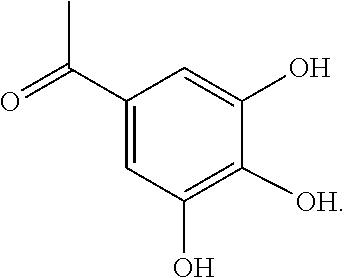
- VOCZEYOHTDAHEK-UHFFFAOYSA-N CC(=O)C1=CC(O)=C(C)C(O)=C1 Chemical compound CC(=O)C1=CC(O)=C(C)C(O)=C1 VOCZEYOHTDAHEK-UHFFFAOYSA-N 0.000 description 2
Images


Classifications
-
- A—HUMAN NECESSITIES
- A61—MEDICAL OR VETERINARY SCIENCE; HYGIENE
- A61K—PREPARATIONS FOR MEDICAL, DENTAL OR TOILETRY PURPOSES
- A61K31/00—Medicinal preparations containing organic active ingredients
- A61K31/33—Heterocyclic compounds
- A61K31/335—Heterocyclic compounds having oxygen as the only ring hetero atom, e.g. fungichromin
- A61K31/365—Lactones
-
- A—HUMAN NECESSITIES
- A61—MEDICAL OR VETERINARY SCIENCE; HYGIENE
- A61K—PREPARATIONS FOR MEDICAL, DENTAL OR TOILETRY PURPOSES
- A61K36/00—Medicinal preparations of undetermined constitution containing material from algae, lichens, fungi or plants, or derivatives thereof, e.g. traditional herbal medicines
- A61K36/18—Magnoliophyta (angiosperms)
- A61K36/185—Magnoliopsida (dicotyledons)
-
- A—HUMAN NECESSITIES
- A61—MEDICAL OR VETERINARY SCIENCE; HYGIENE
- A61P—SPECIFIC THERAPEUTIC ACTIVITY OF CHEMICAL COMPOUNDS OR MEDICINAL PREPARATIONS
- A61P27/00—Drugs for disorders of the senses
- A61P27/02—Ophthalmic agents
-
- A—HUMAN NECESSITIES
- A61—MEDICAL OR VETERINARY SCIENCE; HYGIENE
- A61P—SPECIFIC THERAPEUTIC ACTIVITY OF CHEMICAL COMPOUNDS OR MEDICINAL PREPARATIONS
- A61P35/00—Antineoplastic agents
Definitions
- the present invention relates to a method for the treatment of angiogenesis-related diseases.
- Angiogenesis refers to the process of growing new blood vessels in close proximity to the existing ones. It is known that angiogenesis plays an important role in many physiological conditions, such as: embryonic development, reproduction, tissue repair and bone homeostasis. Under normal physiological mechanism, the resulting reaction can be stimulated by the promotion of angiogenic signals. For example, in the process of wound healing or menstrual cycle, there will be angiogenesis that is controllable and sustainable for about 1-2 weeks. However, pathological angiogenesis is not controllable by normal physiological mechanisms. The regulation of angiogenesis in human body plays an important homeostatic role.
- angiogenesis When angiogenesis is over progressed or expressed, it may cause obesity, psoriasis, preterm birth, endometriosis, diabetic retinopathy, age-related macular degeneration (AMD), rheumatoid arthritis and various inflammation related diseases, or acceleration of the deterioration and metastasis of tumors. In addition, when angiogenesis is insufficient, it may result in bleeding, stroke, cardiovascular disease, etc. due to defective coagulation, and even affect wound healing of patients.
- AMD age-related macular degeneration
- angiogenesis is very important to tumor formation. When a tumor has developed to a certain size, it is necessary to generate new blood vessels for the tumor to effectively obtain nutrients and oxygen and remove waste. Angiogenesis is also important for tumor metastasis.
- Tumor cells must generate new blood vessels to enter the circulatory system, and then the tumor cells are transferred to other organs and tissues. After the tumor cells reach other organs and tissues, the tumor cells must generate new blood vessels in order to continue to grow in the organs and tissues. It has been confirmed that the growth or the metastasis of almost all solid tumors and vascular tumors rely on angiogenesis. Therefore, tumor formation or metastasis can be inhibited if angiogenesis can be suppressed.
- angiogenesis inhibitors used clinically, and these drugs can be used to treat diseases including solid tumors, AMD, choroidal neovascularization, diabetic macular edema, diabetic retinopathy, ocular neoplasm, retinal venous occlusion, telangiectasis, and other related disease.
- angiogenesis is associated with a variety of diseases, the development of novel angiogenesis inhibitors is a very important research direction and development field for now and in the future.
- Endothelial progenitor cells can be released from the bone marrow, move to ischemic tissues, and cooperate with existing blood vessels to facilitate neovascularization.
- EPCs are a group of cells with the ability to promote angiogenesis in the circulation, and it has been proved that late EPCs themselves can differentiate into endothelial cells, structure blood vessel formation and promote angiogenesis.
- Early EPCs are found to be able to release many angiogenic cytokines (such as VEGF and IL-8) to stimulate the function of peripheral endothelial cells, which in turn promote angiogenesis and vasculogenesis.
- EPCs can regulate the formation of early cancers and the subsequent cancer metastasis by activating “angiogenic switch.”
- Many literatures have reported that EPCs can promote neovascularization in ocular hypoxic tissues, resulting in deterioration of age-related maculopathy. These studies show that EPCs play an important role in pathological angiogenesis, and EPC-based research and development will be a promising strategy to explore anti-angiogenic agents.
- FIG. 1 illustrates the extraction step of the compound of formula I.
- FIG. 2A shows the effect of 1,2,3,4,6-penta-O-galloyl- ⁇ -D-glucose (PGG), tellimagrandin I (T-I) and tellimagrandin II (T-II) on cell proliferation and tube formation in human EPCs.
- FIG. 2A shows that under the described concentrations and using the Sulforhodamine B (SRB) assay, PGG, tellimagrandin I and tellimagrandin II suppress the proliferation of EPCs in a concentration dependent manner at the 48th hour.
- SRB Sulforhodamine B
- FIG. 2B shows inhibition of the formation of capillary-like structures of human EPCs at the 24 th hour by the described tannins (10 ⁇ M) and measured by using the tube formation assay.
- the data of five independent experiments are expressed as the mean ⁇ mean standard deviation. As compared with the control group, * means p ⁇ 0.05; *** means p ⁇ 0.001.
- FIG. 3A shows that tellimagrandin II (T-II) inhibits tube formation of human EPCs in a concentration dependent manner without cytotoxic effects.
- FIG. 3A shows, after human EPCs are treated with the described concentration of PGG and tellimagrandin II (5 and 10 ⁇ M) for 24 hours, the changes in tube formation recorded by a phase-contrast microscope.
- FIG. 3B shows that the release of lactate dehydrogenase is not induced in human EPCs by the described concentration of tellimagrandin II (except 30 ⁇ M) at the 24th hour measured by using the lactate dehydrogenase assay.
- the data of five independent experiments are expressed as the mean ⁇ mean standard deviation. As compared with the control group, * means p ⁇ 0.05; ** means p ⁇ 0.05; *** means p ⁇ 0.001.
- FIG. 4 shows the effect of tellimagrandin II on blocking in vivo angiogenesis by using the chorioallantoic membrane (CAM) assay.
- Sorafenib is a multiple kinase inhibitor, which is used as a positive control in the in vivo anti-angiogenesis assay.
- FIG. 5 shows the effect of tellimagrandin II on attenuating capillary formation in the Matrigel plug model.
- Sorafenib is a multiple kinase inhibitor, which is used as a positive control in the in vivo anti-angiogenesis assay.
- the present invention is to provide a method of treating a subject suffering from an agniogenesis-related disease, comprising administering to the subject a pharmaceutical composition comprising a compound of formula I.
- the present invention is to provide a method of treating a subject suffering from an angiogenesis-related disease, comprising administering to the subject a pharmaceutical composition comprising a compound of formula I:
- R is H or
- the pharmaceutical composition treats the angiogenesis-related disease through the inhibition of neovascularization in vivo.
- the pharmaceutical composition inhibits neovascularization in vivo by inhibiting the angiogenic function of endothelial progenitor cells (EPCs).
- EPCs endothelial progenitor cells
- the compound of formula I is derived from the extract of Mitella formosana .
- the pharmaceutical composition further comprises at least one pharmaceutically acceptable carrier, adjuvant or excipient.
- the excipient(s) include, but are not limited to, inert diluents, granulating agents, disintegrants, binders, lubricants, frothing mixtures, dyes or sweeteners.
- the angiogenesis-related disease(s) include, but are not limited to, various solid tumors, psoriasis, preterm birth, endometriosis, age related macular degeneration (AMD), choroidal neovascularization, diabetic macular edema, diabetic retinopathy, ocular neoplasm, retinal venous occlusion, telangiectasis, rheumatoid arthritis and many inflammation related diseases.
- AMD age related macular degeneration
- choroidal neovascularization diabetic macular edema
- diabetic retinopathy diabetic retinopathy
- ocular neoplasm retinal venous occlusion
- telangiectasis rheumatoid arthritis and many inflammation related diseases.
- FIG. 1 shows the extraction step of the compound of formula I.
- the whole plant of Mitella formosana (1 kg) was washed and dried, and then soaked in methanol for 3 days at room temperature, this step was repeated 3 times.
- the resulting extract solution was concentrated under reduced pressure to obtain a methanol extract (125 g).
- the methanol extract was partitioned with ethyl acetate/water (1:1, v/v) to give an ethyl acetate layer (38.4 g), an aqueous layer (70 g) and insoluble material (5.3 g).
- Mitella formosana (Hayata) Masam. is a perennial herb of Saxifragaceae, a native plant of Taiwan.
- three kinds of tannin compounds, PGG, tellimagrandin I, and tellimagrandin II found in the compounds extracted from Mitella formosana by using Bioassay-guided fractionation, inhibited the proliferation of EPCs in a concentration dependent manner.
- FIG. 2A in terms of quantity the main compound tellimagrandin II exhibited the most potent effect.
- the results of tube formation assay confirmed that these three compounds (10 ⁇ M) inhibited the tube formation of EPCs in different degrees ( FIG. 2B ).
- FIG. 3A shows that the concentration of tellimagrandin II was 10-20 ⁇ M LDH release was not induced, which indicated that the anti-angiogenic effect of tellimagrandin II on EPCs was not caused by cytotoxicity.
- FIG. 3B CAM-angiogenesis model and mice Matrigel-plus model were used to verify the anti-angiogenic effect of tellimagrandin II in vivo.
- FIG. 4 shows that tellimagrandin II inhibited in vivo neovascularization in the chicken embryo in a concentration dependent manner.
- FIG. 5 shows that tellimagrandin II effectively inhibited the formation of capillaries in mice.
- tellimagrandin II a component of Mitella formosana , is unique and has the potential and value to be developed for the treatment of angiogenesis-related diseases.
Landscapes
- Health & Medical Sciences (AREA)
- Life Sciences & Earth Sciences (AREA)
- Natural Medicines & Medicinal Plants (AREA)
- Veterinary Medicine (AREA)
- Chemical & Material Sciences (AREA)
- Medicinal Chemistry (AREA)
- Pharmacology & Pharmacy (AREA)
- Animal Behavior & Ethology (AREA)
- General Health & Medical Sciences (AREA)
- Public Health (AREA)
- Epidemiology (AREA)
- Engineering & Computer Science (AREA)
- Alternative & Traditional Medicine (AREA)
- Biotechnology (AREA)
- Botany (AREA)
- Medical Informatics (AREA)
- Microbiology (AREA)
- Mycology (AREA)
- Organic Chemistry (AREA)
- Nuclear Medicine, Radiotherapy & Molecular Imaging (AREA)
- General Chemical & Material Sciences (AREA)
- Chemical Kinetics & Catalysis (AREA)
- Ophthalmology & Optometry (AREA)
- Bioinformatics & Cheminformatics (AREA)
- Pharmaceuticals Containing Other Organic And Inorganic Compounds (AREA)
Abstract
Description

wherein R is H or

Claims (4)

Applications Claiming Priority (3)
| Application Number | Priority Date | Filing Date | Title |
|---|---|---|---|
| TW106119658 | 2017-06-13 | ||
| TW106119658A | 2017-06-13 | ||
| TW106119658A TWI639431B (en) | 2017-06-13 | 2017-06-13 | Pharmaceutical composition for treating diseases associated with angiogenesis |
Publications (2)
| Publication Number | Publication Date |
|---|---|
| US20180353467A1 US20180353467A1 (en) | 2018-12-13 |
| US10561637B2 true US10561637B2 (en) | 2020-02-18 |
Family
ID=64562818
Family Applications (1)
| Application Number | Title | Priority Date | Filing Date |
|---|---|---|---|
| US15/905,835 Active US10561637B2 (en) | 2017-06-13 | 2018-02-27 | Methods for treating angiogenesis related disorder |
Country Status (2)
| Country | Link |
|---|---|
| US (1) | US10561637B2 (en) |
| TW (1) | TWI639431B (en) |
-
2017
- 2017-06-13 TW TW106119658A patent/TWI639431B/en active
-
2018
- 2018-02-27 US US15/905,835 patent/US10561637B2/en active Active
Non-Patent Citations (9)
| Title |
|---|
| Ismail et al., Ellagitannins in Cancer Chemoprevention and Therapy, 2016, Toxins, 8, 151, pp. 1-22 (Year: 2016). * |
| Kenichi Miyamoto, Nobuharu Kishi, Ryozo Koshiura, Takashi Yoshida, Tsutomu Hatano, Takuo Okuda (1987). Relationship between the Structures and the Antitumor Activities of Tannins. Chemical and Pharmaceutical Bulletin 35(2), 814-822 (1987). |
| Lansky et al., Punica granatum (pomegranate) and its potential for prevention and treatment of inflammation and cancer, 2007, Journal of Ethnopharmacology, 109, pp. 177-206 (Year: 2007). * |
| Loma M. Cryan, Lauren Bazinet, Kaiane A. Habeshian, Shugeng Cao, Jon Clardy, Kenneth A. Christensen, and Michael S. Rogers (2013). 1,2,3,4,6-penta-O-galloyl-β-D-glucopyranose (PGG) Inhibits Angiogenesis via Inhibition of CMG2. J Med Chem. Mar. 14, 2013; 56(5): 1940-1945. doi:10.1021/jm301558t. |
| Ruth Niemetz and Georg G Gross (2003). Oxidation of pentagalloylglucose to the ellagitannin, tellimagrandin II, by a phenol oxidase from Tellima grandiflora leaves. Phytochemistry 62 (2003), 301-306. |
| Sartippour et al., Ellagitannin-rich pomegranate extract inhibits angiogenesis in prostate cancer in vitro and in vivo, 2008, International Journal of Oncology, 32, pp. 475-480 (Year: 2008). * |
| Seeram et al., In vitro antiproliferative, apoptotic and antioxidant activities of punicalagin, ellagic acid, and total pomegranate tannin extract are enhanced in combination with other polyphenols as found in pomegranate juice, 2005, Journal of Nutritional Biochemistry, 16, pp. 360-367 (Year: 2005). * |
| Sung-Jin Lee, Hwan Myung Lee, Seung-Taek Ji, Seung-Rock Lee, Woongchon Mar, Yong Song Gho (2004). 1,2,3,4,6-Penta-O-galloyl-beta-D-glucose blocks endothelial cell growth and tube formation through inhibition of VEGF Sinding to VEGF receptor. Cancer Letters 208(1) (2004) 89-94. |
| Xuemei Gu, Lei Cheng, Winghong L Chueng, Xinsheng Yao, Hongwei Liu, Guoqing Qi, and Ming Li (2006). Neovascularization of Ischemic Myocardium by Newly Isolated Tannins Prevents Cardiomyocyte Apoptosis and Improves Cardiac Function. Molecular Medicine 12(11-12), 275-283, 2006. |
Also Published As
| Publication number | Publication date |
|---|---|
| US20180353467A1 (en) | 2018-12-13 |
| TWI639431B (en) | 2018-11-01 |
| TW201902486A (en) | 2019-01-16 |
Similar Documents
| Publication | Publication Date | Title |
|---|---|---|
| Wu et al. | Antifibrotic effects of Fraxetin on carbon tetrachloride-induced liver fibrosis by targeting NF-κB/IκBα, MAPKs and Bcl-2/Bax pathways | |
| Liu et al. | The parthenolide derivative ACT001 synergizes with low doses of L-DOPA to improve MPTP-induced Parkinson’s disease in mice | |
| KR101845862B1 (en) | Pharmaceutical compositions for treatment or prevention of idiopathic pulmonary fibrosis | |
| JP6785367B2 (en) | A composition containing a naphthoquinone-based compound as an active ingredient for preventing or ameliorating fatigue, cachexia, pain, cognitive decline and hematopoietic stem cell depletion, which are side effects related to anticancer drug treatment. | |
| CN121335698A (en) | Combinations of THR-β agonists and GLP-1R agonists used to treat liver disease or cardiometabolic disorders | |
| US10561637B2 (en) | Methods for treating angiogenesis related disorder | |
| CN107213157A (en) | A kind of medicine with potential treatment Parkinson's | |
| CN101926788B (en) | Cardiovascular/cerebral and ophthalmological medicines, and preparation and use thereof | |
| CN103083297B (en) | Salvianolic acid A compositions is for the preparation of the purposes improving the function of nervous system's symptom medicine after cerebral ischemia | |
| CN106674323A (en) | Pentacyclic triterpenes compound with ACC1 protein regulation effect and use of pentacyclic triterpenes compound | |
| CN104161767A (en) | Flavonoids compound, preparation method and application thereof | |
| Duan et al. | Effect of simvastatin on proliferation of vascular smooth muscle cells during delayed cerebral vasospasm after subarachnoid hemorrhage | |
| JPH0278628A (en) | bioparille | |
| CN103083298B (en) | Salvianolic acid A compositions is for the preparation of the purposes of protection ischemic tissue of brain damage medicine | |
| CN103083301B (en) | Salvianolic acid A compositions is for the preparation of prevention and or the purposes for the treatment of cerebral thrombosis medicine | |
| CN103083304B (en) | Salvianolic acid A compositions is for the preparation of the purposes preventing and/or treating cerebral thrombosis medicine | |
| CN103142577B (en) | A kind of salvianolic acid A compositions and prepare medicinal usage | |
| KR20240172251A (en) | Composition comprising a horse chestnut extract | |
| CN110538175A (en) | Application of andrographolide in the preparation of accelerators for promoting cholesterol reverse transport | |
| CN108853091A (en) | Application of the Aurovertin B in preparation prevention or treatment Nasopharyngeal neoplasms drug | |
| CN103083296B (en) | Salvianolic acid A compositions is for the preparation of the purposes of protection cerebrovascular endothelial cell medicine | |
| JP6266666B2 (en) | Pharmaceutical composition and method for treating ocular diseases associated with angiogenesis | |
| CN115043892B (en) | Glycosyl polyether compounds targeting actin | |
| CN103120656B (en) | Danshinolic acid A tablet and application thereof for preparing medicines | |
| Dong et al. | Effects of mTOR inhibitor, everolimus, on proliferation, autophagy and temozolomide sensitivity of glioma cells |
Legal Events
| Date | Code | Title | Description |
|---|---|---|---|
| AS | Assignment |
Owner name: KAOHSIUNG MEDICAL UNIVERSITY, TAIWAN Free format text: ASSIGNMENT OF ASSIGNORS INTEREST;ASSIGNORS:CHANG, HSUN-SHUO;CHEN, IH-SHENG;PENG, CHIEN-JOU;AND OTHERS;REEL/FRAME:045057/0267 Effective date: 20180226 |
|
| FEPP | Fee payment procedure |
Free format text: ENTITY STATUS SET TO UNDISCOUNTED (ORIGINAL EVENT CODE: BIG.); ENTITY STATUS OF PATENT OWNER: SMALL ENTITY |
|
| FEPP | Fee payment procedure |
Free format text: ENTITY STATUS SET TO SMALL (ORIGINAL EVENT CODE: SMAL); ENTITY STATUS OF PATENT OWNER: SMALL ENTITY |
|
| STPP | Information on status: patent application and granting procedure in general |
Free format text: AWAITING RESPONSE FOR INFORMALITY, FEE DEFICIENCY OR CRF ACTION |
|
| STPP | Information on status: patent application and granting procedure in general |
Free format text: DOCKETED NEW CASE - READY FOR EXAMINATION |
|
| STPP | Information on status: patent application and granting procedure in general |
Free format text: NON FINAL ACTION MAILED |
|
| STPP | Information on status: patent application and granting procedure in general |
Free format text: RESPONSE TO NON-FINAL OFFICE ACTION ENTERED AND FORWARDED TO EXAMINER |
|
| STPP | Information on status: patent application and granting procedure in general |
Free format text: NOTICE OF ALLOWANCE MAILED -- APPLICATION RECEIVED IN OFFICE OF PUBLICATIONS |
|
| STPP | Information on status: patent application and granting procedure in general |
Free format text: PUBLICATIONS -- ISSUE FEE PAYMENT VERIFIED |
|
| STCF | Information on status: patent grant |
Free format text: PATENTED CASE |
|
| AS | Assignment |
Owner name: KAOHSIUNG MEDICAL UNIVERSITY, TAIWAN Free format text: ASSIGNMENT OF ASSIGNORS INTEREST;ASSIGNOR:KAOHSIUNG MEDICAL UNIVERSITY;REEL/FRAME:052496/0916 Effective date: 20200413 Owner name: CHINA MEDICAL UNIVERSITY, TAIWAN Free format text: ASSIGNMENT OF ASSIGNORS INTEREST;ASSIGNOR:KAOHSIUNG MEDICAL UNIVERSITY;REEL/FRAME:052496/0916 Effective date: 20200413 Owner name: MACKAY MEDICAL COLLEGE, TAIWAN Free format text: ASSIGNMENT OF ASSIGNORS INTEREST;ASSIGNOR:KAOHSIUNG MEDICAL UNIVERSITY;REEL/FRAME:052496/0916 Effective date: 20200413 |
|
| MAFP | Maintenance fee payment |
Free format text: PAYMENT OF MAINTENANCE FEE, 4TH YR, SMALL ENTITY (ORIGINAL EVENT CODE: M2551); ENTITY STATUS OF PATENT OWNER: SMALL ENTITY Year of fee payment: 4 |