US10558624B2 - System and method for datastore management framework - Google Patents
System and method for datastore management framework Download PDFInfo
- Publication number
- US10558624B2 US10558624B2 US15/369,475 US201615369475A US10558624B2 US 10558624 B2 US10558624 B2 US 10558624B2 US 201615369475 A US201615369475 A US 201615369475A US 10558624 B2 US10558624 B2 US 10558624B2
- Authority
- US
- United States
- Prior art keywords
- datastore
- new
- type
- user interface
- computing device
- Prior art date
- Legal status (The legal status is an assumption and is not a legal conclusion. Google has not performed a legal analysis and makes no representation as to the accuracy of the status listed.)
- Active, expires
Links
Images




Classifications
-
- G—PHYSICS
- G06—COMPUTING OR CALCULATING; COUNTING
- G06F—ELECTRIC DIGITAL DATA PROCESSING
- G06F16/00—Information retrieval; Database structures therefor; File system structures therefor
- G06F16/20—Information retrieval; Database structures therefor; File system structures therefor of structured data, e.g. relational data
- G06F16/21—Design, administration or maintenance of databases
- G06F16/211—Schema design and management
-
- G—PHYSICS
- G06—COMPUTING OR CALCULATING; COUNTING
- G06F—ELECTRIC DIGITAL DATA PROCESSING
- G06F16/00—Information retrieval; Database structures therefor; File system structures therefor
- G06F16/20—Information retrieval; Database structures therefor; File system structures therefor of structured data, e.g. relational data
- G06F16/25—Integrating or interfacing systems involving database management systems
- G06F16/252—Integrating or interfacing systems involving database management systems between a Database Management System and a front-end application
-
- G—PHYSICS
- G06—COMPUTING OR CALCULATING; COUNTING
- G06F—ELECTRIC DIGITAL DATA PROCESSING
- G06F16/00—Information retrieval; Database structures therefor; File system structures therefor
- G06F16/90—Details of database functions independent of the retrieved data types
- G06F16/95—Retrieval from the web
- G06F16/958—Organisation or management of web site content, e.g. publishing, maintaining pages or automatic linking
- G06F16/986—Document structures and storage, e.g. HTML extensions
-
- G—PHYSICS
- G06—COMPUTING OR CALCULATING; COUNTING
- G06F—ELECTRIC DIGITAL DATA PROCESSING
- G06F3/00—Input arrangements for transferring data to be processed into a form capable of being handled by the computer; Output arrangements for transferring data from processing unit to output unit, e.g. interface arrangements
- G06F3/01—Input arrangements or combined input and output arrangements for interaction between user and computer
- G06F3/048—Interaction techniques based on graphical user interfaces [GUI]
- G06F3/0484—Interaction techniques based on graphical user interfaces [GUI] for the control of specific functions or operations, e.g. selecting or manipulating an object, an image or a displayed text element, setting a parameter value or selecting a range
- G06F3/04842—Selection of displayed objects or displayed text elements
Definitions
- the present application relates generally to the technical field of data processing, and, in various embodiments, to systems and methods for a datastore management framework.
- FIG. 1 is a network diagram illustrating a client-server system, in accordance with some example embodiments.
- FIG. 2 is a block diagram illustrating enterprise applications and services in an enterprise application platform, in accordance with some example embodiments.
- FIG. 3 is a block diagram illustrating a datastore management system, in accordance with some example embodiments.
- FIG. 4 illustrates a mapping of each one of a plurality of datastore configuration files being stored in association with a corresponding one of a plurality of datastore types, in accordance with some example embodiments.
- FIG. 5 illustrates a datastore configuration file, in accordance with some example embodiments.
- FIG. 6 illustrates a user interface for creating a new datastore, in accordance with some example embodiments.
- FIG. 7 illustrates a user interface displaying the newly-created datastore in a list of available datastores, in accordance with some example embodiments.
- FIG. 8 illustrates a user interface displaying a list of metadata available to be imported into a datastore, in accordance with some example embodiments.
- FIG. 9 illustrates a user interface displaying the imported metadata available for use within a datastore, in accordance with some example embodiments.
- FIG. 10 is a block diagram illustrating a datastore management framework, in accordance with some example embodiments.
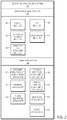
- FIG. 11 is a flowchart illustrating a method of creating a datastore, in accordance with some example embodiments.
- FIG. 12 is a flowchart illustrating a method of adding a new datastore type to a datastore management system, in accordance with some example embodiments.
- FIG. 13 is a block diagram of an example computer system on which methodologies described herein can be executed, in accordance with some example embodiments.
- Example methods and systems for a datastore management framework are disclosed.
- numerous specific details are set forth in order to provide a thorough understanding of example embodiments. It will be evident, however, to one skilled in the art that the present embodiments can be practiced without these specific details.
- a datastore is a repository for storing, managing and distributing data sets, such as on an enterprise level.
- a datastore incorporates all types of data that is produced, stored and used by an organization.
- the data of a datastore can be data that is at rest and used by one or more data-driven applications or services (e.g., online cloud-based applications).
- the software application when a software application needs data from a datastore, the software application connects to the datastore and retrieves the data from the datastore.
- the datastore management system of the present disclosure enables the retrieval of data from multiple datastores and provides the ability and functionality to repeatedly add new datastores, enabling the addition of new datastores using an easy, flexible, and extendable framework.
- the framework of the present disclosure efficiently supports and enables the retrieval of data freely from multiple datastores.
- the present disclosure provides a flexible, reusable, and extendible framework to support adding new datastores freely and easily, as well as importing data from a datastore easily and in a constructed way.
- the framework of the present disclosure provides a flexible configuration methodology to support different datastore configurations.
- when a new datastore is to be added the configuration properties are configured, and the new datastore type is added and related into the available datastore list.
- the system provides common functions for user interface handling and back-end handling for different datastores.
- a user interface layer of the system of the present disclosure may have a configuration parser configured to parse datastore configurations.
- the system when in run-time to create a datastore, parses the system configuration and provides a user interface for the user to choose different types of datastores that the user wants to create, and keys in all the necessary information for the datastore. Once the datastore is created, it may then be presented to the user in an available datastore list.
- the system can also provide the functionality to retrieve metadata from a datastore when a user wants to use certain metadata from the datastore. Different datastores can have different formats to import metadata from the datastore and the methodology of the present disclosure can be shared among different datastores. The datastore is ready to use once the needed data has been imported from the datastore. Users can also edit and delete the datastores.
- the present disclosure provides technical solutions for datastore management and usage, involving datastore design, configuration, creation and metadata handling. It provides a systematic and extendable solution for critical applications that need large and extendable amount of datastores, and it provides an intelligent way of handling datastore configuration, accessary, connectivity, and metadata fetching.
- One technical effect of the system and method of the present disclosure are to provide a flexible, reusable, and extendible framework to support adding new datastores freely and easily. Additionally, other technical effects will be apparent from this disclosure as well.
- a computer-implemented method comprises: storing a plurality of datastore configuration files, with each one of the plurality of datastore configuration files being stored in association with a corresponding one of a plurality of datastore types; receiving, from a computing device, a first request to create a first datastore, the first request indicating a first datastore type of the plurality of datastore types for the first datastore; selecting, from the plurality of datastore configuration files, a first datastore configuration file associated with the first datastore type; parsing the selected first datastore configuration file; rendering a first user interface for display on the computing device based on the parsing of the selected first datastore configuration file, the rendered first user interface being configured to receive user input from the computing device; receiving, from the computing device, a first user input via the rendered first user interface; and creating the first datastore based on the received first user input, the first datastore being of the first datastore type indicated by the first request.
- the computer-implemented method further comprises: receiving, from the computing device, a second request to create a second datastore, the second request indicating a second datastore type, from the plurality of datastore types, for the second datastore; selecting a second datastore configuration file, from the plurality of datastore configuration files, associated with the second datastore type; parsing the selected second datastore configuration file; rendering a second user interface for display on the computing device based on the parsing of the selected second datastore configuration file, the rendered second user interface being configured to receive user input from the computing device; receiving, from the computing device, a second user input via the rendered second user interface; and creating the second datastore based on the received second user input, the second datastore being of the second datastore type indicated by the second request.
- the computer-implemented method further comprises: receiving a request to add a new datastore type to the plurality of datastore types; receiving a new datastore configuration file for the new datastore type; storing the new datastore configuration file for the new datastore type, the new datastore configuration file being added to the plurality of datastore configuration files, and the new datastore type being added to the plurality of datastore types; receiving metadata for the new datastore type; storing the metadata in association with the new datastore type; and displaying, on the computing device, a selectable option to add the metadata to a new datastore based on the new datastore being of the new datastore type.
- each one of the plurality of datastore configuration files comprises a corresponding Extensible Markup Language (XML) file.
- XML Extensible Markup Language
- the rendered user interface comprises at least one field configured to receive user input from the computing device.
- the computer-implemented method further comprises receiving the first user input via at least one graphic user interface element.
- the at least one graphic user interface element comprises at least one of a text field, a menu, and a checkbox.
- a non-transitory machine-readable storage device can store a set of instructions that, when executed by at least one processor, causes the at least one processor to perform the operations and method steps discussed within the present disclosure.
- FIG. 1 is a network diagram illustrating a client-server system 100 , in accordance with some example embodiments.
- a platform e.g., machines and software
- in the example form of an enterprise application platform 112 provides server-side functionality, via a network 114 (e.g., the Internet) to one or more clients.
- FIG. 1 illustrates, for example, a client machine 116 with programmatic client 118 (e.g., a browser), a small device client machine 122 with a small device web client 120 (e.g., a browser without a script engine), and a client/server machine 117 with a programmatic client 119 .
- programmatic client 118 e.g., a browser
- small device client machine 122 with a small device web client 120
- client/server machine 117 with a programmatic client 119 .
- web servers 124 and Application Program Interface (API) servers 125 can be coupled to, and provide web and programmatic interfaces to, application servers 126 .
- the application servers 126 can be, in turn, coupled to one or more database servers 128 that facilitate access to one or more databases 130 .
- the cross-functional services 132 can include relational database modules to provide support services for access to the database(s) 130 , which includes a user interface library 136 .
- the web servers 124 , API servers 125 , application servers 126 , and database servers 128 can host cross-functional services 132 .
- the application servers 126 can further host domain applications 134 .
- the cross-functional services 132 provide services to users and processes that utilize the enterprise application platform 112 .
- the cross-functional services 132 can provide portal services (e.g., web services), database services and connectivity to the domain applications 134 for users that operate the client machine 116 , the client/server machine 117 and the small device client machine 122 .
- the cross-functional services 132 can provide an environment for delivering enhancements to existing applications and for integrating third-party and legacy applications with existing cross-functional services 132 and domain applications 134 .
- the system 100 shown in FIG. 1 employs a client-server architecture, the embodiments of the present disclosure are of course not limited to such an architecture, and could equally well find application in a distributed, or peer-to-peer, architecture system.
- the enterprise application platform 112 can implement partition level operation with concurrent activities.
- the enterprise application platform 112 can implement a partition level lock, a schema lock mechanism, manage activity logs for concurrent activity, generate and maintain statistics at the partition level, and efficiently build global indexes.
- the enterprise application platform 112 is described in greater detail below in conjunction with FIG. 2 .
- FIG. 2 is a block diagram illustrating enterprise applications and services in an enterprise application platform 112 , in accordance with an example embodiment.
- the enterprise application platform 112 can include cross-functional services 132 and domain applications 134 .
- the cross-functional services 132 can include portal modules 140 , relational database modules 142 , connector and messaging modules 144 , API modules 146 , and development modules 148 .
- the portal modules 140 can enable a single point of access to other cross-functional services 132 and domain applications 134 for the client machine 116 , the small device client machine 122 , and the client/server machine 117 .
- the portal modules 140 can be utilized to process, author and maintain web pages that present content (e.g., user interface elements and navigational controls) to the user.
- the portal modules 140 can enable user roles, a construct that associates a role with a specialized environment that is utilized by a user to execute tasks, utilize services and exchange information with other users and within a defined scope. For example, the role can determine the content that is available to the user and the activities that the user can perform.
- the portal modules 140 include a generation module, a communication module, a receiving module and a regenerating module.
- portal modules 140 can comply with web services standards and/or utilize a variety of Internet technologies including Java, J2EE, SAP's Advanced Business Application Programming Language (ABAP) and Web Dynpro, XML, JCA, JAAS, X.509, LDAP, WSDL, WSRR, SOAP, UDDI and Microsoft .NET.
- Java J2EE
- SAP's Advanced Business Application Programming Language SAP's Advanced Business Application Programming Language
- Web Dynpro Web Dynpro
- XML JCA
- JAAS JAAS
- X.509 LDAP
- WSDL WSDL
- WSRR SOAP
- UDDI User Data Management Entity
- the relational database modules 142 can provide support services for access to the database(s) 130 , which includes a user interface library 136 .
- the relational database modules 142 can provide support for object relational mapping, database independence and distributed computing.
- the relational database modules 142 can be utilized to add, delete, update and manage database elements.
- the relational database modules 142 can comply with database standards and/or utilize a variety of database technologies including SQL, SQLDBC, Oracle, MySQL, Unicode, JDBC, or the like.
- the connector and messaging modules 144 can enable communication across different types of messaging systems that are utilized by the cross-functional services 132 and the domain applications 134 by providing a common messaging application processing interface.
- the connector and messaging modules 144 can enable asynchronous communication on the enterprise application platform 112 .
- the API modules 146 can enable the development of service-based applications by exposing an interface to existing and new applications as services. Repositories can be included in the platform as a central place to find available services when building applications.
- the development modules 148 can provide a development environment for the addition, integration, updating and extension of software components on the enterprise application platform 112 without impacting existing cross-functional services 132 and domain applications 134 .
- the customer relationship management application 150 can enable access to and can facilitate collecting and storing of relevant personalized information from multiple data sources and business processes. Enterprise personnel that are tasked with developing a buyer into a long-term customer can utilize the customer relationship management applications 150 to provide assistance to the buyer throughout a customer engagement cycle.
- Enterprise personnel can utilize the financial applications 152 and business processes to track and control financial transactions within the enterprise application platform 112 .
- the financial applications 152 can facilitate the execution of operational, analytical and collaborative tasks that are associated with financial management. Specifically, the financial applications 152 can enable the performance of tasks related to financial accountability, planning, forecasting, and managing the cost of finance.
- the human resource applications 154 can be utilized by enterprise personnel and business processes to manage, deploy, and track enterprise personnel. Specifically, the human resource applications 154 can enable the analysis of human resource issues and facilitate human resource decisions based on real time information.
- the product life cycle management applications 156 can enable the management of a product throughout the life cycle of the product.
- the product life cycle management applications 156 can enable collaborative engineering, custom product development, project management, asset management and quality management among business partners.
- the supply chain management applications 158 can enable monitoring of performances that are observed in supply chains.
- the supply chain management applications 158 can facilitate adherence to production plans and on-time delivery of products and services.
- the third-party applications 160 can be integrated with domain applications 134 and utilize cross-functional services 132 on the enterprise application platform 112 .
- FIG. 3 is a block diagram illustrating a datastore management system 300 , in accordance with some example embodiments.
- the datastore management system 300 comprises any combination of one or more of a configuration management module 310 , a user interface module 320 , a datastore creation module 330 , and one or more databases 340 .
- the modules 310 , 320 , and 330 and the database(s) 340 reside on a machine having a memory and at least one processor (not shown). In some example embodiments, the modules 310 , 320 , and 330 and the database(s) 340 reside on the same machine, while in other example embodiments, one or more of modules 310 , 320 , and 330 and database(s) 340 reside on separate remote machines that communicate with each other via a network (e.g., network 114 in FIG. 1 ). In some example embodiments, the modules 310 , 320 , and 330 and the database(s) 340 can be incorporated into the enterprise application platform 112 in FIG. 1 (e.g., on application server(s) 126 ). However, it is contemplated that other configurations are also within the scope of the present disclosure.
- the configuration management module 310 is configured to store a plurality of datastore configuration files, with each one of the plurality of datastore configuration files being stored in association with a corresponding one of a plurality of datastore types.
- the database management system 300 may accommodate many different types of datastores, with each datastore storing, managing and distributing different data sets.
- the plurality of datastore configuration files are stored in association with the plurality of datastore types in database(s) 340 .
- the plurality of datastore configuration files may be stored as Extensible Markup Language (XML) files. However, the plurality of configuration files may be stored as other types of files as well.
- FIG. 4 illustrates a mapping 400 of each one of a plurality of datastore configuration files being stored in association with a corresponding one of a plurality of datastore types, in accordance with some example embodiments.
- configuration file CONFIG- 1 is stored in association with datastore type TYPE- 1
- configuration file CONFIG- 2 is stored in association with datastore type TYPE- 2
- configuration file CONFIG- 3 is stored in association with datastore type TYPE- 3
- configuration file CONFIG- 4 is stored in association with datastore type TYPE- 4
- configuration file CONFIG-N sotred in association with datastore type TYPE-N.
- the plurality of datastore configuration files may comprise any number of datastore configuration files that constitutes a plurality.
- the mapping 400 of each one of the plurality of datastore configuration files is stored in association with the corresponding one of the plurality of datastore types in database(s) 340 .
- FIG. 5 illustrates a datastore configuration file 500 , in accordance with some example embodiments.
- the datastore configuration file comprises a corresponding Extensible Markup Language (XML) file.
- the datastore configuration file can include parameters to be used in rendering a user interface that is to be used by a user to create a new datastore. Such parameters may include, but are not limited to, parameters related to credential information for the new datastore (e.g., host server, authentication type, user name, password) and location information for the new datastore (e.g., client number, system number, routing suing). Other parameters are also within the scope of the present disclosure.
- the user interface module 320 is configured to receiving, from a computing device, a request to create a new datastore.
- the request can indicate a datastore type for the new datastore that is to be created.
- the user interface module 320 can cause a user interface to be displayed on the computing device, with the user interface comprising one or more user interface elements configured to receive user input indicating a datastore type, as well as other user input.
- FIG. 6 illustrates a user interface 600 for creating a new datastore, in accordance with some example embodiments.
- the user interface 600 may comprise a first portion 610 that is initially displayed on a computing device of a user that is attempting to create a new datastore.
- the first portion 610 comprises one or more user interface elements configured to receive user input, such as text field 611 configured to receive name or identification of the new datastore, text field 612 configured to receive a description of the new datastore, drop-down menu 613 configured to receive a selection or other indication of the type of datastore for the new datastore, and drop-down menu 614 configured to receive a selection or other indication of the user agent that is to be associated with the creation of the new datastore (e.g., the user creating the new datastore).
- user input such as text field 611 configured to receive name or identification of the new datastore, text field 612 configured to receive a description of the new datastore, drop-down menu 613 configured to receive a selection or other indication of the type of datastore for the new datastore, and drop-down menu 614 configured to receive a selection or other indication of the user agent that is to be associated with the creation of the new datastore (e.g., the user creating the new datastore).
- the drop-down menu 613 or another user interface element configured to enable the user to provide input indicating a type of datastore, is configured to enable the user to select the type of datastore from amongst the plurality of datastore types for which the datastore configuration files are stored, thus enabling the user to select a datastore type from amongst a wide variety of datastore types.
- the user interface module 320 is configured to use the received datastore type (e.g., the selection of the type of datastore from drop-down menu 613 in FIG. 6 ) to configure and render a second portion 620 of the user interface 600 to be displayed to the user in the process of creating a new datastore.
- the user interface module 320 may be configured to selecting, from the plurality of datastore configuration files, the datastore configuration file associated with the received datastore type, such as by accessing the mapping 400 stored in database(s) 340 .
- the user interface module 320 is configured to parse the selected datastore configuration file, and then render the user interface 600 , or the second portion 620 of the user interface 600 , for display on the computing device of the user based on the parsing of the selected datastore configuration file.
- the rendered second portion 620 of the user interface 600 may be configured to receive user input from the computing device of the user, such as via one or more user interface elements.
- the second portion 620 of the user interface 600 may comprise a text field 621 configured to receive an identification of an application server for the new datastore, a drop-down menu 622 configured to receive a selection of an authentication type for the new datastore, a text field 623 configured to receive a name or other identification of the user, a text field 624 configured to receive a password, a text field 625 configured to receive a client number for the new datastore, a text field 626 configured to receive a system number for the new datastore, and a text field 627 configured to receive a routing string for the new datastore.
- the user interface module 320 is configured to receive, from a computing device, user input via the second portion 620 of the user interface 600 , as described above.
- the datastore creation module 330 is configured to create a datastore based on the user input received via the second portion 620 of the user interface 600 .
- This new datastore is of the datastore type indicated by the request to create the new datastore, such as the datastore type selected by the user via drop-down menu 613 in FIG. 6 ).
- the creation of the datastore based on the user input received via the second portion 620 of the user interface 600 can be triggered by a request to save the new datastore, such as via a selection of a user interface element (e.g., the “Save” button in FIG. 6 ), which may cause the new configured datastore to be saved in the datastore management system 300 .
- a user interface element e.g., the “Save” button in FIG. 6
- FIG. 7 illustrates a user interface 700 displaying the newly-created datastore (e.g., “BW_Target_Jenny” created in FIG. 6 ) in a list of available datastores 710 , in accordance with some example embodiments.
- the user interface 700 is configured to enable a user to select any of the available datastores 710 for use in operations. Selection of one of the available datastores 710 may cause the datastore management system 300 to test a connection with the selected datastore 710 and enable a user to obtain metadata for the selected datastore 710 .
- FIG. 7 illustrates a user interface 700 displaying the newly-created datastore (e.g., “BW_Target_Jenny” created in FIG. 6 ) in a list of available datastores 710 , in accordance with some example embodiments.
- the user interface 700 is configured to enable a user to select any of the available datastores 710 for use in operations. Selection of one of the available datastores 710 may
- FIG. 8 illustrates a user interface 800 displaying a list of metadata 810 available to be imported into a selected datastore, in accordance with some example embodiments.
- the user interface 800 is configured to enable a user to select any of the available metadata 810 to be imported into the selected datastore.
- the datastore management system 300 may save the selected metadata 810 to a datastore metadata model layer of the datastore management system 300 for subsequent use in association with the corresponding datastore.
- FIG. 9 illustrates a user interface 900 displaying the imported metadata available for use within a datastore, in accordance with some example embodiments.
- the present disclosure provides a methodology for datastore configuration in a flexible and extendable way, datastore configuration parsing, datastore configuration creation rendering, datastore configuration available list, datastore connection, and datastore metadata retrieval handling.
- a user wants to add a new datastore for future use, the user can use the features of the present disclosure to first configure the datastore configuration properties of a datastore configuration file, and then add the new datastore type to the datastore management system 300 and add it into the available datastore list for subsequent use by users of the datastore management system 300 .
- the datastore management system 300 can provide common functions for user interface and back-end handling for different datastores.
- the datastore management system 300 may comprise a parser to parse the configuration properties into user interface elements for datastore creation and editing.
- the datastore management system 300 can provides a user interface for a user to choose different types of datastores that the user wants to create. Once the datastore management system 300 creates and saves the datastore, the datastore management system 300 provides the datastore in the available datastore list. A user can then test a connection with the datastore, retrieve metadata from the datastore, and view data using the datastore management system 300 .
- the datastore management system 300 provides a framework to obtain metadata and other data from a datastore when the user wants to use certain data from the datastore.
- FIG. 10 is a block diagram illustrating a datastore management framework 1000 , in accordance with some example embodiments.
- the datastore management framework 1000 comprises the following layers: a user interface or view layer 1010 for datastore configuration, parsing, creation, and rendering, a controller layer 1020 for datastore-related business logic processing, and a persistence layer interaction and model layer 1030 for saving the datastore configurations and metadata retrieved from datastore adapters.
- the components of each layer have access to each other, such that they can communicate with each other.
- a datastore configuration will be created at 1011 according to a generic datastore schema at 1012 .
- the term “generic” is used herein to refer to the ability to be used for different datastores, and is not used to imply that any such component or feature is known or commonly used.
- a datastore creation UI at 1013 will use a parser at 1014 to parse a datastore configuration and render it into different UI elements in the datastore creation UI 1013 .
- the datastore creation UI 1013 provides different types of selections for different types of datastores and provides different datastore configuration for different datastores. A user can fill out the required information in the datastore creation UI 1013 .
- the datastore management framework 1000 saves the datastore and the datastore is available in the datastore management system 300 .
- the user can establish a datastore connection at 1016 to see if the created datastore works or not, as well as to access and retrieve metadata for the working datastore through metadata fetching at 1015 .
- the datastore management framework 1000 provides functions for datastore creation, deletion, editing, saving and metadata retrieval, editing, and saving that support the user interface's required actions at 1021 .
- the user interface layer 1010 triggers the creation of a datastore and the user keys in the required fields
- the controller 1021 will save the data into the persistence layer 1030 .
- the controller layer 1020 can retrieve datastore information from the persistence layer 1030 and return the information to the user interface layer 1010 , where the user interface layer 1010 can render the data according to the retrieved data information.
- the user interface layer 1010 at 1015 can pass an identification of the datastore to a metadata support service at 1022 in the controller layer 1020 , which will get the related datastore information according to the identification and use the information for metadata retrieval from one or more of the connectors 1040 , which connect the controller layer 1020 to the datastores.
- the retrieved metadata can then be sent back to the user interface layer 1010 from the controller layer 1020 .
- a datastore object can be persisted with all of the information related to the datastore object, as well as configuration of datastore being saved as properties of the datastore object.
- the new datastore object will be created.
- a user modifies a datastore related information of that datastore object will be updated, and when a user deletes a datastore, the datastore object will be deleted.
- the selected metadata will be added into a metadata table.
- the modified information will be saved to the metadata table.
- the metadata record will be deleted.
- FIG. 11 is a flowchart illustrating a method 1100 of creating a datastore, in accordance with some example embodiments.
- Method 1100 can be performed by processing logic that can comprise hardware (e.g., circuitry, dedicated logic, programmable logic, microcode, etc.), software (e.g., instructions run on a processing device), or a combination thereof.
- the method 1100 is performed by the database management system 300 of FIG. 3 , or any combination of one or more of its components or modules (e.g., configuration management module 310 , user interface module 320 , datastore creation module 330 ), as described above.
- the datastore management system 300 stores a plurality of datastore configuration files, with each one of the plurality of datastore configuration files being stored in association with a corresponding one of a plurality of datastore types.
- each one of the plurality of datastore configuration files comprises a corresponding XML file.
- the datastore management system 300 receives, from a computing device, a request to create a datastore, with the request indicating a datastore type of the plurality of datastore types for the datastore.
- the datastore management system 300 selects, from the plurality of datastore configuration files, a datastore configuration file associated with the datastore type.
- the datastore management system 300 parses the selected datastore configuration file.
- the datastore management system 300 renders a user interface for display on the computing device based on the parsing of the selected datastore configuration file, with the rendered user interface being configured to receive user input from the computing device.
- the datastore management system 300 receives, from the computing device, a user input via the rendered user interface.
- the datastore management system 300 creates the datastore based on the received user input, with the datastore being of the datastore type indicated by the request. The method 1100 may then return to operation 1120 , where the datastore management system 300 receives, from the same computing device or a different computing device, another request to create another datastore.
- FIG. 12 is a flowchart illustrating a method 1200 of adding a new datastore type to a datastore management system, in accordance with some example embodiments.
- Method 1200 can be performed by processing logic that can comprise hardware (e.g., circuitry, dedicated logic, programmable logic, microcode, etc.), software (e.g., instructions run on a processing device), or a combination thereof.
- the method 1200 is performed by the database management system 300 of FIG. 3 , or any combination of one or more of its components or modules (e.g., configuration management module 310 , user interface module 320 , datastore creation module 330 ), as described above.
- the datastore management system 300 receives a request to add a new datastore type to an existing plurality of datastore types.
- the datastore management system 300 receives a new datastore configuration file for the new datastore type.
- the datastore management system 300 stores the new datastore configuration file for the new datastore type, with the new datastore configuration file being added to the plurality of datastore configuration files, and the new datastore type being added to the plurality of datastore types.
- the datastore management system 300 receives metadata for the new datastore type.
- the datastore management system 300 stores the metadata in association with the new datastore type.
- Modules may constitute either software modules (e.g., code embodied on a machine-readable medium or in a transmission signal) or hardware modules.
- a hardware module is a tangible unit capable of performing certain operations and may be configured or arranged in a certain manner.
- one or more computer systems e.g., a standalone, client, or server computer system
- one or more hardware modules of a computer system e.g., a processor or a group of processors
- software e.g., an application or application portion
- a hardware module may be implemented mechanically or electronically.
- a hardware module may comprise dedicated circuitry or logic that is permanently configured (e.g., as a special-purpose processor, such as a field programmable gate array (FPGA) or an application-specific integrated circuit (ASIC)) to perform certain operations.
- a hardware module may also comprise programmable logic or circuitry (e.g., as encompassed within a general-purpose processor or other programmable processor) that is temporarily configured by software to perform certain operations. It will be appreciated that the decision to implement a hardware module mechanically, in dedicated and permanently configured circuitry, or in temporarily configured circuitry (e.g., configured by software) may be driven by cost and time considerations.
- the term “hardware module” should be understood to encompass a tangible entity, be that an entity that is physically constructed, permanently configured (e.g., hardwired) or temporarily configured (e.g., programmed) to operate in a certain manner and/or to perform certain operations described herein.
- hardware modules are temporarily configured (e.g., programmed)
- each of the hardware modules need not be configured or instantiated at any one instance in time.
- the hardware modules comprise a general-purpose processor configured using software
- the general-purpose processor may be configured as respective different hardware modules at different times.
- Software may accordingly configure a processor, for example, to constitute a particular hardware module at one instance of time and to constitute a different hardware module at a different instance of time.
- Hardware modules can provide information to, and receive information from, other hardware modules. Accordingly, the described hardware modules may be regarded as being communicatively coupled. Where multiple of such hardware modules exist contemporaneously, communications may be achieved through signal transmission (e.g., over appropriate circuits and buses) that connect the hardware modules. In embodiments in which multiple hardware modules are configured or instantiated at different times, communications between such hardware modules may be achieved, for example, through the storage and retrieval of information in memory structures to which the multiple hardware modules have access. For example, one hardware module may perform an operation and store the output of that operation in a memory device to which it is communicatively coupled. A further hardware module may then, at a later time, access the memory device to retrieve and process the stored output. Hardware modules may also initiate communications with input or output devices and can operate on a resource (e.g., a collection of information).
- a resource e.g., a collection of information
- processors may be temporarily configured (e.g., by software) or permanently configured to perform the relevant operations. Whether temporarily or permanently configured, such processors may constitute processor-implemented modules that operate to perform one or more operations or functions.
- the modules referred to herein may, in some example embodiments, comprise processor-implemented modules.
- the methods described herein may be at least partially processor-implemented. For example, at least some of the operations of a method may be performed by one or more processors or processor-implemented modules. The performance of certain of the operations may be distributed among the one or more processors, not only residing within a single machine, but deployed across a number of machines. In some example embodiments, the processor or processors may be located in a single location (e.g., within a home environment, an office environment or as a server farm), while in other embodiments the processors may be distributed across a number of locations.
- the one or more processors may also operate to support performance of the relevant operations in a “cloud computing” environment or as a “software as a service” (SaaS). For example, at least some of the operations may be performed by a group of computers (as examples of machines including processors), these operations being accessible via a network (e.g., the network 104 of FIG. 1 ) and via one or more appropriate interfaces (e.g., APIs).
- SaaS software as a service
- Example embodiments may be implemented in digital electronic circuitry, or in computer hardware, firmware, software, or in combinations of them.
- Example embodiments may be implemented using a computer program product, e.g., a computer program tangibly embodied in an information carrier, e.g., in a machine-readable medium for execution by, or to control the operation of, data processing apparatus, e.g., a programmable processor, a computer, or multiple computers.
- a computer program can be written in any form of programming language, including compiled or interpreted languages, and it can be deployed in any form, including as a stand-alone program or as a module, subroutine, or other unit suitable for use in a computing environment.
- a computer program can be deployed to be executed on one computer or on multiple computers at one site or distributed across multiple sites and interconnected by a communication network.
- operations may be performed by one or more programmable processors executing a computer program to perform functions by operating on input data and generating output.
- Method operations can also be performed by, and apparatus of example embodiments may be implemented as, special purpose logic circuitry (e.g., a FPGA or an ASIC).
- a computing system can include clients and servers.
- a client and server are generally remote from each other and typically interact through a communication network. The relationship of client and server arises by virtue of computer programs running on the respective computers and having a client-server relationship to each other.
- both hardware and software architectures merit consideration. Specifically, it will be appreciated that the choice of whether to implement certain functionality in permanently configured hardware (e.g., an ASIC), in temporarily configured hardware (e.g., a combination of software and a programmable processor), or a combination of permanently and temporarily configured hardware may be a design choice.
- hardware e.g., machine
- software architectures that may be deployed, in various example embodiments.
- FIG. 13 is a block diagram of a machine in the example form of a computer system 1300 within which instructions for causing the machine to perform any one or more of the methodologies discussed herein may be executed.
- the machine operates as a standalone device or may be connected (e.g., networked) to other machines.
- the machine may operate in the capacity of a server or a client machine in a server-client network environment, or as a peer machine in a peer-to-peer (or distributed) network environment.
- the machine may be a personal computer (PC), a tablet PC, a set-top box (STB), a Personal Digital Assistant (PDA), a cellular telephone, a web appliance, a network router, switch or bridge, or any machine capable of executing instructions (sequential or otherwise) that specify actions to be taken by that machine.
- PC personal computer
- PDA Personal Digital Assistant
- STB set-top box
- WPA Personal Digital Assistant
- a cellular telephone a web appliance
- network router switch or bridge
- machine any machine capable of executing instructions (sequential or otherwise) that specify actions to be taken by that machine.
- machine shall also be taken to include any collection of machines that individually or jointly execute a set (or multiple sets) of instructions to perform any one or more of the methodologies discussed herein.
- the example computer system 1300 includes a processor 1302 (e.g., a central processing unit (CPU), a graphics processing unit (GPU) or both), a main memory 1304 and a static memory 1306 , which communicate with each other via a bus 1308 .
- the computer system 1300 may further include a graphics or video display unit 1310 (e.g., a liquid crystal display (LCD) or a cathode ray tube (CRT)).
- a graphics or video display unit 1310 e.g., a liquid crystal display (LCD) or a cathode ray tube (CRT)
- the computer system 1300 also includes an alphanumeric input device 1312 (e.g., a keyboard), a user interface (UI) navigation (or cursor control) device 1314 (e.g., a mouse), a storage unit (e.g., a disk drive unit) 1316 , an audio or signal generation device 1318 (e.g., a speaker), and a network interface device 1320 .
- an alphanumeric input device 1312 e.g., a keyboard
- UI user interface
- cursor control device 1314 e.g., a mouse
- storage unit e.g., a disk drive unit
- an audio or signal generation device 1318 e.g., a speaker
- a network interface device 1320 e.g., a network interface device
- the storage unit 1316 includes a machine-readable medium 1322 on which is stored one or more sets of data structures and instructions 1324 (e.g., software) embodying or utilized by any one or more of the methodologies or functions described herein.
- the instructions 1324 may also reside, completely or at least partially, within the main memory 1304 and/or within the processor 1302 during execution thereof by the computer system 1300 , the main memory 1304 and the processor 1302 also constituting machine-readable media.
- the instructions 1324 may also reside, completely or at least partially, within the static memory 1306 .
- machine-readable medium 1322 is shown in an example embodiment to be a single medium, the term “machine-readable medium” may include a single medium or multiple media (e.g., a centralized or distributed database, and/or associated caches and servers) that store the one or more instructions 1324 or data structures.
- the term “machine-readable medium” shall also be taken to include any tangible medium that is capable of storing, encoding or carrying instructions for execution by the machine and that cause the machine to perform any one or more of the methodologies of the present embodiments, or that is capable of storing, encoding or carrying data structures utilized by or associated with such instructions.
- the term “machine-readable medium” shall accordingly be taken to include, but not be limited to, solid-state memories, and optical and magnetic media.
- machine-readable media include non-volatile memory, including by way of example semiconductor memory devices (e.g., Erasable Programmable Read-Only Memory (EPROM), Electrically Erasable Programmable Read-Only Memory (EEPROM), and flash memory devices); magnetic disks such as internal hard disks and removable disks; magneto-optical disks; and compact disc-read-only memory (CD-ROM) and digital versatile disc (or digital video disc) read-only memory (DVD-ROM) disks.
- semiconductor memory devices e.g., Erasable Programmable Read-Only Memory (EPROM), Electrically Erasable Programmable Read-Only Memory (EEPROM), and flash memory devices
- EPROM Erasable Programmable Read-Only Memory
- EEPROM Electrically Erasable Programmable Read-Only Memory
- flash memory devices e.g., Electrically Erasable Programmable Read-Only Memory (EEPROM), and flash memory devices
- magnetic disks such as internal hard disks and removable disks
- the instructions 1324 may further be transmitted or received over a communications network 1326 using a transmission medium.
- the instructions 1324 may be transmitted using the network interface device 1320 and any one of a number of well-known transfer protocols (e.g., HTTP).
- Examples of communication networks include a LAN, a WAN, the Internet, mobile telephone networks, POTS networks, and wireless data networks (e.g., WiFi and WiMax networks).
- the term “transmission medium” shall be taken to include any intangible medium capable of storing, encoding, or carrying instructions for execution by the machine, and includes digital or analog communications signals or other intangible media to facilitate communication of such software.
- each one of the plurality of datastore configuration files comprises a corresponding Extensible Markup Language (XML) file.
- XML Extensible Markup Language
- a computer-implemented method comprising:
- each one of the plurality of datastore configuration files comprises a corresponding Extensible Markup Language (XML) file.
- XML Extensible Markup Language
- a non-transitory machine-readable storage medium tangibly embodying a set of instructions that, when executed by at least one processor, causes the at least one processor to perform the method of any one of examples 8 to 14.
- a machine-readable medium carrying a set of instructions that, when executed by at least one processor, causes the at least one processor to carry out the method of any one of examples 8 to 14.
- the present disclosure also relates to an apparatus for performing the operations herein.
- This apparatus may be specially constructed for the required purposes, or it may include a general purpose computer selectively activated or reconfigured by a computer program stored in the computer.
- a computer program may be stored in a computer readable storage medium, such as, but is not limited to, any type of disk, including floppy disks, optical disks, CD-ROMs, and magnetic-optical disks, read-only memories (ROMs), random access memories (RAMs), EPROMs, EEPROMs, magnetic or optical cards, or any type of media suitable for storing electronic instructions, and each coupled to a computer system bus.
- inventive subject matter may be referred to herein, individually and/or collectively, by the term “invention” merely for convenience and without intending to voluntarily limit the scope of this application to any single invention or inventive concept if more than one is in fact disclosed.
- inventive subject matter may be referred to herein, individually and/or collectively, by the term “invention” merely for convenience and without intending to voluntarily limit the scope of this application to any single invention or inventive concept if more than one is in fact disclosed.
- inventive concept merely for convenience and without intending to voluntarily limit the scope of this application to any single invention or inventive concept if more than one is in fact disclosed.
Landscapes
- Engineering & Computer Science (AREA)
- Databases & Information Systems (AREA)
- Theoretical Computer Science (AREA)
- General Engineering & Computer Science (AREA)
- Physics & Mathematics (AREA)
- General Physics & Mathematics (AREA)
- Data Mining & Analysis (AREA)
- Information Retrieval, Db Structures And Fs Structures Therefor (AREA)
- Human Computer Interaction (AREA)
Abstract
Description
-
- 1. A system comprising:
- at least one processor; and
- a non-transitory computer-readable medium storing executable instructions that, when executed, cause the at least one processor to perform operations comprising:
- storing a plurality of datastore configuration files, each one of the plurality of datastore configuration files being stored in association with a corresponding one of a plurality of datastore types;
- receiving, from a computing device, a first request to create a first datastore, the first request indicating a first datastore type of the plurality of datastore types for the first datastore;
- selecting, from the plurality of datastore configuration files, a first datastore configuration file associated with the first datastore type;
- parsing the selected first datastore configuration file;
- rendering a first user interface for display on the computing device based on the parsing of the selected first datastore configuration file, the rendered first user interface being configured to receive user input from the computing device;
- receiving, from the computing device, a first user input via the rendered first user interface; and
- creating the first datastore based on the received first user input, the first datastore being of the first datastore type indicated by the first request.
-
- receiving, from the computing device, a second request to create a second datastore, the second request indicating a second datastore type, from the plurality of datastore types, for the second datastore;
- selecting a second datastore configuration file, from the plurality of datastore configuration files, associated with the second datastore type;
- parsing the selected second datastore configuration file;
- rendering a second user interface for display on the computing device based on the parsing of the selected second datastore configuration file, the rendered second user interface being configured to receive user input from the computing device;
- receiving, from the computing device, a second user input via the rendered second user interface; and
- creating the second datastore based on the received second user input, the second datastore being of the second datastore type indicated by the second request.
-
- receiving a request to add a new datastore type to the plurality of datastore types;
- receiving a new datastore configuration file for the new datastore type;
- storing the new datastore configuration file for the new datastore type, the new datastore configuration file being added to the plurality of datastore configuration files, and the new datastore type being added to the plurality of datastore types;
- receiving metadata for the new datastore type;
- storing the metadata in association with the new datastore type; and
- displaying, on the computing device, a selectable option to add the metadata to a new datastore based on the new datastore being of the new datastore type.
-
- storing, by a machine having a memory and at least one hardware processor, a plurality of datastore configuration files, each one of the plurality of datastore configuration files being stored in association with a corresponding one of a plurality of datastore types;
- receiving, from a computing device, a first request to create a first datastore, the first request indicating a first datastore type of the plurality of datastore types for the first datastore;
- selecting, from the plurality of datastore configuration files, a first datastore configuration file associated with the first datastore type;
- parsing the selected first datastore configuration file;
- rendering a first user interface for display on the computing device based on the parsing of the selected first datastore configuration file, the rendered first user interface being configured to receive user input from the computing device;
- receiving, from the computing device, a first user input via the rendered first user interface; and
- creating the first datastore based on the received first user input, the first datastore being of the first datastore type indicated by the first request.
-
- receiving, from the computing device, a second request to create a second datastore, the second request indicating a second datastore type, from the plurality of datastore types, for the second datastore;
- selecting a second datastore configuration file, from the plurality of datastore configuration files, associated with the second datastore type;
- parsing the selected second datastore configuration file;
- rendering a second user interface for display on the computing device based on the parsing of the selected second datastore configuration file, the rendered second user interface being configured to receive user input from the computing device;
- receiving, from the computing device, a second user input via the rendered second user interface; and
- creating the second datastore based on the received second user input, the second datastore being of the second datastore type indicated by the second request.
-
- receiving a request to add a new datastore type to the plurality of datastore types;
- receiving a new datastore configuration file for the new datastore type;
- storing the new datastore configuration file for the new datastore type, the new datastore configuration file being added to the plurality of datastore configuration files, and the new datastore type being added to the plurality of datastore types;
- receiving metadata for the new datastore type;
- storing the metadata in association with the new datastore type; and
- displaying, on the computing device, a selectable option to add the metadata to a new datastore based on the new datastore being of the new datastore type.
Claims (20)
Priority Applications (1)
| Application Number | Priority Date | Filing Date | Title |
|---|---|---|---|
| US15/369,475 US10558624B2 (en) | 2016-12-05 | 2016-12-05 | System and method for datastore management framework |
Applications Claiming Priority (1)
| Application Number | Priority Date | Filing Date | Title |
|---|---|---|---|
| US15/369,475 US10558624B2 (en) | 2016-12-05 | 2016-12-05 | System and method for datastore management framework |
Publications (2)
| Publication Number | Publication Date |
|---|---|
| US20180157686A1 US20180157686A1 (en) | 2018-06-07 |
| US10558624B2 true US10558624B2 (en) | 2020-02-11 |
Family
ID=62243820
Family Applications (1)
| Application Number | Title | Priority Date | Filing Date |
|---|---|---|---|
| US15/369,475 Active 2038-02-06 US10558624B2 (en) | 2016-12-05 | 2016-12-05 | System and method for datastore management framework |
Country Status (1)
| Country | Link |
|---|---|
| US (1) | US10558624B2 (en) |
Families Citing this family (4)
| Publication number | Priority date | Publication date | Assignee | Title |
|---|---|---|---|---|
| US10275264B1 (en) * | 2017-11-02 | 2019-04-30 | Sap Se | Configuration management of remote sources using activator fields |
| CN111726390B (en) * | 2020-05-06 | 2022-11-25 | 上海融客软件科技有限公司 | Interface data interaction method, device, equipment and storage medium based on Teamcenter |
| CN111666155A (en) * | 2020-06-02 | 2020-09-15 | 中国建设银行股份有限公司 | Resource configuration file management method, device, equipment and medium |
| CN116991513A (en) * | 2022-04-25 | 2023-11-03 | 北京字跳网络技术有限公司 | Configuration file generation method, device, electronic equipment, media and program product |
Citations (5)
| Publication number | Priority date | Publication date | Assignee | Title |
|---|---|---|---|---|
| US20080270369A1 (en) * | 2007-04-26 | 2008-10-30 | Microsoft Corporation | Framework for providing metrics from any datasource |
| US20110083138A1 (en) * | 2009-10-07 | 2011-04-07 | Swaminathan Sivasubramanian | Self-service configuration for data environment |
| US20140245196A1 (en) * | 2013-02-26 | 2014-08-28 | Google Inc. | User interface generation and preview |
| US20160098449A1 (en) * | 2014-10-07 | 2016-04-07 | Oracle International Corporation | Plug-in architecture of business intelligence platform using data source cartridges |
| US20160344672A1 (en) * | 2015-05-21 | 2016-11-24 | Dell Software Inc. | Method for determining predictive response time across enterprise communication systems |
Family Cites Families (2)
| Publication number | Priority date | Publication date | Assignee | Title |
|---|---|---|---|---|
| EP2964685B1 (en) * | 2013-03-06 | 2020-07-22 | Ege Kimya Sanayi ve Ticaret A.S. | Cobalt and manganese based urethanized polymers for air drying polymer-based coatings, paints and inks |
| US9729403B1 (en) * | 2013-03-15 | 2017-08-08 | EMC IP Holding Company LLC | Proficiency-based GUI adaptation |
-
2016
- 2016-12-05 US US15/369,475 patent/US10558624B2/en active Active
Patent Citations (5)
| Publication number | Priority date | Publication date | Assignee | Title |
|---|---|---|---|---|
| US20080270369A1 (en) * | 2007-04-26 | 2008-10-30 | Microsoft Corporation | Framework for providing metrics from any datasource |
| US20110083138A1 (en) * | 2009-10-07 | 2011-04-07 | Swaminathan Sivasubramanian | Self-service configuration for data environment |
| US20140245196A1 (en) * | 2013-02-26 | 2014-08-28 | Google Inc. | User interface generation and preview |
| US20160098449A1 (en) * | 2014-10-07 | 2016-04-07 | Oracle International Corporation | Plug-in architecture of business intelligence platform using data source cartridges |
| US20160344672A1 (en) * | 2015-05-21 | 2016-11-24 | Dell Software Inc. | Method for determining predictive response time across enterprise communication systems |
Also Published As
| Publication number | Publication date |
|---|---|
| US20180157686A1 (en) | 2018-06-07 |
Similar Documents
| Publication | Publication Date | Title |
|---|---|---|
| US11514065B2 (en) | Providing implicit information not explicitly persisted | |
| US11797273B2 (en) | System and method for enhancing component based development models with auto-wiring | |
| US11269875B2 (en) | System and method of data wrangling | |
| US11755461B2 (en) | Asynchronous consumer-driven contract testing in micro service architecture | |
| US11163586B1 (en) | Automated configuration of application program instance | |
| US9098821B2 (en) | Analytic solution integration | |
| US12511176B2 (en) | Integrating applications using containerized integration flow | |
| US20160188302A1 (en) | Automatic generation of metadata-based cross-platform mobile applications | |
| US10261808B2 (en) | Access operation with dynamic linking and access of data within plural data sources | |
| US12175217B2 (en) | Integrated testing tool for data replication | |
| US10558624B2 (en) | System and method for datastore management framework | |
| US11734309B2 (en) | Nested group hierarchies for analytics applications | |
| US9946781B2 (en) | System and method of implementing table aliases | |
| US10909026B2 (en) | Increasing data accessibility across system architecture environments | |
| US20140129965A1 (en) | Guided activity with user's defined steps | |
| US11138020B1 (en) | Content provisioning system | |
| US10983806B2 (en) | User interface for computer system usage types | |
| US10162846B2 (en) | Data change notification using OData entity keys | |
| US20220197775A1 (en) | Performance monitoring for osgi application with bundles | |
| US20220398228A1 (en) | Implementing tenancy isolation for entities | |
| Mengistu | Organization Management in Drupal | |
| Ghadban Pou | The use of Google Apps for implementing BI applications |
Legal Events
| Date | Code | Title | Description |
|---|---|---|---|
| AS | Assignment |
Owner name: SAP SE, GERMANY Free format text: ASSIGNMENT OF ASSIGNORS INTEREST;ASSIGNOR:ZHANG, WENLI;REEL/FRAME:040524/0627 Effective date: 20161202 |
|
| STPP | Information on status: patent application and granting procedure in general |
Free format text: NON FINAL ACTION MAILED |
|
| STPP | Information on status: patent application and granting procedure in general |
Free format text: RESPONSE TO NON-FINAL OFFICE ACTION ENTERED AND FORWARDED TO EXAMINER |
|
| STPP | Information on status: patent application and granting procedure in general |
Free format text: FINAL REJECTION MAILED |
|
| STPP | Information on status: patent application and granting procedure in general |
Free format text: ADVISORY ACTION MAILED |
|
| STPP | Information on status: patent application and granting procedure in general |
Free format text: NOTICE OF ALLOWANCE MAILED -- APPLICATION RECEIVED IN OFFICE OF PUBLICATIONS |
|
| STPP | Information on status: patent application and granting procedure in general |
Free format text: PUBLICATIONS -- ISSUE FEE PAYMENT VERIFIED |
|
| STCF | Information on status: patent grant |
Free format text: PATENTED CASE |
|
| MAFP | Maintenance fee payment |
Free format text: PAYMENT OF MAINTENANCE FEE, 4TH YEAR, LARGE ENTITY (ORIGINAL EVENT CODE: M1551); ENTITY STATUS OF PATENT OWNER: LARGE ENTITY Year of fee payment: 4 |