US10540193B2 - Software-defined microservices - Google Patents
Software-defined microservices Download PDFInfo
- Publication number
- US10540193B2 US10540193B2 US15/590,781 US201715590781A US10540193B2 US 10540193 B2 US10540193 B2 US 10540193B2 US 201715590781 A US201715590781 A US 201715590781A US 10540193 B2 US10540193 B2 US 10540193B2
- Authority
- US
- United States
- Prior art keywords
- cima
- virtual machine
- request
- process virtual
- endpoint
- Prior art date
- Legal status (The legal status is an assumption and is not a legal conclusion. Google has not performed a legal analysis and makes no representation as to the accuracy of the status listed.)
- Active, expires
Links
Images




Classifications
-
- G—PHYSICS
- G06—COMPUTING OR CALCULATING; COUNTING
- G06F—ELECTRIC DIGITAL DATA PROCESSING
- G06F9/00—Arrangements for program control, e.g. control units
- G06F9/06—Arrangements for program control, e.g. control units using stored programs, i.e. using an internal store of processing equipment to receive or retain programs
- G06F9/44—Arrangements for executing specific programs
- G06F9/455—Emulation; Interpretation; Software simulation, e.g. virtualisation or emulation of application or operating system execution engines
- G06F9/45533—Hypervisors; Virtual machine monitors
- G06F9/45558—Hypervisor-specific management and integration aspects
-
- G—PHYSICS
- G06—COMPUTING OR CALCULATING; COUNTING
- G06F—ELECTRIC DIGITAL DATA PROCESSING
- G06F9/00—Arrangements for program control, e.g. control units
- G06F9/06—Arrangements for program control, e.g. control units using stored programs, i.e. using an internal store of processing equipment to receive or retain programs
- G06F9/44—Arrangements for executing specific programs
- G06F9/455—Emulation; Interpretation; Software simulation, e.g. virtualisation or emulation of application or operating system execution engines
- G06F9/45504—Abstract machines for programme code execution, e.g. Java virtual machine [JVM], interpreters, emulators
-
- G—PHYSICS
- G06—COMPUTING OR CALCULATING; COUNTING
- G06F—ELECTRIC DIGITAL DATA PROCESSING
- G06F12/00—Accessing, addressing or allocating within memory systems or architectures
- G06F12/14—Protection against unauthorised use of memory or access to memory
- G06F12/1416—Protection against unauthorised use of memory or access to memory by checking the object accessibility, e.g. type of access defined by the memory independently of subject rights
- G06F12/145—Protection against unauthorised use of memory or access to memory by checking the object accessibility, e.g. type of access defined by the memory independently of subject rights the protection being virtual, e.g. for virtual blocks or segments before a translation mechanism
-
- G—PHYSICS
- G06—COMPUTING OR CALCULATING; COUNTING
- G06F—ELECTRIC DIGITAL DATA PROCESSING
- G06F12/00—Accessing, addressing or allocating within memory systems or architectures
- G06F12/14—Protection against unauthorised use of memory or access to memory
- G06F12/1458—Protection against unauthorised use of memory or access to memory by checking the subject access rights
- G06F12/1466—Key-lock mechanism
- G06F12/1475—Key-lock mechanism in a virtual system, e.g. with translation means
-
- G—PHYSICS
- G06—COMPUTING OR CALCULATING; COUNTING
- G06F—ELECTRIC DIGITAL DATA PROCESSING
- G06F16/00—Information retrieval; Database structures therefor; File system structures therefor
- G06F16/20—Information retrieval; Database structures therefor; File system structures therefor of structured data, e.g. relational data
- G06F16/28—Databases characterised by their database models, e.g. relational or object models
- G06F16/289—Object oriented databases
-
- G—PHYSICS
- G06—COMPUTING OR CALCULATING; COUNTING
- G06F—ELECTRIC DIGITAL DATA PROCESSING
- G06F21/00—Security arrangements for protecting computers, components thereof, programs or data against unauthorised activity
- G06F21/50—Monitoring users, programs or devices to maintain the integrity of platforms, e.g. of processors, firmware or operating systems
- G06F21/52—Monitoring users, programs or devices to maintain the integrity of platforms, e.g. of processors, firmware or operating systems during program execution, e.g. stack integrity ; Preventing unwanted data erasure; Buffer overflow
- G06F21/53—Monitoring users, programs or devices to maintain the integrity of platforms, e.g. of processors, firmware or operating systems during program execution, e.g. stack integrity ; Preventing unwanted data erasure; Buffer overflow by executing in a restricted environment, e.g. sandbox or secure virtual machine
-
- G—PHYSICS
- G06—COMPUTING OR CALCULATING; COUNTING
- G06F—ELECTRIC DIGITAL DATA PROCESSING
- G06F21/00—Security arrangements for protecting computers, components thereof, programs or data against unauthorised activity
- G06F21/50—Monitoring users, programs or devices to maintain the integrity of platforms, e.g. of processors, firmware or operating systems
- G06F21/57—Certifying or maintaining trusted computer platforms, e.g. secure boots or power-downs, version controls, system software checks, secure updates or assessing vulnerabilities
-
- G—PHYSICS
- G06—COMPUTING OR CALCULATING; COUNTING
- G06F—ELECTRIC DIGITAL DATA PROCESSING
- G06F9/00—Arrangements for program control, e.g. control units
- G06F9/06—Arrangements for program control, e.g. control units using stored programs, i.e. using an internal store of processing equipment to receive or retain programs
- G06F9/44—Arrangements for executing specific programs
- G06F9/455—Emulation; Interpretation; Software simulation, e.g. virtualisation or emulation of application or operating system execution engines
- G06F9/45533—Hypervisors; Virtual machine monitors
- G06F9/45558—Hypervisor-specific management and integration aspects
- G06F2009/4557—Distribution of virtual machine instances; Migration and load balancing
-
- G—PHYSICS
- G06—COMPUTING OR CALCULATING; COUNTING
- G06F—ELECTRIC DIGITAL DATA PROCESSING
- G06F9/00—Arrangements for program control, e.g. control units
- G06F9/06—Arrangements for program control, e.g. control units using stored programs, i.e. using an internal store of processing equipment to receive or retain programs
- G06F9/44—Arrangements for executing specific programs
- G06F9/455—Emulation; Interpretation; Software simulation, e.g. virtualisation or emulation of application or operating system execution engines
- G06F9/45533—Hypervisors; Virtual machine monitors
- G06F9/45558—Hypervisor-specific management and integration aspects
- G06F2009/45575—Starting, stopping, suspending or resuming virtual machine instances
-
- G—PHYSICS
- G06—COMPUTING OR CALCULATING; COUNTING
- G06F—ELECTRIC DIGITAL DATA PROCESSING
- G06F9/00—Arrangements for program control, e.g. control units
- G06F9/06—Arrangements for program control, e.g. control units using stored programs, i.e. using an internal store of processing equipment to receive or retain programs
- G06F9/44—Arrangements for executing specific programs
- G06F9/455—Emulation; Interpretation; Software simulation, e.g. virtualisation or emulation of application or operating system execution engines
- G06F9/45533—Hypervisors; Virtual machine monitors
- G06F9/45558—Hypervisor-specific management and integration aspects
- G06F2009/45579—I/O management, e.g. providing access to device drivers or storage
-
- G—PHYSICS
- G06—COMPUTING OR CALCULATING; COUNTING
- G06F—ELECTRIC DIGITAL DATA PROCESSING
- G06F9/00—Arrangements for program control, e.g. control units
- G06F9/06—Arrangements for program control, e.g. control units using stored programs, i.e. using an internal store of processing equipment to receive or retain programs
- G06F9/44—Arrangements for executing specific programs
- G06F9/455—Emulation; Interpretation; Software simulation, e.g. virtualisation or emulation of application or operating system execution engines
- G06F9/45533—Hypervisors; Virtual machine monitors
- G06F9/45558—Hypervisor-specific management and integration aspects
- G06F2009/45583—Memory management, e.g. access or allocation
-
- G—PHYSICS
- G06—COMPUTING OR CALCULATING; COUNTING
- G06F—ELECTRIC DIGITAL DATA PROCESSING
- G06F9/00—Arrangements for program control, e.g. control units
- G06F9/06—Arrangements for program control, e.g. control units using stored programs, i.e. using an internal store of processing equipment to receive or retain programs
- G06F9/44—Arrangements for executing specific programs
- G06F9/455—Emulation; Interpretation; Software simulation, e.g. virtualisation or emulation of application or operating system execution engines
- G06F9/45533—Hypervisors; Virtual machine monitors
- G06F9/45558—Hypervisor-specific management and integration aspects
- G06F2009/45587—Isolation or security of virtual machine instances
Definitions
- a microservice is software component that executes highly cohesive application logic and that exposes well-defined interfaces through which other system components can interoperate with the microservice.
- microservices are generally coupled loosely to other system components and can be changed and deployed independently from them.
- microservices are generally not coupled loosely to the computing environment in which they execute. Rather, microservices are compiled and linked to execute within specific computing environments and under the control of specific operating systems.
- FIG. 1 is a block diagram illustrating a computing system implementing a microservice infrastructure configured in accordance with an embodiment of the present disclosure.
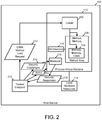
- FIG. 2 is a block diagram illustrating various components of the host device of FIG. 1 in accordance with an embodiment of the present disclosure.
- FIG. 3 is a block diagram illustrating a program build pipeline in accordance with an embodiment of the present disclosure.
- FIG. 4 is a flow chart illustrating a method of providing a microservice infrastructure in accordance with an embodiment of the present disclosure.
- FIG. 5 is a block diagram illustrating an example of a microservice infrastructure including a particular microservice in accordance with an embodiment of the present disclosure.
- FIG. 6 is a block diagram of a computing device that may be used to implement various components of a microservice infrastructure in accordance with an embodiment of the present disclosure.
- a microservice infrastructure as disclosed herein securely maintains currency of one or more computing platform microservices implemented within a process virtual machine.
- this infrastructure includes source code that defines properties and methods of the computing platform microservices, compilers that process the source code to generate intermediate code to be executed by the process virtual machine, and trusted endpoints that securely deploy microservices and methods to the process virtual machine.
- the computing platform microservices maintained by this infrastructure may provide and control access to components of an underlying computing environment. These components may include, for example, system input/output devices, storage devices, peripherals, and network interfaces. Moreover, these components may be local to a computing device implementing the process virtual machine and/or may be distinct and remote from it.
- the process virtual machine allocates a controlled immutable method area (CIMA) and stores methods used to access the underlying computing environment in this CIMA. Such methods may be referred to herein as CIMA methods.
- CIMA methods Such methods may be referred to herein as CIMA methods.
- the process virtual machine protects intermediate code (e.g., the CIMA methods) stored in the CIMA from manipulation by programs (e.g., microservices that call CIMA methods) running within the process virtual machine or elsewhere.
- the process virtual machine receives security challenges from a trusted endpoint and responds to the security challenges prior to executing any deployment activity.
- the trusted endpoint may be local to a computing device implementing the process virtual machine or may be distinct and remote from it.
- responses generated and transmitted by the process virtual machine to the trusted endpoint may include attestation data.
- Attestation data is descriptive of the constitution of one or more components of the process virtual machine and, therefore, can be used to measure the integrity of the process virtual machine. For instance, where one of the components examined to generate the attestation data has been altered (e.g., via malware), the attestation data will indicate a change in the component.
- the trusted endpoint in processing a response from the process virtual machine, can determine whether components of the process virtual machine are in an expected, predefined state. Where this is the case, the trusted endpoint transmits a positive acknowledgement to the process virtual machine, thereby establishing a trusted communication session with the process virtual machine. Where the trusted endpoint determines that one or more components of the process virtual machine are not in a predefined state, the trusted endpoint will not transmit a positive acknowledgment, thereby signaling a lack of trust to the process virtual machine. How a process virtual machine reacts to a lack of trust can vary, but such reactions may include termination of the process virtual machine.
- the trusted endpoint may, as desired, transmit one or more requests to update a microservice and/or a CIMA method to the process virtual machine.
- These requests may include, for example, an updated CIMA method and a request to load the updated CIMA method.
- the process virtual machine parses the request and validates whether the request was received within a trusted communication session. If so, the process virtual machine deploys the update included in the request to the CIMA. Where the request was not received within a trusted communication session, the process virtual machine aborts deployment of the update.
- a compiler receives source code and generates intermediate code for execution by the process virtual machine.
- the compiler is configured to scan the source code for one or more language constructs that indicate protected methods (e.g., CIMA methods) called by or included in a software-defined microservice. Further, in these embodiments, where the compiler finds such a language construct, the compiler generates intermediate code that defines the protected methods and stores that intermediate code at a storage location available to the process virtual machine. Consequently, when the process virtual machine is executed, part of the initialization process of the process virtual machine is to load the newly complied protected methods into the CIMA within the process virtual machine.
- protected methods e.g., CIMA methods
- the software-defined computing platform microservices described herein are provisioned and orchestrated by a local or cloud-based resource broker as part of an overall workflow.
- the computing platform microservices may communicate with other resources to accomplish an overall computing objective.
- the software-defined computing platform microservices may be part of a peer to peer system in which local resource brokers interoperate to identify and elect a leader node for the overall computing objective.
- the CIMA methods expose interfaces to the underlying computing environment that are called by computing platform microservices or other microservices.
- the CIMA methods may be part of a class library that is, at least in part, loaded to the CIMA, and configured and/or controlled by a trusted cloud-based console. In this way, the embodiments disclosed herein enable a software-driven view of the underlying computing environment at a fine-grain method level.
- references to “or” may be construed as inclusive so that any terms described using “or” may indicate any of a single, more than one, and all of the described terms.
- the term usage in the incorporated references is supplementary to that of this document; for irreconcilable inconsistencies, the term usage in this document controls.
- a microservice infrastructure in which virtualized system interfaces are implemented as methods and/or microservices within a process virtual machine, such as the Java® virtual machine.
- the microservice infrastructure includes, at least, a trusted endpoint and a host device.
- the microservice infrastructure provides a secure mechanism for maintaining (e.g., upgrading or otherwise modifying) microservices and/or methods. These microservices and/or methods form a software based, virtualized computing platform that may be modified and executed securely.
- FIG. 1 illustrates a distributed computing system 100 implementing a microservice infrastructure in accordance with at least one embodiment.
- the computing system 100 includes a host device 102 , a remote resource broker 106 , remote resources 108 , a workflow 118 , and a communication network 110 .
- the host device 102 includes a local hardware resources 114 , which are described further below with reference to FIG. 6 , and a process virtual machine 112 .
- the local hardware resources 114 can include, for example, one or more network interfaces (e.g., network interface cards), data storage devices (e.g., persistent or volatile memory), and peripherals (e.g., displays, printers, speakers, and the like).
- the process virtual machine 112 implements and/or controls a CIMA 104 and a microservice 116 .
- the communication network 110 illustrated in FIG. 1 can include any of a variety of networks through which computing devices can exchange (e.g., transmit or receive) data. Examples of such networks include wide area networks, local area networks, cellular networks, plain telephone networks, and the like. While the data exchanged via the network 110 can be encoded according to a variety of standards including, for example, transmission control protocol/internet protocol (TCP/IP), the embodiments disclosed herein are not limited to a particular network standard or set of standards.
- TCP/IP transmission control protocol/internet protocol
- the host device 102 , the remote resource broker 106 , and the remote resources 108 are each implemented using one or more computing devices, such as the computing device described further below with reference to FIG. 6 .
- the host device 102 , the remote resource broker 106 , and the remote resources 108 are each configured to exchange information via the network 110 .
- the remote resource broker 106 is configured to provision and orchestrate the workflow 118 .
- the remote resource broker 106 may provision and orchestrate the remote resources 108 and/or the microservice 116 implemented by the host device 102 .
- the remote resources 108 provisioned and orchestrated in this manner may include a variety of real and/or virtual computing resources residing at various levels of abstraction from the underlying computing hardware.
- the remote resources 108 may include data storage devices, such as memory; compute resources, such as processors; network resources, such as routers; and the like.
- the remote resources 108 may include real and/or virtual servers, such as application servers, database servers, and the like.
- These real and/or virtual servers may be organized into grids or clusters that collaboratively implement the workflow 118 .
- Examples of a commercially available remote resource brokers that may be used to implement the remote resource broker 106 and to orchestrate the workflow 118 include Amazon Web Services, Microsoft Azure, Google Compute Engine, and IBM Softlayer.
- the remote resource broker 106 is also a trusted endpoint and, as such, is configured to maintain currency of methods and microservices resident on various other computing devices, such as methods stored in the CIMA 104 and/or the microservice 116 resident on the host device 102 .
- the remote resource broker 106 maintains the currency of the methods stored in the CIMA 104 and/or the microservice 116 by deploying, within a trusted communication session, updated versions of one or more methods to the CIMA 104 and/or an updated version of the microservice 116 to the host device 102 .
- These updated versions may include one or more classes comprising various properties and methods.
- the methods may include both conventionally stored methods and CIMA methods.
- the remote resource broker 106 to establish and maintain the trusted communication session with the host device 102 , the remote resource broker 106 periodically and/or aperiodically transmits one or more challenges to and receives one or more responses from the process virtual machine 112 resident on the host device 102 .
- the one or more responses can include attestation data generated by the process virtual machine 112 .
- this attestation data is descriptive of the constitution of various components of the host device 102 .
- the remote resource broker 106 processes the one or more responses, along with any included attestation data, to ensure that one or more components of the host device 102 have not be replaced, altered, or otherwise compromised (e.g., by malware).
- the remote resource broker 106 performs a bitwise comparison of attestation data to reference data locally generated by the remote resource broker 106 from a copy of the components recorded as being most recently deployed to the host device 102 . Where the bitwise comparison indicates a match (i.e, where the attestation data matches the reference data), the remote resource broker 106 is able to verify the integrity of the host device 102 and, therefore, continue to interoperate safely with it.
- the process virtual machine 112 is a hardware and/or a software component that provides a hardware and/or operating system independent computing platform for execution of application logic.
- This application logic can take the form of a software program encoded in, for example, intermediate code supported by the process virtual machine 112 .
- the process virtual machine 112 and its components are configured to protect and render immutable all intermediate code stored in the CIMA 104 , except where a trusted endpoint requests changes to the intermediate code within a trusted communication session.
- the process virtual machine 112 stores information descriptive of the memory addresses located within the CIMA 104 and aborts execution of any instruction to write to the stored memory addresses that is not transmitted by a trusted endpoint within a trusted communication session.
- process virtual machines examples include the Java Virtual Machine, Microsoft .Net framework, and the like.
- process virtual machine described herein may be implemented in hardware under control of a processor (e.g., the processor 604 described below with reference to FIG. 6 ) or in software executed by such a processor.
- the microservice 116 is a program executable by the process virtual machine 112 to provide other programs executable by the process virtual machine 112 with one or more hardware and/or operating system independent computing platform services.
- Examples of the computing platform services that the microservice 116 may be configured to provide include network, storage, and/or peripheral services.
- the microservice 116 is configured to receive and process requests to transmit information via a virtualized network interface card.
- the microservice 116 is configured to receive and process requests to store data in a virtualized data storage device.
- the microservice 116 is configured to receive and process requests to display information on a virtualized display.
- the microservice 116 is configured to implement a computing platform service by exposing a system interface to a virtualized computing platform component, receiving requests to use the virtualized computing platform component via the system interface, and processing these use requests.
- the microservice 116 may access and utilize the local hardware resources 114 (e.g., via the process virtual machine 112 ), transmit requests to the remote resource broker 106 to provision and/or utilize the remote resources 108 , and/or transmit requests to the remote resources 108 to access and use previously provisioned remote resources.
- the microservice 116 may call CIMA methods stored in the CIMA 104 that control and provide access to component of the underlying computing environment. Particular examples of the processes executed by some embodiments of the microservice 116 are described further below with reference to FIGS. 4 and 5 .
- FIG. 2 illustrates the host device 102 in greater detail.
- the host device 102 includes the process virtual machine 112 , the local hardware resources 114 , and a trusted endpoint 210 that is local to the host device 102 .
- the process virtual machine 112 includes a loader 202 , a method area 206 , and a measurer 214 .
- the method area 206 includes the CIMA 104 .
- the CIMA 104 stores CIMA methods (e.g., Method 3 and Method 4 ).
- the method area 206 stores conventional methods (e.g., Method 1 and Method 2 ). One or more of these methods may be implemented and/or called by the microservice 116 or other microservices/programs.
- the local hardware resources 114 implement both the process virtual machine 112 and the trusted endpoint 210 .
- the process virtual machine 112 and the trusted endpoint 210 can implemented by shared components (e.g., one or more processors) of the local hardware resources.
- the trusted endpoint 210 can be implemented using components of the local hardware resources that are secured and/or dedicated to the trusted endpoint 210 .
- the process virtual machine 112 and the trusted endpoint 210 can each be implemented as one or more processes executing under the control of a single operating system or can each be implemented as one or more processes executing under the control of distinct operating systems.
- the trusted endpoint 210 may communicate (e.g., via CIMA method load requests, security challenges, and acknowledgements) with the process virtual machine 112 using a connection that is local to the host device 102 (i.e., a connection that does not traverse a network, such as the network 110 ).
- the trusted endpoint 210 is configured to be a local resource broker that orchestrates workflows implemented by several microservices executing within the process virtual machine 112 .
- the trusted endpoint 210 is configured to maintain currency of microservices resident on the host device 102 .
- the trusted endpoint 210 can establish trusted communication sessions with the process virtual machine 112 and maintain currency of the microservice 116 within these trusted communication sessions.
- the trusted endpoint 210 executes according to this configuration in the embodiment illustrated in FIG. 2 .
- the trusted endpoint 210 generates and transmits the security challenge 216 to the measurer 214 .
- the measurer 214 is configured to receive and parse the security challenge and, in response, generate and transmit the security response 218 to the trusted endpoint 210 .
- the security response 218 may include attestation data descriptive of the constitution of one or more components of the process virtual machine 112 .
- This attestation data may include, for example, one or more hash values calculated for the loader 202 .
- the trusted endpoint 210 receives and processes the security response 218 . Where the trusted endpoint 210 matches the attestation data with reference data generated by the trusted endpoint 210 , the trusted endpoint 210 transmits an acknowledgement 220 to the process virtual machine 112 , thereby establishing a trusted communication session.
- the trusted endpoint 210 is configured to generate and transmit, within the trusted communication session, a microservice update request that includes a CIMA method load request 212 . Additionally or alternatively, in some embodiments the trusted endpoint 210 is configured to generate and transmit, within the trusted communication session, the CIMA method load request 212 independently from any microservice update request.
- the CIMA method load request 212 may include, for example, at least a portion of the microservice 116 (e.g., Method 3 and/or Method 4 ) or another CIMA method encoded as intermediate code, may include differences between a previous version of a portion of the microservice or CIMA method and a new version of the microservice or CIMA method, and/or may include other information that specifies an updated version of the microservice, methods included within or used by the microservice and/or another CIMA method.
- the microservice 116 e.g., Method 3 and/or Method 4
- Another CIMA method encoded as intermediate code may include differences between a previous version of a portion of the microservice or CIMA method and a new version of the microservice or CIMA method, and/or may include other information that specifies an updated version of the microservice, methods included within or used by the microservice and/or another CIMA method.
- the loader 202 is configured to manage retrieval and storage of intermediate code prior to its execution by the process virtual machine 112 .
- the loader 202 retrieves intermediate code from a data storage device included within the local hardware resources 114 and stores the intermediate code within either the CIMA 104 or the method area 206 .
- the loader 202 reserves the CIMA 104 for storage of intermediate code (e.g., Method 3 and/or Method 4 ) that provides computing platform services.
- the loader 202 stores other intermediate code (e.g., Method 1 and Method 2 ) to be executed by the process virtual machine 112 in the method area 206 .
- the loader 202 is configured to receive, process, and respond to security challenges generated by trusted endpoints, such as the remote resource broker 106 and/or the local trusted endpoint 210 .
- the loader 202 is configured to receive, process, and response to microservice update requests that may or may not include CIMA method load requests, such as the CIMA method load request 212 . Examples of actions executed by the loader 202 under these configurations are described further below with reference to FIGS. 4 and 5 .
- FIG. 3 illustrates an example of a program build pipeline in accordance with various embodiments disclosed herein.
- FIG. 3 includes CIMA method source code 300 , a compiler 302 , CIMA method intermediate code 304 , and the process virtual machine 112 .
- the CIMA method source code 300 may be written in any of a variety of human readable languages, such as Java.
- One example of a CIMA method declaration in human readable source code follows.
- the compiler 302 includes a process virtual machine compiler that is configured to identify and process any of one or more language constructs used to identify CIMA methods.
- the compiler 302 Upon receipt of a command to compile the CIMA method source code 300 , the compiler 302 compiles the CIMA method source code 300 to generate the CIMA method intermediate code 304 .
- the compiler 302 identifies any declared CIMA methods and generates intermediate code within the CIMA method intermediate code 304 that is configured to cause a loader of the process virtual machine (e.g., the loader 202 ) to store the intermediate code in a CIMA (e.g., the CIMA 104 ).
- the CIMA method intermediate code 304 is identified as being controllable and upgradable by a trusted endpoint (e.g., the remote resource broker 106 or the trusted endpoint 210 ).
- the CIMA method intermediate code 304 is then provided to the process virtual machine 112 (e.g. via the loader 202 ) for storage and execution.
- a microservice infrastructure implemented within a computing system executes processes that securely deploy computing platform microservices and/or CIMA methods to host devices.
- FIG. 4 illustrates a CIMA maintenance process 400 in accord with these embodiments.
- the CIMA maintenance process 400 includes several acts that collectively enable a host device, such as the host device 102 , to establish a trusted communication session with a trusted endpoint, to receive updates to one or more CIMA methods within the trusted communication session, to deploy these updates, and to execute one or more microservices within a process virtual machine that implement and/or interoperate with the CIMA methods.
- the CIMA maintenance process 400 starts in act 402 with the host device initializing a process virtual machine, such as the process virtual machine 112 .
- the actions executed by the host device in the act 402 include instantiating a loader, such as the loader 202 ; allocating a CIMA, such as the CIMA 104 ; and allocating a method area, such as the method area 206 .
- the actions executed by the host device in the act 402 can further include loading, via the loader, one or more methods, such as the Method 1 and/or the Method 2 described above with reference to FIG.
- the process virtual machine determines whether a microservice update request including a CIMA method load request, such as the CIMA method load request 212 , has been received from a trusted endpoint, such as the remote resource broker 106 or the trusted endpoint 210 .
- the process virtual machine determines whether the microservice update request was received during a trusted communication session. For instance, the process virtual machine may compare the time of receipt of the microservice update request to the time of the most recently successful security response. Where the microservice update request was received during a trusted communication session (e.g., where the time of receipt of the microservice update request is within a pre-determined range of the time of the most recently successful security response), the process virtual machine executes act 422 .
- the process virtual machine executes the microservice and/or its components, in act 410 .
- the process virtual machine deploys a CIMA method included in the CIMA method load request to the CIMA within the host device.
- the process virtual machine e.g., via the loader
- This deployment activity may include copying data, or may include more sophisticated manipulation of the data (e.g., decrypting, decompressing, or the like).
- the process virtual machine determines whether all of processes executing within the process virtual machine have reached a safe point. If not, the process virtual machine continues execution of the microservices in act 410 . If all of the processes have reached a safe point, the process virtual machine executes act 404 . In the act 404 , the process virtual machine determines whether a security challenge, such as the security challenge 216 , has been received from the trusted endpoint. If so, the process virtual machine executes act 412 . Otherwise, the process virtual machine executes the act 410 .
- a security challenge such as the security challenge 216
- the process virtual machine measures, e.g., by executing the measurer 214 , the integrity of various components of the host device to generate attestation data descriptive of the constitution of the components.
- the components for which attestation data is generated may include, for example, components of the process virtual machine itself, such as the loader, the application logic, the microservices, and any drivers or other components used by the process virtual machine to communicate with hardware components local to the host device, such as the local hardware resources 114 .
- the process virtual machine transmits a response, such as the security response 218 , to the security challenge. This response may include the attestation data generated in the act 412 .
- the process virtual machine determines whether the response was successful. For example, the process virtual machine may make this determine based on whether a positive acknowledgement, such as the acknowledgement 220 , is received from the trusted endpoint within a predetermined period of time. If so, a trusted communication session is established, and the process virtual machine proceeds to act 418 . In some embodiments, within the act 416 , the process virtual machine stores a timestamp that indicates when the trusted communication session was established. If the response was not successful (e.g., if the positive acknowledgement is not received within the predetermine time period), no trusted communication session is established, and the process virtual machine terminates the CIMA maintenance process 400 , and, in some embodiments, terminates all processes, including itself, as an additional security measure.
- a positive acknowledgement such as the acknowledgement 220
- Each of the processes disclosed herein depict one particular sequence of acts in a particular example.
- the acts included in these processes may be performed by, or using, one or more computing devices specially configured as discussed herein. Some acts are optional and, as such, may be omitted in accord with one or more examples. Additionally, the order of acts can be altered, or other acts can be added, without departing from the scope of the systems and methods discussed herein.
- FIG. 5 illustrates a distributed computing system 500 implementing a microservice infrastructure in accordance with at least one embodiment.
- the computing system 500 includes the host device 102 , the remote resource broker 106 , remote data storage 506 , remote data storage 508 , workflow 118 , and the communication network 110 .
- the remote data storage 506 and the remote data storage 508 are implemented using one or more computing devices, such as the computing device described further below with reference to FIG. 6 .
- the remote data storage 506 and the remote data storage 508 are configured to exchange information via the network 110 .
- the host device 102 includes local flash memory hardware 504 .
- the process virtual machine 112 implements and/or controls a flash memory microservice 502 .
- the flash memory microservice 502 is a program executable by the process virtual machine 112 to provide other programs executed according to the workflow 118 with access to flash memory storage.
- the flash memory microservice 502 may access and utilize the local flash memory 504 , transmit requests to the remote resource broker 106 to provision and/or utilize the remote data storage 506 or the remote data storage 508 .
- the flash memory microservice 502 is configured to process requests to store data by storing the data in the flash memory 504 and in the remote data storage 506 .
- the remote resource broker 106 can transmit a microservice update request including a CIMA method load request to the host device 102 .
- the CIMA method load request can include intermediate code that, when deployed, causes the flash memory microservice 502 to process requests to store data by storing the data in the remote data storage 508 .
- FIG. 6 illustrates a computing device 600 that can be used to implement various components of a microservice infrastructure as described herein.
- the computing device 600 includes memory 602 , at least one processor 604 , and at least one interface 606 . Although the particular types and models of these components may vary between computing devices, it is appreciated that each computing device includes a processor, memory, and an interface.
- the interface 606 includes one or more physical interface devices such as input devices, output devices, and combination input/output devices and a software stack configured to drive operation of the devices.
- Interface devices may receive input or provide output. More particularly, output devices may render information for external presentation and input devices may accept or generate information from external sources. Examples of interface devices include keyboards, mouse devices, trackballs, microphones, touch screens, printing devices, display screens, speakers, network interface cards, environmental sensors, and the like. Interface devices allow programmable devices to exchange information and communicate with external entities, such as users and other systems.
- the memory 602 includes volatile and/or non-volatile (non-transient) data storage that is readable and/or writeable by the processor 602 .
- the memory 602 stores programs and data used or manipulated during operation of the computing device 600 .
- the programs stored in the memory 602 are a series of instructions that are executable by the at least one processor 602 .
- the memory 602 may include relatively high performance data storage, such as registers, caches, dynamic random access memory, and static memory.
- the memory 602 may further include a relatively low performance, non-volatile, computer readable and/or writable data storage medium such as flash memory or an optical or magnetic disk.
- Various embodiments may organize the memory 602 into particularized and, in some cases, unique structures to store data in support of the components disclosed herein. These data structures may be specifically configured to conserve storage space or increase data exchange performance and may be sized and organized to store values for particular data and types of data.
- the processor 604 executes a series of instructions (i.e., one or more programs) that result in manipulated data.
- the processor 604 may be any type of processor, multiprocessor, microprocessor, or controller known in the art.
- the processor 604 is connected to and communicates data with the memory 602 and the interfaces 606 via an interconnection mechanism, such as a bus or some other data connection. This interconnection mechanism is represented in FIG. 6 by lines connecting the components within the computing device.
- the processor 604 causes data to be read from a non-volatile (i.e., non-transitory) data storage medium in the memory 602 and written to high performance data storage.
- the processor 604 manipulates the data within the high-performance data storage and copies the manipulated data to the data storage medium after processing is completed.
- a programmable device may include specially programmed, special-purpose hardware, such as an application-specific integrated circuit (ASIC), a field-programmable gate array (FPGA), a complex programmable logic device (CPLD), and other implementations in silicon or other hardware tailored to execute processes disclosed herein.
- ASIC application-specific integrated circuit
- FPGA field-programmable gate array
- CPLD complex programmable logic device
- components of a computing device as disclosed herein may be implemented in software, hardware, firmware, or any combination thereof.
- the process virtual machine 112 is implemented in hardware.
- the process virtual machine 112 is implemented by the processor 604 .
- this processor 604 may be general purpose processor. However, when executing a specific software process as described herein (e.g., as depicted in any of FIGS. 3-5 ), the processor 604 becomes a special purpose processor capable of making specific logic-based determinations based on input data received, and further capable of providing one or more outputs that can be used to control or otherwise inform subsequent processing to be carried out by the processor 604 and/or other processors or circuitry with which processor 604 is communicatively coupled.
- the processor 604 reacts to specific input stimulus in a specific way and generates a corresponding output based on that input stimulus.
- the structure of processor 604 is defined by the processes shown in any of FIGS. 3-5 .
- the processor 604 proceeds through a sequence of logical transitions in which various internal register states and/or other bit cell states internal or external to the processor 604 may be set to logic high or logic low.
- This specific sequence of logic transitions is determined by the state of electrical input signals to the processor 604 and a special-purpose structure is effectively assumed by the processor 604 when executing each software instruction of the processes shown in FIGS. 3-5 . Specifically, those instructions anticipate the various stimulus to be received and change the implicated memory states accordingly.
- the processor 604 may generate and store or otherwise provide useful output signals.
- the processor 604 during execution of a software process becomes a special purpose machine, capable of processing only specific input signals and rendering specific output signals based on the one or more logic operations performed during execution of each instruction.
- the processor 604 is configured to execute a function where software is stored in a data storage device coupled with the processor 604 (e.g., the memory 602 ) and that software is configured to cause the processor 604 to proceed through a sequence of various logic operations that result in the function being executed.
- Example 1 is a computing device comprising a memory, at least one processor coupled to the memory, and a process virtual machine executable by the at least one processor.
- the process virtual machine is configured to initialize, within the memory, at least one controlled immutable method area (CIMA); load a CIMA method into the at least one CIMA; receive a first request to update the CIMA method; determine whether the first request was received from a trusted endpoint; and abort processing of the first request in response to determining that the first request was received from an endpoint other than the trusted endpoint.
- CIMA controlled immutable method area
- Example 2 includes the subject matter of Example 1, wherein the process virtual machine is further configured to receive a second request to update the CIMA method, the second request specifying an updated version of the CIMA method; determine whether the second request was received from the trusted endpoint; and load the updated version of the CIMA method into the at least one CIMA in response to determining that the second request was received from the trusted endpoint.
- Example 3 includes the subject matter of Example 1 or Example 2, wherein the process virtual machine is further configured to receive a challenge from the trusted endpoint; respond to the challenge; receive a positive acknowledgement; and continue execution in response to receiving the positive acknowledgement.
- Example 4 includes the subject matter of Example 3, wherein the process virtual machine is configured to respond to the challenge at least in part by generating attestation data comprising a measurement of integrity of one or more components of the process virtual machine.
- Example 5 includes the subject matter of Example 3 or Example 4, wherein the process virtual machine is further configured to establish, in response to receiving the positive acknowledgment, a trusted communication session with the trusted endpoint; and receive the second request from the trusted endpoint within the trusted communication session.
- Example 6 includes the subject matter of any of Examples 1-5, wherein the process virtual machine is further configured to receive a challenge from the trusted endpoint; respond to the challenge; fail to receive a positive acknowledgement within a predetermined period of time; and terminate execution of the process virtual machine in response to failing to receive the positive acknowledgement within the predetermined period of time.
- Example 7 includes the subject matter of any of Examples 3-6, wherein the process virtual machine is further configured to respond to the challenge at a safe point.
- Example 8 includes the subject matter of any of Examples 1-7, wherein the process virtual machine is a java virtual machine.
- Example 9 includes the subject matter of any of Examples 1-8, wherein the process virtual machine is a hardware component.
- Example 10 includes the subject matter of any of Examples 1-9, further comprising the trusted endpoint.
- Example 11 includes the subject matter of any of Examples 1-10, wherein the CIMA method is comprised within one or more microservice classes that implement one or more computing platform services.
- Example 12 includes the subject matter of any of Examples 1-11, wherein the at least one CIMA comprises a plurality of distinct method areas.
- Example 13 includes the subject matter of any of Examples 1-12, further comprising a compiler executable by the at least one processor and configured to receive source code defining the CIMA method, the source code comprising a language construct that identifies the CIMA method as being software-definable; compile the source code into intermediate code defining the CIMA method, the intermediate code being executable by the process virtual machine; and store the intermediate code at a location in the memory accessible by the process virtual machine.
- a compiler executable by the at least one processor and configured to receive source code defining the CIMA method, the source code comprising a language construct that identifies the CIMA method as being software-definable; compile the source code into intermediate code defining the CIMA method, the intermediate code being executable by the process virtual machine; and store the intermediate code at a location in the memory accessible by the process virtual machine.
- Example 14 is a method of managing one or more controlled immutable method area (CIMA) methods executable by a process virtual machine.
- the method comprises initializing, within memory under control of the process virtual machine, at least one CIMA; loading a CIMA method into the at least one CIMA; receiving a first request to update the CIMA method; determining whether the first request was received from a trusted endpoint; and aborting processing of the first request in response to determining that the first request was received from an endpoint other than the trusted endpoint.
- CIMA controlled immutable method area
- Example 15 includes the subject matter of Example 14, further comprising receiving a second request to update the CIMA method, the second request specifying an updated version of the CIMA method; determining whether the second request was received from the trusted endpoint; and loading the updated version of the CIMA method into the at least one CIMA in response to determining that the second request was received from the trusted endpoint.
- Example 16 includes the subject matter of Examples 14 or Example 15, further comprising receiving a challenge from the trusted endpoint; responding to the challenge; receiving a positive acknowledgement; and continuing execution in response to receiving the positive acknowledgement.
- Example 17 includes the subject matter of Example 16, wherein responding to the challenge comprises generating attestation data comprising a measurement of integrity of one or more components of the process virtual machine.
- Example 18 includes the subject matter of Example 16 or Example 17, further comprising: establishing, in response to receiving the positive acknowledgment, a trusted communication session with the trusted endpoint; and receiving the second request from the trusted endpoint within the trusted communication session.
- Example 19 includes the subject matter of any of Examples 14-18, further comprising receiving a challenge from the trusted endpoint; responding to the challenge; failing to receive a positive acknowledgement within a predetermined period of time; and terminating execution of the process virtual machine in response to failing to receive the positive acknowledgement within the predetermined period of time.
- Example 20 includes the subject matter of any of Examples 16-19, wherein responding to the challenge includes responding to the challenge at a safe point.
- Example 21 includes the subject matter of any of Examples 14-20, further comprising initializing the process virtual machine, the process virtual machine being a java virtual machine.
- Example 22 includes the subject matter of Example 21, wherein initializing the process virtual machine comprises initializing a java virtual machine implemented in hardware.
- Example 23 includes the subject matter of any of Examples 14-22, wherein the process virtual machine and the trusted endpoint are implemented within a single computing device, the method further comprises transmitting the first request via a connection local to the single computing device, and receiving the first request comprises receiving the first request via the connection.
- Example 24 includes the subject matter of any of Examples 14-23, wherein loading the CIMA method comprises loading a CIMA method defined within at least one microservice class that implements at least one computing platform service.
- Example 25 includes the subject matter of any of Examples 14-24, wherein initializing the at least one CIMA comprises initializing a plurality of distinct method areas.
- Example 26 includes the subject matter of any of Examples 14-25, further comprising receiving source code defining the CIMA method, the source code comprising a language construct that identifies the CIMA method as being software-definable; compiling the source code into intermediate code defining the CIMA method, the intermediate code being executable by the process virtual machine; and storing the intermediate code at a location in the memory accessible by the process virtual machine.
- Example 27 is a non-transient computer readable medium encoded with instructions that when executed by one or more processors cause a process for managing one or more controlled immutable method area (CIMA) methods to be carried out.
- the process comprises initializing, within memory under control of a process virtual machine, at least one CIMA; loading a CIMA method into the at least one CIMA; receiving a first request to update the CIMA method; determining whether the first request was received from a trusted endpoint; and aborting processing of the first request in response to determining that the first request was received from an endpoint other than the trusted endpoint.
- CIMA controlled immutable method area
- Example 28 includes the subject matter of Example 27, wherein the process further comprises receiving a second request to update the CIMA method, the second request specifying an updated version of the CIMA method; determining whether the second request was received from the trusted endpoint; and loading the updated version of the CIMA method into the at least one CIMA in response to determining that the second request was received from the trusted endpoint.
- Example 29 includes the subject matter of Example 27 or Example 28, wherein the process further comprises receiving a challenge from the trusted endpoint; responding to the challenge; receiving a positive acknowledgement; and continuing execution in response to receiving the positive acknowledgement.
- Example 30 includes the subject matter of Example 29, wherein, in the process, responding to the challenge comprises generating attestation data comprising a measurement of integrity of one or more components of the process virtual machine.
- Example 31 includes the subject matter of Example 29 or Example 30, wherein the process further comprises establishing, in response to receiving the positive acknowledgment, a trusted communication session with the trusted endpoint; and receiving the second request from the trusted endpoint within the trusted communication session.
- Example 32 includes the subject matter of any of Examples 27-31, wherein the process further comprises receiving a challenge from the trusted endpoint; responding to the challenge; failing to receive a positive acknowledgement within a predetermined period of time; and terminating execution of the process virtual machine in response to failing to receive the positive acknowledgement within the predetermined period of time.
- Example 33 includes the subject matter of any of Examples 29-32, wherein, in the process, responding to the challenge includes responding to the challenge at a safe point.
- Example 34 includes the subject matter of any of Examples 27-33, wherein the process further comprises initializing the process virtual machine, the process virtual machine being a java virtual machine.
- Example 35 includes the subject matter of Example 34, wherein, in the process, initializing the process virtual machine comprises initializing a java virtual machine implemented in hardware.
- Example 36 includes the subject matter of any of Examples 27-35, wherein the process virtual machine and the trusted endpoint are implemented within a single computing device, the process further comprises transmitting the first request via a connection local to the single computing device, and receiving the first request comprises receiving the first request via the connection.
- Example 37 includes the subject matter of any of Examples 27-36, wherein, in the process, loading the CIMA method comprises loading a CIMA method defined within at least one microservice class that implements at least one computing platform service.
- Example 38 includes the subject matter of any of Examples 27-37, wherein, in the process, initializing the at least one CIMA comprises initializing a plurality of distinct method areas.
- Example 39 includes the subject matter of any of Examples 27-38, wherein the process further comprises receiving source code defining the CIMA method, the source code comprising a language construct that identifies the CIMA method as being software-definable; compiling the source code into intermediate code defining the CIMA method, the intermediate code being executable by the process virtual machine; and storing the intermediate code at a location in the memory accessible by the process virtual machine.
Landscapes
- Engineering & Computer Science (AREA)
- Theoretical Computer Science (AREA)
- Software Systems (AREA)
- General Engineering & Computer Science (AREA)
- Physics & Mathematics (AREA)
- General Physics & Mathematics (AREA)
- Computer Security & Cryptography (AREA)
- Databases & Information Systems (AREA)
- Computer Hardware Design (AREA)
- Data Mining & Analysis (AREA)
- Stored Programmes (AREA)
- Computer And Data Communications (AREA)
Abstract
Description
| # software-definable | ||
| public static void writeFlashData(file fileName, | ||
| byte[ ] src, | ||
| int srcOff, | ||
| int srcLen) | ||
| throws UtilException; | ||
As illustrated by this CIMA method declaration, in some embodiments, an annotation (e.g., “software-definable”) can be used to identify a method (writeFlashData( )) as a CIMA method. In other embodiments, a CIMA method may be similarly identified using a keyword (e.g., “software-definable”). Although these particular source code language constructs are provided as examples, the embodiments disclosed herein are not limited to any particular source code language construct.
Claims (22)
Priority Applications (3)
| Application Number | Priority Date | Filing Date | Title |
|---|---|---|---|
| US15/590,781 US10540193B2 (en) | 2017-05-09 | 2017-05-09 | Software-defined microservices |
| CN201810403203.3A CN108874501B (en) | 2017-05-09 | 2018-04-28 | Software-defined microservice |
| DE102018207314.7A DE102018207314A1 (en) | 2017-05-09 | 2018-05-09 | SOFTWARE-DEFINED MICRO SERVICES |
Applications Claiming Priority (1)
| Application Number | Priority Date | Filing Date | Title |
|---|---|---|---|
| US15/590,781 US10540193B2 (en) | 2017-05-09 | 2017-05-09 | Software-defined microservices |
Publications (2)
| Publication Number | Publication Date |
|---|---|
| US20180329729A1 US20180329729A1 (en) | 2018-11-15 |
| US10540193B2 true US10540193B2 (en) | 2020-01-21 |
Family
ID=63962648
Family Applications (1)
| Application Number | Title | Priority Date | Filing Date |
|---|---|---|---|
| US15/590,781 Active 2038-01-05 US10540193B2 (en) | 2017-05-09 | 2017-05-09 | Software-defined microservices |
Country Status (3)
| Country | Link |
|---|---|
| US (1) | US10540193B2 (en) |
| CN (1) | CN108874501B (en) |
| DE (1) | DE102018207314A1 (en) |
Families Citing this family (5)
| Publication number | Priority date | Publication date | Assignee | Title |
|---|---|---|---|---|
| US10235353B1 (en) * | 2017-09-15 | 2019-03-19 | Dell Products Lp | Natural language translation interface for networked devices |
| US10693909B2 (en) * | 2018-01-19 | 2020-06-23 | International Business Machines Corporation | Securing an endpoint in a computer network |
| CN112019369A (en) * | 2019-05-31 | 2020-12-01 | 烽火通信科技股份有限公司 | A method and system for dynamic configuration management under a microservice framework |
| US11175947B2 (en) * | 2019-12-03 | 2021-11-16 | International Business Machines Corporation | Microservices change management and analytics |
| EP4268106A1 (en) * | 2020-12-22 | 2023-11-01 | Telefonaktiebolaget LM Ericsson (publ) | Trusted computing service directory |
Citations (3)
| Publication number | Priority date | Publication date | Assignee | Title |
|---|---|---|---|---|
| US20100281273A1 (en) * | 2009-01-16 | 2010-11-04 | Lee Ruby B | System and Method for Processor-Based Security |
| US20170364685A1 (en) * | 2014-11-20 | 2017-12-21 | Interdigital Patent Holdings. Inc. | Providing security to computing systems |
| US20180165088A1 (en) * | 2016-12-14 | 2018-06-14 | Microsoft Technology Licensing, Llc | Secure iot device update |
Family Cites Families (12)
| Publication number | Priority date | Publication date | Assignee | Title |
|---|---|---|---|---|
| US6151618A (en) * | 1995-12-04 | 2000-11-21 | Microsoft Corporation | Safe general purpose virtual machine computing system |
| BRPI0518261A8 (en) * | 2004-11-24 | 2018-08-14 | Qualcomm Inc | METHODS AND SYSTEMS FOR UPDATE A BUFFER |
| US8887242B2 (en) * | 2009-04-14 | 2014-11-11 | Fisher-Rosemount Systems, Inc. | Methods and apparatus to provide layered security for interface access control |
| US8650565B2 (en) * | 2009-12-14 | 2014-02-11 | Citrix Systems, Inc. | Servicing interrupts generated responsive to actuation of hardware, via dynamic incorporation of ACPI functionality into virtual firmware |
| US10419524B2 (en) * | 2012-09-07 | 2019-09-17 | Oracle International Corporation | System and method for workflow orchestration for use with a cloud computing environment |
| US9509804B2 (en) * | 2012-12-21 | 2016-11-29 | Akami Technologies, Inc. | Scalable content delivery network request handling mechanism to support a request processing layer |
| CN103747036B (en) * | 2013-12-23 | 2017-05-24 | 中国航天科工集团第二研究院七〇六所 | Trusted security enhancement method in desktop virtualization environment |
| US10474454B2 (en) * | 2014-03-20 | 2019-11-12 | Oracle International Corporation | System and method for updating a trusted application (TA) on a device |
| US10230571B2 (en) * | 2014-10-30 | 2019-03-12 | Equinix, Inc. | Microservice-based application development framework |
| US9716710B2 (en) * | 2015-06-26 | 2017-07-25 | Intel Corporation | Technologies for virtualized access to security services provided by a converged manageability and security engine |
| US9798474B2 (en) * | 2015-09-25 | 2017-10-24 | International Business Machines Corporation | Software-defined storage system monitoring tool |
| CN105577780B (en) * | 2015-12-21 | 2018-12-04 | 武汉理工大学 | A kind of college teaching cloud platform based on micro services |
-
2017
- 2017-05-09 US US15/590,781 patent/US10540193B2/en active Active
-
2018
- 2018-04-28 CN CN201810403203.3A patent/CN108874501B/en active Active
- 2018-05-09 DE DE102018207314.7A patent/DE102018207314A1/en active Pending
Patent Citations (3)
| Publication number | Priority date | Publication date | Assignee | Title |
|---|---|---|---|---|
| US20100281273A1 (en) * | 2009-01-16 | 2010-11-04 | Lee Ruby B | System and Method for Processor-Based Security |
| US20170364685A1 (en) * | 2014-11-20 | 2017-12-21 | Interdigital Patent Holdings. Inc. | Providing security to computing systems |
| US20180165088A1 (en) * | 2016-12-14 | 2018-06-14 | Microsoft Technology Licensing, Llc | Secure iot device update |
Also Published As
| Publication number | Publication date |
|---|---|
| CN108874501A (en) | 2018-11-23 |
| CN108874501B (en) | 2025-09-09 |
| DE102018207314A1 (en) | 2018-11-15 |
| US20180329729A1 (en) | 2018-11-15 |
Similar Documents
| Publication | Publication Date | Title |
|---|---|---|
| EP3518098B1 (en) | Cross platform content management and distribution system | |
| US11762987B2 (en) | Systems and methods for hardening security systems using data randomization | |
| US9009693B2 (en) | Out-of-band framework libraries within applications | |
| US10540193B2 (en) | Software-defined microservices | |
| KR102255767B1 (en) | Systems and methods for virtual machine auditing | |
| TWI465902B (en) | Contract programming for code error reduction | |
| CN112685101B (en) | Trusted execution environment-oriented system call processing method and device | |
| KR20190111037A (en) | Smart Contract Upgrade Method and System by Consortium Blockchain | |
| JP6469028B2 (en) | System and method for machine language native image access control to operating system resources | |
| JP2014521184A (en) | Activate trust level | |
| JP2005327239A (en) | Security-related programming interface | |
| US10789111B2 (en) | Message oriented middleware with integrated rules engine | |
| TWI603199B (en) | Capability based device driver framework | |
| JP2016509714A (en) | Software interface for hardware devices | |
| US8959485B2 (en) | Security protection domain-based testing framework | |
| EP4012566A1 (en) | Method for an improved firmware deployment and its usage in embedded logic | |
| US8874865B2 (en) | Memory type-specific access control of a field of a record | |
| KR20060063642A (en) | Method and system for enabling resource sharing between subsystems | |
| US8214330B2 (en) | Information processing apparatus, information processing method, and computer program product | |
| US10853215B2 (en) | Intelligent configuration management of user devices | |
| TWI835545B (en) | Method of software development kits, computing device, and non-transitory computer-readable storage medium | |
| CN108139950B (en) | Method and computing system for distributed extended execution | |
| US10452408B1 (en) | System and method for intercepting data flow between a computer process and a file | |
| TW201432461A (en) | High throughput low latency user mode drivers implemented in managed code | |
| RU2521265C2 (en) | System and method for automatic processing of software system errors |
Legal Events
| Date | Code | Title | Description |
|---|---|---|---|
| AS | Assignment |
Owner name: INTEL CORPORATION, CALIFORNIA Free format text: ASSIGNMENT OF ASSIGNORS INTEREST;ASSIGNORS:SUN, MINGQIU;ZENTZIS, NOAH;ZIMMER, VINCENT J.;AND OTHERS;SIGNING DATES FROM 20170405 TO 20170412;REEL/FRAME:042469/0822 |
|
| AS | Assignment |
Owner name: INTEL CORPORATION, CALIFORNIA Free format text: ASSIGNMENT OF ASSIGNORS INTEREST;ASSIGNOR:ABELS, TIMOTHY E.;REEL/FRAME:043660/0408 Effective date: 20170720 |
|
| STPP | Information on status: patent application and granting procedure in general |
Free format text: NON FINAL ACTION MAILED |
|
| STPP | Information on status: patent application and granting procedure in general |
Free format text: RESPONSE TO NON-FINAL OFFICE ACTION ENTERED AND FORWARDED TO EXAMINER |
|
| STPP | Information on status: patent application and granting procedure in general |
Free format text: NOTICE OF ALLOWANCE MAILED -- APPLICATION RECEIVED IN OFFICE OF PUBLICATIONS |
|
| STPP | Information on status: patent application and granting procedure in general |
Free format text: PUBLICATIONS -- ISSUE FEE PAYMENT RECEIVED |
|
| STCF | Information on status: patent grant |
Free format text: PATENTED CASE |
|
| MAFP | Maintenance fee payment |
Free format text: PAYMENT OF MAINTENANCE FEE, 4TH YEAR, LARGE ENTITY (ORIGINAL EVENT CODE: M1551); ENTITY STATUS OF PATENT OWNER: LARGE ENTITY Year of fee payment: 4 |