US10530530B2 - Method and apparatus for transmitting and receiving data in mobile communication system - Google Patents
Method and apparatus for transmitting and receiving data in mobile communication system Download PDFInfo
- Publication number
- US10530530B2 US10530530B2 US15/168,800 US201615168800A US10530530B2 US 10530530 B2 US10530530 B2 US 10530530B2 US 201615168800 A US201615168800 A US 201615168800A US 10530530 B2 US10530530 B2 US 10530530B2
- Authority
- US
- United States
- Prior art keywords
- data packet
- base station
- channel information
- packet
- transmitting
- Prior art date
- Legal status (The legal status is an assumption and is not a legal conclusion. Google has not performed a legal analysis and makes no representation as to the accuracy of the status listed.)
- Active, expires
Links
Images




Classifications
-
- H—ELECTRICITY
- H04—ELECTRIC COMMUNICATION TECHNIQUE
- H04B—TRANSMISSION
- H04B7/00—Radio transmission systems, i.e. using radiation field
- H04B7/02—Diversity systems; Multi-antenna system, i.e. transmission or reception using multiple antennas
- H04B7/04—Diversity systems; Multi-antenna system, i.e. transmission or reception using multiple antennas using two or more spaced independent antennas
- H04B7/0408—Diversity systems; Multi-antenna system, i.e. transmission or reception using multiple antennas using two or more spaced independent antennas using two or more beams, i.e. beam diversity
-
- H—ELECTRICITY
- H04—ELECTRIC COMMUNICATION TECHNIQUE
- H04B—TRANSMISSION
- H04B7/00—Radio transmission systems, i.e. using radiation field
- H04B7/02—Diversity systems; Multi-antenna system, i.e. transmission or reception using multiple antennas
- H04B7/04—Diversity systems; Multi-antenna system, i.e. transmission or reception using multiple antennas using two or more spaced independent antennas
- H04B7/06—Diversity systems; Multi-antenna system, i.e. transmission or reception using multiple antennas using two or more spaced independent antennas at the transmitting station
- H04B7/0686—Hybrid systems, i.e. switching and simultaneous transmission
- H04B7/0695—Hybrid systems, i.e. switching and simultaneous transmission using beam selection
-
- H—ELECTRICITY
- H04—ELECTRIC COMMUNICATION TECHNIQUE
- H04B—TRANSMISSION
- H04B7/00—Radio transmission systems, i.e. using radiation field
- H04B7/02—Diversity systems; Multi-antenna system, i.e. transmission or reception using multiple antennas
- H04B7/04—Diversity systems; Multi-antenna system, i.e. transmission or reception using multiple antennas using two or more spaced independent antennas
- H04B7/08—Diversity systems; Multi-antenna system, i.e. transmission or reception using multiple antennas using two or more spaced independent antennas at the receiving station
- H04B7/0868—Hybrid systems, i.e. switching and combining
- H04B7/088—Hybrid systems, i.e. switching and combining using beam selection
-
- H—ELECTRICITY
- H04—ELECTRIC COMMUNICATION TECHNIQUE
- H04L—TRANSMISSION OF DIGITAL INFORMATION, e.g. TELEGRAPHIC COMMUNICATION
- H04L1/00—Arrangements for detecting or preventing errors in the information received
- H04L1/12—Arrangements for detecting or preventing errors in the information received by using return channel
-
- H—ELECTRICITY
- H04—ELECTRIC COMMUNICATION TECHNIQUE
- H04L—TRANSMISSION OF DIGITAL INFORMATION, e.g. TELEGRAPHIC COMMUNICATION
- H04L1/00—Arrangements for detecting or preventing errors in the information received
- H04L1/12—Arrangements for detecting or preventing errors in the information received by using return channel
- H04L1/16—Arrangements for detecting or preventing errors in the information received by using return channel in which the return channel carries supervisory signals, e.g. repetition request signals
- H04L1/1607—Details of the supervisory signal
- H04L1/1692—Physical properties of the supervisory signal, e.g. acknowledgement by energy bursts
-
- H—ELECTRICITY
- H04—ELECTRIC COMMUNICATION TECHNIQUE
- H04L—TRANSMISSION OF DIGITAL INFORMATION, e.g. TELEGRAPHIC COMMUNICATION
- H04L1/00—Arrangements for detecting or preventing errors in the information received
- H04L1/12—Arrangements for detecting or preventing errors in the information received by using return channel
- H04L1/16—Arrangements for detecting or preventing errors in the information received by using return channel in which the return channel carries supervisory signals, e.g. repetition request signals
- H04L1/18—Automatic repetition systems, e.g. Van Duuren systems
- H04L1/1867—Arrangements specially adapted for the transmitter end
- H04L1/188—Time-out mechanisms
-
- H—ELECTRICITY
- H04—ELECTRIC COMMUNICATION TECHNIQUE
- H04L—TRANSMISSION OF DIGITAL INFORMATION, e.g. TELEGRAPHIC COMMUNICATION
- H04L1/00—Arrangements for detecting or preventing errors in the information received
- H04L1/0001—Systems modifying transmission characteristics according to link quality, e.g. power backoff
- H04L1/0002—Systems modifying transmission characteristics according to link quality, e.g. power backoff by adapting the transmission rate
- H04L1/0003—Systems modifying transmission characteristics according to link quality, e.g. power backoff by adapting the transmission rate by switching between different modulation schemes
-
- H—ELECTRICITY
- H04—ELECTRIC COMMUNICATION TECHNIQUE
- H04L—TRANSMISSION OF DIGITAL INFORMATION, e.g. TELEGRAPHIC COMMUNICATION
- H04L1/00—Arrangements for detecting or preventing errors in the information received
- H04L1/0001—Systems modifying transmission characteristics according to link quality, e.g. power backoff
- H04L1/0009—Systems modifying transmission characteristics according to link quality, e.g. power backoff by adapting the channel coding
-
- H—ELECTRICITY
- H04—ELECTRIC COMMUNICATION TECHNIQUE
- H04W—WIRELESS COMMUNICATION NETWORKS
- H04W40/00—Communication routing or communication path finding
- H04W40/02—Communication route or path selection, e.g. power-based or shortest path routing
- H04W40/04—Communication route or path selection, e.g. power-based or shortest path routing based on wireless node resources
- H04W40/08—Communication route or path selection, e.g. power-based or shortest path routing based on wireless node resources based on transmission power
-
- H—ELECTRICITY
- H04—ELECTRIC COMMUNICATION TECHNIQUE
- H04W—WIRELESS COMMUNICATION NETWORKS
- H04W40/00—Communication routing or communication path finding
- H04W40/02—Communication route or path selection, e.g. power-based or shortest path routing
- H04W40/12—Communication route or path selection, e.g. power-based or shortest path routing based on transmission quality or channel quality
-
- Y—GENERAL TAGGING OF NEW TECHNOLOGICAL DEVELOPMENTS; GENERAL TAGGING OF CROSS-SECTIONAL TECHNOLOGIES SPANNING OVER SEVERAL SECTIONS OF THE IPC; TECHNICAL SUBJECTS COVERED BY FORMER USPC CROSS-REFERENCE ART COLLECTIONS [XRACs] AND DIGESTS
- Y02—TECHNOLOGIES OR APPLICATIONS FOR MITIGATION OR ADAPTATION AGAINST CLIMATE CHANGE
- Y02D—CLIMATE CHANGE MITIGATION TECHNOLOGIES IN INFORMATION AND COMMUNICATION TECHNOLOGIES [ICT], I.E. INFORMATION AND COMMUNICATION TECHNOLOGIES AIMING AT THE REDUCTION OF THEIR OWN ENERGY USE
- Y02D30/00—Reducing energy consumption in communication networks
- Y02D30/70—Reducing energy consumption in communication networks in wireless communication networks
-
- Y02D70/1262—
-
- Y02D70/142—
-
- Y02D70/21—
-
- Y02D70/324—
-
- Y02D70/34—
-
- Y02D70/444—
Definitions
- the present disclosure relates to a 5 th generation (5G) or pre-5G communication system which is to be provided to support a higher data transmission rate than that of a 4 th generation (4G) communication system such as a long term evolution (LTE).
- 5G 5 th generation
- 4G 4 th generation
- LTE long term evolution
- the 5G communication system or the pre-5G communication system is called a Beyond 4G network communication system or a post long term evolution (LTE) system.
- LTE post long term evolution
- the implementation of the 5G communication system in an mmWave band (for example, 60 GHz band) is being considered.
- technologies such as beamforming, a massive multi-input multi-output (massive MIMO), a full dimensional MIMO (FD-MIMO), an array antenna, analog beamforming, and a large scale antenna are discussed in the 5G communication system.
- technologies such as an evolved small cell, an advanced small cell, a cloud radio access network (cloud RAN), an ultra-dense network, device to device communication (D2D), a wireless backhaul, a moving network, cooperative communication, coordinated multi-points (CoMP), and interference cancellation have been developed in the 5G communication system in order to improve the system network.
- cloud RAN cloud radio access network
- D2D device to device communication
- wireless backhaul a moving network
- cooperative communication coordinated multi-points (CoMP), and interference cancellation
- the hybrid frequent shift keying (FSK) and quadrature amplitude modulation (QAM) (FQAM) and the sliding window superposition coding (SWSC) corresponding to the advanced coding modulation (ACM) and the filter bank multi-carrier (FBMC), the non-orthogonal multiple access (NOMA), and the sparse code multiple access (SCMA) corresponding to an advanced access technology, and the like are being developed in the 5G system.
- an aspect of the present disclosure is to provide an apparatus and method for transmitting data by a transmission node in a wireless communication system.
- UEs can support at least one wireless communication technology.
- interference may occur by neighboring wireless communication devices that supports the wireless communication technology using the same frequency band or adjacent frequency bands.
- interference may occur between respective wireless communication technologies using the same frequency band or adjacent frequency bands.
- problems may occur in that an error rate of a wireless signal by the wireless communication system is increased, and signal performance is reduced.
- a method for transmitting data by a transmission node in a wireless communication system includes when receiving of a response packet to receiving of a data packet fails after the data packet is transmitted, identifying a reason for the reception failure, and, when the reason is interference, reconfiguring a transmitting method for the response packet and transmitting information on the reconfigured transmitting method to the transmission node.
- a method for transmitting data by a UE in a wireless communication system includes transmitting, to a base station, a channel information request, transmitting, to the base station, a data packet based on a first channel information value received in response to the transmitted channel information request, and awaiting reception of a response packet indicating reception of the data packet from the base station, if the reception of the response packet fails during a predetermined time interval, detecting an energy level of a signal received in the predetermined time interval, and reconfiguring one of a transmitting method for the response packet and a transmitting method for a next data packet based on the detected energy level.
- a UE for transmitting data in a wireless communication system includes a transmitter configured to transmit, to a base station, a channel information request, and transmit, to the base station, a data packet based on a first channel information value received in response to the transmitted channel information request a receiver configured to await reception of a response packet indicating reception of the data packet from the base station, and if the reception of the response packet fails during a predetermined time interval, a controller configured to detect an energy level of a signal received in the predetermined time interval, and reconfigure one of a transmitting method for the response packet and a transmitting method for a next data packet based on the detected energy level.
- FIG. 1 is a view illustrating an example of a communication system to which an embodiment of the present disclosure is applied according to an embodiment of the present disclosure
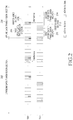
- FIG. 2 is a view illustrating an example of a data transmission section applied to the communication system of FIG. 1 according to an embodiment of the present disclosure
- FIG. 3 is an example of a flowchart illustrating a method for identifying a reason for interference when a user equipment (UE) detects a failure to receive a data packet transmitted by the UE according to an embodiment of the present disclosure
- FIG. 4 is an example of a flowchart illustrating a method for recognizing failure to receive a data packet transmitted by the UE as a first situation and reconfiguring a transmitting method for the data packet by the UE according to an embodiment of the present disclosure
- FIG. 5 is an example of a flowchart illustrating a method for recognizing the failure to receive the control information as a second situation and transmitting a data packet by the UE according to an embodiment of the present disclosure
- FIG. 6A is an example of a flowchart illustrating a method for recognizing the failure to receive the control information as a third situation and reconfiguring a transmitting method for a data packet by the UE according to an embodiment of the present disclosure
- FIG. 6B is a view illustrating an example where a transmission beam of an acknowledgement (ACK) packet is changed in the third situation according to an embodiment of the present disclosure
- FIG. 6C is a view illustrating an example according to an embodiment of the present disclosure.
- FIG. 7 is an example illustrating another embodiment of a third scheme according to an embodiment of the present disclosure.
- FIG. 8 is an example of a configuration of the UE according to an embodiment of the present disclosure.
- FIG. 1 is a view illustrating an example of a communication system to which an embodiment of the present disclosure may be applied according to an embodiment of the present disclosure.
- the communication system includes, for example, two adjacent small cells. Further, it is assumed that a mobile station (MS) 1 104 is located within a service coverage of a first small evolved node B (eNB) 102 and a second MS 114 is located within a service coverage of a second small eNB 112 . For the convenience of description, it is assumed that both the first small eNB 102 and the second small eNB 112 use the same frequency band, for example, 60 GHz.
- FIG. 2 is a view illustrating an example of a data transmission section applied to the communication system of FIG. 1 according to an embodiment of the present disclosure.
- data transmission sections of each of the first small cell 100 and the second small cell 110 of FIG. 1 are classified into a downlink data transmission section 202 and an uplink data transmission section 204 . Further, it is assumed that the data transmission sections of the first small cell 100 and the second small cell 110 adjacent to each other are synchronized with each other.
- the data transmission sections include a section in which acknowledgement (ACK) packet transmission to a reverse link within a data transmission section is possible.
- ACK acknowledgement
- the first MS 104 transmits uplink data to the first small eNB 102 .
- the second MS 114 may receive, from the second small eNB 112 , an ACK packet for uplink data transmitted at a first uplink data transmission section 210 of the second MS 114 .
- a communication system which uses the data transmission section including a section in which ACK packet transmission in a reverse link within a unidirectional data transmission section is possible, has advantages of actively coping with a rapid change of a channel as well as minimizing the delay of data transmission.
- an interference effect may occur in the above data transmission section because signals of a reverse link are simultaneously transmitted between adjacent cells.
- the first MS 104 may receive, from the first small eNB 102 , an ACK packet for uplink data that is transmitted at the first uplink data transmission section 206 , at a first shaded section 208 of an uplink data transmission section of the first MS 104 , which overlaps with the second uplink data transmission section 214 .
- the first MS 104 may fail to receive an ACK packet for uplink data of the first small eNB 102 as in reference numeral 122 of FIG. 1 due to the transmission of the uplink data packet of the second MS 114 as in reference numeral 120 of FIG. 1 .
- the present discloses proposes a method for identifying whether an interference situation occurs if a reception node fails to receive control information when a data transmission section including a section in which transmitting control information in a reverse link within a unidirectional data transmission section is possible is applied to a communication system including adjacent small cells, and when the interference situation is detected, allowing the reception node to determine a transmitting method for the control information and notify a transmission node of the determined transmitting method.
- the transmission node for transmitting a data packet according to an uplink and a downlink and the reception node for receiving the same may correspond to a UE and an eNB, respectively, or in contrast, may correspond to the eNB and the UE, respectively.
- FIGS. 3, 4, 5, 6A to 6C, and 7 which will be described below, the description therefor will be made while an uplink situation is configured as an example. However, these various embodiments may be applied even to a downlink situation.
- FIG. 3 is an example of a flowchart of identifying a reason for interference when a UE detects a failure to receive a data packet transmitted by the UE according to an embodiment of the present disclosure.
- the communication system structure of FIG. 1 and the data transmission section of FIG. 2 are applied to an operation of FIG. 3 .
- a UE transmits a data packet at a predetermined data transmission section.
- the UE transmits, to the eNB, downlink ACK packet related information, for example, modulation and coding scheme (MCS) level information, together with a data packet.
- MCS modulation and coding scheme
- the UE waits for receiving an ACK packet corresponding to the transmitted data packet in a predetermined time section.
- the predetermined time section corresponds to the shaded sections 208 and 212 of FIG. 2 as a detailed example.
- the UE When the ACK packet is transmitted from the eNB at the predetermined time section, the UE detects a preamble signal of the ACK packet, and decodes a header and a payload signal, in operation 304 . Further, the UE identifies, through a result of the decoding, whether the eNB normally receives the data packet, and proceeds to retransmit some signals within the data packet or transmits a new data packet according to a result of the identifying.
- the method proceeds to operation 306 .
- the case where the ACK packet was not received, that is the ACK packet is not received may include a case where a preamble signal of the ACK packet is not detected or a case where the decoding of the header of the ACK packet fails.
- the UE performs energy detection for a reception signal detected at the predetermined time section, in operation 306 . Further, the UE may classify a reason for the failure to receive the ACK packet totally into three situations ( 308 , 310 , and 312 ) on the basis of a result of performing the energy detection.
- the UE determines the reason as a first situation in which the eNB does not transmits the ACK packet.
- the UE determines the reason as a second situation in which the eNB transmits the ACK packet, but the UE fails to receive the ACK packet due to temporary deterioration of reception performance.
- the energy level of the reception signal which is detected at the time section in which the payload of the ACK packet is received, is larger than the maximum threshold Th_max, and unlike reference numeral 324 , the energy level is maintained larger than the minimum threshold Th_min at a time section 328 subsequent to the time section in which the payload is received.
- the UE determines the reason as a third situation in which the UE fails to receive the ACK packet due to an interference situation.
- the UE reconfigures the transmitting method for the data packet or the ACK packet according to the corresponding situations.
- a detailed operation procedure for reconfiguring the transmitting method for the data packet or the ACK packet according to each situation will be described through embodiments of FIGS. 4, 5, and 6A to 6C .
- FIG. 4 is an example of a flowchart of recognizing the failure to receive a data packet transmitted by the UE as a first situation and reconfiguring a transmitting method for a data packet by the UE according to an embodiment of the present disclosure.
- an eNB 400 determines scheduling information for data packet transmission by a UE 402 , and transmits the determined scheduling information to the UE 402 .
- the scheduling information is time and frequency information allocated for data transmission of the UE 402 , which may include, for example, information on the start time and the length of a time and frequency resource, and the like.
- Such scheduling information can be transmitted to the corresponding UE at a transmission section of the scheduling information, which corresponds to a predefined separate resource section.
- the UE 402 having received the scheduling information transmits a channel information request to the eNB 400 , in operation 406 a .
- the channel information request may include transmitting a plurality of reference signals used for measuring channel information of the eNB 400 .
- the reference signals may be transmitted through different beamforming settings (for example, direction and beam pattern). Candidates of the beamforming settings may be previously determined through a beam selecting procedure between the UE/the eNB at a predetermined section. Since the beam selecting procedure between the UE/the eNB does not correspond to the technical range proposed by the present disclosure, the detailed description therefor will be omitted herein.
- the eNB 400 measures a channel, and feeds a channel information value measured according to the request back to the UE 402 .
- the channel information value may be measured in a process of receiving the packet transmitted from the UE 402 in operation 406 a , and is measured according to each of the plurality of transmitted reference signals.
- the channel information value may include at least one of the intensity of a reception signal, a signal to interference plus noise ratio (SINR), and information on whether the packet transmitted in operation 406 a is successfully received.
- SINR signal to interference plus noise ratio
- the channel information value may be fed back according to one or more reference signals, and the channel information value may include, together, information on which reference signal the fed-back channel information value corresponds to.
- the UE 402 determines the transmitting method for the data packet using the received channel information value, and transmits, to the eNB 400 , a first data packet, which is the first data packet, using the determined transmitting method for the data packet.
- the transmitting method may configure beamforming to be used when the first data packet is transmitted, and may include a process of determining the MCS value.
- the MCS value corresponding to the fed-back channel information value can be determined on the basis of an MCS table in which MCS values are stored in advance the beamforming to be used when the first data packet may be used in which a channel information value corresponding to the highest MCS is selected from one or more fed-back channel information values, and a beamforming setting used for transmission of a reference signal corresponding to the selected channel information value is transmitted.
- the MCS table may include a plurality of channel information ranges in which the corresponding channel information value may be included, and a mapping table for an MCS level corresponding to each range.
- the first data packet to be transmitted may include one preamble, one header, and L payload signals.
- the first data packet may use an aggregated MAC protocol data unit (A-MPDU) structure, which has been used in the conventional Wi-Fi.
- A-MPDU aggregated MAC protocol data unit
- the first data packet may be transmitted together with transmission related information of the downlink ACK packet.
- the transmission related information of the downlink ACK packet may include an MCS value applied to an ACK packet, beamforming setting information (for example, beam index information) used to transmit the ACK packet, information on timing at which the ACK packet is to be transmitted, and the like.
- the eNB 400 succeeds in receiving the first data packet. Then, the eNB 400 generates an ACK signal of the first data packet using the transmission related information of the downlink ACK packet, which the eNB 400 receives together with the first data packet, and transmits the ACK packet to the UE 402 , in operation 408 b .
- the transmission related information of the ACK packet indicates an MCS 1 level
- the eNB 400 generates an ACK packet to which the MCS 1 level is applied.
- the ACK packet is transmitted after an inter-frame spacing (IFS) time section predetermined at a time point when a transmission section of the first packet is terminated. For example, 3us may be used as the IFS.
- IFS inter-frame spacing
- the ACK packet may include information on whether each of the L payload signals are successfully received.
- operation 408 a to operation 408 b are repeatedly performed, the UE 402 sequentially transmits data packets to be transmitted to the eNB 400 . Thereafter, in operation 410 a , it is assumed that the UE 402 transmits an N th data packet to the eNB 400 , but the eNB 400 fails to normally receive the N th data packet.
- the normal reception indicates a case where the eNB detects a preamble of the corresponding data packet, and succeeds in decoding a header. Accordingly, in the present disclosure, the failure in the normal reception indicates a case where the eNB does not detect a preamble of the corresponding data packet or fails to decode a header. Then, the eNB 400 fails to receive the N th data packet, and thus, does not transmit, to the UE 402 , an ACK packet indicating whether payload signals within the N th data packet are successfully received.
- the UE 402 waits for receiving the ACK packet corresponding to the N th data packet within a predetermined time section and then recognizes the failure to receive the ACK packet, in operation 410 b , and performs energy detection, in operation 412 . As a result of preforming the energy detection, it is determined that the eNB 400 does not transmit the ACK packet. Thus, the UE 402 identifies that an energy level of the reception signal, which is detected in a time section corresponding to the transmission of the ACK packet, is maintained at the minimum threshold Th_min, as in operation 322 of FIG. 3 . In this case, the UE 402 recognizes a current situation as the first situation in which the eNB 400 has not transmitted the ACK packet of the N th data packet.
- the UE 402 transmits a channel information request to the eNB 400 again in operation 414 a , and receives a channel information value from the eNB 400 in operation 414 b . Then, in operation 416 , the UE 402 re-determines the transmitting method for the data packet on the basis of the channel information value.
- the transmission method for the data packet which is re-determined in the present disclosure, may be classified into three types. First, when the channel information value indicates a case where reception deterioration occurs temporarily, but does not result from a transmission channel environment of the data packet, the UE 402 can perform retransmission using the transmitting method for the N th data packet as it is.
- the UE 402 reconfigures the beamforming and the MCS value for transmission of the N th data packet, and retransmits the N th data packet on the basis of the reconfigured transmitting method.
- the UE 402 may change an MCS level mapped to the channel information value received in operation 414 b to an MCS level for the retransmission on the basis of the stored MCS table, and may change a beam index having the highest MCS level among beam indexes corresponding to the reference signals, respectively, to a beam index for the retransmission.
- the UE 402 terminates the transmission of the data packet, and transmits a request to perform a beam searching procedure to the eNB 400 .
- the beam searching procedure may be performed in a data transmission section preassigned to the UE 402 , or may be performed in a resource section separately assigned for beam searching.
- the case where the channel information value indicates the channel environment in which the transmission of the data packet is impossible may include, for example, a case where there is no MCS level mapped to the previously-stored MCS table.
- FIG. 5 is an example of a flowchart of recognizing the failure to receive the control information as a second situation and reconfiguring a transmitting method for a data packet by the UE according to an embodiment of the present disclosure.
- an eNB 500 determines a resource region section for data packet transmission of a UE 502 , and transmits information on the resource region section to the UE 502 while the resource region section is included in scheduling information.
- the scheduling information is configured to be the same as the scheduling information in operation 404 of FIG. 4 , the duplicated description therefor will be omitted.
- the UE 502 transmits a channel information request to the eNB 500 , and receives feedback for the channel information value from the eNB 500 in response thereto.
- the UE 502 transmits a first data packet to the eNB 500 using a resource acquired from the scheduling information in operation 508 a , and receives an ACK packet for the first data packet from the UE 500 in operation 508 b . Since operations 508 a to 508 b are duplicated with operations 408 a to 408 b of FIG. 4 , the detailed description therefor will be omitted.
- the UE 502 sequentially transmits data packets to be transmitted to the eNB 500 . Thereafter, in operation 510 a , the UE 502 transmits an N th data packet to the eNB 500 . However, in operation 510 b , it is assumed that the UE 502 fails to receive an ACK packet corresponding to the N th data packet. Here, the failure to receive the ACK packet implies a case where the UE 502 fails to detect a preamble of the ACK packet or fails to decode a header. Then, in operation 511 , the UE performs energy detection. As a result of performing the energy detection, as illustrated in reference numeral 324 of FIG.
- the UE 502 may recognize a current situation as the second situation in which the reception of the ACK packet fails due to the occurrence of a temporary reception error at a time point corresponding to the preamble and header transmission. In this case, the UE 502 according to an embodiment of the present disclosure assumes that the eNB 500 successfully receives the N th data packet.
- the UE 502 transmits, to the eNB 500 , transmission related information of a downlink ACK packet together with a (N+1) th data packet which is a next data packet.
- the UE 502 receives, from the eNB 500 , an ACK packet including all information indicating whether the (N+1) th data packet is successfully received as well as the N th data packet. Accordingly, the UE according to an embodiment of the present disclosure performs the energy detection so as to acquire the second situation, thereby preventing an unnecessary retransmission of the N th data packet, the ACK signal corresponding thereto being not received.
- FIG. 6A is an example of a flowchart of recognizing the failure to receive the control information as a third situation and reconfiguring a transmitting/receiving method for a data packet and an ACK packet by the UE according to an embodiment of the present disclosure.
- operations 604 to 610 a are performed identically to operations 504 to 510 a of FIG. 5 .
- operation 610 b it is assumed that the UE 602 fails to receive the ACK packet for the N th data packet. Failure is determined after waiting in operation 611 .
- the UE 602 performs energy detection. As the result of performing the energy detection, as illustrated in reference numeral 326 of FIG. 3 , the energy level of the reception signal, which is detected during a time section corresponding to the transmission of the ACK packet for the N th data packet, is maintained at the maximum threshold Th_max or higher.
- the UE 602 may recognize a current situation as the third situation in which the reception of the ACK packet fails by interference. Then, the UE 602 according to the corresponding embodiment reconfigures transmission related information of a downlink ACK packet in order to overcome the interference.
- the UE 602 may reconfigure the solution to one of a first scheme of changing a beamforming setting used for the transmission and the reception of the ACK packet, a second scheme of making a request to downwardly configure the MCS level of the ACK packet, and a third scheme (Delayed ACK) of transmitting the ACK packet in a separate resource section region after the transmission of the data packets within the resource region scheduled by the UE 602 is completed.
- the UE 602 generates the transmission related information of the downlink ACK packet corresponding to the reconfigured schemes, and transmits, to the eNB 600 , the reconfigured transmission related information of the ACK packet together with the (N+1) th data packet, which is a next data packet, in operation 614 a .
- the UE 602 may determine, through the previously-performed separate beam selecting procedure, one or more candidate beams which can be used as a reception beam of the ACK packet. Further, as illustrated in reference numeral 329 and reference numeral 330 of FIG.
- the UE 602 measures an energy level of a reception signal for the determined candidate beams, and calculates, on the basis of the measured value, an SINR value for a case where each of the candidate beams is configured as a reception beam of the ACK packet. Further, the UE 602 may select one of candidate beams having a larger SINR value than an SINR value used for successful decoding of the ACK packet among the SINR values calculated for the candidate beams. As an embodiment of the selection process, the UE 602 may select a candidate beam having the maximum SINR value as a reception beam of the ACK packet. According to another embodiment, the UE 602 may select a candidate beam having the minimum energy level of a reception signal among the candidate beams as the reception beam of the ACK packet.
- the UE 602 may determine that the first scheme cannot be used, and alternatively uses one of the second scheme and the third scheme.
- an optimum transmission bean of the eNB 600 which corresponds to the candidate beam selected as the reception beam of the ACK packet for the UE 602 , is different from the conventional transmission beam, which has been used for transmitting the ACK packet by the eNB 600 .
- the UE 602 may transmit, to the eNB 600 , together with the (N+1) th data packet, information making a request to change the transmission beam of the eNB 600 to a new transmission beam corresponding to the selected reception candidate beam.
- candidate beams determined through a separate procedure between the UE 602 and the eNB 600 include a reception beam 2 and a reception beam 3 .
- the UE 602 calculates an SINR value by performing energy detection for the reception beam 2 and the reception beam 3 , as illustrated in reference numeral 329 and reference numeral 330 of FIG. 3 .
- the reception beam 2 having the maximum SINR value is selected as a new reception beam of the UE 602 .
- the UE 602 may transmit, to the eNB 600 , optimal transmission beam information of the eNB 600 , which corresponds to the reception beam 2 .
- the eNB 600 may configure an optimal transmission beam corresponding to the reception beam 2 as a transmission usage of the ACK packet.
- the UE 602 transmits, to the eNB 600 , together with the (N+1) th data, information making a request to change a transmission beam to be used for transmitting the ACK signal to an optimal transmission beam corresponding to the reception beam 2 . Then, in operation 614 b the eNB 600 change the transmission beam to be used for transmitting the ACK signal as the optimal transmission beam.
- the eNB 600 transmits the ACK packet of the (N+1) th data packet to the UE 602 through the changed transmission beam.
- FIGS. 6B and 6C are views illustrating an example where a transmission beam of an ACK packet is changed in the third situation according to an embodiment of the present disclosure.
- the UE 602 transmits a data packet through a transmission beam of 620 a
- the eNB 600 transmits an ACK packet to the UE 602 through a transmission beam 622 a configured for the transmission of the ACK packet of the data packet.
- the communication direction of the interference source does not affect the data packet and the ACK signal between the UE 602 and the eNB 600 . Accordingly, the UE 602 and the eNB 600 may transmit/receive the data packet and the ACK packet regardless of the communication 624 of the interference source.
- the UE 602 may change an ACK signal transmission beam of the eNB 600 and an ACK signal reception beam of the UE 602 according to the method described in FIG. 6A , and may make a configuration such that a transmission path of the ACK packet 622 b is not affected by the communication 626 of the interference source, as illustrated in FIG. 6C .
- the third scheme according to yet another embodiment may be changed in a form in which, after data packets are completely transmitted, an ACK packet of each of the data packets is received.
- FIG. 7 is an example illustrating another embodiment of the third scheme according to an embodiment of the present disclosure.
- a structure in which, immediately after the uplink data transmission section 206 within the uplink data transmission section, the downlink ACK packet corresponding thereto is received (as indicated by reference numeral 208 ), as illustrated in FIG. 2 , may be changed as follows.
- only uplink data 708 a is transmitted within an uplink data transmission section 704 , and an ACK packet of an eNB, which corresponds to the uplink data, may be received through a partial section 708 b of a downlink data transmission section 702 as an example of a separate section.
- only downlink data 706 a is transmitted within a downlink data transmission section 702 , and an ACK packet of an eNB, which corresponds to the downlink data, may be received through a partial section 706 b of an uplink data transmission section 704 as an example of a separate section.
- the UE and the eNB transmit signals using a preamble based on a cell-specific sequence such that successful decoding is possible even in a multi-cell interference situation.
- the bitmap size M of a block ACK (BA) packet is configured to correspond to bits, the number of which is two to three times of payloads included in the corresponding A-MPDU.
- the following information may be additionally included in a header signal or a payload signal of the corresponding A-MPDU.
- the information additionally included in the header or the payload may include information on an MCS level and a transmission beam index of the ACK packet which a transmission terminal is to transmit after the IFS time after the A-MPDU is completely transmitted, information whether a reception terminal directly transmits the ACK packet or utilizes a Delayed ACK packet in a separate resource section after the IFS time after the A-MPDU is completely transmitted, and the like.
- FIG. 8 is an example of a configuration of the UE according to an embodiment of the present disclosure.
- a UE 800 includes, for example, a controller 802 , a transmission/reception unit 804 , an energy detection unit 806 , and a data packet transmitting method determination unit 808 .
- the configuration of the UE 800 is illustrated as an example for the convenience of description, and according to the intention of an operator or various embodiments, the corresponding configuration may be segmented into a plurality of sub-units, or a plurality of units may be integrated into one unit.
- the controller 802 After transmitting a data packet through the transmission/reception unit 804 , the controller 802 waits for receiving an ACK packet for the data packet during a predetermined time section. When the ACK packet is not received during the time section, the controller 802 detects an energy level of a reception signal in a time section corresponding to a preamble signal of the ACK packet as in operation 306 of FIG. 3 , and identifies a reason for reception failure for the ACK packet using the detected energy levels. Further, the controller 802 determines a transmitting method for the data packet or the ACK packet according to each embodiment of FIGS.
Landscapes
- Engineering & Computer Science (AREA)
- Computer Networks & Wireless Communication (AREA)
- Signal Processing (AREA)
- Mobile Radio Communication Systems (AREA)
Abstract
Description
Claims (20)
Applications Claiming Priority (2)
| Application Number | Priority Date | Filing Date | Title |
|---|---|---|---|
| KR1020150076091A KR102319698B1 (en) | 2015-05-29 | 2015-05-29 | A method and apparatus for trasceving in moible communicatoin system |
| KR10-2015-0076091 | 2015-05-29 |
Publications (2)
| Publication Number | Publication Date |
|---|---|
| US20160352625A1 US20160352625A1 (en) | 2016-12-01 |
| US10530530B2 true US10530530B2 (en) | 2020-01-07 |
Family
ID=57399209
Family Applications (1)
| Application Number | Title | Priority Date | Filing Date |
|---|---|---|---|
| US15/168,800 Active 2036-07-30 US10530530B2 (en) | 2015-05-29 | 2016-05-31 | Method and apparatus for transmitting and receiving data in mobile communication system |
Country Status (5)
| Country | Link |
|---|---|
| US (1) | US10530530B2 (en) |
| EP (1) | EP3304969B1 (en) |
| KR (1) | KR102319698B1 (en) |
| CN (1) | CN107683570B (en) |
| WO (1) | WO2016195351A1 (en) |
Families Citing this family (7)
| Publication number | Priority date | Publication date | Assignee | Title |
|---|---|---|---|---|
| EP3226446B1 (en) * | 2016-03-30 | 2018-09-26 | Siemens Aktiengesellschaft | Method for determining a signal quality for radio connection between a radio base station and at least one radio subscriber station and a radio base station |
| CN107889235B (en) * | 2016-09-29 | 2020-12-01 | 华为技术有限公司 | Beam pointing method, network device and terminal |
| US10966212B2 (en) * | 2017-05-09 | 2021-03-30 | Telefonaktiebolaget Lm Ericsson (Publ) | Method and apparatus for transmitting and receiving data |
| CN109302720B (en) * | 2017-07-25 | 2021-03-23 | 华为技术有限公司 | A method and device for selecting a beam |
| US11876624B2 (en) * | 2019-07-04 | 2024-01-16 | Lg Electronics Inc. | Method for transmitting data by means of terminal in wireless communication system supporting sidelink, and device therefor |
| CN113489572B (en) * | 2021-08-23 | 2022-12-20 | 杭州安恒信息技术股份有限公司 | A request sending method, device, equipment and storage medium |
| WO2023239273A1 (en) | 2022-06-10 | 2023-12-14 | Beammwave Ab | A method of pre-coding a data packet for a multi-antenna transmitter and receiver arrangement, a computer program product, a non-transitory computer-readable storage medium, a multi-antenna transmitter and receiver arrangement, a wireless device, and a transceiver node |
Citations (13)
| Publication number | Priority date | Publication date | Assignee | Title |
|---|---|---|---|---|
| WO2006024993A1 (en) | 2004-08-30 | 2006-03-09 | Koninklijke Philips Electronics, N.V. | A method and system for link adaptation in wireless networks |
| US20060098580A1 (en) | 2004-11-08 | 2006-05-11 | Qinghua Li | Apparatus and method capable of beam forming adjustments |
| US20070171889A1 (en) * | 2006-01-20 | 2007-07-26 | Lg-Nortel Co., Ltd. | Apparatus and method for transmitting and receiving a RACH signal in SC-FDMA system |
| US20080049620A1 (en) * | 2006-08-25 | 2008-02-28 | Bbn Technologies Corp. | Systems and methods for energy-conscious communication in wireless ad-hoc networks |
| US20100214985A1 (en) | 2009-02-12 | 2010-08-26 | Lg Electronics Inc. | Method for transmitting signal on bandwidth request channel at mobile station, mobile station apparatus using the same, method for performing bandwidth request procedure at base station, and base station apparatus using the same |
| US20100220597A1 (en) | 2009-02-27 | 2010-09-02 | Qualcomm Incorporated | Time division duplexing (tdd) configuration for access point base stations |
| US20120094681A1 (en) | 2010-10-12 | 2012-04-19 | Interdigital Patent Holdings, Inc. | Service-based approach to channel selection and network configuration for television white space networks |
| US20120134292A1 (en) | 2009-08-17 | 2012-05-31 | Koninklijke Philips Electronics N.V. | Method for transmitting data in a wireless network, and wireless network therefor |
| US20130258885A1 (en) * | 2012-03-27 | 2013-10-03 | Samsung Electronics Co., Ltd. | Method and apparatus for transmitting beam information in wireless communication system |
| US20130329690A1 (en) | 2011-03-10 | 2013-12-12 | Lg Electronics Inc. | Method and apparatus for transreceiving data in medical body area network |
| US20140018117A1 (en) | 2012-07-13 | 2014-01-16 | Electronics And Telecommunications Research Institute | Coexistence management system for measuring channel information between spectrum sharing devices and method thereof |
| US20150156762A1 (en) * | 2012-06-19 | 2015-06-04 | Lg Electronics Inc. | Method and apparatus for transmitting uplink data |
| US9614608B2 (en) * | 2014-07-14 | 2017-04-04 | Ubiqomm Llc | Antenna beam management and gateway design for broadband access using unmanned aerial vehicle (UAV) platforms |
Family Cites Families (3)
| Publication number | Priority date | Publication date | Assignee | Title |
|---|---|---|---|---|
| CN102026376B (en) * | 2009-09-23 | 2014-03-12 | 中兴通讯股份有限公司 | Method and system for realizing common transmission channel reconfiguration |
| CN103516472B (en) * | 2012-06-27 | 2017-04-05 | 华为技术有限公司 | A kind of uplink data transmission method and communication equipment, mobile station |
| CN103596278A (en) * | 2013-11-26 | 2014-02-19 | 中国联合网络通信集团有限公司 | Method, device and system for data transmission |
-
2015
- 2015-05-29 KR KR1020150076091A patent/KR102319698B1/en active Active
-
2016
- 2016-05-30 WO PCT/KR2016/005709 patent/WO2016195351A1/en not_active Ceased
- 2016-05-30 CN CN201680031293.7A patent/CN107683570B/en active Active
- 2016-05-30 EP EP16803706.7A patent/EP3304969B1/en active Active
- 2016-05-31 US US15/168,800 patent/US10530530B2/en active Active
Patent Citations (13)
| Publication number | Priority date | Publication date | Assignee | Title |
|---|---|---|---|---|
| WO2006024993A1 (en) | 2004-08-30 | 2006-03-09 | Koninklijke Philips Electronics, N.V. | A method and system for link adaptation in wireless networks |
| US20060098580A1 (en) | 2004-11-08 | 2006-05-11 | Qinghua Li | Apparatus and method capable of beam forming adjustments |
| US20070171889A1 (en) * | 2006-01-20 | 2007-07-26 | Lg-Nortel Co., Ltd. | Apparatus and method for transmitting and receiving a RACH signal in SC-FDMA system |
| US20080049620A1 (en) * | 2006-08-25 | 2008-02-28 | Bbn Technologies Corp. | Systems and methods for energy-conscious communication in wireless ad-hoc networks |
| US20100214985A1 (en) | 2009-02-12 | 2010-08-26 | Lg Electronics Inc. | Method for transmitting signal on bandwidth request channel at mobile station, mobile station apparatus using the same, method for performing bandwidth request procedure at base station, and base station apparatus using the same |
| US20100220597A1 (en) | 2009-02-27 | 2010-09-02 | Qualcomm Incorporated | Time division duplexing (tdd) configuration for access point base stations |
| US20120134292A1 (en) | 2009-08-17 | 2012-05-31 | Koninklijke Philips Electronics N.V. | Method for transmitting data in a wireless network, and wireless network therefor |
| US20120094681A1 (en) | 2010-10-12 | 2012-04-19 | Interdigital Patent Holdings, Inc. | Service-based approach to channel selection and network configuration for television white space networks |
| US20130329690A1 (en) | 2011-03-10 | 2013-12-12 | Lg Electronics Inc. | Method and apparatus for transreceiving data in medical body area network |
| US20130258885A1 (en) * | 2012-03-27 | 2013-10-03 | Samsung Electronics Co., Ltd. | Method and apparatus for transmitting beam information in wireless communication system |
| US20150156762A1 (en) * | 2012-06-19 | 2015-06-04 | Lg Electronics Inc. | Method and apparatus for transmitting uplink data |
| US20140018117A1 (en) | 2012-07-13 | 2014-01-16 | Electronics And Telecommunications Research Institute | Coexistence management system for measuring channel information between spectrum sharing devices and method thereof |
| US9614608B2 (en) * | 2014-07-14 | 2017-04-04 | Ubiqomm Llc | Antenna beam management and gateway design for broadband access using unmanned aerial vehicle (UAV) platforms |
Also Published As
| Publication number | Publication date |
|---|---|
| KR102319698B1 (en) | 2021-11-01 |
| EP3304969A1 (en) | 2018-04-11 |
| CN107683570B (en) | 2021-04-02 |
| US20160352625A1 (en) | 2016-12-01 |
| WO2016195351A1 (en) | 2016-12-08 |
| EP3304969B1 (en) | 2020-02-05 |
| CN107683570A (en) | 2018-02-09 |
| EP3304969A4 (en) | 2018-06-20 |
| KR20160140027A (en) | 2016-12-07 |
Similar Documents
| Publication | Publication Date | Title |
|---|---|---|
| US11943037B2 (en) | Method and apparatus for beam failure recovery in a wireless communication system | |
| US12375215B2 (en) | Method and apparatus for configuration of resource sensing in NR V2X resource allocation | |
| US10530530B2 (en) | Method and apparatus for transmitting and receiving data in mobile communication system | |
| US12225579B2 (en) | Sensing operations for sidelink communications | |
| CN113169830A (en) | Method and apparatus for configuring resource sensing in NR V2X resource allocation | |
| KR20200008666A (en) | Method for performing beam failure recovery in a wireless communication system and apparatus therefor | |
| US11553374B2 (en) | Identifying a hybrid automatic repeat request mode | |
| US11405090B2 (en) | Method and apparatus for antenna beam tracking in wireless cellular communication system | |
| WO2021167839A1 (en) | Acknowledgement feedback for multi-component carrier scheduling | |
| US11950235B2 (en) | Resource selection with sidelink receiver sensing | |
| US20150085680A1 (en) | Retransmitting communications in a mobile network using small cell clusters | |
| US11997668B2 (en) | Resource selection with transmitter sensing | |
| CN116918381A (en) | Techniques for non-serving cell layer one reporting in wireless communication systems | |
| EP4150806A1 (en) | Link adaptation upon beam blocking determination | |
| WO2022186899A1 (en) | Prioritization between feedback transmissions and receptions over sidelink | |
| WO2021248076A1 (en) | Beam blocking detection scheduling request transmission procedures | |
| US20240334522A1 (en) | Beam failure recovery in sidelink |
Legal Events
| Date | Code | Title | Description |
|---|---|---|---|
| AS | Assignment |
Owner name: SAMSUNG ELECTRONICS CO., LTD., KOREA, REPUBLIC OF Free format text: ASSIGNMENT OF ASSIGNORS INTEREST;ASSIGNORS:KIM, JAE-WON;YU, HYUN-KYU;ROH, DONG-HWI;AND OTHERS;REEL/FRAME:038751/0570 Effective date: 20160530 |
|
| STPP | Information on status: patent application and granting procedure in general |
Free format text: RESPONSE TO NON-FINAL OFFICE ACTION ENTERED AND FORWARDED TO EXAMINER |
|
| STPP | Information on status: patent application and granting procedure in general |
Free format text: FINAL REJECTION MAILED |
|
| STPP | Information on status: patent application and granting procedure in general |
Free format text: RESPONSE AFTER FINAL ACTION FORWARDED TO EXAMINER |
|
| STPP | Information on status: patent application and granting procedure in general |
Free format text: ADVISORY ACTION MAILED |
|
| STPP | Information on status: patent application and granting procedure in general |
Free format text: DOCKETED NEW CASE - READY FOR EXAMINATION |
|
| STPP | Information on status: patent application and granting procedure in general |
Free format text: NOTICE OF ALLOWANCE MAILED -- APPLICATION RECEIVED IN OFFICE OF PUBLICATIONS |
|
| STPP | Information on status: patent application and granting procedure in general |
Free format text: PUBLICATIONS -- ISSUE FEE PAYMENT VERIFIED |
|
| STCF | Information on status: patent grant |
Free format text: PATENTED CASE |
|
| MAFP | Maintenance fee payment |
Free format text: PAYMENT OF MAINTENANCE FEE, 4TH YEAR, LARGE ENTITY (ORIGINAL EVENT CODE: M1551); ENTITY STATUS OF PATENT OWNER: LARGE ENTITY Year of fee payment: 4 |
|
| AS | Assignment |
Owner name: NOKIA TECHNOLOGIES OY, FINLAND Free format text: ASSIGNMENT OF ASSIGNORS INTEREST;ASSIGNOR:SAMSUNG ELECTRONICS CO., LTD.;REEL/FRAME:067260/0224 Effective date: 20240221 |