US10526260B2 - Method for adsorption separation of propylene and propyne - Google Patents
Method for adsorption separation of propylene and propyne Download PDFInfo
- Publication number
- US10526260B2 US10526260B2 US16/067,576 US201716067576A US10526260B2 US 10526260 B2 US10526260 B2 US 10526260B2 US 201716067576 A US201716067576 A US 201716067576A US 10526260 B2 US10526260 B2 US 10526260B2
- Authority
- US
- United States
- Prior art keywords
- propyne
- metal
- organic
- propene
- organic framework
- Prior art date
- Legal status (The legal status is an assumption and is not a legal conclusion. Google has not performed a legal analysis and makes no representation as to the accuracy of the status listed.)
- Active
Links
- MWWATHDPGQKSAR-UHFFFAOYSA-N propyne Chemical compound CC#C MWWATHDPGQKSAR-UHFFFAOYSA-N 0.000 title claims abstract description 97
- QQONPFPTGQHPMA-UHFFFAOYSA-N propylene Natural products CC=C QQONPFPTGQHPMA-UHFFFAOYSA-N 0.000 title claims abstract description 86
- 238000001179 sorption measurement Methods 0.000 title claims abstract description 31
- 238000000034 method Methods 0.000 title claims abstract description 23
- 238000000926 separation method Methods 0.000 title claims abstract description 16
- 125000004805 propylene group Chemical group [H]C([H])([H])C([H])([*:1])C([H])([H])[*:2] 0.000 title abstract description 48
- 239000000463 material Substances 0.000 claims abstract description 65
- 239000012621 metal-organic framework Substances 0.000 claims abstract description 38
- 150000001450 anions Chemical class 0.000 claims abstract description 21
- 239000013110 organic ligand Substances 0.000 claims description 24
- 229910021645 metal ion Inorganic materials 0.000 claims description 23
- 239000003463 adsorbent Substances 0.000 claims description 20
- 239000003446 ligand Substances 0.000 claims description 19
- 229910001412 inorganic anion Inorganic materials 0.000 claims description 15
- 150000001449 anionic compounds Chemical class 0.000 claims description 13
- 229910004074 SiF6 Inorganic materials 0.000 claims description 12
- 239000007789 gas Substances 0.000 claims description 9
- KYQCOXFCLRTKLS-UHFFFAOYSA-N Pyrazine Chemical compound C1=CN=CC=N1 KYQCOXFCLRTKLS-UHFFFAOYSA-N 0.000 claims description 6
- 238000010438 heat treatment Methods 0.000 claims description 6
- 229910052739 hydrogen Inorganic materials 0.000 claims description 6
- 230000008929 regeneration Effects 0.000 claims description 6
- 238000011069 regeneration method Methods 0.000 claims description 6
- 239000001257 hydrogen Substances 0.000 claims description 4
- 239000013354 porous framework Substances 0.000 claims description 4
- MWVTWFVJZLCBMC-UHFFFAOYSA-N 4,4'-bipyridine Chemical compound C1=NC=CC(C=2C=CN=CC=2)=C1 MWVTWFVJZLCBMC-UHFFFAOYSA-N 0.000 claims description 3
- 229930024421 Adenine Natural products 0.000 claims description 3
- GFFGJBXGBJISGV-UHFFFAOYSA-N Adenine Chemical compound NC1=NC=NC2=C1N=CN2 GFFGJBXGBJISGV-UHFFFAOYSA-N 0.000 claims description 3
- PCNDJXKNXGMECE-UHFFFAOYSA-N Phenazine Natural products C1=CC=CC2=NC3=CC=CC=C3N=C21 PCNDJXKNXGMECE-UHFFFAOYSA-N 0.000 claims description 3
- 229960000643 adenine Drugs 0.000 claims description 3
- 229910006069 SO3H Inorganic materials 0.000 claims description 2
- 239000011261 inert gas Substances 0.000 claims description 2
- 125000000896 monocarboxylic acid group Chemical group 0.000 claims description 2
- 125000000020 sulfo group Chemical group O=S(=O)([*])O[H] 0.000 claims description 2
- 125000002023 trifluoromethyl group Chemical group FC(F)(F)* 0.000 claims description 2
- 239000011148 porous material Substances 0.000 abstract description 10
- 125000000129 anionic group Chemical group 0.000 abstract 1
- OKKJLVBELUTLKV-UHFFFAOYSA-N Methanol Chemical compound OC OKKJLVBELUTLKV-UHFFFAOYSA-N 0.000 description 21
- 239000000203 mixture Substances 0.000 description 14
- WEVYAHXRMPXWCK-UHFFFAOYSA-N Acetonitrile Chemical compound CC#N WEVYAHXRMPXWCK-UHFFFAOYSA-N 0.000 description 12
- ZMXDDKWLCZADIW-UHFFFAOYSA-N N,N-Dimethylformamide Chemical compound CN(C)C=O ZMXDDKWLCZADIW-UHFFFAOYSA-N 0.000 description 11
- 239000000243 solution Substances 0.000 description 10
- 238000005984 hydrogenation reaction Methods 0.000 description 7
- 239000007864 aqueous solution Substances 0.000 description 6
- 239000003054 catalyst Substances 0.000 description 6
- 238000003795 desorption Methods 0.000 description 6
- 238000005516 engineering process Methods 0.000 description 6
- 150000002891 organic anions Chemical class 0.000 description 5
- XLYOFNOQVPJJNP-UHFFFAOYSA-N water Substances O XLYOFNOQVPJJNP-UHFFFAOYSA-N 0.000 description 5
- 229910001868 water Inorganic materials 0.000 description 5
- OYFRNYNHAZOYNF-UHFFFAOYSA-N 2,5-dihydroxyterephthalic acid Chemical compound OC(=O)C1=CC(O)=C(C(O)=O)C=C1O OYFRNYNHAZOYNF-UHFFFAOYSA-N 0.000 description 4
- 229910017981 Cu(BF4)2 Inorganic materials 0.000 description 4
- ATUOYWHBWRKTHZ-UHFFFAOYSA-N Propane Chemical compound CCC ATUOYWHBWRKTHZ-UHFFFAOYSA-N 0.000 description 4
- WYURNTSHIVDZCO-UHFFFAOYSA-N Tetrahydrofuran Chemical compound C1CCOC1 WYURNTSHIVDZCO-UHFFFAOYSA-N 0.000 description 4
- 230000008901 benefit Effects 0.000 description 4
- 238000004519 manufacturing process Methods 0.000 description 4
- 230000008569 process Effects 0.000 description 4
- 229910009112 xH2O Inorganic materials 0.000 description 4
- 229910019975 (NH4)2SiF6 Inorganic materials 0.000 description 3
- CURLTUGMZLYLDI-UHFFFAOYSA-N Carbon dioxide Chemical compound O=C=O CURLTUGMZLYLDI-UHFFFAOYSA-N 0.000 description 3
- 230000000274 adsorptive effect Effects 0.000 description 3
- IYABWNGZIDDRAK-UHFFFAOYSA-N allene Chemical compound C=C=C IYABWNGZIDDRAK-UHFFFAOYSA-N 0.000 description 3
- 239000013078 crystal Substances 0.000 description 3
- 239000012528 membrane Substances 0.000 description 3
- 238000004729 solvothermal method Methods 0.000 description 3
- 239000000126 substance Substances 0.000 description 3
- ZIBGPFATKBEMQZ-UHFFFAOYSA-N triethylene glycol Chemical compound OCCOCCOCCO ZIBGPFATKBEMQZ-UHFFFAOYSA-N 0.000 description 3
- 229910019985 (NH4)2TiF6 Inorganic materials 0.000 description 2
- 0 *(C1=CC=CC=C1)C1=CC=NC=C1.*C1=NC([4*])=C([3*])C(*C2=C([7*])C([8*])=NC([1*])=C2[2*])=C1[6*].*C1=NC([4*])=C([3*])C(C2=C([7*])C([8*])=NC([1*])=C2[2*])=C1[6*].C1=CC=C(C2=CC=NC=C2)C=C1.C1=CC=NC=C1 Chemical compound *(C1=CC=CC=C1)C1=CC=NC=C1.*C1=NC([4*])=C([3*])C(*C2=C([7*])C([8*])=NC([1*])=C2[2*])=C1[6*].*C1=NC([4*])=C([3*])C(C2=C([7*])C([8*])=NC([1*])=C2[2*])=C1[6*].C1=CC=C(C2=CC=NC=C2)C=C1.C1=CC=NC=C1 0.000 description 2
- IJGRMHOSHXDMSA-UHFFFAOYSA-N Atomic nitrogen Chemical compound N#N IJGRMHOSHXDMSA-UHFFFAOYSA-N 0.000 description 2
- DLMQYALLYVKNAI-UHFFFAOYSA-N C/C1=N/C2=C(N=CN2)C(=O)N1.NC1=C2=C(=NC=N1)NC=N2 Chemical compound C/C1=N/C2=C(N=CN2)C(=O)N1.NC1=C2=C(=NC=N1)NC=N2 DLMQYALLYVKNAI-UHFFFAOYSA-N 0.000 description 2
- CCVGSRVRLCNZNU-QUTPWNDQSA-N C/C=C/C.C/N=N/C.CC#CC.CC1=CC=C(C)C=C1 Chemical compound C/C=C/C.C/N=N/C.CC#CC.CC1=CC=C(C)C=C1 CCVGSRVRLCNZNU-QUTPWNDQSA-N 0.000 description 2
- UGFAIRIUMAVXCW-UHFFFAOYSA-N Carbon monoxide Chemical compound [O+]#[C-] UGFAIRIUMAVXCW-UHFFFAOYSA-N 0.000 description 2
- LFQSCWFLJHTTHZ-UHFFFAOYSA-N Ethanol Chemical compound CCO LFQSCWFLJHTTHZ-UHFFFAOYSA-N 0.000 description 2
- LYCAIKOWRPUZTN-UHFFFAOYSA-N Ethylene glycol Chemical compound OCCO LYCAIKOWRPUZTN-UHFFFAOYSA-N 0.000 description 2
- 229910002092 carbon dioxide Inorganic materials 0.000 description 2
- 229910002091 carbon monoxide Inorganic materials 0.000 description 2
- 230000003197 catalytic effect Effects 0.000 description 2
- 238000000975 co-precipitation Methods 0.000 description 2
- NMGYKLMMQCTUGI-UHFFFAOYSA-J diazanium;titanium(4+);hexafluoride Chemical compound [NH4+].[NH4+].[F-].[F-].[F-].[F-].[F-].[F-].[Ti+4] NMGYKLMMQCTUGI-UHFFFAOYSA-J 0.000 description 2
- 238000009792 diffusion process Methods 0.000 description 2
- 238000004821 distillation Methods 0.000 description 2
- VNWKTOKETHGBQD-UHFFFAOYSA-N methane Chemical compound C VNWKTOKETHGBQD-UHFFFAOYSA-N 0.000 description 2
- UNBDDZDKBWPHAX-UHFFFAOYSA-N n,n-di(propan-2-yl)formamide Chemical compound CC(C)N(C=O)C(C)C UNBDDZDKBWPHAX-UHFFFAOYSA-N 0.000 description 2
- 230000010399 physical interaction Effects 0.000 description 2
- 239000001294 propane Substances 0.000 description 2
- 238000000746 purification Methods 0.000 description 2
- YLQBMQCUIZJEEH-UHFFFAOYSA-N tetrahydrofuran Natural products C=1C=COC=1 YLQBMQCUIZJEEH-UHFFFAOYSA-N 0.000 description 2
- ZXMGHDIOOHOAAE-UHFFFAOYSA-N 1,1,1-trifluoro-n-(trifluoromethylsulfonyl)methanesulfonamide Chemical compound FC(F)(F)S(=O)(=O)NS(=O)(=O)C(F)(F)F ZXMGHDIOOHOAAE-UHFFFAOYSA-N 0.000 description 1
- BAYGVMXZJBFEMB-UHFFFAOYSA-N 4-(trifluoromethyl)phenol Chemical compound OC1=CC=C(C(F)(F)F)C=C1 BAYGVMXZJBFEMB-UHFFFAOYSA-N 0.000 description 1
- WHBMXKPAWINJIX-UHFFFAOYSA-N CC1=C(C(=O)O)C=C(O)C(C(=O)O)=C1.O=C(O)C1=C(O)C=CC(C2=CC(C(=O)O)=C(O)C=C2)=C1 Chemical compound CC1=C(C(=O)O)C=C(O)C(C(=O)O)=C1.O=C(O)C1=C(O)C=CC(C2=CC(C(=O)O)=C(O)C=C2)=C1 WHBMXKPAWINJIX-UHFFFAOYSA-N 0.000 description 1
- YDUACBJUIGREIH-UHFFFAOYSA-K CC1=CC=C([O-])C=C1.C[Si](=O)(=O)[N-][Si](C)(=O)=O.[O-]C1=CC=C(C(F)(F)F)C=C1.[O-]C1=CC=CC=C1 Chemical compound CC1=CC=C([O-])C=C1.C[Si](=O)(=O)[N-][Si](C)(=O)=O.[O-]C1=CC=C(C(F)(F)F)C=C1.[O-]C1=CC=CC=C1 YDUACBJUIGREIH-UHFFFAOYSA-K 0.000 description 1
- 229910021577 Iron(II) chloride Inorganic materials 0.000 description 1
- NINIDFKCEFEMDL-UHFFFAOYSA-N Sulfur Chemical compound [S] NINIDFKCEFEMDL-UHFFFAOYSA-N 0.000 description 1
- 239000000654 additive Substances 0.000 description 1
- 229910052785 arsenic Inorganic materials 0.000 description 1
- RQNWIZPPADIBDY-UHFFFAOYSA-N arsenic atom Chemical compound [As] RQNWIZPPADIBDY-UHFFFAOYSA-N 0.000 description 1
- 125000004429 atom Chemical group 0.000 description 1
- 230000009286 beneficial effect Effects 0.000 description 1
- 239000001569 carbon dioxide Substances 0.000 description 1
- 238000009903 catalytic hydrogenation reaction Methods 0.000 description 1
- 230000008859 change Effects 0.000 description 1
- 238000003889 chemical engineering Methods 0.000 description 1
- 238000006243 chemical reaction Methods 0.000 description 1
- 238000005336 cracking Methods 0.000 description 1
- 125000000524 functional group Chemical group 0.000 description 1
- 125000004435 hydrogen atom Chemical class [H]* 0.000 description 1
- WGCNASOHLSPBMP-UHFFFAOYSA-N hydroxyacetaldehyde Natural products OCC=O WGCNASOHLSPBMP-UHFFFAOYSA-N 0.000 description 1
- 239000012535 impurity Substances 0.000 description 1
- 239000004615 ingredient Substances 0.000 description 1
- 230000003993 interaction Effects 0.000 description 1
- NMCUIPGRVMDVDB-UHFFFAOYSA-L iron dichloride Chemical compound Cl[Fe]Cl NMCUIPGRVMDVDB-UHFFFAOYSA-L 0.000 description 1
- 239000007791 liquid phase Substances 0.000 description 1
- 239000013212 metal-organic material Substances 0.000 description 1
- 239000011259 mixed solution Substances 0.000 description 1
- 230000004048 modification Effects 0.000 description 1
- 238000012986 modification Methods 0.000 description 1
- KBJMLQFLOWQJNF-UHFFFAOYSA-N nickel(II) nitrate Inorganic materials [Ni+2].[O-][N+]([O-])=O.[O-][N+]([O-])=O KBJMLQFLOWQJNF-UHFFFAOYSA-N 0.000 description 1
- 229910052757 nitrogen Inorganic materials 0.000 description 1
- 229910000510 noble metal Inorganic materials 0.000 description 1
- 239000002245 particle Substances 0.000 description 1
- 239000008188 pellet Substances 0.000 description 1
- 239000012071 phase Substances 0.000 description 1
- 239000002574 poison Substances 0.000 description 1
- 231100000614 poison Toxicity 0.000 description 1
- 239000002685 polymerization catalyst Substances 0.000 description 1
- 238000006116 polymerization reaction Methods 0.000 description 1
- 239000000843 powder Substances 0.000 description 1
- 238000002360 preparation method Methods 0.000 description 1
- 239000002994 raw material Substances 0.000 description 1
- 230000009257 reactivity Effects 0.000 description 1
- 238000011160 research Methods 0.000 description 1
- -1 rod Substances 0.000 description 1
- 238000007086 side reaction Methods 0.000 description 1
- 238000003756 stirring Methods 0.000 description 1
- 229910052717 sulfur Inorganic materials 0.000 description 1
- 239000011593 sulfur Substances 0.000 description 1
- 229920002994 synthetic fiber Polymers 0.000 description 1
- 238000011144 upstream manufacturing Methods 0.000 description 1
Images


Classifications
-
- C—CHEMISTRY; METALLURGY
- C07—ORGANIC CHEMISTRY
- C07C—ACYCLIC OR CARBOCYCLIC COMPOUNDS
- C07C7/00—Purification; Separation; Use of additives
- C07C7/12—Purification; Separation; Use of additives by adsorption, i.e. purification or separation of hydrocarbons with the aid of solids, e.g. with ion-exchangers
-
- B—PERFORMING OPERATIONS; TRANSPORTING
- B01—PHYSICAL OR CHEMICAL PROCESSES OR APPARATUS IN GENERAL
- B01J—CHEMICAL OR PHYSICAL PROCESSES, e.g. CATALYSIS OR COLLOID CHEMISTRY; THEIR RELEVANT APPARATUS
- B01J20/00—Solid sorbent compositions or filter aid compositions; Sorbents for chromatography; Processes for preparing, regenerating or reactivating thereof
- B01J20/22—Solid sorbent compositions or filter aid compositions; Sorbents for chromatography; Processes for preparing, regenerating or reactivating thereof comprising organic material
- B01J20/223—Solid sorbent compositions or filter aid compositions; Sorbents for chromatography; Processes for preparing, regenerating or reactivating thereof comprising organic material containing metals, e.g. organo-metallic compounds, coordination complexes
-
- B—PERFORMING OPERATIONS; TRANSPORTING
- B01—PHYSICAL OR CHEMICAL PROCESSES OR APPARATUS IN GENERAL
- B01J—CHEMICAL OR PHYSICAL PROCESSES, e.g. CATALYSIS OR COLLOID CHEMISTRY; THEIR RELEVANT APPARATUS
- B01J20/00—Solid sorbent compositions or filter aid compositions; Sorbents for chromatography; Processes for preparing, regenerating or reactivating thereof
- B01J20/22—Solid sorbent compositions or filter aid compositions; Sorbents for chromatography; Processes for preparing, regenerating or reactivating thereof comprising organic material
- B01J20/223—Solid sorbent compositions or filter aid compositions; Sorbents for chromatography; Processes for preparing, regenerating or reactivating thereof comprising organic material containing metals, e.g. organo-metallic compounds, coordination complexes
- B01J20/226—Coordination polymers, e.g. metal-organic frameworks [MOF], zeolitic imidazolate frameworks [ZIF]
-
- B—PERFORMING OPERATIONS; TRANSPORTING
- B01—PHYSICAL OR CHEMICAL PROCESSES OR APPARATUS IN GENERAL
- B01J—CHEMICAL OR PHYSICAL PROCESSES, e.g. CATALYSIS OR COLLOID CHEMISTRY; THEIR RELEVANT APPARATUS
- B01J20/00—Solid sorbent compositions or filter aid compositions; Sorbents for chromatography; Processes for preparing, regenerating or reactivating thereof
- B01J20/28—Solid sorbent compositions or filter aid compositions; Sorbents for chromatography; Processes for preparing, regenerating or reactivating thereof characterised by their form or physical properties
- B01J20/28054—Solid sorbent compositions or filter aid compositions; Sorbents for chromatography; Processes for preparing, regenerating or reactivating thereof characterised by their form or physical properties characterised by their surface properties or porosity
- B01J20/28069—Pore volume, e.g. total pore volume, mesopore volume, micropore volume
Definitions
- the present invention relates to a chemical engineering field, and in particular to a method of adsorptive separation of propylene and propyne using metal-organic framework materials.
- Propylene is the one of the basic raw materials for the production of three major synthetic materials. In industry production, there is about 1.0% ⁇ 7% propyne existing in the C3 fraction of the oil cracking. Due to the harmful impact of propyne to the propylene polymerization reaction, the concentration of propylene in the propylene gas was required to be below 5 ppm.
- the newly developed propylene-polymerization catalysts require a much lower concentration of propyne, which is below 1 ppm.
- the separation and purification of propylene is one of the most important tasks in the petrochemical industry. Otherwise, propyne is an important chemical that has wide applications, it is imperative to efficiently separate propyne.
- the selective hydrogenation technologies mainly includes: C3 gas phase selective hydrogenation, C3 liquid phase selective hydrogenation and catalytic-distillation.
- Patent 85106117.6 disclosed a kind of technology, in which one-stage adiabatic trickle bed reactor was used, and the catalyst used was highly selective.
- Patent CN102249836A disclosed a method for the preparation of highly selective hydrogenation catalyst. The active component Pd of the catalyst showed specific crystal structure and reactivity, and it can run stably for long period.
- Patent CN102040446A disclosed the method of employing catalytic distillation, taking advantage of the low concentration of propylene, to reduce the probability of the side-reaction of converting propylene into propane.
- the above described hydrogenation technologies are easy to over-react and then convert propylene into propane.
- all these catalysts are noble metals, resulting high costs.
- the catalysts were easily be poisoned, trace amount of water, carbon monoxide, sulfur chemicals, C4 fractions, arsenic will poison these catalysts. Therefore, it is imperative to control the concentration of trace chemicals, reaction temperature and pressure in the hydrogenation technology, resulting in high cost.
- the present invention provides a method of adsorptive separation of propylene and propyne using metal-organic framework materials containing anions.
- the inorganic anions in the metal-organic framework materials described herein can selectively adsorb propyne, achieving a deep removal of propyne from propyene/propyne mixtures, thus obtaining the highly pure propyene with extreme low amount of propyne.
- the present invention can obtain propyne with high purity, and achieve efficient utilization of propyne.
- Metal-organic framework materials are a class of highly ordered crystals with high specific surface area and pore volume. The functional groups, pore size and pore volume can be adjusted by tuning the ligand.
- the metal-organic framework materials contain inorganic and/or organic anions as the adsorption sites, which can selectively adsorb high amount of propyne. Researches have shown that the inorganic/organic anions-containing metal-organic frameworks exhibit higher propyne selectivity and uptake capacity, compared with the conventional metal-organic framework materials. The weak hydrogen bonding between anions and propyne is especially beneficial to the desorption process of propyne.
- the pore size of the metal-organic framework materials can be adjusted.
- interpenetrated structures can adjust the geometry of the pore, and further enhance the adsorption selectivity and uptake capacity.
- the disclosure provides a method of separating propyne from propene using metal-organic framework materials, wherein the anion-containing metal-organic framework adsorbents selectively adsorb propyne from propyne/propene mixed gases, thus achieving propene with ultralow amount of propyne.
- the obtained propene contain a trace amount of propyne, the concentration of propyne is lower than 1 ppm.
- the anion-containing metal-organic framework materials disclosed herein comprises one class of the following four kinds:
- the first-class materials were firstly coordinated by metal ion M1 and organic ligand L1, and then bridged by inorganic ligand L2 to form the three-dimensional framework.
- metal ion M1 can comprise one or more of Zn 2+ , Cu 2+ , Ni 2+ , Co 2+ , Mg 2+ , Al 2+ .
- the descried “inorganic ligand L2” can comprise one or more of SiF 6 2 ⁇ , TiF 6 2 ⁇ , SnF 6 2 ⁇ , ZrF 6 2 ⁇ , GeF 6 2 ⁇ .
- organic ligand L1 is selected from any of the following:
- R is selected from any of following groups.
- R 1 , R 2 , R 3 , R 4 , R 5 , R 6 , R 7 , R 8 are selected from the groups H, F, Cl, Br, I, CH 3 , NH 2 , OH, SO 3 H, COOH, CF 3 .
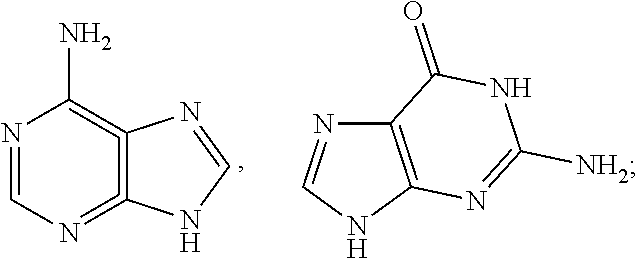
- the second-class materials are porous framework materials formed by metal ions M1 (same as described above), bio-organic ligand L3, and inorganic anions L2 (the same as described above). These described M1, L3, L2 assembled through coordination bond and hydrogen bond.
- organic ligand L3 is selected from any of the following:
- the third class of materials were porous frameworks firstly coordinated by metal ion M1 (the same as descried above) and organic ligand L4, then further coordinated with Mg(X1) 2 , obtained the metal-organic frameworks with organic anions in the pores.
- organic ligand L4 is selected from any of the following:
- organic anion X1 is selected from any of the following:
- the fourth-class of material were coordinated by metal ion M1 (the same as descried above) and organic ligand L4 (the same as descried above) to form the porous framework materials, and then this material were oxidized to convert divalent metal ion M1 to trivalent, and further by introducing anion X2 to coordinate with trivalent metal ion M1, to maintain the electrical neutrality of the metal-organic material.
- anion X2 is selected from any of the following: Cl ⁇ , BC, I ⁇ , COO ⁇ , CH 3 COO ⁇ , NTf 2 ⁇ , BF 4 ⁇ , PF 6 ⁇ , SiF 6 2 ⁇ , TiF 6 2 ⁇ , and N(CN) 2 ⁇ .
- Anion-containing metal-organic framework materials are the first class of materials, among which:
- metal ion M1 can comprise one or more of Zn 2+ , Cu 2+ , Ni 2+ .
- the descried “inorganic ligand L2” can comprise one or more of SiF 6 2 ⁇ , TiF 6 2 ⁇ , SnF 6 2 ⁇ .
- the descried “organic ligand L1” can comprise one or more of pyrazine, 4,4′-dipyridylacetylene, and 4,4′-bipyridine.
- the three-dimensional frameworks could be interpenetrated to form interpenetrated structure.
- L2 is SiF 6 2 ⁇ .
- L2 is TiF 6 2 ⁇ .
- the first-class materials can be synthesized by the well-known co-precipitation method, interfacial diffusion method, and solvothermal synthesis method.
- Anion-containing metal-organic framework materials are the second-class materials, among which:
- metal ion M1 can comprise one or more of Zn 2+ , Cu 2+ , Ni 2+ ;
- the bio-organic ligand L3 is adenine
- the descried “inorganic anion ligand L2” can comprise one or more of SiF 6 2 ⁇ and TiF 6 2 ⁇ .
- the preferred second-class materials have been known by the academia as, but not limited to MPM-1-TIFSIX.
- the second-class materials can be synthesized by the well-known co-precipitation method and solvothermal method.
- Anion-containing metal-organic framework materials are the third-class or the fourth-class materials, among which:
- the descried “metal ion M1” can comprise one or more of Mg 2+ and Fe 2+
- the descried “organic ligand L4” refers to one or more of 2,5-dihydroxyterephthalic acid, 4,4′-dihydroxy-3,3′-dicarboxylic acid.
- the preferred third-class and fourth-class materials have been known by the academia as, but not limited to M1(dobdc) 2 , or M1(dobpdc) 2 .
- the third-class and fourth-class materials can be synthesized by the well-known solvothermal method and interfacial diffusion method.
- Anion-containing metal-organic framework materials are the fourth-class of materials, among which the described “anion X2” is selected from any of the following: Cl ⁇ , BC, I ⁇ , COO ⁇ , CH 3 COO ⁇ .
- the concentration of propyne in the propyne/propene mixture ranges from 50 ppm to 70%.
- the propyne/propene mixed gases can comprise one or more of propadiene, water, methane, carbon dioxide, carbon monoxide, hydrogen, nitrogen, and other gases.
- the adsorption technology demonstrated in this disclosure can tolerate various gas impurity, thereby improve the process economics.
- propadiene when propadiene exist in the mixed gases, propadiene can be removed simultaneously by the metal-organic framework materials descried in the present invention.
- the physical interactions between the adsorbents described herein and propyne is very weak, and the regeneration is easily.
- the adsorbent described in this invention was degassed by vacuum desorption, heating vacuum desorption, or heating while blow inert gas.
- the regeneration temperature ranged from 20 to 100° C., while the pressure ranged from 0-1 atm. If the temperature is too high, propyne will easily explode. In addition, if the temperature is too low, the desorption time is relatively long.
- An outstanding advantage disclosed in this invention is that it can reach ultra-deep removal of propyne (below 1 ppm), this deep removal of propyne is unprecedented. Both vacuum and heating can reduce the adsorption of propyne on the adsorbent, a better desorption result can be achieved when combine heating method and vacuum together. The desorbed propyne is of high purity, which leads to the efficient use of propyne.
- the adsorption temperature is between 0-40° C.
- the adsorption capacity of propyne in the adsorbent would decrease obviously if the adsorption temperature is over 40° C.
- the pressure for the adsorption and separation would be 0.5-10 atom.
- the adsorption capacity would increase as the pressure rises, however, the over-higher pressure would cause the decrease of the separation selectivity.
- the industrial operating pressure depends on the pressure of the upstream gases.
- the shape of the above described adsorbents is particle, pellet, rod, or membrane.
- the disclosed adsorbents is a kind of highly ordered inorganic-organic hybrid materials with tunable micropore between 0.4-1.2 nm.
- the pore volume can be tuned between 0.1-1.2 cm 3 /g.
- the rich and highly ordered anion binding sites endow the materials with excellent propyne capture property and thus achieve high separation selectivity as well as high adsorption capacity.
- This disclosure demonstrates the ultra-deep removal of propyne.
- the content of the propyne in the purified propylene after the adsorption is below 1 ppm, which can meet the most stringent industrial requirement for the downstream polymer-grade propene production.
- the separation method proposed in the present invention exhibit great potential in the separation and purification of propylene and propyne, showing significant commercial implementation value and economic benefits.
- FIG. 1 shows the breakthrough curve of the SIFSIX-2-Cu-i for propylene/propyne (99/1, v/v) separation in the example 1.
- FIG. 2 shows the breakthrough curve of the SIFSIX-1-Cu for propylene/propyne (99/1, v/v) separation in the example 5.
- a methanol solution (4.0 mL) of 4,4′-bipyridylacetylene (46.44 mg) was mixed with an aqueous solution (4.0 mL) of 89 mg Cu(BF 4 ) 2 .xH 2 O (metal ion M1) and 45.96 mg (NH 4 ) 2 SiF 6 (inorganic anion ligand L2) and then heated at 40-100° C. for 12-36 hours.
- the obtained SIFSIX-2-Cu-i (SiF 6 2 ⁇ inorganic anion ligand) was further filtered and then immersed in the methanol.
- the activated adsorbent was loaded into the column (inner diameter 4.6 mm, length 50 mm), the propylene/propyne (99/1, v/v) mixture was introduced into the column at 1.25 mL/min under 25° C. During the first 220 min, propylene only with trace propyne (below 1 ppm) was obtained. The adsorption was stopped. The column with adsorbed propyne was desorbed under vacuum at 50° C. and then could be reused.
- the column illustrated in the example 1 (inner diameter 4.6 mm, length 50 mm), the propylene/propyne (99/1, v/v) mixture with 1000 ppm CO 2 was introduced into the column at 1.25 mL/min under 25° C. During the first 210 min propylene with trace propyne (below 1 ppm) was obtained. The adsorption was stopped. The column with adsorbed propyne was desorbed under vacuum at 30° C. and then could be reused.
- the column illustrated in the example 1 (inner diameter 4.6 mm, length 50 mm), the propylene/propyne (99/1, v/v) mixture with 2000 ppm water was introduced into the column at 1.25 mL/min under 25° C. During the first 215 min propylene with trace propyne (below 1 ppm) was obtained. The adsorption was stopped. The column with adsorbed propyne was desorbed under vacuum at 80° C. and then could be reused.
- the column illustrated in the example 1 (inner diameter 4.6 mm, length 50 mm), the propylene with 1000 ppm propyne was introduced into the column at 1.25 mL/min under 40° C. During the first 350 min, propylene with trace propyne (below 1 ppm) was obtained. The adsorption was stopped. The column with adsorbed propyne was purged by He at 60° C.
- the activated adsorbent was loaded into the column (inner diameter 4.6 mm, length 50 mm), the propylene/propyne (99/1, v/v) mixture was introduced into the column at 1.25 mL/min under 25° C. During the first 180 min, propylene with only with trace propyne (below 1 ppm) was obtained. The adsorption was stopped. The column with adsorbed propyne was desorbed under vacuum at 40° C. and then could be reused.
- the column illustrated in the example 5 (inner diameter 4.6 mm, length 50 mm), the propylene/propyne (50/50, v/v) mixture was introduced into the column at 1.25 mL/min under 20° C. During the first 65 min, propylene with only with trace propyne (below 5 ppm) was obtained. The adsorption was stopped. The column was purged by He flow under 60° C. for regeneration.
- the column illustrated in the example 5 (inner diameter 4.6 mm, length 50 mm), the propylene/propyne (90/10, v/v) mixture was introduced into the column at 5 mL/min under 20° C. During the first 25 min, propylene with trace propyne (below 1 ppm) was obtained. The adsorption was stopped. The column were purged by He flow under 60° C. for regeneration.
- a methanol solution (4 mL) of 46 mg 4,4′-bipyridylacetylene (organic ligand L1) was mixed with an aqueous solution of 89 mg Cu(BF 4 ) 2 .xH 2 O (metal ion M1) and 61 mg (NH 4 ) 2 TiF 6 (inorganic anion ligand L2) and then heated below 85° C. for 12 hours.
- the obtained product TiFSIX-2i-Cu-i (TiF 6 2 inorganic anion ligand) was further filtered and then activated.
- the activated adsorbent was further loaded into the column (inner diameter 4.6 mm, length 50 mm), the propylene/propyne (99/1, v/v) mixture was introduced into the column at 1.25 mL/min under 25° C. During the first 230 min, only propylene with trace propyne (below 1 ppm) was obtained. The adsorption was stopped. The column with adsorbed propyne was desorbed under vacuum at 50° C. and then could be reused.
- a methanol solution (4 mL) of 46.44 mg 4,4′-bipyridylacetylene (organic ligand L1) was mixed with an aqueous solution of 89 mg Cu(BF 4 ) 2 .xH 2 O (Metal Ion M1) and 69.18 mg (NH 4 ) 2 SnF 6 (inorganic anion ligand L2) and then heated below 40-100° C. for 12-36 hours.
- the obtained product SNFSIX-2-Cu-i (SnF 6 2 ⁇ inorganic anion ligand) was further filtered and then activated.
- the activated adsorbent was loaded into the column (inner diameter 4.6 mm, length 50 mm), the propylene/propyne (99/1, v/v) mixture was introduced into the column at 1.25 mL/min under 25° C. During first 215 min, only propylene with trace content of propyne (below 1 ppm) was obtained. The adsorption was stopped. The column with adsorbed propyne was desorbed under vacuum at 50° C. and then could be reused
- the aqueous solution of 17.6 mg Cu(NO 3 ) 2 .2.5H 2 O (metal ion M1) and 15 mg (NH 4 ) 2 TiF 6 (inorganic anion ligand L2) was firstly placed in the tube, then an acetonitrile/water (1:1) solution of 20.5 mg adenine (organic ligand L3) was layered on the aqueous solution.
- the violet crystal MPM-1-TIFSIX was obtained after 4 days (the second kinds of materials described in appended claim).
- the activated adsorbent was loaded into the column (inner diameter 4.6 mm, length 50 mm), the propylene/propyne (99/1, v/v) mixture was introduced into the column at 1.25 mL/min under 30° C. During the first 50 min, propylene only with low content of propyne (below 20 ppm) was obtained. The adsorption was stopped. The adsorbed propylene was desorbed under vacuum at 50° C.
- the activated adsorbent was loaded into the column (inner diameter 4.6 mm, length 50 mm), the propylene/propyne (99/1, v/v) mixture was introduced into the column at 2 mL/min under 25° C. During the first 30 min, only propylene with low content of propyne (below 25 ppm) was obtained. The adsorption was stopped. The adsorbed propylene was desorbed under vacuum at 30° C.
Landscapes
- Chemical & Material Sciences (AREA)
- Organic Chemistry (AREA)
- Analytical Chemistry (AREA)
- Chemical Kinetics & Catalysis (AREA)
- Inorganic Chemistry (AREA)
- Engineering & Computer Science (AREA)
- Oil, Petroleum & Natural Gas (AREA)
- Water Supply & Treatment (AREA)
- Solid-Sorbent Or Filter-Aiding Compositions (AREA)
- Organic Low-Molecular-Weight Compounds And Preparation Thereof (AREA)
- Separation Of Gases By Adsorption (AREA)
Abstract
Description

wherein R is selected from any of following groups.

wherein R1, R2, R3, R4, R5, R6, R7, R8 are selected from the groups H, F, Cl, Br, I, CH3, NH2, OH, SO3H, COOH, CF3.


Claims (7)


Applications Claiming Priority (4)
| Application Number | Priority Date | Filing Date | Title |
|---|---|---|---|
| CN201610330278.4A CN105944680B (en) | 2016-05-17 | 2016-05-17 | A kind of method of adsorbing separation propylene propine |
| CN201610330278 | 2016-05-17 | ||
| CN201610330278.4 | 2016-05-17 | ||
| PCT/CN2017/083730 WO2017198096A1 (en) | 2016-05-17 | 2017-05-10 | Method for adsorption separation of propylene and propyne |
Publications (2)
| Publication Number | Publication Date |
|---|---|
| US20190010102A1 US20190010102A1 (en) | 2019-01-10 |
| US10526260B2 true US10526260B2 (en) | 2020-01-07 |
Family
ID=56912813
Family Applications (1)
| Application Number | Title | Priority Date | Filing Date |
|---|---|---|---|
| US16/067,576 Active US10526260B2 (en) | 2016-05-17 | 2017-05-10 | Method for adsorption separation of propylene and propyne |
Country Status (3)
| Country | Link |
|---|---|
| US (1) | US10526260B2 (en) |
| CN (1) | CN105944680B (en) |
| WO (1) | WO2017198096A1 (en) |
Families Citing this family (27)
| Publication number | Priority date | Publication date | Assignee | Title |
|---|---|---|---|---|
| CN105944680B (en) * | 2016-05-17 | 2018-12-25 | 浙江大学 | A kind of method of adsorbing separation propylene propine |
| CN109420479B (en) * | 2017-08-22 | 2020-08-25 | 浙江大学 | Ion hybrid porous material, preparation method and application thereof |
| CN109422616B (en) * | 2017-08-22 | 2020-09-08 | 浙江大学 | A method for separating C4 olefins from ultra-microporous ion-hybrid porous materials |
| CN109420480B (en) * | 2017-08-22 | 2020-06-09 | 浙江大学 | Method for separating carbon tetraolefin mixture |
| CN109422771B (en) * | 2017-08-22 | 2020-07-24 | 浙江大学 | Hydrothermally stable anion pillared hybrid porous material and preparation method and application thereof |
| CN110372871A (en) * | 2018-04-13 | 2019-10-25 | 南开大学 | Prepare absorption/separation that the porous metal-organic framework materials based on pyrazinyl are used for light hydrocarbon compounds |
| CN109289764B (en) * | 2018-11-02 | 2021-04-06 | 太原理工大学 | Synthesis method of TUT-5A and application thereof in efficient separation of propyne propylene |
| CN109293467B (en) * | 2018-11-09 | 2021-05-25 | 浙江大学 | Method for adsorbing and separating propylene, propine, propane and propadiene |
| CN109651055B (en) * | 2019-01-29 | 2020-06-05 | 浙江大学 | A kind of separation method of ethylene ethane |
| CN109776252B (en) * | 2019-01-29 | 2020-06-16 | 浙江大学 | Propylene propane separation method |
| CN109851810B (en) * | 2019-03-22 | 2020-06-09 | 浙江大学 | A kind of borane anion supramolecular organic framework material and its preparation method and application |
| CN110451466B (en) * | 2019-07-15 | 2020-12-15 | 浙江大学 | A kind of xenon krypton separation method |
| CN111298772B (en) * | 2020-02-27 | 2021-03-30 | 浙江大学 | Layered porous material for adsorbing and separating propyne propylene and preparation method and application thereof |
| CN111298771B (en) * | 2020-02-27 | 2021-04-20 | 浙江大学 | A layered fluorine-containing metal-organic framework material for adsorption and separation of acetylene ethylene and its preparation method and application |
| CN111410596B (en) * | 2020-04-02 | 2021-03-30 | 浙江大学 | A kind of separation method of carbon eight aromatic hydrocarbon isomer mixture |
| CN112661971B (en) * | 2020-12-22 | 2022-06-07 | 江西师范大学 | Thorium coordination polymer, its preparation method and its application in propyne storage |
| CN112934183B (en) * | 2021-02-07 | 2023-04-25 | 扬州工业职业技术学院 | Organic waste gas adsorbent and preparation method thereof |
| CN112934201B (en) * | 2021-02-07 | 2023-04-25 | 扬州工业职业技术学院 | A kind of composite exhaust gas adsorption material and its preparation method |
| CN113214493B (en) * | 2021-04-25 | 2022-05-17 | 北京工业大学 | Preparation of a cobalt-based metal-organic framework material and its application in the separation of low-carbon hydrocarbons |
| CN113881061B (en) * | 2021-09-30 | 2022-06-10 | 中国科学院福建物质结构研究所 | A kind of metal organic framework porous material and its preparation method and application |
| CN114534441B (en) * | 2022-01-26 | 2022-10-28 | 浙江大学杭州国际科创中心 | Method for deeply removing alkyne and allene from complex cracking gas by one step |
| CN114870806B (en) * | 2022-04-19 | 2023-04-18 | 浙江大学 | Application of ion hybrid porous material in separation of cyclohexene and cyclohexane and preparation method thereof |
| CN114773142B (en) * | 2022-04-29 | 2023-09-08 | 浙江大学 | Separation method of propyne and propylene |
| CN116355232B (en) * | 2023-04-18 | 2024-06-28 | 天津师范大学 | Preparation method and application of anion functionalized metal organic framework |
| CN116924878B (en) * | 2023-07-05 | 2025-10-24 | 浙江师范大学 | A method for separating propyne and propadiene |
| CN117225379A (en) * | 2023-09-27 | 2023-12-15 | 山东理工大学 | MOF-based adsorbent composition and preparation method and application thereof |
| CN118772638A (en) * | 2024-06-26 | 2024-10-15 | 西安电子科技大学 | A TIFSIX-2-Cu-i/PDMS composite membrane and its preparation method and application |
Citations (3)
| Publication number | Priority date | Publication date | Assignee | Title |
|---|---|---|---|---|
| US20110172412A1 (en) | 2008-06-11 | 2011-07-14 | Universite De Caen-Basse Normandie | Reducible porous crystalline hybrid solid for the separation of mixtures of molecules having different degrees and/or a different number of unsaturations |
| CN104492383A (en) | 2014-12-09 | 2015-04-08 | 浙江大学 | Metal organic framework adsorbent as well as preparation method and application thereof |
| CN104525121A (en) | 2014-12-03 | 2015-04-22 | 浙江大学 | Adsorbent for olefin/alkane mixed gas separation and preparation method and application thereof |
Family Cites Families (4)
| Publication number | Priority date | Publication date | Assignee | Title |
|---|---|---|---|---|
| KR100832309B1 (en) * | 2007-11-21 | 2008-05-26 | 한국과학기술원 | Organic substance skeletal structure material derivative for hydrogen storage doped with metal cation and method of using the same |
| AU2010238773B2 (en) * | 2009-04-22 | 2016-07-14 | Electrolux Professional, Inc. | Fluid flow structure and method of use for continuous motion washing machine |
| CN102962037B (en) * | 2012-11-01 | 2014-12-10 | 中国科学院大连化学物理研究所 | Metal-organic framework material for methane adsorption separation and preparation method thereof |
| CN105944680B (en) * | 2016-05-17 | 2018-12-25 | 浙江大学 | A kind of method of adsorbing separation propylene propine |
-
2016
- 2016-05-17 CN CN201610330278.4A patent/CN105944680B/en active Active
-
2017
- 2017-05-10 WO PCT/CN2017/083730 patent/WO2017198096A1/en not_active Ceased
- 2017-05-10 US US16/067,576 patent/US10526260B2/en active Active
Patent Citations (3)
| Publication number | Priority date | Publication date | Assignee | Title |
|---|---|---|---|---|
| US20110172412A1 (en) | 2008-06-11 | 2011-07-14 | Universite De Caen-Basse Normandie | Reducible porous crystalline hybrid solid for the separation of mixtures of molecules having different degrees and/or a different number of unsaturations |
| CN104525121A (en) | 2014-12-03 | 2015-04-22 | 浙江大学 | Adsorbent for olefin/alkane mixed gas separation and preparation method and application thereof |
| CN104492383A (en) | 2014-12-09 | 2015-04-08 | 浙江大学 | Metal organic framework adsorbent as well as preparation method and application thereof |
Non-Patent Citations (3)
| Title |
|---|
| Janiak et al. (MOFs, MILS and more: concepts, properties and applications for porous coordination networks (PCNs), New J. Chem , 2010, 34, 2366-2388) (Year: 2010). * |
| Nugent et al. ("A Robust Molecular Porous Material with High CO2 Uptake and Selectivity" J. Am. Chem. Soc. 2013, 135, 10950-10953) (Year: 2013). * |
| Nugent et al. ("Porous materials with optimal adsorption thermodynamics and kinetics for CO2 separation" Nature, vol. 495, pp. 80-84, Mar. 7, 2013) (Year: 2013). * |
Also Published As
| Publication number | Publication date |
|---|---|
| CN105944680B (en) | 2018-12-25 |
| US20190010102A1 (en) | 2019-01-10 |
| WO2017198096A1 (en) | 2017-11-23 |
| CN105944680A (en) | 2016-09-21 |
Similar Documents
| Publication | Publication Date | Title |
|---|---|---|
| US10526260B2 (en) | Method for adsorption separation of propylene and propyne | |
| US12102956B2 (en) | Method for the adsorptive separation of ethylene and ethane using ultramicroporous metal-organic framework | |
| Tharun et al. | Ionic liquid tethered post functionalized ZIF-90 framework for the cycloaddition of propylene oxide and CO 2 | |
| EP2325160B1 (en) | Metal complex and manufacturing method therefor | |
| CN105833662B (en) | A kind of method of adsorbing separation sulfuric acid gas | |
| US11285455B2 (en) | Organic-inorganic hybrid nanoporous material containing intramolecular acid anhydride functional group, composition for adsorption comprising the same, and use thereof for separation of hydrocarbon gas mixture | |
| US12077496B2 (en) | Method for separating C8 aromatic hydrocarbon isomer mixture | |
| CN109422771B (en) | Hydrothermally stable anion pillared hybrid porous material and preparation method and application thereof | |
| CN114452938B (en) | Alkane preferential adsorption microporous material and preparation method and application thereof | |
| US11214530B2 (en) | Method for the separation of C4 olefin mixtures | |
| KR102186025B1 (en) | A adsorbent with olefins sorption selectivity, manufacturing method of the same and method of selectively adsorbing olefin using the same | |
| JP2012031161A (en) | Metal complex, and occlusion material and separating material consisting of the same | |
| CN111889141A (en) | An ionic liquid-functionalized bipyridine-based porous polymer catalyst for the cycloaddition reaction of carbon dioxide and epoxide | |
| CN111298772A (en) | A kind of layered porous material for adsorption and separation of propargyl and its preparation method and application | |
| JP2010180201A (en) | Metal complex and method for producing the same | |
| KR20160045223A (en) | Method for separating and/or purifying mixtures containing olefins and acetylenes using crystalline nano-porous hybrid adsorbent | |
| CN116139648A (en) | A Propylene/Propane Adsorption Separation Method Based on Ultra-microporous Materials | |
| CN118772438B (en) | MOF material based on trifluoromethyl tricarboxylic acid, preparation method and SO2Separation application | |
| KR102090173B1 (en) | Method for separating and/or purifying mixtures containing olefins and acetylenes using crystalline nano-porous hybrid adsorbent | |
| KR101252446B1 (en) | Method for separating olefin/paraffin using porous nickel phosphate and food packaging material including porous nickel phosphate | |
| CN113578272B (en) | Ordered ZIF-8-based mesoporous carbon material with large aperture and ultra-large pore volume as well as preparation method and application thereof | |
| CN116655929A (en) | A kind of organometallic framework material and its preparation method, separation and purification method for preparing ethylene | |
| JP2014148482A (en) | Method for separating ethylene using metal complex | |
| CN114870806B (en) | Application of ion hybrid porous material in separation of cyclohexene and cyclohexane and preparation method thereof | |
| KR102536960B1 (en) | n-Octane Adsorbent and High Purity 1-Octene Purification Method Using The Same |
Legal Events
| Date | Code | Title | Description |
|---|---|---|---|
| AS | Assignment |
Owner name: ZHEJIANG UNIVERSITY, CHINA Free format text: ASSIGNMENT OF ASSIGNORS INTEREST;ASSIGNORS:XING, HUABIN;CUI, XILI;YANG, LIFENG;AND OTHERS;REEL/FRAME:046245/0372 Effective date: 20180522 |
|
| FEPP | Fee payment procedure |
Free format text: ENTITY STATUS SET TO UNDISCOUNTED (ORIGINAL EVENT CODE: BIG.); ENTITY STATUS OF PATENT OWNER: SMALL ENTITY |
|
| FEPP | Fee payment procedure |
Free format text: ENTITY STATUS SET TO SMALL (ORIGINAL EVENT CODE: SMAL); ENTITY STATUS OF PATENT OWNER: SMALL ENTITY |
|
| STPP | Information on status: patent application and granting procedure in general |
Free format text: DOCKETED NEW CASE - READY FOR EXAMINATION |
|
| STPP | Information on status: patent application and granting procedure in general |
Free format text: NON FINAL ACTION MAILED |
|
| STPP | Information on status: patent application and granting procedure in general |
Free format text: RESPONSE TO NON-FINAL OFFICE ACTION ENTERED AND FORWARDED TO EXAMINER |
|
| STPP | Information on status: patent application and granting procedure in general |
Free format text: NOTICE OF ALLOWANCE MAILED -- APPLICATION RECEIVED IN OFFICE OF PUBLICATIONS |
|
| STPP | Information on status: patent application and granting procedure in general |
Free format text: PUBLICATIONS -- ISSUE FEE PAYMENT VERIFIED |
|
| STCF | Information on status: patent grant |
Free format text: PATENTED CASE |
|
| MAFP | Maintenance fee payment |
Free format text: PAYMENT OF MAINTENANCE FEE, 4TH YR, SMALL ENTITY (ORIGINAL EVENT CODE: M2551); ENTITY STATUS OF PATENT OWNER: SMALL ENTITY Year of fee payment: 4 |