US10487088B2 - Tricyclic compound serving as immunomodulator - Google Patents
Tricyclic compound serving as immunomodulator Download PDFInfo
- Publication number
- US10487088B2 US10487088B2 US15/999,075 US201715999075A US10487088B2 US 10487088 B2 US10487088 B2 US 10487088B2 US 201715999075 A US201715999075 A US 201715999075A US 10487088 B2 US10487088 B2 US 10487088B2
- Authority
- US
- United States
- Prior art keywords
- mmol
- compound
- alkyl
- halogenated
- solution
- Prior art date
- Legal status (The legal status is an assumption and is not a legal conclusion. Google has not performed a legal analysis and makes no representation as to the accuracy of the status listed.)
- Expired - Fee Related
Links
- 0 *.[1*]C.[1*]C.[2*]CCC1C2=C(C=CS2)/C2=C/N=C\N21.[2*]CCC1c2c[y]cc2C2=CN=CN21 Chemical compound *.[1*]C.[1*]C.[2*]CCC1C2=C(C=CS2)/C2=C/N=C\N21.[2*]CCC1c2c[y]cc2C2=CN=CN21 0.000 description 18
- ZRPMOHMMOWMHIT-UHFFFAOYSA-N OC1CCCCC1C1C2=C(C=CS2)C2=CN=CN21 Chemical compound OC1CCCCC1C1C2=C(C=CS2)C2=CN=CN21 ZRPMOHMMOWMHIT-UHFFFAOYSA-N 0.000 description 5
- MUDSDYNRBDKLGK-UHFFFAOYSA-N CC1=CC=NC2=CC=CC=C12 Chemical compound CC1=CC=NC2=CC=CC=C12 MUDSDYNRBDKLGK-UHFFFAOYSA-N 0.000 description 4
- OLURYMOGRHMJRE-UHFFFAOYSA-N FC1(F)C2CC(C3C4=C(C=CS4)C4=CN=CN43)CC21 Chemical compound FC1(F)C2CC(C3C4=C(C=CS4)C4=CN=CN43)CC21 OLURYMOGRHMJRE-UHFFFAOYSA-N 0.000 description 4
- DNSDOTKSZMHDOR-UHFFFAOYSA-N O=CC1CCC(F)(F)CC1 Chemical compound O=CC1CCC(F)(F)CC1 DNSDOTKSZMHDOR-UHFFFAOYSA-N 0.000 description 4
- MFXJLALGTGPFDT-UHFFFAOYSA-N C1=CC2=C(S1)C(C1CCCCC1)N1C=NC=C21 Chemical compound C1=CC2=C(S1)C(C1CCCCC1)N1C=NC=C21 MFXJLALGTGPFDT-UHFFFAOYSA-N 0.000 description 3
- SKCSAWWQVNMAOF-UHFFFAOYSA-N C1=CC2=C(S1)C(C1CCCCCC1)N1C=NC=C21 Chemical compound C1=CC2=C(S1)C(C1CCCCCC1)N1C=NC=C21 SKCSAWWQVNMAOF-UHFFFAOYSA-N 0.000 description 3
- SAYNBXQESUUJSC-UHFFFAOYSA-N C1=CC2=C(S1)C(CC1CCCCC1)N1C=NC=C21 Chemical compound C1=CC2=C(S1)C(CC1CCCCC1)N1C=NC=C21 SAYNBXQESUUJSC-UHFFFAOYSA-N 0.000 description 3
- IHGBZLWSYZWVED-UHFFFAOYSA-N C1=CC2=C(S1)C(CCN1CCOCC1)N1C=NC=C21 Chemical compound C1=CC2=C(S1)C(CCN1CCOCC1)N1C=NC=C21 IHGBZLWSYZWVED-UHFFFAOYSA-N 0.000 description 3
- BALFSGNQHYBSIL-UHFFFAOYSA-N C1=CC2=NC=CC(C3CCC(C4C5=C(C=CS5)/C5=C/N=C\N54)CC3)=C2C=C1 Chemical compound C1=CC2=NC=CC(C3CCC(C4C5=C(C=CS5)/C5=C/N=C\N54)CC3)=C2C=C1 BALFSGNQHYBSIL-UHFFFAOYSA-N 0.000 description 3
- UZSOQSFEGWQNQF-UHFFFAOYSA-N C1=CC=C(N2CCC(C3C4=C(C=CS4)/C4=C/N=C\N43)CC2)C=C1 Chemical compound C1=CC=C(N2CCC(C3C4=C(C=CS4)/C4=C/N=C\N43)CC2)C=C1 UZSOQSFEGWQNQF-UHFFFAOYSA-N 0.000 description 3
- KWWASLHDWNSXBF-UHFFFAOYSA-N C1=CC=C2CCCC2=C1.C1=CC=C2CCCCC2=C1.C1=CC=C2CCCCC2=C1.C1=CC=C2NCCC2=C1.C1CCN2CCCC2C1.C1CCN2CCCCC2C1.O=C1CCC2CCCCN12 Chemical compound C1=CC=C2CCCC2=C1.C1=CC=C2CCCCC2=C1.C1=CC=C2CCCCC2=C1.C1=CC=C2NCCC2=C1.C1CCN2CCCC2C1.C1CCN2CCCCC2C1.O=C1CCC2CCCCN12 KWWASLHDWNSXBF-UHFFFAOYSA-N 0.000 description 3
- IUWGBVOPZDWZFL-UHFFFAOYSA-N C1=NC=C2C3=C(S/C=C\3)C(C34CCC(CC3)CC4)N12 Chemical compound C1=NC=C2C3=C(S/C=C\3)C(C34CCC(CC3)CC4)N12 IUWGBVOPZDWZFL-UHFFFAOYSA-N 0.000 description 3
- BOZMHUGJFGQPTL-UHFFFAOYSA-N C1=NC=C2C3=C(S/C=C\3)C(C3CCC4(CC3)CC4)N12 Chemical compound C1=NC=C2C3=C(S/C=C\3)C(C3CCC4(CC3)CC4)N12 BOZMHUGJFGQPTL-UHFFFAOYSA-N 0.000 description 3
- HZYOZQJTGQCBHP-UHFFFAOYSA-N C1=NC=C2C3=C(S/C=C\3)C(CCC3CCCCC3)N12 Chemical compound C1=NC=C2C3=C(S/C=C\3)C(CCC3CCCCC3)N12 HZYOZQJTGQCBHP-UHFFFAOYSA-N 0.000 description 3
- KQZZBMIBOJXRSO-UHFFFAOYSA-N CC(C)(C(O)C1CCCCC1)C1C2=C(C=CS2)/C2=C/N=C\N21 Chemical compound CC(C)(C(O)C1CCCCC1)C1C2=C(C=CS2)/C2=C/N=C\N21 KQZZBMIBOJXRSO-UHFFFAOYSA-N 0.000 description 3
- DNMPHRGNJRPKME-UHFFFAOYSA-N FC1(CCC2C3=C(C=CS3)/C3=C/N=C\N32)CCOCC1 Chemical compound FC1(CCC2C3=C(C=CS3)/C3=C/N=C\N32)CCOCC1 DNMPHRGNJRPKME-UHFFFAOYSA-N 0.000 description 3
- BFNWKVGKQXGUFZ-UHFFFAOYSA-N OC(CC1C2=C(C=CS2)/C2=C/N=C\N21)C1CC(F)(F)C1 Chemical compound OC(CC1C2=C(C=CS2)/C2=C/N=C\N21)C1CC(F)(F)C1 BFNWKVGKQXGUFZ-UHFFFAOYSA-N 0.000 description 3
- ZPMZNNITKQQNAG-UHFFFAOYSA-N OC(CC1C2=C(C=CS2)C2=CN=CN21)C1CCCCC1 Chemical compound OC(CC1C2=C(C=CS2)C2=CN=CN21)C1CCCCC1 ZPMZNNITKQQNAG-UHFFFAOYSA-N 0.000 description 3
- FFFZFNBMIVGGSS-UHFFFAOYSA-N OC1CC(C2C3=C(C=CS3)/C3=C/N=C\N32)C1 Chemical compound OC1CC(C2C3=C(C=CS3)/C3=C/N=C\N32)C1 FFFZFNBMIVGGSS-UHFFFAOYSA-N 0.000 description 3
- UBKDHRQDTPFXAT-UHFFFAOYSA-N OCCC1C2=C(C=CS2)C2=CN=CN21 Chemical compound OCCC1C2=C(C=CS2)C2=CN=CN21 UBKDHRQDTPFXAT-UHFFFAOYSA-N 0.000 description 3
- IKCUYYJHKGPNLU-UHFFFAOYSA-N BrC1=C(C(C2CCC3(CC2)CC3)N2C=CN=C2)SC=C1 Chemical compound BrC1=C(C(C2CCC3(CC2)CC3)N2C=CN=C2)SC=C1 IKCUYYJHKGPNLU-UHFFFAOYSA-N 0.000 description 2
- ZENJKOWNBBNFEW-UHFFFAOYSA-N C1=CC2=C(C=C1)CC(C1C3=C(C=CS3)C3=CN=CN31)CC2 Chemical compound C1=CC2=C(C=C1)CC(C1C3=C(C=CS3)C3=CN=CN31)CC2 ZENJKOWNBBNFEW-UHFFFAOYSA-N 0.000 description 2
- JIQHSLVJPUBMEZ-UHFFFAOYSA-N C1=CC2=C(S1)C(C1CCCC1)N1C=NC=C21 Chemical compound C1=CC2=C(S1)C(C1CCCC1)N1C=NC=C21 JIQHSLVJPUBMEZ-UHFFFAOYSA-N 0.000 description 2
- GHQZWFMPUHJDJA-UHFFFAOYSA-N C1=CC2=C(S1)C(C1CCCOC1)N1C=NC=C21 Chemical compound C1=CC2=C(S1)C(C1CCCOC1)N1C=NC=C21 GHQZWFMPUHJDJA-UHFFFAOYSA-N 0.000 description 2
- PUCWHHZIEIGUPZ-UHFFFAOYSA-N C1=CC2=C(S1)C(C1CCOCC1)N1C=NC=C21 Chemical compound C1=CC2=C(S1)C(C1CCOCC1)N1C=NC=C21 PUCWHHZIEIGUPZ-UHFFFAOYSA-N 0.000 description 2
- ADSCYPWVZFGRDA-UHFFFAOYSA-N C1=CC2=C(S1)C(CCN1CCCCC1)N1C=NC=C21 Chemical compound C1=CC2=C(S1)C(CCN1CCCCC1)N1C=NC=C21 ADSCYPWVZFGRDA-UHFFFAOYSA-N 0.000 description 2
- HQKSWAIFJRBKKQ-UHFFFAOYSA-N C1=CC2=C(S1)C(COC1CCCCC1)N1C=NC=C21 Chemical compound C1=CC2=C(S1)C(COC1CCCCC1)N1C=NC=C21 HQKSWAIFJRBKKQ-UHFFFAOYSA-N 0.000 description 2
- FCELBYFDFGEXLU-UEPOZBQKSA-N C1=CC2=C(S1)[C@@H](C1CCCCC1)N1C=NC=C21.C1=CC2=C(S1)[C@@H](CC1CCCCC1)N1C=NC=C21.C1=CC2=C(S1)[C@H](C1CCCCC1)N1C=NC=C21.C1=CC2=C(S1)[C@H](CC1CCCCC1)N1C=NC=C21.C1=CC2=C(S1)[C@H](COC1CCCCC1)N1C=NC=C21.O[C@@H](C[C@@H]1C2=CSC=C2C2=CN=CN21)C1CCCCC1.O[C@@H](C[C@H]1C2=CSC=C2C2=CN=CN21)C1CCCCC1.O[C@H](C[C@@H]1C2=CSC=C2C2=CN=CN21)C1CCCCC1.O[C@H](C[C@H]1C2=CSC=C2C2=CN=CN21)C1CCCCC1 Chemical compound C1=CC2=C(S1)[C@@H](C1CCCCC1)N1C=NC=C21.C1=CC2=C(S1)[C@@H](CC1CCCCC1)N1C=NC=C21.C1=CC2=C(S1)[C@H](C1CCCCC1)N1C=NC=C21.C1=CC2=C(S1)[C@H](CC1CCCCC1)N1C=NC=C21.C1=CC2=C(S1)[C@H](COC1CCCCC1)N1C=NC=C21.O[C@@H](C[C@@H]1C2=CSC=C2C2=CN=CN21)C1CCCCC1.O[C@@H](C[C@H]1C2=CSC=C2C2=CN=CN21)C1CCCCC1.O[C@H](C[C@@H]1C2=CSC=C2C2=CN=CN21)C1CCCCC1.O[C@H](C[C@H]1C2=CSC=C2C2=CN=CN21)C1CCCCC1 FCELBYFDFGEXLU-UEPOZBQKSA-N 0.000 description 2
- YYRCVGMITAOEBY-UHFFFAOYSA-N C1=CC=C(C2CCC(C3C4=C(C=CS4)/C4=C/N=C\N43)CC2)C=C1 Chemical compound C1=CC=C(C2CCC(C3C4=C(C=CS4)/C4=C/N=C\N43)CC2)C=C1 YYRCVGMITAOEBY-UHFFFAOYSA-N 0.000 description 2
- QDGLCKYGATUYNA-NNWKATLDSA-N C1=CC=C(N2CCC([C@@H]3C4=C(C=CS4)C4=CN=CN43)CC2)C=C1.C1=CC=C(N2CCC([C@H]3C4=C(C=CS4)C4=CN=CN43)CC2)C=C1.[H][C@]1([C@@H]2C3=C(/C=C\S3)C3=CN=CN32)CC[C@@H](C2=CC=CC=C2)CC1.[H][C@]1([C@@H]2C3=C(/C=C\S3)C3=CN=CN32)CC[C@H](C2=CC=CC=C2)CC1.[H][C@]1([C@H]2C3=C(/C=C\S3)C3=CN=CN32)CC[C@@H](C2=CC=CC=C2)CC1.[H][C@]1([C@H]2C3=C(/C=C\S3)C3=CN=CN32)CC[C@H](C2=CC=CC=C2)CC1 Chemical compound C1=CC=C(N2CCC([C@@H]3C4=C(C=CS4)C4=CN=CN43)CC2)C=C1.C1=CC=C(N2CCC([C@H]3C4=C(C=CS4)C4=CN=CN43)CC2)C=C1.[H][C@]1([C@@H]2C3=C(/C=C\S3)C3=CN=CN32)CC[C@@H](C2=CC=CC=C2)CC1.[H][C@]1([C@@H]2C3=C(/C=C\S3)C3=CN=CN32)CC[C@H](C2=CC=CC=C2)CC1.[H][C@]1([C@H]2C3=C(/C=C\S3)C3=CN=CN32)CC[C@@H](C2=CC=CC=C2)CC1.[H][C@]1([C@H]2C3=C(/C=C\S3)C3=CN=CN32)CC[C@H](C2=CC=CC=C2)CC1 QDGLCKYGATUYNA-NNWKATLDSA-N 0.000 description 2
- FCNGYRVUZFJPFN-UHFFFAOYSA-N C1=CC=C2CCCC2=C1.C1=CC=C2CCCCC2=C1.C1CC2(C1)CC2.C1CC2(C1)CCC2.C1CC2CC2C1.C1CC2CCC1C2.C1CC2CCC1CC2.C1CC2CCCC2C1.C1CC2CCCN2C1.C1CCC2(C1)CC2.C1CCC2(C1)CCC2.C1CCC2(C1)CCCC2.C1CCC2(CC1)CC2.C1CCC2(CC1)CCC2.C1CCC2(CC1)CCCC2.C1CCC2(CC1)CCCCC2.C1CCC2CCCC2C1.C1CCC2CCCCC2C1.C1CCCC1.C1CCCC1.C1CCCNCC1.C1CCCNCC1.C1CCCOCC1.C1CCCSCC1.C1CCCSCC1.C1CCNC1.C1CCNC1.C1CCNCC1.C1CCNCC1.C1CCOC1.C1CCOC1.C1CCOC1.C1CCOCC1.C1CCSC1.C1CCSC1.C1CCSCC1.C1CN1.C1CNC1.C1CNCCOC1.C1CO1.C1COC1.C1COCCN1.C1COCCO1.C1COCCOC1.C1COCCSC1.C1CS1.C1CSC1.C1CSCCN1.C1CSCCO1.C1CSCCS1.C1CSCCSC1 Chemical compound C1=CC=C2CCCC2=C1.C1=CC=C2CCCCC2=C1.C1CC2(C1)CC2.C1CC2(C1)CCC2.C1CC2CC2C1.C1CC2CCC1C2.C1CC2CCC1CC2.C1CC2CCCC2C1.C1CC2CCCN2C1.C1CCC2(C1)CC2.C1CCC2(C1)CCC2.C1CCC2(C1)CCCC2.C1CCC2(CC1)CC2.C1CCC2(CC1)CCC2.C1CCC2(CC1)CCCC2.C1CCC2(CC1)CCCCC2.C1CCC2CCCC2C1.C1CCC2CCCCC2C1.C1CCCC1.C1CCCC1.C1CCCNCC1.C1CCCNCC1.C1CCCOCC1.C1CCCSCC1.C1CCCSCC1.C1CCNC1.C1CCNC1.C1CCNCC1.C1CCNCC1.C1CCOC1.C1CCOC1.C1CCOC1.C1CCOCC1.C1CCSC1.C1CCSC1.C1CCSCC1.C1CN1.C1CNC1.C1CNCCOC1.C1CO1.C1COC1.C1COCCN1.C1COCCO1.C1COCCOC1.C1COCCSC1.C1CS1.C1CSC1.C1CSCCN1.C1CSCCO1.C1CSCCS1.C1CSCCSC1 FCNGYRVUZFJPFN-UHFFFAOYSA-N 0.000 description 2
- JYELZXGUHMCTPE-UHFFFAOYSA-N C1=NC=C2C3=C(S/C=C\3)C(C3CCC3)N12 Chemical compound C1=NC=C2C3=C(S/C=C\3)C(C3CCC3)N12 JYELZXGUHMCTPE-UHFFFAOYSA-N 0.000 description 2
- UMNUTEXRJWLXHR-VIFPVBQESA-N C=CC[C@H](O)C1CCOCC1 Chemical compound C=CC[C@H](O)C1CCOCC1 UMNUTEXRJWLXHR-VIFPVBQESA-N 0.000 description 2
- NYBWTUNMXVISBC-UHFFFAOYSA-N CC(C)(C)C(C1=C(I)C=CS1)N1C=CN=C1 Chemical compound CC(C)(C)C(C1=C(I)C=CS1)N1C=CN=C1 NYBWTUNMXVISBC-UHFFFAOYSA-N 0.000 description 2
- KSZFEYNJWDCGMD-UHFFFAOYSA-N CC(C)(C)C1C2=C(/C=C\S2)C2=CN=CN21 Chemical compound CC(C)(C)C1C2=C(/C=C\S2)C2=CN=CN21 KSZFEYNJWDCGMD-UHFFFAOYSA-N 0.000 description 2
- HTTWFXHZXOETLO-UHFFFAOYSA-N CC(C)(C)[Si](C)(C)OC1CCCCC1C=O Chemical compound CC(C)(C)[Si](C)(C)OC1CCCCC1C=O HTTWFXHZXOETLO-UHFFFAOYSA-N 0.000 description 2
- FWEHZWXLOOKXGI-UHFFFAOYSA-N CC(C)(C)[Si](C)(C)OCCC(C1=C(I)C=CS1)N1C=CN=C1 Chemical compound CC(C)(C)[Si](C)(C)OCCC(C1=C(I)C=CS1)N1C=CN=C1 FWEHZWXLOOKXGI-UHFFFAOYSA-N 0.000 description 2
- CKUMNBIWBXWTDH-UHFFFAOYSA-N CC(C)(C)[Si](C)(C)OCCC1C2=C(C=CS2)C2=CN=CN21 Chemical compound CC(C)(C)[Si](C)(C)OCCC1C2=C(C=CS2)C2=CN=CN21 CKUMNBIWBXWTDH-UHFFFAOYSA-N 0.000 description 2
- WGWCJTNWUFFGFH-UHFFFAOYSA-N CC(C)(C)[Si](C)(C)OCCC=O Chemical compound CC(C)(C)[Si](C)(C)OCCC=O WGWCJTNWUFFGFH-UHFFFAOYSA-N 0.000 description 2
- NETUFVYVNJNFMU-UHFFFAOYSA-N CC(C)(C)[Si](C)(C)OCCCO Chemical compound CC(C)(C)[Si](C)(C)OCCCO NETUFVYVNJNFMU-UHFFFAOYSA-N 0.000 description 2
- NSMIDVAFANQUSV-YGWYMWHDSA-N CC(C)(C1C2=C(C=CS2)C2=CN=CN21)[C@@H](O)C1CCCCC1.CC(C)(C1C2=C(C=CS2)C2=CN=CN21)[C@H](O)C1CCCCC1 Chemical compound CC(C)(C1C2=C(C=CS2)C2=CN=CN21)[C@@H](O)C1CCCCC1.CC(C)(C1C2=C(C=CS2)C2=CN=CN21)[C@H](O)C1CCCCC1 NSMIDVAFANQUSV-YGWYMWHDSA-N 0.000 description 2
- RRNGKFFGIBMJMX-UHFFFAOYSA-N CC(C)C1C2=C(/C=C\S2)C2=CN=CN21 Chemical compound CC(C)C1C2=C(/C=C\S2)C2=CN=CN21 RRNGKFFGIBMJMX-UHFFFAOYSA-N 0.000 description 2
- JQFCKDZVLCGJQR-UHFFFAOYSA-N CC(C)CC1C2=C(/C=C\S2)C2=CN=CN21 Chemical compound CC(C)CC1C2=C(/C=C\S2)C2=CN=CN21 JQFCKDZVLCGJQR-UHFFFAOYSA-N 0.000 description 2
- DNFHKXMNFFVPBI-UHFFFAOYSA-N CC1(C)CC(C2C3=C(C=CS3)C3=CN=CN32)CCO1 Chemical compound CC1(C)CC(C2C3=C(C=CS3)C3=CN=CN32)CCO1 DNFHKXMNFFVPBI-UHFFFAOYSA-N 0.000 description 2
- FOUXHZJJVWHSST-PZPMAUCDSA-N CC12CCC(CC1)CC2.CC1CC2(CCC2)C1.CC1CC2CC2C1.CC1CCC2(CC1)CC2.CC1CCCCC1.CC1CCNCC1.CC1CCOCC1.CN1CCCCC1.CN1CCCCC1.C[C@@H]1CCN2C(=O)CCC2C1.C[C@H]1CCC2=C(C=CC=C2)C1.C[C@H]1CCC2CCCN2C1 Chemical compound CC12CCC(CC1)CC2.CC1CC2(CCC2)C1.CC1CC2CC2C1.CC1CCC2(CC1)CC2.CC1CCCCC1.CC1CCNCC1.CC1CCOCC1.CN1CCCCC1.CN1CCCCC1.C[C@@H]1CCN2C(=O)CCC2C1.C[C@H]1CCC2=C(C=CC=C2)C1.C[C@H]1CCC2CCCN2C1 FOUXHZJJVWHSST-PZPMAUCDSA-N 0.000 description 2
- LOGAFAOWDCJBCO-OASOEJJXSA-N CC12CCC(CC1)CC2.CC1CC2(CCC2)C1.CC1CC2CC2C1.CC1CCC2(CC1)CC2.CC1CCCCC1.CC1CCOCC1.CN1CCCCC1.CN1CCCCC1.C[C@@H]1CCN2C(=O)CCC2C1.C[C@H]1CCC2=C(C=CC=C2)C1.C[C@H]1CCC2CCCN2C1 Chemical compound CC12CCC(CC1)CC2.CC1CC2(CCC2)C1.CC1CC2CC2C1.CC1CCC2(CC1)CC2.CC1CCCCC1.CC1CCOCC1.CN1CCCCC1.CN1CCCCC1.C[C@@H]1CCN2C(=O)CCC2C1.C[C@H]1CCC2=C(C=CC=C2)C1.C[C@H]1CCC2CCCN2C1 LOGAFAOWDCJBCO-OASOEJJXSA-N 0.000 description 2
- PCLXCCKLCTVYHU-UHFFFAOYSA-N CC1=CC2=C(S1)C(C1CCCCC1)N1/C=N\C=C\21 Chemical compound CC1=CC2=C(S1)C(C1CCCCC1)N1/C=N\C=C\21 PCLXCCKLCTVYHU-UHFFFAOYSA-N 0.000 description 2
- NXQYBDLZPPWNOJ-UHFFFAOYSA-N CC1CCCCC1C1C2=C(C=CS2)C2=CN=CN21 Chemical compound CC1CCCCC1C1C2=C(C=CS2)C2=CN=CN21 NXQYBDLZPPWNOJ-UHFFFAOYSA-N 0.000 description 2
- NULBBJNPHDSZOK-UHFFFAOYSA-N CCOC(=O)C1=NN(C(F)(F)F)C=C1I Chemical compound CCOC(=O)C1=NN(C(F)(F)F)C=C1I NULBBJNPHDSZOK-UHFFFAOYSA-N 0.000 description 2
- RHNTVUWFTDDDMK-UHFFFAOYSA-N CCOC(=O)C1CCCCC1O.CCOC(=O)C1CCCCC1O Chemical compound CCOC(=O)C1CCCCC1O.CCOC(=O)C1CCCCC1O RHNTVUWFTDDDMK-UHFFFAOYSA-N 0.000 description 2
- UZJRIWINLWUNKU-UHFFFAOYSA-N CCOC(=O)C1CCCCC1O[Si](C)(C)C(C)(C)C Chemical compound CCOC(=O)C1CCCCC1O[Si](C)(C)C(C)(C)C UZJRIWINLWUNKU-UHFFFAOYSA-N 0.000 description 2
- ZNOCPXFFJBMLLC-UHFFFAOYSA-N CCOC(=O)C1CCN(C2=CC=CC=C2)CC1 Chemical compound CCOC(=O)C1CCN(C2=CC=CC=C2)CC1 ZNOCPXFFJBMLLC-UHFFFAOYSA-N 0.000 description 2
- DXSVUCHFDBZJOB-UHFFFAOYSA-N COC(=O)C(C)(C)C(O)C1CCCCC1 Chemical compound COC(=O)C(C)(C)C(O)C1CCCCC1 DXSVUCHFDBZJOB-UHFFFAOYSA-N 0.000 description 2
- QGDRGVWTVHQUOL-UHFFFAOYSA-N CON(C)C(=O)C1CCC(F)(F)CC1 Chemical compound CON(C)C(=O)C1CCC(F)(F)CC1 QGDRGVWTVHQUOL-UHFFFAOYSA-N 0.000 description 2
- AQNGWMVFAXPUTC-UHFFFAOYSA-N FC1(CCC2C3=C(C=CS3)C3=CN=CN32)CCCCC1 Chemical compound FC1(CCC2C3=C(C=CS3)C3=CN=CN32)CCCCC1 AQNGWMVFAXPUTC-UHFFFAOYSA-N 0.000 description 2
- SLDFKMFUDJSSTI-UHFFFAOYSA-N FC1(F)C2CC(C(C3=C(Br)C=CS3)N3C=CN=C3)CC21 Chemical compound FC1(F)C2CC(C(C3=C(Br)C=CS3)N3C=CN=C3)CC21 SLDFKMFUDJSSTI-UHFFFAOYSA-N 0.000 description 2
- URHYSPGRGXUOPT-UHFFFAOYSA-N FC1(F)CCC(CCC2C3=C(C=CS3)/C3=C/N=C\N32)CC1 Chemical compound FC1(F)CCC(CCC2C3=C(C=CS3)/C3=C/N=C\N32)CC1 URHYSPGRGXUOPT-UHFFFAOYSA-N 0.000 description 2
- AIJMLSQCJXADSF-UHFFFAOYSA-N FC1=CC2=C(S1)C(CCC1CCCCC1)N1C=NC=C21 Chemical compound FC1=CC2=C(S1)C(CCC1CCCCC1)N1C=NC=C21 AIJMLSQCJXADSF-UHFFFAOYSA-N 0.000 description 2
- HEZRCDOEFXUVLJ-UHFFFAOYSA-N IC1=C(C(C2CCC2)N2C=CN=C2)SC=C1 Chemical compound IC1=C(C(C2CCC2)N2C=CN=C2)SC=C1 HEZRCDOEFXUVLJ-UHFFFAOYSA-N 0.000 description 2
- PNISRCNXFJOJQP-UHFFFAOYSA-N IC1=C(C(C2CCC3=C(C=CC=C3)C2)N2C=CN=C2)SC=C1 Chemical compound IC1=C(C(C2CCC3=C(C=CC=C3)C2)N2C=CN=C2)SC=C1 PNISRCNXFJOJQP-UHFFFAOYSA-N 0.000 description 2
- BMBBKFWNDFVJQB-UHFFFAOYSA-N O=C(CC(O)C1CCCCC1)C1=C(Br)SC=C1 Chemical compound O=C(CC(O)C1CCCCC1)C1=C(Br)SC=C1 BMBBKFWNDFVJQB-UHFFFAOYSA-N 0.000 description 2
- GFUVXMNKINYKTK-UHFFFAOYSA-N O=C(CCC1CCCCC1)C1=C(Br)C=C(Br)S1 Chemical compound O=C(CCC1CCCCC1)C1=C(Br)C=C(Br)S1 GFUVXMNKINYKTK-UHFFFAOYSA-N 0.000 description 2
- VKMZWEWDHJLJJH-UHFFFAOYSA-N O=C(O)C1CCCC(C2C3=C(C=CS3)/C3=C/N=C\N32)C1 Chemical compound O=C(O)C1CCCC(C2C3=C(C=CS3)/C3=C/N=C\N32)C1 VKMZWEWDHJLJJH-UHFFFAOYSA-N 0.000 description 2
- NJCINKXNRCAAFR-UHFFFAOYSA-N O=CCCC1CCC(F)(F)CC1 Chemical compound O=CCCC1CCC(F)(F)CC1 NJCINKXNRCAAFR-UHFFFAOYSA-N 0.000 description 2
- IYUSGRYODXWATF-UHFFFAOYSA-N OC(C1=C(Br)C=CS1)C1CC2C(C1)C2(F)F Chemical compound OC(C1=C(Br)C=CS1)C1CC2C(C1)C2(F)F IYUSGRYODXWATF-UHFFFAOYSA-N 0.000 description 2
- GYMSIYSCICKWCB-UHFFFAOYSA-N OC(C1=C(I)C=CS1)C1CCC2=C(C=CC=C2)C1 Chemical compound OC(C1=C(I)C=CS1)C1CCC2=C(C=CC=C2)C1 GYMSIYSCICKWCB-UHFFFAOYSA-N 0.000 description 2
- JBZVZTNGSIOGOJ-UHFFFAOYSA-N OC(C1=C(I)C=CS1)C1CCCCC1 Chemical compound OC(C1=C(I)C=CS1)C1CCCCC1 JBZVZTNGSIOGOJ-UHFFFAOYSA-N 0.000 description 2
- ASIZHKUGVPVSNZ-UHFFFAOYSA-N OC(CC1C2=C(SC=C2)C2=CN=CN21)C1CCCCC1 Chemical compound OC(CC1C2=C(SC=C2)C2=CN=CN21)C1CCCCC1 ASIZHKUGVPVSNZ-UHFFFAOYSA-N 0.000 description 2
- BUVYIERYEAZEKD-UHFFFAOYSA-N OC(CC1C2=CSC=C2C2=CN=CN21)C1CCCCC1 Chemical compound OC(CC1C2=CSC=C2C2=CN=CN21)C1CCCCC1 BUVYIERYEAZEKD-UHFFFAOYSA-N 0.000 description 2
- BRJXAUHGYHSEHR-UHFFFAOYSA-N OC(CC1C2=NN(C(F)(F)F)C=C2C2=CN=CN21)C1CCCCC1 Chemical compound OC(CC1C2=NN(C(F)(F)F)C=C2C2=CN=CN21)C1CCCCC1 BRJXAUHGYHSEHR-UHFFFAOYSA-N 0.000 description 2
- QNZACOOLMLHVFV-UHFFFAOYSA-N OC1CCC(C2C3=C(C=CS3)/C3=C/N=C\N32)CC1 Chemical compound OC1CCC(C2C3=C(C=CS3)/C3=C/N=C\N32)CC1 QNZACOOLMLHVFV-UHFFFAOYSA-N 0.000 description 2
- GGHGZVMHNBFRGO-UHFFFAOYSA-N OC1CCCC(C2C3=C(C=CS3)C3=CN=CN32)C1 Chemical compound OC1CCCC(C2C3=C(C=CS3)C3=CN=CN32)C1 GGHGZVMHNBFRGO-UHFFFAOYSA-N 0.000 description 2
- KGRLPKAUQHKSMA-UHFFFAOYSA-N OCC1(C2C3=C(/C=C\S3)C3=CN=CN32)CCCCC1 Chemical compound OCC1(C2C3=C(/C=C\S3)C3=CN=CN32)CCCCC1 KGRLPKAUQHKSMA-UHFFFAOYSA-N 0.000 description 2
- CLYAQFSQLQTVNO-UHFFFAOYSA-N OCCCC1CCCCC1 Chemical compound OCCCC1CCCCC1 CLYAQFSQLQTVNO-UHFFFAOYSA-N 0.000 description 2
- VVENFUPNBMVECS-OCCSQVGLSA-N O[C@@H](C[C@@H]1C2=C(C=CS2)C2=CN=CN21)C1CCOCC1 Chemical compound O[C@@H](C[C@@H]1C2=C(C=CS2)C2=CN=CN21)C1CCOCC1 VVENFUPNBMVECS-OCCSQVGLSA-N 0.000 description 2
- UFSDUTCKSWJJHJ-HJGBAVLYSA-N O[C@@H](C[C@@H]1C2=NN(C(F)(F)F)C=C2C2=CN=CN21)C1CCCCC1.O[C@@H](C[C@H]1C2=C(SC=C2)C2=CN=CN21)C1CCCCC1.O[C@@H](C[C@H]1C2=NN(C(F)(F)F)C=C2C2=CN=CN21)C1CCCCC1.O[C@H](C[C@@H]1C2=C(SC=C2)C2=CN=CN21)C1CCCCC1.O[C@H](C[C@@H]1C2=NN(C(F)(F)F)C=C2C2=CN=CN21)C1CCCCC1.O[C@H](C[C@H]1C2=C(SC=C2)C2=CN=CN21)C1CCCCC1.O[C@H](C[C@H]1C2=NN(C(F)(F)F)C=C2C2=CN=CN21)C1CCCCC1 Chemical compound O[C@@H](C[C@@H]1C2=NN(C(F)(F)F)C=C2C2=CN=CN21)C1CCCCC1.O[C@@H](C[C@H]1C2=C(SC=C2)C2=CN=CN21)C1CCCCC1.O[C@@H](C[C@H]1C2=NN(C(F)(F)F)C=C2C2=CN=CN21)C1CCCCC1.O[C@H](C[C@@H]1C2=C(SC=C2)C2=CN=CN21)C1CCCCC1.O[C@H](C[C@@H]1C2=NN(C(F)(F)F)C=C2C2=CN=CN21)C1CCCCC1.O[C@H](C[C@H]1C2=C(SC=C2)C2=CN=CN21)C1CCCCC1.O[C@H](C[C@H]1C2=NN(C(F)(F)F)C=C2C2=CN=CN21)C1CCCCC1 UFSDUTCKSWJJHJ-HJGBAVLYSA-N 0.000 description 2
- XPHPCIBEIJPFDY-WLYNEOFISA-N *.S.[H][C@@]12CCC(=O)N1CC[C@@H](C#N)C2 Chemical compound *.S.[H][C@@]12CCC(=O)N1CC[C@@H](C#N)C2 XPHPCIBEIJPFDY-WLYNEOFISA-N 0.000 description 1
- MDRCFIFXKCMEGQ-UHFFFAOYSA-N BrC1=C(C(C2CCC(C3=C4C=CC=CC4=NC=C3)CC2)N2C=CN=C2)SC=C1 Chemical compound BrC1=C(C(C2CCC(C3=C4C=CC=CC4=NC=C3)CC2)N2C=CN=C2)SC=C1 MDRCFIFXKCMEGQ-UHFFFAOYSA-N 0.000 description 1
- XZJAHNBJKLGWMC-UHFFFAOYSA-N BrC1=C(C(C2CCC(C3=CC=CC=C3)CC2)N2C=CN=C2)SC=C1 Chemical compound BrC1=C(C(C2CCC(C3=CC=CC=C3)CC2)N2C=CN=C2)SC=C1 XZJAHNBJKLGWMC-UHFFFAOYSA-N 0.000 description 1
- MTCCMSHDSIGFAN-UHFFFAOYSA-N BrC1=C(C(C2CCCC2)N2C=CN=C2)SC=C1 Chemical compound BrC1=C(C(C2CCCC2)N2C=CN=C2)SC=C1 MTCCMSHDSIGFAN-UHFFFAOYSA-N 0.000 description 1
- FUKQRZQREDPSEQ-UHFFFAOYSA-N BrC1=C(C(C2CCCCCC2)N2C=CN=C2)SC=C1 Chemical compound BrC1=C(C(C2CCCCCC2)N2C=CN=C2)SC=C1 FUKQRZQREDPSEQ-UHFFFAOYSA-N 0.000 description 1
- RDYMKCPDSWBCPN-UHFFFAOYSA-N BrC1=C(C(C2CCN(C3=CC=CC=C3)CC2)N2C=CN=C2)SC=C1 Chemical compound BrC1=C(C(C2CCN(C3=CC=CC=C3)CC2)N2C=CN=C2)SC=C1 RDYMKCPDSWBCPN-UHFFFAOYSA-N 0.000 description 1
- ISSYRMHBUNVKNE-UHFFFAOYSA-N BrC1=C(C(N2C=CN=C2)C23CCC(CC2)CC3)SC=C1 Chemical compound BrC1=C(C(N2C=CN=C2)C23CCC(CC2)CC3)SC=C1 ISSYRMHBUNVKNE-UHFFFAOYSA-N 0.000 description 1
- CVLHZEMPKJGEBJ-UHFFFAOYSA-N BrC1=CC(Br)=C(C2(CCC3CCCCC3)OCCO2)S1 Chemical compound BrC1=CC(Br)=C(C2(CCC3CCCCC3)OCCO2)S1 CVLHZEMPKJGEBJ-UHFFFAOYSA-N 0.000 description 1
- XHTZVENYKOCJQI-UHFFFAOYSA-N C1=CC2=C(C=C1)CC(C1C3=C(C=CS3)C3=CN=CN31)CC2.C1=CC2=C(S1)C(C1CC3(CCC3)C1)N1C=NC=C21.C1=CC2=C(S1)C(C1CCCC1)N1C=NC=C21.C1=CC2=C(S1)C(C1CCCCCC1)N1C=NC=C21.CC1(C)CC(C2C3=C(C=CS3)C3=CN=CN32)C1.CC1(C)CC(C2C3=C(C=CS3)C3=CN=CN32)CCO1.FC1(F)C2CC(C3C4=C(C=CS4)C4=CN=CN43)CC21.FC1(F)CCCC(C2C3=C(C=CS3)C3=CN=CN32)C1.OC1CCCC(C2C3=C(C=CS3)C3=CN=CN32)C1 Chemical compound C1=CC2=C(C=C1)CC(C1C3=C(C=CS3)C3=CN=CN31)CC2.C1=CC2=C(S1)C(C1CC3(CCC3)C1)N1C=NC=C21.C1=CC2=C(S1)C(C1CCCC1)N1C=NC=C21.C1=CC2=C(S1)C(C1CCCCCC1)N1C=NC=C21.CC1(C)CC(C2C3=C(C=CS3)C3=CN=CN32)C1.CC1(C)CC(C2C3=C(C=CS3)C3=CN=CN32)CCO1.FC1(F)C2CC(C3C4=C(C=CS4)C4=CN=CN43)CC21.FC1(F)CCCC(C2C3=C(C=CS3)C3=CN=CN32)C1.OC1CCCC(C2C3=C(C=CS3)C3=CN=CN32)C1 XHTZVENYKOCJQI-UHFFFAOYSA-N 0.000 description 1
- PZURQZKWYHPIEW-FKHUNDICSA-N C1=CC2=C(C=C1)CC([C@@H]1C3=C(C=CS3)C3=CN=CN31)CC2.C1=CN2C(=C1)C1=C(S/C=C\1)C2C12CCC(CC1)CC2.C1=CN2C(=C1)C1=C(S/C=C\1)C2C12CCC(CC1)CC2.O[C@@H]1CCCCC1[C@@H]1C2=C(C=CS2)C2=CN=CN21.O[C@@H]1CCCCC1[C@H]1C2=C(C=CS2)C2=CN=CN21.O[C@H]1CCCCC1[C@@H]1C2=C(C=CS2)C2=CN=CN21.O[C@H]1CCCCC1[C@H]1C2=C(C=CS2)C2=CN=CN21.[H][C@@]1([C@@H]2C3=C(C=CS3)C3=CN=CN32)CCC2=C(C=CC=C2)C1.[H][C@@]1([C@@H]2C3=C(C=CS3)C3=CN=CN32)CCCC[C@@H]1O.[H][C@@]1([C@@H]2C3=C(C=CS3)C3=CN=CN32)CCCC[C@H]1O.[H][C@]1([C@H]2C3=C(C=CS3)C3=CN=CN32)CCC2=C(C=CC=C2)C1.[H][C@]1([C@H]2C3=C(C=CS3)C3=CN=CN32)CCCC[C@@H]1O.[H][C@]1([C@H]2C3=C(C=CS3)C3=CN=CN32)CCCC[C@H]1O Chemical compound C1=CC2=C(C=C1)CC([C@@H]1C3=C(C=CS3)C3=CN=CN31)CC2.C1=CN2C(=C1)C1=C(S/C=C\1)C2C12CCC(CC1)CC2.C1=CN2C(=C1)C1=C(S/C=C\1)C2C12CCC(CC1)CC2.O[C@@H]1CCCCC1[C@@H]1C2=C(C=CS2)C2=CN=CN21.O[C@@H]1CCCCC1[C@H]1C2=C(C=CS2)C2=CN=CN21.O[C@H]1CCCCC1[C@@H]1C2=C(C=CS2)C2=CN=CN21.O[C@H]1CCCCC1[C@H]1C2=C(C=CS2)C2=CN=CN21.[H][C@@]1([C@@H]2C3=C(C=CS3)C3=CN=CN32)CCC2=C(C=CC=C2)C1.[H][C@@]1([C@@H]2C3=C(C=CS3)C3=CN=CN32)CCCC[C@@H]1O.[H][C@@]1([C@@H]2C3=C(C=CS3)C3=CN=CN32)CCCC[C@H]1O.[H][C@]1([C@H]2C3=C(C=CS3)C3=CN=CN32)CCC2=C(C=CC=C2)C1.[H][C@]1([C@H]2C3=C(C=CS3)C3=CN=CN32)CCCC[C@@H]1O.[H][C@]1([C@H]2C3=C(C=CS3)C3=CN=CN32)CCCC[C@H]1O PZURQZKWYHPIEW-FKHUNDICSA-N 0.000 description 1
- DJKRSTULLNIWQA-FKHUNDICSA-N C1=CC2=C(C=C1)CC([C@@H]1C3=C(C=CS3)C3=CN=CN31)CC2.C1=NC=C2C3=C(S/C=C\3)C(C34CCC(CC3)CC4)N12.C1=NC=C2C3=C(S/C=C\3)C(C34CCC(CC3)CC4)N12.O[C@@H]1CCCCC1[C@@H]1C2=C(C=CS2)C2=CN=CN21.O[C@@H]1CCCCC1[C@H]1C2=C(C=CS2)C2=CN=CN21.O[C@H]1CCCCC1[C@@H]1C2=C(C=CS2)C2=CN=CN21.O[C@H]1CCCCC1[C@H]1C2=C(C=CS2)C2=CN=CN21.[H][C@@]1([C@@H]2C3=C(C=CS3)C3=CN=CN32)CCC2=C(C=CC=C2)C1.[H][C@@]1([C@@H]2C3=C(C=CS3)C3=CN=CN32)CCCC[C@@H]1O.[H][C@@]1([C@@H]2C3=C(C=CS3)C3=CN=CN32)CCCC[C@H]1O.[H][C@]1([C@H]2C3=C(C=CS3)C3=CN=CN32)CCC2=C(C=CC=C2)C1.[H][C@]1([C@H]2C3=C(C=CS3)C3=CN=CN32)CCCC[C@@H]1O.[H][C@]1([C@H]2C3=C(C=CS3)C3=CN=CN32)CCCC[C@H]1O Chemical compound C1=CC2=C(C=C1)CC([C@@H]1C3=C(C=CS3)C3=CN=CN31)CC2.C1=NC=C2C3=C(S/C=C\3)C(C34CCC(CC3)CC4)N12.C1=NC=C2C3=C(S/C=C\3)C(C34CCC(CC3)CC4)N12.O[C@@H]1CCCCC1[C@@H]1C2=C(C=CS2)C2=CN=CN21.O[C@@H]1CCCCC1[C@H]1C2=C(C=CS2)C2=CN=CN21.O[C@H]1CCCCC1[C@@H]1C2=C(C=CS2)C2=CN=CN21.O[C@H]1CCCCC1[C@H]1C2=C(C=CS2)C2=CN=CN21.[H][C@@]1([C@@H]2C3=C(C=CS3)C3=CN=CN32)CCC2=C(C=CC=C2)C1.[H][C@@]1([C@@H]2C3=C(C=CS3)C3=CN=CN32)CCCC[C@@H]1O.[H][C@@]1([C@@H]2C3=C(C=CS3)C3=CN=CN32)CCCC[C@H]1O.[H][C@]1([C@H]2C3=C(C=CS3)C3=CN=CN32)CCC2=C(C=CC=C2)C1.[H][C@]1([C@H]2C3=C(C=CS3)C3=CN=CN32)CCCC[C@@H]1O.[H][C@]1([C@H]2C3=C(C=CS3)C3=CN=CN32)CCCC[C@H]1O DJKRSTULLNIWQA-FKHUNDICSA-N 0.000 description 1
- YYAJHCGTDBSGEZ-KYMJOWOSSA-N C1=CC2=C(C=C1)CC([C@H]1C3=C(C=CS3)C3=CN=CN31)CC2.C[C@@H]1CCCC([C@@H]2C3=C(C=CS3)C3=CN=CN32)C1.C[C@@H]1CCCC([C@H]2C3=C(C=CS3)C3=CN=CN32)C1.C[C@H]1CCCC([C@@H]2C3=C(C=CS3)C3=CN=CN32)C1.[H][C@@]1([C@@H]2C3=C(C=CS3)C3=CN=CN32)CCC[C@@H](C)C1.[H][C@@]1([C@@H]2C3=C(C=CS3)C3=CN=CN32)CCC[C@H](C)C1.[H][C@]1([C@H]2C3=C(C=CS3)C3=CN=CN32)CCC[C@@H](C)C1.[H][C@]1([C@H]2C3=C(C=CS3)C3=CN=CN32)CCC[C@H](C)C1 Chemical compound C1=CC2=C(C=C1)CC([C@H]1C3=C(C=CS3)C3=CN=CN31)CC2.C[C@@H]1CCCC([C@@H]2C3=C(C=CS3)C3=CN=CN32)C1.C[C@@H]1CCCC([C@H]2C3=C(C=CS3)C3=CN=CN32)C1.C[C@H]1CCCC([C@@H]2C3=C(C=CS3)C3=CN=CN32)C1.[H][C@@]1([C@@H]2C3=C(C=CS3)C3=CN=CN32)CCC[C@@H](C)C1.[H][C@@]1([C@@H]2C3=C(C=CS3)C3=CN=CN32)CCC[C@H](C)C1.[H][C@]1([C@H]2C3=C(C=CS3)C3=CN=CN32)CCC[C@@H](C)C1.[H][C@]1([C@H]2C3=C(C=CS3)C3=CN=CN32)CCC[C@H](C)C1 YYAJHCGTDBSGEZ-KYMJOWOSSA-N 0.000 description 1
- GLOXYYPTHDJUJQ-NTBZJTKCSA-N C1=CC2=C(C=C1)CC([C@H]1C3=C(C=CS3)C3=CN=CN31)CC2.O[C@@H]1CCCC([C@@H]2C3=C(C=CS3)C3=CN=CN32)C1.O[C@@H]1CCCC([C@H]2C3=C(C=CS3)C3=CN=CN32)C1.O[C@H]1CCCC([C@@H]2C3=C(C=CS3)C3=CN=CN32)C1.[H][C@@]1([C@@H]2C3=C(C=CS3)C3=CN=CN32)CCC[C@@H](O)C1.[H][C@@]1([C@@H]2C3=C(C=CS3)C3=CN=CN32)CCC[C@H](O)C1.[H][C@]1([C@H]2C3=C(C=CS3)C3=CN=CN32)CCC[C@@H](O)C1.[H][C@]1([C@H]2C3=C(C=CS3)C3=CN=CN32)CCC[C@H](O)C1 Chemical compound C1=CC2=C(C=C1)CC([C@H]1C3=C(C=CS3)C3=CN=CN31)CC2.O[C@@H]1CCCC([C@@H]2C3=C(C=CS3)C3=CN=CN32)C1.O[C@@H]1CCCC([C@H]2C3=C(C=CS3)C3=CN=CN32)C1.O[C@H]1CCCC([C@@H]2C3=C(C=CS3)C3=CN=CN32)C1.[H][C@@]1([C@@H]2C3=C(C=CS3)C3=CN=CN32)CCC[C@@H](O)C1.[H][C@@]1([C@@H]2C3=C(C=CS3)C3=CN=CN32)CCC[C@H](O)C1.[H][C@]1([C@H]2C3=C(C=CS3)C3=CN=CN32)CCC[C@@H](O)C1.[H][C@]1([C@H]2C3=C(C=CS3)C3=CN=CN32)CCC[C@H](O)C1 GLOXYYPTHDJUJQ-NTBZJTKCSA-N 0.000 description 1
- GLOUBBQDZMLALM-UHFFFAOYSA-N C1=CC2=C(S1)C(C1CC3(CCC3)C1)N1C=NC=C21 Chemical compound C1=CC2=C(S1)C(C1CC3(CCC3)C1)N1C=NC=C21 GLOUBBQDZMLALM-UHFFFAOYSA-N 0.000 description 1
- ZFGMAZTVGKCFIU-QDTYGCLHSA-N C1=CC2=C(S1)C(C1CC3(CCC3)C1)N1C=NC=C21.C1=CC2=C(S1)C(C1CC3(CCC3)C1)N1C=NC=C21.CC1(F)[C@H]2CC([C@H]3C4=C(C=CS4)C4=CN=CN43)C[C@H]21.[H][C@]1([C@@H]2C3=C(C=CS3)C3=CN=CN32)C[C@@H](C)C1.[H][C@]1([C@@H]2C3=C(C=CS3)C3=CN=CN32)C[C@H](C)C1.[H][C@]1([C@H]2C3=C(C=CS3)C3=CN=CN32)C[C@@H](C)C1.[H][C@]1([C@H]2C3=C(C=CS3)C3=CN=CN32)C[C@H](C)C1 Chemical compound C1=CC2=C(S1)C(C1CC3(CCC3)C1)N1C=NC=C21.C1=CC2=C(S1)C(C1CC3(CCC3)C1)N1C=NC=C21.CC1(F)[C@H]2CC([C@H]3C4=C(C=CS4)C4=CN=CN43)C[C@H]21.[H][C@]1([C@@H]2C3=C(C=CS3)C3=CN=CN32)C[C@@H](C)C1.[H][C@]1([C@@H]2C3=C(C=CS3)C3=CN=CN32)C[C@H](C)C1.[H][C@]1([C@H]2C3=C(C=CS3)C3=CN=CN32)C[C@@H](C)C1.[H][C@]1([C@H]2C3=C(C=CS3)C3=CN=CN32)C[C@H](C)C1 ZFGMAZTVGKCFIU-QDTYGCLHSA-N 0.000 description 1
- MUBKRDUBNAIHHE-OBNKOIBISA-N C1=CC2=C(S1)C(C1CC3(CCC3)C1)N1C=NC=C21.C1=CC2=C(S1)C(C1CC3(CCC3)C1)N1C=NC=C21.FC1(F)[C@H]2CC([C@H]3C4=C(C=CS4)C4=CN=CN43)C[C@H]21.[H][C@]1([C@@H]2C3=C(C=CS3)C3=CN=CN32)C[C@@H](O)C1.[H][C@]1([C@@H]2C3=C(C=CS3)C3=CN=CN32)C[C@H](O)C1.[H][C@]1([C@H]2C3=C(C=CS3)C3=CN=CN32)C[C@H](O)C1.[H][C@]1([C@H]2C3=C(C=CS3)C3=CN=CN32)C[C@H](O)C1 Chemical compound C1=CC2=C(S1)C(C1CC3(CCC3)C1)N1C=NC=C21.C1=CC2=C(S1)C(C1CC3(CCC3)C1)N1C=NC=C21.FC1(F)[C@H]2CC([C@H]3C4=C(C=CS4)C4=CN=CN43)C[C@H]21.[H][C@]1([C@@H]2C3=C(C=CS3)C3=CN=CN32)C[C@@H](O)C1.[H][C@]1([C@@H]2C3=C(C=CS3)C3=CN=CN32)C[C@H](O)C1.[H][C@]1([C@H]2C3=C(C=CS3)C3=CN=CN32)C[C@H](O)C1.[H][C@]1([C@H]2C3=C(C=CS3)C3=CN=CN32)C[C@H](O)C1 MUBKRDUBNAIHHE-OBNKOIBISA-N 0.000 description 1
- RQHGEVMSWKODAC-FRVPJMLGSA-N C1=CC2=C(S1)C(C1CCCC1)N1C=NC=C21.C1=CC2=C(S1)C(C1CCCC1)N1C=NC=C21.C1=CC2=C(S1)C(C1CCCCCC1)N1C=NC=C21.C1=CC2=C(S1)C(C1CCCCCC1)N1C=NC=C21.CC1(C)CC([C@@H]2C3=C(C=CS3)C3=CN=CN32)C1.CC1(C)CC([C@@H]2C3=C(C=CS3)C3=CN=CN32)CCO1.CC1(C)CC([C@H]2C3=C(C=CS3)C3=CN=CN32)C1.CC1(C)CC([C@H]2C3=C(C=CS3)C3=CN=CN32)CCO1.CC1(F)[C@H]2CC([C@@H]3C4=C(C=CS4)C4=CN=CN43)C[C@H]21.CC1(F)[C@H]2CC([C@@H]3C4=C(C=CS4)C4=CN=CN43)C[C@H]21.CC1(F)[C@H]2CC([C@H]3C4=C(C=CS4)C4=CN=CN43)C[C@H]21 Chemical compound C1=CC2=C(S1)C(C1CCCC1)N1C=NC=C21.C1=CC2=C(S1)C(C1CCCC1)N1C=NC=C21.C1=CC2=C(S1)C(C1CCCCCC1)N1C=NC=C21.C1=CC2=C(S1)C(C1CCCCCC1)N1C=NC=C21.CC1(C)CC([C@@H]2C3=C(C=CS3)C3=CN=CN32)C1.CC1(C)CC([C@@H]2C3=C(C=CS3)C3=CN=CN32)CCO1.CC1(C)CC([C@H]2C3=C(C=CS3)C3=CN=CN32)C1.CC1(C)CC([C@H]2C3=C(C=CS3)C3=CN=CN32)CCO1.CC1(F)[C@H]2CC([C@@H]3C4=C(C=CS4)C4=CN=CN43)C[C@H]21.CC1(F)[C@H]2CC([C@@H]3C4=C(C=CS4)C4=CN=CN43)C[C@H]21.CC1(F)[C@H]2CC([C@H]3C4=C(C=CS4)C4=CN=CN43)C[C@H]21 RQHGEVMSWKODAC-FRVPJMLGSA-N 0.000 description 1
- TURIGXSKHKGQAG-SBUMIPBZSA-N C1=CC2=C(S1)C(C1CCCC1)N1C=NC=C21.C1=CC2=C(S1)C(C1CCCC1)N1C=NC=C21.C1=CC2=C(S1)C(C1CCCCCC1)N1C=NC=C21.C1=CC2=C(S1)C(C1CCCCCC1)N1C=NC=C21.CC1(C)CC([C@@H]2C3=C(C=CS3)C3=CN=CN32)C1.CC1(C)CC([C@@H]2C3=C(C=CS3)C3=CN=CN32)CCO1.CC1(C)CC([C@H]2C3=C(C=CS3)C3=CN=CN32)C1.CC1(C)CC([C@H]2C3=C(C=CS3)C3=CN=CN32)CCO1.FC1(F)[C@H]2CC([C@@H]3C4=C(C=CS4)C4=CN=CN43)C[C@H]21.FC1(F)[C@H]2CC([C@@H]3C4=C(C=CS4)C4=CN=CN43)C[C@H]21.FC1(F)[C@H]2CC([C@H]3C4=C(C=CS4)C4=CN=CN43)C[C@H]21 Chemical compound C1=CC2=C(S1)C(C1CCCC1)N1C=NC=C21.C1=CC2=C(S1)C(C1CCCC1)N1C=NC=C21.C1=CC2=C(S1)C(C1CCCCCC1)N1C=NC=C21.C1=CC2=C(S1)C(C1CCCCCC1)N1C=NC=C21.CC1(C)CC([C@@H]2C3=C(C=CS3)C3=CN=CN32)C1.CC1(C)CC([C@@H]2C3=C(C=CS3)C3=CN=CN32)CCO1.CC1(C)CC([C@H]2C3=C(C=CS3)C3=CN=CN32)C1.CC1(C)CC([C@H]2C3=C(C=CS3)C3=CN=CN32)CCO1.FC1(F)[C@H]2CC([C@@H]3C4=C(C=CS4)C4=CN=CN43)C[C@H]21.FC1(F)[C@H]2CC([C@@H]3C4=C(C=CS4)C4=CN=CN43)C[C@H]21.FC1(F)[C@H]2CC([C@H]3C4=C(C=CS4)C4=CN=CN43)C[C@H]21 TURIGXSKHKGQAG-SBUMIPBZSA-N 0.000 description 1
- IAXFGIRBONNUGL-WKWZXWERSA-N C1=CC2=C(S1)C(C1CCCCC1)N1C=NC=C21.C1=CC2=C(S1)C(C1CCCCC1)N1C=NC=C21.C1=CC2=C(S1)[C@@H](C1CCCCC1)N1C=NC=C21.C1=CC2=C(S1)[C@H](C1CCCCC1)N1C=NC=C21.C1=NC=C2C3=C(S/C=C\3)[C@@H](C3CCC3)N12.C1=NC=C2C3=C(S/C=C\3)[C@@H](CCN3CCCCC3)N12.C1=NC=C2C3=C(S/C=C\3)[C@H](C3CCC3)N12.C1=NC=C2C3=C(S/C=C\3)[C@H](CCN3CCCCC3)N12.FC1(CC[C@@H]2C3=C(C=CS3)C3=CN=CN32)CCCCC1.FC1(CC[C@H]2C3=C(C=CS3)C3=CN=CN32)CCCCC1.[H][C@@]1([C@@H]2C3=C(C=CS3)C3=CN=CN32)CCCOC1.[H][C@]1([C@H]2C3=C(C=CS3)C3=CN=CN32)CCCOC1 Chemical compound C1=CC2=C(S1)C(C1CCCCC1)N1C=NC=C21.C1=CC2=C(S1)C(C1CCCCC1)N1C=NC=C21.C1=CC2=C(S1)[C@@H](C1CCCCC1)N1C=NC=C21.C1=CC2=C(S1)[C@H](C1CCCCC1)N1C=NC=C21.C1=NC=C2C3=C(S/C=C\3)[C@@H](C3CCC3)N12.C1=NC=C2C3=C(S/C=C\3)[C@@H](CCN3CCCCC3)N12.C1=NC=C2C3=C(S/C=C\3)[C@H](C3CCC3)N12.C1=NC=C2C3=C(S/C=C\3)[C@H](CCN3CCCCC3)N12.FC1(CC[C@@H]2C3=C(C=CS3)C3=CN=CN32)CCCCC1.FC1(CC[C@H]2C3=C(C=CS3)C3=CN=CN32)CCCCC1.[H][C@@]1([C@@H]2C3=C(C=CS3)C3=CN=CN32)CCCOC1.[H][C@]1([C@H]2C3=C(C=CS3)C3=CN=CN32)CCCOC1 IAXFGIRBONNUGL-WKWZXWERSA-N 0.000 description 1
- CKCRRBPDGNSKSU-SLERKJGKSA-N C1=CC2=C(S1)C(C1CCCOC1)N1C=NC=C21.C1=NC=C2C3=C(S/C=C\3)C(C34CCC(CC3)CC4)N12.C1=NC=C2C3=C(S/C=C\3)C(C3CCC3)N12.C1=NC=C2C3=C(S/C=C\3)C(C3CCC4(CC3)CC4)N12.C1=NC=C2C3=C(S/C=C\3)C(C3CCOCC3)N12.C1=NC=C2C3=C(S/C=C\3)C(CCN3CCCCC3)N12.FC1(CC[C@H]2C3=C(C=CS3)C3=CN=CN32)CCCCC1.FC1(F)CCC(C2C3=C(C=CS3)C3=CN=CN32)CC1.OC1CCCCC1C1C2=C(C=CS2)C2=CN=CN21.OCC1(C2C3=C(/C=C\S3)C3=CN=CN32)CCCCC1.O[C@@H](CC1C2=C(C=CS2)C2=CN=CN21)C1CCC(F)(F)CC1 Chemical compound C1=CC2=C(S1)C(C1CCCOC1)N1C=NC=C21.C1=NC=C2C3=C(S/C=C\3)C(C34CCC(CC3)CC4)N12.C1=NC=C2C3=C(S/C=C\3)C(C3CCC3)N12.C1=NC=C2C3=C(S/C=C\3)C(C3CCC4(CC3)CC4)N12.C1=NC=C2C3=C(S/C=C\3)C(C3CCOCC3)N12.C1=NC=C2C3=C(S/C=C\3)C(CCN3CCCCC3)N12.FC1(CC[C@H]2C3=C(C=CS3)C3=CN=CN32)CCCCC1.FC1(F)CCC(C2C3=C(C=CS3)C3=CN=CN32)CC1.OC1CCCCC1C1C2=C(C=CS2)C2=CN=CN21.OCC1(C2C3=C(/C=C\S3)C3=CN=CN32)CCCCC1.O[C@@H](CC1C2=C(C=CS2)C2=CN=CN21)C1CCC(F)(F)CC1 CKCRRBPDGNSKSU-SLERKJGKSA-N 0.000 description 1
- UDXDFJSUORMKES-HWCDISDTSA-N C1=CC2=C(S1)C(C1CCOCC1)N1C=NC=C21.C1=CC2=C(S1)C(C1CCOCC1)N1C=NC=C21.C1=CC2=C(S1)[C@@H](C1CCCOC1)N1C=NC=C21.C1=CC2=C(S1)[C@H](C1CCCOC1)N1C=NC=C21.C1=NC=C2C3=C(S/C=C\3)[C@@H](C3CCC3)N12.C1=NC=C2C3=C(S/C=C\3)[C@@H](CCN3CCCCC3)N12.C1=NC=C2C3=C(S/C=C\3)[C@H](C3CCC3)N12.C1=NC=C2C3=C(S/C=C\3)[C@H](CCN3CCCCC3)N12.FC1(CC[C@@H]2C3=C(C=CS3)C3=CN=CN32)CCCCC1.FC1(CC[C@H]2C3=C(C=CS3)C3=CN=CN32)CCCCC1.[H][C@@]1([C@@H]2C3=C(C=CS3)C3=CN=CN32)CCCOC1.[H][C@]1([C@H]2C3=C(C=CS3)C3=CN=CN32)CCCOC1 Chemical compound C1=CC2=C(S1)C(C1CCOCC1)N1C=NC=C21.C1=CC2=C(S1)C(C1CCOCC1)N1C=NC=C21.C1=CC2=C(S1)[C@@H](C1CCCOC1)N1C=NC=C21.C1=CC2=C(S1)[C@H](C1CCCOC1)N1C=NC=C21.C1=NC=C2C3=C(S/C=C\3)[C@@H](C3CCC3)N12.C1=NC=C2C3=C(S/C=C\3)[C@@H](CCN3CCCCC3)N12.C1=NC=C2C3=C(S/C=C\3)[C@H](C3CCC3)N12.C1=NC=C2C3=C(S/C=C\3)[C@H](CCN3CCCCC3)N12.FC1(CC[C@@H]2C3=C(C=CS3)C3=CN=CN32)CCCCC1.FC1(CC[C@H]2C3=C(C=CS3)C3=CN=CN32)CCCCC1.[H][C@@]1([C@@H]2C3=C(C=CS3)C3=CN=CN32)CCCOC1.[H][C@]1([C@H]2C3=C(C=CS3)C3=CN=CN32)CCCOC1 UDXDFJSUORMKES-HWCDISDTSA-N 0.000 description 1
- CFSSSGMZRCOPSZ-UHFFFAOYSA-N C1=CC2=C(S1)C(CC1CCCCC1)N1C=NC=C21.C1=CC2=C(S1)C(COC1CCCCC1)N1C=NC=C21.C1=CC2=C(S1)C1=CN=CN1C2C1CCCCC1.C1=NC=C2C3=C(S/C=C\3)C(CCC3CCCCC3)N12.CC(CC1C2=C(C=CS2)C2=CN=CN21)C1CCCCC1.OC(CC1C2=C(SC=C2)C2=CN=CN21)C1CCCCC1.OC(CC1C2=C/S/C=C\2C2=CN=CN21)C1CCCCC1.OC(CC1C2=NN(C(F)(F)F)C=C2C2=CN=CN21)C1CCCCC1.OCCC1C2=C(C=CS2)C2=CN=CN21 Chemical compound C1=CC2=C(S1)C(CC1CCCCC1)N1C=NC=C21.C1=CC2=C(S1)C(COC1CCCCC1)N1C=NC=C21.C1=CC2=C(S1)C1=CN=CN1C2C1CCCCC1.C1=NC=C2C3=C(S/C=C\3)C(CCC3CCCCC3)N12.CC(CC1C2=C(C=CS2)C2=CN=CN21)C1CCCCC1.OC(CC1C2=C(SC=C2)C2=CN=CN21)C1CCCCC1.OC(CC1C2=C/S/C=C\2C2=CN=CN21)C1CCCCC1.OC(CC1C2=NN(C(F)(F)F)C=C2C2=CN=CN21)C1CCCCC1.OCCC1C2=C(C=CS2)C2=CN=CN21 CFSSSGMZRCOPSZ-UHFFFAOYSA-N 0.000 description 1
- XUJUFFQDJGPLMV-NZBGOFQQSA-N C1=CC2=C(S1)[C@@H](COC1CCCCC1)N1C=NC=C21.CC(C)(C)[C@@H]1C2=C(C=CS2)C2=CN=CN21.CC(C)(C)[C@H]1C2=C(C=CS2)C2=CN=CN21.CC1(F)CCC(CC[C@@H]2C3=C(C=CS3)C3=CN=CN32)CC1.CC1(F)CCC(CC[C@H]2C3=C(C=CS3)C3=CN=CN32)CC1.FC1=CC2=C(S1)[C@@H](CCC1CCCCC1)N1C=NC=C21.FC1=CC2=C(S1)[C@H](CCC1CCCCC1)N1C=NC=C21 Chemical compound C1=CC2=C(S1)[C@@H](COC1CCCCC1)N1C=NC=C21.CC(C)(C)[C@@H]1C2=C(C=CS2)C2=CN=CN21.CC(C)(C)[C@H]1C2=C(C=CS2)C2=CN=CN21.CC1(F)CCC(CC[C@@H]2C3=C(C=CS3)C3=CN=CN32)CC1.CC1(F)CCC(CC[C@H]2C3=C(C=CS3)C3=CN=CN32)CC1.FC1=CC2=C(S1)[C@@H](CCC1CCCCC1)N1C=NC=C21.FC1=CC2=C(S1)[C@H](CCC1CCCCC1)N1C=NC=C21 XUJUFFQDJGPLMV-NZBGOFQQSA-N 0.000 description 1
- BIAAMVHIJMJXCE-ZFSGUXNJSA-N C1=CC2=C(S1)[C@@H](COC1CCCCC1)N1C=NC=C21.CC(C)(C)[C@@H]1C2=C(C=CS2)C2=CN=CN21.CC(C)(C)[C@H]1C2=C(C=CS2)C2=CN=CN21.FC1(F)CCC(CC[C@@H]2C3=C(C=CS3)C3=CN=CN32)CC1.FC1(F)CCC(CC[C@H]2C3=C(C=CS3)C3=CN=CN32)CC1.FC1=CC2=C(S1)[C@@H](CCC1CCCCC1)N1C=NC=C21.FC1=CC2=C(S1)[C@H](CCC1CCCCC1)N1C=NC=C21 Chemical compound C1=CC2=C(S1)[C@@H](COC1CCCCC1)N1C=NC=C21.CC(C)(C)[C@@H]1C2=C(C=CS2)C2=CN=CN21.CC(C)(C)[C@H]1C2=C(C=CS2)C2=CN=CN21.FC1(F)CCC(CC[C@@H]2C3=C(C=CS3)C3=CN=CN32)CC1.FC1(F)CCC(CC[C@H]2C3=C(C=CS3)C3=CN=CN32)CC1.FC1=CC2=C(S1)[C@@H](CCC1CCCCC1)N1C=NC=C21.FC1=CC2=C(S1)[C@H](CCC1CCCCC1)N1C=NC=C21 BIAAMVHIJMJXCE-ZFSGUXNJSA-N 0.000 description 1
- IHETXFVUQZHRRU-UHFFFAOYSA-N C1=CC2=NC=CC(C3CCC(C4C5=C(C=CS5)C5=CN=CN54)CC3)=C2C=C1.C1=CC=C(C2CCC(C3C4=C(C=CS4)C4=CN=CN43)CC2)C=C1.C1=CC=C(N2CCC(C3C4=C(C=CS4)C4=CN=CN43)CC2)C=C1.CC1=CC2=C(S1)C(C1CCCCC1)N1C=NC=C21.O=C(O)C1CCCC(C2C3=C(C=CS3)C3=CN=CN32)C1.OC1CC(C2C3=C(C=CS3)C3=CN=CN32)C1 Chemical compound C1=CC2=NC=CC(C3CCC(C4C5=C(C=CS5)C5=CN=CN54)CC3)=C2C=C1.C1=CC=C(C2CCC(C3C4=C(C=CS4)C4=CN=CN43)CC2)C=C1.C1=CC=C(N2CCC(C3C4=C(C=CS4)C4=CN=CN43)CC2)C=C1.CC1=CC2=C(S1)C(C1CCCCC1)N1C=NC=C21.O=C(O)C1CCCC(C2C3=C(C=CS3)C3=CN=CN32)C1.OC1CC(C2C3=C(C=CS3)C3=CN=CN32)C1 IHETXFVUQZHRRU-UHFFFAOYSA-N 0.000 description 1
- QKYKLSOOUUPWLS-UHFFFAOYSA-N C1=CC=C2CCCC2=C1.C1=CC=C2CCCCC2=C1.C1CC2(C1)CC2.C1CC2(C1)CCC2.C1CC2CC2C1.C1CC2CCC1C2.C1CC2CCC1CC2.C1CC2CCCC2C1.C1CC2CCCN2C1.C1CCC2(C1)CC2.C1CCC2(C1)CCC2.C1CCC2(C1)CCCC2.C1CCC2(CC1)CC2.C1CCC2(CC1)CCC2.C1CCC2(CC1)CCCC2.C1CCC2(CC1)CCCCC2.C1CCC2CCCC2C1.C1CCC2CCCCC2C1.C1CCCC1.C1CCCNCC1.C1CCCNCC1.C1CCCOCC1.C1CCCSCC1.C1CCCSCC1.C1CCNC1.C1CCNC1.C1CCNCC1.C1CCNCC1.C1CCOC1.C1CCOC1.C1CCOC1.C1CCOC1.C1CCOCC1.C1CCSC1.C1CCSC1.C1CCSCC1.C1CN1.C1CNC1.C1CNCCOC1.C1CO1.C1COC1.C1COCCN1.C1COCCO1.C1COCCOC1.C1COCCSC1.C1CS1.C1CSC1.C1CSCCN1.C1CSCCO1.C1CSCCS1.C1CSCCSC1 Chemical compound C1=CC=C2CCCC2=C1.C1=CC=C2CCCCC2=C1.C1CC2(C1)CC2.C1CC2(C1)CCC2.C1CC2CC2C1.C1CC2CCC1C2.C1CC2CCC1CC2.C1CC2CCCC2C1.C1CC2CCCN2C1.C1CCC2(C1)CC2.C1CCC2(C1)CCC2.C1CCC2(C1)CCCC2.C1CCC2(CC1)CC2.C1CCC2(CC1)CCC2.C1CCC2(CC1)CCCC2.C1CCC2(CC1)CCCCC2.C1CCC2CCCC2C1.C1CCC2CCCCC2C1.C1CCCC1.C1CCCNCC1.C1CCCNCC1.C1CCCOCC1.C1CCCSCC1.C1CCCSCC1.C1CCNC1.C1CCNC1.C1CCNCC1.C1CCNCC1.C1CCOC1.C1CCOC1.C1CCOC1.C1CCOC1.C1CCOCC1.C1CCSC1.C1CCSC1.C1CCSCC1.C1CN1.C1CNC1.C1CNCCOC1.C1CO1.C1COC1.C1COCCN1.C1COCCO1.C1COCCOC1.C1COCCSC1.C1CS1.C1CSC1.C1CSCCN1.C1CSCCO1.C1CSCCS1.C1CSCCSC1 QKYKLSOOUUPWLS-UHFFFAOYSA-N 0.000 description 1
- PJGNAYCPTHXOBU-UHFFFAOYSA-N C1=CC=NC=C1.O=C(O)C1=C(Br)SC=C1 Chemical compound C1=CC=NC=C1.O=C(O)C1=C(Br)SC=C1 PJGNAYCPTHXOBU-UHFFFAOYSA-N 0.000 description 1
- CLACJFZODYWJKF-UHFFFAOYSA-N C1=CCNC1.C1=CCOC1.C1=CCSC1.C1=CNCC1.C1=COCC1.C1=CSCC1.C1=NCCC1 Chemical compound C1=CCNC1.C1=CCOC1.C1=CCSC1.C1=CNCC1.C1=COCC1.C1=CSCC1.C1=NCCC1 CLACJFZODYWJKF-UHFFFAOYSA-N 0.000 description 1
- ZUDNPQOROCBZPM-UHFFFAOYSA-N C1=CCNCC1.C1=CCOC=C1.C1=CCOCC1.C1=CCSC=C1.C1=CNC=CC1.C1=CNCCC1.C1=COC=CC1.C1=COCCC1.C1=CSC=CC1.C1=NCCCC1 Chemical compound C1=CCNCC1.C1=CCOC=C1.C1=CCOCC1.C1=CCSC=C1.C1=CNC=CC1.C1=CNCCC1.C1=COC=CC1.C1=COCCC1.C1=CSC=CC1.C1=NCCCC1 ZUDNPQOROCBZPM-UHFFFAOYSA-N 0.000 description 1
- AUHDVYPTFIHVHD-PEBANKQJSA-N C1=CN2C(=C1)C1=C(S/C=C\1)[C@@H]2C1CCC2(CC1)CC2.C1=CN2C(=C1)C1=C(S/C=C\1)[C@H]2C1CCC2(CC1)CC2.CC1(F)CCC([C@@H](O)C[C@@H]2C3=C(C=CS3)C3=CN=CN32)CC1.CC1(F)CCC([C@@H](O)C[C@H]2C3=C(C=CS3)C3=CN=CN32)CC1.CC1(F)CCC([C@@H]2C3=C(C=CS3)C3=CN=CN32)CC1.CC1(F)CCC([C@H]2C3=C(C=CS3)C3=CN=CN32)CC1.OCC1(C2C3=C(/C=C\S3)C3=CC=CN32)CCCCC1.OCC1([C@@H]2C3=C(/C=C\S3)C3=CN=CN32)CCCCC1 Chemical compound C1=CN2C(=C1)C1=C(S/C=C\1)[C@@H]2C1CCC2(CC1)CC2.C1=CN2C(=C1)C1=C(S/C=C\1)[C@H]2C1CCC2(CC1)CC2.CC1(F)CCC([C@@H](O)C[C@@H]2C3=C(C=CS3)C3=CN=CN32)CC1.CC1(F)CCC([C@@H](O)C[C@H]2C3=C(C=CS3)C3=CN=CN32)CC1.CC1(F)CCC([C@@H]2C3=C(C=CS3)C3=CN=CN32)CC1.CC1(F)CCC([C@H]2C3=C(C=CS3)C3=CN=CN32)CC1.OCC1(C2C3=C(/C=C\S3)C3=CC=CN32)CCCCC1.OCC1([C@@H]2C3=C(/C=C\S3)C3=CN=CN32)CCCCC1 AUHDVYPTFIHVHD-PEBANKQJSA-N 0.000 description 1
- NJVVKFLXFJIHME-AIDGGDMLSA-N C1=NC=C2C3=C(S/C=C\3)C(CCN3CCOCC3)N12.CC(C)(C)C1C2=C(C=CS2)C2=CN=CN21.CC(C)C1C2=C(C=CS2)C2=CN=CN21.CC(C)CC1C2=C(C=CS2)C2=CN=CN21.FC1(F)CCC(CCC2C3=C(C=CS3)C3=CN=CN32)CC1.FC1=CC2=C(S1)C(CCC1CCCCC1)N1C=NC=C21.O=C1CCC2CC(C(O)CC3C4=C(C=CS4)C4=CN=CN43)CCN12.O[C@@H](CC1C2=C(C=CS2)C2=CN=CN21)C1CCOCC1 Chemical compound C1=NC=C2C3=C(S/C=C\3)C(CCN3CCOCC3)N12.CC(C)(C)C1C2=C(C=CS2)C2=CN=CN21.CC(C)C1C2=C(C=CS2)C2=CN=CN21.CC(C)CC1C2=C(C=CS2)C2=CN=CN21.FC1(F)CCC(CCC2C3=C(C=CS3)C3=CN=CN32)CC1.FC1=CC2=C(S1)C(CCC1CCCCC1)N1C=NC=C21.O=C1CCC2CC(C(O)CC3C4=C(C=CS4)C4=CN=CN43)CCN12.O[C@@H](CC1C2=C(C=CS2)C2=CN=CN21)C1CCOCC1 NJVVKFLXFJIHME-AIDGGDMLSA-N 0.000 description 1
- RBKWDGKRSZXBFG-IFFJVXCQSA-N C1=NC=C2C3=C(S/C=C\3)[C@@H](C3CCC4(CC3)CC4)N12.C1=NC=C2C3=C(S/C=C\3)[C@H](C3CCC4(CC3)CC4)N12.FC1(F)CCC([C@@H]2C3=C(C=CS3)C3=CN=CN32)CC1.FC1(F)CCC([C@H]2C3=C(C=CS3)C3=CN=CN32)CC1.OCC1(C2C3=C(/C=C\S3)C3=CN=CN32)CCCCC1.OCC1([C@@H]2C3=C(/C=C\S3)C3=CN=CN32)CCCCC1.O[C@@H](C[C@@H]1C2=C(C=CS2)C2=CN=CN21)C1CCC(F)(F)CC1.O[C@@H](C[C@H]1C2=C(C=CS2)C2=CN=CN21)C1CCC(F)(F)CC1 Chemical compound C1=NC=C2C3=C(S/C=C\3)[C@@H](C3CCC4(CC3)CC4)N12.C1=NC=C2C3=C(S/C=C\3)[C@H](C3CCC4(CC3)CC4)N12.FC1(F)CCC([C@@H]2C3=C(C=CS3)C3=CN=CN32)CC1.FC1(F)CCC([C@H]2C3=C(C=CS3)C3=CN=CN32)CC1.OCC1(C2C3=C(/C=C\S3)C3=CN=CN32)CCCCC1.OCC1([C@@H]2C3=C(/C=C\S3)C3=CN=CN32)CCCCC1.O[C@@H](C[C@@H]1C2=C(C=CS2)C2=CN=CN21)C1CCC(F)(F)CC1.O[C@@H](C[C@H]1C2=C(C=CS2)C2=CN=CN21)C1CCC(F)(F)CC1 RBKWDGKRSZXBFG-IFFJVXCQSA-N 0.000 description 1
- IICKSKFWTIZAIF-NDGTZGKKSA-N C1=NC=C2C3=C(S/C=C\3)[C@@H](CCC3CCCCC3)N12.C1=NC=C2C3=C(S/C=C\3)[C@H](CCC3CCCCC3)N12.CCC[C@@H]1C2=C(C=CS2)C2=CN=CN21.CCC[C@H]1C2=C(C=CS2)C2=CN=CN21.O[C@@H](C[C@@H]1C2=C(C=CS2)C2=CN=CN21)C1CCCCC1.O[C@@H](C[C@@H]1C2=C(SC=C2)C2=CN=CN21)C1CCCCC1.O[C@@H](C[C@H]1C2=C(C=CS2)C2=CN=CN21)C1CCCCC1.O[C@H](C[C@@H]1C2=C(C=CS2)C2=CN=CN21)C1CCCCC1.O[C@H](C[C@H]1C2=C(C=CS2)C2=CN=CN21)C1CCCCC1 Chemical compound C1=NC=C2C3=C(S/C=C\3)[C@@H](CCC3CCCCC3)N12.C1=NC=C2C3=C(S/C=C\3)[C@H](CCC3CCCCC3)N12.CCC[C@@H]1C2=C(C=CS2)C2=CN=CN21.CCC[C@H]1C2=C(C=CS2)C2=CN=CN21.O[C@@H](C[C@@H]1C2=C(C=CS2)C2=CN=CN21)C1CCCCC1.O[C@@H](C[C@@H]1C2=C(SC=C2)C2=CN=CN21)C1CCCCC1.O[C@@H](C[C@H]1C2=C(C=CS2)C2=CN=CN21)C1CCCCC1.O[C@H](C[C@@H]1C2=C(C=CS2)C2=CN=CN21)C1CCCCC1.O[C@H](C[C@H]1C2=C(C=CS2)C2=CN=CN21)C1CCCCC1 IICKSKFWTIZAIF-NDGTZGKKSA-N 0.000 description 1
- ZZYSXGRYNNNDMY-XEUPXNMJSA-N C1=NC=C2C3=C(S/C=C\3)[C@@H](CCC3CCCCC3)N12.C1=NC=C2C3=C(S/C=C\3)[C@H](CCC3CCCCC3)N12.OCC[C@@H]1C2=C(C=CS2)C2=CN=CN21.OCC[C@H]1C2=C(C=CS2)C2=CN=CN21.O[C@@H](C[C@@H]1C2=C(C=CS2)C2=CN=CN21)C1CCCCC1.O[C@@H](C[C@@H]1C2=C(SC=C2)C2=CN=CN21)C1CCCCC1.O[C@@H](C[C@H]1C2=C(C=CS2)C2=CN=CN21)C1CCCCC1.O[C@H](C[C@@H]1C2=C(C=CS2)C2=CN=CN21)C1CCCCC1.O[C@H](C[C@H]1C2=C(C=CS2)C2=CN=CN21)C1CCCCC1 Chemical compound C1=NC=C2C3=C(S/C=C\3)[C@@H](CCC3CCCCC3)N12.C1=NC=C2C3=C(S/C=C\3)[C@H](CCC3CCCCC3)N12.OCC[C@@H]1C2=C(C=CS2)C2=CN=CN21.OCC[C@H]1C2=C(C=CS2)C2=CN=CN21.O[C@@H](C[C@@H]1C2=C(C=CS2)C2=CN=CN21)C1CCCCC1.O[C@@H](C[C@@H]1C2=C(SC=C2)C2=CN=CN21)C1CCCCC1.O[C@@H](C[C@H]1C2=C(C=CS2)C2=CN=CN21)C1CCCCC1.O[C@H](C[C@@H]1C2=C(C=CS2)C2=CN=CN21)C1CCCCC1.O[C@H](C[C@H]1C2=C(C=CS2)C2=CN=CN21)C1CCCCC1 ZZYSXGRYNNNDMY-XEUPXNMJSA-N 0.000 description 1
- VEFGCSLQBQWIGG-RRNACXNTSA-N C1=NC=C2C3=C(S/C=C\3)[C@@H](CCN3CCCCC3)N12.C1=NC=C2C3=C(S/C=C\3)[C@H](CCN3CCCCC3)N12.O[C@@H](C[C@@H]1C2=C(C=CS2)C2=CN=CN21)C1CCCCC1.O[C@@H](C[C@H]1C2=C(C=CS2)C2=CN=CN21)C1CCCCC1.[H][C@@]12CCC(=C)N1CC[C@@H]([C@@H](O)C[C@@H]1C3=C(C=CS3)C3=CN=CN31)C2.[H][C@@]12CCC(=C)N1CC[C@@H]([C@H](O)C[C@@H]1C3=C(C=CS3)C3=CN=CN31)C2.[H][C@@]12CCC(=C)N1CC[C@@H]([C@H](O)C[C@H]1C3=C(C=CS3)C3=CN=CN31)C2 Chemical compound C1=NC=C2C3=C(S/C=C\3)[C@@H](CCN3CCCCC3)N12.C1=NC=C2C3=C(S/C=C\3)[C@H](CCN3CCCCC3)N12.O[C@@H](C[C@@H]1C2=C(C=CS2)C2=CN=CN21)C1CCCCC1.O[C@@H](C[C@H]1C2=C(C=CS2)C2=CN=CN21)C1CCCCC1.[H][C@@]12CCC(=C)N1CC[C@@H]([C@@H](O)C[C@@H]1C3=C(C=CS3)C3=CN=CN31)C2.[H][C@@]12CCC(=C)N1CC[C@@H]([C@H](O)C[C@@H]1C3=C(C=CS3)C3=CN=CN31)C2.[H][C@@]12CCC(=C)N1CC[C@@H]([C@H](O)C[C@H]1C3=C(C=CS3)C3=CN=CN31)C2 VEFGCSLQBQWIGG-RRNACXNTSA-N 0.000 description 1
- RNIVHRPNLUIBDT-MOXGAWMRSA-N C1=NC=C2C3=C(S/C=C\3)[C@@H](CCN3CCOCC3)N12.C1=NC=C2C3=C(S/C=C\3)[C@H](CCN3CCOCC3)N12.O[C@@H](C[C@@H]1C2=C(C=CS2)C2=CN=CN21)C1CCOCC1.O[C@@H](C[C@H]1C2=C(C=CS2)C2=CN=CN21)C1CCOCC1.[H][C@@]12CCC(=O)N1CC[C@@H]([C@@H](O)C[C@@H]1C3=C(C=CS3)C3=CN=CN31)C2.[H][C@@]12CCC(=O)N1CC[C@@H]([C@H](O)C[C@@H]1C3=C(C=CS3)C3=CN=CN31)C2.[H][C@@]12CCC(=O)N1CC[C@@H]([C@H](O)C[C@H]1C3=C(C=CS3)C3=CN=CN31)C2 Chemical compound C1=NC=C2C3=C(S/C=C\3)[C@@H](CCN3CCOCC3)N12.C1=NC=C2C3=C(S/C=C\3)[C@H](CCN3CCOCC3)N12.O[C@@H](C[C@@H]1C2=C(C=CS2)C2=CN=CN21)C1CCOCC1.O[C@@H](C[C@H]1C2=C(C=CS2)C2=CN=CN21)C1CCOCC1.[H][C@@]12CCC(=O)N1CC[C@@H]([C@@H](O)C[C@@H]1C3=C(C=CS3)C3=CN=CN31)C2.[H][C@@]12CCC(=O)N1CC[C@@H]([C@H](O)C[C@@H]1C3=C(C=CS3)C3=CN=CN31)C2.[H][C@@]12CCC(=O)N1CC[C@@H]([C@H](O)C[C@H]1C3=C(C=CS3)C3=CN=CN31)C2 RNIVHRPNLUIBDT-MOXGAWMRSA-N 0.000 description 1
- XDMLMLOZIOXYQN-UHFFFAOYSA-N C1CCC1.C1CCC1.C1CCC1 Chemical compound C1CCC1.C1CCC1.C1CCC1 XDMLMLOZIOXYQN-UHFFFAOYSA-N 0.000 description 1
- VQAHPCJEBBZIGJ-UHFFFAOYSA-N C1CCCC1.C1CCCC1.C1CCNC1.C1CCNC1.C1CCOC1.C1CCOC1.C1CCOC1.C1CCSC1.C1CCSC1 Chemical compound C1CCCC1.C1CCCC1.C1CCNC1.C1CCNC1.C1CCOC1.C1CCOC1.C1CCOC1.C1CCSC1.C1CCSC1 VQAHPCJEBBZIGJ-UHFFFAOYSA-N 0.000 description 1
- WNFHGKKYDKHGKK-UHFFFAOYSA-N C1CCCCCC1.C1CCCNCC1.C1CCCOCC1.C1CCCOCC1.C1CCCSCC1.C1CCCSCC1.C1COCCOC1.C1COCCSC1.C1CSCCSC1 Chemical compound C1CCCCCC1.C1CCCNCC1.C1CCCOCC1.C1CCCOCC1.C1CCCSCC1.C1CCCSCC1.C1COCCOC1.C1COCCSC1.C1CSCCSC1 WNFHGKKYDKHGKK-UHFFFAOYSA-N 0.000 description 1
- CSIGDPIHJZLOBI-UHFFFAOYSA-N C1CCNCC1.C1CCNCC1.C1CCOCC1.C1CCSCC1.C1COCCN1.C1COCCO1.C1CSCCN1.C1CSCCO1.C1CSCCS1 Chemical compound C1CCNCC1.C1CCNCC1.C1CCOCC1.C1CCSCC1.C1COCCN1.C1COCCO1.C1CSCCN1.C1CSCCO1.C1CSCCS1 CSIGDPIHJZLOBI-UHFFFAOYSA-N 0.000 description 1
- BXBSNJSPJXBCJH-UHFFFAOYSA-N C1CN1.C1CO1.C1CS1 Chemical compound C1CN1.C1CO1.C1CS1 BXBSNJSPJXBCJH-UHFFFAOYSA-N 0.000 description 1
- UWYZHKAOTLEWKK-UHFFFAOYSA-N C1c2ccccc2CNC1 Chemical compound C1c2ccccc2CNC1 UWYZHKAOTLEWKK-UHFFFAOYSA-N 0.000 description 1
- ZQWXVEPJSKETCW-UHFFFAOYSA-N C1c2ccccc2NC1c1ccc(CN(C2)c3ccc(CCCN4)c4c3)c2c1 Chemical compound C1c2ccccc2NC1c1ccc(CN(C2)c3ccc(CCCN4)c4c3)c2c1 ZQWXVEPJSKETCW-UHFFFAOYSA-N 0.000 description 1
- HSBBRRHEMVRCEF-UHFFFAOYSA-N C=CCC(=O)C1CC(F)(F)C1 Chemical compound C=CCC(=O)C1CC(F)(F)C1 HSBBRRHEMVRCEF-UHFFFAOYSA-N 0.000 description 1
- NUDSNJWYKGJKCT-UHFFFAOYSA-N C=CCC(C)C1CC(F)(F)C1 Chemical compound C=CCC(C)C1CC(F)(F)C1 NUDSNJWYKGJKCT-UHFFFAOYSA-N 0.000 description 1
- MGYMNHJRAKZBCU-UHFFFAOYSA-N C=CCC(O)C1CC(F)(F)C1 Chemical compound C=CCC(O)C1CC(F)(F)C1 MGYMNHJRAKZBCU-UHFFFAOYSA-N 0.000 description 1
- YOPUGQMPAUYNHI-UHFFFAOYSA-N C=CCCN1C(=O)CCC1=O Chemical compound C=CCCN1C(=O)CCC1=O YOPUGQMPAUYNHI-UHFFFAOYSA-N 0.000 description 1
- KAAMRABQFGBECJ-UHFFFAOYSA-N C=CCCN1C(=O)CCC1O Chemical compound C=CCCN1C(=O)CCC1O KAAMRABQFGBECJ-UHFFFAOYSA-N 0.000 description 1
- SKSWJBQDJGMBNH-FVGYRXGTSA-N C=CC[C@H](O)C1CCC(F)(F)CC1.S Chemical compound C=CC[C@H](O)C1CCC(F)(F)CC1.S SKSWJBQDJGMBNH-FVGYRXGTSA-N 0.000 description 1
- UJVDGNJWUBZXHN-UQKRIMTDSA-N C=CC[C@H](O[Si](C)(C)C(C)(C)C)C1CCC(F)(F)CC1.S Chemical compound C=CC[C@H](O[Si](C)(C)C(C)(C)C)C1CCC(F)(F)CC1.S UJVDGNJWUBZXHN-UQKRIMTDSA-N 0.000 description 1
- RYKAETCNEJQVMU-AWEZNQCLSA-N C=CC[C@H](O[Si](C)(C)C(C)(C)C)C1CCOCC1 Chemical compound C=CC[C@H](O[Si](C)(C)C(C)(C)C)C1CCOCC1 RYKAETCNEJQVMU-AWEZNQCLSA-N 0.000 description 1
- ZHHOBQRITJIZBU-UHFFFAOYSA-N CC(=O)C1=C(Br)SC=C1 Chemical compound CC(=O)C1=C(Br)SC=C1 ZHHOBQRITJIZBU-UHFFFAOYSA-N 0.000 description 1
- SPWLPUZGDFELGO-UHFFFAOYSA-N CC(=O)C1=NN(C)C=C1I Chemical compound CC(=O)C1=NN(C)C=C1I SPWLPUZGDFELGO-UHFFFAOYSA-N 0.000 description 1
- LYYOXRUKMGOLKQ-UHFFFAOYSA-N CC(C)(C(C1CCCCC1)ONC)C=O Chemical compound CC(C)(C(C1CCCCC1)ONC)C=O LYYOXRUKMGOLKQ-UHFFFAOYSA-N 0.000 description 1
- KIGCYLMXRCTZAY-UHFFFAOYSA-N CC(C)(C(O)C1=C(I)C=CS1)C(O[Si](C)(C)C(C)(C)C)C1CCCCC1 Chemical compound CC(C)(C(O)C1=C(I)C=CS1)C(O[Si](C)(C)C(C)(C)C)C1CCCCC1 KIGCYLMXRCTZAY-UHFFFAOYSA-N 0.000 description 1
- OLRVJLYYZXVGMS-UHFFFAOYSA-N CC(C)(C(O)C1CCCCC1)C1C2=C(C=CS2)C2=CN=CN21.FC1(CCC2C3=C(C=CS3)C3=CN=CN32)CCOCC1.OC(CC1C2=C(C=CS2)C2=CN=CN21)C1CC(F)(F)C1.OC1CCC(C2C3=C(C=CS3)C3=CN=CN32)CC1.OC1CCCC1C1C2=C(C=CS2)C2=CN=CN21 Chemical compound CC(C)(C(O)C1CCCCC1)C1C2=C(C=CS2)C2=CN=CN21.FC1(CCC2C3=C(C=CS3)C3=CN=CN32)CCOCC1.OC(CC1C2=C(C=CS2)C2=CN=CN21)C1CC(F)(F)C1.OC1CCC(C2C3=C(C=CS3)C3=CN=CN32)CC1.OC1CCCC1C1C2=C(C=CS2)C2=CN=CN21 OLRVJLYYZXVGMS-UHFFFAOYSA-N 0.000 description 1
- OXUWFYSZUOXZMY-UHFFFAOYSA-N CC(C)(C(O[Si](C)(C)C(C)(C)C)C1CCCCC1)C(C1=C(I)C=CS1)N1C=CN=C1 Chemical compound CC(C)(C(O[Si](C)(C)C(C)(C)C)C1CCCCC1)C(C1=C(I)C=CS1)N1C=CN=C1 OXUWFYSZUOXZMY-UHFFFAOYSA-N 0.000 description 1
- ZUOOOIVDHHCKHJ-UHFFFAOYSA-N CC(C)(C)C(O)C1=C(I)C=CS1 Chemical compound CC(C)(C)C(O)C1=C(I)C=CS1 ZUOOOIVDHHCKHJ-UHFFFAOYSA-N 0.000 description 1
- ZCIRWJLLLVUOEZ-UHFFFAOYSA-O CC(C)(C)[SH+](C)(C)OC(CC(c([s]cc1)c1I)O)C1CCCCC1 Chemical compound CC(C)(C)[SH+](C)(C)OC(CC(c([s]cc1)c1I)O)C1CCCCC1 ZCIRWJLLLVUOEZ-UHFFFAOYSA-O 0.000 description 1
- WESRREFHKZSKKO-UHFFFAOYSA-N CC(C)(C)[Si](C)(C)OC(CC(=O)C1=C(Br)SC=C1)C1CCCCC1 Chemical compound CC(C)(C)[Si](C)(C)OC(CC(=O)C1=C(Br)SC=C1)C1CCCCC1 WESRREFHKZSKKO-UHFFFAOYSA-N 0.000 description 1
- ZOHSDDHBJLQWPJ-UHFFFAOYSA-N CC(C)(C)[Si](C)(C)OC(CC(C1=C(Br)C=CS1)N1C=CN=C1)C1CC(F)(F)C1 Chemical compound CC(C)(C)[Si](C)(C)OC(CC(C1=C(Br)C=CS1)N1C=CN=C1)C1CC(F)(F)C1 ZOHSDDHBJLQWPJ-UHFFFAOYSA-N 0.000 description 1
- PSWUNWDFCOOXJH-UHFFFAOYSA-N CC(C)(C)[Si](C)(C)OC(CC(C1=C(Br)SC=C1)N1C=CN=C1)C1CCCCC1 Chemical compound CC(C)(C)[Si](C)(C)OC(CC(C1=C(Br)SC=C1)N1C=CN=C1)C1CCCCC1 PSWUNWDFCOOXJH-UHFFFAOYSA-N 0.000 description 1
- BBSBRVUNMCNLJI-UHFFFAOYSA-N CC(C)(C)[Si](C)(C)OC(CC(C1=C(I)C=CS1)N1C=CN=C1)C1CCCCC1 Chemical compound CC(C)(C)[Si](C)(C)OC(CC(C1=C(I)C=CS1)N1C=CN=C1)C1CCCCC1 BBSBRVUNMCNLJI-UHFFFAOYSA-N 0.000 description 1
- KYLKBJQTSNMEDB-UHFFFAOYSA-N CC(C)(C)[Si](C)(C)OC(CC(C1=CSC=C1I)N1C=CN=C1)C1CCCCC1 Chemical compound CC(C)(C)[Si](C)(C)OC(CC(C1=CSC=C1I)N1C=CN=C1)C1CCCCC1 KYLKBJQTSNMEDB-UHFFFAOYSA-N 0.000 description 1
- WLTWHPZIJFDTRR-UHFFFAOYSA-N CC(C)(C)[Si](C)(C)OC(CC(O)C1=C(Br)C=CS1)C1CC(F)(F)C1 Chemical compound CC(C)(C)[Si](C)(C)OC(CC(O)C1=C(Br)C=CS1)C1CC(F)(F)C1 WLTWHPZIJFDTRR-UHFFFAOYSA-N 0.000 description 1
- YKEIROLVFODAHM-UHFFFAOYSA-N CC(C)(C)[Si](C)(C)OC(CC(O)C1=C(Br)SC=C1)C1CCCCC1 Chemical compound CC(C)(C)[Si](C)(C)OC(CC(O)C1=C(Br)SC=C1)C1CCCCC1 YKEIROLVFODAHM-UHFFFAOYSA-N 0.000 description 1
- FARBGWLRWLFBHY-UHFFFAOYSA-N CC(C)(C)[Si](C)(C)OC(CC(O)C1=C(I)C=CS1)C1CCCCC1 Chemical compound CC(C)(C)[Si](C)(C)OC(CC(O)C1=C(I)C=CS1)C1CCCCC1 FARBGWLRWLFBHY-UHFFFAOYSA-N 0.000 description 1
- KWTKAPLDPWXWQX-UHFFFAOYSA-N CC(C)(C)[Si](C)(C)OC(CC(O)C1=CSC=C1I)C1CCCCC1 Chemical compound CC(C)(C)[Si](C)(C)OC(CC(O)C1=CSC=C1I)C1CCCCC1 KWTKAPLDPWXWQX-UHFFFAOYSA-N 0.000 description 1
- GJZMUJHMCUMHIN-UHFFFAOYSA-N CC(C)(C)[Si](C)(C)OC(CC1C2=C(/C=C\S2)C2=CN=CN21)C1CC(F)(F)C1 Chemical compound CC(C)(C)[Si](C)(C)OC(CC1C2=C(/C=C\S2)C2=CN=CN21)C1CC(F)(F)C1 GJZMUJHMCUMHIN-UHFFFAOYSA-N 0.000 description 1
- ZWUVRLHVPIQNTM-UHFFFAOYSA-N CC(C)(C)[Si](C)(C)OC(CC1C2=C(C=CS2)C2=CN=CN21)C1CCCCC1 Chemical compound CC(C)(C)[Si](C)(C)OC(CC1C2=C(C=CS2)C2=CN=CN21)C1CCCCC1 ZWUVRLHVPIQNTM-UHFFFAOYSA-N 0.000 description 1
- IDSHLSCKDVYDHB-UHFFFAOYSA-N CC(C)(C)[Si](C)(C)OC1CC(C(C2=C(I)C=CS2)N2C=CN=C2)C1 Chemical compound CC(C)(C)[Si](C)(C)OC1CC(C(C2=C(I)C=CS2)N2C=CN=C2)C1 IDSHLSCKDVYDHB-UHFFFAOYSA-N 0.000 description 1
- RXCGWJZHXFFTHN-UHFFFAOYSA-N CC(C)(C)[Si](C)(C)OC1CC(C(O)C2=C(I)C=CS2)C1 Chemical compound CC(C)(C)[Si](C)(C)OC1CC(C(O)C2=C(I)C=CS2)C1 RXCGWJZHXFFTHN-UHFFFAOYSA-N 0.000 description 1
- GSBDTCCOWVTNCQ-UHFFFAOYSA-N CC(C)(C)[Si](C)(C)OC1CC(C2C3=C(C=CS3)C3=CN=CN32)C1 Chemical compound CC(C)(C)[Si](C)(C)OC1CC(C2C3=C(C=CS3)C3=CN=CN32)C1 GSBDTCCOWVTNCQ-UHFFFAOYSA-N 0.000 description 1
- LMONEPAJAVAKBE-UHFFFAOYSA-N CC(C)(C)[Si](C)(C)OC1CCC(C(C2=C(I)C=CS2)N2C=CN=C2)CC1 Chemical compound CC(C)(C)[Si](C)(C)OC1CCC(C(C2=C(I)C=CS2)N2C=CN=C2)CC1 LMONEPAJAVAKBE-UHFFFAOYSA-N 0.000 description 1
- PXBFPLBEFOPTJJ-UHFFFAOYSA-N CC(C)(C)[Si](C)(C)OC1CCC(C2C3=C(C=CS3)C3=CN=CN32)CC1 Chemical compound CC(C)(C)[Si](C)(C)OC1CCC(C2C3=C(C=CS3)C3=CN=CN32)CC1 PXBFPLBEFOPTJJ-UHFFFAOYSA-N 0.000 description 1
- UDMDBTGUJRFIBJ-UHFFFAOYSA-N CC(C)(C)[Si](C)(C)OC1CCCC(C(C2=C(Br)C=CS2)N2C=CN=C2)C1 Chemical compound CC(C)(C)[Si](C)(C)OC1CCCC(C(C2=C(Br)C=CS2)N2C=CN=C2)C1 UDMDBTGUJRFIBJ-UHFFFAOYSA-N 0.000 description 1
- GGRPXXXWMPIYNC-UHFFFAOYSA-N CC(C)(C)[Si](C)(C)OC1CCCC(C(O)C2=C(Br)C=CS2)C1 Chemical compound CC(C)(C)[Si](C)(C)OC1CCCC(C(O)C2=C(Br)C=CS2)C1 GGRPXXXWMPIYNC-UHFFFAOYSA-N 0.000 description 1
- VATDTIWUZQPTOR-UHFFFAOYSA-N CC(C)(C)[Si](C)(C)OC1CCCC(C2C3=C(C=CS3)C3=CN=CN32)C1 Chemical compound CC(C)(C)[Si](C)(C)OC1CCCC(C2C3=C(C=CS3)C3=CN=CN32)C1 VATDTIWUZQPTOR-UHFFFAOYSA-N 0.000 description 1
- DPCAMSMVQKHRDR-UHFFFAOYSA-N CC(C)(C)[Si](C)(C)OC1CCCC(C=O)C1 Chemical compound CC(C)(C)[Si](C)(C)OC1CCCC(C=O)C1 DPCAMSMVQKHRDR-UHFFFAOYSA-N 0.000 description 1
- VODVWWOSCKBHHZ-UHFFFAOYSA-N CC(C)(C)[Si](C)(C)OC1CCCC1C1C2=C(/C=C\S2)C2=CN=CN21 Chemical compound CC(C)(C)[Si](C)(C)OC1CCCC1C1C2=C(/C=C\S2)C2=CN=CN21 VODVWWOSCKBHHZ-UHFFFAOYSA-N 0.000 description 1
- HVMCMDMMBWWWCI-UHFFFAOYSA-N CC(C)(C)[Si](C)(C)OC1CCCC1C=O Chemical compound CC(C)(C)[Si](C)(C)OC1CCCC1C=O HVMCMDMMBWWWCI-UHFFFAOYSA-N 0.000 description 1
- FAFONKVLNAAOLP-UHFFFAOYSA-N CC(C)(C)[Si](C)(C)OC1CCCCC1C(C1=C(Br)C=CS1)N1C=CN=C1 Chemical compound CC(C)(C)[Si](C)(C)OC1CCCCC1C(C1=C(Br)C=CS1)N1C=CN=C1 FAFONKVLNAAOLP-UHFFFAOYSA-N 0.000 description 1
- IXUJTFBZMRLFHK-UHFFFAOYSA-N CC(C)(C)[Si](C)(C)OC1CCCCC1C(C1=C(I)C=CS1)N1C=CN=C1 Chemical compound CC(C)(C)[Si](C)(C)OC1CCCCC1C(C1=C(I)C=CS1)N1C=CN=C1 IXUJTFBZMRLFHK-UHFFFAOYSA-N 0.000 description 1
- AQZCJKQEOUGKMW-UHFFFAOYSA-N CC(C)(C)[Si](C)(C)OC1CCCCC1C(O)C1=C(Br)C=CS1 Chemical compound CC(C)(C)[Si](C)(C)OC1CCCCC1C(O)C1=C(Br)C=CS1 AQZCJKQEOUGKMW-UHFFFAOYSA-N 0.000 description 1
- KTULJSYAUNNFPD-UHFFFAOYSA-N CC(C)(C)[Si](C)(C)OC1CCCCC1C(O)C1=C(I)C=CS1 Chemical compound CC(C)(C)[Si](C)(C)OC1CCCCC1C(O)C1=C(I)C=CS1 KTULJSYAUNNFPD-UHFFFAOYSA-N 0.000 description 1
- RRLGSESJSQXNHX-UHFFFAOYSA-N CC(C)(C)[Si](C)(C)OC1CCCCC1CO Chemical compound CC(C)(C)[Si](C)(C)OC1CCCCC1CO RRLGSESJSQXNHX-UHFFFAOYSA-N 0.000 description 1
- OBULUSOCVRJTQL-UHFFFAOYSA-N CC(C)(C)[Si](C)(C)OCC1(C2C3=C(C=CS3)C3=CN=CN32)CCCCC1 Chemical compound CC(C)(C)[Si](C)(C)OCC1(C2C3=C(C=CS3)C3=CN=CN32)CCCCC1 OBULUSOCVRJTQL-UHFFFAOYSA-N 0.000 description 1
- NUMDKFDAGQJGHG-UHFFFAOYSA-N CC(C)(C)[Si](C)(C)OCC1(C=O)CCCCC1 Chemical compound CC(C)(C)[Si](C)(C)OCC1(C=O)CCCCC1 NUMDKFDAGQJGHG-UHFFFAOYSA-N 0.000 description 1
- BJBKPECGZBCAKN-UHFFFAOYSA-N CC(C)(C)[Si](C)(C)OCC1(CO)CCCCC1 Chemical compound CC(C)(C)[Si](C)(C)OCC1(CO)CCCCC1 BJBKPECGZBCAKN-UHFFFAOYSA-N 0.000 description 1
- DDGKRLOANJCPCJ-UHFFFAOYSA-N CC(C)(C)[Si](C)(C)OCCC(O)C1=C(I)C=CS1 Chemical compound CC(C)(C)[Si](C)(C)OCCC(O)C1=C(I)C=CS1 DDGKRLOANJCPCJ-UHFFFAOYSA-N 0.000 description 1
- AWXUJVVWYORTPH-GGYWPGCISA-N CC(C)(C)[Si](C)(C)O[C@@H](CC(C1=C(I)C=CS1)N1C=CN=C1)C1CCOCC1 Chemical compound CC(C)(C)[Si](C)(C)O[C@@H](CC(C1=C(I)C=CS1)N1C=CN=C1)C1CCOCC1 AWXUJVVWYORTPH-GGYWPGCISA-N 0.000 description 1
- FABAABYTTGWEHN-LYKKTTPLSA-N CC(C)(C)[Si](C)(C)O[C@@H](CC(O)C1=C(I)C=CS1)C1CCOCC1 Chemical compound CC(C)(C)[Si](C)(C)O[C@@H](CC(O)C1=C(I)C=CS1)C1CCOCC1 FABAABYTTGWEHN-LYKKTTPLSA-N 0.000 description 1
- VIVGMJMKPAEBAD-YHBSKVLESA-N CC(C)(C)[Si](C)(C)O[C@@H](CC1C2=C(C=CS2)C2=CN=CN21)C1CCC(F)(F)CC1.S Chemical compound CC(C)(C)[Si](C)(C)O[C@@H](CC1C2=C(C=CS2)C2=CN=CN21)C1CCC(F)(F)CC1.S VIVGMJMKPAEBAD-YHBSKVLESA-N 0.000 description 1
- DCQMPLIVNZPEFD-NNBQYGFHSA-N CC(C)(C)[Si](C)(C)O[C@@H](CC1C2=C(C=CS2)C2=CN=CN21)C1CCOCC1 Chemical compound CC(C)(C)[Si](C)(C)O[C@@H](CC1C2=C(C=CS2)C2=CN=CN21)C1CCOCC1 DCQMPLIVNZPEFD-NNBQYGFHSA-N 0.000 description 1
- IQFHNCANRHLEBE-ZOWNYOTGSA-N CC(C)(C)[Si](C)(C)O[C@@H](CC=O)C1CCC(F)(F)CC1.S Chemical compound CC(C)(C)[Si](C)(C)O[C@@H](CC=O)C1CCC(F)(F)CC1.S IQFHNCANRHLEBE-ZOWNYOTGSA-N 0.000 description 1
- XNSXJXYUIVQQRU-ZDUSSCGKSA-N CC(C)(C)[Si](C)(C)O[C@@H](CC=O)C1CCOCC1 Chemical compound CC(C)(C)[Si](C)(C)O[C@@H](CC=O)C1CCOCC1 XNSXJXYUIVQQRU-ZDUSSCGKSA-N 0.000 description 1
- AVUCZCCSUFQITC-UHFFFAOYSA-N CC(C)(C=O)C(O[Si](C)(C)C(C)(C)C)C1CCCCC1 Chemical compound CC(C)(C=O)C(O[Si](C)(C)C(C)(C)C)C1CCCCC1 AVUCZCCSUFQITC-UHFFFAOYSA-N 0.000 description 1
- TUQLAZGBDOQXED-UHFFFAOYSA-N CC(C)(CO)C(O[Si](C)(C)C(C)(C)C)C1CCCCC1 Chemical compound CC(C)(CO)C(O[Si](C)(C)C(C)(C)C)C1CCCCC1 TUQLAZGBDOQXED-UHFFFAOYSA-N 0.000 description 1
- VKDXRHMBUAVGMZ-VWVSQWFMSA-N CC(C)([C@@H](O)C1CCCCC1)[C@@H]1C2=C(C=CS2)C2=CN=CN21.CC(C)([C@H](O)C1CCCCC1)[C@@H]1C2=C(C=CS2)C2=CN=CN21.CC1(F)CC([C@H](O)C[C@H]2C3=C(C=CS3)C3=CN=CN32)C1.[H][C@]1([C@@H]2C3=C(C=CS3)C3=CN=CN32)CC[C@@H](C)CC1.[H][C@]1([C@@H]2C3=C(C=CS3)C3=CN=CN32)CC[C@H](C)CC1.[H][C@]1([C@H]2C3=C(C=CS3)C3=CN=CN32)CC[C@@H](C)CC1.[H][C@]1([C@H]2C3=C(C=CS3)C3=CN=CN32)CC[C@H](C)CC1 Chemical compound CC(C)([C@@H](O)C1CCCCC1)[C@@H]1C2=C(C=CS2)C2=CN=CN21.CC(C)([C@H](O)C1CCCCC1)[C@@H]1C2=C(C=CS2)C2=CN=CN21.CC1(F)CC([C@H](O)C[C@H]2C3=C(C=CS3)C3=CN=CN32)C1.[H][C@]1([C@@H]2C3=C(C=CS3)C3=CN=CN32)CC[C@@H](C)CC1.[H][C@]1([C@@H]2C3=C(C=CS3)C3=CN=CN32)CC[C@H](C)CC1.[H][C@]1([C@H]2C3=C(C=CS3)C3=CN=CN32)CC[C@@H](C)CC1.[H][C@]1([C@H]2C3=C(C=CS3)C3=CN=CN32)CC[C@H](C)CC1 VKDXRHMBUAVGMZ-VWVSQWFMSA-N 0.000 description 1
- KOKURLMEOOWDMV-ZAFHPAPCSA-N CC(C)([C@@H](O)C1CCCCC1)[C@@H]1C2=C(C=CS2)C2=CN=CN21.CC(C)([C@H](O)C1CCCCC1)[C@@H]1C2=C(C=CS2)C2=CN=CN21.O[C@H](C[C@H]1C2=C(C=CS2)C2=CN=CN21)C1CC(F)(F)C1.[H][C@]1([C@@H]2C3=C(C=CS3)C3=CN=CN32)CC[C@@H](O)CC1.[H][C@]1([C@@H]2C3=C(C=CS3)C3=CN=CN32)CC[C@H](O)CC1.[H][C@]1([C@H]2C3=C(C=CS3)C3=CN=CN32)CC[C@@H](O)CC1.[H][C@]1([C@H]2C3=C(C=CS3)C3=CN=CN32)CC[C@H](O)CC1 Chemical compound CC(C)([C@@H](O)C1CCCCC1)[C@@H]1C2=C(C=CS2)C2=CN=CN21.CC(C)([C@H](O)C1CCCCC1)[C@@H]1C2=C(C=CS2)C2=CN=CN21.O[C@H](C[C@H]1C2=C(C=CS2)C2=CN=CN21)C1CC(F)(F)C1.[H][C@]1([C@@H]2C3=C(C=CS3)C3=CN=CN32)CC[C@@H](O)CC1.[H][C@]1([C@@H]2C3=C(C=CS3)C3=CN=CN32)CC[C@H](O)CC1.[H][C@]1([C@H]2C3=C(C=CS3)C3=CN=CN32)CC[C@@H](O)CC1.[H][C@]1([C@H]2C3=C(C=CS3)C3=CN=CN32)CC[C@H](O)CC1 KOKURLMEOOWDMV-ZAFHPAPCSA-N 0.000 description 1
- SLTJHABLXIAEFO-UHFFFAOYSA-N CC(C)C(C1=C(I)C=CS1)N1C=CN=C1 Chemical compound CC(C)C(C1=C(I)C=CS1)N1C=CN=C1 SLTJHABLXIAEFO-UHFFFAOYSA-N 0.000 description 1
- RMGNTWKCWLVARR-UHFFFAOYSA-N CC(C)C(O)C1=C(I)C=CS1 Chemical compound CC(C)C(O)C1=C(I)C=CS1 RMGNTWKCWLVARR-UHFFFAOYSA-N 0.000 description 1
- JCFWBQVGIGFMEY-UHFFFAOYSA-N CC(C)CC(C1=C(I)C=CS1)N1C=CN=C1 Chemical compound CC(C)CC(C1=C(I)C=CS1)N1C=CN=C1 JCFWBQVGIGFMEY-UHFFFAOYSA-N 0.000 description 1
- TURWHASTSPVWFA-UHFFFAOYSA-N CC(C)CC(O)C1=C(I)C=CS1 Chemical compound CC(C)CC(O)C1=C(I)C=CS1 TURWHASTSPVWFA-UHFFFAOYSA-N 0.000 description 1
- LEGKVDMWUNKWFK-JDCXVUMQSA-N CC(C)C[C@@H]1C2=C(C=CS2)C2=CN=CN21.CC(C)C[C@H]1C2=C(C=CS2)C2=CN=CN21.CC(C)[C@@H]1C2=C(C=CS2)C2=CN=CN21.CC(C)[C@H]1C2=C(C=CS2)C2=CN=CN21.[H][C@@]12CCC(=C)N1CC[C@H]([C@@H](O)C[C@H]1C3=C(C=CS3)C3=CN=CN31)C2.[H][C@]12CCC(=C)N1CC[C@@H]([C@@H](O)C[C@H]1C3=C(C=CS3)C3=CN=CN31)C2.[H][C@]12CCC(=C)N1CC[C@H]([C@@H](O)C[C@@H]1C3=C(C=CS3)C3=CN=CN31)C2.[H][C@]12CCC(=C)N1CC[C@H]([C@@H](O)C[C@H]1C3=C(C=CS3)C3=CN=CN31)C2.[H][C@]12CCC(=C)N1CC[C@H]([C@H](O)C[C@H]1C3=C(C=CS3)C3=CN=CN31)C2 Chemical compound CC(C)C[C@@H]1C2=C(C=CS2)C2=CN=CN21.CC(C)C[C@H]1C2=C(C=CS2)C2=CN=CN21.CC(C)[C@@H]1C2=C(C=CS2)C2=CN=CN21.CC(C)[C@H]1C2=C(C=CS2)C2=CN=CN21.[H][C@@]12CCC(=C)N1CC[C@H]([C@@H](O)C[C@H]1C3=C(C=CS3)C3=CN=CN31)C2.[H][C@]12CCC(=C)N1CC[C@@H]([C@@H](O)C[C@H]1C3=C(C=CS3)C3=CN=CN31)C2.[H][C@]12CCC(=C)N1CC[C@H]([C@@H](O)C[C@@H]1C3=C(C=CS3)C3=CN=CN31)C2.[H][C@]12CCC(=C)N1CC[C@H]([C@@H](O)C[C@H]1C3=C(C=CS3)C3=CN=CN31)C2.[H][C@]12CCC(=C)N1CC[C@H]([C@H](O)C[C@H]1C3=C(C=CS3)C3=CN=CN31)C2 LEGKVDMWUNKWFK-JDCXVUMQSA-N 0.000 description 1
- LAZVFAYIAZXREA-CDBRLJGISA-N CC(C)C[C@@H]1C2=C(C=CS2)C2=CN=CN21.CC(C)C[C@H]1C2=C(C=CS2)C2=CN=CN21.CC(C)[C@@H]1C2=C(C=CS2)C2=CN=CN21.CC(C)[C@H]1C2=C(C=CS2)C2=CN=CN21.[H][C@@]12CCC(=O)N1CC[C@H]([C@@H](O)C[C@H]1C3=C(C=CS3)C3=CN=CN31)C2.[H][C@]12CCC(=O)N1CC[C@@H]([C@@H](O)C[C@H]1C3=C(C=CS3)C3=CN=CN31)C2.[H][C@]12CCC(=O)N1CC[C@H]([C@@H](O)C[C@@H]1C3=C(C=CS3)C3=CN=CN31)C2.[H][C@]12CCC(=O)N1CC[C@H]([C@@H](O)C[C@H]1C3=C(C=CS3)C3=CN=CN31)C2.[H][C@]12CCC(=O)N1CC[C@H]([C@H](O)C[C@H]1C3=C(C=CS3)C3=CN=CN31)C2 Chemical compound CC(C)C[C@@H]1C2=C(C=CS2)C2=CN=CN21.CC(C)C[C@H]1C2=C(C=CS2)C2=CN=CN21.CC(C)[C@@H]1C2=C(C=CS2)C2=CN=CN21.CC(C)[C@H]1C2=C(C=CS2)C2=CN=CN21.[H][C@@]12CCC(=O)N1CC[C@H]([C@@H](O)C[C@H]1C3=C(C=CS3)C3=CN=CN31)C2.[H][C@]12CCC(=O)N1CC[C@@H]([C@@H](O)C[C@H]1C3=C(C=CS3)C3=CN=CN31)C2.[H][C@]12CCC(=O)N1CC[C@H]([C@@H](O)C[C@@H]1C3=C(C=CS3)C3=CN=CN31)C2.[H][C@]12CCC(=O)N1CC[C@H]([C@@H](O)C[C@H]1C3=C(C=CS3)C3=CN=CN31)C2.[H][C@]12CCC(=O)N1CC[C@H]([C@H](O)C[C@H]1C3=C(C=CS3)C3=CN=CN31)C2 LAZVFAYIAZXREA-CDBRLJGISA-N 0.000 description 1
- GUPOFGBZZGCDIP-UHFFFAOYSA-N CC(C1CCCCC1)C(C)(C)C1C2=C(C=CS2)C2=CN=CN21 Chemical compound CC(C1CCCCC1)C(C)(C)C1C2=C(C=CS2)C2=CN=CN21 GUPOFGBZZGCDIP-UHFFFAOYSA-N 0.000 description 1
- KWXVJUJCYVWGEP-UHFFFAOYSA-N CC(CC(=O)C1=NN(C)C=C1I)C1CCCCC1 Chemical compound CC(CC(=O)C1=NN(C)C=C1I)C1CCCCC1 KWXVJUJCYVWGEP-UHFFFAOYSA-N 0.000 description 1
- MTSWPLIFIFTEIP-UHFFFAOYSA-N CC(CC(C)C1CCCCC1)C1=NN(C)C=C1I Chemical compound CC(CC(C)C1CCCCC1)C1=NN(C)C=C1I MTSWPLIFIFTEIP-UHFFFAOYSA-N 0.000 description 1
- HVGFUUKGPFOYEU-UHFFFAOYSA-N CC(CC(O)C1=NN(C)C=C1I)C1CCCCC1 Chemical compound CC(CC(O)C1=NN(C)C=C1I)C1CCCCC1 HVGFUUKGPFOYEU-UHFFFAOYSA-N 0.000 description 1
- IHFTYPSPEPQENL-UHFFFAOYSA-N CC(CC1C2=C(SC=C2)C2=CN=CN21)C1CCCCC1 Chemical compound CC(CC1C2=C(SC=C2)C2=CN=CN21)C1CCCCC1 IHFTYPSPEPQENL-UHFFFAOYSA-N 0.000 description 1
- PVMIQTNWOZUFMH-UHFFFAOYSA-N CC(CC1C2=CSC=C2C2=CN=CN21)C1CCCCC1 Chemical compound CC(CC1C2=CSC=C2C2=CN=CN21)C1CCCCC1 PVMIQTNWOZUFMH-UHFFFAOYSA-N 0.000 description 1
- FHTGQSWGRDTZOC-UHFFFAOYSA-N CC(CC=O)C1CC(F)(F)C1 Chemical compound CC(CC=O)C1CC(F)(F)C1 FHTGQSWGRDTZOC-UHFFFAOYSA-N 0.000 description 1
- OAZVPAZZJACLSO-UHFFFAOYSA-N CC(O)C1=NN(C(F)(F)F)C=C1I Chemical compound CC(O)C1=NN(C(F)(F)F)C=C1I OAZVPAZZJACLSO-UHFFFAOYSA-N 0.000 description 1
- JIQHIRMKACFJRX-UHFFFAOYSA-N CC1(C)CC(C(C2=C(I)C=CS2)N2C=CN=C2)CCO1 Chemical compound CC1(C)CC(C(C2=C(I)C=CS2)N2C=CN=C2)CCO1 JIQHIRMKACFJRX-UHFFFAOYSA-N 0.000 description 1
- FYUUGSPIVOJPSE-UHFFFAOYSA-N CC1(C)CC(C(O)C2=C(I)C=CS2)CCO1 Chemical compound CC1(C)CC(C(O)C2=C(I)C=CS2)CCO1 FYUUGSPIVOJPSE-UHFFFAOYSA-N 0.000 description 1
- GPYYXOIAVFIDKX-UHFFFAOYSA-N CC1(C)CC(C2C3=C(C=CS3)C3=CN=CN32)C1 Chemical compound CC1(C)CC(C2C3=C(C=CS3)C3=CN=CN32)C1 GPYYXOIAVFIDKX-UHFFFAOYSA-N 0.000 description 1
- IKJPQXGTDGDECK-UHFFFAOYSA-N CC1(F)C2CC(C(O)C3=C(Br)C=CS3)CC21 Chemical compound CC1(F)C2CC(C(O)C3=C(Br)C=CS3)CC21 IKJPQXGTDGDECK-UHFFFAOYSA-N 0.000 description 1
- STQHQNJRXHUFHZ-UGDYAURESA-N CC1(F)CC([C@@H](O)C[C@@H]2C3=C(C=CS3)C3=CN=CN32)C1.CC1(F)CC([C@@H](O)C[C@H]2C3=C(C=CS3)C3=CN=CN32)C1.CC1(F)CC([C@H](O)C[C@@H]2C3=C(C=CS3)C3=CN=CN32)C1.FC1(CC[C@H]2C3=C(C=CS3)C3=CN=CN32)CCCCC1.O[C@@H]1CCCC1[C@@H]1C2=C(C=CS2)C2=CN=CN21.O[C@@H]1CCCC1[C@H]1C2=C(C=CS2)C2=CN=CN21.O[C@H]1CCCC1[C@@H]1C2=C(C=CS2)C2=CN=CN21.O[C@H]1CCCC1[C@H]1C2=C(C=CS2)C2=CN=CN21.[H][C@@]1([C@@H]2C3=C(C=CS3)C3=CN=CN32)CCC[C@@H]1O.[H][C@@]1([C@@H]2C3=C(C=CS3)C3=CN=CN32)CCC[C@H]1O.[H][C@]1([C@H]2C3=C(C=CS3)C3=CN=CN32)CCC[C@@H]1O.[H][C@]1([C@H]2C3=C(C=CS3)C3=CN=CN32)CCC[C@H]1O Chemical compound CC1(F)CC([C@@H](O)C[C@@H]2C3=C(C=CS3)C3=CN=CN32)C1.CC1(F)CC([C@@H](O)C[C@H]2C3=C(C=CS3)C3=CN=CN32)C1.CC1(F)CC([C@H](O)C[C@@H]2C3=C(C=CS3)C3=CN=CN32)C1.FC1(CC[C@H]2C3=C(C=CS3)C3=CN=CN32)CCCCC1.O[C@@H]1CCCC1[C@@H]1C2=C(C=CS2)C2=CN=CN21.O[C@@H]1CCCC1[C@H]1C2=C(C=CS2)C2=CN=CN21.O[C@H]1CCCC1[C@@H]1C2=C(C=CS2)C2=CN=CN21.O[C@H]1CCCC1[C@H]1C2=C(C=CS2)C2=CN=CN21.[H][C@@]1([C@@H]2C3=C(C=CS3)C3=CN=CN32)CCC[C@@H]1O.[H][C@@]1([C@@H]2C3=C(C=CS3)C3=CN=CN32)CCC[C@H]1O.[H][C@]1([C@H]2C3=C(C=CS3)C3=CN=CN32)CCC[C@@H]1O.[H][C@]1([C@H]2C3=C(C=CS3)C3=CN=CN32)CCC[C@H]1O STQHQNJRXHUFHZ-UGDYAURESA-N 0.000 description 1
- NJPGMBXIKMQIHH-BPFBXFQSSA-N CC1(F)CCC([C@@H](O)C[C@H]2C3=C(/C=C\S3)C3=CN=CN32)CC1.FC1(F)CCC([C@H]2C3=C(/C=C\S3)C3=CN=CN32)CC1.O[C@@H](C[C@H]1C2=C(/C=C\S2)C2=CN=CN21)C1CCOCC1 Chemical compound CC1(F)CCC([C@@H](O)C[C@H]2C3=C(/C=C\S3)C3=CN=CN32)CC1.FC1(F)CCC([C@H]2C3=C(/C=C\S3)C3=CN=CN32)CC1.O[C@@H](C[C@H]1C2=C(/C=C\S2)C2=CN=CN21)C1CCOCC1 NJPGMBXIKMQIHH-BPFBXFQSSA-N 0.000 description 1
- NQLQDDMBXWXGPB-GATKTDNRSA-N CC1(F)CCCC([C@@H]2C3=C(C=CS3)C3=CN=CN32)C1.CC1(F)CCCC([C@H]2C3=C(C=CS3)C3=CN=CN32)C1.C[C@H]1CCCC([C@H]2C3=C(C=CS3)C3=CN=CN32)C1.[H][C@@]1([C@@H]2C3=C(C=CS3)C3=CN=CN32)CCCC(C)(F)C1.[H][C@@]1([C@@H]2C3=C(C=CS3)C3=CN=CN32)CCOC(C)(C)C1.[H][C@]1([C@H]2C3=C(C=CS3)C3=CN=CN32)CCCC(C)(F)C1.[H][C@]1([C@H]2C3=C(C=CS3)C3=CN=CN32)CCOC(C)(C)C1 Chemical compound CC1(F)CCCC([C@@H]2C3=C(C=CS3)C3=CN=CN32)C1.CC1(F)CCCC([C@H]2C3=C(C=CS3)C3=CN=CN32)C1.C[C@H]1CCCC([C@H]2C3=C(C=CS3)C3=CN=CN32)C1.[H][C@@]1([C@@H]2C3=C(C=CS3)C3=CN=CN32)CCCC(C)(F)C1.[H][C@@]1([C@@H]2C3=C(C=CS3)C3=CN=CN32)CCOC(C)(C)C1.[H][C@]1([C@H]2C3=C(C=CS3)C3=CN=CN32)CCCC(C)(F)C1.[H][C@]1([C@H]2C3=C(C=CS3)C3=CN=CN32)CCOC(C)(C)C1 NQLQDDMBXWXGPB-GATKTDNRSA-N 0.000 description 1
- MMTIORLQXAMHBV-UHFFFAOYSA-N CC1=CC(Br)=C(C(C2CCCCC2)N2C=CN=C2)S1 Chemical compound CC1=CC(Br)=C(C(C2CCCCC2)N2C=CN=C2)S1 MMTIORLQXAMHBV-UHFFFAOYSA-N 0.000 description 1
- IOXJJJLGMFHFOF-UHFFFAOYSA-N CC1=CC(Br)=C(C(O)C2CCCCC2)S1 Chemical compound CC1=CC(Br)=C(C(O)C2CCCCC2)S1 IOXJJJLGMFHFOF-UHFFFAOYSA-N 0.000 description 1
- ZCVLEHIZTAGHSC-BPEWGKLWSA-N CC1=CC2=C(S1)[C@@H](C1CCCCC1)N1C=NC=C21.CC1=CC2=C(S1)[C@H](C1CCCCC1)N1C=NC=C21.[H][C@@]1([C@@H]2C3=C(C=CS3)C3=CN=CN32)CCC[C@@H](C(=O)O)C1.[H][C@]1([C@@H]2C3=C(C=CS3)C3=CN=CN32)CC[C@@H](C2=C3C=CC=CC3=NC=C2)CC1.[H][C@]1([C@@H]2C3=C(C=CS3)C3=CN=CN32)CC[C@H](C2=C3C=CC=CC3=NC=C2)CC1.[H][C@]1([C@H]2C3=C(C=CS3)C3=CN=CN32)CC[C@@H](C2=C3C=CC=CC3=NC=C2)CC1.[H][C@]1([C@H]2C3=C(C=CS3)C3=CN=CN32)CC[C@H](C2=C3C=CC=CC3=NC=C2)CC1 Chemical compound CC1=CC2=C(S1)[C@@H](C1CCCCC1)N1C=NC=C21.CC1=CC2=C(S1)[C@H](C1CCCCC1)N1C=NC=C21.[H][C@@]1([C@@H]2C3=C(C=CS3)C3=CN=CN32)CCC[C@@H](C(=O)O)C1.[H][C@]1([C@@H]2C3=C(C=CS3)C3=CN=CN32)CC[C@@H](C2=C3C=CC=CC3=NC=C2)CC1.[H][C@]1([C@@H]2C3=C(C=CS3)C3=CN=CN32)CC[C@H](C2=C3C=CC=CC3=NC=C2)CC1.[H][C@]1([C@H]2C3=C(C=CS3)C3=CN=CN32)CC[C@@H](C2=C3C=CC=CC3=NC=C2)CC1.[H][C@]1([C@H]2C3=C(C=CS3)C3=CN=CN32)CC[C@H](C2=C3C=CC=CC3=NC=C2)CC1 ZCVLEHIZTAGHSC-BPEWGKLWSA-N 0.000 description 1
- FPCZLXFYFFCHHJ-UQCQOKCDSA-N CC1=CC2=C(S1)[C@@H](C1CCCCC1)N1C=NC=C21.CC1=CC2=C(S1)[C@H](C1CCCCC1)N1C=NC=C21.[H][C@@]1([C@@H]2C3=C(C=CS3)C3=CN=CN32)CCC[C@@H](C)C1.[H][C@]1([C@@H]2C3=C(C=CS3)C3=CN=CN32)CC[C@@H](C2=C3C=CC=CC3=NC=C2)CC1.[H][C@]1([C@@H]2C3=C(C=CS3)C3=CN=CN32)CC[C@H](C2=C3C=CC=CC3=NC=C2)CC1.[H][C@]1([C@H]2C3=C(C=CS3)C3=CN=CN32)CC[C@@H](C2=C3C=CC=CC3=NC=C2)CC1.[H][C@]1([C@H]2C3=C(C=CS3)C3=CN=CN32)CC[C@H](C2=C3C=CC=CC3=NC=C2)CC1 Chemical compound CC1=CC2=C(S1)[C@@H](C1CCCCC1)N1C=NC=C21.CC1=CC2=C(S1)[C@H](C1CCCCC1)N1C=NC=C21.[H][C@@]1([C@@H]2C3=C(C=CS3)C3=CN=CN32)CCC[C@@H](C)C1.[H][C@]1([C@@H]2C3=C(C=CS3)C3=CN=CN32)CC[C@@H](C2=C3C=CC=CC3=NC=C2)CC1.[H][C@]1([C@@H]2C3=C(C=CS3)C3=CN=CN32)CC[C@H](C2=C3C=CC=CC3=NC=C2)CC1.[H][C@]1([C@H]2C3=C(C=CS3)C3=CN=CN32)CC[C@@H](C2=C3C=CC=CC3=NC=C2)CC1.[H][C@]1([C@H]2C3=C(C=CS3)C3=CN=CN32)CC[C@H](C2=C3C=CC=CC3=NC=C2)CC1 FPCZLXFYFFCHHJ-UQCQOKCDSA-N 0.000 description 1
- WSIKZXHZNUEYPX-UHFFFAOYSA-N CC1CC(C=O)C1 Chemical compound CC1CC(C=O)C1 WSIKZXHZNUEYPX-UHFFFAOYSA-N 0.000 description 1
- YVZSAXXNQWPLNH-UHFFFAOYSA-N CC1CC(CO)C1 Chemical compound CC1CC(CO)C1 YVZSAXXNQWPLNH-UHFFFAOYSA-N 0.000 description 1
- WEMVNLPWNLVWOP-UHFFFAOYSA-N CC1CCC(C(O)C2=C(I)C=CS2)CC1 Chemical compound CC1CCC(C(O)C2=C(I)C=CS2)CC1 WEMVNLPWNLVWOP-UHFFFAOYSA-N 0.000 description 1
- XZUAUDZGDPLDLH-UHFFFAOYSA-N CC1CCC(C=O)CC1 Chemical compound CC1CCC(C=O)CC1 XZUAUDZGDPLDLH-UHFFFAOYSA-N 0.000 description 1
- ZCFKXUUPIGSYEU-UHFFFAOYSA-N CC1CCCC1C(C1=C(Br)C=CS1)N1C=CN=C1 Chemical compound CC1CCCC1C(C1=C(Br)C=CS1)N1C=CN=C1 ZCFKXUUPIGSYEU-UHFFFAOYSA-N 0.000 description 1
- SKISQFDOEAGDJY-UHFFFAOYSA-N CC1CCCC1C(O)C1=C(Br)C=CS1 Chemical compound CC1CCCC1C(O)C1=C(Br)C=CS1 SKISQFDOEAGDJY-UHFFFAOYSA-N 0.000 description 1
- QDTTYHRQQWOKHA-UHFFFAOYSA-N CCC1(C(C2=C(Br)C=CS2)N2C=CN=C2)CCCCC1 Chemical compound CCC1(C(C2=C(Br)C=CS2)N2C=CN=C2)CCCCC1 QDTTYHRQQWOKHA-UHFFFAOYSA-N 0.000 description 1
- ZZPZXYGEPLNRCH-UHFFFAOYSA-N CCC1(C(O)C2=C(Br)C=CS2)CCCCC1 Chemical compound CCC1(C(O)C2=C(Br)C=CS2)CCCCC1 ZZPZXYGEPLNRCH-UHFFFAOYSA-N 0.000 description 1
- PWLPLJFBIQLKDJ-UHFFFAOYSA-N CCCC(O)C1=C(I)C=CS1 Chemical compound CCCC(O)C1=C(I)C=CS1 PWLPLJFBIQLKDJ-UHFFFAOYSA-N 0.000 description 1
- QTUHWPGQVRLALI-ONEGZZNKSA-N CCOC(=O)/C=C/C1CCC(F)(F)CC1 Chemical compound CCOC(=O)/C=C/C1CCC(F)(F)CC1 QTUHWPGQVRLALI-ONEGZZNKSA-N 0.000 description 1
- MLHUKQNAQSRVKI-UHFFFAOYSA-N CCOC(=O)C1(C(=O)OCC)CCCCC1 Chemical compound CCOC(=O)C1(C(=O)OCC)CCCCC1 MLHUKQNAQSRVKI-UHFFFAOYSA-N 0.000 description 1
- PLSITKLBCVMXCS-UHFFFAOYSA-N CCOC(=O)C1=NN(C(F)(F)Br)C=C1I Chemical compound CCOC(=O)C1=NN(C(F)(F)Br)C=C1I PLSITKLBCVMXCS-UHFFFAOYSA-N 0.000 description 1
- MOURTQXAPIMDJC-UHFFFAOYSA-N CCOC(=O)C1=NNC=C1I Chemical compound CCOC(=O)C1=NNC=C1I MOURTQXAPIMDJC-UHFFFAOYSA-N 0.000 description 1
- BXBRFSMPBOTZHJ-UHFFFAOYSA-N CCOC(=O)C1CC(=O)C1 Chemical compound CCOC(=O)C1CC(=O)C1 BXBRFSMPBOTZHJ-UHFFFAOYSA-N 0.000 description 1
- JGUHQVWWWSWHRI-UHFFFAOYSA-N CCOC(=O)C1CC(C)C1 Chemical compound CCOC(=O)C1CC(C)C1 JGUHQVWWWSWHRI-UHFFFAOYSA-N 0.000 description 1
- KTVUZBJHOAPDGC-UHFFFAOYSA-N CCOC(=O)C1CC(O)C1 Chemical compound CCOC(=O)C1CC(O)C1 KTVUZBJHOAPDGC-UHFFFAOYSA-N 0.000 description 1
- PYICXKMTBNFHGV-UHFFFAOYSA-N CCOC(=O)C1CC=C(C2=C3C=CC=CC3=NC=C2)CC1 Chemical compound CCOC(=O)C1CC=C(C2=C3C=CC=CC3=NC=C2)CC1 PYICXKMTBNFHGV-UHFFFAOYSA-N 0.000 description 1
- FKPYEDFRKMRJBL-UHFFFAOYSA-N CCOC(=O)C1CC=C(OS(=O)(=O)C(F)(F)F)CC1 Chemical compound CCOC(=O)C1CC=C(OS(=O)(=O)C(F)(F)F)CC1 FKPYEDFRKMRJBL-UHFFFAOYSA-N 0.000 description 1
- NHEROJBORQJJHA-UHFFFAOYSA-N CCOC(=O)C1CCC(B2OC(C)(C)C(C)(C)O2)CC1 Chemical compound CCOC(=O)C1CCC(B2OC(C)(C)C(C)(C)O2)CC1 NHEROJBORQJJHA-UHFFFAOYSA-N 0.000 description 1
- WLXMFQBQKBJYCA-UHFFFAOYSA-N CCOC(=O)C1CCC(C)CC1 Chemical compound CCOC(=O)C1CCC(C)CC1 WLXMFQBQKBJYCA-UHFFFAOYSA-N 0.000 description 1
- JRTQPNYTEKYWTI-UHFFFAOYSA-N CCOC(=O)C1CCC(C2=C3C=CC=CC3=NC=C2)CC1 Chemical compound CCOC(=O)C1CCC(C2=C3C=CC=CC3=NC=C2)CC1 JRTQPNYTEKYWTI-UHFFFAOYSA-N 0.000 description 1
- VUYCEXSMWMZWAM-HJWRWDBZSA-N CCOC(=O)C1CCC/C(=C/OC)C1 Chemical compound CCOC(=O)C1CCC/C(=C/OC)C1 VUYCEXSMWMZWAM-HJWRWDBZSA-N 0.000 description 1
- SDEZLKYBFSBFQJ-UHFFFAOYSA-N CCOC(=O)C1CCCC(C(C2=C(Br)C=CS2)N2C=CN=C2)C1 Chemical compound CCOC(=O)C1CCCC(C(C2=C(Br)C=CS2)N2C=CN=C2)C1 SDEZLKYBFSBFQJ-UHFFFAOYSA-N 0.000 description 1
- QVRHKJPTLWTDQY-UHFFFAOYSA-N CCOC(=O)C1CCCC(C(O)C2=C(Br)C=CS2)C1 Chemical compound CCOC(=O)C1CCCC(C(O)C2=C(Br)C=CS2)C1 QVRHKJPTLWTDQY-UHFFFAOYSA-N 0.000 description 1
- JZNDLKVCKFCABB-UHFFFAOYSA-N CCOC(=O)C1CCCC(C2C3=C(C=CS3)C3=CN=CN32)C1 Chemical compound CCOC(=O)C1CCCC(C2C3=C(C=CS3)C3=CN=CN32)C1 JZNDLKVCKFCABB-UHFFFAOYSA-N 0.000 description 1
- IDXVHCVIZRQSRA-UHFFFAOYSA-N CCOC(=O)C1CCCC(C=O)C1 Chemical compound CCOC(=O)C1CCCC(C=O)C1 IDXVHCVIZRQSRA-UHFFFAOYSA-N 0.000 description 1
- BGAOLPQGOBDXBH-UHFFFAOYSA-N CCOC(=O)C1CCCC(O)C1 Chemical compound CCOC(=O)C1CCCC(O)C1 BGAOLPQGOBDXBH-UHFFFAOYSA-N 0.000 description 1
- HHUVOBNHPUBPLF-UHFFFAOYSA-N CCOC(=O)C1CCCC(O[Si](C)(C)C(C)(C)C)C1 Chemical compound CCOC(=O)C1CCCC(O[Si](C)(C)C(C)(C)C)C1 HHUVOBNHPUBPLF-UHFFFAOYSA-N 0.000 description 1
- FESLGQSAIKKHKS-UHFFFAOYSA-N CCOC(=O)C1CCCC1O[Si](C)(C)C(C)(C)C Chemical compound CCOC(=O)C1CCCC1O[Si](C)(C)C(C)(C)C FESLGQSAIKKHKS-UHFFFAOYSA-N 0.000 description 1
- FNIWKDJBQXAXCB-UHFFFAOYSA-N CCOC(=O)CCC1CCC(F)(F)CC1 Chemical compound CCOC(=O)CCC1CCC(F)(F)CC1 FNIWKDJBQXAXCB-UHFFFAOYSA-N 0.000 description 1
- FSNMOWIRKGEOHZ-NQGSATLHSA-N CCOC(=O)[C@@H]1CCC[C@@H]1O.CCOC(=O)[C@H]1C[CH+]C[C@@H]1O Chemical compound CCOC(=O)[C@@H]1CCC[C@@H]1O.CCOC(=O)[C@H]1C[CH+]C[C@@H]1O FSNMOWIRKGEOHZ-NQGSATLHSA-N 0.000 description 1
- INWUBCOMWYKOSV-UHFFFAOYSA-N CN1C=C(I)C(C(=O)CC(O)C2CCCCC2)=N1 Chemical compound CN1C=C(I)C(C(=O)CC(O)C2CCCCC2)=N1 INWUBCOMWYKOSV-UHFFFAOYSA-N 0.000 description 1
- OTRZSJWLGZPFIB-UHFFFAOYSA-N CN1C=C(I)C(C(CC(O[Si](C)(C)C(C)(C)C)C2CCCCC2)N2C=CN=C2)=N1 Chemical compound CN1C=C(I)C(C(CC(O[Si](C)(C)C(C)(C)C)C2CCCCC2)N2C=CN=C2)=N1 OTRZSJWLGZPFIB-UHFFFAOYSA-N 0.000 description 1
- KZIATKAUZSLEJQ-UHFFFAOYSA-N CN1C=C2C3=CN=CN3C(CC(O[Si](C)(C)C(C)(C)C)C3CCCCC3)C2=N1 Chemical compound CN1C=C2C3=CN=CN3C(CC(O[Si](C)(C)C(C)(C)C)C3CCCCC3)C2=N1 KZIATKAUZSLEJQ-UHFFFAOYSA-N 0.000 description 1
- QVMGNHOKCHACRL-UHFFFAOYSA-N COC(=O)C(C)(C)C(O[Si](C)(C)C(C)(C)C)C1CCCCC1 Chemical compound COC(=O)C(C)(C)C(O[Si](C)(C)C(C)(C)C)C1CCCCC1 QVMGNHOKCHACRL-UHFFFAOYSA-N 0.000 description 1
- UEJNIGHPMYGIDX-UHFFFAOYSA-N COC(=O)C1CC2C(C1)C2(F)F Chemical compound COC(=O)C1CC2C(C1)C2(F)F UEJNIGHPMYGIDX-UHFFFAOYSA-N 0.000 description 1
- XHYGYNWRARNCHL-UHFFFAOYSA-N COC(=O)C1CCC(F)(F)CC1 Chemical compound COC(=O)C1CCC(F)(F)CC1 XHYGYNWRARNCHL-UHFFFAOYSA-N 0.000 description 1
- PPALFHZGSIENQB-UHFFFAOYSA-N COC(=O)CCC1CCCCC1 Chemical compound COC(=O)CCC1CCCCC1 PPALFHZGSIENQB-UHFFFAOYSA-N 0.000 description 1
- QAVZOXURLIJQDQ-QXMHVHEDSA-N COC=C1CCC(C2=CC=CC=C2)CC1 Chemical compound COC=C1CCC(C2=CC=CC=C2)CC1 QAVZOXURLIJQDQ-QXMHVHEDSA-N 0.000 description 1
- FENZPOYQZPFZCC-UHFFFAOYSA-N CON(C)C(=O)C12CCC(CC1)CC2 Chemical compound CON(C)C(=O)C12CCC(CC1)CC2 FENZPOYQZPFZCC-UHFFFAOYSA-N 0.000 description 1
- JHDHRDWYHMLHQS-UHFFFAOYSA-N CON(C)C(=O)C1CC(F)(F)C1 Chemical compound CON(C)C(=O)C1CC(F)(F)C1 JHDHRDWYHMLHQS-UHFFFAOYSA-N 0.000 description 1
- MJDQDIFIUWEABC-UHFFFAOYSA-N CON(C)C(=O)C1CCC2=CC=CC=C2C1 Chemical compound CON(C)C(=O)C1CCC2=CC=CC=C2C1 MJDQDIFIUWEABC-UHFFFAOYSA-N 0.000 description 1
- DCKCYNANSDDSDN-UHFFFAOYSA-N CON(C)C(=O)C1CCCCCC1 Chemical compound CON(C)C(=O)C1CCCCCC1 DCKCYNANSDDSDN-UHFFFAOYSA-N 0.000 description 1
- VCIXNRGKADOBRY-UHFFFAOYSA-N CON(C)C(=O)C1CCCOC1 Chemical compound CON(C)C(=O)C1CCCOC1 VCIXNRGKADOBRY-UHFFFAOYSA-N 0.000 description 1
- VYQOMYLFYWGZDF-UHFFFAOYSA-N CS(=O)(=O)OCCC1C2=C(C=CS2)C2=CN=CN21 Chemical compound CS(=O)(=O)OCCC1C2=C(C=CS2)C2=CN=CN21 VYQOMYLFYWGZDF-UHFFFAOYSA-N 0.000 description 1
- GBFNSXMDNNBMEO-VPCQFMPWSA-N C[C@@H](CC(C1=C(Br)C=CS1)N1C=CN=C1)C1CCC(F)(F)CC1.S Chemical compound C[C@@H](CC(C1=C(Br)C=CS1)N1C=CN=C1)C1CCC(F)(F)CC1.S GBFNSXMDNNBMEO-VPCQFMPWSA-N 0.000 description 1
- JNKUDWVGHCUBLC-JDDMYJKFSA-N C[C@@H](CC(O)C1=C(Br)C=CS1)C1CCC(F)(F)CC1.S Chemical compound C[C@@H](CC(O)C1=C(Br)C=CS1)C1CCC(F)(F)CC1.S JNKUDWVGHCUBLC-JDDMYJKFSA-N 0.000 description 1
- VCEWFIMJQWFWKS-NNGYFTEWSA-N C[C@@H]1CCCC([C@@H]2C3=C(C=CS3)C3=CN=CN32)C1.C[C@@H]1CCCC([C@H]2C3=C(C=CS3)C3=CN=CN32)C1.C[C@H]1CCCC([C@@H]2C3=C(C=CS3)C3=CN=CN32)C1.C[C@H]1CCCC([C@H]2C3=C(C=CS3)C3=CN=CN32)C1.FC1(CC[C@@H]2C3=C(C=CS3)C3=CN=CN32)CCCCC1.[H][C@@]1([C@@H]2C3=C(C=CS3)C3=CN=CN32)CCC[C@H](C)C1.[H][C@]1([C@H]2C3=C(C=CS3)C3=CN=CN32)CCC[C@@H](C)C1.[H][C@]1([C@H]2C3=C(C=CS3)C3=CN=CN32)CCC[C@H](C)C1 Chemical compound C[C@@H]1CCCC([C@@H]2C3=C(C=CS3)C3=CN=CN32)C1.C[C@@H]1CCCC([C@H]2C3=C(C=CS3)C3=CN=CN32)C1.C[C@H]1CCCC([C@@H]2C3=C(C=CS3)C3=CN=CN32)C1.C[C@H]1CCCC([C@H]2C3=C(C=CS3)C3=CN=CN32)C1.FC1(CC[C@@H]2C3=C(C=CS3)C3=CN=CN32)CCCCC1.[H][C@@]1([C@@H]2C3=C(C=CS3)C3=CN=CN32)CCC[C@H](C)C1.[H][C@]1([C@H]2C3=C(C=CS3)C3=CN=CN32)CCC[C@@H](C)C1.[H][C@]1([C@H]2C3=C(C=CS3)C3=CN=CN32)CCC[C@H](C)C1 VCEWFIMJQWFWKS-NNGYFTEWSA-N 0.000 description 1
- SBYXJILYIIKKFS-XBNIGINDSA-N FC1(CC[C@@H]2C3=C(C=CS3)C3=CN=CN32)CCOCC1.O=C(O)[C@@H]1CCCC([C@@H]2C3=C(C=CS3)C3=CN=CN32)C1.O=C(O)[C@@H]1CCCC([C@H]2C3=C(C=CS3)C3=CN=CN32)C1.O=C(O)[C@H]1CCCC([C@@H]2C3=C(C=CS3)C3=CN=CN32)C1.O=C(O)[C@H]1CCCC([C@H]2C3=C(C=CS3)C3=CN=CN32)C1.[H][C@@]1([C@@H]2C3=C(C=CS3)C3=CN=CN32)CCC[C@H](C(=O)O)C1.[H][C@]1([C@H]2C3=C(C=CS3)C3=CN=CN32)CCC[C@@H](C(=O)O)C1.[H][C@]1([C@H]2C3=C(C=CS3)C3=CN=CN32)CCC[C@H](C(=O)O)C1 Chemical compound FC1(CC[C@@H]2C3=C(C=CS3)C3=CN=CN32)CCOCC1.O=C(O)[C@@H]1CCCC([C@@H]2C3=C(C=CS3)C3=CN=CN32)C1.O=C(O)[C@@H]1CCCC([C@H]2C3=C(C=CS3)C3=CN=CN32)C1.O=C(O)[C@H]1CCCC([C@@H]2C3=C(C=CS3)C3=CN=CN32)C1.O=C(O)[C@H]1CCCC([C@H]2C3=C(C=CS3)C3=CN=CN32)C1.[H][C@@]1([C@@H]2C3=C(C=CS3)C3=CN=CN32)CCC[C@H](C(=O)O)C1.[H][C@]1([C@H]2C3=C(C=CS3)C3=CN=CN32)CCC[C@@H](C(=O)O)C1.[H][C@]1([C@H]2C3=C(C=CS3)C3=CN=CN32)CCC[C@H](C(=O)O)C1 SBYXJILYIIKKFS-XBNIGINDSA-N 0.000 description 1
- FUZDIRACPKSWLC-NSHOVCFWSA-N FC1(CC[C@H]2C3=C(C=CS3)C3=CN=CN32)CCOCC1.O[C@@H](C[C@@H]1C2=C(C=CS2)C2=CN=CN21)C1CC(F)(F)C1.O[C@@H](C[C@H]1C2=C(C=CS2)C2=CN=CN21)C1CC(F)(F)C1.O[C@@H]1CCCC1[C@@H]1C2=C(C=CS2)C2=CN=CN21.O[C@@H]1CCCC1[C@H]1C2=C(C=CS2)C2=CN=CN21.O[C@H](C[C@@H]1C2=C(C=CS2)C2=CN=CN21)C1CC(F)(F)C1.O[C@H]1CCCC1[C@@H]1C2=C(C=CS2)C2=CN=CN21.O[C@H]1CCCC1[C@H]1C2=C(C=CS2)C2=CN=CN21.[H][C@@]1([C@@H]2C3=C(C=CS3)C3=CN=CN32)CCC[C@@H]1O.[H][C@@]1([C@@H]2C3=C(C=CS3)C3=CN=CN32)CCC[C@H]1O.[H][C@]1([C@H]2C3=C(C=CS3)C3=CN=CN32)CCC[C@@H]1O.[H][C@]1([C@H]2C3=C(C=CS3)C3=CN=CN32)CCC[C@H]1O Chemical compound FC1(CC[C@H]2C3=C(C=CS3)C3=CN=CN32)CCOCC1.O[C@@H](C[C@@H]1C2=C(C=CS2)C2=CN=CN21)C1CC(F)(F)C1.O[C@@H](C[C@H]1C2=C(C=CS2)C2=CN=CN21)C1CC(F)(F)C1.O[C@@H]1CCCC1[C@@H]1C2=C(C=CS2)C2=CN=CN21.O[C@@H]1CCCC1[C@H]1C2=C(C=CS2)C2=CN=CN21.O[C@H](C[C@@H]1C2=C(C=CS2)C2=CN=CN21)C1CC(F)(F)C1.O[C@H]1CCCC1[C@@H]1C2=C(C=CS2)C2=CN=CN21.O[C@H]1CCCC1[C@H]1C2=C(C=CS2)C2=CN=CN21.[H][C@@]1([C@@H]2C3=C(C=CS3)C3=CN=CN32)CCC[C@@H]1O.[H][C@@]1([C@@H]2C3=C(C=CS3)C3=CN=CN32)CCC[C@H]1O.[H][C@]1([C@H]2C3=C(C=CS3)C3=CN=CN32)CCC[C@@H]1O.[H][C@]1([C@H]2C3=C(C=CS3)C3=CN=CN32)CCC[C@H]1O FUZDIRACPKSWLC-NSHOVCFWSA-N 0.000 description 1
- JRCOBTXZWCYSBI-UHFFFAOYSA-N FC1(F)CCC(C(C2=C(Br)C=CS2)N2C=CN=C2)CC1 Chemical compound FC1(F)CCC(C(C2=C(Br)C=CS2)N2C=CN=C2)CC1 JRCOBTXZWCYSBI-UHFFFAOYSA-N 0.000 description 1
- VTTNCHRCSOPDOG-UHFFFAOYSA-N FC1(F)CCC(C2C3=C(C=CS3)C3=CN=CN32)CC1 Chemical compound FC1(F)CCC(C2C3=C(C=CS3)C3=CN=CN32)CC1 VTTNCHRCSOPDOG-UHFFFAOYSA-N 0.000 description 1
- DLMXIHHCKTXBLR-UHFFFAOYSA-N FC1(F)CCC(CCC(C2=C(I)C=CS2)N2C=CN=C2)CC1 Chemical compound FC1(F)CCC(CCC(C2=C(I)C=CS2)N2C=CN=C2)CC1 DLMXIHHCKTXBLR-UHFFFAOYSA-N 0.000 description 1
- VTTNCHRCSOPDOG-GFCCVEGCSA-N FC1(F)CCC([C@@H]2C3=C(/C=C\S3)C3=CN=CN32)CC1 Chemical compound FC1(F)CCC([C@@H]2C3=C(/C=C\S3)C3=CN=CN32)CC1 VTTNCHRCSOPDOG-GFCCVEGCSA-N 0.000 description 1
- VTTNCHRCSOPDOG-LBPRGKRZSA-N FC1(F)CCC([C@H]2C3=C(/C=C\S3)C3=CN=CN32)CC1 Chemical compound FC1(F)CCC([C@H]2C3=C(/C=C\S3)C3=CN=CN32)CC1 VTTNCHRCSOPDOG-LBPRGKRZSA-N 0.000 description 1
- ONCPATQLCWBECX-UHFFFAOYSA-N FC1(F)CCCC(C2C3=C(C=CS3)C3=CN=CN32)C1 Chemical compound FC1(F)CCCC(C2C3=C(C=CS3)C3=CN=CN32)C1 ONCPATQLCWBECX-UHFFFAOYSA-N 0.000 description 1
- SZMLKYDAKQRWCJ-VDJGJYCCSA-N FC1(F)CCCC([C@@H]2C3=C(C=CS3)C3=CN=CN32)C1.FC1(F)CCCC([C@H]2C3=C(C=CS3)C3=CN=CN32)C1.O[C@H]1CCCC([C@H]2C3=C(C=CS3)C3=CN=CN32)C1.[H][C@@]1([C@@H]2C3=C(C=CS3)C3=CN=CN32)CCCC(F)(F)C1.[H][C@@]1([C@@H]2C3=C(C=CS3)C3=CN=CN32)CCOC(C)(C)C1.[H][C@]1([C@H]2C3=C(C=CS3)C3=CN=CN32)CCCC(F)(F)C1.[H][C@]1([C@H]2C3=C(C=CS3)C3=CN=CN32)CCOC(C)(C)C1 Chemical compound FC1(F)CCCC([C@@H]2C3=C(C=CS3)C3=CN=CN32)C1.FC1(F)CCCC([C@H]2C3=C(C=CS3)C3=CN=CN32)C1.O[C@H]1CCCC([C@H]2C3=C(C=CS3)C3=CN=CN32)C1.[H][C@@]1([C@@H]2C3=C(C=CS3)C3=CN=CN32)CCCC(F)(F)C1.[H][C@@]1([C@@H]2C3=C(C=CS3)C3=CN=CN32)CCOC(C)(C)C1.[H][C@]1([C@H]2C3=C(C=CS3)C3=CN=CN32)CCCC(F)(F)C1.[H][C@]1([C@H]2C3=C(C=CS3)C3=CN=CN32)CCOC(C)(C)C1 SZMLKYDAKQRWCJ-VDJGJYCCSA-N 0.000 description 1
- WTCDNKUYUNQTNW-UHFFFAOYSA-N FC1=CC(Br)=C(C(CCC2CCCCC2)N2C=CN=C2)S1 Chemical compound FC1=CC(Br)=C(C(CCC2CCCCC2)N2C=CN=C2)S1 WTCDNKUYUNQTNW-UHFFFAOYSA-N 0.000 description 1
- USCFRYULZRIWSL-UHFFFAOYSA-N FC1=CC(Br)=C(C2(CCC3CCCCC3)OCCO2)S1 Chemical compound FC1=CC(Br)=C(C2(CCC3CCCCC3)OCCO2)S1 USCFRYULZRIWSL-UHFFFAOYSA-N 0.000 description 1
- FASURYOQTGZMTE-UHFFFAOYSA-N IC1=C(C(C2CCCCC2)N2C=CN=C2)SC=C1 Chemical compound IC1=C(C(C2CCCCC2)N2C=CN=C2)SC=C1 FASURYOQTGZMTE-UHFFFAOYSA-N 0.000 description 1
- BMFHUYAQDBTQAE-UHFFFAOYSA-N IC1=C(C(C2CCCOC2)N2C=CN=C2)SC=C1 Chemical compound IC1=C(C(C2CCCOC2)N2C=CN=C2)SC=C1 BMFHUYAQDBTQAE-UHFFFAOYSA-N 0.000 description 1
- NRXFUIWTSAOWEW-UHFFFAOYSA-N IC1=C(C(C2CCOCC2)N2C=CN=C2)SC=C1 Chemical compound IC1=C(C(C2CCOCC2)N2C=CN=C2)SC=C1 NRXFUIWTSAOWEW-UHFFFAOYSA-N 0.000 description 1
- ZAYOFOJVRODTDB-UHFFFAOYSA-N IC1=C(C(CC2CCCCC2)N2C=CN=C2)SC=C1 Chemical compound IC1=C(C(CC2CCCCC2)N2C=CN=C2)SC=C1 ZAYOFOJVRODTDB-UHFFFAOYSA-N 0.000 description 1
- YNCRCYNBBVGFPD-UHFFFAOYSA-N IC1=C(C(CCC2CCCCC2)N2C=CN=C2)SC=C1 Chemical compound IC1=C(C(CCC2CCCCC2)N2C=CN=C2)SC=C1 YNCRCYNBBVGFPD-UHFFFAOYSA-N 0.000 description 1
- YYVYQKIJPQJKAF-UHFFFAOYSA-N IC1=C(C(COC2CCCCC2)N2C=CN=C2)SC=C1 Chemical compound IC1=C(C(COC2CCCCC2)N2C=CN=C2)SC=C1 YYVYQKIJPQJKAF-UHFFFAOYSA-N 0.000 description 1
- VWDOXSASHQWCRB-UHFFFAOYSA-N IC1=C(I)C(I)=C(I)S1 Chemical compound IC1=C(I)C(I)=C(I)S1 VWDOXSASHQWCRB-UHFFFAOYSA-N 0.000 description 1
- WPYTZXCRMJJEBO-UHFFFAOYSA-N IC1=CSC=C1I Chemical compound IC1=CSC=C1I WPYTZXCRMJJEBO-UHFFFAOYSA-N 0.000 description 1
- PDBHGFGBINBIAA-UHFFFAOYSA-N O=C(C(C1)C2CN(CCCC3)C3CC2)N(CC2)C1CC2C(C1)CN2C1CCCC2 Chemical compound O=C(C(C1)C2CN(CCCC3)C3CC2)N(CC2)C1CC2C(C1)CN2C1CCCC2 PDBHGFGBINBIAA-UHFFFAOYSA-N 0.000 description 1
- YVFFSBNJXSTSJK-UHFFFAOYSA-N O=C(C1=C(Br)C=CS1)C1CCCCCC1 Chemical compound O=C(C1=C(Br)C=CS1)C1CCCCCC1 YVFFSBNJXSTSJK-UHFFFAOYSA-N 0.000 description 1
- CZNLHCOAHHMAPS-UHFFFAOYSA-N O=C(CCC1CCCCC1)C1=C(Br)C=C(F)S1 Chemical compound O=C(CCC1CCCCC1)C1=C(Br)C=C(F)S1 CZNLHCOAHHMAPS-UHFFFAOYSA-N 0.000 description 1
- RVSXMPCELBYUSF-UHFFFAOYSA-N O=C(O)C1=C(Br)SC=C1 Chemical compound O=C(O)C1=C(Br)SC=C1 RVSXMPCELBYUSF-UHFFFAOYSA-N 0.000 description 1
- IBSUELLNAWUOQF-UHFFFAOYSA-N O=C1CCC2CC(C(O)CC3C4=C(C=CS4)C4=CN=CN43)CCN12 Chemical compound O=C1CCC2CC(C(O)CC3C4=C(C=CS4)C4=CN=CN43)CCN12 IBSUELLNAWUOQF-UHFFFAOYSA-N 0.000 description 1
- MPLAMJZRRHSDCU-UHFFFAOYSA-N O=CC12CCC(CC1)CC2 Chemical compound O=CC12CCC(CC1)CC2 MPLAMJZRRHSDCU-UHFFFAOYSA-N 0.000 description 1
- KCKUJJYWABXFBN-UHFFFAOYSA-N O=CC1=NN(C(F)(F)F)C=C1I Chemical compound O=CC1=NN(C(F)(F)F)C=C1I KCKUJJYWABXFBN-UHFFFAOYSA-N 0.000 description 1
- PPDLFDDWSKZLNV-UHFFFAOYSA-N O=CC1CCC(C2=C3C=CC=CC3=NC=C2)CC1 Chemical compound O=CC1CCC(C2=C3C=CC=CC3=NC=C2)CC1 PPDLFDDWSKZLNV-UHFFFAOYSA-N 0.000 description 1
- IMLXMWDBBUJWOV-UHFFFAOYSA-N O=CC1CCC(C2=CC=CC=C2)CC1 Chemical compound O=CC1CCC(C2=CC=CC=C2)CC1 IMLXMWDBBUJWOV-UHFFFAOYSA-N 0.000 description 1
- LQPGRYWUUGVTPV-UHFFFAOYSA-N O=CC1CCC2(CC1)CC2 Chemical compound O=CC1CCC2(CC1)CC2 LQPGRYWUUGVTPV-UHFFFAOYSA-N 0.000 description 1
- FITHCUPIPFVCGS-UHFFFAOYSA-N O=CC1CCC2=CC=CC=C2C1 Chemical compound O=CC1CCC2=CC=CC=C2C1 FITHCUPIPFVCGS-UHFFFAOYSA-N 0.000 description 1
- KYHPVAHPKYNKOR-UHFFFAOYSA-N O=CC1CCCOC1 Chemical compound O=CC1CCCOC1 KYHPVAHPKYNKOR-UHFFFAOYSA-N 0.000 description 1
- PRQRNNQMKUAVAB-UHFFFAOYSA-N O=CC1CCN(C2=CC=CC=C2)CC1 Chemical compound O=CC1CCN(C2=CC=CC=C2)CC1 PRQRNNQMKUAVAB-UHFFFAOYSA-N 0.000 description 1
- JJMDTERTPNYIGZ-UHFFFAOYSA-N O=CCC1CCCCC1 Chemical compound O=CCC1CCCCC1 JJMDTERTPNYIGZ-UHFFFAOYSA-N 0.000 description 1
- RKFNAZGRJVNWEW-UHFFFAOYSA-N O=CCCC1CCCCC1 Chemical compound O=CCCC1CCCCC1 RKFNAZGRJVNWEW-UHFFFAOYSA-N 0.000 description 1
- YRBGSECIPFIYES-UHFFFAOYSA-N O=CCOC1CCCCC1 Chemical compound O=CCOC1CCCCC1 YRBGSECIPFIYES-UHFFFAOYSA-N 0.000 description 1
- LFGCEBJXTRFMSG-UHFFFAOYSA-N OC(C1=C(Br)C=CS1)C12CCC(CC1)CC2 Chemical compound OC(C1=C(Br)C=CS1)C12CCC(CC1)CC2 LFGCEBJXTRFMSG-UHFFFAOYSA-N 0.000 description 1
- UWBJBNYDAMOURN-UHFFFAOYSA-N OC(C1=C(Br)C=CS1)C1CCC(C2=C3C=CC=CC3=NC=C2)CC1 Chemical compound OC(C1=C(Br)C=CS1)C1CCC(C2=C3C=CC=CC3=NC=C2)CC1 UWBJBNYDAMOURN-UHFFFAOYSA-N 0.000 description 1
- ITPRQLQXRFFTNI-UHFFFAOYSA-N OC(C1=C(Br)C=CS1)C1CCC(C2=CC=CC=C2)CC1 Chemical compound OC(C1=C(Br)C=CS1)C1CCC(C2=CC=CC=C2)CC1 ITPRQLQXRFFTNI-UHFFFAOYSA-N 0.000 description 1
- ZBFCCUIWRODOPE-UHFFFAOYSA-N OC(C1=C(Br)C=CS1)C1CCC(F)(F)CC1 Chemical compound OC(C1=C(Br)C=CS1)C1CCC(F)(F)CC1 ZBFCCUIWRODOPE-UHFFFAOYSA-N 0.000 description 1
- KBLJTOWODURGSN-UHFFFAOYSA-N OC(C1=C(Br)C=CS1)C1CCC2(CC1)CC2 Chemical compound OC(C1=C(Br)C=CS1)C1CCC2(CC1)CC2 KBLJTOWODURGSN-UHFFFAOYSA-N 0.000 description 1
- UUEPAMKSFWLNIZ-UHFFFAOYSA-N OC(C1=C(Br)C=CS1)C1CCCC1 Chemical compound OC(C1=C(Br)C=CS1)C1CCCC1 UUEPAMKSFWLNIZ-UHFFFAOYSA-N 0.000 description 1
- QJJBFBRLGWLUCK-UHFFFAOYSA-N OC(C1=C(Br)C=CS1)C1CCCCCC1 Chemical compound OC(C1=C(Br)C=CS1)C1CCCCCC1 QJJBFBRLGWLUCK-UHFFFAOYSA-N 0.000 description 1
- CVWXKJREIVAJPJ-UHFFFAOYSA-N OC(C1=C(Br)C=CS1)C1CCN(C2=CC=CC=C2)CC1 Chemical compound OC(C1=C(Br)C=CS1)C1CCN(C2=CC=CC=C2)CC1 CVWXKJREIVAJPJ-UHFFFAOYSA-N 0.000 description 1
- QNJHPEUCUUEWPP-UHFFFAOYSA-N OC(C1=C(I)C=CS1)C1CCC1 Chemical compound OC(C1=C(I)C=CS1)C1CCC1 QNJHPEUCUUEWPP-UHFFFAOYSA-N 0.000 description 1
- YLEMXMKZFRFJOO-UHFFFAOYSA-N OC(C1=C(I)C=CS1)C1CCCOC1 Chemical compound OC(C1=C(I)C=CS1)C1CCCOC1 YLEMXMKZFRFJOO-UHFFFAOYSA-N 0.000 description 1
- GTESHLAVQUSDEE-UHFFFAOYSA-N OC(C1=C(I)C=CS1)C1CCOCC1 Chemical compound OC(C1=C(I)C=CS1)C1CCOCC1 GTESHLAVQUSDEE-UHFFFAOYSA-N 0.000 description 1
- RHTZJYVHYQENEQ-UHFFFAOYSA-N OC(CC1CCCCC1)C1=C(I)C=CS1 Chemical compound OC(CC1CCCCC1)C1=C(I)C=CS1 RHTZJYVHYQENEQ-UHFFFAOYSA-N 0.000 description 1
- XDKRAUVOXXZTCZ-UHFFFAOYSA-N OC(CCC1CCC(F)(F)CC1)C1=C(I)C=CS1 Chemical compound OC(CCC1CCC(F)(F)CC1)C1=C(I)C=CS1 XDKRAUVOXXZTCZ-UHFFFAOYSA-N 0.000 description 1
- JBCUJRQKPODVRD-UHFFFAOYSA-N OC(CCC1CCCCC1)C1=C(Br)C=C(F)S1 Chemical compound OC(CCC1CCCCC1)C1=C(Br)C=C(F)S1 JBCUJRQKPODVRD-UHFFFAOYSA-N 0.000 description 1
- IZYWHQVPWGOXQI-UHFFFAOYSA-N OC(CCC1CCCCC1)C1=C(I)C=CS1 Chemical compound OC(CCC1CCCCC1)C1=C(I)C=CS1 IZYWHQVPWGOXQI-UHFFFAOYSA-N 0.000 description 1
- BICBAIKDWGJBFM-UHFFFAOYSA-N OC(COC1CCCCC1)C1=C(I)C=CS1 Chemical compound OC(COC1CCCCC1)C1=C(I)C=CS1 BICBAIKDWGJBFM-UHFFFAOYSA-N 0.000 description 1
- VTQOVQZDUANBIW-UHFFFAOYSA-N OC1CCCC1C1C2=C(C=CS2)/C2=C/N=C\N21 Chemical compound OC1CCCC1C1C2=C(C=CS2)/C2=C/N=C\N21 VTQOVQZDUANBIW-UHFFFAOYSA-N 0.000 description 1
- ORLQHILJRHBSAY-UHFFFAOYSA-N OCC1(CO)CCCCC1 Chemical compound OCC1(CO)CCCCC1 ORLQHILJRHBSAY-UHFFFAOYSA-N 0.000 description 1
- QNOJZLDXDLTPEL-UHFFFAOYSA-N OCC1=NN(C(F)(F)F)C=C1I Chemical compound OCC1=NN(C(F)(F)F)C=C1I QNOJZLDXDLTPEL-UHFFFAOYSA-N 0.000 description 1
- BXDPKHUWWCMNRN-UHFFFAOYSA-N OCC1CCC(C2=C3C=CC=CC3=NC=C2)CC1 Chemical compound OCC1CCC(C2=C3C=CC=CC3=NC=C2)CC1 BXDPKHUWWCMNRN-UHFFFAOYSA-N 0.000 description 1
- XJZNZSLOHZLFQP-UHFFFAOYSA-N OCC1CCC(F)(F)CC1 Chemical compound OCC1CCC(F)(F)CC1 XJZNZSLOHZLFQP-UHFFFAOYSA-N 0.000 description 1
- SWXYDJCBHIPAKI-UHFFFAOYSA-N OCCCC1CCC(F)(F)CC1 Chemical compound OCCCC1CCC(F)(F)CC1 SWXYDJCBHIPAKI-UHFFFAOYSA-N 0.000 description 1
- OXDSCNDPIPBYOA-PYMCNQPYSA-N O[C@@H](CC1C2=C(C=CS2)C2=CN=CN21)C1CCC(F)(F)CC1 Chemical compound O[C@@H](CC1C2=C(C=CS2)C2=CN=CN21)C1CCC(F)(F)CC1 OXDSCNDPIPBYOA-PYMCNQPYSA-N 0.000 description 1
- VVENFUPNBMVECS-PYMCNQPYSA-N O[C@@H](CC1C2=C(C=CS2)C2=CN=CN21)C1CCOCC1 Chemical compound O[C@@H](CC1C2=C(C=CS2)C2=CN=CN21)C1CCOCC1 VVENFUPNBMVECS-PYMCNQPYSA-N 0.000 description 1
- OXDSCNDPIPBYOA-OCCSQVGLSA-N O[C@@H](C[C@@H]1C2=C(/C=C\S2)C2=CN=CN21)C1CCC(F)(F)CC1 Chemical compound O[C@@H](C[C@@H]1C2=C(/C=C\S2)C2=CN=CN21)C1CCC(F)(F)CC1 OXDSCNDPIPBYOA-OCCSQVGLSA-N 0.000 description 1
- OXDSCNDPIPBYOA-JSGCOSHPSA-N O[C@@H](C[C@H]1C2=C(/C=C\S2)C2=CN=CN21)C1CCC(F)(F)CC1 Chemical compound O[C@@H](C[C@H]1C2=C(/C=C\S2)C2=CN=CN21)C1CCC(F)(F)CC1 OXDSCNDPIPBYOA-JSGCOSHPSA-N 0.000 description 1
- HPFRZVSBFAOBKN-RYNABIAMSA-N O[C@@H](C[C@H]1C2=C(C=CC=C2)C2=CN=CN21)C1CCCCC1.S.S Chemical compound O[C@@H](C[C@H]1C2=C(C=CC=C2)C2=CN=CN21)C1CCCCC1.S.S HPFRZVSBFAOBKN-RYNABIAMSA-N 0.000 description 1
- VVENFUPNBMVECS-JSGCOSHPSA-N O[C@@H](C[C@H]1C2=C(C=CS2)C2=CN=CN21)C1CCOCC1 Chemical compound O[C@@H](C[C@H]1C2=C(C=CS2)C2=CN=CN21)C1CCOCC1 VVENFUPNBMVECS-JSGCOSHPSA-N 0.000 description 1
- VTQOVQZDUANBIW-QZNDUUOJSA-N O[C@@H]1CCCC1[C@H]1C2=C(C=CS2)/C2=C/N=C\N21 Chemical compound O[C@@H]1CCCC1[C@H]1C2=C(C=CS2)/C2=C/N=C\N21 VTQOVQZDUANBIW-QZNDUUOJSA-N 0.000 description 1
- RWPPCGQCVDTVKG-OKUZGOSUSA-N S.S.S.S.S.S.[H][C@@]12CCC(=O)N1CC[C@H]([C@@H](O)CC1C3=C(/C=C\S3)C3=CN=CN31)C2.[H][C@@]12CCC(=O)N1CC[C@H]([C@@H](O)CC1C3=C(/C=C\S3)C3=CN=CN31)C2 Chemical compound S.S.S.S.S.S.[H][C@@]12CCC(=O)N1CC[C@H]([C@@H](O)CC1C3=C(/C=C\S3)C3=CN=CN31)C2.[H][C@@]12CCC(=O)N1CC[C@H]([C@@H](O)CC1C3=C(/C=C\S3)C3=CN=CN31)C2 RWPPCGQCVDTVKG-OKUZGOSUSA-N 0.000 description 1
- QJUJXOGSZHZVJN-UBFKDECASA-N S.S.S.[H][C@@]12CCC(=O)N1CC[C@H]([C@@H](O)CC1C3=C(C=CS3)C3=CN=CN31)C2 Chemical compound S.S.S.[H][C@@]12CCC(=O)N1CC[C@H]([C@@H](O)CC1C3=C(C=CS3)C3=CN=CN31)C2 QJUJXOGSZHZVJN-UBFKDECASA-N 0.000 description 1
- CNJBGIPXMMDPOL-HMIVIPKESA-N S.S.S.[H][C@@]12CCC(=O)N1CC[C@H]([C@@H](O)CC=C)C2 Chemical compound S.S.S.[H][C@@]12CCC(=O)N1CC[C@H]([C@@H](O)CC=C)C2 CNJBGIPXMMDPOL-HMIVIPKESA-N 0.000 description 1
- XMEGQVBKMBDHIU-LXRKZASASA-N S.S.S.[H][C@@]12CCC(=O)N1CC[C@H]([C@H](CC(C1=C(I)C=CS1)N1C=CN=C1)O[Si](C)(C)C(C)(C)C)C2 Chemical compound S.S.S.[H][C@@]12CCC(=O)N1CC[C@H]([C@H](CC(C1=C(I)C=CS1)N1C=CN=C1)O[Si](C)(C)C(C)(C)C)C2 XMEGQVBKMBDHIU-LXRKZASASA-N 0.000 description 1
- JKHOUXFOICWMPS-RXCOTSISSA-N S.S.S.[H][C@@]12CCC(=O)N1CC[C@H]([C@H](CC(O)C1=C(I)C=CS1)O[Si](C)(C)C(C)(C)C)C2 Chemical compound S.S.S.[H][C@@]12CCC(=O)N1CC[C@H]([C@H](CC(O)C1=C(I)C=CS1)O[Si](C)(C)C(C)(C)C)C2 JKHOUXFOICWMPS-RXCOTSISSA-N 0.000 description 1
- WLFVQSDABDHNJV-GNHNMZADSA-N S.S.S.[H][C@@]12CCC(=O)N1CC[C@H]([C@H](CC1C3=C(C=CS3)C3=CN=CN31)O[Si](C)(C)C(C)(C)C)C2 Chemical compound S.S.S.[H][C@@]12CCC(=O)N1CC[C@H]([C@H](CC1C3=C(C=CS3)C3=CN=CN31)O[Si](C)(C)C(C)(C)C)C2 WLFVQSDABDHNJV-GNHNMZADSA-N 0.000 description 1
- CQGPSHLQESLJKT-YDIVKKFPSA-N S.S.S.[H][C@@]12CCC(=O)N1CC[C@H]([C@H](CC=C)O[Si](C)(C)C(C)(C)C)C2 Chemical compound S.S.S.[H][C@@]12CCC(=O)N1CC[C@H]([C@H](CC=C)O[Si](C)(C)C(C)(C)C)C2 CQGPSHLQESLJKT-YDIVKKFPSA-N 0.000 description 1
- TUFVNXCGNIINDY-FRGVXDKBSA-N S.S.S.[H][C@@]12CCC(=O)N1CC[C@H]([C@H](CC=O)O[Si](C)(C)C(C)(C)C)C2 Chemical compound S.S.S.[H][C@@]12CCC(=O)N1CC[C@H]([C@H](CC=O)O[Si](C)(C)C(C)(C)C)C2 TUFVNXCGNIINDY-FRGVXDKBSA-N 0.000 description 1
- LVBGIQXLZOXPAG-FOMWZSOGSA-N S.S.[H]C(=O)O[C@H]1CCN2C(=O)CC[C@@]2([H])C1 Chemical compound S.S.[H]C(=O)O[C@H]1CCN2C(=O)CC[C@@]2([H])C1 LVBGIQXLZOXPAG-FOMWZSOGSA-N 0.000 description 1
- CORSHGSBNIILCG-FOMWZSOGSA-N S.S.[H]C(=O)[C@H]1CCN2C(=O)CC[C@@]2([H])C1 Chemical compound S.S.[H]C(=O)[C@H]1CCN2C(=O)CC[C@@]2([H])C1 CORSHGSBNIILCG-FOMWZSOGSA-N 0.000 description 1
- DRHWLWJMNHNLKA-JFYKYWLVSA-N S.S.[H][C@@]12CCC(=O)N1CC[C@H](O)C2 Chemical compound S.S.[H][C@@]12CCC(=O)N1CC[C@H](O)C2 DRHWLWJMNHNLKA-JFYKYWLVSA-N 0.000 description 1
- WDAUAYMFTSMICN-NJHZPMQHSA-N S.S.[H][C@@]12CCC(=O)N1CC[C@H](OS(=O)(=O)C1=CC=C(C)C=C1)C2 Chemical compound S.S.[H][C@@]12CCC(=O)N1CC[C@H](OS(=O)(=O)C1=CC=C(C)C=C1)C2 WDAUAYMFTSMICN-NJHZPMQHSA-N 0.000 description 1
- FDNVNXMDRNDLMG-UHFFFAOYSA-N [H]C(=O)C1CC2C(C1)C2(F)F Chemical compound [H]C(=O)C1CC2C(C1)C2(F)F FDNVNXMDRNDLMG-UHFFFAOYSA-N 0.000 description 1
- SJAMQTQRZZKQSM-SUCRCBKTSA-N [H][C@@]12CCC(=C)N1CC[C@@H]([C@@H](O)C[C@H]1C3=C(C=CS3)C3=CN=CN31)C2.[H][C@@]12CCC(=C)N1CC[C@H]([C@@H](O)C[C@@H]1C3=C(C=CS3)C3=CN=CN31)C2.[H][C@@]12CCC(=C)N1CC[C@H]([C@H](O)C[C@@H]1C3=C(C=CS3)C3=CN=CN31)C2.[H][C@@]12CCC(=C)N1CC[C@H]([C@H](O)C[C@H]1C3=C(C=CS3)C3=CN=CN31)C2.[H][C@]12CCC(=C)N1CC[C@@H]([C@@H](O)C[C@@H]1C3=C(C=CS3)C3=CN=CN31)C2.[H][C@]12CCC(=C)N1CC[C@@H]([C@H](O)C[C@@H]1C3=C(C=CS3)C3=CN=CN31)C2.[H][C@]12CCC(=C)N1CC[C@@H]([C@H](O)C[C@H]1C3=C(C=CS3)C3=CN=CN31)C2.[H][C@]12CCC(=C)N1CC[C@H]([C@H](O)C[C@@H]1C3=C(C=CS3)C3=CN=CN31)C2 Chemical compound [H][C@@]12CCC(=C)N1CC[C@@H]([C@@H](O)C[C@H]1C3=C(C=CS3)C3=CN=CN31)C2.[H][C@@]12CCC(=C)N1CC[C@H]([C@@H](O)C[C@@H]1C3=C(C=CS3)C3=CN=CN31)C2.[H][C@@]12CCC(=C)N1CC[C@H]([C@H](O)C[C@@H]1C3=C(C=CS3)C3=CN=CN31)C2.[H][C@@]12CCC(=C)N1CC[C@H]([C@H](O)C[C@H]1C3=C(C=CS3)C3=CN=CN31)C2.[H][C@]12CCC(=C)N1CC[C@@H]([C@@H](O)C[C@@H]1C3=C(C=CS3)C3=CN=CN31)C2.[H][C@]12CCC(=C)N1CC[C@@H]([C@H](O)C[C@@H]1C3=C(C=CS3)C3=CN=CN31)C2.[H][C@]12CCC(=C)N1CC[C@@H]([C@H](O)C[C@H]1C3=C(C=CS3)C3=CN=CN31)C2.[H][C@]12CCC(=C)N1CC[C@H]([C@H](O)C[C@@H]1C3=C(C=CS3)C3=CN=CN31)C2 SJAMQTQRZZKQSM-SUCRCBKTSA-N 0.000 description 1
- YZASHVLNDDBIAU-CUYDPRKHSA-N [H][C@@]12CCC(=O)N1CC[C@@H]([C@@H](O)C[C@H]1C3=C(C=CS3)C3=CN=CN31)C2.[H][C@@]12CCC(=O)N1CC[C@H]([C@@H](O)C[C@@H]1C3=C(C=CS3)C3=CN=CN31)C2.[H][C@@]12CCC(=O)N1CC[C@H]([C@H](O)C[C@@H]1C3=C(C=CS3)C3=CN=CN31)C2.[H][C@@]12CCC(=O)N1CC[C@H]([C@H](O)C[C@H]1C3=C(C=CS3)C3=CN=CN31)C2.[H][C@]12CCC(=O)N1CC[C@@H]([C@@H](O)C[C@@H]1C3=C(C=CS3)C3=CN=CN31)C2.[H][C@]12CCC(=O)N1CC[C@@H]([C@H](O)C[C@@H]1C3=C(C=CS3)C3=CN=CN31)C2.[H][C@]12CCC(=O)N1CC[C@@H]([C@H](O)C[C@H]1C3=C(C=CS3)C3=CN=CN31)C2.[H][C@]12CCC(=O)N1CC[C@H]([C@H](O)C[C@@H]1C3=C(C=CS3)C3=CN=CN31)C2 Chemical compound [H][C@@]12CCC(=O)N1CC[C@@H]([C@@H](O)C[C@H]1C3=C(C=CS3)C3=CN=CN31)C2.[H][C@@]12CCC(=O)N1CC[C@H]([C@@H](O)C[C@@H]1C3=C(C=CS3)C3=CN=CN31)C2.[H][C@@]12CCC(=O)N1CC[C@H]([C@H](O)C[C@@H]1C3=C(C=CS3)C3=CN=CN31)C2.[H][C@@]12CCC(=O)N1CC[C@H]([C@H](O)C[C@H]1C3=C(C=CS3)C3=CN=CN31)C2.[H][C@]12CCC(=O)N1CC[C@@H]([C@@H](O)C[C@@H]1C3=C(C=CS3)C3=CN=CN31)C2.[H][C@]12CCC(=O)N1CC[C@@H]([C@H](O)C[C@@H]1C3=C(C=CS3)C3=CN=CN31)C2.[H][C@]12CCC(=O)N1CC[C@@H]([C@H](O)C[C@H]1C3=C(C=CS3)C3=CN=CN31)C2.[H][C@]12CCC(=O)N1CC[C@H]([C@H](O)C[C@@H]1C3=C(C=CS3)C3=CN=CN31)C2 YZASHVLNDDBIAU-CUYDPRKHSA-N 0.000 description 1
Images

Classifications
-
- C—CHEMISTRY; METALLURGY
- C07—ORGANIC CHEMISTRY
- C07D—HETEROCYCLIC COMPOUNDS
- C07D487/00—Heterocyclic compounds containing nitrogen atoms as the only ring hetero atoms in the condensed system, not provided for by groups C07D451/00 - C07D477/00
- C07D487/12—Heterocyclic compounds containing nitrogen atoms as the only ring hetero atoms in the condensed system, not provided for by groups C07D451/00 - C07D477/00 in which the condensed system contains three hetero rings
- C07D487/14—Ortho-condensed systems
-
- A—HUMAN NECESSITIES
- A61—MEDICAL OR VETERINARY SCIENCE; HYGIENE
- A61K—PREPARATIONS FOR MEDICAL, DENTAL OR TOILETRY PURPOSES
- A61K31/00—Medicinal preparations containing organic active ingredients
- A61K31/33—Heterocyclic compounds
- A61K31/395—Heterocyclic compounds having nitrogen as a ring hetero atom, e.g. guanethidine or rifamycins
- A61K31/40—Heterocyclic compounds having nitrogen as a ring hetero atom, e.g. guanethidine or rifamycins having five-membered rings with one nitrogen as the only ring hetero atom, e.g. sulpiride, succinimide, tolmetin, buflomedil
- A61K31/407—Heterocyclic compounds having nitrogen as a ring hetero atom, e.g. guanethidine or rifamycins having five-membered rings with one nitrogen as the only ring hetero atom, e.g. sulpiride, succinimide, tolmetin, buflomedil condensed with other heterocyclic ring systems, e.g. ketorolac, physostigmine
-
- A—HUMAN NECESSITIES
- A61—MEDICAL OR VETERINARY SCIENCE; HYGIENE
- A61K—PREPARATIONS FOR MEDICAL, DENTAL OR TOILETRY PURPOSES
- A61K31/00—Medicinal preparations containing organic active ingredients
- A61K31/33—Heterocyclic compounds
- A61K31/395—Heterocyclic compounds having nitrogen as a ring hetero atom, e.g. guanethidine or rifamycins
- A61K31/41—Heterocyclic compounds having nitrogen as a ring hetero atom, e.g. guanethidine or rifamycins having five-membered rings with two or more ring hetero atoms, at least one of which being nitrogen, e.g. tetrazole
- A61K31/4164—1,3-Diazoles
- A61K31/4188—1,3-Diazoles condensed with other heterocyclic ring systems, e.g. biotin, sorbinil
-
- A—HUMAN NECESSITIES
- A61—MEDICAL OR VETERINARY SCIENCE; HYGIENE
- A61K—PREPARATIONS FOR MEDICAL, DENTAL OR TOILETRY PURPOSES
- A61K31/00—Medicinal preparations containing organic active ingredients
- A61K31/33—Heterocyclic compounds
- A61K31/395—Heterocyclic compounds having nitrogen as a ring hetero atom, e.g. guanethidine or rifamycins
- A61K31/535—Heterocyclic compounds having nitrogen as a ring hetero atom, e.g. guanethidine or rifamycins having six-membered rings with at least one nitrogen and one oxygen as the ring hetero atoms, e.g. 1,2-oxazines
- A61K31/5375—1,4-Oxazines, e.g. morpholine
- A61K31/5377—1,4-Oxazines, e.g. morpholine not condensed and containing further heterocyclic rings, e.g. timolol
-
- A—HUMAN NECESSITIES
- A61—MEDICAL OR VETERINARY SCIENCE; HYGIENE
- A61P—SPECIFIC THERAPEUTIC ACTIVITY OF CHEMICAL COMPOUNDS OR MEDICINAL PREPARATIONS
- A61P31/00—Antiinfectives, i.e. antibiotics, antiseptics, chemotherapeutics
-
- A—HUMAN NECESSITIES
- A61—MEDICAL OR VETERINARY SCIENCE; HYGIENE
- A61P—SPECIFIC THERAPEUTIC ACTIVITY OF CHEMICAL COMPOUNDS OR MEDICINAL PREPARATIONS
- A61P31/00—Antiinfectives, i.e. antibiotics, antiseptics, chemotherapeutics
- A61P31/12—Antivirals
-
- A—HUMAN NECESSITIES
- A61—MEDICAL OR VETERINARY SCIENCE; HYGIENE
- A61P—SPECIFIC THERAPEUTIC ACTIVITY OF CHEMICAL COMPOUNDS OR MEDICINAL PREPARATIONS
- A61P31/00—Antiinfectives, i.e. antibiotics, antiseptics, chemotherapeutics
- A61P31/12—Antivirals
- A61P31/14—Antivirals for RNA viruses
-
- A—HUMAN NECESSITIES
- A61—MEDICAL OR VETERINARY SCIENCE; HYGIENE
- A61P—SPECIFIC THERAPEUTIC ACTIVITY OF CHEMICAL COMPOUNDS OR MEDICINAL PREPARATIONS
- A61P31/00—Antiinfectives, i.e. antibiotics, antiseptics, chemotherapeutics
- A61P31/12—Antivirals
- A61P31/14—Antivirals for RNA viruses
- A61P31/16—Antivirals for RNA viruses for influenza or rhinoviruses
-
- A—HUMAN NECESSITIES
- A61—MEDICAL OR VETERINARY SCIENCE; HYGIENE
- A61P—SPECIFIC THERAPEUTIC ACTIVITY OF CHEMICAL COMPOUNDS OR MEDICINAL PREPARATIONS
- A61P31/00—Antiinfectives, i.e. antibiotics, antiseptics, chemotherapeutics
- A61P31/12—Antivirals
- A61P31/14—Antivirals for RNA viruses
- A61P31/18—Antivirals for RNA viruses for HIV
-
- A—HUMAN NECESSITIES
- A61—MEDICAL OR VETERINARY SCIENCE; HYGIENE
- A61P—SPECIFIC THERAPEUTIC ACTIVITY OF CHEMICAL COMPOUNDS OR MEDICINAL PREPARATIONS
- A61P31/00—Antiinfectives, i.e. antibiotics, antiseptics, chemotherapeutics
- A61P31/12—Antivirals
- A61P31/20—Antivirals for DNA viruses
-
- A—HUMAN NECESSITIES
- A61—MEDICAL OR VETERINARY SCIENCE; HYGIENE
- A61P—SPECIFIC THERAPEUTIC ACTIVITY OF CHEMICAL COMPOUNDS OR MEDICINAL PREPARATIONS
- A61P31/00—Antiinfectives, i.e. antibiotics, antiseptics, chemotherapeutics
- A61P31/12—Antivirals
- A61P31/20—Antivirals for DNA viruses
- A61P31/22—Antivirals for DNA viruses for herpes viruses
-
- A—HUMAN NECESSITIES
- A61—MEDICAL OR VETERINARY SCIENCE; HYGIENE
- A61P—SPECIFIC THERAPEUTIC ACTIVITY OF CHEMICAL COMPOUNDS OR MEDICINAL PREPARATIONS
- A61P35/00—Antineoplastic agents
-
- A—HUMAN NECESSITIES
- A61—MEDICAL OR VETERINARY SCIENCE; HYGIENE
- A61P—SPECIFIC THERAPEUTIC ACTIVITY OF CHEMICAL COMPOUNDS OR MEDICINAL PREPARATIONS
- A61P35/00—Antineoplastic agents
- A61P35/02—Antineoplastic agents specific for leukemia
-
- A—HUMAN NECESSITIES
- A61—MEDICAL OR VETERINARY SCIENCE; HYGIENE
- A61P—SPECIFIC THERAPEUTIC ACTIVITY OF CHEMICAL COMPOUNDS OR MEDICINAL PREPARATIONS
- A61P37/00—Drugs for immunological or allergic disorders
- A61P37/02—Immunomodulators
- A61P37/04—Immunostimulants
-
- A—HUMAN NECESSITIES
- A61—MEDICAL OR VETERINARY SCIENCE; HYGIENE
- A61P—SPECIFIC THERAPEUTIC ACTIVITY OF CHEMICAL COMPOUNDS OR MEDICINAL PREPARATIONS
- A61P37/00—Drugs for immunological or allergic disorders
- A61P37/02—Immunomodulators
- A61P37/06—Immunosuppressants, e.g. drugs for graft rejection
-
- A—HUMAN NECESSITIES
- A61—MEDICAL OR VETERINARY SCIENCE; HYGIENE
- A61P—SPECIFIC THERAPEUTIC ACTIVITY OF CHEMICAL COMPOUNDS OR MEDICINAL PREPARATIONS
- A61P43/00—Drugs for specific purposes, not provided for in groups A61P1/00-A61P41/00
-
- C—CHEMISTRY; METALLURGY
- C07—ORGANIC CHEMISTRY
- C07D—HETEROCYCLIC COMPOUNDS
- C07D495/00—Heterocyclic compounds containing in the condensed system at least one hetero ring having sulfur atoms as the only ring hetero atoms
- C07D495/12—Heterocyclic compounds containing in the condensed system at least one hetero ring having sulfur atoms as the only ring hetero atoms in which the condensed system contains three hetero rings
- C07D495/14—Ortho-condensed systems
-
- C—CHEMISTRY; METALLURGY
- C07—ORGANIC CHEMISTRY
- C07D—HETEROCYCLIC COMPOUNDS
- C07D519/00—Heterocyclic compounds containing more than one system of two or more relevant hetero rings condensed among themselves or condensed with a common carbocyclic ring system not provided for in groups C07D453/00 or C07D455/00
-
- Y—GENERAL TAGGING OF NEW TECHNOLOGICAL DEVELOPMENTS; GENERAL TAGGING OF CROSS-SECTIONAL TECHNOLOGIES SPANNING OVER SEVERAL SECTIONS OF THE IPC; TECHNICAL SUBJECTS COVERED BY FORMER USPC CROSS-REFERENCE ART COLLECTIONS [XRACs] AND DIGESTS
- Y02—TECHNOLOGIES OR APPLICATIONS FOR MITIGATION OR ADAPTATION AGAINST CLIMATE CHANGE
- Y02A—TECHNOLOGIES FOR ADAPTATION TO CLIMATE CHANGE
- Y02A50/00—TECHNOLOGIES FOR ADAPTATION TO CLIMATE CHANGE in human health protection, e.g. against extreme weather
- Y02A50/30—Against vector-borne diseases, e.g. mosquito-borne, fly-borne, tick-borne or waterborne diseases whose impact is exacerbated by climate change
-
- Y02A50/465—
Definitions
- the present application belongs to the field of medicine, and relates in particular to a tricyclic compound or a pharmaceutically acceptable salt thereof as an immunomodulator.
- Tryptophan is an essential amino acid required for the biosynthesis of proteins, nicotinic acid and neurotransmitter 5-hydroxytryptamine.
- Indoleamine 2,3-dioxygenase also known as INDO or IDO
- IDO In human cells, IFN- ⁇ stimulation induces activation of IDO, which leads to a depletion of tryptophan, thereby arresting the growth of tryptophan-dependent intracellular pathogens such as Toxoplasma gondii and Chlamydia trachomatis .
- IDO activity also has an antiproliferative effect on many tumor cells, and IDO induction has been observed in vivo during rejection of aliogeneic tumors, indicating a possible role for this enzyme in the tumor rejection process.
- Small molecule inhibitors of IDO can be developed to treat or prevent IDO-related diseases.
- PCT Publication WO 99/29310 reports methods of altering T cell-mediated immunity comprising altering local extracellular concentrations of tryptophan and tryptophan metabolites, using an inhibitors of IDO such as 1-methyl-DL-tryptophan, p-(3-benzofuranyl)-DL-alanine, p-[3-benzo(b)thienyl]-DL-alanine, and 6-nitro-L-tryptophan) (Munn, 1999).
- Reported in WO 03/087347 are methods of making antigen-presenting cells for enhancing or reducing T cell tolerance (Munn, 2003).
- indoleamine-2,3-dioxygenase (IDO) inhibitory activity are further reported in WO 2004/094409, WO 2009/073620, WO 2009/132238, WO 2011/056652 and WO 2012/142237.
- compounds in WO 2012/142237 comprise a series of tricyclic imidazoisoindoles with potent IDO inhibitory activity, including NLG-919 having the following formula:
- the present application provides a compound of formula I, or a pharmaceutically acceptable salt thereof,
- ring A is a heteroaromatic ring, X, Y and Z are each independently selected from C, O, N, S atom, and X, Y and Z are not C atom at same time, and said ring A may be optionally substituted with 1 or 2 R 1 groups;
- D 1 is (CR A1 R B1 ) P ;
- D 2 is (CR A2 R B2 ) q , NR 3 , O, S, SO, SO 2 , C(O), OC(O), C(O)O, NR 3 C(O), C(O)NR 3 , NR 3 SO 2 , SO 2 NR 3 , NR 3 C(O)NR 4 or NR 3 SO 2 NR 4 ;
- R 2 is selected from H, OH, NR 3 R 4 , halogen, halogenated C 1-6 alkyl, hydroxy C 1-6 alkyl, C 1-6 alkyl, C 1-6 heteroalkyl, or 3- to 12-membered saturated, partially saturated or aromatic mono-, bi-, or tri-cyclic ring, said rings may optionally contain 1, 2 or 3 heteroatoms selected from O, N, S, and said rings may be optionally substituted with 1, 2 or 3 R groups;
- Each R 1 may be independently selected from OH, NR 3 R 4 , halogen, CN, COOH, halogenated C 1-6 alkyl, C 1-6 alkyl, C 2-6 alkenyl, C 2-6 alkynyl, C 1-6 heteroalkyl, C 3-6 cycloalkyl, halogenated C 3-6 cycloalkyl, phenyl, halogenated phenyl, 5- to 6-membered heteroaryl, or halogenated 5- to 6-membered heteroaryl;
- Each R is independently selected from OH, NR 3 R 4 , halogen, oxo, CN, COOH, C 1-4 alkyl, C 2-4 alkenyl, C 2-4 alkynyl, or 6- to 12-membered aryl; said C 1-4 alkyl, C 2-4 alkenyl, C 2-4 alkynyl, or 6- to 12-membered aryl may be optionally substituted with 1 or 2 OH, halogen, NH 2 , CN, or COOH groups;
- R 3 and R 4 are each independently selected from H, C 1-6 alkyl, halogenated C 1-6 alkyl, C 2-6 alkenyl, halogenated C 2-6 alkenyl, C 2-6 alkynyl, halogenated C 2-6 alkynl, C 1-6 heteroalkyl, halogenated C 1-6 heteroalkyl, C 3-6 cycloalkyl, halogenated C 3-6 cycloalkyl, phenyl, halogenated phenyl, 5- to 6-membered heteroaryl or halogenated 5- to 6-membered heteroaryl;
- R A1 , R B1 , R A2 and R 12 are each independently selected from H, OH, NH 2 , halogen, halogenated C 1-3 alkyl, or C 1-4 alkyl;
- p 0, 1 or 2;
- q 0 or 1.
- ring A is a thiophene ring, and said thiophene ring may be optionally substituted with 1 or 2 R 1 .
- ring A is a heteroaromatic ring, which may be optionally substituted with 1 or 2 R 1 groups; wherein,
- X and Y are selected from C, and Z is selected from S; or
- X and Z are selected from C, and Y is selected from S; or
- Y and Z are selected from C, and X is selected from S; or
- X and Y are selected from C, and Z is selected from O; or
- X and Z are selected from C, and Y is selected from O; or
- Y and Z are selected from C, and X is selected from O;
- X and Y are selected from C, and Z is selected from N; or
- X and Z are selected from C, and Y is selected from N; or
- Y and Z are selected from C, and X is selected from N;
- X and Y are selected from N, and Z is selected from C; or
- X and Z are selected from N, and Y is selected from C; or
- Y and Z are selected from N, and X is selected from C;
- X is selected from C, Y is selected from N, and Z is selected from O;
- X is selected from C, Y is selected from O, and Z is selected from N;
- X is selected from N, Y is selected from C, and Z is selected from O;
- X is selected from N, Y is selected from O, and Z is selected from C;
- X is selected from O, Y is selected from N, and Z is selected from C;
- X is selected from O, Y is selected from C, and Z is selected from N;
- X is selected from C, Y is selected from N, and Z is selected from S;
- X is selected from C, Y is selected from S, and Z is selected from N;
- X is selected from N, Y is selected from C, and Z is selected from S;
- X is selected from N, Y is selected from S, and Z is selected from C;
- X is selected from S, Y is selected from N, and Z is selected from C;
- X is selected from S
- Y is selected from C
- Z is selected from N.
- ring A is a heteroaromatic ring, which may be optionally substituted with 1 or 2 R 1 groups; wherein,
- X and Y are selected from C, and Z is selected from S; or
- X and Z are selected from C, and Y is selected from S; or
- Y and Z are selected from C, and X is selected from S; or
- X and Y are selected from N, and Z is selected from C.
- D 1 is (CR A1 R B1 ) P , wherein P is 0 or 1.
- D 1 is (CR A1 R B1 ).
- D 1 is C(CH 3 ) 2 .
- D 1 is a single bond.
- D 1 is (CHR A1 ).
- D 1 is CH 2 .
- D 2 is a single bond, (CR A2 R B2 ), NR 3 , O, S, SO, SO 2 , C(O), OC(O), C(O)O, NR 3 C(O), C(O)NR 3 , NR 3 SO 2 , SO 2 NR 3 , NR 3 C(O)NR 4 or NR 3 SO 2 NR 4 .
- D 2 is a single bond, (CR A2 R B2 ), NR 3 , O, S, SO, SO 2 , or C(O).
- D 2 is a single bond.
- D 2 is O.
- D 2 is —(CHR A2 )—.
- D 2 is CH 2 , CH(OH) or CH(CH 3 ).
- -D 1 -D 2 - is a single bond, —(CR A1 R B1 )—, —(CR A1 R B1 )—(CR A2 R B2 )— or —(CR A1 R B1 )—O—.
- -D 1 -D 2 - is a single bond, —(CHR A1 )—, —(CR A1 R B1 )(CHR A2 )—, —(CHR A1 )—(CHR A2 )— or —(CHR A1 )—O—.
- -D 1 -D 2 - is a single bond, —CH 2 —, —CH 2 CH 2 —, —CH 2 CH(OH)—, —C(CH 3 ) 2 —CH(OH)—, —CH 2 CH(CH 3 )— or —CH 2 O—.
- -D 1 -D 2 - is a single bond, —CH 2 —, —CH 2 CH 2 —, —CH 2 CH(OH)—, —CH 2 CH(CH 3 )—, or —CH 2 O—.
- R 2 is selected from H, OH, NR 3 R 4 , halogen, halogenated C 1-6 alkyl, hydroxy C 1-6 alkyl, C 1-6 alkyl, or 3- to 12-membered saturated, partially saturated, or aromatic mono-, bi-, or tri-cyclic ring, said rings may optionally contain 1, 2 or 3 heteroatoms selected from O, N or S, and said rings may be optionally substituted with 1, 2 or 3 R groups.
- R 2 is selected from H; OH; methyl; ethyl; propyl; isopropyl; butyl; isobutyl; sec-butyl; tert-butyl; n-pentyl; isopentyl; neopentyl; adamantyl; cyclopropyl; cyclobutyl; cyclopentyl; cyclohexyl; cycloheptyl; cyclooctyl; or
- said rings may be optionally substituted with 1, 2 or 3 R groups.
- R 2 is selected from OH, methyl, isopropyl, tert-butyl, cyclobutyl, cyclopentyl, cyclohexyl, cycloheptyl,
- rings may be optionally substituted with 1, 2 or 3 R groups.
- R 2 is selected from OH methyl, isopropyl, tert-butyl, cyclobutyl, cyclopentyl, cyclohexyl, cycloheptyl,
- rings may be optionally substituted with 1, 2 or 3 R groups.
- R 1 may be independently selected from OH, NR 3 R 4 , halogen, halogenated C 1-6 alkyl, C 1-6 alkyl, C 2-6 alkenyl, C 2-6 alkynyl, C 3-6 cycloalkyl, halogenated C 3-6 cycloalkyl, phenyl, halogenated phenyl, 5- to 6-membered heteroaryl, or halogenated 5- to 6-membered heteroaryl.
- R 1 may be independently selected from halogen, halogenated C 1-6 alkyl, C 1-6 alkyl, C 3-6 cycloalkyl, halogenated C 3-6 cycloalkyl, phenyl or halogenated phenyl.
- R 1 may be independently selected from halogen, C 1-3 alkyl, or halogenated C 1-3 alkyl.
- R 1 may be independently selected from F, methyl or fluoro C 1-3 alkyl.
- R 1 may be independently selected from F, methyl or trifluoromethyl.
- R 1 may be independently selected from F or trifluoromethyl.
- R may be independently selected from OH, NR 3 R 4 , halogen, oxo, CN, COOH, C 1-4 alkyl, C 2-4 alkenyl, or C 2-4 alkynyl; and said C 1-4 alkyl, C 2-4 alkenyl or C 2-4 alkynyl may be optionally substituted with 1 or 2 OH, halogen, NH 2 , CN or COOH groups.
- R may be independently selected from OH, NR 3 R 4 , halogen, oxo, CN, C 1-4 alkyl, C 2-4 alkenyl, or C 2-4 alkynyl; and said C 1-4 alkyl, C 2-4 alkenyl, or C 2-4 alkynyl may be optionally substituted with 1 or 2 OH, halogen, NH 2 or CN groups.
- R may be independently selected from OH, fluorine, chlorine, bromine, iodine, oxo, COOH, methyl, ethyl, propyl, isopropyl, butyl, isobutyl, sec-butyl, tert-butyl, phenyl or quinolinyl, wherein methyl, ethyl, propyl, isopropyl, butyl, isobutyl, sec-butyl, tert-butyl, phenyl or quinolinyl may be optionally substituted with OH.
- R may be independently selected from OH, fluorine, COOH, methyl, phenyl or
- R may be independently selected from OH, fluorine, methyl, wherein methyl may be optionally substituted with OH.
- R 3 and R 4 are each independently selected from H, C 1-6 alkyl, halogenated C 1-6 alkyl, C 2-6 alkenyl, halogenated C 2-6 alkenyl, C 2-6 alkynyl, halogenated C 2-6 alkynyl, C 3-6 cycloalkyl, halogenated C 3-6 cycloalkyl, phenyl, halogenated phenyl, 5- to 6-membered heteroaryl or halogenated 5- to 6-membered heteroaryl.
- R 3 and R 4 are each independently selected from H, C 1-6 alkyl, C 2-6 alkenyl, C 2-6 alkynyl, C 3-6 cycloalkyl, phenyl or 5- to 6-membered heteroaryl.
- R 3 and R 4 are each independently selected from H, C 1-6 alkyl, C 3-6 cycloalkyl, or phenyl.
- R A1 , R B1 , R A2 and R B2 are each independently selected from H, OH, NH 2 , halogen, or C 1-4 alkyl.
- R A1 and R B1 are each independently selected from H, OH, or C 1-4 alkyl.
- R A1 and R B1 are each independently selected from H or C 1-4 alkyl.
- R A2 and R B2 are each independently selected from H, OH, NH 2 or C 1-4 alkyl.
- R A2 and R B2 are each independently selected from H, OH, or C 1-4 alkyl.
- the present application provides a compound of formula I-1, or a pharmaceutically acceptable salt thereof,
- the present application provides a compound of formula I-2, or a pharmaceutically acceptable salt thereof,
- the present application provides a compound of formula II, or a pharmaceutically acceptable salt thereof,
- the thiophene ring may be optionally substituted with 1 or 2 R 1 groups;
- D 1 is (CR A1 R B1 ) P ;
- D 2 is (CR A2 R B2 ) q , NR 3 , O, S, SO, SO 2 , C(O), OC(O), C(O)O, NR 3 C(O), C(O)NR 3 , NR 3 SO 2 , SO 2 NR 3 , NR 3 C(O)NR 4 or NR 3 SO 2 NR 4 ;
- R 2 is selected from H, OH, NR 3 R 4 , halogen, halogenated C 1-6 alkyl, hydroxy C 1-6 alkyl, C 1-6 alkyl, C 1-6 heteroalkyl, or 3 to 12 membered saturated, partially saturated or aromatic mono-, bi-, or tri-cyclic ring groups, which may optionally contain 1, 2 or 3 heteroatoms selected from O, N, S, and the ring may be optionally substituted with 1, 2 or 3 R groups;
- Each R 1 may be independently selected from OH, NR 3 R 4 , halogen, CN, COOH, halogenated C 1-6 alkyl, C 1-6 alkyl, C 2-6 alkenyl, C 2-6 alkynyl, C 1-6 heteroalkyl, C 3-6 cycloalkyl, halogenated C 3-6 cycloalkyl, phenyl, halogenated phenyl, 5- to 6-membered heteroaryl, or halogenated 5- to 6-membered heteroaryl;
- Each R is independently selected from OH, NR 3 R 4 , halogen, oxo, CN, COOH, C 1-4 alkyl, C 2-4 alkenyl, C 2-4 alkynyl, or 6- to 12-membered aryl; the above C 1-4 Alkyl, C 2-4 alkenyl, C 2-4 alkynyl or 6- to 12-membered aryl may be optionally substituted with 1 or 2 OH, halogen, NH 2 , CN or COOH groups;
- R 3 and R 4 are each independently selected from H, C 1-6 alkyl, halogenated C 1-6 alkyl, C 2-6 alkenyl, halogenated C 2-6 alkenyl, C 2-6 alkynyl, halogenated C 2-6 alkynyl, C 1-6 heteroalkyl, halogenated C 1-6 heteroalkyl, C 3-6 cycloalkyl, halogenated C 3-6 cycloalkyl, phenyl, halogenated phenyl, 5- to 6-membered heteroaryl or halogenated 5- to 6-membered heteroaryl;
- R A1 , R B1 , R A2 and R B2 are each independently selected from H, OH, NH 2 , halogen, halogenated C 1-3 alkyl, or C 1-4 alkyl;
- p 0, 1 or 2;
- D 1 is (CR A1 R B1 ) P , wherein P is 0 or 1.
- D 1 is (CR A1 R B1 ).
- D 1 is C(CH 3 ) 2 .
- D 1 is a single bond.
- D 1 is (CHR A1 ).
- D 1 is CH 2 .
- D 2 is a single bond, (CR A2 R B2 ), NR 3 , O, S, SO, SO 2 , C(O), OC(O), C(O)O, NR 3 C(O), C(O)NR 3 , NR 3 SO 2 , SO 2 NR 3 , NR 3 C(O)NR 4 or NR 3 SO 2 NR 4 .
- D 2 is a single bond, (CR A2 R B2 ), NR 3 , O, S, SO, SO 2 or C(O).
- D 2 is a single bond.
- D 2 is O.
- D 2 is —(CHR A2 )—.
- D 2 is CH 2 , CH(OH) or CH(CH 3 ).
- -D 1 -D 2- is a single bond, —(CR A1 R B1 )—, —(CR A1 R B1 )—(CR A2 R B2 ) or —(CR A1 R B1 )—O—.
- -D 1 -D 2- is a single bond, —(CHR A1 )—, —(CR A1 R B1 )—(CHR A2 ), —(CHR A1 )—(CHR A2 ), or —(CHR A1 )—O—.
- -D 1 -D 2 - is a single bond, —CH 2 —, —CH 2 CH 2 —, —CH 2 CH(OH)—, —C(CH 3 ) 2 —CH(OH)—, —CH 2 CH(CH 3 )— or —CH 2 O—.
- -D 1 -D 2 - is a single bond, —CH 2 —, —CH 2 CH 2 —, —CH 2 CH(OH)—, —CH 2 CH(CH 3 )—, or —CH 2 O—.
- R 2 is selected from H, OH, NR 3 R 4 , halogen, halogenated C 1-6 alkyl, hydroxy C 1-6 alkyl, C 1-6 alkyl, or 3- to 12-membered saturated, partially saturated or aromatic mono-, bi-, or tri-cyclic ring, said rings may optionally contain 1, 2 or 3 heteroatoms selected from O, N or S, and said rings may be optionally substituted with 1, 2 or 3 R groups.
- R 2 is selected from H; OH; methyl; ethyl; propyl; isopropyl; butyl; isobutyl; sec-butyl; tert-butyl; n-pentyl; isoamyl; neopentyl; adamantyl; cyclopropyl; cyclobutyl; cyclopentyl; cyclohexyl; cycloheptyl; cyclooctyl; or
- said rings may be optionally substituted with 1, 2 or 3 R groups.
- R 2 is selected from OH, methyl, isopropyl, tert-butyl, cyclobutyl, cyclopentyl, cyclohexyl, cycloheptyl,
- rings may be optionally substituted with 1, 2 or 3 R groups.
- R 2 is selected from OH, methyl, isopropyl, tert-butyl, cyclobutyl, cyclopentyl, cyclohexyl, cycloheptyl,
- rings may be optionally substituted with 1, 2 or 3 R groups.
- R 1 may be independently selected from OH, NR 3 R 4 , halogen, halogenated C 1-6 alkyl, C 1-6 alkyl, C 2-6 alkenyl, C 2-6 alkynyl, C 3-6 cycloalkyl, halogenated C 3-6 cycloalkyl, phenyl, halogenated phenyl, 5- to 6-membered heteroaryl, or halogenated 5- to 6-membered heteroaryl.
- R 1 may be independently selected from halogen, halogenated C 1-6 alkyl, C 1-6 alkyl, C 3-6 cycloalkyl, halogenated C 3-6 cycloalkyl, phenyl or halogenated phenyl.
- R 1 may be independently selected from halogen, C 1-3 alkyl, or halogenated C 1-3 alkyl.
- R 1 may be independently selected from F, methyl or fluoro C 1-3 alkyl.
- R 1 may be independently selected from F, methyl or trifluoromethyl.
- R 1 may be independently selected from F or trifluoromethyl.
- R may be independently selected from OH, NR 3 R 4 , halogen, oxo, CN, COOH, C 1-4 alkyl, C 2-4 alkenyl, or C 2-4 alkynyl; and the above C 1-4 alkyl, C 2-4 alkenyl or C 2-4 alkynyl may be optionally substituted with 1 or 2 OH, halogen, NH 2 , CN or COOH groups.
- R may be independently selected from OH, NR 3 R 4 , halogen, oxo, CN, C 1-4 alkyl, C 2-4 alkenyl, or C 2-4 alkynyl; and the above C 1-4 alkyl, C 2-4 alkenyl, or C 2-4 alkynyl may be optionally substituted with 1 or 2 OH, halogen, NH 2 or CN groups.
- R may be independently selected from OH, fluorine, chlorine, bromine, iodine, oxo, COOH, methyl, ethyl, propyl, isopropyl, butyl, isobutyl, sec-butyl, tert-butyl, phenyl or quinolinyl, wherein methyl, ethyl, propyl, isopropyl, butyl, isobutyl, sec-butyl, tert-butyl, phenyl or quinolinyl may be optionally substituted with OH.
- R may be independently selected from OH, fluorine, COOH, methyl, phenyl or
- R may be independently selected from OH, fluorine, or methyl, wherein methyl may be optionally substituted with OH.
- R 3 and R 4 are each independently selected from H, C 1-6 alkyl, halogenated C 1-6 alkyl, C 2-6 alkenyl, halogenated C 2-6 alkenyl, C 2-6 alkynyl, halogenated C 2-6 alkynyl, C 3-6 cycloalkyl, halogenated C 3-6 cycloalkyl, phenyl, halogenated phenyl, 5- to 6-membered heteroaryl or halogenated 5- to 6-membered heteroaryl.
- R 3 and R 4 are each independently selected from H, C 1-6 alkyl, C 2-6 alkenyl, C 2-6 alkynyl, C 3-6 cycloalkyl, phenyl or 5- to 6-membered heteroaryl.
- R 3 and R 4 are each independently selected from H, C 1-6 alkyl, C 3-6 cycloalkyl, or phenyl.
- R A1 , R B1 , R A2 and R B2 are each independently selected from H, OH, NH 2 , halogen, or C 1-4 alkyl.
- R A1 and R B1 are each independently selected from H, OH or C 1-4 alkyl.
- R A1 and R B1 are each independently selected from H or C 1-4 alkyl.
- R A2 and R B2 are each independently selected from H, OH, NH 2 or C 1-4 alkyl.
- R A2 and R B2 are each independently selected from H, OH or C 1-4 alkyl.
- the present application provides a compound of formula II-1, or a pharmaceutically acceptable salt thereof,
- the present application provides a compound of formula II-2, or a pharmaceutically acceptable salt thereof,
- the present application provides a pharmaceutical composition
- a pharmaceutical composition comprising a therapeutically effective amount of a compound of formulas I or II, or a pharmaceutically acceptable salt thereof, and one or more pharmaceutically acceptable carriers or excipients.
- the present application provides a method for treating indole 2,3-dioxygenase (IDO)-mediated immunosuppressive diseases, comprising administering the compound of formulas I or II or the pharmaceutically acceptable salt thereof, or the pharmaceutical composition thereof to a subject in need thereof.
- IDO indole 2,3-dioxygenase
- the present application provides use of the compound of formulas I or II or the pharmaceutically acceptable salt thereof, or the pharmaceutical composition thereof in the manufacture of a medicament for treating indole 2,3-dioxygenase (IDO)-mediated immunosuppressive diseases.
- IDO indole 2,3-dioxygenase
- the present application provides the compound of formulas I or II or the pharmaceutically acceptable salt thereof, or the pharmaceutical composition thereof, for use in the treatment of indole 2,3-dioxygenase (IDO)-mediated immunosuppressive diseases.
- IDO indole 2,3-dioxygenase
- the immunosuppressive diseases are associated with infectious diseases or cancer.
- the infectious diseases are selected from the following virus infections: influenza, hepatitis C virus (HCV), human papilloma virus (HPV), cytomegalovirus (CMV), poliovirus, herpes zoster virus, human immunodeficiency virus (HIV), epstein-barr virus (EBV) or coxsackie virus.
- the cancer is selected from colon cancer, pancreatic cancer, breast cancer, prostate cancer, lung cancer, brain cancer, ovarian cancer, cervical cancer, testicular cancer, kidney cancer, head or neck cancer, lymphoma, leukemia or melanoma.
- One embodiment” or “an embodiment” or “in another embodiment” or “in certain embodiments” mentioned throughout the specification means that the specific features, structures, or characteristics related to said embodiment can be included in at least one embodiment.
- the appearances of phrases such as “in one embodiment” or “in an embodiment” or “in another embodiment” or “in certain embodiments” in various places throughout this specification are not necessarily referring to the same embodiment of the present application.
- specific features, structures, or characteristics may be combined in any suitable manner in one or more embodiments.
- ethyl being “optionally” substituted with halogen means that, said ethyl may be unsubstituted (CH 2 CH 3 ), or monosubstituted (eg, CH 2 CH 2 F), polysubstituted (eg, CHFCH 2 F, CH 2 CHF 2 , etc.) or fully substituted (CF 2 CF 3 ).
- CH 2 CH 3 unsubstituted
- monosubstituted eg, CH 2 CH 2 F
- polysubstituted eg, CHFCH 2 F, CH 2 CHF 2 , etc.
- CF 2 CF 3 fully substituted
- C m-n refers to that said moiety has m-n carbon atoms.
- C 3-10 cycloalkyl means that said cycloalkyl group has 3 to 10 carbon atoms.
- C 0-6 alkylene means that said alkylene group has 0-6 carbon atoms, where the alkylene group has 0 carbon atom, this group is a bond. It is easy to understand that where a heteroatom is contained therein, m-n represents the sum of the number of carbon atoms and heteroatoms.
- C 1-10 means that the group may have 1, 2, 3, 4, 5, 6, 7, 8, 9 or 10 carbon atoms.
- substituted means that any one or more hydrogens on the designated atom is replaced with a substituent provided that the valence of the designated atom is normal and the substitution results in a stable compound.
- substituent is a ketone group (i.e., ⁇ O) (also referred to as oxo)
- each definition is independent.
- linking group When the number of a linking group is 0, such as —(CRR) 0 —, it means that said linking group is a single bond.
- one of the variables When one of the variables is selected from a single bond, it means that the two groups to which they are attached are directly linked to each other. For example, when L represents a single bond in A-L-Z, the structure is actually A-Z.
- substituent When a substituent is vacant, it means that the substituent does not exist. For example, when X is vacant in A-X, the structure is actually A. When a bond of one substituent can cross-link to two atoms on one ring, this substituent may be bonded to any atom on the ring. When it does not specify through which atom the listed substituent is linked to a compound included but not specifically mentioned in a chemical structure formula, this substituent may be bonded through any of its atoms. The combination of substituents and/or variants thereof is allowable only if such combination will result in stable compounds. For example, the structural unit
- pharmaceutically acceptable refers to those compounds, materials, compositions, and/or dosage forms which are, within the scope of sound medical judgment, suitable for use in contact with the tissues of human beings and animals without excessive toxicity, irritation, allergic response, or other problem or complication, commensurate with a reasonable benefit/risk ratio.
- pharmaceutically acceptable salts refers to salts of the compounds of the present application, as the pharmaceutically acceptable salts of the compounds of formulas I or II.
- mentioned may be metal salts, ammonium salts, salts formed with organic bases, salts formed with inorganic acids, salts formed with organic acids, salts formed with basic or acidic amino acids, etc.
- metal salts include, but not limited to, alkali metal salts, such as sodium and potassium salts; alkaline earth metal salts, such as calcium, magnesium and barium salts; aluminum salts, and the like.
- Non-limiting examples of salts formed with organic bases include, but not limited to, salts formed with trimethylamine, triethylamine, pyridine, picoline, 2,6-dimethylpyridine, ethanolamine, diethanolamine, triethanolamine, cyclohexylamine, dicyclohexylamine and the like.
- Non-limiting examples of salts formed with inorganic acids include, but not limited to, the salts formed with hydrochloric acid, hydrobromic acid, nitric acid, sulfuric acid, phosphoric acid, and the like.
- Non-limiting examples of salts formed with organic acids include, but not limited to, the salts formed with formic acid, acetic acid, trifluoroacetic acid, fumaric acid, oxalic acid, malic acid, maleic acid, tartaric acid, citric acid, succinic acid, methanesulfonic acid, benzenesulfonic acid, p-toluenesulfonic acid, and the like.
- Non-limiting examples of salts formed with basic amino acids include, but not limited to, the salts formed with arginine, lysine, ornithine, and the like.
- Non-limiting examples of salts formed with acidic amino acids include, but not limited to, the salts formed with aspartic acid, glutamic acid, and the like.
- the pharmaceutically acceptable salts of the present application can be synthesized from the parent compound containing an acid radical or a base group by conventional chemical methods.
- such salts are prepared by the following methods: in water or an organic solvent or a mixture of both, the salts are prepared by compounds in the form of free acid or base with a stoichiometric amount of suitable base or acid.
- non-aqueous media such as ether, ethyl acetate, ethanol, isopropanol or acetonitrile are preferred.
- the compounds of formulas I or II of the present application may exist in an unsolvated or solvated form, including a hydrated form.
- the solvated forms are equivalent to unsolvated form, and are intended to be encompassed within the scope of the present application.
- the compounds of formulas I or II of the present application may exist in a polymorphic or amorphous form.
- the compounds of formulas I or II of the present application may have asymmetric carbon atoms (optical centers) or double bonds. Racemates, diastereomers, geometric isomers, and individual isomers are all included within the scope of the present application.
- the compounds of formulas I or II of the present application may exist in specific geometric or stereoisomeric forms. All such compounds envisaged by the present application include cis and trans isomers, ( ⁇ )- and (+)-enantiomer pairs, (R)- and (5)-enantiomers, diastereomers, (D)-isomers, (L)-isomers, and racemic mixtures and other mixtures thereof, such as enantiomers or diastereomers enriched mixtures, all of which fall within the scope of the present application. Other asymmetric carbon atoms may be present in the substituents such as alkyl. All these isomers and their mixtures are included in the scope of the present application.
- optically active (R)- and (S)-isomers as well as the D and L isomers can be prepared by chiral synthesis or chiral reagents or other conventional techniques. If an enantiomer of a certain compound of the present application is desired, it may be prepared by asymmetric synthesis, or by derivatization with a chiral auxiliary, wherein the resulting diastereomeric mixture is separated and the ancillary group is cleaved to provide the pure desired enantiomers.
- a molecule when a molecule contains a basic functional group (such as an amino) or an acidic functional group (such as a carboxyl), it forms a salt of diastereomer with a suitable optically active acid or base, and then a diastereomer resolution is performed by a fractional crystallization or chromatography method well known in the art, followed by recovering to give pure enantiomers.
- a diastereomer resolution is performed by a fractional crystallization or chromatography method well known in the art, followed by recovering to give pure enantiomers.
- the separation of the enantiomers and diastereomers is generally accomplished by the use of chromatography adopting a chiral stationary phase, and optionally in combination with chemical derivatization method (e.g., forming carbamates from amines).
- the compounds of formulas I or II of the present application may contain non-natural proportions of atomic isotopes on one or more atoms which constitute the compound.
- the compound may be labeled with a radioisotope, such as tritium ( 3 H), iodine-125 ( 125 I) or C-14 ( 14 C).
- a radioisotope such as tritium ( 3 H), iodine-125 ( 125 I) or C-14 ( 14 C).
- Any isotopic composition transformations of the compounds of formulas I or II of the present application, whether are radioactive or not, are included in the scope of the present application.
- pharmaceutically acceptable carrier refers to any formulation or carrier medium capable of delivering an effective amount of the active substance of the present application, without interfering with the biological activity of the active substance and having no toxic side effects on the host or patient.
- Representative carriers include water, oils, vegetables and minerals, cream bases, lotion bases, ointment bases, etc. These bases include suspensions, tackifiers, transdermal enhancers, etc. Their formulations are well known to the skilled in the cosmetic field or topical drug field. Other information about carriers can refer to Remington: The Science and Practice of Pharmacy, 21 st Ed., Lippincott, Williams & Wilkins (2005), the contents of which are incorporated herein by reference.
- excipient generally refers to the carrier, diluent and/or medium which is required to formulate an effective pharmaceutical composition.
- the term “effective amount” or “therapeutically effective amount” refers to a sufficient amount of a drug or agent that is non-toxic but can achieve the desired effect.
- the “effective amount” of one active substance in the composition means the amount needed to achieve the desired effect when used in combination with another active substance in the composition. The determination of the effective amount varies with each individual, depending on the age and general condition of the subject, as well as the specific active substance. The appropriate effective amount in each case can be determined by the skilled in the art according to a routine experiment.
- active ingredient refers to a chemical entity that can effectively treat target disorders, diseases or conditions.
- halogenated or “halogen” per se or as a part of another substituent denotes a fluorine, chlorine, bromine or iodine atom.
- haloalkyl is intended to include monohaloalkyl and polyhaloalkyl.
- halo(C 1 -C 4 )alkyl is intended to include, but is not limited to, trifluoromethyl, 2,2,2-trifluoroethyl, 4-chlorobutyl, 3-bromopropyl, etc.
- haloalkyl include, but are not limited to, trifluoromethyl, trichloromethyl, pentafluoroethyl, and pentachloroethyl.
- hydroxy refers to —OH.
- cyano refers to —CN.
- amino refers to —NH 2 , —NH(alkyl), and —N(alkyl) 2 , and specific examples of an amino group include, but not limited to, —NH 2 , —NHCH 3 , —NHCH(CH 3 ) 2 , —N(CH 3 ) 2 . —NHC 2 H 5 , —N(CH 3 )C 2 H 5 , and the like.
- alkyl refers to a straight- or branched-chain saturated aliphatic hydrocarbon group consisting of carbon and hydrogen atoms, such as methyl, ethyl, propyl, butyl, pentyl, hexyl, heptyl, octyl, nonyl, decyl and the like.
- the specific alkyl includes all isomeric forms thereof, for example, propyl includes —CH 2 CH 2 CH 3 , —CH(CH 3 ) 2 ; for example, butyl includes —CH 2 CH 2 CH 2 CH 3 , —CH(CH 3 )(CH 2 CH 3 ), —C(CH 3 ) 3 , —CH 2 CH(CH 3 ) 2 .
- C 1-8 alkyl refers to an alkyl group having 1-8 carbon atoms.
- C 1-6 alkyl refers to an alkyl group having 1 to 6 carbon atoms.
- C 1-4 alkyl refers to an alkyl group having 1 to 4 carbon atoms.
- C 1-3 alkyl refers to an alkyl group having 1 to 3 carbon atoms.
- the “alkyl”, “C 1-8 alkyl”, “C 1-6 alkyl”, “C 1-4 alkyl” or “C 1-3 alkyl” may be unsubstituted or may be substituted with one or more substituents selected from hydroxy, halogen, or amino.
- alkenyl refers to a straight or branched-chain aliphatic hydrocarbon group containing 2 to 12 carbon atoms and having one or more double bonds.
- alkenyl groups include, but not limited to, vinyl, allyl, propenyl, 2-butenyl, and 3-hexenyl.
- One of carbons forming a double bond can optionally be an attachment point for a substituent in the alkenyl group.
- alkynyl refers to a straight or branched-chain aliphatic hydrocarbon group containing 2 to 12 carbon atoms and having one or more triple bonds.
- alkynyl groups include, but not limited to, ethynyl, propargyl, and 3-hexynyl.
- One of carbons forming a triple bond can optionally be an attachment point for a substituent in the alkynyl group.
- cycloalkyl refers to a monocyclic, saturated aliphatic hydrocarbon group consisting solely of carbon and hydrogen atoms, such as C 3-20 cycloalkyl, preferably C 3-6 cycloalkyl, such as cyclopropyl, cyclobutyl, cyclopentyl, cyclohexyl and the like.
- the cycloalkyl group may be unsubstituted or substituted, which the substituent includes, but not limited to, alkyl, alkyloxy, cyano, carboxyl, aryl, heteroaryl, amino, halogen, sulfonyl, sulfinyl, phosphoryl, hydroxyl and the like.
- alkoxy refers to an alkyl group as defined above with a specified number of carbon atoms attached through an oxygen bridge.
- C 1-6 alkoxy includes C 1 , C 2 , C 3 , C 4 , C 5 and C 6 alkoxy groups.
- alkoxy groups include, but not limited to, methoxy, ethoxy, n-propoxy, isopropoxy, n-butoxy, sec-butoxy, tert-butoxy, n-pentoxy, and S-pentoxy.
- oxo means that a substituent on a C atom is a keto group (i.e., ⁇ O).
- hetero refers to a heteroatom or a heteroatom radical (i.e., a radical containing a heteroatom), including an atom other than carbon (C) and hydrogen (H), and a radical containing these heteroatoms, for example including oxygen (O), nitrogen (N), sulfur (S), silicon (Si), germanium (Ge), aluminum (Al), boron (B), —O—, —S—, ⁇ O, ⁇ S, —C( ⁇ O)O—, —C( ⁇ O)—, —C( ⁇ S)—, —S( ⁇ O), —S( ⁇ O) 2 —, and optionally substituted —C( ⁇ O)N(H)—, —N(H)—, —C( ⁇ NH)—, —S( ⁇ O) 2 N(H)—, or —S( ⁇ O)N(H)—.
- a “ring” refers to a substituted or unsubstituted cycloalkyl, heterocycloalkyl, cycloalkenyl, heterocycloalkenyl, cycloalkynyl, heterocycloalkynyl, aryl, or heteroaryl.
- the ring includes a monocyclic ring, a bicyclic ring, a spiro ring, a fused ring, or a bridged ring.
- the number of atoms in a ring is typically defined by the number of members in the rings. For example, a “5- to 7-membered ring” refers to 5 to 7 atoms arranged in a circle.
- a “5- to 7-membered ring” includes, for example, phenyl, pyridine, and piperidin group.
- the term “5- to 7-membered heterocycloalkyl ring” includes pyridine group and piperidin group, but not phenyl group.
- the term “ring” also includes a ring system containing at least one ring, in which each “ring” independently meets the above definition.
- heterocycle refers to a stable mono-, bi-, or tri-cyclic ring containing a heteroatom or heteroatom radical, which may be saturated, partially unsaturated, or unsaturated (aromatic), and they contain carbon atoms and 1, 2, 3, or 4 heteroatoms independently selected from N, O, and S, wherein any of the above heterocycles may be fused to a benzene ring to form a bicyclic ring.
- the nitrogen and sulfur heteroatoms may be optionally oxidized (i.e., NO and S(O) p , p is 1 or 2).
- the nitrogen atom may be substituted or unsubstituted (i.e., N or NR, wherein R is H or other substituents as already defined herein).
- the heterocyclic ring may be attached to its pendant group at any heteroatom or carbon atom which results in a stable structure.
- the heterocyclic rings described herein may be substituted on carbon or on a nitrogen atom if the resulting compound is stable.
- a nitrogen atom in the heterocycle is optionally be quaternized. It is preferred that when the total number of S and O atoms in the heterocycle exceeds 1, these heteroatoms are not adjacent to each another. It is preferred that the total number of S and O atoms in the heterocycle is not more than 1.
- aromatic heterocyclic group refers to a stable 5-, 6- or 7-membered monocyclic or bicyclic, or of 7-, 8-, 9- or 10-membered bicyclic aromatic heterocycle radical, which contains carbon atoms and 1, 2, 3, or 4 heteroatoms independently selected from N, O, and S.
- the nitrogen atom may be substituted or unsubstituted (i.e., N or NR, wherein R is H or other substituents as already defined herein).
- the nitrogen and sulfur heteroatoms may be optionally oxidized (i.e., NO and S(O) p , and p is 1 or 2).
- bridged rings are also included in the definition of heterocycles.
- a bridged ring occurs when one or more atoms (i.e., C, O, N, or S) link two non-adjacent carbon or nitrogen atoms.
- Preferred bridged rings include, but not limited to, one carbon atom, two carbon atoms, one nitrogen atom, two nitrogen atoms, and a carbon-nitrogen group. It is noted that a bridge always converts a monocyclic ring into a tricyclic ring. In a bridged ring, substituents recited for the ring may also be present on the bridge.
- heterocyclic compounds include, but not limited to, acridinyl, azocinyl, benzimidazolyl, benzofuranyl, benzomercaptofuranyl, benzomercaptophenyl, benzoxazolyl, benzooxazolinyl, benzothiazolyl, benzotriazolyl, benzotetrazolyl, benzoisoxazolyl, benzoisothiazolyl, benzoimidazolinyl, carbazolyl, 4aH-carbazolyl, carbolinyl, chromanyl, chromene, cinnoline decahydroquinolinyl, 2H,6H-1,5,2-dithiazinyl, dihydrofuro[2,3-b]tetrahydrofuranyl, furyl, furastanyl, imidazolidinyl, imidazolinyl, imidazolyl, 1H-indazolyl, indole al
- heteroalkyl ot the specific terms (such as heteroalkyl, heteroalkenyl, heteroalkynyl, heteroaryl, etc.), by itself or in combination with another term, means a stable straight or branched chain, or cyclic hydrocarbon radical, or combinations thereof, consisting of the stated number of carbon atoms and at least one heteroatom.
- heteroalkyl by itself or in combination with another term, means a stable straight or branched chain hydrocarbon radical, or combination thereof, consisting of the stated number of carbon atoms and at least one heteroatom.
- the heteroatom is selected from B, O, N, and S, wherein the nitrogen and sulfur atoms are optionally oxidized and the nitrogen heteroatom are optionally quaternized.
- the heteroatom or heteroatom radical may be placed at any position of the hetero hydrocarbon radical, including the position at which the hydrocarbon radical is attached to the remainder of the molecule.
- Examples include, but not limited to, —CH 2 —CH 2 —O—CH 3 , —CH 2 —CH 2 —NH—CH 3 , —CH 2 —CH 2 —N(CH 3 )—CH 3 , —CH 2 —S—CH 2 —CH 3 , —CH 2 —CH 2 , —S(O)—CH 3 , —CH 2 —CH 2 —S(O) 2 —CH 3 , —CH ⁇ CH—O—CH 3 , —CH 2 —CH ⁇ N—OCH 3 and —CH ⁇ CH—N(CH 3 )—CH 3 .
- Up to two heteroatoms may be consecutive, such as —CH 2 —NH—OCH 3 .
- heteroalicyclic refers to a monocyclic or fused ring group having in the ring(s) of 3 to 12 atoms, i.e. 3, 4, 5, 6, 7, 8, 9, 10, 11 or 12 ring atoms, in which one or two ring atoms are heteroatoms selected from N, O, or S(O) n (where n is 0, 1, or 2), the remaining atoms being C.
- Such rings may be saturated or unsaturated (for example having one or more double bonds), but the rings do not have a completely conjugated nT-electron system.
- 3-membered saturated heteroalicyclic rings include, but not limited to,
- 4-membered saturated heteroalicyclic rings include, but not limited to,
- 5-membered saturated heteroalicyic rings include, but not limited to,
- 6-membered saturated heteroalicyclic rings examples include, but not limited to,
- 5-membered unsaturated heteroalicyclic rings include, but not limited to,
- 6-membered unsaturated heteroalicyclic rings include, but not limited to,
- heterocycloalkyl refers to the remaining group after one hydrogen atom being removed from a “heteroalicyclic” molecule.
- the heterocycloalkyl may be unsubstituted or hydrogen atoms thereof may be optionally substituted by a substituent.
- the substituents include, but not limited to, alkyl, alkoxy, ⁇ O, aryl, arylalkyl, —COOH, —CN, amino, halogen or hydroxy.
- aryl means a polyunsaturated, aromatic, hydrocarbon substituent which may be mono-, di-, or poly-substituted, or may be monovalent, divalent, or polyvalent, or which may be a single ring or multiple rings (such as 1 to 3 rings; at least one of which is aromatic), which are fused together or covalently linked.
- heteroaryl refers to an aryl group (or ring) containing one to four heteroatoms. In one illustrative example, the heteroatom is selected from B, N, O, and S, wherein the nitrogen and sulfur atoms are optionally oxidized and the nitrogen atom is optionally quaternized.
- a heteroaryl group can be attached to the remainder of the molecule through a heteroatom.
- aryl or heteroaryl groups include phenyl, 1-naphthyl, 2-naphthyl, 4-biphenyl, 1-pyrrolyl, 2-pyrrolyl, 3-pyrrolyl, 3-pyrazole, 2-imidazolyl, 4-imidazolyl, pyrazinyl, 2-oxazolyl, 4-oxazolyl, 2-phenyl-4-oxazolyl, 5-oxazolyl, 3-isoxazolyl, 4-isoxazolyl, 5-isoxazolyl, 2-thiazolyl, 4-thiazolyl, 5-thiazolyl, 2-furyl, 3-furyl, 2-thienyl, 3-thienyl, 2-pyridyl, 3-pyridyl, 4-pyridyl, 2-pyrimidyl, 4-pyrimidyl, 5-benzothiazolyl, purinyl, 2-(2-
- aryl when used in combination with other terms (e.g., aryloxy, arylthioxy, arylalkyl) includes both aryl and heteroaryl rings as defined above.
- aralkyl is intended to include those radicals in which an aryl groups is attached to an alkyl group (e.g., benzyl, phenethyl, pyridylmethyl, etc.), including those alkyl groups in which a carbon atom (e.g., a methylene group) has been replaced by, for example, an oxygen atom, for example phenoxymethyl, 2-pyridyloxymethyl 3-(1-naphthyloxy)propyl and the like.
- FIG. 1 shows experimental results of experimental Example 3A, and after LPS inducing, the Kyn level in lung and plasma of C57BL/6 mice were increased relative to that in the control group treated with PBS.
- FIG. 2 shows experimental results of experimental Example 3B, and compared to NLG919, Example 7 significantly reduced the Kyn level in lung and plasma of LPS-induced C57BL/6 mice.
- the compounds of the present invention may be prepared by various synthesis methods known to the person skilled in the art, including the specific embodiments listed below, the embodiments formed by combining the specific embodiments with other chemical synthesis methods, and equivalent replacements known to the person skilled in the art, and the preferred embodiments include, but not limited to, the Examples of the present invention.
- Solvents used in the present invention are commercially available. The following abbreviations are used in the present invention: DMF represents N,N-dimethylformamide; DIBAL-H represents diisobutyl aluminium hydride; THF represents tetrahydrofuran; DCM represents dichloromethane; n-BuLi represents n-butyllithium; TBSOTf represents tert-butyldimethylsilyl trifluoromethanesulfonate; TLC represents thin-layer chromatography; DMAP represents 4-dimethylaminopyridine; LiHMDS represents lithium bis(trimethylsilyl)amide; CDI represents carbonyldiimidazole; NMP represents N-methylpyrrolidone; EA represents ethyl acetate; SFC represents chiral supercritical fluid chromatography; P(Cy) 3 represents tricyclohexylphosphine; HBTU represents O-benzotriazole-tetramethyl-uronium-hex
- Dess-Martin reagent represents 1,1,1-triacetoxy-1,1-dihydro-1,2-benziodoxol-3-(1H)-one.
- the compounds are named manually or the ChemDraw® software, and the supplier's catalog names are used for the commercially available compounds.
- Example 1B ethyl 1-(bromodifluoromethyl)-4-iodo-1H-pyrazole-3-carboxylate
- Example 1A NaH (902.12 mg, 22.55 mmol, 60%) was added portionwise into a solution of Example 1A (5 g, 18.79 mmol) in DMF (30 mL) and stirred for 30 min.
- a solution of dibromodifluoromethane (9.00 g, 42.89 mmol) in DMF (30 mL) was added and stirred at 20° C. for 16 h.
- the reaction solution was quenched with water (100 mL) and extracted with ethyl acetate (50 mL ⁇ 3). The combined organic phase was washed with brine (100 mL), dried over anhydrous sodium sulfate, filtered and evaporated to give a residue.
- Example 1C ethyl 4-iodo-1-(trifluoromethyl)-1H-pyrazole-3-formate
- n-BuLi (2.5 M, 3.47 mL) was added dropwise into a solution of diisopropylamine (958.61 mg, 9.47 mmol, 1.33 mL) in THF (2.5 mL) at ⁇ 78° C., stirred at 0° C. for 30 min, and then cooled to ⁇ 30° C., and a solution of Example 1G (2.4 g, 7.89 mmol) in THF (0.5 mL) was added dropwise. After stirring for 1 h, the reaction solution was cooled to ⁇ 78° C., added with cyclohexanecarbaldehyde (1.33 g, 11.84 mmol), and then warmed up to ⁇ 40° C. with stirring for 2 h.
- reaction solution was quenched with a saturated ammonium chloride solution (50 mL) and extracted with ethyl acetate (30 mL ⁇ 3). The combined organic layers were washed with brine (50 mL), dried over anhydrous sodium sulfate, filtered and concentrated. The residue was purified by column chromatography to give the title compound as colorless oil (1.8 g, 54.88%).
- Example 1I 3-((tert-butyldimethylsilyl)oxy)-3-cyclohexyl-3-hydroxy-1-(4-iodo-1-(trifluoromethyl)-1H-pyrazol-3-yl)propan-1-one
- Example 1J 3-((tert-butyldimethylsilyl)oxy)-3-cyclohexyl-3-hydroxy-1-(4-iodo-1-(trifluoromethyl)-1H-pyrazol-3-yl)propan-1-ol
- Example 1K 3-((tert-butyldimethylsilyl)oxy)-3-cyclohexyl-1-(4-iodo-1-(trifluoromethyl)-1H-pyrazol-3-yl)propane-1-methanesulfonate
- Triethylamine (114.03 mg, 1.13 mmol) and methanesulfonyl chloride (51.63 mg, 450.75 ⁇ mol) were added into a solution of Example 1J (200 mg, 375.62 ⁇ mol) in DCM (2 mL) at 0° C. and stirred for 1 h.
- the reaction was quenched with water (10 mL) and extracted with ethyl acetate (10 mL ⁇ 3).
- the combined organic layers were washed with brine (50 mL), dried over anhydrous sodium sulfate, filtered and concentrated, to give the title compound as colorless oil (150 mg, 65.41%), which was used directly in the next step.
- Example 1L 3-(3-((tert-butyldimethylsilyl)oxy)-3-cyclohexyl-1-(1H-imidazol-1-yl)propyl)-4-iodo-1-(trifluoromethyl)-1H-pyrazole
- Example 1M 8-(2-((tert-butyldimethylsilyl)oxy)-2-cyclohexylethyl)-2-(trifluoromethyl)-2,8-dihydroimidazo[1′,5′:1,5]pyrrolo[3,4-c]pyrazole
- Example 1L 100 mg, 171.67 ⁇ mol
- palladium acetate 3.85 mg, 17.17 ⁇ mol
- tricyclohexylphosphine 9.63 mg, 34.33 ⁇ mol
- pivalic acid 8.77 mg, 85.84 ⁇ mol
- potassium carbonate 71.18 mg, 515.01 ⁇ mol
- NMP 2 mL
- Example 1M (100 mg, 219.97 mmol) was added into a 1% hydrochloric acid solution in ethanol (2 mL) and stirred at 50° C. for 2 h. The reaction solution was spin dried in a rotary evaporator to give a crude compound, and the title compound (40 mg, 44.88%) was obtained by separation with HPLC. By SFC chiral separation, a mixture of isomers 1 and 2 (Example 1), isomer 3 (Example 2) and isomer 4 (Example 3) were obtained. LCMS (ESI) m/z: 341 (M+1).
- n-BuLi 24.99 g, 390.16 mmol
- a solution of diisopropylamine 39.48 g, 390.16 mmol
- tetrahydrofuran 250 mL
- the reaction solution was slowly warmed up to 0° C., stirred for half an hour and then cooled to ⁇ 78° C.
- a solution of thiophene-3-carboxylic acid 25 g, 195.08 mmol
- tetrahydrofuran 100 mL
- Methylmagnesium chloride (3.16 g, 42.23 mmol, 3.13 mL) was added into a solution of Example 4B (12 g, 42.23 mmol) in tetrahydrofuran at low temperature ( ⁇ 78° C.). The reaction solution was stirred for 1 h and slowly warmed up to 20° C. TLC showed complete reaction.
- Example 4C (2 g, 9.75 mmol) was added in a solution of LiHMDS (1 M, 19.50 mL) in tetrahydrofuran (20 mL) at ⁇ 15° C. The reaction solution was stirred for half an hour, then added with a solution of cyclohexylcarboxaldehyde (1.20 g, 10.73 mmol, 1.29 mL) in tetrahydrofuran (10 mL), with further stirring for half an hour.
- TBSOTf (4.17 g, 15.76 mmol, 3.62 mL) and 1,6-dimethyl pyridine (2.53 g, 23.64 mmol) were added to a solution of Example 4D (2.50 g, 7.88 mmol) in dichloromethane at 0° C.
- the reaction solution was stirred at 20° C. for 5 min, and then added with ethyl acetate (10 mL) and water (5 mL). The organic phase was washed with saturated brine (10 mL), dried over anhydrous sodium sulfate, filtered and concentrated.
- Example 5A 3-((tert-butyldimethylsilyl)oxy)-3-cyclohexyl-1-(3-iodothiophen-2-yl)propan-1-ol
- n-BuLi (2.5 M, 10.47 mL) was added dropwise in a solution of diisopropylamine (2.65 g, 26.18 mmol) in diethyl ether at ⁇ 78° C., then warmed up to 0° C. and stirred for 30 min.
- the reaction solution was added with 3-thiophene at ⁇ 78° C. with stirring for 1 h, and then 3-((tert-butyldimethylsilyl)oxy)-3-cyclohexylpropionaldehyde was added dropwise to the above reaction solution with further stirring for 1 h.
- reaction solution was quenched with saturated ammonium chloride solution (50 mL) and extracted with ethyl acetate (50 mL ⁇ 3). The combined organic layers were washed with brine (100 mL), dried over anhydrous sodium sulfate, filtered and evaporated. The residue was purified by column chromatography to give the title compound (6.2 g, 54.21%).
- Example 5B 1-(3-((tert-butyldimethylsilyl)oxy)-3-cyclohexyl-1-(3-iodothiophen-2-yl)propyl) 1 -1H-imidazole
- CDI (8.1 g, 390.75 mmol) was added in a solution of Example 5A (8 g, 16.65 mmol) in acetonitrile (180 mL), and heated to reflux with stirring for 3 h.
- the reaction solution was added with water (100 mL), concentrated to remove the solvent, and extracted with ethyl acetate (50 mL ⁇ 3).
- the combined organic layers were washed with saturated brine (50 mL), dried over anhydrous sodium sulfate, filtered and evaporated. The residue was purified by column chromatography to give the title compound as a yellow liquid (2.7 g, 30.56%).
- Example 5C 8-(2-((tert-butyldimethylsilyl)oxy)-2-cyclohexylethyl)-8H-thieno[3′,2′:3,4]pyrrolo[1,2-c]imidazole
- Example 5C p-Toluenesulfonic acid (2.82 g, 16.38 mmol) was added into a solution of Example 5C (2.2 g, 5.46 mmol) in dichloromethane (220 mL), and stirred overnight at 20° C.
- the reaction solution was washed with water (10 mL ⁇ 6) and saturated brine (100 mL), dried over anhydrous sodium sulfate, filtered and evaporated. The residue was purified by column chromatography to give the title compound (1.2 g, 68.58%), and then the compounds of Example 5, Example 6, Example 7, and Example 8 were obtained by chiral separation.
- Lithium aluminum hydride was added slowly in a solution of Example 9A (10 g, 58.74 mmol) in tetrahydrofuran (100 mL) at 0° C., then warmed up to 25° C. and reacted for 2 h.
- Dess-Martin reagent 35.78 g, 84.36 mmol was slowly added to a solution of Example 9B (8 g, 56.24 mmol) in dichloromethane (80 mL) at 0° C. and reacted at 0° C. for 2 h. After completion of reaction, the reaction solution was filtered under suction and washed with dichloromethane (50 mL). The organic phase was washed with saturated sodium hydrogen carbonate (50 mL ⁇ 3), extracted with ethyl acetate (50 mL ⁇ 3), dried over anhydrous sodium sulfate, filtered under suction and evaporated under reduced pressure.
- n-butyllithium (2.5 mol/L, 7.84 mL) was slowly added dropwise in a solution of anhydrous diisopropylamine (1.98 g, 19.61 mmol, 2.76 mL) in diethyl ether (30 mL) at ⁇ 78° C., and then warmed up to 0° C. with stirring for 30 min. After cooled down to ⁇ 78° C., 3-iodothiophene (3.74 g, 17.83 mmol) was added slowly dropwise and reacted at ⁇ 78° C. for 30 min.
- 1,1-Carbonyl-2-imidazole (6.95 g, 42.85 mmol) was added into a solution of 3-cyclohexyl-1-(3-iodo-2-thienyl)propan-1-ol (3.00 g, 8.57 mmol) in acetonitrile (35 mL), and reacted at 70° C. for 2 h.
- the reaction solution was added with 100 mL of water and extracted with ethyl acetate (50 mL ⁇ 3).
- the combined organic phase was washed with 50 mL saturated brine, dried over anhydrous sodium sulfate, filtered under suction and evaporated under reduced pressure.
- Example 9E Under protection of nitrogen gas, Example 9E (0.5 g, 1.25 mmol), palladium acetate (28.04 mg, 125.00 ⁇ mol), tricyclohexylphosphine (70.05 mg, 250 ⁇ mol, 80.52 ⁇ L), potassium carbonate (517.87 mg, 3.75 mmol), pivalic acid (38.27 mg, 375.00 ⁇ mol, 43 ⁇ L), and 1-methyl-2-pyrrolidone (5 mL) were successively added in a reaction flask, and reacted at 180° C. for 10 min. After completion of reaction, the reaction solution was filtered under suction and washed with ethyl acetate (5 mL).
- Triethylamine (13.3 g, 131.42 mmol) and TBSCl (19.81 g, 131.42 mmol) were added in a solution of 1,3-propanediol (10 g, 131.42 mmol) in DCM (200 mL) at 0° C. After stirring overnight at room temperature, the reaction solution was diluted with water (100 mL) and extracted with DCM (100 mL ⁇ 3). The combined organic layers were washed with brine (300 mL), dried over anhydrous sodium sulfate, filtered and concentrated. The residue was purified by column chromatography to give the title compound as a brown liquid (20 g, 79.95%).
- Dess-Martin reagent (12.25 g, 28.90 mmol) was added to a solution of Example 11A (5 g, 26.27 mmol) in DCM (50 mL). After stirring at room temperature for 1 h, the reaction solution was quenched with saturated aqueous NaHCO 3 solution (50 mL), and extracted with DCM (20 mL ⁇ 3). The combined organic layers were washed with brine (50 mL), dried over anhydrous sodium sulfate, filtered and spin dried. The residue was purified by column chromatography to give the title compound, as a colorless liquid (2 g, 40.42%).
- n-BuLi 2.5 M, 20.95 mL was added dropwise into a solution of diisopropylamine (5.3 g, 52.37 mmol) in diethyl ether (100 mL) at ⁇ 78° C., and the reaction mixture was warmed up to 0° C. with stirring for 30 min. Then, 3-thiophene (10 g, 47.61 mmol) was added to the reaction solution at ⁇ 78° C. and stirred for 1 h.
- Example 11B was added dropwise to the above reaction solution, followed by stirring for another 1 hour. The reaction solution was quenched with saturated ammonium chloride solution (100 mL) and extracted with ethyl acetate (50 mL ⁇ 4).
- Example 11D 1-(3-((tert-butyldimethylsilyl)oxy)-1-(3-iodothiophen-2-yl)-1H-imidazole
- CDI (30.53 g, 188.25 mmol) was added in a solution of Example 11C (15 g, 37.65 mmol) in acetonitrile (200 mL), and heated to 80° C. with stirring for 2 h.
- the reaction solution was added with water (100 mL), then concentrated to remove the organic solvent, and extracted with ethyl acetate (50 mL ⁇ 3).
- the combined organic layers were washed with saturated brine (100 mL), dried over anhydrous sodium sulfate, filtered and evaporated. The residue was purified by column chromatography to give the title compound (7 g, 41.46%).
- Example 11E 8-(2-((tert-butyldimethylsilyl)oxy)-8H-thieno[3′,2′:3,4]pyrrolo[1,2-c]imidazole
- Example 11D A solution of Example 11D (1.5 g, 3.34 mmol), palladium acetate (75.10 mg, 334.49 ⁇ mol), tricyclohexylphosphine (187.60 mg, 668.99 ⁇ mol), pivalic acid (102.49 mg, 1 mmol) and potassium carbonate (1.39 mg, 10.03 mmol) in NMP (15 mL) was purged with nitrogen gas three times, and reacted in a microwave reactor at 180° C. for 10 min. After completion of reaction, the reaction solution was poured into water (100 mL) and ethyl acetate (30 mL) and filtered, and the filtrate was extracted with ethyl acetate (30 mL ⁇ 6).
- Example 11E (2 g, 6.24 mmol) was added to a 1% hydrochloric acid solution of in ethanol (30 mL). After stirring at 50° C. for 2 h, the reaction solution was quenched with saturated NaHCO 3 solution (20 mL), and concentrated to remove the organic solvent, followed by extraction with ethyl acetate (20 mL ⁇ 8). The combined organic layers were washed with water (5 mL ⁇ 3) and brine (50 mL), dried over anhydrous sodium sulfate, filtered and concentrated. The residue was purified by column chromatography to give the compound of Example 11 (300 mg, 23.31%).
- Example 12 1-cyclohexyl-2-(5H-thieno[3′,4′:3,4]pyrrolo[1,2-c]imidazol-5-yl)ethanol
- Example 12A 2,3,4,5-tetraiodothiophene
- a mixed solvent of anhydrous acetic acid (30 mL), water (12 mL), concentrated sulfuric acid (600 ⁇ L) and carbon tetrachloride (6 mL) was added in a mixture of thiophene (2 g, 23.77 mmol), iodine (10.56 g, 41.60 mmol) and iodic acid (14.84 g, 84.38 mmol).
- the mixture was refluxed for 84 h, and additional carbon tetrachloride (12 mL) and water (6 mL) were added and refluxed for 3 h.
- the reaction solution was cooled down to room temperature and filtered.
- the filter cake was washed with water (20 mL ⁇ 3), an 5% aqueous Na 2 S 2 O 3 solution (20 mL ⁇ 5) and water (20 mL ⁇ 2), and dried to give the title compound (12 g, 85.04%).
- n-Butyllithium (2.5 M, 680.60 ⁇ L) was added dropwise in a solution of Example 12A (500 mg, 850.75 ⁇ mol) in diethyl ether (5 mL) at 0° C. and stirred for 30 min.
- the reaction solution was quenched with saturated aqueous ammonium chloride solution (10 mL) and extracted with ethyl acetate (10 mL ⁇ 3).
- the combined organic layers were washed with brine (10 mL), dried over anhydrous sodium sulfate, filtered and evaporated to give the crude title compound as a brown liquid (150 mg).
- 1 H NMR 400 MHz, CHLOROFORM-d
- ⁇ 7.42 (s, 2H).
- Example 12C 3-((tert-butyldimethylsilyl)oxy)-3-cyclohexyl-1-(4-iodothiophen-3-yl)propan-1-ol
- n-Butyllithium (2.5 M, 6.55 mL) was added dropwise in a solution of Example 12B (5 g, 14.88 ⁇ mol) in diethyl ether (5 mL) at ⁇ 78° C. and stirred for 1 h. 3-((tert-butyldimethylsilyl)oxy)-3-cyclohexylpropionaldehyde (4.43 g, 16.37 mmol) was added. After stirring at ⁇ 78° C. for 1 h, the reaction solution was quenched with saturated aqueous ammonium chloride solution (100 mL) and extracted with ethyl acetate (50 mL ⁇ 3).
- Example 12D 1-(3-((tert-butyldimethylsilyl)oxy)-3-cyclohexyl-1-(4-iodothiophen-3-yl)propyl-1H-imidazole
- CDI (8.44 g, 52.05 mmol) was added in a solution of Example 12C (5 g, 10.41 mmol) in acetonitrile (100 mL), and heated under reflux with stirring for 2 h. The reaction mixture was quenched with saturated aqueous ammonium chloride solution (50 mL), concentrated and extracted with ethyl acetate (50 mL ⁇ 3). The combined organic layers were washed with saturated brine (100 mL), dried over anhydrous sodium sulfate, filtered and concentrated. The residue was purified by column chromatography to give the title compound (3.5 g, 63.37%).
- Example 12D A solution of Example 12D (0.5 g, 942.36 mmol), tricyclohexylphosphine (52.85 mg, 188.47 ⁇ mol), palladium acetate (42.21 mg, 188 ⁇ mol) and N,N-dicyclohexylmethylamine (294.53 mg, 1.51 mmol) in DMF (10 mL) was purged with nitrogen gas three times, and heated to 100° C. with stirring for 16 h. After cooling, the reaction solution was poured into water (30 mL), filtered and washed with ethyl acetate (10 mL), and the filtrate was extracted with ethyl acetate (30 mL ⁇ 6).
- 1,1-Carbonyl diimidazole (9.23 g, 56.93 mmol) was added in a solution of cyclohexyl-(3-iodo-2-thienyl)methanol (4 g, 12.41 mmol) in acetonitrile (50 mL).
- the reaction solution was reacted at 70° C. for 2 h. After completion of reaction, the reaction solution was added with 100 mL of water, and extracted with ethyl acetate (30 mL ⁇ 3).
- the combined organic phase was washed with 50 mL of saturated brine, dried over anhydrous sodium sulfate, filtered under suction, and evaporated under reduced pressure.
- reaction solution was filtered under suction, and washed with ethyl acetate (5 mL).
- the organic phase was added with 30 mL of water, and extracted with ethyl acetate (20 mL ⁇ 3).
- the combined organic phase was washed with 20 mL of saturated brine, dried over anhydrous sodium sulfate, filtered under suction, and evaporated under reduced pressure.
- the crude product was purified by column chromatography to give 8-cyclohexyl-8H-thieno[3,4]pyrrolo[1,5-a]imidazole (200 mg, 818.50 ⁇ mol, 58.74%).
- the racemate was separated by chiral SFC (separation method: AD_3_EtOH_DEA_5_40_25 ML Vial: 1:B, 7 Channel Name: PDA Ch1 220 nm@4.8 nm—Compens. Injection Volume: 3.00 ⁇ L Proc. Chnl. Descr.: PDA Ch1 220 nm@4.8 nm—Compens.
- Dess-Martin oxidizing agent (24.81 g, 58.50 mmol) was slowly added to a solution of 2-(cyclohexyl)ethanol (5 g, 39 mmol) in dichloromethane (40 mL) at 0° C., and the mixture was stirred at 0° C. for 2 h.
- the reaction system was filtered, and the filtrate was washed with NaHCO 3 (50 mL ⁇ 3) and brine (30 mL), dried over anhydrous sodium sulfate, filtered and concentrated.
- the residue was purified by silica gel column to give the title compound as a colorless liquid (3.10 g, 24.56 mmol, yield of 62.99%).
- reaction solution was quenched with saturated ammonium chloride solution (50 mL), and extracted with ethyl acetate (50 mL ⁇ 2). The organic phase was washed with brine (50 mL), dried over anhydrous sodium sulfate, filtered and concentrated. The residue was purified by column chromatography to give the title compound (colorless oil, 2.30 g, 6.84 mmol, yield of 35.93%).
- CDI (3.33 g, 20.52 mmol) was added into a solution of 2-(cyclohexyl)-1-(3-iodo-2-thienyl)ethanol (2.30 g, 6.84 mmol) in acetonitrile (25 mL), and the reaction solution was stirred at 70° C. for 2 h.
- the reaction solution was dispersed in water (30 mL), and extracted with ethyl acetate (30 mL ⁇ 2). The organic phase was separated, washed with water (30 mL) and brine (30 mL), dried over anhydrous sodium sulfate, filtered and concentrated.
- reaction solution was dispersed in water (30 mL) and ethyl acetate (30 mL), filtered, and extracted with ethyl acetate (20 mL ⁇ 4). The organic phase was washed with water (5 mL ⁇ 4) and brine (50 mL), dried over anhydrous sodium sulfate, filtered and concentrated. The residue was purified by column chromatography to give the title compound (270 mg, yield of 42.25%) as a racemate.
- reaction solution was quenched with ammonium chloride solution (100 mL), diluted with water (100 mL) and extracted with ethyl acetate (100 mL ⁇ 3). The organic phase was washed with brine (100 mL), dried over anhydrous sodium sulfate, filtered and evaporated. The residue was purified by column chromatography to give the title compound (colorless oil, 3.2 g, yield of 30.29%).
- CDI (7.36 g, 45.40 mmol) was added into a solution of 2-(cyclohexyloxy)-1-(3-iodo-2-thienyl)ethanol (3.20 g, 9.08 mmol) in acetonitrile (35.00 mL), and the reaction solution was stirred at 70° C. for 4 h.
- the reaction solution was dispersed in ethyl acetate (200 mL) and water (100 mL). The organic phase was separated, washed with brine (100 mL ⁇ 3), dried over anhydrous sodium sulfate, filtered and evaporated. The residue was purified by column chromatography to give the title compound (colorless oil, 2.50 g, yield of 68.44%).
- n-butyllithium (2.5 mol, 1.59 mL) was added dropwise to a solution of 2-(2-cyclohexylethyl)-2-(3,5-dibromo-2-thienyl)-1,3-dioxolane (1.3 g, 3.06) in tetrahydrofuran (10 mL), maintained at ⁇ 78° C. and stirred for 1 h.
- a solution of NFSI (1.25 g, 3.98 mmol) in tetrahydrofuran (2 mL) was then added dropwise, and the reaction was stirred at ⁇ 78° C. for 2 h.
- reaction solution was added with saturated ammonium chloride solution (50 mL) to quench, diluted with water (50 mL), and extracted with ethyl acetate (50 mL ⁇ 3). The organic phase was washed with brine (50 mL ⁇ 3), dried over anhydrous sodium sulfate, filtered and evaporated. The residue was purified by column chromatography to give the title compound (colorless oil, 400 mg, yield of 35.98%).
- CDI (706.65 mg, 4.36 mmol) was added into a solution of 1-(3-bromo-5-fluoro-2-thienyl)-3-cyclohexyl-propan-1-ol (280 mg, 871.60 ⁇ mol) in acetonitrile (5 mL), and the reaction solution was stirred at 70° C. for 4 h.
- the reaction solution was dispersed into ethyl acetate (50 mL) and water (50 mL).
- the organic phase was separated, washed with brine (50 mL ⁇ 3), dried over anhydrous sodium sulfate, filtered and evaporated.
- the residue was purified by column chromatography to give the title compound (colorless oil, 200 mg, 61.80%).
- Example 21A methyl 4,4-difluorocyclohexanecarboxylate
- LiAlH 4 (2.9 g, 76.32 mmol) was added slowly into a solution of methyl 4,4-difluorocyclohexanecarboxylate (3.40 g, 19.08 mmol) in tetrahydrofuran (40 mL) at 0° C., and then the reaction solution was stirred at 20° C. for 2 h. The reaction solution was quenched with water (50 mL) and 1 mol/L sodium hydroxide solution (20 mL), and then filtered. The filtrate was extracted with ethyl acetate (50 mL ⁇ 2).
- Example 21D ethyl (E)-3-(4,4-difluorocyclohexyl)acrylate
- Example 21E ethyl 3-(4,4-difluorocyclohexyl)propanoate
- reaction solution was added with ammonium chloride solution (30 mL) to quench, diluted with water (30 mL), and extracted with ethyl acetate (30 mL ⁇ 3). The organic phase was washed with brine (30 mL ⁇ 3), dried over anhydrous sodium sulfate, filtered and evaporated. The residue was purified by column chromatography to give the title compound (colorless oil, 500 mg, yield of 45.10%).
- CDI (1.05 g, 6.45 mmol) was added in a solution of 3-(4,4-difluorocyclohexyl)-1-(3-iodo-2-thienyl)propan-1-ol (500 mg, 1.29 mmol) in acetonitrile (5 mL), and the reaction solution was stirred at 70° C. for 4 h. The reaction solution was dispersed in ethyl acetate (30 mL) and water (30 mL). The organic phase was separated, washed with brine (30 mL ⁇ 3), dried over anhydrous sodium sulfate, filtered and evaporated.
- Example 21 The racemate was subjected to chiral separation (column: ChiralPak AD-3 150 ⁇ 4.6 mm I.D., 3 ⁇ m; mobile phase: A: carbon dioxide B: ethanol (0.05% diethylamine)), to give Example 21 (retention time: 4.181 min, 29.00 mg, yield of 38.49%) and Example 22 (retention time: 4.791 min, 26.00 mg, yield of 34.51%).
- CDI (3.01 g, 18.55 mmol) was added in a solution of 1-(3-iodo-2-thienyl)-2,2-dimethyl-propan-1-ol (1.10 g, 3.71 mmol) in acetonitrile (10 mL), and the reaction solution was stirred at 70° C. for 16 h.
- the reaction solution was dispersed in ethyl acetate (30 mL) and water (30 mL). The organic phase was separated and washed with brine (30 mL ⁇ 3), dried over anhydrous sodium sulfate, filtered and evaporated. The residue was purified by column chromatography to give the title compound (400 mg, yield of 31.14%).
- Example 24 8-isobutyl-8H-thieno[3′,2′:3,4]pyrrolo[1,2-c]imidazole
- Example 24A 1-(3-iodothiophen-2-yl)-3-methylbutan-1-ol
- n-BuLi (2.5 M, 4.19 mL) was added dropwise in a solution of diisopropylamine (1.06 g, 10.47 mmol) in diethyl ether at ⁇ 78° C., and warmed up to 0° C. with stirring for 30 min.
- the reaction solution was further cooled down to ⁇ 78° C., and 3-iodothiophene (2 g, 9.25 mmol) was added dropwise, with stirring for 1 h.
- Isovaleraldehyde (983.95 mg, 11.42 mmol) was added dropwise to the reaction solution at ⁇ 78° C., and then the reaction mixture was stirred at ⁇ 78° C. for 2 h.
- reaction mixture was quenched with saturated aqueous ammonium chloride solution (50 mL) and extracted with ethyl acetate (20 mL ⁇ 3). The combined organic layers were washed with brine (50 mL), dried over anhydrous sodium sulfate, filtered and evaporated. The residue was purified by column chromatography to give the title compound (1.2 g, 42.56%).
- CDI (1.97 g, 12.15 mmol) was added in a solution of 1-(3-iodothiophen-2-yl)-3-methylbutan-1-ol (1.2 g, 4.05 mmol) in acetonitrile (20 mL), heated to 80° C. and stirred for 3 h.
- the reaction solution was added with saturated aqueous ammonium chloride solution (30 mL), and extracted with ethyl acetate (10 mL ⁇ 3).
- the combined organic layers were washed with saturated brine (50 mL), dried over anhydrous sodium sulfate, filtered and evaporated.
- the residue was purified by column chromatography to give the title compound (a colorless liquid, 700 mg, 49.92%).
- N-methylpyrrolidone (3 mL) was added to a mixture of 1-(1-(3-iodothiophen-2-yl)-3-methylbutyl)-1H-imidazole (500 mg, 1.44 mmol), tricyclohexylphosphine (80.76 mg, 288.00 ⁇ mol), pivalic acid (44.12 mg, 432 ⁇ mol), palladium acetate (3233 mg, 144 ⁇ mol) and potassium carbonate (398.04 mg, 2.88 mmol), then purged with nitrogen gas three times, heated to 180° C. and stirred for 10 min. After cooling, the reaction solution was poured into water (20 mL) and ethyl acetate (10 mL), and filtered.
- n-butyllithium 2.5 mol/L, 12.71 mL
- n-hexane a solution of n-butyllithium (2.5 mol/L, 12.71 mL) in n-hexane was slowly added dropwise in a solution of diisopropylamine (3.22 g, 31.78 mmol, 4.47 mL) in diethyl ether (20 mL) over about 10 min, while the temperature was controlled at ⁇ 78° C. After completion of dropwise addition, the mixture was warmed up to 0° C. and stirred for 30 min. The system was cooled down to ⁇ 78° C. and then added dropwise with 3-iodothiophene (6.07 g, 28.89 mmol).
- 1,1-Carbonyldiimidazole (5.75 g, 35.45 mmol) was added in a solution of 1-(3-iodo-2-thienyl)-2-methyl-propan-2-ol (2 g, 7.09 mmol) in acetonitrile (20 mL).
- the reaction solution was reacted at 70° C. for 2 h.
- the reaction solution was added with 100 mL of water, and extracted with ethyl acetate (50 mL ⁇ 3).
- the combined organic phase was washed with 50 mL of saturated brine, dried over anhydrous sodium sulfate, filtered under suction and evaporated under reduced pressure.
- reaction solution was filtered under suction, and washed with ethyl acetate (5 mL).
- the organic phase was added with 5 mL of water, extracted with ethyl acetate (20 mL ⁇ 3).
- the combined organic phase was washed with 20 mL of saturated brine, dried over anhydrous sodium sulfate, filtered under suction and evaporated under reduced pressure.
- the crude product was purified by column chromatography to give the title compound (100 mg, 489.50 ⁇ mol, yield of 81.31%).
- pyrrolidine-2,5-dione 100 g, 1.01 mol was dissolved in DMF (1 L), and sodium hydride (48.48 g, 1.21 mol, purity of 60%) was added thereto at 0° C., followed by stirring at 20° C. for 1 h.
- 4-Bromo-1-butene (163.49 g, 1.21 mol) was added dropwise at 20° C., and the mixture was warmed up to 50° C. to react for 16 h.
- the reaction solution was poured into brine (6 L) to quench, and extracted with ethyl acetate (1 L ⁇ 5). The organic phase was dried over anhydrous sodium sulfate and filtered.
- Triethylamine (59.73 g, 590.24 mmol) and DMAP (3.61 g, 29.51 mmol) were added in a solution of (7S,8aS)-7-hydroxyhexahydroindolizin-3(2H)-one (45.80 g, 295.12 mmol) in dichloromethane (700 mL), and then cooled down to 0° C.
- the reaction solution was added with p-methylbenzenesulfonyl chloride (67.52 g, 354.14 mmol), and stirred at 20° C. for 16 h.
- indium (686.62 mg, 5.98 mmol), (1S,2R)-2-amino-1,2-diphenyl-ethanol (637.69 mg, 2.99 mmol) and pyridine (473.02 mg, 5.98 mmol) were added in a solution of bromopropene (723.46 mg, 5.98 mmol) in tetrahydrofuran (30 mL) at 15° C. The reaction solution was stirred for 3 h until it became clear.
- reaction solution was adjusted to pH of 6 with 1 mol/L dilute hydrochloric acid, and then extracted with ethyl acetate (100 mL ⁇ 3). The combined organic phase was washed with brine (150 mL), dried, filtered and concentrated. The concentrate was purified by column chromatography to give the title compound (1.5 g, yield of 32.3%), as yellow oil.
- Example 26J (7S,8aS)-7-((S)-1-((tert-butyldimethylsilyl)oxy)butyl-3-ene-1-yl)hexahydroindolizine-3(2H)-one
- Example 26K (7S,8aS)-7-((1S)-1-((tert-butyldimethylsilyl)oxy)-3-hydroxy-3-(3-iodothiophen-2-yl)propyl)hexahydroindolizine-3(2H)-one
- Example 26L (7S,8aS)-7-((1S)-1-((tert-butyldimethylsilyl)oxy)-3-(1H-imidazol-1-yl)-3-(3-iodothiophen-2-yl)propyl)hexahydroindolizine-3(2H)-one
- Example 26M (7S,8aS)-7-((1S)-1-((tert-butyldimethylsilyl)oxy)-2-(8H-thieno[3′,2′:3,4]pyrrolo[1,2-c]imidazol-8-yl)ethyl)hexahydroindolizine-3(2H)-one
- potassium carbonate (354 mg, 2.56 mmol), palladium acetate (19.17 mg, 85.38 ⁇ mol), tricyclohexylphosphine (47.89 mg, 170.76 ⁇ mol) and pivalic acid (26.16 mg, 256.14 ⁇ mol) were added in a solution of (7S,8aS)-7-((1S)-1-((tert-butyldimethylsilyl)oxy)-3-(1H-imidazol-1-yl)-3-(3-iodothiophen-2-yl)propyl)hexahydroindolizine-3(2H)-one (0.5 g, 0.854 mmol) in N-methylpyrrolidone (2 mL).
- the reaction solution was stirred at 180° C. for 10 min.
- the reaction solution was filtered, and the filtrate was poured into water (50 mL) and extracted with ethyl acetate (30 mL ⁇ 3).
- the combined organic phase was washed with brine (100 mL), dried, filtered and concentrated.
- the concentrate was purified by column chromatography to give the title compound (400 mg, yield of 51.2%), as brown oil.
- reaction solution was quenched with saturated ammonium chloride solution (20 mL), filtered, and washed with petroleum ether (100 mL). The filtrate was washed twice with brine (50 mL), dried over anhydrous sodium sulfate, filtered and evaporated. The residue was purified by column chromatography to give the title compound as colorless oil (1.2 g, yield of 87.69%).
- Ozone was introduced into a mixture solution of (S)-tert-butyldimethyl((1-(tetrahydro-2H-pyran-4-yl)but-3-ene-1-yl)oxy)silane (2.5 g, 9.24 mmol) in dichloromethane (15 mL) and methanol (15 mL) at ⁇ 78° C. until the reaction solution turned blue, and the excess ozone was blown off with nitrogen gas. Dimethyl sulfide (5.74 g, 92.4 mmol) was then added to the reaction solution, and stirred for 2 h. The reaction solution was warmed slowly to room temperature and stirred overnight.
- reaction solution was evaporated in a rotary evaporator to remove the solvent, then diluted with ethyl acetate (50 mL), washed with water (15 mL) and brine (50 mL), dried over anhydrous sodium sulfate, filtered and evaporated. The residue was purified by column chromatography to give the title compound as colorless oil (1.5 g, 59.58%).
- Example 28D (3S)-3-(tert-butyldimethylsilyl)oxy)-1-(3-iodothiophen-2-yl)-3-(tetra hydro-2H-pyran-4-yl)propan-1-ol
- n-BuLi 2.5 M, 1.05 mL
- diisopropylamine 289 mg, 2.86 mmol
- diethyl ether 5 mL
- 3-Thiophene 500 mg, 3.38 mmol
- 3-((Tert-butyldimethylsilyl)oxy)-3-cyclohexylpropionaldehyde was added dropwise to the above reaction solution, and stirred for another 1 h.
- reaction solution was quenched with saturated ammonium chloride solution (50 mL) and extracted with ethyl acetate (50 mL ⁇ 3). The combined organic layers were washed with brine (100 mL), dried over anhydrous sodium sulfate, filtered and evaporated. The residue was purified by column chromatography to give the title compound as yellow oil (6.2 g, yield of 54.21%).
- Example 28E 1-((3S)-3-((tert-butyldimethylsilyl)oxy)-1-(3-iodothiophen-2-yl)-3-(tetrahydro-2H-pyran-4-yl)propyl)-1H-imidazole
- CDI (201.64 mg, 1.24 mmol) was added in a solution of (3S)-3-(tert-butyldimethylsilyl)oxy)-1-(3-iodothiophen-2-yl)-3-(tetrahydro-2H-pyran-4-yl)propan-1-ol (200 mg, 414.52 ⁇ mol) in acetonitrile (5 mL), and warmed up to 80° C. with stirring for 3 h. The reaction solution was added with water (10 mL), and extracted with ethyl acetate (10 mL ⁇ 3). The combined organic layers were washed with saturated brine (20 mL), dried over anhydrous sodium sulfate, filtered and evaporated.
- Example 28F 8-((S)-2-((tert-butyldimethylsilyl)oxy)-2-(tetrahydro-2H-pyran-4-yl)-8H-thieno[3′,2′:3,4]pyrrolo[1,2-c]imidazole
- N-methylpyrrolidone (4 mL) was added in a mixture of 1-((3S)-3-((tert-butyldimethylsilyl)oxy)-1-(3-iodothiophen-2-yl)-3-(tetrahydro-2H-pyran-4-yl)propyl)-1H-imidazole (0.4 g, 751.1 ⁇ mol), tricyclohexylphosphine (42.13 mg, 150.22 ⁇ mol), palladium acetate (16.86 mg, 75.11 ⁇ mol), pivalic acid (23.01 mg, 225.33 ⁇ mol) and potassium carbonate (207.62 mg, 1.5 mmol), then purged with nitrogen gas three times, heated to 180° C.
- the reaction solution was diluted with dichloromethane (100 mL), washed with saturated aqueous sodium hydrogen carbonate solution (5 mL ⁇ 4) and saturated brine (50 mL), dried over anhydrous sodium sulfate, filtered and evaporated. The residue was purified by high performance liquid chromatography to give the title compound (110 mg, yield of 53.38%).
- the title compound was subjected to chiral separation (SFC separation conditions: AD_MEOH(DEA)_5_40_2, 8 ML_8 min.
- Triethylamine (13.3 g, 131.42 mmol) and tert-butyldimethylsilyl chloride (19.81 g, 131.42 mmol) were added in a solution of 1,3-propanediol (10 g, 131.42 mmol) in dichloromethane (200 mL) at 0° C., and stirred at 25° C. for 16 h.
- the reaction solution was diluted with water (100 mL), and then extracted with dichloromethane (100 mL ⁇ 3). The combined organic layers were washed with brine (300 mL), dried over anhydrous sodium sulfate, filtered and evaporated.
- Dess-Martin reagent (12.25 g, 28.09 mmol) was added dropwise into a solution of 3-((tert-butyldimethylsilyl)oxy)propan-1-ol (5 g, 26.27 mmol) in dichloromethane and stirred at 20° C. for 1 h.
- the reaction solution was quenched with saturated NaHCO 3 solution (50 mL), and extracted with dichloromethane (20 mL ⁇ 3).
- the combined organic layers were washed with brine (50 mL), dried over anhydrous sodium sulfate, filtered and evaporated.
- the residue was purified by column chromatography to give the title compound as colorless oil (2 g, yield of 40.42%).
- n-BuLi 2.5 M, 10.47 mL was added dropwise in a solution of diisopropylamine (5.3 g, 52.37 mmol) in diethyl ether (100 mL) at ⁇ 78° C., then warmed up to 0° C. and stirred for 30 min.
- 3-Thiophene (10.00 g, 47.61 mmol) was then added to the reaction solution at ⁇ 78° C. and stirred for 1 h, followed by addition of 3-((tert-butyldimethylsilyl)oxy)propionaldehyde (10.76 q, 57.13 mmol) with stirring for another 1 h.
- reaction solution was quenched with saturated ammonium chloride solution (100 mL), and extracted with ethyl acetate (50 mL ⁇ 4). The combined organic layers were washed with brine (100 mL), dried over anhydrous sodium sulfate, filtered and evaporated. The residue was purified by column chromatography to give the title compound as yellow oil (15 g, yield of 79.08%).
- Example 30D 1-(3-((tert-butyldimethylsilyl)oxy)-1-(3-iodothiophen-2-yl)propyl)-1-H-imidazole
- CDI (30.53 g, 188.25 mmol) was added in a solution of 3-((tert-butyldimethylsilyl)oxy)-1-(3-iodothiophen-2-yl)propan-1-ol (15 g, 37.65 mmol) in acetonitrile (200 mL), and heated to reflux with stirring for 2 h.
- the reaction solution was added with water (100 mL), and extracted with ethyl acetate (50 mL ⁇ 3). The combined organic layers were washed with saturated brine (100 mL), dried over anhydrous sodium sulfate, filtered and evaporated.
- Example 30E 8-(2-((tert-butyldimethylsilyl)oxy)ethyl)-8H-thieno[3′,2′:3,4]pyrrolo[1,2-c]imidazole
- N-methylpyrrolidone (15 mL) was added to a mixture of 1-(3-((tert-butyldimethylsilyl)oxy)-1-(3-iodothiophen-2-yl)propyl)-1-H-imidazole (1.5 g, 3.34 mmol), tricyclohexylphosphine (187.6 mg, 668.99 ⁇ mol), pivalic acid (102.49 mg, 1 mmol), palladium acetate (75.10 mg, 334.49 ⁇ mol) and potassium carbonate (1.39 mg, 10.03 mmol), purgd with nitrogen gas three times, and heated to 180° C. with stirring for 10 min.
- p-Toluenesulfonic acid (1.29 g, 7.5 mmol) was added in a solution of 8-(2-((tert-butyldimethylsilyl)oxy)ethyl)-8H-thieno[3′,2′:3,4]pyrrolo[1,2-c]imidazole (800 mg, 2.5 mmol) in dichloromethane (10 mL), and stirred at 15° C. for 32 h. The reaction solution was washed with dichloromethane (40 mL), saturated aqueous sodium hydrogen carbonate solution (5 mL ⁇ 4) and saturated brine (20 mL), dried over anhydrous sodium sulfate, filtered and evaporated.
- Triethylamine (98.12 mg, 969.64 ⁇ mol) and methanesulfonyl chloride (83.30 mg, 727.23 ⁇ mol) were added in a solution of 2(8H-thieno[3′,2′:3,4]pyrrolo[1,2-c]imidazol-8-yl)ethanol (100 mg, 484.82 ⁇ mol) in dichloromethane (2 mL) at 0° C. The mixture was stirred at 0° C. for 2 h.
- reaction solution was diluted with dichloromethane (20 mL), then washed with saturated sodium hydrogen carbonate solution (20 mL) and brine (20 mL), dried over anhydrous sodium sulfate, filtered and evaporated to give a crude product (130 mg).
- Morpholine (76.6 mg, 879.2 ⁇ mol) was added in a solution of 2-(8H-thieno[3′,2′:3,4]pyrrolo[1,2-c]imidazol-8-yl)ethylmethanesulfonate (50 mg, 175.84 ⁇ mol) in acetonitrile (2 mL). The mixture was stirred at 80° C. for 4 h. The residue obtained by concentration and drying of the reaction solution was separated by high performance liquid chromatography to give the title compound (20 mg, yield of 41.18%).
- Example 32 8-cyclobutyl-8-hydro-thieno[3,4]pyrrolo[1,5-a]imidazole
- Example 32A cyclobutyl-(3-iodo-2-thienyl)methanol
- 1,1-Carbonyldiimidazole (8.27 g, 51 mmol) was added in a solution of cyclobutyl-(3-iodo-2-thienyl)methanol (3 g, 10.20 mmol) in acetonitrile (30 mL). The reaction solution was reacted at 70° C. for 4 h. The reaction solution was added with 50 mL of water, and extracted with ethyl acetate (30 mL ⁇ 3). The combined organic phase was washed with 50 mL of saturated brine, dried over anhydrous sodium sulfate, filtered under suction and evaporated under reduced pressure.
- Triethylamine (5.36 g, 53.01 mmol), N-methoxy methylamine hydrochloride (1.8 g, 19.44 mmol) and HBTU (7.37 g, 19.44 mmol) were added in a solution of tetrahydropyran-3-carboxylic acid (2.3 g, 17.67 mmol) in DMF (25 mL), and the mixture was stirred overnight at room temperature.
- the reaction solution was diluted with water (100 mL) and extracted with ethyl acetate (50 mL ⁇ 5). The combined organic layers were washed with water (10 mL ⁇ 4) and saturated brine (20 mL), dried over anhydrous sodium sulfate, filtered and evaporated.
- n-BuLi 2.5 M, 2 mL
- diisopropylamine 529.94 mg, 5.24 mmol
- diethyl ether 10 mL
- 3-Iodothiophene (1 g, 4.76 mmol) was then added in the reaction solution at ⁇ 78° C. and stirred for 1 hour, followed by dropwise addition of tetrahydro-2H-pyran-3-carboxaldehyde (188.98 mg, 4.28 mmol) to the above reaction mixture and further stirring for 1 h.
- reaction solution was quenched with saturated ammonium chloride solution (20 mL), with extracted with ethyl acetate (10 mL ⁇ 4). The combined organic layers were washed with brine (20 mL), dried over anhydrous sodium sulfate, filtered and evaporated. The residue was purified by column chromatography to give the title compound as yellow oil (0.3 g, yield of 19.44%).
- Example 33D 1-((3-iodothiophen-2-yl)(tetrahydro-2H-pyran-3-yl)methyl)-1H-imidazole
- CDI (450.17 mg, 2.78 mmol) was added in a solution of (3-iodothiophen-2-yl)(tetrahydro-2H-pyran-3-yl)methanol (300 mg, 925.41 ⁇ mol) in acetonitrile (5 mL), and heated to 80° C. with stirring for 4 h.
- the reaction solution was added with water (10 mL), and extracted with ethyl acetate (5 mL ⁇ 4).
- the combined organic layers were washed with saturated brine (20 mL), dried over anhydrous sodium sulfate, filtered and evaporated.
- the residue was purified by column chromatography to give the title compound as yellow oil (200 mg, yield of 57.75%).
- 1,1-Carbonyldiimidazole (2.75 g, 16.97 mmol) was added in a solution of (3-iodo-2-thienyl)-tetrahydropyran-4-methanol (1.10 g, 3.39 mmol) in acetonitrile (20.00 mL).
- the reaction solution was reacted at 70° C. for 4 h.
- the reaction solution was added with 50 mL of water, and extracted with ethyl acetate (30 mL ⁇ 3).
- the combined organic phase was washed with 50 mL of saturated brine, dried over anhydrous sodium sulfate, filtered under suction and evaporated under reduced press.
- Example 8 A solution of Example 8 (150 mg, 520 ⁇ mol) in dichloromethane (2 mL) was added in a solution of DAST fluoroborate (595.5 mg, 2.6 mmol) in dichloromethane (2 mL), followed by addition of triethylamine hydrogen fluoride complex (167.7 mg, 1.04 ⁇ mol). The mixture was stirred at room temperature for 32 h. After quench with water (20 mL), the reaction solution was extracted with dichloromethane (10 mL ⁇ 3). The combined organic layers were washed with saturated brine (20 mL), dried over anhydrous sodium sulfate, filtered and evaporated. The residue was purified by high performance liquid chromatography to give the title compound (50 mg, 23.77%).
- N-methoxymethylamine (653.42 mg, 6.70 mmol), HATU (2.55 g, 6.70 mmol) and DIEA (1.57 g, 12.18 mmol, 2.13 mL) were added in a solution of 4,4-difluorocyclohexanecarboxylic acid (1 g, 6.09 mmol) in DMF (10 mL) at 16° C., and the mixture was attired for 16 h.
- the reaction solution was dispersed in ethyl acetate (30 mL) and water (30 mL). The organic phase was separated, washed with brine (30 mL ⁇ 3), dried over anhydrous sodium sulfate, filtered and evaporated.
- reaction solution was quenched with ammonium chloride solution (30 mL), diluted with water (30 mL) and extracted with ethyl acetate (30 mL ⁇ 3). The organic phase was washed with brine (30 mL ⁇ 3), dried over anhydrous sodium sulfate, filtered and evaporated. The residue was purified by column chromatography to give the title compound (colorless oil, 700 mg, yield of 43.18%).
- Example 40D 1-[(3-bromo-2-thienyl)-(4,4-difluorocyclohexyl)methyl]imidazole
- CDI (1.82 g, 11.25 mmol) was added in a solution of (3-bromo-2-thienyl)-(4,4-difluorocyclohexyl)methanol (700 mg, 2.25 mmol) in acetonitrile (10 mL), and the reaction solution was stirred at 80° C. for 16 h.
- the reaction solution was dispersed in ethyl acetate (20 mL) and water (20 mL). The organic phase was separated, washed with brine (20 mL ⁇ 3), dried over anhydrous sodium sulfate, filtered and evaporated. The residue was purified by column chromatography to give the title compound (colorless oil, 460 mg, yield of 56.59%).
- Example 42A ethyl cyclohexane-1,1-dicarboxylate
- reaction solution was dispersed in dichloromethane (50 mL) and water (50 mL).
- the separated organic phase was washed with water (50 mL ⁇ 3), dried over anhydrous sodium sulfate, filtered and evaporated.
- the residue was purified by column chromatography to give the title compound (colorless oil, 1.30 g, yield of 65.49%).
- reaction solution was quenched with ammonium chloride solution (50 mL), diluted with water (50 mL), and extracted with ethyl acetate (50 mL ⁇ 3). The organic phase was washed with brine (50 mL ⁇ 3), dried over anhydrous sodium sulfate, filtered and evaporated. The residue was purified by column chromatography to give the title compound (colorless oil, 2.00 g, yield of 64.77%).
- CDI (1.93 g, 11.90 mmol) was added in a solution of (3-bromo-2-thienyl)-[1-[[tert-butyl(dimethyl)silyl]oxymethyl]cyclohexyl]methanol (2 g, 4.76 mmol) in acetonitrile (10 mL) and the reaction solution was stirred at 80° C. for 16 h. The reaction solution was dispersed in ethyl acetate (50 mL) and water (50 mL). The organic phase was separated, washed with brine (50 mL ⁇ 3), dried over anhydrous sodium sulfate, filtered and evaporated.
- Example 42G tert-butyl-dimethyl-[[1-(8H-thieno[3,4]pyrrolo[1,5-a]imidazol-8-yl)cyclohexyl]methoxy]silane
- Example 42 [1-(8H-thieno[3,4]pyrrolo[1,5-a]imidazol-8-yl)cyclohexyl]methanol (600 mg, 2.19 ⁇ mol) was subjected to chiral separation (chiral separation conditions: Chiralpak AD-3 100 ⁇ 4.6 mm I.D., 3 ⁇ m; mobile phase: A: carbon dioxide B: isopropanol (0.05% diethylamine)) to give Example 42 (isomer 1, 215 mg, yield of 50.20%, retention time: 4.312 min) and Example 43 (isomer 3, 235 mg, yield of 55.26%, retention time: 4.893 min).
- Dimethyl sulfoxide (668.64 mg, 8.56 mmol) was slowly added dropwise in a solution of oxalyl chloride (651.76 mg, 5.13 mmol) in dichloromethane (5 mL) at ⁇ 78° C., and then stirred for 30 min.
- a solution of spiro[2.5]octane-6-methanol (600 mg, 4.28 mmol) in dichloromethane (2 mL) was added thereto, followed by further stirring for 30 min.
- Triethylamine (2.16 g, 21.39 mmol) was slowly added. After 30 min, the reaction solution was warmed up to 16° C.
- reaction solution was quenched with ammonium chloride solution (10 mL), diluted with water (20 mL) and extracted with ethyl acetate (20 mL ⁇ 3). The organic phase was washed with brine (20 mL ⁇ 3), dried over anhydrous sodium sulfate, filtered and evaporated. The residue was purified by column chromatography to give the title compound (colorless oil, 600 mg, yield of 46.43%).
- CDI (1.61 g, 9.55 mmol) was added in a solution of (3-bromo-2-thienyl)-spiro[2.5]octan-6-yl-methanol (600 mg, 1.99 mmol) in acetonitrile (6 mL), and the reaction solution was stirred at 80° C. for 16 h.
- the reaction solution was dispersed in ethyl acetate (20 mL) and water (20 mL). The organic phase was separated, washed with brine (20 mL ⁇ 3), dried over anhydrous sodium sulfate, filtered and evaporated. The residue was purified by column chromatography to give the title compound (480 mg, yield of 68.66%).
- N-methoxymethylamine (5.88 g, 60.31 mmol), HATU (22.93 g, 60.31 mmol) and DIEA (14.17 g, 109.66 mmol, 19.15 mL) were add in a solution of 4,4-difluorocyclohexanecarboxylic acid (9 g, 54.83 mmol) in DMF (90 mL) at 16° C., and the mixture was stirred for 16 h. The reaction solution was dispersed in ethyl acetate (100 mL) and water (100 mL).
- Example 46D tert-butyl-[(1S)-1-(4,4-difluorocyclohexyl)but-3-enoxy]-dimethyl-silane
- Ozone was introduced into a solution of tert-butyl-[(1S)-1-(4,4-difluorocyclohexyl)but-3-enoxy]-dimethyl-silane (4.70 g, 15.44 mmol) in dichloromethane (20.00 mL) and methanol (20.00 mL) at ⁇ 78° C. (5 min), and the excess ozone was blown off with nitrogen gas. Dimethyl sulfide (9.16 g, 147.43 mmol) was added, and the mixture was stirred at 22° C. for 16 h. The reaction solution was evaporated.
- Example 46F (3S)-1-(3-bromo-2-thienyl)-3-[tert-butyl(dimethyl)silyl]oxy-3-(4,4-difluorocyclohexyl)propan-1-ol
- Example 46G [(1S)-3-(3-bromo-2-thienyl)-1-(4,4-difluorocyclohexyl)-3-imidazol-1-yl-propoxy]-tert-butyl-dimethyl-silane
- CDI (6.91 g, 42.60 mmol) was added in a solution of (3S)-1-(3-bromo-2-thienyl)-3-[tert-butyl(dimethyl)silyl]oxy-3-(4,4-difluorocyclohexyl)propan-1-ol (4.00 g, 8.52 mmol) in acetonitrile (40 mL), and the reaction solution was stirred at 80° C. for 16 h. The reaction solution was dispersed in ethyl acetate (100 mL) and water (100 mL). The organic phase was separated, washed with brine (100 mL ⁇ 3), dried over anhydrous sodium sulfate, filtered and evaporated.
- Example 46H tert-butyl-[(1S)-1-(4,4-difluorocyclohexyl)-2-(8H-thieno[3,4]pyrrolo[1,5-a]imidazol-8-yl)ethoxy]-dimethyl-silane
- Example 46 (210 mg, yield of 20.94%) (retention time: 2.946 min) and Example 47 (380 mg, yield of 28.30%) (retention time: 3.824 min).
- N-methoxymethylamine (632.51 mg, 6.48 mmol), HATU (2.71 g, 7.13 mmol) and DIEA (1.67 g, 12.96 mmol, 2.26 mL) were added in a solution of bicyclo[2.2.2]octane-4-carboxylic acid (1.00 g, 6.48 mmol) in DMF (10.00 ml) at 20° C., and the mixture was stirred for 16 h.
- the reaction solution was dispersed in ethyl acetate (50 mL) and water (50 mL). The organic phase was separated, washed with brine (50 mL ⁇ 3), dried over anhydrous sodium sulfate, filtered and evaporated.
- reaction solution was added with ammonium chloride solution (5 mL) to quench the reaction, diluted with water (10 mL) and extracted with ethyl acetate (10 mL ⁇ 3). The organic phase was washed with brine (10 mL ⁇ 3), dried over anhydrous sodium sulfate, filtered and evaporated. The residue was purified by column chromatography to give the title compound (colorless oil, 240 mg, yield of 37.06%).
- Example 50B ethyl 2-[tert-butyl(dimethyl)silyl]oxycyclohexanecarboxylate
- Example 50D ⁇ 2-[tert-butyl(dimethyl)silyl]oxycyclohexyl ⁇ carboxaldehyde
- the obtained crude compound was purified by column chromatography to give a compound of ⁇ 2-[tert-butyl(dimethyl)silyl]oxycyclohexyl ⁇ carboxaldehyde (1.10 g, 4.50 mmol, yield of 65.29%) as a colorless liquid.
- Example 50E ⁇ 2-[tert-butyl(dimethyl)silyl]oxycyclohexyl ⁇ -(3-iodo-2-thienyl)methanol
- the organic phase was combined and washed with 50 mL of saturated brine, and the obtained organic phase was dried over anhydrous sodium sulfate, filtered under suction and evaporated under reduced pressure.
- the obtained crude compound was purified by column chromatography to give the compound of ⁇ 2-[tert-butyl(dimethyl)silyl]oxycyclohexyl ⁇ -(3-iodo-2-thienyl)methanol (3.20 g, 7.07 mmol, yield of 43.96%) as a colorless liquid.
- Example 50F tert-butyl- ⁇ [2-imidazolyl(3-iodothienyl)methyl]cyclohexyl ⁇ -dimethylsilane
- 1,1-Carbonyldiimidazole (899.93 mg, 5.55 mmol) was added in a solution of ⁇ 2-[tert-butyl(dimethyl)silyl]oxycyclohexyl ⁇ -(3-iodo-2-thienyl)methanol (500 mg, 1.11 mmol) in acetonitrile (5.00 mL).
- the reaction solution was reacted at 70° C. for 4 h. After completion of reaction, the reaction solution was added with 50 mL of water, and extracted with ethyl acetate (30 mL ⁇ 3).
- Example 50G tert-butyl-methyl-[2-(8H-thieno[3,4]pyrrolo[1,5-a]imidazol-8-yl)cyclohexylsilane
Landscapes
- Health & Medical Sciences (AREA)
- Chemical & Material Sciences (AREA)
- Organic Chemistry (AREA)
- Life Sciences & Earth Sciences (AREA)
- Animal Behavior & Ethology (AREA)
- Veterinary Medicine (AREA)
- Public Health (AREA)
- General Health & Medical Sciences (AREA)
- Pharmacology & Pharmacy (AREA)
- Medicinal Chemistry (AREA)
- Virology (AREA)
- Nuclear Medicine, Radiotherapy & Molecular Imaging (AREA)
- General Chemical & Material Sciences (AREA)
- Chemical Kinetics & Catalysis (AREA)
- Oncology (AREA)
- Immunology (AREA)
- Engineering & Computer Science (AREA)
- Communicable Diseases (AREA)
- Molecular Biology (AREA)
- Bioinformatics & Cheminformatics (AREA)
- Epidemiology (AREA)
- Biotechnology (AREA)
- Transplantation (AREA)
- Hematology (AREA)
- AIDS & HIV (AREA)
- Tropical Medicine & Parasitology (AREA)
- Pulmonology (AREA)
- Pharmaceuticals Containing Other Organic And Inorganic Compounds (AREA)
- Nitrogen And Oxygen Or Sulfur-Condensed Heterocyclic Ring Systems (AREA)
- Heterocyclic Carbon Compounds Containing A Hetero Ring Having Oxygen Or Sulfur (AREA)
Abstract

Description


with a loss of one hydrogen atom at any position, and said rings may be optionally substituted with 1, 2 or 3 R groups.

wherein said rings may be optionally substituted with 1, 2 or 3 R groups.

and said rings may be optionally substituted with 1, 2 or 3 R groups.

wherein methyl, phenyl or

may be optionally substituted with OH.

wherein the substituents are as defined in formula I.

wherein the substituents are as defined in formula I.

-
- q is 0 or 1.


with a loss of one hydrogen atom at any position, and said rings may be optionally substituted with 1, 2 or 3 R groups.

and said rings may be optionally substituted with 1, 2 or 3 R groups.

and said rings may be optionally substituted with 1, 2 or 3 R groups.

wherein methyl, phenyl or

may be optionally substituted with OH.

wherein the substituents are as defined in formula II.

wherein the substituents are as defined in formula II.
| Compound | |||
| Nos. | |
||
| 1 |
 |
||
| 2 |
 |
||
| 3 |
 |
||
| 4 |
 |
||
| 5 |
 |
||
| 6 |
 |
||
| 7 |
 |
||
| 8 |
 |
||
| 9 |
 |
||
| 10 |
 |
||
| 11 |
 |
||
| 12 |
 |
||
| 13 |
 |
||
| 14 |
 |
||
| 15 |
 |
||
| 16 |
 |
||
| 17 |
 |
||
| 18 |
 |
||
| 19 |
 |
||
| 20 |
 |
||
| 21 |
 |
||
| 22 |
 |
||
| 23 |
 |
||
| 24 |
 |
||
| 25 |
 |
||
| 26 |
 |
||
| 27 |
 |
||
| 28 |
 |
||
| 29 |
 |
||
| 30 |
 |
||
| 31 |
 |
||
| 32 |
 |
||
| 33 |
 |
||
| 34 |
 |
||
| 35 |
 |
||
| 36 |
 |
||
| 37 |
 |
||
| 38 |
 |
||
| 39 |
 |
||
| 40 |
 |
||
| 41 |
 |
||
| 42 |
 |
||
| 43 |
 |
||
| 44 |
 |
||
| 45 |
 |
||
| 46 |
 |
||
| 47 |
 |
||
| 48 |
 |
||


indicates that a substitution may occur at any position on cyclohexyl or cyclohexadiene.

Examples of 4-membered saturated heteroalicyclic rings include, but not limited to,

Examples of 5-membered saturated heteroalicyic rings include, but not limited to,

Examples of the 6-membered saturated heteroalicyclic rings include, but not limited to,

Examples of 7-membered saturated heteroalicyclic rings but not limited to,

Examples of 5-membered unsaturated heteroalicyclic rings include, but not limited to,

Examples of 6-membered unsaturated heteroalicyclic rings include, but not limited to,


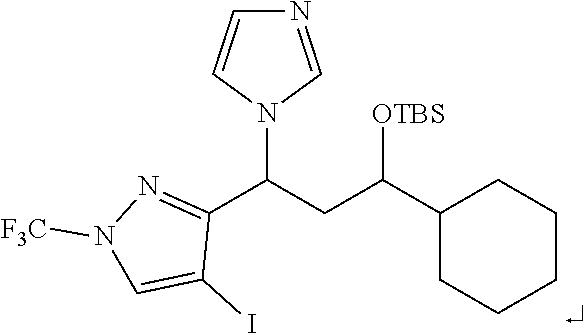


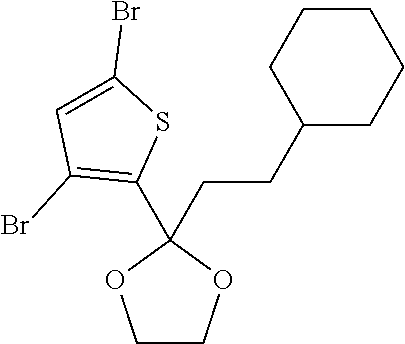


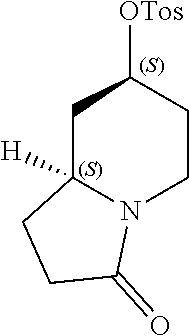


-
- 10% fetal bovine serum, Gibco #10099141
- 1× Penicillin-Streptomycin, Gibco #15140-122;
| TABLE 1 |
| IC50 results of hIDO1 enzyme activity in vitro |
| Tested samples | hIDO1 |
| (the title compounds) | Enzyme activity (nM) | Cytoactive (nM) | ||
| Example 1 | >10000 | — | ||
| Example 2 | >10000 | — | ||
| Example 3 | >10000 | — | ||
| Example 4 | 83.61 | 612.7 | ||
| Example 5 | 5026.17 | — | ||
| Example 6 | 9670.83 | — | ||
| Example 7 | 7.22 | 5.08 | ||
| Example 8 | 64.8 | — | ||
| Example 9 | 55 | 17.5 | ||
| Example 10 | >10000 | >5000 | ||
| Example 11 | 5982 | — | ||
| Example 12 | 106 | — | ||
| Example 13 | >10000 | — | ||
| Example 14 | 65.89 | 219.58 | ||
| Example 15 | 5221.45 | — | ||
| Example 16 | 71.01 | 910.74 | ||
| Example 17 | 338.16 | — | ||
| Example 18 | >10000 | — | ||
| Example 19 | >10000 | — | ||
| Example 20 | 586.02 | — | ||
| Example 21 | 9159.59 | — | ||
| Example 22 | 23.06 | 212 | ||
| Example 23 | 5263.39 | — | ||
| Example 24 | 1027.05 | — | ||
| Example 25 | 8119.7 | — | ||
| Example 26 | >10000 | — | ||
| Example 27 | 869.36 | — | ||
| Example 28 | >10000 | >5000 | ||
| Example 29 | 51.6 | 117 | ||
| Example 30 | >10000 | — | ||
| Example 31 | >10000 | — | ||
| Example 32 | 806.69 | — | ||
| Example 33 | >10000 | — | ||
| Example 34 | >10000 | — | ||
| Example 35 | 2811.3 | — | ||
| Example 36 | 2430.25 | — | ||
| Example 37 | 2404.08 | — | ||
| Example 38 | >10000 | — | ||
| Example 39 | 46 | 90.45 | ||
| Example 40 | >10000 | — | ||
| Example 41 | 48.05 | 74.93 | ||
| Example 42 | 253 | 779 | ||
| Example 43 | >10000 | — | ||
| Example 44 | >10000 | — | ||
| Example 45 | 3827 | — | ||
| Example 46 | 11.4 | 28 | ||
| Example 47 | 1676 | — | ||
| Example 48 | 518 | — | ||
| Example 49 | >10000 | — | ||
| Example 50 | >10000 | — | ||
| Example 51 | >10000 | — | ||
| Example 52 | 676 | — | ||
| Example 53 | 161 | 377 | ||
| Example 54 | >10000 | — | ||
| Example 55 | >10000 | — | ||
| Example 56 | 851.48 | — | ||
| Example 57 | 886.16 | — | ||
| Example 58 | 2100.66 | — | ||
| Example 59 | >10000 | — | ||
| Example 60 | >10000 | — | ||
| Example 61 | 1203.49 | — | ||
| Example 62 | 199.39 | 445.69 | ||
| Example 63 | 8799.61 | >5000 | ||
| Example 64 | >10000 | — | ||
| Example 65 | 5525.91 | — | ||
| Example 66 | >10000 | — | ||
| Example 67 | 161.77 | — | ||
| Example 68 | 1834.46 | — | ||
| Example 69 | 2322.4 | — | ||
| Example 70 | 1089.8 | — | ||
| Example 71 | >10000 | — | ||
| Example 72 | 99.88 | 222.67 | ||
| Example 73 | >10000 | >5000 | ||
| Example 74 | 256.9 | — | ||
| Example 75 | >10000 | — | ||
| Example 76 | 882.56 | — | ||
| Example 77 | 37.03 | 124.90 | ||
| Example 78 | >10000 | — | ||
| Example 79 | >10000 | — | ||
| Example 80 | 5045.31 | — | ||
| Example 81 | 8269.8 | — | ||
| Example 82 | 1550.99 | — | ||
| Example 83 | 1266.37 | — | ||
| Example 84 | 454.25 | — | ||
| Example 85 | 27.16 | 159.11 | ||
| Example 86 | 545.5 | — | ||
| Example 87 | >10000 | — | ||
| Example 88 | 477.63 | — | ||
| Example 89 | >10000 | — | ||
| Example 90 | >10000 | — | ||
| Example 91 | 6746.15 | — | ||
| Example 92 | 685.65 | — | ||
| Example 93 | >10000 | — | ||
| Example 94 | 1460.65 | — | ||
| Example 95 | >10000 | — | ||
| Example 96 | >10000 | — | ||
| Example 97 | >10000 | — | ||
| Example 98 | >10000 | — | ||
| Example 99 | >10000 | — | ||
| Example 100 | 6767.43 | — | ||
| Example 101 | >10000 | — | ||
| Example 102 | >10000 | — | ||
| Example 103 | >10000 | — | ||
| Example 104 | >10000 | — | ||
| Example 105 | ||||
| Example 106 | ||||
| Example 107 | 182.93 | — | ||
| Example 108 | >10000 | — | ||
| Example 109 | >10000 | — | ||
| Example 110 | >10000 | — | ||
| Example 111 | ||||
| Example 112 | ||||
| Example 113 | ||||
| Example 114 | ||||
| Example 115 | 3510.59 | — | ||
| Example 116 | >10000 | — | ||
| Example 117 | 215.11 | 891.04 | ||
| Example 118 | 7290.1 | — | ||
| Example 119 | 389.58 | 1975.26 | ||
| Example 120 | >10000 | — | ||
| Example 121 | 585.12 | — | ||
| Example 122 | >10000 | — | ||
Claims (19)


Applications Claiming Priority (13)
| Application Number | Priority Date | Filing Date | Title |
|---|---|---|---|
| CN201610094757.0 | 2016-02-19 | ||
| CN201610094757 | 2016-02-19 | ||
| CN201610094757 | 2016-02-19 | ||
| CN201610247693.3 | 2016-04-20 | ||
| CN201610247693 | 2016-04-20 | ||
| CN201610247693 | 2016-04-20 | ||
| CN201610324408 | 2016-05-16 | ||
| CN201610324408 | 2016-05-16 | ||
| CN201610324408.3 | 2016-05-16 | ||
| CN201610821994 | 2016-09-13 | ||
| CN201610821994 | 2016-09-13 | ||
| CN201610821994.2 | 2016-09-13 | ||
| PCT/CN2017/074141 WO2017140274A1 (en) | 2016-02-19 | 2017-02-20 | Tricyclic compound serving as immunomodulator |
Publications (2)
| Publication Number | Publication Date |
|---|---|
| US20190062338A1 US20190062338A1 (en) | 2019-02-28 |
| US10487088B2 true US10487088B2 (en) | 2019-11-26 |
Family
ID=59624734
Family Applications (1)
| Application Number | Title | Priority Date | Filing Date |
|---|---|---|---|
| US15/999,075 Expired - Fee Related US10487088B2 (en) | 2016-02-19 | 2017-02-20 | Tricyclic compound serving as immunomodulator |
Country Status (8)
| Country | Link |
|---|---|
| US (1) | US10487088B2 (en) |
| EP (1) | EP3418282A4 (en) |
| JP (1) | JP6892876B2 (en) |
| KR (1) | KR20180128907A (en) |
| CN (2) | CN108884103B (en) |
| CA (1) | CA3015012A1 (en) |
| TW (1) | TWI743088B (en) |
| WO (1) | WO2017140274A1 (en) |
Families Citing this family (6)
| Publication number | Priority date | Publication date | Assignee | Title |
|---|---|---|---|---|
| EP3418282A4 (en) * | 2016-02-19 | 2019-01-09 | Chai Tai Tianqing Pharmaceutical Group Co., Ltd. | TRICYCLIC COMPOUND AS IMMUNOMODULATOR |
| EP3670518A4 (en) | 2017-08-18 | 2021-01-06 | Chia Tai Tianqing Pharmaceutical Group Co., Ltd. | Crystal of tricyclic compound |
| CN109574988B (en) * | 2017-12-25 | 2022-01-25 | 成都海博锐药业有限公司 | Compound and application thereof |
| EP4052705A1 (en) | 2021-03-05 | 2022-09-07 | Universität Basel Vizerektorat Forschung | Compositions for the treatment of ebv associated diseases or conditions |
| MX2023010371A (en) | 2021-03-05 | 2024-02-12 | Univ Basel | Compositions for the treatment of ebv associated diseases or conditions. |
| CN113429381B (en) * | 2021-06-30 | 2023-03-21 | 山西大同大学 | Bithiophene rotor derivative 3 '-acetyl- [2,2' -bithiophene ] -3-formaldehyde and preparation method and application thereof |
Citations (4)
| Publication number | Priority date | Publication date | Assignee | Title |
|---|---|---|---|---|
| WO2012142237A1 (en) | 2011-04-15 | 2012-10-18 | Newlink Geneticks Corporation | Fused imidazole derivatives useful as ido inhibitors |
| WO2014159248A1 (en) | 2013-03-14 | 2014-10-02 | Newlink Genetics Corporation | Tricyclic compounds as inhibitors of immunosuppression mediated by tryptophan metabolization |
| WO2016059412A1 (en) | 2014-10-15 | 2016-04-21 | Redx Pharma Plc | 6,7-heterocyclic fused 5h-pyrrolo[1,2-c]imidazole derivatives and their use as indoleamine 2,3-dioxygenase (ido) and/or tryptophan 2,3-dioxygenase (td02) modulators |
| CN105884828A (en) | 2015-02-16 | 2016-08-24 | 上海迪诺医药科技有限公司 | Polycyclic compound, pharmaceutical composition and application thereof |
Family Cites Families (1)
| Publication number | Priority date | Publication date | Assignee | Title |
|---|---|---|---|---|
| EP3418282A4 (en) * | 2016-02-19 | 2019-01-09 | Chai Tai Tianqing Pharmaceutical Group Co., Ltd. | TRICYCLIC COMPOUND AS IMMUNOMODULATOR |
-
2017
- 2017-02-20 EP EP17752706.6A patent/EP3418282A4/en not_active Withdrawn
- 2017-02-20 KR KR1020187026937A patent/KR20180128907A/en not_active Withdrawn
- 2017-02-20 WO PCT/CN2017/074141 patent/WO2017140274A1/en not_active Ceased
- 2017-02-20 CN CN201780011129.4A patent/CN108884103B/en active Active
- 2017-02-20 JP JP2018562402A patent/JP6892876B2/en not_active Expired - Fee Related
- 2017-02-20 US US15/999,075 patent/US10487088B2/en not_active Expired - Fee Related
- 2017-02-20 CN CN202110095879.2A patent/CN112898309A/en active Pending
- 2017-02-20 CA CA3015012A patent/CA3015012A1/en not_active Abandoned
- 2017-02-20 TW TW106105646A patent/TWI743088B/en not_active IP Right Cessation
Patent Citations (5)
| Publication number | Priority date | Publication date | Assignee | Title |
|---|---|---|---|---|
| WO2012142237A1 (en) | 2011-04-15 | 2012-10-18 | Newlink Geneticks Corporation | Fused imidazole derivatives useful as ido inhibitors |
| CN103547579A (en) | 2011-04-15 | 2014-01-29 | 新联基因公司 | Fused imidazole derivatives as IDO inhibitors |
| WO2014159248A1 (en) | 2013-03-14 | 2014-10-02 | Newlink Genetics Corporation | Tricyclic compounds as inhibitors of immunosuppression mediated by tryptophan metabolization |
| WO2016059412A1 (en) | 2014-10-15 | 2016-04-21 | Redx Pharma Plc | 6,7-heterocyclic fused 5h-pyrrolo[1,2-c]imidazole derivatives and their use as indoleamine 2,3-dioxygenase (ido) and/or tryptophan 2,3-dioxygenase (td02) modulators |
| CN105884828A (en) | 2015-02-16 | 2016-08-24 | 上海迪诺医药科技有限公司 | Polycyclic compound, pharmaceutical composition and application thereof |
Non-Patent Citations (4)
| Title |
|---|
| International Search Report for PCT/CN2017/074141 dated May 17, 2017. |
| Meininger, David et al., "Purification and kinetic characterization of human indoleamine 2,3-dioxygenases 1 and 2 (IDO1 and IDO2) and discovery of selective IDO1 inhibitors" Biochimica et Biophysica Acta, Jul. 2011, pp. 1947-1954, vol. 23, No. 7. |
| Streith, Jacques et al., "The Synthesis of Imidazol Sugars Which Mimic Cyclic Carboxonium Ions Formed During the Glycosidase-Catalysed Hydrolysis of Oligo- and Polysaccharides" European Journal of Organic Chemistry, Jan. 1999, pp. 893-898. |
| Supplementary European Search Report for EP 17752706 dated Nov. 27, 2018. |
Also Published As
| Publication number | Publication date |
|---|---|
| CN108884103B (en) | 2021-01-15 |
| TW201736376A (en) | 2017-10-16 |
| CA3015012A1 (en) | 2017-08-24 |
| JP2019511568A (en) | 2019-04-25 |
| US20190062338A1 (en) | 2019-02-28 |
| KR20180128907A (en) | 2018-12-04 |
| EP3418282A4 (en) | 2019-01-09 |
| TWI743088B (en) | 2021-10-21 |
| EP3418282A1 (en) | 2018-12-26 |
| CN112898309A (en) | 2021-06-04 |
| WO2017140274A1 (en) | 2017-08-24 |
| JP6892876B2 (en) | 2021-06-23 |
| CN108884103A (en) | 2018-11-23 |
Similar Documents
| Publication | Publication Date | Title |
|---|---|---|
| US10487088B2 (en) | Tricyclic compound serving as immunomodulator | |
| US12421249B2 (en) | Inhibitors of APOL1 and methods of using same | |
| US20220119376A1 (en) | Tricyclic compounds acting on crbn proteins | |
| TW202311260A (en) | Sulfoximine-containing ATR inhibitor compound | |
| US10961255B2 (en) | Imidazoles as histone demethylase inhibitors | |
| KR20210107046A (en) | Macrocyclic compounds and their use in the treatment of diseases | |
| JP7323603B2 (en) | Tricyclic Fused Furan-Substituted Piperidinedione Compounds | |
| JP2022521746A (en) | Sulfur-containing compounds based on glutarimide skeleton and their applications | |
| JP2016537369A (en) | Substituted 4,5,6,7-tetrahydropyrazolo [1,5-A] pyrazine derivatives as casein kinase 1D / E inhibitors | |
| CN109608436A (en) | Substituted methylformyl reagents and methods of using the same to improve the physicochemical and/or pharmacokinetic properties of compounds | |
| US20240400547A1 (en) | 2,6-piperidinedione compound and application thereof | |
| AU2015330490B2 (en) | Hydroxyl purine compounds and applications thereof | |
| JP2022519374A (en) | Imidazo [2,1-F] [1,2,4] triazine-4-amine derivative as a TLR7 agonist | |
| CA3163933A1 (en) | Antagonists of the muscarinic acetylcholine receptor m4 | |
| AU2022234444A1 (en) | Phenalkylamines and methods of making and using the same | |
| EP3233077B1 (en) | Dopamine d2 receptor ligands | |
| EP2109611A1 (en) | 7-azaindole derivatives and their use in the inhibition of c-jun n-terminal kinase | |
| EP4450502A1 (en) | Azaindole derivative inhibiting h-pgds | |
| HK40111118A (en) | Azaindole derivative inhibiting h-pgds | |
| EP4393919A1 (en) | Lsd1 modulators | |
| TW202606708A (en) | Heterocyclic gpr52 modulators and methods of use thereof | |
| EA048576B1 (en) | SULFOXIMINE-CONTAINING ATR INHIBITOR COMPOUND |
Legal Events
| Date | Code | Title | Description |
|---|---|---|---|
| AS | Assignment |
Owner name: CHIA TAI TIANQING PHARMACEUTICAL GROUP CO., LTD., Free format text: ASSIGNMENT OF ASSIGNORS INTEREST;ASSIGNORS:LIU, SHILAN;WANG, DAHAI;LIANG, GUIBAI;AND OTHERS;SIGNING DATES FROM 20180804 TO 20180903;REEL/FRAME:046927/0666 Owner name: MEDSHINE DISCOVERY INC., CHINA Free format text: ASSIGNMENT OF ASSIGNORS INTEREST;ASSIGNORS:LIU, SHILAN;WANG, DAHAI;LIANG, GUIBAI;AND OTHERS;SIGNING DATES FROM 20180804 TO 20180903;REEL/FRAME:046927/0666 |
|
| STPP | Information on status: patent application and granting procedure in general |
Free format text: DOCKETED NEW CASE - READY FOR EXAMINATION |
|
| STPP | Information on status: patent application and granting procedure in general |
Free format text: NOTICE OF ALLOWANCE MAILED -- APPLICATION RECEIVED IN OFFICE OF PUBLICATIONS |
|
| STPP | Information on status: patent application and granting procedure in general |
Free format text: PUBLICATIONS -- ISSUE FEE PAYMENT RECEIVED |
|
| STPP | Information on status: patent application and granting procedure in general |
Free format text: PUBLICATIONS -- ISSUE FEE PAYMENT VERIFIED |
|
| STPP | Information on status: patent application and granting procedure in general |
Free format text: AWAITING TC RESP, ISSUE FEE PAYMENT VERIFIED |
|
| STPP | Information on status: patent application and granting procedure in general |
Free format text: PUBLICATIONS -- ISSUE FEE PAYMENT VERIFIED |
|
| STPP | Information on status: patent application and granting procedure in general |
Free format text: PUBLICATIONS -- ISSUE FEE PAYMENT VERIFIED |
|
| STCF | Information on status: patent grant |
Free format text: PATENTED CASE |
|
| CC | Certificate of correction | ||
| FEPP | Fee payment procedure |
Free format text: MAINTENANCE FEE REMINDER MAILED (ORIGINAL EVENT CODE: REM.); ENTITY STATUS OF PATENT OWNER: LARGE ENTITY |
|
| LAPS | Lapse for failure to pay maintenance fees |
Free format text: PATENT EXPIRED FOR FAILURE TO PAY MAINTENANCE FEES (ORIGINAL EVENT CODE: EXP.); ENTITY STATUS OF PATENT OWNER: LARGE ENTITY |
|
| STCH | Information on status: patent discontinuation |
Free format text: PATENT EXPIRED DUE TO NONPAYMENT OF MAINTENANCE FEES UNDER 37 CFR 1.362 |
|
| FP | Lapsed due to failure to pay maintenance fee |
Effective date: 20231126 |