US10482178B2 - Semantic similarity analysis to determine relatedness of heterogeneous data - Google Patents
Semantic similarity analysis to determine relatedness of heterogeneous data Download PDFInfo
- Publication number
- US10482178B2 US10482178B2 US15/672,643 US201715672643A US10482178B2 US 10482178 B2 US10482178 B2 US 10482178B2 US 201715672643 A US201715672643 A US 201715672643A US 10482178 B2 US10482178 B2 US 10482178B2
- Authority
- US
- United States
- Prior art keywords
- type
- term
- terms
- corpus
- vector
- Prior art date
- Legal status (The legal status is an assumption and is not a legal conclusion. Google has not performed a legal analysis and makes no representation as to the accuracy of the status listed.)
- Active, expires
Links
Images




Classifications
-
- G06F17/2785—
-
- G—PHYSICS
- G06—COMPUTING OR CALCULATING; COUNTING
- G06F—ELECTRIC DIGITAL DATA PROCESSING
- G06F40/00—Handling natural language data
- G06F40/30—Semantic analysis
-
- G—PHYSICS
- G06—COMPUTING OR CALCULATING; COUNTING
- G06F—ELECTRIC DIGITAL DATA PROCESSING
- G06F16/00—Information retrieval; Database structures therefor; File system structures therefor
- G06F16/20—Information retrieval; Database structures therefor; File system structures therefor of structured data, e.g. relational data
- G06F16/28—Databases characterised by their database models, e.g. relational or object models
- G06F16/284—Relational databases
- G06F16/285—Clustering or classification
-
- G—PHYSICS
- G06—COMPUTING OR CALCULATING; COUNTING
- G06F—ELECTRIC DIGITAL DATA PROCESSING
- G06F16/00—Information retrieval; Database structures therefor; File system structures therefor
- G06F16/90—Details of database functions independent of the retrieved data types
- G06F16/93—Document management systems
Definitions
- the subject disclosure relates to semantic similarity analysis to link heterogeneous data.
- Information relating to the same topic can be discussed in several forums in different ways. For example, discussion of issues encountered with a computer system or vehicle may be discussed by customers in communication with service providers, in public social media posts on the internet, and among technicians and maintenance professionals.
- the fault codes issued by the equipment itself may be another source of information. Recognizing the various discussion as relating to the same issue can be advantageous. For example, a manufacturer may recognize an issue as a potential fault rather than an anomaly more quickly based on the various discussions. The most effective fix for a problem may be determined based on the various discussions, as another example.
- a large volume of information from multiple heterogeneous sources makes the identification of similarities in the discussed issues challenging. Accordingly, it is desirable to provide semantic similarity analysis to link heterogeneous data.
- a method of determining relatedness of heterogeneous data includes selecting a first customer observable from a first source document, the first customer observable being made up of two terms, the two terms being a first term of a first type and a first term of a second type, and selecting a second customer observable from a second source document, the second customer observable being made up of a second term of the first type and a second term of the second type.
- the method also includes creating a first corpus of all documents that include the first term of the first type and the first term of the second type, creating a second corpus of all documents that include the second term of the first type and the second term of the second type, and obtaining other first terms of the first type and other first terms of the second type in the first corpus and other second terms of the first type and other second terms of the second type in the second corpus. Semantic similarity analysis is performed using the first term, the other first terms, the second term, and the other second terms of the first type and the first term, the other first terms, the second term, and the other second terms of the second type to determine a similarity score between the first customer observable and the second customer observable.
- a first filter is applied to the first term of the first type, the other first terms of the first type, the first term of the second type, the other first terms of the second type, the second term of the first type, the other second terms of the first type, the second term of the second type, and the other second terms of the second type prior to the performing the semantic similarity analysis.
- a first vector is formed that includes the first term of the first type, the other first terms of the first type, the first term of the second type, and the other first terms of the second type, and forming a second vector that includes the second term of the first type, the other second terms of the first type, the second term of the second type, and the other second terms of the second type.
- a first matrix is formed from the first vector and forming a second matrix from the second vector.
- a co-occurrenceindex value is obtained for each of the first term of the first type and the other first terms of the first type with every one of the first term of the second type and the other first terms of the second type
- a co-occurrence index value is obtained for each of the second term of the first type and the other second terms of the first types with every one of the second term of the second type and the other second terms of the second type.
- the co-occurrence index values are obtained by performing computations based on occurrences of the first term of the first type, the other first terms of the first type, the first term of the second type, and the other first terms of the second type in the first corpus, and occurrences of the second term of the first type, the other second terms of the first type, the second term of the second type, and the other second terms of the second type in the second corpus.
- a term frequency (tf) and inverse document frequency (idf) of some or all elements of the first vector and some or all elements of the second vector are determined.
- the tf for a term is determined as a total number of mentions of the term in the first corpus based on the term being one of the first term of the first type, the other first terms of the first type, the first term of the second type, or the other first terms of the second type and in the second corpus based on the term being one of the second term of the first type, the other second terms of the first type, the second term of the second type, or the other second terms of the second type, and the idf for the term is determined by adding a nominal value to a computation based on a number of documents in which the term is mentioned.
- the similarity score is determined by computing a cosine similarity or computing a Kullback-Leibler (KL) Divergence using a product of the tf and the idf
- the relatedness determination is performed iteratively by selecting a different second customer observable in each iteration.
- a processor identifies other first terms of the first type and other first terms of the second type in the first corpus, identifies other second terms of the first type and other second terms of the second type in the second corpus, and performs semantic similarity analysis to determine a similarity score between the first customer observable and the second customer observable.
- the processor applies a first filter to the first term of the first type, the other first terms of the first type, the first term of the second type, the other first terms of the second type, the second term of the first type, the other second terms of the first type, the second term of the second type, and the other second terms of the second type prior to the performing the semantic similarity analysis.
- the processor forms a first vector that includes the first term of the first type, the other first terms of the first type, the first term of the second type, and the other first terms of the second type, and to form a second vector that includes the second term of the first type, the other second terms of the first type, the second term of the second type, and the other second terms of the second type.
- the processor obtains a co-occurrence index value for each of the first term of the first type and the other first terms of the first type with every one of the first term of the second type and the other first terms of the second type, and obtains a co-occurrence index value for each of the second term of the first type and the other second terms of the first types with every one of the second term of the second type and the other second terms of the second type.
- the processor obtains the co-occurrence index values by performing computations based on occurrences of the first term of the first type, the other first terms of the first type, the first term of the second type, and the other first terms of the second type in the first corpus, and occurrences of the second term of the first type, the other second terms of the first type, the second term of the second type, and the other second terms of the second type in the second corpus.
- the processor determines a term frequency (tf) and inverse document frequency (idf) of some or all elements of the first vector and some or all elements of the second vector.
- the processor determines the tf for a term, the term being one of the first term of the first type, the other first terms of the first type, the first term of the second type, the other first terms of the second type, the second term of the first type, the other second terms of the first type, the second term of the second type, or the other second terms of the second type, by determining a total number of mentions of the term in the first corpus based on the term being one of the first term of the first type, the other first terms of the first type, the first term of the second type, or the other first terms of the second type and in the second corpus based on the term being one of the second term of the first type, the other second terms of the first type, the second term of the second type, or the other second terms of the second type, and determines the idf for the term by adding a nominal value to a computation based on a number of documents in which the term is mentioned.
- the processor determines the similarity score by computing a cosine similarity or computing a Kullback-Leibler (KL) Divergence using a product of the tf and the idf.
- KL Kullback-Leibler
- the first type identifies an automobile part
- the second type identifies a fault symptom
- FIG. 1 shows a system to perform semantic similarity analysis according to one or more embodiments
- FIG. 3 is a process flow of a method of performing semantic similarity analysis according to one or more embodiments
- FIG. 4 shows exemplary vectors used in the processes to perform semantic similarity analysis according to one or more embodiments.
- FIG. 5 shows an exemplary matrix used to apply a first filter in the semantic similarity analysis according to one or more embodiments.
- Embodiments of the systems and methods detailed herein relate to semantic similarity analysis to link heterogeneous data.
- the semantic similarity analysis is performed on customer observables or fault signatures extracted from the heterogeneous sources of data.
- the analysis may identify one of three types of links between two data items: the two data items identify issues that are synonymous, the two data items identify issues that are related but not the same, and the two data items identify issues that are not similar or related.
- issues related to vehicles e.g., automobiles, trucks, construction equipment, farm equipment, automated factory equipment.
- the examples are not intended to limit the methods and systems to any particular application.
- FIG. 1 shows a system to perform semantic similarity analysis.
- the exemplary vehicle 100 shown in FIG. 1 is an automobile 101 .
- the vehicle 100 includes a controller 140 that receives information from a number of subsystems 150 a through 150 n (generally referred to as 150 ) of the vehicle 100 .
- These subsystems 150 may provide fault codes related to the various components of the automobile 101 , for example.
- the controller 140 communicates information about the subsystems 150 , including any fault codes, to a processing system 110 .
- the communication may be direct or may be through a cloud server 170 , as shown in FIG. 1 .
- the processing system 110 may include an application specific integrated circuit (ASIC), an electronic circuit, a processor 120 (shared, dedicated, or group) and memory 130 that executes one or more software or firmware programs, as shown, a combinational logic circuit, and/or other suitable components that provide the described functionality.
- ASIC application specific integrated circuit
- the processing system 110 may receive information from a number of other sources 160 b through 160 m (generally referred to as 160 ).
- sources 160 may include social media posts that include customer-posted information, industry rating and award organizations that obtain owner survey information, warranty providers with information about repairs provided under the warranty, dealer service providers with information about repairs and fault codes.
- These sources 160 like the vehicle 100 , may communicate directly with the processing system 110 or may provide information via a cloud server 170 .
- the processing system 110 may be part of the vehicle 100 or one of the sources 160 .
- the processing system 110 that performs the semantic similarity analysis to link heterogeneous data may be part of a system of a vehicle 100 warranty center that both performs the similarity analysis and collects some of the information used in the analysis.
- the processing system 110 may be part of a global analysis and reporting tool (GART) of the manufacturer of the vehicle 100 as another example.
- GART global analysis and reporting tool
- the analysis may indicate a link between two issues that was not well-recognized. This link may facilitate better diagnosis or repair of the issue and the related issue.
- the GART may provide information to service centers regarding the issue and the link to the related issue, in addition to repair guidelines.
- the analysis may facilitate faster recognition of an issue that requires a recall as another example.
- the result may facilitate design changes or changes to manufacturing processes.
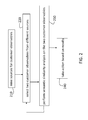
- FIG. 2 is a process flow of a method of performing semantic similarity analysis according to one or more embodiments.
- the semantic similarity analysis indicates the similarity between customer observables.
- each customer observable is made up of two components: a part phrase, which is the first term of the customer observable (referred to as Si), and a symptom phrase, which is the second term of the customer observable (referred to as Sy).
- An exemplary customer observable is ⁇ steering wheel, stiff>.
- the customer observable may be comprised of different components. For example, as part of a consumer research effort related to a commercial product, the customer observable may be comprised of a product and a descriptor.
- mining sources 160 for customer observables includes performing information extraction natural language processing techniques on the different sources 160 and information from the vehicle 100 (source 160 a) to identify customer observables.
- Different vehicles 100 of the same make or model may be used as sources 160 , as well.
- the process at block 210 may include selecting two specific sources 160 from which to obtain customer observables of interest. For example, to perform semantic similarity analysis on vehicle issues, customer observables from vehicle ownership questionnaires (VOQs) and from a global analysis reporting tool (GART) that collects warranty data may be obtained as starting points.
- VOQs vehicle ownership questionnaires
- GART global analysis reporting tool
- the processes include selecting two customer observables from two different sources 160 .
- performing semantic similarity analysis on the two customer observables is according to processes detailed with reference to FIG. 3 .
- the processes at blocks 220 and 230 are performed iteratively, selecting two customer observables per iteration.
- taking action based on the results can include one or more of several actions, and the actions may differ based on the topic of the customer observables.
- the actions include determining a fix for an issue based on the different discussions of similar or related issues and reporting the fix to warranty centers, technicians, and the like.
- the action may include determining the type of sources 160 in which a given issue is discussed and performing further search accordingly.
- a vehicle owner may report a fault of “vehicle losing power” in a vehicle ownership questionnaire or on the NHTSA website, and this issue may be obtained as a customer observable at block 210 .
- this customer observable may be selected along with another customer observable such as “car failed,” “vehicle loss of acceleration,” “engine control module internal failure,” “relay fail,” or “fuel tank leak” at block 220 for semantic similarity analysis at block 230 .
- the other customer observables may be obtained from a vehicle manufacturer database, such as GART or from the other NHTSA complaints, for example.
- the analysis at block 230 may indicate that some customer observables (e.g., “car failed,” “vehicle loss of acceleration”) are synonymous with “vehicle losing power” while other customer observables (e.g., “relay fail,” “fuel tank leak”) are related to “vehicle losing power.”
- the identification of the similar issues may provide an indication of whether the vehicle manufacturer knows about the issue identified in different ways.
- the identification of the related issues may provide information to different stakeholders in the vehicle development lifecycle. For example, design, engineering, and manufacturing teams may use the related issues to determine the root cause and areas for improvement of the next generation design.
- FIG. 3 is a process flow of a method of performing semantic similarity analysis (at block 230 ) according to one or more embodiments.
- the processes shown in FIG. 3 are performed by the processing system 110 .
- the first of two customer observables is indicated as ⁇ S 1 A ,Sy A >
- the second of the two customer observables is indicated as ⁇ S 1 B , Sy B >.
- the first customer observable ⁇ S 1 A ,Sy A > is ⁇ steering wheel, stiff>
- the second customer observable ⁇ S 1 B , Sy B > is ⁇ wheel, hard to turn>.
- these customer observables ⁇ S 1 A ,Sy A > and ⁇ S 1 B , Sy B > may be from a VOQ and GART, for example.
- creating a corpus of all documents containing the customer observables refers to creating a set (A-docs) of all documents that include customer observable ⁇ S 1 A ,Sy A > and a set (B-docs) of all documents that include customer observable ⁇ S 1 B , Sy B >.
- the documents may be mined from social media, known industry sources 160 , and the sources 160 discussed with reference to FIG. 1 .
- Obtaining co-occurring customer observables from the corpus refers to creating two sets of co-occurring customer observables ⁇ S 1 ,Sy> AA and ⁇ S 1 ,Sy> BB .
- all the customer observables additional to ⁇ S 1 A , Sy A > are obtained as the first set of co-occurring customer observables ⁇ S 1 ,Sy> AA
- all the customer observables additional to ⁇ S 1 B , Sy B > are obtained as the second set of co-occurring customer observables ⁇ S 1 ,Sy> BB .
- FIG. 4 shows exemplary ⁇ S 1 ,Sy> AA and ⁇ S 1 ,Sy> BB .
- the two vectors ⁇ S 1 ,Sy> AA and ⁇ S 1 ,Sy> BB need not be the same length. That is, there may be more co-occurring customer observables ⁇ S 1 ,Sy> BB of ⁇ S 1 B , Sy B > than there are co-occurring customer observables ⁇ S 1 ,Sy> AA of ⁇ S 1 A , Sy A >, as shown in FIG. 4 .
- gathering all critical terms from the customer observables includes generating two vectors.
- the first vector A-vector includes S 1 A from ⁇ S 1 A , Sy A >, all the S 1 from ⁇ S 1 ,Sy> AA , Sy from ⁇ S 1 A , Sy A >, and all the Sy from ⁇ S 1 ,Sy> AA .
- the second vector B-vector includes S 1 from ⁇ S 1 B , Sy B >, all the S 1 from ⁇ S 1 ,Sy> BB , Sy from ⁇ S 1 B , Sy B >, and all the Sy from ⁇ S 1 ,Sy> BB .
- FIG. 4 also shows an exemplary A-vector and B-vector.
- Filtering the vectors A-vector and B-vector, at block 355 is detailed with reference to FIG. 5 .
- Filtering is based on a computation of pointwise mutual information (PMI) for each term.
- the filtered vectors filteredA and filtereds result from the filtering of A-vector and B-vector.
- PMI pointwise mutual information
- filteredA and filtereds may look, respectively, like A-vector and B-vector but with some of the terms of the vectors A-vector and B-vector deleted based on their PMI values.
- filtering based on PMI values represents determining a first level or a high level of co-occurrence.
- PMI may be considered as a co-occurrence index.
- noisy co-occurrence are eliminated based on the filtering at block 355 , as detailed with reference to FIG. 5 .
- Computing tf-idf of each term refers to computing the product of term frequency (tf) and inverse document frequency (idf) for every term in the vectors filtered A and filtered b .
- the term frequency, tf is a total number of mentions of the term (i.e., sum of the number of times the term is mentioned in each document in which it is mentioned).
- the idf of each term indicates how narrowly or broadly the term appears. For example, idf for each term (S 1 or Sy) may be computed as:
- total_documents is the total number of documents in the corpus. This number is A-docs, when the term (S 1 or Sy) for which EQ. 1 is being used is from block 310 , or the number is B-docs when the term is from block 320 .
- the documents_with_term is the number of documents within A-docs that include the term (S 1 or Sy) for which idf is being calculated when the term is from block 310 .
- the documents_with_term is the number of documents within B-docs that include the term when the term is from block 320 .
- the 0.05 may be another nominal value that ensures that idf is not a value of 0. This prevents the tf-idf value (the product of tf and idf) from being 0.
- creating tf-idf vectors includes creating vectors tf-idf A and tf-idf B .
- the vector tf-idf A may include every term in filtered A and its associated tf-idf value (computed at block 360 )
- the vector tf-idf B may include every term in filtereds and its associated tf-idf value (computed at block 360 ).
- the vectors tf-idf A and tf-idf B may only include the terms, respectively, from filtered A and filtered B that have tf-idf values above a specified threshold (e.g., 0.8).
- the threshold tf-idf values may be different based on the corpus and may be tunable.
- the vectors tf-idf A and tf-idf B are not required to have the same number of terms and would likely not have the same number of terms based on the filtering (at block 355 ).
- a check is done on the number of terms in each of the vectors tf-idf A and tf-idf B . If the number of terms of the vector tf-idf A or tf-idf B or both is below a specified threshold number (i.e., the vector is sparse), then generating second-order co-occurrence at block 380 is performed. Generating the second-order co-occurrence, at block 380 , includes expanding the corpus created at block 330 .
- obtaining co-occurring customer observables includes obtaining co-occurring customer observables of all the customer observables ⁇ S 1 ,Sy> AA in addition to co-occurring customer observables of customer observable ⁇ S 1 ,Sy> A .
- the corpus of B-docs is expanded to include not only all the documents with the customer observable ⁇ S 1 ,Sy> B but also all the documents with any of the co-occurring customer observables ⁇ S 1 ,Sy> BB .
- obtaining co-occurring customer observables includes obtaining co-occurring customer observables of all the customer observables ⁇ S 1 ,Sy> BB in addition to co-occurring customer observables of customer observable ⁇ S 1 ,Sy> BB .
- the processes following block 340 are then repeated.
- vector similarity is calculated.
- the two vectors tf-idf A and tf-idf B are ensured to have the same number of elements k. This is done by padding whichever one of the vectors has fewer elements, as needed, and selecting one of the similarity computations at block 385 .
- Padding the vector that has fewer elements, at block 385 includes adding elements with the tf-idf value 0.05 or some other nominal value.
- the term associated with the nominal tf-idf value may be a default additional term or may be a repetition of the last term in the vector to which the addition is being made, for example.
- Selecting one of the similarity computations, at block 385 includes selecting the cosine similarity computation at block 390 or the Kullback-Leibler(KL) Divergence computation at block 395 , for example.
- additional similarity computations e.g., Jaccard similarity coefficient computation
- Jaccard similarity coefficient computation may be available for selection.
- Calculating vector similarity includes computing cosine similarity, at block 390 , and computing KL Divergence, at block 395 .
- the cosine similarity is computed, at block 390 , as:
- KL Divergence is computed for every S 1 term in A with every Sy term in B and for every Sy term in A with every S 1 term in B. This results in a KL Divergence value for every S 1 term in A in combination with every Sy term in B and also for every S 1 term in B in combination with every Sy term in B.
- a similarity score between the tf-idf A vector and the tf-idf B vector is obtained as a value between 0 and 1.
- the similarity score indicates a similarity between the customer observable ⁇ Sl A ,Sy A > obtained at block 310 and the customer observable ⁇ S 1 B , Sy B > obtained at block 320 .
- the value may indicate whether the two customer observables are similar (i.e., synonymous) (e.g., value greater than 0.85), related (e.g., value between 0.5 and 0.85), or unrelated (e.g., value below 0.5).
- the analysis discussed above may be performed iteratively on a periodic or event-based basis.
- similarity of the customer observable ⁇ S 1 A ,Sy A > at block 310 with different customer observables at block 320 may be determined. Also, as the corpus grows (i.e., new customer observables are added), the relationship indicated among previously analyzed customer observables may change.
- FIG. 5 illustrates steps involved in obtaining filtered vectors filteredA and filtereds from A-vector and B-vector at block 355 ( FIG. 3 ) according to an exemplary embodiment. While exemplary A-vector and B-vector are shown, only the PMI matrix 510 obtained from A-vector and the resulting exemplary filteredA vector are shown in FIG. 5 for explanatory purposes. As the PMI matrix 510 indicates, a PMI value is computed for every S 1 term in A-vector in association with every Sy term in A-vector. The PMI value for a given S 1 and Sy is given by:
- PMI ⁇ ( S ⁇ ⁇ 1 , Sy ) Pr ⁇ ( S ⁇ ⁇ 1 , Sy ) ⁇ log 2 ⁇ Pr ⁇ ( S ⁇ ⁇ 1 , Sy ) ⁇ N Pr ⁇ ( S ⁇ ⁇ 1 ) ⁇ Pr ⁇ ( sy ) [ EQ . ⁇ 4 ]
- Pr refers to the probability.
- Pr ⁇ ( S ⁇ ⁇ 1 , S ⁇ ⁇ y ) # ⁇ _co ⁇ - ⁇ occurrences total_customer ⁇ _observables [ EQ . ⁇ 5 ]
- #_co-occurrences refers to the number of documents in A-docs in which both S 1 and Sy appear
- total_customer_observables refers to the total number of (S 1 ,Sy) combinations, which is the number of elements of the PMI matrix 510 .
- Pr ⁇ ( S ⁇ ⁇ 1 ) # ⁇ _occurrences total_S ⁇ ⁇ 1 [ EQ . ⁇ 6 ]
- #_occurrences refers to the number of times S 1 appears in A-docs
- total_S 1 refers to the number of S 1 terms in A-vector.
- Pr ⁇ ( S ⁇ ⁇ y ) # ⁇ _occurrences total_S ⁇ ⁇ y [ EQ . ⁇ 7 ]
- #_occurrences refers to the number of times Sy appears in A-docs
- total_Sy refers to the number of Sy terms in A-vector.
- Filtering based on the PMI value refers to determining a threshold PMI value that must be exceeded. If every PMI value associated with a given S 1 or Sy is below the threshold, then that S 1 or Sy is filtered out. For example, if PMI A/A is below the threshold but PMI A/AA-1 above the threshold, then S 1 A would not be filtered out. However, if, for example, every PMI value in row 520 (e.g., PMI AA-1/A , PMI AA-1/AA-1 , PMI AA-1/AA-2 , . . . , PMI AA-1/AA-M ) were below the threshold, then S 1 AA-1 would be eliminated from the filtered A vector, as shown in FIG. 5 .
- PMI AA-1/A e.g., PMI AA-1/A , PMI AA-1/AA-1 , PMI AA-1/AA-2 , . . . , PMI AA-1/AA-M
Landscapes
- Engineering & Computer Science (AREA)
- Theoretical Computer Science (AREA)
- Databases & Information Systems (AREA)
- Physics & Mathematics (AREA)
- General Engineering & Computer Science (AREA)
- General Physics & Mathematics (AREA)
- Data Mining & Analysis (AREA)
- Computational Linguistics (AREA)
- General Health & Medical Sciences (AREA)
- Health & Medical Sciences (AREA)
- Audiology, Speech & Language Pathology (AREA)
- Artificial Intelligence (AREA)
- Business, Economics & Management (AREA)
- General Business, Economics & Management (AREA)
- Information Retrieval, Db Structures And Fs Structures Therefor (AREA)
Abstract
Description
In EQ. 1, total_documents is the total number of documents in the corpus. This number is A-docs, when the term (S1 or Sy) for which EQ. 1 is being used is from
The cosine similarity is computed according to EQ. 2 for every S1 term in A with every Sy term in B and for every Sy term in A with every S1 term in B. This results in a cosine similarity value for every S1 term in A in combination with every Sy term in B and also for every S1 term in B in combination with every Sy term in B. The KL Divergence is computed as:
Like the cosine similarity, KL Divergence is computed for every S1 term in A with every Sy term in B and for every Sy term in A with every S1 term in B. This results in a KL Divergence value for every S1 term in A in combination with every Sy term in B and also for every S1 term in B in combination with every Sy term in B.
In EQ. 4, Pr refers to the probability.
In EQ. 5, #_co-occurrences refers to the number of documents in A-docs in which both S1 and Sy appear, and total_customer_observables refers to the total number of (S1,Sy) combinations, which is the number of elements of the
In EQ. 6, #_occurrences refers to the number of times S1 appears in A-docs, and total_S1 refers to the number of S1 terms in A-vector.
In EQ. 7, #_occurrences refers to the number of times Sy appears in A-docs, and total_Sy refers to the number of Sy terms in A-vector.
Claims (20)
Priority Applications (1)
| Application Number | Priority Date | Filing Date | Title |
|---|---|---|---|
| US15/672,643 US10482178B2 (en) | 2017-08-09 | 2017-08-09 | Semantic similarity analysis to determine relatedness of heterogeneous data |
Applications Claiming Priority (1)
| Application Number | Priority Date | Filing Date | Title |
|---|---|---|---|
| US15/672,643 US10482178B2 (en) | 2017-08-09 | 2017-08-09 | Semantic similarity analysis to determine relatedness of heterogeneous data |
Publications (2)
| Publication Number | Publication Date |
|---|---|
| US20190050394A1 US20190050394A1 (en) | 2019-02-14 |
| US10482178B2 true US10482178B2 (en) | 2019-11-19 |
Family
ID=65274930
Family Applications (1)
| Application Number | Title | Priority Date | Filing Date |
|---|---|---|---|
| US15/672,643 Active 2038-03-02 US10482178B2 (en) | 2017-08-09 | 2017-08-09 | Semantic similarity analysis to determine relatedness of heterogeneous data |
Country Status (1)
| Country | Link |
|---|---|
| US (1) | US10482178B2 (en) |
Cited By (1)
| Publication number | Priority date | Publication date | Assignee | Title |
|---|---|---|---|---|
| US12406142B2 (en) | 2020-07-20 | 2025-09-02 | International Business Machines Corporation | Situational awareness by fusing multi-modal data with semantic model |
Citations (1)
| Publication number | Priority date | Publication date | Assignee | Title |
|---|---|---|---|---|
| US20160162574A1 (en) * | 2013-07-08 | 2016-06-09 | Yandex Europe Ag | Computer-implemented method of and system for searching an inverted index having a plurality of posting lists |
-
2017
- 2017-08-09 US US15/672,643 patent/US10482178B2/en active Active
Patent Citations (1)
| Publication number | Priority date | Publication date | Assignee | Title |
|---|---|---|---|---|
| US20160162574A1 (en) * | 2013-07-08 | 2016-06-09 | Yandex Europe Ag | Computer-implemented method of and system for searching an inverted index having a plurality of posting lists |
Cited By (1)
| Publication number | Priority date | Publication date | Assignee | Title |
|---|---|---|---|---|
| US12406142B2 (en) | 2020-07-20 | 2025-09-02 | International Business Machines Corporation | Situational awareness by fusing multi-modal data with semantic model |
Also Published As
| Publication number | Publication date |
|---|---|
| US20190050394A1 (en) | 2019-02-14 |
Similar Documents
| Publication | Publication Date | Title |
|---|---|---|
| CN108563214B (en) | Vehicle diagnosis method, device and equipment | |
| CN100476839C (en) | Vehicle diagnostic record mapping | |
| Repin et al. | A method for quantitative assessment of vehicle reliability impact on road safety | |
| US8930305B2 (en) | Adaptive information processing systems, methods, and media for updating product documentation and knowledge base | |
| US10942797B2 (en) | Fault tree analysis for technical systems | |
| JP6359062B2 (en) | Automatic analysis method | |
| Jefferson et al. | The autonomous vehicle social network: Analyzing tweets after a recent Tesla autopilot crash | |
| CN102177049B (en) | Generation of Reference Values for Vehicle Fault Diagnosis | |
| US20170213222A1 (en) | Natural language processing and statistical techniques based methods for combining and comparing system data | |
| CN110727804A (en) | Method and device for processing maintenance case by using knowledge graph and electronic equipment | |
| CN115034409A (en) | Vehicle maintenance scheme determination method, device, equipment and storage medium | |
| US8214317B2 (en) | Failure detection system risk reduction assessment | |
| CN104169976B (en) | system and method for providing diagnostic fault information | |
| US20150081729A1 (en) | Methods and systems for combining vehicle data | |
| US20120185399A1 (en) | Automotive repair warranty and recall tracking | |
| EP1611496A4 (en) | PROVIDING FOR DIAGNOSTIC INFORMATION ON VEHICLES | |
| CN115373369B (en) | Vehicle fault diagnosis system and method | |
| US11017359B2 (en) | Determining validity of service recommendations | |
| KR20190071812A (en) | Failure Risk Indicator Estimator and Failure Risk Indicator Estimation Method | |
| US20230169474A1 (en) | Vehicle parts information processing device, vehicle parts information processing method, and storage medium | |
| DE102018209773A1 (en) | Process for computer-aided determination of a fault diagnosis of a vehicle | |
| Lu et al. | ISO 26262 ASIL-oriented hardware design framework for safety-critical automotive systems | |
| CN114911982A (en) | Vehicle fault early warning method and device, terminal equipment and storage medium | |
| US10571290B2 (en) | Method and system for vehicle speed profile generation | |
| JP2024005871A (en) | Processor system and fault diagnosis method |
Legal Events
| Date | Code | Title | Description |
|---|---|---|---|
| AS | Assignment |
Owner name: GM GLOBAL TECHNOLOGY OPERATIONS LLC, MICHIGAN Free format text: ASSIGNMENT OF ASSIGNORS INTEREST;ASSIGNORS:RAJPATHAK, DNYANESH G.;CAFEO, JOHN A.;WANG, BAIYANG;REEL/FRAME:043709/0208 Effective date: 20170811 |
|
| STPP | Information on status: patent application and granting procedure in general |
Free format text: DOCKETED NEW CASE - READY FOR EXAMINATION |
|
| STPP | Information on status: patent application and granting procedure in general |
Free format text: NON FINAL ACTION MAILED |
|
| STPP | Information on status: patent application and granting procedure in general |
Free format text: RESPONSE TO NON-FINAL OFFICE ACTION ENTERED AND FORWARDED TO EXAMINER |
|
| STPP | Information on status: patent application and granting procedure in general |
Free format text: NOTICE OF ALLOWANCE MAILED -- APPLICATION RECEIVED IN OFFICE OF PUBLICATIONS |
|
| STCF | Information on status: patent grant |
Free format text: PATENTED CASE |
|
| MAFP | Maintenance fee payment |
Free format text: PAYMENT OF MAINTENANCE FEE, 4TH YEAR, LARGE ENTITY (ORIGINAL EVENT CODE: M1551); ENTITY STATUS OF PATENT OWNER: LARGE ENTITY Year of fee payment: 4 |