US10449235B2 - Use of creatine kinase and derived peptides thereof to relieve pain - Google Patents
Use of creatine kinase and derived peptides thereof to relieve pain Download PDFInfo
- Publication number
- US10449235B2 US10449235B2 US15/556,250 US201615556250A US10449235B2 US 10449235 B2 US10449235 B2 US 10449235B2 US 201615556250 A US201615556250 A US 201615556250A US 10449235 B2 US10449235 B2 US 10449235B2
- Authority
- US
- United States
- Prior art keywords
- seq
- sequence
- peptide
- pain
- sequence seq
- Prior art date
- Legal status (The legal status is an assumption and is not a legal conclusion. Google has not performed a legal analysis and makes no representation as to the accuracy of the status listed.)
- Active
Links
Images



Classifications
-
- A—HUMAN NECESSITIES
- A61—MEDICAL OR VETERINARY SCIENCE; HYGIENE
- A61K—PREPARATIONS FOR MEDICAL, DENTAL OR TOILETRY PURPOSES
- A61K38/00—Medicinal preparations containing peptides
- A61K38/16—Peptides having more than 20 amino acids; Gastrins; Somatostatins; Melanotropins; Derivatives thereof
- A61K38/43—Enzymes; Proenzymes; Derivatives thereof
- A61K38/45—Transferases (2)
-
- A—HUMAN NECESSITIES
- A61—MEDICAL OR VETERINARY SCIENCE; HYGIENE
- A61K—PREPARATIONS FOR MEDICAL, DENTAL OR TOILETRY PURPOSES
- A61K31/00—Medicinal preparations containing organic active ingredients
- A61K31/33—Heterocyclic compounds
- A61K31/395—Heterocyclic compounds having nitrogen as a ring hetero atom, e.g. guanethidine or rifamycins
- A61K31/435—Heterocyclic compounds having nitrogen as a ring hetero atom, e.g. guanethidine or rifamycins having six-membered rings with one nitrogen as the only ring hetero atom
- A61K31/47—Quinolines; Isoquinolines
- A61K31/485—Morphinan derivatives, e.g. morphine, codeine
-
- A—HUMAN NECESSITIES
- A61—MEDICAL OR VETERINARY SCIENCE; HYGIENE
- A61K—PREPARATIONS FOR MEDICAL, DENTAL OR TOILETRY PURPOSES
- A61K45/00—Medicinal preparations containing active ingredients not provided for in groups A61K31/00 - A61K41/00
- A61K45/06—Mixtures of active ingredients without chemical characterisation, e.g. antiphlogistics and cardiaca
-
- A—HUMAN NECESSITIES
- A61—MEDICAL OR VETERINARY SCIENCE; HYGIENE
- A61P—SPECIFIC THERAPEUTIC ACTIVITY OF CHEMICAL COMPOUNDS OR MEDICINAL PREPARATIONS
- A61P29/00—Non-central analgesic, antipyretic or antiinflammatory agents, e.g. antirheumatic agents; Non-steroidal antiinflammatory drugs [NSAID]
-
- C—CHEMISTRY; METALLURGY
- C12—BIOCHEMISTRY; BEER; SPIRITS; WINE; VINEGAR; MICROBIOLOGY; ENZYMOLOGY; MUTATION OR GENETIC ENGINEERING
- C12Y—ENZYMES
- C12Y207/00—Transferases transferring phosphorus-containing groups (2.7)
- C12Y207/03—Phosphotransferases with a nitrogenous group as acceptor (2.7.3)
- C12Y207/03002—Creatine kinase (2.7.3.2)
-
- A—HUMAN NECESSITIES
- A61—MEDICAL OR VETERINARY SCIENCE; HYGIENE
- A61K—PREPARATIONS FOR MEDICAL, DENTAL OR TOILETRY PURPOSES
- A61K2300/00—Mixtures or combinations of active ingredients, wherein at least one active ingredient is fully defined in groups A61K31/00 - A61K41/00
Definitions
- Some embodiments relate to the use of creatine kinase or fragments thereof which induce analgesia, and also to the use of pharmaceutical compositions including the same.
- two novel peptides that include or consist of the amino acid sequence 1-75 and 184-258 derived from the amino acid sequence of creatine kinase exhibit an analgesic activity, thereby proposing them as an interesting substitute for morphine.
- Some embodiments are directed to treat or prevent pain.
- brackets ([ ]) refer to the list of references presented at the end of the text.
- Creatine kinase (CK, EC 2.7.3.2), also called phosphocreatine kinase or creatine phosphokinase (CPK), is an enzyme expressed by various tissues including the brain and muscles, where it is present in cytoplasmic and mitochondrial form. There are several isoenzymes (present in the form of noncovalent dimers): CK-MM present in muscles, CK-MB found in the myocardial cells, and CK-BB which occurs in the brain. Mitochondrial CK (mtCK) also occurs. This enzyme catalyzes the reversible conversion of creatine to phosphocreatine via the use of adenosine triphosphate (ATP, FIG. 1 ).
- ATP adenosine triphosphate
- This enzyme is essential for the production of ATP from stored phosphocreatine.
- Phosphocreatine via ATP, thus constitutes a reservoir of energy that is rapidly usable for the muscles and other organs including the brain.
- CK isoforms MM and MB; dimers
- Assaying isoenzymes in the blood makes it possible to differentiate the origin of the cellular destruction.
- increase in blood CK-MB has been used in a blood test for diagnosing myocardial infarction.
- Pain affects a considerable number of individuals, about 60 million in Europe each year, which represents an annual cost of 1 billion dollars in analgesic drugs for pain relief. The amount spent annually throughout the world on analgesic drugs was evaluated at approximately 42 billion dollars in 2010. Pain is divided up into two categories: acute pain and chronic pain. Acute pain corresponds to rapid and brief pain which is limited over time. Conversely, chronic pain is a persistent pain which can be linked, for example, to hyperalgesia, and which constitutes an enormous disease burden, affecting approximately 20% of adults and 50% of the elderly population.
- NSAIDs nonsteroidal
- corticoids steroidal opiates
- NSAIDs form the therapeutic class most widely prescribed throughout the world, owing to their great efficacy both on inflammation and on pain itself. They are used in all types of inflammatory pain, whether acute or chronic [Bertin and Vergne-Salle, 2007] [1].
- the prescribing physician When NSAIDs and/or corticoids are not sufficient to relieve inflammatory pain, the prescribing physician combines a non-anti-inflammatory analgesic, for example paracetamol, weak opioids (codeine, tramadol), and, if the pain continues to be resistant to the treatment, strong opioids (morphine, oxycodone, fentanyl) [Gutstein & Akil, 2006] [2].
- a non-anti-inflammatory analgesic for example paracetamol, weak opioids (codeine, tramadol)
- strong opioids morphine, oxycodone, fentanyl
- NSAIDs While NSAIDs are very effective, they nevertheless remain great purveyors of adverse side effects. Among the most standard adverse side effects, digestive effects are very frequent and limit the use of NSAIDs in many clinical situations. There are also renal, cutaneous, mucosal, allergic and respiratory, hematological, hepatic and, finally, neurosensory and psychological adverse side effects [Bertin and Vergne-Salle, 2007, mentioned above] [1]. In addition, NSAIDs are not effective in all types of pain. Opioids also play a major role in pain relief, but can cause hallucinatory phenomena, constipation and cardiorespiratory depression. Analgesics can also be a source of dependence (morphine, methadone, etc. . . . ). There are also cases of habituation or tolerance to analgesics, that is to say the dose necessary to obtain a constant effect must be increased. This habituation increases over time and therefore leads to the need to increase the doses and can lead to ineffectiveness of the medicament
- treatment with opioids can also be associated with adverse effects including hyperalgesia when the treatment is stopped (post-operative pain, for example) [Gutstein & Akil, 2006, mentioned above; Bannister & Dickenson, 2010] [2, 3].
- the inventors were the first to unexpectedly identify peptides of creatine kinase containing binding sites for morphine only.
- the first two peptides identified consist of amino acids 1-75 and 184-258, sequences SEQ ID NOs: 2 and 3 respectively, of the full-length amino sequence of the mouse creatine kinase B ( FIG. 3 ).
- Their functional properties were first evaluated through injections into the spinal cord of healthy mice C57B16/J in comparison to those of morphine, and showed an almost complete insensitivity of mice towards mechanical stimulation.
- an intrathecal injection of the peptide of amino acids 184-258 reveals that the peptide reverses the neuropathic pain (ipsilateral paw) at the mechanical level for at least 6 h.
- Two other peptides identified consist of amino acids 214-238 and 196-246, sequences SEQ ID NOs: 4 and 5 respectively, of the full-length amino sequence of the mouse creatine kinase B, and present analgesic activity.
- Some embodiments are thus directed to a peptide including at least, or consisting of, or including a peptide consisting of, 5, 10, 15, 25, 35, 45, 55, 65 or 75 amino acids of the amino acid sequence of creatine kinase and having an analgesic activity, for use as an analgesic drug.
- peptides include a peptide consisting of 5 to 75, preferably 25 to 75 amino acids, of the amino acid sequence of creatine kinase, and are listed in the table below:
- “Creatine kinase” means, in the sense of some embodiments, the CK-MM present in the muscles, the CK-MB found in the myocardial cells, the CK-BB that occurs in the brain and the mtCK (sarcomere and ubiquitous) which is present in the mitochondria of mammalian cells, as well as the monomers of CK (CK-B and CK-M).
- the drug is an analgesic, for example intended for the prevention or treatment of pain.
- “Pain” means, in the sense of some embodiments, acute or chronic pain resulting for example from arthritis, neuropathy, cancer treatments induced pain, fibromyalgia or an old injury, etc. . . . .
- the drug is administered parenterally, namely locoregionally or centrally (intraperitoneally, peridurally, intrathecally, intracerebroventricularly, intradermally, etc.) and systemically (intramuscularly, intravenously, subcutaneously, etc.), orally, locally (transcutaneously, etc.) or via the respiratory route (inhalation, instillation, etc.).
- the medicament is administered intrathecally, peridurally, intracerebroventricularly, intraperitoneally or subcutaneously.
- the drug is administered centrally, subcutaneously, transcutaneously, systemically, orally or via the respiratory route.
- the peptide includes or consists of at least about 5, 10, 15, 25, 35, 45, 55, 65 or 75 amino acids of SEQ ID NO: 1, more preferably includes 5 to 75, 25 to 75 amino acids of SEQ ID NO: 1.
- the peptide includes or consists of the sequence SEQ ID NO: 2, SEQ ID NO: 3, SEQ ID NO: 4 and/or SEQ ID NO: 5.
- Another subject of some embodiments is also a peptide including at least, or consisting of, or including a peptide consisting of, 5, 10, 15, 25, 35, 45, 55, 65 or 75 amino acids of the amino acid sequence of creatine kinase and having an analgesic activity, for a use in the prevention or treatment of pain.
- the peptide includes or consists of an amino acid sequence of at least about 5, 10, 15, 25, 35, 45, 55, 65 or 75 amino acids of SEQ ID NO: 1, more preferably includes 5 to 75, 25 to 75 amino acids of SEQ ID NO: 1.
- the peptide includes or consists of the sequence SEQ ID NO: 2, SEQ ID NO: 3, SEQ ID NO: 4 and/or SEQ ID NO: 5.
- compositions for a use in the prevention or treatment of pain, the composition including a least a peptide as defined in some embodiments and a pharmaceutically acceptable vehicle.
- the composition may further include one or more other analgesic compound(s).
- “Analgesic compound” means, in the sense of some embodiments, general opiate compounds, i.e., compounds that act on opioid receptors. They are generally used to treat severe and long-lasting pain. Preferably, these are morphine compounds, notably morphine or morphinomimetic compounds, i.e., compounds that are derived from morphine and/or that act on morphine receptors and/or that recruit one or more metabolic pathways common to morphine.
- the pharmaceutical includes the peptide including or consisting of the sequence SEQ ID NO 2, SEQ ID NO: 3, SEQ ID NO: 4 and/or 5, eventually in combination with morphine.
- Some other embodiments are directed to a peptide including, or consisting of, or including a peptide consisting of, 5 to 75 amino acids, preferably 25 to 75 amino acids, of the full-length amino acid sequence of creatine kinase, and having an analgesic activity.
- the peptide of 25 to 75 amino acids includes the sequence SEQ ID NO: 2, SEQ ID NO: 3, SEQ ID NO: 4 and/or SEQ ID NO: 5.
- Some other embodiments are directed to a variant of a peptide of some embodiments (by deletion, addition and/or substitution of amino acid(s)), the variant having at least 85%, preferably at least 90%, more preferably at least 95%, sequence identity with the full-length sequence SEQ ID NO: 2 or SEQ ID NO: 3, preferably SEQ ID NO: 2, and retaining an analgesic activity,
- Some other embodiments are directed to a nucleic acid encoding the sequence SEQ ID NO: 2, SEQ ID NO: 3, SEQ ID NO: 4 and/or SEQ ID NO: 5 or a variant thereof as defined above; the nucleic acid corresponding to RNA or DNA, preferably to DNA.
- Some other embodiments are directed to a vector or host cell including a nucleic acid of some embodiments.
- Such (expression) vectors and host cells are well known in the art.
- FIG. 1 represents the enzymatic reaction catalyzed by creatine kinase.
- FIG. 2 represents the inhibitory effect of morphine of the ATP formation by CK-M (ratio 3n/1n).
- FIG. 3 represents ELISA tests showing affinity for morphine of (A) peptide P1 (amino acids 1-75 of mouse CK-B) for morphine, and (B) peptide P4 (amino acids 184-258 of mouse CK-B).
- FIG. 4 represent effect of saline solution (SAL-right), morphine (MOR-right), peptides P1 (P1(20 nmoles)-right) and P4 (P4(10 nmoles)-right) on mechanical nociceptive thresholds of mice using von Frey filaments.
- n 6 for each group, statistical analysis: two-ways ANOVA, Holm-Sidak **p ⁇ 0.01, ****p ⁇ 0.0001.
- FIG. 5 represents effect of morphine (10 nmoles) on analgesic activity of (A) peptide P1 (20 nmoles) and (B) peptide P4 (10 nmoles).
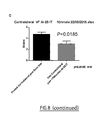
- FIG. 8 represents effect of intrathecal (IT) injection of peptide AI-25 (10 nmoles) on mechanical nociceptive threshold of mice using calibrated forceps test (A), and mechanical thresholds of the ipsilateral paw (8), or of the contralateral paw (C) of cuffed mice before and after injection of the peptide AI-25.
- FIG. 9 represents the effect of intrathecal (IT) injection of peptide KN-50 (33 nmoles) on mechanical nociceptive threshold of the ipsilateral or contralateral paw of cuffed mice, before and after injection of the peptide KN-50, in comparison of saline solution (control).
- CK-B-derived peptides (73 to 96 residues) have been synthesized (Proteogenix, Schiltigheim, France): CK-B1-75, CK-B65-140, CK-B127-199, CK-B184-258, CK-B248-343, CK-B286-381.
- peptide P1 consisting of amino acids 1-75 (SEQ ID NO: 2) from the mouse CK-B sequence SEQ ID NO: 1
- peptide P4 consisting of amino acids 184-258 (SEQ ID NO: 3) of the mouse CK-B sequence SEQ ID NO: 1.
- Peptides P1 and P4 showed an affinity for morphine but not for metabolites thereof (M3G and M6G) and codeine, thereby indicating that peptides P1 and P4 only contain binding sites for morphine.
- mice were evaluated through injections in the spinal cord of 4 groups of 6 mice C57B16/J (intrathecal injection, volume of 5 ⁇ l). The aim was to study the consequences of these injections on nociceptive thresholds in comparison of low concentrations of morphine (MOR, 10 nmoles) and saline solution (SAL, control), using the von Frey filaments test.
- Mice were previously placed under gaseous anesthesia with isoflurane (volatile anesthetic agent) with a minimum alveolar concentration (MAC) of 1.34%.
- a 27-gauge needle connected to a syringe was inserted between the vertebrae L5 and L6, in the subarachnoid space. Isoflurane induced a general anesthesia with respiratory depression in mice.
- the mechanical threshold for hind paw withdrawal was determined using Von Frey hairs. Mice were placed in clear plexiglass boxes on an elevated mesh screen. Von Frey filaments (Bioseb, Chaville, France) were applied to the plantar surface of each hind paw in a series of ascending forces (0.4 g-15 g). Filaments were tested 5 times per paw, and the mechanical threshold was defined as 3 or more withdrawals out of the 5 trials. Lithium chloride and naloxone (Sigma-Aldrich, St. Louis, U.S.A.) were diluted in NaCl 0.9% (w/v).
- peptide P4 (10 nmoles) was evaluated through injections in the spinal cord of 1 groups of 3 rats (intrathecal injection, volume of 5 ⁇ l). The aim was to study the consequences of these injections on mechanic nociceptive threshold of cuffed animals in comparison of the sham group (control), using the calibrated forceps test. Rats were previously placed under gaseous anesthesia with isoflurane (volatile anesthetic agent) with a minimum alveolar concentration (MAC) of 1.34%. A 27-gauge needle connected to a syringe was inserted between the vertebrae L5 and L6, in the subarachnoid space.
- the mechanical response was evaluated using digital calibrated forceps (Bioseb, Chaville, France) according to company's recommendations, before and 1 to 6 hours after intrathecal injections.
- a peptide derived from the peptide P4 has been synthesized (Proteogenix, Schiltigheim, France): AI-25 corresponding to amino acids 214-238 (SEQ ID NO: 4) of the full-length amino sequence of the mouse creatine kinase B.
- peptide AI-25 (10 nmoles) was evaluated through injections in the spinal cord of 8 mice C57B16/J (intrathecal injection, volume 5 ⁇ l). The aim was to study the consequences of these injections on mechanical nociceptive threshold of cuffed mice using the calibrated forceps test.
- the mechanical threshold for hind paw withdrawal was determined using Von Frey filaments as previously described.
- a peptide derived from the peptide P4 has been synthesized (Proteogenix, Schiltigheim, France): KN-50 corresponding to amino acids 196-246 (SEQ ID NO: 5) of the full-length amino sequence of the mouse creatine kinase B.
- the mechanical threshold for hind paw withdrawal was determined using Von Frey filaments as previously described.
Landscapes
- Health & Medical Sciences (AREA)
- Life Sciences & Earth Sciences (AREA)
- Chemical & Material Sciences (AREA)
- General Health & Medical Sciences (AREA)
- Medicinal Chemistry (AREA)
- Veterinary Medicine (AREA)
- Public Health (AREA)
- Animal Behavior & Ethology (AREA)
- Pharmacology & Pharmacy (AREA)
- Epidemiology (AREA)
- Organic Chemistry (AREA)
- Bioinformatics & Cheminformatics (AREA)
- Engineering & Computer Science (AREA)
- Proteomics, Peptides & Aminoacids (AREA)
- Gastroenterology & Hepatology (AREA)
- Immunology (AREA)
- Zoology (AREA)
- Wood Science & Technology (AREA)
- Genetics & Genomics (AREA)
- Biochemistry (AREA)
- General Engineering & Computer Science (AREA)
- Pain & Pain Management (AREA)
- Rheumatology (AREA)
- Chemical Kinetics & Catalysis (AREA)
- General Chemical & Material Sciences (AREA)
- Nuclear Medicine, Radiotherapy & Molecular Imaging (AREA)
- Emergency Medicine (AREA)
- Medicines That Contain Protein Lipid Enzymes And Other Medicines (AREA)
- Peptides Or Proteins (AREA)
Abstract
Description
| SEQ ID NO: 2 | MPFSNSHNTQKLRFPAEDEFPDLSSHNNHMAK |
| VLTPELYAELRAKCTPSGFTLDDAIQTGVDNP | |
| GHPYIM TVGAV | |
| SEQ ID NO: 3 | QQQLIDDHFLFDKPVSPLLLASGMARDWPDAR |
| GIWHNDNKTFLVWINEEDHLRVISMQKGGNMK | |
| EVF TRFCTGLT | |
| SEQ ID NO: 4 | ARGIWHNDNKTFLVWINEEDHLRVI |
| SEQ ID NO: 5 | KPVSPLLLASGMARDWPDARGIWHNDNKTFLV |
| WINEEDHLRVISMQKGGN | |
-
- 1. Bertin and Vergne-Salle, “Traitements médicamenteux de l'inflammation et des douleurs inflammatoires” [“Drug treatments for inflammation and inflammatory pain”] UPSA Pain Institute—A Editorial Paris, p. 113-132, 2007
- 2. Gutstein and Akil, “Opioid analgesics”, in “The Pharmacological Basis of Therapeutics” Brunton et al., Eds. McGraw-Hill, 2006.
- 3. Bannister et Dickenson, Curr. Opin. Support Palliat. Care, 4: 1-5, 2010
- 4. Yennurajalingam et al., Support Cancer Ther., 1:97-110, 2004
- 5. Mizoguchi et al., Int. Rev. Neurobiol., 85: 249-260, 2009*
- 6. Demande
de Brevet FR 2 971 161 - 7. Mosconi et Kruger, Pain, 64(1): 37-57, 1996
Claims (11)
Applications Claiming Priority (4)
| Application Number | Priority Date | Filing Date | Title |
|---|---|---|---|
| EP15305349 | 2015-03-06 | ||
| EP15305349 | 2015-03-06 | ||
| EP15305349.1 | 2015-03-06 | ||
| PCT/EP2016/054816 WO2016142349A1 (en) | 2015-03-06 | 2016-03-07 | Use of creatine kinase and derived peptides thereof to relief pain |
Publications (2)
| Publication Number | Publication Date |
|---|---|
| US20180264088A1 US20180264088A1 (en) | 2018-09-20 |
| US10449235B2 true US10449235B2 (en) | 2019-10-22 |
Family
ID=52686298
Family Applications (1)
| Application Number | Title | Priority Date | Filing Date |
|---|---|---|---|
| US15/556,250 Active US10449235B2 (en) | 2015-03-06 | 2016-03-07 | Use of creatine kinase and derived peptides thereof to relieve pain |
Country Status (3)
| Country | Link |
|---|---|
| US (1) | US10449235B2 (en) |
| EP (1) | EP3265118B1 (en) |
| WO (1) | WO2016142349A1 (en) |
Citations (4)
| Publication number | Priority date | Publication date | Assignee | Title |
|---|---|---|---|---|
| WO2003068949A1 (en) * | 2002-02-14 | 2003-08-21 | Nicholas Beaumont | Treatment of muscle damage |
| US20070265221A1 (en) | 2006-05-09 | 2007-11-15 | Weiss Robert G | Methods to improve creatine kinase metabolism and contractile function in cardiac muscle for the treatment of heart failure |
| US20090143417A1 (en) * | 2004-12-24 | 2009-06-04 | The University Of Queensland | Methods of treating pain |
| FR2971161A1 (en) | 2011-02-08 | 2012-08-10 | Centre Nat Rech Scient | USE OF CREATINE KINASE FOR THE PREVENTION OR TREATMENT OF AN ADDICTION |
-
2016
- 2016-03-07 US US15/556,250 patent/US10449235B2/en active Active
- 2016-03-07 EP EP16709012.5A patent/EP3265118B1/en active Active
- 2016-03-07 WO PCT/EP2016/054816 patent/WO2016142349A1/en not_active Ceased
Patent Citations (4)
| Publication number | Priority date | Publication date | Assignee | Title |
|---|---|---|---|---|
| WO2003068949A1 (en) * | 2002-02-14 | 2003-08-21 | Nicholas Beaumont | Treatment of muscle damage |
| US20090143417A1 (en) * | 2004-12-24 | 2009-06-04 | The University Of Queensland | Methods of treating pain |
| US20070265221A1 (en) | 2006-05-09 | 2007-11-15 | Weiss Robert G | Methods to improve creatine kinase metabolism and contractile function in cardiac muscle for the treatment of heart failure |
| FR2971161A1 (en) | 2011-02-08 | 2012-08-10 | Centre Nat Rech Scient | USE OF CREATINE KINASE FOR THE PREVENTION OR TREATMENT OF AN ADDICTION |
Non-Patent Citations (4)
| Title |
|---|
| "Licensing Opportunities CNRS patent portfolio related to Central Nervous System Disorders," Jan. 1, 2014, XP055191985, Retrieved from the Internet: URL:http://www.fist.fr/CNRS CNS disorders patent portfolio Jan. 2014.pdf, [retrieved on May 28, 2015], Reference 04170-01. |
| International Search Report for PCT Patent App. No. PCT/EP2016/054816 dated Apr. 22, 2016. |
| Mouheiche, J., "Nouvelles données sur la morphine, son catabolisme et sa protéine de liaison dans le système nerveux central," Dec. 22, 2014, XP055191994, Retrieved from the Internet: URL:http://www.theses.fr/2014STRAJ022, [retrieved on May 28, 2015], pp. 1-2. |
| Written Opinion for PCT Patent App. No. PCT/EP2016/054816 dated Apr. 22, 2016. |
Also Published As
| Publication number | Publication date |
|---|---|
| EP3265118A1 (en) | 2018-01-10 |
| US20180264088A1 (en) | 2018-09-20 |
| EP3265118B1 (en) | 2019-08-28 |
| WO2016142349A1 (en) | 2016-09-15 |
Similar Documents
| Publication | Publication Date | Title |
|---|---|---|
| Zadina et al. | Endomorphin analog analgesics with reduced abuse liability, respiratory depression, motor impairment, tolerance, and glial activation relative to morphine | |
| Sultan et al. | Neuraxial morphine and respiratory depression: finding the right balance | |
| CN101678068B (en) | Treating stroke and other diseases without inhibiting n-type calcium channels | |
| Aldrich et al. | Opioid peptides: Potential for drug development | |
| JP5960793B2 (en) | Neuroprotective peptide | |
| JP7756968B2 (en) | Use of polypeptides in combating addiction and its relapse, as well as complexes and polypeptides - Patents.com | |
| Gabra et al. | Pre-treatment with a PKC or PKA inhibitor prevents the development of morphine tolerance but not physical dependence in mice | |
| US20240091227A1 (en) | Use Of 2-Phenyl-6-(1H-Imidazol-1-YL) Quinazoline For Treating Neurodegenerative Diseases, Preferably Alzheimer's Disease | |
| WO2013026896A1 (en) | Peptide agent for enhanced drug delivery for improved peripheral analgesia | |
| WO2017165747A1 (en) | Compositions and methods for treating neuropathic pain | |
| Wang et al. | Spinal cord stimulation reduces cardiac pain through microglial deactivation in rats with chronic myocardial ischemia | |
| Osipov et al. | Effects of snake venom polypeptides on central nervous system | |
| US8987207B2 (en) | Peptides which have analgesic effects and which inhibit ASIC channels | |
| Andersson et al. | New directions for erectile dysfunction therapies | |
| CN102946896A (en) | SOX9 inhibitor | |
| CN101678063B (en) | Methods of use of epsilon inhibitor compounds for the attenuation of pain | |
| US10449235B2 (en) | Use of creatine kinase and derived peptides thereof to relieve pain | |
| Rawal | Spinal antinociception: clinical aspects | |
| US20210070803A1 (en) | Modified peptides and associated methods of use | |
| Xu et al. | Role of nitric oxide/cyclic GMP in icv administered β-endorphin-and (+)-cis-dioxolane-induced antinociception in the mouse | |
| Chattopadhyay et al. | Midazolam in Subarachnoid Block: current evidence | |
| US20250326791A1 (en) | Peptide-Based Drugs for I.N. Delivery to Brain | |
| Sujatha et al. | An analgesic to bridge the gap between Narcotics and NSAIDs: opiorphin | |
| Fu et al. | Effects of rat/mouse hemokinin-1, a mammalian tachykinin peptide, on the antinociceptive activity of pethidine administered at the peripheral and supraspinal level | |
| US20060034823A1 (en) | Method of production and use of crotoxin as an analgesic |
Legal Events
| Date | Code | Title | Description |
|---|---|---|---|
| FEPP | Fee payment procedure |
Free format text: ENTITY STATUS SET TO UNDISCOUNTED (ORIGINAL EVENT CODE: BIG.); ENTITY STATUS OF PATENT OWNER: LARGE ENTITY |
|
| AS | Assignment |
Owner name: CENTRE NATIONAL DE LA RECHERCHE SCIENTIFIQUE, FRAN Free format text: ASSIGNMENT OF ASSIGNORS INTEREST;ASSIGNORS:GOUMON, YANNICK;MOUHEICHE, JINANE;LAUX-BIEHLMANN, ALEXIS;AND OTHERS;SIGNING DATES FROM 20170901 TO 20171010;REEL/FRAME:044592/0889 Owner name: UNIVERSITE DE STRASBOURG, FRANCE Free format text: ASSIGNMENT OF ASSIGNORS INTEREST;ASSIGNORS:GOUMON, YANNICK;MOUHEICHE, JINANE;LAUX-BIEHLMANN, ALEXIS;AND OTHERS;SIGNING DATES FROM 20170901 TO 20171010;REEL/FRAME:044592/0889 |
|
| STPP | Information on status: patent application and granting procedure in general |
Free format text: RESPONSE TO NON-FINAL OFFICE ACTION ENTERED AND FORWARDED TO EXAMINER |
|
| STPP | Information on status: patent application and granting procedure in general |
Free format text: NOTICE OF ALLOWANCE MAILED -- APPLICATION RECEIVED IN OFFICE OF PUBLICATIONS |
|
| STPP | Information on status: patent application and granting procedure in general |
Free format text: PUBLICATIONS -- ISSUE FEE PAYMENT RECEIVED |
|
| STPP | Information on status: patent application and granting procedure in general |
Free format text: PUBLICATIONS -- ISSUE FEE PAYMENT VERIFIED |
|
| STCF | Information on status: patent grant |
Free format text: PATENTED CASE |
|
| MAFP | Maintenance fee payment |
Free format text: PAYMENT OF MAINTENANCE FEE, 4TH YEAR, LARGE ENTITY (ORIGINAL EVENT CODE: M1551); ENTITY STATUS OF PATENT OWNER: LARGE ENTITY Year of fee payment: 4 |