US10447550B2 - System and method allowing for determining relative positions of slave units along a stub bus - Google Patents
System and method allowing for determining relative positions of slave units along a stub bus Download PDFInfo
- Publication number
- US10447550B2 US10447550B2 US15/935,051 US201815935051A US10447550B2 US 10447550 B2 US10447550 B2 US 10447550B2 US 201815935051 A US201815935051 A US 201815935051A US 10447550 B2 US10447550 B2 US 10447550B2
- Authority
- US
- United States
- Prior art keywords
- voltage potential
- slave
- unit
- potential drop
- slave unit
- Prior art date
- Legal status (The legal status is an assumption and is not a legal conclusion. Google has not performed a legal analysis and makes no representation as to the accuracy of the status listed.)
- Active
Links
Images




Classifications
-
- H—ELECTRICITY
- H04—ELECTRIC COMMUNICATION TECHNIQUE
- H04B—TRANSMISSION
- H04B3/00—Line transmission systems
- H04B3/54—Systems for transmission via power distribution lines
- H04B3/544—Setting up communications; Call and signalling arrangements
-
- H—ELECTRICITY
- H04—ELECTRIC COMMUNICATION TECHNIQUE
- H04L—TRANSMISSION OF DIGITAL INFORMATION, e.g. TELEGRAPHIC COMMUNICATION
- H04L41/00—Arrangements for maintenance, administration or management of data switching networks, e.g. of packet switching networks
- H04L41/12—Discovery or management of network topologies
-
- G—PHYSICS
- G01—MEASURING; TESTING
- G01R—MEASURING ELECTRIC VARIABLES; MEASURING MAGNETIC VARIABLES
- G01R19/00—Arrangements for measuring currents or voltages or for indicating presence or sign thereof
- G01R19/10—Measuring sum, difference or ratio
-
- G—PHYSICS
- G01—MEASURING; TESTING
- G01R—MEASURING ELECTRIC VARIABLES; MEASURING MAGNETIC VARIABLES
- G01R19/00—Arrangements for measuring currents or voltages or for indicating presence or sign thereof
- G01R19/25—Arrangements for measuring currents or voltages or for indicating presence or sign thereof using digital measurement techniques
- G01R19/2513—Arrangements for monitoring electric power systems, e.g. power lines or loads; Logging
-
- G—PHYSICS
- G06—COMPUTING OR CALCULATING; COUNTING
- G06F—ELECTRIC DIGITAL DATA PROCESSING
- G06F13/00—Interconnection of, or transfer of information or other signals between, memories, input/output devices or central processing units
- G06F13/38—Information transfer, e.g. on bus
- G06F13/42—Bus transfer protocol, e.g. handshake; Synchronisation
- G06F13/4247—Bus transfer protocol, e.g. handshake; Synchronisation on a daisy chain bus
-
- H—ELECTRICITY
- H04—ELECTRIC COMMUNICATION TECHNIQUE
- H04L—TRANSMISSION OF DIGITAL INFORMATION, e.g. TELEGRAPHIC COMMUNICATION
- H04L12/00—Data switching networks
- H04L12/28—Data switching networks characterised by path configuration, e.g. LAN [Local Area Networks] or WAN [Wide Area Networks]
- H04L12/40—Bus networks
- H04L12/40006—Architecture of a communication node
- H04L12/40013—Details regarding a bus controller
-
- H—ELECTRICITY
- H04—ELECTRIC COMMUNICATION TECHNIQUE
- H04L—TRANSMISSION OF DIGITAL INFORMATION, e.g. TELEGRAPHIC COMMUNICATION
- H04L12/00—Data switching networks
- H04L12/28—Data switching networks characterised by path configuration, e.g. LAN [Local Area Networks] or WAN [Wide Area Networks]
- H04L12/40—Bus networks
- H04L12/40006—Architecture of a communication node
- H04L12/40032—Details regarding a bus interface enhancer
-
- H—ELECTRICITY
- H04—ELECTRIC COMMUNICATION TECHNIQUE
- H04L—TRANSMISSION OF DIGITAL INFORMATION, e.g. TELEGRAPHIC COMMUNICATION
- H04L12/00—Data switching networks
- H04L12/28—Data switching networks characterised by path configuration, e.g. LAN [Local Area Networks] or WAN [Wide Area Networks]
- H04L12/40—Bus networks
- H04L12/40006—Architecture of a communication node
- H04L12/40039—Details regarding the setting of the power status of a node according to activity on the bus
-
- H—ELECTRICITY
- H04—ELECTRIC COMMUNICATION TECHNIQUE
- H04L—TRANSMISSION OF DIGITAL INFORMATION, e.g. TELEGRAPHIC COMMUNICATION
- H04L12/00—Data switching networks
- H04L12/28—Data switching networks characterised by path configuration, e.g. LAN [Local Area Networks] or WAN [Wide Area Networks]
- H04L12/40—Bus networks
- H04L12/40006—Architecture of a communication node
- H04L12/40045—Details regarding the feeding of energy to the node from the bus
-
- G—PHYSICS
- G06—COMPUTING OR CALCULATING; COUNTING
- G06F—ELECTRIC DIGITAL DATA PROCESSING
- G06F2213/00—Indexing scheme relating to interconnection of, or transfer of information or other signals between, memories, input/output devices or central processing units
- G06F2213/0052—Assignment of addresses or identifiers to the modules of a bus system
-
- H—ELECTRICITY
- H04—ELECTRIC COMMUNICATION TECHNIQUE
- H04L—TRANSMISSION OF DIGITAL INFORMATION, e.g. TELEGRAPHIC COMMUNICATION
- H04L12/00—Data switching networks
- H04L12/28—Data switching networks characterised by path configuration, e.g. LAN [Local Area Networks] or WAN [Wide Area Networks]
- H04L12/40—Bus networks
- H04L2012/40208—Bus networks characterized by the use of a particular bus standard
- H04L2012/40215—Controller Area Network CAN
-
- H—ELECTRICITY
- H04—ELECTRIC COMMUNICATION TECHNIQUE
- H04L—TRANSMISSION OF DIGITAL INFORMATION, e.g. TELEGRAPHIC COMMUNICATION
- H04L12/00—Data switching networks
- H04L12/28—Data switching networks characterised by path configuration, e.g. LAN [Local Area Networks] or WAN [Wide Area Networks]
- H04L12/40—Bus networks
- H04L2012/40208—Bus networks characterized by the use of a particular bus standard
- H04L2012/40234—Local Interconnect Network LIN
-
- H—ELECTRICITY
- H04—ELECTRIC COMMUNICATION TECHNIQUE
- H04L—TRANSMISSION OF DIGITAL INFORMATION, e.g. TELEGRAPHIC COMMUNICATION
- H04L12/00—Data switching networks
- H04L12/28—Data switching networks characterised by path configuration, e.g. LAN [Local Area Networks] or WAN [Wide Area Networks]
- H04L12/40—Bus networks
- H04L2012/40267—Bus for use in transportation systems
- H04L2012/40273—Bus for use in transportation systems the transportation system being a vehicle
-
- H04L61/2038—
-
- H—ELECTRICITY
- H04—ELECTRIC COMMUNICATION TECHNIQUE
- H04L—TRANSMISSION OF DIGITAL INFORMATION, e.g. TELEGRAPHIC COMMUNICATION
- H04L61/00—Network arrangements, protocols or services for addressing or naming
- H04L61/50—Address allocation
- H04L61/5038—Address allocation for local use, e.g. in LAN or USB networks, or in a controller area network [CAN]
Definitions
- the present disclosure relates generally to the field of bus systems comprising a control unit, a bus connected to the control unit, and a plurality of addressable participants connected to the bus. More in particular, the invention relates to a method for addressing the control unit participating in the communication on the bus system and to such a bus system.
- addresses may be assigned to the control units participating on a bus in that they are stored by programming, assigned via daisy chain, plug or PIN coding, or by sequential connection of the control units and allocation of the addresses after connection of a control unit.
- the present invention provides a method for determining relative positions of a plurality of slave units and a system allowing to determine relative positions of a plurality of slave units as described in the accompanying claims. Specific embodiments of the invention are set forth in the dependent claims. These and other aspects of the invention will be apparent from and elucidated with reference to the embodiments described hereinafter.
- FIG. 1 schematically illustrates a block diagram of variants of a communication network with stub bus according to examples of the present application according to examples of the present invention
- FIG. 2 schematically illustrates a flow diagram of a method for determining the relative arrangement/position of slave units along a stub bus of a communication network according to an example of the present invention
- FIG. 3 a schematically illustrates a block diagram of a master unit according to an example of the present invention
- FIG. 3 b schematically illustrates a block diagram of a slave unit according to an example of the present invention
- FIG. 4 schematically illustrates a block diagram of a communication network with slave units operating in low-power mode according to an example of the present application
- FIG. 5 schematically illustrates block diagrams of a slave unit operating in the low-power mode and in high-power mode, respectively, according to an example of the present application
- FIG. 6 schematically illustrates a block diagram of a communication network with a slave unit operating in high-power mode and the remaining slave units operating in low-power mode according to an example of the present application;
- FIG. 7 schematically illustrates a block diagram of a communication network with a selected slave unit operating in high-power mode and the remaining slave units operating in low-power mode according to an example of the present application and a diagram schematically illustrating the course of determined relative voltage potential drops in accordance with the exemplified power modes, in which the slave units operate;
- FIG. 8 schematically illustrates a block diagram of a slave unit with a shunt resistance according to another example of the present invention.
- FIG. 9 a schematically illustrates a block diagram of a communication network with slave units operating in low-power mode according to an example of the present application
- FIG. 9 b schematically illustrates a block diagram of a communication network with a slave unit of FIG. 8 operating in high-power mode and the remaining slave units operating in low-power mode according to an example of the present application;
- FIG. 10 schematically illustrates a flow diagram of a further method for determining the relative arrangement/position of slave units along a stub bus of a communication network according to an example of the present invention
- FIG. 11 a schematically illustrates a block diagram of a master unit 100 according to an example of the present application
- FIGS. 11 b to 11 d schematically illustrate block diagrams of a slave unit according to an example of the present application
- FIG. 12 a schematically illustrates a block diagram of a communication network with slave units operating in low-power mode except a selected one operating in a first high-power mode according to an example of the present application;
- FIG. 12 b schematically illustrates a block diagram of a communication network with slave units operating in low-power mode except a selected one operating in a second high-power mode according to an example of the present application;
- FIG. 12 c schematically illustrates a diagram schematically illustrating the course of determined relative voltage potential drops in accordance with the examples of FIGS. 12 a and 12 b;
- FIG. 13 schematically illustrates a block diagram of a slave unit with a shunt resistance according to a further example of the present invention
- FIG. 14 a schematically illustrates a block diagram of a communication network with slave units operating in low-power mode except a selected one operating in a first high-power mode according to an example of the present application.
- FIG. 14 b schematically illustrates a block diagram of a communication network with slave units operating in low-power mode except a selected one operating in a second high-power mode according to an example of the present application.
- CAN Controller Area Network
- Flexray and the LIN (Local Interconnect Network), also referred to LIN bus.
- the LIN is a communication system, which was developed for the communication of intelligent sensors and actors in vehicles at low cost, is based on a single wire bus and may be classified as a field bus.
- a typical application scenario is the networking within a vehicle door, of a seat, of air conditioning flaps or the various light sources of an interior lighting system.
- LIN is typically applied where the higher bandwidth and the higher versatility of CAN is not required.
- the LIN specification includes the LIN protocol, a unified format for the description of the overall LIN and the interface between a LIN and the respective application.
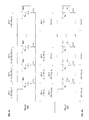
- FIG. 1 block diagrams of variants of a communication network with stub bus according to examples of the present application are schematically illustrated.
- the illustrated communication network is a Local Interconnect Network (LIN).
- a LIN is composed of a master unit 100 , which may be also referred to as central control unit, one or more slave units 200 . 1 to 200 . n , which may be also referred to as nodes or node units, and a bus.
- the master unit 100 is for instance a central controller in a vehicle, such as for controlling the lighting and/or the air conditioning in the vehicle, such as a HVAC (Heating, Ventilation and Air conditioning) controller or a BCM (Body Control Module) of a vehicle.
- the slave units for example include a controller and an LED (light emitting diode), a controller and an air conditioning flap, a controller and an actuator or a controller and a sensor.
- the master unit 100 is connected to a multi-wire bus, e.g. a two-wire bus.
- the bus 50 is a stub bus.
- the slave units 200 . 1 to 200 . n are connected along the bus 50 .
- the arrangement/position of the slave units 200 . 1 to 200 . n along the bus 50 will be described in the following from the perspective of the master unit 100 , starting from which the slave units 200 . 1 to 200 . n are connected to the bus in consecutive arrangement in downstream direction.
- the relative arrangement/position of the slave unit 200 . i will be described as being upstream to the slave unit 200 . i +1 and the relative arrangement/position of the slave unit 200 . i +1 will be described as being downstream to the slave unit 200 .
- the “first” slave unit along the bus 50 is the slave unit 200 . 1 and the “last” slave unit along the bus 50 is the slave unit 200 . n , wherein n is a positive integer.
- An arbitrary slave unit from among the slave units 200 . 1 to 200 . n is referred to as slave unit 200 . i , wherein 1 ⁇ i ⁇ n.
- the bus 50 comprises at least a power supply line 30 and a ground line 40 , to which the slave units 200 . 1 to 200 . n are connected.
- a data communication channel 20 is established between the master unit 100 and the slave units 200 . 1 to 200 . n .
- the master unit 100 (acting as a bus master) has knowledge about and control over the scheduling of the communication between the master unit 100 and slave units 200 . 1 to 200 . n .
- a slave unit 110 (the reference number 110 refers to any one of the reference numbers 200 . 1 to 200 . n ) may transmit data upon when the master unit 100 has requested it to do that.
- the master unit 100 may request the data transmission by sending a header, which is marked with an address specific of the requested slave unit 200 . i on the bus.
- the addressed node 200 . i supplies the data to be transmitted to the bus.
- Each node 200 . 1 to 200 . n has a network specific address, via which it is addressed by the master unit 100 .
- the network specific addresses are assigned in the auto-addressing procedure, which, for instance, is carried out once in case at least one slave unit without network specific address is connected to the bus for the first time.
- the auto-addressing procedure is carried out after the assembly of the communication network and/or at initial operation of the units arranged to form the communication network. Further, the auto-addressing procedure may be carried out on a regular basis, e.g. each time a unit of the communication network is put into operation.
- each of the slave units 200 . 1 to 200 . n are addressable by the master unit 100 using a unit specific identifying address, or unit identifier UID, herein referred to as UID 1 , UID 2 , . . . UIDn assigned to the respective one of the slave units 200 . 1 to 200 . n .
- the unit identifier UID is for instance embedded within a slave unit at the manufacturing stage for use during auto-addressing procedure.
- the embedded unit identifier UID is unique to allow for distinguishing between functional identical slave units. It is immediately understood that such embedded unit identifiers UIDs are not applicable for regular operation but for performing communication between the master unit 100 and the slave units 200 . 1 to 200 . n during performing the auto-addressing procedure.
- the master unit 100 is arranged to discover the unit identifiers UIDs of the slave units 200 . 1 to 200 . n connected to the bus 50 . Such discovery process is known in the art.
- the master unit 100 performs a binary search for the unit identifiers UIDs of the connected slave units 200 . 1 to 200 . n .
- the master unit 100 may request to slave unit 200 . 1 to 200 . n to transmit their unit identifiers UIDs.
- the unit identifiers UIDs of the slave units 200 . 1 to 200 . n are provided e.g. in form of a list 105 , at the master unit 100 .
- the auto-addressing procedure is based on determining the individual cable resistances of the bus line sections between the master unit 100 and the slave units 200 . 1 to 200 . n .
- An individual cable resistance is indicative of the length of the bus lines 30 , 40 between the master unit 100 and a respective one of the slave units 200 . 1 to 200 . n .
- the relative arrangement/positions of the slave units 200 . 1 to 200 . n along the bus 50 can be determined from a comparison of the individual cable resistances determined for each of the slave units 200 . 1 to 200 . n.
- an equivalent resistor R c can be used for describing the cable resistances between two adjacent units 100 , 200 . 1 to 200 . n .
- a cable resistance is a function of the length. From the following description, the skilled person will appreciate that the simplifying assumption of a constant cable resistance between two adjacent units 100 , 200 . 1 to 200 . n does not limit the teaching of the present application thereto but is made merely for the sake of intelligibility and understanding.
- the auto-addressing procedure disclosed in the present application is based on a basic concept for reliably determining the cable resistances between the master unit 100 and the slave units 200 . 1 to 200 . n , based on which the relative positioning of the slave units 200 . 1 to 200 . n along the bus 50 can be deduced.
- the illustrated communication network uses power line communication for communicating data between the master unit 100 and the slave units 200 . 1 to 200 . n .
- the data signal is for instance carried on the power supply line 30 connecting the master unit 100 and the slave units 200 . 1 to 200 . n .
- the illustrated communication network uses one or more dedicated data line(s) between the master unit 100 and the slave units 200 . 1 to 200 . n for communicating data signal between them.
- the data signals communicated between the connected units 100 , 200 . 1 and 200 . n may be carried on a single wire or on a two-wire twisted pair for differential signaling. It should be noted that the auto-addressing procedure according to embodiments described in the following is applicable with both illustrated communication networks but not limited thereto.
- FIG. 2 schematically illustrates a flow diagram of a method for determining the relative arrangement/position of slave units along a stub bus of a communication network.
- the auto-addressing procedure is controlled by the master unit, which is arranged at one end of the stub bus, to which an arbitrary number of slave units is connected.
- FIG. 3 a schematically illustrates a block diagram of a master unit 100
- FIG. 3 b schematically illustrates a block diagram of any slave unit 200 . 1 to 200 . n.
- the master unit 100 according to an example of the present application as exemplified in FIG. 3 a comprises a voltage adjustable power source 130 and a transceiver 150 for communication network using power line communication on a two wire stub bus for data communication between the master unit 100 and slave units 200 . 1 to 200 . n connected to the stub bus.
- the master unit 100 further comprises a control section 110 , which is connected to the transceiver for instructing the slave units 200 . 1 to 200 . n and receiving measurement data from the slave units 200 . 1 to 200 . n , a measurement data analyzer section 120 and at least a list of slave units 105 and 106 for maintaining information about the slave units 200 . 1 to 200 . n.
- Each slave unit 200 . 1 to 200 . n is instructable by the master unit 100 to operate in a low-power mode and a high-power mode.
- a slave unit being instructed to operate in the low-power mode draws a low-power current from the power supply line, which is smaller than a high-power current, which is drawn by the slave unit being instructed to operate in the high-power mode.
- the low-power mode is schematically illustrated by a switchable resistor R L 210 and the high-power mode is schematically illustrated by a switchable resistor R H 220 .
- the switchable resistors R L 210 and R H 220 illustrate the effective resistances of the slave units 200 . 1 to 200 . n across which the voltage potential drops are measured in the respective (low and high) power modes.
- the resistor R L 210 should be understood to have a higher effective resistance than the resistor R H 220 .
- Each slave unit 200 . 1 to 200 . n further comprises a transceiver 250 for receiving instructions from the master unit 100 and transmitting measurement related data to the master unit 100 .
- Each slave unit 200 . 1 to 200 . n is further provided with a voltage potential drop measurement unit 240 , which is arranged to detect a voltage potential drop between a power supply line connector and a ground line connector.
- the voltage potential drop measurement unit 240 is further connected to the transceiver 120 for reporting the measurement related data to the master unit 100 .
- a list of slave units connected to the bus is provided/maintained at a master unit 100 , in an operation S 100 .
- the list of slave units comprises all slave units connected to the bus. Initially, the arrangement/positions of slave units along the bus is/are unknown. A slave unit, which arrangement/position along the bus is unknown, will be referred to as undetected or “unpositioned”.
- the slave units are instructed by the master unit 100 to enter the low-power mode and the slave units are further instructed by the master unit 100 to each measure a reference voltage potential drop between the power supply line connector and the ground line connector during operating in low-power mode.
- a slave unit is randomly selected from the list of undetected slave units.
- the selected slave unit is instructed by the master unit 100 to enter the high-power mode and the slave units are further instructed by the master unit 100 to each measure a positioning voltage potential drop between the power supply line connector and the ground line connector during the selected slave unit operating in high-power mode and the remaining slave units operating in low-power mode.
- a relative voltage potential drop is determined by each slave unit on the basis of the measured reference and positioning voltage potential drop.
- the master unit requests the slave units to report the determined relative voltage potential drops, in response to which each slave unit transmits the determined relative voltage potential drops together with its unique identifier (UID), which enables the master unit to associate each determined relative voltage potential drop with a specific slave unit having assigned a respective UID.
- the determined relative voltage potential drops reported by the slave units are collected at the master unit in an operation S 160 .
- the master unit determines relative positions of at least a set of the slave units based on the relative levels of the collected relative voltage potential drops in an operation S 170 .
- the list of undetected slave units is updated with respect to the set of slave units, of which the relative positions along the stub bus have been determined on the basis of the relative levels of the collected relative voltage potential drops. For instance, slave units with now known position/arrangement along the stub bus are removed from the list or indicated to be ignored for the further process of the auto-addressing procedure.
- the master unit determines whether or not remaining slave units with unknown position/arrangement are still present. If there are remaining undetected slave units, the auto-addressing procedure returns to the operation S 110 . Otherwise, if the position/arrangement of all slave units connected to the stub bus is determined, the auto-addressing procedure is completed.
- FIG. 4 schematically illustrates a block diagram of a communication network with slave units operating in low-power mode according to an example of the present application.
- the master unit instructs all slave units connected to the stub bus to enter the low-power mode, in which reference voltage potential drops are determined by each of the slave units 200 . 1 to 200 . n.
- bus line resistance R c is substantially the same for all line sections.
- effective resistance R L 220 of the slave units 200 . 1 to 200 . n in low-power mode is high, which results in a low current being substantially the same for all slave units 200 . 1 to 200 . n along the stub bus.
- the reference voltage potential drop V i ref which is measured by the slave unit 200 . i , where 1 ⁇ i ⁇ n and i is a position index starting at the first slave unit 200 . 1 arranged downstream the master unit 200 and ending with the last slave unit 200 . n having the maximum distance from the master unit 200 , can be determined as follows:
- V S ⁇ ⁇ R c ⁇ ( i ⁇ n - i 2 - i 2 ) ⁇ I L + V i ref + R c ⁇ ( i ⁇ n - i 2 - i 2 ) ⁇ I L ⁇ 2 ⁇ R c ⁇ ( i ⁇ n - i 2 - i 2 ) ⁇ I L + V i ref
- FIG. 6 schematically illustrates a block diagram of a communication network with a slave unit operating in high-power mode and the remaining slave units operating in low-power mode according to an example of the present application.
- the master unit instructs selected slave unit connected to the stub bus to enter the high-power mode and the remaining slave units connected to the stub bus to enter low-power mode and the master unit instructs each of the slave units 200 . 1 to 200 . n operating in the respectively instructed power mode to determine positioning voltage potential drops.
- the selected slave unit is an arbitrarily selected slave unit out of the list of undetected slave units.
- the slave unit 200 . 2 is assumed to be selected.
- Respective switching states of the slave units are schematically illustrated in FIGS. 5 a and 5 b .
- FIG. 5 a schematically illustrates a block diagram of a slave unit operating in the low-power mode according to an example of the present application.
- FIG. 5 b schematically illustrates a block diagram of a slave unit operating in the high-power mode according to an example of the present application.
- V s is the voltage supplied by the voltage adjustable power source 130
- R c is the resistance of a line section of the power supply line or the ground line between two neighboring units
- I L is the current flowing through the slave units 200 . 1 and 200 . 3 to 200 . n
- I H is the current flowing through the slave unit 200 . 2 , which is operating in high-power mode
- n is the number of slave units 200 . 1 to 200 . n.
- bus line resistance R c is substantially the same for all line sections.
- the effective resistance R L 220 of the slave units 200 . 1 and 200 . 3 to 200 . n in low-power mode is high in comparison to the effective resistance R H 201 of the slave unit 200 . 2 , which results in a low current being substantially the same for slave units 200 . 1 and 200 . 3 to 200 . n operating in low-power mode.
- the slave unit 200 . k may be selected, where 1 ⁇ k ⁇ n, and n is the total number of slave units 200 . 1 to 200 . n and the slave unit 200 . p .
- the reference voltage potential drop V p pos which is measured by the slave unit 200 . p , where 1 ⁇ p ⁇ k, can be determined as follows:
- the slave unit 200 . k may be selected, where 1 ⁇ k ⁇ n and n is the total number of slave units 200 . 1 to 200 . n .
- the reference voltage potential drop V q pos which is measured by the slave unit 200 . q , where k+1 ⁇ q ⁇ n, can be determined as follows:
- FIG. 7 schematically illustrates a block diagram of a communication network with a selected slave unit operating in high-power mode and the remaining slave units operating in low-power mode according to an example of the present application and a diagram schematically illustrating the course of determined positioning voltage potential drops in accordance with the exemplified power modes, in which the slave units operate.
- the relative voltage potential drop ⁇ V is determined based on the reference voltage potential drop and the positioning voltage potential drop each of which measured by each of the slave units 200 . 1 to 200 . n.
- the reference voltage potential drop V i ref which is measured by the slave unit 200 . i , where 1 ⁇ i ⁇ n, can be expressed as follows:
- V i ref V S - 2 ⁇ R c ⁇ ( i ⁇ n - i 2 - i 2 ) ⁇ I L
- the slave unit 200 . k may be selected, where 1 ⁇ k ⁇ n.
- the positioning voltage potential drop V i pos which is measured by the slave unit 200 . i , where k is the selected slave unit 200 . k, 1 ⁇ k ⁇ n and n is the number of slave units 200 . 1 to 200 . n , can be determined as follows:
- FIG. 7 schematically illustrates the course of the positioning voltage potential drop V i pos with respect to the slave unit 200 . 2 being the selected slave unit.
- V i pos the positioning voltage potential drop
- the relative voltage potential drop ⁇ V i is obtained by determining a difference of the measured voltage potential drops as follows:
- ⁇ ⁇ ⁇ V i ⁇ 2 ⁇ i ⁇ R c ⁇ ( I H - I L ) 1 ⁇ i ⁇ k 2 ⁇ k ⁇ R c ⁇ ( I H - I L ) k + 1 ⁇ i ⁇ n and
- the relative positions/arrangement of the slave units 200 . 1 to 200 . k (1 ⁇ i ⁇ k) can be determined by analyzing the levels of the relative voltage potential drop ⁇ V i , which is substantially proportional to the position index i.
- the resistance of the power supply line and/or the ground line may be substantially low.
- the relative positions/arrangement of the slave units 200 . i (1 ⁇ i ⁇ n) can be determined by analyzing the levels of the relative voltage potential drop ⁇ V i , which is in turn substantially proportional to the resistance R c , which denotes the resistance of a line section of the power supply line or the ground line between two neighboring units (e.g. between the master unit 100 and the first slave unit 200 . 1 or between neighboring slave unit 200 . i and 200 . i +1).
- each slave unit 200 . i comprises a shunt resistance R s , which is for instance arranged in series with the power line.
- the shunt resistance R s is arranged downstream to the effective resistances, across which the voltage potential drops are measured.
- the slave unit 200 . i has an input terminal and an output terminal for connecting to the power line.
- the shunt resistance R s is connected between the input terminal and the output terminal.
- a shunt resistance R s may be arranged in series with the ground line (not shown).
- the reference voltage potential drop V i ref which is measured by the slave unit 200 . i , where 1 ⁇ i ⁇ n and i is a position index starting at the first slave unit 200 . 1 arranged downstream the master unit 200 and ending with the last slave unit 200 . n having the maximal distance from the master unit 200 , can be determined as follows:
- V i ref V S - 2 ⁇ R c ⁇ ( i ⁇ n - i 2 - i 2 ) ⁇ I L - R s ⁇ ( i ⁇ n - i 2 - i 2 ) ⁇ I L
- V p pos which is measured by the slave unit 200 .
- V p pos the reference voltage potential drop V p pos , which is measured by the slave unit 200 . p , where 1 ⁇ p ⁇ k, can be determined as follows:
- V p pos ⁇ ⁇ ⁇ V S - 2 ⁇ R c ⁇ ( p ⁇ n - p 2 + p 2 ) ⁇ I L - R s ⁇ ( p ⁇ n - p 2 + p 2 ) ⁇ ⁇ I L - 2 ⁇ p ⁇ R c ⁇ I H - p ⁇ R s ⁇ I H ⁇ V S - ( 2 ⁇ R c + R s ) ⁇ ( p ⁇ n - p 2 + p 2 ) ⁇ I L - ( 2 ⁇ R c + R s ) ⁇ p ⁇ I H
- slave unit 200 . k is selected to operate in high-power mode, where 1 ⁇ k ⁇ n and n is the total number of slave units 200 . 1 to 200 . n.
- the reference voltage potential drop V q pos which is measured by the slave unit 200 .
- q where k+1 ⁇ q ⁇ n, can be determined as follows
- V q pos ⁇ ⁇ ⁇ V S - 2 ⁇ R c ⁇ ( i ⁇ n - q 2 + q 2 + ( q - k ) ) ⁇ I L - R s ⁇ ⁇ ( q ⁇ n - q 2 + q 2 + ( q - k ) ) ⁇ I L - 2 ⁇ k ⁇ R c ⁇ I H - k ⁇ R s ⁇ I H ⁇ V S - ( 2 ⁇ R c + R s ) ⁇ ( i ⁇ n - q 2 + q 2 + ( q - k ) ) ⁇ I L - ⁇ ( 2 ⁇ R c + R s ) ⁇ k ⁇ I H
- slave unit 200 . k is selected to operate in high-power mode, where 1 ⁇ k ⁇ n and n is the total number of slave units 200 . 1 to 200 . n.
- the relative voltage potential drop ⁇ V i is obtained by determining a difference of the measured voltage potential drops as follows:
- V i ref - V i pos 2 ⁇ k ⁇ ( R c + 1 2 ⁇ R s ) ⁇ ( I H - I L ) and
- ⁇ ⁇ ⁇ V i ⁇ 2 ⁇ i ⁇ ( R c + 1 2 ⁇ R s ) ⁇ ( I H - I L ) 1 ⁇ i ⁇ k 2 ⁇ k ⁇ ( R c + 1 2 ⁇ R s ) ⁇ ( I H - I L ) k + 1 ⁇ i ⁇ n when assuming that I H >>I L .
- the shunt resistance increases the distance between the levels of the relative voltage potential drop ⁇ V i .
- the above exemplified auto-addressing procedures may be performed using the voltage adjustable power source 130 supplying a direct current or an alternating current having in particular a predefined frequency.
- the voltage measurement is performed at the slave units 200 . 1 to 200 . n with respect to the predefined frequency of the alternating current supplied by the voltage adjustable power source 130 .
- the voltage potential drop measurements in high-power mode may be performed using alternating current.
- the use of an alternating current supplied by the voltage adjustable power source 130 may be more robust regarding noise and disturbance signals and may further reduce the requirements for measuring accuracy of the circuitry for measuring the voltage potential drops including in particular the voltage potential drop measurement unit 240 .
- the above teaching enables the skilled person to implement the above exemplified auto-addressing procedures using direct current or alternating current supplied by the current adjustable power source 135 .
- FIG. 10 schematically illustrates a flow diagram of a further method for determining the relative arrangement/position of slave units along a stub bus of a communication network.
- the auto-addressing procedure is controlled by the master unit, which is arranged at one end of the stub bus, to which an arbitrary number of slave units is connected.
- FIG. 11 a schematically illustrates a block diagram of a master unit 100 according to an example of the present application, and with reference to FIGS. 11 b to 11 d , which schematically illustrates a block diagram of any slave unit 200 . 1 to 200 . n according to an example of the present application.
- the master unit 100 according to an example of the present application as exemplified in FIG. 11 a comprises a current adjustable power source 135 and a transceiver 150 for communication network on a two wire stub bus for data communication between the master unit 100 and slave units 200 . 1 to 200 . n connected to the stub bus.
- the master unit 100 further comprises a voltage potential drop measurement unit 140 , a control section 110 , which is connected to the transceiver for instructing the slave units 200 . 1 to 200 . n , a measurement data analyzer section 120 and at least a list of slave units 105 for maintaining information about the slave units 200 . 1 to 200 . n.
- Each slave unit 200 . 1 to 200 . n is instructable by the master unit 100 to operate in a low-power mode, a first high-power mode and a second high-power mode.
- a slave unit being instructed to operate in the low-power mode draws a low-power current from the power supply line, which is smaller than high-power currents, which are drawn by the slave unit being instructed to operate in one of the high-power modes.
- the switchable effective resistances of the slave units 200 . 1 to 200 . n differs in the different power modes. The voltage potential drops are measured across the different effective resistances switchable in accordance with the respective (low, first high and second high) power modes.
- the low-power mode is schematically illustrated by a switchable resistor R L 210 as schematically shown in FIG. 11 b .
- the first high-power mode is schematically illustrated by a switchable interconnection 220 of two resistor R H in a parallel circuit as schematically shown in FIG. 11 c .
- the second high-power mode is schematically illustrated by a switchable interconnection 230 of the two resistor R H in an in-series circuit as schematically shown in FIG. 11 d .
- the resistor R L 210 should be understood to have a higher effective resistance than the resistor R H 220 .
- the first and the second high-power modes have a fixed effective resistance ratio of 4.
- Each slave unit 200 . 1 to 200 . n further comprises a transceiver 250 for receiving instructions from the master unit 100 .
- a list of slave units connected to the bus is provided/maintained at a master unit 100 , in an operation S 300 .
- the list of slave units comprises all slave units connected to the bus. Initially, the arrangement/positions of slave units along the bus is/are unknown. A slave unit, which arrangement/position along the bus is unknown, will be referred to as undetected or “unpositioned”.
- an undetected slave unit is selected from the list of slave units.
- a predefined current I s is driven by the current adjustable power source 135 on the power line of the bus.
- the current adjustable power source 135 may be controlled by the master unit 100 to drive the predefined current I s .
- a reference voltage potential drop is determined by the voltage potential drop measurement unit 140 across the power line and the ground line of the bus during all slave units except the selected one operating in the low-power mode and the selected slave unit operating in the first high-power mode.
- the voltage potential drop measurement unit 140 reports the measured reference voltage potential drop to the measurement data analyzer section 120 .
- the selected slave unit is instructed by the master unit 100 to enter the first high-power mode.
- the predefined current I s is driven by the current adjustable power source 135 on the power line of the bus.
- a positioning voltage potential drop is determined by the voltage potential drop measurement unit 140 across the power line and the ground line of the bus during all slave units except the selected one operating in the low-power mode and the selected slave unit operating in the first high-power mode.
- the voltage potential drop measurement unit 140 reports the measured positioning voltage potential drop to the measurement data analyzer section 120 .
- a cable resistance is determined by the measurement data analyzer section 120 based on a relative voltage potential, which is in turn determined from the measured drop the reference voltage potential drop and the measured positioning voltage potential drop.
- the list of slave units is updated with respect to the selected slave unit. For instance, the selected slave unit is removed from the list of slave units or the selected slave unit is indicated as being detected in the list of slave units such that the selected slave unit will be ignored in the further process of the auto-addressing procedure.
- the master unit 100 determines whether or not remaining slave units with unknown position/arrangement are still present. If there are remaining undetected slave units, the auto-addressing procedure return to the operation S 305 and iterates the auto-addressing procedure with selecting a next slave unit from the list of slave units. Otherwise, if all slave units have been selected in previous iterations, the auto-addressing procedure continues with an operation S 370 , in which the relative arrangement/positions of the slave units connected to the bus are determined from the cable resistances determined for each slave unit.
- FIG. 12 a schematically illustrates a block diagram of a communication network with slave units operating in low-power mode except a selected one operating in a first high-power mode according to an example of the present application.
- the master unit 100 instructs all slave units expect a selected one to enter the low-power mode and instructs the selected slave unit to enter the first high-power mode.
- the slave unit 200 . 2 is the selected one.
- V 2 ref The reference voltage potential drop V 2 ref , which is measured at the master node 100 across the power line and the ground line of the bus, can be determined as follows: V 2 ref ⁇ 2 ⁇ R c ⁇ I S +R H1 ⁇ I S +2 ⁇ R c ⁇ I S
- R c is the resistance of a line section of the power supply line or the ground line between two neighboring units (e.g. between the master unit 100 and the first slave unit 200 . 1 or between neighboring slave unit 200 . i and 200 . i +1) and R H1 is the effective resistance in the first high-power mode.
- V i ref which is measured at the master node 100 across the power line and the ground line of the bus in response to all slave units operating in low-power mode except a slave unit 200 .
- FIG. 12 b schematically illustrates a block diagram of a communication network with slave units operating in low-power mode except a selected one operating in a second high-power mode according to an example of the present application.
- the master unit 100 instructs all slave units expect a selected one to enter the low-power mode and instructs the selected slave unit to enter the second high-power mode.
- the slave unit 200 . 2 is the selected one.
- V 2 pos The positioning voltage potential drop V 2 pos , which is measured at the master node 100 across the power line and the ground line of the bus, can be determined as follows: V 2 pos ⁇ 2 ⁇ R c ⁇ I S +R H2 ⁇ I S +2 ⁇ R c ⁇ I S
- R c is the resistance of a line section of the power supply line or the ground line between two neighboring units (e.g. between the master unit 100 and the first slave unit 200 . 1 or between neighboring slave unit 200 . i and 200 . i +1) and R H2 is the effective resistance in the second high-power mode.
- V i pos the positioning voltage potential drop V i pos , which is measured at the master node 100 across the power line and the ground line of the bus in response to all slave units operating in low-power mode except a slave unit 200 .
- the relative voltage potential drop ⁇ V i determined based on a difference of the measured voltage potential drops allows to conclude the cable resistance between master unit 100 (and the current adjustable power source 135 thereof) and the respective slave unit 200 . i at which the measurements have been performed.
- FIG. 12 c As schematically illustrated in FIG. 12 c.
- the relative positions/arrangement of the slave units 200 . i (1 ⁇ i ⁇ n) can be determined by analyzing the levels of the relative voltage potential drop ⁇ V i , which is substantially proportional to the position index i.
- the resistance of the power supply line and/or the ground line may be substantially low.
- the relative positions/arrangement of the slave units 200 . i (1 ⁇ i ⁇ n) can be determined by analyzing the levels of the relative voltage potential drop ⁇ V i , which is in turn substantially proportional to the resistance R c , which denotes the resistance of a line section of the power supply line or the ground line between two neighboring units (e.g. between the master unit 100 and the first slave unit 200 . 1 or between neighboring slave unit 200 . i and 200 . i +1).
- the relative voltage potential drop ⁇ V i is proportional to the scaling factor f H minus one: ⁇ V i ⁇ i ⁇ ( f H ⁇ 1), 1 ⁇ i ⁇ n
- Increasing the scaling factor f H which denotes the ratio of the effective resistances in the first and second high-power modes, enables increasing the distance between the levels of the relative voltage potential drop ⁇ V i . Further, the integration of a shunt resistance allows likewise for increasing the level distances.
- each slave unit 200 . i comprises a shunt resistance R s , which is for instance arranged in series with the power line.
- the shunt resistance R s is arranged downstream to the effective resistances, across which the voltage potential drops are measured.
- the slave unit 200 . i has an input terminal and an output terminal for connecting to the power line.
- the shunt resistance R s is connected between the input terminal and the output terminal.
- a shunt resistance R s may be arranged in series with the ground line (not shown).
- V i ref the reference voltage potential drop V i ref , which is measured at the master node 100 across the power line and the ground line of the bus in response to all slave units operating in low-power mode except a slave unit 200 .
- V i pos the positioning voltage potential drop V i pos , which is measured at the master node 100 across the power line and the ground line of the bus in response to all slave units operating in low-power mode except a slave unit 200 .
- the relative voltage potential drop ⁇ V i denotes as follows:
- the shunt resistance increases the distance between the levels of the relative voltage potential drop ⁇ V i .
- the above exemplified auto-addressing procedures may be performed using the current adjustable power source 135 supplying a direct current or an alternating current having in particular a predefined frequency.
- the voltage measurement is performed at the master unit 100 with respect to the predefined frequency of the alternating current supplied by the current adjustable power source 135 .
- the voltage potential drop measurements in high-power mode may be performed using alternating current.
- the use of an alternating current supplied by the current adjustable power source 135 may be more robust regarding noise and disturbance signals and may further reduce the requirements for measuring accuracy of the circuitry for measuring the voltage potential drops including in particular the voltage potential drop measurement unit 140 .
- the above teaching enables the skilled person to implement the above exemplified auto-addressing procedures using direct current or alternating current supplied by the current adjustable power source 135 .
- the above embodiments illustrate the basic concept of the present invention to determine the positioning of slave units connected along a stub bus based on a bus line resistance, which in turn is determined based on relative voltage potential drops determined in different power modes.
- the relative voltage potential drops enable a reliable determining of the small voltage drops due to low bus line resistance.
- a method and a system allowing for determining relative positions of a plurality of slave units connected to a stub bus with a master unit.
- the stub bus comprises at least a power line and a ground line.
- Each slave unit is operable in different power modes, which are differentiated by effective resistances between the power line and the ground line.
- a reference voltage potential drop V i ref is determined across the power line and the ground line while the slave units are operating in a first power mode.
- a positioning voltage potential drop (V i pos ) is determined across the power line and the ground line with regard to the one or more slave units while a selected slave unit of the plurality of slave units is operating in a second power mode.
- the relative positions of the plurality of slave units is determined based on relative voltage potential drops ( ⁇ V i ) obtained from the reference voltage potential drops (V i ref ) and the positioning voltage potential drops (V i pos ) of the respective slave units.
- the operations conducted to determine the relative positions of a plurality of slave units is under control of the master unit, which is connected to one end of the stub bus.
- the operations conducted to determine the relative positions of a plurality of slave units are under control of the master unit, which is connected to one end of the stub bus.
- each slave unit comprises a voltage potential drop measurement unit arranged to measure a voltage potential drop across the power line and the ground line.
- the master unit is configured to instruct each slave unit to measure the reference voltage potential drop (V i ref ) while each the slave unit is operating in a low-power mode.
- the master unit is further configured to instruct each slave unit to measure the positioning voltage potential drop while each slave unit is operating in a low-power mode except a selected slave unit operating in a high-power mode.
- the master unit is arranged to collect the relative voltage potential drops ( ⁇ V i ) for each slave unit.
- Each relative voltage potential drop ( ⁇ V i ) is based on the reference voltage potential drop (V i ref ) and positioning voltage potential drop (V i pos ) measured by the respective slave unit.
- the master unit is configured to detect the relative positions of one or more slave units based on the collected relative voltage potential drops.
- the master unit is arranged to receive the relative voltage potential drops ( ⁇ V i ) from the slave units.
- Each of the slave unit is arranged to determine the relative voltage potential drop ( ⁇ V i ) based on the measured reference voltage potential drop (V i ref ) and the measured positioning voltage potential drop (V i pos ).
- each slave unit is arranged to determine the relative voltage potential drop ( ⁇ V i ) by determining a difference between the measured positioning voltage potential drop (V i pos ) and the measured reference voltage potential drop (V i ref ).
- the master unit is arranged to maintain a list of the plurality of slave units connected to the stub bus.
- the list indicates with respect to each slave unit whether or not the relative position along the stub bus is detected. Detecting the relative positions of one or more slave units based on the collected relative voltage potential drops ( ⁇ V i ) is repeated as long as the relative position of at least one slave unit is undetected.
- the collected relative voltage potential drops ( ⁇ V i ) is obtained by instructing each slave unit to measure the reference voltage potential drop (V i ref ) and the positioning voltage potential drop (V i pos ) with a newly selected slave unit out of the slave units being undetected.
- the master unit comprises a voltage adjustable power source arranged to apply a predefined voltage (V s ) across the power line and ground line.
- the master unit is arranged to drive the predefined voltage (V s ) on the power line during measuring the reference voltage potential drops (V i ref ) and the positioning voltage potential drops (V i pos ).
- the predefined voltage (V s ) is a predefined direct current voltage (V s ) or the predefined voltage (V s ) is a predefined alternating voltage (V s ) having a predefined frequency.
- the master unit comprises a voltage potential drop measurement unit provided to measure a voltage potential drop across the power line and ground line.
- the master unit is configured to measure the reference voltage potential drop (V i ref ) while each the slave unit operating in a low-power mode except a selected slave unit operating in a first high-power mode.
- the master unit is configured to measure the positioning voltage potential drop (V i pos ) while each slave unit is operating in a low-power mode except the selected slave unit operating in a second high-power mode.
- the master unit is configured to determine a relative voltage potential drop ( ⁇ V k ) for the selected slave unit.
- the master unit is configured to detect the relative positions of the plurality of slave units based on the relative voltage potential drops ( ⁇ V i ) determined for each slave unit ( 200 . i ).
- the master unit is arranged to maintain a list of the plurality of slave units connected to the stub bus.
- the list indicates whether or not a slave unit out of the plurality of slave units has been already selected once.
- the master unit is arranged to select a slave unit, which has not been already selected once, out of the plurality of slave units.
- the determining of the relative voltage potential drop ( ⁇ V k ) is repeated for the selected slave unit.
- the master unit is arranged to collect the relative voltage potential drops ( ⁇ V k ) of the selected slave unit.
- the relative positions of the plurality of slave units is detected by the master unit once the relative voltage potential drops ( ⁇ V i ) have been determined for each slave unit.
- the master unit comprises a current adjustable power source arranged to apply a predefined current (I s ) across the power line and ground line.
- the master unit is arranged to drive the predefined current (I s ) on the power line during measuring the reference voltage potential drop (V i ref ) and the positioning voltage potential drop (V i pos ).
- the predefined current (I s ) is a direct current or the predefined current (I s ) is an alternating current having a predefined frequency.
- a system comprising a plurality of slave units connected to a stub bus with a master unit.
- the system is enabled to determine relative positions of plurality of slave units along the stub bus.
- the stub bus comprises at least a power line and a ground line.
- Each slave unit configured to operate in different power modes, which are differentiated by effective resistances between the power line and the ground line.
- the system configured to determine for each slave unit a reference voltage potential drop (V i ref ) across the power line and the ground line while the slave units are operating in a first power mode; to determine for each slave unit a positioning voltage potential drop (V i pos ) across the power line and the ground line with regard to the one or more slave units while a selected slave units of the plurality of slave units is operating in a second power mode; and to determine relative positions of the plurality of slave units based on relative voltage potential drops ( ⁇ V i ) obtained from the reference voltage potential drops (V i ref ) and the positioning voltage potential drops (V i pos ).
- each slave unit comprises a voltage potential drop measurement unit arranged to measure a voltage potential drop across the power line and the ground line.
- the master unit is arranged to instruct each slave unit to measure the reference voltage potential drop (V i ref ) while each the slave unit operating in a low-power mode.
- the master unit is arranged instruct each slave unit to measure the positioning voltage potential drop (V i pos ) while each slave unit operating in a low-power mode expect a selected slave unit operating in a high-power mode.
- the master unit is arranged to collect relative voltage potential drops ( ⁇ V i ) for each slave unit.
- Each relative voltage potential drop ( ⁇ V i ) is based on the reference voltage potential drop (V i ref ) and positioning voltage potential drop (V i pos ) measured by the respective slave unit.
- the master unit is arranged to detect the relative positions of one or more slave units based on the collected relative voltage potential drops ( ⁇ V i ).
- each the master unit is arranged to receive the relative voltage potential drops ( ⁇ V i ) from the slave units.
- Each of the slave units is arranged to determine the relative voltage potential drop ( ⁇ V i ) based on the measured reference voltage potential drop (V i ref ) and the measured positioning voltage potential drop (V i pos ).
- the master unit comprises a voltage potential drop measurement unit arranged to measure a voltage potential drop across the power line and ground line.
- the master unit is arranged to measure the reference voltage potential drop (V i ref ) while each the slave unit operating in a low-power mode except a selected slave unit operating in a first high-power mode.
- the master unit is arranged to measure the positioning voltage potential drop (V i pos ) while each slave unit is operating in a low-power mode except the selected slave unit operating in a second high-power mode.
- the master unit is arranged to determine a relative voltage potential drop ( ⁇ V k ) for the selected slave unit.
- the master unit is arranged to detect the relative positions of the plurality of slave units based on the relative voltage potential drops ( ⁇ V i ) determined for each slave unit.
- the master unit is arranged to maintain a list of the plurality of slave units connected to the stub bus. The list indicates whether or not a slave unit out of the plurality of slave units has been already selected once.
- the master unit is arranged to select a slave unit, which has not been already selected once, out of the plurality of slave units.
- the master unit is arranged to repeat the determining of the relative voltage potential drop ( ⁇ V k ) for the selected slave unit.
- the master unit is arranged to collect the relative voltage potential drops ( ⁇ V k ) of the selected slave unit.
- the relative positions of the plurality of slave units is detected by the master unit once the relative voltage potential drops ( ⁇ V i ) have been determined for each slave unit.
- DSP digital signal processor
- ASIC application specific integrated circuit
- FPGA field programmable gate array
- a general-purpose processor may be a microprocessor, but in the alternative, the processor may be any conventional processor, controller, microcontroller, or state machine.
- a processor may also be implemented as a combination of computing devices, e.g., a combination of a DSP and a microprocessor, a plurality of microprocessors, one or more microprocessors in conjunction with a DSP core, or any other such configuration.
- a software module may reside in RAM memory, flash memory, ROM memory, EPROM memory, EEPROM memory, registers, hard disk, a removable disk, a CD-ROM, or any other form of storage medium known in the art.
- An exemplary storage medium is coupled to the processor such that the processor can read information from, and write information to, the storage medium.
- the storage medium may be integral to the processor.
- the processor and the storage medium may reside in an ASIC.
- the ASIC may reside in a user terminal.
- the processor and the storage medium may reside as discrete components in a user terminal.
- the functions described may be implemented in hardware, software, firmware, or any combination thereof. If implemented in software, the functions may be stored on or transmitted over as one or more instructions or code on a computer-readable medium.
- Computer-readable media includes both computer storage media and communication media including any medium that facilitates transfer of a computer program from one place to another.
- a storage media may be any available media that can be accessed by a general purpose or special purpose computer.
- such computer-readable media can comprise RAM, ROM, EEPROM, CD-ROM or other optical disk storage, magnetic disk storage or other magnetic storage devices, or any other medium that can be used to carry or store desired program code means in the form of instructions or data structures and that can be accessed by a general-purpose or special-purpose computer, or a general-purpose or special-purpose processor. Also, any connection is properly termed a computer-readable medium.
- Disk and disc includes compact disc (CD), laser disc, optical disc, digital versatile disc (DVD), floppy disk and Blu-ray disc where disks usually reproduce data magnetically, while discs reproduce data optically with lasers. Combinations of the above should also be included within the scope of computer-readable media.
Landscapes
- Engineering & Computer Science (AREA)
- Computer Networks & Wireless Communication (AREA)
- Signal Processing (AREA)
- Physics & Mathematics (AREA)
- General Physics & Mathematics (AREA)
- Power Engineering (AREA)
- Theoretical Computer Science (AREA)
- General Engineering & Computer Science (AREA)
- Small-Scale Networks (AREA)
- Secondary Cells (AREA)
- Remote Monitoring And Control Of Power-Distribution Networks (AREA)
Abstract
Description
V S ≈R c ·n·I L +V 1 ref +R c ·n·I L
=2·R c ·n·I L +V 1 ref
wherein Vs is the voltage supplied by the voltage controlled
V S ≈R c ·n·I L +R c·(n−1)·I L +V 2 ref +R c·(n−1)·I L +R c ·n·I L
=2·R c·(n+n−1)·I L +V 2 ref
V S ≈R c ·n·I L +R c·(n−1)·I L +R c·(n−2)·I L +V 3 ref +R c·(n−2)·I L +R c·(n+1)·I L +R c ·n·I L
=2·R c·(n+n−1+n−2)·I L +V 3 ref
V S ≈R c·(n−1)·I L +R c ·I H +V 1 pos +R c·(n−1)·I L +R c ·I H
=2·R c·(n−1)·I L+2·R c ·I H +V 1 pos
wherein Vs is the voltage supplied by the voltage
V S ≈R c·(n−1)·I L +R c ·I H +R c·(n−2)·I L +R c ·I H +V 2 pos +R c·(n−2)·I L +R c ·I H +R c·(n−1)·I L +R c ·I H
=2·R c·(n−1+n−2)·I L+4·R c ·I H +V 2 pos
V S ≈R c·(n−1)·I L +R c ·I H +R c·(n−2)·I L +R c ·I H +R c·(n−2)·I L +V 3 +R c·(n−2)·I L +R c·(n−2)·I L +R c ·I H +R c·(n−1)·I L +R c ·I H
=2·R c·(n−1+n−2+n−2)·I L+4·R c ·I H +V 3 pos
where 1≤i≤k, and
where k+1≤i≤n.
and
when assuming that IH>>IL.
wherein k is a constant for each measurement cycle. Therefore, the relative positions/arrangement of the slave units 200.1 to 200.k (1≤i≤k) can be determined by analyzing the levels of the relative voltage potential drop ΔVi, which is substantially proportional to the position index i.
where slave unit 200.k is selected to operate in high-power mode, where 1≤k≤n and n is the total number of slave units 200.1 to 200.n.
where 1≤i≤k, and
where k+1≤i≤n.
and
when assuming that IH>>IL.
wherein k is a constant for each measurement cycle.
V 2 ref≈2·R c ·I S +R H1 ·I S+2·R c ·I S
V 1 ref ≈i·R c ·I S +R H1 ·I S +i·R c ·I S
=(2·i·R c +R H1)·I S
=(2·i·R c +f H ·R B)·I S
V 2 pos≈2·R c ·I S +R H2 ·I S+2·R c ·I S
V i pos ≈i·R c ·I S +R H2 ·I S +i R c ·I S
=(2·i·R c +R H2)·I S
=(2·i·R c +R B)·I S
ΔV i =f H ·V i pos −V i ref
=f H·(2·i·R c +R B)·I S−(2·i·R c +f H ·R B)·I S
=2·i·(f H−1)·R c ·I S
ΔV i ˜i·R c, 1≤i≤n
ΔV i ˜i·(f H−1), 1≤i≤n
V i ref ≈i·(R c +R S)·I S +R H1 ·I S +i·R c ·I S
=(2·i·R c +i·R S +R H1)·I S
=(2·i·R c +i·R S +f H ·R B)·I S
V i pos ≈i·R c·(R c +R S)·I S +R H2 ·I S +i·R c ·I S
=(2·i·R c +i·R S +R H2)·I S
=(2·i·R c +i·R S +R B)·I S
Claims (13)
Applications Claiming Priority (3)
| Application Number | Priority Date | Filing Date | Title |
|---|---|---|---|
| EP17177251.0 | 2017-06-21 | ||
| EP17177251 | 2017-06-21 | ||
| EP17177251.0A EP3419225B1 (en) | 2017-06-21 | 2017-06-21 | System and method allowing for determining relative positions of slave units along a stub bus |
Publications (2)
| Publication Number | Publication Date |
|---|---|
| US20180375738A1 US20180375738A1 (en) | 2018-12-27 |
| US10447550B2 true US10447550B2 (en) | 2019-10-15 |
Family
ID=59312966
Family Applications (1)
| Application Number | Title | Priority Date | Filing Date |
|---|---|---|---|
| US15/935,051 Active US10447550B2 (en) | 2017-06-21 | 2018-03-25 | System and method allowing for determining relative positions of slave units along a stub bus |
Country Status (3)
| Country | Link |
|---|---|
| US (1) | US10447550B2 (en) |
| EP (1) | EP3419225B1 (en) |
| CN (1) | CN109104217B (en) |
Families Citing this family (7)
| Publication number | Priority date | Publication date | Assignee | Title |
|---|---|---|---|---|
| FR3102582B1 (en) * | 2019-10-25 | 2021-10-15 | Sc Optima | AUTOMATIC ASSIGNMENT OF PHYSICAL ADDRESSES AND DETERMINATION of a relative position of a plurality of peripheral computers IN THE NETWORK |
| GB2589350B (en) * | 2019-11-27 | 2024-12-25 | Canon Kk | Method and controller for determining relative positions of terminals |
| US11411607B2 (en) * | 2020-01-07 | 2022-08-09 | Analog Devices, Inc. | Audio and lighting control via a communication bus |
| US20220043135A1 (en) | 2020-08-05 | 2022-02-10 | Rockwell Automation Technologies, Inc. | Automatic device ordering |
| DE102020210158A1 (en) | 2020-08-11 | 2022-02-17 | Robert Bosch Gesellschaft mit beschränkter Haftung | Sensor arrangement of a vehicle |
| US12468654B2 (en) | 2022-07-01 | 2025-11-11 | Analog Devices, Inc. | Serial daisy-chained bus power for serial daisy-chained communication system |
| DE102024106243B4 (en) * | 2024-03-05 | 2025-09-18 | Elmos Semiconductor Se | Method for determining the position of several bus devices in a differential two-wire bus system |
Citations (7)
| Publication number | Priority date | Publication date | Assignee | Title |
|---|---|---|---|---|
| DE19940700A1 (en) | 1999-08-27 | 2001-03-08 | Job Lizenz Gmbh & Co Kg | Method and device for the automatic assignment of detector addresses in a hazard detection system |
| EP1490772A1 (en) | 2002-05-02 | 2004-12-29 | ELMOS Semiconductor AG | Method for addressing the users of a bus system by means of identification flows |
| US20050125579A1 (en) | 2003-12-04 | 2005-06-09 | Bui Tanh M. | Binary-coded, auto-addressing system and method |
| EP2007077A1 (en) * | 2007-06-22 | 2008-12-24 | Siemens Aktiengesellschaft | Method of detecting the position of slave devices in a series connection and slave device for a series connection |
| US8060658B2 (en) | 2008-03-06 | 2011-11-15 | Siemens Industry, Inc. | Auto addressing devices on a common power and communication bus structure and method therefor |
| EP2571200A2 (en) | 2011-09-16 | 2013-03-20 | Nxp B.V. | Network communications circuit, system and method |
| WO2015158917A1 (en) | 2014-04-18 | 2015-10-22 | Koninklijke Philips N.V. | Master/slave control system |
Family Cites Families (3)
| Publication number | Priority date | Publication date | Assignee | Title |
|---|---|---|---|---|
| JPH04326834A (en) * | 1991-04-26 | 1992-11-16 | Pioneer Electron Corp | On-vehicle data communication system |
| DE10047925A1 (en) * | 2000-09-27 | 2002-05-02 | Siemens Ag | Process for real-time communication between several network participants in a communication system with ethernet physics and corresponding communication system with ethernet physics |
| CN105700511B (en) * | 2016-01-05 | 2017-05-17 | 惠州市蓝微新源技术有限公司 | Device of utilizing ground wire to replace slave control units automatically and master-slave matching method thereof |
-
2017
- 2017-06-21 EP EP17177251.0A patent/EP3419225B1/en active Active
-
2018
- 2018-03-25 US US15/935,051 patent/US10447550B2/en active Active
- 2018-06-21 CN CN201810646994.2A patent/CN109104217B/en active Active
Patent Citations (10)
| Publication number | Priority date | Publication date | Assignee | Title |
|---|---|---|---|---|
| DE19940700A1 (en) | 1999-08-27 | 2001-03-08 | Job Lizenz Gmbh & Co Kg | Method and device for the automatic assignment of detector addresses in a hazard detection system |
| US6838999B1 (en) | 1999-08-27 | 2005-01-04 | Job Lizenz Gmbh & Co. Kg | Method and device for automatically allocating detector addresses in an alarm system |
| EP1490772A1 (en) | 2002-05-02 | 2004-12-29 | ELMOS Semiconductor AG | Method for addressing the users of a bus system by means of identification flows |
| EP1490772B1 (en) | 2002-05-02 | 2005-06-01 | ELMOS Semiconductor AG | Method for addressing the users of a bus system by means of identification flows |
| US7091876B2 (en) | 2002-05-02 | 2006-08-15 | Elmos Semiconductor Ag | Method for addressing the users of a bus system by means of identification flows |
| US20050125579A1 (en) | 2003-12-04 | 2005-06-09 | Bui Tanh M. | Binary-coded, auto-addressing system and method |
| EP2007077A1 (en) * | 2007-06-22 | 2008-12-24 | Siemens Aktiengesellschaft | Method of detecting the position of slave devices in a series connection and slave device for a series connection |
| US8060658B2 (en) | 2008-03-06 | 2011-11-15 | Siemens Industry, Inc. | Auto addressing devices on a common power and communication bus structure and method therefor |
| EP2571200A2 (en) | 2011-09-16 | 2013-03-20 | Nxp B.V. | Network communications circuit, system and method |
| WO2015158917A1 (en) | 2014-04-18 | 2015-10-22 | Koninklijke Philips N.V. | Master/slave control system |
Non-Patent Citations (1)
| Title |
|---|
| EP 2007077 A1, Methold of detecting the position of slave devices in a series connection and slave device fro a series connection, Dec. 24, 2008, pp. 1-8, English Machine Translation. * |
Also Published As
| Publication number | Publication date |
|---|---|
| US20180375738A1 (en) | 2018-12-27 |
| EP3419225A1 (en) | 2018-12-26 |
| CN109104217B (en) | 2021-09-10 |
| CN109104217A (en) | 2018-12-28 |
| EP3419225B1 (en) | 2020-03-18 |
Similar Documents
| Publication | Publication Date | Title |
|---|---|---|
| US20180375738A1 (en) | System and method allowing for determining relative positions of slave units along a stub bus | |
| JP4957813B2 (en) | Communication slave and communication network system | |
| US11349301B2 (en) | Method for operating a sensor arrangement in a motor vehicle on the basis of a DSI protocol | |
| CN109862128A (en) | Method and bus node for feeding addressing current through a bus node | |
| US10367709B2 (en) | Method and apparatus for analyzing signal delay time based on controller area network burst analysis | |
| CN113589140A (en) | Wafer test system and method of TOF chip | |
| US20130311691A1 (en) | System and Method to Address Devices Connected to a Bus System | |
| CN115150222A (en) | Method and system for automatically distributing node address by LIN bus and SOC | |
| CN106970609A (en) | The diagnostic method and vehicle diagnostics box of vehicle diagnostics box | |
| CN109871345A (en) | For controlling the method and bus node of serial data bus system | |
| CN104505877B (en) | Method and device is demarcated in the address of a kind of battery management unit | |
| CN111801913A (en) | Method and apparatus for operating electrical and/or electronic components of a motor vehicle module | |
| CN104798345B (en) | Main bus device for the Vehicle communications bus of automobile | |
| CN116745823A (en) | Vehicle diagnostic device for electric vehicles | |
| CN117459378A (en) | Protocol for automatic configuration of communication networks | |
| JP7741338B2 (en) | Apparatus with a communication device for transmitting data via a data transmission bus, and a data transmission system with such an apparatus | |
| JP4047402B2 (en) | Serial data exchange device between two stations | |
| CN117459377B (en) | Automatic configuration method for communication networks | |
| CN111400120B (en) | Communication circuit, communication control method, circuit board and air conditioning system | |
| CN111837365A (en) | Transmit/receive device for bus system and method for reducing wired emissions | |
| CN118368163B (en) | LIN bus system and slave addressing method based on LIN bus system | |
| US20180203053A1 (en) | Method of communication between distributed wire harness test units using wire under test | |
| US11582060B2 (en) | Telematics system for identifying manufacturer-specific controller-area network data | |
| CN117955828A (en) | Controller local area network communication method and device, controller and storage medium | |
| CN118144623A (en) | Detecting electric vehicles via two-wire bus terminals |
Legal Events
| Date | Code | Title | Description |
|---|---|---|---|
| FEPP | Fee payment procedure |
Free format text: ENTITY STATUS SET TO UNDISCOUNTED (ORIGINAL EVENT CODE: BIG.); ENTITY STATUS OF PATENT OWNER: LARGE ENTITY |
|
| AS | Assignment |
Owner name: NXP B.V., NETHERLANDS Free format text: ASSIGNMENT OF ASSIGNORS INTEREST;ASSIGNORS:VAN DER WEL, ARNOUD PIETER;VAN LAMMEREN, JOOP PETRUS MARIA;VAN DIJK, LUC;SIGNING DATES FROM 20170622 TO 20170628;REEL/FRAME:045432/0576 |
|
| STPP | Information on status: patent application and granting procedure in general |
Free format text: DOCKETED NEW CASE - READY FOR EXAMINATION |
|
| STPP | Information on status: patent application and granting procedure in general |
Free format text: NON FINAL ACTION MAILED |
|
| STPP | Information on status: patent application and granting procedure in general |
Free format text: RESPONSE TO NON-FINAL OFFICE ACTION ENTERED AND FORWARDED TO EXAMINER |
|
| STPP | Information on status: patent application and granting procedure in general |
Free format text: NOTICE OF ALLOWANCE MAILED -- APPLICATION RECEIVED IN OFFICE OF PUBLICATIONS |
|
| STPP | Information on status: patent application and granting procedure in general |
Free format text: PUBLICATIONS -- ISSUE FEE PAYMENT VERIFIED |
|
| STCF | Information on status: patent grant |
Free format text: PATENTED CASE |
|
| MAFP | Maintenance fee payment |
Free format text: PAYMENT OF MAINTENANCE FEE, 4TH YEAR, LARGE ENTITY (ORIGINAL EVENT CODE: M1551); ENTITY STATUS OF PATENT OWNER: LARGE ENTITY Year of fee payment: 4 |