US10446767B2 - Organic-electroluminescent-element material and organic electroluminescent element using same - Google Patents
Organic-electroluminescent-element material and organic electroluminescent element using same Download PDFInfo
- Publication number
- US10446767B2 US10446767B2 US15/117,788 US201515117788A US10446767B2 US 10446767 B2 US10446767 B2 US 10446767B2 US 201515117788 A US201515117788 A US 201515117788A US 10446767 B2 US10446767 B2 US 10446767B2
- Authority
- US
- United States
- Prior art keywords
- group
- organic
- light
- derivative
- layer
- Prior art date
- Legal status (The legal status is an assumption and is not a legal conclusion. Google has not performed a legal analysis and makes no representation as to the accuracy of the status listed.)
- Expired - Fee Related
Links
- 0 *.*.C.C1234C567C189C21%10C32%11C453C645C786C917C%1021C3%114C6571.C1234C567C189C21%10C32%11C453C645C786C917C%1021C3%114C6571.C1=CC=C2C=CC=CC2=C1.CC.CC.CC.CC.CC.CC.CCC.[H]CC Chemical compound *.*.C.C1234C567C189C21%10C32%11C453C645C786C917C%1021C3%114C6571.C1234C567C189C21%10C32%11C453C645C786C917C%1021C3%114C6571.C1=CC=C2C=CC=CC2=C1.CC.CC.CC.CC.CC.CC.CCC.[H]CC 0.000 description 6
- UHFNALQTIBALEY-UHFFFAOYSA-N B1=C(C2345C678C9%10%11C6%12%13C96%14C%109%15C%1172C932C437C%1285C%1363C%14%1527C2=CC=CC3=C2C=NC=C3)C=C(C2=C3C=CC=NC3=CC=C2)C=C1.B1C2=C(C=C(C3=CC=NC=C3)C=C2)C2=C1C=CC(C1345C678C9%10%11C6%12%13C96%14C%109%15C%1171C931C437C%1285C%1363C%14%1517C1=CC=C3C=CC=CC3=N1)=C2.C1=CC(C2=CN=CC(C3456C789C%10%11%12C7%13%14C%107%15C%11%10%16C%1283C%1043C548C%1396C%1474C%15%1638C3=CC=C4C=CC=CC4=N3)=C2)=CN=C1.C1=CC2=NC(C3456C789C%10%11%12C7%13%14C%107%15C%11%10%16C%1283C%1043C548C%1396C%1474C%15%1638C3=NC(C4=CC=CC5=C4N=CC=C5)=CC=C3)=CC=C2N=C1.C1=CC2=NC(C3=CC4=C(C=C3)N=CC(C3567C89%10C%11%12%13C8%14%15C%118%16C%12%11%17C%1393C%1153C659C%14%107C%1585C%16%1739C3=CC=C5N=CC=CC5=N3)=C4)=CC=C2N=C1.C1=CC=C(C2345C678C9%10%11C6%12%13C96%14C%109%15C%1172C932C437C%1285C%1363C%14%1527C2=NC3=C(C=CC(C4=CC=CC=N4)=C3)C=C2)C=C1.C1=CC=C(C2=CC3=C(C=CC(C4567C89%10C%11%12%13C8%14%15C%118%16C%12%11%17C%1394C%1154C659C%148(C%15%1057)C%16%1749C4=CC=C5C=NC=CC5=C4)=N3)N=C2)N=C1.C1=CC=C(N2C3=CC=C(C4567C89%10C%11%12%13C8%14%15C%118%16C%12%11%17C%1394C%1154C659C%14%107C%1585C%16%1749C4=CC5=C(C=C4)C=C(N4C6=C(C=CC=C6)C6=C4C=CC=C6)C=N5)C=C3C3=C2C=CC=C3)C=C1.C1=CN=C(N2C3=C(C=CC=C3)C3=C2C=CC(C2456C789C%10%11%12C7%13%14C%107%15C%11%10%16C%1282C%1042C548C%1396C%1474C%15%1628C2=CC4=C(C=CC=C4)C=N2)=C3)C=C1 Chemical compound B1=C(C2345C678C9%10%11C6%12%13C96%14C%109%15C%1172C932C437C%1285C%1363C%14%1527C2=CC=CC3=C2C=NC=C3)C=C(C2=C3C=CC=NC3=CC=C2)C=C1.B1C2=C(C=C(C3=CC=NC=C3)C=C2)C2=C1C=CC(C1345C678C9%10%11C6%12%13C96%14C%109%15C%1171C931C437C%1285C%1363C%14%1517C1=CC=C3C=CC=CC3=N1)=C2.C1=CC(C2=CN=CC(C3456C789C%10%11%12C7%13%14C%107%15C%11%10%16C%1283C%1043C548C%1396C%1474C%15%1638C3=CC=C4C=CC=CC4=N3)=C2)=CN=C1.C1=CC2=NC(C3456C789C%10%11%12C7%13%14C%107%15C%11%10%16C%1283C%1043C548C%1396C%1474C%15%1638C3=NC(C4=CC=CC5=C4N=CC=C5)=CC=C3)=CC=C2N=C1.C1=CC2=NC(C3=CC4=C(C=C3)N=CC(C3567C89%10C%11%12%13C8%14%15C%118%16C%12%11%17C%1393C%1153C659C%14%107C%1585C%16%1739C3=CC=C5N=CC=CC5=N3)=C4)=CC=C2N=C1.C1=CC=C(C2345C678C9%10%11C6%12%13C96%14C%109%15C%1172C932C437C%1285C%1363C%14%1527C2=NC3=C(C=CC(C4=CC=CC=N4)=C3)C=C2)C=C1.C1=CC=C(C2=CC3=C(C=CC(C4567C89%10C%11%12%13C8%14%15C%118%16C%12%11%17C%1394C%1154C659C%148(C%15%1057)C%16%1749C4=CC=C5C=NC=CC5=C4)=N3)N=C2)N=C1.C1=CC=C(N2C3=CC=C(C4567C89%10C%11%12%13C8%14%15C%118%16C%12%11%17C%1394C%1154C659C%14%107C%1585C%16%1749C4=CC5=C(C=C4)C=C(N4C6=C(C=CC=C6)C6=C4C=CC=C6)C=N5)C=C3C3=C2C=CC=C3)C=C1.C1=CN=C(N2C3=C(C=CC=C3)C3=C2C=CC(C2456C789C%10%11%12C7%13%14C%107%15C%11%10%16C%1282C%1042C548C%1396C%1474C%15%1628C2=CC4=C(C=CC=C4)C=N2)=C3)C=C1 UHFNALQTIBALEY-UHFFFAOYSA-N 0.000 description 1
- KLVQJARNCSGYFS-UHFFFAOYSA-N B1C(C2=CC3=C(C=C2)C=CC2=C3C=CC=C2)=CC=C1C1234C567C89%10C5%11%12C85%13C98%14C%1061C821C326C%1174C%1252C%13%1416C1=NC=C2C=CC=NC2=C1.C1=CC=C(C2=C3C=CC=CC3=NC(C3456C789C%10%11%12C7%13%14C%107%15C%11%10%16C%1283C%1043C548C%137(C%14946)C%15%1638C3=NC(C4=CC=C5C=C6C=CC=CC6=CC5=C4)=CC=C3)=N2)C=C1.C1=CC=C(C2=NC=NC3=C2C=CC(C2456C789C%10%11%12C7%13%14C%107%15C%11%10%16C%1282C%1042C548C%137(C%14946)C%15%1628C2=CC=C4C(=C2)C2=C(C=CC=C2)N4C2=CC=CC=C2)=C3)C=C1.C1=CC=C(N2C3=C(C=C(C4=CC=C5C(=C4)C=CC4=C5C=CC5=C4C=CC=C5)C=C3)C3=C2C=CC(C2456C789C%10%11%12C7%13%14C%107%15C%11%10%16C%1282C%1042C548C%137(C%14946)C%15%1628C2=CN=C4C=CC=CC4=C2)=C3)C=C1.CC1(C)C2=CC(C3=NC4=C(C=CC(C5678C9%10%11C%12%13%14C9%15%16C%129%17C%13%12%18C%14%105C%1265C76%10C%159(C%16%1168)C%17%185%10C5=CC=CC=C5)=C4)C=C3)=CC=C2C2=C1C=CC=C2.CC1(C)C2=CC=C(C3456C789C%10%11%12C7%13%14C%107%15C%11%10%16C%1283C%1043C548C%1396C%1474C%15%1638C3=NC(C4=CC=CC=C4)=C4C=CC=CC4=C3)C=C2C2=C1C=CC=C2 Chemical compound B1C(C2=CC3=C(C=C2)C=CC2=C3C=CC=C2)=CC=C1C1234C567C89%10C5%11%12C85%13C98%14C%1061C821C326C%1174C%1252C%13%1416C1=NC=C2C=CC=NC2=C1.C1=CC=C(C2=C3C=CC=CC3=NC(C3456C789C%10%11%12C7%13%14C%107%15C%11%10%16C%1283C%1043C548C%137(C%14946)C%15%1638C3=NC(C4=CC=C5C=C6C=CC=CC6=CC5=C4)=CC=C3)=N2)C=C1.C1=CC=C(C2=NC=NC3=C2C=CC(C2456C789C%10%11%12C7%13%14C%107%15C%11%10%16C%1282C%1042C548C%137(C%14946)C%15%1628C2=CC=C4C(=C2)C2=C(C=CC=C2)N4C2=CC=CC=C2)=C3)C=C1.C1=CC=C(N2C3=C(C=C(C4=CC=C5C(=C4)C=CC4=C5C=CC5=C4C=CC=C5)C=C3)C3=C2C=CC(C2456C789C%10%11%12C7%13%14C%107%15C%11%10%16C%1282C%1042C548C%137(C%14946)C%15%1628C2=CN=C4C=CC=CC4=C2)=C3)C=C1.CC1(C)C2=CC(C3=NC4=C(C=CC(C5678C9%10%11C%12%13%14C9%15%16C%129%17C%13%12%18C%14%105C%1265C76%10C%159(C%16%1168)C%17%185%10C5=CC=CC=C5)=C4)C=C3)=CC=C2C2=C1C=CC=C2.CC1(C)C2=CC=C(C3456C789C%10%11%12C7%13%14C%107%15C%11%10%16C%1283C%1043C548C%1396C%1474C%15%1638C3=NC(C4=CC=CC=C4)=C4C=CC=CC4=C3)C=C2C2=C1C=CC=C2 KLVQJARNCSGYFS-UHFFFAOYSA-N 0.000 description 1
- ZHRUAXKASVUDIQ-UHFFFAOYSA-N C1=CC(C2345C678C9%10%11C6%12%13C96%14C%109%15C%1172C932C437C%1285C%1363C%14%1527C2=CC3=C(C=CN=C3)C=C2)=CC(C2C3=C(C=CC=C3)C3=C2C=CC(C2C4=C(C=CC=C4)C4=C2C=CC=C4)=C3)=C1.C1=CC2=CC=C(C3456C789C%10%11%12C7%13%14C%107%15C%11%10%16C%1283C%1043C548C%137(C%14946)C%15%1638C3=CC=CC(C4=CC=CC(N5C6=C(C=CC=C6)C6=C5C=CC=C6)=C4)=N3)N=C2N=C1.C1=CC=C(C2=CC(C3=CC=CC(C4567C89%10C%11%12%13C8%14%15C%118%16C%12%11%17C%1394C%1154C659C%14%107C%1585C%16%1749C4=NC=CC5=C4C=CC=C5)=C3)=CC(C3=CC=CC=C3)=N2)C=C1.C1=CC=C(C2=CC(C3=CC=CC(C4=CC(C5=CC=CC(C6=CC=C(C789%10C%11%12%13C%14%15%16C%11%17%18C%14%11%19C%15%14%20C%16%127C%1487C98%12C%17%13%10C%18%118C%19%207%12C7=NC(C8=CC=CC=C8)=NC(C89%10%11C%12%13%14C%15%16%17C%12%18%19C%15%12%20C%16%15%21C%17%138C%1598C%109%13C%18%12(C%19%149%11)C%20%218%13C8=CC=C9C=CC=CC9=N8)=N7)C=C6)=C5)=CC=C4)=C3)=CC=C2)C=C1.C1=CC=C(C2=CC(C3=CC=CC=C3)=CC(C3456C789C%10%11%12C7%13%14C%107%15C%11%10%16C%1283C%1043C548C%1396C%1474C%15%1638C3=CC=C4C=CC=CC4=N3)=C2)C=C1.C1=CC=C(C2=CC(C3=CC=CC=C3)=NC(C3456C789C%10%11%12C7%13%14C%107%15C%11%10%16C%1283C%1043C548C%137(C%14946)C%15%1638C3=CN=C4C=CC=NC4=C3)=N2)C=C1.C1=CC=C(C2=CC=CC(C3=CC(C4=CC=CC(C5678C9%10%11C%12%13%14C9%15%16C%129%17C%13%12%18C%14%105C%1265C76%10C%159(C%16%1168)C%17%185%10C5=CC=C6C=CN=CC6=C5)=C4)=CC=C3)=C2)C=C1.CC(=O)OC1=CC(N2C3=C(C=CC=C3)C3=C2C=CC=C3)=CC(C2=NC(C3456C789C%10%11%12C7%13%14C%107%15C%11%10%16C%1283C%1043C548C%1396C%1474C%15%1638C3=CC=C4C(C5CCCCC5)=CC=NC4=N3)=CC=C2)=C1 Chemical compound C1=CC(C2345C678C9%10%11C6%12%13C96%14C%109%15C%1172C932C437C%1285C%1363C%14%1527C2=CC3=C(C=CN=C3)C=C2)=CC(C2C3=C(C=CC=C3)C3=C2C=CC(C2C4=C(C=CC=C4)C4=C2C=CC=C4)=C3)=C1.C1=CC2=CC=C(C3456C789C%10%11%12C7%13%14C%107%15C%11%10%16C%1283C%1043C548C%137(C%14946)C%15%1638C3=CC=CC(C4=CC=CC(N5C6=C(C=CC=C6)C6=C5C=CC=C6)=C4)=N3)N=C2N=C1.C1=CC=C(C2=CC(C3=CC=CC(C4567C89%10C%11%12%13C8%14%15C%118%16C%12%11%17C%1394C%1154C659C%14%107C%1585C%16%1749C4=NC=CC5=C4C=CC=C5)=C3)=CC(C3=CC=CC=C3)=N2)C=C1.C1=CC=C(C2=CC(C3=CC=CC(C4=CC(C5=CC=CC(C6=CC=C(C789%10C%11%12%13C%14%15%16C%11%17%18C%14%11%19C%15%14%20C%16%127C%1487C98%12C%17%13%10C%18%118C%19%207%12C7=NC(C8=CC=CC=C8)=NC(C89%10%11C%12%13%14C%15%16%17C%12%18%19C%15%12%20C%16%15%21C%17%138C%1598C%109%13C%18%12(C%19%149%11)C%20%218%13C8=CC=C9C=CC=CC9=N8)=N7)C=C6)=C5)=CC=C4)=C3)=CC=C2)C=C1.C1=CC=C(C2=CC(C3=CC=CC=C3)=CC(C3456C789C%10%11%12C7%13%14C%107%15C%11%10%16C%1283C%1043C548C%1396C%1474C%15%1638C3=CC=C4C=CC=CC4=N3)=C2)C=C1.C1=CC=C(C2=CC(C3=CC=CC=C3)=NC(C3456C789C%10%11%12C7%13%14C%107%15C%11%10%16C%1283C%1043C548C%137(C%14946)C%15%1638C3=CN=C4C=CC=NC4=C3)=N2)C=C1.C1=CC=C(C2=CC=CC(C3=CC(C4=CC=CC(C5678C9%10%11C%12%13%14C9%15%16C%129%17C%13%12%18C%14%105C%1265C76%10C%159(C%16%1168)C%17%185%10C5=CC=C6C=CN=CC6=C5)=C4)=CC=C3)=C2)C=C1.CC(=O)OC1=CC(N2C3=C(C=CC=C3)C3=C2C=CC=C3)=CC(C2=NC(C3456C789C%10%11%12C7%13%14C%107%15C%11%10%16C%1283C%1043C548C%1396C%1474C%15%1638C3=CC=C4C(C5CCCCC5)=CC=NC4=N3)=CC=C2)=C1 ZHRUAXKASVUDIQ-UHFFFAOYSA-N 0.000 description 1
- GUAAGHNEAPEBLK-UHFFFAOYSA-N C1=CC(C2345C678C9%10%11C6%12%13C96%14C%109%15C%1172C932C437C%1285C%1363C%14%1527C2=CC=C3C=NC=CC3=N2)=CC(C2=CC=C3/C=C\C4=C5C(=CC=C4)C=CC2=C35)=C1.C1=CC2=CC=C(C3456C789C%10%11%12C7%13%14C%107%15C%11%10%16C%1283C%1043C548C%137(C%14946)C%15%1638C3=CC4=C(C=CC(C5=CC=C6C(=C5)C5=C(C=CC=C5)C5=C6C=CC=C5)=C4)C=C3)N=C2C=C1.C1=CC=C(C2345C678C9%10%11C6%12%13C96%14C%109%15C%1172C932C437C%1285C%1363C%14%1527C2=CC=C3C=CC=CC3=N2)C=C1.C1=CC=C(C2=CC3=C(C=C(C4567C89%10C%11%12%13C8%14%15C%118%16C%12%11%17C%1394C%1154C659C%14%107C%1585C%16%1749C4=NC(C5=CC=CC=C5)=C5C=CC=CC5=N4)C=C3)C3=C2C=CC=C3)C=C1.CC1(C)C2=C(C=C(N3C4=C(C=CC=C4)C4=C3C=CC=C4)C=C2)C2=C1C=CC(C1345C678C9%10%11C6%12%13C96%14C%109%15C%1171C931C437C%1285C%1363C%14%1517C1=NC=C3C=CC=CC3=N1)=C2.CCCCC1=NC(CCC)=NC(C2=CC3=C(C=C2)C(C)(C)C2=C3C=C(C3456C789C%10%11%12C7%13%14C%107%15C%11%10%16C%1283C%1043C548C%1396C%1474C%15%1638C3=CC=C4C=CC=CC4=N3)C=C2)=N1 Chemical compound C1=CC(C2345C678C9%10%11C6%12%13C96%14C%109%15C%1172C932C437C%1285C%1363C%14%1527C2=CC=C3C=NC=CC3=N2)=CC(C2=CC=C3/C=C\C4=C5C(=CC=C4)C=CC2=C35)=C1.C1=CC2=CC=C(C3456C789C%10%11%12C7%13%14C%107%15C%11%10%16C%1283C%1043C548C%137(C%14946)C%15%1638C3=CC4=C(C=CC(C5=CC=C6C(=C5)C5=C(C=CC=C5)C5=C6C=CC=C5)=C4)C=C3)N=C2C=C1.C1=CC=C(C2345C678C9%10%11C6%12%13C96%14C%109%15C%1172C932C437C%1285C%1363C%14%1527C2=CC=C3C=CC=CC3=N2)C=C1.C1=CC=C(C2=CC3=C(C=C(C4567C89%10C%11%12%13C8%14%15C%118%16C%12%11%17C%1394C%1154C659C%14%107C%1585C%16%1749C4=NC(C5=CC=CC=C5)=C5C=CC=CC5=N4)C=C3)C3=C2C=CC=C3)C=C1.CC1(C)C2=C(C=C(N3C4=C(C=CC=C4)C4=C3C=CC=C4)C=C2)C2=C1C=CC(C1345C678C9%10%11C6%12%13C96%14C%109%15C%1171C931C437C%1285C%1363C%14%1517C1=NC=C3C=CC=CC3=N1)=C2.CCCCC1=NC(CCC)=NC(C2=CC3=C(C=C2)C(C)(C)C2=C3C=C(C3456C789C%10%11%12C7%13%14C%107%15C%11%10%16C%1283C%1043C548C%1396C%1474C%15%1638C3=CC=C4C=CC=CC4=N3)C=C2)=N1 GUAAGHNEAPEBLK-UHFFFAOYSA-N 0.000 description 1
- IKPIIKSNVVWRGD-UHFFFAOYSA-N C1=CC(C2=CC=CC(N3C4=C(C=CC=C4)C4=C3C=CC=C4)=C2)=CC(C2345C678C9%10%11C6%12%13C96%14C%109%15C%1172C932C437C%1285C%1363C%14%1527C2=CN=C3C=CC=CC3=C2)=C1.C1=CC2=CC=C(C3456C789C%10%11%12C7%13%14C%107%15C%11%10%16C%1283C%1043C548C%137(C%14946)C%15%1638C3=CC=C4C(=C3)C=C3C=C(C5CCCCC5)C=CC3=C4C3CCCCC3)N=C2C=C1.C1=CC2=CN=C(C3456C789C%10%11%12C7%13%14C%107%15C%11%10%16C%1283C%1043C548C%137(C%14946)C%15%1638C3=CC=CC(C4=CC=CC(N5C6=C(C=CC=C6)C6=C5C=CC=C6)=C4)=N3)N=C2C=C1.C1=CC=C(C2=CN=C(C3=NC=C(C4567C89%10C%11%12%13C8%14%15C%118%16C%12%11%17C%1394C%1154C659C%14%107C%1585C%16%1749C4=CC=C5C=CC=CC5=N4)C=C3C3=CC=CC=C3)C=C2)C=C1.C1=CC=C(N2C3=C(C=CC=C3)C3=C/C(C4=NC(C5678C9%10%11C%12%13%14C9%15%16C%129%17C%13%12%18C%14%105C%1265C76%10C%159(C%16%1168)C%17%185%10C5=CC=C6C=NC=CC6=N5)=CC=C4)=C\C=C\32)C=C1.CCC(CC)CC1=CC(C2=CC=CC=C2)=CC(C2=CC(C3456C789C%10%11%12C7%13%14C%107%15C%11%10%16C%1283C%1043C548C%137(C%14946)C%15%1638C3=CC=C4N=CC(OC(C)C)=CC4=N3)=NC=C2)=C1 Chemical compound C1=CC(C2=CC=CC(N3C4=C(C=CC=C4)C4=C3C=CC=C4)=C2)=CC(C2345C678C9%10%11C6%12%13C96%14C%109%15C%1172C932C437C%1285C%1363C%14%1527C2=CN=C3C=CC=CC3=C2)=C1.C1=CC2=CC=C(C3456C789C%10%11%12C7%13%14C%107%15C%11%10%16C%1283C%1043C548C%137(C%14946)C%15%1638C3=CC=C4C(=C3)C=C3C=C(C5CCCCC5)C=CC3=C4C3CCCCC3)N=C2C=C1.C1=CC2=CN=C(C3456C789C%10%11%12C7%13%14C%107%15C%11%10%16C%1283C%1043C548C%137(C%14946)C%15%1638C3=CC=CC(C4=CC=CC(N5C6=C(C=CC=C6)C6=C5C=CC=C6)=C4)=N3)N=C2C=C1.C1=CC=C(C2=CN=C(C3=NC=C(C4567C89%10C%11%12%13C8%14%15C%118%16C%12%11%17C%1394C%1154C659C%14%107C%1585C%16%1749C4=CC=C5C=CC=CC5=N4)C=C3C3=CC=CC=C3)C=C2)C=C1.C1=CC=C(N2C3=C(C=CC=C3)C3=C/C(C4=NC(C5678C9%10%11C%12%13%14C9%15%16C%129%17C%13%12%18C%14%105C%1265C76%10C%159(C%16%1168)C%17%185%10C5=CC=C6C=NC=CC6=N5)=CC=C4)=C\C=C\32)C=C1.CCC(CC)CC1=CC(C2=CC=CC=C2)=CC(C2=CC(C3456C789C%10%11%12C7%13%14C%107%15C%11%10%16C%1283C%1043C548C%137(C%14946)C%15%1638C3=CC=C4N=CC(OC(C)C)=CC4=N3)=NC=C2)=C1 IKPIIKSNVVWRGD-UHFFFAOYSA-N 0.000 description 1
- FEAGKOIQTXSHOU-UHFFFAOYSA-N C1=CC(N2C3=C(C=CC=C3)C3=C2C=CC=C3)=NC(C2345C678C9%10%11C6%12%13C96%14C%109%15C%1172C932C437C%126(C%13835)C%14%1527C2=CN=C3N=CC=NC3=N2)=C1.C1=CC2=CC=C(C3456C789C%10%11%12C7%13%14C%107%15C%11%10%16C%1283C%1043C548C%137(C%14946)C%15%1638C3=CC4=C(C=C3)C=C(N3C5=C(C=CC=C5)C5=C3C=CC=C5)C=N4)N=C2C=C1.C1=CC2=CC=C(C3456C789C%10%11%12C7%13%14C%107%15C%11%10%16C%1283C%1043C548C%137(C%14946)C%15%1638C3=CC4=C(N=C3)C(N3C5=C(C=CC=C5)C5=C3C=CC=C5)=CC=N4)N=C2C=C1.C1=CC2=CC=C(C3456C789C%10%11%12C7%13%14C%107%15C%11%10%16C%1283C%1043C548C%1396C%1474C%15%1638C3=CC=CC(N4C5=C(C=CC=C5)C5=C4C=CC=C5)=N3)N=C2C=C1.C1=CC2=CC=C(C3456C789C%10%11%12C7%13%14C%107%15C%11%10%16C%1283C%1043C548C%1396C%1474C%15%1638C3=NC4=C(C=CC(B5C6=C(C=CC=C6)C6=C5C=CC=C6)=C4)C=C3)N=C2N=C1.C1=CC2=CC=C(C3456C789C%10%11%12C7%13%14C%107%15C%11%10%16C%1283C%1043C548C%1396C%1474C%15%1638C3=NC4=C(C=CC=C4C4=NC5=C(C=C4)C4=C(C=CC=C4)C4=C5C=CC=C4)C=C3)N=C2C=C1 Chemical compound C1=CC(N2C3=C(C=CC=C3)C3=C2C=CC=C3)=NC(C2345C678C9%10%11C6%12%13C96%14C%109%15C%1172C932C437C%126(C%13835)C%14%1527C2=CN=C3N=CC=NC3=N2)=C1.C1=CC2=CC=C(C3456C789C%10%11%12C7%13%14C%107%15C%11%10%16C%1283C%1043C548C%137(C%14946)C%15%1638C3=CC4=C(C=C3)C=C(N3C5=C(C=CC=C5)C5=C3C=CC=C5)C=N4)N=C2C=C1.C1=CC2=CC=C(C3456C789C%10%11%12C7%13%14C%107%15C%11%10%16C%1283C%1043C548C%137(C%14946)C%15%1638C3=CC4=C(N=C3)C(N3C5=C(C=CC=C5)C5=C3C=CC=C5)=CC=N4)N=C2C=C1.C1=CC2=CC=C(C3456C789C%10%11%12C7%13%14C%107%15C%11%10%16C%1283C%1043C548C%1396C%1474C%15%1638C3=CC=CC(N4C5=C(C=CC=C5)C5=C4C=CC=C5)=N3)N=C2C=C1.C1=CC2=CC=C(C3456C789C%10%11%12C7%13%14C%107%15C%11%10%16C%1283C%1043C548C%1396C%1474C%15%1638C3=NC4=C(C=CC(B5C6=C(C=CC=C6)C6=C5C=CC=C6)=C4)C=C3)N=C2N=C1.C1=CC2=CC=C(C3456C789C%10%11%12C7%13%14C%107%15C%11%10%16C%1283C%1043C548C%1396C%1474C%15%1638C3=NC4=C(C=CC=C4C4=NC5=C(C=C4)C4=C(C=CC=C4)C4=C5C=CC=C4)C=C3)N=C2C=C1 FEAGKOIQTXSHOU-UHFFFAOYSA-N 0.000 description 1
- MEBVWJIZEMEFBP-UHFFFAOYSA-N C1=CC2=C(C=C1)C1=C(C=CC=C1)C1=CC(C3=CC4=C(C=C3)OC3=C(C=C(C5678C9%10%11C%12%13%14C9%15%16C%129%17C%13%12%18C%14%105C%1265C76%10C%15%118C%1696C%17%185%10C5=CN=C6N=CN=CC6=N5)C=C3)N4)=CC=C12.C1=CC=C(C2=CC(C3=CC=CC=C3)=NC(C3456C789C%10%11%12C7%13%14C%107%15C%11%10%16C%1283C%1043C548C%1396C%1474C%15%1638C3=NC4=C(C=C3)C=C(C3=NC5=C(C=CC=C5)C=C3)C=C4)=C2)C=C1.C1=CC=C(C2=CC3=C(CC4=C(C=C(C5678C9%10%11C%12%13%14C9%15%16C%129%17C%13%12%18C%14%105C%1265C76%10C%15%118C%1696C%17%185%10C5=NC=C6C=CC=CC6=N5)C=N4)C3)N=C2)C=C1.C1=CC=C(C2=NC(C3456C789C%10%11%12C7%13%14C%107%15C%11%10%16C%1283C%1043C548C%137(C%14946)C%15%1638C3=CC4=C(C=C3)C=C(N3C5=C(C=CC=C5)C5=C3C=CC=C5)C=N4)=CC=C2)C=C1.CC1(C2=CC3=C(C=C2)N(C2=CC=CC=C2)C2=C3C=C(C3456C789C%10%11%12C7%13%14C%107%15C%11%10%16C%1283C%1043C548C%1396C%1474C%15%1638C3=NC(C4=CC=CC=C4)=C4C=CC=CC4=N3)C=C2)C2=C(C=CC=C2)C2=C1C=CC=C2 Chemical compound C1=CC2=C(C=C1)C1=C(C=CC=C1)C1=CC(C3=CC4=C(C=C3)OC3=C(C=C(C5678C9%10%11C%12%13%14C9%15%16C%129%17C%13%12%18C%14%105C%1265C76%10C%15%118C%1696C%17%185%10C5=CN=C6N=CN=CC6=N5)C=C3)N4)=CC=C12.C1=CC=C(C2=CC(C3=CC=CC=C3)=NC(C3456C789C%10%11%12C7%13%14C%107%15C%11%10%16C%1283C%1043C548C%1396C%1474C%15%1638C3=NC4=C(C=C3)C=C(C3=NC5=C(C=CC=C5)C=C3)C=C4)=C2)C=C1.C1=CC=C(C2=CC3=C(CC4=C(C=C(C5678C9%10%11C%12%13%14C9%15%16C%129%17C%13%12%18C%14%105C%1265C76%10C%15%118C%1696C%17%185%10C5=NC=C6C=CC=CC6=N5)C=N4)C3)N=C2)C=C1.C1=CC=C(C2=NC(C3456C789C%10%11%12C7%13%14C%107%15C%11%10%16C%1283C%1043C548C%137(C%14946)C%15%1638C3=CC4=C(C=C3)C=C(N3C5=C(C=CC=C5)C5=C3C=CC=C5)C=N4)=CC=C2)C=C1.CC1(C2=CC3=C(C=C2)N(C2=CC=CC=C2)C2=C3C=C(C3456C789C%10%11%12C7%13%14C%107%15C%11%10%16C%1283C%1043C548C%1396C%1474C%15%1638C3=NC(C4=CC=CC=C4)=C4C=CC=CC4=N3)C=C2)C2=C(C=CC=C2)C2=C1C=CC=C2 MEBVWJIZEMEFBP-UHFFFAOYSA-N 0.000 description 1
- YYFSDDFENPOEIT-UHFFFAOYSA-N C1=CC2=C(C=C1)N(C1=CC=C(C3456C789C%10%11%12C7%13%14C%107%15C%11%10%16C%1283C%1043C548C%1396C%1474C%15%1638C3=CC=C(N4C5=C(C=CC=C5)C5=C4C=CC=C5)C=C3)C=C1)C1=C2C=CC=C1.CC1(C)C2=C(C=CC=C2)C2=C1/C=C(C1345C678C9%10%11C6%12%13C96%14C%109%15C%1171C931C437C%1285C%1363C%14%1517C1=C/C3=C(\C=C/1)C1=C(C=CC=C1)C3(C)C)\C=C/2.CCCCC1=CC=C(C2345C678C9%10%11C6%12%13C96%14C%109%15C%1172C932C437C%1285C%1363C%14%1527C2=CC=C(C3=CC=C(C4=CC=C(C5678C9%10%11C%12%13%14C9%15%16C%129%17C%13%12%18C%14%105C%1265C76%10C%15%118C%1696C%17%185%10C5=CC(CCCC)=CC=C5)C=C4)C=C3)C=C2)C=C1 Chemical compound C1=CC2=C(C=C1)N(C1=CC=C(C3456C789C%10%11%12C7%13%14C%107%15C%11%10%16C%1283C%1043C548C%1396C%1474C%15%1638C3=CC=C(N4C5=C(C=CC=C5)C5=C4C=CC=C5)C=C3)C=C1)C1=C2C=CC=C1.CC1(C)C2=C(C=CC=C2)C2=C1/C=C(C1345C678C9%10%11C6%12%13C96%14C%109%15C%1171C931C437C%1285C%1363C%14%1517C1=C/C3=C(\C=C/1)C1=C(C=CC=C1)C3(C)C)\C=C/2.CCCCC1=CC=C(C2345C678C9%10%11C6%12%13C96%14C%109%15C%1172C932C437C%1285C%1363C%14%1527C2=CC=C(C3=CC=C(C4=CC=C(C5678C9%10%11C%12%13%14C9%15%16C%129%17C%13%12%18C%14%105C%1265C76%10C%15%118C%1696C%17%185%10C5=CC(CCCC)=CC=C5)C=C4)C=C3)C=C2)C=C1 YYFSDDFENPOEIT-UHFFFAOYSA-N 0.000 description 1
- IKBYUPPDPOHILB-UHFFFAOYSA-N C1=CC2=CC(C3456C789C%10%11%12C7%13%14C%107%15C%11%10%16C%1283C%1043C548C%1396C%1474C%15%1638C3=CC4=C(C=C3)SC3=C(C=C(N5C6=C(C=CC=C6)C6=C5C=CC=C6)C=C3)S4)=CC=C2N=C1.C1=CC2=CC=C(C3456C789C%10%11%12C7%13%14C%107%15C%11%10%16C%1283C%1043C548C%137(C%14946)C%15%1638C3=CC4=C(C=C3)CC3C=CC(N5C6=C(C=CC=C6)C6=C5C=CC=C6)=CC3O4)N=C2N=C1.C1=CC2=CC=C(C3456C789C%10%11%12C7%13%14C%107%15C%11%10%16C%1283C%1043C548C%1396C%1474C%15%1638C3=NC4=C(C=CC(N5C6=C(C=CC=C6)C6=C5C=CC=C6)=C4)C=C3)N=C2C=C1.C1=CC2=NC=C(C3456C789C%10%11%12C7%13%14C%107%15C%11%10%16C%1283C%1043C548C%137(C%14946)C%15%1638C3=CC4=C(C=C3)OC3=C(C=C(N5C6=C(C=CC=C6)C6=C5C=CC=C6)C=C3)N4)N=C2C=C1.C1=CC=C(N2C3=C(C=C(N4C5=C(C=CC=C5)C5=C4C=CC=C5)C=C3)C3=C2C=CC(C2456C789C%10%11%12C7%13%14C%107%15C%11%10%16C%1282C%1042C548C%1396C%1474C%15%1628C2=CC=C4C=CC=CC4=N2)=C3)C=C1.C1=CC=C(N2C3=C(C=CC=C3)C3=C2/C=C\C(C2=CC4=C(C=C2)CC2=C4C=C(C4567C89%10C%11%12%13C8%14%15C%118%16C%12%11%17C%1394C%1154C659C%14%107C%1585C%16%1749C4=CC=C5C=CC=CC5=N4)C=N2)=C/3)C=C1 Chemical compound C1=CC2=CC(C3456C789C%10%11%12C7%13%14C%107%15C%11%10%16C%1283C%1043C548C%1396C%1474C%15%1638C3=CC4=C(C=C3)SC3=C(C=C(N5C6=C(C=CC=C6)C6=C5C=CC=C6)C=C3)S4)=CC=C2N=C1.C1=CC2=CC=C(C3456C789C%10%11%12C7%13%14C%107%15C%11%10%16C%1283C%1043C548C%137(C%14946)C%15%1638C3=CC4=C(C=C3)CC3C=CC(N5C6=C(C=CC=C6)C6=C5C=CC=C6)=CC3O4)N=C2N=C1.C1=CC2=CC=C(C3456C789C%10%11%12C7%13%14C%107%15C%11%10%16C%1283C%1043C548C%1396C%1474C%15%1638C3=NC4=C(C=CC(N5C6=C(C=CC=C6)C6=C5C=CC=C6)=C4)C=C3)N=C2C=C1.C1=CC2=NC=C(C3456C789C%10%11%12C7%13%14C%107%15C%11%10%16C%1283C%1043C548C%137(C%14946)C%15%1638C3=CC4=C(C=C3)OC3=C(C=C(N5C6=C(C=CC=C6)C6=C5C=CC=C6)C=C3)N4)N=C2C=C1.C1=CC=C(N2C3=C(C=C(N4C5=C(C=CC=C5)C5=C4C=CC=C5)C=C3)C3=C2C=CC(C2456C789C%10%11%12C7%13%14C%107%15C%11%10%16C%1282C%1042C548C%1396C%1474C%15%1628C2=CC=C4C=CC=CC4=N2)=C3)C=C1.C1=CC=C(N2C3=C(C=CC=C3)C3=C2/C=C\C(C2=CC4=C(C=C2)CC2=C4C=C(C4567C89%10C%11%12%13C8%14%15C%118%16C%12%11%17C%1394C%1154C659C%14%107C%1585C%16%1749C4=CC=C5C=CC=CC5=N4)C=N2)=C/3)C=C1 IKBYUPPDPOHILB-UHFFFAOYSA-N 0.000 description 1
- NOPPVYZYEJHBMY-UHFFFAOYSA-N C1=CC2=CC3=CC=C(C4567C89%10C%11%12%13C8%14%15C%118%16C%12%11%17C%1394C%1154C659C%14%107C%1585C%16%1749C4=CC=CC(N5C6=C(C=CC=C6)C6=C5C=CC=C6)=N4)C=C3N=C2C=C1.C1=CC2=CC=C(C3456C789C%10%11%12C7%13%14C%107%15C%11%10%16C%1283C%1043C548C%1396C%1474C%15%1638C3=CC=CC(N4C5=C(C=CC=C5)C5=C4C=CC=C5)=N3)C=C2C=C1 Chemical compound C1=CC2=CC3=CC=C(C4567C89%10C%11%12%13C8%14%15C%118%16C%12%11%17C%1394C%1154C659C%14%107C%1585C%16%1749C4=CC=CC(N5C6=C(C=CC=C6)C6=C5C=CC=C6)=N4)C=C3N=C2C=C1.C1=CC2=CC=C(C3456C789C%10%11%12C7%13%14C%107%15C%11%10%16C%1283C%1043C548C%1396C%1474C%15%1638C3=CC=CC(N4C5=C(C=CC=C5)C5=C4C=CC=C5)=N3)C=C2C=C1 NOPPVYZYEJHBMY-UHFFFAOYSA-N 0.000 description 1
- OFYXCXGSPUUEDG-UHFFFAOYSA-N C1=CC2=CC=C(C3456C789C%10%11%12C7%13%14C%107%15C%11%10%16C%1283C%1043C548C%137(C%14946)C%15%1638C3=CC4=C(C=C3)N(C3=CC5=C(C=C3)C=NC=C5)C3=C4C=CC=C3)N=C2C=C1.C1=CC2=CC=C(C3456C789C%10%11%12C7%13%14C%107%15C%11%10%16C%1283C%1043C548C%1396C%1474C%15%1638C3=NC4=C(C=C3)C=C(C3=NC5=C(C=CC=C5)C=C3)C=C4)N=C2C=C1.C1=CC=C(C2345C678C9%10%11C6%12%13C96%14C%109%15C%1172C932C437C%1285C%1363C%14%1527C2=NC3=C(C=CC=C3)C(C3=NC(C4=CC=CS4)=NC(C4=CC=CO4)=N3)=C2)C=C1.CC1=C(C)C2=CC(C3456C789C%10%11%12C7%13%14C%107%15C%11%10%16C%1283C%1043C548C%1396C%1474C%15%1638C3=CC4=C(C=C3)CC3=C(C=C(C5=CN=C6C=CC=CC6=N5)C=C3)O4)=CC(C)=C2N=C1.CC1=C2N=C(CC(C)C)C=C(C(C)C)C2=CC(C2345C678C9%10%11C6%12%13C96%14C%109%15C%1172C932C437C%1285C%1363C%14%1527C2=NC3=C(C=C2)CC2=C3C=C(C3=CC=NC4=C3C=CC=C4)C=N2)=C1 Chemical compound C1=CC2=CC=C(C3456C789C%10%11%12C7%13%14C%107%15C%11%10%16C%1283C%1043C548C%137(C%14946)C%15%1638C3=CC4=C(C=C3)N(C3=CC5=C(C=C3)C=NC=C5)C3=C4C=CC=C3)N=C2C=C1.C1=CC2=CC=C(C3456C789C%10%11%12C7%13%14C%107%15C%11%10%16C%1283C%1043C548C%1396C%1474C%15%1638C3=NC4=C(C=C3)C=C(C3=NC5=C(C=CC=C5)C=C3)C=C4)N=C2C=C1.C1=CC=C(C2345C678C9%10%11C6%12%13C96%14C%109%15C%1172C932C437C%1285C%1363C%14%1527C2=NC3=C(C=CC=C3)C(C3=NC(C4=CC=CS4)=NC(C4=CC=CO4)=N3)=C2)C=C1.CC1=C(C)C2=CC(C3456C789C%10%11%12C7%13%14C%107%15C%11%10%16C%1283C%1043C548C%1396C%1474C%15%1638C3=CC4=C(C=C3)CC3=C(C=C(C5=CN=C6C=CC=CC6=N5)C=C3)O4)=CC(C)=C2N=C1.CC1=C2N=C(CC(C)C)C=C(C(C)C)C2=CC(C2345C678C9%10%11C6%12%13C96%14C%109%15C%1172C932C437C%1285C%1363C%14%1527C2=NC3=C(C=C2)CC2=C3C=C(C3=CC=NC4=C3C=CC=C4)C=N2)=C1 OFYXCXGSPUUEDG-UHFFFAOYSA-N 0.000 description 1
- JNXWMNIGBOLRDT-UHFFFAOYSA-N C1=CC2=CC=C(C3456C789C%10%11%12C7%13%14C%107%15C%11%10%16C%1283C%1043C548C%137(C%14946)C%15%1638C3=CC=C(C4=CC5=C(C=C4)PC4=C5C=CC=C4)C=C3)N=C2C=C1.C1=CC=C(C2=CC(C3456C789C%10%11%12C7%13%14C%107%15C%11%10%16C%1283C%1043C548C%137(C%14946)C%15%1638C3=CC=C4C=CC=CC4=N3)=C(C3=CC=CC=C3)C(C3=CC=CC(C4=NC(C5=CC=CC=C5)=NC(C5=CC=CC=C5)=N4)=C3)=C2)C=C1.C1=CC=C(C2=NC(C3=CC=CC=C3)=NC(C3=CC(C4=CC=CC(C5678C9%10%11C%12%13%14C9%15%16C%129%17C%13%12%18C%14%105C%1265C76%10C%15%118C%1696C%17%185%10C5=CC=C6C=CC=CC6=N5)=C4)=CC=C3)=N2)C=C1.C1=CC=C(N2C3=C(C=C(C4567C89%10C%11%12%13C8%14%15C%118%16C%12%11%17C%1394C%1154C659C%14%107C%1585C%16%1749C4=CC=C5C=CC=CC5=N4)C=C3)C3=C2C=C(C2456C789C%10%11%12C7%13%14C%107%15C%11%10%16C%1282C%1042C548C%137(C%14946)C%15%1628C2=CC=CC=C2)C=C3)C=C1.C1=CN=C(C2=CC3=C(C=C2)C=CC(C2456C789C%10%11%12C7%13%14C%107%15C%11%10%16C%1282C%1042C548C%1396C%1474C%15%1628C2=NC=C4C=NC=CC4=C2)=C3)C=C1 Chemical compound C1=CC2=CC=C(C3456C789C%10%11%12C7%13%14C%107%15C%11%10%16C%1283C%1043C548C%137(C%14946)C%15%1638C3=CC=C(C4=CC5=C(C=C4)PC4=C5C=CC=C4)C=C3)N=C2C=C1.C1=CC=C(C2=CC(C3456C789C%10%11%12C7%13%14C%107%15C%11%10%16C%1283C%1043C548C%137(C%14946)C%15%1638C3=CC=C4C=CC=CC4=N3)=C(C3=CC=CC=C3)C(C3=CC=CC(C4=NC(C5=CC=CC=C5)=NC(C5=CC=CC=C5)=N4)=C3)=C2)C=C1.C1=CC=C(C2=NC(C3=CC=CC=C3)=NC(C3=CC(C4=CC=CC(C5678C9%10%11C%12%13%14C9%15%16C%129%17C%13%12%18C%14%105C%1265C76%10C%15%118C%1696C%17%185%10C5=CC=C6C=CC=CC6=N5)=C4)=CC=C3)=N2)C=C1.C1=CC=C(N2C3=C(C=C(C4567C89%10C%11%12%13C8%14%15C%118%16C%12%11%17C%1394C%1154C659C%14%107C%1585C%16%1749C4=CC=C5C=CC=CC5=N4)C=C3)C3=C2C=C(C2456C789C%10%11%12C7%13%14C%107%15C%11%10%16C%1282C%1042C548C%137(C%14946)C%15%1628C2=CC=CC=C2)C=C3)C=C1.C1=CN=C(C2=CC3=C(C=C2)C=CC(C2456C789C%10%11%12C7%13%14C%107%15C%11%10%16C%1282C%1042C548C%1396C%1474C%15%1628C2=NC=C4C=NC=CC4=C2)=C3)C=C1 JNXWMNIGBOLRDT-UHFFFAOYSA-N 0.000 description 1
- RPVAKCGNSNXORV-UHFFFAOYSA-N C1=CC2=CC=C(C3456C789C%10%11%12C7%13%14C%107%15C%11%10%16C%1283C%1043C548C%137(C%14946)C%15%1638C3=CN=C(C4=NC=C(N5C6=C(C=CC=C6)C6=C5C=CC=C6)C=N4)N=C3)N=C2C=C1.C1=CC=C(C2=CC(C3456C789C%10%11%12C7%13%14C%107%15C%11%10%16C%1283C%1043C548C%1396C%1474C%15%1638C3=CC=C4C=CC=CC4=N3)=CC(C3=CC=CC=C3)=C2C2=CC=C(N3C4=C(C=CC=C4)C4=C3C=CC=C4)C=C2)C=C1.C1=CC=C(C2=CC(C3=CC(C4567C89%10C%11%12%13C8%14%15C%118%16C%12%11%17C%1394C%1154C659C%14%107C%1585C%16%1749C4=CC=C5N=CC=CC5=N4)=CC(C4=CN=CC=C4)=C3)=CC(C3=CC=CC=C3)=N2)C=C1.C1=CC=C(C2=CC3=CC=C(C4567C89%10C%11%12%13C8%14%15C%118%16C%12%11%17C%1394C%1154C659C%148(C%15%1057)C%16%1749C4=CC(C5=CC=CC=C5)=C(C5=CC=C(C6=CC7=C(C=CC=C7)C=C6)C=C5)C(C5=CC=CC=C5)=C4)N=C3C=C2)C=C1.CC1=CC=CC(C2345C678C9%10%11C6%12%13C96%14C%109%15C%1172C932C437C%1285C%1363C%14%1527C2=CC(C3456C789C%10%11%12C7%13%14C%107%15C%11%10%16C%1283C%1043C548C%1396C%1474C%15%1638C3=CC=C4C(C)=CC(C)=C(C(C)C)C4=N3)=CC(C3456C789C%10%11%12C7%13%14C%107%15C%11%10%16C%1283C%1043C548C%1396C%1474C%15%1638C3=CC4=C(C=C3)C3=C(C=CC=C3)C3=C4C=CC=C3)=C2)=C1 Chemical compound C1=CC2=CC=C(C3456C789C%10%11%12C7%13%14C%107%15C%11%10%16C%1283C%1043C548C%137(C%14946)C%15%1638C3=CN=C(C4=NC=C(N5C6=C(C=CC=C6)C6=C5C=CC=C6)C=N4)N=C3)N=C2C=C1.C1=CC=C(C2=CC(C3456C789C%10%11%12C7%13%14C%107%15C%11%10%16C%1283C%1043C548C%1396C%1474C%15%1638C3=CC=C4C=CC=CC4=N3)=CC(C3=CC=CC=C3)=C2C2=CC=C(N3C4=C(C=CC=C4)C4=C3C=CC=C4)C=C2)C=C1.C1=CC=C(C2=CC(C3=CC(C4567C89%10C%11%12%13C8%14%15C%118%16C%12%11%17C%1394C%1154C659C%14%107C%1585C%16%1749C4=CC=C5N=CC=CC5=N4)=CC(C4=CN=CC=C4)=C3)=CC(C3=CC=CC=C3)=N2)C=C1.C1=CC=C(C2=CC3=CC=C(C4567C89%10C%11%12%13C8%14%15C%118%16C%12%11%17C%1394C%1154C659C%148(C%15%1057)C%16%1749C4=CC(C5=CC=CC=C5)=C(C5=CC=C(C6=CC7=C(C=CC=C7)C=C6)C=C5)C(C5=CC=CC=C5)=C4)N=C3C=C2)C=C1.CC1=CC=CC(C2345C678C9%10%11C6%12%13C96%14C%109%15C%1172C932C437C%1285C%1363C%14%1527C2=CC(C3456C789C%10%11%12C7%13%14C%107%15C%11%10%16C%1283C%1043C548C%1396C%1474C%15%1638C3=CC=C4C(C)=CC(C)=C(C(C)C)C4=N3)=CC(C3456C789C%10%11%12C7%13%14C%107%15C%11%10%16C%1283C%1043C548C%1396C%1474C%15%1638C3=CC4=C(C=C3)C3=C(C=CC=C3)C3=C4C=CC=C3)=C2)=C1 RPVAKCGNSNXORV-UHFFFAOYSA-N 0.000 description 1
- SUWFIQOAZQZBOO-UHFFFAOYSA-N C1=CC2=CC=C(C3456C789C%10%11%12C7%13%14C%107%15C%11%10%16C%1283C%1043C548C%1396C%1474C%15%1638C3=CC(C4567C89%10C%11%12%13C8%14%15C%118%16C%12%11%17C%1394C%1154C659C%14%107C%1585C%16%1749C4=NN=C5C=CC=CC5=N4)=CC(C4567C89%10C%11%12%13C8%14%15C%118%16C%12%11%17C%1394C%1154C659C%148(C%15%1057)C%16%1749C4=CC5=C(C=NC=N5)N=C4)=N3)C=C2N=C1.C1=CC=C(C2=CC3=C(C=C2)N(C2=CC4=C(C=C2)C=CC(C2567C89%10C%11%12%13C8%14%15C%118%16C%12%11%17C%1392C%1152C659C%14%107C%1585C%16%1729C2=NC(C5678C9%10%11C%12%13%14C9%15%16C%129%17C%13%12%18C%14%105C%1265C76%10C%159(C%16%1168)C%17%185%10C5=CC=C6C=CC=CC6=N5)=NC(C5678C9%10%11C%12%13%14C9%15%16C%129%17C%13%12%18C%14%105C%1265C76%10C%159(C%16%1168)C%17%185%10C5=NC6=C(C=CC=C6)C=C5)=N2)=C4)C2=C3C=C(C3=CC=CC=C3)C=C2)C=C1.CC(C)(C)CCC1=C(C2=CC=CC=C2)C=C(C2=CN=CC(C3456C789C%10%11%12C7%13%14C%107%15C%11%10%16C%1283C%1043C548C%1396C%1474C%15%1638C3=NC(C4567C89%10C%11%12%13C8%14%15C%118%16C%12%11%17C%1394C%1154C659C%148(C%15%1057)C%16%1749C4=CN=C5C=CC=CC5=N4)=NC(C4567C89%10C%11%12%13C8%14%15C%118%16C%12%11%17C%1394C%1154C659C%148(C%15%1057)C%16%1749C4=NC5=C(C=CC=C5)C=C4)=N3)=C2)C=C1C1=CC=CC=C1.CCCC(C)C1=CC=NC2=NC(C3456C789C%10%11%12C7%13%14C%107%15C%11%10%16C%1283C%1043C548C%1396C%1474C%15%1638C3=CC4=C(N=CC=N4)C(C4=CC(OC(C)=O)=CC=C4)=N3)=CN=C12 Chemical compound C1=CC2=CC=C(C3456C789C%10%11%12C7%13%14C%107%15C%11%10%16C%1283C%1043C548C%1396C%1474C%15%1638C3=CC(C4567C89%10C%11%12%13C8%14%15C%118%16C%12%11%17C%1394C%1154C659C%14%107C%1585C%16%1749C4=NN=C5C=CC=CC5=N4)=CC(C4567C89%10C%11%12%13C8%14%15C%118%16C%12%11%17C%1394C%1154C659C%148(C%15%1057)C%16%1749C4=CC5=C(C=NC=N5)N=C4)=N3)C=C2N=C1.C1=CC=C(C2=CC3=C(C=C2)N(C2=CC4=C(C=C2)C=CC(C2567C89%10C%11%12%13C8%14%15C%118%16C%12%11%17C%1392C%1152C659C%14%107C%1585C%16%1729C2=NC(C5678C9%10%11C%12%13%14C9%15%16C%129%17C%13%12%18C%14%105C%1265C76%10C%159(C%16%1168)C%17%185%10C5=CC=C6C=CC=CC6=N5)=NC(C5678C9%10%11C%12%13%14C9%15%16C%129%17C%13%12%18C%14%105C%1265C76%10C%159(C%16%1168)C%17%185%10C5=NC6=C(C=CC=C6)C=C5)=N2)=C4)C2=C3C=C(C3=CC=CC=C3)C=C2)C=C1.CC(C)(C)CCC1=C(C2=CC=CC=C2)C=C(C2=CN=CC(C3456C789C%10%11%12C7%13%14C%107%15C%11%10%16C%1283C%1043C548C%1396C%1474C%15%1638C3=NC(C4567C89%10C%11%12%13C8%14%15C%118%16C%12%11%17C%1394C%1154C659C%148(C%15%1057)C%16%1749C4=CN=C5C=CC=CC5=N4)=NC(C4567C89%10C%11%12%13C8%14%15C%118%16C%12%11%17C%1394C%1154C659C%148(C%15%1057)C%16%1749C4=NC5=C(C=CC=C5)C=C4)=N3)=C2)C=C1C1=CC=CC=C1.CCCC(C)C1=CC=NC2=NC(C3456C789C%10%11%12C7%13%14C%107%15C%11%10%16C%1283C%1043C548C%1396C%1474C%15%1638C3=CC4=C(N=CC=N4)C(C4=CC(OC(C)=O)=CC=C4)=N3)=CN=C12 SUWFIQOAZQZBOO-UHFFFAOYSA-N 0.000 description 1
- SEFCEMCIECTHPC-UHFFFAOYSA-N C1=CC2=CN=C(C3456C789C%10%11%12C7%13%14C%107%15C%11%10%16C%1283C%1043C548C%137(C%14946)C%15%1638C3=CC(N4C5=C(C=CC=C5)C5=C4C=CC=C5)=CC=N3)N=C2C=C1.C1=CC2=NC(C3456C789C%10%11%12C7%13%14C%107%15C%11%10%16C%1283C%1043C548C%1396C%1474C%15%1638C3=NC(N4C5=C(C=CC=C5)C5=C4C=CC=C5)=NC(N4C5=C(C=CC=C5)C5=C4C=CC=C5)=N3)=CC=C2N=C1.C1=CC=C(C2=CC3=C(C=C2)N(C2=NC(C4=CC=CC=C4)=NC(C4=CC=CC=C4)=N2)C2=C3C=C(C3456C789C%10%11%12C7%13%14C%107%15C%11%10%16C%1283C%1043C548C%1396C%1474C%15%1638C3=NC=C4C=CC=CC4=N3)C=C2)C=C1.C1=CC=C(C2=CC=CC(C3=NC(C4567C89%10C%11%12%13C8%14%15C%118%16C%12%11%17C%1394C%1154C659C%148(C%15%1057)C%16%1749C4=CC=C5C=CC=CC5=N4)=NC(C4=CC=CC(C5=CC=CC=C5)=C4)=N3)=C2)C=C1.C1=CC=C(N2C3=C(C=CC=C3)C3=C/C(C4=NC(C5678C9%10%11C%12%13%14C9%15%16C%129%17C%13%12%18C%14%105C%1265C76%10C%159(C%16%1168)C%17%185%10C5=CC=C6C=NN=CC6=C5)=CC=C4)=C\C=C\32)C=C1.C1=CC=C(N2C3=C(C=CC=C3)C3=C2/C=C\C(C2=NC(C4567C89%10C%11%12%13C8%14%15C%118%16C%12%11%17C%1394C%1154C659C%14%107C%1585C%16%1749C4=NN=C5N=NN=NC5=N4)=CC=C2)=C/3)C=C1.C1=CC=C(N2C3=C(C=CC=C3)C3=C2/C=C\C(C2=NC(C4567C89%10C%11%12%13C8%14%15C%118%16C%12%11%17C%1394C%1154C659C%148(C%15%1057)C%16%1749C4=CC=C5N=NC=NC5=N4)=NC=N2)=C/3)C=C1.CC(C)CCC1=NC(C2=CC=CC=C2)=NC(C2345C678C9%10%11C6%12%13C96%14C%109%15C%1172C932C437C%126(C%13835)C%14%1527C2=CC=C3N=CC=CC3=N2)=N1 Chemical compound C1=CC2=CN=C(C3456C789C%10%11%12C7%13%14C%107%15C%11%10%16C%1283C%1043C548C%137(C%14946)C%15%1638C3=CC(N4C5=C(C=CC=C5)C5=C4C=CC=C5)=CC=N3)N=C2C=C1.C1=CC2=NC(C3456C789C%10%11%12C7%13%14C%107%15C%11%10%16C%1283C%1043C548C%1396C%1474C%15%1638C3=NC(N4C5=C(C=CC=C5)C5=C4C=CC=C5)=NC(N4C5=C(C=CC=C5)C5=C4C=CC=C5)=N3)=CC=C2N=C1.C1=CC=C(C2=CC3=C(C=C2)N(C2=NC(C4=CC=CC=C4)=NC(C4=CC=CC=C4)=N2)C2=C3C=C(C3456C789C%10%11%12C7%13%14C%107%15C%11%10%16C%1283C%1043C548C%1396C%1474C%15%1638C3=NC=C4C=CC=CC4=N3)C=C2)C=C1.C1=CC=C(C2=CC=CC(C3=NC(C4567C89%10C%11%12%13C8%14%15C%118%16C%12%11%17C%1394C%1154C659C%148(C%15%1057)C%16%1749C4=CC=C5C=CC=CC5=N4)=NC(C4=CC=CC(C5=CC=CC=C5)=C4)=N3)=C2)C=C1.C1=CC=C(N2C3=C(C=CC=C3)C3=C/C(C4=NC(C5678C9%10%11C%12%13%14C9%15%16C%129%17C%13%12%18C%14%105C%1265C76%10C%159(C%16%1168)C%17%185%10C5=CC=C6C=NN=CC6=C5)=CC=C4)=C\C=C\32)C=C1.C1=CC=C(N2C3=C(C=CC=C3)C3=C2/C=C\C(C2=NC(C4567C89%10C%11%12%13C8%14%15C%118%16C%12%11%17C%1394C%1154C659C%14%107C%1585C%16%1749C4=NN=C5N=NN=NC5=N4)=CC=C2)=C/3)C=C1.C1=CC=C(N2C3=C(C=CC=C3)C3=C2/C=C\C(C2=NC(C4567C89%10C%11%12%13C8%14%15C%118%16C%12%11%17C%1394C%1154C659C%148(C%15%1057)C%16%1749C4=CC=C5N=NC=NC5=N4)=NC=N2)=C/3)C=C1.CC(C)CCC1=NC(C2=CC=CC=C2)=NC(C2345C678C9%10%11C6%12%13C96%14C%109%15C%1172C932C437C%126(C%13835)C%14%1527C2=CC=C3N=CC=CC3=N2)=N1 SEFCEMCIECTHPC-UHFFFAOYSA-N 0.000 description 1
- QIANEHHTIPTBOE-UHFFFAOYSA-N C1=CC2=NC=C(C3456C789C%10%11%12C7%13%14C%107%15C%11%10%16C%1283C%1043C548C%137(C%14946)C%15%1638C3=CC(C4567C89%10C%11%12%13C8%14%15C%118%16C%12%11%17C%1394C%1154C659C%14%107C%1585C%16%1749C4=CC5=C(C=CC=C5)C=C4)=CC(C4567C89%10C%11%12%13C8%14%15C%118%16C%12%11%17C%1394C%1154C659C%14%107C%1585C%16%1749C4=NC5=C(C=C4)N=CC=C5)=C3)N=C2C=C1.CC(C)CC1=CN=CC(C2345C678C9%10%11C6%12%13C96%14C%109%15C%1172C932C437C%1285C%1363C%14%1527C2=CC(C3456C789C%10%11%12C7%13%14C%107%15C%11%10%16C%1283C%1043C548C%1396C%1474C%15%1638C3=CN=C4C=CC=CC4=N3)=CC(C3456C789C%10%11%12C7%13%14C%107%15C%11%10%16C%1283C%1043C548C%1396C%1474C%15%1638C3=CC4=C(C=C3)C(C)(C)C3=C4C=CC=C3)=C2)=C1 Chemical compound C1=CC2=NC=C(C3456C789C%10%11%12C7%13%14C%107%15C%11%10%16C%1283C%1043C548C%137(C%14946)C%15%1638C3=CC(C4567C89%10C%11%12%13C8%14%15C%118%16C%12%11%17C%1394C%1154C659C%14%107C%1585C%16%1749C4=CC5=C(C=CC=C5)C=C4)=CC(C4567C89%10C%11%12%13C8%14%15C%118%16C%12%11%17C%1394C%1154C659C%14%107C%1585C%16%1749C4=NC5=C(C=C4)N=CC=C5)=C3)N=C2C=C1.CC(C)CC1=CN=CC(C2345C678C9%10%11C6%12%13C96%14C%109%15C%1172C932C437C%1285C%1363C%14%1527C2=CC(C3456C789C%10%11%12C7%13%14C%107%15C%11%10%16C%1283C%1043C548C%1396C%1474C%15%1638C3=CN=C4C=CC=CC4=N3)=CC(C3456C789C%10%11%12C7%13%14C%107%15C%11%10%16C%1283C%1043C548C%1396C%1474C%15%1638C3=CC4=C(C=C3)C(C)(C)C3=C4C=CC=C3)=C2)=C1 QIANEHHTIPTBOE-UHFFFAOYSA-N 0.000 description 1
- NJJCQWXXIFHULT-RGKMXXQCSA-R C1=CC=C(B2(C3=CC=CC=C3)N3C=CC=N3[Cu]3(N4=CC=CN42)[PH](C2=CC=CC=C2)(C2=CC=CC=C2)C2=CC=CC=C2[PH]3(C2=CC=CC=C2)C2=CC=CC=C2)C=C1.C1=CC=C(C2=CC=C(C3=NC(N4C5=C(C=CC=C5)C5=C4C4=C(C=C5)C5=C(C=CC=C5)N4C4=CC=CC=C4)=NC(N4C5=C(C=CC=C5)C5=C4C4=C(C=C5)C5=C(C=CC=C5)N4C4=CC=CC=C4)=N3)C=C2)C=C1.C1=CC=C([PH]2(C3=CC=CC=C3)C3=CC=CC=C3[PH](C3=CC=CC=C3)(C3=CC=CC=C3)[Cu]23N2=CC=CN2B(N2C=CC=N2)(N2C=CC=N2)N2C=CC=N23)C=C1.CCC1=C(CC)/C2=C/C3=C(CC)C(CC)=C4/C=C5/C(CC)=C(CC)C6=N5[Sn]5(F)(F)(N34)N3/C(=C\C1=N25)C(CC)=C(CC)/C3=C/6.O=S(=O)(C1=CC=C(N(C2=CC=CC=C2)C2=CC=CC=C2)C=C1)C1=CC=C(N(C2=CC=CC=C2)C2=CC=CC=C2)C=C1.[H]B1([H])N2C=CC=N2[Cu]2(N3=CC=CN31)[PH](C1=CC=CC=C1)(C1=CC=CC=C1)C1=CC=CC=C1[PH]2(C1=CC=CC=C1)C1=CC=CC=C1 Chemical compound C1=CC=C(B2(C3=CC=CC=C3)N3C=CC=N3[Cu]3(N4=CC=CN42)[PH](C2=CC=CC=C2)(C2=CC=CC=C2)C2=CC=CC=C2[PH]3(C2=CC=CC=C2)C2=CC=CC=C2)C=C1.C1=CC=C(C2=CC=C(C3=NC(N4C5=C(C=CC=C5)C5=C4C4=C(C=C5)C5=C(C=CC=C5)N4C4=CC=CC=C4)=NC(N4C5=C(C=CC=C5)C5=C4C4=C(C=C5)C5=C(C=CC=C5)N4C4=CC=CC=C4)=N3)C=C2)C=C1.C1=CC=C([PH]2(C3=CC=CC=C3)C3=CC=CC=C3[PH](C3=CC=CC=C3)(C3=CC=CC=C3)[Cu]23N2=CC=CN2B(N2C=CC=N2)(N2C=CC=N2)N2C=CC=N23)C=C1.CCC1=C(CC)/C2=C/C3=C(CC)C(CC)=C4/C=C5/C(CC)=C(CC)C6=N5[Sn]5(F)(F)(N34)N3/C(=C\C1=N25)C(CC)=C(CC)/C3=C/6.O=S(=O)(C1=CC=C(N(C2=CC=CC=C2)C2=CC=CC=C2)C=C1)C1=CC=C(N(C2=CC=CC=C2)C2=CC=CC=C2)C=C1.[H]B1([H])N2C=CC=N2[Cu]2(N3=CC=CN31)[PH](C1=CC=CC=C1)(C1=CC=CC=C1)C1=CC=CC=C1[PH]2(C1=CC=CC=C1)C1=CC=CC=C1 NJJCQWXXIFHULT-RGKMXXQCSA-R 0.000 description 1
- FFOXCTSKFMNXSX-UHFFFAOYSA-N C1=CC=C(C2345C678C9%10%11C6%12%13C726C%1227C9%13%12C%109%13C%1183C943C625C%12%1373C2345C678C9%10%11C6%12%13C96%14C%109%15C%1172C932C437C%126(C%13835)C%14%1527C2=CN=C3C=CC=CC3=C2)C=C1.C1=CC=C(C2345C678C9%10%11C6%12%13C96%14C%109%15C%1172C932C437C%1285C%1363C%14%1527C2=CC(C3456C789C%10%11%12C7%13%14C%107%15C%11%10%16C%1283C%1043C548C%137(C%14946)C%15%1638C3=CC=CC=C3)=CC(C3456C789C%10%11%12C7%13%14C%107%15C%11%10%16C%1283C%1043C548C%137(C%14946)C%15%1638C3=CN=C4C=CC=CC4=C3)=C2)C=C1.C1=CC=C(C2345C678C9%10%11C6%12%13C96%14C%109%15C%1172C932C437C%1285C%1363C%14%1527C2=NC3=C(C=C2)C=CC2=C3N=C(C3456C789C%10%11%12C7%13%14C%107%15C%11%10%16C%1283C%1043C548C%137(C%14946)C%15%1638C3=CN=C4C=CC=CC4=C3)C=C2)C=C1.C1=CC=C(C2=C3C=CC=CC3=NC(C3456C789C%10%11%12C7%13%14C%107%15C%11%10%16C%1283C%1043C548C%137(C%14946)C%15%1638C3=NC(C4567C89%10C%11%12%13C8%14%15C%118%16C%12%11%17C%1394C%1154C659C%148(C%15%1057)C%16%1749C4=CC=CN=C4)=CC=C3)=N2)C=C1.C1=CC=C(N2C3=C(C=CC=C3)C3=C2C=CC(C2456C789C%10%11%12C7%13%14C%107%15C%11%10%16C%1282C%1042C548C%137(C%14946)C%15%1628C2=CC(C4567C89%10C%11%12%13C8%14%15C948C%1449C%11%15%14C%12%11%15C%13%105C%1165C847C%14%1595C4=C/C5=C(\C=C/4)N(C4=CC=CC=C4)C4=C5C=CC=C4)=CC(C4567C89%10C%11%12%13C8%14%15C%118%16C%12%11%17C%1394C%1154C659C%14%107C%1585C%16%1749C4=CN=C5C=CC=CC5=N4)=C2)=C3)C=C1.CC(C)CCC1234C567C89%10C5%11%12C615C%1116C8%12%11C98%12C%1072C832C514C%11%1262C1=NC2=C(C=C1)C1=C(C2)N=CC(C2345C678C9%10%11C6%12%13C96%14C%109%15C%1172C932C437C%1285C%1363C%14%1527C2=CC=C3C=CC=CC3=N2)=C1 Chemical compound C1=CC=C(C2345C678C9%10%11C6%12%13C726C%1227C9%13%12C%109%13C%1183C943C625C%12%1373C2345C678C9%10%11C6%12%13C96%14C%109%15C%1172C932C437C%126(C%13835)C%14%1527C2=CN=C3C=CC=CC3=C2)C=C1.C1=CC=C(C2345C678C9%10%11C6%12%13C96%14C%109%15C%1172C932C437C%1285C%1363C%14%1527C2=CC(C3456C789C%10%11%12C7%13%14C%107%15C%11%10%16C%1283C%1043C548C%137(C%14946)C%15%1638C3=CC=CC=C3)=CC(C3456C789C%10%11%12C7%13%14C%107%15C%11%10%16C%1283C%1043C548C%137(C%14946)C%15%1638C3=CN=C4C=CC=CC4=C3)=C2)C=C1.C1=CC=C(C2345C678C9%10%11C6%12%13C96%14C%109%15C%1172C932C437C%1285C%1363C%14%1527C2=NC3=C(C=C2)C=CC2=C3N=C(C3456C789C%10%11%12C7%13%14C%107%15C%11%10%16C%1283C%1043C548C%137(C%14946)C%15%1638C3=CN=C4C=CC=CC4=C3)C=C2)C=C1.C1=CC=C(C2=C3C=CC=CC3=NC(C3456C789C%10%11%12C7%13%14C%107%15C%11%10%16C%1283C%1043C548C%137(C%14946)C%15%1638C3=NC(C4567C89%10C%11%12%13C8%14%15C%118%16C%12%11%17C%1394C%1154C659C%148(C%15%1057)C%16%1749C4=CC=CN=C4)=CC=C3)=N2)C=C1.C1=CC=C(N2C3=C(C=CC=C3)C3=C2C=CC(C2456C789C%10%11%12C7%13%14C%107%15C%11%10%16C%1282C%1042C548C%137(C%14946)C%15%1628C2=CC(C4567C89%10C%11%12%13C8%14%15C948C%1449C%11%15%14C%12%11%15C%13%105C%1165C847C%14%1595C4=C/C5=C(\C=C/4)N(C4=CC=CC=C4)C4=C5C=CC=C4)=CC(C4567C89%10C%11%12%13C8%14%15C%118%16C%12%11%17C%1394C%1154C659C%14%107C%1585C%16%1749C4=CN=C5C=CC=CC5=N4)=C2)=C3)C=C1.CC(C)CCC1234C567C89%10C5%11%12C615C%1116C8%12%11C98%12C%1072C832C514C%11%1262C1=NC2=C(C=C1)C1=C(C2)N=CC(C2345C678C9%10%11C6%12%13C96%14C%109%15C%1172C932C437C%1285C%1363C%14%1527C2=CC=C3C=CC=CC3=N2)=C1 FFOXCTSKFMNXSX-UHFFFAOYSA-N 0.000 description 1
- DHUJJJMEDZOWLT-UHFFFAOYSA-N C1=CC=C(C2=CC3=C(C=C2)N(C2=CC4=C(C=C2)C=CC(C2567C89%10C%11%12%13C8%14%15C%118%16C%12%11%17C%1392C%1152C659C%14%107C%1585C%16%1729C2=CC(C5678C9%10%11C%12%13%14C9%15%16C%129%17C%13%12%18C%14%105C%1265C76%10C%159(C%16%1168)C%17%185%10C5=CC=C6C=CC=CC6=N5)=C(C5678C9%10%11C%12%13%14C9%15%16C%1059C%155%10C%12%16%15C%13%12%16C%14%116C%1276C958C%15%16%106C5=C/C=C6\C7=C(C=CC=C7)O\C6=C\5)C(C5678C9%10%11C%12%13%14C9%15%16C%129%17C%13%12%18C%14%105C%1265C76%10C%15%118C%1696C%17%185%10C5=NC6=C(C=CC=C6)C=C5)=C2)=C4)C2=C3C=C(C3=CC=CC=C3)C=C2)C=C1.CC1(C)C2=C(C=CC=C2)C2=C1C=CC(C1345C678C9%10%11C6%12%13C716C%1217C9%13%12C%109%13C%1183C943C615C%12%1373C1345C678C9%10%11C6%12%13C96%14C%109%15C%1171C931C437C%126(C%13835)C%14%1517C1=CC=C3N=CC=NC3=N1)=C2 Chemical compound C1=CC=C(C2=CC3=C(C=C2)N(C2=CC4=C(C=C2)C=CC(C2567C89%10C%11%12%13C8%14%15C%118%16C%12%11%17C%1392C%1152C659C%14%107C%1585C%16%1729C2=CC(C5678C9%10%11C%12%13%14C9%15%16C%129%17C%13%12%18C%14%105C%1265C76%10C%159(C%16%1168)C%17%185%10C5=CC=C6C=CC=CC6=N5)=C(C5678C9%10%11C%12%13%14C9%15%16C%1059C%155%10C%12%16%15C%13%12%16C%14%116C%1276C958C%15%16%106C5=C/C=C6\C7=C(C=CC=C7)O\C6=C\5)C(C5678C9%10%11C%12%13%14C9%15%16C%129%17C%13%12%18C%14%105C%1265C76%10C%15%118C%1696C%17%185%10C5=NC6=C(C=CC=C6)C=C5)=C2)=C4)C2=C3C=C(C3=CC=CC=C3)C=C2)C=C1.CC1(C)C2=C(C=CC=C2)C2=C1C=CC(C1345C678C9%10%11C6%12%13C716C%1217C9%13%12C%109%13C%1183C943C615C%12%1373C1345C678C9%10%11C6%12%13C96%14C%109%15C%1171C931C437C%126(C%13835)C%14%1517C1=CC=C3N=CC=NC3=N1)=C2 DHUJJJMEDZOWLT-UHFFFAOYSA-N 0.000 description 1
- PICJTYBUGFHPJO-UHFFFAOYSA-N C1=CC=C(C2=CC=C(N3C4=C(C=C(C5=NC(C6=CC=CC=C6)=CC=C5)C=C4)C4=C3C=CC(C3567C89%10C%11%12%13C8%14%15C938C%1439C%11%15%14C%12%11%15C%13%105C%1165C837C%14%1595C3567C89%10C%11%12%13C8%14%15C%118%16C%12%11%17C%1393C%1153C659C%148(C%15%1057)C%16%1739C3=CC=C5C=CC=CC5=N3)=C4)C=C2)C=C1.C1=CC=C(C2=CC=CC(C3=CC(C4567C89%10C%11%12%13C8%14%15C%118%16C%12%11%17C%1394C%1154C659C%14%107C%1585C%16%1749C4=NC(C5=CC=CC=C5)=NC(C5678C9%10%11C%12%13%14C9%15%16C%129%17C%13%12%18C%14%105C%1265C76%10C%159(C%16%1168)C%17%185%10C5=NC=C6N=CN=CC6=N5)=N4)=NC(C4=CC=CC(C5=CC=CC=C5)=N4)=C3)=N2)C=C1.CC(C)(C)C1=CC=C(C2=CC(C3456C789C%10%11%12C7%13%14C837C%1338C%10%14%13C%11%10%14C%1294C%1054C736C%13%1484C3456C789C%10%11%12C7%13%14C%107%15C%11%10%16C%1283C%1043C548C%137(C%14946)C%15%1638C3=CN=C4C=NC=NC4=C3)=CC(C3=CC=C(C(C)(C)C)C=C3)=C2C2=CC=C(C(C)(C)C)C=C2)C=C1 Chemical compound C1=CC=C(C2=CC=C(N3C4=C(C=C(C5=NC(C6=CC=CC=C6)=CC=C5)C=C4)C4=C3C=CC(C3567C89%10C%11%12%13C8%14%15C938C%1439C%11%15%14C%12%11%15C%13%105C%1165C837C%14%1595C3567C89%10C%11%12%13C8%14%15C%118%16C%12%11%17C%1393C%1153C659C%148(C%15%1057)C%16%1739C3=CC=C5C=CC=CC5=N3)=C4)C=C2)C=C1.C1=CC=C(C2=CC=CC(C3=CC(C4567C89%10C%11%12%13C8%14%15C%118%16C%12%11%17C%1394C%1154C659C%14%107C%1585C%16%1749C4=NC(C5=CC=CC=C5)=NC(C5678C9%10%11C%12%13%14C9%15%16C%129%17C%13%12%18C%14%105C%1265C76%10C%159(C%16%1168)C%17%185%10C5=NC=C6N=CN=CC6=N5)=N4)=NC(C4=CC=CC(C5=CC=CC=C5)=N4)=C3)=N2)C=C1.CC(C)(C)C1=CC=C(C2=CC(C3456C789C%10%11%12C7%13%14C837C%1338C%10%14%13C%11%10%14C%1294C%1054C736C%13%1484C3456C789C%10%11%12C7%13%14C%107%15C%11%10%16C%1283C%1043C548C%137(C%14946)C%15%1638C3=CN=C4C=NC=NC4=C3)=CC(C3=CC=C(C(C)(C)C)C=C3)=C2C2=CC=C(C(C)(C)C)C=C2)C=C1 PICJTYBUGFHPJO-UHFFFAOYSA-N 0.000 description 1
- XVBZPVBVIZUBHG-UHFFFAOYSA-N C1=CC=C(C2=NC(C3=CC=CC=C3)=NC(C3456C789C%10%11%12C7%13%14C%107%15C%11%10%16C%1283C%1043C548C%1396C%1474C%15%1638C3=C4C=C(C5678C9%10%11C%12%13%14C9%15%16C%129%17C%13%12%18C%14%105C%1265C76%10C%159(C%16%1168)C%17%185%10C5=CC6=C(C=C5)N(C5=CC=CC5)C5=C6C=CC=C5)C=C(C5678C9%10%11C%12%13%14C9%15%16C%1059C%155%10C%12%16%15C%13%12%16C%14%116C%1276C958C%15%16%106C5=C/C=C6\C7=C(C=CC=C7)O\C6=C\5)C4=CC(C4567C89%10C%11%12%13C8%14%15C%118%16C%12%11%17C%1394C%1154C659C%14%107C%1585C%16%1749C4=CC=C5C=CC=CC5=N4)=C3)=N2)C=C1.CC1=NC2=C(C)C=C(C3456C789C%10%11%12C7%13%14C%107%15C%11%10%16C%1283C%1043C548C%1396C%1474C%15%1638C3=NC(C4567C89%10C%11%12%13C8%14%15C%118%16C%12%11%17C%1394C%1154C659C%148(C%15%1057)C%16%1749C4=CC=CC(C(C)C)=N4)=C(C4567C89%10C%11%12%13C8%14%15C%118%16C%12%11%17C%1394C%1154C659C%148(C%15%1057)C%16%1749C4=CC5=C(C=C4)N(C4=CC=CC4)C4=C5C=CC=C4)C=C3C3456C789C%10%11%12C7%13%14C%107%15C%11%10%16C%1283C%1043C548C%137(C%14946)C%15%1638C3=CC=C4C=CC(C5=NC6=C(C=CC=N6)N=C5)=CC4=C3)N=C2C(C)=N1 Chemical compound C1=CC=C(C2=NC(C3=CC=CC=C3)=NC(C3456C789C%10%11%12C7%13%14C%107%15C%11%10%16C%1283C%1043C548C%1396C%1474C%15%1638C3=C4C=C(C5678C9%10%11C%12%13%14C9%15%16C%129%17C%13%12%18C%14%105C%1265C76%10C%159(C%16%1168)C%17%185%10C5=CC6=C(C=C5)N(C5=CC=CC5)C5=C6C=CC=C5)C=C(C5678C9%10%11C%12%13%14C9%15%16C%1059C%155%10C%12%16%15C%13%12%16C%14%116C%1276C958C%15%16%106C5=C/C=C6\C7=C(C=CC=C7)O\C6=C\5)C4=CC(C4567C89%10C%11%12%13C8%14%15C%118%16C%12%11%17C%1394C%1154C659C%14%107C%1585C%16%1749C4=CC=C5C=CC=CC5=N4)=C3)=N2)C=C1.CC1=NC2=C(C)C=C(C3456C789C%10%11%12C7%13%14C%107%15C%11%10%16C%1283C%1043C548C%1396C%1474C%15%1638C3=NC(C4567C89%10C%11%12%13C8%14%15C%118%16C%12%11%17C%1394C%1154C659C%148(C%15%1057)C%16%1749C4=CC=CC(C(C)C)=N4)=C(C4567C89%10C%11%12%13C8%14%15C%118%16C%12%11%17C%1394C%1154C659C%148(C%15%1057)C%16%1749C4=CC5=C(C=C4)N(C4=CC=CC4)C4=C5C=CC=C4)C=C3C3456C789C%10%11%12C7%13%14C%107%15C%11%10%16C%1283C%1043C548C%137(C%14946)C%15%1638C3=CC=C4C=CC(C5=NC6=C(C=CC=N6)N=C5)=CC4=C3)N=C2C(C)=N1 XVBZPVBVIZUBHG-UHFFFAOYSA-N 0.000 description 1
- IAIQIYHNQAITLM-XUPCHFCUSA-M C1=CC=C(N2C3=C(C=CC=C3)N3=C2C2=CC=CC=C2[Ir]3)C=C1.C1=CC=C(N2C=CN3=C2C2=CC=CC=C2[Ir]3)C=C1.C1=CC=C2C(=C1)C1=C3C(=CC=C1)[Ir]N1=C3N2C2=C1C=CC=C2.C1=CC=C2C(=C1)[Ir]N1=C2C2=C(C=CC=C2)C=C1.C1=CC=C2C(=C1)[Ir]N1N=CC=C21.CC1=CC(C)=O[Ir]2(O1)C1=CC=CC=C1C1=N2C2=C(C=CC=C2)N1C1=CC=CC=C1.CN1C=CN2C3=C4OC5=C(C=CC=C5)C4=CC=C3[Ir][C@@H]12 Chemical compound C1=CC=C(N2C3=C(C=CC=C3)N3=C2C2=CC=CC=C2[Ir]3)C=C1.C1=CC=C(N2C=CN3=C2C2=CC=CC=C2[Ir]3)C=C1.C1=CC=C2C(=C1)C1=C3C(=CC=C1)[Ir]N1=C3N2C2=C1C=CC=C2.C1=CC=C2C(=C1)[Ir]N1=C2C2=C(C=CC=C2)C=C1.C1=CC=C2C(=C1)[Ir]N1N=CC=C21.CC1=CC(C)=O[Ir]2(O1)C1=CC=CC=C1C1=N2C2=C(C=CC=C2)N1C1=CC=CC=C1.CN1C=CN2C3=C4OC5=C(C=CC=C5)C4=CC=C3[Ir][C@@H]12 IAIQIYHNQAITLM-XUPCHFCUSA-M 0.000 description 1
- KLVFTGCIKWMZLS-UHFFFAOYSA-N CC(C)(C)C1=CC=C(N(C2=CC=C(C(C)(C)C)C=C2)C2=CC=C(S(=O)(=O)C3=CC=C(N(C4=CC=C(C(C)(C)C)C=C4)C4=CC=C(C(C)(C)C)C=C4)C=C3)C=C2)C=C1 Chemical compound CC(C)(C)C1=CC=C(N(C2=CC=C(C(C)(C)C)C=C2)C2=CC=C(S(=O)(=O)C3=CC=C(N(C4=CC=C(C(C)(C)C)C=C4)C4=CC=C(C(C)(C)C)C=C4)C=C3)C=C2)C=C1 KLVFTGCIKWMZLS-UHFFFAOYSA-N 0.000 description 1
- MOTCOXKVRYBWGQ-YOIUIVRPSA-M CC1=C2CC3=NC=CC=N3[Pt@@]3(C4=NN(C=C4)B(N4C=CC=N4)(N4C=CC=N4)N4C=CC=N43)C2=C(C)S1.CC1=CC(C)=O[Pt]2(O1)C1=CC=CC=C1C1=N2C=CC2=C1C=CC=C2.CN1C2=C(/C=C\C=C/2)N2C3=CC=CC=C3[Ir][C@@H]12.FC1=CC(F)=C2C(=C1)[Ir@@]1(C3=NN(C=C3)B(N3C=CC=N3)(N3C=CC=N3)N3C=CC=N31)N1=C2C=CC=C1 Chemical compound CC1=C2CC3=NC=CC=N3[Pt@@]3(C4=NN(C=C4)B(N4C=CC=N4)(N4C=CC=N4)N4C=CC=N43)C2=C(C)S1.CC1=CC(C)=O[Pt]2(O1)C1=CC=CC=C1C1=N2C=CC2=C1C=CC=C2.CN1C2=C(/C=C\C=C/2)N2C3=CC=CC=C3[Ir][C@@H]12.FC1=CC(F)=C2C(=C1)[Ir@@]1(C3=NN(C=C3)B(N3C=CC=N3)(N3C=CC=N3)N3C=CC=N31)N1=C2C=CC=C1 MOTCOXKVRYBWGQ-YOIUIVRPSA-M 0.000 description 1
- LHKIXEVDWZSJOV-UHFFFAOYSA-N CCC(C)(CC)CC.CCC(C)CC.CCCCC Chemical compound CCC(C)(CC)CC.CCC(C)CC.CCCCC LHKIXEVDWZSJOV-UHFFFAOYSA-N 0.000 description 1
Images


Classifications
-
- H01L51/008—
-
- C—CHEMISTRY; METALLURGY
- C07—ORGANIC CHEMISTRY
- C07F—ACYCLIC, CARBOCYCLIC OR HETEROCYCLIC COMPOUNDS CONTAINING ELEMENTS OTHER THAN CARBON, HYDROGEN, HALOGEN, OXYGEN, NITROGEN, SULFUR, SELENIUM OR TELLURIUM
- C07F5/00—Compounds containing elements of Groups 3 or 13 of the Periodic Table
- C07F5/02—Boron compounds
- C07F5/027—Organoboranes and organoborohydrides
-
- C—CHEMISTRY; METALLURGY
- C09—DYES; PAINTS; POLISHES; NATURAL RESINS; ADHESIVES; COMPOSITIONS NOT OTHERWISE PROVIDED FOR; APPLICATIONS OF MATERIALS NOT OTHERWISE PROVIDED FOR
- C09K—MATERIALS FOR MISCELLANEOUS APPLICATIONS, NOT PROVIDED FOR ELSEWHERE
- C09K11/00—Luminescent materials, e.g. electroluminescent or chemiluminescent
- C09K11/02—Use of particular materials as binders, particle coatings or suspension media therefor
- C09K11/025—Use of particular materials as binders, particle coatings or suspension media therefor non-luminescent particle coatings or suspension media
-
- C—CHEMISTRY; METALLURGY
- C09—DYES; PAINTS; POLISHES; NATURAL RESINS; ADHESIVES; COMPOSITIONS NOT OTHERWISE PROVIDED FOR; APPLICATIONS OF MATERIALS NOT OTHERWISE PROVIDED FOR
- C09K—MATERIALS FOR MISCELLANEOUS APPLICATIONS, NOT PROVIDED FOR ELSEWHERE
- C09K11/00—Luminescent materials, e.g. electroluminescent or chemiluminescent
- C09K11/06—Luminescent materials, e.g. electroluminescent or chemiluminescent containing organic luminescent materials
-
- H01L51/0045—
-
- H01L51/0052—
-
- H01L51/0067—
-
- H01L51/0072—
-
- H01L51/0085—
-
- H—ELECTRICITY
- H05—ELECTRIC TECHNIQUES NOT OTHERWISE PROVIDED FOR
- H05B—ELECTRIC HEATING; ELECTRIC LIGHT SOURCES NOT OTHERWISE PROVIDED FOR; CIRCUIT ARRANGEMENTS FOR ELECTRIC LIGHT SOURCES, IN GENERAL
- H05B33/00—Electroluminescent light sources
- H05B33/12—Light sources with substantially two-dimensional [2D] radiating surfaces
- H05B33/14—Light sources with substantially two-dimensional [2D] radiating surfaces characterised by the chemical or physical composition or the arrangement of the electroluminescent material, or by the simultaneous addition of the electroluminescent material in or onto the light source
-
- H—ELECTRICITY
- H05—ELECTRIC TECHNIQUES NOT OTHERWISE PROVIDED FOR
- H05B—ELECTRIC HEATING; ELECTRIC LIGHT SOURCES NOT OTHERWISE PROVIDED FOR; CIRCUIT ARRANGEMENTS FOR ELECTRIC LIGHT SOURCES, IN GENERAL
- H05B33/00—Electroluminescent light sources
- H05B33/12—Light sources with substantially two-dimensional [2D] radiating surfaces
- H05B33/20—Light sources with substantially two-dimensional [2D] radiating surfaces characterised by the chemical or physical composition or the arrangement of the material in which the electroluminescent material is embedded
-
- H—ELECTRICITY
- H10—SEMICONDUCTOR DEVICES; ELECTRIC SOLID-STATE DEVICES NOT OTHERWISE PROVIDED FOR
- H10K—ORGANIC ELECTRIC SOLID-STATE DEVICES
- H10K50/00—Organic light-emitting devices
- H10K50/10—OLEDs or polymer light-emitting diodes [PLED]
- H10K50/11—OLEDs or polymer light-emitting diodes [PLED] characterised by the electroluminescent [EL] layers
-
- H—ELECTRICITY
- H10—SEMICONDUCTOR DEVICES; ELECTRIC SOLID-STATE DEVICES NOT OTHERWISE PROVIDED FOR
- H10K—ORGANIC ELECTRIC SOLID-STATE DEVICES
- H10K50/00—Organic light-emitting devices
- H10K50/10—OLEDs or polymer light-emitting diodes [PLED]
- H10K50/11—OLEDs or polymer light-emitting diodes [PLED] characterised by the electroluminescent [EL] layers
- H10K50/12—OLEDs or polymer light-emitting diodes [PLED] characterised by the electroluminescent [EL] layers comprising dopants
-
- H—ELECTRICITY
- H10—SEMICONDUCTOR DEVICES; ELECTRIC SOLID-STATE DEVICES NOT OTHERWISE PROVIDED FOR
- H10K—ORGANIC ELECTRIC SOLID-STATE DEVICES
- H10K85/00—Organic materials used in the body or electrodes of devices covered by this subclass
- H10K85/20—Carbon compounds, e.g. carbon nanotubes or fullerenes
-
- H—ELECTRICITY
- H10—SEMICONDUCTOR DEVICES; ELECTRIC SOLID-STATE DEVICES NOT OTHERWISE PROVIDED FOR
- H10K—ORGANIC ELECTRIC SOLID-STATE DEVICES
- H10K85/00—Organic materials used in the body or electrodes of devices covered by this subclass
- H10K85/30—Coordination compounds
- H10K85/321—Metal complexes comprising a group IIIA element, e.g. Tris (8-hydroxyquinoline) gallium [Gaq3]
- H10K85/322—Metal complexes comprising a group IIIA element, e.g. Tris (8-hydroxyquinoline) gallium [Gaq3] comprising boron
-
- H—ELECTRICITY
- H10—SEMICONDUCTOR DEVICES; ELECTRIC SOLID-STATE DEVICES NOT OTHERWISE PROVIDED FOR
- H10K—ORGANIC ELECTRIC SOLID-STATE DEVICES
- H10K85/00—Organic materials used in the body or electrodes of devices covered by this subclass
- H10K85/30—Coordination compounds
- H10K85/341—Transition metal complexes, e.g. Ru(II)polypyridine complexes
- H10K85/342—Transition metal complexes, e.g. Ru(II)polypyridine complexes comprising iridium
-
- H—ELECTRICITY
- H10—SEMICONDUCTOR DEVICES; ELECTRIC SOLID-STATE DEVICES NOT OTHERWISE PROVIDED FOR
- H10K—ORGANIC ELECTRIC SOLID-STATE DEVICES
- H10K85/00—Organic materials used in the body or electrodes of devices covered by this subclass
- H10K85/60—Organic compounds having low molecular weight
- H10K85/615—Polycyclic condensed aromatic hydrocarbons, e.g. anthracene
-
- H—ELECTRICITY
- H10—SEMICONDUCTOR DEVICES; ELECTRIC SOLID-STATE DEVICES NOT OTHERWISE PROVIDED FOR
- H10K—ORGANIC ELECTRIC SOLID-STATE DEVICES
- H10K85/00—Organic materials used in the body or electrodes of devices covered by this subclass
- H10K85/60—Organic compounds having low molecular weight
- H10K85/649—Aromatic compounds comprising a hetero atom
- H10K85/654—Aromatic compounds comprising a hetero atom comprising only nitrogen as heteroatom
-
- H—ELECTRICITY
- H10—SEMICONDUCTOR DEVICES; ELECTRIC SOLID-STATE DEVICES NOT OTHERWISE PROVIDED FOR
- H10K—ORGANIC ELECTRIC SOLID-STATE DEVICES
- H10K85/00—Organic materials used in the body or electrodes of devices covered by this subclass
- H10K85/60—Organic compounds having low molecular weight
- H10K85/649—Aromatic compounds comprising a hetero atom
- H10K85/657—Polycyclic condensed heteroaromatic hydrocarbons
- H10K85/6572—Polycyclic condensed heteroaromatic hydrocarbons comprising only nitrogen in the heteroaromatic polycondensed ring system, e.g. phenanthroline or carbazole
-
- C—CHEMISTRY; METALLURGY
- C07—ORGANIC CHEMISTRY
- C07D—HETEROCYCLIC COMPOUNDS
- C07D401/00—Heterocyclic compounds containing two or more hetero rings, having nitrogen atoms as the only ring hetero atoms, at least one ring being a six-membered ring with only one nitrogen atom
- C07D401/14—Heterocyclic compounds containing two or more hetero rings, having nitrogen atoms as the only ring hetero atoms, at least one ring being a six-membered ring with only one nitrogen atom containing three or more hetero rings
-
- C—CHEMISTRY; METALLURGY
- C09—DYES; PAINTS; POLISHES; NATURAL RESINS; ADHESIVES; COMPOSITIONS NOT OTHERWISE PROVIDED FOR; APPLICATIONS OF MATERIALS NOT OTHERWISE PROVIDED FOR
- C09K—MATERIALS FOR MISCELLANEOUS APPLICATIONS, NOT PROVIDED FOR ELSEWHERE
- C09K2211/00—Chemical nature of organic luminescent or tenebrescent compounds
- C09K2211/10—Non-macromolecular compounds
- C09K2211/1003—Carbocyclic compounds
- C09K2211/1007—Non-condensed systems
-
- C—CHEMISTRY; METALLURGY
- C09—DYES; PAINTS; POLISHES; NATURAL RESINS; ADHESIVES; COMPOSITIONS NOT OTHERWISE PROVIDED FOR; APPLICATIONS OF MATERIALS NOT OTHERWISE PROVIDED FOR
- C09K—MATERIALS FOR MISCELLANEOUS APPLICATIONS, NOT PROVIDED FOR ELSEWHERE
- C09K2211/00—Chemical nature of organic luminescent or tenebrescent compounds
- C09K2211/10—Non-macromolecular compounds
- C09K2211/1018—Heterocyclic compounds
- C09K2211/1025—Heterocyclic compounds characterised by ligands
- C09K2211/1029—Heterocyclic compounds characterised by ligands containing one nitrogen atom as the heteroatom
-
- C—CHEMISTRY; METALLURGY
- C09—DYES; PAINTS; POLISHES; NATURAL RESINS; ADHESIVES; COMPOSITIONS NOT OTHERWISE PROVIDED FOR; APPLICATIONS OF MATERIALS NOT OTHERWISE PROVIDED FOR
- C09K—MATERIALS FOR MISCELLANEOUS APPLICATIONS, NOT PROVIDED FOR ELSEWHERE
- C09K2211/00—Chemical nature of organic luminescent or tenebrescent compounds
- C09K2211/10—Non-macromolecular compounds
- C09K2211/1018—Heterocyclic compounds
- C09K2211/1025—Heterocyclic compounds characterised by ligands
- C09K2211/1044—Heterocyclic compounds characterised by ligands containing two nitrogen atoms as heteroatoms
-
- C—CHEMISTRY; METALLURGY
- C09—DYES; PAINTS; POLISHES; NATURAL RESINS; ADHESIVES; COMPOSITIONS NOT OTHERWISE PROVIDED FOR; APPLICATIONS OF MATERIALS NOT OTHERWISE PROVIDED FOR
- C09K—MATERIALS FOR MISCELLANEOUS APPLICATIONS, NOT PROVIDED FOR ELSEWHERE
- C09K2211/00—Chemical nature of organic luminescent or tenebrescent compounds
- C09K2211/10—Non-macromolecular compounds
- C09K2211/1018—Heterocyclic compounds
- C09K2211/1025—Heterocyclic compounds characterised by ligands
- C09K2211/1059—Heterocyclic compounds characterised by ligands containing three nitrogen atoms as heteroatoms
-
- C—CHEMISTRY; METALLURGY
- C09—DYES; PAINTS; POLISHES; NATURAL RESINS; ADHESIVES; COMPOSITIONS NOT OTHERWISE PROVIDED FOR; APPLICATIONS OF MATERIALS NOT OTHERWISE PROVIDED FOR
- C09K—MATERIALS FOR MISCELLANEOUS APPLICATIONS, NOT PROVIDED FOR ELSEWHERE
- C09K2211/00—Chemical nature of organic luminescent or tenebrescent compounds
- C09K2211/10—Non-macromolecular compounds
- C09K2211/1018—Heterocyclic compounds
- C09K2211/1025—Heterocyclic compounds characterised by ligands
- C09K2211/1092—Heterocyclic compounds characterised by ligands containing sulfur as the only heteroatom
-
- C—CHEMISTRY; METALLURGY
- C09—DYES; PAINTS; POLISHES; NATURAL RESINS; ADHESIVES; COMPOSITIONS NOT OTHERWISE PROVIDED FOR; APPLICATIONS OF MATERIALS NOT OTHERWISE PROVIDED FOR
- C09K—MATERIALS FOR MISCELLANEOUS APPLICATIONS, NOT PROVIDED FOR ELSEWHERE
- C09K2211/00—Chemical nature of organic luminescent or tenebrescent compounds
- C09K2211/18—Metal complexes
- C09K2211/185—Metal complexes of the platinum group, i.e. Os, Ir, Pt, Ru, Rh or Pd
-
- C—CHEMISTRY; METALLURGY
- C09—DYES; PAINTS; POLISHES; NATURAL RESINS; ADHESIVES; COMPOSITIONS NOT OTHERWISE PROVIDED FOR; APPLICATIONS OF MATERIALS NOT OTHERWISE PROVIDED FOR
- C09K—MATERIALS FOR MISCELLANEOUS APPLICATIONS, NOT PROVIDED FOR ELSEWHERE
- C09K2211/00—Chemical nature of organic luminescent or tenebrescent compounds
- C09K2211/18—Metal complexes
- C09K2211/188—Metal complexes of other metals not provided for in one of the previous groups
-
- H01L51/0081—
-
- H01L51/5016—
-
- H01L51/5096—
-
- H—ELECTRICITY
- H10—SEMICONDUCTOR DEVICES; ELECTRIC SOLID-STATE DEVICES NOT OTHERWISE PROVIDED FOR
- H10K—ORGANIC ELECTRIC SOLID-STATE DEVICES
- H10K2101/00—Properties of the organic materials covered by group H10K85/00
- H10K2101/10—Triplet emission
-
- H—ELECTRICITY
- H10—SEMICONDUCTOR DEVICES; ELECTRIC SOLID-STATE DEVICES NOT OTHERWISE PROVIDED FOR
- H10K—ORGANIC ELECTRIC SOLID-STATE DEVICES
- H10K2101/00—Properties of the organic materials covered by group H10K85/00
- H10K2101/20—Delayed fluorescence emission
-
- H—ELECTRICITY
- H10—SEMICONDUCTOR DEVICES; ELECTRIC SOLID-STATE DEVICES NOT OTHERWISE PROVIDED FOR
- H10K—ORGANIC ELECTRIC SOLID-STATE DEVICES
- H10K50/00—Organic light-emitting devices
- H10K50/10—OLEDs or polymer light-emitting diodes [PLED]
- H10K50/18—Carrier blocking layers
-
- H—ELECTRICITY
- H10—SEMICONDUCTOR DEVICES; ELECTRIC SOLID-STATE DEVICES NOT OTHERWISE PROVIDED FOR
- H10K—ORGANIC ELECTRIC SOLID-STATE DEVICES
- H10K85/00—Organic materials used in the body or electrodes of devices covered by this subclass
- H10K85/30—Coordination compounds
- H10K85/321—Metal complexes comprising a group IIIA element, e.g. Tris (8-hydroxyquinoline) gallium [Gaq3]
- H10K85/324—Metal complexes comprising a group IIIA element, e.g. Tris (8-hydroxyquinoline) gallium [Gaq3] comprising aluminium, e.g. Alq3
Definitions
- the present invention relates to an organic electroluminescent device using a carborane compound as a material for an organic electroluminescent device, and more specifically, to a thin film-type device that emits light by applying an electric field to a light-emitting layer containing an organic compound.
- an organic electroluminescent device (hereinafter referred to as organic EL device) includes a light-emitting layer and a pair of counter electrodes interposing the light-emitting layer therebetween in its simplest structure. That is, the organic EL device uses the phenomenon that, when an electric field is applied between both the electrodes, electrons are injected from a cathode and holes are injected from an anode, and each electron and each hole recombine in the light-emitting layer to emit light.
- CBP 4,4′-bis(9-carbazolyl)biphenyl
- Patent Literatures 3, 4, 5, and 6 and Non Patent Literature 1 there are disclosures of such carborane compounds as shown below.
- the present invention has an object to provide, in view of the above-mentioned circumstances, an organic EL device that has high efficiency and high driving stability and is practically useful and a compound suitable for the organic EL device.
- the inventors of the present invention have made extensive investigations, and as a result, have found that when a compound in which a nitrogen-containing fused heterocyclic group, which is formed by fusing two six-membered rings and contains at least one nitrogen atom, and a carborane skeleton are directly bonded to each other is used in an organic EL device, the device shows excellent characteristics. Thus, the inventors have completed the present invention.
- the present invention relates to a material for an organic electroluminescent device, including a carborane compound represented by the general formula (1).
- X's each represent N, CH, or C, and 1 to 4 of X's each represent N.
- R represents an alkyl group having 1 to 12 carbon atoms, an alkoxy group having 1 to 12 carbon atoms, a substituted or unsubstituted aromatic hydrocarbon group having 6 to 30 carbon atoms, a substituted or unsubstituted aromatic heterocyclic group having 3 to 30 carbon atoms, or a linked aromatic group formed by linking 2 to 6 of the substituted or unsubstituted aromatic rings.
- L 2 's each represent a single bond, a divalent substituted or unsubstituted aromatic hydrocarbon group having 6 to 30 carbon atoms, a divalent substituted or unsubstituted aromatic heterocyclic group having 3 to 30 carbon atoms, or a divalent linked aromatic group formed by linking 2 to 6 of the substituted or unsubstituted aromatic rings, and L 2 -H at a terminal may represent an alkyl group having 1 to 12 carbon atoms or an alkoxy group having 1 to 12 carbon atoms, and when the plurality of L 2 's are present in a molecule, L 2 's may be identical to or different from each other.
- the linked aromatic group may be linear or branched, and the aromatic rings to be linked may be identical to or different from each other.
- m 0 or 1.
- Part or all of hydrogen atoms in the carborane compound represented by the general formula (1) may each be substituted with a deuterium atom.
- the present invention also relates to an organic electroluminescent device having a structure in which an anode, an organic layer, and a cathode are laminated on a substrate, in which the organic layer includes an organic layer containing the above-mentioned material for an organic electroluminescent device.
- the organic layer containing the material for an organic electroluminescent device include a phosphorescent light-emitting dopant.
- the material for a phosphorescent device of the present invention adopts a structure in which a nitrogen-containing fused heterocyclic group formed by fusing two six-membered rings and a carborane skeleton are directly bonded to each other.
- the lowest unoccupied molecular orbital (LUMO) that affects an electron-injecting/transporting property is widely distributed over the entirety of a molecule of the carborane compound having such structural feature, and hence the electron-injecting/transporting property of the device can be controlled at a high level. Further, its electron-injecting/transporting property and hole-injecting/transporting property can be regulated by changing the kinds of L 1 and L 2 , or the substituent R.
- the material for an organic electroluminescent device of the present invention shows a satisfactory amorphous characteristic and high heat stability, and at the same time, is extremely stable in an excited state. Accordingly, an organic EL device using the material has a long driving lifetime and durability at a practical level.
- the Figure is a sectional view for illustrating an example of the structure of an organic EL device.
- a material for an organic electroluminescent device of the present invention is a carborane compound represented by the general formula (1) and having a nitrogen-containing fused heterocyclic group that is formed by fusing two six-membered rings and contains at least one nitrogen atom.
- the carborane compound may exhibit such excellent effects as described above because the compound has a structure in which the nitrogen-containing fused heterocyclic group formed by fusing the two six-membered rings and a carborane skeleton are directly bonded to each other.
- those represented by the same symbol may be identical to or different from each other.
- those represented not only by the ring A or X that is present in plurality in a molecule but also by, for example, L 2 or R that may be present in plurality depending on a number represented by n, s, or m may be identical to or different from each other.
- L 1 represents a single bond, an m+1-valent substituted or unsubstituted aromatic hydrocarbon group having 6 to 30 carbon atoms, an m+1-valent substituted or unsubstituted aromatic heterocyclic group having 3 to 30 carbon atoms, or an m+1-valent linked aromatic group formed by linking 2 to 6 of the substituted or unsubstituted aromatic rings.
- the linked aromatic group may be linear or branched, and the aromatic rings to be linked may be identical to or different from each other.
- L 1 represents a group containing at least one aromatic heterocyclic group or a single bond.
- L 2 represents a single bond, a divalent substituted or unsubstituted aromatic hydrocarbon group having 6 to 30 carbon atoms, a divalent substituted or unsubstituted aromatic heterocyclic group having 3 to 30 carbon atoms, or a divalent linked aromatic group formed by linking 2 to 6 of the substituted or unsubstituted aromatic rings.
- the linked aromatic group may be linear or branched, and the aromatic rings to be linked may be identical to or different from each other.
- L 2 -H at a terminal may represent an alkyl group having 1 to 12 carbon atoms or an alkoxy group having 1 to 12 carbon atoms.
- R represents a hydrogen atom, an alkyl group having 1 to 12 carbon atoms, an alkoxy group having 1 to 12 carbon atoms, a substituted or unsubstituted aromatic hydrocarbon group having 6 to 30 carbon atoms, a substituted or unsubstituted aromatic heterocyclic group having 3 to 30 carbon atoms, or a linked aromatic group formed by linking 2 to 6 of the substituted or unsubstituted aromatic rings.
- the linked aromatic group may be linear or branched, and the aromatic rings to be linked may be identical to or different from each other.
- L 1 , L 2 , and R descriptions concerning the aromatic hydrocarbon group, the aromatic heterocyclic group, and the linked aromatic group are common to L 1 , L 2 , and R except that L 1 represents an m+1-valent group, L 2 represents a divalent group, and R represents a monovalent group.
- the unsubstituted aromatic hydrocarbon group include groups each produced by removing a hydrogen atom from an aromatic hydrocarbon compound, such as benzene, naphthalene, fluorene, anthracene, phenanthrene, triphenylene, tetraphenylene, fluoranthene, pyrene, or chrysene, or an aromatic hydrocarbon compound in which a plurality of those compounds are linked to each other.
- an aromatic hydrocarbon compound in which a plurality of those compounds are linked to each other.
- a group produced by removing a hydrogen atom from benzene, naphthalene, fluorene, phenanthrene, or triphenylene is preferred.
- unsubstituted aromatic heterocyclic group examples include groups each produced by removing a hydrogen atom from an aromatic heterocyclic compound, such as pyridine, pyrimidine, triazine, quinoline, isoquinoline, quinoxaline, naphthyridine, carbazole, acridine, azepine, tribenzazepine, phenazine, diazafluorene, phenoxazine, phenothiazine, dibenzophosphole, or dibenzoborole, or an aromatic heterocyclic compound in which a plurality of those compounds are linked to each other.
- an aromatic heterocyclic compound such as pyridine, pyrimidine, triazine, quinoline, isoquinoline, quinoxaline, naphthyridine, carbazole, acridine, azepine, tribenzazepine, phenazine, diazafluorene, phenoxazine, phenothiazine, di
- a group produced by removing a hydrogen atom from pyridine, pyrimidine, triazine, or carbazole is preferred, and a group produced by removing a hydrogen atom from dibenzothiophene or dibenzofuran is not preferred.
- the group produced by removing a hydrogen atom from an aromatic compound in which a plurality of aromatic hydrocarbon compounds or aromatic heterocyclic compounds are linked to each other is referred to as “linked aromatic group.”
- the linked aromatic group is a group formed by linking 2 to 6 aromatic rings.
- the aromatic rings to be linked may be identical to or different from each other, and both an aromatic hydrocarbon group and an aromatic heterocyclic group may be included.
- the number of the aromatic rings to be linked is preferably from 2 to 4, more preferably 2 or 3.
- the linked aromatic group include groups each produced by removing a hydrogen atom from biphenyl, terphenyl, phenylnaphthalene, diphenylnaphthalene, phenylanthracene, diphenylanthracene, diphenylfluorene, bipyridine, bipyrimidine, bitriazine, biscarbazole, phenylpyridine, phenylpyrimidine, phenyltriazine, phenylcarbazole, diphenylpyridine, diphenyltriazine, bis(carbazolyl)benzene, or the like.
- the aromatic hydrocarbon group, the aromatic heterocyclic group, or the linked aromatic group may have a substituent.
- the substituent is an alkyl group having 1 to 12 carbon atoms, an alkoxy group having 1 to 12 carbon atoms, or an acetyl group, and the alkyl group and the alkoxy group may be linear, branched, or cyclic.
- the substituent is preferably an alkyl group having 1 to 4 carbon atoms, an alkoxy group having 1 or 2 carbon atoms, or an acetyl group.
- alkyl group means a non-aromatic hydrocarbon group, and includes a chain hydrocarbon group, and as well, a cyclic hydrocarbon group generated from a cyclohydrocarbon group, a terpene, or the like.
- alkyl group examples include: chain or branched alkyl groups, such as a methyl group, an ethyl group, a propyl group, an isopropyl group, a butyl group, a pentyl group, a hexyl group, and an octyl group; and cyclic alkyl groups, e.g., cycloalkyl groups, such as a cyclopentyl group and a cyclohexyl group.
- alkoxy group include alkoxy groups, such as a methoxy group and an ethoxy group, which are derived from the alkyl groups, such as a methyl group and an ethyl group.
- the linked aromatic group is a divalent group
- the group is represented by, for example, any one of the following formulae, and its aromatic rings may be linked in a linear manner or a branched manner.
- Ar 1 to Ar 6 each represent an unsubstituted aromatic hydrocarbon ring or aromatic heterocycle.
- L 2 -H at a terminal represents an alkyl group having 1 to 12 carbon atoms or an alkoxy group having 1 to 12 carbon atoms
- the alkyl group and the alkoxy group are the same as the alkyl group and the alkoxy group described as the substituent, respectively.
- s represents a number of repetitions and represents an integer of from 1 to 4.
- m preferably represents 0 or 1, and more preferably represents 0.
- n preferably represents 0, 1, or 2.
- X's each represent N, CH, or C, and 1 to 4 of X's each represent N.
- the compound preferably contains one N or two N's.
- X represents C
- C has a bonding hand to be bonded to R or the ring A.
- the ring A represents a divalent carborane group C 2 B 10 H 10 represented by the formula (1a) or (1b).
- the ring A is preferably a carborane group represented by the formula (1a).
- the two bonding hands of the formula (1a) or (1b) may each be produced from C or may each be produced from B, but a bonding hand to be bonded to L 1 or L 2 is preferably produced from C.
- the carborane compound represented by the general formula (1) can be synthesized from raw materials selected in accordance with the structure of the target compound by using a known approach.
- (A-1) can be synthesized through the following reaction formula with reference to a synthesis example described in Journal of Organometallic Chemistry, 1993, 462, p19-29.
- carborane compound represented by the general formula (1) Specific examples of the carborane compound represented by the general formula (1) are shown below. However, the material for an organic electroluminescent device of the present invention is not limited thereto.
- an organic electroluminescent device of the present invention When the material for an organic electroluminescent device of the present invention is contained in at least one of a plurality of organic layers of an organic EL device having a structure in which an anode, the plurality of organic layers, and a cathode are laminated on a substrate, an excellent organic electroluminescent device is provided.
- a light-emitting layer, an electron-transporting layer, or a hole-blocking layer is suitable as the organic layer in which the material is contained.
- the compound of the present invention when used in the light-emitting layer, the compound can be used as a host material for the light-emitting layer containing a fluorescent light-emitting, delayed fluorescent light-emitting, or phosphorescent light-emitting dopant.
- the compound of the present invention can be used as an organic light-emitting material that radiates fluorescence and delayed fluorescence.
- any other organic compound having a value for at least one of excited singlet energy or excited triplet energy higher than that of the compound is preferably used as the host material.
- the compound of the present invention is particularly preferably incorporated as a host material for the light-emitting layer containing the phosphorescent light-emitting dopant.
- the organic EL device of the present invention includes organic layers including at least one light-emitting layer between an anode and a cathode laminated on a substrate.
- at least one of the organic layers contains the material for an organic electroluminescent device of the present invention.
- the material for an organic electroluminescent device of the present invention is advantageously contained in the light-emitting layer together with a phosphorescent light-emitting dopant.
- the Figure is a sectional view for illustrating an example of the structure of a general organic EL device used in the present invention.
- Reference numeral 1 represents a substrate
- reference numeral 2 represents an anode
- reference numeral 3 represents a hole-injecting layer
- reference numeral 4 represents a hole-transporting layer
- reference numeral 5 represents a light-emitting layer
- reference numeral 6 represents an electron-transporting layer
- reference numeral 7 represents a cathode.
- the organic EL device of the present invention may include an exciton-blocking layer adjacent to the light-emitting layer, or may include an electron-blocking layer between the light-emitting layer and the hole-injecting layer.
- the exciton-blocking layer may be inserted on any of the anode side and the cathode side of the light-emitting layer, and may also be inserted simultaneously on both sides.
- the organic EL device of the present invention includes the substrate, the anode, the light-emitting layer, and the cathode as its essential layers.
- the organic EL device of the present invention preferably includes a hole-injecting/transporting layer and an electron-injecting/transporting layer in addition to the essential layers, and more preferably includes a hole-blocking layer between the light-emitting layer and the electron-injecting/transporting layer.
- the hole-injecting/transporting layer means any one or both of the hole-injecting layer and the hole-transporting layer
- the electron-injecting/transporting layer means any one or both of an electron-injecting layer and the electron-transporting layer.
- the organic EL device of the present invention is preferably supported by a substrate.
- the substrate is not particularly limited, and any substrate that has long been conventionally used for an organic EL device may be used.
- a substrate made of glass, a transparent plastic, quartz, or the like may be used.
- anode in the organic EL device is an anode formed by using, as an electrode substance, any of a metal, an alloy, an electrically conductive compound, and a mixture thereof, all of which have a large work function (4 eV or more).
- electrode substance include metals such as Au and conductive transparent materials, such as CuI, indium tin oxide (ITO), SnO 2 , and ZnO.
- a material such as IDIXO (In 2 O 3 —ZnO), which can produce an amorphous, transparent conductive film, may be used.
- any of those electrode substances into a thin film by using a method such as vapor deposition or sputtering and form a pattern having a desired shape thereon by photolithography.
- a pattern may be formed via a mask having a desired shape when any of the above-mentioned electrode substances is subjected to vapor deposition or sputtering.
- a coatable substance such as an organic conductive compound
- a wet film-forming method such as a printing method or a coating method, may be used.
- the transmittance of the anode is desirably controlled to more than 10%.
- the sheet resistance of the anode is preferably several hundred ohms per square ( ⁇ / ⁇ ) or less.
- the thickness of the film is, depending on its material, selected from the range of generally from 10 nm to 1,000 nm, preferably from 10 nm to 200 nm.
- a cathode formed by using, as an electrode substance, any of a metal (electron-injecting metal), an alloy, an electrically conductive compound, and a mixture thereof, all of which have a small work function (4 eV or less).
- electrode substance include sodium, a sodium-potassium alloy, magnesium, lithium, a magnesium/copper mixture, a magnesium/silver mixture, a magnesium/aluminum mixture, a magnesium/indium mixture, an aluminum/aluminum oxide (Al 2 O 3 ) mixture, indium, a lithium/aluminum mixture, and a rare earth metal.
- a mixture of an electron-injecting metal and a second metal which is a stable metal having a larger work function value than the former metal, such as a magnesium/silver mixture, a magnesium/aluminum mixture, a magnesium/indium mixture, an aluminum/aluminum oxide (Al 2 O 3 ) mixture, or a lithium/aluminum mixture, or aluminum, is suitable from the viewpoints of an electron-injecting property and durability against oxidation or the like.
- the cathode can be produced by forming any of those electrode substances into a thin film by using a method such as vapor deposition or sputtering.
- the sheet resistance of the cathode is preferably several hundred ⁇ / ⁇ or less, and the thickness of the film is selected from the range of generally from 10 nm to 5 ⁇ m, preferably from 50 nm to 200 nm.
- any one of the anode and cathode of the organic EL device is preferably transparent or semi-transparent, because the light emission luminance improves.
- the conductive transparent material mentioned in the description of the anode is formed into a film on the cathode, thereby being able to produce a transparent or semi-transparent cathode.
- the light-emitting layer is a layer that emits light after the production of an exciton by the recombination of a hole injected from the anode and an electron injected from the cathode, and the light-emitting layer contains an organic light-emitting material and a host material.
- the light-emitting layer is a fluorescent light-emitting layer
- at least one kind of fluorescent light-emitting material may be used alone as the fluorescent light-emitting material.
- the fluorescent light-emitting material be used as a fluorescent light-emitting dopant and the host material be contained.
- the carborane compound represented by the general formula (1) can be used as the fluorescent light-emitting material in the light-emitting layer.
- the fluorescent light-emitting material is known through, for example, many patent literatures, and hence can be selected therefrom.
- examples thereof include a benzoxazole derivative, a benzothiazole derivative, a benzimidazole derivative, a styrylbenzene derivative, a polyphenyl derivative, a diphenylbutadiene derivative, a tetraphenylbutadiene derivative, a naphthalimide derivative, a coumarin derivative, a fused aromatic compound, a perinone derivative, an oxadiazole derivative, an oxazine derivative, an aldazine derivative, a pyrrolidine derivative, a cyclopentadiene derivative, a bisstyrylanthracene derivative, a quinacridone derivative, a pyrrolopyridine derivative, a
- the following compound is preferred: a fused aromatic compound, a styryl compound, a diketopyrrolopyrrole compound, an oxazine compound, or a pyrromethene metal complex, transition metal complex, or lanthanoid complex.
- the following compound is more preferred: naphthacene, pyrene, chrysene, triphenylene, benzo[c]phenanthrene, benzo[a]anthracene, pentacene, perylene, fluoranthene, acenaphthofluoranthene, dibenzo[a,h]anthracene, dibenzo[a,h]anthracene, dibenzo[a,h]anthracene, benzo[a]naphthacene, hexacene, anthanthrene, naphtho[2,1-f]isoquinoline, ⁇ -naphthaphenanthridine, phenanthroxazole, quinolino[6,5-f]quinoline, or benzothiophanthrene.
- Those compounds may each have an alkyl group, aryl group, aromatic heterocyclic group, or diarylamino group as a substituent.
- the carborane compound represented by the general formula (1) can be used as a fluorescent host material in the light-emitting layer.
- the fluorescent host material is known through, for example, many patent literatures, and hence can be selected therefrom.
- the following material can be used: a compound having a fused aryl ring, such as naphthalene, anthracene, phenanthrene, pyrene, chrysene, naphthacene, triphenylene, perylene, fluoranthene, fluorene, or indene, or a derivative thereof; an aromatic amine derivative, such as N,N′-dinaphthyl-N,N′-diphenyl-4,4′-diphenyl-1,1′-diamine; a metal chelated oxinoid compound typified by tris(8-quinolinato)aluminum(III); a bisstyryl derivative, such as a distyrylbenzene derivative; a
- the content of the fluorescent light-emitting dopant in the light-emitting layer desirably falls within the range of from 0.01 wt % to 20 wt %, preferably from 0.1 wt % to 10 wt %.
- An organic EL device typically injects charges from both of its electrodes, i.e., its anode and cathode into a light-emitting substance to produce a light-emitting substance in an excited state, and causes the substance to emit light.
- a charge injection-type organic EL device it is said that 25% of the produced excitons are excited to a singlet excited state and the remaining 75% of the excitons are excited to a triplet excited state.
- the organic EL device of the present invention can also express delayed fluorescence.
- the light emission can include both fluorescent light emission and delayed fluorescent light emission.
- Light emission from the host material may be present in part of the light emission.
- the light-emitting layer is a delayed fluorescent light-emitting layer
- at least one kind of delayed fluorescent light-emitting material may be used alone as a delayed fluorescent light-emitting material.
- the delayed fluorescent light-emitting material be used as a delayed fluorescent light-emitting dopant and the host material be contained.
- the carborane compound represented by the general formula (1) can be used as the delayed fluorescent light-emitting material in the light-emitting layer
- a material selected from known delayed fluorescent light-emitting materials can also be used. Examples thereof include a tin complex, an indolocarbazole derivative, a copper complex, and a carbazole derivative. Specific examples thereof include, but not limited to, compounds described in the following non patent literatures and patent literature.
- delayed fluorescent light-emitting material Specific examples of the delayed fluorescent light-emitting material are shown below, but the delayed fluorescent light-emitting material is not limited to the following compounds.
- the content of the delayed fluorescent light-emitting dopant in the light-emitting layer desirably falls within the range of from 0.01 wt % to 50 wt %, preferably from 0.1 wt % to 20 wt %, more preferably from 0.01 wt % to 10 wt %.
- the carborane compound represented by the general formula (1) can be used as the delayed fluorescent host material in the light-emitting layer.
- the delayed fluorescent host material can also be selected from compounds except the carborane.
- the following compound can be used: a compound having a fused aryl ring, such as naphthalene, anthracene, phenanthrene, pyrene, chrysene, naphthacene, triphenylene, perylene, fluoranthene, fluorene, or indene, or a derivative thereof; an aromatic amine derivative, such as
- the light-emitting layer is a phosphorescent light-emitting layer
- the light-emitting layer contains a phosphorescent light-emitting dopant and a host material. It is recommended to use, as a material for the phosphorescent light-emitting dopant, a material containing an organic metal complex including at least one metal selected from ruthenium, rhodium, palladium, silver, rhenium, osmium, iridium, platinum, and gold.
- Preferred examples of the phosphorescent light-emitting dopant include complexes such as Ir(ppy) 3 , complexes such as Ir(bt) 2 .acac 3 , and complexes such as PtOEt 3 , the complexes each having a noble metal element, such as Ir, as a central metal. Specific examples of those complexes are shown below, but the complexes are not limited to the following compounds.
- the content of the phosphorescent light-emitting dopant in the light-emitting layer fall within the range of from 2 wt % to 40 wt %, preferably from 5 wt % to 30 wt %.
- the light-emitting layer is a phosphorescent light-emitting layer
- the carborane compound represented by the general formula (1) it is preferred to use, as a host material in the light-emitting layer, the carborane compound represented by the general formula (1) according to the present invention.
- the material to be used in the light-emitting layer may be another host material except the carborane compound, or the carborane compound and any other host material may be used in combination. Further, a plurality of kinds of known host materials may be used in combination.
- a compound that has a hole-transporting ability or an electron-transporting ability is capable of preventing luminescence from having a longer wavelength, and has a high glass transition temperature.
- any such other host material is known through, for example, many patent literatures, and hence can be selected therefrom.
- Specific examples of the host material include, but are not particularly limited to, an indole derivative, a carbazole derivative, an indolocarbazole derivative, a triazole derivative, an oxazole derivative, an oxadiazole derivative, an imidazole derivative, a polyarylalkane derivative, a pyrazoline derivative, a pyrazolone derivative, a phenylenediamine derivative, an arylamine derivative, an amino-substituted chalcone derivative, a styrylanthracene derivative, a fluorenone derivative, a hydrazone derivative, a stilbene derivative, a silazane derivative, an aromatic tertiary amine compound, a styrylamine compound, an aromatic dimethylidene-based compound, a porphyrin-based compound, an anthraquinodimethane derivative,
- the light-emitting layer which may be any one of a fluorescent light-emitting layer, a delayed fluorescent light-emitting layer, and a phosphorescent light-emitting layer, is preferably the phosphorescent light-emitting layer.
- the injecting layer refers to a layer formed between an electrode and an organic layer for the purposes of lowering a driving voltage and improving light emission luminance, and includes a hole-injecting layer and an electron-injecting layer.
- the injecting layer may be interposed between the anode and the light-emitting layer or the hole-transporting layer, or may be interposed between the cathode and the light-emitting layer or the electron-transporting layer.
- the injecting layer may be formed as required.
- the hole-blocking layer has, in a broad sense, the function of an electron-transporting layer, and is formed of a hole-blocking material that has a remarkably small ability to transport holes while having a function of transporting electrons, and hence the hole-blocking layer is capable of improving the probability of recombining an electron and a hole by blocking holes while transporting electrons.
- the carborane compound represented by the general formula (1) according to the present invention for the hole-blocking layer.
- a known material for a hole-blocking layer may be used.
- a material for the electron-transporting layer to be described later can be used as a material for the hole-blocking layer as required.
- the electron-blocking layer is formed of a material that has a remarkably small ability to transport electrons while having a function of transporting holes, and hence the electron-blocking layer is capable of improving the probability of recombining an electron and a hole by blocking electrons while transporting holes.
- a material for the hole-transporting layer to be described later can be used as a material for the electron-blocking layer as required.
- the thickness of the electron-blocking layer is preferably from 3 nm to 100 nm, more preferably from 5 nm to 30 nm.
- the exciton-blocking layer refers to a layer for blocking excitons produced by the recombination of a hole and an electron in the light-emitting layer from diffusing into charge-transporting layers. The insertion of this layer enables efficient confinement of the excitons in the light-emitting layer, thereby being able to improve the luminous efficiency of the device.
- the exciton-blocking layer may be inserted on any of the anode side and the cathode side of the adjacent light-emitting layer, and may also be inserted simultaneously on both sides.
- carborane compound represented by the general formula (1) can be used as a material for the exciton-blocking layer, as other materials therefor, there are given, for example, 1,3-dicarbazolylbenzene (mCP) and bis(2-methyl-8-quinolinolato)-4-phenylphenolatoaluminum(III) (BAlq).
- mCP 1,3-dicarbazolylbenzene
- BAlq bis(2-methyl-8-quinolinolato)-4-phenylphenolatoaluminum(III)
- the hole-transporting layer is formed of a hole-transporting material having a function of transporting holes, and a single hole-transporting layer or a plurality of hole-transporting layers can be formed.
- the hole-transporting material has a hole-injecting property or a hole-transporting property or has an electron-blocking property, and any of an organic material and an inorganic material can be used as the hole-transporting material.
- any compound selected from conventionally known compounds can be used.
- Examples of the known hole-transporting material that can be used include a triazole derivative, an oxadiazole derivative, an imidazole derivative, a polyarylalkane derivative, a pyrazoline derivative and a pyrazolone derivative, a phenylenediamine derivative, an arylamine derivative, an amino-substituted chalcone derivative, an oxazole derivative, a styrylanthracene derivative, a fluorenone derivative, a hydrazone derivative, a stilbene derivative, a silazane derivative, an aniline-based copolymer, and a conductive high-molecular weight oligomer, in particular, a thiophene oligomer.
- an aromatic tertiary amine compound such as a phenylenediamine derivative or an arylamine derivative, is preferably used.
- the electron-transporting layer is formed of a material having a function of transporting electrons, and a single electron-transporting layer or a plurality of electron-transporting layers can be formed.
- An electron-transporting material (which also serves as a hole-blocking material in some cases) only needs to have a function of transferring electrons injected from the cathode into the light-emitting layer.
- the carborane compound represented by the general formula (1) according to the present invention for the electron-transporting layer, any compound selected from conventionally known compounds can be used. Examples thereof include a nitro-substituted fluorene derivative, a diphenylquinone derivative, a thiopyran dioxide derivative, a carbodiimide, a fluorenylidenemethane derivative, anthraquinodimethane and anthrone derivatives, and an oxadiazole derivative.
- a thiadiazole derivative prepared by substituting an oxygen atom on an oxadiazole ring with a sulfur atom in the oxadiazole derivative or a quinoxaline derivative that has a quinoxaline ring known as an electron withdrawing group can be used as the electron-transporting material.
- a polymer material in which any such material is introduced in a polymer chain or is used as a polymer main chain can be used.
- a compound 11 is synthesized in accordance with the following reaction formulae.
- organic EL devices were produced by using the compounds 6, 11, 25, 32, 48, and 58, and the following compounds H-1 and H-2.
- Each thin film was laminated by a vacuum deposition method at a degree of vacuum of 2.0 ⁇ 10 ⁇ 5 Pa on a glass substrate on which an anode formed of indium tin oxide (ITO) having a thickness of 110 nm had been formed.
- ITO indium tin oxide
- CuPC copper phthalocyanine
- NPB 4,4′-bis[N-(1-naphtyl)-N-phenylamino]biphenyl
- tris(8-hydroxyquinolinato)aluminum (III) (Alq3) was formed into a layer having a thickness of 30 nm to serve as an electron-transporting layer. Further, lithium fluoride (LiF) was formed into a layer having a thickness of 1.0 nm to serve as an electron-injecting layer on the electron-transporting layer. Finally, aluminum (Al) was formed into a layer having a thickness of 170 nm to serve as an electrode on the electron-injecting layer. Thus, an organic EL device was produced.
- LiF lithium fluoride
- Al aluminum
- Organic EL devices were each produced in the same manner as in Example 1 except that the compound 6, 25, 32, 48, or 58 was used instead of the compound 11 as the host material for the light-emitting layer.
- An organic EL device was produced in the same manner as in Example 1 except that phenylphenolatoaluminum(III) (BALq) was used as the host material for the light-emitting layer.
- Organic EL devices were each produced in the same manner as in Example 1 except that the compound H-1 or H-2 was used as the host material for the light-emitting layer.
- the organic EL devices obtained in Examples 2 to 6 and Comparative Examples 1 to 3 were evaluated in the same manner as in Example 1. As a result, it was confirmed that the devices had such light-emitting characteristics as shown in Table 1.
- the maximum wavelength of each of the emission spectra of the organic EL devices obtained in Examples 2 to 6 and Comparative Examples 1 to 3 was 620 nm, and hence the acquisition of light emission from (Btp) 2Iracac was identified.
- Example 1 TABLE 1 Visual Host luminous material Luminance Voltage efficiency compound (cd/m 2 ) (V) (lm/W) Example 1 11 1,200 8.6 4.1 Example 2 6 1,100 8.4 4.3 Example 3 25 1,000 8.2 3.9 Example 4 32 1,200 8.5 4.3 Example 5 48 1,200 7.8 4.4 Example 6 58 1,100 7.7 4.6 Comparative BALq 1,000 8.4 3.8 Example 1 Comparative H-1 1,000 9.8 3.3 Example 2 Comparative H-2 700 7.6 3.0 Example 3
- Each thin film was laminated by a vacuum deposition method at a degree of vacuum of 2.0 ⁇ 10 ⁇ 5 Pa on a glass substrate on which an anode formed of indium tin oxide (ITO) having a thickness of 70 nm had been formed.
- ITO indium tin oxide
- CuPC copper phthalocyanine
- NPD diphenyl naphthyl diamine
- the compound 11 serving as a host material for a light-emitting layer and Ir(ppy) 3 serving as a dopant were co-deposited from different deposition sources onto the hole-transporting layer to form a light-emitting layer having a thickness of 30 nm.
- the concentration of Ir(ppy) 3 was 10 %.
- Alq 3 was formed into a layer having a thickness of 25 nm to serve as an electron-transporting layer.
- lithium fluoride (LiF) was formed into a layer having a thickness of 1 nm to serve as an electron-injecting layer on the electron-transporting layer.
- aluminum (Al) was formed into a layer having a thickness of 70 nm to serve as an electrode on the electron-injecting layer.
- Organic EL devices were each produced in the same manner as in Example 7 except that the compound 6, 32, 48, or 58 was used instead of the compound 11 as the host material for the light-emitting layer.
- Organic EL devices were each produced in the same manner as in Example 7 except that CBP, H-1, or H-2 was used as the host material for the light-emitting layer.
- the organic EL devices obtained in Examples 8 to 11 and Comparative Examples 4 to 6 were evaluated in the same manner as in Example 7. As a result, it was confirmed that the devices had such light-emitting characteristics as shown in Table 2.
- the maximum wavelength of each of the emission spectra of the organic EL devices obtained in Examples 8 to 11 and Comparative Examples 4 to 6 was 530 nm, and hence the acquisition of light emission from Ir(ppy) 3 was identified.
- Each thin film was laminated by a vacuum deposition method at a degree of vacuum of 2.0 ⁇ 10 ⁇ 5 Pa on a glass substrate on which an anode formed of indium tin oxide (ITO) having a thickness of 70 nm had been formed.
- ITO indium tin oxide
- CuPC copper phthalocyanine
- NPD diphenyl naphthyl diamine
- CBP serving as a host material for a light-emitting layer and Ir(ppy) 3 serving as a dopant were co-deposited from different deposition sources onto the hole-transporting layer to form a light-emitting layer having a thickness of 30 nm.
- the concentration of Ir(ppy) 3 was 10 wt %.
- the compound 11 was formed into a layer having a thickness of 5 nm to serve as a hole-blocking layer on the light-emitting layer.
- Alq 3 was formed into a layer having a thickness of 20 nm to serve as an electron-transporting layer.
- lithium fluoride (LiF) was formed into a layer having a thickness of 1.0 nm to serve as an electron-injecting layer on the electron-transporting layer.
- aluminum (Al) was formed into a layer having a thickness of 70 nm to serve as an electrode on the electron-injecting layer.
- the resultant organic EL device has such a layer construction that the electron-injecting layer is added between the cathode and the electron-transporting layer and the hole-blocking layer is added between the light-emitting layer and the electron-transporting layer in the organic EL device illustrated in the Figure.
- Organic EL devices were each produced in the same manner as in Example 12 except that the compound 6, 25, 32, 48, or 58 was used instead of the compound 11 as the hole-blocking material.
- An organic EL device was produced in the same manner as in Example 12 except that the thickness of Alq 3 serving as the electron-transporting layer was changed to 25 nm and the hole-blocking layer was not formed.
- Organic EL devices were each produced in the same manner as in Example 12 except that the compound H-1 or H-2 was used as the hole-blocking material.
- the organic EL devices obtained in Examples 13 to 17 and Comparative Examples 7 to 9 were evaluated in the same manner as in Example 12. As a result, it was confirmed that the devices had such light-emitting characteristics as shown in Table 3.
- the maximum wavelength of each of the emission spectra of the organic EL devices obtained in Examples 13 to 17 and Comparative Examples 7 to 9 was 530 nm, and hence the acquisition of light emission from Ir(ppy) 3 was identified.
- Each of the host materials for the light-emitting layers used in Examples 13 to 17 and Comparative Examples 7 to 9 is mCP.
- an organic electroluminescent device of the present invention When the material for an organic electroluminescent device of the present invention is contained in at least one of a plurality of organic layers of an organic EL device having a structure in which an anode, the plurality of organic layers, and a cathode are laminated on a substrate, an excellent organic electroluminescent device is provided.
- a light-emitting layer, an electron-transporting layer, or a hole-blocking layer is suitable as the organic layer in which the material is contained.
Landscapes
- Chemical & Material Sciences (AREA)
- Engineering & Computer Science (AREA)
- Materials Engineering (AREA)
- Physics & Mathematics (AREA)
- Organic Chemistry (AREA)
- Spectroscopy & Molecular Physics (AREA)
- Inorganic Chemistry (AREA)
- Optics & Photonics (AREA)
- Nanotechnology (AREA)
- Crystallography & Structural Chemistry (AREA)
- Electroluminescent Light Sources (AREA)
Abstract
Description


- (1) The ring A represents a divalent carborane group C2B10H10 represented by the formula (1a).
- (2) L1 and L2 each independently represent a single bond, a substituted or unsubstituted aromatic hydrocarbon group having 6 to 18 carbon atoms, a substituted or unsubstituted aromatic heterocyclic group having 3 to 17 carbon atoms, or a linked aromatic group formed by linking 2 to 6 aromatic groups each selected from the aromatic hydrocarbon group and the aromatic heterocyclic group.
- (3) L1 and L2 each independently represent a single bond, a substituted or unsubstituted aromatic heterocyclic group having 3 to 30 carbon atoms, or a linked aromatic group formed by linking 2 to 6 aromatic groups each selected from the aromatic heterocyclic group.
- (4) m represents an integer of 0.


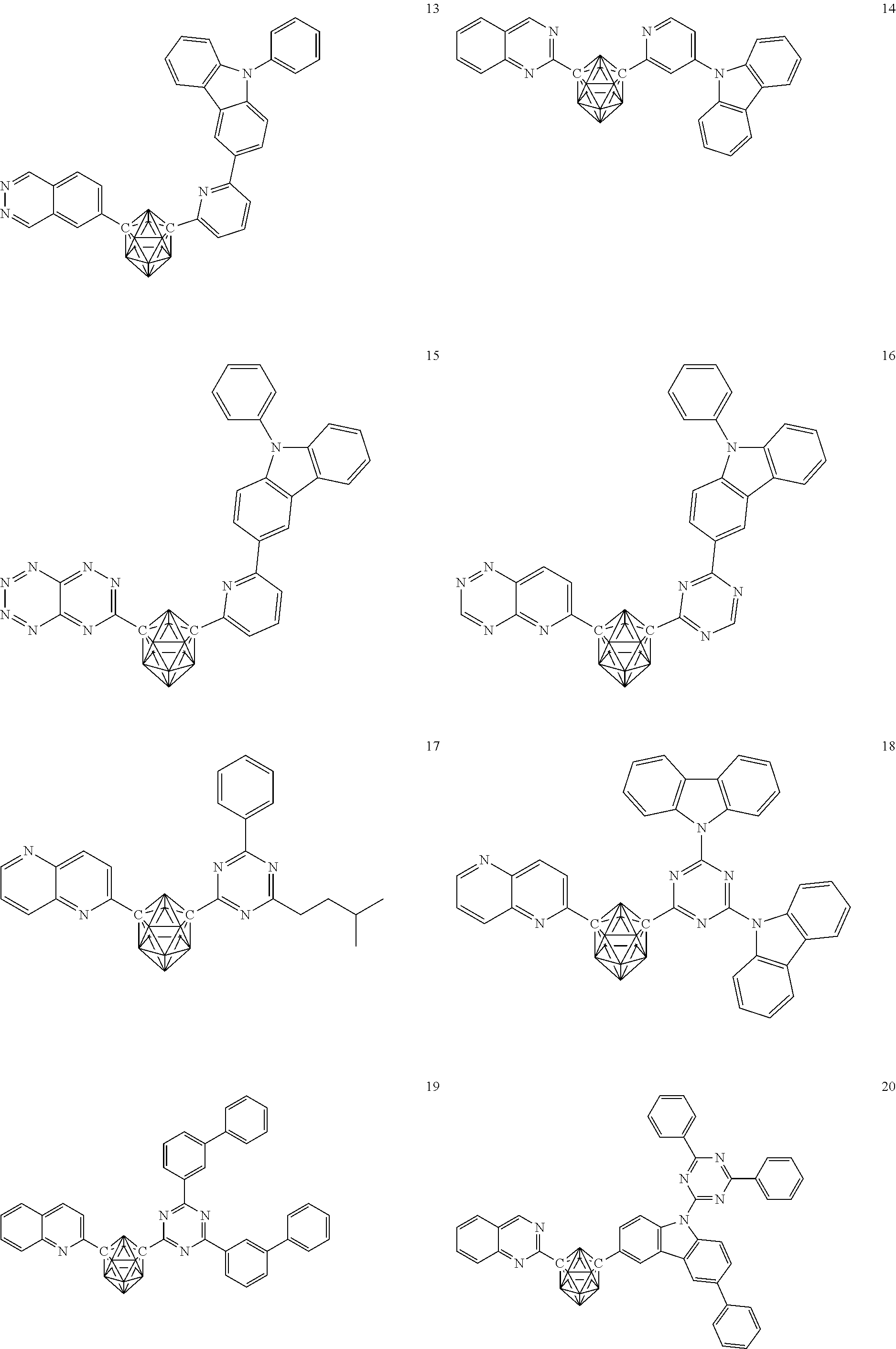


| TABLE 1 | |||||
| Visual | |||||
| Host | luminous | ||||
| material | Luminance | Voltage | efficiency | ||
| compound | (cd/m2) | (V) | (lm/W) | ||
| Example 1 | 11 | 1,200 | 8.6 | 4.1 |
| Example 2 | 6 | 1,100 | 8.4 | 4.3 |
| Example 3 | 25 | 1,000 | 8.2 | 3.9 |
| Example 4 | 32 | 1,200 | 8.5 | 4.3 |
| Example 5 | 48 | 1,200 | 7.8 | 4.4 |
| Example 6 | 58 | 1,100 | 7.7 | 4.6 |
| Comparative | BALq | 1,000 | 8.4 | 3.8 |
| Example 1 | ||||
| Comparative | H-1 | 1,000 | 9.8 | 3.3 |
| Example 2 | ||||
| Comparative | H-2 | 700 | 7.6 | 3.0 |
| Example 3 | ||||
| TABLE 2 | |||||
| Visual | |||||
| Host | luminous | ||||
| material | Luminance | Voltage | efficiency | ||
| compound | (cd/m2) | (V) | (lm/W) | ||
| Example 7 | 11 | 1,200 | 7.0 | 2.7 |
| Example 8 | 6 | 1,200 | 6.8 | 2.6 |
| Example 9 | 32 | 1,200 | 6.9 | 2.8 |
| Example 10 | 48 | 1,100 | 6.3 | 2.9 |
| Example 11 | 58 | 1,200 | 6.3 | 3.0 |
| Comparative | CBP | 1,100 | 8.7 | 2.0 |
| Example 4 | ||||
| Comparative | H-1 | 1,000 | 8.2 | 1.9 |
| Example 5 | ||||
| Comparative | H-2 | 700 | 6.4 | 1.8 |
| Example 6 | ||||
| TABLE 3 | |||||
| Visual | |||||
| Hole-blocking | luminous | ||||
| material | Luminance | Voltage | efficiency | ||
| compound | (cd/m2) | (V) | (lm/W) | ||
| Example 12 | 11 | 1,300 | 8.3 | 2.4 |
| Example 13 | 6 | 1,200 | 8.1 | 2.3 |
| Example 14 | 25 | 1,200 | 7.9 | 2.4 |
| Example 15 | 32 | 1,500 | 8.2 | 2.8 |
| Example 16 | 48 | 1,200 | 7.5 | 2.5 |
| Example 17 | 58 | 1,400 | 7.4 | 3.0 |
| Comparative | — | 1,100 | 8.7 | 2.0 |
| Example 7 | ||||
| Comparative | H-1 | 1,200 | 9.9 | 1.9 |
| Example 8 | ||||
| Comparative | H-2 | 900 | 9.9 | 1.4 |
| Example 9 | ||||
Claims (6)

Applications Claiming Priority (3)
| Application Number | Priority Date | Filing Date | Title |
|---|---|---|---|
| JP2014069998 | 2014-03-28 | ||
| JP2014-069998 | 2014-03-28 | ||
| PCT/JP2015/055074 WO2015146418A1 (en) | 2014-03-28 | 2015-02-23 | Organic-electroluminescent-element material and organic electroluminescent element using same |
Publications (2)
| Publication Number | Publication Date |
|---|---|
| US20170012206A1 US20170012206A1 (en) | 2017-01-12 |
| US10446767B2 true US10446767B2 (en) | 2019-10-15 |
Family
ID=54194953
Family Applications (1)
| Application Number | Title | Priority Date | Filing Date |
|---|---|---|---|
| US15/117,788 Expired - Fee Related US10446767B2 (en) | 2014-03-28 | 2015-02-23 | Organic-electroluminescent-element material and organic electroluminescent element using same |
Country Status (7)
| Country | Link |
|---|---|
| US (1) | US10446767B2 (en) |
| EP (1) | EP3125324B1 (en) |
| JP (1) | JP6402177B2 (en) |
| KR (1) | KR20160130860A (en) |
| CN (1) | CN106133937B (en) |
| TW (1) | TWI632152B (en) |
| WO (1) | WO2015146418A1 (en) |
Families Citing this family (5)
| Publication number | Priority date | Publication date | Assignee | Title |
|---|---|---|---|---|
| JP6307332B2 (en) * | 2014-04-21 | 2018-04-04 | 新日鉄住金化学株式会社 | Organic electroluminescence device |
| US10978647B2 (en) | 2017-02-15 | 2021-04-13 | Universal Display Corporation | Organic electroluminescent materials and devices |
| CN107507921B (en) * | 2017-09-29 | 2019-05-14 | 江苏三月光电科技有限公司 | A kind of boracic organic electroluminescence device and preparation method thereof |
| CN111662317B (en) * | 2020-07-09 | 2023-04-07 | 京东方科技集团股份有限公司 | Organic compound and organic electroluminescent device |
| KR102907968B1 (en) * | 2021-04-06 | 2026-01-06 | 삼성디스플레이 주식회사 | Light emitting diode |
Citations (7)
| Publication number | Priority date | Publication date | Assignee | Title |
|---|---|---|---|---|
| JP2005166574A (en) | 2003-12-05 | 2005-06-23 | Canon Inc | Organic light emitting device |
| JP2005162709A (en) | 2003-12-05 | 2005-06-23 | Canon Inc | Carborane compounds |
| US20120319088A1 (en) * | 2011-06-20 | 2012-12-20 | Korea Advanced Institute Of Science And Technology | Carborane compound, organic light-emitting diode including the same and flat display device including organic light-emitting diode |
| WO2013094834A1 (en) | 2011-12-19 | 2013-06-27 | 율촌화학 주식회사 | Novel compound having stability, and charge transfer material and blue phosphorescent organic light emitting diode comprising same |
| WO2014103724A1 (en) | 2012-12-26 | 2014-07-03 | 新日鉄住金化学株式会社 | Material for organic electroluminescent elements and organic electroluminescent element using same |
| EP3089231A1 (en) | 2013-12-26 | 2016-11-02 | Nippon Steel & Sumikin Chemical Co., Ltd. | Material for organic electroluminescent elements, and organic electroluminescent element using same |
| EP3125326A1 (en) | 2014-03-24 | 2017-02-01 | Nippon Steel & Sumikin Chemical Co., Ltd. | Organic-electroluminescent-element material and organic electroluminescent elements using same |
Family Cites Families (3)
| Publication number | Priority date | Publication date | Assignee | Title |
|---|---|---|---|---|
| EP1933395B2 (en) | 1999-12-01 | 2019-08-07 | The Trustees of Princeton University | Complexes of form L2IrX |
| JP2001313178A (en) | 2000-04-28 | 2001-11-09 | Pioneer Electronic Corp | Organic electroluminescence device |
| CN103509043B (en) * | 2012-12-04 | 2016-06-01 | Tcl集团股份有限公司 | Two carborane analog derivatives, preparation method and application and electroluminescent device |
-
2015
- 2015-02-23 CN CN201580015677.5A patent/CN106133937B/en not_active Expired - Fee Related
- 2015-02-23 KR KR1020167030236A patent/KR20160130860A/en not_active Abandoned
- 2015-02-23 US US15/117,788 patent/US10446767B2/en not_active Expired - Fee Related
- 2015-02-23 JP JP2016510141A patent/JP6402177B2/en not_active Expired - Fee Related
- 2015-02-23 EP EP15769618.8A patent/EP3125324B1/en active Active
- 2015-02-23 WO PCT/JP2015/055074 patent/WO2015146418A1/en not_active Ceased
- 2015-03-26 TW TW104109646A patent/TWI632152B/en not_active IP Right Cessation
Patent Citations (7)
| Publication number | Priority date | Publication date | Assignee | Title |
|---|---|---|---|---|
| JP2005166574A (en) | 2003-12-05 | 2005-06-23 | Canon Inc | Organic light emitting device |
| JP2005162709A (en) | 2003-12-05 | 2005-06-23 | Canon Inc | Carborane compounds |
| US20120319088A1 (en) * | 2011-06-20 | 2012-12-20 | Korea Advanced Institute Of Science And Technology | Carborane compound, organic light-emitting diode including the same and flat display device including organic light-emitting diode |
| WO2013094834A1 (en) | 2011-12-19 | 2013-06-27 | 율촌화학 주식회사 | Novel compound having stability, and charge transfer material and blue phosphorescent organic light emitting diode comprising same |
| WO2014103724A1 (en) | 2012-12-26 | 2014-07-03 | 新日鉄住金化学株式会社 | Material for organic electroluminescent elements and organic electroluminescent element using same |
| EP3089231A1 (en) | 2013-12-26 | 2016-11-02 | Nippon Steel & Sumikin Chemical Co., Ltd. | Material for organic electroluminescent elements, and organic electroluminescent element using same |
| EP3125326A1 (en) | 2014-03-24 | 2017-02-01 | Nippon Steel & Sumikin Chemical Co., Ltd. | Organic-electroluminescent-element material and organic electroluminescent elements using same |
Non-Patent Citations (5)
| Title |
|---|
| Beletskaya et al., "New B-substituted derivatives of m-carborane, p-carborane, and cobalt bis(1,2-dicarbollide) anion," Journal of Organometallic Chemistry, vol. 689, Issue 18, Sep. 15, 2004 (Available online Jul. 24, 2004), pp. 2920-2929 (12 pages total). |
| Extended European Search Report dated Sep. 29, 2017, in European Patent Application No. 15769618.8. |
| International Preliminary Report on Patentability and Written Opinion of the International Searching Authority (Forms PCT/IB/338, PCT/IB/373, and PCT/ISA/237) for International Application No. PCT/JP2015/055074, dated Oct. 13, 2016. |
| International Search Report (Form PCT/ISA/210) for International Application No. PCT/JP2015/055074, dated May 19, 2015, with an English Translation. |
| Wee et al., "Carborane-Based Optoelectronically Active Organic Molecules: Wide Band Gap Host Materials for Blue Phosphorescence," Journal of the American Chemical Society, vol. 134, Oct. 11, 2012, pp. 17982-17990. |
Also Published As
| Publication number | Publication date |
|---|---|
| CN106133937A (en) | 2016-11-16 |
| JPWO2015146418A1 (en) | 2017-04-13 |
| JP6402177B2 (en) | 2018-10-10 |
| TW201538514A (en) | 2015-10-16 |
| KR20160130860A (en) | 2016-11-14 |
| EP3125324A4 (en) | 2017-11-01 |
| US20170012206A1 (en) | 2017-01-12 |
| WO2015146418A1 (en) | 2015-10-01 |
| TWI632152B (en) | 2018-08-11 |
| EP3125324B1 (en) | 2019-04-03 |
| EP3125324A1 (en) | 2017-02-01 |
| CN106133937B (en) | 2017-09-26 |
Similar Documents
| Publication | Publication Date | Title |
|---|---|---|
| US9865829B2 (en) | Organic electroluminescent element material and organic electroluminescent element using same | |
| US9722189B2 (en) | Adamantane compound for organic electroluminescent elements, and organic electroluminescent element | |
| US10636981B2 (en) | Material for organic electroluminescent element and organic electroluminescent element using the same | |
| EP2827397A1 (en) | Organic electroluminescent element | |
| US20150218191A1 (en) | Compound for organic electroluminescent elements, and organic electroluminescent element | |
| US10305048B2 (en) | Organic-electroluminescent-element material and organic electroluminescent elements using same | |
| US10283721B2 (en) | Material for organic electroluminescent elements, and organic electroluminescent element using same | |
| US9716238B2 (en) | Boron compound for organic electroluminescent elements, and organic electroluminescent element | |
| US9978963B2 (en) | Material for organic electroluminescent elements, and organic electroluminescent element using same | |
| US20150214495A1 (en) | Organic electroluminescent element | |
| US10468608B2 (en) | Organic-electroluminescent-element material, and organic electroluminescent element using same | |
| US10446767B2 (en) | Organic-electroluminescent-element material and organic electroluminescent element using same | |
| US10529932B2 (en) | Organic-electroluminescent-element material and organic electroluminescent element using same | |
| US10411198B2 (en) | Material for organic electroluminescent elements, and organic electroluminescent element using same | |
| US20140203270A1 (en) | Organic electroluminescent element material having silicon-containing four membered ring structure, and organic electroluminescent element | |
| US10807996B2 (en) | Material for organic electroluminescent element and organic electroluminescent element in which same is used | |
| US20180233687A1 (en) | Material for organic electroluminescent device and organic electroluminescent device using same |
Legal Events
| Date | Code | Title | Description |
|---|---|---|---|
| AS | Assignment |
Owner name: NIPPON STEEL & SUMIKIN CHEMICAL CO., LTD., JAPAN Free format text: ASSIGNMENT OF ASSIGNORS INTEREST;ASSIGNORS:UEDA, TOKIKO;OGAWA, JUNYA;KAI, TAKAHIRO;AND OTHERS;REEL/FRAME:039434/0466 Effective date: 20160725 |
|
| AS | Assignment |
Owner name: NIPPON STEEL CHEMICAL & MATERIAL CO., LTD., JAPAN Free format text: CHANGE OF NAME;ASSIGNOR:NIPPON STEEL & SUMIKIN CHEMICAL CO., LTD.;REEL/FRAME:047805/0595 Effective date: 20181002 |
|
| STPP | Information on status: patent application and granting procedure in general |
Free format text: NON FINAL ACTION MAILED |
|
| STPP | Information on status: patent application and granting procedure in general |
Free format text: RESPONSE TO NON-FINAL OFFICE ACTION ENTERED AND FORWARDED TO EXAMINER |
|
| STPP | Information on status: patent application and granting procedure in general |
Free format text: NOTICE OF ALLOWANCE MAILED -- APPLICATION RECEIVED IN OFFICE OF PUBLICATIONS |
|
| STPP | Information on status: patent application and granting procedure in general |
Free format text: PUBLICATIONS -- ISSUE FEE PAYMENT VERIFIED |
|
| STCF | Information on status: patent grant |
Free format text: PATENTED CASE |
|
| AS | Assignment |
Owner name: NIPPON STEEL CHEMICAL & MATERIAL CO., LTD., JAPAN Free format text: CHANGE OF ADDRESS;ASSIGNOR:NIPPON STEEL CHEMICAL & MATERIAL CO., LTD.;REEL/FRAME:050998/0200 Effective date: 20190527 |
|
| FEPP | Fee payment procedure |
Free format text: MAINTENANCE FEE REMINDER MAILED (ORIGINAL EVENT CODE: REM.); ENTITY STATUS OF PATENT OWNER: LARGE ENTITY |
|
| LAPS | Lapse for failure to pay maintenance fees |
Free format text: PATENT EXPIRED FOR FAILURE TO PAY MAINTENANCE FEES (ORIGINAL EVENT CODE: EXP.); ENTITY STATUS OF PATENT OWNER: LARGE ENTITY |
|
| STCH | Information on status: patent discontinuation |
Free format text: PATENT EXPIRED DUE TO NONPAYMENT OF MAINTENANCE FEES UNDER 37 CFR 1.362 |
|
| FP | Lapsed due to failure to pay maintenance fee |
Effective date: 20231015 |