US10438398B2 - Object definition in virtual 3D environment - Google Patents
Object definition in virtual 3D environment Download PDFInfo
- Publication number
- US10438398B2 US10438398B2 US15/466,991 US201715466991A US10438398B2 US 10438398 B2 US10438398 B2 US 10438398B2 US 201715466991 A US201715466991 A US 201715466991A US 10438398 B2 US10438398 B2 US 10438398B2
- Authority
- US
- United States
- Prior art keywords
- voxel
- voxels
- tagged
- metadata value
- selecting
- Prior art date
- Legal status (The legal status is an assumption and is not a legal conclusion. Google has not performed a legal analysis and makes no representation as to the accuracy of the status listed.)
- Expired - Fee Related
Links
Images




Classifications
-
- G—PHYSICS
- G06—COMPUTING OR CALCULATING; COUNTING
- G06T—IMAGE DATA PROCESSING OR GENERATION, IN GENERAL
- G06T15/00—3D [Three Dimensional] image rendering
- G06T15/08—Volume rendering
-
- G—PHYSICS
- G06—COMPUTING OR CALCULATING; COUNTING
- G06T—IMAGE DATA PROCESSING OR GENERATION, IN GENERAL
- G06T19/00—Manipulating 3D models or images for computer graphics
-
- G—PHYSICS
- G06—COMPUTING OR CALCULATING; COUNTING
- G06T—IMAGE DATA PROCESSING OR GENERATION, IN GENERAL
- G06T19/00—Manipulating 3D models or images for computer graphics
- G06T19/003—Navigation within 3D models or images
-
- G—PHYSICS
- G06—COMPUTING OR CALCULATING; COUNTING
- G06T—IMAGE DATA PROCESSING OR GENERATION, IN GENERAL
- G06T7/00—Image analysis
- G06T7/10—Segmentation; Edge detection
- G06T7/11—Region-based segmentation
-
- G—PHYSICS
- G06—COMPUTING OR CALCULATING; COUNTING
- G06T—IMAGE DATA PROCESSING OR GENERATION, IN GENERAL
- G06T7/00—Image analysis
- G06T7/10—Segmentation; Edge detection
- G06T7/136—Segmentation; Edge detection involving thresholding
-
- G—PHYSICS
- G06—COMPUTING OR CALCULATING; COUNTING
- G06T—IMAGE DATA PROCESSING OR GENERATION, IN GENERAL
- G06T7/00—Image analysis
- G06T7/10—Segmentation; Edge detection
- G06T7/162—Segmentation; Edge detection involving graph-based methods
-
- G—PHYSICS
- G06—COMPUTING OR CALCULATING; COUNTING
- G06T—IMAGE DATA PROCESSING OR GENERATION, IN GENERAL
- G06T7/00—Image analysis
- G06T7/10—Segmentation; Edge detection
- G06T7/187—Segmentation; Edge detection involving region growing; involving region merging; involving connected component labelling
-
- G—PHYSICS
- G06—COMPUTING OR CALCULATING; COUNTING
- G06T—IMAGE DATA PROCESSING OR GENERATION, IN GENERAL
- G06T2207/00—Indexing scheme for image analysis or image enhancement
- G06T2207/10—Image acquisition modality
- G06T2207/10072—Tomographic images
- G06T2207/10081—Computed x-ray tomography [CT]
-
- G—PHYSICS
- G06—COMPUTING OR CALCULATING; COUNTING
- G06T—IMAGE DATA PROCESSING OR GENERATION, IN GENERAL
- G06T2207/00—Indexing scheme for image analysis or image enhancement
- G06T2207/20—Special algorithmic details
- G06T2207/20072—Graph-based image processing
-
- G—PHYSICS
- G06—COMPUTING OR CALCULATING; COUNTING
- G06T—IMAGE DATA PROCESSING OR GENERATION, IN GENERAL
- G06T2207/00—Indexing scheme for image analysis or image enhancement
- G06T2207/20—Special algorithmic details
- G06T2207/20092—Interactive image processing based on input by user
- G06T2207/20101—Interactive definition of point of interest, landmark or seed
-
- G—PHYSICS
- G06—COMPUTING OR CALCULATING; COUNTING
- G06T—IMAGE DATA PROCESSING OR GENERATION, IN GENERAL
- G06T2207/00—Indexing scheme for image analysis or image enhancement
- G06T2207/30—Subject of image; Context of image processing
- G06T2207/30108—Industrial image inspection
- G06T2207/30112—Baggage; Luggage; Suitcase
-
- G—PHYSICS
- G06—COMPUTING OR CALCULATING; COUNTING
- G06T—IMAGE DATA PROCESSING OR GENERATION, IN GENERAL
- G06T2210/00—Indexing scheme for image generation or computer graphics
- G06T2210/41—Medical
-
- G—PHYSICS
- G06—COMPUTING OR CALCULATING; COUNTING
- G06T—IMAGE DATA PROCESSING OR GENERATION, IN GENERAL
- G06T2219/00—Indexing scheme for manipulating 3D models or images for computer graphics
- G06T2219/004—Annotating, labelling
Definitions
- the present invention relates to the assisted exploration of computer generated virtual environments, and in particular the identification of discrete objects in such environments.
- Volumetric datasets are found in many fields, such as engineering, material sciences, medical imaging, astrophysics. The exploration of volumetric datasets is not trivial, and is heavily impacted by the specific needs of users. In most airports for example, security agents deal with such data exploration in the context of baggage inspections.
- X-ray and tomography are two commonly used fluoroscopic scanning systems. X-ray systems provide a flattened 2D luggage scan while tomography systems produce transversal scans, also called slices. Thanks to data processing techniques such as the Radon transform, these systems can produce a full 3D scan, comprising a set of voxels with corresponding density data. Since the resulting X-ray scanned image only contains voxel or pixel densities, it cannot display the original material colours.
- the standard colour visual mapping uses three different colours (orange, green, and blue) to display the data density.
- Orange colour corresponds to low density (mainly organic items).
- blue colour is used for high density values (i.e. metal).
- green colour corresponds to the superposition of different kinds of materials or average density materials.
- FIG. 1 demonstrates some of the ways in which an article may be obscured in a scan. As shown in FIG. 1 , the displayed 2D scanned image can suffer from four issues:
- a threat e.g. prohibited object like knife, cutter . . .
- a threat may be sheltered behind dense materials. Sometimes, it's possible to see through this blind shield using functionalities such as high penetration (enhanced X-ray power) or image processing (contrast improvement).
- functionalities such as high penetration (enhanced X-ray power) or image processing (contrast improvement).
- FIG. 1 the umbrella and dense collection of objects in the upper right hand corner 101 may obscure articles of interest.
- Location Depending on its location inside the luggage, a threat can be difficult to detect. Objects located in the corners, in the edges or inside the luggage's frame are very difficult to identify. As shown in FIG. 1 , the retractable trolley bars and the rigid corners of the case 102 may obscure articles of interest.
- Dissociation Another way to dissimulate a threat is to separate and to spread parts of it in the luggage (weapons or explosives are composed of many separated items like the trigger, the barrel . . . ). This dissociation can be combined with other dissimulation techniques. As shown in FIG. 1 , a number of apparently non-descript items 103 are present which are unlikely to attract particular attention, but which may be assembled to form some article of interest. Lure: An ill-intentioned individual may use a lure to hide the real threat. For instance, a minor threat like a small scissors may be clearly visible and catch security agent's attention while a more important threat remains hidden. As shown in FIG. 1 , the metal rod 104 may attract the attention of the user, drawing it away from some less visible threat.
- volumetric data exploration with direct volume rendering techniques is of great help to visually extract relevant structures in many fields of science: medical imaging, astrophysics and more recently in luggage security.
- many techniques have been developed.
- a number of existing basic technologies are known in this field, including volume visualization, transfer function, direct voxel manipulation and focus plus context interaction.
- volume visualization can be done with a geometric rendering system which transforms the data into a set of polygons representing an iso-surface.
- the contour tree algorithm and other alternatives such as branch decomposition are usually used to find these iso-surfaces.
- Contour tree algorithms may be vulnerable to noise, which can be problematic in luggage inspections since dense materials such as steel cause noise by reflecting the X-rays.
- Transfer Function maps the voxel density with a specific colour (including its transparency).
- Transfer functions can be 1, 2 or n dimensional and are of great help to isolate structures of interest in volumetric data. Thanks to the colour blending process, a suitable transfer function can also reveal iso-surfaces or hide density to improve the volumetric data visualization.
- a specific difficulty arises in an environment such as that described with respect to FIG. 1 is that the user's view of a particular article of interest will often be obscured by a number of other objects of no interest.
- the user may wish to isolate or highlight objects of interest, or selectively remove or render less visible interfering objects.
- a voxel based environment there is no inherent detection of objects, since the whole environment is simply a matrix of voxels of varying densities. It is desirable to provide functions for effectively identifying discrete objects in such an environment.
- a method of selecting voxels for display in a computer generated image based on a three dimensional volume defined by a collection of voxels comprising the steps of: selecting a first voxel having a scalar metadata value exceeding a predetermined threshold, assessing each voxel adjacent the first voxel, and selecting and tagging each adjacent voxel whose scalar metadata value threshold exceeds the predetermined scalar metadata value threshold. These steps of assessing, selecting and tagging are repeated for each voxel adjacent a tagged voxel until no further voxels meet the criteria for assessment.
- This approach provides a rapid mechanism for isolating an object in a set of voxels, with minimal demands on system resources.
- the tagged voxels are displayed. Displaying the object may be an end in itself, and also permits visual confirmation of the effectiveness of the identification and the underlying thresholds, thereby avoiding errors.
- a virtual camera position is determined, and a straight path established between a part of said object and said virtual camera position, and wherein said first voxel is selected as being the voxel nearest said virtual camera position situated along said path and exceeding the predetermined scalar metadata value threshold.
- the scalar metadata value represents the opacity of the respective voxel.
- the voxels are arranged in a non-cubic lattice.
- the proposed mechanism is adaptable to many different modelling contexts.
- the step of repeating the steps of assessing, selecting and tagging for each voxel adjacent a tagged voxel until no further voxels meet the criteria for assessment involves traversing the tree defined by voxels whose scalar metadata value threshold exceeds said predetermined scalar metadata value threshold, and connected to said first selected voxel by a chain of other such voxels.
- Handling the process as a tree crawling problem makes the mechanism directly compatible with advances in graph exploration technology.
- the tree is traversed according to a depth-first algorithm.
- the tree is traversed according to a breadth-first algorithm.
- the steps are performed in real time in response to user input specifying different scalar metadata value threshold values. Enabling the user to specify the threshold values supports direct control of the object process. This may lead to a more rapid convergence on optimal values, reducing processing time and system resource demands, and reducing errors.
- the steps of selecting a first voxel and assessing, selecting and tagging each adjacent voxel are repeated for the same set of voxels and the same first selected voxel, with a plurality of different scalar metadata value threshold values.
- the step of displaying the tagged voxels comprises displaying the results of each iteration of the steps simultaneously, each in a respective representation of the same view. Enabling the user to compare results with different threshold values supports may lead to a more rapid convergence on optimal values, reducing processing time and system resource demands, and reducing errors.
- the object defined by the voxels tagged in each iteration is compared to a library of known objects, and the scalar metadata value threshold providing the object corresponding most closely to the library model is retained for presentation of the object to the user. Enabling the user to compare results with different threshold values supports may lead to a more rapid convergence on optimal values, reducing processing time and system resource demands, and reducing errors.
- an apparatus adapted to select voxels for display in a computer generated image based on a three dimensional volume defined by a collection of voxels, said apparatus adapted to select a first voxel having a scalar metadata value exceeding a predetermined threshold, said apparatus being further adapted to assess each voxel adjacent said first voxel, and select and tag each adjacent voxel whose scalar metadata value threshold exceeds said predetermined scalar metadata value threshold, said apparatus being still further adapted to repeat said steps of assessing, selecting and tagging for each voxel adjacent a tagged voxel until no further voxels meet the criteria for assessment.
- FIG. 1 demonstrates some of the ways in which an article may be obscured in a scan
- FIG. 2 shows a method according to an embodiment
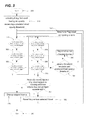
- FIG. 3 is a more detailed implementation of the method of FIG. 2 ;
- FIG. 4 shows an example of the application of the method of FIG. 3 to a specific collection of voxels
- FIG. 5 shows the object identified in the example of FIG. 4 ;
- FIG. 6 shows the object that may be identified with a lower opacity threshold
- FIG. 7 represents the selected voxels of FIG. 4 as a tree
- FIG. 8 shows a generic computing system suitable for implementation of embodiments of the invention.
- FIG. 9 shows a smartphone device adaptable to constitute an embodiment
- FIG. 10 shows an object scanner system adaptable to constitute an embodiment
- FIG. 11 shows a body scanner system adaptable to constitute an embodiment.
- FIG. 2 shows a method according to an embodiment.
- a method of selecting voxels for display in a computer generated image based on a three dimensional volume defined by a collection of voxels starts at step 200 before proceeding at step 210 to select a first voxel having a scalar metadata value exceeding a predetermined scalar metadata value threshold.
- the scalar metadata value will be assumed to represent the opacity associated with the voxel, however the scalar metadata value may have any meaning, representing for example colour, density, etc.
- the method next proceeds to step 220 , at which each voxel adjacent the first voxel is assessed.
- Step 240 For any adjacent voxel whose opacity threshold exceeds the predetermined opacity threshold, the method proceeds to step 240 at which that voxel is selected and tagged. Once all adjacent voxels have been assessed for a given selected voxel, the method proceeds to Step 250 at which it is considered whether other voxels meet the criteria for assessment (i.e.
- the method loops back via step 260 to repeat the steps of assessing 220 , and selecting and tagging 240 for each voxel adjacent a tagged voxel until no further voxels meet the criteria for assessment, whereupon the method proceeds display all of the tagged voxels at step 270 .
- the step of displaying the tagged voxels may be omitted altogether, or carried out at some arbitrary later time as desired.
- the process of FIG. 2 may be iterated to identify the objects in an environment, by changing to a new first voxel and a new tag, and repeating said steps of selecting, assessing and changing until all voxels in said computer generated environment have been tagged. On this basis, each set of voxels with the same tag is taken to constitute an object.
- the process of assessing the voxels adjacent a currently selected voxel may involve assessing each adjacent voxel may be carried out for each adjacent voxel in turn, or each may be assessed in parallel.
- the assessment process may be multistep in nature, for example first considering whether the voxel in question is already tagged, and then considering whether it meets the opacity criterion.
- voxels might be tagged when they fail to meet the criteria rather than when they do meet it, or all voxels assessed may be tagged to indicate whether or not they meet the opacity threshold.
- any objects identified in accordance with these steps may in some embodiments be retained for later reference.
- the tagging of each new object may be specific to that object, or alternatively a registry of which voxels have been grouped together as an object may be compiled.
- the three dimensional environment may be defined in terms of a collection of objects, rather than a mere matrix of voxels.
- this approach may accelerate the process for subsequent applications of the process, since voxels that have already been identified as belonging to a first object can be excluded from the process.
- FIG. 3 is a more detailed implementation of the method of FIG. 2 .
- the method starts at step 200 before proceeding at step 210 to select a first voxel having an opacity exceeding a predetermined opacity threshold.
- the method next proceeds to step 321 , at which it is determined whether the voxel adjacent the first voxel in the positive x direction has already been tagged. If the voxel has not been tagged, the method proceeds to set 341 , at which it is determined whether the voxel under assessment exceeds the opacity threshold.
- the voxel under assessment is tagged as meeting the selection criteria and selected as the frame of reference for the next assessments of adjacent voxels at step 342 . Otherwise the voxel is tagged as not meeting the selection criteria at step 343 , and the method then reverts to step 321 . Assuming the adjacent voxel in the positive x direction did not meet the opacity threshold, the method will now proceed to step 322 from step 321 , since the adjacent voxel in the positive x direction is now tagged as not meeting the selection criteria.
- step 322 assessing the adjacent voxel in the positive y direction
- step 323 assessing the adjacent voxel in the positive z direction
- step 324 assessing the adjacent voxel in the negative x direction
- step 325 assessing the adjacent voxel in the negative y direction
- step 326 assessing the adjacent voxel in the negative z direction.
- the method will eventually determine that all of the adjacent voxels have been tagged, either as meeting the selection criteria, or not, and will reach step 351 at which the method considers whether any voxel adjacent a voxel tagged as meeting the selection criteria has not yet been assessed.
- the opacity threshold may be two-fold, requireing that voxels must not only exceed a minimum value, but also must fall below a maximum value.
- the different threshold values may be set depending on the characteristics of the object to be isolated, and of the surrounding materials, since it is by selecting the optimal thresholds that the object defined in accordance with the present invention can approach most closely a representation of a real object to which the representation may correspond. If the threshold is defined in terms of density, a metal object surrounded by clothing may be easily isolated, but a composite object such as a shoe may require careful fine tuning of thresholds before it can be properly isolated as an object. As such the lower threshold may be equal to the density of the density of the lowest density component the object of interest is likely to have. If the threshold object is defined in terms of an intermediate characteristic such as opacity, it may be necessary to convert back to the underlying physical context to select an appropriate threshold.
- an intermediate characteristic such as opacity
- the process of FIG. 3 may be iterated to identify the objects in an environment, by changing to a new first voxel and a new tag, and repeating said steps of selecting, assessing and changing until all voxels in said computer generated environment have been tagged. On this basis, each set of voxels with the same tag is taken to constitute an object.
- FIG. 4 shows a collection of voxels in a three dimensional space (3D) defined by x, y and z axes 411 , 412 , 413 . As shown, the voxels are classified as belonging to one of four opacity levels. In the context of the application of FIG. 1 , opacity is aligned with density, The densest voxels are shown in FIG. 4 pale and opaque (voxel 451 for example), the next densest are mid grey and somewhat transparent (voxel 452 for example), the next densest still are dark grey and highly transparent (voxel 453 for example), and the lest dense are not rendered for the sake of clarity.
- the opacity threshold is defined as the opacity of the medium density voxels.
- the first selected voxel may be selected in a variety of different ways. For example, it may be selected as being the closest to the current position of the virtual camera 460 defining a user's point of view, which meets the predefined opacity threshold. On this basis, in view of the position and orientation of the virtual camera 460 and the predefined opacity threshold, for the purposes of the present example, the first selected voxel is voxel 431 . Accordingly there is provided a further step of determining a virtual camera position, and establishing a straight path between a part of the object and the virtual camera position, whereby the first voxel is selected as being the voxel nearest said virtual camera position situated along said path and exceeding said predetermined opacity threshold.
- the method considers the voxel in the positive x direction from voxel 431 . This voxel is not tagged, but does not meet the opacity threshold. The method then considers the voxel in the positive y direction. This voxel is not tagged, but does not meet the opacity threshold. The method then considers the voxel in the positive z direction. This voxel is not tagged, but does not meet the opacity threshold. The method then considers the voxel in the negative x direction. This voxel is not tagged, but does not meet the opacity threshold.
- the method then considers the voxel 432 in the negative y direction.
- This voxel is not tagged, and does meet the opacity threshold. Accordingly voxel 432 is tagged as meeting the selection criteria, and selected as the basis for the next round of assessments. It will be noted here that voxel 442 also meets the opacity threshold, but has not yet been assessed.
- the assessment process is repeated for voxel 432 , which leads to the selection of voxel 433 , then 434 , then 435 .
- step 351 it is determined that voxel 436 is adjacent voxel 434 which is tagged as meeting the criteria for selection, but has not yet been assessed. Accordingly, the selection reverts to voxel 434 . This time, voxel 435 is disregarded as already being tagged, and the selection proceeds to voxel 436 .
- the selection then reverts to voxel 433 before proceeding through voxels 437 , 438 , 439 , 440 and 441 , and then reverts to 440 to reach 442 , then reverts to 431 to explore the branch comprising voxels 443 , 444 , 445 , 446 , 447 and 448 .
- the method has tagged each of the contiguous voxels meeting the opacity threshold starting from the chosen first selected voxel 431 .
- FIG. 5 shows the object identified in the example of FIG. 4 .
- the visible voxels 431 , 432 , 433 , 434 , 435 , 436 , 437 , 438 , 439 , 441 , 442 , 443 , 444 , 445 , 446 , 447 are shown, whilst voxels 440 and 448 are obscured. All of the other voxels of FIG. 4 , which were not tagged as meeting the criteria for selection have been removed in the displayed image, providing a clearer view of the identified object.
- the definition of the object will depend heavily on the choice of the opacity threshold.
- a density threshold of 2500 kg/M 3 may prove effective, while if the objective is to separate living tissue from clothing and the like, a density threshold of 1000 kg/M 3 may prove effective.
- opacity is used as a representation of density, the corresponding opacity values to these density values will be used correspondingly.
- FIG. 7 represents the selected voxels of FIG. 4 as a tree. It will be appreciated that the method described in detail with respect to FIG. 4 implements a tree crawl. As described with respect to FIG. 4 above the process follows a branch to its extremity (a depth-first search), and then backtracks to the nearest unexplored fork, and so on as represented by the dotted line 700 . Other equivalent algorithms may revert to the furthest unexplored fork, or explore every possibility at each level of arborescence before proceeding to the next level (a Breadth-first search).
- the process described with respect to FIG. 2 or 3 may be performed in real time in response to user input specifying different scalar metadata value threshold values, so that the user can immediately see the effect of the changes in scalar metadata value threshold value.
- user input may be input by means of slider bar, scroll wheel etc so that the user can rapidly try different values and identify that giving the most visually useful results.
- the process described with respect to FIG. 2 or 3 may be repeated for the same set of voxels and the same first selected voxel, but with a range of different scalar metadata value threshold values.
- the resulting objects may be displayed sequentially to the user giving the user the opportunity to select the most visually convincing representation of the object in question.
- the process described with respect to FIG. 2 or 3 may be repeated for the same set of voxels and the same first selected voxel, but with a range of different scalar metadata value threshold values.
- the resulting objects may be displayed together in multiple representations of the same view to the user giving the user the opportunity to select the most visually convincing representation of the object in question.
- the process described with respect to FIG. 2 or 3 may be repeated for the same set of voxels and the same first selected voxel, but with a range of different scalar metadata value threshold values.
- the resulting objects may be compared to a library of known objects, and the scalar metadata value threshold providing the object corresponding most closely to the library model may be retained for presentation of the object to the user.
- adjacent voxels have been taken to be those having a face in common.
- the term may be extended in include voxels having a vertex in common, and still further, to voxel within a predetermined radius, or with a predetermined number of intervening voxels.
- objects in a voxel based computer generated three dimensional environment are identified by traversing through adjacent voxels meeting a predetermined criterion with respect to a scalar metadata value associated with each voxel, such as opacity or density. These adjacent voxels may be explored in accordance with a tree-crawling algorithm such as a breadth first or depth first algorithm. Once all adjacent cells meeting the criterion are identified, these are determined to represent a discrete object, and displayed as such.
- the starting point for the crawling process may be the voxel closest to a virtual camera position along the line of sight of that virtual camera meeting the criterion.
- the disclosed methods can take form of an entirely hardware embodiment (e.g. FPGA), an entirely software embodiment (for example to control a system according to the invention) or an embodiment containing both hardware and software elements.
- embodiments may comprise a number of subsystems, functional elements or means adapted to implement the invention in communication with each other, and/or with standard fixed function or programmable elements for example as described below.
- Software embodiments include but are not limited to applications, firmware, resident software, microcode, etc.
- the invention can take the form of a computer program product accessible from a computer-usable or computer-readable medium providing program code for use by or in connection with a computer or an instruction execution system.
- a computer-usable or computer-readable can be any apparatus that can contain, store, communicate, propagate, or transport the program for use by or in connection with the instruction execution system, apparatus, or device.
- the medium can be an electronic, magnetic, optical, electromagnetic, infrared, or semiconductor system (or apparatus or device) or a propagation medium.
- the methods and processes described herein may be implemented in whole or part by a user device. These methods and processes may be implemented by computer-application programs or services, an application-programming interface (API), a library, and/or other computer-program product, or any combination of such entities.
- API application-programming interface
- the user device may be a mobile device such as a smart phone or tablet, a drone, a computer or any other device with processing capability, such as a robot or other connected device.
- these datasets are associated with points on a sliding scale of one, two or three dimensions.
- a point corresponding to a particular dataset is selected by a user via a mouse pointer, touch interface or the like. it is rendered as a graphical representation and presented to the user.
- an intermediate point is selected, an interpolation of the datasets corresponding to the nearby points is generated and the resulting dataset rendered as a graphical representation and presented to the user.
- the interaction may be implemented with a slider bar type widget having hybrid behaviour such that clicking on the bar causes the button to jump to the nearest point corresponding to a data, while sliding to a chosen intermediate position activates the interpolation of adjacent datasets.
- FIG. 8 shows a generic computing system suitable for implementation of embodiments of the invention.
- a system includes a logic device 801 and a storage device 802 .
- the system may optionally include a display subsystem 811 , input/output subsystem 803 , communication subsystem 820 , and/or other components not shown.
- Logic device 801 includes one or more physical devices configured to execute instructions.
- the logic device 801 may be configured to execute instructions that are part of one or more applications, services, programs, routines, libraries, objects, components, data structures, or other logical constructs.
- Such instructions may be implemented to perform a task, implement a data type, transform the state of one or more components, achieve a technical effect, or otherwise arrive at a desired result.
- the logic device 801 may include one or more processors configured to execute software instructions. Additionally or alternatively, the logic device may include one or more hardware or firmware logic devices configured to execute hardware or firmware instructions. Processors of the logic device may be single-core or multi-core, and the instructions executed thereon may be configured for sequential, parallel, and/or distributed processing. Individual components of the logic device 801 optionally may be distributed among two or more separate devices, which may be remotely located and/or configured for coordinated processing. Aspects of the logic device 801 may be virtualized and executed by remotely accessible, networked computing devices configured in a cloud-computing configuration.
- Storage device 802 includes one or more physical devices configured to hold instructions executable by the logic device to implement the methods and processes described herein. When such methods and processes are implemented, the state of storage 802 device may be transformed—e.g., to hold different data.
- Storage device 802 may include removable and/or built-in devices.
- Storage device 602 may comprise one or more types of storage device including optical memory (e.g., CD, DVD, HD-DVD, Blu-Ray Disc, etc.), semiconductor memory (e.g., FLASH, RAM, EPROM, EEPROM, etc.), and/or magnetic memory (e.g., hard-disk drive, floppy-disk drive, tape drive, MRAM, etc.), among others.
- Storage device may include volatile, non-volatile, dynamic, static, read/write, read-only, random-access, sequential-access, location-addressable, file-addressable, and/or content-addressable devices.
- the system may comprise an interface 803 adapted to support communications between the Logic device 801 and further system components.
- additional system components may comprise removable and/or built-in extended storage devices.
- Extended storage devices may comprise one or more types of storage device including optical memory 832 (e.g., CD, DVD, HD-DVD, Blu-Ray Disc, etc.), semiconductor memory (not shown) (e.g., RAM, EPROM, EEPROM, FLASH etc.), and/or magnetic memory 831 (e.g., hard-disk drive, floppy-disk drive, tape drive, MRAM, etc.), among others.
- Such extended storage device may include volatile, non-volatile, dynamic, static, read/write, read-only, random-access, sequential-access, location-addressable, file-addressable, and/or content-addressable devices.
- storage device includes one or more physical devices, and excludes propagating signals per se.
- aspects of the instructions described herein alternatively may be propagated by a communication medium (e.g., an electromagnetic signal, an optical signal, etc.), as opposed to being stored on a storage device.
- a communication medium e.g., an electromagnetic signal, an optical signal, etc.
- logic device 801 and storage device 802 may be integrated together into one or more hardware-logic components.
- Such hardware-logic components may include field-programmable gate arrays (FPGAs), program- and application-specific integrated circuits (PASIC/ASICs), program- and application-specific standard products (PSSP/ASSPs), system-on-a-chip (SOC), and complex programmable logic devices (CPLDs), for example.
- FPGAs field-programmable gate arrays
- PASIC/ASICs program- and application-specific integrated circuits
- PSSP/ASSPs program- and application-specific standard products
- SOC system-on-a-chip
- CPLDs complex programmable logic devices
- program may be used to describe an aspect of computing system implemented to perform a particular function.
- a program may be instantiated via logic device executing machine-readable instructions held by storage device. It will be understood that different modules may be instantiated from the same application, service, code block, object, library, routine, API, function, etc. Likewise, the same program may be instantiated by different applications, services, code blocks, objects, routines, APIs, functions, etc.
- program may encompass individual or groups of executable files, data files, libraries, drivers, scripts, database records, etc.
- system of FIG. 8 may be used to implement embodiments of the invention.
- a program implementing the steps described with respect to FIG. 2 or 3 may be stored in storage device 802 and executed by logic device 801 .
- Data used for the creation of the graphical representation of the datasets comprising the voxels and their associated scalar metadata may be stored in storage 802 or the extended storage devices 832 or 831 and the display 811 used to display the graphical representation.
- the computing system may comprise or be in communication with a scanner 880 or other three dimensional imaging system as described above. This communication may be achieved by wired or wireless network, serial bus, firewire, Thunderbolt, SCSI or any other communications means as desired.
- a program for the control of the scanner 880 and/or the retrieval of data therefrom may run concurrently on the logic device 801 , or these features may be implemented in the same program as implementing the steps described with respect to FIG. 2 or 3 .
- the invention may be embodied in the form of a computer program.
- the elements of FIG. 8 may constitute an apparatus adapted to generate a graphical representation of a dataset, and cause a display device to display said representation; this apparatus may further be adapted to receive data from an eye tracking system indicating a point of regard.
- the apparatus may comprise storage for compiling a record of the point of regard over a duration, and the apparatus may further be adapted to modify the graphical representation to indicate the proportion of the duration for which said point of regard was directed at each point in said representation. This point of regard may then be assimilated to the selected point and/or the cursor as described above.
- a “service”, as used herein, is an application program executable across multiple user sessions.
- a service may be available to one or more system components, programs, and/or other services.
- a service may run on one or more server-computing devices.
- display subsystem 811 may be used to present a visual representation of data held by a storage device.
- This visual representation may take the form of a graphical user interface (GUI).
- GUI graphical user interface
- the state of display subsystem 811 may likewise be transformed to visually represent changes in the underlying data.
- Display subsystem 811 may include one or more display devices utilizing virtually any type of technology for example as discussed above. Such display devices may be combined with logic device and/or storage device in a shared enclosure, or such display devices may be peripheral display devices.
- input subsystem may comprise or interface with one or more user-input devices such as a keyboard 812 , mouse 813 , touch screen 811 , or game controller (not shown).
- the input subsystem may comprise or interface with selected natural user input (NUI) componentry.
- NUI natural user input
- Such componentry may be integrated or peripheral, and the transduction and/or processing of input actions may be handled on- or off-board.
- Example NUI componentry may include a microphone for speech and/or voice recognition; an infrared, colour, stereoscopic, and/or depth camera for machine vision and/or gesture recognition; a head tracker, eye tracker, accelerometer, and/or gyroscope for motion detection and/or intent recognition; as well as electric-field sensing componentry for assessing brain activity.
- communication subsystem 820 may be configured to communicatively couple computing system with one or more other computing devices.
- communication module of may communicatively couple computing device to remote service hosted for example on a remote server 876 via a network of any size including for example a personal area network, local area network, wide area network, or internet.
- Communication subsystem may include wired and/or wireless communication devices compatible with one or more different communication protocols.
- the communication subsystem may be configured for communication via a wireless telephone network 874 , or a wired or wireless local- or wide-area network.
- the communication subsystem may allow computing system to send and/or receive messages to and/or from other devices via a network such as the Internet 875 .
- the communications subsystem may additionally support short range inductive communications with passive devices (NFC, RFID etc).
- FIG. 8 is intended to reflect a broad range of different types of information handling system. It will be appreciated that many of the subsystems and features described with respect to FIG. 8 are not required for implementation of the invention, but are included to reflect possible systems in accordance with the present invention. It will be appreciated that system architectures vary widely, and the relationship between the different sub-systems of FIG. 8 is merely schematic, and is likely to vary in terms of layout and the distribution of roles in systems. It will be appreciated that, in practice, systems are likely to incorporate different subsets of the various features and subsystems described with respect to FIG. 8 . FIGS. 9, 10 and 11 disclose further example devices in accordance with the present invention. Those of ordinary skill in the art will appreciate that systems may be employed in the future which also operate in accordance with the present invention.
- FIG. 9 shows a smartphone device adaptable to constitute an embodiment.
- the smartphone device incorporates elements 801 , 802 , 803 , 820 , near field communications interface 921 , flash memory 933 , elements 814 , 815 , and 811 as described above. It is in communication with the telephone network 974 and a server 876 via the network 875 . Alternative communication mechanisms such as a dedicated network or WiFi may also be used.
- the device may also be in communication with the scanner device 880 .
- the features disclosed in this figure may also be included within a tablet device as well.
- FIG. 10 shows an object scanner system adaptable to constitute an embodiment. This is representative of the devices used in airports and the like for scanning baggage and other articles for concealed weapons or contraband.
- object scanner system comprises elements 801 , 802 , 803 , 820 , 814 and 817 as described above. It may be in communication with a server 876 via the network 875 . Alternative communication mechanisms such as a dedicated network or WiFi may also be used. The device is also in communication with the scanner hardware 880 .
- FIG. 11 shows a body scanner system adaptable to constitute an embodiment. This is representative of the devices used in airports, train stations, and the like for scanning individuals for concealed weapons or contraband.
- object scanner system comprises elements 801 , 802 , 803 , 820 , 814 and 817 as described above. It may be in communication with a server 876 via the network 875 . Alternative communication mechanisms such as a dedicated network or WiFi may also be used. The device is also in communication with the scanner hardware 880 .
Landscapes
- Engineering & Computer Science (AREA)
- Physics & Mathematics (AREA)
- General Physics & Mathematics (AREA)
- Theoretical Computer Science (AREA)
- Computer Vision & Pattern Recognition (AREA)
- Computer Graphics (AREA)
- Software Systems (AREA)
- Computer Hardware Design (AREA)
- General Engineering & Computer Science (AREA)
- Radar, Positioning & Navigation (AREA)
- Remote Sensing (AREA)
- Image Generation (AREA)
- Processing Or Creating Images (AREA)
Abstract
Description
Location: Depending on its location inside the luggage, a threat can be difficult to detect. Objects located in the corners, in the edges or inside the luggage's frame are very difficult to identify. As shown in
Dissociation: Another way to dissimulate a threat is to separate and to spread parts of it in the luggage (weapons or explosives are composed of many separated items like the trigger, the barrel . . . ). This dissociation can be combined with other dissimulation techniques. As shown in
Lure: An ill-intentioned individual may use a lure to hide the real threat. For instance, a minor threat like a small scissors may be clearly visible and catch security agent's attention while a more important threat remains hidden. As shown in
Claims (12)
Applications Claiming Priority (3)
| Application Number | Priority Date | Filing Date | Title |
|---|---|---|---|
| EP16305338.2 | 2016-03-24 | ||
| EP16305338.2A EP3223235A1 (en) | 2016-03-24 | 2016-03-24 | Object definition in virtual 3d environment |
| EP16305338 | 2016-03-24 |
Publications (2)
| Publication Number | Publication Date |
|---|---|
| US20170278298A1 US20170278298A1 (en) | 2017-09-28 |
| US10438398B2 true US10438398B2 (en) | 2019-10-08 |
Family
ID=56119429
Family Applications (1)
| Application Number | Title | Priority Date | Filing Date |
|---|---|---|---|
| US15/466,991 Expired - Fee Related US10438398B2 (en) | 2016-03-24 | 2017-03-23 | Object definition in virtual 3D environment |
Country Status (3)
| Country | Link |
|---|---|
| US (1) | US10438398B2 (en) |
| EP (1) | EP3223235A1 (en) |
| CN (1) | CN107230253A (en) |
Families Citing this family (6)
| Publication number | Priority date | Publication date | Assignee | Title |
|---|---|---|---|---|
| EP3201112B1 (en) * | 2014-10-03 | 2020-07-22 | Wynright Corporation | Perception-based robotic manipulation system and method for automated truck unloader that unloads/unpacks product from trailers and containers |
| US10803661B1 (en) * | 2016-09-06 | 2020-10-13 | Ansys, Inc. | Adaptive polyhedra mesh refinement and coarsening |
| CN109345629A (en) * | 2018-08-08 | 2019-02-15 | 安徽慧软科技有限公司 | A kind of 3 d medical images are fuzzy to highlight display methods |
| JP6511681B1 (en) * | 2018-10-15 | 2019-05-15 | 株式会社Mujin | Shape information generation device, control device, unloading device, distribution system, program, and control method |
| US11810255B2 (en) * | 2021-05-28 | 2023-11-07 | Adobe Inc. | Swept volume determination techniques |
| CN116108291B (en) * | 2023-04-12 | 2023-08-08 | 武汉中科通达高新技术股份有限公司 | A mobile Internet traffic service recommendation method and system |
Citations (3)
| Publication number | Priority date | Publication date | Assignee | Title |
|---|---|---|---|---|
| CA2365062A1 (en) | 2001-12-14 | 2003-06-14 | Cedara Software Corp. | Fast review of scanned baggage, and visualization and extraction of 3d objects of interest from the scanned baggage 3d dataset |
| US20080097155A1 (en) * | 2006-09-18 | 2008-04-24 | Abhishek Gattani | Surgical instrument path computation and display for endoluminal surgery |
| US20150262416A1 (en) * | 2014-03-13 | 2015-09-17 | Pixar | Importance sampling of sparse voxel octrees |
Family Cites Families (2)
| Publication number | Priority date | Publication date | Assignee | Title |
|---|---|---|---|---|
| US9600924B2 (en) * | 2014-02-05 | 2017-03-21 | Siemens Aktiengesellschaft | Iterative reconstruction of image data in CT |
| CN104809730B (en) * | 2015-05-05 | 2017-10-03 | 上海联影医疗科技有限公司 | The method and apparatus that tracheae is extracted from chest CT image |
-
2016
- 2016-03-24 EP EP16305338.2A patent/EP3223235A1/en not_active Ceased
-
2017
- 2017-03-23 US US15/466,991 patent/US10438398B2/en not_active Expired - Fee Related
- 2017-03-24 CN CN201710183047.XA patent/CN107230253A/en active Pending
Patent Citations (3)
| Publication number | Priority date | Publication date | Assignee | Title |
|---|---|---|---|---|
| CA2365062A1 (en) | 2001-12-14 | 2003-06-14 | Cedara Software Corp. | Fast review of scanned baggage, and visualization and extraction of 3d objects of interest from the scanned baggage 3d dataset |
| US20080097155A1 (en) * | 2006-09-18 | 2008-04-24 | Abhishek Gattani | Surgical instrument path computation and display for endoluminal surgery |
| US20150262416A1 (en) * | 2014-03-13 | 2015-09-17 | Pixar | Importance sampling of sparse voxel octrees |
Non-Patent Citations (10)
| Title |
|---|
| Annex to European Office Action issued in corresponding EP16305338.2, dated Jan. 23, 2019. |
| B Bhanu et al: "Adaptive integrated image segmentation and object recognition", IEEE Transactions on Systems, Man, and Cybernetics, Part C (Applications and Reviews, Jan. 1, 2000 (Jan. 1, 2000), pp. 427-441. |
| Chen et al.: "Sketch-based volumetric seeded region growing", Proceedings of the third Eurographics Conference on sketch-based interfaces and modeling, Sep. 3, 2006, pp. 123-130, DOI: 10.2312/SBM/SBM06/123-129, ISBN: 978-3-905673-39-5. |
| European Search Report for 16305338.2 dated Oct. 12, 2016. |
| Ferran Argelaguet et al: "A survey of 3D object selection techniques for virtual environments", Computers & Graphics, vol. 37, No. 3, May 1, 2013 (May 1, 2013), pp. 121-136. |
| J. Jankowksi et al: "Advances in Interaction with 3D Environments", Computer Graphics Forum, vol. 34, No. 1, Oct. 20, 2014 (Oct. 20, 2014), pp. 152-190. |
| Jaime Silvela et al: "Breadth-First Search and Its Application to Image Processing Problems", IEEE Transactions on Image Processing, IEEE Service Center, Piscataway, NJ, US, vol. 10, No. 8, Aug. 1, 2001 (Aug. 1, 2001). |
| Justice R K et al: "3-D segmentation of MR brain images using seeded region growing", Engineering in Medicine and Biology Society, 1996. Bridging Discipline S for Biomedicine., 18th Annual International Conference of the IEEE Amsterdam, Netherlands Oct. 31-Nov. 3, 1996, New York, NY, US, IEEE, US. vol. 3, Oct. 31, 1996 (Oct. 31, 1996), pp. 1083-1084. |
| Marks J et al: "Design Galleries: A General Approach to Setting Paraeters for Computer Graphics and Animation", Jan. 1, 1997 (Jan. 1, 1997, Computer Graphics Proceedings, SIGGRAPH 97. Los Angeles, Aug. 3-8, 1997; [Computer Graphics Proceedings. SIGGRAPH], Reading, Addison Wesley, US, pp. 389-400. |
| Wiebel A. et al: "WYSIWYP: What You See Is What You Pick", IEEE Transactions on Visualization and Computer Graphics, IEEE Service Center, Los Alamitos, CA, US, vol. 18, No. 12, Dec. 1, 2012 (Dec. 1, 2012), pp. 2236-2244. |
Also Published As
| Publication number | Publication date |
|---|---|
| EP3223235A1 (en) | 2017-09-27 |
| CN107230253A (en) | 2017-10-03 |
| US20170278298A1 (en) | 2017-09-28 |
Similar Documents
| Publication | Publication Date | Title |
|---|---|---|
| US10438398B2 (en) | Object definition in virtual 3D environment | |
| US10559118B2 (en) | Point of view selection in virtual 3D environment | |
| CN115735227B (en) | Inverting neural radiation fields for pose estimation | |
| US20170278309A1 (en) | Boolean object management in 3d display | |
| CN105074623A (en) | Presenting object models in augmented reality images | |
| JP2012118963A (en) | Data visualization by induction | |
| US10217295B2 (en) | Selective display in a computer generated environment | |
| US10769841B2 (en) | Selective display in an environment defined by a data set | |
| US10210637B2 (en) | Curve editing mechanism | |
| US20170277418A1 (en) | Discrete and continuous selection interface | |
| US20160314373A1 (en) | Classifying ambiguous image data | |
| Bogen et al. | Using Interactive Visualization and Machine Learning for Seismic Interpretation | |
| Zhang | Improvements on style transfer from photographs to chinese ink wash paintings based on generative adversarial networks | |
| EP3531378A1 (en) | Graphics processor and method of image generation | |
| Papadopoulou et al. | An exploration of 3D scanning as a medium to record spatial memory and form an inhabitable archive through space and time | |
| Abubakar et al. | Physics-constrained deep learning for ground-roll attenuation | |
| Kim et al. | Region-aware point cloud sampling for hand gesture recognition | |
| WO2019162205A1 (en) | Method and apparatus for managing vertices in an image space | |
| Kong et al. | Weighted low-rank t-SVD under general mixture noise distribution | |
| Wang et al. | Enhancing small object detection in remote sensing imagery with advanced generative adversarial networks | |
| Singh | Image Registration and Fusion Application | |
| McInerney et al. | 3D point cloud data processing | |
| Svensson et al. | ProViz: a tool for explorative 3-D visualization and template matching in electron tomograms | |
| Chua et al. | A Three Step Process to Design Visualisations for GeoTemporal Analysis |
Legal Events
| Date | Code | Title | Description |
|---|---|---|---|
| AS | Assignment |
Owner name: ECOLE NATIONALE DE L'AVIATION CIVILE, FRANCE Free format text: ASSIGNMENT OF ASSIGNORS INTEREST;ASSIGNORS:HURTER, CHRISTOPHE;TRAORE SOMPAGNIMDI, MICHAEL;REEL/FRAME:042126/0658 Effective date: 20170330 |
|
| STPP | Information on status: patent application and granting procedure in general |
Free format text: ADVISORY ACTION MAILED |
|
| STPP | Information on status: patent application and granting procedure in general |
Free format text: DOCKETED NEW CASE - READY FOR EXAMINATION |
|
| STPP | Information on status: patent application and granting procedure in general |
Free format text: NOTICE OF ALLOWANCE MAILED -- APPLICATION RECEIVED IN OFFICE OF PUBLICATIONS |
|
| STPP | Information on status: patent application and granting procedure in general |
Free format text: PUBLICATIONS -- ISSUE FEE PAYMENT VERIFIED |
|
| STCF | Information on status: patent grant |
Free format text: PATENTED CASE |
|
| FEPP | Fee payment procedure |
Free format text: MAINTENANCE FEE REMINDER MAILED (ORIGINAL EVENT CODE: REM.); ENTITY STATUS OF PATENT OWNER: LARGE ENTITY |
|
| LAPS | Lapse for failure to pay maintenance fees |
Free format text: PATENT EXPIRED FOR FAILURE TO PAY MAINTENANCE FEES (ORIGINAL EVENT CODE: EXP.); ENTITY STATUS OF PATENT OWNER: LARGE ENTITY |
|
| STCH | Information on status: patent discontinuation |
Free format text: PATENT EXPIRED DUE TO NONPAYMENT OF MAINTENANCE FEES UNDER 37 CFR 1.362 |
|
| FP | Lapsed due to failure to pay maintenance fee |
Effective date: 20231008 |