US10425801B2 - Method and device for providing contents in communication system - Google Patents
Method and device for providing contents in communication system Download PDFInfo
- Publication number
- US10425801B2 US10425801B2 US15/123,923 US201515123923A US10425801B2 US 10425801 B2 US10425801 B2 US 10425801B2 US 201515123923 A US201515123923 A US 201515123923A US 10425801 B2 US10425801 B2 US 10425801B2
- Authority
- US
- United States
- Prior art keywords
- sink
- contents
- sink devices
- discovered
- devices
- Prior art date
- Legal status (The legal status is an assumption and is not a legal conclusion. Google has not performed a legal analysis and makes no representation as to the accuracy of the status listed.)
- Expired - Fee Related
Links
Images




Classifications
-
- H—ELECTRICITY
- H04—ELECTRIC COMMUNICATION TECHNIQUE
- H04W—WIRELESS COMMUNICATION NETWORKS
- H04W8/00—Network data management
- H04W8/005—Discovery of network devices, e.g. terminals
-
- H04L65/602—
-
- H04L65/607—
-
- H—ELECTRICITY
- H04—ELECTRIC COMMUNICATION TECHNIQUE
- H04L—TRANSMISSION OF DIGITAL INFORMATION, e.g. TELEGRAPHIC COMMUNICATION
- H04L65/00—Network arrangements, protocols or services for supporting real-time applications in data packet communication
- H04L65/60—Network streaming of media packets
- H04L65/65—Network streaming protocols, e.g. real-time transport protocol [RTP] or real-time control protocol [RTCP]
-
- H—ELECTRICITY
- H04—ELECTRIC COMMUNICATION TECHNIQUE
- H04L—TRANSMISSION OF DIGITAL INFORMATION, e.g. TELEGRAPHIC COMMUNICATION
- H04L65/00—Network arrangements, protocols or services for supporting real-time applications in data packet communication
- H04L65/60—Network streaming of media packets
- H04L65/70—Media network packetisation
-
- H—ELECTRICITY
- H04—ELECTRIC COMMUNICATION TECHNIQUE
- H04L—TRANSMISSION OF DIGITAL INFORMATION, e.g. TELEGRAPHIC COMMUNICATION
- H04L65/00—Network arrangements, protocols or services for supporting real-time applications in data packet communication
- H04L65/60—Network streaming of media packets
- H04L65/75—Media network packet handling
- H04L65/762—Media network packet handling at the source
-
- H—ELECTRICITY
- H04—ELECTRIC COMMUNICATION TECHNIQUE
- H04L—TRANSMISSION OF DIGITAL INFORMATION, e.g. TELEGRAPHIC COMMUNICATION
- H04L67/00—Network arrangements or protocols for supporting network services or applications
- H04L67/01—Protocols
- H04L67/10—Protocols in which an application is distributed across nodes in the network
- H04L67/1095—Replication or mirroring of data, e.g. scheduling or transport for data synchronisation between network nodes
-
- H—ELECTRICITY
- H04—ELECTRIC COMMUNICATION TECHNIQUE
- H04W—WIRELESS COMMUNICATION NETWORKS
- H04W4/00—Services specially adapted for wireless communication networks; Facilities therefor
- H04W4/18—Information format or content conversion, e.g. adaptation by the network of the transmitted or received information for the purpose of wireless delivery to users or terminals
-
- H—ELECTRICITY
- H04—ELECTRIC COMMUNICATION TECHNIQUE
- H04W—WIRELESS COMMUNICATION NETWORKS
- H04W4/00—Services specially adapted for wireless communication networks; Facilities therefor
- H04W4/80—Services using short range communication, e.g. near-field communication [NFC], radio-frequency identification [RFID] or low energy communication
-
- H04W72/048—
-
- H—ELECTRICITY
- H04—ELECTRIC COMMUNICATION TECHNIQUE
- H04W—WIRELESS COMMUNICATION NETWORKS
- H04W72/00—Local resource management
- H04W72/50—Allocation or scheduling criteria for wireless resources
- H04W72/51—Allocation or scheduling criteria for wireless resources based on terminal or device properties
-
- H—ELECTRICITY
- H04—ELECTRIC COMMUNICATION TECHNIQUE
- H04W—WIRELESS COMMUNICATION NETWORKS
- H04W76/00—Connection management
- H04W76/10—Connection setup
- H04W76/14—Direct-mode setup
-
- H—ELECTRICITY
- H04—ELECTRIC COMMUNICATION TECHNIQUE
- H04W—WIRELESS COMMUNICATION NETWORKS
- H04W92/00—Interfaces specially adapted for wireless communication networks
- H04W92/16—Interfaces between hierarchically similar devices
- H04W92/18—Interfaces between hierarchically similar devices between terminal devices
-
- H04L65/4092—
-
- H04L65/608—
-
- H—ELECTRICITY
- H04—ELECTRIC COMMUNICATION TECHNIQUE
- H04L—TRANSMISSION OF DIGITAL INFORMATION, e.g. TELEGRAPHIC COMMUNICATION
- H04L65/00—Network arrangements, protocols or services for supporting real-time applications in data packet communication
- H04L65/60—Network streaming of media packets
- H04L65/61—Network streaming of media packets for supporting one-way streaming services, e.g. Internet radio
- H04L65/613—Network streaming of media packets for supporting one-way streaming services, e.g. Internet radio for the control of the source by the destination
-
- H—ELECTRICITY
- H04—ELECTRIC COMMUNICATION TECHNIQUE
- H04L—TRANSMISSION OF DIGITAL INFORMATION, e.g. TELEGRAPHIC COMMUNICATION
- H04L67/00—Network arrangements or protocols for supporting network services or applications
- H04L67/01—Protocols
- H04L67/10—Protocols in which an application is distributed across nodes in the network
- H04L67/104—Peer-to-peer [P2P] networks
- H04L67/1061—Peer-to-peer [P2P] networks using node-based peer discovery mechanisms
- H04L67/1068—Discovery involving direct consultation or announcement among potential requesting and potential source peers
-
- H—ELECTRICITY
- H04—ELECTRIC COMMUNICATION TECHNIQUE
- H04W—WIRELESS COMMUNICATION NETWORKS
- H04W8/00—Network data management
- H04W8/22—Processing or transfer of terminal data, e.g. status or physical capabilities
-
- H—ELECTRICITY
- H04—ELECTRIC COMMUNICATION TECHNIQUE
- H04W—WIRELESS COMMUNICATION NETWORKS
- H04W84/00—Network topologies
- H04W84/18—Self-organising networks, e.g. ad-hoc networks or sensor networks
Definitions
- the present invention provides a method and device for providing contents having user interfaces (UIs) to each of multiple devices in a communication system.
- UIs user interfaces
- Recent portable devices provide various functions that users need.
- the portable devices provide a variety of functions, such as a call function, an image or video photographing function, a broadcast reception function, an internet access function, or the like.
- a recent portable device (hereinafter, referred to as “source device”) provides a wireless image transmission function to transmit contents (that is, video, audio, text, application, or the like) to other device (hereinafter, referred to as “sink device”) through a wireless communication (for example, Wi-Fi, Bluetooth, mobile communication network, or the like).
- a wireless communication for example, Wi-Fi, Bluetooth, mobile communication network, or the like.
- WiFi display WFD
- WiDi wireless display
- Miracast or the like in the wireless image transmission function.
- the source device can provide the same contents to multiple sink devices.
- each of the multiple sink devices has a different device capacity, and a usage environment and user of each of the multiple sink devices may be different, contents having different UIs should be provided.
- an aspect of the present invention is to provide a method and device for providing contents having different user interfaces (UIs) to each of multiple devices in a communication system.
- UIs user interfaces
- another aspect of the present invention is to provide a method and device for providing contents having different user interfaces (UIs) to each of multiple sink devices by a source device in a communication system.
- UIs user interfaces
- a method for providing contents in a communication system including: discovering multiple sink devices that will communicate with a source device, and identifying types of the discovered multiple sink devices; generating multiple contents for the multiple sink devices on the basis of the identified device types; and providing each of the generated multiple contents to a corresponding sink device, the device types being determined according to at least one among the capacity, type, and function of the device.
- a device for providing contents in a communication system including: a control unit that discovers multiple sink devices that will communicate with a source device, identifies a device type of each of the discovered multiple sink devices, and generates multiple contents for the multiple sink devices, on the basis of the identified device type; and a transmitting/receiving unit that provides the generated multiple contents to the corresponding sink device, the device types being determined according to at least one among the capacity, type, and function of the device.
- FIG. 1 is a view illustrating an example of a communication system to which an embodiment of the present invention is applied;
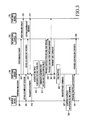
- FIG. 2 is a view illustrating a method for providing contents in a communication system according to a first embodiment of the present invention
- FIG. 3 is a view illustrating a method for providing a user interface (UI) in a communication system according to a second embodiment of the present invention
- FIG. 4 is a view illustrating a method for providing a user interface (UI) in a communication system according to a third embodiment of the present invention
- FIG. 5 is a view illustrating a configuration of a source device or a sink device according to an embodiment of the present invention.
- FIG. 6 is a view illustrating an operation of a source device according to an embodiment of the present invention.
- a main aspect of the present invention is to provide contents having different user interfaces according to device types of multiple sink devices by a source device in a communication system, and in case that a user's control command occurs from at least one sink device, to regenerate contents according to the occurred control command.
- FIG. 1 illustrates an example of a communication system to which an embodiment of the present invention is applied.
- FIG. 1 illustrates a case that three sink devices are included in the communication system as an example, the embodiment of the present invention may be applied to all communication systems including at least one sink device.
- the communication system includes a source device 100 and multiple sink devices 130 to 170 .
- the source device 100 may be a portable device having a relatively small screen, such as a mobile communication device, a smart phone, a tablet personal computer (PC), a portable multimedia player, a personal digital assistant (PDA), or the like.
- Each of the multiple sink devices 130 to 170 may be the same portable device as the source device 100 , or may be an electronic device having a relatively large screen, such as a navigation, a notebook computer, or the like.
- it is assumed that each of the multiple sink devices 130 to 170 has a different type from each other. For example, in case that the communication system of FIG.
- the first sink device 130 may be a device mounted on a head unit (HU) of a driver's seat on the basis of an in vehicle infotainment (IVI) system
- the second sink device 150 and third sink device 170 may be devices mounted on rear seats of the automobile.
- HU head unit
- IVI in vehicle infotainment
- the embodiment of the present invention may be applied to all possible communication systems in which multiple sink devices having different types exist.
- the source device 100 provides contents to each of the multiple sink devices 130 to 170 .
- the source device 100 may generate contents having different UIs according to device types of the multiple sink devices 130 to 170 , and may transmit the contents to each of the multiple sink devices 130 to 170 , respectively.
- the type of each of the multiple sink devices 130 to 170 may be different from each other according to the capacity, type, and function of the sink device. Accordingly, in the embodiments of the present invention, a method for generating and providing contents, by the source device 100 , having different UIs according to types of the sink devices will be described.
- FIG. 2 illustrates a method for providing contents in a communication system according to a first embodiment of the present invention.
- a source device 100 discovers each of a first sink device 130 , a second sink device 150 , and a third sink device 170 through a discovery procedure, and identifies types of the sink devices 130 , 150 , 170 ( 201 ).
- the source device 100 establishes a Miracast session having a real-time streaming protocol (RTSP) that is independent of each of the first sink device 130 , second sink device 150 , and third sink device 170 ( 203 ).
- RTSP real-time streaming protocol
- the source device 100 generates multiple contents for user backward seek (UIBC) handling on the basis of the type of each of the identified sink devices 130 , 150 , 170 ( 205 ).
- the device type may be determined on the basis of at least one among the capacity, type, and function of the device. For example, when the source device 100 is to provide an application to each of the sink devices 130 , 150 , 170 , each of the generated multiple contents provides the same application, but has a different UI.
- the source device 100 provides a content having a UI for a first sink device type (that is, IVI system based device) to the first sink device 130 ( 207 ), provides a content having a UI for a second sink device type (that is, a device located on a rear seat of a driver) to the second sink device 150 ( 209 ), and provides a content having a UI for a third sink device type (that is, a device located on a rear seat of a driver) to the third sink device 170 ( 211 ).
- a first sink device type that is, IVI system based device
- a second sink device type that is, a device located on a rear seat of a driver
- a third sink device type that is, a device located on a rear seat of a driver
- the source device 100 controls the content according to the UIBC command ( 215 ).
- the source device 100 may provide the controlled (regenerated) content to the second sink device 150 .
- the source device 100 may generate a content to have a UI according to a specification of a device (IVI system device) mounted on a driver's seat and may provide the content to the first sink device 130 .
- the source device 100 may differently control the contents according to UIBC commands of each of the sink devices 130 , 150 , 170 .
- the source device 100 may provide a content having a UI for the first sink device type to the first sink device 130 , and may provide contents having UIs for the second and third sink device types to the second and third sink devices 150 , 170 at the same time.
- the first sink device 130 transfers the input UIBC command to the source device 100 .
- the source device 100 may control the content of the third sink device 170 according to the input UIBC command and may provide the content to the third sink device 170 .
- FIG. 3 illustrates a method for providing a user interface (UI) in a communication system according to a second embodiment of the present invention.
- UI user interface
- FIG. 3 illustrates a method for providing a user interface (UI) in a communication system according to a second embodiment of the present invention.
- a first sink device 130 may act as a sink device and as a source device in the communication system at the same time.
- the first sink device 130 discovers each of a source device 100 , a second sink device 150 , and a third sink device 170 through discovery procedure, and identifies types of the sink device 130 , 150 , 170 ( 301 to 305 ). Also, the first sink device 130 establishes a Miracast session having a real-time streaming protocol (RTSP) that is independent of each of the source device 100 , second sink device 150 , and third sink device 170 ( 307 to 311 ).
- RTSP real-time streaming protocol
- the source device 100 transfers a content provided from the source device 100 to the first sink device 130 without an additional process ( 313 ).
- the first sink device 130 identifies own device type and displays the content having a UI for the first sink device 130 through a display unit (not illustrated) ( 315 ). Also, the first sink device 130 generates contents for the corresponding devices on the basis of device types of each of the second sink device 150 and the third sink device 170 ( 317 ).
- the first sink device 130 provides the second sink device 150 with a content having a UI for the second sink device type ( 319 ), and provides the third sink device 170 with a content having a UI for the third sink device type ( 321 ).
- the first sink device 130 maps whether the input UIBC command is input from which sink device ( 325 ). Also, the first sink device 130 transfers to the source device 100 that the UIBC command is input from the second sink device 150 ( 327 ). Then, the source device 100 controls the content according to the transferred UIBC command, and transfers the controlled content to the first sink device 130 ( 331 ). In accordance with this, the first sink device 130 provides the controlled content that is transferred from the source device 100 to the second sink device 150 ( 333 ).
- the first sink device 130 can act as both of the source device and sink device, the first sink device 130 can provide a content to a user of the first sink device 130 and can provide contents to the second and third sink devices 150 , 170 at the same time.
- FIG. 4 illustrates a method for providing a user interface (UI) in a communication system according to a third embodiment of the present invention.
- a source device 100 discovers a first sink device 130 , a second sink device 150 , and a third sink device 170 through discovery procedure, and identifies types of the sink devices 130 , 150 , 170 ( 401 ).
- the source device 100 establishes a Miracast session having a real-time streaming protocol (RTSP) that is independent of each of the first sink device 130 , second sink device 150 , and third sink device 170 ( 403 ).
- RTSP real-time streaming protocol
- the source device 100 generates multiple contents for user backward seek handling on the basis of the identified device types of each of the sink devices 130 , 150 , 170 ( 405 ).
- the device type may be determined on the basis of at least one among the capacity, type, and function of the device. For example, when the source device 100 is to provide an application to each of the sink devices 130 , 150 , 170 , each of the generated multiple contents provides the same application, but has a different UI.
- the source device 100 receives an RTSP establishment parameter message including a status of the first sink device 130 ( 407 ).
- the status of the first sink device 130 is an initial status (for example, a status that a device power is turned on)
- the source device 100 provides the first sink device 130 with a content having a UI for the first sink device type
- the source device 100 controls (regenerates) the contents for each of the sink devices 130 to 170 on the basis of the information on the status change ( 413 ). At this time, in each of the controlled contents, the UI for the corresponding device type is not changed.
- the status change means that the present status is changed as compared to the previous status, for example, the status change may occur when an automobile starts or stops. Also, the information on the status change may be indicated as a change level (for example, low, medium, high).
- the source device 100 provides contents which are controlled for each of the first to third sink devices 130 to 170 to the corresponding device ( 415 ).
- the source device 100 may generate and control contents of all sink devices according to the status of the first sink device 130 .
- FIG. 5 illustrates a configuration of a source device or sink device according to an embodiment of the present invention.
- one device includes a control unit 501 , a storing unit 503 , a transmitting/receiving unit 504 , an input unit 507 , and a display unit 509 .
- the input unit 507 and display unit 509 may be composed of one unit according to a type of a device, and each of a transmitting unit and receiving unit of the transmitting/receiving unit 505 may be composed of a separated unit.
- the input unit 507 may include multiple input keys and function keys for receiving number information or text information and establishing and controlling functions, and may be formed of any one or a combination thereof from input means, such as a touch key, touch pad, touch screen, or the like.
- the input unit 507 when the input unit 507 according to the embodiment of the present invention receives a UIBC command that controls a play location of the content from a user through the function keys, the input unit 507 generates an event signal corresponding to the input UIBC command and transfers the event signal to the control unit 501 .
- the display unit 509 plays the corresponding contents by a control of the control unit 501 .
- the control unit 501 controls the overall operations of generating and providing contents according to the first to third embodiments of the present invention. Especially, when the device illustrated in FIG. 5 performs a function of a source device, the control unit 501 discovers at least one sink device through the transmitting/receiving unit 505 , and identifies a type of the discovered sink device. Also, the control unit 501 establishes a Miracast session having an RTSP that is independent of each of the sink devices discovered by the transmitting/receiving unit 505 . Also, the control unit 501 generates multiple contents for UIBC handling on the basis of the identified types of the sink devices and provides the generated multiple contents to the corresponding sink device, respectively.
- control unit 501 When the control unit 501 receives a control command controlling the contents from at least one other devices, the control device 501 controls the corresponding contents according to the received control command. Also, the control unit 501 provides the controlled contents to the corresponding device through the transmitting/receiving unit 505 .
- FIG. 6 illustrates an operation of a source device according to an embodiment of the present invention.
- the source device discovers at least one sink device, and identifies types of the discovered sink devices ( 601 ).
- the source device establishes a Miracast session having an RTSP that is independent of each of the discovered sink devices ( 603 ).
- the source device generates multiple contents for UIBC handling on the basis of the identified types of the sink devices ( 605 ), and provides each of the generated multiple contents to the corresponding sink device, respectively ( 607 ).
- the source device when the source device receives a control command for controlling the playing contents from at least one sink device ( 609 ), the source device controls the corresponding contents according to the received control command ( 611 ). Also, the source device provides the controlled contents to the corresponding device ( 613 ).
- the control command may be received through the UIBC command according to the first and second embodiments of the present invention, or may be received through an RTSP establishment parameter message according to the third embodiment of the present invention.
- the source device can generate and provide contents to have different UIs according to types of the sink devices. Also, the source device can provide different contents to multiple sink devices according to control commands transferred from the sink devices.
Landscapes
- Engineering & Computer Science (AREA)
- Computer Networks & Wireless Communication (AREA)
- Signal Processing (AREA)
- Multimedia (AREA)
- Databases & Information Systems (AREA)
- Two-Way Televisions, Distribution Of Moving Picture Or The Like (AREA)
- Information Transfer Between Computers (AREA)
Abstract
Description
Claims (8)
Priority Applications (1)
| Application Number | Priority Date | Filing Date | Title |
|---|---|---|---|
| US15/123,923 US10425801B2 (en) | 2014-03-04 | 2015-03-04 | Method and device for providing contents in communication system |
Applications Claiming Priority (5)
| Application Number | Priority Date | Filing Date | Title |
|---|---|---|---|
| US201461947728P | 2014-03-04 | 2014-03-04 | |
| IN320/KOL/2014 | 2014-03-14 | ||
| IN320KO2014 | 2014-03-14 | ||
| PCT/KR2015/002090 WO2015133818A1 (en) | 2014-03-04 | 2015-03-04 | Method and device for providing contents in communication system |
| US15/123,923 US10425801B2 (en) | 2014-03-04 | 2015-03-04 | Method and device for providing contents in communication system |
Publications (2)
| Publication Number | Publication Date |
|---|---|
| US20170026820A1 US20170026820A1 (en) | 2017-01-26 |
| US10425801B2 true US10425801B2 (en) | 2019-09-24 |
Family
ID=54055560
Family Applications (1)
| Application Number | Title | Priority Date | Filing Date |
|---|---|---|---|
| US15/123,923 Expired - Fee Related US10425801B2 (en) | 2014-03-04 | 2015-03-04 | Method and device for providing contents in communication system |
Country Status (5)
| Country | Link |
|---|---|
| US (1) | US10425801B2 (en) |
| EP (1) | EP3116188B1 (en) |
| KR (1) | KR102283778B1 (en) |
| CN (1) | CN106068635B (en) |
| WO (1) | WO2015133818A1 (en) |
Families Citing this family (5)
| Publication number | Priority date | Publication date | Assignee | Title |
|---|---|---|---|---|
| US10530856B2 (en) * | 2016-02-09 | 2020-01-07 | Qualcomm Incorporated | Sharing data between a plurality of source devices that are each connected to a sink device |
| KR102653431B1 (en) | 2016-12-19 | 2024-04-02 | 삼성전자주식회사 | Electronic Device for Selecting Network |
| KR102411287B1 (en) | 2017-11-22 | 2022-06-22 | 삼성전자 주식회사 | Apparatus and method for controlling media output level |
| CN111259175B (en) * | 2020-01-08 | 2024-05-07 | 北京小米移动软件有限公司 | Multidimensional media data transmission method and device, electronic equipment and storage medium |
| CN111414097A (en) * | 2020-03-23 | 2020-07-14 | 维沃移动通信有限公司 | Interaction method, interaction system and display equipment |
Citations (28)
| Publication number | Priority date | Publication date | Assignee | Title |
|---|---|---|---|---|
| US20040267965A1 (en) | 2002-12-31 | 2004-12-30 | Venugopal Vasudevan | System and method for rendering content on multiple devices |
| US20050050474A1 (en) * | 2003-09-02 | 2005-03-03 | Research In Motion Limited | Method and data structure for user interface customization |
| CN1697412A (en) | 2004-05-12 | 2005-11-16 | 三星电子株式会社 | Method for sharing audio/video content over network, and structures of sink device, source device, and message |
| US20080320539A1 (en) * | 2007-06-19 | 2008-12-25 | Kabushiki Kaisha Toshiba | Data Transmission Apparatus and Data Transmission Method |
| US20110047214A1 (en) | 2009-08-24 | 2011-02-24 | Samsung Electronics Co., Ltd. | Method and apparatus for sharing functions between devices via a network |
| US20110107388A1 (en) * | 2009-11-02 | 2011-05-05 | Samsung Electronics Co., Ltd. | Method and apparatus for providing user input back channel in audio/video system |
| WO2011112033A2 (en) | 2010-03-11 | 2011-09-15 | Seok Chul | Method for controlling linkage between mobile terminal and external device, mobile terminal and external device used thereto, and recording medium in which program used thereto is recorded |
| US20120224101A1 (en) * | 2010-09-08 | 2012-09-06 | Universal Electronics Inc. | System and method for providing an adaptive user interface on an electronic appliance |
| CN103150132A (en) | 2013-02-21 | 2013-06-12 | 海信集团有限公司 | Screen transmission method and electronic equipment |
| US20130179605A1 (en) * | 2012-01-06 | 2013-07-11 | Qualcomm Incorporated | Bi-directional tunneling via user input back channel for wireless displays |
| US20130234913A1 (en) | 2012-03-11 | 2013-09-12 | Samsung Electronics Co., Ltd. | Method and apparatus for providing an enhanced wi-fi display session in a wi-fi display network, and system thereof |
| US20130238702A1 (en) | 2012-01-06 | 2013-09-12 | Qualcomm Incorporated | Wireless display with multiscreen service |
| WO2013153887A1 (en) | 2012-04-13 | 2013-10-17 | ソニー株式会社 | Wireless communication device, information processing device, and communication method |
| US20140059263A1 (en) | 2012-05-04 | 2014-02-27 | Jpmorgan Chase Bank, Na | System and Method for Mobile Device Docking Station |
| US20140096165A1 (en) * | 2012-09-28 | 2014-04-03 | Marvell World Trade Ltd. | Enhanced user experience for miracast devices |
| US20140210693A1 (en) * | 2013-01-25 | 2014-07-31 | Qualcomm Incorporated | Connectionless transport for user input control for wireless display devices |
| US20140223490A1 (en) * | 2013-02-07 | 2014-08-07 | Shanghai Powermo Information Tech. Co. Ltd. | Apparatus and method for intuitive user interaction between multiple devices |
| US20150172757A1 (en) * | 2013-12-13 | 2015-06-18 | Qualcomm, Incorporated | Session management and control procedures for supporting multiple groups of sink devices in a peer-to-peer wireless display system |
| US20150179143A1 (en) * | 2013-12-23 | 2015-06-25 | Qualcomm Incorporated | Remote rendering for efficient use of wireless bandwidth for wireless docking |
| US20150195334A1 (en) * | 2013-06-17 | 2015-07-09 | Intel Corporation | Remote user interface for self-service computing device |
| US9154534B1 (en) * | 2013-01-02 | 2015-10-06 | Amazon Technologies, Inc. | Multiple media device infrastructure |
| US20150296416A1 (en) * | 2012-10-29 | 2015-10-15 | Lg Electronics Inc. | Wi-fi direct service method using nfc and device therefor |
| US20150382287A1 (en) * | 2013-02-21 | 2015-12-31 | Lg Electronics Inc. | Method for finding instrument for wi-fi direct p2p (peer to peer) communication and apparatus therefor |
| US9253520B2 (en) * | 2012-12-14 | 2016-02-02 | Biscotti Inc. | Video capture, processing and distribution system |
| US9270935B2 (en) * | 2006-09-07 | 2016-02-23 | Rateze Remote Mgmt Llc | Data presentation in multiple zones using a wireless entertainment hub |
| US9298334B1 (en) * | 2011-02-18 | 2016-03-29 | Marvell International Ltd. | Method and apparatus for providing a user interface having a guided task flow among a plurality of devices |
| US20160338125A1 (en) * | 2014-01-22 | 2016-11-17 | Lg Electronics Inc. | Method for constructing docking protocol by using direct communication, and apparatus therefor |
| US20170332134A1 (en) * | 2014-11-04 | 2017-11-16 | Sony Corporation | Information processing apparatus, communication system, information processing method, and program |
Family Cites Families (2)
| Publication number | Priority date | Publication date | Assignee | Title |
|---|---|---|---|---|
| US10108386B2 (en) * | 2011-02-04 | 2018-10-23 | Qualcomm Incorporated | Content provisioning for wireless back channel |
| KR101918040B1 (en) * | 2012-02-20 | 2019-01-29 | 삼성전자주식회사 | Screen mirroring method and apparatus thereof |
-
2015
- 2015-03-04 CN CN201580011897.0A patent/CN106068635B/en not_active Expired - Fee Related
- 2015-03-04 WO PCT/KR2015/002090 patent/WO2015133818A1/en not_active Ceased
- 2015-03-04 KR KR1020167027473A patent/KR102283778B1/en not_active Expired - Fee Related
- 2015-03-04 EP EP15759190.0A patent/EP3116188B1/en active Active
- 2015-03-04 US US15/123,923 patent/US10425801B2/en not_active Expired - Fee Related
Patent Citations (37)
| Publication number | Priority date | Publication date | Assignee | Title |
|---|---|---|---|---|
| US20040267965A1 (en) | 2002-12-31 | 2004-12-30 | Venugopal Vasudevan | System and method for rendering content on multiple devices |
| US20050050474A1 (en) * | 2003-09-02 | 2005-03-03 | Research In Motion Limited | Method and data structure for user interface customization |
| US7827495B2 (en) | 2003-09-02 | 2010-11-02 | Research In Motion Limited | Method and data structure for user interface customization |
| CN1697412A (en) | 2004-05-12 | 2005-11-16 | 三星电子株式会社 | Method for sharing audio/video content over network, and structures of sink device, source device, and message |
| US20050254524A1 (en) * | 2004-05-12 | 2005-11-17 | Samsung Electronics Co., Ltd. | Method for sharing audio/video content over network, and structures of sink device, source device, and message |
| US9270935B2 (en) * | 2006-09-07 | 2016-02-23 | Rateze Remote Mgmt Llc | Data presentation in multiple zones using a wireless entertainment hub |
| US20080320539A1 (en) * | 2007-06-19 | 2008-12-25 | Kabushiki Kaisha Toshiba | Data Transmission Apparatus and Data Transmission Method |
| US20110047214A1 (en) | 2009-08-24 | 2011-02-24 | Samsung Electronics Co., Ltd. | Method and apparatus for sharing functions between devices via a network |
| CN102484779A (en) | 2009-08-24 | 2012-05-30 | 三星电子株式会社 | Method and apparatus for sharing functions between devices via a network |
| US20110107388A1 (en) * | 2009-11-02 | 2011-05-05 | Samsung Electronics Co., Ltd. | Method and apparatus for providing user input back channel in audio/video system |
| WO2011112033A2 (en) | 2010-03-11 | 2011-09-15 | Seok Chul | Method for controlling linkage between mobile terminal and external device, mobile terminal and external device used thereto, and recording medium in which program used thereto is recorded |
| US20120224101A1 (en) * | 2010-09-08 | 2012-09-06 | Universal Electronics Inc. | System and method for providing an adaptive user interface on an electronic appliance |
| US9298334B1 (en) * | 2011-02-18 | 2016-03-29 | Marvell International Ltd. | Method and apparatus for providing a user interface having a guided task flow among a plurality of devices |
| US20130179605A1 (en) * | 2012-01-06 | 2013-07-11 | Qualcomm Incorporated | Bi-directional tunneling via user input back channel for wireless displays |
| US20130238702A1 (en) | 2012-01-06 | 2013-09-12 | Qualcomm Incorporated | Wireless display with multiscreen service |
| US20130234913A1 (en) | 2012-03-11 | 2013-09-12 | Samsung Electronics Co., Ltd. | Method and apparatus for providing an enhanced wi-fi display session in a wi-fi display network, and system thereof |
| CN103368935A (en) | 2012-03-11 | 2013-10-23 | 三星电子株式会社 | Method and apparatus for providing an enhanced Wi-Fi display session in a Wi-Fi display network |
| WO2013153887A1 (en) | 2012-04-13 | 2013-10-17 | ソニー株式会社 | Wireless communication device, information processing device, and communication method |
| CA2867783A1 (en) | 2012-04-13 | 2013-10-17 | Sony Corporation | Wireless communication device, information processing device, and communication method |
| US20150071147A1 (en) * | 2012-04-13 | 2015-03-12 | Sony Corporation | Wireless communication device information processing device, and communication method |
| US20150094072A1 (en) | 2012-04-13 | 2015-04-02 | Sony Corporation | Wireless communication device, communication system, and communication method |
| US20150085847A1 (en) | 2012-04-13 | 2015-03-26 | Sony Corporation | Wireless communication device, information processing device, and communication method |
| US20140059263A1 (en) | 2012-05-04 | 2014-02-27 | Jpmorgan Chase Bank, Na | System and Method for Mobile Device Docking Station |
| US20140096165A1 (en) * | 2012-09-28 | 2014-04-03 | Marvell World Trade Ltd. | Enhanced user experience for miracast devices |
| US20150296416A1 (en) * | 2012-10-29 | 2015-10-15 | Lg Electronics Inc. | Wi-fi direct service method using nfc and device therefor |
| US9253520B2 (en) * | 2012-12-14 | 2016-02-02 | Biscotti Inc. | Video capture, processing and distribution system |
| US9154534B1 (en) * | 2013-01-02 | 2015-10-06 | Amazon Technologies, Inc. | Multiple media device infrastructure |
| US20140210693A1 (en) * | 2013-01-25 | 2014-07-31 | Qualcomm Incorporated | Connectionless transport for user input control for wireless display devices |
| US20140223490A1 (en) * | 2013-02-07 | 2014-08-07 | Shanghai Powermo Information Tech. Co. Ltd. | Apparatus and method for intuitive user interaction between multiple devices |
| US20150382287A1 (en) * | 2013-02-21 | 2015-12-31 | Lg Electronics Inc. | Method for finding instrument for wi-fi direct p2p (peer to peer) communication and apparatus therefor |
| CN103150132A (en) | 2013-02-21 | 2013-06-12 | 海信集团有限公司 | Screen transmission method and electronic equipment |
| US20150195334A1 (en) * | 2013-06-17 | 2015-07-09 | Intel Corporation | Remote user interface for self-service computing device |
| US20150172757A1 (en) * | 2013-12-13 | 2015-06-18 | Qualcomm, Incorporated | Session management and control procedures for supporting multiple groups of sink devices in a peer-to-peer wireless display system |
| US9699500B2 (en) * | 2013-12-13 | 2017-07-04 | Qualcomm Incorporated | Session management and control procedures for supporting multiple groups of sink devices in a peer-to-peer wireless display system |
| US20150179143A1 (en) * | 2013-12-23 | 2015-06-25 | Qualcomm Incorporated | Remote rendering for efficient use of wireless bandwidth for wireless docking |
| US20160338125A1 (en) * | 2014-01-22 | 2016-11-17 | Lg Electronics Inc. | Method for constructing docking protocol by using direct communication, and apparatus therefor |
| US20170332134A1 (en) * | 2014-11-04 | 2017-11-16 | Sony Corporation | Information processing apparatus, communication system, information processing method, and program |
Non-Patent Citations (8)
| Title |
|---|
| Chinese Office Action dated Sep. 30, 2018 issued in counterpart application No. 201580011897.0, 10 pages. |
| European Search Report dated Jul. 20, 2017 issued in counterpart application No. 15759190.0-1853, 11 pages. |
| European Search Report dated Mar. 19, 2018 issued in counterpart application No. 15759190.0-1213, 11 pages. |
| PCT/ISA/210 Search Report issued on PCT/KR2015/002090 (pp. 3). |
| PCT/ISA/237 Written Opinion issued on PCT/KR2015/002090 (pp. 6). |
| Wi-Fi Alliance, "Wi-Fi Alliance Technical Committee Wi-Fi Display Technical Task Group Wi-Fi Display Technical Specification V1.0.0", XP-055320680, Jan. 1, 2012, 149 pages. |
| Wi-Fi Alliance, "Wi-Fi Certified Miracast TM: Extending the Wi-Fi Experience to Seamless Video Display", XP-002700078, Internet Citation, Sep. 19, 2012, 18 pages. |
| Wi-Fi Alliance, "Wi-Fi Peer-to-Peer (P2P) Technical Specification V1.1", XP-009163866, Internet Citation, Jan. 1, 2010, 159 pages. |
Also Published As
| Publication number | Publication date |
|---|---|
| CN106068635B (en) | 2019-10-08 |
| EP3116188A4 (en) | 2017-08-23 |
| EP3116188B1 (en) | 2019-07-24 |
| EP3116188A1 (en) | 2017-01-11 |
| KR20160132049A (en) | 2016-11-16 |
| US20170026820A1 (en) | 2017-01-26 |
| WO2015133818A1 (en) | 2015-09-11 |
| CN106068635A (en) | 2016-11-02 |
| KR102283778B1 (en) | 2021-08-02 |
Similar Documents
| Publication | Publication Date | Title |
|---|---|---|
| CN112218271B (en) | Wireless communication in the car | |
| EP3087716B1 (en) | Remote rendering for efficient use of wireless bandwidth for wireless docking | |
| US10021180B2 (en) | Universal environment extender | |
| US9197680B2 (en) | Establishing and controlling audio and voice back channels of a Wi-Fi display connection | |
| US8634771B2 (en) | Simple peer-to-peer network formation | |
| US9402149B2 (en) | Tethering providing system and method using short distance communication | |
| EP4033773B1 (en) | Connection method for multimedia playing device, multimedia playing device and control terminal | |
| CN112804755B (en) | Uplink resource determining method, indicating method, terminal and network equipment | |
| JP2015526926A (en) | System and method for wireless docking using a wireless docking profile | |
| JP2017531974A (en) | Network connection method, device, system, program, and recording medium | |
| EP3116188B1 (en) | Method and device for providing contents in communication system | |
| US12335554B2 (en) | Direct media connection of a rear-seat entertainment unit | |
| KR101092009B1 (en) | Switching Wireless Multi-Connect Peripherals | |
| CN104966520A (en) | Play control method, intelligent terminal and vehicle-mounted play system | |
| WO2018096849A1 (en) | Information processing device, information processing method, and program | |
| EP2480003A1 (en) | Electronic apparatus for remotely controlling a mobile information terminal device | |
| JP2015104098A (en) | Wireless communication apparatus and wireless communication method thereof | |
| US20180183847A1 (en) | Methods and apparatus for collaborative content rendering | |
| CN120434325B (en) | Feature switching methods and related equipment | |
| KR20200063726A (en) | Apparatus and method for providing information for multidevice | |
| KR20190125963A (en) | Apparatus and method for providing short-range wireless communication |
Legal Events
| Date | Code | Title | Description |
|---|---|---|---|
| AS | Assignment |
Owner name: SAMSUNG ELECTRONICS CO., LTD., KOREA, REPUBLIC OF Free format text: ASSIGNMENT OF ASSIGNORS INTEREST;ASSIGNORS:HAN, SE-HEE;SHIN, IN-YOUNG;VEDULA, KIRAN BHARADWAJ;AND OTHERS;REEL/FRAME:039763/0360 Effective date: 20160902 |
|
| STPP | Information on status: patent application and granting procedure in general |
Free format text: FINAL REJECTION MAILED |
|
| STPP | Information on status: patent application and granting procedure in general |
Free format text: DOCKETED NEW CASE - READY FOR EXAMINATION |
|
| STPP | Information on status: patent application and granting procedure in general |
Free format text: NOTICE OF ALLOWANCE MAILED -- APPLICATION RECEIVED IN OFFICE OF PUBLICATIONS |
|
| STPP | Information on status: patent application and granting procedure in general |
Free format text: AWAITING TC RESP., ISSUE FEE NOT PAID |
|
| STPP | Information on status: patent application and granting procedure in general |
Free format text: NOTICE OF ALLOWANCE MAILED -- APPLICATION RECEIVED IN OFFICE OF PUBLICATIONS |
|
| STPP | Information on status: patent application and granting procedure in general |
Free format text: PUBLICATIONS -- ISSUE FEE PAYMENT VERIFIED |
|
| STCF | Information on status: patent grant |
Free format text: PATENTED CASE |
|
| FEPP | Fee payment procedure |
Free format text: MAINTENANCE FEE REMINDER MAILED (ORIGINAL EVENT CODE: REM.); ENTITY STATUS OF PATENT OWNER: LARGE ENTITY |
|
| LAPS | Lapse for failure to pay maintenance fees |
Free format text: PATENT EXPIRED FOR FAILURE TO PAY MAINTENANCE FEES (ORIGINAL EVENT CODE: EXP.); ENTITY STATUS OF PATENT OWNER: LARGE ENTITY |
|
| STCH | Information on status: patent discontinuation |
Free format text: PATENT EXPIRED DUE TO NONPAYMENT OF MAINTENANCE FEES UNDER 37 CFR 1.362 |
|
| FP | Lapsed due to failure to pay maintenance fee |
Effective date: 20230924 |