US10424740B2 - Compound, material for organic electroluminescence devices, organic electroluminescence device, and electronic device - Google Patents
Compound, material for organic electroluminescence devices, organic electroluminescence device, and electronic device Download PDFInfo
- Publication number
- US10424740B2 US10424740B2 US16/176,762 US201816176762A US10424740B2 US 10424740 B2 US10424740 B2 US 10424740B2 US 201816176762 A US201816176762 A US 201816176762A US 10424740 B2 US10424740 B2 US 10424740B2
- Authority
- US
- United States
- Prior art keywords
- group
- substituted
- ring
- unsubstituted
- carbon atoms
- Prior art date
- Legal status (The legal status is an assumption and is not a legal conclusion. Google has not performed a legal analysis and makes no representation as to the accuracy of the status listed.)
- Active
Links
- 0 CCN(CC)C[Ar].[1*]C1=C([2*])C([3*])=C([4*])C2=C1C1(C3=C(CC4=C1C([15*])=C([16*])C([17*])=C4[18*])C([11*])=C([12*])C([13*])=C3[14*])C1=C2C([5*])=C([6*])C([7*])=C1[8*].[21*]C1=C([22*])C([23*])=C([24*])C2=C1C1(C3=C([Y]C4=C1C([35*])=C([36*])C([37*])=C4[38*])C([31*])=C([32*])C([33*])=C3[34*])C1=C2C([25*])=C([26*])C([27*])=C1[28*] Chemical compound CCN(CC)C[Ar].[1*]C1=C([2*])C([3*])=C([4*])C2=C1C1(C3=C(CC4=C1C([15*])=C([16*])C([17*])=C4[18*])C([11*])=C([12*])C([13*])=C3[14*])C1=C2C([5*])=C([6*])C([7*])=C1[8*].[21*]C1=C([22*])C([23*])=C([24*])C2=C1C1(C3=C([Y]C4=C1C([35*])=C([36*])C([37*])=C4[38*])C([31*])=C([32*])C([33*])=C3[34*])C1=C2C([25*])=C([26*])C([27*])=C1[28*] 0.000 description 12
- BCJRKLIECCSUKM-UHFFFAOYSA-N C1=CC=C(C2=CC=CC=C2)C=C1.C1=CC=C(C2=CC=CC=C2)C=C1.CC.CC.CC.CC.CC.CC1=CC=CC=C1.CC1=CC=CC=C1 Chemical compound C1=CC=C(C2=CC=CC=C2)C=C1.C1=CC=C(C2=CC=CC=C2)C=C1.CC.CC.CC.CC.CC.CC1=CC=CC=C1.CC1=CC=CC=C1 BCJRKLIECCSUKM-UHFFFAOYSA-N 0.000 description 3
- ZDCIKWODHYZIEO-UHFFFAOYSA-N C1=CC=C(C2=CC=CC=C2)C=C1.C1=CC=C(C2=CC=CC=C2)C=C1.C1=CC=C2C=CC=CC2=C1.C1=CC=C2C=CC=CC2=C1.CC.CC.CC.CC.CC.CC.CC.CC.CC.CC1=CC=CC=C1.CC1=CC=CC=C1 Chemical compound C1=CC=C(C2=CC=CC=C2)C=C1.C1=CC=C(C2=CC=CC=C2)C=C1.C1=CC=C2C=CC=CC2=C1.C1=CC=C2C=CC=CC2=C1.CC.CC.CC.CC.CC.CC.CC.CC.CC.CC1=CC=CC=C1.CC1=CC=CC=C1 ZDCIKWODHYZIEO-UHFFFAOYSA-N 0.000 description 2
- SJDOEFJJJSGSCB-UHFFFAOYSA-N C1=CC=C(N(C2=CC=CC=C2)C2=CC3=C(C=C2)C2=C(C=C(N(C4=CC=CC=C4)C4=CC=CC=C4)C4=C2C=CC=C4)C32C3=C(C=CC=C3)OC3=C2C=CC=C3)C=C1 Chemical compound C1=CC=C(N(C2=CC=CC=C2)C2=CC3=C(C=C2)C2=C(C=C(N(C4=CC=CC=C4)C4=CC=CC=C4)C4=C2C=CC=C4)C32C3=C(C=CC=C3)OC3=C2C=CC=C3)C=C1 SJDOEFJJJSGSCB-UHFFFAOYSA-N 0.000 description 2
- BBZZZGTZVVTDPP-UHFFFAOYSA-N BrC1=C(C2=CC=CC=C2)C=CC=C1.C1=CC(NC2=CC3=C(C=C2)C2(C4=C(C=CC=C4)OC4=C2C=CC=C4)C2=C3C=CC=C2)=C2C(=C1)C1(C3=C(C=CC=C3)OC3=C1C=CC=C3)C1=C2C=CC=C1.C1=CC=C(C2=C(N(C3=CC4=C(C=C3)C3(C5=C(C=CC=C5)OC5=C3C=CC=C5)C3=C4C=CC=C3)C3=C4C(=CC=C3)C3(C5=C(C=CC=C5)OC5=C3C=CC=C5)C3=C4C=CC=C3)C=CC=C2)C=C1.CB(F)(F)(F)F Chemical compound BrC1=C(C2=CC=CC=C2)C=CC=C1.C1=CC(NC2=CC3=C(C=C2)C2(C4=C(C=CC=C4)OC4=C2C=CC=C4)C2=C3C=CC=C2)=C2C(=C1)C1(C3=C(C=CC=C3)OC3=C1C=CC=C3)C1=C2C=CC=C1.C1=CC=C(C2=C(N(C3=CC4=C(C=C3)C3(C5=C(C=CC=C5)OC5=C3C=CC=C5)C3=C4C=CC=C3)C3=C4C(=CC=C3)C3(C5=C(C=CC=C5)OC5=C3C=CC=C5)C3=C4C=CC=C3)C=CC=C2)C=C1.CB(F)(F)(F)F BBZZZGTZVVTDPP-UHFFFAOYSA-N 0.000 description 1
- QEXRCJLTELZZKI-UHFFFAOYSA-N BrC1=C(C2=CC=CC=C2)C=CC=C1.C1=CC(NC2=CC3=C(C=C2)C2=C(C=CC=C2)C32C3=C(C=CC=C3)OC3=C2C=CC=C3)=C2C(=C1)C1(C3=C(C=CC=C3)OC3=C1C=CC=C3)C1=C2C=CC=C1.C1=CC=C(C2=C(N(C3=CC4=C(C=C3)C3=C(C=CC=C3)C43C4=C(C=CC=C4)OC4=C3C=CC=C4)C3=C4C(=CC=C3)C3(C5=C(C=CC=C5)OC5=C3C=CC=C5)C3=C4C=CC=C3)C=CC=C2)C=C1.CB(F)(F)(F)F Chemical compound BrC1=C(C2=CC=CC=C2)C=CC=C1.C1=CC(NC2=CC3=C(C=C2)C2=C(C=CC=C2)C32C3=C(C=CC=C3)OC3=C2C=CC=C3)=C2C(=C1)C1(C3=C(C=CC=C3)OC3=C1C=CC=C3)C1=C2C=CC=C1.C1=CC=C(C2=C(N(C3=CC4=C(C=C3)C3=C(C=CC=C3)C43C4=C(C=CC=C4)OC4=C3C=CC=C4)C3=C4C(=CC=C3)C3(C5=C(C=CC=C5)OC5=C3C=CC=C5)C3=C4C=CC=C3)C=CC=C2)C=C1.CB(F)(F)(F)F QEXRCJLTELZZKI-UHFFFAOYSA-N 0.000 description 1
- LHEUIDTXICFNJG-UHFFFAOYSA-N BrC1=C(C2=CC=CC=C2)C=CC=C1.C1=CC2=C(C=C1)C1(C3=C(C=CC=C3)O2)C2=C(C=CC=C2)C2=C1C=CC(NC1=CC3=C(C=C1)C1=C(C=CC=C1)C31C3=C(C=CC=C3)OC3=C1C=CC=C3)=C2.C1=CC=C(C2=CC=CC=C2N(C2=CC3=C(C=C2)C2(C4=C(C=CC=C4)OC4=C2C=CC=C4)C2=C3C=CC=C2)C2=CC3=C(C=C2)C2=C(C=CC=C2)C32C3=C(C=CC=C3)OC3=C2C=CC=C3)C=C1.CB(F)(F)(F)F Chemical compound BrC1=C(C2=CC=CC=C2)C=CC=C1.C1=CC2=C(C=C1)C1(C3=C(C=CC=C3)O2)C2=C(C=CC=C2)C2=C1C=CC(NC1=CC3=C(C=C1)C1=C(C=CC=C1)C31C3=C(C=CC=C3)OC3=C1C=CC=C3)=C2.C1=CC=C(C2=CC=CC=C2N(C2=CC3=C(C=C2)C2(C4=C(C=CC=C4)OC4=C2C=CC=C4)C2=C3C=CC=C2)C2=CC3=C(C=C2)C2=C(C=CC=C2)C32C3=C(C=CC=C3)OC3=C2C=CC=C3)C=C1.CB(F)(F)(F)F LHEUIDTXICFNJG-UHFFFAOYSA-N 0.000 description 1
- SUOZTIDKTBOHPN-UHFFFAOYSA-N BrC1=CC2=C(C=C1)C1(C3=C(C=CC=C3)OC3=C1C=CC=C3)C1=C2C=CC=C1.C1=CC(NC2=CC3=C(C=C2)C2(C4=C(C=CC=C4)OC4=C2C=CC=C4)C2=C3C=CC=C2)=C2C(=C1)C1(C3=C(C=CC=C3)OC3=C1C=CC=C3)C1=C2C=CC=C1.CB(F)(F)(F)F.NC1=CC=CC2=C1C1=C(C=CC=C1)C21C2=C(C=CC=C2)OC2=C1C=CC=C2 Chemical compound BrC1=CC2=C(C=C1)C1(C3=C(C=CC=C3)OC3=C1C=CC=C3)C1=C2C=CC=C1.C1=CC(NC2=CC3=C(C=C2)C2(C4=C(C=CC=C4)OC4=C2C=CC=C4)C2=C3C=CC=C2)=C2C(=C1)C1(C3=C(C=CC=C3)OC3=C1C=CC=C3)C1=C2C=CC=C1.CB(F)(F)(F)F.NC1=CC=CC2=C1C1=C(C=CC=C1)C21C2=C(C=CC=C2)OC2=C1C=CC=C2 SUOZTIDKTBOHPN-UHFFFAOYSA-N 0.000 description 1
- NBZYZHATIRXVQS-UHFFFAOYSA-N BrC1=CC2=C(C=C1)C1(C3=C(C=CC=C3)OC3=C1C=CC=C3)C1=C2C=CC=C1.C1=CC=C(C2=C(N(C3=CC=C4C(=C3)C3=C(C=CC=C3)C43C4=C(C=CC=C4)OC4=C3C=CC=C4)C3=CC4=C(C=C3)C3(C5=C(C=CC=C5)OC5=C3C=CC=C5)C3=C4C=CC=C3)C=CC=C2)C=C1.CB(F)(F)(F)F.NC1=C(C2=CC=CC=C2)C=CC=C1 Chemical compound BrC1=CC2=C(C=C1)C1(C3=C(C=CC=C3)OC3=C1C=CC=C3)C1=C2C=CC=C1.C1=CC=C(C2=C(N(C3=CC=C4C(=C3)C3=C(C=CC=C3)C43C4=C(C=CC=C4)OC4=C3C=CC=C4)C3=CC4=C(C=C3)C3(C5=C(C=CC=C5)OC5=C3C=CC=C5)C3=C4C=CC=C3)C=CC=C2)C=C1.CB(F)(F)(F)F.NC1=C(C2=CC=CC=C2)C=CC=C1 NBZYZHATIRXVQS-UHFFFAOYSA-N 0.000 description 1
- PPVYORHMVPPQMI-UHFFFAOYSA-N BrC1=CC2=C(C=C1)C1(C3=C(C=CC=C3)OC3=C1C=CC=C3)C1=C2C=CC=C1.C1=CC=C(C2=CC=C(N(C3=CC=C4C(=C3)C3=C(C=CC=C3)C43C4=C(C=CC=C4)OC4=C3C=CC=C4)C3=CC4=C(C=C3)C3(C5=C(C=CC=C5)OC5=C3C=CC=C5)C3=C4C=CC=C3)C=C2)C=C1.CB(F)(F)(F)F.NC1=CC=C(C2=CC=CC=C2)C=C1 Chemical compound BrC1=CC2=C(C=C1)C1(C3=C(C=CC=C3)OC3=C1C=CC=C3)C1=C2C=CC=C1.C1=CC=C(C2=CC=C(N(C3=CC=C4C(=C3)C3=C(C=CC=C3)C43C4=C(C=CC=C4)OC4=C3C=CC=C4)C3=CC4=C(C=C3)C3(C5=C(C=CC=C5)OC5=C3C=CC=C5)C3=C4C=CC=C3)C=C2)C=C1.CB(F)(F)(F)F.NC1=CC=C(C2=CC=CC=C2)C=C1 PPVYORHMVPPQMI-UHFFFAOYSA-N 0.000 description 1
- LYADZJJDWAROQU-UHFFFAOYSA-N BrC1=CC2=C(C=C1)C1(C3=C(C=CC=C3)OC3=C1C=CC=C3)C1=C2C=CC=C1.CS(=O)(=O)O.O=C1C2=C(C=C(Br)C=C2)/C2=C/C=C/C=C\12 Chemical compound BrC1=CC2=C(C=C1)C1(C3=C(C=CC=C3)OC3=C1C=CC=C3)C1=C2C=CC=C1.CS(=O)(=O)O.O=C1C2=C(C=C(Br)C=C2)/C2=C/C=C/C=C\12 LYADZJJDWAROQU-UHFFFAOYSA-N 0.000 description 1
- FKECSQCJXVKCJU-UHFFFAOYSA-N BrC1=CC2=C(C=C1)C1(C3=C(C=CC=C3)OC3=C1C=CC=C3)C1=C2C=CC=C1.NC1=CC2=C(C=C1)C1(C3=C(C=CC=C3)OC3=C1C=CC=C3)C1=C2C=CC=C1 Chemical compound BrC1=CC2=C(C=C1)C1(C3=C(C=CC=C3)OC3=C1C=CC=C3)C1=C2C=CC=C1.NC1=CC2=C(C=C1)C1(C3=C(C=CC=C3)OC3=C1C=CC=C3)C1=C2C=CC=C1 FKECSQCJXVKCJU-UHFFFAOYSA-N 0.000 description 1
- LANAKLAGAWFYHV-UHFFFAOYSA-N BrC1=CC2=C(C=C1)C1=C(C=CC=C1)C21C2=C(C=CC=C2)OC2=C1C=CC=C2.C.C1=CC2=C(C=C1)C1(C3=C(C=CC=C3)O2)C2=C(C=CC=C2)C2=C1C=C(N(C1=CC3=C(C=C1)C1=C(C=CC=C1)C31C3=C(C=CC=C3)OC3=C1C=CC=C3)C1=C3\C4=C(C=CC=C4)C4(C5=C(C=CC=C5)OC5=C4C=CC=C5)\C3=C/C=C\1)C=C2.C1=CC2=C(C=C1)C1(C3=C(C=CC=C3)O2)C2=C(C=CC=C2)C2=C1C=C(NC1=C3\C4=C(C=CC=C4)C4(C5=C(C=CC=C5)OC5=C4C=CC=C5)\C3=C/C=C\1)C=C2.CB(F)(F)(F)F Chemical compound BrC1=CC2=C(C=C1)C1=C(C=CC=C1)C21C2=C(C=CC=C2)OC2=C1C=CC=C2.C.C1=CC2=C(C=C1)C1(C3=C(C=CC=C3)O2)C2=C(C=CC=C2)C2=C1C=C(N(C1=CC3=C(C=C1)C1=C(C=CC=C1)C31C3=C(C=CC=C3)OC3=C1C=CC=C3)C1=C3\C4=C(C=CC=C4)C4(C5=C(C=CC=C5)OC5=C4C=CC=C5)\C3=C/C=C\1)C=C2.C1=CC2=C(C=C1)C1(C3=C(C=CC=C3)O2)C2=C(C=CC=C2)C2=C1C=C(NC1=C3\C4=C(C=CC=C4)C4(C5=C(C=CC=C5)OC5=C4C=CC=C5)\C3=C/C=C\1)C=C2.CB(F)(F)(F)F LANAKLAGAWFYHV-UHFFFAOYSA-N 0.000 description 1
- ACQDZXAOVQFJHQ-UHFFFAOYSA-N BrC1=CC2=C(C=C1)C1=C(C=CC=C1)C21C2=C(C=CC=C2)OC2=C1C=CC=C2.C1=CC2=C(C=C1)C1(C3=C(C=CC=C3)O2)C2=C(C=CC=C2)C2=C1C=C(N(C1=CC3=C(C=C1)C1=C(C=CC=C1)C31C3=C(C=CC=C3)OC3=C1C=CC=C3)C1=C3SC4=C(C=CC=C4)C3=CC=C1)C=C2.CB(F)(F)(F)F.NC1=CC=CC2=C1SC1=C2C=CC=C1 Chemical compound BrC1=CC2=C(C=C1)C1=C(C=CC=C1)C21C2=C(C=CC=C2)OC2=C1C=CC=C2.C1=CC2=C(C=C1)C1(C3=C(C=CC=C3)O2)C2=C(C=CC=C2)C2=C1C=C(N(C1=CC3=C(C=C1)C1=C(C=CC=C1)C31C3=C(C=CC=C3)OC3=C1C=CC=C3)C1=C3SC4=C(C=CC=C4)C3=CC=C1)C=C2.CB(F)(F)(F)F.NC1=CC=CC2=C1SC1=C2C=CC=C1 ACQDZXAOVQFJHQ-UHFFFAOYSA-N 0.000 description 1
- KAIPBDBGNNUSKC-UHFFFAOYSA-N BrC1=CC2=C(C=C1)C1=C(C=CC=C1)C21C2=C(C=CC=C2)OC2=C1C=CC=C2.C1=CC2=C(C=C1)C1(C3=C(C=CC=C3)O2)C2=C(C=CC=C2)C2=C1C=C(N(C1=CC3=C(C=C1)C1=C(C=CC=C1)C31C3=C(C=CC=C3)OC3=C1C=CC=C3)C1=CC3=C(C=C1)C1=C(C=CC=C1)C31C3=C(C=CC=C3)C3=C1C=CC=C3)C=C2.CB(F)(F)(F)F.NC1=CC=C2C(=C1)C1(C3=C2C=CC=C3)C2=C(C=CC=C2)C2=C1C=CC=C2 Chemical compound BrC1=CC2=C(C=C1)C1=C(C=CC=C1)C21C2=C(C=CC=C2)OC2=C1C=CC=C2.C1=CC2=C(C=C1)C1(C3=C(C=CC=C3)O2)C2=C(C=CC=C2)C2=C1C=C(N(C1=CC3=C(C=C1)C1=C(C=CC=C1)C31C3=C(C=CC=C3)OC3=C1C=CC=C3)C1=CC3=C(C=C1)C1=C(C=CC=C1)C31C3=C(C=CC=C3)C3=C1C=CC=C3)C=C2.CB(F)(F)(F)F.NC1=CC=C2C(=C1)C1(C3=C2C=CC=C3)C2=C(C=CC=C2)C2=C1C=CC=C2 KAIPBDBGNNUSKC-UHFFFAOYSA-N 0.000 description 1
- MHFSWXPOYSSSFC-UHFFFAOYSA-N BrC1=CC2=C(C=C1)C1=C(C=CC=C1)C21C2=C(C=CC=C2)OC2=C1C=CC=C2.C1=CC2=C(C=C1)C1(C3=C(C=CC=C3)O2)C2=C(C=CC=C2)C2=C1C=C(N(C1=CC3=C(C=C1)SC1=C3C=CC=C1)C1=CC3=C(C=C1)C1=C(C=CC=C1)C31C3=C(C=CC=C3)OC3=C1C=CC=C3)C=C2.CB(F)(F)(F)F.NC1=CC=C2SC3=C(C=CC=C3)C2=C1 Chemical compound BrC1=CC2=C(C=C1)C1=C(C=CC=C1)C21C2=C(C=CC=C2)OC2=C1C=CC=C2.C1=CC2=C(C=C1)C1(C3=C(C=CC=C3)O2)C2=C(C=CC=C2)C2=C1C=C(N(C1=CC3=C(C=C1)SC1=C3C=CC=C1)C1=CC3=C(C=C1)C1=C(C=CC=C1)C31C3=C(C=CC=C3)OC3=C1C=CC=C3)C=C2.CB(F)(F)(F)F.NC1=CC=C2SC3=C(C=CC=C3)C2=C1 MHFSWXPOYSSSFC-UHFFFAOYSA-N 0.000 description 1
- DEEFNUJNHIXENG-UHFFFAOYSA-N BrC1=CC2=C(C=C1)C1=C(C=CC=C1)C21C2=C(C=CC=C2)OC2=C1C=CC=C2.C1=CC2=C(C=C1)C1(C3=C(C=CC=C3)O2)C2=C(C=CC=C2)C2=C1C=C(N(C1=CC=C(C3=C/C=C4\SC5=C(C=CC=C5)\C4=C\3)C=C1)C1=CC3=C(C=C1)C1=C(C=CC=C1)C31C3=C(C=CC=C3)OC3=C1C=CC=C3)C=C2.CB(F)(F)(F)F.NC1=CC=C(C2=CC=C3SC4=C(C=CC=C4)C3=C2)C=C1 Chemical compound BrC1=CC2=C(C=C1)C1=C(C=CC=C1)C21C2=C(C=CC=C2)OC2=C1C=CC=C2.C1=CC2=C(C=C1)C1(C3=C(C=CC=C3)O2)C2=C(C=CC=C2)C2=C1C=C(N(C1=CC=C(C3=C/C=C4\SC5=C(C=CC=C5)\C4=C\3)C=C1)C1=CC3=C(C=C1)C1=C(C=CC=C1)C31C3=C(C=CC=C3)OC3=C1C=CC=C3)C=C2.CB(F)(F)(F)F.NC1=CC=C(C2=CC=C3SC4=C(C=CC=C4)C3=C2)C=C1 DEEFNUJNHIXENG-UHFFFAOYSA-N 0.000 description 1
- YQGJHGJJLQVULE-UHFFFAOYSA-N BrC1=CC2=C(C=C1)C1=C(C=CC=C1)C21C2=C(C=CC=C2)OC2=C1C=CC=C2.C1=CC2=C(C=C1)C1(C3=C(C=CC=C3)O2)C2=C(C=CC=C2)C2=C1C=C(N(C1=CC=C(C3=C4SC5=C(C=CC=C5)C4=CC=C3)C=C1)C1=CC3=C(C=C1)C1=C(C=CC=C1)C31C3=C(C=CC=C3)OC3=C1C=CC=C3)C=C2.CB(F)(F)(F)F.NC1=CC=C(C2=CC=CC3=C2SC2=C3C=CC=C2)C=C1 Chemical compound BrC1=CC2=C(C=C1)C1=C(C=CC=C1)C21C2=C(C=CC=C2)OC2=C1C=CC=C2.C1=CC2=C(C=C1)C1(C3=C(C=CC=C3)O2)C2=C(C=CC=C2)C2=C1C=C(N(C1=CC=C(C3=C4SC5=C(C=CC=C5)C4=CC=C3)C=C1)C1=CC3=C(C=C1)C1=C(C=CC=C1)C31C3=C(C=CC=C3)OC3=C1C=CC=C3)C=C2.CB(F)(F)(F)F.NC1=CC=C(C2=CC=CC3=C2SC2=C3C=CC=C2)C=C1 YQGJHGJJLQVULE-UHFFFAOYSA-N 0.000 description 1
- ZFSOAFPZHPGNEC-UHFFFAOYSA-N BrC1=CC2=C(C=C1)C1=C(C=CC=C1)C21C2=C(C=CC=C2)OC2=C1C=CC=C2.C1=CC2=C(C=C1)C1(C3=C(C=CC=C3)O2)C2=C(C=CC=C2)C2=C1C=C(NC1=C3\C4=C(C=CC=C4)C4(C5=C(C=CC=C5)OC5=C4C=CC=C5)\C3=C/C=C\1)C=C2.CB(F)(F)(F)F.NC1=CC=CC2=C1C1=C(C=CC=C1)C21C2=C(C=CC=C2)OC2=C1C=CC=C2 Chemical compound BrC1=CC2=C(C=C1)C1=C(C=CC=C1)C21C2=C(C=CC=C2)OC2=C1C=CC=C2.C1=CC2=C(C=C1)C1(C3=C(C=CC=C3)O2)C2=C(C=CC=C2)C2=C1C=C(NC1=C3\C4=C(C=CC=C4)C4(C5=C(C=CC=C5)OC5=C4C=CC=C5)\C3=C/C=C\1)C=C2.CB(F)(F)(F)F.NC1=CC=CC2=C1C1=C(C=CC=C1)C21C2=C(C=CC=C2)OC2=C1C=CC=C2 ZFSOAFPZHPGNEC-UHFFFAOYSA-N 0.000 description 1
- XEZSZNWHLXQNKE-UHFFFAOYSA-N BrC1=CC2=C(C=C1)C1=C(C=CC=C1)C21C2=C(C=CC=C2)OC2=C1C=CC=C2.C1=CC2=C(C=C1)C1(C3=C(C=CC=C3)O2)C2=C(C=CC=C2)C2=C1C=CC(NC1=CC3=C(C=C1)C1=C(C=CC=C1)C31C3=C(C=CC=C3)OC3=C1C=CC=C3)=C2.CB(F)(F)(F)F.NC1=CC2=C(C=C1)C1(C3=C(C=CC=C3)OC3=C1C=CC=C3)C1=C2C=CC=C1 Chemical compound BrC1=CC2=C(C=C1)C1=C(C=CC=C1)C21C2=C(C=CC=C2)OC2=C1C=CC=C2.C1=CC2=C(C=C1)C1(C3=C(C=CC=C3)O2)C2=C(C=CC=C2)C2=C1C=CC(NC1=CC3=C(C=C1)C1=C(C=CC=C1)C31C3=C(C=CC=C3)OC3=C1C=CC=C3)=C2.CB(F)(F)(F)F.NC1=CC2=C(C=C1)C1(C3=C(C=CC=C3)OC3=C1C=CC=C3)C1=C2C=CC=C1 XEZSZNWHLXQNKE-UHFFFAOYSA-N 0.000 description 1
- MCFPIAGFEDFSKQ-UHFFFAOYSA-N BrC1=CC2=C(C=C1)C1=C(C=CC=C1)C21C2=C(C=CC=C2)OC2=C1C=CC=C2.C1=CC2=C(C=C1)C1=C(C=CC(N(C3=CC4=C(C=C3)C3=C(C=CC=C3)C43C4=C(C=CC=C4)OC4=C3C=CC=C4)C3=CC4=C(C=C3)C3=C(C=CC=C3)C43C4=C(C=CC=C4)OC4=C3C=CC=C4)=C1)O2.CB(F)(F)(F)F.NC1=CC=C2OC3=C(C=CC=C3)C2=C1 Chemical compound BrC1=CC2=C(C=C1)C1=C(C=CC=C1)C21C2=C(C=CC=C2)OC2=C1C=CC=C2.C1=CC2=C(C=C1)C1=C(C=CC(N(C3=CC4=C(C=C3)C3=C(C=CC=C3)C43C4=C(C=CC=C4)OC4=C3C=CC=C4)C3=CC4=C(C=C3)C3=C(C=CC=C3)C43C4=C(C=CC=C4)OC4=C3C=CC=C4)=C1)O2.CB(F)(F)(F)F.NC1=CC=C2OC3=C(C=CC=C3)C2=C1 MCFPIAGFEDFSKQ-UHFFFAOYSA-N 0.000 description 1
- LXZFIOIRWLTPFK-UHFFFAOYSA-N BrC1=CC2=C(C=C1)C1=C(C=CC=C1)C21C2=C(C=CC=C2)OC2=C1C=CC=C2.C1=CC2=C(C=C1)C1=C/C(C3=CC=C(N(C4=CC5=C(C=C4)C4=C(C=CC=C4)C54C5=C(C=CC=C5)OC5=C4C=CC=C5)C4=CC5=C(C=C4)C4=C(C=CC=C4)C54C5=C(C=CC=C5)OC5=C4C=CC=C5)C=C3)=C\C=C\1O2.CB(F)(F)(F)F.NC1=CC=C(C2=CC=C3OC4=C(C=CC=C4)C3=C2)C=C1 Chemical compound BrC1=CC2=C(C=C1)C1=C(C=CC=C1)C21C2=C(C=CC=C2)OC2=C1C=CC=C2.C1=CC2=C(C=C1)C1=C/C(C3=CC=C(N(C4=CC5=C(C=C4)C4=C(C=CC=C4)C54C5=C(C=CC=C5)OC5=C4C=CC=C5)C4=CC5=C(C=C4)C4=C(C=CC=C4)C54C5=C(C=CC=C5)OC5=C4C=CC=C5)C=C3)=C\C=C\1O2.CB(F)(F)(F)F.NC1=CC=C(C2=CC=C3OC4=C(C=CC=C4)C3=C2)C=C1 LXZFIOIRWLTPFK-UHFFFAOYSA-N 0.000 description 1
- FPNBZEFOZHJIBD-UHFFFAOYSA-N BrC1=CC2=C(C=C1)C1=C(C=CC=C1)C21C2=C(C=CC=C2)OC2=C1C=CC=C2.C1=CC2=C(C=C1)C1=CC=CC(C3=CC=C(N(C4=CC5=C(C=C4)C4=C(C=CC=C4)C54C5=C(C=CC=C5)OC5=C4C=CC=C5)C4=CC5=C(C=C4)C4=C(C=CC=C4)C54C5=C(C=CC=C5)OC5=C4C=CC=C5)C=C3)=C1O2.CB(F)(F)(F)F.NC1=CC=C(C2=CC=CC3=C2OC2=C3C=CC=C2)C=C1 Chemical compound BrC1=CC2=C(C=C1)C1=C(C=CC=C1)C21C2=C(C=CC=C2)OC2=C1C=CC=C2.C1=CC2=C(C=C1)C1=CC=CC(C3=CC=C(N(C4=CC5=C(C=C4)C4=C(C=CC=C4)C54C5=C(C=CC=C5)OC5=C4C=CC=C5)C4=CC5=C(C=C4)C4=C(C=CC=C4)C54C5=C(C=CC=C5)OC5=C4C=CC=C5)C=C3)=C1O2.CB(F)(F)(F)F.NC1=CC=C(C2=CC=CC3=C2OC2=C3C=CC=C2)C=C1 FPNBZEFOZHJIBD-UHFFFAOYSA-N 0.000 description 1
- HRDDXKLPIFXYTA-UHFFFAOYSA-N BrC1=CC2=C(C=C1)C1=C(C=CC=C1)C21C2=C(C=CC=C2)OC2=C1C=CC=C2.C1=CC2=C(C=C1)C1=CC=CC(N(C3=CC4=C(C=C3)C3=C(C=CC=C3)C43C4=C(C=CC=C4)OC4=C3C=CC=C4)C3=CC4=C(C=C3)C3=C(C=CC=C3)C43C4=C(C=CC=C4)OC4=C3C=CC=C4)=C1O2.CB(F)(F)(F)F.NC1=CC=CC2=C1OC1=C2C=CC=C1 Chemical compound BrC1=CC2=C(C=C1)C1=C(C=CC=C1)C21C2=C(C=CC=C2)OC2=C1C=CC=C2.C1=CC2=C(C=C1)C1=CC=CC(N(C3=CC4=C(C=C3)C3=C(C=CC=C3)C43C4=C(C=CC=C4)OC4=C3C=CC=C4)C3=CC4=C(C=C3)C3=C(C=CC=C3)C43C4=C(C=CC=C4)OC4=C3C=CC=C4)=C1O2.CB(F)(F)(F)F.NC1=CC=CC2=C1OC1=C2C=CC=C1 HRDDXKLPIFXYTA-UHFFFAOYSA-N 0.000 description 1
- OTNXPLMSQPSSAX-UHFFFAOYSA-N BrC1=CC2=C(C=C1)C1=C(C=CC=C1)C21C2=C(C=CC=C2)OC2=C1C=CC=C2.C1=CC2=CC=C3C=C(N(C4=CC5=C(C=C4)C4=C(C=CC=C4)C54C5=C(C=CC=C5)OC5=C4C=CC=C5)C4=CC5=C(C=C4)C4=C(C=CC=C4)C54C5=C(C=CC=C5)OC5=C4C=CC=C5)C=CC3=C2C=C1.CB(F)(F)(F)F.NC1=CC2=C(C=C1)C1=CC=CC=C1/C=C\2 Chemical compound BrC1=CC2=C(C=C1)C1=C(C=CC=C1)C21C2=C(C=CC=C2)OC2=C1C=CC=C2.C1=CC2=CC=C3C=C(N(C4=CC5=C(C=C4)C4=C(C=CC=C4)C54C5=C(C=CC=C5)OC5=C4C=CC=C5)C4=CC5=C(C=C4)C4=C(C=CC=C4)C54C5=C(C=CC=C5)OC5=C4C=CC=C5)C=CC3=C2C=C1.CB(F)(F)(F)F.NC1=CC2=C(C=C1)C1=CC=CC=C1/C=C\2 OTNXPLMSQPSSAX-UHFFFAOYSA-N 0.000 description 1
- BBOXDZDSKMJCRA-UHFFFAOYSA-N BrC1=CC2=C(C=C1)C1=C(C=CC=C1)C21C2=C(C=CC=C2)OC2=C1C=CC=C2.C1=CC2=CC=CC(C3=CC=C(N(C4=CC5=C(C=C4)C4=C(C=CC=C4)C54C5=C(C=CC=C5)OC5=C4C=CC=C5)C4=CC5=C(C=C4)C4=C(C=CC=C4)C54C5=C(C=CC=C5)OC5=C4C=CC=C5)C=C3)=C2C=C1.CB(F)(F)(F)F.NC1=CC=C(C2=CC=CC3=C2C=CC=C3)C=C1 Chemical compound BrC1=CC2=C(C=C1)C1=C(C=CC=C1)C21C2=C(C=CC=C2)OC2=C1C=CC=C2.C1=CC2=CC=CC(C3=CC=C(N(C4=CC5=C(C=C4)C4=C(C=CC=C4)C54C5=C(C=CC=C5)OC5=C4C=CC=C5)C4=CC5=C(C=C4)C4=C(C=CC=C4)C54C5=C(C=CC=C5)OC5=C4C=CC=C5)C=C3)=C2C=C1.CB(F)(F)(F)F.NC1=CC=C(C2=CC=CC3=C2C=CC=C3)C=C1 BBOXDZDSKMJCRA-UHFFFAOYSA-N 0.000 description 1
- SDKRZOZYMKGQBK-UHFFFAOYSA-N BrC1=CC2=C(C=C1)C1=C(C=CC=C1)C21C2=C(C=CC=C2)OC2=C1C=CC=C2.C1=CC2=CC=CC(N(C3=CC4=C(C=C3)C3=C(C=CC=C3)C43C4=C(C=CC=C4)OC4=C3C=CC=C4)C3=CC4=C(C=C3)C3=C(C=CC=C3)C43C4=C(C=CC=C4)OC4=C3C=CC=C4)=C2C=C1.CB(F)(F)(F)F.NC1=C2C=CC=CC2=CC=C1 Chemical compound BrC1=CC2=C(C=C1)C1=C(C=CC=C1)C21C2=C(C=CC=C2)OC2=C1C=CC=C2.C1=CC2=CC=CC(N(C3=CC4=C(C=C3)C3=C(C=CC=C3)C43C4=C(C=CC=C4)OC4=C3C=CC=C4)C3=CC4=C(C=C3)C3=C(C=CC=C3)C43C4=C(C=CC=C4)OC4=C3C=CC=C4)=C2C=C1.CB(F)(F)(F)F.NC1=C2C=CC=CC2=CC=C1 SDKRZOZYMKGQBK-UHFFFAOYSA-N 0.000 description 1
- XLOKZQOKEWNTIB-UHFFFAOYSA-N BrC1=CC2=C(C=C1)C1=C(C=CC=C1)C21C2=C(C=CC=C2)OC2=C1C=CC=C2.C1=CC=C(C2(C3=CC=CC=C3)C3=C(C=CC=C3)C3=C2C=C(N(C2=CC4=C(C=C2)C2=C(C=CC=C2)C42C4=C(C=CC=C4)OC4=C2C=CC=C4)C2=CC4=C(C=C2)C2=C(C=CC=C2)C42C4=C(C=CC=C4)OC4=C2C=CC=C4)C=C3)C=C1.CB(F)(F)(F)F.NC1=CC=C2C(=C1)C(C1=CC=CC=C1)(C1=CC=CC=C1)C1=C2C=CC=C1 Chemical compound BrC1=CC2=C(C=C1)C1=C(C=CC=C1)C21C2=C(C=CC=C2)OC2=C1C=CC=C2.C1=CC=C(C2(C3=CC=CC=C3)C3=C(C=CC=C3)C3=C2C=C(N(C2=CC4=C(C=C2)C2=C(C=CC=C2)C42C4=C(C=CC=C4)OC4=C2C=CC=C4)C2=CC4=C(C=C2)C2=C(C=CC=C2)C42C4=C(C=CC=C4)OC4=C2C=CC=C4)C=C3)C=C1.CB(F)(F)(F)F.NC1=CC=C2C(=C1)C(C1=CC=CC=C1)(C1=CC=CC=C1)C1=C2C=CC=C1 XLOKZQOKEWNTIB-UHFFFAOYSA-N 0.000 description 1
- KYVUVSCNEBWPKA-UHFFFAOYSA-N BrC1=CC2=C(C=C1)C1=C(C=CC=C1)C21C2=C(C=CC=C2)OC2=C1C=CC=C2.C1=CC=C(C2=C(N(C3=CC4=C(C=C3)C3=C(C=CC=C3)C43C4=C(C=CC=C4)OC4=C3C=CC=C4)C3=CC4=C(C=C3)C3=C(C=CC=C3)C43C4=C(C=CC=C4)OC4=C3C=CC=C4)C=CC=C2)C=C1.CB(F)(F)(F)F.NC1=C(C2=CC=CC=C2)C=CC=C1 Chemical compound BrC1=CC2=C(C=C1)C1=C(C=CC=C1)C21C2=C(C=CC=C2)OC2=C1C=CC=C2.C1=CC=C(C2=C(N(C3=CC4=C(C=C3)C3=C(C=CC=C3)C43C4=C(C=CC=C4)OC4=C3C=CC=C4)C3=CC4=C(C=C3)C3=C(C=CC=C3)C43C4=C(C=CC=C4)OC4=C3C=CC=C4)C=CC=C2)C=C1.CB(F)(F)(F)F.NC1=C(C2=CC=CC=C2)C=CC=C1 KYVUVSCNEBWPKA-UHFFFAOYSA-N 0.000 description 1
- YSZOYEOZNZQMMW-UHFFFAOYSA-N BrC1=CC2=C(C=C1)C1=C(C=CC=C1)C21C2=C(C=CC=C2)OC2=C1C=CC=C2.C1=CC=C(C2=CC=C(C3=C(N(C4=CC5=C(C=C4)C4=C(C=CC=C4)C54C5=C(C=CC=C5)OC5=C4C=CC=C5)C4=CC5=C(C=C4)C4=C(C=CC=C4)C54C5=C(C=CC=C5)OC5=C4C=CC=C5)C=CC=C3)C=C2)C=C1.CB(F)(F)(F)F.NC1=C(C2=CC=C(C3=CC=CC=C3)C=C2)C=CC=C1 Chemical compound BrC1=CC2=C(C=C1)C1=C(C=CC=C1)C21C2=C(C=CC=C2)OC2=C1C=CC=C2.C1=CC=C(C2=CC=C(C3=C(N(C4=CC5=C(C=C4)C4=C(C=CC=C4)C54C5=C(C=CC=C5)OC5=C4C=CC=C5)C4=CC5=C(C=C4)C4=C(C=CC=C4)C54C5=C(C=CC=C5)OC5=C4C=CC=C5)C=CC=C3)C=C2)C=C1.CB(F)(F)(F)F.NC1=C(C2=CC=C(C3=CC=CC=C3)C=C2)C=CC=C1 YSZOYEOZNZQMMW-UHFFFAOYSA-N 0.000 description 1
- VOCBYZHEIWFABQ-UHFFFAOYSA-N BrC1=CC2=C(C=C1)C1=C(C=CC=C1)C21C2=C(C=CC=C2)OC2=C1C=CC=C2.C1=CC=C(C2=CC=C(C3=CC=C(N(C4=CC5=C(C=C4)C4=C(C=CC=C4)C54C5=C(C=CC=C5)OC5=C4C=CC=C5)C4=CC5=C(C=C4)C4=C(C=CC=C4)C54C5=C(C=CC=C5)OC5=C4C=CC=C5)C=C3)C=C2)C=C1.CB(F)(F)(F)F.NC1=CC=C(C2=CC=C(C3=CC=CC=C3)C=C2)C=C1 Chemical compound BrC1=CC2=C(C=C1)C1=C(C=CC=C1)C21C2=C(C=CC=C2)OC2=C1C=CC=C2.C1=CC=C(C2=CC=C(C3=CC=C(N(C4=CC5=C(C=C4)C4=C(C=CC=C4)C54C5=C(C=CC=C5)OC5=C4C=CC=C5)C4=CC5=C(C=C4)C4=C(C=CC=C4)C54C5=C(C=CC=C5)OC5=C4C=CC=C5)C=C3)C=C2)C=C1.CB(F)(F)(F)F.NC1=CC=C(C2=CC=C(C3=CC=CC=C3)C=C2)C=C1 VOCBYZHEIWFABQ-UHFFFAOYSA-N 0.000 description 1
- OHRIHEJNXNDQIC-UHFFFAOYSA-N BrC1=CC2=C(C=C1)C1=C(C=CC=C1)C21C2=C(C=CC=C2)OC2=C1C=CC=C2.C1=CC=C(C2=CC=C(N(C3=CC4=C(C=C3)C3=C(C=CC=C3)C43C4=C(C=CC=C4)OC4=C3C=CC=C4)C3=CC4=C(C=C3)C3=C(C=CC=C3)C43C4=C(C=CC=C4)OC4=C3C=CC=C4)C=C2)C=C1.CB(F)(F)(F)F.NC1=CC=C(C2=CC=CC=C2)C=C1 Chemical compound BrC1=CC2=C(C=C1)C1=C(C=CC=C1)C21C2=C(C=CC=C2)OC2=C1C=CC=C2.C1=CC=C(C2=CC=C(N(C3=CC4=C(C=C3)C3=C(C=CC=C3)C43C4=C(C=CC=C4)OC4=C3C=CC=C4)C3=CC4=C(C=C3)C3=C(C=CC=C3)C43C4=C(C=CC=C4)OC4=C3C=CC=C4)C=C2)C=C1.CB(F)(F)(F)F.NC1=CC=C(C2=CC=CC=C2)C=C1 OHRIHEJNXNDQIC-UHFFFAOYSA-N 0.000 description 1
- XDJNQQSWDUPVFS-UHFFFAOYSA-N BrC1=CC2=C(C=C1)C1=C(C=CC=C1)C21C2=C(C=CC=C2)OC2=C1C=CC=C2.C1=CC=C(C2=CC=CC(N(C3=CC4=C(C=C3)C3=C(C=CC=C3)C43C4=C(C=CC=C4)OC4=C3C=CC=C4)C3=CC4=C(C=C3)C3=C(C=CC=C3)C43C4=C(C=CC=C4)OC4=C3C=CC=C4)=C2)C=C1.CB(F)(F)(F)F.NC1=CC(C2=CC=CC=C2)=CC=C1 Chemical compound BrC1=CC2=C(C=C1)C1=C(C=CC=C1)C21C2=C(C=CC=C2)OC2=C1C=CC=C2.C1=CC=C(C2=CC=CC(N(C3=CC4=C(C=C3)C3=C(C=CC=C3)C43C4=C(C=CC=C4)OC4=C3C=CC=C4)C3=CC4=C(C=C3)C3=C(C=CC=C3)C43C4=C(C=CC=C4)OC4=C3C=CC=C4)=C2)C=C1.CB(F)(F)(F)F.NC1=CC(C2=CC=CC=C2)=CC=C1 XDJNQQSWDUPVFS-UHFFFAOYSA-N 0.000 description 1
- CSUACZSUTQNDDU-UHFFFAOYSA-N BrC1=CC2=C(C=C1)C1=C(C=CC=C1)C21C2=C(C=CC=C2)OC2=C1C=CC=C2.C1=CC=C(N(C2=CC3=C(C=C2)C2=C(C=CC=C2)C32C3=C(C=CC=C3)OC3=C2C=CC=C3)C2=CC3=C(C=C2)C2=C(C=CC=C2)C32C3=C(C=CC=C3)OC3=C2C=CC=C3)C=C1.CB(F)(F)(F)F.NC1=CC=CC=C1 Chemical compound BrC1=CC2=C(C=C1)C1=C(C=CC=C1)C21C2=C(C=CC=C2)OC2=C1C=CC=C2.C1=CC=C(N(C2=CC3=C(C=C2)C2=C(C=CC=C2)C32C3=C(C=CC=C3)OC3=C2C=CC=C3)C2=CC3=C(C=C2)C2=C(C=CC=C2)C32C3=C(C=CC=C3)OC3=C2C=CC=C3)C=C1.CB(F)(F)(F)F.NC1=CC=CC=C1 CSUACZSUTQNDDU-UHFFFAOYSA-N 0.000 description 1
- VDZLAOLUYYKYAX-UHFFFAOYSA-N BrC1=CC2=C(C=C1)C1=C(C=CC=C1)C21C2=C(C=CC=C2)OC2=C1C=CC=C2.C1=CC=C(N2C3=C(C=CC=C3)C3=C2C=C(N(C2=CC4=C(C=C2)C2=C(C=CC=C2)C42C4=C(C=CC=C4)OC4=C2C=CC=C4)C2=CC4=C(C=C2)C2=C(C=CC=C2)C42C4=C(C=CC=C4)OC4=C2C=CC=C4)C=C3)C=C1.CB(F)(F)(F)F.NC1=CC2=C(C=C1)C1=C(C=CC=C1)N2C1=CC=CC=C1 Chemical compound BrC1=CC2=C(C=C1)C1=C(C=CC=C1)C21C2=C(C=CC=C2)OC2=C1C=CC=C2.C1=CC=C(N2C3=C(C=CC=C3)C3=C2C=C(N(C2=CC4=C(C=C2)C2=C(C=CC=C2)C42C4=C(C=CC=C4)OC4=C2C=CC=C4)C2=CC4=C(C=C2)C2=C(C=CC=C2)C42C4=C(C=CC=C4)OC4=C2C=CC=C4)C=C3)C=C1.CB(F)(F)(F)F.NC1=CC2=C(C=C1)C1=C(C=CC=C1)N2C1=CC=CC=C1 VDZLAOLUYYKYAX-UHFFFAOYSA-N 0.000 description 1
- STHMLITYYANDLP-UHFFFAOYSA-N BrC1=CC2=C(C=C1)C1=C(C=CC=C1)C21C2=C(C=CC=C2)OC2=C1C=CC=C2.C1=CC=C(N2C3=C(C=CC=C3)C3=C2C=CC(N(C2=CC4=C(C=C2)C2=C(C=CC=C2)C42C4=C(C=CC=C4)OC4=C2C=CC=C4)C2=CC4=C(C=C2)C2=C(C=CC=C2)C42C4=C(C=CC=C4)OC4=C2C=CC=C4)=C3)C=C1.CB(F)(F)(F)F.NC1=CC2=C(C=C1)N(C1=CC=CC=C1)C1=C2C=CC=C1 Chemical compound BrC1=CC2=C(C=C1)C1=C(C=CC=C1)C21C2=C(C=CC=C2)OC2=C1C=CC=C2.C1=CC=C(N2C3=C(C=CC=C3)C3=C2C=CC(N(C2=CC4=C(C=C2)C2=C(C=CC=C2)C42C4=C(C=CC=C4)OC4=C2C=CC=C4)C2=CC4=C(C=C2)C2=C(C=CC=C2)C42C4=C(C=CC=C4)OC4=C2C=CC=C4)=C3)C=C1.CB(F)(F)(F)F.NC1=CC2=C(C=C1)N(C1=CC=CC=C1)C1=C2C=CC=C1 STHMLITYYANDLP-UHFFFAOYSA-N 0.000 description 1
- VOMICZZLLPUZJM-UHFFFAOYSA-N BrC1=CC2=C(C=C1)C1=C(C=CC=C1)C21C2=C(C=CC=C2)OC2=C1C=CC=C2.CB(F)(F)(F)F.CC1(C)C2=C(C=CC=C2)C2=C1C=C(N(C1=CC3=C(C=C1)C1=C(C=CC=C1)C31C3=C(C=CC=C3)OC3=C1C=CC=C3)C1=CC3=C(C=C1)C1=C(C=CC=C1)C31C3=C(C=CC=C3)OC3=C1C=CC=C3)C=C2.CC1(C)C2=CC(N)=CC=C2C2=C1C=CC=C2 Chemical compound BrC1=CC2=C(C=C1)C1=C(C=CC=C1)C21C2=C(C=CC=C2)OC2=C1C=CC=C2.CB(F)(F)(F)F.CC1(C)C2=C(C=CC=C2)C2=C1C=C(N(C1=CC3=C(C=C1)C1=C(C=CC=C1)C31C3=C(C=CC=C3)OC3=C1C=CC=C3)C1=CC3=C(C=C1)C1=C(C=CC=C1)C31C3=C(C=CC=C3)OC3=C1C=CC=C3)C=C2.CC1(C)C2=CC(N)=CC=C2C2=C1C=CC=C2 VOMICZZLLPUZJM-UHFFFAOYSA-N 0.000 description 1
- RMNZPYKIAHXXJI-UHFFFAOYSA-N BrC1=CC2=C(C=C1)C1=C(C=CC=C1)C21C2=C(C=CC=C2)OC2=C1C=CC=C2.CS(=O)(=O)O.O=C1C2=C(C=CC(Br)=C2)/C2=C/C=C/C=C\12 Chemical compound BrC1=CC2=C(C=C1)C1=C(C=CC=C1)C21C2=C(C=CC=C2)OC2=C1C=CC=C2.CS(=O)(=O)O.O=C1C2=C(C=CC(Br)=C2)/C2=C/C=C/C=C\12 RMNZPYKIAHXXJI-UHFFFAOYSA-N 0.000 description 1
- JYIFONQSRPAGKW-UHFFFAOYSA-N BrC1=CC=C(C2=CC=CC=C2)C=C1.C1=CC(NC2=CC3=C(C=C2)C2(C4=C(C=CC=C4)OC4=C2C=CC=C4)C2=C3C=CC=C2)=C2C(=C1)C1(C3=C(C=CC=C3)OC3=C1C=CC=C3)C1=C2C=CC=C1.C1=CC=C(C2=CC=C(N(C3=CC4=C(C=C3)C3(C5=C(C=CC=C5)OC5=C3C=CC=C5)C3=C4C=CC=C3)C3=C4C(=CC=C3)C3(C5=C(C=CC=C5)OC5=C3C=CC=C5)C3=C4C=CC=C3)C=C2)C=C1.CB(F)(F)(F)F Chemical compound BrC1=CC=C(C2=CC=CC=C2)C=C1.C1=CC(NC2=CC3=C(C=C2)C2(C4=C(C=CC=C4)OC4=C2C=CC=C4)C2=C3C=CC=C2)=C2C(=C1)C1(C3=C(C=CC=C3)OC3=C1C=CC=C3)C1=C2C=CC=C1.C1=CC=C(C2=CC=C(N(C3=CC4=C(C=C3)C3(C5=C(C=CC=C5)OC5=C3C=CC=C5)C3=C4C=CC=C3)C3=C4C(=CC=C3)C3(C5=C(C=CC=C5)OC5=C3C=CC=C5)C3=C4C=CC=C3)C=C2)C=C1.CB(F)(F)(F)F JYIFONQSRPAGKW-UHFFFAOYSA-N 0.000 description 1
- WHQRBMVSOBDOTL-UHFFFAOYSA-N BrC1=CC=C(C2=CC=CC=C2)C=C1.C1=CC(NC2=CC3=C(C=C2)C2=C(C=CC=C2)C32C3=C(C=CC=C3)OC3=C2C=CC=C3)=C2C(=C1)C1(C3=C(C=CC=C3)OC3=C1C=CC=C3)C1=C2C=CC=C1.C1=CC=C(C2=CC=C(N(C3=CC4=C(C=C3)C3=C(C=CC=C3)C43C4=C(C=CC=C4)OC4=C3C=CC=C4)C3=C4C(=CC=C3)C3(C5=C(C=CC=C5)OC5=C3C=CC=C5)C3=C4C=CC=C3)C=C2)C=C1.CB(F)(F)(F)F Chemical compound BrC1=CC=C(C2=CC=CC=C2)C=C1.C1=CC(NC2=CC3=C(C=C2)C2=C(C=CC=C2)C32C3=C(C=CC=C3)OC3=C2C=CC=C3)=C2C(=C1)C1(C3=C(C=CC=C3)OC3=C1C=CC=C3)C1=C2C=CC=C1.C1=CC=C(C2=CC=C(N(C3=CC4=C(C=C3)C3=C(C=CC=C3)C43C4=C(C=CC=C4)OC4=C3C=CC=C4)C3=C4C(=CC=C3)C3(C5=C(C=CC=C5)OC5=C3C=CC=C5)C3=C4C=CC=C3)C=C2)C=C1.CB(F)(F)(F)F WHQRBMVSOBDOTL-UHFFFAOYSA-N 0.000 description 1
- PJUFKHNIVSQILR-UHFFFAOYSA-N BrC1=CC=C(C2=CC=CC=C2)C=C1.C1=CC2=C(C=C1)C1(C3=C(C=CC=C3)O2)C2=C(C=CC=C2)C2=C1C=CC(NC1=CC3=C(C=C1)C1=C(C=CC=C1)C31C3=C(C=CC=C3)OC3=C1C=CC=C3)=C2.C1=CC=C(C2=CC=C(N(C3=CC4=C(C=C3)C3(C5=C(C=CC=C5)OC5=C3C=CC=C5)C3=C4C=CC=C3)C3=CC4=C(C=C3)C3=C(C=CC=C3)C43C4=C(C=CC=C4)OC4=C3C=CC=C4)C=C2)C=C1.CB(F)(F)(F)F Chemical compound BrC1=CC=C(C2=CC=CC=C2)C=C1.C1=CC2=C(C=C1)C1(C3=C(C=CC=C3)O2)C2=C(C=CC=C2)C2=C1C=CC(NC1=CC3=C(C=C1)C1=C(C=CC=C1)C31C3=C(C=CC=C3)OC3=C1C=CC=C3)=C2.C1=CC=C(C2=CC=C(N(C3=CC4=C(C=C3)C3(C5=C(C=CC=C5)OC5=C3C=CC=C5)C3=C4C=CC=C3)C3=CC4=C(C=C3)C3=C(C=CC=C3)C43C4=C(C=CC=C4)OC4=C3C=CC=C4)C=C2)C=C1.CB(F)(F)(F)F PJUFKHNIVSQILR-UHFFFAOYSA-N 0.000 description 1
- BOYQFAXNDCFJOA-UHFFFAOYSA-N BrC1=CC=CC2=C1C1=C(C=CC=C1)C21C2=C(C=CC=C2)OC2=C1C=CC=C2.C1=CC=C(C2=CC=C(N(C3=CC=CC4=C3C3=C(C=CC=C3)C43C4=C(C=CC=C4)OC4=C3C=CC=C4)C3=CC=CC4=C3C3=C(C=CC=C3)C43C4=C(C=CC=C4)OC4=C3C=CC=C4)C=C2)C=C1.CB(F)(F)(F)F.NC1=CC=C(C2=CC=CC=C2)C=C1 Chemical compound BrC1=CC=CC2=C1C1=C(C=CC=C1)C21C2=C(C=CC=C2)OC2=C1C=CC=C2.C1=CC=C(C2=CC=C(N(C3=CC=CC4=C3C3=C(C=CC=C3)C43C4=C(C=CC=C4)OC4=C3C=CC=C4)C3=CC=CC4=C3C3=C(C=CC=C3)C43C4=C(C=CC=C4)OC4=C3C=CC=C4)C=C2)C=C1.CB(F)(F)(F)F.NC1=CC=C(C2=CC=CC=C2)C=C1 BOYQFAXNDCFJOA-UHFFFAOYSA-N 0.000 description 1
- IDCRUQPOXPBIKJ-UHFFFAOYSA-N BrC1=CC=CC2=C1C1=C(C=CC=C1)C21C2=C(C=CC=C2)OC2=C1C=CC=C2.C1=CC=C(C2=CC=CC=C2N(C2=CC=CC3=C2C2=C(C=CC=C2)C32C3=C(C=CC=C3)OC3=C2C=CC=C3)C2=CC=CC3=C2C2=C(C=CC=C2)C32C3=C(C=CC=C3)OC3=C2C=CC=C3)C=C1.CB(F)(F)(F)F.NC1=C(C2=CC=CC=C2)C=CC=C1 Chemical compound BrC1=CC=CC2=C1C1=C(C=CC=C1)C21C2=C(C=CC=C2)OC2=C1C=CC=C2.C1=CC=C(C2=CC=CC=C2N(C2=CC=CC3=C2C2=C(C=CC=C2)C32C3=C(C=CC=C3)OC3=C2C=CC=C3)C2=CC=CC3=C2C2=C(C=CC=C2)C32C3=C(C=CC=C3)OC3=C2C=CC=C3)C=C1.CB(F)(F)(F)F.NC1=C(C2=CC=CC=C2)C=CC=C1 IDCRUQPOXPBIKJ-UHFFFAOYSA-N 0.000 description 1
- PWFSLQIQMOXQAP-UHFFFAOYSA-N BrC1=CC=CC2=C1C1=C(C=CC=C1)C21C2=C(C=CC=C2)OC2=C1C=CC=C2.CS(=O)(=O)O.O=C1C2=C(C(Br)=CC=C2)/C2=C/C=C/C=C\12 Chemical compound BrC1=CC=CC2=C1C1=C(C=CC=C1)C21C2=C(C=CC=C2)OC2=C1C=CC=C2.CS(=O)(=O)O.O=C1C2=C(C(Br)=CC=C2)/C2=C/C=C/C=C\12 PWFSLQIQMOXQAP-UHFFFAOYSA-N 0.000 description 1
- HRGSFOZRBYPYEC-UHFFFAOYSA-N BrC1=CC=CC2=C1C1=C(C=CC=C1)C21C2=C(C=CC=C2)OC2=C1C=CC=C2.NC1=CC=CC2=C1C1=C(C=CC=C1)C21C2=C(C=CC=C2)OC2=C1C=CC=C2 Chemical compound BrC1=CC=CC2=C1C1=C(C=CC=C1)C21C2=C(C=CC=C2)OC2=C1C=CC=C2.NC1=CC=CC2=C1C1=C(C=CC=C1)C21C2=C(C=CC=C2)OC2=C1C=CC=C2 HRGSFOZRBYPYEC-UHFFFAOYSA-N 0.000 description 1
- KYLVKVWYQSKVFG-UHFFFAOYSA-N C.C.C1=CC2=C(C=C1)C1(C3=C(C=CC=C3)C2)C2=C(C=CC=C2)C2=C1C=CC=C2.C1=CC2=C(C=C1)C1(C3=C(C=CC=C3)C2)C2=C(C=CC=C2)C2=C1C=CC=C2.C1=CC2=C(C=C1)C1(C3=C(C=CC=C3)C2)C2=C(C=CC=C2)C2=C1C=CC=C2.C1=CC2=C(C=C1)C1(C3=C(C=CC=C3)C2)C2=C(C=CC=C2)C2=C1C=CC=C2.C1=CC2=C(C=C1)C1(C3=C(C=CC=C3)C2)C2=C(C=CC=C2)C2=C1C=CC=C2.C1=CC2=C(C=C1)C1(C3=C(C=CC=C3)C2)C2=C(C=CC=C2)C2=C1C=CC=C2.C1=CC2=C(C=C1)C1(C3=C(C=CC=C3)C2)C2=C(C=CC=C2)C2=C1C=CC=C2 Chemical compound C.C.C1=CC2=C(C=C1)C1(C3=C(C=CC=C3)C2)C2=C(C=CC=C2)C2=C1C=CC=C2.C1=CC2=C(C=C1)C1(C3=C(C=CC=C3)C2)C2=C(C=CC=C2)C2=C1C=CC=C2.C1=CC2=C(C=C1)C1(C3=C(C=CC=C3)C2)C2=C(C=CC=C2)C2=C1C=CC=C2.C1=CC2=C(C=C1)C1(C3=C(C=CC=C3)C2)C2=C(C=CC=C2)C2=C1C=CC=C2.C1=CC2=C(C=C1)C1(C3=C(C=CC=C3)C2)C2=C(C=CC=C2)C2=C1C=CC=C2.C1=CC2=C(C=C1)C1(C3=C(C=CC=C3)C2)C2=C(C=CC=C2)C2=C1C=CC=C2.C1=CC2=C(C=C1)C1(C3=C(C=CC=C3)C2)C2=C(C=CC=C2)C2=C1C=CC=C2 KYLVKVWYQSKVFG-UHFFFAOYSA-N 0.000 description 1
- HJNWMOQQILEJDG-UHFFFAOYSA-N C.C.C1=CC2=C(C=C1)C1(C3=C(C=CC=C3)O2)C2=C(C=CC=C2)C2=C1C=CC(N(C1=CC3=C(C=C1)C1(C4=C(C=CC=C4)OC4=C1C=CC=C4)C1=C3C=CC=C1)C1=C3C(=CC=C1)SC1=C3C=CC=C1)=C2.C1=CC2=C(C=C1)C1=C(N(C3=CC4=C(C=C3)C3(C5=C(C=CC=C5)OC5=C3C=CC=C5)C3=C4C=CC=C3)C3=CC4=C(C=C3)C3(C5=C(C=CC=C5)OC5=C3C=CC=C5)C3=C4C=CC=C3)C=CC=C1O2.C1=CC2=C(C=C1)C1=CC(C3=CC=C(N(C4=CC5=C(C=C4)C4(C6=C(C=CC=C6)OC6=C4C=CC=C6)C4=C5C=CC=C4)C4=CC5=C(C=C4)C4(C6=C(C=CC=C6)OC6=C4C=CC=C6)C4=C5C=CC=C4)C=C3)=CC=C1O2 Chemical compound C.C.C1=CC2=C(C=C1)C1(C3=C(C=CC=C3)O2)C2=C(C=CC=C2)C2=C1C=CC(N(C1=CC3=C(C=C1)C1(C4=C(C=CC=C4)OC4=C1C=CC=C4)C1=C3C=CC=C1)C1=C3C(=CC=C1)SC1=C3C=CC=C1)=C2.C1=CC2=C(C=C1)C1=C(N(C3=CC4=C(C=C3)C3(C5=C(C=CC=C5)OC5=C3C=CC=C5)C3=C4C=CC=C3)C3=CC4=C(C=C3)C3(C5=C(C=CC=C5)OC5=C3C=CC=C5)C3=C4C=CC=C3)C=CC=C1O2.C1=CC2=C(C=C1)C1=CC(C3=CC=C(N(C4=CC5=C(C=C4)C4(C6=C(C=CC=C6)OC6=C4C=CC=C6)C4=C5C=CC=C4)C4=CC5=C(C=C4)C4(C6=C(C=CC=C6)OC6=C4C=CC=C6)C4=C5C=CC=C4)C=C3)=CC=C1O2 HJNWMOQQILEJDG-UHFFFAOYSA-N 0.000 description 1
- WBSWERKCLFZHTB-UHFFFAOYSA-N C.C.C1=CC=C(C2(C3=CC=CC=C3)C3=C(C=CC=C3)C3=C/C=C(C4=CC=CC(N(C5=CC=CC6=C5C5=C(C=CC=C5)C65C6=C(C=CC=C6)OC6=C5C=CC=C6)C5=CC=CC6=C5C5=C(C=CC=C5)C65C6=C(C=CC=C6)SC6=C5C=CC=C6)=C4)/C=C\32)C=C1.C1=CC=C(C2(C3=CC=CC=C3)C3=CC(C4=CC=CC=C4N(C4=CC=CC5=C4C4=C(C=CC=C4)C54C5=C(C=CC=C5)OC5=C4C=CC=C5)C4=CC=CC5=C4C4=C(C=CC=C4)C54C5=C(C=CC=C5)SC5=C4C=CC=C5)=CC=C3C3=C2C=CC=C3)C=C1.C1=CC=C(C2(C3=CC=CC=C3)C3=CC=CC(C4=C(N(C5=CC=CC6=C5C5=C(C=CC=C5)C65C6=C(C=CC=C6)OC6=C5C=CC=C6)C5=CC=CC6=C5C5=C(C=CC=C5)C65C6=C(C=CC=C6)SC6=C5C=CC=C6)C=CC=C4)=C3C3=C2C=CC=C3)C=C1 Chemical compound C.C.C1=CC=C(C2(C3=CC=CC=C3)C3=C(C=CC=C3)C3=C/C=C(C4=CC=CC(N(C5=CC=CC6=C5C5=C(C=CC=C5)C65C6=C(C=CC=C6)OC6=C5C=CC=C6)C5=CC=CC6=C5C5=C(C=CC=C5)C65C6=C(C=CC=C6)SC6=C5C=CC=C6)=C4)/C=C\32)C=C1.C1=CC=C(C2(C3=CC=CC=C3)C3=CC(C4=CC=CC=C4N(C4=CC=CC5=C4C4=C(C=CC=C4)C54C5=C(C=CC=C5)OC5=C4C=CC=C5)C4=CC=CC5=C4C4=C(C=CC=C4)C54C5=C(C=CC=C5)SC5=C4C=CC=C5)=CC=C3C3=C2C=CC=C3)C=C1.C1=CC=C(C2(C3=CC=CC=C3)C3=CC=CC(C4=C(N(C5=CC=CC6=C5C5=C(C=CC=C5)C65C6=C(C=CC=C6)OC6=C5C=CC=C6)C5=CC=CC6=C5C5=C(C=CC=C5)C65C6=C(C=CC=C6)SC6=C5C=CC=C6)C=CC=C4)=C3C3=C2C=CC=C3)C=C1 WBSWERKCLFZHTB-UHFFFAOYSA-N 0.000 description 1
- WVLPHXSJXRETET-UHFFFAOYSA-N C.C1=CC2=C(C=C1)C1(C3=C(C=CC=C3)O2)C2=C(C=CC=C2)C2=C1C=CC(N(C1=CC=C3C(=C1)C1(C4=C3C=CC=C4)C3=C(C=CC=C3)C3=C1C=CC=C3)C1=CC3=C(C=C1)C1(C4=C(C=CC=C4)OC4=C1C=CC=C4)C1=C3C=CC=C1)=C2.C1=CC=C(C2=CC(C3=CC=CC=C3)=CC(C3=CC=C(N(C4=CC5=C(C=C4)C4(C6=C(C=CC=C6)OC6=C4C=CC=C6)C4=C5C=CC=C4)C4=CC5=C(C=C4)C4(C6=C(C=CC=C6)OC6=C4C=CC=C6)C4=C5C=CC=C4)C=C3)=C2)C=C1.C1=CC=C(C2=CC=C(C3=C(N(C4=CC5=C(C=C4)C4(C6=C(C=CC=C6)OC6=C4C=CC=C6)C4=C5C=CC=C4)C4=C/C5=C(\C=C/4)C4(C6=C(C=CC=C6)OC6=C4C=CC=C6)C4=C5C=CC=C4)C=CC=C3)C=C2)C=C1 Chemical compound C.C1=CC2=C(C=C1)C1(C3=C(C=CC=C3)O2)C2=C(C=CC=C2)C2=C1C=CC(N(C1=CC=C3C(=C1)C1(C4=C3C=CC=C4)C3=C(C=CC=C3)C3=C1C=CC=C3)C1=CC3=C(C=C1)C1(C4=C(C=CC=C4)OC4=C1C=CC=C4)C1=C3C=CC=C1)=C2.C1=CC=C(C2=CC(C3=CC=CC=C3)=CC(C3=CC=C(N(C4=CC5=C(C=C4)C4(C6=C(C=CC=C6)OC6=C4C=CC=C6)C4=C5C=CC=C4)C4=CC5=C(C=C4)C4(C6=C(C=CC=C6)OC6=C4C=CC=C6)C4=C5C=CC=C4)C=C3)=C2)C=C1.C1=CC=C(C2=CC=C(C3=C(N(C4=CC5=C(C=C4)C4(C6=C(C=CC=C6)OC6=C4C=CC=C6)C4=C5C=CC=C4)C4=C/C5=C(\C=C/4)C4(C6=C(C=CC=C6)OC6=C4C=CC=C6)C4=C5C=CC=C4)C=CC=C3)C=C2)C=C1 WVLPHXSJXRETET-UHFFFAOYSA-N 0.000 description 1
- XOQSJEGKQMWYTF-UHFFFAOYSA-N C.C1=CC2=C(C=C1)C=C(C1=CC=C(N(C3=CC4=C(C=C3)C3(C5=C(C=CC=C5)OC5=C3C=CC=C5)C3=C4C=CC=C3)C3=CC4=C(C=C3)C3(C5=C(C=CC=C5)OC5=C3C=CC=C5)C3=C4C=CC=C3)C=C1)C=C2.C1=CC=C(C2=C(N(C3=CC4=C(C=C3)C3(C5=C(C=CC=C5)OC5=C3C=CC=C5)C3=C4C=CC=C3)C3=CC4=C(C=C3)C3(C5=C(C=CC=C5)OC5=C3C=CC=C5)C3=C4C=CC=C3)C=CC=C2)C=C1.C1=CC=C(C2=CC=C(N(C3=CC4=C(C=C3)C3(C5=C(C=CC=C5)OC5=C3C=CC=C5)C3=C4C=CC=C3)C3=CC4=C(C=C3)C3(C5=C(C=CC=C5)OC5=C3C=CC=C5)C3=C4C=CC=C3)C=C2)C=C1 Chemical compound C.C1=CC2=C(C=C1)C=C(C1=CC=C(N(C3=CC4=C(C=C3)C3(C5=C(C=CC=C5)OC5=C3C=CC=C5)C3=C4C=CC=C3)C3=CC4=C(C=C3)C3(C5=C(C=CC=C5)OC5=C3C=CC=C5)C3=C4C=CC=C3)C=C1)C=C2.C1=CC=C(C2=C(N(C3=CC4=C(C=C3)C3(C5=C(C=CC=C5)OC5=C3C=CC=C5)C3=C4C=CC=C3)C3=CC4=C(C=C3)C3(C5=C(C=CC=C5)OC5=C3C=CC=C5)C3=C4C=CC=C3)C=CC=C2)C=C1.C1=CC=C(C2=CC=C(N(C3=CC4=C(C=C3)C3(C5=C(C=CC=C5)OC5=C3C=CC=C5)C3=C4C=CC=C3)C3=CC4=C(C=C3)C3(C5=C(C=CC=C5)OC5=C3C=CC=C5)C3=C4C=CC=C3)C=C2)C=C1 XOQSJEGKQMWYTF-UHFFFAOYSA-N 0.000 description 1
- KFLDNKWWFBQDPW-UHFFFAOYSA-N C.C1=CC2=C(C=C1)C=C(N(C1=CC3=C(C=C1)C1(C4=C(C=CC=C4)OC4=C1C=CC=C4)C1=C3C=CC=C1)C1=CC3=C(C=C1)C1(C4=C(C=CC=C4)OC4=C1C=CC=C4)C1=C3C=CC=C1)C=C2.C1=CC=C(C2(C3=CC=CC=C3)C3=CC(N(C4=CC5=C(C=C4)C4(C6=C(C=CC=C6)OC6=C4C=CC=C6)C4=C5C=CC=C4)C4=CC5=C(C=C4)C4(C6=C(C=CC=C6)OC6=C4C=CC=C6)C4=C5C=CC=C4)=CC=C3C3=C2C=CC=C3)C=C1.C1=CC=C(C2=CC3=C(C=C2)C=C(N(C2=CC4=C(C=C2)C2(C5=C(C=CC=C5)OC5=C2C=CC=C5)C2=C4C=CC=C2)C2=CC4=C(C=C2)C2(C5=C(C=CC=C5)OC5=C2C=CC=C5)C2=C4C=CC=C2)C=C3)C=C1 Chemical compound C.C1=CC2=C(C=C1)C=C(N(C1=CC3=C(C=C1)C1(C4=C(C=CC=C4)OC4=C1C=CC=C4)C1=C3C=CC=C1)C1=CC3=C(C=C1)C1(C4=C(C=CC=C4)OC4=C1C=CC=C4)C1=C3C=CC=C1)C=C2.C1=CC=C(C2(C3=CC=CC=C3)C3=CC(N(C4=CC5=C(C=C4)C4(C6=C(C=CC=C6)OC6=C4C=CC=C6)C4=C5C=CC=C4)C4=CC5=C(C=C4)C4(C6=C(C=CC=C6)OC6=C4C=CC=C6)C4=C5C=CC=C4)=CC=C3C3=C2C=CC=C3)C=C1.C1=CC=C(C2=CC3=C(C=C2)C=C(N(C2=CC4=C(C=C2)C2(C5=C(C=CC=C5)OC5=C2C=CC=C5)C2=C4C=CC=C2)C2=CC4=C(C=C2)C2(C5=C(C=CC=C5)OC5=C2C=CC=C5)C2=C4C=CC=C2)C=C3)C=C1 KFLDNKWWFBQDPW-UHFFFAOYSA-N 0.000 description 1
- BUCDIVZAIAQKMS-UHFFFAOYSA-N C.C1=CC=C(C2=CC(N(C3=CC=CC(C4=CC5=C(C=C4)C4=C(C=CC=C4)C54C5=C(C=CC=C5)OC5=C4C=CC=C5)=C3)C3=CC=CC=C3C3=CC=CC4=C3C3=C(C=CC=C3)C43C4=C(C=CC=C4)OC4=C3C=CC=C4)=CC=C2)C=C1.C1=CC=C(C2=CC=C(N(C3=CC=CC(C4=CC5=C(C=C4)C4=C(C=CC=C4)C54C5=C(C=CC=C5)OC5=C4C=CC=C5)=C3)C3=CC=CC=C3C3=C/C=C/C4=C\3C3=C(C=CC=C3)C43C4=C(C=CC=C4)OC4=C3C=CC=C4)C=C2)C=C1 Chemical compound C.C1=CC=C(C2=CC(N(C3=CC=CC(C4=CC5=C(C=C4)C4=C(C=CC=C4)C54C5=C(C=CC=C5)OC5=C4C=CC=C5)=C3)C3=CC=CC=C3C3=CC=CC4=C3C3=C(C=CC=C3)C43C4=C(C=CC=C4)OC4=C3C=CC=C4)=CC=C2)C=C1.C1=CC=C(C2=CC=C(N(C3=CC=CC(C4=CC5=C(C=C4)C4=C(C=CC=C4)C54C5=C(C=CC=C5)OC5=C4C=CC=C5)=C3)C3=CC=CC=C3C3=C/C=C/C4=C\3C3=C(C=CC=C3)C43C4=C(C=CC=C4)OC4=C3C=CC=C4)C=C2)C=C1 BUCDIVZAIAQKMS-UHFFFAOYSA-N 0.000 description 1
- JCEGCDYHSNKBGD-UHFFFAOYSA-N C.C1=CC=C(C2=CC=C(C3=C(N(C4=CC5=C(C=C4)C4(C6=C(C=CC=C6)S5)C5=C(C=CC=C5)C5=C4C=CC=C5)C4=CC=CC5=C4C4=C(C=CC=C4)C54C5=C(C=CC=C5)OC5=C4C=CC=C5)C=CC=C3)C=C2)C=C1.C1=CC=C(C2=CC=C(C3=C(N(C4=CC5=C(C=C4)SC4=C(C=CC=C4)C54C5=C(C=CC=C5)C5=C4C=CC=C5)C4=CC=CC5=C4C4=C(C=CC=C4)C54C5=C(C=CC=C5)OC5=C4C=CC=C5)C=CC=C3)C=C2)C=C1.C1=CC=C(C2=CC=C(C3=C(N(C4=CC=CC5=C4SC4=C(C=CC=C4)C54C5=C(C=CC=C5)C5=C4C=CC=C5)C4=CC=CC5=C4C4=C(C=CC=C4)C54C5=C(C=CC=C5)OC5=C4C=CC=C5)C=CC=C3)C=C2)C=C1 Chemical compound C.C1=CC=C(C2=CC=C(C3=C(N(C4=CC5=C(C=C4)C4(C6=C(C=CC=C6)S5)C5=C(C=CC=C5)C5=C4C=CC=C5)C4=CC=CC5=C4C4=C(C=CC=C4)C54C5=C(C=CC=C5)OC5=C4C=CC=C5)C=CC=C3)C=C2)C=C1.C1=CC=C(C2=CC=C(C3=C(N(C4=CC5=C(C=C4)SC4=C(C=CC=C4)C54C5=C(C=CC=C5)C5=C4C=CC=C5)C4=CC=CC5=C4C4=C(C=CC=C4)C54C5=C(C=CC=C5)OC5=C4C=CC=C5)C=CC=C3)C=C2)C=C1.C1=CC=C(C2=CC=C(C3=C(N(C4=CC=CC5=C4SC4=C(C=CC=C4)C54C5=C(C=CC=C5)C5=C4C=CC=C5)C4=CC=CC5=C4C4=C(C=CC=C4)C54C5=C(C=CC=C5)OC5=C4C=CC=C5)C=CC=C3)C=C2)C=C1 JCEGCDYHSNKBGD-UHFFFAOYSA-N 0.000 description 1
- YRKKYNOXGWZCNM-UHFFFAOYSA-N C.C1=CC=C(C2=CC=C(C3=CC=C(N(C4=CC5=C(C6=C4C=CC=C6)C4=C(C=CC=C4)C54C5=C(C=CC=C5)SC5=C4C=CC=C5)C4=CC=CC5=C4C4=C(C=CC=C4)C54C5=C(C=CC=C5)OC5=C4C=CC=C5)C=C3)C=C2)C=C1.C1=CC=C(C2=CC=C(C3=CC=C(N(C4=CC5=C(C=C4)C=CC4=C5C5=C(C=CC=C5)C45C4=C(C=CC=C4)OC4=C5C=CC=C4)C4=CC=CC5=C4C4=C(C=CC=C4)C54C5=C(C=CC=C5)OC5=C4C=CC=C5)C=C3)C=C2)C=C1.C1=CC=C(C2=CC=C(C3=CC=C(N(C4=CC=CC5=C4C4=C(C=CC=C4)C54C5=C(C=CC=C5)OC5=C4C=CC=C5)/C4=C/C=C\C5=C4C=CC4=C5C5=C(C=CC=C5)C45C4=C(C=CC=C4)SC4=C5C=CC=C4)C=C3)C=C2)C=C1.C1=CC=C(C2=CC=C(C3=CC=C(N(C4=CC=CC5=C4C4=C(C=CC=C4)C54C5=C(C=CC=C5)OC5=C4C=CC=C5)C4=C/C5=C(\C=C/4)C4=C(C=C5)C5(C6=C(C=CC=C6)SC6=C5C=CC=C6)C5=C4C=CC=C5)C=C3)C=C2)C=C1.C1=CC=C(C2=CC=C(C3=CC=C(N(C4=CC=CC5=C4C4=C(C=CC=C4)C54C5=C(C=CC=C5)OC5=C4C=CC=C5)C4=C/C=C/C5=C\4C4=C(\C=C/5)C5(C6=C(C=CC=C6)OC6=C5C=CC=C6)C5=C4C=CC=C5)C=C3)C=C2)C=C1 Chemical compound C.C1=CC=C(C2=CC=C(C3=CC=C(N(C4=CC5=C(C6=C4C=CC=C6)C4=C(C=CC=C4)C54C5=C(C=CC=C5)SC5=C4C=CC=C5)C4=CC=CC5=C4C4=C(C=CC=C4)C54C5=C(C=CC=C5)OC5=C4C=CC=C5)C=C3)C=C2)C=C1.C1=CC=C(C2=CC=C(C3=CC=C(N(C4=CC5=C(C=C4)C=CC4=C5C5=C(C=CC=C5)C45C4=C(C=CC=C4)OC4=C5C=CC=C4)C4=CC=CC5=C4C4=C(C=CC=C4)C54C5=C(C=CC=C5)OC5=C4C=CC=C5)C=C3)C=C2)C=C1.C1=CC=C(C2=CC=C(C3=CC=C(N(C4=CC=CC5=C4C4=C(C=CC=C4)C54C5=C(C=CC=C5)OC5=C4C=CC=C5)/C4=C/C=C\C5=C4C=CC4=C5C5=C(C=CC=C5)C45C4=C(C=CC=C4)SC4=C5C=CC=C4)C=C3)C=C2)C=C1.C1=CC=C(C2=CC=C(C3=CC=C(N(C4=CC=CC5=C4C4=C(C=CC=C4)C54C5=C(C=CC=C5)OC5=C4C=CC=C5)C4=C/C5=C(\C=C/4)C4=C(C=C5)C5(C6=C(C=CC=C6)SC6=C5C=CC=C6)C5=C4C=CC=C5)C=C3)C=C2)C=C1.C1=CC=C(C2=CC=C(C3=CC=C(N(C4=CC=CC5=C4C4=C(C=CC=C4)C54C5=C(C=CC=C5)OC5=C4C=CC=C5)C4=C/C=C/C5=C\4C4=C(\C=C/5)C5(C6=C(C=CC=C6)OC6=C5C=CC=C6)C5=C4C=CC=C5)C=C3)C=C2)C=C1 YRKKYNOXGWZCNM-UHFFFAOYSA-N 0.000 description 1
- OQDALTBHJISUFT-UHFFFAOYSA-N C.C1=CC=C(C2=CC=C(N(C3=CC4=C(C5=C3C=CC=C5)C3=C(C=CC=C3)C43C4=C(C=CC=C4)SC4=C3C=CC=C4)C3=CC=CC4=C3C3=C(C=CC=C3)C43C4=C(C=CC=C4)OC4=C3C=CC=C4)C=C2)C=C1.C1=CC=C(C2=CC=C(N(C3=CC4=C(C=C3)C=CC3=C4C4=C(C=CC=C4)C34C3=C(C=CC=C3)OC3=C4C=CC=C3)C3=CC=CC4=C3C3=C(C=CC=C3)C43C4=C(C=CC=C4)OC4=C3C=CC=C4)C=C2)C=C1.C1=CC=C(C2=CC=C(N(C3=CC=CC4=C3C3=C(C=CC=C3)C43C4=C(C=CC=C4)OC4=C3C=CC=C4)/C3=C/C=C\C4=C3C=CC3=C4C4=C(C=CC=C4)C34C3=C(C=CC=C3)SC3=C4C=CC=C3)C=C2)C=C1.C1=CC=C(C2=CC=C(N(C3=CC=CC4=C3C3=C(C=CC=C3)C43C4=C(C=CC=C4)OC4=C3C=CC=C4)C3=C/C4=C(\C=C/3)C3=C(C=C4)C4(C5=C(C=CC=C5)SC5=C4C=CC=C5)C4=C3C=CC=C4)C=C2)C=C1.C1=CC=C(C2=CC=C(N(C3=CC=CC4=C3C3=C(C=CC=C3)C43C4=C(C=CC=C4)OC4=C3C=CC=C4)C3=C/C=C/C4=C\3C3=C(\C=C/4)C4(C5=C(C=CC=C5)OC5=C4C=CC=C5)C4=C3C=CC=C4)C=C2)C=C1 Chemical compound C.C1=CC=C(C2=CC=C(N(C3=CC4=C(C5=C3C=CC=C5)C3=C(C=CC=C3)C43C4=C(C=CC=C4)SC4=C3C=CC=C4)C3=CC=CC4=C3C3=C(C=CC=C3)C43C4=C(C=CC=C4)OC4=C3C=CC=C4)C=C2)C=C1.C1=CC=C(C2=CC=C(N(C3=CC4=C(C=C3)C=CC3=C4C4=C(C=CC=C4)C34C3=C(C=CC=C3)OC3=C4C=CC=C3)C3=CC=CC4=C3C3=C(C=CC=C3)C43C4=C(C=CC=C4)OC4=C3C=CC=C4)C=C2)C=C1.C1=CC=C(C2=CC=C(N(C3=CC=CC4=C3C3=C(C=CC=C3)C43C4=C(C=CC=C4)OC4=C3C=CC=C4)/C3=C/C=C\C4=C3C=CC3=C4C4=C(C=CC=C4)C34C3=C(C=CC=C3)SC3=C4C=CC=C3)C=C2)C=C1.C1=CC=C(C2=CC=C(N(C3=CC=CC4=C3C3=C(C=CC=C3)C43C4=C(C=CC=C4)OC4=C3C=CC=C4)C3=C/C4=C(\C=C/3)C3=C(C=C4)C4(C5=C(C=CC=C5)SC5=C4C=CC=C5)C4=C3C=CC=C4)C=C2)C=C1.C1=CC=C(C2=CC=C(N(C3=CC=CC4=C3C3=C(C=CC=C3)C43C4=C(C=CC=C4)OC4=C3C=CC=C4)C3=C/C=C/C4=C\3C3=C(\C=C/4)C4(C5=C(C=CC=C5)OC5=C4C=CC=C5)C4=C3C=CC=C4)C=C2)C=C1 OQDALTBHJISUFT-UHFFFAOYSA-N 0.000 description 1
- WVYLEQZGZIZART-UHFFFAOYSA-N C.CC1=C2C=CC=CC2=C(C)C=C1.CC1=CC=C(C)C=C1.CC1=CC=C(C2=C(C)C=CC=C2)C=C1.CC1=CC=C(C2=CC(C)=CC=C2)C=C1.CC1=CC=C(C2=CC(C3=CC=CC=C3C)=CC=C2)C=C1.CC1=CC=C(C2=CC=C(C)C=C2)C=C1.CC1=CC=C(C2=CC=C(C3=CC=C(C)C=C3)C=C2)C=C1.CC1=CC=C(C2=CC=C(C3=CC=CC(C)=C3)C=C2)C=C1.CC1=CC=C(C2=CC=C(C3=CC=CC=C3C)C=C2)C=C1.CC1=CC=C(C2=CC=CC(C3=CC(C)=CC=C3)=C2)C=C1.CC1=CC=C(C2=CC=CC(C3=CC=C(C)C=C3)=C2)C=C1.CC1=CC=C2C=C(C)C=CC2=C1.CC1=CC=CC(C)=C1.CC1=CC=CC=C1C Chemical compound C.CC1=C2C=CC=CC2=C(C)C=C1.CC1=CC=C(C)C=C1.CC1=CC=C(C2=C(C)C=CC=C2)C=C1.CC1=CC=C(C2=CC(C)=CC=C2)C=C1.CC1=CC=C(C2=CC(C3=CC=CC=C3C)=CC=C2)C=C1.CC1=CC=C(C2=CC=C(C)C=C2)C=C1.CC1=CC=C(C2=CC=C(C3=CC=C(C)C=C3)C=C2)C=C1.CC1=CC=C(C2=CC=C(C3=CC=CC(C)=C3)C=C2)C=C1.CC1=CC=C(C2=CC=C(C3=CC=CC=C3C)C=C2)C=C1.CC1=CC=C(C2=CC=CC(C3=CC(C)=CC=C3)=C2)C=C1.CC1=CC=C(C2=CC=CC(C3=CC=C(C)C=C3)=C2)C=C1.CC1=CC=C2C=C(C)C=CC2=C1.CC1=CC=CC(C)=C1.CC1=CC=CC=C1C WVYLEQZGZIZART-UHFFFAOYSA-N 0.000 description 1
- ZQFZTWJRQYYBDX-UHFFFAOYSA-N C.CC1=CC=C(C)C=C1.CC1=CC=C(C2=C(C)C=CC=C2)C=C1.CC1=CC=C(C2=CC(C)=CC=C2)C=C1.CC1=CC=C(C2=CC(C3=CC=CC=C3C)=CC=C2)C=C1.CC1=CC=C(C2=CC=C(C)C=C2)C=C1.CC1=CC=C(C2=CC=C(C3=CC=C(C)C=C3)C=C2)C=C1.CC1=CC=C(C2=CC=C(C3=CC=CC(C)=C3)C=C2)C=C1.CC1=CC=C(C2=CC=C(C3=CC=CC=C3C)C=C2)C=C1.CC1=CC=C(C2=CC=CC(C3=CC(C)=CC=C3)=C2)C=C1.CC1=CC=C(C2=CC=CC(C3=CC=C(C)C=C3)=C2)C=C1.CC1=CC=CC(C)=C1.CC1=CC=CC=C1C Chemical compound C.CC1=CC=C(C)C=C1.CC1=CC=C(C2=C(C)C=CC=C2)C=C1.CC1=CC=C(C2=CC(C)=CC=C2)C=C1.CC1=CC=C(C2=CC(C3=CC=CC=C3C)=CC=C2)C=C1.CC1=CC=C(C2=CC=C(C)C=C2)C=C1.CC1=CC=C(C2=CC=C(C3=CC=C(C)C=C3)C=C2)C=C1.CC1=CC=C(C2=CC=C(C3=CC=CC(C)=C3)C=C2)C=C1.CC1=CC=C(C2=CC=C(C3=CC=CC=C3C)C=C2)C=C1.CC1=CC=C(C2=CC=CC(C3=CC(C)=CC=C3)=C2)C=C1.CC1=CC=C(C2=CC=CC(C3=CC=C(C)C=C3)=C2)C=C1.CC1=CC=CC(C)=C1.CC1=CC=CC=C1C ZQFZTWJRQYYBDX-UHFFFAOYSA-N 0.000 description 1
- PGYMNYCSOLXEAG-UHFFFAOYSA-N C1=CC(C2=CC3=C(C=C2)C2(C4=C(C=CC=C4)OC4=C2C=CC=C4)C2=C3C=CC=C2)=CC(N(C2=CC3=C(C=C2)C2=C(C=CC=C2)C32C3=C(C=CC=C3)OC3=C2C=CC=C3)C2=C3\C4=C(C=CC=C4)C4(C5=C(C=CC=C5)C5=C4C=CC=C5)\C3=C/C=C\2)=C1.C1=CC(C2=CC3=C(C=C2)C2(C4=C(C=CC=C4)OC4=C2C=CC=C4)C2=C3C=CC=C2)=CC(N(C2=CC=C(C3=C4C(=CC=C3)SC3=C4C=CC=C3)C=C2)C2=CC3=C(C=C2)C2=C(C=CC=C2)C32C3=C(C=CC=C3)OC3=C2C=CC=C3)=C1.C1=CC=C(C2(C3=CC=CC=C3)C3=CC(N(C4=CC=CC(C5=CC6=C(C=C5)C5(C7=C(C=CC=C7)OC7=C5C=CC=C7)C5=C6C=CC=C5)=C4)C4=CC5=C(C=C4)C4=C(C=CC=C4)C54C5=C(C=CC=C5)OC5C=CC=CC54)=CC=C3C3=C2C=CC=C3)C=C1.CC1(C)C2=CC(N(C3=CC=CC(C4=CC5=C(C=C4)C4(C6=C(C=CC=C6)OC6=C4C=CC=C6)C4=C5C=CC=C4)=C3)C3=CC4=C(C=C3)C3=C(C=CC=C3)C43C4=C(C=CC=C4)OC4=C3C=CC=C4)=CC=C2C2=C1C=CC=C2 Chemical compound C1=CC(C2=CC3=C(C=C2)C2(C4=C(C=CC=C4)OC4=C2C=CC=C4)C2=C3C=CC=C2)=CC(N(C2=CC3=C(C=C2)C2=C(C=CC=C2)C32C3=C(C=CC=C3)OC3=C2C=CC=C3)C2=C3\C4=C(C=CC=C4)C4(C5=C(C=CC=C5)C5=C4C=CC=C5)\C3=C/C=C\2)=C1.C1=CC(C2=CC3=C(C=C2)C2(C4=C(C=CC=C4)OC4=C2C=CC=C4)C2=C3C=CC=C2)=CC(N(C2=CC=C(C3=C4C(=CC=C3)SC3=C4C=CC=C3)C=C2)C2=CC3=C(C=C2)C2=C(C=CC=C2)C32C3=C(C=CC=C3)OC3=C2C=CC=C3)=C1.C1=CC=C(C2(C3=CC=CC=C3)C3=CC(N(C4=CC=CC(C5=CC6=C(C=C5)C5(C7=C(C=CC=C7)OC7=C5C=CC=C7)C5=C6C=CC=C5)=C4)C4=CC5=C(C=C4)C4=C(C=CC=C4)C54C5=C(C=CC=C5)OC5C=CC=CC54)=CC=C3C3=C2C=CC=C3)C=C1.CC1(C)C2=CC(N(C3=CC=CC(C4=CC5=C(C=C4)C4(C6=C(C=CC=C6)OC6=C4C=CC=C6)C4=C5C=CC=C4)=C3)C3=CC4=C(C=C3)C3=C(C=CC=C3)C43C4=C(C=CC=C4)OC4=C3C=CC=C4)=CC=C2C2=C1C=CC=C2 PGYMNYCSOLXEAG-UHFFFAOYSA-N 0.000 description 1
- XHJWUECCRRYCJI-UHFFFAOYSA-N C1=CC(C2=CC3=C(C=C2)C2(C4=C(C=CC=C4)OC4=C2C=CC=C4)C2=C3C=CC=C2)=CC(N(C2=CC3=C(C=C2)C2=C(C=CC=C2)C32C3=C(C=CC=C3)OC3=C2C=CC=C3)C2=C3\C4=C(C=CC=C4)C4(C5=C(C=CC=C5)C5=C4C=CC=C5)\C3=C/C=C\2)=C1.C1=CC(N(C2=CC=C(C3=C4SC5=C(C=CC=C5)C4=CC=C3)C=C2)C2=CC3=C(C=C2)C2=C(C=CC=C2)C32C3=C(C=CC=C3)OC3=C2C=CC=C3)=CC(C2=CC=CC3=C2C2=C(C=CC=C2)C32C3=C(C=CC=C3)OC3=C2C=CC=C3)=C1.C1=CC(N(C2=CC=C(C3=CC=C4SC5=C(C=CC=C5)C4=C3)C=C2)C2=CC3=C(C=C2)C2=C(C=CC=C2)C32C3=C(C=CC=C3)OC3=C2C=CC=C3)=CC(C2=CC=CC3=C2C2=C(C=CC=C2)C32C3=C(C=CC=C3)OC3=C2C=CC=C3)=C1 Chemical compound C1=CC(C2=CC3=C(C=C2)C2(C4=C(C=CC=C4)OC4=C2C=CC=C4)C2=C3C=CC=C2)=CC(N(C2=CC3=C(C=C2)C2=C(C=CC=C2)C32C3=C(C=CC=C3)OC3=C2C=CC=C3)C2=C3\C4=C(C=CC=C4)C4(C5=C(C=CC=C5)C5=C4C=CC=C5)\C3=C/C=C\2)=C1.C1=CC(N(C2=CC=C(C3=C4SC5=C(C=CC=C5)C4=CC=C3)C=C2)C2=CC3=C(C=C2)C2=C(C=CC=C2)C32C3=C(C=CC=C3)OC3=C2C=CC=C3)=CC(C2=CC=CC3=C2C2=C(C=CC=C2)C32C3=C(C=CC=C3)OC3=C2C=CC=C3)=C1.C1=CC(N(C2=CC=C(C3=CC=C4SC5=C(C=CC=C5)C4=C3)C=C2)C2=CC3=C(C=C2)C2=C(C=CC=C2)C32C3=C(C=CC=C3)OC3=C2C=CC=C3)=CC(C2=CC=CC3=C2C2=C(C=CC=C2)C32C3=C(C=CC=C3)OC3=C2C=CC=C3)=C1 XHJWUECCRRYCJI-UHFFFAOYSA-N 0.000 description 1
- XBWRDGLAIGEWTO-UHFFFAOYSA-N C1=CC(C2=CC3=C(C=C2)C2(C4=C(C=CC=C4)OC4=C2C=CC=C4)C2=C3C=CC=C2)=CC(N(C2=CC=C(C3=C4C(=CC=C3)OC3=C4C=CC=C3)C=C2)C2=CC3=C(C=C2)C2=C(C=CC=C2)C32C3=C(C=CC=C3)OC3=C2C=CC=C3)=C1.C1=CC(C2=CC3=C(C=C2)C2(C4=C(C=CC=C4)OC4=C2C=CC=C4)C2=C3C=CC=C2)=CC(N(C2=CC=C(C3=CC=C4C(=C3)SC3=C4C=CC=C3)C=C2)C2=CC3=C(C=C2)C2=C(C=CC=C2)C32C3=C(C=CC=C3)OC3=C2C=CC=C3)=C1 Chemical compound C1=CC(C2=CC3=C(C=C2)C2(C4=C(C=CC=C4)OC4=C2C=CC=C4)C2=C3C=CC=C2)=CC(N(C2=CC=C(C3=C4C(=CC=C3)OC3=C4C=CC=C3)C=C2)C2=CC3=C(C=C2)C2=C(C=CC=C2)C32C3=C(C=CC=C3)OC3=C2C=CC=C3)=C1.C1=CC(C2=CC3=C(C=C2)C2(C4=C(C=CC=C4)OC4=C2C=CC=C4)C2=C3C=CC=C2)=CC(N(C2=CC=C(C3=CC=C4C(=C3)SC3=C4C=CC=C3)C=C2)C2=CC3=C(C=C2)C2=C(C=CC=C2)C32C3=C(C=CC=C3)OC3=C2C=CC=C3)=C1 XBWRDGLAIGEWTO-UHFFFAOYSA-N 0.000 description 1
- GMBORSIISZWHTN-UHFFFAOYSA-N C1=CC(C2=CC3=C(C=C2)C2(C4=C(C=CC=C4)OC4=C2C=CC=C4)C2=C3C=CC=C2)=CC(N(C2=CC=C(C3=C4C(=CC=C3)OC3=C4C=CC=C3)C=C2)C2=CC=CC3=C2C2=C(C=CC=C2)C32C3=C(C=CC=C3)OC3=C2C=CC=C3)=C1.C1=CC(C2=CC3=C(C=C2)C2(C4=C(C=CC=C4)OC4=C2C=CC=C4)C2=C3C=CC=C2)=CC(N(C2=CC=C(C3=CC=C4C(=C3)OC3=C4C=CC=C3)C=C2)C2=CC=CC3=C2C2=C(C=CC=C2)C32C3=C(C=CC=C3)OC3=C2C=CC=C3)=C1.C1=CC(C2=CC3=C(C=C2)C2(C4=C(C=CC=C4)OC4=C2C=CC=C4)C2=C3C=CC=C2)=CC(N(C2=CC=C(C3=CC=C4C(=C3)SC3=C4C=CC=C3)C=C2)C2=CC=CC3=C2C2=C(C=CC=C2)C32C3=C(C=CC=C3)OC3=C2C=CC=C3)=C1 Chemical compound C1=CC(C2=CC3=C(C=C2)C2(C4=C(C=CC=C4)OC4=C2C=CC=C4)C2=C3C=CC=C2)=CC(N(C2=CC=C(C3=C4C(=CC=C3)OC3=C4C=CC=C3)C=C2)C2=CC=CC3=C2C2=C(C=CC=C2)C32C3=C(C=CC=C3)OC3=C2C=CC=C3)=C1.C1=CC(C2=CC3=C(C=C2)C2(C4=C(C=CC=C4)OC4=C2C=CC=C4)C2=C3C=CC=C2)=CC(N(C2=CC=C(C3=CC=C4C(=C3)OC3=C4C=CC=C3)C=C2)C2=CC=CC3=C2C2=C(C=CC=C2)C32C3=C(C=CC=C3)OC3=C2C=CC=C3)=C1.C1=CC(C2=CC3=C(C=C2)C2(C4=C(C=CC=C4)OC4=C2C=CC=C4)C2=C3C=CC=C2)=CC(N(C2=CC=C(C3=CC=C4C(=C3)SC3=C4C=CC=C3)C=C2)C2=CC=CC3=C2C2=C(C=CC=C2)C32C3=C(C=CC=C3)OC3=C2C=CC=C3)=C1 GMBORSIISZWHTN-UHFFFAOYSA-N 0.000 description 1
- XQWASVATBSSMAD-UHFFFAOYSA-N C1=CC(C2=CC3=C(C=C2)C2(C4=C(C=CC=C4)OC4=C2C=CC=C4)C2=C3C=CC=C2)=CC(N(C2=CC=C(C3=C4C(=CC=C3)SC3=C4C=CC=C3)C=C2)C2=CC=CC3=C2C2=C(C=CC=C2)C32C3=C(C=CC=C3)OC3=C2C=CC=C3)=C1.C1=CC(C2=CC3=C(C=C2)C2(C4=C(C=CC=C4)OC4=C2C=CC=C4)C2=C3C=CC=C2)=CC(N(C2=CC=CC3=C2C2=C(C=CC=C2)C32C3=C(C=CC=C3)OC3=C2C=CC=C3)C2=C3C(=CC=C2)C2(C4=C(C=CC=C4)C4=C2C=CC=C4)C2=C3C=CC=C2)=C1.C1=CC=C(C2(C3=CC=CC=C3)C3=C(C=CC=C3)C3=C2C=C(N(C2=CC=CC(C4=CC5=C(C=C4)C4(C6=C(C=CC=C6)OC6=C4C=CC=C6)C4=C5C=CC=C4)=C2)C2=CC=CC4=C2C2=C(C=CC=C2)C42C4=C(C=CC=C4)OC4=C2C=CC=C4)C=C3)C=C1 Chemical compound C1=CC(C2=CC3=C(C=C2)C2(C4=C(C=CC=C4)OC4=C2C=CC=C4)C2=C3C=CC=C2)=CC(N(C2=CC=C(C3=C4C(=CC=C3)SC3=C4C=CC=C3)C=C2)C2=CC=CC3=C2C2=C(C=CC=C2)C32C3=C(C=CC=C3)OC3=C2C=CC=C3)=C1.C1=CC(C2=CC3=C(C=C2)C2(C4=C(C=CC=C4)OC4=C2C=CC=C4)C2=C3C=CC=C2)=CC(N(C2=CC=CC3=C2C2=C(C=CC=C2)C32C3=C(C=CC=C3)OC3=C2C=CC=C3)C2=C3C(=CC=C2)C2(C4=C(C=CC=C4)C4=C2C=CC=C4)C2=C3C=CC=C2)=C1.C1=CC=C(C2(C3=CC=CC=C3)C3=C(C=CC=C3)C3=C2C=C(N(C2=CC=CC(C4=CC5=C(C=C4)C4(C6=C(C=CC=C6)OC6=C4C=CC=C6)C4=C5C=CC=C4)=C2)C2=CC=CC4=C2C2=C(C=CC=C2)C42C4=C(C=CC=C4)OC4=C2C=CC=C4)C=C3)C=C1 XQWASVATBSSMAD-UHFFFAOYSA-N 0.000 description 1
- BXGKBDLTSHCLBL-UHFFFAOYSA-N C1=CC(C2=CC3=C(C=C2)C2(C4=C(C=CC=C4)OC4=C2C=CC=C4)C2=C3C=CC=C2)=CC(N(C2=CC=C(C3=C4OC5=C(C=CC=C5)C4=CC=C3)C=C2)C2=CC3=C(C=C2)C2=C(C=CC=C2)C32C3=C(C=CC=C3)OC3=C2C=CC=C3)=C1.C1=CC(C2=CC3=C(C=C2)C2(C4=C(C=CC=C4)OC4=C2C=CC=C4)C2=C3C=CC=C2)=CC(N(C2=CC=C(C3=C4SC5=C(C=CC=C5)C4=CC=C3)C=C2)C2=CC3=C(C=C2)C2=C(C=CC=C2)C32C3=C(C=CC=C3)OC3=C2C=CC=C3)=C1.C1=CC(C2=CC3=C(C=C2)C2(C4=C(C=CC=C4)OC4=C2C=CC=C4)C2=C3C=CC=C2)=CC(N(C2=CC=C(C3=CC=C4SC5=C(C=CC=C5)C4=C3)C=C2)C2=CC3=C(C=C2)C2=C(C=CC=C2)C32C3=C(C=CC=C3)OC3=C2C=CC=C3)=C1.C1=CC=C(C2(C3=CC=CC=C3)C3=C(C=CC=C3)C3=C(N(C4=CC=CC(C5=CC6=C(C=C5)C5=C(C=CC=C5)C65C6=C(C=CC=C6)OC6=C5C=CC=C6)=C4)C4=CC5=C(C=C4)C4=C(C=CC=C4)C54C5=C(C=CC=C5)OC5=C4C=CC=C5)/C=C\C=C\32)C=C1 Chemical compound C1=CC(C2=CC3=C(C=C2)C2(C4=C(C=CC=C4)OC4=C2C=CC=C4)C2=C3C=CC=C2)=CC(N(C2=CC=C(C3=C4OC5=C(C=CC=C5)C4=CC=C3)C=C2)C2=CC3=C(C=C2)C2=C(C=CC=C2)C32C3=C(C=CC=C3)OC3=C2C=CC=C3)=C1.C1=CC(C2=CC3=C(C=C2)C2(C4=C(C=CC=C4)OC4=C2C=CC=C4)C2=C3C=CC=C2)=CC(N(C2=CC=C(C3=C4SC5=C(C=CC=C5)C4=CC=C3)C=C2)C2=CC3=C(C=C2)C2=C(C=CC=C2)C32C3=C(C=CC=C3)OC3=C2C=CC=C3)=C1.C1=CC(C2=CC3=C(C=C2)C2(C4=C(C=CC=C4)OC4=C2C=CC=C4)C2=C3C=CC=C2)=CC(N(C2=CC=C(C3=CC=C4SC5=C(C=CC=C5)C4=C3)C=C2)C2=CC3=C(C=C2)C2=C(C=CC=C2)C32C3=C(C=CC=C3)OC3=C2C=CC=C3)=C1.C1=CC=C(C2(C3=CC=CC=C3)C3=C(C=CC=C3)C3=C(N(C4=CC=CC(C5=CC6=C(C=C5)C5=C(C=CC=C5)C65C6=C(C=CC=C6)OC6=C5C=CC=C6)=C4)C4=CC5=C(C=C4)C4=C(C=CC=C4)C54C5=C(C=CC=C5)OC5=C4C=CC=C5)/C=C\C=C\32)C=C1 BXGKBDLTSHCLBL-UHFFFAOYSA-N 0.000 description 1
- WDLQMBSLPWFTGW-UHFFFAOYSA-N C1=CC(C2=CC3=C(C=C2)C2(C4=C(C=CC=C4)OC4=C2C=CC=C4)C2=C3C=CC=C2)=CC(N(C2=CC=C(C3=C4OC5=C(C=CC=C5)C4=CC=C3)C=C2)C2=CC=CC3=C2C2=C(C=CC=C2)C32C3=C(C=CC=C3)OC3=C2C=CC=C3)=C1.C1=CC(C2=CC3=C(C=C2)C2(C4=C(C=CC=C4)OC4=C2C=CC=C4)C2=C3C=CC=C2)=CC(N(C2=CC=C(C3=C4SC5=C(C=CC=C5)C4=CC=C3)C=C2)C2=CC=CC3=C2C2=C(C=CC=C2)C32C3=C(C=CC=C3)OC3=C2C=CC=C3)=C1.C1=CC(C2=CC3=C(C=C2)C2(C4=C(C=CC=C4)OC4=C2C=CC=C4)C2=C3C=CC=C2)=CC(N(C2=CC=C(C3=CC=C4SC5=C(C=CC=C5)C4=C3)C=C2)C2=CC=CC3=C2C2=C(C=CC=C2)C32C3=C(C=CC=C3)OC3=C2C=CC=C3)=C1 Chemical compound C1=CC(C2=CC3=C(C=C2)C2(C4=C(C=CC=C4)OC4=C2C=CC=C4)C2=C3C=CC=C2)=CC(N(C2=CC=C(C3=C4OC5=C(C=CC=C5)C4=CC=C3)C=C2)C2=CC=CC3=C2C2=C(C=CC=C2)C32C3=C(C=CC=C3)OC3=C2C=CC=C3)=C1.C1=CC(C2=CC3=C(C=C2)C2(C4=C(C=CC=C4)OC4=C2C=CC=C4)C2=C3C=CC=C2)=CC(N(C2=CC=C(C3=C4SC5=C(C=CC=C5)C4=CC=C3)C=C2)C2=CC=CC3=C2C2=C(C=CC=C2)C32C3=C(C=CC=C3)OC3=C2C=CC=C3)=C1.C1=CC(C2=CC3=C(C=C2)C2(C4=C(C=CC=C4)OC4=C2C=CC=C4)C2=C3C=CC=C2)=CC(N(C2=CC=C(C3=CC=C4SC5=C(C=CC=C5)C4=C3)C=C2)C2=CC=CC3=C2C2=C(C=CC=C2)C32C3=C(C=CC=C3)OC3=C2C=CC=C3)=C1 WDLQMBSLPWFTGW-UHFFFAOYSA-N 0.000 description 1
- VLBMDEVLPNUBRM-UHFFFAOYSA-N C1=CC(C2=CC3=C(C=C2)C2(C4=C(C=CC=C4)OC4=C2C=CC=C4)C2=C3C=CC=C2)=CC(N(C2=CC=C(C3=CC=C4C(=C3)OC3=C4C=CC=C3)C=C2)C2=CC3=C(C=C2)C2=C(C=CC=C2)C32C3=C(C=CC=C3)OC3=C2C=CC=C3)=C1.C1=CC=C(C2=CC=C(C3=C(N(C4=CC=CC(C5=CC6=C(C=C5)C5(C7=C(C=CC=C7)OC7=C5C=CC=C7)C5=C6C=CC=C5)=C4)C4=CC5=C(C=C4)C4=C(C=CC=C4)C54C5=C(C=CC=C5)OC5=C4C=CC=C5)C=CC=C3)C=C2)C=C1.C1=CC=C(N(C2=CC=CC(C3=CC4=C(C=C3)C3(C5=C(C=CC=C5)OC5=C3C=CC=C5)C3=C4C=CC=C3)=C2)C2=CC3=C(C=C2)C2=C(C=CC=C2)C32C3=C(C=CC=C3)OC3=C2C=CC=C3)C=C1 Chemical compound C1=CC(C2=CC3=C(C=C2)C2(C4=C(C=CC=C4)OC4=C2C=CC=C4)C2=C3C=CC=C2)=CC(N(C2=CC=C(C3=CC=C4C(=C3)OC3=C4C=CC=C3)C=C2)C2=CC3=C(C=C2)C2=C(C=CC=C2)C32C3=C(C=CC=C3)OC3=C2C=CC=C3)=C1.C1=CC=C(C2=CC=C(C3=C(N(C4=CC=CC(C5=CC6=C(C=C5)C5(C7=C(C=CC=C7)OC7=C5C=CC=C7)C5=C6C=CC=C5)=C4)C4=CC5=C(C=C4)C4=C(C=CC=C4)C54C5=C(C=CC=C5)OC5=C4C=CC=C5)C=CC=C3)C=C2)C=C1.C1=CC=C(N(C2=CC=CC(C3=CC4=C(C=C3)C3(C5=C(C=CC=C5)OC5=C3C=CC=C5)C3=C4C=CC=C3)=C2)C2=CC3=C(C=C2)C2=C(C=CC=C2)C32C3=C(C=CC=C3)OC3=C2C=CC=C3)C=C1 VLBMDEVLPNUBRM-UHFFFAOYSA-N 0.000 description 1
- BAWCYHOXQDGCPY-UHFFFAOYSA-N C1=CC(C2=CC3=C(C=C2)C2(C4=C(C=CC=C4)OC4=C2C=CC=C4)C2=C3C=CC=C2)=CC(N(C2=CC=C(C3=CC=C4OC5=C(C=CC=C5)C4=C3)C=C2)C2=CC3=C(C=C2)C2=C(C=CC=C2)C32C3=C(C=CC=C3)OC3=C2C=CC=C3)=C1.C1=CC=C(C2=C(N(C3=CC=CC(C4=CC5=C(C=C4)C4(C6=C(C=CC=C6)OC6=C4C=CC=C6)C4=C5C=CC=C4)=C3)C3=CC4=C(C=C3)C3=C(C=CC=C3)C43C4=C(C=CC=C4)OC4=C3C=CC=C4)C=CC=C2)C=C1.C1=CC=C(C2=CC=C(N(C3=CC=CC(C4=CC5=C(C=C4)C4(C6=C(C=CC=C6)OC6=C4C=CC=C6)C4=C5C=CC=C4)=C3)C3=CC4=C(C=C3)C3=C(C=CC=C3)C43C4=C(C=CC=C4)OC4=C3C=CC=C4)C=C2)C=C1.C1=CC=C(C2=CC=CC(N(C3=CC=CC(C4=CC5=C(C=C4)C4(C6=C(C=CC=C6)OC6=C4C=CC=C6)C4=C5C=CC=C4)=C3)C3=CC4=C(C=C3)C3=C(C=CC=C3)C43C4=C(C=CC=C4)OC4=C3C=CC=C4)=C2)C=C1 Chemical compound C1=CC(C2=CC3=C(C=C2)C2(C4=C(C=CC=C4)OC4=C2C=CC=C4)C2=C3C=CC=C2)=CC(N(C2=CC=C(C3=CC=C4OC5=C(C=CC=C5)C4=C3)C=C2)C2=CC3=C(C=C2)C2=C(C=CC=C2)C32C3=C(C=CC=C3)OC3=C2C=CC=C3)=C1.C1=CC=C(C2=C(N(C3=CC=CC(C4=CC5=C(C=C4)C4(C6=C(C=CC=C6)OC6=C4C=CC=C6)C4=C5C=CC=C4)=C3)C3=CC4=C(C=C3)C3=C(C=CC=C3)C43C4=C(C=CC=C4)OC4=C3C=CC=C4)C=CC=C2)C=C1.C1=CC=C(C2=CC=C(N(C3=CC=CC(C4=CC5=C(C=C4)C4(C6=C(C=CC=C6)OC6=C4C=CC=C6)C4=C5C=CC=C4)=C3)C3=CC4=C(C=C3)C3=C(C=CC=C3)C43C4=C(C=CC=C4)OC4=C3C=CC=C4)C=C2)C=C1.C1=CC=C(C2=CC=CC(N(C3=CC=CC(C4=CC5=C(C=C4)C4(C6=C(C=CC=C6)OC6=C4C=CC=C6)C4=C5C=CC=C4)=C3)C3=CC4=C(C=C3)C3=C(C=CC=C3)C43C4=C(C=CC=C4)OC4=C3C=CC=C4)=C2)C=C1 BAWCYHOXQDGCPY-UHFFFAOYSA-N 0.000 description 1
- ALSUWEVEOTUDRG-UHFFFAOYSA-N C1=CC(C2=CC3=C(C=C2)C2(C4=C(C=CC=C4)OC4=C2C=CC=C4)C2=C3C=CC=C2)=CC(N(C2=CC=C(C3=CC=C4OC5=C(C=CC=C5)C4=C3)C=C2)C2=CC=CC3=C2C2=C(C=CC=C2)C32C3=C(C=CC=C3)OC3=C2C=CC=C3)=C1.C1=CC=C(C2=C(N(C3=CC=CC(C4=CC5=C(C=C4)C4(C6=C(C=CC=C6)OC6=C4C=CC=C6)C4=C5C=CC=C4)=C3)C3=CC=CC4=C3C3=C(C=CC=C3)C43C4=C(C=CC=C4)OC4=C3C=CC=C4)C=CC=C2)C=C1.C1=CC=C(C2=CC=C(N(C3=CC=CC(C4=CC5=C(C=C4)C4(C6=C(C=CC=C6)OC6=C4C=CC=C6)C4=C5C=CC=C4)=C3)C3=CC=CC4=C3C3=C(C=CC=C3)C43C4=C(C=CC=C4)OC4=C3C=CC=C4)C=C2)C=C1 Chemical compound C1=CC(C2=CC3=C(C=C2)C2(C4=C(C=CC=C4)OC4=C2C=CC=C4)C2=C3C=CC=C2)=CC(N(C2=CC=C(C3=CC=C4OC5=C(C=CC=C5)C4=C3)C=C2)C2=CC=CC3=C2C2=C(C=CC=C2)C32C3=C(C=CC=C3)OC3=C2C=CC=C3)=C1.C1=CC=C(C2=C(N(C3=CC=CC(C4=CC5=C(C=C4)C4(C6=C(C=CC=C6)OC6=C4C=CC=C6)C4=C5C=CC=C4)=C3)C3=CC=CC4=C3C3=C(C=CC=C3)C43C4=C(C=CC=C4)OC4=C3C=CC=C4)C=CC=C2)C=C1.C1=CC=C(C2=CC=C(N(C3=CC=CC(C4=CC5=C(C=C4)C4(C6=C(C=CC=C6)OC6=C4C=CC=C6)C4=C5C=CC=C4)=C3)C3=CC=CC4=C3C3=C(C=CC=C3)C43C4=C(C=CC=C4)OC4=C3C=CC=C4)C=C2)C=C1 ALSUWEVEOTUDRG-UHFFFAOYSA-N 0.000 description 1
- CMMAVOVNMGOLIO-UHFFFAOYSA-N C1=CC(C2=CC3=C(C=C2)C2(C4=C(C=CC=C4)OC4=C2C=CC=C4)C2=C3C=CC=C2)=CC(N(C2=CC=C3C(=C2)C2(C4=C3C=CC=C4)C3=C(C=CC=C3)C3=C2C=CC=C3)C2=CC3=C(C=C2)C2=C(C=CC=C2)C32C3=C(C=CC=C3)OC3=C2C=CC=C3)=C1.C1=CC=C(C2=CC=C(C3=CC=C(N(C4=CC=CC(C5=CC6=C(C=C5)C5(C7=C(C=CC=C7)OC7=C5C=CC=C7)C5=C6C=CC=C5)=C4)C4=CC5=C(C=C4)C4=C(C=CC=C4)C54C5=C(C=CC=C5)OC5=C4C=CC=C5)C=C3)C=C2)C=C1.C1=CC=C(C2=CC=CC(C3=CC=C(N(C4=CC=CC(C5=CC6=C(C=C5)C5(C7=C(C=CC=C7)OC7=C5C=CC=C7)C5=C6C=CC=C5)=C4)C4=CC5=C(C=C4)C4=C(C=CC=C4)C54C5=C(C=CC=C5)OC5=C4C=CC=C5)C=C3)=C2)C=C1 Chemical compound C1=CC(C2=CC3=C(C=C2)C2(C4=C(C=CC=C4)OC4=C2C=CC=C4)C2=C3C=CC=C2)=CC(N(C2=CC=C3C(=C2)C2(C4=C3C=CC=C4)C3=C(C=CC=C3)C3=C2C=CC=C3)C2=CC3=C(C=C2)C2=C(C=CC=C2)C32C3=C(C=CC=C3)OC3=C2C=CC=C3)=C1.C1=CC=C(C2=CC=C(C3=CC=C(N(C4=CC=CC(C5=CC6=C(C=C5)C5(C7=C(C=CC=C7)OC7=C5C=CC=C7)C5=C6C=CC=C5)=C4)C4=CC5=C(C=C4)C4=C(C=CC=C4)C54C5=C(C=CC=C5)OC5=C4C=CC=C5)C=C3)C=C2)C=C1.C1=CC=C(C2=CC=CC(C3=CC=C(N(C4=CC=CC(C5=CC6=C(C=C5)C5(C7=C(C=CC=C7)OC7=C5C=CC=C7)C5=C6C=CC=C5)=C4)C4=CC5=C(C=C4)C4=C(C=CC=C4)C54C5=C(C=CC=C5)OC5=C4C=CC=C5)C=C3)=C2)C=C1 CMMAVOVNMGOLIO-UHFFFAOYSA-N 0.000 description 1
- XMSOWRIYFVNBPG-UHFFFAOYSA-N C1=CC(C2=CC3=C(C=C2)C2(C4=C(C=CC=C4)OC4=C2C=CC=C4)C2=C3C=CC=C2)=CC(N(C2=CC=C3C(=C2)C2(C4=C3C=CC=C4)C3=C(C=CC=C3)C3=C2C=CC=C3)C2=CC=CC3=C2C2=C(C=CC=C2)C32C3=C(C=CC=C3)OC3=C2C=CC=C3)=C1.C1=CC=C(C2=CC=C(C3=C(N(C4=CC=CC(C5=CC6=C(C=C5)C5(C7=C(C=CC=C7)OC7=C5C=CC=C7)C5=C6C=CC=C5)=C4)C4=CC=CC5=C4C4=C(C=CC=C4)C54C5=C(C=CC=C5)OC5=C4C=CC=C5)C=CC=C3)C=C2)C=C1.C1=CC=C(N(C2=CC=CC(C3=CC4=C(C=C3)C3(C5=C(C=CC=C5)OC5=C3C=CC=C5)C3=C4C=CC=C3)=C2)C2=CC=CC3=C2C2=C(C=CC=C2)C32C3=C(C=CC=C3)OC3=C2C=CC=C3)C=C1 Chemical compound C1=CC(C2=CC3=C(C=C2)C2(C4=C(C=CC=C4)OC4=C2C=CC=C4)C2=C3C=CC=C2)=CC(N(C2=CC=C3C(=C2)C2(C4=C3C=CC=C4)C3=C(C=CC=C3)C3=C2C=CC=C3)C2=CC=CC3=C2C2=C(C=CC=C2)C32C3=C(C=CC=C3)OC3=C2C=CC=C3)=C1.C1=CC=C(C2=CC=C(C3=C(N(C4=CC=CC(C5=CC6=C(C=C5)C5(C7=C(C=CC=C7)OC7=C5C=CC=C7)C5=C6C=CC=C5)=C4)C4=CC=CC5=C4C4=C(C=CC=C4)C54C5=C(C=CC=C5)OC5=C4C=CC=C5)C=CC=C3)C=C2)C=C1.C1=CC=C(N(C2=CC=CC(C3=CC4=C(C=C3)C3(C5=C(C=CC=C5)OC5=C3C=CC=C5)C3=C4C=CC=C3)=C2)C2=CC=CC3=C2C2=C(C=CC=C2)C32C3=C(C=CC=C3)OC3=C2C=CC=C3)C=C1 XMSOWRIYFVNBPG-UHFFFAOYSA-N 0.000 description 1
- OHLTYSZKKCATCZ-UHFFFAOYSA-N C1=CC(C2=CC3=C(C=C2)C2=C(C=CC=C2)C32C3=C(C=CC=C3)OC3=C2C=CC=C3)=CC(N(C2=CC3=C(C=C2)C2=C(C=CC=C2)C32C3=C(C=CC=C3)OC3=C2C=CC=C3)C2=C/C=C3\C4=C(C=CC=C4)C4(C5=C(C=CC=C5)C5=C4C=CC=C5)\C3=C\2)=C1.C1=CC=C(C2=CC=CC(C3=CC=C(N(C4=CC=CC(C5=CC6=C(C=C5)C5=C(C=CC=C5)C65C6=C(C=CC=C6)OC6=C5C=CC=C6)=C4)C4=CC5=C(C=C4)C4=C(C=CC=C4)C54C5=C(C=CC=C5)OC5=C4C=CC=C5)C=C3)=C2)C=C1 Chemical compound C1=CC(C2=CC3=C(C=C2)C2=C(C=CC=C2)C32C3=C(C=CC=C3)OC3=C2C=CC=C3)=CC(N(C2=CC3=C(C=C2)C2=C(C=CC=C2)C32C3=C(C=CC=C3)OC3=C2C=CC=C3)C2=C/C=C3\C4=C(C=CC=C4)C4(C5=C(C=CC=C5)C5=C4C=CC=C5)\C3=C\2)=C1.C1=CC=C(C2=CC=CC(C3=CC=C(N(C4=CC=CC(C5=CC6=C(C=C5)C5=C(C=CC=C5)C65C6=C(C=CC=C6)OC6=C5C=CC=C6)=C4)C4=CC5=C(C=C4)C4=C(C=CC=C4)C54C5=C(C=CC=C5)OC5=C4C=CC=C5)C=C3)=C2)C=C1 OHLTYSZKKCATCZ-UHFFFAOYSA-N 0.000 description 1
- UIYCIMOCYGFFCS-UHFFFAOYSA-N C1=CC(C2=CC3=C(C=C2)C2=C(C=CC=C2)C32C3=C(C=CC=C3)OC3=C2C=CC=C3)=CC(N(C2=CC3=C(C=C2)C2=C(C=CC=C2)C32C3=C(C=CC=C3)OC3=C2C=CC=C3)C2=C\C=C/C3=C\2C2=C(C=CC=C2)C32C3=C(C=CC=C3)C3=C2C=CC=C3)=C1.C1=CC(C2=CC3=C(C=C2)C2=C(C=CC=C2)C32C3=C(C=CC=C3)OC3=C2C=CC=C3)=CC(N(C2=CC=C(C3=C4C(=CC=C3)SC3=C4C=CC=C3)C=C2)C2=CC3=C(C=C2)C2=C(C=CC=C2)C32C3=C(C=CC=C3)OC3=C2C=CC=C3)=C1.C1=CC=C(C2(C3=CC=CC=C3)C3=CC(N(C4=CC=CC(C5=CC6=C(C=C5)C5=C(C=CC=C5)C65C6=C(C=CC=C6)OC6=C5C=CC=C6)=C4)C4=CC5=C(C=C4)C4=C(C=CC=C4)C54C5=C(C=CC=C5)OC5=C4C=CC=C5)=CC=C3C3=C2C=CC=C3)C=C1.CC1(C)C2=CC(N(C3=CC=CC(C4=CC5=C(C=C4)C4=C(C=CC=C4)C54C5=C(C=CC=C5)OC5=C4C=CC=C5)=C3)C3=CC4=C(C=C3)C3=C(C=CC=C3)C43C4=C(C=CC=C4)OC4=C3C=CC=C4)=CC=C2C2=C1C=CC=C2 Chemical compound C1=CC(C2=CC3=C(C=C2)C2=C(C=CC=C2)C32C3=C(C=CC=C3)OC3=C2C=CC=C3)=CC(N(C2=CC3=C(C=C2)C2=C(C=CC=C2)C32C3=C(C=CC=C3)OC3=C2C=CC=C3)C2=C\C=C/C3=C\2C2=C(C=CC=C2)C32C3=C(C=CC=C3)C3=C2C=CC=C3)=C1.C1=CC(C2=CC3=C(C=C2)C2=C(C=CC=C2)C32C3=C(C=CC=C3)OC3=C2C=CC=C3)=CC(N(C2=CC=C(C3=C4C(=CC=C3)SC3=C4C=CC=C3)C=C2)C2=CC3=C(C=C2)C2=C(C=CC=C2)C32C3=C(C=CC=C3)OC3=C2C=CC=C3)=C1.C1=CC=C(C2(C3=CC=CC=C3)C3=CC(N(C4=CC=CC(C5=CC6=C(C=C5)C5=C(C=CC=C5)C65C6=C(C=CC=C6)OC6=C5C=CC=C6)=C4)C4=CC5=C(C=C4)C4=C(C=CC=C4)C54C5=C(C=CC=C5)OC5=C4C=CC=C5)=CC=C3C3=C2C=CC=C3)C=C1.CC1(C)C2=CC(N(C3=CC=CC(C4=CC5=C(C=C4)C4=C(C=CC=C4)C54C5=C(C=CC=C5)OC5=C4C=CC=C5)=C3)C3=CC4=C(C=C3)C3=C(C=CC=C3)C43C4=C(C=CC=C4)OC4=C3C=CC=C4)=CC=C2C2=C1C=CC=C2 UIYCIMOCYGFFCS-UHFFFAOYSA-N 0.000 description 1
- JZLRITRHTPWAOK-UHFFFAOYSA-N C1=CC(C2=CC3=C(C=C2)C2=C(C=CC=C2)C32C3=C(C=CC=C3)OC3=C2C=CC=C3)=CC(N(C2=CC=C(C3=C4C(=CC=C3)OC3=C4C=CC=C3)C=C2)C2=C/C=C/C3=C\2C2=C(C=CC=C2)C32C3=C(C=CC=C3)OC3=C2C=CC=C3)=C1.C1=CC(C2=CC3=C(C=C2)C2=C(C=CC=C2)C32C3=C(C=CC=C3)OC3=C2C=CC=C3)=CC(N(C2=CC=C(C3=C4C(=CC=C3)SC3=C4C=CC=C3)C=C2)C2=C/C=C/C3=C\2C2=C(C=CC=C2)C32C3=C(C=CC=C3)OC3=C2C=CC=C3)=C1.C1=CC=C(C2(C3=CC=CC=C3)C3=CC(N(C4=CC=CC(C5=CC6=C(C=C5)C5=C(C=CC=C5)C65C6=C(C=CC=C6)OC6=C5C=CC=C6)=C4)C4=C/C=C/C5=C\4C4=C(C=CC=C4)C54C5=C(C=CC=C5)OC5=C4C=CC=C5)=CC=C3C3=C2C=CC=C3)C=C1 Chemical compound C1=CC(C2=CC3=C(C=C2)C2=C(C=CC=C2)C32C3=C(C=CC=C3)OC3=C2C=CC=C3)=CC(N(C2=CC=C(C3=C4C(=CC=C3)OC3=C4C=CC=C3)C=C2)C2=C/C=C/C3=C\2C2=C(C=CC=C2)C32C3=C(C=CC=C3)OC3=C2C=CC=C3)=C1.C1=CC(C2=CC3=C(C=C2)C2=C(C=CC=C2)C32C3=C(C=CC=C3)OC3=C2C=CC=C3)=CC(N(C2=CC=C(C3=C4C(=CC=C3)SC3=C4C=CC=C3)C=C2)C2=C/C=C/C3=C\2C2=C(C=CC=C2)C32C3=C(C=CC=C3)OC3=C2C=CC=C3)=C1.C1=CC=C(C2(C3=CC=CC=C3)C3=CC(N(C4=CC=CC(C5=CC6=C(C=C5)C5=C(C=CC=C5)C65C6=C(C=CC=C6)OC6=C5C=CC=C6)=C4)C4=C/C=C/C5=C\4C4=C(C=CC=C4)C54C5=C(C=CC=C5)OC5=C4C=CC=C5)=CC=C3C3=C2C=CC=C3)C=C1 JZLRITRHTPWAOK-UHFFFAOYSA-N 0.000 description 1
- XCZHSMBQUYYMKS-UHFFFAOYSA-N C1=CC(C2=CC3=C(C=C2)C2=C(C=CC=C2)C32C3=C(C=CC=C3)OC3=C2C=CC=C3)=CC(N(C2=CC=C(C3=C4C(=CC=C3)OC3=C4C=CC=C3)C=C2)C2=CC3=C(C=C2)C2=C(C=CC=C2)C32C3=C(C=CC=C3)OC3=C2C=CC=C3)=C1.C1=CC(C2=CC3=C(C=C2)C2=C(C=CC=C2)C32C3=C(C=CC=C3)OC3=C2C=CC=C3)=CC(N(C2=CC=C(C3=CC=C4C(=C3)OC3=C4C=CC=C3)C=C2)C2=CC3=C(C=C2)C2=C(C=CC=C2)C32C3=C(C=CC=C3)OC3=C2C=CC=C3)=C1.C1=CC(C2=CC3=C(C=C2)C2=C(C=CC=C2)C32C3=C(C=CC=C3)OC3=C2C=CC=C3)=CC(N(C2=CC=C(C3=CC=C4C(=C3)SC3=C4C=CC=C3)C=C2)C2=CC3=C(C=C2)C2=C(C=CC=C2)C32C3=C(C=CC=C3)OC3=C2C=CC=C3)=C1.C1=CC=C(N(C2=CC=CC(C3=CC4=C(C=C3)C3=C(C=CC=C3)C43C4=C(C=CC=C4)OC4=C3C=CC=C4)=C2)C2=CC3=C(C=C2)C2=C(C=CC=C2)C32C3=C(C=CC=C3)OC3=C2C=CC=C3)C=C1 Chemical compound C1=CC(C2=CC3=C(C=C2)C2=C(C=CC=C2)C32C3=C(C=CC=C3)OC3=C2C=CC=C3)=CC(N(C2=CC=C(C3=C4C(=CC=C3)OC3=C4C=CC=C3)C=C2)C2=CC3=C(C=C2)C2=C(C=CC=C2)C32C3=C(C=CC=C3)OC3=C2C=CC=C3)=C1.C1=CC(C2=CC3=C(C=C2)C2=C(C=CC=C2)C32C3=C(C=CC=C3)OC3=C2C=CC=C3)=CC(N(C2=CC=C(C3=CC=C4C(=C3)OC3=C4C=CC=C3)C=C2)C2=CC3=C(C=C2)C2=C(C=CC=C2)C32C3=C(C=CC=C3)OC3=C2C=CC=C3)=C1.C1=CC(C2=CC3=C(C=C2)C2=C(C=CC=C2)C32C3=C(C=CC=C3)OC3=C2C=CC=C3)=CC(N(C2=CC=C(C3=CC=C4C(=C3)SC3=C4C=CC=C3)C=C2)C2=CC3=C(C=C2)C2=C(C=CC=C2)C32C3=C(C=CC=C3)OC3=C2C=CC=C3)=C1.C1=CC=C(N(C2=CC=CC(C3=CC4=C(C=C3)C3=C(C=CC=C3)C43C4=C(C=CC=C4)OC4=C3C=CC=C4)=C2)C2=CC3=C(C=C2)C2=C(C=CC=C2)C32C3=C(C=CC=C3)OC3=C2C=CC=C3)C=C1 XCZHSMBQUYYMKS-UHFFFAOYSA-N 0.000 description 1
- WRLSESOZVHMYEG-UHFFFAOYSA-N C1=CC(C2=CC3=C(C=C2)C2=C(C=CC=C2)C32C3=C(C=CC=C3)OC3=C2C=CC=C3)=CC(N(C2=CC=C(C3=C4OC5=C(C=CC=C5)C4=CC=C3)C=C2)C2=C/C=C/C3=C\2C2=C(C=CC=C2)C32C3=C(C=CC=C3)OC3=C2C=CC=C3)=C1.C1=CC(C2=CC3=C(C=C2)C2=C(C=CC=C2)C32C3=C(C=CC=C3)OC3=C2C=CC=C3)=CC(N(C2=CC=C(C3=CC=C4OC5=C(C=CC=C5)C4=C3)C=C2)C2=C/C=C/C3=C\2C2=C(C=CC=C2)C32C3=C(C=CC=C3)OC3=C2C=CC=C3)=C1.C1=CC=C(C2=C(N(C3=CC=CC(C4=CC5=C(C=C4)C4=C(C=CC=C4)C54C5=C(C=CC=C5)OC5=C4C=CC=C5)=C3)C3=CC=CC4=C3C3=C(C=CC=C3)C43C4=C(C=CC=C4)OC4=C3C=CC=C4)C=CC=C2)C=C1 Chemical compound C1=CC(C2=CC3=C(C=C2)C2=C(C=CC=C2)C32C3=C(C=CC=C3)OC3=C2C=CC=C3)=CC(N(C2=CC=C(C3=C4OC5=C(C=CC=C5)C4=CC=C3)C=C2)C2=C/C=C/C3=C\2C2=C(C=CC=C2)C32C3=C(C=CC=C3)OC3=C2C=CC=C3)=C1.C1=CC(C2=CC3=C(C=C2)C2=C(C=CC=C2)C32C3=C(C=CC=C3)OC3=C2C=CC=C3)=CC(N(C2=CC=C(C3=CC=C4OC5=C(C=CC=C5)C4=C3)C=C2)C2=C/C=C/C3=C\2C2=C(C=CC=C2)C32C3=C(C=CC=C3)OC3=C2C=CC=C3)=C1.C1=CC=C(C2=C(N(C3=CC=CC(C4=CC5=C(C=C4)C4=C(C=CC=C4)C54C5=C(C=CC=C5)OC5=C4C=CC=C5)=C3)C3=CC=CC4=C3C3=C(C=CC=C3)C43C4=C(C=CC=C4)OC4=C3C=CC=C4)C=CC=C2)C=C1 WRLSESOZVHMYEG-UHFFFAOYSA-N 0.000 description 1
- NPECOOHXBMRRPX-UHFFFAOYSA-N C1=CC(C2=CC3=C(C=C2)C2=C(C=CC=C2)C32C3=C(C=CC=C3)OC3=C2C=CC=C3)=CC(N(C2=CC=C(C3=C4OC5=C(C=CC=C5)C4=CC=C3)C=C2)C2=CC3=C(C=C2)C2=C(C=CC=C2)C32C3=C(C=CC=C3)OC3=C2C=CC=C3)=C1.C1=CC(C2=CC3=C(C=C2)C2=C(C=CC=C2)C32C3=C(C=CC=C3)OC3=C2C=CC=C3)=CC(N(C2=CC=C(C3=CC=C4OC5=C(C=CC=C5)C4=C3)C=C2)C2=CC3=C(C=C2)C2=C(C=CC=C2)C32C3=C(C=CC=C3)OC3=C2C=CC=C3)=C1 Chemical compound C1=CC(C2=CC3=C(C=C2)C2=C(C=CC=C2)C32C3=C(C=CC=C3)OC3=C2C=CC=C3)=CC(N(C2=CC=C(C3=C4OC5=C(C=CC=C5)C4=CC=C3)C=C2)C2=CC3=C(C=C2)C2=C(C=CC=C2)C32C3=C(C=CC=C3)OC3=C2C=CC=C3)=C1.C1=CC(C2=CC3=C(C=C2)C2=C(C=CC=C2)C32C3=C(C=CC=C3)OC3=C2C=CC=C3)=CC(N(C2=CC=C(C3=CC=C4OC5=C(C=CC=C5)C4=C3)C=C2)C2=CC3=C(C=C2)C2=C(C=CC=C2)C32C3=C(C=CC=C3)OC3=C2C=CC=C3)=C1 NPECOOHXBMRRPX-UHFFFAOYSA-N 0.000 description 1
- NTQWBLUNGGQTIG-UHFFFAOYSA-N C1=CC(C2=CC3=C(C=C2)C2=C(C=CC=C2)C32C3=C(C=CC=C3)OC3=C2C=CC=C3)=CC(N(C2=CC=C(C3=C4SC5=C(C=CC=C5)C4=CC=C3)C=C2)C2=C/C=C/C3=C\2C2=C(C=CC=C2)C32C3=C(C=CC=C3)OC3=C2C=CC=C3)=C1.C1=CC(C2=CC3=C(C=C2)C2=C(C=CC=C2)C32C3=C(C=CC=C3)OC3=C2C=CC=C3)=CC(N(C2=CC=C(C3=CC=C4SC5=C(C=CC=C5)C4=C3)C=C2)C2=C/C=C/C3=C\2C2=C(C=CC=C2)C32C3=C(C=CC=C3)OC3=C2C=CC=C3)=C1.C1=CC=C(C2(C3=CC=CC=C3)C3=CC=CC(N(C4=CC=C(C5=CC=CC6=C5C5=C(C=CC=C5)C65C6=C(C=CC=C6)OC6=C5C=CC=C6)C=C4)C4=C/C=C/C5=C\4C4=C(C=CC=C4)C54C5=C(C=CC=C5)OC5=C4C=CC=C5)=C3C3=C2C=CC=C3)C=C1 Chemical compound C1=CC(C2=CC3=C(C=C2)C2=C(C=CC=C2)C32C3=C(C=CC=C3)OC3=C2C=CC=C3)=CC(N(C2=CC=C(C3=C4SC5=C(C=CC=C5)C4=CC=C3)C=C2)C2=C/C=C/C3=C\2C2=C(C=CC=C2)C32C3=C(C=CC=C3)OC3=C2C=CC=C3)=C1.C1=CC(C2=CC3=C(C=C2)C2=C(C=CC=C2)C32C3=C(C=CC=C3)OC3=C2C=CC=C3)=CC(N(C2=CC=C(C3=CC=C4SC5=C(C=CC=C5)C4=C3)C=C2)C2=C/C=C/C3=C\2C2=C(C=CC=C2)C32C3=C(C=CC=C3)OC3=C2C=CC=C3)=C1.C1=CC=C(C2(C3=CC=CC=C3)C3=CC=CC(N(C4=CC=C(C5=CC=CC6=C5C5=C(C=CC=C5)C65C6=C(C=CC=C6)OC6=C5C=CC=C6)C=C4)C4=C/C=C/C5=C\4C4=C(C=CC=C4)C54C5=C(C=CC=C5)OC5=C4C=CC=C5)=C3C3=C2C=CC=C3)C=C1 NTQWBLUNGGQTIG-UHFFFAOYSA-N 0.000 description 1
- NODMWFBKIDVPNS-UHFFFAOYSA-N C1=CC(C2=CC3=C(C=C2)C2=C(C=CC=C2)C32C3=C(C=CC=C3)OC3=C2C=CC=C3)=CC(N(C2=CC=C(C3=C4SC5=C(C=CC=C5)C4=CC=C3)C=C2)C2=CC3=C(C=C2)C2=C(C=CC=C2)C32C3=C(C=CC=C3)OC3=C2C=CC=C3)=C1.C1=CC(C2=CC3=C(C=C2)C2=C(C=CC=C2)C32C3=C(C=CC=C3)OC3=C2C=CC=C3)=CC(N(C2=CC=C(C3=CC=C4SC5=C(C=CC=C5)C4=C3)C=C2)C2=CC3=C(C=C2)C2=C(C=CC=C2)C32C3=C(C=CC=C3)OC3=C2C=CC=C3)=C1 Chemical compound C1=CC(C2=CC3=C(C=C2)C2=C(C=CC=C2)C32C3=C(C=CC=C3)OC3=C2C=CC=C3)=CC(N(C2=CC=C(C3=C4SC5=C(C=CC=C5)C4=CC=C3)C=C2)C2=CC3=C(C=C2)C2=C(C=CC=C2)C32C3=C(C=CC=C3)OC3=C2C=CC=C3)=C1.C1=CC(C2=CC3=C(C=C2)C2=C(C=CC=C2)C32C3=C(C=CC=C3)OC3=C2C=CC=C3)=CC(N(C2=CC=C(C3=CC=C4SC5=C(C=CC=C5)C4=C3)C=C2)C2=CC3=C(C=C2)C2=C(C=CC=C2)C32C3=C(C=CC=C3)OC3=C2C=CC=C3)=C1 NODMWFBKIDVPNS-UHFFFAOYSA-N 0.000 description 1
- DIDJIYZMHUMHTR-UHFFFAOYSA-N C1=CC(C2=CC3=C(C=C2)C2=C(C=CC=C2)C32C3=C(C=CC=C3)OC3=C2C=CC=C3)=CC(N(C2=CC=C(C3=CC=C4C(=C3)OC3=C4C=CC=C3)C=C2)C2=C/C=C/C3=C\2C2=C(C=CC=C2)C32C3=C(C=CC=C3)OC3=C2C=CC=C3)=C1.C1=CC(C2=CC3=C(C=C2)C2=C(C=CC=C2)C32C3=C(C=CC=C3)OC3=C2C=CC=C3)=CC(N(C2=CC=C(C3=CC=C4C(=C3)SC3=C4C=CC=C3)C=C2)C2=C/C=C/C3=C\2C2=C(C=CC=C2)C32C3=C(C=CC=C3)OC3=C2C=CC=C3)=C1.C1=CC=C(N(C2=CC=CC(C3=CC4=C(C=C3)C3=C(C=CC=C3)C43C4=C(C=CC=C4)OC4=C3C=CC=C4)=C2)C2=C/C=C/C3=C\2C2=C(C=CC=C2)C32C3=C(C=CC=C3)OC3=C2C=CC=C3)C=C1 Chemical compound C1=CC(C2=CC3=C(C=C2)C2=C(C=CC=C2)C32C3=C(C=CC=C3)OC3=C2C=CC=C3)=CC(N(C2=CC=C(C3=CC=C4C(=C3)OC3=C4C=CC=C3)C=C2)C2=C/C=C/C3=C\2C2=C(C=CC=C2)C32C3=C(C=CC=C3)OC3=C2C=CC=C3)=C1.C1=CC(C2=CC3=C(C=C2)C2=C(C=CC=C2)C32C3=C(C=CC=C3)OC3=C2C=CC=C3)=CC(N(C2=CC=C(C3=CC=C4C(=C3)SC3=C4C=CC=C3)C=C2)C2=C/C=C/C3=C\2C2=C(C=CC=C2)C32C3=C(C=CC=C3)OC3=C2C=CC=C3)=C1.C1=CC=C(N(C2=CC=CC(C3=CC4=C(C=C3)C3=C(C=CC=C3)C43C4=C(C=CC=C4)OC4=C3C=CC=C4)=C2)C2=C/C=C/C3=C\2C2=C(C=CC=C2)C32C3=C(C=CC=C3)OC3=C2C=CC=C3)C=C1 DIDJIYZMHUMHTR-UHFFFAOYSA-N 0.000 description 1
- AOBXLKQTJYZVTL-UHFFFAOYSA-N C1=CC(C2=CC3=C(C=C2)C2=C(C=CC=C2)C32C3=C(C=CC=C3)OC3=C2C=CC=C3)=CC(N(C2=CC=C3C(=C2)C2(C4=C3C=CC=C4)C3=C(C=CC=C3)C3=C2C=CC=C3)C2=C/C=C/C3=C\2C2=C(C=CC=C2)C32C3=C(C=CC=C3)OC3=C2C=CC=C3)=C1.C1=CC=C(C2=CC=C(C3=C(N(C4=CC=CC(C5=CC6=C(C=C5)C5=C(C=CC=C5)C65C6=C(C=CC=C6)OC6=C5C=CC=C6)=C4)C4=CC=CC5=C4C4=C(C=CC=C4)C54C5=C(C=CC=C5)OC5=C4C=CC=C5)C=CC=C3)C=C2)C=C1.C1=CC=C(C2=CC=CC(C3=CC=C(N(C4=CC=CC(C5=CC6=C(C=C5)C5=C(C=CC=C5)C65C6=C(C=CC=C6)OC6=C5C=CC=C6)=C4)C4=C/C=C/C5=C\4C4=C(C=CC=C4)C54C5=C(C=CC=C5)OC5=C4C=CC=C5)C=C3)=C2)C=C1 Chemical compound C1=CC(C2=CC3=C(C=C2)C2=C(C=CC=C2)C32C3=C(C=CC=C3)OC3=C2C=CC=C3)=CC(N(C2=CC=C3C(=C2)C2(C4=C3C=CC=C4)C3=C(C=CC=C3)C3=C2C=CC=C3)C2=C/C=C/C3=C\2C2=C(C=CC=C2)C32C3=C(C=CC=C3)OC3=C2C=CC=C3)=C1.C1=CC=C(C2=CC=C(C3=C(N(C4=CC=CC(C5=CC6=C(C=C5)C5=C(C=CC=C5)C65C6=C(C=CC=C6)OC6=C5C=CC=C6)=C4)C4=CC=CC5=C4C4=C(C=CC=C4)C54C5=C(C=CC=C5)OC5=C4C=CC=C5)C=CC=C3)C=C2)C=C1.C1=CC=C(C2=CC=CC(C3=CC=C(N(C4=CC=CC(C5=CC6=C(C=C5)C5=C(C=CC=C5)C65C6=C(C=CC=C6)OC6=C5C=CC=C6)=C4)C4=C/C=C/C5=C\4C4=C(C=CC=C4)C54C5=C(C=CC=C5)OC5=C4C=CC=C5)C=C3)=C2)C=C1 AOBXLKQTJYZVTL-UHFFFAOYSA-N 0.000 description 1
- MRFUNTKFFMXKJW-UHFFFAOYSA-N C1=CC(N(C2=CC3=C(C=C2)C2=C(C=CC=C2)C32C3=C(C=CC=C3)OC3=C2C=CC=C3)C2=C/C=C3/C4=C(C=CC=C4)C4(C5=C(C=CC=C5)C5=C4C=CC=C5)/C3=C\2)=CC(C2=CC=CC3=C2C2=C(C=CC=C2)C32C3=C(C=CC=C3)OC3=C2C=CC=C3)=C1.C1=CC=C(C2=CC=C(C3=C(N(C4=CC(C5=CC=CC6=C5C5=C(C=CC=C5)C65C6=C(C=CC=C6)OC6=C5C=CC=C6)=CC=C4)C4=CC5=C(C=C4)C4=C(C=CC=C4)C54C5=C(C=CC=C5)OC5=C4C=CC=C5)C=CC=C3)C=C2)C=C1.C1=CC=C(C2=CC=CC(C3=CC=C(N(C4=CC(C5=CC=CC6=C5C5=C(C=CC=C5)C65C6=C(C=CC=C6)OC6=C5C=CC=C6)=CC=C4)C4=CC5=C(C=C4)C4=C(C=CC=C4)C54C5=C(C=CC=C5)OC5=C4C=CC=C5)C=C3)=C2)C=C1 Chemical compound C1=CC(N(C2=CC3=C(C=C2)C2=C(C=CC=C2)C32C3=C(C=CC=C3)OC3=C2C=CC=C3)C2=C/C=C3/C4=C(C=CC=C4)C4(C5=C(C=CC=C5)C5=C4C=CC=C5)/C3=C\2)=CC(C2=CC=CC3=C2C2=C(C=CC=C2)C32C3=C(C=CC=C3)OC3=C2C=CC=C3)=C1.C1=CC=C(C2=CC=C(C3=C(N(C4=CC(C5=CC=CC6=C5C5=C(C=CC=C5)C65C6=C(C=CC=C6)OC6=C5C=CC=C6)=CC=C4)C4=CC5=C(C=C4)C4=C(C=CC=C4)C54C5=C(C=CC=C5)OC5=C4C=CC=C5)C=CC=C3)C=C2)C=C1.C1=CC=C(C2=CC=CC(C3=CC=C(N(C4=CC(C5=CC=CC6=C5C5=C(C=CC=C5)C65C6=C(C=CC=C6)OC6=C5C=CC=C6)=CC=C4)C4=CC5=C(C=C4)C4=C(C=CC=C4)C54C5=C(C=CC=C5)OC5=C4C=CC=C5)C=C3)=C2)C=C1 MRFUNTKFFMXKJW-UHFFFAOYSA-N 0.000 description 1
- NVUDQCVYWZDNFZ-UHFFFAOYSA-N C1=CC(N(C2=CC3=C(C=C2)C2=C(C=CC=C2)C32C3=C(C=CC=C3)OC3=C2C=CC=C3)C2=C3C(=CC=C2)C2(C4=C(C=CC=C4)C4=C2C=CC=C4)C2=C3C=CC=C2)=CC(C2=CC=CC3=C2C2=C(C=CC=C2)C32C3=C(C=CC=C3)OC3=C2C=CC=C3)=C1.C1=CC=C(C2(C3=CC=CC=C3)C3=CC=CC(N(C4=CC(C5=CC=CC6=C5C5=C(C=CC=C5)C65C6=C(C=CC=C6)OC6=C5C=CC=C6)=CC=C4)C4=CC5=C(C=C4)C4=C(C=CC=C4)C54C5=C(C=CC=C5)OC5=C4C=CC=C5)=C3C3=C2C=CC=C3)C=C1.CC1(C)C2=C(C=CC=C2)C2=C1C=C(N(C1=CC(C3=CC=CC4=C3C3=C(C=CC=C3)C43C4=C(C=CC=C4)OC4=C3C=CC=C4)=CC=C1)C1=CC3=C(C=C1)C1=C(C=CC=C1)C31C3=C(C=CC=C3)OC3=C1C=CC=C3)C=C2 Chemical compound C1=CC(N(C2=CC3=C(C=C2)C2=C(C=CC=C2)C32C3=C(C=CC=C3)OC3=C2C=CC=C3)C2=C3C(=CC=C2)C2(C4=C(C=CC=C4)C4=C2C=CC=C4)C2=C3C=CC=C2)=CC(C2=CC=CC3=C2C2=C(C=CC=C2)C32C3=C(C=CC=C3)OC3=C2C=CC=C3)=C1.C1=CC=C(C2(C3=CC=CC=C3)C3=CC=CC(N(C4=CC(C5=CC=CC6=C5C5=C(C=CC=C5)C65C6=C(C=CC=C6)OC6=C5C=CC=C6)=CC=C4)C4=CC5=C(C=C4)C4=C(C=CC=C4)C54C5=C(C=CC=C5)OC5=C4C=CC=C5)=C3C3=C2C=CC=C3)C=C1.CC1(C)C2=C(C=CC=C2)C2=C1C=C(N(C1=CC(C3=CC=CC4=C3C3=C(C=CC=C3)C43C4=C(C=CC=C4)OC4=C3C=CC=C4)=CC=C1)C1=CC3=C(C=C1)C1=C(C=CC=C1)C31C3=C(C=CC=C3)OC3=C1C=CC=C3)C=C2 NVUDQCVYWZDNFZ-UHFFFAOYSA-N 0.000 description 1
- FHIFKMOICPXCDI-UHFFFAOYSA-N C1=CC(N(C2=CC=C(C3=C/C=C4\C5=C(C=CC=C5)O\C4=C\3)C=C2)C2=CC=CC3=C2C2=C(C=CC=C2)C32C3=C(C=CC=C3)OC3=C2C=CC=C3)=CC(C2=CC=CC3=C2C2=C(C=CC=C2)C32C3=C(C=CC=C3)OC3=C2C=CC=C3)=C1.C1=CC=C(C2=CC=C(C3=C(N(C4=CC(C5=CC=CC6=C5C5=C(C=CC=C5)C65C6=C(C=CC=C6)OC6=C5C=CC=C6)=CC=C4)C4=CC=CC5=C4C4=C(C=CC=C4)C54C5=C(C=CC=C5)OC5=C4C=CC=C5)C=CC=C3)C=C2)C=C1.C1=CC=C(N(C2=CC(C3=CC=CC4=C3C3=C(C=CC=C3)C43C4=C(C=CC=C4)OC4=C3C=CC=C4)=CC=C2)C2=CC=CC3=C2C2=C(C=CC=C2)C32C3=C(C=CC=C3)OC3=C2C=CC=C3)C=C1 Chemical compound C1=CC(N(C2=CC=C(C3=C/C=C4\C5=C(C=CC=C5)O\C4=C\3)C=C2)C2=CC=CC3=C2C2=C(C=CC=C2)C32C3=C(C=CC=C3)OC3=C2C=CC=C3)=CC(C2=CC=CC3=C2C2=C(C=CC=C2)C32C3=C(C=CC=C3)OC3=C2C=CC=C3)=C1.C1=CC=C(C2=CC=C(C3=C(N(C4=CC(C5=CC=CC6=C5C5=C(C=CC=C5)C65C6=C(C=CC=C6)OC6=C5C=CC=C6)=CC=C4)C4=CC=CC5=C4C4=C(C=CC=C4)C54C5=C(C=CC=C5)OC5=C4C=CC=C5)C=CC=C3)C=C2)C=C1.C1=CC=C(N(C2=CC(C3=CC=CC4=C3C3=C(C=CC=C3)C43C4=C(C=CC=C4)OC4=C3C=CC=C4)=CC=C2)C2=CC=CC3=C2C2=C(C=CC=C2)C32C3=C(C=CC=C3)OC3=C2C=CC=C3)C=C1 FHIFKMOICPXCDI-UHFFFAOYSA-N 0.000 description 1
- AQKIEYBUFGBSJZ-UHFFFAOYSA-N C1=CC(N(C2=CC=C(C3=C/C=C4\C5=C(C=CC=C5)S\C4=C\3)C=C2)C2=CC=CC3=C2C2=C(C=CC=C2)C32C3=C(C=CC=C3)OC3=C2C=CC=C3)=CC(C2=CC=CC3=C2C2=C(C=CC=C2)C32C3=C(C=CC=C3)OC3=C2C=CC=C3)=C1.C1=CC(N(C2=CC=C(C3=C4C(=CC=C3)OC3=C4C=CC=C3)C=C2)C2=CC=CC3=C2C2=C(C=CC=C2)C32C3=C(C=CC=C3)OC3=C2C=CC=C3)=CC(C2=CC=CC3=C2C2=C(C=CC=C2)C32C3=C(C=CC=C3)OC3=C2C=CC=C3)=C1.C1=CC(N(C2=CC=C(C3=C4C(=CC=C3)SC3=C4C=CC=C3)C=C2)C2=CC=CC3=C2C2=C(C=CC=C2)C32C3=C(C=CC=C3)OC3=C2C=CC=C3)=CC(C2=CC=CC3=C2C2=C(C=CC=C2)C32C3=C(C=CC=C3)OC3=C2C=CC=C3)=C1 Chemical compound C1=CC(N(C2=CC=C(C3=C/C=C4\C5=C(C=CC=C5)S\C4=C\3)C=C2)C2=CC=CC3=C2C2=C(C=CC=C2)C32C3=C(C=CC=C3)OC3=C2C=CC=C3)=CC(C2=CC=CC3=C2C2=C(C=CC=C2)C32C3=C(C=CC=C3)OC3=C2C=CC=C3)=C1.C1=CC(N(C2=CC=C(C3=C4C(=CC=C3)OC3=C4C=CC=C3)C=C2)C2=CC=CC3=C2C2=C(C=CC=C2)C32C3=C(C=CC=C3)OC3=C2C=CC=C3)=CC(C2=CC=CC3=C2C2=C(C=CC=C2)C32C3=C(C=CC=C3)OC3=C2C=CC=C3)=C1.C1=CC(N(C2=CC=C(C3=C4C(=CC=C3)SC3=C4C=CC=C3)C=C2)C2=CC=CC3=C2C2=C(C=CC=C2)C32C3=C(C=CC=C3)OC3=C2C=CC=C3)=CC(C2=CC=CC3=C2C2=C(C=CC=C2)C32C3=C(C=CC=C3)OC3=C2C=CC=C3)=C1 AQKIEYBUFGBSJZ-UHFFFAOYSA-N 0.000 description 1
- ZKJWANWUZOJPCG-UHFFFAOYSA-N C1=CC(N(C2=CC=C(C3=C4C(=CC=C3)OC3=C4C=CC=C3)C=C2)C2=CC3=C(C=C2)C2=C(C=CC=C2)C32C3=C(C=CC=C3)OC3=C2C=CC=C3)=CC(C2=CC=CC3=C2C2=C(C=CC=C2)C32C3=C(C=CC=C3)OC3=C2C=CC=C3)=C1.C1=CC(N(C2=CC=C(C3=C4C(=CC=C3)SC3=C4C=CC=C3)C=C2)C2=CC3=C(C=C2)C2=C(C=CC=C2)C32C3=C(C=CC=C3)OC3=C2C=CC=C3)=CC(C2=CC=CC3=C2C2=C(C=CC=C2)C32C3=C(C=CC=C3)OC3=C2C=CC=C3)=C1.C1=CC=C(C2(C3=CC=CC=C3)C3=CC(N(C4=CC(C5=CC=CC6=C5C5=C(C=CC=C5)C65C6=C(C=CC=C6)OC6=C5C=CC=C6)=CC=C4)C4=CC5=C(C=C4)C4=C(C=CC=C4)C54C5=C(C=CC=C5)OC5C=CC=CC54)=CC=C3C3=C2C=CC=C3)C=C1 Chemical compound C1=CC(N(C2=CC=C(C3=C4C(=CC=C3)OC3=C4C=CC=C3)C=C2)C2=CC3=C(C=C2)C2=C(C=CC=C2)C32C3=C(C=CC=C3)OC3=C2C=CC=C3)=CC(C2=CC=CC3=C2C2=C(C=CC=C2)C32C3=C(C=CC=C3)OC3=C2C=CC=C3)=C1.C1=CC(N(C2=CC=C(C3=C4C(=CC=C3)SC3=C4C=CC=C3)C=C2)C2=CC3=C(C=C2)C2=C(C=CC=C2)C32C3=C(C=CC=C3)OC3=C2C=CC=C3)=CC(C2=CC=CC3=C2C2=C(C=CC=C2)C32C3=C(C=CC=C3)OC3=C2C=CC=C3)=C1.C1=CC=C(C2(C3=CC=CC=C3)C3=CC(N(C4=CC(C5=CC=CC6=C5C5=C(C=CC=C5)C65C6=C(C=CC=C6)OC6=C5C=CC=C6)=CC=C4)C4=CC5=C(C=C4)C4=C(C=CC=C4)C54C5=C(C=CC=C5)OC5C=CC=CC54)=CC=C3C3=C2C=CC=C3)C=C1 ZKJWANWUZOJPCG-UHFFFAOYSA-N 0.000 description 1
- WVZJHNCTUQKDRT-UHFFFAOYSA-N C1=CC(N(C2=CC=C(C3=C4OC5=C(C=CC=C5)C4=CC=C3)C=C2)C2=CC3=C(C=C2)C2=C(C=CC=C2)C32C3=C(C=CC=C3)OC3=C2C=CC=C3)=CC(C2=CC=CC3=C2C2=C(C=CC=C2)C32C3=C(C=CC=C3)OC3=C2C=CC=C3)=C1.C1=CC(N(C2=CC=C(C3=CC=C4OC5=C(C=CC=C5)C4=C3)C=C2)C2=CC3=C(C=C2)C2=C(C=CC=C2)C32C3=C(C=CC=C3)OC3=C2C=CC=C3)=CC(C2=CC=CC3=C2C2=C(C=CC=C2)C32C3=C(C=CC=C3)OC3=C2C=CC=C3)=C1.C1=CC=C(C2=C(N(C3=CC(C4=CC=CC5=C4C4=C(C=CC=C4)C54C5=C(C=CC=C5)OC5=C4C=CC=C5)=CC=C3)C3=CC4=C(C=C3)C3=C(C=CC=C3)C43C4=C(C=CC=C4)OC4=C3C=CC=C4)C=CC=C2)C=C1 Chemical compound C1=CC(N(C2=CC=C(C3=C4OC5=C(C=CC=C5)C4=CC=C3)C=C2)C2=CC3=C(C=C2)C2=C(C=CC=C2)C32C3=C(C=CC=C3)OC3=C2C=CC=C3)=CC(C2=CC=CC3=C2C2=C(C=CC=C2)C32C3=C(C=CC=C3)OC3=C2C=CC=C3)=C1.C1=CC(N(C2=CC=C(C3=CC=C4OC5=C(C=CC=C5)C4=C3)C=C2)C2=CC3=C(C=C2)C2=C(C=CC=C2)C32C3=C(C=CC=C3)OC3=C2C=CC=C3)=CC(C2=CC=CC3=C2C2=C(C=CC=C2)C32C3=C(C=CC=C3)OC3=C2C=CC=C3)=C1.C1=CC=C(C2=C(N(C3=CC(C4=CC=CC5=C4C4=C(C=CC=C4)C54C5=C(C=CC=C5)OC5=C4C=CC=C5)=CC=C3)C3=CC4=C(C=C3)C3=C(C=CC=C3)C43C4=C(C=CC=C4)OC4=C3C=CC=C4)C=CC=C2)C=C1 WVZJHNCTUQKDRT-UHFFFAOYSA-N 0.000 description 1
- RDFJDZFIUAYMFX-UHFFFAOYSA-N C1=CC(N(C2=CC=C(C3=C4OC5=C(C=CC=C5)C4=CC=C3)C=C2)C2=CC=CC3=C2C2=C(C=CC=C2)C32C3=C(C=CC=C3)OC3=C2C=CC=C3)=CC(C2=CC=CC3=C2C2=C(C=CC=C2)C32C3=C(C=CC=C3)OC3=C2C=CC=C3)=C1.C1=CC(N(C2=CC=C(C3=CC=C4OC5=C(C=CC=C5)C4=C3)C=C2)C2=C\C=C/C3=C\2C2=C(C=CC=C2)C32C3=C(C=CC=C3)OC3=C2C=CC=C3)=CC(C2=CC=CC3=C2C2=C(C=CC=C2)C32C3=C(C=CC=C3)OC3=C2C=CC=C3)=C1.C1=CC(N(C2=CC=C(C3=CC=C4SC5=C(C=CC=C5)C4=C3)C=C2)C2=CC=CC3=C2C2=C(C=CC=C2)C32C3=C(C=CC=C3)OC3=C2C=CC=C3)=CC(C2=CC=CC3=C2C2=C(C=CC=C2)C32C3=C(C=CC=C3)OC3=C2C=CC=C3)=C1 Chemical compound C1=CC(N(C2=CC=C(C3=C4OC5=C(C=CC=C5)C4=CC=C3)C=C2)C2=CC=CC3=C2C2=C(C=CC=C2)C32C3=C(C=CC=C3)OC3=C2C=CC=C3)=CC(C2=CC=CC3=C2C2=C(C=CC=C2)C32C3=C(C=CC=C3)OC3=C2C=CC=C3)=C1.C1=CC(N(C2=CC=C(C3=CC=C4OC5=C(C=CC=C5)C4=C3)C=C2)C2=C\C=C/C3=C\2C2=C(C=CC=C2)C32C3=C(C=CC=C3)OC3=C2C=CC=C3)=CC(C2=CC=CC3=C2C2=C(C=CC=C2)C32C3=C(C=CC=C3)OC3=C2C=CC=C3)=C1.C1=CC(N(C2=CC=C(C3=CC=C4SC5=C(C=CC=C5)C4=C3)C=C2)C2=CC=CC3=C2C2=C(C=CC=C2)C32C3=C(C=CC=C3)OC3=C2C=CC=C3)=CC(C2=CC=CC3=C2C2=C(C=CC=C2)C32C3=C(C=CC=C3)OC3=C2C=CC=C3)=C1 RDFJDZFIUAYMFX-UHFFFAOYSA-N 0.000 description 1
- CBIPMRZGVWKSKA-UHFFFAOYSA-N C1=CC(N(C2=CC=C(C3=C4SC5=C(/C=C\C=C/5)C4=CC=C3)C=C2)C2=CC=CC3=C2C2=C(C=CC=C2)C32C3=C(C=CC=C3)OC3=C2C=CC=C3)=CC(C2=CC=CC3=C2C2=C(C=CC=C2)C32C3=C(C=CC=C3)OC3=C2C=CC=C3)=C1.C1=CC=C(C2(C3=CC=CC=C3)C3=CC=CC(N(C4=CC=CC(C5=CC6=C(C=C5)C5(C7=C(C=CC=C7)OC7=C5C=CC=C7)C5=C6C=CC=C5)=C4)C4=CC=CC5=C4C4=C(C=CC=C4)C54C5=C(C=CC=C5)OC5=C4C=CC=C5)=C3C3=C2C=CC=C3)C=C1.CC1(C)C2=CC(N(C3=CC=CC(C4=CC5=C(C=C4)C4(C6=C(C=CC=C6)OC6=C4C=CC=C6)C4=C5C=CC=C4)=C3)C3=CC=CC4=C3C3=C(C=CC=C3)C43C4=C(C=CC=C4)OC4=C3C=CC=C4)=CC=C2C2=C1C=CC=C2 Chemical compound C1=CC(N(C2=CC=C(C3=C4SC5=C(/C=C\C=C/5)C4=CC=C3)C=C2)C2=CC=CC3=C2C2=C(C=CC=C2)C32C3=C(C=CC=C3)OC3=C2C=CC=C3)=CC(C2=CC=CC3=C2C2=C(C=CC=C2)C32C3=C(C=CC=C3)OC3=C2C=CC=C3)=C1.C1=CC=C(C2(C3=CC=CC=C3)C3=CC=CC(N(C4=CC=CC(C5=CC6=C(C=C5)C5(C7=C(C=CC=C7)OC7=C5C=CC=C7)C5=C6C=CC=C5)=C4)C4=CC=CC5=C4C4=C(C=CC=C4)C54C5=C(C=CC=C5)OC5=C4C=CC=C5)=C3C3=C2C=CC=C3)C=C1.CC1(C)C2=CC(N(C3=CC=CC(C4=CC5=C(C=C4)C4(C6=C(C=CC=C6)OC6=C4C=CC=C6)C4=C5C=CC=C4)=C3)C3=CC=CC4=C3C3=C(C=CC=C3)C43C4=C(C=CC=C4)OC4=C3C=CC=C4)=CC=C2C2=C1C=CC=C2 CBIPMRZGVWKSKA-UHFFFAOYSA-N 0.000 description 1
- IENHTKLCFJDDSL-UHFFFAOYSA-N C1=CC(N(C2=CC=C(C3=CC=C4C(=C3)OC3=C4C=CC=C3)C=C2)C2=CC3=C(C=C2)C2=C(C=CC=C2)C32C3=C(C=CC=C3)OC3=C2C=CC=C3)=CC(C2=CC=CC3=C2C2=C(C=CC=C2)C32C3=C(C=CC=C3)OC3=C2C=CC=C3)=C1.C1=CC(N(C2=CC=C(C3=CC=C4C(=C3)SC3=C4C=CC=C3)C=C2)C2=CC3=C(C=C2)C2=C(C=CC=C2)C32C3=C(C=CC=C3)OC3=C2C=CC=C3)=CC(C2=CC=CC3=C2C2=C(C=CC=C2)C32C3=C(C=CC=C3)OC3=C2C=CC=C3)=C1.C1=CC=C(N(C2=CC(C3=CC=CC4=C3C3=C(C=CC=C3)C43C4=C(C=CC=C4)OC4=C3C=CC=C4)=CC=C2)C2=CC3=C(C=C2)C2=C(C=CC=C2)C32C3=C(C=CC=C3)OC3=C2C=CC=C3)C=C1 Chemical compound C1=CC(N(C2=CC=C(C3=CC=C4C(=C3)OC3=C4C=CC=C3)C=C2)C2=CC3=C(C=C2)C2=C(C=CC=C2)C32C3=C(C=CC=C3)OC3=C2C=CC=C3)=CC(C2=CC=CC3=C2C2=C(C=CC=C2)C32C3=C(C=CC=C3)OC3=C2C=CC=C3)=C1.C1=CC(N(C2=CC=C(C3=CC=C4C(=C3)SC3=C4C=CC=C3)C=C2)C2=CC3=C(C=C2)C2=C(C=CC=C2)C32C3=C(C=CC=C3)OC3=C2C=CC=C3)=CC(C2=CC=CC3=C2C2=C(C=CC=C2)C32C3=C(C=CC=C3)OC3=C2C=CC=C3)=C1.C1=CC=C(N(C2=CC(C3=CC=CC4=C3C3=C(C=CC=C3)C43C4=C(C=CC=C4)OC4=C3C=CC=C4)=CC=C2)C2=CC3=C(C=C2)C2=C(C=CC=C2)C32C3=C(C=CC=C3)OC3=C2C=CC=C3)C=C1 IENHTKLCFJDDSL-UHFFFAOYSA-N 0.000 description 1
- CEZPNHRLEBIMON-UHFFFAOYSA-N C1=CC(N(C2=CC=C3C(=C2)C2(C4=C3C=CC=C4)C3=C(C=CC=C3)C3=C2C=CC=C3)C2=CC=CC3=C2C2=C(C=CC=C2)C32C3=C(C=CC=C3)OC3=C2C=CC=C3)=CC(C2=C\C=C/C3=C\2C2=C(C=CC=C2)C32C3=C(C=CC=C3)OC3=C2C=CC=C3)=C1.C1=CC=C(C2=CC=C(C3=CC=C(N(C4=CC(C5=CC=CC6=C5C5=C(C=CC=C5)C65C6=C(C=CC=C6)OC6=C5C=CC=C6)=CC=C4)C4=CC=CC5=C4C4=C(C=CC=C4)C54C5=C(C=CC=C5)OC5=C4C=CC=C5)C=C3)C=C2)C=C1.C1=CC=C(C2=CC=CC(C3=CC=C(N(C4=CC(C5=CC=CC6=C5C5=C(C=CC=C5)C65C6=C(C=CC=C6)OC6=C5C=CC=C6)=CC=C4)C4=CC=CC5=C4C4=C(C=CC=C4)C54C5=C(C=CC=C5)OC5=C4C=CC=C5)C=C3)=C2)C=C1 Chemical compound C1=CC(N(C2=CC=C3C(=C2)C2(C4=C3C=CC=C4)C3=C(C=CC=C3)C3=C2C=CC=C3)C2=CC=CC3=C2C2=C(C=CC=C2)C32C3=C(C=CC=C3)OC3=C2C=CC=C3)=CC(C2=C\C=C/C3=C\2C2=C(C=CC=C2)C32C3=C(C=CC=C3)OC3=C2C=CC=C3)=C1.C1=CC=C(C2=CC=C(C3=CC=C(N(C4=CC(C5=CC=CC6=C5C5=C(C=CC=C5)C65C6=C(C=CC=C6)OC6=C5C=CC=C6)=CC=C4)C4=CC=CC5=C4C4=C(C=CC=C4)C54C5=C(C=CC=C5)OC5=C4C=CC=C5)C=C3)C=C2)C=C1.C1=CC=C(C2=CC=CC(C3=CC=C(N(C4=CC(C5=CC=CC6=C5C5=C(C=CC=C5)C65C6=C(C=CC=C6)OC6=C5C=CC=C6)=CC=C4)C4=CC=CC5=C4C4=C(C=CC=C4)C54C5=C(C=CC=C5)OC5=C4C=CC=C5)C=C3)=C2)C=C1 CEZPNHRLEBIMON-UHFFFAOYSA-N 0.000 description 1
- JNCUQSAOBOTLLD-UHFFFAOYSA-N C1=CC(N(C2=CC=CC3=C2C2=C(C=CC=C2)C32C3=C(C=CC=C3)OC3=C2C=CC=C3)C2=CC=CC3=C2C2=C(C=CC=C2)C32C3=C(C=CC=C3)C3=C2C=CC=C3)=CC(C2=CC=CC3=C2C2=C(C=CC=C2)C32C3=C(C=CC=C3)OC3=C2C=CC=C3)=C1.C1=CC=C(C2(C3=CC=CC=C3)C3=CC(N(C4=CC(C5=CC=CC6=C5C5=C(C=CC=C5)C65C6=C(C=CC=C6)OC6=C5C=CC=C6)=CC=C4)C4=CC=CC5=C4C4=C(C=CC=C4)C54C5=C(C=CC=C5)OC5=C4C=CC=C5)=CC=C3C3=C2C=CC=C3)C=C1.CC1(C)C2=CC(N(C3=CC(C4=C\C=C/C5=C\4C4=C(C=CC=C4)C54C5=C(C=CC=C5)OC5=C4C=CC=C5)=CC=C3)C3=CC=CC4=C3C3=C(C=CC=C3)C43C4=C(C=CC=C4)OC4=C3C=CC=C4)=CC=C2C2=C1C=CC=C2 Chemical compound C1=CC(N(C2=CC=CC3=C2C2=C(C=CC=C2)C32C3=C(C=CC=C3)OC3=C2C=CC=C3)C2=CC=CC3=C2C2=C(C=CC=C2)C32C3=C(C=CC=C3)C3=C2C=CC=C3)=CC(C2=CC=CC3=C2C2=C(C=CC=C2)C32C3=C(C=CC=C3)OC3=C2C=CC=C3)=C1.C1=CC=C(C2(C3=CC=CC=C3)C3=CC(N(C4=CC(C5=CC=CC6=C5C5=C(C=CC=C5)C65C6=C(C=CC=C6)OC6=C5C=CC=C6)=CC=C4)C4=CC=CC5=C4C4=C(C=CC=C4)C54C5=C(C=CC=C5)OC5=C4C=CC=C5)=CC=C3C3=C2C=CC=C3)C=C1.CC1(C)C2=CC(N(C3=CC(C4=C\C=C/C5=C\4C4=C(C=CC=C4)C54C5=C(C=CC=C5)OC5=C4C=CC=C5)=CC=C3)C3=CC=CC4=C3C3=C(C=CC=C3)C43C4=C(C=CC=C4)OC4=C3C=CC=C4)=CC=C2C2=C1C=CC=C2 JNCUQSAOBOTLLD-UHFFFAOYSA-N 0.000 description 1
- ONRDOENTBZKJAV-UHFFFAOYSA-N C1=CC(NC2=C(C3=CC=C(C4=CC=C5SC6=C(C=CC=C6)C5=C4)C=C3)C=CC3=C2C2=C(C=CC=C2)C32C3=C(C=CC=C3)OC3=C2C=CC=C3)=C(C2=C\C3=C(\C=C/2)C2(C4=C(C=CC=C4)OC4=C2C=CC=C4)C2=C3C=CC=C2)C=C1.C1=CC2=C(C=C1)C1(C3=C(C=CC=C3)O2)C2=C(C=CC=C2)C2=C1C=CC(C1=C(N(C3=CC=C(C4=C5SC6=C(C=CC=C6)C5=CC=C4)C=C3)C3=CC=CC4=C3C3=C(C=CC=C3)C43C4=C(C=CC=C4)OC4=C3C=CC=C4)C=CC=C1)=C2.C1=CC2=C(C=C1)C1=CC=CC(C3=CC=C(N(C4=CC=CC5=C4C4=C(C=CC=C4)C54C5=C(C=CC=C5)OC5=C4C=CC=C5)C4=C(C5=CC6=C(C=C5)C5(C7=C(C=CC=C7)OC7=C5C=CC=C7)C5=C6C=CC=C5)C=CC=C4)C=C3)=C1O2 Chemical compound C1=CC(NC2=C(C3=CC=C(C4=CC=C5SC6=C(C=CC=C6)C5=C4)C=C3)C=CC3=C2C2=C(C=CC=C2)C32C3=C(C=CC=C3)OC3=C2C=CC=C3)=C(C2=C\C3=C(\C=C/2)C2(C4=C(C=CC=C4)OC4=C2C=CC=C4)C2=C3C=CC=C2)C=C1.C1=CC2=C(C=C1)C1(C3=C(C=CC=C3)O2)C2=C(C=CC=C2)C2=C1C=CC(C1=C(N(C3=CC=C(C4=C5SC6=C(C=CC=C6)C5=CC=C4)C=C3)C3=CC=CC4=C3C3=C(C=CC=C3)C43C4=C(C=CC=C4)OC4=C3C=CC=C4)C=CC=C1)=C2.C1=CC2=C(C=C1)C1=CC=CC(C3=CC=C(N(C4=CC=CC5=C4C4=C(C=CC=C4)C54C5=C(C=CC=C5)OC5=C4C=CC=C5)C4=C(C5=CC6=C(C=C5)C5(C7=C(C=CC=C7)OC7=C5C=CC=C7)C5=C6C=CC=C5)C=CC=C4)C=C3)=C1O2 ONRDOENTBZKJAV-UHFFFAOYSA-N 0.000 description 1
- CSGUGNKZXVWPGO-UHFFFAOYSA-N C1=CC(NC2=CC3=C(C=C2)C2=C(C=CC=C2)C32C3=C(C=CC=C3)OC3=C2C=CC=C3)=C2C(=C1)C1(C3=C(C=CC=C3)OC3=C1C=CC=C3)C1=C2C=CC=C1.CB(F)(F)(F)F.CC1(C)C2=C(C=CC=C2)C2=C1/C=C(Br)\C=C/2.CC1(C)C2=C(C=CC=C2)C2=C1C=C(N(C1=CC3=C(C=C1)C1=C(C=CC=C1)C31C3=C(C=CC=C3)OC3=C1C=CC=C3)C1=C3C(=CC=C1)C1(C4=C(C=CC=C4)OC4=C1C=CC=C4)C1=C3C=CC=C1)C=C2 Chemical compound C1=CC(NC2=CC3=C(C=C2)C2=C(C=CC=C2)C32C3=C(C=CC=C3)OC3=C2C=CC=C3)=C2C(=C1)C1(C3=C(C=CC=C3)OC3=C1C=CC=C3)C1=C2C=CC=C1.CB(F)(F)(F)F.CC1(C)C2=C(C=CC=C2)C2=C1/C=C(Br)\C=C/2.CC1(C)C2=C(C=CC=C2)C2=C1C=C(N(C1=CC3=C(C=C1)C1=C(C=CC=C1)C31C3=C(C=CC=C3)OC3=C1C=CC=C3)C1=C3C(=CC=C1)C1(C4=C(C=CC=C4)OC4=C1C=CC=C4)C1=C3C=CC=C1)C=C2 CSGUGNKZXVWPGO-UHFFFAOYSA-N 0.000 description 1
- WUNDNURKBXBZOW-UHFFFAOYSA-N C1=CC2=C(C=C1)C(C1=CC=C(N(C3=CC4=C(C=C3)C3(C5=C(C=CC=C5)OC5=C3C=CC=C5)C3=C4C=CC=C3)C3=CC4=C(C=C3)C3(C5=C(C=CC=C5)OC5=C3C=CC=C5)C3=C4C=CC=C3)C=C1)=CC=C2.C1=CC2=C(C=C1)C1(C3=C(C=CC=C3)O2)C2=C(C=CC=C2)C2=C1C=CC(N(C1=CC=C3SC4=C(C=CC=C4)C3=C1)C1=CC3=C(C=C1)C1(C4=C(C=CC=C4)OC4=C1C=CC=C4)C1=C3C=CC=C1)=C2.C1=CC2=C(C=C1)C1=C(C=C2)C=C(N(C2=CC3=C(C=C2)C2(C4=C(C=CC=C4)OC4=C2C=CC=C4)C2=C3C=CC=C2)C2=CC3=C(C=C2)C2(C4=C(C=CC=C4)OC4=C2C=CC=C4)C2=C3C=CC=C2)C=C1 Chemical compound C1=CC2=C(C=C1)C(C1=CC=C(N(C3=CC4=C(C=C3)C3(C5=C(C=CC=C5)OC5=C3C=CC=C5)C3=C4C=CC=C3)C3=CC4=C(C=C3)C3(C5=C(C=CC=C5)OC5=C3C=CC=C5)C3=C4C=CC=C3)C=C1)=CC=C2.C1=CC2=C(C=C1)C1(C3=C(C=CC=C3)O2)C2=C(C=CC=C2)C2=C1C=CC(N(C1=CC=C3SC4=C(C=CC=C4)C3=C1)C1=CC3=C(C=C1)C1(C4=C(C=CC=C4)OC4=C1C=CC=C4)C1=C3C=CC=C1)=C2.C1=CC2=C(C=C1)C1=C(C=C2)C=C(N(C2=CC3=C(C=C2)C2(C4=C(C=CC=C4)OC4=C2C=CC=C4)C2=C3C=CC=C2)C2=CC3=C(C=C2)C2(C4=C(C=CC=C4)OC4=C2C=CC=C4)C2=C3C=CC=C2)C=C1 WUNDNURKBXBZOW-UHFFFAOYSA-N 0.000 description 1
- WJCJFTBZQLTZAT-UHFFFAOYSA-N C1=CC2=C(C=C1)C(C1=CC=C(N(C3=CC4=C(C=C3)C3(C5=C(C=CC=C5)OC5=C3C=CC=C5)C3=C4C=CC=C3)C3=CC4=C(C=C3)C3(C5=C(C=CC=C5)SC5=C3C=CC=C5)C3=C4C=CC=C3)C=C1)=CC=C2.C1=CC2=C(C=C1)C1=C(C=C2)C=C(N(C2=CC3=C(C=C2)C2(C4=C(C=CC=C4)OC4=C2C=CC=C4)C2=C3C=CC=C2)C2=CC3=C(C=C2)C2(C4=C(C=CC=C4)SC4=C2C=CC=C4)C2=C3C=CC=C2)C=C1.C1=CC2=C(C=C1)C=C(C1=CC=C(N(C3=CC4=C(C=C3)C3(C5=C(C=CC=C5)OC5=C3C=CC=C5)C3=C4C=CC=C3)C3=CC4=C(C=C3)C3(C5=C(C=CC=C5)SC5=C3C=CC=C5)C3=C4C=CC=C3)C=C1)C=C2 Chemical compound C1=CC2=C(C=C1)C(C1=CC=C(N(C3=CC4=C(C=C3)C3(C5=C(C=CC=C5)OC5=C3C=CC=C5)C3=C4C=CC=C3)C3=CC4=C(C=C3)C3(C5=C(C=CC=C5)SC5=C3C=CC=C5)C3=C4C=CC=C3)C=C1)=CC=C2.C1=CC2=C(C=C1)C1=C(C=C2)C=C(N(C2=CC3=C(C=C2)C2(C4=C(C=CC=C4)OC4=C2C=CC=C4)C2=C3C=CC=C2)C2=CC3=C(C=C2)C2(C4=C(C=CC=C4)SC4=C2C=CC=C4)C2=C3C=CC=C2)C=C1.C1=CC2=C(C=C1)C=C(C1=CC=C(N(C3=CC4=C(C=C3)C3(C5=C(C=CC=C5)OC5=C3C=CC=C5)C3=C4C=CC=C3)C3=CC4=C(C=C3)C3(C5=C(C=CC=C5)SC5=C3C=CC=C5)C3=C4C=CC=C3)C=C1)C=C2 WJCJFTBZQLTZAT-UHFFFAOYSA-N 0.000 description 1
- VNHHWDOXOAMTME-UHFFFAOYSA-N C1=CC2=C(C=C1)C(C1=CC=C(N(C3=CC4=C(C=C3)C3(C5=C(C=CC=C5)OC5=C3C=CC=C5)C3=C4C=CC=C3)C3=CC4=C(C=C3)C3=C(C=CC=C3)C43C4=C(C=CC=C4)OC4=C3C=CC=C4)C=C1)=CC=C2.C1=CC2=C(C=C1)C1=C(C=C2)C=C(N(C2=CC3=C(C=C2)C2(C4=C(C=CC=C4)OC4=C2C=CC=C4)C2=C3C=CC=C2)C2=CC3=C(C=C2)C2=C(C=CC=C2)C32C3=C(C=CC=C3)OC3=C2C=CC=C3)C=C1.C1=CC2=C(C=C1)C=C(C1=CC=C(N(C3=CC4=C(C=C3)C3(C5=C(C=CC=C5)OC5=C3C=CC=C5)C3=C4C=CC=C3)C3=CC4=C(C=C3)C3=C(C=CC=C3)C43C4=C(C=CC=C4)OC4=C3C=CC=C4)C=C1)C=C2 Chemical compound C1=CC2=C(C=C1)C(C1=CC=C(N(C3=CC4=C(C=C3)C3(C5=C(C=CC=C5)OC5=C3C=CC=C5)C3=C4C=CC=C3)C3=CC4=C(C=C3)C3=C(C=CC=C3)C43C4=C(C=CC=C4)OC4=C3C=CC=C4)C=C1)=CC=C2.C1=CC2=C(C=C1)C1=C(C=C2)C=C(N(C2=CC3=C(C=C2)C2(C4=C(C=CC=C4)OC4=C2C=CC=C4)C2=C3C=CC=C2)C2=CC3=C(C=C2)C2=C(C=CC=C2)C32C3=C(C=CC=C3)OC3=C2C=CC=C3)C=C1.C1=CC2=C(C=C1)C=C(C1=CC=C(N(C3=CC4=C(C=C3)C3(C5=C(C=CC=C5)OC5=C3C=CC=C5)C3=C4C=CC=C3)C3=CC4=C(C=C3)C3=C(C=CC=C3)C43C4=C(C=CC=C4)OC4=C3C=CC=C4)C=C1)C=C2 VNHHWDOXOAMTME-UHFFFAOYSA-N 0.000 description 1
- OBCYAVGMCSTIQN-UHFFFAOYSA-N C1=CC2=C(C=C1)C(C1=CC=C(N(C3=CC4=C(C=C3)C3(C5=C(C=CC=C5)OC5=C3C=CC=C5)C3=C4C=CC=C3)C3=CC4=C(C=C3)C3=C(C=CC=C3)C43C4=C(C=CC=C4)SC4=C3C=CC=C4)C=C1)=CC=C2.C1=CC2=C(C=C1)C1=C(C=C2)C=C(N(C2=CC3=C(C=C2)C2(C4=C(C=CC=C4)OC4=C2C=CC=C4)C2=C3C=CC=C2)C2=CC3=C(C=C2)C2=C(C=CC=C2)C32C3=C(C=CC=C3)SC3=C2C=CC=C3)C=C1.C1=CC2=C(C=C1)C=C(C1=CC=C(N(C3=CC4=C(C=C3)C3(C5=C(C=CC=C5)OC5=C3C=CC=C5)C3=C4C=CC=C3)C3=CC4=C(C=C3)C3=C(C=CC=C3)C43C4=C(C=CC=C4)SC4=C3C=CC=C4)C=C1)C=C2.C1=CC=C(C2=C(N(C3=CC4=C(C=C3)C3(C5=C(C=CC=C5)OC5=C3C=CC=C5)C3=C4/C=C\C=C/3)C3=C/C4=C(\C=C/3)C3=C(C=CC=C3)C43C4=C(C=CC=C4)SC4=C3C=CC=C4)C=CC=C2)C=C1 Chemical compound C1=CC2=C(C=C1)C(C1=CC=C(N(C3=CC4=C(C=C3)C3(C5=C(C=CC=C5)OC5=C3C=CC=C5)C3=C4C=CC=C3)C3=CC4=C(C=C3)C3=C(C=CC=C3)C43C4=C(C=CC=C4)SC4=C3C=CC=C4)C=C1)=CC=C2.C1=CC2=C(C=C1)C1=C(C=C2)C=C(N(C2=CC3=C(C=C2)C2(C4=C(C=CC=C4)OC4=C2C=CC=C4)C2=C3C=CC=C2)C2=CC3=C(C=C2)C2=C(C=CC=C2)C32C3=C(C=CC=C3)SC3=C2C=CC=C3)C=C1.C1=CC2=C(C=C1)C=C(C1=CC=C(N(C3=CC4=C(C=C3)C3(C5=C(C=CC=C5)OC5=C3C=CC=C5)C3=C4C=CC=C3)C3=CC4=C(C=C3)C3=C(C=CC=C3)C43C4=C(C=CC=C4)SC4=C3C=CC=C4)C=C1)C=C2.C1=CC=C(C2=C(N(C3=CC4=C(C=C3)C3(C5=C(C=CC=C5)OC5=C3C=CC=C5)C3=C4/C=C\C=C/3)C3=C/C4=C(\C=C/3)C3=C(C=CC=C3)C43C4=C(C=CC=C4)SC4=C3C=CC=C4)C=CC=C2)C=C1 OBCYAVGMCSTIQN-UHFFFAOYSA-N 0.000 description 1
- CSSIXJSPMKGLHS-UHFFFAOYSA-N C1=CC2=C(C=C1)C(C1=CC=C(N(C3=CC4=C(C=C3)C3(C5=C(C=CC=C5)OC5=C3C=CC=C5)C3=C4C=CC=C3)C3=CC=CC4=C3C3=C(C=CC=C3)C43C4=C(C=CC=C4)OC4=C3C=CC=C4)C=C1)=CC=C2.C1=CC2=C(C=C1)C1(C3=C(C=CC=C3)O2)C2=C(C=CC=C2)C2=C1C=CC(N(C1=CC=C3SC4=C(C=CC=C4)C3=C1)C1=CC=CC3=C1C1=C(C=CC=C1)C31C3=C(C=CC=C3)OC3=C1C=CC=C3)=C2.C1=CC2=C(C=C1)C1=C(C=C2)C=C(N(C2=CC3=C(C=C2)C2(C4=C(C=CC=C4)OC4=C2C=CC=C4)C2=C3C=CC=C2)C2=CC=CC3=C2C2=C(C=CC=C2)C32C3=C(C=CC=C3)OC3=C2C=CC=C3)C=C1 Chemical compound C1=CC2=C(C=C1)C(C1=CC=C(N(C3=CC4=C(C=C3)C3(C5=C(C=CC=C5)OC5=C3C=CC=C5)C3=C4C=CC=C3)C3=CC=CC4=C3C3=C(C=CC=C3)C43C4=C(C=CC=C4)OC4=C3C=CC=C4)C=C1)=CC=C2.C1=CC2=C(C=C1)C1(C3=C(C=CC=C3)O2)C2=C(C=CC=C2)C2=C1C=CC(N(C1=CC=C3SC4=C(C=CC=C4)C3=C1)C1=CC=CC3=C1C1=C(C=CC=C1)C31C3=C(C=CC=C3)OC3=C1C=CC=C3)=C2.C1=CC2=C(C=C1)C1=C(C=C2)C=C(N(C2=CC3=C(C=C2)C2(C4=C(C=CC=C4)OC4=C2C=CC=C4)C2=C3C=CC=C2)C2=CC=CC3=C2C2=C(C=CC=C2)C32C3=C(C=CC=C3)OC3=C2C=CC=C3)C=C1 CSSIXJSPMKGLHS-UHFFFAOYSA-N 0.000 description 1
- NFXZTKHIWOWNFQ-UHFFFAOYSA-N C1=CC2=C(C=C1)C(C1=CC=C(N(C3=CC4=C(C=C3)C3(C5=C(C=CC=C5)OC5=C3C=CC=C5)C3=C4C=CC=C3)C3=CC=CC4=C3C3=C(C=CC=C3)C43C4=C(C=CC=C4)SC4=C3C=CC=C4)C=C1)=CC=C2.C1=CC2=C(C=C1)C=C(C1=CC=C(N(C3=CC4=C(C=C3)C3(C5=C(C=CC=C5)OC5=C3C=CC=C5)C3=C4C=CC=C3)C3=CC=CC4=C3C3=C(C=CC=C3)C43C4=C(C=CC=C4)SC4=C3C=CC=C4)C=C1)C=C2.C1=CC=C(C2=C(N(C3=CC4=C(C=C3)C3(C5=C(C=CC=C5)OC5=C3C=CC=C5)C3=C4C=CC=C3)C3=C\C=C/C4=C\3C3=C(C=CC=C3)C43C4=C(C=CC=C4)SC4=C3C=CC=C4)C=CC=C2)C=C1 Chemical compound C1=CC2=C(C=C1)C(C1=CC=C(N(C3=CC4=C(C=C3)C3(C5=C(C=CC=C5)OC5=C3C=CC=C5)C3=C4C=CC=C3)C3=CC=CC4=C3C3=C(C=CC=C3)C43C4=C(C=CC=C4)SC4=C3C=CC=C4)C=C1)=CC=C2.C1=CC2=C(C=C1)C=C(C1=CC=C(N(C3=CC4=C(C=C3)C3(C5=C(C=CC=C5)OC5=C3C=CC=C5)C3=C4C=CC=C3)C3=CC=CC4=C3C3=C(C=CC=C3)C43C4=C(C=CC=C4)SC4=C3C=CC=C4)C=C1)C=C2.C1=CC=C(C2=C(N(C3=CC4=C(C=C3)C3(C5=C(C=CC=C5)OC5=C3C=CC=C5)C3=C4C=CC=C3)C3=C\C=C/C4=C\3C3=C(C=CC=C3)C43C4=C(C=CC=C4)SC4=C3C=CC=C4)C=CC=C2)C=C1 NFXZTKHIWOWNFQ-UHFFFAOYSA-N 0.000 description 1
- RXQJKYULOHFXKQ-UHFFFAOYSA-N C1=CC2=C(C=C1)C(C1=CC=C(N(C3=CC4=C(C=C3)C3(C5=C(C=CC=C5)SC5=C3C=CC=C5)C3=C4C=CC=C3)/C3=C/C=C\C4=C3C3=C(C=CC=C3)C43C4=C(C=CC=C4)SC4=C3C=CC=C4)C=C1)=CC=C2.C1=CC2=C(C=C1)C1=C(C=C2)C=C(N(C2=CC3=C(C=C2)C2(C4=C(C=CC=C4)SC4=C2C=CC=C4)C2=C3C=CC=C2)/C2=C/C=C\C3=C2C2=C(C=CC=C2)C32C3=C(C=CC=C3)SC3=C2C=CC=C3)C=C1.C1=CC2=C(C=C1)C1=CC(N(C3=CC4=C(C=C3)C3(C5=C(C=CC=C5)SC5=C3C=CC=C5)C3=C4C=CC=C3)C3=CC=CC4=C3C3=C(C=CC=C3)C43C4=C(C=CC=C4)SC4=C3C=CC=C4)=CC=C1S2 Chemical compound C1=CC2=C(C=C1)C(C1=CC=C(N(C3=CC4=C(C=C3)C3(C5=C(C=CC=C5)SC5=C3C=CC=C5)C3=C4C=CC=C3)/C3=C/C=C\C4=C3C3=C(C=CC=C3)C43C4=C(C=CC=C4)SC4=C3C=CC=C4)C=C1)=CC=C2.C1=CC2=C(C=C1)C1=C(C=C2)C=C(N(C2=CC3=C(C=C2)C2(C4=C(C=CC=C4)SC4=C2C=CC=C4)C2=C3C=CC=C2)/C2=C/C=C\C3=C2C2=C(C=CC=C2)C32C3=C(C=CC=C3)SC3=C2C=CC=C3)C=C1.C1=CC2=C(C=C1)C1=CC(N(C3=CC4=C(C=C3)C3(C5=C(C=CC=C5)SC5=C3C=CC=C5)C3=C4C=CC=C3)C3=CC=CC4=C3C3=C(C=CC=C3)C43C4=C(C=CC=C4)SC4=C3C=CC=C4)=CC=C1S2 RXQJKYULOHFXKQ-UHFFFAOYSA-N 0.000 description 1
- LLUFPJAAFFEUEB-UHFFFAOYSA-N C1=CC2=C(C=C1)C(C1=CC=C(N(C3=CC4=C(C=C3)C3(C5=C(C=CC=C5)SC5=C3C=CC=C5)C3=C4C=CC=C3)C3=CC4=C(C=C3)C3(C5=C(C=CC=C5)SC5=C3C=CC=C5)C3=C4C=CC=C3)C=C1)=CC=C2.C1=CC2=C(C=C1)C1=C(C=C2)C=C(N(C2=CC3=C(C=C2)C2(C4=C(C=CC=C4)SC4=C2C=CC=C4)C2=C3C=CC=C2)C2=CC3=C(C=C2)C2(C4=C(C=CC=C4)SC4=C2C=CC=C4)C2=C3C=CC=C2)C=C1.C1=CC2=C(C=C1)C=C(C1=CC=C(N(C3=CC4=C(C=C3)C3(C5=C(C=CC=C5)SC5=C3C=CC=C5)C3=C4C=CC=C3)C3=CC4=C(C=C3)C3(C5=C(C=CC=C5)SC5=C3C=CC=C5)C3=C4C=CC=C3)C=C1)C=C2 Chemical compound C1=CC2=C(C=C1)C(C1=CC=C(N(C3=CC4=C(C=C3)C3(C5=C(C=CC=C5)SC5=C3C=CC=C5)C3=C4C=CC=C3)C3=CC4=C(C=C3)C3(C5=C(C=CC=C5)SC5=C3C=CC=C5)C3=C4C=CC=C3)C=C1)=CC=C2.C1=CC2=C(C=C1)C1=C(C=C2)C=C(N(C2=CC3=C(C=C2)C2(C4=C(C=CC=C4)SC4=C2C=CC=C4)C2=C3C=CC=C2)C2=CC3=C(C=C2)C2(C4=C(C=CC=C4)SC4=C2C=CC=C4)C2=C3C=CC=C2)C=C1.C1=CC2=C(C=C1)C=C(C1=CC=C(N(C3=CC4=C(C=C3)C3(C5=C(C=CC=C5)SC5=C3C=CC=C5)C3=C4C=CC=C3)C3=CC4=C(C=C3)C3(C5=C(C=CC=C5)SC5=C3C=CC=C5)C3=C4C=CC=C3)C=C1)C=C2 LLUFPJAAFFEUEB-UHFFFAOYSA-N 0.000 description 1
- GQUSKCVVDZOJSQ-UHFFFAOYSA-N C1=CC2=C(C=C1)C(C1=CC=C(N(C3=CC4=C(C=C3)C3(C5=C(C=CC=C5)SC5=C3C=CC=C5)C3=C4C=CC=C3)C3=CC4=C(C=C3)C3=C(C=CC=C3)C43C4=C(C=CC=C4)OC4=C3C=CC=C4)C=C1)=CC=C2.C1=CC2=C(C=C1)C1=C(C=C2)C=C(N(C2=CC3=C(C=C2)C2(C4=C(C=CC=C4)SC4=C2C=CC=C4)C2=C3C=CC=C2)C2=CC3=C(C=C2)C2=C(C=CC=C2)C32C3=C(C=CC=C3)OC3=C2C=CC=C3)C=C1.C1=CC2=C(C=C1)C=C(C1=CC=C(N(C3=CC4=C(C=C3)C3(C5=C(C=CC=C5)SC5=C3C=CC=C5)C3=C4C=CC=C3)C3=CC4=C(C=C3)C3=C(C=CC=C3)C43C4=C(C=CC=C4)OC4=C3C=CC=C4)C=C1)C=C2 Chemical compound C1=CC2=C(C=C1)C(C1=CC=C(N(C3=CC4=C(C=C3)C3(C5=C(C=CC=C5)SC5=C3C=CC=C5)C3=C4C=CC=C3)C3=CC4=C(C=C3)C3=C(C=CC=C3)C43C4=C(C=CC=C4)OC4=C3C=CC=C4)C=C1)=CC=C2.C1=CC2=C(C=C1)C1=C(C=C2)C=C(N(C2=CC3=C(C=C2)C2(C4=C(C=CC=C4)SC4=C2C=CC=C4)C2=C3C=CC=C2)C2=CC3=C(C=C2)C2=C(C=CC=C2)C32C3=C(C=CC=C3)OC3=C2C=CC=C3)C=C1.C1=CC2=C(C=C1)C=C(C1=CC=C(N(C3=CC4=C(C=C3)C3(C5=C(C=CC=C5)SC5=C3C=CC=C5)C3=C4C=CC=C3)C3=CC4=C(C=C3)C3=C(C=CC=C3)C43C4=C(C=CC=C4)OC4=C3C=CC=C4)C=C1)C=C2 GQUSKCVVDZOJSQ-UHFFFAOYSA-N 0.000 description 1
- IIIPPUGFWXZUMI-UHFFFAOYSA-N C1=CC2=C(C=C1)C(C1=CC=C(N(C3=CC4=C(C=C3)C3(C5=C(C=CC=C5)SC5=C3C=CC=C5)C3=C4C=CC=C3)C3=CC4=C(C=C3)C3=C(C=CC=C3)C43C4=C(C=CC=C4)SC4=C3C=CC=C4)C=C1)=CC=C2.C1=CC2=C(C=C1)C=C(C1=CC=C(N(C3=CC4=C(C=C3)C3(C5=C(C=CC=C5)SC5=C3C=CC=C5)C3=C4C=CC=C3)C3=CC4=C(C=C3)C3=C(C=CC=C3)C43C4=C(C=CC=C4)SC4=C3C=CC=C4)C=C1)C=C2.C1=CC=C(C2=C(N(C3=CC4=C(C=C3)C3=C(C=CC=C3)C43C4=C(C=CC=C4)SC4=C3C=CC=C4)C3=C/C4=C(\C=C/3)C3(C5=C(C=CC=C5)SC5=C3C=CC=C5)C3=C4C=CC=C3)C=CC=C2)C=C1 Chemical compound C1=CC2=C(C=C1)C(C1=CC=C(N(C3=CC4=C(C=C3)C3(C5=C(C=CC=C5)SC5=C3C=CC=C5)C3=C4C=CC=C3)C3=CC4=C(C=C3)C3=C(C=CC=C3)C43C4=C(C=CC=C4)SC4=C3C=CC=C4)C=C1)=CC=C2.C1=CC2=C(C=C1)C=C(C1=CC=C(N(C3=CC4=C(C=C3)C3(C5=C(C=CC=C5)SC5=C3C=CC=C5)C3=C4C=CC=C3)C3=CC4=C(C=C3)C3=C(C=CC=C3)C43C4=C(C=CC=C4)SC4=C3C=CC=C4)C=C1)C=C2.C1=CC=C(C2=C(N(C3=CC4=C(C=C3)C3=C(C=CC=C3)C43C4=C(C=CC=C4)SC4=C3C=CC=C4)C3=C/C4=C(\C=C/3)C3(C5=C(C=CC=C5)SC5=C3C=CC=C5)C3=C4C=CC=C3)C=CC=C2)C=C1 IIIPPUGFWXZUMI-UHFFFAOYSA-N 0.000 description 1
- GMHFBHMAAZSIGO-UHFFFAOYSA-N C1=CC2=C(C=C1)C(C1=CC=C(N(C3=CC4=C(C=C3)C3(C5=C(C=CC=C5)SC5=C3C=CC=C5)C3=C4C=CC=C3)C3=CC=CC4=C3C3=C(C=CC=C3)C43C4=C(C=CC=C4)OC4=C3C=CC=C4)C=C1)=CC=C2.C1=CC2=C(C=C1)C=C(C1=CC=C(N(C3=CC4=C(C=C3)C3(C5=C(C=CC=C5)SC5=C3C=CC=C5)C3=C4C=CC=C3)C3=CC=CC4=C3C3=C(C=CC=C3)C43C4=C(C=CC=C4)OC4=C3C=CC=C4)C=C1)C=C2.C1=CC=C(C2=C(N(C3=CC=CC4=C3C3=C(C=CC=C3)C43C4=C(C=CC=C4)OC4=C3C=CC=C4)C3=C\C4=C(\C=C/3)C3(C5=C(C=CC=C5)SC5=C3C=CC=C5)C3=C4C=CC=C3)C=CC=C2)C=C1 Chemical compound C1=CC2=C(C=C1)C(C1=CC=C(N(C3=CC4=C(C=C3)C3(C5=C(C=CC=C5)SC5=C3C=CC=C5)C3=C4C=CC=C3)C3=CC=CC4=C3C3=C(C=CC=C3)C43C4=C(C=CC=C4)OC4=C3C=CC=C4)C=C1)=CC=C2.C1=CC2=C(C=C1)C=C(C1=CC=C(N(C3=CC4=C(C=C3)C3(C5=C(C=CC=C5)SC5=C3C=CC=C5)C3=C4C=CC=C3)C3=CC=CC4=C3C3=C(C=CC=C3)C43C4=C(C=CC=C4)OC4=C3C=CC=C4)C=C1)C=C2.C1=CC=C(C2=C(N(C3=CC=CC4=C3C3=C(C=CC=C3)C43C4=C(C=CC=C4)OC4=C3C=CC=C4)C3=C\C4=C(\C=C/3)C3(C5=C(C=CC=C5)SC5=C3C=CC=C5)C3=C4C=CC=C3)C=CC=C2)C=C1 GMHFBHMAAZSIGO-UHFFFAOYSA-N 0.000 description 1
- AUSYDSBNFWQBMM-UHFFFAOYSA-N C1=CC2=C(C=C1)C(C1=CC=C(N(C3=CC4=C(C=C3)C3=C(C=CC=C3)C43C4=C(C=CC=C4)OC4=C3C=CC=C4)C3=CC4=C(C=C3)C3=C(C=CC=C3)C43C4=C(C=CC=C4)OC4=C3C=CC=C4)C=C1)=CC=C2.C1=CC2=C(C=C1)C1(C3=C(C=CC=C3)O2)C2=C(C=CC=C2)C2=C1C=C(N(C1=CC=C3SC4=C(C=CC=C4)C3=C1)C1=CC3=C(C=C1)C1=C(C=CC=C1)C31C3=C(C=CC=C3)OC3=C1C=CC=C3)C=C2.C1=CC2=C(C=C1)C1=C(C=C2)C=C(N(C2=CC3=C(C=C2)C2=C(C=CC=C2)C32C3=C(C=CC=C3)OC3=C2C=CC=C3)C2=CC3=C(C=C2)C2=C(C=CC=C2)C32C3=C(C=CC=C3)OC3=C2C=CC=C3)C=C1 Chemical compound C1=CC2=C(C=C1)C(C1=CC=C(N(C3=CC4=C(C=C3)C3=C(C=CC=C3)C43C4=C(C=CC=C4)OC4=C3C=CC=C4)C3=CC4=C(C=C3)C3=C(C=CC=C3)C43C4=C(C=CC=C4)OC4=C3C=CC=C4)C=C1)=CC=C2.C1=CC2=C(C=C1)C1(C3=C(C=CC=C3)O2)C2=C(C=CC=C2)C2=C1C=C(N(C1=CC=C3SC4=C(C=CC=C4)C3=C1)C1=CC3=C(C=C1)C1=C(C=CC=C1)C31C3=C(C=CC=C3)OC3=C1C=CC=C3)C=C2.C1=CC2=C(C=C1)C1=C(C=C2)C=C(N(C2=CC3=C(C=C2)C2=C(C=CC=C2)C32C3=C(C=CC=C3)OC3=C2C=CC=C3)C2=CC3=C(C=C2)C2=C(C=CC=C2)C32C3=C(C=CC=C3)OC3=C2C=CC=C3)C=C1 AUSYDSBNFWQBMM-UHFFFAOYSA-N 0.000 description 1
- SOPUXJULSBVVSQ-UHFFFAOYSA-N C1=CC2=C(C=C1)C(C1=CC=C(N(C3=CC4=C(C=C3)C3=C(C=CC=C3)C43C4=C(C=CC=C4)OC4=C3C=CC=C4)C3=CC4=C(C=C3)C3=C(C=CC=C3)C43C4=C(C=CC=C4)SC4=C3C=CC=C4)C=C1)=CC=C2.C1=CC2=C(C=C1)C=C(C1=CC=C(N(C3=CC4=C(C=C3)C3=C(C=CC=C3)C43C4=C(C=CC=C4)OC4=C3C=CC=C4)C3=CC4=C(C=C3)C3=C(C=CC=C3)C43C4=C(C=CC=C4)SC4=C3C=CC=C4)C=C1)C=C2.C1=CC=C(C2=C(N(C3=CC4=C(C=C3)C3=C(C=CC=C3)C43C4=C(C=CC=C4)SC4=C3C=CC=C4)C3=CC4=C(C=C3)C3=C(/C=C\C=C/3)C43C4=C(C=CC=C4)OC4=C3C=CC=C4)C=CC=C2)C=C1 Chemical compound C1=CC2=C(C=C1)C(C1=CC=C(N(C3=CC4=C(C=C3)C3=C(C=CC=C3)C43C4=C(C=CC=C4)OC4=C3C=CC=C4)C3=CC4=C(C=C3)C3=C(C=CC=C3)C43C4=C(C=CC=C4)SC4=C3C=CC=C4)C=C1)=CC=C2.C1=CC2=C(C=C1)C=C(C1=CC=C(N(C3=CC4=C(C=C3)C3=C(C=CC=C3)C43C4=C(C=CC=C4)OC4=C3C=CC=C4)C3=CC4=C(C=C3)C3=C(C=CC=C3)C43C4=C(C=CC=C4)SC4=C3C=CC=C4)C=C1)C=C2.C1=CC=C(C2=C(N(C3=CC4=C(C=C3)C3=C(C=CC=C3)C43C4=C(C=CC=C4)SC4=C3C=CC=C4)C3=CC4=C(C=C3)C3=C(/C=C\C=C/3)C43C4=C(C=CC=C4)OC4=C3C=CC=C4)C=CC=C2)C=C1 SOPUXJULSBVVSQ-UHFFFAOYSA-N 0.000 description 1
- ICEBEXGSJWKTLW-UHFFFAOYSA-N C1=CC2=C(C=C1)C(C1=CC=C(N(C3=CC4=C(C=C3)C3=C(C=CC=C3)C43C4=C(C=CC=C4)OC4=C3C=CC=C4)C3=CC=CC4=C3C3=C(C=CC=C3)C43C4=C(C=CC=C4)OC4=C3C=CC=C4)C=C1)=CC=C2.C1=CC2=C(C=C1)C=C(C1=CC=C(N(C3=CC4=C(C=C3)C3=C(C=CC=C3)C43C4=C(C=CC=C4)OC4=C3C=CC=C4)C3=CC=CC4=C3C3=C(C=CC=C3)C43C4=C(C=CC=C4)OC4=C3C=CC=C4)C=C1)C=C2.C1=CC=C(C2=C(N(C3=CC4=C(C=C3)C3=C(C=CC=C3)C43C4=C(C=CC=C4)OC4=C3C=CC=C4)C3=CC=CC4=C3C3=C(C=CC=C3)C43C4=C(C=CC=C4)OC4=C3C=CC=C4)C=CC=C2)C=C1 Chemical compound C1=CC2=C(C=C1)C(C1=CC=C(N(C3=CC4=C(C=C3)C3=C(C=CC=C3)C43C4=C(C=CC=C4)OC4=C3C=CC=C4)C3=CC=CC4=C3C3=C(C=CC=C3)C43C4=C(C=CC=C4)OC4=C3C=CC=C4)C=C1)=CC=C2.C1=CC2=C(C=C1)C=C(C1=CC=C(N(C3=CC4=C(C=C3)C3=C(C=CC=C3)C43C4=C(C=CC=C4)OC4=C3C=CC=C4)C3=CC=CC4=C3C3=C(C=CC=C3)C43C4=C(C=CC=C4)OC4=C3C=CC=C4)C=C1)C=C2.C1=CC=C(C2=C(N(C3=CC4=C(C=C3)C3=C(C=CC=C3)C43C4=C(C=CC=C4)OC4=C3C=CC=C4)C3=CC=CC4=C3C3=C(C=CC=C3)C43C4=C(C=CC=C4)OC4=C3C=CC=C4)C=CC=C2)C=C1 ICEBEXGSJWKTLW-UHFFFAOYSA-N 0.000 description 1
- NQEPNUKYIKMCKA-UHFFFAOYSA-N C1=CC2=C(C=C1)C(C1=CC=C(N(C3=CC4=C(C=C3)C3=C(C=CC=C3)C43C4=C(C=CC=C4)OC4=C3C=CC=C4)C3=CC=CC4=C3C3=C(C=CC=C3)C43C4=C(C=CC=C4)SC4=C3C=CC=C4)C=C1)=CC=C2.C1=CC2=C(C=C1)C=C(C1=CC=C(N(C3=CC4=C(C=C3)C3=C(C=CC=C3)C43C4=C(C=CC=C4)OC4=C3C=CC=C4)C3=CC=CC4=C3C3=C(C=CC=C3)C43C4=C(C=CC=C4)SC4=C3C=CC=C4)C=C1)C=C2.C1=CC=C(C2=C(N(C3=CC4=C(C=C3)C3=C(C=CC=C3)C43C4=C(C=CC=C4)OC4=C3C=CC=C4)C3=CC=CC4=C3C3=C(C=CC=C3)C43C4=C(C=CC=C4)SC4=C3C=CC=C4)C=CC=C2)C=C1.C1=CC=C(C2=CC=C(N(C3=CC4=C(C=C3)C3=C(C=CC=C3)C43C4=C(C=CC=C4)OC4=C3C=CC=C4)C3=CC=CC4=C3C3=C(C=CC=C3)C43C4=C(C=CC=C4)SC4=C3C=CC=C4)C=C2)C=C1 Chemical compound C1=CC2=C(C=C1)C(C1=CC=C(N(C3=CC4=C(C=C3)C3=C(C=CC=C3)C43C4=C(C=CC=C4)OC4=C3C=CC=C4)C3=CC=CC4=C3C3=C(C=CC=C3)C43C4=C(C=CC=C4)SC4=C3C=CC=C4)C=C1)=CC=C2.C1=CC2=C(C=C1)C=C(C1=CC=C(N(C3=CC4=C(C=C3)C3=C(C=CC=C3)C43C4=C(C=CC=C4)OC4=C3C=CC=C4)C3=CC=CC4=C3C3=C(C=CC=C3)C43C4=C(C=CC=C4)SC4=C3C=CC=C4)C=C1)C=C2.C1=CC=C(C2=C(N(C3=CC4=C(C=C3)C3=C(C=CC=C3)C43C4=C(C=CC=C4)OC4=C3C=CC=C4)C3=CC=CC4=C3C3=C(C=CC=C3)C43C4=C(C=CC=C4)SC4=C3C=CC=C4)C=CC=C2)C=C1.C1=CC=C(C2=CC=C(N(C3=CC4=C(C=C3)C3=C(C=CC=C3)C43C4=C(C=CC=C4)OC4=C3C=CC=C4)C3=CC=CC4=C3C3=C(C=CC=C3)C43C4=C(C=CC=C4)SC4=C3C=CC=C4)C=C2)C=C1 NQEPNUKYIKMCKA-UHFFFAOYSA-N 0.000 description 1
- XJKBHRZZFMKZJS-UHFFFAOYSA-N C1=CC2=C(C=C1)C(C1=CC=C(N(C3=CC4=C(C=C3)C3=C(C=CC=C3)C43C4=C(C=CC=C4)SC4=C3C=CC=C4)C3=CC4=C(C=C3)C3=C(C=CC=C3)C43C4=C(C=CC=C4)SC4=C3C=CC=C4)C=C1)=CC=C2.C1=CC2=C(C=C1)C1=C(C=C2)C=C(N(C2=CC3=C(C=C2)C2=C(C=CC=C2)C32C3=C(C=CC=C3)SC3=C2C=CC=C3)C2=CC3=C(C=C2)C2=C(C=CC=C2)C32C3=C(C=CC=C3)SC3=C2C=CC=C3)C=C1.C1=CC2=C(C=C1)C=C(C1=CC=C(N(C3=CC4=C(C=C3)C3=C(C=CC=C3)C43C4=C(C=CC=C4)SC4=C3C=CC=C4)C3=CC4=C(C=C3)C3=C(C=CC=C3)C43C4=C(C=CC=C4)SC4=C3C=CC=C4)C=C1)C=C2 Chemical compound C1=CC2=C(C=C1)C(C1=CC=C(N(C3=CC4=C(C=C3)C3=C(C=CC=C3)C43C4=C(C=CC=C4)SC4=C3C=CC=C4)C3=CC4=C(C=C3)C3=C(C=CC=C3)C43C4=C(C=CC=C4)SC4=C3C=CC=C4)C=C1)=CC=C2.C1=CC2=C(C=C1)C1=C(C=C2)C=C(N(C2=CC3=C(C=C2)C2=C(C=CC=C2)C32C3=C(C=CC=C3)SC3=C2C=CC=C3)C2=CC3=C(C=C2)C2=C(C=CC=C2)C32C3=C(C=CC=C3)SC3=C2C=CC=C3)C=C1.C1=CC2=C(C=C1)C=C(C1=CC=C(N(C3=CC4=C(C=C3)C3=C(C=CC=C3)C43C4=C(C=CC=C4)SC4=C3C=CC=C4)C3=CC4=C(C=C3)C3=C(C=CC=C3)C43C4=C(C=CC=C4)SC4=C3C=CC=C4)C=C1)C=C2 XJKBHRZZFMKZJS-UHFFFAOYSA-N 0.000 description 1
- HYYMAKXQYCDVSM-UHFFFAOYSA-N C1=CC2=C(C=C1)C(C1=CC=C(N(C3=CC4=C(C=C3)C3=C(C=CC=C3)C43C4=C(C=CC=C4)SC4=C3C=CC=C4)C3=CC=CC4=C3C3=C(C=CC=C3)C43C4=C(C=CC=C4)OC4=C3C=CC=C4)C=C1)=CC=C2.C1=CC2=C(C=C1)C1(C3=C(C=CC=C3)O2)C2=C(C=CC=C2)C2=C1C=CC=C2N(C1=CC=C2SC3=C(C=CC=C3)C2=C1)C1=CC2=C(C=C1)C1=C(C=CC=C1)C21C2=C(C=CC=C2)SC2=C1C=CC=C2.C1=CC2=C(C=C1)C1=C(C=C2)C=C(N(C2=CC3=C(C=C2)C2=C(C=CC=C2)C32C3=C(C=CC=C3)SC3=C2C=CC=C3)C2=CC=CC3=C2C2=C(C=CC=C2)C32C3=C(C=CC=C3)OC3=C2C=CC=C3)C=C1.C1=CC2=C(C=C1)C=C(C1=CC=C(N(C3=CC4=C(C=C3)C3=C(C=CC=C3)C43C4=C(C=CC=C4)SC4=C3C=CC=C4)C3=CC=CC4=C3C3=C(C=CC=C3)C43C4=C(C=CC=C4)OC4=C3C=CC=C4)C=C1)C=C2 Chemical compound C1=CC2=C(C=C1)C(C1=CC=C(N(C3=CC4=C(C=C3)C3=C(C=CC=C3)C43C4=C(C=CC=C4)SC4=C3C=CC=C4)C3=CC=CC4=C3C3=C(C=CC=C3)C43C4=C(C=CC=C4)OC4=C3C=CC=C4)C=C1)=CC=C2.C1=CC2=C(C=C1)C1(C3=C(C=CC=C3)O2)C2=C(C=CC=C2)C2=C1C=CC=C2N(C1=CC=C2SC3=C(C=CC=C3)C2=C1)C1=CC2=C(C=C1)C1=C(C=CC=C1)C21C2=C(C=CC=C2)SC2=C1C=CC=C2.C1=CC2=C(C=C1)C1=C(C=C2)C=C(N(C2=CC3=C(C=C2)C2=C(C=CC=C2)C32C3=C(C=CC=C3)SC3=C2C=CC=C3)C2=CC=CC3=C2C2=C(C=CC=C2)C32C3=C(C=CC=C3)OC3=C2C=CC=C3)C=C1.C1=CC2=C(C=C1)C=C(C1=CC=C(N(C3=CC4=C(C=C3)C3=C(C=CC=C3)C43C4=C(C=CC=C4)SC4=C3C=CC=C4)C3=CC=CC4=C3C3=C(C=CC=C3)C43C4=C(C=CC=C4)OC4=C3C=CC=C4)C=C1)C=C2 HYYMAKXQYCDVSM-UHFFFAOYSA-N 0.000 description 1
- LPKQENIIZFXVSJ-UHFFFAOYSA-N C1=CC2=C(C=C1)C(C1=CC=C(N(C3=CC4=C(C=C3)C3=C(C=CC=C3)C43C4=C(C=CC=C4)SC4=C3C=CC=C4)C3=CC=CC4=C3C3=C(C=CC=C3)C43C4=C(C=CC=C4)SC4=C3C=CC=C4)C=C1)=CC=C2.C1=CC2=C(C=C1)C=C(C1=CC=C(N(C3=CC4=C(C=C3)C3=C(C=CC=C3)C43C4=C(C=CC=C4)SC4=C3C=CC=C4)C3=CC=CC4=C3C3=C(C=CC=C3)C43C4=C(C=CC=C4)SC4=C3C=CC=C4)C=C1)C=C2.C1=CC=C(C2=C(N(C3=CC4=C(C=C3)C3=C(C=CC=C3)C43C4=C(C=CC=C4)SC4=C3C=CC=C4)C3=CC=CC4=C3C3=C(C=CC=C3)C43C4=C(C=CC=C4)SC4=C3C=CC=C4)C=CC=C2)C=C1 Chemical compound C1=CC2=C(C=C1)C(C1=CC=C(N(C3=CC4=C(C=C3)C3=C(C=CC=C3)C43C4=C(C=CC=C4)SC4=C3C=CC=C4)C3=CC=CC4=C3C3=C(C=CC=C3)C43C4=C(C=CC=C4)SC4=C3C=CC=C4)C=C1)=CC=C2.C1=CC2=C(C=C1)C=C(C1=CC=C(N(C3=CC4=C(C=C3)C3=C(C=CC=C3)C43C4=C(C=CC=C4)SC4=C3C=CC=C4)C3=CC=CC4=C3C3=C(C=CC=C3)C43C4=C(C=CC=C4)SC4=C3C=CC=C4)C=C1)C=C2.C1=CC=C(C2=C(N(C3=CC4=C(C=C3)C3=C(C=CC=C3)C43C4=C(C=CC=C4)SC4=C3C=CC=C4)C3=CC=CC4=C3C3=C(C=CC=C3)C43C4=C(C=CC=C4)SC4=C3C=CC=C4)C=CC=C2)C=C1 LPKQENIIZFXVSJ-UHFFFAOYSA-N 0.000 description 1
- GOXPPXYYSKACRN-UHFFFAOYSA-N C1=CC2=C(C=C1)C(C1=CC=C(N(C3=CC=CC4=C3C3=C(C=CC=C3)C43C4=C(C=CC=C4)OC4=C3C=CC=C4)C3=CC=CC4=C3C3=C(C=CC=C3)C43C4=C(C=CC=C4)OC4=C3C=CC=C4)C=C1)=CC=C2.C1=CC2=C(C=C1)C1(C3=C(C=CC=C3)O2)C2=C(C=CC=C2)C2=C1C=CC=C2N(C1=CC=C2SC3=C(C=CC=C3)C2=C1)C1=CC=CC2=C1C1=C(C=CC=C1)C21C2=C(C=CC=C2)OC2=C1C=CC=C2.C1=CC2=C(C=C1)C1=C(C=C2)C=C(N(C2=CC=CC3=C2C2=C(C=CC=C2)C32C3=C(C=CC=C3)OC3=C2C=CC=C3)C2=CC=CC3=C2C2=C(C=CC=C2)C32C3=C(C=CC=C3)OC3=C2C=CC=C3)C=C1 Chemical compound C1=CC2=C(C=C1)C(C1=CC=C(N(C3=CC=CC4=C3C3=C(C=CC=C3)C43C4=C(C=CC=C4)OC4=C3C=CC=C4)C3=CC=CC4=C3C3=C(C=CC=C3)C43C4=C(C=CC=C4)OC4=C3C=CC=C4)C=C1)=CC=C2.C1=CC2=C(C=C1)C1(C3=C(C=CC=C3)O2)C2=C(C=CC=C2)C2=C1C=CC=C2N(C1=CC=C2SC3=C(C=CC=C3)C2=C1)C1=CC=CC2=C1C1=C(C=CC=C1)C21C2=C(C=CC=C2)OC2=C1C=CC=C2.C1=CC2=C(C=C1)C1=C(C=C2)C=C(N(C2=CC=CC3=C2C2=C(C=CC=C2)C32C3=C(C=CC=C3)OC3=C2C=CC=C3)C2=CC=CC3=C2C2=C(C=CC=C2)C32C3=C(C=CC=C3)OC3=C2C=CC=C3)C=C1 GOXPPXYYSKACRN-UHFFFAOYSA-N 0.000 description 1
- YAIHMKASNFTKDG-UHFFFAOYSA-N C1=CC2=C(C=C1)C(C1=CC=C(N(C3=CC=CC4=C3C3=C(C=CC=C3)C43C4=C(C=CC=C4)OC4=C3C=CC=C4)C3=CC=CC4=C3C3=C(C=CC=C3)C43C4=C(C=CC=C4)SC4=C3C=CC=C4)C=C1)=CC=C2.C1=CC2=C(C=C1)C1=C(C=C2)C=C(N(C2=CC=CC3=C2C2=C(C=CC=C2)C32C3=C(C=CC=C3)OC3=C2C=CC=C3)C2=CC=CC3=C2C2=C(C=CC=C2)C32C3=C(C=CC=C3)SC3=C2C=CC=C3)C=C1.C1=CC2=C(C=C1)C=C(C1=CC=C(N(C3=CC=CC4=C3C3=C(C=CC=C3)C43C4=C(C=CC=C4)OC4=C3C=CC=C4)C3=CC=CC4=C3C3=C(C=CC=C3)C43C4=C(C=CC=C4)SC4=C3C=CC=C4)C=C1)C=C2 Chemical compound C1=CC2=C(C=C1)C(C1=CC=C(N(C3=CC=CC4=C3C3=C(C=CC=C3)C43C4=C(C=CC=C4)OC4=C3C=CC=C4)C3=CC=CC4=C3C3=C(C=CC=C3)C43C4=C(C=CC=C4)SC4=C3C=CC=C4)C=C1)=CC=C2.C1=CC2=C(C=C1)C1=C(C=C2)C=C(N(C2=CC=CC3=C2C2=C(C=CC=C2)C32C3=C(C=CC=C3)OC3=C2C=CC=C3)C2=CC=CC3=C2C2=C(C=CC=C2)C32C3=C(C=CC=C3)SC3=C2C=CC=C3)C=C1.C1=CC2=C(C=C1)C=C(C1=CC=C(N(C3=CC=CC4=C3C3=C(C=CC=C3)C43C4=C(C=CC=C4)OC4=C3C=CC=C4)C3=CC=CC4=C3C3=C(C=CC=C3)C43C4=C(C=CC=C4)SC4=C3C=CC=C4)C=C1)C=C2 YAIHMKASNFTKDG-UHFFFAOYSA-N 0.000 description 1
- VHCVCGOHQGZNSS-UHFFFAOYSA-N C1=CC2=C(C=C1)C(C1=CC=C(N(C3=CC=CC4=C3C3=C(C=CC=C3)C43C4=C(C=CC=C4)SC4=C3C=CC=C4)/C3=C/C=C\C4=C3C3=C(C=CC=C3)C43C4=C(C=CC=C4)SC4=C3C=CC=C4)C=C1)=CC=C2.C1=CC2=C(C=C1)C1=C(C=C2)C=C(N(C2=CC=CC3=C2C2=C(C=CC=C2)C32C3=C(C=CC=C3)SC3=C2C=CC=C3)/C2=C/C=C\C3=C2C2=C(C=CC=C2)C32C3=C(C=CC=C3)SC3=C2C=CC=C3)C=C1.C1=CC2=C(C=C1)C=C(C1=CC=C(N(C3=CC=CC4=C3C3=C(C=CC=C3)C43C4=C(C=CC=C4)SC4=C3C=CC=C4)/C3=C/C=C\C4=C3C3=C(C=CC=C3)C43C4=C(C=CC=C4)SC4=C3C=CC=C4)C=C1)C=C2 Chemical compound C1=CC2=C(C=C1)C(C1=CC=C(N(C3=CC=CC4=C3C3=C(C=CC=C3)C43C4=C(C=CC=C4)SC4=C3C=CC=C4)/C3=C/C=C\C4=C3C3=C(C=CC=C3)C43C4=C(C=CC=C4)SC4=C3C=CC=C4)C=C1)=CC=C2.C1=CC2=C(C=C1)C1=C(C=C2)C=C(N(C2=CC=CC3=C2C2=C(C=CC=C2)C32C3=C(C=CC=C3)SC3=C2C=CC=C3)/C2=C/C=C\C3=C2C2=C(C=CC=C2)C32C3=C(C=CC=C3)SC3=C2C=CC=C3)C=C1.C1=CC2=C(C=C1)C=C(C1=CC=C(N(C3=CC=CC4=C3C3=C(C=CC=C3)C43C4=C(C=CC=C4)SC4=C3C=CC=C4)/C3=C/C=C\C4=C3C3=C(C=CC=C3)C43C4=C(C=CC=C4)SC4=C3C=CC=C4)C=C1)C=C2 VHCVCGOHQGZNSS-UHFFFAOYSA-N 0.000 description 1
- IZPMFAIULKKMQD-UHFFFAOYSA-N C1=CC2=C(C=C1)C(N(C1=CC3=C(C=C1)C1(C4=C(C=CC=C4)OC4=C1C=CC=C4)C1=C3C=CC=C1)/C1=C/C=C\C3=C1C1=C(C=CC=C1)C31C3=C(C=CC=C3)SC3=C1C=CC=C3)=CC=C2.C1=CC2=C(C=C1)C1(C3=C(C=CC=C3)O2)C2=C(C=CC=C2)C2=C1C=CC(N(C1=CC3=C(C=C1)C1=C(C=CC=C1)C1=C3C=CC=C1)/C1=C/C=C\C3=C1C1=C(C=CC=C1)C31C3=C(C=CC=C3)SC3=C1C=CC=C3)=C2.C1=CC2=C(C=C1)C1=CC=C(C3=CC=C(N(C4=CC5=C(C=C4)C4(C6=C(C=CC=C6)OC6=C4C=CC=C6)C4=C5C=CC=C4)C4=CC=CC5=C4C4=C(C=CC=C4)C54C5=C(C=CC=C5)SC5=C4C=CC=C5)C=C3)C=C1O2 Chemical compound C1=CC2=C(C=C1)C(N(C1=CC3=C(C=C1)C1(C4=C(C=CC=C4)OC4=C1C=CC=C4)C1=C3C=CC=C1)/C1=C/C=C\C3=C1C1=C(C=CC=C1)C31C3=C(C=CC=C3)SC3=C1C=CC=C3)=CC=C2.C1=CC2=C(C=C1)C1(C3=C(C=CC=C3)O2)C2=C(C=CC=C2)C2=C1C=CC(N(C1=CC3=C(C=C1)C1=C(C=CC=C1)C1=C3C=CC=C1)/C1=C/C=C\C3=C1C1=C(C=CC=C1)C31C3=C(C=CC=C3)SC3=C1C=CC=C3)=C2.C1=CC2=C(C=C1)C1=CC=C(C3=CC=C(N(C4=CC5=C(C=C4)C4(C6=C(C=CC=C6)OC6=C4C=CC=C6)C4=C5C=CC=C4)C4=CC=CC5=C4C4=C(C=CC=C4)C54C5=C(C=CC=C5)SC5=C4C=CC=C5)C=C3)C=C1O2 IZPMFAIULKKMQD-UHFFFAOYSA-N 0.000 description 1
- WQIBJEVVILMBBW-UHFFFAOYSA-N C1=CC2=C(C=C1)C(N(C1=CC3=C(C=C1)C1(C4=C(C=CC=C4)OC4=C1C=CC=C4)C1=C3C=CC=C1)C1=CC3=C(C=C1)C1(C4=C(C=CC=C4)OC4=C1C=CC=C4)C1=C3C=CC=C1)=CC=C2.C1=CC2=C(C=C1)C1(C3=C(C=CC=C3)O2)C2=C(C=CC=C2)C2=C1C=CC(N(C1=CC3=C(C=C1)C1=C(C=CC=C1)C1=C3C=CC=C1)C1=CC3=C(C=C1)C1(C4=C(C=CC=C4)OC4=C1C=CC=C4)C1=C3C=CC=C1)=C2.C1=CC2=C(C=C1)C1=CC=C(C3=CC=C(N(C4=CC5=C(C=C4)C4(C6=C(C=CC=C6)OC6=C4C=CC=C6)C4=C5C=CC=C4)C4=CC5=C(C=C4)C4(C6=C(C=CC=C6)OC6=C4C=CC=C6)C4=C5C=CC=C4)C=C3)C=C1O2 Chemical compound C1=CC2=C(C=C1)C(N(C1=CC3=C(C=C1)C1(C4=C(C=CC=C4)OC4=C1C=CC=C4)C1=C3C=CC=C1)C1=CC3=C(C=C1)C1(C4=C(C=CC=C4)OC4=C1C=CC=C4)C1=C3C=CC=C1)=CC=C2.C1=CC2=C(C=C1)C1(C3=C(C=CC=C3)O2)C2=C(C=CC=C2)C2=C1C=CC(N(C1=CC3=C(C=C1)C1=C(C=CC=C1)C1=C3C=CC=C1)C1=CC3=C(C=C1)C1(C4=C(C=CC=C4)OC4=C1C=CC=C4)C1=C3C=CC=C1)=C2.C1=CC2=C(C=C1)C1=CC=C(C3=CC=C(N(C4=CC5=C(C=C4)C4(C6=C(C=CC=C6)OC6=C4C=CC=C6)C4=C5C=CC=C4)C4=CC5=C(C=C4)C4(C6=C(C=CC=C6)OC6=C4C=CC=C6)C4=C5C=CC=C4)C=C3)C=C1O2 WQIBJEVVILMBBW-UHFFFAOYSA-N 0.000 description 1
- QBMOVUQDVGSGOE-UHFFFAOYSA-N C1=CC2=C(C=C1)C(N(C1=CC3=C(C=C1)C1(C4=C(C=CC=C4)OC4=C1C=CC=C4)C1=C3C=CC=C1)C1=CC3=C(C=C1)C1(C4=C(C=CC=C4)SC4=C1C=CC=C4)C1=C3C=CC=C1)=CC=C2.C1=CC2=C(C=C1)C1(C3=C(C=CC=C3)O2)C2=C(C=CC=C2)C2=C1C=CC(N(C1=CC3=C(C=C1)C1=C(C=CC=C1)C1=C3C=CC=C1)C1=CC3=C(C=C1)C1(C4=C(C=CC=C4)SC4=C1C=CC=C4)C1=C3C=CC=C1)=C2.C1=CC2=C(C=C1)C1(C3=C(C=CC=C3)O2)C2=C(C=CC=C2)C2=C1C=CC(N(C1=CC=C(C3=CC=C4C(=C3)SC3=C4C=CC=C3)C=C1)C1=CC3=C(C=C1)C1(C4=C(C=CC=C4)SC4=C1C=CC=C4)C1=C3C=CC=C1)=C2.C1=CC2=C(C=C1)C1=C(C3=CC=C(N(C4=CC5=C(C=C4)C4(C6=C(C=CC=C6)OC6=C4C=CC=C6)C4=C5C=CC=C4)C4=CC5=C(C=C4)C4(C6=C(C=CC=C6)SC6=C4C=CC=C6)C4=C5C=CC=C4)C=C3)C=CC=C1O2 Chemical compound C1=CC2=C(C=C1)C(N(C1=CC3=C(C=C1)C1(C4=C(C=CC=C4)OC4=C1C=CC=C4)C1=C3C=CC=C1)C1=CC3=C(C=C1)C1(C4=C(C=CC=C4)SC4=C1C=CC=C4)C1=C3C=CC=C1)=CC=C2.C1=CC2=C(C=C1)C1(C3=C(C=CC=C3)O2)C2=C(C=CC=C2)C2=C1C=CC(N(C1=CC3=C(C=C1)C1=C(C=CC=C1)C1=C3C=CC=C1)C1=CC3=C(C=C1)C1(C4=C(C=CC=C4)SC4=C1C=CC=C4)C1=C3C=CC=C1)=C2.C1=CC2=C(C=C1)C1(C3=C(C=CC=C3)O2)C2=C(C=CC=C2)C2=C1C=CC(N(C1=CC=C(C3=CC=C4C(=C3)SC3=C4C=CC=C3)C=C1)C1=CC3=C(C=C1)C1(C4=C(C=CC=C4)SC4=C1C=CC=C4)C1=C3C=CC=C1)=C2.C1=CC2=C(C=C1)C1=C(C3=CC=C(N(C4=CC5=C(C=C4)C4(C6=C(C=CC=C6)OC6=C4C=CC=C6)C4=C5C=CC=C4)C4=CC5=C(C=C4)C4(C6=C(C=CC=C6)SC6=C4C=CC=C6)C4=C5C=CC=C4)C=C3)C=CC=C1O2 QBMOVUQDVGSGOE-UHFFFAOYSA-N 0.000 description 1
- ILXAHSQATQQBHR-UHFFFAOYSA-N C1=CC2=C(C=C1)C(N(C1=CC3=C(C=C1)C1(C4=C(C=CC=C4)OC4=C1C=CC=C4)C1=C3C=CC=C1)C1=CC3=C(C=C1)C1=C(C=CC=C1)C31C3=C(C=CC=C3)OC3=C1C=CC=C3)=CC=C2.C1=CC2=C(C=C1)C1(C3=C(C=CC=C3)O2)C2=C(C=CC=C2)C2=C1C=CC(N(C1=CC3=C(C=C1)C1=C(C=CC=C1)C1=C3C=CC=C1)C1=CC3=C(C=C1)C1=C(C=CC=C1)C31C3=C(C=CC=C3)OC3=C1C=CC=C3)=C2 Chemical compound C1=CC2=C(C=C1)C(N(C1=CC3=C(C=C1)C1(C4=C(C=CC=C4)OC4=C1C=CC=C4)C1=C3C=CC=C1)C1=CC3=C(C=C1)C1=C(C=CC=C1)C31C3=C(C=CC=C3)OC3=C1C=CC=C3)=CC=C2.C1=CC2=C(C=C1)C1(C3=C(C=CC=C3)O2)C2=C(C=CC=C2)C2=C1C=CC(N(C1=CC3=C(C=C1)C1=C(C=CC=C1)C1=C3C=CC=C1)C1=CC3=C(C=C1)C1=C(C=CC=C1)C31C3=C(C=CC=C3)OC3=C1C=CC=C3)=C2 ILXAHSQATQQBHR-UHFFFAOYSA-N 0.000 description 1
- VBDGVLBPSGWFAP-UHFFFAOYSA-N C1=CC2=C(C=C1)C(N(C1=CC3=C(C=C1)C1(C4=C(C=CC=C4)OC4=C1C=CC=C4)C1=C3C=CC=C1)C1=CC3=C(C=C1)C1=C(C=CC=C1)C31C3=C(C=CC=C3)SC3=C1C=CC=C3)=CC=C2.C1=CC2=C(C=C1)C1(C3=C(C=CC=C3)O2)C2=C(C=CC=C2)C2=C1C=CC(N(C1=CC=C(C3=C4C(=CC=C3)SC3=C4C=CC=C3)C=C1)C1=CC3=C(C=C1)C1=C(C=CC=C1)C31C3=C(C=CC=C3)SC3=C1C=CC=C3)=C2.C1=CC2=C(C=C1)C1(C3=C(C=CC=C3)O2)C2=C(C=CC=C2)C2=C1C=CC(N(C1=CC=C(C3=CC=C4C(=C3)SC3=C4C=CC=C3)C=C1)C1=CC3=C(C=C1)C1=C(C=CC=C1)C31C3=C(C=CC=C3)SC3=C1C=CC=C3)=C2.C1=CC2=C(C=C1)C1=C(C3=CC=C(N(C4=CC5=C(C=C4)C4(C6=C(C=CC=C6)OC6=C4C=CC=C6)C4=C5C=CC=C4)C4=CC5=C(C=C4)C4=C(C=CC=C4)C54C5=C(C=CC=C5)SC5=C4C=CC=C5)C=C3)C=CC=C1O2 Chemical compound C1=CC2=C(C=C1)C(N(C1=CC3=C(C=C1)C1(C4=C(C=CC=C4)OC4=C1C=CC=C4)C1=C3C=CC=C1)C1=CC3=C(C=C1)C1=C(C=CC=C1)C31C3=C(C=CC=C3)SC3=C1C=CC=C3)=CC=C2.C1=CC2=C(C=C1)C1(C3=C(C=CC=C3)O2)C2=C(C=CC=C2)C2=C1C=CC(N(C1=CC=C(C3=C4C(=CC=C3)SC3=C4C=CC=C3)C=C1)C1=CC3=C(C=C1)C1=C(C=CC=C1)C31C3=C(C=CC=C3)SC3=C1C=CC=C3)=C2.C1=CC2=C(C=C1)C1(C3=C(C=CC=C3)O2)C2=C(C=CC=C2)C2=C1C=CC(N(C1=CC=C(C3=CC=C4C(=C3)SC3=C4C=CC=C3)C=C1)C1=CC3=C(C=C1)C1=C(C=CC=C1)C31C3=C(C=CC=C3)SC3=C1C=CC=C3)=C2.C1=CC2=C(C=C1)C1=C(C3=CC=C(N(C4=CC5=C(C=C4)C4(C6=C(C=CC=C6)OC6=C4C=CC=C6)C4=C5C=CC=C4)C4=CC5=C(C=C4)C4=C(C=CC=C4)C54C5=C(C=CC=C5)SC5=C4C=CC=C5)C=C3)C=CC=C1O2 VBDGVLBPSGWFAP-UHFFFAOYSA-N 0.000 description 1
- VMWADSTVSUDTEK-UHFFFAOYSA-N C1=CC2=C(C=C1)C(N(C1=CC3=C(C=C1)C1(C4=C(C=CC=C4)OC4=C1C=CC=C4)C1=C3C=CC=C1)C1=CC=CC3=C1C1=C(C=CC=C1)C31C3=C(C=CC=C3)OC3=C1C=CC=C3)=CC=C2.C1=CC2=C(C=C1)C1(C3=C(C=CC=C3)O2)C2=C(C=CC=C2)C2=C1C=CC(N(C1=CC3=C(C=C1)C1=C(C=CC=C1)C1=C3C=CC=C1)C1=CC=CC3=C1C1=C(C=CC=C1)C31C3=C(C=CC=C3)OC3=C1C=CC=C3)=C2.C1=CC2=C(C=C1)C1=CC=C(C3=CC=C(N(C4=CC5=C(C=C4)C4(C6=C(C=CC=C6)OC6=C4C=CC=C6)C4=C5C=CC=C4)C4=CC=CC5=C4C4=C(C=CC=C4)C54C5=C(C=CC=C5)OC5=C4C=CC=C5)C=C3)C=C1O2 Chemical compound C1=CC2=C(C=C1)C(N(C1=CC3=C(C=C1)C1(C4=C(C=CC=C4)OC4=C1C=CC=C4)C1=C3C=CC=C1)C1=CC=CC3=C1C1=C(C=CC=C1)C31C3=C(C=CC=C3)OC3=C1C=CC=C3)=CC=C2.C1=CC2=C(C=C1)C1(C3=C(C=CC=C3)O2)C2=C(C=CC=C2)C2=C1C=CC(N(C1=CC3=C(C=C1)C1=C(C=CC=C1)C1=C3C=CC=C1)C1=CC=CC3=C1C1=C(C=CC=C1)C31C3=C(C=CC=C3)OC3=C1C=CC=C3)=C2.C1=CC2=C(C=C1)C1=CC=C(C3=CC=C(N(C4=CC5=C(C=C4)C4(C6=C(C=CC=C6)OC6=C4C=CC=C6)C4=C5C=CC=C4)C4=CC=CC5=C4C4=C(C=CC=C4)C54C5=C(C=CC=C5)OC5=C4C=CC=C5)C=C3)C=C1O2 VMWADSTVSUDTEK-UHFFFAOYSA-N 0.000 description 1
- XPKMGRZPDHOHQQ-UHFFFAOYSA-N C1=CC2=C(C=C1)C(N(C1=CC3=C(C=C1)C1(C4=C(C=CC=C4)SC4=C1C=CC=C4)C1=C3C=CC=C1)C1=CC3=C(C=C1)C1(C4=C(C=CC=C4)SC4=C1C=CC=C4)C1=C3C=CC=C1)=CC=C2.C1=CC2=C(C=C1)C1(C3=C(C=CC=C3)S2)C2=C(C=CC=C2)C2=C1C=CC(N(C1=CC3=C(C=C1)C1=C(C=CC=C1)C1=C3C=CC=C1)C1=CC3=C(C=C1)C1(C4=C(C=CC=C4)SC4=C1C=CC=C4)C1=C3C=CC=C1)=C2.C1=CC2=C(C=C1)C1=CC=C(C3=CC=C(N(C4=CC5=C(C=C4)C4(C6=C(C=CC=C6)SC6=C4C=CC=C6)C4=C5C=CC=C4)C4=CC5=C(C=C4)C4(C6=C(C=CC=C6)SC6=C4C=CC=C6)C4=C5C=CC=C4)C=C3)C=C1O2.C1=CC=C(N(C2=CC3=C(C=C2)C2(C4=C(C=CC=C4)SC4=C2C=CC=C4)C2=C3C=CC=C2)C2=CC3=C(C=C2)C2(C4=C(C=CC=C4)SC4=C2C=CC=C4)C2=C3C=CC=C2)C=C1 Chemical compound C1=CC2=C(C=C1)C(N(C1=CC3=C(C=C1)C1(C4=C(C=CC=C4)SC4=C1C=CC=C4)C1=C3C=CC=C1)C1=CC3=C(C=C1)C1(C4=C(C=CC=C4)SC4=C1C=CC=C4)C1=C3C=CC=C1)=CC=C2.C1=CC2=C(C=C1)C1(C3=C(C=CC=C3)S2)C2=C(C=CC=C2)C2=C1C=CC(N(C1=CC3=C(C=C1)C1=C(C=CC=C1)C1=C3C=CC=C1)C1=CC3=C(C=C1)C1(C4=C(C=CC=C4)SC4=C1C=CC=C4)C1=C3C=CC=C1)=C2.C1=CC2=C(C=C1)C1=CC=C(C3=CC=C(N(C4=CC5=C(C=C4)C4(C6=C(C=CC=C6)SC6=C4C=CC=C6)C4=C5C=CC=C4)C4=CC5=C(C=C4)C4(C6=C(C=CC=C6)SC6=C4C=CC=C6)C4=C5C=CC=C4)C=C3)C=C1O2.C1=CC=C(N(C2=CC3=C(C=C2)C2(C4=C(C=CC=C4)SC4=C2C=CC=C4)C2=C3C=CC=C2)C2=CC3=C(C=C2)C2(C4=C(C=CC=C4)SC4=C2C=CC=C4)C2=C3C=CC=C2)C=C1 XPKMGRZPDHOHQQ-UHFFFAOYSA-N 0.000 description 1
- KXWWSYIXBSRMLG-UHFFFAOYSA-N C1=CC2=C(C=C1)C(N(C1=CC3=C(C=C1)C1(C4=C(C=CC=C4)SC4=C1C=CC=C4)C1=C3C=CC=C1)C1=CC3=C(C=C1)C1=C(C=CC=C1)C31C3=C(C=CC=C3)OC3=C1C=CC=C3)=CC=C2.C1=CC2=C(C=C1)C1(C3=C(C=CC=C3)O2)C2=C(C=CC=C2)C2=C1C=C(N(C1=CC3=C(C=C1)C1=C(C=CC=C1)C1=C3C=CC=C1)C1=CC3=C(C=C1)C1(C4=C(C=CC=C4)SC4=C1C=CC=C4)C1=C3C=CC=C1)C=C2.C1=CC2=C(C=C1)C1=CC=C(C3=CC=C(N(C4=CC5=C(C=C4)C4(C6=C(C=CC=C6)SC6=C4C=CC=C6)C4=C5C=CC=C4)C4=CC5=C(C=C4)C4=C(C=CC=C4)C54C5=C(C=CC=C5)OC5=C4C=CC=C5)C=C3)C=C1O2.C1=CC=C(N(C2=CC3=C(C=C2)C2(C4=C(C=CC=C4)SC4=C2C=CC=C4)C2=C3C=CC=C2)C2=CC3=C(C=C2)C2=C(C=CC=C2)C32C3=C(C=CC=C3)OC3=C2C=CC=C3)C=C1 Chemical compound C1=CC2=C(C=C1)C(N(C1=CC3=C(C=C1)C1(C4=C(C=CC=C4)SC4=C1C=CC=C4)C1=C3C=CC=C1)C1=CC3=C(C=C1)C1=C(C=CC=C1)C31C3=C(C=CC=C3)OC3=C1C=CC=C3)=CC=C2.C1=CC2=C(C=C1)C1(C3=C(C=CC=C3)O2)C2=C(C=CC=C2)C2=C1C=C(N(C1=CC3=C(C=C1)C1=C(C=CC=C1)C1=C3C=CC=C1)C1=CC3=C(C=C1)C1(C4=C(C=CC=C4)SC4=C1C=CC=C4)C1=C3C=CC=C1)C=C2.C1=CC2=C(C=C1)C1=CC=C(C3=CC=C(N(C4=CC5=C(C=C4)C4(C6=C(C=CC=C6)SC6=C4C=CC=C6)C4=C5C=CC=C4)C4=CC5=C(C=C4)C4=C(C=CC=C4)C54C5=C(C=CC=C5)OC5=C4C=CC=C5)C=C3)C=C1O2.C1=CC=C(N(C2=CC3=C(C=C2)C2(C4=C(C=CC=C4)SC4=C2C=CC=C4)C2=C3C=CC=C2)C2=CC3=C(C=C2)C2=C(C=CC=C2)C32C3=C(C=CC=C3)OC3=C2C=CC=C3)C=C1 KXWWSYIXBSRMLG-UHFFFAOYSA-N 0.000 description 1
- CLJTVTFHIADGPD-UHFFFAOYSA-N C1=CC2=C(C=C1)C(N(C1=CC3=C(C=C1)C1(C4=C(C=CC=C4)SC4=C1C=CC=C4)C1=C3C=CC=C1)C1=CC3=C(C=C1)C1=C(C=CC=C1)C31C3=C(C=CC=C3)SC3=C1C=CC=C3)=CC=C2.C1=CC2=C(C=C1)C1(C3=C(C=CC=C3)S2)C2=C(C=CC=C2)C2=C1C=CC(N(C1=CC3=C(C=C1)C1=C(C=CC=C1)C1=C3C=CC=C1)C1=CC3=C(C=C1)C1=C(C=CC=C1)C31C3=C(C=CC=C3)SC3=C1C=CC=C3)=C2.C1=CC2=C(C=C1)C1=CC=C(C3=CC=C(N(C4=CC5=C(C=C4)C4(C6=C(C=CC=C6)SC6=C4C=CC=C6)C4=C5C=CC=C4)C4=CC5=C(C=C4)C4=C(C=CC=C4)C54C5=C(C=CC=C5)SC5=C4C=CC=C5)C=C3)C=C1O2 Chemical compound C1=CC2=C(C=C1)C(N(C1=CC3=C(C=C1)C1(C4=C(C=CC=C4)SC4=C1C=CC=C4)C1=C3C=CC=C1)C1=CC3=C(C=C1)C1=C(C=CC=C1)C31C3=C(C=CC=C3)SC3=C1C=CC=C3)=CC=C2.C1=CC2=C(C=C1)C1(C3=C(C=CC=C3)S2)C2=C(C=CC=C2)C2=C1C=CC(N(C1=CC3=C(C=C1)C1=C(C=CC=C1)C1=C3C=CC=C1)C1=CC3=C(C=C1)C1=C(C=CC=C1)C31C3=C(C=CC=C3)SC3=C1C=CC=C3)=C2.C1=CC2=C(C=C1)C1=CC=C(C3=CC=C(N(C4=CC5=C(C=C4)C4(C6=C(C=CC=C6)SC6=C4C=CC=C6)C4=C5C=CC=C4)C4=CC5=C(C=C4)C4=C(C=CC=C4)C54C5=C(C=CC=C5)SC5=C4C=CC=C5)C=C3)C=C1O2 CLJTVTFHIADGPD-UHFFFAOYSA-N 0.000 description 1
- DNNIOFQJLZKIHK-UHFFFAOYSA-N C1=CC2=C(C=C1)C(N(C1=CC3=C(C=C1)C1(C4=C(C=CC=C4)SC4=C1C=CC=C4)C1=C3C=CC=C1)C1=CC=CC3=C1C1=C(C=CC=C1)C31C3=C(C=CC=C3)OC3=C1C=CC=C3)=CC=C2.C1=CC2=C(C=C1)C1(C3=C(C=CC=C3)O2)C2=C(C=CC=C2)C2=C1C=CC=C2N(C1=CC2=C(C=C1)C1=C(C=CC=C1)C1=C2C=CC=C1)C1=CC2=C(C=C1)C1(C3=C(C=CC=C3)SC3=C1C=CC=C3)C1=C2C=CC=C1.C1=CC2=C(C=C1)C1=CC=C(C3=CC=C(N(C4=CC5=C(C=C4)C4(C6=C(C=CC=C6)SC6=C4C=CC=C6)C4=C5C=CC=C4)C4=CC=CC5=C4C4=C(C=CC=C4)C54C5=C(C=CC=C5)OC5=C4C=CC=C5)C=C3)C=C1O2 Chemical compound C1=CC2=C(C=C1)C(N(C1=CC3=C(C=C1)C1(C4=C(C=CC=C4)SC4=C1C=CC=C4)C1=C3C=CC=C1)C1=CC=CC3=C1C1=C(C=CC=C1)C31C3=C(C=CC=C3)OC3=C1C=CC=C3)=CC=C2.C1=CC2=C(C=C1)C1(C3=C(C=CC=C3)O2)C2=C(C=CC=C2)C2=C1C=CC=C2N(C1=CC2=C(C=C1)C1=C(C=CC=C1)C1=C2C=CC=C1)C1=CC2=C(C=C1)C1(C3=C(C=CC=C3)SC3=C1C=CC=C3)C1=C2C=CC=C1.C1=CC2=C(C=C1)C1=CC=C(C3=CC=C(N(C4=CC5=C(C=C4)C4(C6=C(C=CC=C6)SC6=C4C=CC=C6)C4=C5C=CC=C4)C4=CC=CC5=C4C4=C(C=CC=C4)C54C5=C(C=CC=C5)OC5=C4C=CC=C5)C=C3)C=C1O2 DNNIOFQJLZKIHK-UHFFFAOYSA-N 0.000 description 1
- RTTAUGWEBONBCR-UHFFFAOYSA-N C1=CC2=C(C=C1)C(N(C1=CC3=C(C=C1)C1(C4=C(C=CC=C4)SC4=C1C=CC=C4)C1=C3C=CC=C1)C1=CC=CC3=C1C1=C(C=CC=C1)C31C3=C(C=CC=C3)SC3=C1C=CC=C3)=CC=C2.C1=CC2=C(C=C1)C1(C3=C(C=CC=C3)S2)C2=C(C=CC=C2)C2=C1C=CC(N(C1=CC3=C(C=C1)C1=C(C=CC=C1)C1=C3C=CC=C1)C1=CC=CC3=C1C1=C(C=CC=C1)C31C3=C(C=CC=C3)SC3=C1C=CC=C3)=C2.C1=CC2=C(C=C1)C1=CC=C(C3=CC=C(N(C4=CC5=C(C=C4)C4(C6=C(C=CC=C6)SC6=C4C=CC=C6)C4=C5C=CC=C4)C4=CC=CC5=C4C4=C(C=CC=C4)C54C5=C(C=CC=C5)SC5=C4C=CC=C5)C=C3)C=C1O2 Chemical compound C1=CC2=C(C=C1)C(N(C1=CC3=C(C=C1)C1(C4=C(C=CC=C4)SC4=C1C=CC=C4)C1=C3C=CC=C1)C1=CC=CC3=C1C1=C(C=CC=C1)C31C3=C(C=CC=C3)SC3=C1C=CC=C3)=CC=C2.C1=CC2=C(C=C1)C1(C3=C(C=CC=C3)S2)C2=C(C=CC=C2)C2=C1C=CC(N(C1=CC3=C(C=C1)C1=C(C=CC=C1)C1=C3C=CC=C1)C1=CC=CC3=C1C1=C(C=CC=C1)C31C3=C(C=CC=C3)SC3=C1C=CC=C3)=C2.C1=CC2=C(C=C1)C1=CC=C(C3=CC=C(N(C4=CC5=C(C=C4)C4(C6=C(C=CC=C6)SC6=C4C=CC=C6)C4=C5C=CC=C4)C4=CC=CC5=C4C4=C(C=CC=C4)C54C5=C(C=CC=C5)SC5=C4C=CC=C5)C=C3)C=C1O2 RTTAUGWEBONBCR-UHFFFAOYSA-N 0.000 description 1
- JCPHEPXKNZFVDK-UHFFFAOYSA-N C1=CC2=C(C=C1)C(N(C1=CC3=C(C=C1)C1=C(C=CC=C1)C31C3=C(C=CC=C3)OC3=C1C=CC=C3)C1=CC3=C(C=C1)C1=C(C=CC=C1)C31C3=C(C=CC=C3)OC3=C1C=CC=C3)=CC=C2.C1=CC2=C(C=C1)C1(C3=C(C=CC=C3)O2)C2=C(C=CC=C2)C2=C1C=C(N(C1=CC3=C(C=C1)C1=C(C=CC=C1)C1=C3C=CC=C1)C1=CC3=C(C=C1)C1=C(C=CC=C1)C31C3=C(C=CC=C3)OC3=C1C=CC=C3)C=C2.C1=CC2=C(C=C1)C1=CC=C(C3=CC=C(N(C4=CC5=C(C=C4)C4=C(C=CC=C4)C54C5=C(C=CC=C5)OC5=C4C=CC=C5)C4=CC5=C(C=C4)C4=C(C=CC=C4)C54C5=C(C=CC=C5)OC5=C4C=CC=C5)C=C3)C=C1O2 Chemical compound C1=CC2=C(C=C1)C(N(C1=CC3=C(C=C1)C1=C(C=CC=C1)C31C3=C(C=CC=C3)OC3=C1C=CC=C3)C1=CC3=C(C=C1)C1=C(C=CC=C1)C31C3=C(C=CC=C3)OC3=C1C=CC=C3)=CC=C2.C1=CC2=C(C=C1)C1(C3=C(C=CC=C3)O2)C2=C(C=CC=C2)C2=C1C=C(N(C1=CC3=C(C=C1)C1=C(C=CC=C1)C1=C3C=CC=C1)C1=CC3=C(C=C1)C1=C(C=CC=C1)C31C3=C(C=CC=C3)OC3=C1C=CC=C3)C=C2.C1=CC2=C(C=C1)C1=CC=C(C3=CC=C(N(C4=CC5=C(C=C4)C4=C(C=CC=C4)C54C5=C(C=CC=C5)OC5=C4C=CC=C5)C4=CC5=C(C=C4)C4=C(C=CC=C4)C54C5=C(C=CC=C5)OC5=C4C=CC=C5)C=C3)C=C1O2 JCPHEPXKNZFVDK-UHFFFAOYSA-N 0.000 description 1
- SYCRPUUFRWSLMK-UHFFFAOYSA-N C1=CC2=C(C=C1)C(N(C1=CC3=C(C=C1)C1=C(C=CC=C1)C31C3=C(C=CC=C3)OC3=C1C=CC=C3)C1=CC3=C(C=C1)C1=C(C=CC=C1)C31C3=C(C=CC=C3)SC3=C1C=CC=C3)=CC=C2.C1=CC2=C(C=C1)C1(C3=C(C=CC=C3)O2)C2=C(C=CC=C2)C2=C1C=C(N(C1=CC3=C(C=C1)C1=C(C=CC=C1)C1=C3C=CC=C1)C1=CC3=C(C=C1)C1=C(C=CC=C1)C31C3=C(C=CC=C3)SC3=C1C=CC=C3)C=C2.C1=CC2=C(C=C1)C1=CC=C(C3=CC=C(N(C4=CC5=C(C=C4)C4=C(C=CC=C4)C54C5=C(C=CC=C5)OC5=C4C=CC=C5)C4=CC5=C(C=C4)C4=C(C=CC=C4)C54C5=C(C=CC=C5)SC5=C4C=CC=C5)C=C3)C=C1O2 Chemical compound C1=CC2=C(C=C1)C(N(C1=CC3=C(C=C1)C1=C(C=CC=C1)C31C3=C(C=CC=C3)OC3=C1C=CC=C3)C1=CC3=C(C=C1)C1=C(C=CC=C1)C31C3=C(C=CC=C3)SC3=C1C=CC=C3)=CC=C2.C1=CC2=C(C=C1)C1(C3=C(C=CC=C3)O2)C2=C(C=CC=C2)C2=C1C=C(N(C1=CC3=C(C=C1)C1=C(C=CC=C1)C1=C3C=CC=C1)C1=CC3=C(C=C1)C1=C(C=CC=C1)C31C3=C(C=CC=C3)SC3=C1C=CC=C3)C=C2.C1=CC2=C(C=C1)C1=CC=C(C3=CC=C(N(C4=CC5=C(C=C4)C4=C(C=CC=C4)C54C5=C(C=CC=C5)OC5=C4C=CC=C5)C4=CC5=C(C=C4)C4=C(C=CC=C4)C54C5=C(C=CC=C5)SC5=C4C=CC=C5)C=C3)C=C1O2 SYCRPUUFRWSLMK-UHFFFAOYSA-N 0.000 description 1
- GXCCDJFXCZPRNZ-UHFFFAOYSA-N C1=CC2=C(C=C1)C(N(C1=CC3=C(C=C1)C1=C(C=CC=C1)C31C3=C(C=CC=C3)OC3=C1C=CC=C3)C1=CC=CC3=C1C1=C(C=CC=C1)C31C3=C(C=CC=C3)OC3=C1C=CC=C3)=CC=C2.C1=CC2=C(C=C1)C1(C3=C(C=CC=C3)O2)C2=C(C=CC=C2)C2=C1C=C(N(C1=CC=C(C3=CC=C4C(=C3)SC3=C4C=CC=C3)C=C1)C1=CC=CC3=C1C1=C(C=CC=C1)C31C3=C(C=CC=C3)OC3=C1C=CC=C3)C=C2.C1=CC2=C(C=C1)C1=C(C3=CC=C(N(C4=CC5=C(C=C4)C4=C(C=CC=C4)C54C5=C(C=CC=C5)OC5=C4C=CC=C5)C4=CC=CC5=C4C4=C(C=CC=C4)C54C5=C(C=CC=C5)OC5=C4C=CC=C5)C=C3)C=CC=C1O2 Chemical compound C1=CC2=C(C=C1)C(N(C1=CC3=C(C=C1)C1=C(C=CC=C1)C31C3=C(C=CC=C3)OC3=C1C=CC=C3)C1=CC=CC3=C1C1=C(C=CC=C1)C31C3=C(C=CC=C3)OC3=C1C=CC=C3)=CC=C2.C1=CC2=C(C=C1)C1(C3=C(C=CC=C3)O2)C2=C(C=CC=C2)C2=C1C=C(N(C1=CC=C(C3=CC=C4C(=C3)SC3=C4C=CC=C3)C=C1)C1=CC=CC3=C1C1=C(C=CC=C1)C31C3=C(C=CC=C3)OC3=C1C=CC=C3)C=C2.C1=CC2=C(C=C1)C1=C(C3=CC=C(N(C4=CC5=C(C=C4)C4=C(C=CC=C4)C54C5=C(C=CC=C5)OC5=C4C=CC=C5)C4=CC=CC5=C4C4=C(C=CC=C4)C54C5=C(C=CC=C5)OC5=C4C=CC=C5)C=C3)C=CC=C1O2 GXCCDJFXCZPRNZ-UHFFFAOYSA-N 0.000 description 1
- LOOBFAPEVJMIJD-UHFFFAOYSA-N C1=CC2=C(C=C1)C(N(C1=CC3=C(C=C1)C1=C(C=CC=C1)C31C3=C(C=CC=C3)OC3=C1C=CC=C3)C1=CC=CC3=C1C1=C(C=CC=C1)C31C3=C(C=CC=C3)SC3=C1C=CC=C3)=CC=C2.C1=CC2=C(C=C1)C1(C3=C(C=CC=C3)O2)C2=C(C=CC=C2)C2=C1C=C(N(C1=CC3=C(C=C1)C1=C(C=CC=C1)C1=C3C=CC=C1)C1=CC=CC3=C1C1=C(C=CC=C1)C31C3=C(C=CC=C3)SC3=C1C=CC=C3)C=C2.C1=CC2=C(C=C1)C1=C\C=C(C3=CC=C(N(C4=CC5=C(C=C4)C4=C(C=CC=C4)C54C5=C(C=CC=C5)OC5=C4C=CC=C5)C4=CC=CC5=C4C4=C(C=CC=C4)C54C5=C(C=CC=C5)SC5=C4C=CC=C5)C=C3)/C=C\1O2 Chemical compound C1=CC2=C(C=C1)C(N(C1=CC3=C(C=C1)C1=C(C=CC=C1)C31C3=C(C=CC=C3)OC3=C1C=CC=C3)C1=CC=CC3=C1C1=C(C=CC=C1)C31C3=C(C=CC=C3)SC3=C1C=CC=C3)=CC=C2.C1=CC2=C(C=C1)C1(C3=C(C=CC=C3)O2)C2=C(C=CC=C2)C2=C1C=C(N(C1=CC3=C(C=C1)C1=C(C=CC=C1)C1=C3C=CC=C1)C1=CC=CC3=C1C1=C(C=CC=C1)C31C3=C(C=CC=C3)SC3=C1C=CC=C3)C=C2.C1=CC2=C(C=C1)C1=C\C=C(C3=CC=C(N(C4=CC5=C(C=C4)C4=C(C=CC=C4)C54C5=C(C=CC=C5)OC5=C4C=CC=C5)C4=CC=CC5=C4C4=C(C=CC=C4)C54C5=C(C=CC=C5)SC5=C4C=CC=C5)C=C3)/C=C\1O2 LOOBFAPEVJMIJD-UHFFFAOYSA-N 0.000 description 1
- BKKBCVSRFDMLAR-UHFFFAOYSA-N C1=CC2=C(C=C1)C(N(C1=CC3=C(C=C1)C1=C(C=CC=C1)C31C3=C(C=CC=C3)SC3=C1C=CC=C3)C1=CC3=C(C=C1)C1=C(C=CC=C1)C31C3=C(C=CC=C3)SC3=C1C=CC=C3)=CC=C2.C1=CC2=C(C=C1)C1=C(C3=CC=C(N(C4=CC5=C(C=C4)C4=C(C=CC=C4)C54C5=C(C=CC=C5)SC5=C4C=CC=C5)C4=CC5=C(C=C4)C4=C(C=CC=C4)C54C5=C(C=CC=C5)SC5=C4C=CC=C5)C=C3)C=CC=C1O2.C1=CC2=C(C=C1)C1=CC=C(C3=CC=C(N(C4=CC5=C(C=C4)C4=C(C=CC=C4)C54C5=C(C=CC=C5)SC5=C4C=CC=C5)C4=CC5=C(C=C4)C4=C(C=CC=C4)C54C5=C(C=CC=C5)SC5=C4C=CC=C5)C=C3)C=C1S2 Chemical compound C1=CC2=C(C=C1)C(N(C1=CC3=C(C=C1)C1=C(C=CC=C1)C31C3=C(C=CC=C3)SC3=C1C=CC=C3)C1=CC3=C(C=C1)C1=C(C=CC=C1)C31C3=C(C=CC=C3)SC3=C1C=CC=C3)=CC=C2.C1=CC2=C(C=C1)C1=C(C3=CC=C(N(C4=CC5=C(C=C4)C4=C(C=CC=C4)C54C5=C(C=CC=C5)SC5=C4C=CC=C5)C4=CC5=C(C=C4)C4=C(C=CC=C4)C54C5=C(C=CC=C5)SC5=C4C=CC=C5)C=C3)C=CC=C1O2.C1=CC2=C(C=C1)C1=CC=C(C3=CC=C(N(C4=CC5=C(C=C4)C4=C(C=CC=C4)C54C5=C(C=CC=C5)SC5=C4C=CC=C5)C4=CC5=C(C=C4)C4=C(C=CC=C4)C54C5=C(C=CC=C5)SC5=C4C=CC=C5)C=C3)C=C1S2 BKKBCVSRFDMLAR-UHFFFAOYSA-N 0.000 description 1
- ITJSZFJKZYDETE-UHFFFAOYSA-N C1=CC2=C(C=C1)C(N(C1=CC3=C(C=C1)C1=C(C=CC=C1)C31C3=C(C=CC=C3)SC3=C1C=CC=C3)C1=CC=CC3=C1C1=C(C=CC=C1)C31C3=C(C=CC=C3)OC3=C1C=CC=C3)=CC=C2.C1=CC2=C(C=C1)C1(C3=C(C=CC=C3)O2)C2=C(C=CC=C2)C2=C1C=CC=C2N(C1=CC2=C(C=C1)C1=C(C=CC=C1)C1=C2C=CC=C1)C1=CC2=C(C=C1)C1=C(C=CC=C1)C21C2=C(C=CC=C2)SC2=C1C=CC=C2.C1=CC2=C(C=C1)C1(C3=C(C=CC=C3)O2)C2=C(C=CC=C2)C2=C1C=CC=C2N(C1=CC=C(C2=CC=C3C(=C2)SC2=C3C=CC=C2)C=C1)C1=CC2=C(C=C1)C1=C(C=CC=C1)C21C2=C(C=CC=C2)SC2=C1C=CC=C2.C1=CC2=C(C=C1)C1=C(C3=CC=C(N(C4=CC5=C(C=C4)C4=C(C=CC=C4)C54C5=C(C=CC=C5)SC5=C4C=CC=C5)C4=CC=CC5=C4C4=C(C=CC=C4)C54C5=C(C=CC=C5)OC5=C4C=CC=C5)C=C3)C=CC=C1O2 Chemical compound C1=CC2=C(C=C1)C(N(C1=CC3=C(C=C1)C1=C(C=CC=C1)C31C3=C(C=CC=C3)SC3=C1C=CC=C3)C1=CC=CC3=C1C1=C(C=CC=C1)C31C3=C(C=CC=C3)OC3=C1C=CC=C3)=CC=C2.C1=CC2=C(C=C1)C1(C3=C(C=CC=C3)O2)C2=C(C=CC=C2)C2=C1C=CC=C2N(C1=CC2=C(C=C1)C1=C(C=CC=C1)C1=C2C=CC=C1)C1=CC2=C(C=C1)C1=C(C=CC=C1)C21C2=C(C=CC=C2)SC2=C1C=CC=C2.C1=CC2=C(C=C1)C1(C3=C(C=CC=C3)O2)C2=C(C=CC=C2)C2=C1C=CC=C2N(C1=CC=C(C2=CC=C3C(=C2)SC2=C3C=CC=C2)C=C1)C1=CC2=C(C=C1)C1=C(C=CC=C1)C21C2=C(C=CC=C2)SC2=C1C=CC=C2.C1=CC2=C(C=C1)C1=C(C3=CC=C(N(C4=CC5=C(C=C4)C4=C(C=CC=C4)C54C5=C(C=CC=C5)SC5=C4C=CC=C5)C4=CC=CC5=C4C4=C(C=CC=C4)C54C5=C(C=CC=C5)OC5=C4C=CC=C5)C=C3)C=CC=C1O2 ITJSZFJKZYDETE-UHFFFAOYSA-N 0.000 description 1
- PPHXRPPYDVHGDS-UHFFFAOYSA-N C1=CC2=C(C=C1)C(N(C1=CC3=C(C=C1)C1=C(C=CC=C1)C31C3=C(C=CC=C3)SC3=C1C=CC=C3)C1=CC=CC3=C1C1=C(C=CC=C1)C31C3=C(C=CC=C3)SC3=C1C=CC=C3)=CC=C2.C1=CC2=C(C=C1)C1=C(C3=CC=C(N(C4=CC5=C(C=C4)C4=C(C=CC=C4)C54C5=C(C=CC=C5)SC5=C4C=CC=C5)C4=CC=CC5=C4C4=C(C=CC=C4)C54C5=C(C=CC=C5)SC5=C4C=CC=C5)C=C3)C=CC=C1O2.C1=CC2=C(C=C1)C1=CC=C(C3=CC=C(N(C4=CC5=C(C=C4)C4=C(C=CC=C4)C54C5=C(C=CC=C5)SC5=C4C=CC=C5)C4=CC=CC5=C4C4=C(C=CC=C4)C54C5=C(C=CC=C5)SC5=C4C=CC=C5)C=C3)C=C1S2 Chemical compound C1=CC2=C(C=C1)C(N(C1=CC3=C(C=C1)C1=C(C=CC=C1)C31C3=C(C=CC=C3)SC3=C1C=CC=C3)C1=CC=CC3=C1C1=C(C=CC=C1)C31C3=C(C=CC=C3)SC3=C1C=CC=C3)=CC=C2.C1=CC2=C(C=C1)C1=C(C3=CC=C(N(C4=CC5=C(C=C4)C4=C(C=CC=C4)C54C5=C(C=CC=C5)SC5=C4C=CC=C5)C4=CC=CC5=C4C4=C(C=CC=C4)C54C5=C(C=CC=C5)SC5=C4C=CC=C5)C=C3)C=CC=C1O2.C1=CC2=C(C=C1)C1=CC=C(C3=CC=C(N(C4=CC5=C(C=C4)C4=C(C=CC=C4)C54C5=C(C=CC=C5)SC5=C4C=CC=C5)C4=CC=CC5=C4C4=C(C=CC=C4)C54C5=C(C=CC=C5)SC5=C4C=CC=C5)C=C3)C=C1S2 PPHXRPPYDVHGDS-UHFFFAOYSA-N 0.000 description 1
- RECCNTALHGVOQI-UHFFFAOYSA-N C1=CC2=C(C=C1)C(N(C1=CC=CC3=C1C1=C(C=CC=C1)C31C3=C(C=CC=C3)OC3=C1C=CC=C3)C1=CC=CC3=C1C1=C(C=CC=C1)C31C3=C(C=CC=C3)OC3=C1C=CC=C3)=CC=C2.C1=CC2=C(C=C1)C1(C3=C(C=CC=C3)O2)C2=C(C=CC=C2)C2=C1C=CC=C2N(C1=CC2=C(C=C1)C1=C(C=CC=C1)C1=C2C=CC=C1)C1=CC=CC2=C1C1=C(C=CC=C1)C21C2=C(C=CC=C2)OC2=C1C=CC=C2.C1=CC2=C(C=C1)C1=CC=C(C3=CC=C(N(C4=CC=CC5=C4C4=C(C=CC=C4)C54C5=C(C=CC=C5)OC5=C4C=CC=C5)C4=CC=CC5=C4C4=C(C=CC=C4)C54C5=C(C=CC=C5)OC5=C4C=CC=C5)C=C3)C=C1O2 Chemical compound C1=CC2=C(C=C1)C(N(C1=CC=CC3=C1C1=C(C=CC=C1)C31C3=C(C=CC=C3)OC3=C1C=CC=C3)C1=CC=CC3=C1C1=C(C=CC=C1)C31C3=C(C=CC=C3)OC3=C1C=CC=C3)=CC=C2.C1=CC2=C(C=C1)C1(C3=C(C=CC=C3)O2)C2=C(C=CC=C2)C2=C1C=CC=C2N(C1=CC2=C(C=C1)C1=C(C=CC=C1)C1=C2C=CC=C1)C1=CC=CC2=C1C1=C(C=CC=C1)C21C2=C(C=CC=C2)OC2=C1C=CC=C2.C1=CC2=C(C=C1)C1=CC=C(C3=CC=C(N(C4=CC=CC5=C4C4=C(C=CC=C4)C54C5=C(C=CC=C5)OC5=C4C=CC=C5)C4=CC=CC5=C4C4=C(C=CC=C4)C54C5=C(C=CC=C5)OC5=C4C=CC=C5)C=C3)C=C1O2 RECCNTALHGVOQI-UHFFFAOYSA-N 0.000 description 1
- YDRKCIRYVHYLJB-UHFFFAOYSA-N C1=CC2=C(C=C1)C(N(C1=CC=CC3=C1C1=C(C=CC=C1)C31C3=C(C=CC=C3)SC3=C1C=CC=C3)/C1=C/C=C\C3=C1C1=C(C=CC=C1)C31C3=C(C=CC=C3)SC3=C1C=CC=C3)=CC=C2.C1=CC2=C(C=C1)C1=C(C3=CC=C(N(C4=CC=CC5=C4C4=C(C=CC=C4)C54C5=C(C=CC=C5)SC5=C4C=CC=C5)C4=CC=CC5=C4C4=C(C=CC=C4)C54C5=C(C=CC=C5)SC5=C4C=CC=C5)C=C3)C=CC=C1O2.C1=CC2=C(C=C1)C1=CC=C(C3=CC=C(N(C4=CC=CC5=C4C4=C(C=CC=C4)C54C5=C(C=CC=C5)SC5=C4C=CC=C5)C4=CC=CC5=C4C4=C(C=CC=C4)C54C5=C(C=CC=C5)SC5=C4C=CC=C5)C=C3)C=C1S2 Chemical compound C1=CC2=C(C=C1)C(N(C1=CC=CC3=C1C1=C(C=CC=C1)C31C3=C(C=CC=C3)SC3=C1C=CC=C3)/C1=C/C=C\C3=C1C1=C(C=CC=C1)C31C3=C(C=CC=C3)SC3=C1C=CC=C3)=CC=C2.C1=CC2=C(C=C1)C1=C(C3=CC=C(N(C4=CC=CC5=C4C4=C(C=CC=C4)C54C5=C(C=CC=C5)SC5=C4C=CC=C5)C4=CC=CC5=C4C4=C(C=CC=C4)C54C5=C(C=CC=C5)SC5=C4C=CC=C5)C=C3)C=CC=C1O2.C1=CC2=C(C=C1)C1=CC=C(C3=CC=C(N(C4=CC=CC5=C4C4=C(C=CC=C4)C54C5=C(C=CC=C5)SC5=C4C=CC=C5)C4=CC=CC5=C4C4=C(C=CC=C4)C54C5=C(C=CC=C5)SC5=C4C=CC=C5)C=C3)C=C1S2 YDRKCIRYVHYLJB-UHFFFAOYSA-N 0.000 description 1
- VXKRZVWDLPWIFB-UHFFFAOYSA-N C1=CC2=C(C=C1)C1(C3=C(C=CC=C3)C2)C2=C(C=CC=C2)C2=C1/C=C\C=C/2N(C1=CC2=C(C=C1)C1=C(C=CC=C1)C21C2=C(C=CC=C2)OC2=C1C=CC=C2)C1=CC2=C(C=C1)C1=C(C=CC=C1)C21C2=C(C=CC=C2)OC2=C1C=CC=C2.C1=CC2=C(C=C1)C1(C3=C(C=CC=C3)O2)C2=C(C=CC=C2)C2=C1C=C(N(C1=CC3=C(C=C1)C1=C(C=CC=C1)C31C3=C(C=CC=C3)OC3=C1C=CC=C3)C1=CC3=C(C=C1)C1=C(C=CC=C1)C31C3=C(C=CC=C3)OC3=C1C=CC=C3)C=C2.C1=CC2=C(C=C1)C1(C3=C(C=CC=C3)O2)C2=C(C=CC=C2)C2=C1C=C(N(C1=CC3=C(C=C1)C1=C(C=CC=C1)C31C3=C(C=CC=C3)SC3=C1C=CC=C3)C1=CC3=C(C=C1)C1=C(C=CC=C1)C31C3=C(C=CC=C3)SC3=C1C=CC=C3)C=C2 Chemical compound C1=CC2=C(C=C1)C1(C3=C(C=CC=C3)C2)C2=C(C=CC=C2)C2=C1/C=C\C=C/2N(C1=CC2=C(C=C1)C1=C(C=CC=C1)C21C2=C(C=CC=C2)OC2=C1C=CC=C2)C1=CC2=C(C=C1)C1=C(C=CC=C1)C21C2=C(C=CC=C2)OC2=C1C=CC=C2.C1=CC2=C(C=C1)C1(C3=C(C=CC=C3)O2)C2=C(C=CC=C2)C2=C1C=C(N(C1=CC3=C(C=C1)C1=C(C=CC=C1)C31C3=C(C=CC=C3)OC3=C1C=CC=C3)C1=CC3=C(C=C1)C1=C(C=CC=C1)C31C3=C(C=CC=C3)OC3=C1C=CC=C3)C=C2.C1=CC2=C(C=C1)C1(C3=C(C=CC=C3)O2)C2=C(C=CC=C2)C2=C1C=C(N(C1=CC3=C(C=C1)C1=C(C=CC=C1)C31C3=C(C=CC=C3)SC3=C1C=CC=C3)C1=CC3=C(C=C1)C1=C(C=CC=C1)C31C3=C(C=CC=C3)SC3=C1C=CC=C3)C=C2 VXKRZVWDLPWIFB-UHFFFAOYSA-N 0.000 description 1
- IRWJDZNLSSBNIT-UHFFFAOYSA-N C1=CC2=C(C=C1)C1(C3=C(C=CC=C3)O2)C2=C(C(N(C3=C/C4=C(\C=C/3)C3(C5=C(C=CC=C5)SC5=C3C=CC=C5)C3=C4C=CC=C3)C3=C4\C5=C(C=CC=C5)S\C4=C/C=C\3)=CC=C2)C2=C1/C=C\C=C/2.C1=CC2=C(C=C1)C1=C(N(C3=CC=CC4=C3C3=C(/C=C\C=C/3)C43C4=C(C=CC=C4)OC4=C3C=CC=C4)C3=C/C4=C(\C=C/3)C3(C5=C(C=CC=C5)SC5=C3C=CC=C5)C3=C4C=CC=C3)/C=C\C=C\1O2.C1=CC2=C(C=C1)C1=CC(C3=CC=C(N(C4=CC5=C(C=C4)C4(C6=C(C=CC=C6)OC6=C4C=CC=C6)C4=C5C=CC=C4)C4=CC5=C(C=C4)C4(C6=C(C=CC=C6)SC6=C4C=CC=C6)C4=C5C=CC=C4)C=C3)=CC=C1O2 Chemical compound C1=CC2=C(C=C1)C1(C3=C(C=CC=C3)O2)C2=C(C(N(C3=C/C4=C(\C=C/3)C3(C5=C(C=CC=C5)SC5=C3C=CC=C5)C3=C4C=CC=C3)C3=C4\C5=C(C=CC=C5)S\C4=C/C=C\3)=CC=C2)C2=C1/C=C\C=C/2.C1=CC2=C(C=C1)C1=C(N(C3=CC=CC4=C3C3=C(/C=C\C=C/3)C43C4=C(C=CC=C4)OC4=C3C=CC=C4)C3=C/C4=C(\C=C/3)C3(C5=C(C=CC=C5)SC5=C3C=CC=C5)C3=C4C=CC=C3)/C=C\C=C\1O2.C1=CC2=C(C=C1)C1=CC(C3=CC=C(N(C4=CC5=C(C=C4)C4(C6=C(C=CC=C6)OC6=C4C=CC=C6)C4=C5C=CC=C4)C4=CC5=C(C=C4)C4(C6=C(C=CC=C6)SC6=C4C=CC=C6)C4=C5C=CC=C4)C=C3)=CC=C1O2 IRWJDZNLSSBNIT-UHFFFAOYSA-N 0.000 description 1
- WYBHIZINDYIXIY-UHFFFAOYSA-N C1=CC2=C(C=C1)C1(C3=C(C=CC=C3)O2)C2=C(C(N(C3=CC4=C(C=C3)C3(C5=C(C=CC=C5)SC5=C3C=CC=C5)C3=C4C=CC=C3)C3=C4SC5=C(C=CC=C5)C4=CC=C3)=CC=C2)C2=C1/C=C\C=C/2.C1=CC2=C(C=C1)C1(C3=C(C=CC=C3)O2)C2=C(C=CC=C2)C2=C1C=CC=C2N(C1=CC=C2SC3=C(C=CC=C3)C2=C1)C1=CC2=C(C=C1)C1(C3=C(C=CC=C3)SC3=C1C=CC=C3)C1=C2C=CC=C1.C1=CC2=C(C=C1)C1=C(C=C2)C=C(N(C2=CC3=C(C=C2)C2(C4=C(C=CC=C4)SC4=C2C=CC=C4)C2=C3C=CC=C2)C2=CC=CC3=C2C2=C(C=CC=C2)C32C3=C(C=CC=C3)OC3=C2C=CC=C3)C=C1.C1=CC2=C(C=C1)C1=CC=C(N(C3=CC4=C(C=C3)C3(C5=C(C=CC=C5)SC5=C3C=CC=C5)C3=C4C=CC=C3)C3=CC=CC4=C3C3=C(C=CC=C3)C43C4=C(C=CC=C4)OC4=C3C=CC=C4)C=C1O2 Chemical compound C1=CC2=C(C=C1)C1(C3=C(C=CC=C3)O2)C2=C(C(N(C3=CC4=C(C=C3)C3(C5=C(C=CC=C5)SC5=C3C=CC=C5)C3=C4C=CC=C3)C3=C4SC5=C(C=CC=C5)C4=CC=C3)=CC=C2)C2=C1/C=C\C=C/2.C1=CC2=C(C=C1)C1(C3=C(C=CC=C3)O2)C2=C(C=CC=C2)C2=C1C=CC=C2N(C1=CC=C2SC3=C(C=CC=C3)C2=C1)C1=CC2=C(C=C1)C1(C3=C(C=CC=C3)SC3=C1C=CC=C3)C1=C2C=CC=C1.C1=CC2=C(C=C1)C1=C(C=C2)C=C(N(C2=CC3=C(C=C2)C2(C4=C(C=CC=C4)SC4=C2C=CC=C4)C2=C3C=CC=C2)C2=CC=CC3=C2C2=C(C=CC=C2)C32C3=C(C=CC=C3)OC3=C2C=CC=C3)C=C1.C1=CC2=C(C=C1)C1=CC=C(N(C3=CC4=C(C=C3)C3(C5=C(C=CC=C5)SC5=C3C=CC=C5)C3=C4C=CC=C3)C3=CC=CC4=C3C3=C(C=CC=C3)C43C4=C(C=CC=C4)OC4=C3C=CC=C4)C=C1O2 WYBHIZINDYIXIY-UHFFFAOYSA-N 0.000 description 1
- LPCNPBZDYBEFCR-UHFFFAOYSA-N C1=CC2=C(C=C1)C1(C3=C(C=CC=C3)O2)C2=C(C=CC=C2)C2=C1/C=C(N(C1=CC=C(/C3=C/C=C\C4=C3SC3=C4C=CC=C3)C=C1)C1=CC=CC3=C1C1(C4=C(C=CC=C4)OC4=C1C=CC=C4)C1=C3/C=C\C=C/1)\C=C/2.C1=CC=C(C2(C3=CC=CC=C3)C3=C(C=CC=C3)C3=C(N(C4=CC=CC5=C4C4=C(C=CC=C4)C54C5=C(C=CC=C5)OC5=C4C=CC=C5)C4=C/C=C/C5=C\4C4(C6=C(C=CC=C6)SC6=C4C=CC=C6)C4=C5C=CC=C4)/C=C/C=C\32)C=C1.CC1(C)C2=CC(N(C3=CC=CC4=C3C3=C(C=CC=C3)C43C4=C(C=CC=C4)OC4=C3C=CC=C4)C3=C/C=C/C4=C\3C3(C5=C(C=CC=C5)SC5=C3C=CC=C5)C3=C4C=CC=C3)=CC=C2C2=C1C=CC=C2 Chemical compound C1=CC2=C(C=C1)C1(C3=C(C=CC=C3)O2)C2=C(C=CC=C2)C2=C1/C=C(N(C1=CC=C(/C3=C/C=C\C4=C3SC3=C4C=CC=C3)C=C1)C1=CC=CC3=C1C1(C4=C(C=CC=C4)OC4=C1C=CC=C4)C1=C3/C=C\C=C/1)\C=C/2.C1=CC=C(C2(C3=CC=CC=C3)C3=C(C=CC=C3)C3=C(N(C4=CC=CC5=C4C4=C(C=CC=C4)C54C5=C(C=CC=C5)OC5=C4C=CC=C5)C4=C/C=C/C5=C\4C4(C6=C(C=CC=C6)SC6=C4C=CC=C6)C4=C5C=CC=C4)/C=C/C=C\32)C=C1.CC1(C)C2=CC(N(C3=CC=CC4=C3C3=C(C=CC=C3)C43C4=C(C=CC=C4)OC4=C3C=CC=C4)C3=C/C=C/C4=C\3C3(C5=C(C=CC=C5)SC5=C3C=CC=C5)C3=C4C=CC=C3)=CC=C2C2=C1C=CC=C2 LPCNPBZDYBEFCR-UHFFFAOYSA-N 0.000 description 1
- KBVUSXSTXBHGSO-UHFFFAOYSA-N C1=CC2=C(C=C1)C1(C3=C(C=CC=C3)O2)C2=C(C=CC=C2)C2=C1/C=C(N(C1=CC=C(C3=CC=C4C(=C3)SC3=C4C=CC=C3)C=C1)C1=CC=CC3=C1C1(C4=C(C=CC=C4)OC4=C1C=CC=C4)C1=C3/C=C\C=C/1)\C=C/2.C1=CC2=C(C=C1)C1(C3=C(C=CC=C3)O2)C2=C(C=CC=C2)C2=C1/C=C(N(C1=CC=C(C3=CC=CC4=C3C3=C(C=CC=C3)S4)C=C1)C1=CC=CC3=C1C1(C4=C(C=CC=C4)OC4=C1C=CC=C4)C1=C3/C=C\C=C/1)\C=C/2.C1=CC2=C(C=C1)C1=C(C3=CC=C(N(C4=CC=CC5=C4C4(C6=C(C=CC=C6)OC6=C4C=CC=C6)C4=C5/C=C\C=C/4)C4=C/C5=C(\C=C/4)C4=C(C=CC=C4)C54C5=C(C=CC=C5)OC5=C4C=CC=C5)C=C3)C=CC=C1O2 Chemical compound C1=CC2=C(C=C1)C1(C3=C(C=CC=C3)O2)C2=C(C=CC=C2)C2=C1/C=C(N(C1=CC=C(C3=CC=C4C(=C3)SC3=C4C=CC=C3)C=C1)C1=CC=CC3=C1C1(C4=C(C=CC=C4)OC4=C1C=CC=C4)C1=C3/C=C\C=C/1)\C=C/2.C1=CC2=C(C=C1)C1(C3=C(C=CC=C3)O2)C2=C(C=CC=C2)C2=C1/C=C(N(C1=CC=C(C3=CC=CC4=C3C3=C(C=CC=C3)S4)C=C1)C1=CC=CC3=C1C1(C4=C(C=CC=C4)OC4=C1C=CC=C4)C1=C3/C=C\C=C/1)\C=C/2.C1=CC2=C(C=C1)C1=C(C3=CC=C(N(C4=CC=CC5=C4C4(C6=C(C=CC=C6)OC6=C4C=CC=C6)C4=C5/C=C\C=C/4)C4=C/C5=C(\C=C/4)C4=C(C=CC=C4)C54C5=C(C=CC=C5)OC5=C4C=CC=C5)C=C3)C=CC=C1O2 KBVUSXSTXBHGSO-UHFFFAOYSA-N 0.000 description 1
- ASZLYVDQMNKIRO-UHFFFAOYSA-N C1=CC2=C(C=C1)C1(C3=C(C=CC=C3)O2)C2=C(C=CC=C2)C2=C1/C=C(N(C1=CC=C(C3=CC=C4SC5=C(C=CC=C5)C4=C3)C=C1)C1=CC=CC3=C1C1(C4=C(C=CC=C4)OC4=C1C=CC=C4)C1=C3C=CC=C1)\C=C/2.C1=CC2=C(C=C1)C1=C(O2)/C(C2=CC=C(N(C3=CC=CC4=C3C3(C5=C(C=CC=C5)OC5=C3C=CC=C5)C3=C4/C=C\C=C/3)C3=C/C4=C(\C=C/3)C3=C(C=CC=C3)C43C4=C(C=CC=C4)OC4=C3C=CC=C4)C=C2)=C\C=C/1.C1=CC2=C(C=C1)C1=CC(C3=CC=C(N(C4=CC=CC5=C4C4(C6=C(C=CC=C6)OC6=C4C=CC=C6)C4=C5/C=C\C=C/4)C4=C/C5=C(\C=C/4)C4=C(C=CC=C4)C54C5=C(C=CC=C5)OC5=C4C=CC=C5)C=C3)=CC=C1O2 Chemical compound C1=CC2=C(C=C1)C1(C3=C(C=CC=C3)O2)C2=C(C=CC=C2)C2=C1/C=C(N(C1=CC=C(C3=CC=C4SC5=C(C=CC=C5)C4=C3)C=C1)C1=CC=CC3=C1C1(C4=C(C=CC=C4)OC4=C1C=CC=C4)C1=C3C=CC=C1)\C=C/2.C1=CC2=C(C=C1)C1=C(O2)/C(C2=CC=C(N(C3=CC=CC4=C3C3(C5=C(C=CC=C5)OC5=C3C=CC=C5)C3=C4/C=C\C=C/3)C3=C/C4=C(\C=C/3)C3=C(C=CC=C3)C43C4=C(C=CC=C4)OC4=C3C=CC=C4)C=C2)=C\C=C/1.C1=CC2=C(C=C1)C1=CC(C3=CC=C(N(C4=CC=CC5=C4C4(C6=C(C=CC=C6)OC6=C4C=CC=C6)C4=C5/C=C\C=C/4)C4=C/C5=C(\C=C/4)C4=C(C=CC=C4)C54C5=C(C=CC=C5)OC5=C4C=CC=C5)C=C3)=CC=C1O2 ASZLYVDQMNKIRO-UHFFFAOYSA-N 0.000 description 1
- RNDKBEIYUVVVHM-UHFFFAOYSA-N C1=CC2=C(C=C1)C1(C3=C(C=CC=C3)O2)C2=C(C=CC=C2)C2=C1/C=C(N(C1=CC=C3C(=C1)C1(C4=C3C=CC=C4)C3=C(C=CC=C3)C3=C1C=CC=C3)C1=CC=CC3=C1C1(C4=C(C=CC=C4)OC4=C1C=CC=C4)C1=C3/C=C\C=C/1)\C=C/2.C1=CC=C(C2=CC=C(C3=CC=C(N(C4=CC=CC5=C4C4(C6=C(C=CC=C6)OC6=C4C=CC=C6)C4=C5/C=C\C=C/4)C4=C/C5=C(\C=C/4)C4=C(C=CC=C4)C54C5=C(C=CC=C5)OC5=C4C=CC=C5)C=C3)C=C2)C=C1.C1=CC=C(C2=CC=CC(C3=CC=C(N(C4=CC=CC5=C4C4(C6=C(C=CC=C6)OC6=C4C=CC=C6)C4=C5/C=C\C=C/4)C4=C/C5=C(\C=C/4)C4=C(C=CC=C4)C54C5=C(C=CC=C5)OC5=C4C=CC=C5)C=C3)=C2)C=C1 Chemical compound C1=CC2=C(C=C1)C1(C3=C(C=CC=C3)O2)C2=C(C=CC=C2)C2=C1/C=C(N(C1=CC=C3C(=C1)C1(C4=C3C=CC=C4)C3=C(C=CC=C3)C3=C1C=CC=C3)C1=CC=CC3=C1C1(C4=C(C=CC=C4)OC4=C1C=CC=C4)C1=C3/C=C\C=C/1)\C=C/2.C1=CC=C(C2=CC=C(C3=CC=C(N(C4=CC=CC5=C4C4(C6=C(C=CC=C6)OC6=C4C=CC=C6)C4=C5/C=C\C=C/4)C4=C/C5=C(\C=C/4)C4=C(C=CC=C4)C54C5=C(C=CC=C5)OC5=C4C=CC=C5)C=C3)C=C2)C=C1.C1=CC=C(C2=CC=CC(C3=CC=C(N(C4=CC=CC5=C4C4(C6=C(C=CC=C6)OC6=C4C=CC=C6)C4=C5/C=C\C=C/4)C4=C/C5=C(\C=C/4)C4=C(C=CC=C4)C54C5=C(C=CC=C5)OC5=C4C=CC=C5)C=C3)=C2)C=C1 RNDKBEIYUVVVHM-UHFFFAOYSA-N 0.000 description 1
- NCGGAQHWIDNQSJ-UHFFFAOYSA-N C1=CC2=C(C=C1)C1(C3=C(C=CC=C3)O2)C2=C(C=CC=C2)C2=C1/C=C(N(C1=CC=CC3=C1C1(C4=C(C=CC=C4)OC4=C1C=CC=C4)C1=C3/C=C\C=C/1)C1=C3C(=CC=C1)C1(C4=C(C=CC=C4)C4=C1C=CC=C4)C1=C3C=CC=C1)\C=C/2.C1=CC=C(C2(C3=CC=CC=C3)C3=CC(N(C4=CC=CC5=C4C4(C6=C(C=CC=C6)OC6=C4C=CC=C6)C4=C5/C=C\C=C/4)C4=C/C5=C(\C=C/4)C4=C(C=CC=C4)C54C5=C(C=CC=C5)OC5=C4C=CC=C5)=CC=C3C3=C2C=CC=C3)C=C1.CC1(C)C2=CC(N(C3=CC=CC4=C3C3(C5=C(C=CC=C5)OC5=C3C=CC=C5)C3=C4/C=C\C=C/3)C3=C/C4=C(\C=C/3)C3=C(C=CC=C3)C43C4=C(C=CC=C4)OC4=C3C=CC=C4)=CC=C2C2=C1C=CC=C2 Chemical compound C1=CC2=C(C=C1)C1(C3=C(C=CC=C3)O2)C2=C(C=CC=C2)C2=C1/C=C(N(C1=CC=CC3=C1C1(C4=C(C=CC=C4)OC4=C1C=CC=C4)C1=C3/C=C\C=C/1)C1=C3C(=CC=C1)C1(C4=C(C=CC=C4)C4=C1C=CC=C4)C1=C3C=CC=C1)\C=C/2.C1=CC=C(C2(C3=CC=CC=C3)C3=CC(N(C4=CC=CC5=C4C4(C6=C(C=CC=C6)OC6=C4C=CC=C6)C4=C5/C=C\C=C/4)C4=C/C5=C(\C=C/4)C4=C(C=CC=C4)C54C5=C(C=CC=C5)OC5=C4C=CC=C5)=CC=C3C3=C2C=CC=C3)C=C1.CC1(C)C2=CC(N(C3=CC=CC4=C3C3(C5=C(C=CC=C5)OC5=C3C=CC=C5)C3=C4/C=C\C=C/3)C3=C/C4=C(\C=C/3)C3=C(C=CC=C3)C43C4=C(C=CC=C4)OC4=C3C=CC=C4)=CC=C2C2=C1C=CC=C2 NCGGAQHWIDNQSJ-UHFFFAOYSA-N 0.000 description 1
- OHHOZXGUPSKPBS-UHFFFAOYSA-N C1=CC2=C(C=C1)C1(C3=C(C=CC=C3)O2)C2=C(C=CC=C2)C2=C1/C=C\C(N(C1=CC=CC3=C1C1=C(C=CC=C1)C31C3=C(C=CC=C3)SC3=C1C=CC=C3)C1=C/C3=C(\C=C/1)C1(C4=C(C=CC=C4)SC4=C1C=CC=C4)C1=C3C=CC=C1)=C/2.C1=CC2=C(C=C1)C1(C3=C(C=CC=C3)O2)C2=C(C=CC=C2)C2=C1C=CC(N(C1=CC3=C(C=C1)C1(C4=C(C=CC=C4)SC4=C1C=CC=C4)C1=C3C=CC=C1)C1=CC3=C(C=C1)C1(C4=C(C=CC=C4)SC4=C1C=CC=C4)C1=C3C=CC=C1)=C2.C1=CC2=C(C=C1)C1(C3=C(C=CC=C3)O2)C2=C(C=CC=C2)C2=C1C=CC(N(C1=CC=C3C(=C1)C1(C4=C(C=CC=C4)SC4=C1C=CC=C4)C1=C3C=CC=C1)C1=CC=CC3=C1C1=C(C=CC=C1)C31C3=C(C=CC=C3)SC3=C1C=CC=C3)=C2 Chemical compound C1=CC2=C(C=C1)C1(C3=C(C=CC=C3)O2)C2=C(C=CC=C2)C2=C1/C=C\C(N(C1=CC=CC3=C1C1=C(C=CC=C1)C31C3=C(C=CC=C3)SC3=C1C=CC=C3)C1=C/C3=C(\C=C/1)C1(C4=C(C=CC=C4)SC4=C1C=CC=C4)C1=C3C=CC=C1)=C/2.C1=CC2=C(C=C1)C1(C3=C(C=CC=C3)O2)C2=C(C=CC=C2)C2=C1C=CC(N(C1=CC3=C(C=C1)C1(C4=C(C=CC=C4)SC4=C1C=CC=C4)C1=C3C=CC=C1)C1=CC3=C(C=C1)C1(C4=C(C=CC=C4)SC4=C1C=CC=C4)C1=C3C=CC=C1)=C2.C1=CC2=C(C=C1)C1(C3=C(C=CC=C3)O2)C2=C(C=CC=C2)C2=C1C=CC(N(C1=CC=C3C(=C1)C1(C4=C(C=CC=C4)SC4=C1C=CC=C4)C1=C3C=CC=C1)C1=CC=CC3=C1C1=C(C=CC=C1)C31C3=C(C=CC=C3)SC3=C1C=CC=C3)=C2 OHHOZXGUPSKPBS-UHFFFAOYSA-N 0.000 description 1
- ZEWYILMLOSQHPF-UHFFFAOYSA-N C1=CC2=C(C=C1)C1(C3=C(C=CC=C3)O2)C2=C(C=CC=C2)C2=C1C=C(C1=C(N(C3=CC=C(C4=C/C=C5\C6=C(C=CC=C6)S\C5=C\4)C=C3)C3=CC=CC4=C3C3=C(C=CC=C3)C43C4=C(C=CC=C4)OC4=C3C=CC=C4)C=CC=C1)C=C2.C1=CC2=C(C=C1)C1=C\C=C(C3=CC=C(N(C4=CC=CC5=C4C4=C(C=CC=C4)C54C5=C(C=CC=C5)OC5=C4C=CC=C5)C4=C(C5=CC6=C(C=C5)C5=C(C=CC=C5)C65C6=C(C=CC=C6)OC6=C5C=CC=C6)C=CC=C4)C=C3)/C=C\1O2.C1=CC=C(N(C2=C(C3=CC4=C(C=C3)C3=C(C=CC=C3)C43C4=C(C=CC=C4)OC4=C3C=CC=C4)C=CC=C2)/C2=C/C=C\C3=C2C2=C(C=CC=C2)C32C3=C(C=CC=C3)OC3=C2C=CC=C3)C=C1 Chemical compound C1=CC2=C(C=C1)C1(C3=C(C=CC=C3)O2)C2=C(C=CC=C2)C2=C1C=C(C1=C(N(C3=CC=C(C4=C/C=C5\C6=C(C=CC=C6)S\C5=C\4)C=C3)C3=CC=CC4=C3C3=C(C=CC=C3)C43C4=C(C=CC=C4)OC4=C3C=CC=C4)C=CC=C1)C=C2.C1=CC2=C(C=C1)C1=C\C=C(C3=CC=C(N(C4=CC=CC5=C4C4=C(C=CC=C4)C54C5=C(C=CC=C5)OC5=C4C=CC=C5)C4=C(C5=CC6=C(C=C5)C5=C(C=CC=C5)C65C6=C(C=CC=C6)OC6=C5C=CC=C6)C=CC=C4)C=C3)/C=C\1O2.C1=CC=C(N(C2=C(C3=CC4=C(C=C3)C3=C(C=CC=C3)C43C4=C(C=CC=C4)OC4=C3C=CC=C4)C=CC=C2)/C2=C/C=C\C3=C2C2=C(C=CC=C2)C32C3=C(C=CC=C3)OC3=C2C=CC=C3)C=C1 ZEWYILMLOSQHPF-UHFFFAOYSA-N 0.000 description 1
- PQKDXNVQUSMTJL-UHFFFAOYSA-N C1=CC2=C(C=C1)C1(C3=C(C=CC=C3)O2)C2=C(C=CC=C2)C2=C1C=C(C1=C(N(C3=CC=C(C4=C5C(=CC=C4)SC4=C5C=CC=C4)C=C3)C3=CC=CC4=C3C3=C(C=CC=C3)C43C4=C(C=CC=C4)OC4=C3C=CC=C4)C=CC=C1)C=C2.C1=CC2=C(C=C1)C1=C(C3=CC=C(N(C4=CC=CC5=C4C4=C(C=CC=C4)C54C5=C(C=CC=C5)OC5=C4C=CC=C5)C4=C(C5=CC6=C(C=C5)C5=C(C=CC=C5)C65C6=C(C=CC=C6)OC6=C5C=CC=C6)C=CC=C4)C=C3)C=CC=C1O2.C1=CC=C(C2(C3=CC=CC=C3)C3=CC(N(C4=CC=CC5=C4C4=C(C=CC=C4)C54C5=C(C=CC=C5)OC5=C4C=CC=C5)C4=C(C5=CC6=C(C=C5)C5=C(C=CC=C5)C65C6=C(C=CC=C6)OC6=C5C=CC=C6)C=CC=C4)=CC=C3C3=C2C=CC=C3)C=C1 Chemical compound C1=CC2=C(C=C1)C1(C3=C(C=CC=C3)O2)C2=C(C=CC=C2)C2=C1C=C(C1=C(N(C3=CC=C(C4=C5C(=CC=C4)SC4=C5C=CC=C4)C=C3)C3=CC=CC4=C3C3=C(C=CC=C3)C43C4=C(C=CC=C4)OC4=C3C=CC=C4)C=CC=C1)C=C2.C1=CC2=C(C=C1)C1=C(C3=CC=C(N(C4=CC=CC5=C4C4=C(C=CC=C4)C54C5=C(C=CC=C5)OC5=C4C=CC=C5)C4=C(C5=CC6=C(C=C5)C5=C(C=CC=C5)C65C6=C(C=CC=C6)OC6=C5C=CC=C6)C=CC=C4)C=C3)C=CC=C1O2.C1=CC=C(C2(C3=CC=CC=C3)C3=CC(N(C4=CC=CC5=C4C4=C(C=CC=C4)C54C5=C(C=CC=C5)OC5=C4C=CC=C5)C4=C(C5=CC6=C(C=C5)C5=C(C=CC=C5)C65C6=C(C=CC=C6)OC6=C5C=CC=C6)C=CC=C4)=CC=C3C3=C2C=CC=C3)C=C1 PQKDXNVQUSMTJL-UHFFFAOYSA-N 0.000 description 1
- UUSPTMQEJFBYHU-UHFFFAOYSA-N C1=CC2=C(C=C1)C1(C3=C(C=CC=C3)O2)C2=C(C=CC=C2)C2=C1C=C(C1=C(N(C3=CC=C(C4=C5SC6=C(C=CC=C6)C5=CC=C4)C=C3)C3=CC4=C(C=C3)C3=C(C=CC=C3)C43C4=C(C=CC=C4)OC4=C3C=CC=C4)C=CC=C1)C=C2.C1=CC2=C(C=C1)C1(C3=C(C=CC=C3)O2)C2=C(C=CC=C2)C2=C1C=C(N(C1=CC=C(C3=CC=C4SC5=C(C=CC=C5)C4=C3)C=C1)C1=C(C3=C/C4=C(/C=C/3)C3=C(C=CC=C3)C43C4=C(C=CC=C4)OC4=C3C=CC=C4)C=CC=C1)C=C2 Chemical compound C1=CC2=C(C=C1)C1(C3=C(C=CC=C3)O2)C2=C(C=CC=C2)C2=C1C=C(C1=C(N(C3=CC=C(C4=C5SC6=C(C=CC=C6)C5=CC=C4)C=C3)C3=CC4=C(C=C3)C3=C(C=CC=C3)C43C4=C(C=CC=C4)OC4=C3C=CC=C4)C=CC=C1)C=C2.C1=CC2=C(C=C1)C1(C3=C(C=CC=C3)O2)C2=C(C=CC=C2)C2=C1C=C(N(C1=CC=C(C3=CC=C4SC5=C(C=CC=C5)C4=C3)C=C1)C1=C(C3=C/C4=C(/C=C/3)C3=C(C=CC=C3)C43C4=C(C=CC=C4)OC4=C3C=CC=C4)C=CC=C1)C=C2 UUSPTMQEJFBYHU-UHFFFAOYSA-N 0.000 description 1
- UJTRSQRMJGXYKU-UHFFFAOYSA-N C1=CC2=C(C=C1)C1(C3=C(C=CC=C3)O2)C2=C(C=CC=C2)C2=C1C=C(C1=C(N(C3=CC=C4C(=C3)C3(C5=C4C=CC=C5)C4=C(C=CC=C4)C4=C3C=CC=C4)C3=CC=CC4=C3C3=C(C=CC=C3)C43C4=C(C=CC=C4)OC4=C3C=CC=C4)C=CC=C1)C=C2.C1=CC=C(C2=CC=C(C3=C(N(C4=CC=CC5=C4C4=C(C=CC=C4)C54C5=C(C=CC=C5)OC5=C4C=CC=C5)C4=C(C5=CC6=C(C=C5)C5=C(C=CC=C5)C65C6=C(C=CC=C6)OC6=C5C=CC=C6)C=CC=C4)C=CC=C3)C=C2)C=C1.C1=CC=C(C2=CC=CC(C3=CC=C(N(C4=CC=CC5=C4C4=C(C=CC=C4)C54C5=C(C=CC=C5)OC5=C4C=CC=C5)C4=C(C5=CC6=C(C=C5)C5=C(C=CC=C5)C65C6=C(C=CC=C6)OC6=C5C=CC=C6)C=CC=C4)C=C3)=C2)C=C1 Chemical compound C1=CC2=C(C=C1)C1(C3=C(C=CC=C3)O2)C2=C(C=CC=C2)C2=C1C=C(C1=C(N(C3=CC=C4C(=C3)C3(C5=C4C=CC=C5)C4=C(C=CC=C4)C4=C3C=CC=C4)C3=CC=CC4=C3C3=C(C=CC=C3)C43C4=C(C=CC=C4)OC4=C3C=CC=C4)C=CC=C1)C=C2.C1=CC=C(C2=CC=C(C3=C(N(C4=CC=CC5=C4C4=C(C=CC=C4)C54C5=C(C=CC=C5)OC5=C4C=CC=C5)C4=C(C5=CC6=C(C=C5)C5=C(C=CC=C5)C65C6=C(C=CC=C6)OC6=C5C=CC=C6)C=CC=C4)C=CC=C3)C=C2)C=C1.C1=CC=C(C2=CC=CC(C3=CC=C(N(C4=CC=CC5=C4C4=C(C=CC=C4)C54C5=C(C=CC=C5)OC5=C4C=CC=C5)C4=C(C5=CC6=C(C=C5)C5=C(C=CC=C5)C65C6=C(C=CC=C6)OC6=C5C=CC=C6)C=CC=C4)C=C3)=C2)C=C1 UJTRSQRMJGXYKU-UHFFFAOYSA-N 0.000 description 1
- ZZHWCYGCMCCAMZ-UHFFFAOYSA-N C1=CC2=C(C=C1)C1(C3=C(C=CC=C3)O2)C2=C(C=CC=C2)C2=C1C=C(C1=C(N(C3=CC=CC4=C3C3=C(C=CC=C3)C43C4=C(C=CC=C4)OC4=C3C=CC=C4)C3=C4C(=CC=C3)C3(C5=C(C=CC=C5)C5=C3C=CC=C5)C3=C4C=CC=C3)C=CC=C1)C=C2.C1=CC=C(C2(C3=CC=CC=C3)C3=CC=CC(N(C4=CC=CC5=C4C4=C(C=CC=C4)C54C5=C(C=CC=C5)OC5=C4C=CC=C5)C4=C(C5=CC6=C(C=C5)C5=C(C=CC=C5)C65C6=C(C=CC=C6)OC6=C5C=CC=C6)C=CC=C4)=C3C3=C2C=CC=C3)C=C1.CC1(C)C2=CC(N(C3=CC=CC4=C3C3=C(C=CC=C3)C43C4=C(C=CC=C4)OC4=C3C=CC=C4)C3=C(C4=CC5=C(C=C4)C4=C(C=CC=C4)C54C5=C(C=CC=C5)OC5=C4C=CC=C5)C=CC=C3)=CC=C2C2=C1C=CC=C2 Chemical compound C1=CC2=C(C=C1)C1(C3=C(C=CC=C3)O2)C2=C(C=CC=C2)C2=C1C=C(C1=C(N(C3=CC=CC4=C3C3=C(C=CC=C3)C43C4=C(C=CC=C4)OC4=C3C=CC=C4)C3=C4C(=CC=C3)C3(C5=C(C=CC=C5)C5=C3C=CC=C5)C3=C4C=CC=C3)C=CC=C1)C=C2.C1=CC=C(C2(C3=CC=CC=C3)C3=CC=CC(N(C4=CC=CC5=C4C4=C(C=CC=C4)C54C5=C(C=CC=C5)OC5=C4C=CC=C5)C4=C(C5=CC6=C(C=C5)C5=C(C=CC=C5)C65C6=C(C=CC=C6)OC6=C5C=CC=C6)C=CC=C4)=C3C3=C2C=CC=C3)C=C1.CC1(C)C2=CC(N(C3=CC=CC4=C3C3=C(C=CC=C3)C43C4=C(C=CC=C4)OC4=C3C=CC=C4)C3=C(C4=CC5=C(C=C4)C4=C(C=CC=C4)C54C5=C(C=CC=C5)OC5=C4C=CC=C5)C=CC=C3)=CC=C2C2=C1C=CC=C2 ZZHWCYGCMCCAMZ-UHFFFAOYSA-N 0.000 description 1
- HATAOSUBFFQJKG-UHFFFAOYSA-N C1=CC2=C(C=C1)C1(C3=C(C=CC=C3)O2)C2=C(C=CC=C2)C2=C1C=C(C1=CC=C(N(C3=CC4=C(C=C3)C3=C(C=CC=C3)C43C4=C(C=CC=C4)OC4=C3C=CC=C4)C3=C/C=C4\C5=C(C=CC=C5)C5(C6=C(C=CC=C6)C6=C5C=CC=C6)\C4=C\3)C=C1)C=C2.C1=CC=C(C2=CC=C(C3=CC=CC=C3N(C3=CC=C(C4=CC5=C(C=C4)C4=C(C=CC=C4)C54C5=C(C=CC=C5)OC5=C4C=CC=C5)C=C3)C3=CC4=C(C=C3)C3=C(C=CC=C3)C43C4=C(C=CC=C4)OC4=C3C=CC=C4)C=C2)C=C1.C1=CC=C(C2=CC=CC(C3=CC=C(N(C4=CC=C(C5=CC6=C(C=C5)C5=C(C=CC=C5)C65C6=C(C=CC=C6)OC6=C5C=CC=C6)C=C4)C4=CC5=C(C=C4)C4=C(C=CC=C4)C54C5=C(C=CC=C5)OC5=C4C=CC=C5)C=C3)=C2)C=C1 Chemical compound C1=CC2=C(C=C1)C1(C3=C(C=CC=C3)O2)C2=C(C=CC=C2)C2=C1C=C(C1=CC=C(N(C3=CC4=C(C=C3)C3=C(C=CC=C3)C43C4=C(C=CC=C4)OC4=C3C=CC=C4)C3=C/C=C4\C5=C(C=CC=C5)C5(C6=C(C=CC=C6)C6=C5C=CC=C6)\C4=C\3)C=C1)C=C2.C1=CC=C(C2=CC=C(C3=CC=CC=C3N(C3=CC=C(C4=CC5=C(C=C4)C4=C(C=CC=C4)C54C5=C(C=CC=C5)OC5=C4C=CC=C5)C=C3)C3=CC4=C(C=C3)C3=C(C=CC=C3)C43C4=C(C=CC=C4)OC4=C3C=CC=C4)C=C2)C=C1.C1=CC=C(C2=CC=CC(C3=CC=C(N(C4=CC=C(C5=CC6=C(C=C5)C5=C(C=CC=C5)C65C6=C(C=CC=C6)OC6=C5C=CC=C6)C=C4)C4=CC5=C(C=C4)C4=C(C=CC=C4)C54C5=C(C=CC=C5)OC5=C4C=CC=C5)C=C3)=C2)C=C1 HATAOSUBFFQJKG-UHFFFAOYSA-N 0.000 description 1
- OQLCLCKBTHMBMR-UHFFFAOYSA-N C1=CC2=C(C=C1)C1(C3=C(C=CC=C3)O2)C2=C(C=CC=C2)C2=C1C=C(C1=CC=C(N(C3=CC4=C(C=C3)C3=C(C=CC=C3)C43C4=C(C=CC=C4)OC4=C3C=CC=C4)C3=C4C(=CC=C3)C3(C5=C(C=CC=C5)C5=C3C=CC=C5)C3=C4C=CC=C3)C=C1)C=C2.C1=CC=C(C2(C3=CC=CC=C3)C3=CC(N(C4=CC=C(C5=CC6=C(C=C5)C5=C(C=CC=C5)C65C6=C(C=CC=C6)OC6=C5C=CC=C6)C=C4)C4=C/C5=C(\C=C/4)C4=C(C=CC=C4)C54C5=C(C=CC=C5)OC5=C4C=CC=C5)=CC=C3C3=C2C=CC=C3)C=C1.C1=CC=C(C2(C3=CC=CC=C3)C3=CC=CC(N(C4=CC=C(C5=CC6=C(C=C5)C5=C(C=CC=C5)C65C6=C(C=CC=C6)OC6=C5C=CC=C6)C=C4)C4=CC5=C(C=C4)C4=C(C=CC=C4)C54C5=C(C=CC=C5)OC5=C4C=CC=C5)=C3C3=C2C=CC=C3)C=C1 Chemical compound C1=CC2=C(C=C1)C1(C3=C(C=CC=C3)O2)C2=C(C=CC=C2)C2=C1C=C(C1=CC=C(N(C3=CC4=C(C=C3)C3=C(C=CC=C3)C43C4=C(C=CC=C4)OC4=C3C=CC=C4)C3=C4C(=CC=C3)C3(C5=C(C=CC=C5)C5=C3C=CC=C5)C3=C4C=CC=C3)C=C1)C=C2.C1=CC=C(C2(C3=CC=CC=C3)C3=CC(N(C4=CC=C(C5=CC6=C(C=C5)C5=C(C=CC=C5)C65C6=C(C=CC=C6)OC6=C5C=CC=C6)C=C4)C4=C/C5=C(\C=C/4)C4=C(C=CC=C4)C54C5=C(C=CC=C5)OC5=C4C=CC=C5)=CC=C3C3=C2C=CC=C3)C=C1.C1=CC=C(C2(C3=CC=CC=C3)C3=CC=CC(N(C4=CC=C(C5=CC6=C(C=C5)C5=C(C=CC=C5)C65C6=C(C=CC=C6)OC6=C5C=CC=C6)C=C4)C4=CC5=C(C=C4)C4=C(C=CC=C4)C54C5=C(C=CC=C5)OC5=C4C=CC=C5)=C3C3=C2C=CC=C3)C=C1 OQLCLCKBTHMBMR-UHFFFAOYSA-N 0.000 description 1
- SZWUDEXLBCITAA-UHFFFAOYSA-N C1=CC2=C(C=C1)C1(C3=C(C=CC=C3)O2)C2=C(C=CC=C2)C2=C1C=C(C1=CC=C(N(C3=CC=C(C4=C5C(=CC=C4)SC4=C5C=CC=C4)C=C3)C3=CC4=C(C=C3)C3=C(C=CC=C3)C43C4=C(C=CC=C4)OC4=C3C=CC=C4)C=C1)C=C2.C1=CC2=C(C=C1)C1=C(C3=CC=C(N(C4=CC=C(C5=CC6=C(C=C5)C5=C(C=CC=C5)C65C6=C(C=CC=C6)OC6=C5C=CC=C6)C=C4)C4=CC5=C(C=C4)C4=C(C=CC=C4)C54C5=C(C=CC=C5)OC5=C4C=CC=C5)C=C3)C=CC=C1O2.CC1(C)C2=CC(N(C3=CC=C(C4=CC5=C(C=C4)C4=C(C=CC=C4)C54C5=C(C=CC=C5)OC5=C4C=CC=C5)C=C3)C3=CC4=C(C=C3)C3=C(C=CC=C3)C43C4=C(C=CC=C4)OC4=C3C=CC=C4)=CC=C2C2=C1C=CC=C2 Chemical compound C1=CC2=C(C=C1)C1(C3=C(C=CC=C3)O2)C2=C(C=CC=C2)C2=C1C=C(C1=CC=C(N(C3=CC=C(C4=C5C(=CC=C4)SC4=C5C=CC=C4)C=C3)C3=CC4=C(C=C3)C3=C(C=CC=C3)C43C4=C(C=CC=C4)OC4=C3C=CC=C4)C=C1)C=C2.C1=CC2=C(C=C1)C1=C(C3=CC=C(N(C4=CC=C(C5=CC6=C(C=C5)C5=C(C=CC=C5)C65C6=C(C=CC=C6)OC6=C5C=CC=C6)C=C4)C4=CC5=C(C=C4)C4=C(C=CC=C4)C54C5=C(C=CC=C5)OC5=C4C=CC=C5)C=C3)C=CC=C1O2.CC1(C)C2=CC(N(C3=CC=C(C4=CC5=C(C=C4)C4=C(C=CC=C4)C54C5=C(C=CC=C5)OC5=C4C=CC=C5)C=C3)C3=CC4=C(C=C3)C3=C(C=CC=C3)C43C4=C(C=CC=C4)OC4=C3C=CC=C4)=CC=C2C2=C1C=CC=C2 SZWUDEXLBCITAA-UHFFFAOYSA-N 0.000 description 1
- YARIFIARXLSYHQ-UHFFFAOYSA-N C1=CC2=C(C=C1)C1(C3=C(C=CC=C3)O2)C2=C(C=CC=C2)C2=C1C=C(C1=CC=C(N(C3=CC=C(C4=C5C(=CC=C4)SC4=C5C=CC=C4)C=C3)C3=CC=CC4=C3C3=C(C=CC=C3)C43C4=C(C=CC=C4)OC4=C3C=CC=C4)C=C1)C=C2.C1=CC2=C(C=C1)C1=C(C3=CC=C(N(C4=CC=C(C5=CC6=C(C=C5)C5=C(C=CC=C5)C65C6=C(C=CC=C6)OC6=C5C=CC=C6)C=C4)C4=CC=CC5=C4C4=C(C=CC=C4)C54C5=C(C=CC=C5)OC5=C4C=CC=C5)C=C3)C=CC=C1O2.C1=CC=C(C2(C3=CC=CC=C3)C3=C(C=CC=C3)C3=C2C=C(N(C2=CC=C(C4=CC5=C(C=C4)C4=C(C=CC=C4)C54C5=C(C=CC=C5)OC5=C4C=CC=C5)C=C2)C2=CC=CC4=C2C2=C(C=CC=C2)C42C4=C(C=CC=C4)OC4=C2C=CC=C4)C=C3)C=C1 Chemical compound C1=CC2=C(C=C1)C1(C3=C(C=CC=C3)O2)C2=C(C=CC=C2)C2=C1C=C(C1=CC=C(N(C3=CC=C(C4=C5C(=CC=C4)SC4=C5C=CC=C4)C=C3)C3=CC=CC4=C3C3=C(C=CC=C3)C43C4=C(C=CC=C4)OC4=C3C=CC=C4)C=C1)C=C2.C1=CC2=C(C=C1)C1=C(C3=CC=C(N(C4=CC=C(C5=CC6=C(C=C5)C5=C(C=CC=C5)C65C6=C(C=CC=C6)OC6=C5C=CC=C6)C=C4)C4=CC=CC5=C4C4=C(C=CC=C4)C54C5=C(C=CC=C5)OC5=C4C=CC=C5)C=C3)C=CC=C1O2.C1=CC=C(C2(C3=CC=CC=C3)C3=C(C=CC=C3)C3=C2C=C(N(C2=CC=C(C4=CC5=C(C=C4)C4=C(C=CC=C4)C54C5=C(C=CC=C5)OC5=C4C=CC=C5)C=C2)C2=CC=CC4=C2C2=C(C=CC=C2)C42C4=C(C=CC=C4)OC4=C2C=CC=C4)C=C3)C=C1 YARIFIARXLSYHQ-UHFFFAOYSA-N 0.000 description 1
- ODMMOTUGFWCIJW-UHFFFAOYSA-N C1=CC2=C(C=C1)C1(C3=C(C=CC=C3)O2)C2=C(C=CC=C2)C2=C1C=C(C1=CC=C(N(C3=CC=C(C4=C5SC6=C(C=CC=C6)C5=CC=C4)C=C3)C3=CC4=C(C=C3)C3=C(C=CC=C3)C43C4=C(C=CC=C4)OC4=C3C=CC=C4)C=C1)C=C2.C1=CC2=C(C=C1)C1(C3=C(C=CC=C3)O2)C2=C(C=CC=C2)C2=C1C=C(C1=CC=C(N(C3=CC=C(C4=CC=C5SC6=C(C=CC=C6)C5=C4)C=C3)C3=CC4=C(C=C3)C3=C(C=CC=C3)C43C4=C(C=CC=C4)OC4=C3C=CC=C4)C=C1)C=C2.C1=CC=C(C2(C3=CC=CC=C3)C3=C(C=CC=C3)C3=C2C=CC=C3N(C2=CC=CC3=C2C2(C4=C(C=CC=C4)OC4=C2C=CC=C4)C2=C3/C=C\C=C/2)C2=C/C3=C(\C=C/2)C2=C(C=CC=C2)C32C3=C(C=CC=C3)OC3=C2C=CC=C3)C=C1 Chemical compound C1=CC2=C(C=C1)C1(C3=C(C=CC=C3)O2)C2=C(C=CC=C2)C2=C1C=C(C1=CC=C(N(C3=CC=C(C4=C5SC6=C(C=CC=C6)C5=CC=C4)C=C3)C3=CC4=C(C=C3)C3=C(C=CC=C3)C43C4=C(C=CC=C4)OC4=C3C=CC=C4)C=C1)C=C2.C1=CC2=C(C=C1)C1(C3=C(C=CC=C3)O2)C2=C(C=CC=C2)C2=C1C=C(C1=CC=C(N(C3=CC=C(C4=CC=C5SC6=C(C=CC=C6)C5=C4)C=C3)C3=CC4=C(C=C3)C3=C(C=CC=C3)C43C4=C(C=CC=C4)OC4=C3C=CC=C4)C=C1)C=C2.C1=CC=C(C2(C3=CC=CC=C3)C3=C(C=CC=C3)C3=C2C=CC=C3N(C2=CC=CC3=C2C2(C4=C(C=CC=C4)OC4=C2C=CC=C4)C2=C3/C=C\C=C/2)C2=C/C3=C(\C=C/2)C2=C(C=CC=C2)C32C3=C(C=CC=C3)OC3=C2C=CC=C3)C=C1 ODMMOTUGFWCIJW-UHFFFAOYSA-N 0.000 description 1
- GXUGMSBQGPGELG-UHFFFAOYSA-N C1=CC2=C(C=C1)C1(C3=C(C=CC=C3)O2)C2=C(C=CC=C2)C2=C1C=C(C1=CC=C(N(C3=CC=C(C4=C5SC6=C(C=CC=C6)C5=CC=C4)C=C3)C3=CC=CC4=C3C3=C(C=CC=C3)C43C4=C(C=CC=C4)OC4=C3C=CC=C4)C=C1)C=C2.C1=CC2=C(C=C1)C1(C3=C(C=CC=C3)O2)C2=C(C=CC=C2)C2=C1C=C(C1=CC=C(N(C3=CC=C(C4=CC=C5SC6=C(C=CC=C6)C5=C4)C=C3)C3=CC=CC4=C3C3=C(C=CC=C3)C43C4=C(C=CC=C4)OC4=C3C=CC=C4)C=C1)C=C2 Chemical compound C1=CC2=C(C=C1)C1(C3=C(C=CC=C3)O2)C2=C(C=CC=C2)C2=C1C=C(C1=CC=C(N(C3=CC=C(C4=C5SC6=C(C=CC=C6)C5=CC=C4)C=C3)C3=CC=CC4=C3C3=C(C=CC=C3)C43C4=C(C=CC=C4)OC4=C3C=CC=C4)C=C1)C=C2.C1=CC2=C(C=C1)C1(C3=C(C=CC=C3)O2)C2=C(C=CC=C2)C2=C1C=C(C1=CC=C(N(C3=CC=C(C4=CC=C5SC6=C(C=CC=C6)C5=C4)C=C3)C3=CC=CC4=C3C3=C(C=CC=C3)C43C4=C(C=CC=C4)OC4=C3C=CC=C4)C=C1)C=C2 GXUGMSBQGPGELG-UHFFFAOYSA-N 0.000 description 1
- VZUQGMZKLODTIL-UHFFFAOYSA-N C1=CC2=C(C=C1)C1(C3=C(C=CC=C3)O2)C2=C(C=CC=C2)C2=C1C=C(C1=CC=C(N(C3=CC=C(C4=CC=C5C(=C4)SC4=C5C=CC=C4)C=C3)C3=CC4=C(C=C3)C3=C(C=CC=C3)C43C4=C(C=CC=C4)OC4=C3C=CC=C4)C=C1)C=C2.C1=CC2=C(C=C1)C1=CC=C(C3=CC=C(N(C4=CC=C(C5=CC6=C(C=C5)C5=C(C=CC=C5)C65C6=C(C=CC=C6)OC6=C5C=CC=C6)C=C4)C4=CC5=C(C=C4)C4=C(C=CC=C4)C54C5=C(C=CC=C5)OC5=C4C=CC=C5)C=C3)C=C1O2.C1=CC=C(N(C2=CC=C(C3=CC4=C(C=C3)C3=C(C=CC=C3)C43C4=C(C=CC=C4)OC4=C3C=CC=C4)C=C2)C2=CC3=C(C=C2)C2=C(C=CC=C2)C32C3=C(C=CC=C3)OC3=C2C=CC=C3)C=C1 Chemical compound C1=CC2=C(C=C1)C1(C3=C(C=CC=C3)O2)C2=C(C=CC=C2)C2=C1C=C(C1=CC=C(N(C3=CC=C(C4=CC=C5C(=C4)SC4=C5C=CC=C4)C=C3)C3=CC4=C(C=C3)C3=C(C=CC=C3)C43C4=C(C=CC=C4)OC4=C3C=CC=C4)C=C1)C=C2.C1=CC2=C(C=C1)C1=CC=C(C3=CC=C(N(C4=CC=C(C5=CC6=C(C=C5)C5=C(C=CC=C5)C65C6=C(C=CC=C6)OC6=C5C=CC=C6)C=C4)C4=CC5=C(C=C4)C4=C(C=CC=C4)C54C5=C(C=CC=C5)OC5=C4C=CC=C5)C=C3)C=C1O2.C1=CC=C(N(C2=CC=C(C3=CC4=C(C=C3)C3=C(C=CC=C3)C43C4=C(C=CC=C4)OC4=C3C=CC=C4)C=C2)C2=CC3=C(C=C2)C2=C(C=CC=C2)C32C3=C(C=CC=C3)OC3=C2C=CC=C3)C=C1 VZUQGMZKLODTIL-UHFFFAOYSA-N 0.000 description 1
- VJYFXYMSFVBKHQ-UHFFFAOYSA-N C1=CC2=C(C=C1)C1(C3=C(C=CC=C3)O2)C2=C(C=CC=C2)C2=C1C=C(C1=CC=C(N(C3=CC=C(C4=CC=C5C(=C4)SC4=C5C=CC=C4)C=C3)C3=CC=CC4=C3C3=C(C=CC=C3)C43C4=C(C=CC=C4)OC4=C3C=CC=C4)C=C1)C=C2.C1=CC2=C(C=C1)C1=CC=C(C3=CC=C(N(C4=CC=C(C5=CC6=C(C=C5)C5=C(C=CC=C5)C65C6=C(C=CC=C6)OC6=C5C=CC=C6)C=C4)C4=CC=CC5=C4C4=C(C=CC=C4)C54C5=C(C=CC=C5)OC5=C4C=CC=C5)C=C3)C=C1O2 Chemical compound C1=CC2=C(C=C1)C1(C3=C(C=CC=C3)O2)C2=C(C=CC=C2)C2=C1C=C(C1=CC=C(N(C3=CC=C(C4=CC=C5C(=C4)SC4=C5C=CC=C4)C=C3)C3=CC=CC4=C3C3=C(C=CC=C3)C43C4=C(C=CC=C4)OC4=C3C=CC=C4)C=C1)C=C2.C1=CC2=C(C=C1)C1=CC=C(C3=CC=C(N(C4=CC=C(C5=CC6=C(C=C5)C5=C(C=CC=C5)C65C6=C(C=CC=C6)OC6=C5C=CC=C6)C=C4)C4=CC=CC5=C4C4=C(C=CC=C4)C54C5=C(C=CC=C5)OC5=C4C=CC=C5)C=C3)C=C1O2 VJYFXYMSFVBKHQ-UHFFFAOYSA-N 0.000 description 1
- CZCHVZZDQXDFET-UHFFFAOYSA-N C1=CC2=C(C=C1)C1(C3=C(C=CC=C3)O2)C2=C(C=CC=C2)C2=C1C=C(C1=CC=C(N(C3=CC=C4C(=C3)C3(C5=C4C=CC=C5)C4=C(C=CC=C4)C4=C3C=CC=C4)C3=CC=CC4=C3C3=C(C=CC=C3)C43C4=C(C=CC=C4)OC4=C3C=CC=C4)C=C1)C=C2.C1=CC=C(C2=CC=C(C3=C(N(C4=CC=C(C5=CC6=C(C=C5)C5=C(C=CC=C5)C65C6=C(C=CC=C6)OC6=C5C=CC=C6)C=C4)C4=CC=CC5=C4C4=C(C=CC=C4)C54C5=C(C=CC=C5)OC5=C4C=CC=C5)C=CC=C3)C=C2)C=C1.C1=CC=C(N(C2=CC=C(C3=CC4=C(C=C3)C3=C(C=CC=C3)C43C4=C(C=CC=C4)OC4=C3C=CC=C4)C=C2)C2=CC=CC3=C2C2=C(C=CC=C2)C32C3=C(C=CC=C3)OC3=C2C=CC=C3)C=C1 Chemical compound C1=CC2=C(C=C1)C1(C3=C(C=CC=C3)O2)C2=C(C=CC=C2)C2=C1C=C(C1=CC=C(N(C3=CC=C4C(=C3)C3(C5=C4C=CC=C5)C4=C(C=CC=C4)C4=C3C=CC=C4)C3=CC=CC4=C3C3=C(C=CC=C3)C43C4=C(C=CC=C4)OC4=C3C=CC=C4)C=C1)C=C2.C1=CC=C(C2=CC=C(C3=C(N(C4=CC=C(C5=CC6=C(C=C5)C5=C(C=CC=C5)C65C6=C(C=CC=C6)OC6=C5C=CC=C6)C=C4)C4=CC=CC5=C4C4=C(C=CC=C4)C54C5=C(C=CC=C5)OC5=C4C=CC=C5)C=CC=C3)C=C2)C=C1.C1=CC=C(N(C2=CC=C(C3=CC4=C(C=C3)C3=C(C=CC=C3)C43C4=C(C=CC=C4)OC4=C3C=CC=C4)C=C2)C2=CC=CC3=C2C2=C(C=CC=C2)C32C3=C(C=CC=C3)OC3=C2C=CC=C3)C=C1 CZCHVZZDQXDFET-UHFFFAOYSA-N 0.000 description 1
- VGEKQECDTVGJKT-UHFFFAOYSA-N C1=CC2=C(C=C1)C1(C3=C(C=CC=C3)O2)C2=C(C=CC=C2)C2=C1C=C(C1=CC=C(N(C3=CC=CC4=C3C3=C(C=CC=C3)C43C4=C(C=CC=C4)OC4=C3C=CC=C4)C3=C4C(=CC=C3)C3(C5=C(C=CC=C5)C5=C3C=CC=C5)C3=C4C=CC=C3)C=C1)C=C2.C1=CC=C(C2(C3=CC=CC=C3)C3=CC=CC(N(C4=CC=C(C5=CC6=C(C=C5)C5=C(C=CC=C5)C65C6=C(C=CC=C6)OC6=C5C=CC=C6)C=C4)C4=CC=CC5=C4C4=C(C=CC=C4)C54C5=C(C=CC=C5)OC5=C4C=CC=C5)=C3C3=C2C=CC=C3)C=C1.CC1(C)C2=CC(N(C3=CC=C(C4=CC5=C(C=C4)C4=C(C=CC=C4)C54C5=C(C=CC=C5)OC5=C4C=CC=C5)C=C3)C3=CC=CC4=C3C3=C(C=CC=C3)C43C4=C(C=CC=C4)OC4=C3C=CC=C4)=CC=C2C2=C1C=CC=C2 Chemical compound C1=CC2=C(C=C1)C1(C3=C(C=CC=C3)O2)C2=C(C=CC=C2)C2=C1C=C(C1=CC=C(N(C3=CC=CC4=C3C3=C(C=CC=C3)C43C4=C(C=CC=C4)OC4=C3C=CC=C4)C3=C4C(=CC=C3)C3(C5=C(C=CC=C5)C5=C3C=CC=C5)C3=C4C=CC=C3)C=C1)C=C2.C1=CC=C(C2(C3=CC=CC=C3)C3=CC=CC(N(C4=CC=C(C5=CC6=C(C=C5)C5=C(C=CC=C5)C65C6=C(C=CC=C6)OC6=C5C=CC=C6)C=C4)C4=CC=CC5=C4C4=C(C=CC=C4)C54C5=C(C=CC=C5)OC5=C4C=CC=C5)=C3C3=C2C=CC=C3)C=C1.CC1(C)C2=CC(N(C3=CC=C(C4=CC5=C(C=C4)C4=C(C=CC=C4)C54C5=C(C=CC=C5)OC5=C4C=CC=C5)C=C3)C3=CC=CC4=C3C3=C(C=CC=C3)C43C4=C(C=CC=C4)OC4=C3C=CC=C4)=CC=C2C2=C1C=CC=C2 VGEKQECDTVGJKT-UHFFFAOYSA-N 0.000 description 1
- QOFVEKHDRZUHLM-UHFFFAOYSA-N C1=CC2=C(C=C1)C1(C3=C(C=CC=C3)O2)C2=C(C=CC=C2)C2=C1C=C(N(C1=CC3=C(C=C1)C1(C4=C(C=CC=C4)SC4=C1C=CC=C4)C1=C3C=CC=C1)/C1=C/C=C\C3=C1C1=C(C=CC=C1)C31C3=C(C=CC=C3)SC3=C1C=CC=C3)C=C2.C1=CC2=C(C=C1)C1(C3=C(C=CC=C3)O2)C2=C(C=CC=C2)C2=C1C=C(N(C1=CC=CC3=C1C1=C(C=CC=C1)C31C3=C(C=CC=C3)SC3=C1C=CC=C3)C1=CC=CC3=C1C1=C(C=CC=C1)C31C3=C(C=CC=C3)SC3=C1C=CC=C3)C=C2.C1=CC2=C(C=C1)C1(C3=C(C=CC=C3)S2)C2=C(C=CC=C2)C2=C1C=C(N(C1=CC3=C(C=C1)C1=C(C=CC=C1)C31C3=C(C=CC=C3)SC3=C1C=CC=C3)C1=CC3=C(C=C1)C1=C(C=CC=C1)C31C3=C(C=CC=C3)SC3=C1C=CC=C3)C=C2 Chemical compound C1=CC2=C(C=C1)C1(C3=C(C=CC=C3)O2)C2=C(C=CC=C2)C2=C1C=C(N(C1=CC3=C(C=C1)C1(C4=C(C=CC=C4)SC4=C1C=CC=C4)C1=C3C=CC=C1)/C1=C/C=C\C3=C1C1=C(C=CC=C1)C31C3=C(C=CC=C3)SC3=C1C=CC=C3)C=C2.C1=CC2=C(C=C1)C1(C3=C(C=CC=C3)O2)C2=C(C=CC=C2)C2=C1C=C(N(C1=CC=CC3=C1C1=C(C=CC=C1)C31C3=C(C=CC=C3)SC3=C1C=CC=C3)C1=CC=CC3=C1C1=C(C=CC=C1)C31C3=C(C=CC=C3)SC3=C1C=CC=C3)C=C2.C1=CC2=C(C=C1)C1(C3=C(C=CC=C3)S2)C2=C(C=CC=C2)C2=C1C=C(N(C1=CC3=C(C=C1)C1=C(C=CC=C1)C31C3=C(C=CC=C3)SC3=C1C=CC=C3)C1=CC3=C(C=C1)C1=C(C=CC=C1)C31C3=C(C=CC=C3)SC3=C1C=CC=C3)C=C2 QOFVEKHDRZUHLM-UHFFFAOYSA-N 0.000 description 1
- SJKCVGOSDANHLA-UHFFFAOYSA-N C1=CC2=C(C=C1)C1(C3=C(C=CC=C3)O2)C2=C(C=CC=C2)C2=C1C=C(N(C1=CC3=C(C=C1)C1(C4=C(C=CC=C4)SC4=C1C=CC=C4)C1=C3C=CC=C1)C1=C/C=C3\C4=C(C=CC=C4)C4(C5=C(C=CC=C5)C5=C4C=CC=C5)\C3=C\1)C=C2.C1=CC2=C(C=C1)C1=CC(N(C3=CC4=C(C=C3)C3(C5=C(C=CC=C5)SC5=C3C=CC=C5)C3=C4C=CC=C3)C3=CC4=C(C=C3)C3=C(C=CC=C3)C43C4=C(C=CC=C4)OC4=C3C=CC=C4)=CC=C1O2.C1=CC2=C(C=C1)C1=CC=CC(N(C3=CC4=C(C=C3)C3(C5=C(C=CC=C5)SC5=C3C=CC=C5)C3=C4C=CC=C3)C3=CC4=C(C=C3)C3=C(C=CC=C3)C43C4=C(C=CC=C4)OC4=C3C=CC=C4)=C1O2.C1=CC=C(C2=CC=C(C3=C(N(C4=CC5=C(C=C4)C4(C6=C(C=CC=C6)SC6=C4C=CC=C6)C4=C5C=CC=C4)C4=CC5=C(C=C4)C4=C(C=CC=C4)C54C5=C(C=CC=C5)OC5=C4C=CC=C5)C=CC=C3)C=C2)C=C1 Chemical compound C1=CC2=C(C=C1)C1(C3=C(C=CC=C3)O2)C2=C(C=CC=C2)C2=C1C=C(N(C1=CC3=C(C=C1)C1(C4=C(C=CC=C4)SC4=C1C=CC=C4)C1=C3C=CC=C1)C1=C/C=C3\C4=C(C=CC=C4)C4(C5=C(C=CC=C5)C5=C4C=CC=C5)\C3=C\1)C=C2.C1=CC2=C(C=C1)C1=CC(N(C3=CC4=C(C=C3)C3(C5=C(C=CC=C5)SC5=C3C=CC=C5)C3=C4C=CC=C3)C3=CC4=C(C=C3)C3=C(C=CC=C3)C43C4=C(C=CC=C4)OC4=C3C=CC=C4)=CC=C1O2.C1=CC2=C(C=C1)C1=CC=CC(N(C3=CC4=C(C=C3)C3(C5=C(C=CC=C5)SC5=C3C=CC=C5)C3=C4C=CC=C3)C3=CC4=C(C=C3)C3=C(C=CC=C3)C43C4=C(C=CC=C4)OC4=C3C=CC=C4)=C1O2.C1=CC=C(C2=CC=C(C3=C(N(C4=CC5=C(C=C4)C4(C6=C(C=CC=C6)SC6=C4C=CC=C6)C4=C5C=CC=C4)C4=CC5=C(C=C4)C4=C(C=CC=C4)C54C5=C(C=CC=C5)OC5=C4C=CC=C5)C=CC=C3)C=C2)C=C1 SJKCVGOSDANHLA-UHFFFAOYSA-N 0.000 description 1
- LBWQJISTSFVKLC-UHFFFAOYSA-N C1=CC2=C(C=C1)C1(C3=C(C=CC=C3)O2)C2=C(C=CC=C2)C2=C1C=C(N(C1=CC3=C(C=C1)C1(C4=C(C=CC=C4)SC4=C1C=CC=C4)C1=C3C=CC=C1)C1=C3C(=CC=C1)C1(C4=C(C=CC=C4)C4=C1C=CC=C4)C1=C3C=CC=C1)C=C2.C1=CC=C(C2(C3=CC=CC=C3)C3=CC=CC(N(C4=CC5=C(C=C4)C4(C6=C(C=CC=C6)SC6=C4C=CC=C6)C4=C5C=CC=C4)C4=CC5=C(C=C4)C4=C(C=CC=C4)C54C5=C(C=CC=C5)OC5=C4C=CC=C5)=C3C3=C2C=CC=C3)C=C1.CC1(C)C2=CC(N(C3=CC4=C(C=C3)C3(C5=C(C=CC=C5)SC5=C3C=CC=C5)C3=C4C=CC=C3)C3=CC4=C(C=C3)C3=C(C=CC=C3)C43C4=C(C=CC=C4)OC4=C3C=CC=C4)=CC=C2C2=C1C=CC=C2 Chemical compound C1=CC2=C(C=C1)C1(C3=C(C=CC=C3)O2)C2=C(C=CC=C2)C2=C1C=C(N(C1=CC3=C(C=C1)C1(C4=C(C=CC=C4)SC4=C1C=CC=C4)C1=C3C=CC=C1)C1=C3C(=CC=C1)C1(C4=C(C=CC=C4)C4=C1C=CC=C4)C1=C3C=CC=C1)C=C2.C1=CC=C(C2(C3=CC=CC=C3)C3=CC=CC(N(C4=CC5=C(C=C4)C4(C6=C(C=CC=C6)SC6=C4C=CC=C6)C4=C5C=CC=C4)C4=CC5=C(C=C4)C4=C(C=CC=C4)C54C5=C(C=CC=C5)OC5=C4C=CC=C5)=C3C3=C2C=CC=C3)C=C1.CC1(C)C2=CC(N(C3=CC4=C(C=C3)C3(C5=C(C=CC=C5)SC5=C3C=CC=C5)C3=C4C=CC=C3)C3=CC4=C(C=C3)C3=C(C=CC=C3)C43C4=C(C=CC=C4)OC4=C3C=CC=C4)=CC=C2C2=C1C=CC=C2 LBWQJISTSFVKLC-UHFFFAOYSA-N 0.000 description 1
- ZRQXADRZRBHZKF-UHFFFAOYSA-N C1=CC2=C(C=C1)C1(C3=C(C=CC=C3)O2)C2=C(C=CC=C2)C2=C1C=C(N(C1=CC3=C(C=C1)C1(C4=C(C=CC=C4)SC4=C1C=CC=C4)C1=C3C=CC=C1)C1=C3C(=CC=C1)SC1=C3C=CC=C1)C=C2.C1=CC2=C(C=C1)C1=C(N(C3=CC4=C(C=C3)C3(C5=C(C=CC=C5)SC5=C3C=CC=C5)C3=C4C=CC=C3)C3=CC4=C(C=C3)C3=C(C=CC=C3)C43C4=C(C=CC=C4)OC4=C3C=CC=C4)C=CC=C1O2.C1=CC2=C(C=C1)C1=CC(C3=CC=C(N(C4=CC=CC5=C4C4=C(C=CC=C4)C54C5=C(C=CC=C5)OC5=C4C=CC=C5)C4=CC=CC5=C4C4=C(C=CC=C4)C54C5=C(C=CC=C5)SC5=C4C=CC=C5)C=C3)=CC=C1O2 Chemical compound C1=CC2=C(C=C1)C1(C3=C(C=CC=C3)O2)C2=C(C=CC=C2)C2=C1C=C(N(C1=CC3=C(C=C1)C1(C4=C(C=CC=C4)SC4=C1C=CC=C4)C1=C3C=CC=C1)C1=C3C(=CC=C1)SC1=C3C=CC=C1)C=C2.C1=CC2=C(C=C1)C1=C(N(C3=CC4=C(C=C3)C3(C5=C(C=CC=C5)SC5=C3C=CC=C5)C3=C4C=CC=C3)C3=CC4=C(C=C3)C3=C(C=CC=C3)C43C4=C(C=CC=C4)OC4=C3C=CC=C4)C=CC=C1O2.C1=CC2=C(C=C1)C1=CC(C3=CC=C(N(C4=CC=CC5=C4C4=C(C=CC=C4)C54C5=C(C=CC=C5)OC5=C4C=CC=C5)C4=CC=CC5=C4C4=C(C=CC=C4)C54C5=C(C=CC=C5)SC5=C4C=CC=C5)C=C3)=CC=C1O2 ZRQXADRZRBHZKF-UHFFFAOYSA-N 0.000 description 1
- RYZBLVYEYRUXOP-UHFFFAOYSA-N C1=CC2=C(C=C1)C1(C3=C(C=CC=C3)O2)C2=C(C=CC=C2)C2=C1C=C(N(C1=CC3=C(C=C1)C1(C4=C(C=CC=C4)SC4=C1C=CC=C4)C1=C3C=CC=C1)C1=C3SC4=C(C=CC=C4)C3=CC=C1)C=C2.C1=CC2=C(C=C1)C1(C3=C(C=CC=C3)O2)C2=C(C=CC=C2)C2=C1C=C(N(C1=CC=C3C(=C1)SC1=C3C=CC=C1)C1=CC3=C(C=C1)C1(C4=C(C=CC=C4)SC4=C1C=CC=C4)C1=C3C=CC=C1)C=C2.C1=CC2=C(C=C1)C1(C3=C(C=CC=C3)O2)C2=C(C=CC=C2)C2=C1C=C(N(C1=CC=C3SC4=C(C=CC=C4)C3=C1)C1=CC3=C(C=C1)C1(C4=C(C=CC=C4)SC4=C1C=CC=C4)C1=C3C=CC=C1)C=C2.C1=CC2=C(C=C1)C1=CC=C(N(C3=CC4=C(C=C3)C3(C5=C(C=CC=C5)SC5=C3C=CC=C5)C3=C4C=CC=C3)C3=CC4=C(C=C3)C3=C(C=CC=C3)C43C4=C(C=CC=C4)OC4=C3C=CC=C4)C=C1O2 Chemical compound C1=CC2=C(C=C1)C1(C3=C(C=CC=C3)O2)C2=C(C=CC=C2)C2=C1C=C(N(C1=CC3=C(C=C1)C1(C4=C(C=CC=C4)SC4=C1C=CC=C4)C1=C3C=CC=C1)C1=C3SC4=C(C=CC=C4)C3=CC=C1)C=C2.C1=CC2=C(C=C1)C1(C3=C(C=CC=C3)O2)C2=C(C=CC=C2)C2=C1C=C(N(C1=CC=C3C(=C1)SC1=C3C=CC=C1)C1=CC3=C(C=C1)C1(C4=C(C=CC=C4)SC4=C1C=CC=C4)C1=C3C=CC=C1)C=C2.C1=CC2=C(C=C1)C1(C3=C(C=CC=C3)O2)C2=C(C=CC=C2)C2=C1C=C(N(C1=CC=C3SC4=C(C=CC=C4)C3=C1)C1=CC3=C(C=C1)C1(C4=C(C=CC=C4)SC4=C1C=CC=C4)C1=C3C=CC=C1)C=C2.C1=CC2=C(C=C1)C1=CC=C(N(C3=CC4=C(C=C3)C3(C5=C(C=CC=C5)SC5=C3C=CC=C5)C3=C4C=CC=C3)C3=CC4=C(C=C3)C3=C(C=CC=C3)C43C4=C(C=CC=C4)OC4=C3C=CC=C4)C=C1O2 RYZBLVYEYRUXOP-UHFFFAOYSA-N 0.000 description 1
- LWGDAOLHAWODNU-UHFFFAOYSA-N C1=CC2=C(C=C1)C1(C3=C(C=CC=C3)O2)C2=C(C=CC=C2)C2=C1C=C(N(C1=CC3=C(C=C1)C1(C4=C(C=CC=C4)SC4=C1C=CC=C4)C1=C3C=CC=C1)C1=CC3=C(C=C1)C1(C4=C(C=CC=C4)SC4=C1C=CC=C4)C1=C3C=CC=C1)C=C2.C1=CC2=C(C=C1)C1(C3=C(C=CC=C3)O2)C2=C(C=CC=C2)C2=C1C=C(N(C1=CC3=C(C=C1)C1(C4=C(C=CC=C4)SC4=C1C=CC=C4)C1=C3C=CC=C1)C1=CC3=C(C=C1)C1=C(C=CC=C1)C31C3=C(C=CC=C3)SC3=C1C=CC=C3)C=C2.C1=CC2=C(C=C1)C1(C3=C(C=CC=C3)O2)C2=C(C=CC=C2)C2=C1C=C(N(C1=CC3=C(C=C1)C1=C(C=CC=C1)C31C3=C(C=CC=C3)SC3=C1C=CC=C3)/C1=C/C=C\C3=C1C1=C(C=CC=C1)C31C3=C(C=CC=C3)SC3=C1C=CC=C3)C=C2 Chemical compound C1=CC2=C(C=C1)C1(C3=C(C=CC=C3)O2)C2=C(C=CC=C2)C2=C1C=C(N(C1=CC3=C(C=C1)C1(C4=C(C=CC=C4)SC4=C1C=CC=C4)C1=C3C=CC=C1)C1=CC3=C(C=C1)C1(C4=C(C=CC=C4)SC4=C1C=CC=C4)C1=C3C=CC=C1)C=C2.C1=CC2=C(C=C1)C1(C3=C(C=CC=C3)O2)C2=C(C=CC=C2)C2=C1C=C(N(C1=CC3=C(C=C1)C1(C4=C(C=CC=C4)SC4=C1C=CC=C4)C1=C3C=CC=C1)C1=CC3=C(C=C1)C1=C(C=CC=C1)C31C3=C(C=CC=C3)SC3=C1C=CC=C3)C=C2.C1=CC2=C(C=C1)C1(C3=C(C=CC=C3)O2)C2=C(C=CC=C2)C2=C1C=C(N(C1=CC3=C(C=C1)C1=C(C=CC=C1)C31C3=C(C=CC=C3)SC3=C1C=CC=C3)/C1=C/C=C\C3=C1C1=C(C=CC=C1)C31C3=C(C=CC=C3)SC3=C1C=CC=C3)C=C2 LWGDAOLHAWODNU-UHFFFAOYSA-N 0.000 description 1
- FDUKDTMORUKGLE-UHFFFAOYSA-N C1=CC2=C(C=C1)C1(C3=C(C=CC=C3)O2)C2=C(C=CC=C2)C2=C1C=C(N(C1=CC3=C(C=C1)C1(C4=C(C=CC=C4)SC4=C1C=CC=C4)C1=C3C=CC=C1)C1=CC3=C(C=C1)C1=C(C=CC=C1)C31C3=C(C=CC=C3)OC3=C1C=CC=C3)C=C2.C1=CC2=C(C=C1)C1(C3=C(C=CC=C3)O2)C2=C(C=CC=C2)C2=C1C=C(N(C1=CC3=C(C=C1)C1=C(C=CC=C1)C31C3=C(C=CC=C3)OC3=C1C=CC=C3)C1=CC3=C(C=C1)C1=C(C=CC=C1)C31C3=C(C=CC=C3)SC3=C1C=CC=C3)C=C2.C1=CC2=C(C=C1)C1(C3=C(C=CC=C3)O2)C2=C(C=CC=C2)C2=C1C=CC=C2N(C1=CC=CC2=C1C1=C(C=CC=C1)C21C2=C(C=CC=C2)SC2=C1C=CC=C2)C1=CC=CC2=C1C1=C(C=CC=C1)C21C2=C(C=CC=C2)SC2=C1C=CC=C2 Chemical compound C1=CC2=C(C=C1)C1(C3=C(C=CC=C3)O2)C2=C(C=CC=C2)C2=C1C=C(N(C1=CC3=C(C=C1)C1(C4=C(C=CC=C4)SC4=C1C=CC=C4)C1=C3C=CC=C1)C1=CC3=C(C=C1)C1=C(C=CC=C1)C31C3=C(C=CC=C3)OC3=C1C=CC=C3)C=C2.C1=CC2=C(C=C1)C1(C3=C(C=CC=C3)O2)C2=C(C=CC=C2)C2=C1C=C(N(C1=CC3=C(C=C1)C1=C(C=CC=C1)C31C3=C(C=CC=C3)OC3=C1C=CC=C3)C1=CC3=C(C=C1)C1=C(C=CC=C1)C31C3=C(C=CC=C3)SC3=C1C=CC=C3)C=C2.C1=CC2=C(C=C1)C1(C3=C(C=CC=C3)O2)C2=C(C=CC=C2)C2=C1C=CC=C2N(C1=CC=CC2=C1C1=C(C=CC=C1)C21C2=C(C=CC=C2)SC2=C1C=CC=C2)C1=CC=CC2=C1C1=C(C=CC=C1)C21C2=C(C=CC=C2)SC2=C1C=CC=C2 FDUKDTMORUKGLE-UHFFFAOYSA-N 0.000 description 1
- JTKBHRAMRVKLBO-UHFFFAOYSA-N C1=CC2=C(C=C1)C1(C3=C(C=CC=C3)O2)C2=C(C=CC=C2)C2=C1C=C(N(C1=CC3=C(C=C1)C1(C4=C(C=CC=C4)SC4=C1C=CC=C4)C1=C3C=CC=C1)C1=CC=CC3=C1C1=C(C=CC=C1)C31C3=C(C=CC=C3)OC3=C1C=CC=C3)C=C2.C1=CC2=C(C=C1)C1(C3=C(C=CC=C3)O2)C2=C(C=CC=C2)C2=C1C=C(N(C1=CC3=C(C=C1)C1=C(C=CC=C1)C31C3=C(C=CC=C3)OC3=C1C=CC=C3)C1=CC=CC3=C1C1=C(C=CC=C1)C31C3=C(C=CC=C3)OC3=C1C=CC=C3)C=C2.C1=CC2=C(C=C1)C1(C3=C(C=CC=C3)O2)C2=C(C=CC=C2)C2=C1C=C(N(C1=CC=CC3=C1C1=C(C=CC=C1)C31C3=C(C=CC=C3)OC3=C1C=CC=C3)C1=CC=CC3=C1C1=C(C=CC=C1)C31C3=C(C=CC=C3)SC3=C1C=CC=C3)C=C2 Chemical compound C1=CC2=C(C=C1)C1(C3=C(C=CC=C3)O2)C2=C(C=CC=C2)C2=C1C=C(N(C1=CC3=C(C=C1)C1(C4=C(C=CC=C4)SC4=C1C=CC=C4)C1=C3C=CC=C1)C1=CC=CC3=C1C1=C(C=CC=C1)C31C3=C(C=CC=C3)OC3=C1C=CC=C3)C=C2.C1=CC2=C(C=C1)C1(C3=C(C=CC=C3)O2)C2=C(C=CC=C2)C2=C1C=C(N(C1=CC3=C(C=C1)C1=C(C=CC=C1)C31C3=C(C=CC=C3)OC3=C1C=CC=C3)C1=CC=CC3=C1C1=C(C=CC=C1)C31C3=C(C=CC=C3)OC3=C1C=CC=C3)C=C2.C1=CC2=C(C=C1)C1(C3=C(C=CC=C3)O2)C2=C(C=CC=C2)C2=C1C=C(N(C1=CC=CC3=C1C1=C(C=CC=C1)C31C3=C(C=CC=C3)OC3=C1C=CC=C3)C1=CC=CC3=C1C1=C(C=CC=C1)C31C3=C(C=CC=C3)SC3=C1C=CC=C3)C=C2 JTKBHRAMRVKLBO-UHFFFAOYSA-N 0.000 description 1
- SYAWHRCORAGWAV-UHFFFAOYSA-N C1=CC2=C(C=C1)C1(C3=C(C=CC=C3)O2)C2=C(C=CC=C2)C2=C1C=C(N(C1=CC3=C(C=C1)C1=C(C=CC=C1)C1=C3C=CC=C1)C1=CC=CC3=C1C1=C(C=CC=C1)C31C3=C(C=CC=C3)OC3=C1C=CC=C3)C=C2.C1=CC2=C(C=C1)C1=CC=C(C3=CC=C(N(C4=CC5=C(C=C4)C4=C(C=CC=C4)C54C5=C(C=CC=C5)OC5=C4C=CC=C5)C4=CC=CC5=C4C4=C(C=CC=C4)C54C5=C(C=CC=C5)OC5=C4C=CC=C5)C=C3)C=C1O2.C1=CC=C(N(C2=CC3=C(C=C2)C2=C(C=CC=C2)C32C3=C(C=CC=C3)OC3=C2C=CC=C3)C2=CC=CC3=C2C2=C(C=CC=C2)C32C3=C(C=CC=C3)OC3=C2C=CC=C3)C=C1 Chemical compound C1=CC2=C(C=C1)C1(C3=C(C=CC=C3)O2)C2=C(C=CC=C2)C2=C1C=C(N(C1=CC3=C(C=C1)C1=C(C=CC=C1)C1=C3C=CC=C1)C1=CC=CC3=C1C1=C(C=CC=C1)C31C3=C(C=CC=C3)OC3=C1C=CC=C3)C=C2.C1=CC2=C(C=C1)C1=CC=C(C3=CC=C(N(C4=CC5=C(C=C4)C4=C(C=CC=C4)C54C5=C(C=CC=C5)OC5=C4C=CC=C5)C4=CC=CC5=C4C4=C(C=CC=C4)C54C5=C(C=CC=C5)OC5=C4C=CC=C5)C=C3)C=C1O2.C1=CC=C(N(C2=CC3=C(C=C2)C2=C(C=CC=C2)C32C3=C(C=CC=C3)OC3=C2C=CC=C3)C2=CC=CC3=C2C2=C(C=CC=C2)C32C3=C(C=CC=C3)OC3=C2C=CC=C3)C=C1 SYAWHRCORAGWAV-UHFFFAOYSA-N 0.000 description 1
- NLUNOLMVZJBZSM-UHFFFAOYSA-N C1=CC2=C(C=C1)C1(C3=C(C=CC=C3)O2)C2=C(C=CC=C2)C2=C1C=C(N(C1=CC3=C(C=C1)C1=C(C=CC=C1)C31C3=C(C=CC=C3)OC3=C1C=CC=C3)C1=C3C(=CC=C1)C1(C4=C(C=CC=C4)C4=C1C=CC=C4)C1=C3C=CC=C1)C=C2.C1=CC=C(C2(C3=CC=CC=C3)C3=C(C=CC=C3)C3=C2C=CC=C3N(C2=CC3=C(C=C2)C2=C(C=CC=C2)C32C3=C(C=CC=C3)OC3=C2C=CC=C3)C2=CC3=C(C=C2)C2=C(C=CC=C2)C32C3=C(C=CC=C3)OC3=C2C=CC=C3)C=C1.CC1(C)C2=CC(N(C3=CC4=C(C=C3)C3=C(C=CC=C3)C43C4=C(C=CC=C4)OC4=C3C=CC=C4)C3=CC4=C(C=C3)C3=C(C=CC=C3)C43C4=C(C=CC=C4)OC4=C3C=CC=C4)=CC=C2C2=C1C=CC=C2 Chemical compound C1=CC2=C(C=C1)C1(C3=C(C=CC=C3)O2)C2=C(C=CC=C2)C2=C1C=C(N(C1=CC3=C(C=C1)C1=C(C=CC=C1)C31C3=C(C=CC=C3)OC3=C1C=CC=C3)C1=C3C(=CC=C1)C1(C4=C(C=CC=C4)C4=C1C=CC=C4)C1=C3C=CC=C1)C=C2.C1=CC=C(C2(C3=CC=CC=C3)C3=C(C=CC=C3)C3=C2C=CC=C3N(C2=CC3=C(C=C2)C2=C(C=CC=C2)C32C3=C(C=CC=C3)OC3=C2C=CC=C3)C2=CC3=C(C=C2)C2=C(C=CC=C2)C32C3=C(C=CC=C3)OC3=C2C=CC=C3)C=C1.CC1(C)C2=CC(N(C3=CC4=C(C=C3)C3=C(C=CC=C3)C43C4=C(C=CC=C4)OC4=C3C=CC=C4)C3=CC4=C(C=C3)C3=C(C=CC=C3)C43C4=C(C=CC=C4)OC4=C3C=CC=C4)=CC=C2C2=C1C=CC=C2 NLUNOLMVZJBZSM-UHFFFAOYSA-N 0.000 description 1
- SCRMZRVAGAQACL-UHFFFAOYSA-N C1=CC2=C(C=C1)C1(C3=C(C=CC=C3)O2)C2=C(C=CC=C2)C2=C1C=C(N(C1=CC3=C(C=C1)C1=C(C=CC=C1)C31C3=C(C=CC=C3)OC3=C1C=CC=C3)C1=C3C(=CC=C1)SC1=C3C=CC=C1)C=C2.C1=CC2=C(C=C1)C1=C(N(C3=CC4=C(C=C3)C3=C(C=CC=C3)C43C4=C(C=CC=C4)OC4=C3C=CC=C4)C3=CC4=C(C=C3)C3=C(C=CC=C3)C43C4=C(C=CC=C4)OC4=C3C=CC=C4)C=CC=C1O2.C1=CC2=C(C=C1)C1=CC(C3=CC=C(N(C4=CC5=C(C=C4)C4=C(C=CC=C4)C54C5=C(C=CC=C5)OC5=C4C=CC=C5)C4=CC5=C(C=C4)C4=C(C=CC=C4)C54C5=C(C=CC=C5)OC5=C4C=CC=C5)C=C3)=CC=C1O2 Chemical compound C1=CC2=C(C=C1)C1(C3=C(C=CC=C3)O2)C2=C(C=CC=C2)C2=C1C=C(N(C1=CC3=C(C=C1)C1=C(C=CC=C1)C31C3=C(C=CC=C3)OC3=C1C=CC=C3)C1=C3C(=CC=C1)SC1=C3C=CC=C1)C=C2.C1=CC2=C(C=C1)C1=C(N(C3=CC4=C(C=C3)C3=C(C=CC=C3)C43C4=C(C=CC=C4)OC4=C3C=CC=C4)C3=CC4=C(C=C3)C3=C(C=CC=C3)C43C4=C(C=CC=C4)OC4=C3C=CC=C4)C=CC=C1O2.C1=CC2=C(C=C1)C1=CC(C3=CC=C(N(C4=CC5=C(C=C4)C4=C(C=CC=C4)C54C5=C(C=CC=C5)OC5=C4C=CC=C5)C4=CC5=C(C=C4)C4=C(C=CC=C4)C54C5=C(C=CC=C5)OC5=C4C=CC=C5)C=C3)=CC=C1O2 SCRMZRVAGAQACL-UHFFFAOYSA-N 0.000 description 1
- YRVSPAUQCCVEEK-UHFFFAOYSA-N C1=CC2=C(C=C1)C1(C3=C(C=CC=C3)O2)C2=C(C=CC=C2)C2=C1C=C(N(C1=CC3=C(C=C1)C1=C(C=CC=C1)C31C3=C(C=CC=C3)OC3=C1C=CC=C3)C1=C3SC4=C(C=CC=C4)C3=CC=C1)C=C2.C1=CC2=C(C=C1)C1(C3=C(C=CC=C3)O2)C2=C(C=CC=C2)C2=C1C=C(N(C1=CC=C3C(=C1)SC1=C3C=CC=C1)C1=CC3=C(C=C1)C1=C(C=CC=C1)C31C3=C(C=CC=C3)OC3=C1C=CC=C3)C=C2.C1=CC2=C(C=C1)C1=CC=C(N(C3=CC4=C(C=C3)C3=C(C=CC=C3)C43C4=C(C=CC=C4)OC4=C3C=CC=C4)C3=CC4=C(C=C3)C3=C(C=CC=C3)C43C4=C(C=CC=C4)OC4=C3C=CC=C4)C=C1O2 Chemical compound C1=CC2=C(C=C1)C1(C3=C(C=CC=C3)O2)C2=C(C=CC=C2)C2=C1C=C(N(C1=CC3=C(C=C1)C1=C(C=CC=C1)C31C3=C(C=CC=C3)OC3=C1C=CC=C3)C1=C3SC4=C(C=CC=C4)C3=CC=C1)C=C2.C1=CC2=C(C=C1)C1(C3=C(C=CC=C3)O2)C2=C(C=CC=C2)C2=C1C=C(N(C1=CC=C3C(=C1)SC1=C3C=CC=C1)C1=CC3=C(C=C1)C1=C(C=CC=C1)C31C3=C(C=CC=C3)OC3=C1C=CC=C3)C=C2.C1=CC2=C(C=C1)C1=CC=C(N(C3=CC4=C(C=C3)C3=C(C=CC=C3)C43C4=C(C=CC=C4)OC4=C3C=CC=C4)C3=CC4=C(C=C3)C3=C(C=CC=C3)C43C4=C(C=CC=C4)OC4=C3C=CC=C4)C=C1O2 YRVSPAUQCCVEEK-UHFFFAOYSA-N 0.000 description 1
- UQDGSBBYTGVJKJ-UHFFFAOYSA-N C1=CC2=C(C=C1)C1(C3=C(C=CC=C3)O2)C2=C(C=CC=C2)C2=C1C=C(N(C1=CC3=C(C=C1)C1=C(C=CC=C1)C31C3=C(C=CC=C3)SC3=C1C=CC=C3)C1=C3C(=CC=C1)C1(C4=C(C=CC=C4)C4=C1C=CC=C4)C1=C3C=CC=C1)C=C2.C1=CC=C(C2(C3=CC=CC=C3)C3=CC=CC(N(C4=CC5=C(C=C4)C4=C(C=CC=C4)C54C5=C(C=CC=C5)OC5=C4C=CC=C5)C4=CC5=C(C=C4)C4=C(C=CC=C4)C54C5=C(C=CC=C5)SC5=C4C=CC=C5)=C3C3=C2C=CC=C3)C=C1.CC1(C)C2=CC(N(C3=CC4=C(C=C3)C3=C(C=CC=C3)C43C4=C(C=CC=C4)OC4=C3C=CC=C4)C3=CC4=C(C=C3)C3=C(C=CC=C3)C43C4=C(C=CC=C4)SC4=C3C=CC=C4)=CC=C2C2=C1C=CC=C2 Chemical compound C1=CC2=C(C=C1)C1(C3=C(C=CC=C3)O2)C2=C(C=CC=C2)C2=C1C=C(N(C1=CC3=C(C=C1)C1=C(C=CC=C1)C31C3=C(C=CC=C3)SC3=C1C=CC=C3)C1=C3C(=CC=C1)C1(C4=C(C=CC=C4)C4=C1C=CC=C4)C1=C3C=CC=C1)C=C2.C1=CC=C(C2(C3=CC=CC=C3)C3=CC=CC(N(C4=CC5=C(C=C4)C4=C(C=CC=C4)C54C5=C(C=CC=C5)OC5=C4C=CC=C5)C4=CC5=C(C=C4)C4=C(C=CC=C4)C54C5=C(C=CC=C5)SC5=C4C=CC=C5)=C3C3=C2C=CC=C3)C=C1.CC1(C)C2=CC(N(C3=CC4=C(C=C3)C3=C(C=CC=C3)C43C4=C(C=CC=C4)OC4=C3C=CC=C4)C3=CC4=C(C=C3)C3=C(C=CC=C3)C43C4=C(C=CC=C4)SC4=C3C=CC=C4)=CC=C2C2=C1C=CC=C2 UQDGSBBYTGVJKJ-UHFFFAOYSA-N 0.000 description 1
- FYYXCTKQPDPSBM-UHFFFAOYSA-N C1=CC2=C(C=C1)C1(C3=C(C=CC=C3)O2)C2=C(C=CC=C2)C2=C1C=C(N(C1=CC3=C(C=C1)C1=C(C=CC=C1)C31C3=C(C=CC=C3)SC3=C1C=CC=C3)C1=C3SC4=C(C=CC=C4)C3=CC=C1)C=C2.C1=CC2=C(C=C1)C1(C3=C(C=CC=C3)O2)C2=C(C=CC=C2)C2=C1C=C(N(C1=CC=C3SC4=C(C=CC=C4)C3=C1)C1=CC3=C(C=C1)C1=C(C=CC=C1)C31C3=C(C=CC=C3)SC3=C1C=CC=C3)C=C2.C1=CC2=C(C=C1)C1=C(C=C2)C=C(N(C2=CC3=C(C=C2)C2=C(C=CC=C2)C32C3=C(C=CC=C3)OC3=C2C=CC=C3)C2=CC3=C(C=C2)C2=C(C=CC=C2)C32C3=C(C=CC=C3)SC3=C2C=CC=C3)C=C1 Chemical compound C1=CC2=C(C=C1)C1(C3=C(C=CC=C3)O2)C2=C(C=CC=C2)C2=C1C=C(N(C1=CC3=C(C=C1)C1=C(C=CC=C1)C31C3=C(C=CC=C3)SC3=C1C=CC=C3)C1=C3SC4=C(C=CC=C4)C3=CC=C1)C=C2.C1=CC2=C(C=C1)C1(C3=C(C=CC=C3)O2)C2=C(C=CC=C2)C2=C1C=C(N(C1=CC=C3SC4=C(C=CC=C4)C3=C1)C1=CC3=C(C=C1)C1=C(C=CC=C1)C31C3=C(C=CC=C3)SC3=C1C=CC=C3)C=C2.C1=CC2=C(C=C1)C1=C(C=C2)C=C(N(C2=CC3=C(C=C2)C2=C(C=CC=C2)C32C3=C(C=CC=C3)OC3=C2C=CC=C3)C2=CC3=C(C=C2)C2=C(C=CC=C2)C32C3=C(C=CC=C3)SC3=C2C=CC=C3)C=C1 FYYXCTKQPDPSBM-UHFFFAOYSA-N 0.000 description 1
- WHYRZEPIQQUZIM-UHFFFAOYSA-N C1=CC2=C(C=C1)C1(C3=C(C=CC=C3)O2)C2=C(C=CC=C2)C2=C1C=C(N(C1=CC3=C(C=C1)C1=C(C=CC=C1)C31C3=C(C=CC=C3)SC3=C1C=CC=C3)C1=C3\C4=C(C=CC=C4)S\C3=C/C=C\1)C=C2.C1=CC2=C(C=C1)C1(C3=C(C=CC=C3)O2)C2=C(C=CC=C2)C2=C1C=CC=C2N(C1=CC=C2C(=C1)SC1=C2C=CC=C1)C1=CC2=C(C=C1)C1(C3=C(C=CC=C3)SC3=C1C=CC=C3)C1=C2C=CC=C1.C1=CC2=C(C=C1)C1=C(N(C3=CC4=C(C=C3)C3=C(C=CC=C3)C43C4=C(C=CC=C4)OC4=C3C=CC=C4)C3=CC4=C(C=C3)C3=C(C=CC=C3)C43C4=C(C=CC=C4)SC4=C3C=CC=C4)/C=C\C=C\1O2.C1=CC2=C(C=C1)C1=CC(C3=CC=C(N(C4=CC5=C(C=C4)C4(C6=C(C=CC=C6)SC6=C4C=CC=C6)C4=C5C=CC=C4)C4=CC=CC5=C4C4=C(C=CC=C4)C54C5=C(C=CC=C5)OC5=C4C=CC=C5)C=C3)=CC=C1O2 Chemical compound C1=CC2=C(C=C1)C1(C3=C(C=CC=C3)O2)C2=C(C=CC=C2)C2=C1C=C(N(C1=CC3=C(C=C1)C1=C(C=CC=C1)C31C3=C(C=CC=C3)SC3=C1C=CC=C3)C1=C3\C4=C(C=CC=C4)S\C3=C/C=C\1)C=C2.C1=CC2=C(C=C1)C1(C3=C(C=CC=C3)O2)C2=C(C=CC=C2)C2=C1C=CC=C2N(C1=CC=C2C(=C1)SC1=C2C=CC=C1)C1=CC2=C(C=C1)C1(C3=C(C=CC=C3)SC3=C1C=CC=C3)C1=C2C=CC=C1.C1=CC2=C(C=C1)C1=C(N(C3=CC4=C(C=C3)C3=C(C=CC=C3)C43C4=C(C=CC=C4)OC4=C3C=CC=C4)C3=CC4=C(C=C3)C3=C(C=CC=C3)C43C4=C(C=CC=C4)SC4=C3C=CC=C4)/C=C\C=C\1O2.C1=CC2=C(C=C1)C1=CC(C3=CC=C(N(C4=CC5=C(C=C4)C4(C6=C(C=CC=C6)SC6=C4C=CC=C6)C4=C5C=CC=C4)C4=CC=CC5=C4C4=C(C=CC=C4)C54C5=C(C=CC=C5)OC5=C4C=CC=C5)C=C3)=CC=C1O2 WHYRZEPIQQUZIM-UHFFFAOYSA-N 0.000 description 1
- LDXHXHMYVLQOFS-UHFFFAOYSA-N C1=CC2=C(C=C1)C1(C3=C(C=CC=C3)O2)C2=C(C=CC=C2)C2=C1C=C(N(C1=CC3=C(C=C1)C1=C(C=CC=C1)C31C3=C(C=CC=C3)SC3=C1C=CC=C3)C1=CC=CC3=C1C1=C(C=CC=C1)C31C3=C(C=CC=C3)OC3=C1C=CC=C3)C=C2.C1=CC2=C(C=C1)C1(C3=C(C=CC=C3)O2)C2=C(C=CC=C2)C2=C1C=C(N(C1=CC=CC3=C1C1=C(C=CC=C1)C31C3=C(C=CC=C3)OC3=C1C=CC=C3)C1=CC=CC3=C1C1=C(C=CC=C1)C31C3=C(C=CC=C3)OC3=C1C=CC=C3)C=C2.C1=CC2=C(C=C1)C1(C3=C(C=CC=C3)O2)C2=C(C=CC=C2)C2=C1C=CC(N(C1=CC=CC3=C1C1=C(C=CC=C1)C31C3=C(C=CC=C3)SC3=C1C=CC=C3)C1=CC=CC3=C1C1=C(C=CC=C1)C31C3=C(C=CC=C3)SC3=C1C=CC=C3)=C2 Chemical compound C1=CC2=C(C=C1)C1(C3=C(C=CC=C3)O2)C2=C(C=CC=C2)C2=C1C=C(N(C1=CC3=C(C=C1)C1=C(C=CC=C1)C31C3=C(C=CC=C3)SC3=C1C=CC=C3)C1=CC=CC3=C1C1=C(C=CC=C1)C31C3=C(C=CC=C3)OC3=C1C=CC=C3)C=C2.C1=CC2=C(C=C1)C1(C3=C(C=CC=C3)O2)C2=C(C=CC=C2)C2=C1C=C(N(C1=CC=CC3=C1C1=C(C=CC=C1)C31C3=C(C=CC=C3)OC3=C1C=CC=C3)C1=CC=CC3=C1C1=C(C=CC=C1)C31C3=C(C=CC=C3)OC3=C1C=CC=C3)C=C2.C1=CC2=C(C=C1)C1(C3=C(C=CC=C3)O2)C2=C(C=CC=C2)C2=C1C=CC(N(C1=CC=CC3=C1C1=C(C=CC=C1)C31C3=C(C=CC=C3)SC3=C1C=CC=C3)C1=CC=CC3=C1C1=C(C=CC=C1)C31C3=C(C=CC=C3)SC3=C1C=CC=C3)=C2 LDXHXHMYVLQOFS-UHFFFAOYSA-N 0.000 description 1
- KHBBJTFQIIOPSH-UHFFFAOYSA-N C1=CC2=C(C=C1)C1(C3=C(C=CC=C3)O2)C2=C(C=CC=C2)C2=C1C=C(N(C1=CC=C(/C3=C/C=C\C4=C3C3=C(C=CC=C3)C43C4=C(C=CC=C4)OC4=C3C=CC=C4)C=C1)C1=CC3=C(C=C1)C1=C(C=CC=C1)C31C3=C(C=CC=C3)C3=C1/C=C\C=C/3)C=C2.C1=CC=C(C2=CC=CC(C3=CC=C(N(C4=CC=C(C5=CC=CC6=C5C5=C(C=CC=C5)C65C6=C(C=CC=C6)OC6=C5C=CC=C6)C=C4)C4=CC5=C(C=C4)C4=C(C=CC=C4)C54C5=C(C=CC=C5)OC5=C4C=CC=C5)C=C3)=C2)C=C1 Chemical compound C1=CC2=C(C=C1)C1(C3=C(C=CC=C3)O2)C2=C(C=CC=C2)C2=C1C=C(N(C1=CC=C(/C3=C/C=C\C4=C3C3=C(C=CC=C3)C43C4=C(C=CC=C4)OC4=C3C=CC=C4)C=C1)C1=CC3=C(C=C1)C1=C(C=CC=C1)C31C3=C(C=CC=C3)C3=C1/C=C\C=C/3)C=C2.C1=CC=C(C2=CC=CC(C3=CC=C(N(C4=CC=C(C5=CC=CC6=C5C5=C(C=CC=C5)C65C6=C(C=CC=C6)OC6=C5C=CC=C6)C=C4)C4=CC5=C(C=C4)C4=C(C=CC=C4)C54C5=C(C=CC=C5)OC5=C4C=CC=C5)C=C3)=C2)C=C1 KHBBJTFQIIOPSH-UHFFFAOYSA-N 0.000 description 1
- BABQSZGPTXPMOI-UHFFFAOYSA-N C1=CC2=C(C=C1)C1(C3=C(C=CC=C3)O2)C2=C(C=CC=C2)C2=C1C=C(N(C1=CC=C(C3=C4C(=CC=C3)SC3=C4C=CC=C3)C=C1)C1=CC3=C(C=C1)C1(C4=C(C=CC=C4)SC4=C1C=CC=C4)C1=C3C=CC=C1)C=C2.C1=CC2=C(C=C1)C1(C3=C(C=CC=C3)O2)C2=C(C=CC=C2)C2=C1C=C(N(C1=CC=C(C3=CC=C4C(=C3)SC3=C4C=CC=C3)C=C1)C1=CC3=C(C=C1)C1(C4=C(C=CC=C4)SC4=C1C=CC=C4)C1=C3C=CC=C1)C=C2.C1=CC2=C(C=C1)C1=C(C3=CC=C(N(C4=CC5=C(C=C4)C4(C6=C(C=CC=C6)SC6=C4C=CC=C6)C4=C5C=CC=C4)C4=CC5=C(C=C4)C4=C(C=CC=C4)C54C5=C(C=CC=C5)OC5=C4C=CC=C5)C=C3)C=CC=C1O2 Chemical compound C1=CC2=C(C=C1)C1(C3=C(C=CC=C3)O2)C2=C(C=CC=C2)C2=C1C=C(N(C1=CC=C(C3=C4C(=CC=C3)SC3=C4C=CC=C3)C=C1)C1=CC3=C(C=C1)C1(C4=C(C=CC=C4)SC4=C1C=CC=C4)C1=C3C=CC=C1)C=C2.C1=CC2=C(C=C1)C1(C3=C(C=CC=C3)O2)C2=C(C=CC=C2)C2=C1C=C(N(C1=CC=C(C3=CC=C4C(=C3)SC3=C4C=CC=C3)C=C1)C1=CC3=C(C=C1)C1(C4=C(C=CC=C4)SC4=C1C=CC=C4)C1=C3C=CC=C1)C=C2.C1=CC2=C(C=C1)C1=C(C3=CC=C(N(C4=CC5=C(C=C4)C4(C6=C(C=CC=C6)SC6=C4C=CC=C6)C4=C5C=CC=C4)C4=CC5=C(C=C4)C4=C(C=CC=C4)C54C5=C(C=CC=C5)OC5=C4C=CC=C5)C=C3)C=CC=C1O2 BABQSZGPTXPMOI-UHFFFAOYSA-N 0.000 description 1
- RBIRTQBLIPLMSB-UHFFFAOYSA-N C1=CC2=C(C=C1)C1(C3=C(C=CC=C3)O2)C2=C(C=CC=C2)C2=C1C=C(N(C1=CC=C(C3=C4C(=CC=C3)SC3=C4C=CC=C3)C=C1)C1=CC3=C(C=C1)C1=C(C=CC=C1)C31C3=C(C=CC=C3)OC3=C1C=CC=C3)C=C2.C1=CC2=C(C=C1)C1(C3=C(C=CC=C3)O2)C2=C(C=CC=C2)C2=C1C=C(N(C1=CC=C(C3=CC=C4C(=C3)SC3=C4C=CC=C3)C=C1)C1=CC3=C(C=C1)C1=C(C=CC=C1)C31C3=C(C=CC=C3)OC3=C1C=CC=C3)C=C2.C1=CC2=C(C=C1)C1=C(C3=CC=C(N(C4=CC5=C(C=C4)C4=C(C=CC=C4)C54C5=C(C=CC=C5)OC5=C4C=CC=C5)C4=CC5=C(C=C4)C4=C(C=CC=C4)C54C5=C(C=CC=C5)OC5=C4C=CC=C5)C=C3)C=CC=C1O2 Chemical compound C1=CC2=C(C=C1)C1(C3=C(C=CC=C3)O2)C2=C(C=CC=C2)C2=C1C=C(N(C1=CC=C(C3=C4C(=CC=C3)SC3=C4C=CC=C3)C=C1)C1=CC3=C(C=C1)C1=C(C=CC=C1)C31C3=C(C=CC=C3)OC3=C1C=CC=C3)C=C2.C1=CC2=C(C=C1)C1(C3=C(C=CC=C3)O2)C2=C(C=CC=C2)C2=C1C=C(N(C1=CC=C(C3=CC=C4C(=C3)SC3=C4C=CC=C3)C=C1)C1=CC3=C(C=C1)C1=C(C=CC=C1)C31C3=C(C=CC=C3)OC3=C1C=CC=C3)C=C2.C1=CC2=C(C=C1)C1=C(C3=CC=C(N(C4=CC5=C(C=C4)C4=C(C=CC=C4)C54C5=C(C=CC=C5)OC5=C4C=CC=C5)C4=CC5=C(C=C4)C4=C(C=CC=C4)C54C5=C(C=CC=C5)OC5=C4C=CC=C5)C=C3)C=CC=C1O2 RBIRTQBLIPLMSB-UHFFFAOYSA-N 0.000 description 1
- ZFHYKIVKYHJPLU-UHFFFAOYSA-N C1=CC2=C(C=C1)C1(C3=C(C=CC=C3)O2)C2=C(C=CC=C2)C2=C1C=C(N(C1=CC=C(C3=C4C(=CC=C3)SC3=C4C=CC=C3)C=C1)C1=CC3=C(C=C1)C1=C(C=CC=C1)C31C3=C(C=CC=C3)SC3=C1C=CC=C3)C=C2.C1=CC2=C(C=C1)C1(C3=C(C=CC=C3)O2)C2=C(C=CC=C2)C2=C1C=C(N(C1=CC=C(C3=CC=C4C(=C3)SC3=C4C=CC=C3)C=C1)C1=CC3=C(C=C1)C1=C(C=CC=C1)C31C3=C(C=CC=C3)SC3=C1C=CC=C3)C=C2.C1=CC2=C(C=C1)C1=C(C3=CC=C(N(C4=CC5=C(C=C4)C4=C(C=CC=C4)C54C5=C(C=CC=C5)OC5=C4C=CC=C5)C4=CC5=C(C=C4)C4=C(C=CC=C4)C54C5=C(C=CC=C5)SC5=C4C=CC=C5)C=C3)C=CC=C1O2 Chemical compound C1=CC2=C(C=C1)C1(C3=C(C=CC=C3)O2)C2=C(C=CC=C2)C2=C1C=C(N(C1=CC=C(C3=C4C(=CC=C3)SC3=C4C=CC=C3)C=C1)C1=CC3=C(C=C1)C1=C(C=CC=C1)C31C3=C(C=CC=C3)SC3=C1C=CC=C3)C=C2.C1=CC2=C(C=C1)C1(C3=C(C=CC=C3)O2)C2=C(C=CC=C2)C2=C1C=C(N(C1=CC=C(C3=CC=C4C(=C3)SC3=C4C=CC=C3)C=C1)C1=CC3=C(C=C1)C1=C(C=CC=C1)C31C3=C(C=CC=C3)SC3=C1C=CC=C3)C=C2.C1=CC2=C(C=C1)C1=C(C3=CC=C(N(C4=CC5=C(C=C4)C4=C(C=CC=C4)C54C5=C(C=CC=C5)OC5=C4C=CC=C5)C4=CC5=C(C=C4)C4=C(C=CC=C4)C54C5=C(C=CC=C5)SC5=C4C=CC=C5)C=C3)C=CC=C1O2 ZFHYKIVKYHJPLU-UHFFFAOYSA-N 0.000 description 1
- XDHZUIUOFWGRCH-UHFFFAOYSA-N C1=CC2=C(C=C1)C1(C3=C(C=CC=C3)O2)C2=C(C=CC=C2)C2=C1C=C(N(C1=CC=C(C3=C4C(=CC=C3)SC3=C4C=CC=C3)C=C1)C1=CC=CC3=C1C1=C(C=CC=C1)C31C3=C(C=CC=C3)OC3=C1C=CC=C3)C=C2.C1=CC2=C(C=C1)C=C(N(C1=CC3=C(C=C1)C1=C(C=CC=C1)C31C3=C(C=CC=C3)OC3=C1C=CC=C3)C1=CC=CC3=C1C1=C(C=CC=C1)C31C3=C(C=CC=C3)OC3=C1C=CC=C3)C=C2.C1=CC=C(C2=CC3=C(C=C2)C=C(N(C2=CC4=C(C=C2)C2=C(C=CC=C2)C42C4=C(C=CC=C4)OC4=C2C=CC=C4)C2=CC=CC4=C2C2=C(C=CC=C2)C42C4=C(C=CC=C4)OC4=C2C=CC=C4)C=C3)C=C1 Chemical compound C1=CC2=C(C=C1)C1(C3=C(C=CC=C3)O2)C2=C(C=CC=C2)C2=C1C=C(N(C1=CC=C(C3=C4C(=CC=C3)SC3=C4C=CC=C3)C=C1)C1=CC=CC3=C1C1=C(C=CC=C1)C31C3=C(C=CC=C3)OC3=C1C=CC=C3)C=C2.C1=CC2=C(C=C1)C=C(N(C1=CC3=C(C=C1)C1=C(C=CC=C1)C31C3=C(C=CC=C3)OC3=C1C=CC=C3)C1=CC=CC3=C1C1=C(C=CC=C1)C31C3=C(C=CC=C3)OC3=C1C=CC=C3)C=C2.C1=CC=C(C2=CC3=C(C=C2)C=C(N(C2=CC4=C(C=C2)C2=C(C=CC=C2)C42C4=C(C=CC=C4)OC4=C2C=CC=C4)C2=CC=CC4=C2C2=C(C=CC=C2)C42C4=C(C=CC=C4)OC4=C2C=CC=C4)C=C3)C=C1 XDHZUIUOFWGRCH-UHFFFAOYSA-N 0.000 description 1
- GDVPVUPAYLLUNS-UHFFFAOYSA-N C1=CC2=C(C=C1)C1(C3=C(C=CC=C3)O2)C2=C(C=CC=C2)C2=C1C=C(N(C1=CC=C(C3=C4C(=CC=C3)SC3=C4C=CC=C3)C=C1)C1=CC=CC3=C1C1=C(C=CC=C1)C31C3=C(C=CC=C3)SC3=C1C=CC=C3)C=C2.C1=CC2=C(C=C1)C1(C3=C(C=CC=C3)O2)C2=C(C=CC=C2)C2=C1C=C(N(C1=CC=C(C3=CC=C4C(=C3)SC3=C4C=CC=C3)C=C1)C1=CC=CC3=C1C1=C(C=CC=C1)C31C3=C(C=CC=C3)SC3=C1C=CC=C3)C=C2.C1=CC2=C(C=C1)C1=C(C3=CC=C(N(C4=CC5=C(C=C4)C4=C(C=CC=C4)C54C5=C(C=CC=C5)OC5=C4C=CC=C5)C4=CC=CC5=C4C4=C(C=CC=C4)C54C5=C(C=CC=C5)SC5=C4C=CC=C5)C=C3)C=CC=C1O2 Chemical compound C1=CC2=C(C=C1)C1(C3=C(C=CC=C3)O2)C2=C(C=CC=C2)C2=C1C=C(N(C1=CC=C(C3=C4C(=CC=C3)SC3=C4C=CC=C3)C=C1)C1=CC=CC3=C1C1=C(C=CC=C1)C31C3=C(C=CC=C3)SC3=C1C=CC=C3)C=C2.C1=CC2=C(C=C1)C1(C3=C(C=CC=C3)O2)C2=C(C=CC=C2)C2=C1C=C(N(C1=CC=C(C3=CC=C4C(=C3)SC3=C4C=CC=C3)C=C1)C1=CC=CC3=C1C1=C(C=CC=C1)C31C3=C(C=CC=C3)SC3=C1C=CC=C3)C=C2.C1=CC2=C(C=C1)C1=C(C3=CC=C(N(C4=CC5=C(C=C4)C4=C(C=CC=C4)C54C5=C(C=CC=C5)OC5=C4C=CC=C5)C4=CC=CC5=C4C4=C(C=CC=C4)C54C5=C(C=CC=C5)SC5=C4C=CC=C5)C=C3)C=CC=C1O2 GDVPVUPAYLLUNS-UHFFFAOYSA-N 0.000 description 1
- LHBBMMBFMBCWNT-UHFFFAOYSA-N C1=CC2=C(C=C1)C1(C3=C(C=CC=C3)O2)C2=C(C=CC=C2)C2=C1C=C(N(C1=CC=C(C3=C4SC5=C(C=CC=C5)C4=CC=C3)C=C1)C1=CC3=C(C=C1)C1(C4=C(C=CC=C4)SC4=C1C=CC=C4)C1=C3C=CC=C1)C=C2.C1=CC2=C(C=C1)C1(C3=C(C=CC=C3)O2)C2=C(C=CC=C2)C2=C1C=C(N(C1=CC=C(C3=CC=C4SC5=C(C=CC=C5)C4=C3)C=C1)C1=CC3=C(C=C1)C1(C4=C(C=CC=C4)SC4=C1C=CC=C4)C1=C3C=CC=C1)C=C2.C1=CC2=C(C=C1)C1=CC=CC(C3=CC=C(N(C4=CC5=C(C=C4)C4(C6=C(C=CC=C6)SC6=C4C=CC=C6)C4=C5C=CC=C4)C4=CC5=C(C=C4)C4=C(C=CC=C4)C54C5=C(C=CC=C5)OC5=C4C=CC=C5)C=C3)=C1O2 Chemical compound C1=CC2=C(C=C1)C1(C3=C(C=CC=C3)O2)C2=C(C=CC=C2)C2=C1C=C(N(C1=CC=C(C3=C4SC5=C(C=CC=C5)C4=CC=C3)C=C1)C1=CC3=C(C=C1)C1(C4=C(C=CC=C4)SC4=C1C=CC=C4)C1=C3C=CC=C1)C=C2.C1=CC2=C(C=C1)C1(C3=C(C=CC=C3)O2)C2=C(C=CC=C2)C2=C1C=C(N(C1=CC=C(C3=CC=C4SC5=C(C=CC=C5)C4=C3)C=C1)C1=CC3=C(C=C1)C1(C4=C(C=CC=C4)SC4=C1C=CC=C4)C1=C3C=CC=C1)C=C2.C1=CC2=C(C=C1)C1=CC=CC(C3=CC=C(N(C4=CC5=C(C=C4)C4(C6=C(C=CC=C6)SC6=C4C=CC=C6)C4=C5C=CC=C4)C4=CC5=C(C=C4)C4=C(C=CC=C4)C54C5=C(C=CC=C5)OC5=C4C=CC=C5)C=C3)=C1O2 LHBBMMBFMBCWNT-UHFFFAOYSA-N 0.000 description 1
- XYCGOPJRAUHEJZ-UHFFFAOYSA-N C1=CC2=C(C=C1)C1(C3=C(C=CC=C3)O2)C2=C(C=CC=C2)C2=C1C=C(N(C1=CC=C(C3=C4SC5=C(C=CC=C5)C4=CC=C3)C=C1)C1=CC3=C(C=C1)C1=C(C=CC=C1)C31C3=C(C=CC=C3)OC3=C1C=CC=C3)C=C2.C1=CC2=C(C=C1)C1(C3=C(C=CC=C3)O2)C2=C(C=CC=C2)C2=C1C=C(N(C1=CC=C(C3=CC=C4SC5=C(C=CC=C5)C4=C3)C=C1)C1=CC3=C(C=C1)C1=C(C=CC=C1)C31C3=C(C=CC=C3)OC3=C1C=CC=C3)C=C2.C1=CC=C(C2(C3=CC=CC=C3)C3=CC(C4=CC=CC(N(C5=CC6=C(C=C5)C5=C(C=CC=C5)C65C6=C(C=CC=C6)OC6=C5C=CC=C6)C5=CC6=C(C=C5)C5=C(C=CC=C5)C65C6=C(C=CC=C6)OC6=C5C=CC=C6)=C4)=CC=C3C3=C2C=CC=C3)C=C1 Chemical compound C1=CC2=C(C=C1)C1(C3=C(C=CC=C3)O2)C2=C(C=CC=C2)C2=C1C=C(N(C1=CC=C(C3=C4SC5=C(C=CC=C5)C4=CC=C3)C=C1)C1=CC3=C(C=C1)C1=C(C=CC=C1)C31C3=C(C=CC=C3)OC3=C1C=CC=C3)C=C2.C1=CC2=C(C=C1)C1(C3=C(C=CC=C3)O2)C2=C(C=CC=C2)C2=C1C=C(N(C1=CC=C(C3=CC=C4SC5=C(C=CC=C5)C4=C3)C=C1)C1=CC3=C(C=C1)C1=C(C=CC=C1)C31C3=C(C=CC=C3)OC3=C1C=CC=C3)C=C2.C1=CC=C(C2(C3=CC=CC=C3)C3=CC(C4=CC=CC(N(C5=CC6=C(C=C5)C5=C(C=CC=C5)C65C6=C(C=CC=C6)OC6=C5C=CC=C6)C5=CC6=C(C=C5)C5=C(C=CC=C5)C65C6=C(C=CC=C6)OC6=C5C=CC=C6)=C4)=CC=C3C3=C2C=CC=C3)C=C1 XYCGOPJRAUHEJZ-UHFFFAOYSA-N 0.000 description 1
- JQYBARFSMQEZBT-UHFFFAOYSA-N C1=CC2=C(C=C1)C1(C3=C(C=CC=C3)O2)C2=C(C=CC=C2)C2=C1C=C(N(C1=CC=C(C3=C4SC5=C(C=CC=C5)C4=CC=C3)C=C1)C1=CC3=C(C=C1)C1=C(C=CC=C1)C31C3=C(C=CC=C3)SC3=C1C=CC=C3)C=C2.C1=CC2=C(C=C1)C1(C3=C(C=CC=C3)O2)C2=C(C=CC=C2)C2=C1C=C(N(C1=CC=C(C3=CC=C4SC5=C(C=CC=C5)C4=C3)C=C1)C1=CC3=C(C=C1)C1=C(C=CC=C1)C31C3=C(C=CC=C3)SC3=C1C=CC=C3)C=C2.C1=CC2=C(C=C1)C1=CC=CC(C3=CC=C(N(C4=CC5=C(C=C4)C4=C(C=CC=C4)C54C5=C(C=CC=C5)OC5=C4C=CC=C5)C4=CC5=C(C=C4)C4=C(C=CC=C4)C54C5=C(C=CC=C5)SC5=C4C=CC=C5)C=C3)=C1O2 Chemical compound C1=CC2=C(C=C1)C1(C3=C(C=CC=C3)O2)C2=C(C=CC=C2)C2=C1C=C(N(C1=CC=C(C3=C4SC5=C(C=CC=C5)C4=CC=C3)C=C1)C1=CC3=C(C=C1)C1=C(C=CC=C1)C31C3=C(C=CC=C3)SC3=C1C=CC=C3)C=C2.C1=CC2=C(C=C1)C1(C3=C(C=CC=C3)O2)C2=C(C=CC=C2)C2=C1C=C(N(C1=CC=C(C3=CC=C4SC5=C(C=CC=C5)C4=C3)C=C1)C1=CC3=C(C=C1)C1=C(C=CC=C1)C31C3=C(C=CC=C3)SC3=C1C=CC=C3)C=C2.C1=CC2=C(C=C1)C1=CC=CC(C3=CC=C(N(C4=CC5=C(C=C4)C4=C(C=CC=C4)C54C5=C(C=CC=C5)OC5=C4C=CC=C5)C4=CC5=C(C=C4)C4=C(C=CC=C4)C54C5=C(C=CC=C5)SC5=C4C=CC=C5)C=C3)=C1O2 JQYBARFSMQEZBT-UHFFFAOYSA-N 0.000 description 1
- IRWKYNUGLMVKTH-UHFFFAOYSA-N C1=CC2=C(C=C1)C1(C3=C(C=CC=C3)O2)C2=C(C=CC=C2)C2=C1C=C(N(C1=CC=C(C3=C4SC5=C(C=CC=C5)C4=CC=C3)C=C1)C1=CC=CC3=C1C1=C(C=CC=C1)C31C3=C(C=CC=C3)OC3=C1C=CC=C3)C=C2.C1=CC2=C(C=C1)C1(C3=C(C=CC=C3)O2)C2=C(C=CC=C2)C2=C1C=C(N(C1=CC=C(C3=CC=C4SC5=C(C=CC=C5)C4=C3)C=C1)C1=CC=CC3=C1C1=C(C=CC=C1)C31C3=C(C=CC=C3)OC3=C1C=CC=C3)C=C2.C1=CC=C(C2(C3=CC=CC=C3)C3=CC(C4=CC=CC(N(C5=CC6=C(C=C5)C5=C(C=CC=C5)C65C6=C(C=CC=C6)OC6=C5C=CC=C6)C5=CC=CC6=C5C5=C(C=CC=C5)C65C6=C(C=CC=C6)OC6=C5C=CC=C6)=C4)=CC=C3C3=C2C=CC=C3)C=C1 Chemical compound C1=CC2=C(C=C1)C1(C3=C(C=CC=C3)O2)C2=C(C=CC=C2)C2=C1C=C(N(C1=CC=C(C3=C4SC5=C(C=CC=C5)C4=CC=C3)C=C1)C1=CC=CC3=C1C1=C(C=CC=C1)C31C3=C(C=CC=C3)OC3=C1C=CC=C3)C=C2.C1=CC2=C(C=C1)C1(C3=C(C=CC=C3)O2)C2=C(C=CC=C2)C2=C1C=C(N(C1=CC=C(C3=CC=C4SC5=C(C=CC=C5)C4=C3)C=C1)C1=CC=CC3=C1C1=C(C=CC=C1)C31C3=C(C=CC=C3)OC3=C1C=CC=C3)C=C2.C1=CC=C(C2(C3=CC=CC=C3)C3=CC(C4=CC=CC(N(C5=CC6=C(C=C5)C5=C(C=CC=C5)C65C6=C(C=CC=C6)OC6=C5C=CC=C6)C5=CC=CC6=C5C5=C(C=CC=C5)C65C6=C(C=CC=C6)OC6=C5C=CC=C6)=C4)=CC=C3C3=C2C=CC=C3)C=C1 IRWKYNUGLMVKTH-UHFFFAOYSA-N 0.000 description 1
- HUFNDDIUBOKTLZ-UHFFFAOYSA-N C1=CC2=C(C=C1)C1(C3=C(C=CC=C3)O2)C2=C(C=CC=C2)C2=C1C=C(N(C1=CC=C(C3=CC4=C(C=C3)C3=C(C=CC=C3)C3=C4C=CC=C3)C=C1)C1=CC3=C(C=C1)C1(C4=C(C=CC=C4)SC4=C1C=CC=C4)C1=C3C=CC=C1)C=C2.C1=CC2=C(C=C1)C1=C(C=C2)C=C(C2=CC=C(N(C3=CC4=C(C=C3)C3(C5=C(C=CC=C5)SC5=C3C=CC=C5)C3=C4C=CC=C3)C3=CC4=C(C=C3)C3=C(C=CC=C3)C43C4=C(C=CC=C4)OC4=C3C=CC=C4)C=C2)C=C1.C1=CC=C(C2=CC=C(N(C3=CC4=C(C=C3)C3(C5=C(C=CC=C5)SC5=C3C=CC=C5)C3=C4C=CC=C3)C3=CC4=C(C=C3)C3=C(C=CC=C3)C43C4=C(C=CC=C4)OC4=C3C=CC=C4)C3=C2C=CC=C3)C=C1 Chemical compound C1=CC2=C(C=C1)C1(C3=C(C=CC=C3)O2)C2=C(C=CC=C2)C2=C1C=C(N(C1=CC=C(C3=CC4=C(C=C3)C3=C(C=CC=C3)C3=C4C=CC=C3)C=C1)C1=CC3=C(C=C1)C1(C4=C(C=CC=C4)SC4=C1C=CC=C4)C1=C3C=CC=C1)C=C2.C1=CC2=C(C=C1)C1=C(C=C2)C=C(C2=CC=C(N(C3=CC4=C(C=C3)C3(C5=C(C=CC=C5)SC5=C3C=CC=C5)C3=C4C=CC=C3)C3=CC4=C(C=C3)C3=C(C=CC=C3)C43C4=C(C=CC=C4)OC4=C3C=CC=C4)C=C2)C=C1.C1=CC=C(C2=CC=C(N(C3=CC4=C(C=C3)C3(C5=C(C=CC=C5)SC5=C3C=CC=C5)C3=C4C=CC=C3)C3=CC4=C(C=C3)C3=C(C=CC=C3)C43C4=C(C=CC=C4)OC4=C3C=CC=C4)C3=C2C=CC=C3)C=C1 HUFNDDIUBOKTLZ-UHFFFAOYSA-N 0.000 description 1
- BQYJTXIBSHOFAZ-UHFFFAOYSA-N C1=CC2=C(C=C1)C1(C3=C(C=CC=C3)O2)C2=C(C=CC=C2)C2=C1C=C(N(C1=CC=C(C3=CC4=C(C=C3)C3=C(C=CC=C3)C3=C4C=CC=C3)C=C1)C1=CC3=C(C=C1)C1=C(C=CC=C1)C31C3=C(C=CC=C3)OC3=C1C=CC=C3)C=C2.C1=CC2=C(C=C1)C1=C(C=C2)C=C(C2=CC=C(N(C3=CC4=C(C=C3)C3=C(C=CC=C3)C43C4=C(C=CC=C4)OC4=C3C=CC=C4)C3=CC4=C(C=C3)C3=C(C=CC=C3)C43C4=C(C=CC=C4)OC4=C3C=CC=C4)C=C2)C=C1.C1=CC=C(C2=CC=C(N(C3=CC4=C(C=C3)C3=C(C=CC=C3)C43C4=C(C=CC=C4)OC4=C3C=CC=C4)C3=CC4=C(C=C3)C3=C(C=CC=C3)C43C4=C(C=CC=C4)OC4=C3C=CC=C4)C3=C2C=CC=C3)C=C1 Chemical compound C1=CC2=C(C=C1)C1(C3=C(C=CC=C3)O2)C2=C(C=CC=C2)C2=C1C=C(N(C1=CC=C(C3=CC4=C(C=C3)C3=C(C=CC=C3)C3=C4C=CC=C3)C=C1)C1=CC3=C(C=C1)C1=C(C=CC=C1)C31C3=C(C=CC=C3)OC3=C1C=CC=C3)C=C2.C1=CC2=C(C=C1)C1=C(C=C2)C=C(C2=CC=C(N(C3=CC4=C(C=C3)C3=C(C=CC=C3)C43C4=C(C=CC=C4)OC4=C3C=CC=C4)C3=CC4=C(C=C3)C3=C(C=CC=C3)C43C4=C(C=CC=C4)OC4=C3C=CC=C4)C=C2)C=C1.C1=CC=C(C2=CC=C(N(C3=CC4=C(C=C3)C3=C(C=CC=C3)C43C4=C(C=CC=C4)OC4=C3C=CC=C4)C3=CC4=C(C=C3)C3=C(C=CC=C3)C43C4=C(C=CC=C4)OC4=C3C=CC=C4)C3=C2C=CC=C3)C=C1 BQYJTXIBSHOFAZ-UHFFFAOYSA-N 0.000 description 1
- HLLMTXRJWOFBNX-UHFFFAOYSA-N C1=CC2=C(C=C1)C1(C3=C(C=CC=C3)O2)C2=C(C=CC=C2)C2=C1C=C(N(C1=CC=C(C3=CC4=C(C=C3)C3=C(C=CC=C3)C3=C4C=CC=C3)C=C1)C1=CC3=C(C=C1)C1=C(C=CC=C1)C31C3=C(C=CC=C3)SC3=C1C=CC=C3)C=C2.C1=CC2=C(C=C1)C1=C(C=C2)C=C(C2=CC=C(N(C3=CC4=C(C=C3)C3=C(C=CC=C3)C43C4=C(C=CC=C4)OC4=C3C=CC=C4)C3=CC4=C(C=C3)C3=C(C=CC=C3)C43C4=C(C=CC=C4)SC4=C3C=CC=C4)C=C2)C=C1.C1=CC=C(C2=CC=C(N(C3=CC4=C(C=C3)C3=C(C=CC=C3)C43C4=C(C=CC=C4)OC4=C3C=CC=C4)C3=CC4=C(C=C3)C3=C(C=CC=C3)C43C4=C(C=CC=C4)SC4=C3C=CC=C4)C3=C2C=CC=C3)C=C1 Chemical compound C1=CC2=C(C=C1)C1(C3=C(C=CC=C3)O2)C2=C(C=CC=C2)C2=C1C=C(N(C1=CC=C(C3=CC4=C(C=C3)C3=C(C=CC=C3)C3=C4C=CC=C3)C=C1)C1=CC3=C(C=C1)C1=C(C=CC=C1)C31C3=C(C=CC=C3)SC3=C1C=CC=C3)C=C2.C1=CC2=C(C=C1)C1=C(C=C2)C=C(C2=CC=C(N(C3=CC4=C(C=C3)C3=C(C=CC=C3)C43C4=C(C=CC=C4)OC4=C3C=CC=C4)C3=CC4=C(C=C3)C3=C(C=CC=C3)C43C4=C(C=CC=C4)SC4=C3C=CC=C4)C=C2)C=C1.C1=CC=C(C2=CC=C(N(C3=CC4=C(C=C3)C3=C(C=CC=C3)C43C4=C(C=CC=C4)OC4=C3C=CC=C4)C3=CC4=C(C=C3)C3=C(C=CC=C3)C43C4=C(C=CC=C4)SC4=C3C=CC=C4)C3=C2C=CC=C3)C=C1 HLLMTXRJWOFBNX-UHFFFAOYSA-N 0.000 description 1
- AGXORNWIMMUYJE-UHFFFAOYSA-N C1=CC2=C(C=C1)C1(C3=C(C=CC=C3)O2)C2=C(C=CC=C2)C2=C1C=C(N(C1=CC=C(C3=CC4=C(C=C3)C3=C(C=CC=C3)C3=C4C=CC=C3)C=C1)C1=CC=CC3=C1C1=C(C=CC=C1)C31C3=C(C=CC=C3)OC3=C1C=CC=C3)C=C2.C1=CC2=C(C=C1)C1(C3=C(C=CC=C3)O2)C2=C(C=CC=C2)C2=C1C=C(N(C1=CC=CC3=C1C1=C(C=CC=C1)C31C3=C(C=CC=C3)OC3=C1C=CC=C3)C1=C3C(=CC=C1)C1(C4=C(C=CC=C4)C4=C1C=CC=C4)C1=C3C=CC=C1)C=C2.CC1(C)C2=CC(N(C3=CC4=C(C=C3)C3=C(C=CC=C3)C43C4=C(C=CC=C4)OC4=C3C=CC=C4)C3=CC=CC4=C3C3=C(C=CC=C3)C43C4=C(C=CC=C4)OC4=C3C=CC=C4)=CC=C2C2=C1C=CC=C2 Chemical compound C1=CC2=C(C=C1)C1(C3=C(C=CC=C3)O2)C2=C(C=CC=C2)C2=C1C=C(N(C1=CC=C(C3=CC4=C(C=C3)C3=C(C=CC=C3)C3=C4C=CC=C3)C=C1)C1=CC=CC3=C1C1=C(C=CC=C1)C31C3=C(C=CC=C3)OC3=C1C=CC=C3)C=C2.C1=CC2=C(C=C1)C1(C3=C(C=CC=C3)O2)C2=C(C=CC=C2)C2=C1C=C(N(C1=CC=CC3=C1C1=C(C=CC=C1)C31C3=C(C=CC=C3)OC3=C1C=CC=C3)C1=C3C(=CC=C1)C1(C4=C(C=CC=C4)C4=C1C=CC=C4)C1=C3C=CC=C1)C=C2.CC1(C)C2=CC(N(C3=CC4=C(C=C3)C3=C(C=CC=C3)C43C4=C(C=CC=C4)OC4=C3C=CC=C4)C3=CC=CC4=C3C3=C(C=CC=C3)C43C4=C(C=CC=C4)OC4=C3C=CC=C4)=CC=C2C2=C1C=CC=C2 AGXORNWIMMUYJE-UHFFFAOYSA-N 0.000 description 1
- KIMNZWPYQJVJQX-UHFFFAOYSA-N C1=CC2=C(C=C1)C1(C3=C(C=CC=C3)O2)C2=C(C=CC=C2)C2=C1C=C(N(C1=CC=C(C3=CC4=C(C=C3)C3=C(C=CC=C3)C3=C4C=CC=C3)C=C1)C1=CC=CC3=C1C1=C(C=CC=C1)C31C3=C(C=CC=C3)SC3=C1C=CC=C3)C=C2.C1=CC2=C(C=C1)C1=C(C=C2)C=C(C2=CC=C(N(C3=CC4=C(C=C3)C3=C(C=CC=C3)C43C4=C(C=CC=C4)OC4=C3C=CC=C4)C3=CC=CC4=C3C3=C(C=CC=C3)C43C4=C(C=CC=C4)SC4=C3C=CC=C4)C=C2)C=C1.C1=CC=C(C2=CC=C(N(C3=CC4=C(C=C3)C3=C(C=CC=C3)C43C4=C(C=CC=C4)OC4=C3C=CC=C4)C3=CC=CC4=C3C3=C(C=CC=C3)C43C4=C(C=CC=C4)SC4=C3C=CC=C4)C3=C2C=CC=C3)C=C1 Chemical compound C1=CC2=C(C=C1)C1(C3=C(C=CC=C3)O2)C2=C(C=CC=C2)C2=C1C=C(N(C1=CC=C(C3=CC4=C(C=C3)C3=C(C=CC=C3)C3=C4C=CC=C3)C=C1)C1=CC=CC3=C1C1=C(C=CC=C1)C31C3=C(C=CC=C3)SC3=C1C=CC=C3)C=C2.C1=CC2=C(C=C1)C1=C(C=C2)C=C(C2=CC=C(N(C3=CC4=C(C=C3)C3=C(C=CC=C3)C43C4=C(C=CC=C4)OC4=C3C=CC=C4)C3=CC=CC4=C3C3=C(C=CC=C3)C43C4=C(C=CC=C4)SC4=C3C=CC=C4)C=C2)C=C1.C1=CC=C(C2=CC=C(N(C3=CC4=C(C=C3)C3=C(C=CC=C3)C43C4=C(C=CC=C4)OC4=C3C=CC=C4)C3=CC=CC4=C3C3=C(C=CC=C3)C43C4=C(C=CC=C4)SC4=C3C=CC=C4)C3=C2C=CC=C3)C=C1 KIMNZWPYQJVJQX-UHFFFAOYSA-N 0.000 description 1
- ZOOHYZFWTDOYLP-UHFFFAOYSA-N C1=CC2=C(C=C1)C1(C3=C(C=CC=C3)O2)C2=C(C=CC=C2)C2=C1C=C(N(C1=CC=C(C3=CC=C4C(=C3)SC3=C4C=CC=C3)C=C1)C1=CC=C(C3=CC=CC4=C3C3=C(C=CC=C3)C43C4=C(C=CC=C4)OC4=C3C=CC=C4)C=C1)C=C2.C1=CC2=C(C=C1)C1=CC=C(C3=CC=C(N(C4=CC=C(C5=CC=CC6=C5C5=C(C=CC=C5)C65C6=C(C=CC=C6)OC6=C5C=CC=C6)C=C4)C4=CC5=C(C=C4)C4=C(C=CC=C4)C54C5=C(C=CC=C5)OC5=C4C=CC=C5)C=C3)C=C1O2 Chemical compound C1=CC2=C(C=C1)C1(C3=C(C=CC=C3)O2)C2=C(C=CC=C2)C2=C1C=C(N(C1=CC=C(C3=CC=C4C(=C3)SC3=C4C=CC=C3)C=C1)C1=CC=C(C3=CC=CC4=C3C3=C(C=CC=C3)C43C4=C(C=CC=C4)OC4=C3C=CC=C4)C=C1)C=C2.C1=CC2=C(C=C1)C1=CC=C(C3=CC=C(N(C4=CC=C(C5=CC=CC6=C5C5=C(C=CC=C5)C65C6=C(C=CC=C6)OC6=C5C=CC=C6)C=C4)C4=CC5=C(C=C4)C4=C(C=CC=C4)C54C5=C(C=CC=C5)OC5=C4C=CC=C5)C=C3)C=C1O2 ZOOHYZFWTDOYLP-UHFFFAOYSA-N 0.000 description 1
- JMAVBLJYDBBCMT-UHFFFAOYSA-N C1=CC2=C(C=C1)C1(C3=C(C=CC=C3)O2)C2=C(C=CC=C2)C2=C1C=C(N(C1=CC=C(C3=CC=C4SC5=C(C=CC=C5)C4=C3)C=C1)C1=CC=C(C3=CC=CC4=C3C3=C(C=CC=C3)C43C4=C(C=CC=C4)OC4=C3C=CC=C4)C=C1)C=C2.C1=CC2=C(C=C1)C1=CC(C3=CC=C(N(C4=CC=C(C5=CC=CC6=C5C5=C(C=CC=C5)C65C6=C(C=CC=C6)OC6=C5C=CC=C6)C=C4)C4=CC5=C(C=C4)C4=C(C=CC=C4)C54C5=C(C=CC=C5)OC5=C4C=CC=C5)C=C3)=CC=C1O2.C1=CC2=C(C=C1)C1=CC=CC(C3=CC=C(N(C4=CC=C(C5=CC=CC6=C5C5=C(C=CC=C5)C65C6=C(C=CC=C6)OC6=C5C=CC=C6)C=C4)C4=CC5=C(C=C4)C4=C(C=CC=C4)C54C5=C(C=CC=C5)OC5=C4C=CC=C5)C=C3)=C1O2 Chemical compound C1=CC2=C(C=C1)C1(C3=C(C=CC=C3)O2)C2=C(C=CC=C2)C2=C1C=C(N(C1=CC=C(C3=CC=C4SC5=C(C=CC=C5)C4=C3)C=C1)C1=CC=C(C3=CC=CC4=C3C3=C(C=CC=C3)C43C4=C(C=CC=C4)OC4=C3C=CC=C4)C=C1)C=C2.C1=CC2=C(C=C1)C1=CC(C3=CC=C(N(C4=CC=C(C5=CC=CC6=C5C5=C(C=CC=C5)C65C6=C(C=CC=C6)OC6=C5C=CC=C6)C=C4)C4=CC5=C(C=C4)C4=C(C=CC=C4)C54C5=C(C=CC=C5)OC5=C4C=CC=C5)C=C3)=CC=C1O2.C1=CC2=C(C=C1)C1=CC=CC(C3=CC=C(N(C4=CC=C(C5=CC=CC6=C5C5=C(C=CC=C5)C65C6=C(C=CC=C6)OC6=C5C=CC=C6)C=C4)C4=CC5=C(C=C4)C4=C(C=CC=C4)C54C5=C(C=CC=C5)OC5=C4C=CC=C5)C=C3)=C1O2 JMAVBLJYDBBCMT-UHFFFAOYSA-N 0.000 description 1
- QKIMPLPZOMSURQ-UHFFFAOYSA-N C1=CC2=C(C=C1)C1(C3=C(C=CC=C3)O2)C2=C(C=CC=C2)C2=C1C=C(N(C1=CC=C(C3=CC=CC4=C3C3=C(C=CC=C3)C43C4=C(C=CC=C4)OC4=C3C=CC=C4)C=C1)C1=C3C(=CC=C1)C1(C4=C(C=CC=C4)C4=C1C=CC=C4)C1=C3C=CC=C1)C=C2.C1=CC=C(C2(C3=CC=CC=C3)C3=CC(N(C4=CC=C(/C5=C/C=C\C6=C5C5=C(C=CC=C5)C65C6=C(C=CC=C6)OC6=C5C=CC=C6)C=C4)C4=C/C5=C(\C=C/4)C4=C(C=CC=C4)C54C5=C(C=CC=C5)OC5=C4C=CC=C5)=CC=C3C3=C2C=CC=C3)C=C1 Chemical compound C1=CC2=C(C=C1)C1(C3=C(C=CC=C3)O2)C2=C(C=CC=C2)C2=C1C=C(N(C1=CC=C(C3=CC=CC4=C3C3=C(C=CC=C3)C43C4=C(C=CC=C4)OC4=C3C=CC=C4)C=C1)C1=C3C(=CC=C1)C1(C4=C(C=CC=C4)C4=C1C=CC=C4)C1=C3C=CC=C1)C=C2.C1=CC=C(C2(C3=CC=CC=C3)C3=CC(N(C4=CC=C(/C5=C/C=C\C6=C5C5=C(C=CC=C5)C65C6=C(C=CC=C6)OC6=C5C=CC=C6)C=C4)C4=C/C5=C(\C=C/4)C4=C(C=CC=C4)C54C5=C(C=CC=C5)OC5=C4C=CC=C5)=CC=C3C3=C2C=CC=C3)C=C1 QKIMPLPZOMSURQ-UHFFFAOYSA-N 0.000 description 1
- AHXZVTLMQDMFCH-UHFFFAOYSA-N C1=CC2=C(C=C1)C1(C3=C(C=CC=C3)O2)C2=C(C=CC=C2)C2=C1C=C(N(C1=CC=C(C3=CC=CC4=C3C3=C(C=CC=C3)C43C4=C(C=CC=C4)OC4=C3C=CC=C4)C=C1)C1=CC=C(C3=C4C(=CC=C3)SC3=C4C=CC=C3)C=C1)C=C2.C1=CC2=C(C=C1)C1=C(C3=CC=C(N(C4=CC=C(C5=CC=CC6=C5C5=C(C=CC=C5)C65C6=C(C=CC=C6)OC6=C5C=CC=C6)C=C4)C4=CC5=C(C=C4)C4=C(C=CC=C4)C54C5=C(C=CC=C5)OC5=C4C=CC=C5)C=C3)C=CC=C1O2 Chemical compound C1=CC2=C(C=C1)C1(C3=C(C=CC=C3)O2)C2=C(C=CC=C2)C2=C1C=C(N(C1=CC=C(C3=CC=CC4=C3C3=C(C=CC=C3)C43C4=C(C=CC=C4)OC4=C3C=CC=C4)C=C1)C1=CC=C(C3=C4C(=CC=C3)SC3=C4C=CC=C3)C=C1)C=C2.C1=CC2=C(C=C1)C1=C(C3=CC=C(N(C4=CC=C(C5=CC=CC6=C5C5=C(C=CC=C5)C65C6=C(C=CC=C6)OC6=C5C=CC=C6)C=C4)C4=CC5=C(C=C4)C4=C(C=CC=C4)C54C5=C(C=CC=C5)OC5=C4C=CC=C5)C=C3)C=CC=C1O2 AHXZVTLMQDMFCH-UHFFFAOYSA-N 0.000 description 1
- CPMCJGIIWZXSLC-UHFFFAOYSA-N C1=CC2=C(C=C1)C1(C3=C(C=CC=C3)O2)C2=C(C=CC=C2)C2=C1C=C(N(C1=CC=C(C3=CC=CC4=C3C3=C(C=CC=C3)C43C4=C(C=CC=C4)OC4=C3C=CC=C4)C=C1)C1=CC=C(C3=C4SC5=C(C=CC=C5)C4=CC=C3)C=C1)C=C2.C1=CC=C(C2(C3=CC=CC=C3)C3=CC=CC(N(C4=CC=C(C5=CC6=C(C=C5)C5(C7=C(C=CC=C7)OC7=C5C=CC=C7)C5=C6C=CC=C5)C=C4)C4=CC5=C(C=C4)C4=C(C=CC=C4)C54C5=C(C=CC=C5)OC5=C4C=CC=C5)=C3C3=C2C=CC=C3)C=C1.CC1(C)C2=CC(N(C3=CC=C(C4=CC5=C(C=C4)C4(C6=C(C=CC=C6)OC6=C4C=CC=C6)C4=C5C=CC=C4)C=C3)C3=CC4=C(C=C3)C3=C(C=CC=C3)C43C4=C(C=CC=C4)OC4=C3C=CC=C4)=CC=C2C2=C1C=CC=C2 Chemical compound C1=CC2=C(C=C1)C1(C3=C(C=CC=C3)O2)C2=C(C=CC=C2)C2=C1C=C(N(C1=CC=C(C3=CC=CC4=C3C3=C(C=CC=C3)C43C4=C(C=CC=C4)OC4=C3C=CC=C4)C=C1)C1=CC=C(C3=C4SC5=C(C=CC=C5)C4=CC=C3)C=C1)C=C2.C1=CC=C(C2(C3=CC=CC=C3)C3=CC=CC(N(C4=CC=C(C5=CC6=C(C=C5)C5(C7=C(C=CC=C7)OC7=C5C=CC=C7)C5=C6C=CC=C5)C=C4)C4=CC5=C(C=C4)C4=C(C=CC=C4)C54C5=C(C=CC=C5)OC5=C4C=CC=C5)=C3C3=C2C=CC=C3)C=C1.CC1(C)C2=CC(N(C3=CC=C(C4=CC5=C(C=C4)C4(C6=C(C=CC=C6)OC6=C4C=CC=C6)C4=C5C=CC=C4)C=C3)C3=CC4=C(C=C3)C3=C(C=CC=C3)C43C4=C(C=CC=C4)OC4=C3C=CC=C4)=CC=C2C2=C1C=CC=C2 CPMCJGIIWZXSLC-UHFFFAOYSA-N 0.000 description 1
- BXDSBANAWBEYHJ-UHFFFAOYSA-N C1=CC2=C(C=C1)C1(C3=C(C=CC=C3)O2)C2=C(C=CC=C2)C2=C1C=C(N(C1=CC=C3C(=C1)C1(C4=C3C=CC=C4)C3=C(C=CC=C3)C3=C1C=CC=C3)C1=CC3=C(C=C1)C1=C(C=CC=C1)C31C3=C(C=CC=C3)OC3=C1C=CC=C3)C=C2.C1=CC=C(C2=CC(C3=CC=CC=C3)=CC(C3=CC=C(N(C4=CC5=C(C=C4)C4=C(C=CC=C4)C54C5=C(C=CC=C5)OC5=C4C=CC=C5)C4=CC5=C(C=C4)C4=C(C=CC=C4)C54C5=C(C=CC=C5)OC5=C4C=CC=C5)C=C3)=C2)C=C1.C1=CC=C(C2=CC=C(C3=C(N(C4=CC5=C(C=C4)C4=C(C=CC=C4)C54C5=C(C=CC=C5)OC5=C4C=CC=C5)C4=CC5=C(C=C4)C4=C(/C=C\C=C/4)C54C5=C(C=CC=C5)OC5=C4C=CC=C5)C=CC=C3)C=C2)C=C1 Chemical compound C1=CC2=C(C=C1)C1(C3=C(C=CC=C3)O2)C2=C(C=CC=C2)C2=C1C=C(N(C1=CC=C3C(=C1)C1(C4=C3C=CC=C4)C3=C(C=CC=C3)C3=C1C=CC=C3)C1=CC3=C(C=C1)C1=C(C=CC=C1)C31C3=C(C=CC=C3)OC3=C1C=CC=C3)C=C2.C1=CC=C(C2=CC(C3=CC=CC=C3)=CC(C3=CC=C(N(C4=CC5=C(C=C4)C4=C(C=CC=C4)C54C5=C(C=CC=C5)OC5=C4C=CC=C5)C4=CC5=C(C=C4)C4=C(C=CC=C4)C54C5=C(C=CC=C5)OC5=C4C=CC=C5)C=C3)=C2)C=C1.C1=CC=C(C2=CC=C(C3=C(N(C4=CC5=C(C=C4)C4=C(C=CC=C4)C54C5=C(C=CC=C5)OC5=C4C=CC=C5)C4=CC5=C(C=C4)C4=C(/C=C\C=C/4)C54C5=C(C=CC=C5)OC5=C4C=CC=C5)C=CC=C3)C=C2)C=C1 BXDSBANAWBEYHJ-UHFFFAOYSA-N 0.000 description 1
- GPHFVZFCGPUAAZ-UHFFFAOYSA-N C1=CC2=C(C=C1)C1(C3=C(C=CC=C3)O2)C2=C(C=CC=C2)C2=C1C=C(N(C1=CC=C3C(=C1)C1(C4=C3C=CC=C4)C3=C(C=CC=C3)C3=C1C=CC=C3)C1=CC3=C(C=C1)C1=C(C=CC=C1)C31C3=C(C=CC=C3)SC3=C1C=CC=C3)C=C2.C1=CC=C(C2=CC(C3=CC=CC=C3)=CC(C3=CC=C(N(C4=CC5=C(C=C4)C4=C(C=CC=C4)C54C5=C(C=CC=C5)OC5=C4C=CC=C5)C4=CC5=C(C=C4)C4=C(C=CC=C4)C54C5=C(C=CC=C5)SC5=C4C=CC=C5)C=C3)=C2)C=C1.C1=CC=C(C2=CC=CC(C3=CC=C(N(C4=CC5=C(C=C4)C4=C(C=CC=C4)C54C5=C(C=CC=C5)OC5=C4C=CC=C5)C4=CC5=C(C=C4)C4=C(C=CC=C4)C54C5=C(C=CC=C5)SC5=C4C=CC=C5)C=C3)=C2)C=C1 Chemical compound C1=CC2=C(C=C1)C1(C3=C(C=CC=C3)O2)C2=C(C=CC=C2)C2=C1C=C(N(C1=CC=C3C(=C1)C1(C4=C3C=CC=C4)C3=C(C=CC=C3)C3=C1C=CC=C3)C1=CC3=C(C=C1)C1=C(C=CC=C1)C31C3=C(C=CC=C3)SC3=C1C=CC=C3)C=C2.C1=CC=C(C2=CC(C3=CC=CC=C3)=CC(C3=CC=C(N(C4=CC5=C(C=C4)C4=C(C=CC=C4)C54C5=C(C=CC=C5)OC5=C4C=CC=C5)C4=CC5=C(C=C4)C4=C(C=CC=C4)C54C5=C(C=CC=C5)SC5=C4C=CC=C5)C=C3)=C2)C=C1.C1=CC=C(C2=CC=CC(C3=CC=C(N(C4=CC5=C(C=C4)C4=C(C=CC=C4)C54C5=C(C=CC=C5)OC5=C4C=CC=C5)C4=CC5=C(C=C4)C4=C(C=CC=C4)C54C5=C(C=CC=C5)SC5=C4C=CC=C5)C=C3)=C2)C=C1 GPHFVZFCGPUAAZ-UHFFFAOYSA-N 0.000 description 1
- XVOBUKSOKFRONF-UHFFFAOYSA-N C1=CC2=C(C=C1)C1(C3=C(C=CC=C3)O2)C2=C(C=CC=C2)C2=C1C=C(N(C1=CC=C3C(=C1)C1(C4=C3C=CC=C4)C3=C(C=CC=C3)C3=C1C=CC=C3)C1=CC=CC3=C1C1=C(C=CC=C1)C31C3=C(C=CC=C3)OC3=C1C=CC=C3)C=C2.C1=CC=C(C2=CC(C3=CC=CC=C3)=CC(C3=CC=C(N(C4=CC5=C(C=C4)C4=C(C=CC=C4)C54C5=C(C=CC=C5)OC5=C4C=CC=C5)C4=CC=CC5=C4C4=C(C=CC=C4)C54C5=C(C=CC=C5)OC5=C4C=CC=C5)C=C3)=C2)C=C1.C1=CC=C(C2=CC=CC(C3=CC=C(N(C4=CC5=C(C=C4)C4=C(C=CC=C4)C54C5=C(C=CC=C5)OC5=C4C=CC=C5)C4=CC=CC5=C4C4=C(C=CC=C4)C54C5=C(C=CC=C5)OC5=C4C=CC=C5)C=C3)=C2)C=C1 Chemical compound C1=CC2=C(C=C1)C1(C3=C(C=CC=C3)O2)C2=C(C=CC=C2)C2=C1C=C(N(C1=CC=C3C(=C1)C1(C4=C3C=CC=C4)C3=C(C=CC=C3)C3=C1C=CC=C3)C1=CC=CC3=C1C1=C(C=CC=C1)C31C3=C(C=CC=C3)OC3=C1C=CC=C3)C=C2.C1=CC=C(C2=CC(C3=CC=CC=C3)=CC(C3=CC=C(N(C4=CC5=C(C=C4)C4=C(C=CC=C4)C54C5=C(C=CC=C5)OC5=C4C=CC=C5)C4=CC=CC5=C4C4=C(C=CC=C4)C54C5=C(C=CC=C5)OC5=C4C=CC=C5)C=C3)=C2)C=C1.C1=CC=C(C2=CC=CC(C3=CC=C(N(C4=CC5=C(C=C4)C4=C(C=CC=C4)C54C5=C(C=CC=C5)OC5=C4C=CC=C5)C4=CC=CC5=C4C4=C(C=CC=C4)C54C5=C(C=CC=C5)OC5=C4C=CC=C5)C=C3)=C2)C=C1 XVOBUKSOKFRONF-UHFFFAOYSA-N 0.000 description 1
- UECYOKVMMRGJAS-UHFFFAOYSA-N C1=CC2=C(C=C1)C1(C3=C(C=CC=C3)O2)C2=C(C=CC=C2)C2=C1C=C(N(C1=CC=C3C(=C1)C1(C4=C3C=CC=C4)C3=C(C=CC=C3)C3=C1C=CC=C3)C1=CC=CC3=C1C1=C(C=CC=C1)C31C3=C(C=CC=C3)SC3=C1C=CC=C3)C=C2.C1=CC=C(C2=CC(C3=CC=CC=C3)=CC(C3=CC=C(N(C4=CC5=C(C=C4)C4=C(C=CC=C4)C54C5=C(C=CC=C5)OC5=C4C=CC=C5)C4=CC=CC5=C4C4=C(C=CC=C4)C54C5=C(C=CC=C5)SC5=C4C=CC=C5)C=C3)=C2)C=C1.C1=CC=C(C2=CC=C(C3=C(N(C4=CC5=C(C=C4)C4=C(C=CC=C4)C54C5=C(C=CC=C5)OC5=C4C=CC=C5)C4=CC=CC5=C4C4=C(C=CC=C4)C54C5=C(C=CC=C5)SC5=C4C=CC=C5)C=CC=C3)C=C2)C=C1 Chemical compound C1=CC2=C(C=C1)C1(C3=C(C=CC=C3)O2)C2=C(C=CC=C2)C2=C1C=C(N(C1=CC=C3C(=C1)C1(C4=C3C=CC=C4)C3=C(C=CC=C3)C3=C1C=CC=C3)C1=CC=CC3=C1C1=C(C=CC=C1)C31C3=C(C=CC=C3)SC3=C1C=CC=C3)C=C2.C1=CC=C(C2=CC(C3=CC=CC=C3)=CC(C3=CC=C(N(C4=CC5=C(C=C4)C4=C(C=CC=C4)C54C5=C(C=CC=C5)OC5=C4C=CC=C5)C4=CC=CC5=C4C4=C(C=CC=C4)C54C5=C(C=CC=C5)SC5=C4C=CC=C5)C=C3)=C2)C=C1.C1=CC=C(C2=CC=C(C3=C(N(C4=CC5=C(C=C4)C4=C(C=CC=C4)C54C5=C(C=CC=C5)OC5=C4C=CC=C5)C4=CC=CC5=C4C4=C(C=CC=C4)C54C5=C(C=CC=C5)SC5=C4C=CC=C5)C=CC=C3)C=C2)C=C1 UECYOKVMMRGJAS-UHFFFAOYSA-N 0.000 description 1
- OCCVZNQTEKTQKS-UHFFFAOYSA-N C1=CC2=C(C=C1)C1(C3=C(C=CC=C3)O2)C2=C(C=CC=C2)C2=C1C=C(N(C1=CC=C3C(=C1)SC1=C3C=CC=C1)C1=CC3=C(C=C1)C1=C(C=CC=C1)C31C3=C(C=CC=C3)SC3=C1C=CC=C3)C=C2.C1=CC2=C(C=C1)C1=CC(C3=CC=C(N(C4=CC5=C(C=C4)C4=C(C=CC=C4)C54C5=C(C=CC=C5)OC5=C4C=CC=C5)C4=CC5=C(C=C4)C4=C(C=CC=C4)C54C5=C(C=CC=C5)SC5=C4C=CC=C5)C=C3)=CC=C1O2.C1=CC2=C(C=C1)C1=CC=C(N(C3=CC4=C(C=C3)C3=C(C=CC=C3)C43C4=C(C=CC=C4)OC4=C3C=CC=C4)C3=CC4=C(C=C3)C3=C(C=CC=C3)C43C4=C(C=CC=C4)SC4=C3C=CC=C4)C=C1O2 Chemical compound C1=CC2=C(C=C1)C1(C3=C(C=CC=C3)O2)C2=C(C=CC=C2)C2=C1C=C(N(C1=CC=C3C(=C1)SC1=C3C=CC=C1)C1=CC3=C(C=C1)C1=C(C=CC=C1)C31C3=C(C=CC=C3)SC3=C1C=CC=C3)C=C2.C1=CC2=C(C=C1)C1=CC(C3=CC=C(N(C4=CC5=C(C=C4)C4=C(C=CC=C4)C54C5=C(C=CC=C5)OC5=C4C=CC=C5)C4=CC5=C(C=C4)C4=C(C=CC=C4)C54C5=C(C=CC=C5)SC5=C4C=CC=C5)C=C3)=CC=C1O2.C1=CC2=C(C=C1)C1=CC=C(N(C3=CC4=C(C=C3)C3=C(C=CC=C3)C43C4=C(C=CC=C4)OC4=C3C=CC=C4)C3=CC4=C(C=C3)C3=C(C=CC=C3)C43C4=C(C=CC=C4)SC4=C3C=CC=C4)C=C1O2 OCCVZNQTEKTQKS-UHFFFAOYSA-N 0.000 description 1
- RDVRTIDPMNQOKK-UHFFFAOYSA-N C1=CC2=C(C=C1)C1(C3=C(C=CC=C3)O2)C2=C(C=CC=C2)C2=C1C=C(N(C1=CC=C3C(=C1)SC1=C3C=CC=C1)C1=CC=CC3=C1C1=C(C=CC=C1)C31C3=C(C=CC=C3)OC3=C1C=CC=C3)C=C2.C1=CC2=C(C=C1)C1=CC(C3=CC=C(N(C4=CC5=C(C=C4)C4=C(C=CC=C4)C54C5=C(C=CC=C5)OC5=C4C=CC=C5)C4=CC=CC5=C4C4=C(C=CC=C4)C54C5=C(C=CC=C5)OC5=C4C=CC=C5)C=C3)=CC=C1O2.C1=CC2=C(C=C1)C1=CC=C(N(C3=CC4=C(C=C3)C3=C(C=CC=C3)C43C4=C(C=CC=C4)OC4=C3C=CC=C4)C3=CC=CC4=C3C3=C(C=CC=C3)C43C4=C(C=CC=C4)OC4=C3C=CC=C4)C=C1O2 Chemical compound C1=CC2=C(C=C1)C1(C3=C(C=CC=C3)O2)C2=C(C=CC=C2)C2=C1C=C(N(C1=CC=C3C(=C1)SC1=C3C=CC=C1)C1=CC=CC3=C1C1=C(C=CC=C1)C31C3=C(C=CC=C3)OC3=C1C=CC=C3)C=C2.C1=CC2=C(C=C1)C1=CC(C3=CC=C(N(C4=CC5=C(C=C4)C4=C(C=CC=C4)C54C5=C(C=CC=C5)OC5=C4C=CC=C5)C4=CC=CC5=C4C4=C(C=CC=C4)C54C5=C(C=CC=C5)OC5=C4C=CC=C5)C=C3)=CC=C1O2.C1=CC2=C(C=C1)C1=CC=C(N(C3=CC4=C(C=C3)C3=C(C=CC=C3)C43C4=C(C=CC=C4)OC4=C3C=CC=C4)C3=CC=CC4=C3C3=C(C=CC=C3)C43C4=C(C=CC=C4)OC4=C3C=CC=C4)C=C1O2 RDVRTIDPMNQOKK-UHFFFAOYSA-N 0.000 description 1
- MYWNPFHVRIUSSR-UHFFFAOYSA-N C1=CC2=C(C=C1)C1(C3=C(C=CC=C3)O2)C2=C(C=CC=C2)C2=C1C=C(N(C1=CC=C3C(=C1)SC1=C3C=CC=C1)C1=CC=CC3=C1C1=C(C=CC=C1)C31C3=C(C=CC=C3)SC3=C1C=CC=C3)C=C2.C1=CC2=C(C=C1)C1(C3=C(C=CC=C3)O2)C2=C(C=CC=C2)C2=C1C=CC(N(C1=CC=CC3=C1C1=C(C=CC=C1)C31C3=C(C=CC=C3)SC3=C1C=CC=C3)C1=C3C(=CC=C1)SC1=C3C=CC=C1)=C2.C1=CC2=C(C=C1)C1=C(N(C3=CC4=C(C=C3)C3(C5=C(C=CC=C5)OC5=C3C=CC=C5)C3=C4C=CC=C3)C3=CC=CC4=C3C3=C(C=CC=C3)C43C4=C(C=CC=C4)SC4=C3C=CC=C4)C=CC=C1O2.C1=CC2=C(C=C1)C1=C/C(C3=CC=C(N(C4=CC5=C(C=C4)C4=C(C=CC=C4)C54C5=C(C=CC=C5)OC5=C4C=CC=C5)C4=CC=CC5=C4C4=C(C=CC=C4)C54C5=C(C=CC=C5)SC5=C4C=CC=C5)C=C3)=C\C=C\1O2 Chemical compound C1=CC2=C(C=C1)C1(C3=C(C=CC=C3)O2)C2=C(C=CC=C2)C2=C1C=C(N(C1=CC=C3C(=C1)SC1=C3C=CC=C1)C1=CC=CC3=C1C1=C(C=CC=C1)C31C3=C(C=CC=C3)SC3=C1C=CC=C3)C=C2.C1=CC2=C(C=C1)C1(C3=C(C=CC=C3)O2)C2=C(C=CC=C2)C2=C1C=CC(N(C1=CC=CC3=C1C1=C(C=CC=C1)C31C3=C(C=CC=C3)SC3=C1C=CC=C3)C1=C3C(=CC=C1)SC1=C3C=CC=C1)=C2.C1=CC2=C(C=C1)C1=C(N(C3=CC4=C(C=C3)C3(C5=C(C=CC=C5)OC5=C3C=CC=C5)C3=C4C=CC=C3)C3=CC=CC4=C3C3=C(C=CC=C3)C43C4=C(C=CC=C4)SC4=C3C=CC=C4)C=CC=C1O2.C1=CC2=C(C=C1)C1=C/C(C3=CC=C(N(C4=CC5=C(C=C4)C4=C(C=CC=C4)C54C5=C(C=CC=C5)OC5=C4C=CC=C5)C4=CC=CC5=C4C4=C(C=CC=C4)C54C5=C(C=CC=C5)SC5=C4C=CC=C5)C=C3)=C\C=C\1O2 MYWNPFHVRIUSSR-UHFFFAOYSA-N 0.000 description 1
- PIQHSEFOKXGFSJ-UHFFFAOYSA-N C1=CC2=C(C=C1)C1(C3=C(C=CC=C3)O2)C2=C(C=CC=C2)C2=C1C=C(N(C1=CC=C3SC4=C(C=CC=C4)C3=C1)C1=CC=CC3=C1C1=C(C=CC=C1)C31C3=C(C=CC=C3)OC3=C1C=CC=C3)C=C2.C1=CC2=C(C=C1)C1(C3=C(C=CC=C3)O2)C2=C(C=CC=C2)C2=C1C=C(N(C1=CC=CC3=C1C1=C(C=CC=C1)C31C3=C(C=CC=C3)OC3=C1C=CC=C3)C1=C3SC4=C(C=CC=C4)C3=CC=C1)C=C2.C1=CC2=C(C=C1)C1=C(C=C2)C=C(N(C2=CC3=C(C=C2)C2=C(C=CC=C2)C32C3=C(C=CC=C3)OC3=C2C=CC=C3)C2=CC=CC3=C2C2=C(C=CC=C2)C32C3=C(C=CC=C3)OC3=C2C=CC=C3)C=C1 Chemical compound C1=CC2=C(C=C1)C1(C3=C(C=CC=C3)O2)C2=C(C=CC=C2)C2=C1C=C(N(C1=CC=C3SC4=C(C=CC=C4)C3=C1)C1=CC=CC3=C1C1=C(C=CC=C1)C31C3=C(C=CC=C3)OC3=C1C=CC=C3)C=C2.C1=CC2=C(C=C1)C1(C3=C(C=CC=C3)O2)C2=C(C=CC=C2)C2=C1C=C(N(C1=CC=CC3=C1C1=C(C=CC=C1)C31C3=C(C=CC=C3)OC3=C1C=CC=C3)C1=C3SC4=C(C=CC=C4)C3=CC=C1)C=C2.C1=CC2=C(C=C1)C1=C(C=C2)C=C(N(C2=CC3=C(C=C2)C2=C(C=CC=C2)C32C3=C(C=CC=C3)OC3=C2C=CC=C3)C2=CC=CC3=C2C2=C(C=CC=C2)C32C3=C(C=CC=C3)OC3=C2C=CC=C3)C=C1 PIQHSEFOKXGFSJ-UHFFFAOYSA-N 0.000 description 1
- WUQBTHUDRYHAJY-UHFFFAOYSA-N C1=CC2=C(C=C1)C1(C3=C(C=CC=C3)O2)C2=C(C=CC=C2)C2=C1C=C(N(C1=CC=C3SC4=C(C=CC=C4)C3=C1)C1=CC=CC3=C1C1=C(C=CC=C1)C31C3=C(C=CC=C3)SC3=C1C=CC=C3)C=C2.C1=CC2=C(C=C1)C1(C3=C(C=CC=C3)O2)C2=C(C=CC=C2)C2=C1C=C(N(C1=CC=CC3=C1C1=C(C=CC=C1)C31C3=C(C=CC=C3)SC3=C1C=CC=C3)C1=C3SC4=C(C=CC=C4)C3=CC=C1)C=C2.C1=CC2=C(C=C1)C1=C(C=C2)C=C(N(C2=CC3=C(C=C2)C2=C(C=CC=C2)C32C3=C(C=CC=C3)OC3=C2C=CC=C3)C2=CC=CC3=C2C2=C(C=CC=C2)C32C3=C(C=CC=C3)SC3=C2C=CC=C3)C=C1.C1=CC2=C(C=C1)C1=CC=C(N(C3=CC4=C(C=C3)C3=C(C=CC=C3)C43C4=C(C=CC=C4)OC4=C3C=CC=C4)C3=CC=CC4=C3C3=C(C=CC=C3)C43C4=C(C=CC=C4)SC4=C3C=CC=C4)C=C1O2 Chemical compound C1=CC2=C(C=C1)C1(C3=C(C=CC=C3)O2)C2=C(C=CC=C2)C2=C1C=C(N(C1=CC=C3SC4=C(C=CC=C4)C3=C1)C1=CC=CC3=C1C1=C(C=CC=C1)C31C3=C(C=CC=C3)SC3=C1C=CC=C3)C=C2.C1=CC2=C(C=C1)C1(C3=C(C=CC=C3)O2)C2=C(C=CC=C2)C2=C1C=C(N(C1=CC=CC3=C1C1=C(C=CC=C1)C31C3=C(C=CC=C3)SC3=C1C=CC=C3)C1=C3SC4=C(C=CC=C4)C3=CC=C1)C=C2.C1=CC2=C(C=C1)C1=C(C=C2)C=C(N(C2=CC3=C(C=C2)C2=C(C=CC=C2)C32C3=C(C=CC=C3)OC3=C2C=CC=C3)C2=CC=CC3=C2C2=C(C=CC=C2)C32C3=C(C=CC=C3)SC3=C2C=CC=C3)C=C1.C1=CC2=C(C=C1)C1=CC=C(N(C3=CC4=C(C=C3)C3=C(C=CC=C3)C43C4=C(C=CC=C4)OC4=C3C=CC=C4)C3=CC=CC4=C3C3=C(C=CC=C3)C43C4=C(C=CC=C4)SC4=C3C=CC=C4)C=C1O2 WUQBTHUDRYHAJY-UHFFFAOYSA-N 0.000 description 1
- XDBCXWHRRNNQPY-UHFFFAOYSA-N C1=CC2=C(C=C1)C1(C3=C(C=CC=C3)O2)C2=C(C=CC=C2)C2=C1C=C(N(C1=CC=CC3=C1C1=C(C=CC=C1)C31C3=C(C=CC=C3)OC3=C1C=CC=C3)C1=C3C(=CC=C1)SC1=C3C=CC=C1)C=C2.C1=CC2=C(C=C1)C1=C(N(C3=CC4=C(C=C3)C3=C(C=CC=C3)C43C4=C(C=CC=C4)OC4=C3C=CC=C4)C3=CC=CC4=C3C3=C(C=CC=C3)C43C4=C(C=CC=C4)OC4=C3C=CC=C4)C=CC=C1O2.C1=CC2=C(C=C1)C1=CC=CC(C3=CC=C(N(C4=CC5=C(C=C4)C4=C(C=CC=C4)C54C5=C(C=CC=C5)OC5=C4C=CC=C5)C4=CC=CC5=C4C4=C(C=CC=C4)C54C5=C(C=CC=C5)OC5=C4C=CC=C5)C=C3)=C1O2 Chemical compound C1=CC2=C(C=C1)C1(C3=C(C=CC=C3)O2)C2=C(C=CC=C2)C2=C1C=C(N(C1=CC=CC3=C1C1=C(C=CC=C1)C31C3=C(C=CC=C3)OC3=C1C=CC=C3)C1=C3C(=CC=C1)SC1=C3C=CC=C1)C=C2.C1=CC2=C(C=C1)C1=C(N(C3=CC4=C(C=C3)C3=C(C=CC=C3)C43C4=C(C=CC=C4)OC4=C3C=CC=C4)C3=CC=CC4=C3C3=C(C=CC=C3)C43C4=C(C=CC=C4)OC4=C3C=CC=C4)C=CC=C1O2.C1=CC2=C(C=C1)C1=CC=CC(C3=CC=C(N(C4=CC5=C(C=C4)C4=C(C=CC=C4)C54C5=C(C=CC=C5)OC5=C4C=CC=C5)C4=CC=CC5=C4C4=C(C=CC=C4)C54C5=C(C=CC=C5)OC5=C4C=CC=C5)C=C3)=C1O2 XDBCXWHRRNNQPY-UHFFFAOYSA-N 0.000 description 1
- MFSJTCIZWJGYNQ-UHFFFAOYSA-N C1=CC2=C(C=C1)C1(C3=C(C=CC=C3)O2)C2=C(C=CC=C2)C2=C1C=C(N(C1=CC=CC3=C1C1=C(C=CC=C1)C31C3=C(C=CC=C3)OC3=C1C=CC=C3)C1=C3SC4=C(C=CC=C4)C3=CC=C1)C=C2.C1=CC2=C(C=C1)C1=CC(N(C3=CC4=C(C=C3)C3=C(C=CC=C3)C43C4=C(C=CC=C4)OC4=C3C=CC=C4)C3=CC=CC4=C3C3=C(C=CC=C3)C43C4=C(C=CC=C4)OC4=C3C=CC=C4)=CC=C1O2.C1=CC=C(C2=CC=C(C3=C(N(C4=CC5=C(C=C4)C4=C(C=CC=C4)C54C5=C(C=CC=C5)OC5=C4C=CC=C5)C4=CC=CC5=C4C4=C(C=CC=C4)C54C5=C(C=CC=C5)OC5=C4C=CC=C5)C=CC=C3)C=C2)C=C1 Chemical compound C1=CC2=C(C=C1)C1(C3=C(C=CC=C3)O2)C2=C(C=CC=C2)C2=C1C=C(N(C1=CC=CC3=C1C1=C(C=CC=C1)C31C3=C(C=CC=C3)OC3=C1C=CC=C3)C1=C3SC4=C(C=CC=C4)C3=CC=C1)C=C2.C1=CC2=C(C=C1)C1=CC(N(C3=CC4=C(C=C3)C3=C(C=CC=C3)C43C4=C(C=CC=C4)OC4=C3C=CC=C4)C3=CC=CC4=C3C3=C(C=CC=C3)C43C4=C(C=CC=C4)OC4=C3C=CC=C4)=CC=C1O2.C1=CC=C(C2=CC=C(C3=C(N(C4=CC5=C(C=C4)C4=C(C=CC=C4)C54C5=C(C=CC=C5)OC5=C4C=CC=C5)C4=CC=CC5=C4C4=C(C=CC=C4)C54C5=C(C=CC=C5)OC5=C4C=CC=C5)C=CC=C3)C=C2)C=C1 MFSJTCIZWJGYNQ-UHFFFAOYSA-N 0.000 description 1
- ABIKRKGULIQYGL-UHFFFAOYSA-N C1=CC2=C(C=C1)C1(C3=C(C=CC=C3)O2)C2=C(C=CC=C2)C2=C1C=C(N(C1=CC=CC3=C1C1=C(C=CC=C1)C31C3=C(C=CC=C3)SC3=C1C=CC=C3)C1=C3C(=CC=C1)C1(C4=C(C=CC=C4)C4=C1C=CC=C4)C1=C3C=CC=C1)C=C2.C1=CC=C(C2(C3=CC=CC=C3)C3=CC=CC(N(C4=CC5=C(C=C4)C4=C(C=CC=C4)C54C5=C(C=CC=C5)OC5=C4C=CC=C5)C4=CC=CC5=C4C4=C(C=CC=C4)C54C5=C(C=CC=C5)SC5=C4C=CC=C5)=C3C3=C2C=CC=C3)C=C1.CC1(C)C2=CC(N(C3=CC4=C(C=C3)C3=C(C=CC=C3)C43C4=C(C=CC=C4)OC4=C3C=CC=C4)C3=CC=CC4=C3C3=C(C=CC=C3)C43C4=C(C=CC=C4)SC4=C3C=CC=C4)=CC=C2C2=C1C=CC=C2 Chemical compound C1=CC2=C(C=C1)C1(C3=C(C=CC=C3)O2)C2=C(C=CC=C2)C2=C1C=C(N(C1=CC=CC3=C1C1=C(C=CC=C1)C31C3=C(C=CC=C3)SC3=C1C=CC=C3)C1=C3C(=CC=C1)C1(C4=C(C=CC=C4)C4=C1C=CC=C4)C1=C3C=CC=C1)C=C2.C1=CC=C(C2(C3=CC=CC=C3)C3=CC=CC(N(C4=CC5=C(C=C4)C4=C(C=CC=C4)C54C5=C(C=CC=C5)OC5=C4C=CC=C5)C4=CC=CC5=C4C4=C(C=CC=C4)C54C5=C(C=CC=C5)SC5=C4C=CC=C5)=C3C3=C2C=CC=C3)C=C1.CC1(C)C2=CC(N(C3=CC4=C(C=C3)C3=C(C=CC=C3)C43C4=C(C=CC=C4)OC4=C3C=CC=C4)C3=CC=CC4=C3C3=C(C=CC=C3)C43C4=C(C=CC=C4)SC4=C3C=CC=C4)=CC=C2C2=C1C=CC=C2 ABIKRKGULIQYGL-UHFFFAOYSA-N 0.000 description 1
- ZYOWHJBHYHHZKF-UHFFFAOYSA-N C1=CC2=C(C=C1)C1(C3=C(C=CC=C3)O2)C2=C(C=CC=C2)C2=C1C=CC(C1=C(N(C3=CC=C(C4=C/C=C5\C6=C(C=CC=C6)S\C5=C\4)C=C3)C3=CC=CC4=C3C3=C(C=CC=C3)C43C4=C(C=CC=C4)OC4=C3C=CC=C4)C=CC=C1)=C2.C1=CC2=C(C=C1)C1=C(C3=CC=C(N(C4=CC=CC5=C4C4=C(C=CC=C4)C54C5=C(C=CC=C5)OC5=C4C=CC=C5)C4=C(C5=CC6=C(C=C5)C5(C7=C(C=CC=C7)OC7=C5C=CC=C7)C5=C6C=CC=C5)C=CC=C4)C=C3)C=CC=C1O2.C1=CC2=C(C=C1)C1=C\C=C(C3=CC=C(N(C4=CC=CC5=C4C4=C(C=CC=C4)C54C5=C(C=CC=C5)OC5=C4C=CC=C5)C4=C(C5=CC6=C(C=C5)C5(C7=C(C=CC=C7)OC7=C5C=CC=C7)C5=C6C=CC=C5)C=CC=C4)C=C3)/C=C\1O2 Chemical compound C1=CC2=C(C=C1)C1(C3=C(C=CC=C3)O2)C2=C(C=CC=C2)C2=C1C=CC(C1=C(N(C3=CC=C(C4=C/C=C5\C6=C(C=CC=C6)S\C5=C\4)C=C3)C3=CC=CC4=C3C3=C(C=CC=C3)C43C4=C(C=CC=C4)OC4=C3C=CC=C4)C=CC=C1)=C2.C1=CC2=C(C=C1)C1=C(C3=CC=C(N(C4=CC=CC5=C4C4=C(C=CC=C4)C54C5=C(C=CC=C5)OC5=C4C=CC=C5)C4=C(C5=CC6=C(C=C5)C5(C7=C(C=CC=C7)OC7=C5C=CC=C7)C5=C6C=CC=C5)C=CC=C4)C=C3)C=CC=C1O2.C1=CC2=C(C=C1)C1=C\C=C(C3=CC=C(N(C4=CC=CC5=C4C4=C(C=CC=C4)C54C5=C(C=CC=C5)OC5=C4C=CC=C5)C4=C(C5=CC6=C(C=C5)C5(C7=C(C=CC=C7)OC7=C5C=CC=C7)C5=C6C=CC=C5)C=CC=C4)C=C3)/C=C\1O2 ZYOWHJBHYHHZKF-UHFFFAOYSA-N 0.000 description 1
- ZOWWKRGFDVAUCG-UHFFFAOYSA-N C1=CC2=C(C=C1)C1(C3=C(C=CC=C3)O2)C2=C(C=CC=C2)C2=C1C=CC(C1=C(N(C3=CC=C(C4=C5C(=CC=C4)SC4=C5C=CC=C4)C=C3)C3=CC=CC4=C3C3=C(C=CC=C3)C43C4=C(C=CC=C4)OC4=C3C=CC=C4)C=CC=C1)=C2.C1=CC2=C(C=C1)C1(C3=C(C=CC=C3)O2)C2=C(C=CC=C2)C2=C1C=CC(C1=C(N(C3=CC=CC4=C3C3=C(C=CC=C3)C43C4=C(C=CC=C4)OC4=C3C=CC=C4)C3=C4C(=CC=C3)C3(C5=C(C=CC=C5)C5=C3C=CC=C5)C3=C4C=CC=C3)C=CC=C1)=C2.C1=CC=C(C2(C3=CC=CC=C3)C3=CC(N(C4=CC=CC5=C4C4=C(C=CC=C4)C54C5=C(C=CC=C5)OC5=C4C=CC=C5)C4=C(C5=CC6=C(C=C5)C5(C7=C(C=CC=C7)OC7=C5C=CC=C7)C5=C6C=CC=C5)C=CC=C4)=CC=C3C3=C2C=CC=C3)C=C1 Chemical compound C1=CC2=C(C=C1)C1(C3=C(C=CC=C3)O2)C2=C(C=CC=C2)C2=C1C=CC(C1=C(N(C3=CC=C(C4=C5C(=CC=C4)SC4=C5C=CC=C4)C=C3)C3=CC=CC4=C3C3=C(C=CC=C3)C43C4=C(C=CC=C4)OC4=C3C=CC=C4)C=CC=C1)=C2.C1=CC2=C(C=C1)C1(C3=C(C=CC=C3)O2)C2=C(C=CC=C2)C2=C1C=CC(C1=C(N(C3=CC=CC4=C3C3=C(C=CC=C3)C43C4=C(C=CC=C4)OC4=C3C=CC=C4)C3=C4C(=CC=C3)C3(C5=C(C=CC=C5)C5=C3C=CC=C5)C3=C4C=CC=C3)C=CC=C1)=C2.C1=CC=C(C2(C3=CC=CC=C3)C3=CC(N(C4=CC=CC5=C4C4=C(C=CC=C4)C54C5=C(C=CC=C5)OC5=C4C=CC=C5)C4=C(C5=CC6=C(C=C5)C5(C7=C(C=CC=C7)OC7=C5C=CC=C7)C5=C6C=CC=C5)C=CC=C4)=CC=C3C3=C2C=CC=C3)C=C1 ZOWWKRGFDVAUCG-UHFFFAOYSA-N 0.000 description 1
- YDMBZIBTEDCHPM-UHFFFAOYSA-N C1=CC2=C(C=C1)C1(C3=C(C=CC=C3)O2)C2=C(C=CC=C2)C2=C1C=CC(C1=C(N(C3=CC=C4C(=C3)C3(C5=C4C=CC=C5)C4=C(C=CC=C4)C4=C3C=CC=C4)C3=CC=CC4=C3C3=C(C=CC=C3)C43C4=C(C=CC=C4)OC4=C3C=CC=C4)C=CC=C1)=C2.C1=CC=C(C2=CC=C(C3=C(N(C4=CC=CC5=C4C4=C(C=CC=C4)C54C5=C(C=CC=C5)OC5=C4C=CC=C5)C4=C(C5=CC6=C(C=C5)C5(C7=C(C=CC=C7)OC7=C5C=CC=C7)C5=C6C=CC=C5)C=CC=C4)C=CC=C3)C=C2)C=C1.C1=CC=C(N(C2=CC=CC3=C2C2=C(C=CC=C2)C32C3=C(C=CC=C3)OC3=C2C=CC=C3)C2=C(C3=CC4=C(C=C3)C3(C5=C(C=CC=C5)OC5=C3C=CC=C5)C3=C4C=CC=C3)C=CC=C2)C=C1 Chemical compound C1=CC2=C(C=C1)C1(C3=C(C=CC=C3)O2)C2=C(C=CC=C2)C2=C1C=CC(C1=C(N(C3=CC=C4C(=C3)C3(C5=C4C=CC=C5)C4=C(C=CC=C4)C4=C3C=CC=C4)C3=CC=CC4=C3C3=C(C=CC=C3)C43C4=C(C=CC=C4)OC4=C3C=CC=C4)C=CC=C1)=C2.C1=CC=C(C2=CC=C(C3=C(N(C4=CC=CC5=C4C4=C(C=CC=C4)C54C5=C(C=CC=C5)OC5=C4C=CC=C5)C4=C(C5=CC6=C(C=C5)C5(C7=C(C=CC=C7)OC7=C5C=CC=C7)C5=C6C=CC=C5)C=CC=C4)C=CC=C3)C=C2)C=C1.C1=CC=C(N(C2=CC=CC3=C2C2=C(C=CC=C2)C32C3=C(C=CC=C3)OC3=C2C=CC=C3)C2=C(C3=CC4=C(C=C3)C3(C5=C(C=CC=C5)OC5=C3C=CC=C5)C3=C4C=CC=C3)C=CC=C2)C=C1 YDMBZIBTEDCHPM-UHFFFAOYSA-N 0.000 description 1
- XBDIKZYYPFVWRX-UHFFFAOYSA-N C1=CC2=C(C=C1)C1(C3=C(C=CC=C3)O2)C2=C(C=CC=C2)C2=C1C=CC(C1=CC=C(N(C3=CC4=C(C=C3)C3=C(C=CC=C3)C43C4=C(C=CC=C4)OC4=C3C=CC=C4)C3=C/C4=C(\C=C/3)C3=C(C=CC=C3)C43C4=C(C=CC=C4)C4=C3C=CC=C4)C=C1)=C2.C1=CC=C(C2=CC=C(C3=C(N(C4=CC=C(C5=CC6=C(C=C5)C5(C7=C(C=CC=C7)OC7=C5C=CC=C7)C5=C6C=CC=C5)C=C4)C4=CC5=C(C=C4)C4=C(C=CC=C4)C54C5=C(C=CC=C5)OC5=C4C=CC=C5)C=CC=C3)C=C2)C=C1.C1=CC=C(N(C2=CC=C(C3=CC4=C(C=C3)C3(C5=C(C=CC=C5)OC5=C3C=CC=C5)C3=C4C=CC=C3)C=C2)C2=CC3=C(C=C2)C2=C(C=CC=C2)C32C3=C(C=CC=C3)OC3=C2C=CC=C3)C=C1 Chemical compound C1=CC2=C(C=C1)C1(C3=C(C=CC=C3)O2)C2=C(C=CC=C2)C2=C1C=CC(C1=CC=C(N(C3=CC4=C(C=C3)C3=C(C=CC=C3)C43C4=C(C=CC=C4)OC4=C3C=CC=C4)C3=C/C4=C(\C=C/3)C3=C(C=CC=C3)C43C4=C(C=CC=C4)C4=C3C=CC=C4)C=C1)=C2.C1=CC=C(C2=CC=C(C3=C(N(C4=CC=C(C5=CC6=C(C=C5)C5(C7=C(C=CC=C7)OC7=C5C=CC=C7)C5=C6C=CC=C5)C=C4)C4=CC5=C(C=C4)C4=C(C=CC=C4)C54C5=C(C=CC=C5)OC5=C4C=CC=C5)C=CC=C3)C=C2)C=C1.C1=CC=C(N(C2=CC=C(C3=CC4=C(C=C3)C3(C5=C(C=CC=C5)OC5=C3C=CC=C5)C3=C4C=CC=C3)C=C2)C2=CC3=C(C=C2)C2=C(C=CC=C2)C32C3=C(C=CC=C3)OC3=C2C=CC=C3)C=C1 XBDIKZYYPFVWRX-UHFFFAOYSA-N 0.000 description 1
- VTPDDZYOEORXLK-UHFFFAOYSA-N C1=CC2=C(C=C1)C1(C3=C(C=CC=C3)O2)C2=C(C=CC=C2)C2=C1C=CC(C1=CC=C(N(C3=CC4=C(C=C3)C3=C(C=CC=C3)C43C4=C(C=CC=C4)OC4=C3C=CC=C4)C3=C4C(=CC=C3)C3(C5=C(C=CC=C5)C5=C3C=CC=C5)C3=C4C=CC=C3)C=C1)=C2.C1=CC2=C(C=C1)C1(C3=C(C=CC=C3)O2)C2=C(C=CC=C2)C2=C1C=CC(C1=CC=C(N(C3=CC=C(C4=C5C(=CC=C4)SC4=C5C=CC=C4)C=C3)C3=CC4=C(C=C3)C3=C(C=CC=C3)C43C4=C(C=CC=C4)OC4=C3C=CC=C4)C=C1)=C2.C1=CC=C(C2(C3=CC=CC=C3)C3=CC(N(C4=CC=C(C5=CC6=C(C=C5)C5(C7=C(C=CC=C7)OC7=C5C=CC=C7)C5=C6C=CC=C5)C=C4)C4=C/C5=C(\C=C/4)C4=C(C=CC=C4)C54C5=C(C=CC=C5)OC5=C4C=CC=C5)=CC=C3C3=C2C=CC=C3)C=C1 Chemical compound C1=CC2=C(C=C1)C1(C3=C(C=CC=C3)O2)C2=C(C=CC=C2)C2=C1C=CC(C1=CC=C(N(C3=CC4=C(C=C3)C3=C(C=CC=C3)C43C4=C(C=CC=C4)OC4=C3C=CC=C4)C3=C4C(=CC=C3)C3(C5=C(C=CC=C5)C5=C3C=CC=C5)C3=C4C=CC=C3)C=C1)=C2.C1=CC2=C(C=C1)C1(C3=C(C=CC=C3)O2)C2=C(C=CC=C2)C2=C1C=CC(C1=CC=C(N(C3=CC=C(C4=C5C(=CC=C4)SC4=C5C=CC=C4)C=C3)C3=CC4=C(C=C3)C3=C(C=CC=C3)C43C4=C(C=CC=C4)OC4=C3C=CC=C4)C=C1)=C2.C1=CC=C(C2(C3=CC=CC=C3)C3=CC(N(C4=CC=C(C5=CC6=C(C=C5)C5(C7=C(C=CC=C7)OC7=C5C=CC=C7)C5=C6C=CC=C5)C=C4)C4=C/C5=C(\C=C/4)C4=C(C=CC=C4)C54C5=C(C=CC=C5)OC5=C4C=CC=C5)=CC=C3C3=C2C=CC=C3)C=C1 VTPDDZYOEORXLK-UHFFFAOYSA-N 0.000 description 1
- MVLLKHJAYCBGJW-UHFFFAOYSA-N C1=CC2=C(C=C1)C1(C3=C(C=CC=C3)O2)C2=C(C=CC=C2)C2=C1C=CC(C1=CC=C(N(C3=CC=C(C4=C5C(=CC=C4)SC4=C5C=CC=C4)C=C3)C3=CC=CC4=C3C3=C(C=CC=C3)C43C4=C(C=CC=C4)OC4=C3C=CC=C4)C=C1)=C2.C1=CC2=C(C=C1)C1(C3=C(C=CC=C3)O2)C2=C(C=CC=C2)C2=C1C=CC(C1=CC=C(N(C3=CC=CC4=C3C3=C(C=CC=C3)C43C4=C(C=CC=C4)OC4=C3C=CC=C4)C3=C4C(=CC=C3)C3(C5=C(C=CC=C5)C5=C3C=CC=C5)C3=C4C=CC=C3)C=C1)=C2.C1=CC=C(C2(C3=CC=CC=C3)C3=CC(N(C4=CC=C(C5=CC6=C(C=C5)C5(C7=C(C=CC=C7)OC7=C5C=CC=C7)C5=C6C=CC=C5)C=C4)C4=CC=CC5=C4C4=C(C=CC=C4)C54C5=C(C=CC=C5)OC5=C4C=CC=C5)=CC=C3C3=C2C=CC=C3)C=C1 Chemical compound C1=CC2=C(C=C1)C1(C3=C(C=CC=C3)O2)C2=C(C=CC=C2)C2=C1C=CC(C1=CC=C(N(C3=CC=C(C4=C5C(=CC=C4)SC4=C5C=CC=C4)C=C3)C3=CC=CC4=C3C3=C(C=CC=C3)C43C4=C(C=CC=C4)OC4=C3C=CC=C4)C=C1)=C2.C1=CC2=C(C=C1)C1(C3=C(C=CC=C3)O2)C2=C(C=CC=C2)C2=C1C=CC(C1=CC=C(N(C3=CC=CC4=C3C3=C(C=CC=C3)C43C4=C(C=CC=C4)OC4=C3C=CC=C4)C3=C4C(=CC=C3)C3(C5=C(C=CC=C5)C5=C3C=CC=C5)C3=C4C=CC=C3)C=C1)=C2.C1=CC=C(C2(C3=CC=CC=C3)C3=CC(N(C4=CC=C(C5=CC6=C(C=C5)C5(C7=C(C=CC=C7)OC7=C5C=CC=C7)C5=C6C=CC=C5)C=C4)C4=CC=CC5=C4C4=C(C=CC=C4)C54C5=C(C=CC=C5)OC5=C4C=CC=C5)=CC=C3C3=C2C=CC=C3)C=C1 MVLLKHJAYCBGJW-UHFFFAOYSA-N 0.000 description 1
- CSKDQLOJIXYBLE-UHFFFAOYSA-N C1=CC2=C(C=C1)C1(C3=C(C=CC=C3)O2)C2=C(C=CC=C2)C2=C1C=CC(C1=CC=C(N(C3=CC=C(C4=C5SC6=C(C=CC=C6)C5=CC=C4)C=C3)C3=CC4=C(C=C3)C3=C(C=CC=C3)C43C4=C(C=CC=C4)OC4=C3C=CC=C4)C=C1)=C2.C1=CC2=C(C=C1)C1(C3=C(C=CC=C3)O2)C2=C(C=CC=C2)C2=C1C=CC(C1=CC=C(N(C3=CC=C(C4=CC=C5SC6=C(C=CC=C6)C5=C4)C=C3)C3=CC4=C(C=C3)C3=C(C=CC=C3)C43C4=C(C=CC=C4)OC4=C3C=CC=C4)C=C1)=C2.C1=CC2=C(C=C1)C1=CC=CC(C3=CC=C(N(C4=CC=C(C5=CC6=C(C=C5)C5(C7=C(C=CC=C7)OC7=C5C=CC=C7)C5=C6C=CC=C5)C=C4)C4=CC5=C(C=C4)C4=C(C=CC=C4)C54C5=C(C=CC=C5)OC5=C4C=CC=C5)C=C3)=C1O2 Chemical compound C1=CC2=C(C=C1)C1(C3=C(C=CC=C3)O2)C2=C(C=CC=C2)C2=C1C=CC(C1=CC=C(N(C3=CC=C(C4=C5SC6=C(C=CC=C6)C5=CC=C4)C=C3)C3=CC4=C(C=C3)C3=C(C=CC=C3)C43C4=C(C=CC=C4)OC4=C3C=CC=C4)C=C1)=C2.C1=CC2=C(C=C1)C1(C3=C(C=CC=C3)O2)C2=C(C=CC=C2)C2=C1C=CC(C1=CC=C(N(C3=CC=C(C4=CC=C5SC6=C(C=CC=C6)C5=C4)C=C3)C3=CC4=C(C=C3)C3=C(C=CC=C3)C43C4=C(C=CC=C4)OC4=C3C=CC=C4)C=C1)=C2.C1=CC2=C(C=C1)C1=CC=CC(C3=CC=C(N(C4=CC=C(C5=CC6=C(C=C5)C5(C7=C(C=CC=C7)OC7=C5C=CC=C7)C5=C6C=CC=C5)C=C4)C4=CC5=C(C=C4)C4=C(C=CC=C4)C54C5=C(C=CC=C5)OC5=C4C=CC=C5)C=C3)=C1O2 CSKDQLOJIXYBLE-UHFFFAOYSA-N 0.000 description 1
- USLOYIMRFACZFQ-UHFFFAOYSA-N C1=CC2=C(C=C1)C1(C3=C(C=CC=C3)O2)C2=C(C=CC=C2)C2=C1C=CC(C1=CC=C(N(C3=CC=C(C4=C5SC6=C(C=CC=C6)C5=CC=C4)C=C3)C3=CC=CC4=C3C3=C(C=CC=C3)C43C4=C(C=CC=C4)OC4=C3C=CC=C4)C=C1)=C2.C1=CC2=C(C=C1)C1(C3=C(C=CC=C3)O2)C2=C(C=CC=C2)C2=C1C=CC(C1=CC=C(N(C3=CC=C(C4=CC=C5SC6=C(C=CC=C6)C5=C4)C=C3)C3=CC=CC4=C3C3=C(C=CC=C3)C43C4=C(C=CC=C4)OC4=C3C=CC=C4)C=C1)=C2.C1=CC2=C(C=C1)C1=CC=CC(C3=CC=C(N(C4=CC=C(C5=CC6=C(C=C5)C5(C7=C(C=CC=C7)OC7=C5C=CC=C7)C5=C6C=CC=C5)C=C4)C4=CC=CC5=C4C4=C(C=CC=C4)C54C5=C(C=CC=C5)OC5=C4C=CC=C5)C=C3)=C1O2 Chemical compound C1=CC2=C(C=C1)C1(C3=C(C=CC=C3)O2)C2=C(C=CC=C2)C2=C1C=CC(C1=CC=C(N(C3=CC=C(C4=C5SC6=C(C=CC=C6)C5=CC=C4)C=C3)C3=CC=CC4=C3C3=C(C=CC=C3)C43C4=C(C=CC=C4)OC4=C3C=CC=C4)C=C1)=C2.C1=CC2=C(C=C1)C1(C3=C(C=CC=C3)O2)C2=C(C=CC=C2)C2=C1C=CC(C1=CC=C(N(C3=CC=C(C4=CC=C5SC6=C(C=CC=C6)C5=C4)C=C3)C3=CC=CC4=C3C3=C(C=CC=C3)C43C4=C(C=CC=C4)OC4=C3C=CC=C4)C=C1)=C2.C1=CC2=C(C=C1)C1=CC=CC(C3=CC=C(N(C4=CC=C(C5=CC6=C(C=C5)C5(C7=C(C=CC=C7)OC7=C5C=CC=C7)C5=C6C=CC=C5)C=C4)C4=CC=CC5=C4C4=C(C=CC=C4)C54C5=C(C=CC=C5)OC5=C4C=CC=C5)C=C3)=C1O2 USLOYIMRFACZFQ-UHFFFAOYSA-N 0.000 description 1
- RMQFFDYVJJLQDR-UHFFFAOYSA-N C1=CC2=C(C=C1)C1(C3=C(C=CC=C3)O2)C2=C(C=CC=C2)C2=C1C=CC(C1=CC=C(N(C3=CC=C(C4=CC=C5C(=C4)SC4=C5C=CC=C4)C=C3)C3=CC4=C(C=C3)C3=C(C=CC=C3)C43C4=C(C=CC=C4)OC4=C3C=CC=C4)C=C1)=C2.C1=CC2=C(C=C1)C1=C(C3=CC=C(N(C4=CC=C(C5=CC6=C(C=C5)C5(C7=C(C=CC=C7)OC7=C5C=CC=C7)C5=C6C=CC=C5)C=C4)C4=CC5=C(C=C4)C4=C(C=CC=C4)C54C5=C(C=CC=C5)OC5=C4C=CC=C5)C=C3)C=CC=C1O2.C1=CC2=C(C=C1)C1=CC=C(C3=CC=C(N(C4=CC=C(C5=CC6=C(C=C5)C5(C7=C(C=CC=C7)OC7=C5C=CC=C7)C5=C6C=CC=C5)C=C4)C4=CC5=C(C=C4)C4=C(C=CC=C4)C54C5=C(C=CC=C5)OC5=C4C=CC=C5)C=C3)C=C1O2 Chemical compound C1=CC2=C(C=C1)C1(C3=C(C=CC=C3)O2)C2=C(C=CC=C2)C2=C1C=CC(C1=CC=C(N(C3=CC=C(C4=CC=C5C(=C4)SC4=C5C=CC=C4)C=C3)C3=CC4=C(C=C3)C3=C(C=CC=C3)C43C4=C(C=CC=C4)OC4=C3C=CC=C4)C=C1)=C2.C1=CC2=C(C=C1)C1=C(C3=CC=C(N(C4=CC=C(C5=CC6=C(C=C5)C5(C7=C(C=CC=C7)OC7=C5C=CC=C7)C5=C6C=CC=C5)C=C4)C4=CC5=C(C=C4)C4=C(C=CC=C4)C54C5=C(C=CC=C5)OC5=C4C=CC=C5)C=C3)C=CC=C1O2.C1=CC2=C(C=C1)C1=CC=C(C3=CC=C(N(C4=CC=C(C5=CC6=C(C=C5)C5(C7=C(C=CC=C7)OC7=C5C=CC=C7)C5=C6C=CC=C5)C=C4)C4=CC5=C(C=C4)C4=C(C=CC=C4)C54C5=C(C=CC=C5)OC5=C4C=CC=C5)C=C3)C=C1O2 RMQFFDYVJJLQDR-UHFFFAOYSA-N 0.000 description 1
- MMRWRKZJNMMWQN-UHFFFAOYSA-N C1=CC2=C(C=C1)C1(C3=C(C=CC=C3)O2)C2=C(C=CC=C2)C2=C1C=CC(C1=CC=C(N(C3=CC=C(C4=CC=C5C(=C4)SC4=C5C=CC=C4)C=C3)C3=CC=CC4=C3C3=C(C=CC=C3)C43C4=C(C=CC=C4)OC4=C3C=CC=C4)C=C1)=C2.C1=CC2=C(C=C1)C1=C(C3=CC=C(N(C4=CC=C(C5=CC6=C(C=C5)C5(C7=C(C=CC=C7)OC7=C5C=CC=C7)C5=C6C=CC=C5)C=C4)C4=CC=CC5=C4C4=C(C=CC=C4)C54C5=C(C=CC=C5)OC5=C4C=CC=C5)C=C3)C=CC=C1O2.C1=CC2=C(C=C1)C1=CC=C(C3=CC=C(N(C4=CC=C(C5=CC6=C(C=C5)C5(C7=C(C=CC=C7)OC7=C5C=CC=C7)C5=C6C=CC=C5)C=C4)C4=CC=CC5=C4C4=C(C=CC=C4)C54C5=C(C=CC=C5)OC5=C4C=CC=C5)C=C3)C=C1O2 Chemical compound C1=CC2=C(C=C1)C1(C3=C(C=CC=C3)O2)C2=C(C=CC=C2)C2=C1C=CC(C1=CC=C(N(C3=CC=C(C4=CC=C5C(=C4)SC4=C5C=CC=C4)C=C3)C3=CC=CC4=C3C3=C(C=CC=C3)C43C4=C(C=CC=C4)OC4=C3C=CC=C4)C=C1)=C2.C1=CC2=C(C=C1)C1=C(C3=CC=C(N(C4=CC=C(C5=CC6=C(C=C5)C5(C7=C(C=CC=C7)OC7=C5C=CC=C7)C5=C6C=CC=C5)C=C4)C4=CC=CC5=C4C4=C(C=CC=C4)C54C5=C(C=CC=C5)OC5=C4C=CC=C5)C=C3)C=CC=C1O2.C1=CC2=C(C=C1)C1=CC=C(C3=CC=C(N(C4=CC=C(C5=CC6=C(C=C5)C5(C7=C(C=CC=C7)OC7=C5C=CC=C7)C5=C6C=CC=C5)C=C4)C4=CC=CC5=C4C4=C(C=CC=C4)C54C5=C(C=CC=C5)OC5=C4C=CC=C5)C=C3)C=C1O2 MMRWRKZJNMMWQN-UHFFFAOYSA-N 0.000 description 1
- PCHIUZNVRXUSQF-UHFFFAOYSA-N C1=CC2=C(C=C1)C1(C3=C(C=CC=C3)O2)C2=C(C=CC=C2)C2=C1C=CC(C1=CC=C(N(C3=CC=C4C(=C3)C3(C5=C4C=CC=C5)C4=C(C=CC=C4)C4=C3C=CC=C4)C3=CC=CC4=C3C3=C(C=CC=C3)C43C4=C(C=CC=C4)OC4=C3C=CC=C4)C=C1)=C2.C1=CC=C(C2=CC=C(C3=C(N(C4=CC=C(C5=CC6=C(C=C5)C5(C7=C(C=CC=C7)OC7=C5C=CC=C7)C5=C6C=CC=C5)C=C4)/C4=C/C=C\C5=C4C4=C(C=CC=C4)C54C5=C(C=CC=C5)OC5=C4C=CC=C5)C=CC=C3)C=C2)C=C1.C1=CC=C(N(C2=CC=C(C3=CC4=C(C=C3)C3(C5=C(C=CC=C5)OC5=C3C=CC=C5)C3=C4C=CC=C3)C=C2)C2=CC=CC3=C2C2=C(C=CC=C2)C32C3=C(C=CC=C3)OC3=C2C=CC=C3)C=C1 Chemical compound C1=CC2=C(C=C1)C1(C3=C(C=CC=C3)O2)C2=C(C=CC=C2)C2=C1C=CC(C1=CC=C(N(C3=CC=C4C(=C3)C3(C5=C4C=CC=C5)C4=C(C=CC=C4)C4=C3C=CC=C4)C3=CC=CC4=C3C3=C(C=CC=C3)C43C4=C(C=CC=C4)OC4=C3C=CC=C4)C=C1)=C2.C1=CC=C(C2=CC=C(C3=C(N(C4=CC=C(C5=CC6=C(C=C5)C5(C7=C(C=CC=C7)OC7=C5C=CC=C7)C5=C6C=CC=C5)C=C4)/C4=C/C=C\C5=C4C4=C(C=CC=C4)C54C5=C(C=CC=C5)OC5=C4C=CC=C5)C=CC=C3)C=C2)C=C1.C1=CC=C(N(C2=CC=C(C3=CC4=C(C=C3)C3(C5=C(C=CC=C5)OC5=C3C=CC=C5)C3=C4C=CC=C3)C=C2)C2=CC=CC3=C2C2=C(C=CC=C2)C32C3=C(C=CC=C3)OC3=C2C=CC=C3)C=C1 PCHIUZNVRXUSQF-UHFFFAOYSA-N 0.000 description 1
- XYMROWNIHSKASS-UHFFFAOYSA-N C1=CC2=C(C=C1)C1(C3=C(C=CC=C3)O2)C2=C(C=CC=C2)C2=C1C=CC(N(C1=C3C(=CC=C1)C1(C4=C(C=CC=C4)C4=C1C=CC=C4)C1=C3C=CC=C1)C1=C\C=C/C3=C\1C1=C(C=CC=C1)C31C3=C(C=CC=C3)SC3=C1C=CC=C3)=C2.C1=CC=C(C2(C3=CC=CC=C3)C3=CC=CC(N(C4=CC5=C(C=C4)C4(C6=C(C=CC=C6)OC6=C4C=CC=C6)C4=C5C=CC=C4)C4=C\C=C/C5=C\4C4=C(C=CC=C4)C54C5=C(C=CC=C5)SC5=C4C=CC=C5)=C3C3=C2C=CC=C3)C=C1.CC1(C)C2=C(C=CC=C2)C2=C\C=C(N(C3=CC4=C(C=C3)C3(C5=C(C=CC=C5)OC5=C3C=CC=C5)C3=C4C=CC=C3)C3=C\C=C/C4=C\3C3=C(C=CC=C3)C43C4=C(C=CC=C4)SC4=C3C=CC=C4)/C=C\21 Chemical compound C1=CC2=C(C=C1)C1(C3=C(C=CC=C3)O2)C2=C(C=CC=C2)C2=C1C=CC(N(C1=C3C(=CC=C1)C1(C4=C(C=CC=C4)C4=C1C=CC=C4)C1=C3C=CC=C1)C1=C\C=C/C3=C\1C1=C(C=CC=C1)C31C3=C(C=CC=C3)SC3=C1C=CC=C3)=C2.C1=CC=C(C2(C3=CC=CC=C3)C3=CC=CC(N(C4=CC5=C(C=C4)C4(C6=C(C=CC=C6)OC6=C4C=CC=C6)C4=C5C=CC=C4)C4=C\C=C/C5=C\4C4=C(C=CC=C4)C54C5=C(C=CC=C5)SC5=C4C=CC=C5)=C3C3=C2C=CC=C3)C=C1.CC1(C)C2=C(C=CC=C2)C2=C\C=C(N(C3=CC4=C(C=C3)C3(C5=C(C=CC=C5)OC5=C3C=CC=C5)C3=C4C=CC=C3)C3=C\C=C/C4=C\3C3=C(C=CC=C3)C43C4=C(C=CC=C4)SC4=C3C=CC=C4)/C=C\21 XYMROWNIHSKASS-UHFFFAOYSA-N 0.000 description 1
- HGDWLWRRULQYRO-UHFFFAOYSA-N C1=CC2=C(C=C1)C1(C3=C(C=CC=C3)O2)C2=C(C=CC=C2)C2=C1C=CC(N(C1=CC3=C(C=C1)C1(C4=C(C=CC=C4)OC4=C1C=CC=C4)C1=C3C=CC=C1)C1=C3C(=CC=C1)C1(C4=C(C=CC=C4)C4=C1C=CC=C4)C1=C3C=CC=C1)=C2.C1=CC=C(C2(C3=CC=CC=C3)C3=CC=CC(N(C4=CC5=C(C=C4)C4(C6=C(C=CC=C6)OC6=C4C=CC=C6)C4=C5C=CC=C4)C4=CC5=C(C=C4)C4(C6=C(C=CC=C6)OC6=C4C=CC=C6)C4=C5C=CC=C4)=C3C3=C2C=CC=C3)C=C1.CC1(C)C2=CC(N(C3=CC4=C(C=C3)C3(C5=C(C=CC=C5)OC5=C3C=CC=C5)C3=C4C=CC=C3)C3=CC4=C(C=C3)C3(C5=C(C=CC=C5)OC5=C3C=CC=C5)C3=C4C=CC=C3)=CC=C2C2=C1C=CC=C2 Chemical compound C1=CC2=C(C=C1)C1(C3=C(C=CC=C3)O2)C2=C(C=CC=C2)C2=C1C=CC(N(C1=CC3=C(C=C1)C1(C4=C(C=CC=C4)OC4=C1C=CC=C4)C1=C3C=CC=C1)C1=C3C(=CC=C1)C1(C4=C(C=CC=C4)C4=C1C=CC=C4)C1=C3C=CC=C1)=C2.C1=CC=C(C2(C3=CC=CC=C3)C3=CC=CC(N(C4=CC5=C(C=C4)C4(C6=C(C=CC=C6)OC6=C4C=CC=C6)C4=C5C=CC=C4)C4=CC5=C(C=C4)C4(C6=C(C=CC=C6)OC6=C4C=CC=C6)C4=C5C=CC=C4)=C3C3=C2C=CC=C3)C=C1.CC1(C)C2=CC(N(C3=CC4=C(C=C3)C3(C5=C(C=CC=C5)OC5=C3C=CC=C5)C3=C4C=CC=C3)C3=CC4=C(C=C3)C3(C5=C(C=CC=C5)OC5=C3C=CC=C5)C3=C4C=CC=C3)=CC=C2C2=C1C=CC=C2 HGDWLWRRULQYRO-UHFFFAOYSA-N 0.000 description 1
- NLCXRMMHKJTRMV-UHFFFAOYSA-N C1=CC2=C(C=C1)C1(C3=C(C=CC=C3)O2)C2=C(C=CC=C2)C2=C1C=CC(N(C1=CC3=C(C=C1)C1(C4=C(C=CC=C4)OC4=C1C=CC=C4)C1=C3C=CC=C1)C1=C3SC4=C(C=CC=C4)C3=CC=C1)=C2.C1=CC2=C(C=C1)C1(C3=C(C=CC=C3)O2)C2=C(C=CC=C2)C2=C1C=CC(N(C1=CC=C3C(=C1)SC1=C3C=CC=C1)C1=CC3=C(C=C1)C1(C4=C(C=CC=C4)OC4=C1C=CC=C4)C1=C3C=CC=C1)=C2.C1=CC2=C(C=C1)C1=CC=C(N(C3=CC4=C(C=C3)C3(C5=C(C=CC=C5)OC5=C3C=CC=C5)C3=C4C=CC=C3)C3=CC4=C(C=C3)C3(C5=C(C=CC=C5)OC5=C3C=CC=C5)C3=C4C=CC=C3)C=C1O2 Chemical compound C1=CC2=C(C=C1)C1(C3=C(C=CC=C3)O2)C2=C(C=CC=C2)C2=C1C=CC(N(C1=CC3=C(C=C1)C1(C4=C(C=CC=C4)OC4=C1C=CC=C4)C1=C3C=CC=C1)C1=C3SC4=C(C=CC=C4)C3=CC=C1)=C2.C1=CC2=C(C=C1)C1(C3=C(C=CC=C3)O2)C2=C(C=CC=C2)C2=C1C=CC(N(C1=CC=C3C(=C1)SC1=C3C=CC=C1)C1=CC3=C(C=C1)C1(C4=C(C=CC=C4)OC4=C1C=CC=C4)C1=C3C=CC=C1)=C2.C1=CC2=C(C=C1)C1=CC=C(N(C3=CC4=C(C=C3)C3(C5=C(C=CC=C5)OC5=C3C=CC=C5)C3=C4C=CC=C3)C3=CC4=C(C=C3)C3(C5=C(C=CC=C5)OC5=C3C=CC=C5)C3=C4C=CC=C3)C=C1O2 NLCXRMMHKJTRMV-UHFFFAOYSA-N 0.000 description 1
- ZIKOZFGZFJOQQB-UHFFFAOYSA-N C1=CC2=C(C=C1)C1(C3=C(C=CC=C3)O2)C2=C(C=CC=C2)C2=C1C=CC(N(C1=CC3=C(C=C1)C1(C4=C(C=CC=C4)OC4=C1C=CC=C4)C1=C3C=CC=C1)C1=CC3=C(C=C1)C1(C4=C(C=CC=C4)OC4=C1C=CC=C4)C1=C3C=CC=C1)=C2.C1=CC2=C(C=C1)C1(C3=C(C=CC=C3)O2)C2=C(C=CC=C2)C2=C1C=CC(N(C1=CC3=C(C=C1)C1(C4=C(C=CC=C4)OC4=C1C=CC=C4)C1=C3C=CC=C1)C1=CC3=C(C=C1)C1(C4=C(C=CC=C4)SC4=C1C=CC=C4)C1=C3C=CC=C1)=C2.C1=CC2=C(C=C1)C1=C(/C=C\C(N(C3=CC4=C(C=C3)C3(C5=C(C=CC=C5)OC5=C3C=CC=C5)C3=C4C=CC=C3)C3=CC=CC4=C3C3=C(C=CC=C3)C43C4=C(C=CC=C4)SC4=C3C=CC=C4)=C/1)C2 Chemical compound C1=CC2=C(C=C1)C1(C3=C(C=CC=C3)O2)C2=C(C=CC=C2)C2=C1C=CC(N(C1=CC3=C(C=C1)C1(C4=C(C=CC=C4)OC4=C1C=CC=C4)C1=C3C=CC=C1)C1=CC3=C(C=C1)C1(C4=C(C=CC=C4)OC4=C1C=CC=C4)C1=C3C=CC=C1)=C2.C1=CC2=C(C=C1)C1(C3=C(C=CC=C3)O2)C2=C(C=CC=C2)C2=C1C=CC(N(C1=CC3=C(C=C1)C1(C4=C(C=CC=C4)OC4=C1C=CC=C4)C1=C3C=CC=C1)C1=CC3=C(C=C1)C1(C4=C(C=CC=C4)SC4=C1C=CC=C4)C1=C3C=CC=C1)=C2.C1=CC2=C(C=C1)C1=C(/C=C\C(N(C3=CC4=C(C=C3)C3(C5=C(C=CC=C5)OC5=C3C=CC=C5)C3=C4C=CC=C3)C3=CC=CC4=C3C3=C(C=CC=C3)C43C4=C(C=CC=C4)SC4=C3C=CC=C4)=C/1)C2 ZIKOZFGZFJOQQB-UHFFFAOYSA-N 0.000 description 1
- MACYRSUZRYAJDK-UHFFFAOYSA-N C1=CC2=C(C=C1)C1(C3=C(C=CC=C3)O2)C2=C(C=CC=C2)C2=C1C=CC(N(C1=CC3=C(C=C1)C1(C4=C(C=CC=C4)OC4=C1C=CC=C4)C1=C3C=CC=C1)C1=CC3=C(C=C1)C1=C(C=CC=C1)C31C3=C(C=CC=C3)SC3=C1C=CC=C3)=C2.C1=CC2=C(C=C1)C1(C3=C(C=CC=C3)O2)C2=C(C=CC=C2)C2=C1C=CC(N(C1=CC=CC3=C1C1=C(C=CC=C1)C31C3=C(C=CC=C3)OC3=C1C=CC=C3)C1=C/C3=C(\C=C/1)C1(C4=C(C=CC=C4)OC4=C1C=CC=C4)C1=C3C=CC=C1)=C2.C1=CC2=C(C=C1)C1(C3=CC=C(N(C4=CC5=C(C=C4)C4(C6=C(C=CC=C6)OC6=C4C=CC=C6)C4=C5C=CC=C4)C4=CC5=C(C=C4)C4=C(C=CC=C4)C54C5=C(C=CC=C5)OC5=C4C=CC=C5)C=C3C3=C1C=CC=C3)C1=C(C=CC=C1)O2 Chemical compound C1=CC2=C(C=C1)C1(C3=C(C=CC=C3)O2)C2=C(C=CC=C2)C2=C1C=CC(N(C1=CC3=C(C=C1)C1(C4=C(C=CC=C4)OC4=C1C=CC=C4)C1=C3C=CC=C1)C1=CC3=C(C=C1)C1=C(C=CC=C1)C31C3=C(C=CC=C3)SC3=C1C=CC=C3)=C2.C1=CC2=C(C=C1)C1(C3=C(C=CC=C3)O2)C2=C(C=CC=C2)C2=C1C=CC(N(C1=CC=CC3=C1C1=C(C=CC=C1)C31C3=C(C=CC=C3)OC3=C1C=CC=C3)C1=C/C3=C(\C=C/1)C1(C4=C(C=CC=C4)OC4=C1C=CC=C4)C1=C3C=CC=C1)=C2.C1=CC2=C(C=C1)C1(C3=CC=C(N(C4=CC5=C(C=C4)C4(C6=C(C=CC=C6)OC6=C4C=CC=C6)C4=C5C=CC=C4)C4=CC5=C(C=C4)C4=C(C=CC=C4)C54C5=C(C=CC=C5)OC5=C4C=CC=C5)C=C3C3=C1C=CC=C3)C1=C(C=CC=C1)O2 MACYRSUZRYAJDK-UHFFFAOYSA-N 0.000 description 1
- BTRKMAWCKDRNKY-UHFFFAOYSA-N C1=CC2=C(C=C1)C1(C3=C(C=CC=C3)O2)C2=C(C=CC=C2)C2=C1C=CC(N(C1=CC3=C(C=C1)C1(C4=C(C=CC=C4)SC4=C1C=CC=C4)C1=C3C=CC=C1)C1=C3C(=CC=C1)C1(C4=C(C=CC=C4)C4=C1C=CC=C4)C1=C3C=CC=C1)=C2.C1=CC=C(C2(C3=CC=CC=C3)C3=CC=CC(N(C4=CC5=C(C=C4)C4(C6=C(C=CC=C6)OC6=C4C=CC=C6)C4=C5C=CC=C4)C4=CC5=C(C=C4)C4(C6=C(C=CC=C6)SC6=C4C=CC=C6)C4=C5C=CC=C4)=C3C3=C2C=CC=C3)C=C1.CC1(C)C2=CC(N(C3=CC4=C(C=C3)C3(C5=C(C=CC=C5)OC5=C3C=CC=C5)C3=C4C=CC=C3)C3=CC4=C(C=C3)C3(C5=C(C=CC=C5)SC5=C3C=CC=C5)C3=C4C=CC=C3)=CC=C2C2=C1C=CC=C2 Chemical compound C1=CC2=C(C=C1)C1(C3=C(C=CC=C3)O2)C2=C(C=CC=C2)C2=C1C=CC(N(C1=CC3=C(C=C1)C1(C4=C(C=CC=C4)SC4=C1C=CC=C4)C1=C3C=CC=C1)C1=C3C(=CC=C1)C1(C4=C(C=CC=C4)C4=C1C=CC=C4)C1=C3C=CC=C1)=C2.C1=CC=C(C2(C3=CC=CC=C3)C3=CC=CC(N(C4=CC5=C(C=C4)C4(C6=C(C=CC=C6)OC6=C4C=CC=C6)C4=C5C=CC=C4)C4=CC5=C(C=C4)C4(C6=C(C=CC=C6)SC6=C4C=CC=C6)C4=C5C=CC=C4)=C3C3=C2C=CC=C3)C=C1.CC1(C)C2=CC(N(C3=CC4=C(C=C3)C3(C5=C(C=CC=C5)OC5=C3C=CC=C5)C3=C4C=CC=C3)C3=CC4=C(C=C3)C3(C5=C(C=CC=C5)SC5=C3C=CC=C5)C3=C4C=CC=C3)=CC=C2C2=C1C=CC=C2 BTRKMAWCKDRNKY-UHFFFAOYSA-N 0.000 description 1
- OFOSRIWEZXLPNR-UHFFFAOYSA-N C1=CC2=C(C=C1)C1(C3=C(C=CC=C3)O2)C2=C(C=CC=C2)C2=C1C=CC(N(C1=CC3=C(C=C1)C1(C4=C(C=CC=C4)SC4=C1C=CC=C4)C1=C3C=CC=C1)C1=C3C(=CC=C1)SC1=C3C=CC=C1)=C2.C1=CC2=C(C=C1)C1=C(N(C3=CC4=C(C=C3)C3(C5=C(C=CC=C5)OC5=C3C=CC=C5)C3=C4C=CC=C3)C3=CC4=C(C=C3)C3(C5=C(C=CC=C5)SC5=C3C=CC=C5)C3=C4C=CC=C3)C=CC=C1O2.C1=CC2=C(C=C1)C1=CC(C3=CC=C(N(C4=CC5=C(C=C4)C4(C6=C(C=CC=C6)SC6=C4C=CC=C6)C4=C5C=CC=C4)C4=CC5=C(C=C4)C4=C(C=CC=C4)C54C5=C(C=CC=C5)OC5=C4C=CC=C5)C=C3)=CC=C1O2 Chemical compound C1=CC2=C(C=C1)C1(C3=C(C=CC=C3)O2)C2=C(C=CC=C2)C2=C1C=CC(N(C1=CC3=C(C=C1)C1(C4=C(C=CC=C4)SC4=C1C=CC=C4)C1=C3C=CC=C1)C1=C3C(=CC=C1)SC1=C3C=CC=C1)=C2.C1=CC2=C(C=C1)C1=C(N(C3=CC4=C(C=C3)C3(C5=C(C=CC=C5)OC5=C3C=CC=C5)C3=C4C=CC=C3)C3=CC4=C(C=C3)C3(C5=C(C=CC=C5)SC5=C3C=CC=C5)C3=C4C=CC=C3)C=CC=C1O2.C1=CC2=C(C=C1)C1=CC(C3=CC=C(N(C4=CC5=C(C=C4)C4(C6=C(C=CC=C6)SC6=C4C=CC=C6)C4=C5C=CC=C4)C4=CC5=C(C=C4)C4=C(C=CC=C4)C54C5=C(C=CC=C5)OC5=C4C=CC=C5)C=C3)=CC=C1O2 OFOSRIWEZXLPNR-UHFFFAOYSA-N 0.000 description 1
- XYFVOVLHNQHQRM-UHFFFAOYSA-N C1=CC2=C(C=C1)C1(C3=C(C=CC=C3)O2)C2=C(C=CC=C2)C2=C1C=CC(N(C1=CC3=C(C=C1)C1(C4=C(C=CC=C4)SC4=C1C=CC=C4)C1=C3C=CC=C1)C1=C3SC4=C(C=CC=C4)C3=CC=C1)=C2.C1=CC2=C(C=C1)C1(C3=C(C=CC=C3)O2)C2=C(C=CC=C2)C2=C1C=CC(N(C1=CC=C3C(=C1)SC1=C3C=CC=C1)C1=CC3=C(C=C1)C1(C4=C(C=CC=C4)SC4=C1C=CC=C4)C1=C3C=CC=C1)=C2.C1=CC2=C(C=C1)C1(C3=C(C=CC=C3)O2)C2=C(C=CC=C2)C2=C1C=CC(N(C1=CC=C3SC4=C(C=CC=C4)C3=C1)C1=CC3=C(C=C1)C1(C4=C(C=CC=C4)SC4=C1C=CC=C4)C1=C3C=CC=C1)=C2.C1=CC2=C(C=C1)C1=CC=C(N(C3=CC4=C(C=C3)C3(C5=C(C=CC=C5)OC5=C3C=CC=C5)C3=C4C=CC=C3)C3=CC4=C(C=C3)C3(C5=C(C=CC=C5)SC5=C3C=CC=C5)C3=C4C=CC=C3)C=C1O2 Chemical compound C1=CC2=C(C=C1)C1(C3=C(C=CC=C3)O2)C2=C(C=CC=C2)C2=C1C=CC(N(C1=CC3=C(C=C1)C1(C4=C(C=CC=C4)SC4=C1C=CC=C4)C1=C3C=CC=C1)C1=C3SC4=C(C=CC=C4)C3=CC=C1)=C2.C1=CC2=C(C=C1)C1(C3=C(C=CC=C3)O2)C2=C(C=CC=C2)C2=C1C=CC(N(C1=CC=C3C(=C1)SC1=C3C=CC=C1)C1=CC3=C(C=C1)C1(C4=C(C=CC=C4)SC4=C1C=CC=C4)C1=C3C=CC=C1)=C2.C1=CC2=C(C=C1)C1(C3=C(C=CC=C3)O2)C2=C(C=CC=C2)C2=C1C=CC(N(C1=CC=C3SC4=C(C=CC=C4)C3=C1)C1=CC3=C(C=C1)C1(C4=C(C=CC=C4)SC4=C1C=CC=C4)C1=C3C=CC=C1)=C2.C1=CC2=C(C=C1)C1=CC=C(N(C3=CC4=C(C=C3)C3(C5=C(C=CC=C5)OC5=C3C=CC=C5)C3=C4C=CC=C3)C3=CC4=C(C=C3)C3(C5=C(C=CC=C5)SC5=C3C=CC=C5)C3=C4C=CC=C3)C=C1O2 XYFVOVLHNQHQRM-UHFFFAOYSA-N 0.000 description 1
- JXHSEDCKLYRCNQ-UHFFFAOYSA-N C1=CC2=C(C=C1)C1(C3=C(C=CC=C3)O2)C2=C(C=CC=C2)C2=C1C=CC(N(C1=CC3=C(C=C1)C1(C4=C(C=CC=C4)SC4=C1C=CC=C4)C1=C3C=CC=C1)C1=CC3=C(C=C1)C1=C(C=CC=C1)C31C3=C(C=CC=C3)SC3=C1C=CC=C3)=C2.C1=CC2=C(C=C1)C1(C3=C(C=CC=C3)O2)C2=C(C=CC=C2)C2=C1C=CC(N(C1=CC3=C(C=C1)C1=C(C=CC=C1)C31C3=C(C=CC=C3)SC3=C1C=CC=C3)C1=CC3=C(C=C1)C1=C(C=CC=C1)C31C3=C(C=CC=C3)SC3=C1C=CC=C3)=C2.C1=CC2=C(C=C1)C1(C3=C(C=CC=C3)O2)C2=C(C=CC=C2)C2=C1C=CC(N(C1=CC=CC3=C1C1=C(C=CC=C1)C31C3=C(C=CC=C3)OC3=C1C=CC=C3)C1=CC=CC3=C1C1=C(C=CC=C1)C31C3=C(C=CC=C3)SC3=C1C=CC=C3)=C2 Chemical compound C1=CC2=C(C=C1)C1(C3=C(C=CC=C3)O2)C2=C(C=CC=C2)C2=C1C=CC(N(C1=CC3=C(C=C1)C1(C4=C(C=CC=C4)SC4=C1C=CC=C4)C1=C3C=CC=C1)C1=CC3=C(C=C1)C1=C(C=CC=C1)C31C3=C(C=CC=C3)SC3=C1C=CC=C3)=C2.C1=CC2=C(C=C1)C1(C3=C(C=CC=C3)O2)C2=C(C=CC=C2)C2=C1C=CC(N(C1=CC3=C(C=C1)C1=C(C=CC=C1)C31C3=C(C=CC=C3)SC3=C1C=CC=C3)C1=CC3=C(C=C1)C1=C(C=CC=C1)C31C3=C(C=CC=C3)SC3=C1C=CC=C3)=C2.C1=CC2=C(C=C1)C1(C3=C(C=CC=C3)O2)C2=C(C=CC=C2)C2=C1C=CC(N(C1=CC=CC3=C1C1=C(C=CC=C1)C31C3=C(C=CC=C3)OC3=C1C=CC=C3)C1=CC=CC3=C1C1=C(C=CC=C1)C31C3=C(C=CC=C3)SC3=C1C=CC=C3)=C2 JXHSEDCKLYRCNQ-UHFFFAOYSA-N 0.000 description 1
- CTYWCJZEZROTPY-UHFFFAOYSA-N C1=CC2=C(C=C1)C1(C3=C(C=CC=C3)O2)C2=C(C=CC=C2)C2=C1C=CC(N(C1=CC3=C(C=C1)C1=C(C=CC=C1)C1=C3C=CC=C1)C1=CC3=C(C=C1)C1=C(C=CC=C1)C31C3=C(C=CC=C3)SC3=C1C=CC=C3)=C2.C1=CC2=C(C=C1)C1=CC(N(C3=CC4=C(C=C3)C3(C5=C(C=CC=C5)OC5=C3C=CC=C5)C3=C4C=CC=C3)C3=CC4=C(C=C3)C3=C(C=CC=C3)C43C4=C(C=CC=C4)SC4=C3C=CC=C4)=CC=C1O2.C1=CC2=C(C=C1)C1=CC=C(C3=CC=C(N(C4=CC5=C(C=C4)C4(C6=C(C=CC=C6)OC6=C4C=CC=C6)C4=C5C=CC=C4)C4=CC5=C(C=C4)C4=C(C=CC=C4)C54C5=C(C=CC=C5)SC5=C4C=CC=C5)C=C3)C=C1O2.C1=CC=C(N(C2=CC3=C(C=C2)C2(C4=C(C=CC=C4)OC4=C2C=CC=C4)C2=C3C=CC=C2)C2=CC3=C(C=C2)C2=C(C=CC=C2)C32C3=C(C=CC=C3)SC3=C2C=CC=C3)C=C1 Chemical compound C1=CC2=C(C=C1)C1(C3=C(C=CC=C3)O2)C2=C(C=CC=C2)C2=C1C=CC(N(C1=CC3=C(C=C1)C1=C(C=CC=C1)C1=C3C=CC=C1)C1=CC3=C(C=C1)C1=C(C=CC=C1)C31C3=C(C=CC=C3)SC3=C1C=CC=C3)=C2.C1=CC2=C(C=C1)C1=CC(N(C3=CC4=C(C=C3)C3(C5=C(C=CC=C5)OC5=C3C=CC=C5)C3=C4C=CC=C3)C3=CC4=C(C=C3)C3=C(C=CC=C3)C43C4=C(C=CC=C4)SC4=C3C=CC=C4)=CC=C1O2.C1=CC2=C(C=C1)C1=CC=C(C3=CC=C(N(C4=CC5=C(C=C4)C4(C6=C(C=CC=C6)OC6=C4C=CC=C6)C4=C5C=CC=C4)C4=CC5=C(C=C4)C4=C(C=CC=C4)C54C5=C(C=CC=C5)SC5=C4C=CC=C5)C=C3)C=C1O2.C1=CC=C(N(C2=CC3=C(C=C2)C2(C4=C(C=CC=C4)OC4=C2C=CC=C4)C2=C3C=CC=C2)C2=CC3=C(C=C2)C2=C(C=CC=C2)C32C3=C(C=CC=C3)SC3=C2C=CC=C3)C=C1 CTYWCJZEZROTPY-UHFFFAOYSA-N 0.000 description 1
- LWXGIRNRKWBNTI-UHFFFAOYSA-N C1=CC2=C(C=C1)C1(C3=C(C=CC=C3)O2)C2=C(C=CC=C2)C2=C1C=CC(N(C1=CC3=C(C=C1)C1=C(C=CC=C1)C31C3=C(C=CC=C3)OC3=C1C=CC=C3)C1=C3C(=CC=C1)C1(C4=C(C=CC=C4)C4=C1C=CC=C4)C1=C3C=CC=C1)=C2.C1=CC=C(C2(C3=CC=CC=C3)C3=CC=CC(N(C4=CC5=C(C=C4)C4(C6=C(C=CC=C6)OC6=C4C=CC=C6)C4=C5C=CC=C4)C4=CC5=C(C=C4)C4=C(C=CC=C4)C54C5=C(C=CC=C5)OC5=C4C=CC=C5)=C3C3=C2C=CC=C3)C=C1.CC1(C)C2=CC(N(C3=CC4=C(C=C3)C3(C5=C(C=CC=C5)OC5=C3C=CC=C5)C3=C4C=CC=C3)C3=CC4=C(C=C3)C3=C(C=CC=C3)C43C4=C(C=CC=C4)OC4=C3C=CC=C4)=CC=C2C2=C1C=CC=C2 Chemical compound C1=CC2=C(C=C1)C1(C3=C(C=CC=C3)O2)C2=C(C=CC=C2)C2=C1C=CC(N(C1=CC3=C(C=C1)C1=C(C=CC=C1)C31C3=C(C=CC=C3)OC3=C1C=CC=C3)C1=C3C(=CC=C1)C1(C4=C(C=CC=C4)C4=C1C=CC=C4)C1=C3C=CC=C1)=C2.C1=CC=C(C2(C3=CC=CC=C3)C3=CC=CC(N(C4=CC5=C(C=C4)C4(C6=C(C=CC=C6)OC6=C4C=CC=C6)C4=C5C=CC=C4)C4=CC5=C(C=C4)C4=C(C=CC=C4)C54C5=C(C=CC=C5)OC5=C4C=CC=C5)=C3C3=C2C=CC=C3)C=C1.CC1(C)C2=CC(N(C3=CC4=C(C=C3)C3(C5=C(C=CC=C5)OC5=C3C=CC=C5)C3=C4C=CC=C3)C3=CC4=C(C=C3)C3=C(C=CC=C3)C43C4=C(C=CC=C4)OC4=C3C=CC=C4)=CC=C2C2=C1C=CC=C2 LWXGIRNRKWBNTI-UHFFFAOYSA-N 0.000 description 1
- VYEKPJYFMODXFR-UHFFFAOYSA-N C1=CC2=C(C=C1)C1(C3=C(C=CC=C3)O2)C2=C(C=CC=C2)C2=C1C=CC(N(C1=CC3=C(C=C1)C1=C(C=CC=C1)C31C3=C(C=CC=C3)OC3=C1C=CC=C3)C1=C3C(=CC=C1)SC1=C3C=CC=C1)=C2.C1=CC2=C(C=C1)C1=CC=CC(C3=CC=C(N(C4=CC5=C(C=C4)C4(C6=C(C=CC=C6)OC6=C4C=CC=C6)C4=C5C=CC=C4)C4=CC5=C(C=C4)C4=C(C=CC=C4)C54C5=C(C=CC=C5)OC5=C4C=CC=C5)C=C3)=C1O2 Chemical compound C1=CC2=C(C=C1)C1(C3=C(C=CC=C3)O2)C2=C(C=CC=C2)C2=C1C=CC(N(C1=CC3=C(C=C1)C1=C(C=CC=C1)C31C3=C(C=CC=C3)OC3=C1C=CC=C3)C1=C3C(=CC=C1)SC1=C3C=CC=C1)=C2.C1=CC2=C(C=C1)C1=CC=CC(C3=CC=C(N(C4=CC5=C(C=C4)C4(C6=C(C=CC=C6)OC6=C4C=CC=C6)C4=C5C=CC=C4)C4=CC5=C(C=C4)C4=C(C=CC=C4)C54C5=C(C=CC=C5)OC5=C4C=CC=C5)C=C3)=C1O2 VYEKPJYFMODXFR-UHFFFAOYSA-N 0.000 description 1
- XTEWWYUXRVIXEY-UHFFFAOYSA-N C1=CC2=C(C=C1)C1(C3=C(C=CC=C3)O2)C2=C(C=CC=C2)C2=C1C=CC(N(C1=CC3=C(C=C1)C1=C(C=CC=C1)C31C3=C(C=CC=C3)OC3=C1C=CC=C3)C1=C3SC4=C(C=CC=C4)C3=CC=C1)=C2.C1=CC2=C(C=C1)C1(C3=C(C=CC=C3)O2)C2=C(C=CC=C2)C2=C1C=CC(N(C1=CC=C3SC4=C(C=CC=C4)C3=C1)C1=CC3=C(C=C1)C1=C(C=CC=C1)C31C3=C(C=CC=C3)OC3=C1C=CC=C3)=C2.C1=CC2=C(C=C1)C1=CC=C(N(C3=CC4=C(C=C3)C3(C5=C(C=CC=C5)OC5=C3C=CC=C5)C3=C4C=CC=C3)C3=CC4=C(C=C3)C3=C(C=CC=C3)C43C4=C(C=CC=C4)OC4=C3C=CC=C4)C=C1O2 Chemical compound C1=CC2=C(C=C1)C1(C3=C(C=CC=C3)O2)C2=C(C=CC=C2)C2=C1C=CC(N(C1=CC3=C(C=C1)C1=C(C=CC=C1)C31C3=C(C=CC=C3)OC3=C1C=CC=C3)C1=C3SC4=C(C=CC=C4)C3=CC=C1)=C2.C1=CC2=C(C=C1)C1(C3=C(C=CC=C3)O2)C2=C(C=CC=C2)C2=C1C=CC(N(C1=CC=C3SC4=C(C=CC=C4)C3=C1)C1=CC3=C(C=C1)C1=C(C=CC=C1)C31C3=C(C=CC=C3)OC3=C1C=CC=C3)=C2.C1=CC2=C(C=C1)C1=CC=C(N(C3=CC4=C(C=C3)C3(C5=C(C=CC=C5)OC5=C3C=CC=C5)C3=C4C=CC=C3)C3=CC4=C(C=C3)C3=C(C=CC=C3)C43C4=C(C=CC=C4)OC4=C3C=CC=C4)C=C1O2 XTEWWYUXRVIXEY-UHFFFAOYSA-N 0.000 description 1
- UYGIHSXUHBTUKE-UHFFFAOYSA-N C1=CC2=C(C=C1)C1(C3=C(C=CC=C3)O2)C2=C(C=CC=C2)C2=C1C=CC(N(C1=CC3=C(C=C1)C1=C(C=CC=C1)C31C3=C(C=CC=C3)SC3=C1C=CC=C3)C1=C3C(=CC=C1)C1(C4=C(C=CC=C4)C4=C1C=CC=C4)C1=C3C=CC=C1)=C2.C1=CC2=C(C=C1)C1(C3=C(C=CC=C3)O2)C2=C(C=CC=C2)C2=C1C=CC(N(C1=CC=C(C3=CC4=C(C=C3)C3=C(C=CC=C3)C3=C4C=CC=C3)C=C1)C1=CC3=C(C=C1)C1=C(C=CC=C1)C31C3=C(C=CC=C3)SC3=C1C=CC=C3)=C2.C1=CC2=C(C=C1)C1=C(C=C2)C=C(C2=CC=C(N(C3=CC4=C(C=C3)C3(C5=C(C=CC=C5)OC5=C3C=CC=C5)C3=C4C=CC=C3)C3=CC4=C(C=C3)C3=C(C=CC=C3)C43C4=C(C=CC=C4)SC4=C3C=CC=C4)C=C2)C=C1 Chemical compound C1=CC2=C(C=C1)C1(C3=C(C=CC=C3)O2)C2=C(C=CC=C2)C2=C1C=CC(N(C1=CC3=C(C=C1)C1=C(C=CC=C1)C31C3=C(C=CC=C3)SC3=C1C=CC=C3)C1=C3C(=CC=C1)C1(C4=C(C=CC=C4)C4=C1C=CC=C4)C1=C3C=CC=C1)=C2.C1=CC2=C(C=C1)C1(C3=C(C=CC=C3)O2)C2=C(C=CC=C2)C2=C1C=CC(N(C1=CC=C(C3=CC4=C(C=C3)C3=C(C=CC=C3)C3=C4C=CC=C3)C=C1)C1=CC3=C(C=C1)C1=C(C=CC=C1)C31C3=C(C=CC=C3)SC3=C1C=CC=C3)=C2.C1=CC2=C(C=C1)C1=C(C=C2)C=C(C2=CC=C(N(C3=CC4=C(C=C3)C3(C5=C(C=CC=C5)OC5=C3C=CC=C5)C3=C4C=CC=C3)C3=CC4=C(C=C3)C3=C(C=CC=C3)C43C4=C(C=CC=C4)SC4=C3C=CC=C4)C=C2)C=C1 UYGIHSXUHBTUKE-UHFFFAOYSA-N 0.000 description 1
- IMHLDVHWXKJTGR-UHFFFAOYSA-N C1=CC2=C(C=C1)C1(C3=C(C=CC=C3)O2)C2=C(C=CC=C2)C2=C1C=CC(N(C1=CC3=C(C=C1)C1=C(C=CC=C1)C31C3=C(C=CC=C3)SC3=C1C=CC=C3)C1=C3SC4=C(C=CC=C4)C3=CC=C1)=C2.C1=CC2=C(C=C1)C1(C3=C(C=CC=C3)O2)C2=C(C=CC=C2)C2=C1C=CC(N(C1=CC=C3C(=C1)SC1=C3C=CC=C1)C1=CC3=C(C=C1)C1=C(C=CC=C1)C31C3=C(C=CC=C3)SC3=C1C=CC=C3)=C2.C1=CC2=C(C=C1)C1(C3=C(C=CC=C3)O2)C2=C(C=CC=C2)C2=C1C=CC(N(C1=CC=C3SC4=C(C=CC=C4)C3=C1)C1=CC3=C(C=C1)C1=C(C=CC=C1)C31C3=C(C=CC=C3)SC3=C1C=CC=C3)=C2.C1=CC2=C(C=C1)C1=CC=C(N(C3=CC4=C(C=C3)C3(C5=C(C=CC=C5)OC5=C3C=CC=C5)C3=C4C=CC=C3)C3=CC4=C(C=C3)C3=C(C=CC=C3)C43C4=C(C=CC=C4)SC4=C3C=CC=C4)C=C1O2 Chemical compound C1=CC2=C(C=C1)C1(C3=C(C=CC=C3)O2)C2=C(C=CC=C2)C2=C1C=CC(N(C1=CC3=C(C=C1)C1=C(C=CC=C1)C31C3=C(C=CC=C3)SC3=C1C=CC=C3)C1=C3SC4=C(C=CC=C4)C3=CC=C1)=C2.C1=CC2=C(C=C1)C1(C3=C(C=CC=C3)O2)C2=C(C=CC=C2)C2=C1C=CC(N(C1=CC=C3C(=C1)SC1=C3C=CC=C1)C1=CC3=C(C=C1)C1=C(C=CC=C1)C31C3=C(C=CC=C3)SC3=C1C=CC=C3)=C2.C1=CC2=C(C=C1)C1(C3=C(C=CC=C3)O2)C2=C(C=CC=C2)C2=C1C=CC(N(C1=CC=C3SC4=C(C=CC=C4)C3=C1)C1=CC3=C(C=C1)C1=C(C=CC=C1)C31C3=C(C=CC=C3)SC3=C1C=CC=C3)=C2.C1=CC2=C(C=C1)C1=CC=C(N(C3=CC4=C(C=C3)C3(C5=C(C=CC=C5)OC5=C3C=CC=C5)C3=C4C=CC=C3)C3=CC4=C(C=C3)C3=C(C=CC=C3)C43C4=C(C=CC=C4)SC4=C3C=CC=C4)C=C1O2 IMHLDVHWXKJTGR-UHFFFAOYSA-N 0.000 description 1
- BXCJYFZDAHYMIU-UHFFFAOYSA-N C1=CC2=C(C=C1)C1(C3=C(C=CC=C3)O2)C2=C(C=CC=C2)C2=C1C=CC(N(C1=CC3=C(C=C1)C1=C(C=CC=C1)C31C3=C(C=CC=C3)SC3=C1C=CC=C3)C1=C3\C4=C(C=CC=C4)S\C3=C/C=C\1)=C2.C1=CC2=C(C=C1)C1(C3=C(C=CC=C3)O2)C2=C(C=CC=C2)C2=C1C=CC(N(C1=CC=C(C3=CC=C4SC5=C(C=CC=C5)C4=C3)C=C1)C1=CC3=C(C=C1)C1=C(C=CC=C1)C31C3=C(C=CC=C3)SC3=C1C=CC=C3)=C2.C1=CC2=C(C=C1)C1=C(N(C3=CC4=C(C=C3)C3(C5=C(C=CC=C5)OC5=C3C=CC=C5)C3=C4C=CC=C3)C3=CC4=C(C=C3)C3=C(C=CC=C3)C43C4=C(C=CC=C4)SC4=C3C=CC=C4)/C=C\C=C\1O2.C1=CC2=C(C=C1)C1=CC=CC(C3=CC=C(N(C4=CC5=C(C=C4)C4(C6=C(C=CC=C6)OC6=C4C=CC=C6)C4=C5C=CC=C4)C4=CC5=C(C=C4)C4=C(C=CC=C4)C54C5=C(C=CC=C5)SC5=C4C=CC=C5)C=C3)=C1O2 Chemical compound C1=CC2=C(C=C1)C1(C3=C(C=CC=C3)O2)C2=C(C=CC=C2)C2=C1C=CC(N(C1=CC3=C(C=C1)C1=C(C=CC=C1)C31C3=C(C=CC=C3)SC3=C1C=CC=C3)C1=C3\C4=C(C=CC=C4)S\C3=C/C=C\1)=C2.C1=CC2=C(C=C1)C1(C3=C(C=CC=C3)O2)C2=C(C=CC=C2)C2=C1C=CC(N(C1=CC=C(C3=CC=C4SC5=C(C=CC=C5)C4=C3)C=C1)C1=CC3=C(C=C1)C1=C(C=CC=C1)C31C3=C(C=CC=C3)SC3=C1C=CC=C3)=C2.C1=CC2=C(C=C1)C1=C(N(C3=CC4=C(C=C3)C3(C5=C(C=CC=C5)OC5=C3C=CC=C5)C3=C4C=CC=C3)C3=CC4=C(C=C3)C3=C(C=CC=C3)C43C4=C(C=CC=C4)SC4=C3C=CC=C4)/C=C\C=C\1O2.C1=CC2=C(C=C1)C1=CC=CC(C3=CC=C(N(C4=CC5=C(C=C4)C4(C6=C(C=CC=C6)OC6=C4C=CC=C6)C4=C5C=CC=C4)C4=CC5=C(C=C4)C4=C(C=CC=C4)C54C5=C(C=CC=C5)SC5=C4C=CC=C5)C=C3)=C1O2 BXCJYFZDAHYMIU-UHFFFAOYSA-N 0.000 description 1
- YXVAMEJFLHYDBT-UHFFFAOYSA-N C1=CC2=C(C=C1)C1(C3=C(C=CC=C3)O2)C2=C(C=CC=C2)C2=C1C=CC(N(C1=CC3=C(C=C1)C1=C(C=CC=C1)C31C3=C(C=CC=C3)SC3=C1C=CC=C3)C1=C\C=C3\C4=C(C=CC=C4)C4(C5=C(C=CC=C5)C5=C4C=CC=C5)\C3=C\1)=C2.C1=CC2=C(C=C1)C1=CC=CC(N(C3=CC4=C(C=C3)C3(C5=C(C=CC=C5)OC5=C3C=CC=C5)C3=C4C=CC=C3)C3=CC4=C(C=C3)C3=C(C=CC=C3)C43C4=C(C=CC=C4)SC4=C3C=CC=C4)=C1O2.C1=CC=C(C2=CC(C3=CC=CC=C3)=CC(C3=CC=C(N(C4=CC5=C(C=C4)C4(C6=C(C=CC=C6)OC6=C4C=CC=C6)C4=C5C=CC=C4)C4=CC5=C(C=C4)C4=C(C=CC=C4)C54C5=C(C=CC=C5)SC5=C4C=CC=C5)C=C3)=C2)C=C1.C1=CC=C(C2=CC=C(C3=C(N(C4=CC5=C(C=C4)C4(C6=C(C=CC=C6)OC6=C4C=CC=C6)C4=C5/C=C\C=C/4)C4=C\C5=C(\C=C/4)C4=C(C=CC=C4)C54C5=C(C=CC=C5)SC5=C4C=CC=C5)C=CC=C3)C=C2)C=C1 Chemical compound C1=CC2=C(C=C1)C1(C3=C(C=CC=C3)O2)C2=C(C=CC=C2)C2=C1C=CC(N(C1=CC3=C(C=C1)C1=C(C=CC=C1)C31C3=C(C=CC=C3)SC3=C1C=CC=C3)C1=C\C=C3\C4=C(C=CC=C4)C4(C5=C(C=CC=C5)C5=C4C=CC=C5)\C3=C\1)=C2.C1=CC2=C(C=C1)C1=CC=CC(N(C3=CC4=C(C=C3)C3(C5=C(C=CC=C5)OC5=C3C=CC=C5)C3=C4C=CC=C3)C3=CC4=C(C=C3)C3=C(C=CC=C3)C43C4=C(C=CC=C4)SC4=C3C=CC=C4)=C1O2.C1=CC=C(C2=CC(C3=CC=CC=C3)=CC(C3=CC=C(N(C4=CC5=C(C=C4)C4(C6=C(C=CC=C6)OC6=C4C=CC=C6)C4=C5C=CC=C4)C4=CC5=C(C=C4)C4=C(C=CC=C4)C54C5=C(C=CC=C5)SC5=C4C=CC=C5)C=C3)=C2)C=C1.C1=CC=C(C2=CC=C(C3=C(N(C4=CC5=C(C=C4)C4(C6=C(C=CC=C6)OC6=C4C=CC=C6)C4=C5/C=C\C=C/4)C4=C\C5=C(\C=C/4)C4=C(C=CC=C4)C54C5=C(C=CC=C5)SC5=C4C=CC=C5)C=CC=C3)C=C2)C=C1 YXVAMEJFLHYDBT-UHFFFAOYSA-N 0.000 description 1
- JSYCTQZHCZVMQB-UHFFFAOYSA-N C1=CC2=C(C=C1)C1(C3=C(C=CC=C3)O2)C2=C(C=CC=C2)C2=C1C=CC(N(C1=CC=C(C3=C/C=C4\C5=C(C=CC=C5)S\C4=C\3)C=C1)C1=CC=CC3=C1C1=C(C=CC=C1)C31C3=C(C=CC=C3)SC3=C1C=CC=C3)=C2.C1=CC2=C(C=C1)C1(C3=C(C=CC=C3)O2)C2=C(C=CC=C2)C2=C1C=CC(N(C1=CC=C(C3=C4C(=CC=C3)SC3=C4C=CC=C3)C=C1)C1=CC=CC3=C1C1=C(C=CC=C1)C31C3=C(C=CC=C3)SC3=C1C=CC=C3)=C2.C1=CC2=C(C=C1)C1=C(C3=CC=C(N(C4=CC5=C(C=C4)C4(C6=C(C=CC=C6)OC6=C4C=CC=C6)C4=C5C=CC=C4)C4=CC=CC5=C4C4=C(C=CC=C4)C54C5=C(C=CC=C5)SC5=C4C=CC=C5)C=C3)C=CC=C1O2 Chemical compound C1=CC2=C(C=C1)C1(C3=C(C=CC=C3)O2)C2=C(C=CC=C2)C2=C1C=CC(N(C1=CC=C(C3=C/C=C4\C5=C(C=CC=C5)S\C4=C\3)C=C1)C1=CC=CC3=C1C1=C(C=CC=C1)C31C3=C(C=CC=C3)SC3=C1C=CC=C3)=C2.C1=CC2=C(C=C1)C1(C3=C(C=CC=C3)O2)C2=C(C=CC=C2)C2=C1C=CC(N(C1=CC=C(C3=C4C(=CC=C3)SC3=C4C=CC=C3)C=C1)C1=CC=CC3=C1C1=C(C=CC=C1)C31C3=C(C=CC=C3)SC3=C1C=CC=C3)=C2.C1=CC2=C(C=C1)C1=C(C3=CC=C(N(C4=CC5=C(C=C4)C4(C6=C(C=CC=C6)OC6=C4C=CC=C6)C4=C5C=CC=C4)C4=CC=CC5=C4C4=C(C=CC=C4)C54C5=C(C=CC=C5)SC5=C4C=CC=C5)C=C3)C=CC=C1O2 JSYCTQZHCZVMQB-UHFFFAOYSA-N 0.000 description 1
- JYZNXVMWYPYLBF-UHFFFAOYSA-N C1=CC2=C(C=C1)C1(C3=C(C=CC=C3)O2)C2=C(C=CC=C2)C2=C1C=CC(N(C1=CC=C(C3=C4C(=CC=C3)SC3=C4C=CC=C3)C=C1)C1=CC3=C(C=C1)C1(C4=C(C=CC=C4)OC4=C1C=CC=C4)C1=C3C=CC=C1)=C2.C1=CC2=C(C=C1)C1(C3=C(C=CC=C3)O2)C2=C(C=CC=C2)C2=C1C=CC(N(C1=CC=C(C3=CC=C4C(=C3)SC3=C4C=CC=C3)C=C1)C1=CC3=C(C=C1)C1(C4=C(C=CC=C4)OC4=C1C=CC=C4)C1=C3C=CC=C1)=C2.C1=CC2=C(C=C1)C1=C(C3=CC=C(N(C4=CC5=C(C=C4)C4(C6=C(C=CC=C6)OC6=C4C=CC=C6)C4=C5C=CC=C4)C4=CC5=C(C=C4)C4(C6=C(C=CC=C6)OC6=C4C=CC=C6)C4=C5C=CC=C4)C=C3)C=CC=C1O2 Chemical compound C1=CC2=C(C=C1)C1(C3=C(C=CC=C3)O2)C2=C(C=CC=C2)C2=C1C=CC(N(C1=CC=C(C3=C4C(=CC=C3)SC3=C4C=CC=C3)C=C1)C1=CC3=C(C=C1)C1(C4=C(C=CC=C4)OC4=C1C=CC=C4)C1=C3C=CC=C1)=C2.C1=CC2=C(C=C1)C1(C3=C(C=CC=C3)O2)C2=C(C=CC=C2)C2=C1C=CC(N(C1=CC=C(C3=CC=C4C(=C3)SC3=C4C=CC=C3)C=C1)C1=CC3=C(C=C1)C1(C4=C(C=CC=C4)OC4=C1C=CC=C4)C1=C3C=CC=C1)=C2.C1=CC2=C(C=C1)C1=C(C3=CC=C(N(C4=CC5=C(C=C4)C4(C6=C(C=CC=C6)OC6=C4C=CC=C6)C4=C5C=CC=C4)C4=CC5=C(C=C4)C4(C6=C(C=CC=C6)OC6=C4C=CC=C6)C4=C5C=CC=C4)C=C3)C=CC=C1O2 JYZNXVMWYPYLBF-UHFFFAOYSA-N 0.000 description 1
- PZHBUCXOOOWRFV-UHFFFAOYSA-N C1=CC2=C(C=C1)C1(C3=C(C=CC=C3)O2)C2=C(C=CC=C2)C2=C1C=CC(N(C1=CC=C(C3=C4C(=CC=C3)SC3=C4C=CC=C3)C=C1)C1=CC3=C(C=C1)C1(C4=C(C=CC=C4)SC4=C1C=CC=C4)C1=C3C=CC=C1)=C2.C1=CC2=C(C=C1)C=C(N(C1=CC3=C(C=C1)C1(C4=C(C=CC=C4)OC4=C1C=CC=C4)C1=C3C=CC=C1)C1=CC3=C(C=C1)C1(C4=C(C=CC=C4)SC4=C1C=CC=C4)C1=C3C=CC=C1)C=C2.C1=CC=C(C2(C3=CC=CC=C3)C3=CC(N(C4=CC5=C(C=C4)C4(C6=C(C=CC=C6)OC6=C4C=CC=C6)C4=C5C=CC=C4)C4=CC5=C(C=C4)C4(C6=C(C=CC=C6)SC6=C4C=CC=C6)C4=C5C=CC=C4)=CC=C3C3=C2C=CC=C3)C=C1.C1=CC=C(C2=CC3=C(C=C2)C=C(N(C2=CC4=C(C=C2)C2(C5=C(C=CC=C5)OC5=C2C=CC=C5)C2=C4C=CC=C2)C2=CC4=C(C=C2)C2(C5=C(C=CC=C5)SC5=C2C=CC=C5)C2=C4C=CC=C2)C=C3)C=C1 Chemical compound C1=CC2=C(C=C1)C1(C3=C(C=CC=C3)O2)C2=C(C=CC=C2)C2=C1C=CC(N(C1=CC=C(C3=C4C(=CC=C3)SC3=C4C=CC=C3)C=C1)C1=CC3=C(C=C1)C1(C4=C(C=CC=C4)SC4=C1C=CC=C4)C1=C3C=CC=C1)=C2.C1=CC2=C(C=C1)C=C(N(C1=CC3=C(C=C1)C1(C4=C(C=CC=C4)OC4=C1C=CC=C4)C1=C3C=CC=C1)C1=CC3=C(C=C1)C1(C4=C(C=CC=C4)SC4=C1C=CC=C4)C1=C3C=CC=C1)C=C2.C1=CC=C(C2(C3=CC=CC=C3)C3=CC(N(C4=CC5=C(C=C4)C4(C6=C(C=CC=C6)OC6=C4C=CC=C6)C4=C5C=CC=C4)C4=CC5=C(C=C4)C4(C6=C(C=CC=C6)SC6=C4C=CC=C6)C4=C5C=CC=C4)=CC=C3C3=C2C=CC=C3)C=C1.C1=CC=C(C2=CC3=C(C=C2)C=C(N(C2=CC4=C(C=C2)C2(C5=C(C=CC=C5)OC5=C2C=CC=C5)C2=C4C=CC=C2)C2=CC4=C(C=C2)C2(C5=C(C=CC=C5)SC5=C2C=CC=C5)C2=C4C=CC=C2)C=C3)C=C1 PZHBUCXOOOWRFV-UHFFFAOYSA-N 0.000 description 1
- ICFRYEQGRJVYLU-UHFFFAOYSA-N C1=CC2=C(C=C1)C1(C3=C(C=CC=C3)O2)C2=C(C=CC=C2)C2=C1C=CC(N(C1=CC=C(C3=C4C(=CC=C3)SC3=C4C=CC=C3)C=C1)C1=CC3=C(C=C1)C1=C(C=CC=C1)C31C3=C(C=CC=C3)OC3=C1C=CC=C3)=C2.C1=CC2=C(C=C1)C1(C3=C(C=CC=C3)O2)C2=C(C=CC=C2)C2=C1C=CC(N(C1=CC=C(C3=CC=C4C(=C3)SC3=C4C=CC=C3)C=C1)C1=CC3=C(C=C1)C1=C(C=CC=C1)C31C3=C(C=CC=C3)OC3=C1C=CC=C3)=C2.C1=CC2=C(C=C1)C1=C(C3=CC=C(N(C4=CC5=C(C=C4)C4(C6=C(C=CC=C6)OC6=C4C=CC=C6)C4=C5C=CC=C4)C4=CC5=C(C=C4)C4=C(C=CC=C4)C54C5=C(C=CC=C5)OC5=C4C=CC=C5)C=C3)C=CC=C1O2 Chemical compound C1=CC2=C(C=C1)C1(C3=C(C=CC=C3)O2)C2=C(C=CC=C2)C2=C1C=CC(N(C1=CC=C(C3=C4C(=CC=C3)SC3=C4C=CC=C3)C=C1)C1=CC3=C(C=C1)C1=C(C=CC=C1)C31C3=C(C=CC=C3)OC3=C1C=CC=C3)=C2.C1=CC2=C(C=C1)C1(C3=C(C=CC=C3)O2)C2=C(C=CC=C2)C2=C1C=CC(N(C1=CC=C(C3=CC=C4C(=C3)SC3=C4C=CC=C3)C=C1)C1=CC3=C(C=C1)C1=C(C=CC=C1)C31C3=C(C=CC=C3)OC3=C1C=CC=C3)=C2.C1=CC2=C(C=C1)C1=C(C3=CC=C(N(C4=CC5=C(C=C4)C4(C6=C(C=CC=C6)OC6=C4C=CC=C6)C4=C5C=CC=C4)C4=CC5=C(C=C4)C4=C(C=CC=C4)C54C5=C(C=CC=C5)OC5=C4C=CC=C5)C=C3)C=CC=C1O2 ICFRYEQGRJVYLU-UHFFFAOYSA-N 0.000 description 1
- VMEANGXOFZDSDW-UHFFFAOYSA-N C1=CC2=C(C=C1)C1(C3=C(C=CC=C3)O2)C2=C(C=CC=C2)C2=C1C=CC(N(C1=CC=C(C3=C4C(=CC=C3)SC3=C4C=CC=C3)C=C1)C1=CC=CC3=C1C1=C(C=CC=C1)C31C3=C(C=CC=C3)OC3=C1C=CC=C3)=C2.C1=CC2=C(C=C1)C1(C3=C(C=CC=C3)O2)C2=C(C=CC=C2)C2=C1C=CC(N(C1=CC=C(C3=CC=C4C(=C3)SC3=C4C=CC=C3)C=C1)C1=CC=CC3=C1C1=C(C=CC=C1)C31C3=C(C=CC=C3)OC3=C1C=CC=C3)=C2.C1=CC2=C(C=C1)C1=C(C3=CC=C(N(C4=CC5=C(C=C4)C4(C6=C(C=CC=C6)OC6=C4C=CC=C6)C4=C5C=CC=C4)C4=CC=CC5=C4C4=C(C=CC=C4)C54C5=C(C=CC=C5)OC5=C4C=CC=C5)C=C3)C=CC=C1O2 Chemical compound C1=CC2=C(C=C1)C1(C3=C(C=CC=C3)O2)C2=C(C=CC=C2)C2=C1C=CC(N(C1=CC=C(C3=C4C(=CC=C3)SC3=C4C=CC=C3)C=C1)C1=CC=CC3=C1C1=C(C=CC=C1)C31C3=C(C=CC=C3)OC3=C1C=CC=C3)=C2.C1=CC2=C(C=C1)C1(C3=C(C=CC=C3)O2)C2=C(C=CC=C2)C2=C1C=CC(N(C1=CC=C(C3=CC=C4C(=C3)SC3=C4C=CC=C3)C=C1)C1=CC=CC3=C1C1=C(C=CC=C1)C31C3=C(C=CC=C3)OC3=C1C=CC=C3)=C2.C1=CC2=C(C=C1)C1=C(C3=CC=C(N(C4=CC5=C(C=C4)C4(C6=C(C=CC=C6)OC6=C4C=CC=C6)C4=C5C=CC=C4)C4=CC=CC5=C4C4=C(C=CC=C4)C54C5=C(C=CC=C5)OC5=C4C=CC=C5)C=C3)C=CC=C1O2 VMEANGXOFZDSDW-UHFFFAOYSA-N 0.000 description 1
- WTUNDWNLTLAADI-UHFFFAOYSA-N C1=CC2=C(C=C1)C1(C3=C(C=CC=C3)O2)C2=C(C=CC=C2)C2=C1C=CC(N(C1=CC=C(C3=C4SC5=C(C=CC=C5)C4=CC=C3)C=C1)C1=CC3=C(C=C1)C1(C4=C(C=CC=C4)OC4=C1C=CC=C4)C1=C3C=CC=C1)=C2.C1=CC2=C(C=C1)C1(C3=C(C=CC=C3)O2)C2=C(C=CC=C2)C2=C1C=CC(N(C1=CC=C(C3=CC=C4SC5=C(C=CC=C5)C4=C3)C=C1)C1=CC3=C(C=C1)C1(C4=C(C=CC=C4)OC4=C1C=CC=C4)C1=C3C=CC=C1)=C2.C1=CC=C(C2(C3=CC=CC=C3)C3=CC=CC(C4=C(N(C5=CC6=C(C=C5)C5(C7=C(C=CC=C7)OC7=C5C=CC=C7)C5=C6C=CC=C5)C5=C\C6=C(\C=C/5)C5(C7=C(C=CC=C7)OC7=C5C=CC=C7)C5=C6C=CC=C5)C=CC=C4)=C3C3=C2C=CC=C3)C=C1 Chemical compound C1=CC2=C(C=C1)C1(C3=C(C=CC=C3)O2)C2=C(C=CC=C2)C2=C1C=CC(N(C1=CC=C(C3=C4SC5=C(C=CC=C5)C4=CC=C3)C=C1)C1=CC3=C(C=C1)C1(C4=C(C=CC=C4)OC4=C1C=CC=C4)C1=C3C=CC=C1)=C2.C1=CC2=C(C=C1)C1(C3=C(C=CC=C3)O2)C2=C(C=CC=C2)C2=C1C=CC(N(C1=CC=C(C3=CC=C4SC5=C(C=CC=C5)C4=C3)C=C1)C1=CC3=C(C=C1)C1(C4=C(C=CC=C4)OC4=C1C=CC=C4)C1=C3C=CC=C1)=C2.C1=CC=C(C2(C3=CC=CC=C3)C3=CC=CC(C4=C(N(C5=CC6=C(C=C5)C5(C7=C(C=CC=C7)OC7=C5C=CC=C7)C5=C6C=CC=C5)C5=C\C6=C(\C=C/5)C5(C7=C(C=CC=C7)OC7=C5C=CC=C7)C5=C6C=CC=C5)C=CC=C4)=C3C3=C2C=CC=C3)C=C1 WTUNDWNLTLAADI-UHFFFAOYSA-N 0.000 description 1
- RRGHPCDXOMSOGJ-UHFFFAOYSA-N C1=CC2=C(C=C1)C1(C3=C(C=CC=C3)O2)C2=C(C=CC=C2)C2=C1C=CC(N(C1=CC=C(C3=C4SC5=C(C=CC=C5)C4=CC=C3)C=C1)C1=CC3=C(C=C1)C1(C4=C(C=CC=C4)SC4=C1C=CC=C4)C1=C3C=CC=C1)=C2.C1=CC2=C(C=C1)C1(C3=C(C=CC=C3)O2)C2=C(C=CC=C2)C2=C1C=CC(N(C1=CC=C(C3=C4SC5=C(C=CC=C5)C4=CC=C3)C=C1)C1=CC3=C(C=C1)C1(C4=C(C=CC=C4)SC4=C1C=CC=C4)C1=C3C=CC=C1)=C2.C1=CC2=C(C=C1)C1(C3=C(C=CC=C3)O2)C2=C(C=CC=C2)C2=C1C=CC(N(C1=CC=C(C3=CC=C4SC5=C(C=CC=C5)C4=C3)C=C1)C1=CC3=C(C=C1)C1(C4=C(C=CC=C4)SC4=C1C=CC=C4)C1=C3C=CC=C1)=C2 Chemical compound C1=CC2=C(C=C1)C1(C3=C(C=CC=C3)O2)C2=C(C=CC=C2)C2=C1C=CC(N(C1=CC=C(C3=C4SC5=C(C=CC=C5)C4=CC=C3)C=C1)C1=CC3=C(C=C1)C1(C4=C(C=CC=C4)SC4=C1C=CC=C4)C1=C3C=CC=C1)=C2.C1=CC2=C(C=C1)C1(C3=C(C=CC=C3)O2)C2=C(C=CC=C2)C2=C1C=CC(N(C1=CC=C(C3=C4SC5=C(C=CC=C5)C4=CC=C3)C=C1)C1=CC3=C(C=C1)C1(C4=C(C=CC=C4)SC4=C1C=CC=C4)C1=C3C=CC=C1)=C2.C1=CC2=C(C=C1)C1(C3=C(C=CC=C3)O2)C2=C(C=CC=C2)C2=C1C=CC(N(C1=CC=C(C3=CC=C4SC5=C(C=CC=C5)C4=C3)C=C1)C1=CC3=C(C=C1)C1(C4=C(C=CC=C4)SC4=C1C=CC=C4)C1=C3C=CC=C1)=C2 RRGHPCDXOMSOGJ-UHFFFAOYSA-N 0.000 description 1
- JKNQGEIHDINNHG-UHFFFAOYSA-N C1=CC2=C(C=C1)C1(C3=C(C=CC=C3)O2)C2=C(C=CC=C2)C2=C1C=CC(N(C1=CC=C(C3=C4SC5=C(C=CC=C5)C4=CC=C3)C=C1)C1=CC3=C(C=C1)C1=C(C=CC=C1)C31C3=C(C=CC=C3)OC3=C1C=CC=C3)=C2.C1=CC2=C(C=C1)C1(C3=C(C=CC=C3)O2)C2=C(C=CC=C2)C2=C1C=CC(N(C1=CC=C(C3=CC=C4SC5=C(C=CC=C5)C4=C3)C=C1)C1=CC3=C(C=C1)C1=C(C=CC=C1)C31C3=C(C=CC=C3)OC3=C1C=CC=C3)=C2.C1=CC=C(C2(C3=CC=CC=C3)C3=CC=CC(C4=C(N(C5=CC6=C(C=C5)C5(C7=C(C=CC=C7)OC7=C5C=CC=C7)C5=C6C=CC=C5)C5=CC6=C(C=C5)C5=C(C=CC=C5)C65C6=C(C=CC=C6)OC6=C5C=CC=C6)C=CC=C4)=C3C3=C2C=CC=C3)C=C1 Chemical compound C1=CC2=C(C=C1)C1(C3=C(C=CC=C3)O2)C2=C(C=CC=C2)C2=C1C=CC(N(C1=CC=C(C3=C4SC5=C(C=CC=C5)C4=CC=C3)C=C1)C1=CC3=C(C=C1)C1=C(C=CC=C1)C31C3=C(C=CC=C3)OC3=C1C=CC=C3)=C2.C1=CC2=C(C=C1)C1(C3=C(C=CC=C3)O2)C2=C(C=CC=C2)C2=C1C=CC(N(C1=CC=C(C3=CC=C4SC5=C(C=CC=C5)C4=C3)C=C1)C1=CC3=C(C=C1)C1=C(C=CC=C1)C31C3=C(C=CC=C3)OC3=C1C=CC=C3)=C2.C1=CC=C(C2(C3=CC=CC=C3)C3=CC=CC(C4=C(N(C5=CC6=C(C=C5)C5(C7=C(C=CC=C7)OC7=C5C=CC=C7)C5=C6C=CC=C5)C5=CC6=C(C=C5)C5=C(C=CC=C5)C65C6=C(C=CC=C6)OC6=C5C=CC=C6)C=CC=C4)=C3C3=C2C=CC=C3)C=C1 JKNQGEIHDINNHG-UHFFFAOYSA-N 0.000 description 1
- DBXZIHSRNIRILE-UHFFFAOYSA-N C1=CC2=C(C=C1)C1(C3=C(C=CC=C3)O2)C2=C(C=CC=C2)C2=C1C=CC(N(C1=CC=C(C3=C4SC5=C(C=CC=C5)C4=CC=C3)C=C1)C1=CC3=C(C=C1)C1=C(C=CC=C1)C31C3=C(C=CC=C3)SC3=C1C=CC=C3)=C2.C1=CC=C(C2(C3=CC=CC=C3)C3=C(C=CC=C3)C3=C2/C=C(C2=CC=CC=C2N(C2=CC4=C(C=C2)C2(C5=C(C=CC=C5)OC5=C2C=CC=C5)C2=C4C=CC=C2)C2=CC4=C(C=C2)C2=C(C=CC=C2)C42C4=C(C=CC=C4)SC4=C2C=CC=C4)\C=C\3)C=C1.C1=CC=C(C2(C3=CC=CC=C3)C3=CC=CC(C4=CC(N(C5=CC6=C(C=C5)C5(C7=C(C=CC=C7)OC7=C5C=CC=C7)C5=C6C=CC=C5)C5=CC6=C(C=C5)C5=C(C=CC=C5)C65C6=C(C=CC=C6)SC6=C5C=CC=C6)=CC=C4)=C3C3=C2C=CC=C3)C=C1 Chemical compound C1=CC2=C(C=C1)C1(C3=C(C=CC=C3)O2)C2=C(C=CC=C2)C2=C1C=CC(N(C1=CC=C(C3=C4SC5=C(C=CC=C5)C4=CC=C3)C=C1)C1=CC3=C(C=C1)C1=C(C=CC=C1)C31C3=C(C=CC=C3)SC3=C1C=CC=C3)=C2.C1=CC=C(C2(C3=CC=CC=C3)C3=C(C=CC=C3)C3=C2/C=C(C2=CC=CC=C2N(C2=CC4=C(C=C2)C2(C5=C(C=CC=C5)OC5=C2C=CC=C5)C2=C4C=CC=C2)C2=CC4=C(C=C2)C2=C(C=CC=C2)C42C4=C(C=CC=C4)SC4=C2C=CC=C4)\C=C\3)C=C1.C1=CC=C(C2(C3=CC=CC=C3)C3=CC=CC(C4=CC(N(C5=CC6=C(C=C5)C5(C7=C(C=CC=C7)OC7=C5C=CC=C7)C5=C6C=CC=C5)C5=CC6=C(C=C5)C5=C(C=CC=C5)C65C6=C(C=CC=C6)SC6=C5C=CC=C6)=CC=C4)=C3C3=C2C=CC=C3)C=C1 DBXZIHSRNIRILE-UHFFFAOYSA-N 0.000 description 1
- BUAVDJFDCCFLKP-UHFFFAOYSA-N C1=CC2=C(C=C1)C1(C3=C(C=CC=C3)O2)C2=C(C=CC=C2)C2=C1C=CC(N(C1=CC=C(C3=C4SC5=C(C=CC=C5)C4=CC=C3)C=C1)C1=CC=CC3=C1C1=C(C=CC=C1)C31C3=C(C=CC=C3)OC3=C1C=CC=C3)=C2.C1=CC2=C(C=C1)C1(C3=C(C=CC=C3)O2)C2=C(C=CC=C2)C2=C1C=CC(N(C1=CC=C(C3=CC=C4SC5=C(C=CC=C5)C4=C3)C=C1)C1=CC=CC3=C1C1=C(C=CC=C1)C31C3=C(C=CC=C3)OC3=C1C=CC=C3)=C2.C1=CC=C(C2(C3=CC=CC=C3)C3=CC=CC(C4=C(N(C5=CC6=C(C=C5)C5(C7=C(C=CC=C7)OC7=C5C=CC=C7)C5=C6C=CC=C5)C5=CC=CC6=C5C5=C(C=CC=C5)C65C6=C(C=CC=C6)OC6=C5C=CC=C6)C=CC=C4)=C3C3=C2C=CC=C3)C=C1 Chemical compound C1=CC2=C(C=C1)C1(C3=C(C=CC=C3)O2)C2=C(C=CC=C2)C2=C1C=CC(N(C1=CC=C(C3=C4SC5=C(C=CC=C5)C4=CC=C3)C=C1)C1=CC=CC3=C1C1=C(C=CC=C1)C31C3=C(C=CC=C3)OC3=C1C=CC=C3)=C2.C1=CC2=C(C=C1)C1(C3=C(C=CC=C3)O2)C2=C(C=CC=C2)C2=C1C=CC(N(C1=CC=C(C3=CC=C4SC5=C(C=CC=C5)C4=C3)C=C1)C1=CC=CC3=C1C1=C(C=CC=C1)C31C3=C(C=CC=C3)OC3=C1C=CC=C3)=C2.C1=CC=C(C2(C3=CC=CC=C3)C3=CC=CC(C4=C(N(C5=CC6=C(C=C5)C5(C7=C(C=CC=C7)OC7=C5C=CC=C7)C5=C6C=CC=C5)C5=CC=CC6=C5C5=C(C=CC=C5)C65C6=C(C=CC=C6)OC6=C5C=CC=C6)C=CC=C4)=C3C3=C2C=CC=C3)C=C1 BUAVDJFDCCFLKP-UHFFFAOYSA-N 0.000 description 1
- QJSLBYRGLNGSKE-UHFFFAOYSA-N C1=CC2=C(C=C1)C1(C3=C(C=CC=C3)O2)C2=C(C=CC=C2)C2=C1C=CC(N(C1=CC=C(C3=C4\SC5=C(C=CC=C5)\C4=C/C=C\3)C=C1)C1=CC=CC3=C1C1=C(C=CC=C1)C31C3=C(C=CC=C3)SC3=C1C=CC=C3)=C2.C1=CC2=C(C=C1)C1(C3=C(C=CC=C3)O2)C2=C(C=CC=C2)C2=C1C=CC(N(C1=CC=C(C3=CC=C4SC5=C(C=CC=C5)C4=C3)C=C1)C1=CC=CC3=C1C1=C(C=CC=C1)C31C3=C(C=CC=C3)SC3=C1C=CC=C3)=C2.C1=CC2=C(C=C1)C1=C\C=C/C(C3=CC=C(N(C4=CC5=C(C=C4)C4(C6=C(C=CC=C6)OC6=C4C=CC=C6)C4=C5C=CC=C4)C4=CC=CC5=C4C4=C(C=CC=C4)C54C5=C(C=CC=C5)SC5=C4C=CC=C5)C=C3)=C\1O2 Chemical compound C1=CC2=C(C=C1)C1(C3=C(C=CC=C3)O2)C2=C(C=CC=C2)C2=C1C=CC(N(C1=CC=C(C3=C4\SC5=C(C=CC=C5)\C4=C/C=C\3)C=C1)C1=CC=CC3=C1C1=C(C=CC=C1)C31C3=C(C=CC=C3)SC3=C1C=CC=C3)=C2.C1=CC2=C(C=C1)C1(C3=C(C=CC=C3)O2)C2=C(C=CC=C2)C2=C1C=CC(N(C1=CC=C(C3=CC=C4SC5=C(C=CC=C5)C4=C3)C=C1)C1=CC=CC3=C1C1=C(C=CC=C1)C31C3=C(C=CC=C3)SC3=C1C=CC=C3)=C2.C1=CC2=C(C=C1)C1=C\C=C/C(C3=CC=C(N(C4=CC5=C(C=C4)C4(C6=C(C=CC=C6)OC6=C4C=CC=C6)C4=C5C=CC=C4)C4=CC=CC5=C4C4=C(C=CC=C4)C54C5=C(C=CC=C5)SC5=C4C=CC=C5)C=C3)=C\1O2 QJSLBYRGLNGSKE-UHFFFAOYSA-N 0.000 description 1
- UFIVERSMHDRJBV-UHFFFAOYSA-N C1=CC2=C(C=C1)C1(C3=C(C=CC=C3)O2)C2=C(C=CC=C2)C2=C1C=CC(N(C1=CC=C(C3=CC4=C(C=C3)C3=C(C=CC=C3)C3=C4C=CC=C3)C=C1)/C1=C/C=C\C3=C1C1=C(C=CC=C1)C31C3=C(C=CC=C3)SC3=C1C=CC=C3)=C2.C1=CC2=C(C=C1)C1=C(C=C2)C=C(C2=CC=C(NC3=CC4=C(C=C3/C3=C/C=C\C5=C3C3=C(C=CC=C3)C53C5=C(C=CC=C5)SC5=C3C=CC=C5)C3(C5=C(C=CC=C5)OC5=C3C=CC=C5)C3=C4C=CC=C3)C=C2)C=C1.C1=CC=C(C2=CC=C(NC3=CC4=C(C=C3/C3=C/C=C\C5=C3C3=C(C=CC=C3)C53C5=C(C=CC=C5)SC5=C3C=CC=C5)C3(C5=C(C=CC=C5)OC5=C3C=CC=C5)C3=C4C=CC=C3)C3=C2C=CC=C3)C=C1 Chemical compound C1=CC2=C(C=C1)C1(C3=C(C=CC=C3)O2)C2=C(C=CC=C2)C2=C1C=CC(N(C1=CC=C(C3=CC4=C(C=C3)C3=C(C=CC=C3)C3=C4C=CC=C3)C=C1)/C1=C/C=C\C3=C1C1=C(C=CC=C1)C31C3=C(C=CC=C3)SC3=C1C=CC=C3)=C2.C1=CC2=C(C=C1)C1=C(C=C2)C=C(C2=CC=C(NC3=CC4=C(C=C3/C3=C/C=C\C5=C3C3=C(C=CC=C3)C53C5=C(C=CC=C5)SC5=C3C=CC=C5)C3(C5=C(C=CC=C5)OC5=C3C=CC=C5)C3=C4C=CC=C3)C=C2)C=C1.C1=CC=C(C2=CC=C(NC3=CC4=C(C=C3/C3=C/C=C\C5=C3C3=C(C=CC=C3)C53C5=C(C=CC=C5)SC5=C3C=CC=C5)C3(C5=C(C=CC=C5)OC5=C3C=CC=C5)C3=C4C=CC=C3)C3=C2C=CC=C3)C=C1 UFIVERSMHDRJBV-UHFFFAOYSA-N 0.000 description 1
- HMBGECKAGZEDHY-UHFFFAOYSA-N C1=CC2=C(C=C1)C1(C3=C(C=CC=C3)O2)C2=C(C=CC=C2)C2=C1C=CC(N(C1=CC=C(C3=CC4=C(C=C3)C3=C(C=CC=C3)C3=C4C=CC=C3)C=C1)C1=CC3=C(C=C1)C1(C4=C(C=CC=C4)OC4=C1C=CC=C4)C1=C3C=CC=C1)=C2.C1=CC2=C(C=C1)C1=C(C=C2)C=C(C2=CC=C(N(C3=CC4=C(C=C3)C3(C5=C(C=CC=C5)OC5=C3C=CC=C5)C3=C4C=CC=C3)C3=CC4=C(C=C3)C3(C5=C(C=CC=C5)OC5=C3C=CC=C5)C3=C4C=CC=C3)C=C2)C=C1.C1=CC=C(C2=CC=C(N(C3=CC4=C(C=C3)C3(C5=C(C=CC=C5)OC5=C3C=CC=C5)C3=C4C=CC=C3)C3=CC4=C(C=C3)C3(C5=C(C=CC=C5)OC5=C3C=CC=C5)C3=C4C=CC=C3)C3=C2C=CC=C3)C=C1 Chemical compound C1=CC2=C(C=C1)C1(C3=C(C=CC=C3)O2)C2=C(C=CC=C2)C2=C1C=CC(N(C1=CC=C(C3=CC4=C(C=C3)C3=C(C=CC=C3)C3=C4C=CC=C3)C=C1)C1=CC3=C(C=C1)C1(C4=C(C=CC=C4)OC4=C1C=CC=C4)C1=C3C=CC=C1)=C2.C1=CC2=C(C=C1)C1=C(C=C2)C=C(C2=CC=C(N(C3=CC4=C(C=C3)C3(C5=C(C=CC=C5)OC5=C3C=CC=C5)C3=C4C=CC=C3)C3=CC4=C(C=C3)C3(C5=C(C=CC=C5)OC5=C3C=CC=C5)C3=C4C=CC=C3)C=C2)C=C1.C1=CC=C(C2=CC=C(N(C3=CC4=C(C=C3)C3(C5=C(C=CC=C5)OC5=C3C=CC=C5)C3=C4C=CC=C3)C3=CC4=C(C=C3)C3(C5=C(C=CC=C5)OC5=C3C=CC=C5)C3=C4C=CC=C3)C3=C2C=CC=C3)C=C1 HMBGECKAGZEDHY-UHFFFAOYSA-N 0.000 description 1
- HZZKMESMDMTZDI-UHFFFAOYSA-N C1=CC2=C(C=C1)C1(C3=C(C=CC=C3)O2)C2=C(C=CC=C2)C2=C1C=CC(N(C1=CC=C(C3=CC4=C(C=C3)C3=C(C=CC=C3)C3=C4C=CC=C3)C=C1)C1=CC3=C(C=C1)C1(C4=C(C=CC=C4)SC4=C1C=CC=C4)C1=C3C=CC=C1)=C2.C1=CC2=C(C=C1)C1=C(C=C2)C=C(C2=CC=C(N(C3=CC4=C(C=C3)C3(C5=C(C=CC=C5)OC5=C3C=CC=C5)C3=C4C=CC=C3)C3=CC4=C(C=C3)C3(C5=C(C=CC=C5)SC5=C3C=CC=C5)C3=C4C=CC=C3)C=C2)C=C1.C1=CC=C(C2=CC=C(N(C3=CC4=C(C=C3)C3(C5=C(C=CC=C5)OC5=C3C=CC=C5)C3=C4C=CC=C3)C3=CC4=C(C=C3)C3(C5=C(C=CC=C5)SC5=C3C=CC=C5)C3=C4C=CC=C3)C3=C2C=CC=C3)C=C1 Chemical compound C1=CC2=C(C=C1)C1(C3=C(C=CC=C3)O2)C2=C(C=CC=C2)C2=C1C=CC(N(C1=CC=C(C3=CC4=C(C=C3)C3=C(C=CC=C3)C3=C4C=CC=C3)C=C1)C1=CC3=C(C=C1)C1(C4=C(C=CC=C4)SC4=C1C=CC=C4)C1=C3C=CC=C1)=C2.C1=CC2=C(C=C1)C1=C(C=C2)C=C(C2=CC=C(N(C3=CC4=C(C=C3)C3(C5=C(C=CC=C5)OC5=C3C=CC=C5)C3=C4C=CC=C3)C3=CC4=C(C=C3)C3(C5=C(C=CC=C5)SC5=C3C=CC=C5)C3=C4C=CC=C3)C=C2)C=C1.C1=CC=C(C2=CC=C(N(C3=CC4=C(C=C3)C3(C5=C(C=CC=C5)OC5=C3C=CC=C5)C3=C4C=CC=C3)C3=CC4=C(C=C3)C3(C5=C(C=CC=C5)SC5=C3C=CC=C5)C3=C4C=CC=C3)C3=C2C=CC=C3)C=C1 HZZKMESMDMTZDI-UHFFFAOYSA-N 0.000 description 1
- NRUPEJMUXQYPKT-UHFFFAOYSA-N C1=CC2=C(C=C1)C1(C3=C(C=CC=C3)O2)C2=C(C=CC=C2)C2=C1C=CC(N(C1=CC=C(C3=CC4=C(C=C3)C3=C(C=CC=C3)C3=C4C=CC=C3)C=C1)C1=CC3=C(C=C1)C1=C(C=CC=C1)C31C3=C(C=CC=C3)OC3=C1C=CC=C3)=C2.C1=CC2=C(C=C1)C1=C(C=C2)C=C(C2=CC=C(N(C3=CC4=C(C=C3)C3(C5=C(C=CC=C5)OC5=C3C=CC=C5)C3=C4C=CC=C3)C3=CC4=C(C=C3)C3=C(C=CC=C3)C43C4=C(C=CC=C4)OC4=C3C=CC=C4)C=C2)C=C1.C1=CC=C(C2=CC=C(N(C3=CC4=C(C=C3)C3(C5=C(C=CC=C5)OC5=C3C=CC=C5)C3=C4C=CC=C3)C3=CC4=C(C=C3)C3=C(C=CC=C3)C43C4=C(C=CC=C4)OC4=C3C=CC=C4)C3=C2C=CC=C3)C=C1 Chemical compound C1=CC2=C(C=C1)C1(C3=C(C=CC=C3)O2)C2=C(C=CC=C2)C2=C1C=CC(N(C1=CC=C(C3=CC4=C(C=C3)C3=C(C=CC=C3)C3=C4C=CC=C3)C=C1)C1=CC3=C(C=C1)C1=C(C=CC=C1)C31C3=C(C=CC=C3)OC3=C1C=CC=C3)=C2.C1=CC2=C(C=C1)C1=C(C=C2)C=C(C2=CC=C(N(C3=CC4=C(C=C3)C3(C5=C(C=CC=C5)OC5=C3C=CC=C5)C3=C4C=CC=C3)C3=CC4=C(C=C3)C3=C(C=CC=C3)C43C4=C(C=CC=C4)OC4=C3C=CC=C4)C=C2)C=C1.C1=CC=C(C2=CC=C(N(C3=CC4=C(C=C3)C3(C5=C(C=CC=C5)OC5=C3C=CC=C5)C3=C4C=CC=C3)C3=CC4=C(C=C3)C3=C(C=CC=C3)C43C4=C(C=CC=C4)OC4=C3C=CC=C4)C3=C2C=CC=C3)C=C1 NRUPEJMUXQYPKT-UHFFFAOYSA-N 0.000 description 1
- JFAHLUAKLVLSLK-UHFFFAOYSA-N C1=CC2=C(C=C1)C1(C3=C(C=CC=C3)O2)C2=C(C=CC=C2)C2=C1C=CC(N(C1=CC=C(C3=CC4=C(C=C3)C3=C(C=CC=C3)C3=C4C=CC=C3)C=C1)C1=CC=CC3=C1C1=C(C=CC=C1)C31C3=C(C=CC=C3)OC3=C1C=CC=C3)=C2.C1=CC2=C(C=C1)C1=C(C=C2)C=C(C2=CC=C(N(C3=CC4=C(C=C3)C3(C5=C(C=CC=C5)OC5=C3C=CC=C5)C3=C4C=CC=C3)C3=CC=CC4=C3C3=C(C=CC=C3)C43C4=C(C=CC=C4)OC4=C3C=CC=C4)C=C2)C=C1.C1=CC=C(C2=CC=C(N(C3=CC4=C(C=C3)C3(C5=C(C=CC=C5)OC5=C3C=CC=C5)C3=C4C=CC=C3)C3=CC=CC4=C3C3=C(C=CC=C3)C43C4=C(C=CC=C4)OC4=C3C=CC=C4)C3=C2C=CC=C3)C=C1 Chemical compound C1=CC2=C(C=C1)C1(C3=C(C=CC=C3)O2)C2=C(C=CC=C2)C2=C1C=CC(N(C1=CC=C(C3=CC4=C(C=C3)C3=C(C=CC=C3)C3=C4C=CC=C3)C=C1)C1=CC=CC3=C1C1=C(C=CC=C1)C31C3=C(C=CC=C3)OC3=C1C=CC=C3)=C2.C1=CC2=C(C=C1)C1=C(C=C2)C=C(C2=CC=C(N(C3=CC4=C(C=C3)C3(C5=C(C=CC=C5)OC5=C3C=CC=C5)C3=C4C=CC=C3)C3=CC=CC4=C3C3=C(C=CC=C3)C43C4=C(C=CC=C4)OC4=C3C=CC=C4)C=C2)C=C1.C1=CC=C(C2=CC=C(N(C3=CC4=C(C=C3)C3(C5=C(C=CC=C5)OC5=C3C=CC=C5)C3=C4C=CC=C3)C3=CC=CC4=C3C3=C(C=CC=C3)C43C4=C(C=CC=C4)OC4=C3C=CC=C4)C3=C2C=CC=C3)C=C1 JFAHLUAKLVLSLK-UHFFFAOYSA-N 0.000 description 1
- OEIJQOFCMIGSBN-UHFFFAOYSA-N C1=CC2=C(C=C1)C1(C3=C(C=CC=C3)O2)C2=C(C=CC=C2)C2=C1C=CC(N(C1=CC=C3C(=C1)C1(C4=C3C=CC=C4)C3=C(C=CC=C3)C3=C1C=CC=C3)C1=CC3=C(C=C1)C1(C4=C(C=CC=C4)SC4=C1C=CC=C4)C1=C3C=CC=C1)=C2.C1=CC2=C(C=C1)C1=CC=CC(N(C3=CC4=C(C=C3)C3(C5=C(C=CC=C5)OC5=C3C=CC=C5)C3=C4C=CC=C3)C3=CC4=C(C=C3)C3(C5=C(C=CC=C5)SC5=C3C=CC=C5)C3=C4C=CC=C3)=C1O2.C1=CC=C(C2=CC=C(C3=C(N(C4=CC5=C(C=C4)C4(C6=C(C=CC=C6)OC6=C4C=CC=C6)C4=C5C=CC=C4)C4=C/C5=C(\C=C/4)C4(C6=C(C=CC=C6)SC6=C4C=CC=C6)C4=C5C=CC=C4)C=CC=C3)C=C2)C=C1 Chemical compound C1=CC2=C(C=C1)C1(C3=C(C=CC=C3)O2)C2=C(C=CC=C2)C2=C1C=CC(N(C1=CC=C3C(=C1)C1(C4=C3C=CC=C4)C3=C(C=CC=C3)C3=C1C=CC=C3)C1=CC3=C(C=C1)C1(C4=C(C=CC=C4)SC4=C1C=CC=C4)C1=C3C=CC=C1)=C2.C1=CC2=C(C=C1)C1=CC=CC(N(C3=CC4=C(C=C3)C3(C5=C(C=CC=C5)OC5=C3C=CC=C5)C3=C4C=CC=C3)C3=CC4=C(C=C3)C3(C5=C(C=CC=C5)SC5=C3C=CC=C5)C3=C4C=CC=C3)=C1O2.C1=CC=C(C2=CC=C(C3=C(N(C4=CC5=C(C=C4)C4(C6=C(C=CC=C6)OC6=C4C=CC=C6)C4=C5C=CC=C4)C4=C/C5=C(\C=C/4)C4(C6=C(C=CC=C6)SC6=C4C=CC=C6)C4=C5C=CC=C4)C=CC=C3)C=C2)C=C1 OEIJQOFCMIGSBN-UHFFFAOYSA-N 0.000 description 1
- CXPUVRNUQFJEEK-UHFFFAOYSA-N C1=CC2=C(C=C1)C1(C3=C(C=CC=C3)O2)C2=C(C=CC=C2)C2=C1C=CC(N(C1=CC=C3C(=C1)C1(C4=C3C=CC=C4)C3=C(C=CC=C3)C3=C1C=CC=C3)C1=CC3=C(C=C1)C1=C(C=CC=C1)C31C3=C(C=CC=C3)OC3=C1C=CC=C3)=C2.C1=CC2=C(C=C1)C1=CC=CC(N(C3=CC4=C(C=C3)C3(C5=C(C=CC=C5)OC5=C3C=CC=C5)C3=C4C=CC=C3)C3=CC4=C(C=C3)C3=C(C=CC=C3)C43C4=C(C=CC=C4)OC4=C3C=CC=C4)=C1O2.C1=CC=C(C2=CC=C(C3=C(N(C4=CC5=C(C=C4)C4(C6=C(C=CC=C6)OC6=C4C=CC=C6)C4=C5C=CC=C4)C4=CC5=C(C=C4)C4=C(/C=C\C=C/4)C54C5=C(C=CC=C5)OC5=C4C=CC=C5)C=CC=C3)C=C2)C=C1 Chemical compound C1=CC2=C(C=C1)C1(C3=C(C=CC=C3)O2)C2=C(C=CC=C2)C2=C1C=CC(N(C1=CC=C3C(=C1)C1(C4=C3C=CC=C4)C3=C(C=CC=C3)C3=C1C=CC=C3)C1=CC3=C(C=C1)C1=C(C=CC=C1)C31C3=C(C=CC=C3)OC3=C1C=CC=C3)=C2.C1=CC2=C(C=C1)C1=CC=CC(N(C3=CC4=C(C=C3)C3(C5=C(C=CC=C5)OC5=C3C=CC=C5)C3=C4C=CC=C3)C3=CC4=C(C=C3)C3=C(C=CC=C3)C43C4=C(C=CC=C4)OC4=C3C=CC=C4)=C1O2.C1=CC=C(C2=CC=C(C3=C(N(C4=CC5=C(C=C4)C4(C6=C(C=CC=C6)OC6=C4C=CC=C6)C4=C5C=CC=C4)C4=CC5=C(C=C4)C4=C(/C=C\C=C/4)C54C5=C(C=CC=C5)OC5=C4C=CC=C5)C=CC=C3)C=C2)C=C1 CXPUVRNUQFJEEK-UHFFFAOYSA-N 0.000 description 1
- OWXSQDZQFCTNHV-UHFFFAOYSA-N C1=CC2=C(C=C1)C1(C3=C(C=CC=C3)O2)C2=C(C=CC=C2)C2=C1C=CC(N(C1=CC=C3C(=C1)C1(C4=C3C=CC=C4)C3=C(C=CC=C3)C3=C1C=CC=C3)C1=CC=CC3=C1C1=C(C=CC=C1)C31C3=C(C=CC=C3)OC3=C1C=CC=C3)=C2.C1=CC=C(C2=CC(C3=CC=CC=C3)=CC(C3=CC=C(N(C4=CC5=C(C=C4)C4(C6=C(C=CC=C6)OC6=C4C=CC=C6)C4=C5C=CC=C4)C4=CC=CC5=C4C4=C(C=CC=C4)C54C5=C(C=CC=C5)OC5=C4C=CC=C5)C=C3)=C2)C=C1.C1=CC=C(C2=CC=C(C3=C(N(C4=CC5=C(C=C4)C4(C6=C(C=CC=C6)OC6=C4C=CC=C6)C4=C5C=CC=C4)C4=CC=CC5=C4C4=C(C=CC=C4)C54C5=C(C=CC=C5)OC5=C4C=CC=C5)C=CC=C3)C=C2)C=C1 Chemical compound C1=CC2=C(C=C1)C1(C3=C(C=CC=C3)O2)C2=C(C=CC=C2)C2=C1C=CC(N(C1=CC=C3C(=C1)C1(C4=C3C=CC=C4)C3=C(C=CC=C3)C3=C1C=CC=C3)C1=CC=CC3=C1C1=C(C=CC=C1)C31C3=C(C=CC=C3)OC3=C1C=CC=C3)=C2.C1=CC=C(C2=CC(C3=CC=CC=C3)=CC(C3=CC=C(N(C4=CC5=C(C=C4)C4(C6=C(C=CC=C6)OC6=C4C=CC=C6)C4=C5C=CC=C4)C4=CC=CC5=C4C4=C(C=CC=C4)C54C5=C(C=CC=C5)OC5=C4C=CC=C5)C=C3)=C2)C=C1.C1=CC=C(C2=CC=C(C3=C(N(C4=CC5=C(C=C4)C4(C6=C(C=CC=C6)OC6=C4C=CC=C6)C4=C5C=CC=C4)C4=CC=CC5=C4C4=C(C=CC=C4)C54C5=C(C=CC=C5)OC5=C4C=CC=C5)C=CC=C3)C=C2)C=C1 OWXSQDZQFCTNHV-UHFFFAOYSA-N 0.000 description 1
- KDHVWSWAPMDGDR-UHFFFAOYSA-N C1=CC2=C(C=C1)C1(C3=C(C=CC=C3)O2)C2=C(C=CC=C2)C2=C1C=CC(N(C1=CC=C3C(=C1)SC1=C3C=CC=C1)C1=CC3=C(C=C1)C1=C(C=CC=C1)C31C3=C(C=CC=C3)OC3=C1C=CC=C3)=C2.C1=CC2=C(C=C1)C1=C(N(C3=CC4=C(C=C3)C3(C5=C(C=CC=C5)OC5=C3C=CC=C5)C3=C4C=CC=C3)C3=CC4=C(C=C3)C3=C(C=CC=C3)C43C4=C(C=CC=C4)OC4=C3C=CC=C4)C=CC=C1O2.C1=CC2=C(C=C1)C1=CC(C3=CC=C(N(C4=CC5=C(C=C4)C4(C6=C(C=CC=C6)OC6=C4C=CC=C6)C4=C5C=CC=C4)C4=CC5=C(C=C4)C4=C(C=CC=C4)C54C5=C(C=CC=C5)OC5=C4C=CC=C5)C=C3)=CC=C1O2 Chemical compound C1=CC2=C(C=C1)C1(C3=C(C=CC=C3)O2)C2=C(C=CC=C2)C2=C1C=CC(N(C1=CC=C3C(=C1)SC1=C3C=CC=C1)C1=CC3=C(C=C1)C1=C(C=CC=C1)C31C3=C(C=CC=C3)OC3=C1C=CC=C3)=C2.C1=CC2=C(C=C1)C1=C(N(C3=CC4=C(C=C3)C3(C5=C(C=CC=C5)OC5=C3C=CC=C5)C3=C4C=CC=C3)C3=CC4=C(C=C3)C3=C(C=CC=C3)C43C4=C(C=CC=C4)OC4=C3C=CC=C4)C=CC=C1O2.C1=CC2=C(C=C1)C1=CC(C3=CC=C(N(C4=CC5=C(C=C4)C4(C6=C(C=CC=C6)OC6=C4C=CC=C6)C4=C5C=CC=C4)C4=CC5=C(C=C4)C4=C(C=CC=C4)C54C5=C(C=CC=C5)OC5=C4C=CC=C5)C=C3)=CC=C1O2 KDHVWSWAPMDGDR-UHFFFAOYSA-N 0.000 description 1
- SWIRBOAXHVSFHK-UHFFFAOYSA-N C1=CC2=C(C=C1)C1(C3=C(C=CC=C3)O2)C2=C(C=CC=C2)C2=C1C=CC(N(C1=CC=C3C(=C1)SC1=C3C=CC=C1)C1=CC=CC3=C1C1=C(C=CC=C1)C31C3=C(C=CC=C3)OC3=C1C=CC=C3)=C2.C1=CC2=C(C=C1)C1=CC(C3=CC=C(N(C4=CC5=C(C=C4)C4(C6=C(C=CC=C6)OC6=C4C=CC=C6)C4=C5C=CC=C4)C4=CC=CC5=C4C4=C(C=CC=C4)C54C5=C(C=CC=C5)OC5=C4C=CC=C5)C=C3)=CC=C1O2.C1=CC2=C(C=C1)C1=CC=C(N(C3=CC4=C(C=C3)C3(C5=C(C=CC=C5)OC5=C3C=CC=C5)C3=C4C=CC=C3)C3=CC=CC4=C3C3=C(C=CC=C3)C43C4=C(C=CC=C4)OC4=C3C=CC=C4)C=C1O2 Chemical compound C1=CC2=C(C=C1)C1(C3=C(C=CC=C3)O2)C2=C(C=CC=C2)C2=C1C=CC(N(C1=CC=C3C(=C1)SC1=C3C=CC=C1)C1=CC=CC3=C1C1=C(C=CC=C1)C31C3=C(C=CC=C3)OC3=C1C=CC=C3)=C2.C1=CC2=C(C=C1)C1=CC(C3=CC=C(N(C4=CC5=C(C=C4)C4(C6=C(C=CC=C6)OC6=C4C=CC=C6)C4=C5C=CC=C4)C4=CC=CC5=C4C4=C(C=CC=C4)C54C5=C(C=CC=C5)OC5=C4C=CC=C5)C=C3)=CC=C1O2.C1=CC2=C(C=C1)C1=CC=C(N(C3=CC4=C(C=C3)C3(C5=C(C=CC=C5)OC5=C3C=CC=C5)C3=C4C=CC=C3)C3=CC=CC4=C3C3=C(C=CC=C3)C43C4=C(C=CC=C4)OC4=C3C=CC=C4)C=C1O2 SWIRBOAXHVSFHK-UHFFFAOYSA-N 0.000 description 1
- KXDCSMGPWHDVPG-UHFFFAOYSA-N C1=CC2=C(C=C1)C1(C3=C(C=CC=C3)O2)C2=C(C=CC=C2)C2=C1C=CC(N(C1=CC=C3C(=C1)SC1=C3C=CC=C1)C1=CC=CC3=C1C1=C(C=CC=C1)C31C3=C(C=CC=C3)SC3=C1C=CC=C3)=C2.C1=CC2=C(C=C1)C1=C/C(C3=CC=C(N(C4=CC5=C(C=C4)C4(C6=C(C=CC=C6)OC6=C4C=CC=C6)C4=C5C=CC=C4)C4=CC=CC5=C4C4=C(C=CC=C4)C54C5=C(C=CC=C5)SC5=C4C=CC=C5)C=C3)=C\C=C\1O2.C1=CC2=C(C=C1)C1=CC=C(N(C3=CC4=C(C=C3)C3(C5=C(C=CC=C5)OC5=C3C=CC=C5)C3=C4C=CC=C3)C3=CC=CC4=C3C3=C(C=CC=C3)C43C4=C(C=CC=C4)SC4=C3C=CC=C4)C=C1O2 Chemical compound C1=CC2=C(C=C1)C1(C3=C(C=CC=C3)O2)C2=C(C=CC=C2)C2=C1C=CC(N(C1=CC=C3C(=C1)SC1=C3C=CC=C1)C1=CC=CC3=C1C1=C(C=CC=C1)C31C3=C(C=CC=C3)SC3=C1C=CC=C3)=C2.C1=CC2=C(C=C1)C1=C/C(C3=CC=C(N(C4=CC5=C(C=C4)C4(C6=C(C=CC=C6)OC6=C4C=CC=C6)C4=C5C=CC=C4)C4=CC=CC5=C4C4=C(C=CC=C4)C54C5=C(C=CC=C5)SC5=C4C=CC=C5)C=C3)=C\C=C\1O2.C1=CC2=C(C=C1)C1=CC=C(N(C3=CC4=C(C=C3)C3(C5=C(C=CC=C5)OC5=C3C=CC=C5)C3=C4C=CC=C3)C3=CC=CC4=C3C3=C(C=CC=C3)C43C4=C(C=CC=C4)SC4=C3C=CC=C4)C=C1O2 KXDCSMGPWHDVPG-UHFFFAOYSA-N 0.000 description 1
- RSBCHZOUGRJZOF-UHFFFAOYSA-N C1=CC2=C(C=C1)C1(C3=C(C=CC=C3)O2)C2=C(C=CC=C2)C2=C1C=CC(N(C1=CC=C3SC4=C(C=CC=C4)C3=C1)C1=CC=CC3=C1C1=C(C=CC=C1)C31C3=C(C=CC=C3)SC3=C1C=CC=C3)=C2.C1=CC2=C(C=C1)C1(C3=C(C=CC=C3)O2)C2=C(C=CC=C2)C2=C1C=CC(N(C1=CC=CC3=C1C1=C(C=CC=C1)C31C3=C(C=CC=C3)SC3=C1C=CC=C3)C1=C3\SC4=C(C=CC=C4)\C3=C/C=C\1)=C2.C1=CC2=C(C=C1)C1=C(C=C2)C=C(N(C2=CC3=C(C=C2)C2(C4=C(C=CC=C4)OC4=C2C=CC=C4)C2=C3C=CC=C2)C2=CC=CC3=C2C2=C(C=CC=C2)C32C3=C(C=CC=C3)SC3=C2C=CC=C3)C=C1 Chemical compound C1=CC2=C(C=C1)C1(C3=C(C=CC=C3)O2)C2=C(C=CC=C2)C2=C1C=CC(N(C1=CC=C3SC4=C(C=CC=C4)C3=C1)C1=CC=CC3=C1C1=C(C=CC=C1)C31C3=C(C=CC=C3)SC3=C1C=CC=C3)=C2.C1=CC2=C(C=C1)C1(C3=C(C=CC=C3)O2)C2=C(C=CC=C2)C2=C1C=CC(N(C1=CC=CC3=C1C1=C(C=CC=C1)C31C3=C(C=CC=C3)SC3=C1C=CC=C3)C1=C3\SC4=C(C=CC=C4)\C3=C/C=C\1)=C2.C1=CC2=C(C=C1)C1=C(C=C2)C=C(N(C2=CC3=C(C=C2)C2(C4=C(C=CC=C4)OC4=C2C=CC=C4)C2=C3C=CC=C2)C2=CC=CC3=C2C2=C(C=CC=C2)C32C3=C(C=CC=C3)SC3=C2C=CC=C3)C=C1 RSBCHZOUGRJZOF-UHFFFAOYSA-N 0.000 description 1
- RLHVKRRFBYATGL-UHFFFAOYSA-N C1=CC2=C(C=C1)C1(C3=C(C=CC=C3)O2)C2=C(C=CC=C2)C2=C1C=CC(N(C1=CC=CC3=C1C1=C(C=CC=C1)C31C3=C(C=CC=C3)OC3=C1C=CC=C3)C1=C/C3=C(\C=C/1)C1=C(C=CC=C1)C31C3=C(C=CC=C3)OC3=C1C=CC=C3)=C2.C1=CC2=C(C=C1)C1(C3=CC=C(N(C4=CC5=C(C=C4)C4=C(C=CC=C4)C54C5=C(C=CC=C5)OC5=C4C=CC=C5)C4=CC5=C(C=C4)C4=C(C=CC=C4)C54C5=C(C=CC=C5)SC5=C4C=CC=C5)C=C3C3=C1C=CC=C3)C1=C(C=CC=C1)O2.C1=CC=C(C2=CC=C(C3=C(N(C4=CC5=C(C=C4)C=CC4=C5C5(C6=C(C=CC=C6)OC6=C5C=CC=C6)C5=C4C=CC=C5)C4=CC5=C(C=C4)C4=C(C=CC=C4)C54C5=C(C=CC=C5)OC5=C4C=CC=C5)C=CC=C3)C=C2)C=C1 Chemical compound C1=CC2=C(C=C1)C1(C3=C(C=CC=C3)O2)C2=C(C=CC=C2)C2=C1C=CC(N(C1=CC=CC3=C1C1=C(C=CC=C1)C31C3=C(C=CC=C3)OC3=C1C=CC=C3)C1=C/C3=C(\C=C/1)C1=C(C=CC=C1)C31C3=C(C=CC=C3)OC3=C1C=CC=C3)=C2.C1=CC2=C(C=C1)C1(C3=CC=C(N(C4=CC5=C(C=C4)C4=C(C=CC=C4)C54C5=C(C=CC=C5)OC5=C4C=CC=C5)C4=CC5=C(C=C4)C4=C(C=CC=C4)C54C5=C(C=CC=C5)SC5=C4C=CC=C5)C=C3C3=C1C=CC=C3)C1=C(C=CC=C1)O2.C1=CC=C(C2=CC=C(C3=C(N(C4=CC5=C(C=C4)C=CC4=C5C5(C6=C(C=CC=C6)OC6=C5C=CC=C6)C5=C4C=CC=C5)C4=CC5=C(C=C4)C4=C(C=CC=C4)C54C5=C(C=CC=C5)OC5=C4C=CC=C5)C=CC=C3)C=C2)C=C1 RLHVKRRFBYATGL-UHFFFAOYSA-N 0.000 description 1
- XEHJEDCOGJZCAT-UHFFFAOYSA-N C1=CC2=C(C=C1)C1(C3=C(C=CC=C3)O2)C2=C(C=CC=C2)C2=C1C=CC(N(C1=CC=CC3=C1C1=C(C=CC=C1)C31C3=C(C=CC=C3)OC3=C1C=CC=C3)C1=C3C(=CC=C1)C1(C4=C(C=CC=C4)C4=C1C=CC=C4)C1=C3C=CC=C1)=C2.C1=CC=C(C2(C3=CC=CC=C3)C3=CC=CC(N(C4=CC5=C(C=C4)C4(C6=C(C=CC=C6)OC6=C4C=CC=C6)C4=C5C=CC=C4)C4=CC=CC5=C4C4=C(C=CC=C4)C54C5=C(C=CC=C5)OC5=C4C=CC=C5)=C3C3=C2C=CC=C3)C=C1.CC1(C)C2=CC(N(C3=CC4=C(C=C3)C3(C5=C(C=CC=C5)OC5=C3C=CC=C5)C3=C4C=CC=C3)C3=CC=CC4=C3C3=C(C=CC=C3)C43C4=C(C=CC=C4)OC4=C3C=CC=C4)=CC=C2C2=C1C=CC=C2 Chemical compound C1=CC2=C(C=C1)C1(C3=C(C=CC=C3)O2)C2=C(C=CC=C2)C2=C1C=CC(N(C1=CC=CC3=C1C1=C(C=CC=C1)C31C3=C(C=CC=C3)OC3=C1C=CC=C3)C1=C3C(=CC=C1)C1(C4=C(C=CC=C4)C4=C1C=CC=C4)C1=C3C=CC=C1)=C2.C1=CC=C(C2(C3=CC=CC=C3)C3=CC=CC(N(C4=CC5=C(C=C4)C4(C6=C(C=CC=C6)OC6=C4C=CC=C6)C4=C5C=CC=C4)C4=CC=CC5=C4C4=C(C=CC=C4)C54C5=C(C=CC=C5)OC5=C4C=CC=C5)=C3C3=C2C=CC=C3)C=C1.CC1(C)C2=CC(N(C3=CC4=C(C=C3)C3(C5=C(C=CC=C5)OC5=C3C=CC=C5)C3=C4C=CC=C3)C3=CC=CC4=C3C3=C(C=CC=C3)C43C4=C(C=CC=C4)OC4=C3C=CC=C4)=CC=C2C2=C1C=CC=C2 XEHJEDCOGJZCAT-UHFFFAOYSA-N 0.000 description 1
- AKPKNMKMWKAPHO-UHFFFAOYSA-N C1=CC2=C(C=C1)C1(C3=C(C=CC=C3)O2)C2=C(C=CC=C2)C2=C1C=CC(N(C1=CC=CC3=C1C1=C(C=CC=C1)C31C3=C(C=CC=C3)OC3=C1C=CC=C3)C1=C3C(=CC=C1)SC1=C3C=CC=C1)=C2.C1=CC2=C(C=C1)C1=C(N(C3=CC4=C(C=C3)C3(C5=C(C=CC=C5)OC5=C3C=CC=C5)C3=C4C=CC=C3)C3=CC=CC4=C3C3=C(C=CC=C3)C43C4=C(C=CC=C4)OC4=C3C=CC=C4)C=CC=C1O2.C1=CC2=C(C=C1)C1=CC=CC(C3=CC=C(N(C4=CC5=C(C=C4)C4(C6=C(C=CC=C6)OC6=C4C=CC=C6)C4=C5C=CC=C4)C4=CC=CC5=C4C4=C(C=CC=C4)C54C5=C(C=CC=C5)OC5=C4C=CC=C5)C=C3)=C1O2 Chemical compound C1=CC2=C(C=C1)C1(C3=C(C=CC=C3)O2)C2=C(C=CC=C2)C2=C1C=CC(N(C1=CC=CC3=C1C1=C(C=CC=C1)C31C3=C(C=CC=C3)OC3=C1C=CC=C3)C1=C3C(=CC=C1)SC1=C3C=CC=C1)=C2.C1=CC2=C(C=C1)C1=C(N(C3=CC4=C(C=C3)C3(C5=C(C=CC=C5)OC5=C3C=CC=C5)C3=C4C=CC=C3)C3=CC=CC4=C3C3=C(C=CC=C3)C43C4=C(C=CC=C4)OC4=C3C=CC=C4)C=CC=C1O2.C1=CC2=C(C=C1)C1=CC=CC(C3=CC=C(N(C4=CC5=C(C=C4)C4(C6=C(C=CC=C6)OC6=C4C=CC=C6)C4=C5C=CC=C4)C4=CC=CC5=C4C4=C(C=CC=C4)C54C5=C(C=CC=C5)OC5=C4C=CC=C5)C=C3)=C1O2 AKPKNMKMWKAPHO-UHFFFAOYSA-N 0.000 description 1
- VZKYTTLIHLNWIL-UHFFFAOYSA-N C1=CC2=C(C=C1)C1(C3=C(C=CC=C3)O2)C2=C(C=CC=C2)C2=C1C=CC(N(C1=CC=CC3=C1C1=C(C=CC=C1)C31C3=C(C=CC=C3)OC3=C1C=CC=C3)C1=CC=CC3=C1C1=C(C=CC=C1)C31C3=C(C=CC=C3)OC3=C1C=CC=C3)=C2.C1=CC2=C(C=C1)C1(C3=C(C=CC=C3)O2)C2=C(C=CC=C2)C2=C1C=CC=C2N(C1=C/C2=C(\C=C/1)C1(C3=C(C=CC=C3)OC3=C1C=CC=C3)C1=C2C=CC=C1)C1=C/C2=C(\C=C/1)C1=C(C=CC=C1)C21C2=C(C=CC=C2)SC2=C1C=CC=C2.C1=CC2=C(C=C1)C1(C3=C(C=CC=C3)O2)C2=C(C=CC=C2)C2=C1C=CC=C2N(C1=CC2=C(C=C1)C1(C3=C(C=CC=C3)SC3=C1C=CC=C3)C1=C2C=CC=C1)C1=C/C2=C(\C=C/1)C1(C3=C(C=CC=C3)OC3=C1C=CC=C3)C1=C2C=CC=C1 Chemical compound C1=CC2=C(C=C1)C1(C3=C(C=CC=C3)O2)C2=C(C=CC=C2)C2=C1C=CC(N(C1=CC=CC3=C1C1=C(C=CC=C1)C31C3=C(C=CC=C3)OC3=C1C=CC=C3)C1=CC=CC3=C1C1=C(C=CC=C1)C31C3=C(C=CC=C3)OC3=C1C=CC=C3)=C2.C1=CC2=C(C=C1)C1(C3=C(C=CC=C3)O2)C2=C(C=CC=C2)C2=C1C=CC=C2N(C1=C/C2=C(\C=C/1)C1(C3=C(C=CC=C3)OC3=C1C=CC=C3)C1=C2C=CC=C1)C1=C/C2=C(\C=C/1)C1=C(C=CC=C1)C21C2=C(C=CC=C2)SC2=C1C=CC=C2.C1=CC2=C(C=C1)C1(C3=C(C=CC=C3)O2)C2=C(C=CC=C2)C2=C1C=CC=C2N(C1=CC2=C(C=C1)C1(C3=C(C=CC=C3)SC3=C1C=CC=C3)C1=C2C=CC=C1)C1=C/C2=C(\C=C/1)C1(C3=C(C=CC=C3)OC3=C1C=CC=C3)C1=C2C=CC=C1 VZKYTTLIHLNWIL-UHFFFAOYSA-N 0.000 description 1
- SDBSDLONTZFHTK-UHFFFAOYSA-N C1=CC2=C(C=C1)C1(C3=C(C=CC=C3)O2)C2=C(C=CC=C2)C2=C1C=CC(N(C1=CC=CC3=C1C1=C(C=CC=C1)C31C3=C(C=CC=C3)SC3=C1C=CC=C3)C1=C/C3=C(\C=C/1)C1=C(C=CC=C1)C31C3=C(C=CC=C3)OC3=C1C=CC=C3)=C2.C1=CC2=C(C=C1)C1(C3=CC=C(N(C4=CC5=C(C=C4)C4(C6=C(C=CC=C6)SC6=C4C=CC=C6)C4=C5C=CC=C4)C4=CC5=C(C=C4)C4=C(C=CC=C4)C54C5=C(C=CC=C5)OC5=C4C=CC=C5)C=C3C3=C1C=CC=C3)C1=C(C=CC=C1)O2.C1=CC2=C(C=C1)C1(C3=CC=C(N(C4=CC5=C(C=C4)C4=C(C=CC=C4)C54C5=C(C=CC=C5)OC5=C4C=CC=C5)C4=CC5=C(C=C4)C4=C(C=CC=C4)C54C5=C(C=CC=C5)OC5=C4C=CC=C5)C=C3C3=C1C=CC=C3)C1=C(C=CC=C1)O2 Chemical compound C1=CC2=C(C=C1)C1(C3=C(C=CC=C3)O2)C2=C(C=CC=C2)C2=C1C=CC(N(C1=CC=CC3=C1C1=C(C=CC=C1)C31C3=C(C=CC=C3)SC3=C1C=CC=C3)C1=C/C3=C(\C=C/1)C1=C(C=CC=C1)C31C3=C(C=CC=C3)OC3=C1C=CC=C3)=C2.C1=CC2=C(C=C1)C1(C3=CC=C(N(C4=CC5=C(C=C4)C4(C6=C(C=CC=C6)SC6=C4C=CC=C6)C4=C5C=CC=C4)C4=CC5=C(C=C4)C4=C(C=CC=C4)C54C5=C(C=CC=C5)OC5=C4C=CC=C5)C=C3C3=C1C=CC=C3)C1=C(C=CC=C1)O2.C1=CC2=C(C=C1)C1(C3=CC=C(N(C4=CC5=C(C=C4)C4=C(C=CC=C4)C54C5=C(C=CC=C5)OC5=C4C=CC=C5)C4=CC5=C(C=C4)C4=C(C=CC=C4)C54C5=C(C=CC=C5)OC5=C4C=CC=C5)C=C3C3=C1C=CC=C3)C1=C(C=CC=C1)O2 SDBSDLONTZFHTK-UHFFFAOYSA-N 0.000 description 1
- BQKWYGKKUCOTAR-UHFFFAOYSA-N C1=CC2=C(C=C1)C1(C3=C(C=CC=C3)O2)C2=C(C=CC=C2)C2=C1C=CC(N(C1=CC=CC3=C1C1=C(C=CC=C1)C31C3=C(C=CC=C3)SC3=C1C=CC=C3)C1=C/C=C3/C4=C(C=CC=C4)C4(C5=C(C=CC=C5)C5=C4C=CC=C5)/C3=C\1)=C2.C1=CC=C(C2=CC(C3=CC=CC=C3)=CC(C3=CC=C(N(C4=CC5=C(C=C4)C4(C6=C(C=CC=C6)OC6=C4C=CC=C6)C4=C5C=CC=C4)C4=C\C=C/C5=C\4C4=C(C=CC=C4)C54C5=C(C=CC=C5)SC5=C4C=CC=C5)C=C3)=C2)C=C1.C1=CC=C(C2=CC=CC(C3=CC=C(N(C4=CC5=C(C=C4)C4(C6=C(C=CC=C6)OC6=C4C=CC=C6)C4=C5C=CC=C4)C4=C\C=C/C5=C\4C4=C(C=CC=C4)C54C5=C(C=CC=C5)SC5=C4C=CC=C5)C=C3)=C2)C=C1 Chemical compound C1=CC2=C(C=C1)C1(C3=C(C=CC=C3)O2)C2=C(C=CC=C2)C2=C1C=CC(N(C1=CC=CC3=C1C1=C(C=CC=C1)C31C3=C(C=CC=C3)SC3=C1C=CC=C3)C1=C/C=C3/C4=C(C=CC=C4)C4(C5=C(C=CC=C5)C5=C4C=CC=C5)/C3=C\1)=C2.C1=CC=C(C2=CC(C3=CC=CC=C3)=CC(C3=CC=C(N(C4=CC5=C(C=C4)C4(C6=C(C=CC=C6)OC6=C4C=CC=C6)C4=C5C=CC=C4)C4=C\C=C/C5=C\4C4=C(C=CC=C4)C54C5=C(C=CC=C5)SC5=C4C=CC=C5)C=C3)=C2)C=C1.C1=CC=C(C2=CC=CC(C3=CC=C(N(C4=CC5=C(C=C4)C4(C6=C(C=CC=C6)OC6=C4C=CC=C6)C4=C5C=CC=C4)C4=C\C=C/C5=C\4C4=C(C=CC=C4)C54C5=C(C=CC=C5)SC5=C4C=CC=C5)C=C3)=C2)C=C1 BQKWYGKKUCOTAR-UHFFFAOYSA-N 0.000 description 1
- XHUWZOQNCWFUTG-UHFFFAOYSA-N C1=CC2=C(C=C1)C1(C3=C(C=CC=C3)O2)C2=C(C=CC=C2)C2=C1C=CC=C2.C1=CC2=C(C=C1)C1(C3=C(C=CC=C3)O2)C2=C(C=CC=C2)C2=C1C=CC=C2.C1=CC=C(C2(C3=CC=CC=C3)C3=C(C=CC=C3)OC3=C2C=CC=C3)C=C1.C1=CC=C(C2(C3=CC=CC=C3)C3=C(C=CC=C3)OC3=C2C=CC=C3)C=C1.CC.CC.CC.CC Chemical compound C1=CC2=C(C=C1)C1(C3=C(C=CC=C3)O2)C2=C(C=CC=C2)C2=C1C=CC=C2.C1=CC2=C(C=C1)C1(C3=C(C=CC=C3)O2)C2=C(C=CC=C2)C2=C1C=CC=C2.C1=CC=C(C2(C3=CC=CC=C3)C3=C(C=CC=C3)OC3=C2C=CC=C3)C=C1.C1=CC=C(C2(C3=CC=CC=C3)C3=C(C=CC=C3)OC3=C2C=CC=C3)C=C1.CC.CC.CC.CC XHUWZOQNCWFUTG-UHFFFAOYSA-N 0.000 description 1
- LMSVIRZRJWEXEV-UHFFFAOYSA-N C1=CC2=C(C=C1)C1(C3=C(C=CC=C3)O2)C2=C(C=CC=C2)C2=C1C=CC=C2.C1=CC2=C(C=C1)C1(C3=C(C=CC=C3)S2)C2=C(C=CC=C2)C2=C1C=CC=C2 Chemical compound C1=CC2=C(C=C1)C1(C3=C(C=CC=C3)O2)C2=C(C=CC=C2)C2=C1C=CC=C2.C1=CC2=C(C=C1)C1(C3=C(C=CC=C3)S2)C2=C(C=CC=C2)C2=C1C=CC=C2 LMSVIRZRJWEXEV-UHFFFAOYSA-N 0.000 description 1
- JRJBICYOGAVVEH-UHFFFAOYSA-N C1=CC2=C(C=C1)C1(C3=C(C=CC=C3)O2)C2=C(C=CC=C2)C2=C1C=CC=C2C1=CC=C(N(C2=C3C(=CC=C2)C2(C4=C(C=CC=C4)C4=C2C=CC=C4)C2=C3C=CC=C2)C2=C/C=C/C3=C\2C2=C(C=CC=C2)C32C3=C(C=CC=C3)OC3=C2C=CC=C3)C=C1.C1=CC=C(C2(C3=CC=CC=C3)C3=CC(N(C4=CC=C(C5=CC=CC6=C5C5=C(C=CC=C5)C65C6=C(C=CC=C6)OC6=C5C=CC=C6)C=C4)C4=C/C=C/C5=C\4C4=C(C=CC=C4)C54C5=C(C=CC=C5)OC5=C4C=CC=C5)=CC=C3C3=C2C=CC=C3)C=C1.CC1(C)C2=CC(N(C3=CC=C(C4=CC=CC5=C4C4=C(C=CC=C4)C54C5=C(C=CC=C5)OC5=C4C=CC=C5)C=C3)C3=C/C=C/C4=C\3C3=C(C=CC=C3)C43C4=C(C=CC=C4)OC4=C3C=CC=C4)=CC=C2C2=C1C=CC=C2 Chemical compound C1=CC2=C(C=C1)C1(C3=C(C=CC=C3)O2)C2=C(C=CC=C2)C2=C1C=CC=C2C1=CC=C(N(C2=C3C(=CC=C2)C2(C4=C(C=CC=C4)C4=C2C=CC=C4)C2=C3C=CC=C2)C2=C/C=C/C3=C\2C2=C(C=CC=C2)C32C3=C(C=CC=C3)OC3=C2C=CC=C3)C=C1.C1=CC=C(C2(C3=CC=CC=C3)C3=CC(N(C4=CC=C(C5=CC=CC6=C5C5=C(C=CC=C5)C65C6=C(C=CC=C6)OC6=C5C=CC=C6)C=C4)C4=C/C=C/C5=C\4C4=C(C=CC=C4)C54C5=C(C=CC=C5)OC5=C4C=CC=C5)=CC=C3C3=C2C=CC=C3)C=C1.CC1(C)C2=CC(N(C3=CC=C(C4=CC=CC5=C4C4=C(C=CC=C4)C54C5=C(C=CC=C5)OC5=C4C=CC=C5)C=C3)C3=C/C=C/C4=C\3C3=C(C=CC=C3)C43C4=C(C=CC=C4)OC4=C3C=CC=C4)=CC=C2C2=C1C=CC=C2 JRJBICYOGAVVEH-UHFFFAOYSA-N 0.000 description 1
- IPVNOOUDFDSNNU-UHFFFAOYSA-N C1=CC2=C(C=C1)C1(C3=C(C=CC=C3)O2)C2=C(C=CC=C2)C2=C1C=CC=C2C1=CC=C(N(C2=CC=C(C3=C4C(=CC=C3)SC3=C4C=CC=C3)C=C2)C2=C/C=C/C3=C\2C2=C(C=CC=C2)C32C3=C(C=CC=C3)OC3=C2C=CC=C3)C=C1.C1=CC2=C(C=C1)C1(C3=C(C=CC=C3)O2)C2=C(C=CC=C2)C2=C1C=CC=C2C1=CC=C(N(C2=CC=C(C3=CC=C4C(=C3)SC3=C4C=CC=C3)C=C2)C2=C/C=C/C3=C\2C2=C(C=CC=C2)C32C3=C(C=CC=C3)OC3=C2C=CC=C3)C=C1.C1=CC2=C(C=C1)C1=C(C3=CC=C(N(C4=CC=C(C5=CC=CC6=C5C5=C(C=CC=C5)C65C6=C(C=CC=C6)OC6=C5C=CC=C6)C=C4)C4=C/C=C/C5=C\4C4=C(C=CC=C4)C54C5=C(C=CC=C5)OC5=C4C=CC=C5)C=C3)C=CC=C1O2 Chemical compound C1=CC2=C(C=C1)C1(C3=C(C=CC=C3)O2)C2=C(C=CC=C2)C2=C1C=CC=C2C1=CC=C(N(C2=CC=C(C3=C4C(=CC=C3)SC3=C4C=CC=C3)C=C2)C2=C/C=C/C3=C\2C2=C(C=CC=C2)C32C3=C(C=CC=C3)OC3=C2C=CC=C3)C=C1.C1=CC2=C(C=C1)C1(C3=C(C=CC=C3)O2)C2=C(C=CC=C2)C2=C1C=CC=C2C1=CC=C(N(C2=CC=C(C3=CC=C4C(=C3)SC3=C4C=CC=C3)C=C2)C2=C/C=C/C3=C\2C2=C(C=CC=C2)C32C3=C(C=CC=C3)OC3=C2C=CC=C3)C=C1.C1=CC2=C(C=C1)C1=C(C3=CC=C(N(C4=CC=C(C5=CC=CC6=C5C5=C(C=CC=C5)C65C6=C(C=CC=C6)OC6=C5C=CC=C6)C=C4)C4=C/C=C/C5=C\4C4=C(C=CC=C4)C54C5=C(C=CC=C5)OC5=C4C=CC=C5)C=C3)C=CC=C1O2 IPVNOOUDFDSNNU-UHFFFAOYSA-N 0.000 description 1
- ASSPBCWUGDMXMO-UHFFFAOYSA-N C1=CC2=C(C=C1)C1(C3=C(C=CC=C3)O2)C2=C(C=CC=C2)C2=C1C=CC=C2C1=CC=C(N(C2=CC=C(C3=C4SC5=C(C=CC=C5)C4=CC=C3)C=C2)C2=CC=CC3=C2C2=C(C=CC=C2)C32C3=C(C=CC=C3)OC3=C2C=CC=C3)C=C1.C1=CC=C(C2(C3=CC=CC=C3)C3=CC=CC(N(C4=CC=C(C5=CC6=C(C=C5)C5(C7=C(C=CC=C7)OC7=C5C=CC=C7)C5=C6C=CC=C5)C=C4)C4=CC=CC5=C4C4=C(C=CC=C4)C54C5=C(C=CC=C5)OC5=C4C=CC=C5)=C3C3=C2C=CC=C3)C=C1.CC1(C)C2=CC(N(C3=CC=C(C4=CC5=C(C=C4)C4(C6=C(C=CC=C6)OC6=C4C=CC=C6)C4=C5C=CC=C4)C=C3)C3=CC=CC4=C3C3=C(C=CC=C3)C43C4=C(C=CC=C4)OC4=C3C=CC=C4)=CC=C2C2=C1C=CC=C2 Chemical compound C1=CC2=C(C=C1)C1(C3=C(C=CC=C3)O2)C2=C(C=CC=C2)C2=C1C=CC=C2C1=CC=C(N(C2=CC=C(C3=C4SC5=C(C=CC=C5)C4=CC=C3)C=C2)C2=CC=CC3=C2C2=C(C=CC=C2)C32C3=C(C=CC=C3)OC3=C2C=CC=C3)C=C1.C1=CC=C(C2(C3=CC=CC=C3)C3=CC=CC(N(C4=CC=C(C5=CC6=C(C=C5)C5(C7=C(C=CC=C7)OC7=C5C=CC=C7)C5=C6C=CC=C5)C=C4)C4=CC=CC5=C4C4=C(C=CC=C4)C54C5=C(C=CC=C5)OC5=C4C=CC=C5)=C3C3=C2C=CC=C3)C=C1.CC1(C)C2=CC(N(C3=CC=C(C4=CC5=C(C=C4)C4(C6=C(C=CC=C6)OC6=C4C=CC=C6)C4=C5C=CC=C4)C=C3)C3=CC=CC4=C3C3=C(C=CC=C3)C43C4=C(C=CC=C4)OC4=C3C=CC=C4)=CC=C2C2=C1C=CC=C2 ASSPBCWUGDMXMO-UHFFFAOYSA-N 0.000 description 1
- CQJIOGXUVQXRPF-UHFFFAOYSA-N C1=CC2=C(C=C1)C1(C3=C(C=CC=C3)O2)C2=C(C=CC=C2)C2=C1C=CC=C2C1=CC=C(N(C2=CC=C(C3=CC=C4SC5=C(C=CC=C5)C4=C3)C=C2)C2=CC=CC3=C2C2=C(C=CC=C2)C32C3=C(C=CC=C3)OC3=C2C=CC=C3)C=C1.C1=CC2=C(C=C1)C1=CC(C3=CC=C(N(C4=CC=C(C5=CC=CC6=C5C5=C(C=CC=C5)C65C6=C(C=CC=C6)OC6=C5C=CC=C6)C=C4)C4=CC=CC5=C4C4=C(C=CC=C4)C54C5=C(C=CC=C5)OC5=C4C=CC=C5)C=C3)=CC=C1O2.C1=CC2=C(C=C1)C1=CC=CC(C3=CC=C(N(C4=CC=C(C5=CC=CC6=C5C5=C(C=CC=C5)C65C6=C(C=CC=C6)OC6=C5C=CC=C6)C=C4)C4=CC=CC5=C4C4=C(C=CC=C4)C54C5=C(C=CC=C5)OC5=C4C=CC=C5)C=C3)=C1O2 Chemical compound C1=CC2=C(C=C1)C1(C3=C(C=CC=C3)O2)C2=C(C=CC=C2)C2=C1C=CC=C2C1=CC=C(N(C2=CC=C(C3=CC=C4SC5=C(C=CC=C5)C4=C3)C=C2)C2=CC=CC3=C2C2=C(C=CC=C2)C32C3=C(C=CC=C3)OC3=C2C=CC=C3)C=C1.C1=CC2=C(C=C1)C1=CC(C3=CC=C(N(C4=CC=C(C5=CC=CC6=C5C5=C(C=CC=C5)C65C6=C(C=CC=C6)OC6=C5C=CC=C6)C=C4)C4=CC=CC5=C4C4=C(C=CC=C4)C54C5=C(C=CC=C5)OC5=C4C=CC=C5)C=C3)=CC=C1O2.C1=CC2=C(C=C1)C1=CC=CC(C3=CC=C(N(C4=CC=C(C5=CC=CC6=C5C5=C(C=CC=C5)C65C6=C(C=CC=C6)OC6=C5C=CC=C6)C=C4)C4=CC=CC5=C4C4=C(C=CC=C4)C54C5=C(C=CC=C5)OC5=C4C=CC=C5)C=C3)=C1O2 CQJIOGXUVQXRPF-UHFFFAOYSA-N 0.000 description 1
- UECPMAWSNCUODG-UHFFFAOYSA-N C1=CC2=C(C=C1)C1(C3=C(C=CC=C3)O2)C2=C(C=CC=C2)C2=C1C=CC=C2C1=CC=C(N(C2=CC=C3C(=C2)C2(C4=C3C=CC=C4)C3=C(C=CC=C3)C3=C2C=CC=C3)C2=C/C=C/C3=C\2C2=C(C=CC=C2)C32C3=C(C=CC=C3)OC3=C2C=CC=C3)C=C1.C1=CC=C(C2=CC=C(C3=CC=C(N(C4=CC=C(C5=CC=CC6=C5C5=C(C=CC=C5)C65C6=C(C=CC=C6)OC6=C5C=CC=C6)C=C4)C4=C/C=C/C5=C\4C4=C(C=CC=C4)C54C5=C(C=CC=C5)OC5=C4C=CC=C5)C=C3)C=C2)C=C1.C1=CC=C(C2=CC=CC(C3=CC=C(N(C4=CC=C(C5=CC=CC6=C5C5=C(C=CC=C5)C65C6=C(C=CC=C6)OC6=C5C=CC=C6)C=C4)C4=C/C=C/C5=C\4C4=C(C=CC=C4)C54C5=C(C=CC=C5)OC5=C4C=CC=C5)C=C3)=C2)C=C1 Chemical compound C1=CC2=C(C=C1)C1(C3=C(C=CC=C3)O2)C2=C(C=CC=C2)C2=C1C=CC=C2C1=CC=C(N(C2=CC=C3C(=C2)C2(C4=C3C=CC=C4)C3=C(C=CC=C3)C3=C2C=CC=C3)C2=C/C=C/C3=C\2C2=C(C=CC=C2)C32C3=C(C=CC=C3)OC3=C2C=CC=C3)C=C1.C1=CC=C(C2=CC=C(C3=CC=C(N(C4=CC=C(C5=CC=CC6=C5C5=C(C=CC=C5)C65C6=C(C=CC=C6)OC6=C5C=CC=C6)C=C4)C4=C/C=C/C5=C\4C4=C(C=CC=C4)C54C5=C(C=CC=C5)OC5=C4C=CC=C5)C=C3)C=C2)C=C1.C1=CC=C(C2=CC=CC(C3=CC=C(N(C4=CC=C(C5=CC=CC6=C5C5=C(C=CC=C5)C65C6=C(C=CC=C6)OC6=C5C=CC=C6)C=C4)C4=C/C=C/C5=C\4C4=C(C=CC=C4)C54C5=C(C=CC=C5)OC5=C4C=CC=C5)C=C3)=C2)C=C1 UECPMAWSNCUODG-UHFFFAOYSA-N 0.000 description 1
- FYGZEPSMOAIBQF-UHFFFAOYSA-N C1=CC2=C(C=C1)C1(C3=C(C=CC=C3)O2)C2=C(C=CC=C2)C2=C1C=CC=C2N(C1=C2C(=CC=C1)C1(C3=C(C=CC=C3)C3=C1C=CC=C3)C1=C2C=CC=C1)/C1=C/C=C\C2=C1C1(C3=C(C=CC=C3)OC3=C1C=CC=C3)C1=C2C=CC=C1.C1=CC=C(C2(C3=CC=CC=C3)C3=C(C=CC=C3)C3=C2C=CC=C3N(C2=CC=CC3=C2C2=C(C=CC=C2)C32C3=C(C=CC=C3)OC3=C2C=CC=C3)/C2=C/C=C\C3=C2C2(C4=C(C=CC=C4)OC4=C2C=CC=C4)C2=C3C=CC=C2)C=C1.CC1(C)C2=CC(N(C3=CC=CC4=C3C3=C(C=CC=C3)C43C4=C(C=CC=C4)OC4=C3C=CC=C4)/C3=C/C=C\C4=C3C3(C5=C(C=CC=C5)OC5=C3C=CC=C5)C3=C4C=CC=C3)=CC=C2C2=C1C=CC=C2 Chemical compound C1=CC2=C(C=C1)C1(C3=C(C=CC=C3)O2)C2=C(C=CC=C2)C2=C1C=CC=C2N(C1=C2C(=CC=C1)C1(C3=C(C=CC=C3)C3=C1C=CC=C3)C1=C2C=CC=C1)/C1=C/C=C\C2=C1C1(C3=C(C=CC=C3)OC3=C1C=CC=C3)C1=C2C=CC=C1.C1=CC=C(C2(C3=CC=CC=C3)C3=C(C=CC=C3)C3=C2C=CC=C3N(C2=CC=CC3=C2C2=C(C=CC=C2)C32C3=C(C=CC=C3)OC3=C2C=CC=C3)/C2=C/C=C\C3=C2C2(C4=C(C=CC=C4)OC4=C2C=CC=C4)C2=C3C=CC=C2)C=C1.CC1(C)C2=CC(N(C3=CC=CC4=C3C3=C(C=CC=C3)C43C4=C(C=CC=C4)OC4=C3C=CC=C4)/C3=C/C=C\C4=C3C3(C5=C(C=CC=C5)OC5=C3C=CC=C5)C3=C4C=CC=C3)=CC=C2C2=C1C=CC=C2 FYGZEPSMOAIBQF-UHFFFAOYSA-N 0.000 description 1
- YOZHODHRAZLCRW-UHFFFAOYSA-N C1=CC2=C(C=C1)C1(C3=C(C=CC=C3)O2)C2=C(C=CC=C2)C2=C1C=CC=C2N(C1=C2\C3=C(C=CC=C3)C3(C4=C(C=CC=C4)C4=C3C=CC=C4)\C2=C\C=C\1)C1=C/C=C/C2=C\1C1(C3=C(C=CC=C3)SC3=C1C=CC=C3)C1=C2C=CC=C1.C1=CC2=C(C=C1)C1(C3=C(C=CC=C3)O2)C2=C(C=CC=C2)C2=C1C=CC=C2N(C1=CC=C(C2=C3C(=CC=C2)SC2=C3C=CC=C2)C=C1)C1=C/C=C/C2=C\1C1(C3=C(C=CC=C3)SC3=C1C=CC=C3)C1=C2C=CC=C1.C1=CC=C(C2(C3=CC=CC=C3)C3=CC(N(C4=CC=CC5=C4C4=C(C=CC=C4)C54C5=C(C=CC=C5)OC5=C4C=CC=C5)C4=C/C=C/C5=C\4C4(C6=C(C=CC=C6)SC6=C4C=CC=C6)C4=C5C=CC=C4)=CC=C3C3=C2C=CC=C3)C=C1 Chemical compound C1=CC2=C(C=C1)C1(C3=C(C=CC=C3)O2)C2=C(C=CC=C2)C2=C1C=CC=C2N(C1=C2\C3=C(C=CC=C3)C3(C4=C(C=CC=C4)C4=C3C=CC=C4)\C2=C\C=C\1)C1=C/C=C/C2=C\1C1(C3=C(C=CC=C3)SC3=C1C=CC=C3)C1=C2C=CC=C1.C1=CC2=C(C=C1)C1(C3=C(C=CC=C3)O2)C2=C(C=CC=C2)C2=C1C=CC=C2N(C1=CC=C(C2=C3C(=CC=C2)SC2=C3C=CC=C2)C=C1)C1=C/C=C/C2=C\1C1(C3=C(C=CC=C3)SC3=C1C=CC=C3)C1=C2C=CC=C1.C1=CC=C(C2(C3=CC=CC=C3)C3=CC(N(C4=CC=CC5=C4C4=C(C=CC=C4)C54C5=C(C=CC=C5)OC5=C4C=CC=C5)C4=C/C=C/C5=C\4C4(C6=C(C=CC=C6)SC6=C4C=CC=C6)C4=C5C=CC=C4)=CC=C3C3=C2C=CC=C3)C=C1 YOZHODHRAZLCRW-UHFFFAOYSA-N 0.000 description 1
- QNFCSKTWNNMEOQ-UHFFFAOYSA-N C1=CC2=C(C=C1)C1(C3=C(C=CC=C3)O2)C2=C(C=CC=C2)C2=C1C=CC=C2N(C1=CC2=C(C=C1)C1(C3=C(C=CC=C3)SC3=C1C=CC=C3)C1=C2C=CC=C1)C1=C2C(=CC=C1)C1(C3=C(C=CC=C3)C3=C1C=CC=C3)C1=C2C=CC=C1.C1=CC=C(C2(C3=CC=CC=C3)C3=CC=CC(N(C4=CC5=C(C=C4)C4(C6=C(C=CC=C6)SC6=C4C=CC=C6)C4=C5C=CC=C4)C4=CC=CC5=C4C4=C(C=CC=C4)C54C5=C(C=CC=C5)OC5=C4C=CC=C5)=C3C3=C2C=CC=C3)C=C1.CC1(C)C2=CC(N(C3=CC4=C(C=C3)C3(C5=C(C=CC=C5)SC5=C3C=CC=C5)C3=C4C=CC=C3)C3=CC=CC4=C3C3=C(C=CC=C3)C43C4=C(C=CC=C4)OC4=C3C=CC=C4)=CC=C2C2=C1C=CC=C2 Chemical compound C1=CC2=C(C=C1)C1(C3=C(C=CC=C3)O2)C2=C(C=CC=C2)C2=C1C=CC=C2N(C1=CC2=C(C=C1)C1(C3=C(C=CC=C3)SC3=C1C=CC=C3)C1=C2C=CC=C1)C1=C2C(=CC=C1)C1(C3=C(C=CC=C3)C3=C1C=CC=C3)C1=C2C=CC=C1.C1=CC=C(C2(C3=CC=CC=C3)C3=CC=CC(N(C4=CC5=C(C=C4)C4(C6=C(C=CC=C6)SC6=C4C=CC=C6)C4=C5C=CC=C4)C4=CC=CC5=C4C4=C(C=CC=C4)C54C5=C(C=CC=C5)OC5=C4C=CC=C5)=C3C3=C2C=CC=C3)C=C1.CC1(C)C2=CC(N(C3=CC4=C(C=C3)C3(C5=C(C=CC=C5)SC5=C3C=CC=C5)C3=C4C=CC=C3)C3=CC=CC4=C3C3=C(C=CC=C3)C43C4=C(C=CC=C4)OC4=C3C=CC=C4)=CC=C2C2=C1C=CC=C2 QNFCSKTWNNMEOQ-UHFFFAOYSA-N 0.000 description 1
- YIAVAKGPUIEMTA-UHFFFAOYSA-N C1=CC2=C(C=C1)C1(C3=C(C=CC=C3)O2)C2=C(C=CC=C2)C2=C1C=CC=C2N(C1=CC2=C(C=C1)C1(C3=C(C=CC=C3)SC3=C1C=CC=C3)C1=C2C=CC=C1)C1=CC2=C(C=C1)C1(C3=C(C=CC=C3)SC3=C1C=CC=C3)C1=C2C=CC=C1.C1=CC2=C(C=C1)C1(C3=C(C=CC=C3)O2)C2=C(C=CC=C2)C2=C1C=CC=C2N(C1=CC2=C(C=C1)C1(C3=C(C=CC=C3)SC3=C1C=CC=C3)C1=C2C=CC=C1)C1=CC=CC2=C1C1=C(C=CC=C1)C21C2=C(C=CC=C2)SC2=C1C=CC=C2.C1=CC2=C(C=C1)C1(C3=C(C=CC=C3)O2)C2=C(C=CC=C2)C2=C1C=CC=C2N(C1=CC2=C(C=C1)C1=C(C=CC=C1)C21C2=C(C=CC=C2)SC2=C1C=CC=C2)C1=CC=CC2=C1C1=C(C=CC=C1)C21C2=C(C=CC=C2)SC2=C1C=CC=C2 Chemical compound C1=CC2=C(C=C1)C1(C3=C(C=CC=C3)O2)C2=C(C=CC=C2)C2=C1C=CC=C2N(C1=CC2=C(C=C1)C1(C3=C(C=CC=C3)SC3=C1C=CC=C3)C1=C2C=CC=C1)C1=CC2=C(C=C1)C1(C3=C(C=CC=C3)SC3=C1C=CC=C3)C1=C2C=CC=C1.C1=CC2=C(C=C1)C1(C3=C(C=CC=C3)O2)C2=C(C=CC=C2)C2=C1C=CC=C2N(C1=CC2=C(C=C1)C1(C3=C(C=CC=C3)SC3=C1C=CC=C3)C1=C2C=CC=C1)C1=CC=CC2=C1C1=C(C=CC=C1)C21C2=C(C=CC=C2)SC2=C1C=CC=C2.C1=CC2=C(C=C1)C1(C3=C(C=CC=C3)O2)C2=C(C=CC=C2)C2=C1C=CC=C2N(C1=CC2=C(C=C1)C1=C(C=CC=C1)C21C2=C(C=CC=C2)SC2=C1C=CC=C2)C1=CC=CC2=C1C1=C(C=CC=C1)C21C2=C(C=CC=C2)SC2=C1C=CC=C2 YIAVAKGPUIEMTA-UHFFFAOYSA-N 0.000 description 1
- HGDLMTKJFFXDDP-UHFFFAOYSA-N C1=CC2=C(C=C1)C1(C3=C(C=CC=C3)O2)C2=C(C=CC=C2)C2=C1C=CC=C2N(C1=CC2=C(C=C1)C1(C3=C(C=CC=C3)SC3=C1C=CC=C3)C1=C2C=CC=C1)C1=CC2=C(C=C1)C1=C(C=CC=C1)C21C2=C(C=CC=C2)SC2=C1C=CC=C2.C1=CC2=C(C=C1)C1(C3=C(C=CC=C3)O2)C2=C(C=CC=C2)C2=C1C=CC=C2N(C1=CC2=C(C=C1)C1=C(C=CC=C1)C21C2=C(C=CC=C2)SC2=C1C=CC=C2)C1=CC2=C(C=C1)C1=C(C=CC=C1)C21C2=C(C=CC=C2)SC2=C1C=CC=C2.C1=CC2=C(C=C1)C1(C3=C(C=CC=C3)O2)C2=C(C=CC=C2)C2=C1C=CC=C2N(C1=CC=CC2=C1C1=C(C=CC=C1)C21C2=C(C=CC=C2)SC2=C1C=CC=C2)/C1=C/C=C\C2=C1C1=C(C=CC=C1)C21C2=C(C=CC=C2)OC2=C1C=CC=C2 Chemical compound C1=CC2=C(C=C1)C1(C3=C(C=CC=C3)O2)C2=C(C=CC=C2)C2=C1C=CC=C2N(C1=CC2=C(C=C1)C1(C3=C(C=CC=C3)SC3=C1C=CC=C3)C1=C2C=CC=C1)C1=CC2=C(C=C1)C1=C(C=CC=C1)C21C2=C(C=CC=C2)SC2=C1C=CC=C2.C1=CC2=C(C=C1)C1(C3=C(C=CC=C3)O2)C2=C(C=CC=C2)C2=C1C=CC=C2N(C1=CC2=C(C=C1)C1=C(C=CC=C1)C21C2=C(C=CC=C2)SC2=C1C=CC=C2)C1=CC2=C(C=C1)C1=C(C=CC=C1)C21C2=C(C=CC=C2)SC2=C1C=CC=C2.C1=CC2=C(C=C1)C1(C3=C(C=CC=C3)O2)C2=C(C=CC=C2)C2=C1C=CC=C2N(C1=CC=CC2=C1C1=C(C=CC=C1)C21C2=C(C=CC=C2)SC2=C1C=CC=C2)/C1=C/C=C\C2=C1C1=C(C=CC=C1)C21C2=C(C=CC=C2)OC2=C1C=CC=C2 HGDLMTKJFFXDDP-UHFFFAOYSA-N 0.000 description 1
- VSKQZISBVIGMPJ-UHFFFAOYSA-N C1=CC2=C(C=C1)C1(C3=C(C=CC=C3)O2)C2=C(C=CC=C2)C2=C1C=CC=C2N(C1=CC2=C(C=C1)C1=C(C=CC=C1)C1=C2C=CC=C1)C1=CC=CC2=C1C1=C(C=CC=C1)C21C2=C(C=CC=C2)SC2=C1C=CC=C2.C1=CC2=C(C=C1)C1=CC=C(C3=CC=C(N(C4=CC=CC5=C4C4=C(C=CC=C4)C54C5=C(C=CC=C5)OC5=C4C=CC=C5)C4=CC=CC5=C4C4=C(C=CC=C4)C54C5=C(C=CC=C5)SC5=C4C=CC=C5)C=C3)C=C1O2.C1=CC=C(N(C2=CC=CC3=C2C2=C(C=CC=C2)C32C3=C(C=CC=C3)OC3=C2C=CC=C3)C2=CC=CC3=C2C2=C(C=CC=C2)C32C3=C(C=CC=C3)SC3=C2C=CC=C3)C=C1 Chemical compound C1=CC2=C(C=C1)C1(C3=C(C=CC=C3)O2)C2=C(C=CC=C2)C2=C1C=CC=C2N(C1=CC2=C(C=C1)C1=C(C=CC=C1)C1=C2C=CC=C1)C1=CC=CC2=C1C1=C(C=CC=C1)C21C2=C(C=CC=C2)SC2=C1C=CC=C2.C1=CC2=C(C=C1)C1=CC=C(C3=CC=C(N(C4=CC=CC5=C4C4=C(C=CC=C4)C54C5=C(C=CC=C5)OC5=C4C=CC=C5)C4=CC=CC5=C4C4=C(C=CC=C4)C54C5=C(C=CC=C5)SC5=C4C=CC=C5)C=C3)C=C1O2.C1=CC=C(N(C2=CC=CC3=C2C2=C(C=CC=C2)C32C3=C(C=CC=C3)OC3=C2C=CC=C3)C2=CC=CC3=C2C2=C(C=CC=C2)C32C3=C(C=CC=C3)SC3=C2C=CC=C3)C=C1 VSKQZISBVIGMPJ-UHFFFAOYSA-N 0.000 description 1
- RSDXVUAHEBEITK-UHFFFAOYSA-N C1=CC2=C(C=C1)C1(C3=C(C=CC=C3)O2)C2=C(C=CC=C2)C2=C1C=CC=C2N(C1=CC2=C(C=C1)C1=C(C=CC=C1)C21C2=C(C=CC=C2)SC2=C1C=CC=C2)/C1=C/C=C\C2=C1C1=C(C=CC=C1)C21C2=C(C=CC=C2)OC2=C1C=CC=C2.C1=CC2=C(C=C1)C1(C3=C(C=CC=C3)O2)C2=C(C=CC=C2)C2=C1C=CC=C2N(C1=CC=C2C(=C1)C1=C(C=CC=C1)C21C2=C(C=CC=C2)SC2=C1C=CC=C2)/C1=C/C=C\C2=C1C1=C(C=CC=C1)C21C2=C(C=CC=C2)OC2=C1C=CC=C2.C1=CC2=C(C=C1)C1(C3=C(C=CC=C3)O2)C2=C(C=CC=C2)C2=C1C=CC=C2N(C1=CC=CC2=C1C1=C(C=CC=C1)C21C2=C(C=CC=C2)OC2=C1C=CC=C2)/C1=C/C=C\C2=C1C1=C(C=CC=C1)C21C2=C(C=CC=C2)OC2=C1C=CC=C2 Chemical compound C1=CC2=C(C=C1)C1(C3=C(C=CC=C3)O2)C2=C(C=CC=C2)C2=C1C=CC=C2N(C1=CC2=C(C=C1)C1=C(C=CC=C1)C21C2=C(C=CC=C2)SC2=C1C=CC=C2)/C1=C/C=C\C2=C1C1=C(C=CC=C1)C21C2=C(C=CC=C2)OC2=C1C=CC=C2.C1=CC2=C(C=C1)C1(C3=C(C=CC=C3)O2)C2=C(C=CC=C2)C2=C1C=CC=C2N(C1=CC=C2C(=C1)C1=C(C=CC=C1)C21C2=C(C=CC=C2)SC2=C1C=CC=C2)/C1=C/C=C\C2=C1C1=C(C=CC=C1)C21C2=C(C=CC=C2)OC2=C1C=CC=C2.C1=CC2=C(C=C1)C1(C3=C(C=CC=C3)O2)C2=C(C=CC=C2)C2=C1C=CC=C2N(C1=CC=CC2=C1C1=C(C=CC=C1)C21C2=C(C=CC=C2)OC2=C1C=CC=C2)/C1=C/C=C\C2=C1C1=C(C=CC=C1)C21C2=C(C=CC=C2)OC2=C1C=CC=C2 RSDXVUAHEBEITK-UHFFFAOYSA-N 0.000 description 1
- XNZNYGCILJBCOI-UHFFFAOYSA-N C1=CC2=C(C=C1)C1(C3=C(C=CC=C3)O2)C2=C(C=CC=C2)C2=C1C=CC=C2N(C1=CC2=C(C=C1)C1=C(C=CC=C1)C21C2=C(C=CC=C2)SC2=C1C=CC=C2)C1=C2C(=CC=C1)C1(C3=C(C=CC=C3)C3=C1C=CC=C3)C1=C2C=CC=C1.C1=CC=C(C2(C3=CC=CC=C3)C3=CC=CC(C4=CC=C(N(C5=CC6=C(C=C5)C5=C(C=CC=C5)C65C6=C(C=CC=C6)SC6=C5C=CC=C6)C5=CC=CC6=C5C5=C(C=CC=C5)C65C6=C(C=CC=C6)OC6=C5C=CC=C6)C=C4)=C3C3=C2C=CC=C3)C=C1.C1=CC=C(C2(C3=CC=CC=C3)C3=CC=CC(N(C4=CC5=C(C=C4)C4=C(C=CC=C4)C54C5=C(C=CC=C5)SC5=C4C=CC=C5)C4=CC=CC5=C4C4=C(/C=C\C=C/4)C54C5=C(C=CC=C5)OC5=C4C=CC=C5)=C3C3=C2C=CC=C3)C=C1.CC1(C)C2=CC(N(C3=CC4=C(C=C3)C3=C(C=CC=C3)C43C4=C(C=CC=C4)SC4=C3C=CC=C4)C3=CC=CC4=C3C3=C(C=CC=C3)C43C4=C(C=CC=C4)OC4=C3C=CC=C4)=CC=C2C2=C1C=CC=C2 Chemical compound C1=CC2=C(C=C1)C1(C3=C(C=CC=C3)O2)C2=C(C=CC=C2)C2=C1C=CC=C2N(C1=CC2=C(C=C1)C1=C(C=CC=C1)C21C2=C(C=CC=C2)SC2=C1C=CC=C2)C1=C2C(=CC=C1)C1(C3=C(C=CC=C3)C3=C1C=CC=C3)C1=C2C=CC=C1.C1=CC=C(C2(C3=CC=CC=C3)C3=CC=CC(C4=CC=C(N(C5=CC6=C(C=C5)C5=C(C=CC=C5)C65C6=C(C=CC=C6)SC6=C5C=CC=C6)C5=CC=CC6=C5C5=C(C=CC=C5)C65C6=C(C=CC=C6)OC6=C5C=CC=C6)C=C4)=C3C3=C2C=CC=C3)C=C1.C1=CC=C(C2(C3=CC=CC=C3)C3=CC=CC(N(C4=CC5=C(C=C4)C4=C(C=CC=C4)C54C5=C(C=CC=C5)SC5=C4C=CC=C5)C4=CC=CC5=C4C4=C(/C=C\C=C/4)C54C5=C(C=CC=C5)OC5=C4C=CC=C5)=C3C3=C2C=CC=C3)C=C1.CC1(C)C2=CC(N(C3=CC4=C(C=C3)C3=C(C=CC=C3)C43C4=C(C=CC=C4)SC4=C3C=CC=C4)C3=CC=CC4=C3C3=C(C=CC=C3)C43C4=C(C=CC=C4)OC4=C3C=CC=C4)=CC=C2C2=C1C=CC=C2 XNZNYGCILJBCOI-UHFFFAOYSA-N 0.000 description 1
- YRJZQHGLVCLQHD-UHFFFAOYSA-N C1=CC2=C(C=C1)C1(C3=C(C=CC=C3)O2)C2=C(C=CC=C2)C2=C1C=CC=C2N(C1=CC2=C(C=C1)C1=C(C=CC=C1)C21C2=C(C=CC=C2)SC2=C1C=CC=C2)C1=C2C(=CC=C1)SC1=C2C=CC=C1.C1=CC2=C(C=C1)C1=C(N(C3=CC4=C(C=C3)C3=C(C=CC=C3)C43C4=C(C=CC=C4)SC4=C3C=CC=C4)C3=CC=CC4=C3C3=C(C=CC=C3)C43C4=C(C=CC=C4)OC4=C3C=CC=C4)C=CC=C1O2.C1=CC2=C(C=C1)C1=CC(C3=CC=C(N(C4=CC5=C(C=C4)C4(C6=C(C=CC=C6)OC6=C4C=CC=C6)C4=C5C=CC=C4)C4=CC5=C(C=C4)C4=C(C=CC=C4)C54C5=C(C=CC=C5)SC5=C4C=CC=C5)C=C3)=CC=C1O2.C1=CC2=C(C=C1)C1=CC=CC(C3=CC=C(N(C4=CC5=C(C=C4)C4=C(C=CC=C4)C54C5=C(C=CC=C5)SC5=C4C=CC=C5)C4=CC=CC5=C4C4=C(C=CC=C4)C54C5=C(C=CC=C5)OC5=C4C=CC=C5)C=C3)=C1O2 Chemical compound C1=CC2=C(C=C1)C1(C3=C(C=CC=C3)O2)C2=C(C=CC=C2)C2=C1C=CC=C2N(C1=CC2=C(C=C1)C1=C(C=CC=C1)C21C2=C(C=CC=C2)SC2=C1C=CC=C2)C1=C2C(=CC=C1)SC1=C2C=CC=C1.C1=CC2=C(C=C1)C1=C(N(C3=CC4=C(C=C3)C3=C(C=CC=C3)C43C4=C(C=CC=C4)SC4=C3C=CC=C4)C3=CC=CC4=C3C3=C(C=CC=C3)C43C4=C(C=CC=C4)OC4=C3C=CC=C4)C=CC=C1O2.C1=CC2=C(C=C1)C1=CC(C3=CC=C(N(C4=CC5=C(C=C4)C4(C6=C(C=CC=C6)OC6=C4C=CC=C6)C4=C5C=CC=C4)C4=CC5=C(C=C4)C4=C(C=CC=C4)C54C5=C(C=CC=C5)SC5=C4C=CC=C5)C=C3)=CC=C1O2.C1=CC2=C(C=C1)C1=CC=CC(C3=CC=C(N(C4=CC5=C(C=C4)C4=C(C=CC=C4)C54C5=C(C=CC=C5)SC5=C4C=CC=C5)C4=CC=CC5=C4C4=C(C=CC=C4)C54C5=C(C=CC=C5)OC5=C4C=CC=C5)C=C3)=C1O2 YRJZQHGLVCLQHD-UHFFFAOYSA-N 0.000 description 1
- VSGZDAKRLRUGBX-UHFFFAOYSA-N C1=CC2=C(C=C1)C1(C3=C(C=CC=C3)O2)C2=C(C=CC=C2)C2=C1C=CC=C2N(C1=CC2=C(C=C1)C1=C(C=CC=C1)C21C2=C(C=CC=C2)SC2=C1C=CC=C2)C1=C2SC3=C(C=CC=C3)C2=CC=C1.C1=CC2=C(C=C1)C1(C3=C(C=CC=C3)O2)C2=C(C=CC=C2)C2=C1C=CC=C2N(C1=CC=C2C(=C1)SC1=C2C=CC=C1)C1=CC2=C(C=C1)C1=C(C=CC=C1)C21C2=C(C=CC=C2)SC2=C1C=CC=C2.C1=CC2=C(C=C1)C1=CC(C3=CC=C(N(C4=CC5=C(C=C4)C4=C(C=CC=C4)C54C5=C(C=CC=C5)SC5=C4C=CC=C5)C4=CC=CC5=C4C4=C(C=CC=C4)C54C5=C(C=CC=C5)OC5=C4C=CC=C5)C=C3)=CC=C1O2.C1=CC2=C(C=C1)C1=CC=C(N(C3=CC4=C(C=C3)C3=C(C=CC=C3)C43C4=C(C=CC=C4)SC4=C3C=CC=C4)C3=CC=CC4=C3C3=C(C=CC=C3)C43C4=C(C=CC=C4)OC4=C3C=CC=C4)C=C1O2 Chemical compound C1=CC2=C(C=C1)C1(C3=C(C=CC=C3)O2)C2=C(C=CC=C2)C2=C1C=CC=C2N(C1=CC2=C(C=C1)C1=C(C=CC=C1)C21C2=C(C=CC=C2)SC2=C1C=CC=C2)C1=C2SC3=C(C=CC=C3)C2=CC=C1.C1=CC2=C(C=C1)C1(C3=C(C=CC=C3)O2)C2=C(C=CC=C2)C2=C1C=CC=C2N(C1=CC=C2C(=C1)SC1=C2C=CC=C1)C1=CC2=C(C=C1)C1=C(C=CC=C1)C21C2=C(C=CC=C2)SC2=C1C=CC=C2.C1=CC2=C(C=C1)C1=CC(C3=CC=C(N(C4=CC5=C(C=C4)C4=C(C=CC=C4)C54C5=C(C=CC=C5)SC5=C4C=CC=C5)C4=CC=CC5=C4C4=C(C=CC=C4)C54C5=C(C=CC=C5)OC5=C4C=CC=C5)C=C3)=CC=C1O2.C1=CC2=C(C=C1)C1=CC=C(N(C3=CC4=C(C=C3)C3=C(C=CC=C3)C43C4=C(C=CC=C4)SC4=C3C=CC=C4)C3=CC=CC4=C3C3=C(C=CC=C3)C43C4=C(C=CC=C4)OC4=C3C=CC=C4)C=C1O2 VSGZDAKRLRUGBX-UHFFFAOYSA-N 0.000 description 1
- KYIZAXQDXBAKOK-UHFFFAOYSA-N C1=CC2=C(C=C1)C1(C3=C(C=CC=C3)O2)C2=C(C=CC=C2)C2=C1C=CC=C2N(C1=CC=C(C2=C/C3=C(\C=C/2)C2=C(C=CC=C2)C2=C3C=CC=C2)C=C1)C1=CC=CC2=C1C1=C(C=CC=C1)C21C2=C(C=CC=C2)SC2=C1C=CC=C2.C1=CC2=C(C=C1)C1(C3=C(C=CC=C3)O2)C2=C(C=CC=C2)C2=C1C=CC=C2N(C1=CC=CC2=C1C1=C(C=CC=C1)C21C2=C(C=CC=C2)SC2=C1C=CC=C2)C1=C2C(=CC=C1)C1(C3=C(C=CC=C3)C3=C1C=CC=C3)C1=C2C=CC=C1.CC1(C)C2=CC(N(C3=CC=CC4=C3C3=C(C=CC=C3)C43C4=C(C=CC=C4)OC4=C3C=CC=C4)C3=CC=CC4=C3C3=C(C=CC=C3)C43C4=C(C=CC=C4)SC4=C3C=CC=C4)=CC=C2C2=C1C=CC=C2 Chemical compound C1=CC2=C(C=C1)C1(C3=C(C=CC=C3)O2)C2=C(C=CC=C2)C2=C1C=CC=C2N(C1=CC=C(C2=C/C3=C(\C=C/2)C2=C(C=CC=C2)C2=C3C=CC=C2)C=C1)C1=CC=CC2=C1C1=C(C=CC=C1)C21C2=C(C=CC=C2)SC2=C1C=CC=C2.C1=CC2=C(C=C1)C1(C3=C(C=CC=C3)O2)C2=C(C=CC=C2)C2=C1C=CC=C2N(C1=CC=CC2=C1C1=C(C=CC=C1)C21C2=C(C=CC=C2)SC2=C1C=CC=C2)C1=C2C(=CC=C1)C1(C3=C(C=CC=C3)C3=C1C=CC=C3)C1=C2C=CC=C1.CC1(C)C2=CC(N(C3=CC=CC4=C3C3=C(C=CC=C3)C43C4=C(C=CC=C4)OC4=C3C=CC=C4)C3=CC=CC4=C3C3=C(C=CC=C3)C43C4=C(C=CC=C4)SC4=C3C=CC=C4)=CC=C2C2=C1C=CC=C2 KYIZAXQDXBAKOK-UHFFFAOYSA-N 0.000 description 1
- KVRHKDCNLJHOOQ-UHFFFAOYSA-N C1=CC2=C(C=C1)C1(C3=C(C=CC=C3)O2)C2=C(C=CC=C2)C2=C1C=CC=C2N(C1=CC=C(C2=C3C(=CC=C2)SC2=C3C=CC=C2)C=C1)/C1=C/C=C\C2=C1C1(C3=C(C=CC=C3)OC3=C1C=CC=C3)C1=C2C=CC=C1.C1=CC2=C(C=C1)C1=C(C3=CC=C(N(C4=CC=CC5=C4C4=C(C=CC=C4)C54C5=C(C=CC=C5)OC5=C4C=CC=C5)/C4=C/C=C\C5=C4C4(C6=C(C=CC=C6)OC6=C4C=CC=C6)C4=C5C=CC=C4)C=C3)C=CC=C1O2.C1=CC=C(C2(C3=CC=CC=C3)C3=CC(N(C4=CC=CC5=C4C4=C(C=CC=C4)C54C5=C(C=CC=C5)OC5=C4C=CC=C5)/C4=C/C=C\C5=C4C4(C6=C(C=CC=C6)OC6=C4C=CC=C6)C4=C5C=CC=C4)=CC=C3C3=C2C=CC=C3)C=C1 Chemical compound C1=CC2=C(C=C1)C1(C3=C(C=CC=C3)O2)C2=C(C=CC=C2)C2=C1C=CC=C2N(C1=CC=C(C2=C3C(=CC=C2)SC2=C3C=CC=C2)C=C1)/C1=C/C=C\C2=C1C1(C3=C(C=CC=C3)OC3=C1C=CC=C3)C1=C2C=CC=C1.C1=CC2=C(C=C1)C1=C(C3=CC=C(N(C4=CC=CC5=C4C4=C(C=CC=C4)C54C5=C(C=CC=C5)OC5=C4C=CC=C5)/C4=C/C=C\C5=C4C4(C6=C(C=CC=C6)OC6=C4C=CC=C6)C4=C5C=CC=C4)C=C3)C=CC=C1O2.C1=CC=C(C2(C3=CC=CC=C3)C3=CC(N(C4=CC=CC5=C4C4=C(C=CC=C4)C54C5=C(C=CC=C5)OC5=C4C=CC=C5)/C4=C/C=C\C5=C4C4(C6=C(C=CC=C6)OC6=C4C=CC=C6)C4=C5C=CC=C4)=CC=C3C3=C2C=CC=C3)C=C1 KVRHKDCNLJHOOQ-UHFFFAOYSA-N 0.000 description 1
- JGGGLDIBCYYGOZ-UHFFFAOYSA-N C1=CC2=C(C=C1)C1(C3=C(C=CC=C3)O2)C2=C(C=CC=C2)C2=C1C=CC=C2N(C1=CC=C(C2=C3C(=CC=C2)SC2=C3C=CC=C2)C=C1)C1=CC2=C(C=C1)C1(C3=C(C=CC=C3)SC3=C1C=CC=C3)C1=C2C=CC=C1.C1=CC2=C(C=C1)C1(C3=C(C=CC=C3)O2)C2=C(C=CC=C2)C2=C1C=CC=C2N(C1=CC=C(C2=CC=C3C(=C2)SC2=C3C=CC=C2)C=C1)C1=CC2=C(C=C1)C1(C3=C(C=CC=C3)SC3=C1C=CC=C3)C1=C2C=CC=C1.C1=CC2=C(C=C1)C1=C(C3=CC=C(N(C4=CC5=C(C=C4)C4(C6=C(C=CC=C6)SC6=C4C=CC=C6)C4=C5C=CC=C4)C4=CC=CC5=C4C4=C(C=CC=C4)C54C5=C(C=CC=C5)OC5=C4C=CC=C5)C=C3)C=CC=C1O2 Chemical compound C1=CC2=C(C=C1)C1(C3=C(C=CC=C3)O2)C2=C(C=CC=C2)C2=C1C=CC=C2N(C1=CC=C(C2=C3C(=CC=C2)SC2=C3C=CC=C2)C=C1)C1=CC2=C(C=C1)C1(C3=C(C=CC=C3)SC3=C1C=CC=C3)C1=C2C=CC=C1.C1=CC2=C(C=C1)C1(C3=C(C=CC=C3)O2)C2=C(C=CC=C2)C2=C1C=CC=C2N(C1=CC=C(C2=CC=C3C(=C2)SC2=C3C=CC=C2)C=C1)C1=CC2=C(C=C1)C1(C3=C(C=CC=C3)SC3=C1C=CC=C3)C1=C2C=CC=C1.C1=CC2=C(C=C1)C1=C(C3=CC=C(N(C4=CC5=C(C=C4)C4(C6=C(C=CC=C6)SC6=C4C=CC=C6)C4=C5C=CC=C4)C4=CC=CC5=C4C4=C(C=CC=C4)C54C5=C(C=CC=C5)OC5=C4C=CC=C5)C=C3)C=CC=C1O2 JGGGLDIBCYYGOZ-UHFFFAOYSA-N 0.000 description 1
- UPKITXHVSZJWJS-UHFFFAOYSA-N C1=CC2=C(C=C1)C1(C3=C(C=CC=C3)O2)C2=C(C=CC=C2)C2=C1C=CC=C2N(C1=CC=C(C2=C3C(=CC=C2)SC2=C3C=CC=C2)C=C1)C1=CC2=C(C=C1)C1=C(C=CC=C1)C21C2=C(C=CC=C2)SC2=C1C=CC=C2.C1=CC2=C(C=C1)C=C(N(C1=CC3=C(C=C1)C1=C(C=CC=C1)C31C3=C(C=CC=C3)SC3=C1C=CC=C3)C1=CC=CC3=C1C1=C(C=CC=C1)C31C3=C(C=CC=C3)OC3=C1C=CC=C3)C=C2.C1=CC=C(C2(C3=CC=CC=C3)C3=CC(N(C4=CC5=C(C=C4)C4=C(C=CC=C4)C54C5=C(C=CC=C5)SC5=C4C=CC=C5)C4=CC=CC5=C4C4=C(C=CC=C4)C54C5=C(C=CC=C5)OC5=C4C=CC=C5)=CC=C3C3=C2C=CC=C3)C=C1.C1=CC=C(C2=CC3=C(C=C2)C=C(N(C2=CC4=C(C=C2)C2=C(C=CC=C2)C42C4=C(C=CC=C4)SC4=C2C=CC=C4)C2=CC=CC4=C2C2=C(C=CC=C2)C42C4=C(C=CC=C4)OC4=C2C=CC=C4)C=C3)C=C1 Chemical compound C1=CC2=C(C=C1)C1(C3=C(C=CC=C3)O2)C2=C(C=CC=C2)C2=C1C=CC=C2N(C1=CC=C(C2=C3C(=CC=C2)SC2=C3C=CC=C2)C=C1)C1=CC2=C(C=C1)C1=C(C=CC=C1)C21C2=C(C=CC=C2)SC2=C1C=CC=C2.C1=CC2=C(C=C1)C=C(N(C1=CC3=C(C=C1)C1=C(C=CC=C1)C31C3=C(C=CC=C3)SC3=C1C=CC=C3)C1=CC=CC3=C1C1=C(C=CC=C1)C31C3=C(C=CC=C3)OC3=C1C=CC=C3)C=C2.C1=CC=C(C2(C3=CC=CC=C3)C3=CC(N(C4=CC5=C(C=C4)C4=C(C=CC=C4)C54C5=C(C=CC=C5)SC5=C4C=CC=C5)C4=CC=CC5=C4C4=C(C=CC=C4)C54C5=C(C=CC=C5)OC5=C4C=CC=C5)=CC=C3C3=C2C=CC=C3)C=C1.C1=CC=C(C2=CC3=C(C=C2)C=C(N(C2=CC4=C(C=C2)C2=C(C=CC=C2)C42C4=C(C=CC=C4)SC4=C2C=CC=C4)C2=CC=CC4=C2C2=C(C=CC=C2)C42C4=C(C=CC=C4)OC4=C2C=CC=C4)C=C3)C=C1 UPKITXHVSZJWJS-UHFFFAOYSA-N 0.000 description 1
- FOLXCYOXLIVHPF-UHFFFAOYSA-N C1=CC2=C(C=C1)C1(C3=C(C=CC=C3)O2)C2=C(C=CC=C2)C2=C1C=CC=C2N(C1=CC=C(C2=C3C(=CC=C2)SC2=C3C=CC=C2)C=C1)C1=CC=CC2=C1C1=C(C=CC=C1)C21C2=C(C=CC=C2)OC2=C1C=CC=C2.C1=CC2=C(C=C1)C1(C3=C(C=CC=C3)O2)C2=C(C=CC=C2)C2=C1C=CC=C2N(C1=CC=C(C2=CC=C3C(=C2)SC2=C3C=CC=C2)C=C1)C1=CC=CC2=C1C1=C(C=CC=C1)C21C2=C(C=CC=C2)OC2=C1C=CC=C2.C1=CC2=C(C=C1)C1=C(C3=CC=C(N(C4=CC=CC5=C4C4=C(C=CC=C4)C54C5=C(C=CC=C5)OC5=C4C=CC=C5)C4=CC=CC5=C4C4=C(C=CC=C4)C54C5=C(C=CC=C5)OC5=C4C=CC=C5)C=C3)C=CC=C1O2 Chemical compound C1=CC2=C(C=C1)C1(C3=C(C=CC=C3)O2)C2=C(C=CC=C2)C2=C1C=CC=C2N(C1=CC=C(C2=C3C(=CC=C2)SC2=C3C=CC=C2)C=C1)C1=CC=CC2=C1C1=C(C=CC=C1)C21C2=C(C=CC=C2)OC2=C1C=CC=C2.C1=CC2=C(C=C1)C1(C3=C(C=CC=C3)O2)C2=C(C=CC=C2)C2=C1C=CC=C2N(C1=CC=C(C2=CC=C3C(=C2)SC2=C3C=CC=C2)C=C1)C1=CC=CC2=C1C1=C(C=CC=C1)C21C2=C(C=CC=C2)OC2=C1C=CC=C2.C1=CC2=C(C=C1)C1=C(C3=CC=C(N(C4=CC=CC5=C4C4=C(C=CC=C4)C54C5=C(C=CC=C5)OC5=C4C=CC=C5)C4=CC=CC5=C4C4=C(C=CC=C4)C54C5=C(C=CC=C5)OC5=C4C=CC=C5)C=C3)C=CC=C1O2 FOLXCYOXLIVHPF-UHFFFAOYSA-N 0.000 description 1
- HBQGAVTUAQALMT-UHFFFAOYSA-N C1=CC2=C(C=C1)C1(C3=C(C=CC=C3)O2)C2=C(C=CC=C2)C2=C1C=CC=C2N(C1=CC=C(C2=C3C(=CC=C2)SC2=C3C=CC=C2)C=C1)C1=CC=CC2=C1C1=C(C=CC=C1)C21C2=C(C=CC=C2)SC2=C1C=CC=C2.C1=CC2=C(C=C1)C=C(N(C1=CC=CC3=C1C1=C(C=CC=C1)C31C3=C(C=CC=C3)OC3=C1C=CC=C3)C1=CC=CC3=C1C1=C(C=CC=C1)C31C3=C(C=CC=C3)SC3=C1C=CC=C3)C=C2.C1=CC=C(C2=CC3=C(C=C2)C=C(N(C2=CC=CC4=C2C2=C(C=CC=C2)C42C4=C(C=CC=C4)OC4=C2C=CC=C4)C2=CC=CC4=C2C2=C(C=CC=C2)C42C4=C(C=CC=C4)SC4=C2C=CC=C4)C=C3)C=C1 Chemical compound C1=CC2=C(C=C1)C1(C3=C(C=CC=C3)O2)C2=C(C=CC=C2)C2=C1C=CC=C2N(C1=CC=C(C2=C3C(=CC=C2)SC2=C3C=CC=C2)C=C1)C1=CC=CC2=C1C1=C(C=CC=C1)C21C2=C(C=CC=C2)SC2=C1C=CC=C2.C1=CC2=C(C=C1)C=C(N(C1=CC=CC3=C1C1=C(C=CC=C1)C31C3=C(C=CC=C3)OC3=C1C=CC=C3)C1=CC=CC3=C1C1=C(C=CC=C1)C31C3=C(C=CC=C3)SC3=C1C=CC=C3)C=C2.C1=CC=C(C2=CC3=C(C=C2)C=C(N(C2=CC=CC4=C2C2=C(C=CC=C2)C42C4=C(C=CC=C4)OC4=C2C=CC=C4)C2=CC=CC4=C2C2=C(C=CC=C2)C42C4=C(C=CC=C4)SC4=C2C=CC=C4)C=C3)C=C1 HBQGAVTUAQALMT-UHFFFAOYSA-N 0.000 description 1
- JJOPFNBWFZVFDY-UHFFFAOYSA-N C1=CC2=C(C=C1)C1(C3=C(C=CC=C3)O2)C2=C(C=CC=C2)C2=C1C=CC=C2N(C1=CC=C(C2=C3SC4=C(C=CC=C4)C3=CC=C2)C=C1)/C1=C/C=C\C2=C1C1(C3=C(C=CC=C3)OC3=C1C=CC=C3)C1=C2C=CC=C1.C1=CC2=C(C=C1)C1(C3=C(C=CC=C3)O2)C2=C(C=CC=C2)C2=C1C=CC=C2N(C1=CC=C(C2=CC=C3SC4=C(C=CC=C4)C3=C2)C=C1)/C1=C/C=C\C2=C1C1(C3=C(C=CC=C3)OC3=C1C=CC=C3)C1=C2C=CC=C1.C1=CC=C(C2(C3=CC=CC=C3)C3=CC=CC(C4=CC=C(N(C5=CC6=C(C=C5)C5=C(C=CC=C5)C65C6=C(C=CC=C6)OC6=C5C=CC=C6)C5=CC=CC6=C5C5=C(C=CC=C5)C65C6=C(C=CC=C6)SC6=C5C=CC=C6)C=C4)=C3C3=C2C=CC=C3)C=C1 Chemical compound C1=CC2=C(C=C1)C1(C3=C(C=CC=C3)O2)C2=C(C=CC=C2)C2=C1C=CC=C2N(C1=CC=C(C2=C3SC4=C(C=CC=C4)C3=CC=C2)C=C1)/C1=C/C=C\C2=C1C1(C3=C(C=CC=C3)OC3=C1C=CC=C3)C1=C2C=CC=C1.C1=CC2=C(C=C1)C1(C3=C(C=CC=C3)O2)C2=C(C=CC=C2)C2=C1C=CC=C2N(C1=CC=C(C2=CC=C3SC4=C(C=CC=C4)C3=C2)C=C1)/C1=C/C=C\C2=C1C1(C3=C(C=CC=C3)OC3=C1C=CC=C3)C1=C2C=CC=C1.C1=CC=C(C2(C3=CC=CC=C3)C3=CC=CC(C4=CC=C(N(C5=CC6=C(C=C5)C5=C(C=CC=C5)C65C6=C(C=CC=C6)OC6=C5C=CC=C6)C5=CC=CC6=C5C5=C(C=CC=C5)C65C6=C(C=CC=C6)SC6=C5C=CC=C6)C=C4)=C3C3=C2C=CC=C3)C=C1 JJOPFNBWFZVFDY-UHFFFAOYSA-N 0.000 description 1
- CHCMGZJNXBSNIG-UHFFFAOYSA-N C1=CC2=C(C=C1)C1(C3=C(C=CC=C3)O2)C2=C(C=CC=C2)C2=C1C=CC=C2N(C1=CC=C(C2=C3SC4=C(C=CC=C4)C3=CC=C2)C=C1)C1=C/C=C/C2=C\1C1(C3=C(C=CC=C3)SC3=C1C=CC=C3)C1=C2C=CC=C1.C1=CC2=C(C=C1)C1(C3=C(C=CC=C3)O2)C2=C(C=CC=C2)C2=C1C=CC=C2N(C1=CC=C(C2=CC=C3SC4=C(C=CC=C4)C3=C2)C=C1)C1=C/C=C/C2=C\1C1(C3=C(C=CC=C3)SC3=C1C=CC=C3)C1=C2C=CC=C1.C1=CC2=C(C=C1)C1=CC=CC(C3=CC=C(N(C4=CC=CC5=C4C4=C(C=CC=C4)C54C5=C(C=CC=C5)OC5=C4C=CC=C5)C4=C/C=C/C5=C\4C4(C6=C(C=CC=C6)SC6=C4C=CC=C6)C4=C5C=CC=C4)C=C3)=C1O2 Chemical compound C1=CC2=C(C=C1)C1(C3=C(C=CC=C3)O2)C2=C(C=CC=C2)C2=C1C=CC=C2N(C1=CC=C(C2=C3SC4=C(C=CC=C4)C3=CC=C2)C=C1)C1=C/C=C/C2=C\1C1(C3=C(C=CC=C3)SC3=C1C=CC=C3)C1=C2C=CC=C1.C1=CC2=C(C=C1)C1(C3=C(C=CC=C3)O2)C2=C(C=CC=C2)C2=C1C=CC=C2N(C1=CC=C(C2=CC=C3SC4=C(C=CC=C4)C3=C2)C=C1)C1=C/C=C/C2=C\1C1(C3=C(C=CC=C3)SC3=C1C=CC=C3)C1=C2C=CC=C1.C1=CC2=C(C=C1)C1=CC=CC(C3=CC=C(N(C4=CC=CC5=C4C4=C(C=CC=C4)C54C5=C(C=CC=C5)OC5=C4C=CC=C5)C4=C/C=C/C5=C\4C4(C6=C(C=CC=C6)SC6=C4C=CC=C6)C4=C5C=CC=C4)C=C3)=C1O2 CHCMGZJNXBSNIG-UHFFFAOYSA-N 0.000 description 1
- ASFUKPHJNXYAFJ-UHFFFAOYSA-N C1=CC2=C(C=C1)C1(C3=C(C=CC=C3)O2)C2=C(C=CC=C2)C2=C1C=CC=C2N(C1=CC=C(C2=C3SC4=C(C=CC=C4)C3=CC=C2)C=C1)C1=CC2=C(C=C1)C1(C3=C(C=CC=C3)SC3=C1C=CC=C3)C1=C2C=CC=C1.C1=CC2=C(C=C1)C1(C3=C(C=CC=C3)O2)C2=C(C=CC=C2)C2=C1C=CC=C2N(C1=CC=C(C2=CC=C3SC4=C(C=CC=C4)C3=C2)C=C1)C1=CC2=C(C=C1)C1(C3=C(C=CC=C3)SC3=C1C=CC=C3)C1=C2C=CC=C1.C1=CC2=C(C=C1)C1=CC=CC(C3=CC=C(N(C4=CC5=C(C=C4)C4(C6=C(C=CC=C6)SC6=C4C=CC=C6)C4=C5C=CC=C4)C4=CC=CC5=C4C4=C(C=CC=C4)C54C5=C(C=CC=C5)OC5=C4C=CC=C5)C=C3)=C1O2 Chemical compound C1=CC2=C(C=C1)C1(C3=C(C=CC=C3)O2)C2=C(C=CC=C2)C2=C1C=CC=C2N(C1=CC=C(C2=C3SC4=C(C=CC=C4)C3=CC=C2)C=C1)C1=CC2=C(C=C1)C1(C3=C(C=CC=C3)SC3=C1C=CC=C3)C1=C2C=CC=C1.C1=CC2=C(C=C1)C1(C3=C(C=CC=C3)O2)C2=C(C=CC=C2)C2=C1C=CC=C2N(C1=CC=C(C2=CC=C3SC4=C(C=CC=C4)C3=C2)C=C1)C1=CC2=C(C=C1)C1(C3=C(C=CC=C3)SC3=C1C=CC=C3)C1=C2C=CC=C1.C1=CC2=C(C=C1)C1=CC=CC(C3=CC=C(N(C4=CC5=C(C=C4)C4(C6=C(C=CC=C6)SC6=C4C=CC=C6)C4=C5C=CC=C4)C4=CC=CC5=C4C4=C(C=CC=C4)C54C5=C(C=CC=C5)OC5=C4C=CC=C5)C=C3)=C1O2 ASFUKPHJNXYAFJ-UHFFFAOYSA-N 0.000 description 1
- NAQVCNRYEXCWDW-UHFFFAOYSA-N C1=CC2=C(C=C1)C1(C3=C(C=CC=C3)O2)C2=C(C=CC=C2)C2=C1C=CC=C2N(C1=CC=C(C2=C3SC4=C(C=CC=C4)C3=CC=C2)C=C1)C1=CC2=C(C=C1)C1=C(C=CC=C1)C21C2=C(C=CC=C2)SC2=C1C=CC=C2.C1=CC2=C(C=C1)C1(C3=C(C=CC=C3)O2)C2=C(C=CC=C2)C2=C1C=CC=C2N(C1=CC=C(C2=CC=C3SC4=C(C=CC=C4)C3=C2)C=C1)C1=CC2=C(C=C1)C1=C(C=CC=C1)C21C2=C(C=CC=C2)SC2=C1C=CC=C2.C1=CC=C(C2(C3=CC=CC=C3)C3=CC(C4=CC=CC=C4N(C4=CC5=C(C=C4)C4=C(C=CC=C4)C54C5=C(C=CC=C5)SC5=C4C=CC=C5)C4=CC=CC5=C4C4=C(/C=C\C=C/4)C54C5=C(C=CC=C5)OC5=C4C=CC=C5)=CC=C3C3=C2C=CC=C3)C=C1.C1=CC=C(C2(C3=CC=CC=C3)C3=CC=CC(C4=CC(N(C5=CC6=C(C=C5)C5=C(C=CC=C5)C65C6=C(C=CC=C6)SC6=C5C=CC=C6)C5=CC=CC6=C5C5=C(C=CC=C5)C65C6=C(C=CC=C6)OC6=C5C=CC=C6)=CC=C4)=C3C3=C2C=CC=C3)C=C1 Chemical compound C1=CC2=C(C=C1)C1(C3=C(C=CC=C3)O2)C2=C(C=CC=C2)C2=C1C=CC=C2N(C1=CC=C(C2=C3SC4=C(C=CC=C4)C3=CC=C2)C=C1)C1=CC2=C(C=C1)C1=C(C=CC=C1)C21C2=C(C=CC=C2)SC2=C1C=CC=C2.C1=CC2=C(C=C1)C1(C3=C(C=CC=C3)O2)C2=C(C=CC=C2)C2=C1C=CC=C2N(C1=CC=C(C2=CC=C3SC4=C(C=CC=C4)C3=C2)C=C1)C1=CC2=C(C=C1)C1=C(C=CC=C1)C21C2=C(C=CC=C2)SC2=C1C=CC=C2.C1=CC=C(C2(C3=CC=CC=C3)C3=CC(C4=CC=CC=C4N(C4=CC5=C(C=C4)C4=C(C=CC=C4)C54C5=C(C=CC=C5)SC5=C4C=CC=C5)C4=CC=CC5=C4C4=C(/C=C\C=C/4)C54C5=C(C=CC=C5)OC5=C4C=CC=C5)=CC=C3C3=C2C=CC=C3)C=C1.C1=CC=C(C2(C3=CC=CC=C3)C3=CC=CC(C4=CC(N(C5=CC6=C(C=C5)C5=C(C=CC=C5)C65C6=C(C=CC=C6)SC6=C5C=CC=C6)C5=CC=CC6=C5C5=C(C=CC=C5)C65C6=C(C=CC=C6)OC6=C5C=CC=C6)=CC=C4)=C3C3=C2C=CC=C3)C=C1 NAQVCNRYEXCWDW-UHFFFAOYSA-N 0.000 description 1
- UBTIRYGGQXUKKR-UHFFFAOYSA-N C1=CC2=C(C=C1)C1(C3=C(C=CC=C3)O2)C2=C(C=CC=C2)C2=C1C=CC=C2N(C1=CC=C(C2=C3SC4=C(C=CC=C4)C3=CC=C2)C=C1)C1=CC=CC2=C1C1(C3=C(C=CC=C3)SC3=C1C=CC=C3)C1=C2C=CC=C1.C1=CC2=C(C=C1)C1(C3=C(C=CC=C3)O2)C2=C(C=CC=C2)C2=C1C=CC=C2N(C1=CC=C(C2=CC=C3SC4=C(C=CC=C4)C3=C2)C=C1)C1=CC=CC2=C1C1(C3=C(C=CC=C3)SC3=C1C=CC=C3)C1=C2C=CC=C1.C1=CC=C(C2(C3=CC=CC=C3)C3=C(C=CC=C3)C3=C2/C=C\C=C/3N(C2=CC=CC=C2C2=CC=CC3=C2C2=C(C=CC=C2)C32C3=C(C=CC=C3)OC3=C2C=CC=C3)C2=CC=CC3=C2C2=C(C=CC=C2)C32C3=C(C=CC=C3)OC3=C2C=CC=C3)C=C1 Chemical compound C1=CC2=C(C=C1)C1(C3=C(C=CC=C3)O2)C2=C(C=CC=C2)C2=C1C=CC=C2N(C1=CC=C(C2=C3SC4=C(C=CC=C4)C3=CC=C2)C=C1)C1=CC=CC2=C1C1(C3=C(C=CC=C3)SC3=C1C=CC=C3)C1=C2C=CC=C1.C1=CC2=C(C=C1)C1(C3=C(C=CC=C3)O2)C2=C(C=CC=C2)C2=C1C=CC=C2N(C1=CC=C(C2=CC=C3SC4=C(C=CC=C4)C3=C2)C=C1)C1=CC=CC2=C1C1(C3=C(C=CC=C3)SC3=C1C=CC=C3)C1=C2C=CC=C1.C1=CC=C(C2(C3=CC=CC=C3)C3=C(C=CC=C3)C3=C2/C=C\C=C/3N(C2=CC=CC=C2C2=CC=CC3=C2C2=C(C=CC=C2)C32C3=C(C=CC=C3)OC3=C2C=CC=C3)C2=CC=CC3=C2C2=C(C=CC=C2)C32C3=C(C=CC=C3)OC3=C2C=CC=C3)C=C1 UBTIRYGGQXUKKR-UHFFFAOYSA-N 0.000 description 1
- JHUGIDMIVFHEAB-UHFFFAOYSA-N C1=CC2=C(C=C1)C1(C3=C(C=CC=C3)O2)C2=C(C=CC=C2)C2=C1C=CC=C2N(C1=CC=C(C2=C3SC4=C(C=CC=C4)C3=CC=C2)C=C1)C1=CC=CC2=C1C1=C(C=CC=C1)C21C2=C(C=CC=C2)OC2=C1C=CC=C2.C1=CC2=C(C=C1)C1(C3=C(C=CC=C3)O2)C2=C(C=CC=C2)C2=C1C=CC=C2N(C1=CC=C(C2=CC=C3SC4=C(C=CC=C4)C3=C2)C=C1)C1=CC=CC2=C1C1=C(C=CC=C1)C21C2=C(C=CC=C2)OC2=C1C=CC=C2.C1=CC=C(C2(C3=CC=CC=C3)C3=CC(C4=CC=CC(N(C5=CC=CC6=C5C5=C(C=CC=C5)C65C6=C(C=CC=C6)OC6=C5C=CC=C6)C5=CC=CC6=C5C5=C(C=CC=C5)C65C6=C(C=CC=C6)OC6=C5C=CC=C6)=C4)=CC=C3C3=C2C=CC=C3)C=C1 Chemical compound C1=CC2=C(C=C1)C1(C3=C(C=CC=C3)O2)C2=C(C=CC=C2)C2=C1C=CC=C2N(C1=CC=C(C2=C3SC4=C(C=CC=C4)C3=CC=C2)C=C1)C1=CC=CC2=C1C1=C(C=CC=C1)C21C2=C(C=CC=C2)OC2=C1C=CC=C2.C1=CC2=C(C=C1)C1(C3=C(C=CC=C3)O2)C2=C(C=CC=C2)C2=C1C=CC=C2N(C1=CC=C(C2=CC=C3SC4=C(C=CC=C4)C3=C2)C=C1)C1=CC=CC2=C1C1=C(C=CC=C1)C21C2=C(C=CC=C2)OC2=C1C=CC=C2.C1=CC=C(C2(C3=CC=CC=C3)C3=CC(C4=CC=CC(N(C5=CC=CC6=C5C5=C(C=CC=C5)C65C6=C(C=CC=C6)OC6=C5C=CC=C6)C5=CC=CC6=C5C5=C(C=CC=C5)C65C6=C(C=CC=C6)OC6=C5C=CC=C6)=C4)=CC=C3C3=C2C=CC=C3)C=C1 JHUGIDMIVFHEAB-UHFFFAOYSA-N 0.000 description 1
- JIEIQAXUZLAPCI-UHFFFAOYSA-N C1=CC2=C(C=C1)C1(C3=C(C=CC=C3)O2)C2=C(C=CC=C2)C2=C1C=CC=C2N(C1=CC=C(C2=C3SC4=C(C=CC=C4)C3=CC=C2)C=C1)C1=CC=CC2=C1C1=C(C=CC=C1)C21C2=C(C=CC=C2)SC2=C1C=CC=C2.C1=CC2=C(C=C1)C1(C3=C(C=CC=C3)O2)C2=C(C=CC=C2)C2=C1C=CC=C2N(C1=CC=C(C2=CC=C3SC4=C(C=CC=C4)C3=C2)C=C1)C1=CC=CC2=C1C1=C(C=CC=C1)C21C2=C(C=CC=C2)SC2=C1C=CC=C2.C1=CC=C(C2(C3=CC=CC=C3)C3=CC=CC(C4=CC(N(C5=CC=CC6=C5C5=C(C=CC=C5)C65C6=C(C=CC=C6)OC6=C5C=CC=C6)C5=CC=CC6=C5C5=C(C=CC=C5)C65C6=C(C=CC=C6)SC6=C5C=CC=C6)=CC=C4)=C3C3=C2C=CC=C3)C=C1 Chemical compound C1=CC2=C(C=C1)C1(C3=C(C=CC=C3)O2)C2=C(C=CC=C2)C2=C1C=CC=C2N(C1=CC=C(C2=C3SC4=C(C=CC=C4)C3=CC=C2)C=C1)C1=CC=CC2=C1C1=C(C=CC=C1)C21C2=C(C=CC=C2)SC2=C1C=CC=C2.C1=CC2=C(C=C1)C1(C3=C(C=CC=C3)O2)C2=C(C=CC=C2)C2=C1C=CC=C2N(C1=CC=C(C2=CC=C3SC4=C(C=CC=C4)C3=C2)C=C1)C1=CC=CC2=C1C1=C(C=CC=C1)C21C2=C(C=CC=C2)SC2=C1C=CC=C2.C1=CC=C(C2(C3=CC=CC=C3)C3=CC=CC(C4=CC(N(C5=CC=CC6=C5C5=C(C=CC=C5)C65C6=C(C=CC=C6)OC6=C5C=CC=C6)C5=CC=CC6=C5C5=C(C=CC=C5)C65C6=C(C=CC=C6)SC6=C5C=CC=C6)=CC=C4)=C3C3=C2C=CC=C3)C=C1 JIEIQAXUZLAPCI-UHFFFAOYSA-N 0.000 description 1
- GQNSZPMKZRQBEI-UHFFFAOYSA-N C1=CC2=C(C=C1)C1(C3=C(C=CC=C3)O2)C2=C(C=CC=C2)C2=C1C=CC=C2N(C1=CC=C(C2=CC3=C(C=C2)C2=C(C=CC=C2)C2=C3C=CC=C2)C=C1)C1=CC2=C(C=C1)C1(C3=C(C=CC=C3)SC3=C1C=CC=C3)C1=C2C=CC=C1.C1=CC2=C(C=C1)C1=C(C=C2)C=C(C2=CC=C(N(C3=CC4=C(C=C3)C3(C5=C(C=CC=C5)SC5=C3C=CC=C5)C3=C4C=CC=C3)C3=CC=CC4=C3C3=C(C=CC=C3)C43C4=C(C=CC=C4)OC4=C3C=CC=C4)C=C2)C=C1.C1=CC=C(C2=CC=C(N(C3=CC4=C(C=C3)C3(C5=C(C=CC=C5)SC5=C3C=CC=C5)C3=C4C=CC=C3)C3=CC=CC4=C3C3=C(C=CC=C3)C43C4=C(C=CC=C4)OC4=C3C=CC=C4)C3=C2C=CC=C3)C=C1 Chemical compound C1=CC2=C(C=C1)C1(C3=C(C=CC=C3)O2)C2=C(C=CC=C2)C2=C1C=CC=C2N(C1=CC=C(C2=CC3=C(C=C2)C2=C(C=CC=C2)C2=C3C=CC=C2)C=C1)C1=CC2=C(C=C1)C1(C3=C(C=CC=C3)SC3=C1C=CC=C3)C1=C2C=CC=C1.C1=CC2=C(C=C1)C1=C(C=C2)C=C(C2=CC=C(N(C3=CC4=C(C=C3)C3(C5=C(C=CC=C5)SC5=C3C=CC=C5)C3=C4C=CC=C3)C3=CC=CC4=C3C3=C(C=CC=C3)C43C4=C(C=CC=C4)OC4=C3C=CC=C4)C=C2)C=C1.C1=CC=C(C2=CC=C(N(C3=CC4=C(C=C3)C3(C5=C(C=CC=C5)SC5=C3C=CC=C5)C3=C4C=CC=C3)C3=CC=CC4=C3C3=C(C=CC=C3)C43C4=C(C=CC=C4)OC4=C3C=CC=C4)C3=C2C=CC=C3)C=C1 GQNSZPMKZRQBEI-UHFFFAOYSA-N 0.000 description 1
- ZBFMFTZCNXUHNV-UHFFFAOYSA-N C1=CC2=C(C=C1)C1(C3=C(C=CC=C3)O2)C2=C(C=CC=C2)C2=C1C=CC=C2N(C1=CC=C(C2=CC3=C(C=C2)C2=C(C=CC=C2)C2=C3C=CC=C2)C=C1)C1=CC2=C(C=C1)C1=C(C=CC=C1)C21C2=C(C=CC=C2)SC2=C1C=CC=C2.C1=CC2=C(C=C1)C1=C(C=C2)C=C(C2=CC=C(N(C3=CC4=C(C=C3)C3=C(C=CC=C3)C43C4=C(C=CC=C4)SC4=C3C=CC=C4)C3=CC=CC4=C3C3=C(C=CC=C3)C43C4=C(C=CC=C4)OC4=C3C=CC=C4)C=C2)C=C1.C1=CC=C(C2=CC=C(N(C3=CC4=C(C=C3)C3=C(C=CC=C3)C43C4=C(C=CC=C4)SC4=C3C=CC=C4)C3=CC=CC4=C3C3=C(C=CC=C3)C43C4=C(C=CC=C4)OC4=C3C=CC=C4)C3=C2C=CC=C3)C=C1 Chemical compound C1=CC2=C(C=C1)C1(C3=C(C=CC=C3)O2)C2=C(C=CC=C2)C2=C1C=CC=C2N(C1=CC=C(C2=CC3=C(C=C2)C2=C(C=CC=C2)C2=C3C=CC=C2)C=C1)C1=CC2=C(C=C1)C1=C(C=CC=C1)C21C2=C(C=CC=C2)SC2=C1C=CC=C2.C1=CC2=C(C=C1)C1=C(C=C2)C=C(C2=CC=C(N(C3=CC4=C(C=C3)C3=C(C=CC=C3)C43C4=C(C=CC=C4)SC4=C3C=CC=C4)C3=CC=CC4=C3C3=C(C=CC=C3)C43C4=C(C=CC=C4)OC4=C3C=CC=C4)C=C2)C=C1.C1=CC=C(C2=CC=C(N(C3=CC4=C(C=C3)C3=C(C=CC=C3)C43C4=C(C=CC=C4)SC4=C3C=CC=C4)C3=CC=CC4=C3C3=C(C=CC=C3)C43C4=C(C=CC=C4)OC4=C3C=CC=C4)C3=C2C=CC=C3)C=C1 ZBFMFTZCNXUHNV-UHFFFAOYSA-N 0.000 description 1
- BLWZSRMORKIOKF-UHFFFAOYSA-N C1=CC2=C(C=C1)C1(C3=C(C=CC=C3)O2)C2=C(C=CC=C2)C2=C1C=CC=C2N(C1=CC=C(C2=CC3=C(C=C2)C2=C(C=CC=C2)C2=C3C=CC=C2)C=C1)C1=CC=CC2=C1C1=C(C=CC=C1)C21C2=C(C=CC=C2)OC2=C1C=CC=C2.C1=CC2=C(C=C1)C1(C3=C(C=CC=C3)O2)C2=C(C=CC=C2)C2=C1C=CC=C2N(C1=CC=CC2=C1C1=C(C=CC=C1)C21C2=C(C=CC=C2)OC2=C1C=CC=C2)C1=C2C(=CC=C1)C1(C3=C(C=CC=C3)C3=C1C=CC=C3)C1=C2C=CC=C1.CC1(C)C2=CC(N(C3=CC=CC4=C3C3=C(C=CC=C3)C43C4=C(C=CC=C4)OC4=C3C=CC=C4)C3=CC=CC4=C3C3=C(C=CC=C3)C43C4=C(C=CC=C4)OC4=C3C=CC=C4)=CC=C2C2=C1C=CC=C2 Chemical compound C1=CC2=C(C=C1)C1(C3=C(C=CC=C3)O2)C2=C(C=CC=C2)C2=C1C=CC=C2N(C1=CC=C(C2=CC3=C(C=C2)C2=C(C=CC=C2)C2=C3C=CC=C2)C=C1)C1=CC=CC2=C1C1=C(C=CC=C1)C21C2=C(C=CC=C2)OC2=C1C=CC=C2.C1=CC2=C(C=C1)C1(C3=C(C=CC=C3)O2)C2=C(C=CC=C2)C2=C1C=CC=C2N(C1=CC=CC2=C1C1=C(C=CC=C1)C21C2=C(C=CC=C2)OC2=C1C=CC=C2)C1=C2C(=CC=C1)C1(C3=C(C=CC=C3)C3=C1C=CC=C3)C1=C2C=CC=C1.CC1(C)C2=CC(N(C3=CC=CC4=C3C3=C(C=CC=C3)C43C4=C(C=CC=C4)OC4=C3C=CC=C4)C3=CC=CC4=C3C3=C(C=CC=C3)C43C4=C(C=CC=C4)OC4=C3C=CC=C4)=CC=C2C2=C1C=CC=C2 BLWZSRMORKIOKF-UHFFFAOYSA-N 0.000 description 1
- WDWIZVYMNIPXGG-UHFFFAOYSA-N C1=CC2=C(C=C1)C1(C3=C(C=CC=C3)O2)C2=C(C=CC=C2)C2=C1C=CC=C2N(C1=CC=C(C2=CC=C3C(=C2)SC2=C3C=CC=C2)C=C1)/C1=C/C=C\C2=C1C1(C3=C(C=CC=C3)OC3=C1C=CC=C3)C1=C2C=CC=C1.C1=CC2=C(C=C1)C1=C(C=C(C3=CC=C(N(C4=CC=CC5=C4C4=C(C=CC=C4)C54C5=C(C=CC=C5)OC5=C4C=CC=C5)/C4=C/C=C\C5=C4C4(C6=C(C=CC=C6)OC6=C4C=CC=C6)C4=C5C=CC=C4)C=C3)C=C1)O2.C1=CC=C(N(C2=CC=CC3=C2C2=C(C=CC=C2)C32C3=C(C=CC=C3)OC3=C2C=CC=C3)/C2=C/C=C\C3=C2C2(C4=C(C=CC=C4)OC4=C2C=CC=C4)C2=C3C=CC=C2)C=C1 Chemical compound C1=CC2=C(C=C1)C1(C3=C(C=CC=C3)O2)C2=C(C=CC=C2)C2=C1C=CC=C2N(C1=CC=C(C2=CC=C3C(=C2)SC2=C3C=CC=C2)C=C1)/C1=C/C=C\C2=C1C1(C3=C(C=CC=C3)OC3=C1C=CC=C3)C1=C2C=CC=C1.C1=CC2=C(C=C1)C1=C(C=C(C3=CC=C(N(C4=CC=CC5=C4C4=C(C=CC=C4)C54C5=C(C=CC=C5)OC5=C4C=CC=C5)/C4=C/C=C\C5=C4C4(C6=C(C=CC=C6)OC6=C4C=CC=C6)C4=C5C=CC=C4)C=C3)C=C1)O2.C1=CC=C(N(C2=CC=CC3=C2C2=C(C=CC=C2)C32C3=C(C=CC=C3)OC3=C2C=CC=C3)/C2=C/C=C\C3=C2C2(C4=C(C=CC=C4)OC4=C2C=CC=C4)C2=C3C=CC=C2)C=C1 WDWIZVYMNIPXGG-UHFFFAOYSA-N 0.000 description 1
- VBATZTDEOVOSMW-UHFFFAOYSA-N C1=CC2=C(C=C1)C1(C3=C(C=CC=C3)O2)C2=C(C=CC=C2)C2=C1C=CC=C2N(C1=CC=C(C2=CC=C3C(=C2)SC2=C3C=CC=C2)C=C1)C1=C/C=C/C2=C\1C1(C3=C(C=CC=C3)SC3=C1C=CC=C3)C1=C2C=CC=C1.C1=CC2=C(C=C1)C1=C(C3=CC=C(N(C4=CC=CC5=C4C4=C(C=CC=C4)C54C5=C(C=CC=C5)OC5=C4C=CC=C5)C4=C/C=C/C5=C\4C4(C6=C(C=CC=C6)SC6=C4C=CC=C6)C4=C5C=CC=C4)C=C3)C=CC=C1O2.C1=CC2=C(C=C1)C1=CC=C(C3=CC=C(N(C4=CC=CC5=C4C4=C(C=CC=C4)C54C5=C(C=CC=C5)OC5=C4C=CC=C5)C4=C/C=C/C5=C\4C4(C6=C(C=CC=C6)SC6=C4C=CC=C6)C4=C5C=CC=C4)C=C3)C=C1O2 Chemical compound C1=CC2=C(C=C1)C1(C3=C(C=CC=C3)O2)C2=C(C=CC=C2)C2=C1C=CC=C2N(C1=CC=C(C2=CC=C3C(=C2)SC2=C3C=CC=C2)C=C1)C1=C/C=C/C2=C\1C1(C3=C(C=CC=C3)SC3=C1C=CC=C3)C1=C2C=CC=C1.C1=CC2=C(C=C1)C1=C(C3=CC=C(N(C4=CC=CC5=C4C4=C(C=CC=C4)C54C5=C(C=CC=C5)OC5=C4C=CC=C5)C4=C/C=C/C5=C\4C4(C6=C(C=CC=C6)SC6=C4C=CC=C6)C4=C5C=CC=C4)C=C3)C=CC=C1O2.C1=CC2=C(C=C1)C1=CC=C(C3=CC=C(N(C4=CC=CC5=C4C4=C(C=CC=C4)C54C5=C(C=CC=C5)OC5=C4C=CC=C5)C4=C/C=C/C5=C\4C4(C6=C(C=CC=C6)SC6=C4C=CC=C6)C4=C5C=CC=C4)C=C3)C=C1O2 VBATZTDEOVOSMW-UHFFFAOYSA-N 0.000 description 1
- KCBFAKMNEYOCJM-UHFFFAOYSA-N C1=CC2=C(C=C1)C1(C3=C(C=CC=C3)O2)C2=C(C=CC=C2)C2=C1C=CC=C2N(C1=CC=C(C2=CC=C3C(=C2)SC2=C3C=CC=C2)C=C1)C1=CC=CC2=C1C1=C(C=CC=C1)C21C2=C(C=CC=C2)SC2=C1C=CC=C2.C1=CC2=C(C=C1)C1=C(C3=CC=C(N(C4=CC=CC5=C4C4=C(C=CC=C4)C54C5=C(C=CC=C5)OC5=C4C=CC=C5)C4=CC=CC5=C4C4=C(C=CC=C4)C54C5=C(C=CC=C5)SC5=C4C=CC=C5)C=C3)C=CC=C1O2.C1=CC2=CC=CC(N(C3=CC=CC4=C3C3=C(C=CC=C3)C43C4=C(C=CC=C4)OC4=C3C=CC=C4)C3=CC=CC4=C3C3=C(C=CC=C3)C43C4=C(C=CC=C4)SC4=C3C=CC=C4)=C2C=C1 Chemical compound C1=CC2=C(C=C1)C1(C3=C(C=CC=C3)O2)C2=C(C=CC=C2)C2=C1C=CC=C2N(C1=CC=C(C2=CC=C3C(=C2)SC2=C3C=CC=C2)C=C1)C1=CC=CC2=C1C1=C(C=CC=C1)C21C2=C(C=CC=C2)SC2=C1C=CC=C2.C1=CC2=C(C=C1)C1=C(C3=CC=C(N(C4=CC=CC5=C4C4=C(C=CC=C4)C54C5=C(C=CC=C5)OC5=C4C=CC=C5)C4=CC=CC5=C4C4=C(C=CC=C4)C54C5=C(C=CC=C5)SC5=C4C=CC=C5)C=C3)C=CC=C1O2.C1=CC2=CC=CC(N(C3=CC=CC4=C3C3=C(C=CC=C3)C43C4=C(C=CC=C4)OC4=C3C=CC=C4)C3=CC=CC4=C3C3=C(C=CC=C3)C43C4=C(C=CC=C4)SC4=C3C=CC=C4)=C2C=C1 KCBFAKMNEYOCJM-UHFFFAOYSA-N 0.000 description 1
- NBXYPXFHMABLLP-UHFFFAOYSA-N C1=CC2=C(C=C1)C1(C3=C(C=CC=C3)O2)C2=C(C=CC=C2)C2=C1C=CC=C2N(C1=CC=C2C(=C1)C1(C3=C2C=CC=C3)C2=C(C=CC=C2)C2=C1C=CC=C2)C1=C/C=C/C2=C\1C1(C3=C(C=CC=C3)SC3=C1C=CC=C3)C1=C2C=CC=C1.C1=CC=C(C2=CC=C(C3=C(N(C4=CC=CC5=C4C4=C(C=CC=C4)C54C5=C(C=CC=C5)OC5=C4C=CC=C5)C4=C/C=C/C5=C\4C4(C6=C(C=CC=C6)SC6=C4C=CC=C6)C4=C5C=CC=C4)C=CC=C3)C=C2)C=C1.C1=CC=C(N(C2=CC=CC3=C2C2=C(C=CC=C2)C32C3=C(C=CC=C3)OC3=C2C=CC=C3)C2=C/C=C/C3=C\2C2(C4=C(C=CC=C4)SC4=C2C=CC=C4)C2=C3C=CC=C2)C=C1 Chemical compound C1=CC2=C(C=C1)C1(C3=C(C=CC=C3)O2)C2=C(C=CC=C2)C2=C1C=CC=C2N(C1=CC=C2C(=C1)C1(C3=C2C=CC=C3)C2=C(C=CC=C2)C2=C1C=CC=C2)C1=C/C=C/C2=C\1C1(C3=C(C=CC=C3)SC3=C1C=CC=C3)C1=C2C=CC=C1.C1=CC=C(C2=CC=C(C3=C(N(C4=CC=CC5=C4C4=C(C=CC=C4)C54C5=C(C=CC=C5)OC5=C4C=CC=C5)C4=C/C=C/C5=C\4C4(C6=C(C=CC=C6)SC6=C4C=CC=C6)C4=C5C=CC=C4)C=CC=C3)C=C2)C=C1.C1=CC=C(N(C2=CC=CC3=C2C2=C(C=CC=C2)C32C3=C(C=CC=C3)OC3=C2C=CC=C3)C2=C/C=C/C3=C\2C2(C4=C(C=CC=C4)SC4=C2C=CC=C4)C2=C3C=CC=C2)C=C1 NBXYPXFHMABLLP-UHFFFAOYSA-N 0.000 description 1
- MZDIMLRVGPEZHK-UHFFFAOYSA-N C1=CC2=C(C=C1)C1(C3=C(C=CC=C3)O2)C2=C(C=CC=C2)C2=C1C=CC=C2N(C1=CC=C2C(=C1)C1(C3=C2C=CC=C3)C2=C(C=CC=C2)C2=C1C=CC=C2)C1=CC2=C(C=C1)C1(C3=C(C=CC=C3)SC3=C1C=CC=C3)C1=C2C=CC=C1.C1=CC=C(C2=CC(C3=CC=CC=C3)=CC(C3=CC=C(N(C4=CC5=C(C=C4)C4(C6=C(C=CC=C6)SC6=C4C=CC=C6)C4=C5C=CC=C4)C4=CC=CC5=C4C4=C(C=CC=C4)C54C5=C(C=CC=C5)OC5=C4C=CC=C5)C=C3)=C2)C=C1.C1=CC=C(C2=CC=CC(C3=CC=C(N(C4=CC5=C(C=C4)C4(C6=C(C=CC=C6)SC6=C4C=CC=C6)C4=C5C=CC=C4)C4=CC=CC5=C4C4=C(C=CC=C4)C54C5=C(C=CC=C5)OC5=C4C=CC=C5)C=C3)=C2)C=C1 Chemical compound C1=CC2=C(C=C1)C1(C3=C(C=CC=C3)O2)C2=C(C=CC=C2)C2=C1C=CC=C2N(C1=CC=C2C(=C1)C1(C3=C2C=CC=C3)C2=C(C=CC=C2)C2=C1C=CC=C2)C1=CC2=C(C=C1)C1(C3=C(C=CC=C3)SC3=C1C=CC=C3)C1=C2C=CC=C1.C1=CC=C(C2=CC(C3=CC=CC=C3)=CC(C3=CC=C(N(C4=CC5=C(C=C4)C4(C6=C(C=CC=C6)SC6=C4C=CC=C6)C4=C5C=CC=C4)C4=CC=CC5=C4C4=C(C=CC=C4)C54C5=C(C=CC=C5)OC5=C4C=CC=C5)C=C3)=C2)C=C1.C1=CC=C(C2=CC=CC(C3=CC=C(N(C4=CC5=C(C=C4)C4(C6=C(C=CC=C6)SC6=C4C=CC=C6)C4=C5C=CC=C4)C4=CC=CC5=C4C4=C(C=CC=C4)C54C5=C(C=CC=C5)OC5=C4C=CC=C5)C=C3)=C2)C=C1 MZDIMLRVGPEZHK-UHFFFAOYSA-N 0.000 description 1
- OLRRZWBCDUWODQ-UHFFFAOYSA-N C1=CC2=C(C=C1)C1(C3=C(C=CC=C3)O2)C2=C(C=CC=C2)C2=C1C=CC=C2N(C1=CC=C2C(=C1)C1(C3=C2C=CC=C3)C2=C(C=CC=C2)C2=C1C=CC=C2)C1=CC2=C(C=C1)C1=C(C=CC=C1)C21C2=C(C=CC=C2)SC2=C1C=CC=C2.C1=CC=C(C2=CC(C3=CC=CC=C3)=CC(C3=CC=C(N(C4=CC5=C(C=C4)C4=C(C=CC=C4)C54C5=C(C=CC=C5)SC5=C4C=CC=C5)C4=CC=CC5=C4C4=C(C=CC=C4)C54C5=C(C=CC=C5)OC5=C4C=CC=C5)C=C3)=C2)C=C1.C1=CC=C(C2=CC=C(C3=C(N(C4=CC5=C(C=C4)C4=C(C=CC=C4)C54C5=C(C=CC=C5)SC5=C4C=CC=C5)C4=CC=CC5=C4C4=C(C=CC=C4)C54C5=C(C=CC=C5)OC5=C4C=CC=C5)C=CC=C3)C=C2)C=C1.C1=CC=C(C2=CC=CC(C3=CC=C(N(C4=CC5=C(C=C4)C4=C(C=CC=C4)C54C5=C(C=CC=C5)SC5=C4C=CC=C5)C4=CC=CC5=C4C4=C(C=CC=C4)C54C5=C(C=CC=C5)OC5=C4C=CC=C5)C=C3)=C2)C=C1 Chemical compound C1=CC2=C(C=C1)C1(C3=C(C=CC=C3)O2)C2=C(C=CC=C2)C2=C1C=CC=C2N(C1=CC=C2C(=C1)C1(C3=C2C=CC=C3)C2=C(C=CC=C2)C2=C1C=CC=C2)C1=CC2=C(C=C1)C1=C(C=CC=C1)C21C2=C(C=CC=C2)SC2=C1C=CC=C2.C1=CC=C(C2=CC(C3=CC=CC=C3)=CC(C3=CC=C(N(C4=CC5=C(C=C4)C4=C(C=CC=C4)C54C5=C(C=CC=C5)SC5=C4C=CC=C5)C4=CC=CC5=C4C4=C(C=CC=C4)C54C5=C(C=CC=C5)OC5=C4C=CC=C5)C=C3)=C2)C=C1.C1=CC=C(C2=CC=C(C3=C(N(C4=CC5=C(C=C4)C4=C(C=CC=C4)C54C5=C(C=CC=C5)SC5=C4C=CC=C5)C4=CC=CC5=C4C4=C(C=CC=C4)C54C5=C(C=CC=C5)OC5=C4C=CC=C5)C=CC=C3)C=C2)C=C1.C1=CC=C(C2=CC=CC(C3=CC=C(N(C4=CC5=C(C=C4)C4=C(C=CC=C4)C54C5=C(C=CC=C5)SC5=C4C=CC=C5)C4=CC=CC5=C4C4=C(C=CC=C4)C54C5=C(C=CC=C5)OC5=C4C=CC=C5)C=C3)=C2)C=C1 OLRRZWBCDUWODQ-UHFFFAOYSA-N 0.000 description 1
- HBXIFCRMAAFCLF-UHFFFAOYSA-N C1=CC2=C(C=C1)C1(C3=C(C=CC=C3)O2)C2=C(C=CC=C2)C2=C1C=CC=C2N(C1=CC=C2C(=C1)C1(C3=C2C=CC=C3)C2=C(C=CC=C2)C2=C1C=CC=C2)C1=CC=CC2=C1C1(C3=C(C=CC=C3)OC3=C1C=CC=C3)C1=C2C=CC=C1.C1=CC=C(C2=CC=C(C3=C(N(C4=CC=CC5=C4C4=C(C=CC=C4)C54C5=C(C=CC=C5)OC5=C4C=CC=C5)C4=CC=CC5=C4C4(C6=C(C=CC=C6)OC6=C4C=CC=C6)C4=C5C=CC=C4)C=CC=C3)C=C2)C=C1.C1=CC=C(C2=CC=CC(C3=CC=C(N(C4=CC=CC5=C4C4=C(C=CC=C4)C54C5=C(C=CC=C5)OC5=C4C=CC=C5)/C4=C/C=C\C5=C4C4(C6=C(C=CC=C6)OC6=C4C=CC=C6)C4=C5C=CC=C4)C=C3)=C2)C=C1 Chemical compound C1=CC2=C(C=C1)C1(C3=C(C=CC=C3)O2)C2=C(C=CC=C2)C2=C1C=CC=C2N(C1=CC=C2C(=C1)C1(C3=C2C=CC=C3)C2=C(C=CC=C2)C2=C1C=CC=C2)C1=CC=CC2=C1C1(C3=C(C=CC=C3)OC3=C1C=CC=C3)C1=C2C=CC=C1.C1=CC=C(C2=CC=C(C3=C(N(C4=CC=CC5=C4C4=C(C=CC=C4)C54C5=C(C=CC=C5)OC5=C4C=CC=C5)C4=CC=CC5=C4C4(C6=C(C=CC=C6)OC6=C4C=CC=C6)C4=C5C=CC=C4)C=CC=C3)C=C2)C=C1.C1=CC=C(C2=CC=CC(C3=CC=C(N(C4=CC=CC5=C4C4=C(C=CC=C4)C54C5=C(C=CC=C5)OC5=C4C=CC=C5)/C4=C/C=C\C5=C4C4(C6=C(C=CC=C6)OC6=C4C=CC=C6)C4=C5C=CC=C4)C=C3)=C2)C=C1 HBXIFCRMAAFCLF-UHFFFAOYSA-N 0.000 description 1
- NLPJLWIHZHQYDK-UHFFFAOYSA-N C1=CC2=C(C=C1)C1(C3=C(C=CC=C3)O2)C2=C(C=CC=C2)C2=C1C=CC=C2N(C1=CC=C2C(=C1)C1(C3=C2C=CC=C3)C2=C(C=CC=C2)C2=C1C=CC=C2)C1=CC=CC2=C1C1=C(C=CC=C1)C21C2=C(C=CC=C2)OC2=C1C=CC=C2.C1=CC=C(C2=CC(C3=CC=CC=C3)=CC(C3=CC=C(N(C4=CC=CC5=C4C4=C(C=CC=C4)C54C5=C(C=CC=C5)OC5=C4C=CC=C5)C4=CC=CC5=C4C4=C(C=CC=C4)C54C5=C(C=CC=C5)OC5=C4C=CC=C5)C=C3)=C2)C=C1.C1=CC=C(C2=CC=C(C3=C(N(C4=CC=CC5=C4C4=C(C=CC=C4)C54C5=C(C=CC=C5)OC5=C4C=CC=C5)C4=CC=CC5=C4C4=C(C=CC=C4)C54C5=C(C=CC=C5)OC5=C4C=CC=C5)C=CC=C3)C=C2)C=C1 Chemical compound C1=CC2=C(C=C1)C1(C3=C(C=CC=C3)O2)C2=C(C=CC=C2)C2=C1C=CC=C2N(C1=CC=C2C(=C1)C1(C3=C2C=CC=C3)C2=C(C=CC=C2)C2=C1C=CC=C2)C1=CC=CC2=C1C1=C(C=CC=C1)C21C2=C(C=CC=C2)OC2=C1C=CC=C2.C1=CC=C(C2=CC(C3=CC=CC=C3)=CC(C3=CC=C(N(C4=CC=CC5=C4C4=C(C=CC=C4)C54C5=C(C=CC=C5)OC5=C4C=CC=C5)C4=CC=CC5=C4C4=C(C=CC=C4)C54C5=C(C=CC=C5)OC5=C4C=CC=C5)C=C3)=C2)C=C1.C1=CC=C(C2=CC=C(C3=C(N(C4=CC=CC5=C4C4=C(C=CC=C4)C54C5=C(C=CC=C5)OC5=C4C=CC=C5)C4=CC=CC5=C4C4=C(C=CC=C4)C54C5=C(C=CC=C5)OC5=C4C=CC=C5)C=CC=C3)C=C2)C=C1 NLPJLWIHZHQYDK-UHFFFAOYSA-N 0.000 description 1
- LUMMPIQQZQAERV-UHFFFAOYSA-N C1=CC2=C(C=C1)C1(C3=C(C=CC=C3)O2)C2=C(C=CC=C2)C2=C1C=CC=C2N(C1=CC=C2C(=C1)C1(C3=C2C=CC=C3)C2=C(C=CC=C2)C2=C1C=CC=C2)C1=CC=CC2=C1C1=C(C=CC=C1)C21C2=C(C=CC=C2)SC2=C1C=CC=C2.C1=CC2=C(C=C1)C1=CC(N(C3=CC=CC4=C3C3=C(C=CC=C3)C43C4=C(C=CC=C4)OC4=C3C=CC=C4)C3=CC=CC4=C3C3=C(C=CC=C3)C43C4=C(C=CC=C4)SC4=C3C=CC=C4)=CC=C1O2.C1=CC2=C(C=C1)C1=CC=CC(N(C3=CC=CC4=C3C3=C(C=CC=C3)C43C4=C(C=CC=C4)OC4=C3C=CC=C4)C3=CC=CC4=C3C3=C(C=CC=C3)C43C4=C(C=CC=C4)SC4=C3C=CC=C4)=C1O2.C1=CC=C(C2=CC=C(C3=C(N(C4=CC=CC5=C4C4=C(C=CC=C4)C54C5=C(C=CC=C5)OC5=C4C=CC=C5)C4=CC=CC5=C4C4=C(C=CC=C4)C54C5=C(C=CC=C5)SC5=C4C=CC=C5)C=CC=C3)C=C2)C=C1 Chemical compound C1=CC2=C(C=C1)C1(C3=C(C=CC=C3)O2)C2=C(C=CC=C2)C2=C1C=CC=C2N(C1=CC=C2C(=C1)C1(C3=C2C=CC=C3)C2=C(C=CC=C2)C2=C1C=CC=C2)C1=CC=CC2=C1C1=C(C=CC=C1)C21C2=C(C=CC=C2)SC2=C1C=CC=C2.C1=CC2=C(C=C1)C1=CC(N(C3=CC=CC4=C3C3=C(C=CC=C3)C43C4=C(C=CC=C4)OC4=C3C=CC=C4)C3=CC=CC4=C3C3=C(C=CC=C3)C43C4=C(C=CC=C4)SC4=C3C=CC=C4)=CC=C1O2.C1=CC2=C(C=C1)C1=CC=CC(N(C3=CC=CC4=C3C3=C(C=CC=C3)C43C4=C(C=CC=C4)OC4=C3C=CC=C4)C3=CC=CC4=C3C3=C(C=CC=C3)C43C4=C(C=CC=C4)SC4=C3C=CC=C4)=C1O2.C1=CC=C(C2=CC=C(C3=C(N(C4=CC=CC5=C4C4=C(C=CC=C4)C54C5=C(C=CC=C5)OC5=C4C=CC=C5)C4=CC=CC5=C4C4=C(C=CC=C4)C54C5=C(C=CC=C5)SC5=C4C=CC=C5)C=CC=C3)C=C2)C=C1 LUMMPIQQZQAERV-UHFFFAOYSA-N 0.000 description 1
- KYPJWZNBJVDTBV-UHFFFAOYSA-N C1=CC2=C(C=C1)C1(C3=C(C=CC=C3)O2)C2=C(C=CC=C2)C2=C1C=CC=C2N(C1=CC=C2C(=C1)SC1=C2C=CC=C1)C1=CC=CC2=C1C1=C(C=CC=C1)C21C2=C(C=CC=C2)OC2=C1C=CC=C2.C1=CC2=C(C=C1)C1(C3=C(C=CC=C3)O2)C2=C(C=CC=C2)C2=C1C=CC=C2N(C1=CC=CC2=C1C1=C(C=CC=C1)C21C2=C(C=CC=C2)OC2=C1C=CC=C2)C1=C2SC3=C(C=CC=C3)C2=CC=C1.C1=CC2=C(C=C1)C1=CC=C(N(C3=CC=CC4=C3C3=C(C=CC=C3)C43C4=C(C=CC=C4)OC4=C3C=CC=C4)C3=CC=CC4=C3C3=C(C=CC=C3)C43C4=C(C=CC=C4)OC4=C3C=CC=C4)C=C1O2 Chemical compound C1=CC2=C(C=C1)C1(C3=C(C=CC=C3)O2)C2=C(C=CC=C2)C2=C1C=CC=C2N(C1=CC=C2C(=C1)SC1=C2C=CC=C1)C1=CC=CC2=C1C1=C(C=CC=C1)C21C2=C(C=CC=C2)OC2=C1C=CC=C2.C1=CC2=C(C=C1)C1(C3=C(C=CC=C3)O2)C2=C(C=CC=C2)C2=C1C=CC=C2N(C1=CC=CC2=C1C1=C(C=CC=C1)C21C2=C(C=CC=C2)OC2=C1C=CC=C2)C1=C2SC3=C(C=CC=C3)C2=CC=C1.C1=CC2=C(C=C1)C1=CC=C(N(C3=CC=CC4=C3C3=C(C=CC=C3)C43C4=C(C=CC=C4)OC4=C3C=CC=C4)C3=CC=CC4=C3C3=C(C=CC=C3)C43C4=C(C=CC=C4)OC4=C3C=CC=C4)C=C1O2 KYPJWZNBJVDTBV-UHFFFAOYSA-N 0.000 description 1
- HWUAAQWIXFAIMZ-UHFFFAOYSA-N C1=CC2=C(C=C1)C1(C3=C(C=CC=C3)O2)C2=C(C=CC=C2)C2=C1C=CC=C2N(C1=CC=C2C(=C1)SC1=C2C=CC=C1)C1=CC=CC2=C1C1=C(C=CC=C1)C21C2=C(C=CC=C2)SC2=C1C=CC=C2.C1=CC2=C(C=C1)C1(C3=C(C=CC=C3)O2)C2=C(C=CC=C2)C2=C1C=CC=C2N(C1=CC=C2SC3=C(C=CC=C3)C2=C1)C1=CC=CC2=C1C1=C(C=CC=C1)C21C2=C(C=CC=C2)SC2=C1C=CC=C2.C1=CC2=C(C=C1)C1(C3=C(C=CC=C3)O2)C2=C(C=CC=C2)C2=C1C=CC=C2N(C1=CC=CC2=C1C1=C(C=CC=C1)C21C2=C(C=CC=C2)SC2=C1C=CC=C2)C1=C2SC3=C(C=CC=C3)C2=CC=C1.C1=CC2=C(C=C1)C1=CC=C(N(C3=CC=CC4=C3C3=C(C=CC=C3)C43C4=C(C=CC=C4)OC4=C3C=CC=C4)C3=CC=CC4=C3C3=C(C=CC=C3)C43C4=C(C=CC=C4)SC4=C3C=CC=C4)C=C1O2 Chemical compound C1=CC2=C(C=C1)C1(C3=C(C=CC=C3)O2)C2=C(C=CC=C2)C2=C1C=CC=C2N(C1=CC=C2C(=C1)SC1=C2C=CC=C1)C1=CC=CC2=C1C1=C(C=CC=C1)C21C2=C(C=CC=C2)SC2=C1C=CC=C2.C1=CC2=C(C=C1)C1(C3=C(C=CC=C3)O2)C2=C(C=CC=C2)C2=C1C=CC=C2N(C1=CC=C2SC3=C(C=CC=C3)C2=C1)C1=CC=CC2=C1C1=C(C=CC=C1)C21C2=C(C=CC=C2)SC2=C1C=CC=C2.C1=CC2=C(C=C1)C1(C3=C(C=CC=C3)O2)C2=C(C=CC=C2)C2=C1C=CC=C2N(C1=CC=CC2=C1C1=C(C=CC=C1)C21C2=C(C=CC=C2)SC2=C1C=CC=C2)C1=C2SC3=C(C=CC=C3)C2=CC=C1.C1=CC2=C(C=C1)C1=CC=C(N(C3=CC=CC4=C3C3=C(C=CC=C3)C43C4=C(C=CC=C4)OC4=C3C=CC=C4)C3=CC=CC4=C3C3=C(C=CC=C3)C43C4=C(C=CC=C4)SC4=C3C=CC=C4)C=C1O2 HWUAAQWIXFAIMZ-UHFFFAOYSA-N 0.000 description 1
- FLECOFXLEJWMDM-UHFFFAOYSA-N C1=CC2=C(C=C1)C1(C3=C(C=CC=C3)O2)C2=C(C=CC=C2)C2=C1C=CC=C2N(C1=CC=CC2=C1C1=C(C=CC=C1)C21C2=C(C=CC=C2)OC2=C1C=CC=C2)C1=C2C(=CC=C1)SC1=C2C=CC=C1.C1=CC2=C(C=C1)C1=C(N(C3=CC=CC4=C3C3=C(C=CC=C3)C43C4=C(C=CC=C4)OC4=C3C=CC=C4)C3=CC=CC4=C3C3=C(C=CC=C3)C43C4=C(C=CC=C4)OC4=C3C=CC=C4)C=CC=C1O2.C1=CC2=C(C=C1)C1=CC(C3=CC=C(N(C4=CC=CC5=C4C4=C(C=CC=C4)C54C5=C(C=CC=C5)OC5=C4C=CC=C5)C4=CC=CC5=C4C4=C(C=CC=C4)C54C5=C(C=CC=C5)OC5=C4C=CC=C5)C=C3)=CC=C1O2 Chemical compound C1=CC2=C(C=C1)C1(C3=C(C=CC=C3)O2)C2=C(C=CC=C2)C2=C1C=CC=C2N(C1=CC=CC2=C1C1=C(C=CC=C1)C21C2=C(C=CC=C2)OC2=C1C=CC=C2)C1=C2C(=CC=C1)SC1=C2C=CC=C1.C1=CC2=C(C=C1)C1=C(N(C3=CC=CC4=C3C3=C(C=CC=C3)C43C4=C(C=CC=C4)OC4=C3C=CC=C4)C3=CC=CC4=C3C3=C(C=CC=C3)C43C4=C(C=CC=C4)OC4=C3C=CC=C4)C=CC=C1O2.C1=CC2=C(C=C1)C1=CC(C3=CC=C(N(C4=CC=CC5=C4C4=C(C=CC=C4)C54C5=C(C=CC=C5)OC5=C4C=CC=C5)C4=CC=CC5=C4C4=C(C=CC=C4)C54C5=C(C=CC=C5)OC5=C4C=CC=C5)C=C3)=CC=C1O2 FLECOFXLEJWMDM-UHFFFAOYSA-N 0.000 description 1
- NDMPMJRFSHUZIK-UHFFFAOYSA-N C1=CC2=C(C=C1)C1(C3=C(C=CC=C3)O2)C2=C(C=CC=C2)C2=C1C=CC=C2N(C1=CC=CC2=C1C1=C(C=CC=C1)C21C2=C(C=CC=C2)SC2=C1C=CC=C2)C1=C2C(=CC=C1)SC1=C2C=CC=C1.C1=CC2=C(C=C1)C1=C(N(C3=CC=CC4=C3C3=C(C=CC=C3)C43C4=C(C=CC=C4)OC4=C3C=CC=C4)C3=CC=CC4=C3C3=C(C=CC=C3)C43C4=C(C=CC=C4)SC4=C3C=CC=C4)C=CC=C1O2.C1=CC2=C(C=C1)C1=CC=CC(C3=CC=C(N(C4=CC=CC5=C4C4=C(C=CC=C4)C54C5=C(C=CC=C5)OC5=C4C=CC=C5)C4=CC=CC5=C4C4=C(C=CC=C4)C54C5=C(C=CC=C5)SC5=C4C=CC=C5)C=C3)=C1O2 Chemical compound C1=CC2=C(C=C1)C1(C3=C(C=CC=C3)O2)C2=C(C=CC=C2)C2=C1C=CC=C2N(C1=CC=CC2=C1C1=C(C=CC=C1)C21C2=C(C=CC=C2)SC2=C1C=CC=C2)C1=C2C(=CC=C1)SC1=C2C=CC=C1.C1=CC2=C(C=C1)C1=C(N(C3=CC=CC4=C3C3=C(C=CC=C3)C43C4=C(C=CC=C4)OC4=C3C=CC=C4)C3=CC=CC4=C3C3=C(C=CC=C3)C43C4=C(C=CC=C4)SC4=C3C=CC=C4)C=CC=C1O2.C1=CC2=C(C=C1)C1=CC=CC(C3=CC=C(N(C4=CC=CC5=C4C4=C(C=CC=C4)C54C5=C(C=CC=C5)OC5=C4C=CC=C5)C4=CC=CC5=C4C4=C(C=CC=C4)C54C5=C(C=CC=C5)SC5=C4C=CC=C5)C=C3)=C1O2 NDMPMJRFSHUZIK-UHFFFAOYSA-N 0.000 description 1
- FNOYZMMFOYFIIA-UHFFFAOYSA-N C1=CC2=C(C=C1)C1(C3=C(C=CC=C3)S2)C2=C(C=CC=C2)C2=C1C=C(N(C1=C/C3=C(\C=C/1)C1(C4=C(C=CC=C4)SC4=C1C=CC=C4)C1=C3C=CC=C1)C1=C/C=C3\C4=C(C=CC=C4)C4(C5=C(C=CC=C5)C5=C4C=CC=C5)\C3=C\1)C=C2.C1=CC=C(C2=CC(C3=CC=CC=C3)=CC(C3=CC=C(N(C4=CC5=C(C=C4)C4(C6=C(C=CC=C6)SC6=C4C=CC=C6)C4=C5C=CC=C4)C4=CC5=C(C=C4)C4=C(C=CC=C4)C54C5=C(C=CC=C5)SC5=C4C=CC=C5)C=C3)=C2)C=C1.C1=CC=C(C2=CC=CC(C3=CC=C(N(C4=CC5=C(C=C4)C4(C6=C(C=CC=C6)SC6=C4C=CC=C6)C4=C5C=CC=C4)C4=CC5=C(C=C4)C4=C(C=CC=C4)C54C5=C(C=CC=C5)SC5=C4C=CC=C5)C=C3)=C2)C=C1 Chemical compound C1=CC2=C(C=C1)C1(C3=C(C=CC=C3)S2)C2=C(C=CC=C2)C2=C1C=C(N(C1=C/C3=C(\C=C/1)C1(C4=C(C=CC=C4)SC4=C1C=CC=C4)C1=C3C=CC=C1)C1=C/C=C3\C4=C(C=CC=C4)C4(C5=C(C=CC=C5)C5=C4C=CC=C5)\C3=C\1)C=C2.C1=CC=C(C2=CC(C3=CC=CC=C3)=CC(C3=CC=C(N(C4=CC5=C(C=C4)C4(C6=C(C=CC=C6)SC6=C4C=CC=C6)C4=C5C=CC=C4)C4=CC5=C(C=C4)C4=C(C=CC=C4)C54C5=C(C=CC=C5)SC5=C4C=CC=C5)C=C3)=C2)C=C1.C1=CC=C(C2=CC=CC(C3=CC=C(N(C4=CC5=C(C=C4)C4(C6=C(C=CC=C6)SC6=C4C=CC=C6)C4=C5C=CC=C4)C4=CC5=C(C=C4)C4=C(C=CC=C4)C54C5=C(C=CC=C5)SC5=C4C=CC=C5)C=C3)=C2)C=C1 FNOYZMMFOYFIIA-UHFFFAOYSA-N 0.000 description 1
- MZUXFEXKLFRTTC-UHFFFAOYSA-N C1=CC2=C(C=C1)C1(C3=C(C=CC=C3)S2)C2=C(C=CC=C2)C2=C1C=C(N(C1=CC3=C(C=C1)C1=C(C=CC=C1)C1=C3C=CC=C1)C1=CC3=C(C=C1)C1=C(C=CC=C1)C31C3=C(C=CC=C3)SC3=C1C=CC=C3)C=C2.C1=CC2=C(C=C1)C1=CC=C(C3=CC=C(N(C4=CC5=C(C=C4)C4=C(C=CC=C4)C54C5=C(C=CC=C5)SC5=C4C=CC=C5)C4=CC5=C(C=C4)C4=C(C=CC=C4)C54C5=C(C=CC=C5)SC5=C4C=CC=C5)C=C3)C=C1O2.C1=CC=C(N(C2=CC3=C(C=C2)C2=C(C=CC=C2)C32C3=C(C=CC=C3)SC3=C2C=CC=C3)C2=CC3=C(C=C2)C2=C(C=CC=C2)C32C3=C(C=CC=C3)SC3=C2C=CC=C3)C=C1 Chemical compound C1=CC2=C(C=C1)C1(C3=C(C=CC=C3)S2)C2=C(C=CC=C2)C2=C1C=C(N(C1=CC3=C(C=C1)C1=C(C=CC=C1)C1=C3C=CC=C1)C1=CC3=C(C=C1)C1=C(C=CC=C1)C31C3=C(C=CC=C3)SC3=C1C=CC=C3)C=C2.C1=CC2=C(C=C1)C1=CC=C(C3=CC=C(N(C4=CC5=C(C=C4)C4=C(C=CC=C4)C54C5=C(C=CC=C5)SC5=C4C=CC=C5)C4=CC5=C(C=C4)C4=C(C=CC=C4)C54C5=C(C=CC=C5)SC5=C4C=CC=C5)C=C3)C=C1O2.C1=CC=C(N(C2=CC3=C(C=C2)C2=C(C=CC=C2)C32C3=C(C=CC=C3)SC3=C2C=CC=C3)C2=CC3=C(C=C2)C2=C(C=CC=C2)C32C3=C(C=CC=C3)SC3=C2C=CC=C3)C=C1 MZUXFEXKLFRTTC-UHFFFAOYSA-N 0.000 description 1
- YQXZMEJKYRVFMO-UHFFFAOYSA-N C1=CC2=C(C=C1)C1(C3=C(C=CC=C3)S2)C2=C(C=CC=C2)C2=C1C=C(N(C1=CC3=C(C=C1)C1=C(C=CC=C1)C1=C3C=CC=C1)C1=CC=CC3=C1C1=C(C=CC=C1)C31C3=C(C=CC=C3)SC3=C1C=CC=C3)C=C2.C1=CC2=C(C=C1)C1=CC=C(C3=CC=C(N(C4=CC5=C(C=C4)C4=C(C=CC=C4)C54C5=C(C=CC=C5)SC5=C4C=CC=C5)C4=CC=CC5=C4C4=C(C=CC=C4)C54C5=C(C=CC=C5)SC5=C4C=CC=C5)C=C3)C=C1O2.C1=CC=C(N(C2=CC3=C(C=C2)C2=C(C=CC=C2)C32C3=C(C=CC=C3)SC3=C2C=CC=C3)C2=CC=CC3=C2C2=C(C=CC=C2)C32C3=C(C=CC=C3)SC3=C2C=CC=C3)C=C1 Chemical compound C1=CC2=C(C=C1)C1(C3=C(C=CC=C3)S2)C2=C(C=CC=C2)C2=C1C=C(N(C1=CC3=C(C=C1)C1=C(C=CC=C1)C1=C3C=CC=C1)C1=CC=CC3=C1C1=C(C=CC=C1)C31C3=C(C=CC=C3)SC3=C1C=CC=C3)C=C2.C1=CC2=C(C=C1)C1=CC=C(C3=CC=C(N(C4=CC5=C(C=C4)C4=C(C=CC=C4)C54C5=C(C=CC=C5)SC5=C4C=CC=C5)C4=CC=CC5=C4C4=C(C=CC=C4)C54C5=C(C=CC=C5)SC5=C4C=CC=C5)C=C3)C=C1O2.C1=CC=C(N(C2=CC3=C(C=C2)C2=C(C=CC=C2)C32C3=C(C=CC=C3)SC3=C2C=CC=C3)C2=CC=CC3=C2C2=C(C=CC=C2)C32C3=C(C=CC=C3)SC3=C2C=CC=C3)C=C1 YQXZMEJKYRVFMO-UHFFFAOYSA-N 0.000 description 1
- HTIQIPCYIJXQPX-UHFFFAOYSA-N C1=CC2=C(C=C1)C1(C3=C(C=CC=C3)S2)C2=C(C=CC=C2)C2=C1C=C(N(C1=CC3=C(C=C1)C1=C(C=CC=C1)C31C3=C(C=CC=C3)SC3=C1C=CC=C3)/C1=C/C=C\C3=C1C1=C(C=CC=C1)C31C3=C(C=CC=C3)SC3=C1C=CC=C3)C=C2.C1=CC2=C(C=C1)C1(C3=C(C=CC=C3)S2)C2=C(C=CC=C2)C2=C1C=CC(N(C1=CC3=C(C=C1)C1(C4=C(C=CC=C4)SC4=C1C=CC=C4)C1=C3C=CC=C1)C1=CC3=C(C=C1)C1=C(C=CC=C1)C31C3=C(C=CC=C3)SC3=C1C=CC=C3)=C2.C1=CC2=C(C=C1)C1(C3=C(C=CC=C3)S2)C2=C(C=CC=C2)C2=C1C=CC(N(C1=CC3=C(C=C1)C1=C(C=CC=C1)C31C3=C(C=CC=C3)SC3=C1C=CC=C3)C1=CC3=C(C=C1)C1=C(C=CC=C1)C31C3=C(C=CC=C3)SC3=C1C=CC=C3)=C2 Chemical compound C1=CC2=C(C=C1)C1(C3=C(C=CC=C3)S2)C2=C(C=CC=C2)C2=C1C=C(N(C1=CC3=C(C=C1)C1=C(C=CC=C1)C31C3=C(C=CC=C3)SC3=C1C=CC=C3)/C1=C/C=C\C3=C1C1=C(C=CC=C1)C31C3=C(C=CC=C3)SC3=C1C=CC=C3)C=C2.C1=CC2=C(C=C1)C1(C3=C(C=CC=C3)S2)C2=C(C=CC=C2)C2=C1C=CC(N(C1=CC3=C(C=C1)C1(C4=C(C=CC=C4)SC4=C1C=CC=C4)C1=C3C=CC=C1)C1=CC3=C(C=C1)C1=C(C=CC=C1)C31C3=C(C=CC=C3)SC3=C1C=CC=C3)=C2.C1=CC2=C(C=C1)C1(C3=C(C=CC=C3)S2)C2=C(C=CC=C2)C2=C1C=CC(N(C1=CC3=C(C=C1)C1=C(C=CC=C1)C31C3=C(C=CC=C3)SC3=C1C=CC=C3)C1=CC3=C(C=C1)C1=C(C=CC=C1)C31C3=C(C=CC=C3)SC3=C1C=CC=C3)=C2 HTIQIPCYIJXQPX-UHFFFAOYSA-N 0.000 description 1
- LSZIEKODMQGAFG-UHFFFAOYSA-N C1=CC2=C(C=C1)C1(C3=C(C=CC=C3)S2)C2=C(C=CC=C2)C2=C1C=C(N(C1=CC3=C(C=C1)C1=C(C=CC=C1)C31C3=C(C=CC=C3)SC3=C1C=CC=C3)C1=C/C=C3/C4=C(C=CC=C4)C4(C5=C(C=CC=C5)C5=C4C=CC=C5)/C3=C\1)C=C2.C1=CC2=C(C=C1)C1=CC(N(C3=CC4=C(C=C3)C3=C(C=CC=C3)C43C4=C(C=CC=C4)SC4=C3C=CC=C4)C3=CC4=C(C=C3)C3=C(C=CC=C3)C43C4=C(C=CC=C4)SC4=C3C=CC=C4)=CC=C1O2.C1=CC2=C(C=C1)C1=CC=CC(N(C3=CC4=C(C=C3)C3=C(C=CC=C3)C43C4=C(C=CC=C4)SC4=C3C=CC=C4)C3=CC4=C(C=C3)C3=C(C=CC=C3)C43C4=C(C=CC=C4)SC4=C3C=CC=C4)=C1O2.C1=CC=C(C2=CC=C(C3=C(N(C4=CC5=C(C=C4)C4=C(C=CC=C4)C54C5=C(C=CC=C5)SC5=C4C=CC=C5)C4=CC5=C(C=C4)C4=C(/C=C\C=C/4)C54C5=C(C=CC=C5)SC5=C4C=CC=C5)C=CC=C3)C=C2)C=C1 Chemical compound C1=CC2=C(C=C1)C1(C3=C(C=CC=C3)S2)C2=C(C=CC=C2)C2=C1C=C(N(C1=CC3=C(C=C1)C1=C(C=CC=C1)C31C3=C(C=CC=C3)SC3=C1C=CC=C3)C1=C/C=C3/C4=C(C=CC=C4)C4(C5=C(C=CC=C5)C5=C4C=CC=C5)/C3=C\1)C=C2.C1=CC2=C(C=C1)C1=CC(N(C3=CC4=C(C=C3)C3=C(C=CC=C3)C43C4=C(C=CC=C4)SC4=C3C=CC=C4)C3=CC4=C(C=C3)C3=C(C=CC=C3)C43C4=C(C=CC=C4)SC4=C3C=CC=C4)=CC=C1O2.C1=CC2=C(C=C1)C1=CC=CC(N(C3=CC4=C(C=C3)C3=C(C=CC=C3)C43C4=C(C=CC=C4)SC4=C3C=CC=C4)C3=CC4=C(C=C3)C3=C(C=CC=C3)C43C4=C(C=CC=C4)SC4=C3C=CC=C4)=C1O2.C1=CC=C(C2=CC=C(C3=C(N(C4=CC5=C(C=C4)C4=C(C=CC=C4)C54C5=C(C=CC=C5)SC5=C4C=CC=C5)C4=CC5=C(C=C4)C4=C(/C=C\C=C/4)C54C5=C(C=CC=C5)SC5=C4C=CC=C5)C=CC=C3)C=C2)C=C1 LSZIEKODMQGAFG-UHFFFAOYSA-N 0.000 description 1
- LZYRYCMSSYNNOB-UHFFFAOYSA-N C1=CC2=C(C=C1)C1(C3=C(C=CC=C3)S2)C2=C(C=CC=C2)C2=C1C=C(N(C1=CC3=C(C=C1)C1=C(C=CC=C1)C31C3=C(C=CC=C3)SC3=C1C=CC=C3)C1=C3C(=CC=C1)C1(C4=C(C=CC=C4)C4=C1C=CC=C4)C1=C3C=CC=C1)C=C2.C1=CC2=C(C=C1)C1(C3=C(C=CC=C3)S2)C2=C(C=CC=C2)C2=C1C=C(N(C1=CC=C3C(=C1)C1=C(C=CC=C1)C1=C3C=CC=C1)C1=CC3=C(C=C1)C1=C(C=CC=C1)C31C3=C(C=CC=C3)SC3=C1C=CC=C3)C=C2.CC1(C)C2=CC(N(C3=CC4=C(C=C3)C3=C(C=CC=C3)C43C4=C(C=CC=C4)SC4=C3C=CC=C4)C3=CC4=C(C=C3)C3=C(C=CC=C3)C43C4=C(C=CC=C4)SC4=C3C=CC=C4)=CC=C2C2=C1C=CC=C2 Chemical compound C1=CC2=C(C=C1)C1(C3=C(C=CC=C3)S2)C2=C(C=CC=C2)C2=C1C=C(N(C1=CC3=C(C=C1)C1=C(C=CC=C1)C31C3=C(C=CC=C3)SC3=C1C=CC=C3)C1=C3C(=CC=C1)C1(C4=C(C=CC=C4)C4=C1C=CC=C4)C1=C3C=CC=C1)C=C2.C1=CC2=C(C=C1)C1(C3=C(C=CC=C3)S2)C2=C(C=CC=C2)C2=C1C=C(N(C1=CC=C3C(=C1)C1=C(C=CC=C1)C1=C3C=CC=C1)C1=CC3=C(C=C1)C1=C(C=CC=C1)C31C3=C(C=CC=C3)SC3=C1C=CC=C3)C=C2.CC1(C)C2=CC(N(C3=CC4=C(C=C3)C3=C(C=CC=C3)C43C4=C(C=CC=C4)SC4=C3C=CC=C4)C3=CC4=C(C=C3)C3=C(C=CC=C3)C43C4=C(C=CC=C4)SC4=C3C=CC=C4)=CC=C2C2=C1C=CC=C2 LZYRYCMSSYNNOB-UHFFFAOYSA-N 0.000 description 1
- YCJZUPKMTCEFRM-UHFFFAOYSA-N C1=CC2=C(C=C1)C1(C3=C(C=CC=C3)S2)C2=C(C=CC=C2)C2=C1C=C(N(C1=CC=C(C3=CC4=C(C=C3)C3=C(C=CC=C3)C3=C4C=CC=C3)C=C1)C1=CC=CC3=C1C1=C(C=CC=C1)C31C3=C(C=CC=C3)SC3=C1C=CC=C3)C=C2.C1=CC2=C(C=C1)C1(C3=C(C=CC=C3)S2)C2=C(C=CC=C2)C2=C1C=C(N(C1=CC=CC3=C1C1=C(C=CC=C1)C31C3=C(C=CC=C3)SC3=C1C=CC=C3)C1=C3\C4=C(C=CC=C4)C4(C5=C(C=CC=C5)C5=C4C=CC=C5)\C3=C\C=C\1)C=C2.CC1(C)C2=CC(N(C3=CC4=C(C=C3)C3=C(C=CC=C3)C43C4=C(C=CC=C4)SC4=C3C=CC=C4)C3=CC=CC4=C3C3=C(C=CC=C3)C43C4=C(C=CC=C4)SC4=C3C=CC=C4)=CC=C2C2=C1C=CC=C2 Chemical compound C1=CC2=C(C=C1)C1(C3=C(C=CC=C3)S2)C2=C(C=CC=C2)C2=C1C=C(N(C1=CC=C(C3=CC4=C(C=C3)C3=C(C=CC=C3)C3=C4C=CC=C3)C=C1)C1=CC=CC3=C1C1=C(C=CC=C1)C31C3=C(C=CC=C3)SC3=C1C=CC=C3)C=C2.C1=CC2=C(C=C1)C1(C3=C(C=CC=C3)S2)C2=C(C=CC=C2)C2=C1C=C(N(C1=CC=CC3=C1C1=C(C=CC=C1)C31C3=C(C=CC=C3)SC3=C1C=CC=C3)C1=C3\C4=C(C=CC=C4)C4(C5=C(C=CC=C5)C5=C4C=CC=C5)\C3=C\C=C\1)C=C2.CC1(C)C2=CC(N(C3=CC4=C(C=C3)C3=C(C=CC=C3)C43C4=C(C=CC=C4)SC4=C3C=CC=C4)C3=CC=CC4=C3C3=C(C=CC=C3)C43C4=C(C=CC=C4)SC4=C3C=CC=C4)=CC=C2C2=C1C=CC=C2 YCJZUPKMTCEFRM-UHFFFAOYSA-N 0.000 description 1
- HSYJRNXGSKOYIN-UHFFFAOYSA-N C1=CC2=C(C=C1)C1(C3=C(C=CC=C3)S2)C2=C(C=CC=C2)C2=C1C=CC(N(C1=CC3=C(C=C1)C1(C4=C(C=CC=C4)SC4=C1C=CC=C4)C1=C3C=CC=C1)C1=C3C(=CC=C1)C1(C4=C(C=CC=C4)C4=C1C=CC=C4)C1=C3C=CC=C1)=C2.C1=CC2=C(C=C1)C1(C3=C(C=CC=C3)S2)C2=C(C=CC=C2)C2=C1C=CC(N(C1=CC=C(C3=CC4=C(C=C3)C3=C(C=CC=C3)C3=C4C=CC=C3)C=C1)C1=CC3=C(C=C1)C1(C4=C(C=CC=C4)SC4=C1C=CC=C4)C1=C3C=CC=C1)=C2.C1=CC2=C(C=C1)C1=C(C=C2)C=C(C2=CC=C(N(C3=CC4=C(C=C3)C3(C5=C(C=CC=C5)SC5=C3C=CC=C5)C3=C4C=CC=C3)C3=CC4=C(C=C3)C3(C5=C(C=CC=C5)SC5=C3C=CC=C5)C3=C4C=CC=C3)C=C2)C=C1 Chemical compound C1=CC2=C(C=C1)C1(C3=C(C=CC=C3)S2)C2=C(C=CC=C2)C2=C1C=CC(N(C1=CC3=C(C=C1)C1(C4=C(C=CC=C4)SC4=C1C=CC=C4)C1=C3C=CC=C1)C1=C3C(=CC=C1)C1(C4=C(C=CC=C4)C4=C1C=CC=C4)C1=C3C=CC=C1)=C2.C1=CC2=C(C=C1)C1(C3=C(C=CC=C3)S2)C2=C(C=CC=C2)C2=C1C=CC(N(C1=CC=C(C3=CC4=C(C=C3)C3=C(C=CC=C3)C3=C4C=CC=C3)C=C1)C1=CC3=C(C=C1)C1(C4=C(C=CC=C4)SC4=C1C=CC=C4)C1=C3C=CC=C1)=C2.C1=CC2=C(C=C1)C1=C(C=C2)C=C(C2=CC=C(N(C3=CC4=C(C=C3)C3(C5=C(C=CC=C5)SC5=C3C=CC=C5)C3=C4C=CC=C3)C3=CC4=C(C=C3)C3(C5=C(C=CC=C5)SC5=C3C=CC=C5)C3=C4C=CC=C3)C=C2)C=C1 HSYJRNXGSKOYIN-UHFFFAOYSA-N 0.000 description 1
- DSIAXKYEMGWZQH-UHFFFAOYSA-N C1=CC2=C(C=C1)C1(C3=C(C=CC=C3)S2)C2=C(C=CC=C2)C2=C1C=CC(N(C1=CC3=C(C=C1)C1(C4=C(C=CC=C4)SC4=C1C=CC=C4)C1=C3C=CC=C1)C1=CC3=C(C=C1)C1(C4=C(C=CC=C4)SC4=C1C=CC=C4)C1=C3C=CC=C1)=C2.C1=CC2=C(C=C1)C1(C3=C(C=CC=C3)S2)C2=C(C=CC=C2)C2=C1C=CC(N(C1=CC3=C(C=C1)C1=C(C=CC=C1)C31C3=C(C=CC=C3)SC3=C1C=CC=C3)/C1=C/C=C\C3=C1C1=C(C=CC=C1)C31C3=C(C=CC=C3)SC3=C1C=CC=C3)=C2.C1=CC2=C(C=C1)C1(C3=C(C=CC=C3)S2)C2=C(C=CC=C2)C2=C1C=CC=C2N(C1=C/C2=C(\C=C/1)C1=C(C=CC=C1)C21C2=C(C=CC=C2)SC2=C1C=CC=C2)/C1=C/C=C\C2=C1C1=C(C=CC=C1)C21C2=C(C=CC=C2)SC2=C1C=CC=C2 Chemical compound C1=CC2=C(C=C1)C1(C3=C(C=CC=C3)S2)C2=C(C=CC=C2)C2=C1C=CC(N(C1=CC3=C(C=C1)C1(C4=C(C=CC=C4)SC4=C1C=CC=C4)C1=C3C=CC=C1)C1=CC3=C(C=C1)C1(C4=C(C=CC=C4)SC4=C1C=CC=C4)C1=C3C=CC=C1)=C2.C1=CC2=C(C=C1)C1(C3=C(C=CC=C3)S2)C2=C(C=CC=C2)C2=C1C=CC(N(C1=CC3=C(C=C1)C1=C(C=CC=C1)C31C3=C(C=CC=C3)SC3=C1C=CC=C3)/C1=C/C=C\C3=C1C1=C(C=CC=C1)C31C3=C(C=CC=C3)SC3=C1C=CC=C3)=C2.C1=CC2=C(C=C1)C1(C3=C(C=CC=C3)S2)C2=C(C=CC=C2)C2=C1C=CC=C2N(C1=C/C2=C(\C=C/1)C1=C(C=CC=C1)C21C2=C(C=CC=C2)SC2=C1C=CC=C2)/C1=C/C=C\C2=C1C1=C(C=CC=C1)C21C2=C(C=CC=C2)SC2=C1C=CC=C2 DSIAXKYEMGWZQH-UHFFFAOYSA-N 0.000 description 1
- XKSBSNREWZQBCN-UHFFFAOYSA-N C1=CC2=C(C=C1)C1(C3=C(C=CC=C3)S2)C2=C(C=CC=C2)C2=C1C=CC(N(C1=CC3=C(C=C1)C1(C4=C(C=CC=C4)SC4=C1C=CC=C4)C1=C3C=CC=C1)C1=CC=CC3=C1C1=C(C=CC=C1)C31C3=C(C=CC=C3)SC3=C1C=CC=C3)=C2.C1=CC2=C(C=C1)C1(C3=C(C=CC=C3)S2)C2=C(C=CC=C2)C2=C1C=CC(N(C1=CC=CC3=C1C1=C(C=CC=C1)C31C3=C(C=CC=C3)SC3=C1C=CC=C3)C1=CC=CC3=C1C1=C(C=CC=C1)C31C3=C(C=CC=C3)SC3=C1C=CC=C3)=C2.C1=CC2=C(C=C1)C1(C3=C(C=CC=C3)S2)C2=C(C=CC=C2)C2=C1C=CC=C2N(C1=CC=CC2=C1C1=C(C=CC=C1)C21C2=C(C=CC=C2)SC2=C1C=CC=C2)C1=CC=CC2=C1C1=C(C=CC=C1)C21C2=C(C=CC=C2)SC2=C1C=CC=C2 Chemical compound C1=CC2=C(C=C1)C1(C3=C(C=CC=C3)S2)C2=C(C=CC=C2)C2=C1C=CC(N(C1=CC3=C(C=C1)C1(C4=C(C=CC=C4)SC4=C1C=CC=C4)C1=C3C=CC=C1)C1=CC=CC3=C1C1=C(C=CC=C1)C31C3=C(C=CC=C3)SC3=C1C=CC=C3)=C2.C1=CC2=C(C=C1)C1(C3=C(C=CC=C3)S2)C2=C(C=CC=C2)C2=C1C=CC(N(C1=CC=CC3=C1C1=C(C=CC=C1)C31C3=C(C=CC=C3)SC3=C1C=CC=C3)C1=CC=CC3=C1C1=C(C=CC=C1)C31C3=C(C=CC=C3)SC3=C1C=CC=C3)=C2.C1=CC2=C(C=C1)C1(C3=C(C=CC=C3)S2)C2=C(C=CC=C2)C2=C1C=CC=C2N(C1=CC=CC2=C1C1=C(C=CC=C1)C21C2=C(C=CC=C2)SC2=C1C=CC=C2)C1=CC=CC2=C1C1=C(C=CC=C1)C21C2=C(C=CC=C2)SC2=C1C=CC=C2 XKSBSNREWZQBCN-UHFFFAOYSA-N 0.000 description 1
- WMJFTHPJBSKREN-UHFFFAOYSA-N C1=CC2=C(C=C1)C1(C3=C(C=CC=C3)S2)C2=C(C=CC=C2)C2=C1C=CC(N(C1=CC3=C(C=C1)C1=C(C=CC=C1)C31C3=C(C=CC=C3)SC3=C1C=CC=C3)C1=C3C(=CC=C1)C1(C4=C(C=CC=C4)C4=C1C=CC=C4)C1=C3C=CC=C1)=C2.C1=CC=C(C2(C3=CC=CC=C3)C3=CC=CC(N(C4=CC5=C(C=C4)C4(C6=C(C=CC=C6)SC6=C4C=CC=C6)C4=C5C=CC=C4)C4=CC5=C(C=C4)C4=C(C=CC=C4)C54C5=C(C=CC=C5)SC5=C4C=CC=C5)=C3C3=C2C=CC=C3)C=C1.CC1(C)C2=CC(N(C3=CC4=C(C=C3)C3(C5=C(C=CC=C5)SC5=C3C=CC=C5)C3=C4C=CC=C3)C3=CC4=C(C=C3)C3=C(C=CC=C3)C43C4=C(C=CC=C4)SC4=C3C=CC=C4)=CC=C2C2=C1C=CC=C2 Chemical compound C1=CC2=C(C=C1)C1(C3=C(C=CC=C3)S2)C2=C(C=CC=C2)C2=C1C=CC(N(C1=CC3=C(C=C1)C1=C(C=CC=C1)C31C3=C(C=CC=C3)SC3=C1C=CC=C3)C1=C3C(=CC=C1)C1(C4=C(C=CC=C4)C4=C1C=CC=C4)C1=C3C=CC=C1)=C2.C1=CC=C(C2(C3=CC=CC=C3)C3=CC=CC(N(C4=CC5=C(C=C4)C4(C6=C(C=CC=C6)SC6=C4C=CC=C6)C4=C5C=CC=C4)C4=CC5=C(C=C4)C4=C(C=CC=C4)C54C5=C(C=CC=C5)SC5=C4C=CC=C5)=C3C3=C2C=CC=C3)C=C1.CC1(C)C2=CC(N(C3=CC4=C(C=C3)C3(C5=C(C=CC=C5)SC5=C3C=CC=C5)C3=C4C=CC=C3)C3=CC4=C(C=C3)C3=C(C=CC=C3)C43C4=C(C=CC=C4)SC4=C3C=CC=C4)=CC=C2C2=C1C=CC=C2 WMJFTHPJBSKREN-UHFFFAOYSA-N 0.000 description 1
- LZTRDXRGVSGJEO-UHFFFAOYSA-N C1=CC2=C(C=C1)C1(C3=C(C=CC=C3)S2)C2=C(C=CC=C2)C2=C1C=CC(N(C1=CC=C(C3=CC4=C(C=C3)C3=C(C=CC=C3)C3=C4C=CC=C3)C=C1)C1=CC3=C(C=C1)C1=C(C=CC=C1)C31C3=C(C=CC=C3)SC3=C1C=CC=C3)=C2.C1=CC2=C(C=C1)C1=C(C=C2)C=C(C2=CC=C(N(C3=CC4=C(C=C3)C3(C5=C(C=CC=C5)SC5=C3C=CC=C5)C3=C4C=CC=C3)C3=CC4=C(C=C3)C3=C(C=CC=C3)C43C4=C(C=CC=C4)SC4=C3C=CC=C4)C=C2)C=C1.C1=CC=C(C2=CC=C(N(C3=CC4=C(C=C3)C3(C5=C(C=CC=C5)SC5=C3C=CC=C5)C3=C4C=CC=C3)C3=CC4=C(C=C3)C3=C(C=CC=C3)C43C4=C(C=CC=C4)SC4=C3C=CC=C4)C3=C2C=CC=C3)C=C1 Chemical compound C1=CC2=C(C=C1)C1(C3=C(C=CC=C3)S2)C2=C(C=CC=C2)C2=C1C=CC(N(C1=CC=C(C3=CC4=C(C=C3)C3=C(C=CC=C3)C3=C4C=CC=C3)C=C1)C1=CC3=C(C=C1)C1=C(C=CC=C1)C31C3=C(C=CC=C3)SC3=C1C=CC=C3)=C2.C1=CC2=C(C=C1)C1=C(C=C2)C=C(C2=CC=C(N(C3=CC4=C(C=C3)C3(C5=C(C=CC=C5)SC5=C3C=CC=C5)C3=C4C=CC=C3)C3=CC4=C(C=C3)C3=C(C=CC=C3)C43C4=C(C=CC=C4)SC4=C3C=CC=C4)C=C2)C=C1.C1=CC=C(C2=CC=C(N(C3=CC4=C(C=C3)C3(C5=C(C=CC=C5)SC5=C3C=CC=C5)C3=C4C=CC=C3)C3=CC4=C(C=C3)C3=C(C=CC=C3)C43C4=C(C=CC=C4)SC4=C3C=CC=C4)C3=C2C=CC=C3)C=C1 LZTRDXRGVSGJEO-UHFFFAOYSA-N 0.000 description 1
- CQFVCXVQHGGTNA-UHFFFAOYSA-N C1=CC2=C(C=C1)C1(C3=C(C=CC=C3)S2)C2=C(C=CC=C2)C2=C1C=CC(N(C1=CC=C(C3=CC4=C(C=C3)C3=C(C=CC=C3)C3=C4C=CC=C3)C=C1)C1=CC=CC3=C1C1=C(C=CC=C1)C31C3=C(C=CC=C3)SC3=C1C=CC=C3)=C2.C1=CC2=C(C=C1)C1=C(C=C2)C=C(C2=CC=C(N(C3=CC4=C(C=C3)C3(C5=C(C=CC=C5)SC5=C3C=CC=C5)C3=C4C=CC=C3)C3=CC=CC4=C3C3=C(C=CC=C3)C43C4=C(C=CC=C4)SC4=C3C=CC=C4)C=C2)C=C1.C1=CC=C(C2=CC=C(N(C3=CC4=C(C=C3)C3(C5=C(C=CC=C5)SC5=C3C=CC=C5)C3=C4C=CC=C3)C3=CC=CC4=C3C3=C(C=CC=C3)C43C4=C(C=CC=C4)SC4=C3C=CC=C4)C3=C2C=CC=C3)C=C1 Chemical compound C1=CC2=C(C=C1)C1(C3=C(C=CC=C3)S2)C2=C(C=CC=C2)C2=C1C=CC(N(C1=CC=C(C3=CC4=C(C=C3)C3=C(C=CC=C3)C3=C4C=CC=C3)C=C1)C1=CC=CC3=C1C1=C(C=CC=C1)C31C3=C(C=CC=C3)SC3=C1C=CC=C3)=C2.C1=CC2=C(C=C1)C1=C(C=C2)C=C(C2=CC=C(N(C3=CC4=C(C=C3)C3(C5=C(C=CC=C5)SC5=C3C=CC=C5)C3=C4C=CC=C3)C3=CC=CC4=C3C3=C(C=CC=C3)C43C4=C(C=CC=C4)SC4=C3C=CC=C4)C=C2)C=C1.C1=CC=C(C2=CC=C(N(C3=CC4=C(C=C3)C3(C5=C(C=CC=C5)SC5=C3C=CC=C5)C3=C4C=CC=C3)C3=CC=CC4=C3C3=C(C=CC=C3)C43C4=C(C=CC=C4)SC4=C3C=CC=C4)C3=C2C=CC=C3)C=C1 CQFVCXVQHGGTNA-UHFFFAOYSA-N 0.000 description 1
- ZYIASLBZXOLUQG-UHFFFAOYSA-N C1=CC2=C(C=C1)C1(C3=C(C=CC=C3)S2)C2=C(C=CC=C2)C2=C1C=CC(N(C1=CC=C3C(=C1)C1(C4=C3C=CC=C4)C3=C(C=CC=C3)C3=C1C=CC=C3)C1=CC3=C(C=C1)C1(C4=C(C=CC=C4)SC4=C1C=CC=C4)C1=C3/C=C\C=C/1)=C2.C1=CC2=C(C=C1)C1=CC(N(C3=CC4=C(C=C3)C3(C5=C(C=CC=C5)SC5=C3C=CC=C5)C3=C4C=CC=C3)C3=CC4=C(C=C3)C3(C5=C(C=CC=C5)SC5=C3C=CC=C5)C3=C4C=CC=C3)=CC=C1O2.C1=CC2=C(C=C1)C1=CC=CC(N(C3=CC4=C(C=C3)C3(C5=C(C=CC=C5)SC5=C3C=CC=C5)C3=C4C=CC=C3)C3=CC4=C(C=C3)C3(C5=C(C=CC=C5)SC5=C3C=CC=C5)C3=C4C=CC=C3)=C1O2.C1=CC=C(C2=CC=C(C3=C(N(C4=CC5=C(C=C4)C4(C6=C(C=CC=C6)SC6=C4C=CC=C6)C4=C5C=CC=C4)C4=CC5=C(C=C4)C4(C6=C(C=CC=C6)SC6=C4C=CC=C6)C4=C5C=CC=C4)C=CC=C3)C=C2)C=C1 Chemical compound C1=CC2=C(C=C1)C1(C3=C(C=CC=C3)S2)C2=C(C=CC=C2)C2=C1C=CC(N(C1=CC=C3C(=C1)C1(C4=C3C=CC=C4)C3=C(C=CC=C3)C3=C1C=CC=C3)C1=CC3=C(C=C1)C1(C4=C(C=CC=C4)SC4=C1C=CC=C4)C1=C3/C=C\C=C/1)=C2.C1=CC2=C(C=C1)C1=CC(N(C3=CC4=C(C=C3)C3(C5=C(C=CC=C5)SC5=C3C=CC=C5)C3=C4C=CC=C3)C3=CC4=C(C=C3)C3(C5=C(C=CC=C5)SC5=C3C=CC=C5)C3=C4C=CC=C3)=CC=C1O2.C1=CC2=C(C=C1)C1=CC=CC(N(C3=CC4=C(C=C3)C3(C5=C(C=CC=C5)SC5=C3C=CC=C5)C3=C4C=CC=C3)C3=CC4=C(C=C3)C3(C5=C(C=CC=C5)SC5=C3C=CC=C5)C3=C4C=CC=C3)=C1O2.C1=CC=C(C2=CC=C(C3=C(N(C4=CC5=C(C=C4)C4(C6=C(C=CC=C6)SC6=C4C=CC=C6)C4=C5C=CC=C4)C4=CC5=C(C=C4)C4(C6=C(C=CC=C6)SC6=C4C=CC=C6)C4=C5C=CC=C4)C=CC=C3)C=C2)C=C1 ZYIASLBZXOLUQG-UHFFFAOYSA-N 0.000 description 1
- APMQTGINUGXIDY-UHFFFAOYSA-N C1=CC2=C(C=C1)C1(C3=C(C=CC=C3)S2)C2=C(C=CC=C2)C2=C1C=CC(N(C1=CC=C3C(=C1)C1(C4=C3C=CC=C4)C3=C(C=CC=C3)C3=C1C=CC=C3)C1=CC=CC3=C1C1=C(C=CC=C1)C31C3=C(C=CC=C3)SC3=C1C=CC=C3)=C2.C1=CC=C(C2=CC(C3=CC=CC=C3)=CC(C3=CC=C(N(C4=CC5=C(C=C4)C4(C6=C(C=CC=C6)SC6=C4C=CC=C6)C4=C5C=CC=C4)C4=CC=CC5=C4C4=C(C=CC=C4)C54C5=C(C=CC=C5)SC5=C4C=CC=C5)C=C3)=C2)C=C1.C1=CC=C(C2=CC=C(C3=C(N(C4=CC5=C(C=C4)C4(C6=C(C=CC=C6)SC6=C4C=CC=C6)C4=C5C=CC=C4)C4=CC=CC5=C4C4=C(C=CC=C4)C54C5=C(C=CC=C5)SC5=C4C=CC=C5)C=CC=C3)C=C2)C=C1 Chemical compound C1=CC2=C(C=C1)C1(C3=C(C=CC=C3)S2)C2=C(C=CC=C2)C2=C1C=CC(N(C1=CC=C3C(=C1)C1(C4=C3C=CC=C4)C3=C(C=CC=C3)C3=C1C=CC=C3)C1=CC=CC3=C1C1=C(C=CC=C1)C31C3=C(C=CC=C3)SC3=C1C=CC=C3)=C2.C1=CC=C(C2=CC(C3=CC=CC=C3)=CC(C3=CC=C(N(C4=CC5=C(C=C4)C4(C6=C(C=CC=C6)SC6=C4C=CC=C6)C4=C5C=CC=C4)C4=CC=CC5=C4C4=C(C=CC=C4)C54C5=C(C=CC=C5)SC5=C4C=CC=C5)C=C3)=C2)C=C1.C1=CC=C(C2=CC=C(C3=C(N(C4=CC5=C(C=C4)C4(C6=C(C=CC=C6)SC6=C4C=CC=C6)C4=C5C=CC=C4)C4=CC=CC5=C4C4=C(C=CC=C4)C54C5=C(C=CC=C5)SC5=C4C=CC=C5)C=CC=C3)C=C2)C=C1 APMQTGINUGXIDY-UHFFFAOYSA-N 0.000 description 1
- PBYBREUYZOMGQD-UHFFFAOYSA-N C1=CC2=C(C=C1)C1(C3=C(C=CC=C3)S2)C2=C(C=CC=C2)C2=C1C=CC(N(C1=CC=CC3=C1C1=C(C=CC=C1)C31C3=C(C=CC=C3)SC3=C1C=CC=C3)C1=C3\C4=C(C=CC=C4)C4(C5=C(C=CC=C5)C5=C4C=CC=C5)\C3=C\C=C\1)=C2.C1=CC=C(C2(C3=CC=CC=C3)C3=C(C=CC=C3)C3=C(N(C4=CC5=C(C=C4)C4(C6=C(C=CC=C6)SC6=C4C=CC=C6)C4=C5C=CC=C4)C4=CC=CC5=C4C4=C(C=CC=C4)C54C5=C(C=CC=C5)SC5=C4C=CC=C5)/C=C/C=C\32)C=C1.CC1(C)C2=CC(N(C3=CC4=C(C=C3)C3(C5=C(C=CC=C5)SC5=C3C=CC=C5)C3=C4C=CC=C3)C3=CC=CC4=C3C3=C(C=CC=C3)C43C4=C(C=CC=C4)SC4=C3C=CC=C4)=CC=C2C2=C1C=CC=C2 Chemical compound C1=CC2=C(C=C1)C1(C3=C(C=CC=C3)S2)C2=C(C=CC=C2)C2=C1C=CC(N(C1=CC=CC3=C1C1=C(C=CC=C1)C31C3=C(C=CC=C3)SC3=C1C=CC=C3)C1=C3\C4=C(C=CC=C4)C4(C5=C(C=CC=C5)C5=C4C=CC=C5)\C3=C\C=C\1)=C2.C1=CC=C(C2(C3=CC=CC=C3)C3=C(C=CC=C3)C3=C(N(C4=CC5=C(C=C4)C4(C6=C(C=CC=C6)SC6=C4C=CC=C6)C4=C5C=CC=C4)C4=CC=CC5=C4C4=C(C=CC=C4)C54C5=C(C=CC=C5)SC5=C4C=CC=C5)/C=C/C=C\32)C=C1.CC1(C)C2=CC(N(C3=CC4=C(C=C3)C3(C5=C(C=CC=C5)SC5=C3C=CC=C5)C3=C4C=CC=C3)C3=CC=CC4=C3C3=C(C=CC=C3)C43C4=C(C=CC=C4)SC4=C3C=CC=C4)=CC=C2C2=C1C=CC=C2 PBYBREUYZOMGQD-UHFFFAOYSA-N 0.000 description 1
- CDUIXLJOPGJBMD-UHFFFAOYSA-N C1=CC2=C(C=C1)C1(C3=C(C=CC=C3)S2)C2=C(C=CC=C2)C2=C1C=CC=C2N(C1=C2C(=CC=C1)C1(C3=C(C=CC=C3)C3=C1C=CC=C3)C1=C2C=CC=C1)/C1=C/C=C\C2=C1C1=C(C=CC=C1)C21C2=C(C=CC=C2)SC2=C1C=CC=C2.C1=CC2=C(C=C1)C1(C3=C(C=CC=C3)S2)C2=C(C=CC=C2)C2=C1C=CC=C2N(C1=CC=C(C2=CC3=C(C=C2)C2=C(C=CC=C2)C2=C3C=CC=C2)C=C1)C1=CC=CC2=C1C1=C(C=CC=C1)C21C2=C(C=CC=C2)SC2=C1C=CC=C2.CC1(C)C2=CC(N(C3=CC=CC4=C3C3=C(C=CC=C3)C43C4=C(C=CC=C4)SC4=C3C=CC=C4)C3=CC=CC4=C3C3=C(C=CC=C3)C43C4=C(C=CC=C4)SC4=C3C=CC=C4)=CC=C2C2=C1C=CC=C2 Chemical compound C1=CC2=C(C=C1)C1(C3=C(C=CC=C3)S2)C2=C(C=CC=C2)C2=C1C=CC=C2N(C1=C2C(=CC=C1)C1(C3=C(C=CC=C3)C3=C1C=CC=C3)C1=C2C=CC=C1)/C1=C/C=C\C2=C1C1=C(C=CC=C1)C21C2=C(C=CC=C2)SC2=C1C=CC=C2.C1=CC2=C(C=C1)C1(C3=C(C=CC=C3)S2)C2=C(C=CC=C2)C2=C1C=CC=C2N(C1=CC=C(C2=CC3=C(C=C2)C2=C(C=CC=C2)C2=C3C=CC=C2)C=C1)C1=CC=CC2=C1C1=C(C=CC=C1)C21C2=C(C=CC=C2)SC2=C1C=CC=C2.CC1(C)C2=CC(N(C3=CC=CC4=C3C3=C(C=CC=C3)C43C4=C(C=CC=C4)SC4=C3C=CC=C4)C3=CC=CC4=C3C3=C(C=CC=C3)C43C4=C(C=CC=C4)SC4=C3C=CC=C4)=CC=C2C2=C1C=CC=C2 CDUIXLJOPGJBMD-UHFFFAOYSA-N 0.000 description 1
- SJCVVBCPHGLELN-UHFFFAOYSA-N C1=CC2=C(C=C1)C1(C3=C(C=CC=C3)S2)C2=C(C=CC=C2)C2=C1C=CC=C2N(C1=CC2=C(C=C1)C1=C(C=CC=C1)C1=C2C=CC=C1)C1=CC=CC2=C1C1=C(C=CC=C1)C21C2=C(C=CC=C2)SC2=C1C=CC=C2.C1=CC2=C(C=C1)C1=CC=C(C3=CC=C(N(C4=CC=CC5=C4C4=C(C=CC=C4)C54C5=C(C=CC=C5)SC5=C4C=CC=C5)C4=CC=CC5=C4C4=C(C=CC=C4)C54C5=C(C=CC=C5)SC5=C4C=CC=C5)C=C3)C=C1O2.C1=CC=C(N(C2=CC=CC3=C2C2=C(C=CC=C2)C32C3=C(C=CC=C3)SC3=C2C=CC=C3)C2=CC=CC3=C2C2=C(C=CC=C2)C32C3=C(C=CC=C3)SC3=C2C=CC=C3)C=C1 Chemical compound C1=CC2=C(C=C1)C1(C3=C(C=CC=C3)S2)C2=C(C=CC=C2)C2=C1C=CC=C2N(C1=CC2=C(C=C1)C1=C(C=CC=C1)C1=C2C=CC=C1)C1=CC=CC2=C1C1=C(C=CC=C1)C21C2=C(C=CC=C2)SC2=C1C=CC=C2.C1=CC2=C(C=C1)C1=CC=C(C3=CC=C(N(C4=CC=CC5=C4C4=C(C=CC=C4)C54C5=C(C=CC=C5)SC5=C4C=CC=C5)C4=CC=CC5=C4C4=C(C=CC=C4)C54C5=C(C=CC=C5)SC5=C4C=CC=C5)C=C3)C=C1O2.C1=CC=C(N(C2=CC=CC3=C2C2=C(C=CC=C2)C32C3=C(C=CC=C3)SC3=C2C=CC=C3)C2=CC=CC3=C2C2=C(C=CC=C2)C32C3=C(C=CC=C3)SC3=C2C=CC=C3)C=C1 SJCVVBCPHGLELN-UHFFFAOYSA-N 0.000 description 1
- JUHLDEMKMFTELH-UHFFFAOYSA-N C1=CC2=C(C=C1)C1(C3=C(C=CC=C3)S2)C2=C(C=CC=C2)C2=C1C=CC=C2N(C1=CC=C2C(=C1)C1(C3=C2C=CC=C3)C2=C(C=CC=C2)C2=C1C=CC=C2)C1=CC=CC2=C1C1=C(C=CC=C1)C21C2=C(C=CC=C2)SC2=C1C=CC=C2.C1=CC2=C(C=C1)C1=CC(N(C3=CC=CC4=C3C3=C(C=CC=C3)C43C4=C(C=CC=C4)SC4=C3C=CC=C4)C3=CC=CC4=C3C3=C(C=CC=C3)C43C4=C(C=CC=C4)SC4=C3C=CC=C4)=CC=C1O2.C1=CC2=C(C=C1)C1=CC=CC(N(C3=CC=CC4=C3C3=C(C=CC=C3)C43C4=C(C=CC=C4)SC4=C3C=CC=C4)/C3=C/C=C\C4=C3C3=C(C=CC=C3)C43C4=C(C=CC=C4)SC4=C3C=CC=C4)=C1O2.C1=CC=C(C2=CC=C(C3=C(N(C4=CC=CC5=C4C4=C(C=CC=C4)C54C5=C(C=CC=C5)SC5=C4C=CC=C5)/C4=C/C=C\C5=C4C4=C(C=CC=C4)C54C5=C(C=CC=C5)SC5=C4C=CC=C5)C=CC=C3)C=C2)C=C1 Chemical compound C1=CC2=C(C=C1)C1(C3=C(C=CC=C3)S2)C2=C(C=CC=C2)C2=C1C=CC=C2N(C1=CC=C2C(=C1)C1(C3=C2C=CC=C3)C2=C(C=CC=C2)C2=C1C=CC=C2)C1=CC=CC2=C1C1=C(C=CC=C1)C21C2=C(C=CC=C2)SC2=C1C=CC=C2.C1=CC2=C(C=C1)C1=CC(N(C3=CC=CC4=C3C3=C(C=CC=C3)C43C4=C(C=CC=C4)SC4=C3C=CC=C4)C3=CC=CC4=C3C3=C(C=CC=C3)C43C4=C(C=CC=C4)SC4=C3C=CC=C4)=CC=C1O2.C1=CC2=C(C=C1)C1=CC=CC(N(C3=CC=CC4=C3C3=C(C=CC=C3)C43C4=C(C=CC=C4)SC4=C3C=CC=C4)/C3=C/C=C\C4=C3C3=C(C=CC=C3)C43C4=C(C=CC=C4)SC4=C3C=CC=C4)=C1O2.C1=CC=C(C2=CC=C(C3=C(N(C4=CC=CC5=C4C4=C(C=CC=C4)C54C5=C(C=CC=C5)SC5=C4C=CC=C5)/C4=C/C=C\C5=C4C4=C(C=CC=C4)C54C5=C(C=CC=C5)SC5=C4C=CC=C5)C=CC=C3)C=C2)C=C1 JUHLDEMKMFTELH-UHFFFAOYSA-N 0.000 description 1
- FZRKYEFSFDLFKK-UHFFFAOYSA-N C1=CC2=C(C=C1)C1(C3=CC(C4=C(N(C5=CC=C(C6=C7\SC8=C(C=CC=C8)\C7=C\C=C\6)C=C5)C5=CC=CC6=C5C5=C(C=CC=C5)C65C6=C(C=CC=C6)OC6=C5C=CC=C6)C=CC=C4)=CC=C3C3=C1C=CC=C3)C1=C(C=CC=C1)O2.C1=CC2=C(C=C1)C1(C3=CC(C4=C(N(C5=CC=C(C6=CC7=C(C=C6)SC6=C7C=CC=C6)C=C5)C5=CC=CC6=C5C5=C(C=CC=C5)C65C6=C(C=CC=C6)OC6=C5C=CC=C6)C=CC=C4)=CC=C3C3=C1C=CC=C3)C1=C(C=CC=C1)O2.C1=CC=C(C2(C3=CC=CC=C3)C3=CC=CC(N(C4=CC(C5=CC=CC6=C5C5=C(C=CC=C5)C65C6=C(C=CC=C6)OC6=C5C=CC=C6)=CC=C4)C4=CC=CC5=C4C4=C(C=CC=C4)C54C5=C(C=CC=C5)OC5=C4C=CC=C5)=C3C3=C2C=CC=C3)C=C1 Chemical compound C1=CC2=C(C=C1)C1(C3=CC(C4=C(N(C5=CC=C(C6=C7\SC8=C(C=CC=C8)\C7=C\C=C\6)C=C5)C5=CC=CC6=C5C5=C(C=CC=C5)C65C6=C(C=CC=C6)OC6=C5C=CC=C6)C=CC=C4)=CC=C3C3=C1C=CC=C3)C1=C(C=CC=C1)O2.C1=CC2=C(C=C1)C1(C3=CC(C4=C(N(C5=CC=C(C6=CC7=C(C=C6)SC6=C7C=CC=C6)C=C5)C5=CC=CC6=C5C5=C(C=CC=C5)C65C6=C(C=CC=C6)OC6=C5C=CC=C6)C=CC=C4)=CC=C3C3=C1C=CC=C3)C1=C(C=CC=C1)O2.C1=CC=C(C2(C3=CC=CC=C3)C3=CC=CC(N(C4=CC(C5=CC=CC6=C5C5=C(C=CC=C5)C65C6=C(C=CC=C6)OC6=C5C=CC=C6)=CC=C4)C4=CC=CC5=C4C4=C(C=CC=C4)C54C5=C(C=CC=C5)OC5=C4C=CC=C5)=C3C3=C2C=CC=C3)C=C1 FZRKYEFSFDLFKK-UHFFFAOYSA-N 0.000 description 1
- CSWHSYWDZCLPLG-UHFFFAOYSA-N C1=CC2=C(C=C1)C1(C3=CC(N(C4=CC5=C(C=C4)C4=C(C=CC=C4)C54C5=C(C=CC=C5)C5=C4C=CC=C5)C4=CC=CC5=C4C4=C(C=CC=C4)C54C5=C(C=CC=C5)SC5=C4C=CC=C5)=CC=C3C3=C1C=CC=C3)C1=C(C=CC=C1)S2.C1=CC=C(C2=CC(C3=CC=CC=C3)=CC(C3=CC=C(N(C4=CC5=C(C=C4)C4=C(C=CC=C4)C54C5=C(C=CC=C5)SC5=C4C=CC=C5)C4=CC=CC5=C4C4=C(C=CC=C4)C54C5=C(C=CC=C5)SC5=C4C=CC=C5)C=C3)=C2)C=C1.C1=CC=C(C2=CC=CC(C3=CC=C(N(C4=CC5=C(C=C4)C4=C(C=CC=C4)C54C5=C(C=CC=C5)SC5=C4C=CC=C5)C4=CC=CC5=C4C4=C(C=CC=C4)C54C5=C(C=CC=C5)SC5=C4C=CC=C5)C=C3)=C2)C=C1 Chemical compound C1=CC2=C(C=C1)C1(C3=CC(N(C4=CC5=C(C=C4)C4=C(C=CC=C4)C54C5=C(C=CC=C5)C5=C4C=CC=C5)C4=CC=CC5=C4C4=C(C=CC=C4)C54C5=C(C=CC=C5)SC5=C4C=CC=C5)=CC=C3C3=C1C=CC=C3)C1=C(C=CC=C1)S2.C1=CC=C(C2=CC(C3=CC=CC=C3)=CC(C3=CC=C(N(C4=CC5=C(C=C4)C4=C(C=CC=C4)C54C5=C(C=CC=C5)SC5=C4C=CC=C5)C4=CC=CC5=C4C4=C(C=CC=C4)C54C5=C(C=CC=C5)SC5=C4C=CC=C5)C=C3)=C2)C=C1.C1=CC=C(C2=CC=CC(C3=CC=C(N(C4=CC5=C(C=C4)C4=C(C=CC=C4)C54C5=C(C=CC=C5)SC5=C4C=CC=C5)C4=CC=CC5=C4C4=C(C=CC=C4)C54C5=C(C=CC=C5)SC5=C4C=CC=C5)C=C3)=C2)C=C1 CSWHSYWDZCLPLG-UHFFFAOYSA-N 0.000 description 1
- ZDQNUVSWJSNCSV-UHFFFAOYSA-N C1=CC2=C(C=C1)C1(C3=CC=CC(N(C4=CC5=C(C=C4)C4(C6=C(C=CC=C6)OC6=C4C=CC=C6)C4=C5C=CC=C4)C4=C5SC6=C(C=CC=C6)C5=CC=C4)=C3C3=C1C=CC=C3)C1=C(C=CC=C1)O2 Chemical compound C1=CC2=C(C=C1)C1(C3=CC=CC(N(C4=CC5=C(C=C4)C4(C6=C(C=CC=C6)OC6=C4C=CC=C6)C4=C5C=CC=C4)C4=C5SC6=C(C=CC=C6)C5=CC=C4)=C3C3=C1C=CC=C3)C1=C(C=CC=C1)O2 ZDQNUVSWJSNCSV-UHFFFAOYSA-N 0.000 description 1
- FFURJJNVPGKNKM-UHFFFAOYSA-N C1=CC2=C(C=C1)C1=C(C3=CC=C(N(C4=CC5=C(C=C4)C4(C6=C(C=CC=C6)SC6=C4C=CC=C6)C4=C5C=CC=C4)C4=CC5=C(C=C4)C4(C6=C(C=CC=C6)SC6=C4C=CC=C6)C4=C5C=CC=C4)C=C3)C=CC=C1O2.C1=CC2=C(C=C1)C1=C(C3=CC=C(N(C4=CC5=C(C=C4)C4(C6=C(C=CC=C6)SC6=C4C=CC=C6)C4=C5C=CC=C4)C4=CC5=C(C=C4)C4(C6=C(C=CC=C6)SC6=C4C=CC=C6)C4=C5C=CC=C4)C=C3)C=CC=C1S2.C1=CC2=C(C=C1)C1=CC=C(C3=CC=C(N(C4=CC5=C(C=C4)C4(C6=C(C=CC=C6)SC6=C4C=CC=C6)C4=C5C=CC=C4)C4=CC5=C(C=C4)C4(C6=C(C=CC=C6)SC6=C4C=CC=C6)C4=C5C=CC=C4)C=C3)C=C1S2 Chemical compound C1=CC2=C(C=C1)C1=C(C3=CC=C(N(C4=CC5=C(C=C4)C4(C6=C(C=CC=C6)SC6=C4C=CC=C6)C4=C5C=CC=C4)C4=CC5=C(C=C4)C4(C6=C(C=CC=C6)SC6=C4C=CC=C6)C4=C5C=CC=C4)C=C3)C=CC=C1O2.C1=CC2=C(C=C1)C1=C(C3=CC=C(N(C4=CC5=C(C=C4)C4(C6=C(C=CC=C6)SC6=C4C=CC=C6)C4=C5C=CC=C4)C4=CC5=C(C=C4)C4(C6=C(C=CC=C6)SC6=C4C=CC=C6)C4=C5C=CC=C4)C=C3)C=CC=C1S2.C1=CC2=C(C=C1)C1=CC=C(C3=CC=C(N(C4=CC5=C(C=C4)C4(C6=C(C=CC=C6)SC6=C4C=CC=C6)C4=C5C=CC=C4)C4=CC5=C(C=C4)C4(C6=C(C=CC=C6)SC6=C4C=CC=C6)C4=C5C=CC=C4)C=C3)C=C1S2 FFURJJNVPGKNKM-UHFFFAOYSA-N 0.000 description 1
- RTTZILLHMMROAE-UHFFFAOYSA-N C1=CC2=C(C=C1)C1=C(C3=CC=C(N(C4=CC5=C(C=C4)C4(C6=C(C=CC=C6)SC6=C4C=CC=C6)C4=C5C=CC=C4)C4=CC5=C(C=C4)C4=C(C=CC=C4)C54C5=C(C=CC=C5)SC5=C4C=CC=C5)C=C3)C=CC=C1O2.C1=CC2=C(C=C1)C1=C(C3=CC=C(N(C4=CC5=C(C=C4)C4(C6=C(C=CC=C6)SC6=C4C=CC=C6)C4=C5C=CC=C4)C4=CC5=C(C=C4)C4=C(C=CC=C4)C54C5=C(C=CC=C5)SC5=C4C=CC=C5)C=C3)C=CC=C1S2.C1=CC2=C(C=C1)C1=CC=C(C3=CC=C(N(C4=CC5=C(C=C4)C4(C6=C(C=CC=C6)SC6=C4C=CC=C6)C4=C5C=CC=C4)C4=CC5=C(C=C4)C4=C(C=CC=C4)C54C5=C(C=CC=C5)SC5=C4C=CC=C5)C=C3)C=C1S2 Chemical compound C1=CC2=C(C=C1)C1=C(C3=CC=C(N(C4=CC5=C(C=C4)C4(C6=C(C=CC=C6)SC6=C4C=CC=C6)C4=C5C=CC=C4)C4=CC5=C(C=C4)C4=C(C=CC=C4)C54C5=C(C=CC=C5)SC5=C4C=CC=C5)C=C3)C=CC=C1O2.C1=CC2=C(C=C1)C1=C(C3=CC=C(N(C4=CC5=C(C=C4)C4(C6=C(C=CC=C6)SC6=C4C=CC=C6)C4=C5C=CC=C4)C4=CC5=C(C=C4)C4=C(C=CC=C4)C54C5=C(C=CC=C5)SC5=C4C=CC=C5)C=C3)C=CC=C1S2.C1=CC2=C(C=C1)C1=CC=C(C3=CC=C(N(C4=CC5=C(C=C4)C4(C6=C(C=CC=C6)SC6=C4C=CC=C6)C4=C5C=CC=C4)C4=CC5=C(C=C4)C4=C(C=CC=C4)C54C5=C(C=CC=C5)SC5=C4C=CC=C5)C=C3)C=C1S2 RTTZILLHMMROAE-UHFFFAOYSA-N 0.000 description 1
- GYCSVWVFPSCRBR-UHFFFAOYSA-N C1=CC2=C(C=C1)C1=C(C3=CC=C(N(C4=CC5=C(C=C4)C4(C6=C(C=CC=C6)SC6=C4C=CC=C6)C4=C5C=CC=C4)C4=CC=CC5=C4C4=C(C=CC=C4)C54C5=C(C=CC=C5)SC5=C4C=CC=C5)C=C3)C=CC=C1O2.C1=CC2=C(C=C1)C1=C(C3=CC=C(N(C4=CC5=C(C=C4)C4(C6=C(C=CC=C6)SC6=C4C=CC=C6)C4=C5C=CC=C4)C4=CC=CC5=C4C4=C(C=CC=C4)C54C5=C(C=CC=C5)SC5=C4C=CC=C5)C=C3)C=CC=C1S2.C1=CC2=C(C=C1)C1=CC=C(C3=CC=C(N(C4=CC5=C(C=C4)C4(C6=C(C=CC=C6)SC6=C4C=CC=C6)C4=C5C=CC=C4)C4=CC=CC5=C4C4=C(C=CC=C4)C54C5=C(C=CC=C5)SC5=C4C=CC=C5)C=C3)C=C1S2 Chemical compound C1=CC2=C(C=C1)C1=C(C3=CC=C(N(C4=CC5=C(C=C4)C4(C6=C(C=CC=C6)SC6=C4C=CC=C6)C4=C5C=CC=C4)C4=CC=CC5=C4C4=C(C=CC=C4)C54C5=C(C=CC=C5)SC5=C4C=CC=C5)C=C3)C=CC=C1O2.C1=CC2=C(C=C1)C1=C(C3=CC=C(N(C4=CC5=C(C=C4)C4(C6=C(C=CC=C6)SC6=C4C=CC=C6)C4=C5C=CC=C4)C4=CC=CC5=C4C4=C(C=CC=C4)C54C5=C(C=CC=C5)SC5=C4C=CC=C5)C=C3)C=CC=C1S2.C1=CC2=C(C=C1)C1=CC=C(C3=CC=C(N(C4=CC5=C(C=C4)C4(C6=C(C=CC=C6)SC6=C4C=CC=C6)C4=C5C=CC=C4)C4=CC=CC5=C4C4=C(C=CC=C4)C54C5=C(C=CC=C5)SC5=C4C=CC=C5)C=C3)C=C1S2 GYCSVWVFPSCRBR-UHFFFAOYSA-N 0.000 description 1
- DZNLNIQOFVTAOP-UHFFFAOYSA-N C1=CC2=C(C=C1)C1=C(C3=CC=C(N(C4=CC5=C(C=C4)C4=C(C=CC=C4)C54C5=C(C=CC=C5)SC5=C4C=CC=C5)C4=CC5=C(C=C4)C4=C(C=CC=C4)C54C5=C(C=CC=C5)SC5=C4C=CC=C5)C=C3)C=CC=C1S2.C1=CC2=C(C=C1)C=C(N(C1=CC3=C(C=C1)C1=C(C=CC=C1)C31C3=C(C=CC=C3)SC3=C1C=CC=C3)C1=CC3=C(C=C1)C1=C(C=CC=C1)C31C3=C(C=CC=C3)SC3=C1C=CC=C3)C=C2.C1=CC=C(C2=CC3=C(C=C2)C=C(N(C2=CC4=C(C=C2)C2=C(C=CC=C2)C42C4=C(C=CC=C4)SC4=C2C=CC=C4)C2=CC4=C(C=C2)C2=C(C=CC=C2)C42C4=C(C=CC=C4)SC4=C2C=CC=C4)C=C3)C=C1 Chemical compound C1=CC2=C(C=C1)C1=C(C3=CC=C(N(C4=CC5=C(C=C4)C4=C(C=CC=C4)C54C5=C(C=CC=C5)SC5=C4C=CC=C5)C4=CC5=C(C=C4)C4=C(C=CC=C4)C54C5=C(C=CC=C5)SC5=C4C=CC=C5)C=C3)C=CC=C1S2.C1=CC2=C(C=C1)C=C(N(C1=CC3=C(C=C1)C1=C(C=CC=C1)C31C3=C(C=CC=C3)SC3=C1C=CC=C3)C1=CC3=C(C=C1)C1=C(C=CC=C1)C31C3=C(C=CC=C3)SC3=C1C=CC=C3)C=C2.C1=CC=C(C2=CC3=C(C=C2)C=C(N(C2=CC4=C(C=C2)C2=C(C=CC=C2)C42C4=C(C=CC=C4)SC4=C2C=CC=C4)C2=CC4=C(C=C2)C2=C(C=CC=C2)C42C4=C(C=CC=C4)SC4=C2C=CC=C4)C=C3)C=C1 DZNLNIQOFVTAOP-UHFFFAOYSA-N 0.000 description 1
- LJTPZRFNRDSSMM-UHFFFAOYSA-N C1=CC2=C(C=C1)C1=C(C3=CC=C(N(C4=CC5=C(C=C4)C4=C(C=CC=C4)C54C5=C(C=CC=C5)SC5=C4C=CC=C5)C4=CC=CC5=C4C4=C(C=CC=C4)C54C5=C(C=CC=C5)SC5=C4C=CC=C5)C=C3)C=CC=C1S2.C1=CC2=C(C=C1)C=C(N(C1=CC3=C(C=C1)C1=C(C=CC=C1)C31C3=C(C=CC=C3)SC3=C1C=CC=C3)C1=CC=CC3=C1C1=C(C=CC=C1)C31C3=C(C=CC=C3)SC3=C1C=CC=C3)C=C2.C1=CC=C(C2=CC3=C(C=C2)C=C(N(C2=CC4=C(C=C2)C2=C(C=CC=C2)C42C4=C(C=CC=C4)SC4=C2C=CC=C4)C2=CC=CC4=C2C2=C(C=CC=C2)C42C4=C(C=CC=C4)SC4=C2C=CC=C4)C=C3)C=C1 Chemical compound C1=CC2=C(C=C1)C1=C(C3=CC=C(N(C4=CC5=C(C=C4)C4=C(C=CC=C4)C54C5=C(C=CC=C5)SC5=C4C=CC=C5)C4=CC=CC5=C4C4=C(C=CC=C4)C54C5=C(C=CC=C5)SC5=C4C=CC=C5)C=C3)C=CC=C1S2.C1=CC2=C(C=C1)C=C(N(C1=CC3=C(C=C1)C1=C(C=CC=C1)C31C3=C(C=CC=C3)SC3=C1C=CC=C3)C1=CC=CC3=C1C1=C(C=CC=C1)C31C3=C(C=CC=C3)SC3=C1C=CC=C3)C=C2.C1=CC=C(C2=CC3=C(C=C2)C=C(N(C2=CC4=C(C=C2)C2=C(C=CC=C2)C42C4=C(C=CC=C4)SC4=C2C=CC=C4)C2=CC=CC4=C2C2=C(C=CC=C2)C42C4=C(C=CC=C4)SC4=C2C=CC=C4)C=C3)C=C1 LJTPZRFNRDSSMM-UHFFFAOYSA-N 0.000 description 1
- CNWFGUQKNKPXHR-UHFFFAOYSA-N C1=CC2=C(C=C1)C1=C(C3=CC=C(N(C4=CC=CC5=C4C4=C(C=CC=C4)C54C5=C(C=CC=C5)SC5=C4C=CC=C5)C4=CC=CC5=C4C4=C(C=CC=C4)C54C5=C(C=CC=C5)SC5=C4C=CC=C5)C=C3)C=CC=C1S2.C1=CC2=C(C=C1)C=C(N(C1=CC=CC3=C1C1=C(C=CC=C1)C31C3=C(C=CC=C3)SC3=C1C=CC=C3)C1=CC=CC3=C1C1=C(C=CC=C1)C31C3=C(C=CC=C3)SC3=C1C=CC=C3)C=C2.C1=CC=C(C2=CC3=C(C=C2)C=C(N(C2=CC=CC4=C2C2=C(C=CC=C2)C42C4=C(C=CC=C4)SC4=C2C=CC=C4)C2=CC=CC4=C2C2=C(C=CC=C2)C42C4=C(C=CC=C4)SC4=C2C=CC=C4)C=C3)C=C1 Chemical compound C1=CC2=C(C=C1)C1=C(C3=CC=C(N(C4=CC=CC5=C4C4=C(C=CC=C4)C54C5=C(C=CC=C5)SC5=C4C=CC=C5)C4=CC=CC5=C4C4=C(C=CC=C4)C54C5=C(C=CC=C5)SC5=C4C=CC=C5)C=C3)C=CC=C1S2.C1=CC2=C(C=C1)C=C(N(C1=CC=CC3=C1C1=C(C=CC=C1)C31C3=C(C=CC=C3)SC3=C1C=CC=C3)C1=CC=CC3=C1C1=C(C=CC=C1)C31C3=C(C=CC=C3)SC3=C1C=CC=C3)C=C2.C1=CC=C(C2=CC3=C(C=C2)C=C(N(C2=CC=CC4=C2C2=C(C=CC=C2)C42C4=C(C=CC=C4)SC4=C2C=CC=C4)C2=CC=CC4=C2C2=C(C=CC=C2)C42C4=C(C=CC=C4)SC4=C2C=CC=C4)C=C3)C=C1 CNWFGUQKNKPXHR-UHFFFAOYSA-N 0.000 description 1
- TYXPVYMXRUYPDM-UHFFFAOYSA-N C1=CC2=C(C=C1)C1=C(C=C2)/C=C(C2=CC=C(N(C3=CC=CC4=C3C3=C(C=CC=C3)C43C4=C(C=CC=C4)OC4=C3C=CC=C4)C3=CC=CC4=C3C3=C(C=CC=C3)C43C4=C(C=CC=C4)SC4=C3C=CC=C4)C=C2)\C=C/1.C1=CC=C(C2(C3=CC=CC=C3)C3=CC(N(C4=CC=CC5=C4C4=C(C=CC=C4)C54C5=C(C=CC=C5)OC5=C4C=CC=C5)C4=CC=CC5=C4C4=C(C=CC=C4)C54C5=C(C=CC=C5)SC5=C4C=CC=C5)=CC=C3C3=C2C=CC=C3)C=C1.C1=CC=C(C2=CC=C(N(C3=CC=CC4=C3C3=C(C=CC=C3)C43C4=C(C=CC=C4)OC4=C3C=CC=C4)C3=CC=CC4=C3C3=C(C=CC=C3)C43C4=C(C=CC=C4)SC4=C3C=CC=C4)C3=C2C=CC=C3)C=C1 Chemical compound C1=CC2=C(C=C1)C1=C(C=C2)/C=C(C2=CC=C(N(C3=CC=CC4=C3C3=C(C=CC=C3)C43C4=C(C=CC=C4)OC4=C3C=CC=C4)C3=CC=CC4=C3C3=C(C=CC=C3)C43C4=C(C=CC=C4)SC4=C3C=CC=C4)C=C2)\C=C/1.C1=CC=C(C2(C3=CC=CC=C3)C3=CC(N(C4=CC=CC5=C4C4=C(C=CC=C4)C54C5=C(C=CC=C5)OC5=C4C=CC=C5)C4=CC=CC5=C4C4=C(C=CC=C4)C54C5=C(C=CC=C5)SC5=C4C=CC=C5)=CC=C3C3=C2C=CC=C3)C=C1.C1=CC=C(C2=CC=C(N(C3=CC=CC4=C3C3=C(C=CC=C3)C43C4=C(C=CC=C4)OC4=C3C=CC=C4)C3=CC=CC4=C3C3=C(C=CC=C3)C43C4=C(C=CC=C4)SC4=C3C=CC=C4)C3=C2C=CC=C3)C=C1 TYXPVYMXRUYPDM-UHFFFAOYSA-N 0.000 description 1
- VWLPFFBESPNZMP-UHFFFAOYSA-N C1=CC2=C(C=C1)C1=C(C=C2)C2(C3=C(C=CC=C3)C3=C2C=CC=C3)C2=C(O1)C1=C(C=CC=C1)C=C2.CC Chemical compound C1=CC2=C(C=C1)C1=C(C=C2)C2(C3=C(C=CC=C3)C3=C2C=CC=C3)C2=C(O1)C1=C(C=CC=C1)C=C2.CC VWLPFFBESPNZMP-UHFFFAOYSA-N 0.000 description 1
- JQDUMXIKYBALTA-UHFFFAOYSA-N C1=CC2=C(C=C1)C1=C(C=C2)C=C(C2=CC=C(N(C3=CC4=C(C=C3)C3=C(C=CC=C3)C43C4=C(C=CC=C4)OC4=C3C=CC=C4)C3=CC=CC4=C3C3=C(C=CC=C3)C43C4=C(C=CC=C4)OC4=C3C=CC=C4)C=C2)C=C1.C1=CC=C(C2(C3=CC=CC=C3)C3=CC(N(C4=CC5=C(C=C4)C4=C(C=CC=C4)C54C5=C(C=CC=C5)OC5=C4C=CC=C5)C4=CC=CC5=C4C4=C(C=CC=C4)C54C5=C(C=CC=C5)OC5=C4C=CC=C5)=CC=C3C3=C2C=CC=C3)C=C1.C1=CC=C(C2=CC=C(N(C3=CC4=C(C=C3)C3=C(C=CC=C3)C43C4=C(C=CC=C4)OC4=C3C=CC=C4)C3=CC=CC4=C3C3=C(C=CC=C3)C43C4=C(C=CC=C4)OC4=C3C=CC=C4)C3=C2C=CC=C3)C=C1 Chemical compound C1=CC2=C(C=C1)C1=C(C=C2)C=C(C2=CC=C(N(C3=CC4=C(C=C3)C3=C(C=CC=C3)C43C4=C(C=CC=C4)OC4=C3C=CC=C4)C3=CC=CC4=C3C3=C(C=CC=C3)C43C4=C(C=CC=C4)OC4=C3C=CC=C4)C=C2)C=C1.C1=CC=C(C2(C3=CC=CC=C3)C3=CC(N(C4=CC5=C(C=C4)C4=C(C=CC=C4)C54C5=C(C=CC=C5)OC5=C4C=CC=C5)C4=CC=CC5=C4C4=C(C=CC=C4)C54C5=C(C=CC=C5)OC5=C4C=CC=C5)=CC=C3C3=C2C=CC=C3)C=C1.C1=CC=C(C2=CC=C(N(C3=CC4=C(C=C3)C3=C(C=CC=C3)C43C4=C(C=CC=C4)OC4=C3C=CC=C4)C3=CC=CC4=C3C3=C(C=CC=C3)C43C4=C(C=CC=C4)OC4=C3C=CC=C4)C3=C2C=CC=C3)C=C1 JQDUMXIKYBALTA-UHFFFAOYSA-N 0.000 description 1
- DIZCNAQECLXGCY-UHFFFAOYSA-N C1=CC2=C(C=C1)C1=C(C=C2)C=C(C2=CC=C(N(C3=CC4=C(C=C3)C3=C(C=CC=C3)C43C4=C(C=CC=C4)SC4=C3C=CC=C4)C3=CC4=C(C=C3)C3=C(C=CC=C3)C43C4=C(C=CC=C4)SC4=C3C=CC=C4)C=C2)C=C1.C1=CC=C(C2(C3=CC=CC=C3)C3=C(C=CC=C3)C3=C/C=C(N(C4=CC5=C(C=C4)C4=C(C=CC=C4)C54C5=C(C=CC=C5)SC5=C4C=CC=C5)C4=CC5=C(C=C4)C4=C(C=CC=C4)C54C5=C(C=CC=C5)SC5=C4C=CC=C5)\C=C\32)C=C1.C1=CC=C(C2=CC=C(N(C3=CC4=C(C=C3)C3=C(C=CC=C3)C43C4=C(C=CC=C4)SC4=C3C=CC=C4)C3=CC4=C(C=C3)C3=C(C=CC=C3)C43C4=C(C=CC=C4)SC4=C3C=CC=C4)C3=C2C=CC=C3)C=C1 Chemical compound C1=CC2=C(C=C1)C1=C(C=C2)C=C(C2=CC=C(N(C3=CC4=C(C=C3)C3=C(C=CC=C3)C43C4=C(C=CC=C4)SC4=C3C=CC=C4)C3=CC4=C(C=C3)C3=C(C=CC=C3)C43C4=C(C=CC=C4)SC4=C3C=CC=C4)C=C2)C=C1.C1=CC=C(C2(C3=CC=CC=C3)C3=C(C=CC=C3)C3=C/C=C(N(C4=CC5=C(C=C4)C4=C(C=CC=C4)C54C5=C(C=CC=C5)SC5=C4C=CC=C5)C4=CC5=C(C=C4)C4=C(C=CC=C4)C54C5=C(C=CC=C5)SC5=C4C=CC=C5)\C=C\32)C=C1.C1=CC=C(C2=CC=C(N(C3=CC4=C(C=C3)C3=C(C=CC=C3)C43C4=C(C=CC=C4)SC4=C3C=CC=C4)C3=CC4=C(C=C3)C3=C(C=CC=C3)C43C4=C(C=CC=C4)SC4=C3C=CC=C4)C3=C2C=CC=C3)C=C1 DIZCNAQECLXGCY-UHFFFAOYSA-N 0.000 description 1
- IJPCWGNNJGIRRB-UHFFFAOYSA-N C1=CC2=C(C=C1)C1=C(C=C2)C=C(C2=CC=C(N(C3=CC4=C(C=C3)C3=C(C=CC=C3)C43C4=C(C=CC=C4)SC4=C3C=CC=C4)C3=CC=CC4=C3C3=C(C=CC=C3)C43C4=C(C=CC=C4)SC4=C3C=CC=C4)C=C2)C=C1.C1=CC=C(C2(C3=CC=CC=C3)C3=CC(N(C4=CC5=C(C=C4)C4=C(C=CC=C4)C54C5=C(C=CC=C5)SC5=C4C=CC=C5)C4=CC=CC5=C4C4=C(C=CC=C4)C54C5=C(C=CC=C5)SC5=C4C=CC=C5)=CC=C3C3=C2C=CC=C3)C=C1.C1=CC=C(C2=CC=C(N(C3=CC4=C(C=C3)C3=C(C=CC=C3)C43C4=C(C=CC=C4)SC4=C3C=CC=C4)C3=CC=CC4=C3C3=C(C=CC=C3)C43C4=C(C=CC=C4)SC4=C3C=CC=C4)C3=C2C=CC=C3)C=C1 Chemical compound C1=CC2=C(C=C1)C1=C(C=C2)C=C(C2=CC=C(N(C3=CC4=C(C=C3)C3=C(C=CC=C3)C43C4=C(C=CC=C4)SC4=C3C=CC=C4)C3=CC=CC4=C3C3=C(C=CC=C3)C43C4=C(C=CC=C4)SC4=C3C=CC=C4)C=C2)C=C1.C1=CC=C(C2(C3=CC=CC=C3)C3=CC(N(C4=CC5=C(C=C4)C4=C(C=CC=C4)C54C5=C(C=CC=C5)SC5=C4C=CC=C5)C4=CC=CC5=C4C4=C(C=CC=C4)C54C5=C(C=CC=C5)SC5=C4C=CC=C5)=CC=C3C3=C2C=CC=C3)C=C1.C1=CC=C(C2=CC=C(N(C3=CC4=C(C=C3)C3=C(C=CC=C3)C43C4=C(C=CC=C4)SC4=C3C=CC=C4)C3=CC=CC4=C3C3=C(C=CC=C3)C43C4=C(C=CC=C4)SC4=C3C=CC=C4)C3=C2C=CC=C3)C=C1 IJPCWGNNJGIRRB-UHFFFAOYSA-N 0.000 description 1
- OSHZHJMCPXUOKT-UHFFFAOYSA-N C1=CC2=C(C=C1)C1=C(C=C2)C=C(C2=CC=C(N(C3=CC=CC4=C3C3=C(C=CC=C3)C43C4=C(C=CC=C4)OC4=C3C=CC=C4)C3=CC=CC4=C3C3=C(C=CC=C3)C43C4=C(C=CC=C4)OC4=C3C=CC=C4)C=C2)C=C1.C1=CC=C(C2=CC=C(N(C3=CC=CC4=C3C3=C(C=CC=C3)C43C4=C(C=CC=C4)OC4=C3C=CC=C4)C3=CC=CC4=C3C3=C(C=CC=C3)C43C4=C(C=CC=C4)OC4=C3C=CC=C4)C3=C2C=CC=C3)C=C1 Chemical compound C1=CC2=C(C=C1)C1=C(C=C2)C=C(C2=CC=C(N(C3=CC=CC4=C3C3=C(C=CC=C3)C43C4=C(C=CC=C4)OC4=C3C=CC=C4)C3=CC=CC4=C3C3=C(C=CC=C3)C43C4=C(C=CC=C4)OC4=C3C=CC=C4)C=C2)C=C1.C1=CC=C(C2=CC=C(N(C3=CC=CC4=C3C3=C(C=CC=C3)C43C4=C(C=CC=C4)OC4=C3C=CC=C4)C3=CC=CC4=C3C3=C(C=CC=C3)C43C4=C(C=CC=C4)OC4=C3C=CC=C4)C3=C2C=CC=C3)C=C1 OSHZHJMCPXUOKT-UHFFFAOYSA-N 0.000 description 1
- XBTVWUCCZUFLNQ-UHFFFAOYSA-N C1=CC2=C(C=C1)C1=C(C=C2)C=C(C2=CC=C(N(C3=CC=CC4=C3C3=C(C=CC=C3)C43C4=C(C=CC=C4)SC4=C3C=CC=C4)C3=CC=CC4=C3C3=C(C=CC=C3)C43C4=C(C=CC=C4)SC4=C3C=CC=C4)C=C2)C=C1.C1=CC=C(C2(C3=CC=CC=C3)C3=CC(N(C4=CC=CC5=C4C4=C(C=CC=C4)C54C5=C(C=CC=C5)SC5=C4C=CC=C5)C4=CC=CC5=C4C4=C(C=CC=C4)C54C5=C(C=CC=C5)SC5=C4C=CC=C5)=CC=C3C3=C2C=CC=C3)C=C1.C1=CC=C(C2=CC=C(N(C3=CC=CC4=C3C3=C(C=CC=C3)C43C4=C(C=CC=C4)SC4=C3C=CC=C4)/C3=C/C=C\C4=C3C3=C(C=CC=C3)C43C4=C(C=CC=C4)SC4=C3C=CC=C4)C3=C2C=CC=C3)C=C1 Chemical compound C1=CC2=C(C=C1)C1=C(C=C2)C=C(C2=CC=C(N(C3=CC=CC4=C3C3=C(C=CC=C3)C43C4=C(C=CC=C4)SC4=C3C=CC=C4)C3=CC=CC4=C3C3=C(C=CC=C3)C43C4=C(C=CC=C4)SC4=C3C=CC=C4)C=C2)C=C1.C1=CC=C(C2(C3=CC=CC=C3)C3=CC(N(C4=CC=CC5=C4C4=C(C=CC=C4)C54C5=C(C=CC=C5)SC5=C4C=CC=C5)C4=CC=CC5=C4C4=C(C=CC=C4)C54C5=C(C=CC=C5)SC5=C4C=CC=C5)=CC=C3C3=C2C=CC=C3)C=C1.C1=CC=C(C2=CC=C(N(C3=CC=CC4=C3C3=C(C=CC=C3)C43C4=C(C=CC=C4)SC4=C3C=CC=C4)/C3=C/C=C\C4=C3C3=C(C=CC=C3)C43C4=C(C=CC=C4)SC4=C3C=CC=C4)C3=C2C=CC=C3)C=C1 XBTVWUCCZUFLNQ-UHFFFAOYSA-N 0.000 description 1
- DOABZWYEWQRWHZ-UHFFFAOYSA-N C1=CC2=C(C=C1)C1=C(C=C2)C=C(N(C2=CC3=C(C=C2)C2(C4=C(C=CC=C4)SC4=C2C=CC=C4)C2=C3C=CC=C2)C2=CC3=C(C=C2)C2=C(C=CC=C2)C32C3=C(C=CC=C3)SC3=C2C=CC=C3)C=C1.C1=CC2=C(C=C1)C1=CC(N(C3=CC4=C(C=C3)C3(C5=C(C=CC=C5)SC5=C3C=CC=C5)C3=C4C=CC=C3)C3=CC4=C(C=C3)C3=C(C=CC=C3)C43C4=C(C=CC=C4)SC4=C3C=CC=C4)=CC=C1S2.C1=CC2=C(C=C1)C1=CC=CC(N(C3=CC4=C(C=C3)C3(C5=C(C=CC=C5)SC5=C3C=CC=C5)C3=C4C=CC=C3)C3=CC4=C(C=C3)C3=C(C=CC=C3)C43C4=C(C=CC=C4)SC4=C3C=CC=C4)=C1S2 Chemical compound C1=CC2=C(C=C1)C1=C(C=C2)C=C(N(C2=CC3=C(C=C2)C2(C4=C(C=CC=C4)SC4=C2C=CC=C4)C2=C3C=CC=C2)C2=CC3=C(C=C2)C2=C(C=CC=C2)C32C3=C(C=CC=C3)SC3=C2C=CC=C3)C=C1.C1=CC2=C(C=C1)C1=CC(N(C3=CC4=C(C=C3)C3(C5=C(C=CC=C5)SC5=C3C=CC=C5)C3=C4C=CC=C3)C3=CC4=C(C=C3)C3=C(C=CC=C3)C43C4=C(C=CC=C4)SC4=C3C=CC=C4)=CC=C1S2.C1=CC2=C(C=C1)C1=CC=CC(N(C3=CC4=C(C=C3)C3(C5=C(C=CC=C5)SC5=C3C=CC=C5)C3=C4C=CC=C3)C3=CC4=C(C=C3)C3=C(C=CC=C3)C43C4=C(C=CC=C4)SC4=C3C=CC=C4)=C1S2 DOABZWYEWQRWHZ-UHFFFAOYSA-N 0.000 description 1
- QHXDROICUJNZEV-UHFFFAOYSA-N C1=CC2=C(C=C1)C1=C(C=C2)C=C(N(C2=CC3=C(C=C2)C2=C(C=CC=C2)C32C3=C(C=CC=C3)SC3=C2C=CC=C3)C2=CC=CC3=C2C2=C(C=CC=C2)C32C3=C(C=CC=C3)SC3=C2C=CC=C3)C=C1.C1=CC2=C(C=C1)C1=CC(N(C3=CC4=C(C=C3)C3=C(C=CC=C3)C43C4=C(C=CC=C4)SC4=C3C=CC=C4)C3=CC=CC4=C3C3=C(C=CC=C3)C43C4=C(C=CC=C4)SC4=C3C=CC=C4)=CC=C1S2.C1=CC2=C(C=C1)C1=CC=CC(N(C3=CC4=C(C=C3)C3=C(C=CC=C3)C43C4=C(C=CC=C4)SC4=C3C=CC=C4)C3=CC=CC4=C3C3=C(C=CC=C3)C43C4=C(C=CC=C4)SC4=C3C=CC=C4)=C1S2 Chemical compound C1=CC2=C(C=C1)C1=C(C=C2)C=C(N(C2=CC3=C(C=C2)C2=C(C=CC=C2)C32C3=C(C=CC=C3)SC3=C2C=CC=C3)C2=CC=CC3=C2C2=C(C=CC=C2)C32C3=C(C=CC=C3)SC3=C2C=CC=C3)C=C1.C1=CC2=C(C=C1)C1=CC(N(C3=CC4=C(C=C3)C3=C(C=CC=C3)C43C4=C(C=CC=C4)SC4=C3C=CC=C4)C3=CC=CC4=C3C3=C(C=CC=C3)C43C4=C(C=CC=C4)SC4=C3C=CC=C4)=CC=C1S2.C1=CC2=C(C=C1)C1=CC=CC(N(C3=CC4=C(C=C3)C3=C(C=CC=C3)C43C4=C(C=CC=C4)SC4=C3C=CC=C4)C3=CC=CC4=C3C3=C(C=CC=C3)C43C4=C(C=CC=C4)SC4=C3C=CC=C4)=C1S2 QHXDROICUJNZEV-UHFFFAOYSA-N 0.000 description 1
- PRAWSMWMUAEXQH-UHFFFAOYSA-N C1=CC2=C(C=C1)C1=C(C=CC(N(C3=CC4=C(C=C3)C3(C5=C(C=CC=C5)SC5=C3C=CC=C5)C3=C4C=CC=C3)C3=CC=CC4=C3C3=C(C=CC=C3)C43C4=C(C=CC=C4)SC4=C3C=CC=C4)=C1)O2.C1=CC2=C(C=C1)C1=CC=CC(N(C3=CC4=C(C=C3)C3(C5=C(C=CC=C5)SC5=C3C=CC=C5)C3=C4C=CC=C3)C3=CC=CC4=C3C3=C(C=CC=C3)C43C4=C(C=CC=C4)SC4=C3C=CC=C4)=C1O2.C1=CC=C(N(C2=CC3=C(C=C2)C2(C4=C(C=CC=C4)SC4=C2C=CC=C4)C2=C3C=CC=C2)C2=CC=CC3=C2C2=C(C=CC=C2)C32C3=C(C=CC=C3)SC3=C2C=CC=C3)C=C1 Chemical compound C1=CC2=C(C=C1)C1=C(C=CC(N(C3=CC4=C(C=C3)C3(C5=C(C=CC=C5)SC5=C3C=CC=C5)C3=C4C=CC=C3)C3=CC=CC4=C3C3=C(C=CC=C3)C43C4=C(C=CC=C4)SC4=C3C=CC=C4)=C1)O2.C1=CC2=C(C=C1)C1=CC=CC(N(C3=CC4=C(C=C3)C3(C5=C(C=CC=C5)SC5=C3C=CC=C5)C3=C4C=CC=C3)C3=CC=CC4=C3C3=C(C=CC=C3)C43C4=C(C=CC=C4)SC4=C3C=CC=C4)=C1O2.C1=CC=C(N(C2=CC3=C(C=C2)C2(C4=C(C=CC=C4)SC4=C2C=CC=C4)C2=C3C=CC=C2)C2=CC=CC3=C2C2=C(C=CC=C2)C32C3=C(C=CC=C3)SC3=C2C=CC=C3)C=C1 PRAWSMWMUAEXQH-UHFFFAOYSA-N 0.000 description 1
- NNXNFXDRERFXIJ-UHFFFAOYSA-N C1=CC2=C(C=C1)C1=C(N(C3=CC4=C(C=C3)C3(C5=C(C=CC=C5)SC5=C3C=CC=C5)C3=C4/C=C\C=C/3)C3=CC4=C(C=C3)C3=C(C=CC=C3)C43C4=C(C=CC=C4)SC4=C3C=CC=C4)/C=C/C=C\1O2.C1=CC2=C(C=C1)C1=C(N(C3=CC4=C(C=C3)C3(C5=C(C=CC=C5)SC5=C3C=CC=C5)C3=C4/C=C\C=C/3)C3=CC4=C(C=C3)C3=C(C=CC=C3)C43C4=C(C=CC=C4)SC4=C3C=CC=C4)/C=C/C=C\1S2.C1=CC2=C(C=C1)C1=CC(C3=CC=C(N(C4=CC5=C(C=C4)C4(C6=C(C=CC=C6)SC6=C4C=CC=C6)C4=C5C=CC=C4)C4=CC5=C(C=C4)C4(C6=C(C=CC=C6)SC6=C4C=CC=C6)C4=C5C=CC=C4)C=C3)=CC=C1O2 Chemical compound C1=CC2=C(C=C1)C1=C(N(C3=CC4=C(C=C3)C3(C5=C(C=CC=C5)SC5=C3C=CC=C5)C3=C4/C=C\C=C/3)C3=CC4=C(C=C3)C3=C(C=CC=C3)C43C4=C(C=CC=C4)SC4=C3C=CC=C4)/C=C/C=C\1O2.C1=CC2=C(C=C1)C1=C(N(C3=CC4=C(C=C3)C3(C5=C(C=CC=C5)SC5=C3C=CC=C5)C3=C4/C=C\C=C/3)C3=CC4=C(C=C3)C3=C(C=CC=C3)C43C4=C(C=CC=C4)SC4=C3C=CC=C4)/C=C/C=C\1S2.C1=CC2=C(C=C1)C1=CC(C3=CC=C(N(C4=CC5=C(C=C4)C4(C6=C(C=CC=C6)SC6=C4C=CC=C6)C4=C5C=CC=C4)C4=CC5=C(C=C4)C4(C6=C(C=CC=C6)SC6=C4C=CC=C6)C4=C5C=CC=C4)C=C3)=CC=C1O2 NNXNFXDRERFXIJ-UHFFFAOYSA-N 0.000 description 1
- BSXQZDNMKZDJLT-UHFFFAOYSA-N C1=CC2=C(C=C1)C1=C(N(C3=CC4=C(C=C3)C3(C5=C(C=CC=C5)SC5=C3C=CC=C5)C3=C4C=CC=C3)C3=CC4=C(C=C3)C3(C5=C(C=CC=C5)SC5=C3C=CC=C5)C3=C4/C=C\C=C/3)C=CC=C1O2.C1=CC2=C(C=C1)C1=CC(C3=CC=C(N(C4=CC5=C(C=C4)C4=C(C=CC=C4)C54C5=C(C=CC=C5)SC5=C4C=CC=C5)C4=CC5=C(C=C4)C4=C(C=CC=C4)C54C5=C(C=CC=C5)SC5=C4C=CC=C5)C=C3)=CC=C1O2.C1=CC2=C(C=C1)C1=CC=C(N(C3=CC4=C(C=C3)C3=C(C=CC=C3)C43C4=C(C=CC=C4)SC4=C3C=CC=C4)C3=CC4=C(C=C3)C3=C(C=CC=C3)C43C4=C(C=CC=C4)SC4=C3C=CC=C4)C=C1S2 Chemical compound C1=CC2=C(C=C1)C1=C(N(C3=CC4=C(C=C3)C3(C5=C(C=CC=C5)SC5=C3C=CC=C5)C3=C4C=CC=C3)C3=CC4=C(C=C3)C3(C5=C(C=CC=C5)SC5=C3C=CC=C5)C3=C4/C=C\C=C/3)C=CC=C1O2.C1=CC2=C(C=C1)C1=CC(C3=CC=C(N(C4=CC5=C(C=C4)C4=C(C=CC=C4)C54C5=C(C=CC=C5)SC5=C4C=CC=C5)C4=CC5=C(C=C4)C4=C(C=CC=C4)C54C5=C(C=CC=C5)SC5=C4C=CC=C5)C=C3)=CC=C1O2.C1=CC2=C(C=C1)C1=CC=C(N(C3=CC4=C(C=C3)C3=C(C=CC=C3)C43C4=C(C=CC=C4)SC4=C3C=CC=C4)C3=CC4=C(C=C3)C3=C(C=CC=C3)C43C4=C(C=CC=C4)SC4=C3C=CC=C4)C=C1S2 BSXQZDNMKZDJLT-UHFFFAOYSA-N 0.000 description 1
- QUQCEFJTUMZDRO-UHFFFAOYSA-N C1=CC2=C(C=C1)C1=C(N(C3=CC4=C(C=C3)C3(C5=C(C=CC=C5)SC5=C3C=CC=C5)C3=C4C=CC=C3)C3=CC4=C(C=C3)C3(C5=C(C=CC=C5)SC5=C3C=CC=C5)C3=C4/C=C\C=C/3)C=CC=C1S2.C1=CC2=C(C=C1)C1=CC(C3=CC=C(N(C4=CC5=C(C=C4)C4(C6=C(C=CC=C6)SC6=C4C=CC=C6)C4=C5C=CC=C4)C4=CC5=C(C=C4)C4(C6=C(C=CC=C6)SC6=C4C=CC=C6)C4=C5C=CC=C4)C=C3)=CC=C1S2.C1=CC2=C(C=C1)C1=CC=CC(C3=CC=C(N(C4=CC5=C(C=C4)C4(C6=C(C=CC=C6)SC6=C4C=CC=C6)C4=C5C=CC=C4)C4=CC5=C(C=C4)C4(C6=C(C=CC=C6)SC6=C4C=CC=C6)C4=C5C=CC=C4)C=C3)=C1O2 Chemical compound C1=CC2=C(C=C1)C1=C(N(C3=CC4=C(C=C3)C3(C5=C(C=CC=C5)SC5=C3C=CC=C5)C3=C4C=CC=C3)C3=CC4=C(C=C3)C3(C5=C(C=CC=C5)SC5=C3C=CC=C5)C3=C4/C=C\C=C/3)C=CC=C1S2.C1=CC2=C(C=C1)C1=CC(C3=CC=C(N(C4=CC5=C(C=C4)C4(C6=C(C=CC=C6)SC6=C4C=CC=C6)C4=C5C=CC=C4)C4=CC5=C(C=C4)C4(C6=C(C=CC=C6)SC6=C4C=CC=C6)C4=C5C=CC=C4)C=C3)=CC=C1S2.C1=CC2=C(C=C1)C1=CC=CC(C3=CC=C(N(C4=CC5=C(C=C4)C4(C6=C(C=CC=C6)SC6=C4C=CC=C6)C4=C5C=CC=C4)C4=CC5=C(C=C4)C4(C6=C(C=CC=C6)SC6=C4C=CC=C6)C4=C5C=CC=C4)C=C3)=C1O2 QUQCEFJTUMZDRO-UHFFFAOYSA-N 0.000 description 1
- OROVCSJVBLBDNF-UHFFFAOYSA-N C1=CC2=C(C=C1)C1=C(N(C3=CC4=C(C=C3)C3(C5=C(C=CC=C5)SC5=C3C=CC=C5)C3=C4C=CC=C3)C3=CC=CC4=C3C3=C(C=CC=C3)C43C4=C(C=CC=C4)SC4=C3C=CC=C4)C=CC=C1O2.C1=CC2=C(C=C1)C1=C(N(C3=CC4=C(C=C3)C3(C5=C(C=CC=C5)SC5=C3C=CC=C5)C3=C4C=CC=C3)C3=CC=CC4=C3C3=C(C=CC=C3)C43C4=C(C=CC=C4)SC4=C3C=CC=C4)C=CC=C1S2.C1=CC2=C(C=C1)C1=CC(C3=CC=C(N(C4=CC=CC5=C4C4=C(C=CC=C4)C54C5=C(C=CC=C5)SC5=C4C=CC=C5)/C4=C/C=C\C5=C4C4=C(C=CC=C4)C54C5=C(C=CC=C5)SC5=C4C=CC=C5)C=C3)=CC=C1O2 Chemical compound C1=CC2=C(C=C1)C1=C(N(C3=CC4=C(C=C3)C3(C5=C(C=CC=C5)SC5=C3C=CC=C5)C3=C4C=CC=C3)C3=CC=CC4=C3C3=C(C=CC=C3)C43C4=C(C=CC=C4)SC4=C3C=CC=C4)C=CC=C1O2.C1=CC2=C(C=C1)C1=C(N(C3=CC4=C(C=C3)C3(C5=C(C=CC=C5)SC5=C3C=CC=C5)C3=C4C=CC=C3)C3=CC=CC4=C3C3=C(C=CC=C3)C43C4=C(C=CC=C4)SC4=C3C=CC=C4)C=CC=C1S2.C1=CC2=C(C=C1)C1=CC(C3=CC=C(N(C4=CC=CC5=C4C4=C(C=CC=C4)C54C5=C(C=CC=C5)SC5=C4C=CC=C5)/C4=C/C=C\C5=C4C4=C(C=CC=C4)C54C5=C(C=CC=C5)SC5=C4C=CC=C5)C=C3)=CC=C1O2 OROVCSJVBLBDNF-UHFFFAOYSA-N 0.000 description 1
- JXIKUCALBKZPNR-UHFFFAOYSA-N C1=CC2=C(C=C1)C1=C(N(C3=CC4=C(C=C3)C3=C(C=CC=C3)C43C4=C(C=CC=C4)SC4=C3C=CC=C4)C3=CC4=C(C=C3)C3=C(C=CC=C3)C43C4=C(C=CC=C4)SC4=C3C=CC=C4)C=CC=C1O2.C1=CC2=C(C=C1)C1=C(N(C3=CC4=C(C=C3)C3=C(C=CC=C3)C43C4=C(C=CC=C4)SC4=C3C=CC=C4)C3=CC4=C(C=C3)C3=C(C=CC=C3)C43C4=C(C=CC=C4)SC4=C3C=CC=C4)C=CC=C1S2.C1=CC2=C(C=C1)C1=CC=CC(C3=CC=C(N(C4=CC5=C(C=C4)C4=C(C=CC=C4)C54C5=C(C=CC=C5)SC5=C4C=CC=C5)C4=CC5=C(C=C4)C4=C(C=CC=C4)C54C5=C(C=CC=C5)SC5=C4C=CC=C5)C=C3)=C1O2 Chemical compound C1=CC2=C(C=C1)C1=C(N(C3=CC4=C(C=C3)C3=C(C=CC=C3)C43C4=C(C=CC=C4)SC4=C3C=CC=C4)C3=CC4=C(C=C3)C3=C(C=CC=C3)C43C4=C(C=CC=C4)SC4=C3C=CC=C4)C=CC=C1O2.C1=CC2=C(C=C1)C1=C(N(C3=CC4=C(C=C3)C3=C(C=CC=C3)C43C4=C(C=CC=C4)SC4=C3C=CC=C4)C3=CC4=C(C=C3)C3=C(C=CC=C3)C43C4=C(C=CC=C4)SC4=C3C=CC=C4)C=CC=C1S2.C1=CC2=C(C=C1)C1=CC=CC(C3=CC=C(N(C4=CC5=C(C=C4)C4=C(C=CC=C4)C54C5=C(C=CC=C5)SC5=C4C=CC=C5)C4=CC5=C(C=C4)C4=C(C=CC=C4)C54C5=C(C=CC=C5)SC5=C4C=CC=C5)C=C3)=C1O2 JXIKUCALBKZPNR-UHFFFAOYSA-N 0.000 description 1
- TWAGBZNRIDMGTH-UHFFFAOYSA-N C1=CC2=C(C=C1)C1=C(N(C3=CC4=C(C=C3)C3=C(C=CC=C3)C43C4=C(C=CC=C4)SC4=C3C=CC=C4)C3=CC=CC4=C3C3=C(C=CC=C3)C43C4=C(C=CC=C4)SC4=C3C=CC=C4)C=CC=C1O2.C1=CC2=C(C=C1)C1=C(N(C3=CC4=C(C=C3)C3=C(C=CC=C3)C43C4=C(C=CC=C4)SC4=C3C=CC=C4)C3=CC=CC4=C3C3=C(C=CC=C3)C43C4=C(C=CC=C4)SC4=C3C=CC=C4)C=CC=C1S2.C1=CC2=C(C=C1)C1=C/C=C/C(C3=CC=C(N(C4=CC5=C(C=C4)C4=C(C=CC=C4)C54C5=C(C=CC=C5)SC5=C4C=CC=C5)C4=CC=CC5=C4C4=C(C=CC=C4)C54C5=C(C=CC=C5)SC5=C4C=CC=C5)C=C3)=C\1O2.C1=CC2=C(C=C1)C1=CC(C3=CC=C(N(C4=CC5=C(C=C4)C4(C6=C(C=CC=C6)SC6=C4C=CC=C6)C4=C5C=CC=C4)C4=CC=CC5=C4C4=C(C=CC=C4)C54C5=C(C=CC=C5)SC5=C4C=CC=C5)C=C3)=CC=C1O2 Chemical compound C1=CC2=C(C=C1)C1=C(N(C3=CC4=C(C=C3)C3=C(C=CC=C3)C43C4=C(C=CC=C4)SC4=C3C=CC=C4)C3=CC=CC4=C3C3=C(C=CC=C3)C43C4=C(C=CC=C4)SC4=C3C=CC=C4)C=CC=C1O2.C1=CC2=C(C=C1)C1=C(N(C3=CC4=C(C=C3)C3=C(C=CC=C3)C43C4=C(C=CC=C4)SC4=C3C=CC=C4)C3=CC=CC4=C3C3=C(C=CC=C3)C43C4=C(C=CC=C4)SC4=C3C=CC=C4)C=CC=C1S2.C1=CC2=C(C=C1)C1=C/C=C/C(C3=CC=C(N(C4=CC5=C(C=C4)C4=C(C=CC=C4)C54C5=C(C=CC=C5)SC5=C4C=CC=C5)C4=CC=CC5=C4C4=C(C=CC=C4)C54C5=C(C=CC=C5)SC5=C4C=CC=C5)C=C3)=C\1O2.C1=CC2=C(C=C1)C1=CC(C3=CC=C(N(C4=CC5=C(C=C4)C4(C6=C(C=CC=C6)SC6=C4C=CC=C6)C4=C5C=CC=C4)C4=CC=CC5=C4C4=C(C=CC=C4)C54C5=C(C=CC=C5)SC5=C4C=CC=C5)C=C3)=CC=C1O2 TWAGBZNRIDMGTH-UHFFFAOYSA-N 0.000 description 1
- WDPYNXGAGYEKLR-UHFFFAOYSA-N C1=CC2=C(C=C1)C1=C(N(C3=CC=CC4=C3C3=C(C=CC=C3)C43C4=C(C=CC=C4)SC4=C3C=CC=C4)C3=CC=CC4=C3C3=C(C=CC=C3)C43C4=C(C=CC=C4)SC4=C3C=CC=C4)C=CC=C1O2.C1=CC2=C(C=C1)C1=C(N(C3=CC=CC4=C3C3=C(C=CC=C3)C43C4=C(C=CC=C4)SC4=C3C=CC=C4)C3=CC=CC4=C3C3=C(C=CC=C3)C43C4=C(C=CC=C4)SC4=C3C=CC=C4)C=CC=C1S2.C1=CC2=C(C=C1)C1=CC=CC(C3=CC=C(N(C4=CC=CC5=C4C4=C(C=CC=C4)C54C5=C(C=CC=C5)SC5=C4C=CC=C5)C4=CC=CC5=C4C4=C(C=CC=C4)C54C5=C(C=CC=C5)SC5=C4C=CC=C5)C=C3)=C1O2 Chemical compound C1=CC2=C(C=C1)C1=C(N(C3=CC=CC4=C3C3=C(C=CC=C3)C43C4=C(C=CC=C4)SC4=C3C=CC=C4)C3=CC=CC4=C3C3=C(C=CC=C3)C43C4=C(C=CC=C4)SC4=C3C=CC=C4)C=CC=C1O2.C1=CC2=C(C=C1)C1=C(N(C3=CC=CC4=C3C3=C(C=CC=C3)C43C4=C(C=CC=C4)SC4=C3C=CC=C4)C3=CC=CC4=C3C3=C(C=CC=C3)C43C4=C(C=CC=C4)SC4=C3C=CC=C4)C=CC=C1S2.C1=CC2=C(C=C1)C1=CC=CC(C3=CC=C(N(C4=CC=CC5=C4C4=C(C=CC=C4)C54C5=C(C=CC=C5)SC5=C4C=CC=C5)C4=CC=CC5=C4C4=C(C=CC=C4)C54C5=C(C=CC=C5)SC5=C4C=CC=C5)C=C3)=C1O2 WDPYNXGAGYEKLR-UHFFFAOYSA-N 0.000 description 1
- GWWZPUIDHMNGAJ-UHFFFAOYSA-N C1=CC2=C(C=C1)C1=C/C=C/C(C3=CC=C(N(C4=CC5=C(C=C4)C4=C(C=CC=C4)C54C5=C(C=CC=C5)SC5=C4C=CC=C5)C4=CC=CC5=C4C4=C(C=CC=C4)C54C5=C(C=CC=C5)SC5=C4C=CC=C5)C=C3)=C\1S2.C1=CC2=C(C=C1)C1=CC(C3=CC=C(N(C4=CC5=C(C=C4)C4=C(C=CC=C4)C54C5=C(C=CC=C5)SC5=C4C=CC=C5)C4=CC=CC5=C4C4=C(C=CC=C4)C54C5=C(C=CC=C5)SC5=C4C=CC=C5)C=C3)=CC=C1S2.C1=CC=C(C2(C3=CC=CC=C3)C3=C(C=CC=C3)C3=C(C4=CC(N(C5=CC6=C(C=C5)C5=C(C=CC=C5)C65C6=C(C=CC=C6)SC6=C5C=CC=C6)C5=CC=CC6=C5C5=C(C=CC=C5)C65C6=C(C=CC=C6)SC6=C5C=CC=C6)=CC=C4)/C=C\C=C\32)C=C1 Chemical compound C1=CC2=C(C=C1)C1=C/C=C/C(C3=CC=C(N(C4=CC5=C(C=C4)C4=C(C=CC=C4)C54C5=C(C=CC=C5)SC5=C4C=CC=C5)C4=CC=CC5=C4C4=C(C=CC=C4)C54C5=C(C=CC=C5)SC5=C4C=CC=C5)C=C3)=C\1S2.C1=CC2=C(C=C1)C1=CC(C3=CC=C(N(C4=CC5=C(C=C4)C4=C(C=CC=C4)C54C5=C(C=CC=C5)SC5=C4C=CC=C5)C4=CC=CC5=C4C4=C(C=CC=C4)C54C5=C(C=CC=C5)SC5=C4C=CC=C5)C=C3)=CC=C1S2.C1=CC=C(C2(C3=CC=CC=C3)C3=C(C=CC=C3)C3=C(C4=CC(N(C5=CC6=C(C=C5)C5=C(C=CC=C5)C65C6=C(C=CC=C6)SC6=C5C=CC=C6)C5=CC=CC6=C5C5=C(C=CC=C5)C65C6=C(C=CC=C6)SC6=C5C=CC=C6)=CC=C4)/C=C\C=C\32)C=C1 GWWZPUIDHMNGAJ-UHFFFAOYSA-N 0.000 description 1
- LNWCKHLHXYRPOG-UHFFFAOYSA-N C1=CC2=C(C=C1)C1=C/C=C/C(C3=CC=C(N(C4=CC=CC5=C4C4=C(C=CC=C4)C54C5=C(C=CC=C5)OC5=C4C=CC=C5)C4=C(C5=CC6=C(C=C5)C5=C(C=CC=C5)C65C6=C(C=CC=C6)OC6=C5C=CC=C6)C=CC=C4)C=C3)=C\1O2.C1=CC2=C(C=C1)C1=CC(C3=CC=C(N(C4=CC=CC5=C4C4=C(C=CC=C4)C54C5=C(C=CC=C5)OC5=C4C=CC=C5)C4=C(C5=CC6=C(C=C5)C5=C(C=CC=C5)C65C6=C(C=CC=C6)OC6=C5C=CC=C6)C=CC=C4)C=C3)=CC=C1O2.C1=CC=C(C2=C(N(C3=CC=CC4=C3C3=C(C=CC=C3)C43C4=C(C=CC=C4)OC4=C3C=CC=C4)C3=C(C4=CC5=C(C=C4)C4=C(C=CC=C4)C54C5=C(C=CC=C5)OC5=C4C=CC=C5)C=CC=C3)C=CC=C2)C=C1 Chemical compound C1=CC2=C(C=C1)C1=C/C=C/C(C3=CC=C(N(C4=CC=CC5=C4C4=C(C=CC=C4)C54C5=C(C=CC=C5)OC5=C4C=CC=C5)C4=C(C5=CC6=C(C=C5)C5=C(C=CC=C5)C65C6=C(C=CC=C6)OC6=C5C=CC=C6)C=CC=C4)C=C3)=C\1O2.C1=CC2=C(C=C1)C1=CC(C3=CC=C(N(C4=CC=CC5=C4C4=C(C=CC=C4)C54C5=C(C=CC=C5)OC5=C4C=CC=C5)C4=C(C5=CC6=C(C=C5)C5=C(C=CC=C5)C65C6=C(C=CC=C6)OC6=C5C=CC=C6)C=CC=C4)C=C3)=CC=C1O2.C1=CC=C(C2=C(N(C3=CC=CC4=C3C3=C(C=CC=C3)C43C4=C(C=CC=C4)OC4=C3C=CC=C4)C3=C(C4=CC5=C(C=C4)C4=C(C=CC=C4)C54C5=C(C=CC=C5)OC5=C4C=CC=C5)C=CC=C3)C=CC=C2)C=C1 LNWCKHLHXYRPOG-UHFFFAOYSA-N 0.000 description 1
- GMDSKFHPDFDQNP-UHFFFAOYSA-N C1=CC2=C(C=C1)C1=CC(C(C3=CC4=C(C=C3)C3=C(C=CC=C3)C43C4=C(C=CC=C4)OC4=C3C=CC=C4)C3=CC=CC4=C3C3=C(C=CC=C3)C43C4=C(C=CC=C4)SC4=C3C=CC=C4)=CC=C1O2.C1=CC2=C(C=C1)C1=C\C=C/C(N(C3=CC4=C(C=C3)C3=C(C=CC=C3)C43C4=C(C=CC=C4)OC4=C3C=CC=C4)C3=CC=CC4=C3C3=C(C=CC=C3)C43C4=C(C=CC=C4)SC4=C3C=CC=C4)=C\1O2.C1=CC=C(N(C2=CC3=C(C=C2)C2=C(C=CC=C2)C32C3=C(C=CC=C3)OC3=C2C=CC=C3)C2=CC=CC3=C2C2=C(C=CC=C2)C32C3=C(C=CC=C3)SC3=C2C=CC=C3)C=C1 Chemical compound C1=CC2=C(C=C1)C1=CC(C(C3=CC4=C(C=C3)C3=C(C=CC=C3)C43C4=C(C=CC=C4)OC4=C3C=CC=C4)C3=CC=CC4=C3C3=C(C=CC=C3)C43C4=C(C=CC=C4)SC4=C3C=CC=C4)=CC=C1O2.C1=CC2=C(C=C1)C1=C\C=C/C(N(C3=CC4=C(C=C3)C3=C(C=CC=C3)C43C4=C(C=CC=C4)OC4=C3C=CC=C4)C3=CC=CC4=C3C3=C(C=CC=C3)C43C4=C(C=CC=C4)SC4=C3C=CC=C4)=C\1O2.C1=CC=C(N(C2=CC3=C(C=C2)C2=C(C=CC=C2)C32C3=C(C=CC=C3)OC3=C2C=CC=C3)C2=CC=CC3=C2C2=C(C=CC=C2)C32C3=C(C=CC=C3)SC3=C2C=CC=C3)C=C1 GMDSKFHPDFDQNP-UHFFFAOYSA-N 0.000 description 1
- YDKQERUAYWRKKB-UHFFFAOYSA-N C1=CC2=C(C=C1)C1=CC(C3=CC=C(N(C4=CC5=C(C=C4)C4(C6=C(C=CC=C6)SC6=C4C=CC=C6)C4=C5C=CC=C4)C4=CC5=C(C=C4)C4=C(C=CC=C4)C54C5=C(C=CC=C5)SC5=C4C=CC=C5)C=C3)=CC=C1O2.C1=CC2=C(C=C1)C1=CC=C(N(C3=CC4=C(C=C3)C3(C5=C(C=CC=C5)SC5=C3C=CC=C5)C3=C4C=CC=C3)C3=CC4=C(C=C3)C3=C(C=CC=C3)C43C4=C(C=CC=C4)SC4=C3C=CC=C4)C=C1O2.C1=CC2=C(C=C1)C1=CC=C(N(C3=CC4=C(C=C3)C3(C5=C(C=CC=C5)SC5=C3C=CC=C5)C3=C4C=CC=C3)C3=CC4=C(C=C3)C3=C(C=CC=C3)C43C4=C(C=CC=C4)SC4=C3C=CC=C4)C=C1S2 Chemical compound C1=CC2=C(C=C1)C1=CC(C3=CC=C(N(C4=CC5=C(C=C4)C4(C6=C(C=CC=C6)SC6=C4C=CC=C6)C4=C5C=CC=C4)C4=CC5=C(C=C4)C4=C(C=CC=C4)C54C5=C(C=CC=C5)SC5=C4C=CC=C5)C=C3)=CC=C1O2.C1=CC2=C(C=C1)C1=CC=C(N(C3=CC4=C(C=C3)C3(C5=C(C=CC=C5)SC5=C3C=CC=C5)C3=C4C=CC=C3)C3=CC4=C(C=C3)C3=C(C=CC=C3)C43C4=C(C=CC=C4)SC4=C3C=CC=C4)C=C1O2.C1=CC2=C(C=C1)C1=CC=C(N(C3=CC4=C(C=C3)C3(C5=C(C=CC=C5)SC5=C3C=CC=C5)C3=C4C=CC=C3)C3=CC4=C(C=C3)C3=C(C=CC=C3)C43C4=C(C=CC=C4)SC4=C3C=CC=C4)C=C1S2 YDKQERUAYWRKKB-UHFFFAOYSA-N 0.000 description 1
- IDVUGFYQOCRERK-UHFFFAOYSA-N C1=CC2=C(C=C1)C1=CC(C3=CC=C(N(C4=CC5=C(C=C4)C4(C6=C(C=CC=C6)SC6=C4C=CC=C6)C4=C5C=CC=C4)C4=CC5=C(C=C4)C4=C(C=CC=C4)C54C5=C(C=CC=C5)SC5=C4C=CC=C5)C=C3)=CC=C1S2.C1=CC2=C(C=C1)C1=CC=CC(C3=CC=C(N(C4=CC5=C(C=C4)C4(C6=C(C=CC=C6)SC6=C4C=CC=C6)C4=C5C=CC=C4)C4=CC5=C(C=C4)C4=C(C=CC=C4)C54C5=C(C=CC=C5)SC5=C4C=CC=C5)C=C3)=C1O2.C1=CC2=C(C=C1)C1=CC=CC(C3=CC=C(N(C4=CC5=C(C=C4)C4(C6=C(C=CC=C6)SC6=C4C=CC=C6)C4=C5C=CC=C4)C4=CC5=C(C=C4)C4=C(C=CC=C4)C54C5=C(C=CC=C5)SC5=C4C=CC=C5)C=C3)=C1S2 Chemical compound C1=CC2=C(C=C1)C1=CC(C3=CC=C(N(C4=CC5=C(C=C4)C4(C6=C(C=CC=C6)SC6=C4C=CC=C6)C4=C5C=CC=C4)C4=CC5=C(C=C4)C4=C(C=CC=C4)C54C5=C(C=CC=C5)SC5=C4C=CC=C5)C=C3)=CC=C1S2.C1=CC2=C(C=C1)C1=CC=CC(C3=CC=C(N(C4=CC5=C(C=C4)C4(C6=C(C=CC=C6)SC6=C4C=CC=C6)C4=C5C=CC=C4)C4=CC5=C(C=C4)C4=C(C=CC=C4)C54C5=C(C=CC=C5)SC5=C4C=CC=C5)C=C3)=C1O2.C1=CC2=C(C=C1)C1=CC=CC(C3=CC=C(N(C4=CC5=C(C=C4)C4(C6=C(C=CC=C6)SC6=C4C=CC=C6)C4=C5C=CC=C4)C4=CC5=C(C=C4)C4=C(C=CC=C4)C54C5=C(C=CC=C5)SC5=C4C=CC=C5)C=C3)=C1S2 IDVUGFYQOCRERK-UHFFFAOYSA-N 0.000 description 1
- BVTMAIFKZOGCFA-UHFFFAOYSA-N C1=CC2=C(C=C1)C1=CC(C3=CC=C(N(C4=CC5=C(C=C4)C4(C6=C(C=CC=C6)SC6=C4C=CC=C6)C4=C5C=CC=C4)C4=CC=CC5=C4C4=C(C=CC=C4)C54C5=C(C=CC=C5)SC5=C4C=CC=C5)C=C3)=CC=C1S2.C1=CC2=C(C=C1)C1=CC=CC(C3=CC=C(N(C4=CC5=C(C=C4)C4(C6=C(C=CC=C6)SC6=C4C=CC=C6)C4=C5C=CC=C4)C4=CC=CC5=C4C4=C(C=CC=C4)C54C5=C(C=CC=C5)SC5=C4C=CC=C5)C=C3)=C1O2.C1=CC2=C(C=C1)C1=CC=CC(C3=CC=C(N(C4=CC5=C(C=C4)C4(C6=C(C=CC=C6)SC6=C4C=CC=C6)C4=C5C=CC=C4)C4=CC=CC5=C4C4=C(C=CC=C4)C54C5=C(C=CC=C5)SC5=C4C=CC=C5)C=C3)=C1S2 Chemical compound C1=CC2=C(C=C1)C1=CC(C3=CC=C(N(C4=CC5=C(C=C4)C4(C6=C(C=CC=C6)SC6=C4C=CC=C6)C4=C5C=CC=C4)C4=CC=CC5=C4C4=C(C=CC=C4)C54C5=C(C=CC=C5)SC5=C4C=CC=C5)C=C3)=CC=C1S2.C1=CC2=C(C=C1)C1=CC=CC(C3=CC=C(N(C4=CC5=C(C=C4)C4(C6=C(C=CC=C6)SC6=C4C=CC=C6)C4=C5C=CC=C4)C4=CC=CC5=C4C4=C(C=CC=C4)C54C5=C(C=CC=C5)SC5=C4C=CC=C5)C=C3)=C1O2.C1=CC2=C(C=C1)C1=CC=CC(C3=CC=C(N(C4=CC5=C(C=C4)C4(C6=C(C=CC=C6)SC6=C4C=CC=C6)C4=C5C=CC=C4)C4=CC=CC5=C4C4=C(C=CC=C4)C54C5=C(C=CC=C5)SC5=C4C=CC=C5)C=C3)=C1S2 BVTMAIFKZOGCFA-UHFFFAOYSA-N 0.000 description 1
- SMPVYQJBTROACH-UHFFFAOYSA-N C1=CC2=C(C=C1)C1=CC(C3=CC=C(N(C4=CC5=C(C=C4)C4=C(C=CC=C4)C54C5=C(C=CC=C5)OC5=C4C=CC=C5)C4=C(C5=C/C6=C(/C=C/5)C5=C(C=CC=C5)C65C6=C(C=CC=C6)OC6=C5C=CC=C6)C=CC=C4)C=C3)=CC=C1O2.C1=CC2=C(C=C1)C1=CC=CC(C3=CC=C(N(C4=CC5=C(C=C4)C4=C(C=CC=C4)C54C5=C(C=CC=C5)OC5=C4C=CC=C5)C4=C(C5=CC6=C(C=C5)C5=C(C=CC=C5)C65C6=C(C=CC=C6)OC6=C5C=CC=C6)C=CC=C4)C=C3)=C1O2.C1=CC=C(C2=C(N(C3=CC4=C(C=C3)C3=C(C=CC=C3)C43C4=C(C=CC=C4)OC4=C3C=CC=C4)C3=C(C4=CC5=C(C=C4)C4=C(C=CC=C4)C54C5=C(C=CC=C5)OC5=C4C=CC=C5)C=CC=C3)C=CC=C2)C=C1 Chemical compound C1=CC2=C(C=C1)C1=CC(C3=CC=C(N(C4=CC5=C(C=C4)C4=C(C=CC=C4)C54C5=C(C=CC=C5)OC5=C4C=CC=C5)C4=C(C5=C/C6=C(/C=C/5)C5=C(C=CC=C5)C65C6=C(C=CC=C6)OC6=C5C=CC=C6)C=CC=C4)C=C3)=CC=C1O2.C1=CC2=C(C=C1)C1=CC=CC(C3=CC=C(N(C4=CC5=C(C=C4)C4=C(C=CC=C4)C54C5=C(C=CC=C5)OC5=C4C=CC=C5)C4=C(C5=CC6=C(C=C5)C5=C(C=CC=C5)C65C6=C(C=CC=C6)OC6=C5C=CC=C6)C=CC=C4)C=C3)=C1O2.C1=CC=C(C2=C(N(C3=CC4=C(C=C3)C3=C(C=CC=C3)C43C4=C(C=CC=C4)OC4=C3C=CC=C4)C3=C(C4=CC5=C(C=C4)C4=C(C=CC=C4)C54C5=C(C=CC=C5)OC5=C4C=CC=C5)C=CC=C3)C=CC=C2)C=C1 SMPVYQJBTROACH-UHFFFAOYSA-N 0.000 description 1
- OFUFGRJMYXYXCP-UHFFFAOYSA-N C1=CC2=C(C=C1)C1=CC(C3=CC=C(N(C4=CC5=C(C=C4)C4=C(C=CC=C4)C54C5=C(C=CC=C5)SC5=C4C=CC=C5)C4=CC5=C(C=C4)C4=C(C=CC=C4)C54C5=C(C=CC=C5)SC5=C4C=CC=C5)C=C3)=CC=C1S2.C1=CC2=C(C=C1)C1=CC=CC(C3=CC=C(N(C4=CC5=C(C=C4)C4=C(C=CC=C4)C54C5=C(C=CC=C5)SC5=C4C=CC=C5)C4=CC5=C(C=C4)C4=C(C=CC=C4)C54C5=C(C=CC=C5)SC5=C4C=CC=C5)C=C3)=C1S2.C1=CC=C(C2(C3=CC=CC=C3)C3=CC=CC(C4=CC(N(C5=CC6=C(C=C5)C5=C(C=CC=C5)C65C6=C(C=CC=C6)SC6=C5C=CC=C6)C5=CC6=C(C=C5)C5=C(C=CC=C5)C65C6=C(C=CC=C6)SC6=C5C=CC=C6)=CC=C4)=C3C3=C2C=CC=C3)C=C1 Chemical compound C1=CC2=C(C=C1)C1=CC(C3=CC=C(N(C4=CC5=C(C=C4)C4=C(C=CC=C4)C54C5=C(C=CC=C5)SC5=C4C=CC=C5)C4=CC5=C(C=C4)C4=C(C=CC=C4)C54C5=C(C=CC=C5)SC5=C4C=CC=C5)C=C3)=CC=C1S2.C1=CC2=C(C=C1)C1=CC=CC(C3=CC=C(N(C4=CC5=C(C=C4)C4=C(C=CC=C4)C54C5=C(C=CC=C5)SC5=C4C=CC=C5)C4=CC5=C(C=C4)C4=C(C=CC=C4)C54C5=C(C=CC=C5)SC5=C4C=CC=C5)C=C3)=C1S2.C1=CC=C(C2(C3=CC=CC=C3)C3=CC=CC(C4=CC(N(C5=CC6=C(C=C5)C5=C(C=CC=C5)C65C6=C(C=CC=C6)SC6=C5C=CC=C6)C5=CC6=C(C=C5)C5=C(C=CC=C5)C65C6=C(C=CC=C6)SC6=C5C=CC=C6)=CC=C4)=C3C3=C2C=CC=C3)C=C1 OFUFGRJMYXYXCP-UHFFFAOYSA-N 0.000 description 1
- MIIBHIVXBUHECB-UHFFFAOYSA-N C1=CC2=C(C=C1)C1=CC(C3=CC=C(N(C4=CC=C(C5=CC6=C(C=C5)C5(C7=C(C=CC=C7)OC7=C5C=CC=C7)C5=C6C=CC=C5)C=C4)C4=CC5=C(C=C4)C4=C(C=CC=C4)C54C5=C(C=CC=C5)OC5=C4C=CC=C5)C=C3)=CC=C1O2.C1=CC=C(C2=C(N(C3=CC=C(C4=CC5=C(C=C4)C4(C6=C(C=CC=C6)OC6=C4C=CC=C6)C4=C5C=CC=C4)C=C3)C3=CC4=C(C=C3)C3=C(C=CC=C3)C43C4=C(C=CC=C4)OC4=C3C=CC=C4)C=CC=C2)C=C1.C1=CC=C(C2=CC=C(N(C3=CC=C(C4=CC5=C(C=C4)C4(C6=C(C=CC=C6)OC6=C4C=CC=C6)C4=C5C=CC=C4)C=C3)C3=CC4=C(C=C3)C3=C(C=CC=C3)C43C4=C(C=CC=C4)OC4=C3C=CC=C4)C=C2)C=C1 Chemical compound C1=CC2=C(C=C1)C1=CC(C3=CC=C(N(C4=CC=C(C5=CC6=C(C=C5)C5(C7=C(C=CC=C7)OC7=C5C=CC=C7)C5=C6C=CC=C5)C=C4)C4=CC5=C(C=C4)C4=C(C=CC=C4)C54C5=C(C=CC=C5)OC5=C4C=CC=C5)C=C3)=CC=C1O2.C1=CC=C(C2=C(N(C3=CC=C(C4=CC5=C(C=C4)C4(C6=C(C=CC=C6)OC6=C4C=CC=C6)C4=C5C=CC=C4)C=C3)C3=CC4=C(C=C3)C3=C(C=CC=C3)C43C4=C(C=CC=C4)OC4=C3C=CC=C4)C=CC=C2)C=C1.C1=CC=C(C2=CC=C(N(C3=CC=C(C4=CC5=C(C=C4)C4(C6=C(C=CC=C6)OC6=C4C=CC=C6)C4=C5C=CC=C4)C=C3)C3=CC4=C(C=C3)C3=C(C=CC=C3)C43C4=C(C=CC=C4)OC4=C3C=CC=C4)C=C2)C=C1 MIIBHIVXBUHECB-UHFFFAOYSA-N 0.000 description 1
- IZOGYIAFUPIBCF-UHFFFAOYSA-N C1=CC2=C(C=C1)C1=CC(C3=CC=C(N(C4=CC=C(C5=CC6=C(C=C5)C5(C7=C(C=CC=C7)OC7=C5C=CC=C7)C5=C6C=CC=C5)C=C4)C4=CC=CC5=C4C4=C(C=CC=C4)C54C5=C(C=CC=C5)OC5=C4C=CC=C5)C=C3)=CC=C1O2.C1=CC=C(C2=C(N(C3=CC=C(C4=CC5=C(C=C4)C4(C6=C(C=CC=C6)OC6=C4C=CC=C6)C4=C5C=CC=C4)C=C3)C3=C\C=C/C4=C\3C3=C(C=CC=C3)C43C4=C(C=CC=C4)OC4=C3C=CC=C4)C=CC=C2)C=C1.C1=CC=C(C2=CC=C(N(C3=CC=C(C4=CC5=C(C=C4)C4(C6=C(C=CC=C6)OC6=C4C=CC=C6)C4=C5C=CC=C4)C=C3)C3=CC=CC4=C3C3=C(C=CC=C3)C43C4=C(C=CC=C4)OC4=C3C=CC=C4)C=C2)C=C1 Chemical compound C1=CC2=C(C=C1)C1=CC(C3=CC=C(N(C4=CC=C(C5=CC6=C(C=C5)C5(C7=C(C=CC=C7)OC7=C5C=CC=C7)C5=C6C=CC=C5)C=C4)C4=CC=CC5=C4C4=C(C=CC=C4)C54C5=C(C=CC=C5)OC5=C4C=CC=C5)C=C3)=CC=C1O2.C1=CC=C(C2=C(N(C3=CC=C(C4=CC5=C(C=C4)C4(C6=C(C=CC=C6)OC6=C4C=CC=C6)C4=C5C=CC=C4)C=C3)C3=C\C=C/C4=C\3C3=C(C=CC=C3)C43C4=C(C=CC=C4)OC4=C3C=CC=C4)C=CC=C2)C=C1.C1=CC=C(C2=CC=C(N(C3=CC=C(C4=CC5=C(C=C4)C4(C6=C(C=CC=C6)OC6=C4C=CC=C6)C4=C5C=CC=C4)C=C3)C3=CC=CC4=C3C3=C(C=CC=C3)C43C4=C(C=CC=C4)OC4=C3C=CC=C4)C=C2)C=C1 IZOGYIAFUPIBCF-UHFFFAOYSA-N 0.000 description 1
- ZCEYXFCEBWVWIJ-UHFFFAOYSA-N C1=CC2=C(C=C1)C1=CC(C3=CC=C(N(C4=CC=C(C5=CC6=C(C=C5)C5=C(C=CC=C5)C65C6=C(C=CC=C6)OC6=C5C=CC=C6)C=C4)C4=CC5=C(C=C4)C4=C(C=CC=C4)C54C5=C(C=CC=C5)OC5=C4C=CC=C5)C=C3)=CC=C1O2.C1=CC2=C(C=C1)C1=CC=CC(C3=CC=C(N(C4=CC=C(C5=CC6=C(C=C5)C5=C(C=CC=C5)C65C6=C(C=CC=C6)OC6=C5C=CC=C6)C=C4)C4=CC5=C(C=C4)C4=C(C=CC=C4)C54C5=C(C=CC=C5)OC5=C4C=CC=C5)C=C3)=C1O2.C1=CC=C(C2=C(N(C3=CC=C(C4=CC5=C(C=C4)C4=C(C=CC=C4)C54C5=C(C=CC=C5)OC5=C4C=CC=C5)C=C3)C3=CC4=C(C=C3)C3=C(C=CC=C3)C43C4=C(C=CC=C4)OC4=C3C=CC=C4)C=CC=C2)C=C1 Chemical compound C1=CC2=C(C=C1)C1=CC(C3=CC=C(N(C4=CC=C(C5=CC6=C(C=C5)C5=C(C=CC=C5)C65C6=C(C=CC=C6)OC6=C5C=CC=C6)C=C4)C4=CC5=C(C=C4)C4=C(C=CC=C4)C54C5=C(C=CC=C5)OC5=C4C=CC=C5)C=C3)=CC=C1O2.C1=CC2=C(C=C1)C1=CC=CC(C3=CC=C(N(C4=CC=C(C5=CC6=C(C=C5)C5=C(C=CC=C5)C65C6=C(C=CC=C6)OC6=C5C=CC=C6)C=C4)C4=CC5=C(C=C4)C4=C(C=CC=C4)C54C5=C(C=CC=C5)OC5=C4C=CC=C5)C=C3)=C1O2.C1=CC=C(C2=C(N(C3=CC=C(C4=CC5=C(C=C4)C4=C(C=CC=C4)C54C5=C(C=CC=C5)OC5=C4C=CC=C5)C=C3)C3=CC4=C(C=C3)C3=C(C=CC=C3)C43C4=C(C=CC=C4)OC4=C3C=CC=C4)C=CC=C2)C=C1 ZCEYXFCEBWVWIJ-UHFFFAOYSA-N 0.000 description 1
- MMNOAPJINRDSLG-UHFFFAOYSA-N C1=CC2=C(C=C1)C1=CC(C3=CC=C(N(C4=CC=C(C5=CC6=C(C=C5)C5=C(C=CC=C5)C65C6=C(C=CC=C6)OC6=C5C=CC=C6)C=C4)C4=CC=CC5=C4C4=C(C=CC=C4)C54C5=C(C=CC=C5)OC5=C4C=CC=C5)C=C3)=CC=C1O2.C1=CC2=C(C=C1)C1=CC=CC(C3=CC=C(N(C4=CC=C(C5=CC6=C(C=C5)C5=C(C=CC=C5)C65C6=C(C=CC=C6)OC6=C5C=CC=C6)C=C4)C4=CC=CC5=C4C4=C(C=CC=C4)C54C5=C(C=CC=C5)OC5=C4C=CC=C5)C=C3)=C1O2 Chemical compound C1=CC2=C(C=C1)C1=CC(C3=CC=C(N(C4=CC=C(C5=CC6=C(C=C5)C5=C(C=CC=C5)C65C6=C(C=CC=C6)OC6=C5C=CC=C6)C=C4)C4=CC=CC5=C4C4=C(C=CC=C4)C54C5=C(C=CC=C5)OC5=C4C=CC=C5)C=C3)=CC=C1O2.C1=CC2=C(C=C1)C1=CC=CC(C3=CC=C(N(C4=CC=C(C5=CC6=C(C=C5)C5=C(C=CC=C5)C65C6=C(C=CC=C6)OC6=C5C=CC=C6)C=C4)C4=CC=CC5=C4C4=C(C=CC=C4)C54C5=C(C=CC=C5)OC5=C4C=CC=C5)C=C3)=C1O2 MMNOAPJINRDSLG-UHFFFAOYSA-N 0.000 description 1
- IFFGBHBMZOUEJV-UHFFFAOYSA-N C1=CC2=C(C=C1)C1=CC(C3=CC=C(N(C4=CC=CC5=C4C4=C(C=CC=C4)C54C5=C(C=CC=C5)OC5=C4C=CC=C5)/C4=C/C=C\C5=C4C4(C6=C(C=CC=C6)OC6=C4C=CC=C6)C4=C5C=CC=C4)C=C3)=CC=C1O2.C1=CC2=C(C=C1)C1=CC=CC(C3=CC=C(N(C4=CC=CC5=C4C4=C(C=CC=C4)C54C5=C(C=CC=C5)OC5=C4C=CC=C5)/C4=C/C=C\C5=C4C4(C6=C(C=CC=C6)OC6=C4C=CC=C6)C4=C5C=CC=C4)C=C3)=C1O2.C1=CC=C(C2=C(N(C3=CC=CC4=C3C3=C(C=CC=C3)C43C4=C(C=CC=C4)OC4=C3C=CC=C4)C3=CC=CC4=C3C3(C5=C(C=CC=C5)OC5=C3C=CC=C5)C3=C4C=CC=C3)C=CC=C2)C=C1 Chemical compound C1=CC2=C(C=C1)C1=CC(C3=CC=C(N(C4=CC=CC5=C4C4=C(C=CC=C4)C54C5=C(C=CC=C5)OC5=C4C=CC=C5)/C4=C/C=C\C5=C4C4(C6=C(C=CC=C6)OC6=C4C=CC=C6)C4=C5C=CC=C4)C=C3)=CC=C1O2.C1=CC2=C(C=C1)C1=CC=CC(C3=CC=C(N(C4=CC=CC5=C4C4=C(C=CC=C4)C54C5=C(C=CC=C5)OC5=C4C=CC=C5)/C4=C/C=C\C5=C4C4(C6=C(C=CC=C6)OC6=C4C=CC=C6)C4=C5C=CC=C4)C=C3)=C1O2.C1=CC=C(C2=C(N(C3=CC=CC4=C3C3=C(C=CC=C3)C43C4=C(C=CC=C4)OC4=C3C=CC=C4)C3=CC=CC4=C3C3(C5=C(C=CC=C5)OC5=C3C=CC=C5)C3=C4C=CC=C3)C=CC=C2)C=C1 IFFGBHBMZOUEJV-UHFFFAOYSA-N 0.000 description 1
- FBIWUYIPCQDXAU-UHFFFAOYSA-N C1=CC2=C(C=C1)C1=CC(C3=CC=C(N(C4=CC=CC5=C4C4=C(C=CC=C4)C54C5=C(C=CC=C5)OC5=C4C=CC=C5)C4=C(C5=CC6=C(C=C5)C5(C7=C(C=CC=C7)OC7=C5C=CC=C7)C5=C6C=CC=C5)C=CC=C4)C=C3)=CC=C1O2.C1=CC=C(C2=C(N(C3=CC=CC4=C3C3=C(C=CC=C3)C43C4=C(C=CC=C4)OC4=C3C=CC=C4)C3=C(C4=CC5=C(C=C4)C4(C6=C(C=CC=C6)OC6=C4C=CC=C6)C4=C5C=CC=C4)C=CC=C3)C=CC=C2)C=C1.C1=CC=C(C2=CC=C(N(C3=CC=CC4=C3C3=C(C=CC=C3)C43C4=C(C=CC=C4)OC4=C3C=CC=C4)C3=C(C4=CC5=C(C=C4)C4(C6=C(C=CC=C6)OC6=C4C=CC=C6)C4=C5C=CC=C4)C=CC=C3)C=C2)C=C1 Chemical compound C1=CC2=C(C=C1)C1=CC(C3=CC=C(N(C4=CC=CC5=C4C4=C(C=CC=C4)C54C5=C(C=CC=C5)OC5=C4C=CC=C5)C4=C(C5=CC6=C(C=C5)C5(C7=C(C=CC=C7)OC7=C5C=CC=C7)C5=C6C=CC=C5)C=CC=C4)C=C3)=CC=C1O2.C1=CC=C(C2=C(N(C3=CC=CC4=C3C3=C(C=CC=C3)C43C4=C(C=CC=C4)OC4=C3C=CC=C4)C3=C(C4=CC5=C(C=C4)C4(C6=C(C=CC=C6)OC6=C4C=CC=C6)C4=C5C=CC=C4)C=CC=C3)C=CC=C2)C=C1.C1=CC=C(C2=CC=C(N(C3=CC=CC4=C3C3=C(C=CC=C3)C43C4=C(C=CC=C4)OC4=C3C=CC=C4)C3=C(C4=CC5=C(C=C4)C4(C6=C(C=CC=C6)OC6=C4C=CC=C6)C4=C5C=CC=C4)C=CC=C3)C=C2)C=C1 FBIWUYIPCQDXAU-UHFFFAOYSA-N 0.000 description 1
- JUZFGZYUBKCGSZ-UHFFFAOYSA-N C1=CC2=C(C=C1)C1=CC(C3=CC=C(N(C4=CC=CC5=C4C4=C(C=CC=C4)C54C5=C(C=CC=C5)OC5=C4C=CC=C5)C4=CC=CC5=C4C4(C6=C(C=CC=C6)SC6=C4C=CC=C6)C4=C5C=CC=C4)C=C3)=CC=C1O2.C1=CC2=C(C=C1)C1=CC=CC(C3=CC=C(N(C4=CC=CC5=C4C4=C(C=CC=C4)C54C5=C(C=CC=C5)OC5=C4C=CC=C5)C4=CC=CC5=C4C4(C6=C(C=CC=C6)SC6=C4C=CC=C6)C4=C5C=CC=C4)C=C3)=C1O2.C1=CC=C(C2=C(N(C3=CC=CC4=C3C3=C(C=CC=C3)C43C4=C(C=CC=C4)OC4=C3C=CC=C4)C3=CC=CC4=C3C3(C5=C(C=CC=C5)SC5=C3C=CC=C5)C3=C4C=CC=C3)C=CC=C2)C=C1 Chemical compound C1=CC2=C(C=C1)C1=CC(C3=CC=C(N(C4=CC=CC5=C4C4=C(C=CC=C4)C54C5=C(C=CC=C5)OC5=C4C=CC=C5)C4=CC=CC5=C4C4(C6=C(C=CC=C6)SC6=C4C=CC=C6)C4=C5C=CC=C4)C=C3)=CC=C1O2.C1=CC2=C(C=C1)C1=CC=CC(C3=CC=C(N(C4=CC=CC5=C4C4=C(C=CC=C4)C54C5=C(C=CC=C5)OC5=C4C=CC=C5)C4=CC=CC5=C4C4(C6=C(C=CC=C6)SC6=C4C=CC=C6)C4=C5C=CC=C4)C=C3)=C1O2.C1=CC=C(C2=C(N(C3=CC=CC4=C3C3=C(C=CC=C3)C43C4=C(C=CC=C4)OC4=C3C=CC=C4)C3=CC=CC4=C3C3(C5=C(C=CC=C5)SC5=C3C=CC=C5)C3=C4C=CC=C3)C=CC=C2)C=C1 JUZFGZYUBKCGSZ-UHFFFAOYSA-N 0.000 description 1
- RDPVXZKUMGOHFB-UHFFFAOYSA-N C1=CC2=C(C=C1)C1=CC(C3=CC=C(N(C4=CC=CC5=C4C4=C(C=CC=C4)C54C5=C(C=CC=C5)SC5=C4C=CC=C5)C4=CC=CC5=C4C4=C(C=CC=C4)C54C5=C(C=CC=C5)SC5=C4C=CC=C5)C=C3)=CC=C1S2.C1=CC2=C(C=C1)C1=CC=CC(C3=CC=C(N(C4=CC=CC5=C4C4=C(C=CC=C4)C54C5=C(C=CC=C5)SC5=C4C=CC=C5)C4=CC=CC5=C4C4=C(C=CC=C4)C54C5=C(C=CC=C5)SC5=C4C=CC=C5)C=C3)=C1S2.C1=CC=C(C2(C3=CC=CC=C3)C3=CC=CC(C4=CC(N(C5=CC=CC6=C5C5=C(C=CC=C5)C65C6=C(C=CC=C6)SC6=C5C=CC=C6)C5=CC=CC6=C5C5=C(C=CC=C5)C65C6=C(C=CC=C6)SC6=C5C=CC=C6)=CC=C4)=C3C3=C2C=CC=C3)C=C1 Chemical compound C1=CC2=C(C=C1)C1=CC(C3=CC=C(N(C4=CC=CC5=C4C4=C(C=CC=C4)C54C5=C(C=CC=C5)SC5=C4C=CC=C5)C4=CC=CC5=C4C4=C(C=CC=C4)C54C5=C(C=CC=C5)SC5=C4C=CC=C5)C=C3)=CC=C1S2.C1=CC2=C(C=C1)C1=CC=CC(C3=CC=C(N(C4=CC=CC5=C4C4=C(C=CC=C4)C54C5=C(C=CC=C5)SC5=C4C=CC=C5)C4=CC=CC5=C4C4=C(C=CC=C4)C54C5=C(C=CC=C5)SC5=C4C=CC=C5)C=C3)=C1S2.C1=CC=C(C2(C3=CC=CC=C3)C3=CC=CC(C4=CC(N(C5=CC=CC6=C5C5=C(C=CC=C5)C65C6=C(C=CC=C6)SC6=C5C=CC=C6)C5=CC=CC6=C5C5=C(C=CC=C5)C65C6=C(C=CC=C6)SC6=C5C=CC=C6)=CC=C4)=C3C3=C2C=CC=C3)C=C1 RDPVXZKUMGOHFB-UHFFFAOYSA-N 0.000 description 1
- FNEXBELGKGMBMU-UHFFFAOYSA-N C1=CC2=C(C=C1)C1=CC(N(C3=CC4=C(C=C3)C3(C5=C(C=CC=C5)OC5=C3C=CC=C5)C3=C4C=CC=C3)C3=CC4=C(C=C3)C3(C5=C(C=CC=C5)OC5=C3C=CC=C5)C3=C4C=CC=C3)=CC=C1O2.C1=CC2=C(C=C1)C1=CC=CC(N(C3=CC4=C(C=C3)C3(C5=C(C=CC=C5)OC5=C3C=CC=C5)C3=C4C=CC=C3)C3=CC4=C(C=C3)C3(C5=C(C=CC=C5)OC5=C3C=CC=C5)C3=C4C=CC=C3)=C1O2.C1=CC=C(N(C2=CC3=C(C=C2)C2(C4=C(C=CC=C4)OC4=C2C=CC=C4)C2=C3C=CC=C2)C2=CC3=C(C=C2)C2(C4=C(C=CC=C4)OC4=C2C=CC=C4)C2=C3C=CC=C2)C=C1 Chemical compound C1=CC2=C(C=C1)C1=CC(N(C3=CC4=C(C=C3)C3(C5=C(C=CC=C5)OC5=C3C=CC=C5)C3=C4C=CC=C3)C3=CC4=C(C=C3)C3(C5=C(C=CC=C5)OC5=C3C=CC=C5)C3=C4C=CC=C3)=CC=C1O2.C1=CC2=C(C=C1)C1=CC=CC(N(C3=CC4=C(C=C3)C3(C5=C(C=CC=C5)OC5=C3C=CC=C5)C3=C4C=CC=C3)C3=CC4=C(C=C3)C3(C5=C(C=CC=C5)OC5=C3C=CC=C5)C3=C4C=CC=C3)=C1O2.C1=CC=C(N(C2=CC3=C(C=C2)C2(C4=C(C=CC=C4)OC4=C2C=CC=C4)C2=C3C=CC=C2)C2=CC3=C(C=C2)C2(C4=C(C=CC=C4)OC4=C2C=CC=C4)C2=C3C=CC=C2)C=C1 FNEXBELGKGMBMU-UHFFFAOYSA-N 0.000 description 1
- WVCCDYWFDGPLJR-UHFFFAOYSA-N C1=CC2=C(C=C1)C1=CC(N(C3=CC4=C(C=C3)C3(C5=C(C=CC=C5)OC5=C3C=CC=C5)C3=C4C=CC=C3)C3=CC4=C(C=C3)C3(C5=C(C=CC=C5)SC5=C3C=CC=C5)C3=C4C=CC=C3)=CC=C1O2.C1=CC2=C(C=C1)C1=CC=C(C3=CC=C(N(C4=CC5=C(C=C4)C4(C6=C(C=CC=C6)OC6=C4C=CC=C6)C4=C5C=CC=C4)C4=CC5=C(C=C4)C4(C6=C(C=CC=C6)SC6=C4C=CC=C6)C4=C5C=CC=C4)C=C3)C=C1O2.C1=CC=C(N(C2=CC3=C(C=C2)C2(C4=C(C=CC=C4)OC4=C2C=CC=C4)C2=C3C=CC=C2)C2=CC3=C(C=C2)C2(C4=C(C=CC=C4)SC4=C2C=CC=C4)C2=C3C=CC=C2)C=C1 Chemical compound C1=CC2=C(C=C1)C1=CC(N(C3=CC4=C(C=C3)C3(C5=C(C=CC=C5)OC5=C3C=CC=C5)C3=C4C=CC=C3)C3=CC4=C(C=C3)C3(C5=C(C=CC=C5)SC5=C3C=CC=C5)C3=C4C=CC=C3)=CC=C1O2.C1=CC2=C(C=C1)C1=CC=C(C3=CC=C(N(C4=CC5=C(C=C4)C4(C6=C(C=CC=C6)OC6=C4C=CC=C6)C4=C5C=CC=C4)C4=CC5=C(C=C4)C4(C6=C(C=CC=C6)SC6=C4C=CC=C6)C4=C5C=CC=C4)C=C3)C=C1O2.C1=CC=C(N(C2=CC3=C(C=C2)C2(C4=C(C=CC=C4)OC4=C2C=CC=C4)C2=C3C=CC=C2)C2=CC3=C(C=C2)C2(C4=C(C=CC=C4)SC4=C2C=CC=C4)C2=C3C=CC=C2)C=C1 WVCCDYWFDGPLJR-UHFFFAOYSA-N 0.000 description 1
- XDAAXWRIBBLVPF-UHFFFAOYSA-N C1=CC2=C(C=C1)C1=CC(N(C3=CC4=C(C=C3)C3(C5=C(C=CC=C5)OC5=C3C=CC=C5)C3=C4C=CC=C3)C3=CC4=C(C=C3)C3=C(C=CC=C3)C43C4=C(C=CC=C4)OC4=C3C=CC=C4)=CC=C1O2.C1=CC2=C(C=C1)C1=CC=C(C3=CC=C(N(C4=CC5=C(C=C4)C4(C6=C(C=CC=C6)OC6=C4C=CC=C6)C4=C5C=CC=C4)C4=CC5=C(C=C4)C4=C(C=CC=C4)C54C5=C(C=CC=C5)OC5=C4C=CC=C5)C=C3)C=C1O2.C1=CC=C(N(C2=CC3=C(C=C2)C2(C4=C(C=CC=C4)OC4=C2C=CC=C4)C2=C3C=CC=C2)C2=CC3=C(C=C2)C2=C(C=CC=C2)C32C3=C(C=CC=C3)OC3=C2C=CC=C3)C=C1 Chemical compound C1=CC2=C(C=C1)C1=CC(N(C3=CC4=C(C=C3)C3(C5=C(C=CC=C5)OC5=C3C=CC=C5)C3=C4C=CC=C3)C3=CC4=C(C=C3)C3=C(C=CC=C3)C43C4=C(C=CC=C4)OC4=C3C=CC=C4)=CC=C1O2.C1=CC2=C(C=C1)C1=CC=C(C3=CC=C(N(C4=CC5=C(C=C4)C4(C6=C(C=CC=C6)OC6=C4C=CC=C6)C4=C5C=CC=C4)C4=CC5=C(C=C4)C4=C(C=CC=C4)C54C5=C(C=CC=C5)OC5=C4C=CC=C5)C=C3)C=C1O2.C1=CC=C(N(C2=CC3=C(C=C2)C2(C4=C(C=CC=C4)OC4=C2C=CC=C4)C2=C3C=CC=C2)C2=CC3=C(C=C2)C2=C(C=CC=C2)C32C3=C(C=CC=C3)OC3=C2C=CC=C3)C=C1 XDAAXWRIBBLVPF-UHFFFAOYSA-N 0.000 description 1
- VFSXHHKSBXNYOI-UHFFFAOYSA-N C1=CC2=C(C=C1)C1=CC(N(C3=CC4=C(C=C3)C3(C5=C(C=CC=C5)OC5=C3C=CC=C5)C3=C4C=CC=C3)C3=CC=CC4=C3C3=C(C=CC=C3)C43C4=C(C=CC=C4)OC4=C3C=CC=C4)=CC=C1O2.C1=CC2=C(C=C1)C1=CC=CC(N(C3=CC4=C(C=C3)C3(C5=C(C=CC=C5)OC5=C3C=CC=C5)C3=C4C=CC=C3)C3=CC=CC4=C3C3=C(C=CC=C3)C43C4=C(C=CC=C4)OC4=C3C=CC=C4)=C1O2.C1=CC=C(N(C2=CC3=C(C=C2)C2(C4=C(C=CC=C4)OC4=C2C=CC=C4)C2=C3C=CC=C2)C2=CC=CC3=C2C2=C(C=CC=C2)C32C3=C(C=CC=C3)OC3=C2C=CC=C3)C=C1 Chemical compound C1=CC2=C(C=C1)C1=CC(N(C3=CC4=C(C=C3)C3(C5=C(C=CC=C5)OC5=C3C=CC=C5)C3=C4C=CC=C3)C3=CC=CC4=C3C3=C(C=CC=C3)C43C4=C(C=CC=C4)OC4=C3C=CC=C4)=CC=C1O2.C1=CC2=C(C=C1)C1=CC=CC(N(C3=CC4=C(C=C3)C3(C5=C(C=CC=C5)OC5=C3C=CC=C5)C3=C4C=CC=C3)C3=CC=CC4=C3C3=C(C=CC=C3)C43C4=C(C=CC=C4)OC4=C3C=CC=C4)=C1O2.C1=CC=C(N(C2=CC3=C(C=C2)C2(C4=C(C=CC=C4)OC4=C2C=CC=C4)C2=C3C=CC=C2)C2=CC=CC3=C2C2=C(C=CC=C2)C32C3=C(C=CC=C3)OC3=C2C=CC=C3)C=C1 VFSXHHKSBXNYOI-UHFFFAOYSA-N 0.000 description 1
- IAHQOAYUNHSTGG-UHFFFAOYSA-N C1=CC2=C(C=C1)C1=CC(N(C3=CC4=C(C=C3)C3(C5=C(C=CC=C5)OC5=C3C=CC=C5)C3=C4C=CC=C3)C3=CC=CC4=C3C3=C(C=CC=C3)C43C4=C(C=CC=C4)SC4=C3C=CC=C4)=CC=C1O2.C1=CC2=C(C=C1)C1=C\C=C/C(N(C3=CC4=C(C=C3)C3(C5=C(C=CC=C5)OC5=C3C=CC=C5)C3=C4C=CC=C3)C3=CC=CC4=C3C3=C(C=CC=C3)C43C4=C(C=CC=C4)SC4=C3C=CC=C4)=C\1O2.C1=CC=C(C2=CC=C(C3=CC=CC=C3N(C3=CC4=C(C=C3)C3(C5=C(C=CC=C5)OC5=C3C=CC=C5)C3=C4C=CC=C3)C3=CC=CC4=C3C3=C(C=CC=C3)C43C4=C(C=CC=C4)SC4=C3C=CC=C4)C=C2)C=C1.C1=CC=C(N(C2=CC3=C(C=C2)C2(C4=C(C=CC=C4)OC4=C2C=CC=C4)C2=C3C=CC=C2)C2=CC=CC3=C2C2=C(C=CC=C2)C32C3=C(C=CC=C3)SC3=C2C=CC=C3)C=C1 Chemical compound C1=CC2=C(C=C1)C1=CC(N(C3=CC4=C(C=C3)C3(C5=C(C=CC=C5)OC5=C3C=CC=C5)C3=C4C=CC=C3)C3=CC=CC4=C3C3=C(C=CC=C3)C43C4=C(C=CC=C4)SC4=C3C=CC=C4)=CC=C1O2.C1=CC2=C(C=C1)C1=C\C=C/C(N(C3=CC4=C(C=C3)C3(C5=C(C=CC=C5)OC5=C3C=CC=C5)C3=C4C=CC=C3)C3=CC=CC4=C3C3=C(C=CC=C3)C43C4=C(C=CC=C4)SC4=C3C=CC=C4)=C\1O2.C1=CC=C(C2=CC=C(C3=CC=CC=C3N(C3=CC4=C(C=C3)C3(C5=C(C=CC=C5)OC5=C3C=CC=C5)C3=C4C=CC=C3)C3=CC=CC4=C3C3=C(C=CC=C3)C43C4=C(C=CC=C4)SC4=C3C=CC=C4)C=C2)C=C1.C1=CC=C(N(C2=CC3=C(C=C2)C2(C4=C(C=CC=C4)OC4=C2C=CC=C4)C2=C3C=CC=C2)C2=CC=CC3=C2C2=C(C=CC=C2)C32C3=C(C=CC=C3)SC3=C2C=CC=C3)C=C1 IAHQOAYUNHSTGG-UHFFFAOYSA-N 0.000 description 1
- JAMAJAPBMNOBMH-UHFFFAOYSA-N C1=CC2=C(C=C1)C1=CC(N(C3=CC4=C(C=C3)C3(C5=C(C=CC=C5)SC5=C3C=CC=C5)C3=C4C=CC=C3)C3=CC4=C(C=C3)C3(C5=C(C=CC=C5)SC5=C3C=CC=C5)C3=C4C=CC=C3)=CC=C1S2.C1=CC2=C(C=C1)C1=CC=C(N(C3=CC4=C(C=C3)C3(C5=C(C=CC=C5)SC5=C3C=CC=C5)C3=C4C=CC=C3)C3=CC4=C(C=C3)C3(C5=C(C=CC=C5)SC5=C3C=CC=C5)C3=C4C=CC=C3)C=C1O2.C1=CC2=C(C=C1)C1=CC=C(N(C3=CC4=C(C=C3)C3(C5=C(C=CC=C5)SC5=C3C=CC=C5)C3=C4C=CC=C3)C3=CC4=C(C=C3)C3(C5=C(C=CC=C5)SC5=C3C=CC=C5)C3=C4C=CC=C3)C=C1S2.C1=CC2=C(C=C1)C1=CC=CC(N(C3=CC4=C(C=C3)C3(C5=C(C=CC=C5)SC5=C3C=CC=C5)C3=C4C=CC=C3)C3=CC4=C(C=C3)C3(C5=C(C=CC=C5)SC5=C3C=CC=C5)C3=C4C=CC=C3)=C1S2 Chemical compound C1=CC2=C(C=C1)C1=CC(N(C3=CC4=C(C=C3)C3(C5=C(C=CC=C5)SC5=C3C=CC=C5)C3=C4C=CC=C3)C3=CC4=C(C=C3)C3(C5=C(C=CC=C5)SC5=C3C=CC=C5)C3=C4C=CC=C3)=CC=C1S2.C1=CC2=C(C=C1)C1=CC=C(N(C3=CC4=C(C=C3)C3(C5=C(C=CC=C5)SC5=C3C=CC=C5)C3=C4C=CC=C3)C3=CC4=C(C=C3)C3(C5=C(C=CC=C5)SC5=C3C=CC=C5)C3=C4C=CC=C3)C=C1O2.C1=CC2=C(C=C1)C1=CC=C(N(C3=CC4=C(C=C3)C3(C5=C(C=CC=C5)SC5=C3C=CC=C5)C3=C4C=CC=C3)C3=CC4=C(C=C3)C3(C5=C(C=CC=C5)SC5=C3C=CC=C5)C3=C4C=CC=C3)C=C1S2.C1=CC2=C(C=C1)C1=CC=CC(N(C3=CC4=C(C=C3)C3(C5=C(C=CC=C5)SC5=C3C=CC=C5)C3=C4C=CC=C3)C3=CC4=C(C=C3)C3(C5=C(C=CC=C5)SC5=C3C=CC=C5)C3=C4C=CC=C3)=C1S2 JAMAJAPBMNOBMH-UHFFFAOYSA-N 0.000 description 1
- LQRDYRFTUPJICQ-UHFFFAOYSA-N C1=CC2=C(C=C1)C1=CC(N(C3=CC4=C(C=C3)C3(C5=C(C=CC=C5)SC5=C3C=CC=C5)C3=C4C=CC=C3)C3=CC4=C(C=C3)C3=C(C=CC=C3)C43C4=C(C=CC=C4)SC4=C3C=CC=C4)=CC=C1O2.C1=CC2=C(C=C1)C1=CC=CC(N(C3=CC4=C(C=C3)C3(C5=C(C=CC=C5)SC5=C3C=CC=C5)C3=C4C=CC=C3)C3=CC4=C(C=C3)C3=C(C=CC=C3)C43C4=C(C=CC=C4)SC4=C3C=CC=C4)=C1O2.C1=CC=C(C2=CC=C(C3=C(N(C4=CC5=C(C=C4)C4=C(C=CC=C4)C54C5=C(C=CC=C5)SC5=C4C=CC=C5)C4=C/C5=C(\C=C/4)C4(C6=C(C=CC=C6)SC6=C4C=CC=C6)C4=C5C=CC=C4)C=CC=C3)C=C2)C=C1.C1=CC=C(N(C2=CC3=C(C=C2)C2(C4=C(C=CC=C4)SC4=C2C=CC=C4)C2=C3C=CC=C2)C2=CC3=C(C=C2)C2=C(C=CC=C2)C32C3=C(C=CC=C3)SC3=C2C=CC=C3)C=C1 Chemical compound C1=CC2=C(C=C1)C1=CC(N(C3=CC4=C(C=C3)C3(C5=C(C=CC=C5)SC5=C3C=CC=C5)C3=C4C=CC=C3)C3=CC4=C(C=C3)C3=C(C=CC=C3)C43C4=C(C=CC=C4)SC4=C3C=CC=C4)=CC=C1O2.C1=CC2=C(C=C1)C1=CC=CC(N(C3=CC4=C(C=C3)C3(C5=C(C=CC=C5)SC5=C3C=CC=C5)C3=C4C=CC=C3)C3=CC4=C(C=C3)C3=C(C=CC=C3)C43C4=C(C=CC=C4)SC4=C3C=CC=C4)=C1O2.C1=CC=C(C2=CC=C(C3=C(N(C4=CC5=C(C=C4)C4=C(C=CC=C4)C54C5=C(C=CC=C5)SC5=C4C=CC=C5)C4=C/C5=C(\C=C/4)C4(C6=C(C=CC=C6)SC6=C4C=CC=C6)C4=C5C=CC=C4)C=CC=C3)C=C2)C=C1.C1=CC=C(N(C2=CC3=C(C=C2)C2(C4=C(C=CC=C4)SC4=C2C=CC=C4)C2=C3C=CC=C2)C2=CC3=C(C=C2)C2=C(C=CC=C2)C32C3=C(C=CC=C3)SC3=C2C=CC=C3)C=C1 LQRDYRFTUPJICQ-UHFFFAOYSA-N 0.000 description 1
- KIFCNQOWBAUYLD-UHFFFAOYSA-N C1=CC2=C(C=C1)C1=CC(N(C3=CC4=C(C=C3)C3(C5=C(C=CC=C5)SC5=C3C=CC=C5)C3=C4C=CC=C3)C3=CC=CC4=C3C3=C(C=CC=C3)C43C4=C(C=CC=C4)OC4=C3C=CC=C4)=CC=C1O2.C1=CC2=C(C=C1)C1=CC=CC(N(C3=CC4=C(C=C3)C3(C5=C(C=CC=C5)SC5=C3C=CC=C5)C3=C4C=CC=C3)C3=CC=CC4=C3C3=C(C=CC=C3)C43C4=C(C=CC=C4)OC4=C3C=CC=C4)=C1O2.C1=CC=C(C2=CC=C(C3=C(N(C4=CC5=C(C=C4)C4(C6=C(C=CC=C6)SC6=C4C=CC=C6)C4=C5C=CC=C4)C4=CC=CC5=C4C4=C(C=CC=C4)C54C5=C(C=CC=C5)OC5=C4C=CC=C5)C=CC=C3)C=C2)C=C1.C1=CC=C(N(C2=CC3=C(C=C2)C2(C4=C(C=CC=C4)SC4=C2C=CC=C4)C2=C3C=CC=C2)C2=CC=CC3=C2C2=C(C=CC=C2)C32C3=C(C=CC=C3)OC3=C2C=CC=C3)C=C1 Chemical compound C1=CC2=C(C=C1)C1=CC(N(C3=CC4=C(C=C3)C3(C5=C(C=CC=C5)SC5=C3C=CC=C5)C3=C4C=CC=C3)C3=CC=CC4=C3C3=C(C=CC=C3)C43C4=C(C=CC=C4)OC4=C3C=CC=C4)=CC=C1O2.C1=CC2=C(C=C1)C1=CC=CC(N(C3=CC4=C(C=C3)C3(C5=C(C=CC=C5)SC5=C3C=CC=C5)C3=C4C=CC=C3)C3=CC=CC4=C3C3=C(C=CC=C3)C43C4=C(C=CC=C4)OC4=C3C=CC=C4)=C1O2.C1=CC=C(C2=CC=C(C3=C(N(C4=CC5=C(C=C4)C4(C6=C(C=CC=C6)SC6=C4C=CC=C6)C4=C5C=CC=C4)C4=CC=CC5=C4C4=C(C=CC=C4)C54C5=C(C=CC=C5)OC5=C4C=CC=C5)C=CC=C3)C=C2)C=C1.C1=CC=C(N(C2=CC3=C(C=C2)C2(C4=C(C=CC=C4)SC4=C2C=CC=C4)C2=C3C=CC=C2)C2=CC=CC3=C2C2=C(C=CC=C2)C32C3=C(C=CC=C3)OC3=C2C=CC=C3)C=C1 KIFCNQOWBAUYLD-UHFFFAOYSA-N 0.000 description 1
- NNEWYWKVUHFECF-UHFFFAOYSA-N C1=CC2=C(C=C1)C1=CC(N(C3=CC4=C(C=C3)C3=C(C=CC=C3)C43C4=C(C=CC=C4)OC4=C3C=CC=C4)C3=CC4=C(C=C3)C3=C(C=CC=C3)C43C4=C(C=CC=C4)OC4=C3C=CC=C4)=CC=C1O2.C1=CC2=C(C=C1)C1=CC=CC(N(C3=CC4=C(C=C3)C3=C(C=CC=C3)C43C4=C(C=CC=C4)OC4=C3C=CC=C4)C3=CC4=C(C=C3)C3=C(C=CC=C3)C43C4=C(C=CC=C4)OC4=C3C=CC=C4)=C1O2.C1=CC=C(N(C2=CC3=C(C=C2)C2=C(C=CC=C2)C32C3=C(C=CC=C3)OC3=C2C=CC=C3)C2=CC3=C(C=C2)C2=C(C=CC=C2)C32C3=C(C=CC=C3)OC3=C2C=CC=C3)C=C1 Chemical compound C1=CC2=C(C=C1)C1=CC(N(C3=CC4=C(C=C3)C3=C(C=CC=C3)C43C4=C(C=CC=C4)OC4=C3C=CC=C4)C3=CC4=C(C=C3)C3=C(C=CC=C3)C43C4=C(C=CC=C4)OC4=C3C=CC=C4)=CC=C1O2.C1=CC2=C(C=C1)C1=CC=CC(N(C3=CC4=C(C=C3)C3=C(C=CC=C3)C43C4=C(C=CC=C4)OC4=C3C=CC=C4)C3=CC4=C(C=C3)C3=C(C=CC=C3)C43C4=C(C=CC=C4)OC4=C3C=CC=C4)=C1O2.C1=CC=C(N(C2=CC3=C(C=C2)C2=C(C=CC=C2)C32C3=C(C=CC=C3)OC3=C2C=CC=C3)C2=CC3=C(C=C2)C2=C(C=CC=C2)C32C3=C(C=CC=C3)OC3=C2C=CC=C3)C=C1 NNEWYWKVUHFECF-UHFFFAOYSA-N 0.000 description 1
- UGCIMDRZRNKNMZ-UHFFFAOYSA-N C1=CC2=C(C=C1)C1=CC(N(C3=CC4=C(C=C3)C3=C(C=CC=C3)C43C4=C(C=CC=C4)OC4=C3C=CC=C4)C3=CC4=C(C=C3)C3=C(C=CC=C3)C43C4=C(C=CC=C4)SC4=C3C=CC=C4)=CC=C1O2.C1=CC2=C(C=C1)C1=CC=CC(N(C3=CC4=C(C=C3)C3=C(C=CC=C3)C43C4=C(C=CC=C4)OC4=C3C=CC=C4)C3=CC4=C(C=C3)C3=C(C=CC=C3)C43C4=C(C=CC=C4)SC4=C3C=CC=C4)=C1O2.C1=CC=C(C2=CC=C(C3=C(N(C4=CC5=C(C=C4)C4=C(C=CC=C4)C54C5=C(C=CC=C5)OC5=C4C=CC=C5)C4=CC5=C(C=C4)C4=C(C=CC=C4)C54C5=C(C=CC=C5)SC5=C4C=CC=C5)C=CC=C3)C=C2)C=C1.C1=CC=C(N(C2=CC3=C(C=C2)C2=C(C=CC=C2)C32C3=C(C=CC=C3)OC3=C2C=CC=C3)C2=CC3=C(C=C2)C2=C(C=CC=C2)C32C3=C(C=CC=C3)SC3=C2C=CC=C3)C=C1 Chemical compound C1=CC2=C(C=C1)C1=CC(N(C3=CC4=C(C=C3)C3=C(C=CC=C3)C43C4=C(C=CC=C4)OC4=C3C=CC=C4)C3=CC4=C(C=C3)C3=C(C=CC=C3)C43C4=C(C=CC=C4)SC4=C3C=CC=C4)=CC=C1O2.C1=CC2=C(C=C1)C1=CC=CC(N(C3=CC4=C(C=C3)C3=C(C=CC=C3)C43C4=C(C=CC=C4)OC4=C3C=CC=C4)C3=CC4=C(C=C3)C3=C(C=CC=C3)C43C4=C(C=CC=C4)SC4=C3C=CC=C4)=C1O2.C1=CC=C(C2=CC=C(C3=C(N(C4=CC5=C(C=C4)C4=C(C=CC=C4)C54C5=C(C=CC=C5)OC5=C4C=CC=C5)C4=CC5=C(C=C4)C4=C(C=CC=C4)C54C5=C(C=CC=C5)SC5=C4C=CC=C5)C=CC=C3)C=C2)C=C1.C1=CC=C(N(C2=CC3=C(C=C2)C2=C(C=CC=C2)C32C3=C(C=CC=C3)OC3=C2C=CC=C3)C2=CC3=C(C=C2)C2=C(C=CC=C2)C32C3=C(C=CC=C3)SC3=C2C=CC=C3)C=C1 UGCIMDRZRNKNMZ-UHFFFAOYSA-N 0.000 description 1
- NXOPIJPQFMHIOL-UHFFFAOYSA-N C1=CC2=C(C=C1)C1=CC(N(C3=CC4=C(C=C3)C3=C(C=CC=C3)C43C4=C(C=CC=C4)SC4=C3C=CC=C4)C3=CC4=C(C=C3)C3=C(C=CC=C3)C43C4=C(C=CC=C4)SC4=C3C=CC=C4)=CC=C1S2.C1=CC2=C(C=C1)C1=CC=C(N(C3=CC4=C(C=C3)C3=C(C=CC=C3)C43C4=C(C=CC=C4)SC4=C3C=CC=C4)C3=CC4=C(C=C3)C3=C(C=CC=C3)C43C4=C(C=CC=C4)SC4=C3C=CC=C4)C=C1O2.C1=CC2=C(C=C1)C1=CC=CC(N(C3=CC4=C(C=C3)C3=C(C=CC=C3)C43C4=C(C=CC=C4)SC4=C3C=CC=C4)C3=CC4=C(C=C3)C3=C(C=CC=C3)C43C4=C(C=CC=C4)SC4=C3C=CC=C4)=C1S2 Chemical compound C1=CC2=C(C=C1)C1=CC(N(C3=CC4=C(C=C3)C3=C(C=CC=C3)C43C4=C(C=CC=C4)SC4=C3C=CC=C4)C3=CC4=C(C=C3)C3=C(C=CC=C3)C43C4=C(C=CC=C4)SC4=C3C=CC=C4)=CC=C1S2.C1=CC2=C(C=C1)C1=CC=C(N(C3=CC4=C(C=C3)C3=C(C=CC=C3)C43C4=C(C=CC=C4)SC4=C3C=CC=C4)C3=CC4=C(C=C3)C3=C(C=CC=C3)C43C4=C(C=CC=C4)SC4=C3C=CC=C4)C=C1O2.C1=CC2=C(C=C1)C1=CC=CC(N(C3=CC4=C(C=C3)C3=C(C=CC=C3)C43C4=C(C=CC=C4)SC4=C3C=CC=C4)C3=CC4=C(C=C3)C3=C(C=CC=C3)C43C4=C(C=CC=C4)SC4=C3C=CC=C4)=C1S2 NXOPIJPQFMHIOL-UHFFFAOYSA-N 0.000 description 1
- IJAZRNXQLIONEH-UHFFFAOYSA-N C1=CC2=C(C=C1)C1=CC(N(C3=CC4=C(C=C3)C3=C(C=CC=C3)C43C4=C(C=CC=C4)SC4=C3C=CC=C4)C3=CC=CC4=C3C3=C(C=CC=C3)C43C4=C(C=CC=C4)OC4=C3C=CC=C4)=CC=C1O2.C1=CC2=C(C=C1)C1=CC=C(C3=CC=C(N(C4=CC5=C(C=C4)C4=C(C=CC=C4)C54C5=C(C=CC=C5)SC5=C4C=CC=C5)C4=CC=CC5=C4C4=C(C=CC=C4)C54C5=C(C=CC=C5)OC5=C4C=CC=C5)C=C3)C=C1O2.C1=CC2=C(C=C1)C1=CC=CC(N(C3=CC4=C(C=C3)C3=C(C=CC=C3)C43C4=C(C=CC=C4)SC4=C3C=CC=C4)C3=CC=CC4=C3C3=C(C=CC=C3)C43C4=C(C=CC=C4)OC4=C3C=CC=C4)=C1O2.C1=CC=C(N(C2=CC3=C(C=C2)C2=C(C=CC=C2)C32C3=C(C=CC=C3)SC3=C2C=CC=C3)C2=CC=CC3=C2C2=C(C=CC=C2)C32C3=C(C=CC=C3)OC3=C2C=CC=C3)C=C1 Chemical compound C1=CC2=C(C=C1)C1=CC(N(C3=CC4=C(C=C3)C3=C(C=CC=C3)C43C4=C(C=CC=C4)SC4=C3C=CC=C4)C3=CC=CC4=C3C3=C(C=CC=C3)C43C4=C(C=CC=C4)OC4=C3C=CC=C4)=CC=C1O2.C1=CC2=C(C=C1)C1=CC=C(C3=CC=C(N(C4=CC5=C(C=C4)C4=C(C=CC=C4)C54C5=C(C=CC=C5)SC5=C4C=CC=C5)C4=CC=CC5=C4C4=C(C=CC=C4)C54C5=C(C=CC=C5)OC5=C4C=CC=C5)C=C3)C=C1O2.C1=CC2=C(C=C1)C1=CC=CC(N(C3=CC4=C(C=C3)C3=C(C=CC=C3)C43C4=C(C=CC=C4)SC4=C3C=CC=C4)C3=CC=CC4=C3C3=C(C=CC=C3)C43C4=C(C=CC=C4)OC4=C3C=CC=C4)=C1O2.C1=CC=C(N(C2=CC3=C(C=C2)C2=C(C=CC=C2)C32C3=C(C=CC=C3)SC3=C2C=CC=C3)C2=CC=CC3=C2C2=C(C=CC=C2)C32C3=C(C=CC=C3)OC3=C2C=CC=C3)C=C1 IJAZRNXQLIONEH-UHFFFAOYSA-N 0.000 description 1
- IBOUJUOFHZXMBP-UHFFFAOYSA-N C1=CC2=C(C=C1)C1=CC(N(C3=CC4=C(C=C3)C3=C(C=CC=C3)C43C4=C(C=CC=C4)SC4=C3C=CC=C4)C3=CC=CC4=C3C3=C(C=CC=C3)C43C4=C(C=CC=C4)SC4=C3C=CC=C4)=CC=C1O2.C1=CC2=C(C=C1)C1=CC=CC(N(C3=CC4=C(C=C3)C3=C(C=CC=C3)C43C4=C(C=CC=C4)SC4=C3C=CC=C4)C3=CC=CC4=C3C3=C(C=CC=C3)C43C4=C(C=CC=C4)SC4=C3C=CC=C4)=C1O2.C1=CC=C(C2=CC=C(C3=C(N(C4=CC5=C(C=C4)C4=C(C=CC=C4)C54C5=C(C=CC=C5)SC5=C4C=CC=C5)C4=CC=CC5=C4C4=C(C=CC=C4)C54C5=C(C=CC=C5)SC5=C4C=CC=C5)C=CC=C3)C=C2)C=C1 Chemical compound C1=CC2=C(C=C1)C1=CC(N(C3=CC4=C(C=C3)C3=C(C=CC=C3)C43C4=C(C=CC=C4)SC4=C3C=CC=C4)C3=CC=CC4=C3C3=C(C=CC=C3)C43C4=C(C=CC=C4)SC4=C3C=CC=C4)=CC=C1O2.C1=CC2=C(C=C1)C1=CC=CC(N(C3=CC4=C(C=C3)C3=C(C=CC=C3)C43C4=C(C=CC=C4)SC4=C3C=CC=C4)C3=CC=CC4=C3C3=C(C=CC=C3)C43C4=C(C=CC=C4)SC4=C3C=CC=C4)=C1O2.C1=CC=C(C2=CC=C(C3=C(N(C4=CC5=C(C=C4)C4=C(C=CC=C4)C54C5=C(C=CC=C5)SC5=C4C=CC=C5)C4=CC=CC5=C4C4=C(C=CC=C4)C54C5=C(C=CC=C5)SC5=C4C=CC=C5)C=CC=C3)C=C2)C=C1 IBOUJUOFHZXMBP-UHFFFAOYSA-N 0.000 description 1
- IURSPVDSDKFDRR-UHFFFAOYSA-N C1=CC2=C(C=C1)C1=CC(N(C3=CC=CC4=C3C3=C(C=CC=C3)C43C4=C(C=CC=C4)OC4=C3C=CC=C4)C3=CC=CC4=C3C3=C(C=CC=C3)C43C4=C(C=CC=C4)OC4=C3C=CC=C4)=CC=C1O2.C1=CC2=C(C=C1)C1=CC=CC(N(C3=CC=CC4=C3C3=C(C=CC=C3)C43C4=C(C=CC=C4)OC4=C3C=CC=C4)C3=CC=CC4=C3C3=C(C=CC=C3)C43C4=C(C=CC=C4)OC4=C3C=CC=C4)=C1O2.C1=CC=C(N(C2=CC=CC3=C2C2=C(C=CC=C2)C32C3=C(C=CC=C3)OC3=C2C=CC=C3)C2=CC=CC3=C2C2=C(C=CC=C2)C32C3=C(C=CC=C3)OC3=C2C=CC=C3)C=C1 Chemical compound C1=CC2=C(C=C1)C1=CC(N(C3=CC=CC4=C3C3=C(C=CC=C3)C43C4=C(C=CC=C4)OC4=C3C=CC=C4)C3=CC=CC4=C3C3=C(C=CC=C3)C43C4=C(C=CC=C4)OC4=C3C=CC=C4)=CC=C1O2.C1=CC2=C(C=C1)C1=CC=CC(N(C3=CC=CC4=C3C3=C(C=CC=C3)C43C4=C(C=CC=C4)OC4=C3C=CC=C4)C3=CC=CC4=C3C3=C(C=CC=C3)C43C4=C(C=CC=C4)OC4=C3C=CC=C4)=C1O2.C1=CC=C(N(C2=CC=CC3=C2C2=C(C=CC=C2)C32C3=C(C=CC=C3)OC3=C2C=CC=C3)C2=CC=CC3=C2C2=C(C=CC=C2)C32C3=C(C=CC=C3)OC3=C2C=CC=C3)C=C1 IURSPVDSDKFDRR-UHFFFAOYSA-N 0.000 description 1
- ZUFLHVUGXBSRCO-UHFFFAOYSA-N C1=CC2=C(C=C1)C1=CC(N(C3=CC=CC4=C3C3=C(C=CC=C3)C43C4=C(C=CC=C4)SC4=C3C=CC=C4)/C3=C/C=C\C4=C3C3=C(C=CC=C3)C43C4=C(C=CC=C4)SC4=C3C=CC=C4)=CC=C1S2.C1=CC2=C(C=C1)C1=CC=C(N(C3=CC=CC4=C3C3=C(C=CC=C3)C43C4=C(C=CC=C4)SC4=C3C=CC=C4)/C3=C/C=C\C4=C3C3=C(C=CC=C3)C43C4=C(C=CC=C4)SC4=C3C=CC=C4)C=C1O2.C1=CC2=C(C=C1)C1=CC=C(N(C3=CC=CC4=C3C3=C(C=CC=C3)C43C4=C(C=CC=C4)SC4=C3C=CC=C4)/C3=C/C=C\C4=C3C3=C(C=CC=C3)C43C4=C(C=CC=C4)SC4=C3C=CC=C4)C=C1S2.C1=CC2=C(C=C1)C1=CC=CC(N(C3=CC=CC4=C3C3=C(C=CC=C3)C43C4=C(C=CC=C4)SC4=C3C=CC=C4)/C3=C/C=C\C4=C3C3=C(C=CC=C3)C43C4=C(C=CC=C4)SC4=C3C=CC=C4)=C1S2 Chemical compound C1=CC2=C(C=C1)C1=CC(N(C3=CC=CC4=C3C3=C(C=CC=C3)C43C4=C(C=CC=C4)SC4=C3C=CC=C4)/C3=C/C=C\C4=C3C3=C(C=CC=C3)C43C4=C(C=CC=C4)SC4=C3C=CC=C4)=CC=C1S2.C1=CC2=C(C=C1)C1=CC=C(N(C3=CC=CC4=C3C3=C(C=CC=C3)C43C4=C(C=CC=C4)SC4=C3C=CC=C4)/C3=C/C=C\C4=C3C3=C(C=CC=C3)C43C4=C(C=CC=C4)SC4=C3C=CC=C4)C=C1O2.C1=CC2=C(C=C1)C1=CC=C(N(C3=CC=CC4=C3C3=C(C=CC=C3)C43C4=C(C=CC=C4)SC4=C3C=CC=C4)/C3=C/C=C\C4=C3C3=C(C=CC=C3)C43C4=C(C=CC=C4)SC4=C3C=CC=C4)C=C1S2.C1=CC2=C(C=C1)C1=CC=CC(N(C3=CC=CC4=C3C3=C(C=CC=C3)C43C4=C(C=CC=C4)SC4=C3C=CC=C4)/C3=C/C=C\C4=C3C3=C(C=CC=C3)C43C4=C(C=CC=C4)SC4=C3C=CC=C4)=C1S2 ZUFLHVUGXBSRCO-UHFFFAOYSA-N 0.000 description 1
- IYLIYNHUWPQYAL-UHFFFAOYSA-N C1=CC2=C(C=C1)C1=CC=C(C3=CC=C(N(C4=CC=C(C5=CC=CC6=C5C5=C(C=CC=C5)C65C6=C(C=CC=C6)OC6=C5C=CC=C6)C=C4)C4=C/C=C/C5=C\4C4=C(C=CC=C4)C54C5=C(C=CC=C5)OC5=C4C=CC=C5)C=C3)C=C1O2.C1=CC=C(C2=CC=C(C3=C(N(C4=CC=C(C5=CC=CC6=C5C5=C(C=CC=C5)C65C6=C(C=CC=C6)OC6=C5C=CC=C6)C=C4)/C4=C/C=C\C5=C4C4=C(C=CC=C4)C54C5=C(C=CC=C5)OC5=C4C=CC=C5)C=CC=C3)C=C2)C=C1.C1=CC=C(N(C2=CC=C(C3=CC=CC4=C3C3=C(C=CC=C3)C43C4=C(C=CC=C4)OC4=C3C=CC=C4)C=C2)C2=C/C=C/C3=C\2C2=C(C=CC=C2)C32C3=C(C=CC=C3)OC3=C2C=CC=C3)C=C1 Chemical compound C1=CC2=C(C=C1)C1=CC=C(C3=CC=C(N(C4=CC=C(C5=CC=CC6=C5C5=C(C=CC=C5)C65C6=C(C=CC=C6)OC6=C5C=CC=C6)C=C4)C4=C/C=C/C5=C\4C4=C(C=CC=C4)C54C5=C(C=CC=C5)OC5=C4C=CC=C5)C=C3)C=C1O2.C1=CC=C(C2=CC=C(C3=C(N(C4=CC=C(C5=CC=CC6=C5C5=C(C=CC=C5)C65C6=C(C=CC=C6)OC6=C5C=CC=C6)C=C4)/C4=C/C=C\C5=C4C4=C(C=CC=C4)C54C5=C(C=CC=C5)OC5=C4C=CC=C5)C=CC=C3)C=C2)C=C1.C1=CC=C(N(C2=CC=C(C3=CC=CC4=C3C3=C(C=CC=C3)C43C4=C(C=CC=C4)OC4=C3C=CC=C4)C=C2)C2=C/C=C/C3=C\2C2=C(C=CC=C2)C32C3=C(C=CC=C3)OC3=C2C=CC=C3)C=C1 IYLIYNHUWPQYAL-UHFFFAOYSA-N 0.000 description 1
- FKJAJKZWRRHNKS-UHFFFAOYSA-N C1=CC2=C(C=C1)C1=CC=C(C3=CC=C(N(C4=CC=CC5=C4C4(C6=C(C=CC=C6)OC6=C4C=CC=C6)C4=C5/C=C\C=C/4)C4=C/C5=C(\C=C/4)C4=C(C=CC=C4)C54C5=C(C=CC=C5)OC5=C4C=CC=C5)C=C3)C=C1O2.C1=CC=C(C2=CC=C(C3=C(N(C4=CC=CC5=C4C4(C6=C(C=CC=C6)OC6=C4C=CC=C6)C4=C5/C=C\C=C/4)C4=C/C5=C(\C=C/4)C4=C(C=CC=C4)C54C5=C(C=CC=C5)OC5=C4C=CC=C5)C=CC=C3)C=C2)C=C1.C1=CC=C(N(C2=CC=CC3=C2C2(C4=C(C=CC=C4)OC4=C2C=CC=C4)C2=C3/C=C\C=C/2)C2=C/C3=C(\C=C/2)C2=C(C=CC=C2)C32C3=C(C=CC=C3)OC3=C2C=CC=C3)C=C1 Chemical compound C1=CC2=C(C=C1)C1=CC=C(C3=CC=C(N(C4=CC=CC5=C4C4(C6=C(C=CC=C6)OC6=C4C=CC=C6)C4=C5/C=C\C=C/4)C4=C/C5=C(\C=C/4)C4=C(C=CC=C4)C54C5=C(C=CC=C5)OC5=C4C=CC=C5)C=C3)C=C1O2.C1=CC=C(C2=CC=C(C3=C(N(C4=CC=CC5=C4C4(C6=C(C=CC=C6)OC6=C4C=CC=C6)C4=C5/C=C\C=C/4)C4=C/C5=C(\C=C/4)C4=C(C=CC=C4)C54C5=C(C=CC=C5)OC5=C4C=CC=C5)C=CC=C3)C=C2)C=C1.C1=CC=C(N(C2=CC=CC3=C2C2(C4=C(C=CC=C4)OC4=C2C=CC=C4)C2=C3/C=C\C=C/2)C2=C/C3=C(\C=C/2)C2=C(C=CC=C2)C32C3=C(C=CC=C3)OC3=C2C=CC=C3)C=C1 FKJAJKZWRRHNKS-UHFFFAOYSA-N 0.000 description 1
- RUEHLWKSPDKDGO-UHFFFAOYSA-N C1=CC2=C(C=C1)C1=CC=C(N(C3=CC4=C(C=C3)C3(C5=C(C=CC=C5)SC5=C3C=CC=C5)C3=C4C=CC=C3)C3=CC=CC4=C3C3=C(C=CC=C3)C43C4=C(C=CC=C4)SC4=C3C=CC=C4)C=C1O2.C1=CC2=C(C=C1)C1=CC=C(N(C3=CC4=C(C=C3)C3(C5=C(C=CC=C5)SC5=C3C=CC=C5)C3=C4C=CC=C3)C3=CC=CC4=C3C3=C(C=CC=C3)C43C4=C(C=CC=C4)SC4=C3C=CC=C4)C=C1S2.C1=CC2=C(C=C1)C1=CC=CC(N(C3=CC4=C(C=C3)C3(C5=C(C=CC=C5)SC5=C3C=CC=C5)C3=C4C=CC=C3)C3=CC=CC4=C3C3=C(C=CC=C3)C43C4=C(C=CC=C4)SC4=C3C=CC=C4)=C1S2 Chemical compound C1=CC2=C(C=C1)C1=CC=C(N(C3=CC4=C(C=C3)C3(C5=C(C=CC=C5)SC5=C3C=CC=C5)C3=C4C=CC=C3)C3=CC=CC4=C3C3=C(C=CC=C3)C43C4=C(C=CC=C4)SC4=C3C=CC=C4)C=C1O2.C1=CC2=C(C=C1)C1=CC=C(N(C3=CC4=C(C=C3)C3(C5=C(C=CC=C5)SC5=C3C=CC=C5)C3=C4C=CC=C3)C3=CC=CC4=C3C3=C(C=CC=C3)C43C4=C(C=CC=C4)SC4=C3C=CC=C4)C=C1S2.C1=CC2=C(C=C1)C1=CC=CC(N(C3=CC4=C(C=C3)C3(C5=C(C=CC=C5)SC5=C3C=CC=C5)C3=C4C=CC=C3)C3=CC=CC4=C3C3=C(C=CC=C3)C43C4=C(C=CC=C4)SC4=C3C=CC=C4)=C1S2 RUEHLWKSPDKDGO-UHFFFAOYSA-N 0.000 description 1
- FKLXAFVIPVVKSD-UHFFFAOYSA-N C1=CC2=C(C=C1)C1=CC=C(N(C3=CC4=C(C=C3)C3=C(C=CC=C3)C43C4=C(C=CC=C4)SC4=C3C=CC=C4)C3=CC=CC4=C3C3=C(C=CC=C3)C43C4=C(C=CC=C4)SC4=C3C=CC=C4)C=C1O2.C1=CC2=C(C=C1)C1=CC=C(N(C3=CC4=C(C=C3)C3=C(C=CC=C3)C43C4=C(C=CC=C4)SC4=C3C=CC=C4)C3=CC=CC4=C3C3=C(C=CC=C3)C43C4=C(C=CC=C4)SC4=C3C=CC=C4)C=C1S2.C1=CC2=C(C=C1)C1=C\C(C3=CC=C(N(C4=CC5=C(C=C4)C4=C(C=CC=C4)C54C5=C(C=CC=C5)SC5=C4C=CC=C5)C4=CC=CC5=C4C4=C(C=CC=C4)C54C5=C(C=CC=C5)SC5=C4C=CC=C5)C=C3)=C/C=C\1O2 Chemical compound C1=CC2=C(C=C1)C1=CC=C(N(C3=CC4=C(C=C3)C3=C(C=CC=C3)C43C4=C(C=CC=C4)SC4=C3C=CC=C4)C3=CC=CC4=C3C3=C(C=CC=C3)C43C4=C(C=CC=C4)SC4=C3C=CC=C4)C=C1O2.C1=CC2=C(C=C1)C1=CC=C(N(C3=CC4=C(C=C3)C3=C(C=CC=C3)C43C4=C(C=CC=C4)SC4=C3C=CC=C4)C3=CC=CC4=C3C3=C(C=CC=C3)C43C4=C(C=CC=C4)SC4=C3C=CC=C4)C=C1S2.C1=CC2=C(C=C1)C1=C\C(C3=CC=C(N(C4=CC5=C(C=C4)C4=C(C=CC=C4)C54C5=C(C=CC=C5)SC5=C4C=CC=C5)C4=CC=CC5=C4C4=C(C=CC=C4)C54C5=C(C=CC=C5)SC5=C4C=CC=C5)C=C3)=C/C=C\1O2 FKLXAFVIPVVKSD-UHFFFAOYSA-N 0.000 description 1
- GZKIJQLQZSRBSP-UHFFFAOYSA-N C1=CC2=C(C=C1)C1=CC=CC(C3=CC=C(N(C4=CC5=C(C=C4)C4(C6=C(C=CC=C6)OC6=C4C=CC=C6)C4=C5C=CC=C4)C4=CC5=C(C=C4)C4(C6=C(C=CC=C6)OC6=C4C=CC=C6)C4=C5C=CC=C4)C=C3)=C1O2.C1=CC=C(C2(C3=CC=CC=C3)C3=CC(C4=CC=CC=C4N(C4=CC5=C(C=C4)C4(C6=C(C=CC=C6)OC6=C4C=CC=C6)C4=C5C=CC=C4)C4=CC=CC5=C4C4=C(C=CC=C4)C54C5=C(C=CC=C5)OC5=C4C=CC=C5)=CC=C3C3=C2C=CC=C3)C=C1.C1=CC=C(C2(C3=CC=CC=C3)C3=CC=CC(C4=CC(N(C5=CC6=C(C=C5)C5(C7=C(C=CC=C7)OC7=C5C=CC=C7)C5=C6C=CC=C5)C5=CC=CC6=C5C5=C(C=CC=C5)C65C6=C(C=CC=C6)OC6=C5C=CC=C6)=CC=C4)=C3C3=C2C=CC=C3)C=C1 Chemical compound C1=CC2=C(C=C1)C1=CC=CC(C3=CC=C(N(C4=CC5=C(C=C4)C4(C6=C(C=CC=C6)OC6=C4C=CC=C6)C4=C5C=CC=C4)C4=CC5=C(C=C4)C4(C6=C(C=CC=C6)OC6=C4C=CC=C6)C4=C5C=CC=C4)C=C3)=C1O2.C1=CC=C(C2(C3=CC=CC=C3)C3=CC(C4=CC=CC=C4N(C4=CC5=C(C=C4)C4(C6=C(C=CC=C6)OC6=C4C=CC=C6)C4=C5C=CC=C4)C4=CC=CC5=C4C4=C(C=CC=C4)C54C5=C(C=CC=C5)OC5=C4C=CC=C5)=CC=C3C3=C2C=CC=C3)C=C1.C1=CC=C(C2(C3=CC=CC=C3)C3=CC=CC(C4=CC(N(C5=CC6=C(C=C5)C5(C7=C(C=CC=C7)OC7=C5C=CC=C7)C5=C6C=CC=C5)C5=CC=CC6=C5C5=C(C=CC=C5)C65C6=C(C=CC=C6)OC6=C5C=CC=C6)=CC=C4)=C3C3=C2C=CC=C3)C=C1 GZKIJQLQZSRBSP-UHFFFAOYSA-N 0.000 description 1
- ZQEYAWWDIYBYTL-UHFFFAOYSA-N C1=CC2=C(C=C1)C1=CC=CC(C3=CC=C(N(C4=CC5=C(C=C4)C4(C6=C(C=CC=C6)SC6=C4C=CC=C6)C4=C5C=CC=C4)C4=CC5=C(C=C4)C4(C6=C(C=CC=C6)SC6=C4C=CC=C6)C4=C5C=CC=C4)C=C3)=C1S2.C1=CC=C(C2(C3=CC=CC=C3)C3=CC(C4=CC=CC=C4N(C4=CC5=C(C=C4)C4(C6=C(C=CC=C6)SC6=C4C=CC=C6)C4=C5C=CC=C4)C4=C/C5=C(\C=C/4)C4(C6=C(C=CC=C6)SC6=C4C=CC=C6)C4=C5C=CC=C4)=CC=C3C3=C2C=CC=C3)C=C1.C1=CC=C(C2(C3=CC=CC=C3)C3=CC=CC(C4=CC(N(C5=CC6=C(C=C5)C5(C7=C(C=CC=C7)SC7=C5C=CC=C7)C5=C6C=CC=C5)C5=CC6=C(C=C5)C5(C7=C(C=CC=C7)SC7=C5C=CC=C7)C5=C6C=CC=C5)=CC=C4)=C3C3=C2C=CC=C3)C=C1 Chemical compound C1=CC2=C(C=C1)C1=CC=CC(C3=CC=C(N(C4=CC5=C(C=C4)C4(C6=C(C=CC=C6)SC6=C4C=CC=C6)C4=C5C=CC=C4)C4=CC5=C(C=C4)C4(C6=C(C=CC=C6)SC6=C4C=CC=C6)C4=C5C=CC=C4)C=C3)=C1S2.C1=CC=C(C2(C3=CC=CC=C3)C3=CC(C4=CC=CC=C4N(C4=CC5=C(C=C4)C4(C6=C(C=CC=C6)SC6=C4C=CC=C6)C4=C5C=CC=C4)C4=C/C5=C(\C=C/4)C4(C6=C(C=CC=C6)SC6=C4C=CC=C6)C4=C5C=CC=C4)=CC=C3C3=C2C=CC=C3)C=C1.C1=CC=C(C2(C3=CC=CC=C3)C3=CC=CC(C4=CC(N(C5=CC6=C(C=C5)C5(C7=C(C=CC=C7)SC7=C5C=CC=C7)C5=C6C=CC=C5)C5=CC6=C(C=C5)C5(C7=C(C=CC=C7)SC7=C5C=CC=C7)C5=C6C=CC=C5)=CC=C4)=C3C3=C2C=CC=C3)C=C1 ZQEYAWWDIYBYTL-UHFFFAOYSA-N 0.000 description 1
- DLYQWJDXDJPQSO-UHFFFAOYSA-N C1=CC2=C(C=C1)C1=CC=CC(C3=CC=C(N(C4=CC5=C(C=C4)C4=C(C=CC=C4)C54C5=C(C=CC=C5)OC5=C4C=CC=C5)C4=CC5=C(C=C4)C4=C(C=CC=C4)C54C5=C(C=CC=C5)OC5=C4C=CC=C5)C=C3)=C1O2.C1=CC=C(C2(C3=CC=CC=C3)C3=CC(C4=CC=CC=C4N(C4=CC5=C(C=C4)C4(C6=C(C=CC=C6)OC6=C4C=CC=C6)C4=C5C=CC=C4)C4=CC5=C(C=C4)C4=C(/C=C\C=C/4)C54C5=C(C=CC=C5)OC5=C4C=CC=C5)=CC=C3C3=C2C=CC=C3)C=C1.C1=CC=C(C2(C3=CC=CC=C3)C3=CC=CC(C4=CC(N(C5=CC6=C(C=C5)C5(C7=C(C=CC=C7)OC7=C5C=CC=C7)C5=C6C=CC=C5)C5=CC6=C(C=C5)C5=C(C=CC=C5)C65C6=C(C=CC=C6)OC6=C5C=CC=C6)=CC=C4)=C3C3=C2C=CC=C3)C=C1 Chemical compound C1=CC2=C(C=C1)C1=CC=CC(C3=CC=C(N(C4=CC5=C(C=C4)C4=C(C=CC=C4)C54C5=C(C=CC=C5)OC5=C4C=CC=C5)C4=CC5=C(C=C4)C4=C(C=CC=C4)C54C5=C(C=CC=C5)OC5=C4C=CC=C5)C=C3)=C1O2.C1=CC=C(C2(C3=CC=CC=C3)C3=CC(C4=CC=CC=C4N(C4=CC5=C(C=C4)C4(C6=C(C=CC=C6)OC6=C4C=CC=C6)C4=C5C=CC=C4)C4=CC5=C(C=C4)C4=C(/C=C\C=C/4)C54C5=C(C=CC=C5)OC5=C4C=CC=C5)=CC=C3C3=C2C=CC=C3)C=C1.C1=CC=C(C2(C3=CC=CC=C3)C3=CC=CC(C4=CC(N(C5=CC6=C(C=C5)C5(C7=C(C=CC=C7)OC7=C5C=CC=C7)C5=C6C=CC=C5)C5=CC6=C(C=C5)C5=C(C=CC=C5)C65C6=C(C=CC=C6)OC6=C5C=CC=C6)=CC=C4)=C3C3=C2C=CC=C3)C=C1 DLYQWJDXDJPQSO-UHFFFAOYSA-N 0.000 description 1
- XSNLJPXVFPOYPZ-UHFFFAOYSA-N C1=CC2=C(C=C1)C1=CC=CC(C3=CC=C(N(C4=CC=CC5=C4C4=C(C=CC=C4)C54C5=C(C=CC=C5)OC5=C4C=CC=C5)C4=CC=CC5=C4C4=C(C=CC=C4)C54C5=C(C=CC=C5)OC5=C4C=CC=C5)C=C3)=C1O2.C1=CC=C(C2(C3=CC=CC=C3)C3=CC(C4=CC=CC=C4N(C4=CC5=C(C=C4)C4(C6=C(C=CC=C6)OC6=C4C=CC=C6)C4=C5C=CC=C4)C4=C\C5=C(\C=C/4)C4(C6=C(C=CC=C6)OC6=C4C=CC=C6)C4=C5C=CC=C4)=CC=C3C3=C2C=CC=C3)C=C1.C1=CC=C(C2(C3=CC=CC=C3)C3=CC=CC(C4=CC(N(C5=CC6=C(C=C5)C5(C7=C(C=CC=C7)OC7=C5C=CC=C7)C5=C6C=CC=C5)C5=CC6=C(C=C5)C5(C7=C(C=CC=C7)OC7=C5C=CC=C7)C5=C6C=CC=C5)=CC=C4)=C3C3=C2C=CC=C3)C=C1 Chemical compound C1=CC2=C(C=C1)C1=CC=CC(C3=CC=C(N(C4=CC=CC5=C4C4=C(C=CC=C4)C54C5=C(C=CC=C5)OC5=C4C=CC=C5)C4=CC=CC5=C4C4=C(C=CC=C4)C54C5=C(C=CC=C5)OC5=C4C=CC=C5)C=C3)=C1O2.C1=CC=C(C2(C3=CC=CC=C3)C3=CC(C4=CC=CC=C4N(C4=CC5=C(C=C4)C4(C6=C(C=CC=C6)OC6=C4C=CC=C6)C4=C5C=CC=C4)C4=C\C5=C(\C=C/4)C4(C6=C(C=CC=C6)OC6=C4C=CC=C6)C4=C5C=CC=C4)=CC=C3C3=C2C=CC=C3)C=C1.C1=CC=C(C2(C3=CC=CC=C3)C3=CC=CC(C4=CC(N(C5=CC6=C(C=C5)C5(C7=C(C=CC=C7)OC7=C5C=CC=C7)C5=C6C=CC=C5)C5=CC6=C(C=C5)C5(C7=C(C=CC=C7)OC7=C5C=CC=C7)C5=C6C=CC=C5)=CC=C4)=C3C3=C2C=CC=C3)C=C1 XSNLJPXVFPOYPZ-UHFFFAOYSA-N 0.000 description 1
- HREOGSINAITWPW-UHFFFAOYSA-N C1=CC2=C(C=C1)C=C(C1=CC=C(N(C3=CC4=C(C=C3)C3(C5=C(C=CC=C5)OC5=C3C=CC=C5)C3=C4C=CC=C3)C3=CC=CC4=C3C3=C(C=CC=C3)C43C4=C(C=CC=C4)OC4=C3C=CC=C4)C=C1)C=C2.C1=CC=C(C2=C(N(C3=CC4=C(C=C3)C3(C5=C(C=CC=C5)OC5=C3C=CC=C5)C3=C4C=CC=C3)C3=CC=CC4=C3C3=C(C=CC=C3)C43C4=C(C=CC=C4)OC4=C3C=CC=C4)C=CC=C2)C=C1.C1=CC=C(C2=CC=C(N(C3=CC4=C(C=C3)C3(C5=C(C=CC=C5)OC5=C3C=CC=C5)C3=C4C=CC=C3)C3=CC=CC4=C3C3=C(C=CC=C3)C43C4=C(C=CC=C4)OC4=C3C=CC=C4)C=C2)C=C1 Chemical compound C1=CC2=C(C=C1)C=C(C1=CC=C(N(C3=CC4=C(C=C3)C3(C5=C(C=CC=C5)OC5=C3C=CC=C5)C3=C4C=CC=C3)C3=CC=CC4=C3C3=C(C=CC=C3)C43C4=C(C=CC=C4)OC4=C3C=CC=C4)C=C1)C=C2.C1=CC=C(C2=C(N(C3=CC4=C(C=C3)C3(C5=C(C=CC=C5)OC5=C3C=CC=C5)C3=C4C=CC=C3)C3=CC=CC4=C3C3=C(C=CC=C3)C43C4=C(C=CC=C4)OC4=C3C=CC=C4)C=CC=C2)C=C1.C1=CC=C(C2=CC=C(N(C3=CC4=C(C=C3)C3(C5=C(C=CC=C5)OC5=C3C=CC=C5)C3=C4C=CC=C3)C3=CC=CC4=C3C3=C(C=CC=C3)C43C4=C(C=CC=C4)OC4=C3C=CC=C4)C=C2)C=C1 HREOGSINAITWPW-UHFFFAOYSA-N 0.000 description 1
- NKUHMWFQKUROOV-UHFFFAOYSA-N C1=CC2=C(C=C1)C=C(C1=CC=C(N(C3=CC4=C(C=C3)C3(C5=C(C=CC=C5)SC5=C3C=CC=C5)C3=C4C=CC=C3)C3=CC=CC4=C3C3=C(C=CC=C3)C43C4=C(C=CC=C4)SC4=C3C=CC=C4)C=C1)C=C2.C1=CC=C(C2=C(N(C3=CC4=C(C=C3)C3(C5=C(C=CC=C5)SC5=C3C=CC=C5)C3=C4C=CC=C3)C3=CC=CC4=C3C3=C(C=CC=C3)C43C4=C(C=CC=C4)SC4=C3C=CC=C4)C=CC=C2)C=C1.C1=CC=C(C2=CC=C(N(C3=CC4=C(C=C3)C3(C5=C(C=CC=C5)SC5=C3C=CC=C5)C3=C4C=CC=C3)C3=CC=CC4=C3C3=C(C=CC=C3)C43C4=C(C=CC=C4)SC4=C3C=CC=C4)C=C2)C=C1 Chemical compound C1=CC2=C(C=C1)C=C(C1=CC=C(N(C3=CC4=C(C=C3)C3(C5=C(C=CC=C5)SC5=C3C=CC=C5)C3=C4C=CC=C3)C3=CC=CC4=C3C3=C(C=CC=C3)C43C4=C(C=CC=C4)SC4=C3C=CC=C4)C=C1)C=C2.C1=CC=C(C2=C(N(C3=CC4=C(C=C3)C3(C5=C(C=CC=C5)SC5=C3C=CC=C5)C3=C4C=CC=C3)C3=CC=CC4=C3C3=C(C=CC=C3)C43C4=C(C=CC=C4)SC4=C3C=CC=C4)C=CC=C2)C=C1.C1=CC=C(C2=CC=C(N(C3=CC4=C(C=C3)C3(C5=C(C=CC=C5)SC5=C3C=CC=C5)C3=C4C=CC=C3)C3=CC=CC4=C3C3=C(C=CC=C3)C43C4=C(C=CC=C4)SC4=C3C=CC=C4)C=C2)C=C1 NKUHMWFQKUROOV-UHFFFAOYSA-N 0.000 description 1
- QYFNPNVCOVLWKK-UHFFFAOYSA-N C1=CC2=C(C=C1)C=C(C1=CC=C(N(C3=CC4=C(C=C3)C3=C(C=CC=C3)C43C4=C(C=CC=C4)OC4=C3C=CC=C4)C3=CC4=C(C=C3)C3=C(C=CC=C3)C43C4=C(C=CC=C4)OC4=C3C=CC=C4)C=C1)C=C2.C1=CC=C(C2=C(N(C3=CC4=C(C=C3)C3=C(C=CC=C3)C43C4=C(C=CC=C4)OC4=C3C=CC=C4)C3=CC4=C(C=C3)C3=C(/C=C\C=C/3)C43C4=C(C=CC=C4)OC4=C3C=CC=C4)C=CC=C2)C=C1.C1=CC=C(C2=CC=C(N(C3=CC4=C(C=C3)C3=C(C=CC=C3)C43C4=C(C=CC=C4)OC4=C3C=CC=C4)C3=CC4=C(C=C3)C3=C(C=CC=C3)C43C4=C(C=CC=C4)OC4=C3C=CC=C4)C=C2)C=C1 Chemical compound C1=CC2=C(C=C1)C=C(C1=CC=C(N(C3=CC4=C(C=C3)C3=C(C=CC=C3)C43C4=C(C=CC=C4)OC4=C3C=CC=C4)C3=CC4=C(C=C3)C3=C(C=CC=C3)C43C4=C(C=CC=C4)OC4=C3C=CC=C4)C=C1)C=C2.C1=CC=C(C2=C(N(C3=CC4=C(C=C3)C3=C(C=CC=C3)C43C4=C(C=CC=C4)OC4=C3C=CC=C4)C3=CC4=C(C=C3)C3=C(/C=C\C=C/3)C43C4=C(C=CC=C4)OC4=C3C=CC=C4)C=CC=C2)C=C1.C1=CC=C(C2=CC=C(N(C3=CC4=C(C=C3)C3=C(C=CC=C3)C43C4=C(C=CC=C4)OC4=C3C=CC=C4)C3=CC4=C(C=C3)C3=C(C=CC=C3)C43C4=C(C=CC=C4)OC4=C3C=CC=C4)C=C2)C=C1 QYFNPNVCOVLWKK-UHFFFAOYSA-N 0.000 description 1
- LHMMJJBMFNYUDD-UHFFFAOYSA-N C1=CC2=C(C=C1)C=C(C1=CC=C(N(C3=CC=CC4=C3C3=C(C=CC=C3)C43C4=C(C=CC=C4)OC4=C3C=CC=C4)C3=CC=CC4=C3C3=C(C=CC=C3)C43C4=C(C=CC=C4)OC4=C3C=CC=C4)C=C1)C=C2.C1=CC=C(C2=C(N(C3=CC=CC4=C3C3=C(C=CC=C3)C43C4=C(C=CC=C4)OC4=C3C=CC=C4)C3=CC=CC4=C3C3=C(C=CC=C3)C43C4=C(C=CC=C4)OC4=C3C=CC=C4)C=CC=C2)C=C1.C1=CC=C(C2=CC=C(N(C3=CC=CC4=C3C3=C(C=CC=C3)C43C4=C(C=CC=C4)OC4=C3C=CC=C4)C3=CC=CC4=C3C3=C(C=CC=C3)C43C4=C(C=CC=C4)OC4=C3C=CC=C4)C=C2)C=C1 Chemical compound C1=CC2=C(C=C1)C=C(C1=CC=C(N(C3=CC=CC4=C3C3=C(C=CC=C3)C43C4=C(C=CC=C4)OC4=C3C=CC=C4)C3=CC=CC4=C3C3=C(C=CC=C3)C43C4=C(C=CC=C4)OC4=C3C=CC=C4)C=C1)C=C2.C1=CC=C(C2=C(N(C3=CC=CC4=C3C3=C(C=CC=C3)C43C4=C(C=CC=C4)OC4=C3C=CC=C4)C3=CC=CC4=C3C3=C(C=CC=C3)C43C4=C(C=CC=C4)OC4=C3C=CC=C4)C=CC=C2)C=C1.C1=CC=C(C2=CC=C(N(C3=CC=CC4=C3C3=C(C=CC=C3)C43C4=C(C=CC=C4)OC4=C3C=CC=C4)C3=CC=CC4=C3C3=C(C=CC=C3)C43C4=C(C=CC=C4)OC4=C3C=CC=C4)C=C2)C=C1 LHMMJJBMFNYUDD-UHFFFAOYSA-N 0.000 description 1
- GOZJQRFEDVHMSR-UHFFFAOYSA-N C1=CC2=C(C=C1)C=C(N(C1=CC3=C(C=C1)C1(C4=C(C=CC=C4)OC4=C1C=CC=C4)C1=C3C=CC=C1)C1=CC3=C(C=C1)C1=C(C=CC=C1)C31C3=C(C=CC=C3)OC3=C1C=CC=C3)C=C2.C1=CC=C(C2(C3=CC=CC=C3)C3=CC(N(C4=CC5=C(C=C4)C4(C6=C(C=CC=C6)OC6=C4C=CC=C6)C4=C5C=CC=C4)C4=CC5=C(C=C4)C4=C(C=CC=C4)C54C5=C(C=CC=C5)OC5=C4C=CC=C5)=CC=C3C3=C2C=CC=C3)C=C1.C1=CC=C(C2=CC3=C(C=C2)C=C(N(C2=CC4=C(C=C2)C2(C5=C(C=CC=C5)OC5=C2C=CC=C5)C2=C4C=CC=C2)C2=CC4=C(C=C2)C2=C(C=CC=C2)C42C4=C(C=CC=C4)OC4=C2C=CC=C4)C=C3)C=C1 Chemical compound C1=CC2=C(C=C1)C=C(N(C1=CC3=C(C=C1)C1(C4=C(C=CC=C4)OC4=C1C=CC=C4)C1=C3C=CC=C1)C1=CC3=C(C=C1)C1=C(C=CC=C1)C31C3=C(C=CC=C3)OC3=C1C=CC=C3)C=C2.C1=CC=C(C2(C3=CC=CC=C3)C3=CC(N(C4=CC5=C(C=C4)C4(C6=C(C=CC=C6)OC6=C4C=CC=C6)C4=C5C=CC=C4)C4=CC5=C(C=C4)C4=C(C=CC=C4)C54C5=C(C=CC=C5)OC5=C4C=CC=C5)=CC=C3C3=C2C=CC=C3)C=C1.C1=CC=C(C2=CC3=C(C=C2)C=C(N(C2=CC4=C(C=C2)C2(C5=C(C=CC=C5)OC5=C2C=CC=C5)C2=C4C=CC=C2)C2=CC4=C(C=C2)C2=C(C=CC=C2)C42C4=C(C=CC=C4)OC4=C2C=CC=C4)C=C3)C=C1 GOZJQRFEDVHMSR-UHFFFAOYSA-N 0.000 description 1
- WSGLBHGTQHJRPX-UHFFFAOYSA-N C1=CC2=C(C=C1)C=C(N(C1=CC3=C(C=C1)C1(C4=C(C=CC=C4)OC4=C1C=CC=C4)C1=C3C=CC=C1)C1=CC3=C(C=C1)C1=C(C=CC=C1)C31C3=C(C=CC=C3)SC3=C1C=CC=C3)C=C2.C1=CC=C(C2(C3=CC=CC=C3)C3=CC(N(C4=CC5=C(C=C4)C4(C6=C(C=CC=C6)OC6=C4C=CC=C6)C4=C5C=CC=C4)C4=CC5=C(C=C4)C4=C(C=CC=C4)C54C5=C(C=CC=C5)SC5=C4C=CC=C5)=CC=C3C3=C2C=CC=C3)C=C1.C1=CC=C(C2=CC3=C(C=C2)C=C(N(C2=CC4=C(C=C2)C2(C5=C(C=CC=C5)OC5=C2C=CC=C5)C2=C4C=CC=C2)C2=CC4=C(C=C2)C2=C(C=CC=C2)C42C4=C(C=CC=C4)SC4=C2C=CC=C4)C=C3)C=C1.C1=CC=C(C2=CC=C(N(C3=CC4=C(C=C3)C3(C5=C(C=CC=C5)OC5=C3C=CC=C5)C3=C4C=CC=C3)C3=CC4=C(C=C3)C3=C(C=CC=C3)C43C4=C(C=CC=C4)SC4=C3C=CC=C4)C3=C2C=CC=C3)C=C1 Chemical compound C1=CC2=C(C=C1)C=C(N(C1=CC3=C(C=C1)C1(C4=C(C=CC=C4)OC4=C1C=CC=C4)C1=C3C=CC=C1)C1=CC3=C(C=C1)C1=C(C=CC=C1)C31C3=C(C=CC=C3)SC3=C1C=CC=C3)C=C2.C1=CC=C(C2(C3=CC=CC=C3)C3=CC(N(C4=CC5=C(C=C4)C4(C6=C(C=CC=C6)OC6=C4C=CC=C6)C4=C5C=CC=C4)C4=CC5=C(C=C4)C4=C(C=CC=C4)C54C5=C(C=CC=C5)SC5=C4C=CC=C5)=CC=C3C3=C2C=CC=C3)C=C1.C1=CC=C(C2=CC3=C(C=C2)C=C(N(C2=CC4=C(C=C2)C2(C5=C(C=CC=C5)OC5=C2C=CC=C5)C2=C4C=CC=C2)C2=CC4=C(C=C2)C2=C(C=CC=C2)C42C4=C(C=CC=C4)SC4=C2C=CC=C4)C=C3)C=C1.C1=CC=C(C2=CC=C(N(C3=CC4=C(C=C3)C3(C5=C(C=CC=C5)OC5=C3C=CC=C5)C3=C4C=CC=C3)C3=CC4=C(C=C3)C3=C(C=CC=C3)C43C4=C(C=CC=C4)SC4=C3C=CC=C4)C3=C2C=CC=C3)C=C1 WSGLBHGTQHJRPX-UHFFFAOYSA-N 0.000 description 1
- PSGSHRJLKFJMLQ-UHFFFAOYSA-N C1=CC2=C(C=C1)C=C(N(C1=CC3=C(C=C1)C1(C4=C(C=CC=C4)OC4=C1C=CC=C4)C1=C3C=CC=C1)C1=CC=CC3=C1C1=C(C=CC=C1)C31C3=C(C=CC=C3)OC3=C1C=CC=C3)C=C2.C1=CC=C(C2(C3=CC=CC=C3)C3=CC(N(C4=CC5=C(C=C4)C4(C6=C(C=CC=C6)OC6=C4C=CC=C6)C4=C5C=CC=C4)C4=CC=CC5=C4C4=C(C=CC=C4)C54C5=C(C=CC=C5)OC5=C4C=CC=C5)=CC=C3C3=C2C=CC=C3)C=C1.C1=CC=C(C2=CC3=C(C=C2)C=C(N(C2=CC4=C(C=C2)C2(C5=C(C=CC=C5)OC5=C2C=CC=C5)C2=C4C=CC=C2)C2=CC=CC4=C2C2=C(C=CC=C2)C42C4=C(C=CC=C4)OC4=C2C=CC=C4)C=C3)C=C1 Chemical compound C1=CC2=C(C=C1)C=C(N(C1=CC3=C(C=C1)C1(C4=C(C=CC=C4)OC4=C1C=CC=C4)C1=C3C=CC=C1)C1=CC=CC3=C1C1=C(C=CC=C1)C31C3=C(C=CC=C3)OC3=C1C=CC=C3)C=C2.C1=CC=C(C2(C3=CC=CC=C3)C3=CC(N(C4=CC5=C(C=C4)C4(C6=C(C=CC=C6)OC6=C4C=CC=C6)C4=C5C=CC=C4)C4=CC=CC5=C4C4=C(C=CC=C4)C54C5=C(C=CC=C5)OC5=C4C=CC=C5)=CC=C3C3=C2C=CC=C3)C=C1.C1=CC=C(C2=CC3=C(C=C2)C=C(N(C2=CC4=C(C=C2)C2(C5=C(C=CC=C5)OC5=C2C=CC=C5)C2=C4C=CC=C2)C2=CC=CC4=C2C2=C(C=CC=C2)C42C4=C(C=CC=C4)OC4=C2C=CC=C4)C=C3)C=C1 PSGSHRJLKFJMLQ-UHFFFAOYSA-N 0.000 description 1
- UIHMVJJYQZSRDU-UHFFFAOYSA-N C1=CC2=C(C=C1)C=C(N(C1=CC3=C(C=C1)C1(C4=C(C=CC=C4)OC4=C1C=CC=C4)C1=C3C=CC=C1)C1=CC=CC3=C1C1=C(C=CC=C1)C31C3=C(C=CC=C3)SC3=C1C=CC=C3)C=C2.C1=CC=C(C2(C3=CC=CC=C3)C3=C(C=CC=C3)C3=C/C=C(C4=CC5=C(C=C4NC4=CC=CC6=C4C4=C(C=CC=C4)C64C6=C(C=CC=C6)SC6=C4C=CC=C6)C4=C(C=CC=C4)C54C5=C(C=CC=C5)OC5=C4C=CC=C5)\C=C\32)C=C1.C1=CC=C(C2=CC3=C(C=C2)C=C(N(C2=CC4=C(C=C2)C2(C5=C(C=CC=C5)OC5=C2C=CC=C5)C2=C4C=CC=C2)C2=CC=CC4=C2C2=C(C=CC=C2)C42C4=C(C=CC=C4)SC4=C2C=CC=C4)C=C3)C=C1 Chemical compound C1=CC2=C(C=C1)C=C(N(C1=CC3=C(C=C1)C1(C4=C(C=CC=C4)OC4=C1C=CC=C4)C1=C3C=CC=C1)C1=CC=CC3=C1C1=C(C=CC=C1)C31C3=C(C=CC=C3)SC3=C1C=CC=C3)C=C2.C1=CC=C(C2(C3=CC=CC=C3)C3=C(C=CC=C3)C3=C/C=C(C4=CC5=C(C=C4NC4=CC=CC6=C4C4=C(C=CC=C4)C64C6=C(C=CC=C6)SC6=C4C=CC=C6)C4=C(C=CC=C4)C54C5=C(C=CC=C5)OC5=C4C=CC=C5)\C=C\32)C=C1.C1=CC=C(C2=CC3=C(C=C2)C=C(N(C2=CC4=C(C=C2)C2(C5=C(C=CC=C5)OC5=C2C=CC=C5)C2=C4C=CC=C2)C2=CC=CC4=C2C2=C(C=CC=C2)C42C4=C(C=CC=C4)SC4=C2C=CC=C4)C=C3)C=C1 UIHMVJJYQZSRDU-UHFFFAOYSA-N 0.000 description 1
- CURKXXAMUZZYTB-UHFFFAOYSA-N C1=CC2=C(C=C1)C=C(N(C1=CC3=C(C=C1)C1(C4=C(C=CC=C4)SC4=C1C=CC=C4)C1=C3C=CC=C1)C1=CC3=C(C=C1)C1(C4=C(C=CC=C4)SC4=C1C=CC=C4)C1=C3C=CC=C1)C=C2.C1=CC=C(C2(C3=CC=CC=C3)C3=C(C=CC=C3)C3=C/C=C(N(C4=CC5=C(C=C4)C4(C6=C(C=CC=C6)SC6=C4C=CC=C6)C4=C5C=CC=C4)C4=C/C5=C(\C=C/4)C4(C6=C(C=CC=C6)SC6=C4C=CC=C6)C4=C5C=CC=C4)\C=C\32)C=C1.C1=CC=C(C2=CC3=C(C=C2)C=C(N(C2=CC4=C(C=C2)C2(C5=C(C=CC=C5)SC5=C2C=CC=C5)C2=C4C=CC=C2)C2=CC4=C(C=C2)C2(C5=C(C=CC=C5)SC5=C2C=CC=C5)C2=C4C=CC=C2)C=C3)C=C1.C1=CC=C(C2=CC=C(N(C3=CC4=C(C=C3)C3(C5=C(C=CC=C5)SC5=C3C=CC=C5)C3=C4C=CC=C3)C3=CC4=C(C=C3)C3(C5=C(C=CC=C5)SC5=C3C=CC=C5)C3=C4C=CC=C3)C3=C2C=CC=C3)C=C1 Chemical compound C1=CC2=C(C=C1)C=C(N(C1=CC3=C(C=C1)C1(C4=C(C=CC=C4)SC4=C1C=CC=C4)C1=C3C=CC=C1)C1=CC3=C(C=C1)C1(C4=C(C=CC=C4)SC4=C1C=CC=C4)C1=C3C=CC=C1)C=C2.C1=CC=C(C2(C3=CC=CC=C3)C3=C(C=CC=C3)C3=C/C=C(N(C4=CC5=C(C=C4)C4(C6=C(C=CC=C6)SC6=C4C=CC=C6)C4=C5C=CC=C4)C4=C/C5=C(\C=C/4)C4(C6=C(C=CC=C6)SC6=C4C=CC=C6)C4=C5C=CC=C4)\C=C\32)C=C1.C1=CC=C(C2=CC3=C(C=C2)C=C(N(C2=CC4=C(C=C2)C2(C5=C(C=CC=C5)SC5=C2C=CC=C5)C2=C4C=CC=C2)C2=CC4=C(C=C2)C2(C5=C(C=CC=C5)SC5=C2C=CC=C5)C2=C4C=CC=C2)C=C3)C=C1.C1=CC=C(C2=CC=C(N(C3=CC4=C(C=C3)C3(C5=C(C=CC=C5)SC5=C3C=CC=C5)C3=C4C=CC=C3)C3=CC4=C(C=C3)C3(C5=C(C=CC=C5)SC5=C3C=CC=C5)C3=C4C=CC=C3)C3=C2C=CC=C3)C=C1 CURKXXAMUZZYTB-UHFFFAOYSA-N 0.000 description 1
- UFNJXPZXVXIHFT-UHFFFAOYSA-N C1=CC2=C(C=C1)C=C(N(C1=CC3=C(C=C1)C1(C4=C(C=CC=C4)SC4=C1C=CC=C4)C1=C3C=CC=C1)C1=CC3=C(C=C1)C1=C(C=CC=C1)C31C3=C(C=CC=C3)OC3=C1C=CC=C3)C=C2.C1=CC=C(C2(C3=CC=CC=C3)C3=CC(N(C4=CC5=C(C=C4)C4(C6=C(C=CC=C6)SC6=C4C=CC=C6)C4=C5C=CC=C4)C4=CC5=C(C=C4)C4=C(C=CC=C4)C54C5=C(C=CC=C5)OC5=C4C=CC=C5)=CC=C3C3=C2C=CC=C3)C=C1.C1=CC=C(C2=CC3=C(C=C2)C=C(N(C2=CC4=C(C=C2)C2(C5=C(C=CC=C5)SC5=C2C=CC=C5)C2=C4C=CC=C2)C2=CC4=C(C=C2)C2=C(C=CC=C2)C42C4=C(C=CC=C4)OC4=C2C=CC=C4)C=C3)C=C1 Chemical compound C1=CC2=C(C=C1)C=C(N(C1=CC3=C(C=C1)C1(C4=C(C=CC=C4)SC4=C1C=CC=C4)C1=C3C=CC=C1)C1=CC3=C(C=C1)C1=C(C=CC=C1)C31C3=C(C=CC=C3)OC3=C1C=CC=C3)C=C2.C1=CC=C(C2(C3=CC=CC=C3)C3=CC(N(C4=CC5=C(C=C4)C4(C6=C(C=CC=C6)SC6=C4C=CC=C6)C4=C5C=CC=C4)C4=CC5=C(C=C4)C4=C(C=CC=C4)C54C5=C(C=CC=C5)OC5=C4C=CC=C5)=CC=C3C3=C2C=CC=C3)C=C1.C1=CC=C(C2=CC3=C(C=C2)C=C(N(C2=CC4=C(C=C2)C2(C5=C(C=CC=C5)SC5=C2C=CC=C5)C2=C4C=CC=C2)C2=CC4=C(C=C2)C2=C(C=CC=C2)C42C4=C(C=CC=C4)OC4=C2C=CC=C4)C=C3)C=C1 UFNJXPZXVXIHFT-UHFFFAOYSA-N 0.000 description 1
- FRZIYGXQPSIWMH-UHFFFAOYSA-N C1=CC2=C(C=C1)C=C(N(C1=CC3=C(C=C1)C1(C4=C(C=CC=C4)SC4=C1C=CC=C4)C1=C3C=CC=C1)C1=CC3=C(C=C1)C1=C(C=CC=C1)C31C3=C(C=CC=C3)SC3=C1C=CC=C3)C=C2.C1=CC=C(C2(C3=CC=CC=C3)C3=CC(N(C4=CC5=C(C=C4)C4(C6=C(C=CC=C6)SC6=C4C=CC=C6)C4=C5C=CC=C4)C4=CC5=C(C=C4)C4=C(C=CC=C4)C54C5=C(C=CC=C5)SC5=C4C=CC=C5)=CC=C3C3=C2C=CC=C3)C=C1.C1=CC=C(C2=CC3=C(C=C2)C=C(N(C2=CC4=C(C=C2)C2(C5=C(C=CC=C5)SC5=C2C=CC=C5)C2=C4C=CC=C2)C2=CC4=C(C=C2)C2=C(C=CC=C2)C42C4=C(C=CC=C4)SC4=C2C=CC=C4)C=C3)C=C1 Chemical compound C1=CC2=C(C=C1)C=C(N(C1=CC3=C(C=C1)C1(C4=C(C=CC=C4)SC4=C1C=CC=C4)C1=C3C=CC=C1)C1=CC3=C(C=C1)C1=C(C=CC=C1)C31C3=C(C=CC=C3)SC3=C1C=CC=C3)C=C2.C1=CC=C(C2(C3=CC=CC=C3)C3=CC(N(C4=CC5=C(C=C4)C4(C6=C(C=CC=C6)SC6=C4C=CC=C6)C4=C5C=CC=C4)C4=CC5=C(C=C4)C4=C(C=CC=C4)C54C5=C(C=CC=C5)SC5=C4C=CC=C5)=CC=C3C3=C2C=CC=C3)C=C1.C1=CC=C(C2=CC3=C(C=C2)C=C(N(C2=CC4=C(C=C2)C2(C5=C(C=CC=C5)SC5=C2C=CC=C5)C2=C4C=CC=C2)C2=CC4=C(C=C2)C2=C(C=CC=C2)C42C4=C(C=CC=C4)SC4=C2C=CC=C4)C=C3)C=C1 FRZIYGXQPSIWMH-UHFFFAOYSA-N 0.000 description 1
- PLSDGLZUIMBYAM-UHFFFAOYSA-N C1=CC2=C(C=C1)C=C(N(C1=CC3=C(C=C1)C1(C4=C(C=CC=C4)SC4=C1C=CC=C4)C1=C3C=CC=C1)C1=CC=CC3=C1C1=C(C=CC=C1)C31C3=C(C=CC=C3)OC3=C1C=CC=C3)C=C2.C1=CC=C(C2(C3=CC=CC=C3)C3=CC(N(C4=CC5=C(C=C4)C4(C6=C(C=CC=C6)SC6=C4C=CC=C6)C4=C5C=CC=C4)C4=CC=CC5=C4C4=C(C=CC=C4)C54C5=C(C=CC=C5)OC5=C4C=CC=C5)=CC=C3C3=C2C=CC=C3)C=C1.C1=CC=C(C2=CC3=C(C=C2)C=C(N(C2=CC4=C(C=C2)C2(C5=C(C=CC=C5)SC5=C2C=CC=C5)C2=C4C=CC=C2)C2=CC=CC4=C2C2=C(C=CC=C2)C42C4=C(C=CC=C4)OC4=C2C=CC=C4)C=C3)C=C1 Chemical compound C1=CC2=C(C=C1)C=C(N(C1=CC3=C(C=C1)C1(C4=C(C=CC=C4)SC4=C1C=CC=C4)C1=C3C=CC=C1)C1=CC=CC3=C1C1=C(C=CC=C1)C31C3=C(C=CC=C3)OC3=C1C=CC=C3)C=C2.C1=CC=C(C2(C3=CC=CC=C3)C3=CC(N(C4=CC5=C(C=C4)C4(C6=C(C=CC=C6)SC6=C4C=CC=C6)C4=C5C=CC=C4)C4=CC=CC5=C4C4=C(C=CC=C4)C54C5=C(C=CC=C5)OC5=C4C=CC=C5)=CC=C3C3=C2C=CC=C3)C=C1.C1=CC=C(C2=CC3=C(C=C2)C=C(N(C2=CC4=C(C=C2)C2(C5=C(C=CC=C5)SC5=C2C=CC=C5)C2=C4C=CC=C2)C2=CC=CC4=C2C2=C(C=CC=C2)C42C4=C(C=CC=C4)OC4=C2C=CC=C4)C=C3)C=C1 PLSDGLZUIMBYAM-UHFFFAOYSA-N 0.000 description 1
- GTLPFRDNMOBLCQ-UHFFFAOYSA-N C1=CC2=C(C=C1)C=C(N(C1=CC3=C(C=C1)C1(C4=C(C=CC=C4)SC4=C1C=CC=C4)C1=C3C=CC=C1)C1=CC=CC3=C1C1=C(C=CC=C1)C31C3=C(C=CC=C3)SC3=C1C=CC=C3)C=C2.C1=CC=C(C2(C3=CC=CC=C3)C3=CC(N(C4=CC5=C(C=C4)C4(C6=C(C=CC=C6)SC6=C4C=CC=C6)C4=C5C=CC=C4)C4=CC=CC5=C4C4=C(C=CC=C4)C54C5=C(C=CC=C5)SC5=C4C=CC=C5)=CC=C3C3=C2C=CC=C3)C=C1.C1=CC=C(C2=CC3=C(C=C2)C=C(N(C2=CC4=C(C=C2)C2(C5=C(C=CC=C5)SC5=C2C=CC=C5)C2=C4C=CC=C2)C2=CC=CC4=C2C2=C(C=CC=C2)C42C4=C(C=CC=C4)SC4=C2C=CC=C4)C=C3)C=C1 Chemical compound C1=CC2=C(C=C1)C=C(N(C1=CC3=C(C=C1)C1(C4=C(C=CC=C4)SC4=C1C=CC=C4)C1=C3C=CC=C1)C1=CC=CC3=C1C1=C(C=CC=C1)C31C3=C(C=CC=C3)SC3=C1C=CC=C3)C=C2.C1=CC=C(C2(C3=CC=CC=C3)C3=CC(N(C4=CC5=C(C=C4)C4(C6=C(C=CC=C6)SC6=C4C=CC=C6)C4=C5C=CC=C4)C4=CC=CC5=C4C4=C(C=CC=C4)C54C5=C(C=CC=C5)SC5=C4C=CC=C5)=CC=C3C3=C2C=CC=C3)C=C1.C1=CC=C(C2=CC3=C(C=C2)C=C(N(C2=CC4=C(C=C2)C2(C5=C(C=CC=C5)SC5=C2C=CC=C5)C2=C4C=CC=C2)C2=CC=CC4=C2C2=C(C=CC=C2)C42C4=C(C=CC=C4)SC4=C2C=CC=C4)C=C3)C=C1 GTLPFRDNMOBLCQ-UHFFFAOYSA-N 0.000 description 1
- LMCDYBPERUJPCQ-UHFFFAOYSA-N C1=CC2=C(C=C1)C=C(N(C1=CC3=C(C=C1)C1=C(C=CC=C1)C31C3=C(C=CC=C3)OC3=C1C=CC=C3)C1=CC3=C(C=C1)C1=C(C=CC=C1)C31C3=C(C=CC=C3)OC3=C1C=CC=C3)C=C2.C1=CC=C(C2(C3=CC=CC=C3)C3=CC(N(C4=CC5=C(C=C4)C4=C(C=CC=C4)C54C5=C(C=CC=C5)OC5=C4C=CC=C5)C4=CC5=C(C=C4)C4=C(C=CC=C4)C54C5=C(C=CC=C5)OC5=C4C=CC=C5)=CC=C3C3=C2C=CC=C3)C=C1.C1=CC=C(C2=CC3=C(C=C2)C=C(N(C2=CC4=C(C=C2)C2=C(C=CC=C2)C42C4=C(C=CC=C4)OC4=C2C=CC=C4)C2=CC4=C(C=C2)C2=C(C=CC=C2)C42C4=C(C=CC=C4)OC4=C2C=CC=C4)C=C3)C=C1 Chemical compound C1=CC2=C(C=C1)C=C(N(C1=CC3=C(C=C1)C1=C(C=CC=C1)C31C3=C(C=CC=C3)OC3=C1C=CC=C3)C1=CC3=C(C=C1)C1=C(C=CC=C1)C31C3=C(C=CC=C3)OC3=C1C=CC=C3)C=C2.C1=CC=C(C2(C3=CC=CC=C3)C3=CC(N(C4=CC5=C(C=C4)C4=C(C=CC=C4)C54C5=C(C=CC=C5)OC5=C4C=CC=C5)C4=CC5=C(C=C4)C4=C(C=CC=C4)C54C5=C(C=CC=C5)OC5=C4C=CC=C5)=CC=C3C3=C2C=CC=C3)C=C1.C1=CC=C(C2=CC3=C(C=C2)C=C(N(C2=CC4=C(C=C2)C2=C(C=CC=C2)C42C4=C(C=CC=C4)OC4=C2C=CC=C4)C2=CC4=C(C=C2)C2=C(C=CC=C2)C42C4=C(C=CC=C4)OC4=C2C=CC=C4)C=C3)C=C1 LMCDYBPERUJPCQ-UHFFFAOYSA-N 0.000 description 1
- QSXDIUXBHSNTCL-UHFFFAOYSA-N C1=CC2=C(C=C1)C=C(N(C1=CC3=C(C=C1)C1=C(C=CC=C1)C31C3=C(C=CC=C3)OC3=C1C=CC=C3)C1=CC3=C(C=C1)C1=C(C=CC=C1)C31C3=C(C=CC=C3)SC3=C1C=CC=C3)C=C2.C1=CC=C(C2(C3=CC=CC=C3)C3=CC(N(C4=CC5=C(C=C4)C4=C(C=CC=C4)C54C5=C(C=CC=C5)OC5=C4C=CC=C5)C4=CC5=C(C=C4)C4=C(C=CC=C4)C54C5=C(C=CC=C5)SC5=C4C=CC=C5)=CC=C3C3=C2C=CC=C3)C=C1.C1=CC=C(C2=CC3=C(C=C2)C=C(N(C2=CC4=C(C=C2)C2=C(C=CC=C2)C42C4=C(C=CC=C4)OC4=C2C=CC=C4)C2=CC4=C(C=C2)C2=C(C=CC=C2)C42C4=C(C=CC=C4)SC4=C2C=CC=C4)C=C3)C=C1 Chemical compound C1=CC2=C(C=C1)C=C(N(C1=CC3=C(C=C1)C1=C(C=CC=C1)C31C3=C(C=CC=C3)OC3=C1C=CC=C3)C1=CC3=C(C=C1)C1=C(C=CC=C1)C31C3=C(C=CC=C3)SC3=C1C=CC=C3)C=C2.C1=CC=C(C2(C3=CC=CC=C3)C3=CC(N(C4=CC5=C(C=C4)C4=C(C=CC=C4)C54C5=C(C=CC=C5)OC5=C4C=CC=C5)C4=CC5=C(C=C4)C4=C(C=CC=C4)C54C5=C(C=CC=C5)SC5=C4C=CC=C5)=CC=C3C3=C2C=CC=C3)C=C1.C1=CC=C(C2=CC3=C(C=C2)C=C(N(C2=CC4=C(C=C2)C2=C(C=CC=C2)C42C4=C(C=CC=C4)OC4=C2C=CC=C4)C2=CC4=C(C=C2)C2=C(C=CC=C2)C42C4=C(C=CC=C4)SC4=C2C=CC=C4)C=C3)C=C1 QSXDIUXBHSNTCL-UHFFFAOYSA-N 0.000 description 1
- WWABWTNZVLYVFG-UHFFFAOYSA-N C1=CC2=C(C=C1)C=C(N(C1=CC3=C(C=C1)C1=C(C=CC=C1)C31C3=C(C=CC=C3)OC3=C1C=CC=C3)C1=CC=CC3=C1C1=C(C=CC=C1)C31C3=C(C=CC=C3)SC3=C1C=CC=C3)C=C2.C1=CC=C(C2(C3=CC=CC=C3)C3=CC(N(C4=CC5=C(C=C4)C4=C(C=CC=C4)C54C5=C(C=CC=C5)OC5=C4C=CC=C5)C4=CC=CC5=C4C4=C(C=CC=C4)C54C5=C(C=CC=C5)SC5=C4C=CC=C5)=CC=C3C3=C2C=CC=C3)C=C1.C1=CC=C(C2=CC3=C(C=C2)C=C(N(C2=CC4=C(C=C2)C2=C(C=CC=C2)C42C4=C(C=CC=C4)OC4=C2C=CC=C4)C2=CC=CC4=C2C2=C(C=CC=C2)C42C4=C(C=CC=C4)SC4=C2C=CC=C4)C=C3)C=C1 Chemical compound C1=CC2=C(C=C1)C=C(N(C1=CC3=C(C=C1)C1=C(C=CC=C1)C31C3=C(C=CC=C3)OC3=C1C=CC=C3)C1=CC=CC3=C1C1=C(C=CC=C1)C31C3=C(C=CC=C3)SC3=C1C=CC=C3)C=C2.C1=CC=C(C2(C3=CC=CC=C3)C3=CC(N(C4=CC5=C(C=C4)C4=C(C=CC=C4)C54C5=C(C=CC=C5)OC5=C4C=CC=C5)C4=CC=CC5=C4C4=C(C=CC=C4)C54C5=C(C=CC=C5)SC5=C4C=CC=C5)=CC=C3C3=C2C=CC=C3)C=C1.C1=CC=C(C2=CC3=C(C=C2)C=C(N(C2=CC4=C(C=C2)C2=C(C=CC=C2)C42C4=C(C=CC=C4)OC4=C2C=CC=C4)C2=CC=CC4=C2C2=C(C=CC=C2)C42C4=C(C=CC=C4)SC4=C2C=CC=C4)C=C3)C=C1 WWABWTNZVLYVFG-UHFFFAOYSA-N 0.000 description 1
- PBPAMVYNINIIAP-UHFFFAOYSA-N C1=CC2=C(C=C1)C=C(N(C1=CC=CC3=C1C1=C(C=CC=C1)C31C3=C(C=CC=C3)OC3=C1C=CC=C3)C1=CC=CC3=C1C1=C(C=CC=C1)C31C3=C(C=CC=C3)OC3=C1C=CC=C3)C=C2.C1=CC=C(C2(C3=CC=CC=C3)C3=CC(N(C4=CC=CC5=C4C4=C(C=CC=C4)C54C5=C(C=CC=C5)OC5=C4C=CC=C5)C4=CC=CC5=C4C4=C(C=CC=C4)C54C5=C(C=CC=C5)OC5=C4C=CC=C5)=CC=C3C3=C2C=CC=C3)C=C1.C1=CC=C(C2=CC3=C(C=C2)C=C(N(C2=CC=CC4=C2C2=C(C=CC=C2)C42C4=C(C=CC=C4)OC4=C2C=CC=C4)C2=CC=CC4=C2C2=C(C=CC=C2)C42C4=C(C=CC=C4)OC4=C2C=CC=C4)C=C3)C=C1 Chemical compound C1=CC2=C(C=C1)C=C(N(C1=CC=CC3=C1C1=C(C=CC=C1)C31C3=C(C=CC=C3)OC3=C1C=CC=C3)C1=CC=CC3=C1C1=C(C=CC=C1)C31C3=C(C=CC=C3)OC3=C1C=CC=C3)C=C2.C1=CC=C(C2(C3=CC=CC=C3)C3=CC(N(C4=CC=CC5=C4C4=C(C=CC=C4)C54C5=C(C=CC=C5)OC5=C4C=CC=C5)C4=CC=CC5=C4C4=C(C=CC=C4)C54C5=C(C=CC=C5)OC5=C4C=CC=C5)=CC=C3C3=C2C=CC=C3)C=C1.C1=CC=C(C2=CC3=C(C=C2)C=C(N(C2=CC=CC4=C2C2=C(C=CC=C2)C42C4=C(C=CC=C4)OC4=C2C=CC=C4)C2=CC=CC4=C2C2=C(C=CC=C2)C42C4=C(C=CC=C4)OC4=C2C=CC=C4)C=C3)C=C1 PBPAMVYNINIIAP-UHFFFAOYSA-N 0.000 description 1
- FXUVCLSAOWJJRP-UHFFFAOYSA-N C1=CC=C(C2(C3=CC=CC=C3)C3=C(C=CC=C3)C3=C(C4=C(N(C5=CC6=C(C=C5)C5(C7=C(C=CC=C7)OC7=C5C=CC=C7)C5=C6C=CC=C5)C5=CC6=C(C=C5)C5=C(C=CC=C5)C65C6=C(C=CC=C6)SC6=C5C=CC=C6)C=CC=C4)/C=C\C=C\32)C=C1.C1=CC=C(C2(C3=CC=CC=C3)C3=CC(C4=CC=C(N(C5=CC6=C(C=C5)C5(C7=C(C=CC=C7)OC7=C5C=CC=C7)C5=C6C=CC=C5)C5=CC6=C(C=C5)C5=C(C=CC=C5)C65C6=C(C=CC=C6)SC6=C5C=CC=C6)C=C4)=CC=C3C3=C2C=CC=C3)C=C1.C1=CC=C(C2(C3=CC=CC=C3)C3=CC(C4=CC=CC(N(C5=CC6=C(C=C5)C5(C7=C(C=CC=C7)OC7=C5C=CC=C7)C5=C6C=CC=C5)C5=CC6=C(C=C5)C5=C(C=CC=C5)C65C6=C(C=CC=C6)SC6=C5C=CC=C6)=C4)=CC=C3C3=C2C=CC=C3)C=C1 Chemical compound C1=CC=C(C2(C3=CC=CC=C3)C3=C(C=CC=C3)C3=C(C4=C(N(C5=CC6=C(C=C5)C5(C7=C(C=CC=C7)OC7=C5C=CC=C7)C5=C6C=CC=C5)C5=CC6=C(C=C5)C5=C(C=CC=C5)C65C6=C(C=CC=C6)SC6=C5C=CC=C6)C=CC=C4)/C=C\C=C\32)C=C1.C1=CC=C(C2(C3=CC=CC=C3)C3=CC(C4=CC=C(N(C5=CC6=C(C=C5)C5(C7=C(C=CC=C7)OC7=C5C=CC=C7)C5=C6C=CC=C5)C5=CC6=C(C=C5)C5=C(C=CC=C5)C65C6=C(C=CC=C6)SC6=C5C=CC=C6)C=C4)=CC=C3C3=C2C=CC=C3)C=C1.C1=CC=C(C2(C3=CC=CC=C3)C3=CC(C4=CC=CC(N(C5=CC6=C(C=C5)C5(C7=C(C=CC=C7)OC7=C5C=CC=C7)C5=C6C=CC=C5)C5=CC6=C(C=C5)C5=C(C=CC=C5)C65C6=C(C=CC=C6)SC6=C5C=CC=C6)=C4)=CC=C3C3=C2C=CC=C3)C=C1 FXUVCLSAOWJJRP-UHFFFAOYSA-N 0.000 description 1
- FOTFZVACHGNATG-UHFFFAOYSA-N C1=CC=C(C2(C3=CC=CC=C3)C3=C(C=CC=C3)C3=C(C4=C(N(C5=CC6=C(C=C5)C5(C7=C(C=CC=C7)OC7=C5C=CC=C7)C5=C6C=CC=C5)C5=CC=CC6=C5C5=C(C=CC=C5)C65C6=C(C=CC=C6)SC6=C5C=CC=C6)C=CC=C4)/C=C/C=C\32)C=C1.C1=CC=C(C2(C3=CC=CC=C3)C3=C(C=CC=C3)C3=C(C4=CC(N(C5=CC6=C(C=C5)C5(C7=C(C=CC=C7)OC7=C5C=CC=C7)C5=C6C=CC=C5)C5=CC=CC6=C5C5=C(C=CC=C5)C65C6=C(C=CC=C6)SC6=C5C=CC=C6)=CC=C4)/C=C/C=C\32)C=C1.C1=CC=C(C2(C3=CC=CC=C3)C3=CC(C4=C(N(C5=CC6=C(C=C5)C5(C7=C(C=CC=C7)OC7=C5C=CC=C7)C5=C6C=CC=C5)C5=CC=CC6=C5C5=C(C=CC=C5)C65C6=C(C=CC=C6)SC6=C5C=CC=C6)C=CC=C4)=CC=C3C3=C2C=CC=C3)C=C1 Chemical compound C1=CC=C(C2(C3=CC=CC=C3)C3=C(C=CC=C3)C3=C(C4=C(N(C5=CC6=C(C=C5)C5(C7=C(C=CC=C7)OC7=C5C=CC=C7)C5=C6C=CC=C5)C5=CC=CC6=C5C5=C(C=CC=C5)C65C6=C(C=CC=C6)SC6=C5C=CC=C6)C=CC=C4)/C=C/C=C\32)C=C1.C1=CC=C(C2(C3=CC=CC=C3)C3=C(C=CC=C3)C3=C(C4=CC(N(C5=CC6=C(C=C5)C5(C7=C(C=CC=C7)OC7=C5C=CC=C7)C5=C6C=CC=C5)C5=CC=CC6=C5C5=C(C=CC=C5)C65C6=C(C=CC=C6)SC6=C5C=CC=C6)=CC=C4)/C=C/C=C\32)C=C1.C1=CC=C(C2(C3=CC=CC=C3)C3=CC(C4=C(N(C5=CC6=C(C=C5)C5(C7=C(C=CC=C7)OC7=C5C=CC=C7)C5=C6C=CC=C5)C5=CC=CC6=C5C5=C(C=CC=C5)C65C6=C(C=CC=C6)SC6=C5C=CC=C6)C=CC=C4)=CC=C3C3=C2C=CC=C3)C=C1 FOTFZVACHGNATG-UHFFFAOYSA-N 0.000 description 1
- VETKKHUQJQZLKR-UHFFFAOYSA-N C1=CC=C(C2(C3=CC=CC=C3)C3=C(C=CC=C3)C3=C(C4=C(N(C5=CC6=C(C=C5)C5(C7=C(C=CC=C7)SC7=C5C=CC=C7)C5=C6/C=C\C=C/5)C5=CC6=C(C=C5)C5=C(C=CC=C5)C65C6=C(C=CC=C6)SC6=C5C=CC=C6)C=CC=C4)/C=C/C=C\32)C=C1.C1=CC=C(C2(C3=CC=CC=C3)C3=CC(C4=CC=CC=C4N(C4=CC5=C(C=C4)C4(C6=C(C=CC=C6)SC6=C4C=CC=C6)C4=C5/C=C\C=C/4)C4=CC5=C(C=C4)C4=C(C=CC=C4)C54C5=C(C=CC=C5)SC5=C4C=CC=C5)=CC=C3C3=C2C=CC=C3)C=C1.C1=CC=C(C2(C3=CC=CC=C3)C3=CC=CC(C4=CC(N(C5=CC6=C(C=C5)C5(C7=C(C=CC=C7)SC7=C5C=CC=C7)C5=C6C=CC=C5)C5=CC6=C(C=C5)C5=C(C=CC=C5)C65C6=C(C=CC=C6)SC6=C5C=CC=C6)=CC=C4)=C3C3=C2C=CC=C3)C=C1 Chemical compound C1=CC=C(C2(C3=CC=CC=C3)C3=C(C=CC=C3)C3=C(C4=C(N(C5=CC6=C(C=C5)C5(C7=C(C=CC=C7)SC7=C5C=CC=C7)C5=C6/C=C\C=C/5)C5=CC6=C(C=C5)C5=C(C=CC=C5)C65C6=C(C=CC=C6)SC6=C5C=CC=C6)C=CC=C4)/C=C/C=C\32)C=C1.C1=CC=C(C2(C3=CC=CC=C3)C3=CC(C4=CC=CC=C4N(C4=CC5=C(C=C4)C4(C6=C(C=CC=C6)SC6=C4C=CC=C6)C4=C5/C=C\C=C/4)C4=CC5=C(C=C4)C4=C(C=CC=C4)C54C5=C(C=CC=C5)SC5=C4C=CC=C5)=CC=C3C3=C2C=CC=C3)C=C1.C1=CC=C(C2(C3=CC=CC=C3)C3=CC=CC(C4=CC(N(C5=CC6=C(C=C5)C5(C7=C(C=CC=C7)SC7=C5C=CC=C7)C5=C6C=CC=C5)C5=CC6=C(C=C5)C5=C(C=CC=C5)C65C6=C(C=CC=C6)SC6=C5C=CC=C6)=CC=C4)=C3C3=C2C=CC=C3)C=C1 VETKKHUQJQZLKR-UHFFFAOYSA-N 0.000 description 1
- HFWOKPVKEBGEJV-UHFFFAOYSA-N C1=CC=C(C2(C3=CC=CC=C3)C3=C(C=CC=C3)C3=C(C4=C(N(C5=CC6=C(C=C5)C5=C(C=CC=C5)C65C6=C(C=CC=C6)SC6=C5C=CC=C6)C5=CC6=C(C=C5)C5=C(C=CC=C5)C65C6=C(C=CC=C6)SC6=C5C=CC=C6)C=CC=C4)/C=C/C=C\32)C=C1.C1=CC=C(C2(C3=CC=CC=C3)C3=CC(C4=CC=CC(N(C5=CC6=C(C=C5)C5=C(C=CC=C5)C65C6=C(C=CC=C6)SC6=C5C=CC=C6)C5=CC6=C(C=C5)C5=C(C=CC=C5)C65C6=C(C=CC=C6)SC6=C5C=CC=C6)=C4)=CC=C3C3=C2C=CC=C3)C=C1.C1=CC=C(C2(C3=CC=CC=C3)C3=CC(C4=CC=CC=C4N(C4=CC5=C(C=C4)C4=C(C=CC=C4)C54C5=C(C=CC=C5)SC5=C4C=CC=C5)C4=CC5=C(C=C4)C4=C(/C=C\C=C/4)C54C5=C(C=CC=C5)SC5=C4C=CC=C5)=CC=C3C3=C2C=CC=C3)C=C1 Chemical compound C1=CC=C(C2(C3=CC=CC=C3)C3=C(C=CC=C3)C3=C(C4=C(N(C5=CC6=C(C=C5)C5=C(C=CC=C5)C65C6=C(C=CC=C6)SC6=C5C=CC=C6)C5=CC6=C(C=C5)C5=C(C=CC=C5)C65C6=C(C=CC=C6)SC6=C5C=CC=C6)C=CC=C4)/C=C/C=C\32)C=C1.C1=CC=C(C2(C3=CC=CC=C3)C3=CC(C4=CC=CC(N(C5=CC6=C(C=C5)C5=C(C=CC=C5)C65C6=C(C=CC=C6)SC6=C5C=CC=C6)C5=CC6=C(C=C5)C5=C(C=CC=C5)C65C6=C(C=CC=C6)SC6=C5C=CC=C6)=C4)=CC=C3C3=C2C=CC=C3)C=C1.C1=CC=C(C2(C3=CC=CC=C3)C3=CC(C4=CC=CC=C4N(C4=CC5=C(C=C4)C4=C(C=CC=C4)C54C5=C(C=CC=C5)SC5=C4C=CC=C5)C4=CC5=C(C=C4)C4=C(/C=C\C=C/4)C54C5=C(C=CC=C5)SC5=C4C=CC=C5)=CC=C3C3=C2C=CC=C3)C=C1 HFWOKPVKEBGEJV-UHFFFAOYSA-N 0.000 description 1
- HLQPSFBDVBNKMV-UHFFFAOYSA-N C1=CC=C(C2(C3=CC=CC=C3)C3=C(C=CC=C3)C3=C(C4=CC=C(N(C5=CC6=C(C=C5)C5(C7=C(C=CC=C7)SC7=C5C=CC=C7)C5=C6C=CC=C5)C5=CC=CC6=C5C5=C(C=CC=C5)C65C6=C(C=CC=C6)SC6=C5C=CC=C6)C=C4)/C=C/C=C\32)C=C1.C1=CC=C(C2(C3=CC=CC=C3)C3=CC(C4=CC=C(N(C5=CC6=C(C=C5)C5(C7=C(C=CC=C7)SC7=C5C=CC=C7)C5=C6C=CC=C5)C5=CC=CC6=C5C5=C(C=CC=C5)C65C6=C(C=CC=C6)SC6=C5C=CC=C6)C=C4)=CC=C3C3=C2C=CC=C3)C=C1.C1=CC=C(C2(C3=CC=CC=C3)C3=CC(C4=CC=CC(N(C5=CC6=C(C=C5)C5(C7=C(C=CC=C7)SC7=C5C=CC=C7)C5=C6C=CC=C5)C5=CC=CC6=C5C5=C(C=CC=C5)C65C6=C(C=CC=C6)SC6=C5C=CC=C6)=C4)=CC=C3C3=C2C=CC=C3)C=C1 Chemical compound C1=CC=C(C2(C3=CC=CC=C3)C3=C(C=CC=C3)C3=C(C4=CC=C(N(C5=CC6=C(C=C5)C5(C7=C(C=CC=C7)SC7=C5C=CC=C7)C5=C6C=CC=C5)C5=CC=CC6=C5C5=C(C=CC=C5)C65C6=C(C=CC=C6)SC6=C5C=CC=C6)C=C4)/C=C/C=C\32)C=C1.C1=CC=C(C2(C3=CC=CC=C3)C3=CC(C4=CC=C(N(C5=CC6=C(C=C5)C5(C7=C(C=CC=C7)SC7=C5C=CC=C7)C5=C6C=CC=C5)C5=CC=CC6=C5C5=C(C=CC=C5)C65C6=C(C=CC=C6)SC6=C5C=CC=C6)C=C4)=CC=C3C3=C2C=CC=C3)C=C1.C1=CC=C(C2(C3=CC=CC=C3)C3=CC(C4=CC=CC(N(C5=CC6=C(C=C5)C5(C7=C(C=CC=C7)SC7=C5C=CC=C7)C5=C6C=CC=C5)C5=CC=CC6=C5C5=C(C=CC=C5)C65C6=C(C=CC=C6)SC6=C5C=CC=C6)=C4)=CC=C3C3=C2C=CC=C3)C=C1 HLQPSFBDVBNKMV-UHFFFAOYSA-N 0.000 description 1
- MJBVTHMXOZSRIJ-UHFFFAOYSA-N C1=CC=C(C2(C3=CC=CC=C3)C3=C(C=CC=C3)C3=C(C4=CC=C(N(C5=CC6=C(C=C5)C5=C(C=CC=C5)C65C6=C(C=CC=C6)SC6=C5C=CC=C6)C5=CC=CC6=C5C5=C(C=CC=C5)C65C6=C(C=CC=C6)SC6=C5C=CC=C6)C=C4)/C=C/C=C\32)C=C1.C1=CC=C(C2(C3=CC=CC=C3)C3=C(C=CC=C3)C3=C(N(C4=CC5=C(C=C4)C4=C(C=CC=C4)C54C5=C(C=CC=C5)SC5=C4C=CC=C5)C4=CC=CC5=C4C4=C(C=CC=C4)C54C5=C(C=CC=C5)SC5=C4C=CC=C5)/C=C/C=C\32)C=C1.C1=CC=C(C2(C3=CC=CC=C3)C3=CC(C4=CC=C(N(C5=CC6=C(C=C5)C5=C(C=CC=C5)C65C6=C(C=CC=C6)SC6=C5C=CC=C6)C5=CC=CC6=C5C5=C(C=CC=C5)C65C6=C(C=CC=C6)SC6=C5C=CC=C6)C=C4)=CC=C3C3=C2C=CC=C3)C=C1 Chemical compound C1=CC=C(C2(C3=CC=CC=C3)C3=C(C=CC=C3)C3=C(C4=CC=C(N(C5=CC6=C(C=C5)C5=C(C=CC=C5)C65C6=C(C=CC=C6)SC6=C5C=CC=C6)C5=CC=CC6=C5C5=C(C=CC=C5)C65C6=C(C=CC=C6)SC6=C5C=CC=C6)C=C4)/C=C/C=C\32)C=C1.C1=CC=C(C2(C3=CC=CC=C3)C3=C(C=CC=C3)C3=C(N(C4=CC5=C(C=C4)C4=C(C=CC=C4)C54C5=C(C=CC=C5)SC5=C4C=CC=C5)C4=CC=CC5=C4C4=C(C=CC=C4)C54C5=C(C=CC=C5)SC5=C4C=CC=C5)/C=C/C=C\32)C=C1.C1=CC=C(C2(C3=CC=CC=C3)C3=CC(C4=CC=C(N(C5=CC6=C(C=C5)C5=C(C=CC=C5)C65C6=C(C=CC=C6)SC6=C5C=CC=C6)C5=CC=CC6=C5C5=C(C=CC=C5)C65C6=C(C=CC=C6)SC6=C5C=CC=C6)C=C4)=CC=C3C3=C2C=CC=C3)C=C1 MJBVTHMXOZSRIJ-UHFFFAOYSA-N 0.000 description 1
- LDHGPFAVPSVFJA-UHFFFAOYSA-N C1=CC=C(C2(C3=CC=CC=C3)C3=C(C=CC=C3)C3=C(N(C4=CC=CC(C5=CC6=C(C=C5)C5=C(C=CC=C5)C65C6=C(C=CC=C6)OC6=C5C=CC=C6)=C4)C4=C/C=C/C5=C\4C4=C(C=CC=C4)C54C5=C(C=CC=C5)OC5=C4C=CC=C5)/C=C/C=C\32)C=C1.C1=CC=C2C(=C1)C1=C(C=CC=C1)C21C2=C(C=CC=C2)C2=C(N(C3=CC=CC(C4=CC5=C(C=C4)C4=C(C=CC=C4)C54C5=C(C=CC=C5)OC5=C4C=CC=C5)=C3)C3=C/C=C/C4=C\3C3=C(C=CC=C3)C43C4=C(C=CC=C4)OC4=C3C=CC=C4)/C=C/C=C\21.CC1(C)C2=C(C=CC=C2)C2=C1C=C(N(C1=CC=CC(C3=CC4=C(C=C3)C3=C(C=CC=C3)C43C4=C(C=CC=C4)OC4=C3C=CC=C4)=C1)C1=C/C=C/C3=C\1C1=C(C=CC=C1)C31C3=C(C=CC=C3)OC3=C1C=CC=C3)C=C2 Chemical compound C1=CC=C(C2(C3=CC=CC=C3)C3=C(C=CC=C3)C3=C(N(C4=CC=CC(C5=CC6=C(C=C5)C5=C(C=CC=C5)C65C6=C(C=CC=C6)OC6=C5C=CC=C6)=C4)C4=C/C=C/C5=C\4C4=C(C=CC=C4)C54C5=C(C=CC=C5)OC5=C4C=CC=C5)/C=C/C=C\32)C=C1.C1=CC=C2C(=C1)C1=C(C=CC=C1)C21C2=C(C=CC=C2)C2=C(N(C3=CC=CC(C4=CC5=C(C=C4)C4=C(C=CC=C4)C54C5=C(C=CC=C5)OC5=C4C=CC=C5)=C3)C3=C/C=C/C4=C\3C3=C(C=CC=C3)C43C4=C(C=CC=C4)OC4=C3C=CC=C4)/C=C/C=C\21.CC1(C)C2=C(C=CC=C2)C2=C1C=C(N(C1=CC=CC(C3=CC4=C(C=C3)C3=C(C=CC=C3)C43C4=C(C=CC=C4)OC4=C3C=CC=C4)=C1)C1=C/C=C/C3=C\1C1=C(C=CC=C1)C31C3=C(C=CC=C3)OC3=C1C=CC=C3)C=C2 LDHGPFAVPSVFJA-UHFFFAOYSA-N 0.000 description 1
- VVMXJLZVQDLVIA-UHFFFAOYSA-N C1=CC=C(C2(C3=CC=CC=C3)C3=C(C=CC=C3)C3=C/C=C(C4=CC=C(N(C5=CC6=C(C=C5)C5(C7=C(C=CC=C7)OC7=C5C=CC=C7)C5=C6C=CC=C5)C5=C\C=C/C6=C\5C5=C(C=CC=C5)C65C6=C(C=CC=C6)SC6=C5C=CC=C6)C=C4)/C=C\32)C=C1.C1=CC=C(C2(C3=CC=CC=C3)C3=CC(C4=CC=CC(N(C5=CC6=C(C=C5)C5(C7=C(C=CC=C7)OC7=C5C=CC=C7)C5=C6C=CC=C5)C5=C\C=C/C6=C\5C5=C(C=CC=C5)C65C6=C(C=CC=C6)SC6=C5C=CC=C6)=C4)=CC=C3C3=C2C=CC=C3)C=C1.C1=CC=C(C2(C3=CC=CC=C3)C3=CC=CC(C4=CC=C(N(C5=CC6=C(C=C5)C5(C7=C(C=CC=C7)OC7=C5C=CC=C7)C5=C6C=CC=C5)C5=C\C=C/C6=C\5C5=C(C=CC=C5)C65C6=C(C=CC=C6)SC6=C5C=CC=C6)C=C4)=C3C3=C2C=CC=C3)C=C1 Chemical compound C1=CC=C(C2(C3=CC=CC=C3)C3=C(C=CC=C3)C3=C/C=C(C4=CC=C(N(C5=CC6=C(C=C5)C5(C7=C(C=CC=C7)OC7=C5C=CC=C7)C5=C6C=CC=C5)C5=C\C=C/C6=C\5C5=C(C=CC=C5)C65C6=C(C=CC=C6)SC6=C5C=CC=C6)C=C4)/C=C\32)C=C1.C1=CC=C(C2(C3=CC=CC=C3)C3=CC(C4=CC=CC(N(C5=CC6=C(C=C5)C5(C7=C(C=CC=C7)OC7=C5C=CC=C7)C5=C6C=CC=C5)C5=C\C=C/C6=C\5C5=C(C=CC=C5)C65C6=C(C=CC=C6)SC6=C5C=CC=C6)=C4)=CC=C3C3=C2C=CC=C3)C=C1.C1=CC=C(C2(C3=CC=CC=C3)C3=CC=CC(C4=CC=C(N(C5=CC6=C(C=C5)C5(C7=C(C=CC=C7)OC7=C5C=CC=C7)C5=C6C=CC=C5)C5=C\C=C/C6=C\5C5=C(C=CC=C5)C65C6=C(C=CC=C6)SC6=C5C=CC=C6)C=C4)=C3C3=C2C=CC=C3)C=C1 VVMXJLZVQDLVIA-UHFFFAOYSA-N 0.000 description 1
- UHSPTPONWTUHRI-UHFFFAOYSA-N C1=CC=C(C2(C3=CC=CC=C3)C3=C(C=CC=C3)C3=C/C=C(C4=CC=CC=C4N(C4=CC5=C(C=C4)C4=C(C=CC=C4)C54C5=C(C=CC=C5)SC5=C4C=CC=C5)C4=CC=CC5=C4C4=C(C=CC=C4)C54C5=C(C=CC=C5)SC5=C4C=CC=C5)\C=C\32)C=C1.C1=CC=C(C2(C3=CC=CC=C3)C3=CC(C4=CC=CC(N(C5=CC6=C(C=C5)C5=C(C=CC=C5)C65C6=C(C=CC=C6)SC6=C5C=CC=C6)C5=CC=CC6=C5C5=C(C=CC=C5)C65C6=C(C=CC=C6)SC6=C5C=CC=C6)=C4)=CC=C3C3=C2C=CC=C3)C=C1.C1=CC=C(C2(C3=CC=CC=C3)C3=CC=CC(C4=C(N(C5=CC6=C(C=C5)C5=C(C=CC=C5)C65C6=C(C=CC=C6)SC6=C5C=CC=C6)C5=CC=CC6=C5C5=C(C=CC=C5)C65C6=C(C=CC=C6)SC6=C5C=CC=C6)C=CC=C4)=C3C3=C2C=CC=C3)C=C1 Chemical compound C1=CC=C(C2(C3=CC=CC=C3)C3=C(C=CC=C3)C3=C/C=C(C4=CC=CC=C4N(C4=CC5=C(C=C4)C4=C(C=CC=C4)C54C5=C(C=CC=C5)SC5=C4C=CC=C5)C4=CC=CC5=C4C4=C(C=CC=C4)C54C5=C(C=CC=C5)SC5=C4C=CC=C5)\C=C\32)C=C1.C1=CC=C(C2(C3=CC=CC=C3)C3=CC(C4=CC=CC(N(C5=CC6=C(C=C5)C5=C(C=CC=C5)C65C6=C(C=CC=C6)SC6=C5C=CC=C6)C5=CC=CC6=C5C5=C(C=CC=C5)C65C6=C(C=CC=C6)SC6=C5C=CC=C6)=C4)=CC=C3C3=C2C=CC=C3)C=C1.C1=CC=C(C2(C3=CC=CC=C3)C3=CC=CC(C4=C(N(C5=CC6=C(C=C5)C5=C(C=CC=C5)C65C6=C(C=CC=C6)SC6=C5C=CC=C6)C5=CC=CC6=C5C5=C(C=CC=C5)C65C6=C(C=CC=C6)SC6=C5C=CC=C6)C=CC=C4)=C3C3=C2C=CC=C3)C=C1 UHSPTPONWTUHRI-UHFFFAOYSA-N 0.000 description 1
- JMBYVALPOWANRC-UHFFFAOYSA-N C1=CC=C(C2(C3=CC=CC=C3)C3=C(C=CC=C3)C3=C2/C=C(C2=CC=CC(N(C4=CC5=C(C=C4)C4=C(C=CC=C4)C54C5=C(C=CC=C5)SC5=C4C=CC=C5)C4=CC=CC5=C4C4=C(/C=C\C=C/4)C54C5=C(C=CC=C5)OC5=C4C=CC=C5)=C2)\C=C\3)C=C1.C1=CC=C(C2(C3=CC=CC=C3)C3=CC(C4=CC=C(N(C5=CC6=C(C=C5)C5=C(C=CC=C5)C65C6=C(C=CC=C6)SC6=C5C=CC=C6)C5=CC=CC6=C5C5=C(C=CC=C5)C65C6=C(C=CC=C6)OC6=C5C=CC=C6)C=C4)=CC=C3C3=C2C=CC=C3)C=C1.C1=CC=C(C2(C3=CC=CC=C3)C3=CC=CC(C4=C(N(C5=CC6=C(C=C5)C5=C(C=CC=C5)C65C6=C(C=CC=C6)SC6=C5C=CC=C6)/C5=C/C=C\C6=C5C5=C(C=CC=C5)C65C6=C(C=CC=C6)OC6=C5C=CC=C6)C=CC=C4)=C3C3=C2C=CC=C3)C=C1 Chemical compound C1=CC=C(C2(C3=CC=CC=C3)C3=C(C=CC=C3)C3=C2/C=C(C2=CC=CC(N(C4=CC5=C(C=C4)C4=C(C=CC=C4)C54C5=C(C=CC=C5)SC5=C4C=CC=C5)C4=CC=CC5=C4C4=C(/C=C\C=C/4)C54C5=C(C=CC=C5)OC5=C4C=CC=C5)=C2)\C=C\3)C=C1.C1=CC=C(C2(C3=CC=CC=C3)C3=CC(C4=CC=C(N(C5=CC6=C(C=C5)C5=C(C=CC=C5)C65C6=C(C=CC=C6)SC6=C5C=CC=C6)C5=CC=CC6=C5C5=C(C=CC=C5)C65C6=C(C=CC=C6)OC6=C5C=CC=C6)C=C4)=CC=C3C3=C2C=CC=C3)C=C1.C1=CC=C(C2(C3=CC=CC=C3)C3=CC=CC(C4=C(N(C5=CC6=C(C=C5)C5=C(C=CC=C5)C65C6=C(C=CC=C6)SC6=C5C=CC=C6)/C5=C/C=C\C6=C5C5=C(C=CC=C5)C65C6=C(C=CC=C6)OC6=C5C=CC=C6)C=CC=C4)=C3C3=C2C=CC=C3)C=C1 JMBYVALPOWANRC-UHFFFAOYSA-N 0.000 description 1
- SJKSKNRCYJZEKW-UHFFFAOYSA-N C1=CC=C(C2(C3=CC=CC=C3)C3=C(C=CC=C3)C3=C2C=CC=C3C2=C(N(C3=CC4=C(C=C3)C3(C5=C(C=CC=C5)OC5=C3C=CC=C5)C3=C4C=CC=C3)C3=CC4=C(C=C3)C3(C5=C(C=CC=C5)SC5=C3C=CC=C5)C3=C4C=CC=C3)C=CC=C2)C=C1.C1=CC=C(C2(C3=CC=CC=C3)C3=CC(C4=CC=CC=C4N(C4=CC5=C(C=C4)C4(C6=C(C=CC=C6)OC6=C4C=CC=C6)C4=C5C=CC=C4)C4=CC5=C(C=C4)C4(C6=C(C=CC=C6)SC6=C4C=CC=C6)C4=C5C=CC=C4)=CC=C3C3=C2C=CC=C3)C=C1.C1=CC=C(C2(C3=CC=CC=C3)C3=CC=CC(C4=CC(N(C5=CC6=C(C=C5)C5(C7=C(C=CC=C7)OC7=C5C=CC=C7)C5=C6C=CC=C5)C5=CC6=C(C=C5)C5(C7=C(C=CC=C7)SC7=C5C=CC=C7)C5=C6C=CC=C5)=CC=C4)=C3C3=C2C=CC=C3)C=C1 Chemical compound C1=CC=C(C2(C3=CC=CC=C3)C3=C(C=CC=C3)C3=C2C=CC=C3C2=C(N(C3=CC4=C(C=C3)C3(C5=C(C=CC=C5)OC5=C3C=CC=C5)C3=C4C=CC=C3)C3=CC4=C(C=C3)C3(C5=C(C=CC=C5)SC5=C3C=CC=C5)C3=C4C=CC=C3)C=CC=C2)C=C1.C1=CC=C(C2(C3=CC=CC=C3)C3=CC(C4=CC=CC=C4N(C4=CC5=C(C=C4)C4(C6=C(C=CC=C6)OC6=C4C=CC=C6)C4=C5C=CC=C4)C4=CC5=C(C=C4)C4(C6=C(C=CC=C6)SC6=C4C=CC=C6)C4=C5C=CC=C4)=CC=C3C3=C2C=CC=C3)C=C1.C1=CC=C(C2(C3=CC=CC=C3)C3=CC=CC(C4=CC(N(C5=CC6=C(C=C5)C5(C7=C(C=CC=C7)OC7=C5C=CC=C7)C5=C6C=CC=C5)C5=CC6=C(C=C5)C5(C7=C(C=CC=C7)SC7=C5C=CC=C7)C5=C6C=CC=C5)=CC=C4)=C3C3=C2C=CC=C3)C=C1 SJKSKNRCYJZEKW-UHFFFAOYSA-N 0.000 description 1
- ZGSLEPYYTYIOJK-UHFFFAOYSA-N C1=CC=C(C2(C3=CC=CC=C3)C3=C(C=CC=C3)C3=C\C=C(C4=CC=CC(N(C5=CC=CC6=C5C5=C(C=CC=C5)C65C6=C(C=CC=C6)SC6=C5C=CC=C6)C5=CC=CC6=C5C5=C(C=CC=C5)C65C6=C(C=CC=C6)SC6=C5C=CC=C6)=C4)/C=C\32)C=C1.C1=CC=C(C2(C3=CC=CC=C3)C3=CC(C4=CC=CC=C4N(C4=CC=CC5=C4C4=C(C=CC=C4)C54C5=C(C=CC=C5)SC5=C4C=CC=C5)C4=CC=CC5=C4C4=C(C=CC=C4)C54C5=C(C=CC=C5)SC5=C4C=CC=C5)=CC=C3C3=C2C=CC=C3)C=C1.C1=CC=C(C2(C3=CC=CC=C3)C3=CC=CC(C4=C(N(C5=CC=CC6=C5C5=C(C=CC=C5)C65C6=C(C=CC=C6)SC6=C5C=CC=C6)C5=CC=CC6=C5C5=C(C=CC=C5)C65C6=C(C=CC=C6)SC6=C5C=CC=C6)C=CC=C4)=C3C3=C2C=CC=C3)C=C1 Chemical compound C1=CC=C(C2(C3=CC=CC=C3)C3=C(C=CC=C3)C3=C\C=C(C4=CC=CC(N(C5=CC=CC6=C5C5=C(C=CC=C5)C65C6=C(C=CC=C6)SC6=C5C=CC=C6)C5=CC=CC6=C5C5=C(C=CC=C5)C65C6=C(C=CC=C6)SC6=C5C=CC=C6)=C4)/C=C\32)C=C1.C1=CC=C(C2(C3=CC=CC=C3)C3=CC(C4=CC=CC=C4N(C4=CC=CC5=C4C4=C(C=CC=C4)C54C5=C(C=CC=C5)SC5=C4C=CC=C5)C4=CC=CC5=C4C4=C(C=CC=C4)C54C5=C(C=CC=C5)SC5=C4C=CC=C5)=CC=C3C3=C2C=CC=C3)C=C1.C1=CC=C(C2(C3=CC=CC=C3)C3=CC=CC(C4=C(N(C5=CC=CC6=C5C5=C(C=CC=C5)C65C6=C(C=CC=C6)SC6=C5C=CC=C6)C5=CC=CC6=C5C5=C(C=CC=C5)C65C6=C(C=CC=C6)SC6=C5C=CC=C6)C=CC=C4)=C3C3=C2C=CC=C3)C=C1 ZGSLEPYYTYIOJK-UHFFFAOYSA-N 0.000 description 1
- SOBGUXPVUXEQQX-UHFFFAOYSA-N C1=CC=C(C2(C3=CC=CC=C3)C3=CC(C4=CC=C(N(C5=CC6=C(C=C5)C5(C7=C(C=CC=C7)OC7=C5C=CC=C7)C5=C6C=CC=C5)C5=CC6=C(C=C5)C5(C7=C(C=CC=C7)OC7=C5C=CC=C7)C5=C6C=CC=C5)C=C4)=CC=C3C3=C2C=CC=C3)C=C1.C1=CC=C(C2(C3=CC=CC=C3)C3=CC(C4=CC=CC(N(C5=CC6=C(C=C5)C5(C7=C(C=CC=C7)OC7=C5C=CC=C7)C5=C6C=CC=C5)C5=CC6=C(C=C5)C5(C7=C(C=CC=C7)OC7=C5C=CC=C7)C5=C6C=CC=C5)=C4)=CC=C3C3=C2C=CC=C3)C=C1.C1=CC=C(C2(C3=CC=CC=C3)C3=CC=CC(C4=CC=C(N(C5=CC6=C(C=C5)C5(C7=C(C=CC=C7)OC7=C5C=CC=C7)C5=C6C=CC=C5)C5=CC6=C(C=C5)C5(C7=C(C=CC=C7)OC7=C5C=CC=C7)C5=C6C=CC=C5)C=C4)=C3C3=C2C=CC=C3)C=C1 Chemical compound C1=CC=C(C2(C3=CC=CC=C3)C3=CC(C4=CC=C(N(C5=CC6=C(C=C5)C5(C7=C(C=CC=C7)OC7=C5C=CC=C7)C5=C6C=CC=C5)C5=CC6=C(C=C5)C5(C7=C(C=CC=C7)OC7=C5C=CC=C7)C5=C6C=CC=C5)C=C4)=CC=C3C3=C2C=CC=C3)C=C1.C1=CC=C(C2(C3=CC=CC=C3)C3=CC(C4=CC=CC(N(C5=CC6=C(C=C5)C5(C7=C(C=CC=C7)OC7=C5C=CC=C7)C5=C6C=CC=C5)C5=CC6=C(C=C5)C5(C7=C(C=CC=C7)OC7=C5C=CC=C7)C5=C6C=CC=C5)=C4)=CC=C3C3=C2C=CC=C3)C=C1.C1=CC=C(C2(C3=CC=CC=C3)C3=CC=CC(C4=CC=C(N(C5=CC6=C(C=C5)C5(C7=C(C=CC=C7)OC7=C5C=CC=C7)C5=C6C=CC=C5)C5=CC6=C(C=C5)C5(C7=C(C=CC=C7)OC7=C5C=CC=C7)C5=C6C=CC=C5)C=C4)=C3C3=C2C=CC=C3)C=C1 SOBGUXPVUXEQQX-UHFFFAOYSA-N 0.000 description 1
- BHVTWLMWTCYYDK-UHFFFAOYSA-N C1=CC=C(C2(C3=CC=CC=C3)C3=CC(C4=CC=C(N(C5=CC6=C(C=C5)C5(C7=C(C=CC=C7)OC7=C5C=CC=C7)C5=C6C=CC=C5)C5=CC6=C(C=C5)C5(C7=C(C=CC=C7)SC7=C5C=CC=C7)C5=C6C=CC=C5)C=C4)=CC=C3C3=C2C=CC=C3)C=C1.C1=CC=C(C2(C3=CC=CC=C3)C3=CC(C4=CC=CC(N(C5=CC6=C(C=C5)C5(C7=C(C=CC=C7)OC7=C5C=CC=C7)C5=C6C=CC=C5)C5=CC6=C(C=C5)C5(C7=C(C=CC=C7)SC7=C5C=CC=C7)C5=C6C=CC=C5)=C4)=CC=C3C3=C2C=CC=C3)C=C1.C1=CC=C(C2(C3=CC=CC=C3)C3=CC=CC(C4=CC=C(N(C5=CC6=C(C=C5)C5(C7=C(C=CC=C7)OC7=C5C=CC=C7)C5=C6C=CC=C5)C5=CC6=C(C=C5)C5(C7=C(C=CC=C7)SC7=C5C=CC=C7)C5=C6C=CC=C5)C=C4)=C3C3=C2C=CC=C3)C=C1 Chemical compound C1=CC=C(C2(C3=CC=CC=C3)C3=CC(C4=CC=C(N(C5=CC6=C(C=C5)C5(C7=C(C=CC=C7)OC7=C5C=CC=C7)C5=C6C=CC=C5)C5=CC6=C(C=C5)C5(C7=C(C=CC=C7)SC7=C5C=CC=C7)C5=C6C=CC=C5)C=C4)=CC=C3C3=C2C=CC=C3)C=C1.C1=CC=C(C2(C3=CC=CC=C3)C3=CC(C4=CC=CC(N(C5=CC6=C(C=C5)C5(C7=C(C=CC=C7)OC7=C5C=CC=C7)C5=C6C=CC=C5)C5=CC6=C(C=C5)C5(C7=C(C=CC=C7)SC7=C5C=CC=C7)C5=C6C=CC=C5)=C4)=CC=C3C3=C2C=CC=C3)C=C1.C1=CC=C(C2(C3=CC=CC=C3)C3=CC=CC(C4=CC=C(N(C5=CC6=C(C=C5)C5(C7=C(C=CC=C7)OC7=C5C=CC=C7)C5=C6C=CC=C5)C5=CC6=C(C=C5)C5(C7=C(C=CC=C7)SC7=C5C=CC=C7)C5=C6C=CC=C5)C=C4)=C3C3=C2C=CC=C3)C=C1 BHVTWLMWTCYYDK-UHFFFAOYSA-N 0.000 description 1
- SQOSLHOWZHKDGA-UHFFFAOYSA-N C1=CC=C(C2(C3=CC=CC=C3)C3=CC(C4=CC=C(N(C5=CC6=C(C=C5)C5(C7=C(C=CC=C7)OC7=C5C=CC=C7)C5=C6C=CC=C5)C5=CC6=C(C=C5)C5=C(C=CC=C5)C65C6=C(C=CC=C6)OC6=C5C=CC=C6)C=C4)=CC=C3C3=C2C=CC=C3)C=C1.C1=CC=C(C2(C3=CC=CC=C3)C3=CC(C4=CC=CC(N(C5=CC6=C(C=C5)C5(C7=C(C=CC=C7)OC7=C5C=CC=C7)C5=C6C=CC=C5)C5=CC6=C(C=C5)C5=C(C=CC=C5)C65C6=C(C=CC=C6)OC6=C5C=CC=C6)=C4)=CC=C3C3=C2C=CC=C3)C=C1.C1=CC=C(C2(C3=CC=CC=C3)C3=CC=CC(C4=CC=C(N(C5=CC6=C(C=C5)C5(C7=C(C=CC=C7)OC7=C5C=CC=C7)C5=C6C=CC=C5)C5=CC6=C(C=C5)C5=C(C=CC=C5)C65C6=C(C=CC=C6)OC6=C5C=CC=C6)C=C4)=C3C3=C2C=CC=C3)C=C1 Chemical compound C1=CC=C(C2(C3=CC=CC=C3)C3=CC(C4=CC=C(N(C5=CC6=C(C=C5)C5(C7=C(C=CC=C7)OC7=C5C=CC=C7)C5=C6C=CC=C5)C5=CC6=C(C=C5)C5=C(C=CC=C5)C65C6=C(C=CC=C6)OC6=C5C=CC=C6)C=C4)=CC=C3C3=C2C=CC=C3)C=C1.C1=CC=C(C2(C3=CC=CC=C3)C3=CC(C4=CC=CC(N(C5=CC6=C(C=C5)C5(C7=C(C=CC=C7)OC7=C5C=CC=C7)C5=C6C=CC=C5)C5=CC6=C(C=C5)C5=C(C=CC=C5)C65C6=C(C=CC=C6)OC6=C5C=CC=C6)=C4)=CC=C3C3=C2C=CC=C3)C=C1.C1=CC=C(C2(C3=CC=CC=C3)C3=CC=CC(C4=CC=C(N(C5=CC6=C(C=C5)C5(C7=C(C=CC=C7)OC7=C5C=CC=C7)C5=C6C=CC=C5)C5=CC6=C(C=C5)C5=C(C=CC=C5)C65C6=C(C=CC=C6)OC6=C5C=CC=C6)C=C4)=C3C3=C2C=CC=C3)C=C1 SQOSLHOWZHKDGA-UHFFFAOYSA-N 0.000 description 1
- DFYHUJYRNTWAGC-UHFFFAOYSA-N C1=CC=C(C2(C3=CC=CC=C3)C3=CC(C4=CC=C(N(C5=CC6=C(C=C5)C5(C7=C(C=CC=C7)OC7=C5C=CC=C7)C5=C6C=CC=C5)C5=CC=CC6=C5C5=C(C=CC=C5)C65C6=C(C=CC=C6)OC6=C5C=CC=C6)C=C4)=CC=C3C3=C2C=CC=C3)C=C1.C1=CC=C(C2(C3=CC=CC=C3)C3=CC(C4=CC=CC(N(C5=CC6=C(C=C5)C5(C7=C(C=CC=C7)OC7=C5C=CC=C7)C5=C6C=CC=C5)C5=CC=CC6=C5C5=C(C=CC=C5)C65C6=C(C=CC=C6)OC6=C5C=CC=C6)=C4)=CC=C3C3=C2C=CC=C3)C=C1.C1=CC=C(C2(C3=CC=CC=C3)C3=CC=CC(C4=CC=C(N(C5=CC6=C(C=C5)C5(C7=C(C=CC=C7)OC7=C5C=CC=C7)C5=C6C=CC=C5)C5=CC=CC6=C5C5=C(C=CC=C5)C65C6=C(C=CC=C6)OC6=C5C=CC=C6)C=C4)=C3C3=C2C=CC=C3)C=C1 Chemical compound C1=CC=C(C2(C3=CC=CC=C3)C3=CC(C4=CC=C(N(C5=CC6=C(C=C5)C5(C7=C(C=CC=C7)OC7=C5C=CC=C7)C5=C6C=CC=C5)C5=CC=CC6=C5C5=C(C=CC=C5)C65C6=C(C=CC=C6)OC6=C5C=CC=C6)C=C4)=CC=C3C3=C2C=CC=C3)C=C1.C1=CC=C(C2(C3=CC=CC=C3)C3=CC(C4=CC=CC(N(C5=CC6=C(C=C5)C5(C7=C(C=CC=C7)OC7=C5C=CC=C7)C5=C6C=CC=C5)C5=CC=CC6=C5C5=C(C=CC=C5)C65C6=C(C=CC=C6)OC6=C5C=CC=C6)=C4)=CC=C3C3=C2C=CC=C3)C=C1.C1=CC=C(C2(C3=CC=CC=C3)C3=CC=CC(C4=CC=C(N(C5=CC6=C(C=C5)C5(C7=C(C=CC=C7)OC7=C5C=CC=C7)C5=C6C=CC=C5)C5=CC=CC6=C5C5=C(C=CC=C5)C65C6=C(C=CC=C6)OC6=C5C=CC=C6)C=C4)=C3C3=C2C=CC=C3)C=C1 DFYHUJYRNTWAGC-UHFFFAOYSA-N 0.000 description 1
- NRROZHLSUVGFNJ-UHFFFAOYSA-N C1=CC=C(C2(C3=CC=CC=C3)C3=CC(C4=CC=C(N(C5=CC6=C(C=C5)C5(C7=C(C=CC=C7)SC7=C5C=CC=C7)C5=C6C=CC=C5)C5=CC6=C(C=C5)C5(C7=C(C=CC=C7)SC7=C5C=CC=C7)C5=C6C=CC=C5)C=C4)=CC=C3C3=C2C=CC=C3)C=C1.C1=CC=C(C2(C3=CC=CC=C3)C3=CC(C4=CC=CC(N(C5=CC6=C(C=C5)C5(C7=C(C=CC=C7)SC7=C5C=CC=C7)C5=C6C=CC=C5)C5=CC6=C(C=C5)C5(C7=C(C=CC=C7)SC7=C5C=CC=C7)C5=C6C=CC=C5)=C4)=CC=C3C3=C2C=CC=C3)C=C1.C1=CC=C(C2(C3=CC=CC=C3)C3=CC=CC(C4=C(N(C5=CC6=C(C=C5)C5(C7=C(C=CC=C7)SC7=C5C=CC=C7)C5=C6C=CC=C5)C5=CC6=C(C=C5)C5(C7=C(C=CC=C7)SC7=C5C=CC=C7)C5=C6C=CC=C5)C=CC=C4)=C3C3=C2C=CC=C3)C=C1 Chemical compound C1=CC=C(C2(C3=CC=CC=C3)C3=CC(C4=CC=C(N(C5=CC6=C(C=C5)C5(C7=C(C=CC=C7)SC7=C5C=CC=C7)C5=C6C=CC=C5)C5=CC6=C(C=C5)C5(C7=C(C=CC=C7)SC7=C5C=CC=C7)C5=C6C=CC=C5)C=C4)=CC=C3C3=C2C=CC=C3)C=C1.C1=CC=C(C2(C3=CC=CC=C3)C3=CC(C4=CC=CC(N(C5=CC6=C(C=C5)C5(C7=C(C=CC=C7)SC7=C5C=CC=C7)C5=C6C=CC=C5)C5=CC6=C(C=C5)C5(C7=C(C=CC=C7)SC7=C5C=CC=C7)C5=C6C=CC=C5)=C4)=CC=C3C3=C2C=CC=C3)C=C1.C1=CC=C(C2(C3=CC=CC=C3)C3=CC=CC(C4=C(N(C5=CC6=C(C=C5)C5(C7=C(C=CC=C7)SC7=C5C=CC=C7)C5=C6C=CC=C5)C5=CC6=C(C=C5)C5(C7=C(C=CC=C7)SC7=C5C=CC=C7)C5=C6C=CC=C5)C=CC=C4)=C3C3=C2C=CC=C3)C=C1 NRROZHLSUVGFNJ-UHFFFAOYSA-N 0.000 description 1
- RTTPKNOGGCJOBI-UHFFFAOYSA-N C1=CC=C(C2(C3=CC=CC=C3)C3=CC(C4=CC=C(N(C5=CC6=C(C=C5)C5(C7=C(C=CC=C7)SC7=C5C=CC=C7)C5=C6C=CC=C5)C5=CC6=C(C=C5)C5=C(C=CC=C5)C65C6=C(C=CC=C6)OC6=C5C=CC=C6)C=C4)=CC=C3C3=C2C=CC=C3)C=C1.C1=CC=C(C2(C3=CC=CC=C3)C3=CC(C4=CC=CC(N(C5=CC6=C(C=C5)C5(C7=C(C=CC=C7)SC7=C5C=CC=C7)C5=C6C=CC=C5)C5=CC6=C(C=C5)C5=C(C=CC=C5)C65C6=C(C=CC=C6)OC6=C5C=CC=C6)=C4)=CC=C3C3=C2C=CC=C3)C=C1.C1=CC=C(C2(C3=CC=CC=C3)C3=CC=CC(C4=CC=C(N(C5=CC6=C(C=C5)C5(C7=C(C=CC=C7)SC7=C5C=CC=C7)C5=C6C=CC=C5)C5=CC6=C(C=C5)C5=C(C=CC=C5)C65C6=C(C=CC=C6)OC6=C5C=CC=C6)C=C4)=C3C3=C2C=CC=C3)C=C1 Chemical compound C1=CC=C(C2(C3=CC=CC=C3)C3=CC(C4=CC=C(N(C5=CC6=C(C=C5)C5(C7=C(C=CC=C7)SC7=C5C=CC=C7)C5=C6C=CC=C5)C5=CC6=C(C=C5)C5=C(C=CC=C5)C65C6=C(C=CC=C6)OC6=C5C=CC=C6)C=C4)=CC=C3C3=C2C=CC=C3)C=C1.C1=CC=C(C2(C3=CC=CC=C3)C3=CC(C4=CC=CC(N(C5=CC6=C(C=C5)C5(C7=C(C=CC=C7)SC7=C5C=CC=C7)C5=C6C=CC=C5)C5=CC6=C(C=C5)C5=C(C=CC=C5)C65C6=C(C=CC=C6)OC6=C5C=CC=C6)=C4)=CC=C3C3=C2C=CC=C3)C=C1.C1=CC=C(C2(C3=CC=CC=C3)C3=CC=CC(C4=CC=C(N(C5=CC6=C(C=C5)C5(C7=C(C=CC=C7)SC7=C5C=CC=C7)C5=C6C=CC=C5)C5=CC6=C(C=C5)C5=C(C=CC=C5)C65C6=C(C=CC=C6)OC6=C5C=CC=C6)C=C4)=C3C3=C2C=CC=C3)C=C1 RTTPKNOGGCJOBI-UHFFFAOYSA-N 0.000 description 1
- GADPAXMYXCMUDL-UHFFFAOYSA-N C1=CC=C(C2(C3=CC=CC=C3)C3=CC(C4=CC=C(N(C5=CC6=C(C=C5)C5(C7=C(C=CC=C7)SC7=C5C=CC=C7)C5=C6C=CC=C5)C5=CC6=C(C=C5)C5=C(C=CC=C5)C65C6=C(C=CC=C6)SC6=C5C=CC=C6)C=C4)=CC=C3C3=C2C=CC=C3)C=C1.C1=CC=C(C2(C3=CC=CC=C3)C3=CC(C4=CC=CC(N(C5=CC6=C(C=C5)C5(C7=C(C=CC=C7)SC7=C5C=CC=C7)C5=C6C=CC=C5)C5=CC6=C(C=C5)C5=C(C=CC=C5)C65C6=C(C=CC=C6)SC6=C5C=CC=C6)=C4)=CC=C3C3=C2C=CC=C3)C=C1.C1=CC=C(C2(C3=CC=CC=C3)C3=CC=CC(C4=CC=C(N(C5=CC6=C(C=C5)C5(C7=C(C=CC=C7)SC7=C5C=CC=C7)C5=C6C=CC=C5)C5=CC6=C(C=C5)C5=C(C=CC=C5)C65C6=C(C=CC=C6)SC6=C5C=CC=C6)C=C4)=C3C3=C2C=CC=C3)C=C1 Chemical compound C1=CC=C(C2(C3=CC=CC=C3)C3=CC(C4=CC=C(N(C5=CC6=C(C=C5)C5(C7=C(C=CC=C7)SC7=C5C=CC=C7)C5=C6C=CC=C5)C5=CC6=C(C=C5)C5=C(C=CC=C5)C65C6=C(C=CC=C6)SC6=C5C=CC=C6)C=C4)=CC=C3C3=C2C=CC=C3)C=C1.C1=CC=C(C2(C3=CC=CC=C3)C3=CC(C4=CC=CC(N(C5=CC6=C(C=C5)C5(C7=C(C=CC=C7)SC7=C5C=CC=C7)C5=C6C=CC=C5)C5=CC6=C(C=C5)C5=C(C=CC=C5)C65C6=C(C=CC=C6)SC6=C5C=CC=C6)=C4)=CC=C3C3=C2C=CC=C3)C=C1.C1=CC=C(C2(C3=CC=CC=C3)C3=CC=CC(C4=CC=C(N(C5=CC6=C(C=C5)C5(C7=C(C=CC=C7)SC7=C5C=CC=C7)C5=C6C=CC=C5)C5=CC6=C(C=C5)C5=C(C=CC=C5)C65C6=C(C=CC=C6)SC6=C5C=CC=C6)C=C4)=C3C3=C2C=CC=C3)C=C1 GADPAXMYXCMUDL-UHFFFAOYSA-N 0.000 description 1
- CZMDCJCQYHKNEV-UHFFFAOYSA-N C1=CC=C(C2(C3=CC=CC=C3)C3=CC(C4=CC=C(N(C5=CC6=C(C=C5)C5(C7=C(C=CC=C7)SC7=C5C=CC=C7)C5=C6C=CC=C5)C5=CC=CC6=C5C5=C(C=CC=C5)C65C6=C(C=CC=C6)OC6=C5C=CC=C6)C=C4)=CC=C3C3=C2C=CC=C3)C=C1.C1=CC=C(C2(C3=CC=CC=C3)C3=CC(C4=CC=CC(N(C5=CC6=C(C=C5)C5(C7=C(C=CC=C7)SC7=C5C=CC=C7)C5=C6C=CC=C5)C5=CC=CC6=C5C5=C(C=CC=C5)C65C6=C(C=CC=C6)OC6=C5C=CC=C6)=C4)=CC=C3C3=C2C=CC=C3)C=C1.C1=CC=C(C2(C3=CC=CC=C3)C3=CC=CC(C4=CC=C(N(C5=CC6=C(C=C5)C5(C7=C(C=CC=C7)SC7=C5C=CC=C7)C5=C6C=CC=C5)C5=CC=CC6=C5C5=C(C=CC=C5)C65C6=C(C=CC=C6)OC6=C5C=CC=C6)C=C4)=C3C3=C2C=CC=C3)C=C1 Chemical compound C1=CC=C(C2(C3=CC=CC=C3)C3=CC(C4=CC=C(N(C5=CC6=C(C=C5)C5(C7=C(C=CC=C7)SC7=C5C=CC=C7)C5=C6C=CC=C5)C5=CC=CC6=C5C5=C(C=CC=C5)C65C6=C(C=CC=C6)OC6=C5C=CC=C6)C=C4)=CC=C3C3=C2C=CC=C3)C=C1.C1=CC=C(C2(C3=CC=CC=C3)C3=CC(C4=CC=CC(N(C5=CC6=C(C=C5)C5(C7=C(C=CC=C7)SC7=C5C=CC=C7)C5=C6C=CC=C5)C5=CC=CC6=C5C5=C(C=CC=C5)C65C6=C(C=CC=C6)OC6=C5C=CC=C6)=C4)=CC=C3C3=C2C=CC=C3)C=C1.C1=CC=C(C2(C3=CC=CC=C3)C3=CC=CC(C4=CC=C(N(C5=CC6=C(C=C5)C5(C7=C(C=CC=C7)SC7=C5C=CC=C7)C5=C6C=CC=C5)C5=CC=CC6=C5C5=C(C=CC=C5)C65C6=C(C=CC=C6)OC6=C5C=CC=C6)C=C4)=C3C3=C2C=CC=C3)C=C1 CZMDCJCQYHKNEV-UHFFFAOYSA-N 0.000 description 1
- NQMAJRZPQRJQDM-UHFFFAOYSA-N C1=CC=C(C2(C3=CC=CC=C3)C3=CC(C4=CC=C(N(C5=CC6=C(C=C5)C5=C(C=CC=C5)C65C6=C(C=CC=C6)OC6=C5C=CC=C6)C5=CC6=C(C=C5)C5=C(C=CC=C5)C65C6=C(C=CC=C6)OC6=C5C=CC=C6)C=C4)=CC=C3C3=C2C=CC=C3)C=C1.C1=CC=C(C2(C3=CC=CC=C3)C3=CC=CC(C4=CC=C(N(C5=CC6=C(C=C5)C5=C(C=CC=C5)C65C6=C(C=CC=C6)OC6=C5C=CC=C6)C5=CC6=C(C=C5)C5=C(C=CC=C5)C65C6=C(C=CC=C6)OC6=C5C=CC=C6)C=C4)=C3C3=C2C=CC=C3)C=C1 Chemical compound C1=CC=C(C2(C3=CC=CC=C3)C3=CC(C4=CC=C(N(C5=CC6=C(C=C5)C5=C(C=CC=C5)C65C6=C(C=CC=C6)OC6=C5C=CC=C6)C5=CC6=C(C=C5)C5=C(C=CC=C5)C65C6=C(C=CC=C6)OC6=C5C=CC=C6)C=C4)=CC=C3C3=C2C=CC=C3)C=C1.C1=CC=C(C2(C3=CC=CC=C3)C3=CC=CC(C4=CC=C(N(C5=CC6=C(C=C5)C5=C(C=CC=C5)C65C6=C(C=CC=C6)OC6=C5C=CC=C6)C5=CC6=C(C=C5)C5=C(C=CC=C5)C65C6=C(C=CC=C6)OC6=C5C=CC=C6)C=C4)=C3C3=C2C=CC=C3)C=C1 NQMAJRZPQRJQDM-UHFFFAOYSA-N 0.000 description 1
- UFEJBTQCKBTFHR-UHFFFAOYSA-N C1=CC=C(C2(C3=CC=CC=C3)C3=CC(C4=CC=C(N(C5=CC6=C(C=C5)C5=C(C=CC=C5)C65C6=C(C=CC=C6)OC6=C5C=CC=C6)C5=CC6=C(C=C5)C5=C(C=CC=C5)C65C6=C(C=CC=C6)SC6=C5C=CC=C6)C=C4)=CC=C3C3=C2C=CC=C3)C=C1.C1=CC=C(C2(C3=CC=CC=C3)C3=CC(C4=CC=CC(N(C5=CC6=C(C=C5)C5=C(C=CC=C5)C65C6=C(C=CC=C6)OC6=C5C=CC=C6)C5=CC6=C(C=C5)C5=C(C=CC=C5)C65C6=C(C=CC=C6)SC6=C5C=CC=C6)=C4)=CC=C3C3=C2C=CC=C3)C=C1.C1=CC=C(C2(C3=CC=CC=C3)C3=CC=CC(C4=CC=C(N(C5=CC6=C(C=C5)C5=C(C=CC=C5)C65C6=C(C=CC=C6)OC6=C5C=CC=C6)C5=CC6=C(C=C5)C5=C(C=CC=C5)C65C6=C(C=CC=C6)SC6=C5C=CC=C6)C=C4)=C3C3=C2C=CC=C3)C=C1 Chemical compound C1=CC=C(C2(C3=CC=CC=C3)C3=CC(C4=CC=C(N(C5=CC6=C(C=C5)C5=C(C=CC=C5)C65C6=C(C=CC=C6)OC6=C5C=CC=C6)C5=CC6=C(C=C5)C5=C(C=CC=C5)C65C6=C(C=CC=C6)SC6=C5C=CC=C6)C=C4)=CC=C3C3=C2C=CC=C3)C=C1.C1=CC=C(C2(C3=CC=CC=C3)C3=CC(C4=CC=CC(N(C5=CC6=C(C=C5)C5=C(C=CC=C5)C65C6=C(C=CC=C6)OC6=C5C=CC=C6)C5=CC6=C(C=C5)C5=C(C=CC=C5)C65C6=C(C=CC=C6)SC6=C5C=CC=C6)=C4)=CC=C3C3=C2C=CC=C3)C=C1.C1=CC=C(C2(C3=CC=CC=C3)C3=CC=CC(C4=CC=C(N(C5=CC6=C(C=C5)C5=C(C=CC=C5)C65C6=C(C=CC=C6)OC6=C5C=CC=C6)C5=CC6=C(C=C5)C5=C(C=CC=C5)C65C6=C(C=CC=C6)SC6=C5C=CC=C6)C=C4)=C3C3=C2C=CC=C3)C=C1 UFEJBTQCKBTFHR-UHFFFAOYSA-N 0.000 description 1
- LEPDEOQLRVDCFM-UHFFFAOYSA-N C1=CC=C(C2(C3=CC=CC=C3)C3=CC(C4=CC=C(N(C5=CC6=C(C=C5)C5=C(C=CC=C5)C65C6=C(C=CC=C6)OC6=C5C=CC=C6)C5=CC=CC6=C5C5=C(C=CC=C5)C65C6=C(C=CC=C6)OC6=C5C=CC=C6)C=C4)=CC=C3C3=C2C=CC=C3)C=C1.C1=CC=C(C2(C3=CC=CC=C3)C3=CC=CC(C4=CC=C(N(C5=CC6=C(C=C5)C5=C(C=CC=C5)C65C6=C(C=CC=C6)OC6=C5C=CC=C6)C5=CC=CC6=C5C5=C(C=CC=C5)C65C6=C(C=CC=C6)OC6=C5C=CC=C6)C=C4)=C3C3=C2C=CC=C3)C=C1.C1=CC=C(C2(C3=CC=CC=C3)C3=CC=CC(N(C4=CC5=C(C=C4)C4=C(/C=C\C=C/4)C54C5=C(C=CC=C5)OC5=C4C=CC=C5)C4=CC=CC5=C4C4=C(C=CC=C4)C54C5=C(C=CC=C5)OC5=C4C=CC=C5)=C3C3=C2C=CC=C3)C=C1 Chemical compound C1=CC=C(C2(C3=CC=CC=C3)C3=CC(C4=CC=C(N(C5=CC6=C(C=C5)C5=C(C=CC=C5)C65C6=C(C=CC=C6)OC6=C5C=CC=C6)C5=CC=CC6=C5C5=C(C=CC=C5)C65C6=C(C=CC=C6)OC6=C5C=CC=C6)C=C4)=CC=C3C3=C2C=CC=C3)C=C1.C1=CC=C(C2(C3=CC=CC=C3)C3=CC=CC(C4=CC=C(N(C5=CC6=C(C=C5)C5=C(C=CC=C5)C65C6=C(C=CC=C6)OC6=C5C=CC=C6)C5=CC=CC6=C5C5=C(C=CC=C5)C65C6=C(C=CC=C6)OC6=C5C=CC=C6)C=C4)=C3C3=C2C=CC=C3)C=C1.C1=CC=C(C2(C3=CC=CC=C3)C3=CC=CC(N(C4=CC5=C(C=C4)C4=C(/C=C\C=C/4)C54C5=C(C=CC=C5)OC5=C4C=CC=C5)C4=CC=CC5=C4C4=C(C=CC=C4)C54C5=C(C=CC=C5)OC5=C4C=CC=C5)=C3C3=C2C=CC=C3)C=C1 LEPDEOQLRVDCFM-UHFFFAOYSA-N 0.000 description 1
- NJWGOHRVOFRDTN-UHFFFAOYSA-N C1=CC=C(C2(C3=CC=CC=C3)C3=CC(C4=CC=C(N(C5=CC6=C(C=C5)C5=C(C=CC=C5)C65C6=C(C=CC=C6)SC6=C5C=CC=C6)C5=CC6=C(C=C5)C5=C(C=CC=C5)C65C6=C(C=CC=C6)SC6=C5C=CC=C6)C=C4)=CC=C3C3=C2C=CC=C3)C=C1.C1=CC=C(C2(C3=CC=CC=C3)C3=CC=CC(C4=CC=C(N(C5=CC6=C(C=C5)C5=C(C=CC=C5)C65C6=C(C=CC=C6)SC6=C5C=CC=C6)C5=CC6=C(C=C5)C5=C(C=CC=C5)C65C6=C(C=CC=C6)SC6=C5C=CC=C6)C=C4)=C3C3=C2C=CC=C3)C=C1.C1=CC=C(C2(C3=CC=CC=C3)C3=CC=CC(N(C4=CC5=C(C=C4)C4=C(C=CC=C4)C54C5=C(C=CC=C5)SC5=C4C=CC=C5)C4=CC5=C(C=C4)C4=C(C=CC=C4)C54C5=C(C=CC=C5)SC5=C4C=CC=C5)=C3C3=C2C=CC=C3)C=C1 Chemical compound C1=CC=C(C2(C3=CC=CC=C3)C3=CC(C4=CC=C(N(C5=CC6=C(C=C5)C5=C(C=CC=C5)C65C6=C(C=CC=C6)SC6=C5C=CC=C6)C5=CC6=C(C=C5)C5=C(C=CC=C5)C65C6=C(C=CC=C6)SC6=C5C=CC=C6)C=C4)=CC=C3C3=C2C=CC=C3)C=C1.C1=CC=C(C2(C3=CC=CC=C3)C3=CC=CC(C4=CC=C(N(C5=CC6=C(C=C5)C5=C(C=CC=C5)C65C6=C(C=CC=C6)SC6=C5C=CC=C6)C5=CC6=C(C=C5)C5=C(C=CC=C5)C65C6=C(C=CC=C6)SC6=C5C=CC=C6)C=C4)=C3C3=C2C=CC=C3)C=C1.C1=CC=C(C2(C3=CC=CC=C3)C3=CC=CC(N(C4=CC5=C(C=C4)C4=C(C=CC=C4)C54C5=C(C=CC=C5)SC5=C4C=CC=C5)C4=CC5=C(C=C4)C4=C(C=CC=C4)C54C5=C(C=CC=C5)SC5=C4C=CC=C5)=C3C3=C2C=CC=C3)C=C1 NJWGOHRVOFRDTN-UHFFFAOYSA-N 0.000 description 1
- SPCPYSGQAHOXSK-UHFFFAOYSA-N C1=CC=C(C2(C3=CC=CC=C3)C3=CC(C4=CC=C(N(C5=CC=CC6=C5C5=C(C=CC=C5)C65C6=C(C=CC=C6)OC6=C5C=CC=C6)C5=CC=CC6=C5C5=C(C=CC=C5)C65C6=C(C=CC=C6)OC6=C5C=CC=C6)C=C4)=CC=C3C3=C2C=CC=C3)C=C1.C1=CC=C(C2(C3=CC=CC=C3)C3=CC=CC(C4=CC=C(N(C5=CC=CC6=C5C5=C(C=CC=C5)C65C6=C(C=CC=C6)OC6=C5C=CC=C6)C5=CC=CC6=C5C5=C(C=CC=C5)C65C6=C(C=CC=C6)OC6=C5C=CC=C6)C=C4)=C3C3=C2C=CC=C3)C=C1.C1=CC=C(C2(C3=CC=CC=C3)C3=CC=CC(N(C4=CC=CC5=C4C4=C(C=CC=C4)C54C5=C(C=CC=C5)OC5=C4C=CC=C5)C4=CC=CC5=C4C4=C(C=CC=C4)C54C5=C(C=CC=C5)OC5=C4C=CC=C5)=C3C3=C2C=CC=C3)C=C1 Chemical compound C1=CC=C(C2(C3=CC=CC=C3)C3=CC(C4=CC=C(N(C5=CC=CC6=C5C5=C(C=CC=C5)C65C6=C(C=CC=C6)OC6=C5C=CC=C6)C5=CC=CC6=C5C5=C(C=CC=C5)C65C6=C(C=CC=C6)OC6=C5C=CC=C6)C=C4)=CC=C3C3=C2C=CC=C3)C=C1.C1=CC=C(C2(C3=CC=CC=C3)C3=CC=CC(C4=CC=C(N(C5=CC=CC6=C5C5=C(C=CC=C5)C65C6=C(C=CC=C6)OC6=C5C=CC=C6)C5=CC=CC6=C5C5=C(C=CC=C5)C65C6=C(C=CC=C6)OC6=C5C=CC=C6)C=C4)=C3C3=C2C=CC=C3)C=C1.C1=CC=C(C2(C3=CC=CC=C3)C3=CC=CC(N(C4=CC=CC5=C4C4=C(C=CC=C4)C54C5=C(C=CC=C5)OC5=C4C=CC=C5)C4=CC=CC5=C4C4=C(C=CC=C4)C54C5=C(C=CC=C5)OC5=C4C=CC=C5)=C3C3=C2C=CC=C3)C=C1 SPCPYSGQAHOXSK-UHFFFAOYSA-N 0.000 description 1
- IPMJBOMMZOCFDG-UHFFFAOYSA-N C1=CC=C(C2(C3=CC=CC=C3)C3=CC(C4=CC=C(N(C5=CC=CC6=C5C5=C(C=CC=C5)C65C6=C(C=CC=C6)OC6=C5C=CC=C6)C5=CC=CC6=C5C5=C(C=CC=C5)C65C6=C(C=CC=C6)SC6=C5C=CC=C6)C=C4)=CC=C3C3=C2C=CC=C3)C=C1.C1=CC=C(C2(C3=CC=CC=C3)C3=CC=CC(C4=CC=C(N(C5=CC=CC6=C5C5=C(C=CC=C5)C65C6=C(C=CC=C6)OC6=C5C=CC=C6)C5=CC=CC6=C5C5=C(C=CC=C5)C65C6=C(C=CC=C6)SC6=C5C=CC=C6)C=C4)=C3C3=C2C=CC=C3)C=C1.C1=CC=C(C2(C3=CC=CC=C3)C3=CC=CC(N(C4=CC=CC5=C4C4=C(C=CC=C4)C54C5=C(C=CC=C5)OC5=C4C=CC=C5)C4=CC=CC5=C4C4=C(C=CC=C4)C54C5=C(C=CC=C5)SC5=C4C=CC=C5)=C3C3=C2C=CC=C3)C=C1 Chemical compound C1=CC=C(C2(C3=CC=CC=C3)C3=CC(C4=CC=C(N(C5=CC=CC6=C5C5=C(C=CC=C5)C65C6=C(C=CC=C6)OC6=C5C=CC=C6)C5=CC=CC6=C5C5=C(C=CC=C5)C65C6=C(C=CC=C6)SC6=C5C=CC=C6)C=C4)=CC=C3C3=C2C=CC=C3)C=C1.C1=CC=C(C2(C3=CC=CC=C3)C3=CC=CC(C4=CC=C(N(C5=CC=CC6=C5C5=C(C=CC=C5)C65C6=C(C=CC=C6)OC6=C5C=CC=C6)C5=CC=CC6=C5C5=C(C=CC=C5)C65C6=C(C=CC=C6)SC6=C5C=CC=C6)C=C4)=C3C3=C2C=CC=C3)C=C1.C1=CC=C(C2(C3=CC=CC=C3)C3=CC=CC(N(C4=CC=CC5=C4C4=C(C=CC=C4)C54C5=C(C=CC=C5)OC5=C4C=CC=C5)C4=CC=CC5=C4C4=C(C=CC=C4)C54C5=C(C=CC=C5)SC5=C4C=CC=C5)=C3C3=C2C=CC=C3)C=C1 IPMJBOMMZOCFDG-UHFFFAOYSA-N 0.000 description 1
- VRFCFFXEBGUZOZ-UHFFFAOYSA-N C1=CC=C(C2(C3=CC=CC=C3)C3=CC(C4=CC=C(N(C5=CC=CC6=C5C5=C(C=CC=C5)C65C6=C(C=CC=C6)SC6=C5C=CC=C6)C5=CC=CC6=C5C5=C(C=CC=C5)C65C6=C(C=CC=C6)SC6=C5C=CC=C6)C=C4)=CC=C3C3=C2C=CC=C3)C=C1.C1=CC=C(C2(C3=CC=CC=C3)C3=CC=CC(C4=CC=C(N(C5=CC=CC6=C5C5=C(C=CC=C5)C65C6=C(C=CC=C6)SC6=C5C=CC=C6)C5=CC=CC6=C5C5=C(C=CC=C5)C65C6=C(C=CC=C6)SC6=C5C=CC=C6)C=C4)=C3C3=C2C=CC=C3)C=C1.C1=CC=C(C2(C3=CC=CC=C3)C3=CC=CC(N(C4=CC=CC5=C4C4=C(C=CC=C4)C54C5=C(C=CC=C5)SC5=C4C=CC=C5)/C4=C/C=C\C5=C4C4=C(C=CC=C4)C54C5=C(C=CC=C5)SC5=C4C=CC=C5)=C3C3=C2C=CC=C3)C=C1 Chemical compound C1=CC=C(C2(C3=CC=CC=C3)C3=CC(C4=CC=C(N(C5=CC=CC6=C5C5=C(C=CC=C5)C65C6=C(C=CC=C6)SC6=C5C=CC=C6)C5=CC=CC6=C5C5=C(C=CC=C5)C65C6=C(C=CC=C6)SC6=C5C=CC=C6)C=C4)=CC=C3C3=C2C=CC=C3)C=C1.C1=CC=C(C2(C3=CC=CC=C3)C3=CC=CC(C4=CC=C(N(C5=CC=CC6=C5C5=C(C=CC=C5)C65C6=C(C=CC=C6)SC6=C5C=CC=C6)C5=CC=CC6=C5C5=C(C=CC=C5)C65C6=C(C=CC=C6)SC6=C5C=CC=C6)C=C4)=C3C3=C2C=CC=C3)C=C1.C1=CC=C(C2(C3=CC=CC=C3)C3=CC=CC(N(C4=CC=CC5=C4C4=C(C=CC=C4)C54C5=C(C=CC=C5)SC5=C4C=CC=C5)/C4=C/C=C\C5=C4C4=C(C=CC=C4)C54C5=C(C=CC=C5)SC5=C4C=CC=C5)=C3C3=C2C=CC=C3)C=C1 VRFCFFXEBGUZOZ-UHFFFAOYSA-N 0.000 description 1
- GMZGNVCYVMVWST-UHFFFAOYSA-N C1=CC=C(C2(C3=CC=CC=C3)C3=CC(C4=CC=CC=C4N(C4=CC5=C(C=C4)C4(C6=C(C=CC=C6)SC6=C4C=CC=C6)C4=C5C=CC=C4)C4=CC5=C(C=C4)C4=C(C=CC=C4)C54C5=C(C=CC=C5)OC5=C4C=CC=C5)=CC=C3C3=C2C=CC=C3)C=C1.C1=CC=C(C2(C3=CC=CC=C3)C3=CC=CC(C4=C(N(C5=CC6=C(C=C5)C5(C7=C(C=CC=C7)SC7=C5C=CC=C7)C5=C6C=CC=C5)C5=CC6=C(C=C5)C5=C(C=CC=C5)C65C6=C(C=CC=C6)OC6=C5C=CC=C6)C=CC=C4)=C3C3=C2C=CC=C3)C=C1.C1=CC=C(C2(C3=CC=CC=C3)C3=CC=CC(C4=CC(N(C5=CC6=C(C=C5)C5(C7=C(C=CC=C7)SC7=C5C=CC=C7)C5=C6C=CC=C5)C5=CC6=C(C=C5)C5=C(C=CC=C5)C65C6=C(C=CC=C6)OC6=C5C=CC=C6)=CC=C4)=C3C3=C2C=CC=C3)C=C1 Chemical compound C1=CC=C(C2(C3=CC=CC=C3)C3=CC(C4=CC=CC=C4N(C4=CC5=C(C=C4)C4(C6=C(C=CC=C6)SC6=C4C=CC=C6)C4=C5C=CC=C4)C4=CC5=C(C=C4)C4=C(C=CC=C4)C54C5=C(C=CC=C5)OC5=C4C=CC=C5)=CC=C3C3=C2C=CC=C3)C=C1.C1=CC=C(C2(C3=CC=CC=C3)C3=CC=CC(C4=C(N(C5=CC6=C(C=C5)C5(C7=C(C=CC=C7)SC7=C5C=CC=C7)C5=C6C=CC=C5)C5=CC6=C(C=C5)C5=C(C=CC=C5)C65C6=C(C=CC=C6)OC6=C5C=CC=C6)C=CC=C4)=C3C3=C2C=CC=C3)C=C1.C1=CC=C(C2(C3=CC=CC=C3)C3=CC=CC(C4=CC(N(C5=CC6=C(C=C5)C5(C7=C(C=CC=C7)SC7=C5C=CC=C7)C5=C6C=CC=C5)C5=CC6=C(C=C5)C5=C(C=CC=C5)C65C6=C(C=CC=C6)OC6=C5C=CC=C6)=CC=C4)=C3C3=C2C=CC=C3)C=C1 GMZGNVCYVMVWST-UHFFFAOYSA-N 0.000 description 1
- UJJGDWFMLCHYIP-UHFFFAOYSA-N C1=CC=C(C2(C3=CC=CC=C3)C3=CC(C4=CC=CC=C4N(C4=CC5=C(C=C4)C4(C6=C(C=CC=C6)SC6=C4C=CC=C6)C4=C5C=CC=C4)C4=CC=CC5=C4C4=C(C=CC=C4)C54C5=C(C=CC=C5)OC5=C4C=CC=C5)=CC=C3C3=C2C=CC=C3)C=C1.C1=CC=C(C2(C3=CC=CC=C3)C3=CC=CC(C4=C(N(C5=CC=CC6=C5C5=C(/C=C\C=C/5)C65C6=C(C=CC=C6)OC6=C5C=CC=C6)C5=C/C6=C(\C=C/5)C5(C7=C(C=CC=C7)SC7=C5C=CC=C7)C5=C6C=CC=C5)C=CC=C4)=C3C3=C2C=CC=C3)C=C1.C1=CC=C(C2(C3=CC=CC=C3)C3=CC=CC(C4=CC(N(C5=CC6=C(C=C5)C5(C7=C(C=CC=C7)SC7=C5C=CC=C7)C5=C6C=CC=C5)C5=CC=CC6=C5C5=C(C=CC=C5)C65C6=C(C=CC=C6)OC6=C5C=CC=C6)=CC=C4)=C3C3=C2C=CC=C3)C=C1 Chemical compound C1=CC=C(C2(C3=CC=CC=C3)C3=CC(C4=CC=CC=C4N(C4=CC5=C(C=C4)C4(C6=C(C=CC=C6)SC6=C4C=CC=C6)C4=C5C=CC=C4)C4=CC=CC5=C4C4=C(C=CC=C4)C54C5=C(C=CC=C5)OC5=C4C=CC=C5)=CC=C3C3=C2C=CC=C3)C=C1.C1=CC=C(C2(C3=CC=CC=C3)C3=CC=CC(C4=C(N(C5=CC=CC6=C5C5=C(/C=C\C=C/5)C65C6=C(C=CC=C6)OC6=C5C=CC=C6)C5=C/C6=C(\C=C/5)C5(C7=C(C=CC=C7)SC7=C5C=CC=C7)C5=C6C=CC=C5)C=CC=C4)=C3C3=C2C=CC=C3)C=C1.C1=CC=C(C2(C3=CC=CC=C3)C3=CC=CC(C4=CC(N(C5=CC6=C(C=C5)C5(C7=C(C=CC=C7)SC7=C5C=CC=C7)C5=C6C=CC=C5)C5=CC=CC6=C5C5=C(C=CC=C5)C65C6=C(C=CC=C6)OC6=C5C=CC=C6)=CC=C4)=C3C3=C2C=CC=C3)C=C1 UJJGDWFMLCHYIP-UHFFFAOYSA-N 0.000 description 1
- CBIRRHVSRNHOGW-UHFFFAOYSA-N C1=CC=C(C2(C3=CC=CC=C3)C3=CC(C4=CC=CC=C4N(C4=CC5=C(C=C4)C4(C6=C(C=CC=C6)SC6=C4C=CC=C6)C4=C5C=CC=C4)C4=CC=CC5=C4C4=C(C=CC=C4)C54C5=C(C=CC=C5)SC5=C4C=CC=C5)=CC=C3C3=C2C=CC=C3)C=C1.C1=CC=C(C2(C3=CC=CC=C3)C3=CC=CC(C4=C(N(C5=CC6=C(C=C5)C5(C7=C(C=CC=C7)SC7=C5C=CC=C7)C5=C6C=CC=C5)C5=CC=CC6=C5C5=C(C=CC=C5)C65C6=C(C=CC=C6)SC6=C5C=CC=C6)C=CC=C4)=C3C3=C2C=CC=C3)C=C1.C1=CC=C(C2(C3=CC=CC=C3)C3=CC=CC(C4=CC(N(C5=CC6=C(C=C5)C5(C7=C(C=CC=C7)SC7=C5C=CC=C7)C5=C6C=CC=C5)C5=CC=CC6=C5C5=C(C=CC=C5)C65C6=C(C=CC=C6)SC6=C5C=CC=C6)=CC=C4)=C3C3=C2C=CC=C3)C=C1 Chemical compound C1=CC=C(C2(C3=CC=CC=C3)C3=CC(C4=CC=CC=C4N(C4=CC5=C(C=C4)C4(C6=C(C=CC=C6)SC6=C4C=CC=C6)C4=C5C=CC=C4)C4=CC=CC5=C4C4=C(C=CC=C4)C54C5=C(C=CC=C5)SC5=C4C=CC=C5)=CC=C3C3=C2C=CC=C3)C=C1.C1=CC=C(C2(C3=CC=CC=C3)C3=CC=CC(C4=C(N(C5=CC6=C(C=C5)C5(C7=C(C=CC=C7)SC7=C5C=CC=C7)C5=C6C=CC=C5)C5=CC=CC6=C5C5=C(C=CC=C5)C65C6=C(C=CC=C6)SC6=C5C=CC=C6)C=CC=C4)=C3C3=C2C=CC=C3)C=C1.C1=CC=C(C2(C3=CC=CC=C3)C3=CC=CC(C4=CC(N(C5=CC6=C(C=C5)C5(C7=C(C=CC=C7)SC7=C5C=CC=C7)C5=C6C=CC=C5)C5=CC=CC6=C5C5=C(C=CC=C5)C65C6=C(C=CC=C6)SC6=C5C=CC=C6)=CC=C4)=C3C3=C2C=CC=C3)C=C1 CBIRRHVSRNHOGW-UHFFFAOYSA-N 0.000 description 1
- VGZRBPOWMBSHEQ-UHFFFAOYSA-N C1=CC=C(C2(C3=CC=CC=C3)C3=CC(C4=CC=CC=C4N(C4=CC5=C(C=C4)C4=C(C=CC=C4)C54C5=C(C=CC=C5)OC5=C4C=CC=C5)C4=CC5=C(C=C4)C4=C(C=CC=C4)C54C5=C(C=CC=C5)OC5=C4C=CC=C5)=CC=C3C3=C2C=CC=C3)C=C1.C1=CC=C(C2(C3=CC=CC=C3)C3=CC=CC(C4=C(N(C5=CC6=C(C=C5)C5=C(C=CC=C5)C65C6=C(C=CC=C6)OC6=C5C=CC=C6)C5=CC6=C(C=C5)C5=C(C=CC=C5)C65C6=C(C=CC=C6)OC6=C5C=CC=C6)C=CC=C4)=C3C3=C2C=CC=C3)C=C1.C1=CC=C(C2(C3=CC=CC=C3)C3=CC=CC(C4=CC(N(C5=CC6=C(C=C5)C5=C(C=CC=C5)C65C6=C(C=CC=C6)OC6=C5C=CC=C6)C5=CC6=C(C=C5)C5=C(C=CC=C5)C65C6=C(C=CC=C6)OC6=C5C=CC=C6)=CC=C4)=C3C3=C2C=CC=C3)C=C1 Chemical compound C1=CC=C(C2(C3=CC=CC=C3)C3=CC(C4=CC=CC=C4N(C4=CC5=C(C=C4)C4=C(C=CC=C4)C54C5=C(C=CC=C5)OC5=C4C=CC=C5)C4=CC5=C(C=C4)C4=C(C=CC=C4)C54C5=C(C=CC=C5)OC5=C4C=CC=C5)=CC=C3C3=C2C=CC=C3)C=C1.C1=CC=C(C2(C3=CC=CC=C3)C3=CC=CC(C4=C(N(C5=CC6=C(C=C5)C5=C(C=CC=C5)C65C6=C(C=CC=C6)OC6=C5C=CC=C6)C5=CC6=C(C=C5)C5=C(C=CC=C5)C65C6=C(C=CC=C6)OC6=C5C=CC=C6)C=CC=C4)=C3C3=C2C=CC=C3)C=C1.C1=CC=C(C2(C3=CC=CC=C3)C3=CC=CC(C4=CC(N(C5=CC6=C(C=C5)C5=C(C=CC=C5)C65C6=C(C=CC=C6)OC6=C5C=CC=C6)C5=CC6=C(C=C5)C5=C(C=CC=C5)C65C6=C(C=CC=C6)OC6=C5C=CC=C6)=CC=C4)=C3C3=C2C=CC=C3)C=C1 VGZRBPOWMBSHEQ-UHFFFAOYSA-N 0.000 description 1
- BXKLIYQHXRFYGD-UHFFFAOYSA-N C1=CC=C(C2(C3=CC=CC=C3)C3=CC(C4=CC=CC=C4N(C4=CC5=C(C=C4)C4=C(C=CC=C4)C54C5=C(C=CC=C5)OC5=C4C=CC=C5)C4=CC=CC5=C4C4=C(C=CC=C4)C54C5=C(C=CC=C5)OC5=C4C=CC=C5)=CC=C3C3=C2C=CC=C3)C=C1.C1=CC=C(C2(C3=CC=CC=C3)C3=CC=CC(C4=C(N(C5=CC6=C(C=C5)C5=C(C=CC=C5)C65C6=C(C=CC=C6)OC6=C5C=CC=C6)C5=CC=CC6=C5C5=C(C=CC=C5)C65C6=C(C=CC=C6)OC6=C5C=CC=C6)C=CC=C4)=C3C3=C2C=CC=C3)C=C1.C1=CC=C(C2(C3=CC=CC=C3)C3=CC=CC(C4=CC(N(C5=CC6=C(C=C5)C5=C(C=CC=C5)C65C6=C(C=CC=C6)OC6=C5C=CC=C6)C5=CC=CC6=C5C5=C(C=CC=C5)C65C6=C(C=CC=C6)OC6=C5C=CC=C6)=CC=C4)=C3C3=C2C=CC=C3)C=C1 Chemical compound C1=CC=C(C2(C3=CC=CC=C3)C3=CC(C4=CC=CC=C4N(C4=CC5=C(C=C4)C4=C(C=CC=C4)C54C5=C(C=CC=C5)OC5=C4C=CC=C5)C4=CC=CC5=C4C4=C(C=CC=C4)C54C5=C(C=CC=C5)OC5=C4C=CC=C5)=CC=C3C3=C2C=CC=C3)C=C1.C1=CC=C(C2(C3=CC=CC=C3)C3=CC=CC(C4=C(N(C5=CC6=C(C=C5)C5=C(C=CC=C5)C65C6=C(C=CC=C6)OC6=C5C=CC=C6)C5=CC=CC6=C5C5=C(C=CC=C5)C65C6=C(C=CC=C6)OC6=C5C=CC=C6)C=CC=C4)=C3C3=C2C=CC=C3)C=C1.C1=CC=C(C2(C3=CC=CC=C3)C3=CC=CC(C4=CC(N(C5=CC6=C(C=C5)C5=C(C=CC=C5)C65C6=C(C=CC=C6)OC6=C5C=CC=C6)C5=CC=CC6=C5C5=C(C=CC=C5)C65C6=C(C=CC=C6)OC6=C5C=CC=C6)=CC=C4)=C3C3=C2C=CC=C3)C=C1 BXKLIYQHXRFYGD-UHFFFAOYSA-N 0.000 description 1
- YLZBWZOTYSKIRE-UHFFFAOYSA-N C1=CC=C(C2(C3=CC=CC=C3)C3=CC(C4=CC=CC=C4N(C4=CC5=C(C=C4)C4=C(C=CC=C4)C54C5=C(C=CC=C5)SC5=C4C=CC=C5)C4=CC5=C(C=C4)C4=C(/C=C\C=C/4)C54C5=C(C=CC=C5)OC5=C4C=CC=C5)=CC=C3C3=C2C=CC=C3)C=C1.C1=CC=C(C2(C3=CC=CC=C3)C3=CC=CC(C4=C(N(C5=CC6=C(C=C5)C5=C(C=CC=C5)C65C6=C(C=CC=C6)OC6=C5C=CC=C6)C5=CC6=C(C=C5)C5=C(C=CC=C5)C65C6=C(C=CC=C6)SC6=C5C=CC=C6)C=CC=C4)=C3C3=C2C=CC=C3)C=C1.C1=CC=C(C2(C3=CC=CC=C3)C3=CC=CC(C4=CC(N(C5=CC6=C(C=C5)C5=C(C=CC=C5)C65C6=C(C=CC=C6)OC6=C5C=CC=C6)C5=CC6=C(C=C5)C5=C(C=CC=C5)C65C6=C(C=CC=C6)SC6=C5C=CC=C6)=CC=C4)=C3C3=C2C=CC=C3)C=C1 Chemical compound C1=CC=C(C2(C3=CC=CC=C3)C3=CC(C4=CC=CC=C4N(C4=CC5=C(C=C4)C4=C(C=CC=C4)C54C5=C(C=CC=C5)SC5=C4C=CC=C5)C4=CC5=C(C=C4)C4=C(/C=C\C=C/4)C54C5=C(C=CC=C5)OC5=C4C=CC=C5)=CC=C3C3=C2C=CC=C3)C=C1.C1=CC=C(C2(C3=CC=CC=C3)C3=CC=CC(C4=C(N(C5=CC6=C(C=C5)C5=C(C=CC=C5)C65C6=C(C=CC=C6)OC6=C5C=CC=C6)C5=CC6=C(C=C5)C5=C(C=CC=C5)C65C6=C(C=CC=C6)SC6=C5C=CC=C6)C=CC=C4)=C3C3=C2C=CC=C3)C=C1.C1=CC=C(C2(C3=CC=CC=C3)C3=CC=CC(C4=CC(N(C5=CC6=C(C=C5)C5=C(C=CC=C5)C65C6=C(C=CC=C6)OC6=C5C=CC=C6)C5=CC6=C(C=C5)C5=C(C=CC=C5)C65C6=C(C=CC=C6)SC6=C5C=CC=C6)=CC=C4)=C3C3=C2C=CC=C3)C=C1 YLZBWZOTYSKIRE-UHFFFAOYSA-N 0.000 description 1
- GONIHCKJNZKMPT-UHFFFAOYSA-N C1=CC=C(C2(C3=CC=CC=C3)C3=CC(C4=CC=CC=C4N(C4=CC=CC5=C4C4=C(C=CC=C4)C54C5=C(C=CC=C5)OC5=C4C=CC=C5)C4=CC=CC5=C4C4=C(C=CC=C4)C54C5=C(C=CC=C5)OC5=C4C=CC=C5)=CC=C3C3=C2C=CC=C3)C=C1.C1=CC=C(C2(C3=CC=CC=C3)C3=CC=CC(C4=C(N(C5=CC=CC6=C5C5=C(C=CC=C5)C65C6=C(C=CC=C6)OC6=C5C=CC=C6)C5=CC=CC6=C5C5=C(C=CC=C5)C65C6=C(C=CC=C6)OC6=C5C=CC=C6)C=CC=C4)=C3C3=C2C=CC=C3)C=C1.C1=CC=C(C2(C3=CC=CC=C3)C3=CC=CC(C4=CC(N(C5=CC=CC6=C5C5=C(C=CC=C5)C65C6=C(C=CC=C6)OC6=C5C=CC=C6)C5=CC=CC6=C5C5=C(C=CC=C5)C65C6=C(C=CC=C6)OC6=C5C=CC=C6)=CC=C4)=C3C3=C2C=CC=C3)C=C1 Chemical compound C1=CC=C(C2(C3=CC=CC=C3)C3=CC(C4=CC=CC=C4N(C4=CC=CC5=C4C4=C(C=CC=C4)C54C5=C(C=CC=C5)OC5=C4C=CC=C5)C4=CC=CC5=C4C4=C(C=CC=C4)C54C5=C(C=CC=C5)OC5=C4C=CC=C5)=CC=C3C3=C2C=CC=C3)C=C1.C1=CC=C(C2(C3=CC=CC=C3)C3=CC=CC(C4=C(N(C5=CC=CC6=C5C5=C(C=CC=C5)C65C6=C(C=CC=C6)OC6=C5C=CC=C6)C5=CC=CC6=C5C5=C(C=CC=C5)C65C6=C(C=CC=C6)OC6=C5C=CC=C6)C=CC=C4)=C3C3=C2C=CC=C3)C=C1.C1=CC=C(C2(C3=CC=CC=C3)C3=CC=CC(C4=CC(N(C5=CC=CC6=C5C5=C(C=CC=C5)C65C6=C(C=CC=C6)OC6=C5C=CC=C6)C5=CC=CC6=C5C5=C(C=CC=C5)C65C6=C(C=CC=C6)OC6=C5C=CC=C6)=CC=C4)=C3C3=C2C=CC=C3)C=C1 GONIHCKJNZKMPT-UHFFFAOYSA-N 0.000 description 1
- LNKKKMYWMNEQJW-UHFFFAOYSA-N C1=CC=C(C2(C3=CC=CC=C3)C3=CC(N(C4=CC=CC=C4C4=CC=CC5=C4C4=C(C=CC=C4)C54C5=C(C=CC=C5)OC5=C4C=CC=C5)C4=C5C(=CC=C4)C4(C6=C(C=CC=C6)OC6=C4C=CC=C6)C4=C5C=CC=C4)=CC=C3C3=C2C=CC=C3)C=C1.C1=CC=C(N(C2=CC=C(C3=C4C(=CC=C3)OC3=C4C=CC=C3)C=C2)C2=C3C(=CC=C2)C2(C4=C(C=CC=C4)OC4=C2C=CC=C4)C2=C3C=CC=C2)C(C2=CC=CC3=C2C2=C(C=CC=C2)C32C3=C(C=CC=C3)OC3=C2C=CC=C3)=C1.C1=CC=C(N(C2=CC=C(C3=C4C(=CC=C3)SC3=C4C=CC=C3)C=C2)C2=C3C(=CC=C2)C2(C4=C(C=CC=C4)OC4=C2C=CC=C4)C2=C3C=CC=C2)C(C2=CC=CC3=C2C2=C(C=CC=C2)C32C3=C(C=CC=C3)OC3=C2C=CC=C3)=C1 Chemical compound C1=CC=C(C2(C3=CC=CC=C3)C3=CC(N(C4=CC=CC=C4C4=CC=CC5=C4C4=C(C=CC=C4)C54C5=C(C=CC=C5)OC5=C4C=CC=C5)C4=C5C(=CC=C4)C4(C6=C(C=CC=C6)OC6=C4C=CC=C6)C4=C5C=CC=C4)=CC=C3C3=C2C=CC=C3)C=C1.C1=CC=C(N(C2=CC=C(C3=C4C(=CC=C3)OC3=C4C=CC=C3)C=C2)C2=C3C(=CC=C2)C2(C4=C(C=CC=C4)OC4=C2C=CC=C4)C2=C3C=CC=C2)C(C2=CC=CC3=C2C2=C(C=CC=C2)C32C3=C(C=CC=C3)OC3=C2C=CC=C3)=C1.C1=CC=C(N(C2=CC=C(C3=C4C(=CC=C3)SC3=C4C=CC=C3)C=C2)C2=C3C(=CC=C2)C2(C4=C(C=CC=C4)OC4=C2C=CC=C4)C2=C3C=CC=C2)C(C2=CC=CC3=C2C2=C(C=CC=C2)C32C3=C(C=CC=C3)OC3=C2C=CC=C3)=C1 LNKKKMYWMNEQJW-UHFFFAOYSA-N 0.000 description 1
- NTHVVCYFHYHIFT-UHFFFAOYSA-N C1=CC=C(C2(C3=CC=CC=C3)C3=CC(N(C4=CC=CC=C4C4=CC=CC5=C4C4=C(C=CC=C4)C54C5=C(C=CC=C5)OC5=C4C=CC=C5)C4=CC=CC5=C4C4=C(C=CC=C4)C54C5=C(C=CC=C5)OC5=C4C=CC=C5)=CC=C3C3=C2C=CC=C3)C=C1.C1=CC=C(N(C2=CC=CC3=C2C2=C(C=CC=C2)C32C3=C(C=CC=C3)OC3=C2C=CC=C3)/C2=C/C=C\C3=C2C2=C(C=CC=C2)C32C3=C(C=CC=C3)C3=C2C=CC=C3)C(C2=CC=CC3=C2C2=C(C=CC=C2)C32C3=C(C=CC=C3)OC3=C2C=CC=C3)=C1.CC1(C)C2=CC(N(C3=CC=CC=C3C3=CC=CC4=C3C3=C(C=CC=C3)C43C4=C(C=CC=C4)OC4=C3C=CC=C4)C3=CC=CC4=C3C3=C(C=CC=C3)C43C4=C(C=CC=C4)OC4=C3C=CC=C4)=CC=C2C2=C1C=CC=C2 Chemical compound C1=CC=C(C2(C3=CC=CC=C3)C3=CC(N(C4=CC=CC=C4C4=CC=CC5=C4C4=C(C=CC=C4)C54C5=C(C=CC=C5)OC5=C4C=CC=C5)C4=CC=CC5=C4C4=C(C=CC=C4)C54C5=C(C=CC=C5)OC5=C4C=CC=C5)=CC=C3C3=C2C=CC=C3)C=C1.C1=CC=C(N(C2=CC=CC3=C2C2=C(C=CC=C2)C32C3=C(C=CC=C3)OC3=C2C=CC=C3)/C2=C/C=C\C3=C2C2=C(C=CC=C2)C32C3=C(C=CC=C3)C3=C2C=CC=C3)C(C2=CC=CC3=C2C2=C(C=CC=C2)C32C3=C(C=CC=C3)OC3=C2C=CC=C3)=C1.CC1(C)C2=CC(N(C3=CC=CC=C3C3=CC=CC4=C3C3=C(C=CC=C3)C43C4=C(C=CC=C4)OC4=C3C=CC=C4)C3=CC=CC4=C3C3=C(C=CC=C3)C43C4=C(C=CC=C4)OC4=C3C=CC=C4)=CC=C2C2=C1C=CC=C2 NTHVVCYFHYHIFT-UHFFFAOYSA-N 0.000 description 1
- XDMYMKBZHLZSDV-UHFFFAOYSA-N C1=CC=C(C2(C3=CC=CC=C3)C3=CC=CC(C4=CC=C(N(C5=CC6=C(C=C5)C5(C7=C(C=CC=C7)OC7=C5C=CC=C7)C5=C6C=CC=C5)C5=CC6=C(C=C5)C5=C(C=CC=C5)C65C6=C(C=CC=C6)SC6=C5C=CC=C6)C=C4)=C3C3=C2C=CC=C3)C=C1.C1=CC=C(C2(C3=CC=CC=C3)C3=CC=CC(N(C4=CC5=C(C=C4)C4(C6=C(C=CC=C6)OC6=C4C=CC=C6)C4=C5C=CC=C4)C4=CC5=C(C=C4)C4=C(C=CC=C4)C54C5=C(C=CC=C5)SC5=C4C=CC=C5)=C3C3=C2C=CC=C3)C=C1.CC1(C)C2=CC(N(C3=CC4=C(C=C3)C3(C5=C(C=CC=C5)OC5=C3C=CC=C5)C3=C4C=CC=C3)C3=CC4=C(C=C3)C3=C(C=CC=C3)C43C4=C(C=CC=C4)SC4=C3C=CC=C4)=CC=C2C2=C1C=CC=C2 Chemical compound C1=CC=C(C2(C3=CC=CC=C3)C3=CC=CC(C4=CC=C(N(C5=CC6=C(C=C5)C5(C7=C(C=CC=C7)OC7=C5C=CC=C7)C5=C6C=CC=C5)C5=CC6=C(C=C5)C5=C(C=CC=C5)C65C6=C(C=CC=C6)SC6=C5C=CC=C6)C=C4)=C3C3=C2C=CC=C3)C=C1.C1=CC=C(C2(C3=CC=CC=C3)C3=CC=CC(N(C4=CC5=C(C=C4)C4(C6=C(C=CC=C6)OC6=C4C=CC=C6)C4=C5C=CC=C4)C4=CC5=C(C=C4)C4=C(C=CC=C4)C54C5=C(C=CC=C5)SC5=C4C=CC=C5)=C3C3=C2C=CC=C3)C=C1.CC1(C)C2=CC(N(C3=CC4=C(C=C3)C3(C5=C(C=CC=C5)OC5=C3C=CC=C5)C3=C4C=CC=C3)C3=CC4=C(C=C3)C3=C(C=CC=C3)C43C4=C(C=CC=C4)SC4=C3C=CC=C4)=CC=C2C2=C1C=CC=C2 XDMYMKBZHLZSDV-UHFFFAOYSA-N 0.000 description 1
- CNHFDDRXDKXDAJ-UHFFFAOYSA-N C1=CC=C(C2(C3=CC=CC=C3)C3=CC=CC(C4=CC=C(N(C5=CC6=C(C=C5)C5(C7=C(C=CC=C7)SC7=C5C=CC=C7)C5=C6C=CC=C5)C5=CC6=C(C=C5)C5(C7=C(C=CC=C7)SC7=C5C=CC=C7)C5=C6C=CC=C5)C=C4)=C3C3=C2C=CC=C3)C=C1.C1=CC=C(C2(C3=CC=CC=C3)C3=CC=CC(N(C4=CC5=C(C=C4)C4(C6=C(C=CC=C6)SC6=C4C=CC=C6)C4=C5C=CC=C4)C4=CC5=C(C=C4)C4(C6=C(C=CC=C6)SC6=C4C=CC=C6)C4=C5C=CC=C4)=C3C3=C2C=CC=C3)C=C1.CC1(C)C2=CC(N(C3=CC4=C(C=C3)C3(C5=C(C=CC=C5)SC5=C3C=CC=C5)C3=C4C=CC=C3)C3=CC4=C(C=C3)C3(C5=C(C=CC=C5)SC5=C3C=CC=C5)C3=C4C=CC=C3)=CC=C2C2=C1C=CC=C2 Chemical compound C1=CC=C(C2(C3=CC=CC=C3)C3=CC=CC(C4=CC=C(N(C5=CC6=C(C=C5)C5(C7=C(C=CC=C7)SC7=C5C=CC=C7)C5=C6C=CC=C5)C5=CC6=C(C=C5)C5(C7=C(C=CC=C7)SC7=C5C=CC=C7)C5=C6C=CC=C5)C=C4)=C3C3=C2C=CC=C3)C=C1.C1=CC=C(C2(C3=CC=CC=C3)C3=CC=CC(N(C4=CC5=C(C=C4)C4(C6=C(C=CC=C6)SC6=C4C=CC=C6)C4=C5C=CC=C4)C4=CC5=C(C=C4)C4(C6=C(C=CC=C6)SC6=C4C=CC=C6)C4=C5C=CC=C4)=C3C3=C2C=CC=C3)C=C1.CC1(C)C2=CC(N(C3=CC4=C(C=C3)C3(C5=C(C=CC=C5)SC5=C3C=CC=C5)C3=C4C=CC=C3)C3=CC4=C(C=C3)C3(C5=C(C=CC=C5)SC5=C3C=CC=C5)C3=C4C=CC=C3)=CC=C2C2=C1C=CC=C2 CNHFDDRXDKXDAJ-UHFFFAOYSA-N 0.000 description 1
- LXSKAXVWDUEYJF-UHFFFAOYSA-N C1=CC=C(C2(C3=CC=CC=C3)C3=CC=CC(N(C4=CC=C(C5=CC=CC6=C5C5=C(C=CC=C5)C65C6=C(C=CC=C6)OC6=C5C=CC=C6)C=C4)C4=CC5=C(C=C4)C4=C(C=CC=C4)C54C5=C(C=CC=C5)OC5=C4C=CC=C5)=C3C3=C2C=CC=C3)C=C1.CC1(C)C2=CC(N(C3=CC=C(C4=CC=CC5=C4C4=C(C=CC=C4)C54C5=C(C=CC=C5)OC5=C4C=CC=C5)C=C3)C3=CC4=C(C=C3)C3=C(C=CC=C3)C43C4=C(C=CC=C4)OC4=C3C=CC=C4)=CC=C2C2=C1C=CC=C2 Chemical compound C1=CC=C(C2(C3=CC=CC=C3)C3=CC=CC(N(C4=CC=C(C5=CC=CC6=C5C5=C(C=CC=C5)C65C6=C(C=CC=C6)OC6=C5C=CC=C6)C=C4)C4=CC5=C(C=C4)C4=C(C=CC=C4)C54C5=C(C=CC=C5)OC5=C4C=CC=C5)=C3C3=C2C=CC=C3)C=C1.CC1(C)C2=CC(N(C3=CC=C(C4=CC=CC5=C4C4=C(C=CC=C4)C54C5=C(C=CC=C5)OC5=C4C=CC=C5)C=C3)C3=CC4=C(C=C3)C3=C(C=CC=C3)C43C4=C(C=CC=C4)OC4=C3C=CC=C4)=CC=C2C2=C1C=CC=C2 LXSKAXVWDUEYJF-UHFFFAOYSA-N 0.000 description 1
- RLBWGGVFLSOMNG-UHFFFAOYSA-N C1=CC=C(C2(C3=CC=CC=C3)C3=CC=CC(N(C4=CC=CC5=C4C4=C(C=CC=C4)C54C5=C(C=CC=C5)OC5=C4C=CC=C5)C4=C(C5=CC6=C(C=C5)C5(C7=C(C=CC=C7)OC7=C5C=CC=C7)C5=C6C=CC=C5)C=CC=C4)=C3C3=C2C=CC=C3)C=C1.C1=CC=C(N(C2=CC=C(C3=C4\SC5=C(C=CC=C5)\C4=C\C=C\3)C=C2)C2=CC=CC3=C2C2=C(C=CC=C2)C32C3=C(C=CC=C3)OC3=C2C=CC=C3)C(/C2=C/C=C\C3=C2C2=C(C=CC=C2)C32C3=C(C=CC=C3)OC3=C2C=CC=C3)=C1.CC1(C)C2=C(C=CC=C2)C2=C1C=C(N(C1=CC=CC3=C1C1=C(C=CC=C1)C31C3=C(C=CC=C3)OC3=C1C=CC=C3)C1=C(C3=CC4=C(C=C3)C3(C5=C(C=CC=C5)OC5=C3C=CC=C5)C3=C4C=CC=C3)C=CC=C1)C=C2 Chemical compound C1=CC=C(C2(C3=CC=CC=C3)C3=CC=CC(N(C4=CC=CC5=C4C4=C(C=CC=C4)C54C5=C(C=CC=C5)OC5=C4C=CC=C5)C4=C(C5=CC6=C(C=C5)C5(C7=C(C=CC=C7)OC7=C5C=CC=C7)C5=C6C=CC=C5)C=CC=C4)=C3C3=C2C=CC=C3)C=C1.C1=CC=C(N(C2=CC=C(C3=C4\SC5=C(C=CC=C5)\C4=C\C=C\3)C=C2)C2=CC=CC3=C2C2=C(C=CC=C2)C32C3=C(C=CC=C3)OC3=C2C=CC=C3)C(/C2=C/C=C\C3=C2C2=C(C=CC=C2)C32C3=C(C=CC=C3)OC3=C2C=CC=C3)=C1.CC1(C)C2=C(C=CC=C2)C2=C1C=C(N(C1=CC=CC3=C1C1=C(C=CC=C1)C31C3=C(C=CC=C3)OC3=C1C=CC=C3)C1=C(C3=CC4=C(C=C3)C3(C5=C(C=CC=C5)OC5=C3C=CC=C5)C3=C4C=CC=C3)C=CC=C1)C=C2 RLBWGGVFLSOMNG-UHFFFAOYSA-N 0.000 description 1
- YSJROGZCOGRCEK-UHFFFAOYSA-N C1=CC=C(C2(C3=CC=CC=C3)C3=CC=CC(N(C4=CC=CC=C4C4=CC=CC5=C4C4=C(C=CC=C4)C54C5=C(C=CC=C5)OC5=C4C=CC=C5)C4=CC=CC5=C4C4=C(C=CC=C4)C54C5=C(C=CC=C5)OC5=C4C=CC=C5)=C3C3=C2C=CC=C3)C=C1.C1=CC=C(N(C2=CC=CC3=C2C2=C(C=CC=C2)C32C3=C(C=CC=C3)OC3=C2C=CC=C3)C2=C3C(=CC=C2)C2(C4=C(C=CC=C4)C4=C2C=CC=C4)C2=C3C=CC=C2)C(C2=CC=CC3=C2C2=C(C=CC=C2)C32C3=C(C=CC=C3)OC3=C2C=CC=C3)=C1.CC1(C)C2=CC(N(C3=CC=CC=C3C3=CC=CC4=C3C3=C(C=CC=C3)C43C4=C(C=CC=C4)OC4=C3C=CC=C4)C3=C4C(=CC=C3)C3(C5=C(C=CC=C5)OC5=C3C=CC=C5)C3=C4C=CC=C3)=CC=C2C2=C1C=CC=C2 Chemical compound C1=CC=C(C2(C3=CC=CC=C3)C3=CC=CC(N(C4=CC=CC=C4C4=CC=CC5=C4C4=C(C=CC=C4)C54C5=C(C=CC=C5)OC5=C4C=CC=C5)C4=CC=CC5=C4C4=C(C=CC=C4)C54C5=C(C=CC=C5)OC5=C4C=CC=C5)=C3C3=C2C=CC=C3)C=C1.C1=CC=C(N(C2=CC=CC3=C2C2=C(C=CC=C2)C32C3=C(C=CC=C3)OC3=C2C=CC=C3)C2=C3C(=CC=C2)C2(C4=C(C=CC=C4)C4=C2C=CC=C4)C2=C3C=CC=C2)C(C2=CC=CC3=C2C2=C(C=CC=C2)C32C3=C(C=CC=C3)OC3=C2C=CC=C3)=C1.CC1(C)C2=CC(N(C3=CC=CC=C3C3=CC=CC4=C3C3=C(C=CC=C3)C43C4=C(C=CC=C4)OC4=C3C=CC=C4)C3=C4C(=CC=C3)C3(C5=C(C=CC=C5)OC5=C3C=CC=C5)C3=C4C=CC=C3)=CC=C2C2=C1C=CC=C2 YSJROGZCOGRCEK-UHFFFAOYSA-N 0.000 description 1
- JOTAOCJOIRRXJZ-UHFFFAOYSA-N C1=CC=C(C2=C(N(/C3=C/C4=C(C5=C3C=CC=C5)C3=C(C=CC5=C3C=CC=C5)C43C4=C(C=CC=C4)OC4=C3C=CC=C4)/C3=C/C=C\C4=C3C3=C(C=CC=C3)C43C4=C(C=CC=C4)OC4=C3C=CC=C4)C=CC=C2)C=C1.C1=CC=C(C2=C(N(C3=CC4=C(C5=C3C=CC=C5)C3=C(C=C5C=CC=CC5=C3)C43C4=C(C=CC=C4)OC4=C3C=CC=C4)C3=CC=CC4=C3C3=C(C=CC=C3)C43C4=C(C=CC=C4)OC4=C3C=CC=C4)C=CC=C2)C=C1.C1=CC=C(C2=C(N(C3=CC4=CC5=C(C=C4C=C3)C3=C(C=C4C=CC=CC4=C3)C53C4=C(C=CC=C4)OC4=C3C=CC=C4)/C3=C/C=C\C4=C3C3=C(C=CC=C3)C43C4=C(C=CC=C4)OC4=C3C=CC=C4)C=CC=C2)C=C1 Chemical compound C1=CC=C(C2=C(N(/C3=C/C4=C(C5=C3C=CC=C5)C3=C(C=CC5=C3C=CC=C5)C43C4=C(C=CC=C4)OC4=C3C=CC=C4)/C3=C/C=C\C4=C3C3=C(C=CC=C3)C43C4=C(C=CC=C4)OC4=C3C=CC=C4)C=CC=C2)C=C1.C1=CC=C(C2=C(N(C3=CC4=C(C5=C3C=CC=C5)C3=C(C=C5C=CC=CC5=C3)C43C4=C(C=CC=C4)OC4=C3C=CC=C4)C3=CC=CC4=C3C3=C(C=CC=C3)C43C4=C(C=CC=C4)OC4=C3C=CC=C4)C=CC=C2)C=C1.C1=CC=C(C2=C(N(C3=CC4=CC5=C(C=C4C=C3)C3=C(C=C4C=CC=CC4=C3)C53C4=C(C=CC=C4)OC4=C3C=CC=C4)/C3=C/C=C\C4=C3C3=C(C=CC=C3)C43C4=C(C=CC=C4)OC4=C3C=CC=C4)C=CC=C2)C=C1 JOTAOCJOIRRXJZ-UHFFFAOYSA-N 0.000 description 1
- WPTKJUCUCSHZQI-UHFFFAOYSA-N C1=CC=C(C2=C(N(/C3=C/C=C\C4=C3C3=C(C=CC5=C3C=CC=C5)C43C4=C(C=CC=C4)OC4=C3C=CC=C4)C3=C/C=C/C4=C\3C3=C(C=CC=C3)C43C4=C(C=CC=C4)OC4=C3C=CC=C4)C=CC=C2)C=C1.C1=CC=C(C2=C(N(C3=CC4=C(C=C3)C3=C(C=CC5=C3C=CC=C5)C43C4=C(C=CC=C4)OC4=C3C=CC=C4)/C3=C/C=C\C4=C3C3=C(C=CC=C3)C43C4=C(C=CC=C4)OC4=C3C=CC=C4)C=CC=C2)C=C1.C1=CC=C(C2=C(N(C3=CC=C4C(=C3)C3=C(C=CC5=C3C=CC=C5)C43C4=C(C=CC=C4)OC4=C3C=CC=C4)C3=C/C=C/C4=C\3C3=C(C=CC=C3)C43C4=C(C=CC=C4)OC4=C3C=CC=C4)C=CC=C2)C=C1 Chemical compound C1=CC=C(C2=C(N(/C3=C/C=C\C4=C3C3=C(C=CC5=C3C=CC=C5)C43C4=C(C=CC=C4)OC4=C3C=CC=C4)C3=C/C=C/C4=C\3C3=C(C=CC=C3)C43C4=C(C=CC=C4)OC4=C3C=CC=C4)C=CC=C2)C=C1.C1=CC=C(C2=C(N(C3=CC4=C(C=C3)C3=C(C=CC5=C3C=CC=C5)C43C4=C(C=CC=C4)OC4=C3C=CC=C4)/C3=C/C=C\C4=C3C3=C(C=CC=C3)C43C4=C(C=CC=C4)OC4=C3C=CC=C4)C=CC=C2)C=C1.C1=CC=C(C2=C(N(C3=CC=C4C(=C3)C3=C(C=CC5=C3C=CC=C5)C43C4=C(C=CC=C4)OC4=C3C=CC=C4)C3=C/C=C/C4=C\3C3=C(C=CC=C3)C43C4=C(C=CC=C4)OC4=C3C=CC=C4)C=CC=C2)C=C1 WPTKJUCUCSHZQI-UHFFFAOYSA-N 0.000 description 1
- LDDFMNBGWLMZLE-UHFFFAOYSA-N C1=CC=C(C2=C(N(/C3=C/C=C\C4=C3C3=C(C=CC5=C3C=CC=C5)C43C4=C(C=CC=C4)SC4=C3C=CC=C4)C3=C/C=C/C4=C\3C3=C(C=CC=C3)C43C4=C(C=CC=C4)OC4=C3C=CC=C4)C=CC=C2)C=C1.C1=CC=C(C2=C(N(C3=CC4=C(C=C3)C3=C(C=CC5=C3C=CC=C5)C43C4=C(C=CC=C4)SC4=C3C=CC=C4)/C3=C/C=C\C4=C3C3=C(C=CC=C3)C43C4=C(C=CC=C4)OC4=C3C=CC=C4)C=CC=C2)C=C1.C1=CC=C(C2=C(N(C3=CC=C4C(=C3)C3=C(C=CC5=C3C=CC=C5)C43C4=C(C=CC=C4)SC4=C3C=CC=C4)C3=C/C=C/C4=C\3C3=C(C=CC=C3)C43C4=C(C=CC=C4)OC4=C3C=CC=C4)C=CC=C2)C=C1 Chemical compound C1=CC=C(C2=C(N(/C3=C/C=C\C4=C3C3=C(C=CC5=C3C=CC=C5)C43C4=C(C=CC=C4)SC4=C3C=CC=C4)C3=C/C=C/C4=C\3C3=C(C=CC=C3)C43C4=C(C=CC=C4)OC4=C3C=CC=C4)C=CC=C2)C=C1.C1=CC=C(C2=C(N(C3=CC4=C(C=C3)C3=C(C=CC5=C3C=CC=C5)C43C4=C(C=CC=C4)SC4=C3C=CC=C4)/C3=C/C=C\C4=C3C3=C(C=CC=C3)C43C4=C(C=CC=C4)OC4=C3C=CC=C4)C=CC=C2)C=C1.C1=CC=C(C2=C(N(C3=CC=C4C(=C3)C3=C(C=CC5=C3C=CC=C5)C43C4=C(C=CC=C4)SC4=C3C=CC=C4)C3=C/C=C/C4=C\3C3=C(C=CC=C3)C43C4=C(C=CC=C4)OC4=C3C=CC=C4)C=CC=C2)C=C1 LDDFMNBGWLMZLE-UHFFFAOYSA-N 0.000 description 1
- CKEFZTGPCFKHLK-UHFFFAOYSA-N C1=CC=C(C2=C(N(C3=C(C4=CC5=C(C=C4)C4=C(C=CC=C4)C54C5=C(C=CC=C5)OC5=C4C=CC=C5)C=CC=C3)C3=C(C4=C/C5=C(/C=C/4)C4=C(C=CC=C4)C54C5=C(C=CC=C5)OC5=C4C=CC=C5)C=CC=C3)C=CC=C2)C=C1.C1=CC=C(C2=CC=C(C3=C(N(C4=CC=C(C5=CC=CC6=C5C5=C(C=CC=C5)C65C6=C(C=CC=C6)OC6=C5C=CC=C6)C=C4)C4=C(C5=C/C6=C(/C=C/5)C5=C(C=CC=C5)C65C6=C(C=CC=C6)OC6=C5C=CC=C6)C=CC=C4)C=CC=C3)C=C2)C=C1.C1=CC=C(C2=CC=C(N(C3=C(C4=CC5=C(C=C4)C4=C(C=CC=C4)C54C5=C(C=CC=C5)OC5=C4C=CC=C5)C=CC=C3)C3=C(C4=C/C5=C(/C=C/4)C4=C(C=CC=C4)C54C5=C(C=CC=C5)OC5=C4C=CC=C5)C=CC=C3)C=C2)C=C1.C1=CC=C(C2=CC=CC(C3=CC=C(N(C4=CC=C(C5=CC=CC6=C5C5=C(C=CC=C5)C65C6=C(C=CC=C6)OC6=C5C=CC=C6)C=C4)C4=C(C5=C/C6=C(/C=C/5)C5=C(C=CC=C5)C65C6=C(C=CC=C6)OC6=C5C=CC=C6)C=CC=C4)C=C3)=C2)C=C1 Chemical compound C1=CC=C(C2=C(N(C3=C(C4=CC5=C(C=C4)C4=C(C=CC=C4)C54C5=C(C=CC=C5)OC5=C4C=CC=C5)C=CC=C3)C3=C(C4=C/C5=C(/C=C/4)C4=C(C=CC=C4)C54C5=C(C=CC=C5)OC5=C4C=CC=C5)C=CC=C3)C=CC=C2)C=C1.C1=CC=C(C2=CC=C(C3=C(N(C4=CC=C(C5=CC=CC6=C5C5=C(C=CC=C5)C65C6=C(C=CC=C6)OC6=C5C=CC=C6)C=C4)C4=C(C5=C/C6=C(/C=C/5)C5=C(C=CC=C5)C65C6=C(C=CC=C6)OC6=C5C=CC=C6)C=CC=C4)C=CC=C3)C=C2)C=C1.C1=CC=C(C2=CC=C(N(C3=C(C4=CC5=C(C=C4)C4=C(C=CC=C4)C54C5=C(C=CC=C5)OC5=C4C=CC=C5)C=CC=C3)C3=C(C4=C/C5=C(/C=C/4)C4=C(C=CC=C4)C54C5=C(C=CC=C5)OC5=C4C=CC=C5)C=CC=C3)C=C2)C=C1.C1=CC=C(C2=CC=CC(C3=CC=C(N(C4=CC=C(C5=CC=CC6=C5C5=C(C=CC=C5)C65C6=C(C=CC=C6)OC6=C5C=CC=C6)C=C4)C4=C(C5=C/C6=C(/C=C/5)C5=C(C=CC=C5)C65C6=C(C=CC=C6)OC6=C5C=CC=C6)C=CC=C4)C=C3)=C2)C=C1 CKEFZTGPCFKHLK-UHFFFAOYSA-N 0.000 description 1
- WLPAOAXNUYCZMO-UHFFFAOYSA-N C1=CC=C(C2=C(N(C3=C(C4=CC5=C(C=C4)C4=C(C=CC=C4)C54C5=C(C=CC=C5)OC5=C4C=CC=C5)C=CC=C3)C3=C(C4=C\C5=C(\C=C/4)C4(C6=C(C=CC=C6)OC6=C4C=CC=C6)C4=C5C=CC=C4)C=CC=C3)C=CC=C2)C=C1.C1=CC=C(C2=CC=C(C3=CC=C(N(C4=C(C5=CC6=C(C=C5)C5=C(C=CC=C5)C65C6=C(C=CC=C6)OC6=C5C=CC=C6)C=CC=C4)C4=C(C5=C\C6=C(\C=C/5)C5(C7=C(C=CC=C7)OC7=C5C=CC=C7)C5=C6C=CC=C5)C=CC=C4)C=C3)C=C2)C=C1.C1=CC=C(C2=CC=C(N(C3=C(C4=CC5=C(C=C4)C4=C(C=CC=C4)C54C5=C(C=CC=C5)OC5=C4C=CC=C5)C=CC=C3)C3=C(C4=C\C5=C(\C=C/4)C4(C6=C(C=CC=C6)OC6=C4C=CC=C6)C4=C5C=CC=C4)C=CC=C3)C=C2)C=C1.C1=CC=C(C2=CC=CC(N(C3=C(C4=CC5=C(C=C4)C4=C(C=CC=C4)C54C5=C(C=CC=C5)OC5=C4C=CC=C5)C=CC=C3)C3=C(C4=C\C5=C(\C=C/4)C4(C6=C(C=CC=C6)OC6=C4C=CC=C6)C4=C5C=CC=C4)C=CC=C3)=C2)C=C1 Chemical compound C1=CC=C(C2=C(N(C3=C(C4=CC5=C(C=C4)C4=C(C=CC=C4)C54C5=C(C=CC=C5)OC5=C4C=CC=C5)C=CC=C3)C3=C(C4=C\C5=C(\C=C/4)C4(C6=C(C=CC=C6)OC6=C4C=CC=C6)C4=C5C=CC=C4)C=CC=C3)C=CC=C2)C=C1.C1=CC=C(C2=CC=C(C3=CC=C(N(C4=C(C5=CC6=C(C=C5)C5=C(C=CC=C5)C65C6=C(C=CC=C6)OC6=C5C=CC=C6)C=CC=C4)C4=C(C5=C\C6=C(\C=C/5)C5(C7=C(C=CC=C7)OC7=C5C=CC=C7)C5=C6C=CC=C5)C=CC=C4)C=C3)C=C2)C=C1.C1=CC=C(C2=CC=C(N(C3=C(C4=CC5=C(C=C4)C4=C(C=CC=C4)C54C5=C(C=CC=C5)OC5=C4C=CC=C5)C=CC=C3)C3=C(C4=C\C5=C(\C=C/4)C4(C6=C(C=CC=C6)OC6=C4C=CC=C6)C4=C5C=CC=C4)C=CC=C3)C=C2)C=C1.C1=CC=C(C2=CC=CC(N(C3=C(C4=CC5=C(C=C4)C4=C(C=CC=C4)C54C5=C(C=CC=C5)OC5=C4C=CC=C5)C=CC=C3)C3=C(C4=C\C5=C(\C=C/4)C4(C6=C(C=CC=C6)OC6=C4C=CC=C6)C4=C5C=CC=C4)C=CC=C3)=C2)C=C1 WLPAOAXNUYCZMO-UHFFFAOYSA-N 0.000 description 1
- IQVXJBNIBKLORJ-UHFFFAOYSA-N C1=CC=C(C2=C(N(C3=C(C4=C\C5=C(\C=C/4)C4(C6=C(C=CC=C6)OC6=C4C=CC=C6)C4=C5C=CC=C4)C=CC=C3)C3=C(C4=C\C5=C(\C=C/4)C4(C6=C(C=CC=C6)OC6=C4C=CC=C6)C4=C5C=CC=C4)C=CC=C3)C=CC=C2)C=C1.C1=CC=C(C2=CC=C(C3=C(N(C4=CC=CC=C4C4=CC=CC5=C4C4=C(C=CC=C4)C54C5=C(C=CC=C5)OC5=C4C=CC=C5)C4=C(C5=C/C6=C(\C=C/5)C5(C7=C(C=CC=C7)OC7=C5C=CC=C7)C5=C6C=CC=C5)C=CC=C4)C=CC=C3)C=C2)C=C1.C1=CC=C(C2=CC=C(C3=CC=C(N(C4=CC=CC=C4C4=CC=CC5=C4C4=C(C=CC=C4)C54C5=C(C=CC=C5)OC5=C4C=CC=C5)C4=C(C5=C\C6=C(\C=C/5)C5(C7=C(C=CC=C7)OC7=C5C=CC=C7)C5=C6C=CC=C5)C=CC=C4)C=C3)C=C2)C=C1.C1=CC=C(C2=CC=CC(C3=CC=C(N(C4=CC=CC=C4C4=CC=CC5=C4C4=C(C=CC=C4)C54C5=C(C=CC=C5)OC5=C4C=CC=C5)C4=C(C5=C\C6=C(\C=C/5)C5(C7=C(C=CC=C7)OC7=C5C=CC=C7)C5=C6C=CC=C5)C=CC=C4)C=C3)=C2)C=C1 Chemical compound C1=CC=C(C2=C(N(C3=C(C4=C\C5=C(\C=C/4)C4(C6=C(C=CC=C6)OC6=C4C=CC=C6)C4=C5C=CC=C4)C=CC=C3)C3=C(C4=C\C5=C(\C=C/4)C4(C6=C(C=CC=C6)OC6=C4C=CC=C6)C4=C5C=CC=C4)C=CC=C3)C=CC=C2)C=C1.C1=CC=C(C2=CC=C(C3=C(N(C4=CC=CC=C4C4=CC=CC5=C4C4=C(C=CC=C4)C54C5=C(C=CC=C5)OC5=C4C=CC=C5)C4=C(C5=C/C6=C(\C=C/5)C5(C7=C(C=CC=C7)OC7=C5C=CC=C7)C5=C6C=CC=C5)C=CC=C4)C=CC=C3)C=C2)C=C1.C1=CC=C(C2=CC=C(C3=CC=C(N(C4=CC=CC=C4C4=CC=CC5=C4C4=C(C=CC=C4)C54C5=C(C=CC=C5)OC5=C4C=CC=C5)C4=C(C5=C\C6=C(\C=C/5)C5(C7=C(C=CC=C7)OC7=C5C=CC=C7)C5=C6C=CC=C5)C=CC=C4)C=C3)C=C2)C=C1.C1=CC=C(C2=CC=CC(C3=CC=C(N(C4=CC=CC=C4C4=CC=CC5=C4C4=C(C=CC=C4)C54C5=C(C=CC=C5)OC5=C4C=CC=C5)C4=C(C5=C\C6=C(\C=C/5)C5(C7=C(C=CC=C7)OC7=C5C=CC=C7)C5=C6C=CC=C5)C=CC=C4)C=C3)=C2)C=C1 IQVXJBNIBKLORJ-UHFFFAOYSA-N 0.000 description 1
- OJUXQESCRPRSGA-UHFFFAOYSA-N C1=CC=C(C2=C(N(C3=C/C4=C(/C=C/3)C3=C(C=CC=C3)C43C4=C(C=CC=C4)OC4=C3C=CC=C4)/C3=C/C=C\C4=C3C3=C(C=CC5=C3C=CC=C5)C43C4=C(C=CC=C4)OC4=C3C=CC=C4)C=CC=C2)C=C1.C1=CC=C(C2=C(N(C3=CC4=C(C=C3)C3(C5=C(C=CC=C5)OC5=C3C=CC=C5)C3=C4C4=C(C=CC=C4)C=C3)C3=C/C4=C(/C=C/3)C3=C(C=CC=C3)C43C4=C(C=CC=C4)OC4=C3C=CC=C4)C=CC=C2)C=C1.C1=CC=C(C2=C(N(C3=CC4=C(C=C3)C3=C(C=CC=C3)C43C4=C(C=CC=C4)OC4=C3C=CC=C4)C3=CC4=C(C=C3)C3=C(C=CC5=C3C=CC=C5)C43C4=C(C=CC=C4)SC4=C3C=CC=C4)C=CC=C2)C=C1 Chemical compound C1=CC=C(C2=C(N(C3=C/C4=C(/C=C/3)C3=C(C=CC=C3)C43C4=C(C=CC=C4)OC4=C3C=CC=C4)/C3=C/C=C\C4=C3C3=C(C=CC5=C3C=CC=C5)C43C4=C(C=CC=C4)OC4=C3C=CC=C4)C=CC=C2)C=C1.C1=CC=C(C2=C(N(C3=CC4=C(C=C3)C3(C5=C(C=CC=C5)OC5=C3C=CC=C5)C3=C4C4=C(C=CC=C4)C=C3)C3=C/C4=C(/C=C/3)C3=C(C=CC=C3)C43C4=C(C=CC=C4)OC4=C3C=CC=C4)C=CC=C2)C=C1.C1=CC=C(C2=C(N(C3=CC4=C(C=C3)C3=C(C=CC=C3)C43C4=C(C=CC=C4)OC4=C3C=CC=C4)C3=CC4=C(C=C3)C3=C(C=CC5=C3C=CC=C5)C43C4=C(C=CC=C4)SC4=C3C=CC=C4)C=CC=C2)C=C1 OJUXQESCRPRSGA-UHFFFAOYSA-N 0.000 description 1
- MXLGNKJTYNPSBA-UHFFFAOYSA-N C1=CC=C(C2=C(N(C3=C/C4=C(/C=C/3)C3=C(C=CC=C3)C43C4=C(C=CC=C4)OC4=C3C=CC=C4)/C3=C/C=C\C4=C3C3=C(C=CC5=C3C=CC=C5)C43C4=C(C=CC=C4)SC4=C3C=CC=C4)C=CC=C2)C=C1.C1=CC=C(C2=C(N(C3=CC4=C(C=C3)C3(C5=C(C=CC=C5)SC5=C3C=CC=C5)C3=C4C4=C(C=CC=C4)C=C3)C3=C/C4=C(/C=C/3)C3=C(C=CC=C3)C43C4=C(C=CC=C4)OC4=C3C=CC=C4)C=CC=C2)C=C1.C1=CC=C(C2=C(N(C3=CC4=C(C=C3)C3=C(C=CC=C3)C43C4=C(C=CC=C4)OC4=C3C=CC=C4)C3=CC4=C(C=C3)C3=C(C=C5C=CC=CC5=C3)C43C4=C(C=CC=C4)OC4=C3C=CC=C4)C=CC=C2)C=C1 Chemical compound C1=CC=C(C2=C(N(C3=C/C4=C(/C=C/3)C3=C(C=CC=C3)C43C4=C(C=CC=C4)OC4=C3C=CC=C4)/C3=C/C=C\C4=C3C3=C(C=CC5=C3C=CC=C5)C43C4=C(C=CC=C4)SC4=C3C=CC=C4)C=CC=C2)C=C1.C1=CC=C(C2=C(N(C3=CC4=C(C=C3)C3(C5=C(C=CC=C5)SC5=C3C=CC=C5)C3=C4C4=C(C=CC=C4)C=C3)C3=C/C4=C(/C=C/3)C3=C(C=CC=C3)C43C4=C(C=CC=C4)OC4=C3C=CC=C4)C=CC=C2)C=C1.C1=CC=C(C2=C(N(C3=CC4=C(C=C3)C3=C(C=CC=C3)C43C4=C(C=CC=C4)OC4=C3C=CC=C4)C3=CC4=C(C=C3)C3=C(C=C5C=CC=CC5=C3)C43C4=C(C=CC=C4)OC4=C3C=CC=C4)C=CC=C2)C=C1 MXLGNKJTYNPSBA-UHFFFAOYSA-N 0.000 description 1
- URZWEMFKFKPHIM-UHFFFAOYSA-N C1=CC=C(C2=C(N(C3=C/C4=C(/C=C/3)C3=C(C=CC=C3)C43C4=C(C=CC=C4)OC4=C3C=CC=C4)C3=C/C=C/C4=C\3C3=C(C5=C(C=CC=C5)C=C3)C43C4=C(C=CC=C4)OC4=C3C=CC=C4)C=CC=C2)C=C1.C1=CC=C(C2=C(N(C3=CC4=C(C=C3)C3(C5=C(C=CC=C5)OC5=C3C=CC=C5)C3=C4C=CC4=C3C=CC=C4)C3=C/C4=C(/C=C/3)C3=C(C=CC=C3)C43C4=C(C=CC=C4)OC4=C3C=CC=C4)C=CC=C2)C=C1.C1=CC=C(C2=C(N(C3=CC4=C(C=C3)C3=C(C=CC=C3)C43C4=C(C=CC=C4)OC4=C3C=CC=C4)C3=CC4=C(C=C3)C3=C(C5=C(C=CC=C5)C=C3)C43C4=C(C=CC=C4)OC4=C3C=CC=C4)C=CC=C2)C=C1 Chemical compound C1=CC=C(C2=C(N(C3=C/C4=C(/C=C/3)C3=C(C=CC=C3)C43C4=C(C=CC=C4)OC4=C3C=CC=C4)C3=C/C=C/C4=C\3C3=C(C5=C(C=CC=C5)C=C3)C43C4=C(C=CC=C4)OC4=C3C=CC=C4)C=CC=C2)C=C1.C1=CC=C(C2=C(N(C3=CC4=C(C=C3)C3(C5=C(C=CC=C5)OC5=C3C=CC=C5)C3=C4C=CC4=C3C=CC=C4)C3=C/C4=C(/C=C/3)C3=C(C=CC=C3)C43C4=C(C=CC=C4)OC4=C3C=CC=C4)C=CC=C2)C=C1.C1=CC=C(C2=C(N(C3=CC4=C(C=C3)C3=C(C=CC=C3)C43C4=C(C=CC=C4)OC4=C3C=CC=C4)C3=CC4=C(C=C3)C3=C(C5=C(C=CC=C5)C=C3)C43C4=C(C=CC=C4)OC4=C3C=CC=C4)C=CC=C2)C=C1 URZWEMFKFKPHIM-UHFFFAOYSA-N 0.000 description 1
- WATQRYSHYMZITQ-UHFFFAOYSA-N C1=CC=C(C2=C(N(C3=C/C=C/C4=C\3C3=C(\C=C/4)C4(C5=C(C=CC=C5)SC5=C4C=CC=C5)C4=C3C=CC=C4)C3=C/C=C/C4=C\3C3=C(C=CC=C3)C43C4=C(C=CC=C4)OC4=C3C=CC=C4)C=CC=C2)C=C1.C1=CC=C(C2=C(N(C3=CC=CC4=C3C3=C(C=CC=C3)C43C4=C(C=CC=C4)OC4=C3C=CC=C4)C3=C4C=CC=CC4=CC4=C3C3=C(C=CC=C3)C43C4=C(C=CC=C4)OC4=C3C=CC=C4)C=CC=C2)C=C1.C1=CC=C(C2=C(N(C3=CC=CC4=CC5=C(C=C43)C3=C(C=CC=C3)C53C4=C(C=CC=C4)OC4=C3C=CC=C4)C3=CC=CC4=C3C3=C(C=CC=C3)C43C4=C(C=CC=C4)OC4=C3C=CC=C4)C=CC=C2)C=C1 Chemical compound C1=CC=C(C2=C(N(C3=C/C=C/C4=C\3C3=C(\C=C/4)C4(C5=C(C=CC=C5)SC5=C4C=CC=C5)C4=C3C=CC=C4)C3=C/C=C/C4=C\3C3=C(C=CC=C3)C43C4=C(C=CC=C4)OC4=C3C=CC=C4)C=CC=C2)C=C1.C1=CC=C(C2=C(N(C3=CC=CC4=C3C3=C(C=CC=C3)C43C4=C(C=CC=C4)OC4=C3C=CC=C4)C3=C4C=CC=CC4=CC4=C3C3=C(C=CC=C3)C43C4=C(C=CC=C4)OC4=C3C=CC=C4)C=CC=C2)C=C1.C1=CC=C(C2=C(N(C3=CC=CC4=CC5=C(C=C43)C3=C(C=CC=C3)C53C4=C(C=CC=C4)OC4=C3C=CC=C4)C3=CC=CC4=C3C3=C(C=CC=C3)C43C4=C(C=CC=C4)OC4=C3C=CC=C4)C=CC=C2)C=C1 WATQRYSHYMZITQ-UHFFFAOYSA-N 0.000 description 1
- MMFJYGNHZRLAOV-UHFFFAOYSA-N C1=CC=C(C2=C(N(C3=CC(C4=CC=CC5=C4C4=C(C=CC=C4)C54C5=C(C=CC=C5)OC5=C4C=CC=C5)=CC=C3)C3=C(C4=C\C5=C(\C=C/4)C4(C6=C(C=CC=C6)OC6=C4C=CC=C6)C4=C5C=CC=C4)C=CC=C3)C=CC=C2)C=C1.C1=CC=C(C2=CC=C(C3=C(N(C4=CC(C5=CC=CC6=C5C5=C(C=CC=C5)C65C6=C(C=CC=C6)OC6=C5C=CC=C6)=CC=C4)C4=CC=CC=C4C4=C\C=C/C5=C\4C4=C(C=CC=C4)C54C5=C(C=CC=C5)OC5=C4C=CC=C5)C=CC=C3)C=C2)C=C1.C1=CC=C(C2=CC=C(C3=CC=C(N(C4=CC(C5=CC=CC6=C5C5=C(C=CC=C5)C65C6=C(C=CC=C6)OC6=C5C=CC=C6)=CC=C4)C4=CC=CC=C4C4=C\C=C/C5=C\4C4=C(C=CC=C4)C54C5=C(C=CC=C5)OC5=C4C=CC=C5)C=C3)C=C2)C=C1.C1=CC=C(C2=CC=C(N(C3=CC(C4=CC=CC5=C4C4=C(C=CC=C4)C54C5=C(C=CC=C5)OC5=C4C=CC=C5)=CC=C3)C3=C(C4=C\C5=C(\C=C/4)C4(C6=C(C=CC=C6)OC6=C4C=CC=C6)C4=C5C=CC=C4)C=CC=C3)C=C2)C=C1.C1=CC=C(C2=CC=CC(C3=CC=C(N(C4=CC(C5=CC=CC6=C5C5=C(C=CC=C5)C65C6=C(C=CC=C6)OC6=C5C=CC=C6)=CC=C4)C4=CC=CC=C4C4=C\C=C/C5=C\4C4=C(C=CC=C4)C54C5=C(C=CC=C5)OC5=C4C=CC=C5)C=C3)=C2)C=C1 Chemical compound C1=CC=C(C2=C(N(C3=CC(C4=CC=CC5=C4C4=C(C=CC=C4)C54C5=C(C=CC=C5)OC5=C4C=CC=C5)=CC=C3)C3=C(C4=C\C5=C(\C=C/4)C4(C6=C(C=CC=C6)OC6=C4C=CC=C6)C4=C5C=CC=C4)C=CC=C3)C=CC=C2)C=C1.C1=CC=C(C2=CC=C(C3=C(N(C4=CC(C5=CC=CC6=C5C5=C(C=CC=C5)C65C6=C(C=CC=C6)OC6=C5C=CC=C6)=CC=C4)C4=CC=CC=C4C4=C\C=C/C5=C\4C4=C(C=CC=C4)C54C5=C(C=CC=C5)OC5=C4C=CC=C5)C=CC=C3)C=C2)C=C1.C1=CC=C(C2=CC=C(C3=CC=C(N(C4=CC(C5=CC=CC6=C5C5=C(C=CC=C5)C65C6=C(C=CC=C6)OC6=C5C=CC=C6)=CC=C4)C4=CC=CC=C4C4=C\C=C/C5=C\4C4=C(C=CC=C4)C54C5=C(C=CC=C5)OC5=C4C=CC=C5)C=C3)C=C2)C=C1.C1=CC=C(C2=CC=C(N(C3=CC(C4=CC=CC5=C4C4=C(C=CC=C4)C54C5=C(C=CC=C5)OC5=C4C=CC=C5)=CC=C3)C3=C(C4=C\C5=C(\C=C/4)C4(C6=C(C=CC=C6)OC6=C4C=CC=C6)C4=C5C=CC=C4)C=CC=C3)C=C2)C=C1.C1=CC=C(C2=CC=CC(C3=CC=C(N(C4=CC(C5=CC=CC6=C5C5=C(C=CC=C5)C65C6=C(C=CC=C6)OC6=C5C=CC=C6)=CC=C4)C4=CC=CC=C4C4=C\C=C/C5=C\4C4=C(C=CC=C4)C54C5=C(C=CC=C5)OC5=C4C=CC=C5)C=C3)=C2)C=C1 MMFJYGNHZRLAOV-UHFFFAOYSA-N 0.000 description 1
- WZTQNCTVRKRKGV-UHFFFAOYSA-N C1=CC=C(C2=C(N(C3=CC(C4=CC=CC5=C4C4=C(C=CC=C4)C54C5=C(C=CC=C5)OC5=C4C=CC=C5)=CC=C3)C3=CC(C4=C\C=C/C5=C\4C4=C(C=CC=C4)C54C5=C(C=CC=C5)OC5=C4C=CC=C5)=CC=C3)C=CC=C2)C=C1.C1=CC=C(C2=CC=C(C3=C(N(C4=CC(C5=CC=CC6=C5C5=C(C=CC=C5)C65C6=C(C=CC=C6)OC6=C5C=CC=C6)=CC=C4)C4=C(C5=C\C6=C(\C=C/5)C5(C7=C(C=CC=C7)OC7=C5C=CC=C7)C5=C6C=CC=C5)C=CC=C4)C=CC=C3)C=C2)C=C1.C1=CC=C(C2=CC=C(C3=CC=C(N(C4=CC(C5=CC=CC6=C5C5=C(C=CC=C5)C65C6=C(C=CC=C6)OC6=C5C=CC=C6)=CC=C4)C4=C(C5=C\C6=C(\C=C/5)C5(C7=C(C=CC=C7)OC7=C5C=CC=C7)C5=C6C=CC=C5)C=CC=C4)C=C3)C=C2)C=C1.C1=CC=C(C2=CC=CC(C3=CC=C(N(C4=CC(C5=CC=CC6=C5C5=C(C=CC=C5)C65C6=C(C=CC=C6)OC6=C5C=CC=C6)=CC=C4)C4=C(C5=C\C6=C(\C=C/5)C5(C7=C(C=CC=C7)OC7=C5C=CC=C7)C5=C6C=CC=C5)C=CC=C4)C=C3)=C2)C=C1.C1=CC=C(C2=CC=CC(N(C3=CC(C4=CC=CC5=C4C4=C(C=CC=C4)C54C5=C(C=CC=C5)OC5=C4C=CC=C5)=CC=C3)C3=C(C4=C\C5=C(\C=C/4)C4(C6=C(C=CC=C6)OC6=C4C=CC=C6)C4=C5C=CC=C4)C=CC=C3)=C2)C=C1 Chemical compound C1=CC=C(C2=C(N(C3=CC(C4=CC=CC5=C4C4=C(C=CC=C4)C54C5=C(C=CC=C5)OC5=C4C=CC=C5)=CC=C3)C3=CC(C4=C\C=C/C5=C\4C4=C(C=CC=C4)C54C5=C(C=CC=C5)OC5=C4C=CC=C5)=CC=C3)C=CC=C2)C=C1.C1=CC=C(C2=CC=C(C3=C(N(C4=CC(C5=CC=CC6=C5C5=C(C=CC=C5)C65C6=C(C=CC=C6)OC6=C5C=CC=C6)=CC=C4)C4=C(C5=C\C6=C(\C=C/5)C5(C7=C(C=CC=C7)OC7=C5C=CC=C7)C5=C6C=CC=C5)C=CC=C4)C=CC=C3)C=C2)C=C1.C1=CC=C(C2=CC=C(C3=CC=C(N(C4=CC(C5=CC=CC6=C5C5=C(C=CC=C5)C65C6=C(C=CC=C6)OC6=C5C=CC=C6)=CC=C4)C4=C(C5=C\C6=C(\C=C/5)C5(C7=C(C=CC=C7)OC7=C5C=CC=C7)C5=C6C=CC=C5)C=CC=C4)C=C3)C=C2)C=C1.C1=CC=C(C2=CC=CC(C3=CC=C(N(C4=CC(C5=CC=CC6=C5C5=C(C=CC=C5)C65C6=C(C=CC=C6)OC6=C5C=CC=C6)=CC=C4)C4=C(C5=C\C6=C(\C=C/5)C5(C7=C(C=CC=C7)OC7=C5C=CC=C7)C5=C6C=CC=C5)C=CC=C4)C=C3)=C2)C=C1.C1=CC=C(C2=CC=CC(N(C3=CC(C4=CC=CC5=C4C4=C(C=CC=C4)C54C5=C(C=CC=C5)OC5=C4C=CC=C5)=CC=C3)C3=C(C4=C\C5=C(\C=C/4)C4(C6=C(C=CC=C6)OC6=C4C=CC=C6)C4=C5C=CC=C4)C=CC=C3)=C2)C=C1 WZTQNCTVRKRKGV-UHFFFAOYSA-N 0.000 description 1
- IMFIWYVJKBIHQC-UHFFFAOYSA-N C1=CC=C(C2=C(N(C3=CC(C4=CC=CC5=C4C4=C(C=CC=C4)C54C5=C(C=CC=C5)OC5=C4C=CC=C5)=CC=C3)C3=CC=CC=C3C3=C\C=C/C4=C\3C3=C(C=CC=C3)C43C4=C(C=CC=C4)OC4=C3C=CC=C4)C=CC=C2)C=C1.C1=CC=C(C2=CC=C(C3=C(N(C4=CC(C5=CC=CC6=C5C5=C(C=CC=C5)C65C6=C(C=CC=C6)OC6=C5C=CC=C6)=CC=C4)C4=C(C5=CC6=C(C=C5)C5=C(C=CC=C5)C65C6=C(C=CC=C6)OC6=C5C=CC=C6)C=CC=C4)C=CC=C3)C=C2)C=C1.C1=CC=C(C2=CC=C(C3=CC=C(N(C4=CC(C5=CC=CC6=C5C5=C(C=CC=C5)C65C6=C(C=CC=C6)OC6=C5C=CC=C6)=CC=C4)C4=C(C5=CC6=C(C=C5)C5=C(C=CC=C5)C65C6=C(C=CC=C6)OC6=C5C=CC=C6)C=CC=C4)C=C3)C=C2)C=C1.C1=CC=C(C2=CC=C(N(C3=CC(C4=CC=CC5=C4C4=C(C=CC=C4)C54C5=C(C=CC=C5)OC5=C4C=CC=C5)=CC=C3)C3=CC=CC=C3C3=C\C=C/C4=C\3C3=C(C=CC=C3)C43C4=C(C=CC=C4)OC4=C3C=CC=C4)C=C2)C=C1.C1=CC=C(C2=CC=CC(C3=CC=C(N(C4=CC(C5=CC=CC6=C5C5=C(C=CC=C5)C65C6=C(C=CC=C6)OC6=C5C=CC=C6)=CC=C4)C4=C(C5=CC6=C(C=C5)C5=C(C=CC=C5)C65C6=C(C=CC=C6)OC6=C5C=CC=C6)C=CC=C4)C=C3)=C2)C=C1.C1=CC=C(C2=CC=CC(N(C3=CC(C4=CC=CC5=C4C4=C(C=CC=C4)C54C5=C(C=CC=C5)OC5=C4C=CC=C5)=CC=C3)C3=CC=CC=C3C3=C\C=C/C4=C\3C3=C(C=CC=C3)C43C4=C(C=CC=C4)OC4=C3C=CC=C4)=C2)C=C1 Chemical compound C1=CC=C(C2=C(N(C3=CC(C4=CC=CC5=C4C4=C(C=CC=C4)C54C5=C(C=CC=C5)OC5=C4C=CC=C5)=CC=C3)C3=CC=CC=C3C3=C\C=C/C4=C\3C3=C(C=CC=C3)C43C4=C(C=CC=C4)OC4=C3C=CC=C4)C=CC=C2)C=C1.C1=CC=C(C2=CC=C(C3=C(N(C4=CC(C5=CC=CC6=C5C5=C(C=CC=C5)C65C6=C(C=CC=C6)OC6=C5C=CC=C6)=CC=C4)C4=C(C5=CC6=C(C=C5)C5=C(C=CC=C5)C65C6=C(C=CC=C6)OC6=C5C=CC=C6)C=CC=C4)C=CC=C3)C=C2)C=C1.C1=CC=C(C2=CC=C(C3=CC=C(N(C4=CC(C5=CC=CC6=C5C5=C(C=CC=C5)C65C6=C(C=CC=C6)OC6=C5C=CC=C6)=CC=C4)C4=C(C5=CC6=C(C=C5)C5=C(C=CC=C5)C65C6=C(C=CC=C6)OC6=C5C=CC=C6)C=CC=C4)C=C3)C=C2)C=C1.C1=CC=C(C2=CC=C(N(C3=CC(C4=CC=CC5=C4C4=C(C=CC=C4)C54C5=C(C=CC=C5)OC5=C4C=CC=C5)=CC=C3)C3=CC=CC=C3C3=C\C=C/C4=C\3C3=C(C=CC=C3)C43C4=C(C=CC=C4)OC4=C3C=CC=C4)C=C2)C=C1.C1=CC=C(C2=CC=CC(C3=CC=C(N(C4=CC(C5=CC=CC6=C5C5=C(C=CC=C5)C65C6=C(C=CC=C6)OC6=C5C=CC=C6)=CC=C4)C4=C(C5=CC6=C(C=C5)C5=C(C=CC=C5)C65C6=C(C=CC=C6)OC6=C5C=CC=C6)C=CC=C4)C=C3)=C2)C=C1.C1=CC=C(C2=CC=CC(N(C3=CC(C4=CC=CC5=C4C4=C(C=CC=C4)C54C5=C(C=CC=C5)OC5=C4C=CC=C5)=CC=C3)C3=CC=CC=C3C3=C\C=C/C4=C\3C3=C(C=CC=C3)C43C4=C(C=CC=C4)OC4=C3C=CC=C4)=C2)C=C1 IMFIWYVJKBIHQC-UHFFFAOYSA-N 0.000 description 1
- RBBLGYWTWHQJMJ-UHFFFAOYSA-N C1=CC=C(C2=C(N(C3=CC(C4=CC=CC5=C4C4=C(C=CC=C4)C54C5=C(C=CC=C5)OC5=C4C=CC=C5)=CC=C3)C3=C\C=C/C4=C\3C3=C(C=CC=C3)C43C4=C(C=CC=C4)OC4=C3C=CC=C4)C=CC=C2)C=C1.C1=CC=C(C2=CC=C(N(C3=CC(C4=CC=CC5=C4C4=C(C=CC=C4)C54C5=C(C=CC=C5)OC5=C4C=CC=C5)=CC=C3)C3=CC=CC4=C3C3=C(C=CC=C3)C43C4=C(C=CC=C4)OC4=C3C=CC=C4)C=C2)C=C1.C1=CC=C(C2=CC=CC(N(C3=CC(C4=CC=CC5=C4C4=C(C=CC=C4)C54C5=C(C=CC=C5)OC5=C4C=CC=C5)=CC=C3)C3=CC=CC4=C3C3=C(C=CC=C3)C43C4=C(C=CC=C4)OC4=C3C=CC=C4)=C2)C=C1 Chemical compound C1=CC=C(C2=C(N(C3=CC(C4=CC=CC5=C4C4=C(C=CC=C4)C54C5=C(C=CC=C5)OC5=C4C=CC=C5)=CC=C3)C3=C\C=C/C4=C\3C3=C(C=CC=C3)C43C4=C(C=CC=C4)OC4=C3C=CC=C4)C=CC=C2)C=C1.C1=CC=C(C2=CC=C(N(C3=CC(C4=CC=CC5=C4C4=C(C=CC=C4)C54C5=C(C=CC=C5)OC5=C4C=CC=C5)=CC=C3)C3=CC=CC4=C3C3=C(C=CC=C3)C43C4=C(C=CC=C4)OC4=C3C=CC=C4)C=C2)C=C1.C1=CC=C(C2=CC=CC(N(C3=CC(C4=CC=CC5=C4C4=C(C=CC=C4)C54C5=C(C=CC=C5)OC5=C4C=CC=C5)=CC=C3)C3=CC=CC4=C3C3=C(C=CC=C3)C43C4=C(C=CC=C4)OC4=C3C=CC=C4)=C2)C=C1 RBBLGYWTWHQJMJ-UHFFFAOYSA-N 0.000 description 1
- ZNYMFMUXYOSNIC-UHFFFAOYSA-N C1=CC=C(C2=C(N(C3=CC4=C(C5=C3C=CC=C5)C3(C5=C(C=CC=C5)OC5=C3C=CC=C5)C3=C4/C=C\C=C/3)C3=CC=CC4=C3C3=C(C=CC=C3)C43C4=C(C=CC=C4)OC4=C3C=CC=C4)C=CC=C2)C=C1.C1=CC=C(C2=C(N(C3=CC4=C(C=C3)C3=C(C=C4)C4=C(C=CC=C4)C34C3=C(C=CC=C3)OC3=C4C=CC=C3)C3=CC=CC4=C3C3=C(C=CC=C3)C43C4=C(C=CC=C4)OC4=C3C=CC=C4)C=CC=C2)C=C1.C1=CC=C(C2=C(N(C3=CC=CC4=C3C=CC3=C4C4(C5=C(C=CC=C5)OC5=C4C=CC=C5)C4=C3/C=C\C=C/4)C3=CC=CC4=C3C3=C(C=CC=C3)C43C4=C(C=CC=C4)OC4=C3C=CC=C4)C=CC=C2)C=C1 Chemical compound C1=CC=C(C2=C(N(C3=CC4=C(C5=C3C=CC=C5)C3(C5=C(C=CC=C5)OC5=C3C=CC=C5)C3=C4/C=C\C=C/3)C3=CC=CC4=C3C3=C(C=CC=C3)C43C4=C(C=CC=C4)OC4=C3C=CC=C4)C=CC=C2)C=C1.C1=CC=C(C2=C(N(C3=CC4=C(C=C3)C3=C(C=C4)C4=C(C=CC=C4)C34C3=C(C=CC=C3)OC3=C4C=CC=C3)C3=CC=CC4=C3C3=C(C=CC=C3)C43C4=C(C=CC=C4)OC4=C3C=CC=C4)C=CC=C2)C=C1.C1=CC=C(C2=C(N(C3=CC=CC4=C3C=CC3=C4C4(C5=C(C=CC=C5)OC5=C4C=CC=C5)C4=C3/C=C\C=C/4)C3=CC=CC4=C3C3=C(C=CC=C3)C43C4=C(C=CC=C4)OC4=C3C=CC=C4)C=CC=C2)C=C1 ZNYMFMUXYOSNIC-UHFFFAOYSA-N 0.000 description 1
- KOHFJJPJWFYDRI-UHFFFAOYSA-N C1=CC=C(C2=C(N(C3=CC4=C(C5=C3C=CC=C5)C3=C(C=CC5=C3C=CC=C5)C43C4=C(C=CC=C4)OC4=C3C=CC=C4)C3=C\C4=C(\C=C/3)C3=C(C=CC=C3)C43C4=C(C=CC=C4)OC4=C3C=CC=C4)C=CC=C2)C=C1.C1=CC=C(C2=C(N(C3=CC4=C(C=C3)C3=C(C=CC=C3)C43C4=C(C=CC=C4)OC4=C3C=CC=C4)C3=CC4=C(C5=C3C=CC=C5)C3=C(C=C5C=CC=CC5=C3)C43C4=C(C=CC=C4)OC4=C3C=CC=C4)C=CC=C2)C=C1.C1=CC=C(C2=C(N(C3=CC4=CC5=C(C=C4C=C3)C3=C(C=C4C=CC=CC4=C3)C53C4=C(C=CC=C4)OC4=C3C=CC=C4)C3=CC4=C(C=C3)C3=C(C=CC=C3)C43C4=C(C=CC=C4)OC4=C3C=CC=C4)C=CC=C2)C=C1 Chemical compound C1=CC=C(C2=C(N(C3=CC4=C(C5=C3C=CC=C5)C3=C(C=CC5=C3C=CC=C5)C43C4=C(C=CC=C4)OC4=C3C=CC=C4)C3=C\C4=C(\C=C/3)C3=C(C=CC=C3)C43C4=C(C=CC=C4)OC4=C3C=CC=C4)C=CC=C2)C=C1.C1=CC=C(C2=C(N(C3=CC4=C(C=C3)C3=C(C=CC=C3)C43C4=C(C=CC=C4)OC4=C3C=CC=C4)C3=CC4=C(C5=C3C=CC=C5)C3=C(C=C5C=CC=CC5=C3)C43C4=C(C=CC=C4)OC4=C3C=CC=C4)C=CC=C2)C=C1.C1=CC=C(C2=C(N(C3=CC4=CC5=C(C=C4C=C3)C3=C(C=C4C=CC=CC4=C3)C53C4=C(C=CC=C4)OC4=C3C=CC=C4)C3=CC4=C(C=C3)C3=C(C=CC=C3)C43C4=C(C=CC=C4)OC4=C3C=CC=C4)C=CC=C2)C=C1 KOHFJJPJWFYDRI-UHFFFAOYSA-N 0.000 description 1
- ZSNXFULEXUFLRG-UHFFFAOYSA-N C1=CC=C(C2=C(N(C3=CC4=C(C5=C3C=CC=C5)C3=C(C=CC=C3)C43C4=C(C=CC=C4)OC4=C3C=CC=C4)C3=CC=CC4=C3C3=C(C=CC=C3)C43C4=C(C=CC=C4)OC4=C3C=CC=C4)C=CC=C2)C=C1.C1=CC=C(C2=C(N(C3=CC4=C(C=C3)C3=C(C=C4)C4(C5=C(C=CC=C5)OC5=C4C=CC=C5)C4=C3C=CC=C4)/C3=C/C=C\C4=C3C3=C(C=CC=C3)C43C4=C(C=CC=C4)OC4=C3C=CC=C4)C=CC=C2)C=C1.C1=CC=C(C2=C(N(C3=CC=CC4=C3C=CC3=C4C4=C(C=CC=C4)C34C3=C(C=CC=C3)OC3=C4C=CC=C3)/C3=C/C=C\C4=C3C3=C(C=CC=C3)C43C4=C(C=CC=C4)OC4=C3C=CC=C4)C=CC=C2)C=C1 Chemical compound C1=CC=C(C2=C(N(C3=CC4=C(C5=C3C=CC=C5)C3=C(C=CC=C3)C43C4=C(C=CC=C4)OC4=C3C=CC=C4)C3=CC=CC4=C3C3=C(C=CC=C3)C43C4=C(C=CC=C4)OC4=C3C=CC=C4)C=CC=C2)C=C1.C1=CC=C(C2=C(N(C3=CC4=C(C=C3)C3=C(C=C4)C4(C5=C(C=CC=C5)OC5=C4C=CC=C5)C4=C3C=CC=C4)/C3=C/C=C\C4=C3C3=C(C=CC=C3)C43C4=C(C=CC=C4)OC4=C3C=CC=C4)C=CC=C2)C=C1.C1=CC=C(C2=C(N(C3=CC=CC4=C3C=CC3=C4C4=C(C=CC=C4)C34C3=C(C=CC=C3)OC3=C4C=CC=C3)/C3=C/C=C\C4=C3C3=C(C=CC=C3)C43C4=C(C=CC=C4)OC4=C3C=CC=C4)C=CC=C2)C=C1 ZSNXFULEXUFLRG-UHFFFAOYSA-N 0.000 description 1
- BVOVOZZGPAIMSK-UHFFFAOYSA-N C1=CC=C(C2=C(N(C3=CC4=C(C5=C3C=CC=C5)C3=C(C=CC=C3)C43C4=C(C=CC=C4)OC4=C3C=CC=C4)C3=C\C4=C(\C=C/3)C3=C(C=CC=C3)C43C4=C(C=CC=C4)OC4=C3C=CC=C4)C=CC=C2)C=C1.C1=CC=C(C2=C(N(C3=CC=CC4=C3C3=C(C=C5C=CC=CC5=C3)C43C4=C(C=CC=C4)SC4=C3C=CC=C4)C3=C/C4=C(/C=C/3)C3=C(C=CC=C3)C43C4=C(C=CC=C4)OC4=C3C=CC=C4)C=CC=C2)C=C1.C1=CC=C(C2=C(N(C3=C\C4=C(\C=C/3)C3=C(C=CC=C3)C43C4=C(C=CC=C4)OC4=C3C=CC=C4)C3=C/C4=C(\C=C/3)C3(C5=C(C=CC=C5)SC5=C3C=CC=C5)C3=C4C=C4C=CC=CC4=C3)C=CC=C2)C=C1 Chemical compound C1=CC=C(C2=C(N(C3=CC4=C(C5=C3C=CC=C5)C3=C(C=CC=C3)C43C4=C(C=CC=C4)OC4=C3C=CC=C4)C3=C\C4=C(\C=C/3)C3=C(C=CC=C3)C43C4=C(C=CC=C4)OC4=C3C=CC=C4)C=CC=C2)C=C1.C1=CC=C(C2=C(N(C3=CC=CC4=C3C3=C(C=C5C=CC=CC5=C3)C43C4=C(C=CC=C4)SC4=C3C=CC=C4)C3=C/C4=C(/C=C/3)C3=C(C=CC=C3)C43C4=C(C=CC=C4)OC4=C3C=CC=C4)C=CC=C2)C=C1.C1=CC=C(C2=C(N(C3=C\C4=C(\C=C/3)C3=C(C=CC=C3)C43C4=C(C=CC=C4)OC4=C3C=CC=C4)C3=C/C4=C(\C=C/3)C3(C5=C(C=CC=C5)SC5=C3C=CC=C5)C3=C4C=C4C=CC=CC4=C3)C=CC=C2)C=C1 BVOVOZZGPAIMSK-UHFFFAOYSA-N 0.000 description 1
- NMEKSYONFLBZDI-UHFFFAOYSA-N C1=CC=C(C2=C(N(C3=CC4=C(C=C3)C3(C5=C(C=CC=C5)O4)C4=C(C=CC=C4)C4=C3C=CC=C4)C3=CC4=C(C=C3)C3=C(C=CC=C3)C43C4=C(C=CC=C4)OC4=C3C=CC=C4)C=CC=C2)C=C1.C1=CC=C(C2=C(N(C3=CC4=C(C=C3)C3=C(C=CC=C3)C43C4=C(C=CC=C4)OC4=C3C=CC=C4)C3=CC=CC4=C3OC3=C(C=CC=C3)C43C4=C(C=CC=C4)C4=C3C=CC=C4)C=CC=C2)C=C1.C1=CC=C(C2=C(N(C3=CC4=C(C=C3)OC3=C(C=CC=C3)C43C4=C(C=CC=C4)C4=C3C=CC=C4)C3=CC4=C(C=C3)C3=C(C=CC=C3)C43C4=C(C=CC=C4)OC4=C3C=CC=C4)C=CC=C2)C=C1 Chemical compound C1=CC=C(C2=C(N(C3=CC4=C(C=C3)C3(C5=C(C=CC=C5)O4)C4=C(C=CC=C4)C4=C3C=CC=C4)C3=CC4=C(C=C3)C3=C(C=CC=C3)C43C4=C(C=CC=C4)OC4=C3C=CC=C4)C=CC=C2)C=C1.C1=CC=C(C2=C(N(C3=CC4=C(C=C3)C3=C(C=CC=C3)C43C4=C(C=CC=C4)OC4=C3C=CC=C4)C3=CC=CC4=C3OC3=C(C=CC=C3)C43C4=C(C=CC=C4)C4=C3C=CC=C4)C=CC=C2)C=C1.C1=CC=C(C2=C(N(C3=CC4=C(C=C3)OC3=C(C=CC=C3)C43C4=C(C=CC=C4)C4=C3C=CC=C4)C3=CC4=C(C=C3)C3=C(C=CC=C3)C43C4=C(C=CC=C4)OC4=C3C=CC=C4)C=CC=C2)C=C1 NMEKSYONFLBZDI-UHFFFAOYSA-N 0.000 description 1
- JROTWWWSYVQBJJ-UHFFFAOYSA-N C1=CC=C(C2=C(N(C3=CC4=C(C=C3)C3(C5=C(C=CC=C5)O4)C4=C(C=CC=C4)C4=C3C=CC=C4)C3=CC=CC4=C3C3=C(C=CC=C3)C43C4=C(C=CC=C4)OC4=C3C=CC=C4)C=CC=C2)C=C1.C1=CC=C(C2=C(N(C3=CC4=C(C=C3)OC3=C(C=CC=C3)C43C4=C(C=CC=C4)C4=C3C=CC=C4)C3=CC=CC4=C3C3=C(C=CC=C3)C43C4=C(C=CC=C4)OC4=C3C=CC=C4)C=CC=C2)C=C1.C1=CC=C(C2=C(N(C3=CC=CC4=C3OC3=C(C=CC=C3)C43C4=C(C=CC=C4)C4=C3C=CC=C4)C3=CC=CC4=C3C3=C(C=CC=C3)C43C4=C(C=CC=C4)OC4=C3C=CC=C4)C=CC=C2)C=C1 Chemical compound C1=CC=C(C2=C(N(C3=CC4=C(C=C3)C3(C5=C(C=CC=C5)O4)C4=C(C=CC=C4)C4=C3C=CC=C4)C3=CC=CC4=C3C3=C(C=CC=C3)C43C4=C(C=CC=C4)OC4=C3C=CC=C4)C=CC=C2)C=C1.C1=CC=C(C2=C(N(C3=CC4=C(C=C3)OC3=C(C=CC=C3)C43C4=C(C=CC=C4)C4=C3C=CC=C4)C3=CC=CC4=C3C3=C(C=CC=C3)C43C4=C(C=CC=C4)OC4=C3C=CC=C4)C=CC=C2)C=C1.C1=CC=C(C2=C(N(C3=CC=CC4=C3OC3=C(C=CC=C3)C43C4=C(C=CC=C4)C4=C3C=CC=C4)C3=CC=CC4=C3C3=C(C=CC=C3)C43C4=C(C=CC=C4)OC4=C3C=CC=C4)C=CC=C2)C=C1 JROTWWWSYVQBJJ-UHFFFAOYSA-N 0.000 description 1
- GXAIQFAHQADUOO-UHFFFAOYSA-N C1=CC=C(C2=C(N(C3=CC4=C(C=C3)C3(C5=C(C=CC=C5)OC5=C3C=C3C=CC=CC3=C5)C3=C4C=CC=C3)C3=CC4=C(C=C3)C3=C(C=CC=C3)C43C4=C(C=CC=C4)OC4=C3C=CC=C4)C=CC=C2)C=C1.C1=CC=C(C2=C(N(C3=CC4=C(C=C3)C3=C(C=CC=C3)C43C4=C(C=CC=C4)OC4=C3C=CC=C4)C3=CC4=C(C=C3)C3=C(C=CC=C3)C43C4=C(C=CC=C4)OC4=C3C=C3C=CC=CC3=C4)C=CC=C2)C=C1.C1=CC=C(C2=C(N(C3=CC4=C(C=C3)C3=C(C=CC=C3)C43C4=C(C=CC=C4)OC4=C3C=CC=C4)C3=CC=CC4=CC5=C(C=C43)C3(C4=C(C=CC=C4)SC4=C3C=CC=C4)C3=C5C=CC=C3)C=CC=C2)C=C1 Chemical compound C1=CC=C(C2=C(N(C3=CC4=C(C=C3)C3(C5=C(C=CC=C5)OC5=C3C=C3C=CC=CC3=C5)C3=C4C=CC=C3)C3=CC4=C(C=C3)C3=C(C=CC=C3)C43C4=C(C=CC=C4)OC4=C3C=CC=C4)C=CC=C2)C=C1.C1=CC=C(C2=C(N(C3=CC4=C(C=C3)C3=C(C=CC=C3)C43C4=C(C=CC=C4)OC4=C3C=CC=C4)C3=CC4=C(C=C3)C3=C(C=CC=C3)C43C4=C(C=CC=C4)OC4=C3C=C3C=CC=CC3=C4)C=CC=C2)C=C1.C1=CC=C(C2=C(N(C3=CC4=C(C=C3)C3=C(C=CC=C3)C43C4=C(C=CC=C4)OC4=C3C=CC=C4)C3=CC=CC4=CC5=C(C=C43)C3(C4=C(C=CC=C4)SC4=C3C=CC=C4)C3=C5C=CC=C3)C=CC=C2)C=C1 GXAIQFAHQADUOO-UHFFFAOYSA-N 0.000 description 1
- AHZGQUCSDJJNGG-UHFFFAOYSA-N C1=CC=C(C2=C(N(C3=CC4=C(C=C3)C3(C5=C(C=CC=C5)OC5=C3C=C3C=CC=CC3=C5)C3=C4C=CC=C3)C3=CC=CC4=C3C3=C(C=CC=C3)C43C4=C(C=CC=C4)OC4=C3C=CC=C4)C=CC=C2)C=C1.C1=CC=C(C2=C(N(C3=CC4=C(C=C3)C3=C(C=CC=C3)C43C4=C(C=CC=C4)OC4=C3C=C3C=CC=CC3=C4)C3=CC=CC4=C3C3=C(C=CC=C3)C43C4=C(C=CC=C4)OC4=C3C=CC=C4)C=CC=C2)C=C1.C1=CC=C(C2=C(N(C3=CC=CC4=C3C3=C(C=CC=C3)C43C4=C(C=CC=C4)OC4=C3C=CC=C4)C3=CC=CC4=C3C3=C(C=CC=C3)C43C4=C(C=CC=C4)OC4=C3C=C3C=CC=CC3=C4)C=CC=C2)C=C1 Chemical compound C1=CC=C(C2=C(N(C3=CC4=C(C=C3)C3(C5=C(C=CC=C5)OC5=C3C=C3C=CC=CC3=C5)C3=C4C=CC=C3)C3=CC=CC4=C3C3=C(C=CC=C3)C43C4=C(C=CC=C4)OC4=C3C=CC=C4)C=CC=C2)C=C1.C1=CC=C(C2=C(N(C3=CC4=C(C=C3)C3=C(C=CC=C3)C43C4=C(C=CC=C4)OC4=C3C=C3C=CC=CC3=C4)C3=CC=CC4=C3C3=C(C=CC=C3)C43C4=C(C=CC=C4)OC4=C3C=CC=C4)C=CC=C2)C=C1.C1=CC=C(C2=C(N(C3=CC=CC4=C3C3=C(C=CC=C3)C43C4=C(C=CC=C4)OC4=C3C=CC=C4)C3=CC=CC4=C3C3=C(C=CC=C3)C43C4=C(C=CC=C4)OC4=C3C=C3C=CC=CC3=C4)C=CC=C2)C=C1 AHZGQUCSDJJNGG-UHFFFAOYSA-N 0.000 description 1
- UWZKDZHSOQLMCY-UHFFFAOYSA-N C1=CC=C(C2=C(N(C3=CC4=C(C=C3)C3(C5=C(C=CC=C5)OC5=C3C=CC=C5)C3=C4C=C4C=CC=CC4=C3)C3=CC=CC4=C3C3=C(C=CC=C3)C43C4=C(C=CC=C4)OC4=C3C=CC=C4)C=CC=C2)C=C1.C1=CC=C(C2=C(N(C3=CC4=C(C=C3)C3=C(C=C5C=CC=CC5=C3)C43C4=C(C=CC=C4)OC4=C3C=CC=C4)/C3=C/C=C\C4=C3C3=C(C=CC=C3)C43C4=C(C=CC=C4)OC4=C3C=CC=C4)C=CC=C2)C=C1.C1=CC=C(C2=C(N(C3=CC=CC4=C3C3=C(C=C5C=CC=CC5=C3)C43C4=C(C=CC=C4)OC4=C3C=CC=C4)C3=C/C=C/C4=C\3C3=C(C=CC=C3)C43C4=C(C=CC=C4)OC4=C3C=CC=C4)C=CC=C2)C=C1 Chemical compound C1=CC=C(C2=C(N(C3=CC4=C(C=C3)C3(C5=C(C=CC=C5)OC5=C3C=CC=C5)C3=C4C=C4C=CC=CC4=C3)C3=CC=CC4=C3C3=C(C=CC=C3)C43C4=C(C=CC=C4)OC4=C3C=CC=C4)C=CC=C2)C=C1.C1=CC=C(C2=C(N(C3=CC4=C(C=C3)C3=C(C=C5C=CC=CC5=C3)C43C4=C(C=CC=C4)OC4=C3C=CC=C4)/C3=C/C=C\C4=C3C3=C(C=CC=C3)C43C4=C(C=CC=C4)OC4=C3C=CC=C4)C=CC=C2)C=C1.C1=CC=C(C2=C(N(C3=CC=CC4=C3C3=C(C=C5C=CC=CC5=C3)C43C4=C(C=CC=C4)OC4=C3C=CC=C4)C3=C/C=C/C4=C\3C3=C(C=CC=C3)C43C4=C(C=CC=C4)OC4=C3C=CC=C4)C=CC=C2)C=C1 UWZKDZHSOQLMCY-UHFFFAOYSA-N 0.000 description 1
- DFXRHPFFVJLESC-UHFFFAOYSA-N C1=CC=C(C2=C(N(C3=CC4=C(C=C3)C3(C5=C(C=CC=C5)OC5=C3C=CC=C5)C3=C4C=CC=C3)C3=CC4=C(C=C3)C3(C5=C(C=CC=C5)SC5=C3C=CC=C5)C3=C4C=CC=C3)C=CC=C2)C=C1.C1=CC=C(C2=CC=C(N(C3=CC4=C(C=C3)C3(C5=C(C=CC=C5)OC5=C3C=CC=C5)C3=C4C=CC=C3)C3=CC4=C(C=C3)C3(C5=C(C=CC=C5)SC5=C3C=CC=C5)C3=C4C=CC=C3)C=C2)C=C1.C1=CC=C(C2=CC=CC(N(C3=CC4=C(C=C3)C3(C5=C(C=CC=C5)OC5=C3C=CC=C5)C3=C4C=CC=C3)C3=CC4=C(C=C3)C3(C5=C(C=CC=C5)SC5=C3C=CC=C5)C3=C4C=CC=C3)=C2)C=C1 Chemical compound C1=CC=C(C2=C(N(C3=CC4=C(C=C3)C3(C5=C(C=CC=C5)OC5=C3C=CC=C5)C3=C4C=CC=C3)C3=CC4=C(C=C3)C3(C5=C(C=CC=C5)SC5=C3C=CC=C5)C3=C4C=CC=C3)C=CC=C2)C=C1.C1=CC=C(C2=CC=C(N(C3=CC4=C(C=C3)C3(C5=C(C=CC=C5)OC5=C3C=CC=C5)C3=C4C=CC=C3)C3=CC4=C(C=C3)C3(C5=C(C=CC=C5)SC5=C3C=CC=C5)C3=C4C=CC=C3)C=C2)C=C1.C1=CC=C(C2=CC=CC(N(C3=CC4=C(C=C3)C3(C5=C(C=CC=C5)OC5=C3C=CC=C5)C3=C4C=CC=C3)C3=CC4=C(C=C3)C3(C5=C(C=CC=C5)SC5=C3C=CC=C5)C3=C4C=CC=C3)=C2)C=C1 DFXRHPFFVJLESC-UHFFFAOYSA-N 0.000 description 1
- KIIHKRFNOZOYMF-UHFFFAOYSA-N C1=CC=C(C2=C(N(C3=CC4=C(C=C3)C3(C5=C(C=CC=C5)OC5=C3C=CC=C5)C3=C4C=CC=C3)C3=CC4=C(C=C3)C3=C(/C=C\C=C/3)C43C4=C(C=CC=C4)OC4=C3C=CC=C4)C=CC=C2)C=C1.C1=CC=C(C2=CC=C(N(C3=CC4=C(C=C3)C3(C5=C(C=CC=C5)OC5=C3C=CC=C5)C3=C4C=CC=C3)C3=CC4=C(C=C3)C3=C(C=CC=C3)C43C4=C(C=CC=C4)OC4=C3C=CC=C4)C=C2)C=C1.C1=CC=C(C2=CC=CC(N(C3=CC4=C(C=C3)C3(C5=C(C=CC=C5)OC5=C3C=CC=C5)C3=C4C=CC=C3)C3=CC4=C(C=C3)C3=C(C=CC=C3)C43C4=C(C=CC=C4)OC4=C3C=CC=C4)=C2)C=C1 Chemical compound C1=CC=C(C2=C(N(C3=CC4=C(C=C3)C3(C5=C(C=CC=C5)OC5=C3C=CC=C5)C3=C4C=CC=C3)C3=CC4=C(C=C3)C3=C(/C=C\C=C/3)C43C4=C(C=CC=C4)OC4=C3C=CC=C4)C=CC=C2)C=C1.C1=CC=C(C2=CC=C(N(C3=CC4=C(C=C3)C3(C5=C(C=CC=C5)OC5=C3C=CC=C5)C3=C4C=CC=C3)C3=CC4=C(C=C3)C3=C(C=CC=C3)C43C4=C(C=CC=C4)OC4=C3C=CC=C4)C=C2)C=C1.C1=CC=C(C2=CC=CC(N(C3=CC4=C(C=C3)C3(C5=C(C=CC=C5)OC5=C3C=CC=C5)C3=C4C=CC=C3)C3=CC4=C(C=C3)C3=C(C=CC=C3)C43C4=C(C=CC=C4)OC4=C3C=CC=C4)=C2)C=C1 KIIHKRFNOZOYMF-UHFFFAOYSA-N 0.000 description 1
- HGWYMHPHTWCRNY-UHFFFAOYSA-N C1=CC=C(C2=C(N(C3=CC4=C(C=C3)C3(C5=C(C=CC=C5)S4)C4=C(C=CC=C4)C4=C3C=CC=C4)C3=C/C4=C(\C=C/3)C3=C(C=CC=C3)C43C4=C(C=CC=C4)OC4=C3C=CC=C4)C=CC=C2)C=C1.C1=CC=C(C2=C(N(C3=CC4=C(C=C3)C3=C(C=CC=C3)C43C4=C(C=CC=C4)OC4=C3C=CC=C4)C3=CC=CC4=C3SC3=C(C=CC=C3)C43C4=C(C=CC=C4)C4=C3C=CC=C4)C=CC=C2)C=C1.C1=CC=C(C2=C(N(C3=CC4=C(C=C3)SC3=C(C=CC=C3)C43C4=C(C=CC=C4)C4=C3C=CC=C4)C3=CC4=C(C=C3)C3=C(C=CC=C3)C43C4=C(C=CC=C4)OC4=C3C=CC=C4)C=CC=C2)C=C1 Chemical compound C1=CC=C(C2=C(N(C3=CC4=C(C=C3)C3(C5=C(C=CC=C5)S4)C4=C(C=CC=C4)C4=C3C=CC=C4)C3=C/C4=C(\C=C/3)C3=C(C=CC=C3)C43C4=C(C=CC=C4)OC4=C3C=CC=C4)C=CC=C2)C=C1.C1=CC=C(C2=C(N(C3=CC4=C(C=C3)C3=C(C=CC=C3)C43C4=C(C=CC=C4)OC4=C3C=CC=C4)C3=CC=CC4=C3SC3=C(C=CC=C3)C43C4=C(C=CC=C4)C4=C3C=CC=C4)C=CC=C2)C=C1.C1=CC=C(C2=C(N(C3=CC4=C(C=C3)SC3=C(C=CC=C3)C43C4=C(C=CC=C4)C4=C3C=CC=C4)C3=CC4=C(C=C3)C3=C(C=CC=C3)C43C4=C(C=CC=C4)OC4=C3C=CC=C4)C=CC=C2)C=C1 HGWYMHPHTWCRNY-UHFFFAOYSA-N 0.000 description 1
- YVQBEKPCIIANKR-UHFFFAOYSA-N C1=CC=C(C2=C(N(C3=CC4=C(C=C3)C3(C5=C(C=CC=C5)S4)C4=C(C=CC=C4)C4=C3C=CC=C4)C3=CC=CC4=C3C3=C(C=CC=C3)C43C4=C(C=CC=C4)OC4=C3C=CC=C4)C=CC=C2)C=C1.C1=CC=C(C2=C(N(C3=CC4=C(C=C3)SC3=C(C=CC=C3)C43C4=C(C=CC=C4)C4=C3C=CC=C4)C3=CC=CC4=C3C3=C(C=CC=C3)C43C4=C(C=CC=C4)OC4=C3C=CC=C4)C=CC=C2)C=C1.C1=CC=C(C2=C(N(C3=CC=CC4=C3SC3=C(C=CC=C3)C43C4=C(C=CC=C4)C4=C3C=CC=C4)C3=CC=CC4=C3C3=C(C=CC=C3)C43C4=C(C=CC=C4)OC4=C3C=CC=C4)C=CC=C2)C=C1 Chemical compound C1=CC=C(C2=C(N(C3=CC4=C(C=C3)C3(C5=C(C=CC=C5)S4)C4=C(C=CC=C4)C4=C3C=CC=C4)C3=CC=CC4=C3C3=C(C=CC=C3)C43C4=C(C=CC=C4)OC4=C3C=CC=C4)C=CC=C2)C=C1.C1=CC=C(C2=C(N(C3=CC4=C(C=C3)SC3=C(C=CC=C3)C43C4=C(C=CC=C4)C4=C3C=CC=C4)C3=CC=CC4=C3C3=C(C=CC=C3)C43C4=C(C=CC=C4)OC4=C3C=CC=C4)C=CC=C2)C=C1.C1=CC=C(C2=C(N(C3=CC=CC4=C3SC3=C(C=CC=C3)C43C4=C(C=CC=C4)C4=C3C=CC=C4)C3=CC=CC4=C3C3=C(C=CC=C3)C43C4=C(C=CC=C4)OC4=C3C=CC=C4)C=CC=C2)C=C1 YVQBEKPCIIANKR-UHFFFAOYSA-N 0.000 description 1
- MGCHDLYFLQONNG-UHFFFAOYSA-N C1=CC=C(C2=C(N(C3=CC4=C(C=C3)C3(C5=C(C=CC=C5)SC5=C3C=C3C=CC=CC3=C5)C3=C4C=CC=C3)C3=CC4=C(C=C3)C3=C(C=CC=C3)C43C4=C(C=CC=C4)OC4=C3C=CC=C4)C=CC=C2)C=C1.C1=CC=C(C2=C(N(C3=CC4=C(C=C3)C3=C(C=CC=C3)C43C4=C(C=CC=C4)OC4=C3C=CC=C4)C3=CC4=C(C=C3)C3=C(C=CC=C3)C43C4=C(C=CC=C4)SC4=C3C=C3C=CC=CC3=C4)C=CC=C2)C=C1.C1=CC=C(C2=C(N(C3=CC4=C(C=C3)C3=C(C=CC=C3)C43C4=C(C=CC=C4)OC4=C3C=CC=C4)C3=CC=CC4=C3C3=C(C=CC=C3)C43C4=C(C=CC=C4)OC4=C3C=C3C=CC=CC3=C4)C=CC=C2)C=C1.C1=CC=C(C2=C(N(C3=CC4=C(C=C3)C3=C(C=CC=C3)C43C4=C(C=CC=C4)OC4=C3C=CC=C4)C3=CC=CC4=C3C3=C(C=CC=C3)C43C4=C(C=CC=C4)SC4=C3C=C3C=CC=CC3=C4)C=CC=C2)C=C1 Chemical compound C1=CC=C(C2=C(N(C3=CC4=C(C=C3)C3(C5=C(C=CC=C5)SC5=C3C=C3C=CC=CC3=C5)C3=C4C=CC=C3)C3=CC4=C(C=C3)C3=C(C=CC=C3)C43C4=C(C=CC=C4)OC4=C3C=CC=C4)C=CC=C2)C=C1.C1=CC=C(C2=C(N(C3=CC4=C(C=C3)C3=C(C=CC=C3)C43C4=C(C=CC=C4)OC4=C3C=CC=C4)C3=CC4=C(C=C3)C3=C(C=CC=C3)C43C4=C(C=CC=C4)SC4=C3C=C3C=CC=CC3=C4)C=CC=C2)C=C1.C1=CC=C(C2=C(N(C3=CC4=C(C=C3)C3=C(C=CC=C3)C43C4=C(C=CC=C4)OC4=C3C=CC=C4)C3=CC=CC4=C3C3=C(C=CC=C3)C43C4=C(C=CC=C4)OC4=C3C=C3C=CC=CC3=C4)C=CC=C2)C=C1.C1=CC=C(C2=C(N(C3=CC4=C(C=C3)C3=C(C=CC=C3)C43C4=C(C=CC=C4)OC4=C3C=CC=C4)C3=CC=CC4=C3C3=C(C=CC=C3)C43C4=C(C=CC=C4)SC4=C3C=C3C=CC=CC3=C4)C=CC=C2)C=C1 MGCHDLYFLQONNG-UHFFFAOYSA-N 0.000 description 1
- LODMLXVHAOTHIJ-UHFFFAOYSA-N C1=CC=C(C2=C(N(C3=CC4=C(C=C3)C3(C5=C(C=CC=C5)SC5=C3C=C3C=CC=CC3=C5)C3=C4C=CC=C3)C3=CC=CC4=C3C3=C(C=CC=C3)C43C4=C(C=CC=C4)OC4=C3C=CC=C4)C=CC=C2)C=C1.C1=CC=C(C2=C(N(C3=CC4=C(C=C3)C3=C(C=CC=C3)C43C4=C(C=CC=C4)SC4=C3C=C3C=CC=CC3=C4)C3=CC=CC4=C3C3=C(C=CC=C3)C43C4=C(C=CC=C4)OC4=C3C=CC=C4)C=CC=C2)C=C1.C1=CC=C(C2=C(N(C3=CC=CC4=C3C3=C(C=CC=C3)C43C4=C(C=CC=C4)OC4=C3C=CC=C4)C3=CC=CC4=C3C3=C(C=CC=C3)C43C4=C(C=CC=C4)SC4=C3C=C3C=CC=CC3=C4)C=CC=C2)C=C1 Chemical compound C1=CC=C(C2=C(N(C3=CC4=C(C=C3)C3(C5=C(C=CC=C5)SC5=C3C=C3C=CC=CC3=C5)C3=C4C=CC=C3)C3=CC=CC4=C3C3=C(C=CC=C3)C43C4=C(C=CC=C4)OC4=C3C=CC=C4)C=CC=C2)C=C1.C1=CC=C(C2=C(N(C3=CC4=C(C=C3)C3=C(C=CC=C3)C43C4=C(C=CC=C4)SC4=C3C=C3C=CC=CC3=C4)C3=CC=CC4=C3C3=C(C=CC=C3)C43C4=C(C=CC=C4)OC4=C3C=CC=C4)C=CC=C2)C=C1.C1=CC=C(C2=C(N(C3=CC=CC4=C3C3=C(C=CC=C3)C43C4=C(C=CC=C4)OC4=C3C=CC=C4)C3=CC=CC4=C3C3=C(C=CC=C3)C43C4=C(C=CC=C4)SC4=C3C=C3C=CC=CC3=C4)C=CC=C2)C=C1 LODMLXVHAOTHIJ-UHFFFAOYSA-N 0.000 description 1
- KXFHCFFMTYPEKU-UHFFFAOYSA-N C1=CC=C(C2=C(N(C3=CC4=C(C=C3)C3(C5=C(C=CC=C5)SC5=C3C=CC=C5)C3=C4C=C4C=CC=CC4=C3)C3=CC=CC4=C3C3=C(C=CC=C3)C43C4=C(C=CC=C4)OC4=C3C=CC=C4)C=CC=C2)C=C1.C1=CC=C(C2=C(N(C3=CC4=C(C=C3)C3=C(C=C5C=CC=CC5=C3)C43C4=C(C=CC=C4)SC4=C3C=CC=C4)/C3=C/C=C\C4=C3C3=C(C=CC=C3)C43C4=C(C=CC=C4)OC4=C3C=CC=C4)C=CC=C2)C=C1.C1=CC=C(C2=C(N(C3=CC=CC4=C3C3=C(C=C5C=CC=CC5=C3)C43C4=C(C=CC=C4)SC4=C3C=CC=C4)C3=C/C=C/C4=C\3C3=C(C=CC=C3)C43C4=C(C=CC=C4)OC4=C3C=CC=C4)C=CC=C2)C=C1 Chemical compound C1=CC=C(C2=C(N(C3=CC4=C(C=C3)C3(C5=C(C=CC=C5)SC5=C3C=CC=C5)C3=C4C=C4C=CC=CC4=C3)C3=CC=CC4=C3C3=C(C=CC=C3)C43C4=C(C=CC=C4)OC4=C3C=CC=C4)C=CC=C2)C=C1.C1=CC=C(C2=C(N(C3=CC4=C(C=C3)C3=C(C=C5C=CC=CC5=C3)C43C4=C(C=CC=C4)SC4=C3C=CC=C4)/C3=C/C=C\C4=C3C3=C(C=CC=C3)C43C4=C(C=CC=C4)OC4=C3C=CC=C4)C=CC=C2)C=C1.C1=CC=C(C2=C(N(C3=CC=CC4=C3C3=C(C=C5C=CC=CC5=C3)C43C4=C(C=CC=C4)SC4=C3C=CC=C4)C3=C/C=C/C4=C\3C3=C(C=CC=C3)C43C4=C(C=CC=C4)OC4=C3C=CC=C4)C=CC=C2)C=C1 KXFHCFFMTYPEKU-UHFFFAOYSA-N 0.000 description 1
- SHNHRLWCVYETNA-UHFFFAOYSA-N C1=CC=C(C2=C(N(C3=CC4=C(C=C3)C3(C5=C(C=CC=C5)SC5=C3C=CC=C5)C3=C4C=CC=C3)C3=CC4=C(C=C3)C3(C5=C(C=CC=C5)SC5=C3C=CC=C5)C3=C4/C=C\C=C/3)C=CC=C2)C=C1.C1=CC=C(C2=CC=C(N(C3=CC4=C(C=C3)C3(C5=C(C=CC=C5)SC5=C3C=CC=C5)C3=C4C=CC=C3)C3=CC4=C(C=C3)C3(C5=C(C=CC=C5)SC5=C3C=CC=C5)C3=C4C=CC=C3)C=C2)C=C1.C1=CC=C(C2=CC=CC(N(C3=CC4=C(C=C3)C3(C5=C(C=CC=C5)SC5=C3C=CC=C5)C3=C4C=CC=C3)C3=CC4=C(C=C3)C3(C5=C(C=CC=C5)SC5=C3C=CC=C5)C3=C4C=CC=C3)=C2)C=C1 Chemical compound C1=CC=C(C2=C(N(C3=CC4=C(C=C3)C3(C5=C(C=CC=C5)SC5=C3C=CC=C5)C3=C4C=CC=C3)C3=CC4=C(C=C3)C3(C5=C(C=CC=C5)SC5=C3C=CC=C5)C3=C4/C=C\C=C/3)C=CC=C2)C=C1.C1=CC=C(C2=CC=C(N(C3=CC4=C(C=C3)C3(C5=C(C=CC=C5)SC5=C3C=CC=C5)C3=C4C=CC=C3)C3=CC4=C(C=C3)C3(C5=C(C=CC=C5)SC5=C3C=CC=C5)C3=C4C=CC=C3)C=C2)C=C1.C1=CC=C(C2=CC=CC(N(C3=CC4=C(C=C3)C3(C5=C(C=CC=C5)SC5=C3C=CC=C5)C3=C4C=CC=C3)C3=CC4=C(C=C3)C3(C5=C(C=CC=C5)SC5=C3C=CC=C5)C3=C4C=CC=C3)=C2)C=C1 SHNHRLWCVYETNA-UHFFFAOYSA-N 0.000 description 1
- OLSANXSKWKWDQC-UHFFFAOYSA-N C1=CC=C(C2=C(N(C3=CC4=C(C=C3)C3(C5=C(C=CC=C5)SC5=C3C=CC=C5)C3=C4C=CC=C3)C3=CC4=C(C=C3)C3=C(C=CC=C3)C43C4=C(C=CC=C4)OC4=C3C=CC=C4)C=CC=C2)C=C1.C1=CC=C(C2=CC=C(N(C3=CC4=C(C=C3)C3(C5=C(C=CC=C5)SC5=C3C=CC=C5)C3=C4C=CC=C3)C3=CC4=C(C=C3)C3=C(C=CC=C3)C43C4=C(C=CC=C4)OC4=C3C=CC=C4)C=C2)C=C1.C1=CC=C(C2=CC=CC(N(C3=CC4=C(C=C3)C3(C5=C(C=CC=C5)SC5=C3C=CC=C5)C3=C4C=CC=C3)C3=CC4=C(C=C3)C3=C(C=CC=C3)C43C4=C(C=CC=C4)OC4=C3C=CC=C4)=C2)C=C1 Chemical compound C1=CC=C(C2=C(N(C3=CC4=C(C=C3)C3(C5=C(C=CC=C5)SC5=C3C=CC=C5)C3=C4C=CC=C3)C3=CC4=C(C=C3)C3=C(C=CC=C3)C43C4=C(C=CC=C4)OC4=C3C=CC=C4)C=CC=C2)C=C1.C1=CC=C(C2=CC=C(N(C3=CC4=C(C=C3)C3(C5=C(C=CC=C5)SC5=C3C=CC=C5)C3=C4C=CC=C3)C3=CC4=C(C=C3)C3=C(C=CC=C3)C43C4=C(C=CC=C4)OC4=C3C=CC=C4)C=C2)C=C1.C1=CC=C(C2=CC=CC(N(C3=CC4=C(C=C3)C3(C5=C(C=CC=C5)SC5=C3C=CC=C5)C3=C4C=CC=C3)C3=CC4=C(C=C3)C3=C(C=CC=C3)C43C4=C(C=CC=C4)OC4=C3C=CC=C4)=C2)C=C1 OLSANXSKWKWDQC-UHFFFAOYSA-N 0.000 description 1
- FIFIQZPGAGRASB-UHFFFAOYSA-N C1=CC=C(C2=C(N(C3=CC4=C(C=C3)C3=C(C=C4)C4(C5=C(C=CC=C5)OC5=C4C=CC=C5)C4=C3C=CC=C4)C3=CC4=C(C=C3)C3=C(C=CC=C3)C43C4=C(C=CC=C4)OC4=C3C=CC=C4)C=CC=C2)C=C1.C1=CC=C(C2=C(N(C3=CC4=C(C=C3)C3=C(C=CC=C3)C43C4=C(C=CC=C4)OC4=C3C=CC=C4)/C3=C/C=C\C4=C3C=CC3=C4C4=C(C=CC=C4)C34C3=C(C=CC=C3)OC3=C4C=CC=C3)C=CC=C2)C=C1.C1=CC=C(C2=C(N(C3=CC4=C(C=C3)C=CC3=C4C4=C(C=CC=C4)C34C3=C(C=CC=C3)OC3=C4C=CC=C3)C3=C/C4=C(/C=C/3)C3=C(C=CC=C3)C43C4=C(C=CC=C4)OC4=C3C=CC=C4)C=CC=C2)C=C1 Chemical compound C1=CC=C(C2=C(N(C3=CC4=C(C=C3)C3=C(C=C4)C4(C5=C(C=CC=C5)OC5=C4C=CC=C5)C4=C3C=CC=C4)C3=CC4=C(C=C3)C3=C(C=CC=C3)C43C4=C(C=CC=C4)OC4=C3C=CC=C4)C=CC=C2)C=C1.C1=CC=C(C2=C(N(C3=CC4=C(C=C3)C3=C(C=CC=C3)C43C4=C(C=CC=C4)OC4=C3C=CC=C4)/C3=C/C=C\C4=C3C=CC3=C4C4=C(C=CC=C4)C34C3=C(C=CC=C3)OC3=C4C=CC=C3)C=CC=C2)C=C1.C1=CC=C(C2=C(N(C3=CC4=C(C=C3)C=CC3=C4C4=C(C=CC=C4)C34C3=C(C=CC=C3)OC3=C4C=CC=C3)C3=C/C4=C(/C=C/3)C3=C(C=CC=C3)C43C4=C(C=CC=C4)OC4=C3C=CC=C4)C=CC=C2)C=C1 FIFIQZPGAGRASB-UHFFFAOYSA-N 0.000 description 1
- CPSKVLGTVYDRDT-UHFFFAOYSA-N C1=CC=C(C2=C(N(C3=CC4=C(C=C3)C3=C(C=C4)C4(C5=C(C=CC=C5)SC5=C4C=CC=C5)C4=C3C=CC=C4)/C3=C/C=C\C4=C3C3=C(C=CC=C3)C43C4=C(C=CC=C4)OC4=C3C=CC=C4)C=CC=C2)C=C1.C1=CC=C(C2=C(N(C3=CC4=C(C=C3)C=CC3=C4C4=C(C=CC=C4)C34C3=C(C=CC=C3)SC3=C4C=CC=C3)C3=C/C=C/C4=C\3C3=C(C=CC=C3)C43C4=C(C=CC=C4)OC4=C3C=CC=C4)C=CC=C2)C=C1.C1=CC=C(C2=C(N(C3=CC=CC4=C3C=CC3=C4C4=C(C=CC=C4)C34C3=C(C=CC=C3)SC3=C4C=CC=C3)/C3=C/C=C\C4=C3C3=C(C=CC=C3)C43C4=C(C=CC=C4)OC4=C3C=CC=C4)C=CC=C2)C=C1 Chemical compound C1=CC=C(C2=C(N(C3=CC4=C(C=C3)C3=C(C=C4)C4(C5=C(C=CC=C5)SC5=C4C=CC=C5)C4=C3C=CC=C4)/C3=C/C=C\C4=C3C3=C(C=CC=C3)C43C4=C(C=CC=C4)OC4=C3C=CC=C4)C=CC=C2)C=C1.C1=CC=C(C2=C(N(C3=CC4=C(C=C3)C=CC3=C4C4=C(C=CC=C4)C34C3=C(C=CC=C3)SC3=C4C=CC=C3)C3=C/C=C/C4=C\3C3=C(C=CC=C3)C43C4=C(C=CC=C4)OC4=C3C=CC=C4)C=CC=C2)C=C1.C1=CC=C(C2=C(N(C3=CC=CC4=C3C=CC3=C4C4=C(C=CC=C4)C34C3=C(C=CC=C3)SC3=C4C=CC=C3)/C3=C/C=C\C4=C3C3=C(C=CC=C3)C43C4=C(C=CC=C4)OC4=C3C=CC=C4)C=CC=C2)C=C1 CPSKVLGTVYDRDT-UHFFFAOYSA-N 0.000 description 1
- HAMARDNCLAKWFK-UHFFFAOYSA-N C1=CC=C(C2=C(N(C3=CC4=C(C=C3)C3=C(C=C4)C4(C5=C(C=CC=C5)SC5=C4C=CC=C5)C4=C3C=CC=C4)C3=CC4=C(C=C3)C3=C(C=CC=C3)C43C4=C(C=CC=C4)OC4=C3C=CC=C4)C=CC=C2)C=C1.C1=CC=C(C2=C(N(C3=CC4=C(C=C3)C3=C(C=CC=C3)C43C4=C(C=CC=C4)OC4=C3C=CC=C4)C3=CC=CC4=C3C3=C(C=C4)C4(C5=C(C=CC=C5)SC5=C4C=CC=C5)C4=C3C=CC=C4)C=CC=C2)C=C1.C1=CC=C(C2=C(N(C3=CC4=C(C=C3)C=CC3=C4C4=C(C=CC=C4)C34C3=C(C=CC=C3)SC3=C4C=CC=C3)C3=C/C4=C(/C=C/3)C3=C(C=CC=C3)C43C4=C(C=CC=C4)OC4=C3C=CC=C4)C=CC=C2)C=C1 Chemical compound C1=CC=C(C2=C(N(C3=CC4=C(C=C3)C3=C(C=C4)C4(C5=C(C=CC=C5)SC5=C4C=CC=C5)C4=C3C=CC=C4)C3=CC4=C(C=C3)C3=C(C=CC=C3)C43C4=C(C=CC=C4)OC4=C3C=CC=C4)C=CC=C2)C=C1.C1=CC=C(C2=C(N(C3=CC4=C(C=C3)C3=C(C=CC=C3)C43C4=C(C=CC=C4)OC4=C3C=CC=C4)C3=CC=CC4=C3C3=C(C=C4)C4(C5=C(C=CC=C5)SC5=C4C=CC=C5)C4=C3C=CC=C4)C=CC=C2)C=C1.C1=CC=C(C2=C(N(C3=CC4=C(C=C3)C=CC3=C4C4=C(C=CC=C4)C34C3=C(C=CC=C3)SC3=C4C=CC=C3)C3=C/C4=C(/C=C/3)C3=C(C=CC=C3)C43C4=C(C=CC=C4)OC4=C3C=CC=C4)C=CC=C2)C=C1 HAMARDNCLAKWFK-UHFFFAOYSA-N 0.000 description 1
- VIQOXBGGYDPXBC-UHFFFAOYSA-N C1=CC=C(C2=C(N(C3=CC4=C(C=C3)C3=C(C=C4)C4=C(C=CC=C4)C34C3=C(C=CC=C3)OC3=C4C=CC=C3)C3=CC4=C(C=C3)C3=C(C=CC=C3)C43C4=C(C=CC=C4)OC4=C3C=CC=C4)C=CC=C2)C=C1.C1=CC=C(C2=C(N(C3=CC4=C(C=C3)C3=C(C=CC=C3)C43C4=C(C=CC=C4)OC4=C3C=CC=C4)C3=CC4=C(C5=C3C=CC=C5)C3(C5=C(C=CC=C5)OC5=C3C=CC=C5)C3=C4C=CC=C3)C=CC=C2)C=C1.C1=CC=C(C2=C(N(C3=C\C4=C(\C=C/3)C3=C(C=CC=C3)C43C4=C(C=CC=C4)OC4=C3C=CC=C4)/C3=C/C=C\C4=C3C=CC3=C4C4(C5=C(C=CC=C5)OC5=C4C=CC=C5)C4=C3C=CC=C4)C=CC=C2)C=C1 Chemical compound C1=CC=C(C2=C(N(C3=CC4=C(C=C3)C3=C(C=C4)C4=C(C=CC=C4)C34C3=C(C=CC=C3)OC3=C4C=CC=C3)C3=CC4=C(C=C3)C3=C(C=CC=C3)C43C4=C(C=CC=C4)OC4=C3C=CC=C4)C=CC=C2)C=C1.C1=CC=C(C2=C(N(C3=CC4=C(C=C3)C3=C(C=CC=C3)C43C4=C(C=CC=C4)OC4=C3C=CC=C4)C3=CC4=C(C5=C3C=CC=C5)C3(C5=C(C=CC=C5)OC5=C3C=CC=C5)C3=C4C=CC=C3)C=CC=C2)C=C1.C1=CC=C(C2=C(N(C3=C\C4=C(\C=C/3)C3=C(C=CC=C3)C43C4=C(C=CC=C4)OC4=C3C=CC=C4)/C3=C/C=C\C4=C3C=CC3=C4C4(C5=C(C=CC=C5)OC5=C4C=CC=C5)C4=C3C=CC=C4)C=CC=C2)C=C1 VIQOXBGGYDPXBC-UHFFFAOYSA-N 0.000 description 1
- VONJIKPHPAFIAA-UHFFFAOYSA-N C1=CC=C(C2=C(N(C3=CC4=C(C=C3)C3=C(C=CC=C3)C43C4=C(C=CC=C4)OC4=C3C=CC=C4)/C3=C/C=C\C4=C3C=CC3=C4C4=C(C=CC=C4)C34C3=C(C=CC=C3)SC3=C4C=CC=C3)C=CC=C2)C=C1.C1=CC=C(C2=C(N(C3=CC4=C(C=C3)C3=C(C=CC=C3)C43C4=C(C=CC=C4)OC4=C3C=CC=C4)C3=CC4=C(C5=C3C=CC=C5)C3=C(C=CC=C3)C43C4=C(C=CC=C4)SC4=C3C=CC=C4)C=CC=C2)C=C1.C1=CC=C(C2=C(N(C3=CC4=C(C=C3)C3=C(C=CC=C3)C43C4=C(C=CC=C4)OC4=C3C=CC=C4)C3=CC=CC4=C3C3=C(C=C4)C4(C5=C(C=CC=C5)OC5=C4C=CC=C5)C4=C3C=CC=C4)C=CC=C2)C=C1 Chemical compound C1=CC=C(C2=C(N(C3=CC4=C(C=C3)C3=C(C=CC=C3)C43C4=C(C=CC=C4)OC4=C3C=CC=C4)/C3=C/C=C\C4=C3C=CC3=C4C4=C(C=CC=C4)C34C3=C(C=CC=C3)SC3=C4C=CC=C3)C=CC=C2)C=C1.C1=CC=C(C2=C(N(C3=CC4=C(C=C3)C3=C(C=CC=C3)C43C4=C(C=CC=C4)OC4=C3C=CC=C4)C3=CC4=C(C5=C3C=CC=C5)C3=C(C=CC=C3)C43C4=C(C=CC=C4)SC4=C3C=CC=C4)C=CC=C2)C=C1.C1=CC=C(C2=C(N(C3=CC4=C(C=C3)C3=C(C=CC=C3)C43C4=C(C=CC=C4)OC4=C3C=CC=C4)C3=CC=CC4=C3C3=C(C=C4)C4(C5=C(C=CC=C5)OC5=C4C=CC=C5)C4=C3C=CC=C4)C=CC=C2)C=C1 VONJIKPHPAFIAA-UHFFFAOYSA-N 0.000 description 1
- HDWTXSGNICUREL-UHFFFAOYSA-N C1=CC=C(C2=C(N(C3=CC4=C(C=C3)C3=C(C=CC=C3)C43C4=C(C=CC=C4)OC4=C3C=CC=C4)C3=C4C=CC=CC4=CC4=C3C3=C(C=CC=C3)C43C4=C(C=CC=C4)OC4=C3C=CC=C4)C=CC=C2)C=C1.C1=CC=C(C2=C(N(C3=CC4=C(C=C3)C3=C(C=CC=C3)C43C4=C(C=CC=C4)OC4=C3C=CC=C4)C3=CC=CC4=CC5=C(C=C43)C3=C(C=CC=C3)C53C4=C(C=CC=C4)OC4=C3C=CC=C4)C=CC=C2)C=C1.C1=CC=C(C2=C(N(C3=CC4=CC5=C(C=C4C=C3)C3(C4=C(C=CC=C4)OC4=C3C=CC=C4)C3=C5C=CC=C3)C3=CC4=C(C=C3)C3=C(C=CC=C3)C43C4=C(C=CC=C4)OC4=C3C=CC=C4)C=CC=C2)C=C1 Chemical compound C1=CC=C(C2=C(N(C3=CC4=C(C=C3)C3=C(C=CC=C3)C43C4=C(C=CC=C4)OC4=C3C=CC=C4)C3=C4C=CC=CC4=CC4=C3C3=C(C=CC=C3)C43C4=C(C=CC=C4)OC4=C3C=CC=C4)C=CC=C2)C=C1.C1=CC=C(C2=C(N(C3=CC4=C(C=C3)C3=C(C=CC=C3)C43C4=C(C=CC=C4)OC4=C3C=CC=C4)C3=CC=CC4=CC5=C(C=C43)C3=C(C=CC=C3)C53C4=C(C=CC=C4)OC4=C3C=CC=C4)C=CC=C2)C=C1.C1=CC=C(C2=C(N(C3=CC4=CC5=C(C=C4C=C3)C3(C4=C(C=CC=C4)OC4=C3C=CC=C4)C3=C5C=CC=C3)C3=CC4=C(C=C3)C3=C(C=CC=C3)C43C4=C(C=CC=C4)OC4=C3C=CC=C4)C=CC=C2)C=C1 HDWTXSGNICUREL-UHFFFAOYSA-N 0.000 description 1
- OCOMZNMWGMYOEM-UHFFFAOYSA-N C1=CC=C(C2=C(N(C3=CC4=C(C=C3)C3=C(C=CC=C3)C43C4=C(C=CC=C4)OC4=C3C=CC=C4)C3=C4C=CC=CC4=CC4=C3C3=C(C=CC=C3)C43C4=C(C=CC=C4)SC4=C3C=CC=C4)C=CC=C2)C=C1.C1=CC=C(C2=C(N(C3=CC4=C(C=C3)C3=C(C=CC=C3)C43C4=C(C=CC=C4)OC4=C3C=CC=C4)C3=CC=CC4=CC5=C(C=C43)C3(C4=C(C=CC=C4)OC4=C3C=CC=C4)C3=C5C=CC=C3)C=CC=C2)C=C1.C1=CC=C(C2=C(N(C3=CC4=CC5=C(C=C4C=C3)C3=C(C=CC=C3)C53C4=C(C=CC=C4)OC4=C3C=CC=C4)C3=CC4=C(C=C3)C3=C(C=CC=C3)C43C4=C(C=CC=C4)OC4=C3C=CC=C4)C=CC=C2)C=C1 Chemical compound C1=CC=C(C2=C(N(C3=CC4=C(C=C3)C3=C(C=CC=C3)C43C4=C(C=CC=C4)OC4=C3C=CC=C4)C3=C4C=CC=CC4=CC4=C3C3=C(C=CC=C3)C43C4=C(C=CC=C4)SC4=C3C=CC=C4)C=CC=C2)C=C1.C1=CC=C(C2=C(N(C3=CC4=C(C=C3)C3=C(C=CC=C3)C43C4=C(C=CC=C4)OC4=C3C=CC=C4)C3=CC=CC4=CC5=C(C=C43)C3(C4=C(C=CC=C4)OC4=C3C=CC=C4)C3=C5C=CC=C3)C=CC=C2)C=C1.C1=CC=C(C2=C(N(C3=CC4=CC5=C(C=C4C=C3)C3=C(C=CC=C3)C53C4=C(C=CC=C4)OC4=C3C=CC=C4)C3=CC4=C(C=C3)C3=C(C=CC=C3)C43C4=C(C=CC=C4)OC4=C3C=CC=C4)C=CC=C2)C=C1 OCOMZNMWGMYOEM-UHFFFAOYSA-N 0.000 description 1
- HYOZKTNQVOGENQ-UHFFFAOYSA-N C1=CC=C(C2=C(N(C3=CC4=C(C=C3)C3=C(C=CC=C3)C43C4=C(C=CC=C4)OC4=C3C=CC=C4)C3=CC4=C(C=C3)C3=C(C=C5C=CC=CC5=C3)C43C4=C(C=CC=C4)SC4=C3C=CC=C4)C=CC=C2)C=C1.C1=CC=C(C2=C(N(C3=CC=CC4=C3C3=C(C=C5C=CC=CC5=C3)C43C4=C(C=CC=C4)OC4=C3C=CC=C4)C3=C/C4=C(/C=C/3)C3=C(C=CC=C3)C43C4=C(C=CC=C4)OC4=C3C=CC=C4)C=CC=C2)C=C1.C1=CC=C(C2=C(N(C3=C\C4=C(\C=C/3)C3=C(C=CC=C3)C43C4=C(C=CC=C4)OC4=C3C=CC=C4)C3=C/C4=C(\C=C/3)C3(C5=C(C=CC=C5)OC5=C3C=CC=C5)C3=C4C=C4C=CC=CC4=C3)C=CC=C2)C=C1 Chemical compound C1=CC=C(C2=C(N(C3=CC4=C(C=C3)C3=C(C=CC=C3)C43C4=C(C=CC=C4)OC4=C3C=CC=C4)C3=CC4=C(C=C3)C3=C(C=C5C=CC=CC5=C3)C43C4=C(C=CC=C4)SC4=C3C=CC=C4)C=CC=C2)C=C1.C1=CC=C(C2=C(N(C3=CC=CC4=C3C3=C(C=C5C=CC=CC5=C3)C43C4=C(C=CC=C4)OC4=C3C=CC=C4)C3=C/C4=C(/C=C/3)C3=C(C=CC=C3)C43C4=C(C=CC=C4)OC4=C3C=CC=C4)C=CC=C2)C=C1.C1=CC=C(C2=C(N(C3=C\C4=C(\C=C/3)C3=C(C=CC=C3)C43C4=C(C=CC=C4)OC4=C3C=CC=C4)C3=C/C4=C(\C=C/3)C3(C5=C(C=CC=C5)OC5=C3C=CC=C5)C3=C4C=C4C=CC=CC4=C3)C=CC=C2)C=C1 HYOZKTNQVOGENQ-UHFFFAOYSA-N 0.000 description 1
- VFVXPRPAJWEEDK-UHFFFAOYSA-N C1=CC=C(C2=C(N(C3=CC4=C(C=C3)C3=C(C=CC=C3)C43C4=C(C=CC=C4)OC4=C3C=CC=C4)C3=CC4=C(C=C3)C3=C(C=CC5=C3C=CC=C5)C43C4=C(C=CC=C4)OC4=C3C=CC=C4)C=CC=C2)C=C1.C1=CC=C(C2=CC=C(C3=C(N(C4=CC5=C(C=C4)C4=C(C=C5)C5=C(C=CC=C5)C45C4=C(C=CC=C4)OC4=C5C=CC=C4)C4=CC=CC5=C4C4=C(C=CC=C4)C54C5=C(C=CC=C5)OC5=C4C=CC=C5)C=CC=C3)C=C2)C=C1.C1=CC=C(C2=CC=C(C3=C(N(C4=CC=CC5=C4C4=C(C=CC=C4)C54C5=C(C=CC=C5)OC5=C4C=CC=C5)C4=C/C5=C(/C=C\C6=C5\C5(C7=C(C=CC=C7)OC7=C5C=CC=C7)C5=C6C=CC=C5)\C=C\4)C=CC=C3)C=C2)C=C1 Chemical compound C1=CC=C(C2=C(N(C3=CC4=C(C=C3)C3=C(C=CC=C3)C43C4=C(C=CC=C4)OC4=C3C=CC=C4)C3=CC4=C(C=C3)C3=C(C=CC5=C3C=CC=C5)C43C4=C(C=CC=C4)OC4=C3C=CC=C4)C=CC=C2)C=C1.C1=CC=C(C2=CC=C(C3=C(N(C4=CC5=C(C=C4)C4=C(C=C5)C5=C(C=CC=C5)C45C4=C(C=CC=C4)OC4=C5C=CC=C4)C4=CC=CC5=C4C4=C(C=CC=C4)C54C5=C(C=CC=C5)OC5=C4C=CC=C5)C=CC=C3)C=C2)C=C1.C1=CC=C(C2=CC=C(C3=C(N(C4=CC=CC5=C4C4=C(C=CC=C4)C54C5=C(C=CC=C5)OC5=C4C=CC=C5)C4=C/C5=C(/C=C\C6=C5\C5(C7=C(C=CC=C7)OC7=C5C=CC=C7)C5=C6C=CC=C5)\C=C\4)C=CC=C3)C=C2)C=C1 VFVXPRPAJWEEDK-UHFFFAOYSA-N 0.000 description 1
- XFSHMCWUPHSFPH-UHFFFAOYSA-N C1=CC=C(C2=C(N(C3=CC4=C(C=C3)C3=C(C=CC=C3)C43C4=C(C=CC=C4)OC4=C3C=CC=C4)C3=CC=CC4=CC5=C(C=C43)C3=C(C=CC=C3)C53C4=C(C=CC=C4)SC4=C3C=CC=C4)C=CC=C2)C=C1.C1=CC=C(C2=C(N(C3=CC4=CC5=C(C=C4C=C3)C3(C4=C(C=CC=C4)SC4=C3C=CC=C4)C3=C5C=CC=C3)C3=CC4=C(C=C3)C3=C(C=CC=C3)C43C4=C(C=CC=C4)OC4=C3C=CC=C4)C=CC=C2)C=C1.C1=CC=C(C2=C(N(C3=CC4=CC5=C(C=C4C=C3)C3=C(C=CC=C3)C53C4=C(C=CC=C4)SC4=C3C=CC=C4)C3=CC4=C(C=C3)C3=C(C=CC=C3)C43C4=C(C=CC=C4)OC4=C3C=CC=C4)C=CC=C2)C=C1 Chemical compound C1=CC=C(C2=C(N(C3=CC4=C(C=C3)C3=C(C=CC=C3)C43C4=C(C=CC=C4)OC4=C3C=CC=C4)C3=CC=CC4=CC5=C(C=C43)C3=C(C=CC=C3)C53C4=C(C=CC=C4)SC4=C3C=CC=C4)C=CC=C2)C=C1.C1=CC=C(C2=C(N(C3=CC4=CC5=C(C=C4C=C3)C3(C4=C(C=CC=C4)SC4=C3C=CC=C4)C3=C5C=CC=C3)C3=CC4=C(C=C3)C3=C(C=CC=C3)C43C4=C(C=CC=C4)OC4=C3C=CC=C4)C=CC=C2)C=C1.C1=CC=C(C2=C(N(C3=CC4=CC5=C(C=C4C=C3)C3=C(C=CC=C3)C53C4=C(C=CC=C4)SC4=C3C=CC=C4)C3=CC4=C(C=C3)C3=C(C=CC=C3)C43C4=C(C=CC=C4)OC4=C3C=CC=C4)C=CC=C2)C=C1 XFSHMCWUPHSFPH-UHFFFAOYSA-N 0.000 description 1
- WGCWXERMHOYRQN-UHFFFAOYSA-N C1=CC=C(C2=C(N(C3=CC4=C(C=C3)C3=C(C=CC=C3)C43C4=C(C=CC=C4)SC4=C3C=CC=C4)C3=CC4=C(C=C3)C3=C(/C=C\C=C/3)C43C4=C(C=CC=C4)SC4=C3C=CC=C4)C=CC=C2)C=C1.C1=CC=C(C2=CC=C(N(C3=CC4=C(C=C3)C3=C(C=CC=C3)C43C4=C(C=CC=C4)SC4=C3C=CC=C4)C3=CC4=C(C=C3)C3=C(C=CC=C3)C43C4=C(C=CC=C4)SC4=C3C=CC=C4)C=C2)C=C1.C1=CC=C(C2=CC=CC(N(C3=CC4=C(C=C3)C3=C(C=CC=C3)C43C4=C(C=CC=C4)SC4=C3C=CC=C4)C3=CC4=C(C=C3)C3=C(C=CC=C3)C43C4=C(C=CC=C4)SC4=C3C=CC=C4)=C2)C=C1 Chemical compound C1=CC=C(C2=C(N(C3=CC4=C(C=C3)C3=C(C=CC=C3)C43C4=C(C=CC=C4)SC4=C3C=CC=C4)C3=CC4=C(C=C3)C3=C(/C=C\C=C/3)C43C4=C(C=CC=C4)SC4=C3C=CC=C4)C=CC=C2)C=C1.C1=CC=C(C2=CC=C(N(C3=CC4=C(C=C3)C3=C(C=CC=C3)C43C4=C(C=CC=C4)SC4=C3C=CC=C4)C3=CC4=C(C=C3)C3=C(C=CC=C3)C43C4=C(C=CC=C4)SC4=C3C=CC=C4)C=C2)C=C1.C1=CC=C(C2=CC=CC(N(C3=CC4=C(C=C3)C3=C(C=CC=C3)C43C4=C(C=CC=C4)SC4=C3C=CC=C4)C3=CC4=C(C=C3)C3=C(C=CC=C3)C43C4=C(C=CC=C4)SC4=C3C=CC=C4)=C2)C=C1 WGCWXERMHOYRQN-UHFFFAOYSA-N 0.000 description 1
- JUZLEAWADLXLAC-UHFFFAOYSA-N C1=CC=C(C2=C(N(C3=CC4=C(C=C3)C3=C(C=CC=C3)C43C4=C(C=CC=C4)SC4=C3C=CC=C4)C3=CC=CC4=C3C3=C(C=CC=C3)C43C4=C(C=CC=C4)OC4=C3C=CC=C4)C=CC=C2)C=C1.C1=CC=C(C2=CC=C(C3=CC=C(N(C4=CC5=C(C=C4)C4=C(C=CC=C4)C54C5=C(C=CC=C5)SC5=C4C=CC=C5)C4=CC=CC5=C4C4=C(C=CC=C4)C54C5=C(C=CC=C5)OC5=C4C=CC=C5)C=C3)C=C2)C=C1.C1=CC=C(C2=CC=C(N(C3=CC4=C(C=C3)C3=C(C=CC=C3)C43C4=C(C=CC=C4)SC4=C3C=CC=C4)C3=CC=CC4=C3C3=C(C=CC=C3)C43C4=C(C=CC=C4)OC4=C3C=CC=C4)C=C2)C=C1.C1=CC=C(C2=CC=CC(N(C3=CC4=C(C=C3)C3=C(C=CC=C3)C43C4=C(C=CC=C4)SC4=C3C=CC=C4)C3=CC=CC4=C3C3=C(C=CC=C3)C43C4=C(C=CC=C4)OC4=C3C=CC=C4)=C2)C=C1 Chemical compound C1=CC=C(C2=C(N(C3=CC4=C(C=C3)C3=C(C=CC=C3)C43C4=C(C=CC=C4)SC4=C3C=CC=C4)C3=CC=CC4=C3C3=C(C=CC=C3)C43C4=C(C=CC=C4)OC4=C3C=CC=C4)C=CC=C2)C=C1.C1=CC=C(C2=CC=C(C3=CC=C(N(C4=CC5=C(C=C4)C4=C(C=CC=C4)C54C5=C(C=CC=C5)SC5=C4C=CC=C5)C4=CC=CC5=C4C4=C(C=CC=C4)C54C5=C(C=CC=C5)OC5=C4C=CC=C5)C=C3)C=C2)C=C1.C1=CC=C(C2=CC=C(N(C3=CC4=C(C=C3)C3=C(C=CC=C3)C43C4=C(C=CC=C4)SC4=C3C=CC=C4)C3=CC=CC4=C3C3=C(C=CC=C3)C43C4=C(C=CC=C4)OC4=C3C=CC=C4)C=C2)C=C1.C1=CC=C(C2=CC=CC(N(C3=CC4=C(C=C3)C3=C(C=CC=C3)C43C4=C(C=CC=C4)SC4=C3C=CC=C4)C3=CC=CC4=C3C3=C(C=CC=C3)C43C4=C(C=CC=C4)OC4=C3C=CC=C4)=C2)C=C1 JUZLEAWADLXLAC-UHFFFAOYSA-N 0.000 description 1
- AINYEFLOMPFHSZ-UHFFFAOYSA-N C1=CC=C(C2=C(N(C3=CC4=C(C=C3)C=CC3=C4C4(C5=C(C=CC=C5)OC5=C4C=CC=C5)C4=C3C=CC=C4)C3=CC4=C(C=C3)C3=C(C=CC=C3)C43C4=C(C=CC=C4)OC4=C3C=CC=C4)C=CC=C2)C=C1.C1=CC=C(C2=CC=C(N(C3=CC4=C(C=C3)C3(C5=C(C=CC=C5)OC5=C3C=CC=C5)C3=C4C4=C(C=CC=C4)C=C3)C3=CC4=C(C=C3)C3=C(C=CC=C3)C43C4=C(C=CC=C4)OC4=C3C=CC=C4)C=C2)C=C1.C1=CC=C(C2=CC=C(N(C3=CC4=C(C=C3)C3=C(C=CC=C3)C43C4=C(C=CC=C4)OC4=C3C=CC=C4)C3=CC4=C(C=C3)C3=C(C=CC5=C3C=CC=C5)C43C4=C(C=CC=C4)OC4=C3C=CC=C4)C=C2)C=C1 Chemical compound C1=CC=C(C2=C(N(C3=CC4=C(C=C3)C=CC3=C4C4(C5=C(C=CC=C5)OC5=C4C=CC=C5)C4=C3C=CC=C4)C3=CC4=C(C=C3)C3=C(C=CC=C3)C43C4=C(C=CC=C4)OC4=C3C=CC=C4)C=CC=C2)C=C1.C1=CC=C(C2=CC=C(N(C3=CC4=C(C=C3)C3(C5=C(C=CC=C5)OC5=C3C=CC=C5)C3=C4C4=C(C=CC=C4)C=C3)C3=CC4=C(C=C3)C3=C(C=CC=C3)C43C4=C(C=CC=C4)OC4=C3C=CC=C4)C=C2)C=C1.C1=CC=C(C2=CC=C(N(C3=CC4=C(C=C3)C3=C(C=CC=C3)C43C4=C(C=CC=C4)OC4=C3C=CC=C4)C3=CC4=C(C=C3)C3=C(C=CC5=C3C=CC=C5)C43C4=C(C=CC=C4)OC4=C3C=CC=C4)C=C2)C=C1 AINYEFLOMPFHSZ-UHFFFAOYSA-N 0.000 description 1
- QQBPIBDHIRNSEL-UHFFFAOYSA-N C1=CC=C(C2=C(N(C3=CC4=C(C=C3)C=CC3=C4C4(C5=C(C=CC=C5)OC5=C4C=CC=C5)C4=C3C=CC=C4)C3=CC=CC4=C3C3=C(C=CC=C3)C43C4=C(C=CC=C4)OC4=C3C=CC=C4)C=CC=C2)C=C1.C1=CC=C(C2=CC=C(N(C3=CC4=C(C=C3)C3(C5=C(C=CC=C5)OC5=C3C=CC=C5)C3=C4C4=C(C=CC=C4)C=C3)C3=CC=CC4=C3C3=C(C=CC=C3)C43C4=C(C=CC=C4)OC4=C3C=CC=C4)C=C2)C=C1.C1=CC=C(C2=CC=C(N(C3=CC4=C(C=C3)C3=C(C=CC5=C3C=CC=C5)C43C4=C(C=CC=C4)OC4=C3C=CC=C4)C3=CC=CC4=C3C3=C(C=CC=C3)C43C4=C(C=CC=C4)OC4=C3C=CC=C4)C=C2)C=C1 Chemical compound C1=CC=C(C2=C(N(C3=CC4=C(C=C3)C=CC3=C4C4(C5=C(C=CC=C5)OC5=C4C=CC=C5)C4=C3C=CC=C4)C3=CC=CC4=C3C3=C(C=CC=C3)C43C4=C(C=CC=C4)OC4=C3C=CC=C4)C=CC=C2)C=C1.C1=CC=C(C2=CC=C(N(C3=CC4=C(C=C3)C3(C5=C(C=CC=C5)OC5=C3C=CC=C5)C3=C4C4=C(C=CC=C4)C=C3)C3=CC=CC4=C3C3=C(C=CC=C3)C43C4=C(C=CC=C4)OC4=C3C=CC=C4)C=C2)C=C1.C1=CC=C(C2=CC=C(N(C3=CC4=C(C=C3)C3=C(C=CC5=C3C=CC=C5)C43C4=C(C=CC=C4)OC4=C3C=CC=C4)C3=CC=CC4=C3C3=C(C=CC=C3)C43C4=C(C=CC=C4)OC4=C3C=CC=C4)C=C2)C=C1 QQBPIBDHIRNSEL-UHFFFAOYSA-N 0.000 description 1
- HNGQARCUYBOBOR-UHFFFAOYSA-N C1=CC=C(C2=C(N(C3=CC4=C(C=C3)C=CC3=C4C4=C(C=CC=C4)C34C3=C(C=CC=C3)OC3=C4C=CC=C3)C3=C/C=C/C4=C\3C3=C(C=CC=C3)C43C4=C(C=CC=C4)OC4=C3C=CC=C4)C=CC=C2)C=C1.C1=CC=C(C2=C(N(C3=CC=CC4=C3C3=C(C=C4)C4(C5=C(C=CC=C5)OC5=C4C=CC=C5)C4=C3C=CC=C4)C3=CC=CC4=C3C3=C(C=CC=C3)C43C4=C(C=CC=C4)OC4=C3C=CC=C4)C=CC=C2)C=C1.C1=CC=C(C2=C(N(C3=CC=CC4=C3C3=C(C=CC=C3)C43C4=C(C=CC=C4)OC4=C3C=CC=C4)/C3=C/C4=C(C5=C3C=CC=C5)C3=C(C=CC=C3)C43C4=C(C=CC=C4)SC4=C3C=CC=C4)C=CC=C2)C=C1 Chemical compound C1=CC=C(C2=C(N(C3=CC4=C(C=C3)C=CC3=C4C4=C(C=CC=C4)C34C3=C(C=CC=C3)OC3=C4C=CC=C3)C3=C/C=C/C4=C\3C3=C(C=CC=C3)C43C4=C(C=CC=C4)OC4=C3C=CC=C4)C=CC=C2)C=C1.C1=CC=C(C2=C(N(C3=CC=CC4=C3C3=C(C=C4)C4(C5=C(C=CC=C5)OC5=C4C=CC=C5)C4=C3C=CC=C4)C3=CC=CC4=C3C3=C(C=CC=C3)C43C4=C(C=CC=C4)OC4=C3C=CC=C4)C=CC=C2)C=C1.C1=CC=C(C2=C(N(C3=CC=CC4=C3C3=C(C=CC=C3)C43C4=C(C=CC=C4)OC4=C3C=CC=C4)/C3=C/C4=C(C5=C3C=CC=C5)C3=C(C=CC=C3)C43C4=C(C=CC=C4)SC4=C3C=CC=C4)C=CC=C2)C=C1 HNGQARCUYBOBOR-UHFFFAOYSA-N 0.000 description 1
- JAPUTPIGGLEGKV-UHFFFAOYSA-N C1=CC=C(C2=C(N(C3=CC4=CC5=C(C=C4C=C3)C3(C4=C(C=CC=C4)OC4=C3C=CC=C4)C3=C5C=CC=C3)C3=CC=CC4=C3C3=C(C=CC=C3)C43C4=C(C=CC=C4)OC4=C3C=CC=C4)C=CC=C2)C=C1.C1=CC=C(C2=C(N(C3=CC4=CC5=C(C=C4C=C3)C3=C(C=CC=C3)C53C4=C(C=CC=C4)OC4=C3C=CC=C4)C3=CC=CC4=C3C3=C(C=CC=C3)C43C4=C(C=CC=C4)OC4=C3C=CC=C4)C=CC=C2)C=C1.C1=CC=C(C2=C(N(C3=CC=CC4=CC5=C(C=C43)C3(C4=C(C=CC=C4)OC4=C3C=CC=C4)C3=C5C=CC=C3)C3=CC=CC4=C3C3=C(C=CC=C3)C43C4=C(C=CC=C4)OC4=C3C=CC=C4)C=CC=C2)C=C1 Chemical compound C1=CC=C(C2=C(N(C3=CC4=CC5=C(C=C4C=C3)C3(C4=C(C=CC=C4)OC4=C3C=CC=C4)C3=C5C=CC=C3)C3=CC=CC4=C3C3=C(C=CC=C3)C43C4=C(C=CC=C4)OC4=C3C=CC=C4)C=CC=C2)C=C1.C1=CC=C(C2=C(N(C3=CC4=CC5=C(C=C4C=C3)C3=C(C=CC=C3)C53C4=C(C=CC=C4)OC4=C3C=CC=C4)C3=CC=CC4=C3C3=C(C=CC=C3)C43C4=C(C=CC=C4)OC4=C3C=CC=C4)C=CC=C2)C=C1.C1=CC=C(C2=C(N(C3=CC=CC4=CC5=C(C=C43)C3(C4=C(C=CC=C4)OC4=C3C=CC=C4)C3=C5C=CC=C3)C3=CC=CC4=C3C3=C(C=CC=C3)C43C4=C(C=CC=C4)OC4=C3C=CC=C4)C=CC=C2)C=C1 JAPUTPIGGLEGKV-UHFFFAOYSA-N 0.000 description 1
- SALLBGAEOPRGFB-UHFFFAOYSA-N C1=CC=C(C2=C(N(C3=CC4=CC5=C(C=C4C=C3)C3(C4=C(C=CC=C4)SC4=C3C=CC=C4)C3=C5C=CC=C3)C3=CC=CC4=C3C3=C(C=CC=C3)C43C4=C(C=CC=C4)OC4=C3C=CC=C4)C=CC=C2)C=C1.C1=CC=C(C2=C(N(C3=CC=CC4=C3C3=C(C=CC=C3)C43C4=C(C=CC=C4)OC4=C3C=CC=C4)C3=C4C=CC=CC4=CC4=C3C3=C(C=CC=C3)C43C4=C(C=CC=C4)SC4=C3C=CC=C4)C=CC=C2)C=C1.C1=CC=C(C2=C(N(C3=CC=CC4=CC5=C(C=C43)C3=C(C=CC=C3)C53C4=C(C=CC=C4)SC4=C3C=CC=C4)C3=CC=CC4=C3C3=C(C=CC=C3)C43C4=C(C=CC=C4)OC4=C3C=CC=C4)C=CC=C2)C=C1 Chemical compound C1=CC=C(C2=C(N(C3=CC4=CC5=C(C=C4C=C3)C3(C4=C(C=CC=C4)SC4=C3C=CC=C4)C3=C5C=CC=C3)C3=CC=CC4=C3C3=C(C=CC=C3)C43C4=C(C=CC=C4)OC4=C3C=CC=C4)C=CC=C2)C=C1.C1=CC=C(C2=C(N(C3=CC=CC4=C3C3=C(C=CC=C3)C43C4=C(C=CC=C4)OC4=C3C=CC=C4)C3=C4C=CC=CC4=CC4=C3C3=C(C=CC=C3)C43C4=C(C=CC=C4)SC4=C3C=CC=C4)C=CC=C2)C=C1.C1=CC=C(C2=C(N(C3=CC=CC4=CC5=C(C=C43)C3=C(C=CC=C3)C53C4=C(C=CC=C4)SC4=C3C=CC=C4)C3=CC=CC4=C3C3=C(C=CC=C3)C43C4=C(C=CC=C4)OC4=C3C=CC=C4)C=CC=C2)C=C1 SALLBGAEOPRGFB-UHFFFAOYSA-N 0.000 description 1
- VJSBZKHLPDPNGN-UHFFFAOYSA-N C1=CC=C(C2=C(N(C3=CC4=CC5=C(C=C4C=C3)C3=C(C=CC=C3)C53C4=C(C=CC=C4)SC4=C3C=CC=C4)C3=CC=CC4=C3C3=C(C=CC=C3)C43C4=C(C=CC=C4)OC4=C3C=CC=C4)C=CC=C2)C=C1.C1=CC=C(C2=C(N(C3=CC=CC4=CC5=C(C=C43)C3(C4=C(C=CC=C4)SC4=C3C=CC=C4)C3=C5C=CC=C3)C3=CC=CC4=C3C3=C(C=CC=C3)C43C4=C(C=CC=C4)OC4=C3C=CC=C4)C=CC=C2)C=C1 Chemical compound C1=CC=C(C2=C(N(C3=CC4=CC5=C(C=C4C=C3)C3=C(C=CC=C3)C53C4=C(C=CC=C4)SC4=C3C=CC=C4)C3=CC=CC4=C3C3=C(C=CC=C3)C43C4=C(C=CC=C4)OC4=C3C=CC=C4)C=CC=C2)C=C1.C1=CC=C(C2=C(N(C3=CC=CC4=CC5=C(C=C43)C3(C4=C(C=CC=C4)SC4=C3C=CC=C4)C3=C5C=CC=C3)C3=CC=CC4=C3C3=C(C=CC=C3)C43C4=C(C=CC=C4)OC4=C3C=CC=C4)C=CC=C2)C=C1 VJSBZKHLPDPNGN-UHFFFAOYSA-N 0.000 description 1
- JBKHVOKNWXQIAO-UHFFFAOYSA-N C1=CC=C(C2=C(N(C3=CC=C(C4=C/C5=C(/C=C/4)C4=C(C=CC=C4)C54C5=C(C=CC=C5)OC5=C4C=CC=C5)C=C3)C3=CC(C4=C\C=C/C5=C\4C4=C(C=CC=C4)C54C5=C(C=CC=C5)OC5=C4C=CC=C5)=CC=C3)C=CC=C2)C=C1.C1=CC=C(C2=CC=C(C3=C(N(C4=CC=CC(C5=CC6=C(C=C5)C5(C7=C(C=CC=C7)OC7=C5C=CC=C7)C5=C6C=CC=C5)=C4)C4=CC(C5=C\C=C/C6=C\5C5=C(C=CC=C5)C65C6=C(C=CC=C6)OC6=C5C=CC=C6)=CC=C4)C=CC=C3)C=C2)C=C1.C1=CC=C(C2=CC=C(C3=CC=C(N(C4=CC=CC(C5=CC6=C(C=C5)C5(C7=C(C=CC=C7)OC7=C5C=CC=C7)C5=C6C=CC=C5)=C4)C4=CC(C5=C\C=C/C6=C\5C5=C(C=CC=C5)C65C6=C(C=CC=C6)OC6=C5C=CC=C6)=CC=C4)C=C3)C=C2)C=C1.C1=CC=C(C2=CC=CC(C3=CC=C(N(C4=CC=CC(C5=CC6=C(C=C5)C5(C7=C(C=CC=C7)OC7=C5C=CC=C7)C5=C6C=CC=C5)=C4)C4=CC(C5=C\C=C/C6=C\5C5=C(C=CC=C5)C65C6=C(C=CC=C6)OC6=C5C=CC=C6)=CC=C4)C=C3)=C2)C=C1 Chemical compound C1=CC=C(C2=C(N(C3=CC=C(C4=C/C5=C(/C=C/4)C4=C(C=CC=C4)C54C5=C(C=CC=C5)OC5=C4C=CC=C5)C=C3)C3=CC(C4=C\C=C/C5=C\4C4=C(C=CC=C4)C54C5=C(C=CC=C5)OC5=C4C=CC=C5)=CC=C3)C=CC=C2)C=C1.C1=CC=C(C2=CC=C(C3=C(N(C4=CC=CC(C5=CC6=C(C=C5)C5(C7=C(C=CC=C7)OC7=C5C=CC=C7)C5=C6C=CC=C5)=C4)C4=CC(C5=C\C=C/C6=C\5C5=C(C=CC=C5)C65C6=C(C=CC=C6)OC6=C5C=CC=C6)=CC=C4)C=CC=C3)C=C2)C=C1.C1=CC=C(C2=CC=C(C3=CC=C(N(C4=CC=CC(C5=CC6=C(C=C5)C5(C7=C(C=CC=C7)OC7=C5C=CC=C7)C5=C6C=CC=C5)=C4)C4=CC(C5=C\C=C/C6=C\5C5=C(C=CC=C5)C65C6=C(C=CC=C6)OC6=C5C=CC=C6)=CC=C4)C=C3)C=C2)C=C1.C1=CC=C(C2=CC=CC(C3=CC=C(N(C4=CC=CC(C5=CC6=C(C=C5)C5(C7=C(C=CC=C7)OC7=C5C=CC=C7)C5=C6C=CC=C5)=C4)C4=CC(C5=C\C=C/C6=C\5C5=C(C=CC=C5)C65C6=C(C=CC=C6)OC6=C5C=CC=C6)=CC=C4)C=C3)=C2)C=C1 JBKHVOKNWXQIAO-UHFFFAOYSA-N 0.000 description 1
- ZFCSNRWBVPFQTG-UHFFFAOYSA-N C1=CC=C(C2=C(N(C3=CC=C(C4=C/C5=C(/C=C/4)C4=C(C=CC=C4)C54C5=C(C=CC=C5)OC5=C4C=CC=C5)C=C3)C3=CC=C(C4=C\C=C/C5=C\4C4=C(C=CC=C4)C54C5=C(C=CC=C5)OC5=C4C=CC=C5)C=C3)C=CC=C2)C=C1.C1=CC=C(C2=CC=C(C3=C(N(C4=CC=CC=C4C4=CC=CC5=C4C4=C(C=CC=C4)C54C5=C(C=CC=C5)OC5=C4C=CC=C5)C4=CC=CC=C4C4=C\C=C/C5=C\4C4=C(C=CC=C4)C54C5=C(C=CC=C5)OC5=C4C=CC=C5)C=CC=C3)C=C2)C=C1.C1=CC=C(C2=CC=C(C3=CC=C(N(C4=CC=CC=C4C4=CC=CC5=C4C4=C(C=CC=C4)C54C5=C(C=CC=C5)OC5=C4C=CC=C5)C4=CC=CC=C4C4=C\C=C/C5=C\4C4=C(C=CC=C4)C54C5=C(C=CC=C5)OC5=C4C=CC=C5)C=C3)C=C2)C=C1.C1=CC=C(C2=CC=CC(C3=CC=C(N(C4=CC=CC=C4C4=CC=CC5=C4C4=C(C=CC=C4)C54C5=C(C=CC=C5)OC5=C4C=CC=C5)C4=CC=CC=C4C4=C\C=C/C5=C\4C4=C(C=CC=C4)C54C5=C(C=CC=C5)OC5=C4C=CC=C5)C=C3)=C2)C=C1 Chemical compound C1=CC=C(C2=C(N(C3=CC=C(C4=C/C5=C(/C=C/4)C4=C(C=CC=C4)C54C5=C(C=CC=C5)OC5=C4C=CC=C5)C=C3)C3=CC=C(C4=C\C=C/C5=C\4C4=C(C=CC=C4)C54C5=C(C=CC=C5)OC5=C4C=CC=C5)C=C3)C=CC=C2)C=C1.C1=CC=C(C2=CC=C(C3=C(N(C4=CC=CC=C4C4=CC=CC5=C4C4=C(C=CC=C4)C54C5=C(C=CC=C5)OC5=C4C=CC=C5)C4=CC=CC=C4C4=C\C=C/C5=C\4C4=C(C=CC=C4)C54C5=C(C=CC=C5)OC5=C4C=CC=C5)C=CC=C3)C=C2)C=C1.C1=CC=C(C2=CC=C(C3=CC=C(N(C4=CC=CC=C4C4=CC=CC5=C4C4=C(C=CC=C4)C54C5=C(C=CC=C5)OC5=C4C=CC=C5)C4=CC=CC=C4C4=C\C=C/C5=C\4C4=C(C=CC=C4)C54C5=C(C=CC=C5)OC5=C4C=CC=C5)C=C3)C=C2)C=C1.C1=CC=C(C2=CC=CC(C3=CC=C(N(C4=CC=CC=C4C4=CC=CC5=C4C4=C(C=CC=C4)C54C5=C(C=CC=C5)OC5=C4C=CC=C5)C4=CC=CC=C4C4=C\C=C/C5=C\4C4=C(C=CC=C4)C54C5=C(C=CC=C5)OC5=C4C=CC=C5)C=C3)=C2)C=C1 ZFCSNRWBVPFQTG-UHFFFAOYSA-N 0.000 description 1
- DLSDUCYBDPECHM-UHFFFAOYSA-N C1=CC=C(C2=C(N(C3=CC=C(C4=C/C=C\C5=C\4C4=C(C=CC=C4)C54C5=C(C=CC=C5)OC5=C4C=CC=C5)C=C3)C3=CC=CC(C4=CC5=C(C=C4)C4=C(C=CC=C4)C54C5=C(C=CC=C5)OC5=C4C=CC=C5)=C3)C=CC=C2)C=C1.C1=CC=C(C2=CC=C(N(C3=CC=C(C4=C\C=C/C5=C\4C4=C(C=CC=C4)C54C5=C(C=CC=C5)OC5=C4C=CC=C5)C=C3)C3=CC=CC(C4=CC5=C(C=C4)C4=C(C=CC=C4)C54C5=C(C=CC=C5)OC5=C4C=CC=C5)=C3)C=C2)C=C1.C1=CC=C(C2=CC=CC(C(C3=CC=C(C4=CC=CC5=C4C4=C(C=CC=C4)C54C5=C(C=CC=C5)OC5=C4C=CC=C5)C=C3)C3=CC=CC(C4=CC5=C(C=C4)C4=C(C=CC=C4)C54C5=C(C=CC=C5)OC5=C4C=CC=C5)=C3)=C2)C=C1 Chemical compound C1=CC=C(C2=C(N(C3=CC=C(C4=C/C=C\C5=C\4C4=C(C=CC=C4)C54C5=C(C=CC=C5)OC5=C4C=CC=C5)C=C3)C3=CC=CC(C4=CC5=C(C=C4)C4=C(C=CC=C4)C54C5=C(C=CC=C5)OC5=C4C=CC=C5)=C3)C=CC=C2)C=C1.C1=CC=C(C2=CC=C(N(C3=CC=C(C4=C\C=C/C5=C\4C4=C(C=CC=C4)C54C5=C(C=CC=C5)OC5=C4C=CC=C5)C=C3)C3=CC=CC(C4=CC5=C(C=C4)C4=C(C=CC=C4)C54C5=C(C=CC=C5)OC5=C4C=CC=C5)=C3)C=C2)C=C1.C1=CC=C(C2=CC=CC(C(C3=CC=C(C4=CC=CC5=C4C4=C(C=CC=C4)C54C5=C(C=CC=C5)OC5=C4C=CC=C5)C=C3)C3=CC=CC(C4=CC5=C(C=C4)C4=C(C=CC=C4)C54C5=C(C=CC=C5)OC5=C4C=CC=C5)=C3)=C2)C=C1 DLSDUCYBDPECHM-UHFFFAOYSA-N 0.000 description 1
- ZFZIWJWJSLCUKO-UHFFFAOYSA-N C1=CC=C(C2=C(N(C3=CC=C(C4=CC5=C(C=C4)C4(C6=C(C=CC=C6)OC6=C4C=CC=C6)C4=C5C=CC=C4)C=C3)C3=C(C4=CC5=C(C=C4)C4(C6=C(C=CC=C6)OC6=C4C=CC=C6)C4=C5C=CC=C4)C=CC=C3)C=CC=C2)C=C1.C1=CC=C(C2=CC=C(C3=C(N(C4=CC=C(C5=CC6=C(C=C5)C5=C(C=CC=C5)C65C6=C(C=CC=C6)OC6=C5C=CC=C6)C=C4)C4=C(C5=CC6=C(C=C5)C5(C7=C(C=CC=C7)OC7=C5C=CC=C7)C5=C6C=CC=C5)C=CC=C4)C=CC=C3)C=C2)C=C1.C1=CC=C(C2=CC=C(N(C3=CC=C(C4=C\C5=C(\C=C/4)C4(C6=C(C=CC=C6)OC6=C4C=CC=C6)C4=C5C=CC=C4)C=C3)C3=C(C4=CC5=C(C=C4)C4(C6=C(C=CC=C6)OC6=C4C=CC=C6)C4=C5C=CC=C4)C=CC=C3)C=C2)C=C1.C1=CC=C(C2=CC=CC(N(C3=CC=C(C4=CC5=C(C=C4)C4(C6=C(C=CC=C6)OC6=C4C=CC=C6)C4=C5C=CC=C4)C=C3)C3=C(C4=CC5=C(C=C4)C4(C6=C(C=CC=C6)OC6=C4C=CC=C6)C4=C5C=CC=C4)C=CC=C3)=C2)C=C1 Chemical compound C1=CC=C(C2=C(N(C3=CC=C(C4=CC5=C(C=C4)C4(C6=C(C=CC=C6)OC6=C4C=CC=C6)C4=C5C=CC=C4)C=C3)C3=C(C4=CC5=C(C=C4)C4(C6=C(C=CC=C6)OC6=C4C=CC=C6)C4=C5C=CC=C4)C=CC=C3)C=CC=C2)C=C1.C1=CC=C(C2=CC=C(C3=C(N(C4=CC=C(C5=CC6=C(C=C5)C5=C(C=CC=C5)C65C6=C(C=CC=C6)OC6=C5C=CC=C6)C=C4)C4=C(C5=CC6=C(C=C5)C5(C7=C(C=CC=C7)OC7=C5C=CC=C7)C5=C6C=CC=C5)C=CC=C4)C=CC=C3)C=C2)C=C1.C1=CC=C(C2=CC=C(N(C3=CC=C(C4=C\C5=C(\C=C/4)C4(C6=C(C=CC=C6)OC6=C4C=CC=C6)C4=C5C=CC=C4)C=C3)C3=C(C4=CC5=C(C=C4)C4(C6=C(C=CC=C6)OC6=C4C=CC=C6)C4=C5C=CC=C4)C=CC=C3)C=C2)C=C1.C1=CC=C(C2=CC=CC(N(C3=CC=C(C4=CC5=C(C=C4)C4(C6=C(C=CC=C6)OC6=C4C=CC=C6)C4=C5C=CC=C4)C=C3)C3=C(C4=CC5=C(C=C4)C4(C6=C(C=CC=C6)OC6=C4C=CC=C6)C4=C5C=CC=C4)C=CC=C3)=C2)C=C1 ZFZIWJWJSLCUKO-UHFFFAOYSA-N 0.000 description 1
- YZASDLXTVKQPBV-UHFFFAOYSA-N C1=CC=C(C2=C(N(C3=CC=C(C4=CC5=C(C=C4)C4(C6=C(C=CC=C6)OC6=C4C=CC=C6)C4=C5C=CC=C4)C=C3)C3=C(C4=CC5=C(C=C4)C4=C(C=CC=C4)C54C5=C(C=CC=C5)OC5=C4C=CC=C5)C=CC=C3)C=CC=C2)C=C1.C1=CC=C(C2=CC=C(C3=C(N(C4=CC=C(C5=CC6=C(C=C5)C5=C(C=CC=C5)C65C6=C(C=CC=C6)OC6=C5C=CC=C6)C=C4)C4=C(C5=CC6=C(C=C5)C5=C(C=CC=C5)C65C6=C(C=CC=C6)OC6=C5C=CC=C6)C=CC=C4)C=CC=C3)C=C2)C=C1.C1=CC=C(C2=CC=C(C3=CC=C(N(C4=CC=C(C5=CC6=C(C=C5)C5=C(C=CC=C5)C65C6=C(C=CC=C6)OC6=C5C=CC=C6)C=C4)C4=C(C5=CC6=C(C=C5)C5=C(C=CC=C5)C65C6=C(C=CC=C6)OC6=C5C=CC=C6)C=CC=C4)C=C3)C=C2)C=C1.C1=CC=C(C2=CC=CC(C3=CC=C(N(C4=CC=C(C5=CC6=C(C=C5)C5=C(C=CC=C5)C65C6=C(C=CC=C6)OC6=C5C=CC=C6)C=C4)C4=C(C5=CC6=C(C=C5)C5=C(C=CC=C5)C65C6=C(C=CC=C6)OC6=C5C=CC=C6)C=CC=C4)C=C3)=C2)C=C1 Chemical compound C1=CC=C(C2=C(N(C3=CC=C(C4=CC5=C(C=C4)C4(C6=C(C=CC=C6)OC6=C4C=CC=C6)C4=C5C=CC=C4)C=C3)C3=C(C4=CC5=C(C=C4)C4=C(C=CC=C4)C54C5=C(C=CC=C5)OC5=C4C=CC=C5)C=CC=C3)C=CC=C2)C=C1.C1=CC=C(C2=CC=C(C3=C(N(C4=CC=C(C5=CC6=C(C=C5)C5=C(C=CC=C5)C65C6=C(C=CC=C6)OC6=C5C=CC=C6)C=C4)C4=C(C5=CC6=C(C=C5)C5=C(C=CC=C5)C65C6=C(C=CC=C6)OC6=C5C=CC=C6)C=CC=C4)C=CC=C3)C=C2)C=C1.C1=CC=C(C2=CC=C(C3=CC=C(N(C4=CC=C(C5=CC6=C(C=C5)C5=C(C=CC=C5)C65C6=C(C=CC=C6)OC6=C5C=CC=C6)C=C4)C4=C(C5=CC6=C(C=C5)C5=C(C=CC=C5)C65C6=C(C=CC=C6)OC6=C5C=CC=C6)C=CC=C4)C=C3)C=C2)C=C1.C1=CC=C(C2=CC=CC(C3=CC=C(N(C4=CC=C(C5=CC6=C(C=C5)C5=C(C=CC=C5)C65C6=C(C=CC=C6)OC6=C5C=CC=C6)C=C4)C4=C(C5=CC6=C(C=C5)C5=C(C=CC=C5)C65C6=C(C=CC=C6)OC6=C5C=CC=C6)C=CC=C4)C=C3)=C2)C=C1 YZASDLXTVKQPBV-UHFFFAOYSA-N 0.000 description 1
- DSNFVVXKXZWEFA-UHFFFAOYSA-N C1=CC=C(C2=C(N(C3=CC=C(C4=CC5=C(C=C4)C4(C6=C(C=CC=C6)OC6=C4C=CC=C6)C4=C5C=CC=C4)C=C3)C3=CC=C(C4=C/C5=C(/C=C/4)C4=C(C=CC=C4)C54C5=C(C=CC=C5)OC5=C4C=CC=C5)C=C3)C=CC=C2)C=C1.C1=CC=C(C2=CC=C(C3=C(N(C4=CC=C(C5=CC6=C(C=C5)C5=C(C=CC=C5)C65C6=C(C=CC=C6)OC6=C5C=CC=C6)C=C4)C4=CC=C(C5=C/C6=C(/C=C/5)C5=C(C=CC=C5)C65C6=C(C=CC=C6)OC6=C5C=CC=C6)C=C4)C=CC=C3)C=C2)C=C1.C1=CC=C(C2=CC=C(N(C3=CC=C(C4=CC5=C(C=C4)C4(C6=C(C=CC=C6)OC6=C4C=CC=C6)C4=C5C=CC=C4)C=C3)C3=CC=C(C4=C/C5=C(/C=C/4)C4=C(C=CC=C4)C54C5=C(C=CC=C5)OC5=C4C=CC=C5)C=C3)C=C2)C=C1 Chemical compound C1=CC=C(C2=C(N(C3=CC=C(C4=CC5=C(C=C4)C4(C6=C(C=CC=C6)OC6=C4C=CC=C6)C4=C5C=CC=C4)C=C3)C3=CC=C(C4=C/C5=C(/C=C/4)C4=C(C=CC=C4)C54C5=C(C=CC=C5)OC5=C4C=CC=C5)C=C3)C=CC=C2)C=C1.C1=CC=C(C2=CC=C(C3=C(N(C4=CC=C(C5=CC6=C(C=C5)C5=C(C=CC=C5)C65C6=C(C=CC=C6)OC6=C5C=CC=C6)C=C4)C4=CC=C(C5=C/C6=C(/C=C/5)C5=C(C=CC=C5)C65C6=C(C=CC=C6)OC6=C5C=CC=C6)C=C4)C=CC=C3)C=C2)C=C1.C1=CC=C(C2=CC=C(N(C3=CC=C(C4=CC5=C(C=C4)C4(C6=C(C=CC=C6)OC6=C4C=CC=C6)C4=C5C=CC=C4)C=C3)C3=CC=C(C4=C/C5=C(/C=C/4)C4=C(C=CC=C4)C54C5=C(C=CC=C5)OC5=C4C=CC=C5)C=C3)C=C2)C=C1 DSNFVVXKXZWEFA-UHFFFAOYSA-N 0.000 description 1
- XFJKPKHIWPPCRN-UHFFFAOYSA-N C1=CC=C(C2=C(N(C3=CC=C(C4=CC5=C(C=C4)C4(C6=C(C=CC=C6)OC6=C4C=CC=C6)C4=C5C=CC=C4)C=C3)C3=CC=C(C4=C\C5=C(\C=C/4)C4(C6=C(C=CC=C6)OC6=C4C=CC=C6)C4=C5C=CC=C4)C=C3)C=CC=C2)C=C1.C1=CC=C(C2=CC=C(C3=C(N(C4=CC=C(C5=CC6=C(C=C5)C5(C7=C(C=CC=C7)OC7=C5C=CC=C7)C5=C6C=CC=C5)C=C4)C4=CC=C(C5=C/C6=C(/C=C/5)C5=C(C=CC=C5)C65C6=C(C=CC=C6)OC6=C5C=CC=C6)C=C4)C=CC=C3)C=C2)C=C1.C1=CC=C(C2=CC=C(N(C3=CC=C(C4=CC5=C(C=C4)C4(C6=C(C=CC=C6)OC6=C4C=CC=C6)C4=C5C=CC=C4)C=C3)C3=CC=C(C4=C\C5=C(\C=C/4)C4(C6=C(C=CC=C6)OC6=C4C=CC=C6)C4=C5C=CC=C4)C=C3)C=C2)C=C1 Chemical compound C1=CC=C(C2=C(N(C3=CC=C(C4=CC5=C(C=C4)C4(C6=C(C=CC=C6)OC6=C4C=CC=C6)C4=C5C=CC=C4)C=C3)C3=CC=C(C4=C\C5=C(\C=C/4)C4(C6=C(C=CC=C6)OC6=C4C=CC=C6)C4=C5C=CC=C4)C=C3)C=CC=C2)C=C1.C1=CC=C(C2=CC=C(C3=C(N(C4=CC=C(C5=CC6=C(C=C5)C5(C7=C(C=CC=C7)OC7=C5C=CC=C7)C5=C6C=CC=C5)C=C4)C4=CC=C(C5=C/C6=C(/C=C/5)C5=C(C=CC=C5)C65C6=C(C=CC=C6)OC6=C5C=CC=C6)C=C4)C=CC=C3)C=C2)C=C1.C1=CC=C(C2=CC=C(N(C3=CC=C(C4=CC5=C(C=C4)C4(C6=C(C=CC=C6)OC6=C4C=CC=C6)C4=C5C=CC=C4)C=C3)C3=CC=C(C4=C\C5=C(\C=C/4)C4(C6=C(C=CC=C6)OC6=C4C=CC=C6)C4=C5C=CC=C4)C=C3)C=C2)C=C1 XFJKPKHIWPPCRN-UHFFFAOYSA-N 0.000 description 1
- HAMSFGLJQBPQLA-UHFFFAOYSA-N C1=CC=C(C2=C(N(C3=CC=C(C4=CC5=C(C=C4)C4(C6=C(C=CC=C6)OC6=C4C=CC=C6)C4=C5C=CC=C4)C=C3)C3=CC=CC(C4=CC5=C(C=C4)C4(C6=C(C=CC=C6)OC6=C4C=CC=C6)C4=C5C=CC=C4)=C3)C=CC=C2)C=C1.C1=CC=C(C2=CC=C(C3=C(N(C4=CC=C(C5=C/C6=C(\C=C/5)C5=C(C=CC=C5)C65C6=C(C=CC=C6)OC6=C5C=CC=C6)C=C4)C4=CC=CC(C5=CC6=C(C=C5)C5(C7=C(C=CC=C7)OC7=C5C=CC=C7)C5=C6C=CC=C5)=C4)C=CC=C3)C=C2)C=C1.C1=CC=C(C2=CC=C(N(C3=CC=C(C4=C/C5=C(\C=C/4)C4(C6=C(C=CC=C6)OC6=C4C=CC=C6)C4=C5C=CC=C4)C=C3)C3=CC=CC(C4=CC5=C(C=C4)C4(C6=C(C=CC=C6)OC6=C4C=CC=C6)C4=C5C=CC=C4)=C3)C=C2)C=C1.C1=CC=C(C2=CC=CC(C3=CC=C(N(C4=CC=C(C5=C/C6=C(\C=C/5)C5=C(C=CC=C5)C65C6=C(C=CC=C6)OC6=C5C=CC=C6)C=C4)C4=CC=CC(C5=CC6=C(C=C5)C5(C7=C(C=CC=C7)OC7=C5C=CC=C7)C5=C6C=CC=C5)=C4)C=C3)=C2)C=C1 Chemical compound C1=CC=C(C2=C(N(C3=CC=C(C4=CC5=C(C=C4)C4(C6=C(C=CC=C6)OC6=C4C=CC=C6)C4=C5C=CC=C4)C=C3)C3=CC=CC(C4=CC5=C(C=C4)C4(C6=C(C=CC=C6)OC6=C4C=CC=C6)C4=C5C=CC=C4)=C3)C=CC=C2)C=C1.C1=CC=C(C2=CC=C(C3=C(N(C4=CC=C(C5=C/C6=C(\C=C/5)C5=C(C=CC=C5)C65C6=C(C=CC=C6)OC6=C5C=CC=C6)C=C4)C4=CC=CC(C5=CC6=C(C=C5)C5(C7=C(C=CC=C7)OC7=C5C=CC=C7)C5=C6C=CC=C5)=C4)C=CC=C3)C=C2)C=C1.C1=CC=C(C2=CC=C(N(C3=CC=C(C4=C/C5=C(\C=C/4)C4(C6=C(C=CC=C6)OC6=C4C=CC=C6)C4=C5C=CC=C4)C=C3)C3=CC=CC(C4=CC5=C(C=C4)C4(C6=C(C=CC=C6)OC6=C4C=CC=C6)C4=C5C=CC=C4)=C3)C=C2)C=C1.C1=CC=C(C2=CC=CC(C3=CC=C(N(C4=CC=C(C5=C/C6=C(\C=C/5)C5=C(C=CC=C5)C65C6=C(C=CC=C6)OC6=C5C=CC=C6)C=C4)C4=CC=CC(C5=CC6=C(C=C5)C5(C7=C(C=CC=C7)OC7=C5C=CC=C7)C5=C6C=CC=C5)=C4)C=C3)=C2)C=C1 HAMSFGLJQBPQLA-UHFFFAOYSA-N 0.000 description 1
- KVYAPMXFBFGOMM-UHFFFAOYSA-N C1=CC=C(C2=C(N(C3=CC=C(C4=CC5=C(C=C4)C4(C6=C(C=CC=C6)OC6=C4C=CC=C6)C4=C5C=CC=C4)C=C3)C3=CC=CC(C4=C\C5=C(\C=C/4)C4=C(C=CC=C4)C54C5=C(C=CC=C5)OC5=C4C=CC=C5)=C3)C=CC=C2)C=C1.C1=CC=C(C2=CC=C(C3=C(N(C4=CC=C(C5=CC6=C(C=C5)C5=C(C=CC=C5)C65C6=C(C=CC=C6)OC6=C5C=CC=C6)C=C4)C4=CC=CC(C5=CC6=C(C=C5)C5=C(C=CC=C5)C65C6=C(C=CC=C6)OC6=C5C=CC=C6)=C4)C=CC=C3)C=C2)C=C1.C1=CC=C(C2=CC=C(N(C3=CC=C(C4=CC5=C(C=C4)C4(C6=C(C=CC=C6)OC6=C4C=CC=C6)C4=C5C=CC=C4)C=C3)C3=CC=CC(C4=CC5=C(C=C4)C4=C(C=CC=C4)C54C5=C(C=CC=C5)OC5=C4C=CC=C5)=C3)C=C2)C=C1 Chemical compound C1=CC=C(C2=C(N(C3=CC=C(C4=CC5=C(C=C4)C4(C6=C(C=CC=C6)OC6=C4C=CC=C6)C4=C5C=CC=C4)C=C3)C3=CC=CC(C4=C\C5=C(\C=C/4)C4=C(C=CC=C4)C54C5=C(C=CC=C5)OC5=C4C=CC=C5)=C3)C=CC=C2)C=C1.C1=CC=C(C2=CC=C(C3=C(N(C4=CC=C(C5=CC6=C(C=C5)C5=C(C=CC=C5)C65C6=C(C=CC=C6)OC6=C5C=CC=C6)C=C4)C4=CC=CC(C5=CC6=C(C=C5)C5=C(C=CC=C5)C65C6=C(C=CC=C6)OC6=C5C=CC=C6)=C4)C=CC=C3)C=C2)C=C1.C1=CC=C(C2=CC=C(N(C3=CC=C(C4=CC5=C(C=C4)C4(C6=C(C=CC=C6)OC6=C4C=CC=C6)C4=C5C=CC=C4)C=C3)C3=CC=CC(C4=CC5=C(C=C4)C4=C(C=CC=C4)C54C5=C(C=CC=C5)OC5=C4C=CC=C5)=C3)C=C2)C=C1 KVYAPMXFBFGOMM-UHFFFAOYSA-N 0.000 description 1
- AFTJTGBZKKZECO-UHFFFAOYSA-N C1=CC=C(C2=C(N(C3=CC=C(C4=CC5=C(C=C4)C4(C6=C(C=CC=C6)OC6=C4C=CC=C6)C4=C5C=CC=C4)C=C3)C3=CC=CC=C3C3=C\C=C/C4=C\3C3=C(C=CC=C3)C43C4=C(C=CC=C4)OC4=C3C=CC=C4)C=CC=C2)C=C1.C1=CC=C(C2=CC=C(C3=C(N(C4=CC=C(C5=CC6=C(C=C5)C5=C(C=CC=C5)C65C6=C(C=CC=C6)OC6=C5C=CC=C6)C=C4)C4=CC=CC=C4C4=C\C=C/C5=C\4C4=C(C=CC=C4)C54C5=C(C=CC=C5)OC5=C4C=CC=C5)C=CC=C3)C=C2)C=C1.C1=CC=C(C2=CC=C(C3=CC=C(N(C4=CC=C(C5=CC6=C(C=C5)C5=C(C=CC=C5)C65C6=C(C=CC=C6)OC6=C5C=CC=C6)C=C4)C4=CC=CC=C4C4=C\C=C/C5=C\4C4=C(C=CC=C4)C54C5=C(C=CC=C5)OC5=C4C=CC=C5)C=C3)C=C2)C=C1.C1=CC=C(C2=CC=CC(C3=CC=C(N(C4=CC=C(C5=CC6=C(C=C5)C5=C(C=CC=C5)C65C6=C(C=CC=C6)OC6=C5C=CC=C6)C=C4)C4=CC=CC=C4C4=C\C=C/C5=C\4C4=C(C=CC=C4)C54C5=C(C=CC=C5)OC5=C4C=CC=C5)C=C3)=C2)C=C1 Chemical compound C1=CC=C(C2=C(N(C3=CC=C(C4=CC5=C(C=C4)C4(C6=C(C=CC=C6)OC6=C4C=CC=C6)C4=C5C=CC=C4)C=C3)C3=CC=CC=C3C3=C\C=C/C4=C\3C3=C(C=CC=C3)C43C4=C(C=CC=C4)OC4=C3C=CC=C4)C=CC=C2)C=C1.C1=CC=C(C2=CC=C(C3=C(N(C4=CC=C(C5=CC6=C(C=C5)C5=C(C=CC=C5)C65C6=C(C=CC=C6)OC6=C5C=CC=C6)C=C4)C4=CC=CC=C4C4=C\C=C/C5=C\4C4=C(C=CC=C4)C54C5=C(C=CC=C5)OC5=C4C=CC=C5)C=CC=C3)C=C2)C=C1.C1=CC=C(C2=CC=C(C3=CC=C(N(C4=CC=C(C5=CC6=C(C=C5)C5=C(C=CC=C5)C65C6=C(C=CC=C6)OC6=C5C=CC=C6)C=C4)C4=CC=CC=C4C4=C\C=C/C5=C\4C4=C(C=CC=C4)C54C5=C(C=CC=C5)OC5=C4C=CC=C5)C=C3)C=C2)C=C1.C1=CC=C(C2=CC=CC(C3=CC=C(N(C4=CC=C(C5=CC6=C(C=C5)C5=C(C=CC=C5)C65C6=C(C=CC=C6)OC6=C5C=CC=C6)C=C4)C4=CC=CC=C4C4=C\C=C/C5=C\4C4=C(C=CC=C4)C54C5=C(C=CC=C5)OC5=C4C=CC=C5)C=C3)=C2)C=C1 AFTJTGBZKKZECO-UHFFFAOYSA-N 0.000 description 1
- BGQWIOFJJXPVQA-UHFFFAOYSA-N C1=CC=C(C2=C(N(C3=CC=C(C4=CC5=C(C=C4)C4=C(C=CC=C4)C54C5=C(C=CC=C5)OC5=C4C=CC=C5)C=C3)C3=C(C4=CC5=C(C=C4)C4(C6=C(C=CC=C6)OC6=C4C=CC=C6)C4=C5C=CC=C4)C=CC=C3)C=CC=C2)C=C1.C1=CC=C(C2=CC=C(C3=C(N(C4=C(C5=CC6=C(C=C5)C5=C(C=CC=C5)C65C6=C(C=CC=C6)OC6=C5C=CC=C6)C=CC=C4)C4=C(C5=C\C6=C(\C=C/5)C5(C7=C(C=CC=C7)OC7=C5C=CC=C7)C5=C6C=CC=C5)C=CC=C4)C=CC=C3)C=C2)C=C1.C1=CC=C(C2=CC=C(N(C3=CC=C(C4=C/C5=C(/C=C/4)C4=C(C=CC=C4)C54C5=C(C=CC=C5)OC5=C4C=CC=C5)C=C3)C3=C(C4=CC5=C(C=C4)C4(C6=C(C=CC=C6)OC6=C4C=CC=C6)C4=C5C=CC=C4)C=CC=C3)C=C2)C=C1.C1=CC=C(C2=CC=CC(C3=CC=C(N(C4=C(C5=CC6=C(C=C5)C5=C(C=CC=C5)C65C6=C(C=CC=C6)OC6=C5C=CC=C6)C=CC=C4)C4=C(C5=C\C6=C(\C=C/5)C5(C7=C(C=CC=C7)OC7=C5C=CC=C7)C5=C6C=CC=C5)C=CC=C4)C=C3)=C2)C=C1 Chemical compound C1=CC=C(C2=C(N(C3=CC=C(C4=CC5=C(C=C4)C4=C(C=CC=C4)C54C5=C(C=CC=C5)OC5=C4C=CC=C5)C=C3)C3=C(C4=CC5=C(C=C4)C4(C6=C(C=CC=C6)OC6=C4C=CC=C6)C4=C5C=CC=C4)C=CC=C3)C=CC=C2)C=C1.C1=CC=C(C2=CC=C(C3=C(N(C4=C(C5=CC6=C(C=C5)C5=C(C=CC=C5)C65C6=C(C=CC=C6)OC6=C5C=CC=C6)C=CC=C4)C4=C(C5=C\C6=C(\C=C/5)C5(C7=C(C=CC=C7)OC7=C5C=CC=C7)C5=C6C=CC=C5)C=CC=C4)C=CC=C3)C=C2)C=C1.C1=CC=C(C2=CC=C(N(C3=CC=C(C4=C/C5=C(/C=C/4)C4=C(C=CC=C4)C54C5=C(C=CC=C5)OC5=C4C=CC=C5)C=C3)C3=C(C4=CC5=C(C=C4)C4(C6=C(C=CC=C6)OC6=C4C=CC=C6)C4=C5C=CC=C4)C=CC=C3)C=C2)C=C1.C1=CC=C(C2=CC=CC(C3=CC=C(N(C4=C(C5=CC6=C(C=C5)C5=C(C=CC=C5)C65C6=C(C=CC=C6)OC6=C5C=CC=C6)C=CC=C4)C4=C(C5=C\C6=C(\C=C/5)C5(C7=C(C=CC=C7)OC7=C5C=CC=C7)C5=C6C=CC=C5)C=CC=C4)C=C3)=C2)C=C1 BGQWIOFJJXPVQA-UHFFFAOYSA-N 0.000 description 1
- VXOJQASFIHOFOH-UHFFFAOYSA-N C1=CC=C(C2=C(N(C3=CC=C(C4=CC5=C(C=C4)C4=C(C=CC=C4)C54C5=C(C=CC=C5)OC5=C4C=CC=C5)C=C3)C3=C(C4=CC5=C(C=C4)C4=C(C=CC=C4)C54C5=C(C=CC=C5)OC5=C4C=CC=C5)C=CC=C3)C=CC=C2)C=C1.C1=CC=C(C2=CC=C(C3=C(N(C4=CC(C5=CC=CC6=C5C5=C(C=CC=C5)C65C6=C(C=CC=C6)OC6=C5C=CC=C6)=CC=C4)C4=CC(C5=C\C=C/C6=C\5C5=C(C=CC=C5)C65C6=C(C=CC=C6)OC6=C5C=CC=C6)=CC=C4)C=CC=C3)C=C2)C=C1.C1=CC=C(C2=CC=C(N(C3=CC=C(C4=CC5=C(C=C4)C4=C(C=CC=C4)C54C5=C(C=CC=C5)OC5=C4C=CC=C5)C=C3)C3=C(C4=CC5=C(C=C4)C4=C(C=CC=C4)C54C5=C(C=CC=C5)OC5=C4C=CC=C5)C=CC=C3)C=C2)C=C1.C1=CC=C(C2=CC=CC(N(C3=CC=C(C4=CC5=C(C=C4)C4=C(C=CC=C4)C54C5=C(C=CC=C5)OC5=C4C=CC=C5)C=C3)C3=C(C4=CC5=C(C=C4)C4=C(C=CC=C4)C54C5=C(C=CC=C5)OC5=C4C=CC=C5)C=CC=C3)=C2)C=C1 Chemical compound C1=CC=C(C2=C(N(C3=CC=C(C4=CC5=C(C=C4)C4=C(C=CC=C4)C54C5=C(C=CC=C5)OC5=C4C=CC=C5)C=C3)C3=C(C4=CC5=C(C=C4)C4=C(C=CC=C4)C54C5=C(C=CC=C5)OC5=C4C=CC=C5)C=CC=C3)C=CC=C2)C=C1.C1=CC=C(C2=CC=C(C3=C(N(C4=CC(C5=CC=CC6=C5C5=C(C=CC=C5)C65C6=C(C=CC=C6)OC6=C5C=CC=C6)=CC=C4)C4=CC(C5=C\C=C/C6=C\5C5=C(C=CC=C5)C65C6=C(C=CC=C6)OC6=C5C=CC=C6)=CC=C4)C=CC=C3)C=C2)C=C1.C1=CC=C(C2=CC=C(N(C3=CC=C(C4=CC5=C(C=C4)C4=C(C=CC=C4)C54C5=C(C=CC=C5)OC5=C4C=CC=C5)C=C3)C3=C(C4=CC5=C(C=C4)C4=C(C=CC=C4)C54C5=C(C=CC=C5)OC5=C4C=CC=C5)C=CC=C3)C=C2)C=C1.C1=CC=C(C2=CC=CC(N(C3=CC=C(C4=CC5=C(C=C4)C4=C(C=CC=C4)C54C5=C(C=CC=C5)OC5=C4C=CC=C5)C=C3)C3=C(C4=CC5=C(C=C4)C4=C(C=CC=C4)C54C5=C(C=CC=C5)OC5=C4C=CC=C5)C=CC=C3)=C2)C=C1 VXOJQASFIHOFOH-UHFFFAOYSA-N 0.000 description 1
- VNTSPGBMCDRUCQ-UHFFFAOYSA-N C1=CC=C(C2=C(N(C3=CC=C(C4=CC5=C(C=C4)C4=C(C=CC=C4)C54C5=C(C=CC=C5)OC5=C4C=CC=C5)C=C3)C3=CC=C(C4=C/C5=C(/C=C/4)C4=C(C=CC=C4)C54C5=C(C=CC=C5)OC5=C4C=CC=C5)C=C3)C=CC=C2)C=C1.C1=CC=C(C2=CC=C(C3=C(N(C4=CC=C(C5=CC=CC6=C5C5=C(C=CC=C5)C65C6=C(C=CC=C6)OC6=C5C=CC=C6)C=C4)C4=CC=C(C5=C\C=C/C6=C\5C5=C(C=CC=C5)C65C6=C(C=CC=C6)OC6=C5C=CC=C6)C=C4)C=CC=C3)C=C2)C=C1.C1=CC=C(C2=CC=C(N(C3=CC=C(C4=CC5=C(C=C4)C4=C(C=CC=C4)C54C5=C(C=CC=C5)OC5=C4C=CC=C5)C=C3)C3=CC=C(C4=C/C5=C(/C=C/4)C4=C(C=CC=C4)C54C5=C(C=CC=C5)OC5=C4C=CC=C5)C=C3)C=C2)C=C1 Chemical compound C1=CC=C(C2=C(N(C3=CC=C(C4=CC5=C(C=C4)C4=C(C=CC=C4)C54C5=C(C=CC=C5)OC5=C4C=CC=C5)C=C3)C3=CC=C(C4=C/C5=C(/C=C/4)C4=C(C=CC=C4)C54C5=C(C=CC=C5)OC5=C4C=CC=C5)C=C3)C=CC=C2)C=C1.C1=CC=C(C2=CC=C(C3=C(N(C4=CC=C(C5=CC=CC6=C5C5=C(C=CC=C5)C65C6=C(C=CC=C6)OC6=C5C=CC=C6)C=C4)C4=CC=C(C5=C\C=C/C6=C\5C5=C(C=CC=C5)C65C6=C(C=CC=C6)OC6=C5C=CC=C6)C=C4)C=CC=C3)C=C2)C=C1.C1=CC=C(C2=CC=C(N(C3=CC=C(C4=CC5=C(C=C4)C4=C(C=CC=C4)C54C5=C(C=CC=C5)OC5=C4C=CC=C5)C=C3)C3=CC=C(C4=C/C5=C(/C=C/4)C4=C(C=CC=C4)C54C5=C(C=CC=C5)OC5=C4C=CC=C5)C=C3)C=C2)C=C1 VNTSPGBMCDRUCQ-UHFFFAOYSA-N 0.000 description 1
- MZTKDWUXKHUNKR-UHFFFAOYSA-N C1=CC=C(C2=C(N(C3=CC=C(C4=CC5=C(C=C4)C4=C(C=CC=C4)C54C5=C(C=CC=C5)OC5=C4C=CC=C5)C=C3)C3=CC=CC(C4=CC5=C(C=C4)C4(C6=C(C=CC=C6)OC6=C4C=CC=C6)C4=C5C=CC=C4)=C3)C=CC=C2)C=C1.C1=CC=C(C2=CC=C(C3=CC=C(N(C4=CC=C(C5=C/C6=C(\C=C/5)C5=C(C=CC=C5)C65C6=C(C=CC=C6)OC6=C5C=CC=C6)C=C4)C4=CC=CC(C5=CC6=C(C=C5)C5(C7=C(C=CC=C7)OC7=C5C=CC=C7)C5=C6C=CC=C5)=C4)C=C3)C=C2)C=C1.C1=CC=C(C2=CC=C(N(C3=CC=C(C4=C/C5=C(\C=C/4)C4=C(C=CC=C4)C54C5=C(C=CC=C5)OC5=C4C=CC=C5)C=C3)C3=CC=CC(C4=CC5=C(C=C4)C4(C6=C(C=CC=C6)OC6=C4C=CC=C6)C4=C5C=CC=C4)=C3)C=C2)C=C1.C1=CC=C(C2=CC=CC(N(C3=CC=C(C4=C/C5=C(\C=C/4)C4=C(C=CC=C4)C54C5=C(C=CC=C5)OC5=C4C=CC=C5)C=C3)C3=CC=CC(C4=CC5=C(C=C4)C4(C6=C(C=CC=C6)OC6=C4C=CC=C6)C4=C5C=CC=C4)=C3)=C2)C=C1 Chemical compound C1=CC=C(C2=C(N(C3=CC=C(C4=CC5=C(C=C4)C4=C(C=CC=C4)C54C5=C(C=CC=C5)OC5=C4C=CC=C5)C=C3)C3=CC=CC(C4=CC5=C(C=C4)C4(C6=C(C=CC=C6)OC6=C4C=CC=C6)C4=C5C=CC=C4)=C3)C=CC=C2)C=C1.C1=CC=C(C2=CC=C(C3=CC=C(N(C4=CC=C(C5=C/C6=C(\C=C/5)C5=C(C=CC=C5)C65C6=C(C=CC=C6)OC6=C5C=CC=C6)C=C4)C4=CC=CC(C5=CC6=C(C=C5)C5(C7=C(C=CC=C7)OC7=C5C=CC=C7)C5=C6C=CC=C5)=C4)C=C3)C=C2)C=C1.C1=CC=C(C2=CC=C(N(C3=CC=C(C4=C/C5=C(\C=C/4)C4=C(C=CC=C4)C54C5=C(C=CC=C5)OC5=C4C=CC=C5)C=C3)C3=CC=CC(C4=CC5=C(C=C4)C4(C6=C(C=CC=C6)OC6=C4C=CC=C6)C4=C5C=CC=C4)=C3)C=C2)C=C1.C1=CC=C(C2=CC=CC(N(C3=CC=C(C4=C/C5=C(\C=C/4)C4=C(C=CC=C4)C54C5=C(C=CC=C5)OC5=C4C=CC=C5)C=C3)C3=CC=CC(C4=CC5=C(C=C4)C4(C6=C(C=CC=C6)OC6=C4C=CC=C6)C4=C5C=CC=C4)=C3)=C2)C=C1 MZTKDWUXKHUNKR-UHFFFAOYSA-N 0.000 description 1
- YYXORKOBTUYHPX-UHFFFAOYSA-N C1=CC=C(C2=C(N(C3=CC=C(C4=CC5=C(C=C4)C4=C(C=CC=C4)C54C5=C(C=CC=C5)OC5=C4C=CC=C5)C=C3)C3=CC=CC(C4=CC5=C(C=C4)C4=C(C=CC=C4)C54C5=C(C=CC=C5)OC5=C4C=CC=C5)=C3)C=CC=C2)C=C1.C1=CC=C(C2=CC=C(N(C3=CC=C(C4=CC5=C(C=C4)C4=C(C=CC=C4)C54C5=C(C=CC=C5)OC5=C4C=CC=C5)C=C3)C3=CC=CC(C4=CC5=C(C=C4)C4=C(C=CC=C4)C54C5=C(C=CC=C5)OC5=C4C=CC=C5)=C3)C=C2)C=C1.C1=CC=C(C2=CC=CC(N(C3=CC=C(C4=CC5=C(C=C4)C4=C(C=CC=C4)C54C5=C(C=CC=C5)OC5=C4C=CC=C5)C=C3)C3=CC=CC(C4=CC5=C(C=C4)C4=C(C=CC=C4)C54C5=C(C=CC=C5)OC5=C4C=CC=C5)=C3)=C2)C=C1 Chemical compound C1=CC=C(C2=C(N(C3=CC=C(C4=CC5=C(C=C4)C4=C(C=CC=C4)C54C5=C(C=CC=C5)OC5=C4C=CC=C5)C=C3)C3=CC=CC(C4=CC5=C(C=C4)C4=C(C=CC=C4)C54C5=C(C=CC=C5)OC5=C4C=CC=C5)=C3)C=CC=C2)C=C1.C1=CC=C(C2=CC=C(N(C3=CC=C(C4=CC5=C(C=C4)C4=C(C=CC=C4)C54C5=C(C=CC=C5)OC5=C4C=CC=C5)C=C3)C3=CC=CC(C4=CC5=C(C=C4)C4=C(C=CC=C4)C54C5=C(C=CC=C5)OC5=C4C=CC=C5)=C3)C=C2)C=C1.C1=CC=C(C2=CC=CC(N(C3=CC=C(C4=CC5=C(C=C4)C4=C(C=CC=C4)C54C5=C(C=CC=C5)OC5=C4C=CC=C5)C=C3)C3=CC=CC(C4=CC5=C(C=C4)C4=C(C=CC=C4)C54C5=C(C=CC=C5)OC5=C4C=CC=C5)=C3)=C2)C=C1 YYXORKOBTUYHPX-UHFFFAOYSA-N 0.000 description 1
- FBHYVQSKGGYCQI-UHFFFAOYSA-N C1=CC=C(C2=C(N(C3=CC=C(C4=CC5=C(C=C4)C4=C(C=CC=C4)C54C5=C(C=CC=C5)OC5=C4C=CC=C5)C=C3)C3=CC=CC=C3C3=C\C=C/C4=C\3C3=C(C=CC=C3)C43C4=C(C=CC=C4)OC4=C3C=CC=C4)C=CC=C2)C=C1.C1=CC=C(C2=CC=C(C3=C(N(C4=C(C5=C\C6=C(\C=C/5)C5(C7=C(C=CC=C7)OC7=C5C=CC=C7)C5=C6C=CC=C5)C=CC=C4)C4=C(C5=C\C6=C(\C=C/5)C5(C7=C(C=CC=C7)OC7=C5C=CC=C7)C5=C6C=CC=C5)C=CC=C4)C=CC=C3)C=C2)C=C1.C1=CC=C(C2=CC=C(N(C3=CC=C(C4=CC5=C(C=C4)C4=C(C=CC=C4)C54C5=C(C=CC=C5)OC5=C4C=CC=C5)C=C3)C3=CC=CC=C3C3=C\C=C/C4=C\3C3=C(C=CC=C3)C43C4=C(C=CC=C4)OC4=C3C=CC=C4)C=C2)C=C1.C1=CC=C(C2=CC=CC(N(C3=CC=C(C4=CC5=C(C=C4)C4=C(C=CC=C4)C54C5=C(C=CC=C5)OC5=C4C=CC=C5)C=C3)C3=CC=CC=C3C3=C\C=C/C4=C\3C3=C(C=CC=C3)C43C4=C(C=CC=C4)OC4=C3C=CC=C4)=C2)C=C1 Chemical compound C1=CC=C(C2=C(N(C3=CC=C(C4=CC5=C(C=C4)C4=C(C=CC=C4)C54C5=C(C=CC=C5)OC5=C4C=CC=C5)C=C3)C3=CC=CC=C3C3=C\C=C/C4=C\3C3=C(C=CC=C3)C43C4=C(C=CC=C4)OC4=C3C=CC=C4)C=CC=C2)C=C1.C1=CC=C(C2=CC=C(C3=C(N(C4=C(C5=C\C6=C(\C=C/5)C5(C7=C(C=CC=C7)OC7=C5C=CC=C7)C5=C6C=CC=C5)C=CC=C4)C4=C(C5=C\C6=C(\C=C/5)C5(C7=C(C=CC=C7)OC7=C5C=CC=C7)C5=C6C=CC=C5)C=CC=C4)C=CC=C3)C=C2)C=C1.C1=CC=C(C2=CC=C(N(C3=CC=C(C4=CC5=C(C=C4)C4=C(C=CC=C4)C54C5=C(C=CC=C5)OC5=C4C=CC=C5)C=C3)C3=CC=CC=C3C3=C\C=C/C4=C\3C3=C(C=CC=C3)C43C4=C(C=CC=C4)OC4=C3C=CC=C4)C=C2)C=C1.C1=CC=C(C2=CC=CC(N(C3=CC=C(C4=CC5=C(C=C4)C4=C(C=CC=C4)C54C5=C(C=CC=C5)OC5=C4C=CC=C5)C=C3)C3=CC=CC=C3C3=C\C=C/C4=C\3C3=C(C=CC=C3)C43C4=C(C=CC=C4)OC4=C3C=CC=C4)=C2)C=C1 FBHYVQSKGGYCQI-UHFFFAOYSA-N 0.000 description 1
- QZMWITQUGDYSHM-UHFFFAOYSA-N C1=CC=C(C2=C(N(C3=CC=C(C4=CC=CC5=C4C4=C(C=CC=C4)C54C5=C(C=CC=C5)OC5=C4C=CC=C5)C=C3)/C3=C/C=C\C4=C3C3=C(C=CC=C3)C43C4=C(C=CC=C4)OC4=C3C=CC=C4)C=CC=C2)C=C1.C1=CC=C(C2=CC=C(N(C3=CC=C(C4=CC=CC5=C4C4=C(C=CC=C4)C54C5=C(C=CC=C5)OC5=C4C=CC=C5)C=C3)C3=C/C=C/C4=C\3C3=C(C=CC=C3)C43C4=C(C=CC=C4)OC4=C3C=CC=C4)C=C2)C=C1.C1=CC=C(C2=CC=CC(N(C3=CC=C(C4=CC=CC5=C4C4=C(C=CC=C4)C54C5=C(C=CC=C5)OC5=C4C=CC=C5)C=C3)C3=C/C=C/C4=C\3C3=C(C=CC=C3)C43C4=C(C=CC=C4)OC4=C3C=CC=C4)=C2)C=C1 Chemical compound C1=CC=C(C2=C(N(C3=CC=C(C4=CC=CC5=C4C4=C(C=CC=C4)C54C5=C(C=CC=C5)OC5=C4C=CC=C5)C=C3)/C3=C/C=C\C4=C3C3=C(C=CC=C3)C43C4=C(C=CC=C4)OC4=C3C=CC=C4)C=CC=C2)C=C1.C1=CC=C(C2=CC=C(N(C3=CC=C(C4=CC=CC5=C4C4=C(C=CC=C4)C54C5=C(C=CC=C5)OC5=C4C=CC=C5)C=C3)C3=C/C=C/C4=C\3C3=C(C=CC=C3)C43C4=C(C=CC=C4)OC4=C3C=CC=C4)C=C2)C=C1.C1=CC=C(C2=CC=CC(N(C3=CC=C(C4=CC=CC5=C4C4=C(C=CC=C4)C54C5=C(C=CC=C5)OC5=C4C=CC=C5)C=C3)C3=C/C=C/C4=C\3C3=C(C=CC=C3)C43C4=C(C=CC=C4)OC4=C3C=CC=C4)=C2)C=C1 QZMWITQUGDYSHM-UHFFFAOYSA-N 0.000 description 1
- DQLFIANENCNCSS-UHFFFAOYSA-N C1=CC=C(C2=C(N(C3=CC=C(C4=CC=CC5=C4C4=C(C=CC=C4)C54C5=C(C=CC=C5)OC5=C4C=CC=C5)C=C3)C3=C(C4=CC5=C(C=C4)C4(C6=C(C=CC=C6)OC6=C4C=CC=C6)C4=C5C=CC=C4)C=CC=C3)C=CC=C2)C=C1.C1=CC=C(C2=CC=C(C3=C(N(C4=CC=C(C5=CC6=C(C=C5)C5(C7=C(C=CC=C7)OC7=C5C=CC=C7)C5=C6C=CC=C5)C=C4)C4=C(C5=CC6=C(C=C5)C5(C7=C(C=CC=C7)OC7=C5C=CC=C7)C5=C6C=CC=C5)C=CC=C4)C=CC=C3)C=C2)C=C1.C1=CC=C(C2=CC=C(C3=CC=C(N(C4=CC=C(C5=CC6=C(C=C5)C5(C7=C(C=CC=C7)OC7=C5C=CC=C7)C5=C6C=CC=C5)C=C4)C4=C(C5=CC6=C(C=C5)C5(C7=C(C=CC=C7)OC7=C5C=CC=C7)C5=C6C=CC=C5)C=CC=C4)C=C3)C=C2)C=C1.C1=CC=C(C2=CC=CC(C3=CC=C(N(C4=CC=C(C5=C\C6=C(\C=C/5)C5(C7=C(C=CC=C7)OC7=C5C=CC=C7)C5=C6C=CC=C5)C=C4)C4=C(C5=CC6=C(C=C5)C5(C7=C(C=CC=C7)OC7=C5C=CC=C7)C5=C6C=CC=C5)C=CC=C4)C=C3)=C2)C=C1 Chemical compound C1=CC=C(C2=C(N(C3=CC=C(C4=CC=CC5=C4C4=C(C=CC=C4)C54C5=C(C=CC=C5)OC5=C4C=CC=C5)C=C3)C3=C(C4=CC5=C(C=C4)C4(C6=C(C=CC=C6)OC6=C4C=CC=C6)C4=C5C=CC=C4)C=CC=C3)C=CC=C2)C=C1.C1=CC=C(C2=CC=C(C3=C(N(C4=CC=C(C5=CC6=C(C=C5)C5(C7=C(C=CC=C7)OC7=C5C=CC=C7)C5=C6C=CC=C5)C=C4)C4=C(C5=CC6=C(C=C5)C5(C7=C(C=CC=C7)OC7=C5C=CC=C7)C5=C6C=CC=C5)C=CC=C4)C=CC=C3)C=C2)C=C1.C1=CC=C(C2=CC=C(C3=CC=C(N(C4=CC=C(C5=CC6=C(C=C5)C5(C7=C(C=CC=C7)OC7=C5C=CC=C7)C5=C6C=CC=C5)C=C4)C4=C(C5=CC6=C(C=C5)C5(C7=C(C=CC=C7)OC7=C5C=CC=C7)C5=C6C=CC=C5)C=CC=C4)C=C3)C=C2)C=C1.C1=CC=C(C2=CC=CC(C3=CC=C(N(C4=CC=C(C5=C\C6=C(\C=C/5)C5(C7=C(C=CC=C7)OC7=C5C=CC=C7)C5=C6C=CC=C5)C=C4)C4=C(C5=CC6=C(C=C5)C5(C7=C(C=CC=C7)OC7=C5C=CC=C7)C5=C6C=CC=C5)C=CC=C4)C=C3)=C2)C=C1 DQLFIANENCNCSS-UHFFFAOYSA-N 0.000 description 1
- ADBZUDYZQGFBEM-UHFFFAOYSA-N C1=CC=C(C2=C(N(C3=CC=C(C4=CC=CC5=C4C4=C(C=CC=C4)C54C5=C(C=CC=C5)OC5=C4C=CC=C5)C=C3)C3=C(C4=CC5=C(C=C4)C4=C(C=CC=C4)C54C5=C(C=CC=C5)OC5=C4C=CC=C5)C=CC=C3)C=CC=C2)C=C1.C1=CC=C(C2=CC=C(C3=CC=C(N(C4=CC=C(C5=CC=CC6=C5C5=C(C=CC=C5)C65C6=C(C=CC=C6)OC6=C5C=CC=C6)C=C4)C4=C(C5=C/C6=C(/C=C/5)C5=C(C=CC=C5)C65C6=C(C=CC=C6)OC6=C5C=CC=C6)C=CC=C4)C=C3)C=C2)C=C1.C1=CC=C(C2=CC=C(N(C3=CC=C(C4=CC=CC5=C4C4=C(C=CC=C4)C54C5=C(C=CC=C5)OC5=C4C=CC=C5)C=C3)C3=C(C4=C/C5=C(/C=C/4)C4=C(C=CC=C4)C54C5=C(C=CC=C5)OC5=C4C=CC=C5)C=CC=C3)C=C2)C=C1.C1=CC=C(C2=CC=CC(N(C3=CC=C(C4=CC=CC5=C4C4=C(C=CC=C4)C54C5=C(C=CC=C5)OC5=C4C=CC=C5)C=C3)C3=C(C4=C/C5=C(/C=C/4)C4=C(C=CC=C4)C54C5=C(C=CC=C5)OC5=C4C=CC=C5)C=CC=C3)=C2)C=C1 Chemical compound C1=CC=C(C2=C(N(C3=CC=C(C4=CC=CC5=C4C4=C(C=CC=C4)C54C5=C(C=CC=C5)OC5=C4C=CC=C5)C=C3)C3=C(C4=CC5=C(C=C4)C4=C(C=CC=C4)C54C5=C(C=CC=C5)OC5=C4C=CC=C5)C=CC=C3)C=CC=C2)C=C1.C1=CC=C(C2=CC=C(C3=CC=C(N(C4=CC=C(C5=CC=CC6=C5C5=C(C=CC=C5)C65C6=C(C=CC=C6)OC6=C5C=CC=C6)C=C4)C4=C(C5=C/C6=C(/C=C/5)C5=C(C=CC=C5)C65C6=C(C=CC=C6)OC6=C5C=CC=C6)C=CC=C4)C=C3)C=C2)C=C1.C1=CC=C(C2=CC=C(N(C3=CC=C(C4=CC=CC5=C4C4=C(C=CC=C4)C54C5=C(C=CC=C5)OC5=C4C=CC=C5)C=C3)C3=C(C4=C/C5=C(/C=C/4)C4=C(C=CC=C4)C54C5=C(C=CC=C5)OC5=C4C=CC=C5)C=CC=C3)C=C2)C=C1.C1=CC=C(C2=CC=CC(N(C3=CC=C(C4=CC=CC5=C4C4=C(C=CC=C4)C54C5=C(C=CC=C5)OC5=C4C=CC=C5)C=C3)C3=C(C4=C/C5=C(/C=C/4)C4=C(C=CC=C4)C54C5=C(C=CC=C5)OC5=C4C=CC=C5)C=CC=C3)=C2)C=C1 ADBZUDYZQGFBEM-UHFFFAOYSA-N 0.000 description 1
- MCGVUAVROSOSNA-UHFFFAOYSA-N C1=CC=C(C2=C(N(C3=CC=C(C4=CC=CC5=C4C4=C(C=CC=C4)C54C5=C(C=CC=C5)OC5=C4C=CC=C5)C=C3)C3=C/C4=C(\C=C/3)C3=C(C=CC=C3)C43C4=C(C=CC=C4)OC4=C3C=CC=C4)C=CC=C2)C=C1.C1=CC=C(C2=CC=C(N(C3=CC=C(C4=CC=CC5=C4C4=C(C=CC=C4)C54C5=C(C=CC=C5)OC5=C4C=CC=C5)C=C3)C3=CC4=C(C=C3)C3=C(C=CC=C3)C43C4=C(C=CC=C4)OC4=C3C=CC=C4)C=C2)C=C1 Chemical compound C1=CC=C(C2=C(N(C3=CC=C(C4=CC=CC5=C4C4=C(C=CC=C4)C54C5=C(C=CC=C5)OC5=C4C=CC=C5)C=C3)C3=C/C4=C(\C=C/3)C3=C(C=CC=C3)C43C4=C(C=CC=C4)OC4=C3C=CC=C4)C=CC=C2)C=C1.C1=CC=C(C2=CC=C(N(C3=CC=C(C4=CC=CC5=C4C4=C(C=CC=C4)C54C5=C(C=CC=C5)OC5=C4C=CC=C5)C=C3)C3=CC4=C(C=C3)C3=C(C=CC=C3)C43C4=C(C=CC=C4)OC4=C3C=CC=C4)C=C2)C=C1 MCGVUAVROSOSNA-UHFFFAOYSA-N 0.000 description 1
- XQDIIHKHMCDLBJ-UHFFFAOYSA-N C1=CC=C(C2=C(N(C3=CC=C(C4=CC=CC5=C4C4=C(C=CC=C4)C54C5=C(C=CC=C5)OC5=C4C=CC=C5)C=C3)C3=CC=C(C4=C\C=C/C5=C\4C4=C(C=CC=C4)C54C5=C(C=CC=C5)OC5=C4C=CC=C5)C=C3)C=CC=C2)C=C1.C1=CC=C(C2=CC=C(C3=C(N(C4=CC=C(C5=CC6=C(C=C5)C5(C7=C(C=CC=C7)OC7=C5C=CC=C7)C5=C6C=CC=C5)C=C4)C4=CC=C(C5=CC=CC6=C5C5=C(C=CC=C5)C65C6=C(C=CC=C6)OC6=C5C=CC=C6)C=C4)C=CC=C3)C=C2)C=C1.C1=CC=C(C2=CC=C(N(C3=CC=C(C4=CC=CC5=C4C4=C(C=CC=C4)C54C5=C(C=CC=C5)OC5=C4C=CC=C5)C=C3)C3=CC=C(C4=C\C=C/C5=C\4C4=C(C=CC=C4)C54C5=C(C=CC=C5)OC5=C4C=CC=C5)C=C3)C=C2)C=C1 Chemical compound C1=CC=C(C2=C(N(C3=CC=C(C4=CC=CC5=C4C4=C(C=CC=C4)C54C5=C(C=CC=C5)OC5=C4C=CC=C5)C=C3)C3=CC=C(C4=C\C=C/C5=C\4C4=C(C=CC=C4)C54C5=C(C=CC=C5)OC5=C4C=CC=C5)C=C3)C=CC=C2)C=C1.C1=CC=C(C2=CC=C(C3=C(N(C4=CC=C(C5=CC6=C(C=C5)C5(C7=C(C=CC=C7)OC7=C5C=CC=C7)C5=C6C=CC=C5)C=C4)C4=CC=C(C5=CC=CC6=C5C5=C(C=CC=C5)C65C6=C(C=CC=C6)OC6=C5C=CC=C6)C=C4)C=CC=C3)C=C2)C=C1.C1=CC=C(C2=CC=C(N(C3=CC=C(C4=CC=CC5=C4C4=C(C=CC=C4)C54C5=C(C=CC=C5)OC5=C4C=CC=C5)C=C3)C3=CC=C(C4=C\C=C/C5=C\4C4=C(C=CC=C4)C54C5=C(C=CC=C5)OC5=C4C=CC=C5)C=C3)C=C2)C=C1 XQDIIHKHMCDLBJ-UHFFFAOYSA-N 0.000 description 1
- QUIUPBXMIRHEPX-UHFFFAOYSA-N C1=CC=C(C2=C(N(C3=CC=C(C4=CC=CC5=C4C4=C(C=CC=C4)C54C5=C(C=CC=C5)OC5=C4C=CC=C5)C=C3)C3=CC=CC(C4=C\C5=C(\C=C/4)C4(C6=C(C=CC=C6)OC6=C4C=CC=C6)C4=C5C=CC=C4)=C3)C=CC=C2)C=C1.C1=CC=C(C2=CC=C(C3=CC=C(N(C4=CC=C(C5=CC=CC6=C5C5=C(C=CC=C5)C65C6=C(C=CC=C6)OC6=C5C=CC=C6)C=C4)C4=CC=CC(C5=CC6=C(C=C5)C5(C7=C(C=CC=C7)OC7=C5C=CC=C7)C5=C6C=CC=C5)=C4)C=C3)C=C2)C=C1.C1=CC=C(C2=CC=C(N(C3=CC=C(C4=CC=CC5=C4C4=C(C=CC=C4)C54C5=C(C=CC=C5)OC5=C4C=CC=C5)C=C3)C3=CC=CC(C4=CC5=C(C=C4)C4(C6=C(C=CC=C6)OC6=C4C=CC=C6)C4=C5C=CC=C4)=C3)C=C2)C=C1.C1=CC=C(C2=CC=CC(N(C3=CC=C(C4=CC=CC5=C4C4=C(C=CC=C4)C54C5=C(C=CC=C5)OC5=C4C=CC=C5)C=C3)C3=CC=CC(C4=CC5=C(C=C4)C4(C6=C(C=CC=C6)OC6=C4C=CC=C6)C4=C5C=CC=C4)=C3)=C2)C=C1 Chemical compound C1=CC=C(C2=C(N(C3=CC=C(C4=CC=CC5=C4C4=C(C=CC=C4)C54C5=C(C=CC=C5)OC5=C4C=CC=C5)C=C3)C3=CC=CC(C4=C\C5=C(\C=C/4)C4(C6=C(C=CC=C6)OC6=C4C=CC=C6)C4=C5C=CC=C4)=C3)C=CC=C2)C=C1.C1=CC=C(C2=CC=C(C3=CC=C(N(C4=CC=C(C5=CC=CC6=C5C5=C(C=CC=C5)C65C6=C(C=CC=C6)OC6=C5C=CC=C6)C=C4)C4=CC=CC(C5=CC6=C(C=C5)C5(C7=C(C=CC=C7)OC7=C5C=CC=C7)C5=C6C=CC=C5)=C4)C=C3)C=C2)C=C1.C1=CC=C(C2=CC=C(N(C3=CC=C(C4=CC=CC5=C4C4=C(C=CC=C4)C54C5=C(C=CC=C5)OC5=C4C=CC=C5)C=C3)C3=CC=CC(C4=CC5=C(C=C4)C4(C6=C(C=CC=C6)OC6=C4C=CC=C6)C4=C5C=CC=C4)=C3)C=C2)C=C1.C1=CC=C(C2=CC=CC(N(C3=CC=C(C4=CC=CC5=C4C4=C(C=CC=C4)C54C5=C(C=CC=C5)OC5=C4C=CC=C5)C=C3)C3=CC=CC(C4=CC5=C(C=C4)C4(C6=C(C=CC=C6)OC6=C4C=CC=C6)C4=C5C=CC=C4)=C3)=C2)C=C1 QUIUPBXMIRHEPX-UHFFFAOYSA-N 0.000 description 1
- MIIBKEYBSQMAAT-UHFFFAOYSA-N C1=CC=C(C2=C(N(C3=CC=C(C4=CC=CC5=C4C4=C(C=CC=C4)C54C5=C(C=CC=C5)OC5=C4C=CC=C5)C=C3)C3=CC=CC=C3C3=C\C=C/C4=C\3C3=C(C=CC=C3)C43C4=C(C=CC=C4)OC4=C3C=CC=C4)C=CC=C2)C=C1.C1=CC=C(C2=CC=C(C3=C(N(C4=CC=C(C5=CC6=C(C=C5)C5(C7=C(C=CC=C7)OC7=C5C=CC=C7)C5=C6C=CC=C5)C=C4)C4=CC=CC=C4C4=C\C=C/C5=C\4C4=C(C=CC=C4)C54C5=C(C=CC=C5)OC5=C4C=CC=C5)C=CC=C3)C=C2)C=C1.C1=CC=C(C2=CC=C(C3=CC=C(N(C4=CC=C(C5=CC=CC6=C5C5=C(C=CC=C5)C65C6=C(C=CC=C6)OC6=C5C=CC=C6)C=C4)C4=CC=CC=C4C4=C/C=C\C5=C\4C4=C(C=CC=C4)C54C5=C(C=CC=C5)OC5=C4C=CC=C5)C=C3)C=C2)C=C1.C1=CC=C(C2=CC=C(N(C3=CC=C(C4=CC=CC5=C4C4=C(C=CC=C4)C54C5=C(C=CC=C5)OC5=C4C=CC=C5)C=C3)C3=CC=CC=C3C3=C\C=C/C4=C\3C3=C(C=CC=C3)C43C4=C(C=CC=C4)OC4=C3C=CC=C4)C=C2)C=C1.C1=CC=C(C2=CC=CC(C3=CC=C(N(C4=CC=C(C5=CC=CC6=C5C5=C(C=CC=C5)C65C6=C(C=CC=C6)OC6=C5C=CC=C6)C=C4)C4=CC=CC=C4C4=C\C=C/C5=C\4C4=C(C=CC=C4)C54C5=C(C=CC=C5)OC5=C4C=CC=C5)C=C3)=C2)C=C1.C1=CC=C(C2=CC=CC(N(C3=CC=C(C4=CC=CC5=C4C4=C(C=CC=C4)C54C5=C(C=CC=C5)OC5=C4C=CC=C5)C=C3)C3=CC=CC=C3C3=C\C=C/C4=C\3C3=C(C=CC=C3)C43C4=C(C=CC=C4)OC4=C3C=CC=C4)=C2)C=C1 Chemical compound C1=CC=C(C2=C(N(C3=CC=C(C4=CC=CC5=C4C4=C(C=CC=C4)C54C5=C(C=CC=C5)OC5=C4C=CC=C5)C=C3)C3=CC=CC=C3C3=C\C=C/C4=C\3C3=C(C=CC=C3)C43C4=C(C=CC=C4)OC4=C3C=CC=C4)C=CC=C2)C=C1.C1=CC=C(C2=CC=C(C3=C(N(C4=CC=C(C5=CC6=C(C=C5)C5(C7=C(C=CC=C7)OC7=C5C=CC=C7)C5=C6C=CC=C5)C=C4)C4=CC=CC=C4C4=C\C=C/C5=C\4C4=C(C=CC=C4)C54C5=C(C=CC=C5)OC5=C4C=CC=C5)C=CC=C3)C=C2)C=C1.C1=CC=C(C2=CC=C(C3=CC=C(N(C4=CC=C(C5=CC=CC6=C5C5=C(C=CC=C5)C65C6=C(C=CC=C6)OC6=C5C=CC=C6)C=C4)C4=CC=CC=C4C4=C/C=C\C5=C\4C4=C(C=CC=C4)C54C5=C(C=CC=C5)OC5=C4C=CC=C5)C=C3)C=C2)C=C1.C1=CC=C(C2=CC=C(N(C3=CC=C(C4=CC=CC5=C4C4=C(C=CC=C4)C54C5=C(C=CC=C5)OC5=C4C=CC=C5)C=C3)C3=CC=CC=C3C3=C\C=C/C4=C\3C3=C(C=CC=C3)C43C4=C(C=CC=C4)OC4=C3C=CC=C4)C=C2)C=C1.C1=CC=C(C2=CC=CC(C3=CC=C(N(C4=CC=C(C5=CC=CC6=C5C5=C(C=CC=C5)C65C6=C(C=CC=C6)OC6=C5C=CC=C6)C=C4)C4=CC=CC=C4C4=C\C=C/C5=C\4C4=C(C=CC=C4)C54C5=C(C=CC=C5)OC5=C4C=CC=C5)C=C3)=C2)C=C1.C1=CC=C(C2=CC=CC(N(C3=CC=C(C4=CC=CC5=C4C4=C(C=CC=C4)C54C5=C(C=CC=C5)OC5=C4C=CC=C5)C=C3)C3=CC=CC=C3C3=C\C=C/C4=C\3C3=C(C=CC=C3)C43C4=C(C=CC=C4)OC4=C3C=CC=C4)=C2)C=C1 MIIBKEYBSQMAAT-UHFFFAOYSA-N 0.000 description 1
- AQQWDUHJTWBGNB-UHFFFAOYSA-N C1=CC=C(C2=C(N(C3=CC=C(C4=C\C5=C(\C=C/4)C4(C6=C(C=CC=C6)OC6=C4C=CC=C6)C4=C5C=CC=C4)C=C3)C3=CC(C4=CC=CC5=C4C4=C(C=CC=C4)C54C5=C(C=CC=C5)OC5=C4C=CC=C5)=CC=C3)C=CC=C2)C=C1.C1=CC=C(C2=CC=C(C3=C(N(C4=CC=C(C5=C/C6=C(/C=C/5)C5=C(C=CC=C5)C65C6=C(C=CC=C6)OC6=C5C=CC=C6)C=C4)C4=CC(C5=CC=CC6=C5C5=C(C=CC=C5)C65C6=C(C=CC=C6)OC6=C5C=CC=C6)=CC=C4)C=CC=C3)C=C2)C=C1.C1=CC=C(C2=CC=C(N(C3=CC=C(C4=C\C5=C(\C=C/4)C4(C6=C(C=CC=C6)OC6=C4C=CC=C6)C4=C5C=CC=C4)C=C3)C3=CC(C4=CC=CC5=C4C4=C(C=CC=C4)C54C5=C(C=CC=C5)OC5=C4C=CC=C5)=CC=C3)C=C2)C=C1.C1=CC=C(C2=CC=CC(C3=CC=C(N(C4=CC=C(C5=CC6=C(C=C5)C5=C(C=CC=C5)C65C6=C(C=CC=C6)OC6=C5C=CC=C6)C=C4)C4=CC(C5=C\C=C/C6=C\5C5=C(C=CC=C5)C65C6=C(C=CC=C6)OC6=C5C=CC=C6)=CC=C4)C=C3)=C2)C=C1.C1=CC=C(C2=CC=CC(N(C3=CC=C(C4=C\C5=C(\C=C/4)C4(C6=C(C=CC=C6)OC6=C4C=CC=C6)C4=C5C=CC=C4)C=C3)C3=CC(C4=CC=CC5=C4C4=C(C=CC=C4)C54C5=C(C=CC=C5)OC5=C4C=CC=C5)=CC=C3)=C2)C=C1 Chemical compound C1=CC=C(C2=C(N(C3=CC=C(C4=C\C5=C(\C=C/4)C4(C6=C(C=CC=C6)OC6=C4C=CC=C6)C4=C5C=CC=C4)C=C3)C3=CC(C4=CC=CC5=C4C4=C(C=CC=C4)C54C5=C(C=CC=C5)OC5=C4C=CC=C5)=CC=C3)C=CC=C2)C=C1.C1=CC=C(C2=CC=C(C3=C(N(C4=CC=C(C5=C/C6=C(/C=C/5)C5=C(C=CC=C5)C65C6=C(C=CC=C6)OC6=C5C=CC=C6)C=C4)C4=CC(C5=CC=CC6=C5C5=C(C=CC=C5)C65C6=C(C=CC=C6)OC6=C5C=CC=C6)=CC=C4)C=CC=C3)C=C2)C=C1.C1=CC=C(C2=CC=C(N(C3=CC=C(C4=C\C5=C(\C=C/4)C4(C6=C(C=CC=C6)OC6=C4C=CC=C6)C4=C5C=CC=C4)C=C3)C3=CC(C4=CC=CC5=C4C4=C(C=CC=C4)C54C5=C(C=CC=C5)OC5=C4C=CC=C5)=CC=C3)C=C2)C=C1.C1=CC=C(C2=CC=CC(C3=CC=C(N(C4=CC=C(C5=CC6=C(C=C5)C5=C(C=CC=C5)C65C6=C(C=CC=C6)OC6=C5C=CC=C6)C=C4)C4=CC(C5=C\C=C/C6=C\5C5=C(C=CC=C5)C65C6=C(C=CC=C6)OC6=C5C=CC=C6)=CC=C4)C=C3)=C2)C=C1.C1=CC=C(C2=CC=CC(N(C3=CC=C(C4=C\C5=C(\C=C/4)C4(C6=C(C=CC=C6)OC6=C4C=CC=C6)C4=C5C=CC=C4)C=C3)C3=CC(C4=CC=CC5=C4C4=C(C=CC=C4)C54C5=C(C=CC=C5)OC5=C4C=CC=C5)=CC=C3)=C2)C=C1 AQQWDUHJTWBGNB-UHFFFAOYSA-N 0.000 description 1
- ZKTZVPTXTMFLOC-UHFFFAOYSA-N C1=CC=C(C2=C(N(C3=CC=C(C4=C\C5=C(\C=C/4)C4(C6=C(C=CC=C6)OC6=C4C=CC=C6)C4=C5C=CC=C4)C=C3)C3=CC=C(C4=C\C=C/C5=C\4C4=C(C=CC=C4)C54C5=C(C=CC=C5)OC5=C4C=CC=C5)C=C3)C=CC=C2)C=C1.C1=CC=C(C2=CC=C(C3=C(N(C4=CC=C(C5=C/C6=C(/C=C/5)C5=C(C=CC=C5)C65C6=C(C=CC=C6)OC6=C5C=CC=C6)C=C4)C4=CC=C(C5=C\C=C/C6=C\5C5=C(C=CC=C5)C65C6=C(C=CC=C6)OC6=C5C=CC=C6)C=C4)C=CC=C3)C=C2)C=C1.C1=CC=C(C2=CC=C(N(C3=CC=C(C4=CC5=C(C=C4)C4(C6=C(C=CC=C6)OC6=C4C=CC=C6)C4=C5C=CC=C4)C=C3)C3=CC=C(C4=CC=CC5=C4C4=C(C=CC=C4)C54C5=C(C=CC=C5)OC5=C4C=CC=C5)C=C3)C=C2)C=C1 Chemical compound C1=CC=C(C2=C(N(C3=CC=C(C4=C\C5=C(\C=C/4)C4(C6=C(C=CC=C6)OC6=C4C=CC=C6)C4=C5C=CC=C4)C=C3)C3=CC=C(C4=C\C=C/C5=C\4C4=C(C=CC=C4)C54C5=C(C=CC=C5)OC5=C4C=CC=C5)C=C3)C=CC=C2)C=C1.C1=CC=C(C2=CC=C(C3=C(N(C4=CC=C(C5=C/C6=C(/C=C/5)C5=C(C=CC=C5)C65C6=C(C=CC=C6)OC6=C5C=CC=C6)C=C4)C4=CC=C(C5=C\C=C/C6=C\5C5=C(C=CC=C5)C65C6=C(C=CC=C6)OC6=C5C=CC=C6)C=C4)C=CC=C3)C=C2)C=C1.C1=CC=C(C2=CC=C(N(C3=CC=C(C4=CC5=C(C=C4)C4(C6=C(C=CC=C6)OC6=C4C=CC=C6)C4=C5C=CC=C4)C=C3)C3=CC=C(C4=CC=CC5=C4C4=C(C=CC=C4)C54C5=C(C=CC=C5)OC5=C4C=CC=C5)C=C3)C=C2)C=C1 ZKTZVPTXTMFLOC-UHFFFAOYSA-N 0.000 description 1
- IVSVYWRGLRJTGP-UHFFFAOYSA-N C1=CC=C(C2=C(N(C3=CC=C(C4=C\C5=C(\C=C/4)C4=C(C=CC=C4)C54C5=C(C=CC=C5)OC5=C4C=CC=C5)C=C3)C3=CC=CC4=C3C3=C(C=CC=C3)C43C4=C(C=CC=C4)OC4=C3C=CC=C4)C=CC=C2)C=C1.C1=CC=C(C2=CC=C(N(C3=CC=C(C4=CC5=C(C=C4)C4=C(C=CC=C4)C54C5=C(C=CC=C5)OC5=C4C=CC=C5)C=C3)C3=CC=CC4=C3C3=C(C=CC=C3)C43C4=C(C=CC=C4)OC4=C3C=CC=C4)C=C2)C=C1.C1=CC=C(C2=CC=CC(N(C3=CC=C(C4=CC5=C(C=C4)C4=C(C=CC=C4)C54C5=C(C=CC=C5)OC5=C4C=CC=C5)C=C3)C3=CC=CC4=C3C3=C(C=CC=C3)C43C4=C(C=CC=C4)OC4=C3C=CC=C4)=C2)C=C1 Chemical compound C1=CC=C(C2=C(N(C3=CC=C(C4=C\C5=C(\C=C/4)C4=C(C=CC=C4)C54C5=C(C=CC=C5)OC5=C4C=CC=C5)C=C3)C3=CC=CC4=C3C3=C(C=CC=C3)C43C4=C(C=CC=C4)OC4=C3C=CC=C4)C=CC=C2)C=C1.C1=CC=C(C2=CC=C(N(C3=CC=C(C4=CC5=C(C=C4)C4=C(C=CC=C4)C54C5=C(C=CC=C5)OC5=C4C=CC=C5)C=C3)C3=CC=CC4=C3C3=C(C=CC=C3)C43C4=C(C=CC=C4)OC4=C3C=CC=C4)C=C2)C=C1.C1=CC=C(C2=CC=CC(N(C3=CC=C(C4=CC5=C(C=C4)C4=C(C=CC=C4)C54C5=C(C=CC=C5)OC5=C4C=CC=C5)C=C3)C3=CC=CC4=C3C3=C(C=CC=C3)C43C4=C(C=CC=C4)OC4=C3C=CC=C4)=C2)C=C1 IVSVYWRGLRJTGP-UHFFFAOYSA-N 0.000 description 1
- ACWWDTALJPGVBR-UHFFFAOYSA-N C1=CC=C(C2=C(N(C3=CC=C(C4=C\C=C/C5=C\4C4=C(C=CC=C4)C54C5=C(C=CC=C5)OC5=C4C=CC=C5)C=C3)C3=CC(C4=CC=CC5=C4C4=C(C=CC=C4)C54C5=C(C=CC=C5)OC5=C4C=CC=C5)=CC=C3)C=CC=C2)C=C1.C1=CC=C(C2=CC=C(C3=CC=C(N(C4=CC=C(C5=C\C=C/C6=C\5C5=C(C=CC=C5)C65C6=C(C=CC=C6)OC6=C5C=CC=C6)C=C4)C4=CC(C5=CC=CC6=C5C5=C(C=CC=C5)C65C6=C(C=CC=C6)OC6=C5C=CC=C6)=CC=C4)C=C3)C=C2)C=C1.C1=CC=C(C2=CC=C(N(C3=CC=C(C4=C\C=C/C5=C\4C4=C(C=CC=C4)C54C5=C(C=CC=C5)OC5=C4C=CC=C5)C=C3)C3=CC(C4=CC=CC5=C4C4=C(C=CC=C4)C54C5=C(C=CC=C5)OC5=C4C=CC=C5)=CC=C3)C=C2)C=C1.C1=CC=C(C2=CC=CC(N(C3=CC=C(C4=C\C=C/C5=C\4C4=C(C=CC=C4)C54C5=C(C=CC=C5)OC5=C4C=CC=C5)C=C3)C3=CC(C4=CC=CC5=C4C4=C(C=CC=C4)C54C5=C(C=CC=C5)OC5=C4C=CC=C5)=CC=C3)=C2)C=C1 Chemical compound C1=CC=C(C2=C(N(C3=CC=C(C4=C\C=C/C5=C\4C4=C(C=CC=C4)C54C5=C(C=CC=C5)OC5=C4C=CC=C5)C=C3)C3=CC(C4=CC=CC5=C4C4=C(C=CC=C4)C54C5=C(C=CC=C5)OC5=C4C=CC=C5)=CC=C3)C=CC=C2)C=C1.C1=CC=C(C2=CC=C(C3=CC=C(N(C4=CC=C(C5=C\C=C/C6=C\5C5=C(C=CC=C5)C65C6=C(C=CC=C6)OC6=C5C=CC=C6)C=C4)C4=CC(C5=CC=CC6=C5C5=C(C=CC=C5)C65C6=C(C=CC=C6)OC6=C5C=CC=C6)=CC=C4)C=C3)C=C2)C=C1.C1=CC=C(C2=CC=C(N(C3=CC=C(C4=C\C=C/C5=C\4C4=C(C=CC=C4)C54C5=C(C=CC=C5)OC5=C4C=CC=C5)C=C3)C3=CC(C4=CC=CC5=C4C4=C(C=CC=C4)C54C5=C(C=CC=C5)OC5=C4C=CC=C5)=CC=C3)C=C2)C=C1.C1=CC=C(C2=CC=CC(N(C3=CC=C(C4=C\C=C/C5=C\4C4=C(C=CC=C4)C54C5=C(C=CC=C5)OC5=C4C=CC=C5)C=C3)C3=CC(C4=CC=CC5=C4C4=C(C=CC=C4)C54C5=C(C=CC=C5)OC5=C4C=CC=C5)=CC=C3)=C2)C=C1 ACWWDTALJPGVBR-UHFFFAOYSA-N 0.000 description 1
- DYIMUACUWNTLQT-UHFFFAOYSA-N C1=CC=C(C2=C(N(C3=CC=CC(C4=CC5=C(C=C4)C4(C6=C(C=CC=C6)OC6=C4C=CC=C6)C4=C5C=CC=C4)=C3)C3=C(C4=CC5=C(C=C4)C4=C(C=CC=C4)C54C5=C(C=CC=C5)OC5=C4C=CC=C5)C=CC=C3)C=CC=C2)C=C1.C1=CC=C(C2=CC=C(C3=C(N(C4=CC=C(/C5=C/C=C\C6=C5C5=C(C=CC=C5)C65C6=C(C=CC=C6)OC6=C5C=CC=C6)C=C4)C4=CC=CC(C5=CC6=C(C=C5)C5(C7=C(C=CC=C7)OC7=C5C=CC=C7)C5=C6C=CC=C5)=C4)C=CC=C3)C=C2)C=C1.C1=CC=C(C2=CC=C(N(C3=CC=CC(C4=CC5=C(C=C4)C4(C6=C(C=CC=C6)OC6=C4C=CC=C6)C4=C5C=CC=C4)=C3)C3=C(C4=CC5=C(C=C4)C4=C(C=CC=C4)C54C5=C(C=CC=C5)OC5=C4C=CC=C5)C=CC=C3)C=C2)C=C1.C1=CC=C(C2=CC=CC(C3=CC=C(N(C4=CC=C(C5=CC=CC6=C5C5=C(C=CC=C5)C65C6=C(C=CC=C6)OC6=C5C=CC=C6)C=C4)C4=CC=CC(C5=CC6=C(C=C5)C5(C7=C(C=CC=C7)OC7=C5C=CC=C7)C5=C6C=CC=C5)=C4)C=C3)=C2)C=C1 Chemical compound C1=CC=C(C2=C(N(C3=CC=CC(C4=CC5=C(C=C4)C4(C6=C(C=CC=C6)OC6=C4C=CC=C6)C4=C5C=CC=C4)=C3)C3=C(C4=CC5=C(C=C4)C4=C(C=CC=C4)C54C5=C(C=CC=C5)OC5=C4C=CC=C5)C=CC=C3)C=CC=C2)C=C1.C1=CC=C(C2=CC=C(C3=C(N(C4=CC=C(/C5=C/C=C\C6=C5C5=C(C=CC=C5)C65C6=C(C=CC=C6)OC6=C5C=CC=C6)C=C4)C4=CC=CC(C5=CC6=C(C=C5)C5(C7=C(C=CC=C7)OC7=C5C=CC=C7)C5=C6C=CC=C5)=C4)C=CC=C3)C=C2)C=C1.C1=CC=C(C2=CC=C(N(C3=CC=CC(C4=CC5=C(C=C4)C4(C6=C(C=CC=C6)OC6=C4C=CC=C6)C4=C5C=CC=C4)=C3)C3=C(C4=CC5=C(C=C4)C4=C(C=CC=C4)C54C5=C(C=CC=C5)OC5=C4C=CC=C5)C=CC=C3)C=C2)C=C1.C1=CC=C(C2=CC=CC(C3=CC=C(N(C4=CC=C(C5=CC=CC6=C5C5=C(C=CC=C5)C65C6=C(C=CC=C6)OC6=C5C=CC=C6)C=C4)C4=CC=CC(C5=CC6=C(C=C5)C5(C7=C(C=CC=C7)OC7=C5C=CC=C7)C5=C6C=CC=C5)=C4)C=C3)=C2)C=C1 DYIMUACUWNTLQT-UHFFFAOYSA-N 0.000 description 1
- WYDHROAZMVYOPI-UHFFFAOYSA-N C1=CC=C(C2=C(N(C3=CC=CC(C4=CC5=C(C=C4)C4(C6=C(C=CC=C6)OC6=C4C=CC=C6)C4=C5C=CC=C4)=C3)C3=C(C4=C\C5=C(\C=C/4)C4(C6=C(C=CC=C6)OC6=C4C=CC=C6)C4=C5C=CC=C4)C=CC=C3)C=CC=C2)C=C1.C1=CC=C(C2=CC=C(C3=C(N(C4=CC=CC(C5=CC6=C(C=C5)C5(C7=C(C=CC=C7)OC7=C5C=CC=C7)C5=C6C=CC=C5)=C4)C4=CC=CC=C4C4=CC=CC5=C4C4=C(C=CC=C4)C54C5=C(C=CC=C5)OC5=C4C=CC=C5)C=CC=C3)C=C2)C=C1.C1=CC=C(C2=CC=C(N(C3=CC=CC(C4=CC5=C(C=C4)C4(C6=C(C=CC=C6)OC6=C4C=CC=C6)C4=C5C=CC=C4)=C3)C3=C(C4=CC5=C(C=C4)C4(C6=C(C=CC=C6)OC6=C4C=CC=C6)C4=C5C=CC=C4)C=CC=C3)C=C2)C=C1.C1=CC=C(C2=CC=CC(N(C3=CC=CC(C4=CC5=C(C=C4)C4(C6=C(C=CC=C6)OC6=C4C=CC=C6)C4=C5C=CC=C4)=C3)C3=C(C4=C\C5=C(\C=C/4)C4(C6=C(C=CC=C6)OC6=C4C=CC=C6)C4=C5C=CC=C4)C=CC=C3)=C2)C=C1 Chemical compound C1=CC=C(C2=C(N(C3=CC=CC(C4=CC5=C(C=C4)C4(C6=C(C=CC=C6)OC6=C4C=CC=C6)C4=C5C=CC=C4)=C3)C3=C(C4=C\C5=C(\C=C/4)C4(C6=C(C=CC=C6)OC6=C4C=CC=C6)C4=C5C=CC=C4)C=CC=C3)C=CC=C2)C=C1.C1=CC=C(C2=CC=C(C3=C(N(C4=CC=CC(C5=CC6=C(C=C5)C5(C7=C(C=CC=C7)OC7=C5C=CC=C7)C5=C6C=CC=C5)=C4)C4=CC=CC=C4C4=CC=CC5=C4C4=C(C=CC=C4)C54C5=C(C=CC=C5)OC5=C4C=CC=C5)C=CC=C3)C=C2)C=C1.C1=CC=C(C2=CC=C(N(C3=CC=CC(C4=CC5=C(C=C4)C4(C6=C(C=CC=C6)OC6=C4C=CC=C6)C4=C5C=CC=C4)=C3)C3=C(C4=CC5=C(C=C4)C4(C6=C(C=CC=C6)OC6=C4C=CC=C6)C4=C5C=CC=C4)C=CC=C3)C=C2)C=C1.C1=CC=C(C2=CC=CC(N(C3=CC=CC(C4=CC5=C(C=C4)C4(C6=C(C=CC=C6)OC6=C4C=CC=C6)C4=C5C=CC=C4)=C3)C3=C(C4=C\C5=C(\C=C/4)C4(C6=C(C=CC=C6)OC6=C4C=CC=C6)C4=C5C=CC=C4)C=CC=C3)=C2)C=C1 WYDHROAZMVYOPI-UHFFFAOYSA-N 0.000 description 1
- LNHVLTMQXSCTGV-UHFFFAOYSA-N C1=CC=C(C2=C(N(C3=CC=CC(C4=CC5=C(C=C4)C4(C6=C(C=CC=C6)OC6=C4C=CC=C6)C4=C5C=CC=C4)=C3)C3=CC(C4=C\C=C/C5=C\4C4=C(C=CC=C4)C54C5=C(C=CC=C5)OC5=C4C=CC=C5)=CC=C3)C=CC=C2)C=C1.C1=CC=C(C2=CC=C(C3=C(N(C4=CC=CC(C5=CC6=C(C=C5)C5(C7=C(C=CC=C7)OC7=C5C=CC=C7)C5=C6C=CC=C5)=C4)C4=CC=CC(C5=C\C6=C(\C=C/5)C5(C7=C(C=CC=C7)OC7=C5C=CC=C7)C5=C6C=CC=C5)=C4)C=CC=C3)C=C2)C=C1.C1=CC=C(C2=CC=C(N(C3=CC=CC(C4=CC5=C(C=C4)C4(C6=C(C=CC=C6)OC6=C4C=CC=C6)C4=C5C=CC=C4)=C3)C3=CC(C4=C\C=C/C5=C\4C4=C(C=CC=C4)C54C5=C(C=CC=C5)OC5=C4C=CC=C5)=CC=C3)C=C2)C=C1.C1=CC=C(C2=CC=CC(N(C3=CC=CC(C4=CC5=C(C=C4)C4(C6=C(C=CC=C6)OC6=C4C=CC=C6)C4=C5C=CC=C4)=C3)C3=CC(C4=C\C=C/C5=C\4C4=C(C=CC=C4)C54C5=C(C=CC=C5)OC5=C4C=CC=C5)=CC=C3)=C2)C=C1 Chemical compound C1=CC=C(C2=C(N(C3=CC=CC(C4=CC5=C(C=C4)C4(C6=C(C=CC=C6)OC6=C4C=CC=C6)C4=C5C=CC=C4)=C3)C3=CC(C4=C\C=C/C5=C\4C4=C(C=CC=C4)C54C5=C(C=CC=C5)OC5=C4C=CC=C5)=CC=C3)C=CC=C2)C=C1.C1=CC=C(C2=CC=C(C3=C(N(C4=CC=CC(C5=CC6=C(C=C5)C5(C7=C(C=CC=C7)OC7=C5C=CC=C7)C5=C6C=CC=C5)=C4)C4=CC=CC(C5=C\C6=C(\C=C/5)C5(C7=C(C=CC=C7)OC7=C5C=CC=C7)C5=C6C=CC=C5)=C4)C=CC=C3)C=C2)C=C1.C1=CC=C(C2=CC=C(N(C3=CC=CC(C4=CC5=C(C=C4)C4(C6=C(C=CC=C6)OC6=C4C=CC=C6)C4=C5C=CC=C4)=C3)C3=CC(C4=C\C=C/C5=C\4C4=C(C=CC=C4)C54C5=C(C=CC=C5)OC5=C4C=CC=C5)=CC=C3)C=C2)C=C1.C1=CC=C(C2=CC=CC(N(C3=CC=CC(C4=CC5=C(C=C4)C4(C6=C(C=CC=C6)OC6=C4C=CC=C6)C4=C5C=CC=C4)=C3)C3=CC(C4=C\C=C/C5=C\4C4=C(C=CC=C4)C54C5=C(C=CC=C5)OC5=C4C=CC=C5)=CC=C3)=C2)C=C1 LNHVLTMQXSCTGV-UHFFFAOYSA-N 0.000 description 1
- MVVZYJIOWGAVOT-UHFFFAOYSA-N C1=CC=C(C2=C(N(C3=CC=CC(C4=CC5=C(C=C4)C4(C6=C(C=CC=C6)OC6=C4C=CC=C6)C4=C5C=CC=C4)=C3)C3=CC=CC(C4=C/C5=C(\C=C/4)C4=C(C=CC=C4)C54C5=C(C=CC=C5)OC5=C4C=CC=C5)=C3)C=CC=C2)C=C1.C1=CC=C(C2=CC=C(C3=CC=C(N(C4=CC=CC(C5=CC6=C(C=C5)C5(C7=C(C=CC=C7)OC7=C5C=CC=C7)C5=C6C=CC=C5)=C4)C4=CC=CC(C5=CC6=C(C=C5)C5=C(C=CC=C5)C65C6=C(C=CC=C6)OC6=C5C=CC=C6)=C4)C=C3)C=C2)C=C1.C1=CC=C(C2=CC=C(N(C3=CC=CC(C4=CC5=C(C=C4)C4(C6=C(C=CC=C6)OC6=C4C=CC=C6)C4=C5C=CC=C4)=C3)C3=CC=CC(C4=CC5=C(C=C4)C4=C(C=CC=C4)C54C5=C(C=CC=C5)OC5=C4C=CC=C5)=C3)C=C2)C=C1.C1=CC=C(C2=CC=CC(N(C3=CC=CC(C4=CC5=C(C=C4)C4(C6=C(C=CC=C6)OC6=C4C=CC=C6)C4=C5C=CC=C4)=C3)C3=CC=CC(C4=CC5=C(C=C4)C4=C(C=CC=C4)C54C5=C(C=CC=C5)OC5=C4C=CC=C5)=C3)=C2)C=C1 Chemical compound C1=CC=C(C2=C(N(C3=CC=CC(C4=CC5=C(C=C4)C4(C6=C(C=CC=C6)OC6=C4C=CC=C6)C4=C5C=CC=C4)=C3)C3=CC=CC(C4=C/C5=C(\C=C/4)C4=C(C=CC=C4)C54C5=C(C=CC=C5)OC5=C4C=CC=C5)=C3)C=CC=C2)C=C1.C1=CC=C(C2=CC=C(C3=CC=C(N(C4=CC=CC(C5=CC6=C(C=C5)C5(C7=C(C=CC=C7)OC7=C5C=CC=C7)C5=C6C=CC=C5)=C4)C4=CC=CC(C5=CC6=C(C=C5)C5=C(C=CC=C5)C65C6=C(C=CC=C6)OC6=C5C=CC=C6)=C4)C=C3)C=C2)C=C1.C1=CC=C(C2=CC=C(N(C3=CC=CC(C4=CC5=C(C=C4)C4(C6=C(C=CC=C6)OC6=C4C=CC=C6)C4=C5C=CC=C4)=C3)C3=CC=CC(C4=CC5=C(C=C4)C4=C(C=CC=C4)C54C5=C(C=CC=C5)OC5=C4C=CC=C5)=C3)C=C2)C=C1.C1=CC=C(C2=CC=CC(N(C3=CC=CC(C4=CC5=C(C=C4)C4(C6=C(C=CC=C6)OC6=C4C=CC=C6)C4=C5C=CC=C4)=C3)C3=CC=CC(C4=CC5=C(C=C4)C4=C(C=CC=C4)C54C5=C(C=CC=C5)OC5=C4C=CC=C5)=C3)=C2)C=C1 MVVZYJIOWGAVOT-UHFFFAOYSA-N 0.000 description 1
- MKWSNLCGEDLHIG-UHFFFAOYSA-N C1=CC=C(C2=C(N(C3=CC=CC(C4=CC5=C(C=C4)C4(C6=C(C=CC=C6)OC6=C4C=CC=C6)C4=C5C=CC=C4)=C3)C3=CC=CC(C4=C\C5=C(\C=C/4)C4(C6=C(C=CC=C6)OC6=C4C=CC=C6)C4=C5C=CC=C4)=C3)C=CC=C2)C=C1.C1=CC=C(C2=CC=C(C3=C(N(C4=CC=CC(C5=CC6=C(C=C5)C5(C7=C(C=CC=C7)OC7=C5C=CC=C7)C5=C6C=CC=C5)=C4)C4=C(C5=C\C6=C(\C=C/5)C5(C7=C(C=CC=C7)OC7=C5C=CC=C7)C5=C6C=CC=C5)C=CC=C4)C=CC=C3)C=C2)C=C1.C1=CC=C(C2=CC=C(C3=CC=C(N(C4=CC=CC(C5=CC6=C(C=C5)C5(C7=C(C=CC=C7)OC7=C5C=CC=C7)C5=C6C=CC=C5)=C4)C4=C(C5=CC6=C(C=C5)C5(C7=C(C=CC=C7)OC7=C5C=CC=C7)C5=C6C=CC=C5)C=CC=C4)C=C3)C=C2)C=C1.C1=CC=C(C2=CC=CC(C3=CC=C(N(C4=CC=CC(C5=CC6=C(C=C5)C5(C7=C(C=CC=C7)OC7=C5C=CC=C7)C5=C6C=CC=C5)=C4)C4=C(C5=CC6=C(C=C5)C5(C7=C(C=CC=C7)OC7=C5C=CC=C7)C5=C6C=CC=C5)C=CC=C4)C=C3)=C2)C=C1 Chemical compound C1=CC=C(C2=C(N(C3=CC=CC(C4=CC5=C(C=C4)C4(C6=C(C=CC=C6)OC6=C4C=CC=C6)C4=C5C=CC=C4)=C3)C3=CC=CC(C4=C\C5=C(\C=C/4)C4(C6=C(C=CC=C6)OC6=C4C=CC=C6)C4=C5C=CC=C4)=C3)C=CC=C2)C=C1.C1=CC=C(C2=CC=C(C3=C(N(C4=CC=CC(C5=CC6=C(C=C5)C5(C7=C(C=CC=C7)OC7=C5C=CC=C7)C5=C6C=CC=C5)=C4)C4=C(C5=C\C6=C(\C=C/5)C5(C7=C(C=CC=C7)OC7=C5C=CC=C7)C5=C6C=CC=C5)C=CC=C4)C=CC=C3)C=C2)C=C1.C1=CC=C(C2=CC=C(C3=CC=C(N(C4=CC=CC(C5=CC6=C(C=C5)C5(C7=C(C=CC=C7)OC7=C5C=CC=C7)C5=C6C=CC=C5)=C4)C4=C(C5=CC6=C(C=C5)C5(C7=C(C=CC=C7)OC7=C5C=CC=C7)C5=C6C=CC=C5)C=CC=C4)C=C3)C=C2)C=C1.C1=CC=C(C2=CC=CC(C3=CC=C(N(C4=CC=CC(C5=CC6=C(C=C5)C5(C7=C(C=CC=C7)OC7=C5C=CC=C7)C5=C6C=CC=C5)=C4)C4=C(C5=CC6=C(C=C5)C5(C7=C(C=CC=C7)OC7=C5C=CC=C7)C5=C6C=CC=C5)C=CC=C4)C=C3)=C2)C=C1 MKWSNLCGEDLHIG-UHFFFAOYSA-N 0.000 description 1
- BJAFVCNFZYNPCW-UHFFFAOYSA-N C1=CC=C(C2=C(N(C3=CC=CC(C4=CC5=C(C=C4)C4(C6=C(C=CC=C6)OC6=C4C=CC=C6)C4=C5C=CC=C4)=C3)C3=CC=CC=C3C3=CC=CC4=C3C3=C(C=CC=C3)C43C4=C(C=CC=C4)OC4=C3C=CC=C4)C=CC=C2)C=C1.C1=CC=C(C2=CC=C(C3=C(N(C4=CC=CC(C5=CC6=C(C=C5)C5(C7=C(C=CC=C7)OC7=C5C=CC=C7)C5=C6C=CC=C5)=C4)C4=C(C5=CC6=C(C=C5)C5=C(C=CC=C5)C65C6=C(C=CC=C6)OC6=C5C=CC=C6)C=CC=C4)C=CC=C3)C=C2)C=C1 Chemical compound C1=CC=C(C2=C(N(C3=CC=CC(C4=CC5=C(C=C4)C4(C6=C(C=CC=C6)OC6=C4C=CC=C6)C4=C5C=CC=C4)=C3)C3=CC=CC=C3C3=CC=CC4=C3C3=C(C=CC=C3)C43C4=C(C=CC=C4)OC4=C3C=CC=C4)C=CC=C2)C=C1.C1=CC=C(C2=CC=C(C3=C(N(C4=CC=CC(C5=CC6=C(C=C5)C5(C7=C(C=CC=C7)OC7=C5C=CC=C7)C5=C6C=CC=C5)=C4)C4=C(C5=CC6=C(C=C5)C5=C(C=CC=C5)C65C6=C(C=CC=C6)OC6=C5C=CC=C6)C=CC=C4)C=CC=C3)C=C2)C=C1 BJAFVCNFZYNPCW-UHFFFAOYSA-N 0.000 description 1
- QRBMOPVYWWLXRH-UHFFFAOYSA-N C1=CC=C(C2=C(N(C3=CC=CC(C4=CC5=C(C=C4)C4=C(C=CC=C4)C54C5=C(C=CC=C5)OC5=C4C=CC=C5)=C3)C3=C(C4=CC5=C(C=C4)C4=C(C=CC=C4)C54C5=C(C=CC=C5)OC5=C4C=CC=C5)C=CC=C3)C=CC=C2)C=C1.C1=CC=C(C2=CC=C(C3=C(N(C4=CC=C(C5=C\C=C/C6=C\5C5=C(C=CC=C5)C65C6=C(C=CC=C6)OC6=C5C=CC=C6)C=C4)C4=CC=CC(C5=CC6=C(C=C5)C5=C(C=CC=C5)C65C6=C(C=CC=C6)OC6=C5C=CC=C6)=C4)C=CC=C3)C=C2)C=C1.C1=CC=C(C2=CC=C(N(C3=CC=CC(C4=CC5=C(C=C4)C4=C(C=CC=C4)C54C5=C(C=CC=C5)OC5=C4C=CC=C5)=C3)C3=C(C4=C/C5=C(/C=C/4)C4=C(C=CC=C4)C54C5=C(C=CC=C5)OC5=C4C=CC=C5)C=CC=C3)C=C2)C=C1 Chemical compound C1=CC=C(C2=C(N(C3=CC=CC(C4=CC5=C(C=C4)C4=C(C=CC=C4)C54C5=C(C=CC=C5)OC5=C4C=CC=C5)=C3)C3=C(C4=CC5=C(C=C4)C4=C(C=CC=C4)C54C5=C(C=CC=C5)OC5=C4C=CC=C5)C=CC=C3)C=CC=C2)C=C1.C1=CC=C(C2=CC=C(C3=C(N(C4=CC=C(C5=C\C=C/C6=C\5C5=C(C=CC=C5)C65C6=C(C=CC=C6)OC6=C5C=CC=C6)C=C4)C4=CC=CC(C5=CC6=C(C=C5)C5=C(C=CC=C5)C65C6=C(C=CC=C6)OC6=C5C=CC=C6)=C4)C=CC=C3)C=C2)C=C1.C1=CC=C(C2=CC=C(N(C3=CC=CC(C4=CC5=C(C=C4)C4=C(C=CC=C4)C54C5=C(C=CC=C5)OC5=C4C=CC=C5)=C3)C3=C(C4=C/C5=C(/C=C/4)C4=C(C=CC=C4)C54C5=C(C=CC=C5)OC5=C4C=CC=C5)C=CC=C3)C=C2)C=C1 QRBMOPVYWWLXRH-UHFFFAOYSA-N 0.000 description 1
- MPWXVANVBVGTEA-UHFFFAOYSA-N C1=CC=C(C2=C(N(C3=CC=CC(C4=CC5=C(C=C4)C4=C(C=CC=C4)C54C5=C(C=CC=C5)OC5=C4C=CC=C5)=C3)C3=CC(C4=CC=CC5=C4C4=C(C=CC=C4)C54C5=C(C=CC=C5)OC5=C4C=CC=C5)=CC=C3)C=CC=C2)C=C1.C1=CC=C(C2=CC=C(C3=C(N(C4=CC=CC(C5=CC6=C(C=C5)C5(C7=C(C=CC=C7)OC7=C5C=CC=C7)C5=C6C=CC=C5)=C4)C4=CC=CC(C5=CC6=C(C=C5)C5=C(C=CC=C5)C65C6=C(C=CC=C6)OC6=C5C=CC=C6)=C4)C=CC=C3)C=C2)C=C1.C1=CC=C(C2=CC=C(N(C3=CC=CC(C4=CC5=C(C=C4)C4=C(C=CC=C4)C54C5=C(C=CC=C5)OC5=C4C=CC=C5)=C3)C3=CC(C4=CC=CC5=C4C4=C(C=CC=C4)C54C5=C(C=CC=C5)OC5=C4C=CC=C5)=CC=C3)C=C2)C=C1.C1=CC=C(C2=CC=CC(C3=CC=C(N(C4=CC=CC(C5=CC6=C(C=C5)C5(C7=C(C=CC=C7)OC7=C5C=CC=C7)C5=C6C=CC=C5)=C4)C4=CC=CC(C5=CC6=C(C=C5)C5=C(C=CC=C5)C65C6=C(C=CC=C6)OC6=C5C=CC=C6)=C4)C=C3)=C2)C=C1 Chemical compound C1=CC=C(C2=C(N(C3=CC=CC(C4=CC5=C(C=C4)C4=C(C=CC=C4)C54C5=C(C=CC=C5)OC5=C4C=CC=C5)=C3)C3=CC(C4=CC=CC5=C4C4=C(C=CC=C4)C54C5=C(C=CC=C5)OC5=C4C=CC=C5)=CC=C3)C=CC=C2)C=C1.C1=CC=C(C2=CC=C(C3=C(N(C4=CC=CC(C5=CC6=C(C=C5)C5(C7=C(C=CC=C7)OC7=C5C=CC=C7)C5=C6C=CC=C5)=C4)C4=CC=CC(C5=CC6=C(C=C5)C5=C(C=CC=C5)C65C6=C(C=CC=C6)OC6=C5C=CC=C6)=C4)C=CC=C3)C=C2)C=C1.C1=CC=C(C2=CC=C(N(C3=CC=CC(C4=CC5=C(C=C4)C4=C(C=CC=C4)C54C5=C(C=CC=C5)OC5=C4C=CC=C5)=C3)C3=CC(C4=CC=CC5=C4C4=C(C=CC=C4)C54C5=C(C=CC=C5)OC5=C4C=CC=C5)=CC=C3)C=C2)C=C1.C1=CC=C(C2=CC=CC(C3=CC=C(N(C4=CC=CC(C5=CC6=C(C=C5)C5(C7=C(C=CC=C7)OC7=C5C=CC=C7)C5=C6C=CC=C5)=C4)C4=CC=CC(C5=CC6=C(C=C5)C5=C(C=CC=C5)C65C6=C(C=CC=C6)OC6=C5C=CC=C6)=C4)C=C3)=C2)C=C1 MPWXVANVBVGTEA-UHFFFAOYSA-N 0.000 description 1
- GMSHLAQZZCLWOT-UHFFFAOYSA-N C1=CC=C(C2=C(N(C3=CC=CC(C4=CC5=C(C=C4)C4=C(C=CC=C4)C54C5=C(C=CC=C5)OC5=C4C=CC=C5)=C3)C3=CC4=C(C=C3)C3=C(C=CC=C3)C43C4=C(C=CC=C4)OC4=C3C=CC=C4)C=CC=C2)C=C1.C1=CC=C(C2=CC=C(N(C3=CC=CC(C4=CC5=C(C=C4)C4=C(C=CC=C4)C54C5=C(C=CC=C5)OC5=C4C=CC=C5)=C3)C3=CC4=C(C=C3)C3=C(C=CC=C3)C43C4=C(C=CC=C4)OC4=C3C=CC=C4)C=C2)C=C1 Chemical compound C1=CC=C(C2=C(N(C3=CC=CC(C4=CC5=C(C=C4)C4=C(C=CC=C4)C54C5=C(C=CC=C5)OC5=C4C=CC=C5)=C3)C3=CC4=C(C=C3)C3=C(C=CC=C3)C43C4=C(C=CC=C4)OC4=C3C=CC=C4)C=CC=C2)C=C1.C1=CC=C(C2=CC=C(N(C3=CC=CC(C4=CC5=C(C=C4)C4=C(C=CC=C4)C54C5=C(C=CC=C5)OC5=C4C=CC=C5)=C3)C3=CC4=C(C=C3)C3=C(C=CC=C3)C43C4=C(C=CC=C4)OC4=C3C=CC=C4)C=C2)C=C1 GMSHLAQZZCLWOT-UHFFFAOYSA-N 0.000 description 1
- BRRZIANTGYORSD-UHFFFAOYSA-N C1=CC=C(C2=C(N(C3=CC=CC(C4=CC5=C(C=C4)C4=C(C=CC=C4)C54C5=C(C=CC=C5)OC5=C4C=CC=C5)=C3)C3=CC=CC(C4=CC5=C(C=C4)C4=C(C=CC=C4)C54C5=C(C=CC=C5)OC5=C4C=CC=C5)=C3)C=CC=C2)C=C1.C1=CC=C(C2=CC=C(N(C3=CC=CC(C4=CC5=C(C=C4)C4=C(C=CC=C4)C54C5=C(C=CC=C5)OC5=C4C=CC=C5)=C3)C3=CC=CC(C4=CC5=C(C=C4)C4=C(C=CC=C4)C54C5=C(C=CC=C5)OC5=C4C=CC=C5)=C3)C=C2)C=C1 Chemical compound C1=CC=C(C2=C(N(C3=CC=CC(C4=CC5=C(C=C4)C4=C(C=CC=C4)C54C5=C(C=CC=C5)OC5=C4C=CC=C5)=C3)C3=CC=CC(C4=CC5=C(C=C4)C4=C(C=CC=C4)C54C5=C(C=CC=C5)OC5=C4C=CC=C5)=C3)C=CC=C2)C=C1.C1=CC=C(C2=CC=C(N(C3=CC=CC(C4=CC5=C(C=C4)C4=C(C=CC=C4)C54C5=C(C=CC=C5)OC5=C4C=CC=C5)=C3)C3=CC=CC(C4=CC5=C(C=C4)C4=C(C=CC=C4)C54C5=C(C=CC=C5)OC5=C4C=CC=C5)=C3)C=C2)C=C1 BRRZIANTGYORSD-UHFFFAOYSA-N 0.000 description 1
- QQEGZIACWFBHSD-UHFFFAOYSA-N C1=CC=C(C2=C(N(C3=CC=CC(C4=C\C5=C(\C=C/4)C4=C(C=CC=C4)C54C5=C(C=CC=C5)OC5=C4C=CC=C5)=C3)C3=C(C4=CC5=C(C=C4)C4(C6=C(C=CC=C6)OC6=C4C=CC=C6)C4=C5C=CC=C4)C=CC=C3)C=CC=C2)C=C1.C1=CC=C(C2=CC=C(C3=C(N(C4=CC=CC(C5=CC6=C(C=C5)C5=C(C=CC=C5)C65C6=C(C=CC=C6)OC6=C5C=CC=C6)=C4)C4=C(C5=CC=CC6=C5C5=C(C=CC=C5)C65C6=C(C=CC=C6)OC6=C5C=CC=C6)C=CC=C4)C=CC=C3)C=C2)C=C1 Chemical compound C1=CC=C(C2=C(N(C3=CC=CC(C4=C\C5=C(\C=C/4)C4=C(C=CC=C4)C54C5=C(C=CC=C5)OC5=C4C=CC=C5)=C3)C3=C(C4=CC5=C(C=C4)C4(C6=C(C=CC=C6)OC6=C4C=CC=C6)C4=C5C=CC=C4)C=CC=C3)C=CC=C2)C=C1.C1=CC=C(C2=CC=C(C3=C(N(C4=CC=CC(C5=CC6=C(C=C5)C5=C(C=CC=C5)C65C6=C(C=CC=C6)OC6=C5C=CC=C6)=C4)C4=C(C5=CC=CC6=C5C5=C(C=CC=C5)C65C6=C(C=CC=C6)OC6=C5C=CC=C6)C=CC=C4)C=CC=C3)C=C2)C=C1 QQEGZIACWFBHSD-UHFFFAOYSA-N 0.000 description 1
- MQGGGHYIJKKCCO-UHFFFAOYSA-N C1=CC=C(C2=C(N(C3=CC=CC(C4=C\C5=C(\C=C/4)C4=C(C=CC=C4)C54C5=C(C=CC=C5)OC5=C4C=CC=C5)=C3)C3=CC=CC=C3C3=CC=CC4=C3C3=C(C=CC=C3)C43C4=C(C=CC=C4)OC4=C3C=CC=C4)C=CC=C2)C=C1.C1=CC=C(C2=CC=C(C3=C(N(C4=CC=CC(C5=CC6=C(C=C5)C5=C(C=CC=C5)C65C6=C(C=CC=C6)OC6=C5C=CC=C6)=C4)C4=C(C5=CC6=C(C=C5)C5=C(C=CC=C5)C65C6=C(C=CC=C6)OC6=C5C=CC=C6)C=CC=C4)C=CC=C3)C=C2)C=C1.C1=CC=C(C2=CC=CC(C3=CC=C(N(C4=CC=CC(C5=CC6=C(C=C5)C5=C(C=CC=C5)C65C6=C(C=CC=C6)OC6=C5C=CC=C6)=C4)C4=C(C5=CC6=C(C=C5)C5=C(C=CC=C5)C65C6=C(C=CC=C6)OC6=C5C=CC=C6)C=CC=C4)C=C3)=C2)C=C1 Chemical compound C1=CC=C(C2=C(N(C3=CC=CC(C4=C\C5=C(\C=C/4)C4=C(C=CC=C4)C54C5=C(C=CC=C5)OC5=C4C=CC=C5)=C3)C3=CC=CC=C3C3=CC=CC4=C3C3=C(C=CC=C3)C43C4=C(C=CC=C4)OC4=C3C=CC=C4)C=CC=C2)C=C1.C1=CC=C(C2=CC=C(C3=C(N(C4=CC=CC(C5=CC6=C(C=C5)C5=C(C=CC=C5)C65C6=C(C=CC=C6)OC6=C5C=CC=C6)=C4)C4=C(C5=CC6=C(C=C5)C5=C(C=CC=C5)C65C6=C(C=CC=C6)OC6=C5C=CC=C6)C=CC=C4)C=CC=C3)C=C2)C=C1.C1=CC=C(C2=CC=CC(C3=CC=C(N(C4=CC=CC(C5=CC6=C(C=C5)C5=C(C=CC=C5)C65C6=C(C=CC=C6)OC6=C5C=CC=C6)=C4)C4=C(C5=CC6=C(C=C5)C5=C(C=CC=C5)C65C6=C(C=CC=C6)OC6=C5C=CC=C6)C=CC=C4)C=C3)=C2)C=C1 MQGGGHYIJKKCCO-UHFFFAOYSA-N 0.000 description 1
- FEZPGVFCVQMCNY-UHFFFAOYSA-N C1=CC=C(C2=C(N(C3=CC=CC4=C3C3(C5=C(C=CC=C5)OC5=C3C=CC=C5)C3=C4/C=C\C=C/3)C3=C/C4=C(\C=C/3)C3=C(C=CC=C3)C43C4=C(C=CC=C4)OC4=C3C=CC=C4)C=CC=C2)C=C1.C1=CC=C(C2=CC=C(N(C3=CC=CC4=C3C3(C5=C(C=CC=C5)OC5=C3C=CC=C5)C3=C4/C=C\C=C/3)C3=C/C4=C(\C=C/3)C3=C(C=CC=C3)C43C4=C(C=CC=C4)OC4=C3C=CC=C4)C=C2)C=C1.C1=CC=C(C2=CC=CC(N(C3=CC=CC4=C3C3(C5=C(C=CC=C5)OC5=C3C=CC=C5)C3=C4/C=C\C=C/3)C3=C/C4=C(\C=C/3)C3=C(C=CC=C3)C43C4=C(C=CC=C4)OC4=C3C=CC=C4)=C2)C=C1 Chemical compound C1=CC=C(C2=C(N(C3=CC=CC4=C3C3(C5=C(C=CC=C5)OC5=C3C=CC=C5)C3=C4/C=C\C=C/3)C3=C/C4=C(\C=C/3)C3=C(C=CC=C3)C43C4=C(C=CC=C4)OC4=C3C=CC=C4)C=CC=C2)C=C1.C1=CC=C(C2=CC=C(N(C3=CC=CC4=C3C3(C5=C(C=CC=C5)OC5=C3C=CC=C5)C3=C4/C=C\C=C/3)C3=C/C4=C(\C=C/3)C3=C(C=CC=C3)C43C4=C(C=CC=C4)OC4=C3C=CC=C4)C=C2)C=C1.C1=CC=C(C2=CC=CC(N(C3=CC=CC4=C3C3(C5=C(C=CC=C5)OC5=C3C=CC=C5)C3=C4/C=C\C=C/3)C3=C/C4=C(\C=C/3)C3=C(C=CC=C3)C43C4=C(C=CC=C4)OC4=C3C=CC=C4)=C2)C=C1 FEZPGVFCVQMCNY-UHFFFAOYSA-N 0.000 description 1
- QYDIHIDARFUXRZ-UHFFFAOYSA-N C1=CC=C(C2=C(N(C3=CC=CC4=C3C3=C(C=CC=C3)C43C4=C(C=CC=C4)OC4=C3C=CC=C4)/C3=C/C=C\C4=C3C3=C(C5=C(C=CC=C5)C=C3)C43C4=C(C=CC=C4)OC4=C3C=CC=C4)C=CC=C2)C=C1.C1=CC=C(C2=C(N(C3=CC=CC4=C3C3=C(C=CC=C3)C43C4=C(C=CC=C4)OC4=C3C=CC=C4)C3=C/C4=C(\C=C/3)C3(C5=C(C=CC=C5)OC5=C3C=CC=C5)C3=C4C=CC4=C3C=CC=C4)C=CC=C2)C=C1.C1=CC=C(C2=C(N(C3=CC=CC4=C3C3=C(C=CC=C3)C43C4=C(C=CC=C4)OC4=C3C=CC=C4)C3=C/C4=C(\C=C/3)C3=C(C5=C(C=CC=C5)C=C3)C43C4=C(C=CC=C4)OC4=C3C=CC=C4)C=CC=C2)C=C1 Chemical compound C1=CC=C(C2=C(N(C3=CC=CC4=C3C3=C(C=CC=C3)C43C4=C(C=CC=C4)OC4=C3C=CC=C4)/C3=C/C=C\C4=C3C3=C(C5=C(C=CC=C5)C=C3)C43C4=C(C=CC=C4)OC4=C3C=CC=C4)C=CC=C2)C=C1.C1=CC=C(C2=C(N(C3=CC=CC4=C3C3=C(C=CC=C3)C43C4=C(C=CC=C4)OC4=C3C=CC=C4)C3=C/C4=C(\C=C/3)C3(C5=C(C=CC=C5)OC5=C3C=CC=C5)C3=C4C=CC4=C3C=CC=C4)C=CC=C2)C=C1.C1=CC=C(C2=C(N(C3=CC=CC4=C3C3=C(C=CC=C3)C43C4=C(C=CC=C4)OC4=C3C=CC=C4)C3=C/C4=C(\C=C/3)C3=C(C5=C(C=CC=C5)C=C3)C43C4=C(C=CC=C4)OC4=C3C=CC=C4)C=CC=C2)C=C1 QYDIHIDARFUXRZ-UHFFFAOYSA-N 0.000 description 1
- AXHVOVRKLPIVIT-UHFFFAOYSA-N C1=CC=C(C2=C(N(C3=CC=CC4=C3C3=C(C=CC=C3)C43C4=C(C=CC=C4)OC4=C3C=CC=C4)C3=CC=CC4=C3C3=C(C=CC=C3)C43C4=C(C=CC=C4)SC4=C3C=CC=C4)C=CC=C2)C=C1.C1=CC=C(C2=CC=C(N(C3=CC=CC4=C3C3=C(C=CC=C3)C43C4=C(C=CC=C4)OC4=C3C=CC=C4)C3=CC=CC4=C3C3=C(C=CC=C3)C43C4=C(C=CC=C4)SC4=C3C=CC=C4)C=C2)C=C1.C1=CC=C(C2=CC=CC(N(C3=CC=CC4=C3C3=C(C=CC=C3)C43C4=C(C=CC=C4)OC4=C3C=CC=C4)C3=CC=CC4=C3C3=C(C=CC=C3)C43C4=C(C=CC=C4)SC4=C3C=CC=C4)=C2)C=C1 Chemical compound C1=CC=C(C2=C(N(C3=CC=CC4=C3C3=C(C=CC=C3)C43C4=C(C=CC=C4)OC4=C3C=CC=C4)C3=CC=CC4=C3C3=C(C=CC=C3)C43C4=C(C=CC=C4)SC4=C3C=CC=C4)C=CC=C2)C=C1.C1=CC=C(C2=CC=C(N(C3=CC=CC4=C3C3=C(C=CC=C3)C43C4=C(C=CC=C4)OC4=C3C=CC=C4)C3=CC=CC4=C3C3=C(C=CC=C3)C43C4=C(C=CC=C4)SC4=C3C=CC=C4)C=C2)C=C1.C1=CC=C(C2=CC=CC(N(C3=CC=CC4=C3C3=C(C=CC=C3)C43C4=C(C=CC=C4)OC4=C3C=CC=C4)C3=CC=CC4=C3C3=C(C=CC=C3)C43C4=C(C=CC=C4)SC4=C3C=CC=C4)=C2)C=C1 AXHVOVRKLPIVIT-UHFFFAOYSA-N 0.000 description 1
- SLNNJGDCTGGIRN-UHFFFAOYSA-N C1=CC=C(C2=C(N(C3=CC=CC4=C3C3=C(C=CC=C3)C43C4=C(C=CC=C4)SC4=C3C=CC=C4)/C3=C/C=C\C4=C3C3=C(C=CC=C3)C43C4=C(C=CC=C4)SC4=C3C=CC=C4)C=CC=C2)C=C1.C1=CC=C(C2=CC=C(N(C3=CC=CC4=C3C3=C(C=CC=C3)C43C4=C(C=CC=C4)SC4=C3C=CC=C4)/C3=C/C=C\C4=C3C3=C(C=CC=C3)C43C4=C(C=CC=C4)SC4=C3C=CC=C4)C=C2)C=C1.C1=CC=C(C2=CC=CC(N(C3=CC=CC4=C3C3=C(C=CC=C3)C43C4=C(C=CC=C4)SC4=C3C=CC=C4)/C3=C/C=C\C4=C3C3=C(C=CC=C3)C43C4=C(C=CC=C4)SC4=C3C=CC=C4)=C2)C=C1 Chemical compound C1=CC=C(C2=C(N(C3=CC=CC4=C3C3=C(C=CC=C3)C43C4=C(C=CC=C4)SC4=C3C=CC=C4)/C3=C/C=C\C4=C3C3=C(C=CC=C3)C43C4=C(C=CC=C4)SC4=C3C=CC=C4)C=CC=C2)C=C1.C1=CC=C(C2=CC=C(N(C3=CC=CC4=C3C3=C(C=CC=C3)C43C4=C(C=CC=C4)SC4=C3C=CC=C4)/C3=C/C=C\C4=C3C3=C(C=CC=C3)C43C4=C(C=CC=C4)SC4=C3C=CC=C4)C=C2)C=C1.C1=CC=C(C2=CC=CC(N(C3=CC=CC4=C3C3=C(C=CC=C3)C43C4=C(C=CC=C4)SC4=C3C=CC=C4)/C3=C/C=C\C4=C3C3=C(C=CC=C3)C43C4=C(C=CC=C4)SC4=C3C=CC=C4)=C2)C=C1 SLNNJGDCTGGIRN-UHFFFAOYSA-N 0.000 description 1
- RCTRBXPWYAZFLX-UHFFFAOYSA-N C1=CC=C(C2=C(N(C3=CC=CC=C3C3=CC=CC4=C3C3=C(C=CC=C3)C43C4=C(C=CC=C4)OC4=C3C=CC=C4)C3=C(C4=CC5=C(C=C4)C4=C(C=CC=C4)C54C5=C(C=CC=C5)OC5=C4C=CC=C5)C=CC=C3)C=CC=C2)C=C1.C1=CC=C(C2=CC=C(C3=C(N(C4=C(C5=CC6=C(C=C5)C5=C(C=CC=C5)C65C6=C(C=CC=C6)OC6=C5C=CC=C6)C=CC=C4)C4=C(C5=C/C6=C(/C=C/5)C5=C(C=CC=C5)C65C6=C(C=CC=C6)OC6=C5C=CC=C6)C=CC=C4)C=CC=C3)C=C2)C=C1.C1=CC=C(C2=CC=C(C3=CC=C(N(C4=C(C5=CC6=C(C=C5)C5=C(C=CC=C5)C65C6=C(C=CC=C6)OC6=C5C=CC=C6)C=CC=C4)C4=C(C5=C/C6=C(/C=C/5)C5=C(C=CC=C5)C65C6=C(C=CC=C6)OC6=C5C=CC=C6)C=CC=C4)C=C3)C=C2)C=C1.C1=CC=C(C2=CC=C(N(C3=CC=CC=C3C3=CC=CC4=C3C3=C(C=CC=C3)C43C4=C(C=CC=C4)OC4=C3C=CC=C4)C3=C(C4=CC5=C(C=C4)C4=C(C=CC=C4)C54C5=C(C=CC=C5)OC5=C4C=CC=C5)C=CC=C3)C=C2)C=C1.C1=CC=C(C2=CC=CC(C3=CC=C(N(C4=C(C5=CC6=C(C=C5)C5=C(C=CC=C5)C65C6=C(C=CC=C6)OC6=C5C=CC=C6)C=CC=C4)C4=C(C5=C/C6=C(/C=C/5)C5=C(C=CC=C5)C65C6=C(C=CC=C6)OC6=C5C=CC=C6)C=CC=C4)C=C3)=C2)C=C1.C1=CC=C(C2=CC=CC(N(C3=C(C4=CC5=C(C=C4)C4=C(C=CC=C4)C54C5=C(C=CC=C5)OC5=C4C=CC=C5)C=CC=C3)C3=C(C4=C/C5=C(/C=C/4)C4=C(C=CC=C4)C54C5=C(C=CC=C5)OC5=C4C=CC=C5)C=CC=C3)=C2)C=C1 Chemical compound C1=CC=C(C2=C(N(C3=CC=CC=C3C3=CC=CC4=C3C3=C(C=CC=C3)C43C4=C(C=CC=C4)OC4=C3C=CC=C4)C3=C(C4=CC5=C(C=C4)C4=C(C=CC=C4)C54C5=C(C=CC=C5)OC5=C4C=CC=C5)C=CC=C3)C=CC=C2)C=C1.C1=CC=C(C2=CC=C(C3=C(N(C4=C(C5=CC6=C(C=C5)C5=C(C=CC=C5)C65C6=C(C=CC=C6)OC6=C5C=CC=C6)C=CC=C4)C4=C(C5=C/C6=C(/C=C/5)C5=C(C=CC=C5)C65C6=C(C=CC=C6)OC6=C5C=CC=C6)C=CC=C4)C=CC=C3)C=C2)C=C1.C1=CC=C(C2=CC=C(C3=CC=C(N(C4=C(C5=CC6=C(C=C5)C5=C(C=CC=C5)C65C6=C(C=CC=C6)OC6=C5C=CC=C6)C=CC=C4)C4=C(C5=C/C6=C(/C=C/5)C5=C(C=CC=C5)C65C6=C(C=CC=C6)OC6=C5C=CC=C6)C=CC=C4)C=C3)C=C2)C=C1.C1=CC=C(C2=CC=C(N(C3=CC=CC=C3C3=CC=CC4=C3C3=C(C=CC=C3)C43C4=C(C=CC=C4)OC4=C3C=CC=C4)C3=C(C4=CC5=C(C=C4)C4=C(C=CC=C4)C54C5=C(C=CC=C5)OC5=C4C=CC=C5)C=CC=C3)C=C2)C=C1.C1=CC=C(C2=CC=CC(C3=CC=C(N(C4=C(C5=CC6=C(C=C5)C5=C(C=CC=C5)C65C6=C(C=CC=C6)OC6=C5C=CC=C6)C=CC=C4)C4=C(C5=C/C6=C(/C=C/5)C5=C(C=CC=C5)C65C6=C(C=CC=C6)OC6=C5C=CC=C6)C=CC=C4)C=C3)=C2)C=C1.C1=CC=C(C2=CC=CC(N(C3=C(C4=CC5=C(C=C4)C4=C(C=CC=C4)C54C5=C(C=CC=C5)OC5=C4C=CC=C5)C=CC=C3)C3=C(C4=C/C5=C(/C=C/4)C4=C(C=CC=C4)C54C5=C(C=CC=C5)OC5=C4C=CC=C5)C=CC=C3)=C2)C=C1 RCTRBXPWYAZFLX-UHFFFAOYSA-N 0.000 description 1
- QIOINYNVPJUUQG-UHFFFAOYSA-N C1=CC=C(C2=C(N(C3=CC=CC=C3C3=CC=CC4=C3C3=C(C=CC=C3)C43C4=C(C=CC=C4)OC4=C3C=CC=C4)C3=C(C4=C\C5=C(\C=C/4)C4(C6=C(C=CC=C6)OC6=C4C=CC=C6)C4=C5C=CC=C4)C=CC=C3)C=CC=C2)C=C1.C1=CC=C(C2=CC=C(C3=C(N(C4=CC=C(C5=C\C=C/C6=C\5C5=C(C=CC=C5)C65C6=C(C=CC=C6)OC6=C5C=CC=C6)C=C4)C4=C(C5=C\C6=C(\C=C/5)C5(C7=C(C=CC=C7)OC7=C5C=CC=C7)C5=C6C=CC=C5)C=CC=C4)C=CC=C3)C=C2)C=C1.C1=CC=C(C2=CC=C(N(C3=CC=CC=C3C3=CC=CC4=C3C3=C(C=CC=C3)C43C4=C(C=CC=C4)OC4=C3C=CC=C4)C3=C(C4=C/C5=C(\C=C/4)C4(C6=C(C=CC=C6)OC6=C4C=CC=C6)C4=C5C=CC=C4)C=CC=C3)C=C2)C=C1.C1=CC=C(C2=CC=CC(N(C3=CC=CC=C3C3=CC=CC4=C3C3=C(C=CC=C3)C43C4=C(C=CC=C4)OC4=C3C=CC=C4)C3=C(C4=C\C5=C(\C=C/4)C4(C6=C(C=CC=C6)OC6=C4C=CC=C6)C4=C5C=CC=C4)C=CC=C3)=C2)C=C1 Chemical compound C1=CC=C(C2=C(N(C3=CC=CC=C3C3=CC=CC4=C3C3=C(C=CC=C3)C43C4=C(C=CC=C4)OC4=C3C=CC=C4)C3=C(C4=C\C5=C(\C=C/4)C4(C6=C(C=CC=C6)OC6=C4C=CC=C6)C4=C5C=CC=C4)C=CC=C3)C=CC=C2)C=C1.C1=CC=C(C2=CC=C(C3=C(N(C4=CC=C(C5=C\C=C/C6=C\5C5=C(C=CC=C5)C65C6=C(C=CC=C6)OC6=C5C=CC=C6)C=C4)C4=C(C5=C\C6=C(\C=C/5)C5(C7=C(C=CC=C7)OC7=C5C=CC=C7)C5=C6C=CC=C5)C=CC=C4)C=CC=C3)C=C2)C=C1.C1=CC=C(C2=CC=C(N(C3=CC=CC=C3C3=CC=CC4=C3C3=C(C=CC=C3)C43C4=C(C=CC=C4)OC4=C3C=CC=C4)C3=C(C4=C/C5=C(\C=C/4)C4(C6=C(C=CC=C6)OC6=C4C=CC=C6)C4=C5C=CC=C4)C=CC=C3)C=C2)C=C1.C1=CC=C(C2=CC=CC(N(C3=CC=CC=C3C3=CC=CC4=C3C3=C(C=CC=C3)C43C4=C(C=CC=C4)OC4=C3C=CC=C4)C3=C(C4=C\C5=C(\C=C/4)C4(C6=C(C=CC=C6)OC6=C4C=CC=C6)C4=C5C=CC=C4)C=CC=C3)=C2)C=C1 QIOINYNVPJUUQG-UHFFFAOYSA-N 0.000 description 1
- NFISGRYZUSFBSR-UHFFFAOYSA-N C1=CC=C(C2=C(N(C3=CC=CC=C3C3=CC=CC4=C3C3=C(C=CC=C3)C43C4=C(C=CC=C4)OC4=C3C=CC=C4)C3=CC=CC4=C3C3=C(C=CC=C3)C43C4=C(C=CC=C4)OC4=C3C=CC=C4)C=CC=C2)C=C1.C1=CC=C(C2=CC=C(N(C3=CC=CC=C3C3=CC=CC4=C3C3=C(C=CC=C3)C43C4=C(C=CC=C4)OC4=C3C=CC=C4)C3=CC=CC4=C3C3=C(C=CC=C3)C43C4=C(C=CC=C4)OC4=C3C=CC=C4)C=C2)C=C1.C1=CC=C(C2=CC=CC(N(C3=CC=CC=C3C3=CC=CC4=C3C3=C(C=CC=C3)C43C4=C(C=CC=C4)OC4=C3C=CC=C4)C3=CC=CC4=C3C3=C(C=CC=C3)C43C4=C(C=CC=C4)OC4=C3C=CC=C4)=C2)C=C1 Chemical compound C1=CC=C(C2=C(N(C3=CC=CC=C3C3=CC=CC4=C3C3=C(C=CC=C3)C43C4=C(C=CC=C4)OC4=C3C=CC=C4)C3=CC=CC4=C3C3=C(C=CC=C3)C43C4=C(C=CC=C4)OC4=C3C=CC=C4)C=CC=C2)C=C1.C1=CC=C(C2=CC=C(N(C3=CC=CC=C3C3=CC=CC4=C3C3=C(C=CC=C3)C43C4=C(C=CC=C4)OC4=C3C=CC=C4)C3=CC=CC4=C3C3=C(C=CC=C3)C43C4=C(C=CC=C4)OC4=C3C=CC=C4)C=C2)C=C1.C1=CC=C(C2=CC=CC(N(C3=CC=CC=C3C3=CC=CC4=C3C3=C(C=CC=C3)C43C4=C(C=CC=C4)OC4=C3C=CC=C4)C3=CC=CC4=C3C3=C(C=CC=C3)C43C4=C(C=CC=C4)OC4=C3C=CC=C4)=C2)C=C1 NFISGRYZUSFBSR-UHFFFAOYSA-N 0.000 description 1
- QQFOKMAYJWXLCS-UHFFFAOYSA-N C1=CC=C(C2=C(N(C3=CC=CC=C3C3=CC=CC4=C3C3=C(C=CC=C3)C43C4=C(C=CC=C4)OC4=C3C=CC=C4)C3=CC=CC=C3C3=C\C=C/C4=C\3C3=C(C=CC=C3)C43C4=C(C=CC=C4)OC4=C3C=CC=C4)C=CC=C2)C=C1.C1=CC=C(C2=CC=C(C3=C(N(C4=CC=C(C5=CC=CC6=C5C5=C(C=CC=C5)C65C6=C(C=CC=C6)OC6=C5C=CC=C6)C=C4)C4=CC=CC=C4C4=C\C=C/C5=C\4C4=C(C=CC=C4)C54C5=C(C=CC=C5)OC5=C4C=CC=C5)C=CC=C3)C=C2)C=C1.C1=CC=C(C2=CC=C(N(C3=CC=CC=C3C3=CC=CC4=C3C3=C(C=CC=C3)C43C4=C(C=CC=C4)OC4=C3C=CC=C4)C3=CC=CC=C3C3=C\C=C/C4=C\3C3=C(C=CC=C3)C43C4=C(C=CC=C4)OC4=C3C=CC=C4)C=C2)C=C1.C1=CC=C(C2=CC=CC(N(C3=CC=CC=C3C3=CC=CC4=C3C3=C(C=CC=C3)C43C4=C(C=CC=C4)OC4=C3C=CC=C4)C3=CC=CC=C3C3=C\C=C/C4=C\3C3=C(C=CC=C3)C43C4=C(C=CC=C4)OC4=C3C=CC=C4)=C2)C=C1 Chemical compound C1=CC=C(C2=C(N(C3=CC=CC=C3C3=CC=CC4=C3C3=C(C=CC=C3)C43C4=C(C=CC=C4)OC4=C3C=CC=C4)C3=CC=CC=C3C3=C\C=C/C4=C\3C3=C(C=CC=C3)C43C4=C(C=CC=C4)OC4=C3C=CC=C4)C=CC=C2)C=C1.C1=CC=C(C2=CC=C(C3=C(N(C4=CC=C(C5=CC=CC6=C5C5=C(C=CC=C5)C65C6=C(C=CC=C6)OC6=C5C=CC=C6)C=C4)C4=CC=CC=C4C4=C\C=C/C5=C\4C4=C(C=CC=C4)C54C5=C(C=CC=C5)OC5=C4C=CC=C5)C=CC=C3)C=C2)C=C1.C1=CC=C(C2=CC=C(N(C3=CC=CC=C3C3=CC=CC4=C3C3=C(C=CC=C3)C43C4=C(C=CC=C4)OC4=C3C=CC=C4)C3=CC=CC=C3C3=C\C=C/C4=C\3C3=C(C=CC=C3)C43C4=C(C=CC=C4)OC4=C3C=CC=C4)C=C2)C=C1.C1=CC=C(C2=CC=CC(N(C3=CC=CC=C3C3=CC=CC4=C3C3=C(C=CC=C3)C43C4=C(C=CC=C4)OC4=C3C=CC=C4)C3=CC=CC=C3C3=C\C=C/C4=C\3C3=C(C=CC=C3)C43C4=C(C=CC=C4)OC4=C3C=CC=C4)=C2)C=C1 QQFOKMAYJWXLCS-UHFFFAOYSA-N 0.000 description 1
- YRBRPLXUTGNCBE-UHFFFAOYSA-N C1=CC=C(C2=CC(C3=CC=CC=C3)=CC(C3=CC=C(N(C4=CC5=C(C=C4)C4(C6=C(C=CC=C6)OC6=C4C=CC=C6)C4=C5C=CC=C4)C4=CC5=C(C=C4)C4(C6=C(C=CC=C6)SC6=C4C=CC=C6)C4=C5C=CC=C4)C=C3)=C2)C=C1.C1=CC=C(C2=CC=C(C3=CC=C(N(C4=CC5=C(C=C4)C4(C6=C(C=CC=C6)OC6=C4C=CC=C6)C4=C5C=CC=C4)C4=CC5=C(C=C4)C4(C6=C(C=CC=C6)SC6=C4C=CC=C6)C4=C5C=CC=C4)C=C3)C=C2)C=C1.C1=CC=C(C2=CC=CC(C3=CC=C(N(C4=CC5=C(C=C4)C4(C6=C(C=CC=C6)OC6=C4C=CC=C6)C4=C5C=CC=C4)C4=CC5=C(C=C4)C4(C6=C(C=CC=C6)SC6=C4C=CC=C6)C4=C5C=CC=C4)C=C3)=C2)C=C1 Chemical compound C1=CC=C(C2=CC(C3=CC=CC=C3)=CC(C3=CC=C(N(C4=CC5=C(C=C4)C4(C6=C(C=CC=C6)OC6=C4C=CC=C6)C4=C5C=CC=C4)C4=CC5=C(C=C4)C4(C6=C(C=CC=C6)SC6=C4C=CC=C6)C4=C5C=CC=C4)C=C3)=C2)C=C1.C1=CC=C(C2=CC=C(C3=CC=C(N(C4=CC5=C(C=C4)C4(C6=C(C=CC=C6)OC6=C4C=CC=C6)C4=C5C=CC=C4)C4=CC5=C(C=C4)C4(C6=C(C=CC=C6)SC6=C4C=CC=C6)C4=C5C=CC=C4)C=C3)C=C2)C=C1.C1=CC=C(C2=CC=CC(C3=CC=C(N(C4=CC5=C(C=C4)C4(C6=C(C=CC=C6)OC6=C4C=CC=C6)C4=C5C=CC=C4)C4=CC5=C(C=C4)C4(C6=C(C=CC=C6)SC6=C4C=CC=C6)C4=C5C=CC=C4)C=C3)=C2)C=C1 YRBRPLXUTGNCBE-UHFFFAOYSA-N 0.000 description 1
- GBEMBCAIHJRHGI-UHFFFAOYSA-N C1=CC=C(C2=CC(C3=CC=CC=C3)=CC(C3=CC=C(N(C4=CC5=C(C=C4)C4(C6=C(C=CC=C6)OC6=C4C=CC=C6)C4=C5C=CC=C4)C4=CC5=C(C=C4)C4=C(C=CC=C4)C54C5=C(C=CC=C5)OC5=C4C=CC=C5)C=C3)=C2)C=C1.C1=CC=C(C2=CC=C(C3=CC=C(N(C4=CC5=C(C=C4)C4(C6=C(C=CC=C6)OC6=C4C=CC=C6)C4=C5C=CC=C4)C4=CC5=C(C=C4)C4=C(C=CC=C4)C54C5=C(C=CC=C5)OC5=C4C=CC=C5)C=C3)C=C2)C=C1.C1=CC=C(C2=CC=CC(C3=CC=C(N(C4=CC5=C(C=C4)C4(C6=C(C=CC=C6)OC6=C4C=CC=C6)C4=C5C=CC=C4)C4=CC5=C(C=C4)C4=C(C=CC=C4)C54C5=C(C=CC=C5)OC5=C4C=CC=C5)C=C3)=C2)C=C1 Chemical compound C1=CC=C(C2=CC(C3=CC=CC=C3)=CC(C3=CC=C(N(C4=CC5=C(C=C4)C4(C6=C(C=CC=C6)OC6=C4C=CC=C6)C4=C5C=CC=C4)C4=CC5=C(C=C4)C4=C(C=CC=C4)C54C5=C(C=CC=C5)OC5=C4C=CC=C5)C=C3)=C2)C=C1.C1=CC=C(C2=CC=C(C3=CC=C(N(C4=CC5=C(C=C4)C4(C6=C(C=CC=C6)OC6=C4C=CC=C6)C4=C5C=CC=C4)C4=CC5=C(C=C4)C4=C(C=CC=C4)C54C5=C(C=CC=C5)OC5=C4C=CC=C5)C=C3)C=C2)C=C1.C1=CC=C(C2=CC=CC(C3=CC=C(N(C4=CC5=C(C=C4)C4(C6=C(C=CC=C6)OC6=C4C=CC=C6)C4=C5C=CC=C4)C4=CC5=C(C=C4)C4=C(C=CC=C4)C54C5=C(C=CC=C5)OC5=C4C=CC=C5)C=C3)=C2)C=C1 GBEMBCAIHJRHGI-UHFFFAOYSA-N 0.000 description 1
- MVVGRUCZPFOAKW-UHFFFAOYSA-N C1=CC=C(C2=CC(C3=CC=CC=C3)=CC(C3=CC=C(N(C4=CC5=C(C=C4)C4(C6=C(C=CC=C6)SC6=C4C=CC=C6)C4=C5C=CC=C4)C4=CC5=C(C=C4)C4(C6=C(C=CC=C6)SC6=C4C=CC=C6)C4=C5C=CC=C4)C=C3)=C2)C=C1.C1=CC=C(C2=CC=C(C3=CC=C(N(C4=CC5=C(C=C4)C4(C6=C(C=CC=C6)SC6=C4C=CC=C6)C4=C5C=CC=C4)C4=CC5=C(C=C4)C4(C6=C(C=CC=C6)SC6=C4C=CC=C6)C4=C5C=CC=C4)C=C3)C=C2)C=C1.C1=CC=C(C2=CC=CC(C3=CC=C(N(C4=CC5=C(C=C4)C4(C6=C(C=CC=C6)SC6=C4C=CC=C6)C4=C5C=CC=C4)C4=CC5=C(C=C4)C4(C6=C(C=CC=C6)SC6=C4C=CC=C6)C4=C5C=CC=C4)C=C3)=C2)C=C1 Chemical compound C1=CC=C(C2=CC(C3=CC=CC=C3)=CC(C3=CC=C(N(C4=CC5=C(C=C4)C4(C6=C(C=CC=C6)SC6=C4C=CC=C6)C4=C5C=CC=C4)C4=CC5=C(C=C4)C4(C6=C(C=CC=C6)SC6=C4C=CC=C6)C4=C5C=CC=C4)C=C3)=C2)C=C1.C1=CC=C(C2=CC=C(C3=CC=C(N(C4=CC5=C(C=C4)C4(C6=C(C=CC=C6)SC6=C4C=CC=C6)C4=C5C=CC=C4)C4=CC5=C(C=C4)C4(C6=C(C=CC=C6)SC6=C4C=CC=C6)C4=C5C=CC=C4)C=C3)C=C2)C=C1.C1=CC=C(C2=CC=CC(C3=CC=C(N(C4=CC5=C(C=C4)C4(C6=C(C=CC=C6)SC6=C4C=CC=C6)C4=C5C=CC=C4)C4=CC5=C(C=C4)C4(C6=C(C=CC=C6)SC6=C4C=CC=C6)C4=C5C=CC=C4)C=C3)=C2)C=C1 MVVGRUCZPFOAKW-UHFFFAOYSA-N 0.000 description 1
- FLBKWDQTZVODCE-UHFFFAOYSA-N C1=CC=C(C2=CC(C3=CC=CC=C3)=CC(C3=CC=C(N(C4=CC5=C(C=C4)C4(C6=C(C=CC=C6)SC6=C4C=CC=C6)C4=C5C=CC=C4)C4=CC5=C(C=C4)C4=C(C=CC=C4)C54C5=C(C=CC=C5)OC5=C4C=CC=C5)C=C3)=C2)C=C1.C1=CC=C(C2=CC=C(C3=CC=C(N(C4=CC5=C(C=C4)C4(C6=C(C=CC=C6)SC6=C4C=CC=C6)C4=C5C=CC=C4)C4=CC5=C(C=C4)C4=C(C=CC=C4)C54C5=C(C=CC=C5)OC5=C4C=CC=C5)C=C3)C=C2)C=C1.C1=CC=C(C2=CC=CC(C3=CC=C(N(C4=CC5=C(C=C4)C4(C6=C(C=CC=C6)SC6=C4C=CC=C6)C4=C5C=CC=C4)C4=CC5=C(C=C4)C4=C(C=CC=C4)C54C5=C(C=CC=C5)OC5=C4C=CC=C5)C=C3)=C2)C=C1 Chemical compound C1=CC=C(C2=CC(C3=CC=CC=C3)=CC(C3=CC=C(N(C4=CC5=C(C=C4)C4(C6=C(C=CC=C6)SC6=C4C=CC=C6)C4=C5C=CC=C4)C4=CC5=C(C=C4)C4=C(C=CC=C4)C54C5=C(C=CC=C5)OC5=C4C=CC=C5)C=C3)=C2)C=C1.C1=CC=C(C2=CC=C(C3=CC=C(N(C4=CC5=C(C=C4)C4(C6=C(C=CC=C6)SC6=C4C=CC=C6)C4=C5C=CC=C4)C4=CC5=C(C=C4)C4=C(C=CC=C4)C54C5=C(C=CC=C5)OC5=C4C=CC=C5)C=C3)C=C2)C=C1.C1=CC=C(C2=CC=CC(C3=CC=C(N(C4=CC5=C(C=C4)C4(C6=C(C=CC=C6)SC6=C4C=CC=C6)C4=C5C=CC=C4)C4=CC5=C(C=C4)C4=C(C=CC=C4)C54C5=C(C=CC=C5)OC5=C4C=CC=C5)C=C3)=C2)C=C1 FLBKWDQTZVODCE-UHFFFAOYSA-N 0.000 description 1
- ZHVRICQHBGXJGG-UHFFFAOYSA-N C1=CC=C(C2=CC(C3=CC=CC=C3)=CC(C3=CC=C(N(C4=CC5=C(C=C4)C4=C(C=CC=C4)C54C5=C(C=CC=C5)SC5=C4C=CC=C5)C4=CC5=C(C=C4)C4=C(C=CC=C4)C54C5=C(C=CC=C5)SC5=C4C=CC=C5)C=C3)=C2)C=C1.C1=CC=C(C2=CC=C(C3=CC=C(N(C4=CC5=C(C=C4)C4=C(C=CC=C4)C54C5=C(C=CC=C5)SC5=C4C=CC=C5)C4=CC5=C(C=C4)C4=C(C=CC=C4)C54C5=C(C=CC=C5)SC5=C4C=CC=C5)C=C3)C=C2)C=C1.C1=CC=C(C2=CC=CC(C3=CC=C(N(C4=CC5=C(C=C4)C4=C(C=CC=C4)C54C5=C(C=CC=C5)SC5=C4C=CC=C5)C4=CC5=C(C=C4)C4=C(C=CC=C4)C54C5=C(C=CC=C5)SC5=C4C=CC=C5)C=C3)=C2)C=C1 Chemical compound C1=CC=C(C2=CC(C3=CC=CC=C3)=CC(C3=CC=C(N(C4=CC5=C(C=C4)C4=C(C=CC=C4)C54C5=C(C=CC=C5)SC5=C4C=CC=C5)C4=CC5=C(C=C4)C4=C(C=CC=C4)C54C5=C(C=CC=C5)SC5=C4C=CC=C5)C=C3)=C2)C=C1.C1=CC=C(C2=CC=C(C3=CC=C(N(C4=CC5=C(C=C4)C4=C(C=CC=C4)C54C5=C(C=CC=C5)SC5=C4C=CC=C5)C4=CC5=C(C=C4)C4=C(C=CC=C4)C54C5=C(C=CC=C5)SC5=C4C=CC=C5)C=C3)C=C2)C=C1.C1=CC=C(C2=CC=CC(C3=CC=C(N(C4=CC5=C(C=C4)C4=C(C=CC=C4)C54C5=C(C=CC=C5)SC5=C4C=CC=C5)C4=CC5=C(C=C4)C4=C(C=CC=C4)C54C5=C(C=CC=C5)SC5=C4C=CC=C5)C=C3)=C2)C=C1 ZHVRICQHBGXJGG-UHFFFAOYSA-N 0.000 description 1
- VWXHUHROIUPMQM-UHFFFAOYSA-N C1=CC=C(C2=CC(C3=CC=CC=C3)=CC(C3=CC=C(N(C4=CC=CC5=C4C4=C(C=CC=C4)C54C5=C(C=CC=C5)OC5=C4C=CC=C5)C4=CC=CC5=C4C4=C(C=CC=C4)C54C5=C(C=CC=C5)SC5=C4C=CC=C5)C=C3)=C2)C=C1.C1=CC=C(C2=CC=C(C3=CC=C(N(C4=CC=CC5=C4C4=C(C=CC=C4)C54C5=C(C=CC=C5)OC5=C4C=CC=C5)C4=CC=CC5=C4C4=C(C=CC=C4)C54C5=C(C=CC=C5)SC5=C4C=CC=C5)C=C3)C=C2)C=C1.C1=CC=C(C2=CC=CC(C3=CC=C(N(C4=CC=CC5=C4C4=C(C=CC=C4)C54C5=C(C=CC=C5)OC5=C4C=CC=C5)C4=CC=CC5=C4C4=C(C=CC=C4)C54C5=C(C=CC=C5)SC5=C4C=CC=C5)C=C3)=C2)C=C1 Chemical compound C1=CC=C(C2=CC(C3=CC=CC=C3)=CC(C3=CC=C(N(C4=CC=CC5=C4C4=C(C=CC=C4)C54C5=C(C=CC=C5)OC5=C4C=CC=C5)C4=CC=CC5=C4C4=C(C=CC=C4)C54C5=C(C=CC=C5)SC5=C4C=CC=C5)C=C3)=C2)C=C1.C1=CC=C(C2=CC=C(C3=CC=C(N(C4=CC=CC5=C4C4=C(C=CC=C4)C54C5=C(C=CC=C5)OC5=C4C=CC=C5)C4=CC=CC5=C4C4=C(C=CC=C4)C54C5=C(C=CC=C5)SC5=C4C=CC=C5)C=C3)C=C2)C=C1.C1=CC=C(C2=CC=CC(C3=CC=C(N(C4=CC=CC5=C4C4=C(C=CC=C4)C54C5=C(C=CC=C5)OC5=C4C=CC=C5)C4=CC=CC5=C4C4=C(C=CC=C4)C54C5=C(C=CC=C5)SC5=C4C=CC=C5)C=C3)=C2)C=C1 VWXHUHROIUPMQM-UHFFFAOYSA-N 0.000 description 1
- KXQIOVUAPXJVCJ-UHFFFAOYSA-N C1=CC=C(C2=CC(C3=CC=CC=C3)=CC(C3=CC=C(N(C4=CC=CC5=C4C4=C(C=CC=C4)C54C5=C(C=CC=C5)SC5=C4C=CC=C5)/C4=C/C=C\C5=C4C4=C(C=CC=C4)C54C5=C(C=CC=C5)SC5=C4C=CC=C5)C=C3)=C2)C=C1.C1=CC=C(C2=CC=C(C3=CC=C(N(C4=CC=CC5=C4C4=C(C=CC=C4)C54C5=C(C=CC=C5)SC5=C4C=CC=C5)/C4=C/C=C\C5=C4C4=C(C=CC=C4)C54C5=C(C=CC=C5)SC5=C4C=CC=C5)C=C3)C=C2)C=C1.C1=CC=C(C2=CC=CC(C3=CC=C(N(C4=CC=CC5=C4C4=C(C=CC=C4)C54C5=C(C=CC=C5)SC5=C4C=CC=C5)/C4=C/C=C\C5=C4C4=C(C=CC=C4)C54C5=C(C=CC=C5)SC5=C4C=CC=C5)C=C3)=C2)C=C1 Chemical compound C1=CC=C(C2=CC(C3=CC=CC=C3)=CC(C3=CC=C(N(C4=CC=CC5=C4C4=C(C=CC=C4)C54C5=C(C=CC=C5)SC5=C4C=CC=C5)/C4=C/C=C\C5=C4C4=C(C=CC=C4)C54C5=C(C=CC=C5)SC5=C4C=CC=C5)C=C3)=C2)C=C1.C1=CC=C(C2=CC=C(C3=CC=C(N(C4=CC=CC5=C4C4=C(C=CC=C4)C54C5=C(C=CC=C5)SC5=C4C=CC=C5)/C4=C/C=C\C5=C4C4=C(C=CC=C4)C54C5=C(C=CC=C5)SC5=C4C=CC=C5)C=C3)C=C2)C=C1.C1=CC=C(C2=CC=CC(C3=CC=C(N(C4=CC=CC5=C4C4=C(C=CC=C4)C54C5=C(C=CC=C5)SC5=C4C=CC=C5)/C4=C/C=C\C5=C4C4=C(C=CC=C4)C54C5=C(C=CC=C5)SC5=C4C=CC=C5)C=C3)=C2)C=C1 KXQIOVUAPXJVCJ-UHFFFAOYSA-N 0.000 description 1
- FRJMGEHQFJPWEB-UHFFFAOYSA-N C1=CC=C(C2=CC=C(C3=C(N(/C4=C/C=C\C5=C4C4=C(C=CC6=C4C=CC=C6)C54C5=C(C=CC=C5)OC5=C4C=CC=C5)C4=C/C=C/C5=C\4C4=C(C=CC=C4)C54C5=C(C=CC=C5)OC5=C4C=CC=C5)C=CC=C3)C=C2)C=C1.C1=CC=C(C2=CC=C(C3=C(N(C4=CC5=C(C=C4)C4(C6=C(C=CC=C6)SC6=C4C=CC=C6)C4=C5C5=C(C=CC=C5)C=C4)C4=CC=CC5=C4C4=C(C=CC=C4)C54C5=C(C=CC=C5)OC5=C4C=CC=C5)C=CC=C3)C=C2)C=C1.C1=CC=C(C2=CC=C(C3=C(N(C4=CC5=C(C=C4)C4=C(C=CC6=C4C=CC=C6)C54C5=C(C=CC=C5)SC5=C4C=CC=C5)/C4=C/C=C\C5=C4C4=C(C=CC=C4)C54C5=C(C=CC=C5)OC5=C4C=CC=C5)C=CC=C3)C=C2)C=C1 Chemical compound C1=CC=C(C2=CC=C(C3=C(N(/C4=C/C=C\C5=C4C4=C(C=CC6=C4C=CC=C6)C54C5=C(C=CC=C5)OC5=C4C=CC=C5)C4=C/C=C/C5=C\4C4=C(C=CC=C4)C54C5=C(C=CC=C5)OC5=C4C=CC=C5)C=CC=C3)C=C2)C=C1.C1=CC=C(C2=CC=C(C3=C(N(C4=CC5=C(C=C4)C4(C6=C(C=CC=C6)SC6=C4C=CC=C6)C4=C5C5=C(C=CC=C5)C=C4)C4=CC=CC5=C4C4=C(C=CC=C4)C54C5=C(C=CC=C5)OC5=C4C=CC=C5)C=CC=C3)C=C2)C=C1.C1=CC=C(C2=CC=C(C3=C(N(C4=CC5=C(C=C4)C4=C(C=CC6=C4C=CC=C6)C54C5=C(C=CC=C5)SC5=C4C=CC=C5)/C4=C/C=C\C5=C4C4=C(C=CC=C4)C54C5=C(C=CC=C5)OC5=C4C=CC=C5)C=CC=C3)C=C2)C=C1 FRJMGEHQFJPWEB-UHFFFAOYSA-N 0.000 description 1
- RJYIFKNMMAROJD-UHFFFAOYSA-N C1=CC=C(C2=CC=C(C3=C(N(/C4=C/C=C\C5=C4C4=C(C=CC6=C4C=CC=C6)C54C5=C(C=CC=C5)SC5=C4C=CC=C5)C4=C/C=C/C5=C\4C4=C(C=CC=C4)C54C5=C(C=CC=C5)OC5=C4C=CC=C5)C=CC=C3)C=C2)C=C1.C1=CC=C(C2=CC=C(C3=C(N(C4=CC5=C(C=C4)C4(C6=C(C=CC=C6)OC6=C4C=CC=C6)C4=C5C=C5C=CC=CC5=C4)/C4=C/C=C\C5=C4C4=C(C=CC=C4)C54C5=C(C=CC=C5)OC5=C4C=CC=C5)C=CC=C3)C=C2)C=C1.C1=CC=C(C2=CC=C(C3=C(N(C4=CC5=C(C=C4)C4=C(C=C6C=CC=CC6=C4)C54C5=C(C=CC=C5)OC5=C4C=CC=C5)/C4=C/C=C\C5=C4C4=C(C=CC=C4)C54C5=C(C=CC=C5)OC5=C4C=CC=C5)C=CC=C3)C=C2)C=C1 Chemical compound C1=CC=C(C2=CC=C(C3=C(N(/C4=C/C=C\C5=C4C4=C(C=CC6=C4C=CC=C6)C54C5=C(C=CC=C5)SC5=C4C=CC=C5)C4=C/C=C/C5=C\4C4=C(C=CC=C4)C54C5=C(C=CC=C5)OC5=C4C=CC=C5)C=CC=C3)C=C2)C=C1.C1=CC=C(C2=CC=C(C3=C(N(C4=CC5=C(C=C4)C4(C6=C(C=CC=C6)OC6=C4C=CC=C6)C4=C5C=C5C=CC=CC5=C4)/C4=C/C=C\C5=C4C4=C(C=CC=C4)C54C5=C(C=CC=C5)OC5=C4C=CC=C5)C=CC=C3)C=C2)C=C1.C1=CC=C(C2=CC=C(C3=C(N(C4=CC5=C(C=C4)C4=C(C=C6C=CC=CC6=C4)C54C5=C(C=CC=C5)OC5=C4C=CC=C5)/C4=C/C=C\C5=C4C4=C(C=CC=C4)C54C5=C(C=CC=C5)OC5=C4C=CC=C5)C=CC=C3)C=C2)C=C1 RJYIFKNMMAROJD-UHFFFAOYSA-N 0.000 description 1
- RZWQEWUGWBOORR-UHFFFAOYSA-N C1=CC=C(C2=CC=C(C3=C(N(/C4=C\C=C/C5=C4/C=C\C4=C5C5=C(C=CC=C5)C45C4=C(C=CC=C4)OC4=C5C=CC=C4)/C4=C/C=C\C5=C4C4=C(C=CC=C4)C54C5=C(C=CC=C5)OC5=C4C=CC=C5)C=CC=C3)C=C2)C=C1.C1=CC=C(C2=CC=C(C3=C(N(C4=CC5=C(C6=C4C=CC=C6)C4=C(C=CC=C4)C54C5=C(C=CC=C5)OC5=C4C=CC=C5)C4=CC=CC5=C4C4=C(C=CC=C4)C54C5=C(C=CC=C5)OC5=C4C=CC=C5)C=CC=C3)C=C2)C=C1.C1=CC=C(C2=CC=C(C3=C(N(C4=CC=CC5=C4C4=C(C=C6C=CC=CC6=C4)C54C5=C(C=CC=C5)SC5=C4C=CC=C5)C4=C/C=C/C5=C\4C4=C(C=CC=C4)C54C5=C(C=CC=C5)OC5=C4C=CC=C5)C=CC=C3)C=C2)C=C1 Chemical compound C1=CC=C(C2=CC=C(C3=C(N(/C4=C\C=C/C5=C4/C=C\C4=C5C5=C(C=CC=C5)C45C4=C(C=CC=C4)OC4=C5C=CC=C4)/C4=C/C=C\C5=C4C4=C(C=CC=C4)C54C5=C(C=CC=C5)OC5=C4C=CC=C5)C=CC=C3)C=C2)C=C1.C1=CC=C(C2=CC=C(C3=C(N(C4=CC5=C(C6=C4C=CC=C6)C4=C(C=CC=C4)C54C5=C(C=CC=C5)OC5=C4C=CC=C5)C4=CC=CC5=C4C4=C(C=CC=C4)C54C5=C(C=CC=C5)OC5=C4C=CC=C5)C=CC=C3)C=C2)C=C1.C1=CC=C(C2=CC=C(C3=C(N(C4=CC=CC5=C4C4=C(C=C6C=CC=CC6=C4)C54C5=C(C=CC=C5)SC5=C4C=CC=C5)C4=C/C=C/C5=C\4C4=C(C=CC=C4)C54C5=C(C=CC=C5)OC5=C4C=CC=C5)C=CC=C3)C=C2)C=C1 RZWQEWUGWBOORR-UHFFFAOYSA-N 0.000 description 1
- DOIWAPSFHSRLEK-UHFFFAOYSA-N C1=CC=C(C2=CC=C(C3=C(N(/C4=C\C=C/C5=C4/C=C\C4=C5C5=C(C=CC=C5)C45C4=C(C=CC=C4)SC4=C5C=CC=C4)/C4=C/C=C\C5=C4C4=C(C=CC=C4)C54C5=C(C=CC=C5)OC5=C4C=CC=C5)C=CC=C3)C=C2)C=C1.C1=CC=C(C2=CC=C(C3=C(N(C4=CC5=C(C6=C4C=CC=C6)C4=C(C=CC=C4)C54C5=C(C=CC=C5)SC5=C4C=CC=C5)C4=CC=CC5=C4C4=C(C=CC=C4)C54C5=C(C=CC=C5)OC5=C4C=CC=C5)C=CC=C3)C=C2)C=C1 Chemical compound C1=CC=C(C2=CC=C(C3=C(N(/C4=C\C=C/C5=C4/C=C\C4=C5C5=C(C=CC=C5)C45C4=C(C=CC=C4)SC4=C5C=CC=C4)/C4=C/C=C\C5=C4C4=C(C=CC=C4)C54C5=C(C=CC=C5)OC5=C4C=CC=C5)C=CC=C3)C=C2)C=C1.C1=CC=C(C2=CC=C(C3=C(N(C4=CC5=C(C6=C4C=CC=C6)C4=C(C=CC=C4)C54C5=C(C=CC=C5)SC5=C4C=CC=C5)C4=CC=CC5=C4C4=C(C=CC=C4)C54C5=C(C=CC=C5)OC5=C4C=CC=C5)C=CC=C3)C=C2)C=C1 DOIWAPSFHSRLEK-UHFFFAOYSA-N 0.000 description 1
- MCMNTNZFMJWZSU-UHFFFAOYSA-N C1=CC=C(C2=CC=C(C3=C(N(C4=C/C5=C(/C=C/4)C4=C(C=CC=C4)C54C5=C(C=CC=C5)OC5=C4C=CC=C5)/C4=C/C=C\C5=C4C4=C(C=CC6=C4C=CC=C6)C54C5=C(C=CC=C5)OC5=C4C=CC=C5)C=CC=C3)C=C2)C=C1.C1=CC=C(C2=CC=C(C3=C(N(C4=CC5=C(C=C4)C4(C6=C(C=CC=C6)OC6=C4C=CC=C6)C4=C5C5=C(C=CC=C5)C=C4)C4=C/C5=C(/C=C/4)C4=C(C=CC=C4)C54C5=C(C=CC=C5)OC5=C4C=CC=C5)C=CC=C3)C=C2)C=C1.C1=CC=C(C2=CC=C(C3=C(N(C4=CC5=C(C=C4)C4=C(C=CC=C4)C54C5=C(C=CC=C5)OC5=C4C=CC=C5)C4=CC5=C(C=C4)C4=C(C=CC6=C4C=CC=C6)C54C5=C(C=CC=C5)OC5=C4C=CC=C5)C=CC=C3)C=C2)C=C1 Chemical compound C1=CC=C(C2=CC=C(C3=C(N(C4=C/C5=C(/C=C/4)C4=C(C=CC=C4)C54C5=C(C=CC=C5)OC5=C4C=CC=C5)/C4=C/C=C\C5=C4C4=C(C=CC6=C4C=CC=C6)C54C5=C(C=CC=C5)OC5=C4C=CC=C5)C=CC=C3)C=C2)C=C1.C1=CC=C(C2=CC=C(C3=C(N(C4=CC5=C(C=C4)C4(C6=C(C=CC=C6)OC6=C4C=CC=C6)C4=C5C5=C(C=CC=C5)C=C4)C4=C/C5=C(/C=C/4)C4=C(C=CC=C4)C54C5=C(C=CC=C5)OC5=C4C=CC=C5)C=CC=C3)C=C2)C=C1.C1=CC=C(C2=CC=C(C3=C(N(C4=CC5=C(C=C4)C4=C(C=CC=C4)C54C5=C(C=CC=C5)OC5=C4C=CC=C5)C4=CC5=C(C=C4)C4=C(C=CC6=C4C=CC=C6)C54C5=C(C=CC=C5)OC5=C4C=CC=C5)C=CC=C3)C=C2)C=C1 MCMNTNZFMJWZSU-UHFFFAOYSA-N 0.000 description 1
- TZPMYUYMSMDBSV-UHFFFAOYSA-N C1=CC=C(C2=CC=C(C3=C(N(C4=C/C5=C(/C=C/4)C4=C(C=CC=C4)C54C5=C(C=CC=C5)OC5=C4C=CC=C5)/C4=C/C=C\C5=C4C4=C(C=CC6=C4C=CC=C6)C54C5=C(C=CC=C5)SC5=C4C=CC=C5)C=CC=C3)C=C2)C=C1.C1=CC=C(C2=CC=C(C3=C(N(C4=CC5=C(C=C4)C4(C6=C(C=CC=C6)SC6=C4C=CC=C6)C4=C5C5=C(C=CC=C5)C=C4)C4=C/C5=C(/C=C/4)C4=C(C=CC=C4)C54C5=C(C=CC=C5)OC5=C4C=CC=C5)C=CC=C3)C=C2)C=C1.C1=CC=C(C2=CC=C(C3=C(N(C4=CC5=C(C=C4)C4=C(C=CC=C4)C54C5=C(C=CC=C5)OC5=C4C=CC=C5)C4=CC5=C(C=C4)C4=C(C=CC6=C4C=CC=C6)C54C5=C(C=CC=C5)SC5=C4C=CC=C5)C=CC=C3)C=C2)C=C1 Chemical compound C1=CC=C(C2=CC=C(C3=C(N(C4=C/C5=C(/C=C/4)C4=C(C=CC=C4)C54C5=C(C=CC=C5)OC5=C4C=CC=C5)/C4=C/C=C\C5=C4C4=C(C=CC6=C4C=CC=C6)C54C5=C(C=CC=C5)SC5=C4C=CC=C5)C=CC=C3)C=C2)C=C1.C1=CC=C(C2=CC=C(C3=C(N(C4=CC5=C(C=C4)C4(C6=C(C=CC=C6)SC6=C4C=CC=C6)C4=C5C5=C(C=CC=C5)C=C4)C4=C/C5=C(/C=C/4)C4=C(C=CC=C4)C54C5=C(C=CC=C5)OC5=C4C=CC=C5)C=CC=C3)C=C2)C=C1.C1=CC=C(C2=CC=C(C3=C(N(C4=CC5=C(C=C4)C4=C(C=CC=C4)C54C5=C(C=CC=C5)OC5=C4C=CC=C5)C4=CC5=C(C=C4)C4=C(C=CC6=C4C=CC=C6)C54C5=C(C=CC=C5)SC5=C4C=CC=C5)C=CC=C3)C=C2)C=C1 TZPMYUYMSMDBSV-UHFFFAOYSA-N 0.000 description 1
- AVCQBFSLPFZYRN-UHFFFAOYSA-N C1=CC=C(C2=CC=C(C3=C(N(C4=C/C5=CC6=C(C=C5\C=C/4)C4=C(C=C5C=CC=CC5=C4)C64C5=C(C=CC=C5)OC5=C4C=CC=C5)/C4=C/C=C\C5=C4C4=C(C=CC=C4)C54C5=C(C=CC=C5)OC5=C4C=CC=C5)C=CC=C3)C=C2)C=C1.C1=CC=C(C2=CC=C(C3=C(N(C4=CC5=C(C6=C4C=CC=C6)C4=C(C=C6C=CC=CC6=C4)C54C5=C(C=CC=C5)OC5=C4C=CC=C5)C4=CC=CC5=C4C4=C(C=CC=C4)C54C5=C(C=CC=C5)OC5=C4C=CC=C5)C=CC=C3)C=C2)C=C1 Chemical compound C1=CC=C(C2=CC=C(C3=C(N(C4=C/C5=CC6=C(C=C5\C=C/4)C4=C(C=C5C=CC=CC5=C4)C64C5=C(C=CC=C5)OC5=C4C=CC=C5)/C4=C/C=C\C5=C4C4=C(C=CC=C4)C54C5=C(C=CC=C5)OC5=C4C=CC=C5)C=CC=C3)C=C2)C=C1.C1=CC=C(C2=CC=C(C3=C(N(C4=CC5=C(C6=C4C=CC=C6)C4=C(C=C6C=CC=CC6=C4)C54C5=C(C=CC=C5)OC5=C4C=CC=C5)C4=CC=CC5=C4C4=C(C=CC=C4)C54C5=C(C=CC=C5)OC5=C4C=CC=C5)C=CC=C3)C=C2)C=C1 AVCQBFSLPFZYRN-UHFFFAOYSA-N 0.000 description 1
- IODGFTRTKMWNOW-UHFFFAOYSA-N C1=CC=C(C2=CC=C(C3=C(N(C4=CC5=C(C6=C4C=CC=C6)C4(C6=C(C=CC=C6)OC6=C4C=CC=C6)C4=C5C=CC=C4)C4=CC=CC5=C4C4=C(C=CC=C4)C54C5=C(C=CC=C5)OC5=C4C=CC=C5)C=CC=C3)C=C2)C=C1.C1=CC=C(C2=CC=C(C3=C(N(C4=CC=CC5=C4C4=C(C=CC=C4)C54C5=C(C=CC=C5)OC5=C4C=CC=C5)/C4=C/C=C\C5=C4C4=C(C6=C(C=CC=C6)C=C4)C54C5=C(C=CC=C5)OC5=C4C=CC=C5)C=CC=C3)C=C2)C=C1.C1=CC=C(C2=CC=C(C3=C(N(C4=CC=CC5=C4C=CC4=C5C5(C6=C(C=CC=C6)OC6=C5C=CC=C6)C5=C4C=CC=C5)C4=CC=CC5=C4C4=C(C=CC=C4)C54C5=C(C=CC=C5)OC5=C4C=CC=C5)C=CC=C3)C=C2)C=C1 Chemical compound C1=CC=C(C2=CC=C(C3=C(N(C4=CC5=C(C6=C4C=CC=C6)C4(C6=C(C=CC=C6)OC6=C4C=CC=C6)C4=C5C=CC=C4)C4=CC=CC5=C4C4=C(C=CC=C4)C54C5=C(C=CC=C5)OC5=C4C=CC=C5)C=CC=C3)C=C2)C=C1.C1=CC=C(C2=CC=C(C3=C(N(C4=CC=CC5=C4C4=C(C=CC=C4)C54C5=C(C=CC=C5)OC5=C4C=CC=C5)/C4=C/C=C\C5=C4C4=C(C6=C(C=CC=C6)C=C4)C54C5=C(C=CC=C5)OC5=C4C=CC=C5)C=CC=C3)C=C2)C=C1.C1=CC=C(C2=CC=C(C3=C(N(C4=CC=CC5=C4C=CC4=C5C5(C6=C(C=CC=C6)OC6=C5C=CC=C6)C5=C4C=CC=C5)C4=CC=CC5=C4C4=C(C=CC=C4)C54C5=C(C=CC=C5)OC5=C4C=CC=C5)C=CC=C3)C=C2)C=C1 IODGFTRTKMWNOW-UHFFFAOYSA-N 0.000 description 1
- MMCCBFXARKYFOG-UHFFFAOYSA-N C1=CC=C(C2=CC=C(C3=C(N(C4=CC5=C(C6=C4C=CC=C6)C4=C(C=C6C=CC=CC6=C4)C54C5=C(C=CC=C5)OC5=C4C=CC=C5)C4=C/C5=C(/C=C/4)C4=C(C=CC=C4)C54C5=C(C=CC=C5)OC5=C4C=CC=C5)C=CC=C3)C=C2)C=C1.C1=CC=C(C2=CC=C(C3=C(N(C4=CC5=C(C=C4)C4=C(C=CC=C4)C54C5=C(C=CC=C5)OC5=C4C=CC=C5)C4=C/C5=C/C6=C(\C=C5\C=C/4)C4=C(C=C5C=CC=CC5=C4)C64C5=C(C=CC=C5)OC5=C4C=CC=C5)C=CC=C3)C=C2)C=C1.C1=CC=C(C2=CC=C(C3=C(N(C4=CC5=C(C=C4)C4=C(C=CC=C4)C54C5=C(C=CC=C5)OC5=C4C=CC=C5)C4=CC5=C(C6=C4C=CC=C6)C4=C(C=CC6=C4C=CC=C6)C54C5=C(C=CC=C5)OC5=C4C=CC=C5)C=CC=C3)C=C2)C=C1 Chemical compound C1=CC=C(C2=CC=C(C3=C(N(C4=CC5=C(C6=C4C=CC=C6)C4=C(C=C6C=CC=CC6=C4)C54C5=C(C=CC=C5)OC5=C4C=CC=C5)C4=C/C5=C(/C=C/4)C4=C(C=CC=C4)C54C5=C(C=CC=C5)OC5=C4C=CC=C5)C=CC=C3)C=C2)C=C1.C1=CC=C(C2=CC=C(C3=C(N(C4=CC5=C(C=C4)C4=C(C=CC=C4)C54C5=C(C=CC=C5)OC5=C4C=CC=C5)C4=C/C5=C/C6=C(\C=C5\C=C/4)C4=C(C=C5C=CC=CC5=C4)C64C5=C(C=CC=C5)OC5=C4C=CC=C5)C=CC=C3)C=C2)C=C1.C1=CC=C(C2=CC=C(C3=C(N(C4=CC5=C(C=C4)C4=C(C=CC=C4)C54C5=C(C=CC=C5)OC5=C4C=CC=C5)C4=CC5=C(C6=C4C=CC=C6)C4=C(C=CC6=C4C=CC=C6)C54C5=C(C=CC=C5)OC5=C4C=CC=C5)C=CC=C3)C=C2)C=C1 MMCCBFXARKYFOG-UHFFFAOYSA-N 0.000 description 1
- HMXOWKOUCMGXND-UHFFFAOYSA-N C1=CC=C(C2=CC=C(C3=C(N(C4=CC5=C(C6=C4C=CC=C6)C4=C(C=CC6=C4C=CC=C6)C54C5=C(C=CC=C5)OC5=C4C=CC=C5)C4=C\C=C/C5=C\4C4=C(C=CC=C4)C54C5=C(C=CC=C5)OC5=C4C=CC=C5)C=CC=C3)C=C2)C=C1.C1=CC=C(C2=CC=C(C3=C(N(C4=CC5=C(C=C4)C4(C6=C(C=CC=C6)OC6=C4C=CC=C6)C4=C5C=CC5=C4C=CC=C5)C4=CC=CC5=C4C4=C(C=CC=C4)C54C5=C(C=CC=C5)OC5=C4C=CC=C5)C=CC=C3)C=C2)C=C1.C1=CC=C(C2=CC=C(C3=C(N(C4=CC5=C(C=C4)C4=C(C6=C(C=CC=C6)C=C4)C54C5=C(C=CC=C5)OC5=C4C=CC=C5)C4=CC=CC5=C4C4=C(C=CC=C4)C54C5=C(C=CC=C5)OC5=C4C=CC=C5)C=CC=C3)C=C2)C=C1 Chemical compound C1=CC=C(C2=CC=C(C3=C(N(C4=CC5=C(C6=C4C=CC=C6)C4=C(C=CC6=C4C=CC=C6)C54C5=C(C=CC=C5)OC5=C4C=CC=C5)C4=C\C=C/C5=C\4C4=C(C=CC=C4)C54C5=C(C=CC=C5)OC5=C4C=CC=C5)C=CC=C3)C=C2)C=C1.C1=CC=C(C2=CC=C(C3=C(N(C4=CC5=C(C=C4)C4(C6=C(C=CC=C6)OC6=C4C=CC=C6)C4=C5C=CC5=C4C=CC=C5)C4=CC=CC5=C4C4=C(C=CC=C4)C54C5=C(C=CC=C5)OC5=C4C=CC=C5)C=CC=C3)C=C2)C=C1.C1=CC=C(C2=CC=C(C3=C(N(C4=CC5=C(C=C4)C4=C(C6=C(C=CC=C6)C=C4)C54C5=C(C=CC=C5)OC5=C4C=CC=C5)C4=CC=CC5=C4C4=C(C=CC=C4)C54C5=C(C=CC=C5)OC5=C4C=CC=C5)C=CC=C3)C=C2)C=C1 HMXOWKOUCMGXND-UHFFFAOYSA-N 0.000 description 1
- CFYCXAYHLANETR-UHFFFAOYSA-N C1=CC=C(C2=CC=C(C3=C(N(C4=CC5=C(C=C4)C4(C6=C(C=CC=C6)O5)C5=C(C=CC=C5)C5=C4C=CC=C5)C4=CC5=C(C=C4)C4=C(C=CC=C4)C54C5=C(C=CC=C5)OC5=C4C=CC=C5)C=CC=C3)C=C2)C=C1.C1=CC=C(C2=CC=C(C3=C(N(C4=CC5=C(C=C4)C4=C(C=CC=C4)C54C5=C(C=CC=C5)OC5=C4C=CC=C5)C4=CC=CC5=C4OC4=C(C=CC=C4)C54C5=C(C=CC=C5)C5=C4C=CC=C5)C=CC=C3)C=C2)C=C1.C1=CC=C(C2=CC=C(C3=C(N(C4=CC5=C(C=C4)OC4=C(C=CC=C4)C54C5=C(C=CC=C5)C5=C4C=CC=C5)C4=CC5=C(C=C4)C4=C(C=CC=C4)C54C5=C(C=CC=C5)OC5=C4C=CC=C5)C=CC=C3)C=C2)C=C1 Chemical compound C1=CC=C(C2=CC=C(C3=C(N(C4=CC5=C(C=C4)C4(C6=C(C=CC=C6)O5)C5=C(C=CC=C5)C5=C4C=CC=C5)C4=CC5=C(C=C4)C4=C(C=CC=C4)C54C5=C(C=CC=C5)OC5=C4C=CC=C5)C=CC=C3)C=C2)C=C1.C1=CC=C(C2=CC=C(C3=C(N(C4=CC5=C(C=C4)C4=C(C=CC=C4)C54C5=C(C=CC=C5)OC5=C4C=CC=C5)C4=CC=CC5=C4OC4=C(C=CC=C4)C54C5=C(C=CC=C5)C5=C4C=CC=C5)C=CC=C3)C=C2)C=C1.C1=CC=C(C2=CC=C(C3=C(N(C4=CC5=C(C=C4)OC4=C(C=CC=C4)C54C5=C(C=CC=C5)C5=C4C=CC=C5)C4=CC5=C(C=C4)C4=C(C=CC=C4)C54C5=C(C=CC=C5)OC5=C4C=CC=C5)C=CC=C3)C=C2)C=C1 CFYCXAYHLANETR-UHFFFAOYSA-N 0.000 description 1
- JQEVJQKYLKQEQZ-UHFFFAOYSA-N C1=CC=C(C2=CC=C(C3=C(N(C4=CC5=C(C=C4)C4(C6=C(C=CC=C6)O5)C5=C(C=CC=C5)C5=C4C=CC=C5)C4=CC=CC5=C4C4=C(C=CC=C4)C54C5=C(C=CC=C5)OC5=C4C=CC=C5)C=CC=C3)C=C2)C=C1.C1=CC=C(C2=CC=C(C3=C(N(C4=CC5=C(C=C4)OC4=C(C=CC=C4)C54C5=C(C=CC=C5)C5=C4C=CC=C5)C4=CC=CC5=C4C4=C(C=CC=C4)C54C5=C(C=CC=C5)OC5=C4C=CC=C5)C=CC=C3)C=C2)C=C1.C1=CC=C(C2=CC=C(C3=C(N(C4=CC=CC5=C4OC4=C(C=CC=C4)C54C5=C(C=CC=C5)C5=C4C=CC=C5)C4=CC=CC5=C4C4=C(C=CC=C4)C54C5=C(C=CC=C5)OC5=C4C=CC=C5)C=CC=C3)C=C2)C=C1 Chemical compound C1=CC=C(C2=CC=C(C3=C(N(C4=CC5=C(C=C4)C4(C6=C(C=CC=C6)O5)C5=C(C=CC=C5)C5=C4C=CC=C5)C4=CC=CC5=C4C4=C(C=CC=C4)C54C5=C(C=CC=C5)OC5=C4C=CC=C5)C=CC=C3)C=C2)C=C1.C1=CC=C(C2=CC=C(C3=C(N(C4=CC5=C(C=C4)OC4=C(C=CC=C4)C54C5=C(C=CC=C5)C5=C4C=CC=C5)C4=CC=CC5=C4C4=C(C=CC=C4)C54C5=C(C=CC=C5)OC5=C4C=CC=C5)C=CC=C3)C=C2)C=C1.C1=CC=C(C2=CC=C(C3=C(N(C4=CC=CC5=C4OC4=C(C=CC=C4)C54C5=C(C=CC=C5)C5=C4C=CC=C5)C4=CC=CC5=C4C4=C(C=CC=C4)C54C5=C(C=CC=C5)OC5=C4C=CC=C5)C=CC=C3)C=C2)C=C1 JQEVJQKYLKQEQZ-UHFFFAOYSA-N 0.000 description 1
- UYVPENBDOBKOSS-UHFFFAOYSA-N C1=CC=C(C2=CC=C(C3=C(N(C4=CC5=C(C=C4)C4(C6=C(C=CC=C6)OC6=C4C=C4C=CC=CC4=C6)C4=C5C=CC=C4)C4=CC5=C(C=C4)C4=C(C=CC=C4)C54C5=C(C=CC=C5)OC5=C4C=CC=C5)C=CC=C3)C=C2)C=C1.C1=CC=C(C2=CC=C(C3=C(N(C4=CC5=C(C=C4)C4=C(C=CC=C4)C54C5=C(C=CC=C5)OC5=C4C=CC=C5)/C4=C/C=C\C5=C4C4=C(C=CC=C4)C54C5=C(C=CC=C5)OC5=C4C=C4C=CC=CC4=C5)C=CC=C3)C=C2)C=C1.C1=CC=C(C2=CC=C(C3=C(N(C4=CC5=C(C=C4)C4=C(C=CC=C4)C54C5=C(C=CC=C5)OC5=C4C=CC=C5)C4=C/C5=C(/C=C/4)C4=C(C=CC=C4)C54C5=C(C=CC=C5)OC5=C4C=C4C=CC=CC4=C5)C=CC=C3)C=C2)C=C1 Chemical compound C1=CC=C(C2=CC=C(C3=C(N(C4=CC5=C(C=C4)C4(C6=C(C=CC=C6)OC6=C4C=C4C=CC=CC4=C6)C4=C5C=CC=C4)C4=CC5=C(C=C4)C4=C(C=CC=C4)C54C5=C(C=CC=C5)OC5=C4C=CC=C5)C=CC=C3)C=C2)C=C1.C1=CC=C(C2=CC=C(C3=C(N(C4=CC5=C(C=C4)C4=C(C=CC=C4)C54C5=C(C=CC=C5)OC5=C4C=CC=C5)/C4=C/C=C\C5=C4C4=C(C=CC=C4)C54C5=C(C=CC=C5)OC5=C4C=C4C=CC=CC4=C5)C=CC=C3)C=C2)C=C1.C1=CC=C(C2=CC=C(C3=C(N(C4=CC5=C(C=C4)C4=C(C=CC=C4)C54C5=C(C=CC=C5)OC5=C4C=CC=C5)C4=C/C5=C(/C=C/4)C4=C(C=CC=C4)C54C5=C(C=CC=C5)OC5=C4C=C4C=CC=CC4=C5)C=CC=C3)C=C2)C=C1 UYVPENBDOBKOSS-UHFFFAOYSA-N 0.000 description 1
- ZPUAYTXWOMAMGL-UHFFFAOYSA-N C1=CC=C(C2=CC=C(C3=C(N(C4=CC5=C(C=C4)C4(C6=C(C=CC=C6)OC6=C4C=CC=C6)C4=C5C5=C(C=CC=C5)C=C4)C4=CC=CC5=C4C4=C(C=CC=C4)C54C5=C(C=CC=C5)OC5=C4C=CC=C5)C=CC=C3)C=C2)C=C1.C1=CC=C(C2=CC=C(C3=C(N(C4=CC5=C(C=C4)C4=C(C=CC6=C4C=CC=C6)C54C5=C(C=CC=C5)OC5=C4C=CC=C5)/C4=C/C=C\C5=C4C4=C(C=CC=C4)C54C5=C(C=CC=C5)OC5=C4C=CC=C5)C=CC=C3)C=C2)C=C1.C1=CC=C(C2=CC=C(C3=CC=C(N(C4=CC5=C(C=C4)C=CC4=C5C5(C6=C(C=CC=C6)OC6=C5C=CC=C6)C5=C4C=CC=C5)C4=CC=CC5=C4C4=C(C=CC=C4)C54C5=C(C=CC=C5)OC5=C4C=CC=C5)C=C3)C=C2)C=C1 Chemical compound C1=CC=C(C2=CC=C(C3=C(N(C4=CC5=C(C=C4)C4(C6=C(C=CC=C6)OC6=C4C=CC=C6)C4=C5C5=C(C=CC=C5)C=C4)C4=CC=CC5=C4C4=C(C=CC=C4)C54C5=C(C=CC=C5)OC5=C4C=CC=C5)C=CC=C3)C=C2)C=C1.C1=CC=C(C2=CC=C(C3=C(N(C4=CC5=C(C=C4)C4=C(C=CC6=C4C=CC=C6)C54C5=C(C=CC=C5)OC5=C4C=CC=C5)/C4=C/C=C\C5=C4C4=C(C=CC=C4)C54C5=C(C=CC=C5)OC5=C4C=CC=C5)C=CC=C3)C=C2)C=C1.C1=CC=C(C2=CC=C(C3=CC=C(N(C4=CC5=C(C=C4)C=CC4=C5C5(C6=C(C=CC=C6)OC6=C5C=CC=C6)C5=C4C=CC=C5)C4=CC=CC5=C4C4=C(C=CC=C4)C54C5=C(C=CC=C5)OC5=C4C=CC=C5)C=C3)C=C2)C=C1 ZPUAYTXWOMAMGL-UHFFFAOYSA-N 0.000 description 1
- HBBSHOLDYWPPAR-UHFFFAOYSA-N C1=CC=C(C2=CC=C(C3=C(N(C4=CC5=C(C=C4)C4(C6=C(C=CC=C6)OC6=C4C=CC=C6)C4=C5C=CC5=C4C=CC=C5)C4=CC5=C(C=C4)C4=C(C=CC=C4)C54C5=C(C=CC=C5)OC5=C4C=CC=C5)C=CC=C3)C=C2)C=C1.C1=CC=C(C2=CC=C(C3=C(N(C4=CC5=C(C=C4)C4=C(C=CC=C4)C54C5=C(C=CC=C5)OC5=C4C=CC=C5)C4=CC5=C(C=C4)C4=C(C6=C(C=CC=C6)C=C4)C54C5=C(C=CC=C5)OC5=C4C=CC=C5)C=CC=C3)C=C2)C=C1.C1=CC=C(C2=CC=C(C3=C(N(C4=CC5=C(C=C4)C4=C(C=CC=C4)C54C5=C(C=CC=C5)OC5=C4C=CC=C5)C4=CC=CC5=C4C4=C(C6=C(C=CC=C6)C=C4)C54C5=C(C=CC=C5)OC5=C4C=CC=C5)C=CC=C3)C=C2)C=C1 Chemical compound C1=CC=C(C2=CC=C(C3=C(N(C4=CC5=C(C=C4)C4(C6=C(C=CC=C6)OC6=C4C=CC=C6)C4=C5C=CC5=C4C=CC=C5)C4=CC5=C(C=C4)C4=C(C=CC=C4)C54C5=C(C=CC=C5)OC5=C4C=CC=C5)C=CC=C3)C=C2)C=C1.C1=CC=C(C2=CC=C(C3=C(N(C4=CC5=C(C=C4)C4=C(C=CC=C4)C54C5=C(C=CC=C5)OC5=C4C=CC=C5)C4=CC5=C(C=C4)C4=C(C6=C(C=CC=C6)C=C4)C54C5=C(C=CC=C5)OC5=C4C=CC=C5)C=CC=C3)C=C2)C=C1.C1=CC=C(C2=CC=C(C3=C(N(C4=CC5=C(C=C4)C4=C(C=CC=C4)C54C5=C(C=CC=C5)OC5=C4C=CC=C5)C4=CC=CC5=C4C4=C(C6=C(C=CC=C6)C=C4)C54C5=C(C=CC=C5)OC5=C4C=CC=C5)C=CC=C3)C=C2)C=C1 HBBSHOLDYWPPAR-UHFFFAOYSA-N 0.000 description 1
- PSUCIFTXVVBQNI-UHFFFAOYSA-N C1=CC=C(C2=CC=C(C3=C(N(C4=CC5=C(C=C4)C4(C6=C(C=CC=C6)SC6=C4C=CC=C6)C4=C5C=C5C=CC=CC5=C4)/C4=C/C=C\C5=C4C4=C(C=CC=C4)C54C5=C(C=CC=C5)OC5=C4C=CC=C5)C=CC=C3)C=C2)C=C1.C1=CC=C(C2=CC=C(C3=C(N(C4=CC5=C(C=C4)C4=C(C=C6C=CC=CC6=C4)C54C5=C(C=CC=C5)SC5=C4C=CC=C5)/C4=C/C=C\C5=C4C4=C(C=CC=C4)C54C5=C(C=CC=C5)OC5=C4C=CC=C5)C=CC=C3)C=C2)C=C1.C1=CC=C(C2=CC=C(C3=C(N(C4=CC=CC5=C4C4=C(C=C6C=CC=CC6=C4)C54C5=C(C=CC=C5)OC5=C4C=CC=C5)C4=C/C=C/C5=C\4C4=C(C=CC=C4)C54C5=C(C=CC=C5)OC5=C4C=CC=C5)C=CC=C3)C=C2)C=C1 Chemical compound C1=CC=C(C2=CC=C(C3=C(N(C4=CC5=C(C=C4)C4(C6=C(C=CC=C6)SC6=C4C=CC=C6)C4=C5C=C5C=CC=CC5=C4)/C4=C/C=C\C5=C4C4=C(C=CC=C4)C54C5=C(C=CC=C5)OC5=C4C=CC=C5)C=CC=C3)C=C2)C=C1.C1=CC=C(C2=CC=C(C3=C(N(C4=CC5=C(C=C4)C4=C(C=C6C=CC=CC6=C4)C54C5=C(C=CC=C5)SC5=C4C=CC=C5)/C4=C/C=C\C5=C4C4=C(C=CC=C4)C54C5=C(C=CC=C5)OC5=C4C=CC=C5)C=CC=C3)C=C2)C=C1.C1=CC=C(C2=CC=C(C3=C(N(C4=CC=CC5=C4C4=C(C=C6C=CC=CC6=C4)C54C5=C(C=CC=C5)OC5=C4C=CC=C5)C4=C/C=C/C5=C\4C4=C(C=CC=C4)C54C5=C(C=CC=C5)OC5=C4C=CC=C5)C=CC=C3)C=C2)C=C1 PSUCIFTXVVBQNI-UHFFFAOYSA-N 0.000 description 1
- DTRWHODWJWCAHD-UHFFFAOYSA-N C1=CC=C(C2=CC=C(C3=C(N(C4=CC5=C(C=C4)C4=C(C=C5)C5(C6=C(C=CC=C6)OC6=C5C=CC=C6)C5=C4C=CC=C5)/C4=C/C=C\C5=C4C4=C(C=CC=C4)C54C5=C(C=CC=C5)OC5=C4C=CC=C5)C=CC=C3)C=C2)C=C1.C1=CC=C(C2=CC=C(C3=C(N(C4=CC5=C(C=C4)C=CC4=C5C5=C(C=CC=C5)C45C4=C(C=CC=C4)OC4=C5C=CC=C4)C4=C/C=C/C5=C\4C4=C(C=CC=C4)C54C5=C(C=CC=C5)OC5=C4C=CC=C5)C=CC=C3)C=C2)C=C1.C1=CC=C(C2=CC=C(C3=C(N(C4=CC=CC5=C4C4=C(C=C5)C5(C6=C(C=CC=C6)OC6=C5C=CC=C6)C5=C4C=CC=C5)/C4=C/C=C\C5=C4C4=C(C=CC=C4)C54C5=C(C=CC=C5)OC5=C4C=CC=C5)C=CC=C3)C=C2)C=C1 Chemical compound C1=CC=C(C2=CC=C(C3=C(N(C4=CC5=C(C=C4)C4=C(C=C5)C5(C6=C(C=CC=C6)OC6=C5C=CC=C6)C5=C4C=CC=C5)/C4=C/C=C\C5=C4C4=C(C=CC=C4)C54C5=C(C=CC=C5)OC5=C4C=CC=C5)C=CC=C3)C=C2)C=C1.C1=CC=C(C2=CC=C(C3=C(N(C4=CC5=C(C=C4)C=CC4=C5C5=C(C=CC=C5)C45C4=C(C=CC=C4)OC4=C5C=CC=C4)C4=C/C=C/C5=C\4C4=C(C=CC=C4)C54C5=C(C=CC=C5)OC5=C4C=CC=C5)C=CC=C3)C=C2)C=C1.C1=CC=C(C2=CC=C(C3=C(N(C4=CC=CC5=C4C4=C(C=C5)C5(C6=C(C=CC=C6)OC6=C5C=CC=C6)C5=C4C=CC=C5)/C4=C/C=C\C5=C4C4=C(C=CC=C4)C54C5=C(C=CC=C5)OC5=C4C=CC=C5)C=CC=C3)C=C2)C=C1 DTRWHODWJWCAHD-UHFFFAOYSA-N 0.000 description 1
- XYERSEVPAIUVAQ-UHFFFAOYSA-N C1=CC=C(C2=CC=C(C3=C(N(C4=CC5=C(C=C4)C4=C(C=C5)C5(C6=C(C=CC=C6)OC6=C5C=CC=C6)C5=C4C=CC=C5)C4=CC5=C(C=C4)C4=C(C=CC=C4)C54C5=C(C=CC=C5)OC5=C4C=CC=C5)C=CC=C3)C=C2)C=C1.C1=CC=C(C2=CC=C(C3=C(N(C4=CC5=C(C=C4)C4=C(C=CC=C4)C54C5=C(C=CC=C5)OC5=C4C=CC=C5)/C4=C/C5=C(C6=C4C=CC=C6)C4=C(C=CC=C4)C54C5=C(C=CC=C5)OC5=C4C=CC=C5)C=CC=C3)C=C2)C=C1.C1=CC=C(C2=CC=C(C3=C(N(C4=CC5=C(C=C4)C4=C(C=CC=C4)C54C5=C(C=CC=C5)OC5=C4C=CC=C5)/C4=C\C=C/C5=C4/C=C\C4=C5C5=C(C=CC=C5)C45C4=C(C=CC=C4)OC4=C5C=CC=C4)C=CC=C3)C=C2)C=C1 Chemical compound C1=CC=C(C2=CC=C(C3=C(N(C4=CC5=C(C=C4)C4=C(C=C5)C5(C6=C(C=CC=C6)OC6=C5C=CC=C6)C5=C4C=CC=C5)C4=CC5=C(C=C4)C4=C(C=CC=C4)C54C5=C(C=CC=C5)OC5=C4C=CC=C5)C=CC=C3)C=C2)C=C1.C1=CC=C(C2=CC=C(C3=C(N(C4=CC5=C(C=C4)C4=C(C=CC=C4)C54C5=C(C=CC=C5)OC5=C4C=CC=C5)/C4=C/C5=C(C6=C4C=CC=C6)C4=C(C=CC=C4)C54C5=C(C=CC=C5)OC5=C4C=CC=C5)C=CC=C3)C=C2)C=C1.C1=CC=C(C2=CC=C(C3=C(N(C4=CC5=C(C=C4)C4=C(C=CC=C4)C54C5=C(C=CC=C5)OC5=C4C=CC=C5)/C4=C\C=C/C5=C4/C=C\C4=C5C5=C(C=CC=C5)C45C4=C(C=CC=C4)OC4=C5C=CC=C4)C=CC=C3)C=C2)C=C1 XYERSEVPAIUVAQ-UHFFFAOYSA-N 0.000 description 1
- UHOMHXLKALXHFX-UHFFFAOYSA-N C1=CC=C(C2=CC=C(C3=C(N(C4=CC5=C(C=C4)C4=C(C=C5)C5(C6=C(C=CC=C6)SC6=C5C=CC=C6)C5=C4C=CC=C5)/C4=C/C=C\C5=C4C4=C(C=CC=C4)C54C5=C(C=CC=C5)OC5=C4C=CC=C5)C=CC=C3)C=C2)C=C1.C1=CC=C(C2=CC=C(C3=C(N(C4=CC5=C(C=C4)C=CC4=C5C5=C(C=CC=C5)C45C4=C(C=CC=C4)SC4=C5C=CC=C4)C4=C/C=C/C5=C\4C4=C(C=CC=C4)C54C5=C(C=CC=C5)OC5=C4C=CC=C5)C=CC=C3)C=C2)C=C1.C1=CC=C(C2=CC=C(C3=C(N(C4=CC=CC5=C4C4=C(C=C5)C5(C6=C(C=CC=C6)SC6=C5C=CC=C6)C5=C4C=CC=C5)/C4=C/C=C\C5=C4C4=C(C=CC=C4)C54C5=C(C=CC=C5)OC5=C4C=CC=C5)C=CC=C3)C=C2)C=C1 Chemical compound C1=CC=C(C2=CC=C(C3=C(N(C4=CC5=C(C=C4)C4=C(C=C5)C5(C6=C(C=CC=C6)SC6=C5C=CC=C6)C5=C4C=CC=C5)/C4=C/C=C\C5=C4C4=C(C=CC=C4)C54C5=C(C=CC=C5)OC5=C4C=CC=C5)C=CC=C3)C=C2)C=C1.C1=CC=C(C2=CC=C(C3=C(N(C4=CC5=C(C=C4)C=CC4=C5C5=C(C=CC=C5)C45C4=C(C=CC=C4)SC4=C5C=CC=C4)C4=C/C=C/C5=C\4C4=C(C=CC=C4)C54C5=C(C=CC=C5)OC5=C4C=CC=C5)C=CC=C3)C=C2)C=C1.C1=CC=C(C2=CC=C(C3=C(N(C4=CC=CC5=C4C4=C(C=C5)C5(C6=C(C=CC=C6)SC6=C5C=CC=C6)C5=C4C=CC=C5)/C4=C/C=C\C5=C4C4=C(C=CC=C4)C54C5=C(C=CC=C5)OC5=C4C=CC=C5)C=CC=C3)C=C2)C=C1 UHOMHXLKALXHFX-UHFFFAOYSA-N 0.000 description 1
- VXMJPRPSQZGWHZ-UHFFFAOYSA-N C1=CC=C(C2=CC=C(C3=C(N(C4=CC5=C(C=C4)C4=C(C=C5)C5=C(C=CC=C5)C45C4=C(C=CC=C4)OC4=C5C=CC=C4)C4=CC5=C(C=C4)C4=C(C=CC=C4)C54C5=C(C=CC=C5)OC5=C4C=CC=C5)C=CC=C3)C=C2)C=C1.C1=CC=C(C2=CC=C(C3=C(N(C4=CC5=C(C=C4)C4=C(C=CC=C4)C54C5=C(C=CC=C5)OC5=C4C=CC=C5)C4=CC5=C(C6=C4C=CC=C6)C4(C6=C(C=CC=C6)OC6=C4C=CC=C6)C4=C5C=CC=C4)C=CC=C3)C=C2)C=C1.C1=CC=C(C2=CC=C(C3=C(N(C4=CC5=C(C=C4)C4=C(C=CC=C4)C54C5=C(C=CC=C5)OC5=C4C=CC=C5)C4=CC=CC5=C4C=CC4=C5C5(C6=C(C=CC=C6)OC6=C5C=CC=C6)C5=C4C=CC=C5)C=CC=C3)C=C2)C=C1 Chemical compound C1=CC=C(C2=CC=C(C3=C(N(C4=CC5=C(C=C4)C4=C(C=C5)C5=C(C=CC=C5)C45C4=C(C=CC=C4)OC4=C5C=CC=C4)C4=CC5=C(C=C4)C4=C(C=CC=C4)C54C5=C(C=CC=C5)OC5=C4C=CC=C5)C=CC=C3)C=C2)C=C1.C1=CC=C(C2=CC=C(C3=C(N(C4=CC5=C(C=C4)C4=C(C=CC=C4)C54C5=C(C=CC=C5)OC5=C4C=CC=C5)C4=CC5=C(C6=C4C=CC=C6)C4(C6=C(C=CC=C6)OC6=C4C=CC=C6)C4=C5C=CC=C4)C=CC=C3)C=C2)C=C1.C1=CC=C(C2=CC=C(C3=C(N(C4=CC5=C(C=C4)C4=C(C=CC=C4)C54C5=C(C=CC=C5)OC5=C4C=CC=C5)C4=CC=CC5=C4C=CC4=C5C5(C6=C(C=CC=C6)OC6=C5C=CC=C6)C5=C4C=CC=C5)C=CC=C3)C=C2)C=C1 VXMJPRPSQZGWHZ-UHFFFAOYSA-N 0.000 description 1
- FXPMUUIYHWOTKL-UHFFFAOYSA-N C1=CC=C(C2=CC=C(C3=C(N(C4=CC5=C(C=C4)C4=C(C=CC=C4)C54C5=C(C=CC=C5)OC5=C4C=C4C=CC=CC4=C5)C4=CC=CC5=C4C4=C(C=CC=C4)C54C5=C(C=CC=C5)OC5=C4C=CC=C5)C=CC=C3)C=C2)C=C1.C1=CC=C(C2=CC=C(C3=C(N(C4=CC=CC5=C4C4=C(C=CC=C4)C54C5=C(C=CC=C5)OC5=C4C=C4C=CC=CC4=C5)C4=C/C=C/C5=C\4C4=C(C=CC=C4)C54C5=C(C=CC=C5)OC5=C4C=CC=C5)C=CC=C3)C=C2)C=C1.C1=CC=C(C2=CC=C(C3=C(N(C4=CC=CC5=C4C4=C(C=CC=C4)C54C5=C(C=CC=C5)OC5=C4C=CC=C5)C4=C/C5=C(\C=C/4)C4(C6=C(C=CC=C6)OC6=C4C=C4C=CC=CC4=C6)C4=C5C=CC=C4)C=CC=C3)C=C2)C=C1 Chemical compound C1=CC=C(C2=CC=C(C3=C(N(C4=CC5=C(C=C4)C4=C(C=CC=C4)C54C5=C(C=CC=C5)OC5=C4C=C4C=CC=CC4=C5)C4=CC=CC5=C4C4=C(C=CC=C4)C54C5=C(C=CC=C5)OC5=C4C=CC=C5)C=CC=C3)C=C2)C=C1.C1=CC=C(C2=CC=C(C3=C(N(C4=CC=CC5=C4C4=C(C=CC=C4)C54C5=C(C=CC=C5)OC5=C4C=C4C=CC=CC4=C5)C4=C/C=C/C5=C\4C4=C(C=CC=C4)C54C5=C(C=CC=C5)OC5=C4C=CC=C5)C=CC=C3)C=C2)C=C1.C1=CC=C(C2=CC=C(C3=C(N(C4=CC=CC5=C4C4=C(C=CC=C4)C54C5=C(C=CC=C5)OC5=C4C=CC=C5)C4=C/C5=C(\C=C/4)C4(C6=C(C=CC=C6)OC6=C4C=C4C=CC=CC4=C6)C4=C5C=CC=C4)C=CC=C3)C=C2)C=C1 FXPMUUIYHWOTKL-UHFFFAOYSA-N 0.000 description 1
- SPHKKLHXAPBRSC-UHFFFAOYSA-N C1=CC=C(C2=CC=C(C3=C(N(C4=CC5=C(C=C4)C4=C(C=CC=C4)C54C5=C(C=CC=C5)OC5=C4C=CC=C5)/C4=C/C=C\C5=C4C4=C(C=CC=C4)C54C5=C(C=CC=C5)SC5=C4C=C4C=CC=CC4=C5)C=CC=C3)C=C2)C=C1.C1=CC=C(C2=CC=C(C3=C(N(C4=CC5=C(C=C4)C4=C(C=CC=C4)C54C5=C(C=CC=C5)OC5=C4C=CC=C5)C4=C/C5=C(\C=C/4)C4(C6=C(C=CC=C6)SC6=C4C=C4C=CC=CC4=C6)C4=C5C=CC=C4)C=CC=C3)C=C2)C=C1.C1=CC=C(C2=CC=C(C3=C(N(C4=CC5=C(C=C4)C4=C(C=CC=C4)C54C5=C(C=CC=C5)OC5=C4C=CC=C5)C4=C/C5=C(\C=C/4)C4=C(C=CC=C4)C54C5=C(C=CC=C5)SC5=C4C=C4C=CC=CC4=C5)C=CC=C3)C=C2)C=C1 Chemical compound C1=CC=C(C2=CC=C(C3=C(N(C4=CC5=C(C=C4)C4=C(C=CC=C4)C54C5=C(C=CC=C5)OC5=C4C=CC=C5)/C4=C/C=C\C5=C4C4=C(C=CC=C4)C54C5=C(C=CC=C5)SC5=C4C=C4C=CC=CC4=C5)C=CC=C3)C=C2)C=C1.C1=CC=C(C2=CC=C(C3=C(N(C4=CC5=C(C=C4)C4=C(C=CC=C4)C54C5=C(C=CC=C5)OC5=C4C=CC=C5)C4=C/C5=C(\C=C/4)C4(C6=C(C=CC=C6)SC6=C4C=C4C=CC=CC4=C6)C4=C5C=CC=C4)C=CC=C3)C=C2)C=C1.C1=CC=C(C2=CC=C(C3=C(N(C4=CC5=C(C=C4)C4=C(C=CC=C4)C54C5=C(C=CC=C5)OC5=C4C=CC=C5)C4=C/C5=C(\C=C/4)C4=C(C=CC=C4)C54C5=C(C=CC=C5)SC5=C4C=C4C=CC=CC4=C5)C=CC=C3)C=C2)C=C1 SPHKKLHXAPBRSC-UHFFFAOYSA-N 0.000 description 1
- LOKYJGFUVDREHH-UHFFFAOYSA-N C1=CC=C(C2=CC=C(C3=C(N(C4=CC5=C(C=C4)C4=C(C=CC=C4)C54C5=C(C=CC=C5)OC5=C4C=CC=C5)/C4=C/C=C\C5=CC6=C(C=C54)C4=C(C=CC=C4)C64C5=C(C=CC=C5)OC5=C4C=CC=C5)C=CC=C3)C=C2)C=C1.C1=CC=C(C2=CC=C(C3=C(N(C4=CC5=C(C=C4)C4=C(C=CC=C4)C54C5=C(C=CC=C5)OC5=C4C=CC=C5)C4=C5C=CC=CC5=CC5=C4C4=C(C=CC=C4)C54C5=C(C=CC=C5)OC5=C4C=CC=C5)C=CC=C3)C=C2)C=C1.C1=CC=C(C2=CC=C(C3=C(N(C4=CC5=C(C=C4)C4=C(C=CC=C4)C54C5=C(C=CC=C5)OC5=C4C=CC=C5)C4=CC=CC5=C4C4=C(C=C5)C5(C6=C(C=CC=C6)SC6=C5C=CC=C6)C5=C4C=CC=C5)C=CC=C3)C=C2)C=C1.C1=CC=C(C2=CC=C(C3=C(N(C4=CC5=CC6=C(C=C5C=C4)C4(C5=C(C=CC=C5)OC5=C4C=CC=C5)C4=C6C=CC=C4)C4=CC5=C(C=C4)C4=C(C=CC=C4)C54C5=C(C=CC=C5)OC5=C4C=CC=C5)C=CC=C3)C=C2)C=C1 Chemical compound C1=CC=C(C2=CC=C(C3=C(N(C4=CC5=C(C=C4)C4=C(C=CC=C4)C54C5=C(C=CC=C5)OC5=C4C=CC=C5)/C4=C/C=C\C5=CC6=C(C=C54)C4=C(C=CC=C4)C64C5=C(C=CC=C5)OC5=C4C=CC=C5)C=CC=C3)C=C2)C=C1.C1=CC=C(C2=CC=C(C3=C(N(C4=CC5=C(C=C4)C4=C(C=CC=C4)C54C5=C(C=CC=C5)OC5=C4C=CC=C5)C4=C5C=CC=CC5=CC5=C4C4=C(C=CC=C4)C54C5=C(C=CC=C5)OC5=C4C=CC=C5)C=CC=C3)C=C2)C=C1.C1=CC=C(C2=CC=C(C3=C(N(C4=CC5=C(C=C4)C4=C(C=CC=C4)C54C5=C(C=CC=C5)OC5=C4C=CC=C5)C4=CC=CC5=C4C4=C(C=C5)C5(C6=C(C=CC=C6)SC6=C5C=CC=C6)C5=C4C=CC=C5)C=CC=C3)C=C2)C=C1.C1=CC=C(C2=CC=C(C3=C(N(C4=CC5=CC6=C(C=C5C=C4)C4(C5=C(C=CC=C5)OC5=C4C=CC=C5)C4=C6C=CC=C4)C4=CC5=C(C=C4)C4=C(C=CC=C4)C54C5=C(C=CC=C5)OC5=C4C=CC=C5)C=CC=C3)C=C2)C=C1 LOKYJGFUVDREHH-UHFFFAOYSA-N 0.000 description 1
- WLRLQANDGQOFQN-UHFFFAOYSA-N C1=CC=C(C2=CC=C(C3=C(N(C4=CC5=C(C=C4)C4=C(C=CC=C4)C54C5=C(C=CC=C5)OC5=C4C=CC=C5)/C4=C/C=C\C5=CC6=C(C=C54)C4=C(C=CC=C4)C64C5=C(C=CC=C5)SC5=C4C=CC=C5)C=CC=C3)C=C2)C=C1.C1=CC=C(C2=CC=C(C3=C(N(C4=CC5=C(C=C4)C4=C(C=CC=C4)C54C5=C(C=CC=C5)OC5=C4C=CC=C5)C4=CC=CC5=CC6=C(C=C54)C4(C5=C(C=CC=C5)SC5=C4C=CC=C5)C4=C6C=CC=C4)C=CC=C3)C=C2)C=C1.C1=CC=C(C2=CC=C(C3=C(N(C4=CC5=CC6=C(C=C5C=C4)C4(C5=C(C=CC=C5)SC5=C4C=CC=C5)C4=C6C=CC=C4)C4=CC5=C(C=C4)C4=C(C=CC=C4)C54C5=C(C=CC=C5)OC5=C4C=CC=C5)C=CC=C3)C=C2)C=C1.C1=CC=C(C2=CC=C(C3=C(N(C4=CC5=CC6=C(C=C5C=C4)C4=C(C=CC=C4)C64C5=C(C=CC=C5)SC5=C4C=CC=C5)C4=C/C5=C(/C=C/4)C4=C(C=CC=C4)C54C5=C(C=CC=C5)OC5=C4C=CC=C5)C=CC=C3)C=C2)C=C1 Chemical compound C1=CC=C(C2=CC=C(C3=C(N(C4=CC5=C(C=C4)C4=C(C=CC=C4)C54C5=C(C=CC=C5)OC5=C4C=CC=C5)/C4=C/C=C\C5=CC6=C(C=C54)C4=C(C=CC=C4)C64C5=C(C=CC=C5)SC5=C4C=CC=C5)C=CC=C3)C=C2)C=C1.C1=CC=C(C2=CC=C(C3=C(N(C4=CC5=C(C=C4)C4=C(C=CC=C4)C54C5=C(C=CC=C5)OC5=C4C=CC=C5)C4=CC=CC5=CC6=C(C=C54)C4(C5=C(C=CC=C5)SC5=C4C=CC=C5)C4=C6C=CC=C4)C=CC=C3)C=C2)C=C1.C1=CC=C(C2=CC=C(C3=C(N(C4=CC5=CC6=C(C=C5C=C4)C4(C5=C(C=CC=C5)SC5=C4C=CC=C5)C4=C6C=CC=C4)C4=CC5=C(C=C4)C4=C(C=CC=C4)C54C5=C(C=CC=C5)OC5=C4C=CC=C5)C=CC=C3)C=C2)C=C1.C1=CC=C(C2=CC=C(C3=C(N(C4=CC5=CC6=C(C=C5C=C4)C4=C(C=CC=C4)C64C5=C(C=CC=C5)SC5=C4C=CC=C5)C4=C/C5=C(/C=C/4)C4=C(C=CC=C4)C54C5=C(C=CC=C5)OC5=C4C=CC=C5)C=CC=C3)C=C2)C=C1 WLRLQANDGQOFQN-UHFFFAOYSA-N 0.000 description 1
- CCLMASANNVUDBD-UHFFFAOYSA-N C1=CC=C(C2=CC=C(C3=C(N(C4=CC5=C(C=C4)C4=C(C=CC=C4)C54C5=C(C=CC=C5)OC5=C4C=CC=C5)/C4=C\C=C/C5=C4/C=C\C4=C5C5=C(C=CC=C5)C45C4=C(C=CC=C4)SC4=C5C=CC=C4)C=CC=C3)C=C2)C=C1.C1=CC=C(C2=CC=C(C3=C(N(C4=CC5=C(C=C4)C4=C(C=CC=C4)C54C5=C(C=CC=C5)OC5=C4C=CC=C5)C4=CC=CC5=C4C4=C(C=C5)C5(C6=C(C=CC=C6)OC6=C5C=CC=C6)C5=C4C=CC=C5)C=CC=C3)C=C2)C=C1.C1=CC=C(C2=CC=C(C3=C(N(C4=CC=CC5=C4C4=C(C=C6C=CC=CC6=C4)C54C5=C(C=CC=C5)OC5=C4C=CC=C5)C4=C/C5=C(/C=C/4)C4=C(C=CC=C4)C54C5=C(C=CC=C5)OC5=C4C=CC=C5)C=CC=C3)C=C2)C=C1 Chemical compound C1=CC=C(C2=CC=C(C3=C(N(C4=CC5=C(C=C4)C4=C(C=CC=C4)C54C5=C(C=CC=C5)OC5=C4C=CC=C5)/C4=C\C=C/C5=C4/C=C\C4=C5C5=C(C=CC=C5)C45C4=C(C=CC=C4)SC4=C5C=CC=C4)C=CC=C3)C=C2)C=C1.C1=CC=C(C2=CC=C(C3=C(N(C4=CC5=C(C=C4)C4=C(C=CC=C4)C54C5=C(C=CC=C5)OC5=C4C=CC=C5)C4=CC=CC5=C4C4=C(C=C5)C5(C6=C(C=CC=C6)OC6=C5C=CC=C6)C5=C4C=CC=C5)C=CC=C3)C=C2)C=C1.C1=CC=C(C2=CC=C(C3=C(N(C4=CC=CC5=C4C4=C(C=C6C=CC=CC6=C4)C54C5=C(C=CC=C5)OC5=C4C=CC=C5)C4=C/C5=C(/C=C/4)C4=C(C=CC=C4)C54C5=C(C=CC=C5)OC5=C4C=CC=C5)C=CC=C3)C=C2)C=C1 CCLMASANNVUDBD-UHFFFAOYSA-N 0.000 description 1
- PCMGMICKUFCZJJ-UHFFFAOYSA-N C1=CC=C(C2=CC=C(C3=C(N(C4=CC5=C(C=C4)C4=C(C=CC=C4)C54C5=C(C=CC=C5)OC5=C4C=CC=C5)/C4=C\C=C/C5=C4/C=C\C4=C5C5=C(C=CC=C5)C45C4=C(C=CC=C4)SC4=C5C=CC=C4)C=CC=C3)C=C2)C=C1.C1=CC=C(C2=CC=C(C3=C(N(C4=CC5=CC=C6C(=C5C=C4)C4=C(C=CC=C4)C64C5=C(C=CC=C5)SC5=C4C=CC=C5)C4=CC5=C(C=C4)C4=C(C=CC=C4)C54C5=C(C=CC=C5)OC5=C4C=CC=C5)C=CC=C3)C=C2)C=C1.C1=CC=C(C2=CC=C(C3=C(N(C4=CC=CC5=C4C4=C(C=C6C=CC=CC6=C4)C54C5=C(C=CC=C5)SC5=C4C=CC=C5)C4=C/C5=C(/C=C/4)C4=C(C=CC=C4)C54C5=C(C=CC=C5)OC5=C4C=CC=C5)C=CC=C3)C=C2)C=C1 Chemical compound C1=CC=C(C2=CC=C(C3=C(N(C4=CC5=C(C=C4)C4=C(C=CC=C4)C54C5=C(C=CC=C5)OC5=C4C=CC=C5)/C4=C\C=C/C5=C4/C=C\C4=C5C5=C(C=CC=C5)C45C4=C(C=CC=C4)SC4=C5C=CC=C4)C=CC=C3)C=C2)C=C1.C1=CC=C(C2=CC=C(C3=C(N(C4=CC5=CC=C6C(=C5C=C4)C4=C(C=CC=C4)C64C5=C(C=CC=C5)SC5=C4C=CC=C5)C4=CC5=C(C=C4)C4=C(C=CC=C4)C54C5=C(C=CC=C5)OC5=C4C=CC=C5)C=CC=C3)C=C2)C=C1.C1=CC=C(C2=CC=C(C3=C(N(C4=CC=CC5=C4C4=C(C=C6C=CC=CC6=C4)C54C5=C(C=CC=C5)SC5=C4C=CC=C5)C4=C/C5=C(/C=C/4)C4=C(C=CC=C4)C54C5=C(C=CC=C5)OC5=C4C=CC=C5)C=CC=C3)C=C2)C=C1 PCMGMICKUFCZJJ-UHFFFAOYSA-N 0.000 description 1
- NLVYCWJELJFVGV-UHFFFAOYSA-N C1=CC=C(C2=CC=C(C3=C(N(C4=CC5=C(C=C4)C4=C(C=CC=C4)C54C5=C(C=CC=C5)OC5=C4C=CC=C5)C4=C/C5=C(\C=C/4)C4(C6=C(C=CC=C6)OC6=C4C=CC=C6)C4=C5C=C5C=CC=CC5=C4)C=CC=C3)C=C2)C=C1.C1=CC=C(C2=CC=C(C3=C(N(C4=CC5=C(C=C4)C4=C(C=CC=C4)C54C5=C(C=CC=C5)OC5=C4C=CC=C5)C4=CC5=C(C=C4)C4=C(C=CC6=C4C=CC=C6)C54C5=C(C=CC=C5)OC5=C4C=CC=C5)C=CC=C3)C=C2)C=C1.C1=CC=C(C2=CC=C(C3=C(N(C4=CC=CC5=C4C4=C(C=C6C=CC=CC6=C4)C54C5=C(C=CC=C5)OC5=C4C=CC=C5)C4=C/C5=C(/C=C/4)C4=C(C=CC=C4)C54C5=C(C=CC=C5)OC5=C4C=CC=C5)C=CC=C3)C=C2)C=C1 Chemical compound C1=CC=C(C2=CC=C(C3=C(N(C4=CC5=C(C=C4)C4=C(C=CC=C4)C54C5=C(C=CC=C5)OC5=C4C=CC=C5)C4=C/C5=C(\C=C/4)C4(C6=C(C=CC=C6)OC6=C4C=CC=C6)C4=C5C=C5C=CC=CC5=C4)C=CC=C3)C=C2)C=C1.C1=CC=C(C2=CC=C(C3=C(N(C4=CC5=C(C=C4)C4=C(C=CC=C4)C54C5=C(C=CC=C5)OC5=C4C=CC=C5)C4=CC5=C(C=C4)C4=C(C=CC6=C4C=CC=C6)C54C5=C(C=CC=C5)OC5=C4C=CC=C5)C=CC=C3)C=C2)C=C1.C1=CC=C(C2=CC=C(C3=C(N(C4=CC=CC5=C4C4=C(C=C6C=CC=CC6=C4)C54C5=C(C=CC=C5)OC5=C4C=CC=C5)C4=C/C5=C(/C=C/4)C4=C(C=CC=C4)C54C5=C(C=CC=C5)OC5=C4C=CC=C5)C=CC=C3)C=C2)C=C1 NLVYCWJELJFVGV-UHFFFAOYSA-N 0.000 description 1
- BLQMGISYCYBLLF-UHFFFAOYSA-N C1=CC=C(C2=CC=C(C3=C(N(C4=CC5=C(C=C4)C4=C(C=CC=C4)C54C5=C(C=CC=C5)OC5=C4C=CC=C5)C4=C/C5=C(\C=C/4)C4(C6=C(C=CC=C6)SC6=C4C=CC=C6)C4=C5C=C5C=CC=CC5=C4)C=CC=C3)C=C2)C=C1.C1=CC=C(C2=CC=C(C3=C(N(C4=CC5=C(C=C4)C4=C(C=CC=C4)C54C5=C(C=CC=C5)OC5=C4C=CC=C5)C4=CC5=C(C=C4)C4=C(C=C6C=CC=CC6=C4)C54C5=C(C=CC=C5)SC5=C4C=CC=C5)C=CC=C3)C=C2)C=C1.C1=CC=C(C2=CC=C(C3=C(N(C4=CC=CC5=C4C4=C(C=C6C=CC=CC6=C4)C54C5=C(C=CC=C5)SC5=C4C=CC=C5)C4=C/C5=C(/C=C/4)C4=C(C=CC=C4)C54C5=C(C=CC=C5)OC5=C4C=CC=C5)C=CC=C3)C=C2)C=C1 Chemical compound C1=CC=C(C2=CC=C(C3=C(N(C4=CC5=C(C=C4)C4=C(C=CC=C4)C54C5=C(C=CC=C5)OC5=C4C=CC=C5)C4=C/C5=C(\C=C/4)C4(C6=C(C=CC=C6)SC6=C4C=CC=C6)C4=C5C=C5C=CC=CC5=C4)C=CC=C3)C=C2)C=C1.C1=CC=C(C2=CC=C(C3=C(N(C4=CC5=C(C=C4)C4=C(C=CC=C4)C54C5=C(C=CC=C5)OC5=C4C=CC=C5)C4=CC5=C(C=C4)C4=C(C=C6C=CC=CC6=C4)C54C5=C(C=CC=C5)SC5=C4C=CC=C5)C=CC=C3)C=C2)C=C1.C1=CC=C(C2=CC=C(C3=C(N(C4=CC=CC5=C4C4=C(C=C6C=CC=CC6=C4)C54C5=C(C=CC=C5)SC5=C4C=CC=C5)C4=C/C5=C(/C=C/4)C4=C(C=CC=C4)C54C5=C(C=CC=C5)OC5=C4C=CC=C5)C=CC=C3)C=C2)C=C1 BLQMGISYCYBLLF-UHFFFAOYSA-N 0.000 description 1
- NWJOWPBIIGMAKL-UHFFFAOYSA-N C1=CC=C(C2=CC=C(C3=C(N(C4=CC5=C(C=C4)C4=C(C=CC=C4)C54C5=C(C=CC=C5)OC5=C4C=CC=C5)C4=C5C=CC=CC5=CC5=C4C4=C(C=CC=C4)C54C5=C(C=CC=C5)SC5=C4C=CC=C5)C=CC=C3)C=C2)C=C1.C1=CC=C(C2=CC=C(C3=C(N(C4=CC5=C(C=C4)C4=C(C=CC=C4)C54C5=C(C=CC=C5)OC5=C4C=CC=C5)C4=CC=CC5=CC6=C(C=C54)C4(C5=C(C=CC=C5)OC5=C4C=CC=C5)C4=C6C=CC=C4)C=CC=C3)C=C2)C=C1.C1=CC=C(C2=CC=C(C3=C(N(C4=CC5=CC6=C(C=C5C=C4)C4=C(C=CC=C4)C64C5=C(C=CC=C5)OC5=C4C=CC=C5)C4=C/C5=C(/C=C/4)C4=C(C=CC=C4)C54C5=C(C=CC=C5)OC5=C4C=CC=C5)C=CC=C3)C=C2)C=C1 Chemical compound C1=CC=C(C2=CC=C(C3=C(N(C4=CC5=C(C=C4)C4=C(C=CC=C4)C54C5=C(C=CC=C5)OC5=C4C=CC=C5)C4=C5C=CC=CC5=CC5=C4C4=C(C=CC=C4)C54C5=C(C=CC=C5)SC5=C4C=CC=C5)C=CC=C3)C=C2)C=C1.C1=CC=C(C2=CC=C(C3=C(N(C4=CC5=C(C=C4)C4=C(C=CC=C4)C54C5=C(C=CC=C5)OC5=C4C=CC=C5)C4=CC=CC5=CC6=C(C=C54)C4(C5=C(C=CC=C5)OC5=C4C=CC=C5)C4=C6C=CC=C4)C=CC=C3)C=C2)C=C1.C1=CC=C(C2=CC=C(C3=C(N(C4=CC5=CC6=C(C=C5C=C4)C4=C(C=CC=C4)C64C5=C(C=CC=C5)OC5=C4C=CC=C5)C4=C/C5=C(/C=C/4)C4=C(C=CC=C4)C54C5=C(C=CC=C5)OC5=C4C=CC=C5)C=CC=C3)C=C2)C=C1 NWJOWPBIIGMAKL-UHFFFAOYSA-N 0.000 description 1
- PBCJXMNUAPORES-UHFFFAOYSA-N C1=CC=C(C2=CC=C(C3=C(N(C4=CC5=C(C=C4)C4=C(C=CC=C4)C54C5=C(C=CC=C5)OC5=C4C=CC=C5)C4=CC=CC5=C4SC4=C(C=CC=C4)C54C5=C(C=CC=C5)C5=C4C=CC=C5)C=CC=C3)C=C2)C=C1.C1=CC=C(C2=CC=C(C3=C(N(C4=CC5=C(C=C4)SC4=C(C=CC=C4)C54C5=C(C=CC=C5)C5=C4C=CC=C5)C4=CC5=C(C=C4)C4=C(C=CC=C4)C54C5=C(C=CC=C5)OC5=C4C=CC=C5)C=CC=C3)C=C2)C=C1.C1=CC=C(C2=CC=C(C3=C(N(C4=CC=C5C(=C4)SC4=C(C=CC=C4)C54C5=C(C=CC=C5)C5=C4C=CC=C5)C4=C/C5=C(\C=C/4)C4=C(C=CC=C4)C54C5=C(C=CC=C5)OC5=C4C=CC=C5)C=CC=C3)C=C2)C=C1 Chemical compound C1=CC=C(C2=CC=C(C3=C(N(C4=CC5=C(C=C4)C4=C(C=CC=C4)C54C5=C(C=CC=C5)OC5=C4C=CC=C5)C4=CC=CC5=C4SC4=C(C=CC=C4)C54C5=C(C=CC=C5)C5=C4C=CC=C5)C=CC=C3)C=C2)C=C1.C1=CC=C(C2=CC=C(C3=C(N(C4=CC5=C(C=C4)SC4=C(C=CC=C4)C54C5=C(C=CC=C5)C5=C4C=CC=C5)C4=CC5=C(C=C4)C4=C(C=CC=C4)C54C5=C(C=CC=C5)OC5=C4C=CC=C5)C=CC=C3)C=C2)C=C1.C1=CC=C(C2=CC=C(C3=C(N(C4=CC=C5C(=C4)SC4=C(C=CC=C4)C54C5=C(C=CC=C5)C5=C4C=CC=C5)C4=C/C5=C(\C=C/4)C4=C(C=CC=C4)C54C5=C(C=CC=C5)OC5=C4C=CC=C5)C=CC=C3)C=C2)C=C1 PBCJXMNUAPORES-UHFFFAOYSA-N 0.000 description 1
- JQGKHRLFZXTWFQ-UHFFFAOYSA-N C1=CC=C(C2=CC=C(C3=C(N(C4=CC5=C(C=C4)C4=C(C=CC=C4)C54C5=C(C=CC=C5)SC5=C4C=C4C=CC=CC4=C5)C4=CC=CC5=C4C4=C(C=CC=C4)C54C5=C(C=CC=C5)OC5=C4C=CC=C5)C=CC=C3)C=C2)C=C1.C1=CC=C(C2=CC=C(C3=C(N(C4=CC=CC5=C4C4=C(C=CC=C4)C54C5=C(C=CC=C5)OC5=C4C=CC=C5)C4=C/C5=C(\C=C/4)C4(C6=C(C=CC=C6)SC6=C4C=C4C=CC=CC4=C6)C4=C5C=CC=C4)C=CC=C3)C=C2)C=C1.C1=CC=C(C2=CC=C(C3=C(N(C4=CC=CC5=C4C4=C(C=CC=C4)C54C5=C(C=CC=C5)SC5=C4C=C4C=CC=CC4=C5)C4=C/C=C/C5=C\4C4=C(C=CC=C4)C54C5=C(C=CC=C5)OC5=C4C=CC=C5)C=CC=C3)C=C2)C=C1 Chemical compound C1=CC=C(C2=CC=C(C3=C(N(C4=CC5=C(C=C4)C4=C(C=CC=C4)C54C5=C(C=CC=C5)SC5=C4C=C4C=CC=CC4=C5)C4=CC=CC5=C4C4=C(C=CC=C4)C54C5=C(C=CC=C5)OC5=C4C=CC=C5)C=CC=C3)C=C2)C=C1.C1=CC=C(C2=CC=C(C3=C(N(C4=CC=CC5=C4C4=C(C=CC=C4)C54C5=C(C=CC=C5)OC5=C4C=CC=C5)C4=C/C5=C(\C=C/4)C4(C6=C(C=CC=C6)SC6=C4C=C4C=CC=CC4=C6)C4=C5C=CC=C4)C=CC=C3)C=C2)C=C1.C1=CC=C(C2=CC=C(C3=C(N(C4=CC=CC5=C4C4=C(C=CC=C4)C54C5=C(C=CC=C5)SC5=C4C=C4C=CC=CC4=C5)C4=C/C=C/C5=C\4C4=C(C=CC=C4)C54C5=C(C=CC=C5)OC5=C4C=CC=C5)C=CC=C3)C=C2)C=C1 JQGKHRLFZXTWFQ-UHFFFAOYSA-N 0.000 description 1
- KRVNCLYHMZPNQO-UHFFFAOYSA-N C1=CC=C(C2=CC=C(C3=C(N(C4=CC5=CC6=C(C=C5C=C4)C4(C5=C(C=CC=C5)OC5=C4C=CC=C5)C4=C6C=CC=C4)C4=CC=CC5=C4C4=C(C=CC=C4)C54C5=C(C=CC=C5)OC5=C4C=CC=C5)C=CC=C3)C=C2)C=C1.C1=CC=C(C2=CC=C(C3=C(N(C4=CC=CC5=C4C4=C(C=CC=C4)C54C5=C(C=CC=C5)OC5=C4C=CC=C5)C4=C5C=CC=CC5=CC5=C4C4=C(C=CC=C4)C54C5=C(C=CC=C5)OC5=C4C=CC=C5)C=CC=C3)C=C2)C=C1.C1=CC=C(C2=CC=C(C3=C(N(C4=CC=CC5=CC6=C(C=C54)C4=C(C=CC=C4)C64C5=C(C=CC=C5)OC5=C4C=CC=C5)C4=CC=CC5=C4C4=C(C=CC=C4)C54C5=C(C=CC=C5)OC5=C4C=CC=C5)C=CC=C3)C=C2)C=C1 Chemical compound C1=CC=C(C2=CC=C(C3=C(N(C4=CC5=CC6=C(C=C5C=C4)C4(C5=C(C=CC=C5)OC5=C4C=CC=C5)C4=C6C=CC=C4)C4=CC=CC5=C4C4=C(C=CC=C4)C54C5=C(C=CC=C5)OC5=C4C=CC=C5)C=CC=C3)C=C2)C=C1.C1=CC=C(C2=CC=C(C3=C(N(C4=CC=CC5=C4C4=C(C=CC=C4)C54C5=C(C=CC=C5)OC5=C4C=CC=C5)C4=C5C=CC=CC5=CC5=C4C4=C(C=CC=C4)C54C5=C(C=CC=C5)OC5=C4C=CC=C5)C=CC=C3)C=C2)C=C1.C1=CC=C(C2=CC=C(C3=C(N(C4=CC=CC5=CC6=C(C=C54)C4=C(C=CC=C4)C64C5=C(C=CC=C5)OC5=C4C=CC=C5)C4=CC=CC5=C4C4=C(C=CC=C4)C54C5=C(C=CC=C5)OC5=C4C=CC=C5)C=CC=C3)C=C2)C=C1 KRVNCLYHMZPNQO-UHFFFAOYSA-N 0.000 description 1
- SARYVKWLSYVJFV-UHFFFAOYSA-N C1=CC=C(C2=CC=C(C3=C(N(C4=CC5=CC6=C(C=C5C=C4)C4(C5=C(C=CC=C5)SC5=C4C=CC=C5)C4=C6C=CC=C4)C4=CC=CC5=C4C4=C(C=CC=C4)C54C5=C(C=CC=C5)OC5=C4C=CC=C5)C=CC=C3)C=C2)C=C1.C1=CC=C(C2=CC=C(C3=C(N(C4=CC=CC5=C4C4=C(C=CC=C4)C54C5=C(C=CC=C5)OC5=C4C=CC=C5)C4=C5C=CC=CC5=CC5=C4C4=C(C=CC=C4)C54C5=C(C=CC=C5)SC5=C4C=CC=C5)C=CC=C3)C=C2)C=C1.C1=CC=C(C2=CC=C(C3=C(N(C4=CC=CC5=CC6=C(C=C54)C4=C(C=CC=C4)C64C5=C(C=CC=C5)SC5=C4C=CC=C5)C4=CC=CC5=C4C4=C(C=CC=C4)C54C5=C(C=CC=C5)OC5=C4C=CC=C5)C=CC=C3)C=C2)C=C1 Chemical compound C1=CC=C(C2=CC=C(C3=C(N(C4=CC5=CC6=C(C=C5C=C4)C4(C5=C(C=CC=C5)SC5=C4C=CC=C5)C4=C6C=CC=C4)C4=CC=CC5=C4C4=C(C=CC=C4)C54C5=C(C=CC=C5)OC5=C4C=CC=C5)C=CC=C3)C=C2)C=C1.C1=CC=C(C2=CC=C(C3=C(N(C4=CC=CC5=C4C4=C(C=CC=C4)C54C5=C(C=CC=C5)OC5=C4C=CC=C5)C4=C5C=CC=CC5=CC5=C4C4=C(C=CC=C4)C54C5=C(C=CC=C5)SC5=C4C=CC=C5)C=CC=C3)C=C2)C=C1.C1=CC=C(C2=CC=C(C3=C(N(C4=CC=CC5=CC6=C(C=C54)C4=C(C=CC=C4)C64C5=C(C=CC=C5)SC5=C4C=CC=C5)C4=CC=CC5=C4C4=C(C=CC=C4)C54C5=C(C=CC=C5)OC5=C4C=CC=C5)C=CC=C3)C=C2)C=C1 SARYVKWLSYVJFV-UHFFFAOYSA-N 0.000 description 1
- GIHWJVIUKPBEQZ-UHFFFAOYSA-N C1=CC=C(C2=CC=C(C3=C(N(C4=CC5=CC6=C(C=C5C=C4)C4=C(C=CC=C4)C64C5=C(C=CC=C5)OC5=C4C=CC=C5)C4=C/C=C/C5=C\4C4=C(C=CC=C4)C54C5=C(C=CC=C5)OC5=C4C=CC=C5)C=CC=C3)C=C2)C=C1.C1=CC=C(C2=CC=C(C3=C(N(C4=CC=CC5=CC6=C(C=C54)C4(C5=C(C=CC=C5)OC5=C4C=CC=C5)C4=C6C=CC=C4)C4=C/C=C/C5=C\4C4=C(C=CC=C4)C54C5=C(C=CC=C5)OC5=C4C=CC=C5)C=CC=C3)C=C2)C=C1 Chemical compound C1=CC=C(C2=CC=C(C3=C(N(C4=CC5=CC6=C(C=C5C=C4)C4=C(C=CC=C4)C64C5=C(C=CC=C5)OC5=C4C=CC=C5)C4=C/C=C/C5=C\4C4=C(C=CC=C4)C54C5=C(C=CC=C5)OC5=C4C=CC=C5)C=CC=C3)C=C2)C=C1.C1=CC=C(C2=CC=C(C3=C(N(C4=CC=CC5=CC6=C(C=C54)C4(C5=C(C=CC=C5)OC5=C4C=CC=C5)C4=C6C=CC=C4)C4=C/C=C/C5=C\4C4=C(C=CC=C4)C54C5=C(C=CC=C5)OC5=C4C=CC=C5)C=CC=C3)C=C2)C=C1 GIHWJVIUKPBEQZ-UHFFFAOYSA-N 0.000 description 1
- TWOMLAIEKNTQAA-UHFFFAOYSA-N C1=CC=C(C2=CC=C(C3=C(N(C4=CC5=CC6=C(C=C5C=C4)C4=C(C=CC=C4)C64C5=C(C=CC=C5)SC5=C4C=CC=C5)C4=C/C=C/C5=C\4C4=C(C=CC=C4)C54C5=C(C=CC=C5)OC5=C4C=CC=C5)C=CC=C3)C=C2)C=C1.C1=CC=C(C2=CC=C(C3=C(N(C4=CC=CC5=CC6=C(C=C54)C4(C5=C(C=CC=C5)SC5=C4C=CC=C5)C4=C6C=CC=C4)C4=C/C=C/C5=C\4C4=C(C=CC=C4)C54C5=C(C=CC=C5)OC5=C4C=CC=C5)C=CC=C3)C=C2)C=C1 Chemical compound C1=CC=C(C2=CC=C(C3=C(N(C4=CC5=CC6=C(C=C5C=C4)C4=C(C=CC=C4)C64C5=C(C=CC=C5)SC5=C4C=CC=C5)C4=C/C=C/C5=C\4C4=C(C=CC=C4)C54C5=C(C=CC=C5)OC5=C4C=CC=C5)C=CC=C3)C=C2)C=C1.C1=CC=C(C2=CC=C(C3=C(N(C4=CC=CC5=CC6=C(C=C54)C4(C5=C(C=CC=C5)SC5=C4C=CC=C5)C4=C6C=CC=C4)C4=C/C=C/C5=C\4C4=C(C=CC=C4)C54C5=C(C=CC=C5)OC5=C4C=CC=C5)C=CC=C3)C=C2)C=C1 TWOMLAIEKNTQAA-UHFFFAOYSA-N 0.000 description 1
- VHFUBUCXXGIRSZ-UHFFFAOYSA-N C1=CC=C(C2=CC=C(C3=C(N(C4=CC=C(/C5=C/C=C\C6=C5C5=C(C=CC=C5)C65C6=C(C=CC=C6)OC6=C5C=CC=C6)C=C4)C4=CC5=C(C=C4)C4=C(C=CC=C4)C54C5=C(C=CC=C5)OC5=C4C=CC=C5)C=CC=C3)C=C2)C=C1.C1=CC=C(N(C2=CC=C(C3=CC=CC4=C3C3=C(C=CC=C3)C43C4=C(C=CC=C4)OC4=C3C=CC=C4)C=C2)C2=CC3=C(C=C2)C2=C(C=CC=C2)C32C3=C(C=CC=C3)OC3=C2C=CC=C3)C=C1 Chemical compound C1=CC=C(C2=CC=C(C3=C(N(C4=CC=C(/C5=C/C=C\C6=C5C5=C(C=CC=C5)C65C6=C(C=CC=C6)OC6=C5C=CC=C6)C=C4)C4=CC5=C(C=C4)C4=C(C=CC=C4)C54C5=C(C=CC=C5)OC5=C4C=CC=C5)C=CC=C3)C=C2)C=C1.C1=CC=C(N(C2=CC=C(C3=CC=CC4=C3C3=C(C=CC=C3)C43C4=C(C=CC=C4)OC4=C3C=CC=C4)C=C2)C2=CC3=C(C=C2)C2=C(C=CC=C2)C32C3=C(C=CC=C3)OC3=C2C=CC=C3)C=C1 VHFUBUCXXGIRSZ-UHFFFAOYSA-N 0.000 description 1
- UJBMLQWBDAFRRO-UHFFFAOYSA-N C1=CC=C(C2=CC=C(C3=C(N(C4=CC=C(C5=CC6=C(C=C5)C5(C7=C(C=CC=C7)OC7=C5C=CC=C7)C5=C6C=CC=C5)C=C4)C4=C(C5=CC6=C(C=C5)C5=C(C=CC=C5)C65C6=C(C=CC=C6)OC6=C5C=CC=C6)C=CC=C4)C=CC=C3)C=C2)C=C1.C1=CC=C(C2=CC=C(C3=CC=C(N(C4=CC=C(C5=CC6=C(C=C5)C5(C7=C(C=CC=C7)OC7=C5C=CC=C7)C5=C6C=CC=C5)C=C4)C4=C(C5=CC6=C(C=C5)C5=C(C=CC=C5)C65C6=C(C=CC=C6)OC6=C5C=CC=C6)C=CC=C4)C=C3)C=C2)C=C1.C1=CC=C(C2=CC=C(N(C3=CC=C(C4=CC5=C(C=C4)C4(C6=C(C=CC=C6)OC6=C4C=CC=C6)C4=C5C=CC=C4)C=C3)C3=C(C4=CC5=C(C=C4)C4=C(C=CC=C4)C54C5=C(C=CC=C5)OC5=C4C=CC=C5)C=CC=C3)C=C2)C=C1.C1=CC=C(C2=CC=CC(C3=CC=C(N(C4=CC=C(C5=CC6=C(C=C5)C5(C7=C(C=CC=C7)OC7=C5C=CC=C7)C5=C6C=CC=C5)C=C4)C4=C(C5=CC6=C(C=C5)C5=C(C=CC=C5)C65C6=C(C=CC=C6)OC6=C5C=CC=C6)C=CC=C4)C=C3)=C2)C=C1.C1=CC=C(C2=CC=CC(N(C3=CC=C(C4=CC5=C(C=C4)C4(C6=C(C=CC=C6)OC6=C4C=CC=C6)C4=C5C=CC=C4)C=C3)C3=C(C4=CC5=C(C=C4)C4=C(C=CC=C4)C54C5=C(C=CC=C5)OC5=C4C=CC=C5)C=CC=C3)=C2)C=C1 Chemical compound C1=CC=C(C2=CC=C(C3=C(N(C4=CC=C(C5=CC6=C(C=C5)C5(C7=C(C=CC=C7)OC7=C5C=CC=C7)C5=C6C=CC=C5)C=C4)C4=C(C5=CC6=C(C=C5)C5=C(C=CC=C5)C65C6=C(C=CC=C6)OC6=C5C=CC=C6)C=CC=C4)C=CC=C3)C=C2)C=C1.C1=CC=C(C2=CC=C(C3=CC=C(N(C4=CC=C(C5=CC6=C(C=C5)C5(C7=C(C=CC=C7)OC7=C5C=CC=C7)C5=C6C=CC=C5)C=C4)C4=C(C5=CC6=C(C=C5)C5=C(C=CC=C5)C65C6=C(C=CC=C6)OC6=C5C=CC=C6)C=CC=C4)C=C3)C=C2)C=C1.C1=CC=C(C2=CC=C(N(C3=CC=C(C4=CC5=C(C=C4)C4(C6=C(C=CC=C6)OC6=C4C=CC=C6)C4=C5C=CC=C4)C=C3)C3=C(C4=CC5=C(C=C4)C4=C(C=CC=C4)C54C5=C(C=CC=C5)OC5=C4C=CC=C5)C=CC=C3)C=C2)C=C1.C1=CC=C(C2=CC=CC(C3=CC=C(N(C4=CC=C(C5=CC6=C(C=C5)C5(C7=C(C=CC=C7)OC7=C5C=CC=C7)C5=C6C=CC=C5)C=C4)C4=C(C5=CC6=C(C=C5)C5=C(C=CC=C5)C65C6=C(C=CC=C6)OC6=C5C=CC=C6)C=CC=C4)C=C3)=C2)C=C1.C1=CC=C(C2=CC=CC(N(C3=CC=C(C4=CC5=C(C=C4)C4(C6=C(C=CC=C6)OC6=C4C=CC=C6)C4=C5C=CC=C4)C=C3)C3=C(C4=CC5=C(C=C4)C4=C(C=CC=C4)C54C5=C(C=CC=C5)OC5=C4C=CC=C5)C=CC=C3)=C2)C=C1 UJBMLQWBDAFRRO-UHFFFAOYSA-N 0.000 description 1
- HUKSBHQBHJXVCU-UHFFFAOYSA-N C1=CC=C(C2=CC=C(C3=C(N(C4=CC=C(C5=CC6=C(C=C5)C5(C7=C(C=CC=C7)OC7=C5C=CC=C7)C5=C6C=CC=C5)C=C4)C4=CC=C(C5=C\C6=C(\C=C/5)C5(C7=C(C=CC=C7)OC7=C5C=CC=C7)C5=C6C=CC=C5)C=C4)C=CC=C3)C=C2)C=C1 Chemical compound C1=CC=C(C2=CC=C(C3=C(N(C4=CC=C(C5=CC6=C(C=C5)C5(C7=C(C=CC=C7)OC7=C5C=CC=C7)C5=C6C=CC=C5)C=C4)C4=CC=C(C5=C\C6=C(\C=C/5)C5(C7=C(C=CC=C7)OC7=C5C=CC=C7)C5=C6C=CC=C5)C=C4)C=CC=C3)C=C2)C=C1 HUKSBHQBHJXVCU-UHFFFAOYSA-N 0.000 description 1
- SDDOBFQGLMICCN-UHFFFAOYSA-N C1=CC=C(C2=CC=C(C3=C(N(C4=CC=C(C5=CC6=C(C=C5)C5(C7=C(C=CC=C7)OC7=C5C=CC=C7)C5=C6C=CC=C5)C=C4)C4=CC=CC(C5=CC6=C(C=C5)C5=C(C=CC=C5)C65C6=C(C=CC=C6)OC6=C5C=CC=C6)=C4)C=CC=C3)C=C2)C=C1.C1=CC=C(C2=CC=CC(C3=CC=C(N(C4=CC=C(C5=CC6=C(C=C5)C5(C7=C(C=CC=C7)OC7=C5C=CC=C7)C5=C6C=CC=C5)C=C4)C4=CC=CC(C5=CC6=C(C=C5)C5=C(C=CC=C5)C65C6=C(C=CC=C6)OC6=C5C=CC=C6)=C4)C=C3)=C2)C=C1 Chemical compound C1=CC=C(C2=CC=C(C3=C(N(C4=CC=C(C5=CC6=C(C=C5)C5(C7=C(C=CC=C7)OC7=C5C=CC=C7)C5=C6C=CC=C5)C=C4)C4=CC=CC(C5=CC6=C(C=C5)C5=C(C=CC=C5)C65C6=C(C=CC=C6)OC6=C5C=CC=C6)=C4)C=CC=C3)C=C2)C=C1.C1=CC=C(C2=CC=CC(C3=CC=C(N(C4=CC=C(C5=CC6=C(C=C5)C5(C7=C(C=CC=C7)OC7=C5C=CC=C7)C5=C6C=CC=C5)C=C4)C4=CC=CC(C5=CC6=C(C=C5)C5=C(C=CC=C5)C65C6=C(C=CC=C6)OC6=C5C=CC=C6)=C4)C=C3)=C2)C=C1 SDDOBFQGLMICCN-UHFFFAOYSA-N 0.000 description 1
- DWUVGLNIMAYDPR-UHFFFAOYSA-N C1=CC=C(C2=CC=C(C3=C(N(C4=CC=C(C5=CC6=C(C=C5)C5(C7=C(C=CC=C7)OC7=C5C=CC=C7)C5=C6C=CC=C5)C=C4)C4=CC=CC(C5=C\C6=C(\C=C/5)C5(C7=C(C=CC=C7)OC7=C5C=CC=C7)C5=C6C=CC=C5)=C4)C=CC=C3)C=C2)C=C1.C1=CC=C(C2=CC=C(C3=CC=C(N(C4=CC=C(C5=C\C6=C(\C=C/5)C5(C7=C(C=CC=C7)OC7=C5C=CC=C7)C5=C6C=CC=C5)C=C4)C4=CC=CC(C5=CC6=C(C=C5)C5(C7=C(C=CC=C7)OC7=C5C=CC=C7)C5=C6C=CC=C5)=C4)C=C3)C=C2)C=C1.C1=CC=C(C2=CC=CC(C3=CC=C(N(C4=CC=C(C5=C\C6=C(\C=C/5)C5(C7=C(C=CC=C7)OC7=C5C=CC=C7)C5=C6C=CC=C5)C=C4)C4=CC=CC(C5=CC6=C(C=C5)C5(C7=C(C=CC=C7)OC7=C5C=CC=C7)C5=C6C=CC=C5)=C4)C=C3)=C2)C=C1.C1=CC=C(C2=CC=CC(N(C3=CC=C(C4=C\C5=C(\C=C/4)C4(C6=C(C=CC=C6)OC6=C4C=CC=C6)C4=C5C=CC=C4)C=C3)C3=CC=CC(C4=CC5=C(C=C4)C4(C6=C(C=CC=C6)OC6=C4C=CC=C6)C4=C5C=CC=C4)=C3)=C2)C=C1 Chemical compound C1=CC=C(C2=CC=C(C3=C(N(C4=CC=C(C5=CC6=C(C=C5)C5(C7=C(C=CC=C7)OC7=C5C=CC=C7)C5=C6C=CC=C5)C=C4)C4=CC=CC(C5=C\C6=C(\C=C/5)C5(C7=C(C=CC=C7)OC7=C5C=CC=C7)C5=C6C=CC=C5)=C4)C=CC=C3)C=C2)C=C1.C1=CC=C(C2=CC=C(C3=CC=C(N(C4=CC=C(C5=C\C6=C(\C=C/5)C5(C7=C(C=CC=C7)OC7=C5C=CC=C7)C5=C6C=CC=C5)C=C4)C4=CC=CC(C5=CC6=C(C=C5)C5(C7=C(C=CC=C7)OC7=C5C=CC=C7)C5=C6C=CC=C5)=C4)C=C3)C=C2)C=C1.C1=CC=C(C2=CC=CC(C3=CC=C(N(C4=CC=C(C5=C\C6=C(\C=C/5)C5(C7=C(C=CC=C7)OC7=C5C=CC=C7)C5=C6C=CC=C5)C=C4)C4=CC=CC(C5=CC6=C(C=C5)C5(C7=C(C=CC=C7)OC7=C5C=CC=C7)C5=C6C=CC=C5)=C4)C=C3)=C2)C=C1.C1=CC=C(C2=CC=CC(N(C3=CC=C(C4=C\C5=C(\C=C/4)C4(C6=C(C=CC=C6)OC6=C4C=CC=C6)C4=C5C=CC=C4)C=C3)C3=CC=CC(C4=CC5=C(C=C4)C4(C6=C(C=CC=C6)OC6=C4C=CC=C6)C4=C5C=CC=C4)=C3)=C2)C=C1 DWUVGLNIMAYDPR-UHFFFAOYSA-N 0.000 description 1
- SDYWUNAZBQDSDH-UHFFFAOYSA-N C1=CC=C(C2=CC=C(C3=C(N(C4=CC=C(C5=C\C6=C(\C=C/5)C5(C7=C(C=CC=C7)OC7=C5C=CC=C7)C5=C6C=CC=C5)C=C4)C4=CC(C5=CC=CC6=C5C5=C(C=CC=C5)C65C6=C(C=CC=C6)OC6=C5C=CC=C6)=CC=C4)C=CC=C3)C=C2)C=C1.C1=CC=C(C2=CC=C(C3=CC=C(N(C4=CC=C(C5=C\C6=C(\C=C/5)C5(C7=C(C=CC=C7)OC7=C5C=CC=C7)C5=C6C=CC=C5)C=C4)C4=CC(C5=CC=CC6=C5C5=C(C=CC=C5)C65C6=C(C=CC=C6)OC6=C5C=CC=C6)=CC=C4)C=C3)C=C2)C=C1.C1=CC=C(C2=CC=CC(C3=CC=C(N(C4=CC=C(C5=C\C6=C(\C=C/5)C5(C7=C(C=CC=C7)OC7=C5C=CC=C7)C5=C6C=CC=C5)C=C4)C4=CC(C5=CC=CC6=C5C5=C(C=CC=C5)C65C6=C(C=CC=C6)OC6=C5C=CC=C6)=CC=C4)C=C3)=C2)C=C1 Chemical compound C1=CC=C(C2=CC=C(C3=C(N(C4=CC=C(C5=C\C6=C(\C=C/5)C5(C7=C(C=CC=C7)OC7=C5C=CC=C7)C5=C6C=CC=C5)C=C4)C4=CC(C5=CC=CC6=C5C5=C(C=CC=C5)C65C6=C(C=CC=C6)OC6=C5C=CC=C6)=CC=C4)C=CC=C3)C=C2)C=C1.C1=CC=C(C2=CC=C(C3=CC=C(N(C4=CC=C(C5=C\C6=C(\C=C/5)C5(C7=C(C=CC=C7)OC7=C5C=CC=C7)C5=C6C=CC=C5)C=C4)C4=CC(C5=CC=CC6=C5C5=C(C=CC=C5)C65C6=C(C=CC=C6)OC6=C5C=CC=C6)=CC=C4)C=C3)C=C2)C=C1.C1=CC=C(C2=CC=CC(C3=CC=C(N(C4=CC=C(C5=C\C6=C(\C=C/5)C5(C7=C(C=CC=C7)OC7=C5C=CC=C7)C5=C6C=CC=C5)C=C4)C4=CC(C5=CC=CC6=C5C5=C(C=CC=C5)C65C6=C(C=CC=C6)OC6=C5C=CC=C6)=CC=C4)C=C3)=C2)C=C1 SDYWUNAZBQDSDH-UHFFFAOYSA-N 0.000 description 1
- AGTKOAWCFWTKQK-UHFFFAOYSA-N C1=CC=C(C2=CC=C(C3=C(N(C4=CC=CC(C5=CC6=C(C=C5)C5=C(C=CC=C5)C65C6=C(C=CC=C6)OC6=C5C=CC=C6)=C4)C4=C(C5=CC6=C(C=C5)C5(C7=C(C=CC=C7)OC7=C5C=CC=C7)C5=C6C=CC=C5)C=CC=C4)C=CC=C3)C=C2)C=C1.C1=CC=C(C2=CC=C(C3=CC=C(N(C4=CC=CC(C5=C\C6=C(\C=C/5)C5=C(C=CC=C5)C65C6=C(C=CC=C6)OC6=C5C=CC=C6)=C4)C4=C(C5=CC6=C(C=C5)C5(C7=C(C=CC=C7)OC7=C5C=CC=C7)C5=C6C=CC=C5)C=CC=C4)C=C3)C=C2)C=C1.C1=CC=C(C2=CC=CC(C3=CC=C(N(C4=CC=CC(C5=C\C6=C(\C=C/5)C5=C(C=CC=C5)C65C6=C(C=CC=C6)OC6=C5C=CC=C6)=C4)C4=C(C5=CC6=C(C=C5)C5(C7=C(C=CC=C7)OC7=C5C=CC=C7)C5=C6C=CC=C5)C=CC=C4)C=C3)=C2)C=C1 Chemical compound C1=CC=C(C2=CC=C(C3=C(N(C4=CC=CC(C5=CC6=C(C=C5)C5=C(C=CC=C5)C65C6=C(C=CC=C6)OC6=C5C=CC=C6)=C4)C4=C(C5=CC6=C(C=C5)C5(C7=C(C=CC=C7)OC7=C5C=CC=C7)C5=C6C=CC=C5)C=CC=C4)C=CC=C3)C=C2)C=C1.C1=CC=C(C2=CC=C(C3=CC=C(N(C4=CC=CC(C5=C\C6=C(\C=C/5)C5=C(C=CC=C5)C65C6=C(C=CC=C6)OC6=C5C=CC=C6)=C4)C4=C(C5=CC6=C(C=C5)C5(C7=C(C=CC=C7)OC7=C5C=CC=C7)C5=C6C=CC=C5)C=CC=C4)C=C3)C=C2)C=C1.C1=CC=C(C2=CC=CC(C3=CC=C(N(C4=CC=CC(C5=C\C6=C(\C=C/5)C5=C(C=CC=C5)C65C6=C(C=CC=C6)OC6=C5C=CC=C6)=C4)C4=C(C5=CC6=C(C=C5)C5(C7=C(C=CC=C7)OC7=C5C=CC=C7)C5=C6C=CC=C5)C=CC=C4)C=C3)=C2)C=C1 AGTKOAWCFWTKQK-UHFFFAOYSA-N 0.000 description 1
- DIQRRWQZCOSTPF-UHFFFAOYSA-N C1=CC=C(C2=CC=C(C3=C(N(C4=CC=CC(C5=CC6=C(C=C5)C5=C(C=CC=C5)C65C6=C(C=CC=C6)OC6=C5C=CC=C6)=C4)C4=CC(C5=CC=CC6=C5C5=C(C=CC=C5)C65C6=C(C=CC=C6)OC6=C5C=CC=C6)=CC=C4)C=CC=C3)C=C2)C=C1.C1=CC=C(C2=CC=C(C3=CC=C(N(C4=CC=CC(C5=CC6=C(C=C5)C5=C(C=CC=C5)C65C6=C(C=CC=C6)OC6=C5C=CC=C6)=C4)C4=CC(C5=CC=CC6=C5C5=C(C=CC=C5)C65C6=C(C=CC=C6)OC6=C5C=CC=C6)=CC=C4)C=C3)C=C2)C=C1.C1=CC=C(C2=CC=CC(C3=CC=C(N(C4=CC=CC(C5=CC6=C(C=C5)C5=C(C=CC=C5)C65C6=C(C=CC=C6)OC6=C5C=CC=C6)=C4)C4=CC(C5=CC=CC6=C5C5=C(C=CC=C5)C65C6=C(C=CC=C6)OC6=C5C=CC=C6)=CC=C4)C=C3)=C2)C=C1.C1=CC=C(C2=CC=CC(N(C3=CC=CC(C4=CC5=C(C=C4)C4=C(C=CC=C4)C54C5=C(C=CC=C5)OC5=C4C=CC=C5)=C3)C3=CC(C4=CC=CC5=C4C4=C(C=CC=C4)C54C5=C(C=CC=C5)OC5=C4C=CC=C5)=CC=C3)=C2)C=C1 Chemical compound C1=CC=C(C2=CC=C(C3=C(N(C4=CC=CC(C5=CC6=C(C=C5)C5=C(C=CC=C5)C65C6=C(C=CC=C6)OC6=C5C=CC=C6)=C4)C4=CC(C5=CC=CC6=C5C5=C(C=CC=C5)C65C6=C(C=CC=C6)OC6=C5C=CC=C6)=CC=C4)C=CC=C3)C=C2)C=C1.C1=CC=C(C2=CC=C(C3=CC=C(N(C4=CC=CC(C5=CC6=C(C=C5)C5=C(C=CC=C5)C65C6=C(C=CC=C6)OC6=C5C=CC=C6)=C4)C4=CC(C5=CC=CC6=C5C5=C(C=CC=C5)C65C6=C(C=CC=C6)OC6=C5C=CC=C6)=CC=C4)C=C3)C=C2)C=C1.C1=CC=C(C2=CC=CC(C3=CC=C(N(C4=CC=CC(C5=CC6=C(C=C5)C5=C(C=CC=C5)C65C6=C(C=CC=C6)OC6=C5C=CC=C6)=C4)C4=CC(C5=CC=CC6=C5C5=C(C=CC=C5)C65C6=C(C=CC=C6)OC6=C5C=CC=C6)=CC=C4)C=C3)=C2)C=C1.C1=CC=C(C2=CC=CC(N(C3=CC=CC(C4=CC5=C(C=C4)C4=C(C=CC=C4)C54C5=C(C=CC=C5)OC5=C4C=CC=C5)=C3)C3=CC(C4=CC=CC5=C4C4=C(C=CC=C4)C54C5=C(C=CC=C5)OC5=C4C=CC=C5)=CC=C3)=C2)C=C1 DIQRRWQZCOSTPF-UHFFFAOYSA-N 0.000 description 1
- DYMKKYOCYDJUDY-UHFFFAOYSA-N C1=CC=C(C2=CC=C(C3=C(N(C4=CC=CC(C5=CC6=C(C=C5)C5=C(C=CC=C5)C65C6=C(C=CC=C6)OC6=C5C=CC=C6)=C4)C4=CC5=C(C=C4)C4=C(C=CC=C4)C54C5=C(C=CC=C5)OC5=C4C=CC=C5)C=CC=C3)C=C2)C=C1 Chemical compound C1=CC=C(C2=CC=C(C3=C(N(C4=CC=CC(C5=CC6=C(C=C5)C5=C(C=CC=C5)C65C6=C(C=CC=C6)OC6=C5C=CC=C6)=C4)C4=CC5=C(C=C4)C4=C(C=CC=C4)C54C5=C(C=CC=C5)OC5=C4C=CC=C5)C=CC=C3)C=C2)C=C1 DYMKKYOCYDJUDY-UHFFFAOYSA-N 0.000 description 1
- GWYYIJREUFAUKH-UHFFFAOYSA-N C1=CC=C(C2=CC=C(C3=C(N(C4=CC=CC(C5=CC6=C(C=C5)C5=C(C=CC=C5)C65C6=C(C=CC=C6)OC6=C5C=CC=C6)=C4)C4=CC=CC(C5=C/C6=C(\C=C/5)C5=C(C=CC=C5)C65C6=C(C=CC=C6)OC6=C5C=CC=C6)=C4)C=CC=C3)C=C2)C=C1.C1=CC=C(C2=CC=C(C3=CC=C(N(C4=CC=CC(C5=CC6=C(C=C5)C5=C(C=CC=C5)C65C6=C(C=CC=C6)OC6=C5C=CC=C6)=C4)C4=CC=CC(C5=CC6=C(C=C5)C5=C(C=CC=C5)C65C6=C(C=CC=C6)OC6=C5C=CC=C6)=C4)C=C3)C=C2)C=C1.C1=CC=C(C2=CC=CC(C3=CC=C(N(C4=CC=CC(C5=CC6=C(C=C5)C5=C(C=CC=C5)C65C6=C(C=CC=C6)OC6=C5C=CC=C6)=C4)C4=CC=CC(C5=CC6=C(C=C5)C5=C(C=CC=C5)C65C6=C(C=CC=C6)OC6=C5C=CC=C6)=C4)C=C3)=C2)C=C1.C1=CC=C(C2=CC=CC(N(C3=CC=CC(C4=CC5=C(C=C4)C4=C(C=CC=C4)C54C5=C(C=CC=C5)OC5=C4C=CC=C5)=C3)C3=CC=CC(C4=CC5=C(C=C4)C4=C(C=CC=C4)C54C5=C(C=CC=C5)OC5=C4C=CC=C5)=C3)=C2)C=C1 Chemical compound C1=CC=C(C2=CC=C(C3=C(N(C4=CC=CC(C5=CC6=C(C=C5)C5=C(C=CC=C5)C65C6=C(C=CC=C6)OC6=C5C=CC=C6)=C4)C4=CC=CC(C5=C/C6=C(\C=C/5)C5=C(C=CC=C5)C65C6=C(C=CC=C6)OC6=C5C=CC=C6)=C4)C=CC=C3)C=C2)C=C1.C1=CC=C(C2=CC=C(C3=CC=C(N(C4=CC=CC(C5=CC6=C(C=C5)C5=C(C=CC=C5)C65C6=C(C=CC=C6)OC6=C5C=CC=C6)=C4)C4=CC=CC(C5=CC6=C(C=C5)C5=C(C=CC=C5)C65C6=C(C=CC=C6)OC6=C5C=CC=C6)=C4)C=C3)C=C2)C=C1.C1=CC=C(C2=CC=CC(C3=CC=C(N(C4=CC=CC(C5=CC6=C(C=C5)C5=C(C=CC=C5)C65C6=C(C=CC=C6)OC6=C5C=CC=C6)=C4)C4=CC=CC(C5=CC6=C(C=C5)C5=C(C=CC=C5)C65C6=C(C=CC=C6)OC6=C5C=CC=C6)=C4)C=C3)=C2)C=C1.C1=CC=C(C2=CC=CC(N(C3=CC=CC(C4=CC5=C(C=C4)C4=C(C=CC=C4)C54C5=C(C=CC=C5)OC5=C4C=CC=C5)=C3)C3=CC=CC(C4=CC5=C(C=C4)C4=C(C=CC=C4)C54C5=C(C=CC=C5)OC5=C4C=CC=C5)=C3)=C2)C=C1 GWYYIJREUFAUKH-UHFFFAOYSA-N 0.000 description 1
- PLWKEUISDXBQME-UHFFFAOYSA-N C1=CC=C(C2=CC=C(C3=C(N(C4=CC=CC=C4C4=CC=CC5=C4C4=C(C=CC=C4)C54C5=C(C=CC=C5)OC5=C4C=CC=C5)C4=C(C5=CC6=C(C=C5)C5=C(C=CC=C5)C65C6=C(C=CC=C6)OC6=C5C=CC=C6)C=CC=C4)C=CC=C3)C=C2)C=C1.C1=CC=C(C2=CC=C(C3=CC=C(N(C4=CC=CC=C4C4=CC=CC5=C4C4=C(C=CC=C4)C54C5=C(C=CC=C5)OC5=C4C=CC=C5)C4=C(C5=CC6=C(C=C5)C5=C(C=CC=C5)C65C6=C(C=CC=C6)OC6=C5C=CC=C6)C=CC=C4)C=C3)C=C2)C=C1.C1=CC=C(C2=CC=CC(C3=CC=C(N(C4=CC=CC=C4C4=CC=CC5=C4C4=C(C=CC=C4)C54C5=C(C=CC=C5)OC5=C4C=CC=C5)C4=C(C5=CC6=C(C=C5)C5=C(C=CC=C5)C65C6=C(C=CC=C6)OC6=C5C=CC=C6)C=CC=C4)C=C3)=C2)C=C1.C1=CC=C(C2=CC=CC(N(C3=CC=CC=C3C3=CC=CC4=C3C3=C(C=CC=C3)C43C4=C(C=CC=C4)OC4=C3C=CC=C4)C3=C(C4=CC5=C(C=C4)C4=C(C=CC=C4)C54C5=C(C=CC=C5)OC5=C4C=CC=C5)C=CC=C3)=C2)C=C1 Chemical compound C1=CC=C(C2=CC=C(C3=C(N(C4=CC=CC=C4C4=CC=CC5=C4C4=C(C=CC=C4)C54C5=C(C=CC=C5)OC5=C4C=CC=C5)C4=C(C5=CC6=C(C=C5)C5=C(C=CC=C5)C65C6=C(C=CC=C6)OC6=C5C=CC=C6)C=CC=C4)C=CC=C3)C=C2)C=C1.C1=CC=C(C2=CC=C(C3=CC=C(N(C4=CC=CC=C4C4=CC=CC5=C4C4=C(C=CC=C4)C54C5=C(C=CC=C5)OC5=C4C=CC=C5)C4=C(C5=CC6=C(C=C5)C5=C(C=CC=C5)C65C6=C(C=CC=C6)OC6=C5C=CC=C6)C=CC=C4)C=C3)C=C2)C=C1.C1=CC=C(C2=CC=CC(C3=CC=C(N(C4=CC=CC=C4C4=CC=CC5=C4C4=C(C=CC=C4)C54C5=C(C=CC=C5)OC5=C4C=CC=C5)C4=C(C5=CC6=C(C=C5)C5=C(C=CC=C5)C65C6=C(C=CC=C6)OC6=C5C=CC=C6)C=CC=C4)C=C3)=C2)C=C1.C1=CC=C(C2=CC=CC(N(C3=CC=CC=C3C3=CC=CC4=C3C3=C(C=CC=C3)C43C4=C(C=CC=C4)OC4=C3C=CC=C4)C3=C(C4=CC5=C(C=C4)C4=C(C=CC=C4)C54C5=C(C=CC=C5)OC5=C4C=CC=C5)C=CC=C3)=C2)C=C1 PLWKEUISDXBQME-UHFFFAOYSA-N 0.000 description 1
- UXRDVPQSIUKMBC-UHFFFAOYSA-N C1=CC=C(C2=CC=C(C3=C(N(C4=CC=CC=C4C4=CC=CC5=C4C4=C(C=CC=C4)C54C5=C(C=CC=C5)OC5=C4C=CC=C5)C4=CC=CC5=C4C4=C(C=CC=C4)C54C5=C(C=CC=C5)OC5=C4C=CC=C5)C=CC=C3)C=C2)C=C1.C1=CC=C(C2=CC=CC(C3=CC=C(N(C4=CC=CC5=C4C4=C(C=CC=C4)C54C5=C(C=CC=C5)OC5=C4C=CC=C5)C4=CC=CC5=C4C4(C6=C(C=CC=C6)SC6=C4C=CC=C6)C4=C5C=CC=C4)C=C3)=C2)C=C1.C1=CC=C(N(C2=CC=C3C(=C2)C2(C4=C3C=CC=C4)C3=C(C=CC=C3)C3=C2C=CC=C3)/C2=C/C=C\C3=C2C2=C(C=CC=C2)C32C3=C(C=CC=C3)OC3=C2C=CC=C3)C(C2=CC=CC3=C2C2=C(C=CC=C2)C32C3=C(C=CC=C3)OC3=C2C=CC=C3)=C1 Chemical compound C1=CC=C(C2=CC=C(C3=C(N(C4=CC=CC=C4C4=CC=CC5=C4C4=C(C=CC=C4)C54C5=C(C=CC=C5)OC5=C4C=CC=C5)C4=CC=CC5=C4C4=C(C=CC=C4)C54C5=C(C=CC=C5)OC5=C4C=CC=C5)C=CC=C3)C=C2)C=C1.C1=CC=C(C2=CC=CC(C3=CC=C(N(C4=CC=CC5=C4C4=C(C=CC=C4)C54C5=C(C=CC=C5)OC5=C4C=CC=C5)C4=CC=CC5=C4C4(C6=C(C=CC=C6)SC6=C4C=CC=C6)C4=C5C=CC=C4)C=C3)=C2)C=C1.C1=CC=C(N(C2=CC=C3C(=C2)C2(C4=C3C=CC=C4)C3=C(C=CC=C3)C3=C2C=CC=C3)/C2=C/C=C\C3=C2C2=C(C=CC=C2)C32C3=C(C=CC=C3)OC3=C2C=CC=C3)C(C2=CC=CC3=C2C2=C(C=CC=C2)C32C3=C(C=CC=C3)OC3=C2C=CC=C3)=C1 UXRDVPQSIUKMBC-UHFFFAOYSA-N 0.000 description 1
- WNFXTVKHGOZZIF-UHFFFAOYSA-N C1=CC=C(C2=CC=C(C3=C(N(C4=CC=CC=C4C4=CC=CC5=C4C4=C(C=CC=C4)C54C5=C(C=CC=C5)OC5=C4C=CC=C5)C4=CC=CC5=C4C4=C(C=CC=C4)C54C5=C(C=CC=C5)OC5=C4C=CC=C5)C=CC=C3)C=C2)C=C1.C1=CC=C(N(C2=CC=C(C3=CC=C4C(=C3)OC3=C4C=CC=C3)C=C2)C2=CC=CC3=C2C2=C(C=CC=C2)C32C3=C(C=CC=C3)OC3=C2C=CC=C3)C(C2=CC=CC3=C2C2=C(C=CC=C2)C32C3=C(C=CC=C3)OC3=C2C=CC=C3)=C1.C1=CC=C(N(C2=CC=CC=C2C2=CC=CC3=C2C2=C(C=CC=C2)C32C3=C(C=CC=C3)OC3=C2C=CC=C3)C2=CC=CC3=C2C2=C(C=CC=C2)C32C3=C(C=CC=C3)OC3=C2C=CC=C3)C=C1 Chemical compound C1=CC=C(C2=CC=C(C3=C(N(C4=CC=CC=C4C4=CC=CC5=C4C4=C(C=CC=C4)C54C5=C(C=CC=C5)OC5=C4C=CC=C5)C4=CC=CC5=C4C4=C(C=CC=C4)C54C5=C(C=CC=C5)OC5=C4C=CC=C5)C=CC=C3)C=C2)C=C1.C1=CC=C(N(C2=CC=C(C3=CC=C4C(=C3)OC3=C4C=CC=C3)C=C2)C2=CC=CC3=C2C2=C(C=CC=C2)C32C3=C(C=CC=C3)OC3=C2C=CC=C3)C(C2=CC=CC3=C2C2=C(C=CC=C2)C32C3=C(C=CC=C3)OC3=C2C=CC=C3)=C1.C1=CC=C(N(C2=CC=CC=C2C2=CC=CC3=C2C2=C(C=CC=C2)C32C3=C(C=CC=C3)OC3=C2C=CC=C3)C2=CC=CC3=C2C2=C(C=CC=C2)C32C3=C(C=CC=C3)OC3=C2C=CC=C3)C=C1 WNFXTVKHGOZZIF-UHFFFAOYSA-N 0.000 description 1
- MSVYCUUBOVXIGF-UHFFFAOYSA-N C1=CC=C(C2=CC=C(C3=CC=C(C(C4=CC=CC=C4)C4=CC=C(C5=CC=C(C(C6=CC=C(C7=CC=CC=C7)C=C6)C6=CC=C(C7=CC=CC=C7)C=C6)C=C5)C=C4)C=C3)C=C2)C=C1.C1=CC=C(C2=CC=C(N(C3=CC4=C(C=C3)C3=C(C=CC=C3)C43C4=C(C=CC=C4)OC4=C3C=CC=C4)C3=C4\C5=C(C=CC=C5)C5(C6=C(C=CC=C6)OC6=C5C=CC=C6)\C4=C/C=C\3)C=C2)C=C1.C1=CC=C(C2=CC=C(N(C3=CC=C(C4=CC=CC=C4)C=C3)C3=CC4=C(C=C3)C3=C(C=CC=C3)C43C4=C(C=CC=C4)OC4=C3C=CC=C4)C=C2)C=C1 Chemical compound C1=CC=C(C2=CC=C(C3=CC=C(C(C4=CC=CC=C4)C4=CC=C(C5=CC=C(C(C6=CC=C(C7=CC=CC=C7)C=C6)C6=CC=C(C7=CC=CC=C7)C=C6)C=C5)C=C4)C=C3)C=C2)C=C1.C1=CC=C(C2=CC=C(N(C3=CC4=C(C=C3)C3=C(C=CC=C3)C43C4=C(C=CC=C4)OC4=C3C=CC=C4)C3=C4\C5=C(C=CC=C5)C5(C6=C(C=CC=C6)OC6=C5C=CC=C6)\C4=C/C=C\3)C=C2)C=C1.C1=CC=C(C2=CC=C(N(C3=CC=C(C4=CC=CC=C4)C=C3)C3=CC4=C(C=C3)C3=C(C=CC=C3)C43C4=C(C=CC=C4)OC4=C3C=CC=C4)C=C2)C=C1 MSVYCUUBOVXIGF-UHFFFAOYSA-N 0.000 description 1
- CHILVSNIPMNHCJ-UHFFFAOYSA-N C1=CC=C(C2=CC=C(C3=CC=C(N(C4=C/C5=C(/C=C/4)C4=C(C=CC=C4)C54C5=C(C=CC=C5)OC5=C4C=CC=C5)/C4=C/C5=C(C6=C4C=CC=C6)C4=C(C=CC6=C4C=CC=C6)C54C5=C(C=CC=C5)OC5=C4C=CC=C5)C=C3)C=C2)C=C1.C1=CC=C(C2=CC=C(C3=CC=C(N(C4=CC5=C(C=C4)C4=C(C=CC=C4)C54C5=C(C=CC=C5)OC5=C4C=CC=C5)C4=CC5=C(C6=C4C=CC=C6)C4=C(C=C6C=CC=CC6=C4)C54C5=C(C=CC=C5)OC5=C4C=CC=C5)C=C3)C=C2)C=C1.C1=CC=C(C2=CC=C(C3=CC=C(N(C4=CC5=C(C=C4)C4=C(C=CC=C4)C54C5=C(C=CC=C5)OC5=C4C=CC=C5)C4=CC5=C(C=C4)C4=C(C6=C(C=CC=C6)C=C4)C54C5=C(C=CC=C5)OC5=C4C=CC=C5)C=C3)C=C2)C=C1 Chemical compound C1=CC=C(C2=CC=C(C3=CC=C(N(C4=C/C5=C(/C=C/4)C4=C(C=CC=C4)C54C5=C(C=CC=C5)OC5=C4C=CC=C5)/C4=C/C5=C(C6=C4C=CC=C6)C4=C(C=CC6=C4C=CC=C6)C54C5=C(C=CC=C5)OC5=C4C=CC=C5)C=C3)C=C2)C=C1.C1=CC=C(C2=CC=C(C3=CC=C(N(C4=CC5=C(C=C4)C4=C(C=CC=C4)C54C5=C(C=CC=C5)OC5=C4C=CC=C5)C4=CC5=C(C6=C4C=CC=C6)C4=C(C=C6C=CC=CC6=C4)C54C5=C(C=CC=C5)OC5=C4C=CC=C5)C=C3)C=C2)C=C1.C1=CC=C(C2=CC=C(C3=CC=C(N(C4=CC5=C(C=C4)C4=C(C=CC=C4)C54C5=C(C=CC=C5)OC5=C4C=CC=C5)C4=CC5=C(C=C4)C4=C(C6=C(C=CC=C6)C=C4)C54C5=C(C=CC=C5)OC5=C4C=CC=C5)C=C3)C=C2)C=C1 CHILVSNIPMNHCJ-UHFFFAOYSA-N 0.000 description 1
- LBDSJACOQHLIIB-UHFFFAOYSA-N C1=CC=C(C2=CC=C(C3=CC=C(N(C4=C/C5=C(/C=C/4)C4=C(C=CC=C4)C54C5=C(C=CC=C5)OC5=C4C=CC=C5)/C4=C/C=C\C5=C4C4=C(C6=C(C=CC=C6)C=C4)C54C5=C(C=CC=C5)OC5=C4C=CC=C5)C=C3)C=C2)C=C1.C1=CC=C(C2=CC=C(C3=CC=C(N(C4=CC5=C(C=C4)C4(C6=C(C=CC=C6)OC6=C4C=CC=C6)C4=C5C=CC5=C4C=CC=C5)C4=CC5=C(C=C4)C4=C(C=CC=C4)C54C5=C(C=CC=C5)OC5=C4C=CC=C5)C=C3)C=C2)C=C1.C1=CC=C(C2=CC=C(C3=CC=C(N(C4=CC5=C(C=C4)C4=C(C=CC=C4)C54C5=C(C=CC=C5)OC5=C4C=CC=C5)C4=CC5=C(C6=C4C=CC=C6)C4(C6=C(C=CC=C6)OC6=C4C=CC=C6)C4=C5C=CC=C4)C=C3)C=C2)C=C1 Chemical compound C1=CC=C(C2=CC=C(C3=CC=C(N(C4=C/C5=C(/C=C/4)C4=C(C=CC=C4)C54C5=C(C=CC=C5)OC5=C4C=CC=C5)/C4=C/C=C\C5=C4C4=C(C6=C(C=CC=C6)C=C4)C54C5=C(C=CC=C5)OC5=C4C=CC=C5)C=C3)C=C2)C=C1.C1=CC=C(C2=CC=C(C3=CC=C(N(C4=CC5=C(C=C4)C4(C6=C(C=CC=C6)OC6=C4C=CC=C6)C4=C5C=CC5=C4C=CC=C5)C4=CC5=C(C=C4)C4=C(C=CC=C4)C54C5=C(C=CC=C5)OC5=C4C=CC=C5)C=C3)C=C2)C=C1.C1=CC=C(C2=CC=C(C3=CC=C(N(C4=CC5=C(C=C4)C4=C(C=CC=C4)C54C5=C(C=CC=C5)OC5=C4C=CC=C5)C4=CC5=C(C6=C4C=CC=C6)C4(C6=C(C=CC=C6)OC6=C4C=CC=C6)C4=C5C=CC=C4)C=C3)C=C2)C=C1 LBDSJACOQHLIIB-UHFFFAOYSA-N 0.000 description 1
- SPYQUSCNAFTHPH-UHFFFAOYSA-N C1=CC=C(C2=CC=C(C3=CC=C(N(C4=CC(C5=CC=CC6=C5C5=C(C=CC=C5)C65C6=C(C=CC=C6)OC6=C5C=CC=C6)=CC=C4)C4=CC(C5=C\C=C/C6=C\5C5=C(C=CC=C5)C65C6=C(C=CC=C6)OC6=C5C=CC=C6)=CC=C4)C=C3)C=C2)C=C1.C1=CC=C(C2=CC=C(N(C3=CC(C4=CC=CC5=C4C4=C(C=CC=C4)C54C5=C(C=CC=C5)OC5=C4C=CC=C5)=CC=C3)C3=CC(C4=C/C=C\C5=C\4C4=C(C=CC=C4)C54C5=C(C=CC=C5)OC5=C4C=CC=C5)=CC=C3)C=C2)C=C1.C1=CC=C(C2=CC=CC(C3=CC=C(N(C4=CC(C5=CC=CC6=C5C5=C(C=CC=C5)C65C6=C(C=CC=C6)OC6=C5C=CC=C6)=CC=C4)C4=CC(C5=C\C=C/C6=C\5C5=C(C=CC=C5)C65C6=C(C=CC=C6)OC6=C5C=CC=C6)=CC=C4)C=C3)=C2)C=C1.C1=CC=C(C2=CC=CC(N(C3=CC(C4=CC=CC5=C4C4=C(C=CC=C4)C54C5=C(C=CC=C5)OC5=C4C=CC=C5)=CC=C3)C3=CC(C4=C\C=C/C5=C\4C4=C(C=CC=C4)C54C5=C(C=CC=C5)OC5=C4C=CC=C5)=CC=C3)=C2)C=C1 Chemical compound C1=CC=C(C2=CC=C(C3=CC=C(N(C4=CC(C5=CC=CC6=C5C5=C(C=CC=C5)C65C6=C(C=CC=C6)OC6=C5C=CC=C6)=CC=C4)C4=CC(C5=C\C=C/C6=C\5C5=C(C=CC=C5)C65C6=C(C=CC=C6)OC6=C5C=CC=C6)=CC=C4)C=C3)C=C2)C=C1.C1=CC=C(C2=CC=C(N(C3=CC(C4=CC=CC5=C4C4=C(C=CC=C4)C54C5=C(C=CC=C5)OC5=C4C=CC=C5)=CC=C3)C3=CC(C4=C/C=C\C5=C\4C4=C(C=CC=C4)C54C5=C(C=CC=C5)OC5=C4C=CC=C5)=CC=C3)C=C2)C=C1.C1=CC=C(C2=CC=CC(C3=CC=C(N(C4=CC(C5=CC=CC6=C5C5=C(C=CC=C5)C65C6=C(C=CC=C6)OC6=C5C=CC=C6)=CC=C4)C4=CC(C5=C\C=C/C6=C\5C5=C(C=CC=C5)C65C6=C(C=CC=C6)OC6=C5C=CC=C6)=CC=C4)C=C3)=C2)C=C1.C1=CC=C(C2=CC=CC(N(C3=CC(C4=CC=CC5=C4C4=C(C=CC=C4)C54C5=C(C=CC=C5)OC5=C4C=CC=C5)=CC=C3)C3=CC(C4=C\C=C/C5=C\4C4=C(C=CC=C4)C54C5=C(C=CC=C5)OC5=C4C=CC=C5)=CC=C3)=C2)C=C1 SPYQUSCNAFTHPH-UHFFFAOYSA-N 0.000 description 1
- FIPCLMBYNLDCFX-UHFFFAOYSA-N C1=CC=C(C2=CC=C(C3=CC=C(N(C4=CC(C5=CC=CC6=C5C5=C(C=CC=C5)C65C6=C(C=CC=C6)OC6=C5C=CC=C6)=CC=C4)C4=CC5=C(C=C4)C4=C(C=CC=C4)C54C5=C(C=CC=C5)OC5=C4C=CC=C5)C=C3)C=C2)C=C1.C1=CC=C(C2=CC=C(N(C3=CC(C4=CC=CC5=C4C4=C(C=CC=C4)C54C5=C(C=CC=C5)OC5=C4C=CC=C5)=CC=C3)C3=CC4=C(C=C3)C3=C(C=CC=C3)C43C4=C(C=CC=C4)OC4=C3C=CC=C4)C=C2)C=C1.C1=CC=C(C2=CC=CC(N(C3=CC(C4=CC=CC5=C4C4=C(C=CC=C4)C54C5=C(C=CC=C5)OC5=C4C=CC=C5)=CC=C3)C3=CC4=C(C=C3)C3=C(C=CC=C3)C43C4=C(C=CC=C4)OC4=C3C=CC=C4)=C2)C=C1 Chemical compound C1=CC=C(C2=CC=C(C3=CC=C(N(C4=CC(C5=CC=CC6=C5C5=C(C=CC=C5)C65C6=C(C=CC=C6)OC6=C5C=CC=C6)=CC=C4)C4=CC5=C(C=C4)C4=C(C=CC=C4)C54C5=C(C=CC=C5)OC5=C4C=CC=C5)C=C3)C=C2)C=C1.C1=CC=C(C2=CC=C(N(C3=CC(C4=CC=CC5=C4C4=C(C=CC=C4)C54C5=C(C=CC=C5)OC5=C4C=CC=C5)=CC=C3)C3=CC4=C(C=C3)C3=C(C=CC=C3)C43C4=C(C=CC=C4)OC4=C3C=CC=C4)C=C2)C=C1.C1=CC=C(C2=CC=CC(N(C3=CC(C4=CC=CC5=C4C4=C(C=CC=C4)C54C5=C(C=CC=C5)OC5=C4C=CC=C5)=CC=C3)C3=CC4=C(C=C3)C3=C(C=CC=C3)C43C4=C(C=CC=C4)OC4=C3C=CC=C4)=C2)C=C1 FIPCLMBYNLDCFX-UHFFFAOYSA-N 0.000 description 1
- BQULOYOHCXBOJA-UHFFFAOYSA-N C1=CC=C(C2=CC=C(C3=CC=C(N(C4=CC5=C(C6=C4C=CC=C6)C4(C6=C(C=CC=C6)OC6=C4C=CC=C6)C4=C5C=CC=C4)C4=CC=CC5=C4C4=C(C=CC=C4)C54C5=C(C=CC=C5)OC5=C4C=CC=C5)C=C3)C=C2)C=C1.C1=CC=C(C2=CC=C(C3=CC=C(N(C4=CC5=C(C=C4)C4=C(C=C5)C5=C(C=CC=C5)C45C4=C(C=CC=C4)OC4=C5C=CC=C4)C4=CC=CC5=C4C4=C(C=CC=C4)C54C5=C(C=CC=C5)OC5=C4C=CC=C5)C=C3)C=C2)C=C1.C1=CC=C(C2=CC=C(C3=CC=C(N(C4=CC=CC5=C4C4=C(C=CC=C4)C54C5=C(C=CC=C5)OC5=C4C=CC=C5)/C4=C/C=C\C5=C4C=CC4=C5C5(C6=C(C=CC=C6)OC6=C5C=CC=C6)C5=C4C=CC=C5)C=C3)C=C2)C=C1 Chemical compound C1=CC=C(C2=CC=C(C3=CC=C(N(C4=CC5=C(C6=C4C=CC=C6)C4(C6=C(C=CC=C6)OC6=C4C=CC=C6)C4=C5C=CC=C4)C4=CC=CC5=C4C4=C(C=CC=C4)C54C5=C(C=CC=C5)OC5=C4C=CC=C5)C=C3)C=C2)C=C1.C1=CC=C(C2=CC=C(C3=CC=C(N(C4=CC5=C(C=C4)C4=C(C=C5)C5=C(C=CC=C5)C45C4=C(C=CC=C4)OC4=C5C=CC=C4)C4=CC=CC5=C4C4=C(C=CC=C4)C54C5=C(C=CC=C5)OC5=C4C=CC=C5)C=C3)C=C2)C=C1.C1=CC=C(C2=CC=C(C3=CC=C(N(C4=CC=CC5=C4C4=C(C=CC=C4)C54C5=C(C=CC=C5)OC5=C4C=CC=C5)/C4=C/C=C\C5=C4C=CC4=C5C5(C6=C(C=CC=C6)OC6=C5C=CC=C6)C5=C4C=CC=C5)C=C3)C=C2)C=C1 BQULOYOHCXBOJA-UHFFFAOYSA-N 0.000 description 1
- QCGIDIIHRPCDNM-UHFFFAOYSA-N C1=CC=C(C2=CC=C(C3=CC=C(N(C4=CC5=C(C6=C4C=CC=C6)C4=C(C=C6C=CC=CC6=C4)C54C5=C(C=CC=C5)OC5=C4C=CC=C5)C4=CC=CC5=C4C4=C(C=CC=C4)C54C5=C(C=CC=C5)OC5=C4C=CC=C5)C=C3)C=C2)C=C1.C1=CC=C(C2=CC=C(C3=CC=C(N(C4=CC5=C(C6=C4C=CC=C6)C4=C(C=CC6=C4C=CC=C6)C54C5=C(C=CC=C5)OC5=C4/C=C\C=C/5)C4=CC=CC5=C4C4=C(C=CC=C4)C54C5=C(C=CC=C5)OC5=C4C=CC=C5)C=C3)C=C2)C=C1.C1=CC=C(C2=CC=C(C3=CC=C(N(C4=CC5=CC6=C(C=C5C=C4)C4=C(C=C5C=CC=CC5=C4)C64C5=C(C=CC=C5)OC5=C4C=CC=C5)C4=CC=CC5=C4C4=C(C=CC=C4)C54C5=C(C=CC=C5)OC5=C4C=CC=C5)C=C3)C=C2)C=C1 Chemical compound C1=CC=C(C2=CC=C(C3=CC=C(N(C4=CC5=C(C6=C4C=CC=C6)C4=C(C=C6C=CC=CC6=C4)C54C5=C(C=CC=C5)OC5=C4C=CC=C5)C4=CC=CC5=C4C4=C(C=CC=C4)C54C5=C(C=CC=C5)OC5=C4C=CC=C5)C=C3)C=C2)C=C1.C1=CC=C(C2=CC=C(C3=CC=C(N(C4=CC5=C(C6=C4C=CC=C6)C4=C(C=CC6=C4C=CC=C6)C54C5=C(C=CC=C5)OC5=C4/C=C\C=C/5)C4=CC=CC5=C4C4=C(C=CC=C4)C54C5=C(C=CC=C5)OC5=C4C=CC=C5)C=C3)C=C2)C=C1.C1=CC=C(C2=CC=C(C3=CC=C(N(C4=CC5=CC6=C(C=C5C=C4)C4=C(C=C5C=CC=CC5=C4)C64C5=C(C=CC=C5)OC5=C4C=CC=C5)C4=CC=CC5=C4C4=C(C=CC=C4)C54C5=C(C=CC=C5)OC5=C4C=CC=C5)C=C3)C=C2)C=C1 QCGIDIIHRPCDNM-UHFFFAOYSA-N 0.000 description 1
- QCQPBZPPFFBRKS-UHFFFAOYSA-N C1=CC=C(C2=CC=C(C3=CC=C(N(C4=CC5=C(C6=C4C=CC=C6)C4=C(C=CC=C4)C54C5=C(C=CC=C5)OC5=C4C=CC=C5)C4=C/C5=C(/C=C/4)C4=C(C=CC=C4)C54C5=C(C=CC=C5)OC5=C4C=CC=C5)C=C3)C=C2)C=C1.C1=CC=C(C2=CC=C(C3=CC=C(N(C4=CC=C5C(=C4)C4(C6=C(C=CC=C6)OC6=C4C=CC=C6)C4=C5C=CC=C4)C4=CC5=C(C=C4)C4=C(C=CC=C4)C54C5=C(C=CC=C5)OC5=C4C=CC=C5)C=C3)C=C2)C=C1.C1=CC=C(C2=CC=C(C3=CC=C(N(C4=CC=C5C(=C4)C=CC4=C5C5=C(C=CC=C5)C45C4=C(C=CC=C4)OC4=C5C=CC=C4)C4=CC5=C(C=C4)C4=C(C=CC=C4)C54C5=C(C=CC=C5)OC5=C4C=CC=C5)C=C3)C=C2)C=C1 Chemical compound C1=CC=C(C2=CC=C(C3=CC=C(N(C4=CC5=C(C6=C4C=CC=C6)C4=C(C=CC=C4)C54C5=C(C=CC=C5)OC5=C4C=CC=C5)C4=C/C5=C(/C=C/4)C4=C(C=CC=C4)C54C5=C(C=CC=C5)OC5=C4C=CC=C5)C=C3)C=C2)C=C1.C1=CC=C(C2=CC=C(C3=CC=C(N(C4=CC=C5C(=C4)C4(C6=C(C=CC=C6)OC6=C4C=CC=C6)C4=C5C=CC=C4)C4=CC5=C(C=C4)C4=C(C=CC=C4)C54C5=C(C=CC=C5)OC5=C4C=CC=C5)C=C3)C=C2)C=C1.C1=CC=C(C2=CC=C(C3=CC=C(N(C4=CC=C5C(=C4)C=CC4=C5C5=C(C=CC=C5)C45C4=C(C=CC=C4)OC4=C5C=CC=C4)C4=CC5=C(C=C4)C4=C(C=CC=C4)C54C5=C(C=CC=C5)OC5=C4C=CC=C5)C=C3)C=C2)C=C1 QCQPBZPPFFBRKS-UHFFFAOYSA-N 0.000 description 1
- BNFFSCDCPOZBEG-UHFFFAOYSA-N C1=CC=C(C2=CC=C(C3=CC=C(N(C4=CC5=C(C6=C4C=CC=C6)C4=C(C=CC=C4)C54C5=C(C=CC=C5)OC5=C4C=CC=C5)C4=CC=CC5=C4C4=C(C=CC=C4)C54C5=C(C=CC=C5)OC5=C4C=CC=C5)C=C3)C=C2)C=C1.C1=CC=C(C2=CC=C(C3=CC=C(N(C4=CC=CC5=C4C4=C(C=CC=C4)C54C5=C(C=CC=C5)OC5=C4C=CC=C5)/C4=C/C=C\C5=C4C=CC4=C5C5=C(C=CC=C5)C45C4=C(C=CC=C4)OC4=C5C=CC=C4)C=C3)C=C2)C=C1.C1=CC=C(C2=CC=C(C3=CC=C(N(C4=CC=CC5=C4C4=C(C=CC=C4)C54C5=C(C=CC=C5)OC5=C4C=CC=C5)C4=C/C5=C(\C=C/4)C4=C(C=C5)C5(C6=C(C=CC=C6)OC6=C5C=CC=C6)C5=C4C=CC=C5)C=C3)C=C2)C=C1.C1=CC=C(C2=CC=C(C3=CC=C(N(C4=CC=CC5=C4C4=C(C=CC=C4)C54C5=C(C=CC=C5)OC5=C4C=CC=C5)C4=CC=CC5=C4C4=C(C=C6C=CC=CC6=C4)C54C5=C(C=CC=C5)SC5=C4C=CC=C5)C=C3)C=C2)C=C1 Chemical compound C1=CC=C(C2=CC=C(C3=CC=C(N(C4=CC5=C(C6=C4C=CC=C6)C4=C(C=CC=C4)C54C5=C(C=CC=C5)OC5=C4C=CC=C5)C4=CC=CC5=C4C4=C(C=CC=C4)C54C5=C(C=CC=C5)OC5=C4C=CC=C5)C=C3)C=C2)C=C1.C1=CC=C(C2=CC=C(C3=CC=C(N(C4=CC=CC5=C4C4=C(C=CC=C4)C54C5=C(C=CC=C5)OC5=C4C=CC=C5)/C4=C/C=C\C5=C4C=CC4=C5C5=C(C=CC=C5)C45C4=C(C=CC=C4)OC4=C5C=CC=C4)C=C3)C=C2)C=C1.C1=CC=C(C2=CC=C(C3=CC=C(N(C4=CC=CC5=C4C4=C(C=CC=C4)C54C5=C(C=CC=C5)OC5=C4C=CC=C5)C4=C/C5=C(\C=C/4)C4=C(C=C5)C5(C6=C(C=CC=C6)OC6=C5C=CC=C6)C5=C4C=CC=C5)C=C3)C=C2)C=C1.C1=CC=C(C2=CC=C(C3=CC=C(N(C4=CC=CC5=C4C4=C(C=CC=C4)C54C5=C(C=CC=C5)OC5=C4C=CC=C5)C4=CC=CC5=C4C4=C(C=C6C=CC=CC6=C4)C54C5=C(C=CC=C5)SC5=C4C=CC=C5)C=C3)C=C2)C=C1 BNFFSCDCPOZBEG-UHFFFAOYSA-N 0.000 description 1
- HRQYAOHCZMRGNH-UHFFFAOYSA-N C1=CC=C(C2=CC=C(C3=CC=C(N(C4=CC5=C(C=C4)C4(C6=C(C=CC=C6)O5)C5=C(C=CC=C5)C5=C4C=CC=C5)C4=CC5=C(C=C4)C4=C(C=CC=C4)C54C5=C(C=CC=C5)OC5=C4C=CC=C5)C=C3)C=C2)C=C1.C1=CC=C(C2=CC=C(C3=CC=C(N(C4=CC5=C(C=C4)C4=C(C=CC=C4)C54C5=C(C=CC=C5)OC5=C4C=CC=C5)C4=CC=CC5=C4SC4=C(C=CC=C4)C54C5=C(C=CC=C5)C5=C4C=CC=C5)C=C3)C=C2)C=C1.C1=CC=C(C2=CC=C(C3=CC=C(N(C4=CC5=C(C=C4)OC4=C(C=CC=C4)C54C5=C(C=CC=C5)C5=C4C=CC=C5)C4=CC5=C(C=C4)C4=C(C=CC=C4)C54C5=C(C=CC=C5)OC5=C4C=CC=C5)C=C3)C=C2)C=C1 Chemical compound C1=CC=C(C2=CC=C(C3=CC=C(N(C4=CC5=C(C=C4)C4(C6=C(C=CC=C6)O5)C5=C(C=CC=C5)C5=C4C=CC=C5)C4=CC5=C(C=C4)C4=C(C=CC=C4)C54C5=C(C=CC=C5)OC5=C4C=CC=C5)C=C3)C=C2)C=C1.C1=CC=C(C2=CC=C(C3=CC=C(N(C4=CC5=C(C=C4)C4=C(C=CC=C4)C54C5=C(C=CC=C5)OC5=C4C=CC=C5)C4=CC=CC5=C4SC4=C(C=CC=C4)C54C5=C(C=CC=C5)C5=C4C=CC=C5)C=C3)C=C2)C=C1.C1=CC=C(C2=CC=C(C3=CC=C(N(C4=CC5=C(C=C4)OC4=C(C=CC=C4)C54C5=C(C=CC=C5)C5=C4C=CC=C5)C4=CC5=C(C=C4)C4=C(C=CC=C4)C54C5=C(C=CC=C5)OC5=C4C=CC=C5)C=C3)C=C2)C=C1 HRQYAOHCZMRGNH-UHFFFAOYSA-N 0.000 description 1
- VGRUXRUPVLLZTR-UHFFFAOYSA-N C1=CC=C(C2=CC=C(C3=CC=C(N(C4=CC5=C(C=C4)C4(C6=C(C=CC=C6)O5)C5=C(C=CC=C5)C5=C4C=CC=C5)C4=CC=CC5=C4C4=C(C=CC=C4)C54C5=C(C=CC=C5)OC5=C4C=CC=C5)C=C3)C=C2)C=C1.C1=CC=C(C2=CC=C(C3=CC=C(N(C4=CC5=C(C=C4)OC4=C(C=CC=C4)C54C5=C(C=CC=C5)C5=C4C=CC=C5)C4=CC=CC5=C4C4=C(C=CC=C4)C54C5=C(C=CC=C5)OC5=C4C=CC=C5)C=C3)C=C2)C=C1.C1=CC=C(C2=CC=C(C3=CC=C(N(C4=CC=CC5=C4OC4=C(C=CC=C4)C54C5=C(C=CC=C5)C5=C4C=CC=C5)C4=CC=CC5=C4C4=C(C=CC=C4)C54C5=C(C=CC=C5)OC5=C4C=CC=C5)C=C3)C=C2)C=C1 Chemical compound C1=CC=C(C2=CC=C(C3=CC=C(N(C4=CC5=C(C=C4)C4(C6=C(C=CC=C6)O5)C5=C(C=CC=C5)C5=C4C=CC=C5)C4=CC=CC5=C4C4=C(C=CC=C4)C54C5=C(C=CC=C5)OC5=C4C=CC=C5)C=C3)C=C2)C=C1.C1=CC=C(C2=CC=C(C3=CC=C(N(C4=CC5=C(C=C4)OC4=C(C=CC=C4)C54C5=C(C=CC=C5)C5=C4C=CC=C5)C4=CC=CC5=C4C4=C(C=CC=C4)C54C5=C(C=CC=C5)OC5=C4C=CC=C5)C=C3)C=C2)C=C1.C1=CC=C(C2=CC=C(C3=CC=C(N(C4=CC=CC5=C4OC4=C(C=CC=C4)C54C5=C(C=CC=C5)C5=C4C=CC=C5)C4=CC=CC5=C4C4=C(C=CC=C4)C54C5=C(C=CC=C5)OC5=C4C=CC=C5)C=C3)C=C2)C=C1 VGRUXRUPVLLZTR-UHFFFAOYSA-N 0.000 description 1
- LFBSVMZRBXJFIB-UHFFFAOYSA-N C1=CC=C(C2=CC=C(C3=CC=C(N(C4=CC5=C(C=C4)C4(C6=C(C=CC=C6)OC6=C4/C=C\C=C/6)C4=C5C=CC5=C4C=CC=C5)C4=CC=CC5=C4C4=C(C=CC=C4)C54C5=C(C=CC=C5)OC5=C4C=CC=C5)C=C3)C=C2)C=C1.C1=CC=C(C2=CC=C(C3=CC=C(N(C4=CC5=C(C=C4)C4=C(C6=C(C=CC=C6)C=C4)C54C5=C(C=CC=C5)OC5=C4C=CC=C5)C4=CC=CC5=C4C4=C(C=CC=C4)C54C5=C(C=CC=C5)OC5=C4C=CC=C5)C=C3)C=C2)C=C1.C1=CC=C(C2=CC=C(C3=CC=C(N(C4=CC=CC5=C4C4=C(C=CC=C4)C54C5=C(C=CC=C5)OC5=C4C=CC=C5)C4=CC=CC5=C4C4=C(C6=C(C=CC=C6)C=C4)C54C5=C(C=CC=C5)OC5=C4C=CC=C5)C=C3)C=C2)C=C1 Chemical compound C1=CC=C(C2=CC=C(C3=CC=C(N(C4=CC5=C(C=C4)C4(C6=C(C=CC=C6)OC6=C4/C=C\C=C/6)C4=C5C=CC5=C4C=CC=C5)C4=CC=CC5=C4C4=C(C=CC=C4)C54C5=C(C=CC=C5)OC5=C4C=CC=C5)C=C3)C=C2)C=C1.C1=CC=C(C2=CC=C(C3=CC=C(N(C4=CC5=C(C=C4)C4=C(C6=C(C=CC=C6)C=C4)C54C5=C(C=CC=C5)OC5=C4C=CC=C5)C4=CC=CC5=C4C4=C(C=CC=C4)C54C5=C(C=CC=C5)OC5=C4C=CC=C5)C=C3)C=C2)C=C1.C1=CC=C(C2=CC=C(C3=CC=C(N(C4=CC=CC5=C4C4=C(C=CC=C4)C54C5=C(C=CC=C5)OC5=C4C=CC=C5)C4=CC=CC5=C4C4=C(C6=C(C=CC=C6)C=C4)C54C5=C(C=CC=C5)OC5=C4C=CC=C5)C=C3)C=C2)C=C1 LFBSVMZRBXJFIB-UHFFFAOYSA-N 0.000 description 1
- HUXBDAGAUNUNJL-UHFFFAOYSA-N C1=CC=C(C2=CC=C(C3=CC=C(N(C4=CC5=C(C=C4)C4(C6=C(C=CC=C6)OC6=C4C=C4C=CC=CC4=C6)C4=C5C=CC=C4)C4=CC5=C(C=C4)C4=C(C=CC=C4)C54C5=C(C=CC=C5)OC5=C4C=CC=C5)C=C3)C=C2)C=C1.C1=CC=C(C2=CC=C(C3=CC=C(N(C4=CC5=C(C=C4)C4=C(C=CC=C4)C54C5=C(C=CC=C5)OC5=C4C=CC=C5)/C4=C/C=C\C5=C4C4=C(C=CC=C4)C54C5=C(C=CC=C5)OC5=C4C=C4C=CC=CC4=C5)C=C3)C=C2)C=C1.C1=CC=C(C2=CC=C(C3=CC=C(N(C4=CC5=C(C=C4)C4=C(C=CC=C4)C54C5=C(C=CC=C5)OC5=C4C=CC=C5)C4=CC5=C(C=C4)C4=C(C=CC=C4)C54C5=C(C=CC=C5)SC5=C4C=C4C=CC=CC4=C5)C=C3)C=C2)C=C1 Chemical compound C1=CC=C(C2=CC=C(C3=CC=C(N(C4=CC5=C(C=C4)C4(C6=C(C=CC=C6)OC6=C4C=C4C=CC=CC4=C6)C4=C5C=CC=C4)C4=CC5=C(C=C4)C4=C(C=CC=C4)C54C5=C(C=CC=C5)OC5=C4C=CC=C5)C=C3)C=C2)C=C1.C1=CC=C(C2=CC=C(C3=CC=C(N(C4=CC5=C(C=C4)C4=C(C=CC=C4)C54C5=C(C=CC=C5)OC5=C4C=CC=C5)/C4=C/C=C\C5=C4C4=C(C=CC=C4)C54C5=C(C=CC=C5)OC5=C4C=C4C=CC=CC4=C5)C=C3)C=C2)C=C1.C1=CC=C(C2=CC=C(C3=CC=C(N(C4=CC5=C(C=C4)C4=C(C=CC=C4)C54C5=C(C=CC=C5)OC5=C4C=CC=C5)C4=CC5=C(C=C4)C4=C(C=CC=C4)C54C5=C(C=CC=C5)SC5=C4C=C4C=CC=CC4=C5)C=C3)C=C2)C=C1 HUXBDAGAUNUNJL-UHFFFAOYSA-N 0.000 description 1
- RGVFIVLKOBVIRM-UHFFFAOYSA-N C1=CC=C(C2=CC=C(C3=CC=C(N(C4=CC5=C(C=C4)C4(C6=C(C=CC=C6)OC6=C4C=C4C=CC=CC4=C6)C4=C5C=CC=C4)C4=CC=CC5=C4C4=C(C=CC=C4)C54C5=C(C=CC=C5)OC5=C4C=CC=C5)C=C3)C=C2)C=C1.C1=CC=C(C2=CC=C(C3=CC=C(N(C4=CC5=C(C=C4)C4=C(C=CC=C4)C54C5=C(C=CC=C5)OC5=C4C=C4C=CC=CC4=C5)C4=CC=CC5=C4C4=C(C=CC=C4)C54C5=C(C=CC=C5)OC5=C4C=CC=C5)C=C3)C=C2)C=C1.C1=CC=C(C2=CC=C(C3=CC=C(N(C4=CC=CC5=CC6=C(C=C54)C4(C5=C(C=CC=C5)SC5=C4C=CC=C5)C4=C6C=CC=C4)C4=CC=CC5=C4C4=C(C=CC=C4)C54C5=C(C=CC=C5)OC5=C4C=CC=C5)C=C3)C=C2)C=C1 Chemical compound C1=CC=C(C2=CC=C(C3=CC=C(N(C4=CC5=C(C=C4)C4(C6=C(C=CC=C6)OC6=C4C=C4C=CC=CC4=C6)C4=C5C=CC=C4)C4=CC=CC5=C4C4=C(C=CC=C4)C54C5=C(C=CC=C5)OC5=C4C=CC=C5)C=C3)C=C2)C=C1.C1=CC=C(C2=CC=C(C3=CC=C(N(C4=CC5=C(C=C4)C4=C(C=CC=C4)C54C5=C(C=CC=C5)OC5=C4C=C4C=CC=CC4=C5)C4=CC=CC5=C4C4=C(C=CC=C4)C54C5=C(C=CC=C5)OC5=C4C=CC=C5)C=C3)C=C2)C=C1.C1=CC=C(C2=CC=C(C3=CC=C(N(C4=CC=CC5=CC6=C(C=C54)C4(C5=C(C=CC=C5)SC5=C4C=CC=C5)C4=C6C=CC=C4)C4=CC=CC5=C4C4=C(C=CC=C4)C54C5=C(C=CC=C5)OC5=C4C=CC=C5)C=C3)C=C2)C=C1 RGVFIVLKOBVIRM-UHFFFAOYSA-N 0.000 description 1
- NTRKHQZKZUQLIU-UHFFFAOYSA-N C1=CC=C(C2=CC=C(C3=CC=C(N(C4=CC5=C(C=C4)C4(C6=C(C=CC=C6)OC6=C4C=CC=C6)C4=C5C5=C(C=CC=C5)C=C4)C4=CC5=C(C=C4)C4=C(C=CC=C4)C54C5=C(C=CC=C5)OC5=C4C=CC=C5)C=C3)C=C2)C=C1.C1=CC=C(C2=CC=C(C3=CC=C(N(C4=CC5=C(C=C4)C4=C(C=CC=C4)C54C5=C(C=CC=C5)OC5=C4C=CC=C5)C4=CC5=C(C=C4)C4=C(C=C6C=CC=CC6=C4)C54C5=C(C=CC=C5)OC5=C4C=CC=C5)C=C3)C=C2)C=C1.C1=CC=C(C2=CC=C(C3=CC=C(N(C4=CC5=C(C=C4)C4=C(C=CC=C4)C54C5=C(C=CC=C5)OC5=C4C=CC=C5)C4=CC=CC5=C4C4=C(C=C6C=CC=CC6=C4)C54C5=C(C=CC=C5)OC5=C4C=CC=C5)C=C3)C=C2)C=C1 Chemical compound C1=CC=C(C2=CC=C(C3=CC=C(N(C4=CC5=C(C=C4)C4(C6=C(C=CC=C6)OC6=C4C=CC=C6)C4=C5C5=C(C=CC=C5)C=C4)C4=CC5=C(C=C4)C4=C(C=CC=C4)C54C5=C(C=CC=C5)OC5=C4C=CC=C5)C=C3)C=C2)C=C1.C1=CC=C(C2=CC=C(C3=CC=C(N(C4=CC5=C(C=C4)C4=C(C=CC=C4)C54C5=C(C=CC=C5)OC5=C4C=CC=C5)C4=CC5=C(C=C4)C4=C(C=C6C=CC=CC6=C4)C54C5=C(C=CC=C5)OC5=C4C=CC=C5)C=C3)C=C2)C=C1.C1=CC=C(C2=CC=C(C3=CC=C(N(C4=CC5=C(C=C4)C4=C(C=CC=C4)C54C5=C(C=CC=C5)OC5=C4C=CC=C5)C4=CC=CC5=C4C4=C(C=C6C=CC=CC6=C4)C54C5=C(C=CC=C5)OC5=C4C=CC=C5)C=C3)C=C2)C=C1 NTRKHQZKZUQLIU-UHFFFAOYSA-N 0.000 description 1
- YQKWMZQAIROSBX-UHFFFAOYSA-N C1=CC=C(C2=CC=C(C3=CC=C(N(C4=CC5=C(C=C4)C4(C6=C(C=CC=C6)OC6=C4C=CC=C6)C4=C5C5=C(C=CC=C5)C=C4)C4=CC=CC5=C4C4=C(C=CC=C4)C54C5=C(C=CC=C5)OC5=C4C=CC=C5)C=C3)C=C2)C=C1.C1=CC=C(C2=CC=C(C3=CC=C(N(C4=CC5=C(C=C4)C4=C(C=CC6=C4C=CC=C6)C54C5=C(C=CC=C5)OC5=C4C=CC=C5)C4=CC=CC5=C4C4=C(C=CC=C4)C54C5=C(C=CC=C5)OC5=C4C=CC=C5)C=C3)C=C2)C=C1.C1=CC=C(C2=CC=C(N(C3=CC4=C(C=C3)C=CC3=C4C4(C5=C(C=CC=C5)OC5=C4C=CC=C5)C4=C3C=CC=C4)C3=CC=CC4=C3C3=C(C=CC=C3)C43C4=C(C=CC=C4)OC4=C3C=CC=C4)C=C2)C=C1 Chemical compound C1=CC=C(C2=CC=C(C3=CC=C(N(C4=CC5=C(C=C4)C4(C6=C(C=CC=C6)OC6=C4C=CC=C6)C4=C5C5=C(C=CC=C5)C=C4)C4=CC=CC5=C4C4=C(C=CC=C4)C54C5=C(C=CC=C5)OC5=C4C=CC=C5)C=C3)C=C2)C=C1.C1=CC=C(C2=CC=C(C3=CC=C(N(C4=CC5=C(C=C4)C4=C(C=CC6=C4C=CC=C6)C54C5=C(C=CC=C5)OC5=C4C=CC=C5)C4=CC=CC5=C4C4=C(C=CC=C4)C54C5=C(C=CC=C5)OC5=C4C=CC=C5)C=C3)C=C2)C=C1.C1=CC=C(C2=CC=C(N(C3=CC4=C(C=C3)C=CC3=C4C4(C5=C(C=CC=C5)OC5=C4C=CC=C5)C4=C3C=CC=C4)C3=CC=CC4=C3C3=C(C=CC=C3)C43C4=C(C=CC=C4)OC4=C3C=CC=C4)C=C2)C=C1 YQKWMZQAIROSBX-UHFFFAOYSA-N 0.000 description 1
- CFXSHUSGKCIXIU-UHFFFAOYSA-N C1=CC=C(C2=CC=C(C3=CC=C(N(C4=CC5=C(C=C4)C4(C6=C(C=CC=C6)OC6=C4C=CC=C6)C4=C5C=C5C=CC=CC5=C4)C4=CC=CC5=C4C4=C(C=CC=C4)C54C5=C(C=CC=C5)OC5=C4C=CC=C5)C=C3)C=C2)C=C1.C1=CC=C(C2=CC=C(C3=CC=C(N(C4=CC5=C(C=C4)C4=C(C=C6C=CC=CC6=C4)C54C5=C(C=CC=C5)OC5=C4C=CC=C5)C4=CC=CC5=C4C4=C(C=CC=C4)C54C5=C(C=CC=C5)OC5=C4C=CC=C5)C=C3)C=C2)C=C1.C1=CC=C(C2=CC=C(C3=CC=C(N(C4=CC=CC5=C4C4=C(C=CC=C4)C54C5=C(C=CC=C5)OC5=C4C=CC=C5)/C4=C/C=C\C5=C4C4=C(C=CC6=C4C=CC=C6)C54C5=C(C=CC=C5)SC5=C4C=CC=C5)C=C3)C=C2)C=C1 Chemical compound C1=CC=C(C2=CC=C(C3=CC=C(N(C4=CC5=C(C=C4)C4(C6=C(C=CC=C6)OC6=C4C=CC=C6)C4=C5C=C5C=CC=CC5=C4)C4=CC=CC5=C4C4=C(C=CC=C4)C54C5=C(C=CC=C5)OC5=C4C=CC=C5)C=C3)C=C2)C=C1.C1=CC=C(C2=CC=C(C3=CC=C(N(C4=CC5=C(C=C4)C4=C(C=C6C=CC=CC6=C4)C54C5=C(C=CC=C5)OC5=C4C=CC=C5)C4=CC=CC5=C4C4=C(C=CC=C4)C54C5=C(C=CC=C5)OC5=C4C=CC=C5)C=C3)C=C2)C=C1.C1=CC=C(C2=CC=C(C3=CC=C(N(C4=CC=CC5=C4C4=C(C=CC=C4)C54C5=C(C=CC=C5)OC5=C4C=CC=C5)/C4=C/C=C\C5=C4C4=C(C=CC6=C4C=CC=C6)C54C5=C(C=CC=C5)SC5=C4C=CC=C5)C=C3)C=C2)C=C1 CFXSHUSGKCIXIU-UHFFFAOYSA-N 0.000 description 1
- RBGOFWBEZDLJJB-UHFFFAOYSA-N C1=CC=C(C2=CC=C(C3=CC=C(N(C4=CC5=C(C=C4)C4(C6=C(C=CC=C6)OC6=C4C=CC=C6)C4=C5C=CC=C4)C4=CC5=C(C=C4)C4(C6=C(C=CC=C6)OC6=C4C=CC=C6)C4=C5C=CC=C4)C=C3)C=C2)C=C1.C1=CC=C(C2=CC=CC(C3=CC=C(N(C4=CC5=C(C=C4)C4(C6=C(C=CC=C6)OC6=C4C=CC=C6)C4=C5C=CC=C4)C4=CC5=C(C=C4)C4(C6=C(C=CC=C6)OC6=C4C=CC=C6)C4=C5C=CC=C4)C=C3)=C2)C=C1.C1=CC=C(C2=CC=CC(N(C3=CC4=C(C=C3)C3(C5=C(C=CC=C5)OC5=C3C=CC=C5)C3=C4C=CC=C3)C3=CC4=C(C=C3)C3(C5=C(C=CC=C5)OC5=C3C=CC=C5)C3=C4C=CC=C3)=C2)C=C1 Chemical compound C1=CC=C(C2=CC=C(C3=CC=C(N(C4=CC5=C(C=C4)C4(C6=C(C=CC=C6)OC6=C4C=CC=C6)C4=C5C=CC=C4)C4=CC5=C(C=C4)C4(C6=C(C=CC=C6)OC6=C4C=CC=C6)C4=C5C=CC=C4)C=C3)C=C2)C=C1.C1=CC=C(C2=CC=CC(C3=CC=C(N(C4=CC5=C(C=C4)C4(C6=C(C=CC=C6)OC6=C4C=CC=C6)C4=C5C=CC=C4)C4=CC5=C(C=C4)C4(C6=C(C=CC=C6)OC6=C4C=CC=C6)C4=C5C=CC=C4)C=C3)=C2)C=C1.C1=CC=C(C2=CC=CC(N(C3=CC4=C(C=C3)C3(C5=C(C=CC=C5)OC5=C3C=CC=C5)C3=C4C=CC=C3)C3=CC4=C(C=C3)C3(C5=C(C=CC=C5)OC5=C3C=CC=C5)C3=C4C=CC=C3)=C2)C=C1 RBGOFWBEZDLJJB-UHFFFAOYSA-N 0.000 description 1
- OBWSTOWNBRWQRN-UHFFFAOYSA-N C1=CC=C(C2=CC=C(C3=CC=C(N(C4=CC5=C(C=C4)C4(C6=C(C=CC=C6)OC6=C4C=CC=C6)C4=C5C=CC=C4)C4=CC5=C(C=C4)C4=C(C=CC=C4)C54C5=C(C=CC=C5)SC5=C4C=CC=C5)C=C3)C=C2)C=C1.C1=CC=C(C2=CC=C(N(C3=CC4=C(C=C3)C3(C5=C(C=CC=C5)OC5=C3C=CC=C5)C3=C4C=CC=C3)C3=CC4=C(C=C3)C3=C(C=CC=C3)C43C4=C(C=CC=C4)SC4=C3C=CC=C4)C=C2)C=C1.C1=CC=C(C2=CC=CC(C3=CC=C(N(C4=CC5=C(C=C4)C4(C6=C(C=CC=C6)OC6=C4C=CC=C6)C4=C5C=CC=C4)C4=CC5=C(C=C4)C4=C(C=CC=C4)C54C5=C(C=CC=C5)SC5=C4C=CC=C5)C=C3)=C2)C=C1.C1=CC=C(C2=CC=CC(N(C3=CC4=C(C=C3)C3(C5=C(C=CC=C5)OC5=C3C=CC=C5)C3=C4C=CC=C3)C3=CC4=C(C=C3)C3=C(C=CC=C3)C43C4=C(C=CC=C4)SC4=C3C=CC=C4)=C2)C=C1 Chemical compound C1=CC=C(C2=CC=C(C3=CC=C(N(C4=CC5=C(C=C4)C4(C6=C(C=CC=C6)OC6=C4C=CC=C6)C4=C5C=CC=C4)C4=CC5=C(C=C4)C4=C(C=CC=C4)C54C5=C(C=CC=C5)SC5=C4C=CC=C5)C=C3)C=C2)C=C1.C1=CC=C(C2=CC=C(N(C3=CC4=C(C=C3)C3(C5=C(C=CC=C5)OC5=C3C=CC=C5)C3=C4C=CC=C3)C3=CC4=C(C=C3)C3=C(C=CC=C3)C43C4=C(C=CC=C4)SC4=C3C=CC=C4)C=C2)C=C1.C1=CC=C(C2=CC=CC(C3=CC=C(N(C4=CC5=C(C=C4)C4(C6=C(C=CC=C6)OC6=C4C=CC=C6)C4=C5C=CC=C4)C4=CC5=C(C=C4)C4=C(C=CC=C4)C54C5=C(C=CC=C5)SC5=C4C=CC=C5)C=C3)=C2)C=C1.C1=CC=C(C2=CC=CC(N(C3=CC4=C(C=C3)C3(C5=C(C=CC=C5)OC5=C3C=CC=C5)C3=C4C=CC=C3)C3=CC4=C(C=C3)C3=C(C=CC=C3)C43C4=C(C=CC=C4)SC4=C3C=CC=C4)=C2)C=C1 OBWSTOWNBRWQRN-UHFFFAOYSA-N 0.000 description 1
- KXQISMNSOQXNIO-UHFFFAOYSA-N C1=CC=C(C2=CC=C(C3=CC=C(N(C4=CC5=C(C=C4)C4(C6=C(C=CC=C6)OC6=C4C=CC=C6)C4=C5C=CC=C4)C4=CC=CC5=C4C4=C(C=CC=C4)C54C5=C(C=CC=C5)OC5=C4C=CC=C5)C=C3)C=C2)C=C1.C1=CC=C(C2=CC=CC(C3=CC=C(N(C4=CC5=C(C=C4)C4(C6=C(C=CC=C6)OC6=C4C=CC=C6)C4=C5C=CC=C4)C4=CC=CC5=C4C4=C(C=CC=C4)C54C5=C(C=CC=C5)OC5=C4C=CC=C5)C=C3)=C2)C=C1.C1=CC=C(C2=CC=CC(N(C3=CC4=C(C=C3)C3(C5=C(C=CC=C5)OC5=C3C=CC=C5)C3=C4C=CC=C3)C3=CC=CC4=C3C3=C(C=CC=C3)C43C4=C(C=CC=C4)OC4=C3C=CC=C4)=C2)C=C1 Chemical compound C1=CC=C(C2=CC=C(C3=CC=C(N(C4=CC5=C(C=C4)C4(C6=C(C=CC=C6)OC6=C4C=CC=C6)C4=C5C=CC=C4)C4=CC=CC5=C4C4=C(C=CC=C4)C54C5=C(C=CC=C5)OC5=C4C=CC=C5)C=C3)C=C2)C=C1.C1=CC=C(C2=CC=CC(C3=CC=C(N(C4=CC5=C(C=C4)C4(C6=C(C=CC=C6)OC6=C4C=CC=C6)C4=C5C=CC=C4)C4=CC=CC5=C4C4=C(C=CC=C4)C54C5=C(C=CC=C5)OC5=C4C=CC=C5)C=C3)=C2)C=C1.C1=CC=C(C2=CC=CC(N(C3=CC4=C(C=C3)C3(C5=C(C=CC=C5)OC5=C3C=CC=C5)C3=C4C=CC=C3)C3=CC=CC4=C3C3=C(C=CC=C3)C43C4=C(C=CC=C4)OC4=C3C=CC=C4)=C2)C=C1 KXQISMNSOQXNIO-UHFFFAOYSA-N 0.000 description 1
- DDLFKDPPEBJRMO-UHFFFAOYSA-N C1=CC=C(C2=CC=C(C3=CC=C(N(C4=CC5=C(C=C4)C4(C6=C(C=CC=C6)OC6=C4C=CC=C6)C4=C5C=CC=C4)C4=C\C=C/C5=C\4C4=C(C=CC=C4)C54C5=C(C=CC=C5)SC5=C4C=CC=C5)C=C3)C=C2)C=C1.C1=CC=C(C2=CC=C(N(C3=CC4=C(C=C3)C3(C5=C(C=CC=C5)OC5=C3C=CC=C5)C3=C4C=CC=C3)C3=C\C=C/C4=C\3C3=C(C=CC=C3)C43C4=C(C=CC=C4)SC4=C3C=CC=C4)C=C2)C=C1.C1=CC=C(C2=CC=CC(N(C3=CC4=C(C=C3)C3(C5=C(C=CC=C5)OC5=C3C=CC=C5)C3=C4C=CC=C3)C3=C\C=C/C4=C\3C3=C(C=CC=C3)C43C4=C(C=CC=C4)SC4=C3C=CC=C4)=C2)C=C1 Chemical compound C1=CC=C(C2=CC=C(C3=CC=C(N(C4=CC5=C(C=C4)C4(C6=C(C=CC=C6)OC6=C4C=CC=C6)C4=C5C=CC=C4)C4=C\C=C/C5=C\4C4=C(C=CC=C4)C54C5=C(C=CC=C5)SC5=C4C=CC=C5)C=C3)C=C2)C=C1.C1=CC=C(C2=CC=C(N(C3=CC4=C(C=C3)C3(C5=C(C=CC=C5)OC5=C3C=CC=C5)C3=C4C=CC=C3)C3=C\C=C/C4=C\3C3=C(C=CC=C3)C43C4=C(C=CC=C4)SC4=C3C=CC=C4)C=C2)C=C1.C1=CC=C(C2=CC=CC(N(C3=CC4=C(C=C3)C3(C5=C(C=CC=C5)OC5=C3C=CC=C5)C3=C4C=CC=C3)C3=C\C=C/C4=C\3C3=C(C=CC=C3)C43C4=C(C=CC=C4)SC4=C3C=CC=C4)=C2)C=C1 DDLFKDPPEBJRMO-UHFFFAOYSA-N 0.000 description 1
- JNWYLLWBEOMJNL-UHFFFAOYSA-N C1=CC=C(C2=CC=C(C3=CC=C(N(C4=CC5=C(C=C4)C4(C6=C(C=CC=C6)S5)C5=C(C=CC=C5)C5=C4C=CC=C5)C4=C/C5=C(\C=C/4)C4=C(C=CC=C4)C54C5=C(C=CC=C5)OC5=C4C=CC=C5)C=C3)C=C2)C=C1.C1=CC=C(C2=CC=C(C3=CC=C(N(C4=CC5=CC6=C(C=C5C=C4)C4=C(C=C5C=CC=CC5=C4)C64C5=C(C=CC=C5)OC5=C4C=CC=C5)C4=CC5=C(C=C4)C4=C(C=CC=C4)C54C5=C(C=CC=C5)OC5=C4C=CC=C5)C=C3)C=C2)C=C1.C1=CC=C(C2=CC=C(C3=CC=C(N(C4=CC=C5SC6=C(C=CC=C6)C6(C5=C4)C4=C(C=CC=C4)C4=C6C=CC=C4)C4=CC5=C(C=C4)C4=C(C=CC=C4)C54C5=C(C=CC=C5)OC5=C4C=CC=C5)C=C3)C=C2)C=C1 Chemical compound C1=CC=C(C2=CC=C(C3=CC=C(N(C4=CC5=C(C=C4)C4(C6=C(C=CC=C6)S5)C5=C(C=CC=C5)C5=C4C=CC=C5)C4=C/C5=C(\C=C/4)C4=C(C=CC=C4)C54C5=C(C=CC=C5)OC5=C4C=CC=C5)C=C3)C=C2)C=C1.C1=CC=C(C2=CC=C(C3=CC=C(N(C4=CC5=CC6=C(C=C5C=C4)C4=C(C=C5C=CC=CC5=C4)C64C5=C(C=CC=C5)OC5=C4C=CC=C5)C4=CC5=C(C=C4)C4=C(C=CC=C4)C54C5=C(C=CC=C5)OC5=C4C=CC=C5)C=C3)C=C2)C=C1.C1=CC=C(C2=CC=C(C3=CC=C(N(C4=CC=C5SC6=C(C=CC=C6)C6(C5=C4)C4=C(C=CC=C4)C4=C6C=CC=C4)C4=CC5=C(C=C4)C4=C(C=CC=C4)C54C5=C(C=CC=C5)OC5=C4C=CC=C5)C=C3)C=C2)C=C1 JNWYLLWBEOMJNL-UHFFFAOYSA-N 0.000 description 1
- ZAWDWWQCQCCCKU-UHFFFAOYSA-N C1=CC=C(C2=CC=C(C3=CC=C(N(C4=CC5=C(C=C4)C4(C6=C(C=CC=C6)S5)C5=C(C=CC=C5)C5=C4C=CC=C5)C4=CC=CC5=C4C4=C(C=CC=C4)C54C5=C(C=CC=C5)OC5=C4C=CC=C5)C=C3)C=C2)C=C1.C1=CC=C(C2=CC=C(C3=CC=C(N(C4=CC5=C(C=C4)SC4=C(C=CC=C4)C54C5=C(C=CC=C5)C5=C4C=CC=C5)C4=CC=CC5=C4C4=C(C=CC=C4)C54C5=C(C=CC=C5)OC5=C4C=CC=C5)C=C3)C=C2)C=C1.C1=CC=C(C2=CC=C(C3=CC=C(N(C4=CC=CC5=C4SC4=C(C=CC=C4)C54C5=C(C=CC=C5)C5=C4C=CC=C5)C4=CC=CC5=C4C4=C(C=CC=C4)C54C5=C(C=CC=C5)OC5=C4C=CC=C5)C=C3)C=C2)C=C1 Chemical compound C1=CC=C(C2=CC=C(C3=CC=C(N(C4=CC5=C(C=C4)C4(C6=C(C=CC=C6)S5)C5=C(C=CC=C5)C5=C4C=CC=C5)C4=CC=CC5=C4C4=C(C=CC=C4)C54C5=C(C=CC=C5)OC5=C4C=CC=C5)C=C3)C=C2)C=C1.C1=CC=C(C2=CC=C(C3=CC=C(N(C4=CC5=C(C=C4)SC4=C(C=CC=C4)C54C5=C(C=CC=C5)C5=C4C=CC=C5)C4=CC=CC5=C4C4=C(C=CC=C4)C54C5=C(C=CC=C5)OC5=C4C=CC=C5)C=C3)C=C2)C=C1.C1=CC=C(C2=CC=C(C3=CC=C(N(C4=CC=CC5=C4SC4=C(C=CC=C4)C54C5=C(C=CC=C5)C5=C4C=CC=C5)C4=CC=CC5=C4C4=C(C=CC=C4)C54C5=C(C=CC=C5)OC5=C4C=CC=C5)C=C3)C=C2)C=C1 ZAWDWWQCQCCCKU-UHFFFAOYSA-N 0.000 description 1
- GOBLCTDWGHCPPL-UHFFFAOYSA-N C1=CC=C(C2=CC=C(C3=CC=C(N(C4=CC5=C(C=C4)C4(C6=C(C=CC=C6)SC6=C4C=C4C=CC=CC4=C6)C4=C5C=CC=C4)C4=CC5=C(C=C4)C4=C(C=CC=C4)C54C5=C(C=CC=C5)OC5=C4C=CC=C5)C=C3)C=C2)C=C1.C1=CC=C(C2=CC=C(C3=CC=C(N(C4=CC5=C(C=C4)C4=C(C=CC=C4)C54C5=C(C=CC=C5)OC5=C4C=CC=C5)/C4=C/C=C\C5=C4C4=C(C=CC=C4)C54C5=C(C=CC=C5)SC5=C4C=C4C=CC=CC4=C5)C=C3)C=C2)C=C1.C1=CC=C(C2=CC=C(C3=CC=C(N(C4=CC5=C(C=C4)C4=C(C=CC=C4)C54C5=C(C=CC=C5)OC5=C4C=CC=C5)C4=CC=CC5=C4OC4=C(C=CC=C4)C54C5=C(C=CC=C5)C5=C4C=CC=C5)C=C3)C=C2)C=C1 Chemical compound C1=CC=C(C2=CC=C(C3=CC=C(N(C4=CC5=C(C=C4)C4(C6=C(C=CC=C6)SC6=C4C=C4C=CC=CC4=C6)C4=C5C=CC=C4)C4=CC5=C(C=C4)C4=C(C=CC=C4)C54C5=C(C=CC=C5)OC5=C4C=CC=C5)C=C3)C=C2)C=C1.C1=CC=C(C2=CC=C(C3=CC=C(N(C4=CC5=C(C=C4)C4=C(C=CC=C4)C54C5=C(C=CC=C5)OC5=C4C=CC=C5)/C4=C/C=C\C5=C4C4=C(C=CC=C4)C54C5=C(C=CC=C5)SC5=C4C=C4C=CC=CC4=C5)C=C3)C=C2)C=C1.C1=CC=C(C2=CC=C(C3=CC=C(N(C4=CC5=C(C=C4)C4=C(C=CC=C4)C54C5=C(C=CC=C5)OC5=C4C=CC=C5)C4=CC=CC5=C4OC4=C(C=CC=C4)C54C5=C(C=CC=C5)C5=C4C=CC=C5)C=C3)C=C2)C=C1 GOBLCTDWGHCPPL-UHFFFAOYSA-N 0.000 description 1
- KYYZRWTWHDHOCU-UHFFFAOYSA-N C1=CC=C(C2=CC=C(C3=CC=C(N(C4=CC5=C(C=C4)C4(C6=C(C=CC=C6)SC6=C4C=C4C=CC=CC4=C6)C4=C5C=CC=C4)C4=CC=CC5=C4C4=C(C=CC=C4)C54C5=C(C=CC=C5)OC5=C4C=CC=C5)C=C3)C=C2)C=C1.C1=CC=C(C2=CC=C(C3=CC=C(N(C4=CC5=C(C=C4)C4=C(C=CC=C4)C54C5=C(C=CC=C5)SC5=C4C=C4C=CC=CC4=C5)C4=CC=CC5=C4C4=C(C=CC=C4)C54C5=C(C=CC=C5)OC5=C4C=CC=C5)C=C3)C=C2)C=C1.C1=CC=C(C2=CC=C(C3=CC=C(N(C4=CC=CC5=C4C4=C(C=CC=C4)C54C5=C(C=CC=C5)OC5=C4C=CC=C5)C4=CC=CC5=C4C4=C(C=CC=C4)C54C5=C(C=CC=C5)OC5=C4C=C4C=CC=CC4=C5)C=C3)C=C2)C=C1 Chemical compound C1=CC=C(C2=CC=C(C3=CC=C(N(C4=CC5=C(C=C4)C4(C6=C(C=CC=C6)SC6=C4C=C4C=CC=CC4=C6)C4=C5C=CC=C4)C4=CC=CC5=C4C4=C(C=CC=C4)C54C5=C(C=CC=C5)OC5=C4C=CC=C5)C=C3)C=C2)C=C1.C1=CC=C(C2=CC=C(C3=CC=C(N(C4=CC5=C(C=C4)C4=C(C=CC=C4)C54C5=C(C=CC=C5)SC5=C4C=C4C=CC=CC4=C5)C4=CC=CC5=C4C4=C(C=CC=C4)C54C5=C(C=CC=C5)OC5=C4C=CC=C5)C=C3)C=C2)C=C1.C1=CC=C(C2=CC=C(C3=CC=C(N(C4=CC=CC5=C4C4=C(C=CC=C4)C54C5=C(C=CC=C5)OC5=C4C=CC=C5)C4=CC=CC5=C4C4=C(C=CC=C4)C54C5=C(C=CC=C5)OC5=C4C=C4C=CC=CC4=C5)C=C3)C=C2)C=C1 KYYZRWTWHDHOCU-UHFFFAOYSA-N 0.000 description 1
- LFZHNIXRHNLPQP-UHFFFAOYSA-N C1=CC=C(C2=CC=C(C3=CC=C(N(C4=CC5=C(C=C4)C4(C6=C(C=CC=C6)SC6=C4C=CC=C6)C4=C5C5=C(C=CC=C5)C=C4)C4=CC5=C(C=C4)C4=C(C=CC=C4)C54C5=C(C=CC=C5)OC5=C4C=CC=C5)C=C3)C=C2)C=C1.C1=CC=C(C2=CC=C(C3=CC=C(N(C4=CC5=C(C=C4)C4=C(C=CC=C4)C54C5=C(C=CC=C5)OC5=C4C=CC=C5)/C4=C/C=C\C5=C4C4=C(C=CC6=C4C=CC=C6)C54C5=C(C=CC=C5)SC5=C4C=CC=C5)C=C3)C=C2)C=C1.C1=CC=C(C2=CC=C(C3=CC=C(N(C4=CC5=C(C=C4)C4=C(C=CC=C4)C54C5=C(C=CC=C5)OC5=C4C=CC=C5)C4=CC5=C(C=C4)C4=C(C=CC6=C4C=CC=C6)C54C5=C(C=CC=C5)SC5=C4C=CC=C5)C=C3)C=C2)C=C1 Chemical compound C1=CC=C(C2=CC=C(C3=CC=C(N(C4=CC5=C(C=C4)C4(C6=C(C=CC=C6)SC6=C4C=CC=C6)C4=C5C5=C(C=CC=C5)C=C4)C4=CC5=C(C=C4)C4=C(C=CC=C4)C54C5=C(C=CC=C5)OC5=C4C=CC=C5)C=C3)C=C2)C=C1.C1=CC=C(C2=CC=C(C3=CC=C(N(C4=CC5=C(C=C4)C4=C(C=CC=C4)C54C5=C(C=CC=C5)OC5=C4C=CC=C5)/C4=C/C=C\C5=C4C4=C(C=CC6=C4C=CC=C6)C54C5=C(C=CC=C5)SC5=C4C=CC=C5)C=C3)C=C2)C=C1.C1=CC=C(C2=CC=C(C3=CC=C(N(C4=CC5=C(C=C4)C4=C(C=CC=C4)C54C5=C(C=CC=C5)OC5=C4C=CC=C5)C4=CC5=C(C=C4)C4=C(C=CC6=C4C=CC=C6)C54C5=C(C=CC=C5)SC5=C4C=CC=C5)C=C3)C=C2)C=C1 LFZHNIXRHNLPQP-UHFFFAOYSA-N 0.000 description 1
- RLGPMWIYTDLEEE-UHFFFAOYSA-N C1=CC=C(C2=CC=C(C3=CC=C(N(C4=CC5=C(C=C4)C4(C6=C(C=CC=C6)SC6=C4C=CC=C6)C4=C5C5=C(C=CC=C5)C=C4)C4=CC=CC5=C4C4=C(C=CC=C4)C54C5=C(C=CC=C5)OC5=C4C=CC=C5)C=C3)C=C2)C=C1.C1=CC=C(C2=CC=C(C3=CC=C(N(C4=CC5=C(C=C4)C4=C(C=CC6=C4C=CC=C6)C54C5=C(C=CC=C5)SC5=C4C=CC=C5)C4=CC=CC5=C4C4=C(C=CC=C4)C54C5=C(C=CC=C5)OC5=C4C=CC=C5)C=C3)C=C2)C=C1.C1=CC=C(C2=CC=C(C3=CC=C(N(C4=CC=CC5=C4C4=C(C=CC=C4)C54C5=C(C=CC=C5)OC5=C4C=CC=C5)/C4=C/C=C\C5=C4C4=C(C=CC6=C4C=CC=C6)C54C5=C(C=CC=C5)OC5=C4C=CC=C5)C=C3)C=C2)C=C1 Chemical compound C1=CC=C(C2=CC=C(C3=CC=C(N(C4=CC5=C(C=C4)C4(C6=C(C=CC=C6)SC6=C4C=CC=C6)C4=C5C5=C(C=CC=C5)C=C4)C4=CC=CC5=C4C4=C(C=CC=C4)C54C5=C(C=CC=C5)OC5=C4C=CC=C5)C=C3)C=C2)C=C1.C1=CC=C(C2=CC=C(C3=CC=C(N(C4=CC5=C(C=C4)C4=C(C=CC6=C4C=CC=C6)C54C5=C(C=CC=C5)SC5=C4C=CC=C5)C4=CC=CC5=C4C4=C(C=CC=C4)C54C5=C(C=CC=C5)OC5=C4C=CC=C5)C=C3)C=C2)C=C1.C1=CC=C(C2=CC=C(C3=CC=C(N(C4=CC=CC5=C4C4=C(C=CC=C4)C54C5=C(C=CC=C5)OC5=C4C=CC=C5)/C4=C/C=C\C5=C4C4=C(C=CC6=C4C=CC=C6)C54C5=C(C=CC=C5)OC5=C4C=CC=C5)C=C3)C=C2)C=C1 RLGPMWIYTDLEEE-UHFFFAOYSA-N 0.000 description 1
- CIKUYPIKFUCOTK-UHFFFAOYSA-N C1=CC=C(C2=CC=C(C3=CC=C(N(C4=CC5=C(C=C4)C4(C6=C(C=CC=C6)SC6=C4C=CC=C6)C4=C5C=C5C=CC=CC5=C4)C4=CC5=C(C=C4)C4=C(C=CC=C4)C54C5=C(C=CC=C5)OC5=C4C=CC=C5)C=C3)C=C2)C=C1.C1=CC=C(C2=CC=C(C3=CC=C(N(C4=CC5=C(C=C4)C4=C(C=CC=C4)C54C5=C(C=CC=C5)OC5=C4C=CC=C5)C4=CC=CC5=C4C4=C(C=C6C=CC=CC6=C4)C54C5=C(C=CC=C5)SC5=C4C=CC=C5)C=C3)C=C2)C=C1.C1=CC=C(C2=CC=C(C3=CC=C(N(C4=CC=C5C(=C4)C4(C6=C(C=CC=C6)SC6=C4C=CC=C6)C4=C5C=C5C=CC=CC5=C4)C4=CC5=C(C=C4)C4=C(C=CC=C4)C54C5=C(C=CC=C5)OC5=C4C=CC=C5)C=C3)C=C2)C=C1 Chemical compound C1=CC=C(C2=CC=C(C3=CC=C(N(C4=CC5=C(C=C4)C4(C6=C(C=CC=C6)SC6=C4C=CC=C6)C4=C5C=C5C=CC=CC5=C4)C4=CC5=C(C=C4)C4=C(C=CC=C4)C54C5=C(C=CC=C5)OC5=C4C=CC=C5)C=C3)C=C2)C=C1.C1=CC=C(C2=CC=C(C3=CC=C(N(C4=CC5=C(C=C4)C4=C(C=CC=C4)C54C5=C(C=CC=C5)OC5=C4C=CC=C5)C4=CC=CC5=C4C4=C(C=C6C=CC=CC6=C4)C54C5=C(C=CC=C5)SC5=C4C=CC=C5)C=C3)C=C2)C=C1.C1=CC=C(C2=CC=C(C3=CC=C(N(C4=CC=C5C(=C4)C4(C6=C(C=CC=C6)SC6=C4C=CC=C6)C4=C5C=C5C=CC=CC5=C4)C4=CC5=C(C=C4)C4=C(C=CC=C4)C54C5=C(C=CC=C5)OC5=C4C=CC=C5)C=C3)C=C2)C=C1 CIKUYPIKFUCOTK-UHFFFAOYSA-N 0.000 description 1
- LMJIPHGGXFYQQA-UHFFFAOYSA-N C1=CC=C(C2=CC=C(C3=CC=C(N(C4=CC5=C(C=C4)C4(C6=C(C=CC=C6)SC6=C4C=CC=C6)C4=C5C=C5C=CC=CC5=C4)C4=CC=CC5=C4C4=C(C=CC=C4)C54C5=C(C=CC=C5)OC5=C4C=CC=C5)C=C3)C=C2)C=C1.C1=CC=C(C2=CC=C(C3=CC=C(N(C4=CC5=C(C=C4)C4=C(C=C6C=CC=CC6=C4)C54C5=C(C=CC=C5)SC5=C4C=CC=C5)C4=CC=CC5=C4C4=C(C=CC=C4)C54C5=C(C=CC=C5)OC5=C4C=CC=C5)C=C3)C=C2)C=C1.C1=CC=C(C2=CC=C(C3=CC=C(N(C4=CC=CC5=C4C4=C(C=CC=C4)C54C5=C(C=CC=C5)OC5=C4C=CC=C5)C4=CC=CC5=C4C4=C(C=C6C=CC=CC6=C4)C54C5=C(C=CC=C5)OC5=C4C=CC=C5)C=C3)C=C2)C=C1 Chemical compound C1=CC=C(C2=CC=C(C3=CC=C(N(C4=CC5=C(C=C4)C4(C6=C(C=CC=C6)SC6=C4C=CC=C6)C4=C5C=C5C=CC=CC5=C4)C4=CC=CC5=C4C4=C(C=CC=C4)C54C5=C(C=CC=C5)OC5=C4C=CC=C5)C=C3)C=C2)C=C1.C1=CC=C(C2=CC=C(C3=CC=C(N(C4=CC5=C(C=C4)C4=C(C=C6C=CC=CC6=C4)C54C5=C(C=CC=C5)SC5=C4C=CC=C5)C4=CC=CC5=C4C4=C(C=CC=C4)C54C5=C(C=CC=C5)OC5=C4C=CC=C5)C=C3)C=C2)C=C1.C1=CC=C(C2=CC=C(C3=CC=C(N(C4=CC=CC5=C4C4=C(C=CC=C4)C54C5=C(C=CC=C5)OC5=C4C=CC=C5)C4=CC=CC5=C4C4=C(C=C6C=CC=CC6=C4)C54C5=C(C=CC=C5)OC5=C4C=CC=C5)C=C3)C=C2)C=C1 LMJIPHGGXFYQQA-UHFFFAOYSA-N 0.000 description 1
- SQAAOOKCBFPJEO-UHFFFAOYSA-N C1=CC=C(C2=CC=C(C3=CC=C(N(C4=CC5=C(C=C4)C4(C6=C(C=CC=C6)SC6=C4C=CC=C6)C4=C5C=CC=C4)/C4=C/C=C\C5=C4C4=C(C=CC=C4)C54C5=C(C=CC=C5)SC5=C4C=CC=C5)C=C3)C=C2)C=C1.C1=CC=C(C2=CC=CC(C3=CC=C(N(C4=CC5=C(C=C4)C4(C6=C(C=CC=C6)SC6=C4C=CC=C6)C4=C5C=CC=C4)C4=CC=CC5=C4C4=C(C=CC=C4)C54C5=C(C=CC=C5)SC5=C4C=CC=C5)C=C3)=C2)C=C1.C1=CC=C(C2=CC=CC(N(C3=CC4=C(C=C3)C3(C5=C(C=CC=C5)SC5=C3C=CC=C5)C3=C4C=CC=C3)C3=CC=CC4=C3C3=C(C=CC=C3)C43C4=C(C=CC=C4)SC4=C3C=CC=C4)=C2)C=C1 Chemical compound C1=CC=C(C2=CC=C(C3=CC=C(N(C4=CC5=C(C=C4)C4(C6=C(C=CC=C6)SC6=C4C=CC=C6)C4=C5C=CC=C4)/C4=C/C=C\C5=C4C4=C(C=CC=C4)C54C5=C(C=CC=C5)SC5=C4C=CC=C5)C=C3)C=C2)C=C1.C1=CC=C(C2=CC=CC(C3=CC=C(N(C4=CC5=C(C=C4)C4(C6=C(C=CC=C6)SC6=C4C=CC=C6)C4=C5C=CC=C4)C4=CC=CC5=C4C4=C(C=CC=C4)C54C5=C(C=CC=C5)SC5=C4C=CC=C5)C=C3)=C2)C=C1.C1=CC=C(C2=CC=CC(N(C3=CC4=C(C=C3)C3(C5=C(C=CC=C5)SC5=C3C=CC=C5)C3=C4C=CC=C3)C3=CC=CC4=C3C3=C(C=CC=C3)C43C4=C(C=CC=C4)SC4=C3C=CC=C4)=C2)C=C1 SQAAOOKCBFPJEO-UHFFFAOYSA-N 0.000 description 1
- GNEJZAXTKISITB-UHFFFAOYSA-N C1=CC=C(C2=CC=C(C3=CC=C(N(C4=CC5=C(C=C4)C4(C6=C(C=CC=C6)SC6=C4C=CC=C6)C4=C5C=CC=C4)C4=CC5=C(C=C4)C4=C(C=CC=C4)C54C5=C(C=CC=C5)SC5=C4C=CC=C5)C=C3)C=C2)C=C1.C1=CC=C(C2=CC=C(N(C3=CC4=C(C=C3)C3(C5=C(C=CC=C5)SC5=C3C=CC=C5)C3=C4C=CC=C3)C3=CC4=C(C=C3)C3=C(C=CC=C3)C43C4=C(C=CC=C4)SC4=C3C=CC=C4)C=C2)C=C1.C1=CC=C(C2=CC=CC(N(C3=CC4=C(C=C3)C3(C5=C(C=CC=C5)SC5=C3C=CC=C5)C3=C4C=CC=C3)C3=CC4=C(C=C3)C3=C(C=CC=C3)C43C4=C(C=CC=C4)SC4=C3C=CC=C4)=C2)C=C1 Chemical compound C1=CC=C(C2=CC=C(C3=CC=C(N(C4=CC5=C(C=C4)C4(C6=C(C=CC=C6)SC6=C4C=CC=C6)C4=C5C=CC=C4)C4=CC5=C(C=C4)C4=C(C=CC=C4)C54C5=C(C=CC=C5)SC5=C4C=CC=C5)C=C3)C=C2)C=C1.C1=CC=C(C2=CC=C(N(C3=CC4=C(C=C3)C3(C5=C(C=CC=C5)SC5=C3C=CC=C5)C3=C4C=CC=C3)C3=CC4=C(C=C3)C3=C(C=CC=C3)C43C4=C(C=CC=C4)SC4=C3C=CC=C4)C=C2)C=C1.C1=CC=C(C2=CC=CC(N(C3=CC4=C(C=C3)C3(C5=C(C=CC=C5)SC5=C3C=CC=C5)C3=C4C=CC=C3)C3=CC4=C(C=C3)C3=C(C=CC=C3)C43C4=C(C=CC=C4)SC4=C3C=CC=C4)=C2)C=C1 GNEJZAXTKISITB-UHFFFAOYSA-N 0.000 description 1
- RGPIKGLLWZZGMI-UHFFFAOYSA-N C1=CC=C(C2=CC=C(C3=CC=C(N(C4=CC5=C(C=C4)C4(C6=C(C=CC=C6)SC6=C4C=CC=C6)C4=C5C=CC=C4)C4=CC=CC5=C4C4=C(C=CC=C4)C54C5=C(C=CC=C5)OC5=C4C=CC=C5)C=C3)C=C2)C=C1.C1=CC=C(C2=CC=C(N(C3=CC4=C(C=C3)C3(C5=C(C=CC=C5)SC5=C3C=CC=C5)C3=C4C=CC=C3)C3=CC=CC4=C3C3=C(C=CC=C3)C43C4=C(C=CC=C4)OC4=C3C=CC=C4)C=C2)C=C1.C1=CC=C(C2=CC=CC(N(C3=CC4=C(C=C3)C3(C5=C(C=CC=C5)SC5=C3C=CC=C5)C3=C4C=CC=C3)C3=CC=CC4=C3C3=C(C=CC=C3)C43C4=C(C=CC=C4)OC4=C3C=CC=C4)=C2)C=C1 Chemical compound C1=CC=C(C2=CC=C(C3=CC=C(N(C4=CC5=C(C=C4)C4(C6=C(C=CC=C6)SC6=C4C=CC=C6)C4=C5C=CC=C4)C4=CC=CC5=C4C4=C(C=CC=C4)C54C5=C(C=CC=C5)OC5=C4C=CC=C5)C=C3)C=C2)C=C1.C1=CC=C(C2=CC=C(N(C3=CC4=C(C=C3)C3(C5=C(C=CC=C5)SC5=C3C=CC=C5)C3=C4C=CC=C3)C3=CC=CC4=C3C3=C(C=CC=C3)C43C4=C(C=CC=C4)OC4=C3C=CC=C4)C=C2)C=C1.C1=CC=C(C2=CC=CC(N(C3=CC4=C(C=C3)C3(C5=C(C=CC=C5)SC5=C3C=CC=C5)C3=C4C=CC=C3)C3=CC=CC4=C3C3=C(C=CC=C3)C43C4=C(C=CC=C4)OC4=C3C=CC=C4)=C2)C=C1 RGPIKGLLWZZGMI-UHFFFAOYSA-N 0.000 description 1
- KJLSOPWEMDIJTB-UHFFFAOYSA-N C1=CC=C(C2=CC=C(C3=CC=C(N(C4=CC5=C(C=C4)C4=C(C=C5)C5(C6=C(C=CC=C6)SC6=C5C=CC=C6)C5=C4C=CC=C5)C4=CC5=C(C=C4)C4=C(C=CC=C4)C54C5=C(C=CC=C5)OC5=C4C=CC=C5)C=C3)C=C2)C=C1.C1=CC=C(C2=CC=C(C3=CC=C(N(C4=CC5=C(C=C4)C=CC4=C5C5=C(C=CC=C5)C45C4=C(C=CC=C4)SC4=C5C=CC=C4)C4=C/C5=C(/C=C/4)C4=C(C=CC=C4)C54C5=C(C=CC=C5)OC5=C4C=CC=C5)C=C3)C=C2)C=C1.C1=CC=C(C2=CC=C(C3=CC=C(N(C4=CC=C5C(=C4)C4(C6=C(C=CC=C6)SC6=C4C=CC=C6)C4=C5C=CC=C4)C4=CC5=C(C=C4)C4=C(C=CC=C4)C54C5=C(C=CC=C5)OC5=C4C=CC=C5)C=C3)C=C2)C=C1 Chemical compound C1=CC=C(C2=CC=C(C3=CC=C(N(C4=CC5=C(C=C4)C4=C(C=C5)C5(C6=C(C=CC=C6)SC6=C5C=CC=C6)C5=C4C=CC=C5)C4=CC5=C(C=C4)C4=C(C=CC=C4)C54C5=C(C=CC=C5)OC5=C4C=CC=C5)C=C3)C=C2)C=C1.C1=CC=C(C2=CC=C(C3=CC=C(N(C4=CC5=C(C=C4)C=CC4=C5C5=C(C=CC=C5)C45C4=C(C=CC=C4)SC4=C5C=CC=C4)C4=C/C5=C(/C=C/4)C4=C(C=CC=C4)C54C5=C(C=CC=C5)OC5=C4C=CC=C5)C=C3)C=C2)C=C1.C1=CC=C(C2=CC=C(C3=CC=C(N(C4=CC=C5C(=C4)C4(C6=C(C=CC=C6)SC6=C4C=CC=C6)C4=C5C=CC=C4)C4=CC5=C(C=C4)C4=C(C=CC=C4)C54C5=C(C=CC=C5)OC5=C4C=CC=C5)C=C3)C=C2)C=C1 KJLSOPWEMDIJTB-UHFFFAOYSA-N 0.000 description 1
- YYJNRGBXYNXSGN-UHFFFAOYSA-N C1=CC=C(C2=CC=C(C3=CC=C(N(C4=CC5=C(C=C4)C4=C(C=C5)C5=C(C=CC=C5)C45C4=C(C=CC=C4)OC4=C5C=CC=C4)C4=CC5=C(C=C4)C4=C(C=CC=C4)C54C5=C(C=CC=C5)OC5=C4C=CC=C5)C=C3)C=C2)C=C1.C1=CC=C(C2=CC=C(C3=CC=C(N(C4=CC5=C(C=C4)C4=C(C=C5)C5=C(C=CC=C5)C45C4=C(C=CC=C4)OC4=C5C=CC=C4)C4=CC5=C(C=C4)C=CC4=C5C5(C6=C(C=CC=C6)OC6=C5C=CC=C6)C5=C4C=CC=C5)C=C3)C=C2)C=C1.C1=CC=C(C2=CC=C(C3=CC=C(N(C4=CC5=C(C=C4)C4=C(C=CC=C4)C54C5=C(C=CC=C5)OC5=C4C=CC=C5)C4=CC=CC5=C4C=CC4=C5C5(C6=C(C=CC=C6)OC6=C5C=CC=C6)C5=C4C=CC=C5)C=C3)C=C2)C=C1 Chemical compound C1=CC=C(C2=CC=C(C3=CC=C(N(C4=CC5=C(C=C4)C4=C(C=C5)C5=C(C=CC=C5)C45C4=C(C=CC=C4)OC4=C5C=CC=C4)C4=CC5=C(C=C4)C4=C(C=CC=C4)C54C5=C(C=CC=C5)OC5=C4C=CC=C5)C=C3)C=C2)C=C1.C1=CC=C(C2=CC=C(C3=CC=C(N(C4=CC5=C(C=C4)C4=C(C=C5)C5=C(C=CC=C5)C45C4=C(C=CC=C4)OC4=C5C=CC=C4)C4=CC5=C(C=C4)C=CC4=C5C5(C6=C(C=CC=C6)OC6=C5C=CC=C6)C5=C4C=CC=C5)C=C3)C=C2)C=C1.C1=CC=C(C2=CC=C(C3=CC=C(N(C4=CC5=C(C=C4)C4=C(C=CC=C4)C54C5=C(C=CC=C5)OC5=C4C=CC=C5)C4=CC=CC5=C4C=CC4=C5C5(C6=C(C=CC=C6)OC6=C5C=CC=C6)C5=C4C=CC=C5)C=C3)C=C2)C=C1 YYJNRGBXYNXSGN-UHFFFAOYSA-N 0.000 description 1
- LIICJUATGNKRAY-UHFFFAOYSA-N C1=CC=C(C2=CC=C(C3=CC=C(N(C4=CC5=C(C=C4)C4=C(C=CC=C4)C54C5=C(C=CC=C5)OC5=C4C=CC=C5)/C4=C/C=C\C5=C4C4=C(C=CC6=C4C=CC=C6)C54C5=C(C=CC=C5)OC5=C4C=CC=C5)C=C3)C=C2)C=C1.C1=CC=C(C2=CC=C(C3=CC=C(N(C4=CC5=C(C=C4)C4=C(C=CC=C4)C54C5=C(C=CC=C5)OC5=C4C=CC=C5)C4=CC5=C(C=C4)C4=C(C=CC6=C4C=CC=C6)C54C5=C(C=CC=C5)OC5=C4C=CC=C5)C=C3)C=C2)C=C1.C1=CC=C(C2=CC=C(C3=CC=C(N(C4=CC=C5C(=C4)C4=C(C=CC6=C4C=CC=C6)C54C5=C(C=CC=C5)OC5=C4C=CC=C5)C4=C\C5=C(\C=C/4)C4=C(C=CC=C4)C54C5=C(C=CC=C5)OC5=C4C=CC=C5)C=C3)C=C2)C=C1 Chemical compound C1=CC=C(C2=CC=C(C3=CC=C(N(C4=CC5=C(C=C4)C4=C(C=CC=C4)C54C5=C(C=CC=C5)OC5=C4C=CC=C5)/C4=C/C=C\C5=C4C4=C(C=CC6=C4C=CC=C6)C54C5=C(C=CC=C5)OC5=C4C=CC=C5)C=C3)C=C2)C=C1.C1=CC=C(C2=CC=C(C3=CC=C(N(C4=CC5=C(C=C4)C4=C(C=CC=C4)C54C5=C(C=CC=C5)OC5=C4C=CC=C5)C4=CC5=C(C=C4)C4=C(C=CC6=C4C=CC=C6)C54C5=C(C=CC=C5)OC5=C4C=CC=C5)C=C3)C=C2)C=C1.C1=CC=C(C2=CC=C(C3=CC=C(N(C4=CC=C5C(=C4)C4=C(C=CC6=C4C=CC=C6)C54C5=C(C=CC=C5)OC5=C4C=CC=C5)C4=C\C5=C(\C=C/4)C4=C(C=CC=C4)C54C5=C(C=CC=C5)OC5=C4C=CC=C5)C=C3)C=C2)C=C1 LIICJUATGNKRAY-UHFFFAOYSA-N 0.000 description 1
- MUEDCNNSDVOHPH-UHFFFAOYSA-N C1=CC=C(C2=CC=C(C3=CC=C(N(C4=CC5=C(C=C4)C4=C(C=CC=C4)C54C5=C(C=CC=C5)OC5=C4C=CC=C5)C4=C5C=CC=CC5=CC5=C4C4=C(C=CC=C4)C54C5=C(C=CC=C5)OC5=C4C=CC=C5)C=C3)C=C2)C=C1.C1=CC=C(C2=CC=C(C3=CC=C(N(C4=CC5=C(C=C4)C4=C(C=CC=C4)C54C5=C(C=CC=C5)OC5=C4C=CC=C5)C4=C5C=CC=CC5=CC5=C4C4=C(C=CC=C4)C54C5=C(C=CC=C5)OC5=C4C=CC=C5)C=C3)C=C2)C=C1.C1=CC=C(C2=CC=C(C3=CC=C(N(C4=CC=C5C(=C4)C4(C6=C(C=CC=C6)OC6=C4C=CC=C6)C4=C5C=CC=C4)C4=CC=CC5=C4C4=C(C=C5)C5(C6=C(C=CC=C6)SC6=C5C=CC=C6)C5=C4C=CC=C5)C=C3)C=C2)C=C1 Chemical compound C1=CC=C(C2=CC=C(C3=CC=C(N(C4=CC5=C(C=C4)C4=C(C=CC=C4)C54C5=C(C=CC=C5)OC5=C4C=CC=C5)C4=C5C=CC=CC5=CC5=C4C4=C(C=CC=C4)C54C5=C(C=CC=C5)OC5=C4C=CC=C5)C=C3)C=C2)C=C1.C1=CC=C(C2=CC=C(C3=CC=C(N(C4=CC5=C(C=C4)C4=C(C=CC=C4)C54C5=C(C=CC=C5)OC5=C4C=CC=C5)C4=C5C=CC=CC5=CC5=C4C4=C(C=CC=C4)C54C5=C(C=CC=C5)OC5=C4C=CC=C5)C=C3)C=C2)C=C1.C1=CC=C(C2=CC=C(C3=CC=C(N(C4=CC=C5C(=C4)C4(C6=C(C=CC=C6)OC6=C4C=CC=C6)C4=C5C=CC=C4)C4=CC=CC5=C4C4=C(C=C5)C5(C6=C(C=CC=C6)SC6=C5C=CC=C6)C5=C4C=CC=C5)C=C3)C=C2)C=C1 MUEDCNNSDVOHPH-UHFFFAOYSA-N 0.000 description 1
- DEKUOWXVPSTNPL-UHFFFAOYSA-N C1=CC=C(C2=CC=C(C3=CC=C(N(C4=CC5=C(C=C4)C4=C(C=CC=C4)C54C5=C(C=CC=C5)OC5=C4C=CC=C5)C4=C5C=CC=CC5=CC5=C4C4=C(C=CC=C4)C54C5=C(C=CC=C5)SC5=C4C=CC=C5)C=C3)C=C2)C=C1.C1=CC=C(C2=CC=C(C3=CC=C(N(C4=CC5=C(C=C4)C4=C(C=CC=C4)C54C5=C(C=CC=C5)OC5=C4C=CC=C5)C4=C5C=CC=CC5=CC5=C4C4=C(C=CC=C4)C54C5=C(C=CC=C5)SC5=C4C=CC=C5)C=C3)C=C2)C=C1.C1=CC=C(C2=CC=C(C3=CC=C(N(C4=CC5=CC6=C(C=C5C=C4)C4(C5=C(C=CC=C5)SC5=C4C=CC=C5)C4=C6C=CC=C4)C4=CC5=C(C=C4)C4=C(C=CC=C4)C54C5=C(C=CC=C5)OC5=C4C=CC=C5)C=C3)C=C2)C=C1 Chemical compound C1=CC=C(C2=CC=C(C3=CC=C(N(C4=CC5=C(C=C4)C4=C(C=CC=C4)C54C5=C(C=CC=C5)OC5=C4C=CC=C5)C4=C5C=CC=CC5=CC5=C4C4=C(C=CC=C4)C54C5=C(C=CC=C5)SC5=C4C=CC=C5)C=C3)C=C2)C=C1.C1=CC=C(C2=CC=C(C3=CC=C(N(C4=CC5=C(C=C4)C4=C(C=CC=C4)C54C5=C(C=CC=C5)OC5=C4C=CC=C5)C4=C5C=CC=CC5=CC5=C4C4=C(C=CC=C4)C54C5=C(C=CC=C5)SC5=C4C=CC=C5)C=C3)C=C2)C=C1.C1=CC=C(C2=CC=C(C3=CC=C(N(C4=CC5=CC6=C(C=C5C=C4)C4(C5=C(C=CC=C5)SC5=C4C=CC=C5)C4=C6C=CC=C4)C4=CC5=C(C=C4)C4=C(C=CC=C4)C54C5=C(C=CC=C5)OC5=C4C=CC=C5)C=C3)C=C2)C=C1 DEKUOWXVPSTNPL-UHFFFAOYSA-N 0.000 description 1
- GOHLNTHERYFWLC-UHFFFAOYSA-N C1=CC=C(C2=CC=C(C3=CC=C(N(C4=CC5=C(C=C4)C4=C(C=CC=C4)C54C5=C(C=CC=C5)OC5=C4C=CC=C5)C4=CC5=C(C=C4)C4=C(C=CC=C4)C54C5=C(C=CC=C5)OC5=C4C=C4C=CC=CC4=C5)C=C3)C=C2)C=C1.C1=CC=C(C2=CC=C(C3=CC=C(N(C4=CC5=C(C=C4)C4=C(C=CC=C4)C54C5=C(C=CC=C5)OC5=C4C=CC=C5)C4=CC=CC5=CC6=C(C=C54)C4(C5=C(C=CC=C5)SC5=C4C=CC=C5)C4=C6C=CC=C4)C=C3)C=C2)C=C1.C1=CC=C(C2=CC=C(C3=CC=C(N(C4=CC5=CC6=C(C=C5C=C4)C4=C(C=CC=C4)C64C5=C(C=CC=C5)SC5=C4C=CC=C5)C4=C/C5=C(\C=C/4)C4=C(C=CC=C4)C54C5=C(C=CC=C5)OC5=C4C=CC=C5)C=C3)C=C2)C=C1 Chemical compound C1=CC=C(C2=CC=C(C3=CC=C(N(C4=CC5=C(C=C4)C4=C(C=CC=C4)C54C5=C(C=CC=C5)OC5=C4C=CC=C5)C4=CC5=C(C=C4)C4=C(C=CC=C4)C54C5=C(C=CC=C5)OC5=C4C=C4C=CC=CC4=C5)C=C3)C=C2)C=C1.C1=CC=C(C2=CC=C(C3=CC=C(N(C4=CC5=C(C=C4)C4=C(C=CC=C4)C54C5=C(C=CC=C5)OC5=C4C=CC=C5)C4=CC=CC5=CC6=C(C=C54)C4(C5=C(C=CC=C5)SC5=C4C=CC=C5)C4=C6C=CC=C4)C=C3)C=C2)C=C1.C1=CC=C(C2=CC=C(C3=CC=C(N(C4=CC5=CC6=C(C=C5C=C4)C4=C(C=CC=C4)C64C5=C(C=CC=C5)SC5=C4C=CC=C5)C4=C/C5=C(\C=C/4)C4=C(C=CC=C4)C54C5=C(C=CC=C5)OC5=C4C=CC=C5)C=C3)C=C2)C=C1 GOHLNTHERYFWLC-UHFFFAOYSA-N 0.000 description 1
- KRHHMDMOVSBBNI-UHFFFAOYSA-N C1=CC=C(C2=CC=C(C3=CC=C(N(C4=CC5=C(C=C4)C4=C(C=CC=C4)C54C5=C(C=CC=C5)OC5=C4C=CC=C5)C4=CC5=C(C=C4)C4=C(C=CC=C4)C54C5=C(C=CC=C5)OC5=C4C=CC=C5)C=C3)C=C2)C=C1.C1=CC=C(C2=CC=CC(C3=CC=C(N(C4=CC5=C(C=C4)C4=C(C=CC=C4)C54C5=C(C=CC=C5)OC5=C4C=CC=C5)C4=CC5=C(C=C4)C4=C(C=CC=C4)C54C5=C(C=CC=C5)OC5=C4C=CC=C5)C=C3)=C2)C=C1.C1=CC=C(C2=CC=CC(N(C3=CC4=C(C=C3)C3=C(C=CC=C3)C43C4=C(C=CC=C4)OC4=C3C=CC=C4)C3=CC4=C(C=C3)C3=C(C=CC=C3)C43C4=C(C=CC=C4)OC4=C3C=CC=C4)=C2)C=C1 Chemical compound C1=CC=C(C2=CC=C(C3=CC=C(N(C4=CC5=C(C=C4)C4=C(C=CC=C4)C54C5=C(C=CC=C5)OC5=C4C=CC=C5)C4=CC5=C(C=C4)C4=C(C=CC=C4)C54C5=C(C=CC=C5)OC5=C4C=CC=C5)C=C3)C=C2)C=C1.C1=CC=C(C2=CC=CC(C3=CC=C(N(C4=CC5=C(C=C4)C4=C(C=CC=C4)C54C5=C(C=CC=C5)OC5=C4C=CC=C5)C4=CC5=C(C=C4)C4=C(C=CC=C4)C54C5=C(C=CC=C5)OC5=C4C=CC=C5)C=C3)=C2)C=C1.C1=CC=C(C2=CC=CC(N(C3=CC4=C(C=C3)C3=C(C=CC=C3)C43C4=C(C=CC=C4)OC4=C3C=CC=C4)C3=CC4=C(C=C3)C3=C(C=CC=C3)C43C4=C(C=CC=C4)OC4=C3C=CC=C4)=C2)C=C1 KRHHMDMOVSBBNI-UHFFFAOYSA-N 0.000 description 1
- ARVOCHJDUAGZFE-UHFFFAOYSA-N C1=CC=C(C2=CC=C(C3=CC=C(N(C4=CC5=C(C=C4)C4=C(C=CC=C4)C54C5=C(C=CC=C5)OC5=C4C=CC=C5)C4=CC5=C(C=C4)C4=C(C=CC=C4)C54C5=C(C=CC=C5)SC5=C4C=CC=C5)C=C3)C=C2)C=C1.C1=CC=C(C2=CC=C(N(C3=CC4=C(C=C3)C3=C(C=CC=C3)C43C4=C(C=CC=C4)OC4=C3C=CC=C4)C3=CC4=C(C=C3)C3=C(C=CC=C3)C43C4=C(C=CC=C4)SC4=C3C=CC=C4)C=C2)C=C1.C1=CC=C(C2=CC=CC(N(C3=CC4=C(C=C3)C3=C(C=CC=C3)C43C4=C(C=CC=C4)OC4=C3C=CC=C4)C3=CC4=C(C=C3)C3=C(C=CC=C3)C43C4=C(C=CC=C4)SC4=C3C=CC=C4)=C2)C=C1 Chemical compound C1=CC=C(C2=CC=C(C3=CC=C(N(C4=CC5=C(C=C4)C4=C(C=CC=C4)C54C5=C(C=CC=C5)OC5=C4C=CC=C5)C4=CC5=C(C=C4)C4=C(C=CC=C4)C54C5=C(C=CC=C5)SC5=C4C=CC=C5)C=C3)C=C2)C=C1.C1=CC=C(C2=CC=C(N(C3=CC4=C(C=C3)C3=C(C=CC=C3)C43C4=C(C=CC=C4)OC4=C3C=CC=C4)C3=CC4=C(C=C3)C3=C(C=CC=C3)C43C4=C(C=CC=C4)SC4=C3C=CC=C4)C=C2)C=C1.C1=CC=C(C2=CC=CC(N(C3=CC4=C(C=C3)C3=C(C=CC=C3)C43C4=C(C=CC=C4)OC4=C3C=CC=C4)C3=CC4=C(C=C3)C3=C(C=CC=C3)C43C4=C(C=CC=C4)SC4=C3C=CC=C4)=C2)C=C1 ARVOCHJDUAGZFE-UHFFFAOYSA-N 0.000 description 1
- UAGVBZMFEXYVRY-UHFFFAOYSA-N C1=CC=C(C2=CC=C(C3=CC=C(N(C4=CC5=C(C=C4)C4=C(C=CC=C4)C54C5=C(C=CC=C5)OC5=C4C=CC=C5)C4=CC=CC5=C4C4=C(C=CC=C4)C54C5=C(C=CC=C5)OC5=C4C=CC=C5)C=C3)C=C2)C=C1.C1=CC=C(C2=CC=C(N(C3=CC4=C(C=C3)C3=C(C=CC=C3)C43C4=C(C=CC=C4)OC4=C3C=CC=C4)C3=CC=CC4=C3C3=C(C=CC=C3)C43C4=C(C=CC=C4)OC4=C3C=CC=C4)C=C2)C=C1.C1=CC=C(C2=CC=CC(N(C3=CC4=C(C=C3)C3=C(C=CC=C3)C43C4=C(C=CC=C4)OC4=C3C=CC=C4)C3=CC=CC4=C3C3=C(C=CC=C3)C43C4=C(C=CC=C4)OC4=C3C=CC=C4)=C2)C=C1 Chemical compound C1=CC=C(C2=CC=C(C3=CC=C(N(C4=CC5=C(C=C4)C4=C(C=CC=C4)C54C5=C(C=CC=C5)OC5=C4C=CC=C5)C4=CC=CC5=C4C4=C(C=CC=C4)C54C5=C(C=CC=C5)OC5=C4C=CC=C5)C=C3)C=C2)C=C1.C1=CC=C(C2=CC=C(N(C3=CC4=C(C=C3)C3=C(C=CC=C3)C43C4=C(C=CC=C4)OC4=C3C=CC=C4)C3=CC=CC4=C3C3=C(C=CC=C3)C43C4=C(C=CC=C4)OC4=C3C=CC=C4)C=C2)C=C1.C1=CC=C(C2=CC=CC(N(C3=CC4=C(C=C3)C3=C(C=CC=C3)C43C4=C(C=CC=C4)OC4=C3C=CC=C4)C3=CC=CC4=C3C3=C(C=CC=C3)C43C4=C(C=CC=C4)OC4=C3C=CC=C4)=C2)C=C1 UAGVBZMFEXYVRY-UHFFFAOYSA-N 0.000 description 1
- YIKBAPWTYHDOPB-UHFFFAOYSA-N C1=CC=C(C2=CC=C(C3=CC=C(N(C4=CC5=C(C=C4)C4=C(C=CC=C4)C54C5=C(C=CC=C5)OC5=C4C=CC=C5)C4=CC=CC5=C4C4=C(C=CC=C4)C54C5=C(C=CC=C5)SC5=C4C=CC=C5)C=C3)C=C2)C=C1.C1=CC=C(C2=CC=CC(C3=CC=C(N(C4=CC5=C(C=C4)C4=C(C=CC=C4)C54C5=C(C=CC=C5)OC5=C4C=CC=C5)C4=CC=CC5=C4C4=C(C=CC=C4)C54C5=C(C=CC=C5)SC5=C4C=CC=C5)C=C3)=C2)C=C1.C1=CC=C(C2=CC=CC(N(C3=CC4=C(C=C3)C3=C(C=CC=C3)C43C4=C(C=CC=C4)OC4=C3C=CC=C4)C3=CC=CC4=C3C3=C(C=CC=C3)C43C4=C(C=CC=C4)SC4=C3C=CC=C4)=C2)C=C1 Chemical compound C1=CC=C(C2=CC=C(C3=CC=C(N(C4=CC5=C(C=C4)C4=C(C=CC=C4)C54C5=C(C=CC=C5)OC5=C4C=CC=C5)C4=CC=CC5=C4C4=C(C=CC=C4)C54C5=C(C=CC=C5)SC5=C4C=CC=C5)C=C3)C=C2)C=C1.C1=CC=C(C2=CC=CC(C3=CC=C(N(C4=CC5=C(C=C4)C4=C(C=CC=C4)C54C5=C(C=CC=C5)OC5=C4C=CC=C5)C4=CC=CC5=C4C4=C(C=CC=C4)C54C5=C(C=CC=C5)SC5=C4C=CC=C5)C=C3)=C2)C=C1.C1=CC=C(C2=CC=CC(N(C3=CC4=C(C=C3)C3=C(C=CC=C3)C43C4=C(C=CC=C4)OC4=C3C=CC=C4)C3=CC=CC4=C3C3=C(C=CC=C3)C43C4=C(C=CC=C4)SC4=C3C=CC=C4)=C2)C=C1 YIKBAPWTYHDOPB-UHFFFAOYSA-N 0.000 description 1
- VRDBKSORHXVKOB-UHFFFAOYSA-N C1=CC=C(C2=CC=C(C3=CC=C(N(C4=CC5=C(C=C4)C4=C(C=CC=C4)C54C5=C(C=CC=C5)OC5=C4C=CC=C5)C4=CC=CC5=CC6=C(C=C54)C4(C5=C(C=CC=C5)OC5=C4C=CC=C5)C4=C6C=CC=C4)C=C3)C=C2)C=C1.C1=CC=C(C2=CC=C(C3=CC=C(N(C4=CC5=CC6=C(C=C5C=C4)C4(C5=C(C=CC=C5)OC5=C4C=CC=C5)C4=C6C=CC=C4)C4=CC5=C(C=C4)C4=C(C=CC=C4)C54C5=C(C=CC=C5)OC5=C4C=CC=C5)C=C3)C=C2)C=C1.C1=CC=C(C2=CC=C(C3=CC=C(N(C4=CC5=CC6=C(C=C5C=C4)C4=C(C=CC=C4)C64C5=C(C=CC=C5)OC5=C4C=CC=C5)C4=CC5=C(C=C4)C4=C(C=CC=C4)C54C5=C(C=CC=C5)OC5=C4C=CC=C5)C=C3)C=C2)C=C1 Chemical compound C1=CC=C(C2=CC=C(C3=CC=C(N(C4=CC5=C(C=C4)C4=C(C=CC=C4)C54C5=C(C=CC=C5)OC5=C4C=CC=C5)C4=CC=CC5=CC6=C(C=C54)C4(C5=C(C=CC=C5)OC5=C4C=CC=C5)C4=C6C=CC=C4)C=C3)C=C2)C=C1.C1=CC=C(C2=CC=C(C3=CC=C(N(C4=CC5=CC6=C(C=C5C=C4)C4(C5=C(C=CC=C5)OC5=C4C=CC=C5)C4=C6C=CC=C4)C4=CC5=C(C=C4)C4=C(C=CC=C4)C54C5=C(C=CC=C5)OC5=C4C=CC=C5)C=C3)C=C2)C=C1.C1=CC=C(C2=CC=C(C3=CC=C(N(C4=CC5=CC6=C(C=C5C=C4)C4=C(C=CC=C4)C64C5=C(C=CC=C5)OC5=C4C=CC=C5)C4=CC5=C(C=C4)C4=C(C=CC=C4)C54C5=C(C=CC=C5)OC5=C4C=CC=C5)C=C3)C=C2)C=C1 VRDBKSORHXVKOB-UHFFFAOYSA-N 0.000 description 1
- BONRKJHGDWBQPW-UHFFFAOYSA-N C1=CC=C(C2=CC=C(C3=CC=C(N(C4=CC5=C(C=C4)C4=C(C=CC=C4)C54C5=C(C=CC=C5)SC5=C4C=CC=C5)C4=CC=CC5=C4C4=C(C=CC=C4)C54C5=C(C=CC=C5)SC5=C4C=CC=C5)C=C3)C=C2)C=C1.C1=CC=C(C2=CC=C(N(C3=CC4=C(C=C3)C3=C(C=CC=C3)C43C4=C(C=CC=C4)SC4=C3C=CC=C4)C3=CC=CC4=C3C3=C(C=CC=C3)C43C4=C(C=CC=C4)SC4=C3C=CC=C4)C=C2)C=C1.C1=CC=C(C2=CC=CC(N(C3=CC4=C(C=C3)C3=C(C=CC=C3)C43C4=C(C=CC=C4)SC4=C3C=CC=C4)C3=CC=CC4=C3C3=C(C=CC=C3)C43C4=C(C=CC=C4)SC4=C3C=CC=C4)=C2)C=C1 Chemical compound C1=CC=C(C2=CC=C(C3=CC=C(N(C4=CC5=C(C=C4)C4=C(C=CC=C4)C54C5=C(C=CC=C5)SC5=C4C=CC=C5)C4=CC=CC5=C4C4=C(C=CC=C4)C54C5=C(C=CC=C5)SC5=C4C=CC=C5)C=C3)C=C2)C=C1.C1=CC=C(C2=CC=C(N(C3=CC4=C(C=C3)C3=C(C=CC=C3)C43C4=C(C=CC=C4)SC4=C3C=CC=C4)C3=CC=CC4=C3C3=C(C=CC=C3)C43C4=C(C=CC=C4)SC4=C3C=CC=C4)C=C2)C=C1.C1=CC=C(C2=CC=CC(N(C3=CC4=C(C=C3)C3=C(C=CC=C3)C43C4=C(C=CC=C4)SC4=C3C=CC=C4)C3=CC=CC4=C3C3=C(C=CC=C3)C43C4=C(C=CC=C4)SC4=C3C=CC=C4)=C2)C=C1 BONRKJHGDWBQPW-UHFFFAOYSA-N 0.000 description 1
- BZFSHLCIBCNEMK-UHFFFAOYSA-N C1=CC=C(C2=CC=C(C3=CC=C(N(C4=CC5=C(C=C4)C=CC4=C5C5=C(C=CC=C5)C45C4=C(C=CC=C4)OC4=C5C=CC=C4)C4=C/C5=C(/C=C/4)C4=C(C=CC=C4)C54C5=C(C=CC=C5)OC5=C4C=CC=C5)C=C3)C=C2)C=C1.C1=CC=C(C2=CC=C(C3=CC=C(N(C4=CC=C5C(=C4)C4(C6=C(C=CC=C6)OC6=C4C=CC=C6)C4=C5C=CC=C4)C4=CC=CC5=C4C4=C(C=C5)C5(C6=C(C=CC=C6)OC6=C5C=CC=C6)C5=C4C=CC=C5)C=C3)C=C2)C=C1.C1=CC=C(C2=CC=C(C3=CC=C(N(C4=CC=C5C(=C4)C4(C6=C(C=CC=C6)SC6=C4C=CC=C6)C4=C5C=CC=C4)C4=C/C5=C(/C=C/4)C4=C(C=CC=C4)C54C5=C(C=CC=C5)OC5=C4C=CC=C5)C=C3)C=C2)C=C1 Chemical compound C1=CC=C(C2=CC=C(C3=CC=C(N(C4=CC5=C(C=C4)C=CC4=C5C5=C(C=CC=C5)C45C4=C(C=CC=C4)OC4=C5C=CC=C4)C4=C/C5=C(/C=C/4)C4=C(C=CC=C4)C54C5=C(C=CC=C5)OC5=C4C=CC=C5)C=C3)C=C2)C=C1.C1=CC=C(C2=CC=C(C3=CC=C(N(C4=CC=C5C(=C4)C4(C6=C(C=CC=C6)OC6=C4C=CC=C6)C4=C5C=CC=C4)C4=CC=CC5=C4C4=C(C=C5)C5(C6=C(C=CC=C6)OC6=C5C=CC=C6)C5=C4C=CC=C5)C=C3)C=C2)C=C1.C1=CC=C(C2=CC=C(C3=CC=C(N(C4=CC=C5C(=C4)C4(C6=C(C=CC=C6)SC6=C4C=CC=C6)C4=C5C=CC=C4)C4=C/C5=C(/C=C/4)C4=C(C=CC=C4)C54C5=C(C=CC=C5)OC5=C4C=CC=C5)C=C3)C=C2)C=C1 BZFSHLCIBCNEMK-UHFFFAOYSA-N 0.000 description 1
- KKBSSKKVQWXMSV-UHFFFAOYSA-N C1=CC=C(C2=CC=C(C3=CC=C(N(C4=CC5=C(C=C4)C=CC4=C5C5=C(C=CC=C5)C45C4=C(C=CC=C4)SC4=C5C=CC=C4)C4=CC=CC5=C4C4=C(C=CC=C4)C54C5=C(C=CC=C5)OC5=C4C=CC=C5)C=C3)C=C2)C=C1.C1=CC=C(C2=CC=C(C3=CC=C(N(C4=CC=CC5=C4C4=C(C=CC=C4)C54C5=C(C=CC=C5)OC5=C4C=CC=C5)C4=C/C=C/C5=C\4C4=C(\C=C/5)C5(C6=C(C=CC=C6)SC6=C5C=CC=C6)C5=C4C=CC=C5)C=C3)C=C2)C=C1.C1=CC=C(C2=CC=C(C3=CC=C(N(C4=CC=CC5=C4C4=C(C=CC=C4)C54C5=C(C=CC=C5)OC5=C4C=CC=C5)C4=C5C=CC=CC5=CC5=C4C4=C(C=CC=C4)C54C5=C(C=CC=C5)OC5=C4C=CC=C5)C=C3)C=C2)C=C1 Chemical compound C1=CC=C(C2=CC=C(C3=CC=C(N(C4=CC5=C(C=C4)C=CC4=C5C5=C(C=CC=C5)C45C4=C(C=CC=C4)SC4=C5C=CC=C4)C4=CC=CC5=C4C4=C(C=CC=C4)C54C5=C(C=CC=C5)OC5=C4C=CC=C5)C=C3)C=C2)C=C1.C1=CC=C(C2=CC=C(C3=CC=C(N(C4=CC=CC5=C4C4=C(C=CC=C4)C54C5=C(C=CC=C5)OC5=C4C=CC=C5)C4=C/C=C/C5=C\4C4=C(\C=C/5)C5(C6=C(C=CC=C6)SC6=C5C=CC=C6)C5=C4C=CC=C5)C=C3)C=C2)C=C1.C1=CC=C(C2=CC=C(C3=CC=C(N(C4=CC=CC5=C4C4=C(C=CC=C4)C54C5=C(C=CC=C5)OC5=C4C=CC=C5)C4=C5C=CC=CC5=CC5=C4C4=C(C=CC=C4)C54C5=C(C=CC=C5)OC5=C4C=CC=C5)C=C3)C=C2)C=C1 KKBSSKKVQWXMSV-UHFFFAOYSA-N 0.000 description 1
- PWSLKZJIJKMSIM-UHFFFAOYSA-N C1=CC=C(C2=CC=C(C3=CC=C(N(C4=CC5=CC6=C(C=C5C=C4)C4=C(C=CC=C4)C64C5=C(C=CC=C5)OC5=C4C=CC=C5)C4=CC=CC5=C4C4=C(C=CC=C4)C54C5=C(C=CC=C5)OC5=C4C=CC=C5)C=C3)C=C2)C=C1.C1=CC=C(C2=CC=C(C3=CC=C(N(C4=CC=CC5=C4C4=C(C=CC=C4)C54C5=C(C=CC=C5)OC5=C4C=CC=C5)C4=C/C5=CC6=C(C=C5\C=C/4)C4(C5=C(C=CC=C5)OC5=C4C=CC=C5)C4=C6C=CC=C4)C=C3)C=C2)C=C1.C1=CC=C(C2=CC=C(C3=CC=C(N(C4=CC=CC5=CC6=C(C=C54)C4=C(C=CC=C4)C64C5=C(C=CC=C5)OC5=C4C=CC=C5)C4=CC=CC5=C4C4=C(C=CC=C4)C54C5=C(C=CC=C5)OC5=C4C=CC=C5)C=C3)C=C2)C=C1 Chemical compound C1=CC=C(C2=CC=C(C3=CC=C(N(C4=CC5=CC6=C(C=C5C=C4)C4=C(C=CC=C4)C64C5=C(C=CC=C5)OC5=C4C=CC=C5)C4=CC=CC5=C4C4=C(C=CC=C4)C54C5=C(C=CC=C5)OC5=C4C=CC=C5)C=C3)C=C2)C=C1.C1=CC=C(C2=CC=C(C3=CC=C(N(C4=CC=CC5=C4C4=C(C=CC=C4)C54C5=C(C=CC=C5)OC5=C4C=CC=C5)C4=C/C5=CC6=C(C=C5\C=C/4)C4(C5=C(C=CC=C5)OC5=C4C=CC=C5)C4=C6C=CC=C4)C=C3)C=C2)C=C1.C1=CC=C(C2=CC=C(C3=CC=C(N(C4=CC=CC5=CC6=C(C=C54)C4=C(C=CC=C4)C64C5=C(C=CC=C5)OC5=C4C=CC=C5)C4=CC=CC5=C4C4=C(C=CC=C4)C54C5=C(C=CC=C5)OC5=C4C=CC=C5)C=C3)C=C2)C=C1 PWSLKZJIJKMSIM-UHFFFAOYSA-N 0.000 description 1
- XTGKVBOMUDMXHK-UHFFFAOYSA-N C1=CC=C(C2=CC=C(C3=CC=C(N(C4=CC5=CC6=C(C=C5C=C4)C4=C(C=CC=C4)C64C5=C(C=CC=C5)SC5=C4C=CC=C5)C4=CC=CC5=C4C4=C(C=CC=C4)C54C5=C(C=CC=C5)OC5=C4C=CC=C5)C=C3)C=C2)C=C1.C1=CC=C(C2=CC=C(C3=CC=C(N(C4=CC=CC5=C4C4=C(C=CC=C4)C54C5=C(C=CC=C5)OC5=C4C=CC=C5)C4=C/C5=CC6=C(C=C5\C=C/4)C4(C5=C(C=CC=C5)SC5=C4C=CC=C5)C4=C6C=CC=C4)C=C3)C=C2)C=C1.C1=CC=C(C2=CC=C(C3=CC=C(N(C4=CC=CC5=CC6=C(C=C54)C4=C(C=CC=C4)C64C5=C(C=CC=C5)SC5=C4C=CC=C5)C4=CC=CC5=C4C4=C(C=CC=C4)C54C5=C(C=CC=C5)OC5=C4C=CC=C5)C=C3)C=C2)C=C1 Chemical compound C1=CC=C(C2=CC=C(C3=CC=C(N(C4=CC5=CC6=C(C=C5C=C4)C4=C(C=CC=C4)C64C5=C(C=CC=C5)SC5=C4C=CC=C5)C4=CC=CC5=C4C4=C(C=CC=C4)C54C5=C(C=CC=C5)OC5=C4C=CC=C5)C=C3)C=C2)C=C1.C1=CC=C(C2=CC=C(C3=CC=C(N(C4=CC=CC5=C4C4=C(C=CC=C4)C54C5=C(C=CC=C5)OC5=C4C=CC=C5)C4=C/C5=CC6=C(C=C5\C=C/4)C4(C5=C(C=CC=C5)SC5=C4C=CC=C5)C4=C6C=CC=C4)C=C3)C=C2)C=C1.C1=CC=C(C2=CC=C(C3=CC=C(N(C4=CC=CC5=CC6=C(C=C54)C4=C(C=CC=C4)C64C5=C(C=CC=C5)SC5=C4C=CC=C5)C4=CC=CC5=C4C4=C(C=CC=C4)C54C5=C(C=CC=C5)OC5=C4C=CC=C5)C=C3)C=C2)C=C1 XTGKVBOMUDMXHK-UHFFFAOYSA-N 0.000 description 1
- OMKAGWRPPGWQRV-UHFFFAOYSA-N C1=CC=C(C2=CC=C(C3=CC=C(N(C4=CC=C(C5=C/C6=C(/C=C/5)C5=C(C=CC=C5)C65C6=C(C=CC=C6)OC6=C5C=CC=C6)C=C4)C4=CC=C(C5=C\C=C/C6=C\5C5=C(C=CC=C5)C65C6=C(C=CC=C6)OC6=C5C=CC=C6)C=C4)C=C3)C=C2)C=C1.C1=CC=C(C2=CC=C(N(C3=CC=C(C4=C/C5=C(/C=C/4)C4=C(C=CC=C4)C54C5=C(C=CC=C5)OC5=C4C=CC=C5)C=C3)C3=CC=C(C4=C\C=C/C5=C\4C4=C(C=CC=C4)C54C5=C(C=CC=C5)OC5=C4C=CC=C5)C=C3)C=C2)C=C1.C1=CC=C(C2=CC=CC(C3=CC=C(N(C4=CC=C(C5=C/C6=C(/C=C/5)C5=C(C=CC=C5)C65C6=C(C=CC=C6)OC6=C5C=CC=C6)C=C4)C4=CC=C(C5=C\C=C/C6=C\5C5=C(C=CC=C5)C65C6=C(C=CC=C6)OC6=C5C=CC=C6)C=C4)C=C3)=C2)C=C1.C1=CC=C(C2=CC=CC(N(C3=CC=C(C4=C/C5=C(/C=C/4)C4=C(C=CC=C4)C54C5=C(C=CC=C5)OC5=C4C=CC=C5)C=C3)C3=CC=C(C4=C\C=C/C5=C\4C4=C(C=CC=C4)C54C5=C(C=CC=C5)OC5=C4C=CC=C5)C=C3)=C2)C=C1 Chemical compound C1=CC=C(C2=CC=C(C3=CC=C(N(C4=CC=C(C5=C/C6=C(/C=C/5)C5=C(C=CC=C5)C65C6=C(C=CC=C6)OC6=C5C=CC=C6)C=C4)C4=CC=C(C5=C\C=C/C6=C\5C5=C(C=CC=C5)C65C6=C(C=CC=C6)OC6=C5C=CC=C6)C=C4)C=C3)C=C2)C=C1.C1=CC=C(C2=CC=C(N(C3=CC=C(C4=C/C5=C(/C=C/4)C4=C(C=CC=C4)C54C5=C(C=CC=C5)OC5=C4C=CC=C5)C=C3)C3=CC=C(C4=C\C=C/C5=C\4C4=C(C=CC=C4)C54C5=C(C=CC=C5)OC5=C4C=CC=C5)C=C3)C=C2)C=C1.C1=CC=C(C2=CC=CC(C3=CC=C(N(C4=CC=C(C5=C/C6=C(/C=C/5)C5=C(C=CC=C5)C65C6=C(C=CC=C6)OC6=C5C=CC=C6)C=C4)C4=CC=C(C5=C\C=C/C6=C\5C5=C(C=CC=C5)C65C6=C(C=CC=C6)OC6=C5C=CC=C6)C=C4)C=C3)=C2)C=C1.C1=CC=C(C2=CC=CC(N(C3=CC=C(C4=C/C5=C(/C=C/4)C4=C(C=CC=C4)C54C5=C(C=CC=C5)OC5=C4C=CC=C5)C=C3)C3=CC=C(C4=C\C=C/C5=C\4C4=C(C=CC=C4)C54C5=C(C=CC=C5)OC5=C4C=CC=C5)C=C3)=C2)C=C1 OMKAGWRPPGWQRV-UHFFFAOYSA-N 0.000 description 1
- PPJRANLJVWMEFK-UHFFFAOYSA-N C1=CC=C(C2=CC=C(C3=CC=C(N(C4=CC=C(C5=CC6=C(C=C5)C5(C7=C(C=CC=C7)OC7=C5C=CC=C7)C5=C6C=CC=C5)C=C4)C4=CC5=C(C=C4)C4=C(C=CC=C4)C54C5=C(C=CC=C5)OC5=C4C=CC=C5)C=C3)C=C2)C=C1.C1=CC=C(C2=CC=CC(C3=CC=C(N(C4=CC=C(C5=CC6=C(C=C5)C5(C7=C(C=CC=C7)OC7=C5C=CC=C7)C5=C6C=CC=C5)C=C4)C4=CC5=C(C=C4)C4=C(C=CC=C4)C54C5=C(C=CC=C5)OC5=C4C=CC=C5)C=C3)=C2)C=C1.C1=CC=C(C2=CC=CC(N(C3=CC=C(C4=CC5=C(C=C4)C4(C6=C(C=CC=C6)OC6=C4C=CC=C6)C4=C5C=CC=C4)C=C3)C3=CC4=C(C=C3)C3=C(C=CC=C3)C43C4=C(C=CC=C4)OC4=C3C=CC=C4)=C2)C=C1 Chemical compound C1=CC=C(C2=CC=C(C3=CC=C(N(C4=CC=C(C5=CC6=C(C=C5)C5(C7=C(C=CC=C7)OC7=C5C=CC=C7)C5=C6C=CC=C5)C=C4)C4=CC5=C(C=C4)C4=C(C=CC=C4)C54C5=C(C=CC=C5)OC5=C4C=CC=C5)C=C3)C=C2)C=C1.C1=CC=C(C2=CC=CC(C3=CC=C(N(C4=CC=C(C5=CC6=C(C=C5)C5(C7=C(C=CC=C7)OC7=C5C=CC=C7)C5=C6C=CC=C5)C=C4)C4=CC5=C(C=C4)C4=C(C=CC=C4)C54C5=C(C=CC=C5)OC5=C4C=CC=C5)C=C3)=C2)C=C1.C1=CC=C(C2=CC=CC(N(C3=CC=C(C4=CC5=C(C=C4)C4(C6=C(C=CC=C6)OC6=C4C=CC=C6)C4=C5C=CC=C4)C=C3)C3=CC4=C(C=C3)C3=C(C=CC=C3)C43C4=C(C=CC=C4)OC4=C3C=CC=C4)=C2)C=C1 PPJRANLJVWMEFK-UHFFFAOYSA-N 0.000 description 1
- DVYKWKNMJDPXLS-UHFFFAOYSA-N C1=CC=C(C2=CC=C(C3=CC=C(N(C4=CC=C(C5=CC6=C(C=C5)C5(C7=C(C=CC=C7)OC7=C5C=CC=C7)C5=C6C=CC=C5)C=C4)C4=CC=C(C5=C/C6=C(/C=C/5)C5=C(C=CC=C5)C65C6=C(C=CC=C6)OC6=C5C=CC=C6)C=C4)C=C3)C=C2)C=C1.C1=CC=C(C2=CC=CC(C3=CC=C(N(C4=CC=C(C5=CC6=C(C=C5)C5(C7=C(C=CC=C7)OC7=C5C=CC=C7)C5=C6C=CC=C5)C=C4)C4=CC=C(C5=C/C6=C(/C=C/5)C5=C(C=CC=C5)C65C6=C(C=CC=C6)OC6=C5C=CC=C6)C=C4)C=C3)=C2)C=C1.C1=CC=C(C2=CC=CC(N(C3=CC=C(C4=CC5=C(C=C4)C4(C6=C(C=CC=C6)OC6=C4C=CC=C6)C4=C5C=CC=C4)C=C3)C3=CC=C(C4=C/C5=C(/C=C/4)C4=C(C=CC=C4)C54C5=C(C=CC=C5)OC5=C4C=CC=C5)C=C3)=C2)C=C1 Chemical compound C1=CC=C(C2=CC=C(C3=CC=C(N(C4=CC=C(C5=CC6=C(C=C5)C5(C7=C(C=CC=C7)OC7=C5C=CC=C7)C5=C6C=CC=C5)C=C4)C4=CC=C(C5=C/C6=C(/C=C/5)C5=C(C=CC=C5)C65C6=C(C=CC=C6)OC6=C5C=CC=C6)C=C4)C=C3)C=C2)C=C1.C1=CC=C(C2=CC=CC(C3=CC=C(N(C4=CC=C(C5=CC6=C(C=C5)C5(C7=C(C=CC=C7)OC7=C5C=CC=C7)C5=C6C=CC=C5)C=C4)C4=CC=C(C5=C/C6=C(/C=C/5)C5=C(C=CC=C5)C65C6=C(C=CC=C6)OC6=C5C=CC=C6)C=C4)C=C3)=C2)C=C1.C1=CC=C(C2=CC=CC(N(C3=CC=C(C4=CC5=C(C=C4)C4(C6=C(C=CC=C6)OC6=C4C=CC=C6)C4=C5C=CC=C4)C=C3)C3=CC=C(C4=C/C5=C(/C=C/4)C4=C(C=CC=C4)C54C5=C(C=CC=C5)OC5=C4C=CC=C5)C=C3)=C2)C=C1 DVYKWKNMJDPXLS-UHFFFAOYSA-N 0.000 description 1
- BUOFLFLYAAEBSE-UHFFFAOYSA-N C1=CC=C(C2=CC=C(C3=CC=C(N(C4=CC=C(C5=CC6=C(C=C5)C5(C7=C(C=CC=C7)OC7=C5C=CC=C7)C5=C6C=CC=C5)C=C4)C4=CC=C(C5=CC=CC6=C5C5=C(C=CC=C5)C65C6=C(C=CC=C6)OC6=C5C=CC=C6)C=C4)C=C3)C=C2)C=C1.C1=CC=C(C2=CC=CC(C3=CC=C(N(C4=CC=C(C5=CC6=C(C=C5)C5(C7=C(C=CC=C7)OC7=C5C=CC=C7)C5=C6C=CC=C5)C=C4)C4=CC=C(C5=CC=CC6=C5C5=C(C=CC=C5)C65C6=C(C=CC=C6)OC6=C5C=CC=C6)C=C4)C=C3)=C2)C=C1.C1=CC=C(C2=CC=CC(N(C3=CC=C(C4=CC5=C(C=C4)C4(C6=C(C=CC=C6)OC6=C4C=CC=C6)C4=C5C=CC=C4)C=C3)C3=CC=C(C4=CC=CC5=C4C4=C(C=CC=C4)C54C5=C(C=CC=C5)OC5=C4C=CC=C5)C=C3)=C2)C=C1 Chemical compound C1=CC=C(C2=CC=C(C3=CC=C(N(C4=CC=C(C5=CC6=C(C=C5)C5(C7=C(C=CC=C7)OC7=C5C=CC=C7)C5=C6C=CC=C5)C=C4)C4=CC=C(C5=CC=CC6=C5C5=C(C=CC=C5)C65C6=C(C=CC=C6)OC6=C5C=CC=C6)C=C4)C=C3)C=C2)C=C1.C1=CC=C(C2=CC=CC(C3=CC=C(N(C4=CC=C(C5=CC6=C(C=C5)C5(C7=C(C=CC=C7)OC7=C5C=CC=C7)C5=C6C=CC=C5)C=C4)C4=CC=C(C5=CC=CC6=C5C5=C(C=CC=C5)C65C6=C(C=CC=C6)OC6=C5C=CC=C6)C=C4)C=C3)=C2)C=C1.C1=CC=C(C2=CC=CC(N(C3=CC=C(C4=CC5=C(C=C4)C4(C6=C(C=CC=C6)OC6=C4C=CC=C6)C4=C5C=CC=C4)C=C3)C3=CC=C(C4=CC=CC5=C4C4=C(C=CC=C4)C54C5=C(C=CC=C5)OC5=C4C=CC=C5)C=C3)=C2)C=C1 BUOFLFLYAAEBSE-UHFFFAOYSA-N 0.000 description 1
- HMUJFKOVQTTXQO-UHFFFAOYSA-N C1=CC=C(C2=CC=C(C3=CC=C(N(C4=CC=C(C5=CC6=C(C=C5)C5(C7=C(C=CC=C7)OC7=C5C=CC=C7)C5=C6C=CC=C5)C=C4)C4=CC=C(C5=C\C6=C(\C=C/5)C5(C7=C(C=CC=C7)OC7=C5C=CC=C7)C5=C6C=CC=C5)C=C4)C=C3)C=C2)C=C1.C1=CC=C(C2=CC=CC(C3=CC=C(N(C4=CC=C(C5=CC6=C(C=C5)C5(C7=C(C=CC=C7)OC7=C5C=CC=C7)C5=C6C=CC=C5)C=C4)C4=CC=C(C5=C\C6=C(\C=C/5)C5(C7=C(C=CC=C7)OC7=C5C=CC=C7)C5=C6C=CC=C5)C=C4)C=C3)=C2)C=C1.C1=CC=C(C2=CC=CC(N(C3=CC=C(C4=CC5=C(C=C4)C4(C6=C(C=CC=C6)OC6=C4C=CC=C6)C4=C5C=CC=C4)C=C3)C3=CC=C(C4=C\C5=C(\C=C/4)C4(C6=C(C=CC=C6)OC6=C4C=CC=C6)C4=C5C=CC=C4)C=C3)=C2)C=C1 Chemical compound C1=CC=C(C2=CC=C(C3=CC=C(N(C4=CC=C(C5=CC6=C(C=C5)C5(C7=C(C=CC=C7)OC7=C5C=CC=C7)C5=C6C=CC=C5)C=C4)C4=CC=C(C5=C\C6=C(\C=C/5)C5(C7=C(C=CC=C7)OC7=C5C=CC=C7)C5=C6C=CC=C5)C=C4)C=C3)C=C2)C=C1.C1=CC=C(C2=CC=CC(C3=CC=C(N(C4=CC=C(C5=CC6=C(C=C5)C5(C7=C(C=CC=C7)OC7=C5C=CC=C7)C5=C6C=CC=C5)C=C4)C4=CC=C(C5=C\C6=C(\C=C/5)C5(C7=C(C=CC=C7)OC7=C5C=CC=C7)C5=C6C=CC=C5)C=C4)C=C3)=C2)C=C1.C1=CC=C(C2=CC=CC(N(C3=CC=C(C4=CC5=C(C=C4)C4(C6=C(C=CC=C6)OC6=C4C=CC=C6)C4=C5C=CC=C4)C=C3)C3=CC=C(C4=C\C5=C(\C=C/4)C4(C6=C(C=CC=C6)OC6=C4C=CC=C6)C4=C5C=CC=C4)C=C3)=C2)C=C1 HMUJFKOVQTTXQO-UHFFFAOYSA-N 0.000 description 1
- YKXWRYOZLIEASQ-UHFFFAOYSA-N C1=CC=C(C2=CC=C(C3=CC=C(N(C4=CC=C(C5=CC6=C(C=C5)C5(C7=C(C=CC=C7)OC7=C5C=CC=C7)C5=C6C=CC=C5)C=C4)C4=CC=CC(C5=CC6=C(C=C5)C5=C(C=CC=C5)C65C6=C(C=CC=C6)OC6=C5C=CC=C6)=C4)C=C3)C=C2)C=C1.C1=CC=C(C2=CC=CC(N(C3=CC=C(C4=CC5=C(C=C4)C4(C6=C(C=CC=C6)OC6=C4C=CC=C6)C4=C5C=CC=C4)C=C3)C3=CC=CC(C4=CC5=C(C=C4)C4=C(C=CC=C4)C54C5=C(C=CC=C5)NC5=C4C=CC=C5)=C3)=C2)C=C1 Chemical compound C1=CC=C(C2=CC=C(C3=CC=C(N(C4=CC=C(C5=CC6=C(C=C5)C5(C7=C(C=CC=C7)OC7=C5C=CC=C7)C5=C6C=CC=C5)C=C4)C4=CC=CC(C5=CC6=C(C=C5)C5=C(C=CC=C5)C65C6=C(C=CC=C6)OC6=C5C=CC=C6)=C4)C=C3)C=C2)C=C1.C1=CC=C(C2=CC=CC(N(C3=CC=C(C4=CC5=C(C=C4)C4(C6=C(C=CC=C6)OC6=C4C=CC=C6)C4=C5C=CC=C4)C=C3)C3=CC=CC(C4=CC5=C(C=C4)C4=C(C=CC=C4)C54C5=C(C=CC=C5)NC5=C4C=CC=C5)=C3)=C2)C=C1 YKXWRYOZLIEASQ-UHFFFAOYSA-N 0.000 description 1
- VSTVLAKQQFCFLH-UHFFFAOYSA-N C1=CC=C(C2=CC=C(C3=CC=C(N(C4=CC=C(C5=CC6=C(C=C5)C5(C7=C(C=CC=C7)OC7=C5C=CC=C7)C5=C6C=CC=C5)C=C4)C4=CC=CC5=C4C4=C(C=CC=C4)C54C5=C(C=CC=C5)OC5=C4C=CC=C5)C=C3)C=C2)C=C1.C1=CC=C(C2=CC=CC(C3=CC=C(N(C4=CC=C(C5=CC6=C(C=C5)C5(C7=C(C=CC=C7)OC7=C5C=CC=C7)C5=C6C=CC=C5)C=C4)C4=CC=CC5=C4C4=C(C=CC=C4)C54C5=C(C=CC=C5)OC5=C4C=CC=C5)C=C3)=C2)C=C1.C1=CC=C(C2=CC=CC(N(C3=CC=C(C4=CC5=C(C=C4)C4(C6=C(C=CC=C6)OC6=C4C=CC=C6)C4=C5C=CC=C4)C=C3)C3=CC=CC4=C3C3=C(C=CC=C3)C43C4=C(C=CC=C4)OC4=C3C=CC=C4)=C2)C=C1 Chemical compound C1=CC=C(C2=CC=C(C3=CC=C(N(C4=CC=C(C5=CC6=C(C=C5)C5(C7=C(C=CC=C7)OC7=C5C=CC=C7)C5=C6C=CC=C5)C=C4)C4=CC=CC5=C4C4=C(C=CC=C4)C54C5=C(C=CC=C5)OC5=C4C=CC=C5)C=C3)C=C2)C=C1.C1=CC=C(C2=CC=CC(C3=CC=C(N(C4=CC=C(C5=CC6=C(C=C5)C5(C7=C(C=CC=C7)OC7=C5C=CC=C7)C5=C6C=CC=C5)C=C4)C4=CC=CC5=C4C4=C(C=CC=C4)C54C5=C(C=CC=C5)OC5=C4C=CC=C5)C=C3)=C2)C=C1.C1=CC=C(C2=CC=CC(N(C3=CC=C(C4=CC5=C(C=C4)C4(C6=C(C=CC=C6)OC6=C4C=CC=C6)C4=C5C=CC=C4)C=C3)C3=CC=CC4=C3C3=C(C=CC=C3)C43C4=C(C=CC=C4)OC4=C3C=CC=C4)=C2)C=C1 VSTVLAKQQFCFLH-UHFFFAOYSA-N 0.000 description 1
- BNJHVLLVNUSHCJ-UHFFFAOYSA-N C1=CC=C(C2=CC=C(C3=CC=C(N(C4=CC=C(C5=CC6=C(C=C5)C5(C7=C(C=CC=C7)OC7=C5C=CC=C7)C5=C6C=CC=C5)C=C4)C4=CC=CC=C4C4=C\C=C/C5=C\4C4=C(C=CC=C4)C54C5=C(C=CC=C5)OC5=C4C=CC=C5)C=C3)C=C2)C=C1.C1=CC=C(C2=CC=C(N(C3=CC=C(C4=CC5=C(C=C4)C4(C6=C(C=CC=C6)OC6=C4C=CC=C6)C4=C5C=CC=C4)C=C3)C3=CC=CC=C3C3=C\C=C/C4=C\3C3=C(C=CC=C3)C43C4=C(C=CC=C4)OC4=C3C=CC=C4)C=C2)C=C1.C1=CC=C(C2=CC=CC(C3=CC=C(N(C4=CC=C(C5=CC6=C(C=C5)C5(C7=C(C=CC=C7)OC7=C5C=CC=C7)C5=C6C=CC=C5)C=C4)C4=CC=CC=C4C4=C\C=C/C5=C\4C4=C(C=CC=C4)C54C5=C(C=CC=C5)OC5=C4C=CC=C5)C=C3)=C2)C=C1.C1=CC=C(C2=CC=CC(N(C3=CC=C(C4=CC5=C(C=C4)C4(C6=C(C=CC=C6)OC6=C4C=CC=C6)C4=C5C=CC=C4)C=C3)C3=CC=CC=C3C3=CC=CC4=C3C3=C(C=CC=C3)C43C4=C(C=CC=C4)OC4=C3C=CC=C4)=C2)C=C1 Chemical compound C1=CC=C(C2=CC=C(C3=CC=C(N(C4=CC=C(C5=CC6=C(C=C5)C5(C7=C(C=CC=C7)OC7=C5C=CC=C7)C5=C6C=CC=C5)C=C4)C4=CC=CC=C4C4=C\C=C/C5=C\4C4=C(C=CC=C4)C54C5=C(C=CC=C5)OC5=C4C=CC=C5)C=C3)C=C2)C=C1.C1=CC=C(C2=CC=C(N(C3=CC=C(C4=CC5=C(C=C4)C4(C6=C(C=CC=C6)OC6=C4C=CC=C6)C4=C5C=CC=C4)C=C3)C3=CC=CC=C3C3=C\C=C/C4=C\3C3=C(C=CC=C3)C43C4=C(C=CC=C4)OC4=C3C=CC=C4)C=C2)C=C1.C1=CC=C(C2=CC=CC(C3=CC=C(N(C4=CC=C(C5=CC6=C(C=C5)C5(C7=C(C=CC=C7)OC7=C5C=CC=C7)C5=C6C=CC=C5)C=C4)C4=CC=CC=C4C4=C\C=C/C5=C\4C4=C(C=CC=C4)C54C5=C(C=CC=C5)OC5=C4C=CC=C5)C=C3)=C2)C=C1.C1=CC=C(C2=CC=CC(N(C3=CC=C(C4=CC5=C(C=C4)C4(C6=C(C=CC=C6)OC6=C4C=CC=C6)C4=C5C=CC=C4)C=C3)C3=CC=CC=C3C3=CC=CC4=C3C3=C(C=CC=C3)C43C4=C(C=CC=C4)OC4=C3C=CC=C4)=C2)C=C1 BNJHVLLVNUSHCJ-UHFFFAOYSA-N 0.000 description 1
- GAJCOBYZJCWFKF-UHFFFAOYSA-N C1=CC=C(C2=CC=C(C3=CC=C(N(C4=CC=C(C5=CC6=C(C=C5)C5=C(C=CC=C5)C65C6=C(C=CC=C6)OC6=C5C=CC=C6)C=C4)C4=C(C5=C\C6=C(\C=C/5)C5(C7=C(C=CC=C7)OC7=C5C=CC=C7)C5=C6C=CC=C5)C=CC=C4)C=C3)C=C2)C=C1.C1=CC=C(C2=CC=CC(C3=CC=C(N(C4=CC=C(C5=C/C6=C(/C=C/5)C5=C(C=CC=C5)C65C6=C(C=CC=C6)OC6=C5C=CC=C6)C=C4)C4=C(C5=CC6=C(C=C5)C5(C7=C(C=CC=C7)OC7=C5C=CC=C7)C5=C6C=CC=C5)C=CC=C4)C=C3)=C2)C=C1.C1=CC=C(C2=CC=CC(N(C3=CC=C(C4=CC5=C(C=C4)C4=C(C=CC=C4)C54C5=C(C=CC=C5)OC5=C4C=CC=C5)C=C3)C3=C(C4=CC5=C(C=C4)C4(C6=C(C=CC=C6)OC6=C4C=CC=C6)C4=C5C=CC=C4)C=CC=C3)=C2)C=C1 Chemical compound C1=CC=C(C2=CC=C(C3=CC=C(N(C4=CC=C(C5=CC6=C(C=C5)C5=C(C=CC=C5)C65C6=C(C=CC=C6)OC6=C5C=CC=C6)C=C4)C4=C(C5=C\C6=C(\C=C/5)C5(C7=C(C=CC=C7)OC7=C5C=CC=C7)C5=C6C=CC=C5)C=CC=C4)C=C3)C=C2)C=C1.C1=CC=C(C2=CC=CC(C3=CC=C(N(C4=CC=C(C5=C/C6=C(/C=C/5)C5=C(C=CC=C5)C65C6=C(C=CC=C6)OC6=C5C=CC=C6)C=C4)C4=C(C5=CC6=C(C=C5)C5(C7=C(C=CC=C7)OC7=C5C=CC=C7)C5=C6C=CC=C5)C=CC=C4)C=C3)=C2)C=C1.C1=CC=C(C2=CC=CC(N(C3=CC=C(C4=CC5=C(C=C4)C4=C(C=CC=C4)C54C5=C(C=CC=C5)OC5=C4C=CC=C5)C=C3)C3=C(C4=CC5=C(C=C4)C4(C6=C(C=CC=C6)OC6=C4C=CC=C6)C4=C5C=CC=C4)C=CC=C3)=C2)C=C1 GAJCOBYZJCWFKF-UHFFFAOYSA-N 0.000 description 1
- AANHIEONGLYHJW-UHFFFAOYSA-N C1=CC=C(C2=CC=C(C3=CC=C(N(C4=CC=C(C5=CC6=C(C=C5)C5=C(C=CC=C5)C65C6=C(C=CC=C6)OC6=C5C=CC=C6)C=C4)C4=CC(C5=C\C=C/C6=C\5C5=C(C=CC=C5)C65C6=C(C=CC=C6)OC6=C5C=CC=C6)=CC=C4)C=C3)C=C2)C=C1.C1=CC=C(C2=CC=C(N(C3=CC=C(C4=C/C5=C(/C=C/4)C4=C(C=CC=C4)C54C5=C(C=CC=C5)OC5=C4C=CC=C5)C=C3)C3=CC(C4=C\C=C/C5=C\4C4=C(C=CC=C4)C54C5=C(C=CC=C5)OC5=C4C=CC=C5)=CC=C3)C=C2)C=C1.C1=CC=C(C2=CC=CC(N(C3=CC=C(C4=C/C5=C(/C=C/4)C4=C(C=CC=C4)C54C5=C(C=CC=C5)OC5=C4C=CC=C5)C=C3)C3=CC(C4=C\C=C/C5=C\4C4=C(C=CC=C4)C54C5=C(C=CC=C5)OC5=C4C=CC=C5)=CC=C3)=C2)C=C1 Chemical compound C1=CC=C(C2=CC=C(C3=CC=C(N(C4=CC=C(C5=CC6=C(C=C5)C5=C(C=CC=C5)C65C6=C(C=CC=C6)OC6=C5C=CC=C6)C=C4)C4=CC(C5=C\C=C/C6=C\5C5=C(C=CC=C5)C65C6=C(C=CC=C6)OC6=C5C=CC=C6)=CC=C4)C=C3)C=C2)C=C1.C1=CC=C(C2=CC=C(N(C3=CC=C(C4=C/C5=C(/C=C/4)C4=C(C=CC=C4)C54C5=C(C=CC=C5)OC5=C4C=CC=C5)C=C3)C3=CC(C4=C\C=C/C5=C\4C4=C(C=CC=C4)C54C5=C(C=CC=C5)OC5=C4C=CC=C5)=CC=C3)C=C2)C=C1.C1=CC=C(C2=CC=CC(N(C3=CC=C(C4=C/C5=C(/C=C/4)C4=C(C=CC=C4)C54C5=C(C=CC=C5)OC5=C4C=CC=C5)C=C3)C3=CC(C4=C\C=C/C5=C\4C4=C(C=CC=C4)C54C5=C(C=CC=C5)OC5=C4C=CC=C5)=CC=C3)=C2)C=C1 AANHIEONGLYHJW-UHFFFAOYSA-N 0.000 description 1
- BMVCHPYJUIJUSF-UHFFFAOYSA-N C1=CC=C(C2=CC=C(C3=CC=C(N(C4=CC=C(C5=CC6=C(C=C5)C5=C(C=CC=C5)C65C6=C(C=CC=C6)OC6=C5C=CC=C6)C=C4)C4=CC5=C(C=C4)C4=C(C=CC=C4)C54C5=C(C=CC=C5)OC5=C4C=CC=C5)C=C3)C=C2)C=C1.C1=CC=C(C2=CC=C(N(C3=CC=C(C4=CC5=C(C=C4)C4=C(C=CC=C4)C54C5=C(C=CC=C5)OC5=C4C=CC=C5)C=C3)C3=CC4=C(C=C3)C3=C(C=CC=C3)C43C4=C(C=CC=C4)OC4=C3C=CC=C4)C=C2)C=C1.C1=CC=C(C2=CC=CC(N(C3=CC=C(C4=CC5=C(C=C4)C4=C(C=CC=C4)C54C5=C(C=CC=C5)OC5=C4C=CC=C5)C=C3)C3=CC4=C(C=C3)C3=C(C=CC=C3)C43C4=C(C=CC=C4)OC4=C3C=CC=C4)=C2)C=C1 Chemical compound C1=CC=C(C2=CC=C(C3=CC=C(N(C4=CC=C(C5=CC6=C(C=C5)C5=C(C=CC=C5)C65C6=C(C=CC=C6)OC6=C5C=CC=C6)C=C4)C4=CC5=C(C=C4)C4=C(C=CC=C4)C54C5=C(C=CC=C5)OC5=C4C=CC=C5)C=C3)C=C2)C=C1.C1=CC=C(C2=CC=C(N(C3=CC=C(C4=CC5=C(C=C4)C4=C(C=CC=C4)C54C5=C(C=CC=C5)OC5=C4C=CC=C5)C=C3)C3=CC4=C(C=C3)C3=C(C=CC=C3)C43C4=C(C=CC=C4)OC4=C3C=CC=C4)C=C2)C=C1.C1=CC=C(C2=CC=CC(N(C3=CC=C(C4=CC5=C(C=C4)C4=C(C=CC=C4)C54C5=C(C=CC=C5)OC5=C4C=CC=C5)C=C3)C3=CC4=C(C=C3)C3=C(C=CC=C3)C43C4=C(C=CC=C4)OC4=C3C=CC=C4)=C2)C=C1 BMVCHPYJUIJUSF-UHFFFAOYSA-N 0.000 description 1
- DBOAJIYNBRJJFR-UHFFFAOYSA-N C1=CC=C(C2=CC=C(C3=CC=C(N(C4=CC=C(C5=CC6=C(C=C5)C5=C(C=CC=C5)C65C6=C(C=CC=C6)OC6=C5C=CC=C6)C=C4)C4=CC=C(C5=C/C6=C(/C=C/5)C5=C(C=CC=C5)C65C6=C(C=CC=C6)OC6=C5C=CC=C6)C=C4)C=C3)C=C2)C=C1.C1=CC=C(C2=CC=CC(C3=CC=C(N(C4=CC=C(C5=CC6=C(C=C5)C5=C(C=CC=C5)C65C6=C(C=CC=C6)OC6=C5C=CC=C6)C=C4)C4=CC=C(C5=C/C6=C(/C=C/5)C5=C(C=CC=C5)C65C6=C(C=CC=C6)OC6=C5C=CC=C6)C=C4)C=C3)=C2)C=C1.C1=CC=C(C2=CC=CC(N(C3=CC=C(C4=CC5=C(C=C4)C4=C(C=CC=C4)C54C5=C(C=CC=C5)OC5=C4C=CC=C5)C=C3)C3=CC=C(C4=C/C5=C(/C=C/4)C4=C(C=CC=C4)C54C5=C(C=CC=C5)OC5=C4C=CC=C5)C=C3)=C2)C=C1 Chemical compound C1=CC=C(C2=CC=C(C3=CC=C(N(C4=CC=C(C5=CC6=C(C=C5)C5=C(C=CC=C5)C65C6=C(C=CC=C6)OC6=C5C=CC=C6)C=C4)C4=CC=C(C5=C/C6=C(/C=C/5)C5=C(C=CC=C5)C65C6=C(C=CC=C6)OC6=C5C=CC=C6)C=C4)C=C3)C=C2)C=C1.C1=CC=C(C2=CC=CC(C3=CC=C(N(C4=CC=C(C5=CC6=C(C=C5)C5=C(C=CC=C5)C65C6=C(C=CC=C6)OC6=C5C=CC=C6)C=C4)C4=CC=C(C5=C/C6=C(/C=C/5)C5=C(C=CC=C5)C65C6=C(C=CC=C6)OC6=C5C=CC=C6)C=C4)C=C3)=C2)C=C1.C1=CC=C(C2=CC=CC(N(C3=CC=C(C4=CC5=C(C=C4)C4=C(C=CC=C4)C54C5=C(C=CC=C5)OC5=C4C=CC=C5)C=C3)C3=CC=C(C4=C/C5=C(/C=C/4)C4=C(C=CC=C4)C54C5=C(C=CC=C5)OC5=C4C=CC=C5)C=C3)=C2)C=C1 DBOAJIYNBRJJFR-UHFFFAOYSA-N 0.000 description 1
- AXSIKEFHOFVMSF-UHFFFAOYSA-N C1=CC=C(C2=CC=C(C3=CC=C(N(C4=CC=C(C5=CC6=C(C=C5)C5=C(C=CC=C5)C65C6=C(C=CC=C6)OC6=C5C=CC=C6)C=C4)C4=CC=CC(C5=CC6=C(C=C5)C5=C(C=CC=C5)C65C6=C(C=CC=C6)OC6=C5C=CC=C6)=C4)C=C3)C=C2)C=C1.C1=CC=C(C2=CC=CC(C3=CC=C(N(C4=CC=C(C5=CC6=C(C=C5)C5=C(C=CC=C5)C65C6=C(C=CC=C6)OC6=C5C=CC=C6)C=C4)C4=CC=CC(C5=CC6=C(C=C5)C5=C(C=CC=C5)C65C6=C(C=CC=C6)OC6=C5C=CC=C6)=C4)C=C3)=C2)C=C1 Chemical compound C1=CC=C(C2=CC=C(C3=CC=C(N(C4=CC=C(C5=CC6=C(C=C5)C5=C(C=CC=C5)C65C6=C(C=CC=C6)OC6=C5C=CC=C6)C=C4)C4=CC=CC(C5=CC6=C(C=C5)C5=C(C=CC=C5)C65C6=C(C=CC=C6)OC6=C5C=CC=C6)=C4)C=C3)C=C2)C=C1.C1=CC=C(C2=CC=CC(C3=CC=C(N(C4=CC=C(C5=CC6=C(C=C5)C5=C(C=CC=C5)C65C6=C(C=CC=C6)OC6=C5C=CC=C6)C=C4)C4=CC=CC(C5=CC6=C(C=C5)C5=C(C=CC=C5)C65C6=C(C=CC=C6)OC6=C5C=CC=C6)=C4)C=C3)=C2)C=C1 AXSIKEFHOFVMSF-UHFFFAOYSA-N 0.000 description 1
- DTWVQUMIKFWPAC-UHFFFAOYSA-N C1=CC=C(C2=CC=C(C3=CC=C(N(C4=CC=C(C5=CC6=C(C=C5)C5=C(C=CC=C5)C65C6=C(C=CC=C6)OC6=C5C=CC=C6)C=C4)C4=CC=CC5=C4C4=C(C=CC=C4)C54C5=C(C=CC=C5)OC5=C4C=CC=C5)C=C3)C=C2)C=C1.C1=CC=C(C2=CC=CC(C3=CC=C(N(C4=CC=C(C5=CC6=C(C=C5)C5=C(C=CC=C5)C65C6=C(C=CC=C6)OC6=C5C=CC=C6)C=C4)C4=CC=CC5=C4C4=C(C=CC=C4)C54C5=C(C=CC=C5)OC5=C4C=CC=C5)C=C3)=C2)C=C1 Chemical compound C1=CC=C(C2=CC=C(C3=CC=C(N(C4=CC=C(C5=CC6=C(C=C5)C5=C(C=CC=C5)C65C6=C(C=CC=C6)OC6=C5C=CC=C6)C=C4)C4=CC=CC5=C4C4=C(C=CC=C4)C54C5=C(C=CC=C5)OC5=C4C=CC=C5)C=C3)C=C2)C=C1.C1=CC=C(C2=CC=CC(C3=CC=C(N(C4=CC=C(C5=CC6=C(C=C5)C5=C(C=CC=C5)C65C6=C(C=CC=C6)OC6=C5C=CC=C6)C=C4)C4=CC=CC5=C4C4=C(C=CC=C4)C54C5=C(C=CC=C5)OC5=C4C=CC=C5)C=C3)=C2)C=C1 DTWVQUMIKFWPAC-UHFFFAOYSA-N 0.000 description 1
- JRTUQYKIJNDSQC-UHFFFAOYSA-N C1=CC=C(C2=CC=C(C3=CC=C(N(C4=CC=C(C5=CC=CC6=C5C5=C(C=CC=C5)C65C6=C(C=CC=C6)OC6=C5C=CC=C6)C=C4)C4=CC5=C(C=C4)C4=C(C=CC=C4)C54C5=C(C=CC=C5)OC5=C4C=CC=C5)C=C3)C=C2)C=C1.C1=CC=C(C2=CC=CC(N(C3=CC=C(C4=CC=CC5=C4C4=C(C=CC=C4)C54C5=C(C=CC=C5)OC5=C4C=CC=C5)C=C3)C3=CC4=C(C=C3)C3=C(C=CC=C3)C43C4=C(C=CC=C4)OC4=C3C=CC=C4)=C2)C=C1 Chemical compound C1=CC=C(C2=CC=C(C3=CC=C(N(C4=CC=C(C5=CC=CC6=C5C5=C(C=CC=C5)C65C6=C(C=CC=C6)OC6=C5C=CC=C6)C=C4)C4=CC5=C(C=C4)C4=C(C=CC=C4)C54C5=C(C=CC=C5)OC5=C4C=CC=C5)C=C3)C=C2)C=C1.C1=CC=C(C2=CC=CC(N(C3=CC=C(C4=CC=CC5=C4C4=C(C=CC=C4)C54C5=C(C=CC=C5)OC5=C4C=CC=C5)C=C3)C3=CC4=C(C=C3)C3=C(C=CC=C3)C43C4=C(C=CC=C4)OC4=C3C=CC=C4)=C2)C=C1 JRTUQYKIJNDSQC-UHFFFAOYSA-N 0.000 description 1
- SJBGZORKOSIGOP-UHFFFAOYSA-N C1=CC=C(C2=CC=C(C3=CC=C(N(C4=CC=C(C5=CC=CC6=C5C5=C(C=CC=C5)C65C6=C(C=CC=C6)OC6=C5C=CC=C6)C=C4)C4=CC=C(C5=C\C=C/C6=C\5C5=C(C=CC=C5)C65C6=C(C=CC=C6)OC6=C5C=CC=C6)C=C4)C=C3)C=C2)C=C1.C1=CC=C(C2=CC=CC(C3=CC=C(N(C4=CC=C(C5=CC=CC6=C5C5=C(C=CC=C5)C65C6=C(C=CC=C6)OC6=C5C=CC=C6)C=C4)C4=CC=C(C5=C\C=C/C6=C\5C5=C(C=CC=C5)C65C6=C(C=CC=C6)OC6=C5C=CC=C6)C=C4)C=C3)=C2)C=C1.C1=CC=C(C2=CC=CC(N(C3=CC=C(C4=CC=CC5=C4C4=C(C=CC=C4)C54C5=C(C=CC=C5)OC5=C4C=CC=C5)C=C3)C3=CC=C(C4=C\C=C/C5=C\4C4=C(C=CC=C4)C54C5=C(C=CC=C5)OC5=C4C=CC=C5)C=C3)=C2)C=C1 Chemical compound C1=CC=C(C2=CC=C(C3=CC=C(N(C4=CC=C(C5=CC=CC6=C5C5=C(C=CC=C5)C65C6=C(C=CC=C6)OC6=C5C=CC=C6)C=C4)C4=CC=C(C5=C\C=C/C6=C\5C5=C(C=CC=C5)C65C6=C(C=CC=C6)OC6=C5C=CC=C6)C=C4)C=C3)C=C2)C=C1.C1=CC=C(C2=CC=CC(C3=CC=C(N(C4=CC=C(C5=CC=CC6=C5C5=C(C=CC=C5)C65C6=C(C=CC=C6)OC6=C5C=CC=C6)C=C4)C4=CC=C(C5=C\C=C/C6=C\5C5=C(C=CC=C5)C65C6=C(C=CC=C6)OC6=C5C=CC=C6)C=C4)C=C3)=C2)C=C1.C1=CC=C(C2=CC=CC(N(C3=CC=C(C4=CC=CC5=C4C4=C(C=CC=C4)C54C5=C(C=CC=C5)OC5=C4C=CC=C5)C=C3)C3=CC=C(C4=C\C=C/C5=C\4C4=C(C=CC=C4)C54C5=C(C=CC=C5)OC5=C4C=CC=C5)C=C3)=C2)C=C1 SJBGZORKOSIGOP-UHFFFAOYSA-N 0.000 description 1
- ORIAVIPBCKDTLY-POANSGBVSA-N C1=CC=C(C2=CC=C(C3=CC=C(N(C4=CC=C(C5=CC=CC6=C5OC5=C6C=CC=C5)C=C4)C4=CC=C(C5=C6OC7=C(C=CC=C7)C6=CC=C5)C=C4)C=C3)C=C2)C=C1.C1=CC=C(C2=CC=CC(C3=CC(C4=CC(N5C6=C(C=CC=C6)C6=C5C=CC=C6)=CC(N5C6=C(C=CC=C6)C6=C5C=CC=C6)=C4)=NC(C4=CC=CC=C4)=N3)=C2)C=C1.C1=CC=C2C(=C1)C(C1=CC=C(C3=CC=C4C=CC=CC4=C3)C=C1)=C1C=CC=CC1=C2C1=C2C=CC=CC2=CC=C1.CC1=CC=CC=C1N(C1=CC=C2/C=C(/C)C3=C(N(C4=CC=CC=C4)C4=CC=CC5=C4OC4=C5C=CC=C4C(C)(C)C)C=CC4=C3C2=C1C=C4)C1=CC=CC2=C1OC1=C2C=CC=C1C(C)(C)C.[C-]#[N+]/C(C#N)=C1\C2=CC3=C(C=C2C2=C1C=C(OC(F)(F)F)C=C2)C1=C(C=C(C)C=C1)/C3=C(/C#N)[N+]#[C-] Chemical compound C1=CC=C(C2=CC=C(C3=CC=C(N(C4=CC=C(C5=CC=CC6=C5OC5=C6C=CC=C5)C=C4)C4=CC=C(C5=C6OC7=C(C=CC=C7)C6=CC=C5)C=C4)C=C3)C=C2)C=C1.C1=CC=C(C2=CC=CC(C3=CC(C4=CC(N5C6=C(C=CC=C6)C6=C5C=CC=C6)=CC(N5C6=C(C=CC=C6)C6=C5C=CC=C6)=C4)=NC(C4=CC=CC=C4)=N3)=C2)C=C1.C1=CC=C2C(=C1)C(C1=CC=C(C3=CC=C4C=CC=CC4=C3)C=C1)=C1C=CC=CC1=C2C1=C2C=CC=CC2=CC=C1.CC1=CC=CC=C1N(C1=CC=C2/C=C(/C)C3=C(N(C4=CC=CC=C4)C4=CC=CC5=C4OC4=C5C=CC=C4C(C)(C)C)C=CC4=C3C2=C1C=C4)C1=CC=CC2=C1OC1=C2C=CC=C1C(C)(C)C.[C-]#[N+]/C(C#N)=C1\C2=CC3=C(C=C2C2=C1C=C(OC(F)(F)F)C=C2)C1=C(C=C(C)C=C1)/C3=C(/C#N)[N+]#[C-] ORIAVIPBCKDTLY-POANSGBVSA-N 0.000 description 1
- GQTUNUZMFCZUFT-UHFFFAOYSA-N C1=CC=C(C2=CC=C(C3=CC=C(N(C4=CC=C(C5=C\C=C/C6=C\5C5=C(C=CC=C5)C65C6=C(C=CC=C6)OC6=C5C=CC=C6)C=C4)C4=C(C5=CC6=C(C=C5)C5(C7=C(C=CC=C7)OC7=C5C=CC=C7)C5=C6C=CC=C5)C=CC=C4)C=C3)C=C2)C=C1.C1=CC=C(C2=CC=C(N(C3=CC=C(C4=C\C=C/C5=C\4C4=C(C=CC=C4)C54C5=C(C=CC=C5)OC5=C4C=CC=C5)C=C3)C3=C(C4=CC5=C(C=C4)C4(C6=C(C=CC=C6)OC6=C4C=CC=C6)C4=C5C=CC=C4)C=CC=C3)C=C2)C=C1.C1=CC=C(C2=CC=CC(C3=CC=C(N(C4=CC=C(C5=C\C=C/C6=C\5C5=C(C=CC=C5)C65C6=C(C=CC=C6)OC6=C5C=CC=C6)C=C4)C4=C(C5=CC6=C(C=C5)C5(C7=C(C=CC=C7)OC7=C5C=CC=C7)C5=C6C=CC=C5)C=CC=C4)C=C3)=C2)C=C1.C1=CC=C(C2=CC=CC(N(C3=CC=C(C4=CC=CC5=C4C4=C(C=CC=C4)C54C5=C(C=CC=C5)OC5=C4C=CC=C5)C=C3)C3=C(C4=CC5=C(C=C4)C4(C6=C(C=CC=C6)OC6=C4C=CC=C6)C4=C5C=CC=C4)C=CC=C3)=C2)C=C1 Chemical compound C1=CC=C(C2=CC=C(C3=CC=C(N(C4=CC=C(C5=C\C=C/C6=C\5C5=C(C=CC=C5)C65C6=C(C=CC=C6)OC6=C5C=CC=C6)C=C4)C4=C(C5=CC6=C(C=C5)C5(C7=C(C=CC=C7)OC7=C5C=CC=C7)C5=C6C=CC=C5)C=CC=C4)C=C3)C=C2)C=C1.C1=CC=C(C2=CC=C(N(C3=CC=C(C4=C\C=C/C5=C\4C4=C(C=CC=C4)C54C5=C(C=CC=C5)OC5=C4C=CC=C5)C=C3)C3=C(C4=CC5=C(C=C4)C4(C6=C(C=CC=C6)OC6=C4C=CC=C6)C4=C5C=CC=C4)C=CC=C3)C=C2)C=C1.C1=CC=C(C2=CC=CC(C3=CC=C(N(C4=CC=C(C5=C\C=C/C6=C\5C5=C(C=CC=C5)C65C6=C(C=CC=C6)OC6=C5C=CC=C6)C=C4)C4=C(C5=CC6=C(C=C5)C5(C7=C(C=CC=C7)OC7=C5C=CC=C7)C5=C6C=CC=C5)C=CC=C4)C=C3)=C2)C=C1.C1=CC=C(C2=CC=CC(N(C3=CC=C(C4=CC=CC5=C4C4=C(C=CC=C4)C54C5=C(C=CC=C5)OC5=C4C=CC=C5)C=C3)C3=C(C4=CC5=C(C=C4)C4(C6=C(C=CC=C6)OC6=C4C=CC=C6)C4=C5C=CC=C4)C=CC=C3)=C2)C=C1 GQTUNUZMFCZUFT-UHFFFAOYSA-N 0.000 description 1
- SLRTZMNQEIMYPW-UHFFFAOYSA-N C1=CC=C(C2=CC=C(C3=CC=C(N(C4=CC=C(C5=C\C=C/C6=C\5C5=C(C=CC=C5)C65C6=C(C=CC=C6)OC6=C5C=CC=C6)C=C4)C4=CC=CC(C5=CC6=C(C=C5)C5=C(C=CC=C5)C65C6=C(C=CC=C6)OC6=C5C=CC=C6)=C4)C=C3)C=C2)C=C1.C1=CC=C(C2=CC=CC(C3=CC=C(N(C4=CC=C(C5=C\C=C/C6=C\5C5=C(C=CC=C5)C65C6=C(C=CC=C6)OC6=C5C=CC=C6)C=C4)C4=CC=CC(C5=CC6=C(C=C5)C5=C(C=CC=C5)C65C6=C(C=CC=C6)OC6=C5C=CC=C6)=C4)C=C3)=C2)C=C1 Chemical compound C1=CC=C(C2=CC=C(C3=CC=C(N(C4=CC=C(C5=C\C=C/C6=C\5C5=C(C=CC=C5)C65C6=C(C=CC=C6)OC6=C5C=CC=C6)C=C4)C4=CC=CC(C5=CC6=C(C=C5)C5=C(C=CC=C5)C65C6=C(C=CC=C6)OC6=C5C=CC=C6)=C4)C=C3)C=C2)C=C1.C1=CC=C(C2=CC=CC(C3=CC=C(N(C4=CC=C(C5=C\C=C/C6=C\5C5=C(C=CC=C5)C65C6=C(C=CC=C6)OC6=C5C=CC=C6)C=C4)C4=CC=CC(C5=CC6=C(C=C5)C5=C(C=CC=C5)C65C6=C(C=CC=C6)OC6=C5C=CC=C6)=C4)C=C3)=C2)C=C1 SLRTZMNQEIMYPW-UHFFFAOYSA-N 0.000 description 1
- MJRUTOIBYFOCHL-UHFFFAOYSA-N C1=CC=C(C2=CC=C(C3=CC=C(N(C4=CC=CC(C5=CC6=C(C=C5)C5(C7=C(C=CC=C7)OC7=C5C=CC=C7)C5=C6C=CC=C5)=C4)C4=C(C5=CC6=C(C=C5)C5=C(C=CC=C5)C65C6=C(C=CC=C6)OC6=C5C=CC=C6)C=CC=C4)C=C3)C=C2)C=C1.C1=CC=C(C2=CC=CC(C3=CC=C(N(C4=CC=CC(C5=CC6=C(C=C5)C5(C7=C(C=CC=C7)OC7=C5C=CC=C7)C5=C6C=CC=C5)=C4)C4=C(C5=CC6=C(C=C5)C5=C(C=CC=C5)C65C6=C(C=CC=C6)OC6=C5C=CC=C6)C=CC=C4)C=C3)=C2)C=C1.C1=CC=C(C2=CC=CC(N(C3=CC=CC(C4=CC5=C(C=C4)C4(C6=C(C=CC=C6)OC6=C4C=CC=C6)C4=C5C=CC=C4)=C3)C3=C(C4=CC5=C(C=C4)C4=C(C=CC=C4)C54C5=C(C=CC=C5)OC5=C4C=CC=C5)C=CC=C3)=C2)C=C1 Chemical compound C1=CC=C(C2=CC=C(C3=CC=C(N(C4=CC=CC(C5=CC6=C(C=C5)C5(C7=C(C=CC=C7)OC7=C5C=CC=C7)C5=C6C=CC=C5)=C4)C4=C(C5=CC6=C(C=C5)C5=C(C=CC=C5)C65C6=C(C=CC=C6)OC6=C5C=CC=C6)C=CC=C4)C=C3)C=C2)C=C1.C1=CC=C(C2=CC=CC(C3=CC=C(N(C4=CC=CC(C5=CC6=C(C=C5)C5(C7=C(C=CC=C7)OC7=C5C=CC=C7)C5=C6C=CC=C5)=C4)C4=C(C5=CC6=C(C=C5)C5=C(C=CC=C5)C65C6=C(C=CC=C6)OC6=C5C=CC=C6)C=CC=C4)C=C3)=C2)C=C1.C1=CC=C(C2=CC=CC(N(C3=CC=CC(C4=CC5=C(C=C4)C4(C6=C(C=CC=C6)OC6=C4C=CC=C6)C4=C5C=CC=C4)=C3)C3=C(C4=CC5=C(C=C4)C4=C(C=CC=C4)C54C5=C(C=CC=C5)OC5=C4C=CC=C5)C=CC=C3)=C2)C=C1 MJRUTOIBYFOCHL-UHFFFAOYSA-N 0.000 description 1
- IDVFNXFHCJQJET-UHFFFAOYSA-N C1=CC=C(C2=CC=C(C3=CC=C(N(C4=CC=CC(C5=CC6=C(C=C5)C5(C7=C(C=CC=C7)OC7=C5C=CC=C7)C5=C6C=CC=C5)=C4)C4=CC=CC(C5=C\C6=C(\C=C/5)C5(C7=C(C=CC=C7)OC7=C5C=CC=C7)C5=C6C=CC=C5)=C4)C=C3)C=C2)C=C1.C1=CC=C(C2=CC=C(N(C3=CC=CC(C4=CC5=C(C=C4)C4(C6=C(C=CC=C6)OC6=C4C=CC=C6)C4=C5C=CC=C4)=C3)C3=CC=CC(C4=C\C5=C(\C=C/4)C4(C6=C(C=CC=C6)OC6=C4C=CC=C6)C4=C5C=CC=C4)=C3)C=C2)C=C1.C1=CC=C(C2=CC=CC(C3=CC=C(N(C4=CC=CC(C5=CC6=C(C=C5)C5(C7=C(C=CC=C7)OC7=C5C=CC=C7)C5=C6C=CC=C5)=C4)C4=CC=CC(C5=C\C6=C(\C=C/5)C5(C7=C(C=CC=C7)OC7=C5C=CC=C7)C5=C6C=CC=C5)=C4)C=C3)=C2)C=C1.C1=CC=C(C2=CC=CC(N(C3=CC=CC(C4=CC5=C(C=C4)C4(C6=C(C=CC=C6)OC6=C4C=CC=C6)C4=C5C=CC=C4)=C3)C3=CC=CC(C4=C\C5=C(\C=C/4)C4(C6=C(C=CC=C6)OC6=C4C=CC=C6)C4=C5C=CC=C4)=C3)=C2)C=C1 Chemical compound C1=CC=C(C2=CC=C(C3=CC=C(N(C4=CC=CC(C5=CC6=C(C=C5)C5(C7=C(C=CC=C7)OC7=C5C=CC=C7)C5=C6C=CC=C5)=C4)C4=CC=CC(C5=C\C6=C(\C=C/5)C5(C7=C(C=CC=C7)OC7=C5C=CC=C7)C5=C6C=CC=C5)=C4)C=C3)C=C2)C=C1.C1=CC=C(C2=CC=C(N(C3=CC=CC(C4=CC5=C(C=C4)C4(C6=C(C=CC=C6)OC6=C4C=CC=C6)C4=C5C=CC=C4)=C3)C3=CC=CC(C4=C\C5=C(\C=C/4)C4(C6=C(C=CC=C6)OC6=C4C=CC=C6)C4=C5C=CC=C4)=C3)C=C2)C=C1.C1=CC=C(C2=CC=CC(C3=CC=C(N(C4=CC=CC(C5=CC6=C(C=C5)C5(C7=C(C=CC=C7)OC7=C5C=CC=C7)C5=C6C=CC=C5)=C4)C4=CC=CC(C5=C\C6=C(\C=C/5)C5(C7=C(C=CC=C7)OC7=C5C=CC=C7)C5=C6C=CC=C5)=C4)C=C3)=C2)C=C1.C1=CC=C(C2=CC=CC(N(C3=CC=CC(C4=CC5=C(C=C4)C4(C6=C(C=CC=C6)OC6=C4C=CC=C6)C4=C5C=CC=C4)=C3)C3=CC=CC(C4=C\C5=C(\C=C/4)C4(C6=C(C=CC=C6)OC6=C4C=CC=C6)C4=C5C=CC=C4)=C3)=C2)C=C1 IDVFNXFHCJQJET-UHFFFAOYSA-N 0.000 description 1
- JYIBYZQSEJRVPE-UHFFFAOYSA-N C1=CC=C(C2=CC=C(C3=CC=C(N(C4=CC=CC(C5=CC6=C(C=C5)C5(C7=C(C=CC=C7)OC7=C5C=CC=C7)C5=C6C=CC=C5)=C4)C4=CC=CC5=C4C4=C(C=CC=C4)C54C5=C(C=CC=C5)OC5=C4C=CC=C5)C=C3)C=C2)C=C1.C1=CC=C(C2=CC=CC(C3=CC=C(N(C4=CC=CC(C5=CC6=C(C=C5)C5(C7=C(C=CC=C7)OC7=C5C=CC=C7)C5=C6C=CC=C5)=C4)C4=CC=CC5=C4C4=C(C=CC=C4)C54C5=C(C=CC=C5)OC5=C4C=CC=C5)C=C3)=C2)C=C1.C1=CC=C(C2=CC=CC(N(C3=CC=CC(C4=CC5=C(C=C4)C4(C6=C(C=CC=C6)OC6=C4C=CC=C6)C4=C5C=CC=C4)=C3)C3=CC=CC4=C3C3=C(C=CC=C3)C43C4=C(C=CC=C4)OC4=C3C=CC=C4)=C2)C=C1 Chemical compound C1=CC=C(C2=CC=C(C3=CC=C(N(C4=CC=CC(C5=CC6=C(C=C5)C5(C7=C(C=CC=C7)OC7=C5C=CC=C7)C5=C6C=CC=C5)=C4)C4=CC=CC5=C4C4=C(C=CC=C4)C54C5=C(C=CC=C5)OC5=C4C=CC=C5)C=C3)C=C2)C=C1.C1=CC=C(C2=CC=CC(C3=CC=C(N(C4=CC=CC(C5=CC6=C(C=C5)C5(C7=C(C=CC=C7)OC7=C5C=CC=C7)C5=C6C=CC=C5)=C4)C4=CC=CC5=C4C4=C(C=CC=C4)C54C5=C(C=CC=C5)OC5=C4C=CC=C5)C=C3)=C2)C=C1.C1=CC=C(C2=CC=CC(N(C3=CC=CC(C4=CC5=C(C=C4)C4(C6=C(C=CC=C6)OC6=C4C=CC=C6)C4=C5C=CC=C4)=C3)C3=CC=CC4=C3C3=C(C=CC=C3)C43C4=C(C=CC=C4)OC4=C3C=CC=C4)=C2)C=C1 JYIBYZQSEJRVPE-UHFFFAOYSA-N 0.000 description 1
- PYJPHUXYHUFKGJ-UHFFFAOYSA-N C1=CC=C(C2=CC=C(C3=CC=C(N(C4=CC=CC(C5=CC6=C(C=C5)C5(C7=C(C=CC=C7)OC7=C5C=CC=C7)C5=C6C=CC=C5)=C4)C4=CC=CC=C4C4=CC=CC5=C4C4=C(C=CC=C4)C54C5=C(C=CC=C5)OC5=C4C=CC=C5)C=C3)C=C2)C=C1.C1=CC=C(C2=CC=C(N(C3=CC=CC(C4=CC5=C(C=C4)C4(C6=C(C=CC=C6)OC6=C4C=CC=C6)C4=C5C=CC=C4)=C3)C3=CC=CC=C3C3=CC=CC4=C3C3=C(C=CC=C3)C43C4=C(C=CC=C4)OC4=C3C=CC=C4)C=C2)C=C1.C1=CC=C(C2=CC=CC(C3=CC=C(N(C4=CC=CC(C5=CC6=C(C=C5)C5(C7=C(C=CC=C7)OC7=C5C=CC=C7)C5=C6C=CC=C5)=C4)C4=CC=CC=C4C4=CC=CC5=C4C4=C(C=CC=C4)C54C5=C(C=CC=C5)OC5=C4C=CC=C5)C=C3)=C2)C=C1.C1=CC=C(C2=CC=CC(N(C3=CC=CC(C4=CC5=C(C=C4)C4(C6=C(C=CC=C6)OC6=C4C=CC=C6)C4=C5C=CC=C4)=C3)C3=CC=CC=C3C3=CC=CC4=C3C3=C(C=CC=C3)C43C4=C(C=CC=C4)OC4=C3C=CC=C4)=C2)C=C1 Chemical compound C1=CC=C(C2=CC=C(C3=CC=C(N(C4=CC=CC(C5=CC6=C(C=C5)C5(C7=C(C=CC=C7)OC7=C5C=CC=C7)C5=C6C=CC=C5)=C4)C4=CC=CC=C4C4=CC=CC5=C4C4=C(C=CC=C4)C54C5=C(C=CC=C5)OC5=C4C=CC=C5)C=C3)C=C2)C=C1.C1=CC=C(C2=CC=C(N(C3=CC=CC(C4=CC5=C(C=C4)C4(C6=C(C=CC=C6)OC6=C4C=CC=C6)C4=C5C=CC=C4)=C3)C3=CC=CC=C3C3=CC=CC4=C3C3=C(C=CC=C3)C43C4=C(C=CC=C4)OC4=C3C=CC=C4)C=C2)C=C1.C1=CC=C(C2=CC=CC(C3=CC=C(N(C4=CC=CC(C5=CC6=C(C=C5)C5(C7=C(C=CC=C7)OC7=C5C=CC=C7)C5=C6C=CC=C5)=C4)C4=CC=CC=C4C4=CC=CC5=C4C4=C(C=CC=C4)C54C5=C(C=CC=C5)OC5=C4C=CC=C5)C=C3)=C2)C=C1.C1=CC=C(C2=CC=CC(N(C3=CC=CC(C4=CC5=C(C=C4)C4(C6=C(C=CC=C6)OC6=C4C=CC=C6)C4=C5C=CC=C4)=C3)C3=CC=CC=C3C3=CC=CC4=C3C3=C(C=CC=C3)C43C4=C(C=CC=C4)OC4=C3C=CC=C4)=C2)C=C1 PYJPHUXYHUFKGJ-UHFFFAOYSA-N 0.000 description 1
- FWCGUYSYXMFIHH-UHFFFAOYSA-N C1=CC=C(C2=CC=C(C3=CC=C(N(C4=CC=CC(C5=CC6=C(C=C5)C5=C(C=CC=C5)C65C6=C(C=CC=C6)OC6=C5C=CC=C6)=C4)C4=C(C5=CC6=C(C=C5)C5=C(C=CC=C5)C65C6=C(C=CC=C6)OC6=C5C=CC=C6)C=CC=C4)C=C3)C=C2)C=C1.C1=CC=C(C2=CC=CC(N(C3=CC=CC(C4=CC5=C(C=C4)C4=C(C=CC=C4)C54C5=C(C=CC=C5)OC5=C4C=CC=C5)=C3)C3=C(C4=CC5=C(C=C4)C4=C(C=CC=C4)C54C5=C(C=CC=C5)OC5=C4C=CC=C5)C=CC=C3)=C2)C=C1 Chemical compound C1=CC=C(C2=CC=C(C3=CC=C(N(C4=CC=CC(C5=CC6=C(C=C5)C5=C(C=CC=C5)C65C6=C(C=CC=C6)OC6=C5C=CC=C6)=C4)C4=C(C5=CC6=C(C=C5)C5=C(C=CC=C5)C65C6=C(C=CC=C6)OC6=C5C=CC=C6)C=CC=C4)C=C3)C=C2)C=C1.C1=CC=C(C2=CC=CC(N(C3=CC=CC(C4=CC5=C(C=C4)C4=C(C=CC=C4)C54C5=C(C=CC=C5)OC5=C4C=CC=C5)=C3)C3=C(C4=CC5=C(C=C4)C4=C(C=CC=C4)C54C5=C(C=CC=C5)OC5=C4C=CC=C5)C=CC=C3)=C2)C=C1 FWCGUYSYXMFIHH-UHFFFAOYSA-N 0.000 description 1
- FIVDNKOQGYHLIV-UHFFFAOYSA-N C1=CC=C(C2=CC=C(C3=CC=C(N(C4=CC=CC(C5=CC6=C(C=C5)C5=C(C=CC=C5)C65C6=C(C=CC=C6)OC6=C5C=CC=C6)=C4)C4=C/C=C/C5=C\4C4=C(C=CC=C4)C54C5=C(C=CC=C5)OC5=C4C=CC=C5)C=C3)C=C2)C=C1.C1=CC=C(C2=CC=C(N(C3=CC=CC(C4=CC5=C(C=C4)C4=C(C=CC=C4)C54C5=C(C=CC=C5)OC5=C4C=CC=C5)=C3)C3=C/C=C/C4=C\3C3=C(C=CC=C3)C43C4=C(C=CC=C4)OC4=C3C=CC=C4)C=C2)C=C1.C1=CC=C(C2=CC=CC(N(C3=CC=CC(C4=CC5=C(C=C4)C4=C(C=CC=C4)C54C5=C(C=CC=C5)OC5=C4C=CC=C5)=C3)C3=C/C=C/C4=C\3C3=C(C=CC=C3)C43C4=C(C=CC=C4)OC4=C3C=CC=C4)=C2)C=C1 Chemical compound C1=CC=C(C2=CC=C(C3=CC=C(N(C4=CC=CC(C5=CC6=C(C=C5)C5=C(C=CC=C5)C65C6=C(C=CC=C6)OC6=C5C=CC=C6)=C4)C4=C/C=C/C5=C\4C4=C(C=CC=C4)C54C5=C(C=CC=C5)OC5=C4C=CC=C5)C=C3)C=C2)C=C1.C1=CC=C(C2=CC=C(N(C3=CC=CC(C4=CC5=C(C=C4)C4=C(C=CC=C4)C54C5=C(C=CC=C5)OC5=C4C=CC=C5)=C3)C3=C/C=C/C4=C\3C3=C(C=CC=C3)C43C4=C(C=CC=C4)OC4=C3C=CC=C4)C=C2)C=C1.C1=CC=C(C2=CC=CC(N(C3=CC=CC(C4=CC5=C(C=C4)C4=C(C=CC=C4)C54C5=C(C=CC=C5)OC5=C4C=CC=C5)=C3)C3=C/C=C/C4=C\3C3=C(C=CC=C3)C43C4=C(C=CC=C4)OC4=C3C=CC=C4)=C2)C=C1 FIVDNKOQGYHLIV-UHFFFAOYSA-N 0.000 description 1
- IHDFPCZWOIVQIH-UHFFFAOYSA-N C1=CC=C(C2=CC=C(C3=CC=C(N(C4=CC=CC(C5=CC6=C(C=C5)C5=C(C=CC=C5)C65C6=C(C=CC=C6)OC6=C5C=CC=C6)=C4)C4=CC5=C(C=C4)C4=C(C=CC=C4)C54C5=C(C=CC=C5)OC5=C4C=CC=C5)C=C3)C=C2)C=C1.C1=CC=C(C2=CC=CC(N(C3=CC=CC(C4=CC5=C(C=C4)C4=C(C=CC=C4)C54C5=C(C=CC=C5)OC5=C4C=CC=C5)=C3)C3=CC4=C(C=C3)C3=C(C=CC=C3)C43C4=C(C=CC=C4)OC4=C3C=CC=C4)=C2)C=C1 Chemical compound C1=CC=C(C2=CC=C(C3=CC=C(N(C4=CC=CC(C5=CC6=C(C=C5)C5=C(C=CC=C5)C65C6=C(C=CC=C6)OC6=C5C=CC=C6)=C4)C4=CC5=C(C=C4)C4=C(C=CC=C4)C54C5=C(C=CC=C5)OC5=C4C=CC=C5)C=C3)C=C2)C=C1.C1=CC=C(C2=CC=CC(N(C3=CC=CC(C4=CC5=C(C=C4)C4=C(C=CC=C4)C54C5=C(C=CC=C5)OC5=C4C=CC=C5)=C3)C3=CC4=C(C=C3)C3=C(C=CC=C3)C43C4=C(C=CC=C4)OC4=C3C=CC=C4)=C2)C=C1 IHDFPCZWOIVQIH-UHFFFAOYSA-N 0.000 description 1
- CQSZECAGMJLSAB-UHFFFAOYSA-N C1=CC=C(C2=CC=C(C3=CC=C(N(C4=CC=CC(C5=CC6=C(C=C5)C5=C(C=CC=C5)C65C6=C(C=CC=C6)OC6=C5C=CC=C6)=C4)C4=CC=CC=C4C4=C/C=C/C5=C\4C4=C(C=CC=C4)C54C5=C(C=CC=C5)OC5=C4C=CC=C5)C=C3)C=C2)C=C1.C1=CC=C(C2=CC=CC(C3=CC=C(N(C4=CC=CC(C5=CC6=C(C=C5)C5=C(C=CC=C5)C65C6=C(C=CC=C6)OC6=C5C=CC=C6)=C4)C4=CC=CC=C4C4=C/C=C/C5=C\4C4=C(C=CC=C4)C54C5=C(C=CC=C5)OC5=C4C=CC=C5)C=C3)=C2)C=C1 Chemical compound C1=CC=C(C2=CC=C(C3=CC=C(N(C4=CC=CC(C5=CC6=C(C=C5)C5=C(C=CC=C5)C65C6=C(C=CC=C6)OC6=C5C=CC=C6)=C4)C4=CC=CC=C4C4=C/C=C/C5=C\4C4=C(C=CC=C4)C54C5=C(C=CC=C5)OC5=C4C=CC=C5)C=C3)C=C2)C=C1.C1=CC=C(C2=CC=CC(C3=CC=C(N(C4=CC=CC(C5=CC6=C(C=C5)C5=C(C=CC=C5)C65C6=C(C=CC=C6)OC6=C5C=CC=C6)=C4)C4=CC=CC=C4C4=C/C=C/C5=C\4C4=C(C=CC=C4)C54C5=C(C=CC=C5)OC5=C4C=CC=C5)C=C3)=C2)C=C1 CQSZECAGMJLSAB-UHFFFAOYSA-N 0.000 description 1
- YKWAAVYHINAOBP-UHFFFAOYSA-N C1=CC=C(C2=CC=C(C3=CC=C(N(C4=CC=CC5=C4C4=C(C=CC=C4)C54C5=C(C=CC=C5)OC5=C4C=CC=C5)/C4=C/C=C\C5=C4C4(C6=C(C=CC=C6)OC6=C4C=CC=C6)C4=C5C=CC=C4)C=C3)C=C2)C=C1.C1=CC=C(C2=CC=C(N(C3=CC=CC4=C3C3=C(C=CC=C3)C43C4=C(C=CC=C4)OC4=C3C=CC=C4)C3=CC=CC4=C3C3(C5=C(C=CC=C5)OC5=C3C=CC=C5)C3=C4C=CC=C3)C=C2)C=C1.C1=CC=C(C2=CC=CC(N(C3=CC=CC4=C3C3=C(C=CC=C3)C43C4=C(C=CC=C4)OC4=C3C=CC=C4)C3=CC=CC4=C3C3(C5=C(C=CC=C5)OC5=C3C=CC=C5)C3=C4C=CC=C3)=C2)C=C1 Chemical compound C1=CC=C(C2=CC=C(C3=CC=C(N(C4=CC=CC5=C4C4=C(C=CC=C4)C54C5=C(C=CC=C5)OC5=C4C=CC=C5)/C4=C/C=C\C5=C4C4(C6=C(C=CC=C6)OC6=C4C=CC=C6)C4=C5C=CC=C4)C=C3)C=C2)C=C1.C1=CC=C(C2=CC=C(N(C3=CC=CC4=C3C3=C(C=CC=C3)C43C4=C(C=CC=C4)OC4=C3C=CC=C4)C3=CC=CC4=C3C3(C5=C(C=CC=C5)OC5=C3C=CC=C5)C3=C4C=CC=C3)C=C2)C=C1.C1=CC=C(C2=CC=CC(N(C3=CC=CC4=C3C3=C(C=CC=C3)C43C4=C(C=CC=C4)OC4=C3C=CC=C4)C3=CC=CC4=C3C3(C5=C(C=CC=C5)OC5=C3C=CC=C5)C3=C4C=CC=C3)=C2)C=C1 YKWAAVYHINAOBP-UHFFFAOYSA-N 0.000 description 1
- RGEFKXATJJZZIH-UHFFFAOYSA-N C1=CC=C(C2=CC=C(C3=CC=C(N(C4=CC=CC5=C4C4=C(C=CC=C4)C54C5=C(C=CC=C5)OC5=C4C=CC=C5)C4=C(C5=C/C6=C(\C=C/5)C5(C7=C(C=CC=C7)OC7=C5C=CC=C7)C5=C6C=CC=C5)C=CC=C4)C=C3)C=C2)C=C1.C1=CC=C(C2=CC=CC(C3=CC=C(N(C4=CC=CC5=C4C4=C(C=CC=C4)C54C5=C(C=CC=C5)OC5=C4C=CC=C5)C4=C(C5=CC6=C(C=C5)C5(C7=C(C=CC=C7)OC7=C5C=CC=C7)C5=C6C=CC=C5)C=CC=C4)C=C3)=C2)C=C1.C1=CC=C(C2=CC=CC(N(C3=CC=CC4=C3C3=C(C=CC=C3)C43C4=C(C=CC=C4)OC4=C3C=CC=C4)C3=C(C4=CC5=C(C=C4)C4(C6=C(C=CC=C6)OC6=C4C=CC=C6)C4=C5C=CC=C4)C=CC=C3)=C2)C=C1 Chemical compound C1=CC=C(C2=CC=C(C3=CC=C(N(C4=CC=CC5=C4C4=C(C=CC=C4)C54C5=C(C=CC=C5)OC5=C4C=CC=C5)C4=C(C5=C/C6=C(\C=C/5)C5(C7=C(C=CC=C7)OC7=C5C=CC=C7)C5=C6C=CC=C5)C=CC=C4)C=C3)C=C2)C=C1.C1=CC=C(C2=CC=CC(C3=CC=C(N(C4=CC=CC5=C4C4=C(C=CC=C4)C54C5=C(C=CC=C5)OC5=C4C=CC=C5)C4=C(C5=CC6=C(C=C5)C5(C7=C(C=CC=C7)OC7=C5C=CC=C7)C5=C6C=CC=C5)C=CC=C4)C=C3)=C2)C=C1.C1=CC=C(C2=CC=CC(N(C3=CC=CC4=C3C3=C(C=CC=C3)C43C4=C(C=CC=C4)OC4=C3C=CC=C4)C3=C(C4=CC5=C(C=C4)C4(C6=C(C=CC=C6)OC6=C4C=CC=C6)C4=C5C=CC=C4)C=CC=C3)=C2)C=C1 RGEFKXATJJZZIH-UHFFFAOYSA-N 0.000 description 1
- MSHSIDUPAVBNCO-UHFFFAOYSA-N C1=CC=C(C2=CC=C(C3=CC=C(N(C4=CC=CC5=C4C4=C(C=CC=C4)C54C5=C(C=CC=C5)OC5=C4C=CC=C5)C4=C(C5=CC6=C(C=C5)C5=C(C=CC=C5)C65C6=C(C=CC=C6)OC6=C5C=CC=C6)C=CC=C4)C=C3)C=C2)C=C1.C1=CC=C(C2=CC=C(N(C3=CC=CC4=C3C3=C(C=CC=C3)C43C4=C(C=CC=C4)OC4=C3C=CC=C4)C3=C(C4=CC5=C(C=C4)C4=C(C=CC=C4)C54C5=C(C=CC=C5)OC5=C4C=CC=C5)C=CC=C3)C=C2)C=C1.C1=CC=C(C2=CC=CC(N(C3=CC=CC4=C3C3=C(C=CC=C3)C43C4=C(C=CC=C4)OC4=C3C=CC=C4)C3=C(C4=CC5=C(C=C4)C4=C(C=CC=C4)C54C5=C(C=CC=C5)OC5=C4C=CC=C5)C=CC=C3)=C2)C=C1 Chemical compound C1=CC=C(C2=CC=C(C3=CC=C(N(C4=CC=CC5=C4C4=C(C=CC=C4)C54C5=C(C=CC=C5)OC5=C4C=CC=C5)C4=C(C5=CC6=C(C=C5)C5=C(C=CC=C5)C65C6=C(C=CC=C6)OC6=C5C=CC=C6)C=CC=C4)C=C3)C=C2)C=C1.C1=CC=C(C2=CC=C(N(C3=CC=CC4=C3C3=C(C=CC=C3)C43C4=C(C=CC=C4)OC4=C3C=CC=C4)C3=C(C4=CC5=C(C=C4)C4=C(C=CC=C4)C54C5=C(C=CC=C5)OC5=C4C=CC=C5)C=CC=C3)C=C2)C=C1.C1=CC=C(C2=CC=CC(N(C3=CC=CC4=C3C3=C(C=CC=C3)C43C4=C(C=CC=C4)OC4=C3C=CC=C4)C3=C(C4=CC5=C(C=C4)C4=C(C=CC=C4)C54C5=C(C=CC=C5)OC5=C4C=CC=C5)C=CC=C3)=C2)C=C1 MSHSIDUPAVBNCO-UHFFFAOYSA-N 0.000 description 1
- LOJFAQBOPUQYKG-UHFFFAOYSA-N C1=CC=C(C2=CC=C(C3=CC=C(N(C4=CC=CC5=C4C4=C(C=CC=C4)C54C5=C(C=CC=C5)OC5=C4C=CC=C5)C4=C/C=C/C5=C\4C4(C6=C(C=CC=C6)SC6=C4C=CC=C6)C4=C5C=CC=C4)C=C3)C=C2)C=C1.C1=CC=C(C2=CC=CC(C3=CC=C(N(C4=CC=CC5=C4C4=C(C=CC=C4)C54C5=C(C=CC=C5)OC5=C4C=CC=C5)C4=C/C=C/C5=C\4C4(C6=C(C=CC=C6)SC6=C4C=CC=C6)C4=C5C=CC=C4)C=C3)=C2)C=C1.C1=CC=C(C2=CC=CC(N(C3=CC=CC4=C3C3=C(C=CC=C3)C43C4=C(C=CC=C4)OC4=C3C=CC=C4)C3=C/C=C/C4=C\3C3(C5=C(C=CC=C5)SC5=C3C=CC=C5)C3=C4C=CC=C3)=C2)C=C1 Chemical compound C1=CC=C(C2=CC=C(C3=CC=C(N(C4=CC=CC5=C4C4=C(C=CC=C4)C54C5=C(C=CC=C5)OC5=C4C=CC=C5)C4=C/C=C/C5=C\4C4(C6=C(C=CC=C6)SC6=C4C=CC=C6)C4=C5C=CC=C4)C=C3)C=C2)C=C1.C1=CC=C(C2=CC=CC(C3=CC=C(N(C4=CC=CC5=C4C4=C(C=CC=C4)C54C5=C(C=CC=C5)OC5=C4C=CC=C5)C4=C/C=C/C5=C\4C4(C6=C(C=CC=C6)SC6=C4C=CC=C6)C4=C5C=CC=C4)C=C3)=C2)C=C1.C1=CC=C(C2=CC=CC(N(C3=CC=CC4=C3C3=C(C=CC=C3)C43C4=C(C=CC=C4)OC4=C3C=CC=C4)C3=C/C=C/C4=C\3C3(C5=C(C=CC=C5)SC5=C3C=CC=C5)C3=C4C=CC=C3)=C2)C=C1 LOJFAQBOPUQYKG-UHFFFAOYSA-N 0.000 description 1
- QCCKOFIDJSERIR-UHFFFAOYSA-N C1=CC=C(C2=CC=C(C3=CC=C(N(C4=CC=CC5=C4C4=C(C=CC=C4)C54C5=C(C=CC=C5)OC5=C4C=CC=C5)C4=C5C=CC=CC5=CC5=C4C4=C(C=CC=C4)C54C5=C(C=CC=C5)SC5=C4C=CC=C5)C=C3)C=C2)C=C1.C1=CC=C(C2=CC=C(C3=CC=C(N(C4=CC=CC5=CC6=C(C=C54)C4(C5=C(C=CC=C5)OC5=C4C=CC=C5)C4=C6C=CC=C4)C4=CC=CC5=C4C4=C(C=CC=C4)C54C5=C(C=CC=C5)OC5=C4C=CC=C5)C=C3)C=C2)C=C1 Chemical compound C1=CC=C(C2=CC=C(C3=CC=C(N(C4=CC=CC5=C4C4=C(C=CC=C4)C54C5=C(C=CC=C5)OC5=C4C=CC=C5)C4=C5C=CC=CC5=CC5=C4C4=C(C=CC=C4)C54C5=C(C=CC=C5)SC5=C4C=CC=C5)C=C3)C=C2)C=C1.C1=CC=C(C2=CC=C(C3=CC=C(N(C4=CC=CC5=CC6=C(C=C54)C4(C5=C(C=CC=C5)OC5=C4C=CC=C5)C4=C6C=CC=C4)C4=CC=CC5=C4C4=C(C=CC=C4)C54C5=C(C=CC=C5)OC5=C4C=CC=C5)C=C3)C=C2)C=C1 QCCKOFIDJSERIR-UHFFFAOYSA-N 0.000 description 1
- ICOKBMXYWRZXSV-UHFFFAOYSA-N C1=CC=C(C2=CC=C(C3=CC=C(N(C4=CC=CC5=C4C4=C(C=CC=C4)C54C5=C(C=CC=C5)OC5=C4C=CC=C5)C4=CC=CC5=C4C4(C6=C(C=CC=C6)SC6=C4C=CC=C6)C4=C5C=CC=C4)C=C3)C=C2)C=C1.C1=CC=C(C2=CC=C(N(C3=CC=CC4=C3C3=C(C=CC=C3)C43C4=C(C=CC=C4)OC4=C3C=CC=C4)C3=CC=CC4=C3C3(C5=C(C=CC=C5)SC5=C3C=CC=C5)C3=C4C=CC=C3)C=C2)C=C1.C1=CC=C(C2=CC=CC(N(C3=CC=CC4=C3C3=C(C=CC=C3)C43C4=C(C=CC=C4)OC4=C3C=CC=C4)C3=CC=CC4=C3C3(C5=C(C=CC=C5)SC5=C3C=CC=C5)C3=C4C=CC=C3)=C2)C=C1 Chemical compound C1=CC=C(C2=CC=C(C3=CC=C(N(C4=CC=CC5=C4C4=C(C=CC=C4)C54C5=C(C=CC=C5)OC5=C4C=CC=C5)C4=CC=CC5=C4C4(C6=C(C=CC=C6)SC6=C4C=CC=C6)C4=C5C=CC=C4)C=C3)C=C2)C=C1.C1=CC=C(C2=CC=C(N(C3=CC=CC4=C3C3=C(C=CC=C3)C43C4=C(C=CC=C4)OC4=C3C=CC=C4)C3=CC=CC4=C3C3(C5=C(C=CC=C5)SC5=C3C=CC=C5)C3=C4C=CC=C3)C=C2)C=C1.C1=CC=C(C2=CC=CC(N(C3=CC=CC4=C3C3=C(C=CC=C3)C43C4=C(C=CC=C4)OC4=C3C=CC=C4)C3=CC=CC4=C3C3(C5=C(C=CC=C5)SC5=C3C=CC=C5)C3=C4C=CC=C3)=C2)C=C1 ICOKBMXYWRZXSV-UHFFFAOYSA-N 0.000 description 1
- KOQVUIHEINNAPO-UHFFFAOYSA-N C1=CC=C(C2=CC=C(C3=CC=C(N(C4=CC=CC5=C4C4=C(C=CC=C4)C54C5=C(C=CC=C5)OC5=C4C=CC=C5)C4=CC=CC5=C4C4=C(C=CC=C4)C54C5=C(C=CC=C5)OC5=C4C=CC=C5)C=C3)C=C2)C=C1.C1=CC=C(C2=CC=CC(C3=CC=C(N(C4=CC=CC5=C4C4=C(C=CC=C4)C54C5=C(C=CC=C5)OC5=C4C=CC=C5)C4=CC=CC5=C4C4=C(C=CC=C4)C54C5=C(C=CC=C5)OC5=C4C=CC=C5)C=C3)=C2)C=C1.C1=CC=C(C2=CC=CC(N(C3=CC=CC4=C3C3=C(C=CC=C3)C43C4=C(C=CC=C4)OC4=C3C=CC=C4)C3=CC=CC4=C3C3=C(C=CC=C3)C43C4=C(C=CC=C4)OC4=C3C=CC=C4)=C2)C=C1 Chemical compound C1=CC=C(C2=CC=C(C3=CC=C(N(C4=CC=CC5=C4C4=C(C=CC=C4)C54C5=C(C=CC=C5)OC5=C4C=CC=C5)C4=CC=CC5=C4C4=C(C=CC=C4)C54C5=C(C=CC=C5)OC5=C4C=CC=C5)C=C3)C=C2)C=C1.C1=CC=C(C2=CC=CC(C3=CC=C(N(C4=CC=CC5=C4C4=C(C=CC=C4)C54C5=C(C=CC=C5)OC5=C4C=CC=C5)C4=CC=CC5=C4C4=C(C=CC=C4)C54C5=C(C=CC=C5)OC5=C4C=CC=C5)C=C3)=C2)C=C1.C1=CC=C(C2=CC=CC(N(C3=CC=CC4=C3C3=C(C=CC=C3)C43C4=C(C=CC=C4)OC4=C3C=CC=C4)C3=CC=CC4=C3C3=C(C=CC=C3)C43C4=C(C=CC=C4)OC4=C3C=CC=C4)=C2)C=C1 KOQVUIHEINNAPO-UHFFFAOYSA-N 0.000 description 1
- MUYGJOUEJFYGLY-UHFFFAOYSA-N C1=CC=C(C2=CC=C(C3=CC=C(N(C4=CC=CC5=C4C4=C(C=CC=C4)C54C5=C(C=CC=C5)OC5=C4C=CC=C5)C4=CC=CC5=C4C4=C(C=CC=C4)C54C5=C(C=CC=C5)SC5=C4C=C4C=CC=CC4=C5)C=C3)C=C2)C=C1 Chemical compound C1=CC=C(C2=CC=C(C3=CC=C(N(C4=CC=CC5=C4C4=C(C=CC=C4)C54C5=C(C=CC=C5)OC5=C4C=CC=C5)C4=CC=CC5=C4C4=C(C=CC=C4)C54C5=C(C=CC=C5)SC5=C4C=C4C=CC=CC4=C5)C=C3)C=C2)C=C1 MUYGJOUEJFYGLY-UHFFFAOYSA-N 0.000 description 1
- QDEUHDMZGFPVBZ-UHFFFAOYSA-N C1=CC=C(C2=CC=C(C3=CC=C(N(C4=CC=CC=C4C4=CC=CC5=C4C4=C(C=CC=C4)C54C5=C(C=CC=C5)OC5=C4C=CC=C5)C4=CC=CC5=C4C4=C(C=CC=C4)C54C5=C(C=CC=C5)OC5=C4C=CC=C5)C=C3)C=C2)C=C1.C1=CC=C(C2=CC=CC(C3=CC=C(N(C4=CC=CC=C4C4=CC=CC5=C4C4=C(C=CC=C4)C54C5=C(C=CC=C5)OC5=C4C=CC=C5)C4=CC=CC5=C4C4=C(C=CC=C4)C54C5=C(C=CC=C5)OC5=C4C=CC=C5)C=C3)=C2)C=C1.C1=CC=C(N(C2=CC=C3C(=C2)C2(C4=C3C=CC=C4)C3=C(C=CC=C3)C3=C2C=CC=C3)C2=CC=CC3=C2C2=C(C=CC=C2)C32C3=C(C=CC=C3)OC3=C2C=CC=C3)C(C2=CC=CC3=C2C2=C(C=CC=C2)C32C3=C(C=CC=C3)OC3=C2C=CC=C3)=C1 Chemical compound C1=CC=C(C2=CC=C(C3=CC=C(N(C4=CC=CC=C4C4=CC=CC5=C4C4=C(C=CC=C4)C54C5=C(C=CC=C5)OC5=C4C=CC=C5)C4=CC=CC5=C4C4=C(C=CC=C4)C54C5=C(C=CC=C5)OC5=C4C=CC=C5)C=C3)C=C2)C=C1.C1=CC=C(C2=CC=CC(C3=CC=C(N(C4=CC=CC=C4C4=CC=CC5=C4C4=C(C=CC=C4)C54C5=C(C=CC=C5)OC5=C4C=CC=C5)C4=CC=CC5=C4C4=C(C=CC=C4)C54C5=C(C=CC=C5)OC5=C4C=CC=C5)C=C3)=C2)C=C1.C1=CC=C(N(C2=CC=C3C(=C2)C2(C4=C3C=CC=C4)C3=C(C=CC=C3)C3=C2C=CC=C3)C2=CC=CC3=C2C2=C(C=CC=C2)C32C3=C(C=CC=C3)OC3=C2C=CC=C3)C(C2=CC=CC3=C2C2=C(C=CC=C2)C32C3=C(C=CC=C3)OC3=C2C=CC=C3)=C1 QDEUHDMZGFPVBZ-UHFFFAOYSA-N 0.000 description 1
- OHHIGMLKKKIPIH-UHFFFAOYSA-N C1=CC=C(C2=CC=C(C3=CC=C(N(C4=CC=CC=C4C4=C\C5=C(\C=C/4)C4(C6=C(C=CC=C6)OC6=C4C=CC=C6)C4=C5C=CC=C4)C4=C(C5=C/C6=C(\C=C/5)C5(C7=C(C=CC=C7)OC7=C5C=CC=C7)C5=C6C=CC=C5)C=CC=C4)C=C3)C=C2)C=C1.C1=CC=C(C2=CC=C(N(C3=CC=CC=C3C3=C\C4=C(\C=C/3)C3(C5=C(C=CC=C5)OC5=C3C=CC=C5)C3=C4C=CC=C3)C3=C(C4=C\C5=C(\C=C/4)C4(C6=C(C=CC=C6)OC6=C4C=CC=C6)C4=C5C=CC=C4)C=CC=C3)C=C2)C=C1.C1=CC=C(C2=CC=CC(C3=CC=C(N(C4=CC=CC=C4C4=C\C5=C(\C=C/4)C4(C6=C(C=CC=C6)OC6=C4C=CC=C6)C4=C5C=CC=C4)C4=C(C5=C\C6=C(\C=C/5)C5(C7=C(C=CC=C7)OC7=C5C=CC=C7)C5=C6C=CC=C5)C=CC=C4)C=C3)=C2)C=C1.C1=CC=C(C2=CC=CC(N(C3=C(C4=CC5=C(C=C4)C4(C6=C(C=CC=C6)OC6=C4C=CC=C6)C4=C5C=CC=C4)C=CC=C3)C3=C(C4=C\C5=C(\C=C/4)C4(C6=C(C=CC=C6)OC6=C4C=CC=C6)C4=C5C=CC=C4)C=CC=C3)=C2)C=C1 Chemical compound C1=CC=C(C2=CC=C(C3=CC=C(N(C4=CC=CC=C4C4=C\C5=C(\C=C/4)C4(C6=C(C=CC=C6)OC6=C4C=CC=C6)C4=C5C=CC=C4)C4=C(C5=C/C6=C(\C=C/5)C5(C7=C(C=CC=C7)OC7=C5C=CC=C7)C5=C6C=CC=C5)C=CC=C4)C=C3)C=C2)C=C1.C1=CC=C(C2=CC=C(N(C3=CC=CC=C3C3=C\C4=C(\C=C/3)C3(C5=C(C=CC=C5)OC5=C3C=CC=C5)C3=C4C=CC=C3)C3=C(C4=C\C5=C(\C=C/4)C4(C6=C(C=CC=C6)OC6=C4C=CC=C6)C4=C5C=CC=C4)C=CC=C3)C=C2)C=C1.C1=CC=C(C2=CC=CC(C3=CC=C(N(C4=CC=CC=C4C4=C\C5=C(\C=C/4)C4(C6=C(C=CC=C6)OC6=C4C=CC=C6)C4=C5C=CC=C4)C4=C(C5=C\C6=C(\C=C/5)C5(C7=C(C=CC=C7)OC7=C5C=CC=C7)C5=C6C=CC=C5)C=CC=C4)C=C3)=C2)C=C1.C1=CC=C(C2=CC=CC(N(C3=C(C4=CC5=C(C=C4)C4(C6=C(C=CC=C6)OC6=C4C=CC=C6)C4=C5C=CC=C4)C=CC=C3)C3=C(C4=C\C5=C(\C=C/4)C4(C6=C(C=CC=C6)OC6=C4C=CC=C6)C4=C5C=CC=C4)C=CC=C3)=C2)C=C1 OHHIGMLKKKIPIH-UHFFFAOYSA-N 0.000 description 1
- FNPJGYJKDSZJSZ-UHFFFAOYSA-N C1=CC=C(C2=CC=C(N(C3=C/C4=C(/C=C/3)C3=C(C=CC=C3)C43C4=C(C=CC=C4)OC4=C3C=CC=C4)/C3=C/C=C\C4=CC5=C(C=C43)C3(C4=C(C=CC=C4)OC4=C3C=CC=C4)C3=C5C=CC=C3)C=C2)C=C1.C1=CC=C(C2=CC=C(N(C3=CC4=C(C=C3)C3=C(C=CC=C3)C43C4=C(C=CC=C4)OC4=C3C=CC=C4)C3=C4C=CC=CC4=CC4=C3C3=C(C=CC=C3)C43C4=C(C=CC=C4)SC4=C3C=CC=C4)C=C2)C=C1.C1=CC=C(C2=CC=C(N(C3=CC4=C(C=C3)C3=C(C=CC=C3)C43C4=C(C=CC=C4)OC4=C3C=CC=C4)C3=CC=CC4=CC5=C(C=C43)C3=C(C=CC=C3)C53C4=C(C=CC=C4)SC4=C3C=CC=C4)C=C2)C=C1.C1=CC=C(C2=CC=C(N(C3=CC4=CC5=C(C=C4C=C3)C3(C4=C(C=CC=C4)SC4=C3C=CC=C4)C3=C5C=CC=C3)C3=CC4=C(C=C3)C3=C(C=CC=C3)C43C4=C(C=CC=C4)OC4=C3C=CC=C4)C=C2)C=C1 Chemical compound C1=CC=C(C2=CC=C(N(C3=C/C4=C(/C=C/3)C3=C(C=CC=C3)C43C4=C(C=CC=C4)OC4=C3C=CC=C4)/C3=C/C=C\C4=CC5=C(C=C43)C3(C4=C(C=CC=C4)OC4=C3C=CC=C4)C3=C5C=CC=C3)C=C2)C=C1.C1=CC=C(C2=CC=C(N(C3=CC4=C(C=C3)C3=C(C=CC=C3)C43C4=C(C=CC=C4)OC4=C3C=CC=C4)C3=C4C=CC=CC4=CC4=C3C3=C(C=CC=C3)C43C4=C(C=CC=C4)SC4=C3C=CC=C4)C=C2)C=C1.C1=CC=C(C2=CC=C(N(C3=CC4=C(C=C3)C3=C(C=CC=C3)C43C4=C(C=CC=C4)OC4=C3C=CC=C4)C3=CC=CC4=CC5=C(C=C43)C3=C(C=CC=C3)C53C4=C(C=CC=C4)SC4=C3C=CC=C4)C=C2)C=C1.C1=CC=C(C2=CC=C(N(C3=CC4=CC5=C(C=C4C=C3)C3(C4=C(C=CC=C4)SC4=C3C=CC=C4)C3=C5C=CC=C3)C3=CC4=C(C=C3)C3=C(C=CC=C3)C43C4=C(C=CC=C4)OC4=C3C=CC=C4)C=C2)C=C1 FNPJGYJKDSZJSZ-UHFFFAOYSA-N 0.000 description 1
- KKEGJTNLLTYKJJ-UHFFFAOYSA-N C1=CC=C(C2=CC=C(N(C3=C/C4=C(/C=C/3)C3=C(C=CC=C3)C43C4=C(C=CC=C4)OC4=C3C=CC=C4)/C3=C/C=C\C4=CC5=C(C=C43)C3(C4=C(C=CC=C4)SC4=C3C=CC=C4)C3=C5C=CC=C3)C=C2)C=C1.C1=CC=C(C2=CC=C(N(C3=CC4=C(C=C3)C3=C(C=CC=C3)C43C4=C(C=CC=C4)OC4=C3C=CC=C4)C3=CC4=C(C=C3)C3=C(C=CC=C3)C43C4=C(C=CC=C4)OC4=C3C=C3C=CC=CC3=C4)C=C2)C=C1.C1=CC=C(C2=CC=C(N(C3=CC4=CC5=C(C=C4C=C3)C3=C(C=CC=C3)C53C4=C(C=CC=C4)SC4=C3C=CC=C4)C3=CC4=C(C=C3)C3=C(C=CC=C3)C43C4=C(C=CC=C4)OC4=C3C=CC=C4)C=C2)C=C1 Chemical compound C1=CC=C(C2=CC=C(N(C3=C/C4=C(/C=C/3)C3=C(C=CC=C3)C43C4=C(C=CC=C4)OC4=C3C=CC=C4)/C3=C/C=C\C4=CC5=C(C=C43)C3(C4=C(C=CC=C4)SC4=C3C=CC=C4)C3=C5C=CC=C3)C=C2)C=C1.C1=CC=C(C2=CC=C(N(C3=CC4=C(C=C3)C3=C(C=CC=C3)C43C4=C(C=CC=C4)OC4=C3C=CC=C4)C3=CC4=C(C=C3)C3=C(C=CC=C3)C43C4=C(C=CC=C4)OC4=C3C=C3C=CC=CC3=C4)C=C2)C=C1.C1=CC=C(C2=CC=C(N(C3=CC4=CC5=C(C=C4C=C3)C3=C(C=CC=C3)C53C4=C(C=CC=C4)SC4=C3C=CC=C4)C3=CC4=C(C=C3)C3=C(C=CC=C3)C43C4=C(C=CC=C4)OC4=C3C=CC=C4)C=C2)C=C1 KKEGJTNLLTYKJJ-UHFFFAOYSA-N 0.000 description 1
- XOEUMERCJYTUCY-UHFFFAOYSA-N C1=CC=C(C2=CC=C(N(C3=CC4=C(C5=C3C=CC=C5)C3(C5=C(C=CC=C5)OC5=C3C=CC=C5)C3=C4C=CC=C3)C3=CC=CC4=C3C3=C(C=CC=C3)C43C4=C(C=CC=C4)OC4=C3C=CC=C4)C=C2)C=C1.C1=CC=C(C2=CC=C(N(C3=CC4=C(C=C3)C3=C(C=C4)C4=C(C=CC=C4)C34C3=C(C=CC=C3)OC3=C4C=CC=C3)C3=CC=CC4=C3C3=C(C=CC=C3)C43C4=C(C=CC=C4)OC4=C3C=CC=C4)C=C2)C=C1.C1=CC=C(C2=CC=C(N(C3=CC=CC4=C3C3=C(C=CC=C3)C43C4=C(C=CC=C4)OC4=C3C=CC=C4)/C3=C/C=C\C4=C3C=CC3=C4C4(C5=C(C=CC=C5)OC5=C4C=CC=C5)C4=C3C=CC=C4)C=C2)C=C1 Chemical compound C1=CC=C(C2=CC=C(N(C3=CC4=C(C5=C3C=CC=C5)C3(C5=C(C=CC=C5)OC5=C3C=CC=C5)C3=C4C=CC=C3)C3=CC=CC4=C3C3=C(C=CC=C3)C43C4=C(C=CC=C4)OC4=C3C=CC=C4)C=C2)C=C1.C1=CC=C(C2=CC=C(N(C3=CC4=C(C=C3)C3=C(C=C4)C4=C(C=CC=C4)C34C3=C(C=CC=C3)OC3=C4C=CC=C3)C3=CC=CC4=C3C3=C(C=CC=C3)C43C4=C(C=CC=C4)OC4=C3C=CC=C4)C=C2)C=C1.C1=CC=C(C2=CC=C(N(C3=CC=CC4=C3C3=C(C=CC=C3)C43C4=C(C=CC=C4)OC4=C3C=CC=C4)/C3=C/C=C\C4=C3C=CC3=C4C4(C5=C(C=CC=C5)OC5=C4C=CC=C5)C4=C3C=CC=C4)C=C2)C=C1 XOEUMERCJYTUCY-UHFFFAOYSA-N 0.000 description 1
- YYWLVXNBAPNIKB-UHFFFAOYSA-N C1=CC=C(C2=CC=C(N(C3=CC4=C(C5=C3C=CC=C5)C3=C(/C=C\C5=C3C=CC=C5)C43C4=C(C=CC=C4)OC4=C3C=CC=C4)C3=C/C4=C(/C=C/3)C3=C(C=CC=C3)C43C4=C(C=CC=C4)OC4=C3C=CC=C4)C=C2)C=C1.C1=CC=C(C2=CC=C(N(C3=CC4=C(C=C3)C3=C(C=CC=C3)C43C4=C(C=CC=C4)OC4=C3C=CC=C4)C3=CC4=C(C5=C3C=CC=C5)C3=C(C=C5C=CC=CC5=C3)C43C4=C(C=CC=C4)OC4=C3C=CC=C4)C=C2)C=C1.C1=CC=C(C2=CC=C(N(C3=CC4=C(C=C3)C=C3C(=C4)C4(C5=C(C=CC=C5)OC5=C4C=CC=C5)C4=C3C=C3C=CC=CC3=C4)C3=CC4=C(C=C3)C3=C(C=CC=C3)C43C4=C(C=CC=C4)OC4=C3C=CC=C4)C=C2)C=C1 Chemical compound C1=CC=C(C2=CC=C(N(C3=CC4=C(C5=C3C=CC=C5)C3=C(/C=C\C5=C3C=CC=C5)C43C4=C(C=CC=C4)OC4=C3C=CC=C4)C3=C/C4=C(/C=C/3)C3=C(C=CC=C3)C43C4=C(C=CC=C4)OC4=C3C=CC=C4)C=C2)C=C1.C1=CC=C(C2=CC=C(N(C3=CC4=C(C=C3)C3=C(C=CC=C3)C43C4=C(C=CC=C4)OC4=C3C=CC=C4)C3=CC4=C(C5=C3C=CC=C5)C3=C(C=C5C=CC=CC5=C3)C43C4=C(C=CC=C4)OC4=C3C=CC=C4)C=C2)C=C1.C1=CC=C(C2=CC=C(N(C3=CC4=C(C=C3)C=C3C(=C4)C4(C5=C(C=CC=C5)OC5=C4C=CC=C5)C4=C3C=C3C=CC=CC3=C4)C3=CC4=C(C=C3)C3=C(C=CC=C3)C43C4=C(C=CC=C4)OC4=C3C=CC=C4)C=C2)C=C1 YYWLVXNBAPNIKB-UHFFFAOYSA-N 0.000 description 1
- NRWRLBOQSOPFSK-UHFFFAOYSA-N C1=CC=C(C2=CC=C(N(C3=CC4=C(C5=C3C=CC=C5)C3=C(C=C5C=CC=CC5=C3)C43C4=C(C=CC=C4)OC4=C3C=CC=C4)C3=CC=CC4=C3C3=C(C=CC=C3)C43C4=C(C=CC=C4)OC4=C3C=CC=C4)C=C2)C=C1.C1=CC=C(C2=CC=C(N(C3=CC4=C(C5=C3C=CC=C5)C3=C(C=CC5=C3C=CC=C5)C43C4=C(C=CC=C4)OC4=C3/C=C\C=C/4)C3=CC=CC4=C3C3=C(C=CC=C3)C43C4=C(C=CC=C4)OC4=C3C=CC=C4)C=C2)C=C1.C1=CC=C(C2=CC=C(N(C3=CC4=CC5=C(C=C4C=C3)C3=C(C=C4C=CC=CC4=C3)C53C4=C(C=CC=C4)OC4=C3C=CC=C4)C3=CC=CC4=C3C3=C(C=CC=C3)C43C4=C(C=CC=C4)OC4=C3C=CC=C4)C=C2)C=C1 Chemical compound C1=CC=C(C2=CC=C(N(C3=CC4=C(C5=C3C=CC=C5)C3=C(C=C5C=CC=CC5=C3)C43C4=C(C=CC=C4)OC4=C3C=CC=C4)C3=CC=CC4=C3C3=C(C=CC=C3)C43C4=C(C=CC=C4)OC4=C3C=CC=C4)C=C2)C=C1.C1=CC=C(C2=CC=C(N(C3=CC4=C(C5=C3C=CC=C5)C3=C(C=CC5=C3C=CC=C5)C43C4=C(C=CC=C4)OC4=C3/C=C\C=C/4)C3=CC=CC4=C3C3=C(C=CC=C3)C43C4=C(C=CC=C4)OC4=C3C=CC=C4)C=C2)C=C1.C1=CC=C(C2=CC=C(N(C3=CC4=CC5=C(C=C4C=C3)C3=C(C=C4C=CC=CC4=C3)C53C4=C(C=CC=C4)OC4=C3C=CC=C4)C3=CC=CC4=C3C3=C(C=CC=C3)C43C4=C(C=CC=C4)OC4=C3C=CC=C4)C=C2)C=C1 NRWRLBOQSOPFSK-UHFFFAOYSA-N 0.000 description 1
- JBFARUWSPICRBW-UHFFFAOYSA-N C1=CC=C(C2=CC=C(N(C3=CC4=C(C5=C3C=CC=C5)C3=C(C=CC=C3)C43C4=C(C=CC=C4)OC4=C3C=CC=C4)C3=C/C4=C(/C=C/3)C3=C(C=CC=C3)C43C4=C(C=CC=C4)OC4=C3C=CC=C4)C=C2)C=C1.C1=CC=C(C2=CC=C(N(C3=CC4=C(C=C3)C3=C(C=CC=C3)C43C4=C(C=CC=C4)OC4=C3C=CC=C4)C3=C/C=C/C4=C\3C3=C(C=C5C=CC=CC5=C3)C43C4=C(C=CC=C4)SC4=C3C=CC=C4)C=C2)C=C1.C1=CC=C(C2=CC=C(N(C3=CC4=C(C=C3)C3=C(C=CC=C3)C43C4=C(C=CC=C4)OC4=C3C=CC=C4)C3=CC=CC4=C3C=CC3=C4C4=C(C=CC=C4)C34C3=C(C=CC=C3)OC3=C4C=CC=C3)C=C2)C=C1 Chemical compound C1=CC=C(C2=CC=C(N(C3=CC4=C(C5=C3C=CC=C5)C3=C(C=CC=C3)C43C4=C(C=CC=C4)OC4=C3C=CC=C4)C3=C/C4=C(/C=C/3)C3=C(C=CC=C3)C43C4=C(C=CC=C4)OC4=C3C=CC=C4)C=C2)C=C1.C1=CC=C(C2=CC=C(N(C3=CC4=C(C=C3)C3=C(C=CC=C3)C43C4=C(C=CC=C4)OC4=C3C=CC=C4)C3=C/C=C/C4=C\3C3=C(C=C5C=CC=CC5=C3)C43C4=C(C=CC=C4)SC4=C3C=CC=C4)C=C2)C=C1.C1=CC=C(C2=CC=C(N(C3=CC4=C(C=C3)C3=C(C=CC=C3)C43C4=C(C=CC=C4)OC4=C3C=CC=C4)C3=CC=CC4=C3C=CC3=C4C4=C(C=CC=C4)C34C3=C(C=CC=C3)OC3=C4C=CC=C3)C=C2)C=C1 JBFARUWSPICRBW-UHFFFAOYSA-N 0.000 description 1
- IEOZZTHBBHLGTN-UHFFFAOYSA-N C1=CC=C(C2=CC=C(N(C3=CC4=C(C5=C3C=CC=C5)C3=C(C=CC=C3)C43C4=C(C=CC=C4)OC4=C3C=CC=C4)C3=CC=CC4=C3C3=C(C=CC=C3)C43C4=C(C=CC=C4)OC4=C3C=CC=C4)C=C2)C=C1.C1=CC=C(C2=CC=C(N(C3=CC=CC4=C3C3=C(C=CC=C3)C43C4=C(C=CC=C4)OC4=C3C=CC=C4)/C3=C/C=C\C4=C3C=CC3=C4C4=C(C=CC=C4)C34C3=C(C=CC=C3)OC3=C4C=CC=C3)C=C2)C=C1.C1=CC=C(C2=CC=C(N(C3=CC=CC4=C3C3=C(C=CC=C3)C43C4=C(C=CC=C4)OC4=C3C=CC=C4)C3=C/C4=C(\C=C/3)C3=C(C=C4)C4(C5=C(C=CC=C5)OC5=C4C=CC=C5)C4=C3C=CC=C4)C=C2)C=C1.C1=CC=C(C2=CC=C(N(C3=CC=CC4=C3C3=C(C=CC=C3)C43C4=C(C=CC=C4)OC4=C3C=CC=C4)C3=CC=CC4=C3C3=C(C=C5C=CC=CC5=C3)C43C4=C(C=CC=C4)SC4=C3C=CC=C4)C=C2)C=C1 Chemical compound C1=CC=C(C2=CC=C(N(C3=CC4=C(C5=C3C=CC=C5)C3=C(C=CC=C3)C43C4=C(C=CC=C4)OC4=C3C=CC=C4)C3=CC=CC4=C3C3=C(C=CC=C3)C43C4=C(C=CC=C4)OC4=C3C=CC=C4)C=C2)C=C1.C1=CC=C(C2=CC=C(N(C3=CC=CC4=C3C3=C(C=CC=C3)C43C4=C(C=CC=C4)OC4=C3C=CC=C4)/C3=C/C=C\C4=C3C=CC3=C4C4=C(C=CC=C4)C34C3=C(C=CC=C3)OC3=C4C=CC=C3)C=C2)C=C1.C1=CC=C(C2=CC=C(N(C3=CC=CC4=C3C3=C(C=CC=C3)C43C4=C(C=CC=C4)OC4=C3C=CC=C4)C3=C/C4=C(\C=C/3)C3=C(C=C4)C4(C5=C(C=CC=C5)OC5=C4C=CC=C5)C4=C3C=CC=C4)C=C2)C=C1.C1=CC=C(C2=CC=C(N(C3=CC=CC4=C3C3=C(C=CC=C3)C43C4=C(C=CC=C4)OC4=C3C=CC=C4)C3=CC=CC4=C3C3=C(C=C5C=CC=CC5=C3)C43C4=C(C=CC=C4)SC4=C3C=CC=C4)C=C2)C=C1 IEOZZTHBBHLGTN-UHFFFAOYSA-N 0.000 description 1
- FDBZNKJVJMNIFJ-UHFFFAOYSA-N C1=CC=C(C2=CC=C(N(C3=CC4=C(C5=C3C=CC=C5)C3=C(C=CC=C3)C43C4=C(C=CC=C4)SC4=C3C=CC=C4)C3=C/C4=C(/C=C/3)C3=C(C=CC=C3)C43C4=C(C=CC=C4)OC4=C3C=CC=C4)C=C2)C=C1.C1=CC=C(C2=CC=C(N(C3=CC4=C(C=C3)C3=C(C=C4)C4(C5=C(C=CC=C5)SC5=C4C=CC=C5)C4=C3C=CC=C4)C3=CC4=C(C=C3)C3=C(C=CC=C3)C43C4=C(C=CC=C4)OC4=C3C=CC=C4)C=C2)C=C1.C1=CC=C(C2=CC=C(N(C3=CC4=C(C=C3)C3=C(C=CC=C3)C43C4=C(C=CC=C4)OC4=C3C=CC=C4)C3=CC=CC4=C3C=CC3=C4C4=C(C=CC=C4)C34C3=C(C=CC=C3)SC3=C4C=CC=C3)C=C2)C=C1 Chemical compound C1=CC=C(C2=CC=C(N(C3=CC4=C(C5=C3C=CC=C5)C3=C(C=CC=C3)C43C4=C(C=CC=C4)SC4=C3C=CC=C4)C3=C/C4=C(/C=C/3)C3=C(C=CC=C3)C43C4=C(C=CC=C4)OC4=C3C=CC=C4)C=C2)C=C1.C1=CC=C(C2=CC=C(N(C3=CC4=C(C=C3)C3=C(C=C4)C4(C5=C(C=CC=C5)SC5=C4C=CC=C5)C4=C3C=CC=C4)C3=CC4=C(C=C3)C3=C(C=CC=C3)C43C4=C(C=CC=C4)OC4=C3C=CC=C4)C=C2)C=C1.C1=CC=C(C2=CC=C(N(C3=CC4=C(C=C3)C3=C(C=CC=C3)C43C4=C(C=CC=C4)OC4=C3C=CC=C4)C3=CC=CC4=C3C=CC3=C4C4=C(C=CC=C4)C34C3=C(C=CC=C3)SC3=C4C=CC=C3)C=C2)C=C1 FDBZNKJVJMNIFJ-UHFFFAOYSA-N 0.000 description 1
- VBGZHGMFUUOJSL-UHFFFAOYSA-N C1=CC=C(C2=CC=C(N(C3=CC4=C(C=C3)C3(C5=C(C=CC=C5)O4)C4=C(C=CC=C4)C4=C3C=CC=C4)C3=CC4=C(C=C3)C3=C(C=CC=C3)C43C4=C(C=CC=C4)OC4=C3C=CC=C4)C=C2)C=C1.C1=CC=C(C2=CC=C(N(C3=CC4=C(C=C3)C3(C5=C(C=CC=C5)SC5=C3C=C3C=CC=CC3=C5)C3=C4C=CC=C3)C3=CC4=C(C=C3)C3=C(C=CC=C3)C43C4=C(C=CC=C4)OC4=C3C=CC=C4)C=C2)C=C1.C1=CC=C(C2=CC=C(N(C3=CC4=C(C=C3)C3=C(C=CC=C3)C43C4=C(C=CC=C4)OC4=C3C=CC=C4)/C3=C/C=C\C4=C3C3=C(C=CC=C3)C43C4=C(C=CC=C4)SC4=C3C=C3C=CC=CC3=C4)C=C2)C=C1.C1=CC=C(C2=CC=C(N(C3=CC4=C(C=C3)C3=C(C=CC=C3)C43C4=C(C=CC=C4)OC4=C3C=CC=C4)C3=CC=CC4=C3OC3=C(C=CC=C3)C43C4=C(C=CC=C4)C4=C3C=CC=C4)C=C2)C=C1 Chemical compound C1=CC=C(C2=CC=C(N(C3=CC4=C(C=C3)C3(C5=C(C=CC=C5)O4)C4=C(C=CC=C4)C4=C3C=CC=C4)C3=CC4=C(C=C3)C3=C(C=CC=C3)C43C4=C(C=CC=C4)OC4=C3C=CC=C4)C=C2)C=C1.C1=CC=C(C2=CC=C(N(C3=CC4=C(C=C3)C3(C5=C(C=CC=C5)SC5=C3C=C3C=CC=CC3=C5)C3=C4C=CC=C3)C3=CC4=C(C=C3)C3=C(C=CC=C3)C43C4=C(C=CC=C4)OC4=C3C=CC=C4)C=C2)C=C1.C1=CC=C(C2=CC=C(N(C3=CC4=C(C=C3)C3=C(C=CC=C3)C43C4=C(C=CC=C4)OC4=C3C=CC=C4)/C3=C/C=C\C4=C3C3=C(C=CC=C3)C43C4=C(C=CC=C4)SC4=C3C=C3C=CC=CC3=C4)C=C2)C=C1.C1=CC=C(C2=CC=C(N(C3=CC4=C(C=C3)C3=C(C=CC=C3)C43C4=C(C=CC=C4)OC4=C3C=CC=C4)C3=CC=CC4=C3OC3=C(C=CC=C3)C43C4=C(C=CC=C4)C4=C3C=CC=C4)C=C2)C=C1 VBGZHGMFUUOJSL-UHFFFAOYSA-N 0.000 description 1
- HSPJSDIOFCNYDM-UHFFFAOYSA-N C1=CC=C(C2=CC=C(N(C3=CC4=C(C=C3)C3(C5=C(C=CC=C5)O4)C4=C(C=CC=C4)C4=C3C=CC=C4)C3=CC=CC4=C3C3=C(C=CC=C3)C43C4=C(C=CC=C4)OC4=C3C=CC=C4)C=C2)C=C1.C1=CC=C(C2=CC=C(N(C3=CC4=C(C=C3)OC3=C(C=CC=C3)C43C4=C(C=CC=C4)C4=C3C=CC=C4)C3=CC=CC4=C3C3=C(C=CC=C3)C43C4=C(C=CC=C4)OC4=C3C=CC=C4)C=C2)C=C1.C1=CC=C(C2=CC=C(N(C3=CC=CC4=C3OC3=C(C=CC=C3)C43C4=C(C=CC=C4)C4=C3C=CC=C4)C3=CC=CC4=C3C3=C(C=CC=C3)C43C4=C(C=CC=C4)OC4=C3C=CC=C4)C=C2)C=C1 Chemical compound C1=CC=C(C2=CC=C(N(C3=CC4=C(C=C3)C3(C5=C(C=CC=C5)O4)C4=C(C=CC=C4)C4=C3C=CC=C4)C3=CC=CC4=C3C3=C(C=CC=C3)C43C4=C(C=CC=C4)OC4=C3C=CC=C4)C=C2)C=C1.C1=CC=C(C2=CC=C(N(C3=CC4=C(C=C3)OC3=C(C=CC=C3)C43C4=C(C=CC=C4)C4=C3C=CC=C4)C3=CC=CC4=C3C3=C(C=CC=C3)C43C4=C(C=CC=C4)OC4=C3C=CC=C4)C=C2)C=C1.C1=CC=C(C2=CC=C(N(C3=CC=CC4=C3OC3=C(C=CC=C3)C43C4=C(C=CC=C4)C4=C3C=CC=C4)C3=CC=CC4=C3C3=C(C=CC=C3)C43C4=C(C=CC=C4)OC4=C3C=CC=C4)C=C2)C=C1 HSPJSDIOFCNYDM-UHFFFAOYSA-N 0.000 description 1
- JPCTWYIEBLRTLE-UHFFFAOYSA-N C1=CC=C(C2=CC=C(N(C3=CC4=C(C=C3)C3(C5=C(C=CC=C5)OC5=C3/C=C\C=C/5)C3=C4C=CC4=C3C=CC=C4)C3=CC=CC4=C3C3=C(C=CC=C3)C43C4=C(C=CC=C4)OC4=C3C=CC=C4)C=C2)C=C1.C1=CC=C(C2=CC=C(N(C3=CC4=C(C=C3)C3=C(C5=C(C=CC=C5)C=C3)C43C4=C(C=CC=C4)OC4=C3C=CC=C4)C3=CC=CC4=C3C3=C(C=CC=C3)C43C4=C(C=CC=C4)OC4=C3C=CC=C4)C=C2)C=C1.C1=CC=C(C2=CC=C(N(C3=CC=CC4=C3C3=C(C=CC=C3)C43C4=C(C=CC=C4)OC4=C3C=CC=C4)C3=CC=CC4=C3C3=C(C5=C(C=CC=C5)C=C3)C43C4=C(C=CC=C4)OC4=C3C=CC=C4)C=C2)C=C1 Chemical compound C1=CC=C(C2=CC=C(N(C3=CC4=C(C=C3)C3(C5=C(C=CC=C5)OC5=C3/C=C\C=C/5)C3=C4C=CC4=C3C=CC=C4)C3=CC=CC4=C3C3=C(C=CC=C3)C43C4=C(C=CC=C4)OC4=C3C=CC=C4)C=C2)C=C1.C1=CC=C(C2=CC=C(N(C3=CC4=C(C=C3)C3=C(C5=C(C=CC=C5)C=C3)C43C4=C(C=CC=C4)OC4=C3C=CC=C4)C3=CC=CC4=C3C3=C(C=CC=C3)C43C4=C(C=CC=C4)OC4=C3C=CC=C4)C=C2)C=C1.C1=CC=C(C2=CC=C(N(C3=CC=CC4=C3C3=C(C=CC=C3)C43C4=C(C=CC=C4)OC4=C3C=CC=C4)C3=CC=CC4=C3C3=C(C5=C(C=CC=C5)C=C3)C43C4=C(C=CC=C4)OC4=C3C=CC=C4)C=C2)C=C1 JPCTWYIEBLRTLE-UHFFFAOYSA-N 0.000 description 1
- RPUNWNRVQZXXCY-UHFFFAOYSA-N C1=CC=C(C2=CC=C(N(C3=CC4=C(C=C3)C3(C5=C(C=CC=C5)OC5=C3C=C3C=CC=CC3=C5)C3=C4C=CC=C3)C3=CC4=C(C=C3)C3=C(C=CC=C3)C43C4=C(C=CC=C4)OC4=C3C=CC=C4)C=C2)C=C1.C1=CC=C(C2=CC=C(N(C3=CC4=C(C=C3)C3=C(C=CC=C3)C43C4=C(C=CC=C4)OC4=C3C=CC=C4)/C3=C/C=C\C4=C3C3=C(C=CC=C3)C43C4=C(C=CC=C4)OC4=C3C=C3C=CC=CC3=C4)C=C2)C=C1.C1=CC=C(C2=CC=C(N(C3=CC4=C(C=C3)C3=C(C=CC=C3)C43C4=C(C=CC=C4)OC4=C3C=CC=C4)C3=CC4=C(C=C3)C3=C(C=CC=C3)C43C4=C(C=CC=C4)SC4=C3C=C3C=CC=CC3=C4)C=C2)C=C1 Chemical compound C1=CC=C(C2=CC=C(N(C3=CC4=C(C=C3)C3(C5=C(C=CC=C5)OC5=C3C=C3C=CC=CC3=C5)C3=C4C=CC=C3)C3=CC4=C(C=C3)C3=C(C=CC=C3)C43C4=C(C=CC=C4)OC4=C3C=CC=C4)C=C2)C=C1.C1=CC=C(C2=CC=C(N(C3=CC4=C(C=C3)C3=C(C=CC=C3)C43C4=C(C=CC=C4)OC4=C3C=CC=C4)/C3=C/C=C\C4=C3C3=C(C=CC=C3)C43C4=C(C=CC=C4)OC4=C3C=C3C=CC=CC3=C4)C=C2)C=C1.C1=CC=C(C2=CC=C(N(C3=CC4=C(C=C3)C3=C(C=CC=C3)C43C4=C(C=CC=C4)OC4=C3C=CC=C4)C3=CC4=C(C=C3)C3=C(C=CC=C3)C43C4=C(C=CC=C4)SC4=C3C=C3C=CC=CC3=C4)C=C2)C=C1 RPUNWNRVQZXXCY-UHFFFAOYSA-N 0.000 description 1
- OUCPXWPPULWVRU-UHFFFAOYSA-N C1=CC=C(C2=CC=C(N(C3=CC4=C(C=C3)C3(C5=C(C=CC=C5)OC5=C3C=C3C=CC=CC3=C5)C3=C4C=CC=C3)C3=CC=CC4=C3C3=C(C=CC=C3)C43C4=C(C=CC=C4)OC4=C3C=CC=C4)C=C2)C=C1.C1=CC=C(C2=CC=C(N(C3=CC4=C(C=C3)C3=C(C=CC=C3)C43C4=C(C=CC=C4)OC4=C3C=C3C=CC=CC3=C4)C3=CC=CC4=C3C3=C(C=CC=C3)C43C4=C(C=CC=C4)OC4=C3C=CC=C4)C=C2)C=C1.C1=CC=C(C2=CC=C(N(C3=CC=CC4=CC5=C(C=C43)C3(C4=C(C=CC=C4)SC4=C3C=CC=C4)C3=C5C=CC=C3)C3=CC=CC4=C3C3=C(C=CC=C3)C43C4=C(C=CC=C4)OC4=C3C=CC=C4)C=C2)C=C1 Chemical compound C1=CC=C(C2=CC=C(N(C3=CC4=C(C=C3)C3(C5=C(C=CC=C5)OC5=C3C=C3C=CC=CC3=C5)C3=C4C=CC=C3)C3=CC=CC4=C3C3=C(C=CC=C3)C43C4=C(C=CC=C4)OC4=C3C=CC=C4)C=C2)C=C1.C1=CC=C(C2=CC=C(N(C3=CC4=C(C=C3)C3=C(C=CC=C3)C43C4=C(C=CC=C4)OC4=C3C=C3C=CC=CC3=C4)C3=CC=CC4=C3C3=C(C=CC=C3)C43C4=C(C=CC=C4)OC4=C3C=CC=C4)C=C2)C=C1.C1=CC=C(C2=CC=C(N(C3=CC=CC4=CC5=C(C=C43)C3(C4=C(C=CC=C4)SC4=C3C=CC=C4)C3=C5C=CC=C3)C3=CC=CC4=C3C3=C(C=CC=C3)C43C4=C(C=CC=C4)OC4=C3C=CC=C4)C=C2)C=C1 OUCPXWPPULWVRU-UHFFFAOYSA-N 0.000 description 1
- KPYYGPPUEGYYPV-UHFFFAOYSA-N C1=CC=C(C2=CC=C(N(C3=CC4=C(C=C3)C3(C5=C(C=CC=C5)OC5=C3C=CC=C5)C3=C4C=C4C=CC=CC4=C3)C3=CC4=C(C=C3)C3=C(C=CC=C3)C43C4=C(C=CC=C4)OC4=C3C=CC=C4)C=C2)C=C1.C1=CC=C(C2=CC=C(N(C3=CC4=C(C=C3)C3=C(C=CC=C3)C43C4=C(C=CC=C4)OC4=C3C=CC=C4)C3=CC4=C(C=C3)C3=C(C=C5C=CC=CC5=C3)C43C4=C(C=CC=C4)OC4=C3C=CC=C4)C=C2)C=C1.C1=CC=C(C2=CC=C(N(C3=CC4=C(C=C3)C3=C(C=CC=C3)C43C4=C(C=CC=C4)OC4=C3C=CC=C4)C3=CC=CC4=C3C3=C(C=CC5=C3C=CC=C5)C43C4=C(C=CC=C4)SC4=C3C=CC=C4)C=C2)C=C1 Chemical compound C1=CC=C(C2=CC=C(N(C3=CC4=C(C=C3)C3(C5=C(C=CC=C5)OC5=C3C=CC=C5)C3=C4C=C4C=CC=CC4=C3)C3=CC4=C(C=C3)C3=C(C=CC=C3)C43C4=C(C=CC=C4)OC4=C3C=CC=C4)C=C2)C=C1.C1=CC=C(C2=CC=C(N(C3=CC4=C(C=C3)C3=C(C=CC=C3)C43C4=C(C=CC=C4)OC4=C3C=CC=C4)C3=CC4=C(C=C3)C3=C(C=C5C=CC=CC5=C3)C43C4=C(C=CC=C4)OC4=C3C=CC=C4)C=C2)C=C1.C1=CC=C(C2=CC=C(N(C3=CC4=C(C=C3)C3=C(C=CC=C3)C43C4=C(C=CC=C4)OC4=C3C=CC=C4)C3=CC=CC4=C3C3=C(C=CC5=C3C=CC=C5)C43C4=C(C=CC=C4)SC4=C3C=CC=C4)C=C2)C=C1 KPYYGPPUEGYYPV-UHFFFAOYSA-N 0.000 description 1
- FUHYDZLMMODBPU-UHFFFAOYSA-N C1=CC=C(C2=CC=C(N(C3=CC4=C(C=C3)C3(C5=C(C=CC=C5)OC5=C3C=CC=C5)C3=C4C=C4C=CC=CC4=C3)C3=CC=CC4=C3C3=C(C=CC=C3)C43C4=C(C=CC=C4)OC4=C3C=CC=C4)C=C2)C=C1.C1=CC=C(C2=CC=C(N(C3=CC4=C(C=C3)C3=C(C=C5C=CC=CC5=C3)C43C4=C(C=CC=C4)OC4=C3C=CC=C4)C3=CC=CC4=C3C3=C(C=CC=C3)C43C4=C(C=CC=C4)OC4=C3C=CC=C4)C=C2)C=C1.C1=CC=C(C2=CC=C(N(C3=CC=CC4=C3C3=C(C=CC=C3)C43C4=C(C=CC=C4)OC4=C3C=CC=C4)/C3=C/C=C\C4=C3C3=C(C=CC5=C3C=CC=C5)C43C4=C(C=CC=C4)SC4=C3C=CC=C4)C=C2)C=C1 Chemical compound C1=CC=C(C2=CC=C(N(C3=CC4=C(C=C3)C3(C5=C(C=CC=C5)OC5=C3C=CC=C5)C3=C4C=C4C=CC=CC4=C3)C3=CC=CC4=C3C3=C(C=CC=C3)C43C4=C(C=CC=C4)OC4=C3C=CC=C4)C=C2)C=C1.C1=CC=C(C2=CC=C(N(C3=CC4=C(C=C3)C3=C(C=C5C=CC=CC5=C3)C43C4=C(C=CC=C4)OC4=C3C=CC=C4)C3=CC=CC4=C3C3=C(C=CC=C3)C43C4=C(C=CC=C4)OC4=C3C=CC=C4)C=C2)C=C1.C1=CC=C(C2=CC=C(N(C3=CC=CC4=C3C3=C(C=CC=C3)C43C4=C(C=CC=C4)OC4=C3C=CC=C4)/C3=C/C=C\C4=C3C3=C(C=CC5=C3C=CC=C5)C43C4=C(C=CC=C4)SC4=C3C=CC=C4)C=C2)C=C1 FUHYDZLMMODBPU-UHFFFAOYSA-N 0.000 description 1
- QFRGXOCRCFZSPD-UHFFFAOYSA-N C1=CC=C(C2=CC=C(N(C3=CC4=C(C=C3)C3(C5=C(C=CC=C5)OC5=C3C=CC=C5)C3=C4C=CC4=C3C=CC=C4)C3=CC4=C(C=C3)C3=C(C=CC=C3)C43C4=C(C=CC=C4)OC4=C3C=CC=C4)C=C2)C=C1.C1=CC=C(C2=CC=C(N(C3=CC4=C(C=C3)C3=C(C=CC=C3)C43C4=C(C=CC=C4)OC4=C3C=CC=C4)C3=CC4=C(C5=C3C=CC=C5)C3(C5=C(C=CC=C5)OC5=C3C=CC=C5)C3=C4C=CC=C3)C=C2)C=C1.C1=CC=C(C2=CC=C(N(C3=CC4=C(C=C3)C3=C(C=CC=C3)O4)C3=CC=CC4=C3C3=C(C5=C(C=CC=C5)C=C3)C43C4=C(C=CC=C4)OC4=C3C=CC=C4)C=C2)C=C1.C1=CC=C(C2=CC=C(N(C3=CC=C4C(=C3)C3(C5=C(C=CC=C5)OC5=C3C=CC=C5)C3=C4C=CC4=C3C=CC=C4)C3=CC4=C(C=C3)C3=C(C=CC=C3)C43C4=C(C=CC=C4)OC4=C3C=CC=C4)C=C2)C=C1 Chemical compound C1=CC=C(C2=CC=C(N(C3=CC4=C(C=C3)C3(C5=C(C=CC=C5)OC5=C3C=CC=C5)C3=C4C=CC4=C3C=CC=C4)C3=CC4=C(C=C3)C3=C(C=CC=C3)C43C4=C(C=CC=C4)OC4=C3C=CC=C4)C=C2)C=C1.C1=CC=C(C2=CC=C(N(C3=CC4=C(C=C3)C3=C(C=CC=C3)C43C4=C(C=CC=C4)OC4=C3C=CC=C4)C3=CC4=C(C5=C3C=CC=C5)C3(C5=C(C=CC=C5)OC5=C3C=CC=C5)C3=C4C=CC=C3)C=C2)C=C1.C1=CC=C(C2=CC=C(N(C3=CC4=C(C=C3)C3=C(C=CC=C3)O4)C3=CC=CC4=C3C3=C(C5=C(C=CC=C5)C=C3)C43C4=C(C=CC=C4)OC4=C3C=CC=C4)C=C2)C=C1.C1=CC=C(C2=CC=C(N(C3=CC=C4C(=C3)C3(C5=C(C=CC=C5)OC5=C3C=CC=C5)C3=C4C=CC4=C3C=CC=C4)C3=CC4=C(C=C3)C3=C(C=CC=C3)C43C4=C(C=CC=C4)OC4=C3C=CC=C4)C=C2)C=C1 QFRGXOCRCFZSPD-UHFFFAOYSA-N 0.000 description 1
- VMZVNYBUKLNYME-UHFFFAOYSA-N C1=CC=C(C2=CC=C(N(C3=CC4=C(C=C3)C3(C5=C(C=CC=C5)S4)C4=C(C=CC=C4)C4=C3C=CC=C4)C3=CC4=C(C=C3)C3=C(C=CC=C3)C43C4=C(C=CC=C4)OC4=C3C=CC=C4)C=C2)C=C1.C1=CC=C(C2=CC=C(N(C3=CC4=C(C=C3)C3=C(C=CC=C3)C43C4=C(C=CC=C4)OC4=C3C=CC=C4)C3=CC=CC4=C3SC3=C(C=CC=C3)C43C4=C(C=CC=C4)C4=C3C=CC=C4)C=C2)C=C1.C1=CC=C(C2=CC=C(N(C3=CC4=C(C=C3)OC3=C(C=CC=C3)C43C4=C(C=CC=C4)C4=C3C=CC=C4)C3=CC4=C(C=C3)C3=C(C=CC=C3)C43C4=C(C=CC=C4)OC4=C3C=CC=C4)C=C2)C=C1.C1=CC=C(C2=CC=C(N(C3=CC4=C(C=C3)SC3=C(C=CC=C3)C43C4=C(C=CC=C4)C4=C3/C=C\C=C/4)C3=CC4=C(C=C3)C3=C(C=CC=C3)C43C4=C(C=CC=C4)OC4=C3C=CC=C4)C=C2)C=C1 Chemical compound C1=CC=C(C2=CC=C(N(C3=CC4=C(C=C3)C3(C5=C(C=CC=C5)S4)C4=C(C=CC=C4)C4=C3C=CC=C4)C3=CC4=C(C=C3)C3=C(C=CC=C3)C43C4=C(C=CC=C4)OC4=C3C=CC=C4)C=C2)C=C1.C1=CC=C(C2=CC=C(N(C3=CC4=C(C=C3)C3=C(C=CC=C3)C43C4=C(C=CC=C4)OC4=C3C=CC=C4)C3=CC=CC4=C3SC3=C(C=CC=C3)C43C4=C(C=CC=C4)C4=C3C=CC=C4)C=C2)C=C1.C1=CC=C(C2=CC=C(N(C3=CC4=C(C=C3)OC3=C(C=CC=C3)C43C4=C(C=CC=C4)C4=C3C=CC=C4)C3=CC4=C(C=C3)C3=C(C=CC=C3)C43C4=C(C=CC=C4)OC4=C3C=CC=C4)C=C2)C=C1.C1=CC=C(C2=CC=C(N(C3=CC4=C(C=C3)SC3=C(C=CC=C3)C43C4=C(C=CC=C4)C4=C3/C=C\C=C/4)C3=CC4=C(C=C3)C3=C(C=CC=C3)C43C4=C(C=CC=C4)OC4=C3C=CC=C4)C=C2)C=C1 VMZVNYBUKLNYME-UHFFFAOYSA-N 0.000 description 1
- XPBVZDZDIZEWJF-UHFFFAOYSA-N C1=CC=C(C2=CC=C(N(C3=CC4=C(C=C3)C3(C5=C(C=CC=C5)S4)C4=C(C=CC=C4)C4=C3C=CC=C4)C3=CC=CC4=C3C3=C(C=CC=C3)C43C4=C(C=CC=C4)OC4=C3C=CC=C4)C=C2)C=C1.C1=CC=C(C2=CC=C(N(C3=CC4=C(C=C3)SC3=C(C=CC=C3)C43C4=C(C=CC=C4)C4=C3C=CC=C4)C3=CC=CC4=C3C3=C(C=CC=C3)C43C4=C(C=CC=C4)OC4=C3C=CC=C4)C=C2)C=C1.C1=CC=C(C2=CC=C(N(C3=CC=CC4=C3SC3=C(C=CC=C3)C43C4=C(C=CC=C4)C4=C3C=CC=C4)C3=CC=CC4=C3C3=C(C=CC=C3)C43C4=C(C=CC=C4)OC4=C3C=CC=C4)C=C2)C=C1 Chemical compound C1=CC=C(C2=CC=C(N(C3=CC4=C(C=C3)C3(C5=C(C=CC=C5)S4)C4=C(C=CC=C4)C4=C3C=CC=C4)C3=CC=CC4=C3C3=C(C=CC=C3)C43C4=C(C=CC=C4)OC4=C3C=CC=C4)C=C2)C=C1.C1=CC=C(C2=CC=C(N(C3=CC4=C(C=C3)SC3=C(C=CC=C3)C43C4=C(C=CC=C4)C4=C3C=CC=C4)C3=CC=CC4=C3C3=C(C=CC=C3)C43C4=C(C=CC=C4)OC4=C3C=CC=C4)C=C2)C=C1.C1=CC=C(C2=CC=C(N(C3=CC=CC4=C3SC3=C(C=CC=C3)C43C4=C(C=CC=C4)C4=C3C=CC=C4)C3=CC=CC4=C3C3=C(C=CC=C3)C43C4=C(C=CC=C4)OC4=C3C=CC=C4)C=C2)C=C1 XPBVZDZDIZEWJF-UHFFFAOYSA-N 0.000 description 1
- DZDPUZWGOLGHFV-UHFFFAOYSA-N C1=CC=C(C2=CC=C(N(C3=CC4=C(C=C3)C3(C5=C(C=CC=C5)SC5=C3C=C3C=CC=CC3=C5)C3=C4C=CC=C3)C3=CC=CC4=C3C3=C(C=CC=C3)C43C4=C(C=CC=C4)OC4=C3C=CC=C4)C=C2)C=C1.C1=CC=C(C2=CC=C(N(C3=CC4=C(C=C3)C3=C(C=CC=C3)C43C4=C(C=CC=C4)SC4=C3C=C3C=CC=CC3=C4)C3=CC=CC4=C3C3=C(C=CC=C3)C43C4=C(C=CC=C4)OC4=C3C=CC=C4)C=C2)C=C1.C1=CC=C(C2=CC=C(N(C3=CC=CC4=C3C3=C(C=CC=C3)C43C4=C(C=CC=C4)OC4=C3C=CC=C4)C3=CC=CC4=C3C3=C(C=CC=C3)C43C4=C(C=CC=C4)OC4=C3C=C3C=CC=CC3=C4)C=C2)C=C1 Chemical compound C1=CC=C(C2=CC=C(N(C3=CC4=C(C=C3)C3(C5=C(C=CC=C5)SC5=C3C=C3C=CC=CC3=C5)C3=C4C=CC=C3)C3=CC=CC4=C3C3=C(C=CC=C3)C43C4=C(C=CC=C4)OC4=C3C=CC=C4)C=C2)C=C1.C1=CC=C(C2=CC=C(N(C3=CC4=C(C=C3)C3=C(C=CC=C3)C43C4=C(C=CC=C4)SC4=C3C=C3C=CC=CC3=C4)C3=CC=CC4=C3C3=C(C=CC=C3)C43C4=C(C=CC=C4)OC4=C3C=CC=C4)C=C2)C=C1.C1=CC=C(C2=CC=C(N(C3=CC=CC4=C3C3=C(C=CC=C3)C43C4=C(C=CC=C4)OC4=C3C=CC=C4)C3=CC=CC4=C3C3=C(C=CC=C3)C43C4=C(C=CC=C4)OC4=C3C=C3C=CC=CC3=C4)C=C2)C=C1 DZDPUZWGOLGHFV-UHFFFAOYSA-N 0.000 description 1
- KXDVQZAQWSYCMB-UHFFFAOYSA-N C1=CC=C(C2=CC=C(N(C3=CC4=C(C=C3)C3(C5=C(C=CC=C5)SC5=C3C=CC=C5)C3=C4C4=C(C=CC=C4)C=C3)C3=CC4=C(C=C3)C3=C(C=CC=C3)C43C4=C(C=CC=C4)OC4=C3C=CC=C4)C=C2)C=C1.C1=CC=C(C2=CC=C(N(C3=CC4=C(C=C3)C3=C(C=CC=C3)C43C4=C(C=CC=C4)OC4=C3C=CC=C4)C3=CC4=C(C=C3)C3=C(C=CC5=C3C=CC=C5)C43C4=C(C=CC=C4)SC4=C3C=CC=C4)C=C2)C=C1.C1=CC=C(C2=CC=C(N(C3=CC4=C(C=C3)C3=C(C=CC=C3)C43C4=C(C=CC=C4)OC4=C3C=CC=C4)C3=CC=CC4=C3C3=C(C=CC5=C3C=CC=C5)C43C4=C(C=CC=C4)OC4=C3C=CC=C4)C=C2)C=C1 Chemical compound C1=CC=C(C2=CC=C(N(C3=CC4=C(C=C3)C3(C5=C(C=CC=C5)SC5=C3C=CC=C5)C3=C4C4=C(C=CC=C4)C=C3)C3=CC4=C(C=C3)C3=C(C=CC=C3)C43C4=C(C=CC=C4)OC4=C3C=CC=C4)C=C2)C=C1.C1=CC=C(C2=CC=C(N(C3=CC4=C(C=C3)C3=C(C=CC=C3)C43C4=C(C=CC=C4)OC4=C3C=CC=C4)C3=CC4=C(C=C3)C3=C(C=CC5=C3C=CC=C5)C43C4=C(C=CC=C4)SC4=C3C=CC=C4)C=C2)C=C1.C1=CC=C(C2=CC=C(N(C3=CC4=C(C=C3)C3=C(C=CC=C3)C43C4=C(C=CC=C4)OC4=C3C=CC=C4)C3=CC=CC4=C3C3=C(C=CC5=C3C=CC=C5)C43C4=C(C=CC=C4)OC4=C3C=CC=C4)C=C2)C=C1 KXDVQZAQWSYCMB-UHFFFAOYSA-N 0.000 description 1
- RJWBUAZWXWZGCD-UHFFFAOYSA-N C1=CC=C(C2=CC=C(N(C3=CC4=C(C=C3)C3(C5=C(C=CC=C5)SC5=C3C=CC=C5)C3=C4C4=C(C=CC=C4)C=C3)C3=CC=CC4=C3C3=C(C=CC=C3)C43C4=C(C=CC=C4)OC4=C3C=CC=C4)C=C2)C=C1.C1=CC=C(C2=CC=C(N(C3=CC4=C(C=C3)C3=C(C=CC5=C3C=CC=C5)C43C4=C(C=CC=C4)SC4=C3C=CC=C4)C3=CC=CC4=C3C3=C(C=CC=C3)C43C4=C(C=CC=C4)OC4=C3C=CC=C4)C=C2)C=C1.C1=CC=C(C2=CC=C(N(C3=CC=CC4=C3C3=C(C=CC=C3)C43C4=C(C=CC=C4)OC4=C3C=CC=C4)/C3=C/C=C\C4=C3C3=C(C=CC5=C3C=CC=C5)C43C4=C(C=CC=C4)OC4=C3C=CC=C4)C=C2)C=C1 Chemical compound C1=CC=C(C2=CC=C(N(C3=CC4=C(C=C3)C3(C5=C(C=CC=C5)SC5=C3C=CC=C5)C3=C4C4=C(C=CC=C4)C=C3)C3=CC=CC4=C3C3=C(C=CC=C3)C43C4=C(C=CC=C4)OC4=C3C=CC=C4)C=C2)C=C1.C1=CC=C(C2=CC=C(N(C3=CC4=C(C=C3)C3=C(C=CC5=C3C=CC=C5)C43C4=C(C=CC=C4)SC4=C3C=CC=C4)C3=CC=CC4=C3C3=C(C=CC=C3)C43C4=C(C=CC=C4)OC4=C3C=CC=C4)C=C2)C=C1.C1=CC=C(C2=CC=C(N(C3=CC=CC4=C3C3=C(C=CC=C3)C43C4=C(C=CC=C4)OC4=C3C=CC=C4)/C3=C/C=C\C4=C3C3=C(C=CC5=C3C=CC=C5)C43C4=C(C=CC=C4)OC4=C3C=CC=C4)C=C2)C=C1 RJWBUAZWXWZGCD-UHFFFAOYSA-N 0.000 description 1
- GIDQDEZJOLVFIU-UHFFFAOYSA-N C1=CC=C(C2=CC=C(N(C3=CC4=C(C=C3)C3(C5=C(C=CC=C5)SC5=C3C=CC=C5)C3=C4C=C4C=CC=CC4=C3)C3=CC4=C(C=C3)C3=C(C=CC=C3)C43C4=C(C=CC=C4)OC4=C3C=CC=C4)C=C2)C=C1.C1=CC=C(C2=CC=C(N(C3=CC4=C(C=C3)C3=C(C=CC=C3)C43C4=C(C=CC=C4)OC4=C3C=CC=C4)C3=C/C=C/C4=C\3C3=C(C=C5C=CC=CC5=C3)C43C4=C(C=CC=C4)OC4=C3C=CC=C4)C=C2)C=C1.C1=CC=C(C2=CC=C(N(C3=CC4=C(C=C3)C3=C(C=CC=C3)C43C4=C(C=CC=C4)OC4=C3C=CC=C4)C3=CC4=C(C=C3)C3=C(C=C5C=CC=CC5=C3)C43C4=C(C=CC=C4)SC4=C3C=CC=C4)C=C2)C=C1 Chemical compound C1=CC=C(C2=CC=C(N(C3=CC4=C(C=C3)C3(C5=C(C=CC=C5)SC5=C3C=CC=C5)C3=C4C=C4C=CC=CC4=C3)C3=CC4=C(C=C3)C3=C(C=CC=C3)C43C4=C(C=CC=C4)OC4=C3C=CC=C4)C=C2)C=C1.C1=CC=C(C2=CC=C(N(C3=CC4=C(C=C3)C3=C(C=CC=C3)C43C4=C(C=CC=C4)OC4=C3C=CC=C4)C3=C/C=C/C4=C\3C3=C(C=C5C=CC=CC5=C3)C43C4=C(C=CC=C4)OC4=C3C=CC=C4)C=C2)C=C1.C1=CC=C(C2=CC=C(N(C3=CC4=C(C=C3)C3=C(C=CC=C3)C43C4=C(C=CC=C4)OC4=C3C=CC=C4)C3=CC4=C(C=C3)C3=C(C=C5C=CC=CC5=C3)C43C4=C(C=CC=C4)SC4=C3C=CC=C4)C=C2)C=C1 GIDQDEZJOLVFIU-UHFFFAOYSA-N 0.000 description 1
- BYVJASIGNPWLQP-UHFFFAOYSA-N C1=CC=C(C2=CC=C(N(C3=CC4=C(C=C3)C3(C5=C(C=CC=C5)SC5=C3C=CC=C5)C3=C4C=C4C=CC=CC4=C3)C3=CC=CC4=C3C3=C(C=CC=C3)C43C4=C(C=CC=C4)OC4=C3C=CC=C4)C=C2)C=C1.C1=CC=C(C2=CC=C(N(C3=CC4=C(C=C3)C3=C(C=C5C=CC=CC5=C3)C43C4=C(C=CC=C4)SC4=C3C=CC=C4)C3=CC=CC4=C3C3=C(C=CC=C3)C43C4=C(C=CC=C4)OC4=C3C=CC=C4)C=C2)C=C1.C1=CC=C(C2=CC=C(N(C3=CC=CC4=C3C3=C(C=CC=C3)C43C4=C(C=CC=C4)OC4=C3C=CC=C4)C3=CC=CC4=C3C3=C(C=C5C=CC=CC5=C3)C43C4=C(C=CC=C4)OC4=C3C=CC=C4)C=C2)C=C1 Chemical compound C1=CC=C(C2=CC=C(N(C3=CC4=C(C=C3)C3(C5=C(C=CC=C5)SC5=C3C=CC=C5)C3=C4C=C4C=CC=CC4=C3)C3=CC=CC4=C3C3=C(C=CC=C3)C43C4=C(C=CC=C4)OC4=C3C=CC=C4)C=C2)C=C1.C1=CC=C(C2=CC=C(N(C3=CC4=C(C=C3)C3=C(C=C5C=CC=CC5=C3)C43C4=C(C=CC=C4)SC4=C3C=CC=C4)C3=CC=CC4=C3C3=C(C=CC=C3)C43C4=C(C=CC=C4)OC4=C3C=CC=C4)C=C2)C=C1.C1=CC=C(C2=CC=C(N(C3=CC=CC4=C3C3=C(C=CC=C3)C43C4=C(C=CC=C4)OC4=C3C=CC=C4)C3=CC=CC4=C3C3=C(C=C5C=CC=CC5=C3)C43C4=C(C=CC=C4)OC4=C3C=CC=C4)C=C2)C=C1 BYVJASIGNPWLQP-UHFFFAOYSA-N 0.000 description 1
- GNACHVYANGLVFS-UHFFFAOYSA-N C1=CC=C(C2=CC=C(N(C3=CC4=C(C=C3)C3=C(C=C4)C4(C5=C(C=CC=C5)OC5=C4C=CC=C5)C4=C3C=CC=C4)C3=CC4=C(C=C3)C3=C(C=CC=C3)C43C4=C(C=CC=C4)OC4=C3C=CC=C4)C=C2)C=C1.C1=CC=C(C2=CC=C(N(C3=CC4=C(C=C3)C=CC3=C4C4=C(C=CC=C4)C34C3=C(C=CC=C3)OC3=C4C=CC=C3)C3=C/C4=C(/C=C/3)C3=C(C=CC=C3)C43C4=C(C=CC=C4)OC4=C3C=CC=C4)C=C2)C=C1.C1=CC=C(C2=CC=C(N(C3=CC=CC4=C3C3=C(C=C4)C4(C5=C(C=CC=C5)OC5=C4C=CC=C5)C4=C3C=CC=C4)C3=C/C4=C(/C=C/3)C3=C(C=CC=C3)C43C4=C(C=CC=C4)OC4=C3C=CC=C4)C=C2)C=C1 Chemical compound C1=CC=C(C2=CC=C(N(C3=CC4=C(C=C3)C3=C(C=C4)C4(C5=C(C=CC=C5)OC5=C4C=CC=C5)C4=C3C=CC=C4)C3=CC4=C(C=C3)C3=C(C=CC=C3)C43C4=C(C=CC=C4)OC4=C3C=CC=C4)C=C2)C=C1.C1=CC=C(C2=CC=C(N(C3=CC4=C(C=C3)C=CC3=C4C4=C(C=CC=C4)C34C3=C(C=CC=C3)OC3=C4C=CC=C3)C3=C/C4=C(/C=C/3)C3=C(C=CC=C3)C43C4=C(C=CC=C4)OC4=C3C=CC=C4)C=C2)C=C1.C1=CC=C(C2=CC=C(N(C3=CC=CC4=C3C3=C(C=C4)C4(C5=C(C=CC=C5)OC5=C4C=CC=C5)C4=C3C=CC=C4)C3=C/C4=C(/C=C/3)C3=C(C=CC=C3)C43C4=C(C=CC=C4)OC4=C3C=CC=C4)C=C2)C=C1 GNACHVYANGLVFS-UHFFFAOYSA-N 0.000 description 1
- RMZPTJNBMQRCPV-UHFFFAOYSA-N C1=CC=C(C2=CC=C(N(C3=CC4=C(C=C3)C3=C(C=C4)C4=C(C=CC=C4)C34C3=C(C=CC=C3)OC3=C4C=CC=C3)C3=CC4=C(C=C3)C3=C(C=CC=C3)C43C4=C(C=CC=C4)OC4=C3C=CC=C4)C=C2)C=C1.C1=CC=C(C2=CC=C(N(C3=CC4=C(C=C3)C3=C(C=CC=C3)C43C4=C(C=CC=C4)OC4=C3C=CC=C4)C3=CC=CC4=C3C=CC3=C4C4(C5=C(C=CC=C5)OC5=C4C=CC=C5)C4=C3C=CC=C4)C=C2)C=C1.C1=CC=C(C2=CC=C(N(C3=CC4=C(C=C3)C=CC3=C4C4(C5=C(C=CC=C5)OC5=C4C=CC=C5)C4=C3C=CC=C4)C3=CC4=C(C=C3)C3=C(C=CC=C3)C43C4=C(C=CC=C4)OC4=C3C=CC=C4)C=C2)C=C1 Chemical compound C1=CC=C(C2=CC=C(N(C3=CC4=C(C=C3)C3=C(C=C4)C4=C(C=CC=C4)C34C3=C(C=CC=C3)OC3=C4C=CC=C3)C3=CC4=C(C=C3)C3=C(C=CC=C3)C43C4=C(C=CC=C4)OC4=C3C=CC=C4)C=C2)C=C1.C1=CC=C(C2=CC=C(N(C3=CC4=C(C=C3)C3=C(C=CC=C3)C43C4=C(C=CC=C4)OC4=C3C=CC=C4)C3=CC=CC4=C3C=CC3=C4C4(C5=C(C=CC=C5)OC5=C4C=CC=C5)C4=C3C=CC=C4)C=C2)C=C1.C1=CC=C(C2=CC=C(N(C3=CC4=C(C=C3)C=CC3=C4C4(C5=C(C=CC=C5)OC5=C4C=CC=C5)C4=C3C=CC=C4)C3=CC4=C(C=C3)C3=C(C=CC=C3)C43C4=C(C=CC=C4)OC4=C3C=CC=C4)C=C2)C=C1 RMZPTJNBMQRCPV-UHFFFAOYSA-N 0.000 description 1
- GVVCHVSRHSPRRZ-UHFFFAOYSA-N C1=CC=C(C2=CC=C(N(C3=CC4=C(C=C3)C3=C(C=CC=C3)C43C4=C(C=CC=C4)OC4=C3C=CC=C4)C3=C(C4=C/C5=C(/C=C/4)C4=C(C=CC=C4)C54C5=C(C=CC=C5)OC5=C4C=CC=C5)C=CC=C3)C=C2)C=C1.C1=CC=C(C2=CC=CC(N(C3=CC4=C(C=C3)C3=C(C=CC=C3)C43C4=C(C=CC=C4)OC4=C3C=CC=C4)C3=C(C4=C/C5=C(/C=C/4)C4=C(C=CC=C4)C54C5=C(C=CC=C5)OC5=C4C=CC=C5)C=CC=C3)=C2)C=C1 Chemical compound C1=CC=C(C2=CC=C(N(C3=CC4=C(C=C3)C3=C(C=CC=C3)C43C4=C(C=CC=C4)OC4=C3C=CC=C4)C3=C(C4=C/C5=C(/C=C/4)C4=C(C=CC=C4)C54C5=C(C=CC=C5)OC5=C4C=CC=C5)C=CC=C3)C=C2)C=C1.C1=CC=C(C2=CC=CC(N(C3=CC4=C(C=C3)C3=C(C=CC=C3)C43C4=C(C=CC=C4)OC4=C3C=CC=C4)C3=C(C4=C/C5=C(/C=C/4)C4=C(C=CC=C4)C54C5=C(C=CC=C5)OC5=C4C=CC=C5)C=CC=C3)=C2)C=C1 GVVCHVSRHSPRRZ-UHFFFAOYSA-N 0.000 description 1
- ZFQLKXJIKWQSER-UHFFFAOYSA-N C1=CC=C(C2=CC=C(N(C3=CC4=C(C=C3)C3=C(C=CC=C3)C43C4=C(C=CC=C4)OC4=C3C=CC=C4)C3=C4C=CC=CC4=CC4=C3C3=C(C=CC=C3)C43C4=C(C=CC=C4)OC4=C3C=CC=C4)C=C2)C=C1.C1=CC=C(C2=CC=C(N(C3=CC4=C(C=C3)C=CC3=C4C4=C(C=CC=C4)C34C3=C(C=CC=C3)SC3=C4C=CC=C3)C3=C/C4=C(/C=C/3)C3=C(C=CC=C3)C43C4=C(C=CC=C4)OC4=C3C=CC=C4)C=C2)C=C1.C1=CC=C(C2=CC=C(N(C3=CC=CC4=C3C3=C(C=C4)C4(C5=C(C=CC=C5)SC5=C4C=CC=C5)C4=C3C=CC=C4)C3=C/C4=C(/C=C/3)C3=C(C=CC=C3)C43C4=C(C=CC=C4)OC4=C3C=CC=C4)C=C2)C=C1 Chemical compound C1=CC=C(C2=CC=C(N(C3=CC4=C(C=C3)C3=C(C=CC=C3)C43C4=C(C=CC=C4)OC4=C3C=CC=C4)C3=C4C=CC=CC4=CC4=C3C3=C(C=CC=C3)C43C4=C(C=CC=C4)OC4=C3C=CC=C4)C=C2)C=C1.C1=CC=C(C2=CC=C(N(C3=CC4=C(C=C3)C=CC3=C4C4=C(C=CC=C4)C34C3=C(C=CC=C3)SC3=C4C=CC=C3)C3=C/C4=C(/C=C/3)C3=C(C=CC=C3)C43C4=C(C=CC=C4)OC4=C3C=CC=C4)C=C2)C=C1.C1=CC=C(C2=CC=C(N(C3=CC=CC4=C3C3=C(C=C4)C4(C5=C(C=CC=C5)SC5=C4C=CC=C5)C4=C3C=CC=C4)C3=C/C4=C(/C=C/3)C3=C(C=CC=C3)C43C4=C(C=CC=C4)OC4=C3C=CC=C4)C=C2)C=C1 ZFQLKXJIKWQSER-UHFFFAOYSA-N 0.000 description 1
- PRLPBPBDTPJXSG-UHFFFAOYSA-N C1=CC=C(C2=CC=C(N(C3=CC4=C(C=C3)C3=C(C=CC=C3)C43C4=C(C=CC=C4)OC4=C3C=CC=C4)C3=CC4=C(C=C3)C3=C(C=CC=C3)C43C4=C(C=CC=C4)OC4=C3C=CC=C4)C=C2)C=C1.C1=CC=C(C2=CC=C(N(C3=CC=C(C4=CC=CC=C4)C=C3)C3=CC4=C(C=C3)C3=C(C=CC=C3)C43C4=C(C=CC=C4)OC4=C3C=CC=C4)C=C2)C=C1.CC1(C)C2=C(C=CC=C2)C2=C1C=C(N(C1=CC3=C(C=C1)C1=C(C=CC=C1)C31C3=C(C=CC=C3)OC3=C1C=CC=C3)C1=CC3=C(C=C1)C1=C(C=CC=C1)C31C3=C(C=CC=C3)OC3=C1C=CC=C3)C=C2 Chemical compound C1=CC=C(C2=CC=C(N(C3=CC4=C(C=C3)C3=C(C=CC=C3)C43C4=C(C=CC=C4)OC4=C3C=CC=C4)C3=CC4=C(C=C3)C3=C(C=CC=C3)C43C4=C(C=CC=C4)OC4=C3C=CC=C4)C=C2)C=C1.C1=CC=C(C2=CC=C(N(C3=CC=C(C4=CC=CC=C4)C=C3)C3=CC4=C(C=C3)C3=C(C=CC=C3)C43C4=C(C=CC=C4)OC4=C3C=CC=C4)C=C2)C=C1.CC1(C)C2=C(C=CC=C2)C2=C1C=C(N(C1=CC3=C(C=C1)C1=C(C=CC=C1)C31C3=C(C=CC=C3)OC3=C1C=CC=C3)C1=CC3=C(C=C1)C1=C(C=CC=C1)C31C3=C(C=CC=C3)OC3=C1C=CC=C3)C=C2 PRLPBPBDTPJXSG-UHFFFAOYSA-N 0.000 description 1
- ZIVDGTZGIFZPQW-UHFFFAOYSA-N C1=CC=C(C2=CC=C(N(C3=CC4=C(C=C3)C3=C(C=CC=C3)C43C4=C(C=CC=C4)OC4=C3C=CC=C4)C3=CC=CC4=C3C3=C(C=CC=C3)C43C4=C(C=CC=C4)OC4=C3C=CC=C4)C=C2)C=C1.C1=CC=C(N2C3=C(C=CC=C3)C3=C2C=C(C2=CC=C(N(C4=CC5=C(C=C4)C4=C(C=CC=C4)C54C5=C(C=CC=C5)OC5=C4C=CC=C5)C4=CC=CC5=C4C4=C(C=CC=C4)C54C5=C(C=CC=C5)OC5=C4C=CC=C5)C=C2)C=C3)C=C1.C1=CC=C(N2C3=C(C=CC=C3)C3=C2C=C(C2=CC=CC(N(C4=CC5=C(C=C4)C4(C6=C(C=CC=C6)OC6=C4C=CC=C6)C4=C5C=CC=C4)C4=CC5=C(C=C4)C4=C(C=CC=C4)C54C5=C(C=CC=C5)OC5=C4C=CC=C5)=C2)C=C3)C=C1 Chemical compound C1=CC=C(C2=CC=C(N(C3=CC4=C(C=C3)C3=C(C=CC=C3)C43C4=C(C=CC=C4)OC4=C3C=CC=C4)C3=CC=CC4=C3C3=C(C=CC=C3)C43C4=C(C=CC=C4)OC4=C3C=CC=C4)C=C2)C=C1.C1=CC=C(N2C3=C(C=CC=C3)C3=C2C=C(C2=CC=C(N(C4=CC5=C(C=C4)C4=C(C=CC=C4)C54C5=C(C=CC=C5)OC5=C4C=CC=C5)C4=CC=CC5=C4C4=C(C=CC=C4)C54C5=C(C=CC=C5)OC5=C4C=CC=C5)C=C2)C=C3)C=C1.C1=CC=C(N2C3=C(C=CC=C3)C3=C2C=C(C2=CC=CC(N(C4=CC5=C(C=C4)C4(C6=C(C=CC=C6)OC6=C4C=CC=C6)C4=C5C=CC=C4)C4=CC5=C(C=C4)C4=C(C=CC=C4)C54C5=C(C=CC=C5)OC5=C4C=CC=C5)=C2)C=C3)C=C1 ZIVDGTZGIFZPQW-UHFFFAOYSA-N 0.000 description 1
- VEMGCZSDMXTAKT-UHFFFAOYSA-N C1=CC=C(C2=CC=C(N(C3=CC4=C(C=C3)C3=C(C=CC=C3)C43C4=C(C=CC=C4)OC4=C3C=CC=C4)C3=CC=CC4=C3C=C3C(=C4)C4(C5=C(C=CC=C5)OC5=C4C=CC=C5)C4=C3C=CC=C4)C=C2)C=C1.C1=CC=C(C2=CC=C(N(C3=CC4=C(C=C3)C=C3C(=C4)C4=C(C=CC=C4)C34C3=C(C=CC=C3)OC3=C4C=CC=C3)C3=CC4=C(C=C3)C3=C(C=CC=C3)C43C4=C(C=CC=C4)OC4=C3C=CC=C4)C=C2)C=C1.C1=CC=C(C2=CC=C(N(C3=CC4=CC5=C(C=C4C=C3)C3=C(C=CC=C3)C53C4=C(C=CC=C4)OC4=C3C=CC=C4)C3=CC4=C(C=C3)C3=C(C=CC=C3)C43C4=C(C=CC=C4)OC4=C3C=CC=C4)C=C2)C=C1 Chemical compound C1=CC=C(C2=CC=C(N(C3=CC4=C(C=C3)C3=C(C=CC=C3)C43C4=C(C=CC=C4)OC4=C3C=CC=C4)C3=CC=CC4=C3C=C3C(=C4)C4(C5=C(C=CC=C5)OC5=C4C=CC=C5)C4=C3C=CC=C4)C=C2)C=C1.C1=CC=C(C2=CC=C(N(C3=CC4=C(C=C3)C=C3C(=C4)C4=C(C=CC=C4)C34C3=C(C=CC=C3)OC3=C4C=CC=C3)C3=CC4=C(C=C3)C3=C(C=CC=C3)C43C4=C(C=CC=C4)OC4=C3C=CC=C4)C=C2)C=C1.C1=CC=C(C2=CC=C(N(C3=CC4=CC5=C(C=C4C=C3)C3=C(C=CC=C3)C53C4=C(C=CC=C4)OC4=C3C=CC=C4)C3=CC4=C(C=C3)C3=C(C=CC=C3)C43C4=C(C=CC=C4)OC4=C3C=CC=C4)C=C2)C=C1 VEMGCZSDMXTAKT-UHFFFAOYSA-N 0.000 description 1
- WZFHGSGDYDQXAP-UHFFFAOYSA-N C1=CC=C(C2=CC=C(N(C3=CC4=C(C=C3)C=CC3=C4C4=C(C=CC=C4)C34C3=C(C=CC=C3)SC3=C4C=CC=C3)C3=CC=CC4=C3C3=C(C=CC=C3)C43C4=C(C=CC=C4)OC4=C3C=CC=C4)C=C2)C=C1.C1=CC=C(C2=CC=C(N(C3=CC=CC4=C3C3=C(C=CC=C3)C43C4=C(C=CC=C4)OC4=C3C=CC=C4)C3=C/C=C/C4=C\3C3=C(\C=C/4)C4(C5=C(C=CC=C5)SC5=C4C=CC=C5)C4=C3C=CC=C4)C=C2)C=C1.C1=CC=C(C2=CC=C(N(C3=CC=CC4=C3C3=C(C=CC=C3)C43C4=C(C=CC=C4)OC4=C3C=CC=C4)C3=C4C=CC=CC4=CC4=C3C3=C(C=CC=C3)C43C4=C(C=CC=C4)OC4=C3C=CC=C4)C=C2)C=C1 Chemical compound C1=CC=C(C2=CC=C(N(C3=CC4=C(C=C3)C=CC3=C4C4=C(C=CC=C4)C34C3=C(C=CC=C3)SC3=C4C=CC=C3)C3=CC=CC4=C3C3=C(C=CC=C3)C43C4=C(C=CC=C4)OC4=C3C=CC=C4)C=C2)C=C1.C1=CC=C(C2=CC=C(N(C3=CC=CC4=C3C3=C(C=CC=C3)C43C4=C(C=CC=C4)OC4=C3C=CC=C4)C3=C/C=C/C4=C\3C3=C(\C=C/4)C4(C5=C(C=CC=C5)SC5=C4C=CC=C5)C4=C3C=CC=C4)C=C2)C=C1.C1=CC=C(C2=CC=C(N(C3=CC=CC4=C3C3=C(C=CC=C3)C43C4=C(C=CC=C4)OC4=C3C=CC=C4)C3=C4C=CC=CC4=CC4=C3C3=C(C=CC=C3)C43C4=C(C=CC=C4)OC4=C3C=CC=C4)C=C2)C=C1 WZFHGSGDYDQXAP-UHFFFAOYSA-N 0.000 description 1
- KNXQYMZOLCTICJ-UHFFFAOYSA-N C1=CC=C(C2=CC=C(N(C3=CC4=CC5=C(C=C4C=C3)C3=C(C=CC=C3)C53C4=C(C=CC=C4)OC4=C3C=CC=C4)C3=CC=CC4=C3C3=C(C=CC=C3)C43C4=C(C=CC=C4)OC4=C3C=CC=C4)C=C2)C=C1.C1=CC=C(C2=CC=C(N(C3=CC=CC4=C3C3=C(C=CC=C3)C43C4=C(C=CC=C4)OC4=C3C=CC=C4)C3=C/C4=CC5=C(C=C4\C=C/3)C3(C4=C(C=CC=C4)OC4=C3C=CC=C4)C3=C5C=CC=C3)C=C2)C=C1.C1=CC=C(C2=CC=C(N(C3=CC=CC4=CC5=C(C=C43)C3=C(C=CC=C3)C53C4=C(C=CC=C4)OC4=C3C=CC=C4)C3=CC=CC4=C3C3=C(C=CC=C3)C43C4=C(C=CC=C4)OC4=C3C=CC=C4)C=C2)C=C1 Chemical compound C1=CC=C(C2=CC=C(N(C3=CC4=CC5=C(C=C4C=C3)C3=C(C=CC=C3)C53C4=C(C=CC=C4)OC4=C3C=CC=C4)C3=CC=CC4=C3C3=C(C=CC=C3)C43C4=C(C=CC=C4)OC4=C3C=CC=C4)C=C2)C=C1.C1=CC=C(C2=CC=C(N(C3=CC=CC4=C3C3=C(C=CC=C3)C43C4=C(C=CC=C4)OC4=C3C=CC=C4)C3=C/C4=CC5=C(C=C4\C=C/3)C3(C4=C(C=CC=C4)OC4=C3C=CC=C4)C3=C5C=CC=C3)C=C2)C=C1.C1=CC=C(C2=CC=C(N(C3=CC=CC4=CC5=C(C=C43)C3=C(C=CC=C3)C53C4=C(C=CC=C4)OC4=C3C=CC=C4)C3=CC=CC4=C3C3=C(C=CC=C3)C43C4=C(C=CC=C4)OC4=C3C=CC=C4)C=C2)C=C1 KNXQYMZOLCTICJ-UHFFFAOYSA-N 0.000 description 1
- ATDCGMQJLKAFPV-UHFFFAOYSA-N C1=CC=C(C2=CC=C(N(C3=CC4=CC5=C(C=C4C=C3)C3=C(C=CC=C3)C53C4=C(C=CC=C4)SC4=C3C=CC=C4)C3=CC=CC4=C3C3=C(C=CC=C3)C43C4=C(C=CC=C4)OC4=C3C=CC=C4)C=C2)C=C1.C1=CC=C(C2=CC=C(N(C3=CC=CC4=C3C3=C(C=CC=C3)C43C4=C(C=CC=C4)OC4=C3C=CC=C4)C3=C/C4=CC5=C(C=C4\C=C/3)C3(C4=C(C=CC=C4)SC4=C3C=CC=C4)C3=C5C=CC=C3)C=C2)C=C1.C1=CC=C(C2=CC=C(N(C3=CC=CC4=CC5=C(C=C43)C3=C(C=CC=C3)C53C4=C(C=CC=C4)SC4=C3C=CC=C4)C3=CC=CC4=C3C3=C(C=CC=C3)C43C4=C(C=CC=C4)OC4=C3C=CC=C4)C=C2)C=C1 Chemical compound C1=CC=C(C2=CC=C(N(C3=CC4=CC5=C(C=C4C=C3)C3=C(C=CC=C3)C53C4=C(C=CC=C4)SC4=C3C=CC=C4)C3=CC=CC4=C3C3=C(C=CC=C3)C43C4=C(C=CC=C4)OC4=C3C=CC=C4)C=C2)C=C1.C1=CC=C(C2=CC=C(N(C3=CC=CC4=C3C3=C(C=CC=C3)C43C4=C(C=CC=C4)OC4=C3C=CC=C4)C3=C/C4=CC5=C(C=C4\C=C/3)C3(C4=C(C=CC=C4)SC4=C3C=CC=C4)C3=C5C=CC=C3)C=C2)C=C1.C1=CC=C(C2=CC=C(N(C3=CC=CC4=CC5=C(C=C43)C3=C(C=CC=C3)C53C4=C(C=CC=C4)SC4=C3C=CC=C4)C3=CC=CC4=C3C3=C(C=CC=C3)C43C4=C(C=CC=C4)OC4=C3C=CC=C4)C=C2)C=C1 ATDCGMQJLKAFPV-UHFFFAOYSA-N 0.000 description 1
- FPHQRHUIYAMQEZ-UHFFFAOYSA-N C1=CC=C(C2=CC=C(N(C3=CC=C(C4=CC5=C(C=C4)N(C4=CC=CC=C4)C4=C5C=CC=C4)C=C3)C3=C/C4=C(\C=C/3)C3=C(C=CC=C3)C43C4=C(C=CC=C4)OC4=C3C=CC=C4)C=C2)C=C1 Chemical compound C1=CC=C(C2=CC=C(N(C3=CC=C(C4=CC5=C(C=C4)N(C4=CC=CC=C4)C4=C5C=CC=C4)C=C3)C3=C/C4=C(\C=C/3)C3=C(C=CC=C3)C43C4=C(C=CC=C4)OC4=C3C=CC=C4)C=C2)C=C1 FPHQRHUIYAMQEZ-UHFFFAOYSA-N 0.000 description 1
- ALOZZKPPKKJEPL-UHFFFAOYSA-N C1=CC=C(C2=CC=C(N(C3=CC=CC(C4=CC5=C(C=C4)C4=C(C=CC=C4)C54C5=C(C=CC=C5)OC5=C4C=CC=C5)=C3)C3=C(C4=CC5=C(C=C4)C4(C6=C(C=CC=C6)OC6=C4C=CC=C6)C4=C5C=CC=C4)C=CC=C3)C=C2)C=C1.C1=CC=C(C2=CC=CC(N(C3=CC=CC(C4=CC5=C(C=C4)C4=C(C=CC=C4)C54C5=C(C=CC=C5)OC5=C4C=CC=C5)=C3)C3=C(C4=CC5=C(C=C4)C4(C6=C(C=CC=C6)OC6=C4C=CC=C6)C4=C5C=CC=C4)C=CC=C3)=C2)C=C1 Chemical compound C1=CC=C(C2=CC=C(N(C3=CC=CC(C4=CC5=C(C=C4)C4=C(C=CC=C4)C54C5=C(C=CC=C5)OC5=C4C=CC=C5)=C3)C3=C(C4=CC5=C(C=C4)C4(C6=C(C=CC=C6)OC6=C4C=CC=C6)C4=C5C=CC=C4)C=CC=C3)C=C2)C=C1.C1=CC=C(C2=CC=CC(N(C3=CC=CC(C4=CC5=C(C=C4)C4=C(C=CC=C4)C54C5=C(C=CC=C5)OC5=C4C=CC=C5)=C3)C3=C(C4=CC5=C(C=C4)C4(C6=C(C=CC=C6)OC6=C4C=CC=C6)C4=C5C=CC=C4)C=CC=C3)=C2)C=C1 ALOZZKPPKKJEPL-UHFFFAOYSA-N 0.000 description 1
- KCUXBJLCHITRCN-UHFFFAOYSA-N C1=CC=C(C2=CC=C(N(C3=CC=CC4=C3C3=C(C=CC=C3)C43C4=C(C=CC=C4)OC4=C3C=CC=C4)C3=C4C=CC=CC4=CC4=C3C3=C(C=CC=C3)C43C4=C(C=CC=C4)SC4=C3C=CC=C4)C=C2)C=C1.C1=CC=C(C2=CC=C(N(C3=CC=CC4=CC5=C(C=C43)C3(C4=C(C=CC=C4)OC4=C3C=CC=C4)C3=C5C=CC=C3)C3=CC=CC4=C3C3=C(C=CC=C3)C43C4=C(C=CC=C4)OC4=C3C=CC=C4)C=C2)C=C1 Chemical compound C1=CC=C(C2=CC=C(N(C3=CC=CC4=C3C3=C(C=CC=C3)C43C4=C(C=CC=C4)OC4=C3C=CC=C4)C3=C4C=CC=CC4=CC4=C3C3=C(C=CC=C3)C43C4=C(C=CC=C4)SC4=C3C=CC=C4)C=C2)C=C1.C1=CC=C(C2=CC=C(N(C3=CC=CC4=CC5=C(C=C43)C3(C4=C(C=CC=C4)OC4=C3C=CC=C4)C3=C5C=CC=C3)C3=CC=CC4=C3C3=C(C=CC=C3)C43C4=C(C=CC=C4)OC4=C3C=CC=C4)C=C2)C=C1 KCUXBJLCHITRCN-UHFFFAOYSA-N 0.000 description 1
- UJPUTNIVDMJZSL-UHFFFAOYSA-N C1=CC=C(C2=CC=C(N(C3=CC=CC4=C3C3=C(C=CC=C3)C43C4=C(C=CC=C4)OC4=C3C=CC=C4)C3=CC=CC4=C3C3=C(C=CC=C3)C43C4=C(C=CC=C4)SC4=C3C=C3C=CC=CC3=C4)C=C2)C=C1 Chemical compound C1=CC=C(C2=CC=C(N(C3=CC=CC4=C3C3=C(C=CC=C3)C43C4=C(C=CC=C4)OC4=C3C=CC=C4)C3=CC=CC4=C3C3=C(C=CC=C3)C43C4=C(C=CC=C4)SC4=C3C=C3C=CC=CC3=C4)C=C2)C=C1 UJPUTNIVDMJZSL-UHFFFAOYSA-N 0.000 description 1
- PEGTWCHGBWIEAD-UHFFFAOYSA-N C1=CC=C(N(C2=CC=C(C3=C4OC5=C(C=CC=C5)C4=CC=C3)C=C2)C2=CC=CC3=C2C2=C(C=CC=C2)C32C3=C(C=CC=C3)OC3=C2C=CC=C3)C(C2=CC=CC3=C2C2=C(C=CC=C2)C32C3=C(C=CC=C3)OC3=C2C=CC=C3)=C1.C1=CC=C(N(C2=CC=C(C3=CC=C4OC5=C(C=CC=C5)C4=C3)C=C2)C2=CC=CC3=C2C2=C(C=CC=C2)C32C3=C(C=CC=C3)OC3=C2C=CC=C3)C(C2=CC=CC3=C2C2=C(C=CC=C2)C32C3=C(C=CC=C3)OC3=C2C=CC=C3)=C1.C1=CC=C(N(C2=CC=C(C3=CC=C4SC5=C(C=CC=C5)C4=C3)C=C2)C2=CC=CC3=C2C2=C(C=CC=C2)C32C3=C(C=CC=C3)OC3=C2C=CC=C3)C(C2=CC=CC3=C2C2=C(C=CC=C2)C32C3=C(C=CC=C3)OC3=C2C=CC=C3)=C1 Chemical compound C1=CC=C(N(C2=CC=C(C3=C4OC5=C(C=CC=C5)C4=CC=C3)C=C2)C2=CC=CC3=C2C2=C(C=CC=C2)C32C3=C(C=CC=C3)OC3=C2C=CC=C3)C(C2=CC=CC3=C2C2=C(C=CC=C2)C32C3=C(C=CC=C3)OC3=C2C=CC=C3)=C1.C1=CC=C(N(C2=CC=C(C3=CC=C4OC5=C(C=CC=C5)C4=C3)C=C2)C2=CC=CC3=C2C2=C(C=CC=C2)C32C3=C(C=CC=C3)OC3=C2C=CC=C3)C(C2=CC=CC3=C2C2=C(C=CC=C2)C32C3=C(C=CC=C3)OC3=C2C=CC=C3)=C1.C1=CC=C(N(C2=CC=C(C3=CC=C4SC5=C(C=CC=C5)C4=C3)C=C2)C2=CC=CC3=C2C2=C(C=CC=C2)C32C3=C(C=CC=C3)OC3=C2C=CC=C3)C(C2=CC=CC3=C2C2=C(C=CC=C2)C32C3=C(C=CC=C3)OC3=C2C=CC=C3)=C1 PEGTWCHGBWIEAD-UHFFFAOYSA-N 0.000 description 1
- PUGWBJBACJCSLF-UHFFFAOYSA-N C1=CC=C(N(C2=CC=C(C3=CC4=C(C=C3)C3=C(C=CC=C3)S4)C=C2)C2=CC=CC3=C2C2=C(C=CC=C2)C32C3=C(C=CC=C3)OC3=C2C=CC=C3)C(C2=CC=CC3=C2C2=C(C=CC=C2)C32C3=C(C=CC=C3)OC3=C2C=CC=C3)=C1.C1=CC=C(N(C2=CC=C(C3=CC=CC4=C3C3=C(C=CC=C3)O4)C=C2)C2=CC=CC3=C2C2=C(C=CC=C2)C32C3=C(C=CC=C3)OC3=C2C=CC=C3)C(C2=CC=CC3=C2C2=C(C=CC=C2)C32C3=C(C=CC=C3)OC3=C2C=CC=C3)=C1.C1=CC=C(N(C2=CC=C(C3=CC=CC4=C3C3=C(C=CC=C3)S4)C=C2)C2=CC=CC3=C2C2=C(C=CC=C2)C32C3=C(C=CC=C3)OC3=C2C=CC=C3)C(C2=CC=CC3=C2C2=C(C=CC=C2)C32C3=C(C=CC=C3)OC3=C2C=CC=C3)=C1 Chemical compound C1=CC=C(N(C2=CC=C(C3=CC4=C(C=C3)C3=C(C=CC=C3)S4)C=C2)C2=CC=CC3=C2C2=C(C=CC=C2)C32C3=C(C=CC=C3)OC3=C2C=CC=C3)C(C2=CC=CC3=C2C2=C(C=CC=C2)C32C3=C(C=CC=C3)OC3=C2C=CC=C3)=C1.C1=CC=C(N(C2=CC=C(C3=CC=CC4=C3C3=C(C=CC=C3)O4)C=C2)C2=CC=CC3=C2C2=C(C=CC=C2)C32C3=C(C=CC=C3)OC3=C2C=CC=C3)C(C2=CC=CC3=C2C2=C(C=CC=C2)C32C3=C(C=CC=C3)OC3=C2C=CC=C3)=C1.C1=CC=C(N(C2=CC=C(C3=CC=CC4=C3C3=C(C=CC=C3)S4)C=C2)C2=CC=CC3=C2C2=C(C=CC=C2)C32C3=C(C=CC=C3)OC3=C2C=CC=C3)C(C2=CC=CC3=C2C2=C(C=CC=C2)C32C3=C(C=CC=C3)OC3=C2C=CC=C3)=C1 PUGWBJBACJCSLF-UHFFFAOYSA-N 0.000 description 1
- BJCNRXGBGPXUNL-UHFFFAOYSA-N C1=CC=C(N(C2=CC=C(C3=CC=C4C(=C3)OC3=C4C=CC=C3)C=C2)C2=CC=CC3=C2C2=C(C=CC=C2)C32C3=C(C=CC=C3)OC3=C2C=CC=C3)C(C2=CC=CC3=C2C2=C(C=CC=C2)C32C3=C(C=CC=C3)OC3=C2C=CC=C3)=C1.C1=CC=C(N(C2=CC=C(C3=CC=C4C(=C3)SC3=C4C=CC=C3)C=C2)C2=CC=CC3=C2C2=C(C=CC=C2)C32C3=C(C=CC=C3)OC3=C2C=CC=C3)C(C2=CC=CC3=C2C2=C(C=CC=C2)C32C3=C(C=CC=C3)OC3=C2C=CC=C3)=C1.C1=CC=C(N(C2=CC=CC=C2C2=CC=CC3=C2C2=C(C=CC=C2)C32C3=C(C=CC=C3)OC3=C2C=CC=C3)C2=CC=CC3=C2C2=C(C=CC=C2)C32C3=C(C=CC=C3)OC3=C2C=CC=C3)C=C1 Chemical compound C1=CC=C(N(C2=CC=C(C3=CC=C4C(=C3)OC3=C4C=CC=C3)C=C2)C2=CC=CC3=C2C2=C(C=CC=C2)C32C3=C(C=CC=C3)OC3=C2C=CC=C3)C(C2=CC=CC3=C2C2=C(C=CC=C2)C32C3=C(C=CC=C3)OC3=C2C=CC=C3)=C1.C1=CC=C(N(C2=CC=C(C3=CC=C4C(=C3)SC3=C4C=CC=C3)C=C2)C2=CC=CC3=C2C2=C(C=CC=C2)C32C3=C(C=CC=C3)OC3=C2C=CC=C3)C(C2=CC=CC3=C2C2=C(C=CC=C2)C32C3=C(C=CC=C3)OC3=C2C=CC=C3)=C1.C1=CC=C(N(C2=CC=CC=C2C2=CC=CC3=C2C2=C(C=CC=C2)C32C3=C(C=CC=C3)OC3=C2C=CC=C3)C2=CC=CC3=C2C2=C(C=CC=C2)C32C3=C(C=CC=C3)OC3=C2C=CC=C3)C=C1 BJCNRXGBGPXUNL-UHFFFAOYSA-N 0.000 description 1
- RCZLJCXVOBIDNZ-UHFFFAOYSA-N C1=CC=C(N2C3=C(C=CC=C3)C3=C2/C=C(C2=CC=CC(N(C4=CC5=C(C=C4)C4=C(C=CC=C4)C54C5=C(C=CC=C5)OC5=C4C=CC=C5)C4=CC=CC5=C4C4=C(C=CC=C4)C54C5=C(C=CC=C5)OC5=C4C=CC=C5)=C2)\C=C/3)C=C1.C1=CC=C(N2C3=C(C=CC=C3)C3=C2C=C(N(C2=CC4=C(C=C2)C2=C(C=CC=C2)C42C4=C(C=CC=C4)OC4=C2C=CC=C4)C2=CC=CC4=C2C2=C(C=CC=C2)C42C4=C(C=CC=C4)SC4=C2C=CC=C4)C=C3)C=C1.C1=CC=C(N2C3=C(C=CC=C3)C3=C2C=CC(N(C2=CC4=C(C=C2)C2=C(C=CC=C2)C42C4=C(C=CC=C4)OC4=C2C=CC=C4)C2=CC=CC4=C2C2=C(C=CC=C2)C42C4=C(C=CC=C4)OC4=C2C=CC=C4)=C3)C=C1 Chemical compound C1=CC=C(N2C3=C(C=CC=C3)C3=C2/C=C(C2=CC=CC(N(C4=CC5=C(C=C4)C4=C(C=CC=C4)C54C5=C(C=CC=C5)OC5=C4C=CC=C5)C4=CC=CC5=C4C4=C(C=CC=C4)C54C5=C(C=CC=C5)OC5=C4C=CC=C5)=C2)\C=C/3)C=C1.C1=CC=C(N2C3=C(C=CC=C3)C3=C2C=C(N(C2=CC4=C(C=C2)C2=C(C=CC=C2)C42C4=C(C=CC=C4)OC4=C2C=CC=C4)C2=CC=CC4=C2C2=C(C=CC=C2)C42C4=C(C=CC=C4)SC4=C2C=CC=C4)C=C3)C=C1.C1=CC=C(N2C3=C(C=CC=C3)C3=C2C=CC(N(C2=CC4=C(C=C2)C2=C(C=CC=C2)C42C4=C(C=CC=C4)OC4=C2C=CC=C4)C2=CC=CC4=C2C2=C(C=CC=C2)C42C4=C(C=CC=C4)OC4=C2C=CC=C4)=C3)C=C1 RCZLJCXVOBIDNZ-UHFFFAOYSA-N 0.000 description 1
- KVRLTIICLGUDAE-UHFFFAOYSA-N C1=CC=C(N2C3=C(C=CC=C3)C3=C2/C=C(C2=CC=CC(N(C4=CC5=C(C=C4)C4=C(C=CC=C4)C54C5=C(C=CC=C5)OC5=C4C=CC=C5)C4=CC=CC5=C4C4=C(C=CC=C4)C54C5=C(C=CC=C5)SC5=C4C=CC=C5)=C2)\C=C/3)C=C1.C1=CC=C(N2C3=C(C=CC=C3)C3=C2C=C(C2=CC=C(N(C4=CC5=C(C=C4)C4(C6=C(C=CC=C6)SC6=C4C=CC=C6)C4=C5C=CC=C4)C4=CC5=C(C=C4)C4=C(C=CC=C4)C54C5=C(C=CC=C5)OC5=C4C=CC=C5)C=C2)C=C3)C=C1.C1=CC=C(N2C3=C(C=CC=C3)C3=C2C=C(N(C2=CC4=C(C=C2)C2=C(C=CC=C2)C42C4=C(C=CC=C4)OC4=C2C=CC=C4)C2=CC=CC4=C2C2=C(C=CC=C2)C42C4=C(C=CC=C4)SC4=C2C=CC=C4)C=C3)C=C1 Chemical compound C1=CC=C(N2C3=C(C=CC=C3)C3=C2/C=C(C2=CC=CC(N(C4=CC5=C(C=C4)C4=C(C=CC=C4)C54C5=C(C=CC=C5)OC5=C4C=CC=C5)C4=CC=CC5=C4C4=C(C=CC=C4)C54C5=C(C=CC=C5)SC5=C4C=CC=C5)=C2)\C=C/3)C=C1.C1=CC=C(N2C3=C(C=CC=C3)C3=C2C=C(C2=CC=C(N(C4=CC5=C(C=C4)C4(C6=C(C=CC=C6)SC6=C4C=CC=C6)C4=C5C=CC=C4)C4=CC5=C(C=C4)C4=C(C=CC=C4)C54C5=C(C=CC=C5)OC5=C4C=CC=C5)C=C2)C=C3)C=C1.C1=CC=C(N2C3=C(C=CC=C3)C3=C2C=C(N(C2=CC4=C(C=C2)C2=C(C=CC=C2)C42C4=C(C=CC=C4)OC4=C2C=CC=C4)C2=CC=CC4=C2C2=C(C=CC=C2)C42C4=C(C=CC=C4)SC4=C2C=CC=C4)C=C3)C=C1 KVRLTIICLGUDAE-UHFFFAOYSA-N 0.000 description 1
- OZBGAIAYLWTEFE-UHFFFAOYSA-N C1=CC=C(N2C3=C(C=CC=C3)C3=C2C=C(C2=CC(N(C4=CC5=C(C=C4)C4(C6=C(C=CC=C6)SC6=C4C=CC=C6)C4=C5C=CC=C4)C4=CC=CC5=C4C4=C(C=CC=C4)C54C5=C(C=CC=C5)SC5=C4C=CC=C5)=CC=C2)C=C3)C=C1.C1=CC=C(N2C3=C(C=CC=C3)C3=C2C=C(N(C2=CC4=C(C=C2)C2(C5=C(C=CC=C5)SC5=C2C=CC=C5)C2=C4C=CC=C2)C2=CC=CC4=C2C2=C(C=CC=C2)C42C4=C(C=CC=C4)SC4=C2C=CC=C4)C=C3)C=C1.C1=CC=C(N2C3=C(C=CC=C3)C3=C2C=CC(N(C2=CC4=C(C=C2)C2(C5=C(C=CC=C5)SC5=C2C=CC=C5)C2=C4C=CC=C2)C2=CC=CC4=C2C2=C(C=CC=C2)C42C4=C(C=CC=C4)SC4=C2C=CC=C4)=C3)C=C1 Chemical compound C1=CC=C(N2C3=C(C=CC=C3)C3=C2C=C(C2=CC(N(C4=CC5=C(C=C4)C4(C6=C(C=CC=C6)SC6=C4C=CC=C6)C4=C5C=CC=C4)C4=CC=CC5=C4C4=C(C=CC=C4)C54C5=C(C=CC=C5)SC5=C4C=CC=C5)=CC=C2)C=C3)C=C1.C1=CC=C(N2C3=C(C=CC=C3)C3=C2C=C(N(C2=CC4=C(C=C2)C2(C5=C(C=CC=C5)SC5=C2C=CC=C5)C2=C4C=CC=C2)C2=CC=CC4=C2C2=C(C=CC=C2)C42C4=C(C=CC=C4)SC4=C2C=CC=C4)C=C3)C=C1.C1=CC=C(N2C3=C(C=CC=C3)C3=C2C=CC(N(C2=CC4=C(C=C2)C2(C5=C(C=CC=C5)SC5=C2C=CC=C5)C2=C4C=CC=C2)C2=CC=CC4=C2C2=C(C=CC=C2)C42C4=C(C=CC=C4)SC4=C2C=CC=C4)=C3)C=C1 OZBGAIAYLWTEFE-UHFFFAOYSA-N 0.000 description 1
- UEEXDBSZQHPTCJ-UHFFFAOYSA-N C1=CC=C(N2C3=C(C=CC=C3)C3=C2C=C(C2=CC=C(N(C4=CC5=C(C=C4)C4(C6=C(C=CC=C6)OC6=C4C=CC=C6)C4=C5C=CC=C4)C4=CC5=C(C=C4)C4(C6=C(C=CC=C6)OC6=C4C=CC=C6)C4C=CC=CC54)C=C2)C=C3)C=C1.C1=CC=C(N2C3=C(C=CC=C3)C3=C2C=C(C2=CC=CC(N(C4=CC5=C(C=C4)C4=C(C=CC=C4)C54C5=C(C=CC=C5)SC5=C4C=CC=C5)C4=CC=CC5=C4C4=C(C=CC=C4)C54C5=C(C=CC=C5)OC5=C4C=CC=C5)=C2)C=C3)C=C1.C1=CC=C(N2C3=C(C=CC=C3)C3=C2C=C(N(C2=CC4=C(C=C2)C2=C(C=CC=C2)C42C4=C(C=CC=C4)SC4=C2C=CC=C4)C2=CC=CC4=C2C2=C(C=CC=C2)C42C4=C(C=CC=C4)OC4=C2C=CC=C4)C=C3)C=C1 Chemical compound C1=CC=C(N2C3=C(C=CC=C3)C3=C2C=C(C2=CC=C(N(C4=CC5=C(C=C4)C4(C6=C(C=CC=C6)OC6=C4C=CC=C6)C4=C5C=CC=C4)C4=CC5=C(C=C4)C4(C6=C(C=CC=C6)OC6=C4C=CC=C6)C4C=CC=CC54)C=C2)C=C3)C=C1.C1=CC=C(N2C3=C(C=CC=C3)C3=C2C=C(C2=CC=CC(N(C4=CC5=C(C=C4)C4=C(C=CC=C4)C54C5=C(C=CC=C5)SC5=C4C=CC=C5)C4=CC=CC5=C4C4=C(C=CC=C4)C54C5=C(C=CC=C5)OC5=C4C=CC=C5)=C2)C=C3)C=C1.C1=CC=C(N2C3=C(C=CC=C3)C3=C2C=C(N(C2=CC4=C(C=C2)C2=C(C=CC=C2)C42C4=C(C=CC=C4)SC4=C2C=CC=C4)C2=CC=CC4=C2C2=C(C=CC=C2)C42C4=C(C=CC=C4)OC4=C2C=CC=C4)C=C3)C=C1 UEEXDBSZQHPTCJ-UHFFFAOYSA-N 0.000 description 1
- SPCLVLOCWFFGOO-UHFFFAOYSA-N C1=CC=C(N2C3=C(C=CC=C3)C3=C2C=C(C2=CC=C(N(C4=CC5=C(C=C4)C4(C6=C(C=CC=C6)OC6=C4C=CC=C6)C4=C5C=CC=C4)C4=CC5=C(C=C4)C4(C6=C(C=CC=C6)SC6=C4C=CC=C6)C4=C5C=CC=C4)C=C2)C=C3)C=C1 Chemical compound C1=CC=C(N2C3=C(C=CC=C3)C3=C2C=C(C2=CC=C(N(C4=CC5=C(C=C4)C4(C6=C(C=CC=C6)OC6=C4C=CC=C6)C4=C5C=CC=C4)C4=CC5=C(C=C4)C4(C6=C(C=CC=C6)SC6=C4C=CC=C6)C4=C5C=CC=C4)C=C2)C=C3)C=C1 SPCLVLOCWFFGOO-UHFFFAOYSA-N 0.000 description 1
- LOVHCRSRRSPGCD-UHFFFAOYSA-N C1=CC=C(N2C3=C(C=CC=C3)C3=C2C=C(C2=CC=C(N(C4=CC5=C(C=C4)C4(C6=C(C=CC=C6)OC6=C4C=CC=C6)C4=C5C=CC=C4)C4=CC5=C(C=C4)C4=C(C=CC=C4)C54C5=C(C=CC=C5)OC5=C4C=CC=C5)C=C2)C=C3)C=C1.C1=CC=C(N2C3=C(C=CC=C3)C3=C2C=C(C2=CC=CC(N(C4=CC5=C(C=C4)C4=C(C=CC=C4)C54C5=C(C=CC=C5)OC5=C4C=CC=C5)C4=CC5=C(C=C4)C4=C(C=CC=C4)C54C5=C(C=CC=C5)OC5=C4C=CC=C5)=C2)C=C3)C=C1.C1=CC=C(N2C3=C(C=CC=C3)C3=C2C=C(N(C2=CC4=C(C=C2)C2=C(C=CC=C2)C42C4=C(C=CC=C4)OC4=C2C=CC=C4)C2=CC4=C(C=C2)C2=C(C=CC=C2)C42C4=C(C=CC=C4)OC4=C2C=CC=C4)C=C3)C=C1 Chemical compound C1=CC=C(N2C3=C(C=CC=C3)C3=C2C=C(C2=CC=C(N(C4=CC5=C(C=C4)C4(C6=C(C=CC=C6)OC6=C4C=CC=C6)C4=C5C=CC=C4)C4=CC5=C(C=C4)C4=C(C=CC=C4)C54C5=C(C=CC=C5)OC5=C4C=CC=C5)C=C2)C=C3)C=C1.C1=CC=C(N2C3=C(C=CC=C3)C3=C2C=C(C2=CC=CC(N(C4=CC5=C(C=C4)C4=C(C=CC=C4)C54C5=C(C=CC=C5)OC5=C4C=CC=C5)C4=CC5=C(C=C4)C4=C(C=CC=C4)C54C5=C(C=CC=C5)OC5=C4C=CC=C5)=C2)C=C3)C=C1.C1=CC=C(N2C3=C(C=CC=C3)C3=C2C=C(N(C2=CC4=C(C=C2)C2=C(C=CC=C2)C42C4=C(C=CC=C4)OC4=C2C=CC=C4)C2=CC4=C(C=C2)C2=C(C=CC=C2)C42C4=C(C=CC=C4)OC4=C2C=CC=C4)C=C3)C=C1 LOVHCRSRRSPGCD-UHFFFAOYSA-N 0.000 description 1
- NGLWREOQCKCOGI-UHFFFAOYSA-N C1=CC=C(N2C3=C(C=CC=C3)C3=C2C=C(C2=CC=C(N(C4=CC5=C(C=C4)C4(C6=C(C=CC=C6)OC6=C4C=CC=C6)C4=C5C=CC=C4)C4=CC5=C(C=C4)C4=C(C=CC=C4)C54C5=C(C=CC=C5)SC5=C4C=CC=C5)C=C2)C=C3)C=C1.C1=CC=C(N2C3=C(C=CC=C3)C3=C2C=C(C2=CC=CC(N(C4=CC5=C(C=C4)C4(C6=C(C=CC=C6)OC6=C4C=CC=C6)C4=C5C=CC=C4)C4=CC5=C(C=C4)C4(C6=C(C=CC=C6)SC6=C4C=CC=C6)C4=C5C=CC=C4)=C2)C=C3)C=C1.C1=CC=C(N2C3=C(C=CC=C3)C3=C2C=CC(C2=CC=C(N(C4=CC5=C(C=C4)C4(C6=C(C=CC=C6)OC6=C4C=CC=C6)C4=C5C=CC=C4)C4=CC5=C(C=C4)C4=C(C=CC=C4)C54C5=C(C=CC=C5)SC5=C4C=CC=C5)C=C2)=C3)C=C1 Chemical compound C1=CC=C(N2C3=C(C=CC=C3)C3=C2C=C(C2=CC=C(N(C4=CC5=C(C=C4)C4(C6=C(C=CC=C6)OC6=C4C=CC=C6)C4=C5C=CC=C4)C4=CC5=C(C=C4)C4=C(C=CC=C4)C54C5=C(C=CC=C5)SC5=C4C=CC=C5)C=C2)C=C3)C=C1.C1=CC=C(N2C3=C(C=CC=C3)C3=C2C=C(C2=CC=CC(N(C4=CC5=C(C=C4)C4(C6=C(C=CC=C6)OC6=C4C=CC=C6)C4=C5C=CC=C4)C4=CC5=C(C=C4)C4(C6=C(C=CC=C6)SC6=C4C=CC=C6)C4=C5C=CC=C4)=C2)C=C3)C=C1.C1=CC=C(N2C3=C(C=CC=C3)C3=C2C=CC(C2=CC=C(N(C4=CC5=C(C=C4)C4(C6=C(C=CC=C6)OC6=C4C=CC=C6)C4=C5C=CC=C4)C4=CC5=C(C=C4)C4=C(C=CC=C4)C54C5=C(C=CC=C5)SC5=C4C=CC=C5)C=C2)=C3)C=C1 NGLWREOQCKCOGI-UHFFFAOYSA-N 0.000 description 1
- JHYWCSCGXYTGPZ-UHFFFAOYSA-N C1=CC=C(N2C3=C(C=CC=C3)C3=C2C=C(C2=CC=C(N(C4=CC5=C(C=C4)C4(C6=C(C=CC=C6)OC6=C4C=CC=C6)C4=C5C=CC=C4)C4=CC=CC5=C4C4=C(C=CC=C4)C54C5=C(C=CC=C5)OC5=C4C=CC=C5)C=C2)C=C3)C=C1 Chemical compound C1=CC=C(N2C3=C(C=CC=C3)C3=C2C=C(C2=CC=C(N(C4=CC5=C(C=C4)C4(C6=C(C=CC=C6)OC6=C4C=CC=C6)C4=C5C=CC=C4)C4=CC=CC5=C4C4=C(C=CC=C4)C54C5=C(C=CC=C5)OC5=C4C=CC=C5)C=C2)C=C3)C=C1 JHYWCSCGXYTGPZ-UHFFFAOYSA-N 0.000 description 1
- GYYAXDKMUNKOBH-UHFFFAOYSA-N C1=CC=C(N2C3=C(C=CC=C3)C3=C2C=C(C2=CC=C(N(C4=CC5=C(C=C4)C4(C6=C(C=CC=C6)OC6=C4C=CC=C6)C4=C5C=CC=C4)C4=CC=CC5=C4C4=C(C=CC=C4)C54C5=C(C=CC=C5)SC5=C4C=CC=C5)C=C2)C=C3)C=C1.C1=CC=C(N2C3=C(C=CC=C3)C3=C2C=C(C2=CC=CC(N(C4=CC5=C(C=C4)C4(C6=C(C=CC=C6)OC6=C4C=CC=C6)C4=C5C=CC=C4)C4=CC=CC5=C4C4=C(C=CC=C4)C54C5=C(C=CC=C5)OC5=C4C=CC=C5)=C2)C=C3)C=C1.C1=CC=C(N2C3=C(C=CC=C3)C3=C2C=CC(C2=CC=C(N(C4=CC5=C(C=C4)C4(C6=C(C=CC=C6)OC6=C4C=CC=C6)C4=C5C=CC=C4)C4=CC=CC5=C4C4=C(C=CC=C4)C54C5=C(C=CC=C5)SC5=C4C=CC=C5)C=C2)=C3)C=C1 Chemical compound C1=CC=C(N2C3=C(C=CC=C3)C3=C2C=C(C2=CC=C(N(C4=CC5=C(C=C4)C4(C6=C(C=CC=C6)OC6=C4C=CC=C6)C4=C5C=CC=C4)C4=CC=CC5=C4C4=C(C=CC=C4)C54C5=C(C=CC=C5)SC5=C4C=CC=C5)C=C2)C=C3)C=C1.C1=CC=C(N2C3=C(C=CC=C3)C3=C2C=C(C2=CC=CC(N(C4=CC5=C(C=C4)C4(C6=C(C=CC=C6)OC6=C4C=CC=C6)C4=C5C=CC=C4)C4=CC=CC5=C4C4=C(C=CC=C4)C54C5=C(C=CC=C5)OC5=C4C=CC=C5)=C2)C=C3)C=C1.C1=CC=C(N2C3=C(C=CC=C3)C3=C2C=CC(C2=CC=C(N(C4=CC5=C(C=C4)C4(C6=C(C=CC=C6)OC6=C4C=CC=C6)C4=C5C=CC=C4)C4=CC=CC5=C4C4=C(C=CC=C4)C54C5=C(C=CC=C5)SC5=C4C=CC=C5)C=C2)=C3)C=C1 GYYAXDKMUNKOBH-UHFFFAOYSA-N 0.000 description 1
- DOSFGAHJXMYUHO-UHFFFAOYSA-N C1=CC=C(N2C3=C(C=CC=C3)C3=C2C=C(C2=CC=C(N(C4=CC5=C(C=C4)C4(C6=C(C=CC=C6)SC6=C4C=CC=C6)C4=C5C=CC=C4)C4=CC5=C(C=C4)C4(C6=C(C=CC=C6)SC6=C4C=CC=C6)C4=C5C=CC=C4)C=C2)C=C3)C=C1.C1=CC=C(N2C3=C(C=CC=C3)C3=C2C=CC(C2=CC=C(N(C4=CC5=C(C=C4)C4(C6=C(C=CC=C6)SC6=C4C=CC=C6)C4=C5C=CC=C4)C4=CC5=C(C=C4)C4(C6=C(C=CC=C6)SC6=C4C=CC=C6)C4=C5C=CC=C4)C=C2)=C3)C=C1 Chemical compound C1=CC=C(N2C3=C(C=CC=C3)C3=C2C=C(C2=CC=C(N(C4=CC5=C(C=C4)C4(C6=C(C=CC=C6)SC6=C4C=CC=C6)C4=C5C=CC=C4)C4=CC5=C(C=C4)C4(C6=C(C=CC=C6)SC6=C4C=CC=C6)C4=C5C=CC=C4)C=C2)C=C3)C=C1.C1=CC=C(N2C3=C(C=CC=C3)C3=C2C=CC(C2=CC=C(N(C4=CC5=C(C=C4)C4(C6=C(C=CC=C6)SC6=C4C=CC=C6)C4=C5C=CC=C4)C4=CC5=C(C=C4)C4(C6=C(C=CC=C6)SC6=C4C=CC=C6)C4=C5C=CC=C4)C=C2)=C3)C=C1 DOSFGAHJXMYUHO-UHFFFAOYSA-N 0.000 description 1
- SMUZBBYXECDALL-UHFFFAOYSA-N C1=CC=C(N2C3=C(C=CC=C3)C3=C2C=C(C2=CC=C(N(C4=CC5=C(C=C4)C4(C6=C(C=CC=C6)SC6=C4C=CC=C6)C4=C5C=CC=C4)C4=CC5=C(C=C4)C4=C(C=CC=C4)C54C5=C(C=CC=C5)SC5=C4C=CC=C5)C=C2)C=C3)C=C1.C1=CC=C(N2C3=C(C=CC=C3)C3=C2C=CC(C2=CC=C(N(C4=CC5=C(C=C4)C4(C6=C(C=CC=C6)SC6=C4C=CC=C6)C4=C5C=CC=C4)C4=CC5=C(C=C4)C4=C(C=CC=C4)C54C5=C(C=CC=C5)SC5=C4C=CC=C5)C=C2)=C3)C=C1 Chemical compound C1=CC=C(N2C3=C(C=CC=C3)C3=C2C=C(C2=CC=C(N(C4=CC5=C(C=C4)C4(C6=C(C=CC=C6)SC6=C4C=CC=C6)C4=C5C=CC=C4)C4=CC5=C(C=C4)C4=C(C=CC=C4)C54C5=C(C=CC=C5)SC5=C4C=CC=C5)C=C2)C=C3)C=C1.C1=CC=C(N2C3=C(C=CC=C3)C3=C2C=CC(C2=CC=C(N(C4=CC5=C(C=C4)C4(C6=C(C=CC=C6)SC6=C4C=CC=C6)C4=C5C=CC=C4)C4=CC5=C(C=C4)C4=C(C=CC=C4)C54C5=C(C=CC=C5)SC5=C4C=CC=C5)C=C2)=C3)C=C1 SMUZBBYXECDALL-UHFFFAOYSA-N 0.000 description 1
- VERSLBZVECONGZ-UHFFFAOYSA-N C1=CC=C(N2C3=C(C=CC=C3)C3=C2C=C(C2=CC=C(N(C4=CC5=C(C=C4)C4(C6=C(C=CC=C6)SC6=C4C=CC=C6)C4=C5C=CC=C4)C4=CC=CC5=C4C4=C(C=CC=C4)C54C5=C(C=CC=C5)OC5=C4C=CC=C5)C=C2)C=C3)C=C1.C1=CC=C(N2C3=C(C=CC=C3)C3=C2C=C(C2=CC=CC(N(C4=CC=CC5=C4C4=C(C=CC=C4)C54C5=C(C=CC=C5)OC5=C4C=CC=C5)C4=CC=CC5=C4C4=C(C=CC=C4)C54C5=C(C=CC=C5)SC5=C4C=CC=C5)=C2)C=C3)C=C1.C1=CC=C(N2C3=C(C=CC=C3)C3=C2C=CC(C2=CC=C(N(C4=CC5=C(C=C4)C4(C6=C(C=CC=C6)SC6=C4C=CC=C6)C4=C5C=CC=C4)C4=CC=CC5=C4C4=C(C=CC=C4)C54C5=C(C=CC=C5)OC5=C4C=CC=C5)C=C2)=C3)C=C1 Chemical compound C1=CC=C(N2C3=C(C=CC=C3)C3=C2C=C(C2=CC=C(N(C4=CC5=C(C=C4)C4(C6=C(C=CC=C6)SC6=C4C=CC=C6)C4=C5C=CC=C4)C4=CC=CC5=C4C4=C(C=CC=C4)C54C5=C(C=CC=C5)OC5=C4C=CC=C5)C=C2)C=C3)C=C1.C1=CC=C(N2C3=C(C=CC=C3)C3=C2C=C(C2=CC=CC(N(C4=CC=CC5=C4C4=C(C=CC=C4)C54C5=C(C=CC=C5)OC5=C4C=CC=C5)C4=CC=CC5=C4C4=C(C=CC=C4)C54C5=C(C=CC=C5)SC5=C4C=CC=C5)=C2)C=C3)C=C1.C1=CC=C(N2C3=C(C=CC=C3)C3=C2C=CC(C2=CC=C(N(C4=CC5=C(C=C4)C4(C6=C(C=CC=C6)SC6=C4C=CC=C6)C4=C5C=CC=C4)C4=CC=CC5=C4C4=C(C=CC=C4)C54C5=C(C=CC=C5)OC5=C4C=CC=C5)C=C2)=C3)C=C1 VERSLBZVECONGZ-UHFFFAOYSA-N 0.000 description 1
- ZJBYDQHORSIJBT-UHFFFAOYSA-N C1=CC=C(N2C3=C(C=CC=C3)C3=C2C=C(C2=CC=C(N(C4=CC5=C(C=C4)C4(C6=C(C=CC=C6)SC6=C4C=CC=C6)C4=C5C=CC=C4)C4=CC=CC5=C4C4=C(C=CC=C4)C54C5=C(C=CC=C5)SC5=C4C=CC=C5)C=C2)C=C3)C=C1.C1=CC=C(N2C3=C(C=CC=C3)C3=C2C=C(C2=CC=CC(N(C4=CC=CC5=C4C4=C(C=CC=C4)C54C5=C(C=CC=C5)SC5=C4C=CC=C5)C4=CC=CC5=C4C4=C(C=CC=C4)C54C5=C(C=CC=C5)SC5=C4C=CC=C5)=C2)C=C3)C=C1.C1=CC=C(N2C3=C(C=CC=C3)C3=C2C=CC(C2=CC=C(N(C4=CC5=C(C=C4)C4(C6=C(C=CC=C6)SC6=C4C=CC=C6)C4=C5C=CC=C4)C4=CC=CC5=C4C4=C(C=CC=C4)C54C5=C(C=CC=C5)SC5=C4C=CC=C5)C=C2)=C3)C=C1 Chemical compound C1=CC=C(N2C3=C(C=CC=C3)C3=C2C=C(C2=CC=C(N(C4=CC5=C(C=C4)C4(C6=C(C=CC=C6)SC6=C4C=CC=C6)C4=C5C=CC=C4)C4=CC=CC5=C4C4=C(C=CC=C4)C54C5=C(C=CC=C5)SC5=C4C=CC=C5)C=C2)C=C3)C=C1.C1=CC=C(N2C3=C(C=CC=C3)C3=C2C=C(C2=CC=CC(N(C4=CC=CC5=C4C4=C(C=CC=C4)C54C5=C(C=CC=C5)SC5=C4C=CC=C5)C4=CC=CC5=C4C4=C(C=CC=C4)C54C5=C(C=CC=C5)SC5=C4C=CC=C5)=C2)C=C3)C=C1.C1=CC=C(N2C3=C(C=CC=C3)C3=C2C=CC(C2=CC=C(N(C4=CC5=C(C=C4)C4(C6=C(C=CC=C6)SC6=C4C=CC=C6)C4=C5C=CC=C4)C4=CC=CC5=C4C4=C(C=CC=C4)C54C5=C(C=CC=C5)SC5=C4C=CC=C5)C=C2)=C3)C=C1 ZJBYDQHORSIJBT-UHFFFAOYSA-N 0.000 description 1
- AOLVTZQNGHDMJH-UHFFFAOYSA-N C1=CC=C(N2C3=C(C=CC=C3)C3=C2C=C(C2=CC=C(N(C4=CC5=C(C=C4)C4=C(C=CC=C4)C54C5=C(C=CC=C5)OC5=C4C=CC=C5)C4=CC5=C(C=C4)C4=C(C=CC=C4)C54C5=C(C=CC=C5)OC5=C4C=CC=C5)C=C2)C=C3)C=C1.C1=CC=C(N2C3=C(C=CC=C3)C3=C2C=CC(C2=CC=C(N(C4=CC5=C(C=C4)C4=C(C=CC=C4)C54C5=C(C=CC=C5)OC5=C4C=CC=C5)C4=CC5=C(C=C4)C4=C(C=CC=C4)C54C5=C(C=CC=C5)OC5=C4C=CC=C5)C=C2)=C3)C=C1.C1=CC=C(N2C3=C(C=CC=C3)C3=C2C=CC(N(C2=CC4=C(C=C2)C2=C(C=CC=C2)C42C4=C(C=CC=C4)OC4=C2C=CC=C4)C2=CC4=C(C=C2)C2=C(C=CC=C2)C42C4=C(C=CC=C4)OC4=C2C=CC=C4)=C3)C=C1 Chemical compound C1=CC=C(N2C3=C(C=CC=C3)C3=C2C=C(C2=CC=C(N(C4=CC5=C(C=C4)C4=C(C=CC=C4)C54C5=C(C=CC=C5)OC5=C4C=CC=C5)C4=CC5=C(C=C4)C4=C(C=CC=C4)C54C5=C(C=CC=C5)OC5=C4C=CC=C5)C=C2)C=C3)C=C1.C1=CC=C(N2C3=C(C=CC=C3)C3=C2C=CC(C2=CC=C(N(C4=CC5=C(C=C4)C4=C(C=CC=C4)C54C5=C(C=CC=C5)OC5=C4C=CC=C5)C4=CC5=C(C=C4)C4=C(C=CC=C4)C54C5=C(C=CC=C5)OC5=C4C=CC=C5)C=C2)=C3)C=C1.C1=CC=C(N2C3=C(C=CC=C3)C3=C2C=CC(N(C2=CC4=C(C=C2)C2=C(C=CC=C2)C42C4=C(C=CC=C4)OC4=C2C=CC=C4)C2=CC4=C(C=C2)C2=C(C=CC=C2)C42C4=C(C=CC=C4)OC4=C2C=CC=C4)=C3)C=C1 AOLVTZQNGHDMJH-UHFFFAOYSA-N 0.000 description 1
- GKUZKSDRUBBSAH-UHFFFAOYSA-N C1=CC=C(N2C3=C(C=CC=C3)C3=C2C=C(C2=CC=C(N(C4=CC5=C(C=C4)C4=C(C=CC=C4)C54C5=C(C=CC=C5)OC5=C4C=CC=C5)C4=CC5=C(C=C4)C4=C(C=CC=C4)C54C5=C(C=CC=C5)SC5=C4C=CC=C5)C=C2)C=C3)C=C1.C1=CC=C(N2C3=C(C=CC=C3)C3=C2C=CC(C2=CC=C(N(C4=CC5=C(C=C4)C4=C(C=CC=C4)C54C5=C(C=CC=C5)OC5=C4C=CC=C5)C4=CC5=C(C=C4)C4=C(C=CC=C4)C54C5=C(C=CC=C5)SC5=C4C=CC=C5)C=C2)=C3)C=C1.C1=CC=C(N2C3=C(C=CC=C3)C3=C2C=CC(N(C2=CC4=C(C=C2)C2(C5=C(C=CC=C5)SC5=C2C=CC=C5)C2=C4C=CC=C2)C2=CC4=C(C=C2)C2=C(C=CC=C2)C42C4=C(C=CC=C4)OC4=C2C=CC=C4)=C3)C=C1 Chemical compound C1=CC=C(N2C3=C(C=CC=C3)C3=C2C=C(C2=CC=C(N(C4=CC5=C(C=C4)C4=C(C=CC=C4)C54C5=C(C=CC=C5)OC5=C4C=CC=C5)C4=CC5=C(C=C4)C4=C(C=CC=C4)C54C5=C(C=CC=C5)SC5=C4C=CC=C5)C=C2)C=C3)C=C1.C1=CC=C(N2C3=C(C=CC=C3)C3=C2C=CC(C2=CC=C(N(C4=CC5=C(C=C4)C4=C(C=CC=C4)C54C5=C(C=CC=C5)OC5=C4C=CC=C5)C4=CC5=C(C=C4)C4=C(C=CC=C4)C54C5=C(C=CC=C5)SC5=C4C=CC=C5)C=C2)=C3)C=C1.C1=CC=C(N2C3=C(C=CC=C3)C3=C2C=CC(N(C2=CC4=C(C=C2)C2(C5=C(C=CC=C5)SC5=C2C=CC=C5)C2=C4C=CC=C2)C2=CC4=C(C=C2)C2=C(C=CC=C2)C42C4=C(C=CC=C4)OC4=C2C=CC=C4)=C3)C=C1 GKUZKSDRUBBSAH-UHFFFAOYSA-N 0.000 description 1
- COKKAROSUCSKSH-UHFFFAOYSA-N C1=CC=C(N2C3=C(C=CC=C3)C3=C2C=C(C2=CC=C(N(C4=CC5=C(C=C4)C4=C(C=CC=C4)C54C5=C(C=CC=C5)OC5=C4C=CC=C5)C4=CC=CC5=C4C4=C(C=CC=C4)C54C5=C(C=CC=C5)SC5=C4C=CC=C5)C=C2)C=C3)C=C1.C1=CC=C(N2C3=C(C=CC=C3)C3=C2C=CC(C2=CC=C(N(C4=CC5=C(C=C4)C4=C(C=CC=C4)C54C5=C(C=CC=C5)OC5=C4C=CC=C5)C4=CC=CC5=C4C4=C(C=CC=C4)C54C5=C(C=CC=C5)SC5=C4C=CC=C5)C=C2)=C3)C=C1.C1=CC=C(N2C3=C(C=CC=C3)C3=C2C=CC(N(C2=CC4=C(C=C2)C2=C(C=CC=C2)C42C4=C(C=CC=C4)OC4=C2C=CC=C4)C2=CC=CC4=C2C2=C(C=CC=C2)C42C4=C(C=CC=C4)SC4=C2C=CC=C4)=C3)C=C1 Chemical compound C1=CC=C(N2C3=C(C=CC=C3)C3=C2C=C(C2=CC=C(N(C4=CC5=C(C=C4)C4=C(C=CC=C4)C54C5=C(C=CC=C5)OC5=C4C=CC=C5)C4=CC=CC5=C4C4=C(C=CC=C4)C54C5=C(C=CC=C5)SC5=C4C=CC=C5)C=C2)C=C3)C=C1.C1=CC=C(N2C3=C(C=CC=C3)C3=C2C=CC(C2=CC=C(N(C4=CC5=C(C=C4)C4=C(C=CC=C4)C54C5=C(C=CC=C5)OC5=C4C=CC=C5)C4=CC=CC5=C4C4=C(C=CC=C4)C54C5=C(C=CC=C5)SC5=C4C=CC=C5)C=C2)=C3)C=C1.C1=CC=C(N2C3=C(C=CC=C3)C3=C2C=CC(N(C2=CC4=C(C=C2)C2=C(C=CC=C2)C42C4=C(C=CC=C4)OC4=C2C=CC=C4)C2=CC=CC4=C2C2=C(C=CC=C2)C42C4=C(C=CC=C4)SC4=C2C=CC=C4)=C3)C=C1 COKKAROSUCSKSH-UHFFFAOYSA-N 0.000 description 1
- WVUPWBLRDLVQBH-UHFFFAOYSA-N C1=CC=C(N2C3=C(C=CC=C3)C3=C2C=C(C2=CC=C(N(C4=CC5=C(C=C4)C4=C(C=CC=C4)C54C5=C(C=CC=C5)SC5=C4C=CC=C5)C4=CC5=C(C=C4)C4=C(C=CC=C4)C54C5=C(C=CC=C5)SC5=C4C=CC=C5)C=C2)C=C3)C=C1.C1=CC=C(N2C3=C(C=CC=C3)C3=C2C=CC(C2=CC=C(N(C4=CC5=C(C=C4)C4=C(C=CC=C4)C54C5=C(C=CC=C5)SC5=C4C=CC=C5)C4=CC5=C(C=C4)C4=C(C=CC=C4)C54C5=C(C=CC=C5)SC5=C4C=CC=C5)C=C2)=C3)C=C1 Chemical compound C1=CC=C(N2C3=C(C=CC=C3)C3=C2C=C(C2=CC=C(N(C4=CC5=C(C=C4)C4=C(C=CC=C4)C54C5=C(C=CC=C5)SC5=C4C=CC=C5)C4=CC5=C(C=C4)C4=C(C=CC=C4)C54C5=C(C=CC=C5)SC5=C4C=CC=C5)C=C2)C=C3)C=C1.C1=CC=C(N2C3=C(C=CC=C3)C3=C2C=CC(C2=CC=C(N(C4=CC5=C(C=C4)C4=C(C=CC=C4)C54C5=C(C=CC=C5)SC5=C4C=CC=C5)C4=CC5=C(C=C4)C4=C(C=CC=C4)C54C5=C(C=CC=C5)SC5=C4C=CC=C5)C=C2)=C3)C=C1 WVUPWBLRDLVQBH-UHFFFAOYSA-N 0.000 description 1
- YZJMJJHEAUETKP-UHFFFAOYSA-N C1=CC=C(N2C3=C(C=CC=C3)C3=C2C=C(C2=CC=C(N(C4=CC5=C(C=C4)C4=C(C=CC=C4)C54C5=C(C=CC=C5)SC5=C4C=CC=C5)C4=CC=CC5=C4C4=C(C=CC=C4)C54C5=C(C=CC=C5)OC5=C4C=CC=C5)C=C2)C=C3)C=C1.C1=CC=C(N2C3=C(C=CC=C3)C3=C2C=CC(C2=CC=C(N(C4=CC5=C(C=C4)C4=C(C=CC=C4)C54C5=C(C=CC=C5)SC5=C4C=CC=C5)C4=CC=CC5=C4C4=C(C=CC=C4)C54C5=C(C=CC=C5)OC5=C4C=CC=C5)C=C2)=C3)C=C1.C1=CC=C(N2C3=C(C=CC=C3)C3=C2C=CC(N(C2=CC4=C(C=C2)C2=C(C=CC=C2)C42C4=C(C=CC=C4)SC4=C2C=CC=C4)C2=CC=CC4=C2C2=C(C=CC=C2)C42C4=C(C=CC=C4)OC4=C2C=CC=C4)=C3)C=C1 Chemical compound C1=CC=C(N2C3=C(C=CC=C3)C3=C2C=C(C2=CC=C(N(C4=CC5=C(C=C4)C4=C(C=CC=C4)C54C5=C(C=CC=C5)SC5=C4C=CC=C5)C4=CC=CC5=C4C4=C(C=CC=C4)C54C5=C(C=CC=C5)OC5=C4C=CC=C5)C=C2)C=C3)C=C1.C1=CC=C(N2C3=C(C=CC=C3)C3=C2C=CC(C2=CC=C(N(C4=CC5=C(C=C4)C4=C(C=CC=C4)C54C5=C(C=CC=C5)SC5=C4C=CC=C5)C4=CC=CC5=C4C4=C(C=CC=C4)C54C5=C(C=CC=C5)OC5=C4C=CC=C5)C=C2)=C3)C=C1.C1=CC=C(N2C3=C(C=CC=C3)C3=C2C=CC(N(C2=CC4=C(C=C2)C2=C(C=CC=C2)C42C4=C(C=CC=C4)SC4=C2C=CC=C4)C2=CC=CC4=C2C2=C(C=CC=C2)C42C4=C(C=CC=C4)OC4=C2C=CC=C4)=C3)C=C1 YZJMJJHEAUETKP-UHFFFAOYSA-N 0.000 description 1
- LDVPSMPUKDVGHY-UHFFFAOYSA-N C1=CC=C(N2C3=C(C=CC=C3)C3=C2C=C(C2=CC=C(N(C4=CC5=C(C=C4)C4=C(C=CC=C4)C54C5=C(C=CC=C5)SC5=C4C=CC=C5)C4=CC=CC5=C4C4=C(C=CC=C4)C54C5=C(C=CC=C5)SC5=C4C=CC=C5)C=C2)C=C3)C=C1.C1=CC=C(N2C3=C(C=CC=C3)C3=C2C=CC(C2=CC=C(N(C4=CC5=C(C=C4)C4=C(C=CC=C4)C54C5=C(C=CC=C5)SC5=C4C=CC=C5)C4=CC=CC5=C4C4=C(C=CC=C4)C54C5=C(C=CC=C5)SC5=C4C=CC=C5)C=C2)=C3)C=C1.C1=CC=C(N2C3=C(C=CC=C3)C3=C2C=CC(N(C2=CC4=C(C=C2)C2=C(C=CC=C2)C42C4=C(C=CC=C4)SC4=C2C=CC=C4)C2=CC=CC4=C2C2=C(C=CC=C2)C42C4=C(C=CC=C4)SC4=C2C=CC=C4)=C3)C=C1 Chemical compound C1=CC=C(N2C3=C(C=CC=C3)C3=C2C=C(C2=CC=C(N(C4=CC5=C(C=C4)C4=C(C=CC=C4)C54C5=C(C=CC=C5)SC5=C4C=CC=C5)C4=CC=CC5=C4C4=C(C=CC=C4)C54C5=C(C=CC=C5)SC5=C4C=CC=C5)C=C2)C=C3)C=C1.C1=CC=C(N2C3=C(C=CC=C3)C3=C2C=CC(C2=CC=C(N(C4=CC5=C(C=C4)C4=C(C=CC=C4)C54C5=C(C=CC=C5)SC5=C4C=CC=C5)C4=CC=CC5=C4C4=C(C=CC=C4)C54C5=C(C=CC=C5)SC5=C4C=CC=C5)C=C2)=C3)C=C1.C1=CC=C(N2C3=C(C=CC=C3)C3=C2C=CC(N(C2=CC4=C(C=C2)C2=C(C=CC=C2)C42C4=C(C=CC=C4)SC4=C2C=CC=C4)C2=CC=CC4=C2C2=C(C=CC=C2)C42C4=C(C=CC=C4)SC4=C2C=CC=C4)=C3)C=C1 LDVPSMPUKDVGHY-UHFFFAOYSA-N 0.000 description 1
- KEEZHJGRIOXFNT-UHFFFAOYSA-N C1=CC=C(N2C3=C(C=CC=C3)C3=C2C=C(C2=CC=C(N(C4=CC=CC5=C4C4=C(C=CC=C4)C54C5=C(C=CC=C5)OC5=C4C=CC=C5)C4=CC=CC5=C4C4=C(C=CC=C4)C54C5=C(C=CC=C5)OC5=C4C=CC=C5)C=C2)C=C3)C=C1.C1=CC=C(N2C3=C(C=CC=C3)C3=C2C=C(C2=CC=CC(N(C4=CC5=C(C=C4)C4=C(C=CC=C4)C54C5=C(C=CC=C5)SC5=C4C=CC=C5)C4=CC=CC5=C4C4=C(C=CC=C4)C54C5=C(C=CC=C5)SC5=C4C=CC=C5)=C2)C=C3)C=C1.C1=CC=C(N2C3=C(C=CC=C3)C3=C2C=C(N(C2=CC4=C(C=C2)C2=C(C=CC=C2)C42C4=C(C=CC=C4)SC4=C2C=CC=C4)C2=CC=CC4=C2C2=C(C=CC=C2)C42C4=C(C=CC=C4)SC4=C2C=CC=C4)C=C3)C=C1 Chemical compound C1=CC=C(N2C3=C(C=CC=C3)C3=C2C=C(C2=CC=C(N(C4=CC=CC5=C4C4=C(C=CC=C4)C54C5=C(C=CC=C5)OC5=C4C=CC=C5)C4=CC=CC5=C4C4=C(C=CC=C4)C54C5=C(C=CC=C5)OC5=C4C=CC=C5)C=C2)C=C3)C=C1.C1=CC=C(N2C3=C(C=CC=C3)C3=C2C=C(C2=CC=CC(N(C4=CC5=C(C=C4)C4=C(C=CC=C4)C54C5=C(C=CC=C5)SC5=C4C=CC=C5)C4=CC=CC5=C4C4=C(C=CC=C4)C54C5=C(C=CC=C5)SC5=C4C=CC=C5)=C2)C=C3)C=C1.C1=CC=C(N2C3=C(C=CC=C3)C3=C2C=C(N(C2=CC4=C(C=C2)C2=C(C=CC=C2)C42C4=C(C=CC=C4)SC4=C2C=CC=C4)C2=CC=CC4=C2C2=C(C=CC=C2)C42C4=C(C=CC=C4)SC4=C2C=CC=C4)C=C3)C=C1 KEEZHJGRIOXFNT-UHFFFAOYSA-N 0.000 description 1
- IMRDKKRYMXGRSB-UHFFFAOYSA-N C1=CC=C(N2C3=C(C=CC=C3)C3=C2C=C(C2=CC=C(N(C4=CC=CC5=C4C4=C(C=CC=C4)C54C5=C(C=CC=C5)OC5=C4C=CC=C5)C4=CC=CC5=C4C4=C(C=CC=C4)C54C5=C(C=CC=C5)SC5=C4C=CC=C5)C=C2)C=C3)C=C1.C1=CC=C(N2C3=C(C=CC=C3)C3=C2C=C(C2=CC=CC(N(C4=CC=CC5=C4C4=C(C=CC=C4)C54C5=C(C=CC=C5)OC5=C4C=CC=C5)C4=CC=CC5=C4C4=C(C=CC=C4)C54C5=C(C=CC=C5)OC5=C4C=CC=C5)=C2)C=C3)C=C1 Chemical compound C1=CC=C(N2C3=C(C=CC=C3)C3=C2C=C(C2=CC=C(N(C4=CC=CC5=C4C4=C(C=CC=C4)C54C5=C(C=CC=C5)OC5=C4C=CC=C5)C4=CC=CC5=C4C4=C(C=CC=C4)C54C5=C(C=CC=C5)SC5=C4C=CC=C5)C=C2)C=C3)C=C1.C1=CC=C(N2C3=C(C=CC=C3)C3=C2C=C(C2=CC=CC(N(C4=CC=CC5=C4C4=C(C=CC=C4)C54C5=C(C=CC=C5)OC5=C4C=CC=C5)C4=CC=CC5=C4C4=C(C=CC=C4)C54C5=C(C=CC=C5)OC5=C4C=CC=C5)=C2)C=C3)C=C1 IMRDKKRYMXGRSB-UHFFFAOYSA-N 0.000 description 1
- QQMMMBHRCKYTAM-UHFFFAOYSA-N C1=CC=C(N2C3=C(C=CC=C3)C3=C2C=C(C2=CC=C(N(C4=CC=CC5=C4C4=C(C=CC=C4)C54C5=C(C=CC=C5)SC5=C4C=CC=C5)C4=CC=CC5=C4C4=C(C=CC=C4)C54C5=C(C=CC=C5)SC5=C4C=CC=C5)C=C2)C=C3)C=C1.C1=CC=C(N2C3=C(C=CC=C3)C3=C2C=C(C2=CC=CC(N(C4=CC5=C(C=C4)C4(C6=C(C=CC=C6)SC6=C4C=CC=C6)C4=C5C=CC=C4)C4=CC5=C(C=C4)C4=C(C=CC=C4)C54C5=C(C=CC=C5)SC5=C4C=CC=C5)=C2)C=C3)C=C1.C1=CC=C(N2C3=C(C=CC=C3)C3=C2C=C(N(C2=CC4=C(C=C2)C2(C5=C(C=CC=C5)SC5=C2C=CC=C5)C2=C4C=CC=C2)C2=CC4=C(C=C2)C2=C(C=CC=C2)C42C4=C(C=CC=C4)SC4=C2C=CC=C4)C=C3)C=C1 Chemical compound C1=CC=C(N2C3=C(C=CC=C3)C3=C2C=C(C2=CC=C(N(C4=CC=CC5=C4C4=C(C=CC=C4)C54C5=C(C=CC=C5)SC5=C4C=CC=C5)C4=CC=CC5=C4C4=C(C=CC=C4)C54C5=C(C=CC=C5)SC5=C4C=CC=C5)C=C2)C=C3)C=C1.C1=CC=C(N2C3=C(C=CC=C3)C3=C2C=C(C2=CC=CC(N(C4=CC5=C(C=C4)C4(C6=C(C=CC=C6)SC6=C4C=CC=C6)C4=C5C=CC=C4)C4=CC5=C(C=C4)C4=C(C=CC=C4)C54C5=C(C=CC=C5)SC5=C4C=CC=C5)=C2)C=C3)C=C1.C1=CC=C(N2C3=C(C=CC=C3)C3=C2C=C(N(C2=CC4=C(C=C2)C2(C5=C(C=CC=C5)SC5=C2C=CC=C5)C2=C4C=CC=C2)C2=CC4=C(C=C2)C2=C(C=CC=C2)C42C4=C(C=CC=C4)SC4=C2C=CC=C4)C=C3)C=C1 QQMMMBHRCKYTAM-UHFFFAOYSA-N 0.000 description 1
- GVLHNCHADSAZME-UHFFFAOYSA-N C1=CC=C(N2C3=C(C=CC=C3)C3=C2C=C(C2=CC=CC(N(C4=CC5=C(C=C4)C4(C6=C(C=CC=C6)OC6=C4C=CC=C6)C4=C5C=CC=C4)C4=CC5=C(C=C4)C4(C6=C(C=CC=C6)OC6=C4C=CC=C6)C4C=CC=CC54)=C2)C=C3)C=C1.C1=CC=C(N2C3=C(C=CC=C3)C3=C2C=C(N(C2=CC4=C(C=C2)C2(C5=C(C=CC=C5)OC5=C2C=CC=C5)C2=C4C=CC=C2)C2=CC4=C(C=C2)C2(C5=C(C=CC=C5)OC5=C2C=CC=C5)C2C=CC=CC42)C=C3)C=C1.C1=CC=C(N2C3=C(C=CC=C3)C3=C2C=CC(N(C2=CC4=C(C=C2)C2(C5=C(C=CC=C5)OC5=C2C=CC=C5)C2=C4C=CC=C2)C2=CC4=C(C=C2)C2(C5=C(C=CC=C5)OC5=C2C=CC=C5)C2C=CC=CC42)=C3)C=C1 Chemical compound C1=CC=C(N2C3=C(C=CC=C3)C3=C2C=C(C2=CC=CC(N(C4=CC5=C(C=C4)C4(C6=C(C=CC=C6)OC6=C4C=CC=C6)C4=C5C=CC=C4)C4=CC5=C(C=C4)C4(C6=C(C=CC=C6)OC6=C4C=CC=C6)C4C=CC=CC54)=C2)C=C3)C=C1.C1=CC=C(N2C3=C(C=CC=C3)C3=C2C=C(N(C2=CC4=C(C=C2)C2(C5=C(C=CC=C5)OC5=C2C=CC=C5)C2=C4C=CC=C2)C2=CC4=C(C=C2)C2(C5=C(C=CC=C5)OC5=C2C=CC=C5)C2C=CC=CC42)C=C3)C=C1.C1=CC=C(N2C3=C(C=CC=C3)C3=C2C=CC(N(C2=CC4=C(C=C2)C2(C5=C(C=CC=C5)OC5=C2C=CC=C5)C2=C4C=CC=C2)C2=CC4=C(C=C2)C2(C5=C(C=CC=C5)OC5=C2C=CC=C5)C2C=CC=CC42)=C3)C=C1 GVLHNCHADSAZME-UHFFFAOYSA-N 0.000 description 1
- CORYEWSBVILOKI-UHFFFAOYSA-N C1=CC=C(N2C3=C(C=CC=C3)C3=C2C=C(C2=CC=CC(N(C4=CC5=C(C=C4)C4(C6=C(C=CC=C6)OC6=C4C=CC=C6)C4=C5C=CC=C4)C4=CC5=C(C=C4)C4=C(C=CC=C4)C54C5=C(C=CC=C5)SC5=C4C=CC=C5)=C2)C=C3)C=C1.C1=CC=C(N2C3=C(C=CC=C3)C3=C2C=C(N(C2=CC4=C(C=C2)C2(C5=C(C=CC=C5)OC5=C2C=CC=C5)C2=C4C=CC=C2)C2=CC4=C(C=C2)C2=C(C=CC=C2)C42C4=C(C=CC=C4)SC4=C2C=CC=C4)C=C3)C=C1.C1=CC=C(N2C3=C(C=CC=C3)C3=C2C=CC(N(C2=CC4=C(C=C2)C2(C5=C(C=CC=C5)OC5=C2C=CC=C5)C2=C4C=CC=C2)C2=CC4=C(C=C2)C2=C(C=CC=C2)C42C4=C(C=CC=C4)SC4=C2C=CC=C4)=C3)C=C1 Chemical compound C1=CC=C(N2C3=C(C=CC=C3)C3=C2C=C(C2=CC=CC(N(C4=CC5=C(C=C4)C4(C6=C(C=CC=C6)OC6=C4C=CC=C6)C4=C5C=CC=C4)C4=CC5=C(C=C4)C4=C(C=CC=C4)C54C5=C(C=CC=C5)SC5=C4C=CC=C5)=C2)C=C3)C=C1.C1=CC=C(N2C3=C(C=CC=C3)C3=C2C=C(N(C2=CC4=C(C=C2)C2(C5=C(C=CC=C5)OC5=C2C=CC=C5)C2=C4C=CC=C2)C2=CC4=C(C=C2)C2=C(C=CC=C2)C42C4=C(C=CC=C4)SC4=C2C=CC=C4)C=C3)C=C1.C1=CC=C(N2C3=C(C=CC=C3)C3=C2C=CC(N(C2=CC4=C(C=C2)C2(C5=C(C=CC=C5)OC5=C2C=CC=C5)C2=C4C=CC=C2)C2=CC4=C(C=C2)C2=C(C=CC=C2)C42C4=C(C=CC=C4)SC4=C2C=CC=C4)=C3)C=C1 CORYEWSBVILOKI-UHFFFAOYSA-N 0.000 description 1
- VVNSRIWLOUHGQR-UHFFFAOYSA-N C1=CC=C(N2C3=C(C=CC=C3)C3=C2C=C(C2=CC=CC(N(C4=CC5=C(C=C4)C4(C6=C(C=CC=C6)OC6=C4C=CC=C6)C4=C5C=CC=C4)C4=CC=CC5=C4C4=C(C=CC=C4)C54C5=C(C=CC=C5)SC5=C4C=CC=C5)=C2)C=C3)C=C1.C1=CC=C(N2C3=C(C=CC=C3)C3=C2C=C(N(C2=CC4=C(C=C2)C2(C5=C(C=CC=C5)OC5=C2C=CC=C5)C2=C4C=CC=C2)C2=CC=CC4=C2C2=C(C=CC=C2)C42C4=C(C=CC=C4)SC4=C2C=CC=C4)C=C3)C=C1.C1=CC=C(N2C3=C(C=CC=C3)C3=C2C=CC(N(C2=CC4=C(C=C2)C2(C5=C(C=CC=C5)OC5=C2C=CC=C5)C2=C4C=CC=C2)C2=CC=CC4=C2C2=C(C=CC=C2)C42C4=C(C=CC=C4)SC4=C2C=CC=C4)=C3)C=C1 Chemical compound C1=CC=C(N2C3=C(C=CC=C3)C3=C2C=C(C2=CC=CC(N(C4=CC5=C(C=C4)C4(C6=C(C=CC=C6)OC6=C4C=CC=C6)C4=C5C=CC=C4)C4=CC=CC5=C4C4=C(C=CC=C4)C54C5=C(C=CC=C5)SC5=C4C=CC=C5)=C2)C=C3)C=C1.C1=CC=C(N2C3=C(C=CC=C3)C3=C2C=C(N(C2=CC4=C(C=C2)C2(C5=C(C=CC=C5)OC5=C2C=CC=C5)C2=C4C=CC=C2)C2=CC=CC4=C2C2=C(C=CC=C2)C42C4=C(C=CC=C4)SC4=C2C=CC=C4)C=C3)C=C1.C1=CC=C(N2C3=C(C=CC=C3)C3=C2C=CC(N(C2=CC4=C(C=C2)C2(C5=C(C=CC=C5)OC5=C2C=CC=C5)C2=C4C=CC=C2)C2=CC=CC4=C2C2=C(C=CC=C2)C42C4=C(C=CC=C4)SC4=C2C=CC=C4)=C3)C=C1 VVNSRIWLOUHGQR-UHFFFAOYSA-N 0.000 description 1
- DAUNEVVUXSJQNJ-UHFFFAOYSA-N C1=CC=C(N2C3=C(C=CC=C3)C3=C2C=C(C2=CC=CC(N(C4=CC5=C(C=C4)C4(C6=C(C=CC=C6)SC6=C4C=CC=C6)C4=C5C=CC=C4)C4=CC5=C(C=C4)C4(C6=C(C=CC=C6)SC6=C4C=CC=C6)C4=C5C=CC=C4)=C2)C=C3)C=C1.C1=CC=C(N2C3=C(C=CC=C3)C3=C2C=C(N(C2=CC4=C(C=C2)C2(C5=C(C=CC=C5)SC5=C2C=CC=C5)C2=C4C=CC=C2)C2=CC4=C(C=C2)C2(C5=C(C=CC=C5)SC5=C2C=CC=C5)C2=C4C=CC=C2)C=C3)C=C1.C1=CC=C(N2C3=C(C=CC=C3)C3=C2C=CC(N(C2=CC4=C(C=C2)C2(C5=C(C=CC=C5)SC5=C2C=CC=C5)C2=C4C=CC=C2)C2=CC4=C(C=C2)C2(C5=C(C=CC=C5)SC5=C2C=CC=C5)C2=C4C=CC=C2)=C3)C=C1 Chemical compound C1=CC=C(N2C3=C(C=CC=C3)C3=C2C=C(C2=CC=CC(N(C4=CC5=C(C=C4)C4(C6=C(C=CC=C6)SC6=C4C=CC=C6)C4=C5C=CC=C4)C4=CC5=C(C=C4)C4(C6=C(C=CC=C6)SC6=C4C=CC=C6)C4=C5C=CC=C4)=C2)C=C3)C=C1.C1=CC=C(N2C3=C(C=CC=C3)C3=C2C=C(N(C2=CC4=C(C=C2)C2(C5=C(C=CC=C5)SC5=C2C=CC=C5)C2=C4C=CC=C2)C2=CC4=C(C=C2)C2(C5=C(C=CC=C5)SC5=C2C=CC=C5)C2=C4C=CC=C2)C=C3)C=C1.C1=CC=C(N2C3=C(C=CC=C3)C3=C2C=CC(N(C2=CC4=C(C=C2)C2(C5=C(C=CC=C5)SC5=C2C=CC=C5)C2=C4C=CC=C2)C2=CC4=C(C=C2)C2(C5=C(C=CC=C5)SC5=C2C=CC=C5)C2=C4C=CC=C2)=C3)C=C1 DAUNEVVUXSJQNJ-UHFFFAOYSA-N 0.000 description 1
- RMSAHEMLKRVJHN-UHFFFAOYSA-N C1=CC=C(N2C3=C(C=CC=C3)C3=C2C=C(C2=CC=CC(N(C4=CC5=C(C=C4)C4(C6=C(C=CC=C6)SC6=C4C=CC=C6)C4=C5C=CC=C4)C4=CC=CC5=C4C4=C(C=CC=C4)C54C5=C(C=CC=C5)OC5=C4C=CC=C5)=C2)C=C3)C=C1.C1=CC=C(N2C3=C(C=CC=C3)C3=C2C=C(N(C2=CC4=C(C=C2)C2(C5=C(C=CC=C5)SC5=C2C=CC=C5)C2=C4C=CC=C2)C2=CC=CC4=C2C2=C(C=CC=C2)C42C4=C(C=CC=C4)OC4=C2C=CC=C4)C=C3)C=C1.C1=CC=C(N2C3=C(C=CC=C3)C3=C2C=CC(N(C2=CC4=C(C=C2)C2(C5=C(C=CC=C5)SC5=C2C=CC=C5)C2=C4C=CC=C2)C2=CC=CC4=C2C2=C(C=CC=C2)C42C4=C(C=CC=C4)OC4=C2C=CC=C4)=C3)C=C1 Chemical compound C1=CC=C(N2C3=C(C=CC=C3)C3=C2C=C(C2=CC=CC(N(C4=CC5=C(C=C4)C4(C6=C(C=CC=C6)SC6=C4C=CC=C6)C4=C5C=CC=C4)C4=CC=CC5=C4C4=C(C=CC=C4)C54C5=C(C=CC=C5)OC5=C4C=CC=C5)=C2)C=C3)C=C1.C1=CC=C(N2C3=C(C=CC=C3)C3=C2C=C(N(C2=CC4=C(C=C2)C2(C5=C(C=CC=C5)SC5=C2C=CC=C5)C2=C4C=CC=C2)C2=CC=CC4=C2C2=C(C=CC=C2)C42C4=C(C=CC=C4)OC4=C2C=CC=C4)C=C3)C=C1.C1=CC=C(N2C3=C(C=CC=C3)C3=C2C=CC(N(C2=CC4=C(C=C2)C2(C5=C(C=CC=C5)SC5=C2C=CC=C5)C2=C4C=CC=C2)C2=CC=CC4=C2C2=C(C=CC=C2)C42C4=C(C=CC=C4)OC4=C2C=CC=C4)=C3)C=C1 RMSAHEMLKRVJHN-UHFFFAOYSA-N 0.000 description 1
- FMOKELHRLRECAQ-UHFFFAOYSA-N C1=CC=C(N2C3=C(C=CC=C3)C3=C2C=C(C2=CC=CC(N(C4=CC5=C(C=C4)C4=C(C=CC=C4)C54C5=C(C=CC=C5)OC5=C4C=CC=C5)C4=CC5=C(C=C4)C4=C(C=CC=C4)C54C5=C(C=CC=C5)SC5=C4C=CC=C5)=C2)C=C3)C=C1.C1=CC=C(N2C3=C(C=CC=C3)C3=C2C=C(N(C2=CC4=C(C=C2)C2=C(C=CC=C2)C42C4=C(C=CC=C4)OC4=C2C=CC=C4)C2=CC4=C(C=C2)C2=C(C=CC=C2)C42C4=C(C=CC=C4)SC4=C2C=CC=C4)C=C3)C=C1.C1=CC=C(N2C3=C(C=CC=C3)C3=C2C=CC(N(C2=CC4=C(C=C2)C2=C(C=CC=C2)C42C4=C(C=CC=C4)OC4=C2C=CC=C4)C2=CC4=C(C=C2)C2=C(C=CC=C2)C42C4=C(C=CC=C4)SC4=C2C=CC=C4)=C3)C=C1 Chemical compound C1=CC=C(N2C3=C(C=CC=C3)C3=C2C=C(C2=CC=CC(N(C4=CC5=C(C=C4)C4=C(C=CC=C4)C54C5=C(C=CC=C5)OC5=C4C=CC=C5)C4=CC5=C(C=C4)C4=C(C=CC=C4)C54C5=C(C=CC=C5)SC5=C4C=CC=C5)=C2)C=C3)C=C1.C1=CC=C(N2C3=C(C=CC=C3)C3=C2C=C(N(C2=CC4=C(C=C2)C2=C(C=CC=C2)C42C4=C(C=CC=C4)OC4=C2C=CC=C4)C2=CC4=C(C=C2)C2=C(C=CC=C2)C42C4=C(C=CC=C4)SC4=C2C=CC=C4)C=C3)C=C1.C1=CC=C(N2C3=C(C=CC=C3)C3=C2C=CC(N(C2=CC4=C(C=C2)C2=C(C=CC=C2)C42C4=C(C=CC=C4)OC4=C2C=CC=C4)C2=CC4=C(C=C2)C2=C(C=CC=C2)C42C4=C(C=CC=C4)SC4=C2C=CC=C4)=C3)C=C1 FMOKELHRLRECAQ-UHFFFAOYSA-N 0.000 description 1
- GQQDHDUDHRUHCR-UHFFFAOYSA-N C1=CC=C(N2C3=C(C=CC=C3)C3=C2C=C(C2=CC=CC(N(C4=CC5=C(C=C4)C4=C(C=CC=C4)C54C5=C(C=CC=C5)SC5=C4C=CC=C5)C4=CC5=C(C=C4)C4=C(C=CC=C4)C54C5=C(C=CC=C5)SC5=C4C=CC=C5)=C2)C=C3)C=C1.C1=CC=C(N2C3=C(C=CC=C3)C3=C2C=CC(N(C2=CC4=C(C=C2)C2=C(C=CC=C2)C42C4=C(C=CC=C4)SC4=C2C=CC=C4)C2=CC4=C(C=C2)C2=C(C=CC=C2)C42C4=C(C=CC=C4)SC4=C2C=CC=C4)=C3)C=C1.C1=CC=C([SH]2C3=C(C=CC=C3)C3=C2C=C(N(C2=CC4=C(C=C2)C2=C(C=CC=C2)C42C4=C(C=CC=C4)SC4=C2C=CC=C4)C2=CC4=C(C=C2)C2=C(/C=C\C=C/2)C42C4=C(C=CC=C4)SC4=C2C=CC=C4)C=C3)C=C1 Chemical compound C1=CC=C(N2C3=C(C=CC=C3)C3=C2C=C(C2=CC=CC(N(C4=CC5=C(C=C4)C4=C(C=CC=C4)C54C5=C(C=CC=C5)SC5=C4C=CC=C5)C4=CC5=C(C=C4)C4=C(C=CC=C4)C54C5=C(C=CC=C5)SC5=C4C=CC=C5)=C2)C=C3)C=C1.C1=CC=C(N2C3=C(C=CC=C3)C3=C2C=CC(N(C2=CC4=C(C=C2)C2=C(C=CC=C2)C42C4=C(C=CC=C4)SC4=C2C=CC=C4)C2=CC4=C(C=C2)C2=C(C=CC=C2)C42C4=C(C=CC=C4)SC4=C2C=CC=C4)=C3)C=C1.C1=CC=C([SH]2C3=C(C=CC=C3)C3=C2C=C(N(C2=CC4=C(C=C2)C2=C(C=CC=C2)C42C4=C(C=CC=C4)SC4=C2C=CC=C4)C2=CC4=C(C=C2)C2=C(/C=C\C=C/2)C42C4=C(C=CC=C4)SC4=C2C=CC=C4)C=C3)C=C1 GQQDHDUDHRUHCR-UHFFFAOYSA-N 0.000 description 1
- VGNYHYVMSCDTSD-UHFFFAOYSA-N C1=CC=C(N2C3=C(C=CC=C3)C3=C2C=C(N(C2=CC4=C(C=C2)C2(C5=C(C=CC=C5)OC5=C2C=CC=C5)C2=C4C=CC=C2)C2=CC4=C(C=C2)C2(C5=C(C=CC=C5)SC5=C2C=CC=C5)C2=C4C=CC=C2)C=C3)C=C1.C1=CC=C(N2C3=C(C=CC=C3)C3=C2C=CC(C2=CC=C(N(C4=CC5=C(C=C4)C4(C6=C(C=CC=C6)OC6=C4C=CC=C6)C4=C5C=CC=C4)C4=CC5=C(C=C4)C4(C6=C(C=CC=C6)SC6=C4C=CC=C6)C4=C5C=CC=C4)C=C2)=C3)C=C1.C1=CC=C(N2C3=C(C=CC=C3)C3=C2C=CC(N(C2=CC4=C(C=C2)C2(C5=C(C=CC=C5)OC5=C2C=CC=C5)C2=C4C=CC=C2)C2=CC4=C(C=C2)C2(C5=C(C=CC=C5)SC5=C2C=CC=C5)C2=C4C=CC=C2)=C3)C=C1 Chemical compound C1=CC=C(N2C3=C(C=CC=C3)C3=C2C=C(N(C2=CC4=C(C=C2)C2(C5=C(C=CC=C5)OC5=C2C=CC=C5)C2=C4C=CC=C2)C2=CC4=C(C=C2)C2(C5=C(C=CC=C5)SC5=C2C=CC=C5)C2=C4C=CC=C2)C=C3)C=C1.C1=CC=C(N2C3=C(C=CC=C3)C3=C2C=CC(C2=CC=C(N(C4=CC5=C(C=C4)C4(C6=C(C=CC=C6)OC6=C4C=CC=C6)C4=C5C=CC=C4)C4=CC5=C(C=C4)C4(C6=C(C=CC=C6)SC6=C4C=CC=C6)C4=C5C=CC=C4)C=C2)=C3)C=C1.C1=CC=C(N2C3=C(C=CC=C3)C3=C2C=CC(N(C2=CC4=C(C=C2)C2(C5=C(C=CC=C5)OC5=C2C=CC=C5)C2=C4C=CC=C2)C2=CC4=C(C=C2)C2(C5=C(C=CC=C5)SC5=C2C=CC=C5)C2=C4C=CC=C2)=C3)C=C1 VGNYHYVMSCDTSD-UHFFFAOYSA-N 0.000 description 1
- JGOMDBIMZUHSCA-UHFFFAOYSA-N C1=CC=C(N2C3=C(C=CC=C3)C3=C2C=C(N(C2=CC4=C(C=C2)C2(C5=C(C=CC=C5)OC5=C2C=CC=C5)C2=C4C=CC=C2)C2=CC4=C(C=C2)C2=C(C=CC=C2)C42C4=C(C=CC=C4)OC4=C2C=CC=C4)C=C3)C=C1.C1=CC=C(N2C3=C(C=CC=C3)C3=C2C=CC(C2=CC=C(N(C4=CC5=C(C=C4)C4(C6=C(C=CC=C6)OC6=C4C=CC=C6)C4=C5C=CC=C4)C4=CC5=C(C=C4)C4=C(C=CC=C4)C54C5=C(C=CC=C5)OC5=C4C=CC=C5)C=C2)=C3)C=C1.C1=CC=C(N2C3=C(C=CC=C3)C3=C2C=CC(N(C2=CC4=C(C=C2)C2(C5=C(C=CC=C5)OC5=C2C=CC=C5)C2=C4C=CC=C2)C2=CC4=C(C=C2)C2=C(C=CC=C2)C42C4=C(C=CC=C4)OC4=C2C=CC=C4)=C3)C=C1 Chemical compound C1=CC=C(N2C3=C(C=CC=C3)C3=C2C=C(N(C2=CC4=C(C=C2)C2(C5=C(C=CC=C5)OC5=C2C=CC=C5)C2=C4C=CC=C2)C2=CC4=C(C=C2)C2=C(C=CC=C2)C42C4=C(C=CC=C4)OC4=C2C=CC=C4)C=C3)C=C1.C1=CC=C(N2C3=C(C=CC=C3)C3=C2C=CC(C2=CC=C(N(C4=CC5=C(C=C4)C4(C6=C(C=CC=C6)OC6=C4C=CC=C6)C4=C5C=CC=C4)C4=CC5=C(C=C4)C4=C(C=CC=C4)C54C5=C(C=CC=C5)OC5=C4C=CC=C5)C=C2)=C3)C=C1.C1=CC=C(N2C3=C(C=CC=C3)C3=C2C=CC(N(C2=CC4=C(C=C2)C2(C5=C(C=CC=C5)OC5=C2C=CC=C5)C2=C4C=CC=C2)C2=CC4=C(C=C2)C2=C(C=CC=C2)C42C4=C(C=CC=C4)OC4=C2C=CC=C4)=C3)C=C1 JGOMDBIMZUHSCA-UHFFFAOYSA-N 0.000 description 1
- IXEIDIXHOUPRDU-UHFFFAOYSA-N C1=CC=C(N2C3=C(C=CC=C3)C3=C2C=C(N(C2=CC4=C(C=C2)C2(C5=C(C=CC=C5)OC5=C2C=CC=C5)C2=C4C=CC=C2)C2=CC=CC4=C2C2=C(C=CC=C2)C42C4=C(C=CC=C4)OC4=C2C=CC=C4)C=C3)C=C1.C1=CC=C(N2C3=C(C=CC=C3)C3=C2C=CC(C2=CC=C(N(C4=CC5=C(C=C4)C4(C6=C(C=CC=C6)OC6=C4C=CC=C6)C4=C5C=CC=C4)C4=CC=CC5=C4C4=C(C=CC=C4)C54C5=C(C=CC=C5)OC5=C4C=CC=C5)C=C2)=C3)C=C1.C1=CC=C(N2C3=C(C=CC=C3)C3=C2C=CC(N(C2=CC4=C(C=C2)C2(C5=C(C=CC=C5)OC5=C2C=CC=C5)C2=C4C=CC=C2)C2=CC=CC4=C2C2=C(C=CC=C2)C42C4=C(C=CC=C4)OC4=C2C=CC=C4)=C3)C=C1 Chemical compound C1=CC=C(N2C3=C(C=CC=C3)C3=C2C=C(N(C2=CC4=C(C=C2)C2(C5=C(C=CC=C5)OC5=C2C=CC=C5)C2=C4C=CC=C2)C2=CC=CC4=C2C2=C(C=CC=C2)C42C4=C(C=CC=C4)OC4=C2C=CC=C4)C=C3)C=C1.C1=CC=C(N2C3=C(C=CC=C3)C3=C2C=CC(C2=CC=C(N(C4=CC5=C(C=C4)C4(C6=C(C=CC=C6)OC6=C4C=CC=C6)C4=C5C=CC=C4)C4=CC=CC5=C4C4=C(C=CC=C4)C54C5=C(C=CC=C5)OC5=C4C=CC=C5)C=C2)=C3)C=C1.C1=CC=C(N2C3=C(C=CC=C3)C3=C2C=CC(N(C2=CC4=C(C=C2)C2(C5=C(C=CC=C5)OC5=C2C=CC=C5)C2=C4C=CC=C2)C2=CC=CC4=C2C2=C(C=CC=C2)C42C4=C(C=CC=C4)OC4=C2C=CC=C4)=C3)C=C1 IXEIDIXHOUPRDU-UHFFFAOYSA-N 0.000 description 1
- ZMVZIQOGVRNOTI-UHFFFAOYSA-N C1=CC=C(N2C3=C(C=CC=C3)C3=C2C=C(N(C2=CC4=C(C=C2)C2(C5=C(C=CC=C5)SC5=C2C=CC=C5)C2=C4C=CC=C2)C2=CC4=C(C=C2)C2=C(C=CC=C2)C42C4=C(C=CC=C4)OC4=C2C=CC=C4)C=C3)C=C1.C1=CC=C(N2C3=C(C=CC=C3)C3=C2C=CC(N(C2=CC4=C(C=C2)C2(C5=C(C=CC=C5)SC5=C2C=CC=C5)C2=C4C=CC=C2)C2=CC4=C(C=C2)C2=C(C=CC=C2)C42C4=C(C=CC=C4)OC4=C2C=CC=C4)=C3)C=C1.C1=CC=C(N2C3=C(C=CC=C3)C3=C2C=CC(N(C2=CC4=C(C=C2)C2(C5=C(C=CC=C5)SC5=C2C=CC=C5)C2=C4C=CC=C2)C2=CC4=C(C=C2)C2=C(C=CC=C2)C42C4=C(C=CC=C4)OC4=C2C=CC=C4)=C3)C=C1 Chemical compound C1=CC=C(N2C3=C(C=CC=C3)C3=C2C=C(N(C2=CC4=C(C=C2)C2(C5=C(C=CC=C5)SC5=C2C=CC=C5)C2=C4C=CC=C2)C2=CC4=C(C=C2)C2=C(C=CC=C2)C42C4=C(C=CC=C4)OC4=C2C=CC=C4)C=C3)C=C1.C1=CC=C(N2C3=C(C=CC=C3)C3=C2C=CC(N(C2=CC4=C(C=C2)C2(C5=C(C=CC=C5)SC5=C2C=CC=C5)C2=C4C=CC=C2)C2=CC4=C(C=C2)C2=C(C=CC=C2)C42C4=C(C=CC=C4)OC4=C2C=CC=C4)=C3)C=C1.C1=CC=C(N2C3=C(C=CC=C3)C3=C2C=CC(N(C2=CC4=C(C=C2)C2(C5=C(C=CC=C5)SC5=C2C=CC=C5)C2=C4C=CC=C2)C2=CC4=C(C=C2)C2=C(C=CC=C2)C42C4=C(C=CC=C4)OC4=C2C=CC=C4)=C3)C=C1 ZMVZIQOGVRNOTI-UHFFFAOYSA-N 0.000 description 1
- DNDMVFIFPLQIDU-UHFFFAOYSA-N C1=CC=C(N2C3=C(C=CC=C3)C3=C2C=C(N(C2=CC=CC4=C2C2=C(C=CC=C2)C42C4=C(C=CC=C4)OC4=C2C=CC=C4)C2=CC=CC4=C2C2=C(C=CC=C2)C42C4=C(C=CC=C4)OC4=C2C=CC=C4)C=C3)C=C1.C1=CC=C(N2C3=C(C=CC=C3)C3=C2C=CC(C2=CC=C(N(C4=CC=CC5=C4C4=C(C=CC=C4)C54C5=C(C=CC=C5)OC5=C4C=CC=C5)C4=CC=CC5=C4C4=C(C=CC=C4)C54C5=C(C=CC=C5)OC5=C4C=CC=C5)C=C2)=C3)C=C1.C1=CC=C(N2C3=C(C=CC=C3)C3=C2C=CC(N(C2=CC=CC4=C2C2=C(C=CC=C2)C42C4=C(C=CC=C4)OC4=C2C=CC=C4)C2=CC=CC4=C2C2=C(C=CC=C2)C42C4=C(C=CC=C4)OC4=C2C=CC=C4)=C3)C=C1 Chemical compound C1=CC=C(N2C3=C(C=CC=C3)C3=C2C=C(N(C2=CC=CC4=C2C2=C(C=CC=C2)C42C4=C(C=CC=C4)OC4=C2C=CC=C4)C2=CC=CC4=C2C2=C(C=CC=C2)C42C4=C(C=CC=C4)OC4=C2C=CC=C4)C=C3)C=C1.C1=CC=C(N2C3=C(C=CC=C3)C3=C2C=CC(C2=CC=C(N(C4=CC=CC5=C4C4=C(C=CC=C4)C54C5=C(C=CC=C5)OC5=C4C=CC=C5)C4=CC=CC5=C4C4=C(C=CC=C4)C54C5=C(C=CC=C5)OC5=C4C=CC=C5)C=C2)=C3)C=C1.C1=CC=C(N2C3=C(C=CC=C3)C3=C2C=CC(N(C2=CC=CC4=C2C2=C(C=CC=C2)C42C4=C(C=CC=C4)OC4=C2C=CC=C4)C2=CC=CC4=C2C2=C(C=CC=C2)C42C4=C(C=CC=C4)OC4=C2C=CC=C4)=C3)C=C1 DNDMVFIFPLQIDU-UHFFFAOYSA-N 0.000 description 1
- JQRXRLLZNPAFPF-UHFFFAOYSA-N C1=CC=C(N2C3=C(C=CC=C3)C3=C2C=C(N(C2=CC=CC4=C2C2=C(C=CC=C2)C42C4=C(C=CC=C4)OC4=C2C=CC=C4)C2=CC=CC4=C2C2=C(C=CC=C2)C42C4=C(C=CC=C4)SC4=C2C=CC=C4)C=C3)C=C1.C1=CC=C(N2C3=C(C=CC=C3)C3=C2C=CC(C2=CC=C(N(C4=CC=CC5=C4C4=C(C=CC=C4)C54C5=C(C=CC=C5)OC5=C4C=CC=C5)C4=CC=CC5=C4C4=C(C=CC=C4)C54C5=C(C=CC=C5)SC5=C4C=CC=C5)C=C2)=C3)C=C1.C1=CC=C(N2C3=C(C=CC=C3)C3=C2C=CC(N(C2=CC=CC4=C2C2=C(C=CC=C2)C42C4=C(C=CC=C4)OC4=C2C=CC=C4)C2=CC=CC4=C2C2=C(C=CC=C2)C42C4=C(C=CC=C4)SC4=C2C=CC=C4)=C3)C=C1 Chemical compound C1=CC=C(N2C3=C(C=CC=C3)C3=C2C=C(N(C2=CC=CC4=C2C2=C(C=CC=C2)C42C4=C(C=CC=C4)OC4=C2C=CC=C4)C2=CC=CC4=C2C2=C(C=CC=C2)C42C4=C(C=CC=C4)SC4=C2C=CC=C4)C=C3)C=C1.C1=CC=C(N2C3=C(C=CC=C3)C3=C2C=CC(C2=CC=C(N(C4=CC=CC5=C4C4=C(C=CC=C4)C54C5=C(C=CC=C5)OC5=C4C=CC=C5)C4=CC=CC5=C4C4=C(C=CC=C4)C54C5=C(C=CC=C5)SC5=C4C=CC=C5)C=C2)=C3)C=C1.C1=CC=C(N2C3=C(C=CC=C3)C3=C2C=CC(N(C2=CC=CC4=C2C2=C(C=CC=C2)C42C4=C(C=CC=C4)OC4=C2C=CC=C4)C2=CC=CC4=C2C2=C(C=CC=C2)C42C4=C(C=CC=C4)SC4=C2C=CC=C4)=C3)C=C1 JQRXRLLZNPAFPF-UHFFFAOYSA-N 0.000 description 1
- KOLKRFCBFKIYOB-UHFFFAOYSA-N C1=CC=C(N2C3=C(C=CC=C3)C3=C2C=C(N(C2=CC=CC4=C2C2=C(C=CC=C2)C42C4=C(C=CC=C4)SC4=C2C=CC=C4)C2=CC=CC4=C2C2=C(C=CC=C2)C42C4=C(C=CC=C4)SC4=C2C=CC=C4)C=C3)C=C1.C1=CC=C(N2C3=C(C=CC=C3)C3=C2C=CC(C2=CC=C(N(C4=CC=CC5=C4C4=C(C=CC=C4)C54C5=C(C=CC=C5)SC5=C4C=CC=C5)C4=CC=CC5=C4C4=C(C=CC=C4)C54C5=C(C=CC=C5)SC5=C4C=CC=C5)C=C2)=C3)C=C1.C1=CC=C(N2C3=C(C=CC=C3)C3=C2C=CC(N(C2=CC=CC4=C2C2=C(C=CC=C2)C42C4=C(C=CC=C4)SC4=C2C=CC=C4)C2=CC=CC4=C2C2=C(C=CC=C2)C42C4=C(C=CC=C4)SC4=C2C=CC=C4)=C3)C=C1 Chemical compound C1=CC=C(N2C3=C(C=CC=C3)C3=C2C=C(N(C2=CC=CC4=C2C2=C(C=CC=C2)C42C4=C(C=CC=C4)SC4=C2C=CC=C4)C2=CC=CC4=C2C2=C(C=CC=C2)C42C4=C(C=CC=C4)SC4=C2C=CC=C4)C=C3)C=C1.C1=CC=C(N2C3=C(C=CC=C3)C3=C2C=CC(C2=CC=C(N(C4=CC=CC5=C4C4=C(C=CC=C4)C54C5=C(C=CC=C5)SC5=C4C=CC=C5)C4=CC=CC5=C4C4=C(C=CC=C4)C54C5=C(C=CC=C5)SC5=C4C=CC=C5)C=C2)=C3)C=C1.C1=CC=C(N2C3=C(C=CC=C3)C3=C2C=CC(N(C2=CC=CC4=C2C2=C(C=CC=C2)C42C4=C(C=CC=C4)SC4=C2C=CC=C4)C2=CC=CC4=C2C2=C(C=CC=C2)C42C4=C(C=CC=C4)SC4=C2C=CC=C4)=C3)C=C1 KOLKRFCBFKIYOB-UHFFFAOYSA-N 0.000 description 1
- ZGRBTRZQFGVRDX-UHFFFAOYSA-N C1=CC=C(N2C3=C(C=CC=C3)C3=C2C=CC(C2=CC=C(N(C4=CC5=C(C=C4)C4(C6=C(C=CC=C6)OC6=C4C=CC=C6)C4=C5C=CC=C4)C4=CC5=C(C=C4)C4(C6=C(C=CC=C6)OC6=C4C=CC=C6)C4C=CC=CC54)C=C2)=C3)C=C1 Chemical compound C1=CC=C(N2C3=C(C=CC=C3)C3=C2C=CC(C2=CC=C(N(C4=CC5=C(C=C4)C4(C6=C(C=CC=C6)OC6=C4C=CC=C6)C4=C5C=CC=C4)C4=CC5=C(C=C4)C4(C6=C(C=CC=C6)OC6=C4C=CC=C6)C4C=CC=CC54)C=C2)=C3)C=C1 ZGRBTRZQFGVRDX-UHFFFAOYSA-N 0.000 description 1
- LNMZQZZLKYIIJN-UHFFFAOYSA-N C1=CC=C(N2C3=C(C=CC=C3)C3=C2C=CC(N(C2=CC4=C(C=C2)C2(C5=C(C=CC=C5)SC5=C2C=CC=C5)C2=C4C=CC=C2)C2=CC4=C(C=C2)C2=C(C=CC=C2)C42C4=C(C=CC=C4)SC4=C2C=CC=C4)=C3)C=C1 Chemical compound C1=CC=C(N2C3=C(C=CC=C3)C3=C2C=CC(N(C2=CC4=C(C=C2)C2(C5=C(C=CC=C5)SC5=C2C=CC=C5)C2=C4C=CC=C2)C2=CC4=C(C=C2)C2=C(C=CC=C2)C42C4=C(C=CC=C4)SC4=C2C=CC=C4)=C3)C=C1 LNMZQZZLKYIIJN-UHFFFAOYSA-N 0.000 description 1
- PGTKVMVZBBZCKQ-UHFFFAOYSA-N C=C1C=CC=C1 Chemical compound C=C1C=CC=C1 PGTKVMVZBBZCKQ-UHFFFAOYSA-N 0.000 description 1
- BRAHEWAYJMQHNE-UHFFFAOYSA-N CCC1=NC2=C(C=CC=C2)N1C1=CC=C(C2=C3C=CC=CC3=C(C3=CC=C(C4=CC=CC=C4)C=C3)C3=C2C=CC=C3)C=C1 Chemical compound CCC1=NC2=C(C=CC=C2)N1C1=CC=C(C2=C3C=CC=CC3=C(C3=CC=C(C4=CC=CC=C4)C=C3)C3=C2C=CC=C3)C=C1 BRAHEWAYJMQHNE-UHFFFAOYSA-N 0.000 description 1
- IJJZYSZHWSWPKV-RDGJMEAMSA-N CCOC(=O)/C(C)=C1/C2=C(C=CC(F)=C2)C2=C1C=C1C(=N2)/C(=C(\C)C(=O)OCC)C2=C1C=CC(F)=C2.O=C1C2=C(C=CC=C2)C(=O)C1=C1C2=CC3=C(N=C2C2=C1C=C(F)C=C2)C(=C1C(=O)C2=C(C=CC=C2)C1=O)C1=C3C=CC(F)=C1.[C-]#[N+]/C(C#N)=C1\C2=CC3=C(N=C2C2=C1C=C(C(F)(F)F)C=C2C)/C(=C(\C#N)[N+]#[C-])C1=C3C(C(F)(F)F)=CC(C)=C1.[C-]#[N+]/C(C#N)=C1\C2=NC3=C(N=C2C2=C1C=C(C1=CC(C(F)(F)F)=CC(C(F)(F)F)=C1)C=C2)/C(=C(\C#N)[N+]#[C-])C1=C3C=CC(C2=CC(C)=CC(C)=C2)=C1.[C-]#[N+]/C(C#N)=C1\C2=NC3=C(N=C2C2=C1C=C(C1=CC(F)=C(C(F)(F)F)C=C1)C=C2)/C(=C(\C#N)[N+]#[C-])C1=C3C=CC(C2=CC(F)=C(C)C=C2)=C1.[C-]#[N+]/C(C#N)=C1\C2=NC3=C(N=C2C2=C1C=C(C1=CC=CC=C1)C=C2)/C(=C(\C#N)[N+]#[C-])C1=C3C=CC(C2=CC=CC=C2)=C1.[C-]#[N+]/N=C1\C2=NC3=C(N=C2C2=C1C=C(C1=CC(F)=C(C(F)(F)F)C=C1)C=C2)/C(=N/[N+]#[C-])C1=C3C=CC(C2=CC(F)=C(C)C=C2)=C1 Chemical compound CCOC(=O)/C(C)=C1/C2=C(C=CC(F)=C2)C2=C1C=C1C(=N2)/C(=C(\C)C(=O)OCC)C2=C1C=CC(F)=C2.O=C1C2=C(C=CC=C2)C(=O)C1=C1C2=CC3=C(N=C2C2=C1C=C(F)C=C2)C(=C1C(=O)C2=C(C=CC=C2)C1=O)C1=C3C=CC(F)=C1.[C-]#[N+]/C(C#N)=C1\C2=CC3=C(N=C2C2=C1C=C(C(F)(F)F)C=C2C)/C(=C(\C#N)[N+]#[C-])C1=C3C(C(F)(F)F)=CC(C)=C1.[C-]#[N+]/C(C#N)=C1\C2=NC3=C(N=C2C2=C1C=C(C1=CC(C(F)(F)F)=CC(C(F)(F)F)=C1)C=C2)/C(=C(\C#N)[N+]#[C-])C1=C3C=CC(C2=CC(C)=CC(C)=C2)=C1.[C-]#[N+]/C(C#N)=C1\C2=NC3=C(N=C2C2=C1C=C(C1=CC(F)=C(C(F)(F)F)C=C1)C=C2)/C(=C(\C#N)[N+]#[C-])C1=C3C=CC(C2=CC(F)=C(C)C=C2)=C1.[C-]#[N+]/C(C#N)=C1\C2=NC3=C(N=C2C2=C1C=C(C1=CC=CC=C1)C=C2)/C(=C(\C#N)[N+]#[C-])C1=C3C=CC(C2=CC=CC=C2)=C1.[C-]#[N+]/N=C1\C2=NC3=C(N=C2C2=C1C=C(C1=CC(F)=C(C(F)(F)F)C=C1)C=C2)/C(=N/[N+]#[C-])C1=C3C=CC(C2=CC(F)=C(C)C=C2)=C1 IJJZYSZHWSWPKV-RDGJMEAMSA-N 0.000 description 1
- BKVVJGAQJODRCO-DPZDRFEASA-N [C-]#[N+]/C(=C1/C2=C(C=CC(C3=CC=C(C(F)(F)F)C=C3)=C2)C2=C1C=CC1=C2C2=C(C=C(C3=CC=C(C)C=C3)C=C2)/C1=C(\C)C#N)C(F)(F)F.[C-]#[N+]/C(C#N)=C1/C2=C(C=CC(C3=CC=C(C(F)(F)F)C=C3)=C2)C2=C1C=CC1=C2C2=C(C=C(C3=CC=C(C)C=C3)C=C2)/C1=C(/C#N)[N+]#[C-].[C-]#[N+]/C(C#N)=C1\C2=CC3=C(C(F)=C2C2=C1C=C(OC(F)(F)F)C=C2)C1=C(C=C(C)C=C1)/C3=C(/C#N)[N+]#[C-].[C-]#[N+]/C(C#N)=C1\C2=CC3=C(C4=C(C=C(C5=CC=C(C)C=C5)C=C4)/C3=C(/C#N)[N+]#[C-])C(OCC(F)(F)F)=C2C2=C1C=C(C1=CC=C(OC(F)(F)F)C=C1)C=C2.[C-]#[N+]/C(C#N)=C1\C2=CC3=C(C=C2C2=C1C=C(C1=CC=C(OC(F)(F)F)C(F)=C1)C=C2)C1=C(C=C(C2=CC(F)=C(C)C=C2)C=C1)/C3=C(/C#N)[N+]#[C-].[C-]#[N+]/C(C#N)=C1\C2=CC3=C(C=C2C2=C1C=C(C1=CC=C(OC(F)(F)F)C=C1)C=C2)C1=C(C=C(C2=CC=C(C)C=C2)C=C1)/C3=C(/C#N)[N+]#[C-].[C-]#[N+]/C(C#N)=C1\C2=CC3=C(C=C2C2=C1C=C(OC(F)(F)F)C=C2)C1=C(C=C(C)C=C1)/C3=C(/C#N)[N+]#[C-].[C-]#[N+]/C(C#N)=C1\C2=NC3=C(N=C2C2=C1C=C(C1=CC(F)=CC(C(F)(F)F)=C1)C=C2)C1=C(C=C(C2=CC(C)=CC(F)=C2)C=C1)/C3=C(/C#N)[N+]#[C-] Chemical compound [C-]#[N+]/C(=C1/C2=C(C=CC(C3=CC=C(C(F)(F)F)C=C3)=C2)C2=C1C=CC1=C2C2=C(C=C(C3=CC=C(C)C=C3)C=C2)/C1=C(\C)C#N)C(F)(F)F.[C-]#[N+]/C(C#N)=C1/C2=C(C=CC(C3=CC=C(C(F)(F)F)C=C3)=C2)C2=C1C=CC1=C2C2=C(C=C(C3=CC=C(C)C=C3)C=C2)/C1=C(/C#N)[N+]#[C-].[C-]#[N+]/C(C#N)=C1\C2=CC3=C(C(F)=C2C2=C1C=C(OC(F)(F)F)C=C2)C1=C(C=C(C)C=C1)/C3=C(/C#N)[N+]#[C-].[C-]#[N+]/C(C#N)=C1\C2=CC3=C(C4=C(C=C(C5=CC=C(C)C=C5)C=C4)/C3=C(/C#N)[N+]#[C-])C(OCC(F)(F)F)=C2C2=C1C=C(C1=CC=C(OC(F)(F)F)C=C1)C=C2.[C-]#[N+]/C(C#N)=C1\C2=CC3=C(C=C2C2=C1C=C(C1=CC=C(OC(F)(F)F)C(F)=C1)C=C2)C1=C(C=C(C2=CC(F)=C(C)C=C2)C=C1)/C3=C(/C#N)[N+]#[C-].[C-]#[N+]/C(C#N)=C1\C2=CC3=C(C=C2C2=C1C=C(C1=CC=C(OC(F)(F)F)C=C1)C=C2)C1=C(C=C(C2=CC=C(C)C=C2)C=C1)/C3=C(/C#N)[N+]#[C-].[C-]#[N+]/C(C#N)=C1\C2=CC3=C(C=C2C2=C1C=C(OC(F)(F)F)C=C2)C1=C(C=C(C)C=C1)/C3=C(/C#N)[N+]#[C-].[C-]#[N+]/C(C#N)=C1\C2=NC3=C(N=C2C2=C1C=C(C1=CC(F)=CC(C(F)(F)F)=C1)C=C2)C1=C(C=C(C2=CC(C)=CC(F)=C2)C=C1)/C3=C(/C#N)[N+]#[C-] BKVVJGAQJODRCO-DPZDRFEASA-N 0.000 description 1
- CESBVQWGDBLGED-UPGQUKLKSA-N [C-]#[N+]/C(C#N)=C1/C2=C(/C=C\C(C(F)(F)F)=C/2)C2=C1C(C)=C1C3=C(C=C(C)C=C3)/C(=C(/C#N)[N+]#[C-])C1=C2C.[C-]#[N+]/C(C#N)=C1/C2=C(/C=C\C(C(F)(F)F)=C/2)C2=C1C(F)=C1C3=C(C=C(C)C=C3)/C(=C(/C#N)[N+]#[C-])C1=C2F.[C-]#[N+]/C(C#N)=C1\C2=C(C=C3N=CC=NC3=C2)C2=C1C=C1C(=C2)/C(=C(/C#N)[N+]#[C-])C2=C1C=C1N=CC=NC1=C2.[C-]#[N+]/C(C#N)=C1\C2=C(C=CC(OC3=CC=C(C)C=C3)=C2)C2=C1C=C1C(=C2)/C(=C(/C#N)[N+]#[C-])C2=C1C=CC(OC1=CC=C(C(F)(F)F)C=C1)=C2.[C-]#[N+]/C(C#N)=C1\C2=CC3=C(C=C2C2=C1C=CC(OC)=C2)/C(=C(\C#N)[N+]#[C-])C1=C3C=C(CO)C=C1.[C-]#[N+]/N=C1\C2=C(C=C(C)C=C2)C2=C1C=C1C(=C2)/C(=N/C#N)C2=C1C=C(C(F)(F)F)C=C2.[C-]#[N+]/N=C1\C2=C(C=CC(C3=CC=CC(C)=C3)=C2)C2=CC3=C(C4=C(/C=C(C5=CC=CC(C(F)(F)F)=C5)\C=C/4)/C3=N\C#N)C(C3=CC=CC=C3)=C21.[C-]#[N+]/N=C1\C2=C(C=CC(OC3=CC=C(C)C=C3)=C2)C2=C1C=C1C(=C2)/C(=N/C#N)C2=C1C=CC(OC1=CC=C(C(F)(F)F)C=C1)=C2 Chemical compound [C-]#[N+]/C(C#N)=C1/C2=C(/C=C\C(C(F)(F)F)=C/2)C2=C1C(C)=C1C3=C(C=C(C)C=C3)/C(=C(/C#N)[N+]#[C-])C1=C2C.[C-]#[N+]/C(C#N)=C1/C2=C(/C=C\C(C(F)(F)F)=C/2)C2=C1C(F)=C1C3=C(C=C(C)C=C3)/C(=C(/C#N)[N+]#[C-])C1=C2F.[C-]#[N+]/C(C#N)=C1\C2=C(C=C3N=CC=NC3=C2)C2=C1C=C1C(=C2)/C(=C(/C#N)[N+]#[C-])C2=C1C=C1N=CC=NC1=C2.[C-]#[N+]/C(C#N)=C1\C2=C(C=CC(OC3=CC=C(C)C=C3)=C2)C2=C1C=C1C(=C2)/C(=C(/C#N)[N+]#[C-])C2=C1C=CC(OC1=CC=C(C(F)(F)F)C=C1)=C2.[C-]#[N+]/C(C#N)=C1\C2=CC3=C(C=C2C2=C1C=CC(OC)=C2)/C(=C(\C#N)[N+]#[C-])C1=C3C=C(CO)C=C1.[C-]#[N+]/N=C1\C2=C(C=C(C)C=C2)C2=C1C=C1C(=C2)/C(=N/C#N)C2=C1C=C(C(F)(F)F)C=C2.[C-]#[N+]/N=C1\C2=C(C=CC(C3=CC=CC(C)=C3)=C2)C2=CC3=C(C4=C(/C=C(C5=CC=CC(C(F)(F)F)=C5)\C=C/4)/C3=N\C#N)C(C3=CC=CC=C3)=C21.[C-]#[N+]/N=C1\C2=C(C=CC(OC3=CC=C(C)C=C3)=C2)C2=C1C=C1C(=C2)/C(=N/C#N)C2=C1C=CC(OC1=CC=C(C(F)(F)F)C=C1)=C2 CESBVQWGDBLGED-UPGQUKLKSA-N 0.000 description 1
- FHOBTNQQSSAVSN-DOCZDBLASA-N [C-]#[N+]/C(C#N)=C1/C2=C(C=C3C(=C2)/C(=C(/C#N)[N+]#[C-])C2=C3C(C)=CC(OC(F)(F)F)=C2)C2=C1C=C(C)C=C2OC(F)(F)F.[C-]#[N+]/C(C#N)=C1/C2=C(C=CC=C2)C2=C1C1=C(C3=C2C(=C(C#N)C#N)C2=C3C=CC=C2)/C(=C(\C#N)[N+]#[C-])C2=C1/C=C\C=C/2.[C-]#[N+]/C(C#N)=C1\C2=CC3=C(C=C2C2=C1C=C(OC(F)(F)F)C(OC(F)(F)F)=C2)C1=C(C=C(C)C(C)=C1)/C3=C(/C#N)[N+]#[C-].[C-]#[N+]/C(C#N)=C1\C2=NC3=C(N=C2C2=C1N=C(OC(F)(F)F)C=N2)C1=C(N=C(C)C=N1)/C3=C(/C#N)[N+]#[C-].[C-]#[N+]/C(C1=CC=C(C(F)(F)F)C=C1)=C1/C2=C(C=CC=C2)C2=C1C1=C(C3=C2/C(=C(\C#N)C2=CC=C(C(F)(F)F)C=C2)C2=C3C=CC=C2)/C(=C(\C#N)C2=CC=C(C)C=C2)C2=C1/C=C\C=C/2.[C-]#[N+]/C(C1=CC=CC=C1)=C1/C2=C(C=CC=C2)C2=C1C1=C(C3=C2/C(=C(\C#N)C2=CC=CC=C2)C2=C3C=CC=C2)/C(=C(\C#N)C2=CC=CC=C2)C2=C1/C=C\C=C/2.[C-]#[N+]/C(C1=CC=CC=N1)=C1/C2=C(C=CC=C2)C2=C1C1=C(C3=C2/C(=C(\C#N)C2=CC=CC=N2)C2=C3C=CC=C2)/C(=C(\C#N)C2=CC=CC=N2)C2=C1/C=C\C=C/2.[C-]#[N+]/C(C1=CC=CS1)=C1/C2=C(C=CC=C2)C2=C1C1=C(C3=C2/C(=C(\C#N)C2=CC=CS2)C2=C3C=CC=C2)/C(=C(\C#N)C2=CC=CS2)C2=C1/C=C\C=C/2 Chemical compound [C-]#[N+]/C(C#N)=C1/C2=C(C=C3C(=C2)/C(=C(/C#N)[N+]#[C-])C2=C3C(C)=CC(OC(F)(F)F)=C2)C2=C1C=C(C)C=C2OC(F)(F)F.[C-]#[N+]/C(C#N)=C1/C2=C(C=CC=C2)C2=C1C1=C(C3=C2C(=C(C#N)C#N)C2=C3C=CC=C2)/C(=C(\C#N)[N+]#[C-])C2=C1/C=C\C=C/2.[C-]#[N+]/C(C#N)=C1\C2=CC3=C(C=C2C2=C1C=C(OC(F)(F)F)C(OC(F)(F)F)=C2)C1=C(C=C(C)C(C)=C1)/C3=C(/C#N)[N+]#[C-].[C-]#[N+]/C(C#N)=C1\C2=NC3=C(N=C2C2=C1N=C(OC(F)(F)F)C=N2)C1=C(N=C(C)C=N1)/C3=C(/C#N)[N+]#[C-].[C-]#[N+]/C(C1=CC=C(C(F)(F)F)C=C1)=C1/C2=C(C=CC=C2)C2=C1C1=C(C3=C2/C(=C(\C#N)C2=CC=C(C(F)(F)F)C=C2)C2=C3C=CC=C2)/C(=C(\C#N)C2=CC=C(C)C=C2)C2=C1/C=C\C=C/2.[C-]#[N+]/C(C1=CC=CC=C1)=C1/C2=C(C=CC=C2)C2=C1C1=C(C3=C2/C(=C(\C#N)C2=CC=CC=C2)C2=C3C=CC=C2)/C(=C(\C#N)C2=CC=CC=C2)C2=C1/C=C\C=C/2.[C-]#[N+]/C(C1=CC=CC=N1)=C1/C2=C(C=CC=C2)C2=C1C1=C(C3=C2/C(=C(\C#N)C2=CC=CC=N2)C2=C3C=CC=C2)/C(=C(\C#N)C2=CC=CC=N2)C2=C1/C=C\C=C/2.[C-]#[N+]/C(C1=CC=CS1)=C1/C2=C(C=CC=C2)C2=C1C1=C(C3=C2/C(=C(\C#N)C2=CC=CS2)C2=C3C=CC=C2)/C(=C(\C#N)C2=CC=CS2)C2=C1/C=C\C=C/2 FHOBTNQQSSAVSN-DOCZDBLASA-N 0.000 description 1
- CFKXYRJQYSUPJS-DVYQCFECSA-N [C-]#[N+]/C(C#N)=C1/C2=C(C=C3C(=C2)/C(=C(/C#N)[N+]#[C-])C2=C3C(C3=CC=C(C(F)(F)F)C=C3)=CC(C3=CC=C(C(F)(F)F)C=C3)=C2)C2=C1C=C(C1=CC=C(C)C=C1)C=C2C1=CC=C(C(F)(F)F)C=C1.[C-]#[N+]/C(C#N)=C1/C2=C(C=C3C(=C2)/C(=C(/C#N)[N+]#[C-])C2=C3N=CC(C3=CC=C(C(F)(F)F)C(F)=C3)=C2)C2=C1C=C(C1=CC(F)=C(C)C=C1)C=N2.[C-]#[N+]/C(C#N)=C1\C2=CC3=C(C=C2C2=C1C=C(C1=CC=C(C(F)(F)F)C=C1)C(C1=CC=C(C(F)(F)F)C=C1)=C2)C1=C(C=C(C2=CC=C(C)C=C2)C(C2=CC=C(C)C=C2)=C1)/C3=C(/C#N)[N+]#[C-].[C-]#[N+]/C(C#N)=C1\C2=NC3=C(C=C2C2=C1C=C(C1=CC(C(F)(F)F)=CC(C(F)(F)F)=C1)C=C2)C1=C(C=C(C2=CC(C)=CC(C)=C2)C=C1)/C3=C(/C#N)[N+]#[C-].[C-]#[N+]/C(C#N)=C1\C2=NC3=C(N=C2C2=C1C=C(C1=CC(C(F)(F)F)=CC(C(F)(F)F)=C1)C=C2)C1=C(C=C(C2=CC(C)=CC(C)=C2)C=C1)/C3=C(/C#N)[N+]#[C-] Chemical compound [C-]#[N+]/C(C#N)=C1/C2=C(C=C3C(=C2)/C(=C(/C#N)[N+]#[C-])C2=C3C(C3=CC=C(C(F)(F)F)C=C3)=CC(C3=CC=C(C(F)(F)F)C=C3)=C2)C2=C1C=C(C1=CC=C(C)C=C1)C=C2C1=CC=C(C(F)(F)F)C=C1.[C-]#[N+]/C(C#N)=C1/C2=C(C=C3C(=C2)/C(=C(/C#N)[N+]#[C-])C2=C3N=CC(C3=CC=C(C(F)(F)F)C(F)=C3)=C2)C2=C1C=C(C1=CC(F)=C(C)C=C1)C=N2.[C-]#[N+]/C(C#N)=C1\C2=CC3=C(C=C2C2=C1C=C(C1=CC=C(C(F)(F)F)C=C1)C(C1=CC=C(C(F)(F)F)C=C1)=C2)C1=C(C=C(C2=CC=C(C)C=C2)C(C2=CC=C(C)C=C2)=C1)/C3=C(/C#N)[N+]#[C-].[C-]#[N+]/C(C#N)=C1\C2=NC3=C(C=C2C2=C1C=C(C1=CC(C(F)(F)F)=CC(C(F)(F)F)=C1)C=C2)C1=C(C=C(C2=CC(C)=CC(C)=C2)C=C1)/C3=C(/C#N)[N+]#[C-].[C-]#[N+]/C(C#N)=C1\C2=NC3=C(N=C2C2=C1C=C(C1=CC(C(F)(F)F)=CC(C(F)(F)F)=C1)C=C2)C1=C(C=C(C2=CC(C)=CC(C)=C2)C=C1)/C3=C(/C#N)[N+]#[C-] CFKXYRJQYSUPJS-DVYQCFECSA-N 0.000 description 1
- ZBJNUIOTHSEJES-YBHAABBJSA-N [C-]#[N+]/C(C#N)=C1/C2=C(C=C3C(=C2)/C(=C(/C#N)[N+]#[C-])C2=C3C(F)=C(F)C(F)=C2F)C2=C1C(F)=C(F)C(F)=C2F.[C-]#[N+]/C(C#N)=C1\C2=C(C=CC(F)=C2)C2=C1C=C1C(=C2)C2=C(C=C(F)C=C2)/C1=C(\C#N)[N+]#[C-].[C-]#[N+]/C(C#N)=C1\C2=CC3=C(C=C2C2=C1C=C(C(F)(F)F)C=C2)C1=C(C=C(C)C=C1)/C3=C(/C#N)[N+]#[C-].[C-]#[N+]/C(C#N)=C1\C2=CC3=C(C=C2C2=C1C=C(C1=CC=C4C=CC=CC4=C1)C=C2)C1=C(C=C(C2=CC4=C(C=CC=C4)C=C2)C=C1)/C3=C(/C#N)[N+]#[C-].[C-]#[N+]/N=C1/C2=C(C=C3C(=C2)/C(=N\[N+]#[C-])C2=C3C(F)=C(F)C(F)=C2F)C2=C1C(F)=C(F)C(F)=C2F.[C-]#[N+]/N=C1\C2=C(C=C([N+]#[C-])C(C)=C2)C2=C1C=C1C(=C2)C2=C(C(C#N)=C(C(F)(F)F)C=C2)/C1=N/[N+]#[C-].[C-]#[N+]/N=C1\C2=C(C=CC(F)=C2)C2=C1C=C1C(=C2)C2=C(C=C(F)C=C2)/C1=N\C#N.[C-]#[N+]/N=C1\C2=C(C=CC([N+]#[C-])=C2)C2=C1C=C1C(=C2)C2=C(C=C(C#N)C=C2)/C1=N/[N+]#[C-].[C-]#[N+]/N=C1\C2=CC3=C(C=C2C2=C1C=C(C(F)(F)F)C=C2)C1=C(C=C(C)C=C1)/C3=N\[N+]#[C-].[C-]#[N+]/N=C1\C2=CC3=C(C=C2C2=C1C=C(C1=CC=C4C=CC=CC4=C1)C=C2)C1=C(C=C(C2=CC4=C(C=CC=C4)C=C2)C=C1)/C3=N\[N+]#[C-].[C-]#[N+]C1=C(C)C=CC2=C1/C(=C(/C#N)[N+]#[C-])C1=C2C=C2C(=C1)/C(=C(/C#N)[N+]#[C-])C1=C2C=C(C#N)C(C(F)(F)F)=C1.[C-]#[N+]C1=CC2=C(C=C1)C1=C(C=C3C(=C1)C1=C(C=C(C#N)C=C1)/C3=C(\C#N)[N+]#[C-])/C2=C(\C#N)[N+]#[C-] Chemical compound [C-]#[N+]/C(C#N)=C1/C2=C(C=C3C(=C2)/C(=C(/C#N)[N+]#[C-])C2=C3C(F)=C(F)C(F)=C2F)C2=C1C(F)=C(F)C(F)=C2F.[C-]#[N+]/C(C#N)=C1\C2=C(C=CC(F)=C2)C2=C1C=C1C(=C2)C2=C(C=C(F)C=C2)/C1=C(\C#N)[N+]#[C-].[C-]#[N+]/C(C#N)=C1\C2=CC3=C(C=C2C2=C1C=C(C(F)(F)F)C=C2)C1=C(C=C(C)C=C1)/C3=C(/C#N)[N+]#[C-].[C-]#[N+]/C(C#N)=C1\C2=CC3=C(C=C2C2=C1C=C(C1=CC=C4C=CC=CC4=C1)C=C2)C1=C(C=C(C2=CC4=C(C=CC=C4)C=C2)C=C1)/C3=C(/C#N)[N+]#[C-].[C-]#[N+]/N=C1/C2=C(C=C3C(=C2)/C(=N\[N+]#[C-])C2=C3C(F)=C(F)C(F)=C2F)C2=C1C(F)=C(F)C(F)=C2F.[C-]#[N+]/N=C1\C2=C(C=C([N+]#[C-])C(C)=C2)C2=C1C=C1C(=C2)C2=C(C(C#N)=C(C(F)(F)F)C=C2)/C1=N/[N+]#[C-].[C-]#[N+]/N=C1\C2=C(C=CC(F)=C2)C2=C1C=C1C(=C2)C2=C(C=C(F)C=C2)/C1=N\C#N.[C-]#[N+]/N=C1\C2=C(C=CC([N+]#[C-])=C2)C2=C1C=C1C(=C2)C2=C(C=C(C#N)C=C2)/C1=N/[N+]#[C-].[C-]#[N+]/N=C1\C2=CC3=C(C=C2C2=C1C=C(C(F)(F)F)C=C2)C1=C(C=C(C)C=C1)/C3=N\[N+]#[C-].[C-]#[N+]/N=C1\C2=CC3=C(C=C2C2=C1C=C(C1=CC=C4C=CC=CC4=C1)C=C2)C1=C(C=C(C2=CC4=C(C=CC=C4)C=C2)C=C1)/C3=N\[N+]#[C-].[C-]#[N+]C1=C(C)C=CC2=C1/C(=C(/C#N)[N+]#[C-])C1=C2C=C2C(=C1)/C(=C(/C#N)[N+]#[C-])C1=C2C=C(C#N)C(C(F)(F)F)=C1.[C-]#[N+]C1=CC2=C(C=C1)C1=C(C=C3C(=C1)C1=C(C=C(C#N)C=C1)/C3=C(\C#N)[N+]#[C-])/C2=C(\C#N)[N+]#[C-] ZBJNUIOTHSEJES-YBHAABBJSA-N 0.000 description 1
- MQPQAOMTBACFAB-VWCFIQNKSA-N [C-]#[N+]/C(C#N)=C1/C2=C(C=C3C(=C2)/C(=C(/C#N)[N+]#[C-])C2=C3C3=C(C=CC=C3)C=C2)C2=C1C=CC1=C2C=CC=C1.[C-]#[N+]/C(C#N)=C1/C2=C(C=C3C(=C2)/C(=C(/C#N)[N+]#[C-])C2=C3C3=C(C=CC=N3)C=C2)C2=C1C=CC1=C2N=CC=C1.[C-]#[N+]/C(C#N)=C1\C2=C(C=CC(OC(C)C(F)(F)F)=C2)C2=C1C=C1C(=C2)C2=C(C=C(OC(C)C(F)(F)F)C=C2)/C1=C(\C#N)[N+]#[C-].[C-]#[N+]/C(C#N)=C1\C2=C(C=CC(OCC)=C2)C2=C1C=C1C(=C2)C2=C(C=C(OCC#C(F)(F)(F)(F)F)C=C2)/C1=C(\C#N)[N+]#[C-].[C-]#[N+]/C(C#N)=C1\C2=CC3=C(C4=C(C=C(C)C=C4)/C3=C(/C#N)[N+]#[C-])C(OCC(F)(F)C(F)(F)F)=C2C2=C1C=C(OC(F)(F)F)C=C2.[C-]#[N+]/C(C#N)=C1\C2=CC3=C(C=C2C2=C1C=C(C1=CC=C(F)C(C(F)(F)F)=C1)C=C2)C1=C(C=C(C)C=C1)/C3=C(/C#N)[N+]#[C-].[C-]#[N+]/C(C#N)=C1\C2=CC3=C(C=C2C2=C1C=C(F)C=C2)C1=C(C=C(C2=CC=C(C)C=C2)C=C1)/C3=C(/C#N)[N+]#[C-].[C-]#[N+]/C(C#N)=C1\C2=CC3=C(C=C2C2=C1C=C(OC#C(F)(F)(F)(F)F)C=C2)C1=C(C=C(C)C=C1)/C3=C(/C#N)[N+]#[C-].[C-]#[N+]/C(C#N)=C1\C2=CC3=C(C=C2C2=C1C=C(OC(F)(F)F)C=C2)C1=C(C=C(C2=CC=C(C)C=C2)C=C1)/C3=C(/C#N)[N+]#[C-].[C-]#[N+]/C(C#N)=C1\C2=CC3=C(N=C2C2=C1C=CC1=C2C=CC=C1)C1=C(C=CC2=C1C=CC=C2)/C3=C(/C#N)[N+]#[C-] Chemical compound [C-]#[N+]/C(C#N)=C1/C2=C(C=C3C(=C2)/C(=C(/C#N)[N+]#[C-])C2=C3C3=C(C=CC=C3)C=C2)C2=C1C=CC1=C2C=CC=C1.[C-]#[N+]/C(C#N)=C1/C2=C(C=C3C(=C2)/C(=C(/C#N)[N+]#[C-])C2=C3C3=C(C=CC=N3)C=C2)C2=C1C=CC1=C2N=CC=C1.[C-]#[N+]/C(C#N)=C1\C2=C(C=CC(OC(C)C(F)(F)F)=C2)C2=C1C=C1C(=C2)C2=C(C=C(OC(C)C(F)(F)F)C=C2)/C1=C(\C#N)[N+]#[C-].[C-]#[N+]/C(C#N)=C1\C2=C(C=CC(OCC)=C2)C2=C1C=C1C(=C2)C2=C(C=C(OCC#C(F)(F)(F)(F)F)C=C2)/C1=C(\C#N)[N+]#[C-].[C-]#[N+]/C(C#N)=C1\C2=CC3=C(C4=C(C=C(C)C=C4)/C3=C(/C#N)[N+]#[C-])C(OCC(F)(F)C(F)(F)F)=C2C2=C1C=C(OC(F)(F)F)C=C2.[C-]#[N+]/C(C#N)=C1\C2=CC3=C(C=C2C2=C1C=C(C1=CC=C(F)C(C(F)(F)F)=C1)C=C2)C1=C(C=C(C)C=C1)/C3=C(/C#N)[N+]#[C-].[C-]#[N+]/C(C#N)=C1\C2=CC3=C(C=C2C2=C1C=C(F)C=C2)C1=C(C=C(C2=CC=C(C)C=C2)C=C1)/C3=C(/C#N)[N+]#[C-].[C-]#[N+]/C(C#N)=C1\C2=CC3=C(C=C2C2=C1C=C(OC#C(F)(F)(F)(F)F)C=C2)C1=C(C=C(C)C=C1)/C3=C(/C#N)[N+]#[C-].[C-]#[N+]/C(C#N)=C1\C2=CC3=C(C=C2C2=C1C=C(OC(F)(F)F)C=C2)C1=C(C=C(C2=CC=C(C)C=C2)C=C1)/C3=C(/C#N)[N+]#[C-].[C-]#[N+]/C(C#N)=C1\C2=CC3=C(N=C2C2=C1C=CC1=C2C=CC=C1)C1=C(C=CC2=C1C=CC=C2)/C3=C(/C#N)[N+]#[C-] MQPQAOMTBACFAB-VWCFIQNKSA-N 0.000 description 1
- MLZIKQJJEQXZPK-CKFFWSMXSA-N [C-]#[N+]/C(C#N)=C1/C2=C(C=C3C(=C2)/C(=C(/C#N)[N+]#[C-])C2=C3C3=C(C=CC=C3)C=C2)C2=C1C=CC1=C2C=CC=C1C.[C-]#[N+]/C(C#N)=C1/C2=C(C=C3C(=C2)/C(=C(/C#N)[N+]#[C-])C2=C3N=CC(OC(F)(F)F)=C2)C2=C1C=C(C)C=N2.[C-]#[N+]/C(C#N)=C1\C2=CC3=C(C4=C(C=C(C)C=C4)/C3=C(/C#N)[N+]#[C-])C(C3=CC=C(OC(F)(F)F)C=C3)=C2C2=C1C=C(OC(F)(F)F)C=C2.[C-]#[N+]/C(C#N)=C1\C2=CC3=C(C=C2C2=C1C=C(C1=CC=CS1)C=C2)C1=C(C=C(C2=CC=CS2)C=C1)/C3=C(/C#N)[N+]#[C-] Chemical compound [C-]#[N+]/C(C#N)=C1/C2=C(C=C3C(=C2)/C(=C(/C#N)[N+]#[C-])C2=C3C3=C(C=CC=C3)C=C2)C2=C1C=CC1=C2C=CC=C1C.[C-]#[N+]/C(C#N)=C1/C2=C(C=C3C(=C2)/C(=C(/C#N)[N+]#[C-])C2=C3N=CC(OC(F)(F)F)=C2)C2=C1C=C(C)C=N2.[C-]#[N+]/C(C#N)=C1\C2=CC3=C(C4=C(C=C(C)C=C4)/C3=C(/C#N)[N+]#[C-])C(C3=CC=C(OC(F)(F)F)C=C3)=C2C2=C1C=C(OC(F)(F)F)C=C2.[C-]#[N+]/C(C#N)=C1\C2=CC3=C(C=C2C2=C1C=C(C1=CC=CS1)C=C2)C1=C(C=C(C2=CC=CS2)C=C1)/C3=C(/C#N)[N+]#[C-] MLZIKQJJEQXZPK-CKFFWSMXSA-N 0.000 description 1
- PTEJOUMXFDDNNM-OJIIZYHKSA-N [C-]#[N+]/C(C#N)=C1/C2=C(C=C3C(=C2)C2=C(C(F)=C(F)C(F)=C2F)/C3=C(\C#N)[N+]#[C-])C2=C1C(F)=C(F)C(F)=C2F.[C-]#[N+]/C(C#N)=C1/C2=C(C=C3C(=C2)C2=C(C=C(C(F)(F)F)C=C2C)/C3=C(\C#N)[N+]#[C-])C2=C1C=C(C)C=C2C(F)(F)F.[C-]#[N+]/C(C#N)=C1/C2=C(C=C3C(=C2)C2=C(C=C(F)C=C2F)/C3=C(\C#N)[N+]#[C-])C2=C1C=C(F)C=C2F.[C-]#[N+]/N=C1/C2=C(C=C3C(=C2)C2=C(C=C(C(F)(F)F)C=C2C)/C3=N\C#N)C2=C1C=C(C)C=C2C(F)(F)F.[C-]#[N+]/N=C1/C2=C(C=C3C(=C2)C2=C(C=C(F)C=C2F)/C3=N\C#N)C2=C1C=C(F)C=C2F.[C-]#[N+]/N=C1\C2=C(C=CC(C)=C2)C2=C(C3=CC=CC=C3)C3=C(C4=C(/C=C(C(F)(F)F)\C=C/4)/C3=N\C#N)C(C3=CC=CC=C3)=C21.[C-]#[N+]/N=C1\C2=C(C=CC(F)=C2)C2=C(C3=CC=CC=C3)C3=C(C4=C(/C=C(F)\C=C/4)/C3=N\C#N)C(C3=CC=CC=C3)=C21.[C-]#[N+]/N=C1\C2=C(C=CC=C2)C2=C(C)C3=C(C4=C(/C=C\C=C/4)/C3=N\C#N)C(C3=CC=CC=C3)=C21.[C-]#[N+]/N=C1\C2=C(C=CC=C2)C2=C(C3=CC=C(C)C=C3)C3=C(C4=C(/C=C\C=C/4)/C3=N\C#N)C(C3=CC=C(C(F)(F)F)C=C3)=C21.[C-]#[N+]/N=C1\C2=C(C=CC=C2)C2=C(C3=CC=CC=C3)C3=C(C4=C(/C=C\C=C/4)/C3=N\C#N)C(C3=CC=CC=C3)=C21.[C-]#[N+]/N=C1\C2=C(C=CC=C2)C2=C1C=C1C3=C(C=CC=C3)/C(=N\C#N)C1=C2C1=CC=CC=C1 Chemical compound [C-]#[N+]/C(C#N)=C1/C2=C(C=C3C(=C2)C2=C(C(F)=C(F)C(F)=C2F)/C3=C(\C#N)[N+]#[C-])C2=C1C(F)=C(F)C(F)=C2F.[C-]#[N+]/C(C#N)=C1/C2=C(C=C3C(=C2)C2=C(C=C(C(F)(F)F)C=C2C)/C3=C(\C#N)[N+]#[C-])C2=C1C=C(C)C=C2C(F)(F)F.[C-]#[N+]/C(C#N)=C1/C2=C(C=C3C(=C2)C2=C(C=C(F)C=C2F)/C3=C(\C#N)[N+]#[C-])C2=C1C=C(F)C=C2F.[C-]#[N+]/N=C1/C2=C(C=C3C(=C2)C2=C(C=C(C(F)(F)F)C=C2C)/C3=N\C#N)C2=C1C=C(C)C=C2C(F)(F)F.[C-]#[N+]/N=C1/C2=C(C=C3C(=C2)C2=C(C=C(F)C=C2F)/C3=N\C#N)C2=C1C=C(F)C=C2F.[C-]#[N+]/N=C1\C2=C(C=CC(C)=C2)C2=C(C3=CC=CC=C3)C3=C(C4=C(/C=C(C(F)(F)F)\C=C/4)/C3=N\C#N)C(C3=CC=CC=C3)=C21.[C-]#[N+]/N=C1\C2=C(C=CC(F)=C2)C2=C(C3=CC=CC=C3)C3=C(C4=C(/C=C(F)\C=C/4)/C3=N\C#N)C(C3=CC=CC=C3)=C21.[C-]#[N+]/N=C1\C2=C(C=CC=C2)C2=C(C)C3=C(C4=C(/C=C\C=C/4)/C3=N\C#N)C(C3=CC=CC=C3)=C21.[C-]#[N+]/N=C1\C2=C(C=CC=C2)C2=C(C3=CC=C(C)C=C3)C3=C(C4=C(/C=C\C=C/4)/C3=N\C#N)C(C3=CC=C(C(F)(F)F)C=C3)=C21.[C-]#[N+]/N=C1\C2=C(C=CC=C2)C2=C(C3=CC=CC=C3)C3=C(C4=C(/C=C\C=C/4)/C3=N\C#N)C(C3=CC=CC=C3)=C21.[C-]#[N+]/N=C1\C2=C(C=CC=C2)C2=C1C=C1C3=C(C=CC=C3)/C(=N\C#N)C1=C2C1=CC=CC=C1 PTEJOUMXFDDNNM-OJIIZYHKSA-N 0.000 description 1
- SGEZWZPFSIAMNZ-KWNZXUSHSA-N [C-]#[N+]/C(C#N)=C1\C2=C(C=CC(F)=C2)C2=C1C=C1C(=C2)/C(=C(/C#N)[N+]#[C-])C2=C1C=CC(F)=C2.[C-]#[N+]/C(C#N)=C1\C2=CC3=C(C=C2C2=C1C=C(C1=CC=CC4=C1C=CC=C4)C=C2)/C(=C(\C#N)[N+]#[C-])C1=C3C=CC(C2=CC=CC3=C2C=CC=C3)=C1.[C-]#[N+]/C(C#N)=C1\C2=CC3=C(C=C2C2=C1C=C(C1=CC=CC=C1)C=C2)/C(=C(\C#N)[N+]#[C-])C1=C3C=CC(C2=CC=CC=C2)=C1.[C-]#[N+]/N=C1/C2=C(C=C3C(=C2)C2=C(C(F)=C(F)C(F)=C2F)/C3=N\C#N)C2=C1C(F)=C(F)C(F)=C2F.[C-]#[N+]/N=C1\C2=C(C=CC(C3=CC=C([N+]#[C-])C=C3)=C2)C2=C1C=C1C(=C2)/C(=N/C#N)C2=C1C=CC(C1=CC=C(C#N)C=C1)=C2.[C-]#[N+]/N=C1\C2=C(C=CC(C3=CC=CC4=C3C=CC=C4)=C2)C2=C1C=C1C(=C2)/C(=N/C#N)C2=C1C=CC(C1=CC=CC3=C1C=CC=C3)=C2.[C-]#[N+]/N=C1\C2=C(C=CC(C3=CC=CC=C3)=C2)C2=C1C=C1C(=C2)/C(=N/C#N)C2=C1C=CC(C1=CC=CC=C1)=C2.[C-]#[N+]/N=C1\C2=C(C=CC(F)=C2)C2=C1C=C1C(=C2)/C(=N/C#N)C2=C1C=CC(F)=C2.[C-]#[N+]C1=CC=C(C2=CC3=C(C=C2)C2=C(C=C4C(=C2)/C(=C(/C#N)[N+]#[C-])C2=C4C=CC(C4=CC=C(C#N)C=C4)=C2)/C3=C(\C#N)[N+]#[C-])C=C1 Chemical compound [C-]#[N+]/C(C#N)=C1\C2=C(C=CC(F)=C2)C2=C1C=C1C(=C2)/C(=C(/C#N)[N+]#[C-])C2=C1C=CC(F)=C2.[C-]#[N+]/C(C#N)=C1\C2=CC3=C(C=C2C2=C1C=C(C1=CC=CC4=C1C=CC=C4)C=C2)/C(=C(\C#N)[N+]#[C-])C1=C3C=CC(C2=CC=CC3=C2C=CC=C3)=C1.[C-]#[N+]/C(C#N)=C1\C2=CC3=C(C=C2C2=C1C=C(C1=CC=CC=C1)C=C2)/C(=C(\C#N)[N+]#[C-])C1=C3C=CC(C2=CC=CC=C2)=C1.[C-]#[N+]/N=C1/C2=C(C=C3C(=C2)C2=C(C(F)=C(F)C(F)=C2F)/C3=N\C#N)C2=C1C(F)=C(F)C(F)=C2F.[C-]#[N+]/N=C1\C2=C(C=CC(C3=CC=C([N+]#[C-])C=C3)=C2)C2=C1C=C1C(=C2)/C(=N/C#N)C2=C1C=CC(C1=CC=C(C#N)C=C1)=C2.[C-]#[N+]/N=C1\C2=C(C=CC(C3=CC=CC4=C3C=CC=C4)=C2)C2=C1C=C1C(=C2)/C(=N/C#N)C2=C1C=CC(C1=CC=CC3=C1C=CC=C3)=C2.[C-]#[N+]/N=C1\C2=C(C=CC(C3=CC=CC=C3)=C2)C2=C1C=C1C(=C2)/C(=N/C#N)C2=C1C=CC(C1=CC=CC=C1)=C2.[C-]#[N+]/N=C1\C2=C(C=CC(F)=C2)C2=C1C=C1C(=C2)/C(=N/C#N)C2=C1C=CC(F)=C2.[C-]#[N+]C1=CC=C(C2=CC3=C(C=C2)C2=C(C=C4C(=C2)/C(=C(/C#N)[N+]#[C-])C2=C4C=CC(C4=CC=C(C#N)C=C4)=C2)/C3=C(\C#N)[N+]#[C-])C=C1 SGEZWZPFSIAMNZ-KWNZXUSHSA-N 0.000 description 1
- YIZHBNUVYGXELW-UNWSZHRUSA-N [C-]#[N+]/C(C#N)=C1\C2=CC3=C(C=C2C2=C1C=C(C(F)(F)F)C=C2)/C(=C(\C#N)[N+]#[C-])C1=C3C=CC(C2=C3C=CC=CC3=CC=C2)=C1.[C-]#[N+]/C(C#N)=C1\C2=CC3=C(C=C2C2=C1C=C(C(F)(F)F)C=C2)/C(=C(\C#N)[N+]#[C-])C1=C3C=CC(C2=CC=C(C3=CC=CC=C3)C=C2)=C1.[C-]#[N+]/C(C#N)=C1\C2=CC3=C(C=C2C2=C1C=C(C1=CC(F)=CC=C1)C=C2)/C(=C(\C#N)[N+]#[C-])C1=C3C=CC(C2=CC=CC(F)=C2)=C1.[C-]#[N+]/C(C#N)=C1\C2=CC3=C(C=C2C2=C1C=CC=C2)/C(=C(\C#N)[N+]#[C-])C1=C3C=CC(C2=CC(C)=C(F)C=C2)=C1.[C-]#[N+]/C(C#N)=C1\C2=CC3=C(C=C2C2=C1C=CC=C2)/C(=C(\C#N)[N+]#[C-])C1=C3C=CC(C2=CC(C)=CC(C)=C2)=C1.[C-]#[N+]/N=C1\C2=C(C=CC(C3=C4C=CC=CC4=CC=C3)=C2)C2=C1C=C1C(=C2)/C(=N/C#N)C2=C1C=CC(C(F)(F)F)=C2.[C-]#[N+]/N=C1\C2=C(C=CC(C3=CC(C)=C(F)C=C3)=C2)C2=C1C=C1C(=C2)/C(=N/C#N)C2=C1C=CC=C2.[C-]#[N+]/N=C1\C2=C(C=CC(C3=CC(C)=CC(C)=C3)=C2)C2=C1C=C1C(=C2)/C(=N/C#N)C2=C1C=CC=C2.[C-]#[N+]/N=C1\C2=C(C=CC(C3=CC=C(C4=CC=CC=C4)C=C3)=C2)C2=C1C=C1C(=C2)/C(=N/C#N)C2=C1C=CC(C(F)(F)F)=C2.[C-]#[N+]/N=C1\C2=C(C=CC(C3=CC=C([N+]#[C-])C=C3)=C2)C2=C1C=C1C(=C2)/C(=N/C#N)C2=C1C=CC=C2 Chemical compound [C-]#[N+]/C(C#N)=C1\C2=CC3=C(C=C2C2=C1C=C(C(F)(F)F)C=C2)/C(=C(\C#N)[N+]#[C-])C1=C3C=CC(C2=C3C=CC=CC3=CC=C2)=C1.[C-]#[N+]/C(C#N)=C1\C2=CC3=C(C=C2C2=C1C=C(C(F)(F)F)C=C2)/C(=C(\C#N)[N+]#[C-])C1=C3C=CC(C2=CC=C(C3=CC=CC=C3)C=C2)=C1.[C-]#[N+]/C(C#N)=C1\C2=CC3=C(C=C2C2=C1C=C(C1=CC(F)=CC=C1)C=C2)/C(=C(\C#N)[N+]#[C-])C1=C3C=CC(C2=CC=CC(F)=C2)=C1.[C-]#[N+]/C(C#N)=C1\C2=CC3=C(C=C2C2=C1C=CC=C2)/C(=C(\C#N)[N+]#[C-])C1=C3C=CC(C2=CC(C)=C(F)C=C2)=C1.[C-]#[N+]/C(C#N)=C1\C2=CC3=C(C=C2C2=C1C=CC=C2)/C(=C(\C#N)[N+]#[C-])C1=C3C=CC(C2=CC(C)=CC(C)=C2)=C1.[C-]#[N+]/N=C1\C2=C(C=CC(C3=C4C=CC=CC4=CC=C3)=C2)C2=C1C=C1C(=C2)/C(=N/C#N)C2=C1C=CC(C(F)(F)F)=C2.[C-]#[N+]/N=C1\C2=C(C=CC(C3=CC(C)=C(F)C=C3)=C2)C2=C1C=C1C(=C2)/C(=N/C#N)C2=C1C=CC=C2.[C-]#[N+]/N=C1\C2=C(C=CC(C3=CC(C)=CC(C)=C3)=C2)C2=C1C=C1C(=C2)/C(=N/C#N)C2=C1C=CC=C2.[C-]#[N+]/N=C1\C2=C(C=CC(C3=CC=C(C4=CC=CC=C4)C=C3)=C2)C2=C1C=C1C(=C2)/C(=N/C#N)C2=C1C=CC(C(F)(F)F)=C2.[C-]#[N+]/N=C1\C2=C(C=CC(C3=CC=C([N+]#[C-])C=C3)=C2)C2=C1C=C1C(=C2)/C(=N/C#N)C2=C1C=CC=C2 YIZHBNUVYGXELW-UNWSZHRUSA-N 0.000 description 1
- QPZXVBSUJKKXLP-DMPVTMLESA-N [C-]#[N+]/C(C#N)=C1\C2=CC3=C(C=C2C2=C1C=C(C1=C(F)C(F)=C(F)C(F)=C1F)C=C2)/C(=C(\C#N)[N+]#[C-])C1=C3C=CC(C2=C(F)C(F)=C(F)C(F)=C2F)=C1.[C-]#[N+]/C(C#N)=C1\C2=CC3=C(C=C2C2=C1C=C(C1=CC(C(F)(F)F)=CC(C(F)(F)F)=C1)C=C2)/C(=C(\C#N)[N+]#[C-])C1=C3C=CC(C2=CC(C)=CC(C)=C2)=C1.[C-]#[N+]/C(C#N)=C1\C2=CC3=C(C=C2C2=C1C=C(C1=CC(F)=C(F)C(F)=C1)C=C2)/C(=C(\C#N)[N+]#[C-])C1=C3C=CC(C2=CC(F)=C(F)C(F)=C2)=C1.[C-]#[N+]/C(C#N)=C1\C2=CC3=C(C=C2C2=C1C=C(C1=CC=C(C(F)(F)F)C=C1)C=C2)/C(=C(\C#N)[N+]#[C-])C1=C3C=CC(C2=CC=C(C)C=C2)=C1.[C-]#[N+]/N=C1\C2=C(C=CC(C3=C(F)C(F)=C(F)C(F)=C3F)=C2)C2=C1C=C1C(=C2)/C(=N/C#N)C2=C1C=CC(C1=C(F)C(F)=C(F)C(F)=C1F)=C2.[C-]#[N+]/N=C1\C2=C(C=CC(C3=CC(C)=CC(C)=C3)=C2)C2=C1C=C1C(=C2)/C(=N/C#N)C2=C1C=CC(C1=CC(C(F)(F)F)=CC(C(F)(F)F)=C1)=C2.[C-]#[N+]/N=C1\C2=C(C=CC(C3=CC(F)=C(F)C(F)=C3)=C2)C2=C1C=C1C(=C2)/C(=N/C#N)C2=C1C=CC(C1=CC(F)=C(F)C(F)=C1)=C2 Chemical compound [C-]#[N+]/C(C#N)=C1\C2=CC3=C(C=C2C2=C1C=C(C1=C(F)C(F)=C(F)C(F)=C1F)C=C2)/C(=C(\C#N)[N+]#[C-])C1=C3C=CC(C2=C(F)C(F)=C(F)C(F)=C2F)=C1.[C-]#[N+]/C(C#N)=C1\C2=CC3=C(C=C2C2=C1C=C(C1=CC(C(F)(F)F)=CC(C(F)(F)F)=C1)C=C2)/C(=C(\C#N)[N+]#[C-])C1=C3C=CC(C2=CC(C)=CC(C)=C2)=C1.[C-]#[N+]/C(C#N)=C1\C2=CC3=C(C=C2C2=C1C=C(C1=CC(F)=C(F)C(F)=C1)C=C2)/C(=C(\C#N)[N+]#[C-])C1=C3C=CC(C2=CC(F)=C(F)C(F)=C2)=C1.[C-]#[N+]/C(C#N)=C1\C2=CC3=C(C=C2C2=C1C=C(C1=CC=C(C(F)(F)F)C=C1)C=C2)/C(=C(\C#N)[N+]#[C-])C1=C3C=CC(C2=CC=C(C)C=C2)=C1.[C-]#[N+]/N=C1\C2=C(C=CC(C3=C(F)C(F)=C(F)C(F)=C3F)=C2)C2=C1C=C1C(=C2)/C(=N/C#N)C2=C1C=CC(C1=C(F)C(F)=C(F)C(F)=C1F)=C2.[C-]#[N+]/N=C1\C2=C(C=CC(C3=CC(C)=CC(C)=C3)=C2)C2=C1C=C1C(=C2)/C(=N/C#N)C2=C1C=CC(C1=CC(C(F)(F)F)=CC(C(F)(F)F)=C1)=C2.[C-]#[N+]/N=C1\C2=C(C=CC(C3=CC(F)=C(F)C(F)=C3)=C2)C2=C1C=C1C(=C2)/C(=N/C#N)C2=C1C=CC(C1=CC(F)=C(F)C(F)=C1)=C2 QPZXVBSUJKKXLP-DMPVTMLESA-N 0.000 description 1
- JCBNWQOLZHHFGM-IJLITNGNSA-N [C-]#[N+]/C(C#N)=C1\C2=CC3=C(C=C2C2=C1C=C(C1=CC(C(F)(F)F)=CC(C(F)(F)F)=C1)C=C2)C1=C(C=C(C2=CC(C)=CC(C)=C2)C=C1)/C3=C(/C#N)[N+]#[C-].[C-]#[N+]/C(C#N)=C1\C2=CC3=C(C=C2C2=C1C=C(C1=CC=C(C(F)(F)F)C(F)=C1)C=C2)C1=C(C=C(C2=CC(F)=C(C)C=C2)C=C1)/C3=C(/C#N)[N+]#[C-].[C-]#[N+]/C(C#N)=C1\C2=CC3=C(C=C2C2=C1C=C(C1=CC=C(F)C(C(F)(F)F)=C1)C=C2)C1=C(C=C(C2=CC(C)=C(F)C=C2)C=C1)/C3=C(/C#N)[N+]#[C-].[C-]#[N+]/N=C1\C2=CC3=C(C=C2C2=C1C=C(C1=CC(C(F)(F)F)=CC(C(F)(F)F)=C1)C=C2)C1=C(C=C(C2=CC(C)=CC(C)=C2)C=C1)/C3=N\[N+]#[C-].[C-]#[N+]/N=C1\C2=CC3=C(C=C2C2=C1C=C(C1=CC=C(C(F)(F)F)C(F)=C1)C=C2)C1=C(C=C(C2=CC(F)=C(C)C=C2)C=C1)/C3=N\[N+]#[C-].[C-]#[N+]/N=C1\C2=CC3=C(C=C2C2=C1C=C(C1=CC=C(F)C(C(F)(F)F)=C1)C=C2)C1=C(C=C(C2=CC(C)=C(F)C=C2)C=C1)/C3=N\[N+]#[C-] Chemical compound [C-]#[N+]/C(C#N)=C1\C2=CC3=C(C=C2C2=C1C=C(C1=CC(C(F)(F)F)=CC(C(F)(F)F)=C1)C=C2)C1=C(C=C(C2=CC(C)=CC(C)=C2)C=C1)/C3=C(/C#N)[N+]#[C-].[C-]#[N+]/C(C#N)=C1\C2=CC3=C(C=C2C2=C1C=C(C1=CC=C(C(F)(F)F)C(F)=C1)C=C2)C1=C(C=C(C2=CC(F)=C(C)C=C2)C=C1)/C3=C(/C#N)[N+]#[C-].[C-]#[N+]/C(C#N)=C1\C2=CC3=C(C=C2C2=C1C=C(C1=CC=C(F)C(C(F)(F)F)=C1)C=C2)C1=C(C=C(C2=CC(C)=C(F)C=C2)C=C1)/C3=C(/C#N)[N+]#[C-].[C-]#[N+]/N=C1\C2=CC3=C(C=C2C2=C1C=C(C1=CC(C(F)(F)F)=CC(C(F)(F)F)=C1)C=C2)C1=C(C=C(C2=CC(C)=CC(C)=C2)C=C1)/C3=N\[N+]#[C-].[C-]#[N+]/N=C1\C2=CC3=C(C=C2C2=C1C=C(C1=CC=C(C(F)(F)F)C(F)=C1)C=C2)C1=C(C=C(C2=CC(F)=C(C)C=C2)C=C1)/C3=N\[N+]#[C-].[C-]#[N+]/N=C1\C2=CC3=C(C=C2C2=C1C=C(C1=CC=C(F)C(C(F)(F)F)=C1)C=C2)C1=C(C=C(C2=CC(C)=C(F)C=C2)C=C1)/C3=N\[N+]#[C-] JCBNWQOLZHHFGM-IJLITNGNSA-N 0.000 description 1
- FKJWMVFGZNVKKF-YUFZQBIYSA-N [C-]#[N+]/C(C#N)=C1\C2=CC3=C(C=C2C2=C1C=C(C1=CC(C(F)(F)F)=CC(F)=C1)C=C2)/C(=C(\C#N)[N+]#[C-])C1=C3C=CC(C2=CC(C)=CC(F)=C2)=C1.[C-]#[N+]/C(C#N)=C1\C2=CC3=C(C=C2C2=C1C=C(C1=CC(F)=C(C(F)(F)F)C=C1)C=C2)/C(=C(\C#N)[N+]#[C-])C1=C3C=CC(C2=CC=C(C)C(F)=C2)=C1.[C-]#[N+]/C(C#N)=C1\C2=CC3=C(C=C2C2=C1C=C(C1=CC=C(C(F)(F)F)C=C1)C=C2)C1=C(C=C(C2=CC=C(C)C=C2)C=C1)/C3=C(/C#N)[N+]#[C-].[C-]#[N+]/N=C1\C2=C(C=CC(C3=CC(C)=CC(F)=C3)=C2)C2=C1C=C1C(=C2)/C(=N/C#N)C2=C1C=CC(C1=CC(C(F)(F)F)=CC(F)=C1)=C2.[C-]#[N+]/N=C1\C2=C(C=CC(C3=CC(F)=C(C)C=C3)=C2)C2=C1C=C1C(=C2)/C(=N/C#N)C2=C1C=CC(C1=CC(F)=C(C(F)(F)F)C=C1)=C2.[C-]#[N+]/N=C1\C2=CC3=C(C=C2C2=C1C=C(C1=CC=C(C(F)(F)F)C=C1)C=C2)C1=C(C=C(C2=CC=C(C)C=C2)C=C1)/C3=N\[N+]#[C-] Chemical compound [C-]#[N+]/C(C#N)=C1\C2=CC3=C(C=C2C2=C1C=C(C1=CC(C(F)(F)F)=CC(F)=C1)C=C2)/C(=C(\C#N)[N+]#[C-])C1=C3C=CC(C2=CC(C)=CC(F)=C2)=C1.[C-]#[N+]/C(C#N)=C1\C2=CC3=C(C=C2C2=C1C=C(C1=CC(F)=C(C(F)(F)F)C=C1)C=C2)/C(=C(\C#N)[N+]#[C-])C1=C3C=CC(C2=CC=C(C)C(F)=C2)=C1.[C-]#[N+]/C(C#N)=C1\C2=CC3=C(C=C2C2=C1C=C(C1=CC=C(C(F)(F)F)C=C1)C=C2)C1=C(C=C(C2=CC=C(C)C=C2)C=C1)/C3=C(/C#N)[N+]#[C-].[C-]#[N+]/N=C1\C2=C(C=CC(C3=CC(C)=CC(F)=C3)=C2)C2=C1C=C1C(=C2)/C(=N/C#N)C2=C1C=CC(C1=CC(C(F)(F)F)=CC(F)=C1)=C2.[C-]#[N+]/N=C1\C2=C(C=CC(C3=CC(F)=C(C)C=C3)=C2)C2=C1C=C1C(=C2)/C(=N/C#N)C2=C1C=CC(C1=CC(F)=C(C(F)(F)F)C=C1)=C2.[C-]#[N+]/N=C1\C2=CC3=C(C=C2C2=C1C=C(C1=CC=C(C(F)(F)F)C=C1)C=C2)C1=C(C=C(C2=CC=C(C)C=C2)C=C1)/C3=N\[N+]#[C-] FKJWMVFGZNVKKF-YUFZQBIYSA-N 0.000 description 1
- KBFYRJSFYRMXEX-TUUCDWJPSA-N [C-]#[N+]/C(C#N)=C1\C2=CC3=C(C=C2C2=C1C=C(C1=CC(F)=C(C(F)(F)F)C(F)=C1)C=C2)C1=C(C=C(C2=CC(F)=C(C)C(F)=C2)C=C1)/C3=C(/C#N)[N+]#[C-].[C-]#[N+]/C(C#N)=C1\C2=CC3=C(C=C2C2=C1C=C(C1=CC(F)=C(F)C(C(F)(F)F)=C1)C=C2)C1=C(C=C(C2=CC(C)=C(F)C(F)=C2)C=C1)/C3=C(/C#N)[N+]#[C-].[C-]#[N+]/C(C#N)=C1\C2=CC3=C(C=C2C2=C1C=C(C1=CC(F)=CC(C(F)(F)F)=C1)C=C2)C1=C(C=C(C2=CC(C)=CC(F)=C2)C=C1)/C3=C(/C#N)[N+]#[C-].[C-]#[N+]/N=C1\C2=CC3=C(C=C2C2=C1C=C(C1=CC(F)=C(C(F)(F)F)C(F)=C1)C=C2)C1=C(C=C(C2=CC(F)=C(C)C(F)=C2)C=C1)/C3=N\[N+]#[C-].[C-]#[N+]/N=C1\C2=CC3=C(C=C2C2=C1C=C(C1=CC(F)=C(F)C(C(F)(F)F)=C1)C=C2)C1=C(C=C(C2=CC(C)=C(F)C(F)=C2)C=C1)/C3=N\[N+]#[C-].[C-]#[N+]/N=C1\C2=CC3=C(C=C2C2=C1C=C(C1=CC(F)=CC(C(F)(F)F)=C1)C=C2)C1=C(C=C(C2=CC(C)=CC(F)=C2)C=C1)/C3=N\[N+]#[C-] Chemical compound [C-]#[N+]/C(C#N)=C1\C2=CC3=C(C=C2C2=C1C=C(C1=CC(F)=C(C(F)(F)F)C(F)=C1)C=C2)C1=C(C=C(C2=CC(F)=C(C)C(F)=C2)C=C1)/C3=C(/C#N)[N+]#[C-].[C-]#[N+]/C(C#N)=C1\C2=CC3=C(C=C2C2=C1C=C(C1=CC(F)=C(F)C(C(F)(F)F)=C1)C=C2)C1=C(C=C(C2=CC(C)=C(F)C(F)=C2)C=C1)/C3=C(/C#N)[N+]#[C-].[C-]#[N+]/C(C#N)=C1\C2=CC3=C(C=C2C2=C1C=C(C1=CC(F)=CC(C(F)(F)F)=C1)C=C2)C1=C(C=C(C2=CC(C)=CC(F)=C2)C=C1)/C3=C(/C#N)[N+]#[C-].[C-]#[N+]/N=C1\C2=CC3=C(C=C2C2=C1C=C(C1=CC(F)=C(C(F)(F)F)C(F)=C1)C=C2)C1=C(C=C(C2=CC(F)=C(C)C(F)=C2)C=C1)/C3=N\[N+]#[C-].[C-]#[N+]/N=C1\C2=CC3=C(C=C2C2=C1C=C(C1=CC(F)=C(F)C(C(F)(F)F)=C1)C=C2)C1=C(C=C(C2=CC(C)=C(F)C(F)=C2)C=C1)/C3=N\[N+]#[C-].[C-]#[N+]/N=C1\C2=CC3=C(C=C2C2=C1C=C(C1=CC(F)=CC(C(F)(F)F)=C1)C=C2)C1=C(C=C(C2=CC(C)=CC(F)=C2)C=C1)/C3=N\[N+]#[C-] KBFYRJSFYRMXEX-TUUCDWJPSA-N 0.000 description 1
- RETUWOJSBUXHIA-FFFXYQDOSA-N [C-]#[N+]/C(C#N)=C1\C2=CC3=C(C=C2C2=C1C=C(C1=CC(F)=C(C(F)(F)F)C=C1)C=C2)/C(=C(\C#N)[N+]#[C-])C1=C3C=CC(C2=CC(F)=C(C)C=C2)=C1.[C-]#[N+]/C(C#N)=C1\C2=CC3=C(C=C2C2=C1C=C(C1=CC=C(OC(F)(F)F)C=C1)C=C2)/C(=C(\C#N)[N+]#[C-])C1=C3C=CC(C2=CC=C(C)C=C2)=C1.[C-]#[N+]/C(C#N)=C1\C2=CC3=C(C=C2C2=C1C=C(C1=CC=CC(OC(F)(F)F)=C1)C=C2)/C(=C(\C#N)[N+]#[C-])C1=C3C=CC(C2=CC=CC(C)=C2)=C1.[C-]#[N+]/C(C#N)=C1\C2=NC3=C(N=C2C2=C1C=C(C1=C(F)C=C(C(F)(F)F)C=C1)C=C2)/C(=C(\C#N)[N+]#[C-])C1=C3C=CC(C2=C(F)C=C(C)C=C2)=C1.[C-]#[N+]/C(C#N)=C1\C2=NC3=C(N=C2C2=C1C=C(C1=CC=C(C(F)(F)F)C=C1)C=C2)/C(=C(\C#N)[N+]#[C-])C1=C3C=CC(C2=CC=C(C)C=C2)=C1.[C-]#[N+]/N=C1\C2=C(C=CC(C3=CC=C(C)C=C3)=C2)C2=C1N=C1C(=N2)/C(=N/C#N)C2=C1C=CC(C1=CC=C(C(F)(F)F)C=C1)=C2 Chemical compound [C-]#[N+]/C(C#N)=C1\C2=CC3=C(C=C2C2=C1C=C(C1=CC(F)=C(C(F)(F)F)C=C1)C=C2)/C(=C(\C#N)[N+]#[C-])C1=C3C=CC(C2=CC(F)=C(C)C=C2)=C1.[C-]#[N+]/C(C#N)=C1\C2=CC3=C(C=C2C2=C1C=C(C1=CC=C(OC(F)(F)F)C=C1)C=C2)/C(=C(\C#N)[N+]#[C-])C1=C3C=CC(C2=CC=C(C)C=C2)=C1.[C-]#[N+]/C(C#N)=C1\C2=CC3=C(C=C2C2=C1C=C(C1=CC=CC(OC(F)(F)F)=C1)C=C2)/C(=C(\C#N)[N+]#[C-])C1=C3C=CC(C2=CC=CC(C)=C2)=C1.[C-]#[N+]/C(C#N)=C1\C2=NC3=C(N=C2C2=C1C=C(C1=C(F)C=C(C(F)(F)F)C=C1)C=C2)/C(=C(\C#N)[N+]#[C-])C1=C3C=CC(C2=C(F)C=C(C)C=C2)=C1.[C-]#[N+]/C(C#N)=C1\C2=NC3=C(N=C2C2=C1C=C(C1=CC=C(C(F)(F)F)C=C1)C=C2)/C(=C(\C#N)[N+]#[C-])C1=C3C=CC(C2=CC=C(C)C=C2)=C1.[C-]#[N+]/N=C1\C2=C(C=CC(C3=CC=C(C)C=C3)=C2)C2=C1N=C1C(=N2)/C(=N/C#N)C2=C1C=CC(C1=CC=C(C(F)(F)F)C=C1)=C2 RETUWOJSBUXHIA-FFFXYQDOSA-N 0.000 description 1
- FEUDNFBLVWTZKJ-JVFOEMOSSA-N [C-]#[N+]/C(C#N)=C1\C2=CC3=C(C=C2C2=C1C=C(C1=CC(F)=C(F)C(F)=C1)C=C2)C1=C(C=C(C2=CC(F)=C(F)C(F)=C2)C=C1)/C3=C(/C#N)[N+]#[C-].[C-]#[N+]/C(C#N)=C1\C2=CC3=C(C=C2C2=C1C=C(C1=CC=C(F)C=C1)C=C2)C1=C(C=C(C2=CC=C(F)C=C2)C=C1)/C3=C(/C#N)[N+]#[C-].[C-]#[N+]/C(C#N)=C1\C2=CC3=C(C=C2C2=C1C=C(C1=CC=CC(C(F)(F)F)=C1)C=C2)C1=C(C=C(C2=CC(C)=CC=C2)C=C1)/C3=C(/C#N)[N+]#[C-].[C-]#[N+]/N=C1\C2=CC3=C(C=C2C2=C1C=C(C1=CC(F)=C(F)C(F)=C1)C=C2)C1=C(C=C(C2=CC(F)=C(F)C(F)=C2)C=C1)/C3=N\[N+]#[C-].[C-]#[N+]/N=C1\C2=CC3=C(C=C2C2=C1C=C(C1=CC=C(F)C=C1)C=C2)C1=C(C=C(C2=CC=C(F)C=C2)C=C1)/C3=N\[N+]#[C-].[C-]#[N+]/N=C1\C2=CC3=C(C=C2C2=C1C=C(C1=CC=CC(C(F)(F)F)=C1)C=C2)C1=C(C=C(C2=CC(C)=CC=C2)C=C1)/C3=N\[N+]#[C-] Chemical compound [C-]#[N+]/C(C#N)=C1\C2=CC3=C(C=C2C2=C1C=C(C1=CC(F)=C(F)C(F)=C1)C=C2)C1=C(C=C(C2=CC(F)=C(F)C(F)=C2)C=C1)/C3=C(/C#N)[N+]#[C-].[C-]#[N+]/C(C#N)=C1\C2=CC3=C(C=C2C2=C1C=C(C1=CC=C(F)C=C1)C=C2)C1=C(C=C(C2=CC=C(F)C=C2)C=C1)/C3=C(/C#N)[N+]#[C-].[C-]#[N+]/C(C#N)=C1\C2=CC3=C(C=C2C2=C1C=C(C1=CC=CC(C(F)(F)F)=C1)C=C2)C1=C(C=C(C2=CC(C)=CC=C2)C=C1)/C3=C(/C#N)[N+]#[C-].[C-]#[N+]/N=C1\C2=CC3=C(C=C2C2=C1C=C(C1=CC(F)=C(F)C(F)=C1)C=C2)C1=C(C=C(C2=CC(F)=C(F)C(F)=C2)C=C1)/C3=N\[N+]#[C-].[C-]#[N+]/N=C1\C2=CC3=C(C=C2C2=C1C=C(C1=CC=C(F)C=C1)C=C2)C1=C(C=C(C2=CC=C(F)C=C2)C=C1)/C3=N\[N+]#[C-].[C-]#[N+]/N=C1\C2=CC3=C(C=C2C2=C1C=C(C1=CC=CC(C(F)(F)F)=C1)C=C2)C1=C(C=C(C2=CC(C)=CC=C2)C=C1)/C3=N\[N+]#[C-] FEUDNFBLVWTZKJ-JVFOEMOSSA-N 0.000 description 1
- ZJTCKISIGLEVTN-YGZCUKNFSA-N [C-]#[N+]/C(C#N)=C1\C2=CC3=C(C=C2C2=C1C=C(C1=CC(F)=C(F)C=C1)C=C2)/C(=C(\C#N)[N+]#[C-])C1=C3C=CC(C2=CC=C(F)C(F)=C2)=C1.[C-]#[N+]/C(C#N)=C1\C2=CC3=C(C=C2C2=C1C=C(C1=CC(F)=CC(F)=C1)C=C2)/C(=C(\C#N)[N+]#[C-])C1=C3C=CC(C2=CC(F)=CC(F)=C2)=C1.[C-]#[N+]/C(C#N)=C1\C2=CC3=C(C=C2C2=C1C=C(C1=CC=C(F)C=C1)C=C2)/C(=C(\C#N)[N+]#[C-])C1=C3C=CC(C2=CC=C(F)C=C2)=C1.[C-]#[N+]/N=C1\C2=C(C=CC(C3=CC(F)=C(F)C=C3)=C2)C2=C1C=C1C(=C2)/C(=N/C#N)C2=C1C=CC(C1=CC(F)=C(F)C=C1)=C2.[C-]#[N+]/N=C1\C2=C(C=CC(C3=CC(F)=CC(F)=C3)=C2)C2=C1C=C1C(=C2)/C(=N/C#N)C2=C1C=CC(C1=CC(F)=CC(F)=C1)=C2.[C-]#[N+]/N=C1\C2=C(C=CC(C3=CC(F)=CC=C3)=C2)C2=C1C=C1C(=C2)/C(=N/C#N)C2=C1C=CC(C1=CC(F)=CC=C1)=C2.[C-]#[N+]/N=C1\C2=C(C=CC(C3=CC=C(F)C=C3)=C2)C2=C1C=C1C(=C2)/C(=N/C#N)C2=C1C=CC(C1=CC=C(F)C=C1)=C2 Chemical compound [C-]#[N+]/C(C#N)=C1\C2=CC3=C(C=C2C2=C1C=C(C1=CC(F)=C(F)C=C1)C=C2)/C(=C(\C#N)[N+]#[C-])C1=C3C=CC(C2=CC=C(F)C(F)=C2)=C1.[C-]#[N+]/C(C#N)=C1\C2=CC3=C(C=C2C2=C1C=C(C1=CC(F)=CC(F)=C1)C=C2)/C(=C(\C#N)[N+]#[C-])C1=C3C=CC(C2=CC(F)=CC(F)=C2)=C1.[C-]#[N+]/C(C#N)=C1\C2=CC3=C(C=C2C2=C1C=C(C1=CC=C(F)C=C1)C=C2)/C(=C(\C#N)[N+]#[C-])C1=C3C=CC(C2=CC=C(F)C=C2)=C1.[C-]#[N+]/N=C1\C2=C(C=CC(C3=CC(F)=C(F)C=C3)=C2)C2=C1C=C1C(=C2)/C(=N/C#N)C2=C1C=CC(C1=CC(F)=C(F)C=C1)=C2.[C-]#[N+]/N=C1\C2=C(C=CC(C3=CC(F)=CC(F)=C3)=C2)C2=C1C=C1C(=C2)/C(=N/C#N)C2=C1C=CC(C1=CC(F)=CC(F)=C1)=C2.[C-]#[N+]/N=C1\C2=C(C=CC(C3=CC(F)=CC=C3)=C2)C2=C1C=C1C(=C2)/C(=N/C#N)C2=C1C=CC(C1=CC(F)=CC=C1)=C2.[C-]#[N+]/N=C1\C2=C(C=CC(C3=CC=C(F)C=C3)=C2)C2=C1C=C1C(=C2)/C(=N/C#N)C2=C1C=CC(C1=CC=C(F)C=C1)=C2 ZJTCKISIGLEVTN-YGZCUKNFSA-N 0.000 description 1
- DFOIYILNLINDMU-JECYQVACSA-N [C-]#[N+]/C(C#N)=C1\C2=CC3=C(C=C2C2=C1C=C(C1=CC(F)=NC(F)=C1)C=C2)/C(=C(\C#N)[N+]#[C-])C1=C3C=CC(C2=CC(F)=NC(F)=C2)=C1.[C-]#[N+]/C(C#N)=C1\C2=CC3=C(C=C2C2=C1C=C(C1=CC=CC(C(F)(F)F)=C1)C=C2)/C(=C(\C#N)[N+]#[C-])C1=C3C=CC(C2=CC(C)=CC=C2)=C1.[C-]#[N+]/C(C#N)=C1\C2=CC3=C(C=C2C2=C1C=C(C1=CC=NC(F)=C1)C=C2)/C(=C(\C#N)[N+]#[C-])C1=C3C=CC(C2=CC(F)=NC=C2)=C1.[C-]#[N+]/N=C1\C2=C(C=CC(C3=CC(C)=C(F)C=C3)=C2)C2=C1C=C1C(=C2)/C(=N/C#N)C2=C1C=CC(C1=CC=C(F)C(C(F)(F)F)=C1)=C2.[C-]#[N+]/N=C1\C2=C(C=CC(C3=CC(C)=CC=C3)=C2)C2=C1C=C1C(=C2)/C(=N/C#N)C2=C1C=CC(C1=CC=CC(C(F)(F)F)=C1)=C2.[C-]#[N+]/N=C1\C2=C(C=CC(C3=CC(F)=NC(F)=C3)=C2)C2=C1C=C1C(=C2)/C(=N/C#N)C2=C1C=CC(C1=CC(F)=NC(F)=C1)=C2.[C-]#[N+]/N=C1\C2=C(C=CC(C3=CC(F)=NC=C3)=C2)C2=C1C=C1C(=C2)/C(=N/C#N)C2=C1C=CC(C1=CC=NC(F)=C1)=C2 Chemical compound [C-]#[N+]/C(C#N)=C1\C2=CC3=C(C=C2C2=C1C=C(C1=CC(F)=NC(F)=C1)C=C2)/C(=C(\C#N)[N+]#[C-])C1=C3C=CC(C2=CC(F)=NC(F)=C2)=C1.[C-]#[N+]/C(C#N)=C1\C2=CC3=C(C=C2C2=C1C=C(C1=CC=CC(C(F)(F)F)=C1)C=C2)/C(=C(\C#N)[N+]#[C-])C1=C3C=CC(C2=CC(C)=CC=C2)=C1.[C-]#[N+]/C(C#N)=C1\C2=CC3=C(C=C2C2=C1C=C(C1=CC=NC(F)=C1)C=C2)/C(=C(\C#N)[N+]#[C-])C1=C3C=CC(C2=CC(F)=NC=C2)=C1.[C-]#[N+]/N=C1\C2=C(C=CC(C3=CC(C)=C(F)C=C3)=C2)C2=C1C=C1C(=C2)/C(=N/C#N)C2=C1C=CC(C1=CC=C(F)C(C(F)(F)F)=C1)=C2.[C-]#[N+]/N=C1\C2=C(C=CC(C3=CC(C)=CC=C3)=C2)C2=C1C=C1C(=C2)/C(=N/C#N)C2=C1C=CC(C1=CC=CC(C(F)(F)F)=C1)=C2.[C-]#[N+]/N=C1\C2=C(C=CC(C3=CC(F)=NC(F)=C3)=C2)C2=C1C=C1C(=C2)/C(=N/C#N)C2=C1C=CC(C1=CC(F)=NC(F)=C1)=C2.[C-]#[N+]/N=C1\C2=C(C=CC(C3=CC(F)=NC=C3)=C2)C2=C1C=C1C(=C2)/C(=N/C#N)C2=C1C=CC(C1=CC=NC(F)=C1)=C2 DFOIYILNLINDMU-JECYQVACSA-N 0.000 description 1
- YZKBOGIVEOBKRY-CCMPDFGMSA-N [C-]#[N+]/C(C#N)=C1\C2=CC3=C(C=C2C2=C1C=C(C1=CC=C(F)C(C(F)(F)F)=C1)C=C2)/C(=C(\C#N)[N+]#[C-])C1=C3C=CC(C2=CC(C)=C(F)C=C2)=C1.[C-]#[N+]/N=C1\C2=C(C=C3N=CC=NC3=C2)C2=C1C=C1C(=C2)/C(=N/C#N)C2=C1C=C1N=CC=NC1=C2 Chemical compound [C-]#[N+]/C(C#N)=C1\C2=CC3=C(C=C2C2=C1C=C(C1=CC=C(F)C(C(F)(F)F)=C1)C=C2)/C(=C(\C#N)[N+]#[C-])C1=C3C=CC(C2=CC(C)=C(F)C=C2)=C1.[C-]#[N+]/N=C1\C2=C(C=C3N=CC=NC3=C2)C2=C1C=C1C(=C2)/C(=N/C#N)C2=C1C=C1N=CC=NC1=C2 YZKBOGIVEOBKRY-CCMPDFGMSA-N 0.000 description 1
- XIKKNWBRJUPYNW-GVIVPNPKSA-N [C-]#[N+]/C(C#N)=C1\C2=CC3=C(C=C2C2=C1C=C(F)C=C2)/C(=C(\C#N)[N+]#[C-])C1=C3C=CC(C2=CC=C(C)C=C2)=C1.[C-]#[N+]/C(C#N)=C1\C2=CC3=C(C=C2C2=C1C=CC=C2)/C(=C(\C#N)[N+]#[C-])C1=C3C=CC(C2=CC=C(C)C=C2)=C1.[C-]#[N+]/N=C1\C2=C(C=CC(C3=CC([N+]#[C-])=C(F)C=C3)=C2)C2=C1C=C1C(=C2)/C(=N/C#N)C2=C1C=CC(C1=CC=C(F)C(C#N)=C1)=C2.[C-]#[N+]/N=C1\C2=C(C=CC(C3=CC([N+]#[C-])=CC=C3)=C2)C2=C1C=C1C(=C2)/C(=N/C#N)C2=C1C=CC(C1=CC=CC(C#N)=C1)=C2.[C-]#[N+]/N=C1\C2=C(C=CC(C3=CC=C(C)C=C3)=C2)C2=C1C=C1C(=C2)/C(=N/C#N)C2=C1C=CC(F)=C2.[C-]#[N+]/N=C1\C2=C(C=CC(C3=CC=C(C)C=C3)=C2)C2=C1C=C1C(=C2)/C(=N/C#N)C2=C1C=CC=C2.[C-]#[N+]C1=C(F)C=CC(C2=CC3=C(C=C2)C2=C(C=C4C(=C2)/C(=C(/C#N)[N+]#[C-])C2=C4C=CC(C4=CC=C(F)C(C#N)=C4)=C2)/C3=C(\C#N)[N+]#[C-])=C1.[C-]#[N+]C1=CC=C(C2=CC3=C(C=C2)C2=C(C=C4C(=C2)/C(=C(/C#N)[N+]#[C-])C2=C4C=CC=C2)/C3=C(\C#N)[N+]#[C-])C=C1.[C-]#[N+]C1=CC=CC(C2=CC3=C(C=C2)C2=C(C=C4C(=C2)/C(=C(/C#N)[N+]#[C-])C2=C4C=CC(C4=CC=CC(C#N)=C4)=C2)/C3=C(\C#N)[N+]#[C-])=C1 Chemical compound [C-]#[N+]/C(C#N)=C1\C2=CC3=C(C=C2C2=C1C=C(F)C=C2)/C(=C(\C#N)[N+]#[C-])C1=C3C=CC(C2=CC=C(C)C=C2)=C1.[C-]#[N+]/C(C#N)=C1\C2=CC3=C(C=C2C2=C1C=CC=C2)/C(=C(\C#N)[N+]#[C-])C1=C3C=CC(C2=CC=C(C)C=C2)=C1.[C-]#[N+]/N=C1\C2=C(C=CC(C3=CC([N+]#[C-])=C(F)C=C3)=C2)C2=C1C=C1C(=C2)/C(=N/C#N)C2=C1C=CC(C1=CC=C(F)C(C#N)=C1)=C2.[C-]#[N+]/N=C1\C2=C(C=CC(C3=CC([N+]#[C-])=CC=C3)=C2)C2=C1C=C1C(=C2)/C(=N/C#N)C2=C1C=CC(C1=CC=CC(C#N)=C1)=C2.[C-]#[N+]/N=C1\C2=C(C=CC(C3=CC=C(C)C=C3)=C2)C2=C1C=C1C(=C2)/C(=N/C#N)C2=C1C=CC(F)=C2.[C-]#[N+]/N=C1\C2=C(C=CC(C3=CC=C(C)C=C3)=C2)C2=C1C=C1C(=C2)/C(=N/C#N)C2=C1C=CC=C2.[C-]#[N+]C1=C(F)C=CC(C2=CC3=C(C=C2)C2=C(C=C4C(=C2)/C(=C(/C#N)[N+]#[C-])C2=C4C=CC(C4=CC=C(F)C(C#N)=C4)=C2)/C3=C(\C#N)[N+]#[C-])=C1.[C-]#[N+]C1=CC=C(C2=CC3=C(C=C2)C2=C(C=C4C(=C2)/C(=C(/C#N)[N+]#[C-])C2=C4C=CC=C2)/C3=C(\C#N)[N+]#[C-])C=C1.[C-]#[N+]C1=CC=CC(C2=CC3=C(C=C2)C2=C(C=C4C(=C2)/C(=C(/C#N)[N+]#[C-])C2=C4C=CC(C4=CC=CC(C#N)=C4)=C2)/C3=C(\C#N)[N+]#[C-])=C1 XIKKNWBRJUPYNW-GVIVPNPKSA-N 0.000 description 1
- FFRUQLNVVFWHQR-QQSYXYAYSA-N [C-]#[N+]/C(C#N)=C1\C2=NC3=C(N=C2C2=C1C(F)=C(F)C(F)=C2F)/C(=C(\C#N)[N+]#[C-])C1=C3C(F)=C(F)C(F)=C1F.[C-]#[N+]/C(C#N)=C1\C2=NC3=C(N=C2C2=C1C=C(C(F)(F)F)C=C2)/C(=C(\C#N)[N+]#[C-])C1=C3C=CC(C)=C1.[C-]#[N+]/C(C#N)=C1\C2=NC3=C(N=C2C2=C1C=C(F)C=C2)/C(=C(\C#N)[N+]#[C-])C1=C3C=CC(F)=C1.[C-]#[N+]/C(C#N)=C1\C2=NC3=C(N=C2C2=C1C=C(F)C=C2F)/C(=C(\C#N)[N+]#[C-])C1=C3C(F)=CC(F)=C1.[C-]#[N+]/N=C1/C2=C(N=C3C(=N2)C2=C(C(F)=C(F)C(F)=C2F)/C3=N\C#N)C2=C1C(F)=C(F)C(F)=C2F.[C-]#[N+]/N=C1\C2=C(C(F)=CC(F)=C2)C2=C1N=C1C(=N2)/C(=N/C#N)C2=C1C(F)=CC(F)=C2.[C-]#[N+]/N=C1\C2=C(C=CC(C)=C2)C2=C1N=C1C(=N2)/C(=N/C#N)C2=C1C=CC(C(F)(F)F)=C2.[C-]#[N+]/N=C1\C2=C(C=CC(C3=C(C(F)(F)F)C=C([N+]#[C-])C=C3)=C2)C2=C1N=C1C(=N2)/C(=N/C#N)C2=C1C=CC(C1=C(C)C=C(C#N)C=C1)=C2.[C-]#[N+]/N=C1\C2=C(C=CC(F)=C2)C2=C1N=C1C(=N2)/C(=N/C#N)C2=C1C=CC(F)=C2.[C-]#[N+]C1=CC(C(F)(F)F)=C(C2=CC3=C(C=C2)C2=C(N=C4C(=N2)/C(=C(/C#N)[N+]#[C-])C2=C4C=CC(C4=C(C)C=C(C#N)C=C4)=C2)/C3=C(\C#N)[N+]#[C-])C=C1 Chemical compound [C-]#[N+]/C(C#N)=C1\C2=NC3=C(N=C2C2=C1C(F)=C(F)C(F)=C2F)/C(=C(\C#N)[N+]#[C-])C1=C3C(F)=C(F)C(F)=C1F.[C-]#[N+]/C(C#N)=C1\C2=NC3=C(N=C2C2=C1C=C(C(F)(F)F)C=C2)/C(=C(\C#N)[N+]#[C-])C1=C3C=CC(C)=C1.[C-]#[N+]/C(C#N)=C1\C2=NC3=C(N=C2C2=C1C=C(F)C=C2)/C(=C(\C#N)[N+]#[C-])C1=C3C=CC(F)=C1.[C-]#[N+]/C(C#N)=C1\C2=NC3=C(N=C2C2=C1C=C(F)C=C2F)/C(=C(\C#N)[N+]#[C-])C1=C3C(F)=CC(F)=C1.[C-]#[N+]/N=C1/C2=C(N=C3C(=N2)C2=C(C(F)=C(F)C(F)=C2F)/C3=N\C#N)C2=C1C(F)=C(F)C(F)=C2F.[C-]#[N+]/N=C1\C2=C(C(F)=CC(F)=C2)C2=C1N=C1C(=N2)/C(=N/C#N)C2=C1C(F)=CC(F)=C2.[C-]#[N+]/N=C1\C2=C(C=CC(C)=C2)C2=C1N=C1C(=N2)/C(=N/C#N)C2=C1C=CC(C(F)(F)F)=C2.[C-]#[N+]/N=C1\C2=C(C=CC(C3=C(C(F)(F)F)C=C([N+]#[C-])C=C3)=C2)C2=C1N=C1C(=N2)/C(=N/C#N)C2=C1C=CC(C1=C(C)C=C(C#N)C=C1)=C2.[C-]#[N+]/N=C1\C2=C(C=CC(F)=C2)C2=C1N=C1C(=N2)/C(=N/C#N)C2=C1C=CC(F)=C2.[C-]#[N+]C1=CC(C(F)(F)F)=C(C2=CC3=C(C=C2)C2=C(N=C4C(=N2)/C(=C(/C#N)[N+]#[C-])C2=C4C=CC(C4=C(C)C=C(C#N)C=C4)=C2)/C3=C(\C#N)[N+]#[C-])C=C1 FFRUQLNVVFWHQR-QQSYXYAYSA-N 0.000 description 1
- IVJDOGXANYUKBH-IJIUREOISA-N [C-]#[N+]/C(C#N)=C1\C2=NC3=C(N=C2C2=C1C=C(C1=C(C)C=C(C(F)(F)F)C=C1)C=C2)/C(=C(\C#N)[N+]#[C-])C1=C3C=CC(C2=C(C(F)(F)F)C=C(C)C=C2)=C1.[C-]#[N+]/C(C#N)=C1\C2=NC3=C(N=C2C2=C1C=C(C1=C(F)C(F)=C(F)C(F)=C1F)C=C2)/C(=C(\C#N)[N+]#[C-])C1=C3C=CC(C2=C(F)C(F)=C(F)C(F)=C2F)=C1.[C-]#[N+]/C(C#N)=C1\C2=NC3=C(N=C2C2=C1C=C(C1=CC=C(F)C(C(F)(F)F)=C1)C=C2)/C(=C(\C#N)[N+]#[C-])C1=C3C=CC(C2=CC(C)=C(F)C=C2)=C1.[C-]#[N+]/N=C1\C2=C(C=CC(C3=C(C(F)(F)F)C=C(C)C=C3)=C2)C2=C1N=C1C(=N2)/C(=N/C#N)C2=C1C=CC(C1=C(C)C=C(C(F)(F)F)C=C1)=C2.[C-]#[N+]/N=C1\C2=C(C=CC(C3=C(F)C(F)=C(F)C(F)=C3F)=C2)C2=C1N=C1C(=N2)/C(=N/C#N)C2=C1C=CC(C1=C(F)C(F)=C(F)C(F)=C1F)=C2.[C-]#[N+]/N=C1\C2=C(C=CC(C3=C(F)C=C(C)C=C3)=C2)C2=C1N=C1C(=N2)/C(=N/C#N)C2=C1C=CC(C1=C(F)C=C(C(F)(F)F)C=C1)=C2.[C-]#[N+]/N=C1\C2=C(C=CC(C3=CC(C)=C(F)C=C3)=C2)C2=C1N=C1C(=N2)/C(=N/C#N)C2=C1C=CC(C1=CC=C(F)C(C(F)(F)F)=C1)=C2 Chemical compound [C-]#[N+]/C(C#N)=C1\C2=NC3=C(N=C2C2=C1C=C(C1=C(C)C=C(C(F)(F)F)C=C1)C=C2)/C(=C(\C#N)[N+]#[C-])C1=C3C=CC(C2=C(C(F)(F)F)C=C(C)C=C2)=C1.[C-]#[N+]/C(C#N)=C1\C2=NC3=C(N=C2C2=C1C=C(C1=C(F)C(F)=C(F)C(F)=C1F)C=C2)/C(=C(\C#N)[N+]#[C-])C1=C3C=CC(C2=C(F)C(F)=C(F)C(F)=C2F)=C1.[C-]#[N+]/C(C#N)=C1\C2=NC3=C(N=C2C2=C1C=C(C1=CC=C(F)C(C(F)(F)F)=C1)C=C2)/C(=C(\C#N)[N+]#[C-])C1=C3C=CC(C2=CC(C)=C(F)C=C2)=C1.[C-]#[N+]/N=C1\C2=C(C=CC(C3=C(C(F)(F)F)C=C(C)C=C3)=C2)C2=C1N=C1C(=N2)/C(=N/C#N)C2=C1C=CC(C1=C(C)C=C(C(F)(F)F)C=C1)=C2.[C-]#[N+]/N=C1\C2=C(C=CC(C3=C(F)C(F)=C(F)C(F)=C3F)=C2)C2=C1N=C1C(=N2)/C(=N/C#N)C2=C1C=CC(C1=C(F)C(F)=C(F)C(F)=C1F)=C2.[C-]#[N+]/N=C1\C2=C(C=CC(C3=C(F)C=C(C)C=C3)=C2)C2=C1N=C1C(=N2)/C(=N/C#N)C2=C1C=CC(C1=C(F)C=C(C(F)(F)F)C=C1)=C2.[C-]#[N+]/N=C1\C2=C(C=CC(C3=CC(C)=C(F)C=C3)=C2)C2=C1N=C1C(=N2)/C(=N/C#N)C2=C1C=CC(C1=CC=C(F)C(C(F)(F)F)=C1)=C2 IVJDOGXANYUKBH-IJIUREOISA-N 0.000 description 1
- IHSIGPYJPMNFJN-BAQNPPBYSA-N [C-]#[N+]/C(C#N)=C1\C2=NC3=C(N=C2C2=C1C=C(C1=C(F)C4=C(C(F)=C(F)C(F)=C4F)C(F)=C1F)C=C2)/C(=C(\C#N)[N+]#[C-])C1=C3C=CC(C2=C(F)C3=C(C(F)=C(F)C(F)=C3F)C(F)=C2F)=C1.[C-]#[N+]/C(C#N)=C1\C2=NC3=C(N=C2C2=C1C=C(C1=CC4=C(C=CC=C4)C=C1)C=C2)/C(=C(\C#N)[N+]#[C-])C1=C3C=CC(C2=CC3=C(C=CC=C3)C=C2)=C1.[C-]#[N+]/C(C#N)=C1\C2=NC3=C(N=C2C2=C1C=C(C1=CC=C(C(F)(F)F)S1)C=C2)/C(=C(\C#N)[N+]#[C-])C1=C3C=CC(C2=CC=C(C)S2)=C1.[C-]#[N+]/N=C1\C2=NC3=C(N=C2C2=C1C=C(C1=CC(F)=NC(F)=C1)C=C2)/C(=N/[N+]#[C-])C1=C3C=CC(C2=CC(F)=NC(F)=C2)=C1.[C-]#[N+]/N=C1\C2=NC3=C(N=C2C2=C1C=C(C1=CC4=C(C=CC=C4)C=C1)C=C2)/C(=N/[N+]#[C-])C1=C3C=CC(C2=CC3=C(C=CC=C3)C=C2)=C1.[C-]#[N+]/N=C1\C2=NC3=C(N=C2C2=C1C=C(C1=CC=C(C(F)(F)F)S1)C=C2)/C(=N/[N+]#[C-])C1=C3C=CC(C2=CC=C(C)S2)=C1 Chemical compound [C-]#[N+]/C(C#N)=C1\C2=NC3=C(N=C2C2=C1C=C(C1=C(F)C4=C(C(F)=C(F)C(F)=C4F)C(F)=C1F)C=C2)/C(=C(\C#N)[N+]#[C-])C1=C3C=CC(C2=C(F)C3=C(C(F)=C(F)C(F)=C3F)C(F)=C2F)=C1.[C-]#[N+]/C(C#N)=C1\C2=NC3=C(N=C2C2=C1C=C(C1=CC4=C(C=CC=C4)C=C1)C=C2)/C(=C(\C#N)[N+]#[C-])C1=C3C=CC(C2=CC3=C(C=CC=C3)C=C2)=C1.[C-]#[N+]/C(C#N)=C1\C2=NC3=C(N=C2C2=C1C=C(C1=CC=C(C(F)(F)F)S1)C=C2)/C(=C(\C#N)[N+]#[C-])C1=C3C=CC(C2=CC=C(C)S2)=C1.[C-]#[N+]/N=C1\C2=NC3=C(N=C2C2=C1C=C(C1=CC(F)=NC(F)=C1)C=C2)/C(=N/[N+]#[C-])C1=C3C=CC(C2=CC(F)=NC(F)=C2)=C1.[C-]#[N+]/N=C1\C2=NC3=C(N=C2C2=C1C=C(C1=CC4=C(C=CC=C4)C=C1)C=C2)/C(=N/[N+]#[C-])C1=C3C=CC(C2=CC3=C(C=CC=C3)C=C2)=C1.[C-]#[N+]/N=C1\C2=NC3=C(N=C2C2=C1C=C(C1=CC=C(C(F)(F)F)S1)C=C2)/C(=N/[N+]#[C-])C1=C3C=CC(C2=CC=C(C)S2)=C1 IHSIGPYJPMNFJN-BAQNPPBYSA-N 0.000 description 1
- WRFIXBIIJMUNGL-CZONHIOISA-N [C-]#[N+]/C(C#N)=C1\C2=NC3=C(N=C2C2=C1C=C(C1=CC(F)=C(F)C(F)=C1)C=C2)/C(=C(\C#N)[N+]#[C-])C1=C3C=CC(C2=CC(F)=C(F)C(F)=C2)=C1.[C-]#[N+]/C(C#N)=C1\C2=NC3=C(N=C2C2=C1C=C(C1=CC=C(C(=O)C(F)(F)F)C=C1)C=C2)/C(=C(\C#N)[N+]#[C-])C1=C3C=CC(C2=CC=C(C(C)=O)C=C2)=C1.[C-]#[N+]/C(C#N)=C1\C2=NC3=C(N=C2C2=C1C=C(C1=CC=C(OC(F)(F)F)C=C1)C=C2)/C(=C(\C#N)[N+]#[C-])C1=C3C=CC(C2=CC=C(OC)C=C2)=C1.[C-]#[N+]/N=C1\C2=C(C=CC(C3=CC(F)=C(F)C(F)=C3)=C2)C2=C1N=C1C(=N2)/C(=N/C#N)C2=C1C=CC(C1=CC(F)=C(F)C(F)=C1)=C2.[C-]#[N+]/N=C1\C2=C(C=CC(C3=CC=C(C(C)=O)C=C3)=C2)C2=C1N=C1C(=N2)/C(=N/C#N)C2=C1C=CC(C1=CC=C(C(=O)C(F)(F)F)C=C1)=C2.[C-]#[N+]/N=C1\C2=C(C=CC(C3=CC=C(OC)C=C3)=C2)C2=C1N=C1C(=N2)/C(=N/C#N)C2=C1C=CC(C1=CC=C(OC(F)(F)F)C=C1)=C2 Chemical compound [C-]#[N+]/C(C#N)=C1\C2=NC3=C(N=C2C2=C1C=C(C1=CC(F)=C(F)C(F)=C1)C=C2)/C(=C(\C#N)[N+]#[C-])C1=C3C=CC(C2=CC(F)=C(F)C(F)=C2)=C1.[C-]#[N+]/C(C#N)=C1\C2=NC3=C(N=C2C2=C1C=C(C1=CC=C(C(=O)C(F)(F)F)C=C1)C=C2)/C(=C(\C#N)[N+]#[C-])C1=C3C=CC(C2=CC=C(C(C)=O)C=C2)=C1.[C-]#[N+]/C(C#N)=C1\C2=NC3=C(N=C2C2=C1C=C(C1=CC=C(OC(F)(F)F)C=C1)C=C2)/C(=C(\C#N)[N+]#[C-])C1=C3C=CC(C2=CC=C(OC)C=C2)=C1.[C-]#[N+]/N=C1\C2=C(C=CC(C3=CC(F)=C(F)C(F)=C3)=C2)C2=C1N=C1C(=N2)/C(=N/C#N)C2=C1C=CC(C1=CC(F)=C(F)C(F)=C1)=C2.[C-]#[N+]/N=C1\C2=C(C=CC(C3=CC=C(C(C)=O)C=C3)=C2)C2=C1N=C1C(=N2)/C(=N/C#N)C2=C1C=CC(C1=CC=C(C(=O)C(F)(F)F)C=C1)=C2.[C-]#[N+]/N=C1\C2=C(C=CC(C3=CC=C(OC)C=C3)=C2)C2=C1N=C1C(=N2)/C(=N/C#N)C2=C1C=CC(C1=CC=C(OC(F)(F)F)C=C1)=C2 WRFIXBIIJMUNGL-CZONHIOISA-N 0.000 description 1
- AFJWFPMSPWIZPO-VRZBZRHNSA-N [C-]#[N+]/C(C#N)=C1\C2=NC3=C(N=C2C2=C1C=C(C1=CC(F)=CC(C(F)(F)F)=C1)C=C2)/C(=C(\C#N)[N+]#[C-])C1=C3C=CC(C2=CC(F)=CC(C)=C2)=C1.[C-]#[N+]/C(C#N)=C1\C2=NC3=C(N=C2C2=C1C=C(C1=CC=CC(C(F)(F)F)=C1)C=C2)/C(=C(\C#N)[N+]#[C-])C1=C3C=CC(C2=CC=CC(C)=C2)=C1.[C-]#[N+]/C(C#N)=C1\C2=NC3=C(N=C2C2=C1C=C(C1=CC=CC(OC(F)(F)F)=C1)C=C2)/C(=C(\C#N)[N+]#[C-])C1=C3C=CC(C2=CC=CC(C)=C2)=C1.[C-]#[N+]/N=C1\C2=NC3=C(N=C2C2=C1C=C(C1=CC(C(F)(F)F)=CC(C(F)(F)F)=C1)C=C2)/C(=N/[N+]#[C-])C1=C3C=CC(C2=CC(C)=CC(C)=C2)=C1.[C-]#[N+]/N=C1\C2=NC3=C(N=C2C2=C1C=C(C1=CC(F)=CC(C(F)(F)F)=C1)C=C2)/C(=N/[N+]#[C-])C1=C3C=CC(C2=CC(F)=CC(C)=C2)=C1.[C-]#[N+]/N=C1\C2=NC3=C(N=C2C2=C1C=C(C1=CC=CC(C(F)(F)F)=C1)C=C2)/C(=N/[N+]#[C-])C1=C3C=CC(C2=CC=CC(C)=C2)=C1 Chemical compound [C-]#[N+]/C(C#N)=C1\C2=NC3=C(N=C2C2=C1C=C(C1=CC(F)=CC(C(F)(F)F)=C1)C=C2)/C(=C(\C#N)[N+]#[C-])C1=C3C=CC(C2=CC(F)=CC(C)=C2)=C1.[C-]#[N+]/C(C#N)=C1\C2=NC3=C(N=C2C2=C1C=C(C1=CC=CC(C(F)(F)F)=C1)C=C2)/C(=C(\C#N)[N+]#[C-])C1=C3C=CC(C2=CC=CC(C)=C2)=C1.[C-]#[N+]/C(C#N)=C1\C2=NC3=C(N=C2C2=C1C=C(C1=CC=CC(OC(F)(F)F)=C1)C=C2)/C(=C(\C#N)[N+]#[C-])C1=C3C=CC(C2=CC=CC(C)=C2)=C1.[C-]#[N+]/N=C1\C2=NC3=C(N=C2C2=C1C=C(C1=CC(C(F)(F)F)=CC(C(F)(F)F)=C1)C=C2)/C(=N/[N+]#[C-])C1=C3C=CC(C2=CC(C)=CC(C)=C2)=C1.[C-]#[N+]/N=C1\C2=NC3=C(N=C2C2=C1C=C(C1=CC(F)=CC(C(F)(F)F)=C1)C=C2)/C(=N/[N+]#[C-])C1=C3C=CC(C2=CC(F)=CC(C)=C2)=C1.[C-]#[N+]/N=C1\C2=NC3=C(N=C2C2=C1C=C(C1=CC=CC(C(F)(F)F)=C1)C=C2)/C(=N/[N+]#[C-])C1=C3C=CC(C2=CC=CC(C)=C2)=C1 AFJWFPMSPWIZPO-VRZBZRHNSA-N 0.000 description 1
- QHJYCHLFGIJVJW-REEZZTBVSA-N [C-]#[N+]/C(C#N)=C1\C2=NC3=C(N=C2C2=C1C=C(C1=CC(F)=NC(F)=C1)C=C2)/C(=C(\C#N)[N+]#[C-])C1=C3C=CC(C2=CC(F)=NC(F)=C2)=C1.[C-]#[N+]/C(C#N)=C1\C2=NC3=C(N=C2C2=C1C=C(C1=CC=C(F)N=C1)C=C2)/C(=C(\C#N)[N+]#[C-])C1=C3C=CC(C2=CC=C(F)N=C2)=C1.[C-]#[N+]/N=C1\C2=NC3=C(N=C2C2=C1C=C(C1=CC(F)=C(C#N)C=C1)C=C2)/C(=N/[N+]#[C-])C1=C3C=CC(C2=CC(F)=C([N+]#[C-])C=C2)=C1.[C-]#[N+]/N=C1\C2=NC3=C(N=C2C2=C1C=C(C1=CC=C(F)N=C1)C=C2)/C(=N/[N+]#[C-])C1=C3C=CC(C2=CC=C(F)N=C2)=C1.[C-]#[N+]/N=C1\C2=NC3=C(N=C2C2=C1C=C(C1=CC=CC(OC(F)(F)F)=C1)C=C2)/C(=N/[N+]#[C-])C1=C3C=CC(C2=CC=CC(C)=C2)=C1.[C-]#[N+]C1=C(F)C=C(C2=CC3=C(C=C2)C2=C(N=C4C(=N2)/C(=C(/C#N)[N+]#[C-])C2=C4C=CC(C4=CC(F)=C(C#N)C=C4)=C2)/C3=C(\C#N)[N+]#[C-])C=C1 Chemical compound [C-]#[N+]/C(C#N)=C1\C2=NC3=C(N=C2C2=C1C=C(C1=CC(F)=NC(F)=C1)C=C2)/C(=C(\C#N)[N+]#[C-])C1=C3C=CC(C2=CC(F)=NC(F)=C2)=C1.[C-]#[N+]/C(C#N)=C1\C2=NC3=C(N=C2C2=C1C=C(C1=CC=C(F)N=C1)C=C2)/C(=C(\C#N)[N+]#[C-])C1=C3C=CC(C2=CC=C(F)N=C2)=C1.[C-]#[N+]/N=C1\C2=NC3=C(N=C2C2=C1C=C(C1=CC(F)=C(C#N)C=C1)C=C2)/C(=N/[N+]#[C-])C1=C3C=CC(C2=CC(F)=C([N+]#[C-])C=C2)=C1.[C-]#[N+]/N=C1\C2=NC3=C(N=C2C2=C1C=C(C1=CC=C(F)N=C1)C=C2)/C(=N/[N+]#[C-])C1=C3C=CC(C2=CC=C(F)N=C2)=C1.[C-]#[N+]/N=C1\C2=NC3=C(N=C2C2=C1C=C(C1=CC=CC(OC(F)(F)F)=C1)C=C2)/C(=N/[N+]#[C-])C1=C3C=CC(C2=CC=CC(C)=C2)=C1.[C-]#[N+]C1=C(F)C=C(C2=CC3=C(C=C2)C2=C(N=C4C(=N2)/C(=C(/C#N)[N+]#[C-])C2=C4C=CC(C4=CC(F)=C(C#N)C=C4)=C2)/C3=C(\C#N)[N+]#[C-])C=C1 QHJYCHLFGIJVJW-REEZZTBVSA-N 0.000 description 1
- BZNCJYKLFOAWLE-ZZDZPIDSSA-N [C-]#[N+]/C(C#N)=C1\C2=NC3=C(N=C2C2=C1C=C(C1=CC=C(C(F)(F)F)C=C1)C(C1=CC=C(C(F)(F)F)C=C1)=C2)/C(=C(\C#N)[N+]#[C-])C1=C3C=C(C2=CC=C(C)C=C2)C(C2=CC=C(C)C=C2)=C1.[C-]#[N+]/C(C#N)=C1\C2=NC3=C(N=C2C2=C1C=CC(C1=CC=C(C(F)(F)F)C=C1)=C2)/C(=C(\C#N)[N+]#[C-])C1=C3C=C(C2=CC=C(C)C=C2)C=C1.[C-]#[N+]/N=C1\C2=C(C=C(C3=CC=C(C)C=C3)C(C3=CC=C(C)C=C3)=C2)C2=C1N=C1C(=N2)/C(=N/C#N)C2=C1C=C(C1=CC=C(C(F)(F)F)C=C1)C(C1=CC=C(C(F)(F)F)C=C1)=C2.[C-]#[N+]/N=C1\C2=C(C=C(C3=CC=C(C)C=C3)C=C2)C2=C1N=C1C(=N2)/C(=N/C#N)C2=C1C=C(C1=CC=C(C(F)(F)F)C=C1)C=C2.[C-]#[N+]/N=C1\C2=C(C=CC(C3=CC4=C(C(F)=C3F)C(F)=C(F)C(F)=C4F)=C2)C2=C1N=C1C(=N2)/C(=N/C#N)C2=C1C=CC(C1=C(F)C3=C(C(F)=C(F)C(F)=C3F)C(F)=C1F)=C2 Chemical compound [C-]#[N+]/C(C#N)=C1\C2=NC3=C(N=C2C2=C1C=C(C1=CC=C(C(F)(F)F)C=C1)C(C1=CC=C(C(F)(F)F)C=C1)=C2)/C(=C(\C#N)[N+]#[C-])C1=C3C=C(C2=CC=C(C)C=C2)C(C2=CC=C(C)C=C2)=C1.[C-]#[N+]/C(C#N)=C1\C2=NC3=C(N=C2C2=C1C=CC(C1=CC=C(C(F)(F)F)C=C1)=C2)/C(=C(\C#N)[N+]#[C-])C1=C3C=C(C2=CC=C(C)C=C2)C=C1.[C-]#[N+]/N=C1\C2=C(C=C(C3=CC=C(C)C=C3)C(C3=CC=C(C)C=C3)=C2)C2=C1N=C1C(=N2)/C(=N/C#N)C2=C1C=C(C1=CC=C(C(F)(F)F)C=C1)C(C1=CC=C(C(F)(F)F)C=C1)=C2.[C-]#[N+]/N=C1\C2=C(C=C(C3=CC=C(C)C=C3)C=C2)C2=C1N=C1C(=N2)/C(=N/C#N)C2=C1C=C(C1=CC=C(C(F)(F)F)C=C1)C=C2.[C-]#[N+]/N=C1\C2=C(C=CC(C3=CC4=C(C(F)=C3F)C(F)=C(F)C(F)=C4F)=C2)C2=C1N=C1C(=N2)/C(=N/C#N)C2=C1C=CC(C1=C(F)C3=C(C(F)=C(F)C(F)=C3F)C(F)=C1F)=C2 BZNCJYKLFOAWLE-ZZDZPIDSSA-N 0.000 description 1
- RZETXHLKAQCUTQ-DVHPDOKISA-N [C-]#[N+]/C(C#N)=C1\C2=NC3=C(N=C2C2=C1C=C(C1=CC=C(C(F)(F)F)C=C1)C=C2)/C(=C(\C#N)[N+]#[C-])C1=C3C=C(C2=CC=C(C)C=C2)C=C1.[C-]#[N+]/C(C#N)=C1\C2=NC3=C(N=C2C2=C1C=C(C1=CC=C(C(F)(F)F)C=C1)C=C2)/C(=C(\C#N)[N+]#[C-])C1=C3C=CC(C2=CC=CC(C)=C2)=C1.[C-]#[N+]/N=C1\C2=C(C=C(C3=CC=C(C)C=C3)C=C2)C2=C1N=C1C(=N2)/C(=N/C#N)C2=C1C=CC(C1=CC=C(C(F)(F)F)C=C1)=C2.[C-]#[N+]/N=C1\C2=C(C=CC(C3=CC=C(C)C=C3)=C2)C2=C1C=C1C(=C2)/C(=N/C#N)C2=C1C=CC(C1=CC=C(C(F)(F)F)C=C1)=C2.[C-]#[N+]/N=C1\C2=C(C=CC(C3=CC=C(C)C=C3)=C2)C2=C1N=C1C(=N2)/C(=C(/C#N)[N+]#[C-])C2=C1C=CC(C1=CC=C(C(F)(F)F)C=C1)=C2.[C-]#[N+]/N=C1\C2=NC3=C(N=C2C2=C1C=C(C1=CC=C(C(F)(F)F)C=C1)C=C2)/C(=N/[N+]#[C-])C1=C3C=CC(C2=CC=CC(C)=C2)=C1 Chemical compound [C-]#[N+]/C(C#N)=C1\C2=NC3=C(N=C2C2=C1C=C(C1=CC=C(C(F)(F)F)C=C1)C=C2)/C(=C(\C#N)[N+]#[C-])C1=C3C=C(C2=CC=C(C)C=C2)C=C1.[C-]#[N+]/C(C#N)=C1\C2=NC3=C(N=C2C2=C1C=C(C1=CC=C(C(F)(F)F)C=C1)C=C2)/C(=C(\C#N)[N+]#[C-])C1=C3C=CC(C2=CC=CC(C)=C2)=C1.[C-]#[N+]/N=C1\C2=C(C=C(C3=CC=C(C)C=C3)C=C2)C2=C1N=C1C(=N2)/C(=N/C#N)C2=C1C=CC(C1=CC=C(C(F)(F)F)C=C1)=C2.[C-]#[N+]/N=C1\C2=C(C=CC(C3=CC=C(C)C=C3)=C2)C2=C1C=C1C(=C2)/C(=N/C#N)C2=C1C=CC(C1=CC=C(C(F)(F)F)C=C1)=C2.[C-]#[N+]/N=C1\C2=C(C=CC(C3=CC=C(C)C=C3)=C2)C2=C1N=C1C(=N2)/C(=C(/C#N)[N+]#[C-])C2=C1C=CC(C1=CC=C(C(F)(F)F)C=C1)=C2.[C-]#[N+]/N=C1\C2=NC3=C(N=C2C2=C1C=C(C1=CC=C(C(F)(F)F)C=C1)C=C2)/C(=N/[N+]#[C-])C1=C3C=CC(C2=CC=CC(C)=C2)=C1 RZETXHLKAQCUTQ-DVHPDOKISA-N 0.000 description 1
- AFKIQVIFLNFYNI-KJLPINBYSA-N [C-]#[N+]/C(C1=CC=NC=C1)=C1/C2=C(C=CC=C2)C2=C1C1=C(C3=C2/C(=C(\C#N)C2=CC=NC=C2)C2=C3C=CC=C2)/C(=C(\C#N)C2=CC=NC=C2)C2=C1/C=C\C=C/2 Chemical compound [C-]#[N+]/C(C1=CC=NC=C1)=C1/C2=C(C=CC=C2)C2=C1C1=C(C3=C2/C(=C(\C#N)C2=CC=NC=C2)C2=C3C=CC=C2)/C(=C(\C#N)C2=CC=NC=C2)C2=C1/C=C\C=C/2 AFKIQVIFLNFYNI-KJLPINBYSA-N 0.000 description 1
- MMKRXNAVUGVVGM-UHFFFAOYSA-N c(cc1)ccc1-c(cc1)ccc1-c(cc1)ccc1N(c(cc1)ccc1-c1cc(-c2ccccc2C23c4ccccc4Oc4c2cccc4)c3cc1)c(cccc12)c1-c1ccccc1C21c2ccccc2Oc2c1cccc2 Chemical compound c(cc1)ccc1-c(cc1)ccc1-c(cc1)ccc1N(c(cc1)ccc1-c1cc(-c2ccccc2C23c4ccccc4Oc4c2cccc4)c3cc1)c(cccc12)c1-c1ccccc1C21c2ccccc2Oc2c1cccc2 MMKRXNAVUGVVGM-UHFFFAOYSA-N 0.000 description 1
- OOQCHTLVUPDDSW-UHFFFAOYSA-N c(cc1)ccc1-c(cc1)ccc1-c1ccccc1N(c(cc1)ccc1-c1cc(-c2ccccc2C23c4ccccc4Oc4c2cccc4)c3cc1)c1cccc(C23c4ccccc4Oc4c2cccc4)c1-c1c3cccc1 Chemical compound c(cc1)ccc1-c(cc1)ccc1-c1ccccc1N(c(cc1)ccc1-c1cc(-c2ccccc2C23c4ccccc4Oc4c2cccc4)c3cc1)c1cccc(C23c4ccccc4Oc4c2cccc4)c1-c1c3cccc1 OOQCHTLVUPDDSW-UHFFFAOYSA-N 0.000 description 1
- OWNWZZVOWUKBQT-UHFFFAOYSA-N c(cc1)ccc1-c1cc(-c(cc2)ccc2N(c(cc2)ccc2-c2cc(-c3c(C45c6ccccc6Oc6c4cccc6)cccc3)c5cc2)c(cccc23)c2-c2ccccc2C32c3ccccc3Oc3c2cccc3)ccc1 Chemical compound c(cc1)ccc1-c1cc(-c(cc2)ccc2N(c(cc2)ccc2-c2cc(-c3c(C45c6ccccc6Oc6c4cccc6)cccc3)c5cc2)c(cccc23)c2-c2ccccc2C32c3ccccc3Oc3c2cccc3)ccc1 OWNWZZVOWUKBQT-UHFFFAOYSA-N 0.000 description 1
- BSHAPKBKRRNUFN-UHFFFAOYSA-N c(cc1)ccc1-c1cccc(N(c(cc2)ccc2-c2ccc(C3(c4ccccc4-4)c5ccccc5Oc5c3cccc5)c-4c2)c(cccc23)c2-c2ccccc2C32c3ccccc3Oc3c2cccc3)c1 Chemical compound c(cc1)ccc1-c1cccc(N(c(cc2)ccc2-c2ccc(C3(c4ccccc4-4)c5ccccc5Oc5c3cccc5)c-4c2)c(cccc23)c2-c2ccccc2C32c3ccccc3Oc3c2cccc3)c1 BSHAPKBKRRNUFN-UHFFFAOYSA-N 0.000 description 1
- XKGFPPGMAGVJNS-UHFFFAOYSA-N c(cc1)ccc1N(c(cc1)ccc1-c1cc(-c2ccccc2C23c4ccccc4Oc4c2cccc4)c3cc1)c(cccc12)c1-c1ccccc1C21c2ccccc2Oc2c1cccc2 Chemical compound c(cc1)ccc1N(c(cc1)ccc1-c1cc(-c2ccccc2C23c4ccccc4Oc4c2cccc4)c3cc1)c(cccc12)c1-c1ccccc1C21c2ccccc2Oc2c1cccc2 XKGFPPGMAGVJNS-UHFFFAOYSA-N 0.000 description 1
- JGJRBEOZGLNTHN-UHFFFAOYSA-N c(cc12)ccc1-c1ccccc1C21c(cc(cc2)N(c(cc3)ccc3-c3cc(-c4ccccc4C45c6ccccc6Oc6c4cccc6)c5cc3)c(cccc34)c3-c3ccccc3C43c4ccccc4Oc4c3cccc4)c2-c2c1cccc2 Chemical compound c(cc12)ccc1-c1ccccc1C21c(cc(cc2)N(c(cc3)ccc3-c3cc(-c4ccccc4C45c6ccccc6Oc6c4cccc6)c5cc3)c(cccc34)c3-c3ccccc3C43c4ccccc4Oc4c3cccc4)c2-c2c1cccc2 JGJRBEOZGLNTHN-UHFFFAOYSA-N 0.000 description 1
Images


Classifications
-
- C—CHEMISTRY; METALLURGY
- C07—ORGANIC CHEMISTRY
- C07D—HETEROCYCLIC COMPOUNDS
- C07D311/00—Heterocyclic compounds containing six-membered rings having one oxygen atom as the only hetero atom, condensed with other rings
- C07D311/02—Heterocyclic compounds containing six-membered rings having one oxygen atom as the only hetero atom, condensed with other rings ortho- or peri-condensed with carbocyclic rings or ring systems
- C07D311/78—Ring systems having three or more relevant rings
- C07D311/80—Dibenzopyrans; Hydrogenated dibenzopyrans
-
- H01L51/006—
-
- C—CHEMISTRY; METALLURGY
- C07—ORGANIC CHEMISTRY
- C07D—HETEROCYCLIC COMPOUNDS
- C07D311/00—Heterocyclic compounds containing six-membered rings having one oxygen atom as the only hetero atom, condensed with other rings
- C07D311/02—Heterocyclic compounds containing six-membered rings having one oxygen atom as the only hetero atom, condensed with other rings ortho- or peri-condensed with carbocyclic rings or ring systems
- C07D311/78—Ring systems having three or more relevant rings
- C07D311/80—Dibenzopyrans; Hydrogenated dibenzopyrans
- C07D311/82—Xanthenes
-
- C—CHEMISTRY; METALLURGY
- C07—ORGANIC CHEMISTRY
- C07D—HETEROCYCLIC COMPOUNDS
- C07D335/00—Heterocyclic compounds containing six-membered rings having one sulfur atom as the only ring hetero atom
- C07D335/04—Heterocyclic compounds containing six-membered rings having one sulfur atom as the only ring hetero atom condensed with carbocyclic rings or ring systems
- C07D335/10—Dibenzothiopyrans; Hydrogenated dibenzothiopyrans
- C07D335/12—Thioxanthenes
-
- C—CHEMISTRY; METALLURGY
- C07—ORGANIC CHEMISTRY
- C07D—HETEROCYCLIC COMPOUNDS
- C07D407/00—Heterocyclic compounds containing two or more hetero rings, at least one ring having oxygen atoms as the only ring hetero atoms, not provided for by group C07D405/00
- C07D407/02—Heterocyclic compounds containing two or more hetero rings, at least one ring having oxygen atoms as the only ring hetero atoms, not provided for by group C07D405/00 containing two hetero rings
- C07D407/12—Heterocyclic compounds containing two or more hetero rings, at least one ring having oxygen atoms as the only ring hetero atoms, not provided for by group C07D405/00 containing two hetero rings linked by a chain containing hetero atoms as chain links
-
- C—CHEMISTRY; METALLURGY
- C07—ORGANIC CHEMISTRY
- C07D—HETEROCYCLIC COMPOUNDS
- C07D407/00—Heterocyclic compounds containing two or more hetero rings, at least one ring having oxygen atoms as the only ring hetero atoms, not provided for by group C07D405/00
- C07D407/14—Heterocyclic compounds containing two or more hetero rings, at least one ring having oxygen atoms as the only ring hetero atoms, not provided for by group C07D405/00 containing three or more hetero rings
-
- C—CHEMISTRY; METALLURGY
- C07—ORGANIC CHEMISTRY
- C07D—HETEROCYCLIC COMPOUNDS
- C07D409/00—Heterocyclic compounds containing two or more hetero rings, at least one ring having sulfur atoms as the only ring hetero atoms
- C07D409/14—Heterocyclic compounds containing two or more hetero rings, at least one ring having sulfur atoms as the only ring hetero atoms containing three or more hetero rings
-
- H01L51/0073—
-
- H01L51/0074—
-
- H01L51/5012—
-
- H—ELECTRICITY
- H10—SEMICONDUCTOR DEVICES; ELECTRIC SOLID-STATE DEVICES NOT OTHERWISE PROVIDED FOR
- H10K—ORGANIC ELECTRIC SOLID-STATE DEVICES
- H10K50/00—Organic light-emitting devices
- H10K50/10—OLEDs or polymer light-emitting diodes [PLED]
- H10K50/11—OLEDs or polymer light-emitting diodes [PLED] characterised by the electroluminescent [EL] layers
-
- H—ELECTRICITY
- H10—SEMICONDUCTOR DEVICES; ELECTRIC SOLID-STATE DEVICES NOT OTHERWISE PROVIDED FOR
- H10K—ORGANIC ELECTRIC SOLID-STATE DEVICES
- H10K50/00—Organic light-emitting devices
- H10K50/10—OLEDs or polymer light-emitting diodes [PLED]
- H10K50/14—Carrier transporting layers
-
- H—ELECTRICITY
- H10—SEMICONDUCTOR DEVICES; ELECTRIC SOLID-STATE DEVICES NOT OTHERWISE PROVIDED FOR
- H10K—ORGANIC ELECTRIC SOLID-STATE DEVICES
- H10K85/00—Organic materials used in the body or electrodes of devices covered by this subclass
- H10K85/60—Organic compounds having low molecular weight
- H10K85/631—Amine compounds having at least two aryl rest on at least one amine-nitrogen atom, e.g. triphenylamine
- H10K85/633—Amine compounds having at least two aryl rest on at least one amine-nitrogen atom, e.g. triphenylamine comprising polycyclic condensed aromatic hydrocarbons as substituents on the nitrogen atom
-
- H—ELECTRICITY
- H10—SEMICONDUCTOR DEVICES; ELECTRIC SOLID-STATE DEVICES NOT OTHERWISE PROVIDED FOR
- H10K—ORGANIC ELECTRIC SOLID-STATE DEVICES
- H10K85/00—Organic materials used in the body or electrodes of devices covered by this subclass
- H10K85/60—Organic compounds having low molecular weight
- H10K85/631—Amine compounds having at least two aryl rest on at least one amine-nitrogen atom, e.g. triphenylamine
- H10K85/636—Amine compounds having at least two aryl rest on at least one amine-nitrogen atom, e.g. triphenylamine comprising heteroaromatic hydrocarbons as substituents on the nitrogen atom
-
- H—ELECTRICITY
- H10—SEMICONDUCTOR DEVICES; ELECTRIC SOLID-STATE DEVICES NOT OTHERWISE PROVIDED FOR
- H10K—ORGANIC ELECTRIC SOLID-STATE DEVICES
- H10K85/00—Organic materials used in the body or electrodes of devices covered by this subclass
- H10K85/60—Organic compounds having low molecular weight
- H10K85/649—Aromatic compounds comprising a hetero atom
- H10K85/657—Polycyclic condensed heteroaromatic hydrocarbons
-
- H—ELECTRICITY
- H10—SEMICONDUCTOR DEVICES; ELECTRIC SOLID-STATE DEVICES NOT OTHERWISE PROVIDED FOR
- H10K—ORGANIC ELECTRIC SOLID-STATE DEVICES
- H10K85/00—Organic materials used in the body or electrodes of devices covered by this subclass
- H10K85/60—Organic compounds having low molecular weight
- H10K85/649—Aromatic compounds comprising a hetero atom
- H10K85/657—Polycyclic condensed heteroaromatic hydrocarbons
- H10K85/6574—Polycyclic condensed heteroaromatic hydrocarbons comprising only oxygen in the heteroaromatic polycondensed ring system, e.g. cumarine dyes
-
- H—ELECTRICITY
- H10—SEMICONDUCTOR DEVICES; ELECTRIC SOLID-STATE DEVICES NOT OTHERWISE PROVIDED FOR
- H10K—ORGANIC ELECTRIC SOLID-STATE DEVICES
- H10K85/00—Organic materials used in the body or electrodes of devices covered by this subclass
- H10K85/60—Organic compounds having low molecular weight
- H10K85/649—Aromatic compounds comprising a hetero atom
- H10K85/657—Polycyclic condensed heteroaromatic hydrocarbons
- H10K85/6576—Polycyclic condensed heteroaromatic hydrocarbons comprising only sulfur in the heteroaromatic polycondensed ring system, e.g. benzothiophene
-
- H01L51/5056—
-
- H—ELECTRICITY
- H10—SEMICONDUCTOR DEVICES; ELECTRIC SOLID-STATE DEVICES NOT OTHERWISE PROVIDED FOR
- H10K—ORGANIC ELECTRIC SOLID-STATE DEVICES
- H10K50/00—Organic light-emitting devices
- H10K50/10—OLEDs or polymer light-emitting diodes [PLED]
- H10K50/14—Carrier transporting layers
- H10K50/15—Hole transporting layers
-
- H—ELECTRICITY
- H10—SEMICONDUCTOR DEVICES; ELECTRIC SOLID-STATE DEVICES NOT OTHERWISE PROVIDED FOR
- H10K—ORGANIC ELECTRIC SOLID-STATE DEVICES
- H10K50/00—Organic light-emitting devices
- H10K50/10—OLEDs or polymer light-emitting diodes [PLED]
- H10K50/14—Carrier transporting layers
- H10K50/15—Hole transporting layers
- H10K50/156—Hole transporting layers comprising a multilayered structure
Definitions
- the present invention relates to compounds, materials for organic electroluminescence devices comprising the compounds, organic electroluminescence devices comprising the compounds, and electronic devices comprising the organic electroluminescence devices.
- organic electroluminescence device (“organic EL device”) is generally composed of an anode, a cathode, and an organic layer sandwiched between the anode and the cathode.
- organic EL device When a voltage is applied between the electrodes, electrons are injected from the cathode and holes are injected from the anode into a light emitting region. The injected electrons recombine with the injected holes in the light emitting region to form excited states. When the excited states return to the ground state, the energy is released as light. Therefore, it is important for obtaining an organic EL device with a high efficiency to develop a compound that transports electrons or holes into the light emitting region efficiently and facilitates the recombination of electrons and holes.
- Patent Literature 1 discloses an amine compound wherein the central nitrogen atom has a group having a xanthene structure shown below, an aryl group, and a group selected from an aryl group and a heteroaryl group having a structure other than the xanthene structure.
- the amine compound is used in each hole transporting layer of an organic EL device having a four-layered hole transporting layer.
- Patent Literature 2 discloses an amine compound wherein the central nitrogen atom has a group having a benzene-fused xanthene structure shown below, an aryl group, and a group selected from an aryl group and a heteroaryl group having a structure other than the xanthene structure.
- the amine compound is used in the hole transporting layer of an organic EL device.
- Patent Literature 3 discloses a diamine compound shown below and its analogue. In the working examples, the compound is used in a light emitting layer of an organic EL device as a host or a dopant.
- Patent Literature 4 discloses an amine compound having one of a spiro(xanthenefluorenyl) group and a spiro(thioxanthenefluorenyl) group, an aryl group, and a 3-carbazolyl group, for example, a compound shown below.
- a compound shown below the performance of an organic EL device comprising the compound is not measured in the working examples. Therefore, the performance and utility of the compound as a material for organic EL device is not known.
- the present invention has been made to solve the above problem and an object of the invention is to provide organic EL devices operable at a low driving voltage and exhibiting an excellent emission efficiency, and provide novel compounds providing such organic EL devices.
- a monoamine compound represented by formula (1) in which at least two selected from a spiro(xanthenefluorene) skeleton and a spiro(thioxanthenefluorene) skeleton are bonded to the central nitrogen atom directly or via a linker provides an organic EL device that is operated at a low driving voltage and exhibits an excellent emission efficiency.
- the invention provides a compound represented by formula (1) (hereinafter also referred to as “compound (1)”):
- each of R 1 to R 8 , R 11 to R 18 , R 21 to R 28 , and R 31 to R 38 is independently a hydrogen atom, a substituted or unsubstituted alkyl group having 1 to 30 carbon atoms, a substituted or unsubstituted cycloalkyl group having 3 to 30 ring carbon atoms, a substituted or unsubstituted aryl group having 6 to 30 ring carbon atoms, a substituted or unsubstituted heteroaryl group having 5 to 30 ring atoms, a substituted or unsubstituted aralkyl group having 7 to 36 ring carbon atoms, a substituted or unsubstituted alkoxy group having 1 to 30 carbon atoms, a substituted or unsubstituted aryloxy group having 6 to 30 ring carbon atoms, a mono-, di-, or tri-substituted silyl group having a substituent selected from a substituted or unsub
- adjacent two selected from R 1 to R 4 , adjacent two selected from R 5 to R 8 , adjacent two selected from R 11 to R 14 , adjacent two selected from R 15 to R 18 , adjacent two selected from R 21 to R 24 , adjacent two selected from R 25 to R 28 , adjacent two selected from R 31 to R 34 , and adjacent two selected from R 35 to R 38 may be bonded to each other to form a ring structure;
- R 1 to R 8 and R 11 to R 18 is a single bond bonded to *1, or a ring atom of the ring structure formed by adjacent two selected from R 1 to R 4 , adjacent two selected from R 5 to R 8 , adjacent two selected from RH to R 14 , or adjacent two selected from R 15 to R 18 is bonded to *1;
- R 21 to R 28 and R 31 to R 38 is a single bond bonded to *2, or a ring atom of the ring structure formed by adjacent two selected from R 21 to R 24 , adjacent two selected from R 25 to R 28 , adjacent two selected from R 31 to R 34 , or adjacent two selected from R 35 to R 38 is bonded to *2;
- X is an oxygen atom or a sulfur atom
- Y is an oxygen atom or a sulfur atom
- each of L 1 , L 2 , and L 3 is independently a single bond, a substituted or unsubstituted arylene group having 6 to 30 ring carbon atoms, or a substituted or unsubstituted heteroarylene group having 5 to 30 ring atoms;
- Ar is a substituted or unsubstituted aryl group having 6 to 30 ring carbon atoms, a substituted or unsubstituted nitrogen-comprising heteroaryl group having 5 to 30 ring atoms, a substituted or unsubstituted oxygen-comprising heteroaryl group having 5 to 30 ring atoms, or a substituted or unsubstituted sulfur-comprising heteroaryl group having 5 to 30 ring atoms; and
- the optional substituent referred to by “substituted or unsubstituted” is selected from the group consisting of an alkyl group having 1 to 30 carbon atoms, a cycloalkyl group having 3 to 30 ring carbon atoms, an aryl group having 6 to 30 ring carbon atoms, a heteroaryl group having 5 to 30 ring atoms, a substituted or unsubstituted aralkyl group having 7 to 36 ring carbon atoms, an alkoxy group having 1 to 30 carbon atoms, an aryloxy group having 6 to 30 ring carbon atoms, a mono-, di-, or tri-substituted silyl group having a substituent selected from an alkyl group having 1 to 30 carbon atoms and an aryl group having 6 to 30 ring carbon atoms, a haloalkyl group having 1 to 30 carbon atoms, a haloalkoxy group having 1 to 30 carbon atoms
- the invention provides a material for organic electroluminescence devices comprising the compound (1).
- the invention provides an organic electroluminescence device comprising a cathode, an anode, and an organic layer disposed between the cathode and the anode, wherein the organic layer comprises a light emitting layer and at least one layer of the organic layer comprises the compound (1).
- the invention provides an electronic device comprising the organic electroluminescence device.
- the compound (1) provides an organic EL device that is operated at a low driving voltage and an improved emission efficiency.
- FIG. 1 is a schematic view showing the structure of an organic EL device in an embodiment of the invention.
- FIG. 2 is a schematic view showing the structure of an organic EL device in another embodiment of the invention.
- XX to YY carbon atoms referred to by “a substituted or unsubstituted group ZZ having XX to YY carbon atoms” used herein is the number of carbon atoms of the unsubstituted group ZZ and does not include any carbon atom in the substituent of the substituted group ZZ.
- XX to YY atoms referred to by “a substituted or unsubstituted group ZZ having XX to YY atoms” used herein is the number of atoms of the unsubstituted group ZZ and does not include any atom in the substituent of the substituted group ZZ.
- unsubstituted group ZZ referred to by “substituted or unsubstituted group ZZ” used herein means that no hydrogen atom in the group ZZ is substituted by a substituent.
- hydroxide atom used herein includes isotopes different in the neutron numbers, i.e., light hydrogen (protium), heavy hydrogen (deuterium), and tritium.
- the number of “ring carbon atoms” referred to herein means the number of the carbon atoms included in the atoms that form the ring itself of a compound in which a series of atoms is bonded to form a ring, for example, a monocyclic compound, a fused ring compound, a cross-linked compound, a carbocyclic compound, and a heterocyclic compound. If the ring has a substituent, the carbon atom in the substituent is not included in the ring carbon atom. Unless otherwise noted, the same applies to the number of “ring carbon atoms” mentioned below.
- a benzene ring has 6 ring carbon atoms
- a naphthalene ring has 10 ring carbon atoms
- a pyridinyl group has 5 ring carbon atoms
- a furanyl group has 4 ring carbon atoms. If a benzene ring or a naphthalene ring has, for example, an alkyl substituent, the carbon atom in the alkyl substituent is not counted as the ring carbon atom of the benzene or naphthalene ring.
- the number of “ring atom” referred to herein means the number of the atoms that form the ring itself of a compound in which a series of atoms is bonded to form a ring, for example, a monocyclic compound, a fused ring compound, a cross-linked compound, a carbocyclic compound, and a heterocyclic compound.
- the atom not forming the ring for example, hydrogen atom bonding to the atom that forms the ring and the atom in the substituent bonding to the atom that forms the ring are not counted as the ring atom. Unless otherwise noted, the same applies to the number of “ring atoms” mentioned below.
- a pyridine ring has 6 ring atoms
- a quinazoline ring has 10 ring atoms
- a furan ring has 5 ring atoms.
- the hydrogen atom on the ring carbon atom of a pyridine ring or a quinazoline ring and the atom in a substituent on the ring carbon atom of a pyridine ring or a quinazoline ring are not counted as the ring atom.
- R 1 to R 8 , R 11 to R 18 , R 21 to R 28 , and R 31 to R 38 is independently a hydrogen atom; a substituted or unsubstituted alkyl group having 1 to 30, preferably 1 to 18, more preferably 1 to 8 carbon atoms; a substituted or unsubstituted cycloalkyl group having 3 to 30, preferably 3 to 10, more preferably 3 to 8, still more preferably 5 or 6 ring carbon atoms; a substituted or unsubstituted aryl group having 6 to 30, preferably 6 to 25, more preferably 6 to 18 ring carbon atoms; a substituted or unsubstituted heteroaryl group having 5 to 30, preferably 5 to 24, more preferably 5 to 13 ring atoms; a substituted or unsubstituted aralkyl group having 7 to 36, preferably 7 to 26, more preferably 7 to 20 ring carbon atoms; a substituted or unsubstituted alkoxy group having 1 to 30, preferably 1 to
- the alkyl group of the substituted or unsubstituted alkyl group having 1 to 30 carbon atoms is, for example, a methyl group, an ethyl group, a n-propyl group, an isopropyl group, a n-butyl group, an isobutyl group, a s-butyl group, a t-butyl group, a pentyl group (inclusive of isomeric groups), a hexyl group (inclusive of isomeric groups), a heptyl group (inclusive of isomeric groups), an octyl group (inclusive of isomeric groups), a nonyl group (inclusive of isomeric groups), a decyl group (inclusive of isomeric groups), an undecyl group (inclusive of isomeric groups), or a dodecyl group (inclusive of isomeric groups).
- the cycloalkyl group of the substituted or unsubstituted cycloalkyl group having 3 to 30 ring carbon atoms is, for example, a cyclopropyl group, a cyclobutyl group, a cyclopentyl group, a cyclohexyl group, or a cycloheptyl group, and preferably a cyclopentyl group or a cyclohexyl group.
- the aryl group of the substituted or unsubstituted aryl group having 6 to 30 ring carbon atoms is, for example, a phenyl group, a biphenylyl group, a terphenylyl group, a naphthyl group, an acenaphthylenyl group, a biphenylenyl group, a fluorenyl group, a s-indacenyl group, an as-indacenyl group, an anthryl group, a benzanthryl group, an aceanthryl group, a phenanthryl group, a benzophenanthryl group, a phenalenyl group, a naphthacenyl group, a fluoranthenyl group, a pyrenyl group, a chrysenyl group, a benzochrysenyl group, a triphenylenyl group, a pentacenyl group
- the substituted aryl group is preferably a 9,9-dimethylfluorenyl group, a 9,9-diphenyffluorenyl group, or a 9,9′-spirobifluorenyl group.
- the heteroaryl group of the substituted or unsubstituted heteroaryl group having 5 to 30 ring atoms comprises 1 to 5, preferably 1 to 3, more preferably 1 to 2 ring hetero atoms, which is selected, for example, from a nitrogen atom, a sulfur atom, and an oxygen atom.
- the free valance of the heteroaryl group is present on a ring carbon atom or may be present on a ring nitrogen atom, if structurally possible.
- the heteroaryl group is, for example, a pyrrolyl group, an imidazolyl group, a pyrazolyl group, a triazolyl group, a furyl group, a thienyl group, an oxazolyl group, an isoxazolyl group, an oxadiazolyl group, a thiazolyl group, an isothiazolyl group, a thiadiazolyl group, a pyridyl group, a pyridazinyl group, a pyrimidinyl group, a pyrazinyl group, a triazinyl group, an indolyl group, an isoindolyl group, an indolizinyl group, a quinolizinyl group, a quinolyl group, an isoquinolyl group, a cinnolyl group, a phthalazinyl group, a quinazolinyl group, a qui
- a furyl group a thienyl group, a pyridyl group, a pyridazinyl group, a pyrimidinyl group, a pyrazinyl group, a triazinyl group, a benzofuranyl group, a benzothiophenyl group, a dibenzofuranyl group, a naphthobenzofuranyl group, a dibenzothiophenyl group, a naphthobenzothiophenyl group, a carbazolyl group, or a benzocarbazolyl group; and more preferred is a thienyl group, a benzothiophenyl group, a dibenzofuranyl group, a naphthobenzofuranyl group, a dibenzothiophenyl group, a naphthobenzothiophenyl group, a carbazolyl group, or a benzocarbazolyl group; and more preferred is
- the substituted heteroaryl group is, for example, a 9-phenylcarbazolyl group, a 9-biphenylylcarbazolyl group, a 9-phenylphenylcarbazolyl group, a 9-naphthylcarbazolyl group, a diphenylcarbazole-9-yl group, a phenyldibenzofuranyl group, or a phenyldibenzothiophenyl group (a phenyldibenzothienyl group).
- the aryl portion in the aralkyl group of the substituted or unsubstituted aralkyl group having 7 to 36 ring carbon atoms is selected from the aryl group having 6 to 30, preferably 6 to 25, more preferably 6 to 18 ring carbon atoms which is mentioned above, and the alkyl portion is selected from the alkyl group having 1 to 30, preferably 1 to 18, more preferably 1 to 8 carbon atoms which is mentioned above.
- the aralkyl group is preferably a benzyl group, a phenethyl group or a phenylpropyl group, with a benzyl group being more preferred.
- the alkyl portion in the alkoxy group of the substituted or unsubstituted alkoxy group having 1 to 30 carbon atoms is selected from the alkyl group having 1 to 30, preferably 1 to 18, more preferably 1 to 8 carbon atoms which is mentioned above.
- the alkoxy group is preferably a t-butoxy group, a propoxy group, an ethoxy group, or a methoxy group, with an ethoxy group and a methoxy group being more preferred and a methoxy group being still more preferred.
- the aryl portion in the aryloxy group of the substituted or unsubstituted aryloxy group having 6 to 30 ring carbon atoms is selected from the aryl group having 6 to 30, preferably 6 to 25, more preferably 6 to 18 ring carbon atoms which is mentioned above.
- the aryloxy group is preferably a terphenyloxy group, a biphenyloxy group, or a phenoxy group, with a biphenyloxy group and a phenoxy group being preferred and a phenoxy group being more preferred.
- the substituent of the mono-, di- or tri-substituted silyl group is selected from the alkyl group having 1 to 30, preferably 1 to 18, more preferably 1 to 8 carbon atoms which is mentioned above and the aryl group having 6 to 30, preferably 6 to 25, more preferably 6 to 18 ring carbon atoms which is mentioned above.
- a tri-substituted silyl group for example, a trimethylsilyl group, a triethylsilyl group, a t-butyldimethylsilyl group, a propyldimethylsilyl group, an isopropyldimethylsilyl group, a triphenylsilyl group, a phenyldimethylsilyl group, a t-butyldiphenylsilyl group, or a tritolylsilyl group.
- a trimethylsilyl group for example, a trimethylsilyl group, a triethylsilyl group, a t-butyldimethylsilyl group, a propyldimethylsilyl group, an isopropyldimethylsilyl group, a triphenylsilyl group, a phenyldimethylsilyl group, a t-butyldiphenylsilyl group, or
- the haloalkyl group of the substituted or unsubstituted haloalkyl group having 1 to 30 carbon atoms is an alkyl group having 1 to 30, preferably 1 to 18, more preferably 1 to 8 carbon atoms, wherein at least one hydrogen atom, preferably 1 to 7 hydrogen atoms, or all hydrogen atoms is(are) replaced by a halogen atom.
- the halogen atom is selected from a fluorine atom, a chlorine atom, a bromine atom, and an iodine atom, and preferably a fluorine atom.
- the haloalkyl group is preferably a fluoroalkyl group having 1 to 30, preferably 1 to 18, more preferably 1 to 8 carbon atoms, more preferably a heptafluoropropyl group (inclusive of isomeric groups), a pentafluoroethyl group, a 2,2,2-trifluoroethyl group, or a trifluoromethyl group, still more preferably a pentafluoroethyl group, a 2,2,2-trifluoroethyl group, or a trifluoromethyl group, and particularly preferably a trifluoromethyl group.
- the haloalkyl portion in the haloalkoxy group of the substituted or unsubstituted haloalkoxy group is selected from the haloalkyl group having 1 to 30, preferably 1 to 18, more preferably 1 to 8 carbon atoms which is mentioned above.
- the haloalkoxy group is preferably a fluoroalkoxy group having 1 to 30, preferably 1 to 18, more preferably 1 to 8 carbon atoms, more preferably a heptafluoropropoxy group (inclusive of isomeric groups), a pentafluoroethoxy group, a 2,2,2-trifluoroethoxy group, or a trifluoromethoxy group, still more preferably a pentafluoroethoxy group, a 2,2,2-trifluoroethoxy group, or a trifluoromethoxy group, and particularly preferably a trifluoromethoxy group.
- the halogen atom is a fluorine atom, a chlorine atom, a bromine atom, or an iodine atom with a fluorine atom being preferred.
- one selected from R 1 to R 8 and R 11 to R 18 may be a single bond bonded to *1.
- adjacent two selected from R 1 to R 4 , adjacent two selected from R 5 to R 8 , adjacent two selected from R 11 to R 14 , and adjacent two selected from R 15 to R 18 may be bonded to each other to form a ring structure, and the ring atom of the ring structure, for example, a carbon atom or a nitrogen atom, may be bonded to *1.
- *1 may be bonded to any of the carbon atom of the benzene ring in the fluorene structure, the carbon atom of the benzene ring in the xanthene or thioxanthene structure, and the ring atom of the ring structure.
- one selected from R 21 to R 28 and R 31 to R 38 may be a single bond bonded to *2.
- adjacent two selected from R 21 to R 24 , adjacent two selected from R 25 to R 28 , adjacent two selected from R 31 to R 34 , and adjacent two selected from R 35 to R 38 may be bonded to each other to form a ring structure, and the ring atom of the ring structure, for example, a carbon atom or a nitrogen atom, may be bonded to *2.
- *2 may be bonded to any of the carbon atom of the benzene ring in the fluorene structure, the carbon atom of the benzene ring in the xanthene or thioxanthene structure, and the ring atom of the ring structure.
- the spiro(xanthenefluorene) skeleton or the spiro(thioxanthenefluorene) skeleton are independently selected from the group consisting of:
- Spiro(xanthenefluorene) skeleton Spiro(thioxanthenefluorene) skeleton that is bonded to *1 or *2 is selected from the following structures:
- Z is X or Y
- * means that the carbon atom of the benzene ring or the ring atom of the ring structure A, B, or C is bonded to *1 or *2;
- each R omitted for conciseness is as defined in formula (1).
- R 1 to R 8 and R 11 to R 18 not a single bond bonded to *1, and, not forming the ring structure may be all hydrogen atoms.
- R 21 to R 28 and R 31 to R 38 not a single bond bonded to *2, and, not forming the ring structure may be all hydrogen atoms.
- one selected from R 1 to R 8 and R 11 to R 18 is a single bond bonded to *1, and the rest thereof may be all hydrogen atoms.
- one selected from R 21 to R 28 and R 31 to R 38 is a single bond bonded to *2, and the rest thereof may be all hydrogen atoms.
- adjacent two selected from R 1 to R 4 , adjacent two selected from R 5 to R 8 , adjacent two selected from R 11 to R 14 , and adjacent two selected from R 15 to R 18 may be bonded to each other to form a ring structure. In an embodiment of the invention, none of the adjacent two mentioned above may form a ring structure.
- adjacent two selected from R 21 to R 24 , adjacent two selected from R 25 to R 28 , adjacent two selected from R 31 to R 34 , and adjacent two selected from R 35 to R 38 may be bonded to each other to form a ring structure. In an embodiment of the invention, none of the adjacent two mentioned above may form a ring structure.
- the spiro(xanthenefluorene) skeleton or spiro(thioxanthenefluorene) skeleton having the ring structure is selected from the following structures:
- Z is X or Y
- a carbon atom of the benzene ring or a ring atom of the ring structure a, b, c, d, e, or f is bonded to *1 or *2;
- each R omitted for conciseness is as defined in formula (1).
- Examples of the ring structure include a substituted or unsubstituted aromatic hydrocarbon ring having 6 to 18 ring carbon atoms, a substituted or unsubstituted aliphatic hydrocarbon ring having 5 to 18 ring carbon atoms, a substituted or unsubstituted aromatic heterocyclic ring having 5 to 18 ring atoms, and a substituted or unsubstituted aliphatic heterocyclic ring having 5 to 18 ring atoms.
- the ring structure may be a fused ring structure.
- aromatic hydrocarbon ring having 6 to 18 ring carbon atoms examples include benzene, biphenylene, naphthalene, anthracene, benzanthracene, phenanthrene, benzophenanthrene, phenalene, pyrene, chrysene, and triphenylene.
- Examples of the aliphatic hydrocarbon ring having 5 to 18 ring carbon atoms include a cyclopentene ring, a cyclopentadiene ring, a cyclohexene ring, a cyclohexadiene ring, and an aliphatic ring obtained by partially hydrogenating the aromatic hydrocarbon ring having 6 to 18 ring carbon atoms.
- aromatic heterocyclic ring having 5 to 18 ring atoms examples include pyrrole, furan, thiophene, pyridine, imidazole, pyrazole, indole, isoindole, benzofuran, isobenzofuran, benzothiophene, benzimidazole, indazole, dibenzofuran, naphthobenzofuran, dibenzothiophene, naphthobenzothiophene, carbazole, and benzocarbazole.
- Examples of the aliphatic heterocyclic ring having 5 to 18 ring atoms includes an aliphatic ring obtained by partially hydrogenating the aromatic heterocyclic ring having 5 to 18 ring atoms.
- the ring structure is preferably a benzene ring.
- one selected from R 1 to R 8 and R 11 to R 18 is preferably a single bond bonded to *1, more preferably one selected from R 2 to R 7 , R 12 , and R 17 is a single bond bonded to *1, still more preferably one selected from R 2 to R 7 is a single bond bonded to *1, and particularly preferably one selected from R 2 , R 4 , R 5 , and R 7 is a single bond bonded to *1.
- one selected from R 21 to R 28 and R 31 to R 38 is preferably a single bond bonded to *2, more preferably one selected from R 22 to R 27 , R 32 , and R 37 is a single bond bonded to *2, still more preferably one selected from R 22 to R 27 is a single bond bonded to *2, and particularly preferably one selected from R 22 , R 24 , R 25 , and R 27 is a single bond bonded to *2
- the compound (1) in a particularly preferred embodiment of the invention includes the compound represented by any of formulae (2) to (7):
- R 1 to R 8 , R 11 to R 18 , R 21 to R 28 , R 31 to R 38 , X, Y, L 1 , L 2 , and L 3 are as defined above.
- the ring atom for example, a carbon atom or a nitrogen atom, of any of the aromatic hydrocarbon ring having 6 to 18 ring carbon atoms, the aliphatic hydrocarbon ring having 5 to 18 ring carbon atoms, the aromatic heterocyclic ring having 5 to 18 ring atoms, and the aliphatic heterocyclic ring having 5 to 18 ring atoms may be bonded to *1 or *2.
- Each of L 1 , L 2 , and L 3 is independently a single bond, a substituted or unsubstituted arylene group having 6 to 30, preferably 6 to 25, more preferably 6 to 18 ring carbon atoms, or a substituted or unsubstituted heteroarylene group having 5 to 30, preferably 5 to 24, more preferably 5 to 13 ring atoms.
- the arylene group of the substituted or unsubstituted arylene group having 6 to 30 ring carbon atom for L 1 and L 2 is, for example, a phenylene group, a biphenylylene group, a terphenylylene group, a naphthylene group, an anthrylene group, a benzanthrylene group, a phenanthrylene group, a benzophenanthrylene group, a phenalenylene group, a picenylene group, a pentaphenylene group, a pyrenylene group, a chrysenylene group, a benzochrysenylene group, a triphenylenylene group, a fluoranthenylene group, a fluorenylene group, or a 9,9′-spirobefluorenylene group.
- Preferred is a phenylene group, a biphenylylene group, a terphenylylene group, or
- an o-phenylene group is an o-phenylene group, a m-phenylene group, a p-phenylene group, a 4,4′-biphenylylene group, a 4,3′-biphenylylene group, or a 4,2′-biphenylylene group; still more preferred is an o-phenylene group, a m-phenylene group, or a p-phenylene group; and particularly preferred is a p-phenylene group.
- the substituted arylene group is preferably a 9,9-dimethylfluorenediyl group, a 9,9-diphenylfluorenediyl group, or a 9,9′-spirobifluorenediyl group.
- the heteroarylene group of the substituted or unsubstituted heteroarylene group having 5 to 30 ring atoms for L 1 and L 2 includes 1 to 5, preferably 1 to 3, and more preferably 1 to 2 ring hetero atom.
- the ring hetero atom is, for example, selected from a nitrogen atom, a sulfur atom, and an oxygen atom.
- the free valence is present on a ring carbon atom or may be present on a nitrogen atom, if structurally possible.
- heteroarylene group examples include a divalent residue of an aromatic heterocyclic ring selected from pyrrole, imidazole, pyrazole, triazole, furan, thiophene, oxazole, isoxazole, oxadiazole, thiazole, isothiazole, thiadiazole, pyridine, pyridazine, pyrimidine, pyrazine, triazine, indole, isoindole, indolizine, quinolizine, quinoline, isoquinoline, cinnoline, phthalazine, quinazoline, quinoxaline, benzimidazole, indazole, phenanthroline, phenanthridine, acridine, phenazine, carbazole, benzocarbazole, xanthene, benzofuran, isobenzofuran, dibenzofuran, naphthobenzofuran, benzothioph
- One of two free valences of the arylene group or the heteroarylene group for L 1 and L 2 is bonded to the central nitrogen atom and the other is bonded to the spiro(xanthenefluorene) skeleton or the spiro(thioxanthenefluorene) skeleton.
- Each of L 1 and L 2 is preferably a single bond or a substituted or unsubstituted arylene group having 6 to 30 ring carbon atom. In an embodiment of the invention, L 1 and L 2 are preferably both single bonds. In another embodiment of the invention, one of L 1 and L 2 is preferably a single bond and the other is preferably a substituted or unsubstituted arylene group having 6 to 30 ring carbon atoms. In another embodiment of the invention, each of L 1 and L 2 is preferably a substituted or unsubstituted arylene group having 6 to 30 ring carbon atoms. The details of the arylene group are as mentioned above.
- the arylene group of the substituted or unsubstituted arylene group having 6 to 30 ring carbon atoms for L 3 is, for example, a phenylene group, a biphenylylene group, a terphenylylene group, a naphthylene group, an anthrylene group, a benzanthrylene group, a phenanthrylene group, a benzophenanthrylene group, a phenalenylene group, a picenylene group, a pentaphenylene group, a pyrenylene group, a chrysenylene group, a benzochrysenylene group, a triphenylenylene group, a fluoranthenylene group, a fluorenylene group, or a 9,9′-spirobefluorenylene group.
- a phenylene group a biphenylylene group, a terphenylylene group, a naphthylene group, a phenanthrylene group, or a fluorenylene group; more preferred is a group selected from the following formulae:
- an o-phenylene group is an o-phenylene group, a m-phenylene group, a p-phenylene group, a 4,4′-biphenylylene group, a 4,3′-biphenylylene group, a 4,2′-biphenylylene group, a 1,4-naphthylene group, or a 2,6-naphthylene group; still more preferred is an o-phenylene group, a m-phenylene group, a p-phenylene group, a 1,4-naphthylene group, or a 2,6-naphthylene group; and particularly preferred is a p-phenylene group.
- the substituted arylene group is preferably a 9,9-dimethylfluorenediyl group, a 9,9-diphenylfluorenediyl group, or a 9,9′-spirobifluorenediyl group.
- the heteroarylene group of the substituted or unsubstituted heteroarylene group having 5 to 30 ring atoms for L 3 includes 1 to 5, preferably 1 to 3, more preferably 1 to 2 ring hetero atoms.
- the ring hetero atom is selected, for example, from a nitrogen atom, a sulfur atom, and an oxygen atom.
- the free valence is present on a ring carbon atom or may be present on a nitrogen atom, if structurally possible.
- heteroarylene group examples include a divalent residue of an aromatic heterocyclic ring selected from pyrrole, imidazole, pyrazole, triazole, furan, thiophene, oxazole, isoxazole, oxadiazole, thiazole, isothiazole, thiadiazole, pyridine, pyridazine, pyrimidine, pyrazine, triazine, indole, isoindole, indolizine, quinolizine, quinoline, isoquinoline, cinnoline, phthalazine, quinazoline, quinoxaline, benzimidazole, indazole, phenanthroline, phenanthridine, acridine, phenazine, carbazole, benzocarbazole, xanthene, benzofuran, isobenzofuran, dibenzofuran, naphthobenzofuran, benzothioph
- One of two free valence of the arylene group or the heteroarylene group for L 3 is bonded to the central nitrogen atom and the other is bonded to the spiro(xanthenefluorene) skeleton or the spiro(thioxanthenefluorene) skeleton.
- L 3 is preferably a single bond or a substituted or unsubstituted arylene group having 6 to 30 ring carbon atoms. In an embodiment of the invention, L 3 is preferably a single bond. In another embodiment of the invention, L 3 is preferably a substituted or unsubstituted arylene group having 6 to 30 ring carbon atoms, for example, an o-phenylene group, a m-phenylene group, a p-phenylene group, a 1,4-naphthylene group, or a 2,6-naphthylene group.
- Ar is a substituted or unsubstituted aryl group having 6 to 30, preferably 6 to 25, more preferably 6 to 18 ring carbon atoms; a substituted or unsubstituted a nitrogen-comprising heteroaryl group having 5 to 30, preferably 5 to 24, more preferably 5 to 13 ring atoms; a substituted or unsubstituted oxygen-comprising heteroaryl group having 5 to 30, preferably 5 to 24, more preferably 5 to 13 ring atoms; a substituted or unsubstituted sulfur-comprising heteroaryl group having 5 to 30, preferably 5 to 24, more preferably 5 to 13 ring atoms.
- Ar is preferably a substituted or unsubstituted aryl group having 6 to 30 ring carbon atoms, a substituted or unsubstituted oxygen-comprising heteroaryl group having 5 to 30 ring atoms, or a substituted or unsubstituted sulfur-comprising heteroaryl group having 5 to 30 ring atoms.
- Ar is preferably a substituted or unsubstituted aryl group having 6 to 30 ring carbon atoms.
- Ar is preferably a substituted or unsubstituted nitrogen-comprising heteroaryl group having 5 to 30 ring atoms.
- Ar is preferably a substituted or unsubstituted oxygen-comprising heteroaryl group having 5 to 30 ring atoms.
- Ar is preferably a substituted or unsubstituted sulfur-comprising heteroaryl group having 5 to 30 ring atoms.
- the aryl group of the substituted or unsubstituted aryl group having 6 to 30 ring carbon atoms for Ar is, for example, a phenyl group, a biphenylyl group, a terphenylyl group, a naphthyl group, an acenaphthylenyl group, a biphenylenyl group, a fluorenyl group, a s-indacenyl group, an as-indacenyl group, an anthryl group, a benzanthryl group, an aceanthryl group, a phenanthryl group, a benzophenanthryl group, a phenalenyl group, a naphthacenyl group, a fluoranthenyl group, a pyrenyl group, a chrysenyl group, a benzochrysenyl group, a triphenylenyl group, a pentaceny
- a phenyl group More preferred is a phenyl group, a biphenylyl group, a terphenylyl group, a naphthyl group, a fluorenyl group, a phenanthryl group, or a triphenylenyl group.
- a phenyl group a p-biphenylyl group, a m-biphenylyl group, an o-biphenylyl group, a p-terphenyl-4-yl group, a p-terphenyl-3-yl group, a p-terphenyl-2-yl group, a m-terphenyl-3′-yl group, a m-terphenyl-4-yl group, a 1-naphthyl group, a 2-naphthyl group, a 2-phenanthryl group, a 9-phenanthryl group, a 2-triphenylenyl group, a fluorene-2-yl group, or a fluorene-4-yl group.
- the substituted aryl group is preferably a 9,9′-spirobifluorenyl group, a 9,9-diphenyffluorenyl group, or a 9,9-dimethylfluorenyl group, and more preferably a 9,9′-spirobifluorene-2-yl group, a 9,9′-spirobifluorene-4-yl group, a 9,9-diphenylfluorene-2-yl group, a 9,9-diphenylfluorene-4-yl group, a 9,9-dimethylfluorene-2-yl group, or a 9,9-dimethylfluorene-4-yl group.
- the nitrogen-comprising heteroaryl group of the substituted or unsubstituted nitrogen-comprising heteroaryl group having 5 to 30 ring atoms for Ar is, for example, a pyrrolyl group, an imidazolyl group, a pyrazolyl group, a triazolyl group, an oxazolyl group, an isoxazolyl group, an oxadiazolyl group, a thiazolyl group, an isothiazolyl group, a thiadiazolyl group, a pyridyl group, a pyridazinyl group, a pyrimidinyl group, a pyrazinyl group, a triazinyl group, an indolyl group, an isoindolyl group, an indolizinyl group, a quinolizinyl group, a quinolyl group, an isoquinolyl group, a cinnolyl group,
- the oxygen-comprising heteroaryl group of the substituted or unsubstituted oxygen-comprising heteroaryl group having 5 to 30 ring atoms for Ar is, for example, a furyl group, an oxazolyl group, an isoxazolyl group, an oxadiazolyl group, a xanthenyl group, a benzofuranyl group, an isobenzofuranyl group, a dibenzofuranyl group, a naphthobenzofuranyl group, a benzoxazolyl group, a benzisoxazolyl group, a phenoxazinyl group, or a monovalent residue of spiro[9H-xanthene-9,9′-[9H]fluorene].
- a furyl group a benzofuranyl group, a dibenzofuranyl group, a naphthobenzofuranyl group, or a monovalent residue of spiro[9H-xanthene-9,9′-[9H]fluorene]. More preferred is a dibenzofuranyl group, a naphthobenzofuranyl group, or a monovalent residue of spiro[9H-xanthene-9,9′-[9H]fluorene]. Still more preferred is a dibenzofuranyl group or a monovalent residue of spiro[9H-xanthene-9,9′-[9H]fluorene].
- a 1-dibenzofuranyl group a 2-dibenzofuranyl group, a 3-dibenzofuranyl group, a 4-dibenzofuranyl group, a spiro[9H-xanthene-9,9′-[9H]fluorene]-2′-yl group, a spiro[9H-xanthene-9,9′-[9H]fluorene]-3′-yl group, or a spiro[9H-xanthene-9,9′-[9H]fluorene]-4′-yl group.
- the sulfur-comprising heteroaryl group of the substituted or unsubstituted sulfur-comprising heteroaryl group having 5 to 30 ring atoms for Ar is, for example, a thienyl group, a thiazolyl group, an isothiazolyl group, a thiadiazolyl group, a benzothiophenyl group, a dibenzothiophenyl group, a naphthobenzothiophenyl group, a benzothiazolyl group, an benzisothiazolyl group, a phenothiazinyl group, or a monovalent residue of spiro[9H-thioxanthene-9,9′-[9H]fluorene].
- a thienyl group a benzothiophenyl group, a dibenzothiophenyl group, a naphthobenzothiophenyl group, or a monovalent residue of spiro[9H-thioxanthene-9,9′-[9H]fluorene]. More preferred is a dibenzothiophenyl group, a naphthobenzothiophenyl group, or a monovalent residue of spiro[9H-thioxanthene-9,9′-[9H]fluorene].
- a dibenzothiophenyl group or a monovalent residue of spiro[9H-thioxanthene-9,9′-[9H]fluorene particularly preferred is a 1-dibenzothiophenyl group, a 2-dibenzothiophenyl group, a 3-dibenzothiophenyl group, a 4-dibenzothiophenyl group, a spiro[9H-thioxanthene-9,9′-[9H]fluorene]-2′-yl group, a spiro[9H-thioxanthene-9,9′-[9H]fluorene]-3′-yl group, or a spiro[9H-thioxanthene-9,9′-[9H]fluorene]-4′-yl group.
- L 3 is selected from a single bond, a phenylene group, a biphenylene group, a terphenylene group, and a naphthylene group and preferably selected from a phenylene group and a naphthylene group
- Ar is selected from a phenyl group, a biphenylyl group, a terphenylyl group, a naphthyl group, a phenanthryl group, a triphenylenyl group, 9,9′-spirobifluorenyl group, 9,9-diphenylfluorenyl group, 9,9-dimethylfluorenyl group, a dibenzofuranyl group, a monovalent residue of spiro[9H-xanthene-9,9′-[9H]fluorene], a dibenzothiophenyl group, and a monovalent residue of spiro[9H-thioxanthene-9,9′-
- the optional substituent referred to by “substituted or unsubstituted” herein is, unless otherwise noted, selected from the group consisting of a substituted or unsubstituted alkyl group having 1 to 30, preferably 1 to 18, more preferably 1 to 8 carbon atoms; a substituted or unsubstituted cycloalkyl group having 3 to 30, preferably 3 to 10, more preferably 3 to 8, still more preferably 5 or 6 ring carbon atoms; a substituted or unsubstituted aryl group having 6 to 30, preferably 6 to 25, more preferably 6 to 18 ring carbon atoms; a substituted or unsubstituted heteroaryl group having 5 to 30, preferably 5 to 24, more preferably 5 to 13 ring atoms, preferably, a substituted or unsubstituted oxygen-comprising or sulfur-comprising heteroaryl group having 5 to 30, preferably 5 to 24, more preferably 5 to 13 ring atoms; a substituted or unsubstit
- the production method of the compound (1) is not particularly limited.
- One of ordinary skill in the art can easily produce the compound (1) by the method described in the examples mentioned below or by a method modifying the method described in the following examples with reference to known synthesis methods.
- the material for organic electroluminescence devices comprises the compound (1).
- the content of the compound (1) in the material for organic electroluminescence devices is, but not particularly limited, 1% by mass or more (inclusive of 100%), preferably 10% by mass or more (inclusive of 100%), more preferably 50% by mass or more (inclusive of 100%), still more preferably 80% by mass or more (inclusive of 100%), and particularly preferably 90% by mass or more (inclusive of 100%).
- the material for organic electroluminescences is useful for the production of an organic EL device.
- the organic EL device comprises an organic layer between a cathode and an anode.
- the organic layer comprises a light emitting layer and at least one layer of the organic layer comprises the compound (1).
- Examples of the organic layer which comprises the compound (1) include a hole transporting region formed between an anode and a light emitting layer, such as a hole transporting layer, a hole injecting layer, an electron blocking layer, and an exciton blocking layer, a light emitting layer, a space layer, and an electron transporting region formed between a cathode and a light emitting layer, such as an electron transporting layer, an electron injecting layer, and a hole blocking layer, although not limited thereto.
- the compound (1) is used for the production of a fluorescent or phosphorescent EL device as a material for a hole transporting region or a light emitting layer, preferably as a material for a hole transporting region, and more preferably as a material for a hole transporting layer.
- the organic EL device of the invention may be any of a fluorescent or phosphorescent single color emitting device, a white-emitting device of fluorescent-phosphorescent hybrid type, a simple-type emitting device having a single emission unit, and a tandem emitting device having two or more emission units, with a fluorescent device being preferred.
- the “emission unit” referred to herein is the smallest unit for emitting light by the recombination of injected holes and injected electrons, which comprises an organic layer, wherein at least one layer is a light emitting layer.
- the emission unit may be a laminated structure comprising two or more layers selected from a phosphorescent light emitting layer and a fluorescent light emitting layer.
- a space layer may be disposed between the light emitting layers to prevent the diffusion of excitons generated in the phosphorescent light emitting layer into the fluorescent light emitting layer.
- Representative layered structures of the simple-type emission unit are shown below, wherein the layers in parentheses are optional:
- the emission colors of two or more phosphorescent emitting layers may be different, and the emission color of the fluorescent emitting layer and that of the phosphorescent emitting layer may be different.
- the emission unit (f) may be Hole transporting layer/First phosphorescent emitting layer (red emission)/Second phosphorescent emitting layer (green emission)/Space layer/Fluorescent emitting layer (blue emission)/Electron transporting layer.
- An electron blocking layer may be disposed between each light emitting layer and the hole transporting layer or between each light emitting layer and the space layer, if necessary.
- a hole blocking layer may be disposed between each light emitting layer and the electron transporting layer, if necessary.
- the layered structure of the first emission unit and the second emission unit may be selected from those described above with respect to the emission unit.
- the intermediate layer is also called an intermediate electrode, an intermediate conductive layer, a charge generation layer, an electron withdrawing layer, a connecting layer, or an intermediate insulating layer.
- the intermediate layer supplies electrons to the first emission unit and holes to the second emission unit and may be formed by known materials.
- FIG. 1 A schematic structure of an example of the organic EL device is shown in FIG. 1 , wherein the organic EL device 1 comprises a substrate 2 , an anode 3 , a cathode 4 , and an emission unit (organic layer) 10 disposed between the anode 3 and the cathode 4 .
- the emission unit 10 comprises a light emitting layer 5 .
- a hole transporting region 6 (for example, a hole injecting layer or a hole transporting layer) may be disposed between the light emitting layer 5 and the anode 3
- an electron transporting region 7 for example, an electron injecting layer or an electron transporting layer
- the organic EL device 1 comprises a substrate 2 , an anode 3 , a cathode 4 , and an emission unit (organic layer) 10 disposed between the anode 3 and the cathode 4 .
- the emission unit 10 comprises a light emitting layer 5 .
- a hole transporting region 6 (for example, a hole injecting layer
- An electron blocking layer (not shown) may be disposed on the anode 3 side of the light emitting layer 5
- a hole blocking layer (not shown) may be disposed on the cathode 4 side of the light emitting layer 5 . With these blocking layers, electrons and holes are confined in the light emitting layer 5 to increase the exciton generation in the light emitting layer 5 .
- FIG. 2 is a schematic illustration showing the structure of another example of the organic EL device, wherein the hole transporting region 6 and the electron transporting region shown in FIG. 1 are made into two-layered structure, respectively.
- the anode-side hole transporting region 6 a may be called a first hole transporting layer and the cathode-side hole transporting region 6 b may be called a second hole transporting layer.
- the anode-side electron transporting region 7 a may be called a first electron transporting layer and the cathode-side electron transporting region 7 b may be called a second electron transporting layer.
- a host is referred to as a fluorescent host when combinedly used with a fluorescent dopant (fluorescent emitting material) and as a phosphorescent host when combinedly used with a phosphorescent dopant (phosphorescent emitting material). Therefore, the fluorescent host and the phosphorescent host are not distinguished from each other merely by the difference in their molecular structures.
- the term “phosphorescent host” means a material for constituting a phosphorescent emitting layer containing a phosphorescent dopant and does not mean a material that cannot be used as a material for a fluorescent emitting layer. The same applies to the fluorescent host.
- the substrate is a support for the emitting device and made of, for example, glass, quartz, and plastics.
- the substrate may be a flexible substrate, for example, a plastic substrate made of polycarbonate, polyarylate, polyether sulfone, polypropylene, polyester, polyvinyl fluoride, or polyvinyl chloride.
- An inorganic deposition film is also usable.
- the anode is formed on the substrate preferably from a metal, an alloy, an electrically conductive compound, and a mixture thereof, each having a large work function, for example, 4.0 eV or more.
- the material for the anode include indium oxide-tin oxide (ITO: indium tin oxide), indium oxide-tin oxide doped with silicon or silicon oxide, indium oxide-zinc oxide, indium oxide doped with tungsten oxide and zinc oxide, and graphene.
- ITO indium oxide-tin oxide
- ITO indium tin oxide
- indium oxide-tin oxide doped with silicon or silicon oxide indium oxide-zinc oxide
- indium oxide doped with tungsten oxide and zinc oxide and graphene.
- gold, platinum, nickel, tungsten, chromium, molybdenum, iron, cobalt, copper, palladium, titanium, and a nitride of the above metal for example, titanium nitride
- These anode materials are made into a film generally by a sputtering method.
- a film of indium oxide-zinc oxide is formed by sputtering an indium oxide target doped with 1 to 10 wt % of zinc oxide
- a film of indium oxide doped with tungsten oxide and zinc oxide is formed by sputtering an indium oxide target doped with 0.5 to 5 wt % of tungsten oxide and 0.1 to 1 wt % of zinc oxide.
- a vacuum vapor deposition method, a coating method, an inkjet method, and a spin coating method are usable.
- a hole injecting layer to be optionally formed in contact with the anode is formed from a material which is capable of easily injecting holes independently of the work function of the anode. Therefore, the anode can be formed by a material generally known as an electrode material, for example, a metal, an alloy, an electroconductive compound, a mixture thereof, and a group 1 element and a group 2 element of the periodic table.
- an electrode material for example, a metal, an alloy, an electroconductive compound, a mixture thereof, and a group 1 element and a group 2 element of the periodic table.
- a material having a small work function for example, an alkali metal, such as lithium and cesium, an alkaline earth metal, such as magnesium, calcium, and strontium, and an alloy thereof, such as MgAg and AlLi, are also usable as an anode material.
- an alkali metal such as lithium and cesium
- an alkaline earth metal such as magnesium, calcium, and strontium
- an alloy thereof such as MgAg and AlLi
- a rare earth metal such as europium and ytterbium
- the alkali metal, the alkaline earth metal, and the alloy thereof is made into the anode by a vacuum vapor deposition or a sputtering method. When a silver paste is used, a coating method and an inkjet method are usable.
- the hole injecting layer comprises a material having a high hole injecting ability (hole injecting material).
- Examples of the hole injecting material include molybdenum oxide, titanium oxide, vanadium oxide, rhenium oxide, ruthenium oxide, chromium oxide, zirconium oxide, hafnium oxide, tantalum oxide, silver oxide, tungsten oxide, and manganese oxide.
- the following low molecular aromatic amine compound is also usable as the hole injecting layer material: 4,4′,4′′-tris(N,N-diphenylamino)triphenylamine (TDATA), 4,4′,4′′-tris[N-(3-methylphenyl)-N-phenylamino]triphenylamine (MTDATA), 4,4′-bis[N-(4-diphenylaminophenyl)-N-phenylamino]biphenyl (DPAB), 4,4′-bis(N- ⁇ 4-[N′-(3-methylphenyl)-N′-phenylamino]phenyl ⁇ -N-phenylamino)biphenyl (DNTPD), 1,3,5-tris[N-(4-diphenylaminophenyl)-N-phenylamino]benzene (DPA3B), 3-[N-(9-phenylcarbazole-3-yl)-N-phenylamino]-9
- a macromolecular compound such as an oligomer, a dendrimer, a polymer, is also usable as the hole injecting layer material.
- Examples thereof include poly(N-vinylcarbazole) (PVK), poly(4-vinyltriphenylamine) (PVTPA), poly[N-(4- ⁇ N′-[4-(4-diphenylamino)phenyl]phenyl-N′-phenylamino ⁇ phenyl)methacrylamide] (PTPDMA), and poly[N,N′-bis(4-butylphenyl)-N,N′-bis(phenyl)benzidine] (Poly-TPD).
- PVK poly(N-vinylcarbazole)
- PVTPA poly(4-vinyltriphenylamine)
- PTPDMA poly[N-(4- ⁇ N′-[4-(4-diphenylamino)phenyl]phenyl-N′-phenylamino
- An acid-added macromolecular compound such as poly(3,4-ethylenedioxythiophene)/poly(styrenesulfonic acid) (PEDOT/PSS) and polyaniline/poly(styrenesulfonic acid) (PAni/PSS), is also usable.
- PEDOT/PSS poly(3,4-ethylenedioxythiophene)/poly(styrenesulfonic acid)
- PAni/PSS polyaniline/poly(styrenesulfonic acid)
- an acceptor material such as a hexaazatriphenylene (HAT) compound represented by formula (K), is preferably used:
- R 21 to R 26 may be the same or different and each of R 21 to R 26 is independently a cyano group, —CONH 2 , a carboxyl group, or —COOR 27 wherein R 27 is an alkyl group having 1 to 20 carbon atoms or a cycloalkyl group having 3 to 20 ring carbon atoms, or
- R 21 and R 22 , R 23 and R 24 , and R 25 and R 26 may be bonded to each other to form a group represented by —CO—O—CO—.
- R 27 examples include a methyl group, an ethyl group, a n-propyl group, an isopropyl group, a n-butyl group, an isobutyl group, a t-butyl group, a cyclopentyl group, and a cyclohexyl group.
- the compound represented by formula (2-1) or (2-2) is preferably used as the hole injecting layer material:
- Ar 21 is a substituted or unsubstituted aromatic hydrocarbon ring having 6 to 30 ring carbon atoms or a substituted or unsubstituted aromatic heterocyclic ring having 5 to 30 ring atoms.
- the aromatic hydrocarbon ring is preferably a benzene ring.
- the aromatic heterocyclic ring is preferably a ring having 6 ring atoms, such as a pyridine ring, a pyrazine ring, or a pyridazine ring.
- Each of X 23 to X 28 is independently C(R) or a nitrogen atom.
- Each R is independently a hydrogen atom, a halogen atom, a hydroxyl group, a cyano group, a substituted or unsubstituted alkyl group having 1 to 30 carbon atoms, a substituted or unsubstituted aryl group having 6 to 30 ring carbon atoms, a mono-, di-, or tri-substituted silyl group having a substituent selected from a substituted or unsubstituted alkyl group having 1 to 30 carbon atoms and a substituted or unsubstituted aryl group having 6 to 30 ring carbon atoms, an alkoxy group having a substituted or unsubstituted alkyl group having 1 to 30 carbon atoms, an aryloxy group having a substituted or unsubstituted aryl group having 6 to 30 ring carbon atoms, a mono- or di-substituted amino group having a substituent selected from a substituted or unsubstituted
- alkyl group the alkyl group, the aryl group, and the heteroaryl group are the same as the corresponding groups mentioned above with respect to the optional groups referred to by “substituted or unsubstituted.”
- Each of a 21 to a 23 is a ring structure represented by formula (2b):
- X 20 is represented by any of formulae (2b-1) to (2b-12):
- R 20 has the same meaning as defined with respect to R.
- R 23 to R 28 independently has the same meaning as defined with respect to R.
- the hole transporting layer comprises a material having a high hole transporting ability (hole transporting material).
- the compound (1) of the invention is preferably used in the hole transporting layer alone or in combination with the compound mentioned below.
- Examples of the hole transporting material other than the compound (1) includes an aromatic amine compound, a carbazole derivative, and an anthracene derivative.
- aromatic amine compound examples include 4,4′-bis[N-(1-naphthyl)-N-phenylamino]biphenyl (NPB), N,N′-bis(3-methylphenyl)-N,N′-diphenyl-[1,1′-biphenyl]-4,4′-diamine (TPD), 4-phenyl-4′-(9-phenylfluorene-9-yl)triphenylamine (BAFLP), 4,4′-bis[N-(9,9-dimethylfluorene-2-yl)-N-phenylamino]biphenyl (DFLDPBi), 4,4′,4′′-tris(N,N-diphenylamino)triphenylamine (TDATA), 4,4′,4′′-tris[N-(3-methylphenyl)-N-phenylamino]triphenylamine (MTDATA), and 4,4′-bis[N-(spiro-9,9′,
- carbazole derivative examples include 4,4′-di(9-carbazolyl)biphenyl (CBP), 9-[4-(9-carbazolyl)phenyl]-10-phenylanthracene (CzPA), and 9-phenyl-3-[4-(10-phenyl-9-anthryl)phenyl]-9H-carbazole (PCzPA).
- anthracene derivative examples include 2-t-butyl-9,10-di(2-naphthyl)anthracene (t-BuDNA), 9,10-di(2-naphthyl)anthracene (DNA), and 9,10-diphenylanthracene (DPAnth).
- a macromolecular compound such as poly(N-vinylcarbazole) (PVK) and poly(4-vinyltriphenylamine) (PVTPA) are usable in the hole transporting layer.
- PVK poly(N-vinylcarbazole)
- PVTPA poly(4-vinyltriphenylamine)
- the hole transporting layer may be a single layer or a laminate of two or more layers.
- the hole transporting layer may be a two-layered structure comprising a first hole transporting layer (anode side) and a second hole transporting layer (cathode side).
- the compound (1) may be used in one of the first hole transporting layer and the second hole transporting layer, or used in both layers, wherein the compound (1) used in the first hole transporting layer is different from the compound (1) used in the second hole transporting layer.
- Each of two or more hole transporting layers may include a hole transporting material other than the compound (1), which is mentioned above.
- the compound (1) is used in one of the first hole transporting layer and the second hole transporting layer. In another preferred embodiment, the compound (1) is used in only the first hole transporting layer. In still another preferred embodiment, the compound (1) is used in only the second hole transporting layer. In still another embodiment, the compound (1) is used in both the first hole transporting layer and the second hole transporting layer.
- the light emitting layer comprises a highly light-emitting material (dopant material) and may be formed from a various kind of materials.
- a fluorescent emitting material and a phosphorescent emitting material are usable as the dopant material.
- the fluorescent emitting material is a compound capable of emitting light from a singlet excited state
- the phosphorescent emitting material is a compound capable of emitting light from a triplet excited state.
- blue fluorescent emitting material examples include a pyrene derivative, a styrylamine derivative, a chrysene derivative, a fluoranthene derivative, a fluorene derivative, a diamine derivative, and a triarylamine derivative, such as N,N′-bis[4-(9H-carbazole-9-yl)phenyl]-N,N′-diphenylstilbene-4,4′-diamine (YGA2S), 4-(9H-carbazole-9-yl)-4′-(10-phenyl-9-anthryl)triphenylamine (YGAPA), and 4-(10-phenyl-9-anthryl)-4′-(9-phenyl-9H-carbazole-3-yl)triphenylamine (PCBAPA).
- a pyrene derivative such as N,N′-bis[4-(9H-carbazole-9-yl)phenyl]-N,N′-diphenylstilbene
- green fluorescent emitting material examples include an aromatic amine derivative, such as N-(9,10-diphenyl-2-anthryl)-N,9-diphenyl-9H-carbazole-3-amine (2PCAPA), N-[9,10-bis(1,1′-biphenyl-2-yl)-2-anthryl]-N,9-diphenyl-9H-carbazole-3-amine (2PCABPhA), N-(9,10-diphenyl-2-anthryl)-N,N′,N′-triphenyl-1,4-phenylenediamine (2DPAPA), N-[9,10-bis(1,1′-biphenyl-2-yl)-2-anthryl]-N,N′,N′-triphenyl-1,4-phenylenediamine (2DPABPhA), N-[9,10-bis(1,1′-biphenyl-2-yl]-N-[4-(9H-carbazole-9-yl
- red fluorescent emitting material examples include a tetracene derivative and a diamine derivative, such as N,N,N′,N′-tetrakis(4-methylphenyl)tetracene-5,11-diamine (p-mPhTD) and 7,14-diphenyl-N,N,N′,N′-tetrakis(4-methylphenyl)acenaphtho[1,2-a]fluoranthene-3,10-diamine (p-mPhAFD).
- a tetracene derivative and a diamine derivative such as N,N,N′,N′-tetrakis(4-methylphenyl)tetracene-5,11-diamine (p-mPhTD) and 7,14-diphenyl-N,N,N′,N′-tetrakis(4-methylphenyl)acenaphtho[1,2-a]fluoranthene-3,10-diamine (p-
- blue phosphorescent emitting material examples include a metal complex, such as an iridium complex, an osmium complex, and a platinum complex.
- a metal complex such as an iridium complex, an osmium complex, and a platinum complex.
- examples thereof include bis[2-(4′,6′-difluorophenyl)pyridinato-N,C2′]iridium(III) tetrakis(1-pyrazolyl)borato (FIr 6 ), bis[2-(4′,6′-difluorophenyl)pyridinato-N,C2′]iridium(III) picolinato (FIrpic), bis[2-(3′,5′-bistrifluoromethylphenyl)pyrithnato-N, C2′]irithum (III) picolinato (Ir(CF 3 ppy) 2 (pic)), and bis[2-(4′,6′-difluorophenyl
- green phosphorescent emitting material examples include an iridium complex, such as tris(2-phenylpyridinato-N,C2′)iridium(III) (Ir(ppy) 3 ), bis(2-phenylpyridinato-N,C2′)iridium(III) acetylacetonato (Ir(ppy) 2 (acac)), bis(1,2-diphenyl-1H-benzimidazolato)fridium(III) acetylacetonato (Ir(pbi) 2 (acac)), and bis(benzo[h]quinolinato)iridium(III) acetylacetonato (Ir(bzq) 2 (acac)).
- an iridium complex such as tris(2-phenylpyridinato-N,C2′)iridium(III) (Ir(ppy) 3 ), bis(2-phenylpyridinato-N,C2′)irid
- red phosphorescent emitting material examples include a metal complex, such as an iridium complex, a platinum complex, a terbium complex, and a europium complex.
- a metal complex such as an iridium complex, a platinum complex, a terbium complex, and a europium complex.
- organometallic complex such as bis[2-(2′-benzo[4,5- ⁇ ]thienyl)pyridinato-N,C3′]iridium(III) acetylacetonato (Ir(btp) 2 (acac)), bis(1-phenylisoquinolinato-N,C2′)iridium(III) acetylacetonato (Ir(piq) 2 (acac)), (acetylacetonato)bis[2,3-bis(4-fluorophenyl)quinoxalinato]iridium (III) (Ir(Fdpq) 2 (acac)),
- a rare earth metal complex such as tris(acetylacetonato) (monophenanthroline)terbium(III) (Tb(acac) 3 (Phen)), tris(1,3-diphenyl-1,3-propanedionato)(monophenanthroline)europium(III) (Eu(DBM) 3 (Phen)), and tris[1-(2-thenoyl)-3,3,3-trifluoroacetonato](monophenanthroline)europium (III) (Eu(TTA) 3 (Phen)), emits light from the rare earth metal ion (electron transition between different multiple states), and therefore, usable as a phosphorescent emitting material.
- the dopant material may be dispersed in another material (host material).
- the host material preferably has a lowest unoccupied molecular orbital level (LUMO level) higher than that of the dopant material and a highest occupied molecular orbital level (HOMO level) lower than that of the dopant material.
- LUMO level lowest unoccupied molecular orbital level
- HOMO level highest occupied molecular orbital level
- the host material may include, for example,
- Examples thereof include:
- a metal complex such as tris(8-quinolinolato)aluminum(III) (Alq), tris(4-methyl-8-quinolinolato)aluminum(III) (Almq 3 ), bis(10-hydroxybenzo[h]quinolinato)beryllium(II) (BeBq 2 ), bis(2-methyl-8-quinolinolato)(4-phenylphenolato)aluminum(III) (BAlq), bis(8-quinolinolato)zinc(II) (Znq), bis[2-(2-benzoxazolyl)phenolato]zinc(II) (ZnPBO), and bis[2-(2-benzothiazolyl)phenolato]zinc(II) (ZnBTZ);
- a heterocyclic compound such as 2-(4-biphenylyl)-5-(4-tert-butylphenyl)-1,3,4-oxadiazole (PBD), 1,3-bis[5-(p-tert-butylphenyl)-1,3,4-oxadiazole-2-yl]benzene (OXD-7), 3-(4-biphenylyl)-4-phenyl-5-(4-tert-butylphenyl)-1,2,4-triazole (TAZ), 2,2′,2′′-(1,3,5-benzenetriyl)tris(1-phenyl-1H-benzimidazole) (TPBI), bathophenanthroline (BPhen), and bathocuproin (BCP);
- PBD 2-(4-biphenylyl)-5-(4-tert-butylphenyl)-1,3,4-oxadiazole
- OXD-7 1,3-bis[5-(p-tert-
- a fused aromatic compound such as 9-[4-(10-phenyl-9-anthryl)phenyl]-9H-carbazole (CzPA), 3,6-diphenyl-9-[4-(10-phenyl-9-anthryl)phenyl]-9H-carbazole (DPCzPA), 9,10-bis(3,5-diphenylphenyl)anthracene (DPPA), 9,10-di(2-naphthyl)anthracene (DNA), 2-tert-butyl-9,10-di(2-naphthyl)anthracene (t-BuDNA), 9,9′-bianthryl (BANT), 9,9′-(stilbene-3,3′-diyl)diphenanthrene (DPNS), 9,9′-(stilbene-4,4′-diyl)diphenanthrene (DPNS2), 3,3′,3′′-(benzene-1,3,5-triyl)tripyrene (TP
- an aromatic amine compound such as N,N-diphenyl-9-[4-(10-phenyl-9-anthryl)phenyl]-9H-carbazole-3-amine (CzA1PA), 4-(10-phenyl-9-anthryl)triphenylamine (DPhPA), N,9-diphenyl-N-[4-(10-phenyl-9-anthryl)phenyl]-9H-carbazole-3-amine (PCAPA), N,9-diphenyl-N- ⁇ 4-[4-(10-phenyl-9-anthryl)phenyl]phenyl ⁇ -9H-carbazole-3-amine (PCAPBA), N-(9,10-diphenyl-2-anthryl)-N,9-diphenyl-9H-carbazole-3-amine (2PCAPA), 4,4′-bis[N-(1-anthryl)-N-phenylamino]biphenyl (NPB or ⁇ -NPD), N,N
- the host material may be used alone or in combination of two or more.
- the electron transporting layer comprises a material having a high electron transporting ability (electron transporting material). Examples thereof are:
- the metal complex examples include tris(8-quinolinolato)aluminum (III) (Alq), tris(4-methyl-8-quinolinolato)aluminum (Almq 3 ), bis(10-hydroxybenzo[h]quinolinato)beryllium (BeBq 2 ), bis(2-methyl-8-quinolinato)(4-phenylphenolato)aluminum (III) (BAlq), bis(8-quinolinato)zinc(II) (Znq), bis[2-(2-benzoxazoly) phenolato]zinc(II) (ZnPBO), and bis[2-(2-benzothiazolyl)phenolato]zinc(II) (ZnBTZ).
- Alq tris(8-quinolinolato)aluminum
- Almq 3 tris(4-methyl-8-quinolinolato)aluminum
- BeBq 2 bis(2-methyl-8-quinolinato)(4-phen
- heteroaromatic compound examples include 2-(4-biphenylyl)-5-(4-tert-butylphenyl)-1,3,4-oxadiazole (PBD), 1,3-bis[5-(p-tert-butylphenyl)-1,3,4-oxadiazole-2-yl]benzene (OXD-7), 3-(4-tert-butylphenyl)-4-phenyl-5-(4-biphenylyl)-1,2,4-triazole (TAZ), 3-(4-tert-butylphenyl)-4-(4-ethylphenyl)-5-(4-biphenylyl)-1,2,4-triazole (p-EtTAZ), bathophenanthroline (BPhen), bathocuproine (BCP), and 4,4′-bis(5-methylbenzoxazole-2-yl)stilbene (BzOs).
- PBD 2-(4-biphenylyl)-5-(
- macromolecular compound examples include poly[(9,9-dihexylfluorene-2,7-diyl)-co-(pyridine-3,5-diyl)] (PF-Py), and poly[(9,9-dioctylfluorene-2,7-diyl)-co-(2,2′-bipyridine-6,6′-diyl)] (PF-BPy).
- the above compounds have an electron mobility of 10 ⁇ 6 cm 2 /Vs or more. Materials other than those mentioned above are also usable in the electron transporting layer if their electron transporting ability is higher than their hole transporting ability.
- the electron transporting layer may be a single layer or a laminate of two or more layers each comprising the material mentioned above. In the two-layered electron transporting layer, the anode-side layer is called a first electron transporting layer and the cathode-side layer is called a second electron transporting layer.
- the electron injecting layer is a layer comprising a material having a high electron injecting ability (hole injecting material), for example, an alkali metal, an alkaline earth metal, and a compound of these metals, such as lithium, cesium, calcium, lithium fluoride, cesium fluoride, calcium fluoride, and lithium oxide.
- a material having a high electron injecting ability for example, an alkali metal, an alkaline earth metal, and a compound of these metals, such as lithium, cesium, calcium, lithium fluoride, cesium fluoride, calcium fluoride, and lithium oxide.
- an electron transporting material which is doped with an alkali metal, an alkaline earth metal or a compound thereof, for example, Alq doped with magnesium, is also usable. By using such a material, electrons are efficiently injected from the cathode.
- a composite material comprising an organic compound and an electron donor is also usable in the electron injecting layer.
- Such a composite material is excellent in the electron injecting ability and the electron transporting ability, because the organic compound receives electrons from the electron donor.
- the organic compound is preferably a compound excellent in transporting the received electrons. Examples thereof include the materials for the electron transporting layer mentioned above, such as the metal complex and the aromatic heterocyclic compound. Any compound capable of giving its electron to the organic compound is usable as the electron donor.
- Preferred examples thereof are an alkali metal, an alkaline earth metal, and a rare earth metal, such as lithium, cesium, magnesium, calcium, erbium, and ytterbium; an alkali metal oxide and an alkaline earth metal oxide, such as, lithium oxide, calcium oxide, and barium oxide; a Lewis base, such as magnesium oxide; and an organic compound, such as tetrathiafulvalene (TTF).
- a rare earth metal such as lithium, cesium, magnesium, calcium, erbium, and ytterbium
- an alkali metal oxide and an alkaline earth metal oxide such as, lithium oxide, calcium oxide, and barium oxide
- a Lewis base such as magnesium oxide
- an organic compound such as tetrathiafulvalene (TTF).
- the cathode is formed preferably from a metal, an alloy, an electrically conductive compound, or a mixture thereof, each having a small work function, for example, a work function of 3.8 eV or less.
- the material for the cathode include an alkali metal, such as lithium and cesium, an alkaline earth metal, such as magnesium, potassium, and strontium, an alloy containing these metals (for example, MgAg and AlLi), a rare earth metal, such as europium (Eu) and ytterbium (Yb), and an alloy containing a rare earth metal.
- the alkali metal, the alkaline earth metal, and the alloy thereof is made into the cathode by a vacuum vapor deposition or a sputtering method.
- a coating method and an inkjet method are usable when a silver paste is used.
- the material for the cathode is selected irrespective of whether the work function is large or small and various electroconductive materials, such as Al, Ag, ITO, graphene, and indium oxide-tin oxide doped with silicon or silicon oxide, are usable. These electroconductive materials are made into films by a sputtering method, an inkjet method, and a spin coating method.
- an insulating thin film layer may be interposed between the pair of electrodes.
- Examples of the material for the insulating layer include aluminum oxide, lithium fluoride, lithium oxide, cesium fluoride, cesium oxide, magnesium oxide, magnesium fluoride, calcium oxide, calcium fluoride, aluminum nitride, titanium oxide, silicon oxide, germanium oxide, silicon nitride, boron nitride, molybdenum oxide, ruthenium oxide, and vanadium oxide. These materials may be used in combination or may be used in each layer of laminated layers.
- a space layer is disposed between the fluorescent emitting layer and the phosphorescent emitting layer to prevent the diffusion of excitons generated in the phosphorescent emitting layer to the fluorescent emitting layer or to control the carrier balance.
- the space layer may be disposed between two or more phosphorescent emitting layers.
- the space layer is disposed between the light emitting layers, a material combining the electron transporting ability and the hole transporting ability is preferably used for forming the space layer.
- the triplet energy of the material for the space layer is preferably 2.6 eV or more.
- the materials described with respect to the hole transporting layer are usable as the material for the space layer.
- a blocking layer such as an electron blocking layer, a hole blocking layer, and a triplet blocking layer, may be provided in the portion adjacent to the light emitting layer.
- the electron blocking layer is a layer which prevents the diffusion of electrons from the light emitting layer to the hole transporting layer.
- the hole blocking layer is a layer which prevents the diffusion of holes from the light emitting layer to the electron transporting layer.
- the triplet blocking layer prevents the diffusion of excitons generated in the light emitting layer to adjacent layers and has a function of confining the excitons in the light emitting layer.
- Each layer of the organic EL device is formed by a known method, such as a vapor deposition method and a coating method.
- each layer is formed by a known vapor deposition method, such as a vacuum vapor deposition method and a molecular beam evaporation method (MBE method), and a known coating method, such as a dipping method, a spin coating method, a casting method, a bar coating method, and a roll coating method.
- a known vapor deposition method such as a vacuum vapor deposition method and a molecular beam evaporation method (MBE method
- MBE method molecular beam evaporation method
- a known coating method such as a dipping method, a spin coating method, a casting method, a bar coating method, and a roll coating method.
- each layer is not particularly limited and preferably 5 nm to 10 ⁇ m, more preferably 10 nm to 0.2 ⁇ m, because an excessively small thickness may cause defects such as pin holes and an excessively large thickness may require a high driving voltage.
- the organic EL device can be used in an electronic device, for example, as display parts, such as organic EL panel module, display devices of television sets, mobile phones, personal computer, etc., and light emitting sources of lighting equipment and vehicle lighting equipment.
- display parts such as organic EL panel module, display devices of television sets, mobile phones, personal computer, etc., and light emitting sources of lighting equipment and vehicle lighting equipment.
- the intermediate B was obtained in the same manner as in the synthesis of the intermediate A except for using 3-bromo-9-fluorenone in place of 2-bromo-9-fluorenone.
- the intermediate C was obtained in the same manner as in the synthesis of the intermediate A except for using 4-bromo-9-fluorenone in place of 2-bromo-9-fluorenone.
- the intermediate E was obtained in the same manner as in the synthesis of the intermediate D except for using the intermediate C in place of the intermediate B.
- the intermediate G was obtained in the same manner as in the synthesis of the intermediate F except for using the intermediate E in place of the intermediate D.
- the intermediate H was obtained in the same manner as in the synthesis of the intermediate G except for using the intermediate B in place of the intermediate A.
- the compound 2 was obtained in the same manner as in the synthesis of the compound 1 except for using biphenyl-4-amine in place of aniline.
- the compound 3 was obtained in the same manner as in the synthesis of the compound 1 except for using biphenyl-3-amine in place of aniline.
- the compound 4 was obtained in the same manner as in the synthesis of the compound 1 except for using biphenyl-2-amine in place of aniline.
- the compound 5 was obtained in the same manner as in the synthesis of the compound 1 except for using [1,1′4′,1′′-terphenyl]-4-amine in place of aniline.
- the compound 6 was obtained in the same manner as in the synthesis of the compound 1 except for using [1,1′4′,1′′-terphenyl]-2-amine in place of aniline.
- the compound 7 was obtained in the same manner as in the synthesis of the compound 1 except for using 4-(dibenzo[b,d]furan-4-yl)aniline in place of aniline.
- the compound 8 was obtained in the same manner as in the synthesis of the compound 1 except for using 4-(dibenzo[b,d]furan-2-yl)aniline in place of aniline.
- the compound 9 was obtained in the same manner as in the synthesis of the compound 1 except for using 4-(dibenzo[b,d]thiophene-4-yl)aniline in place of aniline.
- the compound 10 was obtained in the same manner as in the synthesis of the compound 1 except for using 4-(dibenzo[b,d]thiophene-2-yl)aniline in place of aniline.
- the compound 11 was obtained in the same manner as in the synthesis of the compound 1 except for using dibenzo[b,d]furan-4-amine in place of aniline.
- the compound 12 was obtained in the same manner as in the synthesis of the compound 1 except for using dibenzo[b,d]furan-2-amine in place of aniline.
- the compound 13 was obtained in the same manner as in the synthesis of the compound 1 except for using dibenzo[b,d]thiophene-4-amine in place of aniline.
- the compound 14 was obtained in the same manner as in the synthesis of the compound 1 except for using dibenzo[b,d]thiophene-2-amine in place of aniline.
- the compound 15 was obtained in the same manner as in the synthesis of the compound 1 except for using 9,9-dimethyl-9H-fluorene-2-amine in place of aniline.
- the compound 16 was obtained in the same manner as in the synthesis of the compound 1 except for using 9,9-diphenyl-9H-fluorene-2-amine in place of aniline.
- the compound 17 was obtained in the same manner as in the synthesis of the compound 1 except for using 9,9′-spirobi[fluorene]-2-amine in place of aniline.
- the compound 18 was obtained in the same manner as in the synthesis of the compound 1 except for using naphthalene-1-amine in place of aniline.
- the compound 19 was obtained in the same manner as in the synthesis of the compound 1 except for using 4-(naphthalene-1-yl)aniline in place of aniline.
- the compound 20 was obtained in the same manner as in the synthesis of the compound 1 except for using phenanthrene-2-amine in place of aniline.
- the compound 21 was obtained in the same manner as in the synthesis of the compound 2 except for using the intermediate B in place of the intermediate A.
- the compound 22 was obtained in the same manner as in the synthesis of the compound 4 except for using the intermediate B in place of the intermediate A.
- the compound 23 was obtained in the same manner as in the synthesis of the compound 2 except for using the intermediate C in place of the intermediate A.
- the compound 24 was obtained in the same manner as in the synthesis of the compound 4 except for using the intermediate C in place of the intermediate A.
- the compound 25 was obtained in the same manner as in the synthesis of the intermediate F except for using the intermediate F in place of the intermediate A and using 4-bromobiphenyl in place of the intermediate D.
- the compound 26 was obtained in the same manner as in the synthesis of the intermediate F except for using the intermediate F in place of the intermediate A and using 2-bromobiphenyl in place of the intermediate D.
- the compound 27 was obtained in the same manner as in the synthesis of the intermediate F except for using the intermediate G in place of the intermediate A and using 4-bromobiphenyl in place of the intermediate D.
- the compound 28 was obtained in the same manner as in the synthesis of the intermediate F except for using the intermediate G in place of the intermediate A and using 2-bromobiphenyl in place of the intermediate D.
- the compound 29 was obtained in the same manner as in the synthesis of the intermediate F except for using the intermediate G in place of the intermediate A and using 2-bromo-9,9-dimethylfluorene in place of the intermediate D.
- the compound 30 was obtained in the same manner as in the synthesis of the intermediate F except for using the intermediate H in place of the intermediate A and using 4-bromobiphenyl in place of the intermediate D.
- the compound 31 was obtained in the same manner as in the synthesis of the intermediate F except for using the intermediate H in place of the intermediate A and using 2-bromobiphenyl in place of the intermediate D.
- the compound 32 was obtained in the same manner as in the synthesis of the compound 1 except for using the intermediate G in place of the intermediate A and using the intermediate A in place of aniline.
- the compound 33 was obtained in the same manner as in the synthesis of the compound 1 except for using 9-phenyl-9H-carbazole-3-amine in place of aniline.
- the compound 34 was obtained in the same manner as in the synthesis of the compound 1 except for using 9-phenyl-911-carbazole-2-amine in place of aniline.
- ITO transparent electrode anode (product of Geomatec Company) was ultrasonically cleaned in isopropyl alcohol for 5 min and then UV/ozone cleaned for 30 min.
- the thickness of ITO was 130 nm.
- the cleaned glass substrate having a transparent electrode was mounted to a substrate holder of a vacuum vapor deposition apparatus.
- the compound HA was vapor-deposited on the surface having the transparent electrode so as to cover the transparent electrode to form a hole injecting layer with a thickness of 5 nm.
- the compound 2 was vapor-deposited to form a first hole transporting layer with a thickness of 80 nm.
- the compound HT2 was vapor-deposited to form a second hole transporting layer with a thickness of 10 nm.
- the compound BH (host material) and the compound BD (dopant material) were vapor co-deposited to form a light emitting layer with a thickness of 25 nm.
- the ratio of the compound BH and the compound BD in the light emitting layer was 96:4 by mass.
- the compound ET1 was vapor-deposited to form a first electron transporting layer with a thickness of 10 nm and then the compound ET2 was vapor-deposited to form a second electron transporting layer with a thickness of 15 nm.
- LiF was vapor-deposited to form an electron injecting layer with a thickness of 1 nm.
- metallic Al was vapor-deposited to form a metallic cathode with a thickness of 80 nm, thereby producing an organic EL device.
- the voltage (unit: V) at a current density of 10 mA/cm 2 when applying a voltage to the organic EL device was measured.
- the organic EL device was operated at room temperature by a constant direct current at a current density of 10 mA/cm 2 .
- the external quantum efficiency (%) was measured using a spectroradiometer (CS-1000 manufactured by Minolta). The result is shown in Table 1.
- Each organic EL device was produced in the same manner as in Example 1 except for using the compound 15 or the comparative compound 1 (compound disclosed in Patent Literature 1). Each organic EL device thus produced was measured for the driving voltage and the external quantum efficiency in the same manner as in Example 1. The results are shown in Table 1.
- Example 1 From the comparison of Examples 1 and 2 with Comparative Example 1, particularly, the comparison of Example 1 with Comparative Example 1, it can be seen that the monoamine compound having two spiro(xanthenefluorene) skeletons on the central nitrogen atom provides an organic EL device which is operated at a lower driving voltage and has a higher external quantum efficiency, as compared with the monoamine compound having only one spiro(xanthenefluorene) skeleton on the central nitrogen atom.
- ITO transparent electrode anode (product of Geomatec Company) was ultrasonically cleaned in isopropyl alcohol for 5 min and then UV/ozone cleaned for 30 min.
- the thickness of ITO was 130 nm.
- the cleaned glass substrate having a transparent electrode was mounted to a substrate holder of a vacuum vapor deposition apparatus.
- the compound HA was vapor-deposited on the surface having the transparent electrode so as to cover the transparent electrode to form a hole injecting layer with a thickness of 5 nm.
- the compound HT1 was vapor deposited to form a first hole transporting layer with a thickness of 80 nm.
- the compound 27 was vapor-deposited to form a second hole transporting layer with a thickness of 10 nm.
- the compound BH (host material) and the compound BD (dopant material) were vapor co-deposited to form a light emitting layer with a thickness of 25 nm.
- the ratio of the compound BH and the compound BD in the light emitting layer was 96:4 by mass.
- the compound ET1 was vapor-deposited to form a first electron transporting layer with a thickness of 10 nm and then the compound ET2 was vapor-deposited to form a second electron transporting layer with a thickness of 15 nm.
- LiF was vapor-deposited to form an electron injecting layer with a thickness of 1 nm.
- metallic Al was vapor-deposited to form a metallic cathode with a thickness of 80 nm, thereby producing an organic EL device.
- An organic EL device was produced in the same manner as in Example 3 except for using the comparative compound 1 in place of the compound 27, and the external quantum efficiency thereof was measured in the same manner as in Example 1. The results are shown in Table 2.
Landscapes
- Chemical & Material Sciences (AREA)
- Organic Chemistry (AREA)
- Physics & Mathematics (AREA)
- Spectroscopy & Molecular Physics (AREA)
- Engineering & Computer Science (AREA)
- Materials Engineering (AREA)
- Optics & Photonics (AREA)
- Electroluminescent Light Sources (AREA)
- Pyrane Compounds (AREA)
- Plural Heterocyclic Compounds (AREA)
- Heterocyclic Carbon Compounds Containing A Hetero Ring Having Oxygen Or Sulfur (AREA)
Abstract

wherein R1 to R8, R11 to R18, R21 to R28, R31 to R38, X, Y, L1, L2, L3, and Ar are as defined in the description.
Description


- Patent Literature 1: WO 2014/072017
- Patent Literature 2: WO 2017/061832
- Patent Literature 3: US 2015/0333277
- Patent Literature 4: KR 10-2013-0140303A

wherein:


Spiro(xanthenefluorene) skeleton Spiro(thioxanthenefluorene) skeleton that is bonded to *1 or *2 is selected from the following structures:

wherein:

wherein:


wherein R1 to R8, R11 to R18, R21 to R28, R31 to R38, X, Y, L1, L2, and L3 are as defined above.

still more preferred is a group selected from the following formulae:

still more preferred is an o-phenylene group, a m-phenylene group, a p-phenylene group, a 4,4′-biphenylylene group, a 4,3′-biphenylylene group, or a 4,2′-biphenylylene group; still more preferred is an o-phenylene group, a m-phenylene group, or a p-phenylene group; and particularly preferred is a p-phenylene group.

still more preferred is a group selected from the following formulae:

still more preferred is an o-phenylene group, a m-phenylene group, a p-phenylene group, a 4,4′-biphenylylene group, a 4,3′-biphenylylene group, a 4,2′-biphenylylene group, a 1,4-naphthylene group, or a 2,6-naphthylene group; still more preferred is an o-phenylene group, a m-phenylene group, a p-phenylene group, a 1,4-naphthylene group, or a 2,6-naphthylene group; and particularly preferred is a p-phenylene group.


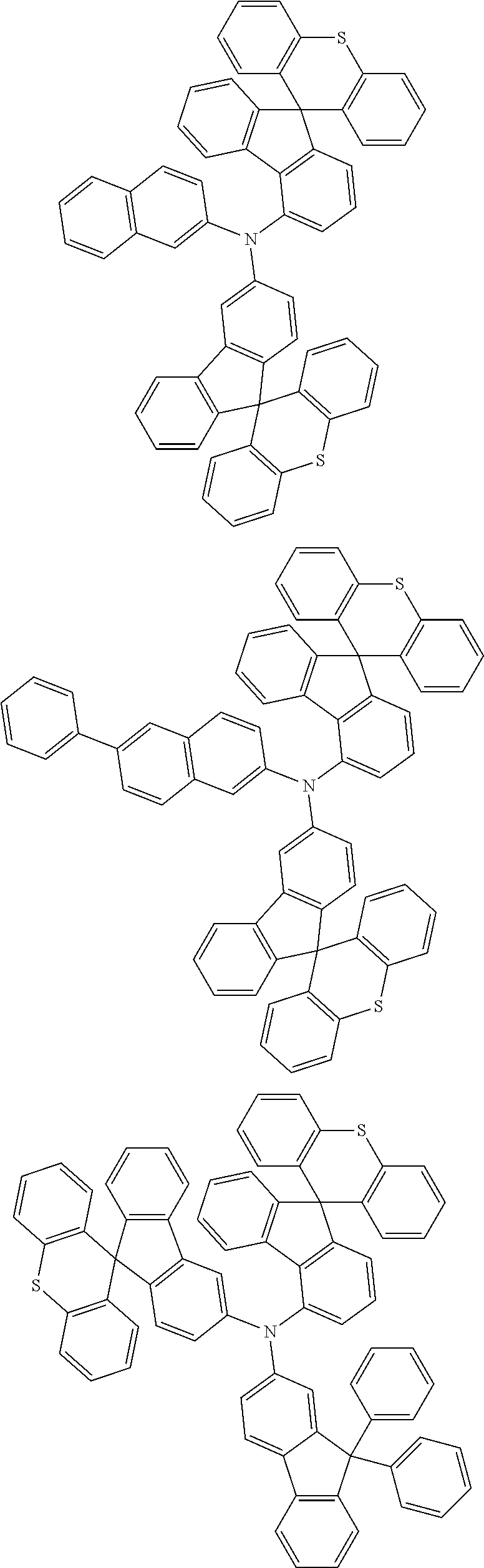


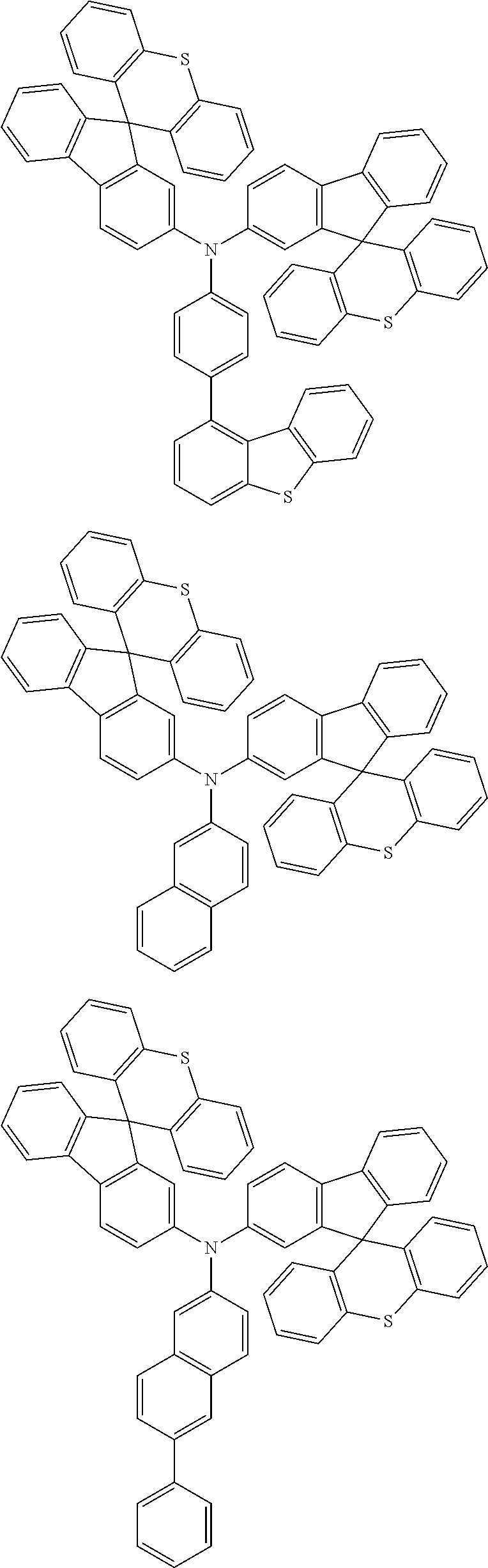


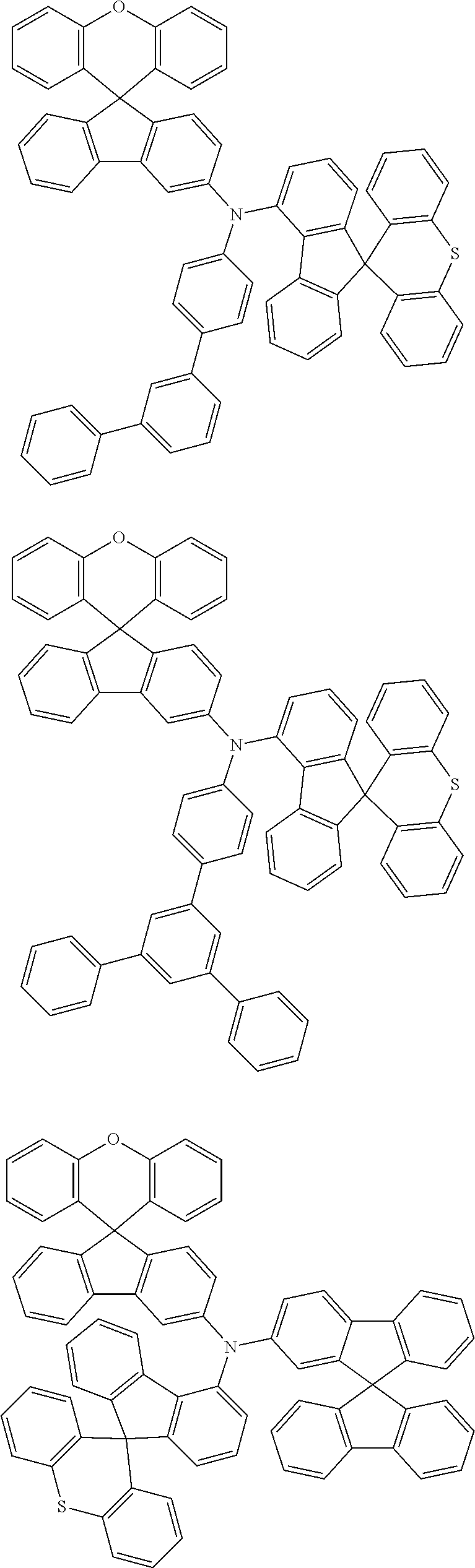


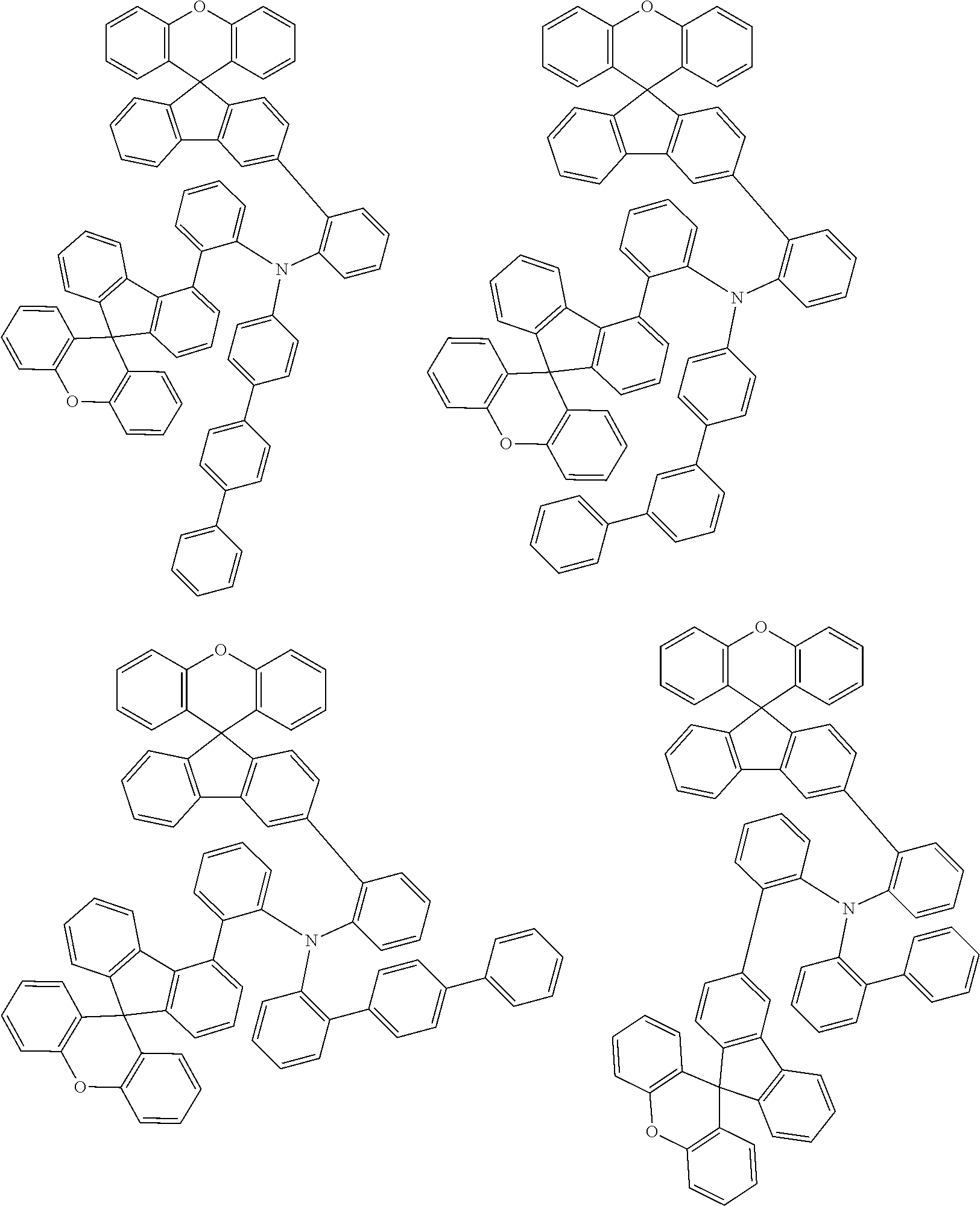


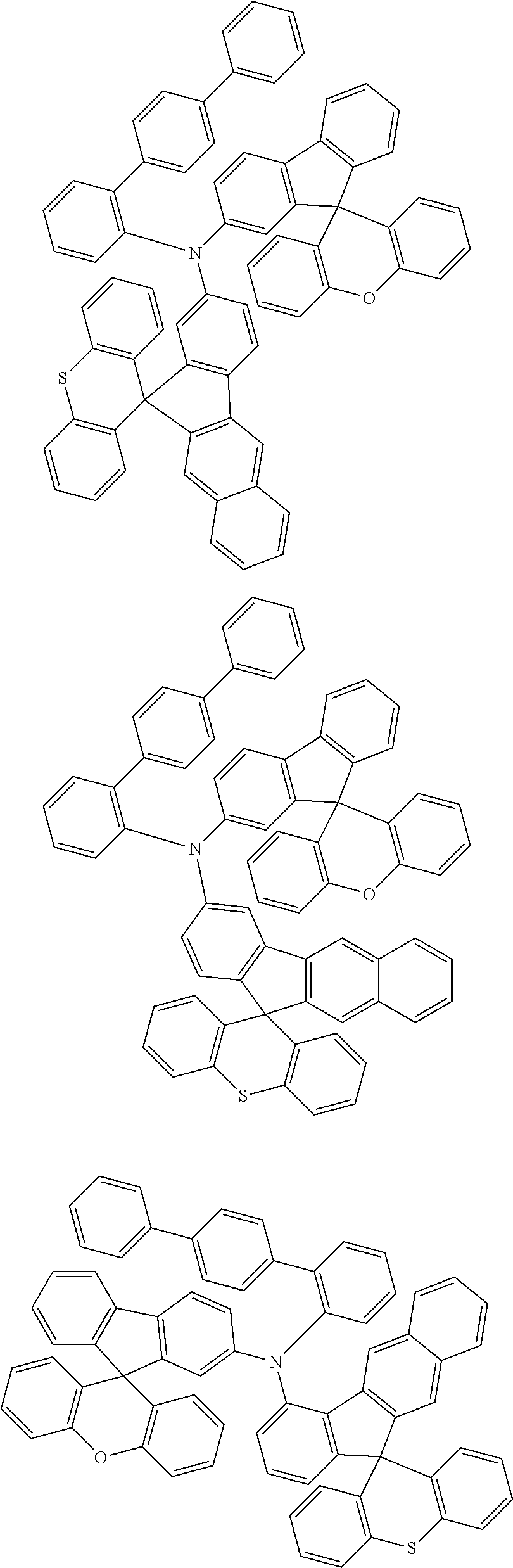


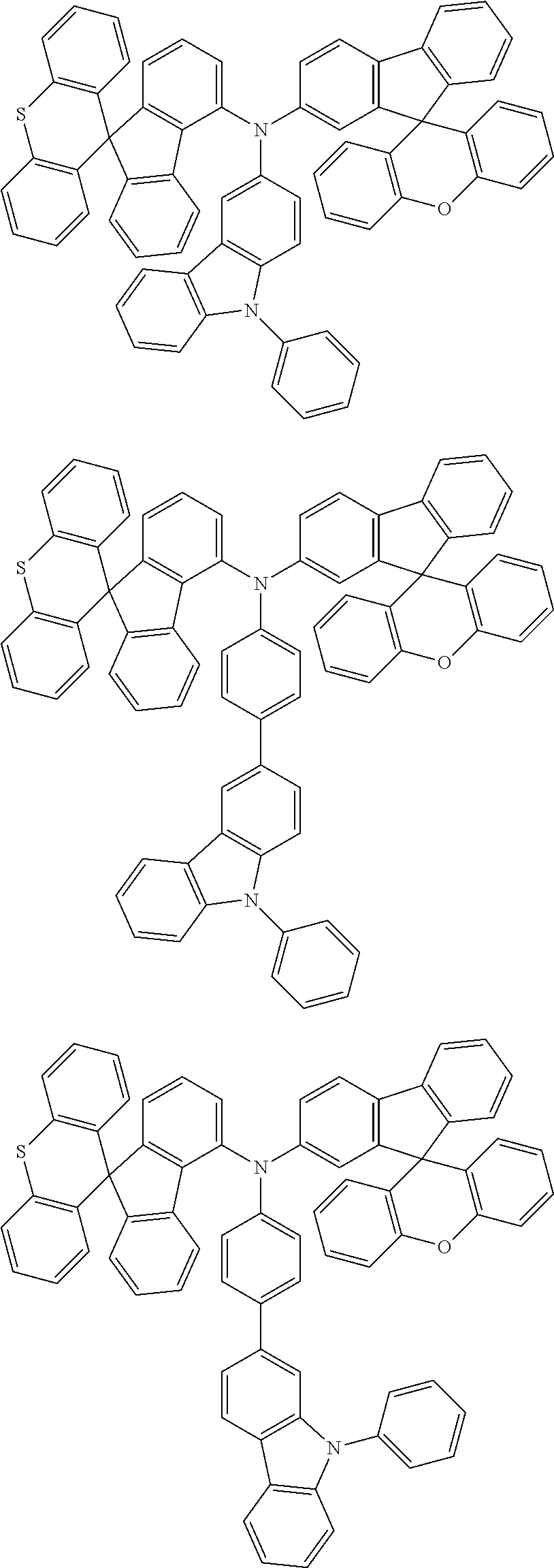


Material for Organic Electroluminescence Devices
- (a) (Hole injecting layer/)Hole transporting layer/Fluorescent emitting layer(/Electron transporting layer/Electron injecting layer);
- (b) (Hole injecting layer/)Hole transporting layer/Phosphorescent emitting layer(/Electron transporting layer/Electron injecting layer);
- (c) (Hole injecting layer/)Hole transporting layer/First fluorescent emitting layer/Second fluorescent emitting layer(/Electron transporting layer/Electron injecting layer);
- (d) (Hole injecting layer/)Hole transporting layer/First phosphorescent emitting layer/Second phosphorescent emitting layer(/Electron transporting layer/Electron injecting layer);
- (e) (Hole injecting layer/)Hole transporting layer/Phosphorescent emitting layer/Space layer/Fluorescent emitting layer(/Electron transporting layer/Electron injecting layer);
- (f) (Hole injecting layer/)Hole transporting layer/First phosphorescent emitting layer/Second phosphorescent emitting layer/Space layer/Fluorescent emitting layer(/Electron transporting layer/Electron injecting layer);
- (g) (Hole injecting layer/)Hole transporting layer/First phosphorescent emitting layer/Space layer/Second phosphorescent emitting layer/Space layer/Fluorescent emitting layer(/Electron transporting layer/Electron injecting layer);
- (h) (Hole injecting layer/)Hole transporting layer/Phosphorescent emitting layer/Space layer/First fluorescent emitting layer/Second fluorescent emitting layer(/Electron transporting layer/Electron injecting layer);
- (i) (Hole injecting layer/)Hole transporting layer/Electron blocking layer/Fluorescent emitting layer(/Electron transporting layer/Electron injecting layer);
- (j) (Hole injecting layer/)Hole transporting layer/Electron blocking layer/Phosphorescent emitting layer(/Electron transporting layer/Electron injecting layer);
- (k) (Hole injecting layer/)Hole transporting layer/Exciton blocking layer/Fluorescent emitting layer(/Electron transporting layer/Electron injecting layer);
- (l) (Hole injecting layer/)Hole transporting layer/Exciton blocking layer/Phosphorescent emitting layer(/Electron transporting layer/Electron injecting layer);
- (m) (Hole injecting layer/)First hole transporting layer/Second hole transporting layer/Fluorescent emitting layer(/Electron transporting layer/Electron injecting layer);
- (n) (Hole injecting layer/)First hole transporting layer/Second hole transporting layer/Fluorescent emitting layer(/First electron transporting layer/Second electron transporting layer/Electron injecting layer);
- (o) (Hole injecting layer/)First hole transporting layer/Second hole transporting layer/Phosphorescent emitting layer(/Electron transporting layer/Electron injecting layer);
- (p) (Hole injecting layer/)First hole transporting layer/Second hole transporting layer/Phosphorescent emitting layer(/First electron transporting layer/Second electron transporting layer/Electron injecting layer);
- (q) (Hole injecting layer/)Hole transporting layer/Fluorescent emitting layer/Hole blocking layer(/Electron transporting layer/Electron injecting layer/Electron injecting layer);
- (r) (Hole injecting layer/)Hole transporting layer/Phosphorescent emitting layer/Hole blocking layer(/Electron transporting layer/Electron injecting layer);
- (s) (Hole injecting layer/)Hole transporting layer/Fluorescent emitting layer/Triplet blocking layer(/Electron transporting layer/Electron injecting layer); and
- (t) (Hole injecting layer/)Hole transporting layer/Phosphorescent emitting layer/Triplet blocking layer(/Electron transporting layer/Electron injecting layer).

wherein:


wherein X20 is represented by any of formulae (2b-1) to (2b-12):


wherein R20 has the same meaning as defined with respect to R.


Hole Transporting Layer
- (1) a metal complex, such as an aluminum complex, a beryllium complex, and a zinc complex;
- (2) a heterocyclic compound, such as an oxadiazole derivative, a benzimidazole derivative, and a phenanthroline derivative;
- (3) a fused aromatic compound, such as a carbazole derivative, an anthracene derivative, a phenanthrene derivative, a pyrene derivative, and a chrysene derivative; and
- (4) an aromatic amine compound, such as a triarylamine derivative and a fused aromatic polycyclic amine derivative.
- (1) a metal complex, such as an aluminum complex, a beryllium complex, and a zinc complex;
- (2) a heteroaromatic compound, such as an imidazole derivative, a benzimidazole derivative, an azine derivative, a carbazole derivative, and a phenanthroline derivative; and
- (3) a macromolecular compound.


Driving Voltage

| TABLE 1 | ||||
| First | External quantum | |||
| hole transporting | Driving voltage | efficiency | ||
| layer | (V) | (%) | ||
| Example 1 | Compound 2 | 3.67 | 9.0 |
| Example 2 | Compound 15 | 3.77 | 10.0 |
| Comparative | Comparative | 3.84 | 8.6 |
| Example 1 | compound 1 | ||

| TABLE 2 | |||
| Second | External quantum | ||
| hole transporting | efficiency | ||
| layer | (%) | ||
| Example 3 | Compound 27 | 9.2 | ||
| Comparative | Comparative | 8.8 | ||
| Example 2 | compound 1 | |||
- 1, 11: Organic EL device
- 2: Substrate
- 3: Anode
- 4: Cathode
- 5: Light emitting layer
- 6: Hole transporting region (hole transporting layer)
- 6 a: First hole transporting layer
- 6 b: Second hole transporting layer
- 7: Electron transporting region (electron transporting layer)
- 7 a: First electron transporting layer
- 7 b: Second electron transporting layer
- 10, 20: Emission unit
Claims (27)


Applications Claiming Priority (3)
| Application Number | Priority Date | Filing Date | Title |
|---|---|---|---|
| JP2017151141 | 2017-08-03 | ||
| JP2017-151141 | 2017-08-03 | ||
| PCT/JP2018/029217 WO2019027040A1 (en) | 2017-08-03 | 2018-08-03 | Compound, organic electroluminescent element material, organic electroluminescent element, and electronic device |
Related Parent Applications (1)
| Application Number | Title | Priority Date | Filing Date |
|---|---|---|---|
| PCT/JP2018/029217 Continuation WO2019027040A1 (en) | 2017-08-03 | 2018-08-03 | Compound, organic electroluminescent element material, organic electroluminescent element, and electronic device |
Publications (2)
| Publication Number | Publication Date |
|---|---|
| US20190088879A1 US20190088879A1 (en) | 2019-03-21 |
| US10424740B2 true US10424740B2 (en) | 2019-09-24 |
Family
ID=65232877
Family Applications (1)
| Application Number | Title | Priority Date | Filing Date |
|---|---|---|---|
| US16/176,762 Active US10424740B2 (en) | 2017-08-03 | 2018-10-31 | Compound, material for organic electroluminescence devices, organic electroluminescence device, and electronic device |
Country Status (6)
| Country | Link |
|---|---|
| US (1) | US10424740B2 (en) |
| EP (1) | EP3663288B1 (en) |
| JP (1) | JP7033140B2 (en) |
| KR (1) | KR102088180B1 (en) |
| CN (1) | CN109476626B (en) |
| WO (1) | WO2019027040A1 (en) |
Cited By (1)
| Publication number | Priority date | Publication date | Assignee | Title |
|---|---|---|---|---|
| US11548877B2 (en) | 2018-11-30 | 2023-01-10 | Idemitsu Kosan Co., Ltd. | Compound, material for organic electroluminescence device, organic electroluminescence device, and electronic device |
Families Citing this family (22)
| Publication number | Priority date | Publication date | Assignee | Title |
|---|---|---|---|---|
| JP2020093979A (en) * | 2017-03-08 | 2020-06-18 | 出光興産株式会社 | Compound, material for organic electroluminescence device, organic electroluminescence device, and electronic device |
| US12048242B2 (en) | 2019-05-31 | 2024-07-23 | Idemitsu Kosan Co., Ltd. | Compound, material for organic electroluminescent elements, organic electroluminescent element, and electronic device |
| KR102820538B1 (en) * | 2019-07-10 | 2025-06-13 | 덕산네오룩스 주식회사 | Compound for organic electronic element, organic electronic element using the same, and an electronic device thereof |
| CN112209921B (en) * | 2019-07-10 | 2023-11-28 | 德山新勒克斯有限公司 | Compounds for organic electrical components, organic electrical components utilizing the same, and electronic devices thereof |
| US11072604B2 (en) * | 2019-11-19 | 2021-07-27 | Duk San Neolux Co., Ltd. | Compound for organic electronic element, organic electronic element using the same, and an electronic device thereof |
| CN118745171A (en) * | 2019-11-19 | 2024-10-08 | 德山新勒克斯有限公司 | Compound for organic electronic element, organic electronic element using the compound, and electronic device thereof |
| KR102924500B1 (en) * | 2019-11-19 | 2026-02-06 | 덕산네오룩스 주식회사 | Compound for organic electronic element, organic electronic element using the same, and an electronic device thereof |
| US11997923B2 (en) * | 2019-11-19 | 2024-05-28 | Duk San Neolux Co., Ltd. | Compound for organic electronic element, organic electronic element using the same, and an electronic device thereof |
| US11925112B2 (en) | 2019-11-19 | 2024-03-05 | Duk San Neolux Co., Ltd. | Compound for organic electronic element, organic electronic element using the same, and an electronic device thereof |
| US12545667B2 (en) | 2019-11-19 | 2026-02-10 | Duk San Neolux Co., Ltd. | Compound for organic electronic element, organic electronic element using the same, and an electronic device thereof |
| CN111116561B (en) * | 2019-12-03 | 2022-06-17 | 北京绿人科技有限责任公司 | Compound containing condensed ring structure, application thereof and organic electroluminescent device |
| KR102807679B1 (en) * | 2020-06-10 | 2025-05-19 | 덕산네오룩스 주식회사 | Compound for organic electronic element, organic electronic element using the same, and an electronic device thereof |
| CN114122299B (en) * | 2020-06-29 | 2023-12-29 | 江苏三月科技股份有限公司 | Organic electroluminescent device |
| CN112079867B (en) * | 2020-09-27 | 2022-11-11 | 北京燕化集联光电技术有限公司 | P-containing multi-heterocyclic structure compound and application thereof |
| CN114335361B (en) * | 2020-09-30 | 2024-03-22 | 江苏三月科技股份有限公司 | Composition and organic electroluminescent device comprising same |
| CN114516804B (en) * | 2020-11-18 | 2024-10-22 | 江苏三月科技股份有限公司 | Diamine derivative and organic electroluminescent device using same |
| CN114133400B (en) * | 2021-05-31 | 2023-04-28 | 陕西莱特光电材料股份有限公司 | Organic compound, and electronic component and electronic device using same |
| CN113594393B (en) * | 2021-08-31 | 2024-06-28 | 长春海谱润斯科技股份有限公司 | Organic electroluminescent device |
| CN114335399B (en) * | 2021-12-03 | 2024-04-09 | 陕西莱特迈思光电材料有限公司 | Organic electroluminescent device and electronic device including the same |
| CN115304575B (en) * | 2022-08-05 | 2023-11-07 | 武汉天马微电子有限公司 | Organic compound and organic electroluminescent device |
| CN118108741B (en) * | 2022-11-30 | 2026-03-13 | 北京绿人科技有限责任公司 | A fused-ring compound and its application, and an organic electroluminescent device. |
| CN115960095B (en) * | 2023-01-04 | 2025-03-14 | 京东方科技集团股份有限公司 | Organic compound containing benzoxazole group and spiro structure and use thereof as electron transport material |
Citations (7)
| Publication number | Priority date | Publication date | Assignee | Title |
|---|---|---|---|---|
| KR20130140303A (en) | 2012-06-14 | 2013-12-24 | (주) 에프엔지리서치 | Novel compounds for organic electroluminescent device |
| WO2014072017A1 (en) | 2012-11-12 | 2014-05-15 | Merck Patent Gmbh | Materials for electronic devices |
| US20150333277A1 (en) | 2013-05-15 | 2015-11-19 | Sfc Co., Ltd. | Organic light emitting compound and organic light emitting device including the same |
| KR20160127428A (en) | 2015-04-27 | 2016-11-04 | (주)피엔에이치테크 | An electroluminescent compound and an electroluminescent device comprising the same |
| WO2017061832A1 (en) | 2015-10-07 | 2017-04-13 | 주식회사 엘지화학 | Novel compound and organic light emitting diode comprising same 신규 화합물 및 이를 포함하는 유기 발광 소자 |
| CN106977491A (en) * | 2017-01-25 | 2017-07-25 | 孙立成 | Spiro [ fluorene-9, 9-xanthene ] hole transport material and application thereof |
| KR20170138799A (en) * | 2016-06-08 | 2017-12-18 | (주)씨엠디엘 | The novel organic electroluminescent compounds and organic electroluminescent device including the same |
Family Cites Families (5)
| Publication number | Priority date | Publication date | Assignee | Title |
|---|---|---|---|---|
| JPS637955A (en) * | 1986-06-30 | 1988-01-13 | Pfu Ltd | Bar code printing system |
| CN103160952B (en) * | 2013-04-15 | 2015-04-08 | 东华大学 | Preparation method of fiber with high water absorption |
| KR101619899B1 (en) * | 2014-07-25 | 2016-05-12 | 인베니아 주식회사 | A plasma generating module and plasma process apparatus comprising the same |
| JP6454226B2 (en) * | 2015-06-08 | 2019-01-16 | 出光興産株式会社 | COMPOUND, MATERIAL FOR ORGANIC ELECTROLUMINESCENT ELEMENT, ORGANIC ELECTROLUMINESCENT ELEMENT, AND ELECTRONIC DEVICE |
| JP6983754B2 (en) * | 2015-07-29 | 2021-12-17 | メルク パテント ゲーエムベーハー | Materials for organic electroluminescence devices |
-
2018
- 2018-08-03 EP EP18840779.5A patent/EP3663288B1/en active Active
- 2018-08-03 WO PCT/JP2018/029217 patent/WO2019027040A1/en not_active Ceased
- 2018-08-03 KR KR1020187031457A patent/KR102088180B1/en active Active
- 2018-08-03 CN CN201880001784.6A patent/CN109476626B/en active Active
- 2018-08-03 JP JP2019534601A patent/JP7033140B2/en active Active
- 2018-10-31 US US16/176,762 patent/US10424740B2/en active Active
Patent Citations (10)
| Publication number | Priority date | Publication date | Assignee | Title |
|---|---|---|---|---|
| KR20130140303A (en) | 2012-06-14 | 2013-12-24 | (주) 에프엔지리서치 | Novel compounds for organic electroluminescent device |
| WO2014072017A1 (en) | 2012-11-12 | 2014-05-15 | Merck Patent Gmbh | Materials for electronic devices |
| KR20150083917A (en) | 2012-11-12 | 2015-07-20 | 메르크 파텐트 게엠베하 | Materials for electronic devices |
| US20150295181A1 (en) | 2012-11-12 | 2015-10-15 | Merck Patent Gmbh | Materials for electronic devices |
| JP2016505518A (en) | 2012-11-12 | 2016-02-25 | メルク パテント ゲーエムベーハー | Materials for electronic devices |
| US20150333277A1 (en) | 2013-05-15 | 2015-11-19 | Sfc Co., Ltd. | Organic light emitting compound and organic light emitting device including the same |
| KR20160127428A (en) | 2015-04-27 | 2016-11-04 | (주)피엔에이치테크 | An electroluminescent compound and an electroluminescent device comprising the same |
| WO2017061832A1 (en) | 2015-10-07 | 2017-04-13 | 주식회사 엘지화학 | Novel compound and organic light emitting diode comprising same 신규 화합물 및 이를 포함하는 유기 발광 소자 |
| KR20170138799A (en) * | 2016-06-08 | 2017-12-18 | (주)씨엠디엘 | The novel organic electroluminescent compounds and organic electroluminescent device including the same |
| CN106977491A (en) * | 2017-01-25 | 2017-07-25 | 孙立成 | Spiro [ fluorene-9, 9-xanthene ] hole transport material and application thereof |
Non-Patent Citations (4)
| Title |
|---|
| Chemistry for Engineering Students 2nd edition, section 6.59 (Year: 2009). * |
| Chu et al.-"Synthesis and Optoelectronic Properties of Blue-Emitting Star-Burst Oligomers Based on Triphenylamine and Spiro(fluorene-9,9′-xanthene)" Acta Phys.-Chim. Sin. 2012, 28(8), pp. 2000-2007. |
| International Search Report dated Nov. 6, 2018 issued in corresponding application PCT/JP2018/029217. |
| Notice of Refusal dated Apr. 19, 2019 issued in corresponding Korean patent application No. 10-2018-7031457. |
Cited By (2)
| Publication number | Priority date | Publication date | Assignee | Title |
|---|---|---|---|---|
| US11548877B2 (en) | 2018-11-30 | 2023-01-10 | Idemitsu Kosan Co., Ltd. | Compound, material for organic electroluminescence device, organic electroluminescence device, and electronic device |
| US12338234B2 (en) | 2018-11-30 | 2025-06-24 | Idemitsu Kosan Co., Ltd. | Compound, material for organic electroluminescence device, organic electroluminescence device, and electronic device |
Also Published As
| Publication number | Publication date |
|---|---|
| KR20190015211A (en) | 2019-02-13 |
| US20190088879A1 (en) | 2019-03-21 |
| WO2019027040A1 (en) | 2019-02-07 |
| CN109476626B (en) | 2022-09-09 |
| JPWO2019027040A1 (en) | 2020-08-20 |
| CN109476626A (en) | 2019-03-15 |
| KR102088180B1 (en) | 2020-03-12 |
| EP3663288A1 (en) | 2020-06-10 |
| EP3663288A4 (en) | 2021-05-12 |
| JP7033140B2 (en) | 2022-03-09 |
| EP3663288B1 (en) | 2022-06-08 |
Similar Documents
| Publication | Publication Date | Title |
|---|---|---|
| US10424740B2 (en) | Compound, material for organic electroluminescence devices, organic electroluminescence device, and electronic device | |
| US10243148B2 (en) | Aromatic amine compound, and organic electroluminescent elements including the compound | |
| US12384739B2 (en) | Compound, material for organic electroluminescent elements, organic electroluminescent element and electronic device | |
| US11479544B2 (en) | Compound, material for organic electroluminescence element, organic electroluminescence element, and electronic device | |
| US11283025B2 (en) | Compound, material for organic electroluminescence elements, organic electroluminescence element, and electronic device | |
| US11053229B2 (en) | Compound, material for organic electroluminescent element, organic electroluminescent element, and electronic device | |
| US10756275B2 (en) | Compound, material for organic electroluminescence devices, organic electroluminescence device, and electronic equipment | |
| US20210094937A1 (en) | Compound, material for organic electroluminescent elements, organic electroluminescent element, and electronic device | |
| US11616200B2 (en) | Compound, material for organic electroluminescent element, organic electroluminescent element, and electronic apparatus | |
| US12615959B2 (en) | Organic electroluminescence device and electronic apparatus provided with the same | |
| US12590076B2 (en) | Compound, material for organic electroluminescent element, organic electroluminescent element, and electronic device | |
| US10840456B2 (en) | Compound, material for organic electroluminescence devices, organic electroluminescence device, and electronic device | |
| WO2018164265A1 (en) | Compound, organic electroluminescent element material, organic electroluminescent element, and electronic device | |
| US20220399505A1 (en) | Compound, material for organic electroluminescent elements, organic electroluminescent element, and electronic device | |
| US20230262999A1 (en) | Compound, material for organic electroluminescent elements, organic electroluminescent element, and electronic device | |
| US10170707B2 (en) | Compound, material for organic electroluminescence element, organic electroluminescence element, and electronic device | |
| US20250230167A1 (en) | Compound, material for organic electroluminescent elements, organic electroluminescent element, and electronic device | |
| US20180219157A1 (en) | Compound, material for organic electroluminescence elements, organic electroluminescence element, and electronic device | |
| US12069943B2 (en) | Compound, material for organic electroluminescent elements, organic electroluminescent element, and electronic device | |
| US10547007B2 (en) | Compound, organic electroluminescent material, organic electroluminescent element, and electronic apparatus | |
| US20230006136A1 (en) | Compound, organic electroluminescent element material, organic electroluminescent element, and electronic device | |
| US20220359831A1 (en) | Compound, material for organic electroluminescent elements, organic electroluminescent element, and electronic device | |
| US20180029983A1 (en) | Compound, organic electroluminescent element material, organic electroluminescent element, and electronic device | |
| US20230118654A1 (en) | Compound, material for organic electroluminescence element, organic electroluminescence element, and electronic device | |
| US20240188425A1 (en) | Compound, material for organic electroluminescent elements, organic electroluminescent element, and electronic device |
Legal Events
| Date | Code | Title | Description |
|---|---|---|---|
| AS | Assignment |
Owner name: IDEMITSU KOSAN CO., LTD., JAPAN Free format text: ASSIGNMENT OF ASSIGNORS INTEREST;ASSIGNORS:HAKETA, TASUKU;ITO, HIROKATSU;KUDO, YU;REEL/FRAME:047372/0985 Effective date: 20181025 |
|
| FEPP | Fee payment procedure |
Free format text: ENTITY STATUS SET TO UNDISCOUNTED (ORIGINAL EVENT CODE: BIG.); ENTITY STATUS OF PATENT OWNER: LARGE ENTITY |
|
| STPP | Information on status: patent application and granting procedure in general |
Free format text: RESPONSE TO NON-FINAL OFFICE ACTION ENTERED AND FORWARDED TO EXAMINER |
|
| STPP | Information on status: patent application and granting procedure in general |
Free format text: NOTICE OF ALLOWANCE MAILED -- APPLICATION RECEIVED IN OFFICE OF PUBLICATIONS |
|
| STPP | Information on status: patent application and granting procedure in general |
Free format text: AWAITING TC RESP., ISSUE FEE NOT PAID |
|
| STPP | Information on status: patent application and granting procedure in general |
Free format text: NOTICE OF ALLOWANCE MAILED -- APPLICATION RECEIVED IN OFFICE OF PUBLICATIONS |
|
| STPP | Information on status: patent application and granting procedure in general |
Free format text: PUBLICATIONS -- ISSUE FEE PAYMENT VERIFIED |
|
| STCF | Information on status: patent grant |
Free format text: PATENTED CASE |
|
| CC | Certificate of correction | ||
| MAFP | Maintenance fee payment |
Free format text: PAYMENT OF MAINTENANCE FEE, 4TH YEAR, LARGE ENTITY (ORIGINAL EVENT CODE: M1551); ENTITY STATUS OF PATENT OWNER: LARGE ENTITY Year of fee payment: 4 |