US10423802B2 - Establishing data security over an internet of things (IoT) network - Google Patents
Establishing data security over an internet of things (IoT) network Download PDFInfo
- Publication number
- US10423802B2 US10423802B2 US16/198,876 US201816198876A US10423802B2 US 10423802 B2 US10423802 B2 US 10423802B2 US 201816198876 A US201816198876 A US 201816198876A US 10423802 B2 US10423802 B2 US 10423802B2
- Authority
- US
- United States
- Prior art keywords
- data
- entity
- host
- entities
- key
- Prior art date
- Legal status (The legal status is an assumption and is not a legal conclusion. Google has not performed a legal analysis and makes no representation as to the accuracy of the status listed.)
- Active
Links
Images



Classifications
-
- G—PHYSICS
- G06—COMPUTING OR CALCULATING; COUNTING
- G06F—ELECTRIC DIGITAL DATA PROCESSING
- G06F21/00—Security arrangements for protecting computers, components thereof, programs or data against unauthorised activity
- G06F21/60—Protecting data
- G06F21/62—Protecting access to data via a platform, e.g. using keys or access control rules
- G06F21/6218—Protecting access to data via a platform, e.g. using keys or access control rules to a system of files or objects, e.g. local or distributed file system or database
-
- H—ELECTRICITY
- H04—ELECTRIC COMMUNICATION TECHNIQUE
- H04L—TRANSMISSION OF DIGITAL INFORMATION, e.g. TELEGRAPHIC COMMUNICATION
- H04L63/00—Network architectures or network communication protocols for network security
- H04L63/06—Network architectures or network communication protocols for network security for supporting key management in a packet data network
-
- H—ELECTRICITY
- H04—ELECTRIC COMMUNICATION TECHNIQUE
- H04L—TRANSMISSION OF DIGITAL INFORMATION, e.g. TELEGRAPHIC COMMUNICATION
- H04L63/00—Network architectures or network communication protocols for network security
- H04L63/08—Network architectures or network communication protocols for network security for authentication of entities
- H04L63/0876—Network architectures or network communication protocols for network security for authentication of entities based on the identity of the terminal or configuration, e.g. MAC address, hardware or software configuration or device fingerprint
-
- H—ELECTRICITY
- H04—ELECTRIC COMMUNICATION TECHNIQUE
- H04L—TRANSMISSION OF DIGITAL INFORMATION, e.g. TELEGRAPHIC COMMUNICATION
- H04L63/00—Network architectures or network communication protocols for network security
- H04L63/10—Network architectures or network communication protocols for network security for controlling access to devices or network resources
- H04L63/102—Entity profiles
-
- H—ELECTRICITY
- H04—ELECTRIC COMMUNICATION TECHNIQUE
- H04L—TRANSMISSION OF DIGITAL INFORMATION, e.g. TELEGRAPHIC COMMUNICATION
- H04L63/00—Network architectures or network communication protocols for network security
- H04L63/10—Network architectures or network communication protocols for network security for controlling access to devices or network resources
- H04L63/107—Network architectures or network communication protocols for network security for controlling access to devices or network resources wherein the security policies are location-dependent, e.g. entities privileges depend on current location or allowing specific operations only from locally connected terminals
-
- H—ELECTRICITY
- H04—ELECTRIC COMMUNICATION TECHNIQUE
- H04L—TRANSMISSION OF DIGITAL INFORMATION, e.g. TELEGRAPHIC COMMUNICATION
- H04L63/00—Network architectures or network communication protocols for network security
- H04L63/10—Network architectures or network communication protocols for network security for controlling access to devices or network resources
- H04L63/108—Network architectures or network communication protocols for network security for controlling access to devices or network resources when the policy decisions are valid for a limited amount of time
-
- H—ELECTRICITY
- H04—ELECTRIC COMMUNICATION TECHNIQUE
- H04L—TRANSMISSION OF DIGITAL INFORMATION, e.g. TELEGRAPHIC COMMUNICATION
- H04L63/00—Network architectures or network communication protocols for network security
- H04L63/12—Applying verification of the received information
- H04L63/123—Applying verification of the received information received data contents, e.g. message integrity
-
- H—ELECTRICITY
- H04—ELECTRIC COMMUNICATION TECHNIQUE
- H04L—TRANSMISSION OF DIGITAL INFORMATION, e.g. TELEGRAPHIC COMMUNICATION
- H04L9/00—Cryptographic mechanisms or cryptographic arrangements for secret or secure communications; Network security protocols
- H04L9/08—Key distribution or management, e.g. generation, sharing or updating, of cryptographic keys or passwords
- H04L9/0891—Revocation or update of secret information, e.g. encryption key update or rekeying
-
- H—ELECTRICITY
- H04—ELECTRIC COMMUNICATION TECHNIQUE
- H04L—TRANSMISSION OF DIGITAL INFORMATION, e.g. TELEGRAPHIC COMMUNICATION
- H04L9/00—Cryptographic mechanisms or cryptographic arrangements for secret or secure communications; Network security protocols
- H04L9/30—Public key, i.e. encryption algorithm being computationally infeasible to invert or user's encryption keys not requiring secrecy
- H04L9/3066—Public key, i.e. encryption algorithm being computationally infeasible to invert or user's encryption keys not requiring secrecy involving algebraic varieties, e.g. elliptic or hyper-elliptic curves
- H04L9/3073—Public key, i.e. encryption algorithm being computationally infeasible to invert or user's encryption keys not requiring secrecy involving algebraic varieties, e.g. elliptic or hyper-elliptic curves involving pairings, e.g. identity based encryption [IBE], bilinear mappings or bilinear pairings, e.g. Weil or Tate pairing
-
- H—ELECTRICITY
- H04—ELECTRIC COMMUNICATION TECHNIQUE
- H04L—TRANSMISSION OF DIGITAL INFORMATION, e.g. TELEGRAPHIC COMMUNICATION
- H04L9/00—Cryptographic mechanisms or cryptographic arrangements for secret or secure communications; Network security protocols
- H04L9/32—Cryptographic mechanisms or cryptographic arrangements for secret or secure communications; Network security protocols including means for verifying the identity or authority of a user of the system or for message authentication, e.g. authorization, entity authentication, data integrity or data verification, non-repudiation, key authentication or verification of credentials
- H04L9/3236—Cryptographic mechanisms or cryptographic arrangements for secret or secure communications; Network security protocols including means for verifying the identity or authority of a user of the system or for message authentication, e.g. authorization, entity authentication, data integrity or data verification, non-repudiation, key authentication or verification of credentials using cryptographic hash functions
-
- H—ELECTRICITY
- H04—ELECTRIC COMMUNICATION TECHNIQUE
- H04L—TRANSMISSION OF DIGITAL INFORMATION, e.g. TELEGRAPHIC COMMUNICATION
- H04L9/00—Cryptographic mechanisms or cryptographic arrangements for secret or secure communications; Network security protocols
- H04L9/32—Cryptographic mechanisms or cryptographic arrangements for secret or secure communications; Network security protocols including means for verifying the identity or authority of a user of the system or for message authentication, e.g. authorization, entity authentication, data integrity or data verification, non-repudiation, key authentication or verification of credentials
- H04L9/3236—Cryptographic mechanisms or cryptographic arrangements for secret or secure communications; Network security protocols including means for verifying the identity or authority of a user of the system or for message authentication, e.g. authorization, entity authentication, data integrity or data verification, non-repudiation, key authentication or verification of credentials using cryptographic hash functions
- H04L9/3239—Cryptographic mechanisms or cryptographic arrangements for secret or secure communications; Network security protocols including means for verifying the identity or authority of a user of the system or for message authentication, e.g. authorization, entity authentication, data integrity or data verification, non-repudiation, key authentication or verification of credentials using cryptographic hash functions involving non-keyed hash functions, e.g. modification detection codes [MDCs], MD5, SHA or RIPEMD
-
- H—ELECTRICITY
- H04—ELECTRIC COMMUNICATION TECHNIQUE
- H04L—TRANSMISSION OF DIGITAL INFORMATION, e.g. TELEGRAPHIC COMMUNICATION
- H04L2209/00—Additional information or applications relating to cryptographic mechanisms or cryptographic arrangements for secret or secure communication H04L9/00
- H04L2209/80—Wireless
- H04L2209/805—Lightweight hardware, e.g. radio-frequency identification [RFID] or sensor
-
- H—ELECTRICITY
- H04—ELECTRIC COMMUNICATION TECHNIQUE
- H04L—TRANSMISSION OF DIGITAL INFORMATION, e.g. TELEGRAPHIC COMMUNICATION
- H04L67/00—Network arrangements or protocols for supporting network services or applications
- H04L67/01—Protocols
- H04L67/12—Protocols specially adapted for proprietary or special-purpose networking environments, e.g. medical networks, sensor networks, networks in vehicles or remote metering networks
-
- H—ELECTRICITY
- H04—ELECTRIC COMMUNICATION TECHNIQUE
- H04W—WIRELESS COMMUNICATION NETWORKS
- H04W4/00—Services specially adapted for wireless communication networks; Facilities therefor
- H04W4/70—Services for machine-to-machine communication [M2M] or machine type communication [MTC]
Definitions
- the present disclosure relates generally to communication systems, more particularly the present disclosure provides methods, systems and computer program products for establishing data security over an Internet of Things (IoT) network.
- IoT Internet of Things
- IoT Internet of Things
- electronic and computing devices are interconnected and enabled to communicate with one another.
- a large number of such devices implemented using IoT network are designed to operate remotely and/or autonomously, without direct human intervention.
- the advancement in the field of IoT has tremendously increased rate of exchange of data between various devices, thereby making security of IoT network an important concern.
- the security can be related to preventing unauthorized access that may inject viruses, worms and other malicious data into the IoT network.
- IoT network embedded using the Internet is very challenging.
- a loosely connected network of IoT devices comprising server, mobile platform, and remote sensor is usually bereft of an enterprise level firewall protection and thus, is prone to malicious attacks.
- a simple low-cost computing device such as a sensor or an actuator cannot handle sophisticated communication protocols offering data transmission safeguards that are implemented in more sophisticated computer network.
- remote unattended devices are subjected to phishing, physical attack to disable or replace, or hacking.
- data is distributed among various devices and no single entity has complete representation of whereabouts of all the data.
- the data can be divided into plurality of data subsets that are stored in various devices that are geographically dispersed.
- the plurality of data subsets may be constantly created (such as by IoT sensors), annihilated, merged and divided or can be moved around using the Internet or other connective networks.
- Embodiments of the present disclosure provide methods, systems and computer program products for establishing data security over an Internet of Things (IoT) network.
- IoT Internet of Things
- a method includes performing, by one or more processors of at least one host entity of the one or more host entities implemented in a network: storing plurality of device identifiers, each device identifier corresponding to one of plurality of devices connected in the network to allow access and to share information between the plurality of devices, the plurality of devices comprising any or a combination of the one or more host entities, one or more client entities and one or more key servers; storing an association between one or more devices of the plurality of devices, the association being represented as pairing of device identifiers corresponding to the one or more devices connected over a communication link in the network; and tracking distribution of data in the network by maintaining a data location file, the data location file comprising plurality of parameters of each of plurality of data subsets, the plurality of data subsets being distributed in the plurality of devices, wherein each of the plurality of data subsets comprises any or a combination of an encryption key, a key identifier, a header, an authorization information, a
- the data location file is transmitted and stored in a set of host entities of the one or more host entities connected to the at least one host entity through a communication link, and wherein the data location file of the at least one host entity is a master to slave data location files of the set of host entities.
- the slave data location files are automatically updated.
- the data location file stores plurality of records, each record pertaining to the plurality of parameters of a data subset of the plurality of data subsets, the plurality of parameters comprising any or a combination of the device identifier of a corresponding device storing the data subset, data type of the data subset, and hash function comprising at least one of a clear text hash of the data subset and an encrypted text hash of the data subset.
- each record of the plurality of records is associated with a time-sequence indicating sequence of updates in data of corresponding data subset.
- the at least one host entity on receiving a new data subset by the at least one host entity, authenticates the new data subset by computing the hash function and matching the computed hash function with the hash function stored in corresponding record of the data subset.
- the at least one host entity performs: receiving one or more identification attributes of the receiving entity; receiving one or more task specific attributes of the receiving entity; computing a hash function of a data subset comprising the one or more identification attributes and the one or more task specific attributes; and storing the computed hash function as a verification code of the receiving entity.
- the at least one host entity authenticates a receiving entity of the one or more receiving entities by: requesting the one or more identification attributes and the one or more task specific attributes of the receiving entity; in response to the requesting, receiving the one or more identification attributes and the one or more task specific attributes of the receiving entity and computing the hash function based on a data subset comprising the received one or more identification attributes and the received one or more task specific attributes; and matching the computed hash function with corresponding verification code of the receiving entity stored in the at least one host entity.
- the one or more identification attributes comprise any or a combination of the device identifier of the receiving entity, manufacturer data of the receiving entity, geographical location data of the receiving entity and any device specific information of the receiving entity.
- the one or more task specific attributes indicate any or a combination of tasks to be performed by the receiving entity for decrypting encrypted information received from the at least one host entity.
- the at least one host entity For each of the one or more client entities with limited memory and limited computing power, connected to the at least one host entity over a communication link, the at least one host entity performs: generating a boot code of the client entity; computing a hash function of a data subset comprising the boot code; storing the computed hash function as a verification code of the client entity; and storing the boot code in the client entity. Further, the at least one host entity verifies a client entity of the one or more client entities by: retrieving the boot code from the client entity; computing the hash function based on a data subset comprising the retrieved boot code; and matching the computed hash function with corresponding verification code of the client entity stored in the at least one host entity.
- one or more data subsets of the plurality of data subsets, residing in the at least one host entity, are encrypted by the at least one host entity using the encryption key provided by a key server of the one or more key servers.
- the one or more encrypted data subsets are decrypted using corresponding decryption key to provide one or more clear text data subsets and wherein, the one or more clear data subsets are erased after access.
- one or more data subsets of the plurality of data subsets are deleted remotely by performing key pair erasure.
- any or a combination of the authorization information and the config file control access to the plurality of data subsets by the plurality of devices using a configurable policy.
- the configurable policy defines any or a combination of geographical bound allowed for accessing the plurality of data subsets, devices allowed for accessing the plurality of data subsets, time allowed for accessing the plurality of data subsets, and number of times allowed for accessing the plurality of data subsets.
- a system comprises: one or more processors of at least one host entity of one or more host entities implemented in a network; and a memory coupled to the one or more processors and comprising computer readable program code embodied in the memory that is executable by at least one of the one or more processors to perform: storing plurality of device identifiers, each device identifier corresponding to one of plurality of devices connected in the network to allow access and to share information between the plurality of devices, the plurality of devices comprising any or a combination of the one or more host entities, one or more client entities and one or more key servers; storing an association between one or more devices of the plurality of devices, the association being represented as pairing of device identifiers corresponding to the one or more devices connected over a communication link in the network; and tracking distribution of data in the network by maintaining a data location file, the data location file comprising plurality of parameters of each of plurality of data subsets, the plurality of data subsets being distributed in the plurality of devices
- a computer program product comprises: a non-transitory computer readable storage medium comprising computer readable program code embodied in the medium that is executable by one or more processors of at least one host entity of one or more host entities implemented in a network to perform: storing plurality of device identifiers, each device identifier corresponding to one of plurality of devices connected in the network to allow access and to share information between the plurality of devices, the plurality of devices comprising any or a combination of the one or more host entities, one or more client entities and one or more key servers; storing an association between one or more devices of the plurality of devices, the association being represented as pairing of device identifiers corresponding to the one or more devices connected over a communication link in the network; and tracking distribution of data in the network by maintaining a data location file, the data location file comprising plurality of parameters of each of plurality of data subsets, the plurality of data subsets being distributed in the plurality of devices, wherein each of the plurality
- FIG. 1 illustrates an exemplary architecture of an ideal IoT network in accordance with an embodiment of the present disclosure.
- FIG. 2A illustrates an exemplary hierarchical topology of an IoT network according to an embodiment of the present disclosure.
- FIG. 2B illustrates an exemplary distribution of data in an IoT network according to an embodiment of the present disclosure.
- FIG. 3 is a module diagram illustrating functional units of a system to enable secure communication and data security within an IoT network in accordance with an embodiment of the present invention.
- FIG. 4A illustrates an exemplary header generated by a host entity in accordance with an embodiment of the present disclosure.
- FIG. 4B illustrates an exemplary key record stored in database of the key server in accordance with an embodiment of the present disclosure.
- FIG. 4C illustrates exemplary hash functions that are generated in accordance with an embodiment of the present disclosure.
- FIG. 4D illustrates an exemplary record of data location file in accordance with an embodiment of the present disclosure.
- FIGS. 5A-B illustrate examples of network architectures implementing the system in accordance with an embodiment of the present disclosure.
- FIG. 6 is a flow diagram illustrating encryption of information at the host entity in accordance with an embodiment of the present disclosure.
- FIG. 7 is a flow diagram illustrating decryption of information at the receiving entity in accordance with an embodiment of the present disclosure.
- FIG. 8 is a flow diagram illustrating transmitting of information from a client entity to a controlling host entity in accordance with an embodiment of the present disclosure.
- FIGS. 9A-C are flow diagrams illustrating authentication of a receiving entity by a controlling host entity in accordance with an embodiment of the present disclosure.
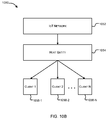
- FIGS. 10A-B illustrate an example of network architecture implementing data security for client entities with limited processing power in accordance with an embodiment of the present disclosure.
- FIGS. 11A-B are flow diagrams illustrating verification of a client entity with limited processing power by a controlling host entity in accordance with an embodiment of the present disclosure.
- Embodiments of the present invention include various steps, which will be described below.
- the steps may be performed by hardware components or may be embodied in machine-executable instructions, which may be used to cause a general-purpose or special-purpose processor programmed with the instructions to perform the steps.
- steps may be performed by a combination of hardware, software, firmware and/or by human operators.
- Embodiments of the present invention may be provided as a computer program product, which may include a machine-readable storage medium tangibly embodying thereon instructions, which may be used to program a computer (or other electronic devices) to perform a process.
- the machine-readable medium may include, but is not limited to, fixed (hard) drives, magnetic tape, floppy diskettes, optical disks, compact disc read-only memories (CD-ROMs), and magneto-optical disks, semiconductor memories, such as ROMs, PROMs, random access memories (RAMs), programmable read-only memories (PROMs), erasable PROMs (EPROMs), electrically erasable PROMs (EEPROMs), flash memory, magnetic or optical cards, or other type of media/machine-readable medium suitable for storing electronic instructions (e.g., computer programming code, such as software or firmware).
- An apparatus for practicing various embodiments of the present invention may involve one or more computers (or one or more processors within a single computer) and storage systems containing or having network access to computer program(s) coded in accordance with various methods described herein, and the method steps of the invention could be accomplished by modules, routines, subroutines, or subparts of a computer program product.
- Embodiments of the present disclosure provide methods, systems and computer program products for establishing data security over an Internet of Things (IoT) network.
- IoT Internet of Things
- a method includes performing, by one or more processors of at least one host entity of the one or more host entities implemented in a network: storing plurality of device identifiers, each device identifier corresponding to one of plurality of devices connected in the network to allow access and to share information between the plurality of devices, the plurality of devices comprising any or a combination of the one or more host entities, one or more client entities and one or more key servers; storing an association between one or more devices of the plurality of devices, the association being represented as pairing of device identifiers corresponding to the one or more devices connected over a communication link in the network; and tracking distribution of data in the network by maintaining a data location file, the data location file comprising plurality of parameters of each of plurality of data subsets, the plurality of data subsets being distributed in the plurality of devices, wherein each of the plurality of data subsets comprises any or a combination of an encryption key, a key identifier, a header, an authorization information, a
- the data location file is transmitted and stored in a set of host entities of the one or more host entities connected to the at least one host entity through a communication link, and wherein the data location file of the at least one host entity is a master to slave data location files of the set of host entities.
- the slave data location files are automatically updated.
- the data location file stores plurality of records, each record pertaining to the plurality of parameters of a data subset of the plurality of data subsets, the plurality of parameters comprising any or a combination of the device identifier of a corresponding device storing the data subset, data type of the data subset, and hash function comprising at least one of a clear text hash of the data subset and an encrypted text hash of the data subset.
- each record of the plurality of records is associated with a time-sequence indicating sequence of updates in data of corresponding data subset.
- the at least one host entity on receiving a new data subset by the at least one host entity, authenticates the new data subset by computing the hash function and matching the computed hash function with the hash function stored in corresponding record of the data subset.
- the at least one host entity performs: receiving one or more identification attributes of the receiving entity; receiving one or more task specific attributes of the receiving entity; computing a hash function of a data subset comprising the one or more identification attributes and the one or more task specific attributes; and storing the computed hash function as a verification code of the receiving entity.
- the at least one host entity authenticates a receiving entity of the one or more receiving entities by: requesting the one or more identification attributes and the one or more task specific attributes of the receiving entity; in response to the requesting, receiving the one or more identification attributes and the one or more task specific attributes of the receiving entity and computing the hash function based on a data subset comprising the received one or more identification attributes and the received one or more task specific attributes; and matching the computed hash function with corresponding verification code of the receiving entity stored in the at least one host entity.
- the one or more identification attributes comprise any or a combination of the device identifier of the receiving entity, manufacturer data of the receiving entity, geographical location data of the receiving entity and any device specific information of the receiving entity.
- the one or more task specific attributes indicate any or a combination of tasks to be performed by the receiving entity for decrypting encrypted information received from the at least one host entity.
- the at least one host entity For each of the one or more client entities with limited memory and limited computing power, connected to the at least one host entity over a communication link, the at least one host entity performs: generating a boot code of the client entity; computing a hash function of a data subset comprising the boot code; storing the computed hash function as a verification code of the client entity; and storing the boot code in the client entity. Further, the at least one host entity verifies a client entity of the one or more client entities by: retrieving the boot code from the client entity; computing the hash function based on a data subset comprising the retrieved boot code; and matching the computed hash function with corresponding verification code of the client entity stored in the at least one host entity.
- one or more data subsets of the plurality of data subsets, residing in the at least one host entity, are encrypted by the at least one host entity using the encryption key provided by a key server of the one or more key servers.
- the one or more encrypted data subsets are decrypted using corresponding decryption key to provide one or more clear text data subsets and wherein, the one or more clear data subsets are erased after access.
- one or more data subsets of the plurality of data subsets are deleted remotely by performing key pair erasure.
- any or a combination of the authorization information and the config file control access to the plurality of data subsets by the plurality of devices using a configurable policy.
- the configurable policy defines any or a combination of geographical bound allowed for accessing the plurality of data subsets, devices allowed for accessing the plurality of data subsets, time allowed for accessing the plurality of data subsets, and number of times allowed for accessing the plurality of data subsets.
- a system comprises: one or more processors of at least one host entity of one or more host entities implemented in a network; and a memory coupled to the one or more processors and comprising computer readable program code embodied in the memory that is executable by at least one of the one or more processors to perform: storing plurality of device identifiers, each device identifier corresponding to one of plurality of devices connected in the network to allow access and to share information between the plurality of devices, the plurality of devices comprising any or a combination of the one or more host entities, one or more client entities and one or more key servers; storing an association between one or more devices of the plurality of devices, the association being represented as pairing of device identifiers corresponding to the one or more devices connected over a communication link in the network; and tracking distribution of data in the network by maintaining a data location file, the data location file comprising plurality of parameters of each of plurality of data subsets, the plurality of data subsets being distributed in the plurality of devices
- a computer program product comprises: a non-transitory computer readable storage medium comprising computer readable program code embodied in the medium that is executable by one or more processors of at least one host entity of one or more host entities implemented in a network to perform: storing plurality of device identifiers, each device identifier corresponding to one of plurality of devices connected in the network to allow access and to share information between the plurality of devices, the plurality of devices comprising any or a combination of the one or more host entities, one or more client entities and one or more key servers; storing an association between one or more devices of the plurality of devices, the association being represented as pairing of device identifiers corresponding to the one or more devices connected over a communication link in the network; and tracking distribution of data in the network by maintaining a data location file, the data location file comprising plurality of parameters of each of plurality of data subsets, the plurality of data subsets being distributed in the plurality of devices, wherein each of the plurality
- FIG. 1 illustrates an exemplary architecture of an ideal IoT network in accordance with an embodiment of the present disclosure.
- a plurality of electronic and computing devices such as mobile devices, personal computers, cloud computing platforms, smart physical sensors, smart actuators and the likes can be connected with each other.
- computing devices 110 to 160 can be all connected with one another to form a network 100 .
- the network 100 can either be a standalone network or can form a part of network embedded in one of the different types of networks, such as Intranet, Local Area Network (LAN), Wide Area Network (WAN), Internet, and the like.
- the network 100 can either be a dedicated network or a shared network.
- the shared network can represent an association of the different types of networks that can use variety of protocols, for example, Hypertext Transfer Protocol (HTTP), Transmission Control Protocol/Internet Protocol (TCP/IP), Wireless Application Protocol (WAP), and the like.
- HTTP Hypertext Transfer Protocol
- TCP/IP Transmission Control Protocol/Internet Protocol
- WAP Wireless Application Protocol
- maximum number of allowed connections is N(N ⁇ 1)/2.
- the network 100 comprising 6 devices can have a maximum of 15 connections.
- the maximum number of connections can be approximated to N*N/2.
- the number of possible connections can be much more than number of devices in the network, however, in practical implementation, the number of inter-connections within the network are much less as the devices are generally arranged in a hierarchical topology where one or more host entities can control controls a plurality of client entities.
- FIG. 2A illustrates an exemplary hierarchical topology of an IoT network according to an embodiment of the present disclosure.
- computing devices of an exemplary network 200 can be categorized into three categories i.e. key servers 205 , 210 and 215 , host entities 220 , 225 and 230 and client entities 235 , 240 , 245 , 250 , 255 and 260 .
- the categories can be based on respective functionalities of the devices connected in the network 200 .
- the key servers 205 , 210 and 215 can generate security keys such as encryption and decryption keys and can store the keys in respective database.
- the key servers 205 , 210 and 215 can be standalone security servers in the network 200 , security servers can be embedded in any device in the network 200 , remote computer nodes outside the network 200 or virtual machines residing in outside the devices, such as cloud storage.
- the host entities 220 , 225 and 230 can be computing devices such as portable computers, personal digital assistants, handheld devices, workstations, etc. that can possess sufficient processing power and memory and can be operatively coupled with a User Interface (UI) to allow human interaction.
- the host entities can be Virtual Machine (VM) devices that can be located in a cloud platform.
- the client entities 235 , 240 , 245 , 250 , 255 and 260 can be devices with limited computing power and memory and can be controlled by the host entities 220 , 225 and 230 .
- client entities 235 , 240 , 245 , 250 , 255 and 260 may not require a UI.
- the client entities 235 , 240 , 245 , 250 , 255 and 260 can be capable of reporting position.
- position data from a sensor can be combined with a time stamp to track movement of a client entity.
- an embedded multi-axis accelerometer can provide more information on nature of the motion.
- a Global Positioning System GPS
- RTLS Real Time Location System
- the client entities 235 , 240 , 245 , 250 , 255 and 260 can be equipped with a wide variety of environmental sensors to cover various types of spectrums such as audio, video, electro-magnetic, etc. Further, data from the client entities 235 , 240 , 245 , 250 , 255 and 260 can be streamed to the host entities 220 , 225 and 230 for analysis and storage. The host entities 220 , 225 and 230 can take actionable decisions based on analysis of the data derived from the client entities 235 , 240 , 245 , 250 , 255 and 260 .
- the client entities 235 , 240 , 245 , 250 , 255 and 260 can be equipped with electromechanical or electro-optical actuators to perform practical physical actions.
- the actuators can be used for controlling switching of lighting devices, air conditioners, and other appliances.
- the client entities 235 , 240 , 245 , 250 , 255 and 260 can be actuators embedded in a plurality of robots or robotics arms that can be controlled to minimize human operations.
- the client entities 235 , 240 , 245 , 250 , 255 and 260 can be disposable after performing a designed function for a fix time period.
- disposable sensors can be used for extended monitoring or situations where risk of cross-contamination is high.
- client entities 235 , 240 , 245 , 250 , 255 and 260 can be configured with plurality of sensors and actuators to enable a variety of tasks by a single device.
- the devices of the network 200 can be capable of continuously transmitting information with one another.
- the information can be defined in most general sense to include control message between devices, i.e. computer instructions, and any form of digitized data, routine operation of the network 200 .
- the key servers 205 , 210 and 215 , the host entities 220 , 225 and 230 and the client entities 235 , 240 , 245 , 250 , 255 and 260 can be virtualized generic devices that can represent a wide variety of computing, sensory and actuator devices.
- one device can be categorized into different type in different configuration.
- a mobile device can operate as a host entity in one network configuration, can operate as a key server in another configuration, and can operate as a client entity in yet another configuration.
- multiple functions can be combined in a single device.
- a computing device can operate as an integrated key server and host entity.
- embodiments of the present disclosure provide a flexibility to allow the network 200 to reconfigure itself during its operating life such that the technique for establishing a secure communication can be adapted in different network configurations.
- the number of connections in the network 200 would be much less than maximum possible connections.
- the host entities 220 and 225 can access the key servers 205 and 210 .
- the host entity 230 can be connected to the only one key server 215 , having no access to the key servers 205 and 210 .
- Each of the host entities 220 , 225 and 230 can control plurality of client entities 235 , 240 , 245 , 250 , 255 and 260 .
- the host entity 220 can control the client entities 235 , 240 , 245 and 250 .
- the host entity 225 can control the client entities 245 and 250 and 255 .
- the host entity 230 can control the client entities 255 and 260 .
- the client entities 245 and 250 can be shared and controlled by both the host entities 220 and 225 .
- the client entity 255 can be connected to and controlled by the host entities 225 and 230
- the client entity 260 can be solely controlled by the host entity 230 .
- the network configuration can be extended to an arbitrary number of key servers and host entities, and a plurality of host entities can share control of a single client entity.
- the key servers 205 , 210 and 215 can serve security keys to the host entities 220 , 225 and 230 and connected client entities 235 , 240 , 245 , 250 , 255 and 260 . Any information can be encrypted by an encryption key before transmission, and decrypted at a destination by a decryption key from the same key server.
- a host entity can request a key only from connected key server.
- the host entity 230 can only request a key from the key server 215 .
- the network can include a single key server that can provide key to all connected host entities.
- a client entity can only request a key from the key server connected to its controlling host.
- the client entity 235 can be controlled by the host entity 220 , which in turn is connected to the key server 205 and 210 . Therefore, the client entity 235 can request a key from both the key servers 205 and 210 , and not from the key server 215 .
- the request when the client entity 235 requests a key, the request can be sent to the key server 205 through the host entity 220 , and the key can be served using the same the key server 205 through the host entity 220 , therefore, a need for a separate connection between the client entity 235 and the key server 205 can be integrated with the host entity 220 .
- FIG. 2B illustrates an exemplary distribution of data in an IoT network according to an embodiment of the present disclosure.
- data within an IoT network is distributed in form of data subsets that reside in plurality of devices of the network 200 .
- FIG. 2B is a pictorial representation of theoretical partitioning of all the data within an IoT network into a plurality of data subsets.
- a collection of all data 282 with an IoT network can be distributed among various devices of the network 200 .
- the distributed data 284 can be tracked using a data location file 286 that can track data subsets 288 - 1 , 288 - 2 , . . . 288 -N and their whereabouts.
- the key servers 205 , 210 , 215 , the host entities 220 , 225 , 230 , and the client entities 235 , 240 , 245 , 250 , 255 and 260 all generate, receive, transmit and store many types of data in the form of data subsets 288 - 1 , 288 - 2 , . . . 288 -N.
- the collection of data 282 within the IoT network 200 can be distributed in all the IoT devices in form of data subsets 288 - 1 , 288 - 2 , . . . 288 -N, in accordance with the distributed data model 280 .
- the data location file 286 can track whereabouts of the data subsets 282 and is constantly updated to give an overall map of the data distribution.
- FIG. 3 is a module diagram illustrating functional units of a system to enable secure communication and data security within an IoT network in accordance with an embodiment of the present invention.
- the system 300 can include one or more processor(s) 302 .
- the one or more processor(s) 302 can be implemented as one or more microprocessors, microcomputers, microcontrollers, digital signal processors, central processing units, logic circuitries, and/or any devices that manipulate data based on operational instructions.
- the one or more processor(s) 302 are configured to fetch and execute computer-readable instructions stored in a memory 304 of the system 300 .
- the memory 304 can store one or more computer-readable instructions or routines, which may be fetched and executed to create or share the data units over a network service.
- the memory 304 can include any non-transitory storage device including, for example, volatile memory such as RAM, or non-volatile memory such as EPROM, flash memory, and the like.
- volatile memory such as RAM
- non-volatile memory such as EPROM, flash memory, and the like.
- the memory 304 may be a local memory or may be located remotely, such as a server, a file server, a data server, and the Cloud.
- the system 300 can also include an interface(s) 306 .
- the interface(s) 306 may include a variety of interfaces, for example, interfaces for data input and output devices, referred to as I/O devices, storage devices, and the like.
- the interface(s) 306 may facilitate communication of the system 300 with various devices coupled to the system 300 .
- the interface(s) 306 may also provide a communication pathway for one or more components of the system 300 . Examples of such components include, but are not limited to, processing engine(s) 310 and data 308 .
- the engine(s) 310 can be implemented as a combination of hardware and software or firmware programming (for example, programmable instructions) to implement one or more functionalities of the engine(s) 310 .
- the programming for the engine(s) may be processor executable instructions stored on a non-transitory machine-readable storage medium and the hardware for the engine(s) 310 may include a processing resource (for example, one or more processors), to execute such instructions.
- the machine-readable storage medium may store instructions that, when executed by the processing resource, implement the engine(s) 310 .
- the system 300 can include the machine-readable storage medium storing the instructions and the processing resource to execute the instructions, or the machine-readable storage medium may be separate but accessible to system 300 and the processing resource.
- the engine(s) 310 may be implemented by electronic circuitry.
- the data 308 can include data that is either stored or generated as a result of functionalities implemented by any of the components of the engine(s) 310 .
- the processing engine(s) 310 can include a network attribute maintenance module 312 , a communication module 314 , a header generation module 316 , an encryption module 318 , a data location maintenance module 320 , an authentication and verification module 322 and other module(s) 324 .
- the other module(s) 324 can implement functionalities that supplement applications or functions performed by the system 300 or the processing engine(s) 310 .
- the system 300 can be implemented in a host entity.
- the network attribute maintenance module 312 can define the extent and the boundary of the network.
- an application can be configured in every device of the network.
- the application can be a simple program containing a pre-defined Application programming interface (API) that instructs all the devices in the network how to implement communications between devices.
- API Application programming interface
- the can network attribute maintenance module 312 enable storage of device identifiers of all devices including the key servers, the host entities and the client entities that are connected in a network. Further, the network attribute maintenance module 312 can also enable storage of association between various devices of the network that can completely specify interaction among the devices of the network. The association can be stored in the form of pairing of device identifiers corresponding to the devices connected to over a communication link.
- the network attribute maintenance module 312 can enable storage of:
- the network attribute maintenance module 312 can enable storage of device identifiers and association of various devices in form of pairing of device identifiers in a config file that can be created using a user generated information and can be editable IoT config file by the user.
- the attributes of the network or the config file can be provided by the network administrator during initialization to a host entity and can be immediately provided to every designated key server and every designated host entity of the network using the communication module 214 .
- the network operation can be halted, and the edits can be immediately updated to each and every key server and host entity using the communication module 214 .
- the key servers of the network can also include a memory in which machine executable instructions can be stored and one or more processors connected to the memory for executing machine executable instructions that can be stored in the memory to carry out a plurality of functions.
- the attributes of the network can be defined by any of the key servers of the network and the attributes can be provided to the network attribute maintenance module 312 of the host entities of the network, such that the network attribute maintenance module 312 can enable storage of the attributes in the respective host entity.
- the network can be reconfigured by updating or editing the attributes of the network or the config file, however, such reconfiguration can be subject to constraints on computing power, UI capability, communication bandwidth and memory capacity of various devices of the network.
- the reconfiguration can be a physical reconfiguration, e.g. addition or deletion of device, a logical reconfiguration e.g. allowing or disallowing communication between key server to host entity and host entity to client entity, or reconfiguration of a mode of operation of any device e.g. configuring a host entity as a key server or combining a key server and a host entity or adding a client function to a host entity.
- the network attribute maintenance module 312 can maintain authorization information indicating receiving entities that are authorized to access the transferred information.
- the receiving entities can be any host entity or client entity to which information is transferred from the host entity implementing the system 300 .
- the authorization information can be maintained in a matrix that can be generated and updated by the using the network attribute maintenance module 312 of the transmitting host entity.
- the matrix can be generated once prior to first transmission and can be left unchanged for subsequent transmissions.
- the contents of the matrix can be changed prior to every transmission of information from the host entity.
- the matrix generated by the host entity 220 can indicate authorization information by specifying the identifiers of other host entities and client entities in the network that can be allowed to request a decryption key to the information sent by the host entity 220 .
- the plurality of host and client entities authorized by host entity 220 can maximally include host entity 225 , and client entities 235 , 240 , 245 and 250 .
- the matrix generated by the host entity 220 can shortlist one device for a single end to end transmission.
- the matrix can confer much flexibility to the host entity 220 to control intended receivers of a transmission.
- the authorized recipient devices can be constrained by the config file, hence, the host entity 220 can transmit to host entity 225 but not host entity 230 because the config file does not allow a connection between 220 and 230 .
- the matrix can further include conditional authorization information such as a threshold for number of times each host entity or client entity can make a request for transmission and access from a key server, time period during which a request for key can be made to a key server, time period after which decrypted information can be erased.
- conditional authorization information such as a threshold for number of times each host entity or client entity can make a request for transmission and access from a key server, time period during which a request for key can be made to a key server, time period after which decrypted information can be erased.
- the client entities that can be controlled by host entity can be stored in a config file, the matrix can further specify when and under what circumstance the client entities can initiate data communication.
- the matrix can be generated by a controlling host can specify transmission of information or data from client entity when the controlling host entity requires sensor data for analysis or storage.
- the host entity 220 can control client entities 235 , 240 , 245 and 250 .
- the matrix can specify client entities being allowed to transmit data by selectively blocking transmission from certain devices.
- client entity 250 when client entity 250 is paired with host entities 220 and 225 according to the config file, but the matrix generated by host entity 220 can further specify that client 250 can transmit data to host entity 220 only, or to host entity 225 only, or to both host entities 220 and 225 .
- the matrix can further specify conditional authorization information for transmission of information from a client entity to the designated host entity.
- the authorization information can include a threshold number of times the client's designated host entity can make a request for the client to transmit data, time period for which the host entity can receive data from the client entity.
- the host entity can request an encryption key from a key server using the communication module 314 .
- the key server can be selected from one or more key servers configured in the network. For example, referring to FIG. 2A , the transmitting host entity is 230 , it can request an encryption key from the sole assigned key server 215 , on the other hand, if the transmitting host entity is 220 , it can request the encryption key either from key server 205 , or from key server 210 .
- the key server that provides the encryption key can be selected based on security policy of the network and may depend on network considerations such as load balancing of the key servers, immediate availability of the key server, etc. Thus, out of the multiple key servers that can serve encryption key to a requesting host entity at any given time, the selection of the key server can be determined based on the network policy.
- the key server on receiving the request from the communication module 314 of the system 300 , can generate a key pair that can include an encryption key and a decryption key.
- the key server can also generate a key identifier and can associate the key identifier with the encryption key such that the key identifier and the encryption key can be provided to the system 300 through the communication module 314 .
- the header generation module 316 can generate a header that can include an information identifier that can be a random file ID associated with information to be protected before transmission, the key identifier, and device identifier of the key server that provides the encryption key.
- the header can also include other parameters such as time and date of encryption, GPS location of the key server, the internet protocol address of the key server 210 or 220 , etc.
- the encryption module 318 can encrypt the information that is required to be protected before transmission.
- the encryption module 318 can encrypt the information using the received encryption key and can associate the generated header to the encrypted information. Additionally, the encryption module 318 can generate a hash for the information before performing the encryption. This technique would be useful in verifying the integrity of the information that would be received by the receiving entity.
- the communication module 314 can transmit the encrypted information along with associated header to the receiving entity that is intended to receive the information. Further, the communication module 314 can transmit the authorization information in the form of matrix, the key identifier associated with the encryption key and the generated header to the key sever.
- the key server can also include a memory in which machine executable instructions can be stored and one or more processors connected to the memory for executing machine executable instructions that can be stored in the memory to carry out a plurality of functions.
- the key server on receiving the request for the encryption key the key server can generate a key pair including an encryption key and a decryption key and can associate a key identifier with the key pair, such that, on receiving the request the key server can transmit the encryption key and the associated key identifier back to the host entity.
- the key server can utilize a suitable technique known in the art for generation of the key pair.
- an asymmetric key scheme such as RSA scheme or an elliptical key scheme can be employed that generates a key pair comprising an encryption key and a decryption key that are connected by a mathematical relationship.
- a symmetrical key scheme can be employed in which a single key can perform both encryption and decryption operation.
- the encryption key and the decryption key of the key pair would be same.
- the key server on receiving the authorization information in the form of matrix, the key identifier associated with the encryption key and the header generated by the header generation module 316 of the system 300 of the host entity, can bind the device identifier of the host entity with header and the matrix and can store the combined device identifier of the host entity, the matrix and the header as a key record in a database that can be operatively coupled with the key server.
- the receiving entity on transmission of the encrypted information and the associated header to the receiving entity by the communication module 314 , extracts the key identifier and the device identifier corresponding to the key server from the received header. Further, the receiving entity can request the key server, identified through the device identifier obtained from the header, for decryption key. The request for the decryption key can be made using by transmitting the key identifier to the key server. Further, the key server can then determine whether the client entity is authorized to access the information or not using the matrix. Also, in response to determination that the client entity is authorized to access the encrypted information, the receiving entity can receive the decryption key from the key server and can decrypt the encrypted information using the received decryption key and the received header. The process of decryption by the receiving entity is further elaborated with reference to FIG. 7 .
- the data location maintenance module 320 can track distribution of data in the network by maintaining a data location file.
- the data location file can include plurality of parameters of each of plurality of data subsets that can be distributed in the plurality of devices of the IoT network.
- the data subsets can include, but are not limited to, the encryption key, the key identifier, the header, the authorization information, the config file, the decryption key, control messages for client entities, computer programs stored in the host entity, data generated by any client entity, and data processed by any host entity.
- the data location maintenance module 320 is responsible of tracking all data subsets, or any other packets of data within defined IoT network.
- the data location file can store plurality of records such that each record pertains to the plurality of parameters of a data subset.
- the plurality of parameters can include, but are not limited to, the device identifier of a corresponding device storing the data subset, data type of the data subset and a hash function including a clear text hash, an encrypted text hash or both.
- each record can be associated with a time-sequence indicating sequence of updates in data of the corresponding data subset. For example, time-sequence can be generated indicating a time history of data location as well as creation and annihilation of data within the IoT network.
- the data location maintenance module 320 can be located in a single host entity of the IoT network such that the data location file can be transmitted and stored in other connected host entities. Further, the plurality of data location maintenance modules 320 of corresponding host entities can operate in a master-slave manner.
- the data location file of the single host entity can be a master to slave data location files of the set of host entities connected to the single host entity such that in response to an update on the master data location file, the slave data location files are automatically updated.
- aggregation of data using data location file in the IoT network can facilitate Big Data Analytics. For instance, if a large number of data subsets are maintained by the data location file, and the data subsets can be sent to Big Data Analytics and the data location maintenance module 320 can provide a clear roadmap for the user or controlling program to decide an algorithm of feeding the data to Big Data Sandbox. In another instance, if different IoT networks share the data for purpose of data exchange, or for co-inputting data to the Big Data Sandbox, the data location maintenance module 320 can provide an unambiguous means for handshake between the different IoT networks, and a means of deciding how data sharing can occur.
- the authentication and verification module 322 can be used to authenticate and verify the data subsets using a hash function.
- device authentication can be performed using header hash and data authentication can be performed using hash computation of collected data.
- the principal of computing a hash function from a set of data using a known mathematical technique can be useful to authenticate the set of data (e.g. to indicate that the data has not been corrupted).
- additional security for all stored data within an IoT can be provided by computation of a hash function.
- the authentication and verification module 322 can authenticate the new data subset by computing the hash function and matching the computed hash function with the hash function stored in corresponding record of the data subset.
- the working of authentication and verification module 322 based on computation of hash function is further explained with reference to FIGS. 4C, 4D and 9-11 .
- all important data subsets can be stored in encrypted form. Furthermore, important data subsets can be duplicated and stored in separately located storage mediums operatively coupled with the devices of the IoT network to mitigate accident data loss or data theft. When the distributed data subsets are no longer necessary, it is desirable to be able to erase the data permanently, without having to transport them back to a centralized data clearing house.
- distributed data subsets may be protected by a unified data protection system that can be called Virtual Data Firewall (VDFW).
- VDFW Virtual Data Firewall
- Each encrypted data subset can be owned by a host entity using the encryption key provided by the key server.
- the encrypted data subset can have a key pair kept at designated key server.
- any or a combination of the authorization information and the config file can control access to the plurality of data subsets by the plurality of devices using configurable policy.
- the authorization information and the config file can allow total control of data access.
- the policy of data access may be configured or defined or altered any time to match corresponding needs or requirements.
- the policy of data access can define geographical bound allowed for data access
- the policy of data access can define who can access the data, and when the data can be accessed.
- the policy of data access may include geographical bound allowed for data access, users or devices allowed for data access, time allowed for data access, number of times allowed for data access, etc.
- records of the data location file can be associated with the time-sequence as mentioned above, full record of all data access and usage can be generated.
- the encrypted data subsets can be decrypted using corresponding decryption key to provide clear text data subsets.
- the clear data subset can be erased after access.
- VDFW can provide remote deletion of data subsets by performing key pair erasure. For example, when the key pair for a data subset is deleted, the corresponding data subsets can be automatically deleted.
- FIG. 4A illustrates an exemplary header generated by a host entity in accordance with an embodiment of the present disclosure.
- the encrypted information 410 can be associated with a header 420 .
- the header can contain an information identifier represented by file ID and a key identifier represented by key ID, both of which can be randomly generated and thus be mathematically unique.
- the header 420 can include device identifier of the key server i.e. the key server ID that can be utilized to trace the key server by the receiving entity.
- FIG. 4B illustrates an exemplary key record stored in database of the key server in accordance with an embodiment of the present disclosure.
- the key server can include a database 460 to store records that can be utilized for transmission of information.
- An exemplary key record 465 can include device identifier of the host entity transmitting the information represented by Host ID, hash of the header generated by the host entity and transmitted to the key server represented by header hash, association information provided by the host entity represent by matrix and header generated by the host entity.
- the plurality of key records stored in the database can provide a complete history of how information is generated, manipulated and operated upon by various devices within the network.
- Big Data Analytics can be applied to data from the databases of the various key servers wherein the time history of key serving, and the history of all the matrices can be provided as an input to Big Data Analytics to evaluate efficiency of the network.
- FIG. 4C illustrates exemplary hash functions that are generated in accordance with an embodiment of the present disclosure.
- two hash functions can be generated from a set of data or data subset. If data subset is in form of clear text i.e. data before encryption or decrypted data 472 , a clear text hash 476 can be computed from such data 472 . Similarly, if data subset is in form of decrypted data 474 , an encrypted text hash 478 can be computed from such data 474 . Those skilled in the art would appreciate that one or both types of hash can be computed on the data subset.
- FIG. 4D illustrates an exemplary record of data location file in accordance with an embodiment of the present disclosure.
- a data record 484 of data location file 482 can store parameters of a data subset that can include:
- Any Host Entity wishing to authenticate the encrypted data subset in its possession, or authenticate new data subset it has received can compute either a clear text hash or encrypted text hash, and can compare the computed hash with the existing one stored in the record of the data location file. A matching hash ensures that the data subset has not been tempered with.
- FIGS. 5A-B illustrate examples of network architectures implementing the system in accordance with an embodiment of the present disclosure.
- FIG. 5A illustrates an exemplary implementation of the system in mobile devices to establish secure communication in accordance with an embodiment of the present disclosure.
- the network 500 can be utilized to allow secure telephonic communication between two users.
- the network 500 can include a key server 505 , two mobile devices 510 and 515 that can be operated as host entities, and two wireless headsets 520 and 525 that can be operated as client entities.
- the wireless headsets can be used by the users for speaking and listening.
- voice data can be converted in to digital Pulse Code Modulation (PCM) in situ in 520 .
- PCM digital Pulse Code Modulation
- the mobile device 510 can request the encryption key from the key server 510 to encrypt the voice file and can erase the clear text voice file.
- PCM Pulse Code Modulation
- the encrypted voice file can be transmitted to the mobile device 515 .
- the receiving mobile phone 515 can receive the encrypted voice file, and sends it wirelessly to the wireless headphone 525 .
- the wireless headphone 525 can request a decryption key from key server 505 and can decrypt the voice file and can play it to the user of mobile phone 515 . This process can be repeated to allow a secure conversation. For the purpose of record, only encrypted information can be stored and unencrypted text voice files can be erased.
- FIG. 5B illustrates an exemplary implementation of the system for controlling of a plurality of sensors in accordance with an embodiment of the present disclosure.
- host entity 560 can be a home gateway that can access, control and collect data from a plurality of sensors and actuators 575 - 1 , 575 - 2 , . . . , 575 -N that can be installed within residence of a user.
- the sensors and actuators 575 - 1 , 575 - 2 , . . . , 575 -N can be the client entities that can receive command from the host entity 560 .
- sensor collected data can be routed to and aggregated by the host entity 560 .
- Aggregated data can be sent to the host entity 565 to be subjected to big data analytics.
- a cloud platform 570 can store the data sent by the host entity 565 . It would be appreciated that the data stored in the cloud platform 570 would be in encrypted form, with decryption key stored in the key server 555 , thus ensuring security of the stored data.
- the key server 555 can serve the encryption/decryption keys to the devices and can also be used for archiving operational history of key serving and storage. All keys served to the client entities 575 - 1 , 575 - 2 , . . . , 575 -N can be routed through the host entity 560 .
- sensor data from the client devices can be encrypted before routing to the gateway 560 .
- FIG. 6 is a flow diagram 600 illustrating encryption of information at the host entity in accordance with an embodiment of the present disclosure.
- the process to encrypt data at the host entity can be initiated at block 602 where the host entity requests an encryption key from a key server.
- the key server can be selected from one or more key servers connected to the host entity based on security policy of the network. It would be appreciated that, the device identifier of the key server, i.e., the key server ID would be bound to both the encryption key and the encrypted file ensuring that when the receiving device requires to decrypt the information, the receiving device can know which key server to make the request for the decryption key.
- the key server can generate a key pair comprising an encryption key and a decryption key according to a preselected algorithm
- the key server can also generate a random and unique key identifier and can associate the generated key identifier with the encryption key. Further, the key server can transmit the encryption key and the associated key identifier to the host entity.
- the host entity can receive the encryption key and the associated key identifier from the key server. Further, at block 606 , the host entity can generate a header that can include the key identifier, the device identifier of the key server from which the encryption key is received and an information identifier associated with the information to be protected for example, a random file ID. The header can also include parameters such as time and date of encryption, GPS location of the key server, the Internet Protocol (IP) address of the key server, etc. Additionally, the host entity can generate a hash for the information to be encrypted that can be used to verify the integrity of the decrypted file at the receiving end.
- IP Internet Protocol
- the host entity can encrypt the information using the received encryption key and can associate the generated header with the encrypted information.
- the host entity can transmit the encrypted information and the associated header to a receiving entity.
- the host entity can transmit the key identifier associated with the encryption key used to encrypt information and the header along with the authorization information to the key server.
- the authorization information can be in the form of the matrix indicating receiving entities, which are authorized to access the transmitted information.
- the host entity can transmit a header hash instead of the header to the key server.
- the key server can bind the header with device identifier of the host entity and the authorization information together, and can store the combined information as one record in a database operatively coupled with the key server. Lastly, the original information in the host entity can be erased, such that only encrypted information can be available for further use.
- FIG. 7 is a flow diagram 700 illustrating decryption of information at the receiving entity in accordance with an embodiment of the present disclosure.
- the process to decrypt the information at the receiving entity can be initiated at block 702 , where the receiving entity can receive the encrypted information along with the header associated with the encrypted information.
- the receiving entity can extract the key identifier and device identifier of the key server from the header such that a request for decryption key can be made to corresponding key server having the extracted device identifier at block 706 .
- the request for decryption key can be made to the key server by transmitting the extracted key identifier to the key server.
- the key server can locate the key record using the key identifier, thereby, the key sever can check the matrix indicating authorization information to determine whether the receiving entity is authorized to access the information or not.
- the key server can make the determination based on multiple criteria based on the matrix to approve or disapprove releasing the decryption key to the receiving entity.
- the multiple criteria can include whether the receiving entity is in the list of approved receiving entities provided by the host entity, whether the request does not exceed the threshold of number of times the decryption key can be released to the receiving device, and whether the releasing of the decryption key is within an approved time period.
- the key server releases the decryption key and the receiving entity receives the decryption key that can be used to decrypt the encrypted information.
- the receiving entity can receive the decryption key as well as the header hash from the key server.
- the receiving entity can receive header hash information that can include header hash and hash method, the receiving can to generate a new header hash with the hash method and compare the new header hash and the header hash received in the header hash information from the key server so as to verify the integrity of the header associated with the encrypted information.
- the receiving entity can regenerate the hash from the header to compare with the received hash in case the receiving entity has received the encrypted information by hashing the information that was required to be protected.
- the receiving entity can determine if the hashes match. Matching of the two hashes can indicate the encrypted information is the correct one and un-corrupted. Further at block 716 , the encrypted information would be decrypted. Further, the decrypted information can be retained for a specific time period that can be indicated in the matrix and at block 718 , the decrypted information can be erased.
- the decrypted information is a computer instruction for a receiving entity such as a client entity to perform certain task
- the information can be deleted after execution by the client entity.
- the time limit for erasing the decrypted information is automatically determined.
- the technique of erasing the decrypted information after an appropriate time limit ensures that a minimum amount of data resides in the network.
- a failure to match the two hashes can switch the receiving device 720 into a No-Operation NOP state, such that the receiving entity can wait for further instructions from the host device.
- FIG. 8 is a flow diagram 800 illustrating transmitting of information from a client entity to a controlling host entity in accordance with an embodiment of the present disclosure.
- the process of transmission and encryption by a receiving device such as the client entity controlled by the host device can be initiated at block 802 where the client entity can receive an encrypted information and associated header from the host device that can be an encrypted control message instruction to transmit information.
- the host entity can set up the matrix such that the client entity is provided an authorized access.
- the client entity can decrypt the encrypted control message by extracting the key identifier and device identifier of the key server to decrypt the encrypted information.
- the control message is an instruction to transmit the information by the client entity.
- the client entity can now be operated as a transmitting entity and can follow a process similar to a process of performing encryption by the host entity.
- the client entity can request encryption key from the key server corresponding to the device identifier extracted from the header.
- the client entity can receive an encryption key and an associated key identifier from the key server.
- the client entity can generate the header comprising of information identifier, the key identifier, and the device identifier of the key server.
- the header can also contain other parameters such as time and date of encryption, GPS or RTLS location and the like.
- the client entity can generate a hash for the information to be encrypted. Further, the client entity can encrypt the information and can associate the encrypted information with the header.
- the client entity can transmit the encrypted information and the associated header to the receiving device that can be the host entity that issued the encrypted control message. Further at block 814 , the entity can transmit the key identifier and the header or the header hash to the key server.
- the key server can retrieve the matrix generated by the host entity and can bind the matrix, device identifier of the client entity, the header, and stores it as a key record.
- the host entity sends a control message to the client entity to transmit information, and subsequently both the client entity and the key server entity observes the matrix that was generated by host entity.
- the three devices i.e. the host entity, the key server and the client entity.
- An adherence to the key serving and header, and key record protocol is required as the client entity cannot operate independently and the host entity performs legitimate controlling of the client entity. Therefore, embodiments of the present disclosure provide a technique that can allow devices of a network to operate autonomously for a prolonged period of time.
- a host entity during network initialization or network rebooting, it is important for a host entity to send an instruction to a client entity.
- the first instruction from the host entity would let the client entity know the reporting host entity, and by inference, which key server should be requested to receive the encryption key from when the client entity receives an instruction to transmit, in accordance to the matrix generated by host entity.
- the client entity can make un-prompted status report after the host entity sends detailed instruction to the frequency of reporting, which can be stored in memory of the client entity.
- all sensitive data flow between various devices within a network can be encrypted.
- All control messages e.g. computer command instructions can be encrypted, and computer instruction execution by any device would not be allowed unless the control message is successfully decrypted.
- the present disclosure provides secure communications between various devices of the network.
- FIGS. 9 A-C are flow diagrams illustrating authentication of a receiving entity by a controlling host entity in accordance with an embodiment of the present disclosure.
- the host entity at block 902 and 904 can receive identification attributes and task specific attributes of the receiving entity.
- the identification attributes can include, but are not limited to, the device identifier of the receiving entity, manufacturer data of the receiving entity, geographical location data of the receiving entity and any other device specific information of the receiving entity.
- the task specific attributes can indicate any or a combination of tasks to be performed by the receiving entity for decrypting encrypted information received from the host entity, for example, the tasks as described with reference to FIG. 8 .
- a hash function of a data subset comprising the identification attributes and the task specific attributes can be computed and at block 908 the computed hash function can be stored as a verification code of the receiving entity in record of the data location file.
- the host entity can authenticate a receiving entity by, at block 922 , requesting identification attributes and task specific attributes of receiving entity that is required to be authenticated.
- the host entity can receive the identification attributes and the task specific attributes of the receiving entity and compute the hash function based on a data subset including received identification attributes and task specific attributes.
- the computed hash function can be matched with corresponding verification code of the receiving entity stored in the data location file of the host entity.
- FIGS. 9A-B are explained with the help of an example as illustrated in FIG. 9C .
- an IoT network can be set up with the configuration file, or/and can be booted up and get initialized.
- the host entity responsible for one or more client entities can gather a list of device specific identification data, such as device identifier, manufacturer data and geographical location of the device.
- the host entity can gather computer code performing list of tasks as specified with reference to FIG. 8 .
- a hash function can be computed based on a data subset comprising the gathered data and can be stored in the host entity as a verification code for corresponding client entity.
- the host entity can request identical list of attributes and can compute a new hash function such that the computed hash function can be compared with stored verification code. If a match is found, it is a valid authentication, i.e., the client entity has not changed or tampered with.
- the host entity can request identical list of attributes and can compute a new hash function such that the computed hash function can be compared with stored verification code. If a match is found, it is a valid authentication, i.e., the client entity has not changed or tampered with.
- computing a hash function inclusive of the code can provide an excellent counter measure against hacking.
- inclusion of geographic data can prevent the client entity being physically moved or pillaged.
- FIGS. 10A-B illustrate an example of network architecture implementing data security for client entities with limited processing power in accordance with an embodiment of the present disclosure.
- a Smart Home IoT network 1000 can include a reasonably capable host entity such as a home gateway 1002 that can manage the IoT network including smart housing appliances such as a toaster oven 1004 , a smart wall outlet 1006 , a smart lamp 1008 , a temperature sensor and controller 1010 , and a coffee machine 1012 . These appliances are semi intelligent client entities, and fulfill sensor and actuator functions.
- the home gateway 1002 can be connected to operator's cell phone 1014 , and a cloud platform 1018 through a network 1016 .
- the home gateway 1002 , the cloud platform 1018 , and the operator's cell phone 1014 can possess enough memory and computing power to implement the data security technique.
- the client entities may not possess enough computing power or memory to fully implement key exchange for data security.
- the present disclosure provides verification of client entities with insufficient memory and computing power.
- a host entity 1054 of an IoT network 1052 can act as a proxy for semi-intelligent client entities 1056 - 1 , 1056 - 2 , . . . , 1056 -N (individually referred to as client entity 1056 and collectively referred to as client entities 1056 , hereinafter).
- the host entity 1054 can communicate and operates with IoT network 1052 , where all data in transit or in storage are encrypted.
- the host entity 1054 can communicate with all client entities 1056 in clear text, and collect incoming data in clear text.
- the host entity 1054 can act as a proxy by securely storing all data relevant to each client entity 1056 (e.g. device identifier, operating procedure in the form of computer programs, collected sensor data, etc.), thus creating a virtual image of the client entities 1056 in a secure environment.
- boot code for each client entity 1056 can be generated in the host entity 1054 and hash function of the boot code can be computed before downloading the boot code to the client entity 1056 .
- the host entity 1054 can retrieve the boot code, recompute the hash function, and check the computed hash function against the stored hash function.
- each unprotected client entity 1054 can be more vulnerable to hacker attack. The damage can be minimized due to lack of computer power, and very restricted communication of the client entity 1056 with the protected IoT network 1052 .
- the ability to interrogate and validate each client entity 1056 prevents substituting a more capable hacking platform masquerading as the original “dumb” client entity 1056 (e.g. Trojan Horse).
- FIGS. 11A-B are flow diagrams illustrating verification of a client entity with limited processing power by a controlling host entity in accordance with an embodiment of the present disclosure.
- the host entity can generate a boot code of the client entity.
- a hash function of a data subset including the boot code can be computed and stored as a verification code of the client entity.
- the boot code can then be stored in the client entity.
- the host entity when the host entity requires to verify a client entity, at block 1122 , the host entity, can retrieve the boot code from the client entity. Further, at block 1124 , the host entity can compute hash function based on a data subset including the retrieved boot code. At block 1126 , the computed hash function can be matched with corresponding verification code of the client entity stored in the at least one host entity.
- Embodiments of the present disclosure may be implemented entirely hardware, entirely software (including firmware, resident software, micro-code, etc.) or combining software and hardware implementation that may all generally be referred to herein as a “circuit,” “module,” “component,” or “system.” Furthermore, aspects of the present disclosure may take the form of a computer program product comprising one or more computer readable media having computer readable program code embodied thereon.
- Coupled to is intended to include both direct coupling (in which two elements that are coupled to each other contact each other) and indirect coupling (in which at least one additional element is located between the two elements). Therefore, the terms “coupled to” and “coupled with” are used synonymously. Within the context of this document terms “coupled to” and “coupled with” are also used euphemistically to mean “communicatively coupled with” over a network, where two or more devices are able to exchange data with each other over the network, possibly via one or more intermediary device.
Landscapes
- Engineering & Computer Science (AREA)
- Computer Security & Cryptography (AREA)
- Computer Networks & Wireless Communication (AREA)
- Signal Processing (AREA)
- Computer Hardware Design (AREA)
- General Engineering & Computer Science (AREA)
- Computing Systems (AREA)
- Theoretical Computer Science (AREA)
- General Physics & Mathematics (AREA)
- Physics & Mathematics (AREA)
- General Health & Medical Sciences (AREA)
- Software Systems (AREA)
- Bioethics (AREA)
- Health & Medical Sciences (AREA)
- Databases & Information Systems (AREA)
- Power Engineering (AREA)
- Algebra (AREA)
- Mathematical Analysis (AREA)
- Mathematical Optimization (AREA)
- Mathematical Physics (AREA)
- Pure & Applied Mathematics (AREA)
- Mobile Radio Communication Systems (AREA)
- Storage Device Security (AREA)
Abstract
Description
-
- a. The device identifiers of
key servers - b. The device identifiers of
host entities - c. The device identifiers of one or a plurality of key servers assigned to each host entity.
Host entity 220 has assignedkey servers Host entity 225 has assignedkey servers Host entity 230 has only one assignedkey server 215; - d. The device identifiers of
client entities - e. The device identifiers of one or a plurality of host entities the assigned client entities. For example,
clients host entity 220,client entities host entity 225, andclient entities host entity 230. Thus,client entities host entities client entity 255 is shared byhost entities
- a. The device identifiers of
-
- a. device identifier of device storing the data subset (e.g. key server, host entity, client entity);
- b. data type of the data subset (e.g. sensor data, computer program consisting of control messages, analytical result resulting from data analytics, etc.);
- c. computed clear text hash; and
- d. computed encrypted text hash.
Claims (20)
Priority Applications (1)
| Application Number | Priority Date | Filing Date | Title |
|---|---|---|---|
| US16/198,876 US10423802B2 (en) | 2017-04-25 | 2018-11-23 | Establishing data security over an internet of things (IoT) network |
Applications Claiming Priority (3)
| Application Number | Priority Date | Filing Date | Title |
|---|---|---|---|
| US201762490019P | 2017-04-25 | 2017-04-25 | |
| US15/961,868 US10164951B2 (en) | 2017-04-25 | 2018-04-24 | Establishing secure communication over an internet of things (IoT) network |
| US16/198,876 US10423802B2 (en) | 2017-04-25 | 2018-11-23 | Establishing data security over an internet of things (IoT) network |
Related Parent Applications (1)
| Application Number | Title | Priority Date | Filing Date |
|---|---|---|---|
| US15/961,868 Continuation-In-Part US10164951B2 (en) | 2017-04-25 | 2018-04-24 | Establishing secure communication over an internet of things (IoT) network |
Publications (2)
| Publication Number | Publication Date |
|---|---|
| US20190095640A1 US20190095640A1 (en) | 2019-03-28 |
| US10423802B2 true US10423802B2 (en) | 2019-09-24 |
Family
ID=65807569
Family Applications (1)
| Application Number | Title | Priority Date | Filing Date |
|---|---|---|---|
| US16/198,876 Active US10423802B2 (en) | 2017-04-25 | 2018-11-23 | Establishing data security over an internet of things (IoT) network |
Country Status (1)
| Country | Link |
|---|---|
| US (1) | US10423802B2 (en) |
Families Citing this family (5)
| Publication number | Priority date | Publication date | Assignee | Title |
|---|---|---|---|---|
| CN110247997B (en) * | 2019-06-26 | 2020-12-15 | 三维通信股份有限公司 | Method, device and storage medium for IP address allocation and topology management in DAS system |
| US11520918B2 (en) * | 2021-02-03 | 2022-12-06 | Microsoft Technology Licensing, Llc | Protection for restricted actions on critical resources |
| CN114374527A (en) * | 2021-11-22 | 2022-04-19 | 四川新迎顺信息技术股份有限公司 | Environmental protection data processing device and system based on big data |
| US12432244B2 (en) * | 2022-03-24 | 2025-09-30 | At&T Intellectual Property I, L.P. | Home gateway monitoring for vulnerable home internet of things devices |
| CN115696259B (en) * | 2022-09-27 | 2025-02-07 | 上汽通用五菱汽车股份有限公司 | Internet of Vehicles data circulation method, system, vehicle and readable storage medium |
Citations (2)
| Publication number | Priority date | Publication date | Assignee | Title |
|---|---|---|---|---|
| US20150019714A1 (en) * | 2013-07-11 | 2015-01-15 | Neura, Inc. | Physical environment profiling through internet of things integration platform |
| US20150188949A1 (en) * | 2013-12-31 | 2015-07-02 | Lookout, Inc. | Cloud-based network security |
-
2018
- 2018-11-23 US US16/198,876 patent/US10423802B2/en active Active
Patent Citations (2)
| Publication number | Priority date | Publication date | Assignee | Title |
|---|---|---|---|---|
| US20150019714A1 (en) * | 2013-07-11 | 2015-01-15 | Neura, Inc. | Physical environment profiling through internet of things integration platform |
| US20150188949A1 (en) * | 2013-12-31 | 2015-07-02 | Lookout, Inc. | Cloud-based network security |
Also Published As
| Publication number | Publication date |
|---|---|
| US20190095640A1 (en) | 2019-03-28 |
Similar Documents
| Publication | Publication Date | Title |
|---|---|---|
| US10164951B2 (en) | Establishing secure communication over an internet of things (IoT) network | |
| US12058148B2 (en) | Distributed threat sensor analysis and correlation | |
| US20190095640A1 (en) | Establishing data security over an internet of things (iot) network | |
| Lesjak et al. | Securing smart maintenance services: Hardware-security and TLS for MQTT | |
| US12041094B2 (en) | Threat sensor deployment and management | |
| US20160044035A1 (en) | Systems and Apparatuses for a Secure Mobile Cloud Framework for Mobile Computing and Communication | |
| EP4350554B1 (en) | Secure count in cloud computing networks | |
| JP2019506797A (en) | Automatic honeypot provisioning system | |
| US20260113184A1 (en) | Systems and methods for establishing a secure digital network environment | |
| US10122737B1 (en) | Local area network ecosystem of verified computer security resources | |
| US10601788B2 (en) | Interception of secure shell communication sessions | |
| JP2020509684A (en) | Managing data encryption applications | |
| KR102229438B1 (en) | Cloud computing and blockchain based smart home system | |
| KR102726482B1 (en) | Method, device, and computer-readable recording medium for user surveillance using information in the socks5 security socket of a pam gateway | |
| US11050784B1 (en) | Mitigating a denial-of-service attack | |
| US12081525B2 (en) | Dynamic management of servers based on environmental events | |
| KR101425726B1 (en) | Linked network security system and method based on virtualization in the separate network environment | |
| Alohali et al. | Protecting data confidentiality in the cloud of things | |
| WO2021221930A1 (en) | Threat sensor deployment and management | |
| Zhang | Secure and practical splitting of IoT device functionalities | |
| KR102892956B1 (en) | A system that controls access to ssh servers using man-in-the-middle attack techniques | |
| KR101269095B1 (en) | Remote storage device using mobile phone and method thereof | |
| CN115587384A (en) | Sensitive information processing method and device, storage medium and electronic equipment |
Legal Events
| Date | Code | Title | Description |
|---|---|---|---|
| FEPP | Fee payment procedure |
Free format text: ENTITY STATUS SET TO UNDISCOUNTED (ORIGINAL EVENT CODE: BIG.); ENTITY STATUS OF PATENT OWNER: MICROENTITY |
|
| AS | Assignment |
Owner name: SKY1 TECHNOLOGY LIMITED, HONG KONG Free format text: ASSIGNMENT OF ASSIGNORS INTEREST;ASSIGNORS:YU, KENNETH KEUNG YUM;NG, CHAN YIU;SIGNING DATES FROM 20180420 TO 20181115;REEL/FRAME:047576/0461 |
|
| FEPP | Fee payment procedure |
Free format text: ENTITY STATUS SET TO MICRO (ORIGINAL EVENT CODE: MICR); ENTITY STATUS OF PATENT OWNER: MICROENTITY |
|
| STPP | Information on status: patent application and granting procedure in general |
Free format text: RESPONSE TO NON-FINAL OFFICE ACTION ENTERED AND FORWARDED TO EXAMINER |
|
| STPP | Information on status: patent application and granting procedure in general |
Free format text: NOTICE OF ALLOWANCE MAILED -- APPLICATION RECEIVED IN OFFICE OF PUBLICATIONS |
|
| STPP | Information on status: patent application and granting procedure in general |
Free format text: PUBLICATIONS -- ISSUE FEE PAYMENT VERIFIED |
|
| STCF | Information on status: patent grant |
Free format text: PATENTED CASE |
|
| MAFP | Maintenance fee payment |
Free format text: PAYMENT OF MAINTENANCE FEE, 4TH YEAR, MICRO ENTITY (ORIGINAL EVENT CODE: M3551); ENTITY STATUS OF PATENT OWNER: MICROENTITY Year of fee payment: 4 |
|
| AS | Assignment |
Owner name: NG, CHAN YIU, CALIFORNIA Free format text: ASSIGNMENT OF ASSIGNORS INTEREST;ASSIGNOR:SKY1 TECHNOLOGY LIMITED;REEL/FRAME:066690/0129 Effective date: 20240221 Owner name: YU, KENNETH KEUNG YUM, HONG KONG Free format text: ASSIGNMENT OF ASSIGNORS INTEREST;ASSIGNOR:SKY1 TECHNOLOGY LIMITED;REEL/FRAME:066690/0129 Effective date: 20240221 |