US10409688B2 - System and method of using encryption algorithms in P2P encryption mode to restore integrity of data - Google Patents
System and method of using encryption algorithms in P2P encryption mode to restore integrity of data Download PDFInfo
- Publication number
- US10409688B2 US10409688B2 US15/429,269 US201715429269A US10409688B2 US 10409688 B2 US10409688 B2 US 10409688B2 US 201715429269 A US201715429269 A US 201715429269A US 10409688 B2 US10409688 B2 US 10409688B2
- Authority
- US
- United States
- Prior art keywords
- server
- additional
- blob
- derivative
- modification operation
- Prior art date
- Legal status (The legal status is an assumption and is not a legal conclusion. Google has not performed a legal analysis and makes no representation as to the accuracy of the status listed.)
- Active, expires
Links
Images


Classifications
-
- G—PHYSICS
- G06—COMPUTING OR CALCULATING; COUNTING
- G06F—ELECTRIC DIGITAL DATA PROCESSING
- G06F11/00—Error detection; Error correction; Monitoring
- G06F11/07—Responding to the occurrence of a fault, e.g. fault tolerance
- G06F11/14—Error detection or correction of the data by redundancy in operations
- G06F11/1446—Point-in-time backing up or restoration of persistent data
- G06F11/1458—Management of the backup or restore process
- G06F11/1469—Backup restoration techniques
-
- G—PHYSICS
- G06—COMPUTING OR CALCULATING; COUNTING
- G06F—ELECTRIC DIGITAL DATA PROCESSING
- G06F11/00—Error detection; Error correction; Monitoring
-
- G—PHYSICS
- G06—COMPUTING OR CALCULATING; COUNTING
- G06F—ELECTRIC DIGITAL DATA PROCESSING
- G06F11/00—Error detection; Error correction; Monitoring
- G06F11/07—Responding to the occurrence of a fault, e.g. fault tolerance
- G06F11/14—Error detection or correction of the data by redundancy in operations
- G06F11/1446—Point-in-time backing up or restoration of persistent data
- G06F11/1448—Management of the data involved in backup or backup restore
-
- G—PHYSICS
- G06—COMPUTING OR CALCULATING; COUNTING
- G06F—ELECTRIC DIGITAL DATA PROCESSING
- G06F11/00—Error detection; Error correction; Monitoring
- G06F11/07—Responding to the occurrence of a fault, e.g. fault tolerance
- G06F11/16—Error detection or correction of the data by redundancy in hardware
- G06F11/1658—Data re-synchronization of a redundant component, or initial sync of replacement, additional or spare unit
- G06F11/1662—Data re-synchronization of a redundant component, or initial sync of replacement, additional or spare unit the resynchronized component or unit being a persistent storage device
-
- H—ELECTRICITY
- H04—ELECTRIC COMMUNICATION TECHNIQUE
- H04L—TRANSMISSION OF DIGITAL INFORMATION, e.g. TELEGRAPHIC COMMUNICATION
- H04L9/00—Cryptographic mechanisms or cryptographic arrangements for secret or secure communications; Network security protocols
- H04L9/08—Key distribution or management, e.g. generation, sharing or updating, of cryptographic keys or passwords
- H04L9/0816—Key establishment, i.e. cryptographic processes or cryptographic protocols whereby a shared secret becomes available to two or more parties, for subsequent use
- H04L9/085—Secret sharing or secret splitting, e.g. threshold schemes
-
- H—ELECTRICITY
- H04—ELECTRIC COMMUNICATION TECHNIQUE
- H04L—TRANSMISSION OF DIGITAL INFORMATION, e.g. TELEGRAPHIC COMMUNICATION
- H04L9/00—Cryptographic mechanisms or cryptographic arrangements for secret or secure communications; Network security protocols
- H04L9/08—Key distribution or management, e.g. generation, sharing or updating, of cryptographic keys or passwords
- H04L9/0894—Escrow, recovery or storing of secret information, e.g. secret key escrow or cryptographic key storage
-
- G—PHYSICS
- G06—COMPUTING OR CALCULATING; COUNTING
- G06F—ELECTRIC DIGITAL DATA PROCESSING
- G06F11/00—Error detection; Error correction; Monitoring
- G06F11/07—Responding to the occurrence of a fault, e.g. fault tolerance
- G06F11/14—Error detection or correction of the data by redundancy in operations
- G06F11/1446—Point-in-time backing up or restoration of persistent data
- G06F11/1458—Management of the backup or restore process
- G06F11/1464—Management of the backup or restore process for networked environments
-
- G—PHYSICS
- G06—COMPUTING OR CALCULATING; COUNTING
- G06F—ELECTRIC DIGITAL DATA PROCESSING
- G06F11/00—Error detection; Error correction; Monitoring
- G06F11/07—Responding to the occurrence of a fault, e.g. fault tolerance
- G06F11/16—Error detection or correction of the data by redundancy in hardware
- G06F11/20—Error detection or correction of the data by redundancy in hardware using active fault-masking, e.g. by switching out faulty elements or by switching in spare elements
- G06F11/2053—Error detection or correction of the data by redundancy in hardware using active fault-masking, e.g. by switching out faulty elements or by switching in spare elements where persistent mass storage functionality or persistent mass storage control functionality is redundant
- G06F11/2094—Redundant storage or storage space
-
- G—PHYSICS
- G06—COMPUTING OR CALCULATING; COUNTING
- G06F—ELECTRIC DIGITAL DATA PROCESSING
- G06F11/00—Error detection; Error correction; Monitoring
- G06F11/07—Responding to the occurrence of a fault, e.g. fault tolerance
- G06F11/16—Error detection or correction of the data by redundancy in hardware
- G06F11/20—Error detection or correction of the data by redundancy in hardware using active fault-masking, e.g. by switching out faulty elements or by switching in spare elements
- G06F11/2097—Error detection or correction of the data by redundancy in hardware using active fault-masking, e.g. by switching out faulty elements or by switching in spare elements maintaining the standby controller/processing unit updated
-
- G—PHYSICS
- G06—COMPUTING OR CALCULATING; COUNTING
- G06F—ELECTRIC DIGITAL DATA PROCESSING
- G06F2201/00—Indexing scheme relating to error detection, to error correction, and to monitoring
- G06F2201/805—Real-time
Definitions
- the present disclosure generally relates to the field of electronic data backup, and, more specifically, to a system and method for using encryption algorithms in peer-to-peer encryption mode to restore the integrity of data.
- DSSs Distributed data-storage systems
- hardware infrastructures consisting of a large number of servers of various designations that are connected together by multiple communication channels.
- Existing DSSs are subject to various kinds of hardware failures, including total or partial switching off of the electrical supply, network failures that may result in the DSS being divided into separate unconnected segments, disk failures, and the like.
- the first approach is data replication and the second approach is erasure coding.
- data replication is the storage of each block of data (i.e., file or object, depending on the architecture of the data-storage system) in several copies on different disks or different nodes of the system.
- data replication makes it possible to ensure maximum efficiency of data access, including a significant increase in speed of read access to data frequently used by different clients.
- data replication can be very costly from the perspective of the amount of disk space needed to create the several copies of each block of data.
- noiseless (or lossless) coding is based on the use of mathematical algorithms that make it possible, to generate n chunks (i.e., data fragments or “derivatives”) of a block of data using compression techniques in such a way that any k chunks will be sufficient to recover the initial block of data.
- n chunks i.e., data fragments or “derivatives”
- Each of the n chunks obtained should be written to a separate disk, and, preferably, to a separate server to ensure high availability of the data.
- the reliability of a scheme of noiseless coding with parameters n,k i.e., an “(n,k) scheme” is comparable to the reliability with replication of data with n ⁇ k+1 copies of each data block.
- noiseless coding makes it possible to reduce considerably the overheads on data storage necessary for data replication—the redundancy of data storage (i.e., including the ratio of the volume of storable data to the volume of useful data) for an (n,k) scheme is equal to n/k (the size of a data chunk is approximately equal to Size Block /k, where Size Block is the volume of the initial block of data).
- the most widely used error-correcting codes in modern software systems of data storage are Reed-Solomon codes and variations, such as Cauchy codes, for example.
- any data fragment is split into k+m chunks, where k are the data chunks and m is number of chunks generated on the basis of data chunks.
- the error-correcting codes such as the Reed-Solomon codes, allow the system to avoid primitive data duplication, but provide a very reliable mechanism that helps to restore all data even if some disks or servers become damaged.
- the system should store k+m chunks. If any m chunks are lost, the system can completely restore all the data with remaining k chunks and it does not matter if they are data chunks or generated chunks.
- the schemes can be different.
- the system can store k unchanged data chunks and m calculated chunks.
- the system can store mixed n chunks (as described above), which are combined from k and m chunks in different ways.
- each derivative is unique meaning that there are no duplicates of derivatives. Moreover, it assumed that every existing or potentially possible derivative has a unique number in the range from one to max. In principle, it is possible that this is all built over the Galois field GF (2 n ), then the maximum number of derivatives limited by possibilities of their numbering in the field.
- the system may need to create a new derivative with the number i, on one of the servers s, which can be a server currently storing a derivative or a new server.
- the servers s which can be a server currently storing a derivative or a new server.
- systems create the new derivative i by having the client (who owns the stored data) connect to the system and collect k derivatives. Next, the client will then collect the original file, decrypt it and then generate a derivative i. Finally, the client must then connect to server s and store the derivative i to the server s.
- a system and method for using encryption algorithms in peer-to-peer encryption mode to restore the integrity of data.
- a method is disclosed for generating a new derivative for a file that has a plurality of existing derivatives that have been stored on at least one server using an (n,k) algorithm, wherein the (n,k) algorithm provides that a minimum number k of the derivatives is required to restore the file.
- the method includes accessing, on the at least one server, a first derivative of the plurality of existing derivatives; forming a blob, by the at least one server, for the new derivative based on a modification operation using the first derivative; determining a number of times the modification operation has been performed; and if the number of times the modification operation has been performed is equal to the minimum number k, uploading the blob to a server for storage thereon.
- the method further includes if the number of times the modification operation has been performed is not equal to the minimum number k, determining if there is an additional derivatives stored on the at least one server; and if there is an additional derivatives stored on the at least one server, modifying the blob, by the at least one server, based on the modification operation using the additional derivative.
- the method further includes incrementing, by the at least one server, the number of times the modification operation has been performed by one; and if the number of times the modification operation has been performed is equal to the minimum number k, uploading the blob to a server for storage thereon.
- the method further includes if the number of times the modification operation has been performed is not equal to the minimum number k, determining if there is an additional derivatives stored on the at least one server; and if there is not an additional derivatives stored on the at least one server, transferring the blob, by the at least one server, to an additional server that is communicatively coupled to the at least one server.
- the method further includes determining if there is an additional derivatives stored on the additional server; and if there is an additional derivatives stored on the additional server, modifying the blob, by the additional server, based on the modification operation using the additional derivative.
- the method further includes incrementing, by the additional server, the number of times the modification operation has been performed by one; and if the number of times the modification operation has been performed is equal to the minimum number k, uploading the blob by the additional server to a server for storage thereon.
- the method further includes selecting the additional server from among a plurality of servers by initiating an auction for the plurality of servers and transmitting the blob to the additional server that wins the auction.
- the method further includes selecting the additional server from among a plurality of servers by selecting the additional server that has a maximum bandwidth with the at least one server.
- the uploading of the blob to the server for storage thereon comprises polling a plurality of servers to identify a server that is willing to store the blob; and uploading the blob to the server that is willing to store the blob and transmitting an electronic payment to the server upon confirmation that the blob is stored thereon.
- a system for generating a new derivative for a file that has a plurality of existing derivatives that have been stored on at least one server using an (n,k) algorithm, wherein the (n,k) algorithm provides that a minimum number k of the derivatives is required to restore the file.
- the system includes a processor on the at least one server configured to access a first derivative of the plurality of existing derivatives; form a blob for the new derivative based on a modification operation using the first derivative; determine a number of times the modification operation has been performed; and if the number of times the modification operation has been performed is equal to the minimum number k, upload the blob to a server for storage thereon.
- a non-transitory computer readable medium storing computer executable instructions for generating a new derivative for a file that has a plurality of existing derivatives that have been stored on at least one server using an (n,k) algorithm, wherein the (n,k) algorithm provides that a minimum number k of the derivatives is required to restore the file.
- instructions are included for accessing, on the at least one server, a first derivative of the plurality of existing derivatives; forming a blob, by the at least one server, for the new derivative based on a modification operation using the first derivative; determining a number of times the modification operation has been performed; and if the number of times the modification operation has been performed is equal to the minimum number k, uploading the blob to a server for storage thereon.
- FIG. 1 illustrates is a block diagram for a system for using encryption algorithms in P2P encryption mode to restore the integrity of data according to an exemplary aspect.
- FIG. 2 illustrates a block diagram of server 120 for using encryption algorithms in P2P encryption mode to restore the integrity of data according to an exemplary aspect.
- FIGS. 3A and 3B illustrate a flowchart for a method for using encryption algorithms in P2P encryption mode to restore the integrity of data according to an exemplary aspect.
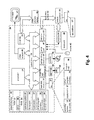
- FIG. 4 illustrates an example of a general-purpose computer system on which the disclosed systems and method can be implemented.
- FIG. 1 illustrates is a block diagram for a system for using encryption algorithms in P2P (i.e., “peer-to-peer”) encryption mode to restore the integrity of data according to an exemplary aspect.
- the system 100 can generally be considered a distributed data storage system that includes a client device 110 , a plurality of storage nodes, i.e., servers 120 , 130 , 140 , and a network 150 .
- One or more of the servers 120 - 140 can be in communication with the client device 110 and also in communication with each other through the network 150 .
- the client device 110 may be any type of computing client device, such as a laptop, a desktop, smartphone or the like.
- the client device 110 can be a separate server configured to manage the distributed data-storage of the other servers 120 - 140 .
- the client device 110 includes one or a plurality of data files 112 in electronic memory and a computer-processing unit (“CPU”) 114 .
- CPU computer-processing unit
- Other common components e.g., network interfaces and the like
- are included in the client device 110 but have not been shown herein so as to not unnecessarily obscure the aspects of the exemplary system and method.
- the system and method can also be implemented on multiple computers according to an alternative aspect.
- the system can include several computers with such services deployed and services have some consensus protocol to communicate and agree on each other action.
- the client device 110 can store one or more blocks of data from data files 112 in the system using the (n,k) scheme described above by distributing chunks, i.e., “derivatives”, of the data across the disks of the storage nodes, i.e., servers 120 , 130 and 140 . It should be appreciated that the derivatives are fragments of the original block of data (e.g., a file F) according to the (n,k) scheme.
- each of the servers 120 , 130 and 140 also comprises CPUs and a plurality of nodes and/or disks for data storage.
- server 120 includes disks 122 A and 122 B and CPU 124
- server 130 includes disks 132 A and 132 B and CPU 134
- server 140 includes disks 142 A and 142 B and CPU 144 .
- three servers and two disks per server is shown according to the illustrated aspect, but that the exemplary aspect is in no way intended to be limited to this number of servers and/or disks.
- it is assumed that there can a number of servers S j where j 1 . . . k.
- server 120 is Server 1
- server 130 is Server 2
- server 140 is Server k.
- each server i.e., CPUs 124 , 134 , and 144
- a data management module that includes software code (e.g., processor executable instructions) in memory, which may be configured to execute/facilitate the algorithms described herein for distributed data storage and management.
- servers 120 - 140 are configured to form a P2P computing network as a distributed application architecture that is capable of partitioning the tasks/workloads between the servers 120 - 140 .
- the servers 120 - 140 form a peer-to-peer network of the storage nodes.
- each of the servers 120 - 140 advantageously provide a portion of their resources, e.g., processing power by the respective CPUs, directly available to the other network participants, without the need for central coordination by a central server or stable host.
- client device 110 can form a storage node with the P2P network.
- network 150 can be any network for communicating data and data operations and can include a communication system (not shown) that connects the various computers of the system by wire, cable, fiber optic, and/or wireless links facilitated by various types of well-known network elements, such as hubs, switches, routers, and the like.
- Network 150 may employ various well-known protocols to communicate information amongst the network resources.
- the network 150 can be part of the Internet or intranet using various communications infrastructure such as Ethernet, WiFi and the like.
- each of the servers 120 , 130 and 140 can generally include hardware and software components configured to manage various storage resources within the computing environment as will be described in more detail below.
- each of the disks e.g., 122 A, 122 B, 132 A, 132 B, 142 A and 142 B
- each of the disks can be a typical data storage device (e.g., hard disk drives, optical drives, magnetic tape drives and/or the like).
- the servers 120 , 130 and 140 collectively form the data distributed system as the P2P network that is provided to facilitate temporary and/or permanent storage of computer data according to the (n,k) scheme.
- the computer data may be any type of electronic, digital data generated and/or stored by a computer.
- the computer data can represent text data, executable program code, or any other type of digital data.
- the servers 120 - 140 can be provided as forming an online/remote file storage service (e.g., a cloud computing service) in one aspect, but alternatively can be incorporated into a local area network or the like as should be appreciated to those skilled in the art.
- an online/remote file storage service e.g., a cloud computing service
- the client device 110 is configured to initially store data in the distributed storage system, and, in particular, across one or more of the nodes/disks shown in FIG. 1 .
- the client device 110 can store a file F having a size S (i.e., an object of storage) as the consecutive order of binary storage units (e.g., bits, bytes, sectors, clusters, etc.).
- S i.e., an object of storage
- binary storage units e.g., bits, bytes, sectors, clusters, etc.
- the system can initially store k chunks (also referred to as “derivatives”) with m number of chunks that will be sufficient to recover the initial file F.
- each of the k chunks should be written to a separate disk, and, preferably, to a separate server to ensure high availability of the data, although two or more derivatives can be stored in the same node and even all derivatives k can be stored on a single node.
- the system can employ an algorithm that can initially create a set of k “derivatives” d i of file F that can be distributed across the servers 120 - 140 (i.e., servers 1 , 2 . . . k) according to conventional techniques (e.g., randomly, even distribution, etc.).
- the derivatives d i could have varying sizes according to alternative aspects.
- each of derivatives d i is stored entirely on one of the nodes, wherein each node can contain from 0 to n ⁇ 1 derivatives.
- the system e.g., client device 110
- the system 100 determines that a new derivative (e.g., derivative i) needs to be created for file F.
- a new derivative e.g., derivative i
- k blocks is the minimum number of blocks necessary for recovery.
- the system or a system administrator, etc. can elect to add/create additional blocks, e.g., k+1 or 2k blocks to increase data recoverability and the like.
- the client device 110 would be forced to collect k derivatives from the storage nodes, recreates and decrypts the file F, and then generate the derivative i.
- the exemplary system and method utilizes the P2P network formed by servers 120 - 140 to distribute the operations between the different servers to optimize assembly time and network load.
- each server 120 - 140 is configured to execute a data management module that includes software code (e.g., processor executable instructions) in memory, which may be configured to execute the operations to create/restore a new derivative i for file F.
- FIG. 2 illustrates a block diagram of server 120 for using encryption algorithms in P2P encryption mode to restore the integrity of data according to an exemplary aspect. It should be appreciated that while FIG. 2 illustrates an exemplary diagram for server 120 , additional servers in the P2P network (e.g., servers 130 and 140 ) have the same or similar configuration of components.
- server 120 shown in FIG. 2 illustrates a more detailed view of the server 120 of system 100 described above with respect to FIG. 1 .
- the server 120 includes CPU 124 and memory (i.e., disks 122 A and 122 B).
- the server 120 includes a data management module 210 that is configured to perform the algorithms described below for data storage and management of a file F according to the exemplary aspects.
- the data management module 210 can be composed of a plurality of modules, i.e., derivative generation module 212 and derivative distribution module 214 .
- module refers to a software service or application executed on one or more computers, including real-world devices, components, or arrangement of components implemented using hardware, such as by an application specific integrated circuit (ASIC) or field-programmable gate array (FPGA), for example, or as a combination of hardware and software, such as by a microprocessor system and a set of instructions to implement the module's functionality, which (while being executed) transform the microprocessor system into a special-purpose device.
- ASIC application specific integrated circuit
- FPGA field-programmable gate array
- a module can also be implemented as a combination of the two, with certain functions facilitated by hardware alone, and other functions facilitated by a combination of hardware and software.
- at least a portion, and in some cases, all, of a module can be executed on the processor of a general purpose computer. Accordingly, each module can be realized in a variety of suitable configurations, and should not be limited to any example implementation exemplified herein.
- the disclosure may in some places generally refer to the server 210 (and servers 130 and 140 ) and/or the data management module 210 as performing the various steps, but it should be appreciated that the applicable modules shown in FIG. 2 are provided to perform such steps according to an exemplary aspect.
- the derivative generation module 212 is provided to generate/restore a new derivative i for file F and derivative distribution module 214 is configured to selected the nodes in the P2P network for storage of the derivative i of file F.
- the derivative distribution module 214 is configured to select a node in the system (e.g., server S) to store the new derivative i to achieve load balance, reliability, access pattern, and the like, for example.
- the derivative generation module 212 of each server 120 - 140 is configured to generate a “blob” ⁇ d i ⁇ that is an object that contains the data that is gradually recreated for the derivative i, for example.
- the term blob is short for a binary large object, which is a collection of binary data stored as a single entity in the database management system, i.e., the P2P network including servers 120 - 140 .
- the derivative generation module 212 of each server 120 - 140 is configured to generate the “blob” ⁇ d i ⁇ through step by step modification procedure/operation R (i, ⁇ d*i ⁇ , m, ⁇ dm ⁇ , 1) for the creation of derivative i, where the inputs for the modification procedure/operation R are:
- k steps are performed by the plurality of servers (each by its respective derivative generation module 212 ) to generate the blob ⁇ d i ⁇ , which is the object where data is gradually recreated for the derivative i.
- the modification operation R i, ⁇ d*i ⁇ , m, ⁇ dm ⁇ , l
- R is performed by each server during the process before the blob ⁇ d i ⁇ is finalized.
- the current reconstituted blob ⁇ d*i ⁇ is generated by a first server and then transmitted to a second server where it is continuously modified/added to until all servers in the sequence of servers have executed the operation R on the reconstituted blob ⁇ d*i ⁇ to form the blob ⁇ d i ⁇ for derivative i.
- a new derivative i needs to be created and restored on a server s, where s can be one of the servers that currently stores a derivative or is another server that is within the P2P network, but does not currently store a derivative.
- server s is selected according to internal administrative policies.
- server s can be the server that does not currently have any derivatives stored thereon and is the server that is communicatively coupled to server k with the highest transfer rate between each other.
- the first server in the sequence of servers Sj is prompted or initiated to perform operation R.
- a system manager e.g., a managing or controlling server of the system
- the derivative generation module 212 of server 1 (which can be server 120 , for example) first empties (i.e., zeroes) a binary object to be for the blob ⁇ d*i ⁇ .
- server 1 performs the modification operation of R (i, ⁇ d*i ⁇ , m, ⁇ dm ⁇ , q), where m is equal to the number of the derivative stored on this server 1 .
- the derivative distribution module 214 determines whether q (i.e., the current step number) is equal to k.
- the derivative distribution module 214 causes the reconstituted blob ⁇ d*i ⁇ to be passed or transmitted to the new server Sj+1.
- each server in the sequence Sq of servers provides a portion of their resources, e.g., processing power by the respective CPUs, directly available to the other network participants, without the need for central coordination by a central server or stable host.
- the client device 110 who owns file F, to be online and in communication with the P2P network for the derivative i to be created.
- FIGS. 3A and 3B illustrate a flowchart for a method for using encryption algorithms in P2P encryption mode to restore the integrity of data according to an exemplary aspect. It should be understood that the following exemplary method utilizes the system 100 and components described above and makes reference to them as follows.
- the process is initiated to create/restore a derivative i of a file F, for example.
- the method begins with state of the P2P network of servers having previously stored k derivatives of a file F on the plurality of servers in the system 100 .
- a first server of a sequence Sq of servers is selected with a blob ⁇ d*i ⁇ zeroed on the server.
- an existing derivative is identified on the current server j and modified using the modification operation R as defined above.
- the current server j determines whether q (i.e., the step number) is equal to k (i.e., the total number of servers in the sequence of servers Sq). If q is determined to equal k at step 320 , the method proceeds to step 325 where the derivative distribution module 214 then causes the respective server to upload the reconstituted blob ⁇ d*i ⁇ to server s (previously determined) to be stored therein and the algorithm is finished.
- q i.e., the step number
- k i.e., the total number of servers in the sequence of servers Sq.
- step 355 the derivative distribution module 214 of the current server then causes the respective server to upload the reconstituted blob ⁇ d*i ⁇ to server s (previously determined) to be stored therein and the algorithm is finished.
- the method returns to step 330 .
- the current server e.g., server k of FIG. 1
- the generation of the derivative i can be considered a process having “k” stages.
- the blob is initially created (e.g., zeroed) and the algorithm R is applied to the blob in which the existing blob content is used and one of the existing derivatives is provided as an input.
- This process is repeated with different existing derivatives on the same blob exactly k times.
- the blob effectively accumulates changes after each algorithm R is applied to the blob.
- the blob effectively becomes the derivative, i.e., after final application of the algorithm R.
- the system is currently storing 8 derivatives d each comprising 8 bits.
- the blob is first zeroed as ⁇ xxxxxxxx ⁇ .
- the blob is ⁇ Bxxxxxxx ⁇
- the blob is ⁇ BBxxxxxx ⁇ and so forth.
- the blob is ⁇ BBBBBBBB ⁇ , such that newly created derivative is complete, where each B is created from the appropriate derivative.
- the method described above for creating/restoring blob ⁇ d*i ⁇ for derivative i is performed with the sequence Sj of servers determined to provide an optimal solution, i.e., by minimizing the total time of the operation including data transfer time (including channel load) between the servers and their local assembly.
- another criterion for optimality can be a common “extra” traffic system.
- the system is configured to select only servers with a maximum bandwidth between each other, and at each step to choose from the remaining servers the one that has highest data transfer rate.
- the data management module 210 of the current server performed the modification operation R can be configured to dynamically evaluate the transfer rates with other servers in the network as the current loads, or statically, as a predetermined limit or average performance pairwise communication channel. When the current server needs to pass the recreated blob ⁇ d*i ⁇ to the next server in the sequence Sj, the data management module 210 of that current server will select the connected server with the highest data transfer rate.
- the disclosed algorithm can also take this configuration into account.
- the data management module 210 can be configured to estimate the time remaining for the completion of its working, provided the system passes this server the turn to perform the modification operation R.
- the transmission time of the currently recreated blob ⁇ d*i ⁇ on the selected server will be proportional to the current bandwidth, while the volume of all work on all servers will be the same (in terms of time, it may vary if there is a different performance or load), but if there is more than one derivative on a server, then the total number of servers in the chain (i.e., the sequence Sj) is reduced, and, therefore, the amount of data transmitted over the network 150 is also reduced. In the extreme case, if one server already has k derivatives, then the need to transfer data within the network is absent, except for the transmission of the blob ⁇ d*i ⁇ only to the server s at the end of the algorithm.
- a simple algorithm can be formulated by the system to minimize the execution time of operations, or overhead, and on the basis of its already choose servers. Moreover, the creation of algorithm for assembly and disassembly for (n,k) scheme and recovery algorithm R based on it.
- the managing device e.g., device 110 , which can be a server
- the managing device can periodically poll the servers in the P2P network and search for willingness to store a derivative of some file.
- the storage of each server receives a micropayment for storage upon receiving the derivative and confirming storage thereon, for example.
- each server can receive payment for participation in the process of assembling a new derivative that will be used for optimization or to recover lost derivative during a crash.
- the process can be started that includes, for example, an auction for the implementation of operations with the search among available servers wishing to participate in the process.
- the proposed approach does not use homomorphic encryption and the methodology allows servers to see the assembled file (usually encrypted).
- each server in the sequence of servers Sj is configured to perform the steps of modifying blob ⁇ d*i ⁇ to recreate derivative i without knowing the data content.
- FIG. 4 illustrates an example of a general-purpose computer system (which may be a personal computer or a server) on which the disclosed systems and method can be implemented according to an example aspect.
- the detailed general-purpose computer system can correspond to client device 110 and any of servers 120 - 140 described above with respect to FIG. 1 .
- the remote computer(s) 49 can correspond to any of the nodes in the P2P network as discussed above with respect to the exemplary system and method.
- the computer system 20 includes a central processing unit 21 , a system memory 22 and a system bus 23 connecting the various system components, including the memory associated with the central processing unit 21 .
- the central processing unit 21 can correspond to the CPU 124 and the system memory 22 can correspond to disks 122 A and/or 122 B of server 120 , as an example, as shown in FIG. 1 .
- the system bus 23 is realized like any bus structure known from the prior art, including in turn a bus memory or bus memory controller, a peripheral bus and a local bus, which is able to interact with any other bus architecture.
- the system memory includes read only memory (ROM) 24 and random-access memory (RAM) 25 .
- the basic input/output system (BIOS) 26 includes the basic procedures ensuring the transfer of information between elements of the personal computer 20 , such as those at the time of loading the operating system with the use of the ROM 24 .
- the personal computer 20 includes a hard disk 27 for reading and writing of data, a magnetic disk drive 28 for reading and writing on removable magnetic disks 29 and an optical drive 30 for reading and writing on removable optical disks 31 , such as CD-ROM, DVD-ROM and other optical information media.
- the hard disk 27 , the magnetic disk drive 28 , and the optical drive 30 are connected to the system bus 23 across the hard disk interface 32 , the magnetic disk interface 33 and the optical drive interface 34 , respectively.
- the drives and the corresponding computer information media are power-independent modules for storage of computer instructions, data structures, program modules and other data of the personal computer 20 .
- the present disclosure provides the implementation of a system that uses a hard disk 27 , a removable magnetic disk 29 and a removable optical disk 31 , but it should be understood that it is possible to employ other types of computer information media 56 which are able to store data in a form readable by a computer (solid state drives, flash memory cards, digital disks, random-access memory (RAM) and so on), which are connected to the system bus 23 via the controller 55 .
- solid state drives, flash memory cards, digital disks, random-access memory (RAM) and so on which are connected to the system bus 23 via the controller 55 .
- the computer 20 has a file system 36 , where the recorded operating system 35 is kept, and also additional program applications 37 , other program modules 38 and program data 39 .
- the user is able to enter commands and information into the personal computer 20 by using input devices (keyboard 40 , mouse 42 ).
- Other input devices can be used: microphone, joystick, game controller, scanner, and so on.
- Such input devices usually plug into the computer system 20 through a serial port 46 , which in turn is connected to the system bus, but they can be connected in other ways, for example, with the aid of a parallel port, a game port or a universal serial bus (USB).
- a monitor 47 or other type of display device is also connected to the system bus 23 across an interface, such as a video adapter 48 .
- the personal computer can be equipped with other peripheral output devices (not shown), such as loudspeakers, a printer, and so on.
- the personal computer 20 is able to operate within a network environment, using a network connection to one or more remote computers 49 .
- the remote computer (or computers) 49 are also personal computers or servers having the majority or all of the aforementioned elements in describing the nature of a personal computer 20 .
- Other devices can also be present in the computer network, such as routers, network stations, peer devices or other network nodes.
- Network connections can form a local-area computer network (LAN) 50 , such as a wired and/or wireless network, and a wide-area computer network (WAN).
- LAN local-area computer network
- WAN wide-area computer network
- Such networks are used in corporate computer networks and internal company networks, and they generally have access to the Internet.
- the personal computer 20 is connected to the local-area network 50 across a network adapter or network interface 51 .
- the personal computer 20 can employ a modem 54 or other modules for providing communications with a wide-area computer network such as the Internet.
- the modem 54 which is an internal or external device, is connected to the system bus 23 by a serial port 46 .
- the systems and methods described herein may be implemented in hardware, software, firmware, or any combination thereof. If implemented in software, the methods may be stored as one or more instructions or code on a non-transitory computer-readable medium.
- Computer-readable medium includes data storage.
- such computer-readable medium can comprise RAM, ROM, EEPROM, CD-ROM, Flash memory or other types of electric, magnetic, or optical storage medium, or any other medium that can be used to carry or store desired program code in the form of instructions or data structures and that can be accessed by a processor of a general purpose computer.
Landscapes
- Engineering & Computer Science (AREA)
- Theoretical Computer Science (AREA)
- Quality & Reliability (AREA)
- Physics & Mathematics (AREA)
- General Engineering & Computer Science (AREA)
- General Physics & Mathematics (AREA)
- Computer Security & Cryptography (AREA)
- Computer Networks & Wireless Communication (AREA)
- Signal Processing (AREA)
- Information Retrieval, Db Structures And Fs Structures Therefor (AREA)
Abstract
Description
-
- i—the number generated by the derivative;
- {d*i}—the current reconstituted blob of the derivative (e.g.,
size 1/k of the original file), modifiable; - m—number of derivative to be used in the current step for recreation;
- {dm}—blob m-th derivative, not modified; and
- l—the step number (from 1 to k, where k corresponds to the number of servers used during generation of the derivative i).
Claims (20)
Priority Applications (1)
| Application Number | Priority Date | Filing Date | Title |
|---|---|---|---|
| US15/429,269 US10409688B2 (en) | 2017-02-10 | 2017-02-10 | System and method of using encryption algorithms in P2P encryption mode to restore integrity of data |
Applications Claiming Priority (1)
| Application Number | Priority Date | Filing Date | Title |
|---|---|---|---|
| US15/429,269 US10409688B2 (en) | 2017-02-10 | 2017-02-10 | System and method of using encryption algorithms in P2P encryption mode to restore integrity of data |
Publications (2)
| Publication Number | Publication Date |
|---|---|
| US20180232284A1 US20180232284A1 (en) | 2018-08-16 |
| US10409688B2 true US10409688B2 (en) | 2019-09-10 |
Family
ID=63105102
Family Applications (1)
| Application Number | Title | Priority Date | Filing Date |
|---|---|---|---|
| US15/429,269 Active 2037-09-08 US10409688B2 (en) | 2017-02-10 | 2017-02-10 | System and method of using encryption algorithms in P2P encryption mode to restore integrity of data |
Country Status (1)
| Country | Link |
|---|---|
| US (1) | US10409688B2 (en) |
Cited By (2)
| Publication number | Priority date | Publication date | Assignee | Title |
|---|---|---|---|---|
| US12373304B2 (en) | 2023-06-29 | 2025-07-29 | Acronis International Gmbh | Validation of the backup consistency using machine learning for boot screenshot recognition |
| US12505233B2 (en) | 2023-06-29 | 2025-12-23 | Acronis International Gmbh | Systems and methods of secure deduplication of encrypted content |
Families Citing this family (2)
| Publication number | Priority date | Publication date | Assignee | Title |
|---|---|---|---|---|
| US10447591B2 (en) | 2016-08-30 | 2019-10-15 | Oracle International Corporation | Executing multiple virtual private network (VPN) endpoints associated with an endpoint pool address |
| US11194668B1 (en) * | 2018-01-29 | 2021-12-07 | Daniel Backer Grunberg | Backup across redundant removable media |
Citations (2)
| Publication number | Priority date | Publication date | Assignee | Title |
|---|---|---|---|---|
| US20060015945A1 (en) * | 2004-07-13 | 2006-01-19 | Fields Daniel M | Apparatus and method for storing and distributing encrypted digital content |
| US20110270855A1 (en) * | 2010-02-04 | 2011-11-03 | Network State, LLC | State operating system |
-
2017
- 2017-02-10 US US15/429,269 patent/US10409688B2/en active Active
Patent Citations (2)
| Publication number | Priority date | Publication date | Assignee | Title |
|---|---|---|---|---|
| US20060015945A1 (en) * | 2004-07-13 | 2006-01-19 | Fields Daniel M | Apparatus and method for storing and distributing encrypted digital content |
| US20110270855A1 (en) * | 2010-02-04 | 2011-11-03 | Network State, LLC | State operating system |
Cited By (2)
| Publication number | Priority date | Publication date | Assignee | Title |
|---|---|---|---|---|
| US12373304B2 (en) | 2023-06-29 | 2025-07-29 | Acronis International Gmbh | Validation of the backup consistency using machine learning for boot screenshot recognition |
| US12505233B2 (en) | 2023-06-29 | 2025-12-23 | Acronis International Gmbh | Systems and methods of secure deduplication of encrypted content |
Also Published As
| Publication number | Publication date |
|---|---|
| US20180232284A1 (en) | 2018-08-16 |
Similar Documents
| Publication | Publication Date | Title |
|---|---|---|
| US8051205B2 (en) | Peer-to-peer distributed storage | |
| EP1612982B1 (en) | Content distribution using network coding | |
| RU2501072C2 (en) | Distributed storage of recoverable data | |
| US10372357B2 (en) | Securely recovering stored data in a dispersed storage network | |
| US10652350B2 (en) | Caching for unique combination reads in a dispersed storage network | |
| US10409688B2 (en) | System and method of using encryption algorithms in P2P encryption mode to restore integrity of data | |
| US20120011200A1 (en) | Method and apparatus for data storage in a peer-to-peer network | |
| US9823845B2 (en) | Adaptive dispersed storage network (DSN) and system | |
| US20190087599A1 (en) | Compressing a slice name listing in a dispersed storage network | |
| US10241878B2 (en) | System and method of data allocation providing increased reliability of storage | |
| US12316769B2 (en) | Method and apparatus for storing blockchain transaction data and distributed storage system using the same | |
| Van et al. | Non-homogeneous distributed storage systems | |
| US10769016B2 (en) | Storing a plurality of correlated data in a dispersed storage network | |
| JP7139347B2 (en) | Method for Partial Update of Data Content in Scattered Storage Networks | |
| Nakkiran et al. | Fundamental limits on communication for oblivious updates in storage networks | |
| US20250103432A1 (en) | Method and Apparatus for Using Pairwise Encryption Keys in a Distributed Storage System | |
| US10592109B2 (en) | Selecting storage resources in a dispersed storage network | |
| JP2018524705A (en) | Method and system for processing data access requests during data transfer | |
| US20190146711A1 (en) | Contention avoidance on associative commutative updates | |
| US20180089022A1 (en) | Combined slice objects in alternate memory locations | |
| US20200412804A1 (en) | Direct file send from storage to end client by transferring socket information to the storage | |
| Xu et al. | CRL: Efficient Concurrent Regeneration Codes with Local Reconstruction in Geo-Distributed Storage Systems | |
| CN112087284B (en) | File storage method, system and computer-readable storage medium based on LT encoding | |
| Upra et al. | Personal Cloud P2P | |
| US10585607B2 (en) | Determining an optimum selection of functions for units in a DSN memory |
Legal Events
| Date | Code | Title | Description |
|---|---|---|---|
| AS | Assignment |
Owner name: OBSIDIAN AGENCY SERVICES, INC., AS COLLATERAL AGEN Free format text: SECURITY INTEREST;ASSIGNORS:ACRONIS INTERNATIONAL GMBH;GROUPLOGIC, INC.;REEL/FRAME:043350/0186 Effective date: 20170721 Owner name: OBSIDIAN AGENCY SERVICES, INC., AS COLLATERAL AGENT, CALIFORNIA Free format text: SECURITY INTEREST;ASSIGNORS:ACRONIS INTERNATIONAL GMBH;GROUPLOGIC, INC.;REEL/FRAME:043350/0186 Effective date: 20170721 |
|
| STPP | Information on status: patent application and granting procedure in general |
Free format text: RESPONSE TO NON-FINAL OFFICE ACTION ENTERED AND FORWARDED TO EXAMINER |
|
| STPP | Information on status: patent application and granting procedure in general |
Free format text: NOTICE OF ALLOWANCE MAILED -- APPLICATION RECEIVED IN OFFICE OF PUBLICATIONS |
|
| AS | Assignment |
Owner name: ACRONIS INTERNATIONAL GMBH, SWITZERLAND Free format text: ASSIGNMENT OF ASSIGNORS INTEREST;ASSIGNOR:TORMASOV, ALEXANDER G;REEL/FRAME:049883/0520 Effective date: 20190726 |
|
| STPP | Information on status: patent application and granting procedure in general |
Free format text: PUBLICATIONS -- ISSUE FEE PAYMENT VERIFIED |
|
| STCF | Information on status: patent grant |
Free format text: PATENTED CASE |
|
| AS | Assignment |
Owner name: GROUPLOGIC, INC., MASSACHUSETTS Free format text: RELEASE BY SECURED PARTY;ASSIGNOR:OBSIDIAN AGENCY SERVICES, INC.;REEL/FRAME:050783/0893 Effective date: 20190920 Owner name: ACRONIS INTERNATIONAL GMBH, MASSACHUSETTS Free format text: RELEASE BY SECURED PARTY;ASSIGNOR:OBSIDIAN AGENCY SERVICES, INC.;REEL/FRAME:050783/0893 Effective date: 20190920 |
|
| AS | Assignment |
Owner name: MIDCAP FINANCIAL TRUST, MARYLAND Free format text: SECURITY INTEREST;ASSIGNOR:ACRONIS INTERNATIONAL GMBH;REEL/FRAME:051418/0119 Effective date: 20191218 |
|
| AS | Assignment |
Owner name: MIDCAP FINANCIAL TRUST, MARYLAND Free format text: REAFFIRMATION AGREEMENT;ASSIGNORS:ACRONIS AG;ACRONIS INTERNATIONAL GMBH;ACRONIS SCS, INC.;AND OTHERS;REEL/FRAME:061330/0818 Effective date: 20220427 |
|
| MAFP | Maintenance fee payment |
Free format text: PAYMENT OF MAINTENANCE FEE, 4TH YEAR, LARGE ENTITY (ORIGINAL EVENT CODE: M1551); ENTITY STATUS OF PATENT OWNER: LARGE ENTITY Year of fee payment: 4 |