US10351558B2 - Factor IXa inhibitors - Google Patents
Factor IXa inhibitors Download PDFInfo
- Publication number
- US10351558B2 US10351558B2 US15/550,862 US201615550862A US10351558B2 US 10351558 B2 US10351558 B2 US 10351558B2 US 201615550862 A US201615550862 A US 201615550862A US 10351558 B2 US10351558 B2 US 10351558B2
- Authority
- US
- United States
- Prior art keywords
- methyl
- phenyl
- tetrahydropyrido
- triazol
- chloro
- Prior art date
- Legal status (The legal status is an assumption and is not a legal conclusion. Google has not performed a legal analysis and makes no representation as to the accuracy of the status listed.)
- Active
Links
- 0 [1*]C1(CC(=O)[Y]C)C([3*])Cc2cc3c([8*])c([7*])c([6*])c([5*])c3c2C1[2*] Chemical compound [1*]C1(CC(=O)[Y]C)C([3*])Cc2cc3c([8*])c([7*])c([6*])c([5*])c3c2C1[2*] 0.000 description 18
- KZPZWYLLFQAQLP-UHFFFAOYSA-N CC1=CC2=C(C=C1)N1CC(NC(=O)C3=CC=C(N4C=NC(C)=N4)C=C3Cl)(C3=CC=C(F)C=C3)CC(F)(F)/C1=N/2 Chemical compound CC1=CC2=C(C=C1)N1CC(NC(=O)C3=CC=C(N4C=NC(C)=N4)C=C3Cl)(C3=CC=C(F)C=C3)CC(F)(F)/C1=N/2 KZPZWYLLFQAQLP-UHFFFAOYSA-N 0.000 description 4
- ZOIGOFHXLPCDNC-UHFFFAOYSA-N CC1=CC2=C(C=C1)N1CC(NC(=O)C3=CC=C(N4C=NN=C4)C=C3Cl)(C3=CC(F)=CC=C3)CC/C1=N/2 Chemical compound CC1=CC2=C(C=C1)N1CC(NC(=O)C3=CC=C(N4C=NN=C4)C=C3Cl)(C3=CC(F)=CC=C3)CC/C1=N/2 ZOIGOFHXLPCDNC-UHFFFAOYSA-N 0.000 description 4
- QIDDZDYWPJYPKU-GDLZYMKVSA-N CC1=CC2=C(C=C1)N1C[C@@](NC(=O)C3=CC=C(N4C=NN=C4)C=C3Cl)(C3=CC=CC=C3)CCC1=C2C Chemical compound CC1=CC2=C(C=C1)N1C[C@@](NC(=O)C3=CC=C(N4C=NN=C4)C=C3Cl)(C3=CC=CC=C3)CCC1=C2C QIDDZDYWPJYPKU-GDLZYMKVSA-N 0.000 description 3
- DLWWSYWCLFZIJZ-WJOKGBTCSA-N CC1=CC=C2C(=C1)C(CCC(N)=O)=C1CC[C@](NC(=O)C3=CC=C(N4C=NN=C4)C=C3Cl)(C3=CC=CC=C3)CN21 Chemical compound CC1=CC=C2C(=C1)C(CCC(N)=O)=C1CC[C@](NC(=O)C3=CC=C(N4C=NN=C4)C=C3Cl)(C3=CC=CC=C3)CN21 DLWWSYWCLFZIJZ-WJOKGBTCSA-N 0.000 description 3
- MRYGNOPLLHALFI-GDLZYMKVSA-N CC1=CC=C2C(=C1)C(S(C)(=O)=O)=C1CC[C@](NC(=O)C3=C(Cl)C=C(N4C=NN=C4)C=C3Cl)(C3=CC=CC=C3)CN21 Chemical compound CC1=CC=C2C(=C1)C(S(C)(=O)=O)=C1CC[C@](NC(=O)C3=C(Cl)C=C(N4C=NN=C4)C=C3Cl)(C3=CC=CC=C3)CN21 MRYGNOPLLHALFI-GDLZYMKVSA-N 0.000 description 3
- JQXGFOIJCTVMKK-UHFFFAOYSA-N CC1=CN2/N=C3/CCC(CC(=O)C4=C(Cl)C=C(N5C=NC(C)=N5)C=C4Cl)(C(C)O)C/C3=C/2C=C1 Chemical compound CC1=CN2/N=C3/CCC(CC(=O)C4=C(Cl)C=C(N5C=NC(C)=N5)C=C4Cl)(C(C)O)C/C3=C/2C=C1 JQXGFOIJCTVMKK-UHFFFAOYSA-N 0.000 description 3
- KPMMJQNCDGMIHI-UHFFFAOYSA-N CC(=O)NC1(C=O)CCC2=NN3C=C(C)C=CC3=C2C1 Chemical compound CC(=O)NC1(C=O)CCC2=NN3C=C(C)C=CC3=C2C1 KPMMJQNCDGMIHI-UHFFFAOYSA-N 0.000 description 2
- YPLVGQPMNDBZIP-MUUNZHRXSA-N CC1=C/C2=C(\C=C/1)N1C[C@](C)(NC(=O)C3=C(Cl)C=C(N4C=NC5=C4C=CC(C(=O)O)=C5)C=C3)CCC1=N2 Chemical compound CC1=C/C2=C(\C=C/1)N1C[C@](C)(NC(=O)C3=C(Cl)C=C(N4C=NC5=C4C=CC(C(=O)O)=C5)C=C3)CCC1=N2 YPLVGQPMNDBZIP-MUUNZHRXSA-N 0.000 description 2
- OGCQFYFBPPXOHW-UHFFFAOYSA-N CC1=C/C=C2C(=C/1)/N=C1CCC(NC(=O)C3=CC=C(N4C=NN=C4)C=C3Cl)(C3=CC=CC(OC(F)(F)F)=C3)CN1/2 Chemical compound CC1=C/C=C2C(=C/1)/N=C1CCC(NC(=O)C3=CC=C(N4C=NN=C4)C=C3Cl)(C3=CC=CC(OC(F)(F)F)=C3)CN1/2 OGCQFYFBPPXOHW-UHFFFAOYSA-N 0.000 description 2
- JKTORCUUFGOASE-MUUNZHRXSA-N CC1=C/C=C2C(=C/1)/N=C1CC[C@](NC(=O)C3=CC=C(N4C=NN=C4)C=C3Cl)(C3=CC=CC(C(=O)O)=C3)CN1/2 Chemical compound CC1=C/C=C2C(=C/1)/N=C1CC[C@](NC(=O)C3=CC=C(N4C=NN=C4)C=C3Cl)(C3=CC=CC(C(=O)O)=C3)CN1/2 JKTORCUUFGOASE-MUUNZHRXSA-N 0.000 description 2
- CHKQALUEEULCPZ-UHFFFAOYSA-N CC1=CC(C)=C(S(=O)(=O)ON)C(C)=C1 Chemical compound CC1=CC(C)=C(S(=O)(=O)ON)C(C)=C1 CHKQALUEEULCPZ-UHFFFAOYSA-N 0.000 description 2
- WQQYSTHTJZJYCE-JGCGQSQUSA-N CC1=CC2=C(C=C1)C1=C(CC[C@](NC(=O)C3=CC=C(N4C=NC(C)=N4)C=C3Cl)(C3=CC(F)=CC=C3)C1)N2CCC(=O)O Chemical compound CC1=CC2=C(C=C1)C1=C(CC[C@](NC(=O)C3=CC=C(N4C=NC(C)=N4)C=C3Cl)(C3=CC(F)=CC=C3)C1)N2CCC(=O)O WQQYSTHTJZJYCE-JGCGQSQUSA-N 0.000 description 2
- LWWZENXUHWWXQO-UHFFFAOYSA-N CC1=CC2=C(C=C1)N1CC(NC(=O)C3=CC=C(N4C=NN=C4)C=C3Cl)(C3=CC(F)=CC=C3)COC1=N2 Chemical compound CC1=CC2=C(C=C1)N1CC(NC(=O)C3=CC=C(N4C=NN=C4)C=C3Cl)(C3=CC(F)=CC=C3)COC1=N2 LWWZENXUHWWXQO-UHFFFAOYSA-N 0.000 description 2
- SLFMNODVVHTBFF-PSXMRANNSA-N CC1=CC2=C(C=C1)N1C[C@@](NC(=O)C3=CC=C(N4C=NN=C4)C=C3Cl)(C3=CC=CC=C3)CCC1=C2C1=CC(C(C)(C)O)=CN=C1 Chemical compound CC1=CC2=C(C=C1)N1C[C@@](NC(=O)C3=CC=C(N4C=NN=C4)C=C3Cl)(C3=CC=CC=C3)CCC1=C2C1=CC(C(C)(C)O)=CN=C1 SLFMNODVVHTBFF-PSXMRANNSA-N 0.000 description 2
- UVXOTPGNLPUCQT-MGBGTMOVSA-N CC1=CC2=C(C=C1)N1C[C@@](NC(=O)C3=CC=C(N4C=NN=C4)C=C3Cl)(C3=CC=CC=C3)CCC1=C2C1=CN=CC(F)=C1 Chemical compound CC1=CC2=C(C=C1)N1C[C@@](NC(=O)C3=CC=C(N4C=NN=C4)C=C3Cl)(C3=CC=CC=C3)CCC1=C2C1=CN=CC(F)=C1 UVXOTPGNLPUCQT-MGBGTMOVSA-N 0.000 description 2
- FXOQPDCXSAPZNR-MGBGTMOVSA-N CC1=CC2=C(C=C1)N1C[C@@](NC(=O)C3=CC=C(N4C=NN=C4)C=C3Cl)(C3=CC=CC=C3)CCC1=C2C1=CN=CC=C1 Chemical compound CC1=CC2=C(C=C1)N1C[C@@](NC(=O)C3=CC=C(N4C=NN=C4)C=C3Cl)(C3=CC=CC=C3)CCC1=C2C1=CN=CC=C1 FXOQPDCXSAPZNR-MGBGTMOVSA-N 0.000 description 2
- NGSBGEPVNBRIAZ-QAZCHZEGSA-N CC1=CC=C2C(=C1)C(/C=C/C(=O)O)=C1CC[C@](NC(=O)C3=CC=C(N4C=NN=C4)C=C3Cl)(C3=CC=CC=C3)CN21 Chemical compound CC1=CC=C2C(=C1)C(/C=C/C(=O)O)=C1CC[C@](NC(=O)C3=CC=C(N4C=NN=C4)C=C3Cl)(C3=CC=CC=C3)CN21 NGSBGEPVNBRIAZ-QAZCHZEGSA-N 0.000 description 2
- KADGWWNGWDVWRO-YVHDKSSSSA-N CC1=CC=C2C(=C1)C(/C=N/O)=C1CC[C@](NC(=O)C3=C(Cl)C=C(N4C=NN=C4)C=C3Cl)(C3=CC=CC=C3)CN21 Chemical compound CC1=CC=C2C(=C1)C(/C=N/O)=C1CC[C@](NC(=O)C3=C(Cl)C=C(N4C=NN=C4)C=C3Cl)(C3=CC=CC=C3)CN21 KADGWWNGWDVWRO-YVHDKSSSSA-N 0.000 description 2
- KESSMXJYIPWQHT-SSEXGKCCSA-N CC1=CC=C2C(=C1)C(C(=O)O)=C1CC[C@](NC(=O)C3=CC=C(N4C=NC(C)=N4)C=C3Cl)(C3=CC=CC=C3)CN21 Chemical compound CC1=CC=C2C(=C1)C(C(=O)O)=C1CC[C@](NC(=O)C3=CC=C(N4C=NC(C)=N4)C=C3Cl)(C3=CC=CC=C3)CN21 KESSMXJYIPWQHT-SSEXGKCCSA-N 0.000 description 2
- JDBVHQIRLJSDSU-SSEXGKCCSA-N CC1=CC=C2C(=C1)C(C(=O)O)=C1CC[C@](NC(=O)C3=CC=C(N4C=NN(C)C4=O)C=C3Cl)(C3=CC=CC=C3)CN21 Chemical compound CC1=CC=C2C(=C1)C(C(=O)O)=C1CC[C@](NC(=O)C3=CC=C(N4C=NN(C)C4=O)C=C3Cl)(C3=CC=CC=C3)CN21 JDBVHQIRLJSDSU-SSEXGKCCSA-N 0.000 description 2
- YAYTZTZRCVYFSH-MUUNZHRXSA-N CC1=CC=C2C(=C1)C(C(F)(F)F)=C1CC[C@](NC(=O)C3=CC=C(N4C=NN=C4)C=C3Cl)(C3=CC=CC=C3)CN21 Chemical compound CC1=CC=C2C(=C1)C(C(F)(F)F)=C1CC[C@](NC(=O)C3=CC=C(N4C=NN=C4)C=C3Cl)(C3=CC=CC=C3)CN21 YAYTZTZRCVYFSH-MUUNZHRXSA-N 0.000 description 2
- SXZJLEXYVSTFDU-SSEXGKCCSA-N CC1=CC=C2C(=C1)C(C(N)=O)=C1CC[C@](NC(=O)C3=CC=C(N4C=NC(C)=N4)C=C3Cl)(C3=CC=CC=C3)CN21 Chemical compound CC1=CC=C2C(=C1)C(C(N)=O)=C1CC[C@](NC(=O)C3=CC=C(N4C=NC(C)=N4)C=C3Cl)(C3=CC=CC=C3)CN21 SXZJLEXYVSTFDU-SSEXGKCCSA-N 0.000 description 2
- VMFPNMKJFRPSDG-GDLZYMKVSA-N CC1=CC=C2C(=C1)C(C(N)=O)=C1CC[C@](NC(=O)C3=CC=C(N4C=NN=C4)C=C3Cl)(C3=CC=CC=C3)CN21 Chemical compound CC1=CC=C2C(=C1)C(C(N)=O)=C1CC[C@](NC(=O)C3=CC=C(N4C=NN=C4)C=C3Cl)(C3=CC=CC=C3)CN21 VMFPNMKJFRPSDG-GDLZYMKVSA-N 0.000 description 2
- BREHUJJLBSEWAY-DINWUYGQSA-N CC1=CC=C2C(=C1)C(C(N)C(=O)O)=C1CC[C@](NC(=O)C3=CC=C(N4C=NN=C4)C=C3Cl)(C3=CC=CC=C3)CN21 Chemical compound CC1=CC=C2C(=C1)C(C(N)C(=O)O)=C1CC[C@](NC(=O)C3=CC=C(N4C=NN=C4)C=C3Cl)(C3=CC=CC=C3)CN21 BREHUJJLBSEWAY-DINWUYGQSA-N 0.000 description 2
- TUCDMISJVGVBLL-GDLZYMKVSA-N CC1=CC=C2C(=C1)C(C1=NN=NN1)=C1CC[C@](NC(=O)C3=CC=C(N4C=NN=C4)C=C3Cl)(C3=CC=CC=C3)CN21 Chemical compound CC1=CC=C2C(=C1)C(C1=NN=NN1)=C1CC[C@](NC(=O)C3=CC=C(N4C=NN=C4)C=C3Cl)(C3=CC=CC=C3)CN21 TUCDMISJVGVBLL-GDLZYMKVSA-N 0.000 description 2
- PZKCJQNFNHMYCT-HHHXNRCGSA-N CC1=CC=C2C(=C1)N=C1CC[C@](NC(=O)C3=C(Cl)C=C(N4C=NN=C4)C=C3)(C3=CC=CC=C3)CN21 Chemical compound CC1=CC=C2C(=C1)N=C1CC[C@](NC(=O)C3=C(Cl)C=C(N4C=NN=C4)C=C3)(C3=CC=CC=C3)CN21 PZKCJQNFNHMYCT-HHHXNRCGSA-N 0.000 description 2
- FUFZNIPCWZLVGH-MUUNZHRXSA-N CC1=CC=C2C(=C1)N=C1CC[C@](NC(=O)C3=CC=C(N4C=NC(C)=N4)C=C3Cl)(C3=CC=CC=C3)CN21 Chemical compound CC1=CC=C2C(=C1)N=C1CC[C@](NC(=O)C3=CC=C(N4C=NC(C)=N4)C=C3Cl)(C3=CC=CC=C3)CN21 FUFZNIPCWZLVGH-MUUNZHRXSA-N 0.000 description 2
- IRQYDPXHIVPYDK-UHFFFAOYSA-N CC1=CN2/N=C3/CCC(N)(C4=CNC=N4)C/C3=C/2C=C1 Chemical compound CC1=CN2/N=C3/CCC(N)(C4=CNC=N4)C/C3=C/2C=C1 IRQYDPXHIVPYDK-UHFFFAOYSA-N 0.000 description 2
- NZXCRZYHMGWHIO-UHFFFAOYSA-N CC1=CN2N=C3CCC(=O)CC3=C2C=C1 Chemical compound CC1=CN2N=C3CCC(=O)CC3=C2C=C1 NZXCRZYHMGWHIO-UHFFFAOYSA-N 0.000 description 2
- QSKGBYKZXQFVQX-UHFFFAOYSA-N CC1=CN2N=C3CCC(C)(N)CC3=C2C=C1 Chemical compound CC1=CN2N=C3CCC(C)(N)CC3=C2C=C1 QSKGBYKZXQFVQX-UHFFFAOYSA-N 0.000 description 2
- ZKHAIGINGNTPHI-UHFFFAOYSA-N CC1=CN2N=C3CCC(NC(=O)C4=C(Cl)C=C(N5C=NC(C)=N5)C=C4Cl)(C4=CC=C(F)C(F)=C4)CC3=C2C=C1 Chemical compound CC1=CN2N=C3CCC(NC(=O)C4=C(Cl)C=C(N5C=NC(C)=N5)C=C4Cl)(C4=CC=C(F)C(F)=C4)CC3=C2C=C1 ZKHAIGINGNTPHI-UHFFFAOYSA-N 0.000 description 2
- MLUYTGGZSZAFEB-UHFFFAOYSA-N CC1=CN2N=C3CCC(NC(=O)C4=C(Cl)C=C(N5C=NN=C5)C=C4)(C4=CC=CC=C4)CC3=C2C(O)=C1 Chemical compound CC1=CN2N=C3CCC(NC(=O)C4=C(Cl)C=C(N5C=NN=C5)C=C4)(C4=CC=CC=C4)CC3=C2C(O)=C1 MLUYTGGZSZAFEB-UHFFFAOYSA-N 0.000 description 2
- BCXOIRPLNKNKAC-UHFFFAOYSA-N CC1=CN2N=C3CCC(O)(C4=CN(C(C5=CC=CC=C5)(C5=CC=CC=C5)C5=CC=CC=C5)C=N4)CC3=C2C=C1 Chemical compound CC1=CN2N=C3CCC(O)(C4=CN(C(C5=CC=CC=C5)(C5=CC=CC=C5)C5=CC=CC=C5)C=N4)CC3=C2C=C1 BCXOIRPLNKNKAC-UHFFFAOYSA-N 0.000 description 2
- JSQSKIOQZCIILZ-UHFFFAOYSA-N CC1=CN2N=C3CCCC(=O)C3=C2C=C1 Chemical compound CC1=CN2N=C3CCCC(=O)C3=C2C=C1 JSQSKIOQZCIILZ-UHFFFAOYSA-N 0.000 description 2
- ZAFJVQOZUUFFGA-UHFFFAOYSA-N CCCN1C=C(C2(N)CCC3=N/N4C=C(C)C=C\C4=C\3C2)N=N1 Chemical compound CCCN1C=C(C2(N)CCC3=N/N4C=C(C)C=C\C4=C\3C2)N=N1 ZAFJVQOZUUFFGA-UHFFFAOYSA-N 0.000 description 2
- WFDJJTKAABNDAV-SSEXGKCCSA-N COC(=O)C1=C2CC[C@](NC(=O)C3=CC=C(N4C=NN=C4)C=C3Cl)(C3=CC=CC(F)=C3)CN2/C2=C\C=C(C)/C=C\12 Chemical compound COC(=O)C1=C2CC[C@](NC(=O)C3=CC=C(N4C=NN=C4)C=C3Cl)(C3=CC=CC(F)=C3)CN2/C2=C\C=C(C)/C=C\12 WFDJJTKAABNDAV-SSEXGKCCSA-N 0.000 description 2
- LUKLJVCEJZDGAT-JGCGQSQUSA-N COC(=O)CC1=C2CC[C@](NC(=O)C3=CC=C(N4C=NC(C)=N4)C=C3Cl)(C3=CC=CC=C3)CN2C2=CC=C(C)C=C21 Chemical compound COC(=O)CC1=C2CC[C@](NC(=O)C3=CC=C(N4C=NC(C)=N4)C=C3Cl)(C3=CC=CC=C3)CN2C2=CC=C(C)C=C21 LUKLJVCEJZDGAT-JGCGQSQUSA-N 0.000 description 2
- RDPSOFLZVCRVFD-UHFFFAOYSA-N COC1=CC2=C(C=C1OC)N(C1=CC=C(C(=O)CC3(C)CCC4=NN5C=C(C)C=CC5=C4C3)C(Cl)=C1)/C=N\2 Chemical compound COC1=CC2=C(C=C1OC)N(C1=CC=C(C(=O)CC3(C)CCC4=NN5C=C(C)C=CC5=C4C3)C(Cl)=C1)/C=N\2 RDPSOFLZVCRVFD-UHFFFAOYSA-N 0.000 description 2
- HPKMBZRHEBKADS-UUWRZZSWSA-N COC1=NC=C(C2=C3CC[C@](NC(=O)C4=CC=C(N5C=NN=C5)C=C4Cl)(C4=CC=CC=C4)CN3C3=C2C=C(C)C=C3)C=C1 Chemical compound COC1=NC=C(C2=C3CC[C@](NC(=O)C4=CC=C(N5C=NN=C5)C=C4Cl)(C4=CC=CC=C4)CN3C3=C2C=C(C)C=C3)C=C1 HPKMBZRHEBKADS-UUWRZZSWSA-N 0.000 description 2
- FUFZNIPCWZLVGH-DKUPFSGZSA-N [2H]C1([2H])C[C@](NC(=O)C2=C(Cl)C=C(N3C=NC(C)=N3)C=C2)(C2=CC=CC=C2)CN2C1=NC1=C2C=CC(C)=C1 Chemical compound [2H]C1([2H])C[C@](NC(=O)C2=C(Cl)C=C(N3C=NC(C)=N3)C=C2)(C2=CC=CC=C2)CN2C1=NC1=C2C=CC(C)=C1 FUFZNIPCWZLVGH-DKUPFSGZSA-N 0.000 description 2
- DGAPIWMAHBQDQY-UHFFFAOYSA-N C#CC1(CC(C)=O)CCC2=NN3C=C(C)C=CC3=C2C1 Chemical compound C#CC1(CC(C)=O)CCC2=NN3C=C(C)C=CC3=C2C1 DGAPIWMAHBQDQY-UHFFFAOYSA-N 0.000 description 1
- VMNCKDKEGCYBFP-UHFFFAOYSA-L C.C.CC1=CC(=O)CCC1.CC1=CC=CN(N)=C1.CC1=CN2N=C3CCC(C)(C(=O)O)CC3=C2C=C1.CC1=CN2N=C3CCC(C)(CC(=O)C4=CC=C(N5C=NN=C5)C=C4Cl)CC3=C2C=C1.CC1=CN2N=C3CCC(C)(N)CC3=C2C=C1.CC1=CN2N=C3CCCC(=O)C3=C2C=C1.COC(=O)C1(C)CCC2=NN3C=C(C)C=CC3=C2C1.COC(=O)C1(C)CCC2=NN3C=C(C)C=CC3=C2C1=O.COC(=O)C1CCC2=NN3C=C(C)C=CC3=C2C1=O.O=C(O)C1=CC=C(N2C=NN=C2)C=C1Cl.O=COO[K].[KH].[Li]O Chemical compound C.C.CC1=CC(=O)CCC1.CC1=CC=CN(N)=C1.CC1=CN2N=C3CCC(C)(C(=O)O)CC3=C2C=C1.CC1=CN2N=C3CCC(C)(CC(=O)C4=CC=C(N5C=NN=C5)C=C4Cl)CC3=C2C=C1.CC1=CN2N=C3CCC(C)(N)CC3=C2C=C1.CC1=CN2N=C3CCCC(=O)C3=C2C=C1.COC(=O)C1(C)CCC2=NN3C=C(C)C=CC3=C2C1.COC(=O)C1(C)CCC2=NN3C=C(C)C=CC3=C2C1=O.COC(=O)C1CCC2=NN3C=C(C)C=CC3=C2C1=O.O=C(O)C1=CC=C(N2C=NN=C2)C=C1Cl.O=COO[K].[KH].[Li]O VMNCKDKEGCYBFP-UHFFFAOYSA-L 0.000 description 1
- SODBWNRUUMIBBB-UHFFFAOYSA-N C=CC(=O)OCC.CC1=CC=C(I)C(CO)=C1.CC1=CC=C(N2CC(C3=CC=CC=C3)([N+](=O)[O-])CCC2=O)C(CO)=C1.CC1=CC=C2C(=C1)C=C1CCC(C3=CC=CC=C3)([N+](=O)[O-])CN12.CC1=CC=C2C(=C1)C=C1CCC(N)(C3=CC=CC=C3)CN12.CCC1=C(N2CC(C3=CC=CC=C3)([N+](=O)[O-])CCC2=O)C=CC(C)=C1.CCC1=CC(C)=CC=C1N1CC(C2=CC=CC=C2)([N+](=O)[O-])CCC1=O.CCOC(=O)CCC(C1=CC=CC=C1)[N+](=O)[O-].O=C1CCC(C2=CC=CC=C2)([N+](=O)[O-])CN1.O=[N+]([O-])C[Ar].[CH3-] Chemical compound C=CC(=O)OCC.CC1=CC=C(I)C(CO)=C1.CC1=CC=C(N2CC(C3=CC=CC=C3)([N+](=O)[O-])CCC2=O)C(CO)=C1.CC1=CC=C2C(=C1)C=C1CCC(C3=CC=CC=C3)([N+](=O)[O-])CN12.CC1=CC=C2C(=C1)C=C1CCC(N)(C3=CC=CC=C3)CN12.CCC1=C(N2CC(C3=CC=CC=C3)([N+](=O)[O-])CCC2=O)C=CC(C)=C1.CCC1=CC(C)=CC=C1N1CC(C2=CC=CC=C2)([N+](=O)[O-])CCC1=O.CCOC(=O)CCC(C1=CC=CC=C1)[N+](=O)[O-].O=C1CCC(C2=CC=CC=C2)([N+](=O)[O-])CN1.O=[N+]([O-])C[Ar].[CH3-] SODBWNRUUMIBBB-UHFFFAOYSA-N 0.000 description 1
- SNWPJCHJZRVPQQ-UHFFFAOYSA-N C=CC1(NC(C)=O)CCC2=NN3C=C(C)C=CC3=C2C1 Chemical compound C=CC1(NC(C)=O)CCC2=NN3C=C(C)C=CC3=C2C1 SNWPJCHJZRVPQQ-UHFFFAOYSA-N 0.000 description 1
- NOSOJPBIUHHROS-UHFFFAOYSA-N C=CC1(O)CCC2=NN3C=C(C)C=CC3=C2C1 Chemical compound C=CC1(O)CCC2=NN3C=C(C)C=CC3=C2C1 NOSOJPBIUHHROS-UHFFFAOYSA-N 0.000 description 1
- AJUPRLHEFZOTSJ-UHFFFAOYSA-N CC(=O)C1(N)CCC2=NN3C=C(C)C=CC3=C2C1 Chemical compound CC(=O)C1(N)CCC2=NN3C=C(C)C=CC3=C2C1 AJUPRLHEFZOTSJ-UHFFFAOYSA-N 0.000 description 1
- ABWCZMUOGQKGES-WJOKGBTCSA-N CC(=O)C1=C2CC[C@](NC(=O)C3=CC=C(N4C=NC(C)=N4)C=C3Cl)(C3=CC=CC=C3)CN2C2=CC=C(C)C=C21 Chemical compound CC(=O)C1=C2CC[C@](NC(=O)C3=CC=C(N4C=NC(C)=N4)C=C3Cl)(C3=CC=CC=C3)CN2C2=CC=C(C)C=C21 ABWCZMUOGQKGES-WJOKGBTCSA-N 0.000 description 1
- ZPVHYMWCHCFDQH-SSEXGKCCSA-N CC(=O)C1=C2CC[C@](NC(=O)C3=CC=C(N4C=NN=C4)C=C3Cl)(C3=CC=CC=C3)CN2C2=CC=C(C)C=C21 Chemical compound CC(=O)C1=C2CC[C@](NC(=O)C3=CC=C(N4C=NN=C4)C=C3Cl)(C3=CC=CC=C3)CN2C2=CC=C(C)C=C21 ZPVHYMWCHCFDQH-SSEXGKCCSA-N 0.000 description 1
- QVAOJLXCSDMDAK-XJBZGZLVSA-N CC(=O)C1=C2CC[C@](NC(=O)C3=CC=C(N4C=NN=C4)C=C3Cl)(C3=CC=CC=C3)CN2C2=CC=C(C)C=C21.CC1=CC=C2C(=C1)C(/C(C)=N\O)=C1CC[C@](NC(=O)C3=CC=C(N4C=NN=C4)C=C3Cl)(C3=CC=CC=C3)CN21 Chemical compound CC(=O)C1=C2CC[C@](NC(=O)C3=CC=C(N4C=NN=C4)C=C3Cl)(C3=CC=CC=C3)CN2C2=CC=C(C)C=C21.CC1=CC=C2C(=C1)C(/C(C)=N\O)=C1CC[C@](NC(=O)C3=CC=C(N4C=NN=C4)C=C3Cl)(C3=CC=CC=C3)CN21 QVAOJLXCSDMDAK-XJBZGZLVSA-N 0.000 description 1
- NOASQXSQTVRCFE-PGUFJCEWSA-N CC(=O)C1=CC=C(C2=C3CC[C@](NC(=O)C4=CC=C(N5C=NN=C5)C=C4Cl)(C4=CC=CC=C4)CN3C3=C2C=C(C)C=C3)C=N1 Chemical compound CC(=O)C1=CC=C(C2=C3CC[C@](NC(=O)C4=CC=C(N5C=NN=C5)C=C4Cl)(C4=CC=CC=C4)CN3C3=C2C=C(C)C=C3)C=N1 NOASQXSQTVRCFE-PGUFJCEWSA-N 0.000 description 1
- VQWGDZIPDITUMC-UHFFFAOYSA-N CC(=O)CC1(C#C[Si](C)(C)C)CCC2=NN3C=C(C)C=CC3=C2C1 Chemical compound CC(=O)CC1(C#C[Si](C)(C)C)CCC2=NN3C=C(C)C=CC3=C2C1 VQWGDZIPDITUMC-UHFFFAOYSA-N 0.000 description 1
- GTMJQTAWSXADEX-UHFFFAOYSA-N CC(=O)NC1(C(O)CO)CCC2=NN3C=C(C)C=CC3=C2C1 Chemical compound CC(=O)NC1(C(O)CO)CCC2=NN3C=C(C)C=CC3=C2C1 GTMJQTAWSXADEX-UHFFFAOYSA-N 0.000 description 1
- OWWYDNGDVUMAAS-UHFFFAOYSA-N CC(=O)NC1(CO)CCC2=NN3C=C(C)C=CC3=C2C1 Chemical compound CC(=O)NC1(CO)CCC2=NN3C=C(C)C=CC3=C2C1 OWWYDNGDVUMAAS-UHFFFAOYSA-N 0.000 description 1
- UQHAQLVSTIOSQA-UHFFFAOYSA-N CC(C)(C)OC(=O)CC1=CC(Cl)=CN=C1 Chemical compound CC(C)(C)OC(=O)CC1=CC(Cl)=CN=C1 UQHAQLVSTIOSQA-UHFFFAOYSA-N 0.000 description 1
- FYNARCMWWSZLGO-UHFFFAOYSA-N CC(C)(C)OC(=O)CC1=CC(F)=CN=C1 Chemical compound CC(C)(C)OC(=O)CC1=CC(F)=CN=C1 FYNARCMWWSZLGO-UHFFFAOYSA-N 0.000 description 1
- NNPPMTNAJDCUHE-UHFFFAOYSA-N CC(C)C Chemical compound CC(C)C NNPPMTNAJDCUHE-UHFFFAOYSA-N 0.000 description 1
- PJDJHOJIOCPXKM-UHFFFAOYSA-N CC(C1(Cc2c(ccc(C)c3)[n]3nc2CC1)NC(c(c(Cl)cc(-[n]1nc(C)nc1)c1)c1Cl)=O)O Chemical compound CC(C1(Cc2c(ccc(C)c3)[n]3nc2CC1)NC(c(c(Cl)cc(-[n]1nc(C)nc1)c1)c1Cl)=O)O PJDJHOJIOCPXKM-UHFFFAOYSA-N 0.000 description 1
- OKRGTZBMOOEHBD-UHFFFAOYSA-N CC(CN)(CO)C1=CC=CC(F)=C1.CC1=CC=C(F)C([N+](=O)[O-])=C1.CC1=CC=C(NCC(C)(CO)C2=CC=CC(F)=C2)C([N+](=O)[O-])=C1.CCOC(=O)C(C#N)C1=CC(F)=CC=C1.CCOC(=O)C(C)(C#N)C1=CC=CC(F)=C1.CCOC(=O)C(C)(CN)C1=CC=CC(F)=C1.CCOC(=O)C(N)(C#N)C1=CC(F)=CC=C1.FC1=CC=CC(Br)=C1.NOP(=O)(C1=CC=CC=C1)C1=CC=CC=C1.[C-]#[N+]CC(=O)OCC Chemical compound CC(CN)(CO)C1=CC=CC(F)=C1.CC1=CC=C(F)C([N+](=O)[O-])=C1.CC1=CC=C(NCC(C)(CO)C2=CC=CC(F)=C2)C([N+](=O)[O-])=C1.CCOC(=O)C(C#N)C1=CC(F)=CC=C1.CCOC(=O)C(C)(C#N)C1=CC=CC(F)=C1.CCOC(=O)C(C)(CN)C1=CC=CC(F)=C1.CCOC(=O)C(N)(C#N)C1=CC(F)=CC=C1.FC1=CC=CC(Br)=C1.NOP(=O)(C1=CC=CC=C1)C1=CC=CC=C1.[C-]#[N+]CC(=O)OCC OKRGTZBMOOEHBD-UHFFFAOYSA-N 0.000 description 1
- QCKXVACNDSUIEP-UHFFFAOYSA-O CC(NC1(Cc2c(ccc(C)c3)[n]3nc2CC1)C#C[SH+](C)(C)C)=O Chemical compound CC(NC1(Cc2c(ccc(C)c3)[n]3nc2CC1)C#C[SH+](C)(C)C)=O QCKXVACNDSUIEP-UHFFFAOYSA-O 0.000 description 1
- GENOVWARJKTNBL-UHFFFAOYSA-N CC1(C(=O)O)CCC(=O)CC1.CC1(NC(=O)OCC2=CC=CC=C2)CCC(=O)CC1.CC1=CC2=C(C=C1)C1=C(CCC(C)(N)C1)N2.CC1=CC2=C(C=C1)C1=C(CCC(C)(NC(=O)OCC3=CC=CC=C3)C1)N2.CC1=CC=CC(NN)=C1.CC1=CC=CC2=C1C1=C(CCC(C)(NC(=O)OCC3=CC=CC=C3)C1)N2.CO Chemical compound CC1(C(=O)O)CCC(=O)CC1.CC1(NC(=O)OCC2=CC=CC=C2)CCC(=O)CC1.CC1=CC2=C(C=C1)C1=C(CCC(C)(N)C1)N2.CC1=CC2=C(C=C1)C1=C(CCC(C)(NC(=O)OCC3=CC=CC=C3)C1)N2.CC1=CC=CC(NN)=C1.CC1=CC=CC2=C1C1=C(CCC(C)(NC(=O)OCC3=CC=CC=C3)C1)N2.CO GENOVWARJKTNBL-UHFFFAOYSA-N 0.000 description 1
- KQDRZTVDWWCFGV-MUUNZHRXSA-N CC1=C(C)C=C2C(=C1)N=C1CC[C@](NC(=O)C3=CC=C(N4C=NN=C4)C=C3Cl)(C3=CC=CC=C3)CN21 Chemical compound CC1=C(C)C=C2C(=C1)N=C1CC[C@](NC(=O)C3=CC=C(N4C=NN=C4)C=C3Cl)(C3=CC=CC=C3)CN21 KQDRZTVDWWCFGV-MUUNZHRXSA-N 0.000 description 1
- ZFJCDCPEZAAXGV-VMHWHPOHSA-N CC1=C(C)C=C2C(=C1)NC1C[C@@H]3CC[C@H](C21)[C@@H]3NC(=O)C1=CC=C(N2C=NN=C2)C=C1Cl Chemical compound CC1=C(C)C=C2C(=C1)NC1C[C@@H]3CC[C@H](C21)[C@@H]3NC(=O)C1=CC=C(N2C=NN=C2)C=C1Cl ZFJCDCPEZAAXGV-VMHWHPOHSA-N 0.000 description 1
- NRLZRHAQDJZWOJ-HHHXNRCGSA-N CC1=C(Cl)C=C2C(=C1)N=C1CC[C@](NC(=O)C3=CC=C(N4C=NN=C4)C=C3Cl)(C3=CC=CC=C3)CN21 Chemical compound CC1=C(Cl)C=C2C(=C1)N=C1CC[C@](NC(=O)C3=CC=C(N4C=NN=C4)C=C3Cl)(C3=CC=CC=C3)CN21 NRLZRHAQDJZWOJ-HHHXNRCGSA-N 0.000 description 1
- YSRMUFJWDCOBBL-HHHXNRCGSA-N CC1=C(F)C=C2C(=C1)N=C1CC[C@](NC(=O)C3=CC=C(N4C=NN=C4)C=C3Cl)(C3=CC=CC=C3)CN21 Chemical compound CC1=C(F)C=C2C(=C1)N=C1CC[C@](NC(=O)C3=CC=C(N4C=NN=C4)C=C3Cl)(C3=CC=CC=C3)CN21 YSRMUFJWDCOBBL-HHHXNRCGSA-N 0.000 description 1
- VNVPIRUXGIHOFW-UHFFFAOYSA-N CC1=C/C2=C(\C=C/1)C1=C(CCC(NC(=O)C3=C(Cl)C=C(N4C=NN=C4)C=C3Cl)(C3=CC(C(F)(F)F)=CC(F)=C3)C1)C2 Chemical compound CC1=C/C2=C(\C=C/1)C1=C(CCC(NC(=O)C3=C(Cl)C=C(N4C=NN=C4)C=C3Cl)(C3=CC(C(F)(F)F)=CC(F)=C3)C1)C2 VNVPIRUXGIHOFW-UHFFFAOYSA-N 0.000 description 1
- HECPMRVEPVZDAR-UHFFFAOYSA-N CC1=C/C2=C(\C=C/1)N1CC(NC(=O)C3=CC=C(N4C=NN=C4)C=C3Cl)(C3=CC=CC=C3)CCC1=C2C1=CN=CC(C#N)=C1 Chemical compound CC1=C/C2=C(\C=C/1)N1CC(NC(=O)C3=CC=C(N4C=NN=C4)C=C3Cl)(C3=CC=CC=C3)CCC1=C2C1=CN=CC(C#N)=C1 HECPMRVEPVZDAR-UHFFFAOYSA-N 0.000 description 1
- SVASQHAXGROAEH-MUUNZHRXSA-N CC1=C/C2=C(\C=C/1)N1C[C@](C)(NC(=O)C3=C(Cl)C=C(N4C=NC5=C4C=C(C(=O)O)C=C5)C=C3)CCC1=N2 Chemical compound CC1=C/C2=C(\C=C/1)N1C[C@](C)(NC(=O)C3=C(Cl)C=C(N4C=NC5=C4C=C(C(=O)O)C=C5)C=C3)CCC1=N2 SVASQHAXGROAEH-MUUNZHRXSA-N 0.000 description 1
- LTLDOQZKPQVONA-MUUNZHRXSA-N CC1=C/C2=C(\C=C/1)N1C[C@](C)(NC(=O)C3=C(Cl)C=C(N4C=NC5=C4C=C(C(N)=O)C=C5)C=C3)CCC1=N2 Chemical compound CC1=C/C2=C(\C=C/1)N1C[C@](C)(NC(=O)C3=C(Cl)C=C(N4C=NC5=C4C=C(C(N)=O)C=C5)C=C3)CCC1=N2 LTLDOQZKPQVONA-MUUNZHRXSA-N 0.000 description 1
- FSQRWIJFIHLHNS-MUUNZHRXSA-N CC1=C/C2=C(\C=C/1)N1C[C@](C)(NC(=O)C3=C(Cl)C=C(N4C=NC5=C4C=CC(C(N)=O)=C5)C=C3)CCC1=N2 Chemical compound CC1=C/C2=C(\C=C/1)N1C[C@](C)(NC(=O)C3=C(Cl)C=C(N4C=NC5=C4C=CC(C(N)=O)=C5)C=C3)CCC1=N2 FSQRWIJFIHLHNS-MUUNZHRXSA-N 0.000 description 1
- PVFYRMJGVOONGW-GDLZYMKVSA-N CC1=C/C=C2C(=C/1)/C(C#N)=C1CC[C@](NC(=O)C3=C(Cl)C=C(N4C=NN=C4)C=C3Cl)(C3=CC=CC=C3)CN1/2 Chemical compound CC1=C/C=C2C(=C/1)/C(C#N)=C1CC[C@](NC(=O)C3=C(Cl)C=C(N4C=NN=C4)C=C3Cl)(C3=CC=CC=C3)CN1/2 PVFYRMJGVOONGW-GDLZYMKVSA-N 0.000 description 1
- YNESGVBIBJORSF-GDLZYMKVSA-N CC1=C/C=C2C(=C/1)/C(C#N)=C1CC[C@](NC(=O)C3=CC=C(N4C=NN=C4)C=C3Cl)(C3=CC=CC=C3)CN1/2 Chemical compound CC1=C/C=C2C(=C/1)/C(C#N)=C1CC[C@](NC(=O)C3=CC=C(N4C=NN=C4)C=C3Cl)(C3=CC=CC=C3)CN1/2 YNESGVBIBJORSF-GDLZYMKVSA-N 0.000 description 1
- WNDUEEVNCWHYLD-GDLZYMKVSA-N CC1=C/C=C2C(=C/1)/C(C(=O)C(F)(F)F)=C1CC[C@](NC(=O)C3=C(Cl)C=C(N4C=NN=C4)C=C3Cl)(C3=CC=CC=C3)CN1/2 Chemical compound CC1=C/C=C2C(=C/1)/C(C(=O)C(F)(F)F)=C1CC[C@](NC(=O)C3=C(Cl)C=C(N4C=NN=C4)C=C3Cl)(C3=CC=CC=C3)CN1/2 WNDUEEVNCWHYLD-GDLZYMKVSA-N 0.000 description 1
- SCYUBBHGLDWSQO-GDLZYMKVSA-N CC1=C/C=C2C(=C/1)/C(C(=O)C(F)(F)F)=C1CC[C@](NC(=O)C3=CC=C(N4C=NN=C4)C=C3Cl)(C3=CC=CC=C3)CN1/2 Chemical compound CC1=C/C=C2C(=C/1)/C(C(=O)C(F)(F)F)=C1CC[C@](NC(=O)C3=CC=C(N4C=NN=C4)C=C3Cl)(C3=CC=CC=C3)CN1/2 SCYUBBHGLDWSQO-GDLZYMKVSA-N 0.000 description 1
- DBWCHDWCJLHGOT-GDLZYMKVSA-N CC1=C/C=C2C(=C/1)/C(C(=O)O)=C1CC[C@](NC(=O)C3=CC=C(N4C=NN=C4)C=C3)(C3=CC=CC=C3)CN1/2 Chemical compound CC1=C/C=C2C(=C/1)/C(C(=O)O)=C1CC[C@](NC(=O)C3=CC=C(N4C=NN=C4)C=C3)(C3=CC=CC=C3)CN1/2 DBWCHDWCJLHGOT-GDLZYMKVSA-N 0.000 description 1
- ZIJHFXKKTOGGLN-HHHXNRCGSA-N CC1=C/C=C2C(=C/1)/N=C1CC[C@](NC(=O)C3=C(Cl)C=C(N4C=NN=C4)C=C3)(C3=CC(C(F)(F)F)=CC=C3)CN1/2 Chemical compound CC1=C/C=C2C(=C/1)/N=C1CC[C@](NC(=O)C3=C(Cl)C=C(N4C=NN=C4)C=C3)(C3=CC(C(F)(F)F)=CC=C3)CN1/2 ZIJHFXKKTOGGLN-HHHXNRCGSA-N 0.000 description 1
- DAFCTGTYEYILHV-UHFFFAOYSA-N CC1=C/N2N=C3CCC(C)(NC(=O)C4=C(Cl)C=C(N5C=NN=C5)C=C4)CC3=C2/C=C\1 Chemical compound CC1=C/N2N=C3CCC(C)(NC(=O)C4=C(Cl)C=C(N5C=NN=C5)C=C4)CC3=C2/C=C\1 DAFCTGTYEYILHV-UHFFFAOYSA-N 0.000 description 1
- IOWQUTSZHYHYOH-UHFFFAOYSA-M CC1=CC(C)=C(S(=O)(=O)ON)C(C)=C1.CC1=CC(C)=C(S(=O)(=O)[O-])C(C)=C1.CC1=CC(O)=CN=C1.COC(=O)C1(C2=CC=CC=C2)CCC2=NN3C=C(C)C=C(C)C3=C2C1.COC(=O)C1(C2=CC=CC=C2)CCC2=NN3C=C(C)C=C(C)C3=C2C1=O.COC(=O)C1CCC2=NN3C=C(C)C=C(C)C3=C2C1=O.COC(=O)CCCC#CC(C)=O.COCOC1=CC(C)=CN2N=C(CCCC(C)=O)C(C(=O)OC)=C12.COCOC1=CN=CC(C)=C1.COCOC1=C[N+](N)=CC(C)=C1 Chemical compound CC1=CC(C)=C(S(=O)(=O)ON)C(C)=C1.CC1=CC(C)=C(S(=O)(=O)[O-])C(C)=C1.CC1=CC(O)=CN=C1.COC(=O)C1(C2=CC=CC=C2)CCC2=NN3C=C(C)C=C(C)C3=C2C1.COC(=O)C1(C2=CC=CC=C2)CCC2=NN3C=C(C)C=C(C)C3=C2C1=O.COC(=O)C1CCC2=NN3C=C(C)C=C(C)C3=C2C1=O.COC(=O)CCCC#CC(C)=O.COCOC1=CC(C)=CN2N=C(CCCC(C)=O)C(C(=O)OC)=C12.COCOC1=CN=CC(C)=C1.COCOC1=C[N+](N)=CC(C)=C1 IOWQUTSZHYHYOH-UHFFFAOYSA-M 0.000 description 1
- ATDGMRKYRYUROX-UHFFFAOYSA-M CC1=CC(C)=C(S(=O)(=O)[O-])C(C)=C1.COCOC1=C[N+](N)=CC(C)=C1 Chemical compound CC1=CC(C)=C(S(=O)(=O)[O-])C(C)=C1.COCOC1=C[N+](N)=CC(C)=C1 ATDGMRKYRYUROX-UHFFFAOYSA-M 0.000 description 1
- OEPXQDXSMDXYSX-UHFFFAOYSA-N CC1=CC(CC#N)=C(N2CC(C3=CC=CC=C3)([N+](=O)[O-])CCC2=O)C=C1.CC1=CC=C(N2CC(C3=CC=CC=C3)([N+](=O)[O-])CCC2=O)C(CCl)=C1.CC1=CC=C2C(=C1)C(C#N)=C1CCC(C3=CC=CC=C3)([N+](=O)[O-])CN21.CC1=CC=C2C(=C1)C(C#N)=C1CCC(N)(C3=CC=CC=C3)CN21 Chemical compound CC1=CC(CC#N)=C(N2CC(C3=CC=CC=C3)([N+](=O)[O-])CCC2=O)C=C1.CC1=CC=C(N2CC(C3=CC=CC=C3)([N+](=O)[O-])CCC2=O)C(CCl)=C1.CC1=CC=C2C(=C1)C(C#N)=C1CCC(C3=CC=CC=C3)([N+](=O)[O-])CN21.CC1=CC=C2C(=C1)C(C#N)=C1CCC(N)(C3=CC=CC=C3)CN21 OEPXQDXSMDXYSX-UHFFFAOYSA-N 0.000 description 1
- BZJOUVUWCHQCBF-UHFFFAOYSA-N CC1=CC([N+](=O)[O-])=C(N2CC(C(=O)OC(C)(C)C)(C3=CC=C(F)C=C3)CC(F)(F)C2=O)C=C1 Chemical compound CC1=CC([N+](=O)[O-])=C(N2CC(C(=O)OC(C)(C)C)(C3=CC=C(F)C=C3)CC(F)(F)C2=O)C=C1 BZJOUVUWCHQCBF-UHFFFAOYSA-N 0.000 description 1
- JGYHBZLEYKOGPD-UHFFFAOYSA-N CC1=CC([N+](=O)[O-])=C(N2CC(C(=O)OC(C)(C)C)(C3=CC=C(F)C=C3)CCC2=O)C=C1 Chemical compound CC1=CC([N+](=O)[O-])=C(N2CC(C(=O)OC(C)(C)C)(C3=CC=C(F)C=C3)CCC2=O)C=C1 JGYHBZLEYKOGPD-UHFFFAOYSA-N 0.000 description 1
- RDJOSTSJTLMQGW-UHFFFAOYSA-N CC1=CC([N+](=O)[O-])=C(N2CC(C)(C(=O)OC(C)(C)C)CC(F)(F)C2=O)C=C1.CC1=CC([N+](=O)[O-])=C(N2CC(C)(C(=O)OC(C)(C)C)CCC2=O)C=C1.CC1=CC2=C(C=C1)N1CC(C)(C(=O)O)CC(F)(F)/C1=N/2.CC1=CC2=C(C=C1)N1CC(C)(C(=O)OC(C)(C)C)CC(F)(F)/C1=N/2 Chemical compound CC1=CC([N+](=O)[O-])=C(N2CC(C)(C(=O)OC(C)(C)C)CC(F)(F)C2=O)C=C1.CC1=CC([N+](=O)[O-])=C(N2CC(C)(C(=O)OC(C)(C)C)CCC2=O)C=C1.CC1=CC2=C(C=C1)N1CC(C)(C(=O)O)CC(F)(F)/C1=N/2.CC1=CC2=C(C=C1)N1CC(C)(C(=O)OC(C)(C)C)CC(F)(F)/C1=N/2 RDJOSTSJTLMQGW-UHFFFAOYSA-N 0.000 description 1
- SYXIHYBENBEOLO-UHFFFAOYSA-N CC1=CC([N+](=O)[O-])=C(N2CC(NC(=O)OCC3=CC=CC=C3)(C3=CC(F)=CC=C3)CCC2=O)C=C1 Chemical compound CC1=CC([N+](=O)[O-])=C(N2CC(NC(=O)OCC3=CC=CC=C3)(C3=CC(F)=CC=C3)CCC2=O)C=C1 SYXIHYBENBEOLO-UHFFFAOYSA-N 0.000 description 1
- CAISHMIZCGHTPL-UHFFFAOYSA-N CC1=CC2=C(C=C1)C1=C(CCC(C)(NC(=O)OCC3=CC=CC=C3)C1)N2C1=CN=CC=C1 Chemical compound CC1=CC2=C(C=C1)C1=C(CCC(C)(NC(=O)OCC3=CC=CC=C3)C1)N2C1=CN=CC=C1 CAISHMIZCGHTPL-UHFFFAOYSA-N 0.000 description 1
- LHIMZMFYIVUXGK-UHFFFAOYSA-N CC1=CC2=C(C=C1)C1=C(CCC(NC(=O)C3=C(Cl)C=C(N4C=NN=C4)C=C3Cl)(C3=CC(F)=CC(Cl)=C3)C1)C2 Chemical compound CC1=CC2=C(C=C1)C1=C(CCC(NC(=O)C3=C(Cl)C=C(N4C=NN=C4)C=C3Cl)(C3=CC(F)=CC(Cl)=C3)C1)C2 LHIMZMFYIVUXGK-UHFFFAOYSA-N 0.000 description 1
- GYUZPCYWUIVDFD-UHFFFAOYSA-N CC1=CC2=C(C=C1)C1=C(CCC(NC(=O)C3=C(Cl)C=C(N4C=NN=C4)C=C3Cl)(C3=CC(F)=CC=C3)C1)C2 Chemical compound CC1=CC2=C(C=C1)C1=C(CCC(NC(=O)C3=C(Cl)C=C(N4C=NN=C4)C=C3Cl)(C3=CC(F)=CC=C3)C1)C2 GYUZPCYWUIVDFD-UHFFFAOYSA-N 0.000 description 1
- ILOJBKFGIFTPQC-UHFFFAOYSA-N CC1=CC2=C(C=C1)C1=C(CCC(NC(=O)C3=CC=C(N4C=NN=C4)C=C3Cl)(C3=CC(Cl)=CC(F)=C3)C1)C2 Chemical compound CC1=CC2=C(C=C1)C1=C(CCC(NC(=O)C3=CC=C(N4C=NN=C4)C=C3Cl)(C3=CC(Cl)=CC(F)=C3)C1)C2 ILOJBKFGIFTPQC-UHFFFAOYSA-N 0.000 description 1
- PJLFDPWRIILCMX-UHFFFAOYSA-N CC1=CC2=C(C=C1)C1=C(CCC(NC(=O)C3=CC=C(N4C=NN=C4)C=C3Cl)(C3=CC(F)=CC=C3)C1)C2 Chemical compound CC1=CC2=C(C=C1)C1=C(CCC(NC(=O)C3=CC=C(N4C=NN=C4)C=C3Cl)(C3=CC(F)=CC=C3)C1)C2 PJLFDPWRIILCMX-UHFFFAOYSA-N 0.000 description 1
- AMKNEQNVVQQCQN-UHFFFAOYSA-N CC1=CC2=C(C=C1)C1=C(CCC(NC(=O)C3=CC=C(N4C=NN=C4C)C=C3Cl)(C3=CC(Cl)=CC=C3)C1)C2 Chemical compound CC1=CC2=C(C=C1)C1=C(CCC(NC(=O)C3=CC=C(N4C=NN=C4C)C=C3Cl)(C3=CC(Cl)=CC=C3)C1)C2 AMKNEQNVVQQCQN-UHFFFAOYSA-N 0.000 description 1
- FUAOCHFIDJWBSM-UHFFFAOYSA-N CC1=CC2=C(C=C1)C1=C(CCC(NC(=O)C3=CC=C(N4C=NN=C4C)C=C3Cl)(C3=CC(F)=CC=C3)C1)C2 Chemical compound CC1=CC2=C(C=C1)C1=C(CCC(NC(=O)C3=CC=C(N4C=NN=C4C)C=C3Cl)(C3=CC(F)=CC=C3)C1)C2 FUAOCHFIDJWBSM-UHFFFAOYSA-N 0.000 description 1
- FCFSRVUMMVKYIY-LJQANCHMSA-N CC1=CC2=C(C=C1)C1=C(CC[C@](N)(C3=NC(C)=C(C)S3)C1)C2 Chemical compound CC1=CC2=C(C=C1)C1=C(CC[C@](N)(C3=NC(C)=C(C)S3)C1)C2 FCFSRVUMMVKYIY-LJQANCHMSA-N 0.000 description 1
- KNSZREXRJPRYMQ-LJQANCHMSA-N CC1=CC2=C(C=C1)C1=C(CC[C@](N)(C3=NN=C(C4CC4)O3)C1)C2 Chemical compound CC1=CC2=C(C=C1)C1=C(CC[C@](N)(C3=NN=C(C4CC4)O3)C1)C2 KNSZREXRJPRYMQ-LJQANCHMSA-N 0.000 description 1
- QTYYBXNKVYYDMI-GDLZYMKVSA-N CC1=CC2=C(C=C1)C1=C(CC[C@](NC(=O)C3=C(Cl)C=C(N4C=NC(C)=N4)C=C3Cl)(C3=NC(C)=C(C)S3)C1)C2 Chemical compound CC1=CC2=C(C=C1)C1=C(CC[C@](NC(=O)C3=C(Cl)C=C(N4C=NC(C)=N4)C=C3Cl)(C3=NC(C)=C(C)S3)C1)C2 QTYYBXNKVYYDMI-GDLZYMKVSA-N 0.000 description 1
- QFQQBIIGBWIRRT-GDLZYMKVSA-N CC1=CC2=C(C=C1)C1=C(CC[C@](NC(=O)C3=C(Cl)C=C(N4C=NC(C)=N4)C=C3Cl)(C3=NN=C(C4CC4)O3)C1)C2 Chemical compound CC1=CC2=C(C=C1)C1=C(CC[C@](NC(=O)C3=C(Cl)C=C(N4C=NC(C)=N4)C=C3Cl)(C3=NN=C(C4CC4)O3)C1)C2 QFQQBIIGBWIRRT-GDLZYMKVSA-N 0.000 description 1
- TYGUQRVTPOWMNW-WJOKGBTCSA-N CC1=CC2=C(C=C1)C1=C(CC[C@](NC(=O)C3=C(Cl)C=C(N4C=NN=C4)C=C3Cl)(C3=CC(Cl)=CC=C3)C1)N2CCC(=O)O Chemical compound CC1=CC2=C(C=C1)C1=C(CC[C@](NC(=O)C3=C(Cl)C=C(N4C=NN=C4)C=C3Cl)(C3=CC(Cl)=CC=C3)C1)N2CCC(=O)O TYGUQRVTPOWMNW-WJOKGBTCSA-N 0.000 description 1
- XNRCMKQXTXRFMD-UHFFFAOYSA-N CC1=CC2=C(C=C1)N(CC(C)(CO)C1=CC(F)=CC=C1)C(=S)N2.CC1=CC2=C(C=C1)N1CC(NC(=O)OC(C)(C)C)(C3=CC(F)=CC=C3)COC1=N2.CC1=CC=C(NCC(C)(CO)C2=CC=CC(F)=C2)C(N)=C1 Chemical compound CC1=CC2=C(C=C1)N(CC(C)(CO)C1=CC(F)=CC=C1)C(=S)N2.CC1=CC2=C(C=C1)N1CC(NC(=O)OC(C)(C)C)(C3=CC(F)=CC=C3)COC1=N2.CC1=CC=C(NCC(C)(CO)C2=CC=CC(F)=C2)C(N)=C1 XNRCMKQXTXRFMD-UHFFFAOYSA-N 0.000 description 1
- MEACNKHJFLDLMV-UHFFFAOYSA-O CC1=CC2=C(C=C1)N1CC(C(=O)O)(C3=CC=C(F)C=C3)CC(F)(F)/C1=[NH+]/2.[Cl-] Chemical compound CC1=CC2=C(C=C1)N1CC(C(=O)O)(C3=CC=C(F)C=C3)CC(F)(F)/C1=[NH+]/2.[Cl-] MEACNKHJFLDLMV-UHFFFAOYSA-O 0.000 description 1
- NKMYIWCCFYXGAG-UHFFFAOYSA-N CC1=CC2=C(C=C1)N1CC(C(=O)OC(C)(C)C)(C3=CC=C(F)C=C3)CC(F)(F)/C1=N/2 Chemical compound CC1=CC2=C(C=C1)N1CC(C(=O)OC(C)(C)C)(C3=CC=C(F)C=C3)CC(F)(F)/C1=N/2 NKMYIWCCFYXGAG-UHFFFAOYSA-N 0.000 description 1
- PGSFJXJUEAUPAO-UHFFFAOYSA-N CC1=CC2=C(C=C1)N1CC(N)(C3=CC(F)=CC=C3)CC/C1=N/2 Chemical compound CC1=CC2=C(C=C1)N1CC(N)(C3=CC(F)=CC=C3)CC/C1=N/2 PGSFJXJUEAUPAO-UHFFFAOYSA-N 0.000 description 1
- QLTFLNVLEVMFMX-UHFFFAOYSA-N CC1=CC2=C(C=C1)N1CC(N)(C3=CC(F)=CC=C3)CSC1=N2.CC1=CC2=C(C=C1)N1CC(NC(=O)OC(C)(C)C)(C3=CC(F)=CC=C3)CSC1=N2.CC1=CC=C(NCC(C)(CO)C2=CC=CC(F)=C2)C(N)=C1 Chemical compound CC1=CC2=C(C=C1)N1CC(N)(C3=CC(F)=CC=C3)CSC1=N2.CC1=CC2=C(C=C1)N1CC(NC(=O)OC(C)(C)C)(C3=CC(F)=CC=C3)CSC1=N2.CC1=CC=C(NCC(C)(CO)C2=CC=CC(F)=C2)C(N)=C1 QLTFLNVLEVMFMX-UHFFFAOYSA-N 0.000 description 1
- VFMWQKUKVBLRRX-UHFFFAOYSA-N CC1=CC2=C(C=C1)N1CC(N)(C3=CC=C(F)C=C3)CC(F)(F)/C1=N/2 Chemical compound CC1=CC2=C(C=C1)N1CC(N)(C3=CC=C(F)C=C3)CC(F)(F)/C1=N/2 VFMWQKUKVBLRRX-UHFFFAOYSA-N 0.000 description 1
- NWSYDYWYKGMDMO-UHFFFAOYSA-N CC1=CC2=C(C=C1)N1CC(NC(=O)C3=CC=C(N4C=NN=C4)C=C3Cl)(C3=CC(F)=CC=C3)CSC1=N2 Chemical compound CC1=CC2=C(C=C1)N1CC(NC(=O)C3=CC=C(N4C=NN=C4)C=C3Cl)(C3=CC(F)=CC=C3)CSC1=N2 NWSYDYWYKGMDMO-UHFFFAOYSA-N 0.000 description 1
- ZZRBYFBOLRLOON-UHFFFAOYSA-N CC1=CC2=C(C=C1)N1CC(NC(=O)OCC3=CC=CC=C3)(C3=CC(F)=CC=C3)CC/C1=N/2 Chemical compound CC1=CC2=C(C=C1)N1CC(NC(=O)OCC3=CC=CC=C3)(C3=CC(F)=CC=C3)CC/C1=N/2 ZZRBYFBOLRLOON-UHFFFAOYSA-N 0.000 description 1
- PZEXHYKTDNACIU-UHFFFAOYSA-N CC1=CC2=C(C=C1)N1CC(NC(=O)OCC3=CC=CC=C3)(C3=CC=C(F)C=C3)CC(F)(F)/C1=N/2 Chemical compound CC1=CC2=C(C=C1)N1CC(NC(=O)OCC3=CC=CC=C3)(C3=CC=C(F)C=C3)CC(F)(F)/C1=N/2 PZEXHYKTDNACIU-UHFFFAOYSA-N 0.000 description 1
- BJNLDMGNDDJQGR-WJOKGBTCSA-N CC1=CC2=C(C=C1)N1C[C@@](NC(=O)C3=CC=C(N4C=NN=C4)C=C3)(C3=CC=CC=C3)CCC1=C2CCC(=O)O Chemical compound CC1=CC2=C(C=C1)N1C[C@@](NC(=O)C3=CC=C(N4C=NN=C4)C=C3)(C3=CC=CC=C3)CCC1=C2CCC(=O)O BJNLDMGNDDJQGR-WJOKGBTCSA-N 0.000 description 1
- KWBBGGNZUQJFAS-UUWRZZSWSA-N CC1=CC2=C(C=C1)N1C[C@@](NC(=O)C3=CC=C(N4C=NN=C4)C=C3Cl)(C3=CC=CC=C3)CCC1=C2C1=CC(=O)N(C)CC1 Chemical compound CC1=CC2=C(C=C1)N1C[C@@](NC(=O)C3=CC=C(N4C=NN=C4)C=C3Cl)(C3=CC=CC=C3)CCC1=C2C1=CC(=O)N(C)CC1 KWBBGGNZUQJFAS-UUWRZZSWSA-N 0.000 description 1
- NIRWBPPJWNISPE-PGUFJCEWSA-N CC1=CC2=C(C=C1)N1C[C@@](NC(=O)C3=CC=C(N4C=NN=C4)C=C3Cl)(C3=CC=CC=C3)CCC1=C2C1=CN=C(C2CC2)N=C1 Chemical compound CC1=CC2=C(C=C1)N1C[C@@](NC(=O)C3=CC=C(N4C=NN=C4)C=C3Cl)(C3=CC=CC=C3)CCC1=C2C1=CN=C(C2CC2)N=C1 NIRWBPPJWNISPE-PGUFJCEWSA-N 0.000 description 1
- LNUKOOXSTFABKI-UUWRZZSWSA-N CC1=CC2=C(C=C1)N1C[C@@](NC(=O)C3=CC=C(N4C=NN=C4)C=C3Cl)(C3=CC=CC=C3)CCC1=C2C1=CN=C(CO)C=C1 Chemical compound CC1=CC2=C(C=C1)N1C[C@@](NC(=O)C3=CC=C(N4C=NN=C4)C=C3Cl)(C3=CC=CC=C3)CCC1=C2C1=CN=C(CO)C=C1 LNUKOOXSTFABKI-UUWRZZSWSA-N 0.000 description 1
- PDYGHNVUDWMKQG-JGCGQSQUSA-N CC1=CC2=C(C=C1)N1C[C@@](NC(=O)C3=CC=C(N4C=NN=C4)C=C3Cl)(C3=CC=CC=C3)CCC1=C2C1=CN=C(N)N=C1 Chemical compound CC1=CC2=C(C=C1)N1C[C@@](NC(=O)C3=CC=C(N4C=NN=C4)C=C3Cl)(C3=CC=CC=C3)CCC1=C2C1=CN=C(N)N=C1 PDYGHNVUDWMKQG-JGCGQSQUSA-N 0.000 description 1
- NCDFLABXDUOEFP-UUWRZZSWSA-N CC1=CC2=C(C=C1)N1C[C@@](NC(=O)C3=CC=C(N4C=NN=C4)C=C3Cl)(C3=CC=CC=C3)CCC1=C2C1=CN=CC(C(=O)O)=C1 Chemical compound CC1=CC2=C(C=C1)N1C[C@@](NC(=O)C3=CC=C(N4C=NN=C4)C=C3Cl)(C3=CC=CC=C3)CCC1=C2C1=CN=CC(C(=O)O)=C1 NCDFLABXDUOEFP-UUWRZZSWSA-N 0.000 description 1
- CIVVCOBKSJHFGT-UUWRZZSWSA-N CC1=CC2=C(C=C1)N1C[C@@](NC(=O)C3=CC=C(N4C=NN=C4)C=C3Cl)(C3=CC=CC=C3)CCC1=C2C1=CN=CC(CO)=C1 Chemical compound CC1=CC2=C(C=C1)N1C[C@@](NC(=O)C3=CC=C(N4C=NN=C4)C=C3Cl)(C3=CC=CC=C3)CCC1=C2C1=CN=CC(CO)=C1 CIVVCOBKSJHFGT-UUWRZZSWSA-N 0.000 description 1
- KOXGJZANKGEULT-MGBGTMOVSA-N CC1=CC2=C(C=C1)N1C[C@@](NC(=O)C3=CC=C(N4C=NN=C4)C=C3Cl)(C3=CC=CC=C3)CCC1=C2C1=CN=CC(N)=C1 Chemical compound CC1=CC2=C(C=C1)N1C[C@@](NC(=O)C3=CC=C(N4C=NN=C4)C=C3Cl)(C3=CC=CC=C3)CCC1=C2C1=CN=CC(N)=C1 KOXGJZANKGEULT-MGBGTMOVSA-N 0.000 description 1
- YKPJUCLNJVQNKR-JGCGQSQUSA-N CC1=CC2=C(C=C1)N1C[C@@](NC(=O)C3=CC=C(N4C=NN=C4)C=C3Cl)(C3=CC=CC=C3)CCC1=C2C1=CN=CN=C1 Chemical compound CC1=CC2=C(C=C1)N1C[C@@](NC(=O)C3=CC=C(N4C=NN=C4)C=C3Cl)(C3=CC=CC=C3)CCC1=C2C1=CN=CN=C1 YKPJUCLNJVQNKR-JGCGQSQUSA-N 0.000 description 1
- JQJRFABMMSHZMV-WJOKGBTCSA-N CC1=CC2=C(C=C1)N1C[C@@](NC(=O)C3=CC=C(N4C=NN=C4)C=C3Cl)(C3=CC=CC=C3)CCC1=C2C1CC1 Chemical compound CC1=CC2=C(C=C1)N1C[C@@](NC(=O)C3=CC=C(N4C=NN=C4)C=C3Cl)(C3=CC=CC=C3)CCC1=C2C1CC1 JQJRFABMMSHZMV-WJOKGBTCSA-N 0.000 description 1
- VHKZTZIZAITUHZ-UUWRZZSWSA-N CC1=CC2=C(C=C1)N1C[C@@](NC(=O)C3=CC=C(N4C=NN=C4C)C=C3Cl)(C3=CC=CC=C3)CCC1=C2C1=CN=CC=C1 Chemical compound CC1=CC2=C(C=C1)N1C[C@@](NC(=O)C3=CC=C(N4C=NN=C4C)C=C3Cl)(C3=CC=CC=C3)CCC1=C2C1=CN=CC=C1 VHKZTZIZAITUHZ-UUWRZZSWSA-N 0.000 description 1
- BFFUQDWNJXIREV-JGCGQSQUSA-N CC1=CC2=C(C=C1)N1C[C@@](NC(=O)C3=CC=C(N4C=NN=C4C)C=C3Cl)(C3=CC=CC=C3)CCC1=C2C1CC1 Chemical compound CC1=CC2=C(C=C1)N1C[C@@](NC(=O)C3=CC=C(N4C=NN=C4C)C=C3Cl)(C3=CC=CC=C3)CCC1=C2C1CC1 BFFUQDWNJXIREV-JGCGQSQUSA-N 0.000 description 1
- QLLAYDLWOJOTOE-MHZLTWQESA-N CC1=CC2=C(C=C1)N1C[C@](C)(CC(=O)C3=C(Cl)C=C(N4/C=N\C5=C4C=CN=C5)C=C3)CCC1=N2 Chemical compound CC1=CC2=C(C=C1)N1C[C@](C)(CC(=O)C3=C(Cl)C=C(N4/C=N\C5=C4C=CN=C5)C=C3)CCC1=N2 QLLAYDLWOJOTOE-MHZLTWQESA-N 0.000 description 1
- RLNBVPHNFZLFDJ-JOCHJYFZSA-N CC1=CC2=C(C=C1)N1C[C@](C)(NC(=O)C3=C(Cl)C=C(N4C=NN=C4)C=C3)CCC1=N2 Chemical compound CC1=CC2=C(C=C1)N1C[C@](C)(NC(=O)C3=C(Cl)C=C(N4C=NN=C4)C=C3)CCC1=N2 RLNBVPHNFZLFDJ-JOCHJYFZSA-N 0.000 description 1
- LKDBQCNVEPQJGW-UHFFFAOYSA-N CC1=CC2=C(C=C1C)C1=C(CCC(NC(=O)C3=CC=C(N4C=NN=C4)C=C3Cl)(C3=CC(F)=CC=C3)C1)C2 Chemical compound CC1=CC2=C(C=C1C)C1=C(CCC(NC(=O)C3=CC=C(N4C=NN=C4)C=C3Cl)(C3=CC(F)=CC=C3)C1)C2 LKDBQCNVEPQJGW-UHFFFAOYSA-N 0.000 description 1
- YCHXHOXUKIXWOH-UHFFFAOYSA-N CC1=CC2=C3CC(C)(CC(=O)C4=CC=C(N5C=NC6=C5C=C(Cl)C=C6)C=C4Cl)CCC3=NN2C=C1C Chemical compound CC1=CC2=C3CC(C)(CC(=O)C4=CC=C(N5C=NC6=C5C=C(Cl)C=C6)C=C4Cl)CCC3=NN2C=C1C YCHXHOXUKIXWOH-UHFFFAOYSA-N 0.000 description 1
- NFTQFAPAQMOHKM-SSZFMOIBSA-N CC1=CC=C(C2CC3(CC/C2=N/O)OCCO3)N=C1 Chemical compound CC1=CC=C(C2CC3(CC/C2=N/O)OCCO3)N=C1 NFTQFAPAQMOHKM-SSZFMOIBSA-N 0.000 description 1
- GKUUQNLGQGQAOH-UHFFFAOYSA-N CC1=CC=C(N2CC(C3=CC=CC=C3)([N+](=O)[O-])CCC2=O)C(CO)=C1 Chemical compound CC1=CC=C(N2CC(C3=CC=CC=C3)([N+](=O)[O-])CCC2=O)C(CO)=C1 GKUUQNLGQGQAOH-UHFFFAOYSA-N 0.000 description 1
- QKXYUCZPZIFVDP-UHFFFAOYSA-N CC1=CC=C(O)C2=C3CC(C)(CC(=O)C4=CC=C(N5C=NN=C5)C=C4)CCC3=NN12 Chemical compound CC1=CC=C(O)C2=C3CC(C)(CC(=O)C4=CC=C(N5C=NN=C5)C=C4)CCC3=NN12 QKXYUCZPZIFVDP-UHFFFAOYSA-N 0.000 description 1
- DCFDWKHBTHLWBP-DEOSSOPVSA-N CC1=CC=C(O)C2=C3C[C@@](C)(CC(=O)C4=C(Cl)C=C(N5C=NC(C)=N5)C=C4Cl)CCC3=NN12 Chemical compound CC1=CC=C(O)C2=C3C[C@@](C)(CC(=O)C4=C(Cl)C=C(N5C=NC(C)=N5)C=C4Cl)CCC3=NN12 DCFDWKHBTHLWBP-DEOSSOPVSA-N 0.000 description 1
- UUGXMOXUPCYGRR-JGCGQSQUSA-N CC1=CC=C(O)C2=C3C[C@](C)(CC(=O)C4=C(Cl)C=C(N5C=NC6=C5C=C(C(=O)N5CC(O)C5)C=C6)C=C4)CCC3=NN12 Chemical compound CC1=CC=C(O)C2=C3C[C@](C)(CC(=O)C4=C(Cl)C=C(N5C=NC6=C5C=C(C(=O)N5CC(O)C5)C=C6)C=C4)CCC3=NN12 UUGXMOXUPCYGRR-JGCGQSQUSA-N 0.000 description 1
- UHLDEVJIZSSVFP-GDLZYMKVSA-N CC1=CC=C(O)C2=C3C[C@](C)(CC(=O)C4=C(Cl)C=C(N5C=NC6=C5C=C(C(=O)O)C=C6)C=C4)CCC3=NN12 Chemical compound CC1=CC=C(O)C2=C3C[C@](C)(CC(=O)C4=C(Cl)C=C(N5C=NC6=C5C=C(C(=O)O)C=C6)C=C4)CCC3=NN12 UHLDEVJIZSSVFP-GDLZYMKVSA-N 0.000 description 1
- HLQZPLCVULQRKD-GDLZYMKVSA-N CC1=CC=C(O)C2=C3C[C@](C)(CC(=O)C4=C(Cl)C=C(N5C=NC6=C5C=C(C(N)=O)C=C6)C=C4)CCC3=NN12 Chemical compound CC1=CC=C(O)C2=C3C[C@](C)(CC(=O)C4=C(Cl)C=C(N5C=NC6=C5C=C(C(N)=O)C=C6)C=C4)CCC3=NN12 HLQZPLCVULQRKD-GDLZYMKVSA-N 0.000 description 1
- WPESHEOSQUHXIC-JGCGQSQUSA-N CC1=CC=C(O)C2=C3C[C@](C)(CC(=O)C4=C(Cl)C=C(N5C=NC6=C5C=CC(C(=O)N5CC(O)C5)=C6)C=C4)CCC3=NN12 Chemical compound CC1=CC=C(O)C2=C3C[C@](C)(CC(=O)C4=C(Cl)C=C(N5C=NC6=C5C=CC(C(=O)N5CC(O)C5)=C6)C=C4)CCC3=NN12 WPESHEOSQUHXIC-JGCGQSQUSA-N 0.000 description 1
- MXUMLASNQLIPAE-GDLZYMKVSA-N CC1=CC=C(O)C2=C3C[C@](C)(CC(=O)C4=C(Cl)C=C(N5C=NC6=C5C=CC(C(=O)O)=C6)C=C4)CCC3=NN12 Chemical compound CC1=CC=C(O)C2=C3C[C@](C)(CC(=O)C4=C(Cl)C=C(N5C=NC6=C5C=CC(C(=O)O)=C6)C=C4)CCC3=NN12 MXUMLASNQLIPAE-GDLZYMKVSA-N 0.000 description 1
- MLNXKXAYMKMKPJ-GDLZYMKVSA-N CC1=CC=C(O)C2=C3C[C@](C)(CC(=O)C4=C(Cl)C=C(N5C=NC6=C5C=CC(C(N)=O)=C6)C=C4)CCC3=NN12 Chemical compound CC1=CC=C(O)C2=C3C[C@](C)(CC(=O)C4=C(Cl)C=C(N5C=NC6=C5C=CC(C(N)=O)=C6)C=C4)CCC3=NN12 MLNXKXAYMKMKPJ-GDLZYMKVSA-N 0.000 description 1
- DGDCUFWDSYKDCX-CSPQHYJGSA-N CC1=CC=C2C(=C1)C(/C(C)=N/O)=C1CC[C@](NC(=O)C3=CC=C(N4C=NC(C)=N4)C=C3Cl)(C3=CC=CC=C3)CN21 Chemical compound CC1=CC=C2C(=C1)C(/C(C)=N/O)=C1CC[C@](NC(=O)C3=CC=C(N4C=NC(C)=N4)C=C3Cl)(C3=CC=CC=C3)CN21 DGDCUFWDSYKDCX-CSPQHYJGSA-N 0.000 description 1
- TVDWEDUINXFPRW-ZLWVYGHNSA-N CC1=CC=C2C(=C1)C(/C(C)=N/O)=C1CC[C@](NC(=O)C3=CC=C(N4C=NN=C4)C=C3Cl)(C3=CC=CC=C3)CN21 Chemical compound CC1=CC=C2C(=C1)C(/C(C)=N/O)=C1CC[C@](NC(=O)C3=CC=C(N4C=NN=C4)C=C3Cl)(C3=CC=CC=C3)CN21 TVDWEDUINXFPRW-ZLWVYGHNSA-N 0.000 description 1
- GJNLCNHKYDBQLP-BCGSOOHNSA-N CC1=CC=C2C(=C1)C(/C=C/C(=O)O)=C1CC[C@](NC(=O)C3=CC=C(N4C=NC(C)=N4)C=C3Cl)(C3=CC=CC=C3)CN21 Chemical compound CC1=CC=C2C(=C1)C(/C=C/C(=O)O)=C1CC[C@](NC(=O)C3=CC=C(N4C=NC(C)=N4)C=C3Cl)(C3=CC=CC=C3)CN21 GJNLCNHKYDBQLP-BCGSOOHNSA-N 0.000 description 1
- CYPMJRAPHCLKEZ-QAZCHZEGSA-N CC1=CC=C2C(=C1)C(/C=C/C(N)=O)=C1CC[C@](NC(=O)C3=CC=C(N4C=NN=C4)C=C3Cl)(C3=CC=CC=C3)CN21 Chemical compound CC1=CC=C2C(=C1)C(/C=C/C(N)=O)=C1CC[C@](NC(=O)C3=CC=C(N4C=NN=C4)C=C3Cl)(C3=CC=CC=C3)CN21 CYPMJRAPHCLKEZ-QAZCHZEGSA-N 0.000 description 1
- NPUULVQSDNBQKN-JIDBWQTOSA-N CC1=CC=C2C(=C1)C(/C=N/O)=C1CC[C@](NC(=O)C3=CC=C(N4C=NC(C)=N4)C=C3Cl)(C3=CC=CC=C3)CN21 Chemical compound CC1=CC=C2C(=C1)C(/C=N/O)=C1CC[C@](NC(=O)C3=CC=C(N4C=NC(C)=N4)C=C3Cl)(C3=CC=CC=C3)CN21 NPUULVQSDNBQKN-JIDBWQTOSA-N 0.000 description 1
- AYENWFFVLJZDJN-OUCMQKLPSA-N CC1=CC=C2C(=C1)C(/C=N/O)=C1CC[C@](NC(=O)C3=CC=C(N4C=NN=C4)C=C3Cl)(C3=CC=CC=C3)CN21 Chemical compound CC1=CC=C2C(=C1)C(/C=N/O)=C1CC[C@](NC(=O)C3=CC=C(N4C=NN=C4)C=C3Cl)(C3=CC=CC=C3)CN21 AYENWFFVLJZDJN-OUCMQKLPSA-N 0.000 description 1
- AZBZLFAIRFOAHX-UHFFFAOYSA-N CC1=CC=C2C(=C1)C(C#N)=C1CCC(N)(C3=CC=CC=C3)CN21 Chemical compound CC1=CC=C2C(=C1)C(C#N)=C1CCC(N)(C3=CC=CC=C3)CN21 AZBZLFAIRFOAHX-UHFFFAOYSA-N 0.000 description 1
- KGWVXQJKZHCLAI-KTTRKKEMSA-N CC1=CC=C2C(=C1)C(C(=O)C(F)(F)F)=C1CC[C@](NC(=O)C3=CC=C(N4C=NN=C4)C=C3Cl)(C3=CC=CC=C3)CN21.CC1=CC=C2C(=C1)C(C(O)C(F)(F)F)=C1CC[C@](NC(=O)C3=CC=C(N4C=NN=C4)C=C3Cl)(C3=CC=CC=C3)CN21.CC1=CC=C2C(=C1)C=C1CC[C@](NC(=O)C3=CC=C(N4C=NN=C4)C=C3Cl)(C3=CC=CC=C3)CN12 Chemical compound CC1=CC=C2C(=C1)C(C(=O)C(F)(F)F)=C1CC[C@](NC(=O)C3=CC=C(N4C=NN=C4)C=C3Cl)(C3=CC=CC=C3)CN21.CC1=CC=C2C(=C1)C(C(O)C(F)(F)F)=C1CC[C@](NC(=O)C3=CC=C(N4C=NN=C4)C=C3Cl)(C3=CC=CC=C3)CN21.CC1=CC=C2C(=C1)C=C1CC[C@](NC(=O)C3=CC=C(N4C=NN=C4)C=C3Cl)(C3=CC=CC=C3)CN12 KGWVXQJKZHCLAI-KTTRKKEMSA-N 0.000 description 1
- JAWJTGICKZBUFL-SSEXGKCCSA-N CC1=CC=C2C(=C1)C(C(=O)C(F)F)=C1CC[C@](NC(=O)C3=CC=C(N4C=NN=C4)C=C3Cl)(C3=CC=CC=C3)CN21 Chemical compound CC1=CC=C2C(=C1)C(C(=O)C(F)F)=C1CC[C@](NC(=O)C3=CC=C(N4C=NN=C4)C=C3Cl)(C3=CC=CC=C3)CN21 JAWJTGICKZBUFL-SSEXGKCCSA-N 0.000 description 1
- ILBIFWXZSVQNRB-SSEXGKCCSA-N CC1=CC=C2C(=C1)C(C(=O)O)=C1CC[C@](NC(=O)C3=CC=C(N4C=NC(C)=N4)C=C3Cl)(C3=CC=CC(F)=C3)CN21 Chemical compound CC1=CC=C2C(=C1)C(C(=O)O)=C1CC[C@](NC(=O)C3=CC=C(N4C=NC(C)=N4)C=C3Cl)(C3=CC=CC(F)=C3)CN21 ILBIFWXZSVQNRB-SSEXGKCCSA-N 0.000 description 1
- SAESYZHKPVFMFU-SSEXGKCCSA-N CC1=CC=C2C(=C1)C(C(=O)O)=C1CC[C@](NC(=O)C3=CC=C(N4C=NN(C)C4=O)C=C3Cl)(C3=CC=CC(F)=C3)CN21 Chemical compound CC1=CC=C2C(=C1)C(C(=O)O)=C1CC[C@](NC(=O)C3=CC=C(N4C=NN(C)C4=O)C=C3Cl)(C3=CC=CC(F)=C3)CN21 SAESYZHKPVFMFU-SSEXGKCCSA-N 0.000 description 1
- VUKFBYKRFHVOJX-GDLZYMKVSA-N CC1=CC=C2C(=C1)C(C(=O)O)=C1CC[C@](NC(=O)C3=CC=C(N4C=NN=C4)C=C3Cl)(C3=CC=CC=C3)CN21 Chemical compound CC1=CC=C2C(=C1)C(C(=O)O)=C1CC[C@](NC(=O)C3=CC=C(N4C=NN=C4)C=C3Cl)(C3=CC=CC=C3)CN21 VUKFBYKRFHVOJX-GDLZYMKVSA-N 0.000 description 1
- PBCHQDFHNAVSPE-MUUNZHRXSA-N CC1=CC=C2C(=C1)C(C(=O)O)=C1CC[C@](NC(=O)C3=CC=C(N4C=NN=C4)C=N3)(C3=CC=CC=C3)CN21 Chemical compound CC1=CC=C2C(=C1)C(C(=O)O)=C1CC[C@](NC(=O)C3=CC=C(N4C=NN=C4)C=N3)(C3=CC=CC=C3)CN21 PBCHQDFHNAVSPE-MUUNZHRXSA-N 0.000 description 1
- WOOHJNONFVNNLG-XMMPIXPASA-N CC1=CC=C2C(=C1)C(C(N)=O)=C1CC[C@@](C)(NC(=O)C3=CC=C(N4C=NN=C4)C=C3Cl)CN21 Chemical compound CC1=CC=C2C(=C1)C(C(N)=O)=C1CC[C@@](C)(NC(=O)C3=CC=C(N4C=NN=C4)C=C3Cl)CN21 WOOHJNONFVNNLG-XMMPIXPASA-N 0.000 description 1
- LDBVUUNZCDDYID-WJOKGBTCSA-N CC1=CC=C2C(=C1)C(C(N)=O)=C1CC[C@](NC(=O)C3=C(C)C=C(N4C=NC(C)=N4)C=C3Cl)(C3=CC=CC=C3)CN21 Chemical compound CC1=CC=C2C(=C1)C(C(N)=O)=C1CC[C@](NC(=O)C3=C(C)C=C(N4C=NC(C)=N4)C=C3Cl)(C3=CC=CC=C3)CN21 LDBVUUNZCDDYID-WJOKGBTCSA-N 0.000 description 1
- BLOJGDCGTQHUIP-GDLZYMKVSA-N CC1=CC=C2C(=C1)C(C(N)=O)=C1CC[C@](NC(=O)C3=C(Cl)C=C(N4C=NN=C4)C=C3Cl)(C3=CC=CC=C3)CN21 Chemical compound CC1=CC=C2C(=C1)C(C(N)=O)=C1CC[C@](NC(=O)C3=C(Cl)C=C(N4C=NN=C4)C=C3Cl)(C3=CC=CC=C3)CN21 BLOJGDCGTQHUIP-GDLZYMKVSA-N 0.000 description 1
- BYWJBOUKVRQXMD-MGBGTMOVSA-N CC1=CC=C2C(=C1)C(C(N)=O)=C1CC[C@](NC(=O)C3=CC=C(C4=CN(C)C(=O)C=C4)C=C3Cl)(C3=CC=CC=C3)CN21 Chemical compound CC1=CC=C2C(=C1)C(C(N)=O)=C1CC[C@](NC(=O)C3=CC=C(C4=CN(C)C(=O)C=C4)C=C3Cl)(C3=CC=CC=C3)CN21 BYWJBOUKVRQXMD-MGBGTMOVSA-N 0.000 description 1
- QKVAUAFJUGPYLW-GDLZYMKVSA-N CC1=CC=C2C(=C1)C(C(N)=O)=C1CC[C@](NC(=O)C3=CC=C(N4C=NN=C4)C=C3)(C3=CC=CC=C3)CN21 Chemical compound CC1=CC=C2C(=C1)C(C(N)=O)=C1CC[C@](NC(=O)C3=CC=C(N4C=NN=C4)C=C3)(C3=CC=CC=C3)CN21 QKVAUAFJUGPYLW-GDLZYMKVSA-N 0.000 description 1
- ZIZQRVXZJRXRFD-SSEXGKCCSA-N CC1=CC=C2C(=C1)C(C(N)=O)=C1CC[C@](NC(=O)C3=CC=C(N4C=NN=C4C)C=C3Cl)(C3=CC=CC=C3)CN21 Chemical compound CC1=CC=C2C(=C1)C(C(N)=O)=C1CC[C@](NC(=O)C3=CC=C(N4C=NN=C4C)C=C3Cl)(C3=CC=CC=C3)CN21 ZIZQRVXZJRXRFD-SSEXGKCCSA-N 0.000 description 1
- MUGXXKUZURANFB-MUUNZHRXSA-N CC1=CC=C2C(=C1)C(C(N)=O)=C1CC[C@](NC(=O)C3=CC=C(N4C=NN=N4)C=C3)(C3=CC=CC=C3)CN21 Chemical compound CC1=CC=C2C(=C1)C(C(N)=O)=C1CC[C@](NC(=O)C3=CC=C(N4C=NN=N4)C=C3)(C3=CC=CC=C3)CN21 MUGXXKUZURANFB-MUUNZHRXSA-N 0.000 description 1
- GVIFBTOIKOVXMQ-MUUNZHRXSA-N CC1=CC=C2C(=C1)C(C(N)=O)=C1CC[C@](NC(=O)C3=CC=C(N4C=NN=N4)C=C3Cl)(C3=CC=CC=C3)CN21 Chemical compound CC1=CC=C2C(=C1)C(C(N)=O)=C1CC[C@](NC(=O)C3=CC=C(N4C=NN=N4)C=C3Cl)(C3=CC=CC=C3)CN21 GVIFBTOIKOVXMQ-MUUNZHRXSA-N 0.000 description 1
- CTWAORJNMUDSSV-SSEXGKCCSA-N CC1=CC=C2C(=C1)C(C1=NC=NN1)=C1CC[C@](NC(=O)C3=CC=C(N4C=NN=C4)C=C3Cl)(C3=CC=CC=C3)CN21 Chemical compound CC1=CC=C2C(=C1)C(C1=NC=NN1)=C1CC[C@](NC(=O)C3=CC=C(N4C=NN=C4)C=C3Cl)(C3=CC=CC=C3)CN21 CTWAORJNMUDSSV-SSEXGKCCSA-N 0.000 description 1
- BTCBRKFGSNORDS-SSEXGKCCSA-N CC1=CC=C2C(=C1)C(C1=NN=NN1)=C1CC[C@](NC(=O)C3=CC=C(N4C=NC(C)=N4)C=C3Cl)(C3=CC=CC=C3)CN21 Chemical compound CC1=CC=C2C(=C1)C(C1=NN=NN1)=C1CC[C@](NC(=O)C3=CC=C(N4C=NC(C)=N4)C=C3Cl)(C3=CC=CC=C3)CN21 BTCBRKFGSNORDS-SSEXGKCCSA-N 0.000 description 1
- WWZYLONVNDFVSA-WJOKGBTCSA-N CC1=CC=C2C(=C1)C(C1=NOC(C)=N1)=C1CC[C@](NC(=O)C3=CC=C(N4C=NN=C4)C=C3Cl)(C3=CC=CC=C3)CN21 Chemical compound CC1=CC=C2C(=C1)C(C1=NOC(C)=N1)=C1CC[C@](NC(=O)C3=CC=C(N4C=NN=C4)C=C3Cl)(C3=CC=CC=C3)CN21 WWZYLONVNDFVSA-WJOKGBTCSA-N 0.000 description 1
- ZAVRVEIZZAMQKC-GDLZYMKVSA-N CC1=CC=C2C(=C1)C(C=O)=C1CC[C@](NC(=O)C3=C(Cl)C=C(N4C=NN=C4)C=C3Cl)(C3=CC=CC=C3)CN21 Chemical compound CC1=CC=C2C(=C1)C(C=O)=C1CC[C@](NC(=O)C3=C(Cl)C=C(N4C=NN=C4)C=C3Cl)(C3=CC=CC=C3)CN21 ZAVRVEIZZAMQKC-GDLZYMKVSA-N 0.000 description 1
- HWOBDVYTYOPQPY-SSEXGKCCSA-N CC1=CC=C2C(=C1)C(C=O)=C1CC[C@](NC(=O)C3=CC=C(N4C=NC(C)=N4)C=C3Cl)(C3=CC=CC=C3)CN21 Chemical compound CC1=CC=C2C(=C1)C(C=O)=C1CC[C@](NC(=O)C3=CC=C(N4C=NC(C)=N4)C=C3Cl)(C3=CC=CC=C3)CN21 HWOBDVYTYOPQPY-SSEXGKCCSA-N 0.000 description 1
- CEULITHMACMBPX-WJOKGBTCSA-N CC1=CC=C2C(=C1)C(CC(=O)O)=C1CC[C@](NC(=O)C3=CC=C(N4C=NC(C)=N4)C=C3Cl)(C3=CC=CC=C3)CN21 Chemical compound CC1=CC=C2C(=C1)C(CC(=O)O)=C1CC[C@](NC(=O)C3=CC=C(N4C=NC(C)=N4)C=C3Cl)(C3=CC=CC=C3)CN21 CEULITHMACMBPX-WJOKGBTCSA-N 0.000 description 1
- CCBJLIVMTXICNE-SSEXGKCCSA-N CC1=CC=C2C(=C1)C(CC(=O)O)=C1CC[C@](NC(=O)C3=CC=C(N4C=NN=C4)C=C3Cl)(C3=CC=CC=C3)CN21 Chemical compound CC1=CC=C2C(=C1)C(CC(=O)O)=C1CC[C@](NC(=O)C3=CC=C(N4C=NN=C4)C=C3Cl)(C3=CC=CC=C3)CN21 CCBJLIVMTXICNE-SSEXGKCCSA-N 0.000 description 1
- KPJWUKSEMFQHIW-JGCGQSQUSA-N CC1=CC=C2C(=C1)C(CCC(=O)O)=C1CC[C@](NC(=O)C3=CC=C(N4C=NC(C)=N4)C=C3Cl)(C3=CC=CC=C3)CN21 Chemical compound CC1=CC=C2C(=C1)C(CCC(=O)O)=C1CC[C@](NC(=O)C3=CC=C(N4C=NC(C)=N4)C=C3Cl)(C3=CC=CC=C3)CN21 KPJWUKSEMFQHIW-JGCGQSQUSA-N 0.000 description 1
- KMYPMXIFULFVTR-WJOKGBTCSA-N CC1=CC=C2C(=C1)C(CCC(=O)O)=C1CC[C@](NC(=O)C3=CC=C(N4C=NN=C4)C=C3Cl)(C3=CC=CC=C3)CN21 Chemical compound CC1=CC=C2C(=C1)C(CCC(=O)O)=C1CC[C@](NC(=O)C3=CC=C(N4C=NN=C4)C=C3Cl)(C3=CC=CC=C3)CN21 KMYPMXIFULFVTR-WJOKGBTCSA-N 0.000 description 1
- KZORLZCFECHDAJ-GDLZYMKVSA-N CC1=CC=C2C(=C1)C(S(C)(=O)=O)=C1CC[C@](NC(=O)C3=CC=C(N4C=NN=C4)C=C3Cl)(C3=CC=CC=C3)CN21 Chemical compound CC1=CC=C2C(=C1)C(S(C)(=O)=O)=C1CC[C@](NC(=O)C3=CC=C(N4C=NN=C4)C=C3Cl)(C3=CC=CC=C3)CN21 KZORLZCFECHDAJ-GDLZYMKVSA-N 0.000 description 1
- DMIJUAAKCSCWNU-UHFFFAOYSA-N CC1=CC=C2C(=C1)C=C1CCC(N)(C3=CC=CC=C3)CN12 Chemical compound CC1=CC=C2C(=C1)C=C1CCC(N)(C3=CC=CC=C3)CN12 DMIJUAAKCSCWNU-UHFFFAOYSA-N 0.000 description 1
- PMBPDUDRGHGEJW-HSZRJFAPSA-N CC1=CC=C2C(=C1)C=C1CC[C@@](C)(NC(=O)C3=CC=C(N4C=NN=C4)C=C3Cl)CN12 Chemical compound CC1=CC=C2C(=C1)C=C1CC[C@@](C)(NC(=O)C3=CC=C(N4C=NN=C4)C=C3Cl)CN12 PMBPDUDRGHGEJW-HSZRJFAPSA-N 0.000 description 1
- HHUNBABELGEHHP-MUUNZHRXSA-N CC1=CC=C2C(=C1)C=C1CC[C@](NC(=O)C3=CC=C(N4C=NN=C4)C=C3Cl)(C3=CC=CC=C3)CN12 Chemical compound CC1=CC=C2C(=C1)C=C1CC[C@](NC(=O)C3=CC=C(N4C=NN=C4)C=C3Cl)(C3=CC=CC=C3)CN12 HHUNBABELGEHHP-MUUNZHRXSA-N 0.000 description 1
- ZQNWSNJEFGBXQJ-UHFFFAOYSA-N CC1=CC=C2C(=C1)CC1=C2CC(NC(=O)C2=CC=C(N3C=NN=C3)C=C2Cl)(C2=CC=CC=C2)CC1 Chemical compound CC1=CC=C2C(=C1)CC1=C2CC(NC(=O)C2=CC=C(N3C=NN=C3)C=C2Cl)(C2=CC=CC=C2)CC1 ZQNWSNJEFGBXQJ-UHFFFAOYSA-N 0.000 description 1
- WDASZELJOVGYJA-GBAZGAGXSA-N CC1=CC=C2C(=C1)N=C1C(F)C[C@](NC(=O)C3=CC=C(N4C=NC(C)=N4)C=C3Cl)(C3=CC=CC=C3)CN21 Chemical compound CC1=CC=C2C(=C1)N=C1C(F)C[C@](NC(=O)C3=CC=C(N4C=NC(C)=N4)C=C3Cl)(C3=CC=CC=C3)CN21 WDASZELJOVGYJA-GBAZGAGXSA-N 0.000 description 1
- KBTZKTARNLHVKO-UHFFFAOYSA-N CC1=CC=C2C(=C1)N=C1CCC(NC(=O)C3=CC=C(N4C=NC(C)=N4)C=C3Cl)(C3=CC(Cl)=CN=C3)CN21 Chemical compound CC1=CC=C2C(=C1)N=C1CCC(NC(=O)C3=CC=C(N4C=NC(C)=N4)C=C3Cl)(C3=CC(Cl)=CN=C3)CN21 KBTZKTARNLHVKO-UHFFFAOYSA-N 0.000 description 1
- VEAKHWBGINAGRU-UHFFFAOYSA-N CC1=CC=C2C(=C1)N=C1CCC(NC(=O)C3=CC=C(N4C=NC(C)=N4)C=C3Cl)(C3=CC(F)=CC(F)=C3)CN21 Chemical compound CC1=CC=C2C(=C1)N=C1CCC(NC(=O)C3=CC=C(N4C=NC(C)=N4)C=C3Cl)(C3=CC(F)=CC(F)=C3)CN21 VEAKHWBGINAGRU-UHFFFAOYSA-N 0.000 description 1
- SYGQATUORWHIPO-UHFFFAOYSA-N CC1=CC=C2C(=C1)N=C1CCC(NC(=O)C3=CC=C(N4C=NC(C)=N4)C=C3Cl)(C3=CC=C(F)C=C3)CN21 Chemical compound CC1=CC=C2C(=C1)N=C1CCC(NC(=O)C3=CC=C(N4C=NC(C)=N4)C=C3Cl)(C3=CC=C(F)C=C3)CN21 SYGQATUORWHIPO-UHFFFAOYSA-N 0.000 description 1
- DYUQBGZVHIWZJI-UHFFFAOYSA-N CC1=CC=C2C(=C1)N=C1CCC(NC(=O)C3=CC=C(N4C=NC(C)=N4)C=C3Cl)(C3=CC=CC(F)=C3)CN21 Chemical compound CC1=CC=C2C(=C1)N=C1CCC(NC(=O)C3=CC=C(N4C=NC(C)=N4)C=C3Cl)(C3=CC=CC(F)=C3)CN21 DYUQBGZVHIWZJI-UHFFFAOYSA-N 0.000 description 1
- XUAUEIAQVQQTCZ-UHFFFAOYSA-N CC1=CC=C2C(=C1)N=C1CCC(NC(=O)C3=CC=C(N4C=NN=C4)C=C3Cl)(C3=CC(F)=CC(F)=C3)CN21 Chemical compound CC1=CC=C2C(=C1)N=C1CCC(NC(=O)C3=CC=C(N4C=NN=C4)C=C3Cl)(C3=CC(F)=CC(F)=C3)CN21 XUAUEIAQVQQTCZ-UHFFFAOYSA-N 0.000 description 1
- KCYPGSHHNWCURD-UHFFFAOYSA-N CC1=CC=C2C(=C1)N=C1CCC(NC(=O)C3=CC=C(N4C=NN=C4)C=C3Cl)(C3=CC=CC(Cl)=C3)CN21 Chemical compound CC1=CC=C2C(=C1)N=C1CCC(NC(=O)C3=CC=C(N4C=NN=C4)C=C3Cl)(C3=CC=CC(Cl)=C3)CN21 KCYPGSHHNWCURD-UHFFFAOYSA-N 0.000 description 1
- VAVDQJTZUHRCTI-NDEPHWFRSA-N CC1=CC=C2C(=C1)N=C1CC[C@@](C)(CC(=O)C3=C(Cl)C=C(N4C=NC5=C4C=CC(Cl)=C5)C=C3)CN21 Chemical compound CC1=CC=C2C(=C1)N=C1CC[C@@](C)(CC(=O)C3=C(Cl)C=C(N4C=NC5=C4C=CC(Cl)=C5)C=C3)CN21 VAVDQJTZUHRCTI-NDEPHWFRSA-N 0.000 description 1
- QWTMJJDILNMMKO-SSEXGKCCSA-N CC1=CC=C2C(=C1)N=C1CC[C@](CC(=O)C3=C(C)C=C(N4C=NC(C)=N4)C=C3Cl)(C3=CC=CC=C3)CN21 Chemical compound CC1=CC=C2C(=C1)N=C1CC[C@](CC(=O)C3=C(C)C=C(N4C=NC(C)=N4)C=C3Cl)(C3=CC=CC=C3)CN21 QWTMJJDILNMMKO-SSEXGKCCSA-N 0.000 description 1
- WQOPFECXGNAAHS-GDLZYMKVSA-N CC1=CC=C2C(=C1)N=C1CC[C@](CC(=O)C3=C(Cl)C=C(N4C=NC(C)=N4)C=C3Cl)(C3=CC=CC=C3)CN21 Chemical compound CC1=CC=C2C(=C1)N=C1CC[C@](CC(=O)C3=C(Cl)C=C(N4C=NC(C)=N4)C=C3Cl)(C3=CC=CC=C3)CN21 WQOPFECXGNAAHS-GDLZYMKVSA-N 0.000 description 1
- UWVRHGIIUJCYOT-SSEXGKCCSA-N CC1=CC=C2C(=C1)N=C1CC[C@](CC(=O)C3=CC=C(N4C=NC(C)=C4)C=C3Cl)(C3=CC=CC=C3)CN21 Chemical compound CC1=CC=C2C(=C1)N=C1CC[C@](CC(=O)C3=CC=C(N4C=NC(C)=C4)C=C3Cl)(C3=CC=CC=C3)CN21 UWVRHGIIUJCYOT-SSEXGKCCSA-N 0.000 description 1
- PBNKSJVBVZIHHE-GDLZYMKVSA-N CC1=CC=C2C(=C1)N=C1CC[C@](NC(=O)C3=C(Cl)C=C(C4=CN=CN=C4)C=C3)(C3=CC=CC=C3)CN21 Chemical compound CC1=CC=C2C(=C1)N=C1CC[C@](NC(=O)C3=C(Cl)C=C(C4=CN=CN=C4)C=C3)(C3=CC=CC=C3)CN21 PBNKSJVBVZIHHE-GDLZYMKVSA-N 0.000 description 1
- AYJKYWXGBBUEEL-JGCGQSQUSA-N CC1=CC=C2C(=C1)N=C1CC[C@](NC(=O)C3=C(Cl)C=C(N4C=NC(C)=N4)C=C3)(C3=CC4=C(C=CC=C4)C=C3)CN21 Chemical compound CC1=CC=C2C(=C1)N=C1CC[C@](NC(=O)C3=C(Cl)C=C(N4C=NC(C)=N4)C=C3)(C3=CC4=C(C=CC=C4)C=C3)CN21 AYJKYWXGBBUEEL-JGCGQSQUSA-N 0.000 description 1
- HQXWLUWEDUJPGG-WJOKGBTCSA-N CC1=CC=C2C(=C1)N=C1CC[C@](NC(=O)C3=C(Cl)C=C(N4C=NN=C4)C=C3)(C3=CC4=C(C=CC=C4)C=C3)CN21 Chemical compound CC1=CC=C2C(=C1)N=C1CC[C@](NC(=O)C3=C(Cl)C=C(N4C=NN=C4)C=C3)(C3=CC4=C(C=CC=C4)C=C3)CN21 HQXWLUWEDUJPGG-WJOKGBTCSA-N 0.000 description 1
- FOLZKEJDKYEGDE-AREMUKBSSA-N CC1=CC=C2C(=C1)N=C1CC[C@](NC(=O)C3=C(Cl)C=C(N4C=NN=C4)C=C3)(C3=CN=CC=C3)CN21 Chemical compound CC1=CC=C2C(=C1)N=C1CC[C@](NC(=O)C3=C(Cl)C=C(N4C=NN=C4)C=C3)(C3=CN=CC=C3)CN21 FOLZKEJDKYEGDE-AREMUKBSSA-N 0.000 description 1
- OXVRWJLNZSRDOC-HHHXNRCGSA-N CC1=CC=C2C(=C1)N=C1CC[C@](NC(=O)C3=C(Cl)C=C(N4C=NN=C4)C=C3Cl)(C3=CC=CC=C3)CN21 Chemical compound CC1=CC=C2C(=C1)N=C1CC[C@](NC(=O)C3=C(Cl)C=C(N4C=NN=C4)C=C3Cl)(C3=CC=CC=C3)CN21 OXVRWJLNZSRDOC-HHHXNRCGSA-N 0.000 description 1
- WUECUDXWOJCSJF-GDLZYMKVSA-N CC1=CC=C2C(=C1)N=C1CC[C@](NC(=O)C3=CC=C(N4C=C(CCO)N=N4)C=C3Cl)(C3=CC=CC=C3)CN21 Chemical compound CC1=CC=C2C(=C1)N=C1CC[C@](NC(=O)C3=CC=C(N4C=C(CCO)N=N4)C=C3Cl)(C3=CC=CC=C3)CN21 WUECUDXWOJCSJF-GDLZYMKVSA-N 0.000 description 1
- ROPIHFVQKMTFDL-MUUNZHRXSA-N CC1=CC=C2C(=C1)N=C1CC[C@](NC(=O)C3=CC=C(N4C=NC(C)=N4)C=C3Cl)(C3=CC=C(Cl)C=C3)CN21 Chemical compound CC1=CC=C2C(=C1)N=C1CC[C@](NC(=O)C3=CC=C(N4C=NC(C)=N4)C=C3Cl)(C3=CC=C(Cl)C=C3)CN21 ROPIHFVQKMTFDL-MUUNZHRXSA-N 0.000 description 1
- RXBNUHOCPDNENO-MUUNZHRXSA-N CC1=CC=C2C(=C1)N=C1CC[C@](NC(=O)C3=CC=C(N4C=NC(C)=N4)C=C3Cl)(C3=CC=CC(Cl)=C3)CN21 Chemical compound CC1=CC=C2C(=C1)N=C1CC[C@](NC(=O)C3=CC=C(N4C=NC(C)=N4)C=C3Cl)(C3=CC=CC(Cl)=C3)CN21 RXBNUHOCPDNENO-MUUNZHRXSA-N 0.000 description 1
- GYZKTKWMSWHHER-HHHXNRCGSA-N CC1=CC=C2C(=C1)N=C1CC[C@](NC(=O)C3=CC=C(N4C=NC(C)=N4)C=C3Cl)(C3=CC=CN=C3)CN21 Chemical compound CC1=CC=C2C(=C1)N=C1CC[C@](NC(=O)C3=CC=C(N4C=NC(C)=N4)C=C3Cl)(C3=CC=CN=C3)CN21 GYZKTKWMSWHHER-HHHXNRCGSA-N 0.000 description 1
- IKSPNIMRPSESPQ-AREMUKBSSA-N CC1=CC=C2C(=C1)N=C1CC[C@](NC(=O)C3=CC=C(N4C=NC(C)=N4)C=C3Cl)(C3=CSC=C3)CN21 Chemical compound CC1=CC=C2C(=C1)N=C1CC[C@](NC(=O)C3=CC=C(N4C=NC(C)=N4)C=C3Cl)(C3=CSC=C3)CN21 IKSPNIMRPSESPQ-AREMUKBSSA-N 0.000 description 1
- OWDYWFDDHKXESP-SSEXGKCCSA-N CC1=CC=C2C(=C1)N=C1CC[C@](NC(=O)C3=CC=C(N4C=NC(C5CC5)=N4)C=C3Cl)(C3=CC=CC=C3)CN21 Chemical compound CC1=CC=C2C(=C1)N=C1CC[C@](NC(=O)C3=CC=C(N4C=NC(C5CC5)=N4)C=C3Cl)(C3=CC=CC=C3)CN21 OWDYWFDDHKXESP-SSEXGKCCSA-N 0.000 description 1
- BQEBUUULNSAVLF-HHHXNRCGSA-N CC1=CC=C2C(=C1)N=C1CC[C@](NC(=O)C3=CC=C(N4C=NC=N4)C=C3Cl)(C3=CC=CC=C3)CN21 Chemical compound CC1=CC=C2C(=C1)N=C1CC[C@](NC(=O)C3=CC=C(N4C=NC=N4)C=C3Cl)(C3=CC=CC=C3)CN21 BQEBUUULNSAVLF-HHHXNRCGSA-N 0.000 description 1
- JNHNIOLQFOQKFS-RUZDIDTESA-N CC1=CC=C2C(=C1)N=C1CC[C@](NC(=O)C3=CC=C(N4C=NC=N4)C=C3Cl)(C3=CSC=C3)CN21 Chemical compound CC1=CC=C2C(=C1)N=C1CC[C@](NC(=O)C3=CC=C(N4C=NC=N4)C=C3Cl)(C3=CSC=C3)CN21 JNHNIOLQFOQKFS-RUZDIDTESA-N 0.000 description 1
- ACYMNTSMKZYQIX-UHFFFAOYSA-N CC1=CC=C2C(=C1)N=C1N2CC(NC(=O)C2=CC=C(N3C=NC(C)=N3)C=C2Cl)(C2=CC=CC=C2)CC1(F)F Chemical compound CC1=CC=C2C(=C1)N=C1N2CC(NC(=O)C2=CC=C(N3C=NC(C)=N3)C=C2Cl)(C2=CC=CC=C2)CC1(F)F ACYMNTSMKZYQIX-UHFFFAOYSA-N 0.000 description 1
- BYBVZMBBQYBCNL-UHFFFAOYSA-N CC1=CC=C2C(=C1)N=C1N2CC(NC(=O)C2=CC=C(N3C=NN=C3)C=C2Cl)(C2=CC=CC=C2)CC1(F)F Chemical compound CC1=CC=C2C(=C1)N=C1N2CC(NC(=O)C2=CC=C(N3C=NN=C3)C=C2Cl)(C2=CC=CC=C2)CC1(F)F BYBVZMBBQYBCNL-UHFFFAOYSA-N 0.000 description 1
- YIQAZYMDESSIPG-HHHXNRCGSA-N CC1=CC=C2C(=C1)N=C1N2C[C@@](NC(=O)C2=CC=C(N3C=NN(C)C3=O)C=C2Cl)(C2=CC=CC=C2)CC1(F)F Chemical compound CC1=CC=C2C(=C1)N=C1N2C[C@@](NC(=O)C2=CC=C(N3C=NN(C)C3=O)C=C2Cl)(C2=CC=CC=C2)CC1(F)F YIQAZYMDESSIPG-HHHXNRCGSA-N 0.000 description 1
- NWSYDYWYKGMDMO-SANMLTNESA-N CC1=CC=C2C(=C1)N=C1SC[C@](NC(=O)C3=C(Cl)C=C(N4C=NN=C4)C=C3)(C3=CC(F)=CC=C3)CN21 Chemical compound CC1=CC=C2C(=C1)N=C1SC[C@](NC(=O)C3=C(Cl)C=C(N4C=NN=C4)C=C3)(C3=CC(F)=CC=C3)CN21 NWSYDYWYKGMDMO-SANMLTNESA-N 0.000 description 1
- DMAVUBFVJXESHR-RIFZZMRRSA-N CC1=CC=C2C(=C1)NC1=C2[C@H]2CC[C@@H](C1)[C@H]2CC(=O)C1=CC=C(N2C=NN=C2)C=C1Cl Chemical compound CC1=CC=C2C(=C1)NC1=C2[C@H]2CC[C@@H](C1)[C@H]2CC(=O)C1=CC=C(N2C=NN=C2)C=C1Cl DMAVUBFVJXESHR-RIFZZMRRSA-N 0.000 description 1
- GDKLRIIQMHFBBA-UHFFFAOYSA-N CC1=CC=CC(C2(NC(=O)C3=C(Cl)C=C(N4C=NC(C)=N4)C=C3Cl)CCC3=NN4C=C(C)C=CC4=C3C2)=C1 Chemical compound CC1=CC=CC(C2(NC(=O)C3=C(Cl)C=C(N4C=NC(C)=N4)C=C3Cl)CCC3=NN4C=C(C)C=CC4=C3C2)=C1 GDKLRIIQMHFBBA-UHFFFAOYSA-N 0.000 description 1
- SILRZZWCKSMQPX-UHFFFAOYSA-N CC1=CC=CC(C2(NC(=O)C3=CC=C(N4C=NC(C)=N4)C=C3Cl)CCC3=NN4C=C(C)C=CC4=C3C2)=C1 Chemical compound CC1=CC=CC(C2(NC(=O)C3=CC=C(N4C=NC(C)=N4)C=C3Cl)CCC3=NN4C=C(C)C=CC4=C3C2)=C1 SILRZZWCKSMQPX-UHFFFAOYSA-N 0.000 description 1
- BJKYRYDCZYIZGE-UHFFFAOYSA-N CC1=CN2/N=C3/CCC(CC(=O)C4=C(Cl)C=C(N5C=NC(C)=N5)C=C4Cl)(C4=CN(C5(C)CC5)N=N4)C/C3=C/2C=C1 Chemical compound CC1=CN2/N=C3/CCC(CC(=O)C4=C(Cl)C=C(N5C=NC(C)=N5)C=C4Cl)(C4=CN(C5(C)CC5)N=N4)C/C3=C/2C=C1 BJKYRYDCZYIZGE-UHFFFAOYSA-N 0.000 description 1
- TXWMIGVJGWOVNW-UHFFFAOYSA-N CC1=CN2/N=C3/CCC(N)(C4=CN(C(C)C)N=N4)C/C3=C/2C=C1 Chemical compound CC1=CN2/N=C3/CCC(N)(C4=CN(C(C)C)N=N4)C/C3=C/2C=C1 TXWMIGVJGWOVNW-UHFFFAOYSA-N 0.000 description 1
- XTFOZHBUSUIFCA-UHFFFAOYSA-N CC1=CN2/N=C3/CCC(N)(C4=CN(C5(C)CC5)N=N4)C/C3=C/2C=C1 Chemical compound CC1=CN2/N=C3/CCC(N)(C4=CN(C5(C)CC5)N=N4)C/C3=C/2C=C1 XTFOZHBUSUIFCA-UHFFFAOYSA-N 0.000 description 1
- XSOBORULMRRGJJ-UHFFFAOYSA-N CC1=CN2/N=C3/CCC(N)(C4=CN(C5CC5)N=N4)C/C3=C/2C=C1 Chemical compound CC1=CN2/N=C3/CCC(N)(C4=CN(C5CC5)N=N4)C/C3=C/2C=C1 XSOBORULMRRGJJ-UHFFFAOYSA-N 0.000 description 1
- KBPYOMDBUPWZBY-UHFFFAOYSA-N CC1=CN2N=C3CCC(C(=O)O)(C4=CC=CC=C4)CC3=C2C(C)=C1 Chemical compound CC1=CN2N=C3CCC(C(=O)O)(C4=CC=CC=C4)CC3=C2C(C)=C1 KBPYOMDBUPWZBY-UHFFFAOYSA-N 0.000 description 1
- LNFXMAKCYTWQII-UHFFFAOYSA-N CC1=CN2N=C3CCC(C)(C(=O)O)CC3=C2C=C1 Chemical compound CC1=CN2N=C3CCC(C)(C(=O)O)CC3=C2C=C1 LNFXMAKCYTWQII-UHFFFAOYSA-N 0.000 description 1
- LZWODLVQGMLKIL-UHFFFAOYSA-N CC1=CN2N=C3CCC(C)(CC(=O)C4=C(Cl)C=C(N5C=C(CCO)N=N5)C=C4Cl)CC3=C2C=C1 Chemical compound CC1=CN2N=C3CCC(C)(CC(=O)C4=C(Cl)C=C(N5C=C(CCO)N=N5)C=C4Cl)CC3=C2C=C1 LZWODLVQGMLKIL-UHFFFAOYSA-N 0.000 description 1
- JMIFZSYBUREGDZ-UHFFFAOYSA-N CC1=CN2N=C3CCC(C)(CC(=O)C4=C(Cl)C=C(N5C=NC(C)=N5)C=C4Cl)CC3=C2C=C1 Chemical compound CC1=CN2N=C3CCC(C)(CC(=O)C4=C(Cl)C=C(N5C=NC(C)=N5)C=C4Cl)CC3=C2C=C1 JMIFZSYBUREGDZ-UHFFFAOYSA-N 0.000 description 1
- FWYXJEQVKBPMQQ-UHFFFAOYSA-N CC1=CN2N=C3CCC(C)(CC(=O)C4=CC=C(F)C=C4Cl)CC3=C2C=C1 Chemical compound CC1=CN2N=C3CCC(C)(CC(=O)C4=CC=C(F)C=C4Cl)CC3=C2C=C1 FWYXJEQVKBPMQQ-UHFFFAOYSA-N 0.000 description 1
- SGHCOGMSGLVXDT-UHFFFAOYSA-N CC1=CN2N=C3CCC(C)(CC(=O)C4=CC=C(N5/C=N\C6=C5C=CC=N6)C=C4Cl)CC3=C2C=C1 Chemical compound CC1=CN2N=C3CCC(C)(CC(=O)C4=CC=C(N5/C=N\C6=C5C=CC=N6)C=C4Cl)CC3=C2C=C1 SGHCOGMSGLVXDT-UHFFFAOYSA-N 0.000 description 1
- SYENPQSGJNHKGV-UHFFFAOYSA-N CC1=CN2N=C3CCC(C)(CC(=O)C4=CC=C(N5C=NC6=C5C=CC(C(=O)O)=C6)C=C4Cl)CC3=C2C=C1 Chemical compound CC1=CN2N=C3CCC(C)(CC(=O)C4=CC=C(N5C=NC6=C5C=CC(C(=O)O)=C6)C=C4Cl)CC3=C2C=C1 SYENPQSGJNHKGV-UHFFFAOYSA-N 0.000 description 1
- JOHGEMDIJOIIBX-UHFFFAOYSA-N CC1=CN2N=C3CCC(C)(CC(=O)C4=CC=C(N5C=NN=C5)C=C4Cl)CC3=C2C=C1 Chemical compound CC1=CN2N=C3CCC(C)(CC(=O)C4=CC=C(N5C=NN=C5)C=C4Cl)CC3=C2C=C1 JOHGEMDIJOIIBX-UHFFFAOYSA-N 0.000 description 1
- WEOXSCZKKXHRSB-UHFFFAOYSA-N CC1=CN2N=C3CCC(C)(O)CC3=C2C=C1 Chemical compound CC1=CN2N=C3CCC(C)(O)CC3=C2C=C1 WEOXSCZKKXHRSB-UHFFFAOYSA-N 0.000 description 1
- CQUMCKGWCFUASV-UHFFFAOYSA-N CC1=CN2N=C3CCC(CC(=O)C4=C(C)C=C(N5C=NN=C5)C=C4Cl)(C4=CC=CC=C4)CC3=C2C(O)=C1 Chemical compound CC1=CN2N=C3CCC(CC(=O)C4=C(C)C=C(N5C=NN=C5)C=C4Cl)(C4=CC=CC=C4)CC3=C2C(O)=C1 CQUMCKGWCFUASV-UHFFFAOYSA-N 0.000 description 1
- NMKQDFBTCPTHIR-UHFFFAOYSA-N CC1=CN2N=C3CCC(CC(=O)C4=C(Cl)C=C(N5C=C(CCO)N=N5)C=C4Cl)(C4=CC=CC=C4)CC3=C2C(O)=C1 Chemical compound CC1=CN2N=C3CCC(CC(=O)C4=C(Cl)C=C(N5C=C(CCO)N=N5)C=C4Cl)(C4=CC=CC=C4)CC3=C2C(O)=C1 NMKQDFBTCPTHIR-UHFFFAOYSA-N 0.000 description 1
- ODSVWVDRQCSLEY-UHFFFAOYSA-N CC1=CN2N=C3CCC(CC(=O)C4=C(Cl)C=C(N5C=NC(C)=N5)C=C4Cl)(C4=CC(C(F)(F)F)=CC=C4)CC3=C2C=C1 Chemical compound CC1=CN2N=C3CCC(CC(=O)C4=C(Cl)C=C(N5C=NC(C)=N5)C=C4Cl)(C4=CC(C(F)(F)F)=CC=C4)CC3=C2C=C1 ODSVWVDRQCSLEY-UHFFFAOYSA-N 0.000 description 1
- XMHZAAHDVGWABU-UHFFFAOYSA-N CC1=CN2N=C3CCC(CC(=O)C4=C(Cl)C=C(N5C=NC(C)=N5)C=C4Cl)(C4=CC(F)=CC=C4)CC3=C2C=C1 Chemical compound CC1=CN2N=C3CCC(CC(=O)C4=C(Cl)C=C(N5C=NC(C)=N5)C=C4Cl)(C4=CC(F)=CC=C4)CC3=C2C=C1 XMHZAAHDVGWABU-UHFFFAOYSA-N 0.000 description 1
- UQBAXPBYNXBMOZ-UHFFFAOYSA-N CC1=CN2N=C3CCC(CC(=O)C4=C(Cl)C=C(N5C=NC(C)=N5)C=C4Cl)(C4=CC=CC=C4)CC3=C2C(O)=C1 Chemical compound CC1=CN2N=C3CCC(CC(=O)C4=C(Cl)C=C(N5C=NC(C)=N5)C=C4Cl)(C4=CC=CC=C4)CC3=C2C(O)=C1 UQBAXPBYNXBMOZ-UHFFFAOYSA-N 0.000 description 1
- SDLMANAUPXWUJC-UHFFFAOYSA-N CC1=CN2N=C3CCC(CC(=O)C4=C(Cl)C=C(N5C=NC(C)=N5)C=C4Cl)(C4=CN(C(C)C)N=N4)CC3=C2C=C1 Chemical compound CC1=CN2N=C3CCC(CC(=O)C4=C(Cl)C=C(N5C=NC(C)=N5)C=C4Cl)(C4=CN(C(C)C)N=N4)CC3=C2C=C1 SDLMANAUPXWUJC-UHFFFAOYSA-N 0.000 description 1
- DQWFDWZVVAVDRP-UHFFFAOYSA-N CC1=CN2N=C3CCC(CC(=O)C4=C(Cl)C=C(N5C=NC(C)=N5)C=C4Cl)(C4=CN(C5CC5)N=N4)CC3=C2C=C1 Chemical compound CC1=CN2N=C3CCC(CC(=O)C4=C(Cl)C=C(N5C=NC(C)=N5)C=C4Cl)(C4=CN(C5CC5)N=N4)CC3=C2C=C1 DQWFDWZVVAVDRP-UHFFFAOYSA-N 0.000 description 1
- BJPIRWYPCKGFJP-UHFFFAOYSA-N CC1=CN2N=C3CCC(CC(=O)C4=C(Cl)C=C(N5C=NN=C5)C=C4)(C4=CC=CC=C4)CC3=C2C(O)=C1 Chemical compound CC1=CN2N=C3CCC(CC(=O)C4=C(Cl)C=C(N5C=NN=C5)C=C4)(C4=CC=CC=C4)CC3=C2C(O)=C1 BJPIRWYPCKGFJP-UHFFFAOYSA-N 0.000 description 1
- JJDNOBZRUSVUMD-UHFFFAOYSA-N CC1=CN2N=C3CCC(CC(=O)C4=C(Cl)C=C(N5C=NN=C5)C=C4Cl)(C4=CC(F)=CC=C4)CC3=C2C=C1 Chemical compound CC1=CN2N=C3CCC(CC(=O)C4=C(Cl)C=C(N5C=NN=C5)C=C4Cl)(C4=CC(F)=CC=C4)CC3=C2C=C1 JJDNOBZRUSVUMD-UHFFFAOYSA-N 0.000 description 1
- ASFFYYPECGDICP-UHFFFAOYSA-N CC1=CN2N=C3CCC(CC(=O)C4=C(Cl)C=C(N5C=NN=C5)C=C4Cl)(C4=CC=CC=C4)CC3=C2C(O)=C1 Chemical compound CC1=CN2N=C3CCC(CC(=O)C4=C(Cl)C=C(N5C=NN=C5)C=C4Cl)(C4=CC=CC=C4)CC3=C2C(O)=C1 ASFFYYPECGDICP-UHFFFAOYSA-N 0.000 description 1
- ZUONXKSHYNIEBZ-UHFFFAOYSA-N CC1=CN2N=C3CCC(CC(=O)C4=CC=C(N5C=NC(C)=N5)C=C4Cl)(C4=CC(C(F)(F)F)=CC=C4)CC3=C2C=C1 Chemical compound CC1=CN2N=C3CCC(CC(=O)C4=CC=C(N5C=NC(C)=N5)C=C4Cl)(C4=CC(C(F)(F)F)=CC=C4)CC3=C2C=C1 ZUONXKSHYNIEBZ-UHFFFAOYSA-N 0.000 description 1
- NVVLDJGCWIIGPA-UHFFFAOYSA-N CC1=CN2N=C3CCC(CC(=O)C4=CC=C(N5C=NC(C)=N5)C=C4Cl)(C4=CC=CC=C4)CC3=C2C(O)=C1 Chemical compound CC1=CN2N=C3CCC(CC(=O)C4=CC=C(N5C=NC(C)=N5)C=C4Cl)(C4=CC=CC=C4)CC3=C2C(O)=C1 NVVLDJGCWIIGPA-UHFFFAOYSA-N 0.000 description 1
- POEYGYHUYLSEGF-UHFFFAOYSA-N CC1=CN2N=C3CCC(CC(=O)C4=CC=C(N5C=NC(C)=N5)C=C4Cl)(C4=CN(C(C)C)N=N4)CC3=C2C=C1 Chemical compound CC1=CN2N=C3CCC(CC(=O)C4=CC=C(N5C=NC(C)=N5)C=C4Cl)(C4=CN(C(C)C)N=N4)CC3=C2C=C1 POEYGYHUYLSEGF-UHFFFAOYSA-N 0.000 description 1
- CXVZHXGVFDQWNQ-UHFFFAOYSA-N CC1=CN2N=C3CCC(CO)(NC(=O)C4=C(Cl)C=C(N5=CNC(C)=N5)C=C4Cl)CC3=C2C=C1 Chemical compound CC1=CN2N=C3CCC(CO)(NC(=O)C4=C(Cl)C=C(N5=CNC(C)=N5)C=C4Cl)CC3=C2C=C1 CXVZHXGVFDQWNQ-UHFFFAOYSA-N 0.000 description 1
- IHHHNAHSZOZUGR-UHFFFAOYSA-N CC1=CN2N=C3CCC(CO)(NC(=O)C4=C(Cl)C=C(N5C=NC(C)=N5)C=C4Cl)CC3=C2C=C1 Chemical compound CC1=CN2N=C3CCC(CO)(NC(=O)C4=C(Cl)C=C(N5C=NC(C)=N5)C=C4Cl)CC3=C2C=C1 IHHHNAHSZOZUGR-UHFFFAOYSA-N 0.000 description 1
- MHEBNNJQYYREPO-UHFFFAOYSA-N CC1=CN2N=C3CCC(CO)(NC(=O)C4=C(Cl)C=C(N5C=NN(C)C5=O)C=C4Cl)CC3=C2C=C1 Chemical compound CC1=CN2N=C3CCC(CO)(NC(=O)C4=C(Cl)C=C(N5C=NN(C)C5=O)C=C4Cl)CC3=C2C=C1 MHEBNNJQYYREPO-UHFFFAOYSA-N 0.000 description 1
- QJDASSNUVQTDGR-UHFFFAOYSA-N CC1=CN2N=C3CCC(N)(C4=CC(F)=C(F)C=C4)CC3=C2C=C1 Chemical compound CC1=CN2N=C3CCC(N)(C4=CC(F)=C(F)C=C4)CC3=C2C=C1 QJDASSNUVQTDGR-UHFFFAOYSA-N 0.000 description 1
- CAYTXQUWFKZHDP-UHFFFAOYSA-N CC1=CN2N=C3CCC(N)(C4=CC(F)=CC=C4)CC3=C2C=C1 Chemical compound CC1=CN2N=C3CCC(N)(C4=CC(F)=CC=C4)CC3=C2C=C1 CAYTXQUWFKZHDP-UHFFFAOYSA-N 0.000 description 1
- JSDMORRWQLTMDQ-UHFFFAOYSA-N CC1=CN2N=C3CCC(N)(C4=CC=CC=C4)CC3=C2C=C1 Chemical compound CC1=CN2N=C3CCC(N)(C4=CC=CC=C4)CC3=C2C=C1 JSDMORRWQLTMDQ-UHFFFAOYSA-N 0.000 description 1
- GZLJXGWCSGGUKW-UHFFFAOYSA-N CC1=CN2N=C3CCC(N)(CO)CC3=C2C=C1 Chemical compound CC1=CN2N=C3CCC(N)(CO)CC3=C2C=C1 GZLJXGWCSGGUKW-UHFFFAOYSA-N 0.000 description 1
- DXZFALOBMNPJEG-UHFFFAOYSA-N CC1=CN2N=C3CCC(NC(=O)C4=C(Cl)C=C(N5C=NC(C)=N5)C=C4Cl)(C4=CC=C(F)C=C4)CC3=C2C=C1 Chemical compound CC1=CN2N=C3CCC(NC(=O)C4=C(Cl)C=C(N5C=NC(C)=N5)C=C4Cl)(C4=CC=C(F)C=C4)CC3=C2C=C1 DXZFALOBMNPJEG-UHFFFAOYSA-N 0.000 description 1
- FRVGYXZANHABGS-UHFFFAOYSA-N CC1=CN2N=C3CCC(NC(=O)C4=C(Cl)C=C(N5C=NC(C)=N5)C=C4Cl)(C4=CC=CC(Cl)=C4)CC3=C2C=C1 Chemical compound CC1=CN2N=C3CCC(NC(=O)C4=C(Cl)C=C(N5C=NC(C)=N5)C=C4Cl)(C4=CC=CC(Cl)=C4)CC3=C2C=C1 FRVGYXZANHABGS-UHFFFAOYSA-N 0.000 description 1
- RABCLGWKOVQJSA-UHFFFAOYSA-N CC1=CN2N=C3CCC(NC(=O)C4=CC=C(N5C=NC(C)=N5)C=C4Cl)(C4=CC=C(F)C(F)=C4)CC3=C2C=C1 Chemical compound CC1=CN2N=C3CCC(NC(=O)C4=CC=C(N5C=NC(C)=N5)C=C4Cl)(C4=CC=C(F)C(F)=C4)CC3=C2C=C1 RABCLGWKOVQJSA-UHFFFAOYSA-N 0.000 description 1
- CLKARCNTUSILTK-UHFFFAOYSA-N CC1=CN2N=C3CCC(NC(=O)C4=CC=C(N5C=NC(C)=N5)C=C4Cl)(C4=CC=C(F)C=C4)CC3=C2C=C1 Chemical compound CC1=CN2N=C3CCC(NC(=O)C4=CC=C(N5C=NC(C)=N5)C=C4Cl)(C4=CC=C(F)C=C4)CC3=C2C=C1 CLKARCNTUSILTK-UHFFFAOYSA-N 0.000 description 1
- MSPKIOVZVPYRQO-UHFFFAOYSA-N CC1=CN2N=C3CCC(NC(=O)C4=CC=C(N5C=NC(C)=N5)C=C4Cl)(C4=CC=CC(Cl)=C4)CC3=C2C=C1 Chemical compound CC1=CN2N=C3CCC(NC(=O)C4=CC=C(N5C=NC(C)=N5)C=C4Cl)(C4=CC=CC(Cl)=C4)CC3=C2C=C1 MSPKIOVZVPYRQO-UHFFFAOYSA-N 0.000 description 1
- RZBLGHCLFXYZML-UHFFFAOYSA-N CC1=CN2N=C3CCC(NC(=O)C4=CC=C(N5C=NC(C)=N5)C=C4Cl)(C4=CC=CC=C4)CC3=C2C=C1 Chemical compound CC1=CN2N=C3CCC(NC(=O)C4=CC=C(N5C=NC(C)=N5)C=C4Cl)(C4=CC=CC=C4)CC3=C2C=C1 RZBLGHCLFXYZML-UHFFFAOYSA-N 0.000 description 1
- AXQGQSKXQFIYBF-UHFFFAOYSA-N CC1=CN2N=C3CCC(O)(C#C[Si](C)(C)C)CC3=C2C=C1 Chemical compound CC1=CN2N=C3CCC(O)(C#C[Si](C)(C)C)CC3=C2C=C1 AXQGQSKXQFIYBF-UHFFFAOYSA-N 0.000 description 1
- MFQPWYYUTGYXOR-UHFFFAOYSA-N CC1=CN2N=C3CCC(O)(C4=CC(F)=C(F)C=C4)CC3=C2C=C1 Chemical compound CC1=CN2N=C3CCC(O)(C4=CC(F)=C(F)C=C4)CC3=C2C=C1 MFQPWYYUTGYXOR-UHFFFAOYSA-N 0.000 description 1
- SYFPLYRDDDBGOW-UHFFFAOYSA-N CC1=CN2N=C3CCC(O)(C4=CC(F)=CC=C4)CC3=C2C=C1 Chemical compound CC1=CN2N=C3CCC(O)(C4=CC(F)=CC=C4)CC3=C2C=C1 SYFPLYRDDDBGOW-UHFFFAOYSA-N 0.000 description 1
- MTCYTUKRLRLVGQ-UHFFFAOYSA-N CC1=CN2N=C3CCC(O)(C4=CC=CC=C4)CC3=C2C=C1 Chemical compound CC1=CN2N=C3CCC(O)(C4=CC=CC=C4)CC3=C2C=C1 MTCYTUKRLRLVGQ-UHFFFAOYSA-N 0.000 description 1
- FIEGLQCNYGEQLM-UHFFFAOYSA-N CC1=CN2N=C3CCC4(CC3=C2C=C1)OCCO4 Chemical compound CC1=CN2N=C3CCC4(CC3=C2C=C1)OCCO4 FIEGLQCNYGEQLM-UHFFFAOYSA-N 0.000 description 1
- IHHHNAHSZOZUGR-HSZRJFAPSA-N CC1=CN2N=C3CC[C@@](CO)(NC(=O)C4=C(Cl)C=C(N5C=NC(C)=N5)C=C4Cl)CC3=C2C=C1 Chemical compound CC1=CN2N=C3CC[C@@](CO)(NC(=O)C4=C(Cl)C=C(N5C=NC(C)=N5)C=C4Cl)CC3=C2C=C1 IHHHNAHSZOZUGR-HSZRJFAPSA-N 0.000 description 1
- RZBLGHCLFXYZML-MUUNZHRXSA-N CC1=CN2N=C3CC[C@](NC(=O)C4=C(Cl)C=C(N5C=NC(C)=N5)C=C4)(C4=CC=CC=C4)CC3=C2C=C1 Chemical compound CC1=CN2N=C3CC[C@](NC(=O)C4=C(Cl)C=C(N5C=NC(C)=N5)C=C4)(C4=CC=CC=C4)CC3=C2C=C1 RZBLGHCLFXYZML-MUUNZHRXSA-N 0.000 description 1
- VBADCFFDWJUITH-UHFFFAOYSA-N CC1=CN=C(C2CC3(CCC2=O)OCCO3)C=C1 Chemical compound CC1=CN=C(C2CC3(CCC2=O)OCCO3)C=C1 VBADCFFDWJUITH-UHFFFAOYSA-N 0.000 description 1
- DVOKWSKPVHKEBF-UHFFFAOYSA-N CC1=C[N+]([NH-])=CC=C1 Chemical compound CC1=C[N+]([NH-])=CC=C1 DVOKWSKPVHKEBF-UHFFFAOYSA-N 0.000 description 1
- YJDQYGKNCWBBMH-UHFFFAOYSA-N CC1=NN(C2=CC(Cl)=C(C(=O)NC3(C4=CC(Cl)=CC=C4)CCC4=NN5C=C(F)C=CC5=C4C3)C(Cl)=C2)C=N1 Chemical compound CC1=NN(C2=CC(Cl)=C(C(=O)NC3(C4=CC(Cl)=CC=C4)CCC4=NN5C=C(F)C=CC5=C4C3)C(Cl)=C2)C=N1 YJDQYGKNCWBBMH-UHFFFAOYSA-N 0.000 description 1
- LTQDPUMJEGNHDA-UHFFFAOYSA-N CC1=NN(C2=CC(Cl)=C(C(=O)NC3(C4=CC=CC=C4)CCC4=NN5C=C(F)C=CC5=C4C3)C(Cl)=C2)C=N1 Chemical compound CC1=NN(C2=CC(Cl)=C(C(=O)NC3(C4=CC=CC=C4)CCC4=NN5C=C(F)C=CC5=C4C3)C(Cl)=C2)C=N1 LTQDPUMJEGNHDA-UHFFFAOYSA-N 0.000 description 1
- VCVFPKJHYHOLDZ-MUUNZHRXSA-N CC1=NN(C2=CC(Cl)=C(C(=O)N[C@]3(C4=CC(C(F)(F)F)=CC=C4)CCC4=NC5=C/C(C)=C\C=C\5N4C3)C=C2)C=N1 Chemical compound CC1=NN(C2=CC(Cl)=C(C(=O)N[C@]3(C4=CC(C(F)(F)F)=CC=C4)CCC4=NC5=C/C(C)=C\C=C\5N4C3)C=C2)C=N1 VCVFPKJHYHOLDZ-MUUNZHRXSA-N 0.000 description 1
- ZWFIPQPSHKQYPW-JGCGQSQUSA-N CC1=NN(C2=CC(Cl)=C(C(=O)N[C@]3(C4=CC(F)=CC=C4)CCC4=C(C3)C3=C(/C=C(C)\C=C/3)N4CCC(=O)O)C(Cl)=C2)C=N1 Chemical compound CC1=NN(C2=CC(Cl)=C(C(=O)N[C@]3(C4=CC(F)=CC=C4)CCC4=C(C3)C3=C(/C=C(C)\C=C/3)N4CCC(=O)O)C(Cl)=C2)C=N1 ZWFIPQPSHKQYPW-JGCGQSQUSA-N 0.000 description 1
- XEIUJTHFNFBROM-UHFFFAOYSA-N CC1=NN(C2=CC=C(C(=O)NC3(C4=CC=CC(C(=O)O)=C4)CCC4=NC5=C/C(C)=C\C=C\5N4C3)C(Cl)=C2)C=N1 Chemical compound CC1=NN(C2=CC=C(C(=O)NC3(C4=CC=CC(C(=O)O)=C4)CCC4=NC5=C/C(C)=C\C=C\5N4C3)C(Cl)=C2)C=N1 XEIUJTHFNFBROM-UHFFFAOYSA-N 0.000 description 1
- UOJKPSQHSIIOJS-WJOKGBTCSA-N CC1=NN(C2=CC=C(C(=O)N[C@]3(C4=CC(F)=CC=C4)CCC4=C(C3)C3=C(/C=C(C)\C=C/3)N4CC(=O)O)C(Cl)=C2)C=N1 Chemical compound CC1=NN(C2=CC=C(C(=O)N[C@]3(C4=CC(F)=CC=C4)CCC4=C(C3)C3=C(/C=C(C)\C=C/3)N4CC(=O)O)C(Cl)=C2)C=N1 UOJKPSQHSIIOJS-WJOKGBTCSA-N 0.000 description 1
- MHZNJCLPGMSIDV-GDLZYMKVSA-N CC1=NN(C2=CC=C(C(=O)N[C@]3(C4=CC=C(C(=O)O)C=C4)CCC4=NC5=C/C(C)=C\C=C\5N4C3)C(Cl)=C2)C=N1 Chemical compound CC1=NN(C2=CC=C(C(=O)N[C@]3(C4=CC=C(C(=O)O)C=C4)CCC4=NC5=C/C(C)=C\C=C\5N4C3)C(Cl)=C2)C=N1 MHZNJCLPGMSIDV-GDLZYMKVSA-N 0.000 description 1
- YWWWDYUCQCGNCB-SSEXGKCCSA-N CC1=NN=CN1C1=CC=C(C(=O)N[C@]2(C3=CC=CC=C3)CCC3=C(C(=O)O)C4=C/C(C)=C\C=C\4N3C2)C(Cl)=C1 Chemical compound CC1=NN=CN1C1=CC=C(C(=O)N[C@]2(C3=CC=CC=C3)CCC3=C(C(=O)O)C4=C/C(C)=C\C=C\4N3C2)C(Cl)=C1 YWWWDYUCQCGNCB-SSEXGKCCSA-N 0.000 description 1
- AVUZNGFMLVVHHJ-SSEXGKCCSA-N CCC(=O)C1=CC2=C(C=C1)N=CN2C1=CC(Cl)=C(C(=O)N[C@]2(C)CCC3=NC4=C(/C=C\C(C)=C/4)N3C2)C=C1 Chemical compound CCC(=O)C1=CC2=C(C=C1)N=CN2C1=CC(Cl)=C(C(=O)N[C@]2(C)CCC3=NC4=C(/C=C\C(C)=C/4)N3C2)C=C1 AVUZNGFMLVVHHJ-SSEXGKCCSA-N 0.000 description 1
- UPVMCKNAAIHBAB-UHFFFAOYSA-N CCC(=O)C1=CC2=C(C=C1)N=CN2C1=CC=C(C(=O)CC2(C)CCC3=NN4C=C(C)C=CC4=C3C2)C(Cl)=C1 Chemical compound CCC(=O)C1=CC2=C(C=C1)N=CN2C1=CC=C(C(=O)CC2(C)CCC3=NN4C=C(C)C=CC4=C3C2)C(Cl)=C1 UPVMCKNAAIHBAB-UHFFFAOYSA-N 0.000 description 1
- VOZPDKVYNBSECY-UHFFFAOYSA-N CCC1=CC2=C(C=C1)N1CC(NC(=O)C3=CC=C(N4C=NN=C4)C=C3Cl)(C3=CC=CC=C3)CCC1=N2 Chemical compound CCC1=CC2=C(C=C1)N1CC(NC(=O)C3=CC=C(N4C=NN=C4)C=C3Cl)(C3=CC=CC=C3)CCC1=N2 VOZPDKVYNBSECY-UHFFFAOYSA-N 0.000 description 1
- WULVSFGSWOQUHL-UHFFFAOYSA-N CCCN1C=C(C2(CC(=O)C3=C(Cl)C=C(N4C=NC(C)=N4)C=C3Cl)CCC3=NN4C=C(C)C=CC4=C3C2)N=N1 Chemical compound CCCN1C=C(C2(CC(=O)C3=C(Cl)C=C(N4C=NC(C)=N4)C=C3Cl)CCC3=NN4C=C(C)C=CC4=C3C2)N=N1 WULVSFGSWOQUHL-UHFFFAOYSA-N 0.000 description 1
- NUFURCVQSIBAFB-UHFFFAOYSA-N CCCNC(C)C.CCCNC(C)C Chemical compound CCCNC(C)C.CCCNC(C)C NUFURCVQSIBAFB-UHFFFAOYSA-N 0.000 description 1
- DTILKFVSTGHJRE-UHFFFAOYSA-N CCN1C=C(C2(CC(=O)C3=C(Cl)C=C(N4C=NC(C)=N4)C=C3Cl)CCC3=NN4C=C(C)C=CC4=C3C2)N=N1 Chemical compound CCN1C=C(C2(CC(=O)C3=C(Cl)C=C(N4C=NC(C)=N4)C=C3Cl)CCC3=NN4C=C(C)C=CC4=C3C2)N=N1 DTILKFVSTGHJRE-UHFFFAOYSA-N 0.000 description 1
- LRRUEAGVPJJHAK-UHFFFAOYSA-N CCN1C=C(C2(N)CCC3=N/N4C=C(C)C=C\C4=C\3C2)N=N1 Chemical compound CCN1C=C(C2(N)CCC3=N/N4C=C(C)C=C\C4=C\3C2)N=N1 LRRUEAGVPJJHAK-UHFFFAOYSA-N 0.000 description 1
- NLIROQBBMJNVOT-UHFFFAOYSA-N CCOC(=O)C1(C2=CC(F)=CC=C2)CCC(=O)NC1 Chemical compound CCOC(=O)C1(C2=CC(F)=CC=C2)CCC(=O)NC1 NLIROQBBMJNVOT-UHFFFAOYSA-N 0.000 description 1
- VBIOFIRFGMMRQV-UHFFFAOYSA-N CCOC(=O)C1(C2=CC(F)=CC=C2)CCC(=O)NC1.CCOC(=O)CCCl.[C-]#[N+]C(C(=O)OCC)C1=CC(F)=CC=C1.[C-]#[N+]C(CCC(=O)OCC)(C(=O)OCC)C1=CC=CC(F)=C1 Chemical compound CCOC(=O)C1(C2=CC(F)=CC=C2)CCC(=O)NC1.CCOC(=O)CCCl.[C-]#[N+]C(C(=O)OCC)C1=CC(F)=CC=C1.[C-]#[N+]C(CCC(=O)OCC)(C(=O)OCC)C1=CC=CC(F)=C1 VBIOFIRFGMMRQV-UHFFFAOYSA-N 0.000 description 1
- DHFKXILBVJOUQO-UHFFFAOYSA-N CCOC(CCC(C(OCC)=O)(c1cccc(F)c1)C#N)=O Chemical compound CCOC(CCC(C(OCC)=O)(c1cccc(F)c1)C#N)=O DHFKXILBVJOUQO-UHFFFAOYSA-N 0.000 description 1
- QUYCCJVKEBRAJE-SSEXGKCCSA-N CNC(=O)C1=CC2=C(C=C1)N(C1=CC(Cl)=C(C(=O)C[C@]3(C)CCC4=NN5C(C)=CC=C(O)C5=C4C3)C=C1)C=N2 Chemical compound CNC(=O)C1=CC2=C(C=C1)N(C1=CC(Cl)=C(C(=O)C[C@]3(C)CCC4=NN5C(C)=CC=C(O)C5=C4C3)C=C1)C=N2 QUYCCJVKEBRAJE-SSEXGKCCSA-N 0.000 description 1
- RRBFNFWEERAZKB-GDLZYMKVSA-N CNC(=O)C1=CC2=C(C=C1)N(C1=CC(Cl)=C(C(=O)N[C@]3(C)CCC4=NC5=C(/C=C\C(C)=C/5)N4C3)C=C1)C=N2 Chemical compound CNC(=O)C1=CC2=C(C=C1)N(C1=CC(Cl)=C(C(=O)N[C@]3(C)CCC4=NC5=C(/C=C\C(C)=C/5)N4C3)C=C1)C=N2 RRBFNFWEERAZKB-GDLZYMKVSA-N 0.000 description 1
- LAFGTVGSGOUERP-UHFFFAOYSA-N CNC(=O)C1=CC2=C(C=C1)N(C1=CC=C(C(=O)CC3(C)CCC4=NN5C=C(C)C=CC5=C4C3)C(Cl)=C1)C=N2 Chemical compound CNC(=O)C1=CC2=C(C=C1)N(C1=CC=C(C(=O)CC3(C)CCC4=NN5C=C(C)C=CC5=C4C3)C(Cl)=C1)C=N2 LAFGTVGSGOUERP-UHFFFAOYSA-N 0.000 description 1
- UOFPFQRRYAPNJZ-SSEXGKCCSA-N CNC(=O)C1=CC2=C(C=C1)N=CN2C1=CC(Cl)=C(C(=O)C[C@]2(C)CCC3=NN4C(C)=CC=C(O)C4=C3C2)C=C1 Chemical compound CNC(=O)C1=CC2=C(C=C1)N=CN2C1=CC(Cl)=C(C(=O)C[C@]2(C)CCC3=NN4C(C)=CC=C(O)C4=C3C2)C=C1 UOFPFQRRYAPNJZ-SSEXGKCCSA-N 0.000 description 1
- UBIFYCUQPQFUSH-LNOJUFOUSA-N COC(=O)/C=C/C1=C2CC[C@](NC(=O)C3=CC=C(N4C=NC(C)=N4)C=C3Cl)(C3=CC=CC=C3)CN2C2=CC=C(C)C=C21 Chemical compound COC(=O)/C=C/C1=C2CC[C@](NC(=O)C3=CC=C(N4C=NC(C)=N4)C=C3Cl)(C3=CC=CC=C3)CN2C2=CC=C(C)C=C21 UBIFYCUQPQFUSH-LNOJUFOUSA-N 0.000 description 1
- DTSQRBXEINRUGN-BCGSOOHNSA-N COC(=O)/C=C/C1=C2CC[C@](NC(=O)C3=CC=C(N4C=NN=C4)C=C3Cl)(C3=CC=CC=C3)CN2C2=CC=C(C)C=C21 Chemical compound COC(=O)/C=C/C1=C2CC[C@](NC(=O)C3=CC=C(N4C=NN=C4)C=C3Cl)(C3=CC=CC=C3)CN2C2=CC=C(C)C=C21 DTSQRBXEINRUGN-BCGSOOHNSA-N 0.000 description 1
- IIFATRSEVKDUCQ-UHFFFAOYSA-N COC(=O)C1(C)CCC2=NN3C=C(C)C=CC3=C2C1 Chemical compound COC(=O)C1(C)CCC2=NN3C=C(C)C=CC3=C2C1 IIFATRSEVKDUCQ-UHFFFAOYSA-N 0.000 description 1
- ZZSFBMTVEYOECY-UHFFFAOYSA-N COC(=O)C1(C)CCC2=NN3C=C(C)C=CC3=C2C1=O Chemical compound COC(=O)C1(C)CCC2=NN3C=C(C)C=CC3=C2C1=O ZZSFBMTVEYOECY-UHFFFAOYSA-N 0.000 description 1
- KJORCWDZUKGAGU-UHFFFAOYSA-N COC(=O)C1(C)CCC2=NN3C=C(C)C=CC3=C2C1O Chemical compound COC(=O)C1(C)CCC2=NN3C=C(C)C=CC3=C2C1O KJORCWDZUKGAGU-UHFFFAOYSA-N 0.000 description 1
- MRNSPQUPXDRXLJ-UHFFFAOYSA-N COC(=O)C1(C2=CC=CC=C2)CCC2=NN3C=C(C)C=C(C)C3=C2C1 Chemical compound COC(=O)C1(C2=CC=CC=C2)CCC2=NN3C=C(C)C=C(C)C3=C2C1 MRNSPQUPXDRXLJ-UHFFFAOYSA-N 0.000 description 1
- YPMNPEWCQBKMAU-UHFFFAOYSA-N COC(=O)C1(C2=CC=CC=C2)CCC2=NN3C=C(C)C=C(C)C3=C2C1=O Chemical compound COC(=O)C1(C2=CC=CC=C2)CCC2=NN3C=C(C)C=C(C)C3=C2C1=O YPMNPEWCQBKMAU-UHFFFAOYSA-N 0.000 description 1
- ZLHITZJXAUKKMT-WJOKGBTCSA-N COC(=O)C1=C2CC[C@](NC(=O)C3=CC=C(N4C=NC(C)=N4)C=C3Cl)(C3=CC=CC=C3)CN2/C2=C\C=C(C)/C=C\12 Chemical compound COC(=O)C1=C2CC[C@](NC(=O)C3=CC=C(N4C=NC(C)=N4)C=C3Cl)(C3=CC=CC=C3)CN2/C2=C\C=C(C)/C=C\12 ZLHITZJXAUKKMT-WJOKGBTCSA-N 0.000 description 1
- OTGYVUGXEOSNOV-WJOKGBTCSA-N COC(=O)C1=C2CC[C@](NC(=O)C3=CC=C(N4C=NN(C)C4=O)C=C3Cl)(C3=CC=CC=C3)CN2/C2=C\C=C(C)/C=C\12 Chemical compound COC(=O)C1=C2CC[C@](NC(=O)C3=CC=C(N4C=NN(C)C4=O)C=C3Cl)(C3=CC=CC=C3)CN2/C2=C\C=C(C)/C=C\12 OTGYVUGXEOSNOV-WJOKGBTCSA-N 0.000 description 1
- UUMLOWNNANGQPZ-SSEXGKCCSA-N COC(=O)C1=CC2=C(C=C1)/N=C\N2C1=CC(Cl)=C(C(=O)C[C@]2(C)CCC3=NN4C(C)=CC=C(O)C4=C3C2)C=C1 Chemical compound COC(=O)C1=CC2=C(C=C1)/N=C\N2C1=CC(Cl)=C(C(=O)C[C@]2(C)CCC3=NN4C(C)=CC=C(O)C4=C3C2)C=C1 UUMLOWNNANGQPZ-SSEXGKCCSA-N 0.000 description 1
- VDLARHYRJMFSDP-SSEXGKCCSA-N COC(=O)C1=CC2=C(C=C1)N(C1=CC(Cl)=C(C(=O)C[C@]3(C)CCC4=NN5C(C)=CC=C(O)C5=C4C3)C=C1)/C=N\2 Chemical compound COC(=O)C1=CC2=C(C=C1)N(C1=CC(Cl)=C(C(=O)C[C@]3(C)CCC4=NN5C(C)=CC=C(O)C5=C4C3)C=C1)/C=N\2 VDLARHYRJMFSDP-SSEXGKCCSA-N 0.000 description 1
- FKJRAXUSQKNRHN-PGUFJCEWSA-N COC(=O)C1=NC=C(C2=C3CC[C@](NC(=O)C4=CC=C(N5C=NN=C5)C=C4Cl)(C4=CC=CC=C4)CN3C3=C2C=C(C)C=C3)C=C1 Chemical compound COC(=O)C1=NC=C(C2=C3CC[C@](NC(=O)C4=CC=C(N5C=NN=C5)C=C4Cl)(C4=CC=CC=C4)CN3C3=C2C=C(C)C=C3)C=C1 FKJRAXUSQKNRHN-PGUFJCEWSA-N 0.000 description 1
- AIJWAWNWEIJPRA-UHFFFAOYSA-N COC(=O)C1CCC2=NN3C=C(C)C=C(C)C3=C2C1=O Chemical compound COC(=O)C1CCC2=NN3C=C(C)C=C(C)C3=C2C1=O AIJWAWNWEIJPRA-UHFFFAOYSA-N 0.000 description 1
- DIDNRHURSNBVKB-UHFFFAOYSA-N COC(=O)C1CCC2=NN3C=C(C)C=CC3=C2C1=O Chemical compound COC(=O)C1CCC2=NN3C=C(C)C=CC3=C2C1=O DIDNRHURSNBVKB-UHFFFAOYSA-N 0.000 description 1
- RVOIMZQARRUWFZ-WJOKGBTCSA-N COC(=O)CC1=C2CC[C@](NC(=O)C3=C(Cl)C=C(N4C=NN=C4)C=C3Cl)(C3=CC=CC=C3)CN2C2=CC=C(C)C=C21 Chemical compound COC(=O)CC1=C2CC[C@](NC(=O)C3=C(Cl)C=C(N4C=NN=C4)C=C3Cl)(C3=CC=CC=C3)CN2C2=CC=C(C)C=C21 RVOIMZQARRUWFZ-WJOKGBTCSA-N 0.000 description 1
- PITHYEDXLBHXFT-JGCGQSQUSA-N COC(=O)CCC1=C2CC[C@](NC(=O)C3=CC=C(N4C=NN=C4)C=C3Cl)(C3=CC=CC=C3)CN2/C2=C\C=C(C)/C=C\12 Chemical compound COC(=O)CCC1=C2CC[C@](NC(=O)C3=CC=C(N4C=NN=C4)C=C3Cl)(C3=CC=CC=C3)CN2/C2=C\C=C(C)/C=C\12 PITHYEDXLBHXFT-JGCGQSQUSA-N 0.000 description 1
- XKYFOBJTYGUJPT-UHFFFAOYSA-N COC(=O)CCCC#CC(C)=O Chemical compound COC(=O)CCCC#CC(C)=O XKYFOBJTYGUJPT-UHFFFAOYSA-N 0.000 description 1
- ZOPLMIWBHAHJAN-PGUFJCEWSA-N COC1=C(C#N)C=C(C2=C3CC[C@](NC(=O)C4=CC=C(N5C=NN=C5)C=C4Cl)(C4=CC=CC=C4)CN3C3=C2C=C(C)C=C3)C=N1 Chemical compound COC1=C(C#N)C=C(C2=C3CC[C@](NC(=O)C4=CC=C(N5C=NN=C5)C=C4Cl)(C4=CC=CC=C4)CN3C3=C2C=C(C)C=C3)C=N1 ZOPLMIWBHAHJAN-PGUFJCEWSA-N 0.000 description 1
- RRBDKXQKKWIXKO-UUWRZZSWSA-N COC1=C(C2=C3CC[C@](NC(=O)C4=CC=C(N5C=NN=C5)C=C4Cl)(C4=CC=CC=C4)CN3C3=C2C=C(C)C=C3)C=NC=C1 Chemical compound COC1=C(C2=C3CC[C@](NC(=O)C4=CC=C(N5C=NN=C5)C=C4Cl)(C4=CC=CC=C4)CN3C3=C2C=C(C)C=C3)C=NC=C1 RRBDKXQKKWIXKO-UUWRZZSWSA-N 0.000 description 1
- NFPBELPTUJRVRE-WJOKGBTCSA-N COC1=CC(N2C=NC(C)=N2)=CC=C1C(=O)N[C@]1(C2=CC=CC=C2)CCC2=C(C(=O)O)C3=C/C(C)=C\C=C\3N2C1 Chemical compound COC1=CC(N2C=NC(C)=N2)=CC=C1C(=O)N[C@]1(C2=CC=CC=C2)CCC2=C(C(=O)O)C3=C/C(C)=C\C=C\3N2C1 NFPBELPTUJRVRE-WJOKGBTCSA-N 0.000 description 1
- ZMIPTZUFOYRYAS-WJOKGBTCSA-N COC1=CC(N2C=NC(OC)=N2)=CC=C1C(=O)N[C@]1(C2=CC=CC=C2)CCC2=C(C(=O)O)C3=C/C(C)=C\C=C\3N2C1 Chemical compound COC1=CC(N2C=NC(OC)=N2)=CC=C1C(=O)N[C@]1(C2=CC=CC=C2)CCC2=C(C(=O)O)C3=C/C(C)=C\C=C\3N2C1 ZMIPTZUFOYRYAS-WJOKGBTCSA-N 0.000 description 1
- NUPUDETXCYVINJ-WJOKGBTCSA-N COC1=CC(N2C=NN(C)C2=O)=CC=C1C(=O)N[C@]1(C2=CC=CC=C2)CCC2=C(C(=O)O)C3=C/C(C)=C\C=C\3N2C1 Chemical compound COC1=CC(N2C=NN(C)C2=O)=CC=C1C(=O)N[C@]1(C2=CC=CC=C2)CCC2=C(C(=O)O)C3=C/C(C)=C\C=C\3N2C1 NUPUDETXCYVINJ-WJOKGBTCSA-N 0.000 description 1
- CJZYWACQGWBGHD-WJOKGBTCSA-N COC1=CC(N2C=NN=C2C)=CC=C1C(=O)N[C@]1(C2=CC=CC=C2)CCC2=C(C(=O)O)C3=C/C(C)=C\C=C\3N2C1 Chemical compound COC1=CC(N2C=NN=C2C)=CC=C1C(=O)N[C@]1(C2=CC=CC=C2)CCC2=C(C(=O)O)C3=C/C(C)=C\C=C\3N2C1 CJZYWACQGWBGHD-WJOKGBTCSA-N 0.000 description 1
- HPKLGKBEHRTNFC-UHFFFAOYSA-N COC1=CC=CC(C2(NC(=O)C3=C(Cl)C=C(N4C=NC(C)=N4)C=C3Cl)CCC3=NN4C=C(C)C=CC4=C3C2)=C1 Chemical compound COC1=CC=CC(C2(NC(=O)C3=C(Cl)C=C(N4C=NC(C)=N4)C=C3Cl)CCC3=NN4C=C(C)C=CC4=C3C2)=C1 HPKLGKBEHRTNFC-UHFFFAOYSA-N 0.000 description 1
- YACPQHDRWPIYKE-UHFFFAOYSA-N COC1=CC=CC(C2(NC(=O)C3=CC=C(N4C=NC(C)=N4)C=C3Cl)CCC3=NN4C=C(C)C=CC4=C3C2)=C1 Chemical compound COC1=CC=CC(C2(NC(=O)C3=CC=C(N4C=NC(C)=N4)C=C3Cl)CCC3=NN4C=C(C)C=CC4=C3C2)=C1 YACPQHDRWPIYKE-UHFFFAOYSA-N 0.000 description 1
- BMMDNRPWTVMOLR-UUWRZZSWSA-N COC1=CN=CC(C2=C3CC[C@](NC(=O)C4=CC=C(N5C=NN=C5)C=C4Cl)(C4=CC=CC=C4)CN3C3=C2C=C(C)C=C3)=C1 Chemical compound COC1=CN=CC(C2=C3CC[C@](NC(=O)C4=CC=C(N5C=NN=C5)C=C4Cl)(C4=CC=CC=C4)CN3C3=C2C=C(C)C=C3)=C1 BMMDNRPWTVMOLR-UUWRZZSWSA-N 0.000 description 1
- JTXRYLVSQPYSJR-UUWRZZSWSA-N COC1=NC=C(C2=C3CC[C@](NC(=O)C4=CC=C(N5C=NN=C5)C=C4Cl)(C4=CC=CC=C4)CN3C3=C2C=C(C)C=C3)C=C1F Chemical compound COC1=NC=C(C2=C3CC[C@](NC(=O)C4=CC=C(N5C=NN=C5)C=C4Cl)(C4=CC=CC=C4)CN3C3=C2C=C(C)C=C3)C=C1F JTXRYLVSQPYSJR-UUWRZZSWSA-N 0.000 description 1
- TXTREHGIKDDLEX-MGBGTMOVSA-N COC1=NC=C(C2=C3CC[C@](NC(=O)C4=CC=C(N5C=NN=C5)C=C4Cl)(C4=CC=CC=C4)CN3C3=C2C=C(C)C=C3)C=N1 Chemical compound COC1=NC=C(C2=C3CC[C@](NC(=O)C4=CC=C(N5C=NN=C5)C=C4Cl)(C4=CC=CC=C4)CN3C3=C2C=C(C)C=C3)C=N1 TXTREHGIKDDLEX-MGBGTMOVSA-N 0.000 description 1
- DHFMDDDJUOLTGZ-SSEXGKCCSA-N COC1=NN(C2=CC=C(C(=O)N[C@]3(C4=CC=CC=C4)CCC4=C(C(=O)O)C5=C/C(C)=C\C=C\5N4C3)C(Cl)=C2)C=N1 Chemical compound COC1=NN(C2=CC=C(C(=O)N[C@]3(C4=CC=CC=C4)CCC4=C(C(=O)O)C5=C/C(C)=C\C=C\5N4C3)C(Cl)=C2)C=N1 DHFMDDDJUOLTGZ-SSEXGKCCSA-N 0.000 description 1
- ANGSRBIPKAAWJM-UHFFFAOYSA-N COCOC1=CC(C)=CN2N=C(CCCC(C)=O)C(C(=O)OC)=C12 Chemical compound COCOC1=CC(C)=CN2N=C(CCCC(C)=O)C(C(=O)OC)=C12 ANGSRBIPKAAWJM-UHFFFAOYSA-N 0.000 description 1
- XWNQUTFSLAKSIZ-UHFFFAOYSA-N COCOC1=CC(C)=CN2N=C3CCC(N)(C4=CC=CC=C4)CC3=C12 Chemical compound COCOC1=CC(C)=CN2N=C3CCC(N)(C4=CC=CC=C4)CC3=C12 XWNQUTFSLAKSIZ-UHFFFAOYSA-N 0.000 description 1
- VORIXKXASOYMNR-UHFFFAOYSA-N COCOC1=CC(C)=CN2N=C3CCC(NC(=O)C4=C(Cl)C=C(N5C=NN=C5)C=C4)(C4=CC=CC=C4)CC3=C12 Chemical compound COCOC1=CC(C)=CN2N=C3CCC(NC(=O)C4=C(Cl)C=C(N5C=NN=C5)C=C4)(C4=CC=CC=C4)CC3=C12 VORIXKXASOYMNR-UHFFFAOYSA-N 0.000 description 1
- WSSDVDHYXZWCLO-UHFFFAOYSA-N COCOC1=CN=CC(C)=C1 Chemical compound COCOC1=CN=CC(C)=C1 WSSDVDHYXZWCLO-UHFFFAOYSA-N 0.000 description 1
- LPCUSXBASFWXBH-OBOCUERJSA-N C[C@@]1(C[n]2c(ccc(C)c3)c3c(/C=N/O)c2CC1)NC(c(ccc(-[n]1cnnc1)c1)c1Cl)=O Chemical compound C[C@@]1(C[n]2c(ccc(C)c3)c3c(/C=N/O)c2CC1)NC(c(ccc(-[n]1cnnc1)c1)c1Cl)=O LPCUSXBASFWXBH-OBOCUERJSA-N 0.000 description 1
- LOZMXHZLIDCVDW-NRWPOFLRSA-N C[C@@]1(C[n]2c(ccc(C)c3)c3c(C(C(O)=O)N)c2CC1)NC(c(ccc(-[n]1cnnc1)c1)c1Cl)=O Chemical compound C[C@@]1(C[n]2c(ccc(C)c3)c3c(C(C(O)=O)N)c2CC1)NC(c(ccc(-[n]1cnnc1)c1)c1Cl)=O LOZMXHZLIDCVDW-NRWPOFLRSA-N 0.000 description 1
- SFOVVKURUDHBJW-MUUNZHRXSA-N C[C@@]1(C[n]2c(ccc(C)c3)c3c(C(N)=O)c2CC1)NC(c(c(Cl)c1)ccc1C(C=C1)=CN(C)C1=O)=O Chemical compound C[C@@]1(C[n]2c(ccc(C)c3)c3c(C(N)=O)c2CC1)NC(c(c(Cl)c1)ccc1C(C=C1)=CN(C)C1=O)=O SFOVVKURUDHBJW-MUUNZHRXSA-N 0.000 description 1
- JFTRKLWCMQFHKY-XMMPIXPASA-N C[C@@]1(C[n]2c(ccc(C)c3)c3c(C(N)=O)c2CC1)NC(c(c(Cl)cc(-[n]1cnnc1)c1)c1Cl)=O Chemical compound C[C@@]1(C[n]2c(ccc(C)c3)c3c(C(N)=O)c2CC1)NC(c(c(Cl)cc(-[n]1cnnc1)c1)c1Cl)=O JFTRKLWCMQFHKY-XMMPIXPASA-N 0.000 description 1
- KPHRDTDCMQCJJW-HSZRJFAPSA-N C[C@@]1(C[n]2c(ccc(C)c3)c3c(C(N)=O)c2CC1)NC(c(cc1)ccc1-[n]1nnnc1)=O Chemical compound C[C@@]1(C[n]2c(ccc(C)c3)c3c(C(N)=O)c2CC1)NC(c(cc1)ccc1-[n]1nnnc1)=O KPHRDTDCMQCJJW-HSZRJFAPSA-N 0.000 description 1
- PJNOXSYQOUASHW-JOCHJYFZSA-N C[C@@]1(C[n]2c3cc(F)c(C)cc3nc2CC1)NC(c(ccc(-[n]1cnnc1)c1)c1Cl)=O Chemical compound C[C@@]1(C[n]2c3cc(F)c(C)cc3nc2CC1)NC(c(ccc(-[n]1cnnc1)c1)c1Cl)=O PJNOXSYQOUASHW-JOCHJYFZSA-N 0.000 description 1
- OMEZEJSBJYLYQT-GDLZYMKVSA-N C[C@@]1(Cc2c(c(O)ccc3C)[n]3nc2CC1)NC(c(ccc(-[n]1c2cc(C(OC)=O)ccc2nc1)c1)c1Cl)=O Chemical compound C[C@@]1(Cc2c(c(O)ccc3C)[n]3nc2CC1)NC(c(ccc(-[n]1c2cc(C(OC)=O)ccc2nc1)c1)c1Cl)=O OMEZEJSBJYLYQT-GDLZYMKVSA-N 0.000 description 1
- IRUQGJGQVYQAAP-QHCPKHFHSA-N C[C@]1(Cc2c(c(O)ccc3C)[n]3nc2CC1)NC(c(c(Cl)cc(-[n]1nc(C)nc1)c1)c1Cl)=O Chemical compound C[C@]1(Cc2c(c(O)ccc3C)[n]3nc2CC1)NC(c(c(Cl)cc(-[n]1nc(C)nc1)c1)c1Cl)=O IRUQGJGQVYQAAP-QHCPKHFHSA-N 0.000 description 1
- NNSKDIALRIQKNS-UHFFFAOYSA-N Cc(cc1)cc2c1c(CC(CC1)(c3ccccc3)NC(c(ccc(-[n]3cnnc3)c3)c3Cl)=O)c1[nH]2 Chemical compound Cc(cc1)cc2c1c(CC(CC1)(c3ccccc3)NC(c(ccc(-[n]3cnnc3)c3)c3Cl)=O)c1[nH]2 NNSKDIALRIQKNS-UHFFFAOYSA-N 0.000 description 1
- VJYKTLACOLOLRQ-UHFFFAOYSA-N Cc(nc1)n[n]1-c1cc(Cl)c(C(NC2(Cc3c(ccc(C)c4)[n]4nc3CC2)c2cccc(F)c2)=O)c(Cl)c1 Chemical compound Cc(nc1)n[n]1-c1cc(Cl)c(C(NC2(Cc3c(ccc(C)c4)[n]4nc3CC2)c2cccc(F)c2)=O)c(Cl)c1 VJYKTLACOLOLRQ-UHFFFAOYSA-N 0.000 description 1
- AYPXVSFQVPWGAB-UHFFFAOYSA-N FC1=CC=CC(Br)=C1.[C-]#[N+]C(C(=O)OCC)C1=CC(F)=CC=C1.[C-]#[N+]CC(=O)OCC Chemical compound FC1=CC=CC(Br)=C1.[C-]#[N+]C(C(=O)OCC)C1=CC(F)=CC=C1.[C-]#[N+]CC(=O)OCC AYPXVSFQVPWGAB-UHFFFAOYSA-N 0.000 description 1
- QMSCRKCPHOTBEV-AREMUKBSSA-N O=C(N[C@]1(C2=CC=CC=C2)CCC2=NC3=CC(Cl)=CC=C3N2C1)C1=CC=C(N2C=NN=C2)C=C1Cl Chemical compound O=C(N[C@]1(C2=CC=CC=C2)CCC2=NC3=CC(Cl)=CC=C3N2C1)C1=CC=C(N2C=NN=C2)C=C1Cl QMSCRKCPHOTBEV-AREMUKBSSA-N 0.000 description 1
- UUYWDJTZCQUHQR-HHHXNRCGSA-N O=C(N[C@]1(C2=CC=CC=C2)CCC2=NC3=CC=C4C=NNC4=C3N2C1)C1=CC=C(N2C=NN=C2)C=C1Cl Chemical compound O=C(N[C@]1(C2=CC=CC=C2)CCC2=NC3=CC=C4C=NNC4=C3N2C1)C1=CC=C(N2C=NN=C2)C=C1Cl UUYWDJTZCQUHQR-HHHXNRCGSA-N 0.000 description 1
- YULVGCTXLUHJTI-GDLZYMKVSA-N O=C(O)CN1C2=C(/C=C\C(Cl)=C/2)C2=C1CC[C@](NC(=O)C1=CC=C(N3C=NN=C3)C=C1Cl)(C1=CC(F)=CC=C1)C2 Chemical compound O=C(O)CN1C2=C(/C=C\C(Cl)=C/2)C2=C1CC[C@](NC(=O)C1=CC=C(N3C=NN=C3)C=C1Cl)(C1=CC(F)=CC=C1)C2 YULVGCTXLUHJTI-GDLZYMKVSA-N 0.000 description 1
- MMMJNCRDQPKZKW-UHFFFAOYSA-N O=C1CCC(C(=O)O)(C2=CC(F)=CC=C2)CN1 Chemical compound O=C1CCC(C(=O)O)(C2=CC(F)=CC=C2)CN1 MMMJNCRDQPKZKW-UHFFFAOYSA-N 0.000 description 1
- SAGRKCJTXCRMMX-UHFFFAOYSA-N O=C1CCC(NC(=O)OCC2=CC=CC=C2)(C2=CC(F)=CC=C2)CN1 Chemical compound O=C1CCC(NC(=O)OCC2=CC=CC=C2)(C2=CC(F)=CC=C2)CN1 SAGRKCJTXCRMMX-UHFFFAOYSA-N 0.000 description 1
- JPJMRUDSEYHNHY-UHFFFAOYSA-N O=C1CCC2=NN3C=C(F)C=CC3=C2C1 Chemical compound O=C1CCC2=NN3C=C(F)C=CC3=C2C1 JPJMRUDSEYHNHY-UHFFFAOYSA-N 0.000 description 1
- YEAWPMISZBUBHM-UHFFFAOYSA-N O=C1CCC2=NN3C=CC=CC3=C2C1 Chemical compound O=C1CCC2=NN3C=CC=CC3=C2C1 YEAWPMISZBUBHM-UHFFFAOYSA-N 0.000 description 1
- XLLXYZAOBOZTBU-UHFFFAOYSA-N [C-]#[N+]C(C(=O)OCC)C1=CC(F)=CC=C1 Chemical compound [C-]#[N+]C(C(=O)OCC)C1=CC(F)=CC=C1 XLLXYZAOBOZTBU-UHFFFAOYSA-N 0.000 description 1
- NPVRQBGYRURKSJ-UHFFFAOYSA-N [C-]#[N+]C(CCC(=O)OCC)(C(=O)OCC)C1=CC=CC(F)=C1 Chemical compound [C-]#[N+]C(CCC(=O)OCC)(C(=O)OCC)C1=CC=CC(F)=C1 NPVRQBGYRURKSJ-UHFFFAOYSA-N 0.000 description 1
- QZCLLVRKRCTALJ-UHFFFAOYSA-N [C-]#[N+]C1(N)CCC2=NN3C=C(C)C=CC3=C2C1 Chemical compound [C-]#[N+]C1(N)CCC2=NN3C=C(C)C=CC3=C2C1 QZCLLVRKRCTALJ-UHFFFAOYSA-N 0.000 description 1
- VBRWQXAXGZTCEZ-XRKRLSELSA-N [H][C@@](O)(C1=C2CC[C@](NC(=O)C3=CC=C(N4C=NN=C4)C=C3Cl)(C3=CC=CC=C3)CN2/C2=C\C=C(C)/C=C\12)C(F)(F)F Chemical compound [H][C@@](O)(C1=C2CC[C@](NC(=O)C3=CC=C(N4C=NN=C4)C=C3Cl)(C3=CC=CC=C3)CN2/C2=C\C=C(C)/C=C\12)C(F)(F)F VBRWQXAXGZTCEZ-XRKRLSELSA-N 0.000 description 1
- VBRWQXAXGZTCEZ-LMSSTIIKSA-N [H][C@](O)(C1=C2CC[C@](NC(=O)C3=CC=C(N4C=NN=C4)C=C3Cl)(C3=CC=CC=C3)CN2/C2=C\C=C(C)/C=C\12)C(F)(F)F Chemical compound [H][C@](O)(C1=C2CC[C@](NC(=O)C3=CC=C(N4C=NN=C4)C=C3Cl)(C3=CC=CC=C3)CN2/C2=C\C=C(C)/C=C\12)C(F)(F)F VBRWQXAXGZTCEZ-LMSSTIIKSA-N 0.000 description 1
Classifications
-
- C—CHEMISTRY; METALLURGY
- C07—ORGANIC CHEMISTRY
- C07D—HETEROCYCLIC COMPOUNDS
- C07D471/00—Heterocyclic compounds containing nitrogen atoms as the only ring hetero atoms in the condensed system, at least one ring being a six-membered ring with one nitrogen atom, not provided for by groups C07D451/00 - C07D463/00
- C07D471/02—Heterocyclic compounds containing nitrogen atoms as the only ring hetero atoms in the condensed system, at least one ring being a six-membered ring with one nitrogen atom, not provided for by groups C07D451/00 - C07D463/00 in which the condensed system contains two hetero rings
- C07D471/04—Ortho-condensed systems
-
- A—HUMAN NECESSITIES
- A61—MEDICAL OR VETERINARY SCIENCE; HYGIENE
- A61P—SPECIFIC THERAPEUTIC ACTIVITY OF CHEMICAL COMPOUNDS OR MEDICINAL PREPARATIONS
- A61P9/00—Drugs for disorders of the cardiovascular system
-
- C—CHEMISTRY; METALLURGY
- C07—ORGANIC CHEMISTRY
- C07D—HETEROCYCLIC COMPOUNDS
- C07D403/00—Heterocyclic compounds containing two or more hetero rings, having nitrogen atoms as the only ring hetero atoms, not provided for by group C07D401/00
- C07D403/02—Heterocyclic compounds containing two or more hetero rings, having nitrogen atoms as the only ring hetero atoms, not provided for by group C07D401/00 containing two hetero rings
- C07D403/12—Heterocyclic compounds containing two or more hetero rings, having nitrogen atoms as the only ring hetero atoms, not provided for by group C07D401/00 containing two hetero rings linked by a chain containing hetero atoms as chain links
-
- C—CHEMISTRY; METALLURGY
- C07—ORGANIC CHEMISTRY
- C07D—HETEROCYCLIC COMPOUNDS
- C07D413/00—Heterocyclic compounds containing two or more hetero rings, at least one ring having nitrogen and oxygen atoms as the only ring hetero atoms
- C07D413/14—Heterocyclic compounds containing two or more hetero rings, at least one ring having nitrogen and oxygen atoms as the only ring hetero atoms containing three or more hetero rings
-
- C—CHEMISTRY; METALLURGY
- C07—ORGANIC CHEMISTRY
- C07D—HETEROCYCLIC COMPOUNDS
- C07D417/00—Heterocyclic compounds containing two or more hetero rings, at least one ring having nitrogen and sulfur atoms as the only ring hetero atoms, not provided for by group C07D415/00
- C07D417/14—Heterocyclic compounds containing two or more hetero rings, at least one ring having nitrogen and sulfur atoms as the only ring hetero atoms, not provided for by group C07D415/00 containing three or more hetero rings
-
- C—CHEMISTRY; METALLURGY
- C07—ORGANIC CHEMISTRY
- C07D—HETEROCYCLIC COMPOUNDS
- C07D471/00—Heterocyclic compounds containing nitrogen atoms as the only ring hetero atoms in the condensed system, at least one ring being a six-membered ring with one nitrogen atom, not provided for by groups C07D451/00 - C07D463/00
- C07D471/12—Heterocyclic compounds containing nitrogen atoms as the only ring hetero atoms in the condensed system, at least one ring being a six-membered ring with one nitrogen atom, not provided for by groups C07D451/00 - C07D463/00 in which the condensed system contains three hetero rings
- C07D471/14—Ortho-condensed systems
-
- C—CHEMISTRY; METALLURGY
- C07—ORGANIC CHEMISTRY
- C07D—HETEROCYCLIC COMPOUNDS
- C07D498/00—Heterocyclic compounds containing in the condensed system at least one hetero ring having nitrogen and oxygen atoms as the only ring hetero atoms
- C07D498/02—Heterocyclic compounds containing in the condensed system at least one hetero ring having nitrogen and oxygen atoms as the only ring hetero atoms in which the condensed system contains two hetero rings
- C07D498/04—Ortho-condensed systems
-
- C—CHEMISTRY; METALLURGY
- C07—ORGANIC CHEMISTRY
- C07D—HETEROCYCLIC COMPOUNDS
- C07D513/00—Heterocyclic compounds containing in the condensed system at least one hetero ring having nitrogen and sulfur atoms as the only ring hetero atoms, not provided for in groups C07D463/00, C07D477/00 or C07D499/00 - C07D507/00
- C07D513/02—Heterocyclic compounds containing in the condensed system at least one hetero ring having nitrogen and sulfur atoms as the only ring hetero atoms, not provided for in groups C07D463/00, C07D477/00 or C07D499/00 - C07D507/00 in which the condensed system contains two hetero rings
- C07D513/04—Ortho-condensed systems
Definitions
- Factor IXa is a plasma serine protease involved in the regulation of blood coagulation. While blood coagulation is a necessary and important part of the regulation of an organism's homeostasis, abnormal blood coagulation can also have deleterious effects. For instance, thrombosis is the formation or presence of a blood clot inside a blood vessel or cavity of the heart. Such a blood clot can lodge in a blood vessel blocking circulation and inducing a heart attack or stroke. Thromboembolic disorders are the largest cause of mortality and disability in the industrialized world.
- clotting factor X is activated.
- the activated factor X is responsible for the formation of thrombin from the inactive precursor prothrombin circulating in the blood.
- the formation of a thrombus on the bottom of a vessel wall abnormality without a wound is the result of the intrinsic pathway.
- Fibrin clot formation as a response to tissue damage or an injury is the result of the extrinsic pathway. Both pathways comprise a relatively large number of proteins, which are known as clotting factors.
- Clotting factor IX can be activated by means of the intrinsic pathway and the extrinsic pathway.
- the activation of factor IXa is thus a central point of intersection between the two pathways of activation of clotting.
- Factor IXa has an important role in blood clotting. Defects in factor IXa lead to hemophilia B, while increased concentrations of factor IXa in the blood lead to a significantly increased risk of thrombosis formation (Weltermann A, et al., J Thromb Haemost.
- the present invention relates to compounds of Formula I:
- the present invention relates to compounds of Formula I:
- X 1 is N or C
- X 2 is N, NR 11 , or CR 12
- X 3 is C or N
- X 4 is CR 4a R 4b , O or S
- Y is heteroaryl or aryl, which is optionally substituted with one or two substituents independently selected from the group consisting of halo, R 9 , OR 9 , (C ⁇ O)NH 2 and (C ⁇ O)OH
- Z is heteroaryl, which is optionally substituted with one or two substituents independently selected from the group consisting of halo, oxo, R 9 , OR 9 , (C ⁇ O)NR 9 R 10 , (C ⁇ O)R 9 , (C ⁇ O)OR 9 , (C ⁇ O)heterocyclyl-OH and C 3-6 cycloalkyl; or heterocyclyl, which is optionally substituted with one or two substituents independently selected from the halo, cyano, oxo or C 1-6
- X 4 is CR 4a R 4b , O or S
- Y is heteroaryl or aryl, which is optionally substituted with one or two substituents independently selected from the group consisting of halo, R 9 , OR 9 , (C ⁇ O)NH 2 and (C ⁇ O)OH
- Z is heteroaryl, which is optionally substituted with one or two substituents independently selected from the group consisting of halo, oxo, R 9 , OR 9 , (C ⁇ O)NR 9 R 10 , (C ⁇ O)R 9 , (C ⁇ O)OR 9 , (C ⁇ O)heterocyclyl-OH and C 3-6 cycloalkyl; or heterocyclyl, which is optionally substituted with one or two substituents independently selected from the halo, cyano, oxo or C 1-6 alkyl; R 1 is
- X 1 is N. In another embodiment of the invention, X 1 is C.
- X 2 is N. In another embodiment of the invention, X 2 is NR 11 . In another embodiment of the invention, X 2 is CR 12 .
- X 4 is CR 4a R 4b . In another embodiment of the invention, X 4 is O. In another embodiment of the invention, X 4 is S.
- Y is aryl, which is optionally substituted with one or two substituents independently selected from the group consisting of halo, R 9 and OR 9 .
- Y is phenyl, which is optionally substituted with one or two substituents independently selected from the group consisting of halo, R 9 and OR 9 .
- Y is phenyl, which is substituted with chloro.
- Y is phenyl, which is substituted with two chloro.
- Y is phenyl, which is substituted with chloro and methyl.
- Y is phenyl, which is substituted with methoxy.
- Y is piperidinyl.
- Z is triazolyl, benzimidazolyl, pyrimidinyl, imidazopyridinyl, imidazolyl or pyridinyl, wherein said groups are optionally substituted with one or two substituents independently selected from the group consisting of halo, oxo, R 9 , OR 9 , (C ⁇ O)NR 9 R 10 , (C ⁇ O)R 9 , (C ⁇ O)OR 9 , (C ⁇ O)heterocyclyl-OH and C 3-6 cycloalkyl.
- Z is triazolyl, which is optionally substituted with one or two substituents independently selected from the group consisting of halo, oxo, R 9 , OR 9 and C 3-6 cycloalkyl.
- Z is triazolyl.
- Z is triazolyl which is substituted with methyl.
- Z is benzimidazolyl, which is optionally substituted with one or two substituents independently selected from the group consisting of halo, R 9 , OR 9 , (C ⁇ O)NR 9 R 10 , (C ⁇ O)heterocyclyl-OH, (C ⁇ O)R 9 and (C ⁇ O)OR 9 .
- R 1 is C 1-2 alkyl, wherein said alkyl is optionally substituted with hydroxy.
- R 1 is phenyl, which is optionally substituted with one or two substituents independently selected from the group consisting of halo, R 9 , OR 9 and (C ⁇ O)OR 9 .
- R 1 is phenyl, which is optionally substituted with halo.
- R 1 is triazolyl, piperidinyl, quinolinyl, thiazolyl or oxadiazolyl, wherein said groups are optionally substituted with one or two substituents independently selected from the group consisting of halo, R 9 and C 3-6 cycloalkyl (which is optionally substituted with R 9 ).
- R 1 is H.
- R 3 is H.
- R 2 and R 3 can be taken together with the carbon atoms to which they are attached to form a 5 membered cycloalkyl ring.
- R 4a is H. In another embodiment of the invention, R 4a is deuterium. In another embodiment of the invention, R 4a is halo. In a class of the invention, R 4a is fluoro.
- R 5 is H. In another embodiment of the invention, R 5 is halo. In another embodiment of the invention, R 5 is hydroxy. In another embodiment of the invention, R 5 is cyano. In another embodiment of the invention, R 5 is C 1-6 alkyl. In a class of the invention, R 5 is methyl.
- R 6 is H. In another embodiment of the invention, R 6 is halo. In another embodiment of the invention, R 6 is hydroxy. In another embodiment of the invention, R 6 is cyano. In another embodiment of the invention, R 6 is C 1-6 alkyl. In a class of the invention, R 6 is methyl.
- R 7 is H. In another embodiment of the invention, R 7 is halo. In another embodiment of the invention, R 7 is hydroxy. In another embodiment of the invention, R 7 is cyano. In another embodiment of the invention, R 7 is C 1-6 alkyl. In a class of the invention, R 7 is methyl.
- R 8 is H. In another embodiment of the invention, R 8 is halo. In another embodiment of the invention, R 8 is hydroxy. In another embodiment of the invention, R 8 is cyano. In another embodiment of the invention, R 8 is C 1-6 alkyl. In a class of the invention, R 8 is methyl.
- Specific embodiments of the present invention include, but are not limited to the compounds identified herein as EXAMPLE 2 to 215, or pharmaceutically acceptable salts thereof.
- compositions which is comprised of a compound of Formula I or Formula Ia as described above and a pharmaceutically acceptable carrier.
- the invention is also contemplated to encompass a pharmaceutical composition which is comprised of a pharmaceutically acceptable carrier and any of the compounds specifically disclosed in the present application.
- the invention also includes compositions for inhibiting loss of blood platelets, inhibiting formation of blood platelet aggregates, inhibiting formation of fibrin, inhibiting thrombus formation, inhibiting embolus formation, and treating inflammatory disorders in a mammal, comprising a compound of the invention in a pharmaceutically acceptable carrier.
- compositions may optionally include anticoagulants, antiplatelet agents, and thrombolytic agents.
- the compositions can be added to blood, blood products, or mammalian organs in order to effect the desired inhibitions.
- the invention also includes a method for reducing the thrombogenicity of a surface in a mammal by attaching to the surface, either covalently or noncovalently, a compound of the invention.
- Compounds of the invention are Factor IXa inhibitors and may have therapeutic value in, for example, preventing coronary artery disease.
- compounds of the instant invention can include the pharmaceutically acceptable salts, and also salts that are not pharmaceutically acceptable when they are used as precursors to the free compounds or their pharmaceutically acceptable salts or in other synthetic manipulations.
- the compounds of the present invention may be administered in the form of a pharmaceutically acceptable salt.
- pharmaceutically acceptable salt refers to salts prepared from pharmaceutically acceptable non-toxic bases or acids including inorganic or organic bases and inorganic or organic acids. Salts of basic compounds encompassed within the term “pharmaceutically acceptable salt” refer to non-toxic salts of the compounds of this invention which are generally prepared by reacting the free base with a suitable organic or inorganic acid.
- Representative salts of basic compounds of the present invention include, but are not limited to, the following: acetate, ascorbate, adipate, alginate, aspirate, benzenesulfonate, benzoate, bicarbonate, bisulfate, bitartrate, borate, bromide, butyrate, camphorate, camphorsulfonate, camsylate, carbonate, chloride, clavulanate, citrate, cyclopentane propionate, diethylacetic, digluconate, dihydrochloride, dodecylsulfanate, edetate, edisylate, estolate, esylate, ethanesulfonate, formic, fumarate, gluceptate, glucoheptanoate, gluconate, glutamate, glycerophosphate, glycollylarsanilate, hemisulfate, heptanoate, hexanoate, hexyl
- suitable pharmaceutically acceptable salts thereof include, but are not limited to, salts derived from inorganic bases including aluminum, ammonium, calcium, copper, ferric, ferrous, lithium, magnesium, manganic, mangamous, potassium, sodium, zinc, and the like. Particularly preferred are the ammonium, calcium, magnesium, potassium, and sodium salts.
- Salts derived from pharmaceutically acceptable organic non-toxic bases include salts of primary, secondary, and tertiary amines, cyclic amines, dicyclohexyl amines and basic ion-exchange resins, such as arginine, betaine, caffeine, choline, N,N-dibenzylethylenediamine, diethylamine, 2-diethylaminoethanol, 2-dimethylaminoethanol, ethanolamine, ethylamine, ethylenediamine, N-ethylmorpholine, N-ethylpiperidine, glucamine, glucosamine, histidine, hydrabamine, isopropylamine, lysine, methylglucamine, morpholine, piperazine, piperidine, polyamine resins, procaine, purines, theobromine, triethylamine, trimethylamine, tripropylamine, tromethamine, and the like.
- the basic nitrogen-containing groups may be quaternized with such agents as lower alkyl halides, such as methyl, ethyl, propyl, and butyl chloride, bromides and iodides; dialkyl sulfates like dimethyl, diethyl, dibutyl; and diamyl sulfates, long chain halides such as decyl, lauryl, myristyl and stearyl chlorides, bromides and iodides, aralkyl halides like benzyl and phenethyl bromides and others.
- lower alkyl halides such as methyl, ethyl, propyl, and butyl chloride, bromides and iodides
- dialkyl sulfates like dimethyl, diethyl, dibutyl
- diamyl sulfates long chain halides
- salts can be obtained by known methods, for example, by mixing a compound of the present invention with an equivalent amount and a solution containing a desired acid, base, or the like, and then collecting the desired salt by filtering the salt or distilling off the solvent.
- the compounds of the present invention and salts thereof may form solvates with a solvent such as water, ethanol, or glycerol.
- the compounds of the present invention may form an acid addition salt and a salt with a base at the same time according to the type of substituent of the side chain.
- the present invention encompasses all stereoisomeric forms of the compounds of Formula I and Formula Ia. Unless a specific stereochemistry is indicated, the present invention is meant to comprehend all such isomeric forms of these compounds. Centers of asymmetry that are present in the compounds of Formula I and Formula Ia can all independently of one another have (R) configuration or (S) configuration. When bonds to the chiral carbon are depicted as straight lines in the structural Formulas of the invention, it is understood that both the (R) and (S) configurations of the chiral carbon, and hence both enantiomers and mixtures thereof, are embraced within the Formula.
- the invention includes all possible enantiomers and diastereomers and mixtures of two or more stereoisomers, for example mixtures of enantiomers and/or diastereomers, in all ratios.
- enantiomers are a subject of the invention in enantiomerically pure form, both as levorotatory and as dextrorotatory antipodes, in the form of racemates and in the form of mixtures of the two enantiomers in all ratios.
- the invention includes both the cis form and the trans form as well as mixtures of these forms in all ratios.
- the preparation of individual stereoisomers can be carried out, if desired, by separation of a mixture by customary methods, for example by chromatography or crystallization, by the use of stereochemically uniform starting materials for the synthesis or by stereoselective synthesis.
- a derivatization can be carried out before a separation of stereoisomers.
- the separation of a mixture of stereoisomers can be carried out at an intermediate step during the synthesis of a compound of Formula I or Formula Ia or it can be done on a final racemic product.
- Absolute stereochemistry may be determined by X-ray crystallography of crystalline products or crystalline intermediates which are derivatized, if necessary, with a reagent containing a stereogenic center of known configuration.
- the atoms may exhibit their natural isotopic abundances, or one or more of the atoms may be artificially enriched in a particular isotope having the same atomic number, but an atomic mass or mass number different from the atomic mass or mass number predominantly found in nature.
- the present invention is meant to include all suitable isotopic variations of the specifically and generically described compounds.
- different isotopic forms of hydrogen (H) include protium ( 1 H) and deuterium ( 2 H).
- Protium is the predominant hydrogen isotope found in nature.
- Enriching for deuterium may afford certain therapeutic advantages, such as increasing in vivo half-life or reducing dosage requirements, or may provide a compound useful as a standard for characterization of biological samples.
- Isotopically-enriched compounds can be prepared without undue experimentation by conventional techniques well known to those skilled in the art or by processes analogous to those described in the general process schemes and examples herein using appropriate isotopically-enriched reagents and/or intermediates.
- any variable e.g. R 4 , etc.
- its definition on each occurrence is independent at every other occurrence.
- combinations of substituents and variables are permissible only if such combinations result in stable compounds.
- Lines drawn into the ring systems from substituents represent that the indicated bond may be attached to any of the substitutable ring atoms. If the ring system is bicyclic, it is intended that the bond be attached to any of the suitable atoms on either ring of the bicyclic moiety.
- one or more silicon (Si) atoms can be incorporated into the compounds of the instant invention in place of one or more carbon atoms by one of ordinary skill in the art to provide compounds that are chemically stable and that can be readily synthesized by techniques known in the art from readily available starting materials.
- Carbon and silicon differ in their covalent radius leading to differences in bond distance and the steric arrangement when comparing analogous C-element and Si-element bonds. These differences lead to subtle changes in the size and shape of silicon-containing compounds when compared to carbon.
- size and shape differences can lead to subtle or dramatic changes in potency, solubility, lack of off-target activity, packaging properties, and so on.
- substituents and substitution patterns on the compounds of the instant invention can be selected by one of ordinary skill in the art to provide compounds that are chemically stable and that can be readily synthesized by techniques known in the art, as well as those methods set forth below, from readily available starting materials. If a substituent is itself substituted with more than one group, it is understood that these multiple groups may be on the same carbon or on different carbons, so long as a stable structure results.
- the phrase “optionally substituted” (with one or more substituents) should be understood as meaning that the group in question is either unsubstituted or may be substituted with one or more substituents.
- compounds of the present invention may exist in amorphous form and/or one or more crystalline forms, and as such all amorphous and crystalline forms and mixtures thereof of the compounds of Formula I and Formula Ia are intended to be included within the scope of the present invention.
- some of the compounds of the instant invention may form solvates with water (i.e., a hydrate) or common organic solvents.
- solvates and hydrates, particularly the pharmaceutically acceptable solvates and hydrates, of the instant compounds are likewise encompassed within the scope of this invention, along with un-solvated and anhydrous forms.
- esters of carboxylic acid derivatives such as methyl, ethyl, or pivaloyloxymethyl
- acyl derivatives of alcohols such as O-acetyl, O-pivaloyl, O-benzoyl, and O-aminoacyl
- esters and acyl groups known in the art for modifying the solubility or hydrolysis characteristics for use as sustained-release or prodrug formulations.
- the invention also includes, in addition to the salt forms mentioned, inner salts or betaines (zwitterions). Salts can be obtained from the compounds of Formula I and Formula Ia by customary methods which are known to the person skilled in the art, for example by combination with an organic or inorganic acid or base in a solvent or dispersant, or by anion exchange or cation exchange from other salts.
- the present invention also includes all salts of the compounds of Formula I and Formula Ia which, owing to low physiological compatibility, are not directly suitable for use in pharmaceuticals but which can be used, for example, as intermediates for chemical reactions or for the preparation of pharmaceutically acceptable salts.
- esters can optionally be made by esterification of an available carboxylic acid group or by formation of an ester on an available hydroxy group in a compound.
- labile amides can be made.
- Pharmaceutically acceptable esters or amides of the compounds of this invention may be prepared to act as pro-drugs which can be hydrolyzed back to an acid (or —COO— depending on the pH of the fluid or tissue where conversion takes place) or hydroxy form particularly in vivo and as such are encompassed within the scope of this invention.
- Examples of pharmaceutically acceptable pro-drug modifications include, but are not limited to, —C 1-6 alkyl esters and —C 1-6 alkyl substituted with phenyl esters.
- the compounds within the generic structural formulas, embodiments and specific compounds described and claimed herein encompass salts, all possible stereoisomers and tautomers, physical forms (e.g., amorphous and crystalline forms), solvate and hydrate forms thereof and any combination of these forms, as well as the salts thereof, pro-drug forms thereof, and salts of pro-drug forms thereof, where such forms are possible unless specified otherwise.
- alkyl is intended to include both branched- and straight-chain saturated aliphatic hydrocarbon groups having the specified number of carbon atoms. Commonly used abbreviations for alkyl groups are used throughout the specification, e.g. methyl, may be represented by conventional abbreviations including “Me” or CH 3 or a symbol that is an extended bond as the terminal group, e.g.
- ethyl may be represented by “Et” or CH 2 CH 3
- propyl may be represented by “Pr” or CH 2 CH 2 CH 3
- butyl may be represented by “Bu” or CH 2 CH 2 CH 2 CH 3
- C 1-4 alkyl (or “C 1 -C 4 alkyl”) for example, means linear or branched chain alkyl groups, including all isomers, having the specified number of carbon atoms.
- C 1-4 alkyl includes n-, iso-, sec- and t-butyl, n- and isopropyl, ethyl and methyl. If no number is specified, 1-4 carbon atoms are intended for linear or branched alkyl groups.
- alkanol is intended to include aliphatic alcohols having the specified number of carbon atoms, such as methanol, ethanol, propanol, etc., where the —OH group is attached at any aliphatic carbon, e.g., propan-1-ol, propan-2-ol, etc.
- cycloalkyl means a monocyclic or bicyclic saturated aliphatic hydrocarbon group having the specified number of carbon atoms.
- cycloalkyl includes cyclopropyl, cyclobutyl, cyclopentyl, cyclohexyl, and so on.
- halogen or “halo” means fluorine, chlorine, bromine or iodine.
- heteroaryl represents a stable monocyclic, bicyclic or tricyclic ring of up to 10 atoms in each ring, wherein at least one ring is aromatic, and at least one ring contains from 1 to 4 heteroatoms selected from the group consisting of O, N and S.
- Heteroaryl groups within the scope of this definition include but are not limited to: benzoimidazolyl, benzofuranyl, benzofurazanyl, benzopyrazolyl, benzotriazolyl, benzothiophenyl, benzoxazolyl, carbazolyl, carbolinyl, cinnolinyl, furanyl, indolinyl, indolyl, indolazinyl, indazolyl, isobenzofuranyl, isoindolyl, isoquinolyl, isothiazolyl, isoxazolyl, naphthpyridinyl, oxadiazolyl, oxazolyl, oxazoline, isoxazoline, pyranyl, pyrazinyl, pyrazolyl, pyridazinyl, pyridopyridinyl, pyridyl, pyrimidinyl, pyrrolyl, quinazoliny
- heteroaryl groups include 1,2,3-triazolyl, 1,2,4-triazolyl, imidazolyl, tetrazolyl, pyridyl, pyrimidinyl, pyrazolyl, pyridazinyl, quinolinyl, triazolopyridinyl, triazolonyl, pyridonyl and benzoimidazolyl. If the heteroaryl contains nitrogen atoms, it is understood that the corresponding N-oxides thereof are also encompassed by this definition.
- heterocycle or “heterocyclyl” as used herein is intended to mean a 5- to 10-membered nonaromatic ring, unless otherwise specified, containing from 1 to 4 heteroatoms selected from the group consisting of O, N, S, SO, or SO 2 and includes bicyclic groups.
- heterocyclyl includes 5- to 10-membered nonaromatic rings that contain one or more double bonds, and contain from 1 to 4 heteroatoms selected from the group consisting of O, N, S, SO, or SO 2 .
- Heterocyclyl therefore includes, but is not limited to the following: azetidinyl, piperazinyl, piperidinyl, pyrrolidinyl, morpholinyl, thiomorpholinyl, tetrahydropyranyl, dihydropiperidinyl, tetrahydrothiophenyl and the like. If the heterocycle contains a nitrogen, it is understood that the corresponding N-oxides thereof are also encompassed by this definition.
- Celite® (Fluka) diatomite is diatomaceous earth, and can be referred to as “celite”.
- variable R shown in the above structure can be attached to any one of 6 bicyclic ring carbon atoms i, ii, iii, iv, v or vi.
- bicyclic ring systems include fused ring systems, where two rings share two atoms, and spiro ring systems, where two rings share one atom.
- the invention also includes derivatives of the compounds of Formula I and Formula Ia, acting as prodrugs and solvates.
- Prodrugs following administration to the patient, are converted in the body by normal metabolic or chemical processes, such as through hydrolysis in the blood, to the compound of Formula I or Formula Ia.
- Such prodrugs include those that demonstrate enhanced bioavailability, tissue specificity, and/or cellular delivery, to improve drug absorption of the compound of Formula I or Formula Ia.
- the effect of such prodrugs may result from modification of physicochemical properties such as lipophilicity, molecular weight, charge, and other physicochemical properties that determine the permeation properties of the drug.
- the preparation of pharmaceutically acceptable salts from compounds of the Formula I and Formula Ia capable of salt formation, including their stereoisomeric forms is carried out in a manner known per se.
- basic reagents such as hydroxides, carbonates, hydrogencarbonates, alkoxides and ammonia or organic bases, for example, trimethyl- or triethylamine, ethanolamine, diethanolamine or triethanolamine, trometamol or alternatively basic amino acids, for example lysine, ornithine or arginine
- the compounds of the Formula I and Formula Ia form stable alkali metal, alkaline earth metal or optionally substituted ammonium salts. If the compounds of the Formula I and Formula Ia have basic groups, stable acid addition salts can also be prepared using strong acids.
- inorganic and organic acids such as hydrochloric, hydrobromic, sulfuric, hemisulfuric, phosphoric, methanesulfonic, benzenesulfonic, p-toluenesulfonic, 4-bromobenzenesulfonic, cyclohexylamidosulfonic, trifluoromethylsulfonic, 2-hydroxyethanesulfonic, acetic, oxalic, tartaric, succinic, glycerolphosphoric, lactic, malic, adipic, citric, fumaric, maleic, gluconic, glucuronic, palmitic or trifluoroacetic acid are suitable.
- the invention also relates to medicaments containing at least one compound of the Formula I or Formula Ia and/or of a pharmaceutically acceptable salt of the compound of the Formula I or Formula Ia and/or an optionally stereoisomeric form of the compound of the Formula I or Formula Ia or a pharmaceutically acceptable salt of the stereoisomeric form of the compound of Formula I or Formula Ia, together with a pharmaceutically suitable and pharmaceutically acceptable vehicle, additive and/or other active substances and auxiliaries.
- the invention also relates to the use of a compound of the instant invention and/or of a pharmaceutically acceptable salt of the compound of the invention in the manufacture of a medicament for inhibiting thrombin, inhibiting thrombus formation, treating thrombus formation or preventing thrombus formation in a mammal.
- Anticoagulant therapy is indicated for the treatment and prevention of a variety of thrombotic conditions, particularly coronary artery and cerebrovascular disease. Those experienced in this field are readily aware of the circumstances requiring anticoagulant therapy.
- patient used herein is taken to mean mammals such as primates, humans, sheep, horses, cattle, pigs, dogs, cats, rats, and mice.
- Factor IXa inhibitors are useful not only in the anticoagulant therapy of individuals having thrombotic conditions, but are useful whenever inhibition of blood coagulation is required such as to prevent coagulation of stored whole blood and to prevent coagulation in other biological samples for testing or storage.
- the Factor IXa inhibitors can be added to or contacted with any medium containing or suspected of containing thrombin and in which it is desired that blood coagulation be inhibited, e.g., when contacting the mammal's blood with material selected from the group consisting of vascular grafts, stents, orthopedic prosthesis, cardiac prosthesis, and extracorporeal circulation systems.
- Compounds of the invention may be useful for treating or preventing venous thromboembolism (e.g., obstruction or occlusion of a vein by a detached thrombus; obstruction or occlusion of a lung artery by a detached thrombus), cardiogenic thromboembolism (e.g., obstruction or occlusion of the heart by a detached thrombus), arterial thrombosis (e.g., formation of a thrombus within an artery that may cause infarction of tissue supplied by the artery), atherosclerosis (e.g., arteriosclerosis characterized by irregularly distributed lipid deposits) in mammals, and for lowering the propensity of devices that come into contact with blood to clot blood.
- venous thromboembolism e.g., obstruction or occlusion of a vein by a detached thrombus
- cardiogenic thromboembolism e.g., obstruction or occlusion of the heart by a detached thro
- Examples of venous thromboembolism which may be treated or prevented with compounds of the invention include obstruction of a vein, obstruction of a lung artery (pulmonary embolism), deep vein thrombosis, thrombosis associated with cancer and cancer chemotherapy, thrombosis inherited with thrombophilic diseases such as Protein C deficiency, Protein S deficiency, antithrombin III deficiency, and Factor V Leiden, and thrombosis resulting from acquired thrombophilic disorders such as systemic lupus erythematosus (inflammatory connective tissue disease). Also with regard to venous thromboembolism, compounds of the invention may be useful for maintaining patency of indwelling catheters.
- cardiogenic thromboembolism examples include thromboembolic stroke (detached thrombus causing neurological affliction related to impaired cerebral blood supply), cardiogenic thromboembolism associated with atrial fibrillation (rapid, irregular twitching of upper heart chamber muscular fibrils), cardiogenic thromboembolism associated with prosthetic heart valves such as mechanical heart valves, and cardiogenic thromboembolism associated with heart disease.
- arterial thrombosis examples include unstable angina (severe constrictive pain in chest of coronary origin), myocardial infarction (heart muscle cell death resulting from insufficient blood supply), ischemic heart disease (local anemia due to obstruction (such as by arterial narrowing) of blood supply), reocclusion during or after percutaneous transluminal coronary angioplasty, restenosis after percutaneous transluminal coronary angioplasty, occlusion of coronary artery bypass grafts, and occlusive cerebrovascular disease.
- compounds of the invention may be useful for maintaining patency in arteriovenous cannulas.
- Atherosclerosis examples include arteriosclerosis.
- the compounds of the invention may also be kallikrein inhibitors and especially useful for treatment of hereditary angioedema.
- Examples of devices that come into contact with blood include vascular grafts, stents, orthopedic prosthesis, cardiac prosthesis, and extracorporeal circulation systems.
- the medicaments according to the invention can be administered by oral, inhalative, rectal or transdermal administration or by subcutaneous, intraarticular, intraperitoneal or intravenous injection. Oral administration is preferred. Coating of stents with compounds of the Formula (I) and other surfaces which come into contact with blood in the body is possible.
- the invention also relates to a process for the production of a medicament, which comprises bringing at least one compound of the Formula I or Formula Ia into a suitable administration form using a pharmaceutically suitable and pharmaceutically acceptable carrier and optionally further suitable active substances, additives or auxiliaries.
- Suitable solid or galenical preparation forms are, for example, granules, powders, coated tablets, tablets, (micro)capsules, suppositories, syrups, juices, suspensions, emulsions, drops or injectable solutions and preparations having prolonged release of active substance, in whose preparation customary excipients such as vehicles, disintegrants, binders, coating agents, swelling agents, glidants or lubricants, flavorings, sweeteners and solubilizers are used.
- auxiliaries which may be mentioned are magnesium carbonate, titanium dioxide, lactose, mannitol and other sugars, talc, lactose, gelatin, starch, cellulose and its derivatives, animal and plant oils such as cod liver oil, sunflower, peanut or sesame oil, polyethylene glycol and solvents such as, for example, sterile water and mono- or polyhydric alcohols such as glycerol.
- the dosage regimen utilizing the Factor IXa inhibitors is selected in accordance with a variety of factors including type, species, age, weight, sex and medical condition of the patient; the severity of the condition to be treated; the route of administration; the renal and hepatic function of the patient; and the particular compound or salt thereof employed.
- An ordinarily skilled physician or veterinarian can readily determine and prescribe the effective amount of the drug required to prevent, counter, or arrest the progress of the condition.
- Oral dosages of the Factor IXa inhibitors when used for the indicated effects, will range between about 0.01 mg per kg of body weight per day (mg/kg/day) to about 30 mg/kg/day, preferably 0.025-7.5 mg/kg/day, more preferably 0.1-2.5 mg/kg/day, and most preferably 0.1-0.5 mg/kg/day (unless specified otherwise, amounts of active ingredients are on free base basis).
- an 80 kg patient would receive between about 0.8 mg/day and 2.4 g/day, preferably 2-600 mg/day, more preferably 8-200 mg/day, and most preferably 8-40 mg/kg/day.
- a suitably prepared medicament for once a day administration would thus contain between 0.8 mg and 2.4 g, preferably between 2 mg and 600 mg, more preferably between 8 mg and 200 mg, and most preferably 8 mg and 40 mg, e.g., 8 mg, 10 mg, 20 mg and 40 mg.
- the Factor XIa inhibitors may be administered in divided doses of two, three, or four times daily.
- a suitably prepared medicament would contain between 0.4 mg and 4 g, preferably between 1 mg and 300 mg, more preferably between 4 mg and 100 mg, and most preferably 4 mg and 20 mg, e.g., 4 mg, 5 mg, 10 mg and 20 mg.
- the patient would receive the active ingredient in quantities sufficient to deliver between 0.025-7.5 mg/kg/day, preferably 0.1-2.5 mg/kg/day, and more preferably 0.1-0.5 mg/kg/day.
- Such quantities may be administered in a number of suitable ways, e.g. large volumes of low concentrations of active ingredient during one extended period of time or several times a day, low volumes of high concentrations of active ingredient during a short period of time, e.g. once a day.
- a conventional intravenous formulation may be prepared which contains a concentration of active ingredient of between about 0.01-1.0 mg/mL, e.g.
- 0.1 mg/mL, 0.3 mg/mL, and 0.6 mg/mL and administered in amounts per day of between 0.01 mL/kg patient weight and 10.0 mL/kg patient weight, e.g. 0.1 mL/kg, 0.2 mL/kg, 0.5 mL/kg.
- an 80 kg patient receiving 8 mL twice a day of an intravenous formulation having a concentration of active ingredient of 0.5 mg/mL, receives 8 mg of active ingredient per day.
- Glucuronic acid, L-lactic acid, acetic acid, citric acid or any pharmaceutically acceptable acid/conjugate base with reasonable buffering capacity in the pH range acceptable for intravenous administration may be used as buffers.
- the choice of appropriate buffer and pH of a formulation, depending on solubility of the drug to be administered, is readily made by a person having ordinary skill in the art.
- Compounds of the Formula I and Formula Ia can be administered both as a monotherapy and in combination with other therapeutic agents, including antithrombotics (anticoagulants and platelet aggregation inhibitors), thrombolytics (plasminogen activators), other profibrinolytically active substances, hypotensives, blood sugar regulators, lipid-lowering agents and antiarrhythmics.
- antithrombotics anticoagulants and platelet aggregation inhibitors
- thrombolytics plasmaogen activators
- other profibrinolytically active substances include hypotensives, blood sugar regulators, lipid-lowering agents and antiarrhythmics.
- the Factor IXa inhibitors can also be co-administered with suitable anticoagulants, including, but not limited to, other Factor IXa inhibitors, thrombin inhibitors, thrombin receptor antagonists, factor VIIa inhibitors, factor Xa inhibitors, factor XIa inhibitors, factor XIIa inhibitors, adenosine diphosphate antiplatelet agents (e.g., P2Y12 antagonists), fibrinogen receptor antagonists (e.g.
- anticoagulants include, for example, apixaban, dabigatran, cangrelor, ticagrelor, vorapaxar, clopidogrel, edoxaban, mipomersen, prasugrel, rivaroxaban, and semuloparin.
- anticoagulants include, for example, apixaban, dabigatran, cangrelor, ticagrelor, vorapaxar, clopidogrel, edoxaban, mipomersen, prasugrel, rivaroxaban, and semuloparin.
- fibrinogen receptor antagonists and thrombin inhibitors for example, patients suffering from coronary artery disease, and patients subjected to angioplasty procedures, would benefit from coadministration of fibrinogen receptor antagonists and thrombin inhibitors.
- Factor IXa inhibitors may be administered first following thrombus formation, and tissue plasminogen activator or other plasminogen activator is administered thereafter.
- any suitable additional active agent or agents including but not limited to anti-hypertensive agents, additional diuretics, anti-atherosclerotic agents such as a lipid modifying compound, anti-diabetic agents and/or anti-obesity agents may be used in any combination with the compound of the invention in a single dosage formulation (a fixed dose drug combination), or may be administered to the patient in one or more separate dosage formulations which allows for concurrent or sequential administration of the active agents (coadministration of the separate active agents).
- additional active agent or agents including but not limited to anti-hypertensive agents, additional diuretics, anti-atherosclerotic agents such as a modifying compound, anti-diabetic agents and/or anti-obesity agents may be used in any combination with the compound of the invention in a single dosage formulation (a fixed dose drug combination), or may be administered to the patient in one or more separate dosage formulations which allows for concurrent or sequential administration of the active agents (coadministration of the separate active agents).
- angiotensin converting enzyme inhibitors e.g, alacepril, benazepril, captopril, ceronapril, cilazapril, delapril, enalapril, enalaprilat, fosinopril, imidapril, lisinopril, moveltipril, perindopril, quinapril, ramipril, spirapril, temocapril, or trandolapril); angiotensin II receptor antagonists also known as angiotensin receptor blockers or ARBs, which may be in free-base, free-acid, salt or pro-drug form, such as azilsartan, e.g., azilsartan medoxomil potassium (EDARBI®), candesartan, e.g., candesartan cilexetil (ATACAND®),
- angiotensin II receptor antagonists also known as an
- calcium channel blockers e.g., amlodipine, nifedipine, verapamil, diltiazem, felodipine, gallopamil, niludipine, nimodipine, nicardipine
- potassium channel activators e.g., nicorandil, pinacidil, cromakalim, minoxidil, aprilkalim, loprazolam
- sympatholitics e.g., beta-adrenergic blocking drugs (e.g., acebutolol, atenolol, betaxolol, bisoprolol, carvedilol, metoprolol, metoprolol tartate, nadolol, propranolol, sotalol, timolol); alpha adrenergic blocking drugs (e.g., doxazocin, prazocin or alpha methyldopa); central alpha ad
- lipid lowering agents e.g., HMG-CoA reductase inhibitors such as simvastatin and lovastatin which are marketed as ZOCOR® and MEVACOR® in lactone pro-drug form and function as inhibitors after administration, and pharmaceutically acceptable salts of dihydroxy open ring acid HMG-CoA reductase inhibitors such as atorvastatin (particularly the calcium salt sold in LIPITOR®), rosuvastatin (particularly the calcium salt sold in CRESTOR®), pravastatin (particularly the sodium salt sold in PRAVACHOL®), and fluvastatin (particularly the sodium salt sold in LESCOL®); a cholesterol absorption inhibitor such as ezetimibe (ZETIA®), and ezetimibe in combination with any other lipid lowering agents such as the HMG-CoA reductase inhibitors noted above and particularly with simvastatin (VYTORIN®) or with atorvastatin calcium; niacin in immediate
- Typical doses of Factor IXa inhibitors of the invention in combination with other suitable anti-platelet agents, anticoagulation agents, or thrombolytic agents may be the same as those doses of Factor IXa inhibitors administered without coadministration of additional anti-platelet agents, anticoagulation agents, or thrombolytic agents, or may be substantially less that those doses of thrombin inhibitors administered without coadministration of additional anti-platelet agents, anticoagulation agents, or thrombolytic agents, depending on a patient's therapeutic needs.
- the compounds are administered to a mammal in a therapeutically effective amount.
- therapeutically effective amount it is meant an amount of a compound of the present invention that, when administered alone or in combination with an additional therapeutic agent to a mammal, is effective to treat (i.e. prevent, inhibit or ameliorate) the thromboembolic and/or inflammatory disease condition or treat the progression of the disease in a host.
- the compounds of the invention are preferably administered alone to a mammal in a therapeutically effective amount.
- the compounds of the invention can also be administered in combination with an additional therapeutic agent, as defined below, to a mammal in a therapeutically effective amount.
- the combination of compounds is preferably, but not necessarily, a synergistic combination.
- Synergy as described for example by Chou and Talalay, Adv. Enzyme Regul. 1984, 22, 27-55, occurs when the effect (in this case, inhibition of the desired target) of the compounds when administered in combination is greater than the additive effect of each of the compounds when administered individually as a single agent.
- a synergistic effect is most clearly demonstrated at suboptimal concentrations of the compounds.
- Synergy can be in terms of lower cytotoxicity, increased anticoagulant effect, or some other beneficial effect of the combination compared with the individual components.
- administered in combination or “combination therapy” it is meant that the compound of the present invention and one or more additional therapeutic agents are administered concurrently to the mammal being treated.
- each component may be administered at the same time or sequentially in any order at different points in time.
- each component may be administered separately but sufficiently closely in time so as to provide the desired therapeutic effect.
- a compound represented by formula (i-a) can be produced by allowing a ester to react with LiOH, or NaOH in MeOH/water at room temperature to slightly elevated temperature.
- a compound represented by formula (i-b) can be produced from a compound represented by formula (i-a) in the presence of DPPA, TEA in Toluene at reflux temperature, either directly or treated with alcohol then deprotected, followed by chiral resolution on chiral SFC columns.
- a compound represented by formula (i-d) can be produced from a compound represented by formula (i-b) and a key intermediate represented by formula (i-c) in the presence of HOBt, EDC in DMF at room temperature.
- a compound represented by formula (ii-b) can be produced by allowing a compound represented by formula i-a to react with 1,4-dioxaspiro[4.5]decan-8-one by a palladium mediated ⁇ -arylation of ketones which are similar to that described in published documents, for example, J. Am. Chem.
- a base such as sodium tert-butoxide, potassium tert-butoxide, lithium bis(trimethylsilyl)amide, sodium bis(trimethylsilyl)amide, potassium bis(trimethylsilyl)amide, sodium hydride, potassium hydride, sodium carbonate, potassium carbonate, cesium carbonate, or potassium phosphate tribasic
- a metal source such as Pd 2 (dba) 3 , Pd(OAc) 2 , Pd(Ph 3 ) 4 , PdCl 2 (PPh 3 ) 2
- a ligand such as Xantphos (CAS number 161265-03-8), tert-Bu 3 P, tBuMePhos (CAS number 255837-19-5), [1,1′-bis(di-tert-butylphosphino) ferrocene] dichloropalladium(II) using a solvent which is in
- a compound represented by formula (ii-c) can be produced from a compound represented by formula (ii-b) by a well-known or similar process that described in published documents, for example, J. Org. Chem., 2011, 76, 4665, in the presence of inorganic or organic bases such as sodium acetate, potassium acetate, lithium hydroxide, sodium hydroxide, potassium hydroxide, sodium carbonate, potassium carbonate, cesium carbonate, calcium carbonate, sodium bicarbonate, potassium phosphate tribasic, triethyl amine with water or without water and a solvent which is inactive to the reaction, such as methanol, ethanol, 2-propanol, N,N-dimethylformamide, dioxane, or tetrahydrofuran, or a mixed solvent thereof at a temperature in the range of 0° C. to the solvent-reflux temperature.
- inorganic or organic bases such as sodium acetate, potassium acetate, lithium hydroxide, sodium hydroxide, potassium hydrox
- a compound represented by formula (ii-d) can be produced from treating a compound represented by formula (ii-c) with p-toluenesulfonyl chloride in the presence of an organic or inorganic base, such as triethylamine, diisopropylethylamine, sodium hydride, potassium acetate, lithium hydroxide, sodium hydroxide, potassium hydroxide, sodium carbonate, potassium carbonate, cesium carbonate, calcium carbonate, sodium bicarbonate, and potassium phosphate tribasic in a solvent which is inactive to the reaction, such as dichloromethane, 1,2-dichloroethane, tetrahydrofuran, diethyl ether or a mixed solvent thereof at a temperature in the range of 0° C. to the solvent-reflux temperature.
- an organic or inorganic base such as triethylamine, diisopropylethylamine, sodium hydride, potassium acetate, lithium hydroxide, sodium hydroxide,
- a compound represented by formula (ii-e) can be produced from a compound represented by formula (ii-d) by a well-known or similar process that described in published documents, for example, J. Chem. Soc. Chem. Commun. 1971, 858, in the presence of inorganic or organic acid such as hydrochloric, hydrobromic, sulfuric, hemisulfuric, phosphoric, methanesulfonic, benzenesulfonic, p-toluenesulfonic, 4-bromobenzenesulfonic, cyclohexylamidosulfonic, trifluoromethylsulfonic, 2-hydroxyethanesulfonic, acetic, oxalic, tartaric, succinic, glycerolphosphoric, lactic, malic, adipic, citric, fumaric, maleic, gluconic, glucuronic, palmitic or trifluoroacetic acid with water or without water and a solvent such as
- a compound represented by formula (ii-f) can be produced allowing a compound represented by formula i-e to react with a compound represented by formula R 1 -M (organometal reagent, wherein M represents lithium, sodium, or magnesium halide), which are similar to that described in published documents, for example, Org. Syntheses. 1944, 24, in a solvent which is inactive to the reaction, such as such as an ethereal solvent, e.g., diethyl ether, tetrahydrofuran, 1,2-dimethoxyethane, 1,4-dioxane, or a mixed solvent thereof at a temperature in the range of ⁇ 78° C. to the room temperature.
- a solvent which is inactive to the reaction such as such as an ethereal solvent, e.g., diethyl ether, tetrahydrofuran, 1,2-dimethoxyethane, 1,4-dioxane, or a mixed solvent thereof at a temperature in the range of
- a compound represented by formula (ii-g) can be produced by allowing a compound represented by formula i-f to react with acetonitrile by a process known as a Ritter reaction which is similar to that described in published documents, for example, Tetrahedron Lett., 2003, 44, 1453, in the presence of an acid such as hydrochloric, hydrobromic, sulfuric, hemisulfuric, phosphoric, methanesulfonic, benzenesulfonic, p-toluenesulfonic, 4-bromobenzenesulfonic, cyclohexylamidosulfonic, trifluoromethylsulfonic, 2-hydroxyethanesulfonic, formic, acetic, oxalic, tartaric, succinic, glycerolphosphoric, lactic, malic, adipic, citric, fumaric, maleic, gluconic, glucuronic, palmitic or trifluoroacetic acid using
- a compound represented by formula (ii-h) can be produced from treating a compound represented by formula ii-g with an acid such as hydrochloric, hydrobromic, sulfuric, hemisulfuric, phosphoric, methanesulfonic, benzenesulfonic, p-toluenesulfonic, 4-bromobenzenesulfonic, cyclohexylamidosulfonic, trifluoromethylsulfonic, 2-hydroxyethanesulfonic, formic, acetic, oxalic, tartaric, succinic, glycerolphosphoric, lactic, malic, adipic, citric, fumaric, maleic, gluconic, glucuronic, palmitic or trifluoroacetic acid with water or without water and a solvent which is inactive to the reaction, such as dichloromethane, 1,2-dichloroethane, acetonitrile, ethyl acetate or a
- a compound represented by formula (iii-b) can be produced by allowing 3-ethoxy-2-cyclohexen-1-one to react with (iii-a), K 2 CO 3 in ethylene glycol at 130° C.
- a compound represented by formula (iii-c) can be produced from a compound represented by formula (iii-b) in the presence of LiHMDS, methyl chloroformate in THF at ⁇ 78° C.
- a compound represented by formula (iii-d) can be produced from a compound represented by formula (iii-c) in the presence of NaH, iodomethane in DMF at room temperature.
- a compound represented by formula (iii-e) can be produced from a compound represented by formula (iii-d) through a sequential of reduction by sodium borohydride, then TFA and triethylsilane.
- a compound represented by formula (iv-a) can be produced by allowing 5-methylpyridin-3-ol to react with MOM-Cl in the presence of potassium tert-butoxide in DMF at 0° C.
- a compound represented by formula (iv-b) can be produced from a compound represented by formula (iv-a) to react with O-(mesitylsulfonyl)hydroxylamine in DCM at 0° C.
- a compound represented by formula (iv-d) can be produced from a compound represented by formula (iv-b) to react with (iv-c) in the presence of potassium carbonate in DMF at room temperature.
- a compound represented by formula (iv-e) can be produced from a compound represented by formula (iv-d) in the presence LiHMDS in THF at ⁇ 78° C. to 0° C.
- a compound represented by formula (iv-f) can be produced from a compound represented by formula (iv-e) with diphenyliodonium chloride in the presence of of potassium tert-butoxide in THF at room temperature.
- a compound represented by formula (iv-g) can be produced from a compound represented by formula (iv-f) through a sequential of reduction by sodium borohydride, then TFA and triethylsilane.
- a compound represented by formula (v-b) can be produced by allowing (v-a) to react with ethyl 3-chloropropanoate in the presence of sodium ethoxide in ethanol at 0° C.
- a compound represented by formula (v-d) can be produced by allowing (v-c) to react with LiOH, or NaOH in MeOH/water at room temperature to slightly elevated temperature.
- a compound represented by formula (v-e) can be produced from a compound represented by formula (v-d) in the presence of DPPA, TEA in Toluene at reflux temperature, trapped with benzyl alcohol.
- a compound represented by formula (v-g) can be produced from a compound represented by formula (v-e) to react with (v-f) in the presence of XantPhos, tris(dibenzylideneacetone)dipalladium(0), cesium carbonate in toluene at 90° C.
- a compound represented by formula (v-h) can be produced from a compound represented by formula (v-g) with iron in acetic acid at 120° C.
- a compound represented by formula (v-i) can be produced from a compound represented by formula (v-h) to react with PdOH/C and hydrogen in MeOH at room temperature.
- a compound represented by formula (vi-b) can be produced by allowing (vi-a) to react with n-fluorobenzenesulfonimide in the presence of LiHMDS in THF at ⁇ 20° C.
- a compound represented by formula (vi-c) can be produced from a compound represented by formula (vi-b) to react with iron in acetic acid at 120° C.
- a compound represented by formula (vi-d) can be produced by allowing (vi-c) to react with TFA at room temperature in DCM.
- a compound represented by formula (vii-a) can be produced by allowing 1-bromo-3-fluorobenzene to react with ethyl cyanoacetate in the presence of KOtBu, Pd 2 (dba) 3 , 2,8,9-triisobutyl-2,5,8,9-tetraaza-1-phosphabicyclo[3.3.3]undecane in toluene at 110° C.
- a compound represented by formula (vii-c) can be produced by allowing (vii-a) to react with (vii-b) in the presence of LDA in THF at ⁇ 15° C.
- a compound represented by formula (vii-d) can be produced from a compound represented by formula (vii-c) to react with Boc 2 O at 100° C.
- a compound represented by formula (vii-f) can be produced from a compound represented by formula (vii-e) to react with LiAlH 4 in THF at room temperature.
- a compound represented by formula (vii-g) can be produced from a compound represented by formula (vii-f) to react with 3-fluoro-4-nitrotoluene in the presence of potassium carbonate in dry DMF at room temperature.
- a compound represented by formula (vii-h) can be produced from a compound represented by formula (vii-g) with Raney® Nickel, hydrogen in water at room temperature.
- a compound represented by formula (vii-i) can be produced from a compound represented by formula (vii-h) to react with thiocarbonyl diimidazole (3 eq) in THF at room temperature.
- a compound represented by formula (viii-a) can be produced from a compound represented by formula (vii-h) to react with thiocarbonyl diimidazole (1 eq) in THF at room temperature.
- a compound represented by formula (viii-b) can be produced from a compound represented by formula (viii-a) to react with Mercuric acetate in DCM at 35° C.
- a compound represented by formula (ix-c) can be produced by reacting a compound represented by formula (ix-a) to react with (ix-b) in the presence of zinc trifluoromethanesulfonate in EtOH or THF at elevated temperature.
- a compound represented by formula (x-c) can be produced from a compound represented by formula (x-a) to react with (x-b) in the presence of acetic acid at elevated temperature.
- a compound represented by formula (xi-b) can be produced by allowing (xi-a) to react with Ethyl acrylate in the presence of triethylamine in acetonitrile at room temperature.
- a compound represented by formula (xi-c) can be produced by allowing (xi-b) to react with ammonium acetate, formaldehyde in water, ethanol at 78° C.
- a compound represented by formula (xi-e) can be produced from a compound represented by formula (xi-c) to react with (xi-d) in the presence cesium carbonate, copper(I) iodide, Trans-(1R,2R)—N,N-dimethyl-cyclohexane-1,2-dimine in dioxane at 100° C.
- a compound represented by formula (xi-g) can be produced from a compound represented by formula (xi-f) to react with triphenylphosphine in toluene at 100° C.
- a compound represented by formula (xi-h) can be produced from a compound represented by formula (xi-g) in the presence of LDA in dry toluene at 70° C.
- a compound represented by formula (xi-i) can be produced from a compound represented by formula (xi-h) with zinc dust in EtOH and acetic acid at room temperature.
- a compound represented by formula (xii-a) can be produced by allowing (xi-f) to react with KCN in the presence of 18-CROWN-6 in acetonitrile at 50° C.
- a compound represented by formula (xii-b) can be produced from a compound represented by formula (xiii-a) in the presence of LDA in dry THF at room temperature.
- a compound represented by formula (xii-c) can be produced from a compound represented by formula (xii-b) with zinc dust in EtOH and acetic acid at room temperature.
- aqueous solution aqueous solution (aq); tert-butyloxycarbonyl (Boc); acetic acid (AcOH); benzyloxycarbonyl (CBZ); 1,4,7,10,13,16-hexaoxacyclooctadecane (18-crown-6); Dibenzylideneacetone (dba); 1,2-dichloroethane (DCE); dichloromethane (DCM); N,N-Diisopropylethylamine (DIEA); dimethylacetamide (DMA); 4-dimethylaminopyridine (DMAP); 1,2-dimethoxyethane (DME); dimethylsulfoxide (DMSO); dimethylformamide (DMF); Diphenylphosphoryl azide (DPPA); 1-ethyl-3-(3-dimethylaminopropyl)carbodiimide (EDC); ethanol (EtOH); ethyl a
- NMR nuclear magnetic resonance
- LC-MS Liquid chromatography-mass spectrometry
- Step A 7-(5-Methylpyridin-2-yl)-1,4-dioxaspiro[4.5]decan-8-one
- Step B (Z)-7-(5-Methylpyridin-2-yl)-1,4-dioxaspiro[4.5]decan-8-one oxime
- Step D 8-Methyl-3,4-dihydropyrido[1,2-b]indazol-2(1H)-one
- Step A N-(2-(1-Ethyl-1H-1,2,3-triazol-4-yl)-8-methyl-1,2,3,4-tetrahydropyrido[1,2-b]indazol-2-yl)acetamide
- N-(2-ethynyl-8-methyl-1,2,3,4-tetrahydropyrido[1,2-b]indazol-2-yl)acetamide 25 mg, 0.094 mmol
- copper(I) bromide 13.4 mg, 0.094 mmol
- water 0.8 ml
- sodium ascorbate 46.3 mg, 0.234 mmol
- the solution was heated at 40° C. for 5 days. It was diluted with 10 ml ethyl acetate and wash with water. The aqueous layer was extracted three times. The combined organic layers were treated with 2-3 ml of ammonia. The mixture was stirred for 30 min.
- Step B 2-(1-Ethyl-1H-1,2,3-triazol-4-yl)-8-methyl-1,2,3,4-tetrahydropyrido[1,2-b]indazol-2-amine
- Step A N-(2-(1-Isopropyl-1H-1,2,3-triazol-4-yl)-8-methyl-1,2,3,4-tetrahydropyrido[1,2-b]indazol-2-yl)acetamide
- Step A N-(2-(1-cyclopropyl-1H-1,2,3-triazol-4-yl)-8-methyl-1,2,3,4-tetrahydropyrido[1,2-b]indazol-2-yl)acetamide
- N-(2-ethynyl-8-methyl-1,2,3,4-tetrahydropyrido[1,2-b]indazol-2-yl)acetamide 50 mg; 0.187 mmol
- sodium ascorbate 59.3 mg, 0.299 mmol
- the reaction mixture was heated at 40° C. overnight. It was cooled to room temperature, added water (20 mL), extracted three times with ethyl acetate (50 mL) and CHCl 3 :IPA (3:1 v/v).
- ammonina (20 mL) and stirred at rt for 2 h.
- Step B 2-(1-Cyclopropyl-1H-1,2,3-triazol-4-yl)-8-methyl-1,2,3,4-tetrahydropyrido[1,2-b]indazol-2-amine
- Step A (E)-Ethyl N-(mesitylsulfonyl)oxyacetimidate
- Tris(dibenzylideneacetone)dipalladium(0) (0.487 g, 0.532 mmol) and 2-dicyclohexylphosphino-2′-(n,n-dimethylamino)biphenyl (0.419 g, 1.064 mmol) were added successively to a stirred solution of lithium bis(trimethylsilyl)amide (1M IN toluene) (19.33 ml, 19.33 mmol) in dry Toluene (20.59 ml) at 25° C. under N 2 . The resulting mixture was stirred at 25° C. for 10 min, then cooled to ⁇ 10° C.
- Step A benzyl (1-methyl-4-oxocyclohexyl)carbamate
- Step A (R)-3-((tert-butoxycarbonyl)amino)-7-methyl-2,3,4,9-tetrahydro-1H-carbazole-3-carboxylic acid
- Step B (R)-tert-butyl (3-(2-(cyclopropanecarbonyl)hydrazinecarbonyl)-7-methyl-2,3,4,9-tetrahydro-1H-carbazol-3-yl)carbamate
- Step B (R)-3-(4,5-dimethylthiazol-2-yl)-7-methyl-2,3,4,9-tetrahydro-1H-carbazol-3-amine
- Step A 1-(2-(chloromethyl)-4-methylphenyl)-5-nitro-5-phenylpiperidin-2-one
- Step B 1-(2-(bromomethyl)-4-methylphenyl)-5-nitro-5-phenylpiperidin-2-one
- Step C (5-methyl-2-(5-nitro-2-oxo-5-phenylpiperidin-1-yl)benzyl)triphenylphosphonium chloride
- reaction mixture was heated to 100° C. over night.
- the suspension was filtered and the solid was washed with toluene and dried under vacuum.
- Step D 2-methyl-7-nitro-7-phenyl-6,7,8,9-tetrahydropyrido[1,2-a]indole
- Step E 2-methyl-7-phenyl-6,7,8,9-tetrahydropyrido[1,2-a]indol-7-amine
- Step A 2-(5-methyl-2-(5-nitro-2-oxo-5-phenylpiperidin-1-yl)phenyl)acetonitrile
- Step B 2-methyl-7-nitro-7-phenyl-6,7,8,9-tetrahydropyrido[1,2-a]indole-10-carbonitrile
- Step C 7-amino-2-methyl-7-phenyl-6,7,8,9-tetrahydropyrido[1,2-a]indole-10-carbonitrile
- Step B 8-Methyl-3,4-dihydropyrido[1,2-b]indazol-1 (2H)-one
- Step C Methyl 8-methyl-1-oxo-1,2,3,4-tetrahydropyrido[1,2-b]indazole-2-carboxylate
- Step D Methyl 2,8-dimethyl-1-oxo-1,2,3,4-tetrahydropyrido[1,2-b]indazole-2-carboxylate
- Step E Methyl 1-hydroxy-2,8-dimethyl-1,2,3,4-tetrahydropyrido[1,2-b]indazole-2-carboxylate
- Step F Methyl 2,8-dimethyl-1,2,3,4-tetrahydropyrido[1,2-b]indazole-2-carboxylate
- Step G 2,8-Dimethyl-1,2,3,4-tetrahydropyrido[1,2-b]indazole-2-carboxylic acid
- Step H 2,8-Dimethyl-1,2,3,4-tetrahydropyrido[1,2-b]indazol-2-amine
- Step I 2-Chloro-N-(2,8-dimethyl-1,2,3,4-tetrahydropyrido[1,2-b]indazol-2-yl)-4-(4H-1,2,4-triazol-4-yl)benzamide
- Step A 8-Methyl-2-vinyl-1,2,3,4-tetrahydropyrido[1,2-b]indazol-2-ol
- Step B N-(8-Methyl-2-vinyl-1,2,3,4-tetrahydropyrido[1,2-b]indazol-2-yl)acetamide
- Step C N-(2-(1,2-Dihydroxyethyl)-8-methyl-1,2,3,4-tetrahydropyrido[1,2-b]indazol-2-yl)acetamide
- Step D N-(2-Formyl-8-methyl-1,2,3,4-tetrahydropyrido[1,2-b]indazol-2-yl)acetamide
- Step E N-(2-(Hydroxymethyl)-8-methyl-1,2,3,4-tetrahydropyrido[1,2-b]indazol-2-yl)acetamide
- Step F (2-Amino-8-methyl-1,2,3,4-tetrahydropyrido[1,2-b]indazol-2-yl)methanol
- Step G 2,6-Dichloro-N-(2-(hydroxymethyl)-8-methyl-1,2,3,4-tetrahydropyrido[1,2-b]indazol-2-yl)-4-(3-methyl-1H-1,2,4-triazol-1-yl)benzamide
- the reaction mixture was diluted with DMSO and directly purified by reversed phase HPLC (Sunfire, C18, 10 ⁇ 100 mm, ⁇ 20 mL/min, gradient from 90% water in MeCN to 10% water in MeCN over 10 min, gradient to 100% MeCN over 2 min, both solvent containing 0.05% TFA, fractions containing desired product combined, lyophilized) to afford the title compound.
- the enantiomers were separated by HPLC on a column with chiral stationary phase (AD 30 ⁇ 250 mm, ⁇ 70 mL/min, 100 bar, 230 nm, 35° C., eluted with 55% MeOH/CO 2 ).
- Step B 1-Amino-3-(methoxymethoxy)-5-methylpyridin-1-ium 2,4,6-trimethylbenzenesulfonate
- Step C Methyl 2-(4-methoxy-4-oxobutyl)-4-(methoxymethoxy)-6-methylpyrazolo[1,5-a]pyridine-3-carboxylate
- Step D Methyl 10-(methoxymethoxy)-8-methyl-1-oxo-1,2,3,4-tetrahydropyrido[1,2-b]indazole-2-carboxylate
- Step E Methyl 10-(methoxymethoxy)-8-methyl-1-oxo-2-phenyl-1,2,3,4-tetrahydropyrido[1,2-b]indazole-2-carboxylate
- Step G 10-(Methoxymethoxy)-8-methyl-2-phenyl-1,2,3,4-tetrahydropyrido[1,2-b]indazole-2-carboxylic acid
- Step H 10-(Methoxymethoxy)-8-methyl-2-phenyl-1,2,3,4-tetrahydropyrido[1,2-b]indazol-2-amine
- Step I 2-Chloro-N-(10-(methoxymethoxy)-8-methyl-2-phenyl-1,2,3,4-tetrahydropyrido[1,2-b]indazol-2-yl)-4-(4H-1,2,4-triazol-4-yl)benzamide
- Step J 2-Chloro-N-(10-hydroxy-8-methyl-2-phenyl-1,2,3,4-tetrahydropyrido[1,2-b]indazol-2-yl)-4-(4H-1,2,4-triazol-4-yl)benzamide
- Step A N-(2-Acetyl-8-methyl-1,2,3,4-tetrahydropyrido[1,2-b]indazol-2-yl)-2,6-dichloro-4-(3-methyl-1H-1,2,4-triazol-1-yl)benzamide
- Step B 2,6-Dichloro-N-(2-(1-hydroxyethyl)-8-methyl-1,2,3,4-tetrahydropyrido[1,2-b]indazol-2-yl)-4-(3-methyl-1H-1,2,4-triazol-1-yl)benzamide
- Step B enzyl (3-(3-fluorophenyl)-6-oxopiperidin-3-yl)carbamate
- Step F 2-chloro-N-(2-(3-fluorophenyl)-7-methyl-1,2,3,4-tetrahydrobenzo[4,5]imidazo[1,2-a]pyridin-2-yl)-4-(4H-1,2,4-triazol-4-yl)benzamide
- Step A tert-butyl 3-(4-fluorophenyl)-1-(4-methyl-2-nitrophenyl)-6-oxopiperidine-3-carboxylate
- Step B tert-butyl 5,5-difluoro-3-(4-fluorophenyl)-1-(4-methyl-2-nitrophenyl)-6-oxopiperidine-3-carboxylate
- Step C tert-butyl 4,4-difluoro-2-(4-fluorophenyl)-7-methyl-1,2,3,4-tetrahydrobenzo[4,5]imidazo[1,2-a]pyridine-2-carboxylate
- Step D 2-carboxy-4,4-difluoro-2-(4-fluorophenyl)-7-methyl-1,2,3,4-tetrahydrobenzo[4,5]imidazo[1,2-a]pyridin-5-ium chloride
- Step E benzyl (4,4-difluoro-2-(4-fluorophenyl)-7-methyl-1,2,3,4-tetrahydrobenzo[4,5]imidazo[1,2-a]pyridin-2-yl)carbamate
- Step F 4,4-difluoro-2-(4-fluorophenyl)-7-methyl-1,2,3,4-tetrahydrobenzo[4,5]imidazo[1,2-a]pyridin-2-amine
- Step G 2-chloro-N-(4,4-difluoro-2-(4-fluorophenyl)-7-methyl-1,2,3,4-tetrahydrobenzo[4,5]imidazo[r, 2-a]pyridin-2-yl)-4-(3-methyl-1H-1,2,4-triazol-1-yl)benzamide
- Step A (7S,10S,11R)-ethyl 2,3-dimethyl-5,6,7,8,9,10-hexahydro-7,10-methanocyclohepta[b]indole-11-carboxylate
- Step B (7S,10S,11R)-2,3-dimethyl-5,6,7,8,9,10-hexahydro-7,10-methanocyclohepta[b]indole-11-carboxylic acid
- Step C benzyl ((7S,10R,11R)-2,3-dimethyl-5,6,7,8,9,10-hexahydro-7,10-methanocyclohepta[b]indol-11-yl)carbamate
- Step D (7S,10R,11R)-2,3-dimethyl-5,6,7,8,9,10-hexahydro-7,10-methanocyclohepta[b]indol-11-amine
- Step E 2-chloro-N-((7S,10R,11R)-3-methyl-5,6,7,8,9,10-hexahydro-7,10-methanocyclohepta[b]indol-11-yl)-4-(4H-1,2,4-triazol-4-yl)benzamide
- reaction mixture was stirred at room temperature overnight under N 2 .
- the crude reaction mixture was diluted with DMF and purified by reverse phase HPLC (Gilson system, Sunfire PreP 5 uM C18 19 ⁇ 100 mm column, eluting with Acetonitrile/Water+0.1% TFA) to give 2-chloro-N-((7S,10R,11R)-3-methyl-5,6,7,8,9,10-hexahydro-7,10-methanocyclohepta[b]indol-11-yl)-4-(4H-1,2,4-triazol-4-yl)benzamide.
- Step A (S)-2-methyl-7-nitro-7-phenyl-6,7,8,9-tetrahydropyrido[1,2-a]indole-10-carboxamide
- Step B (S)-7-amino-2-methyl-7-phenyl-6,7,8,9-tetrahydropyrido[1,2-a]indole-10-carboxamide
- Step A N-(10-acetyl-2-methyl-7-phenyl-6,7,8,9-tetrahydropyrido[1,2-a]indol-7-yl)-2-chloro-4-(4H-1,2,4-triazol-4-yl)benzamide
- Step B (E)-2-chloro-N-(10-(1-(hydroxyimino)ethyl)-2-methyl-7-phenyl-6,7,8,9-tetrahydropyrido[1,2-a]indol-7-yl)-4-(4H-1,2,4-triazol-4-yl)benzamide, TFA
- Step A (S)-methyl 2-methyl-7-nitro-7-phenyl-6,7,8,9-tetrahydropyrido[1,2-a]indole-10-carboxylate
- Step B (S)-methyl 2-methyl-7-amino-7-phenyl-6,7,8,9-tetrahydropyrido[1,2-a]indole-10-carboxylate
- Step D 2a, (S)-7-(2-chloro-4-(3-methyl-H-1,2,4-triazol-1-yl)benzamido)-2-methyl-7-phenyl-6,7,8,9-tetrahydropyrido[1,2-a]indole-10-carboxylic acid and 2b, (S)-7-(2-methoxy-4-(3-methyl-1H-1,2,4-triazol-1-yl)benzamido)-2-methyl-7-phenyl-6,7,8,9-tetrahydropyrido[1,2-a]indole-10-carboxylic acid
- Step B (S)-2-chloro-N-(2-methyl-7-phenyl-6,7,8,9-tetrahydropyrido[1,2-a]indol-7-yl)-4-(4H-1,2,4-triazol-4-yl)benzamide
- Step C (S)-2-chloro-N-(10-iodo-2-methyl-7-phenyl-6,7,8,9-tetrahydropyrido[1,2-a]indol-7-yl)-4-(4H-1,2,4-triazol-4-yl)benzamide
- reaction mixture was purified by column chromatography on silica gel 80, eluting with CH 2 Cl 2 /MeOH (0% to 10%) to give (S)-2-chloro-N-(10-iodo-2-methyl-7-phenyl-6,7,8,9-tetra hydropyrido[1,2-a]indol-7-yl)-4-(4H-1,2,4-triazol-4-yl)benzamide.
- Step B ethyl 2-((R)-1,1-dimethylethylsulfinamido)-2-((S)-2-methyl-7-nitro-7-phenyl-6,7,8,9-tetrahydropyrido[1,2-a]indol-10-yl)acetate
- Step D ethyl 2-((S)-7-(2-chloro-4-(4H-1,2,4-triazol-4-yl)benzamido)-2-methyl-7-phenyl-6,7,8,9-tetrahydropyrido[1,2-a]indol-10-yl)-2-((R)-1,1-dimethylethyl sulfinamido)acetate
- Step E 2-((S)-7-(2-chloro-4-(4H-1,2,4-triazol-4-yl)benzamido)-2-methyl-7-phenyl-6,7,8,9-tetrahydropyrido[1,2-a]indol-10-yl)-2-((R)-1,1-dimethylethylsulfinamido)acetic acid
- Step G ethyl 2-amino-2-((S)-7-(2-chloro-4-(4H-1,2,4-triazol-4-yl)benzamido)-2-methyl-7-phenyl-6,7,8,9-tetrahydropyrido[1,2-a]indol-10-yl)acetate
- Step B (S)-3-(7-(2-chloro-4-(4H-1,2,4-triazol-4-yl)benzamido)-2-methyl-7-phenyl-6,7,8,9-tetrahydropyrido[1,2-a]indol-10-yl)propanoic acid
- Step B (S)-2-methyl-10-(methylsulfonyl)-7-nitro-7-phenyl-6,7,8,9-tetrahydropyrido[1,2-a]indole
- reaction mixture was purified by preparative HPLC (sunfire column), eluting with Acetonitrile/Water+0.1% TFA, 30% to 100%) to give (S)-2-methyl-10-(methyl sulfonyl)-7-nitro-7-phenyl-6,7,8,9-tetrahydropyrido[1,2-a]indole.
- Step D (S)-2,6-dichloro-N-(2-methyl-10-(methylsulfonyl)-7-phenyl-6,7,8,9-tetrahydropyrido[1,2-a]indol-7-yl)-4-(4H-1,2,4-triazol-4-yl)benzamide
- reaction mixture was stirred at 65° C. overnight.
- the reaction mixture was purified by preparative HPLC (sunfire column), eluting with Acetonitrile/Water+0.1% TFA, 0% to 60%), then further purified by prep. TLC (5% MeOH in CH2Cl2 to give (S)-2,6-dichloro-N-(2-methyl-10-(methylsulfonyl)-7-phenyl-6,7,8,9-tetrahydropyrido[1,2-a]indol-7-yl)-4-(4H-1,2,4-triazol-4-yl)benzamide.
- Step B ethyl 2-amino-2-cyano-2-(3-fluorophenyl)acetate
- Step C ethyl 2-((tert-butoxycarbonyl)amino)-2-cyano-2-(3-fluorophenyl)acetate
- Step D ethyl 3-amino-2-((tert-butoxycarbonyl)amino)-2-(3-fluorophenyl)propanoate
- Cobalt (II) chloride (22.5 g, 170 mmol) was added to a solution of ethyl 2-((tert-butoxycarbonyl)amino)-2-cyano-2-(3-fluorophenyl)acetate (11.19 g, 34.7 mmol) in dry MeOH (500 ml) at RT with stirring. The resulting solution was stirred at RT for 10 min, then cooled to ⁇ 20° C. and NaBH 4 (4.13 g, 109 mmol) was added portionwise. The mixture was stirred at RT for 30 min. Then, NaBH 4 (4.0 g, 106 mmol) was added portionwise. The resulting mixture was stirred for 30 min.
- Step E tert-butyl (1-amino-2-(3-fluorophenyl)-3-hydroxypropan-2-yl)carbamate
- Step F tert-butyl (2-(3-fluorophenyl)-1-hydroxy-3-((4-methyl-2-nitrophenyl)amino)propan-2-yl)carbamate
- Step G tert-butyl (1-((2-amino-4-methylphenyl)amino)-2-(3-fluorophenyl)-3-hydroxypropan-2-yl)carbamate
- Step H tert-butyl (3-(3-fluorophenyl)-8-methyl-3,4-dihydro-2H-benzo[4,5]imidazo[2,1-b][1,3]thiazin-3-yl)carbamate
- Step I 3-(3-fluorophenyl)-8-methyl-3,4-dihydro-2H-benzo[4,5]imidazo[2,1-b][1,3]thiazin-3-amine
- Step J 2-chloro-N-(3-(3-fluorophenyl)-8-methyl-3,4-dihydro-2H-benzo[4,5]imidazo[2,1-b][1,3]thiazin-3-yl)-4-(4H-1,2,4-triazol-4-yl)benzamide
- Step A tert-butyl (2-(3-fluorophenyl)-1-hydroxy-3-(5-methyl-2-thioxo-2,3-dihydro-1H-benzo[d]imidazol-1-yl)propan-2-yl)carbamate
- Step B tert-butyl (3-(3-fluorophenyl)-8-methyl-3,4-dihydro-2H-benzo[4,5]imidazo[2,1-b][1,3]oxazin-3-yl)carbamate
- the resulting reaction mixture was passed thru a short self-pad silica gel column and flashed with ethyl acetate. Volatiles were removed in vacuo. The residue was purified by column chromatography on silica gel, ISCO CombiFlash Rf 12 g column, eluting with 0 to 40% ethyl acetate in hexane to give tert-butyl (3-(3-fluorophenyl)-8-methyl-3,4-dihydro-2H-benzo[4,5]imidazo[2,1-b][1,3]oxazin-3-yl)carbamate.
- Factor IX is a key component of the plasma system that forms a fibrin clot at a site of vascular injury.
- the activity of Factor IXa is measured by monitoring the cleavage of the fluorescent peptide, CH 3 SO 2 -D-CHG-Gly-Arg-AFC.AcOH (“CHG” is cyclohexyl-glycine and “AFC” is trifluoro aminomethyl coumarin).
- Factor IXa cleaves the amide bond between Arg and AFC, thereby releasing the AFC fluorophore.
- the free AFC can be detected with a fluorescence detector at an excitation wavelength of 405 nM and emission wavelength of 510 nM.
Landscapes
- Chemical & Material Sciences (AREA)
- Organic Chemistry (AREA)
- Health & Medical Sciences (AREA)
- Engineering & Computer Science (AREA)
- Bioinformatics & Cheminformatics (AREA)
- Cardiology (AREA)
- Heart & Thoracic Surgery (AREA)
- Chemical Kinetics & Catalysis (AREA)
- General Chemical & Material Sciences (AREA)
- Medicinal Chemistry (AREA)
- Nuclear Medicine, Radiotherapy & Molecular Imaging (AREA)
- Pharmacology & Pharmacy (AREA)
- Life Sciences & Earth Sciences (AREA)
- Animal Behavior & Ethology (AREA)
- General Health & Medical Sciences (AREA)
- Public Health (AREA)
- Veterinary Medicine (AREA)
- Pharmaceuticals Containing Other Organic And Inorganic Compounds (AREA)
- Nitrogen Condensed Heterocyclic Rings (AREA)
Abstract

Description

or pharmaceutically acceptable salts thereof. The compounds of Formula I are selective Factor IXa inhibitors, and as such may be useful in the treatment, inhibition or amelioration of one or more disease states that could benefit from inhibition of Factor IXa, including unstable angina, refractory angina, myocardial infarction, transient ischemic attacks, atrial fibrillation, thrombotic stroke, embolic stroke, deep vein thrombosis, disseminated intravascular coagulation, ocular build up of fibrin, and reocclusion or restenosis of recanalized vessels. The compounds of this invention could further be used in combination with other therapeutically effective agents, including but not limited to, other drugs useful for the treatment of including unstable angina, refractory angina, myocardial infarction, transient ischemic attacks, atrial fibrillation, thrombotic stroke, embolic stroke, deep vein thrombosis, disseminated intravascular coagulation, ocular build up of fibrin, and reocclusion or restenosis of recanalized vessels. The invention furthermore relates to processes for preparing compounds of Formula I, and pharmaceutical compositions which comprise compounds of Formula I.

wherein the dotted lines represent aromatic rings;
X1 is N or C;
X2 is N, NR11, or CR12;
X3 is C or N;
X4 is CR4aR4b, O or S;
Y is heteroaryl or aryl, which is optionally substituted with one or two substituents independently selected from the group consisting of halo, R9, OR9, (C═O)NH2 and (C═O)OH;
Z is heteroaryl, which is optionally substituted with one or two substituents independently selected from the group consisting of halo, oxo, R9, OR9, (C═O)NR9R10, (C═O)R9, (C═O)OR9, (C═O)heterocyclyl-OH and C3-6 cycloalkyl; or heterocyclyl, which is optionally substituted with one or two substituents independently selected from the halo, cyano, oxo or C1-6 alkyl;
R1 is
-
- a) H,
- b) C1-6 alkyl, wherein said alkyl is optionally substituted with one to three substituents independently selected from the group consisting of halo and hydroxy,
- c) aryl, wherein said aryl is optionally substituted with one or two substituents independently selected from the group consisting of halo, R9, OR9 and (C═O)OR9, or
- d) heteroaryl, wherein said heteroaryl group is optionally substituted with one or two substituents independently selected from the group consisting of halo, R9, OR9, (C═O)NR9, (C═O)OR9 and C3-6 cycloalkyl (which is optionally substituted with R9);
R2 is H, halo, hydroxy, cyano or C1-6 alkyl;
R3 is H, halo, hydroxy, cyano or C1-6 alkyl;
or R2 and R3 can be taken together with the carbon atoms to which they are attached to form a 5 or 6 membered cycloalkyl ring;
R4a is H, halo, hydroxy, cyano or C1-6 alkyl;
R4b is H, halo, hydroxy, cyano or C1-6 alkyl;
R5 is H, halo, hydroxy, cyano or C1-6 alkyl;
R6 is H, halo, hydroxy, cyano or C1-6 alkyl;
R7 is H, halo, hydroxy, cyano or C1-6 alkyl;
R8 is H, halo, hydroxy, cyano or C1-6 alkyl;
R9 is H or C1-6 alkyl, which is optionally substituted with one to three substituents independently selected from the group consisting of halo and hydroxy;
R10 is H or C1-6 alkyl, which is optionally substituted with one to three substituents independently selected from the group consisting of halo and hydroxy;
R11 is hydrogen, C1-6 alkyl or C1-6 alkyl-(C═O)OR9;
R12 is
a) hydrogen,
b) halo,
c) cyano,
d) (C═O)R9,
c) (C═O)OR9,
e) (C═O)NR9R10,
f) SO2R9,
g) C1-6 alkyl, which is optionally substituted with one to four substituents independently selected from the group consisting of halo, cyano, C3-6 cycloalkyl, OR9, NR9R10, (C═O)OR9, (C═O)NR9R10, CH═CH(C═O)OR9, CH═CH(C═O)NR9R10 and CF3,
h) C2-6 alkenyl, which is optionally substituted with one to four substituents independently selected from the group consisting of halo, OR9, NR9R10, (C═O)OR9 and (C═O)NR9R10,
i) heteroaryl, which is optionally substituted with one or two substitutents independently selected from the group consisting of halo, cyano, oxo, C3-6 cycloalkyl, R9, OR9, NR9R10, (C═O)R9 and (C═O)OR9,
j) heterocyclyl, which is optionally substituted with one or two substituents independently selected from the halo, cyano, oxo or C1-6 alkyl,
k) C3-6 cycloalkyl, or
l) C(R9)═NOH;
or a pharmaceutically acceptable salt thereof.

wherein X4 is CR4aR4b, O or S;
Y is heteroaryl or aryl, which is optionally substituted with one or two substituents independently selected from the group consisting of halo, R9, OR9, (C═O)NH2 and (C═O)OH;
Z is heteroaryl, which is optionally substituted with one or two substituents independently selected from the group consisting of halo, oxo, R9, OR9, (C═O)NR9R10, (C═O)R9, (C═O)OR9, (C═O)heterocyclyl-OH and C3-6 cycloalkyl; or heterocyclyl, which is optionally substituted with one or two substituents independently selected from the halo, cyano, oxo or C1-6 alkyl;
R1 is
-
- a) H,
- b) C1-6 alkyl, wherein said alkyl is optionally substituted with one to three substituents independently selected from the group consisting of halo and hydroxy,
- c) aryl, and wherein said aryl is optionally substituted with one or two substituents independently selected from the group consisting of halo, R9, OR9 and (C═O)OR9, or
- d) heteroaryl, and wherein said heteroaryl group is optionally substituted with one or two substituents independently selected from the group consisting of halo, R9, OR9, (C═O)NR9, (C═O)OR9 and C3-6 cycloalkyl (which is optionally substituted with R9);
R2 is H, halo, hydroxy, cyano or C1-6 alkyl;
R3 is H, halo, hydroxy, cyano or C1-6 alkyl;
or R2 and R3 can be taken together with the carbon atoms to which they are attached to form a 5 or 6 membered cycloalkyl ring;
R4a is H, halo, hydroxy, cyano or C1-6 alkyl;
R4b is H, halo, hydroxy, cyano or C1-6 alkyl;
R5 is H, halo, hydroxy, cyano or C1-6 alkyl;
R6 is H, halo, hydroxy, cyano or C1-6 alkyl;
R7 is H, halo, hydroxy, cyano or C1-6 alkyl;
R8 is H, halo, hydroxy, cyano or C1-6 alkyl;
R9 is H or C1-6 alkyl, which is optionally substituted with one to three substituents independently selected from the group consisting of halo and hydroxy;
R10 is H or C1-6 alkyl, which is optionally substituted with one to three substituents independently selected from the group consisting of halo and hydroxy;
R11 is hydrogen, C1-6 alkyl or C1-6 alkyl-(C═O)OR9;
R12 is
a) hydrogen,
b) halo,
c) cyano,
d) (C═O)R9,
c) (C═O)OR9,
e) (C═O)NR9R10,
f) SO2R9,
g) C1-6 alkyl, which is optionally substituted with one to four substituents independently selected from the group consisting of halo, cyano, C3-6 cycloalkyl, OR9, NR9R10, (C═O)OR9, (C═O)NR9R10, CH═CH(C═O)OR9, CH═CH(C═O)NR9R10 and CF3,
h) C2-6 alkenyl, which is optionally substituted with one to four substituents independently selected from the group consisting of halo, OR9, NR9R10, (C═O)OR9 and (C═O)NR9R10,
i) heteroaryl, which is optionally substituted with one or two substitutents independently selected from the group consisting of halo, cyano, oxo, C3-6 cycloalkyl, R9, OR9, NR9R10, (C═O)R9 and (C═O)OR9,
j) heterocyclyl, which is optionally substituted with one or two substituents independently selected from the halo, cyano, oxo or C1-6 alkyl,
k) C3-6 cycloalkyl, or
l) C(R9)═NOH;
or a pharmaceutically acceptable salt thereof.

wherein X4 is CR4aR4b, O or S;
Y is heteroaryl or aryl, which is optionally substituted with one or two substituents independently selected from the group consisting of halo, R9, OR9, (C═O)NH2 and (C═O)OH;
Z is heteroaryl, which is optionally substituted with one or two substituents independently selected from the group consisting of halo, oxo, R9, OR9, (C═O)NR9R10, (C═O)R9, (C═O)OR9, (C═O)heterocyclyl-OH and C3-6 cycloalkyl; or heterocyclyl, which is optionally substituted with one or two substituents independently selected from the halo, cyano, oxo or C1-6 alkyl;
R1 is
-
- a) H,
- b) C1-6 alkyl, wherein said alkyl is optionally substituted with one to three substituents independently selected from the group consisting of halo and hydroxy,
- c) aryl, wherein said aryl is optionally substituted with one or two substituents independently selected from the group consisting of halo, R9, OR9 and (C═O)OR9, or
- d) heteroaryl, wherein said heteroaryl group is optionally substituted with one or two substituents independently selected from the group consisting of halo, R9, OR9, (C═O)NR9, (C═O)OR9 and C3-6 cycloalkyl (which is optionally substituted with R9);
R2 is H, halo, hydroxy, cyano or C1-6 alkyl;
R3 is H, halo, hydroxy, cyano or C1-6 alkyl;
or R2 and R3 can be taken together with the carbon atoms to which they are attached to form a 5 or 6 membered cycloalkyl ring;
R4a is H, halo, hydroxy, cyano or C1-6 alkyl;
R4b is H, halo, hydroxy, cyano or C1-6 alkyl;
R5 is H, halo, hydroxy, cyano or C1-6 alkyl;
R6 is H, halo, hydroxy, cyano or C1-6 alkyl;
R7 is H, halo, hydroxy, cyano or C1-6 alkyl;
R8 is H, halo, hydroxy, cyano or C1-6 alkyl;
R9 is H or C1-6 alkyl, which is optionally substituted with one to three substituents independently selected from the group consisting of halo and hydroxy;
R10 is H or C1-6 alkyl, which is optionally substituted with one to three substituents independently selected from the group consisting of halo and hydroxy;
R11 is hydrogen, C1-6 alkyl or C1-6 alkyl-(C═O)OR9;
R12 is
a) hydrogen,
b) halo,
c) cyano,
d) (C═O)R9,
c) (C═O)OR9,
e) (C═O)NR9R10,
f) SO2R9,
g) C1-6 alkyl, which is optionally substituted with one to four substituents independently selected from the group consisting of halo, cyano, C3-6 cycloalkyl, OR9, NR9R10, (C═O)OR9, (C═O)NR9R10, CH═CH(C═O)OR9, CH═CH(C═O)NR9R10 and CF3,
h) C2-6 alkenyl, which is optionally substituted with one to four substituents independently selected from the group consisting of halo, OR9, NR9R10, (C═O)OR9 and (C═O)NR9R10,
i) heteroaryl, which is optionally substituted with one or two substitutents independently selected from the group consisting of halo, cyano, oxo, C3-6 cycloalkyl, R9, OR9, NR9R10, (C═O)R9 and (C═O)OR9,
j) heterocyclyl, which is optionally substituted with one or two substituents independently selected from the halo, cyano, oxo or C1-6 alkyl,
k) C3-6 cycloalkyl, or
l) C(R9)═NOH;
or a pharmaceutically acceptable salt thereof.

ethyl may be represented by “Et” or CH2CH3, propyl may be represented by “Pr” or CH2CH2CH3, butyl may be represented by “Bu” or CH2CH2CH2CH3, etc. “C1-4 alkyl” (or “C1-C4 alkyl”) for example, means linear or branched chain alkyl groups, including all isomers, having the specified number of carbon atoms. For example, the structures

have equivalent meanings. C1-4 alkyl includes n-, iso-, sec- and t-butyl, n- and isopropyl, ethyl and methyl. If no number is specified, 1-4 carbon atoms are intended for linear or branched alkyl groups.

which are depicted as not being attached to any one particular bicyclic ring carbon atom, represent structures in which the variable can be optionally attached to any bicyclic ring carbon atom. For example, variable R shown in the above structure can be attached to any one of 6 bicyclic ring carbon atoms i, ii, iii, iv, v or vi.

<Step 1-1>


<Step 2-1>

<Step 3-1>

<Step 4-1>

<Step 5-1>

<Step 6-1>


<Step 7-1>

<Step 8-1>

<Step 9-1>

<Step 10-1>

<Step 11-1>

<Step 12-1>


| hFIXa | Exact Mass | LCMS | ||
| Ex. | Structure | IC50 (nM) | [M + H]+ | [M + H]+ |
| 1 |
 |
506.8 | 403 | 402.98 |
| 2 |
 |
63.31 | 421.16 | 420.89 |
| 3 |
 |
10.23 | 469.13 | 469.08 |
| 4 |
 |
13.66 | 471.17 | 471.09 |
| 5 |
 |
13.85 | 485.13 | 485.30 |
| 6 |
 |
12.12 | 485.13 | 485.09 |
| 7 |
 |
6.878 | 497.19 | 497.22 |
| 8 |
 |
9.793 | 499.16 | 499.26 |
| 9 |
 |
12.48 | 499.14 | 499.10 |
| 10 |
 |
12.63 | 499.14 | 499.10 |
| 11 |
 |
16.29 | 499.14 | |
| 12 |
 |
7.103 | 501.12 | 501.24 |
| 13 |
 |
2.075 | 511.2 | 511.34 |
| 14 |
 |
12.12 | 513.18 | 513.24 |
| 15 |
 |
4.812 | 513.18 | 513.30 |
| 16 |
 |
10.54 | 514.16 | 514.06 |
| 17 |
 |
8.068 | 515.18 | 515.28 |
| 18 |
 |
16.29 | 518.15 | 517.89 |
| 19 |
 |
9.134 | 527.2 | NA |
| 20 |
 |
10.53 | 527.2 | 527.23 |
| 21 |
 |
3.002 | 527.2 | 527.29 |
| 22 |
 |
2.382 | 529.18 | 528.94 |
| 23 |
 |
2.441 | 529.18 | 528.87 |
| 24 |
 |
2.783 | 530.16 | 529.78 |
| 25 |
 |
4.876 | 530.16 | 529.72 |
| 26 |
 |
3.565 | 530.2 | 530.19 |
| 27 |
 |
17.86 | 530.22 | 530.02 |
| 28 |
 |
2.631 | 531.15 | 531.20 |
| 29 |
 |
15.99 | 533.17 | 533.27 |
| 30 |
 |
3.655 | 533.13 | 533.26 |
| 31 |
 |
6.945 | 535.12 | 535.11 |
| 32 |
 |
17.7 | 535.12 | 535.22 |
| 33 |
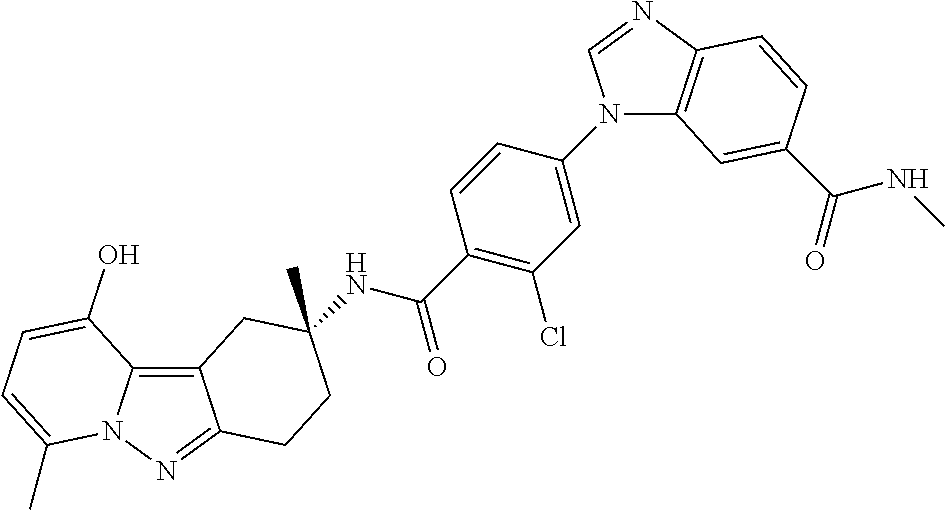 |
6.924 | 543.19 | 542.83 |
| 34 |
 |
5.336 | 543.19 | 542.83 |
| 35 |
 |
5.963 | 544.17 | 543.89 |
| 36 |
 |
11.1 | 544.17 | 543.94 |
| 37 |
 |
1.839 | 545.16 | 545.17 |
| 38 |
 |
10.88 | 547.14 | 547.28 |
| 39 |
 |
4.24 | 549.14 | 549.24 |
| 40 |
 |
6.622 | 549.14 | NA |
| 41 |
 |
7.844 | 550.16 | 550.16 |
| 42 |
 |
2.924 | 561.16 | 561.34 |
| 43 |
 |
10.26 | 562.16 | 562.10 |
| 44 |
 |
5.047 | 564.18 | 564.12 |
| 45 |
 |
7.799 | 564.18 | 564.25 |
| 46 |
 |
4.836 | 565.17 | 565.18 |
| 47 |
 |
3.143 | 565.11 | 567.10 |
| 48 |
 |
10.51 | 567.13 | 567.23 |
| 49 |
 |
17.26 | 569.08 | 571.23 |
| 50 |
 |
11.35 | 576.18 | 576.13 |
| 51 |
 |
5.306 | 577.15 | 577.28 |
| 52 |
 |
16.12 | 585.2 | 585.26 |
| 53 |
 |
4.029 | 585.2 | 585.00 |
| 54 |
 |
4.46 | 599.13 | 599.16 |


| hFIXa | Exact Mass | |||
| Ex. | Structure | IC50 (nM) | [M + H]+ | LCMS read |
| 55 |
 |
36.64 | 421.15 | 421.00 |
| 56 |
 |
13.79 | 471.17 | 471.19 |
| 57 |
 |
1.422 | 483.17 | 471.19 |
| 58 |
 |
12.86 | 483.17 | 483.08 |
| 59 |
 |
12.54 | 484.17 | 484.22 |
| 60 |
 |
5.651 | 489.13 | 489.02 |
| 61 |
 |
5.551 | 494.17 | 494.08 |
| 62 |
 |
19.33 | 496.19 | 496.32 |
| 63 |
 |
18.93 | 497.19 | 496.97 |
| 64 |
 |
5.901 | 497.19 | 496.99 |
| 65 |
 |
2.723 | 497.19 | 497.12 |
| 66 |
 |
17.66 | 498.18 | 498.17 |
| 67 |
 |
2.611 | 499.2 | 499.22 |
| 68 |
 |
12.65 | 501.16 | 500.97 |
| 69 |
 |
4.207 | 501.16 | 501.04 |
| 70 |
 |
9.968 | 503.14 | 503.09 |
| 71 |
 |
15.19 | 503.12 | 502.96 |
| 72 |
 |
16.14 | 504.14 | 504.30 |
| 73 |
 |
6.351 | 509.16 | 508.80 |
| 74 |
 |
10.44 | 511.2 | 511.35 |
| 75 |
 |
8.916 | 513.18 | 512.82 |
| 76 |
 |
9.388 | 513.18 | 512.82 |
| 77 |
 |
15.91 | 514.16 | 513.83 |
| 78 |
 |
10.24 | 514.16 | 513.83 |
| 79 |
 |
14.11 | 515.18 | 515.15 |
| 80 |
 |
9.145 | 515.18 | 515.09 |
| 81 |
 |
8.196 | 515.18 | 515.26 |
| 82 |
 |
4.034 | 517.13 | 517.16 |
| 83 |
 |
4.795 | 517.13 | 516.87 |
| 84 |
 |
5.659 | 517.13 | 517.00 |
| 85 |
 |
2.558 | 519.15 | 519.13 |
| 86 |
 |
7.215 | 519.15 | 519.13 |
| 87 |
 |
12.56 | 523.2 | 523.14 |
| 88 |
 |
2.856 | 527.16 | 527.10 |
| 89 |
 |
10.19 | 527.2 | 526.91 |
| 90 |
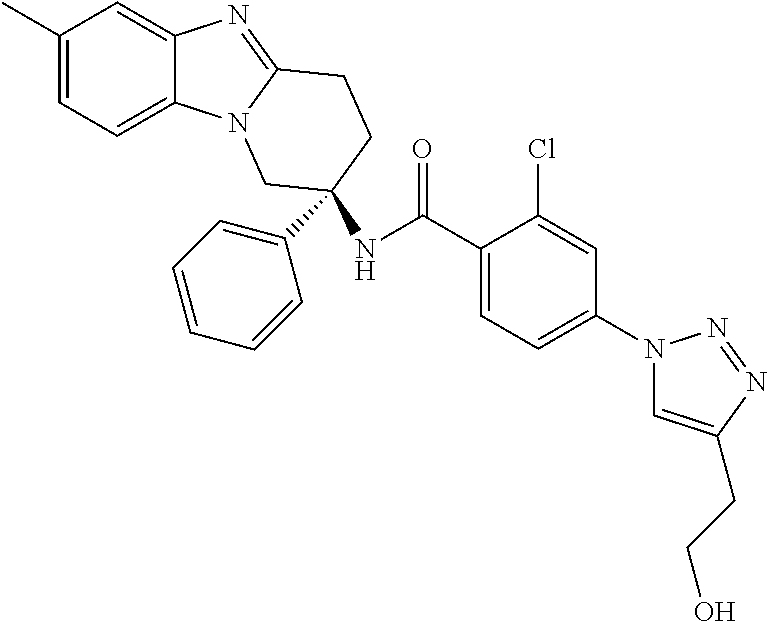 |
8.828 | 527.2 | 527.14 |
| 91 |
 |
11.49 | 527.2 | 526.91 |
| 92 |
 |
17.4 | 531.15 | 531.15 |
| 93 |
 |
11.38 | 531.15 | 531.08 |
| 94 |
 |
3.835 | 531.15 | 531.31 |
| 95 |
 |
14.97 | 532.14 | 532.12 |
| 96 |
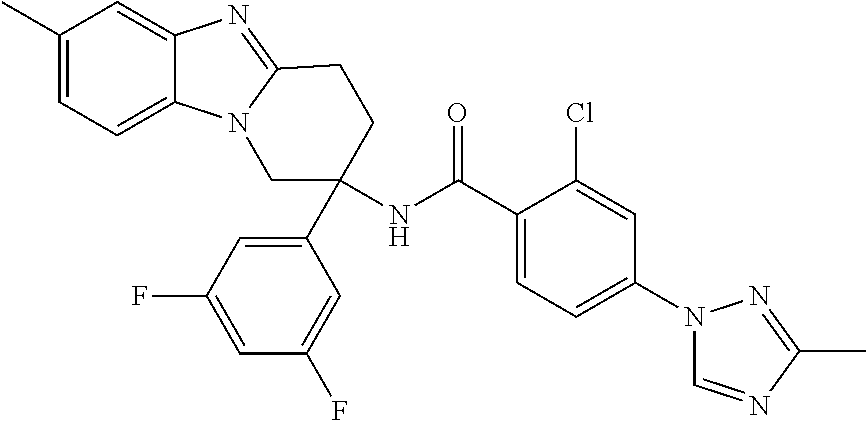 |
11.59 | 533.17 | 533.13 |
| 97 |
 |
2.822 | 533.17 | 533.17 |
| 98 |
 |
2.918 | 533.19 | 533.10 |
| 99 |
 |
4.272 | 541.18 | 541.20 |
| 100 |
 |
6.596 | 541.18 | 541.22 |
| 101 |
 |
16.23 | 547.2 | 547.08 |
| 102 |
 |
3.612 | 549.16 | 549.04 |
| 103 |
 |
7.261 | 551.16 | 551.06 |
| 104 |
 |
39.33 | 551.16 | 551.13 |
| 105 |
 |
11.54 | 565.17 | 565.02 |
| 106 |
 |
13.82 | 567.15 | 567.15 |


| hFIXa | Exact Mass | |||
| Ex. | Structure | IC50 (nM) | [M + H]+ | LCMS |
| 107 |
 |
54.26 | 432.16 | 432.15 |
| 108 |
 |
17.89 | 482.17 | 482.14 |
| 109 |
 |
8.396 | 500.17 | 500.09 |
| 110 |
 |
11.17 | 514.18 | 514.11 |
| 111 |
 |
16.62 | 514.18 | 513.91 |
| 112 |
 |
6.431 | 530.15 | 530.14 |
| 113 |
 |
4.695 | 534.13 | 534.15 |
| 114 |
 |
15.19 | 534.13 | 534.06 |
| 15 |
 |
13.9 | 562.15 | 562.10 |
| 116 |
 |
13.56 | 565.13 | 565.09 |
| 117 |
 |
6.853 | 568.09 | 567.98 |
| 118 |
 |
8.593 | 572.19 | 572.13 |
| 119 |
 |
1.167 | 578.12 | 578.06 |
| 120 |
 |
6.621 | 586.2 | 586.20 |
| 121 |
 |
19.24 | 602.11 | 602.01 |
| 122 |
 |
11.67 | 620.16 | 620.12 |
| 123 |
 |
3.596 | 622.12 | 622.06 |


| hFIXa IC50 | Exact Mass | |||
| Ex. | Structure | (nM) | [M + H]+ | LCMS read |
| 124 |
 |
135.9 | 420.16 | 420.03 |
| 125 |
 |
34.82 | 482.17 | 482.06 |
| 126 |
 |
17.81 | 463.16 | 462.97 |
| 127 |
 |
2.64 | 491.22 | 491.06 |
| 128 |
 |
0.5956 | 492.2 | 492.14 |
| 129 |
 |
10.79 | 492.21 | 491.92 |
| 130 |
 |
2.534 | 493.2 | 493.07 |
| 131 |
 |
6.323 | 496.19 | 495.99 |
| 132 |
 |
5.108 | 507.17 | 507.03 |
| 133 |
 |
3.586 | 520.23 | 520.25 |
| 134 |
 |
7.994 | 522.21 | 522.15 |
| 135 |
 |
2.008 | 524.19 | 524.03 |
| 136 |
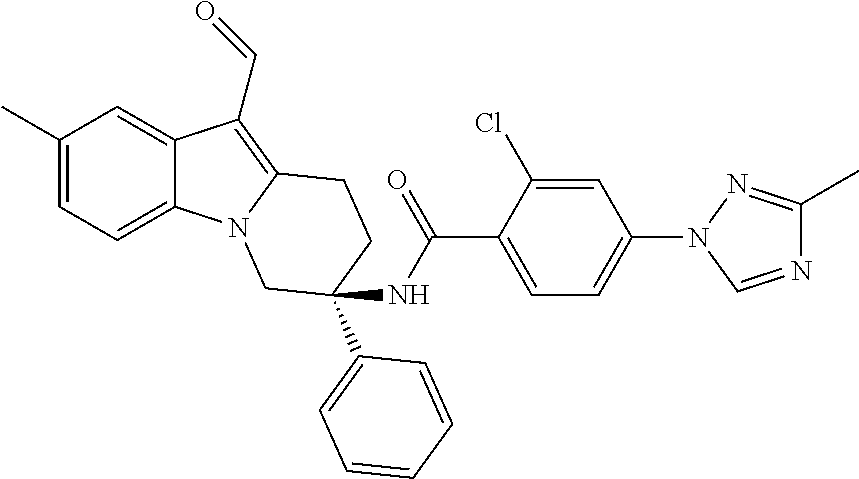 |
5.892 | 524.19 | 524.12 |
| 137 |
 |
2.385 | 525.18 | 524.99 |
| 138 |
 |
1.248 | 525.18 | 525.06 |
| 139 |
 |
7.983 | 526.16 | 537.98 |
| 140 |
 |
8.626 | 526.18 | 526.09 |
| 141 |
 |
4.146 | 536.23 | |
| 142 |
 |
5.048 | 536.23 | 536.17 |
| 143 |
 |
9.812 | 536.22 | 536.24 |
| 144 |
 |
1.852 | 538.2 | 538.08 |
| 145 |
 |
4.285 | 539.2 | 539.15 |
| 146 |
 |
3.328 | 539.2 | 539.01 |
| 147 |
 |
2.053 | 539.2 | 539.13 |
| 148 |
 |
2.986 | 539.2 | 538.91 |
| 149 |
 |
1.03 | 540.18 | 540.12 |
| 150 |
 |
1.603 | 540.18 | 540.09 |
| 151 |
 |
2.867 | 540.18 | 538.01 |
| 152 |
 |
2.802 | 541.13 | 541.03 |
| 153 |
 |
1.608 | 544.13 | 544.03 |
| 154 |
 |
14.73 | 549.19 | 549.05 |
| 155 |
 |
8.416 | 550.16 | 549.95 |
| 156 |
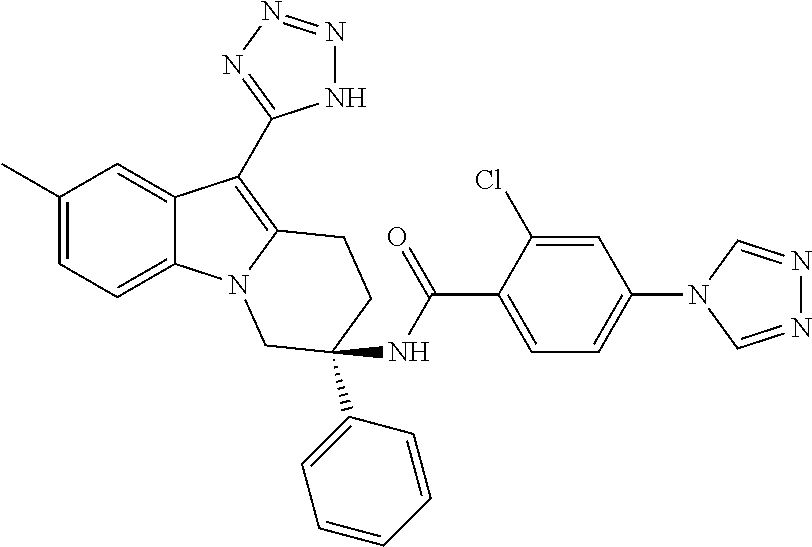 |
2.375 | 550.19 | 550.14 |
| 157 |
 |
2.026 | 551.2 | 571.09 |
| 158 |
 |
8.548 | 552.22 | 552.11 |
| 159 |
 |
5.972 | 552.22 | 552.15 |
| 160 |
 |
0.8198 | 552.18 | 552.20 |
| 161 |
 |
19.13 | 553.21 | 553.12 |
| 162 |
 |
4.12 | 553.21 | 553.05 |
| 163 |
 |
2.589 | 553.21 | 553.07 |
| 164 |
 |
2.549 | 554.2 | 554.08 |
| 165 |
 |
6.961 | 554.2 | 554.20 |
| 166 |
 |
4.707 | 554.2 | 554.12 |
| 167 |
 |
15.81 | 555.19 | 555.09 |
| 168 |
 |
0.6363 | 556.17 | 556.02 |
| 169 |
 |
1.683 | 556.17 | 556.09 |
| 170 |
 |
4.583 | 558.17 | 558.08 |
| 171 |
 |
0.7913 | 558.17 | 558.10 |
| 172 |
 |
4.269 | 559.2 | 559.17 |
| 173 |
 |
1.746 | 559.14 | 559.07 |
| 174 |
 |
1.445 | 559.14 | NA |
| 175 |
 |
1.988 | 560.17 | NA |
| 176 |
 |
6.258 | 560.2 | 560.13 |
| 177 |
 |
18.34 | 560.15 | 560.20 |
| 178 |
 |
3.737 | 564.19 | 563.91 |
| 179 |
 |
4.224 | 564.2 | 564.18 |
| 180 |
 |
3.158 | 565.2 | 565.19 |
| 181 |
 |
3.601 | 566.2 | 566.11 |
| 182 |
 |
1.18 | 566.2 | 566.10 |
| 183 |
 |
2.686 | 568.21 | 568.15 |
| 184 |
 |
4.679 | 568.21 | 659.11 |
| 185 |
 |
19.15 | 568.21 | 568.13 |
| 186 |
 |
7.122 | 570.19 | 570.04 |
| 187 |
 |
3.51 | 573.22 | 573.25 |
| 188 |
 |
0.5093 | 574.17 | 574.08 |
| 189 |
 |
1.583 | 574.21 | 574.07 |
| 190 |
 |
7.105 | 575.21 | 575.13 |
| 191 |
 |
5.17 | 577.19 | 577.18 |
| 192 |
 |
5.186 | 578.16 | 577.88 |
| 193 |
 |
5.717 | 580.17 | 580.07 |
| 194 |
 |
5.549 | 580.17 | 580.07 |
| 195 |
 |
9.969 | 580.21 | 580.19 |
| 196 |
 |
11.89 | 584.2 | 584.16 |
| 197 |
 |
1.87 | 588.16 | 573.93 |
| 198 |
 |
3.265 | 589.21 | 589.26 |
| 199 |
 |
2.746 | 589.21 | 589.20 |
| 200 |
 |
2.63 | 589.21 | 588.98 |
| 201 |
 |
14.88 | 589.21 | 589.24 |
| 202 |
 |
5.777 | 589.21 | 589.16 |
| 203 |
 |
1.714 | 590.21 | 590.07 |
| 204 |
 |
4.043 | 591.23 | 591.08 |
| 205 |
 |
5.303 | 594.11 | 594.12 |
| 206 |
 |
1.583 | 600.23 | 600.17 |
| 207 |
 |
6.939 | 601.21 | 601.06 |
| 208 |
 |
8.27 | 603.19 | 603.17 |
| 209 |
 |
6.178 | 607.2 | 607.12 |
| 210 |
 |
13.62 | 612.12 | 612.02 |
| 211 |
 |
6.768 | 614.21 | 614.26 |
| 212 |
 |
7.187 | 617.21 | 617.27 |
| 213 |
 |
4.371 | 617.24 | 617.24 |


| hFIXa IC50 | Exact Mass | LCMS | ||
| Ex. | Structure | (nM) | [M + H]+ | Read |
| 214 |  | 5.4 | 519.12 | 519.3 |
| 215 |  | 6835 | 503.14 | 503.26 |
Determination of Inhibitory Activity Against Factor IXa
Claims (11)

Priority Applications (1)
| Application Number | Priority Date | Filing Date | Title |
|---|---|---|---|
| US15/550,862 US10351558B2 (en) | 2015-02-16 | 2016-02-12 | Factor IXa inhibitors |
Applications Claiming Priority (3)
| Application Number | Priority Date | Filing Date | Title |
|---|---|---|---|
| US201562116698P | 2015-02-16 | 2015-02-16 | |
| US15/550,862 US10351558B2 (en) | 2015-02-16 | 2016-02-12 | Factor IXa inhibitors |
| PCT/US2016/017652 WO2016133793A1 (en) | 2015-02-16 | 2016-02-12 | FACTOR IXa INHIBITORS |
Publications (2)
| Publication Number | Publication Date |
|---|---|
| US20180022747A1 US20180022747A1 (en) | 2018-01-25 |
| US10351558B2 true US10351558B2 (en) | 2019-07-16 |
Family
ID=56692448
Family Applications (1)
| Application Number | Title | Priority Date | Filing Date |
|---|---|---|---|
| US15/550,862 Active US10351558B2 (en) | 2015-02-16 | 2016-02-12 | Factor IXa inhibitors |
Country Status (3)
| Country | Link |
|---|---|
| US (1) | US10351558B2 (en) |
| EP (1) | EP3258929B1 (en) |
| WO (1) | WO2016133793A1 (en) |
Families Citing this family (6)
| Publication number | Priority date | Publication date | Assignee | Title |
|---|---|---|---|---|
| EP3229801B1 (en) | 2014-12-10 | 2020-04-01 | Merck Sharp & Dohme Corp. | Factor ixa inhibitors |
| US10947253B2 (en) | 2019-08-05 | 2021-03-16 | Ankh Life Sciences Limited | Fused polycyclic dimers |
| US12129265B2 (en) | 2020-07-21 | 2024-10-29 | Ankh Life Sciences Limited | Therapeutic agents and uses thereof |
| CN118598822A (en) * | 2022-11-09 | 2024-09-06 | 中国科学院上海药物研究所 | A class of amine compounds containing aromatic groups, preparation method and use thereof |
| WO2025165834A1 (en) * | 2024-01-31 | 2025-08-07 | Ensem Therapeutics, Inc. | Urea derivatives of tricyclic compounds, and compositions and methods thereof |
| WO2025232878A1 (en) * | 2024-05-09 | 2025-11-13 | 苏州旺山旺水生物医药股份有限公司 | Substituted phenyl-containing amine compound, and preparation method therefor and use thereof |
Citations (6)
| Publication number | Priority date | Publication date | Assignee | Title |
|---|---|---|---|---|
| WO2008017989A1 (en) | 2006-08-07 | 2008-02-14 | Actelion Pharmaceuticals Ltd | (3-amino-1,2,3,4-tetrahydro-9h-carbazol-9-yl)-acetic acid derivatives |
| EP1975159A1 (en) | 2007-03-27 | 2008-10-01 | Bayer Schering Pharma Aktiengesellschaft | 2,3,4,9-Tetrahydro-1H-carbazoles |
| US20110065682A1 (en) | 2008-05-19 | 2011-03-17 | Clasby Martin C | Heterocyclic compounds as factor ixa inhibitors |
| US20130157281A1 (en) | 2008-05-07 | 2013-06-20 | Schering Corporation | Factor IXa Crystals, Related Complexes and Methods |
| US8637671B2 (en) * | 2008-09-22 | 2014-01-28 | Merck Canada Inc. | Indole derivatives as CRTH2 receptor antagonists |
| WO2016094260A1 (en) | 2014-12-10 | 2016-06-16 | Merck Sharp & Dohme Corp. | Factor ixa inhibitors |
-
2016
- 2016-02-12 WO PCT/US2016/017652 patent/WO2016133793A1/en not_active Ceased
- 2016-02-12 US US15/550,862 patent/US10351558B2/en active Active
- 2016-02-12 EP EP16752841.3A patent/EP3258929B1/en active Active
Patent Citations (6)
| Publication number | Priority date | Publication date | Assignee | Title |
|---|---|---|---|---|
| WO2008017989A1 (en) | 2006-08-07 | 2008-02-14 | Actelion Pharmaceuticals Ltd | (3-amino-1,2,3,4-tetrahydro-9h-carbazol-9-yl)-acetic acid derivatives |
| EP1975159A1 (en) | 2007-03-27 | 2008-10-01 | Bayer Schering Pharma Aktiengesellschaft | 2,3,4,9-Tetrahydro-1H-carbazoles |
| US20130157281A1 (en) | 2008-05-07 | 2013-06-20 | Schering Corporation | Factor IXa Crystals, Related Complexes and Methods |
| US20110065682A1 (en) | 2008-05-19 | 2011-03-17 | Clasby Martin C | Heterocyclic compounds as factor ixa inhibitors |
| US8637671B2 (en) * | 2008-09-22 | 2014-01-28 | Merck Canada Inc. | Indole derivatives as CRTH2 receptor antagonists |
| WO2016094260A1 (en) | 2014-12-10 | 2016-06-16 | Merck Sharp & Dohme Corp. | Factor ixa inhibitors |
Non-Patent Citations (6)
| Title |
|---|
| Extended European Search Report for 16752841.3, dated Oct. 2, 2018, 6 pages. |
| Helmi Zaghdane, New indole amide derivative as potent CRTH2 receptor antagonists (Year: 2011). * |
| International Search Report and Written Opinion for PCT/US2016/017652, dated Jun. 10, 2016, 10 pages. |
| Nigel Mackman, Triggers, targets and treatments for thrombosis. (Year: 2008). * |
| PUBCHEM, Substance Recrod for SID-56362626, Nov. 3, 2008. https://pubchem.ncbi.nlm.nih.gov/substance/56362626/version/1#section=Top. |
| Stefan Lober et al . Fused Azaindole derivatives (Year: 2002). * |
Also Published As
| Publication number | Publication date |
|---|---|
| EP3258929A4 (en) | 2018-10-31 |
| EP3258929A1 (en) | 2017-12-27 |
| WO2016133793A1 (en) | 2016-08-25 |
| US20180022747A1 (en) | 2018-01-25 |
| EP3258929B1 (en) | 2022-04-27 |
Similar Documents
| Publication | Publication Date | Title |
|---|---|---|
| EP3180327B1 (en) | FACTOR XIa INHIBITORS | |
| US9708308B2 (en) | Factor IXa inhibitors | |
| US10081617B2 (en) | Factor XIa inhibitors | |
| US10351558B2 (en) | Factor IXa inhibitors | |
| AU2015267305A1 (en) | Factor XIa inhibitors | |
| US10123995B2 (en) | Factor XIa inhibitors | |
| US10189819B2 (en) | Factor IXa inhibitors | |
| EP4308125B1 (en) | Plasma kallikrein inhibitors | |
| US12428397B2 (en) | Factor XI activation inhibitors | |
| US12304899B2 (en) | Factor XI activation inhibitors | |
| US12492187B2 (en) | Factor XI activation inhibitors | |
| WO2026096331A1 (en) | Plasma kallikrein inhibitors | |
| EP4665330A1 (en) | Plasma kallikrein inhibitors |
Legal Events
| Date | Code | Title | Description |
|---|---|---|---|
| STPP | Information on status: patent application and granting procedure in general |
Free format text: NOTICE OF ALLOWANCE MAILED -- APPLICATION RECEIVED IN OFFICE OF PUBLICATIONS |
|
| AS | Assignment |
Owner name: MERCK SHARP & DOHME CORP., NEW JERSEY Free format text: ASSIGNMENT OF ASSIGNORS INTEREST;ASSIGNORS:MENG, DONGFANG;LI, HONG;YANG, MENG;AND OTHERS;SIGNING DATES FROM 20151028 TO 20160201;REEL/FRAME:049314/0944 |
|
| STPP | Information on status: patent application and granting procedure in general |
Free format text: PUBLICATIONS -- ISSUE FEE PAYMENT VERIFIED |
|
| STCF | Information on status: patent grant |
Free format text: PATENTED CASE |
|
| AS | Assignment |
Owner name: MERCK SHARP & DOHME LLC, NEW JERSEY Free format text: MERGER;ASSIGNOR:MERCK SHARP & DOHME CORP.;REEL/FRAME:061102/0145 Effective date: 20220407 |
|
| MAFP | Maintenance fee payment |
Free format text: PAYMENT OF MAINTENANCE FEE, 4TH YEAR, LARGE ENTITY (ORIGINAL EVENT CODE: M1551); ENTITY STATUS OF PATENT OWNER: LARGE ENTITY Year of fee payment: 4 |