US10330672B2 - Method for screening activator of mitochondrial activity - Google Patents

Method for screening activator of mitochondrial activity Download PDF

Info

Publication number
US10330672B2
US10330672B2 US15/511,997 US201615511997A US10330672B2 US 10330672 B2 US10330672 B2 US 10330672B2 US 201615511997 A US201615511997 A US 201615511997A US 10330672 B2 US10330672 B2 US 10330672B2
Authority
US
United States
Prior art keywords
gypenoside
mitochondrial
mitochondrial activity
cells
activator
Prior art date
Legal status (The legal status is an assumption and is not a legal conclusion. Google has not performed a legal analysis and makes no representation as to the accuracy of the status listed.)
Expired - Fee Related
Application number
US15/511,997
Other versions
US20170292945A1 (en
Inventor
Sun Chang Kim
Chan Bae Park
Soon Jang LEE
Current Assignee (The listed assignees may be inaccurate. Google has not performed a legal analysis and makes no representation or warranty as to the accuracy of the list.)
Intelligent Synthetic Biology Center
Original Assignee
Intelligent Synthetic Biology Center
Priority date (The priority date is an assumption and is not a legal conclusion. Google has not performed a legal analysis and makes no representation as to the accuracy of the date listed.)
Filing date
Publication date
Application filed by Intelligent Synthetic Biology Center filed Critical Intelligent Synthetic Biology Center
Assigned to INTELLIGENT SYNTHETIC BIOLOGY CENTER reassignment INTELLIGENT SYNTHETIC BIOLOGY CENTER ASSIGNMENT OF ASSIGNORS INTEREST (SEE DOCUMENT FOR DETAILS). Assignors: KIM, SUN CHANG, LEE, SOON JANG, PARK, CHAN BAE
Publication of US20170292945A1 publication Critical patent/US20170292945A1/en
Application granted granted Critical
Publication of US10330672B2 publication Critical patent/US10330672B2/en
Expired - Fee Related legal-status Critical Current
Anticipated expiration legal-status Critical

Links

Images

Classifications

    • GPHYSICS
    • G01MEASURING; TESTING
    • G01NINVESTIGATING OR ANALYSING MATERIALS BY DETERMINING THEIR CHEMICAL OR PHYSICAL PROPERTIES
    • G01N33/00Investigating or analysing materials by specific methods not covered by groups G01N1/00 - G01N31/00
    • G01N33/48Biological material, e.g. blood, urine; Haemocytometers
    • G01N33/50Chemical analysis of biological material, e.g. blood, urine; Testing involving biospecific ligand binding methods; Immunological testing
    • G01N33/5005Chemical analysis of biological material, e.g. blood, urine; Testing involving biospecific ligand binding methods; Immunological testing involving human or animal cells
    • G01N33/5008Chemical analysis of biological material, e.g. blood, urine; Testing involving biospecific ligand binding methods; Immunological testing involving human or animal cells for testing or evaluating the effect of chemical or biological compounds, e.g. drugs, cosmetics
    • G01N33/5076Chemical analysis of biological material, e.g. blood, urine; Testing involving biospecific ligand binding methods; Immunological testing involving human or animal cells for testing or evaluating the effect of chemical or biological compounds, e.g. drugs, cosmetics involving cell organelles, e.g. Golgi complex, endoplasmic reticulum
    • G01N33/5079Mitochondria
    • CCHEMISTRY; METALLURGY
    • C07ORGANIC CHEMISTRY
    • C07JSTEROIDS
    • C07J17/00Normal steroids containing carbon, hydrogen, halogen or oxygen, having an oxygen-containing hetero ring not condensed with the cyclopenta(a)hydrophenanthrene skeleton
    • GPHYSICS
    • G01MEASURING; TESTING
    • G01NINVESTIGATING OR ANALYSING MATERIALS BY DETERMINING THEIR CHEMICAL OR PHYSICAL PROPERTIES
    • G01N21/00Investigating or analysing materials by the use of optical means, i.e. using sub-millimetre waves, infrared, visible or ultraviolet light
    • G01N21/62Systems in which the material investigated is excited whereby it emits light or causes a change in wavelength of the incident light
    • G01N21/63Systems in which the material investigated is excited whereby it emits light or causes a change in wavelength of the incident light optically excited
    • G01N21/64Fluorescence; Phosphorescence
    • G01N21/6428Measuring fluorescence of fluorescent products of reactions or of fluorochrome labelled reactive substances, e.g. measuring quenching effects, using measuring "optrodes"
    • GPHYSICS
    • G01MEASURING; TESTING
    • G01NINVESTIGATING OR ANALYSING MATERIALS BY DETERMINING THEIR CHEMICAL OR PHYSICAL PROPERTIES
    • G01N2500/00Screening for compounds of potential therapeutic value
    • G01N2500/04Screening involving studying the effect of compounds C directly on molecule A (e.g. C are potential ligands for a receptor A, or potential substrates for an enzyme A)

Definitions

  • the present invention relates to a method for screening an activator of mitochondrial activity. Specifically, the present invention relates to a method for screening an activator of mitochondrial activity using cells treated with gypenoside, a composition for screening an activator of mitochondrial activity, comprising the gypenoside, and a kit comprising the composition.
  • the mitochondrion is an organelle found in most eukaryotic cells.
  • One of the major functions thereof is oxidative phosphorylation, through which energy derived from a metabolism of fuel materials such as glucose or fatty acid, etc. is converted into adenosine triphosphate (ATP).
  • ATP adenosine triphosphate
  • the mitochondrion includes its own DNA distinct from nuclear genomic DNA.
  • the mitochondrial DNA is known as having a circular form and approximately 16,000 base pairs. Further, the mitochondrial DNA lacks its own repair mechanism unlike the nuclear DNA, and histones acting as DNA protectors, and thus is susceptible to mutations caused by intracellular or extracellular environments. Such mutations mostly exhibit an effect of inhibiting mitochondrial activity, whereas they may partly exhibit an effect of enhancing the same.
  • mitochondrial activity is inhibited by the mutations in the mitochondrial DNA, swelling caused by an abnormality of mitochondrial membrane potential, dysfunctions by oxidative stress by reactive oxygen species or free radicals, etc., dysfunctions by genetic factors, or dysfunction by defects in oxidative phosphorylation functions for energy production of mitochondria may occur, which are known as having potential to cause a metabolic disease, degenerative brain disease, liver dysfunction, muscle disease, immune disease, etc.
  • various preparations are being developed to treat such diseases caused by the inhibition of mitochondrial activity (Korean Patent No. 1048766, Korean Laid-open Patent Application Nos. 2005-0117313, 2013-0064761, 2014-0012456, etc.).
  • the present inventors have studied to develop a method for finding an activator of the mitochondrial activity, and as a result, they developed a method for using candidate materials which can promote the mitochondrial activity to a level equal to or higher than gypenoside 75 as mitochondrial function activators by using gypenoside 75, which is capable of promoting the mitochondrial activity in isolated cells, as a reference material, thereby completing the present invention.
  • An object of the present invention is to provide a method for screening an activator of mitochondrial activity using cells treated with gypenoside as a control group.
  • Another object of the present invention is to provide a composition for screening an activator of mitochondrial activity, comprising the gypenoside.
  • Still another object of the present invention is to provide a kit for screening an activator of mitochondrial activity, comprising the composition.
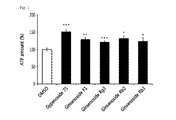
  • FIG. 1 is a graph illustrating changes in the intracellular ATP amount after treatments with gypenoside 75, ginsenoside F1, ginsenoside Rg3, ginsenoside Rb2, or ginsenoside Rb3.
  • FIG. 2 is a graph illustrating changes in the mitochondrial membrane potential after treatments with gypenoside 75, ginsenoside F1, ginsenoside Rg3, ginsenoside Rb2, or ginsenoside Rb3.
  • Gypenoside a compound of the saponin group
  • Gynostemma pentaphyllum and Gynostemma pentaphyllum Makino are known as being included in plants, such as Gynostemma pentaphyllum and Gynostemma pentaphyllum Makino , as well as ginseng.
  • gypenoside has not been known to have intracellular activity other than intracellular antioxidant activity.
  • the present inventors treated isolated cells with gypenoside 75 which is a type of gypenoside, and as a result of measuring changes in the amount of ATP produced in mitochondria, it was found that the amount of ATP produced increased by the gypenoside 75 treatment, and gypenoside 75 was confirmed as being an activator of mitochondrial activity capable of substantially promoting mitochondrial functions.
  • the present invention provides, as an aspect, a method for screening an activator of mitochondrial activity, comprising (a) obtaining a control group, wherein isolated cells are treated with gypenoside, and an experimental group, wherein isolated cells are treated with candidate materials expected to inhibit mitochondrial activity, respectively; (b) measuring mitochondrial activity for the control group and experimental group, respectively; and (c) selecting a candidate material, wherein mitochondrial activity measured from the experimental group exhibits a level which is higher than or equal to that from the control group.
  • the isolated cells are not particularly limited as long as their mitochondrial activity is promoted by gypenoside, but an example thereof may be insulin-secreting cells.
  • the mitochondrial activity can be measured using the amount of ATP produced from mitochondria, the mitochondrial DNA level, etc.
  • the mitochondrial activity can be measured by measuring the amount of ATP produced from the cells of the control and experimental groups, respectively.
  • the term “gypenoside” is also called as “gynosaponin”, and refers to a dammarane-type saponin which is a type of saponin compounds included in Gynostemma pentaphyllum and Gynostemma pentaphyllum Makino.
  • the gypenoside is known as showing various efficacies, such as improvement of lipid metabolism, prevention of cardiovascular diseases, hypoglycemic activity, activity on the central nervous system, anticancer activity, inhibition activity of platelet aggregation, tonic effect, etc., and showing antioxidant effects inside cells.
  • the gypenoside may be used as an activator of mitochondrial activity.
  • the gypenoside is not particularly limited as long as it exhibits the effect of enhancing mitochondrial activity, and for example, gypenoside 1, gypenoside 3, gypenoside 4, gypenoside 5, gypenoside 8, gypenoside 17, gypenoside 48, gypenoside 75, etc. can be used by itself or as a combination, and as another example, it may be gypenoside 75 of Formula 1 below:
  • the INS-1 cells which are insulin-secreting cells, were treated with gypenoside 75, and were cultured for 2 hours. Then, when the amount of ATP produced by the cell was measured, the amount thereof increased, compared with cells in a control group untreated with gypenoside ( FIG. 1 ).
  • Another aspect of the present invention provides a composition for screening an activator of mitochondrial activity, comprising the gypenoside, and a kit for screening an activator of mitochondrial activity, comprising the composition.
  • composition and kit can enhance intracellular mitochondrial activity
  • the composition and kit can be used for preparing a control group for screening a mitochondrial activity inhibitor.
  • the kit may further include, in addition to gypenoside 75, at least one type of other constitutional compositions, solutions, or devices, which are suitable for a method for determining whether a candidate material inhibits mitochondrial activity.
  • the kit may further include cells whose mitochondrial activity is enhanced by gypenoside 75, a container used for the cell culture, a medium used for the cell culture, a buffer solution used for measuring the ATP production amount, and a fluorescent material (e.g., FITC, RITC, etc.) used for measuring the ATP production amount, etc.
  • a fluorescent material e.g., FITC, RITC, etc.
  • the kit of the present invention for screening an activator of mitochondrial activity may include an essential element which is necessary for conducting a luciferase assay for measuring the amount of ATP produced in mitochondria. That is, the kit may include a buffer solution for lysing a cell, luciferase, a substrate for inducing fluorescence of the luciferase, a buffer solution necessary for the fluorescence of the luciferase; and a test tube or other suitable container, etc.
  • the kit of the present invention for screening an activator of mitochondrial activity may include an essential element which is necessary for amplifying mitochondrial DNA by conducting Polymerase Chain Reaction (PCR). That is, the kit may include each primer pair specific for the mitochondrial DNA, a test tube or other suitable container, a reaction buffer solution (at various pHs and magnesium concentrations), deoxynucleotides (dNTPs), enzymes such as Taq polymerase and reverse transcriptase, DNase and RNAse inhibitors, DEPC-treated water, sterilized water, etc. Further, a primer pair specific for a gene used as a quantitative control group may be included.
  • PCR Polymerase Chain Reaction
  • Lowered mitochondrial function may cause diabetes as insulin's signaling is interfered.
  • gypenoside 75 was treated, and the increased amount of ATP and mitochondrial membrane potential were measured.
  • the INS-1 cells which are insulin-secreting cells, were cultured in a cell incubator (37° C., 5% CO 2 , RPMI medium, 10% FBS), were treated with 10 ⁇ M of gypenoside 75, ginsenoside F1, ginsenoside Rg3, ginsenoside Rb2, or ginsenoside Rb3 for 2 hours, and the intracellular ATP amount and mitochondrial membrane potential were measured.
  • a cell incubator 37° C., 5% CO 2 , RPMI medium, 10% FBS
  • the amount of ATP was measured using luciferase.
  • the fluorescence by activation of luciferase depends on the amount of ATP
  • the intracellular ATP amount can be measured by measuring the level of the fluorescence emission.
  • the INS-1 cells treated with each of the above materials were lysed through freezing-thawing and ultrasonication treatments to obtain a cell lysate.
  • Luciferase and luciferin were added to the obtained cell lysate above to induce fluorescence, and the levels of the fluorescence were quantified and compared ( FIG. 1 ).
  • FIG. 1 is a graph which shows changes in the intracellular ATP amount after the treatments with gypenoside 75, ginsenoside F1, ginsenoside Rg3, ginsenoside Rb2, or ginsenoside Rb3. As illustrated in FIG. 1 , the intracellular ATP amount increased by 50% in the case of the treatment with gypenoside 75 compared with the control group.
  • the mitochondrial membrane potential was measured by tetramethylrhodamine methyl ester (TMRM) staining.
  • TMRM tetramethylrhodamine methyl ester
  • the INS-1 cells treated with each of the above materials were stained with TMRM, and applied to fluorescence-activated cell sorting (FACS). Then, the level of the staining was quantified, analyzed, and compared ( FIG. 2 ).
  • FIG. 2 is a graph which shows changes in the mitochondrial membrane potential after treatments with gypenoside 75, ginsenoside F1, ginsenoside Rg3, ginsenoside Rb2, or ginsenoside Rb3. As illustrated in FIG. 2 , the intracellular mitochondrial membrane potential increased by 40% in the case of the treatment with gypenoside 75 compared with the control group.
  • gypenoside 75 activated the intracellular mitochondrial function, and increased the levels of the intracellular ATP and mitochondrial membrane potential.

Landscapes

  • Health & Medical Sciences (AREA)
  • Life Sciences & Earth Sciences (AREA)
  • Engineering & Computer Science (AREA)
  • Chemical & Material Sciences (AREA)
  • Immunology (AREA)
  • Biomedical Technology (AREA)
  • Molecular Biology (AREA)
  • Urology & Nephrology (AREA)
  • Hematology (AREA)
  • General Health & Medical Sciences (AREA)
  • Physics & Mathematics (AREA)
  • Pathology (AREA)
  • Analytical Chemistry (AREA)
  • Organic Chemistry (AREA)
  • General Physics & Mathematics (AREA)
  • Biochemistry (AREA)
  • Cell Biology (AREA)
  • Tropical Medicine & Parasitology (AREA)
  • Biotechnology (AREA)
  • Medicinal Chemistry (AREA)
  • Microbiology (AREA)
  • Food Science & Technology (AREA)
  • Toxicology (AREA)
  • Bioinformatics & Cheminformatics (AREA)
  • Chemical Kinetics & Catalysis (AREA)
  • Optics & Photonics (AREA)
  • Nuclear Medicine, Radiotherapy & Molecular Imaging (AREA)
  • Investigating Or Analysing Biological Materials (AREA)
  • Measuring Or Testing Involving Enzymes Or Micro-Organisms (AREA)
  • Pharmaceuticals Containing Other Organic And Inorganic Compounds (AREA)

Abstract

The present invention relates to a method for screening an activator of mitochondrial activity by using gypenoside-treated cells, to a composition for screening an activator of mitochondrial activity, comprising the gypenoside, and to a kit comprising the composition. By using the method for screening an activator of mitochondrial activity of the present invention, it is possible to effectively discover a preparation which can substantially promote the mitochondrial activity, and thus the method is expected to be widely used in developing a therapeutic agent for diseases caused by mitochondrial activity inhibition.
Description

This application is a national phase application under 35 U.S.C. § 371 of International Application No. PCT/KR2016/006592, filed Jun. 22, 2016, which claims priority to Korean Application No. 10-2015-0094015, filed Jul. 1, 2015, which are incorporated herein in their entirety.
TECHNICAL FIELD
The present invention relates to a method for screening an activator of mitochondrial activity. Specifically, the present invention relates to a method for screening an activator of mitochondrial activity using cells treated with gypenoside, a composition for screening an activator of mitochondrial activity, comprising the gypenoside, and a kit comprising the composition.
BACKGROUND ART
The mitochondrion is an organelle found in most eukaryotic cells. One of the major functions thereof is oxidative phosphorylation, through which energy derived from a metabolism of fuel materials such as glucose or fatty acid, etc. is converted into adenosine triphosphate (ATP). ATP is used in driving various energy-requiring biosynthesis processes and other metabolic activities. The mitochondrion includes its own DNA distinct from nuclear genomic DNA. The mitochondrial DNA is known as having a circular form and approximately 16,000 base pairs. Further, the mitochondrial DNA lacks its own repair mechanism unlike the nuclear DNA, and histones acting as DNA protectors, and thus is susceptible to mutations caused by intracellular or extracellular environments. Such mutations mostly exhibit an effect of inhibiting mitochondrial activity, whereas they may partly exhibit an effect of enhancing the same.
If the mitochondrial activity is inhibited by the mutations in the mitochondrial DNA, swelling caused by an abnormality of mitochondrial membrane potential, dysfunctions by oxidative stress by reactive oxygen species or free radicals, etc., dysfunctions by genetic factors, or dysfunction by defects in oxidative phosphorylation functions for energy production of mitochondria may occur, which are known as having potential to cause a metabolic disease, degenerative brain disease, liver dysfunction, muscle disease, immune disease, etc. In this regard, various preparations are being developed to treat such diseases caused by the inhibition of mitochondrial activity (Korean Patent No. 1048766, Korean Laid-open Patent Application Nos. 2005-0117313, 2013-0064761, 2014-0012456, etc.).
Meanwhile, when the mitochondrial DNA is mutated and the activity of mitochondria is promoted, intracellular ATP is excessively produced, and consequently cellular dysfunctions may occur, by which multiple diseases may be caused, such as various autoimmune diseases including rheumatoid arthritis, and various types of cancer. Various studies on diseases caused by the inhibition of mitochondrial activity are being conducted in terms of promoting the mitochondrial activity. Still, an appropriate activator to improve the inhibition of mitochondrial activity has not been developed. It is because, although various candidate materials have been discovered which exhibit mitochondrial function-promoting activity, they were unable to substantially promote mitochondrial function. Accordingly, necessity for developing a method to find such activators that can substantially promote the mitochondrial function emerged.
DISCLOSURE Technical Problem
Under the background, the present inventors have studied to develop a method for finding an activator of the mitochondrial activity, and as a result, they developed a method for using candidate materials which can promote the mitochondrial activity to a level equal to or higher than gypenoside 75 as mitochondrial function activators by using gypenoside 75, which is capable of promoting the mitochondrial activity in isolated cells, as a reference material, thereby completing the present invention.
Technical Solution
An object of the present invention is to provide a method for screening an activator of mitochondrial activity using cells treated with gypenoside as a control group.
Another object of the present invention is to provide a composition for screening an activator of mitochondrial activity, comprising the gypenoside.
Still another object of the present invention is to provide a kit for screening an activator of mitochondrial activity, comprising the composition.
Advantageous Effects of the Invention
By using the method for screening an activator of mitochondrial activity of the present invention, it is possible to effectively discover a preparation which can substantially promote mitochondrial activity, and thus the method is expected to be widely used in developing a therapeutic agent for diseases caused by mitochondrial activity inhibition.
BRIEF DESCRIPTION OF DRAWINGS
FIG. 1 is a graph illustrating changes in the intracellular ATP amount after treatments with gypenoside 75, ginsenoside F1, ginsenoside Rg3, ginsenoside Rb2, or ginsenoside Rb3.
FIG. 2 is a graph illustrating changes in the mitochondrial membrane potential after treatments with gypenoside 75, ginsenoside F1, ginsenoside Rg3, ginsenoside Rb2, or ginsenoside Rb3.
BEST MODE
While the present inventors conducted research in various ways to develop a method for finding an activator capable of substantially promoting mitochondrial function, they found gypenoside noticeable. Gypenoside, a compound of the saponin group, is known as being included in plants, such as Gynostemma pentaphyllum and Gynostemma pentaphyllum Makino, as well as ginseng. Further, unlike ginsenoside exhibiting various intracellular activities, gypenoside has not been known to have intracellular activity other than intracellular antioxidant activity.
The present inventors treated isolated cells with gypenoside 75 which is a type of gypenoside, and as a result of measuring changes in the amount of ATP produced in mitochondria, it was found that the amount of ATP produced increased by the gypenoside 75 treatment, and gypenoside 75 was confirmed as being an activator of mitochondrial activity capable of substantially promoting mitochondrial functions.
Therefore, in the case of screening candidate materials expected to promote mitochondrial function using cells treated with gypenoside as a control group, it was found that an activator capable of substantially promoting mitochondrial activity can be screened. Such a method for screening an activator of mitochondrial activity using gypenoside has not been disclosed, and has been developed by the present inventors for the first time.
In order to achieve the aforementioned objects, the present invention provides, as an aspect, a method for screening an activator of mitochondrial activity, comprising (a) obtaining a control group, wherein isolated cells are treated with gypenoside, and an experimental group, wherein isolated cells are treated with candidate materials expected to inhibit mitochondrial activity, respectively; (b) measuring mitochondrial activity for the control group and experimental group, respectively; and (c) selecting a candidate material, wherein mitochondrial activity measured from the experimental group exhibits a level which is higher than or equal to that from the control group.
In particular, the isolated cells are not particularly limited as long as their mitochondrial activity is promoted by gypenoside, but an example thereof may be insulin-secreting cells. The mitochondrial activity can be measured using the amount of ATP produced from mitochondria, the mitochondrial DNA level, etc. For example, if mitochondrial activity of isolated cells is enhanced after the treatment of the cells with gypenoside, the ATP production amount measured in the cells increases. Accordingly, the mitochondrial activity can be measured by measuring the amount of ATP produced from the cells of the control and experimental groups, respectively.
For a method for measuring the mitochondrial activity, all methods disclosed in the art as well as the aforementioned method can be used, and it is obvious that those skilled in the art can selectively use one of them upon necessity.
As used herein, the term “gypenoside” is also called as “gynosaponin”, and refers to a dammarane-type saponin which is a type of saponin compounds included in Gynostemma pentaphyllum and Gynostemma pentaphyllum Makino. The gypenoside is known as showing various efficacies, such as improvement of lipid metabolism, prevention of cardiovascular diseases, hypoglycemic activity, activity on the central nervous system, anticancer activity, inhibition activity of platelet aggregation, tonic effect, etc., and showing antioxidant effects inside cells.
In the present invention, the gypenoside may be used as an activator of mitochondrial activity. The gypenoside is not particularly limited as long as it exhibits the effect of enhancing mitochondrial activity, and for example, gypenoside 1, gypenoside 3, gypenoside 4, gypenoside 5, gypenoside 8, gypenoside 17, gypenoside 48, gypenoside 75, etc. can be used by itself or as a combination, and as another example, it may be gypenoside 75 of Formula 1 below:
Figure US10330672-20190625-C00001
According to an exemplary embodiment of the present invention, the INS-1 cells, which are insulin-secreting cells, were treated with gypenoside 75, and were cultured for 2 hours. Then, when the amount of ATP produced by the cell was measured, the amount thereof increased, compared with cells in a control group untreated with gypenoside (FIG. 1).
Another aspect of the present invention provides a composition for screening an activator of mitochondrial activity, comprising the gypenoside, and a kit for screening an activator of mitochondrial activity, comprising the composition.
As gypenoside 75 included in the composition and kit can enhance intracellular mitochondrial activity, the composition and kit can be used for preparing a control group for screening a mitochondrial activity inhibitor.
In particular, the kit may further include, in addition to gypenoside 75, at least one type of other constitutional compositions, solutions, or devices, which are suitable for a method for determining whether a candidate material inhibits mitochondrial activity. For example, the kit may further include cells whose mitochondrial activity is enhanced by gypenoside 75, a container used for the cell culture, a medium used for the cell culture, a buffer solution used for measuring the ATP production amount, and a fluorescent material (e.g., FITC, RITC, etc.) used for measuring the ATP production amount, etc.
As a specific example, the kit of the present invention for screening an activator of mitochondrial activity may include an essential element which is necessary for conducting a luciferase assay for measuring the amount of ATP produced in mitochondria. That is, the kit may include a buffer solution for lysing a cell, luciferase, a substrate for inducing fluorescence of the luciferase, a buffer solution necessary for the fluorescence of the luciferase; and a test tube or other suitable container, etc.
As another example, the kit of the present invention for screening an activator of mitochondrial activity may include an essential element which is necessary for amplifying mitochondrial DNA by conducting Polymerase Chain Reaction (PCR). That is, the kit may include each primer pair specific for the mitochondrial DNA, a test tube or other suitable container, a reaction buffer solution (at various pHs and magnesium concentrations), deoxynucleotides (dNTPs), enzymes such as Taq polymerase and reverse transcriptase, DNase and RNAse inhibitors, DEPC-treated water, sterilized water, etc. Further, a primer pair specific for a gene used as a quantitative control group may be included.
DETAILED DESCRIPTION OF THE INVENTION
Hereinafter, the present invention will be described through an exemplary embodiment in more detail. However, the exemplary embodiment disclosed herein is only for illustrative purposes and should not be construed as limiting the scope of the present invention.
Example 1: Effect of Gypenoside 75 on Promoting Mitochondrial Activity
Lowered mitochondrial function may cause diabetes as insulin's signaling is interfered. In this regard, in order to confirm the effect of gypenoside 75 on activating the mitochondrial function, gypenoside 75 was treated, and the increased amount of ATP and mitochondrial membrane potential were measured.
Initially, the INS-1 cells, which are insulin-secreting cells, were cultured in a cell incubator (37° C., 5% CO2, RPMI medium, 10% FBS), were treated with 10 μM of gypenoside 75, ginsenoside F1, ginsenoside Rg3, ginsenoside Rb2, or ginsenoside Rb3 for 2 hours, and the intracellular ATP amount and mitochondrial membrane potential were measured. For the control group, cells treated with DMSO were used.
Next, the amount of ATP was measured using luciferase. As the fluorescence by activation of luciferase depends on the amount of ATP, the intracellular ATP amount can be measured by measuring the level of the fluorescence emission.
Specifically, the INS-1 cells treated with each of the above materials were lysed through freezing-thawing and ultrasonication treatments to obtain a cell lysate. Luciferase and luciferin were added to the obtained cell lysate above to induce fluorescence, and the levels of the fluorescence were quantified and compared (FIG. 1).
FIG. 1 is a graph which shows changes in the intracellular ATP amount after the treatments with gypenoside 75, ginsenoside F1, ginsenoside Rg3, ginsenoside Rb2, or ginsenoside Rb3. As illustrated in FIG. 1, the intracellular ATP amount increased by 50% in the case of the treatment with gypenoside 75 compared with the control group.
In the final stage, the mitochondrial membrane potential was measured by tetramethylrhodamine methyl ester (TMRM) staining. As the level of the TMRM staining increases proportionately to the mitochondrial membrane potential, the intracellular mitochondrial membrane potential can be measured by measuring the level of the TMRM staining.
Specifically, the INS-1 cells treated with each of the above materials were stained with TMRM, and applied to fluorescence-activated cell sorting (FACS). Then, the level of the staining was quantified, analyzed, and compared (FIG. 2).
FIG. 2 is a graph which shows changes in the mitochondrial membrane potential after treatments with gypenoside 75, ginsenoside F1, ginsenoside Rg3, ginsenoside Rb2, or ginsenoside Rb3. As illustrated in FIG. 2, the intracellular mitochondrial membrane potential increased by 40% in the case of the treatment with gypenoside 75 compared with the control group.
Considering the combined results of FIG. 1 and FIG. 2, gypenoside 75 activated the intracellular mitochondrial function, and increased the levels of the intracellular ATP and mitochondrial membrane potential.
INDUSTRIAL APPLICABILITY
By using the method for screening an activator of mitochondrial activity of the present invention, it is possible to effectively discover a preparation which can substantially promote the mitochondrial activity, and thus the method is expected to be widely used in developing a therapeutic agent for diseases caused by mitochondrial activity inhibition.

Claims (4)

The invention claimed is:
1. A method for treating cells with an activator of mitochondrial activity comprising:
(a) isolating two cell groups containing the same cell type(s);
(b) treating a first group of cells from step (a) with a gypenoside, and treating a second group of cells from step (a) with candidate materials expected to promote mitochondrial activity, respectively; and
(c) measuring ATP production, intracellular mitochondrial membrane potential, and/or an amount of mitochondrial DNA for the first group of cells and the second group of cells.
2. The method of claim 1, wherein the isolated cell groups are insulin-secreting cells.
3. The method of claim 1, wherein the gypenoside is any one selected from the group consisting of gypenoside 1, gypenoside 3, gypenoside 4, gypenoside 5, gypenoside 8, gypenoside 17, gypenoside 48, gypenoside 75, and a combination thereof.
4. The method of claim 1, wherein the gypenoside is gypenoside 75 Formula 1 below:
Figure US10330672-20190625-C00002
US15/511,997 2015-07-01 2016-06-22 Method for screening activator of mitochondrial activity Expired - Fee Related US10330672B2 (en)

Applications Claiming Priority (3)

Application Number Priority Date Filing Date Title
KR1020150094015A KR20170005216A (en) 2015-07-01 2015-07-01 Method for screening activator of mitochondria activity
KR10-2015-0094015 2015-07-01
PCT/KR2016/006592 WO2017003124A1 (en) 2015-07-01 2016-06-22 Method for screening mitochondrial activity enhancer

Publications (2)

Publication Number Publication Date
US20170292945A1 US20170292945A1 (en) 2017-10-12
US10330672B2 true US10330672B2 (en) 2019-06-25

Family

ID=57608932

Family Applications (1)

Application Number Title Priority Date Filing Date
US15/511,997 Expired - Fee Related US10330672B2 (en) 2015-07-01 2016-06-22 Method for screening activator of mitochondrial activity

Country Status (7)

Country Link
US (1) US10330672B2 (en)
EP (1) EP3182123A4 (en)
JP (1) JP6556837B2 (en)
KR (1) KR20170005216A (en)
CN (1) CN107076736A (en)
CA (1) CA2962204C (en)
WO (1) WO2017003124A1 (en)

Families Citing this family (2)

* Cited by examiner, † Cited by third party
Publication number Priority date Publication date Assignee Title
WO2017191856A1 (en) * 2016-05-04 2017-11-09 재단법인 지능형 바이오 시스템 설계 및 합성 연구단 Antidiabetic effect of gypenoside 75
CN113481274A (en) * 2021-07-05 2021-10-08 东北师范大学 Method for preparing ginsenoside F1 by using enzymatic method and application thereof

Citations (8)

* Cited by examiner, † Cited by third party
Publication number Priority date Publication date Assignee Title
WO2000044931A2 (en) 1999-01-28 2000-08-03 Bion, Inc. High-throughput screening assays for modulators of atpase
KR20050117313A (en) 2004-06-10 2005-12-14 건국대학교 산학협력단 Composition comprising red ginseng extract or ginsenosides having neuroprotective effects against brain striatum neurotoxicity
US20060246163A1 (en) 2005-04-27 2006-11-02 Tg Biotech Treatment of insulin resistance syndrome
KR20080085292A (en) 2007-03-19 2008-09-24 바이오스펙트럼 주식회사 Skin whitening or hair regrowth composition comprising vine tea extract and zipenoside separated therefrom
KR101048766B1 (en) 2009-02-12 2011-07-15 충남대학교산학협력단 Composition for the prevention / treatment of diseases with mitochondrial dysfunction
KR20130064761A (en) 2009-12-31 2013-06-18 (주)아모레퍼시픽 Composition for activating mitochondria containing ginseng berry extracts
KR20130069430A (en) 2011-12-14 2013-06-26 (주)셀트리온 Composition for treating or preventing diabetes type ii, obesity, or hyperlipidemia comprising gypenoside extract of gynostemma pentaphyllum
KR20140012456A (en) 2012-07-20 2014-02-03 바이오스펙트럼 주식회사 Composition for improving skin conditions comprising akebia saponin d

Family Cites Families (2)

* Cited by examiner, † Cited by third party
Publication number Priority date Publication date Assignee Title
US20030044776A1 (en) * 1998-09-25 2003-03-06 James A. Dykens Compositions and methods for identifying agents that alter mitochondrial permeability transition pores
KR101128920B1 (en) * 2009-12-15 2012-04-23 충남대학교산학협력단 Gypenoside, Method for Preparing the Same and Use Thereof

Patent Citations (8)

* Cited by examiner, † Cited by third party
Publication number Priority date Publication date Assignee Title
WO2000044931A2 (en) 1999-01-28 2000-08-03 Bion, Inc. High-throughput screening assays for modulators of atpase
KR20050117313A (en) 2004-06-10 2005-12-14 건국대학교 산학협력단 Composition comprising red ginseng extract or ginsenosides having neuroprotective effects against brain striatum neurotoxicity
US20060246163A1 (en) 2005-04-27 2006-11-02 Tg Biotech Treatment of insulin resistance syndrome
KR20080085292A (en) 2007-03-19 2008-09-24 바이오스펙트럼 주식회사 Skin whitening or hair regrowth composition comprising vine tea extract and zipenoside separated therefrom
KR101048766B1 (en) 2009-02-12 2011-07-15 충남대학교산학협력단 Composition for the prevention / treatment of diseases with mitochondrial dysfunction
KR20130064761A (en) 2009-12-31 2013-06-18 (주)아모레퍼시픽 Composition for activating mitochondria containing ginseng berry extracts
KR20130069430A (en) 2011-12-14 2013-06-26 (주)셀트리온 Composition for treating or preventing diabetes type ii, obesity, or hyperlipidemia comprising gypenoside extract of gynostemma pentaphyllum
KR20140012456A (en) 2012-07-20 2014-02-03 바이오스펙트럼 주식회사 Composition for improving skin conditions comprising akebia saponin d

Non-Patent Citations (8)

* Cited by examiner, † Cited by third party
Title
Cui et al. Eur. J. Pharmaceut. Sci. (1999) 187-191 (Year: 1999). *
Cui et al., "Enhanced Production of Gypenoside LXXV using a Novel Ginsenoside-transforming β-glucosidase from Microbacterium sp. Gsoil 167 Anti-cancer Activity", 42nd Annual Meeting & International Symposium, pp. 458, 2015.
Extended European Search report issued in European Patent Application No. 16818157.6 dated Dec. 15, 2017.
Hoa, Nguyen Khanh, et al. "The possible mechanisms by which phanoside stimulates insulin secretion from rat islets." Journal of Endocrinology 192.2 (2007): 389-394.
Li, Lin, Li-ping Jiao, and Benjamin HS Lau. "Protective effect of gypenosides against oxidative stress in phagocytes, vascular endothelial cells and liver microsomes." Cancer Biotherapy & Radiopharmaceuticals 8.3 (1993): 263-272.
Liu, Chunying, et al. "Biotransformation pathway and kinetics of the hydrolysis of the 3-O-and 20-O-multi-glucosides of PPD-type ginsenosides by ginsenosidase type I." Process Biochemistry 49.5 (2014): 813-820.
Luo et al. eCAM (2006) 3(3): 365-372 (Year: 2006). *
Toth et al. J. Clin. Invest. (1984) 74: 292-295 (Year: 1984). *

Also Published As

Publication number Publication date
JP6556837B2 (en) 2019-08-07
WO2017003124A1 (en) 2017-01-05
JP2017529077A (en) 2017-10-05
EP3182123A1 (en) 2017-06-21
CN107076736A (en) 2017-08-18
KR20170005216A (en) 2017-01-12
EP3182123A4 (en) 2018-01-17
CA2962204A1 (en) 2017-01-05
CA2962204C (en) 2019-10-29
US20170292945A1 (en) 2017-10-12

Similar Documents

Publication Publication Date Title
Bajzikova et al. Reactivation of dihydroorotate dehydrogenase-driven pyrimidine biosynthesis restores tumor growth of respiration-deficient cancer cells
Ao et al. Non-coding RNAs regulating mitochondrial function in cardiovascular diseases
Korashy et al. Molecular mechanisms of cardiotoxicity of gefitinib in vivo and in vitro rat cardiomyocyte: role of apoptosis and oxidative stress
Verma et al. Isoniazid prevents Nrf2 translocation by inhibiting ERK1 phosphorylation and induces oxidative stress and apoptosis
Liao et al. Ruthenium (II) polypyridyl complexes as dual inhibitors of telomerase and topoisomerase
Ozer et al. Oxidative stress and response to thymidylate synthase-targeted antimetabolites
Ratajewski et al. Screening of a chemical library reveals novel PXR-activating pharmacologic compounds
US10330672B2 (en) Method for screening activator of mitochondrial activity
Misson et al. Short-and long-term dynamics of the toxic potential and genotypic structure in benthic populations of Microcystis
Liu et al. The inhibition of GSK-3β promotes the production of reactive oxygen species via β-catenin/C/EBPα signaling in the spleen of zebrafish (Danio rerio)
CN104918611A (en) Spermidine/spermine n1-acetyltransferase substrates as anti-cancer drug compounds
Gonzalez et al. Genome‐wide expression profiling of the osmoadaptation response of Debaryomyces hansenii
Sugawara et al. Screening of protein kinase inhibitors and knockdown experiments identified four kinases that affect mitochondrial ATP synthesis activity
Li et al. Collision-induced ribosome degradation driven by ribosome competition and translational perturbations
Lam et al. Apurinic/apyrimidinic endonuclease-1 protein level is associated with the cytotoxicity of L-configuration deoxycytidine analogs (troxacitabine and β-L-2′, 3′-dideoxy-2′, 3′-didehydro-5-fluorocytidine) but not D-configuration deoxycytidine analogs (gemcitabine and β-D-arabinofuranosylcytosine)
Han et al. The long non-coding RNA AK001796 contributes to poor prognosis and tumor progression in hepatocellular carcinoma
Fukuda et al. Substituent effects of cyclic naphthalene diimide on G-quadruplex binding and the inhibition of cancer cell growth
Guerrero-Castilla et al. Altered gene expression in HepG2 cells exposed to a methanolic coal dust extract
KR102088282B1 (en) Method for screening activator of mitochondria activity
Dittmar et al. Pharmacological effects of methysticin and L-sulforaphane through the Nrf2/ARE signaling pathway in MLO-Y4 osteocytes: in vitro study
Rutaganira et al. A small molecule screen reveals the essentiality of p38 kinase for choanoflagellate cell proliferation
EP4501321A1 (en) Nephroprotective useful agent
Olsvik et al. The mining chemical Polydadmac is cytotoxic but does not interfere with Cu-induced toxicity in Atlantic salmon hepatocytes
Davis Characterisation of Drug Tolerant Persisters in Lung Adenocarcinoma
Parks et al. Spatial regulation of AMPK activity under oxidative stress requires LKB1

Legal Events

Date Code Title Description
AS Assignment

Owner name: INTELLIGENT SYNTHETIC BIOLOGY CENTER, KOREA, REPUB

Free format text: ASSIGNMENT OF ASSIGNORS INTEREST;ASSIGNORS:KIM, SUN CHANG;PARK, CHAN BAE;LEE, SOON JANG;REEL/FRAME:043007/0830

Effective date: 20170511

STPP Information on status: patent application and granting procedure in general

Free format text: NOTICE OF ALLOWANCE MAILED -- APPLICATION RECEIVED IN OFFICE OF PUBLICATIONS

STPP Information on status: patent application and granting procedure in general

Free format text: PUBLICATIONS -- ISSUE FEE PAYMENT VERIFIED

STCF Information on status: patent grant

Free format text: PATENTED CASE

FEPP Fee payment procedure

Free format text: MAINTENANCE FEE REMINDER MAILED (ORIGINAL EVENT CODE: REM.); ENTITY STATUS OF PATENT OWNER: SMALL ENTITY

LAPS Lapse for failure to pay maintenance fees

Free format text: PATENT EXPIRED FOR FAILURE TO PAY MAINTENANCE FEES (ORIGINAL EVENT CODE: EXP.); ENTITY STATUS OF PATENT OWNER: SMALL ENTITY

STCH Information on status: patent discontinuation

Free format text: PATENT EXPIRED DUE TO NONPAYMENT OF MAINTENANCE FEES UNDER 37 CFR 1.362

FP Lapsed due to failure to pay maintenance fee

Effective date: 20230625