US10325030B2 - Durable multiversion B+-tree - Google Patents
Durable multiversion B+-tree Download PDFInfo
- Publication number
- US10325030B2 US10325030B2 US16/017,854 US201816017854A US10325030B2 US 10325030 B2 US10325030 B2 US 10325030B2 US 201816017854 A US201816017854 A US 201816017854A US 10325030 B2 US10325030 B2 US 10325030B2
- Authority
- US
- United States
- Prior art keywords
- page
- pages
- checkpoint
- disk
- tree
- Prior art date
- Legal status (The legal status is an assumption and is not a legal conclusion. Google has not performed a legal analysis and makes no representation as to the accuracy of the status listed.)
- Active
Links
Images




Classifications
-
- G06F17/30327—
-
- G—PHYSICS
- G06—COMPUTING OR CALCULATING; COUNTING
- G06F—ELECTRIC DIGITAL DATA PROCESSING
- G06F16/00—Information retrieval; Database structures therefor; File system structures therefor
- G06F16/20—Information retrieval; Database structures therefor; File system structures therefor of structured data, e.g. relational data
- G06F16/22—Indexing; Data structures therefor; Storage structures
- G06F16/2228—Indexing structures
- G06F16/2246—Trees, e.g. B+trees
-
- G—PHYSICS
- G06—COMPUTING OR CALCULATING; COUNTING
- G06F—ELECTRIC DIGITAL DATA PROCESSING
- G06F11/00—Error detection; Error correction; Monitoring
- G06F11/07—Responding to the occurrence of a fault, e.g. fault tolerance
- G06F11/14—Error detection or correction of the data by redundancy in operation
- G06F11/1402—Saving, restoring, recovering or retrying
- G06F11/1471—Saving, restoring, recovering or retrying involving logging of persistent data for recovery
-
- G—PHYSICS
- G06—COMPUTING OR CALCULATING; COUNTING
- G06F—ELECTRIC DIGITAL DATA PROCESSING
- G06F12/00—Accessing, addressing or allocating within memory systems or architectures
- G06F12/02—Addressing or allocation; Relocation
- G06F12/08—Addressing or allocation; Relocation in hierarchically structured memory systems, e.g. virtual memory systems
- G06F12/0802—Addressing of a memory level in which the access to the desired data or data block requires associative addressing means, e.g. caches
- G06F12/0804—Addressing of a memory level in which the access to the desired data or data block requires associative addressing means, e.g. caches with main memory updating
-
- G—PHYSICS
- G06—COMPUTING OR CALCULATING; COUNTING
- G06F—ELECTRIC DIGITAL DATA PROCESSING
- G06F16/00—Information retrieval; Database structures therefor; File system structures therefor
- G06F16/20—Information retrieval; Database structures therefor; File system structures therefor of structured data, e.g. relational data
- G06F16/22—Indexing; Data structures therefor; Storage structures
- G06F16/2282—Tablespace storage structures; Management thereof
-
- G—PHYSICS
- G06—COMPUTING OR CALCULATING; COUNTING
- G06F—ELECTRIC DIGITAL DATA PROCESSING
- G06F16/00—Information retrieval; Database structures therefor; File system structures therefor
- G06F16/20—Information retrieval; Database structures therefor; File system structures therefor of structured data, e.g. relational data
- G06F16/23—Updating
- G06F16/2365—Ensuring data consistency and integrity
-
- G—PHYSICS
- G06—COMPUTING OR CALCULATING; COUNTING
- G06F—ELECTRIC DIGITAL DATA PROCESSING
- G06F16/00—Information retrieval; Database structures therefor; File system structures therefor
- G06F16/90—Details of database functions independent of the retrieved data types
- G06F16/901—Indexing; Data structures therefor; Storage structures
- G06F16/9027—Trees
-
- G06F17/30371—
-
- G—PHYSICS
- G06—COMPUTING OR CALCULATING; COUNTING
- G06F—ELECTRIC DIGITAL DATA PROCESSING
- G06F2201/00—Indexing scheme relating to error detection, to error correction, and to monitoring
- G06F2201/80—Database-specific techniques
Definitions
- the nodes of a B+-tree can be copied from the disk to the main memory before their contents can be accessed by a computer's processor. If the main memory area allocated to store contents of nodes is already full, then one of the already loaded nodes can be evicted from main memory. If that node has been modified, then it can be written back to disk before being removed from main memory. Typically these routines in DBMS are controlled by separate subsystem called a “buffer manager.”.
- Transactions might reach disk media by writing all the data, which it has to modify.
- this approach has number of shortcomings.
- First, data modified by transactions may rely at random places of disk media. That means the DBMS has to complete a lot of random disk writes, which could cause a serious performance penalty.
- Transaction isolation requirements mean that concurrent execution of the transactions produces the same effect as some serial execution of those same transactions. Since strict following of this isolation definition could be costly, SQL standards define more relaxed isolation levels. Transaction isolation could be implemented using either optimistic or pessimistic locking when a reader and a writer of data could block each other. Another approach is multiversion concurrency control (MVCC) when a writer makes a new version of a modified data item while a reader could see an older version of the same data item without being blocked. MVCC allows transactions to see immutable snapshots of the database.
- MVCC multiversion concurrency control
- FIG. 2 is an example of insertion new tuple into Bz-tree
- FIG. 7 is an example of Bz-tree checkpoint to the durable computer-readable
- FIG. 8 is an example of space usage in multiple checkpoints of Bz-tree.
- FIG. 9 is an example of a system in accordance with some embodiments of the disclosure.
- New WAL records can be continuously written during DBMS operations. To prevent the WAL from growing infinitely, it can be periodically cut using “checkpointing.” During checkpointing, all the modified pages can be written to the disk. After that, all WAL records written before checkpointing are not needed for recovery, because corresponding modifications have already been written to the disk media.
- B+-tree implementations can be WAL-logged to avoid this problem.
- a buffer manager serves as barrier that do not allow modified nodes to be written to the disk before corresponding WAL records are written there.
- Embodiments of this disclosure include solutions to these problems by placing relaxed requirements to consistency of copy-on-write checkpoints. Instead of making traditional checkpoints or consistent copy-on-write checkpoints, these embodiments can make structurally consistent copy-on-write checkpoints, while transactional consistency is achieved by replaying WAL records.
- a structurally consistent checkpoint constitutes a correct tree: referentially integrated, height-balanced, correctly ordered and so on. But it can contain row versions, which were valid in different periods of time between checkpointing begin and end. Thanks to that, copy-on-write checkpointing can work concurrently with writing transactions without keeping old version of rows for the checkpointer. Structural consistency of checkpoints allows using a row-level WAL, which is much more compact than a block-level WAL used with traditional checkpoints.
- module refers broadly to general or specific-purpose hardware, software, or firmware (or any combination thereof) components. Modules and engines are typically functional components that can generate useful data or other output using specified input(s). A module or engine may or may not be self-contained. Depending upon implementation-specific or other considerations, the modules or engines may be centralized or functionally distributed.
- An application program also called an “application” may include one or more modules and/or engines, or a module and/or engine can include one or more application programs.
- Bz-tree is a variation of B+-tree which allows operation with trees larger than main memory can hold.
- Bz-tree manages in-memory and on-disk pages without explicit mapping from on-disk page addresses to in-memory page images (which is typically provided by the buffer manager).
- the memory space of the Bz-tree can exist both in memory and on disk without the need for a virtual address space managed by a buffer manager.
- non-leaf in-memory pages contain downlinks that directly point or contain physical addresses to either in-memory or on-disk pages.
- Disk 102 contains a structurally consistent on-disk checkpoint of a Bz-tree.
- On-disk checkpoints of Bz-trees are made in an incremental manner and will be referred to as the checkpoints. Checkpoints will be described in detail later herein.
- the following on-disk pages of a Bz-tree are shown on the figure: root page 106 , internal page 107 and leaf pages 108 and 109 , and subtrees 110 , which aren't shown in detail and hidden in triangles for the sake of brevity.
- Non-leaf pages contain pivot keys 112 and downlinks 115 .
- Leaf on-disk pages contain rows 113 .
- Checkpoints of Bz-trees are called “structurally consistent” because they contain correct trees, e.g., they are referentially integrated, height-balanced, and correctly ordered and so on.
- checkpoints may not be necessarily transactionally consistent. That is they may contain a combination of data items versions, which never existed together in the database. That happens because of tree modification operations concurrent to the checkpoint taking process.
- Main memory 101 depicts part of a Bz-tree loaded into the main memory. Similar to on-disk pages, in-memory pages of Bz-tree include root page 103 , internal page 104 and leaf page 105 . Every in-memory page of the Bz-tree contains a link 111 to an associated on-disk page which is depicted as a rhombus with an outgoing dash arrow. Non-leaf pages contain pivot keys 112 and downlinks 114 to in-memory pages and downlinks 116 to on-disk pages. In-memory leaf pages contain rows 113 .
- a Bz-tree can allow for maintaining trees larger than main memory without using of buffer manager. While traversing an in-memory page downlink, it might appear that the downlink 114 points to another in-memory page. In this case, no special actions are needed. In the other case, the downlink 116 could point to the on-disk page. Then a corresponding on-disk page could be loaded into main memory. Therefore, a Bz-tree may not have to map on-disk page addresses to in-memory page addresses using a buffer manager. That leads to a significant advantage in reducing the number of memory accesses per page access, which in turn improves scalability on multi-core hardware platforms.
- Least used in-memory pages could be evicted to the disk to free main memory using least recently used (LRU) or another appropriate algorithm. If a page being evicted was not modified since it was written to the disk last time, then a downlink to the evicted page can just be replaced with a link to the associated on-disk page. If a page being evicted was modified, then it should be written to the disk first. After that downlink to the evicted page would be replaced with a link to the recorded disk image of the evicted page. When a page is written for the first time after a checkpoint, then it can be written to the free space of the disk rather than rewrite the checkpoint image. Otherwise, the on-disk image could be rewritten in-place. This aspect is described further below in the context of copy-on-write checkpoints.
- Non-leaf pages could be evicted to the disk as well as leaf pages. However, a non-leaf page could be evicted to disk only when it doesn't have downlinks to any in-memory pages, that is all its children were evicted before. Therefore, on-disk pages only refer other on-disk pages; on-disk pages might never refer to in-memory pages.
- Embodiments address these issues either with coarse-grained or fine-grained locking, reduced locking, lock-less or lock-free approaches, their combinations and/or other concurrency mechanisms.
- Lock-less and lock-free approaches preferable because they provide better scalability on modern multi-core hardware platforms. For example, some embodiment can assign unique identifiers to every page and include identifiers of a target page into downlinks together with a target page address. Thus, while traversing downlink processes/threads could detect concurrent page eviction, then re-read downlink and re-try traversing.
- Bz-tree can move previous versions of rows and sometimes whole page images into an undo log.
- the undo log is an append-only data structure containing records which are directly referenced from Bz-tree pages, rows and other undo log records. Database processes/threads can see the consistent snapshots of the data by fetching relevant undo log records when needed. Therefore, Bz-tree supports MVCC.
- the Bz-tree undo log may not require persistence or explicit WAL logging. That makes it possible to implement the undo log as a data structure residing purely in-memory. However, the undo log may be stored on disk if necessary.
- the design of Bz-tree persistence without undo log persistence is explained later herein where checkpoints and WAL-logging are considered.
- TXN transaction number
- the DBMS should assign LSNs to transaction snapshots. Therefore, transactions should see the changes made by transactions whose LSNs are lesser than the snapshot LSN, but it shouldn't see changes of transactions which are committed later.
- undo-log pointer points to undo record, which should be used in order to reconstruct previous version of this row
- Transactional information identifies a transaction which has created a version of a row. When this transaction is already committed, then its TXN could be rewritten with an LSN. This LSN identifies the moment of time when the corresponding transaction was committed, and subsequently it identifies the moment of time when this row version became visible to the other transactions.
- the rows inserted by the Bz-tree should be removed from leaf pages.
- the MVCC attributes of a row should be rewritten with an LSN of this transaction.
- keys of the rows inserted by the transaction could be memorized in a linked list or any other data structure either in-memory or on-disk.
- Particular embodiments may perform removal of insertion of rows and TXN to LSN rewrites immediately on transaction commit, while others may do this in a lazy manner on next access to corresponding rows. Therefore, DBMS may store a map from TXN to LSN until all the occurrences of this TXN in the data would be rewritten with corresponding a LSN.
- FIG. 2 depicts an example of inserting a row 214 into a Bz-tree leaf page 207 .
- new row 214 “(Liam;58)” is inserted to the appropriate leaf page 207 of Bz-tree 202 while there is enough of free space on the leaf page 207 to fit this new row 214 .
- Bz-tree 201 represents the state before insertion.
- Bz-tree 202 represents the state after insertion.
- Leaf page 206 is the page where new row 214 is to be inserted.
- Rows 211 - 213 are rows of the leaf page 206 .
- Sub-trees 203 - 205 are other parts of tree which are not modified during insertion and hidden in triangles for the sake of brevity.
- Leaf page 207 represents the same page as leaf page 206 but after insertion of the new row 214 .
- the inserted row 214 has following MVCC attributes:
- TXN of the transaction that has inserted this row This value is “11” in this example.
- row 214 should be deleted from the leaf page 207 . If transaction 11 commits, then transaction number 11 in the row 214 should be rewritten with a corresponding LSN. These actions could be done either, in the lazy manner, on next access to the row 214 , or immediately.
- the new version of the row has following MVCC attributes:
- an updated version of row should be replaced with the previous version of this row from the undo log.
- the TXN in the MVCC attributes of the updated version of row should be rewritten with an LSN of the corresponding transaction.
- particular embodiments may perform these actions immediately on a transaction abort or commit, while others may do this in the lazy manner on a next access to the updated row.
- the Bz-tree can rollback transactions even in an out-of-memory situation. Therefore, when an update makes the row shorter, released space remains reserved and not available for other operations until the transaction is finished. If the Bz-tree wouldn't reserve the space released by row update, then it would be possible that the reversion of the update requires a page split, which in turn may require additional memory.
- FIG. 3 depicts an example of a row update in a Bz-tree leaf page.
- row “(Larry;24)” is updated to “(Larry;25)” in a leaf page of a Bz-tree, while the leaf page doesn't overflow during this row update.
- Bz-tree 301 represents the state before the update.
- Bz-tree 302 represents the state after the update.
- Undo log 308 stores row 312 in case it needs to be restored in the future.
- Leaf page 306 contains row 312 to be updated. Rows 311 and 313 are other rows of leaf page 306 which are left unmodified.
- the previous values of the MVCC attributes in undo log record 315 should be restored from undo log 308 .
- the TXN in the MVCC attributes of the deleted version of row 312 should be rewritten with the LSN of this transaction. Similar to insertion and update, particular embodiments may perform these actions immediately on transaction abort or commit, while others may do this in a lazy manner on next access to the deleted row.
- FIG. 4 depicts the example of row deletion in a Bz-tree leaf page.
- row 412 containing “(Larry;24)” is deleted from leaf page 406 of Bz-tree 401 .
- Bz-tree 402 represents the state after deletion.
- Undo log 408 contains undo log record 415 .
- Leaf page 406 is the page where row 412 is to be deleted.
- Rows 411 and 413 are other rows of the leaf page 406 which are left unmodified.
- Sub-trees 403 - 405 are other parts of the tree which are not modified during deletion and hidden in triangles for the sake of brevity.
- Leaf page 407 represents the state of leaf page 406 after row deletion.
- Row 414 is the deleted row which still exists on the page, but has a “true” value of its deleted flag.
- Original header of the row 412 is copied to the undo log record 415 .
- the deleted version of the row 414 has following attributes:
- TXN of transaction that has deleted this row It's “11” in this example.
- each row in a Bz-tree has a chain of zero or more undo records. Every transaction can find a row version which is visible according to its snapshot by traversing this chain of undo records. An undo log chain should be traversed until an LSN of the record becomes less than its snapshot's LSN.
- a Bz-tree may have page-level MVCC.
- Page-level MVCC can provide version support for operations which are dealing with not just individual rows, but whole pages. Such operations are: page split and page compaction.
- each Bz-tree page can contain the following additional attributes:
- undo-log pointer points to the undo record which is used to reconstruct previous version of page.
- LSN identifies the moment of time when this version of page becomes visible to other transactions. If the snapshot LSN is less than or equal to the page LSN, then the previous page image should be reconstructed using the corresponding undo log record.
- Page splits in B+-tree happen when that a page can't fit a new row or an updated version of existing row. After splitting a page into two, a new pivot key and a new downlink are inserted into the parent page. In turn, that may trigger a split of a parent page and so on up to the root.
- Bz-tree handles page splits in the same way as B+-trees, except it supports page-level MVCC for this operation. Before splitting, the image of the original page can be copied into the undo log.
- a page split operation has its own associated LSN which is independent from the LSN of the transaction that triggered the page split. Both pages produced by splitting are marked with this LSN and undo log pointer to the record containing the original page image.
- any transaction reading any of those pages and having a snapshot taken before page split would follow the undo log pointer and find a page image taken before the split.
- the new pivot key inserted into the parent page is also marked with a page split LSN. That allows the transaction that has to read the previous page image from undo log to visit only one of the pages produced by split.
- FIG. 5 depicts an example of page split during insertion into a Bz-tree leaf page.
- Bz-tree 501 represents the state before the page split.
- Bz-tree 502 represents the state after the page split.
- Undo log 508 includes records 516 , 517 , and 518 .
- records 516 and 518 existed before the page split because they were referenced before the split in Bz-tree 501 .
- record 517 was added during the page split because it was referenced only when Bz-tree 502 was created after the split.
- Leaf page 512 is where a new row 526 is to be inserted.
- Leaf page 511 is the internal parent page which has downlink 531 to leaf page 512 .
- Pivot keys 521 and 522 are pivot keys of internal page 511 . Those pivot keys are associated with LSNs L 4 and L 9 , respectively.
- Leaf page 512 has link 534 to its previous version stored in record 516 in undo log 508 , including the associated LSN. The contents of 516 are hidden for the sake brevity.
- Sub-trees 503 - 507 are other parts of Bz-trees 501 and 502 and are not modified during insertion and hidden in triangles for the sake of brevity.
- Leaf page 513 is an updated version of leaf page 512 after the split.
- Leaf page 514 is a new leaf page produced by the split.
- Existing leaf page 512 rows and the row to be inserted are divided between leaf pages 513 and 514 . As we can see, rows 523 and 524 were not moved by the page split and reside on leaf page 513 . Row 525 was moved to the new leaf page 514 .
- Inserted row 526 is also placed to the new leaf page 514 . New pivot key 527 and new downlink 533 were produced in the parent page after the split. Inserted row 526 has the following attributes:
- TXN of transaction that inserted this row It's “11” in given example;
- the page split LSN is “13” in the present example.
- the new pivot key 527 is marked with this LSN as well as leaf pages 513 and 514 produced by the split. Both leaf pages 513 and 514 have links 535 and 536 to a copy of leaf page 512 in undo log record 517 . Those links are created with the split LSN L 13 . Therefore, transactions, which use snapshots taken before the page split would see the original version of leaf page 512 . Since the split LSN specified in the pivot key 527 (L 13 ) is greater than the snapshot LSN (L 9 ), such transactions would traverse to link 532 instead of 533 even if the search key is greater than or equal to the pivot key. After that this transaction would read undo log record 517 containing the version of page 512 from undo log 508 because its snapshot LSN is less than the LSN specified in leaf page 513 .
- Bz-tree can rollback any in-progress transaction without requiring additional memory. Thanks to that, in an out-of-memory situation, active transactions could be at least rolled back. Therefore, deleted rows aren't physically deleted from their Bz-tree pages before corresponding transactions are committed. After committing corresponding transactions, deleted versions of rows could be erased from each page in a bulk manner by page compaction. During page compaction, space occupied by deleted row versions can be released while the previous page version, including those row versions, is moved into the undo log.
- Embodiments could perform the page compaction at different points of time. For instance, particular embodiments could trigger the page compaction when a fraction of deleted rows in a page have reached some threshold value. Other embodiments could trigger the page compaction when insertion or update of a row lacks free space on the page.
- FIG. 6 depicts an example of page compaction in a Bz-tree.
- Bz-tree 601 represents the before page compaction
- Bz-tree 602 represents the state after page compaction.
- Undo log 614 includes records 607 , 608 , 615 , and 616 .
- records 607 , 615 and 616 existed before the page compaction, while undo log record 608 was added during the page compaction.
- Leaf page 606 is the page to be compacted. Sub-trees 603 , 604 and 605 aren't shown in detail and are hidden in triangles for the sake of brevity. Rows 612 and 613 were deleted by committed transactions and have previous versions of their MVCC attributes in undo records 615 and 616 . Row 611 is not deleted. Leaf page 609 is a compacted version of the leaf page 606 . The deleted rows 612 and 613 were completely erased from leaf page 609 . Thus, space which was previously occupied by rows 612 and 613 is now available for further insertions and updates. The undo log pointer of leaf page 609 refers to undo log record 608 which contains a copy of page image before compacting leaf page 606 . Also, during compaction leaf page 609 is assigned a new LSN (L 15 ). Therefore, every snapshot taken before compaction would see the image of leaf page 606 instead the image of leaf page 609 itself. So, such snapshots would see rows 612 and 613 .
- Bz-tree implements MVCC through attaching chains of zero or more records in the undo log for each page and row.
- a pivot key on the left of the found downlink e.g., pivot key 521 is to the left of link 532
- the next downlink to the left should be selected, unless the LSN of the pivot key on the left of the downlink becomes less than the checkpoint LSN or the leftmost downlink is selected.
- the DBMS should see one page instead of multiple. The DBMS will not use the new pages produced by splits, and instead use the original (leftmost) page and then fetches its old version from the undo log.
- the algorithm described above allows reading the Bz-tree according to given a snapshot, which includes all the changes made by transactions committed before the moment of time when this snapshot was taken. This is sufficient for a majority of tasks.
- the repeatable read isolation level of a relational DBMS may require reading not only changes made by transactions committed before a snapshot was taken, but also reading uncommitted changes made by the current transaction.
- a snapshot a “mixed snapshot.”
- Particular embodiments could implement a “mixed snapshot” by merging rows from the latest version of a page and a version of page reconstructed from undo log.
- Various optimizations are possible here.
- a regular snapshot could be safely used instead of a mixed snapshot.
- Other embodiments could implement a “mixed snapshot” by accumulating modified rows into an auxiliary data structure in its private memory and merging those rows into rows read by a regular snapshot.
- Bz-tree can implement copy-on-write checkpoints. These checkpoints are on-disk checkpoints of the Bz-tree, which could be used as the base for recovery by using WAL records. A checkpoint is a continuous process in time, which will be referred further as “checkpointing.”
- checkpointing is performed in a DBMS by a separate process(es)/thread(s) allowing concurrent work with a database by other process(es)/thread(s).
- Checkpoints, which are taken concurrently with data modification operations are called “fuzzy.”
- Bz-tree supports fuzzy checkpoints.
- checkpoints may contain images of pages corresponding to different moments of time. Then the whole checkpoint, consisting of these images taken together, do not necessary constitute a non-contradictory picture of data. Thus, checkpoints are not necessarily transactionally consistent. However, a checkpoint constitutes a correct tree: referentially integrated, height-balanced, correctly ordered and so on. So, checkpoints of a Bz-tree are “structurally consistent.”
- Bz-tree can store the following additional attributes in each in-memory page:
- dirty bit This flag indicates whether the page has been modified since it was written to the data file last time. We will refer the page having a “dirty bit” set as a “dirty page”;
- checkpoint number This attribute identifies the number of the last checkpoint the on-disk image of this page was written to.
- Checkpointing of Bz-tree can be made in a copy-on-write manner: that means on-disk page images written don't overwrite page images of a previous checkpoint. Instead on-disk page images are written to the free space of the data file.
- an on-disk leaf page image contains only data of already committed transaction while an in-memory page image may contain modifications made by in-progress transactions.
- a corresponding in-memory page becomes associated with that on-disk page; the checkpoint number is updated accordingly, and the dirty bit is cleared.
- Dirty pages might be written to the disk not only by checkpointing. When a dirty page is to be evicted from the memory, it can be written to the disk first. Also, there might be some background writer process(es)/thread(s), which periodically writes some dirty pages to the disk to keep number of in-memory dirty pages in a manageable range.
- checkpointing When a dirty page is written to the disk without checkpointing, while checkpointing is in-progress then different options are possible. If checkpointing didn't already traverse this page, then it's written to the current checkpoint. In another case when checkpointing already traversed this page, then it's written to the next checkpoint.
- a corresponding downlink in the parent page should be changed to point the new on-disk image, and then the parent page itself marked as dirty.
- just parent page is marked as dirty, while checkpointer will take care about substitution of correct downlink in the parent page.
- the in-progress file may be written to the special data file called the “in-progress file.” Therefore, contents of the in-progress file may be enough to restore the state of all the in-progress transactions existing during checkpointing. Once the checkpoint is completed, the in-progress file of the previous checkpoint may be deleted because it's not needed for recovery anymore.
- Embodiments may implement different formats of the in-progress file.
- the in-progress file may consists of record of following types:
- a particular embodiment may not evict pages modified by in-progress transactions. Therefore, a total amount of pages modified by in-progress transactions in this embodiment may not be greater than the total amount of memory allocated for in-memory pages.
- Other embodiments allow eviction of pages modified by in-progress transactions.
- This embodiment allows a total amount of pages modified by in-progress transactions to be greater than the total amount of memory allocated for in-memory pages.
- the content of an evicted page is written to the disk “as is,” including rows modified by in-progress transaction(s).
- pages, which were modified by in-progress transactions are loaded into memory and then their on-disk images are rewritten in-place after revert of the modifications made by in-progress transactions. After being rewritten, these pages are considered dirty. If they have to be evicted after being rewritten in-place, then they may be written to the free space.
- Checkpoint meta-information should include the address of the on-disk root page. Starting from this root, one could read a checkpoint of the Bz-tree which includes pages written during this checkpointing as well as pages written during previous checkpointings. Some pages of previous checkpoints may be unused in this checkpoint, i.e., they could't be found from root page written during this checkpointing. Once a checkpointing is completed, such unused pages can be considered freed, and the corresponding data file space may be available for further writes.
- the checkpoint process may take a substantial amount of time. Thus, while creating a checkpoint, concurrent data modifications may occur, and transactions may be committed and/or aborted. Despite a checkpoint being structurally consistent, it contain may page images taken during various moments of time. Therefore, a checkpoint may contain row versions that existed in various moments of time: from the beginning of the checkpoint process to the end.
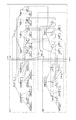
- FIG. 7 depicts an example of checkpointing in the Bz-tree.
- Bz-trees 701 and 702 are in-memory states of the Bz-tree before and after the checkpoint, respectively.
- Bz-tree 703 is the on-disk image of the Bz-tree, where 704 contains a previous checkpoint of Bz-tree 701 , and Bz-tree 705 contains pages written during subsequent checkpointing.
- no internal data of on-disk pages 721 - 754 are shown in the figure, except downlinks which are depicted as solid arrows.
- For each in-memory page 736 - 763 in addition to downlinks, the following information is shown:
- Root page 736 is linked to the on-disk root page 721 .
- the dirty bit of the page 736 is false because its pivot keys and downlinks are not modified.
- Root page 736 has three downlinks to in-memory pages 737 - 739 and one downlink to on-disk page 725 .
- the leftmost child of root page 736 is an internal page 737 which is linked to the on-disk page 722 and also not modified.
- Internal page 737 has downlinks to three leaf pages 740 - 742 which are linked to on-disk pages 726 - 728 . Two of them, pages 740 - 741 are modified, but without splitting.
- root page 736 The next child of root page 736 is internal page 738 which is liked to on-disk page 723 . This page is marked as modified, because its child page was split producing pages 744 and 745 .
- Internal page 738 has four downlinks: unmodified page 743 which is linked to on-disk page 729 , modified page 744 which was split and linked to on-disk page 730 , modified page 745 which is new page produced by split of 744 and it's not linked with any on-disk page, and on-disk page 731 .
- the next child of root page 736 is internal page 739 which is linked to on-disk page 724 . Internal page 739 has downlinks to on-disk pages 746 and 731 .
- This internal page 739 is modified because it has a downlink that has changed from on-disk page 732 to on-disk page 746 .
- On-disk page 746 is a modified version of page 732 which was evicted to disk after modification.
- the rightmost child of root page 736 is on-disk internal page 725 which belongs to an unmodified part of the Bz-tree.
- Leaf pages 759 and 760 are post-checkpointing versions of pages 740 and 741 , which were changed since the previous checkpointing. Therefore, they were flushed to new on-disk pages 751 and 752 in a copy-on-write manner, and have their dirty bits cleared.
- Leaf pages 742 and 743 are unchanged since previous the checkpointing. Thus, their post-checkpointing versions, leaf pages 761 and 762 aren't flushed to the disk.
- Pages 744 and 745 were produced by the page split which happened after the previous checkpointing.
- Page 744 is the left split page and it's linked with pre-split on-disk image 730 .
- Page 745 is the right split page and it's not yet linked with any on-disk image.
- Post-checkpointing versions of pages 744 and 745 are pages 763 and 764 , which were flushed to new on-disk pages 753 and 755 , and their dirty bits were cleared.
- Internal page 756 is the post-checkpointing version of the page 737 whose contents were not changed after the previous checkpointing. However, since page 756 has its children changed, it's flushed to new disk page 748 in copy-on-write manner. Page 738 has both changed children and its dirty bit set because its contents were changed. Therefore, its post-checkpointing version, page 757 , was flushed to the new on-disk page 749 . Page 739 had its dirty bit set because its downlink changed. Thus, its post-checkpointing version, page 758 , is also written to the new on-disk page 750 .
- the page 755 is the post-checkpointing version of the root page 736 which has all its children written to the disk. Therefore, 755 was flushed to the new disk page 747 .
- FIG. 8 depicts an example of disk layout of checkpoints.
- BZ-tree 801 depicts the logical structure of the checkpoint produced by the first checkpoint 804 , illustrated physically on disk as sequential blocks 831 - 837 .
- a block is a contiguous chuck of memory that can store any generic data.
- the blocks 831 - 837 can store copies of pages for a checkpoint.
- Bz-trees 802 and 803 illustrate the logical structure of checkpoints 805 and 806 , respectively, which are incremental and reuse parts of pages written during previous checkpointings.
- third checkpoint 806 reuses pages 819 , 820 which were written during second checkpoint 805 , and page 814 which was written during the first checkpointing 804 . Simultaneously, after third checkpoint 806 is taken, pages 813 , 816 - 818 become unreferenced. Therefore, corresponding blocks 833 , 836 - 838 are marked as free when the third checkpoint 806 is completely taken.
- the Bz-tree provides durability. After a system crash, Bz-tree could be recovered once disk media was saved. Besides a completely taken checkpoint, recovery of Bz-tree can also use WAL records starting from the beginning of checkpointing and at least to the end of checkpointing. Checkpoint meta-information should include WAL-locations of checkpointing start and checkpointing end.
- Embodiments may implement different formats of WAL records. In general, there are two general properties to WAL record format. The first is that modifications of a tree can be encoded at row-level, i.e., replay of WAL records should turn into insertions, updates and deletions of Bz-tree rows. The second property is that WAL records should be idempotent: replay of changes which were already applied shouldn't cause any errors. Particular embodiments could have following types of WAL records:
- transaction commit record consist of TXN and LSN.
- Bz-tree could be used as a secondary data structure.
- Bz-tree could serve as a secondary index for a table, document set or set of other data items.
- secondary Bz-tree data modification operations insertions, updates and deletions of rows
- WAL-records for the primary data structure.
- loaded in-memory page becomes the root of the in-memory part of the Bz-tree
- Replay of WAL-records may continue to the last WAL record written, or it could stop earlier, implementing point-in-time recovery (PITR).
- PITR point-in-time recovery
- replay of WAL-records should continue at least to the checkpointing end.
- on-disk pages When the compression of on-disk pages is enabled, pages are compressed before being written to disk either by eviction, background writing or checkpointing. Also, pages are uncompressed after reading from disk. Since, on-disk pages have a variable-size, an appropriate data structure can be used to manage variable-size areas of free space in the Bz-tree data file. Particular embodiments can use a linked list of free areas to manage variable-sized areas of free space. When a page is evicted a second or subsequent time after the last checkpointing, then it might be impossible to rewrite the on-disk page image in-place because its size might be increased. In this case the new on-disk page image is written to the free space of the data file, while the previous on-disk page image is marked as free space, the parent page downlink is updated accordingly.
- FIG. 9 illustrates a system 900 comprising a main memory 901 , a disk 902 , and six CPUs 903 .
- each CPU has independent interfaces with main memory 901 and disk 902 .
- Alternative embodiments can sharing interfaces or busses between components.
- Embodiments can also include having a main memory and disk corresponding to each CPU.
- the main memory can be, for example, a volatile memory, such as dynamic random access memory (DRAM).
- the disk can be a hard disk drive (HDD) or a solid state drive (SSD).
- the exemplary embodiments can relate to an apparatus for performing one or more of the functions described herein.
- This apparatus may be specially constructed for the required purposes, or it may comprise a special purpose computer selectively activated or reconfigured by a computer program stored in the computer.
- a computer program may be stored in a machine (e.g.
- the exemplary embodiments described herein are described as software executed on at least one server, though it is understood that embodiments can be configured in other ways and retain functionality.
- the embodiments can be implemented on known devices such as a personal computer, a special purpose computer, cellular telephone, personal digital assistant (“PDA”), a digital camera, a digital tablet, an electronic gaming system, a programmed microprocessor or microcontroller and peripheral integrated circuit element(s), and ASIC or other integrated circuit, a digital signal processor, a hard-wired electronic or logic circuit such as a discrete element circuit, a programmable logic device such as a PLD, PLA, FPGA, PAL, or the like.
- PLD personal digital assistant
- PLA PLA
- FPGA field-programmable logic device
- the exemplary embodiments can relate to an apparatus for performing one or more of the functions described herein.
- This apparatus may be specially constructed for the required purposes or be selectively activated or reconfigured by computer executable instructions stored in non-transitory computer memory medium or non-transitory computer-readable storage medium.
- the various components of the technology can be located at distant portions of a distributed network or the Internet, or within a dedicated secured, unsecured, addressed/encoded or encrypted system.
- the components of the system can be combined into one or more devices or co-located on a particular node of a distributed network, such as a telecommunications network.
- the components of the system can be arranged at any location within a distributed network without affecting the operation of the system.
- the components could be embedded in a dedicated machine.
- the various links connecting the elements can be wired or wireless links, or any combination thereof, or any other known or later developed element(s) that is capable of supplying or communicating data to and from the connected elements.
- the term “module” as used herein can refer to any known or later developed hardware, software, firmware, or combination thereof that is capable of performing the functionality associated with that element.
Landscapes
- Engineering & Computer Science (AREA)
- Theoretical Computer Science (AREA)
- Physics & Mathematics (AREA)
- General Engineering & Computer Science (AREA)
- General Physics & Mathematics (AREA)
- Databases & Information Systems (AREA)
- Data Mining & Analysis (AREA)
- Software Systems (AREA)
- Quality & Reliability (AREA)
- Computer Security & Cryptography (AREA)
- Information Retrieval, Db Structures And Fs Structures Therefor (AREA)
Abstract
Description
Claims (20)
Priority Applications (2)
| Application Number | Priority Date | Filing Date | Title |
|---|---|---|---|
| US16/017,854 US10325030B2 (en) | 2017-06-25 | 2018-06-25 | Durable multiversion B+-tree |
| US16/388,733 US20190243812A1 (en) | 2017-06-25 | 2019-04-18 | Durable multiversion b+-tree |
Applications Claiming Priority (2)
| Application Number | Priority Date | Filing Date | Title |
|---|---|---|---|
| US201762524555P | 2017-06-25 | 2017-06-25 | |
| US16/017,854 US10325030B2 (en) | 2017-06-25 | 2018-06-25 | Durable multiversion B+-tree |
Related Child Applications (1)
| Application Number | Title | Priority Date | Filing Date |
|---|---|---|---|
| US16/388,733 Continuation US20190243812A1 (en) | 2017-06-25 | 2019-04-18 | Durable multiversion b+-tree |
Publications (2)
| Publication Number | Publication Date |
|---|---|
| US20180373743A1 US20180373743A1 (en) | 2018-12-27 |
| US10325030B2 true US10325030B2 (en) | 2019-06-18 |
Family
ID=63077919
Family Applications (2)
| Application Number | Title | Priority Date | Filing Date |
|---|---|---|---|
| US16/017,854 Active US10325030B2 (en) | 2017-06-25 | 2018-06-25 | Durable multiversion B+-tree |
| US16/388,733 Abandoned US20190243812A1 (en) | 2017-06-25 | 2019-04-18 | Durable multiversion b+-tree |
Family Applications After (1)
| Application Number | Title | Priority Date | Filing Date |
|---|---|---|---|
| US16/388,733 Abandoned US20190243812A1 (en) | 2017-06-25 | 2019-04-18 | Durable multiversion b+-tree |
Country Status (3)
| Country | Link |
|---|---|
| US (2) | US10325030B2 (en) |
| EP (1) | EP3526680A1 (en) |
| WO (1) | WO2019003084A1 (en) |
Families Citing this family (4)
| Publication number | Priority date | Publication date | Assignee | Title |
|---|---|---|---|---|
| CN111274456B (en) * | 2020-01-20 | 2023-09-12 | 中国科学院计算技术研究所 | Data indexing method and data processing system based on NVM (non-volatile memory) main memory |
| US12332912B2 (en) * | 2021-12-17 | 2025-06-17 | Sap Se | Performant dropping of snapshots by linking converter streams |
| US11921704B2 (en) * | 2021-12-28 | 2024-03-05 | Vmware, Inc. | Version control interface for accessing data lakes |
| US12141063B2 (en) * | 2022-09-01 | 2024-11-12 | VMware LLC | Efficient write-back for journal truncation |
Citations (2)
| Publication number | Priority date | Publication date | Assignee | Title |
|---|---|---|---|---|
| US20080307181A1 (en) * | 2007-06-08 | 2008-12-11 | Kuszmaul Bradley C | Disk-Resident Streaming Dictionary |
| US20170337212A1 (en) * | 2015-01-13 | 2017-11-23 | Hitachi Data Systems Engineering UK Limited | Computer program product, method, apparatus and data storage system for managing defragmentation in file systems |
Family Cites Families (1)
| Publication number | Priority date | Publication date | Assignee | Title |
|---|---|---|---|---|
| US8527546B2 (en) * | 2010-11-25 | 2013-09-03 | International Business Machines Corporation | Generating a checkpoint image for use with an in-memory database |
-
2018
- 2018-06-25 WO PCT/IB2018/054670 patent/WO2019003084A1/en not_active Ceased
- 2018-06-25 US US16/017,854 patent/US10325030B2/en active Active
- 2018-06-25 EP EP18749121.2A patent/EP3526680A1/en not_active Ceased
-
2019
- 2019-04-18 US US16/388,733 patent/US20190243812A1/en not_active Abandoned
Patent Citations (2)
| Publication number | Priority date | Publication date | Assignee | Title |
|---|---|---|---|---|
| US20080307181A1 (en) * | 2007-06-08 | 2008-12-11 | Kuszmaul Bradley C | Disk-Resident Streaming Dictionary |
| US20170337212A1 (en) * | 2015-01-13 | 2017-11-23 | Hitachi Data Systems Engineering UK Limited | Computer program product, method, apparatus and data storage system for managing defragmentation in file systems |
Non-Patent Citations (7)
| Title |
|---|
| C. Mohan, Don Haderle, Bruce Lindsay, Hamid Pirahesh, and Peter Schwarz. Aries: a transaction recovery method supporting fine-granularity locking and partial rollbacks using write-ahead logging. ACM Transactions on Database Systems (TODS), 17(1):94-162, 1992. |
| Database Language SQL. Standard, International Organization for Standardization, 1992. |
| Douglas Comer, Ubiquitous b-tree. ACM Computing Surveys (CSUR), 11(2):121-137, 1979. |
| Howard Chu, MDB: A Memory-Mapped Database and Backend for OpenLDAP, Symas Corp., OpenLDAP Project, hyc@symas.com, hyc@openldap.org, http://www.symas.com, http:www.openldap.org, 2011. |
| Michael Cahill, A Technical Introduction to WiredTiger, MongoDB, www.slideshare.net/mongodb/mongo-db-wiredtigerwebinar, Jul. 9, 2015. |
| Philip A Bernstein, Vassos Hadzilacos, and Nathan Goodman. Concurrency Control and Recovery in Database Systems. Addison-Wesley, 1987. |
| R. Bayer and E. McCreight. Organization and maintenance of large ordered indices. In Proceedings of the 1970 ACM SIGFIDET (now SIGMOD) Workshop on Data Description, Access and Control, SIGFIDET '70, pp. 107-141, New York, NY, USA, 1970. ACM. |
Also Published As
| Publication number | Publication date |
|---|---|
| WO2019003084A1 (en) | 2019-01-03 |
| US20180373743A1 (en) | 2018-12-27 |
| US20190243812A1 (en) | 2019-08-08 |
| EP3526680A1 (en) | 2019-08-21 |
Similar Documents
| Publication | Publication Date | Title |
|---|---|---|
| US11755427B2 (en) | Fast recovery and replication of key-value stores | |
| US9922077B2 (en) | Reducing the cost of update, delete, and append-only insert operations in a database | |
| Levandoski et al. | LLAMA: A cache/storage subsystem for modern hardware | |
| EP2590086B1 (en) | Columnar database using virtual file data objects | |
| CN107862064B (en) | High-performance and extensible lightweight file system based on NVM (non-volatile memory) | |
| CN109891402B (en) | Revocable and online mode switching | |
| US10846279B2 (en) | Transactional key-value store | |
| US11023453B2 (en) | Hash index | |
| US11100083B2 (en) | Read only bufferpool | |
| US20180011892A1 (en) | Foster twin data structure | |
| US20170351543A1 (en) | Heap data structure | |
| US10325030B2 (en) | Durable multiversion B+-tree | |
| US11829291B2 (en) | Garbage collection of tree structure with page mappings | |
| CN105868228A (en) | In-memory database system providing lockless read and write operations for OLAP and OLTP transactions | |
| CN112597254B (en) | An Online Transactional Database System Oriented to Hybrid DRAM-NVM Main Memory | |
| US9411692B2 (en) | Applying write elision | |
| Antonopoulos et al. | Constant time recovery in Azure SQL database | |
| Ma et al. | Hiengine: How to architect a cloud-native memory-optimized database engine | |
| Jiao et al. | BetrFS: A compleat file system for commodity SSDs | |
| CN114816224A (en) | Data management method and data management device | |
| Schindler | I/O characteristics of NoSQL databases | |
| Nguyen et al. | Why Files If You Have a DBMS? | |
| Lomet et al. | High performance temporal indexing on modern hardware | |
| Oh et al. | Doubleheader logging: Eliminating journal write overhead for mobile dbms | |
| Lee et al. | Validity tracking based log management for in-memory databases |
Legal Events
| Date | Code | Title | Description |
|---|---|---|---|
| AS | Assignment |
Owner name: ORIOLE DB INC., GIBRALTAR Free format text: ASSIGNMENT OF ASSIGNORS INTEREST;ASSIGNOR:KOROTKOV, ALEXANDER EVGENIEVICH;REEL/FRAME:046196/0954 Effective date: 20180623 |
|
| FEPP | Fee payment procedure |
Free format text: ENTITY STATUS SET TO UNDISCOUNTED (ORIGINAL EVENT CODE: BIG.); ENTITY STATUS OF PATENT OWNER: MICROENTITY |
|
| FEPP | Fee payment procedure |
Free format text: ENTITY STATUS SET TO MICRO (ORIGINAL EVENT CODE: MICR); ENTITY STATUS OF PATENT OWNER: MICROENTITY |
|
| STPP | Information on status: patent application and granting procedure in general |
Free format text: NOTICE OF ALLOWANCE MAILED -- APPLICATION RECEIVED IN OFFICE OF PUBLICATIONS |
|
| STCF | Information on status: patent grant |
Free format text: PATENTED CASE |
|
| MAFP | Maintenance fee payment |
Free format text: PAYMENT OF MAINTENANCE FEE, 4TH YEAR, MICRO ENTITY (ORIGINAL EVENT CODE: M3551); ENTITY STATUS OF PATENT OWNER: MICROENTITY Year of fee payment: 4 |
|
| AS | Assignment |
Owner name: SUPABASE, INC., DELAWARE Free format text: SECURITY INTEREST;ASSIGNOR:ORIOLE DB INC.;REEL/FRAME:067497/0251 Effective date: 20240521 |
|
| AS | Assignment |
Owner name: SUPABASE, INC., DELAWARE Free format text: ASSIGNMENT OF ASSIGNORS INTEREST;ASSIGNOR:ORIOLE DB INC.;REEL/FRAME:071700/0168 Effective date: 20250714 Owner name: ORIOLE DB INC., DELAWARE Free format text: RELEASE BY SECURED PARTY;ASSIGNOR:SUPABASE, INC.;REEL/FRAME:071699/0938 Effective date: 20250714 |