US10314922B2 - Trimaleimide linkers and uses thereof - Google Patents
Trimaleimide linkers and uses thereof Download PDFInfo
- Publication number
- US10314922B2 US10314922B2 US15/577,536 US201615577536A US10314922B2 US 10314922 B2 US10314922 B2 US 10314922B2 US 201615577536 A US201615577536 A US 201615577536A US 10314922 B2 US10314922 B2 US 10314922B2
- Authority
- US
- United States
- Prior art keywords
- antibody
- linker
- mmol
- drug
- trimaleimide
- Prior art date
- Legal status (The legal status is an assumption and is not a legal conclusion. Google has not performed a legal analysis and makes no representation as to the accuracy of the status listed.)
- Active
Links
- 0 CC(C)C[1*]CC(CN1C(=O)CC(C(C)C)C1=O)(CN1C(=O)CC(C(C)C)C1=O)CN1C(=O)CC(C(C)C)C1=O Chemical compound CC(C)C[1*]CC(CN1C(=O)CC(C(C)C)C1=O)(CN1C(=O)CC(C(C)C)C1=O)CN1C(=O)CC(C(C)C)C1=O 0.000 description 11
- VAPQJZKOVNLTES-UHFFFAOYSA-N O=C(O)CCOCCOCCOCCOCCOC(CN1C(=O)C=CC1=O)(CN1C(=O)C=CC1=O)CN1C(=O)C=CC1=O Chemical compound O=C(O)CCOCCOCCOCCOCCOC(CN1C(=O)C=CC1=O)(CN1C(=O)C=CC1=O)CN1C(=O)C=CC1=O VAPQJZKOVNLTES-UHFFFAOYSA-N 0.000 description 5
- LNVRMNAGCDRNMB-UHFFFAOYSA-N O=C(O)CCOCCOCCOCCOCCOCC(CN1C(=O)C=CC1=O)(CN1C(=O)C=CC1=O)CN1C(=O)C=CC1=O Chemical compound O=C(O)CCOCCOCCOCCOCCOCC(CN1C(=O)C=CC1=O)(CN1C(=O)C=CC1=O)CN1C(=O)C=CC1=O LNVRMNAGCDRNMB-UHFFFAOYSA-N 0.000 description 5
- VHIKRTBBEJNSQF-UHFFFAOYSA-N O=C(O)COC(CN1C(=O)C=CC1=O)(CN1C(=O)C=CC1=O)CN1C(=O)C=CC1=O Chemical compound O=C(O)COC(CN1C(=O)C=CC1=O)(CN1C(=O)C=CC1=O)CN1C(=O)C=CC1=O VHIKRTBBEJNSQF-UHFFFAOYSA-N 0.000 description 5
- BCSBKLOFURSGBR-UHFFFAOYSA-N O=C(O)CCC(=O)NC(CN1C(=O)C=CC1=O)(CN1C(=O)C=CC1=O)CN1C(=O)C=CC1=O Chemical compound O=C(O)CCC(=O)NC(CN1C(=O)C=CC1=O)(CN1C(=O)C=CC1=O)CN1C(=O)C=CC1=O BCSBKLOFURSGBR-UHFFFAOYSA-N 0.000 description 4
- LQOCWLZPDYVGMJ-UHFFFAOYSA-N O=C(O)CCCC(CN1C(=O)C=CC1=O)(CN1C(=O)C=CC1=O)CN1C(=O)C=CC1=O Chemical compound O=C(O)CCCC(CN1C(=O)C=CC1=O)(CN1C(=O)C=CC1=O)CN1C(=O)C=CC1=O LQOCWLZPDYVGMJ-UHFFFAOYSA-N 0.000 description 4
- RNIXWDYBGLSWDB-UHFFFAOYSA-N O=C(O)CCOCC(CCCN1C(=O)C=CC1=O)(CCCN1C(=O)C=CC1=O)CN1C(=O)C=CC1=O Chemical compound O=C(O)CCOCC(CCCN1C(=O)C=CC1=O)(CCCN1C(=O)C=CC1=O)CN1C(=O)C=CC1=O RNIXWDYBGLSWDB-UHFFFAOYSA-N 0.000 description 4
- BOIPYCIIBKTSTH-UHFFFAOYSA-N O=C(O)CCOCC(CCCN1C(=O)C=CC1=O)(CN1C(=O)C=CC1=O)CN1C(=O)C=CC1=O Chemical compound O=C(O)CCOCC(CCCN1C(=O)C=CC1=O)(CN1C(=O)C=CC1=O)CN1C(=O)C=CC1=O BOIPYCIIBKTSTH-UHFFFAOYSA-N 0.000 description 4
- SCNVOMLYFQPNDT-UHFFFAOYSA-N O=C(O)CCOCC(CN1C(=O)C=CC1=O)(CN1C(=O)C=CC1=O)CN1C(=O)C=CC1=O Chemical compound O=C(O)CCOCC(CN1C(=O)C=CC1=O)(CN1C(=O)C=CC1=O)CN1C(=O)C=CC1=O SCNVOMLYFQPNDT-UHFFFAOYSA-N 0.000 description 4
- JFRKUXANAFZIAG-UHFFFAOYSA-N O=C(O)CCOCCOCCOCCOCC(=O)NC(CCCN1C(=O)C=CC1=O)(CCCN1C(=O)C=CC1=O)CCCN1C(=O)C=CC1=O Chemical compound O=C(O)CCOCCOCCOCCOCC(=O)NC(CCCN1C(=O)C=CC1=O)(CCCN1C(=O)C=CC1=O)CCCN1C(=O)C=CC1=O JFRKUXANAFZIAG-UHFFFAOYSA-N 0.000 description 4
- FFPUWCNNYCQGOD-UHFFFAOYSA-N O=C(O)CCOCCOCCOCCOCC(=O)NC(CCN1C(=O)C=CC1=O)(CCN1C(=O)C=CC1=O)CCN1C(=O)C=CC1=O Chemical compound O=C(O)CCOCCOCCOCCOCC(=O)NC(CCN1C(=O)C=CC1=O)(CCN1C(=O)C=CC1=O)CCN1C(=O)C=CC1=O FFPUWCNNYCQGOD-UHFFFAOYSA-N 0.000 description 4
- OUPQZQCSTVGJOK-RKKUYXDDSA-N *.B.C.CC1C(N2C(=O)C=CC2=O)C(N2C(=O)C=CC2=O)C1N1C(=O)C=CC1=O.CC1C(N2C(=O)C=CC2=O)C(N2C(=O)C=CC2=O)C1N1C(=O)C=CC1=O.CC1C(N2C(=O)C=CC2=O)C(N2C(=O)C=CC2=O)C1N1C(=O)C=CC1=O.CS.CS.CS.CS.CS.CS.CS.CS.[2HH] Chemical compound *.B.C.CC1C(N2C(=O)C=CC2=O)C(N2C(=O)C=CC2=O)C1N1C(=O)C=CC1=O.CC1C(N2C(=O)C=CC2=O)C(N2C(=O)C=CC2=O)C1N1C(=O)C=CC1=O.CC1C(N2C(=O)C=CC2=O)C(N2C(=O)C=CC2=O)C1N1C(=O)C=CC1=O.CS.CS.CS.CS.CS.CS.CS.CS.[2HH] OUPQZQCSTVGJOK-RKKUYXDDSA-N 0.000 description 1
- VHOYNSZXMVUZMP-MBDJGAHPSA-N *.B.C.CC1C(N2C(=O)C=CC2=O)C(N2C(=O)C=CC2=O)C1N1C(=O)C=CC1=O.CC1C(N2C(=O)C=CC2=O)C(N2C(=O)C=CC2=O)C1N1C(=O)C=CC1=O.CS.CS.CS.CS.CS.CS.CS.CS.[2HH] Chemical compound *.B.C.CC1C(N2C(=O)C=CC2=O)C(N2C(=O)C=CC2=O)C1N1C(=O)C=CC1=O.CC1C(N2C(=O)C=CC2=O)C(N2C(=O)C=CC2=O)C1N1C(=O)C=CC1=O.CS.CS.CS.CS.CS.CS.CS.CS.[2HH] VHOYNSZXMVUZMP-MBDJGAHPSA-N 0.000 description 1
- PWEGJRQFFQCLKM-CFVBIVDESA-L C.C1=CC=C(P(C2=CC=CC=C2)C2=CC=CC=C2)C=C1.C=CC(=O)OC(C)(C)C.CC(=O)OCCOCCOCCOCCOCC(CN=[N+]=[N-])(CN=[N+]=[N-])CN=[N+]=[N-].CC(=O)O[Na].CC(C)(C)OC(=O)CCOCCOCCOCCOCCOCC(CN)(CN)CN.CC(C)(C)OC(=O)CCOCCOCCOCCOCCOCC(CN1C(=O)C=CC1=O)(CN1C(=O)C=CC1=O)CN1C(=O)C=CC1=O.CC(C)(C)OC(=O)CCOCCOCCOCCOCCOCC(CN=[N+]=[N-])(CN=[N+]=[N-])CN=[N+]=[N-].CC(C)(C)OC(=O)CCOCCOCCOCCOCCOCC(CNC(=O)/C=C\C(=O)O)(CNC(=O)/C=C\C(=O)O)CNC(=O)CCC(=O)O.CC1=CC=C(S(=O)(=O)OCCOCCOCCOCCOCC(CN=[N+]=[N-])(CN=[N+]=[N-])CN=[N+]=[N-])C=C1.CCCOCCOCCOCCOS(=O)(=O)C1=CC=C(C)C=C1.O=C1C=CC(=O)O1.O=CC(F)(F)F.O[Na].[N-]=[N+]=NCC(CN=[N+]=[N-])(CN=[N+]=[N-])COCCOCCOCCOCCO.[N-]=[N+]=NCC(CO)(CN=[N+]=[N-])CN=[N+]=[N-].[NaH] Chemical compound C.C1=CC=C(P(C2=CC=CC=C2)C2=CC=CC=C2)C=C1.C=CC(=O)OC(C)(C)C.CC(=O)OCCOCCOCCOCCOCC(CN=[N+]=[N-])(CN=[N+]=[N-])CN=[N+]=[N-].CC(=O)O[Na].CC(C)(C)OC(=O)CCOCCOCCOCCOCCOCC(CN)(CN)CN.CC(C)(C)OC(=O)CCOCCOCCOCCOCCOCC(CN1C(=O)C=CC1=O)(CN1C(=O)C=CC1=O)CN1C(=O)C=CC1=O.CC(C)(C)OC(=O)CCOCCOCCOCCOCCOCC(CN=[N+]=[N-])(CN=[N+]=[N-])CN=[N+]=[N-].CC(C)(C)OC(=O)CCOCCOCCOCCOCCOCC(CNC(=O)/C=C\C(=O)O)(CNC(=O)/C=C\C(=O)O)CNC(=O)CCC(=O)O.CC1=CC=C(S(=O)(=O)OCCOCCOCCOCCOCC(CN=[N+]=[N-])(CN=[N+]=[N-])CN=[N+]=[N-])C=C1.CCCOCCOCCOCCOS(=O)(=O)C1=CC=C(C)C=C1.O=C1C=CC(=O)O1.O=CC(F)(F)F.O[Na].[N-]=[N+]=NCC(CN=[N+]=[N-])(CN=[N+]=[N-])COCCOCCOCCOCCO.[N-]=[N+]=NCC(CO)(CN=[N+]=[N-])CN=[N+]=[N-].[NaH] PWEGJRQFFQCLKM-CFVBIVDESA-L 0.000 description 1
- WONHQXSSPNZUFX-UHFFFAOYSA-N C.C1=CC=C(P(C2=CC=CC=C2)C2=CC=CC=C2)C=C1.CC(C)(C)[Si](Cl)(C1=CC=CC=C1)C1=CC=CC=C1.CC(C)(C)[Si](OCCCCC(CN=[N+]=[N-])(CN=[N+]=[N-])CN=[N+]=[N-])(C1=CC=CC=C1)C1=CC=CC=C1.CC(C)(C)[Si](OCCCCC(CO)(CO)CO)(C1=CC=CC=C1)C1=CC=CC=C1.CC1=CC=C(S(=O)(=O)Cl)C=C1.CCC(CC)(CCCCO[Si](C1=CC=CC=C1)(C1=CC=CC=C1)C(C)(C)C)COS(=O)(=O)C1=CC=C(C)C=C1.CCCCCCCC.CCCCCCCC.NCC(CN)(CN)CCCC(=O)O.NF.O=C1C=CC(=O)O1.O=CCCCCCO.OCCCCC(CO)(CO)CO.[N-]=[N+]=NCC(CCCC(=O)O)(CN=[N+]=[N-])CN=[N+]=[N-].[N-]=[N+]=NCC(CCCCO)(CN=[N+]=[N-])CN=[N+]=[N-].[N-]=[N+]=N[Na] Chemical compound C.C1=CC=C(P(C2=CC=CC=C2)C2=CC=CC=C2)C=C1.CC(C)(C)[Si](Cl)(C1=CC=CC=C1)C1=CC=CC=C1.CC(C)(C)[Si](OCCCCC(CN=[N+]=[N-])(CN=[N+]=[N-])CN=[N+]=[N-])(C1=CC=CC=C1)C1=CC=CC=C1.CC(C)(C)[Si](OCCCCC(CO)(CO)CO)(C1=CC=CC=C1)C1=CC=CC=C1.CC1=CC=C(S(=O)(=O)Cl)C=C1.CCC(CC)(CCCCO[Si](C1=CC=CC=C1)(C1=CC=CC=C1)C(C)(C)C)COS(=O)(=O)C1=CC=C(C)C=C1.CCCCCCCC.CCCCCCCC.NCC(CN)(CN)CCCC(=O)O.NF.O=C1C=CC(=O)O1.O=CCCCCCO.OCCCCC(CO)(CO)CO.[N-]=[N+]=NCC(CCCC(=O)O)(CN=[N+]=[N-])CN=[N+]=[N-].[N-]=[N+]=NCC(CCCCO)(CN=[N+]=[N-])CN=[N+]=[N-].[N-]=[N+]=N[Na] WONHQXSSPNZUFX-UHFFFAOYSA-N 0.000 description 1
- LIDKONQCDKKSQK-UHFFFAOYSA-N C.C=C1C=CC(=N)C=C1.CCC1=CC=C(COC(C)=O)C=C1.O=C=O Chemical compound C.C=C1C=CC(=N)C=C1.CCC1=CC=C(COC(C)=O)C=C1.O=C=O LIDKONQCDKKSQK-UHFFFAOYSA-N 0.000 description 1
- YHJKDGZIPSZERL-UHFFFAOYSA-N C1=CC=C(P(C2=CC=CC=C2)C2=CC=CC=C2)C=C1.C=CC(=O)OC(C)(C)C.CC(C)(C)OC(=O)CCOCC(CCCN=[N+]=[N-])(CN=[N+]=[N-])CN=[N+]=[N-].CC(C)(C)OC(=O)CCOCC(CO)(CO)CCCO.CC(C)(C)OC(=O)CCOCC(CO)(CO)CCCO[Si](C1=CC=CC=C1)(C1=CC=CC=C1)C(C)(C)C.CC(C)(C)[Si](OCCCC(CO)(CO)CO)(C1=CC=CC=C1)C1=CC=CC=C1.CC1=CC=C(S(=O)(=O)Cl)C=C1.CCC(CCCOS(=O)(=O)C1=CC=C(C)C=C1)(COCCC(=O)OC(C)(C)C)COS(=O)(=O)C1=CC=C(C)C=C1.O=CC(F)(F)F.[N-]=[N+]=NCCCC(CN=[N+]=[N-])(CN=[N+]=[N-])COCCC(=O)O.[N-]=[N+]=N[Na].[NaH] Chemical compound C1=CC=C(P(C2=CC=CC=C2)C2=CC=CC=C2)C=C1.C=CC(=O)OC(C)(C)C.CC(C)(C)OC(=O)CCOCC(CCCN=[N+]=[N-])(CN=[N+]=[N-])CN=[N+]=[N-].CC(C)(C)OC(=O)CCOCC(CO)(CO)CCCO.CC(C)(C)OC(=O)CCOCC(CO)(CO)CCCO[Si](C1=CC=CC=C1)(C1=CC=CC=C1)C(C)(C)C.CC(C)(C)[Si](OCCCC(CO)(CO)CO)(C1=CC=CC=C1)C1=CC=CC=C1.CC1=CC=C(S(=O)(=O)Cl)C=C1.CCC(CCCOS(=O)(=O)C1=CC=C(C)C=C1)(COCCC(=O)OC(C)(C)C)COS(=O)(=O)C1=CC=C(C)C=C1.O=CC(F)(F)F.[N-]=[N+]=NCCCC(CN=[N+]=[N-])(CN=[N+]=[N-])COCCC(=O)O.[N-]=[N+]=N[Na].[NaH] YHJKDGZIPSZERL-UHFFFAOYSA-N 0.000 description 1
- AMBGSHWNYPTNQI-UHFFFAOYSA-N C1=CC=C(P(C2=CC=CC=C2)C2=CC=CC=C2)C=C1.CC(C)(C)OC(=O)CBr.CC(C)(C)OC(=O)COC(CN=[N+]=[N-])(CN=[N+]=[N-])CN=[N+]=[N-].COC(=O)N1C(=O)C=CC1=O.NCC(CN)(CN)OCC(=O)O.O=C(O)COC(CN1C(=O)C=CC1=O)(CN1C(=O)C=CC1=O)CN1C(=O)C=CC1=O.[N-]=[N+]=NCC(CN=[N+]=[N-])(CN=[N+]=[N-])OCC(=O)O.[N-]=[N+]=NCC(O)(CN=[N+]=[N-])CN=[N+]=[N-] Chemical compound C1=CC=C(P(C2=CC=CC=C2)C2=CC=CC=C2)C=C1.CC(C)(C)OC(=O)CBr.CC(C)(C)OC(=O)COC(CN=[N+]=[N-])(CN=[N+]=[N-])CN=[N+]=[N-].COC(=O)N1C(=O)C=CC1=O.NCC(CN)(CN)OCC(=O)O.O=C(O)COC(CN1C(=O)C=CC1=O)(CN1C(=O)C=CC1=O)CN1C(=O)C=CC1=O.[N-]=[N+]=NCC(CN=[N+]=[N-])(CN=[N+]=[N-])OCC(=O)O.[N-]=[N+]=NCC(O)(CN=[N+]=[N-])CN=[N+]=[N-] AMBGSHWNYPTNQI-UHFFFAOYSA-N 0.000 description 1
- WEPVMTCQGGRPPP-FEFMAPHCSA-N C1=CC=C(P(C2=CC=CC=C2)C2=CC=CC=C2)C=C1.CC(C)(C)OC(=O)CCC(=O)NC(CN)(CN)CN.CC(C)(C)OC(=O)CCC(=O)NC(CN1C(=O)C=CC1=O)(CN1C(=O)C=CC1=O)CN1C(=O)C=CC1=O.CC(C)(C)OC(=O)CCC(=O)NC(CN=[N+]=[N-])(CN=[N+]=[N-])CN=[N+]=[N-].CC(C)(C)OC(=O)CCC(=O)NC(CNC(=O)/C=C\C(=O)O)(CNC(=O)/C=C\C(=O)O)CNC(=O)/C=C\C(=O)O.CC(C)(C)OC(=O)CCC(=O)O.O=C(O)CCC(=O)NC(CN1C(=O)C=CC1=O)(CN1C(=O)C=CC1=O)CN1C(=O)C=CC1=O.O=C1C=CC(=O)O1.[N-]=[N+]=NCC(N)(CN=[N+]=[N-])CN=[N+]=[N-] Chemical compound C1=CC=C(P(C2=CC=CC=C2)C2=CC=CC=C2)C=C1.CC(C)(C)OC(=O)CCC(=O)NC(CN)(CN)CN.CC(C)(C)OC(=O)CCC(=O)NC(CN1C(=O)C=CC1=O)(CN1C(=O)C=CC1=O)CN1C(=O)C=CC1=O.CC(C)(C)OC(=O)CCC(=O)NC(CN=[N+]=[N-])(CN=[N+]=[N-])CN=[N+]=[N-].CC(C)(C)OC(=O)CCC(=O)NC(CNC(=O)/C=C\C(=O)O)(CNC(=O)/C=C\C(=O)O)CNC(=O)/C=C\C(=O)O.CC(C)(C)OC(=O)CCC(=O)O.O=C(O)CCC(=O)NC(CN1C(=O)C=CC1=O)(CN1C(=O)C=CC1=O)CN1C(=O)C=CC1=O.O=C1C=CC(=O)O1.[N-]=[N+]=NCC(N)(CN=[N+]=[N-])CN=[N+]=[N-] WEPVMTCQGGRPPP-FEFMAPHCSA-N 0.000 description 1
- HRUBUSHHWGLGDX-UHFFFAOYSA-N C1CCC1.C1CCC1.CC(C)C.CC1C(N2C(=O)C=CC2=O)C(N2C(=O)C=CC2=O)C1N1C(=O)C=CC1=O.CC1C2C3C1N1C(=O)CC(CC(CC4CC(=O)N2C4=O)CC2CC(=O)N3C2=O)C1=O Chemical compound C1CCC1.C1CCC1.CC(C)C.CC1C(N2C(=O)C=CC2=O)C(N2C(=O)C=CC2=O)C1N1C(=O)C=CC1=O.CC1C2C3C1N1C(=O)CC(CC(CC4CC(=O)N2C4=O)CC2CC(=O)N3C2=O)C1=O HRUBUSHHWGLGDX-UHFFFAOYSA-N 0.000 description 1
- MGXWNGJSSIMIRX-UHFFFAOYSA-N C=CC#N.C=CC(=O)OC(C)(C)C.CCCC#N.CCCCC(CCCC)(CNC(=O)OC(C)(C)C)COCCC(=O)OC(C)(C)C.CCCCC(CO)(CCCC)CNC(=O)OC(C)(C)C.COC(=O)N1C(=O)C=CC1=O.Cl.NCCCC(CN)(CCCN)COCCC(=O)O.O=C(O)CCOCC(CCCN1C(=O)C=CC1=O)(CCCN1C(=O)C=CC1=O)CN1C(=O)C=CC1=O.O=C=O.O=C=O.[C-]#[N+]CCC(C#N)(CC)CCC#N Chemical compound C=CC#N.C=CC(=O)OC(C)(C)C.CCCC#N.CCCCC(CCCC)(CNC(=O)OC(C)(C)C)COCCC(=O)OC(C)(C)C.CCCCC(CO)(CCCC)CNC(=O)OC(C)(C)C.COC(=O)N1C(=O)C=CC1=O.Cl.NCCCC(CN)(CCCN)COCCC(=O)O.O=C(O)CCOCC(CCCN1C(=O)C=CC1=O)(CCCN1C(=O)C=CC1=O)CN1C(=O)C=CC1=O.O=C=O.O=C=O.[C-]#[N+]CCC(C#N)(CC)CCC#N MGXWNGJSSIMIRX-UHFFFAOYSA-N 0.000 description 1
- YNTVQKGFHGKNRE-MVDJOKLUSA-N C=CC(=O)OC(C)(C)C.CC(C)(C)OC(=O)CCOCC(CN)(CN)CN.CC(C)(C)OC(=O)CCOCC(CN1C(=O)C=CC1=O)(CN1C(=O)C=CC1=O)CN1C(=O)C=CC1=O.CC(C)(C)OC(=O)CCOCC(CN=[N+]=[N-])(CN=[N+]=[N-])CN=[N+]=[N-].CC(C)(C)OC(=O)CCOCC(CNC(=O)/C=C\OC=O)(CNC(=O)/C=C\OC=O)CNC(=O)/C=C\C(=O)O.O=C(O)CCOCC(CN1C(=O)C=CC1=O)(CN1C(=O)C=CC1=O)CN1C(=O)C=CC1=O.O=C1C=CC(=O)O1.[N-]=[N+]=NCC(CO)(CN=[N+]=[N-])CN=[N+]=[N-] Chemical compound C=CC(=O)OC(C)(C)C.CC(C)(C)OC(=O)CCOCC(CN)(CN)CN.CC(C)(C)OC(=O)CCOCC(CN1C(=O)C=CC1=O)(CN1C(=O)C=CC1=O)CN1C(=O)C=CC1=O.CC(C)(C)OC(=O)CCOCC(CN=[N+]=[N-])(CN=[N+]=[N-])CN=[N+]=[N-].CC(C)(C)OC(=O)CCOCC(CNC(=O)/C=C\OC=O)(CNC(=O)/C=C\OC=O)CNC(=O)/C=C\C(=O)O.O=C(O)CCOCC(CN1C(=O)C=CC1=O)(CN1C(=O)C=CC1=O)CN1C(=O)C=CC1=O.O=C1C=CC(=O)O1.[N-]=[N+]=NCC(CO)(CN=[N+]=[N-])CN=[N+]=[N-] YNTVQKGFHGKNRE-MVDJOKLUSA-N 0.000 description 1
- DQZXFYOMHWBMII-MSODKQCKSA-N CC(C)C(=O)CCCCCN1C(=O)C[C@@H](C(C)C)C1=O.CC(C)C(=O)[C@H]1CC[C@@H](CN2C(=O)C[C@H](C(C)C)C2=O)CC1 Chemical compound CC(C)C(=O)CCCCCN1C(=O)C[C@@H](C(C)C)C1=O.CC(C)C(=O)[C@H]1CC[C@@H](CN2C(=O)C[C@H](C(C)C)C2=O)CC1 DQZXFYOMHWBMII-MSODKQCKSA-N 0.000 description 1
- ZIHGKBKIARGXLK-IIHKPARFSA-N CC(C)C(=O)OCC1=CC=C(NC(=O)[C@H](CCCNC(N)=O)CC(=O)[C@@H](NC(=O)CCCCCN2C(=O)CC(C(C)C)C2=O)C(C)C)C=C1 Chemical compound CC(C)C(=O)OCC1=CC=C(NC(=O)[C@H](CCCNC(N)=O)CC(=O)[C@@H](NC(=O)CCCCCN2C(=O)CC(C(C)C)C2=O)C(C)C)C=C1 ZIHGKBKIARGXLK-IIHKPARFSA-N 0.000 description 1
- MQEJBYRKUBEINB-BZBTURJSSA-N CC(C)[C@H](NC(=O)CCOCCOCCOCCOCCOC(CN1C(=O)C=CC1=O)(CN1C(=O)C=CC1=O)CN1C(=O)C=CC1=O)C(=O)C[C@@H](CCCNC(N)=O)C(=O)NC1=CC=CC=C1.CO[C@H](CC(=O)N1CCC[C@H]1[C@H](OC)[C@@H](C)C(=O)C[C@H](C)[C@@H](O)C1=CC=CC=C1)[C@H](C(C)C)N(C)C(=O)[C@@H](CC(=O)[C@H](C(C)C)N(C)C(=O)OCC1=CC=C(NC(=O)[C@H](CCCNC(N)=O)CC(=O)[C@@H](N)C(C)C)C=C1)C(C)C.CO[C@H](CC(=O)N1CCC[C@H]1[C@H](OC)[C@@H](C)C(=O)C[C@H](C)[C@@H](O)C1=CC=CC=C1)[C@H](C(C)C)N(C)C(=O)[C@@H](CC(=O)[C@H](C(C)C)N(C)C(=O)OCC1=CC=CC=C1)C(C)C.O=C(O)CCOCCOCCOCCOCCOC(CN1C(=O)C=CC1=O)(CN1C(=O)C=CC1=O)CN1C(=O)C=CC1=O Chemical compound CC(C)[C@H](NC(=O)CCOCCOCCOCCOCCOC(CN1C(=O)C=CC1=O)(CN1C(=O)C=CC1=O)CN1C(=O)C=CC1=O)C(=O)C[C@@H](CCCNC(N)=O)C(=O)NC1=CC=CC=C1.CO[C@H](CC(=O)N1CCC[C@H]1[C@H](OC)[C@@H](C)C(=O)C[C@H](C)[C@@H](O)C1=CC=CC=C1)[C@H](C(C)C)N(C)C(=O)[C@@H](CC(=O)[C@H](C(C)C)N(C)C(=O)OCC1=CC=C(NC(=O)[C@H](CCCNC(N)=O)CC(=O)[C@@H](N)C(C)C)C=C1)C(C)C.CO[C@H](CC(=O)N1CCC[C@H]1[C@H](OC)[C@@H](C)C(=O)C[C@H](C)[C@@H](O)C1=CC=CC=C1)[C@H](C(C)C)N(C)C(=O)[C@@H](CC(=O)[C@H](C(C)C)N(C)C(=O)OCC1=CC=CC=C1)C(C)C.O=C(O)CCOCCOCCOCCOCCOC(CN1C(=O)C=CC1=O)(CN1C(=O)C=CC1=O)CN1C(=O)C=CC1=O MQEJBYRKUBEINB-BZBTURJSSA-N 0.000 description 1
- BWSVTGXEZMADLQ-SNTKNOJMSA-N CC/C=C1\C2=C(CC(=O)OC)C(=O)C[C@]1(O)C#C/C=C\C#C[C@]2(C)OC1OC(C)C(NOC2CC(O)C(SC(=O)C3=C(C)C(I)=C(OC4OC(C)C(O)C(CO)C4O)C(OC)=C3OC)C(C)O2)C(O)C1CC1CC(CO)C(N(CC)C(C)=O)CO1.S=S=S Chemical compound CC/C=C1\C2=C(CC(=O)OC)C(=O)C[C@]1(O)C#C/C=C\C#C[C@]2(C)OC1OC(C)C(NOC2CC(O)C(SC(=O)C3=C(C)C(I)=C(OC4OC(C)C(O)C(CO)C4O)C(OC)=C3OC)C(C)O2)C(O)C1CC1CC(CO)C(N(CC)C(C)=O)CO1.S=S=S BWSVTGXEZMADLQ-SNTKNOJMSA-N 0.000 description 1
- JXULIBNZENHMCB-OARJYRGCSA-N CC[C@H](C)[C@H](CC(=O)[C@H]1CCCCN1C)C(=O)N(COC(=O)CC(C)C)[C@H](CCC[C@@H](OC(C)=O)C1=NC(C(=O)N[C@@H](CC2=CC=CC=C2)C[C@H](C)C(=O)O)=CS1)C(C)C Chemical compound CC[C@H](C)[C@H](CC(=O)[C@H]1CCCCN1C)C(=O)N(COC(=O)CC(C)C)[C@H](CCC[C@@H](OC(C)=O)C1=NC(C(=O)N[C@@H](CC2=CC=CC=C2)C[C@H](C)C(=O)O)=CS1)C(C)C JXULIBNZENHMCB-OARJYRGCSA-N 0.000 description 1
- XHPMXBJDPYCCKO-HSZRJFAPSA-N CN(CC1)CCN1C(Oc1cc(N(C[C@H]2CCl)C(c3cc(cc(cc4)NC(c(cc5)ccc5N)=O)c4[nH]3)=O)c2c2c1cccc2)=O Chemical compound CN(CC1)CCN1C(Oc1cc(N(C[C@H]2CCl)C(c3cc(cc(cc4)NC(c(cc5)ccc5N)=O)c4[nH]3)=O)c2c2c1cccc2)=O XHPMXBJDPYCCKO-HSZRJFAPSA-N 0.000 description 1
- ZYUDNOWWGCWXOA-RUZDIDTESA-N CN1CCN(C(=O)OC2=CC3=C(C4=C2/C=C\C=C/4)[C@H](CCl)CN3C(=O)C2=CC3=C(C=CC(CC(=O)C4=CC=C(N)C=C4)=C3)N2)CC1 Chemical compound CN1CCN(C(=O)OC2=CC3=C(C4=C2/C=C\C=C/4)[C@H](CCl)CN3C(=O)C2=CC3=C(C=CC(CC(=O)C4=CC=C(N)C=C4)=C3)N2)CC1 ZYUDNOWWGCWXOA-RUZDIDTESA-N 0.000 description 1
- QCBWJIOCWIFJRM-UHFFFAOYSA-N COC(=O)N1C(=O)C=CC1=O.NCCCC(CN)(CN)COCCC(=O)O.O=C(O)CCOCC(CCCN1C(=O)C=CC1=O)(CN1C(=O)C=CC1=O)CN1C(=O)C=CC1=O Chemical compound COC(=O)N1C(=O)C=CC1=O.NCCCC(CN)(CN)COCCC(=O)O.O=C(O)CCOCC(CCCN1C(=O)C=CC1=O)(CN1C(=O)C=CC1=O)CN1C(=O)C=CC1=O QCBWJIOCWIFJRM-UHFFFAOYSA-N 0.000 description 1
- VUUPFTZXQKUDJZ-CVSBYRJOSA-N COC1=CC2=CC(=C1Cl)N(C)C(=O)CC(OC(=O)C(C)N(C)C(=O)CSC(C)C)C1(C)OC1C(C)C1CC(O)(NC(=O)O1)C(OC)/C=C/C=C(\C)C2.COC1=CC2=CC(=C1Cl)N(C)C(=O)CC(OC(=O)C(C)N(C)C(C)=O)C1(C)OC1C(C)C1CC(O)(NC(=O)O1)C(OC)/C=C/C=C(\C)C2.COC1=CC2=CC(=C1Cl)N(C)C(=O)CC(OC(=O)[C@H](C)N(C)C(=O)CCS)C1(C)OC1C(C)C1CC(O)(NC(=O)O1)C(OC)/C=C/C=C(\C)C2.[2H]C Chemical compound COC1=CC2=CC(=C1Cl)N(C)C(=O)CC(OC(=O)C(C)N(C)C(=O)CSC(C)C)C1(C)OC1C(C)C1CC(O)(NC(=O)O1)C(OC)/C=C/C=C(\C)C2.COC1=CC2=CC(=C1Cl)N(C)C(=O)CC(OC(=O)C(C)N(C)C(C)=O)C1(C)OC1C(C)C1CC(O)(NC(=O)O1)C(OC)/C=C/C=C(\C)C2.COC1=CC2=CC(=C1Cl)N(C)C(=O)CC(OC(=O)[C@H](C)N(C)C(=O)CCS)C1(C)OC1C(C)C1CC(O)(NC(=O)O1)C(OC)/C=C/C=C(\C)C2.[2H]C VUUPFTZXQKUDJZ-CVSBYRJOSA-N 0.000 description 1
- FXIFRXVQNSNTDH-IVRFBDDUSA-N COC1=CC2=CC(=C1Cl)N(C)C(=O)CC(OC(=O)[C@H](C)N(C)C(=O)CCC(C)(C)S)C1(C)OC1C(C)C1CC(O)(NC(=O)O1)C(OC)/C=C/C=C(\C)C2.COC1=CC2=CC(=C1Cl)N(C)C(=O)CC(OC(=O)[C@H](C)N(C)C(=O)CCC(C)S)C1(C)OC1C(C)C1CC(O)(NC(=O)O1)C(OC)/C=C/C=C(\C)C2.[2H]C.[2H]C Chemical compound COC1=CC2=CC(=C1Cl)N(C)C(=O)CC(OC(=O)[C@H](C)N(C)C(=O)CCC(C)(C)S)C1(C)OC1C(C)C1CC(O)(NC(=O)O1)C(OC)/C=C/C=C(\C)C2.COC1=CC2=CC(=C1Cl)N(C)C(=O)CC(OC(=O)[C@H](C)N(C)C(=O)CCC(C)S)C1(C)OC1C(C)C1CC(O)(NC(=O)O1)C(OC)/C=C/C=C(\C)C2.[2H]C.[2H]C FXIFRXVQNSNTDH-IVRFBDDUSA-N 0.000 description 1
- OJZBOQSAFBDRRE-JQTFYBBISA-N O=C(CCCC(CN1C(=O)C=CC1=O)(CN1C(=O)C=CC1=O)CN1C(=O)C=CC1=O)ON1C(=O)CCC1=O.O=C(O)CCCC(CN1C(=O)C=CC1=O)(CN1C(=O)C=CC1=O)CN1C(=O)C=CC1=O.O=CO/C=C\C(=O)NCC(CCCC(=O)O)(CNC(=O)/C=C\OC=O)CNC(=O)/C=C\C(=O)O Chemical compound O=C(CCCC(CN1C(=O)C=CC1=O)(CN1C(=O)C=CC1=O)CN1C(=O)C=CC1=O)ON1C(=O)CCC1=O.O=C(O)CCCC(CN1C(=O)C=CC1=O)(CN1C(=O)C=CC1=O)CN1C(=O)C=CC1=O.O=CO/C=C\C(=O)NCC(CCCC(=O)O)(CNC(=O)/C=C\OC=O)CNC(=O)/C=C\C(=O)O OJZBOQSAFBDRRE-JQTFYBBISA-N 0.000 description 1
- AOBDTWLXGZHLPG-UHFFFAOYSA-N O=C(O)CCC(=O)NC(CN1C(=O)C=CC1=O)(CN1C(=O)C=CC1=O)CN1C(=O)C=CC1=O.O=C(O)CCCC(CN1C(=O)C=CC1=O)(CN1C(=O)C=CC1=O)CN1C(=O)C=CC1=O.O=C(O)CCOCC(CCCN1C(=O)C=CC1=O)(CCCN1C(=O)C=CC1=O)CN1C(=O)C=CC1=O.O=C(O)CCOCC(CCCN1C(=O)C=CC1=O)(CN1C(=O)C=CC1=O)CN1C(=O)C=CC1=O.O=C(O)CCOCC(CN1C(=O)C=CC1=O)(CN1C(=O)C=CC1=O)CN1C(=O)C=CC1=O.O=C(O)CCOCCOCCOCCOCCOC(CN1C(=O)C=CC1=O)(CN1C(=O)C=CC1=O)CN1C(=O)C=CC1=O.O=C(O)CCOCCOCCOCCOCCOCC(CN1C(=O)C=CC1=O)(CN1C(=O)C=CC1=O)CN1C(=O)C=CC1=O.O=C(O)COC(CN1C(=O)C=CC1=O)(CN1C(=O)C=CC1=O)CN1C(=O)C=CC1=O Chemical compound O=C(O)CCC(=O)NC(CN1C(=O)C=CC1=O)(CN1C(=O)C=CC1=O)CN1C(=O)C=CC1=O.O=C(O)CCCC(CN1C(=O)C=CC1=O)(CN1C(=O)C=CC1=O)CN1C(=O)C=CC1=O.O=C(O)CCOCC(CCCN1C(=O)C=CC1=O)(CCCN1C(=O)C=CC1=O)CN1C(=O)C=CC1=O.O=C(O)CCOCC(CCCN1C(=O)C=CC1=O)(CN1C(=O)C=CC1=O)CN1C(=O)C=CC1=O.O=C(O)CCOCC(CN1C(=O)C=CC1=O)(CN1C(=O)C=CC1=O)CN1C(=O)C=CC1=O.O=C(O)CCOCCOCCOCCOCCOC(CN1C(=O)C=CC1=O)(CN1C(=O)C=CC1=O)CN1C(=O)C=CC1=O.O=C(O)CCOCCOCCOCCOCCOCC(CN1C(=O)C=CC1=O)(CN1C(=O)C=CC1=O)CN1C(=O)C=CC1=O.O=C(O)COC(CN1C(=O)C=CC1=O)(CN1C(=O)C=CC1=O)CN1C(=O)C=CC1=O AOBDTWLXGZHLPG-UHFFFAOYSA-N 0.000 description 1
- MSQBRFGLALSXKP-UHFFFAOYSA-N O=C(O)CCOCCOCCOCCOCC(=O)NC(CCCN1C(=O)C=CC1=O)(CCCN1C(=O)C=CC1=O)CCCN1C(=O)C=CC1=O.O=C(O)CCOCCOCCOCCOCC(=O)NC(CCN1C(=O)C=CC1=O)(CCN1C(=O)C=CC1=O)CCN1C(=O)C=CC1=O Chemical compound O=C(O)CCOCCOCCOCCOCC(=O)NC(CCCN1C(=O)C=CC1=O)(CCCN1C(=O)C=CC1=O)CCCN1C(=O)C=CC1=O.O=C(O)CCOCCOCCOCCOCC(=O)NC(CCN1C(=O)C=CC1=O)(CCN1C(=O)C=CC1=O)CCN1C(=O)C=CC1=O MSQBRFGLALSXKP-UHFFFAOYSA-N 0.000 description 1
- ITKFWXLQERIIJT-SBLIUTRBSA-M O=S(=O)=O.[H][C@@]12CC(C3=CC=C(OC)C=C3)=CN1C(=O)C1=C(C=C(OCCCOC3=CC4=C(C=C3OC)C(=O)N3C=C(C5=CC=C(C)C=C5)C[C@]3([H])C([Na])C4)C(C)=C1)NC2S(=O)(=O)O[Na].[H][C@]12C=NC3=C(C=C(C)C(OCCCOC4=CC5=C(C=C4OC)C(=O)N4C=C(C6=CC=C(C)C=C6)C[C@]4([H])C=N5)=C3)C(=O)N1C=C(C1=CC=C(OC)C=C1)C2 Chemical compound O=S(=O)=O.[H][C@@]12CC(C3=CC=C(OC)C=C3)=CN1C(=O)C1=C(C=C(OCCCOC3=CC4=C(C=C3OC)C(=O)N3C=C(C5=CC=C(C)C=C5)C[C@]3([H])C([Na])C4)C(C)=C1)NC2S(=O)(=O)O[Na].[H][C@]12C=NC3=C(C=C(C)C(OCCCOC4=CC5=C(C=C4OC)C(=O)N4C=C(C6=CC=C(C)C=C6)C[C@]4([H])C=N5)=C3)C(=O)N1C=C(C1=CC=C(OC)C=C1)C2 ITKFWXLQERIIJT-SBLIUTRBSA-M 0.000 description 1
- AOJJSUZBOXZQNB-SNFLSGHGSA-N [H][C@]1(OC2CC(N)C(O)C(C)O2)C[C@](O)(C(=O)CO)CC2=C(O)C3=C(C(=O)C4=C(OC)C=CC=C4C3=O)C(O)=C21 Chemical compound [H][C@]1(OC2CC(N)C(O)C(C)O2)C[C@](O)(C(=O)CO)CC2=C(O)C3=C(C(=O)C4=C(OC)C=CC=C4C3=O)C(O)=C21 AOJJSUZBOXZQNB-SNFLSGHGSA-N 0.000 description 1
Images




Classifications
-
- A—HUMAN NECESSITIES
- A61—MEDICAL OR VETERINARY SCIENCE; HYGIENE
- A61K—PREPARATIONS FOR MEDICAL, DENTAL OR TOILETRY PURPOSES
- A61K47/00—Medicinal preparations characterised by the non-active ingredients used, e.g. carriers or inert additives; Targeting or modifying agents chemically bound to the active ingredient
- A61K47/50—Medicinal preparations characterised by the non-active ingredients used, e.g. carriers or inert additives; Targeting or modifying agents chemically bound to the active ingredient the non-active ingredient being chemically bound to the active ingredient, e.g. polymer-drug conjugates
- A61K47/51—Medicinal preparations characterised by the non-active ingredients used, e.g. carriers or inert additives; Targeting or modifying agents chemically bound to the active ingredient the non-active ingredient being chemically bound to the active ingredient, e.g. polymer-drug conjugates the non-active ingredient being a modifying agent
- A61K47/68—Medicinal preparations characterised by the non-active ingredients used, e.g. carriers or inert additives; Targeting or modifying agents chemically bound to the active ingredient the non-active ingredient being chemically bound to the active ingredient, e.g. polymer-drug conjugates the non-active ingredient being a modifying agent the modifying agent being an antibody, an immunoglobulin or a fragment thereof, e.g. an Fc-fragment
- A61K47/6889—Conjugates wherein the antibody being the modifying agent and wherein the linker, binder or spacer confers particular properties to the conjugates, e.g. peptidic enzyme-labile linkers or acid-labile linkers, providing for an acid-labile immuno conjugate wherein the drug may be released from its antibody conjugated part in an acidic, e.g. tumoural or environment
-
- A—HUMAN NECESSITIES
- A61—MEDICAL OR VETERINARY SCIENCE; HYGIENE
- A61K—PREPARATIONS FOR MEDICAL, DENTAL OR TOILETRY PURPOSES
- A61K47/00—Medicinal preparations characterised by the non-active ingredients used, e.g. carriers or inert additives; Targeting or modifying agents chemically bound to the active ingredient
- A61K47/50—Medicinal preparations characterised by the non-active ingredients used, e.g. carriers or inert additives; Targeting or modifying agents chemically bound to the active ingredient the non-active ingredient being chemically bound to the active ingredient, e.g. polymer-drug conjugates
- A61K47/51—Medicinal preparations characterised by the non-active ingredients used, e.g. carriers or inert additives; Targeting or modifying agents chemically bound to the active ingredient the non-active ingredient being chemically bound to the active ingredient, e.g. polymer-drug conjugates the non-active ingredient being a modifying agent
- A61K47/68—Medicinal preparations characterised by the non-active ingredients used, e.g. carriers or inert additives; Targeting or modifying agents chemically bound to the active ingredient the non-active ingredient being chemically bound to the active ingredient, e.g. polymer-drug conjugates the non-active ingredient being a modifying agent the modifying agent being an antibody, an immunoglobulin or a fragment thereof, e.g. an Fc-fragment
- A61K47/6801—Drug-antibody or immunoglobulin conjugates defined by the pharmacologically or therapeutically active agent
- A61K47/6803—Drugs conjugated to an antibody or immunoglobulin, e.g. cisplatin-antibody conjugates
-
- A—HUMAN NECESSITIES
- A61—MEDICAL OR VETERINARY SCIENCE; HYGIENE
- A61K—PREPARATIONS FOR MEDICAL, DENTAL OR TOILETRY PURPOSES
- A61K47/00—Medicinal preparations characterised by the non-active ingredients used, e.g. carriers or inert additives; Targeting or modifying agents chemically bound to the active ingredient
- A61K47/50—Medicinal preparations characterised by the non-active ingredients used, e.g. carriers or inert additives; Targeting or modifying agents chemically bound to the active ingredient the non-active ingredient being chemically bound to the active ingredient, e.g. polymer-drug conjugates
- A61K47/51—Medicinal preparations characterised by the non-active ingredients used, e.g. carriers or inert additives; Targeting or modifying agents chemically bound to the active ingredient the non-active ingredient being chemically bound to the active ingredient, e.g. polymer-drug conjugates the non-active ingredient being a modifying agent
- A61K47/68—Medicinal preparations characterised by the non-active ingredients used, e.g. carriers or inert additives; Targeting or modifying agents chemically bound to the active ingredient the non-active ingredient being chemically bound to the active ingredient, e.g. polymer-drug conjugates the non-active ingredient being a modifying agent the modifying agent being an antibody, an immunoglobulin or a fragment thereof, e.g. an Fc-fragment
- A61K47/6801—Drug-antibody or immunoglobulin conjugates defined by the pharmacologically or therapeutically active agent
- A61K47/6803—Drugs conjugated to an antibody or immunoglobulin, e.g. cisplatin-antibody conjugates
- A61K47/68031—Drugs conjugated to an antibody or immunoglobulin, e.g. cisplatin-antibody conjugates the drug being an auristatin
-
- A—HUMAN NECESSITIES
- A61—MEDICAL OR VETERINARY SCIENCE; HYGIENE
- A61P—SPECIFIC THERAPEUTIC ACTIVITY OF CHEMICAL COMPOUNDS OR MEDICINAL PREPARATIONS
- A61P29/00—Non-central analgesic, antipyretic or antiinflammatory agents, e.g. antirheumatic agents; Non-steroidal antiinflammatory drugs [NSAID]
-
- A—HUMAN NECESSITIES
- A61—MEDICAL OR VETERINARY SCIENCE; HYGIENE
- A61P—SPECIFIC THERAPEUTIC ACTIVITY OF CHEMICAL COMPOUNDS OR MEDICINAL PREPARATIONS
- A61P35/00—Antineoplastic agents
-
- A—HUMAN NECESSITIES
- A61—MEDICAL OR VETERINARY SCIENCE; HYGIENE
- A61P—SPECIFIC THERAPEUTIC ACTIVITY OF CHEMICAL COMPOUNDS OR MEDICINAL PREPARATIONS
- A61P37/00—Drugs for immunological or allergic disorders
- A61P37/02—Immunomodulators
-
- A—HUMAN NECESSITIES
- A61—MEDICAL OR VETERINARY SCIENCE; HYGIENE
- A61P—SPECIFIC THERAPEUTIC ACTIVITY OF CHEMICAL COMPOUNDS OR MEDICINAL PREPARATIONS
- A61P37/00—Drugs for immunological or allergic disorders
- A61P37/02—Immunomodulators
- A61P37/06—Immunosuppressants, e.g. drugs for graft rejection
-
- A—HUMAN NECESSITIES
- A61—MEDICAL OR VETERINARY SCIENCE; HYGIENE
- A61P—SPECIFIC THERAPEUTIC ACTIVITY OF CHEMICAL COMPOUNDS OR MEDICINAL PREPARATIONS
- A61P43/00—Drugs for specific purposes, not provided for in groups A61P1/00-A61P41/00
-
- C—CHEMISTRY; METALLURGY
- C07—ORGANIC CHEMISTRY
- C07D—HETEROCYCLIC COMPOUNDS
- C07D207/00—Heterocyclic compounds containing five-membered rings not condensed with other rings, with one nitrogen atom as the only ring hetero atom
- C07D207/02—Heterocyclic compounds containing five-membered rings not condensed with other rings, with one nitrogen atom as the only ring hetero atom with only hydrogen or carbon atoms directly attached to the ring nitrogen atom
- C07D207/44—Heterocyclic compounds containing five-membered rings not condensed with other rings, with one nitrogen atom as the only ring hetero atom with only hydrogen or carbon atoms directly attached to the ring nitrogen atom having three double bonds between ring members or between ring members and non-ring members
- C07D207/444—Heterocyclic compounds containing five-membered rings not condensed with other rings, with one nitrogen atom as the only ring hetero atom with only hydrogen or carbon atoms directly attached to the ring nitrogen atom having three double bonds between ring members or between ring members and non-ring members having two doubly-bound oxygen atoms directly attached in positions 2 and 5
- C07D207/448—Heterocyclic compounds containing five-membered rings not condensed with other rings, with one nitrogen atom as the only ring hetero atom with only hydrogen or carbon atoms directly attached to the ring nitrogen atom having three double bonds between ring members or between ring members and non-ring members having two doubly-bound oxygen atoms directly attached in positions 2 and 5 with only hydrogen atoms or radicals containing only hydrogen and carbon atoms directly attached to other ring carbon atoms, e.g. maleimide
- C07D207/452—Heterocyclic compounds containing five-membered rings not condensed with other rings, with one nitrogen atom as the only ring hetero atom with only hydrogen or carbon atoms directly attached to the ring nitrogen atom having three double bonds between ring members or between ring members and non-ring members having two doubly-bound oxygen atoms directly attached in positions 2 and 5 with only hydrogen atoms or radicals containing only hydrogen and carbon atoms directly attached to other ring carbon atoms, e.g. maleimide with hydrocarbon radicals, substituted by hetero atoms, directly attached to the ring nitrogen atom
-
- C—CHEMISTRY; METALLURGY
- C07—ORGANIC CHEMISTRY
- C07K—PEPTIDES
- C07K16/00—Immunoglobulins [IG], e.g. monoclonal or polyclonal antibodies
- C07K16/18—Immunoglobulins [IG], e.g. monoclonal or polyclonal antibodies against material from animals or humans
- C07K16/32—Immunoglobulins [IG], e.g. monoclonal or polyclonal antibodies against material from animals or humans against translation products of oncogenes
-
- C—CHEMISTRY; METALLURGY
- C07—ORGANIC CHEMISTRY
- C07K—PEPTIDES
- C07K2317/00—Immunoglobulins specific features
- C07K2317/20—Immunoglobulins specific features characterized by taxonomic origin
- C07K2317/24—Immunoglobulins specific features characterized by taxonomic origin containing regions, domains or residues from different species, e.g. chimeric, humanized or veneered
Definitions
- the invention relates to pharmaceutical treatment of tumors or other diseases via antibody-drug conjugates (ADCs).
- ADCs antibody-drug conjugates
- the invention further relates to preparation of ADCs utilizing a specific trimaleimide linker to control the drug/antibody ratio (DAR).
- DAR drug/antibody ratio
- Antibody-drug conjugates are a kind of novel targeted therapeutic agents for the treatment of cancer and auto-immune diseases.
- the basic design philosophy originated from the notions of “magic bullet” and “drug targeting”, i.e. delivering drugs to the target region via specific carriers, which was firstly proposed by Paul Ehrlich in 1931.
- the first ADC drug, MalotargTM for the treatment of acute myleocytic leukemia, AML
- AdcetrisTM for the treatment of HL/ALCL by Seattle Genetics, 2011
- KadcylaTM for the treatment of breast cancer by Genentech, 2013
- T-DM1 average DAR ⁇ 3.5
- cysteine residues although an antibody contains only four reducible inter-chain disulfide bonds, it must be partially reduced and conjugated to give ADCs with preferred average DAR (2 ⁇ 4) (Bioconjugate Chem. 2005, 16, 1282-1290).
- the conjugation products thus obtained are not homogeneous either, containing multi-conjugates with DAR of 0, 2, 4, 6 and 8. Even for a fraction with specific DAR value, it is a mixture that contains conjugates with drugs conjugated at different sites.
- the heterogeneity of ADC products may ultimately lead to different PK, efficacy, and toxicity properties for different fractions. For example, fractions with higher DAR have, in some cases, been reported to clear more rapidly and contributed to more severe toxicity (Bioconjugate Chem. 2011, 22, 1994-2004).
- the invention disclosed innovative trimaleimide linkers that could be used to produce ADCs via chemical coupling methods.
- the invention provides antibody-drug conjugate of formula I: L-(T-A-D) n I wherein: L is an antibody, antibody fragment, or protein; T is a trimaleimide linker; A is other linker part, D is a cytotoxic drug, n is an integer ranging from 1 to 8.
- trimaleimide linker has the structure of formula II:
- Z is selected from O, S, NR 2 , NR 3 C( ⁇ O), C( ⁇ O)NR 4 , C( ⁇ O)O, OC( ⁇ O), C( ⁇ S)O, OC( ⁇ S), C( ⁇ S)NR 5 , NR 6 C( ⁇ S), C( ⁇ S)S, SC( ⁇ S), NR 7 C( ⁇ O)NR 8 , NR 9 C( ⁇ S)NR 10 , OC( ⁇ O)NR 11 , or NR 12 C( ⁇ O)O;
- R 1 is selected from alkylene, alkenlene, alkynlene, arylene, —(CH 2 CH 2 O) t —, —(OCH 2 CH 2 ) w —, or any combination thereof, wherein t and w are independently selected from integers ranging from 1 to 18;
- R 2 , R 3 , R 4 , R 5 , R 6 , R 7 , R 8 , R 9 , R 10 , R 11 and R 12 are independently selected
- A is cleavable linker combination or noncleavable linker; preferably, A has formula III or IV: C-E e -F f III G g IV wherein: C is a cleavable linker; E and F are self-immolative linker; e and f are independently selected from integers ranging from 0 to 5, including 0, 1, 2, 3, 4 and 5; G is a noncleavable linker; g is an integer ranging from 0 to 5, including 0, 1, 2, 3, 4 and 5.
- the invention provides antibody-drug conjugate of formula V or VI:
- L is an antibody, antibody fragment, or protein
- Z is selected from O, S, NR 2 , NR 3 C( ⁇ O), C( ⁇ O)NR 4 , C( ⁇ O)O, OC( ⁇ O), C( ⁇ S)O, OC( ⁇ S), C( ⁇ S)NR 5 , NR 6 C( ⁇ S), C( ⁇ S)S, SC( ⁇ S), NR 7 C( ⁇ O)NR 8 , NR 9 C( ⁇ S)NR 10 , OC( ⁇ O)NR 11 , or NR 12 C( ⁇ O)O;
- R 1 is selected from alkylene, alkenlene, alkynlene, arylene, —(CH 2 CH 2 O) t —, —(OCH 2 CH 2 ) w —, or any combination thereof, wherein t and w are integers independently selected from 1 to 18;
- antibody is referred to an antibody that targets a receptor or tumor-related antigen on cell surface.
- the drug is referred to cytotoxic, anti-autoimmune or anti-inflammation drug.
- the invention provides trimaleimide linkers of formula 1-10:
- the invention provides the use of a trimaleimide linker of formula VII for manufacturing an antibody-drug conjugate:
- Z is selected from O, S, NR 2 , NR 3 C( ⁇ O), C( ⁇ O)NR 4 , C( ⁇ O)O, OC( ⁇ O), C( ⁇ S)O, OC( ⁇ S), C( ⁇ S)NR 5 , NR 6 C( ⁇ S), C( ⁇ S)S, SC( ⁇ S), NR 7 C( ⁇ O)NR 8 , NR 9 C( ⁇ S)NR 10 , OC( ⁇ O)NR 11 , or NR 12 C( ⁇ O)O;
- R 1 is selected from alkylene, alkenlene, alkynlene, arylene, —(CH 2 CH 2 O) t —, —(OCH 2 CH 2 ) w —, or any combination thereof, wherein t and w are independently selected from integers ranging from 1 to 18;
- R 2 , R 3 , R 4 , R 5 , R 6 , R 7 , R 8 , R 9 , R 10 , R 11 and R 12 are independently selected
- the invention provides trimaleimide linkers of formula 1-10:
- the invention provides a highly efficient, simple, and practical chemical conjugation method.
- FIG. 1 illustrates the structures of the ten typical trimaleimide linkers disclosed in the invention.
- FIG. 2 illustrates the SDS-PAGE results of antibody-drug conjugate of H-trimaleimide linker-vcMMAE, wherein the number 1-10 represents H-1-vcMMAE to H-10-vcMMAE respectively.
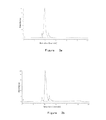
- FIG. 3 illustrates the HIC results of antibody-drug conjugate of H-trimaleimide linker-vcMMAE, wherein a is H-2-vcMMAE, b is H-6-vcMMAE.
- FIG. 4 illustrates the SEC results of antibody-drug conjugate of H-trimaleimide linker-vcMMAE, wherein a is H-2-vcMMAE, b is H-6-M MAE.
- FIG. 5 illustrates the native MS results of antibody-drug conjugate of H-5-vcMMAE, wherein a is original MS data, b is deconvoluted MS spectra.
- FIG. 6 illustrates the ELISA results of antibody-drug conjugate of H-trimaleimide linker-vcMMAE.
- FIG. 7 illustrates the cell proliferation inhibition assay results of antibody-drug conjugate of H-trimaleimide linker-vcMMAE.
- trimaleimide linkers incorporates three maleimide groups in its structure, which can link to inter-chain cysteine or other amino acid residues within an antibody simultaneously. Conjugation of the trimaleimide linkers with the antibody gives the conjugation product with DAR ⁇ 3 fraction as the main components (90%+). This type of linkers can be widely used for conjugation with most antibodies, and thus have great application prospect.
- the “trimaleimide linkers” provided by the invention includes three maleimide groups and a fourth coupling group.
- the three maleimide groups are used to crosslink antibody interchain thiol (after reduction of interchain disulfide bond) or other groups, while the fourth coupling group is used to link small molecular cytotoxic drug or drug-linker unit:
- the ADCs thus made can be used to selectively deliver cytotoxic drugs to target cell groups, for example, tumor cells.
- the antibody-drug conjugate will bind specifically to the cell surface proteins, and the binding complex will be internalized rapidly by the cells. Once internalized, the cytotoxic drug will be released in certain active form and take effects.
- the antibody includes chimeric, humanized, or human antibody; antibody fragment that can bind to antigen; or Fc fused protein; or protein.
- the drug is highly potent cytotoxic drug, including but not limited to, maytansinoids, auristatins, calicheamicins, doxorubicins, CC-1065 and duocarmycins derivatives, PBD dimers, and tubulysins, etc.
- the drug could be poly(ethylene glycol).
- the drug itself, or drug-linker units, could be coupled to antibody via trimaleimide linkers, producing inter-chain crosslinked conjugates.
- the antibody-drug conjugate provided by the invention has much narrower DAR distribution, with DAR ⁇ 3 fraction as the main component, and thus greatly improve both structural and pharmacological homogeneities.
- Alkyl is saturated hydrocarbon radical containing normal, secondary, tertiary or cyclic carbon atoms. For example, methyl (—CH 3 ), ethyl (—CH 2 CH 3 ), 1-propyl (—CH 2 CH 2 CH 3 ), 2-propyl (isopropyl, —CH(CH 3 ) 2 ), and cyclohexyl (—C 6 H 11 ), etc.
- Alkenyl is unsaturated hydrocarbon radical containing normal, secondary, tertiary or cyclic carbon atoms with at least one carbon-carbon sp 2 double bond.
- vinyl —CH ⁇ CH 2
- allyl —CH 2 CH ⁇ CH 2
- Alkynyl is unsaturated hydrocarbon radical containing normal, secondary, tertiary or cyclic carbon atoms with at least one carbon-carbon sp triple bond. For example, ethynyl (—C ⁇ CH) and propargyl (—CH 2 C ⁇ CH), etc.
- Aryl is a monovalent aromatic hydrocarbon radical of 6-12 carbon atoms derived by the removal of one hydrogen atom from a single carbon atom of a parent aromatic ring system. For example, phenyl, naphthyl, anthracyl, and biphenyl, etc.
- Heteroaryl refers to a monovalent aromatic radical derived by the substitution of one or more carbon atoms of a parent aryl radical by one or more hetero atoms selected from N, O, P and S. For example, pyridinyl, thiophenyl, and furanyl, etc.
- Heterocycle refers to an aromatic or nonaromatic ring system derived by the substitution of one or more carbon atoms of a parent aromatic or nonaromatic ring system by one or more hetero atoms selected from N, O, P, and S.
- heteroatoms selected from N, O, P, and S.
- Heterocyclyl refers to an aromatic or nonaromatic cyclic radical derived by the removal of one hydrogen atom from a single carbon or hetero atom of a parent heterocycle ring system. For example, pyridinyl, thiophenyl, furanyl, hexahydropyridinyl (piperidinyl), and tetrohydrofuranyl, etc.
- Arylalkyl refers to an acyclic alkyl radical in which one of the hydrogen atoms bonded to a carbon atom, typically a terminal or sp 3 carbon atom, is replaced with an aryl radical. For example, benzyl and 3-phenylpropyl, etc.
- the alkyl part can also include alkenyl or alkynyl.
- Heteroarylalkyl refers to an acyclic alkyl radical in which one of the hydrogen atoms bonded to a carbon atom, typically a terminal or sp 3 carbon atom, is replaced with a heteroaryl radical. For example, 2-pyridinylethyl and 3-furanylpropyl, etc.
- the alkyl part of “heteroarylalkyl” can also include alkenyl or alkynyl.
- Alkylene refers to a saturated, branched or straight chain or cyclic hydrocarbon radical, having two monovalent radical centers derived by the removal of two hydrogen atoms from the same or two different carbon atoms of a parent alkane. For example, methylene (—CH 2 —), 1,2-ethyl (—CH 2 CH 2 —), and 1,3-propyl (—CH 2 CH 2 CH 2 —), etc.
- Alkenylene refers to an unsaturated, branched or straight chain or cyclic hydrocarbon radical, having two monovalent radical centers derived by the removal of two hydrogen atoms from the same or two different carbon atoms of a parent alkene. For example, 1,2-ethylene (—CH ⁇ CH—) and 1,3-propylene (—CH 2 CH ⁇ CH—), etc.
- Alkynlene refers to an unsaturated, branched or straight chain or cyclic hydrocarbon radical, having two monovalent radical centers derived by the removal of two hydrogen atoms from the same or two different carbon atoms of a parent alkyne. For example, acetylene (—C ⁇ C—) and propargyl (—CH 2 C ⁇ C—), etc.
- “Arylene” refers to aromatic hydrocarbon radical of 6-12 carbon atoms, having two monovalent radical centers derived by the removal of two hydrogen atoms from two different carbon atoms of a parent aromatic ring system. For example, 1,2-phenylene, 1,3-phenylene, and 1,4-phenylene, etc.
- Substituted alkyl refers to, respectively, a radical derived by replacing one or more hydrogen atoms in the corresponding “alkyl”, “alkenyl”, “alkynyl”, “aryl”, “heteroaryl”, “heterocyclyl”, “arylalkyl”, and “heteroarylalkyl” radicals, with one or more substitution groups.
- substitution groups include, but not limited to, —X, —OR, —NR 2 , —NO 2 , —CN, —SO 3 R, —CO 2 R, etc. wherein X is halogen atom, R is H, alkyl, aryl, heterocyclyl, protecting group or prodrug.
- X is halogen atom
- R is H, alkyl, aryl, heterocyclyl, protecting group or prodrug.
- alkylene alkenylene
- alkynlene could also be substituted in a similar way.
- Any combination thereof refers to a radical derived by connecting two or more radicals in a certain way.
- benzyl phenyl+methylene
- 3-phenylpropyl phenyl+1,3-propyl
- 2-cyclohexylpropyl cyclohexyl+1,2-propyl
- 3-(3-pyridinyl)propyl 3-pyridinyl+1,3-propyl
- DAR Drug/Antibody Ratio, DAR refers to the number of drugs linked to an antibody molecule. As an ADC product contains components with different DAR, “average DAR” and “DAR distribution” are more convenient parameters for description of the composition of an ADC product. “Average DAR” refers to the ratio of total drug to total antibody molecules, while “DAR distribution” refers to the percentage distribution of different DAR components.
- antibody or “antibody unit” includes within its scope any unit of an antibody that binds or reactively associates or complexes with a receptor, antigen or other receptive moiety associated with a given target-cell population.
- An antibody can be any protein or protein-like molecule that binds to, complexes with, or reacts with a moiety of a cell population sought to be therapeutically or otherwise biologically modified.
- Antibody comprising the ADCs of the invention preferably retains the antigen binding capability of their native, wild type counterparts.
- antibodies of the invention are capable of binding, preferably specifically, to antigens.
- antigens include, for example, tumor-associated antigens (TAA), cell surface receptor proteins and other cell surface molecules, cell survival regulatory factors, cell proliferation regulatory factors, molecules associated with (for e.g., known or suspected to contribute functionally to) tissue development or differentiation, lymphokines, cytokines, molecules involved in cell cycle regulation, molecules involved in vasculogenesis and molecules associated with (for e.g., known or suspected to contribute functionally to) angiogenesis.
- TAA tumor-associated antigens
- cell survival regulatory factors for e.g., known or suspected to contribute functionally to
- cell proliferation regulatory factors for e.g., known or suspected to contribute functionally to
- molecules associated with for e.g., known or suspected to contribute functionally to
- tissue development or differentiation for e.g., lymphokines, cyto
- An antigen to which an antibody of the invention is capable of binding may be a member of a subset of one of the above-mentioned categories, wherein the other subset(s) of said category comprise other molecules/antigens that have a distinct characteristic (with respect to the antigen of interest).
- Antibodies used in ADCs include, but not limited to, antibodies against cell surface receptors and tumor-associated antigens (TAA). Such tumor-associated antigens are known in the art, and can be prepared for use in generating antibodies through methods and information which are well known in the art.
- TAA tumor-associated antigens
- TAA tumor-associated antigens
- researchers have sought to identify transmembrane or otherwise tumor-associated polypeptides that are specifically expressed on the surface of one or more particular type(s) of cancer cell as compared to on one or more normal non-cancerous cell(s). Often, such tumor-associated polypeptides are more abundantly expressed on the surface of the cancer cells as compared to on the surface of the non-cancerous cells. The identification of such tumor-associated cell surface antigen polypeptides has given rise to the ability to specifically target cancer cells for destruction via antibody-based therapies.
- TAA Tumor-Associated Antigens
- Tumor-Associated Antigens (1)-(36) listed below.
- information relating to these antigens, all of which are known in the art, is listed below and includes names, alternative names, Genbank accession numbers.
- Nucleic acid and protein sequences corresponding to TAA (1)-(36) are available in public databases such as GenBank.
- Tumor-associated antigens targeted by antibodies include all amino acid sequence variants and isoforms possessing at least about 70%, 80%, 85%, 90%, or 95% sequence identity relative to the sequences identified in the cited references, or which exhibit substantially the same biological properties or characteristics as a TAA having a sequence found in the cited references.
- the term “drug” or “D” refers to any compound possessing a desired biological activity and a reactive functional group that may be used to incorporate the drug into the conjugate of the invention.
- the desired biological activity includes the diagnosis, cure, mitigation, treatment, or prevention of disease in man or other animals.
- the term “drug” refers to chemicals recognized as drugs in the official United States Pharmacopeia, official Homeopathic Pharmacopeia of the United States, or official National Formulary, or any supplement thereof.
- Exemplary drugs are set forth in the Physician's Desk Reference (PDR) and in the Orange Book maintained by the U.S. Food and Drug Administration (FDA). New drugs are continually being discovered and developed, and the present invention provides that these new drugs may also be incorporated into a prodrug form of the present invention.
- the drug is: a cytotoxic drug useful in cancer therapy; a protein or polypeptide possessing a desired biological activity, such as a toxin, e.g., abrin, ricin A, pseudomonas exotoxin, and diphtheria toxin; other suitable proteins include tumor necrosis factor, ⁇ -interferon, ⁇ -interferon, nerve growth factor, platelet derived growth factor, tissue plasminogen activator, and biological response modifiers, such as lymphokines, interleukin-1 (IL-1), interleukin-2 (IL-2), interleukin-6 (IL-6), granulocyte macrophage colony stimulating factor (GM-CSF), granulocyte colony stimulating factor (G-CSF), or other growth factors.
- a cytotoxic drug useful in cancer therapy e.g., abrin, ricin A, pseudomonas exotoxin, and diphtheria toxin
- other suitable proteins include tumor necrosis factor, ⁇ -interferon,
- the drugs are maytansine or maytansinoids.
- Maytansine compounds inhibit cell proliferation by inhibiting the formation of microtubules of the microtubulin protein, tubulin (Science 1975, 189, 1002-1005; U.S. Pat. No. 5,208,020).
- Maytansinoids are derivatives of maytansine. Both maytansine and maytansinoids are highly cytotoxic, but their clinical use in cancer therapy has been greatly limited due to poor selectivity for tumors. However, the high cytotoxic potency enables them to be attractive drug moieties in ADCs.
- the structures shown below are maytansine, maytansinoids, and three representative maytansinoids mostly used in ADC drugs.
- the key raw material for preparing maytansinoids is maytansinol, which is obtained from ansamitocins hydrolysis. Ansamitocins could be accessibly produced by fermentation. Ansamitocin derivatives (WO 2012/061590) and alaninyl maytansinol (US 2012/0121615) are also reported to be good candidates as ADC “warheads”.
- the drugs are auristatins.
- Auristatins are synthetic analogues of Dolastatin 10, which was isolated from the marine mollusk Dolabella auricularia and found to have biological activity (U.S. Pat. No. 7,498,298).
- Dolastatin 10 is an agent that inhibits tubulin polymerization by binding to the same domain on tubulin as the anticancer drug vincristine.
- Dolastitin 10, auristatin PE, and auristatin E are all linear peptides having four amino acids, three of which are unique to the dolastatin class of compounds, and a C-terminal amide.
- Two representative auristatins, monomethyl auristatin E (MMAE) and monomethyl auristatin F (MMAF) are preferred drug moiety candidates for ADCs.
- the drugs are tubulysins.
- Tubulysins are natural products first isolated from myxobacterial culture, which are potent cell growth inhibitor that act by inhibiting tubulin polymerization, and among which Tubulysin D is the most potent.
- Tubulysin D is a complex tetrapeptide, and labile in both acidic or basic conditions due to the o-acyl/N,O-acetal functionality within its structure.
- US 2011/0021568 and US 2013/0224228 disclosed a series of tubulysin analogs, which remove the labile groups and have high cytotoxic potency.
- the drugs are calicheamicins.
- Calicheamicins are antitumor antibiotics that bind to the minor groove of DNA and produce site-specific double-strand DNA breaks, causing cell death.
- Calicheamicins are potent at sub-picomolar concentrations in vitro, but their low therapeutic index precluded further development clinically. The high potency, however, makes them good candidates for ADCs (such as Gemtuzumab Ozogamicin and Inotuzumab Ozogamicin).
- the drugs are doxorubicins.
- Doxorubicin is an intercalating agent that blocks DNA replication and is used as chemotherapeutic agent. Due to the relative low potency of doxorubicin (IC 50 of 0.1-0.2 ⁇ M for human carcinoma lines, whereas subnanomolar activities are now typically seen for ADC payloads), application of doxorubicin as ADC drug moiety is not popular.
- the drugs are duocarmycins, CC-1065 and other cyclopropapyrroloind-4-one (CPI) derivatives, which are potent minor-groove binding DNA alkylating agents.
- CBI Cyclopropabenzindol-4-one analogues
- One representative CBI derivative is the phenolic hydroxyl group-protected CBI (see the formula below), which has decreased prodrug toxicity and improved water solubility.
- the drugs are pyrrolo[2,1-c][1,4]benzodiazepines (PBDs) or PBD dimers.
- PBDs pyrrolo[2,1-c][1,4]benzodiazepines
- PBDs are a family of natural products produced by Streptomyces species with the unique characteristic of forming nondistortive covalent adducts in the minor groove of DNA specifically at purine-guanine-purine sequences.
- PBDs pyrrolo[2,1-c][1,4]benzodiazepines
- the biological activity of these molecules can be potentiated by joining two PBD units together through their C8/C8-hydroxyl functionalities via a flexible alkylene linker (WO 2011/130616).
- the PBD dimers are thought to form sequence-selective DNA lesions such as the palindromic 5′-Pu-GATC-Py-3′ interstrand cross-link, which mainly accounts for their biological activity.
- These compounds have been shown to be highly useful cytotoxic agents and good candidates as ADC warheads.
- the drugs are not limited to above-mentioned categories and include all that could be used in ADCs.
- linker refers to a bifunctional or multifunctional molecular group that can react with a protein/antibody and a drug respectively, and thus link the protein/antibody to the drug as a “bridge”. According to drug release mechanism in cells, linker or ADC linker could be classified into two categories: noncleavable linker and cleavable linker.
- Noncleavable linker is a kind of relatively stable linker, which is difficult to decompose under in-vivo conditions.
- the release mechanism is believed to occur via internalization of the ADC followed by degradation of the mAb component in the lysosome, resulting in the release of the small molecular drug still attached via the linker to an antibody amino acid residue.
- the chemical modification of the drug didn't diminish its cytotoxic potential.
- This form of the drug is, however, charged (amino acid residue) and presumably hard to diffuse into neighboring cells. Hence, it can't kill adjacent tumor cells (bystander effects) that don't express the target antigen (antigen-negative cells) (Bioconjugate Chem. 2010, 21, 5-13).
- Some common linkers, such as MC linker, MCC linker, etc., are shown as below:
- Cleavable linkers could be cleaved within the target cells that release the active drugs (small molecule drugs themselves). Cleavable linkers can be categorized into two main groups: chemically labile and enzyme-labile linkers.
- Chemically labile linkers could be selectively cleaved upon the differential properties between the plasma and some cytoplasmic compartments. Such properties include pH value, glutathione concentration, etc.
- the linkers are relatively stable in the blood's neutral environment (pH 7.3-7.5), but will undergo hydrolysis in the mildly acidic endosomes (pH 5.0-6.5) and lysosomes (pH 4.5-5.0).
- the ADCs based on these linkers have relatively short half-life (2-3 days). The low half-lives, to a certain degree, preclude the application of pH-sensitive linkers in the new generations of ADCs to a certain degree.
- disulfide linkers For glutathione-sensitive linkers, generally called disulfide linkers, the release is attributed to the high intracellular concentration of glutathione in the cytoplasms. (millimolar range) compared to the relatively low concentration in the blood (micromolar range). This is especially true for tumor cells, where the hypoxic state results in enhanced activity of reductive enzymes and therefore even higher glutathione concentrations. Disulfide bonds are thermodynamically stable and thus provide good stability in plasma.
- Enzyme-labile linkers are alternative approaches to achieve better control of the drug release, for example, peptide linkers.
- the peptide linkage will be effectively cleaved by lysosomal proteases, like cathepsin B or plasmin (elevated levels in certain tumor tissues).
- the peptidic linkages are deemed stable when circulating in plasma, as proteases are normally not active outside cells because of extracellular unfavorable pH and the serum protease inhibitors. Due to the high plasma stability and good intracellular cleaving selectivity and efficiency, enzyme-labile linkers are broadly selected as cleavable linker candidates in ADCs. Typical enzyme-labile linkers include Val-Cit (vc), etc.
- Self-immolative linker is generally sited between cleavable linker and cytotoxic drug, or itself is part of a cleavable linker.
- the working mechanism of self-immolative linker is that it can undergo self-structural rearrangement to release the linked active drug when the cleavable linker was cut by protease.
- Typical self-immolative linkers include p-aminobenzyl alcohol (PAB), etc.
- the antibody-drug conjugate provided in the invention are composed of antibody, trimaleimide linker, other linker, and drug.
- Other linker is referred to cleavable linker or non-cleavable linker.
- Antibodies are comprised of globular proteins, which have an array of amino acids that have potential linkage sites for drug conjugation. Due to their tertiary and quaternary structure, only solvent-accessible amino acid residues are conjugatable. In practice, high-yielding conjugations to antibodies occur through the ⁇ -amino group of lysine residues or through the sulfhydryl group of cysteine residues.
- the conjugation products albeit still mixture, contain much narrower DAR-spanned products, compared to traditionally produced antibody-drug conjugate. Not only the average DAR is around 3, residing in the optimized ADC DAR range of 2-4, but also the DAR distribution is very narrow, with the DAR ⁇ 3 fraction as the main component (90%+).
- the ADC products provided in the invention showed much improved homogeneity.
- trimaleimide linkers For trimaleimide linkers, the distance between any two maleimide groups (linker size) may affect the interchain crosslinking between trimaleimide linkers and antibodies.
- the side chain's (used to link the drugs) length and structure may also affect the ADC property and potency.
- the inventor synthesized a series of trimaleimide linkers of different sizes to study the above mentioned influence factors.
- step A a linker (L) and a trimaleimide linker (T) were conjugated to afford a trimaleimide linker-linker (T-L).
- step B T-L and a drug (D) were conjugated to give trimaleimide linker-linker-drug (T-L-D).
- step C antibody inter-chain disulfide bonds were selectively reduced to produce a total of eight sulfhydryl groups.
- step D T-L-D crosslinked the sulfhydryl groups to afford inter-chain crosslinked ADCs.
- step A a linker (L) and a drug (D) were conjugated to afford a linker-Drug (L-D).
- step B L-D and a trimaleimide linker (T) were conjugated to give trimaleimide linker-linker-drug (T-L-D).
- step C antibody inter-chain disulfide bonds were selectively reduced to produce a total of eight sulfhydryl groups.
- step D T-L-D crosslinked the sulfhydryl groups to afford inter-chain crosslinked ADCs.
- the antibody-drug conjugates provided by the invention target a special cell population and bind to specific cell surface proteins (antigens), followed by the internalization of the complexes into the cell and the drug release within the cell in active forms.
- the antibody-drug conjugate provided by the invention target a special cell population, bind to the specific cell surface proteins (antigens), and take effects; or release drugs outside the cell, followed by the diffusion of the drugs into the cell to take effects.
- compositions comprising an effective amount of the antibody-drug conjugate and a pharmaceutically acceptable carrier or vehicle.
- the present invention provides methods for treatment of cancers or other tumors in animal subjects.
- the methods are to provide an effective amount of the antibody-drug conjugate provided by the invention to an animal subject with cancers or other tumors.
- the present invention provides methods for treatment of autoimmune disease or infectious disease.
- the methods are to provide an effective amount of the antibody-drug conjugate provided by the invention to an animal subject with autoimmune diseases or infectious diseases.
- Tris(2-carboxyethyl)phosphine (TCEP, 10 eq, stock solution 10 mM) was added to a solution of antibody (2-10 mg/mL, containing 25 mM boric acid-sodium borate buffer, 25 mM NaCl and 1 mM diethylene triamine pentacetic acid (DTPA), pH 7.0-8.0).
- the reaction mixture was incubated at 37° C. in a shaker for 1 h, and then cooled to ⁇ 10° C.
- the reaction mixture was buffer-exchanged via ultrafiltration into a PBS buffer (100 mM KH 2 PO 4 —K 2 HPO 4 , 100 mM NaCl, 1 mM DTPA, pH 7.0-8.0).
- SDS-PAGE was measured using NuPAGE, 4-12%, Bis-Tris Gel on XCell SureLock® Mini-Cell protein electrophoresis instrument.
- a sample ( ⁇ 10 ⁇ g by weight) was combined with the corresponding sampling buffer, and the mixture was heated at 70° C. water bath for 10 min.
- the sample and standard protein (5 ⁇ L/hole) were added to the spacer gel comb holes sequentially, and the electrophoresis was conducted at 220 V for 50 min.
- the gel was rinsed by deionized water, and stained in coomassie light blue G250 solution on a shaker for 16 h.
- the stained gel was rinsed by deionized water for three times, and destained on a shaker for 4 h.
- the destained gel was transferred to an imager to record the gel image.
- HIC was measured on an Agilent 1100 chromatographic instrument. TSKgel butyl-NPR column (4.6 ⁇ 35 mm, 2.5 ⁇ m, Tosoh Bioscience Shanghai Co. Ltd.) was applied as the stationary phase. The method consisted of a linear gradient from 100% buffer A (50 mM potassium phosphate (pH 7.0)+1.5 M ammonium sulfate) to 100% buffer B (80% v/v 50 mM sodium phosphate (pH 7.0), 20% v/v isopropanol) in 25 minutes. The flow rate was 0.8 mL/min, the column temperature was 30° C., and the detection wavelengths were 230 and 280 nm.
- buffer A 50 mM potassium phosphate (pH 7.0)+1.5 M ammonium sulfate
- buffer B 80% v/v 50 mM sodium phosphate (pH 7.0), 20% v/v isopropanol
- the average DAR for the ADC product was measured by UV absorption method (Clin. Cancer Res. 2004, 10, 7063-7070; WO 2011/039721).
- DAR ( ⁇ Ab248 ⁇ R* ⁇ Ab280 )/( R* ⁇ D280 ⁇ D248 ) wherein, ⁇ Ab248 and ⁇ Ab280 are molar extinction coefficients for the antibody at 248 nm and 280 nm, respectively.
- ⁇ D280 and ⁇ D248 are molar extinction coefficients for vcMMAE at 248 nm and 280 nm, respectively.
- R A 248 /A 280 , wherein A 248 and A 280 are the absorbances of the ADC at 248 nm and 280 nm, respectively (peak area of the monomer on SEC spectrum was used to represent the absorbance in the invention).
- Indirect ELISA was used to analyze binding ability of the antibody or antibody-drug conjugate to the corresponding antigen.
- the Her2 antigen was immobilized on a solid-phase support (96 well microplate) by coating to form a solid-phase antigen, and then unbound antigen was removed by washing.
- Serial dilutions of test antibody or antibody-drug conjugate were added, wherein specific antibody or antibody-drug conjugate bound to the antigen and formed solid-phase antigen-antibody complexes.
- the antibody or antibody-drug conjugate unbound to the solid-phase antigen was removed by washing.
- the enzyme labeled anti-antibody was added to bind to the above-formed complexes. After washing, substrate solution was added to develop color, and the optical density was read by a microplate reader at 450 nm/630 nm, based on which the EC 50 was calculated.
- the cytotoxic or cytostatic activity of an antibody-drug conjugate is measured by the following: exposing mammalian cells having tumor-associated antigens or receptor proteins to the antibody or the ADC in a cell culture medium; culturing the cells for a period from about 2 to 5 days; and measuring cell viability, based on which the curve was drawn and the IC 50 was calculated.
- Method 1 Waters Sunfire C18 reverse phase column (4.60 ⁇ 50 mm, 3.5 ⁇ m) was used in the acid HPLC method for separation, and the eluting gradient was 5%-95% B (acetonitrile, containing 0.01% TFA) in A (water, containing 0.01% TFA) in 1.4 min. The flow rate was 2.3 mL/min, and the column temperature was 50° C.
- Method 2 Waters (bridge C18 reverse phase column (4.60 ⁇ 50 mm, 3.5 ⁇ m) was used in the base HPLC method for separation, and the eluting gradient was 5%-95% B (acetonitrile) in A (water, containing 10 mM ammonium bicarbonate) in 1.5 min. The flow rate was 2.0 mL/min, and the column temperature was 40° C.
- Method 3 The acid HPLC preparation method.
- Mobile phase A was aqueous solution containing 0.1% TFA; B was acetonitrile (ACN). The flow rate was 20 mL/min.
- Method 4 The base HPLC preparation method.
- Mobile phase A was aqueous solution containing 10 mM ammonium bicarbonate; B was acetonitrile (ACN). The flow rate was 20 mL/min.
- SK-BR-3 human breast cancer cell was purchased from ATCC.
- Her2 antigen was purchased from Sino Biological Inc (Beijing) Antibody H (Herceptin Biosimilar, IgG1) was purchased from Genor Biopharma Co. Ltd. (Shanghai).
- the enzyme labeled anti-antibody was purchased from Sigma (Shanghai).
- Substrate solution was purchased from Decent Biotech (Shanghai).
- Cell Counting Kit (CCK-8) cell proliferation and cytotoxicity assay kit was purchased from Dojindo (Shanghai).
- Nnickel chloride (317 mg, 2.45 mmol) was dissolved in MeOH (30 mL) placed in a supersonic bath, to which sodium borohydride (278 mg, 7.34 mmol) was added. The obtained black suspension was sonicated for 30 min, and then a solution of compound 60 (2.40 g, 4.89 mmol, preparation reference: Chemical Communications 2010, 46, 6075-77) in MeOH (30 mL) and sodium borohydride (556 mg, 14.7 mmol) were added in successively. The reaction mixture was sonicated for 30 min, and then was filtered through a pad of celite. The filtrate was concentrated to remove the solvent. Water (100 mL) and DCM (200 mL) were added to the residue for extraction.
Landscapes
- Health & Medical Sciences (AREA)
- Chemical & Material Sciences (AREA)
- Bioinformatics & Cheminformatics (AREA)
- Engineering & Computer Science (AREA)
- Organic Chemistry (AREA)
- General Health & Medical Sciences (AREA)
- Immunology (AREA)
- Medicinal Chemistry (AREA)
- Life Sciences & Earth Sciences (AREA)
- Pharmacology & Pharmacy (AREA)
- Public Health (AREA)
- Veterinary Medicine (AREA)
- Animal Behavior & Ethology (AREA)
- Nuclear Medicine, Radiotherapy & Molecular Imaging (AREA)
- General Chemical & Material Sciences (AREA)
- Chemical Kinetics & Catalysis (AREA)
- Epidemiology (AREA)
- Oncology (AREA)
- Biochemistry (AREA)
- Biophysics (AREA)
- Genetics & Genomics (AREA)
- Molecular Biology (AREA)
- Proteomics, Peptides & Aminoacids (AREA)
- Rheumatology (AREA)
- Pain & Pain Management (AREA)
- Transplantation (AREA)
- Medicinal Preparation (AREA)
- Medicines Containing Antibodies Or Antigens For Use As Internal Diagnostic Agents (AREA)
- Medicines That Contain Protein Lipid Enzymes And Other Medicines (AREA)
- Peptides Or Proteins (AREA)
Abstract
Description
L-(T-A-D)n I
wherein: L is an antibody, antibody fragment, or protein; T is a trimaleimide linker; A is other linker part, D is a cytotoxic drug, n is an integer ranging from 1 to 8.

wherein: Z is selected from O, S, NR2, NR3C(═O), C(═O)NR4, C(═O)O, OC(═O), C(═S)O, OC(═S), C(═S)NR5, NR6C(═S), C(═S)S, SC(═S), NR7C(═O)NR8, NR9C(═S)NR10, OC(═O)NR11, or NR12C(═O)O; R1 is selected from alkylene, alkenlene, alkynlene, arylene, —(CH2CH2O)t—, —(OCH2CH2)w—, or any combination thereof, wherein t and w are independently selected from integers ranging from 1 to 18; R2, R3, R4, R5, R6, R7, R8, R9, R10, R11 and R12 are independently selected from H, alkyl, aryl, heterocyclyl, aryl, or heteroaryl; r is selected from 0 or 1; s is an integer ranging from 0 to 8; X is selected from NR13, O, S, C(═O), C(═S), C(═O)NR14, NR15C(═O), NR16C(═S), C(═S)NR17, OC(═O), C(═O)O, OC(═S), or C(═S)O; wherein R13, R14, R15, R16 and R17 are independently selected from H, alkyl, aryl, heterocyclyl, arylalkyl, or heteroarylalkyl; o, p and q are integers independently selected from 0 to 8, including 0, 1, 2, 3, 4, 5, 6, 7, and 8, wherein when one of them is set to zero, the others cannot be zero.
C-Ee-Ff III
Gg IV
wherein: C is a cleavable linker; E and F are self-immolative linker; e and f are independently selected from integers ranging from 0 to 5, including 0, 1, 2, 3, 4 and 5; G is a noncleavable linker; g is an integer ranging from 0 to 5, including 0, 1, 2, 3, 4 and 5.

wherein: L is an antibody, antibody fragment, or protein; Z is selected from O, S, NR2, NR3C(═O), C(═O)NR4, C(═O)O, OC(═O), C(═S)O, OC(═S), C(═S)NR5, NR6C(═S), C(═S)S, SC(═S), NR7C(═O)NR8, NR9C(═S)NR10, OC(═O)NR11, or NR12C(═O)O; R1 is selected from alkylene, alkenlene, alkynlene, arylene, —(CH2CH2O)t—, —(OCH2CH2)w—, or any combination thereof, wherein t and w are integers independently selected from 1 to 18; R2, R3, R4, R5, R6, R7, R8, R9, R10, and R11 and R12 are independently selected from H, alkyl, aryl, heterocyclyl, aryl, or heteroaryl; r is selected from 0 or 1; s is an integer ranging from 0 to 8; X is selected from NR13, O, S, C(═O), C(═S), C(═O)NR14, NR15C(═O), NR16C(═S), C(═S)NR17, OC(═O), C(═O)O, OC(═S), or C(═S)O; wherein R13, R14, R15, R16 and R17 are independently selected from H, alkyl, aryl, heterocyclyl, arylalkyl, or heteroarylalkyl; o, p and q are integers independently selected from 0 to 8, wherein when one of them is set to zero, the others cannot be zero.
| Compound | No. |
 |
1 |
 |
2 |
 |
3 |
 |
4 |
 |
5 |
 |
6 |
 |
7 |
 |
8 |
 |
9 |
 |
10 |

wherein: Z is selected from O, S, NR2, NR3C(═O), C(═O)NR4, C(═O)O, OC(═O), C(═S)O, OC(═S), C(═S)NR5, NR6C(═S), C(═S)S, SC(═S), NR7C(═O)NR8, NR9C(═S)NR10, OC(═O)NR11, or NR12C(═O)O; R1 is selected from alkylene, alkenlene, alkynlene, arylene, —(CH2CH2O)t—, —(OCH2CH2)w—, or any combination thereof, wherein t and w are independently selected from integers ranging from 1 to 18; R2, R3, R4, R5, R6, R7, R8, R9, R10, R11 and R12 are independently selected from H, alkyl, aryl, heterocyclyl, aryl, or heteroaryl; r is selected from 0 or 1; s is an integer ranging from 0 to 8; Q is selected from NHR13, OH, SH, COOH, C(═S)OH, NR14COOH, NR15C(═S)OH, NCO, or NCS; wherein R13, R14 and R15 are independently selected from H, alkyl, aryl, heterocyclyl, arylalkyl, or heteroarylalkyl; o, p and q are integers independently selected from 0 to 8, wherein when one of them is set to zero, the others cannot be zero.
| Compound | No. |
 |
1 |
 |
2 |
 |
3 |
 |
4 |
 |
5 |
 |
6 |
 |
7 |
 |
8 |
 |
9 |
 |
10 |

- Ab antibody
- Ac acetyl
- ACN acetonitrile
- BOC (Boc) tert-butoxycarbonyl
- t-Bu tert-butyl
- ° C. degree Celsius
- DCM dichloromethane
- DIEA diisopropylethylamine
- DMF N,N-dimethylformamide
- ELISA enzyme linked immunosorbent assay
- EtOAc ethyl acetate
- Eq equivalent
- g gram
- h hour
- HOSu N-hydroxy succinimide
- HIC hydrophobic interaction chromatography
- HPLC high performance liquid chromatography
- LC-MS liquid chromatography-mass spectrum
- Linker linker
- MeOH methanol
- mAb monoclonal antibody
- min minute
- mL milliliter
- MS mass spectrometry
- nm nanometer
- μg microgram
- μL microliter
- PE petroleum ether
- prep-RP-HPLC preparative-reverse phase-high performance liquid chromatography
- rt room temperature
- Rf retention time
- SDS-PAGE sodium dodecyl sulfate polyacrylamide gel electropheresis
- SEC size exclusion chromatography
- TEA triethylamine
- TFA trifluoroacetic acid
- THF tetrohydrofuran
- TLC thin layer chromatography
- TsCl p-tolyl chloride
-
- (1) BMPR1B (bone morephogenetic protein receptor-type IB, Genbank accession no. NM_001203);
- (2) E16 (LAT1, SLC7A5, Genbank accession no. NM_003486);
- (3) STEAP1 (six transmembrane epithelial antigen of prostate, Genbank accession no. NM_012449);
- (4) 0772P (CA125, MUC16, Genbank accession no. AF361486);
- (5) MPF (MPF, MSLN, SMR, megakaryocyte potentiating factor, mesothelin, Genbank accession no. NM_005823);
- (6) Napi3b (NAPI-3B, NPTIIb, SLC34A2, solute carrier family 34 (sodium phosphate)
member 2, type II sodium-dependent phosphate transporter 3b, Genbank accession no. NM_006424); - (7) Sema 5b (FLJ10372, KIAA1445, Mm.42015, SEMA5B, SEMAG, Semaphorin 5b Hlog, sema domain, seven thrombospondin repeats (
type 1 and type 1-like), transmembrane domain (TM) and short cytoplasmic domain, (semaphorin) 5B, Genbank accession no. AB040878); - (8) PSCA hlg (2700050C12Rik, C530008016Rik, RIKEN cDNA 2700050C12, RIKEN cDNA 2700050C12 gene, Genbank accession no. AY358628);
- (9) ETBR (Endothelin type B receptor, Genbank accession no. AY275463);
- (10) MSG783 (RNF124, hypothetical protein FLJ20315, Genbank accession no. NM_017763);
- (11) STEAP2 (HGNC_8639, IPCA-1, PCANAP1, STAMP1, STEAP2, STMP, prostate cancer associated
gene 1, prostate cancer associatedprotein 1, six transmembrane epithelial antigen ofprostate 2, six transmembrane prostate protein, Genbank accession no. AF455138); - (12) TrpM4 (BR22450, FLJ20041, TRPM4, TRPM4B, transient receptor potential cation channel, subfamily M,
member 4, Genbank accession no. NM_017636); - (13) CRIPTO (CR, CR1, CRGF, CRIPTO, TDGF1, teratocarcinoma-derived growth factor, Genbank accession no. NP_003203 or NM_003212;
- (14) CD21 (CR2 (Complement receptor 2) or C3DR (C3d/Epstein Barr virus receptor) or Hs. 73792, Genbank accession no. M26004);
- (15) CD79b (CD79B, CD79β, IGb (immunoglobulin associated beta), B29, Genbank accession no. NM_000626);
- (16) FcRH2 (IFGP4, IRTA4, SPAP1A (SH2 domain containing phosphatase anchor protein 1a), SPAP1B, SPAP1C, Genbank accession no. NM_030764);
- (17) HER2 (ErbB2, Genbank accession no. M11730);
- (18) NCA (CEACAM6, Genbank accession no. M18728);
- (19) MDP (DPEP1, Genbank accession no. BC017023);
- (20) IL20Rα (IL20Ra, ZCYTOR7, Genbank accession no. AF184971);
- (21) Brevican (BCAN, BEHAB, Genbank accession no. AF229053);
- (22) EphB2R (DRT, ERK, Hek5, EPHT3, Tyro5, Genbank accession no. NM_004442);
- (23) ASLG659 (B7h, Genbank accession no. AX092328);
- (24) PSCA (Prostate stem cell antigen precursor, Genbank accession no. AJ297436);
- (25) GEDA (Genbank accession no. AY260763);
- (26) BAFF-R (B-cell activating factor receptor,
BLys receptor 3, BR3, Genbank accession no. AF116456); - (27) CD22 (B-cell receptor CD22-β form, Genbank accession no. AK026467);
- (28) CD79α (CD79A, CD79α, immunoglobulin-associated alpha, a B-cell specific protein that covalently interacts with Ig beta (CD79B) and forms a complex on the surface with Ig M molecules, transduces a signal involved in B-cell differentiation, Genbank accession No. NP-001774.1);
- (29) CXCR5 (Burkitt's
lymphoma receptor 1, a G protein-coupled receptor that is activated by the CXCL13 chemokine, functions in lymphocyte migration and humoral defense, plays a role in HIV-2 infection and perhaps development of AIDS, lymphoma, myeloma, and leukemia, Genbank accession No. NP_001707.1); - (30) HLA-DOB (Beta subunit of MHC class II molecule (Ia antigen) that binds peptides and presents them to CD4+ T lymphocytes, Genbank accession No. NP_002111.1);
- (31) P2X5 (Purinergic receptor P2X ligand-gated
ion channel 5, an ion channel gated by extracellular ATP, may be involved in synaptic transmission and neurogenesis, deficiency may contribute to the pathophysiology of idiopathic detrusor instability, Genbank accession No. NP_002552.2); - (32) CD72 (B-cell differentiation antigen CD72, Lyb-2, Genbank accession No. NP_001773.1);
- (33) LY64 (lymphocyte antigen 64 (RP105), type I membrane protein of the leucine rich repeat (LRR) family, regulates B-cell activation and apoptosis, loss of function is associated with increased disease activity in patients with systemic lupus erythematosis, Genbank accession No. NP_005573.1);
- (34) FcRH1 (Fc receptor-
like protein 1, a putative receptor for the immunoglobulin Fc domain that contains C2 type Ig-like and ITAM domains, may have a role in B-lymphocyte differentiation, Genbank accession No. NP_443170.1); - (35) IRTA2 (Immunoglobulin superfamily receptor translocation associated 2, a putative immunoreceptor with possible roles in B cell development and lymphomagenesis; deregulation of the gene by translocation occurs in some B-cell malignancies, Genbank accession No. NP_112571.1);
- (36) TENB2 (putative transmembrane proteoglycan, related to the EGF/heregulin family of growth factors and follistatin, Genbank accession No. AF179274).


Antibody-Drug Conjugate


Antibody-Drug Conjugate

Preparation Method


Use
-
- 1. The present invention provides, for the first time, the conjugation methods to control the average DAR˜3 for the ADC products;
- 2. The conjugation methods provided by the invention are applicable to most antibodies, which can avoid complicated antibody engineering used to introduce specific sites for coupling. Therefore, the coupling methods may have very broad application prospect.
- 3. The innovative trimaleimide linkers provided by the invention incorporate three maleimide groups within their structures, and thus can conjugate with antibody's interchain cysteine and/or other amino acid residues simultaneously by simple chemical method. Compared to ADC products obtained via traditional conjugation methods, the conjugates via the trimaleimide linkers have DAR˜3 fraction as the main components (90%+) and much narrowed DAR distribution. As a result, the homogeneity of the products is greatly improved.
DAR=(εAb248 −R*ε Ab280)/(R*ε D280−εD248)
wherein, εAb248 and εAb280 are molar extinction coefficients for the antibody at 248 nm and 280 nm, respectively. εD280 and εD248 are molar extinction coefficients for vcMMAE at 248 nm and 280 nm, respectively. R=A248/A280, wherein A248 and A280 are the absorbances of the ADC at 248 nm and 280 nm, respectively (peak area of the monomer on SEC spectrum was used to represent the absorbance in the invention).
General Procedure F
Native Mass Analysis


| TABLE 1 |
| LC-MS results for trimaleimide linker-vcMMAEs |
| LC-MS | |||
| Method; Rt (min); m/ | |||
| Compound | |||
| 1/2[M + 2H]+ | |||
| 1- |
1; 1.96; 762.5 | ||
| 2- |
1; 1.88; 776.0 | ||
| 3- |
1; 1.55; 782.4 | ||
| 4- |
1; 1.95; 768.2 | ||
| 6- |
1; 1.98; 864.5 | ||
| 7- |
1; 1.90; 804.2 | ||
| 8- |
1; 1.87; 790.1 | ||
| 9- |
1; 1.86; 884.8 | ||
| 10- |
1; 1.89; 905.7 | ||
| TABLE 2 |
| Average DAR |
| ADC | Average DAR | ||
| H-1-vcMMAE | 3.1 | ||
| H-2-vcMMAE | 3.0 | ||
| H-3-vcMMAE | 2.9 | ||
| H-4-vcMMAE | 3.1 | ||
| H-5-vcMMAE | 3.1 | ||
| H-6-vcMMAE | 3.0 | ||
| H-7-vcMMAE | 3.0 | ||
| H-8-vcMMAE | 3.0 | ||
| H-9-vcMMAE | 3.4 | ||
| H-10-vcMMAE | 3.2 | ||
| TABLE 3 |
| Cell Proliferation Assay Results |
| ADC | IC50 (ng/mL) | ||
| H-1-vcMMAE | 11.0 | ||
| H-2-vcMMAE | 9.0 | ||
| H-3-vcMMAE | 7.3 | ||
| H-4-vcMMAE | 10.6 | ||
| H-5-vcMMAE | 7.0 | ||
| H-6-vcMMAE | 9.3 | ||
| H-7-vcMMAE | 7.9 | ||
| H-8-vcMMAE | 9.3 | ||
| H-9-vcMMAE | 5.7 | ||
| H-10-vcMMAE | 6.9 | ||
Claims (9)
L-(T-A-D)n (I)

C-Ee-Ff (III)
Gg (IV)


Applications Claiming Priority (4)
| Application Number | Priority Date | Filing Date | Title |
|---|---|---|---|
| CN201510289369 | 2015-05-29 | ||
| CN201510289369.3A CN106267225B (en) | 2015-05-29 | 2015-05-29 | Trimaleimide-type linker and use thereof |
| CN201510289369.3 | 2015-05-29 | ||
| PCT/CN2016/082287 WO2016192528A1 (en) | 2015-05-29 | 2016-05-17 | Trimaleimide Linkers and Uses Thereof |
Publications (2)
| Publication Number | Publication Date |
|---|---|
| US20180147295A1 US20180147295A1 (en) | 2018-05-31 |
| US10314922B2 true US10314922B2 (en) | 2019-06-11 |
Family
ID=57440013
Family Applications (1)
| Application Number | Title | Priority Date | Filing Date |
|---|---|---|---|
| US15/577,536 Active US10314922B2 (en) | 2015-05-29 | 2016-05-17 | Trimaleimide linkers and uses thereof |
Country Status (5)
| Country | Link |
|---|---|
| US (1) | US10314922B2 (en) |
| EP (1) | EP3302570B1 (en) |
| JP (1) | JP6471263B2 (en) |
| CN (1) | CN106267225B (en) |
| WO (1) | WO2016192528A1 (en) |
Cited By (1)
| Publication number | Priority date | Publication date | Assignee | Title |
|---|---|---|---|---|
| EP3302570B1 (en) * | 2015-05-29 | 2021-03-31 | Newbio Therapeutics, Inc. | Trimaleimide linkers and uses thereof |
Families Citing this family (11)
| Publication number | Priority date | Publication date | Assignee | Title |
|---|---|---|---|---|
| GB201708663D0 (en) | 2017-05-31 | 2017-07-12 | Univ Ulster | Therapy |
| US12605458B2 (en) * | 2017-06-19 | 2026-04-21 | Systimmune, Inc. | Antibody-drug conjugate having acidic self-stabilization junction |
| CN107652219B (en) * | 2017-08-14 | 2021-06-08 | 上海新理念生物医药科技有限公司 | Tetramaleimide type linker and its application |
| BR112021005320A2 (en) * | 2018-12-17 | 2021-06-15 | Remegen Co., Ltd. | ligand for antibody-drug conjugates and their use |
| JP2022523854A (en) * | 2019-03-07 | 2022-04-26 | エービーエル バイオ インコーポレイテッド | Antibodies-drug conjugates and their uses |
| JP2022530482A (en) * | 2019-05-02 | 2022-06-29 | レゴケム バイオサイエンシズ, インク. | Ligand-drug complex containing a linker with a Tris structure |
| CN111499685A (en) * | 2020-03-30 | 2020-08-07 | 联宁(苏州)生物制药有限公司 | Antibody coupling drug intermediate with maleimide connector and synthetic method thereof |
| KR20240001118A (en) * | 2021-05-31 | 2024-01-03 | 미쯔비시 가스 케미칼 컴파니, 인코포레이티드 | New amino compound and method for producing the same, and curing agent for epoxy resin, epoxy resin composition, and cured epoxy resin product using the same |
| CN115028685B (en) * | 2022-06-24 | 2023-10-20 | 张金强 | Cationic bicyclic antibacterial peptide and application thereof |
| CN119424671A (en) | 2023-08-01 | 2025-02-14 | 上海新理念生物医药科技有限公司 | Antibody drug conjugates containing glycosyl pyridine type linkers |
| CN121622915A (en) * | 2024-08-30 | 2026-03-10 | 中国科学院杭州医学研究所 | A high drug loading ratio nucleic acid aptamer conjugate drug and its application |
Citations (3)
| Publication number | Priority date | Publication date | Assignee | Title |
|---|---|---|---|---|
| WO2006034488A2 (en) | 2004-09-23 | 2006-03-30 | Genentech, Inc. | Cysteine engineered antibodies and conjugates |
| WO2009000523A1 (en) | 2007-06-26 | 2008-12-31 | Baxter International Inc. | Method for preparing fmoc-based hydrolysable linkers |
| WO2014114207A1 (en) | 2013-01-23 | 2014-07-31 | 上海新理念生物医药科技有限公司 | Tridentate connexon and use thereof |
Family Cites Families (17)
| Publication number | Priority date | Publication date | Assignee | Title |
|---|---|---|---|---|
| US5208020A (en) | 1989-10-25 | 1993-05-04 | Immunogen Inc. | Cytotoxic agents comprising maytansinoids and their therapeutic use |
| GB9012995D0 (en) * | 1990-06-11 | 1990-08-01 | Celltech Ltd | Multivalent antigen-binding proteins |
| US6841690B1 (en) | 2002-12-19 | 2005-01-11 | The United States Of America, As Represented By The Secretary Of The Army | Polyazido compounds |
| EP2478912B1 (en) | 2003-11-06 | 2016-08-31 | Seattle Genetics, Inc. | Auristatin conjugates with anti-HER2 or anti-CD22 antibodies and their use in therapy |
| AU2006216665A1 (en) | 2005-02-24 | 2006-08-31 | Nicox S.A. | Nitric oxide enhancing diuretic compounds, compositions and methods of use |
| US8476451B2 (en) | 2007-07-20 | 2013-07-02 | The Regents Of The University Of California | Tubulysin D analogues |
| TW201117814A (en) | 2009-10-02 | 2011-06-01 | Sanofi Aventis | New maytansinoids and the use of said maytansinoids to prepare conjugates with an antibody |
| TWI622402B (en) * | 2010-02-24 | 2018-05-01 | 免疫遺傳股份有限公司 | Folate receptor 1 antibodies and immunoconjugates and their use |
| JP5875083B2 (en) | 2010-04-15 | 2016-03-02 | メディミューン リミテッド | Pyrrolobenzodiazepine for the treatment of proliferative diseases |
| AU2011323316B2 (en) | 2010-11-03 | 2016-02-25 | Immunogen, Inc. | Cytotoxic agents comprising new ansamitocin derivatives |
| US20120121615A1 (en) | 2010-11-17 | 2012-05-17 | Flygare John A | Alaninyl maytansinol antibody conjugates |
| ME03353B (en) * | 2011-03-29 | 2019-10-20 | Immunogen Inc | MAYTANSINOID ANTIBODY CONJUGATE PREPARATION BY ONE-STEP PROCESS |
| RU2014124984A (en) | 2011-12-05 | 2016-01-27 | Идженика Биотерапьютикс, Инк. | COMPOUNDS ANTI-MEDICINAL PRODUCT AND RELATED COMPOUNDS, COMPOSITIONS AND METHODS |
| SG10201604747WA (en) * | 2011-12-13 | 2016-08-30 | Immunogen Inc | Use of n-hydroxysuccinimide to improve conjugate stability |
| WO2013173337A2 (en) | 2012-05-15 | 2013-11-21 | Seattle Genetics, Inc. | Self-stabilizing linker conjugates |
| WO2014194030A2 (en) * | 2013-05-31 | 2014-12-04 | Immunogen, Inc. | Conjugates comprising cell-binding agents and cytotoxic agents |
| CN106267225B (en) * | 2015-05-29 | 2020-03-06 | 上海新理念生物医药科技有限公司 | Trimaleimide-type linker and use thereof |
-
2015
- 2015-05-29 CN CN201510289369.3A patent/CN106267225B/en active Active
-
2016
- 2016-05-17 EP EP16802451.1A patent/EP3302570B1/en active Active
- 2016-05-17 JP JP2018511321A patent/JP6471263B2/en not_active Expired - Fee Related
- 2016-05-17 US US15/577,536 patent/US10314922B2/en active Active
- 2016-05-17 WO PCT/CN2016/082287 patent/WO2016192528A1/en not_active Ceased
Patent Citations (3)
| Publication number | Priority date | Publication date | Assignee | Title |
|---|---|---|---|---|
| WO2006034488A2 (en) | 2004-09-23 | 2006-03-30 | Genentech, Inc. | Cysteine engineered antibodies and conjugates |
| WO2009000523A1 (en) | 2007-06-26 | 2008-12-31 | Baxter International Inc. | Method for preparing fmoc-based hydrolysable linkers |
| WO2014114207A1 (en) | 2013-01-23 | 2014-07-31 | 上海新理念生物医药科技有限公司 | Tridentate connexon and use thereof |
Non-Patent Citations (4)
| Title |
|---|
| First Office Action issued in corresponding Japanese Application No. 2018-511321 dated Oct. 2, 2018, 4 pages. |
| King, D.J., et al., "Preparation and preclinical evaluation of humanised A33 immunoconjugates for radioimmunotherapy," British Journal of Cancer, 1995, vol. 72; No. 6, pp. 1364-1372. |
| Kossmehl, et al., Cross-Linking Reactions on Polyamides by Bis- and Tris(Maleimide)s, Macromolecular Materials and Engineering, 1995, 227(1):139-157. |
| PCT International Search Report and Written Opinion, PCT/CN2016/082287, dated Aug. 22, 2016. |
Cited By (1)
| Publication number | Priority date | Publication date | Assignee | Title |
|---|---|---|---|---|
| EP3302570B1 (en) * | 2015-05-29 | 2021-03-31 | Newbio Therapeutics, Inc. | Trimaleimide linkers and uses thereof |
Also Published As
| Publication number | Publication date |
|---|---|
| EP3302570A1 (en) | 2018-04-11 |
| CN106267225B (en) | 2020-03-06 |
| EP3302570A4 (en) | 2019-01-02 |
| WO2016192528A1 (en) | 2016-12-08 |
| JP6471263B2 (en) | 2019-02-13 |
| EP3302570B1 (en) | 2021-03-31 |
| CN106267225A (en) | 2017-01-04 |
| JP2018515610A (en) | 2018-06-14 |
| US20180147295A1 (en) | 2018-05-31 |
Similar Documents
| Publication | Publication Date | Title |
|---|---|---|
| US10314922B2 (en) | Trimaleimide linkers and uses thereof | |
| AU2014210301B2 (en) | Tridentate connexon and use thereof | |
| US11666623B2 (en) | Tetramaleimide linkers and use thereof | |
| CN110997010B (en) | Antibody drug conjugate and its application | |
| US11241503B2 (en) | Oxadiazole linkers and use thereof | |
| US10351593B2 (en) | Derivatives of dolastatin 10 and uses thereof | |
| US20240293570A1 (en) | Highly stable targeted linker-drug conjugate |
Legal Events
| Date | Code | Title | Description |
|---|---|---|---|
| FEPP | Fee payment procedure |
Free format text: ENTITY STATUS SET TO UNDISCOUNTED (ORIGINAL EVENT CODE: BIG.); ENTITY STATUS OF PATENT OWNER: SMALL ENTITY |
|
| FEPP | Fee payment procedure |
Free format text: ENTITY STATUS SET TO SMALL (ORIGINAL EVENT CODE: SMAL); ENTITY STATUS OF PATENT OWNER: SMALL ENTITY |
|
| AS | Assignment |
Owner name: NEWBIO THERAPEUTICS, INC., CHINA Free format text: ASSIGNMENT OF ASSIGNORS INTEREST;ASSIGNORS:HAN, NIANHE;AN, DEQIANG;ZENG, DI;AND OTHERS;SIGNING DATES FROM 20171204 TO 20171225;REEL/FRAME:044583/0008 |
|
| STPP | Information on status: patent application and granting procedure in general |
Free format text: PUBLICATIONS -- ISSUE FEE PAYMENT VERIFIED |
|
| STCF | Information on status: patent grant |
Free format text: PATENTED CASE |
|
| MAFP | Maintenance fee payment |
Free format text: PAYMENT OF MAINTENANCE FEE, 4TH YR, SMALL ENTITY (ORIGINAL EVENT CODE: M2551); ENTITY STATUS OF PATENT OWNER: SMALL ENTITY Year of fee payment: 4 |