US10290815B2 - Composition, compound, material for organic electroluminescence element, ink composition, organic electroluminescence element, and electronic device - Google Patents
Composition, compound, material for organic electroluminescence element, ink composition, organic electroluminescence element, and electronic device Download PDFInfo
- Publication number
- US10290815B2 US10290815B2 US15/125,085 US201515125085A US10290815B2 US 10290815 B2 US10290815 B2 US 10290815B2 US 201515125085 A US201515125085 A US 201515125085A US 10290815 B2 US10290815 B2 US 10290815B2
- Authority
- US
- United States
- Prior art keywords
- group
- formula
- bonded
- substituted
- compound
- Prior art date
- Legal status (The legal status is an assumption and is not a legal conclusion. Google has not performed a legal analysis and makes no representation as to the accuracy of the status listed.)
- Active, expires
Links
- 0 C.C.CC*(CC)CC Chemical compound C.C.CC*(CC)CC 0.000 description 205
- IEHGSUMUKICGKE-UHFFFAOYSA-N C1=CC2=C(/C=C\C=C/2)C2=CN=CN=C12.C1=CC2=C(C=C1)C1=NC=NC=C1C=C2.C1=CC2=CC=NC=C2C=C1.C1=CC2=CC=NN=C2C=C1.C1=CC2=CN=CN=C2C=C1.C1=CC2=CN=NC=C2C=C1.C1=CC2=NC=CN=C2C=C1.C1=CC=NC=C1.C1=CC=NN=C1.C1=CN=C2C=CC=CC2=C1.C1=CN=C2C=CC=NC2=C1.C1=CN=CC=N1.C1=CN=CN=C1.C1=NC=NC=N1 Chemical compound C1=CC2=C(/C=C\C=C/2)C2=CN=CN=C12.C1=CC2=C(C=C1)C1=NC=NC=C1C=C2.C1=CC2=CC=NC=C2C=C1.C1=CC2=CC=NN=C2C=C1.C1=CC2=CN=CN=C2C=C1.C1=CC2=CN=NC=C2C=C1.C1=CC2=NC=CN=C2C=C1.C1=CC=NC=C1.C1=CC=NN=C1.C1=CN=C2C=CC=CC2=C1.C1=CN=C2C=CC=NC2=C1.C1=CN=CC=N1.C1=CN=CN=C1.C1=NC=NC=N1 IEHGSUMUKICGKE-UHFFFAOYSA-N 0.000 description 5
- XRVUVXISPFFMCT-UHFFFAOYSA-N C1=CC=C(C2=CC=CC=C2)C=C1.C1=CC=C2C=CC=CC2=C1.C1=CC=CC=C1 Chemical compound C1=CC=C(C2=CC=CC=C2)C=C1.C1=CC=C2C=CC=CC2=C1.C1=CC=CC=C1 XRVUVXISPFFMCT-UHFFFAOYSA-N 0.000 description 5
- JWVCLYRUEFBMGU-UHFFFAOYSA-N C1=CC=C2N=CN=CC2=C1 Chemical compound C1=CC=C2N=CN=CC2=C1 JWVCLYRUEFBMGU-UHFFFAOYSA-N 0.000 description 5
- CZPWVGJYEJSRLH-UHFFFAOYSA-N C1=CN=CN=C1 Chemical compound C1=CN=CN=C1 CZPWVGJYEJSRLH-UHFFFAOYSA-N 0.000 description 5
- GCEUUDSLWAMEOD-UHFFFAOYSA-N C1=CC=C(N2C3=CC=C(C4=CC5=C(C=C4)C4=CC(C6=CC7=C(C=C6)C6=C(C=CC=C6)N7C6=CC=CC(C7=CC(C8=CC(N9C%10=C(C=CC=C%10)C%10=C9C=C(C9=CC=C%11C(=C9)C9=C(C=C(C%12=C/C%13=C(\C=C/%12)N(C%12=CC=CC=C%12)C%12=C%13C=CC=C%12)C=C9)N%11C9=CC=CC=C9)C=C%10)=CC=C8)=NC(C8=CC(N9C%10=C(C=CC(C%11=C/C=C%12C(=C/%11)\C%11=C(C=C(C%13=C/C=C%14C(=C/%13)\C%13=C(C=CC=C%13)N\%14C%13=CC=CC=C%13)C=C%11)N\%12C%11=CC=CC=C%11)=C%10)C%10=C9/C=C\C=C/%10)=CC=C8)=N7)=C6)=CC=C4N5C4=CC=CC=C4)C=C3C3=C2C=CC=C3)C=C1 Chemical compound C1=CC=C(N2C3=CC=C(C4=CC5=C(C=C4)C4=CC(C6=CC7=C(C=C6)C6=C(C=CC=C6)N7C6=CC=CC(C7=CC(C8=CC(N9C%10=C(C=CC=C%10)C%10=C9C=C(C9=CC=C%11C(=C9)C9=C(C=C(C%12=C/C%13=C(\C=C/%12)N(C%12=CC=CC=C%12)C%12=C%13C=CC=C%12)C=C9)N%11C9=CC=CC=C9)C=C%10)=CC=C8)=NC(C8=CC(N9C%10=C(C=CC(C%11=C/C=C%12C(=C/%11)\C%11=C(C=C(C%13=C/C=C%14C(=C/%13)\C%13=C(C=CC=C%13)N\%14C%13=CC=CC=C%13)C=C%11)N\%12C%11=CC=CC=C%11)=C%10)C%10=C9/C=C\C=C/%10)=CC=C8)=N7)=C6)=CC=C4N5C4=CC=CC=C4)C=C3C3=C2C=CC=C3)C=C1 GCEUUDSLWAMEOD-UHFFFAOYSA-N 0.000 description 3
- WCQZWKAPRIJYJK-UHFFFAOYSA-N CC.CCC.CCC Chemical compound CC.CCC.CCC WCQZWKAPRIJYJK-UHFFFAOYSA-N 0.000 description 3
- VLFZHMWZMNJMTK-UHFFFAOYSA-N CCC.CCC.CCC.CCC Chemical compound CCC.CCC.CCC.CCC VLFZHMWZMNJMTK-UHFFFAOYSA-N 0.000 description 3
- DAZXVJBJRMWXJP-UHFFFAOYSA-N CCN(C)C Chemical compound CCN(C)C DAZXVJBJRMWXJP-UHFFFAOYSA-N 0.000 description 3
- GETQZCLCWQTVFV-UHFFFAOYSA-N CN(C)C Chemical compound CN(C)C GETQZCLCWQTVFV-UHFFFAOYSA-N 0.000 description 3
- VGIVLIHKENZQHQ-UHFFFAOYSA-N CN(C)CN(C)C Chemical compound CN(C)CN(C)C VGIVLIHKENZQHQ-UHFFFAOYSA-N 0.000 description 3
- ZRNLGPPVJMJOGJ-UHFFFAOYSA-N C/C1=C/C=C\C2=C3C=CC=CC3=CC=C21.C/C1=C/C=C\C2=CC=C3C=CC=CC3=C21.CC1=C/C2=C3C=CC=CC3=CC=C2/C=C\1.CC1=C/C2=CC=C3C=CC=CC3=C2/C=C\1.CC1=C2/C=C\C=C/C2=C2C=CC=CC2=C1.CC1=C2/C=C\C=C3\C4=CC=CC=C4C(=C23)C=C1.CC1=C2C(=CC=C1)/C1=C/C=C\C3=CC=CC2=C31.CC1=C2C3=CC=CC=C3C(C3=CC=CC=C3)(C3=CC=CC=C3)C2=CC=C1.CC1=C2C3=CC=CC=C3C3(C2=CC=C1)C1=C(C=CC=C1)C1=C3C=CC=C1.CC1=CC2=C3C(=C1)/C=C\C=C/3C1=CC=CC=C12.CC1=CC=C2C(=C1)C1=C3C(=CC=C1)/C=C\C=C\23.CC1=CC=C2C(=C1)C1=CC=CC=C1C2(C1=CC=CC=C1)C1=CC=CC=C1.CC1=CC=C2C(=C1)C1=CC=CC=C1C21C2=C(C=CC=C2)C2=C1C=CC=C2.CC1=CC=C2C3=CC=CC=C3C(C3=CC=CC=C3)(C3=CC=CC=C3)C2=C1.CC1=CC=C2C3=CC=CC=C3C3(C2=C1)C1=C(C=CC=C1)C1=C3C=CC=C1 Chemical compound C/C1=C/C=C\C2=C3C=CC=CC3=CC=C21.C/C1=C/C=C\C2=CC=C3C=CC=CC3=C21.CC1=C/C2=C3C=CC=CC3=CC=C2/C=C\1.CC1=C/C2=CC=C3C=CC=CC3=C2/C=C\1.CC1=C2/C=C\C=C/C2=C2C=CC=CC2=C1.CC1=C2/C=C\C=C3\C4=CC=CC=C4C(=C23)C=C1.CC1=C2C(=CC=C1)/C1=C/C=C\C3=CC=CC2=C31.CC1=C2C3=CC=CC=C3C(C3=CC=CC=C3)(C3=CC=CC=C3)C2=CC=C1.CC1=C2C3=CC=CC=C3C3(C2=CC=C1)C1=C(C=CC=C1)C1=C3C=CC=C1.CC1=CC2=C3C(=C1)/C=C\C=C/3C1=CC=CC=C12.CC1=CC=C2C(=C1)C1=C3C(=CC=C1)/C=C\C=C\23.CC1=CC=C2C(=C1)C1=CC=CC=C1C2(C1=CC=CC=C1)C1=CC=CC=C1.CC1=CC=C2C(=C1)C1=CC=CC=C1C21C2=C(C=CC=C2)C2=C1C=CC=C2.CC1=CC=C2C3=CC=CC=C3C(C3=CC=CC=C3)(C3=CC=CC=C3)C2=C1.CC1=CC=C2C3=CC=CC=C3C3(C2=C1)C1=C(C=CC=C1)C1=C3C=CC=C1 ZRNLGPPVJMJOGJ-UHFFFAOYSA-N 0.000 description 2
- YFTPVUHOIJPIEL-YLWADLSCSA-N C/C=C(\C1=C(C)N(C)C2=CC=CC=C21)N(C1=CC=CC=C1)C1=CC(C2=CC=CC=C2)=CC=C1.CN(C1=CC=CC=C1)C1=CC=C(C2=CC=C(C3=CC4=C(C=C3)N(C3=CC=CC(C5=CC=CC=C5)=C3)C3=C4C4=C(C=CC=C4)C4=C3C=CC=C4)C=C2)C=C1.CN(C1=CC=CC=C1)C1=CC=C(C2=CC=C(C3=CC=CC4=C3C3=CC=CC=C3N4C3=CC=CC(C4=CC=CC=C4)=C3)C=C2)C=C1.CN(C1=CC=CC=C1)C1=CC=C(C2=CC=CC3=C2C2=CC=CC=C2N3C2=CC=CC(C3=CC=CC=C3)=C2)C=C1.CN(C1=CC=CC=C1)C1=CC=CC2=C1C1=CC=CC=C1N2C1=CC=CC(C2=CC=CC=C2)=C1.CN1C2=C(C=C(C3=CC=C(C4=CC=C(N(C5=CC=CC=C5)C5=CC=CC(C6=CC=CC=C6)=C5)C=C4)C=C3)C=C2)C2=C1C1=C(C=CC=C1)C1=C2C=CC=C1.CN1C2=C(C=C(C3=CC=C(N(C4=CC=CC=C4)C4=CC=CC(C5=CC=CC=C5)=C4)C=C3)C=C2)C2=C1C1=C(C=CC=C1)C1=C2C=CC=C1.CN1C2=CC=CC=C2C2=C1C=CC=C2C1=CC=C(N(C2=CC=CC=C2)C2=CC(C3=CC=CC=C3)=CC=C2)C=C1 Chemical compound C/C=C(\C1=C(C)N(C)C2=CC=CC=C21)N(C1=CC=CC=C1)C1=CC(C2=CC=CC=C2)=CC=C1.CN(C1=CC=CC=C1)C1=CC=C(C2=CC=C(C3=CC4=C(C=C3)N(C3=CC=CC(C5=CC=CC=C5)=C3)C3=C4C4=C(C=CC=C4)C4=C3C=CC=C4)C=C2)C=C1.CN(C1=CC=CC=C1)C1=CC=C(C2=CC=C(C3=CC=CC4=C3C3=CC=CC=C3N4C3=CC=CC(C4=CC=CC=C4)=C3)C=C2)C=C1.CN(C1=CC=CC=C1)C1=CC=C(C2=CC=CC3=C2C2=CC=CC=C2N3C2=CC=CC(C3=CC=CC=C3)=C2)C=C1.CN(C1=CC=CC=C1)C1=CC=CC2=C1C1=CC=CC=C1N2C1=CC=CC(C2=CC=CC=C2)=C1.CN1C2=C(C=C(C3=CC=C(C4=CC=C(N(C5=CC=CC=C5)C5=CC=CC(C6=CC=CC=C6)=C5)C=C4)C=C3)C=C2)C2=C1C1=C(C=CC=C1)C1=C2C=CC=C1.CN1C2=C(C=C(C3=CC=C(N(C4=CC=CC=C4)C4=CC=CC(C5=CC=CC=C5)=C4)C=C3)C=C2)C2=C1C1=C(C=CC=C1)C1=C2C=CC=C1.CN1C2=CC=CC=C2C2=C1C=CC=C2C1=CC=C(N(C2=CC=CC=C2)C2=CC(C3=CC=CC=C3)=CC=C2)C=C1 YFTPVUHOIJPIEL-YLWADLSCSA-N 0.000 description 2
- IBKBABISRTYKLS-UHFFFAOYSA-N C1=CC2=C(C=C1)C1=C(/C=C\C=C/1)C2.CC.CN1C2=C(C=CC=C2)C2=C1/C=C\C=C/2 Chemical compound C1=CC2=C(C=C1)C1=C(/C=C\C=C/1)C2.CC.CN1C2=C(C=CC=C2)C2=C1/C=C\C=C/2 IBKBABISRTYKLS-UHFFFAOYSA-N 0.000 description 2
- KSRMCCOLYNHGOC-UHFFFAOYSA-N C1=CC2=C(C=C1)C1=C(C=CC=C1)C2.C1=CC2=C(C=C1)C1=C(C=CC=C1)[SiH2]2 Chemical compound C1=CC2=C(C=C1)C1=C(C=CC=C1)C2.C1=CC2=C(C=C1)C1=C(C=CC=C1)[SiH2]2 KSRMCCOLYNHGOC-UHFFFAOYSA-N 0.000 description 2
- RDOZYKJHULPQFI-UHFFFAOYSA-N C1=CC=C(C2C3=C(C=CC=C3)C3=C\C(C4=CC5=C(C=C4)N(C4=CC=C(C6=NC(C7=CC=C(N8C9=CC=C(C%10=C/C%11=C(\C=C/%10)N(C%10=CC=CC=C%10)C%10=C%11C=CC=C%10)C=C9C9=C8C=CC(C8=C/C=C%10C(=C/8)\C8=C(C=CC=C8)N\%10C8=CC=CC=C8)=C9)C=C7)=NC(C7=CC=C(N8C9=CC=C(C%10=C/C%11=C(\C=C/%10)N(C%10=CC=CC=C%10)C%10=C%11C=CC=C%10)C=C9C9=C8C=CC(C8=C/C=C%10C(=C/8)/C8=C(C=CC=C8)N/%10C8=CC=CC=C8)=C9)C=C7)=N6)C=C4)C4=CC=C(C6=CC7=C(C=C6)N(C6=CC=CC=C6)C6=C7C=CC=C6)C=C45)=C/C=C\32)C=C1 Chemical compound C1=CC=C(C2C3=C(C=CC=C3)C3=C\C(C4=CC5=C(C=C4)N(C4=CC=C(C6=NC(C7=CC=C(N8C9=CC=C(C%10=C/C%11=C(\C=C/%10)N(C%10=CC=CC=C%10)C%10=C%11C=CC=C%10)C=C9C9=C8C=CC(C8=C/C=C%10C(=C/8)\C8=C(C=CC=C8)N\%10C8=CC=CC=C8)=C9)C=C7)=NC(C7=CC=C(N8C9=CC=C(C%10=C/C%11=C(\C=C/%10)N(C%10=CC=CC=C%10)C%10=C%11C=CC=C%10)C=C9C9=C8C=CC(C8=C/C=C%10C(=C/8)/C8=C(C=CC=C8)N/%10C8=CC=CC=C8)=C9)C=C7)=N6)C=C4)C4=CC=C(C6=CC7=C(C=C6)N(C6=CC=CC=C6)C6=C7C=CC=C6)C=C45)=C/C=C\32)C=C1 RDOZYKJHULPQFI-UHFFFAOYSA-N 0.000 description 2
- XPTGKRHVUZTTJE-UHFFFAOYSA-N C1=CC=C(N2C3=C(C=C(C4=CC=CC5=C4N(C4=CC=CC(C6=NC(C7=CC(N8C9=C(C=CC=C9)C9=C8C(C8=C/C=C%10C(=C/8)\C8=C(C=C(C%11=C/C%12=C(\C=C/%11)C%11=C(C=CC=C%11)N%12C%11=CC=CC=C%11)C=C8)N\%10C8=CC=CC=C8)=CC=C9)=CC=C7)=NC(C7=CC(N8C9=C(C=CC=C9)C9=C8C(C8=C\C=C%10C(=C/8)/C8=C(C=C(C%11=C/C%12=C(\C=C/%11)C%11=C(C=CC=C%11)N%12C%11=CC=CC=C%11)C=C8)N/%10C8=CC=CC=C8)=CC=C9)=CC=C7)=N6)=C4)C4=C5C=CC=C4)C=C3)C3=C2C=C(C2=C\C4=C(\C=C/2)C2=C(C=CC=C2)N4C2=CC=CC=C2)C=C3)C=C1 Chemical compound C1=CC=C(N2C3=C(C=C(C4=CC=CC5=C4N(C4=CC=CC(C6=NC(C7=CC(N8C9=C(C=CC=C9)C9=C8C(C8=C/C=C%10C(=C/8)\C8=C(C=C(C%11=C/C%12=C(\C=C/%11)C%11=C(C=CC=C%11)N%12C%11=CC=CC=C%11)C=C8)N\%10C8=CC=CC=C8)=CC=C9)=CC=C7)=NC(C7=CC(N8C9=C(C=CC=C9)C9=C8C(C8=C\C=C%10C(=C/8)/C8=C(C=C(C%11=C/C%12=C(\C=C/%11)C%11=C(C=CC=C%11)N%12C%11=CC=CC=C%11)C=C8)N/%10C8=CC=CC=C8)=CC=C9)=CC=C7)=N6)=C4)C4=C5C=CC=C4)C=C3)C3=C2C=C(C2=C\C4=C(\C=C/2)C2=C(C=CC=C2)N4C2=CC=CC=C2)C=C3)C=C1 XPTGKRHVUZTTJE-UHFFFAOYSA-N 0.000 description 2
- OUKMSZCSNUQCNN-UHFFFAOYSA-N C1=CC=C(N2C3=C(C=C(C4=CC=CC5=C4N(C4=CC=CC=C4)C4=C5C=CC=C4)C=C3)C3=C2/C=C(C2=CC4=C(C=C2)C2=C\C=C/C=C\2N4C2=CC=CC(C4=NC(C5=CC(N6C7=C(C=CC=C7)C7=C6C=C(C6=C/C8=C(\C=C/6)C6=C(C=CC(/C9=C/C=C\C%10=C9N(C9=CC=CC=C9)C9=C%10C=CC=C9)=C6)N8C6=CC=CC=C6)C=C7)=CC=C5)=CC(C5=CC(N6C7=CC=CC=C7C7=C6C=C(C6=C/C8=C(\C=C/6)C6=C(C=CC(/C9=C/C=C\C%10=C9N(C9=CC=CC=C9)C9=C%10C=CC=C9)=C6)N8C6=CC=CC=C6)C=C7)=CC=C5)=N4)=C2)\C=C/3)C=C1 Chemical compound C1=CC=C(N2C3=C(C=C(C4=CC=CC5=C4N(C4=CC=CC=C4)C4=C5C=CC=C4)C=C3)C3=C2/C=C(C2=CC4=C(C=C2)C2=C\C=C/C=C\2N4C2=CC=CC(C4=NC(C5=CC(N6C7=C(C=CC=C7)C7=C6C=C(C6=C/C8=C(\C=C/6)C6=C(C=CC(/C9=C/C=C\C%10=C9N(C9=CC=CC=C9)C9=C%10C=CC=C9)=C6)N8C6=CC=CC=C6)C=C7)=CC=C5)=CC(C5=CC(N6C7=CC=CC=C7C7=C6C=C(C6=C/C8=C(\C=C/6)C6=C(C=CC(/C9=C/C=C\C%10=C9N(C9=CC=CC=C9)C9=C%10C=CC=C9)=C6)N8C6=CC=CC=C6)C=C7)=CC=C5)=N4)=C2)\C=C/3)C=C1 OUKMSZCSNUQCNN-UHFFFAOYSA-N 0.000 description 2
- PXRWACDRQJXYHN-UHFFFAOYSA-N C1=CC=C(N2C3=C(C=CC=C3)C3=C2/C=C(C2=CC=C4C(=C2)C2=C(C=C(C5=C/C=C6C(=C/5)/C5=C(C=CC=C5)N/6C5=CC=CC=C5)C=C2)N4C2=CC=CC(C4=NC(C5=CC(N6C7=C(C=CC(C8=C/C=C9C(=C/8)/C8=C(C=CC=C8)N/9C8=CC=CC=C8)=C7)C7=C\C(C8=C\C9=C(/C=C\8)C8=C(C=CC=C8)N9C8=CC=CC=C8)=C/C=C\76)=CC=C5)=NC(C5=CC(N6C7=C(C=C(C8=C/C9=C(\C=C/8)C8=C(C=CC=C8)N9C8=CC=CC=C8)C=C7)C7=C6C=C(C6=C/C=C8C(=C/6)\C6=C(C=CC=C6)N\8C6=CC=CC=C6)C=C7)=CC=C5)=N4)=C2)\C=C/3)C=C1 Chemical compound C1=CC=C(N2C3=C(C=CC=C3)C3=C2/C=C(C2=CC=C4C(=C2)C2=C(C=C(C5=C/C=C6C(=C/5)/C5=C(C=CC=C5)N/6C5=CC=CC=C5)C=C2)N4C2=CC=CC(C4=NC(C5=CC(N6C7=C(C=CC(C8=C/C=C9C(=C/8)/C8=C(C=CC=C8)N/9C8=CC=CC=C8)=C7)C7=C\C(C8=C\C9=C(/C=C\8)C8=C(C=CC=C8)N9C8=CC=CC=C8)=C/C=C\76)=CC=C5)=NC(C5=CC(N6C7=C(C=C(C8=C/C9=C(\C=C/8)C8=C(C=CC=C8)N9C8=CC=CC=C8)C=C7)C7=C6C=C(C6=C/C=C8C(=C/6)\C6=C(C=CC=C6)N\8C6=CC=CC=C6)C=C7)=CC=C5)=N4)=C2)\C=C/3)C=C1 PXRWACDRQJXYHN-UHFFFAOYSA-N 0.000 description 2
- QNLLZQLWPHEBHR-UHFFFAOYSA-N C1=CC=C(N2C3=C(C=CC=C3)C3=C2/C=C(C2=CC=C4C(=C2)C2=C(C=C(C5=C/C=C6C(=C/5)/C5=C(C=CC=C5)N/6C5=CC=CC=C5)C=C2)N4C2=CC=CC(C4=NC(C5=CC(N6C7=C(C=CC(C8=C/C=C9C(=C/8)\C8=C(C=CC=C8)N\9C8=CC=CC=C8)=C7)C7=C\C(C8=C\C9=C(/C=C\8)C8=C(C=CC=C8)N9C8=CC=CC=C8)=C/C=C\76)=CC=C5)=NC(C5=CC(N6C7=C(C=C(C8=C/C9=C(\C=C/8)C8=C(C=CC=C8)N9C8=CC=CC=C8)C=C7)C7=C6C=C(C6=C/C=C8C(=C/6)\C6=C(C=CC=C6)N\8C6=CC=CC=C6)C=C7)=CC=C5)=C4)=C2)\C=C/3)C=C1 Chemical compound C1=CC=C(N2C3=C(C=CC=C3)C3=C2/C=C(C2=CC=C4C(=C2)C2=C(C=C(C5=C/C=C6C(=C/5)/C5=C(C=CC=C5)N/6C5=CC=CC=C5)C=C2)N4C2=CC=CC(C4=NC(C5=CC(N6C7=C(C=CC(C8=C/C=C9C(=C/8)\C8=C(C=CC=C8)N\9C8=CC=CC=C8)=C7)C7=C\C(C8=C\C9=C(/C=C\8)C8=C(C=CC=C8)N9C8=CC=CC=C8)=C/C=C\76)=CC=C5)=NC(C5=CC(N6C7=C(C=C(C8=C/C9=C(\C=C/8)C8=C(C=CC=C8)N9C8=CC=CC=C8)C=C7)C7=C6C=C(C6=C/C=C8C(=C/6)\C6=C(C=CC=C6)N\8C6=CC=CC=C6)C=C7)=CC=C5)=C4)=C2)\C=C/3)C=C1 QNLLZQLWPHEBHR-UHFFFAOYSA-N 0.000 description 2
- HMFLLAKENRMTPW-UHFFFAOYSA-N C1=CC=C(N2C3=C(C=CC=C3)C3=C2/C=C(C2=CC=C4C(=C2)C2=C(C=CC(C5=C/C=C6/C7=C(C=CC=C7)N(C7=CC=CC=C7)/C6=C\5)=C2)C4C2=NC(C4=CC=C(N5C6=CC=C(C7=C/C8=C(\C=C/7)C7=C(C=CC=C7)N8C7=CC=CC=C7)C=C6C6=C5C=CC(C5=C/C=C7/C8=C(C=CC=C8)N(C8=CC=CC=C8)/C7=C\5)=C6)C=C4)=CC(N4C5=CC=C(C6=C/C7=C(\C=C/6)C6=C(C=CC=C6)N7C6=CC=CC=C6)C=C5C5=C4/C=C\C(C4=C/C=C6/C7=C(C=CC=C7)N(C7=CC=CC=C7)/C6=C/4)=C/5)=N2)\C=C/3)C=C1 Chemical compound C1=CC=C(N2C3=C(C=CC=C3)C3=C2/C=C(C2=CC=C4C(=C2)C2=C(C=CC(C5=C/C=C6/C7=C(C=CC=C7)N(C7=CC=CC=C7)/C6=C\5)=C2)C4C2=NC(C4=CC=C(N5C6=CC=C(C7=C/C8=C(\C=C/7)C7=C(C=CC=C7)N8C7=CC=CC=C7)C=C6C6=C5C=CC(C5=C/C=C7/C8=C(C=CC=C8)N(C8=CC=CC=C8)/C7=C\5)=C6)C=C4)=CC(N4C5=CC=C(C6=C/C7=C(\C=C/6)C6=C(C=CC=C6)N7C6=CC=CC=C6)C=C5C5=C4/C=C\C(C4=C/C=C6/C7=C(C=CC=C7)N(C7=CC=CC=C7)/C6=C/4)=C/5)=N2)\C=C/3)C=C1 HMFLLAKENRMTPW-UHFFFAOYSA-N 0.000 description 2
- GARSYNLBIDTBQD-UHFFFAOYSA-N C1=CC=C(N2C3=C(C=CC=C3)C3=C2C=CC(C2=C/C=C4\C5=C(C=C(C6=C/C=C7C(=C/6)\C6=C(C=CC=C6)N\7C6=CC=CC=C6)C=C5)N(C5=CC=C(C6=NC(C7=CC(N8C9=C(C=CC(C%10=C/C%11=C(\C=C/%10)N(C%10=CC=CC=C%10)C%10=C%11C=CC=C%10)=C9)C9=C8C=C(C8=C/C=C%10C(=C/8)\C8=C(C=CC=C8)N\%10C8=CC=CC=C8)C=C9)=CC=C7)=CC(C7=CC=C(N8C9=CC(C%10=C/C%11=C(\C=C/%10)N(C%10=CC=CC=C%10)C%10=C%11C=CC=C%10)=CC=C9C9=C8C=C(C8=C/C=C%10C(=C/8)/C8=C(C=CC=C8)N/%10C8=CC=CC=C8)C=C9)C=C7)=N6)C=C5)\C4=C\2)=C3)C=C1 Chemical compound C1=CC=C(N2C3=C(C=CC=C3)C3=C2C=CC(C2=C/C=C4\C5=C(C=C(C6=C/C=C7C(=C/6)\C6=C(C=CC=C6)N\7C6=CC=CC=C6)C=C5)N(C5=CC=C(C6=NC(C7=CC(N8C9=C(C=CC(C%10=C/C%11=C(\C=C/%10)N(C%10=CC=CC=C%10)C%10=C%11C=CC=C%10)=C9)C9=C8C=C(C8=C/C=C%10C(=C/8)\C8=C(C=CC=C8)N\%10C8=CC=CC=C8)C=C9)=CC=C7)=CC(C7=CC=C(N8C9=CC(C%10=C/C%11=C(\C=C/%10)N(C%10=CC=CC=C%10)C%10=C%11C=CC=C%10)=CC=C9C9=C8C=C(C8=C/C=C%10C(=C/8)/C8=C(C=CC=C8)N/%10C8=CC=CC=C8)C=C9)C=C7)=N6)C=C5)\C4=C\2)=C3)C=C1 GARSYNLBIDTBQD-UHFFFAOYSA-N 0.000 description 2
- VTWYLQRSNADLKD-UHFFFAOYSA-N C1=CC=C(N2C3=C(C=CC=C3)C3=C2C=CC(C2=CC=C4C(=C2)C2=C(C=CC(C5=C/C=C6C(=C/5)\C5=C(C=CC=C5)N\6C5=CC=CC=C5)=C2)N4C2=NC(N4C5=CC=C(C6=C/C7=C(\C=C/6)N(C6=CC=CC=C6)C6=C7C=CC=C6)C=C5C5=C4C=CC(C4=C/C=C6C(=C/4)/C4=C(C=CC=C4)N/6C4=CC=CC=C4)=C5)=NC(C4=CC5=CC(N6C7=CC=C(C8=C/C9=C(\C=C/8)N(C8=CC=CC=C8)C8=C9C=CC=C8)C=C7C7=C6C=CC(C6=C/C=C8C(=C/6)/C6=C(C=CC=C6)N/8C6=CC=CC=C6)=C7)=CC=C5C=C4)=N2)=C3)C=C1 Chemical compound C1=CC=C(N2C3=C(C=CC=C3)C3=C2C=CC(C2=CC=C4C(=C2)C2=C(C=CC(C5=C/C=C6C(=C/5)\C5=C(C=CC=C5)N\6C5=CC=CC=C5)=C2)N4C2=NC(N4C5=CC=C(C6=C/C7=C(\C=C/6)N(C6=CC=CC=C6)C6=C7C=CC=C6)C=C5C5=C4C=CC(C4=C/C=C6C(=C/4)/C4=C(C=CC=C4)N/6C4=CC=CC=C4)=C5)=NC(C4=CC5=CC(N6C7=CC=C(C8=C/C9=C(\C=C/8)N(C8=CC=CC=C8)C8=C9C=CC=C8)C=C7C7=C6C=CC(C6=C/C=C8C(=C/6)/C6=C(C=CC=C6)N/8C6=CC=CC=C6)=C7)=CC=C5C=C4)=N2)=C3)C=C1 VTWYLQRSNADLKD-UHFFFAOYSA-N 0.000 description 2
- XVDNASLRYZBNAX-UHFFFAOYSA-N C1=CC=C(N2C3=C(C=CC=C3)C3=C2C=CC(C2=CC=C4C(=C2)N(C2=CC=C(C5=NC(C6=CC(N7C8=CC(C9=C/C%10=C(\C=C/9)N(C9=CC=CC=C9)C9=C%10C=CC=C9)=CC=C8C8=C7/C=C(C7=C/C=C9C(=C/7)\C7=C(C=CC=C7)N\9C7=CC=CC=C7)\C=C/8)=CC=C6)=NC(C6=CC=C(N7C8=CC(C9=C/C%10=C(\C=C/9)N(C9=CC=CC=C9)C9=C%10C=CC=C9)=CC=C8C8=C7C=C(C7=C/C=C9C(=C/7)\C7=C(C=CC=C7)N\9C7=CC=CC=C7)C=C8)C=C6)=C5)C=C2)C2=C4C=CC(C4=C/C=C5C(=C/4)/C4=C(C=CC=C4)N/5C4=CC=CC=C4)=C2)=C3)C=C1 Chemical compound C1=CC=C(N2C3=C(C=CC=C3)C3=C2C=CC(C2=CC=C4C(=C2)N(C2=CC=C(C5=NC(C6=CC(N7C8=CC(C9=C/C%10=C(\C=C/9)N(C9=CC=CC=C9)C9=C%10C=CC=C9)=CC=C8C8=C7/C=C(C7=C/C=C9C(=C/7)\C7=C(C=CC=C7)N\9C7=CC=CC=C7)\C=C/8)=CC=C6)=NC(C6=CC=C(N7C8=CC(C9=C/C%10=C(\C=C/9)N(C9=CC=CC=C9)C9=C%10C=CC=C9)=CC=C8C8=C7C=C(C7=C/C=C9C(=C/7)\C7=C(C=CC=C7)N\9C7=CC=CC=C7)C=C8)C=C6)=C5)C=C2)C2=C4C=CC(C4=C/C=C5C(=C/4)/C4=C(C=CC=C4)N/5C4=CC=CC=C4)=C2)=C3)C=C1 XVDNASLRYZBNAX-UHFFFAOYSA-N 0.000 description 2
- KDZBRIMZFJSGKP-UHFFFAOYSA-N C1=CC=C(N2C3=C(C=CC=C3)C3=C2C=CC(C2=CC=C4C(=C2)N(C2=CC=CC=C2)C2=C4/C=C\C(C4=CC=C5C(=C4)C4=C(C=CC=C4)N5C4=NC(N5C6=CC=C(C7=C/C8=C(\C=C/7)C7=CC=C(C9=C/C%10=C(\C=C/9)N(C9=CC=CC=C9)C9=C%10C=CC=C9)C=C7N8C7=CC=CC=C7)C=C6C6=C5C=CC=C6)=NC(N5C6=CC=C(C7=C/C8=C(\C=C/7)C7=CC=C(C9=C/C%10=C(\C=C/9)N(C9=CC=CC=C9)C9=C%10C=CC=C9)C=C7N8C7=CC=CC=C7)C=C6C6=C5C=CC=C6)=N4)=C\2)=C3)C=C1 Chemical compound C1=CC=C(N2C3=C(C=CC=C3)C3=C2C=CC(C2=CC=C4C(=C2)N(C2=CC=CC=C2)C2=C4/C=C\C(C4=CC=C5C(=C4)C4=C(C=CC=C4)N5C4=NC(N5C6=CC=C(C7=C/C8=C(\C=C/7)C7=CC=C(C9=C/C%10=C(\C=C/9)N(C9=CC=CC=C9)C9=C%10C=CC=C9)C=C7N8C7=CC=CC=C7)C=C6C6=C5C=CC=C6)=NC(N5C6=CC=C(C7=C/C8=C(\C=C/7)C7=CC=C(C9=C/C%10=C(\C=C/9)N(C9=CC=CC=C9)C9=C%10C=CC=C9)C=C7N8C7=CC=CC=C7)C=C6C6=C5C=CC=C6)=N4)=C\2)=C3)C=C1 KDZBRIMZFJSGKP-UHFFFAOYSA-N 0.000 description 2
- VTVNBZGCUMIIAZ-UHFFFAOYSA-N C1=CC=C(N2C3=CC(C4=CC5=C(C=C4)N(C4=CC=CC=C4)/C4=C\C=C(C6=CC7=C(C=C6)C6=C(C=CC=C6)N7C6=CC=C(C7=NC8=CC=C(C9=CC=C(N%10C%11=C(C=CC=C%11)C%11=C%10C=C(C%10=C/C=C%12C(=C/%10)/C%10=C(C=CC(C%13=C/C=C%14\C%15=C(C=CC=C%15)N(C%15=CC=CC=C%15)\C%14=C\%13)=C%10)N/%12C%10=CC=CC=C%10)C=C%11)C=C9)C=C8C(C8=CC(N9C%10=C(C=CC=C%10)C%10=C9C=C(C9=C/C=C%11C(=C/9)\C9=C(C=CC(C%12=CC=C%13C(=C%12)N(C%12=CC=CC=C%12)C%12=C%13C=CC=C%12)=C9)N\%11C9=CC=CC=C9)C=C%10)=CC=C8)=N7)C=C6)/C=C\54)=CC=C3C3=C2C=CC=C3)C=C1 Chemical compound C1=CC=C(N2C3=CC(C4=CC5=C(C=C4)N(C4=CC=CC=C4)/C4=C\C=C(C6=CC7=C(C=C6)C6=C(C=CC=C6)N7C6=CC=C(C7=NC8=CC=C(C9=CC=C(N%10C%11=C(C=CC=C%11)C%11=C%10C=C(C%10=C/C=C%12C(=C/%10)/C%10=C(C=CC(C%13=C/C=C%14\C%15=C(C=CC=C%15)N(C%15=CC=CC=C%15)\C%14=C\%13)=C%10)N/%12C%10=CC=CC=C%10)C=C%11)C=C9)C=C8C(C8=CC(N9C%10=C(C=CC=C%10)C%10=C9C=C(C9=C/C=C%11C(=C/9)\C9=C(C=CC(C%12=CC=C%13C(=C%12)N(C%12=CC=CC=C%12)C%12=C%13C=CC=C%12)=C9)N\%11C9=CC=CC=C9)C=C%10)=CC=C8)=N7)C=C6)/C=C\54)=CC=C3C3=C2C=CC=C3)C=C1 VTVNBZGCUMIIAZ-UHFFFAOYSA-N 0.000 description 2
- XFIFGUXRFYAJFC-UHFFFAOYSA-N C1=CC=C(N2C3=CC(C4=CC5=C(C=C4)N(C4=CC=CC=C4)C4=C5/C=C(C5=CC6=C(C=C5)C5=C(C=CC=C5)N6C5=CC=C(C6=NC(C7=CC(N8C9=C(C=CC=C9)C9=C8/C=C(C8=CC=C%10C(=C8)C8=C(C=CC(C%11=C/C=C%12\C%13=C(C=CC=C%13)N(C%13=CC=CC=C%13)\C%12=C\%11)=C8)N%10C8=CC=CC=C8)\C=C/9)=CC=C7)=NC(C7=CC(N8C9=C(C=CC=C9)C9=C8C=C(C8=C/C=C%10C(=C/8)\C8=C(C=CC(C%11=C/C=C%12/C%13=C(C=CC=C%13)N(C%13=CC=CC=C%13)/C%12=C\%11)=C8)N\%10C8=CC=CC=C8)C=C9)=CC=C7)=N6)C=C5)/C=C\4)=CC=C3C3=C2C=CC=C3)C=C1 Chemical compound C1=CC=C(N2C3=CC(C4=CC5=C(C=C4)N(C4=CC=CC=C4)C4=C5/C=C(C5=CC6=C(C=C5)C5=C(C=CC=C5)N6C5=CC=C(C6=NC(C7=CC(N8C9=C(C=CC=C9)C9=C8/C=C(C8=CC=C%10C(=C8)C8=C(C=CC(C%11=C/C=C%12\C%13=C(C=CC=C%13)N(C%13=CC=CC=C%13)\C%12=C\%11)=C8)N%10C8=CC=CC=C8)\C=C/9)=CC=C7)=NC(C7=CC(N8C9=C(C=CC=C9)C9=C8C=C(C8=C/C=C%10C(=C/8)\C8=C(C=CC(C%11=C/C=C%12/C%13=C(C=CC=C%13)N(C%13=CC=CC=C%13)/C%12=C\%11)=C8)N\%10C8=CC=CC=C8)C=C9)=CC=C7)=N6)C=C5)/C=C\4)=CC=C3C3=C2C=CC=C3)C=C1 XFIFGUXRFYAJFC-UHFFFAOYSA-N 0.000 description 2
- AANWMTMQMQAXSH-UHFFFAOYSA-N C1=CC=C(N2C3=CC=C(C4=C/C5=C(\C=C/4)N(C4=CC=CC(C6=NC7=CC=C(C8=CC(N9C%10=C(C=CC=C%10)C%10=C9C=CC(C9=C/C=C%11C(=C/9)\C9=C(C=CC(C%12=C/C=C%13C(=C/%12)\C%12=C(C=CC=C%12)N\%13C%12=CC=CC=C%12)=C9)N\%11C9=CC=CC=C9)=C%10)=CC=C8)C=C7C(C7=CC(N8C9=C(C=CC=C9)C9=C8C=CC(C8=C/C=C%10C(=C/8)\C8=C(C=CC(C%11=C/C=C%12C(=C/%11)/C%11=C(C=CC=C%11)N/%12C%11=CC=CC=C%11)=C8)N\%10C8=CC=CC=C8)=C9)=CC=C7)=N6)=C4)C4=C5C=CC=C4)C=C3C3=C2C=CC(C2=C/C=C4C(=C/2)/C2=C(C=CC=C2)N/4C2=CC=CC=C2)=C3)C=C1 Chemical compound C1=CC=C(N2C3=CC=C(C4=C/C5=C(\C=C/4)N(C4=CC=CC(C6=NC7=CC=C(C8=CC(N9C%10=C(C=CC=C%10)C%10=C9C=CC(C9=C/C=C%11C(=C/9)\C9=C(C=CC(C%12=C/C=C%13C(=C/%12)\C%12=C(C=CC=C%12)N\%13C%12=CC=CC=C%12)=C9)N\%11C9=CC=CC=C9)=C%10)=CC=C8)C=C7C(C7=CC(N8C9=C(C=CC=C9)C9=C8C=CC(C8=C/C=C%10C(=C/8)\C8=C(C=CC(C%11=C/C=C%12C(=C/%11)/C%11=C(C=CC=C%11)N/%12C%11=CC=CC=C%11)=C8)N\%10C8=CC=CC=C8)=C9)=CC=C7)=N6)=C4)C4=C5C=CC=C4)C=C3C3=C2C=CC(C2=C/C=C4C(=C/2)/C2=C(C=CC=C2)N/4C2=CC=CC=C2)=C3)C=C1 AANWMTMQMQAXSH-UHFFFAOYSA-N 0.000 description 2
- IYJNTILBNDUSKH-UHFFFAOYSA-N C1=CC=C(N2C3=CC=C(C4=CC5=C(C=C4)C4=C(C=CC=C4)N5C4=CC=CC(C5=NC(C6=CC(N7C8=C(C=CC=C8)C8=C7C=C(C7=C\C=C9C(=C/7)/C7=C(C=C(C%10=C/C=C%11C(=C/%10)/C%10=C(C=CC=C%10)N/%11C%10=CC=CC=C%10)C=C7)N/9C7=CC=CC=C7)C=C8)=CC=C6)=NC(C6=CC(N7C8=C(C=CC(C9=C/C=C%10C(=C/9)\C9=C(C=C(C%11=C/C=C%12C(=C/%11)\C%11=C(C=CC=C%11)N\%12C%11=CC=CC=C%11)C=C9)N\%10C9=CC=CC=C9)=C8)C8=C7/C=C\C=C/8)=CC=C6)=N5)=C4)C=C3C3=C2C=C(C2=C/C=C4C(=C/2)/C2=C(C=CC=C2)N/4C2=CC=CC=C2)C=C3)C=C1 Chemical compound C1=CC=C(N2C3=CC=C(C4=CC5=C(C=C4)C4=C(C=CC=C4)N5C4=CC=CC(C5=NC(C6=CC(N7C8=C(C=CC=C8)C8=C7C=C(C7=C\C=C9C(=C/7)/C7=C(C=C(C%10=C/C=C%11C(=C/%10)/C%10=C(C=CC=C%10)N/%11C%10=CC=CC=C%10)C=C7)N/9C7=CC=CC=C7)C=C8)=CC=C6)=NC(C6=CC(N7C8=C(C=CC(C9=C/C=C%10C(=C/9)\C9=C(C=C(C%11=C/C=C%12C(=C/%11)\C%11=C(C=CC=C%11)N\%12C%11=CC=CC=C%11)C=C9)N\%10C9=CC=CC=C9)=C8)C8=C7/C=C\C=C/8)=CC=C6)=N5)=C4)C=C3C3=C2C=C(C2=C/C=C4C(=C/2)/C2=C(C=CC=C2)N/4C2=CC=CC=C2)C=C3)C=C1 IYJNTILBNDUSKH-UHFFFAOYSA-N 0.000 description 2
- YCCYSTPNKJHNLL-UHFFFAOYSA-N C1=CC=C(N2C3=CC=C(C4=CC5=C(C=C4)C4=C(C=CC=C4)N5C4=CC=CC(C5=NC(C6=CC=C(N7C8=C(C=CC=C8)C8=C7/C=C(C7=CC=C9C(=C7)C7=C(/C=C\C(C%10=C/C=C%11/C%12=C(C=CC=C%12)N(C%12=CC=CC=C%12)/C%11=C/%10)=C/7)N9C7=CC=CC=C7)\C=C/8)C=C6)=NC(C6=CC=C(N7C8=C(C=CC=C8)C8=C7C=C(C7=C/C=C9C(=C/7)/C7=C(C=CC(C%10=C/C=C%11\C%12=C(C=CC=C%12)N(C%12=CC=CC=C%12)\C%11=C\%10)=C7)N/9C7=CC=CC=C7)C=C8)C=C6)=N5)=C4)C=C3C3=C2C=CC(C2=C/C=C4\C5=C(C=CC=C5)N(C5=CC=CC=C5)\C4=C\2)=C3)C=C1 Chemical compound C1=CC=C(N2C3=CC=C(C4=CC5=C(C=C4)C4=C(C=CC=C4)N5C4=CC=CC(C5=NC(C6=CC=C(N7C8=C(C=CC=C8)C8=C7/C=C(C7=CC=C9C(=C7)C7=C(/C=C\C(C%10=C/C=C%11/C%12=C(C=CC=C%12)N(C%12=CC=CC=C%12)/C%11=C/%10)=C/7)N9C7=CC=CC=C7)\C=C/8)C=C6)=NC(C6=CC=C(N7C8=C(C=CC=C8)C8=C7C=C(C7=C/C=C9C(=C/7)/C7=C(C=CC(C%10=C/C=C%11\C%12=C(C=CC=C%12)N(C%12=CC=CC=C%12)\C%11=C\%10)=C7)N/9C7=CC=CC=C7)C=C8)C=C6)=N5)=C4)C=C3C3=C2C=CC(C2=C/C=C4\C5=C(C=CC=C5)N(C5=CC=CC=C5)\C4=C\2)=C3)C=C1 YCCYSTPNKJHNLL-UHFFFAOYSA-N 0.000 description 2
- OKYYQQDATJNOSE-UHFFFAOYSA-N C1=CC=C(N2C3=CC=C(C4=CC5=C(C=C4)C4=C(C=CC=C4)N5C4=CC=CC=C4)C=C3C3=C2C=C(C2=C/C4=C(\C=C/2)N(C2=CC=CC(C5=NC(C6=CC(N7C8=CC=C(C9=C/C%10=C(\C=C/9)C9=CC(C%11=C/C%12=C(\C=C/%11)C%11=C(C=CC=C%11)N%12C%11=CC=CC=C%11)=CC=C9N%10C9=CC=CC=C9)C=C8C8=C7C=CC=C8)=CC=C6)=CC(C6=CC(N7C8=CC=C(C9=C/C%10=C(\C=C/9)C9=CC(C%11=C/C%12=C(\C=C/%11)C%11=C(C=CC=C%11)N%12C%11=CC=CC=C%11)=CC=C9N%10C9=CC=CC=C9)C=C8C8=C7C=CC=C8)=CC=C6)=N5)=C2)C2=C4C=CC=C2)C=C3)C=C1 Chemical compound C1=CC=C(N2C3=CC=C(C4=CC5=C(C=C4)C4=C(C=CC=C4)N5C4=CC=CC=C4)C=C3C3=C2C=C(C2=C/C4=C(\C=C/2)N(C2=CC=CC(C5=NC(C6=CC(N7C8=CC=C(C9=C/C%10=C(\C=C/9)C9=CC(C%11=C/C%12=C(\C=C/%11)C%11=C(C=CC=C%11)N%12C%11=CC=CC=C%11)=CC=C9N%10C9=CC=CC=C9)C=C8C8=C7C=CC=C8)=CC=C6)=CC(C6=CC(N7C8=CC=C(C9=C/C%10=C(\C=C/9)C9=CC(C%11=C/C%12=C(\C=C/%11)C%11=C(C=CC=C%11)N%12C%11=CC=CC=C%11)=CC=C9N%10C9=CC=CC=C9)C=C8C8=C7C=CC=C8)=CC=C6)=N5)=C2)C2=C4C=CC=C2)C=C3)C=C1 OKYYQQDATJNOSE-UHFFFAOYSA-N 0.000 description 2
- ZZOUUXRXOHWVQC-UHFFFAOYSA-N C1=CC=C(N2C3=CC=C(C4=CC5=C(C=C4)C4=C(C=CC=C4)N5C4=CC=CC=C4)C=C3C3=C2C=C(C2=C/C4=C(\C=C/2)N(C2=CC=CC(C5=NC(C6=CC(N7C8=CC=C(C9=C/C%10=C(\C=C/9)C9=CC(C%11=C/C%12=C(\C=C/%11)C%11=C(C=CC=C%11)N%12C%11=CC=CC=C%11)=CC=C9N%10C9=CC=CC=C9)C=C8C8=C7C=CC=C8)=CC=C6)=NC(C6=CC(N7C8=CC=C(C9=C/C%10=C(\C=C/9)C9=CC(C%11=C/C%12=C(\C=C/%11)C%11=C(C=CC=C%11)N%12C%11=CC=CC=C%11)=CC=C9N%10C9=CC=CC=C9)C=C8C8=C7C=CC=C8)=CC=C6)=N5)=C2)C2=C4C=CC=C2)C=C3)C=C1 Chemical compound C1=CC=C(N2C3=CC=C(C4=CC5=C(C=C4)C4=C(C=CC=C4)N5C4=CC=CC=C4)C=C3C3=C2C=C(C2=C/C4=C(\C=C/2)N(C2=CC=CC(C5=NC(C6=CC(N7C8=CC=C(C9=C/C%10=C(\C=C/9)C9=CC(C%11=C/C%12=C(\C=C/%11)C%11=C(C=CC=C%11)N%12C%11=CC=CC=C%11)=CC=C9N%10C9=CC=CC=C9)C=C8C8=C7C=CC=C8)=CC=C6)=NC(C6=CC(N7C8=CC=C(C9=C/C%10=C(\C=C/9)C9=CC(C%11=C/C%12=C(\C=C/%11)C%11=C(C=CC=C%11)N%12C%11=CC=CC=C%11)=CC=C9N%10C9=CC=CC=C9)C=C8C8=C7C=CC=C8)=CC=C6)=N5)=C2)C2=C4C=CC=C2)C=C3)C=C1 ZZOUUXRXOHWVQC-UHFFFAOYSA-N 0.000 description 2
- VEDIZLUSGAQJQJ-UHFFFAOYSA-N C1=CC=C(N2C3=CC=C(C4=CC=C5C(=C4)C4=C(C=CC(C6=CC=C7C(=C6)C6=C(C=CC=C6)N7C6=CC=CC=C6)=C4)N5C4=CC=C(C5=C6C(=CC(C7=CC=C(N8C9=CC=C(C%10=C/C%11=C(\C=C/%10)N(C%10=CC=CC=C%10)C%10=C%11C=CC=C%10)C=C9C9=C8C=CC(C8=C/C=C%10C(=C/8)/C8=C(C=CC=C8)N/%10C8=CC=CC=C8)=C9)C=C7)=C5)N=CC=C6C5=CC=C(N6C7=CC=C(C8=CC9=C(C=C8)N(C8=CC=CC=C8)C8=C9C=CC=C8)C=C7C7=C6C=CC(C6=C/C=C8C(=C/6)/C6=CC=CC=C6N/8C6=CC=CC=C6)=C7)C=C5)C=C4)C=C3C3=C2C=CC=C3)C=C1 Chemical compound C1=CC=C(N2C3=CC=C(C4=CC=C5C(=C4)C4=C(C=CC(C6=CC=C7C(=C6)C6=C(C=CC=C6)N7C6=CC=CC=C6)=C4)N5C4=CC=C(C5=C6C(=CC(C7=CC=C(N8C9=CC=C(C%10=C/C%11=C(\C=C/%10)N(C%10=CC=CC=C%10)C%10=C%11C=CC=C%10)C=C9C9=C8C=CC(C8=C/C=C%10C(=C/8)/C8=C(C=CC=C8)N/%10C8=CC=CC=C8)=C9)C=C7)=C5)N=CC=C6C5=CC=C(N6C7=CC=C(C8=CC9=C(C=C8)N(C8=CC=CC=C8)C8=C9C=CC=C8)C=C7C7=C6C=CC(C6=C/C=C8C(=C/6)/C6=CC=CC=C6N/8C6=CC=CC=C6)=C7)C=C5)C=C4)C=C3C3=C2C=CC=C3)C=C1 VEDIZLUSGAQJQJ-UHFFFAOYSA-N 0.000 description 2
- VUKCXMGXJCEVCR-UHFFFAOYSA-N C1=CC=C(N2C3=CC=C(C4=C\C5=C(\C=C/4)C4=CC(C6=CC7=C(C=C6)N(C6=CC=CC(C8=NC(C9=CC(N%10C%11=C(C=CC=C%11)C%11=C%10C=CC(C%10=C\C=C%12C(=C/%10)/C%10=C(C=C(C%13=C/C=C%14C(=C/%13)/C%13=C(C=CC=C%13)N/%14C%13=CC=CC=C%13)C=C%10)N/%12C%10=CC=CC=C%10)=C%11)=CC=C9)=NC(C9=CC(N%10C%11=C(C=CC=C%11)C%11=C%10C=CC(C%10=C/C=C%12C(=C/%10)\C%10=C(C=C(C%13=C/C=C%14C(=C/%13)\C%13=C(C=CC=C%13)N\%14C%13=CC=CC=C%13)C=C%10)N\%12C%10=CC=CC=C%10)=C%11)=CC=C9)=C8)=C6)C6=C7C=CC=C6)=CC=C4N5C4=CC=CC=C4)C=C3C3=C2/C=C\C=C/3)C=C1 Chemical compound C1=CC=C(N2C3=CC=C(C4=C\C5=C(\C=C/4)C4=CC(C6=CC7=C(C=C6)N(C6=CC=CC(C8=NC(C9=CC(N%10C%11=C(C=CC=C%11)C%11=C%10C=CC(C%10=C\C=C%12C(=C/%10)/C%10=C(C=C(C%13=C/C=C%14C(=C/%13)/C%13=C(C=CC=C%13)N/%14C%13=CC=CC=C%13)C=C%10)N/%12C%10=CC=CC=C%10)=C%11)=CC=C9)=NC(C9=CC(N%10C%11=C(C=CC=C%11)C%11=C%10C=CC(C%10=C/C=C%12C(=C/%10)\C%10=C(C=C(C%13=C/C=C%14C(=C/%13)\C%13=C(C=CC=C%13)N\%14C%13=CC=CC=C%13)C=C%10)N\%12C%10=CC=CC=C%10)=C%11)=CC=C9)=C8)=C6)C6=C7C=CC=C6)=CC=C4N5C4=CC=CC=C4)C=C3C3=C2/C=C\C=C/3)C=C1 VUKCXMGXJCEVCR-UHFFFAOYSA-N 0.000 description 2
- NVLKXXZBBUZQNP-UHFFFAOYSA-N C1=CC=C(N2C3=CC=C(C4=C\C5=C(\C=C/4)N(C4=CC=CC=C4)C4=C5C=CC=C4)C=C3C3=C2C=CC(C2=CC=C4C(=C2)C2=C(C=CC=C2)N4C2=CC=C(C4=C(C5=CC=C(N6C7=CC=C(C8=C/C9=C(/C=C/8)N(C8=CC=CC=C8)C8=CC=C(C%10=CC%11=C(C=C%10)N(C%10=CC=CC=C%10)C%10=C%11C=CC=C%10)C=C89)C=C7C7=C6C=CC=C7)C=C5)C5=CC(C6=CC=C(N7C8=CC=C(C9=C\C%10=C(\C=C/9)N(C9=CC=CC=C9)C9=CC=C(C%11=CC%12=C(C=C%11)N(C%11=CC=CC=C%11)C%11=C%12C=CC=C%11)C=C9%10)C=C8C8=C7C=CC=C8)C=C6)=CC=C5N=N4)C=C2)=C3)C=C1 Chemical compound C1=CC=C(N2C3=CC=C(C4=C\C5=C(\C=C/4)N(C4=CC=CC=C4)C4=C5C=CC=C4)C=C3C3=C2C=CC(C2=CC=C4C(=C2)C2=C(C=CC=C2)N4C2=CC=C(C4=C(C5=CC=C(N6C7=CC=C(C8=C/C9=C(/C=C/8)N(C8=CC=CC=C8)C8=CC=C(C%10=CC%11=C(C=C%10)N(C%10=CC=CC=C%10)C%10=C%11C=CC=C%10)C=C89)C=C7C7=C6C=CC=C7)C=C5)C5=CC(C6=CC=C(N7C8=CC=C(C9=C\C%10=C(\C=C/9)N(C9=CC=CC=C9)C9=CC=C(C%11=CC%12=C(C=C%11)N(C%11=CC=CC=C%11)C%11=C%12C=CC=C%11)C=C9%10)C=C8C8=C7C=CC=C8)C=C6)=CC=C5N=N4)C=C2)=C3)C=C1 NVLKXXZBBUZQNP-UHFFFAOYSA-N 0.000 description 2
- HNFKHLKPUHQMES-UHFFFAOYSA-N CC1(C)C2=C(C=CC=C2)C2=C1/C=C(C1=CC=C(N(C3=CC=C(C4=CC5=C(C=C4)N(C4=CC=CC(C6=NC(C7=CC(N8C9=C(C=C(C%10=CC=C(N(C%11=CC=C(C%12=C/C=C%13\C%14=CC=CC=C%14C(C)(C)\C%13=C\%12)C=C%11)C%11=CC=C(C%12=C/C%13=C(\C=C/%12)C%12=C(C=CC=C%12)C%13(C)C)C=C%11)C=C%10)C=C9)C9=C\C=C/C=C\98)=CC=C7)=NC(C7=CC(N8C9=CC=CC=C9C9=C8C=CC(C8=CC=C(N(C%10=CC=C(C%11=C/C%12=C(\C=C/%11)C%11=C(C=CC=C%11)C%12(C)C)C=C%10)C%10=CC=C(C%11=C/C=C%12/C%13=CC=CC=C%13C(C)(C)/C%12=C\%11)C=C%10)C=C8)=C9)=CC=C7)=C6)=C4)C4=CC=CC=C45)C=C3)C3=CC=C(C4=C/C=C5\C6=CC=CC=C6C(C)(C)\C5=C\4)C=C3)C=C1)\C=C/2 Chemical compound CC1(C)C2=C(C=CC=C2)C2=C1/C=C(C1=CC=C(N(C3=CC=C(C4=CC5=C(C=C4)N(C4=CC=CC(C6=NC(C7=CC(N8C9=C(C=C(C%10=CC=C(N(C%11=CC=C(C%12=C/C=C%13\C%14=CC=CC=C%14C(C)(C)\C%13=C\%12)C=C%11)C%11=CC=C(C%12=C/C%13=C(\C=C/%12)C%12=C(C=CC=C%12)C%13(C)C)C=C%11)C=C%10)C=C9)C9=C\C=C/C=C\98)=CC=C7)=NC(C7=CC(N8C9=CC=CC=C9C9=C8C=CC(C8=CC=C(N(C%10=CC=C(C%11=C/C%12=C(\C=C/%11)C%11=C(C=CC=C%11)C%12(C)C)C=C%10)C%10=CC=C(C%11=C/C=C%12/C%13=CC=CC=C%13C(C)(C)/C%12=C\%11)C=C%10)C=C8)=C9)=CC=C7)=C6)=C4)C4=CC=CC=C45)C=C3)C3=CC=C(C4=C/C=C5\C6=CC=CC=C6C(C)(C)\C5=C\4)C=C3)C=C1)\C=C/2 HNFKHLKPUHQMES-UHFFFAOYSA-N 0.000 description 2
- DGXTWPZEIXPLRJ-UHFFFAOYSA-N CC1(C)C2=C(C=CC=C2)C2=C1C=C(C1=CC3=C(C=C1)C1=CC=CC=C1N3C1=CC=C(C3=NC(C4=CC(N5C6=CC=CC=C6C6=C5C=C(C5=CC7=C(C=C5)C5=C(C=CC=C5)C7(C)C)C=C6)=CC=C4)=NC(C4=CC=C(N5C6=CC=CC=C6C6=C5C=C(C5=C/C7=C(\C=C/5)C5=C(C=CC=C5)C7(C)C)C=C6)C=C4)=C3)C=C1)C=C2 Chemical compound CC1(C)C2=C(C=CC=C2)C2=C1C=C(C1=CC3=C(C=C1)C1=CC=CC=C1N3C1=CC=C(C3=NC(C4=CC(N5C6=CC=CC=C6C6=C5C=C(C5=CC7=C(C=C5)C5=C(C=CC=C5)C7(C)C)C=C6)=CC=C4)=NC(C4=CC=C(N5C6=CC=CC=C6C6=C5C=C(C5=C/C7=C(\C=C/5)C5=C(C=CC=C5)C7(C)C)C=C6)C=C4)=C3)C=C1)C=C2 DGXTWPZEIXPLRJ-UHFFFAOYSA-N 0.000 description 2
- JFYXNDXPGYTKFS-UHFFFAOYSA-N CC1(C)C2=C(C=CC=C2)C2=C\C=C(C3=CC4=C(C=C3)N(C3=CC=C(C5=CC=C6N=C(C7=CC(N8C9=CC=CC=C9C9=C8C=CC(C8=C/C=C%10\C%11=C(C=CC=C%11)C(C)(C)\C%10=C\8)=C9)=CC=C7)N=C(C7=CC(N8C9=CC=CC=C9C9=C8C=CC(C8=C/C=C%10\C%11=C(C=CC=C%11)C(C)(C)\C%10=C\8)=C9)=CC=C7)C6=C5)C=C3)C3=CC=CC=C34)/C=C\21 Chemical compound CC1(C)C2=C(C=CC=C2)C2=C\C=C(C3=CC4=C(C=C3)N(C3=CC=C(C5=CC=C6N=C(C7=CC(N8C9=CC=CC=C9C9=C8C=CC(C8=C/C=C%10\C%11=C(C=CC=C%11)C(C)(C)\C%10=C\8)=C9)=CC=C7)N=C(C7=CC(N8C9=CC=CC=C9C9=C8C=CC(C8=C/C=C%10\C%11=C(C=CC=C%11)C(C)(C)\C%10=C\8)=C9)=CC=C7)C6=C5)C=C3)C3=CC=CC=C34)/C=C\21 JFYXNDXPGYTKFS-UHFFFAOYSA-N 0.000 description 2
- AUFYVUNVFBJILO-UHFFFAOYSA-N CC1(C)C2=CC(C3C=CC(C4=CC(C5=CC=C(C6=C7OC8=C(C=CC=C8)C7=CC=C6)C=C5)=NC(C5=CC=CC=C5)=N4)=CC3)=CC=C2C2=C1C=CC=C2 Chemical compound CC1(C)C2=CC(C3C=CC(C4=CC(C5=CC=C(C6=C7OC8=C(C=CC=C8)C7=CC=C6)C=C5)=NC(C5=CC=CC=C5)=N4)=CC3)=CC=C2C2=C1C=CC=C2 AUFYVUNVFBJILO-UHFFFAOYSA-N 0.000 description 2
- IQQFJCYAAUYGMK-UHFFFAOYSA-N CC1(C)C2=CC=C(C3=CC4=C(C=C3)N(C3=CC=CC(C5=CC=C6/N=C(C7=CC(N8C9=CC=CC=C9C9=C8C=CC(C8=C/C=C%10C(=C/8)/C8=C(C=CC=C8)C/%10(C)C)=C9)=CC=C7)\N=C(\C7=CC(N8C9=CC=CC=C9C9=C8C=CC(C8=C/C=C%10C(=C/8)/C8=C(C=CC=C8)C/%10(C)C)=C9)=CC=C7)C6=C5)=C3)C3=CC=CC=C34)C=C2C2=C1C=CC=C2 Chemical compound CC1(C)C2=CC=C(C3=CC4=C(C=C3)N(C3=CC=CC(C5=CC=C6/N=C(C7=CC(N8C9=CC=CC=C9C9=C8C=CC(C8=C/C=C%10C(=C/8)/C8=C(C=CC=C8)C/%10(C)C)=C9)=CC=C7)\N=C(\C7=CC(N8C9=CC=CC=C9C9=C8C=CC(C8=C/C=C%10C(=C/8)/C8=C(C=CC=C8)C/%10(C)C)=C9)=CC=C7)C6=C5)=C3)C3=CC=CC=C34)C=C2C2=C1C=CC=C2 IQQFJCYAAUYGMK-UHFFFAOYSA-N 0.000 description 2
- JLZJVRFTLHNTEO-UHFFFAOYSA-N CC1(C)C2=CC=CC=C2C2=CC=C(N3C4=C(C=CC=C4)C4=C3C=CC(C3=CC5=C(C=C3)N(C3=CC=CC(C6=NC(C7=CC(N8C9=CC=C(C%10=C/C%11=C(\C=C/%10)N(C%10=CC%12=C(C=C%10)C%10=CC=CC=C%10C%12(C)C)C%10=C%11C=CC=C%10)C=C9C9=C8C=CC(C8=C/C%10=C(\C=C/8)N(C8=CC=C%11C(=C8)C(C)(C)C8=C%11C=CC=C8)C8=C%10C=CC=C8)=C9)=CC=C7)=NC(C7=CC(N8C9=CC=C(C%10=CC%11=C(C=C%10)N(C%10=CC%12=C(C=C%10)C%10=C(C=CC=C%10)C%12(C)C)C%10=C%11C=CC=C%10)C=C9C9=C8C=CC(C8=C/C%10=C(\C=C/8)N(C8=CC=C%11C%12=CC=CC=C%12C(C)(C)C%11=C8)C8=C%10C=CC=C8)=C9)=CC=C7)=N6)=C3)C3=CC=C(C6=C/C7=C(\C=C/6)N(C6=CC8=C(C=C6)C6=C(C=CC=C6)C8(C)C)C6=C7C=CC=C6)C=C35)=C4)C=C21 Chemical compound CC1(C)C2=CC=CC=C2C2=CC=C(N3C4=C(C=CC=C4)C4=C3C=CC(C3=CC5=C(C=C3)N(C3=CC=CC(C6=NC(C7=CC(N8C9=CC=C(C%10=C/C%11=C(\C=C/%10)N(C%10=CC%12=C(C=C%10)C%10=CC=CC=C%10C%12(C)C)C%10=C%11C=CC=C%10)C=C9C9=C8C=CC(C8=C/C%10=C(\C=C/8)N(C8=CC=C%11C(=C8)C(C)(C)C8=C%11C=CC=C8)C8=C%10C=CC=C8)=C9)=CC=C7)=NC(C7=CC(N8C9=CC=C(C%10=CC%11=C(C=C%10)N(C%10=CC%12=C(C=C%10)C%10=C(C=CC=C%10)C%12(C)C)C%10=C%11C=CC=C%10)C=C9C9=C8C=CC(C8=C/C%10=C(\C=C/8)N(C8=CC=C%11C%12=CC=CC=C%12C(C)(C)C%11=C8)C8=C%10C=CC=C8)=C9)=CC=C7)=N6)=C3)C3=CC=C(C6=C/C7=C(\C=C/6)N(C6=CC8=C(C=C6)C6=C(C=CC=C6)C8(C)C)C6=C7C=CC=C6)C=C35)=C4)C=C21 JLZJVRFTLHNTEO-UHFFFAOYSA-N 0.000 description 2
- ULTOTEQZJHCOAT-UHFFFAOYSA-N CC1=C2C(=CC=C1)C1=CC=CC=C1C2(C)C.CC1=C2C3=CC=CC=C3C(C)(C)C2=CC=C1.CC1=C2C=CC=CC2=CC=C1.CC1=CC2=C3C(=C1)C(C)(C)C1=CC=CC(=C13)C2(C)C.CC1=CC=C(C2=CC=C(C3=CC=CC=C3)C=C2)C=C1.CC1=CC=C(C2=CC=CC(C3=CC=CC=C3)=C2)C=C1.CC1=CC=C(C2=CC=CC=C2)C=C1.CC1=CC=C2C(=C1)C1=CC=CC=C1C2(C)C.CC1=CC=C2C3=CC=CC=C3C(C)(C)C2=C1.CC1=CC=C2C=CC=CC2=C1.CC1=CC=CC(C2=CC=C(C3=CC=CC=C3)C=C2)=C1.CC1=CC=CC(C2=CC=CC(C3=CC=CC=C3)=C2)=C1.CC1=CC=CC(C2=CC=CC=C2)=C1.CC1=CC=CC=C1 Chemical compound CC1=C2C(=CC=C1)C1=CC=CC=C1C2(C)C.CC1=C2C3=CC=CC=C3C(C)(C)C2=CC=C1.CC1=C2C=CC=CC2=CC=C1.CC1=CC2=C3C(=C1)C(C)(C)C1=CC=CC(=C13)C2(C)C.CC1=CC=C(C2=CC=C(C3=CC=CC=C3)C=C2)C=C1.CC1=CC=C(C2=CC=CC(C3=CC=CC=C3)=C2)C=C1.CC1=CC=C(C2=CC=CC=C2)C=C1.CC1=CC=C2C(=C1)C1=CC=CC=C1C2(C)C.CC1=CC=C2C3=CC=CC=C3C(C)(C)C2=C1.CC1=CC=C2C=CC=CC2=C1.CC1=CC=CC(C2=CC=C(C3=CC=CC=C3)C=C2)=C1.CC1=CC=CC(C2=CC=CC(C3=CC=CC=C3)=C2)=C1.CC1=CC=CC(C2=CC=CC=C2)=C1.CC1=CC=CC=C1 ULTOTEQZJHCOAT-UHFFFAOYSA-N 0.000 description 2
- CIODISUSKRMAAF-UHFFFAOYSA-N CCC.CCC.CCCCC Chemical compound CCC.CCC.CCCCC CIODISUSKRMAAF-UHFFFAOYSA-N 0.000 description 2
- XLPUJPFNASFQFN-UHFFFAOYSA-N CN(C1=CC2=C(C=C1)N(C1=CC=CC=C1)C1=CC=CC=C12)/C1=C/C=C\C2=C1C1=C(C=CC=C1)N2C1=CC=CC=C1.CN(C1=CC2=C(C=C1)N(C1=CC=CC=C1)C1=CC=CC=C12)/C1=C/C=C\C2=C1SC1=C2C=CC=C1.CN(C1=CC2=C(C=C1)N(C1=CC=CC=C1)C1=CC=CC=C12)C1=C/C=C2/OC3=C(C=CC=C3)/C2=C\1.CN(C1=CC2=C(C=C1)N(C1=CC=CC=C1)C1=CC=CC=C12)C1=C/C=C2/SC3=C(C=CC=C3)/C2=C\1.CN(C1=CC2=C(C=C1)N(C1=CC=CC=C1)C1=CC=CC=C12)C1=C/C=C2C(=C/1)\C1=C(C=CC=C1)N\2C1=CC=CC=C1.CN(C1=CC=C(/C2=C/C=C\C3=C2SC2=C3C=CC=C2)C=C1)C1=CC2=C(C=C1)N(C1=CC=CC=C1)C1=CC=CC=C12.CN(C1=CC=C(C2=C/C=C3/SC4=C(C=CC=C4)/C3=C\2)C=C1)C1=CC2=C(C=C1)N(C1=CC=CC=C1)C1=CC=CC=C12.CN(C1=CC=C(C2=CC=C3C(=C2)SC2=C3C=CC=C2)C=C1)C1=CC2=C(C=C1)N(C1=CC=CC=C1)C1=CC=CC=C12.CN(C1=CC=C2C(=C1)SC1=C2C=CC=C1)C1=CC2=C(C=C1)N(C1=CC=CC=C1)C1=CC=CC=C12 Chemical compound CN(C1=CC2=C(C=C1)N(C1=CC=CC=C1)C1=CC=CC=C12)/C1=C/C=C\C2=C1C1=C(C=CC=C1)N2C1=CC=CC=C1.CN(C1=CC2=C(C=C1)N(C1=CC=CC=C1)C1=CC=CC=C12)/C1=C/C=C\C2=C1SC1=C2C=CC=C1.CN(C1=CC2=C(C=C1)N(C1=CC=CC=C1)C1=CC=CC=C12)C1=C/C=C2/OC3=C(C=CC=C3)/C2=C\1.CN(C1=CC2=C(C=C1)N(C1=CC=CC=C1)C1=CC=CC=C12)C1=C/C=C2/SC3=C(C=CC=C3)/C2=C\1.CN(C1=CC2=C(C=C1)N(C1=CC=CC=C1)C1=CC=CC=C12)C1=C/C=C2C(=C/1)\C1=C(C=CC=C1)N\2C1=CC=CC=C1.CN(C1=CC=C(/C2=C/C=C\C3=C2SC2=C3C=CC=C2)C=C1)C1=CC2=C(C=C1)N(C1=CC=CC=C1)C1=CC=CC=C12.CN(C1=CC=C(C2=C/C=C3/SC4=C(C=CC=C4)/C3=C\2)C=C1)C1=CC2=C(C=C1)N(C1=CC=CC=C1)C1=CC=CC=C12.CN(C1=CC=C(C2=CC=C3C(=C2)SC2=C3C=CC=C2)C=C1)C1=CC2=C(C=C1)N(C1=CC=CC=C1)C1=CC=CC=C12.CN(C1=CC=C2C(=C1)SC1=C2C=CC=C1)C1=CC2=C(C=C1)N(C1=CC=CC=C1)C1=CC=CC=C12 XLPUJPFNASFQFN-UHFFFAOYSA-N 0.000 description 2
- OKQBSAPHRJHPQJ-UHFFFAOYSA-N CN(C1=CC2=C(C=C1)N(C1=CC=CC=C1)C1=CC=CC=C12)/C1=C/C=C\C2=C1N(C1=CC=CC=C1)C1=C2C=CC=C1.CN(C1=CC2=C(C=C1)N(C1=CC=CC=C1)C1=CC=CC=C12)/C1=C/C=C\C2=C1OC1=C2C=CC=C1.CN(C1=CC=C(/C2=C/C=C\C3=C2C2=C(C=CC=C2)N3C2=CC=CC=C2)C=C1)C1=CC2=C(C=C1)N(C1=CC=CC=C1)C1=CC=CC=C12.CN(C1=CC=C(/C2=C/C=C\C3=C2N(C2=CC=CC=C2)C2=C3C=CC=C2)C=C1)C1=CC2=C(C=C1)N(C1=CC=CC=C1)C1=CC=CC=C12.CN(C1=CC=C(C2=C/C=C3C(=C/2)\C2=C(C=CC=C2)N\3C2=CC=CC=C2)C=C1)C1=CC2=C(C=C1)N(C1=CC=CC=C1)C1=CC=CC=C12.CN(C1=CC=C(C2=CC=C3C(=C2)N(C2=CC=CC=C2)C2=C3C=CC=C2)C=C1)C1=CC2=C(C=C1)N(C1=CC=CC=C1)C1=CC=CC=C12.CN(C1=CC=C(C2=CC=C3C(=C2)OC2=C3C=CC=C2)C=C1)C1=CC2=C(C=C1)N(C1=CC=CC=C1)C1=CC=CC=C12.CN(C1=CC=C2C(=C1)N(C1=CC=CC=C1)C1=C2C=CC=C1)C1=CC2=C(C=C1)N(C1=CC=CC=C1)C1=CC=CC=C12.CN(C1=CC=C2C(=C1)OC1=C2C=CC=C1)C1=CC2=C(C=C1)N(C1=CC=CC=C1)C1=CC=CC=C12 Chemical compound CN(C1=CC2=C(C=C1)N(C1=CC=CC=C1)C1=CC=CC=C12)/C1=C/C=C\C2=C1N(C1=CC=CC=C1)C1=C2C=CC=C1.CN(C1=CC2=C(C=C1)N(C1=CC=CC=C1)C1=CC=CC=C12)/C1=C/C=C\C2=C1OC1=C2C=CC=C1.CN(C1=CC=C(/C2=C/C=C\C3=C2C2=C(C=CC=C2)N3C2=CC=CC=C2)C=C1)C1=CC2=C(C=C1)N(C1=CC=CC=C1)C1=CC=CC=C12.CN(C1=CC=C(/C2=C/C=C\C3=C2N(C2=CC=CC=C2)C2=C3C=CC=C2)C=C1)C1=CC2=C(C=C1)N(C1=CC=CC=C1)C1=CC=CC=C12.CN(C1=CC=C(C2=C/C=C3C(=C/2)\C2=C(C=CC=C2)N\3C2=CC=CC=C2)C=C1)C1=CC2=C(C=C1)N(C1=CC=CC=C1)C1=CC=CC=C12.CN(C1=CC=C(C2=CC=C3C(=C2)N(C2=CC=CC=C2)C2=C3C=CC=C2)C=C1)C1=CC2=C(C=C1)N(C1=CC=CC=C1)C1=CC=CC=C12.CN(C1=CC=C(C2=CC=C3C(=C2)OC2=C3C=CC=C2)C=C1)C1=CC2=C(C=C1)N(C1=CC=CC=C1)C1=CC=CC=C12.CN(C1=CC=C2C(=C1)N(C1=CC=CC=C1)C1=C2C=CC=C1)C1=CC2=C(C=C1)N(C1=CC=CC=C1)C1=CC=CC=C12.CN(C1=CC=C2C(=C1)OC1=C2C=CC=C1)C1=CC2=C(C=C1)N(C1=CC=CC=C1)C1=CC=CC=C12 OKQBSAPHRJHPQJ-UHFFFAOYSA-N 0.000 description 2
- XHVOISMLDBNKRS-UHFFFAOYSA-N CN(C1=CC=C(/C2=C/C=C\C3=C2OC2=C3C=CC=C2)C=C1)C1=CC2=C(C=C1)N(C1=CC=CC=C1)C1=CC=CC=C12.CN(C1=CC=C(C2=C/C=C3/OC4=C(C=CC=C4)/C3=C\2)C=C1)C1=CC2=C(C=C1)N(C1=CC=CC=C1)C1=CC=CC=C12.CN(C1=CC=CC=C1)C1=CC=C(C2=CC=C(C3=CC=CC4=C3C3=C(C5=C(C=CC=C5)C5=C3C=CC=C5)N4C3=CC4=C(C=CC=C4)C=C3)C=C2)C=C1.CN(C1=CC=CC=C1)C1=CC=C(C2=CC=CC3=C2C2=C(C4=C(C=CC=C4)C4=C2C=CC=C4)N3C2=CC=C3C=CC=CC3=C2)C=C1.CN(C1=CC=CC=C1)C1=CC=CC2=C1C1=C(C3=C(C=CC=C3)C3=C1C=CC=C3)N2C1=CC=C2C=CC=CC2=C1.CN1C2=C(C(C3=CC=C(C4=CC=C(N(C5=CC=CC=C5)C5=CC=C6C=CC=CC6=C5)C=C4)C=C3)=CC=C2)C2=C1C1=C(C=CC=C1)C1=C2C=CC=C1.CN1C2=C(C(C3=CC=C(N(C4=CC=CC=C4)C4=CC=C5C=CC=CC5=C4)C=C3)=CC=C2)C2=C1C1=C(C=CC=C1)C1=C2C=CC=C1.CN1C2=C(C(N(C3=CC=CC=C3)C3=CC4=C(C=CC=C4)C=C3)=CC=C2)C2=C1C1=C(C=CC=C1)C1=C2C=CC=C1.CN1C2=CC=C3C=CC=CC3=C2C2=C1C=CC=C2C1=CC=C(C2=CC=C(N(C3=CC=CC=C3)C3=CC=C4C=CC=CC4=C3)C=C2)C=C1 Chemical compound CN(C1=CC=C(/C2=C/C=C\C3=C2OC2=C3C=CC=C2)C=C1)C1=CC2=C(C=C1)N(C1=CC=CC=C1)C1=CC=CC=C12.CN(C1=CC=C(C2=C/C=C3/OC4=C(C=CC=C4)/C3=C\2)C=C1)C1=CC2=C(C=C1)N(C1=CC=CC=C1)C1=CC=CC=C12.CN(C1=CC=CC=C1)C1=CC=C(C2=CC=C(C3=CC=CC4=C3C3=C(C5=C(C=CC=C5)C5=C3C=CC=C5)N4C3=CC4=C(C=CC=C4)C=C3)C=C2)C=C1.CN(C1=CC=CC=C1)C1=CC=C(C2=CC=CC3=C2C2=C(C4=C(C=CC=C4)C4=C2C=CC=C4)N3C2=CC=C3C=CC=CC3=C2)C=C1.CN(C1=CC=CC=C1)C1=CC=CC2=C1C1=C(C3=C(C=CC=C3)C3=C1C=CC=C3)N2C1=CC=C2C=CC=CC2=C1.CN1C2=C(C(C3=CC=C(C4=CC=C(N(C5=CC=CC=C5)C5=CC=C6C=CC=CC6=C5)C=C4)C=C3)=CC=C2)C2=C1C1=C(C=CC=C1)C1=C2C=CC=C1.CN1C2=C(C(C3=CC=C(N(C4=CC=CC=C4)C4=CC=C5C=CC=CC5=C4)C=C3)=CC=C2)C2=C1C1=C(C=CC=C1)C1=C2C=CC=C1.CN1C2=C(C(N(C3=CC=CC=C3)C3=CC4=C(C=CC=C4)C=C3)=CC=C2)C2=C1C1=C(C=CC=C1)C1=C2C=CC=C1.CN1C2=CC=C3C=CC=CC3=C2C2=C1C=CC=C2C1=CC=C(C2=CC=C(N(C3=CC=CC=C3)C3=CC=C4C=CC=CC4=C3)C=C2)C=C1 XHVOISMLDBNKRS-UHFFFAOYSA-N 0.000 description 2
- ZRVUAPUCTFPMRQ-UHFFFAOYSA-N CN(C1=CC=CC=C1)C1=CC2=C(C=C1)N(C1=CC=C(C3=CC=CC=C3)C=C1)C1=C2C2=C(C=CC=C2)C2=C1C=CC=C2.CN(C1=CC=CC=C1)C1=CC=C(C2=CC3=C(C=C2)N(C2=CC=C(C4=CC=CC=C4)C=C2)C2=C3C3=C(C=CC=C3)C3=C2C=CC=C3)C=C1.CN1C2=C(C=C(N(C3=CC=CC=C3)C3=CC=C(C4=CC=CC=C4)C=C3)C=C2)C2=C1C1=C(C=CC=C1)C1=C2C=CC=C1.CN1C2=CC3=C(C=CC=C3)C=C2C2=C1C=CC(C1=CC=C(C3=CC=C(N(C4=CC=CC=C4)C4=CC=C(C5=CC=CC=C5)C=C4)C=C3)C=C1)=C2.CN1C2=CC=C3C=CC=CC3=C2C2=C1C=CC(C1=CC=C(C3=CC=C(N(C4=CC=CC=C4)C4=CC=C(C5=CC=CC=C5)C=C4)C=C3)C=C1)=C2 Chemical compound CN(C1=CC=CC=C1)C1=CC2=C(C=C1)N(C1=CC=C(C3=CC=CC=C3)C=C1)C1=C2C2=C(C=CC=C2)C2=C1C=CC=C2.CN(C1=CC=CC=C1)C1=CC=C(C2=CC3=C(C=C2)N(C2=CC=C(C4=CC=CC=C4)C=C2)C2=C3C3=C(C=CC=C3)C3=C2C=CC=C3)C=C1.CN1C2=C(C=C(N(C3=CC=CC=C3)C3=CC=C(C4=CC=CC=C4)C=C3)C=C2)C2=C1C1=C(C=CC=C1)C1=C2C=CC=C1.CN1C2=CC3=C(C=CC=C3)C=C2C2=C1C=CC(C1=CC=C(C3=CC=C(N(C4=CC=CC=C4)C4=CC=C(C5=CC=CC=C5)C=C4)C=C3)C=C1)=C2.CN1C2=CC=C3C=CC=CC3=C2C2=C1C=CC(C1=CC=C(C3=CC=C(N(C4=CC=CC=C4)C4=CC=C(C5=CC=CC=C5)C=C4)C=C3)C=C1)=C2 ZRVUAPUCTFPMRQ-UHFFFAOYSA-N 0.000 description 2
- IEGWTUAEPGIXOF-UHFFFAOYSA-N CN(C1=CC=CC=C1)C1=CC=C(C2=CC=C(C3=CC4=C(C=C3)C3=C5C=CC=CC5=CC=C3N4C3=CC4=C(C=CC=C4)C=C3)C=C2)C=C1.CN(C1=CC=CC=C1)C1=CC=C(C2=CC=C(C3=CC4=C(C=C3)C3=CC5=C(C=CC=C5)C=C3N4C3=CC4=C(C=CC=C4)C=C3)C=C2)C=C1.CN1C2=CC3=C(C=CC=C3)C=C2C2=C1C=C(C1=CC=C(C3=CC=C(N(C4=CC=CC=C4)C4=CC=C5C=CC=CC5=C4)C=C3)C=C1)C=C2.CN1C2=CC3=C(C=CC=C3)C=C2C2=C1C=C(C1=CC=C(N(C3=CC=CC=C3)C3=CC4=C(C=CC=C4)C=C3)C=C1)C=C2.CN1C2=CC3=C(C=CC=C3)C=C2C2=C1C=C(N(C1=CC=CC=C1)C1=CC=C3C=CC=CC3=C1)C=C2.CN1C2=CC=C3C=CC=CC3=C2C2=C1C=C(C1=CC=C(C3=CC=C(N(C4=CC=CC=C4)C4=CC=C5C=CC=CC5=C4)C=C3)C=C1)C=C2.CN1C2=CC=C3C=CC=CC3=C2C2=C1C=C(C1=CC=C(N(C3=CC=CC=C3)C3=CC4=C(C=CC=C4)C=C3)C=C1)C=C2.CN1C2=CC=C3C=CC=CC3=C2C2=C1C=C(N(C1=CC=CC=C1)C1=CC=C3C=CC=CC3=C1)C=C2 Chemical compound CN(C1=CC=CC=C1)C1=CC=C(C2=CC=C(C3=CC4=C(C=C3)C3=C5C=CC=CC5=CC=C3N4C3=CC4=C(C=CC=C4)C=C3)C=C2)C=C1.CN(C1=CC=CC=C1)C1=CC=C(C2=CC=C(C3=CC4=C(C=C3)C3=CC5=C(C=CC=C5)C=C3N4C3=CC4=C(C=CC=C4)C=C3)C=C2)C=C1.CN1C2=CC3=C(C=CC=C3)C=C2C2=C1C=C(C1=CC=C(C3=CC=C(N(C4=CC=CC=C4)C4=CC=C5C=CC=CC5=C4)C=C3)C=C1)C=C2.CN1C2=CC3=C(C=CC=C3)C=C2C2=C1C=C(C1=CC=C(N(C3=CC=CC=C3)C3=CC4=C(C=CC=C4)C=C3)C=C1)C=C2.CN1C2=CC3=C(C=CC=C3)C=C2C2=C1C=C(N(C1=CC=CC=C1)C1=CC=C3C=CC=CC3=C1)C=C2.CN1C2=CC=C3C=CC=CC3=C2C2=C1C=C(C1=CC=C(C3=CC=C(N(C4=CC=CC=C4)C4=CC=C5C=CC=CC5=C4)C=C3)C=C1)C=C2.CN1C2=CC=C3C=CC=CC3=C2C2=C1C=C(C1=CC=C(N(C3=CC=CC=C3)C3=CC4=C(C=CC=C4)C=C3)C=C1)C=C2.CN1C2=CC=C3C=CC=CC3=C2C2=C1C=C(N(C1=CC=CC=C1)C1=CC=C3C=CC=CC3=C1)C=C2 IEGWTUAEPGIXOF-UHFFFAOYSA-N 0.000 description 2
- HVUJKLLWMAPGLZ-UHFFFAOYSA-N CN(C1=CC=CC=C1)C1=CC=C(C2=CC=C(C3=CC=CC4=C3C3=C5C=CC=CC5=CC=C3N4C3=CC=C4C=CC=CC4=C3)C=C2)C=C1.CN(C1=CC=CC=C1)C1=CC=C(C2=CC=C(C3=CC=CC4=C3C3=CC5=C(C=CC=C5)C=C3N4C3=CC=C4C=CC=CC4=C3)C=C2)C=C1.CN(C1=CC=CC=C1)C1=CC=C(C2=CC=CC3=C2C2=C4C=CC=CC4=CC=C2N3C2=CC=C3C=CC=CC3=C2)C=C1.CN(C1=CC=CC=C1)C1=CC=C(C2=CC=CC3=C2C2=CC4=CC=CC=C4C=C2N3C2=CC=C3C=CC=CC3=C2)C=C1.CN1C2=CC3=C(C=CC=C3)C=C2C2=C1C=CC=C2C1=CC=C(C2=CC=C(N(C3=CC=CC=C3)C3=CC=C4C=CC=CC4=C3)C=C2)C=C1.CN1C2=CC3=CC=CC=C3C=C2C2=C1C=CC=C2C1=CC=C(N(C2=CC=CC=C2)C2=CC=C3C=CC=CC3=C2)C=C1.CN1C2=CC3=CC=CC=C3C=C2C2=C1C=CC=C2N(C1=CC=CC=C1)C1=CC=C2C=CC=CC2=C1.CN1C2=CC=C3C=CC=CC3=C2C2=C1C=CC=C2C1=CC=C(N(C2=CC=CC=C2)C2=CC=C3C=CC=CC3=C2)C=C1.CN1C2=CC=C3C=CC=CC3=C2C2=C1C=CC=C2N(C1=CC=CC=C1)C1=CC=C2C=CC=CC2=C1 Chemical compound CN(C1=CC=CC=C1)C1=CC=C(C2=CC=C(C3=CC=CC4=C3C3=C5C=CC=CC5=CC=C3N4C3=CC=C4C=CC=CC4=C3)C=C2)C=C1.CN(C1=CC=CC=C1)C1=CC=C(C2=CC=C(C3=CC=CC4=C3C3=CC5=C(C=CC=C5)C=C3N4C3=CC=C4C=CC=CC4=C3)C=C2)C=C1.CN(C1=CC=CC=C1)C1=CC=C(C2=CC=CC3=C2C2=C4C=CC=CC4=CC=C2N3C2=CC=C3C=CC=CC3=C2)C=C1.CN(C1=CC=CC=C1)C1=CC=C(C2=CC=CC3=C2C2=CC4=CC=CC=C4C=C2N3C2=CC=C3C=CC=CC3=C2)C=C1.CN1C2=CC3=C(C=CC=C3)C=C2C2=C1C=CC=C2C1=CC=C(C2=CC=C(N(C3=CC=CC=C3)C3=CC=C4C=CC=CC4=C3)C=C2)C=C1.CN1C2=CC3=CC=CC=C3C=C2C2=C1C=CC=C2C1=CC=C(N(C2=CC=CC=C2)C2=CC=C3C=CC=CC3=C2)C=C1.CN1C2=CC3=CC=CC=C3C=C2C2=C1C=CC=C2N(C1=CC=CC=C1)C1=CC=C2C=CC=CC2=C1.CN1C2=CC=C3C=CC=CC3=C2C2=C1C=CC=C2C1=CC=C(N(C2=CC=CC=C2)C2=CC=C3C=CC=CC3=C2)C=C1.CN1C2=CC=C3C=CC=CC3=C2C2=C1C=CC=C2N(C1=CC=CC=C1)C1=CC=C2C=CC=CC2=C1 HVUJKLLWMAPGLZ-UHFFFAOYSA-N 0.000 description 2
- XPNFTISEXCELOC-UHFFFAOYSA-N CN(C1=CC=CC=C1)C1=CC=C(C2=CC=C(C3=CC=CC4=C3C3=C5C=CC=CC5=CC=C3N4C3=CC=CC(C4=CC=CC=C4)=C3)C=C2)C=C1.CN(C1=CC=CC=C1)C1=CC=C(C2=CC=C(C3=CC=CC4=C3C3=CC5=C(C=CC=C5)C=C3N4C3=CC=CC(C4=CC=CC=C4)=C3)C=C2)C=C1.CN(C1=CC=CC=C1)C1=CC=C(C2=CC=CC3=C2C2=C4C=CC=CC4=CC=C2N3C2=CC=CC(C3=CC=CC=C3)=C2)C=C1.CN(C1=CC=CC=C1)C1=CC=C(C2=CC=CC3=C2C2=CC4=CC=CC=C4C=C2N3C2=CC=CC(C3=CC=CC=C3)=C2)C=C1.CN(C1=CC=CC=C1)C1=CC=CC2=C1C1=C3C=CC=CC3=CC=C1N2C1=CC=CC(C2=CC=CC=C2)=C1.CN(C1=CC=CC=C1)C1=CC=CC2=C1C1=CC3=CC=CC=C3C=C1N2C1=CC=CC(C2=CC=CC=C2)=C1.CN1C2=CC3=CC=CC=C3C=C2C2=C1C=CC=C2N(C1=CC=CC=C1)C1=CC(C2=CC=CC=C2)=CC=C1.CN1C2=CC=C3C=CC=CC3=C2C2=C1C=CC=C2N(C1=CC=CC=C1)C1=CC(C2=CC=CC=C2)=CC=C1.CN1C2=CC=CC=C2C2=C1C=CC=C2C1=CC=C(C2=CC=C(N(C3=CC=CC=C3)C3=CC=CC(C4=CC=CC=C4)=C3)C=C2)C=C1 Chemical compound CN(C1=CC=CC=C1)C1=CC=C(C2=CC=C(C3=CC=CC4=C3C3=C5C=CC=CC5=CC=C3N4C3=CC=CC(C4=CC=CC=C4)=C3)C=C2)C=C1.CN(C1=CC=CC=C1)C1=CC=C(C2=CC=C(C3=CC=CC4=C3C3=CC5=C(C=CC=C5)C=C3N4C3=CC=CC(C4=CC=CC=C4)=C3)C=C2)C=C1.CN(C1=CC=CC=C1)C1=CC=C(C2=CC=CC3=C2C2=C4C=CC=CC4=CC=C2N3C2=CC=CC(C3=CC=CC=C3)=C2)C=C1.CN(C1=CC=CC=C1)C1=CC=C(C2=CC=CC3=C2C2=CC4=CC=CC=C4C=C2N3C2=CC=CC(C3=CC=CC=C3)=C2)C=C1.CN(C1=CC=CC=C1)C1=CC=CC2=C1C1=C3C=CC=CC3=CC=C1N2C1=CC=CC(C2=CC=CC=C2)=C1.CN(C1=CC=CC=C1)C1=CC=CC2=C1C1=CC3=CC=CC=C3C=C1N2C1=CC=CC(C2=CC=CC=C2)=C1.CN1C2=CC3=CC=CC=C3C=C2C2=C1C=CC=C2N(C1=CC=CC=C1)C1=CC(C2=CC=CC=C2)=CC=C1.CN1C2=CC=C3C=CC=CC3=C2C2=C1C=CC=C2N(C1=CC=CC=C1)C1=CC(C2=CC=CC=C2)=CC=C1.CN1C2=CC=CC=C2C2=C1C=CC=C2C1=CC=C(C2=CC=C(N(C3=CC=CC=C3)C3=CC=CC(C4=CC=CC=C4)=C3)C=C2)C=C1 XPNFTISEXCELOC-UHFFFAOYSA-N 0.000 description 2
- UHKJIBLCDHUOMD-UHFFFAOYSA-N CN(C1=CC=CC=C1)C1=CC=C(C2=CC=C(C3=CC=CC4=C3C3=CC=CC=C3N4C3=CC4=C(C=CC=C4)C=C3)C=C2)C=C1.CN(C1=CC=CC=C1)C1=CC=C(C2=CC=CC3=C2C2=CC=CC=C2N3C2=CC=C3C=CC=CC3=C2)C=C1.CN(C1=CC=CC=C1)C1=CC=CC2=C1C1=C3C=CC=CC3=CC=C1N2C1=CC=C2C=CC=CC2=C1.CN(C1=CC=CC=C1)C1=CC=CC2=C1C1=CC3=CC=CC=C3C=C1N2C1=CC=C2C=CC=CC2=C1.CN(C1=CC=CC=C1)C1=CC=CC2=C1C1=CC=CC=C1N2C1=CC=C2C=CC=CC2=C1.CN1C2=C(C=C(C3=CC=C(C4=CC=C(N(C5=CC=CC=C5)C5=CC=C6C=CC=CC6=C5)C=C4)C=C3)C=C2)C2=C1C1=C(C=CC=C1)C1=C2/C=C\C=C/1.CN1C2=CC=CC=C2C2=C1C=CC=C2C1=CC=C(C2=CC=C(N(C3=CC=CC=C3)C3=CC=C4C=CC=CC4=C3)C=C2)C=C1.CN1C2=CC=CC=C2C2=C1C=CC=C2C1=CC=C(N(C2=CC=CC=C2)C2=CC3=C(C=CC=C3)C=C2)C=C1.CN1C2=CC=CC=C2C2=C1C=CC=C2N(C1=CC=CC=C1)C1=CC2=C(C=CC=C2)C=C1 Chemical compound CN(C1=CC=CC=C1)C1=CC=C(C2=CC=C(C3=CC=CC4=C3C3=CC=CC=C3N4C3=CC4=C(C=CC=C4)C=C3)C=C2)C=C1.CN(C1=CC=CC=C1)C1=CC=C(C2=CC=CC3=C2C2=CC=CC=C2N3C2=CC=C3C=CC=CC3=C2)C=C1.CN(C1=CC=CC=C1)C1=CC=CC2=C1C1=C3C=CC=CC3=CC=C1N2C1=CC=C2C=CC=CC2=C1.CN(C1=CC=CC=C1)C1=CC=CC2=C1C1=CC3=CC=CC=C3C=C1N2C1=CC=C2C=CC=CC2=C1.CN(C1=CC=CC=C1)C1=CC=CC2=C1C1=CC=CC=C1N2C1=CC=C2C=CC=CC2=C1.CN1C2=C(C=C(C3=CC=C(C4=CC=C(N(C5=CC=CC=C5)C5=CC=C6C=CC=CC6=C5)C=C4)C=C3)C=C2)C2=C1C1=C(C=CC=C1)C1=C2/C=C\C=C/1.CN1C2=CC=CC=C2C2=C1C=CC=C2C1=CC=C(C2=CC=C(N(C3=CC=CC=C3)C3=CC=C4C=CC=CC4=C3)C=C2)C=C1.CN1C2=CC=CC=C2C2=C1C=CC=C2C1=CC=C(N(C2=CC=CC=C2)C2=CC3=C(C=CC=C3)C=C2)C=C1.CN1C2=CC=CC=C2C2=C1C=CC=C2N(C1=CC=CC=C1)C1=CC2=C(C=CC=C2)C=C1 UHKJIBLCDHUOMD-UHFFFAOYSA-N 0.000 description 2
- XICOMNOEABQTBK-UHFFFAOYSA-N CN1C2=C(C(C3=CC4=C(C=C3)C3=CC=CC=C3N4C3=CC=CC=C3)=CC=C2)C2=C/C=C/C(C3=CC4=C(C=C3)C3=CC=CC=C3N4C3=CC=CC=C3)=C\21.CN1C2=C(C3=CC4=C(C=C3)C3=CC=CC=C3N4C3=CC=CC=C3)C=CC=C2C2=C1/C(C1=CC3=C(C=C1)C1=CC=CC=C1N3C1=CC=CC=C1)=C\C=C/2.CN1C2=C(C=C(C3=C\C4=C(\C=C/3)C3=CC=CC=C3N4C3=CC=CC=C3)C=C2)C2=CC=CC(C3=CC4=C(C=C3)C3=CC=CC=C3N4C3=CC=CC=C3)=C21.CN1C2=C(C=CC(C3=C/C4=C(\C=C/3)C3=CC=CC=C3N4C3=CC=CC=C3)=C2)C2=CC=CC(C3=CC4=C(C=C3)C3=CC=CC=C3N4C3=CC=CC=C3)=C21 Chemical compound CN1C2=C(C(C3=CC4=C(C=C3)C3=CC=CC=C3N4C3=CC=CC=C3)=CC=C2)C2=C/C=C/C(C3=CC4=C(C=C3)C3=CC=CC=C3N4C3=CC=CC=C3)=C\21.CN1C2=C(C3=CC4=C(C=C3)C3=CC=CC=C3N4C3=CC=CC=C3)C=CC=C2C2=C1/C(C1=CC3=C(C=C1)C1=CC=CC=C1N3C1=CC=CC=C1)=C\C=C/2.CN1C2=C(C=C(C3=C\C4=C(\C=C/3)C3=CC=CC=C3N4C3=CC=CC=C3)C=C2)C2=CC=CC(C3=CC4=C(C=C3)C3=CC=CC=C3N4C3=CC=CC=C3)=C21.CN1C2=C(C=CC(C3=C/C4=C(\C=C/3)C3=CC=CC=C3N4C3=CC=CC=C3)=C2)C2=CC=CC(C3=CC4=C(C=C3)C3=CC=CC=C3N4C3=CC=CC=C3)=C21 XICOMNOEABQTBK-UHFFFAOYSA-N 0.000 description 2
- JMBLMFUNPSOEFS-UHFFFAOYSA-N CN1C2=C(C(C3=CC4=C(C=C3)C3=CC=CC=C3N4C3=CC=CC=C3)=CC=C2)C2=C\C=C(C3=CC4=C(C=C3)C3=CC=CC=C3N4C3=CC=CC=C3)/C=C\21.CN1C2=C(C=C(C3=CC4=C(C=C3)C3=CC=CC=C3N4C3=CC=CC=C3)C=C2)C2=C\C=C(C3=CC4=C(C=C3)C3=CC=CC=C3N4C3=CC=CC=C3)/C=C\21.CN1C2=C(C=CC(C3=C/C4=C(\C=C/3)C3=CC=CC=C3N4C3=CC=CC=C3)=C2)C2=C\C=C(C3=CC4=C(C=C3)C3=CC=CC=C3N4C3=CC=CC=C3)/C=C\21.CN1C2=C(C=CC=C2C2=CC3=C(C=C2)C2=CC=CC=C2N3C2=CC=CC=C2)C2=C\C=C(C3=CC4=C(C=C3)C3=C(C=CC=C3)N4C3=CC=CC=C3)/C=C\21 Chemical compound CN1C2=C(C(C3=CC4=C(C=C3)C3=CC=CC=C3N4C3=CC=CC=C3)=CC=C2)C2=C\C=C(C3=CC4=C(C=C3)C3=CC=CC=C3N4C3=CC=CC=C3)/C=C\21.CN1C2=C(C=C(C3=CC4=C(C=C3)C3=CC=CC=C3N4C3=CC=CC=C3)C=C2)C2=C\C=C(C3=CC4=C(C=C3)C3=CC=CC=C3N4C3=CC=CC=C3)/C=C\21.CN1C2=C(C=CC(C3=C/C4=C(\C=C/3)C3=CC=CC=C3N4C3=CC=CC=C3)=C2)C2=C\C=C(C3=CC4=C(C=C3)C3=CC=CC=C3N4C3=CC=CC=C3)/C=C\21.CN1C2=C(C=CC=C2C2=CC3=C(C=C2)C2=CC=CC=C2N3C2=CC=CC=C2)C2=C\C=C(C3=CC4=C(C=C3)C3=C(C=CC=C3)N4C3=CC=CC=C3)/C=C\21 JMBLMFUNPSOEFS-UHFFFAOYSA-N 0.000 description 2
- VOCAJTHCYURKBP-UHFFFAOYSA-N CN1C2=C(C(C3=CC=C4C(=C3)C3=C(C=CC=C3)N4C3=CC=CC=C3)=CC=C2)C2=C\C(C3=C\C4=C(/C=C\3)C3=CC=CC=C3N4C3=CC=CC=C3)=C/C=C\21.CN1C2=C(C=C(C3=CC4=C(C=C3)N(C3=CC=CC=C3)C3=CC=CC=C34)C=C2)C2=C\C(C3=C\C4=C(/C=C\3)C3=CC=CC=C3N4C3=CC=CC=C3)=C/C=C\21.CN1C2=C(C=CC(C3=CC4=C(C=C3)N(C3=CC=CC=C3)C3=CC=CC=C34)=C2)C2=C\C(C3=C\C4=C(/C=C\3)C3=CC=CC=C3N4C3=CC=CC=C3)=C/C=C\21.CN1C2=C(C=CC=C2C2=CC3=C(C=C2)N(C2=CC=CC=C2)C2=CC=CC=C23)C2=C\C(C3=C\C4=C(/C=C\3)C3=CC=CC=C3N4C3=CC=CC=C3)=C/C=C\21 Chemical compound CN1C2=C(C(C3=CC=C4C(=C3)C3=C(C=CC=C3)N4C3=CC=CC=C3)=CC=C2)C2=C\C(C3=C\C4=C(/C=C\3)C3=CC=CC=C3N4C3=CC=CC=C3)=C/C=C\21.CN1C2=C(C=C(C3=CC4=C(C=C3)N(C3=CC=CC=C3)C3=CC=CC=C34)C=C2)C2=C\C(C3=C\C4=C(/C=C\3)C3=CC=CC=C3N4C3=CC=CC=C3)=C/C=C\21.CN1C2=C(C=CC(C3=CC4=C(C=C3)N(C3=CC=CC=C3)C3=CC=CC=C34)=C2)C2=C\C(C3=C\C4=C(/C=C\3)C3=CC=CC=C3N4C3=CC=CC=C3)=C/C=C\21.CN1C2=C(C=CC=C2C2=CC3=C(C=C2)N(C2=CC=CC=C2)C2=CC=CC=C23)C2=C\C(C3=C\C4=C(/C=C\3)C3=CC=CC=C3N4C3=CC=CC=C3)=C/C=C\21 VOCAJTHCYURKBP-UHFFFAOYSA-N 0.000 description 2
- HQNOKODSNYARRV-UHFFFAOYSA-N CN1C2=C(C(C3=CC=C4C(=C3)N(C3=CC=CC=C3)C3=C4C=CC=C3)=CC=C2)C2=C\C(C3=C\C4=C(/C=C\3)C3=CC=CC=C3N4C3=CC=CC=C3)=C/C=C\21.CN1C2=C(C=C(C3=CC4=C(C=C3)C3=CC=CC=C3N4C3=CC=CC=C3)C=C2)C2=C\C(C3=C\C4=C(/C=C\3)C3=CC=CC=C3N4C3=CC=CC=C3)=C/C=C\21.CN1C2=C(C=CC(C3=C/C4=C(\C=C/3)C3=CC=CC=C3N4C3=CC=CC=C3)=C2)C2=C\C(C3=C\C4=C(/C=C\3)C3=CC=CC=C3N4C3=CC=CC=C3)=C/C=C\21.CN1C2=C(C=CC=C2C2=CC3=C(C=C2)C2=CC=CC=C2N3C2=CC=CC=C2)C2=C\C(C3=C\C4=C(/C=C\3)C3=CC=CC=C3N4C3=CC=CC=C3)=C/C=C\21 Chemical compound CN1C2=C(C(C3=CC=C4C(=C3)N(C3=CC=CC=C3)C3=C4C=CC=C3)=CC=C2)C2=C\C(C3=C\C4=C(/C=C\3)C3=CC=CC=C3N4C3=CC=CC=C3)=C/C=C\21.CN1C2=C(C=C(C3=CC4=C(C=C3)C3=CC=CC=C3N4C3=CC=CC=C3)C=C2)C2=C\C(C3=C\C4=C(/C=C\3)C3=CC=CC=C3N4C3=CC=CC=C3)=C/C=C\21.CN1C2=C(C=CC(C3=C/C4=C(\C=C/3)C3=CC=CC=C3N4C3=CC=CC=C3)=C2)C2=C\C(C3=C\C4=C(/C=C\3)C3=CC=CC=C3N4C3=CC=CC=C3)=C/C=C\21.CN1C2=C(C=CC=C2C2=CC3=C(C=C2)C2=CC=CC=C2N3C2=CC=CC=C2)C2=C\C(C3=C\C4=C(/C=C\3)C3=CC=CC=C3N4C3=CC=CC=C3)=C/C=C\21 HQNOKODSNYARRV-UHFFFAOYSA-N 0.000 description 2
- IDLYKECLCKERQY-UHFFFAOYSA-N CN1C2=C(C=CC=C2)C2=C1C=C(C1=C/C=C3\C4=C(C(C5=CC6=C(C=C5)C5=CC=CC=C5N6C5=CC=CC=C5)=CC=C4)N(C4=CC=CC=C4)\C3=C\1)C=C2.CN1C2=CC=CC=C2C2=C1C=C(C1=C/C=C3\C4=C(C=C(C5=C/C6=C(\C=C/5)C5=CC=CC=C5N6C5=CC=CC=C5)C=C4)N(C4=CC=CC=C4)\C3=C\1)C=C2.CN1C2=CC=CC=C2C2=C1C=C(C1=C/C=C3\C4=C(C=CC(C5=CC6=C(C=C5)C5=CC=CC=C5N6C5=CC=CC=C5)=C4)N(C4=CC=CC=C4)\C3=C\1)C=C2.CN1C2=CC=CC=C2C2=C1C=C(C1=C/C=C3\C4=C(C=CC=C4C4=CC5=C(C=C4)C4=CC=CC=C4N5C4=CC=CC=C4)N(C4=CC=CC=C4)\C3=C\1)C=C2 Chemical compound CN1C2=C(C=CC=C2)C2=C1C=C(C1=C/C=C3\C4=C(C(C5=CC6=C(C=C5)C5=CC=CC=C5N6C5=CC=CC=C5)=CC=C4)N(C4=CC=CC=C4)\C3=C\1)C=C2.CN1C2=CC=CC=C2C2=C1C=C(C1=C/C=C3\C4=C(C=C(C5=C/C6=C(\C=C/5)C5=CC=CC=C5N6C5=CC=CC=C5)C=C4)N(C4=CC=CC=C4)\C3=C\1)C=C2.CN1C2=CC=CC=C2C2=C1C=C(C1=C/C=C3\C4=C(C=CC(C5=CC6=C(C=C5)C5=CC=CC=C5N6C5=CC=CC=C5)=C4)N(C4=CC=CC=C4)\C3=C\1)C=C2.CN1C2=CC=CC=C2C2=C1C=C(C1=C/C=C3\C4=C(C=CC=C4C4=CC5=C(C=C4)C4=CC=CC=C4N5C4=CC=CC=C4)N(C4=CC=CC=C4)\C3=C\1)C=C2 IDLYKECLCKERQY-UHFFFAOYSA-N 0.000 description 2
- JSBNKOXQLRLRTE-UHFFFAOYSA-N CN1C2=CC(C3=C4C(=C/C=C/3)/C3=C(C=CC=C3C3=CC5=C(C=C3)C3=CC=CC=C3N5C3=CC=CC=C3)N/4C3=CC=CC=C3)=CC=C2C2=C1C=CC=C2.CN1C2=CC(C3=C4C(=CC=C3)C3=C(/C(C5=CC6=C(C=C5)C5=CC=CC=C5N6C5=CC=CC=C5)=C\C=C/3)N4C3=CC=CC=C3)=CC=C2C2=C1C=CC=C2.CN1C2=CC(C3=C4C(=CC=C3)C3=C(C=C(C5=C/C6=C(\C=C/5)C5=CC=CC=C5N6C5=CC=CC=C5)C=C3)N4C3=CC=CC=C3)=CC=C2C2=C1C=CC=C2.CN1C2=CC(C3=C4C(=CC=C3)C3=C(C=CC(C5=C\C6=C(\C=C/5)C5=CC=CC=C5N6C5=CC=CC=C5)=C3)N4C3=CC=CC=C3)=CC=C2C2=C1C=CC=C2 Chemical compound CN1C2=CC(C3=C4C(=C/C=C/3)/C3=C(C=CC=C3C3=CC5=C(C=C3)C3=CC=CC=C3N5C3=CC=CC=C3)N/4C3=CC=CC=C3)=CC=C2C2=C1C=CC=C2.CN1C2=CC(C3=C4C(=CC=C3)C3=C(/C(C5=CC6=C(C=C5)C5=CC=CC=C5N6C5=CC=CC=C5)=C\C=C/3)N4C3=CC=CC=C3)=CC=C2C2=C1C=CC=C2.CN1C2=CC(C3=C4C(=CC=C3)C3=C(C=C(C5=C/C6=C(\C=C/5)C5=CC=CC=C5N6C5=CC=CC=C5)C=C3)N4C3=CC=CC=C3)=CC=C2C2=C1C=CC=C2.CN1C2=CC(C3=C4C(=CC=C3)C3=C(C=CC(C5=C\C6=C(\C=C/5)C5=CC=CC=C5N6C5=CC=CC=C5)=C3)N4C3=CC=CC=C3)=CC=C2C2=C1C=CC=C2 JSBNKOXQLRLRTE-UHFFFAOYSA-N 0.000 description 2
- ZPXUONWPQRVMER-UHFFFAOYSA-N CN1C2=CC=CC=C2C2=C1/C=C(C1=C/C=C3C(=C/1)\C1=C(C(C4=CC5=C(C=C4)C4=CC=CC=C4N5C4=CC=CC=C4)=CC=C1)N\3C1=CC=CC=C1)\C=C/2.CN1C2=CC=CC=C2C2=C1/C=C(C1=C/C=C3C(=C/1)\C1=C(C=C(C4=C/C5=C(\C=C/4)C4=CC=CC=C4N5C4=CC=CC=C4)C=C1)N\3C1=CC=CC=C1)\C=C/2.CN1C2=CC=CC=C2C2=C1/C=C(C1=C/C=C3C(=C/1)\C1=C(C=CC(C4=CC5=C(C=C4)C4=CC=CC=C4N5C4=CC=CC=C4)=C1)N\3C1=CC=CC=C1)\C=C/2.CN1C2=CC=CC=C2C2=C1/C=C(C1=C/C=C3C(=C/1)\C1=C(C=CC=C1C1=CC=C4C(=C1)N(C1=CC=CC=C1)C1=C4C=CC=C1)N\3C1=CC=CC=C1)\C=C/2 Chemical compound CN1C2=CC=CC=C2C2=C1/C=C(C1=C/C=C3C(=C/1)\C1=C(C(C4=CC5=C(C=C4)C4=CC=CC=C4N5C4=CC=CC=C4)=CC=C1)N\3C1=CC=CC=C1)\C=C/2.CN1C2=CC=CC=C2C2=C1/C=C(C1=C/C=C3C(=C/1)\C1=C(C=C(C4=C/C5=C(\C=C/4)C4=CC=CC=C4N5C4=CC=CC=C4)C=C1)N\3C1=CC=CC=C1)\C=C/2.CN1C2=CC=CC=C2C2=C1/C=C(C1=C/C=C3C(=C/1)\C1=C(C=CC(C4=CC5=C(C=C4)C4=CC=CC=C4N5C4=CC=CC=C4)=C1)N\3C1=CC=CC=C1)\C=C/2.CN1C2=CC=CC=C2C2=C1/C=C(C1=C/C=C3C(=C/1)\C1=C(C=CC=C1C1=CC=C4C(=C1)N(C1=CC=CC=C1)C1=C4C=CC=C1)N\3C1=CC=CC=C1)\C=C/2 ZPXUONWPQRVMER-UHFFFAOYSA-N 0.000 description 2
- HRMMNJVNMQFSLO-UHFFFAOYSA-N CN1C2=CC=CC=C2C2=C1/C=C(C1=C/C=C3C(=C/1)\C1=C(C(C4=CC5=C(C=C4)N(C4=CC=CC=C4)C4=CC=CC=C45)=CC=C1)N\3C1=CC=CC=C1)\C=C/2.CN1C2=CC=CC=C2C2=C1/C=C(C1=C/C=C3C(=C/1)\C1=C(C=C(C4=CC5=C(C=C4)N(C4=CC=CC=C4)C4=CC=CC=C45)C=C1)N\3C1=CC=CC=C1)\C=C/2.CN1C2=CC=CC=C2C2=C1/C=C(C1=C/C=C3C(=C/1)\C1=C(C=CC(C4=CC5=C(C=C4)N(C4=CC=CC=C4)C4=CC=CC=C45)=C1)N\3C1=CC=CC=C1)\C=C/2.CN1C2=CC=CC=C2C2=C1/C=C(C1=C/C=C3C(=C/1)\C1=C(C=CC=C1C1=CC=C4C(=C1)C1=C(C=CC=C1)N4C1=CC=CC=C1)N\3C1=CC=CC=C1)\C=C/2 Chemical compound CN1C2=CC=CC=C2C2=C1/C=C(C1=C/C=C3C(=C/1)\C1=C(C(C4=CC5=C(C=C4)N(C4=CC=CC=C4)C4=CC=CC=C45)=CC=C1)N\3C1=CC=CC=C1)\C=C/2.CN1C2=CC=CC=C2C2=C1/C=C(C1=C/C=C3C(=C/1)\C1=C(C=C(C4=CC5=C(C=C4)N(C4=CC=CC=C4)C4=CC=CC=C45)C=C1)N\3C1=CC=CC=C1)\C=C/2.CN1C2=CC=CC=C2C2=C1/C=C(C1=C/C=C3C(=C/1)\C1=C(C=CC(C4=CC5=C(C=C4)N(C4=CC=CC=C4)C4=CC=CC=C45)=C1)N\3C1=CC=CC=C1)\C=C/2.CN1C2=CC=CC=C2C2=C1/C=C(C1=C/C=C3C(=C/1)\C1=C(C=CC=C1C1=CC=C4C(=C1)C1=C(C=CC=C1)N4C1=CC=CC=C1)N\3C1=CC=CC=C1)\C=C/2 HRMMNJVNMQFSLO-UHFFFAOYSA-N 0.000 description 2
- GHZQUKQDELYKBH-UHFFFAOYSA-N CN1C2=CC=CC=C2C2=C1C=C(C1=C/C=C3\C4=C(C(C5=CC6=C(C=C5)N(C5=CC=CC=C5)C5=CC=CC=C56)=CC=C4)N(C4=CC=CC=C4)\C3=C\1)C=C2.CN1C2=CC=CC=C2C2=C1C=C(C1=C/C=C3\C4=C(C=C(C5=CC6=C(C=C5)N(C5=CC=CC=C5)C5=CC=CC=C56)C=C4)N(C4=CC=CC=C4)\C3=C\1)C=C2.CN1C2=CC=CC=C2C2=C1C=C(C1=C/C=C3\C4=C(C=CC(C5=CC6=C(C=C5)N(C5=CC=CC=C5)C5=CC=CC=C56)=C4)N(C4=CC=CC=C4)\C3=C\1)C=C2.CN1C2=CC=CC=C2C2=C1C=C(C1=C/C=C3\C4=C(C=CC=C4C4=CC5=C(C=C4)N(C4=CC=CC=C4)C4=CC=CC=C45)N(C4=CC=CC=C4)\C3=C\1)C=C2 Chemical compound CN1C2=CC=CC=C2C2=C1C=C(C1=C/C=C3\C4=C(C(C5=CC6=C(C=C5)N(C5=CC=CC=C5)C5=CC=CC=C56)=CC=C4)N(C4=CC=CC=C4)\C3=C\1)C=C2.CN1C2=CC=CC=C2C2=C1C=C(C1=C/C=C3\C4=C(C=C(C5=CC6=C(C=C5)N(C5=CC=CC=C5)C5=CC=CC=C56)C=C4)N(C4=CC=CC=C4)\C3=C\1)C=C2.CN1C2=CC=CC=C2C2=C1C=C(C1=C/C=C3\C4=C(C=CC(C5=CC6=C(C=C5)N(C5=CC=CC=C5)C5=CC=CC=C56)=C4)N(C4=CC=CC=C4)\C3=C\1)C=C2.CN1C2=CC=CC=C2C2=C1C=C(C1=C/C=C3\C4=C(C=CC=C4C4=CC5=C(C=C4)N(C4=CC=CC=C4)C4=CC=CC=C45)N(C4=CC=CC=C4)\C3=C\1)C=C2 GHZQUKQDELYKBH-UHFFFAOYSA-N 0.000 description 2
- JMGRQEKKTZSEOW-UHFFFAOYSA-N Clc1cccc(-c2nc(-c3cc(Br)ccc3)cc(-c3cc(Br)ccc3)n2)c1 Chemical compound Clc1cccc(-c2nc(-c3cc(Br)ccc3)cc(-c3cc(Br)ccc3)n2)c1 JMGRQEKKTZSEOW-UHFFFAOYSA-N 0.000 description 2
- UJOBWOGCFQCDNV-UHFFFAOYSA-N c(cc1)cc2c1[nH]c1c2cccc1 Chemical compound c(cc1)cc2c1[nH]c1c2cccc1 UJOBWOGCFQCDNV-UHFFFAOYSA-N 0.000 description 2
- PDXHIUWJIBKYNA-UHFFFAOYSA-N c(cc1)ccc1-c1nc(-c2cccc(-[n](c(cccc3)c3c3c4)c3ccc4-c(cc3)cc(c4ccccc44)c3[n]4-c3ccccc3)c2)cc(-c2cc(-[n]3c(ccc(-c(cc4c5c6cccc5)ccc4[n]6-c4ccccc4)c4)c4c4ccccc34)ccc2)n1 Chemical compound c(cc1)ccc1-c1nc(-c2cccc(-[n](c(cccc3)c3c3c4)c3ccc4-c(cc3)cc(c4ccccc44)c3[n]4-c3ccccc3)c2)cc(-c2cc(-[n]3c(ccc(-c(cc4c5c6cccc5)ccc4[n]6-c4ccccc4)c4)c4c4ccccc34)ccc2)n1 PDXHIUWJIBKYNA-UHFFFAOYSA-N 0.000 description 2
- GQXZRZMCCQKGQQ-UHFFFAOYSA-N c(cc1c2c3ccc(-c(cc4)cc5c4[s]c4ccccc54)c2)ccc1[n]3-c(cc1)ccc1-c1nc(-c(cc2)ccc2-[n]2c(ccc(-c(cc3)cc4c3[s]c3ccccc43)c3)c3c3c2cccc3)nc(-c(cc2)ccc2-[n]2c(ccc(-c(cc3)cc4c3[s]c3ccccc43)c3)c3c3ccccc23)c1 Chemical compound c(cc1c2c3ccc(-c(cc4)cc5c4[s]c4ccccc54)c2)ccc1[n]3-c(cc1)ccc1-c1nc(-c(cc2)ccc2-[n]2c(ccc(-c(cc3)cc4c3[s]c3ccccc43)c3)c3c3c2cccc3)nc(-c(cc2)ccc2-[n]2c(ccc(-c(cc3)cc4c3[s]c3ccccc43)c3)c3c3ccccc23)c1 GQXZRZMCCQKGQQ-UHFFFAOYSA-N 0.000 description 2
- BARSMGIBJIWAOM-MNNLIWLVSA-N B.BrC1=CC(C2=CC(C3=CC=CC(Br)=C3)=NC(C3=CC=CC(Br)=C3)=N2)=CC=C1.BrC1=CC(C2=CC(C3=CC=CC(Br)=C3)=NC(C3=CC=CC(Br)=C3)=N2)=CC=C1.C.C.C.CB(F)(F)(F)F.CC(=O)C1=CC(Br)=CC=C1.CC1(C)C2=CC3=C(C=C2C2=C1C=CC=C2)C1=C(/C=C\C=C/1)N3.CC1(C)C2=CC3=C(C=C2C2=C1C=CC=C2)C1=C(C=CC=C1)N3C1=CC(C2=CC(C3=CC=CC(N4C5=C(C=CC=C5)C5=C4C=C4C(=C5)C5=C(C=CC=C5)C4(C)C)=C3)=NC(C3=CC=CC(N4C5=C(C=CC=C5)C5=C4C=C4C(=C5)C5=C(C=CC=C5)C4(C)C)=C3)=N2)=CC=C1.Cl.N=C(N)C1=CC(Br)=CC=C1.O=C(/C=C/C1=CC(Br)=CC=C1)C1=CC=CC(Br)=C1.O=CC1=CC(Br)=CC=C1 Chemical compound B.BrC1=CC(C2=CC(C3=CC=CC(Br)=C3)=NC(C3=CC=CC(Br)=C3)=N2)=CC=C1.BrC1=CC(C2=CC(C3=CC=CC(Br)=C3)=NC(C3=CC=CC(Br)=C3)=N2)=CC=C1.C.C.C.CB(F)(F)(F)F.CC(=O)C1=CC(Br)=CC=C1.CC1(C)C2=CC3=C(C=C2C2=C1C=CC=C2)C1=C(/C=C\C=C/1)N3.CC1(C)C2=CC3=C(C=C2C2=C1C=CC=C2)C1=C(C=CC=C1)N3C1=CC(C2=CC(C3=CC=CC(N4C5=C(C=CC=C5)C5=C4C=C4C(=C5)C5=C(C=CC=C5)C4(C)C)=C3)=NC(C3=CC=CC(N4C5=C(C=CC=C5)C5=C4C=C4C(=C5)C5=C(C=CC=C5)C4(C)C)=C3)=N2)=CC=C1.Cl.N=C(N)C1=CC(Br)=CC=C1.O=C(/C=C/C1=CC(Br)=CC=C1)C1=CC=CC(Br)=C1.O=CC1=CC(Br)=CC=C1 BARSMGIBJIWAOM-MNNLIWLVSA-N 0.000 description 1
- GUNVULUIZGIGJJ-ZCNLDSQFSA-N B.BrC1=CC(C2=CC(C3=CC=CC(Br)=C3)=NC(C3=CC=CC(Br)=C3)=N2)=CC=C1.BrC1=CC(C2=CC(C3=CC=CC(Br)=C3)=NC(C3=CC=CC(Br)=C3)=N2)=CC=C1.C.C.C1=CC=C(N(C2=CC=CC=C2)C2=CC3=C(C=C2)NC2=C3/C=C\C=C/2)C=C1.CB(F)(F)(F)F.CC(=O)C1=CC(Br)=CC=C1.Cl.N=C(N)C1=CC(Br)=CC=C1.O=C(/C=C/C1=CC(Br)=CC=C1)C1=CC=CC(Br)=C1.O=CC1=CC(Br)=CC=C1 Chemical compound B.BrC1=CC(C2=CC(C3=CC=CC(Br)=C3)=NC(C3=CC=CC(Br)=C3)=N2)=CC=C1.BrC1=CC(C2=CC(C3=CC=CC(Br)=C3)=NC(C3=CC=CC(Br)=C3)=N2)=CC=C1.C.C.C1=CC=C(N(C2=CC=CC=C2)C2=CC3=C(C=C2)NC2=C3/C=C\C=C/2)C=C1.CB(F)(F)(F)F.CC(=O)C1=CC(Br)=CC=C1.Cl.N=C(N)C1=CC(Br)=CC=C1.O=C(/C=C/C1=CC(Br)=CC=C1)C1=CC=CC(Br)=C1.O=CC1=CC(Br)=CC=C1 GUNVULUIZGIGJJ-ZCNLDSQFSA-N 0.000 description 1
- UYGPDUFEFIHLLY-QHVAPRISSA-N B.BrC1=CC(C2=CC(C3=CC=CC(Br)=C3)=NC(C3=CC=CC(Br)=C3)=N2)=CC=C1.BrC1=CC2=C(C=C1)NC1=C2/C=C(Br)\C=C/1.C.C1=CC=C(N2C3=C(C=C(C4=C/C=C5\NC6=C(C=C(C7=C/C8=C(\C=C/7)N(C7=CC=CC=C7)C7=C8C=CC=C7)C=C6)\C5=C\4)C=C3)C3=C2/C=C\C=C/3)C=C1.CC(=O)C1=CC(Br)=CC=C1.CC(Cl)Cl.Cl.N=C(N)C1=CC(Br)=CC=C1.O=C(/C=C/C1=CC(Br)=CC=C1)C1=CC=CC(Br)=C1.O=CC1=CC(Br)=CC=C1.OB(O)C1=CC2=C(C=C1)N(C1=CC=CC=C1)C1=C2/C=C\C=C/1 Chemical compound B.BrC1=CC(C2=CC(C3=CC=CC(Br)=C3)=NC(C3=CC=CC(Br)=C3)=N2)=CC=C1.BrC1=CC2=C(C=C1)NC1=C2/C=C(Br)\C=C/1.C.C1=CC=C(N2C3=C(C=C(C4=C/C=C5\NC6=C(C=C(C7=C/C8=C(\C=C/7)N(C7=CC=CC=C7)C7=C8C=CC=C7)C=C6)\C5=C\4)C=C3)C3=C2/C=C\C=C/3)C=C1.CC(=O)C1=CC(Br)=CC=C1.CC(Cl)Cl.Cl.N=C(N)C1=CC(Br)=CC=C1.O=C(/C=C/C1=CC(Br)=CC=C1)C1=CC=CC(Br)=C1.O=CC1=CC(Br)=CC=C1.OB(O)C1=CC2=C(C=C1)N(C1=CC=CC=C1)C1=C2/C=C\C=C/1 UYGPDUFEFIHLLY-QHVAPRISSA-N 0.000 description 1
- OANSESIPUZZRIC-UHFFFAOYSA-N B.BrC1=CC(C2=CC(C3=CC=CC(Br)=C3)=NC(C3=CC=CC(Br)=C3)=N2)=CC=C1.C.C.C1=CC=C(N2C3=C(C=C(C4=C/C=C5\NC6=C(C=C(C7=C/C8=C(\C=C/7)N(C7=CC=CC=C7)C7=C8C=CC=C7)C=C6)\C5=C\4)C=C3)C3=C2/C=C\C=C/3)C=C1.C1=CC=C(N2C3=C(C=CC=C3)C3=C2C=CC(C2=CC=C4C(=C2)C2=C(C=CC(C5=C/C6=C(\C=C/5)N(C5=CC=CC=C5)C5=C6C=CC=C5)=C2)N4C2=CC(C4=NC(C5=CC=CC(N6C7=C(C=C(C8=C/C9=C(\C=C/8)N(C8=CC=CC=C8)C8=C9C=CC=C8)C=C7)C7=C/C(C8=CC9=C(C=C8)N(C8=CC=CC=C8)C8=C9/C=C\C=C/8)=C\C=C\76)=C5)=NC(C5=CC=CC(N6C7=CC=C(C8=C/C9=C(\C=C/8)N(C8=CC=CC=C8)C8=C9C=CC=C8)C=C7C7=C6C=CC(C6=C/C8=C(\C=C/6)N(C6=CC=CC=C6)C6=C8C=CC=C6)=C7)=C5)=C4)=CC=C2)=C3)C=C1.CB(F)(F)(F)F Chemical compound B.BrC1=CC(C2=CC(C3=CC=CC(Br)=C3)=NC(C3=CC=CC(Br)=C3)=N2)=CC=C1.C.C.C1=CC=C(N2C3=C(C=C(C4=C/C=C5\NC6=C(C=C(C7=C/C8=C(\C=C/7)N(C7=CC=CC=C7)C7=C8C=CC=C7)C=C6)\C5=C\4)C=C3)C3=C2/C=C\C=C/3)C=C1.C1=CC=C(N2C3=C(C=CC=C3)C3=C2C=CC(C2=CC=C4C(=C2)C2=C(C=CC(C5=C/C6=C(\C=C/5)N(C5=CC=CC=C5)C5=C6C=CC=C5)=C2)N4C2=CC(C4=NC(C5=CC=CC(N6C7=C(C=C(C8=C/C9=C(\C=C/8)N(C8=CC=CC=C8)C8=C9C=CC=C8)C=C7)C7=C/C(C8=CC9=C(C=C8)N(C8=CC=CC=C8)C8=C9/C=C\C=C/8)=C\C=C\76)=C5)=NC(C5=CC=CC(N6C7=CC=C(C8=C/C9=C(\C=C/8)N(C8=CC=CC=C8)C8=C9C=CC=C8)C=C7C7=C6C=CC(C6=C/C8=C(\C=C/6)N(C6=CC=CC=C6)C6=C8C=CC=C6)=C7)=C5)=C4)=CC=C2)=C3)C=C1.CB(F)(F)(F)F OANSESIPUZZRIC-UHFFFAOYSA-N 0.000 description 1
- DQZJYMYWVAUCHD-UHFFFAOYSA-M B.BrC1=CC(C2=CC(C3=CC=CC(Br)=C3)=NC(C3=CC=CC(Br)=C3)=N2)=CC=C1.C.C1=CC(C2=CC(C3=CC(N4C5=C(C=CC=C5)C5=C4/C=C\C(\C4=C\C=C/C6=C4OC4=C6C=CC=C4)=C/5)=CC=C3)=NC(C3=CC(N4C5=C(C=CC=C5)C5=C4C=CC(C4=CC=CC6=C4OC4=C6C=CC=C4)=C5)=CC=C3)=N2)=CC(N2C3=C(C=CC=C3)C3=C2C=CC(/C2=C/C=C\C4=C2OC2=C4C=CC=C2)=C3)=C1.C1=CC2=C(C=C1)C1=C(/C=C\C(C3=CC=CC4=C3OC3=C4/C=C\C=C/3)=C/1)N2.CB(F)(F)(F)F.[H-].[V]I Chemical compound B.BrC1=CC(C2=CC(C3=CC=CC(Br)=C3)=NC(C3=CC=CC(Br)=C3)=N2)=CC=C1.C.C1=CC(C2=CC(C3=CC(N4C5=C(C=CC=C5)C5=C4/C=C\C(\C4=C\C=C/C6=C4OC4=C6C=CC=C4)=C/5)=CC=C3)=NC(C3=CC(N4C5=C(C=CC=C5)C5=C4C=CC(C4=CC=CC6=C4OC4=C6C=CC=C4)=C5)=CC=C3)=N2)=CC(N2C3=C(C=CC=C3)C3=C2C=CC(/C2=C/C=C\C4=C2OC2=C4C=CC=C2)=C3)=C1.C1=CC2=C(C=C1)C1=C(/C=C\C(C3=CC=CC4=C3OC3=C4/C=C\C=C/3)=C/1)N2.CB(F)(F)(F)F.[H-].[V]I DQZJYMYWVAUCHD-UHFFFAOYSA-M 0.000 description 1
- QZPOHDYAHVKQSW-UHFFFAOYSA-N B.BrC1=CC(C2=NC(C3=CC=CC(Br)=C3)=NC(C3=CC=CC(Br)=C3)=N2)=CC=C1.BrC1=CC(C2=NC(C3=CC=CC(Br)=C3)=NC(C3=CC=CC(Br)=C3)=N2)=CC=C1.C.C.C1=CC=C(N(C2=CC=CC=C2)C2=CC3=C(C=C2)NC2=C3/C=C\C=C/2)C=C1.CB(F)(F)(F)F.Cl.N=C(N)C1=CC(Br)=CC=C1.O=CC1=CC(Br)=CC=C1 Chemical compound B.BrC1=CC(C2=NC(C3=CC=CC(Br)=C3)=NC(C3=CC=CC(Br)=C3)=N2)=CC=C1.BrC1=CC(C2=NC(C3=CC=CC(Br)=C3)=NC(C3=CC=CC(Br)=C3)=N2)=CC=C1.C.C.C1=CC=C(N(C2=CC=CC=C2)C2=CC3=C(C=C2)NC2=C3/C=C\C=C/2)C=C1.CB(F)(F)(F)F.Cl.N=C(N)C1=CC(Br)=CC=C1.O=CC1=CC(Br)=CC=C1 QZPOHDYAHVKQSW-UHFFFAOYSA-N 0.000 description 1
- OZKMEVJWUYKDBB-UHFFFAOYSA-N B.BrC1=CC=CC(C2=CC(C3=CC(Br)=CC=C3)=NC(C3=CC(Br)=CC=C3)=N2)=C1.BrC1=CC=CC(C2=NC(C3=CC(Br)=CC=C3)=NC(C3=CC(N4C5=CC=C(C6=CC7=C(C=C6)N(C6=CC=CC=C6)C6=C7C=CC=C6)C=C5C5=C4C=CC(C4=C/C=C6C(=C/4)\C4=C(C=CC=C4)N\6C4=CC=CC=C4)=C5)=CC=C3)=C2)=C1.C1=CC=C(N2C3=C(C=CC=C3)C3=C2C=CC(C2=CC=C4NC5=C(C=C(C6=C/C=C7C(=C/6)\C6=C(C=CC=C6)N\7C6=CC=CC=C6)C=C5)C4=C2)=C3)C=C1.CB(F)(F)(F)F.O.P Chemical compound B.BrC1=CC=CC(C2=CC(C3=CC(Br)=CC=C3)=NC(C3=CC(Br)=CC=C3)=N2)=C1.BrC1=CC=CC(C2=NC(C3=CC(Br)=CC=C3)=NC(C3=CC(N4C5=CC=C(C6=CC7=C(C=C6)N(C6=CC=CC=C6)C6=C7C=CC=C6)C=C5C5=C4C=CC(C4=C/C=C6C(=C/4)\C4=C(C=CC=C4)N\6C4=CC=CC=C4)=C5)=CC=C3)=C2)=C1.C1=CC=C(N2C3=C(C=CC=C3)C3=C2C=CC(C2=CC=C4NC5=C(C=C(C6=C/C=C7C(=C/6)\C6=C(C=CC=C6)N\7C6=CC=CC=C6)C=C5)C4=C2)=C3)C=C1.CB(F)(F)(F)F.O.P OZKMEVJWUYKDBB-UHFFFAOYSA-N 0.000 description 1
- RERDSEYRQUKIAF-UHFFFAOYSA-N B.C.C.C1=CC=C(N(C2=CC=CC=C2)C2=CC3=C(C=C2)N(C2=NC(N4C5=C(C=CC=C5)C5=C4C=CC(N(C4=CC=CC=C4)C4=CC=CC=C4)=C5)=NC(N4C5=C(C=C(N(C6=CC=CC=C6)C6=CC=CC=C6)C=C5)C5=C4/C=C\C=C/5)=N2)C2=C3C=CC=C2)C=C1.C1=CC=C(N(C2=CC=CC=C2)C2=CC3=C(C=C2)NC2=C3/C=C\C=C/2)C=C1.CB(F)(F)(F)F.ClC1=NC(Cl)=NC(Cl)=N1.[H-6][IH]I Chemical compound B.C.C.C1=CC=C(N(C2=CC=CC=C2)C2=CC3=C(C=C2)N(C2=NC(N4C5=C(C=CC=C5)C5=C4C=CC(N(C4=CC=CC=C4)C4=CC=CC=C4)=C5)=NC(N4C5=C(C=C(N(C6=CC=CC=C6)C6=CC=CC=C6)C=C5)C5=C4/C=C\C=C/5)=N2)C2=C3C=CC=C2)C=C1.C1=CC=C(N(C2=CC=CC=C2)C2=CC3=C(C=C2)NC2=C3/C=C\C=C/2)C=C1.CB(F)(F)(F)F.ClC1=NC(Cl)=NC(Cl)=N1.[H-6][IH]I RERDSEYRQUKIAF-UHFFFAOYSA-N 0.000 description 1
- SGPWZBXKKPETSL-AUGGADJSSA-N B.C.C.C1=CC=C(N(C2=CC=CC=C2)C2=CC3=C(C=C2)NC2=C3/C=C\C=C/2)C=C1.CB(F)(F)(F)F.CC(=O)C1=CC(Br)=CC=C1.Cl.ClC1=CC(C2=NC(C3=CC=CC(Br)=C3)=CC(C3=CC=CC(Br)=C3)=N2)=CC=C1.ClC1=CC(C2=NC(C3=CC=CC(Br)=C3)=CC(C3=CC=CC(Br)=C3)=N2)=CC=C1.ClC1=CC(C2=NC(C3=CC=CC(N4C5=C(C=CC=C5)C5=C4C=CC(N(C4=CC=CC=C4)C4=CC=CC=C4)=C5)=C3)=CC(C3=CC=CC(N4C5=CC=C(N(C6=CC=CC=C6)C6=CC=CC=C6)C=C5C5=C4C=CC=C5)=C3)=N2)=CC=C1.N=C(N)C1=CC(Cl)=CC=C1.O=C(/C=C/C1=CC(Br)=CC=C1)C1=CC=CC(Br)=C1.O=CC1=CC(Br)=CC=C1.[KH] Chemical compound B.C.C.C1=CC=C(N(C2=CC=CC=C2)C2=CC3=C(C=C2)NC2=C3/C=C\C=C/2)C=C1.CB(F)(F)(F)F.CC(=O)C1=CC(Br)=CC=C1.Cl.ClC1=CC(C2=NC(C3=CC=CC(Br)=C3)=CC(C3=CC=CC(Br)=C3)=N2)=CC=C1.ClC1=CC(C2=NC(C3=CC=CC(Br)=C3)=CC(C3=CC=CC(Br)=C3)=N2)=CC=C1.ClC1=CC(C2=NC(C3=CC=CC(N4C5=C(C=CC=C5)C5=C4C=CC(N(C4=CC=CC=C4)C4=CC=CC=C4)=C5)=C3)=CC(C3=CC=CC(N4C5=CC=C(N(C6=CC=CC=C6)C6=CC=CC=C6)C=C5C5=C4C=CC=C5)=C3)=N2)=CC=C1.N=C(N)C1=CC(Cl)=CC=C1.O=C(/C=C/C1=CC(Br)=CC=C1)C1=CC=CC(Br)=C1.O=CC1=CC(Br)=CC=C1.[KH] SGPWZBXKKPETSL-AUGGADJSSA-N 0.000 description 1
- XUJIZNWYBPHCNF-UHFFFAOYSA-N B.C.C.C1=CC=C(N2C3=C(C=CC=C3)C3=C2C=CC(C2=CC=C4CC5=C(C=C(C6=C/C=C7C(=C/6)/C6=C(C=CC=C6)N/7C6=CC=CC=C6)C=C5)C4=C2)=C3)C=C1.CB(F)(F)(F)F.ClC1=CC(Cl)=NC(Cl)=N1.ClC1=NC(N2C3=C(C=C(C4=C/C5=C(\C=C/4)N(C4=CC=CC=C4)C4=C5C=CC=C4)C=C3)C3=C2C=CC(C2=C/C4=C(\C=C/2)N(C2=CC=CC=C2)C2=C4C=CC=C2)=C3)=CC(N2C3=CC=C(C4=C/C5=C(\C=C/4)N(C4=CC=CC=C4)C4=C5C=CC=C4)C=C3C3=C2/C=C\C(C2=CC=C4C(=C2)C2=C(C=CC=C2)N4C2=CC=CC=C2)=C/3)=N1 Chemical compound B.C.C.C1=CC=C(N2C3=C(C=CC=C3)C3=C2C=CC(C2=CC=C4CC5=C(C=C(C6=C/C=C7C(=C/6)/C6=C(C=CC=C6)N/7C6=CC=CC=C6)C=C5)C4=C2)=C3)C=C1.CB(F)(F)(F)F.ClC1=CC(Cl)=NC(Cl)=N1.ClC1=NC(N2C3=C(C=C(C4=C/C5=C(\C=C/4)N(C4=CC=CC=C4)C4=C5C=CC=C4)C=C3)C3=C2C=CC(C2=C/C4=C(\C=C/2)N(C2=CC=CC=C2)C2=C4C=CC=C2)=C3)=CC(N2C3=CC=C(C4=C/C5=C(\C=C/4)N(C4=CC=CC=C4)C4=C5C=CC=C4)C=C3C3=C2/C=C\C(C2=CC=C4C(=C2)C2=C(C=CC=C2)N4C2=CC=CC=C2)=C/3)=N1 XUJIZNWYBPHCNF-UHFFFAOYSA-N 0.000 description 1
- KQIALKJIANDTAW-AUGGADJSSA-N B.C.C.CB(F)(F)(F)F.CC(=O)C1=CC(Br)=CC=C1.CC1(C)C2=CC3=C(C=C2C2=C1C=CC=C2)C1=C(/C=C\C=C/1)N3.CC1(C)C2=CC3=C(C=C2C2=C1C=CC=C2)C1=C(C=CC=C1)N3C1=CC(C2=CC(C3=CC=CC(N4C5=C(C=CC=C5)C5=C4C=C4C(=C5)C5=C(C=CC=C5)C4(C)C)=C3)=NC(C3=CC=CC(Cl)=C3)=N2)=CC=C1.Cl.ClC1=CC(C2=NC(C3=CC=CC(Br)=C3)=CC(C3=CC=CC(Br)=C3)=N2)=CC=C1.ClC1=CC(C2=NC(C3=CC=CC(Br)=C3)=CC(C3=CC=CC(Br)=C3)=N2)=CC=C1.N=C(N)C1=CC(Cl)=CC=C1.O=C(/C=C/C1=CC(Br)=CC=C1)C1=CC=CC(Br)=C1.O=CC1=CC(Br)=CC=C1.[KH] Chemical compound B.C.C.CB(F)(F)(F)F.CC(=O)C1=CC(Br)=CC=C1.CC1(C)C2=CC3=C(C=C2C2=C1C=CC=C2)C1=C(/C=C\C=C/1)N3.CC1(C)C2=CC3=C(C=C2C2=C1C=CC=C2)C1=C(C=CC=C1)N3C1=CC(C2=CC(C3=CC=CC(N4C5=C(C=CC=C5)C5=C4C=C4C(=C5)C5=C(C=CC=C5)C4(C)C)=C3)=NC(C3=CC=CC(Cl)=C3)=N2)=CC=C1.Cl.ClC1=CC(C2=NC(C3=CC=CC(Br)=C3)=CC(C3=CC=CC(Br)=C3)=N2)=CC=C1.ClC1=CC(C2=NC(C3=CC=CC(Br)=C3)=CC(C3=CC=CC(Br)=C3)=N2)=CC=C1.N=C(N)C1=CC(Cl)=CC=C1.O=C(/C=C/C1=CC(Br)=CC=C1)C1=CC=CC(Br)=C1.O=CC1=CC(Br)=CC=C1.[KH] KQIALKJIANDTAW-AUGGADJSSA-N 0.000 description 1
- WCKOFUMCGDYWIR-UHFFFAOYSA-N B.C.C1=CC2=C(C=C1)C1=C(/C=C\C(C3=C4/NC5=C(C=CC=C5)/C4=C/C=C/3)=C/1)N2.C1=CC=C2C(=C1)OC1=C2/C=C\C=C/1C1=CC2=C(C=C1)N(C1=NC(N3C4=C(C=C(/C5=C/C=C\C6=C5OC5=C6C=CC=C5)C=C4)C4=C3/C=C\C=C/4)=CC(N3C4=C(C=CC=C4)C4=C3C=CC(/C3=C/C=C\C5=C3OC3=C5C=CC=C3)=C4)=N1)C1=C2C=CC=C1.CB(F)(F)(F)F.ClC1=CC(Cl)=NC(Cl)=N1.[H-6][IH][V] Chemical compound B.C.C1=CC2=C(C=C1)C1=C(/C=C\C(C3=C4/NC5=C(C=CC=C5)/C4=C/C=C/3)=C/1)N2.C1=CC=C2C(=C1)OC1=C2/C=C\C=C/1C1=CC2=C(C=C1)N(C1=NC(N3C4=C(C=C(/C5=C/C=C\C6=C5OC5=C6C=CC=C5)C=C4)C4=C3/C=C\C=C/4)=CC(N3C4=C(C=CC=C4)C4=C3C=CC(/C3=C/C=C\C5=C3OC3=C5C=CC=C3)=C4)=N1)C1=C2C=CC=C1.CB(F)(F)(F)F.ClC1=CC(Cl)=NC(Cl)=N1.[H-6][IH][V] WCKOFUMCGDYWIR-UHFFFAOYSA-N 0.000 description 1
- XHNRDGDLCREBJG-UHFFFAOYSA-N B.C.C1=CC=C(N2C3=CC=C(C4=C/C5=C(/C=C/4)CC4=CC=C(C6=CC7=C(C=C6)N(C6=CC=CC=C6)C6=C7C=CC=C6)C=C45)C=C3C3=C2C=CC=C3)C=C1.CB(F)(F)(F)F.ClC1=CC(Cl)=NC(Cl)=N1.ClC1=CC(N2C3=C(C=C(C4=C/C=C5C(=C/4)/C4=C(C=CC=C4)N/5C4=CC=CC=C4)C=C3)C3=C\C(C4=CC5=C(C=C4)N(C4=CC=CC=C4)C4=C5C=CC=C4)=C/C=C\32)=NC(Cl)=N1 Chemical compound B.C.C1=CC=C(N2C3=CC=C(C4=C/C5=C(/C=C/4)CC4=CC=C(C6=CC7=C(C=C6)N(C6=CC=CC=C6)C6=C7C=CC=C6)C=C45)C=C3C3=C2C=CC=C3)C=C1.CB(F)(F)(F)F.ClC1=CC(Cl)=NC(Cl)=N1.ClC1=CC(N2C3=C(C=C(C4=C/C=C5C(=C/4)/C4=C(C=CC=C4)N/5C4=CC=CC=C4)C=C3)C3=C\C(C4=CC5=C(C=C4)N(C4=CC=CC=C4)C4=C5C=CC=C4)=C/C=C\32)=NC(Cl)=N1 XHNRDGDLCREBJG-UHFFFAOYSA-N 0.000 description 1
- RLAYYYGJKVZIOA-UHFFFAOYSA-N B.C1=CC=C(N2C3=C(C=CC=C3)C3=C2C=CC(C2=CC=C4CC5=C(C=C(C6=C/C=C7C(=C/6)/C6=C(C=CC=C6)N/7C6=CC=CC=C6)C=C5)C4=C2)=C3)C=C1.CB(F)(F)(F)F.ClC1=NC(Cl)=NC(Cl)=N1.ClC1=NC(N2C3=CC=C(C4=C/C5=C(\C=C/4)N(C4=CC=CC=C4)C4=C5C=CC=C4)C=C3C3=C2/C=C\C(C2=CC=C4C(=C2)C2=C(C=CC=C2)N4C2=CC=CC=C2)=C/3)=NC(Cl)=C1Cl.[KH] Chemical compound B.C1=CC=C(N2C3=C(C=CC=C3)C3=C2C=CC(C2=CC=C4CC5=C(C=C(C6=C/C=C7C(=C/6)/C6=C(C=CC=C6)N/7C6=CC=CC=C6)C=C5)C4=C2)=C3)C=C1.CB(F)(F)(F)F.ClC1=NC(Cl)=NC(Cl)=N1.ClC1=NC(N2C3=CC=C(C4=C/C5=C(\C=C/4)N(C4=CC=CC=C4)C4=C5C=CC=C4)C=C3C3=C2/C=C\C(C2=CC=C4C(=C2)C2=C(C=CC=C2)N4C2=CC=CC=C2)=C/3)=NC(Cl)=C1Cl.[KH] RLAYYYGJKVZIOA-UHFFFAOYSA-N 0.000 description 1
- URFPWGGKJWSAPT-UHFFFAOYSA-L B.C1=CC=C(P(C2=CC=CC=C2)C2=CC=CC=C2)C=C1.C1=CC=C(P(C2=CC=CC=C2)C2=CC=CC=C2)C=C1.CB(F)(F)(F)F.CC1(C)C2=CC3=C(C=C2C2=C1C=CC=C2)C1=C(/C=[C+]\C=C/1)N3.CC1(C)C2=CC3=C(C=C2C2=C1C=CC=C2)C1=C(C=CC=C1)N3C1=CC(C2=NC(N3C4=C(C=CC=C4)C4=C3C=C3C(=C4)C4=C(C=CC=C4)C3(C)C)=NC(N3C4=C(C=C5C(=C4)C(C)(C)C4=C5C=CC=C4)C4=C3/C=C\C=C/4)=C2)=CC=C1.ClC1=CC(C2=NC(Cl)=NC(Cl)=C2)=CC=C1.ClC1=CC(C2=NC(Cl)=NC(Cl)=C2)=CC=C1.ClC1=CC(Cl)=NC(Cl)=N1.Cl[Pd]Cl.OB(O)C1=CC(Cl)=CC=C1.[H-4][IH]I Chemical compound B.C1=CC=C(P(C2=CC=CC=C2)C2=CC=CC=C2)C=C1.C1=CC=C(P(C2=CC=CC=C2)C2=CC=CC=C2)C=C1.CB(F)(F)(F)F.CC1(C)C2=CC3=C(C=C2C2=C1C=CC=C2)C1=C(/C=[C+]\C=C/1)N3.CC1(C)C2=CC3=C(C=C2C2=C1C=CC=C2)C1=C(C=CC=C1)N3C1=CC(C2=NC(N3C4=C(C=CC=C4)C4=C3C=C3C(=C4)C4=C(C=CC=C4)C3(C)C)=NC(N3C4=C(C=C5C(=C4)C(C)(C)C4=C5C=CC=C4)C4=C3/C=C\C=C/4)=C2)=CC=C1.ClC1=CC(C2=NC(Cl)=NC(Cl)=C2)=CC=C1.ClC1=CC(C2=NC(Cl)=NC(Cl)=C2)=CC=C1.ClC1=CC(Cl)=NC(Cl)=N1.Cl[Pd]Cl.OB(O)C1=CC(Cl)=CC=C1.[H-4][IH]I URFPWGGKJWSAPT-UHFFFAOYSA-L 0.000 description 1
- SPPHYWWRZSGICH-UHFFFAOYSA-N BBC(C)BB.BBCCC(BB)BB Chemical compound BBC(C)BB.BBCCC(BB)BB SPPHYWWRZSGICH-UHFFFAOYSA-N 0.000 description 1
- HODBGCUNINPNCU-UHFFFAOYSA-N BCCC(CB)CB Chemical compound BCCC(CB)CB HODBGCUNINPNCU-UHFFFAOYSA-N 0.000 description 1
- CQRHDIDJVVJBBF-PXBPIHPISA-M BrC1=CC(C2=CC(C3=CC=CC(Br)=C3)=NC(C3=CC=CC(Br)=C3)=N2)=CC=C1.BrC1=CC(C2=CC(C3=CC=CC(Br)=C3)=NC(C3=CC=CC(Br)=C3)=N2)=CC=C1.C.C.CB(F)(F)(F)F.CC1(C)C2=C(C=CC(C3=C/C4=C(\C=C/3)NC3=C4C=CC=C3)=C2)C2=C1/C=C\C=C/2.CC1(C)C2=CC=CC=C2C2=C1/C=C(C1=CC3=C(C=C1)N(C1=CC(C4=NC(C5=CC=CC(N6C7=C(C=CC=C7)C7=C6C=CC(C6=C/C8=C(/C=C/6)C6=CC=CC=C6C8(C)C)=C7)=C5)=NC(C5=CC=CC(N6C7=C(C=C(C8=C/C9=C(\C=C/8)C8=CC=CC=C8C9(C)C)C=C7)C7=C6/C=C\C=C/7)=C5)=N4)=CC=C1)C1=C3C=CC=C1)\C=C/2.Cl.N=C(N)C1=CC(Br)=CC=C1.O=CC1=CC(Br)=CC=C1.[2HH].[H-2].[V]I Chemical compound BrC1=CC(C2=CC(C3=CC=CC(Br)=C3)=NC(C3=CC=CC(Br)=C3)=N2)=CC=C1.BrC1=CC(C2=CC(C3=CC=CC(Br)=C3)=NC(C3=CC=CC(Br)=C3)=N2)=CC=C1.C.C.CB(F)(F)(F)F.CC1(C)C2=C(C=CC(C3=C/C4=C(\C=C/3)NC3=C4C=CC=C3)=C2)C2=C1/C=C\C=C/2.CC1(C)C2=CC=CC=C2C2=C1/C=C(C1=CC3=C(C=C1)N(C1=CC(C4=NC(C5=CC=CC(N6C7=C(C=CC=C7)C7=C6C=CC(C6=C/C8=C(/C=C/6)C6=CC=CC=C6C8(C)C)=C7)=C5)=NC(C5=CC=CC(N6C7=C(C=C(C8=C/C9=C(\C=C/8)C8=CC=CC=C8C9(C)C)C=C7)C7=C6/C=C\C=C/7)=C5)=N4)=CC=C1)C1=C3C=CC=C1)\C=C/2.Cl.N=C(N)C1=CC(Br)=CC=C1.O=CC1=CC(Br)=CC=C1.[2HH].[H-2].[V]I CQRHDIDJVVJBBF-PXBPIHPISA-M 0.000 description 1
- DHUXQTJUMAAILU-KBXBZICCSA-N BrC1=CC(C2=CC(C3=CC=CC(Br)=C3)=NC(C3=CC=CC(Br)=C3)=N2)=CC=C1.BrC1=CC(C2=NC(C3=CC=CC(Br)=C3)=NC(C3=CC=CC(Br)=C3)=N2)=CC=C1.C.C.C.C1=CC(N2C3=C(C=CC=C3)C3=C2C=C2OC4=C(C=CC=C4)C2=C3)=CC(C2=NC(C3=CC=CC(N4C5=C(C=CC=C5)C5=C4C=C4OC6=C(C=CC=C6)C4=C5)=C3)=NC(C3=CC=CC(N4C5=C(C=CC=C5)C5=C4C=C4OC6=C(C=CC=C6)C4=C5)=C3)=N2)=C1.C1=CC2=C(C=C1)C1=CC3=C(C=C1O2)NC1=C3/C=C\C=C/1.CB(F)(F)(F)F.Cl.N=C(N)C1=CC(Br)=CC=C1.O=CC1=CC(Br)=CC=C1.[2HH] Chemical compound BrC1=CC(C2=CC(C3=CC=CC(Br)=C3)=NC(C3=CC=CC(Br)=C3)=N2)=CC=C1.BrC1=CC(C2=NC(C3=CC=CC(Br)=C3)=NC(C3=CC=CC(Br)=C3)=N2)=CC=C1.C.C.C.C1=CC(N2C3=C(C=CC=C3)C3=C2C=C2OC4=C(C=CC=C4)C2=C3)=CC(C2=NC(C3=CC=CC(N4C5=C(C=CC=C5)C5=C4C=C4OC6=C(C=CC=C6)C4=C5)=C3)=NC(C3=CC=CC(N4C5=C(C=CC=C5)C5=C4C=C4OC6=C(C=CC=C6)C4=C5)=C3)=N2)=C1.C1=CC2=C(C=C1)C1=CC3=C(C=C1O2)NC1=C3/C=C\C=C/1.CB(F)(F)(F)F.Cl.N=C(N)C1=CC(Br)=CC=C1.O=CC1=CC(Br)=CC=C1.[2HH] DHUXQTJUMAAILU-KBXBZICCSA-N 0.000 description 1
- SAXQQPSUVSYKBG-IRZQSNLESA-N BrC1=CC(C2=CC(C3=CC=CC(Br)=C3)=NC(C3=CC=CC(Br)=C3)=N2)=CC=C1.C.CC(=O)C1=CC(Br)=CC=C1.Cl.N=C(N)C1=CC(Br)=CC=C1.O=C(/C=C/C1=CC(Br)=CC=C1)C1=CC=CC(Br)=C1.O=CC1=CC(Br)=CC=C1 Chemical compound BrC1=CC(C2=CC(C3=CC=CC(Br)=C3)=NC(C3=CC=CC(Br)=C3)=N2)=CC=C1.C.CC(=O)C1=CC(Br)=CC=C1.Cl.N=C(N)C1=CC(Br)=CC=C1.O=C(/C=C/C1=CC(Br)=CC=C1)C1=CC=CC(Br)=C1.O=CC1=CC(Br)=CC=C1 SAXQQPSUVSYKBG-IRZQSNLESA-N 0.000 description 1
- CLQOARWFWUWGMF-UHFFFAOYSA-N BrC1=CC(C2=NC(C3=CC=CC(Br)=C3)=NC(C3=CC=CC(Br)=C3)=N2)=CC=C1.BrC1=CC(C2=NC(C3=CC=CC(Br)=C3)=NC(C3=CC=CC(Br)=C3)=N2)=CC=C1.C.C.C.CB(F)(F)(F)F.Cl.N=C(N)C1=CC(Br)=CC=C1.O=CC1=CC(Br)=CC=C1.[C+]1=CC2=C(C=C1)C1=C(/C=C\C(C3=C\C4=C(/C=C\3)NC3=CC=C(C5=C/C6=C(\C=C/5)N(C5=CC=CC=C5)C5=C6C=CC=C5)C=C34)=C/1)N2C1=CC=CC=C1 Chemical compound BrC1=CC(C2=NC(C3=CC=CC(Br)=C3)=NC(C3=CC=CC(Br)=C3)=N2)=CC=C1.BrC1=CC(C2=NC(C3=CC=CC(Br)=C3)=NC(C3=CC=CC(Br)=C3)=N2)=CC=C1.C.C.C.CB(F)(F)(F)F.Cl.N=C(N)C1=CC(Br)=CC=C1.O=CC1=CC(Br)=CC=C1.[C+]1=CC2=C(C=C1)C1=C(/C=C\C(C3=C\C4=C(/C=C\3)NC3=CC=C(C5=C/C6=C(\C=C/5)N(C5=CC=CC=C5)C5=C6C=CC=C5)C=C34)=C/1)N2C1=CC=CC=C1 CLQOARWFWUWGMF-UHFFFAOYSA-N 0.000 description 1
- PIWFTXQZJHMZTJ-UHFFFAOYSA-N BrC1=CC(C2=NC(C3=CC=CC(Br)=C3)=NC(C3=CC=CC(Br)=C3)=N2)=CC=C1.C.C.CB(F)(F)(F)F.CC1(C)C2=CC=CC=C2C2=CC=C(N3C4=C(C=CC=C4)C4=C3/C=C\C(C3=CC5=C(C=C3)N/C3=C\C=C(C6=CC7=C(C=C6)N(C6=CC8=C(C=C6)C6=C(C=CC=C6)C8(C)C)C6=C7/C=C\C=C/6)/C=C\53)=C/4)C=C21 Chemical compound BrC1=CC(C2=NC(C3=CC=CC(Br)=C3)=NC(C3=CC=CC(Br)=C3)=N2)=CC=C1.C.C.CB(F)(F)(F)F.CC1(C)C2=CC=CC=C2C2=CC=C(N3C4=C(C=CC=C4)C4=C3/C=C\C(C3=CC5=C(C=C3)N/C3=C\C=C(C6=CC7=C(C=C6)N(C6=CC8=C(C=C6)C6=C(C=CC=C6)C8(C)C)C6=C7/C=C\C=C/6)/C=C\53)=C/4)C=C21 PIWFTXQZJHMZTJ-UHFFFAOYSA-N 0.000 description 1
- XIUXOCJODBQTCQ-UHFFFAOYSA-N BrC1=CC(C2=NC(C3=CC=CC(Br)=C3)=NC(C3=CC=CC(Br)=C3)=N2)=CC=C1.C.CB(F)(F)(F)F.CC1(C)C2=C(C=CC=C2)C2=C1/C=C(N1C3=C(C=C(NC4=CC=CC=C4)C=C3)C3=C1/C=C\C=C/3)\C=C\2.CC1(C)C2=C(C=CC=C2)C2=C1C=C(N1C3=C(C=CC=C3)C3=C1C=CC(N(C1=CC=CC=C1)C1=CC=CC(C4=NC(C5=CC(N(C6=CC=CC=C6)C6=CC7=C(C=C6)N(C6=CC8=C(C=C6)C6=C(C=CC=C6)C8(C)C)C6=C7C=CC=C6)=CC=C5)=NC(C5=CC(N(C6=CC=CC=C6)C6=C/C7=C(\C=C/6)N(C6=C/C8=C(/C=C/6)C6=C(C=CC=C6)C8(C)C)C6=C7C=CC=C6)=CC=C5)=N4)=C1)=C3)C=C2.F.[H-4][IH]I Chemical compound BrC1=CC(C2=NC(C3=CC=CC(Br)=C3)=NC(C3=CC=CC(Br)=C3)=N2)=CC=C1.C.CB(F)(F)(F)F.CC1(C)C2=C(C=CC=C2)C2=C1/C=C(N1C3=C(C=C(NC4=CC=CC=C4)C=C3)C3=C1/C=C\C=C/3)\C=C\2.CC1(C)C2=C(C=CC=C2)C2=C1C=C(N1C3=C(C=CC=C3)C3=C1C=CC(N(C1=CC=CC=C1)C1=CC=CC(C4=NC(C5=CC(N(C6=CC=CC=C6)C6=CC7=C(C=C6)N(C6=CC8=C(C=C6)C6=C(C=CC=C6)C8(C)C)C6=C7C=CC=C6)=CC=C5)=NC(C5=CC(N(C6=CC=CC=C6)C6=C/C7=C(\C=C/6)N(C6=C/C8=C(/C=C/6)C6=C(C=CC=C6)C8(C)C)C6=C7C=CC=C6)=CC=C5)=N4)=C1)=C3)C=C2.F.[H-4][IH]I XIUXOCJODBQTCQ-UHFFFAOYSA-N 0.000 description 1
- GGAQTPXTNGDCOA-AIFKYXEKSA-N BrC1=CC2=C(C=C1)C1=C(/C=C(Br)\C=C/1)N2.BrC1=CC=C(C2=CC(C3=CC=C(Br)C=C3)=NC(C3=CC=C(Br)C=C3)=N2)C=C1.C1=CC=C(N2C3=C(C=CC=C3)C3=C2/C=C\C(C2=CC4=C(C=C2)C2=C/C=C(C5=C/C6=C(\C=C/5)N(C5=CC=CC=C5)C5=C6C=CC=C5)\C=C\2N4)=C/3)C=C1.CC(=O)C1=CC=C(Br)C=C1.CC(Cl)Cl.Cl.N=C(N)C1=CC=C(Br)C=C1.O=C(/C=C/C1=CC=C(Br)C=C1)C1=CC=C(Br)C=C1.O=CC1=CC=C(Br)C=C1.OB(O)C1=CC2=C(C=C1)N(C1=CC=CC=C1)C1=C2/C=C\C=C/1.[2HH] Chemical compound BrC1=CC2=C(C=C1)C1=C(/C=C(Br)\C=C/1)N2.BrC1=CC=C(C2=CC(C3=CC=C(Br)C=C3)=NC(C3=CC=C(Br)C=C3)=N2)C=C1.C1=CC=C(N2C3=C(C=CC=C3)C3=C2/C=C\C(C2=CC4=C(C=C2)C2=C/C=C(C5=C/C6=C(\C=C/5)N(C5=CC=CC=C5)C5=C6C=CC=C5)\C=C\2N4)=C/3)C=C1.CC(=O)C1=CC=C(Br)C=C1.CC(Cl)Cl.Cl.N=C(N)C1=CC=C(Br)C=C1.O=C(/C=C/C1=CC=C(Br)C=C1)C1=CC=C(Br)C=C1.O=CC1=CC=C(Br)C=C1.OB(O)C1=CC2=C(C=C1)N(C1=CC=CC=C1)C1=C2/C=C\C=C/1.[2HH] GGAQTPXTNGDCOA-AIFKYXEKSA-N 0.000 description 1
- UBISULRGZWNMBP-UHFFFAOYSA-N BrC1=CC2=C(C=C1)NC1=C2/C=C(Br)\C=C/1.C.CC(Cl)Cl.CC1(C)C2=C(C=CC=C2)C2=C1C=C(N1C3=C(C=C(B(O)O)C=C3)C3=C1/C=C\C=C/3)C=C2.CC1(C)C2=CC=CC=C2C2=CC=C(N3C4=C(C=CC=C4)C4=C3/C=C\C(C3=CC5=C(C=C3)N/C3=C\C=C(C6=CC7=C(C=C6)N(C6=CC8=C(C=C6)C6=C(C=CC=C6)C8(C)C)C6=C7/C=C\C=C/6)/C=C\53)=C/4)C=C21.F Chemical compound BrC1=CC2=C(C=C1)NC1=C2/C=C(Br)\C=C/1.C.CC(Cl)Cl.CC1(C)C2=C(C=CC=C2)C2=C1C=C(N1C3=C(C=C(B(O)O)C=C3)C3=C1/C=C\C=C/3)C=C2.CC1(C)C2=CC=CC=C2C2=CC=C(N3C4=C(C=CC=C4)C4=C3/C=C\C(C3=CC5=C(C=C3)N/C3=C\C=C(C6=CC7=C(C=C6)N(C6=CC8=C(C=C6)C6=C(C=CC=C6)C8(C)C)C6=C7/C=C\C=C/6)/C=C\53)=C/4)C=C21.F UBISULRGZWNMBP-UHFFFAOYSA-N 0.000 description 1
- YTVLXKRMLGTAIP-BXAQFPDBSA-N BrC1=CC=C(C2=CC(C3=CC=C(Br)C=C3)=NC(C3=CC=C(Br)C=C3)=N2)C=C1.BrC1=CC=C(C2=CC(C3=CC=C(Br)C=C3)=NC(C3=CC=C(Br)C=C3)=N2)C=C1.C.C.C1=CC2=C(C=C1)C1=C(C=CC(C3=CC=C4SC5=C(C=CC=C5)C4=C3)=C1)N2.CB(F)(F)(F)F.CC(=O)C1=CC=C(Br)C=C1.Cl.F.N=C(N)C1=CC=C(Br)C=C1.O=C(/C=C/C1=CC=C(Br)C=C1)C1=CC=C(Br)C=C1.O=CC1=CC=C(Br)C=C1 Chemical compound BrC1=CC=C(C2=CC(C3=CC=C(Br)C=C3)=NC(C3=CC=C(Br)C=C3)=N2)C=C1.BrC1=CC=C(C2=CC(C3=CC=C(Br)C=C3)=NC(C3=CC=C(Br)C=C3)=N2)C=C1.C.C.C1=CC2=C(C=C1)C1=C(C=CC(C3=CC=C4SC5=C(C=CC=C5)C4=C3)=C1)N2.CB(F)(F)(F)F.CC(=O)C1=CC=C(Br)C=C1.Cl.F.N=C(N)C1=CC=C(Br)C=C1.O=C(/C=C/C1=CC=C(Br)C=C1)C1=CC=C(Br)C=C1.O=CC1=CC=C(Br)C=C1 YTVLXKRMLGTAIP-BXAQFPDBSA-N 0.000 description 1
- SBLGIJWKPKYRNQ-SYBVOEIPSA-N BrC1=CC=C(C2=CC(C3=CC=C(Br)C=C3)=NC(C3=CC=C(Br)C=C3)=N2)C=C1.BrC1=CC=C(C2=CC(C3=CC=C(Br)C=C3)=NC(C3=CC=C(Br)C=C3)=N2)C=C1.C.C.C1=CC=C(NC2=CC3=C(C=C2)N(C2=CC=CC=C2)C2=C3/C=C\C=C/2)C=C1.CB(F)(F)(F)F.CC(=O)C1=CC=C(Br)C=C1.Cl.N=C(N)C1=CC=C(Br)C=C1.O=C(/C=C/C1=CC=C(Br)C=C1)C1=CC=C(Br)C=C1.O=CC1=CC=C(Br)C=C1.[2HH] Chemical compound BrC1=CC=C(C2=CC(C3=CC=C(Br)C=C3)=NC(C3=CC=C(Br)C=C3)=N2)C=C1.BrC1=CC=C(C2=CC(C3=CC=C(Br)C=C3)=NC(C3=CC=C(Br)C=C3)=N2)C=C1.C.C.C1=CC=C(NC2=CC3=C(C=C2)N(C2=CC=CC=C2)C2=C3/C=C\C=C/2)C=C1.CB(F)(F)(F)F.CC(=O)C1=CC=C(Br)C=C1.Cl.N=C(N)C1=CC=C(Br)C=C1.O=C(/C=C/C1=CC=C(Br)C=C1)C1=CC=C(Br)C=C1.O=CC1=CC=C(Br)C=C1.[2HH] SBLGIJWKPKYRNQ-SYBVOEIPSA-N 0.000 description 1
- OCDMRTAHSGUWAV-RMOAQOJRSA-N BrC1=CC=C(C2=CC(C3=CC=C(Br)C=C3)=NC(C3=CC=C(Br)C=C3)=N2)C=C1.BrC1=CC=C(C2=CC(C3=CC=C(Br)C=C3)=NC(C3=CC=C(Br)C=C3)=N2)C=C1.C1=CC2=C(C=C1)C1=C(S2)C2=C(C=C1)NC1=C2/C=C\C=C/1.CB(F)(F)(F)F.CC(=O)C1=CC=C(Br)C=C1.Cl.F.N=C(N)C1=CC=C(Br)C=C1.O=C(/C=C/C1=CC=C(Br)C=C1)C1=CC=C(Br)C=C1.O=CC1=CC=C(Br)C=C1 Chemical compound BrC1=CC=C(C2=CC(C3=CC=C(Br)C=C3)=NC(C3=CC=C(Br)C=C3)=N2)C=C1.BrC1=CC=C(C2=CC(C3=CC=C(Br)C=C3)=NC(C3=CC=C(Br)C=C3)=N2)C=C1.C1=CC2=C(C=C1)C1=C(S2)C2=C(C=C1)NC1=C2/C=C\C=C/1.CB(F)(F)(F)F.CC(=O)C1=CC=C(Br)C=C1.Cl.F.N=C(N)C1=CC=C(Br)C=C1.O=C(/C=C/C1=CC=C(Br)C=C1)C1=CC=C(Br)C=C1.O=CC1=CC=C(Br)C=C1 OCDMRTAHSGUWAV-RMOAQOJRSA-N 0.000 description 1
- GHULHCNMGCXTEK-PUQAOBSFSA-N BrC1=CC=C(C2=CC(C3=CC=C(Br)C=C3)=NC(C3=CC=C(Br)C=C3)=N2)C=C1.C1=CC=C(N2C3=C(C=CC=C3)C3=C2/C=C\C(C2=CC=C4C(=C2)N(C2=CC=C(C5=NC(C6=CC=C(N7C8=CC(C9=C/C%10=C(\C=C/9)N(C9=CC=CC=C9)C9=C%10C=CC=C9)=CC=C8C8=C7C=C(C7=C/C9=C(\C=C/7)N(C7=CC=CC=C7)C7=C9C=CC=C7)C=C8)C=C6)=NC(C6=CC=C(N7C8=CC(C9=C/C%10=C(\C=C/9)N(C9=CC=CC=C9)C9=C%10C=CC=C9)=CC=C8C8=C7/C=C(C7=C/C9=C(\C=C/7)N(C7=CC=CC=C7)C7=C9C=CC=C7)\C=C/8)C=C6)=C5)C=C2)C2=C4C=CC(C4=C/C5=C(\C=C/4)N(C4=CC=CC=C4)C4=C5C=CC=C4)=C2)=C/3)C=C1.CB(F)(F)(F)F.[2HH].[C+]1=CC2=C(C=C1)C1=C(/C=C\C(C3=CC4=C(C=C3)C3=C/C=C(C5=C/C6=C(\C=C/5)N(C5=CC=CC=C5)C5=C6C=CC=C5)\C=C\3N4)=C/1)N2C1=CC=CC=C1.[H-3]I Chemical compound BrC1=CC=C(C2=CC(C3=CC=C(Br)C=C3)=NC(C3=CC=C(Br)C=C3)=N2)C=C1.C1=CC=C(N2C3=C(C=CC=C3)C3=C2/C=C\C(C2=CC=C4C(=C2)N(C2=CC=C(C5=NC(C6=CC=C(N7C8=CC(C9=C/C%10=C(\C=C/9)N(C9=CC=CC=C9)C9=C%10C=CC=C9)=CC=C8C8=C7C=C(C7=C/C9=C(\C=C/7)N(C7=CC=CC=C7)C7=C9C=CC=C7)C=C8)C=C6)=NC(C6=CC=C(N7C8=CC(C9=C/C%10=C(\C=C/9)N(C9=CC=CC=C9)C9=C%10C=CC=C9)=CC=C8C8=C7/C=C(C7=C/C9=C(\C=C/7)N(C7=CC=CC=C7)C7=C9C=CC=C7)\C=C/8)C=C6)=C5)C=C2)C2=C4C=CC(C4=C/C5=C(\C=C/4)N(C4=CC=CC=C4)C4=C5C=CC=C4)=C2)=C/3)C=C1.CB(F)(F)(F)F.[2HH].[C+]1=CC2=C(C=C1)C1=C(/C=C\C(C3=CC4=C(C=C3)C3=C/C=C(C5=C/C6=C(\C=C/5)N(C5=CC=CC=C5)C5=C6C=CC=C5)\C=C\3N4)=C/1)N2C1=CC=CC=C1.[H-3]I GHULHCNMGCXTEK-PUQAOBSFSA-N 0.000 description 1
- LPELCYUNCIXYMV-RCUQKECRSA-N BrC1=CC=CC(C2=NC(C3=CC(Br)=CC=C3)=NC(C3=CC(N4C5=CC=C(C6=CC7=C(C=C6)N(C6=CC=CC=C6)C6=C7C=CC=C6)C=C5C5=C4C=CC(C4=C/C=C6C(=C/4)\C4=C(C=CC=C4)N\6C4=CC=CC=C4)=C5)=CC=C3)=C2)=C1.C1=CC=C(N2C3=CC=CC=C3C3=C2C=CC(C2=C/C=C4/NC5=C(C=CC=C5)/C4=C\2)=C3)C=C1.CB(F)(F)(F)F.P.[2HH] Chemical compound BrC1=CC=CC(C2=NC(C3=CC(Br)=CC=C3)=NC(C3=CC(N4C5=CC=C(C6=CC7=C(C=C6)N(C6=CC=CC=C6)C6=C7C=CC=C6)C=C5C5=C4C=CC(C4=C/C=C6C(=C/4)\C4=C(C=CC=C4)N\6C4=CC=CC=C4)=C5)=CC=C3)=C2)=C1.C1=CC=C(N2C3=CC=CC=C3C3=C2C=CC(C2=C/C=C4/NC5=C(C=CC=C5)/C4=C\2)=C3)C=C1.CB(F)(F)(F)F.P.[2HH] LPELCYUNCIXYMV-RCUQKECRSA-N 0.000 description 1
- NZALDQRWVJANSK-UHFFFAOYSA-N BrC1=CC=CC(C2=NC(C3=CC(N4C5=CC=C(C6=CC7=C(C=C6)N(C6=CC=CC=C6)C6=C7C=CC=C6)C=C5C5=C4/C=C\C(C4=CC=C6C(=C4)C4=C(C=CC=C4)N6C4=CC=CC=C4)=C/5)=CC=C3)=CC(C3=CC(N4C5=CC=C(C6=C\C7=C(\C=C/6)N(C6=CC=CC=C6)C6=CC=CC=C67)C=C5C5=C4C=CC=C5)=CC=C3)=N2)=C1.C Chemical compound BrC1=CC=CC(C2=NC(C3=CC(N4C5=CC=C(C6=CC7=C(C=C6)N(C6=CC=CC=C6)C6=C7C=CC=C6)C=C5C5=C4/C=C\C(C4=CC=C6C(=C4)C4=C(C=CC=C4)N6C4=CC=CC=C4)=C/5)=CC=C3)=CC(C3=CC(N4C5=CC=C(C6=C\C7=C(\C=C/6)N(C6=CC=CC=C6)C6=CC=CC=C67)C=C5C5=C4C=CC=C5)=CC=C3)=N2)=C1.C NZALDQRWVJANSK-UHFFFAOYSA-N 0.000 description 1
- IAUMGNHWDWEGNU-UHFFFAOYSA-N BrC1=CC=CC(C2=NC(C3=CC(N4C5=CC=C(C6=CC7=C(C=C6)N(C6=CC=CC=C6)C6=C7C=CC=C6)C=C5C5=C4/C=C\C(C4=CC=C6C(=C4)C4=C(C=CC=C4)N6C4=CC=CC=C4)=C/5)=CC=C3)=CC(C3=CC(N4C5=CC=C(C6=C\C7=C(\C=C/6)N(C6=CC=CC=C6)C6=CC=CC=C67)C=C5C5=C4C=CC=C5)=CC=C3)=N2)=C1.C.C1=CC=C(C(C2=CC=CC=C2)C2=C/C3=C(\C=C/2)CC2=CC=CC=C23)C=C1.CB(F)(F)(F)F.N Chemical compound BrC1=CC=CC(C2=NC(C3=CC(N4C5=CC=C(C6=CC7=C(C=C6)N(C6=CC=CC=C6)C6=C7C=CC=C6)C=C5C5=C4/C=C\C(C4=CC=C6C(=C4)C4=C(C=CC=C4)N6C4=CC=CC=C4)=C/5)=CC=C3)=CC(C3=CC(N4C5=CC=C(C6=C\C7=C(\C=C/6)N(C6=CC=CC=C6)C6=CC=CC=C67)C=C5C5=C4C=CC=C5)=CC=C3)=N2)=C1.C.C1=CC=C(C(C2=CC=CC=C2)C2=C/C3=C(\C=C/2)CC2=CC=CC=C23)C=C1.CB(F)(F)(F)F.N IAUMGNHWDWEGNU-UHFFFAOYSA-N 0.000 description 1
- UALIFWJSSCBWAJ-UHFFFAOYSA-N Brc1cc(-c2nc(-c3cc(Br)ccc3)nc(-c3cc(Br)ccc3)c2)ccc1 Chemical compound Brc1cc(-c2nc(-c3cc(Br)ccc3)nc(-c3cc(Br)ccc3)c2)ccc1 UALIFWJSSCBWAJ-UHFFFAOYSA-N 0.000 description 1
- IWHHYACTSSPXDV-UHFFFAOYSA-N Brc1cccc(-c2nc(-c3cc(Br)ccc3)nc(-c3cc(Br)ccc3)n2)c1 Chemical compound Brc1cccc(-c2nc(-c3cc(Br)ccc3)nc(-c3cc(Br)ccc3)n2)c1 IWHHYACTSSPXDV-UHFFFAOYSA-N 0.000 description 1
- JBWKNTDMHDMAHW-UHFFFAOYSA-N C(C1)CC1c(cc1)ccc1-[n]1c(ccc(-c(cc2c3cc(-c(cc4)cc(c5c6cccc5)c4[n]6-c4ccccc4)ccc33)ccc2[n]3-c2cccc(-c3nc(-c4cc(-[n](c(ccc(-c(cc5)cc(c6ccccc66)c5[n]6-c5ccccc5)c5)c5c5c6)c5ccc6-c(cc5c6ccccc66)ccc5[n]6-c5ccccc5)ccc4)cc(-c4cccc(-[n](c(ccc(-c(cc5)cc(c6ccccc66)c5[n]6-c5ccccc5)c5)c5c5c6)c5ccc6-c(cc5)cc(c6ccccc66)c5[n]6-c5ccccc5)c4)n3)c2)c2)c2c2c1cccc2 Chemical compound C(C1)CC1c(cc1)ccc1-[n]1c(ccc(-c(cc2c3cc(-c(cc4)cc(c5c6cccc5)c4[n]6-c4ccccc4)ccc33)ccc2[n]3-c2cccc(-c3nc(-c4cc(-[n](c(ccc(-c(cc5)cc(c6ccccc66)c5[n]6-c5ccccc5)c5)c5c5c6)c5ccc6-c(cc5c6ccccc66)ccc5[n]6-c5ccccc5)ccc4)cc(-c4cccc(-[n](c(ccc(-c(cc5)cc(c6ccccc66)c5[n]6-c5ccccc5)c5)c5c5c6)c5ccc6-c(cc5)cc(c6ccccc66)c5[n]6-c5ccccc5)c4)n3)c2)c2)c2c2c1cccc2 JBWKNTDMHDMAHW-UHFFFAOYSA-N 0.000 description 1
- BSAQVPBHXGKBCX-UHFFFAOYSA-L C.C.C.C.C1=CC(N2C3=C(C=CC=C3)C3=C2C=CC(C2=C/C=C4/SC5=C(C=CC=C5)/C4=C\2)=C3)=CC(C2=NC(N3C4=C(C=CC=C4)C4=C3C=CC(C3=C/C=C5\SC6=C(C=CC=C6)\C5=C\3)=C4)=NC(N3C4=C(C=CC=C4)C4=C3C=CC(C3=C/C=C5\SC6=C(C=CC=C6)\C5=C\3)=C4)=C2)=C1.C1=CC=C(P(C2=CC=CC=C2)C2=CC=CC=C2)C=C1.C1=CC=C(P(C2=CC=CC=C2)C2=CC=CC=C2)C=C1.C1=CC=C2C(=C1)SC1=C2/C=C(C2=CC=C3NC4=C(C=CC=C4)C3=C2)\C=C\1.CB(F)(F)(F)F.ClC1=CC(C2=NC(Cl)=NC(Cl)=C2)=CC=C1.ClC1=CC(C2=NC(Cl)=NC(Cl)=C2)=CC=C1.ClC1=CC(Cl)=NC(Cl)=N1.Cl[Pd]Cl.OB(O)C1=CC(Cl)=CC=C1 Chemical compound C.C.C.C.C1=CC(N2C3=C(C=CC=C3)C3=C2C=CC(C2=C/C=C4/SC5=C(C=CC=C5)/C4=C\2)=C3)=CC(C2=NC(N3C4=C(C=CC=C4)C4=C3C=CC(C3=C/C=C5\SC6=C(C=CC=C6)\C5=C\3)=C4)=NC(N3C4=C(C=CC=C4)C4=C3C=CC(C3=C/C=C5\SC6=C(C=CC=C6)\C5=C\3)=C4)=C2)=C1.C1=CC=C(P(C2=CC=CC=C2)C2=CC=CC=C2)C=C1.C1=CC=C(P(C2=CC=CC=C2)C2=CC=CC=C2)C=C1.C1=CC=C2C(=C1)SC1=C2/C=C(C2=CC=C3NC4=C(C=CC=C4)C3=C2)\C=C\1.CB(F)(F)(F)F.ClC1=CC(C2=NC(Cl)=NC(Cl)=C2)=CC=C1.ClC1=CC(C2=NC(Cl)=NC(Cl)=C2)=CC=C1.ClC1=CC(Cl)=NC(Cl)=N1.Cl[Pd]Cl.OB(O)C1=CC(Cl)=CC=C1 BSAQVPBHXGKBCX-UHFFFAOYSA-L 0.000 description 1
- OINFOZNTPUMFDO-ZCNLDSQFSA-N C.C.C.C1=CC=C(N2C3=C(C=C(C4=C/C=C5\NC6=C(C=C(C7=C/C8=C(\C=C/7)N(C7=CC=CC=C7)C7=C8C=CC=C7)C=C6)\C5=C\4)C=C3)C3=C2/C=C\C=C/3)C=C1.CB(F)(F)(F)F.CC(=O)C1=CC(Br)=CC=C1.Cl.ClC1=CC(C2=NC(C3=CC=CC(Br)=C3)=CC(C3=CC=CC(Br)=C3)=N2)=CC=C1.ClC1=CC(C2=NC(C3=CC=CC(Br)=C3)=CC(C3=CC=CC(Br)=C3)=N2)=CC=C1.N=C(N)C1=CC(Cl)=CC=C1.O=C(/C=C/C1=CC(Br)=CC=C1)C1=CC=CC(Br)=C1.O=CC1=CC(Br)=CC=C1 Chemical compound C.C.C.C1=CC=C(N2C3=C(C=C(C4=C/C=C5\NC6=C(C=C(C7=C/C8=C(\C=C/7)N(C7=CC=CC=C7)C7=C8C=CC=C7)C=C6)\C5=C\4)C=C3)C3=C2/C=C\C=C/3)C=C1.CB(F)(F)(F)F.CC(=O)C1=CC(Br)=CC=C1.Cl.ClC1=CC(C2=NC(C3=CC=CC(Br)=C3)=CC(C3=CC=CC(Br)=C3)=N2)=CC=C1.ClC1=CC(C2=NC(C3=CC=CC(Br)=C3)=CC(C3=CC=CC(Br)=C3)=N2)=CC=C1.N=C(N)C1=CC(Cl)=CC=C1.O=C(/C=C/C1=CC(Br)=CC=C1)C1=CC=CC(Br)=C1.O=CC1=CC(Br)=CC=C1 OINFOZNTPUMFDO-ZCNLDSQFSA-N 0.000 description 1
- RRYRVVJDOKUACQ-UHFFFAOYSA-N C.C.C1=CC=C(N2C3=C(C=CC=C3)C3=C2C=CC(C2=CC=C4C(=C2)C2=C(C=CC(C5=C/C=C6C(=C/5)\C5=C(C=CC=C5)N\6C5=CC=CC=C5)=C2)N4C2=NC(N4C5=CC=C(C6=C/C7=C(\C=C/6)N(C6=CC=CC=C6)C6=C7C=CC=C6)C=C5C5=C4C=CC(C4=C/C6=C(\C=C/4)N(C4=CC=CC=C4)C4=C6C=CC=C4)=C5)=CC(C4=CC=C(N5C6=CC=C(C7=C/C8=C(\C=C/7)N(C7=CC=CC=C7)C7=C8C=CC=C7)C=C6C6=C5C=CC(C5=C/C=C7C(=C/5)/C5=C(C=CC=C5)N/7C5=CC=CC=C5)=C6)C5=C4C=CC=C5)=N2)=C3)C=C1.C1=CC=C(N2C3=C(C=CC=C3)C3=C2C=CC(C2=CC=C4C(=C2)C2=C(C=CC(C5=C/C=C6C(=C/5)\C5=C(C=CC=C5)N\6C5=CC=CC=C5)=C2)N4C2=NC(N4C5=CC=C(C6=C/C7=C(\C=C/6)N(C6=CC=CC=C6)C6=C7C=CC=C6)C=C5C5=C4C=CC(C4=C/C6=C(\C=C/4)N(C4=CC=CC=C4)C4=C6C=CC=C4)=C5)=NC(C4=CC=C(N5C6=CC=C(C7=C/C8=C(\C=C/7)N(C7=CC=CC=C7)C7=C8C=CC=C7)C=C6C6=C5C=CC(C5=C/C=C7C(=C/5)/C5=C(C=CC=C5)N/7C5=CC=CC=C5)=C6)C5=C4C=CC=C5)=N2)=C3)C=C1 Chemical compound C.C.C1=CC=C(N2C3=C(C=CC=C3)C3=C2C=CC(C2=CC=C4C(=C2)C2=C(C=CC(C5=C/C=C6C(=C/5)\C5=C(C=CC=C5)N\6C5=CC=CC=C5)=C2)N4C2=NC(N4C5=CC=C(C6=C/C7=C(\C=C/6)N(C6=CC=CC=C6)C6=C7C=CC=C6)C=C5C5=C4C=CC(C4=C/C6=C(\C=C/4)N(C4=CC=CC=C4)C4=C6C=CC=C4)=C5)=CC(C4=CC=C(N5C6=CC=C(C7=C/C8=C(\C=C/7)N(C7=CC=CC=C7)C7=C8C=CC=C7)C=C6C6=C5C=CC(C5=C/C=C7C(=C/5)/C5=C(C=CC=C5)N/7C5=CC=CC=C5)=C6)C5=C4C=CC=C5)=N2)=C3)C=C1.C1=CC=C(N2C3=C(C=CC=C3)C3=C2C=CC(C2=CC=C4C(=C2)C2=C(C=CC(C5=C/C=C6C(=C/5)\C5=C(C=CC=C5)N\6C5=CC=CC=C5)=C2)N4C2=NC(N4C5=CC=C(C6=C/C7=C(\C=C/6)N(C6=CC=CC=C6)C6=C7C=CC=C6)C=C5C5=C4C=CC(C4=C/C6=C(\C=C/4)N(C4=CC=CC=C4)C4=C6C=CC=C4)=C5)=NC(C4=CC=C(N5C6=CC=C(C7=C/C8=C(\C=C/7)N(C7=CC=CC=C7)C7=C8C=CC=C7)C=C6C6=C5C=CC(C5=C/C=C7C(=C/5)/C5=C(C=CC=C5)N/7C5=CC=CC=C5)=C6)C5=C4C=CC=C5)=N2)=C3)C=C1 RRYRVVJDOKUACQ-UHFFFAOYSA-N 0.000 description 1
- YANGDDYRDPRLIW-UHFFFAOYSA-N C.C.C1=CC=C2/N=C\N=C/C2=C1.CC.CC.CC.CC.CC.CC.CCC.CCC.CCC.CN1C2=CC=CC=C2C2=C1C=CC=C2.CN1C2=CC=CC=C2C2=C1C=CC=C2.CN1C2=CC=CC=C2C2=C1C=CC=C2.CN1C2=CC=CC=C2C2=C1C=CC=C2.CN1C2=CC=CC=C2C2=C1C=CC=C2.CN1C2=CC=CC=C2C2=C1C=CC=C2.CN1C2=CC=CC=C2C2=C1C=CC=C2.CN1C2=CC=CC=C2C2=C1C=CC=C2.CN1C2=CC=CC=C2C2=C1C=CC=C2 Chemical compound C.C.C1=CC=C2/N=C\N=C/C2=C1.CC.CC.CC.CC.CC.CC.CCC.CCC.CCC.CN1C2=CC=CC=C2C2=C1C=CC=C2.CN1C2=CC=CC=C2C2=C1C=CC=C2.CN1C2=CC=CC=C2C2=C1C=CC=C2.CN1C2=CC=CC=C2C2=C1C=CC=C2.CN1C2=CC=CC=C2C2=C1C=CC=C2.CN1C2=CC=CC=C2C2=C1C=CC=C2.CN1C2=CC=CC=C2C2=C1C=CC=C2.CN1C2=CC=CC=C2C2=C1C=CC=C2.CN1C2=CC=CC=C2C2=C1C=CC=C2 YANGDDYRDPRLIW-UHFFFAOYSA-N 0.000 description 1
- UPFHGDOKZQNPGC-UHFFFAOYSA-N C.C.C1=CC=C2C(=C1)C1=C(C=C(C3=CC4=C(C=C3)C3=C(C=CC=C3)S4)C=C1)N2C1=CC=C(C2=CC(C3=CC=C(N4C5=CC=CC=C5C5=C4C=C(C4=CC6=C(C=C4)C4=C(C=CC=C4)S6)C=C5)C=C3)=NC(C3=CC=C(N4C5=CC=CC=C5C5=C4C=C(C4=CC6=C(C=C4)C4=C(C=CC=C4)S6)C=C5)C=C3)=N2)C=C1.C1=CC=C2C(=C1)C1=C(C=C(C3=CC4=C(C=C3)C3=C(C=CC=C3)S4)C=C1)N2C1=CC=C(C2=NC(C3=CC(N4C5=CC=CC=C5C5=C4C=C(C4=CC6=C(C=C4)C4=C(C=CC=C4)S6)C=C5)=CC=C3)=CC(C3=CC(N4C5=CC=CC=C5C5=C4C=C(C4=CC6=C(C=C4)C4=C(C=CC=C4)S6)C=C5)=CC=C3)=N2)C=C1.C1=CC=C2C(=C1)C1=C(C=C(C3=CC4=C(C=C3)C3=C(C=CC=C3)S4)C=C1)N2C1=CC=C(C2=NC(C3=CC=C(N4C5=CC=CC=C5C5=C4C=C(C4=C/C6=C(/C=C/4)C4=C(C=CC=C4)S6)C=C5)C=C3)=NC3=CC=C(C4=CC(N5C6=CC=CC=C6C6=C5C=C(C5=CC7=C(C=C5)C5=C(C=CC=C5)S7)C=C6)=CC=C4)C=C32)C=C1 Chemical compound C.C.C1=CC=C2C(=C1)C1=C(C=C(C3=CC4=C(C=C3)C3=C(C=CC=C3)S4)C=C1)N2C1=CC=C(C2=CC(C3=CC=C(N4C5=CC=CC=C5C5=C4C=C(C4=CC6=C(C=C4)C4=C(C=CC=C4)S6)C=C5)C=C3)=NC(C3=CC=C(N4C5=CC=CC=C5C5=C4C=C(C4=CC6=C(C=C4)C4=C(C=CC=C4)S6)C=C5)C=C3)=N2)C=C1.C1=CC=C2C(=C1)C1=C(C=C(C3=CC4=C(C=C3)C3=C(C=CC=C3)S4)C=C1)N2C1=CC=C(C2=NC(C3=CC(N4C5=CC=CC=C5C5=C4C=C(C4=CC6=C(C=C4)C4=C(C=CC=C4)S6)C=C5)=CC=C3)=CC(C3=CC(N4C5=CC=CC=C5C5=C4C=C(C4=CC6=C(C=C4)C4=C(C=CC=C4)S6)C=C5)=CC=C3)=N2)C=C1.C1=CC=C2C(=C1)C1=C(C=C(C3=CC4=C(C=C3)C3=C(C=CC=C3)S4)C=C1)N2C1=CC=C(C2=NC(C3=CC=C(N4C5=CC=CC=C5C5=C4C=C(C4=C/C6=C(/C=C/4)C4=C(C=CC=C4)S6)C=C5)C=C3)=NC3=CC=C(C4=CC(N5C6=CC=CC=C6C6=C5C=C(C5=CC7=C(C=C5)C5=C(C=CC=C5)S7)C=C6)=CC=C4)C=C32)C=C1 UPFHGDOKZQNPGC-UHFFFAOYSA-N 0.000 description 1
- YTTZLRIWWJFXKC-UHFFFAOYSA-N C.C.C1=CC=C2C(=C1)C1=C(C=C(C3=CC4=C(C=C3)C3=C(C=CC=C3)S4)C=C1)N2C1=CC=C(C2=CC(C3=CC=C(N4C5=CC=CC=C5C5=C4C=C(C4=CC6=C(C=C4)C4=C(C=CC=C4)S6)C=C5)C=C3)=NC(C3=CC=C(N4C5=CC=CC=C5C5=C4C=C(C4=CC6=C(C=C4)C4=C(C=CC=C4)S6)C=C5)C=C3)=N2)C=C1.C1=CC=C2C(=C1)C1=C(C=C(C3=CC4=C(C=C3)C3=C(C=CC=C3)S4)C=C1)N2C1=CC=C(C2=NC(C3=CC=C(N4C5=CC=CC=C5C5=C4C=C(C4=C/C6=C(/C=C/4)C4=C(C=CC=C4)S6)C=C5)C=C3)=NC3=CC=C(C4=CC=C(N5C6=CC=CC=C6C6=C5/C=C(C5=CC7=C(C=C5)C5=C(C=CC=C5)S7)\C=C\6)C=C4)C=C32)C=C1.C1=CC=C2C(=C1)SC1=C2C=CC(C2=CC3=C(C=C2)C2=C(C=CC=C2)N3C2=CC=CC(C3=NC(C4=CC(N5C6=CC=CC=C6C6=C5C=C(C5=C/C7=C(\C=C/5)C5=C(C=CC=C5)S7)C=C6)=CC=C4)=NC(C4=CC=C(N5C6=CC=CC=C6C6=C5C=C(C5=CC7=C(C=C5)C5=C(C=CC=C5)S7)C=C6)C=C4)=N3)=C2)=C1 Chemical compound C.C.C1=CC=C2C(=C1)C1=C(C=C(C3=CC4=C(C=C3)C3=C(C=CC=C3)S4)C=C1)N2C1=CC=C(C2=CC(C3=CC=C(N4C5=CC=CC=C5C5=C4C=C(C4=CC6=C(C=C4)C4=C(C=CC=C4)S6)C=C5)C=C3)=NC(C3=CC=C(N4C5=CC=CC=C5C5=C4C=C(C4=CC6=C(C=C4)C4=C(C=CC=C4)S6)C=C5)C=C3)=N2)C=C1.C1=CC=C2C(=C1)C1=C(C=C(C3=CC4=C(C=C3)C3=C(C=CC=C3)S4)C=C1)N2C1=CC=C(C2=NC(C3=CC=C(N4C5=CC=CC=C5C5=C4C=C(C4=C/C6=C(/C=C/4)C4=C(C=CC=C4)S6)C=C5)C=C3)=NC3=CC=C(C4=CC=C(N5C6=CC=CC=C6C6=C5/C=C(C5=CC7=C(C=C5)C5=C(C=CC=C5)S7)\C=C\6)C=C4)C=C32)C=C1.C1=CC=C2C(=C1)SC1=C2C=CC(C2=CC3=C(C=C2)C2=C(C=CC=C2)N3C2=CC=CC(C3=NC(C4=CC(N5C6=CC=CC=C6C6=C5C=C(C5=C/C7=C(\C=C/5)C5=C(C=CC=C5)S7)C=C6)=CC=C4)=NC(C4=CC=C(N5C6=CC=CC=C6C6=C5C=C(C5=CC7=C(C=C5)C5=C(C=CC=C5)S7)C=C6)C=C4)=N3)=C2)=C1 YTTZLRIWWJFXKC-UHFFFAOYSA-N 0.000 description 1
- MPZPCSVIBHMDHQ-UHFFFAOYSA-N C.C.C1=CC=C2C(=C1)C1=C(C=C(C3=CC4=C(C=C3)C3=C(C=CC=C3)S4)C=C1)N2C1=CC=C(C2=NC(C3=CC=C(N4C5=CC=CC=C5C5=C4C=C(C4=CC6=C(C=C4)C4=C(C=CC=C4)S6)C=C5)C=C3)=NC(C3=CC(N4C5=CC=CC=C5C5=C4C=C(C4=C/C6=C(\C=C/4)C4=C(C=CC=C4)S6)C=C5)=CC=C3)=C2)C=C1.C1=CC=C2C(=C1)C1=C(C=C(C3=CC4=C(C=C3)C3=C(C=CC=C3)S4)C=C1)N2C1=CC=C(C2=NC(C3=CC=C(N4C5=CC=CC=C5C5=C4C=C(C4=CC6=C(C=C4)C4=C(C=CC=C4)S6)C=C5)C=C3)=NC(C3=CC=CC(N4C5=CC=CC=C5C5=C4C=C(C4=C/C6=C(\C=C/4)C4=C(C=CC=C4)S6)C=C5)=C3)=N2)C=C1.C1=CC=C2C(=C1)SC1=C2C=CC(C2=CC3=C(C=C2)C2=C(C=CC=C2)N3C2=CC=CC(C3=NC(C4=CC(N5C6=CC=CC=C6C6=C5C=C(C5=C/C7=C(\C=C/5)C5=C(C=CC=C5)S7)C=C6)=CC=C4)=CC(C4=CC=C(N5C6=CC=CC=C6C6=C5C=C(C5=CC7=C(C=C5)C5=C(C=CC=C5)S7)C=C6)C=C4)=N3)=C2)=C1 Chemical compound C.C.C1=CC=C2C(=C1)C1=C(C=C(C3=CC4=C(C=C3)C3=C(C=CC=C3)S4)C=C1)N2C1=CC=C(C2=NC(C3=CC=C(N4C5=CC=CC=C5C5=C4C=C(C4=CC6=C(C=C4)C4=C(C=CC=C4)S6)C=C5)C=C3)=NC(C3=CC(N4C5=CC=CC=C5C5=C4C=C(C4=C/C6=C(\C=C/4)C4=C(C=CC=C4)S6)C=C5)=CC=C3)=C2)C=C1.C1=CC=C2C(=C1)C1=C(C=C(C3=CC4=C(C=C3)C3=C(C=CC=C3)S4)C=C1)N2C1=CC=C(C2=NC(C3=CC=C(N4C5=CC=CC=C5C5=C4C=C(C4=CC6=C(C=C4)C4=C(C=CC=C4)S6)C=C5)C=C3)=NC(C3=CC=CC(N4C5=CC=CC=C5C5=C4C=C(C4=C/C6=C(\C=C/4)C4=C(C=CC=C4)S6)C=C5)=C3)=N2)C=C1.C1=CC=C2C(=C1)SC1=C2C=CC(C2=CC3=C(C=C2)C2=C(C=CC=C2)N3C2=CC=CC(C3=NC(C4=CC(N5C6=CC=CC=C6C6=C5C=C(C5=C/C7=C(\C=C/5)C5=C(C=CC=C5)S7)C=C6)=CC=C4)=CC(C4=CC=C(N5C6=CC=CC=C6C6=C5C=C(C5=CC7=C(C=C5)C5=C(C=CC=C5)S7)C=C6)C=C4)=N3)=C2)=C1 MPZPCSVIBHMDHQ-UHFFFAOYSA-N 0.000 description 1
- CPJWQPRDAYFCPI-UHFFFAOYSA-N C.C.C1=CC=C2C(=C1)C1=C(C=CC(C3=C/C=C4\C5=C(C=CC=C5)O\C4=C\3)=C1)N2C1=CC(C2=CC(C3=CC=CC(N4C5=CC=CC=C5C5=C4/C=C\C(C4=CC=C6C(=C4)OC4=C6C=CC=C4)=C/5)=C3)=NC(N3C4=CC=CC=C4C4=C3C=CC(C3=C/C=C5\C6=C(C=CC=C6)O\C5=C\3)=C4)=N2)=CC=C1.C1=CC=C2C(=C1)C1=C(C=CC(C3=C/C=C4\C5=C(C=CC=C5)O\C4=C\3)=C1)N2C1=CC(N2C3=CC=CC=C3C3=C2/C=C\C(C2=C/C=C4/C5=C(C=CC=C5)O/C4=C/2)=C/3)=NC(N2C3=CC=CC=C3C3=C2C=CC(C2=C/C=C4\C5=C(C=CC=C5)O\C4=C\2)=C3)=N1.C1=CC=C2C(=C1)C1=C(C=CC(C3=C\C=C4\C5=C(C=CC=C5)O\C4=C\3)=C1)N2C1=CC=CC(C2CC(C3=CC(N4C5=C(C=C(C6=C/C=C7\C8=C(C=CC=C8)O\C7=C\6)C=C5)C5=C4/C=C\C=C/5)=CC=C3)=NC(C3=CC(N4C5=CC=CC=C5C5=C4C=CC(C4=C/C=C6\C7=C(C=CC=C7)O\C6=C\4)=C5)=CC=C3)=N2)=C1 Chemical compound C.C.C1=CC=C2C(=C1)C1=C(C=CC(C3=C/C=C4\C5=C(C=CC=C5)O\C4=C\3)=C1)N2C1=CC(C2=CC(C3=CC=CC(N4C5=CC=CC=C5C5=C4/C=C\C(C4=CC=C6C(=C4)OC4=C6C=CC=C4)=C/5)=C3)=NC(N3C4=CC=CC=C4C4=C3C=CC(C3=C/C=C5\C6=C(C=CC=C6)O\C5=C\3)=C4)=N2)=CC=C1.C1=CC=C2C(=C1)C1=C(C=CC(C3=C/C=C4\C5=C(C=CC=C5)O\C4=C\3)=C1)N2C1=CC(N2C3=CC=CC=C3C3=C2/C=C\C(C2=C/C=C4/C5=C(C=CC=C5)O/C4=C/2)=C/3)=NC(N2C3=CC=CC=C3C3=C2C=CC(C2=C/C=C4\C5=C(C=CC=C5)O\C4=C\2)=C3)=N1.C1=CC=C2C(=C1)C1=C(C=CC(C3=C\C=C4\C5=C(C=CC=C5)O\C4=C\3)=C1)N2C1=CC=CC(C2CC(C3=CC(N4C5=C(C=C(C6=C/C=C7\C8=C(C=CC=C8)O\C7=C\6)C=C5)C5=C4/C=C\C=C/5)=CC=C3)=NC(C3=CC(N4C5=CC=CC=C5C5=C4C=CC(C4=C/C=C6\C7=C(C=CC=C7)O\C6=C\4)=C5)=CC=C3)=N2)=C1 CPJWQPRDAYFCPI-UHFFFAOYSA-N 0.000 description 1
- MPTFZSQIIVTMDJ-UHFFFAOYSA-N C.C.C1=CN=CN=C1.CC.CC.CC.CC.CC.CC.CCC.CCC.CCC.CN1C2=CC=CC=C2C2=C1C=CC=C2.CN1C2=CC=CC=C2C2=C1C=CC=C2.CN1C2=CC=CC=C2C2=C1C=CC=C2.CN1C2=CC=CC=C2C2=C1C=CC=C2.CN1C2=CC=CC=C2C2=C1C=CC=C2.CN1C2=CC=CC=C2C2=C1C=CC=C2.CN1C2=CC=CC=C2C2=C1C=CC=C2.CN1C2=CC=CC=C2C2=C1C=CC=C2.CN1C2=CC=CC=C2C2=C1C=CC=C2 Chemical compound C.C.C1=CN=CN=C1.CC.CC.CC.CC.CC.CC.CCC.CCC.CCC.CN1C2=CC=CC=C2C2=C1C=CC=C2.CN1C2=CC=CC=C2C2=C1C=CC=C2.CN1C2=CC=CC=C2C2=C1C=CC=C2.CN1C2=CC=CC=C2C2=C1C=CC=C2.CN1C2=CC=CC=C2C2=C1C=CC=C2.CN1C2=CC=CC=C2C2=C1C=CC=C2.CN1C2=CC=CC=C2C2=C1C=CC=C2.CN1C2=CC=CC=C2C2=C1C=CC=C2.CN1C2=CC=CC=C2C2=C1C=CC=C2 MPTFZSQIIVTMDJ-UHFFFAOYSA-N 0.000 description 1
- DTFYOFWQJVIUQY-UHFFFAOYSA-N C.C.C1=NC=N/C2=C/C=C/C=C\12.CCC.CCC.CCC Chemical compound C.C.C1=NC=N/C2=C/C=C/C=C\12.CCC.CCC.CCC DTFYOFWQJVIUQY-UHFFFAOYSA-N 0.000 description 1
- SKIMHAKVPOGXTE-SQRBZILFSA-N C.C.CB(F)(F)(F)F.CC(=O)C1=CC(Br)=CC=C1.CC1(C)C2=C(C=CC=C2)C2=C/C=C(C3=CC4=C(C=C3)N(C3=CC(C5=CC(C6=CC=CC(N7C8=CC=CC=C8C8=C7C=CC(C7=C/C=C9/C%10=C(C=CC=C%10)C(C)(C)/C9=C\7)=C8)=C6)=NC(C6=CC=CC(Cl)=C6)=N5)=CC=C3)C3=CC=CC=C34)\C=C\21.CC1(C)C2=CC=CC=C2C2=C1/C=C(C1=CC3=C(C=C1)NC1=C3/C=C\C=C/1)\C=C/2.Cl.ClC1=CC(C2=NC(C3=CC=CC(Br)=C3)=CC(C3=CC=CC(Br)=C3)=N2)=CC=C1.ClC1=CC(C2=NC(C3=CC=CC(Br)=C3)=CC(C3=CC=CC(Br)=C3)=N2)=CC=C1.N=C(N)C1=CC(Cl)=CC=C1.O=C(/C=C/C1=CC(Br)=CC=C1)C1=CC=CC(Br)=C1.O=CC1=CC(Br)=CC=C1.[2HH].[KH] Chemical compound C.C.CB(F)(F)(F)F.CC(=O)C1=CC(Br)=CC=C1.CC1(C)C2=C(C=CC=C2)C2=C/C=C(C3=CC4=C(C=C3)N(C3=CC(C5=CC(C6=CC=CC(N7C8=CC=CC=C8C8=C7C=CC(C7=C/C=C9/C%10=C(C=CC=C%10)C(C)(C)/C9=C\7)=C8)=C6)=NC(C6=CC=CC(Cl)=C6)=N5)=CC=C3)C3=CC=CC=C34)\C=C\21.CC1(C)C2=CC=CC=C2C2=C1/C=C(C1=CC3=C(C=C1)NC1=C3/C=C\C=C/1)\C=C/2.Cl.ClC1=CC(C2=NC(C3=CC=CC(Br)=C3)=CC(C3=CC=CC(Br)=C3)=N2)=CC=C1.ClC1=CC(C2=NC(C3=CC=CC(Br)=C3)=CC(C3=CC=CC(Br)=C3)=N2)=CC=C1.N=C(N)C1=CC(Cl)=CC=C1.O=C(/C=C/C1=CC(Br)=CC=C1)C1=CC=CC(Br)=C1.O=CC1=CC(Br)=CC=C1.[2HH].[KH] SKIMHAKVPOGXTE-SQRBZILFSA-N 0.000 description 1
- PSBZDGPWVORQIK-UHFFFAOYSA-N C.C.CB(F)(F)(F)F.CC1(C)C2=C(C=CC=C2)C2=C/C=C(C3=CC4=C(C=C3)N(C3=CC(C5=CC(C6=CC=CC(N7C8=CC=CC=C8C8=C7C=CC(C7=C/C=C9/C%10=C(C=CC=C%10)C(C)(C)/C9=C\7)=C8)=C6)=NC(C6=CC=CC(Cl)=C6)=N5)=CC=C3)C3=CC=CC=C34)\C=C\21.CC1(C)C2=CC=CC=C2C2=C1/C=C(C1=C/C3=C(\C=C/1)C1=C(C=CC=C1)C3)\C=C/2.CC1(C)C2=CC=CC=C2C2=C1/C=C(C1=CC3=C(C=C1)C1=C(C=CC=C1)N3C1=CC(C3=NC(C4=CC=CC(N5C6=CC=CC=C6C6=C5C=CC(C5=C/C=C7/C8=C(C=CC=C8)C(C)(C)/C7=C\5)=C6)=C4)=CC(C4=CC=CC(N5C6=CC=CC=C6C6=C5C=CC(C5=C/C=C7/C8=C(C=CC=C8)C(C)(C)/C7=C\5)=C6)=C4)=N3)=CC=C1)\C=C/2.[KH] Chemical compound C.C.CB(F)(F)(F)F.CC1(C)C2=C(C=CC=C2)C2=C/C=C(C3=CC4=C(C=C3)N(C3=CC(C5=CC(C6=CC=CC(N7C8=CC=CC=C8C8=C7C=CC(C7=C/C=C9/C%10=C(C=CC=C%10)C(C)(C)/C9=C\7)=C8)=C6)=NC(C6=CC=CC(Cl)=C6)=N5)=CC=C3)C3=CC=CC=C34)\C=C\21.CC1(C)C2=CC=CC=C2C2=C1/C=C(C1=C/C3=C(\C=C/1)C1=C(C=CC=C1)C3)\C=C/2.CC1(C)C2=CC=CC=C2C2=C1/C=C(C1=CC3=C(C=C1)C1=C(C=CC=C1)N3C1=CC(C3=NC(C4=CC=CC(N5C6=CC=CC=C6C6=C5C=CC(C5=C/C=C7/C8=C(C=CC=C8)C(C)(C)/C7=C\5)=C6)=C4)=CC(C4=CC=CC(N5C6=CC=CC=C6C6=C5C=CC(C5=C/C=C7/C8=C(C=CC=C8)C(C)(C)/C7=C\5)=C6)=C4)=N3)=CC=C1)\C=C/2.[KH] PSBZDGPWVORQIK-UHFFFAOYSA-N 0.000 description 1
- BZEAWLLHIUETCN-UHFFFAOYSA-N C.C.CC.CC.CC.CC.CC.CC.CCC1=CC(CC)=NC(CC)=N1.CN1C2=CC=CC=C2C2=C1C=CC=C2.CN1C2=CC=CC=C2C2=C1C=CC=C2.CN1C2=CC=CC=C2C2=C1C=CC=C2.CN1C2=CC=CC=C2C2=C1C=CC=C2.CN1C2=CC=CC=C2C2=C1C=CC=C2.CN1C2=CC=CC=C2C2=C1C=CC=C2.CN1C2=CC=CC=C2C2=C1C=CC=C2.CN1C2=CC=CC=C2C2=C1C=CC=C2.CN1C2=CC=CC=C2C2=C1C=CC=C2 Chemical compound C.C.CC.CC.CC.CC.CC.CC.CCC1=CC(CC)=NC(CC)=N1.CN1C2=CC=CC=C2C2=C1C=CC=C2.CN1C2=CC=CC=C2C2=C1C=CC=C2.CN1C2=CC=CC=C2C2=C1C=CC=C2.CN1C2=CC=CC=C2C2=C1C=CC=C2.CN1C2=CC=CC=C2C2=C1C=CC=C2.CN1C2=CC=CC=C2C2=C1C=CC=C2.CN1C2=CC=CC=C2C2=C1C=CC=C2.CN1C2=CC=CC=C2C2=C1C=CC=C2.CN1C2=CC=CC=C2C2=C1C=CC=C2 BZEAWLLHIUETCN-UHFFFAOYSA-N 0.000 description 1
- YKYVHOQHJPMSGK-UHFFFAOYSA-N C.C.CN1C2=CC=CC=C2C2=C1C1=C(C=C2)C(C2=CC=CC=C2)(C2=CC=CC=C2)C2=C1C=CC=C2.CN1C2=CC=CC=C2C2=C1C=C1C(=C2)C(C2=CC=CC=C2)(C2=CC=CC=C2)C2=C1C=CC=C2.CN1C2=CC=CC=C2C2=C1C=C1C(=C2)C2=C(C=CC=C2)C1(C1=CC=CC=C1)C1=CC=CC=C1.CN1C2=CC=CC=C2C2=C1C=CC1=C2C(C2=CC=CC=C2)(C2=CC=CC=C2)C2=C1C=CC=C2.CN1C2=CC=CC=C2C2=C1C=CC1=C2C2=C(C=CC=C2)C1(C1=CC=CC=C1)C1=CC=CC=C1 Chemical compound C.C.CN1C2=CC=CC=C2C2=C1C1=C(C=C2)C(C2=CC=CC=C2)(C2=CC=CC=C2)C2=C1C=CC=C2.CN1C2=CC=CC=C2C2=C1C=C1C(=C2)C(C2=CC=CC=C2)(C2=CC=CC=C2)C2=C1C=CC=C2.CN1C2=CC=CC=C2C2=C1C=C1C(=C2)C2=C(C=CC=C2)C1(C1=CC=CC=C1)C1=CC=CC=C1.CN1C2=CC=CC=C2C2=C1C=CC1=C2C(C2=CC=CC=C2)(C2=CC=CC=C2)C2=C1C=CC=C2.CN1C2=CC=CC=C2C2=C1C=CC1=C2C2=C(C=CC=C2)C1(C1=CC=CC=C1)C1=CC=CC=C1 YKYVHOQHJPMSGK-UHFFFAOYSA-N 0.000 description 1
- AXROJDVIABXTRC-UHFFFAOYSA-N C.C1=CC(C2=NC(N3C4=C(C=CC=C4)C4=C3C=CC(C3=CC5=C(C=C3)SC3=C5C=CC=C3)=C4)=NC(N3C4=C(C=CC=C4)C4=C3/C=C\C(C3=C\C=C5\SC6=C(C=CC=C6)\C5=C/3)=C/4)=C2)=CC(N2C3=C(C=CC=C3)C3=C2C=CC(C2=C/C=C4/SC5=C(C=CC=C5)/C4=C\2)=C3)=C1.C1=CC=C2C(=C1)C1=C(C=C(C3=CC4=C(C=C3)C3=C(C=CC=C3)S4)C=C1)N2C1=CC=C(C2=CC(C3=CC=C(N4C5=CC=CC=C5C5=C4C=C(C4=CC6=C(C=C4)C4=C(C=CC=C4)S6)C=C5)C=C3)=CC(C3=CC=C(N4C5=CC=CC=C5C5=C4C=C(C4=CC6=C(C=C4)C4=C(C=CC=C4)S6)C=C5)C=C3)=C2)C=C1 Chemical compound C.C1=CC(C2=NC(N3C4=C(C=CC=C4)C4=C3C=CC(C3=CC5=C(C=C3)SC3=C5C=CC=C3)=C4)=NC(N3C4=C(C=CC=C4)C4=C3/C=C\C(C3=C\C=C5\SC6=C(C=CC=C6)\C5=C/3)=C/4)=C2)=CC(N2C3=C(C=CC=C3)C3=C2C=CC(C2=C/C=C4/SC5=C(C=CC=C5)/C4=C\2)=C3)=C1.C1=CC=C2C(=C1)C1=C(C=C(C3=CC4=C(C=C3)C3=C(C=CC=C3)S4)C=C1)N2C1=CC=C(C2=CC(C3=CC=C(N4C5=CC=CC=C5C5=C4C=C(C4=CC6=C(C=C4)C4=C(C=CC=C4)S6)C=C5)C=C3)=CC(C3=CC=C(N4C5=CC=CC=C5C5=C4C=C(C4=CC6=C(C=C4)C4=C(C=CC=C4)S6)C=C5)C=C3)=C2)C=C1 AXROJDVIABXTRC-UHFFFAOYSA-N 0.000 description 1
- ZHPZTBSRZQGTSB-UHFFFAOYSA-N C.C1=CC2=C(C=C1)C1=C(C2)C2=C(C=C1)CC1=C2C=CC=C1.C1=CC2=C(C=C1)C1=C(C=CC3=C1C1=C(C=CC=C1)C3)C2.C1=CC=C2C(=C1)CC1=C3C(=CC=C21)CC1=CC=CC=C13.C1=CC=C2C(=C1)CC1=C3CC4=CC=CC=C4C3=CC=C21.C1=CC=C2C(=C1)CC1=CC3=C(C=C12)C1=C(C=CC=C1)C3.C1=CC=C2C(=C1)CC1=CC3=C(C=C12)CC1=C3C=CC=C1.CC.CC.CC.CC.CC.CC.CC.CC.CC.CC.CC.CC.CC.CC.CC.CC.CC.CC Chemical compound C.C1=CC2=C(C=C1)C1=C(C2)C2=C(C=C1)CC1=C2C=CC=C1.C1=CC2=C(C=C1)C1=C(C=CC3=C1C1=C(C=CC=C1)C3)C2.C1=CC=C2C(=C1)CC1=C3C(=CC=C21)CC1=CC=CC=C13.C1=CC=C2C(=C1)CC1=C3CC4=CC=CC=C4C3=CC=C21.C1=CC=C2C(=C1)CC1=CC3=C(C=C12)C1=C(C=CC=C1)C3.C1=CC=C2C(=C1)CC1=CC3=C(C=C12)CC1=C3C=CC=C1.CC.CC.CC.CC.CC.CC.CC.CC.CC.CC.CC.CC.CC.CC.CC.CC.CC.CC ZHPZTBSRZQGTSB-UHFFFAOYSA-N 0.000 description 1
- CLWGXPRUCNMCTN-UHFFFAOYSA-N C.C1=CC2=C(C=C1)C1=C(S2)C2=C(C=C1)N(C1=NC(N3C4=C(C5=C3/C=C\C=C/5)C3=C(C=C4)C4=C(C=CC=C4)S3)=NC(N3C4=C(C=CC=C4)/C4=C3/C=C\C3=C4SC4=C3C=CC=C4)=N1)C1=C2C=CC=C1.CB(F)(F)(F)F.ClC1=NC(Cl)=NC(Cl)=N1.F.[C+]1=C\C2=C(\C=C/1)C1=C(C=CC3=C1SC1=C3C=CC=C1)N2.[H-6][IH]I Chemical compound C.C1=CC2=C(C=C1)C1=C(S2)C2=C(C=C1)N(C1=NC(N3C4=C(C5=C3/C=C\C=C/5)C3=C(C=C4)C4=C(C=CC=C4)S3)=NC(N3C4=C(C=CC=C4)/C4=C3/C=C\C3=C4SC4=C3C=CC=C4)=N1)C1=C2C=CC=C1.CB(F)(F)(F)F.ClC1=NC(Cl)=NC(Cl)=N1.F.[C+]1=C\C2=C(\C=C/1)C1=C(C=CC3=C1SC1=C3C=CC=C1)N2.[H-6][IH]I CLWGXPRUCNMCTN-UHFFFAOYSA-N 0.000 description 1
- KMILVTQAKSYUKS-UHFFFAOYSA-N C.C1=CC2=C(C=C1)C1=CC(C3=C/C4=C(\C=C/3)OC3=C4C=CC=C3)=CC=C1N2.C1=CC=C(N2C3=C(C=CC=C3)C3=C2C=CC(C2=C/C=C4C(=C/2)\C2=C(C=CC(C5=C/C=C6C(=C/5)/C5=C(C=CC=C5)N/6C5=CC=CC=C5)=C2)N\4C2=NC(N4C5=CC=C(C6=CC7=C(C=C6)OC6=C7C=CC=C6)C=C5C5=C4C=CC=C5)=NC(N4C5=CC6=C(C=C5C5=C4C=CC=C5)C4=C(C=CC=C4)O6)=C2)=C3)C=C1.CB(F)(F)(F)F.ClC1=NC(N2C3=CC4=C(C=C3C3=C2C=CC=C3)C2=C(C=CC=C2)O4)=CC(N2C3=C(C=C(C4=C/C=C5C(=C/4)/C4=C(C=CC=C4)N/5C4=CC=CC=C4)C=C3)C3=C\C(C4=CC5=C(C=C4)N(C4=CC=CC=C4)C4=C5C=CC=C4)=C/C=C\32)=N1 Chemical compound C.C1=CC2=C(C=C1)C1=CC(C3=C/C4=C(\C=C/3)OC3=C4C=CC=C3)=CC=C1N2.C1=CC=C(N2C3=C(C=CC=C3)C3=C2C=CC(C2=C/C=C4C(=C/2)\C2=C(C=CC(C5=C/C=C6C(=C/5)/C5=C(C=CC=C5)N/6C5=CC=CC=C5)=C2)N\4C2=NC(N4C5=CC=C(C6=CC7=C(C=C6)OC6=C7C=CC=C6)C=C5C5=C4C=CC=C5)=NC(N4C5=CC6=C(C=C5C5=C4C=CC=C5)C4=C(C=CC=C4)O6)=C2)=C3)C=C1.CB(F)(F)(F)F.ClC1=NC(N2C3=CC4=C(C=C3C3=C2C=CC=C3)C2=C(C=CC=C2)O4)=CC(N2C3=C(C=C(C4=C/C=C5C(=C/4)/C4=C(C=CC=C4)N/5C4=CC=CC=C4)C=C3)C3=C\C(C4=CC5=C(C=C4)N(C4=CC=CC=C4)C4=C5C=CC=C4)=C/C=C\32)=N1 KMILVTQAKSYUKS-UHFFFAOYSA-N 0.000 description 1
- BUIHJZOHCGXIGH-UHFFFAOYSA-N C.C1=CC2=C(C=C1)C1=CC3=C(C=C1C2)OC1=C3C=CC=C1.CB(F)(F)(F)F.ClC1=NC(N2C3=CC=C(C4=C/C5=C(\C=C/4)N(C4=CC=CC=C4)C4=C5C=CC=C4)C=C3C3=C2/C=C\C(C2=CC=C4C(=C2)C2=C(C=CC=C2)N4C2=CC=CC=C2)=C/3)=NC(Cl)=C1Cl.ClC1=NC(N2C3=CC=C(C4=C/C5=C(\C=C/4)N(C4=CC=CC=C4)C4=C5C=CC=C4)C=C3C3=C2/C=C\C(C2=C\C=C4C(=C\2)\C2=C(C=CC=C2)N\4C2=CC=CC=C2)=C/3)=NC(N2C3=C(C=CC=C3)C3=C/C4=C(/C=C/32)OC2=C4C=CC=C2)=N1.F Chemical compound C.C1=CC2=C(C=C1)C1=CC3=C(C=C1C2)OC1=C3C=CC=C1.CB(F)(F)(F)F.ClC1=NC(N2C3=CC=C(C4=C/C5=C(\C=C/4)N(C4=CC=CC=C4)C4=C5C=CC=C4)C=C3C3=C2/C=C\C(C2=CC=C4C(=C2)C2=C(C=CC=C2)N4C2=CC=CC=C2)=C/3)=NC(Cl)=C1Cl.ClC1=NC(N2C3=CC=C(C4=C/C5=C(\C=C/4)N(C4=CC=CC=C4)C4=C5C=CC=C4)C=C3C3=C2/C=C\C(C2=C\C=C4C(=C\2)\C2=C(C=CC=C2)N\4C2=CC=CC=C2)=C/3)=NC(N2C3=C(C=CC=C3)C3=C/C4=C(/C=C/32)OC2=C4C=CC=C2)=N1.F BUIHJZOHCGXIGH-UHFFFAOYSA-N 0.000 description 1
- IGYSJDBNVXDIOT-UHFFFAOYSA-N C.C1=CC=C(N(C2=CC=CC=C2)C2=C/C3=C(\C=C/2)NC2=C3C=CC=C2)C=C1.C1=CC=C(N(C2=CC=CC=C2)C2=CC3=C(C=C2)N(C2=NC(N4C5=CC=C(C6=C/C7=C(\C=C/6)N(C6=CC=CC=C6)C6=C7C=CC=C6)C=C5C5=C4/C=C\C(C4=C\C=C6C(=C\4)\C4=C(C=CC=C4)N\6C4=CC=CC=C4)=C/5)=NC(N4C5=C(C=CC=C5)C5=C/C6=C(/C=C/54)OC4=C6C=CC=C4)=N2)C2=CC=CC=C23)C=C1.CB(F)(F)(F)F.ClC1=NC(N2C3=CC=C(C4=C/C5=C(\C=C/4)N(C4=CC=CC=C4)C4=C5C=CC=C4)C=C3C3=C2/C=C\C(C2=C\C=C4C(=C\2)\C2=C(C=CC=C2)N\4C2=CC=CC=C2)=C/3)=NC(N2C3=C(C=CC=C3)C3=C/C4=C(/C=C/32)OC2=C4C=CC=C2)=N1.N.[H-3].[V] Chemical compound C.C1=CC=C(N(C2=CC=CC=C2)C2=C/C3=C(\C=C/2)NC2=C3C=CC=C2)C=C1.C1=CC=C(N(C2=CC=CC=C2)C2=CC3=C(C=C2)N(C2=NC(N4C5=CC=C(C6=C/C7=C(\C=C/6)N(C6=CC=CC=C6)C6=C7C=CC=C6)C=C5C5=C4/C=C\C(C4=C\C=C6C(=C\4)\C4=C(C=CC=C4)N\6C4=CC=CC=C4)=C/5)=NC(N4C5=C(C=CC=C5)C5=C/C6=C(/C=C/54)OC4=C6C=CC=C4)=N2)C2=CC=CC=C23)C=C1.CB(F)(F)(F)F.ClC1=NC(N2C3=CC=C(C4=C/C5=C(\C=C/4)N(C4=CC=CC=C4)C4=C5C=CC=C4)C=C3C3=C2/C=C\C(C2=C\C=C4C(=C\2)\C2=C(C=CC=C2)N\4C2=CC=CC=C2)=C/3)=NC(N2C3=C(C=CC=C3)C3=C/C4=C(/C=C/32)OC2=C4C=CC=C2)=N1.N.[H-3].[V] IGYSJDBNVXDIOT-UHFFFAOYSA-N 0.000 description 1
- DCSRJJJIYMYBNI-WHXIVYAXSA-N C.C1=CC=C(N(C2=CC=CC=C2)C2=CC=C3C(=C2)C2=C(C=CC=C2)N3C2=CC(C3=NC(C4=CC=CC(N(C5=CC=CC=C5)C5=C/C6=C(\C=C/5)N(C5=CC=CC=C5)C5=C6C=CC=C5)=C4)=NC(C4=CC=CC(N5C6=CC=CC=C6C6=C5C=CC(N(C5=CC=CC=C5)C5=CC=CC=C5)=C6)=C4)=C3)=CC=C2)C=C1.C1=CC=C(NC2=CC3=C(C=C2)N(C2=CC=CC=C2)C2=C3/C=C\C=C/2)C=C1.CB(F)(F)(F)F.ClC1=CC(C2=NC(C3=CC=CC(N4C5=CC=CC=C5C5=C4C=CC(N(C4=CC=CC=C4)C4=CC=CC=C4)=C5)=C3)=CC(C3=CC=CC(N4C5=CC=C(N(C6=CC=CC=C6)C6=CC=CC=C6)C=C5C5=C4C=CC=C5)=C3)=N2)=CC=C1.[2HH].[KH] Chemical compound C.C1=CC=C(N(C2=CC=CC=C2)C2=CC=C3C(=C2)C2=C(C=CC=C2)N3C2=CC(C3=NC(C4=CC=CC(N(C5=CC=CC=C5)C5=C/C6=C(\C=C/5)N(C5=CC=CC=C5)C5=C6C=CC=C5)=C4)=NC(C4=CC=CC(N5C6=CC=CC=C6C6=C5C=CC(N(C5=CC=CC=C5)C5=CC=CC=C5)=C6)=C4)=C3)=CC=C2)C=C1.C1=CC=C(NC2=CC3=C(C=C2)N(C2=CC=CC=C2)C2=C3/C=C\C=C/2)C=C1.CB(F)(F)(F)F.ClC1=CC(C2=NC(C3=CC=CC(N4C5=CC=CC=C5C5=C4C=CC(N(C4=CC=CC=C4)C4=CC=CC=C4)=C5)=C3)=CC(C3=CC=CC(N4C5=CC=C(N(C6=CC=CC=C6)C6=CC=CC=C6)C=C5C5=C4C=CC=C5)=C3)=N2)=CC=C1.[2HH].[KH] DCSRJJJIYMYBNI-WHXIVYAXSA-N 0.000 description 1
- BDNCOHFXYAADMP-UHFFFAOYSA-N C.C1=CC=C(N2C3=C(C=C(C4=C/C=C5C(=C/4)\C4=C(C=CC(C6=C/C7=C(\C=C/6)N(C6=CC=CC=C6)C6=C7C=CC=C6)=C4)N\5C4=CC(N5C6=CC=C(C7=C/C8=C(\C=C/7)N(C7=CC=CC=C7)C7=C8C=CC=C7)C=C6C6=C5C=CC(C5=C/C7=C(\C=C/5)N(C5=CC=CC=C5)C5=C7C=CC=C5)=C6)=NC(N5C6=CC=C(C7=C/C8=C(\C=C/7)N(C7=CC=CC=C7)C7=C8C=CC=C7)C=C6C6=C5C=CC(C5=C/C7=C(\C=C/5)N(C5=CC=CC=C5)C5=C7C=CC=C5)=C6)=N4)C=C3)C3=C2/C=C\C=C/3)C=C1.CB(F)(F)(F)F.ClC1=CC(Cl)=NC(Cl)=N1.[C+]1=CC2=C(C=C1)C1=C(/C=C\C(C3=CC4=C(C=C3)N/C3=C/C=C(C5=CC6=C(C=C5)N(C5=CC=CC=C5)C5=C6/C=C\C=C/5)\C=C\43)=C/1)N2C1=CC=CC=C1.[H-6]I Chemical compound C.C1=CC=C(N2C3=C(C=C(C4=C/C=C5C(=C/4)\C4=C(C=CC(C6=C/C7=C(\C=C/6)N(C6=CC=CC=C6)C6=C7C=CC=C6)=C4)N\5C4=CC(N5C6=CC=C(C7=C/C8=C(\C=C/7)N(C7=CC=CC=C7)C7=C8C=CC=C7)C=C6C6=C5C=CC(C5=C/C7=C(\C=C/5)N(C5=CC=CC=C5)C5=C7C=CC=C5)=C6)=NC(N5C6=CC=C(C7=C/C8=C(\C=C/7)N(C7=CC=CC=C7)C7=C8C=CC=C7)C=C6C6=C5C=CC(C5=C/C7=C(\C=C/5)N(C5=CC=CC=C5)C5=C7C=CC=C5)=C6)=N4)C=C3)C3=C2/C=C\C=C/3)C=C1.CB(F)(F)(F)F.ClC1=CC(Cl)=NC(Cl)=N1.[C+]1=CC2=C(C=C1)C1=C(/C=C\C(C3=CC4=C(C=C3)N/C3=C/C=C(C5=CC6=C(C=C5)N(C5=CC=CC=C5)C5=C6/C=C\C=C/5)\C=C\43)=C/1)N2C1=CC=CC=C1.[H-6]I BDNCOHFXYAADMP-UHFFFAOYSA-N 0.000 description 1
- RJYCNMOGXLNNIE-UHFFFAOYSA-N C.C1=CC=C(N2C3=C(C=CC=C3)C3=C2C=C(C2=CC=C4C(=C2)C2=C(C=CC(C5=C/C=C6/C7=C(C=CC=C7)N(C7=CC=CC=C7)/C6=C\5)=C2)N4C2=CC=CC(C4=CC=C5N=C(C6=CC(N7C8=CC=C(C9=CC%10=C(C=C9)C9=C(C=CC=C9)N%10C9=CC=CC=C9)C=C8C8=C7C=CC(C7=C/C=C9\C%10=C(C=CC=C%10)N(C%10=CC=CC=C%10)\C9=C\7)=C8)=CC=C6)N=C(C6=CC(N7C8=CC=C(C9=C/C%10=C(\C=C/9)C9=C(C=CC=C9)N%10C9=CC=CC=C9)C=C8C8=C7C=CC(C7=C/C=C9\C%10=C(C=CC=C%10)N(C%10=CC=CC=C%10)\C9=C\7)=C8)=CC=C6)C5=C4)=C2)C=C3)C=C1.C1=CC=C(N2C3=C(C=CC=C3)C3=C2C=C(C2=CC=C4C(=C2)C2=C(C=CC(C5=C/C=C6\C7=C(C=CC=C7)N(C7=CC=CC=C7)\C6=C\5)=C2)N4C2=CC=C(C4=NC(C5=CC=C(N6C7=CC=C(C8=C/C9=C(\C=C/8)C8=C(C=CC=C8)N9C8=CC=CC=C8)C=C7C7=C6C=CC(C6=C/C=C8/C9=C(C=CC=C9)N(C9=CC=CC=C9)/C8=C\6)=C7)C=C5)=NC(C5=CC(N6C7=CC=C(C8=CC9=C(C=C8)C8=C(C=CC=C8)N9C8=CC=CC=C8)C=C7C7=C6C=CC(C6=C/C=C8\C9=C(C=CC=C9)N(C9=CC=CC=C9)\C8=C\6)=C7)=CC=C5)=N4)C=C2)C=C3)C=C1 Chemical compound C.C1=CC=C(N2C3=C(C=CC=C3)C3=C2C=C(C2=CC=C4C(=C2)C2=C(C=CC(C5=C/C=C6/C7=C(C=CC=C7)N(C7=CC=CC=C7)/C6=C\5)=C2)N4C2=CC=CC(C4=CC=C5N=C(C6=CC(N7C8=CC=C(C9=CC%10=C(C=C9)C9=C(C=CC=C9)N%10C9=CC=CC=C9)C=C8C8=C7C=CC(C7=C/C=C9\C%10=C(C=CC=C%10)N(C%10=CC=CC=C%10)\C9=C\7)=C8)=CC=C6)N=C(C6=CC(N7C8=CC=C(C9=C/C%10=C(\C=C/9)C9=C(C=CC=C9)N%10C9=CC=CC=C9)C=C8C8=C7C=CC(C7=C/C=C9\C%10=C(C=CC=C%10)N(C%10=CC=CC=C%10)\C9=C\7)=C8)=CC=C6)C5=C4)=C2)C=C3)C=C1.C1=CC=C(N2C3=C(C=CC=C3)C3=C2C=C(C2=CC=C4C(=C2)C2=C(C=CC(C5=C/C=C6\C7=C(C=CC=C7)N(C7=CC=CC=C7)\C6=C\5)=C2)N4C2=CC=C(C4=NC(C5=CC=C(N6C7=CC=C(C8=C/C9=C(\C=C/8)C8=C(C=CC=C8)N9C8=CC=CC=C8)C=C7C7=C6C=CC(C6=C/C=C8/C9=C(C=CC=C9)N(C9=CC=CC=C9)/C8=C\6)=C7)C=C5)=NC(C5=CC(N6C7=CC=C(C8=CC9=C(C=C8)C8=C(C=CC=C8)N9C8=CC=CC=C8)C=C7C7=C6C=CC(C6=C/C=C8\C9=C(C=CC=C9)N(C9=CC=CC=C9)\C8=C\6)=C7)=CC=C5)=N4)C=C2)C=C3)C=C1 RJYCNMOGXLNNIE-UHFFFAOYSA-N 0.000 description 1
- RHNUSPLFAOUDSX-UHFFFAOYSA-N C.C1=CC=C(N2C3=C(C=CC=C3)C3=C2C=C(C2=CC=C4C(=C2)C2=C(C=CC(C5=C/C=C6/C7=C(C=CC=C7)N(C7=CC=CC=C7)/C6=C\5)=C2)N4C2=CC=CC(C4=CC=C5N=C(C6=CC=C(N7C8=CC=C(C9=C/C%10=C(\C=C/9)C9=C(C=CC=C9)N%10C9=CC=CC=C9)C=C8C8=C7C=CC(C7=C/C=C9\C%10=C(C=CC=C%10)N(C%10=CC=CC=C%10)\C9=C\7)=C8)C=C6)N=C(C6=CC(N7C8=CC=C(C9=C/C%10=C(\C=C/9)C9=C(C=CC=C9)N%10C9=CC=CC=C9)C=C8C8=C7C=CC(C7=C/C=C9\C%10=C(C=CC=C%10)N(C%10=CC=CC=C%10)\C9=C\7)=C8)=CC=C6)C5=C4)=C2)C=C3)C=C1.C1=CC=C(N2C3=C(C=CC=C3)C3=C2C=C(C2=CC=C4C(=C2)C2=C(C=CC(C5=C/C=C6\C7=C(C=CC=C7)N(C7=CC=CC=C7)\C6=C\5)=C2)N4C2=CC=C(C4=CC=C5N=C(C6=CC(N7C8=CC=C(C9=CC%10=C(C=C9)C9=C(C=CC=C9)N%10C9=CC=CC=C9)C=C8C8=C7C=CC(C7=C/C=C9\C%10=C(C=CC=C%10)N(C%10=CC=CC=C%10)\C9=C\7)=C8)=CC=C6)N=C(C6=CC(N7C8=CC=C(C9=C/C%10=C(\C=C/9)C9=C(C=CC=C9)N%10C9=CC=CC=C9)C=C8C8=C7C=CC(C7=C/C=C9\C%10=C(C=CC=C%10)N(C%10=CC=CC=C%10)\C9=C\7)=C8)=CC=C6)C5=C4)C=C2)C=C3)C=C1 Chemical compound C.C1=CC=C(N2C3=C(C=CC=C3)C3=C2C=C(C2=CC=C4C(=C2)C2=C(C=CC(C5=C/C=C6/C7=C(C=CC=C7)N(C7=CC=CC=C7)/C6=C\5)=C2)N4C2=CC=CC(C4=CC=C5N=C(C6=CC=C(N7C8=CC=C(C9=C/C%10=C(\C=C/9)C9=C(C=CC=C9)N%10C9=CC=CC=C9)C=C8C8=C7C=CC(C7=C/C=C9\C%10=C(C=CC=C%10)N(C%10=CC=CC=C%10)\C9=C\7)=C8)C=C6)N=C(C6=CC(N7C8=CC=C(C9=C/C%10=C(\C=C/9)C9=C(C=CC=C9)N%10C9=CC=CC=C9)C=C8C8=C7C=CC(C7=C/C=C9\C%10=C(C=CC=C%10)N(C%10=CC=CC=C%10)\C9=C\7)=C8)=CC=C6)C5=C4)=C2)C=C3)C=C1.C1=CC=C(N2C3=C(C=CC=C3)C3=C2C=C(C2=CC=C4C(=C2)C2=C(C=CC(C5=C/C=C6\C7=C(C=CC=C7)N(C7=CC=CC=C7)\C6=C\5)=C2)N4C2=CC=C(C4=CC=C5N=C(C6=CC(N7C8=CC=C(C9=CC%10=C(C=C9)C9=C(C=CC=C9)N%10C9=CC=CC=C9)C=C8C8=C7C=CC(C7=C/C=C9\C%10=C(C=CC=C%10)N(C%10=CC=CC=C%10)\C9=C\7)=C8)=CC=C6)N=C(C6=CC(N7C8=CC=C(C9=C/C%10=C(\C=C/9)C9=C(C=CC=C9)N%10C9=CC=CC=C9)C=C8C8=C7C=CC(C7=C/C=C9\C%10=C(C=CC=C%10)N(C%10=CC=CC=C%10)\C9=C\7)=C8)=CC=C6)C5=C4)C=C2)C=C3)C=C1 RHNUSPLFAOUDSX-UHFFFAOYSA-N 0.000 description 1
- SOTSFJFUIAWFAA-UHFFFAOYSA-N C.C1=CC=C(N2C3=C(C=CC=C3)C3=C2C=CC(C2=CC4=C(C=C2)C2=CC=C(C5=C/C6=C(\C=C/5)N(C5=CC=CC=C5)C5=C6C=CC=C5)C=C2N4C2=CC(C4=NC(C5=CC=CC(N6C7=CC=C(C8=C/C9=C(\C=C/8)N(C8=CC=CC=C8)C8=C9C=CC=C8)C=C7C7=C6C=CC(C6=C/C8=C(\C=C/6)N(C6=CC=CC=C6)C6=C8C=CC=C6)=C7)=C5)=CC(C5=CC=CC(N6C7=CC=C(C8=C/C9=C(\C=C/8)N(C8=CC=CC=C8)C8=C9C=CC=C8)C=C7C7=C6C=CC(C6=C/C8=C(\C=C/6)N(C6=CC=CC=C6)C6=C8C=CC=C6)=C7)=C5)=N4)=CC=C2)=C3)C=C1.CB(F)(F)(F)F.ClC1=CC(C2=NC(C3=CC=CC(N4C5=CC=C(C6=C/C7=C(\C=C/6)N(C6=CC=CC=C6)C6=C7C=CC=C6)C=C5C5=C4C=CC(C4=C/C6=C(\C=C/4)N(C4=CC=CC=C4)C4=C6C=CC=C4)=C5)=C3)=CC(C3=CC=CC(N4C5=CC=C(C6=C/C7=C(\C=C/6)N(C6=CC=CC=C6)C6=C7C=CC=C6)C=C5C5=C4C=CC(C4=C/C6=C(\C=C/4)N(C4=CC=CC=C4)C4=C6C=CC=C4)=C5)=C3)=N2)=CC=C1.[KH] Chemical compound C.C1=CC=C(N2C3=C(C=CC=C3)C3=C2C=CC(C2=CC4=C(C=C2)C2=CC=C(C5=C/C6=C(\C=C/5)N(C5=CC=CC=C5)C5=C6C=CC=C5)C=C2N4C2=CC(C4=NC(C5=CC=CC(N6C7=CC=C(C8=C/C9=C(\C=C/8)N(C8=CC=CC=C8)C8=C9C=CC=C8)C=C7C7=C6C=CC(C6=C/C8=C(\C=C/6)N(C6=CC=CC=C6)C6=C8C=CC=C6)=C7)=C5)=CC(C5=CC=CC(N6C7=CC=C(C8=C/C9=C(\C=C/8)N(C8=CC=CC=C8)C8=C9C=CC=C8)C=C7C7=C6C=CC(C6=C/C8=C(\C=C/6)N(C6=CC=CC=C6)C6=C8C=CC=C6)=C7)=C5)=N4)=CC=C2)=C3)C=C1.CB(F)(F)(F)F.ClC1=CC(C2=NC(C3=CC=CC(N4C5=CC=C(C6=C/C7=C(\C=C/6)N(C6=CC=CC=C6)C6=C7C=CC=C6)C=C5C5=C4C=CC(C4=C/C6=C(\C=C/4)N(C4=CC=CC=C4)C4=C6C=CC=C4)=C5)=C3)=CC(C3=CC=CC(N4C5=CC=C(C6=C/C7=C(\C=C/6)N(C6=CC=CC=C6)C6=C7C=CC=C6)C=C5C5=C4C=CC(C4=C/C6=C(\C=C/4)N(C4=CC=CC=C4)C4=C6C=CC=C4)=C5)=C3)=N2)=CC=C1.[KH] SOTSFJFUIAWFAA-UHFFFAOYSA-N 0.000 description 1
- AZWQQPCDUWFICN-UHFFFAOYSA-N C.C1=CC=C(N2C3=C(C=CC=C3)C3=C2C=CC(C2=CC=C4C(=C2)C2=C(C=CC(C5=C/C=C6C(=C/5)\C5=C(C=CC=C5)N\6C5=CC=CC=C5)=C2)N4C2=NC(N4C5=CC=C(C6=C/C7=C(\C=C/6)N(C6=CC=CC=C6)C6=C7C=CC=C6)C=C5C5=C4C=CC(C4=C/C6=C(\C=C/4)N(C4=CC=CC=C4)C4=C6C=CC=C4)=C5)=CC(C4=CC=C(C5=CC=C(N6C7=CC=C(C8=C/C9=C(\C=C/8)N(C8=CC=CC=C8)C8=C9C=CC=C8)C=C7C7=C6C=CC(C6=C/C=C8C(=C/6)/C6=C(C=CC=C6)N/8C6=CC=CC=C6)=C7)C=C5)C=C4)=N2)=C3)C=C1 Chemical compound C.C1=CC=C(N2C3=C(C=CC=C3)C3=C2C=CC(C2=CC=C4C(=C2)C2=C(C=CC(C5=C/C=C6C(=C/5)\C5=C(C=CC=C5)N\6C5=CC=CC=C5)=C2)N4C2=NC(N4C5=CC=C(C6=C/C7=C(\C=C/6)N(C6=CC=CC=C6)C6=C7C=CC=C6)C=C5C5=C4C=CC(C4=C/C6=C(\C=C/4)N(C4=CC=CC=C4)C4=C6C=CC=C4)=C5)=CC(C4=CC=C(C5=CC=C(N6C7=CC=C(C8=C/C9=C(\C=C/8)N(C8=CC=CC=C8)C8=C9C=CC=C8)C=C7C7=C6C=CC(C6=C/C=C8C(=C/6)/C6=C(C=CC=C6)N/8C6=CC=CC=C6)=C7)C=C5)C=C4)=N2)=C3)C=C1 AZWQQPCDUWFICN-UHFFFAOYSA-N 0.000 description 1
- LOUQXVNGBBBGSG-UHFFFAOYSA-N C.C1=CC=C(N2C3=C(C=CC=C3)C3=C2C=CC(C2=CC=C4C(=C2)C2=C(C=CC(C5=C/C=C6C(=C/5)\C5=C(C=CC=C5)N\6C5=CC=CC=C5)=C2)N4C2=NC(N4C5=CC=C(C6=C/C7=C(\C=C/6)N(C6=CC=CC=C6)C6=C7C=CC=C6)C=C5C5=C4C=CC(C4=C/C6=C(\C=C/4)N(C4=CC=CC=C4)C4=C6C=CC=C4)=C5)=CC(C4=CC=C5C=C(N6C7=CC=C(C8=C/C9=C(\C=C/8)N(C8=CC=CC=C8)C8=C9C=CC=C8)C=C7C7=C6C=CC(C6=C/C=C8C(=C/6)/C6=C(C=CC=C6)N/8C6=CC=CC=C6)=C7)C=CC5=C4)=N2)=C3)C=C1 Chemical compound C.C1=CC=C(N2C3=C(C=CC=C3)C3=C2C=CC(C2=CC=C4C(=C2)C2=C(C=CC(C5=C/C=C6C(=C/5)\C5=C(C=CC=C5)N\6C5=CC=CC=C5)=C2)N4C2=NC(N4C5=CC=C(C6=C/C7=C(\C=C/6)N(C6=CC=CC=C6)C6=C7C=CC=C6)C=C5C5=C4C=CC(C4=C/C6=C(\C=C/4)N(C4=CC=CC=C4)C4=C6C=CC=C4)=C5)=CC(C4=CC=C5C=C(N6C7=CC=C(C8=C/C9=C(\C=C/8)N(C8=CC=CC=C8)C8=C9C=CC=C8)C=C7C7=C6C=CC(C6=C/C=C8C(=C/6)/C6=C(C=CC=C6)N/8C6=CC=CC=C6)=C7)C=CC5=C4)=N2)=C3)C=C1 LOUQXVNGBBBGSG-UHFFFAOYSA-N 0.000 description 1
- RYKYDKQKFRSPFM-UHFFFAOYSA-N C.C1=CC=C(N2C3=C(C=CC=C3)C3=C2C=CC(C2=CC=C4C(=C2)C2=C(C=CC(C5=C/C=C6C(=C/5)\C5=C(C=CC=C5)N\6C5=CC=CC=C5)=C2)N4C2=NC(N4C5=CC=C(C6=C/C7=C(\C=C/6)N(C6=CC=CC=C6)C6=C7C=CC=C6)C=C5C5=C4C=CC(C4=C/C6=C(\C=C/4)N(C4=CC=CC=C4)C4=C6C=CC=C4)=C5)=NC(C4=CC=C(C5=CC=C(N6C7=CC=C(C8=C/C9=C(\C=C/8)N(C8=CC=CC=C8)C8=C9C=CC=C8)C=C7C7=C6C=CC(C6=C/C=C8C(=C/6)/C6=C(C=CC=C6)N/8C6=CC=CC=C6)=C7)C=C5)C=C4)=N2)=C3)C=C1 Chemical compound C.C1=CC=C(N2C3=C(C=CC=C3)C3=C2C=CC(C2=CC=C4C(=C2)C2=C(C=CC(C5=C/C=C6C(=C/5)\C5=C(C=CC=C5)N\6C5=CC=CC=C5)=C2)N4C2=NC(N4C5=CC=C(C6=C/C7=C(\C=C/6)N(C6=CC=CC=C6)C6=C7C=CC=C6)C=C5C5=C4C=CC(C4=C/C6=C(\C=C/4)N(C4=CC=CC=C4)C4=C6C=CC=C4)=C5)=NC(C4=CC=C(C5=CC=C(N6C7=CC=C(C8=C/C9=C(\C=C/8)N(C8=CC=CC=C8)C8=C9C=CC=C8)C=C7C7=C6C=CC(C6=C/C=C8C(=C/6)/C6=C(C=CC=C6)N/8C6=CC=CC=C6)=C7)C=C5)C=C4)=N2)=C3)C=C1 RYKYDKQKFRSPFM-UHFFFAOYSA-N 0.000 description 1
- DDNSEBIMXGQDRC-UHFFFAOYSA-N C.C1=CC=C(N2C3=C(C=CC=C3)C3=C2C=CC(C2=CC=C4C(=C2)C2=C(C=CC(C5=C/C=C6C(=C/5)\C5=C(C=CC=C5)N\6C5=CC=CC=C5)=C2)N4C2=NC(N4C5=CC=C(C6=C/C7=C(\C=C/6)N(C6=CC=CC=C6)C6=C7C=CC=C6)C=C5C5=C4C=CC(C4=C/C6=C(\C=C/4)N(C4=CC=CC=C4)C4=C6C=CC=C4)=C5)=NC(C4=CC=C5C=C(N6C7=CC=C(C8=C/C9=C(\C=C/8)N(C8=CC=CC=C8)C8=C9C=CC=C8)C=C7C7=C6C=CC(C6=C/C=C8C(=C/6)/C6=C(C=CC=C6)N/8C6=CC=CC=C6)=C7)C=CC5=C4)=N2)=C3)C=C1 Chemical compound C.C1=CC=C(N2C3=C(C=CC=C3)C3=C2C=CC(C2=CC=C4C(=C2)C2=C(C=CC(C5=C/C=C6C(=C/5)\C5=C(C=CC=C5)N\6C5=CC=CC=C5)=C2)N4C2=NC(N4C5=CC=C(C6=C/C7=C(\C=C/6)N(C6=CC=CC=C6)C6=C7C=CC=C6)C=C5C5=C4C=CC(C4=C/C6=C(\C=C/4)N(C4=CC=CC=C4)C4=C6C=CC=C4)=C5)=NC(C4=CC=C5C=C(N6C7=CC=C(C8=C/C9=C(\C=C/8)N(C8=CC=CC=C8)C8=C9C=CC=C8)C=C7C7=C6C=CC(C6=C/C=C8C(=C/6)/C6=C(C=CC=C6)N/8C6=CC=CC=C6)=C7)C=CC5=C4)=N2)=C3)C=C1 DDNSEBIMXGQDRC-UHFFFAOYSA-N 0.000 description 1
- SKIXRGGOLPBDQC-UHFFFAOYSA-N C.C1=CC=C(N2C3=CC(C4=CC5=C(C=C4)N(C4=CC=C(C6=NC(C7=CC=C(N8C9=CC=C(C%10=C/C%11=C(\C=C/%10)C%10=C(C=CC=C%10)N%11C%10=CC=CC=C%10)C=C9C9=C8C=CC(C8=C/C=C%10/C%11=C(C=CC=C%11)N(C%11=CC=CC=C%11)/C%10=C\8)=C9)C=C7)=CC(C7=CC(N8C9=CC=C(C%10=C/C%11=C(\C=C/%10)C%10=C(C=CC=C%10)N%11C%10=CC=CC=C%10)C=C9C9=C8C=CC(C8=C/C=C%10\C%11=C(C=CC=C%11)N(C%11=CC=CC=C%11)\C%10=C\8)=C9)=CC=C7)=N6)C=C4)C4=CC=C(C6=CC7=C(C=C6)C6=C(C=CC=C6)N7C6=CC=CC=C6)C=C45)=CC=C3C3=C2C=CC=C3)C=C1 Chemical compound C.C1=CC=C(N2C3=CC(C4=CC5=C(C=C4)N(C4=CC=C(C6=NC(C7=CC=C(N8C9=CC=C(C%10=C/C%11=C(\C=C/%10)C%10=C(C=CC=C%10)N%11C%10=CC=CC=C%10)C=C9C9=C8C=CC(C8=C/C=C%10/C%11=C(C=CC=C%11)N(C%11=CC=CC=C%11)/C%10=C\8)=C9)C=C7)=CC(C7=CC(N8C9=CC=C(C%10=C/C%11=C(\C=C/%10)C%10=C(C=CC=C%10)N%11C%10=CC=CC=C%10)C=C9C9=C8C=CC(C8=C/C=C%10\C%11=C(C=CC=C%11)N(C%11=CC=CC=C%11)\C%10=C\8)=C9)=CC=C7)=N6)C=C4)C4=CC=C(C6=CC7=C(C=C6)C6=C(C=CC=C6)N7C6=CC=CC=C6)C=C45)=CC=C3C3=C2C=CC=C3)C=C1 SKIXRGGOLPBDQC-UHFFFAOYSA-N 0.000 description 1
- BFXQZRVADYLBDN-RCUQKECRSA-N C.C1=CC=C(N2C3=CC=CC=C3C3=C2/C=C\C(C2=CC=C4CC5=C(C=CC=C5)C4=C2)=C/3)C=C1.CB(F)(F)(F)F.ClC1=NC(N2C3=CC=C(C4=C/C5=C(\C=C/4)N(C4=CC=CC=C4)C4=C5C=CC=C4)C=C3C3=C2C=CC(C2=C/C=C4C(=C/2)/C2=C(C=CC=C2)N/4C2=CC=CC=C2)=C3)=CC(N2C3=CC=C(C4=C/C5=C(\C=C/4)N(C4=CC=CC=C4)C4=C5C=CC=C4)C=C3C3=C2/C=C\C(C2=CC=C4C(=C2)C2=C(C=CC=C2)N4C2=CC=CC=C2)=C/3)=N1.[2HH] Chemical compound C.C1=CC=C(N2C3=CC=CC=C3C3=C2/C=C\C(C2=CC=C4CC5=C(C=CC=C5)C4=C2)=C/3)C=C1.CB(F)(F)(F)F.ClC1=NC(N2C3=CC=C(C4=C/C5=C(\C=C/4)N(C4=CC=CC=C4)C4=C5C=CC=C4)C=C3C3=C2C=CC(C2=C/C=C4C(=C/2)/C2=C(C=CC=C2)N/4C2=CC=CC=C2)=C3)=CC(N2C3=CC=C(C4=C/C5=C(\C=C/4)N(C4=CC=CC=C4)C4=C5C=CC=C4)C=C3C3=C2/C=C\C(C2=CC=C4C(=C2)C2=C(C=CC=C2)N4C2=CC=CC=C2)=C/3)=N1.[2HH] BFXQZRVADYLBDN-RCUQKECRSA-N 0.000 description 1
- BKOIBZJGLKSELU-UHFFFAOYSA-N C.C1=CC=C2C(=C1)C1=C(C=C(C3=CC4=C(C=C3)C3=C(C=CC=C3)S4)C=C1)N2C1=CC=C(C2=NC(C3=CC(N4C5=CC=CC=C5C5=C4C=C(C4=C/C6=C(/C=C/4)C4=C(C=CC=C4)S6)C=C5)=CC=C3)=NC3=CC=C(C4=CC(N5C6=CC=CC=C6C6=C5C=C(C5=CC7=C(C=C5)C5=C(C=CC=C5)S7)C=C6)=CC=C4)C=C32)C=C1.C1=CC=C2C(=C1)C1=C(C=C(C3=CC4=C(C=C3)C3=C(C=CC=C3)S4)C=C1)N2C1=CC=CC(C2=NC(C3=CC(N4C5=CC=CC=C5C5=C4C=C(C4=CC6=C(C=C4)C4=C(C=CC=C4)S6)C=C5)=CC=C3)=NC(C3=CC(N4C5=CC=CC=C5C5=C4C=C(C4=CC6=C(C=C4)C4=C(C=CC=C4)S6)C=C5)=CC=C3)=N2)=C1 Chemical compound C.C1=CC=C2C(=C1)C1=C(C=C(C3=CC4=C(C=C3)C3=C(C=CC=C3)S4)C=C1)N2C1=CC=C(C2=NC(C3=CC(N4C5=CC=CC=C5C5=C4C=C(C4=C/C6=C(/C=C/4)C4=C(C=CC=C4)S6)C=C5)=CC=C3)=NC3=CC=C(C4=CC(N5C6=CC=CC=C6C6=C5C=C(C5=CC7=C(C=C5)C5=C(C=CC=C5)S7)C=C6)=CC=C4)C=C32)C=C1.C1=CC=C2C(=C1)C1=C(C=C(C3=CC4=C(C=C3)C3=C(C=CC=C3)S4)C=C1)N2C1=CC=CC(C2=NC(C3=CC(N4C5=CC=CC=C5C5=C4C=C(C4=CC6=C(C=C4)C4=C(C=CC=C4)S6)C=C5)=CC=C3)=NC(C3=CC(N4C5=CC=CC=C5C5=C4C=C(C4=CC6=C(C=C4)C4=C(C=CC=C4)S6)C=C5)=CC=C3)=N2)=C1 BKOIBZJGLKSELU-UHFFFAOYSA-N 0.000 description 1
- RAUHLHCGTAJYJM-UHFFFAOYSA-N C.C1=CC=C2C(=C1)C1=C(C=CC(C3=C/C4=C(\C=C/3)C3=C(C=CC=C3)O4)=C1)N2C1=CC=CC(C2=NC3=C\C=C(C4=CC(N5C6=CC=CC=C6C6=C5/C=C\C(C5=CC=C7C(=C5)OC5=C7C=CC=C5)=C/6)=CC=C4)/C=C\3C(C3=CC=C(N4C5=CC=CC=C5C5=C4C=CC(C4=C/C=C6\C7=C(C=CC=C7)O\C6=C\4)=C5)C=C3)=N2)=C1.C1=CC=C2C(=C1)C1=C(C=CC(C3=C/C=C4\C5=C(C=CC=C5)O\C4=C\3)=C1)N2C1=CC=C(C2=CC=C3N=C(C4=CC=C(N5C6=CC=CC=C6C6=C5/C=C\C(C5=CC=C7C(=C5)OC5=C7C=CC=C5)=C/6)C=C4)N=C(C4=CC=C(N5C6=CC=CC=C6C6=C5C=CC(C5=C/C=C7\C8=C(C=CC=C8)O\C7=C\5)=C6)C=C4)C3=C2)C=C1.C1=CC=C2C(=C1)C1=C(C=CC(C3=C\C=C4\C5=C(C=CC=C5)O\C4=C\3)=C1)N2C1=CC=C(C2=NC(C3=CC=C4C=C(N5C6=CC=CC=C6C6=C5/C=C\C(C5=CC=C7C(=C5)OC5=C7C=CC=C5)=C/6)C=CC4=C3)=NC3=CC=C(C4=CC=C(N5C6=CC=CC=C6C6=C5C=CC(C5=C/C=C7\C8=C(C=CC=C8)O\C7=C\5)=C6)C=C4)C=C32)C=C1 Chemical compound C.C1=CC=C2C(=C1)C1=C(C=CC(C3=C/C4=C(\C=C/3)C3=C(C=CC=C3)O4)=C1)N2C1=CC=CC(C2=NC3=C\C=C(C4=CC(N5C6=CC=CC=C6C6=C5/C=C\C(C5=CC=C7C(=C5)OC5=C7C=CC=C5)=C/6)=CC=C4)/C=C\3C(C3=CC=C(N4C5=CC=CC=C5C5=C4C=CC(C4=C/C=C6\C7=C(C=CC=C7)O\C6=C\4)=C5)C=C3)=N2)=C1.C1=CC=C2C(=C1)C1=C(C=CC(C3=C/C=C4\C5=C(C=CC=C5)O\C4=C\3)=C1)N2C1=CC=C(C2=CC=C3N=C(C4=CC=C(N5C6=CC=CC=C6C6=C5/C=C\C(C5=CC=C7C(=C5)OC5=C7C=CC=C5)=C/6)C=C4)N=C(C4=CC=C(N5C6=CC=CC=C6C6=C5C=CC(C5=C/C=C7\C8=C(C=CC=C8)O\C7=C\5)=C6)C=C4)C3=C2)C=C1.C1=CC=C2C(=C1)C1=C(C=CC(C3=C\C=C4\C5=C(C=CC=C5)O\C4=C\3)=C1)N2C1=CC=C(C2=NC(C3=CC=C4C=C(N5C6=CC=CC=C6C6=C5/C=C\C(C5=CC=C7C(=C5)OC5=C7C=CC=C5)=C/6)C=CC4=C3)=NC3=CC=C(C4=CC=C(N5C6=CC=CC=C6C6=C5C=CC(C5=C/C=C7\C8=C(C=CC=C8)O\C7=C\5)=C6)C=C4)C=C32)C=C1 RAUHLHCGTAJYJM-UHFFFAOYSA-N 0.000 description 1
- FQIXFUFIRYLVQW-UHFFFAOYSA-N C.C1=CC=C2C(=C1)C1=C(C=CC(C3=C/C=C4\C5=C(C=CC=C5)O\C4=C\3)=C1)N2C1=CC=C(C2=CC=C3N=C(C4=CC=C(N5C6=CC=CC=C6C6=C5/C=C\C(C5=CC=C7C(=C5)OC5=C7C=CC=C5)=C/6)C=C4)N=C(C4=CC=C5C=C(N6C7=CC=CC=C7C7=C6C=CC(C6=C/C=C8\C9=C(C=CC=C9)O\C8=C\6)=C7)C=CC5=C4)C3=C2)C=C1.C1=CC=C2C(=C1)C1=C(C=CC(C3=C/C=C4\C5=C(C=CC=C5)O\C4=C\3)=C1)N2C1=CC=C(C2=NC3=C\C=C(C4=CC(N5C6=CC=CC=C6C6=C5/C=C\C(C5=CC=C7C(=C5)OC5=C7C=CC=C5)=C/6)=CC=C4)/C=C\3C(C3=CC=C(N4C5=CC=CC=C5C5=C4C=CC(C4=C/C=C6\C7=C(C=CC=C7)O\C6=C\4)=C5)C=C3)=N2)C=C1 Chemical compound C.C1=CC=C2C(=C1)C1=C(C=CC(C3=C/C=C4\C5=C(C=CC=C5)O\C4=C\3)=C1)N2C1=CC=C(C2=CC=C3N=C(C4=CC=C(N5C6=CC=CC=C6C6=C5/C=C\C(C5=CC=C7C(=C5)OC5=C7C=CC=C5)=C/6)C=C4)N=C(C4=CC=C5C=C(N6C7=CC=CC=C7C7=C6C=CC(C6=C/C=C8\C9=C(C=CC=C9)O\C8=C\6)=C7)C=CC5=C4)C3=C2)C=C1.C1=CC=C2C(=C1)C1=C(C=CC(C3=C/C=C4\C5=C(C=CC=C5)O\C4=C\3)=C1)N2C1=CC=C(C2=NC3=C\C=C(C4=CC(N5C6=CC=CC=C6C6=C5/C=C\C(C5=CC=C7C(=C5)OC5=C7C=CC=C5)=C/6)=CC=C4)/C=C\3C(C3=CC=C(N4C5=CC=CC=C5C5=C4C=CC(C4=C/C=C6\C7=C(C=CC=C7)O\C6=C\4)=C5)C=C3)=N2)C=C1 FQIXFUFIRYLVQW-UHFFFAOYSA-N 0.000 description 1
- ZMNWVJBXOAKSCB-UHFFFAOYSA-N C.C1=CC=C2C(=C1)SC1=C2C=CC(C2=CC3=C(C=C2)N(C2=CC(C4=NC(N5C6=C(C=CC=C6)C6=C5C=CC(C5=C/C7=C(\C=C/5)C5=C(C=CC=C5)S7)=C6)=NC(N5C6=C(C=C(C7=C/C8=C(\C=C/7)C7=C(C=CC=C7)S8)C=C6)C6=C5/C=C\C=C/6)=C4)=CC=C2)C2=C3C=CC=C2)=C1.CC1(C)C2=CC(C3=C\C4=C(\C=C/3)N(C3=CC(C5=CC(C6=CC=CC(N7C8=CC=CC=C8C8=C7C=CC(C7=C/C=C9/C%10=C(C=CC=C%10)C(C)(C)/C9=C\7)=C8)=C6)=NC(C6=CC=CC(N7C8=C(C=CC=C8)C8=C7C=C(C7=C/C9=C(\C=C/7)C7=CC=CC=C7C9(C)C)C=C8)=C6)=N5)=CC=C3)C3=CC=CC=C34)=CC=C2C2=C1/C=C\C=C/2 Chemical compound C.C1=CC=C2C(=C1)SC1=C2C=CC(C2=CC3=C(C=C2)N(C2=CC(C4=NC(N5C6=C(C=CC=C6)C6=C5C=CC(C5=C/C7=C(\C=C/5)C5=C(C=CC=C5)S7)=C6)=NC(N5C6=C(C=C(C7=C/C8=C(\C=C/7)C7=C(C=CC=C7)S8)C=C6)C6=C5/C=C\C=C/6)=C4)=CC=C2)C2=C3C=CC=C2)=C1.CC1(C)C2=CC(C3=C\C4=C(\C=C/3)N(C3=CC(C5=CC(C6=CC=CC(N7C8=CC=CC=C8C8=C7C=CC(C7=C/C=C9/C%10=C(C=CC=C%10)C(C)(C)/C9=C\7)=C8)=C6)=NC(C6=CC=CC(N7C8=C(C=CC=C8)C8=C7C=C(C7=C/C9=C(\C=C/7)C7=CC=CC=C7C9(C)C)C=C8)=C6)=N5)=CC=C3)C3=CC=CC=C34)=CC=C2C2=C1/C=C\C=C/2 ZMNWVJBXOAKSCB-UHFFFAOYSA-N 0.000 description 1
- RLRAYAVSAXCGFF-UHFFFAOYSA-N C.C1=CN=CN=C1.CCC.CCC.CCC Chemical compound C.C1=CN=CN=C1.CCC.CCC.CCC RLRAYAVSAXCGFF-UHFFFAOYSA-N 0.000 description 1
- CIIDLXOAZNMULT-UHFFFAOYSA-N C.CCC Chemical compound C.CCC CIIDLXOAZNMULT-UHFFFAOYSA-N 0.000 description 1
- NSXFOJYMOCYVOS-UHFFFAOYSA-N C.CCC.CCC.CCC.CCC Chemical compound C.CCC.CCC.CCC.CCC NSXFOJYMOCYVOS-UHFFFAOYSA-N 0.000 description 1
- LWNCYTPLDCHOSA-UHFFFAOYSA-N C.CCC1=CC(CC)=NC(CC)=N1 Chemical compound C.CCC1=CC(CC)=NC(CC)=N1 LWNCYTPLDCHOSA-UHFFFAOYSA-N 0.000 description 1
- AIQFXYWOAKGLBE-UHFFFAOYSA-N C.CN1C2=C(C(C3=CC=C4C(=C3)C3=C(C5=C(C=CC=C5)C=C3)N4C3=CC=CC=C3)=CC=C2)C2=C\C(C3=C\C=C4C(=C\3)/C3=C(C=CC5=C3C=CC=C5)N/4C3=CC=CC=C3)=C/C=C\21.CN1C2=C(C=C(C3=C/C4=C(\C=C/3)N(C3=CC=CC=C3)C3=CC=CC=C34)C=C2)C2=C\C(C3=C\C=C4C(=C\3)/C3=C(C5=C(C=CC=C5)C=C3)N/4C3=CC=CC=C3)=C/C=C\21.CN1C2=C(C=CC(C3=CC4=C(C=C3)N(C3=CC=CC=C3)C3=CC=CC=C34)=C2)C2=C\C(C3=C\C=C4C(=C\3)/C3=C(C=C5C=CC=CC5=C3)N/4C3=CC=CC=C3)=C/C=C\21.CN1C2=C(C=CC=C2C2=CC3=C(C=C2)N(C2=CC=CC=C2)C2=CC=CC=C23)C2=C\C(C3=C\C=C4C(=C\3)/C3=C(C=CC5=C3C=CC=C5)N/4C3=CC=CC=C3)=C/C=C\21 Chemical compound C.CN1C2=C(C(C3=CC=C4C(=C3)C3=C(C5=C(C=CC=C5)C=C3)N4C3=CC=CC=C3)=CC=C2)C2=C\C(C3=C\C=C4C(=C\3)/C3=C(C=CC5=C3C=CC=C5)N/4C3=CC=CC=C3)=C/C=C\21.CN1C2=C(C=C(C3=C/C4=C(\C=C/3)N(C3=CC=CC=C3)C3=CC=CC=C34)C=C2)C2=C\C(C3=C\C=C4C(=C\3)/C3=C(C5=C(C=CC=C5)C=C3)N/4C3=CC=CC=C3)=C/C=C\21.CN1C2=C(C=CC(C3=CC4=C(C=C3)N(C3=CC=CC=C3)C3=CC=CC=C34)=C2)C2=C\C(C3=C\C=C4C(=C\3)/C3=C(C=C5C=CC=CC5=C3)N/4C3=CC=CC=C3)=C/C=C\21.CN1C2=C(C=CC=C2C2=CC3=C(C=C2)N(C2=CC=CC=C2)C2=CC=CC=C23)C2=C\C(C3=C\C=C4C(=C\3)/C3=C(C=CC5=C3C=CC=C5)N/4C3=CC=CC=C3)=C/C=C\21 AIQFXYWOAKGLBE-UHFFFAOYSA-N 0.000 description 1
- GGTGOHOTXRUQAR-UHFFFAOYSA-N C.CN1C2=C(C(C3=CC=C4C(=C3)N(C3=CC=CC=C3)C3=C4C=C4C=CC=CC4=C3)=CC=C2)C2=C\C(C3=C\C=C4C(=C\3)/C3=C(C=CC5=C3C=CC=C5)N/4C3=CC=CC=C3)=C/C=C\21.CN1C2=C(C=C(C3=CC4=C(C=C3)C3=CC=CC=C3N4C3=CC=CC=C3)C=C2)C2=C\C(C3=C\C=C4C(=C\3)/C3=C(C5=C(C=CC=C5)C=C3)N/4C3=CC=CC=C3)=C/C=C\21.CN1C2=C(C=CC(C3=C/C4=C(\C=C/3)C3=CC=CC=C3N4C3=CC=CC=C3)=C2)C2=C\C(C3=C\C=C4C(=C\3)/C3=C(C=C5C=CC=CC5=C3)N/4C3=CC=CC=C3)=C/C=C\21.CN1C2=C(C=CC=C2C2=CC3=C(C=C2)C2=CC=CC=C2N3C2=CC=CC=C2)C2=C\C(C3=C\C=C4C(=C\3)/C3=C(C=CC5=C3C=CC=C5)N/4C3=CC=CC=C3)=C/C=C\21 Chemical compound C.CN1C2=C(C(C3=CC=C4C(=C3)N(C3=CC=CC=C3)C3=C4C=C4C=CC=CC4=C3)=CC=C2)C2=C\C(C3=C\C=C4C(=C\3)/C3=C(C=CC5=C3C=CC=C5)N/4C3=CC=CC=C3)=C/C=C\21.CN1C2=C(C=C(C3=CC4=C(C=C3)C3=CC=CC=C3N4C3=CC=CC=C3)C=C2)C2=C\C(C3=C\C=C4C(=C\3)/C3=C(C5=C(C=CC=C5)C=C3)N/4C3=CC=CC=C3)=C/C=C\21.CN1C2=C(C=CC(C3=C/C4=C(\C=C/3)C3=CC=CC=C3N4C3=CC=CC=C3)=C2)C2=C\C(C3=C\C=C4C(=C\3)/C3=C(C=C5C=CC=CC5=C3)N/4C3=CC=CC=C3)=C/C=C\21.CN1C2=C(C=CC=C2C2=CC3=C(C=C2)C2=CC=CC=C2N3C2=CC=CC=C2)C2=C\C(C3=C\C=C4C(=C\3)/C3=C(C=CC5=C3C=CC=C5)N/4C3=CC=CC=C3)=C/C=C\21 GGTGOHOTXRUQAR-UHFFFAOYSA-N 0.000 description 1
- DUHKRRZISBHQOK-UHFFFAOYSA-N C.CN1C2=C(C3=C(C=CC=C3)C=C2)C2=C\C(C3=C\C=C4C(=C\3)/C3=C(C(C5=CC6=C(C=C5)C5=CC=CC=C5N6C5=CC=CC=C5)=CC=C3)N/4C3=CC=CC=C3)=C/C=C\21.CN1C2=C(C3=C(C=CC=C3)C=C2)C2=C\C(C3=C\C=C4C(=C\3)/C3=C(C=CC=C3C3=CC=C5C(=C3)N(C3=CC=CC=C3)C3=C5C=C5C=CC=CC5=C3)N/4C3=CC=CC=C3)=C/C=C\21.CN1C2=C(C=C3C=CC=CC3=C2)C2=C\C(C3=C\C=C4C(=C\3)/C3=C(C=C(C5=C/C6=C(\C=C/5)C5=CC=CC=C5N6C5=CC=CC=C5)C=C3)N/4C3=CC=CC=C3)=C/C=C\21.CN1C2=C(C=CC3=C2C=CC=C3)C2=C\C(C3=C\C=C4C(=C\3)/C3=C(C=CC(C5=CC6=C(C=C5)C5=CC=CC=C5N6C5=CC=CC=C5)=C3)N/4C3=CC=CC=C3)=C/C=C\21 Chemical compound C.CN1C2=C(C3=C(C=CC=C3)C=C2)C2=C\C(C3=C\C=C4C(=C\3)/C3=C(C(C5=CC6=C(C=C5)C5=CC=CC=C5N6C5=CC=CC=C5)=CC=C3)N/4C3=CC=CC=C3)=C/C=C\21.CN1C2=C(C3=C(C=CC=C3)C=C2)C2=C\C(C3=C\C=C4C(=C\3)/C3=C(C=CC=C3C3=CC=C5C(=C3)N(C3=CC=CC=C3)C3=C5C=C5C=CC=CC5=C3)N/4C3=CC=CC=C3)=C/C=C\21.CN1C2=C(C=C3C=CC=CC3=C2)C2=C\C(C3=C\C=C4C(=C\3)/C3=C(C=C(C5=C/C6=C(\C=C/5)C5=CC=CC=C5N6C5=CC=CC=C5)C=C3)N/4C3=CC=CC=C3)=C/C=C\21.CN1C2=C(C=CC3=C2C=CC=C3)C2=C\C(C3=C\C=C4C(=C\3)/C3=C(C=CC(C5=CC6=C(C=C5)C5=CC=CC=C5N6C5=CC=CC=C5)=C3)N/4C3=CC=CC=C3)=C/C=C\21 DUHKRRZISBHQOK-UHFFFAOYSA-N 0.000 description 1
- RKALMXFHFWKFSN-UHFFFAOYSA-N C.CN1C2=C(C3=C(C=CC=C3)C=C2)C2=C\C(C3=C\C=C4C(=C\3)/C3=C(C(C5=CC6=C(C=C5)N(C5=CC=CC=C5)C5=CC=CC=C56)=CC=C3)N/4C3=CC=CC=C3)=C/C=C\21.CN1C2=C(C3=C(C=CC=C3)C=C2)C2=C\C(C3=C\C=C4C(=C\3)/C3=C(C=CC=C3C3=CC=C5C(=C3)C3=C(C6=C(C=CC=C6)C=C3)N5C3=CC=CC=C3)N/4C3=CC=CC=C3)=C/C=C\21.CN1C2=C(C=C3C=CC=CC3=C2)C2=C\C(C3=C\C=C4C(=C\3)/C3=C(C=C(C5=CC6=C(C=C5)N(C5=CC=CC=C5)C5=CC=CC=C56)C=C3)N/4C3=CC=CC=C3)=C/C=C\21.CN1C2=C(C=CC3=C2C=CC=C3)C2=C\C(C3=C\C=C4C(=C\3)/C3=C(C=CC(C5=C/C6=C(\C=C/5)N(C5=CC=CC=C5)C5=CC=CC=C56)=C3)N/4C3=CC=CC=C3)=C/C=C\21 Chemical compound C.CN1C2=C(C3=C(C=CC=C3)C=C2)C2=C\C(C3=C\C=C4C(=C\3)/C3=C(C(C5=CC6=C(C=C5)N(C5=CC=CC=C5)C5=CC=CC=C56)=CC=C3)N/4C3=CC=CC=C3)=C/C=C\21.CN1C2=C(C3=C(C=CC=C3)C=C2)C2=C\C(C3=C\C=C4C(=C\3)/C3=C(C=CC=C3C3=CC=C5C(=C3)C3=C(C6=C(C=CC=C6)C=C3)N5C3=CC=CC=C3)N/4C3=CC=CC=C3)=C/C=C\21.CN1C2=C(C=C3C=CC=CC3=C2)C2=C\C(C3=C\C=C4C(=C\3)/C3=C(C=C(C5=CC6=C(C=C5)N(C5=CC=CC=C5)C5=CC=CC=C56)C=C3)N/4C3=CC=CC=C3)=C/C=C\21.CN1C2=C(C=CC3=C2C=CC=C3)C2=C\C(C3=C\C=C4C(=C\3)/C3=C(C=CC(C5=C/C6=C(\C=C/5)N(C5=CC=CC=C5)C5=CC=CC=C56)=C3)N/4C3=CC=CC=C3)=C/C=C\21 RKALMXFHFWKFSN-UHFFFAOYSA-N 0.000 description 1
- WRCZHWIKLBNLGK-UHFFFAOYSA-N C1=CC(C2=CC3=C(C=C2)OC2=C3C=C(N3C4=C(C=CC=C4)C4=C3C=CC=C4)C=C2)=CC(C2=CC(N3C4=C(C=CC=C4)C4=C3C=CC=C4)=CC=C2)=C1.C1=CC(C2=CC=CC(C3=CC4=C(C=C3)OC3=C4C=C(N4C5=C(C=CC=C5)C5=C4C=CC=C5)C=C3)=C2)=CC(C2=CC3=C(C=C2)OC2=C3C=CC=C2)=C1.C1=CC(N2C3=C(C=CC=C3)C3=C2C=CC=C3)=CC(C2=CC3=C(C=C2)OC2=C3C=C(N3C4=C(C=CC=C4)C4=C3C=CC=C4)C=C2)=C1 Chemical compound C1=CC(C2=CC3=C(C=C2)OC2=C3C=C(N3C4=C(C=CC=C4)C4=C3C=CC=C4)C=C2)=CC(C2=CC(N3C4=C(C=CC=C4)C4=C3C=CC=C4)=CC=C2)=C1.C1=CC(C2=CC=CC(C3=CC4=C(C=C3)OC3=C4C=C(N4C5=C(C=CC=C5)C5=C4C=CC=C5)C=C3)=C2)=CC(C2=CC3=C(C=C2)OC2=C3C=CC=C2)=C1.C1=CC(N2C3=C(C=CC=C3)C3=C2C=CC=C3)=CC(C2=CC3=C(C=C2)OC2=C3C=C(N3C4=C(C=CC=C4)C4=C3C=CC=C4)C=C2)=C1 WRCZHWIKLBNLGK-UHFFFAOYSA-N 0.000 description 1
- DDXTZHHMGBXNRW-UHFFFAOYSA-N C1=CC(C2=CC3=C(C=C2)OC2=C3C=C(N3C4=C(C=CC=C4)C4=C3C=CC=C4)C=C2)=CC(C2=CC3=C(C=C2)OC2=C3C=CC=C2)=C1.C1=CC(C2=CC3=C(C=C2)SC2=C3C=C(N3C4=C(C=CC=C4)C4=C3C=CC=C4)C=C2)=CC(N2C3=C(C=CC=C3)C3=C2C=CC=C3)=C1.C1=CC2=C(C=C1)N(C1=CC(C3=CC4=C(C=C3)OC3=C4C=C(N4C5=C(C=CC=C5)C5=C4C=CC=C5)C=C3)=CC(N3C4=C(C=CC=C4)C4=C3C=CC=C4)=C1)C1=C2C=CC=C1 Chemical compound C1=CC(C2=CC3=C(C=C2)OC2=C3C=C(N3C4=C(C=CC=C4)C4=C3C=CC=C4)C=C2)=CC(C2=CC3=C(C=C2)OC2=C3C=CC=C2)=C1.C1=CC(C2=CC3=C(C=C2)SC2=C3C=C(N3C4=C(C=CC=C4)C4=C3C=CC=C4)C=C2)=CC(N2C3=C(C=CC=C3)C3=C2C=CC=C3)=C1.C1=CC2=C(C=C1)N(C1=CC(C3=CC4=C(C=C3)OC3=C4C=C(N4C5=C(C=CC=C5)C5=C4C=CC=C5)C=C3)=CC(N3C4=C(C=CC=C4)C4=C3C=CC=C4)=C1)C1=C2C=CC=C1 DDXTZHHMGBXNRW-UHFFFAOYSA-N 0.000 description 1
- KKTQKDYAOWOFOU-UHFFFAOYSA-N C1=CC(C2=CC=CC(C3=CC4=C(C=C3)SC3=C4C=C(N4C5=C(C=CC=C5)C5=C4C=CC=C5)C=C3)=C2)=CC(C2=CC3=C(C=C2)OC2=C3C=CC=C2)=C1.C1=CC(C2=CC=CC(N3C4=C(C=CC=C4)C4=C3C=CC=C4)=C2)=CC(C2=CC3=C(C=C2)SC2=C3C=C(N3C4=C(C=CC=C4)C4=C3C=CC=C4)C=C2)=C1.C1=CC=C(C2=CC3=C(C=C2)SC2=C3C=C(C3=CC4=C(C=C3)OC3=C4C=C(N4C5=C(C=CC=C5)C5=C4C=CC=C5)C=C3)C=C2)C=C1 Chemical compound C1=CC(C2=CC=CC(C3=CC4=C(C=C3)SC3=C4C=C(N4C5=C(C=CC=C5)C5=C4C=CC=C5)C=C3)=C2)=CC(C2=CC3=C(C=C2)OC2=C3C=CC=C2)=C1.C1=CC(C2=CC=CC(N3C4=C(C=CC=C4)C4=C3C=CC=C4)=C2)=CC(C2=CC3=C(C=C2)SC2=C3C=C(N3C4=C(C=CC=C4)C4=C3C=CC=C4)C=C2)=C1.C1=CC=C(C2=CC3=C(C=C2)SC2=C3C=C(C3=CC4=C(C=C3)OC3=C4C=C(N4C5=C(C=CC=C5)C5=C4C=CC=C5)C=C3)C=C2)C=C1 KKTQKDYAOWOFOU-UHFFFAOYSA-N 0.000 description 1
- WFGDAEOMKOTIPJ-UHFFFAOYSA-N C1=CC2=C(C=C1)C1=C(/C=C\C3=C/1C1=C(C=CC=C1)C3)C2.C1=CC2=C(C=C1)C1=C(C2)C2=C(C=C1)CC1=C2C=CC=C1.C1=CC=C2C(=C1)CC1=C3C(=CC=C21)CC1=CC=CC=C13.C1=CC=C2C(=C1)CC1=C3CC4=CC=CC=C4C3=CC=C21.C1=CC=C2C(=C1)CC1=CC3=C(C=C12)C1=C(C=CC=C1)C3.C1=CC=C2C(=C1)CC1=CC3=C(C=C12)CC1=C3C=CC=C1.CC.CC.CC.CC.CC.CC.CC.CC.CC.CC.CC.CC.CC.CC.CC.CC.CC.CC Chemical compound C1=CC2=C(C=C1)C1=C(/C=C\C3=C/1C1=C(C=CC=C1)C3)C2.C1=CC2=C(C=C1)C1=C(C2)C2=C(C=C1)CC1=C2C=CC=C1.C1=CC=C2C(=C1)CC1=C3C(=CC=C21)CC1=CC=CC=C13.C1=CC=C2C(=C1)CC1=C3CC4=CC=CC=C4C3=CC=C21.C1=CC=C2C(=C1)CC1=CC3=C(C=C12)C1=C(C=CC=C1)C3.C1=CC=C2C(=C1)CC1=CC3=C(C=C12)CC1=C3C=CC=C1.CC.CC.CC.CC.CC.CC.CC.CC.CC.CC.CC.CC.CC.CC.CC.CC.CC.CC WFGDAEOMKOTIPJ-UHFFFAOYSA-N 0.000 description 1
- INSPPMIKEHKZAS-UHFFFAOYSA-N C1=CC2=C(C=C1)C1=C(/C=C\C=C/1)C2.C1=CC2=C(C=C1)C1=C(/C=C\C=C/1)C2.CC.CC.CC.CC.CC Chemical compound C1=CC2=C(C=C1)C1=C(/C=C\C=C/1)C2.C1=CC2=C(C=C1)C1=C(/C=C\C=C/1)C2.CC.CC.CC.CC.CC INSPPMIKEHKZAS-UHFFFAOYSA-N 0.000 description 1
- GSQWMMOFNXFNOY-UHFFFAOYSA-N C1=CC2=C(C=C1)C1=C(/C=C\C=C/1)O2.C1=CC2=C(C=C1)C1=C(/C=C\C=C/1)S2.CC.CC Chemical compound C1=CC2=C(C=C1)C1=C(/C=C\C=C/1)O2.C1=CC2=C(C=C1)C1=C(/C=C\C=C/1)S2.CC.CC GSQWMMOFNXFNOY-UHFFFAOYSA-N 0.000 description 1
- SGSFEXGEIGFALC-UHFFFAOYSA-N C1=CC2=C(C=C1)C1=C(C=C2)C=C(C2=CC3=C(C=C2)C=CC(C2=C4C=CC=CC4=C4C(=C2)C=CC2=C4C=CC=C2)=C3)C2=C1C=CC=C2.C1=CC2=CC=C(C3=CC4=CC=C(C5=CC=CC(C6=CC7=C(C8=C6C=CC=C8)C6=C(C=CC=C6)C6=C7C=CC=C6)=C5)C=C4C=C3)C=C2C=C1.C1=CC2=CC=C(C3=CC4=CC=C(C5=CC=CC(C6=CC7=C(C=CC=C7)C7=C6C=CC=C7)=C5)C=C4C=C3)C=C2C=C1.C1=CC=C2C(=C1)C1=C3C(=CC=C1)/C(C1=CC4=C(C=CC(C5=C6C=CC=CC6=C6C=CC=CC6=C5)=C4)C=C1)=C\C=C\23.C1=CC=C2C(=C1)C1=CC=C(C3=CC4=C(C=C3)C=CC(C3=CC5=C(C=C3)C3=C(C=CC=C3)C3=CC=CC=C35)=C4)C=C1C1=C2C=CC=C1 Chemical compound C1=CC2=C(C=C1)C1=C(C=C2)C=C(C2=CC3=C(C=C2)C=CC(C2=C4C=CC=CC4=C4C(=C2)C=CC2=C4C=CC=C2)=C3)C2=C1C=CC=C2.C1=CC2=CC=C(C3=CC4=CC=C(C5=CC=CC(C6=CC7=C(C8=C6C=CC=C8)C6=C(C=CC=C6)C6=C7C=CC=C6)=C5)C=C4C=C3)C=C2C=C1.C1=CC2=CC=C(C3=CC4=CC=C(C5=CC=CC(C6=CC7=C(C=CC=C7)C7=C6C=CC=C7)=C5)C=C4C=C3)C=C2C=C1.C1=CC=C2C(=C1)C1=C3C(=CC=C1)/C(C1=CC4=C(C=CC(C5=C6C=CC=CC6=C6C=CC=CC6=C5)=C4)C=C1)=C\C=C\23.C1=CC=C2C(=C1)C1=CC=C(C3=CC4=C(C=C3)C=CC(C3=CC5=C(C=C3)C3=C(C=CC=C3)C3=CC=CC=C35)=C4)C=C1C1=C2C=CC=C1 SGSFEXGEIGFALC-UHFFFAOYSA-N 0.000 description 1
- MRNNCXMZGVRIMK-UHFFFAOYSA-N C1=CC2=C(C=C1)C1=C(C=CC(C3=CC(N4C5=C(C=CC=C5)C5=C4C=CC=C5)=CC(C4=CC5=C(C=C4)OC4=C5C=C(N5C6=C(C=CC=C6)C6=C5C=CC=C6)C=C4)=C3)=C1)O2.C1=CC=C(C2=CC(C3=CC=CC(N4C5=C(C=CC=C5)C5=C4C=CC(C4=C\C6=C(\C=C/4)SC4=CC=C(C7=NC(C8=CC=CC=C8)=NC(C8=CC=CC=C8)=N7)C=C46)=C5)=C3)=CC(C3=CC=CC=C3)=C2C2=CC=CC=C2)C=C1.C1=CC=C(C2=NC(C3=CC=C(C4=CC5=C(C=CC=C5)C5=C4C=CC=C5)C=C3)=CC(C3=CC=C(C4=CC5=C(C=C4)OC4=C5C=CC=C4)C=C3)=N2)C=C1.CC1(C)C2=CC(C3=CC(C4=CC=C(C5=CC6=C(C=C5)OC5=C6C=CC=C5)C=C4)=NC(C4=CC=CC=C4)=N3)=CC=C2C2=C1C=CC=C2 Chemical compound C1=CC2=C(C=C1)C1=C(C=CC(C3=CC(N4C5=C(C=CC=C5)C5=C4C=CC=C5)=CC(C4=CC5=C(C=C4)OC4=C5C=C(N5C6=C(C=CC=C6)C6=C5C=CC=C6)C=C4)=C3)=C1)O2.C1=CC=C(C2=CC(C3=CC=CC(N4C5=C(C=CC=C5)C5=C4C=CC(C4=C\C6=C(\C=C/4)SC4=CC=C(C7=NC(C8=CC=CC=C8)=NC(C8=CC=CC=C8)=N7)C=C46)=C5)=C3)=CC(C3=CC=CC=C3)=C2C2=CC=CC=C2)C=C1.C1=CC=C(C2=NC(C3=CC=C(C4=CC5=C(C=CC=C5)C5=C4C=CC=C5)C=C3)=CC(C3=CC=C(C4=CC5=C(C=C4)OC4=C5C=CC=C4)C=C3)=N2)C=C1.CC1(C)C2=CC(C3=CC(C4=CC=C(C5=CC6=C(C=C5)OC5=C6C=CC=C5)C=C4)=NC(C4=CC=CC=C4)=N3)=CC=C2C2=C1C=CC=C2 MRNNCXMZGVRIMK-UHFFFAOYSA-N 0.000 description 1
- OJNRVLFHOXTGOQ-UHFFFAOYSA-N C1=CC2=C(C=C1)C1=C(C=CC(C3=CC(N4C5=C(C=CC=C5)C5=C4C=CC=C5)=CC(C4=CC5=C(C=C4)OC4=C5C=C(N5C6=C(C=CC=C6)C6=C5C=CC=C6)C=C4)=C3)=C1)S2 Chemical compound C1=CC2=C(C=C1)C1=C(C=CC(C3=CC(N4C5=C(C=CC=C5)C5=C4C=CC=C5)=CC(C4=CC5=C(C=C4)OC4=C5C=C(N5C6=C(C=CC=C6)C6=C5C=CC=C6)C=C4)=C3)=C1)S2 OJNRVLFHOXTGOQ-UHFFFAOYSA-N 0.000 description 1
- ZPMPLEDEOZGQQB-UHFFFAOYSA-N C1=CC2=C(C=C1)C1=C(C=CC=C1)C2.CC.CC.CC Chemical compound C1=CC2=C(C=C1)C1=C(C=CC=C1)C2.CC.CC.CC ZPMPLEDEOZGQQB-UHFFFAOYSA-N 0.000 description 1
- SUJJTDWHSMOYHD-UHFFFAOYSA-N C1=CC2=C(C=C1)C1=C(S2)C2=C(C=C1)N(C1=CC=C(C3=NC(C4=CC=C(N5C6=C(C7=C5/C=C\C=C/7)C5=C(C=C6)C6=C(C=CC=C6)S5)C=C4)=CC(C4=CC=C(N5C6=C(C=CC=C6)/C6=C5/C=C\C5=C6SC6=C5C=CC=C6)C=C4)=N3)C=C1)C1=C2C=CC=C1.II.[H-3] Chemical compound C1=CC2=C(C=C1)C1=C(S2)C2=C(C=C1)N(C1=CC=C(C3=NC(C4=CC=C(N5C6=C(C7=C5/C=C\C=C/7)C5=C(C=C6)C6=C(C=CC=C6)S5)C=C4)=CC(C4=CC=C(N5C6=C(C=CC=C6)/C6=C5/C=C\C5=C6SC6=C5C=CC=C6)C=C4)=N3)C=C1)C1=C2C=CC=C1.II.[H-3] SUJJTDWHSMOYHD-UHFFFAOYSA-N 0.000 description 1
- QMDPUXCMLASSFJ-UHFFFAOYSA-N C1=CC2=C(C=C1)C1=CC3=C(C=C1C2)OC1=C3C=CC=C1.CB(F)(F)(F)F.ClC1=CC(N2C3=C(C=C(C4=C/C=C5C(=C/4)/C4=C(C=CC=C4)N/5C4=CC=CC=C4)C=C3)C3=C\C(C4=CC5=C(C=C4)N(C4=CC=CC=C4)C4=C5C=CC=C4)=C/C=C\32)=NC(Cl)=N1.ClC1=NC(N2C3=CC4=C(C=C3C3=C2C=CC=C3)C2=C(C=CC=C2)O4)=CC(N2C3=C(C=C(C4=C/C=C5C(=C/4)/C4=C(C=CC=C4)N/5C4=CC=CC=C4)C=C3)C3=C\C(C4=CC5=C(C=C4)N(C4=CC=CC=C4)C4=C5C=CC=C4)=C/C=C\32)=N1.F Chemical compound C1=CC2=C(C=C1)C1=CC3=C(C=C1C2)OC1=C3C=CC=C1.CB(F)(F)(F)F.ClC1=CC(N2C3=C(C=C(C4=C/C=C5C(=C/4)/C4=C(C=CC=C4)N/5C4=CC=CC=C4)C=C3)C3=C\C(C4=CC5=C(C=C4)N(C4=CC=CC=C4)C4=C5C=CC=C4)=C/C=C\32)=NC(Cl)=N1.ClC1=NC(N2C3=CC4=C(C=C3C3=C2C=CC=C3)C2=C(C=CC=C2)O4)=CC(N2C3=C(C=C(C4=C/C=C5C(=C/4)/C4=C(C=CC=C4)N/5C4=CC=CC=C4)C=C3)C3=C\C(C4=CC5=C(C=C4)N(C4=CC=CC=C4)C4=C5C=CC=C4)=C/C=C\32)=N1.F QMDPUXCMLASSFJ-UHFFFAOYSA-N 0.000 description 1
- AUNYYKGDVRQMHE-UHFFFAOYSA-N C1=CC2=C(C=C1)C1=CC=CC(C3=CC=C(N(C4=CC=C(C5=C6OC7=C(C=CC=C7)C6=CC=C5)C=C4)C4=CC=C(C5=C6OC7=C(C=CC=C7)C6=CC=C5)C=C4)C=C3)=C1O2.C1=CC=C(C2=CC(C3=CC=CC=C3)=CC(C3=CC=C(N(C4=CC=C(C5=CC=CC6=C5OC5=C6C=CC=C5)C=C4)C4=CC=C(C5=C6OC7=C(C=CC=C7)C6=CC=C5)C=C4)C=C3)=C2)C=C1.C1=CC=C(C2=CC=C(N(C3=CC=C(C4=CC=C(N(C5=CC=C(C6=CC=CC=C6)C=C5)C5=C6OC7=C(C=CC=C7)C6=CC=C5)C=C4)C=C3)C3=CC=CC4=C3OC3=C4C=CC=C3)C=C2)C=C1 Chemical compound C1=CC2=C(C=C1)C1=CC=CC(C3=CC=C(N(C4=CC=C(C5=C6OC7=C(C=CC=C7)C6=CC=C5)C=C4)C4=CC=C(C5=C6OC7=C(C=CC=C7)C6=CC=C5)C=C4)C=C3)=C1O2.C1=CC=C(C2=CC(C3=CC=CC=C3)=CC(C3=CC=C(N(C4=CC=C(C5=CC=CC6=C5OC5=C6C=CC=C5)C=C4)C4=CC=C(C5=C6OC7=C(C=CC=C7)C6=CC=C5)C=C4)C=C3)=C2)C=C1.C1=CC=C(C2=CC=C(N(C3=CC=C(C4=CC=C(N(C5=CC=C(C6=CC=CC=C6)C=C5)C5=C6OC7=C(C=CC=C7)C6=CC=C5)C=C4)C=C3)C3=CC=CC4=C3OC3=C4C=CC=C3)C=C2)C=C1 AUNYYKGDVRQMHE-UHFFFAOYSA-N 0.000 description 1
- VWWCRUCSZINMPJ-UHFFFAOYSA-N C1=CC2=C(C=C1)C1=CN=CN=C1C=C2.C1=CC2=C(C=C1)C1=NC=NC=C1C=C2.C1=CC2=CC=CC3=C2C(=C1)C1=C3N=CC=C1.C1=CC2=CC=CC3=C2C(=C1)C1=C3N=CN=C1.C1=CC2=CC=NC=C2C=C1.C1=CC2=CC=NN=C2C=C1.C1=CC2=CN=CN=C2C=C1.C1=CC2=CN=NC=C2C=C1.C1=CC2=NC=CN=C2C=C1.C1=CC=NC=C1.C1=CC=NN=C1.C1=CN=C2C=CC=CC2=C1.C1=CN=C2C=CC=NC2=C1.C1=CN=CC=N1.C1=CN=CN=C1.C1=NC=NC=N1 Chemical compound C1=CC2=C(C=C1)C1=CN=CN=C1C=C2.C1=CC2=C(C=C1)C1=NC=NC=C1C=C2.C1=CC2=CC=CC3=C2C(=C1)C1=C3N=CC=C1.C1=CC2=CC=CC3=C2C(=C1)C1=C3N=CN=C1.C1=CC2=CC=NC=C2C=C1.C1=CC2=CC=NN=C2C=C1.C1=CC2=CN=CN=C2C=C1.C1=CC2=CN=NC=C2C=C1.C1=CC2=NC=CN=C2C=C1.C1=CC=NC=C1.C1=CC=NN=C1.C1=CN=C2C=CC=CC2=C1.C1=CN=C2C=CC=NC2=C1.C1=CN=CC=N1.C1=CN=CN=C1.C1=NC=NC=N1 VWWCRUCSZINMPJ-UHFFFAOYSA-N 0.000 description 1
- ZBCBEXJQFGTKNO-UHFFFAOYSA-N C1=CC2=C(C=C1)C=CC=C2.C1=CC2=C(C=C1)C=CC=C2.C1=CC=C(C2=CC=CC=C2)C=C1.C1=CC=C(C2=CC=CC=C2)C=C1.C1=CC=C(C2=CC=CC=C2)C=C1.C1=CC=C(C2=CC=CC=C2)C=C1.C1=CC=C2C=CC=CC2=C1.C1=CC=C2C=CC=CC2=C1.C1=CC=CC=C1.C1=CC=CC=C1.CC.CC.CC.CC.CC.CC.CC.CC.CC.CC.CC.CC.CC.CC.CC.CC.CC.CC.CC.CC.CC.CC.CC.CC.CC Chemical compound C1=CC2=C(C=C1)C=CC=C2.C1=CC2=C(C=C1)C=CC=C2.C1=CC=C(C2=CC=CC=C2)C=C1.C1=CC=C(C2=CC=CC=C2)C=C1.C1=CC=C(C2=CC=CC=C2)C=C1.C1=CC=C(C2=CC=CC=C2)C=C1.C1=CC=C2C=CC=CC2=C1.C1=CC=C2C=CC=CC2=C1.C1=CC=CC=C1.C1=CC=CC=C1.CC.CC.CC.CC.CC.CC.CC.CC.CC.CC.CC.CC.CC.CC.CC.CC.CC.CC.CC.CC.CC.CC.CC.CC.CC ZBCBEXJQFGTKNO-UHFFFAOYSA-N 0.000 description 1
- RERMLCFCXFELOI-UHFFFAOYSA-N C1=CC2=C(C=C1)N(C1=CC3=C(C=C1)C1=C(/C=C\C=C/1)N3)C1=C2C=CC=C1.C1=CC2=C(C=C1)N(C1=CC3=C(C=C1)NC1=C3/C=C\C=C/1)C1=C2C=CC=C1.CC.CC.CC.CC.CC.CC.CC.CC Chemical compound C1=CC2=C(C=C1)N(C1=CC3=C(C=C1)C1=C(/C=C\C=C/1)N3)C1=C2C=CC=C1.C1=CC2=C(C=C1)N(C1=CC3=C(C=C1)NC1=C3/C=C\C=C/1)C1=C2C=CC=C1.CC.CC.CC.CC.CC.CC.CC.CC RERMLCFCXFELOI-UHFFFAOYSA-N 0.000 description 1
- ZAOMVSFQMJDKPQ-UHFFFAOYSA-N C1=CC2=C(C=C1)N(CCN1C3=C(C=CC=C3)C3=C1/C=C\C=C/3)C1=C2C=CC=C1.CC.CC.CC.CC.CC.CC.CC.CC.CC.CCN1C2=C(C=CC=C2)C2=C1/C=C\C=C/2.CCN1C2=C(C=CC=C2)C2=C1/C=C\C=C/2 Chemical compound C1=CC2=C(C=C1)N(CCN1C3=C(C=CC=C3)C3=C1/C=C\C=C/3)C1=C2C=CC=C1.CC.CC.CC.CC.CC.CC.CC.CC.CC.CCN1C2=C(C=CC=C2)C2=C1/C=C\C=C/2.CCN1C2=C(C=CC=C2)C2=C1/C=C\C=C/2 ZAOMVSFQMJDKPQ-UHFFFAOYSA-N 0.000 description 1
- FESCEYCKSMMAEY-UHFFFAOYSA-N C1=CC2=CC=C(C3=CC4=CC=C(C5=CC=CC(C6=CC7=C(C8=C(C=CC=C8)C=C7)C7=C6C=CC=C7)=C5)C=C4C=C3)C=C2C=C1.C1=CC=C2C(=C1)C1=CC=CC3=C(C4=CC(C5=CC=C6C=C(C7=C8C=CC=CC8=C8C=CC=CC8=C7)C=CC6=C5)=CC=C4)C=CC2=C13.C1=CC=C2C(=C1)C1=CC=CC3=C(C4=CC(C5=CC=C6C=C(C7=CC=C8C=CC=CC8=C7)C=CC6=C5)=CC=C4)C=CC2=C13.CC1(C)C2=CC=CC=C2C2=CC=C(C3=CC4=CC=C(C5=CC=CC(C6=C7C=CC=C8C9=CC=CC=C9C(=C87)C=C6)=C5)C=C4C=C3)C=C21 Chemical compound C1=CC2=CC=C(C3=CC4=CC=C(C5=CC=CC(C6=CC7=C(C8=C(C=CC=C8)C=C7)C7=C6C=CC=C7)=C5)C=C4C=C3)C=C2C=C1.C1=CC=C2C(=C1)C1=CC=CC3=C(C4=CC(C5=CC=C6C=C(C7=C8C=CC=CC8=C8C=CC=CC8=C7)C=CC6=C5)=CC=C4)C=CC2=C13.C1=CC=C2C(=C1)C1=CC=CC3=C(C4=CC(C5=CC=C6C=C(C7=CC=C8C=CC=CC8=C7)C=CC6=C5)=CC=C4)C=CC2=C13.CC1(C)C2=CC=CC=C2C2=CC=C(C3=CC4=CC=C(C5=CC=CC(C6=C7C=CC=C8C9=CC=CC=C9C(=C87)C=C6)=C5)C=C4C=C3)C=C21 FESCEYCKSMMAEY-UHFFFAOYSA-N 0.000 description 1
- FNWQRYLFFKGUGG-UHFFFAOYSA-N C1=CC=C(/C2=N/C(C3=CC=CC(N4C5=CC=C(C6=CC7=C(C=C6)N(C6=CC=CC=C6)C6=C7C=CC=C6)C=C5C5=C4C=CC(C4=CC=C6C(=C4)C4=CC=CC=C4N6C4=CC=CC=C4)=C5)=C3)=N\C3=CC=C(N4C5=CC=C(C6=CC7=C(C=C6)N(C6=CC=CC=C6)C6=C7C=CC=C6)C=C5C5=C4C=CC(C4=CC=C6C(=C4)C4=CC=CC=C4N6C4=CC=CC=C4)=C5)C=C32)C=C1.C1=CC=C(C2=NC(N3C4=CC=CC=C4C4=C3C=CC(C3=CC=C5C(=C3)C3=CC=CC=C3N5C3=CC=CC=C3)=C4)=NC3=CC=C(N4C5=CC=C(C6=CC7=C(C=C6)N(C6=CC=CC=C6)C6=C7C=CC=C6)C=C5C5=C4C=CC(C4=CC=C6C(=C4)C4=CC=CC=C4N6C4=CC=CC=C4)=C5)C=C32)C=C1.[C-31].[C-32] Chemical compound C1=CC=C(/C2=N/C(C3=CC=CC(N4C5=CC=C(C6=CC7=C(C=C6)N(C6=CC=CC=C6)C6=C7C=CC=C6)C=C5C5=C4C=CC(C4=CC=C6C(=C4)C4=CC=CC=C4N6C4=CC=CC=C4)=C5)=C3)=N\C3=CC=C(N4C5=CC=C(C6=CC7=C(C=C6)N(C6=CC=CC=C6)C6=C7C=CC=C6)C=C5C5=C4C=CC(C4=CC=C6C(=C4)C4=CC=CC=C4N6C4=CC=CC=C4)=C5)C=C32)C=C1.C1=CC=C(C2=NC(N3C4=CC=CC=C4C4=C3C=CC(C3=CC=C5C(=C3)C3=CC=CC=C3N5C3=CC=CC=C3)=C4)=NC3=CC=C(N4C5=CC=C(C6=CC7=C(C=C6)N(C6=CC=CC=C6)C6=C7C=CC=C6)C=C5C5=C4C=CC(C4=CC=C6C(=C4)C4=CC=CC=C4N6C4=CC=CC=C4)=C5)C=C32)C=C1.[C-31].[C-32] FNWQRYLFFKGUGG-UHFFFAOYSA-N 0.000 description 1
- REHUBZOIFSHRHY-UHFFFAOYSA-N C1=CC=C(C(C2=CC3=C(C=C2)C2=CC=CC=C2N3C2=CC=CC=C2)C2=NC(N3C4=CC=CC=C4C4=C3C=C(N(C3=CC=CC=C3)C3=CC=CC=C3)C=C4)=NC(N3C4=CC=CC=C4C4=C3C=C(N(C3=CC=CC=C3)C3=CC=CC=C3)C=C4)=N2)C=C1.C1=CC=C(N(C2=CC=CC=C2)C2=CC3=C(C=C2)C2=CC=CC=C2N3C2=NC(N3C4=CC=CC=C4C4=C3C=C(N(C3=CC=CC=C3)C3=CC=CC=C3)C=C4)=NC(N(C3=CC=CC=C3)C3=C/C4=C(\C=C/3)N(C3=CC=CC=C3)C3=CC=CC=C34)=N2)C=C1.C1=CC=C(N(C2=CC=CC=C2)C2=CC3=C(C=C2)N(C2=NC(N4C5=CC=CC=C5C5=C4C=C(N(C4=CC=CC=C4)C4=CC=CC=C4)C=C5)=NC(N4C5=CC=CC=C5C5=C4C=C(N(C4=CC=CC=C4)C4=CC=CC=C4)C=C5)=N2)C2=CC=CC=C23)C=C1 Chemical compound C1=CC=C(C(C2=CC3=C(C=C2)C2=CC=CC=C2N3C2=CC=CC=C2)C2=NC(N3C4=CC=CC=C4C4=C3C=C(N(C3=CC=CC=C3)C3=CC=CC=C3)C=C4)=NC(N3C4=CC=CC=C4C4=C3C=C(N(C3=CC=CC=C3)C3=CC=CC=C3)C=C4)=N2)C=C1.C1=CC=C(N(C2=CC=CC=C2)C2=CC3=C(C=C2)C2=CC=CC=C2N3C2=NC(N3C4=CC=CC=C4C4=C3C=C(N(C3=CC=CC=C3)C3=CC=CC=C3)C=C4)=NC(N(C3=CC=CC=C3)C3=C/C4=C(\C=C/3)N(C3=CC=CC=C3)C3=CC=CC=C34)=N2)C=C1.C1=CC=C(N(C2=CC=CC=C2)C2=CC3=C(C=C2)N(C2=NC(N4C5=CC=CC=C5C5=C4C=C(N(C4=CC=CC=C4)C4=CC=CC=C4)C=C5)=NC(N4C5=CC=CC=C5C5=C4C=C(N(C4=CC=CC=C4)C4=CC=CC=C4)C=C5)=N2)C2=CC=CC=C23)C=C1 REHUBZOIFSHRHY-UHFFFAOYSA-N 0.000 description 1
- JUHJTLOQAHRUJA-UHFFFAOYSA-N C1=CC=C(C(C2=CC=CC=C2)C2=CC3=C(C=C2)C2=CC=CC=C2N3C2=CC=C(C3=NC4=CC=C(C5=CC=C(N6C7=CC=CC=C7C7=C6C=C(N(C6=CC=CC=C6)C6=CC=CC=C6)C=C7)C=C5)C=C4C(C4=CC=C(N5C6=CC=CC=C6C6=C5C=C(N(C5=CC=CC=C5)C5=CC=CC=C5)C=C6)C=C4)=N3)C=C2)C=C1.C1=CC=C(N(C2=CC=CC=C2)C2=CC3=C(C=C2)C2=CC=CC=C2N3C2=CC=C(C3=CC(C4=CC=C(N5C6=CC=CC=C6C6=C5C=C(N(C5=CC=CC=C5)C5=CC=CC=C5)C=C6)C=C4)=NC(C4=CC=C(N5C6=CC=CC=C6C6=C5C=C(N(C5=CC=CC=C5)C5=CC=CC=C5)C=C6)C=C4)=N3)C=C2)C=C1 Chemical compound C1=CC=C(C(C2=CC=CC=C2)C2=CC3=C(C=C2)C2=CC=CC=C2N3C2=CC=C(C3=NC4=CC=C(C5=CC=C(N6C7=CC=CC=C7C7=C6C=C(N(C6=CC=CC=C6)C6=CC=CC=C6)C=C7)C=C5)C=C4C(C4=CC=C(N5C6=CC=CC=C6C6=C5C=C(N(C5=CC=CC=C5)C5=CC=CC=C5)C=C6)C=C4)=N3)C=C2)C=C1.C1=CC=C(N(C2=CC=CC=C2)C2=CC3=C(C=C2)C2=CC=CC=C2N3C2=CC=C(C3=CC(C4=CC=C(N5C6=CC=CC=C6C6=C5C=C(N(C5=CC=CC=C5)C5=CC=CC=C5)C=C6)C=C4)=NC(C4=CC=C(N5C6=CC=CC=C6C6=C5C=C(N(C5=CC=CC=C5)C5=CC=CC=C5)C=C6)C=C4)=N3)C=C2)C=C1 JUHJTLOQAHRUJA-UHFFFAOYSA-N 0.000 description 1
- ZBHLWCJDOROQBU-UHFFFAOYSA-N C1=CC=C(C2(C3=CC=CC=C3)C3=C(C=CC(N4C5=CC=CC=C5C5=C4C=CC(C4=C/C=C6\SC7=C(C=CC=C7)\C6=C\4)=C5)=C3)C3=C/C=C(C4=NC(N5C6=CC=CC=C6C6=C5C=CC(C5=CC=C7SC8=C(C=CC=C8)C7=C5)=C6)=NC(N5C6=CC=CC=C6C6=C5C=CC(C5=CC=C7SC8=C(C=CC=C8)C7=C5)=C6)=N4)\C=C\32)C=C1.CC1(C)C2=CC(N3C4=CC=CC=C4C4=C3C=CC(C3=C/C=C5\SC6=C(C=CC=C6)\C5=C\3)=C4)=CC=C2C2=C1C=C(C1=NC(N3C4=CC=CC=C4C4=C3C=CC(C3=CC=C5SC6=C(C=CC=C6)C5=C3)=C4)=NC(N3C4=CC=CC=C4C4=C3C=CC(C3=CC=C5SC6=C(C=CC=C6)C5=C3)=C4)=N1)C=C2 Chemical compound C1=CC=C(C2(C3=CC=CC=C3)C3=C(C=CC(N4C5=CC=CC=C5C5=C4C=CC(C4=C/C=C6\SC7=C(C=CC=C7)\C6=C\4)=C5)=C3)C3=C/C=C(C4=NC(N5C6=CC=CC=C6C6=C5C=CC(C5=CC=C7SC8=C(C=CC=C8)C7=C5)=C6)=NC(N5C6=CC=CC=C6C6=C5C=CC(C5=CC=C7SC8=C(C=CC=C8)C7=C5)=C6)=N4)\C=C\32)C=C1.CC1(C)C2=CC(N3C4=CC=CC=C4C4=C3C=CC(C3=C/C=C5\SC6=C(C=CC=C6)\C5=C\3)=C4)=CC=C2C2=C1C=C(C1=NC(N3C4=CC=CC=C4C4=C3C=CC(C3=CC=C5SC6=C(C=CC=C6)C5=C3)=C4)=NC(N3C4=CC=CC=C4C4=C3C=CC(C3=CC=C5SC6=C(C=CC=C6)C5=C3)=C4)=N1)C=C2 ZBHLWCJDOROQBU-UHFFFAOYSA-N 0.000 description 1
- YXAFVTLXLRSIPC-UHFFFAOYSA-N C1=CC=C(C2(C3=CC=CC=C3)C3=CC(C4=CC(C5=CC=C6C(=C5)C(C5=CC=CC=C5)(C5=CC=CC=C5)C5=C6C=CC(N6C7=CC=CC=C7C7=C6/C=C6/OC8=C(C=CC=C8)/C6=C\7)=C5)=NC(C5=CC=C6C(=C5)C(C5=CC=CC=C5)(C5=CC=CC=C5)C5=C6/C=C\C(N6C7=CC=CC=C7C7=C6C=C6OC8=C(C=CC=C8)C6=C7)=C/5)=N4)=CC=C3C3=C2C=C(N2C4=CC=CC=C4C4=C2C=C2OC5=C(C=CC=C5)C2=C4)C=C3)C=C1.C1=CC=C(C2(C3=CC=CC=C3)C3=CC(C4=NC(C5=CC=C6C(=C5)C(C5=CC=CC=C5)(C5=CC=CC=C5)C5=C6C=CC(N6C7=CC=CC=C7C7=C6/C=C6/OC8=C(C=CC=C8)/C6=C\7)=C5)=NC(C5=CC=C6C(=C5)C(C5=CC=CC=C5)(C5=CC=CC=C5)C5=C6/C=C\C(N6C7=CC=CC=C7C7=C6C=C6OC8=C(C=CC=C8)C6=C7)=C/5)=N4)=CC=C3C3=C2C=C(N2C4=CC=CC=C4C4=C2C=C2OC5=C(C=CC=C5)C2=C4)C=C3)C=C1 Chemical compound C1=CC=C(C2(C3=CC=CC=C3)C3=CC(C4=CC(C5=CC=C6C(=C5)C(C5=CC=CC=C5)(C5=CC=CC=C5)C5=C6C=CC(N6C7=CC=CC=C7C7=C6/C=C6/OC8=C(C=CC=C8)/C6=C\7)=C5)=NC(C5=CC=C6C(=C5)C(C5=CC=CC=C5)(C5=CC=CC=C5)C5=C6/C=C\C(N6C7=CC=CC=C7C7=C6C=C6OC8=C(C=CC=C8)C6=C7)=C/5)=N4)=CC=C3C3=C2C=C(N2C4=CC=CC=C4C4=C2C=C2OC5=C(C=CC=C5)C2=C4)C=C3)C=C1.C1=CC=C(C2(C3=CC=CC=C3)C3=CC(C4=NC(C5=CC=C6C(=C5)C(C5=CC=CC=C5)(C5=CC=CC=C5)C5=C6C=CC(N6C7=CC=CC=C7C7=C6/C=C6/OC8=C(C=CC=C8)/C6=C\7)=C5)=NC(C5=CC=C6C(=C5)C(C5=CC=CC=C5)(C5=CC=CC=C5)C5=C6/C=C\C(N6C7=CC=CC=C7C7=C6C=C6OC8=C(C=CC=C8)C6=C7)=C/5)=N4)=CC=C3C3=C2C=C(N2C4=CC=CC=C4C4=C2C=C2OC5=C(C=CC=C5)C2=C4)C=C3)C=C1 YXAFVTLXLRSIPC-UHFFFAOYSA-N 0.000 description 1
- VQOHCGXYOAYQKC-UHFFFAOYSA-N C1=CC=C(C2(C3=CC=CC=C3)C3=CC(C4=NC(N5C6=CC=CC=C6C6=C5C=C5SC7=C(C=CC=C7)C5=C6)=NC(N5C6=CC=CC=C6C6=C5C=C5SC7=C(C=CC=C7)C5=C6)=C4)=CC=C3C3=C2C=C(N2C4=CC=CC=C4C4=C2C=C2SC5=C(C=CC=C5)C2=C4)C=C3)C=C1.C1=CC=C(C2(C3=CC=CC=C3)C3=CC(C4=NC(N5C6=CC=CC=C6C6=C5C=C5SC7=C(C=CC=C7)C5=C6)=NC(N5C6=CC=CC=C6C6=C5C=C5SC7=C(C=CC=C7)C5=C6)=N4)=CC=C3C3=C2C=C(N2C4=CC=CC=C4C4=C2C=C2SC5=C(C=CC=C5)C2=C4)C=C3)C=C1 Chemical compound C1=CC=C(C2(C3=CC=CC=C3)C3=CC(C4=NC(N5C6=CC=CC=C6C6=C5C=C5SC7=C(C=CC=C7)C5=C6)=NC(N5C6=CC=CC=C6C6=C5C=C5SC7=C(C=CC=C7)C5=C6)=C4)=CC=C3C3=C2C=C(N2C4=CC=CC=C4C4=C2C=C2SC5=C(C=CC=C5)C2=C4)C=C3)C=C1.C1=CC=C(C2(C3=CC=CC=C3)C3=CC(C4=NC(N5C6=CC=CC=C6C6=C5C=C5SC7=C(C=CC=C7)C5=C6)=NC(N5C6=CC=CC=C6C6=C5C=C5SC7=C(C=CC=C7)C5=C6)=N4)=CC=C3C3=C2C=C(N2C4=CC=CC=C4C4=C2C=C2SC5=C(C=CC=C5)C2=C4)C=C3)C=C1 VQOHCGXYOAYQKC-UHFFFAOYSA-N 0.000 description 1
- MUSFXSGIFREFSJ-UHFFFAOYSA-N C1=CC=C(C2(C3=CC=CC=C3)C3=CC(C4=NC(N5C6=CC=CC=C6C6=C5C=CC(C5=C/C=C7\OC8=C(C=CC=C8)\C7=C\5)=C6)=NC(N5C6=CC=CC=C6C6=C5C=CC(C5=CC=C7OC8=C(C=CC=C8)C7=C5)=C6)=C4)=CC=C3C3=C2C=C(N2C4=CC=CC=C4C4=C2C=CC(C2=CC=C5OC6=C(C=CC=C6)C5=C2)=C4)C=C3)C=C1.C1=CC=C2C(=C1)C1=C(C=CC(C3=CC=C4OC5=C(C=CC=C5)C4=C3)=C1)N2C1=CC(C2=CC=C(C3=CC=CC(C4=NC(N5C6=CC=CC=C6C6=C5C=CC(C5=C/C=C7\OC8=C(C=CC=C8)\C7=C\5)=C6)=NC(N5C6=CC=CC=C6C6=C5C=CC(C5=CC=C7OC8=C(C=CC=C8)C7=C5)=C6)=C4)=C3)C=C2)=CC=C1 Chemical compound C1=CC=C(C2(C3=CC=CC=C3)C3=CC(C4=NC(N5C6=CC=CC=C6C6=C5C=CC(C5=C/C=C7\OC8=C(C=CC=C8)\C7=C\5)=C6)=NC(N5C6=CC=CC=C6C6=C5C=CC(C5=CC=C7OC8=C(C=CC=C8)C7=C5)=C6)=C4)=CC=C3C3=C2C=C(N2C4=CC=CC=C4C4=C2C=CC(C2=CC=C5OC6=C(C=CC=C6)C5=C2)=C4)C=C3)C=C1.C1=CC=C2C(=C1)C1=C(C=CC(C3=CC=C4OC5=C(C=CC=C5)C4=C3)=C1)N2C1=CC(C2=CC=C(C3=CC=CC(C4=NC(N5C6=CC=CC=C6C6=C5C=CC(C5=C/C=C7\OC8=C(C=CC=C8)\C7=C\5)=C6)=NC(N5C6=CC=CC=C6C6=C5C=CC(C5=CC=C7OC8=C(C=CC=C8)C7=C5)=C6)=C4)=C3)C=C2)=CC=C1 MUSFXSGIFREFSJ-UHFFFAOYSA-N 0.000 description 1
- KEXHDAOLEIIUTM-UHFFFAOYSA-N C1=CC=C(C2(C3=CC=CC=C3)C3=CC(C4=NC(N5C6=CC=CC=C6C6=C5C=CC(C5=CC=C7OC8=C(C=CC=C8)C7=C5)=C6)=NC(N5C6=CC=CC=C6C6=C5C=CC(C5=CC=C7OC8=C(C=CC=C8)C7=C5)=C6)=N4)=CC=C3C3=C2C=C(N2C4=CC=CC=C4C4=C2C=CC(C2=C/C=C5\OC6=C(C=CC=C6)\C5=C\2)=C4)C=C3)C=C1.C1=CC=C2C(=C1)C1=C(C=CC(C3=CC=C4OC5=C(C=CC=C5)C4=C3)=C1)N2C1=CC=C(C2=CC=C(C3=CC=C(C4=NC(N5C6=CC=CC=C6C6=C5C=CC(C5=CC=C7OC8=C(C=CC=C8)C7=C5)=C6)=NC(N5C6=CC=CC=C6C6=C5C=CC(C5=CC=C7OC8=C(C=CC=C8)C7=C5)=C6)=N4)C=C3)C=C2)C=C1.CC1(C)C2=CC(N3C4=CC=CC=C4C4=C3C=CC(C3=C/C=C5\OC6=C(C=CC=C6)\C5=C\3)=C4)=CC=C2C2=C1C=C(C1=NC(N3C4=CC=CC=C4C4=C3C=CC(C3=CC=C5OC6=C(C=CC=C6)C5=C3)=C4)=NC(N3C4=CC=CC=C4C4=C3C=CC(C3=CC=C5OC6=C(C=CC=C6)C5=C3)=C4)=N1)C=C2 Chemical compound C1=CC=C(C2(C3=CC=CC=C3)C3=CC(C4=NC(N5C6=CC=CC=C6C6=C5C=CC(C5=CC=C7OC8=C(C=CC=C8)C7=C5)=C6)=NC(N5C6=CC=CC=C6C6=C5C=CC(C5=CC=C7OC8=C(C=CC=C8)C7=C5)=C6)=N4)=CC=C3C3=C2C=C(N2C4=CC=CC=C4C4=C2C=CC(C2=C/C=C5\OC6=C(C=CC=C6)\C5=C\2)=C4)C=C3)C=C1.C1=CC=C2C(=C1)C1=C(C=CC(C3=CC=C4OC5=C(C=CC=C5)C4=C3)=C1)N2C1=CC=C(C2=CC=C(C3=CC=C(C4=NC(N5C6=CC=CC=C6C6=C5C=CC(C5=CC=C7OC8=C(C=CC=C8)C7=C5)=C6)=NC(N5C6=CC=CC=C6C6=C5C=CC(C5=CC=C7OC8=C(C=CC=C8)C7=C5)=C6)=N4)C=C3)C=C2)C=C1.CC1(C)C2=CC(N3C4=CC=CC=C4C4=C3C=CC(C3=C/C=C5\OC6=C(C=CC=C6)\C5=C\3)=C4)=CC=C2C2=C1C=C(C1=NC(N3C4=CC=CC=C4C4=C3C=CC(C3=CC=C5OC6=C(C=CC=C6)C5=C3)=C4)=NC(N3C4=CC=CC=C4C4=C3C=CC(C3=CC=C5OC6=C(C=CC=C6)C5=C3)=C4)=N1)C=C2 KEXHDAOLEIIUTM-UHFFFAOYSA-N 0.000 description 1
- LLTVHFQXGQPHMO-UHFFFAOYSA-N C1=CC=C(C2(C3=CC=CC=C3)C3=CC(C4=NC(N5C6=CC=CC=C6C6=C5C=CC(C5=CC=C7OC8=C(C=CC=C8)C7=C5)=C6)=NC5=CC=C(N6C7=CC=CC=C7C7=C6C=CC(C6=CC=C8OC9=C(C=CC=C9)C8=C6)=C7)C=C54)=CC=C3C3=C2C=C(N2C4=CC=CC=C4C4=C2C=CC(C2=C/C=C5/OC6=C(C=CC=C6)/C5=C\2)=C4)C=C3)C=C1.CC1(C)C2=CC(N3C4=CC=CC=C4C4=C3C=CC(C3=C/C=C5\OC6=C(C=CC=C6)\C5=C\3)=C4)=CC=C2C2=C1C=C(C1=NC(N3C4=CC=CC=C4C4=C3C=CC(C3=CC=C5OC6=C(C=CC=C6)C5=C3)=C4)=NC3=CC=C(N4C5=CC=CC=C5C5=C4C=CC(C4=CC=C6OC7=C(C=CC=C7)C6=C4)=C5)C=C31)C=C2 Chemical compound C1=CC=C(C2(C3=CC=CC=C3)C3=CC(C4=NC(N5C6=CC=CC=C6C6=C5C=CC(C5=CC=C7OC8=C(C=CC=C8)C7=C5)=C6)=NC5=CC=C(N6C7=CC=CC=C7C7=C6C=CC(C6=CC=C8OC9=C(C=CC=C9)C8=C6)=C7)C=C54)=CC=C3C3=C2C=C(N2C4=CC=CC=C4C4=C2C=CC(C2=C/C=C5/OC6=C(C=CC=C6)/C5=C\2)=C4)C=C3)C=C1.CC1(C)C2=CC(N3C4=CC=CC=C4C4=C3C=CC(C3=C/C=C5\OC6=C(C=CC=C6)\C5=C\3)=C4)=CC=C2C2=C1C=C(C1=NC(N3C4=CC=CC=C4C4=C3C=CC(C3=CC=C5OC6=C(C=CC=C6)C5=C3)=C4)=NC3=CC=C(N4C5=CC=CC=C5C5=C4C=CC(C4=CC=C6OC7=C(C=CC=C7)C6=C4)=C5)C=C31)C=C2 LLTVHFQXGQPHMO-UHFFFAOYSA-N 0.000 description 1
- LYHMJSSHHYLGLB-UHFFFAOYSA-N C1=CC=C(C2(C3=CC=CC=C3)C3=CC(C4=NC(N5C6=CC=CC=C6C6=C5C=CC(C5=CC=C7SC8=C(C=CC=C8)C7=C5)=C6)=NC(N5C6=CC=CC=C6C6=C5C=CC(C5=CC=C7SC8=C(C=CC=C8)C7=C5)=C6)=C4)=CC=C3C3=C2C=C(N2C4=CC=CC=C4C4=C2C=CC(C2=C/C=C5\SC6=C(C=CC=C6)\C5=C\2)=C4)C=C3)C=C1.C1=CC=C2C(=C1)C1=C(C=CC(C3=C/C=C4\SC5=C(C=CC=C5)\C4=C\3)=C1)N2C1=CC2=C(C=C1)C1=CC=C(C3=NC(N4C5=CC=CC=C5C5=C4C=CC(C4=CC=C6SC7=C(C=CC=C7)C6=C4)=C5)=NC(N4C5=CC=CC=C5C5=C4C=CC(C4=CC=C6SC7=C(C=CC=C7)C6=C4)=C5)=N3)C=C1C21C2=CC=CC=C2C2=C1C=CC=C2 Chemical compound C1=CC=C(C2(C3=CC=CC=C3)C3=CC(C4=NC(N5C6=CC=CC=C6C6=C5C=CC(C5=CC=C7SC8=C(C=CC=C8)C7=C5)=C6)=NC(N5C6=CC=CC=C6C6=C5C=CC(C5=CC=C7SC8=C(C=CC=C8)C7=C5)=C6)=C4)=CC=C3C3=C2C=C(N2C4=CC=CC=C4C4=C2C=CC(C2=C/C=C5\SC6=C(C=CC=C6)\C5=C\2)=C4)C=C3)C=C1.C1=CC=C2C(=C1)C1=C(C=CC(C3=C/C=C4\SC5=C(C=CC=C5)\C4=C\3)=C1)N2C1=CC2=C(C=C1)C1=CC=C(C3=NC(N4C5=CC=CC=C5C5=C4C=CC(C4=CC=C6SC7=C(C=CC=C7)C6=C4)=C5)=NC(N4C5=CC=CC=C5C5=C4C=CC(C4=CC=C6SC7=C(C=CC=C7)C6=C4)=C5)=N3)C=C1C21C2=CC=CC=C2C2=C1C=CC=C2 LYHMJSSHHYLGLB-UHFFFAOYSA-N 0.000 description 1
- TWEPIZTVUNIITE-UHFFFAOYSA-N C1=CC=C(C2(C3=CC=CC=C3)C3=CC(N4C5=CC=CC=C5C5=C4C=CC(C4=C/C=C6/SC7=C(C=CC=C7)/C6=C\4)=C5)=CC=C3C3=C2/C=C(C2=NC(N4C5=CC=CC=C5C5=C4C=CC(C4=CC=C6SC7=C(C=CC=C7)C6=C4)=C5)=NC4=CC=C(N5C6=CC=CC=C6C6=C5C=CC(C5=CC=C7SC8=C(C=CC=C8)C7=C5)=C6)C=C42)\C=C/3)C=C1.C1=CC=C2C(=C1)C1=C(C=CC(C3=CC=C4SC5=C(C=CC=C5)C4=C3)=C1)N2C1=CC=C2N=C(N3C4=CC=CC=C4C4=C3C=CC(C3=CC=C5SC6=C(C=CC=C6)C5=C3)=C4)N=C(C3=CC(C4=CC=C(C5=CC=CC(N6C7=CC=CC=C7C7=C6C=CC(C6=CC=C8SC9=C(C=CC=C9)C8=C6)=C7)=C5)C=C4)=CC=C3)C2=C1.CC1(C)C2=CC(N3C4=CC=CC=C4C4=C3C=CC(C3=CC=C5SC6=C(C=CC=C6)C5=C3)=C4)=CC=C2C2=C1/C=C(C1=NC(N3C4=CC=CC=C4C4=C3C=CC(C3=CC=C5SC6=C(C=CC=C6)C5=C3)=C4)=NC3=CC=C(N4C5=CC=CC=C5C5=C4C=CC(C4=CC=C6SC7=C(C=CC=C7)C6=C4)=C5)C=C31)\C=C/2 Chemical compound C1=CC=C(C2(C3=CC=CC=C3)C3=CC(N4C5=CC=CC=C5C5=C4C=CC(C4=C/C=C6/SC7=C(C=CC=C7)/C6=C\4)=C5)=CC=C3C3=C2/C=C(C2=NC(N4C5=CC=CC=C5C5=C4C=CC(C4=CC=C6SC7=C(C=CC=C7)C6=C4)=C5)=NC4=CC=C(N5C6=CC=CC=C6C6=C5C=CC(C5=CC=C7SC8=C(C=CC=C8)C7=C5)=C6)C=C42)\C=C/3)C=C1.C1=CC=C2C(=C1)C1=C(C=CC(C3=CC=C4SC5=C(C=CC=C5)C4=C3)=C1)N2C1=CC=C2N=C(N3C4=CC=CC=C4C4=C3C=CC(C3=CC=C5SC6=C(C=CC=C6)C5=C3)=C4)N=C(C3=CC(C4=CC=C(C5=CC=CC(N6C7=CC=CC=C7C7=C6C=CC(C6=CC=C8SC9=C(C=CC=C9)C8=C6)=C7)=C5)C=C4)=CC=C3)C2=C1.CC1(C)C2=CC(N3C4=CC=CC=C4C4=C3C=CC(C3=CC=C5SC6=C(C=CC=C6)C5=C3)=C4)=CC=C2C2=C1/C=C(C1=NC(N3C4=CC=CC=C4C4=C3C=CC(C3=CC=C5SC6=C(C=CC=C6)C5=C3)=C4)=NC3=CC=C(N4C5=CC=CC=C5C5=C4C=CC(C4=CC=C6SC7=C(C=CC=C7)C6=C4)=C5)C=C31)\C=C/2 TWEPIZTVUNIITE-UHFFFAOYSA-N 0.000 description 1
- WQIYHVKWSVAOPZ-UHFFFAOYSA-N C1=CC=C(C2(C3=CC=CC=C3)C3=CC4=C(C=C3C3=C2C=CC=C3)C2=CC=CC=C2N4C2=CC(N3C4=CC=CC=C4C4=C3C=C3C(=C4)C4=C(C=CC=C4)C3(C3=CC=CC=C3)C3=CC=CC=C3)=NC(N3C4=CC=CC=C4C4=C3C=C3C(=C4)C4=C(C=CC=C4)C3(C3=CC=CC=C3)C3=CC=CC=C3)=N2)C=C1.C1=CC=C2C(=C1)C1=C(C=C3C(=C1)C1=C(C=CC=C1)C31C3=CC=CC=C3C3=C1C=CC=C3)N2C1=CC(N2C3=CC=CC=C3C3=C2C=C2C(=C3)C3=C(C=CC=C3)C23C2=CC=CC=C2C2=C3C=CC=C2)=NC(N2C3=CC=CC=C3C3=C2C=C2C(=C3)C3=C(C=CC=C3)C23C2=CC=CC=C2C2=C3C=CC=C2)=N1.C1=CC=C2C(=C1)C1=C(C=C3C(=C1)C1=C(C=CC=C1)C31C3=CC=CC=C3C3=C1C=CC=C3)N2C1=NC(N2C3=CC=CC=C3C3=C2C=C2C(=C3)C3=C(C=CC=C3)C23C2=CC=CC=C2C2=C3C=CC=C2)=NC(N2C3=CC=CC=C3C3=C2C=C2C(=C3)C3=C(C=CC=C3)C23C2=CC=CC=C2C2=C3C=CC=C2)=N1 Chemical compound C1=CC=C(C2(C3=CC=CC=C3)C3=CC4=C(C=C3C3=C2C=CC=C3)C2=CC=CC=C2N4C2=CC(N3C4=CC=CC=C4C4=C3C=C3C(=C4)C4=C(C=CC=C4)C3(C3=CC=CC=C3)C3=CC=CC=C3)=NC(N3C4=CC=CC=C4C4=C3C=C3C(=C4)C4=C(C=CC=C4)C3(C3=CC=CC=C3)C3=CC=CC=C3)=N2)C=C1.C1=CC=C2C(=C1)C1=C(C=C3C(=C1)C1=C(C=CC=C1)C31C3=CC=CC=C3C3=C1C=CC=C3)N2C1=CC(N2C3=CC=CC=C3C3=C2C=C2C(=C3)C3=C(C=CC=C3)C23C2=CC=CC=C2C2=C3C=CC=C2)=NC(N2C3=CC=CC=C3C3=C2C=C2C(=C3)C3=C(C=CC=C3)C23C2=CC=CC=C2C2=C3C=CC=C2)=N1.C1=CC=C2C(=C1)C1=C(C=C3C(=C1)C1=C(C=CC=C1)C31C3=CC=CC=C3C3=C1C=CC=C3)N2C1=NC(N2C3=CC=CC=C3C3=C2C=C2C(=C3)C3=C(C=CC=C3)C23C2=CC=CC=C2C2=C3C=CC=C2)=NC(N2C3=CC=CC=C3C3=C2C=C2C(=C3)C3=C(C=CC=C3)C23C2=CC=CC=C2C2=C3C=CC=C2)=N1 WQIYHVKWSVAOPZ-UHFFFAOYSA-N 0.000 description 1
- ZOWGBDRFQWAJEX-UHFFFAOYSA-N C1=CC=C(C2(C3=CC=CC=C3)C3=CC4=C(C=C3C3=C2C=CC=C3)C2=CC=CC=C2N4C2=NC(N3C4=CC=CC=C4C4=C3C=C3C(=C4)C4=C(C=CC=C4)C3(C3=CC=CC=C3)C3=CC=CC=C3)=NC(N3C4=CC=CC=C4C4=C3C=C3C(=C4)C4=C(C=CC=C4)C3(C3=CC=CC=C3)C3=CC=CC=C3)=N2)C=C1.C1=CC=C2C(=C1)C1=C(C=C3OC4=C(C=CC=C4)C3=C1)N2C1=CC=C(N2C3=CC=CC=C3C3=C2C=C2OC4=C(C=CC=C4)C2=C3)C(N2C3=CC=CC=C3C3=C2C=C2OC4=C(C=CC=C4)C2=C3)=N1.C1=CC=C2C(=C1)C1=C(C=C3SC4=C(C=CC=C4)C3=C1)N2C1=CC=C(N2C3=CC=CC=C3C3=C2C=C2SC4=C(C=CC=C4)C2=C3)C(N2C3=CC=CC=C3C3=C2C=C2SC4=C(C=CC=C4)C2=C3)=N1.CC1(C)C2=CC3=C(C=C2C2=C1C=CC=C2)C1=CC=CC=C1N3C1=CC=C(N2C3=CC=CC=C3C3=C2C=C2C(=C3)C3=C(C=CC=C3)C2(C)C)C(N2C3=CC=CC=C3C3=C2C=C2C(=C3)C3=C(C=CC=C3)C2(C)C)=N1.CC1(C)C2=CC3=C(C=C2C2=C1C=CC=C2)C1=CC=CC=C1N3C1=CC=C2C=CC(C3=NC(N4C5=CC=CC=C5C5=C4C=C4C(=C5)C5=C(C=CC=C5)C4(C)C)=NC(N4C5=CC=CC=C5C5=C4C=C4C(=C5)C5=C(C=CC=C5)C4(C)C)=N3)=CC2=C1 Chemical compound C1=CC=C(C2(C3=CC=CC=C3)C3=CC4=C(C=C3C3=C2C=CC=C3)C2=CC=CC=C2N4C2=NC(N3C4=CC=CC=C4C4=C3C=C3C(=C4)C4=C(C=CC=C4)C3(C3=CC=CC=C3)C3=CC=CC=C3)=NC(N3C4=CC=CC=C4C4=C3C=C3C(=C4)C4=C(C=CC=C4)C3(C3=CC=CC=C3)C3=CC=CC=C3)=N2)C=C1.C1=CC=C2C(=C1)C1=C(C=C3OC4=C(C=CC=C4)C3=C1)N2C1=CC=C(N2C3=CC=CC=C3C3=C2C=C2OC4=C(C=CC=C4)C2=C3)C(N2C3=CC=CC=C3C3=C2C=C2OC4=C(C=CC=C4)C2=C3)=N1.C1=CC=C2C(=C1)C1=C(C=C3SC4=C(C=CC=C4)C3=C1)N2C1=CC=C(N2C3=CC=CC=C3C3=C2C=C2SC4=C(C=CC=C4)C2=C3)C(N2C3=CC=CC=C3C3=C2C=C2SC4=C(C=CC=C4)C2=C3)=N1.CC1(C)C2=CC3=C(C=C2C2=C1C=CC=C2)C1=CC=CC=C1N3C1=CC=C(N2C3=CC=CC=C3C3=C2C=C2C(=C3)C3=C(C=CC=C3)C2(C)C)C(N2C3=CC=CC=C3C3=C2C=C2C(=C3)C3=C(C=CC=C3)C2(C)C)=N1.CC1(C)C2=CC3=C(C=C2C2=C1C=CC=C2)C1=CC=CC=C1N3C1=CC=C2C=CC(C3=NC(N4C5=CC=CC=C5C5=C4C=C4C(=C5)C5=C(C=CC=C5)C4(C)C)=NC(N4C5=CC=CC=C5C5=C4C=C4C(=C5)C5=C(C=CC=C5)C4(C)C)=N3)=CC2=C1 ZOWGBDRFQWAJEX-UHFFFAOYSA-N 0.000 description 1
- FMVWOYCGMMJXBG-UHFFFAOYSA-N C1=CC=C(C2(C3=CC=CC=C3)C3=CC=CC=C3C3=CC=CC=C32)C=C1.C1=CC=C(C2(C3=CC=CC=C3)C3=CC=CC=C3C3=CC=CC=C32)C=C1.C1=CC=C2C(=C1)C1=CC=CC=C1C21C2=C(C=CC=C2)C2=C1C=CC=C2.C1=CC=C2C(=C1)C1=CC=CC=C1C21C2=C(C=CC=C2)C2=C1C=CC=C2.C1=CC=C2C(=C1)CC1=CC=CC=C12.C1=CC=C2C(=C1)CC1=CC=CC=C12.CC.CC.CC.CC.CC.CC.CC.CC.CC.CC.CC.CC.CC.CC.CC.CC.CC1(C)C2=CC=CC=C2C2=CC=CC=C21.CC1(C)C2=CC=CC=C2C2=CC=CC=C21 Chemical compound C1=CC=C(C2(C3=CC=CC=C3)C3=CC=CC=C3C3=CC=CC=C32)C=C1.C1=CC=C(C2(C3=CC=CC=C3)C3=CC=CC=C3C3=CC=CC=C32)C=C1.C1=CC=C2C(=C1)C1=CC=CC=C1C21C2=C(C=CC=C2)C2=C1C=CC=C2.C1=CC=C2C(=C1)C1=CC=CC=C1C21C2=C(C=CC=C2)C2=C1C=CC=C2.C1=CC=C2C(=C1)CC1=CC=CC=C12.C1=CC=C2C(=C1)CC1=CC=CC=C12.CC.CC.CC.CC.CC.CC.CC.CC.CC.CC.CC.CC.CC.CC.CC.CC.CC1(C)C2=CC=CC=C2C2=CC=CC=C21.CC1(C)C2=CC=CC=C2C2=CC=CC=C21 FMVWOYCGMMJXBG-UHFFFAOYSA-N 0.000 description 1
- RQGFCSNONKXLFZ-UHFFFAOYSA-N C1=CC=C(C2=C(N(C3=CC=CC=C3)C3=CC=C(C4=CC=C(N5C6=CC=CC=C6C6=C5C=CC=C6)C=C4)C=C3)C=CC=C2)C=C1.C1=CC=C(C2=CC=C(N(C3=CC=CC=C3)C3=CC=C(C4=CC=C(N5C6=CC=CC=C6C6=C5C=CC=C6)C=C4)C=C3)C=C2)C=C1.C1=CC=C(C2=CC=CC(N(C3=CC=CC=C3)C3=CC=C(C4=CC=C(N5C6=CC=CC=C6C6=C5C=CC=C6)C=C4)C=C3)=C2)C=C1 Chemical compound C1=CC=C(C2=C(N(C3=CC=CC=C3)C3=CC=C(C4=CC=C(N5C6=CC=CC=C6C6=C5C=CC=C6)C=C4)C=C3)C=CC=C2)C=C1.C1=CC=C(C2=CC=C(N(C3=CC=CC=C3)C3=CC=C(C4=CC=C(N5C6=CC=CC=C6C6=C5C=CC=C6)C=C4)C=C3)C=C2)C=C1.C1=CC=C(C2=CC=CC(N(C3=CC=CC=C3)C3=CC=C(C4=CC=C(N5C6=CC=CC=C6C6=C5C=CC=C6)C=C4)C=C3)=C2)C=C1 RQGFCSNONKXLFZ-UHFFFAOYSA-N 0.000 description 1
- AJFGXXZTBJFIGS-UHFFFAOYSA-N C1=CC=C(C2=C3C(=NC(C4=CC(N5C6=CC=C(C7=CC8=C(C=C7)N(C7=CC=CC=C7)C7=C8C=CC=C7)C=C6C6=C5C=CC=C6)=CC(N5C6=CC=CC=C6C6=C5C=CC(C5=CC=C7C(=C5)C5=CC=CC=C5N7C5=CC=CC=C5)=C6)=C4)=N2)C=CC2=C3C=CC=C2)C=C1.C1=CC=C(N2C3=CC=CC=C3C3=CC(C4=CC5=C(C=C4)N(C4=CC=C(/C6=N/C(C7=CC=CC(N8C9=CC=C(C%10=CC%11=C(C=C%10)N(C%10=CC=CC=C%10)C%10=C%11C=CC=C%10)C=C9C9=C8C=CC=C9)=C7)=N\C7=C8C=CC=CC8=CC=C76)C=C4)C4=CC=CC=C45)=CC=C32)C=C1.C1=CC=C(N2C3=CC=CC=C3C3=CC(C4=CC5=C(C=C4)N(C4=CC=C(/C6=N/C(C7=CC=CC(N8C9=CC=C(C%10=CC%11=C(C=C%10)N(C%10=CC=CC=C%10)C%10=C%11C=CC=C%10)C=C9C9=C8C=CC=C9)=C7)=N\C7=CC=C8C=CC=CC8=C76)C=C4)C4=CC=CC=C45)=CC=C32)C=C1.[C-35].[C-36].[C-37] Chemical compound C1=CC=C(C2=C3C(=NC(C4=CC(N5C6=CC=C(C7=CC8=C(C=C7)N(C7=CC=CC=C7)C7=C8C=CC=C7)C=C6C6=C5C=CC=C6)=CC(N5C6=CC=CC=C6C6=C5C=CC(C5=CC=C7C(=C5)C5=CC=CC=C5N7C5=CC=CC=C5)=C6)=C4)=N2)C=CC2=C3C=CC=C2)C=C1.C1=CC=C(N2C3=CC=CC=C3C3=CC(C4=CC5=C(C=C4)N(C4=CC=C(/C6=N/C(C7=CC=CC(N8C9=CC=C(C%10=CC%11=C(C=C%10)N(C%10=CC=CC=C%10)C%10=C%11C=CC=C%10)C=C9C9=C8C=CC=C9)=C7)=N\C7=C8C=CC=CC8=CC=C76)C=C4)C4=CC=CC=C45)=CC=C32)C=C1.C1=CC=C(N2C3=CC=CC=C3C3=CC(C4=CC5=C(C=C4)N(C4=CC=C(/C6=N/C(C7=CC=CC(N8C9=CC=C(C%10=CC%11=C(C=C%10)N(C%10=CC=CC=C%10)C%10=C%11C=CC=C%10)C=C9C9=C8C=CC=C9)=C7)=N\C7=CC=C8C=CC=CC8=C76)C=C4)C4=CC=CC=C45)=CC=C32)C=C1.[C-35].[C-36].[C-37] AJFGXXZTBJFIGS-UHFFFAOYSA-N 0.000 description 1
- GGLJQWKANVBLQO-UHFFFAOYSA-N C1=CC=C(C2=C3C=CC=CC3=NC(C3=CC(N4C5=CC=C(C6=CC7=C(C=C6)N(C6=CC=CC=C6)C6=C7C=CC=C6)C=C5C5=C4C=CC=C5)=CC(N4C5=CC=CC=C5C5=C4C=CC(C4=CC=C6C(=C4)C4=CC=CC=C4N6C4=CC=CC=C4)=C5)=C3)=N2)C=C1.C1=CC=C(C2=NC(C3=CC=C(N4C5=CC=CC=C5C5=C4C=CC(C4=CC=C6C(=C4)C4=C(C=CC=C4)N6C4=CC=CC=C4)=C5)C=C3)=NC3=CC=C(N4C5=CC=CC=C5C5=C4C=CC(C4=CC=C6C(=C4)C4=CC=CC=C4N6C4=CC=CC=C4)=C5)C=C32)C=C1.C1=CC=C(C2=NC3=C(C=CC=C3)C(C3=CC(N4C5=CC=C(C6=CC7=C(C=C6)N(C6=CC=CC=C6)C6=C7C=CC=C6)C=C5C5=C4C=CC=C5)=CC(N4C5=CC=CC=C5C5=C4C=CC(C4=CC=C6C(=C4)C4=CC=CC=C4N6C4=CC=CC=C4)=C5)=C3)=N2)C=C1.[C-21].[C-22].[C-23] Chemical compound C1=CC=C(C2=C3C=CC=CC3=NC(C3=CC(N4C5=CC=C(C6=CC7=C(C=C6)N(C6=CC=CC=C6)C6=C7C=CC=C6)C=C5C5=C4C=CC=C5)=CC(N4C5=CC=CC=C5C5=C4C=CC(C4=CC=C6C(=C4)C4=CC=CC=C4N6C4=CC=CC=C4)=C5)=C3)=N2)C=C1.C1=CC=C(C2=NC(C3=CC=C(N4C5=CC=CC=C5C5=C4C=CC(C4=CC=C6C(=C4)C4=C(C=CC=C4)N6C4=CC=CC=C4)=C5)C=C3)=NC3=CC=C(N4C5=CC=CC=C5C5=C4C=CC(C4=CC=C6C(=C4)C4=CC=CC=C4N6C4=CC=CC=C4)=C5)C=C32)C=C1.C1=CC=C(C2=NC3=C(C=CC=C3)C(C3=CC(N4C5=CC=C(C6=CC7=C(C=C6)N(C6=CC=CC=C6)C6=C7C=CC=C6)C=C5C5=C4C=CC=C5)=CC(N4C5=CC=CC=C5C5=C4C=CC(C4=CC=C6C(=C4)C4=CC=CC=C4N6C4=CC=CC=C4)=C5)=C3)=N2)C=C1.[C-21].[C-22].[C-23] GGLJQWKANVBLQO-UHFFFAOYSA-N 0.000 description 1
- COMZDFPWRLKEDQ-UHFFFAOYSA-N C1=CC=C(C2=CC(C3=CC(C4=CC(C5=CC(C6=CC7=C(C=C6)OC6=C7C=CC=C6)=CC(C6=CC7=C(C=C6)SC6=C7C=CC=C6)=C5)=NC(C5=CC=CC=C5)=N4)=CC=C3)=CC=C2)C=C1.C1=CC=C(C2=CC=C(C3=NC(C4=C(C5=CC6=C(C=C5)OC5=C6C=CC=C5)C=C(C5=CC=C6OC7=C(C=CC=C7)C6=C5)C=C4)=NC(C4=CC=CC=C4)=C3)C=C2)C=C1.CC1(C)C2=C(C=CC=C2)C2=C1C=C(C1=CC=C(C3=CC(C4=CC=C(C5=CC6=C(C=C5)SC5=C6C=CC=C5)C=C4)=NC(C4=CC=CC=C4)=N3)C=C1)C=C2.N#CC1=CC=CC=C1C1=NC(C2=CC(C3=CC4=C(C=C3)OC3=C4C=CC=C3)=CC(C3=CC4=C(C=C3)SC3=C4C=CC=C3)=C2)=NC(C2=CC=CC=C2)=N1 Chemical compound C1=CC=C(C2=CC(C3=CC(C4=CC(C5=CC(C6=CC7=C(C=C6)OC6=C7C=CC=C6)=CC(C6=CC7=C(C=C6)SC6=C7C=CC=C6)=C5)=NC(C5=CC=CC=C5)=N4)=CC=C3)=CC=C2)C=C1.C1=CC=C(C2=CC=C(C3=NC(C4=C(C5=CC6=C(C=C5)OC5=C6C=CC=C5)C=C(C5=CC=C6OC7=C(C=CC=C7)C6=C5)C=C4)=NC(C4=CC=CC=C4)=C3)C=C2)C=C1.CC1(C)C2=C(C=CC=C2)C2=C1C=C(C1=CC=C(C3=CC(C4=CC=C(C5=CC6=C(C=C5)SC5=C6C=CC=C5)C=C4)=NC(C4=CC=CC=C4)=N3)C=C1)C=C2.N#CC1=CC=CC=C1C1=NC(C2=CC(C3=CC4=C(C=C3)OC3=C4C=CC=C3)=CC(C3=CC4=C(C=C3)SC3=C4C=CC=C3)=C2)=NC(C2=CC=CC=C2)=N1 COMZDFPWRLKEDQ-UHFFFAOYSA-N 0.000 description 1
- YFZUVNYXGIGDFE-UHFFFAOYSA-N C1=CC=C(C2=CC(C3=CC(C4=CC(C5=CC6=C(C=C5)SC5=C6C=CC=C5)=CC(C5=CC6=C(C=C5)SC5=C6C=CC=C5)=C4)=NC(C4=CC=CC=C4)=N3)=CC=C2)C=C1.C1=CC=C(C2=CC=C(C3=CC(C4=CC(C5=CC=CC6=C5SC5=C6C=CC=C5)=CC(C5=CC=CC6=C5SC5=C6C=CC=C5)=C4)=NC(C4=CC=CC=C4)=N3)C=C2)C=C1.C1=CC=C(C2=NC(C3=CC4=C(C=CC=C4)C=C3)=CC(C3=C(C4=CC5=C(C=C4)OC4=C5C=CC=C4)C=C(C4=CC5=C(C=C4)OC4=C5C=CC=C4)C=C3C3=CC4=C(C=C3)OC3=C4C=CC=C3)=N2)C=C1 Chemical compound C1=CC=C(C2=CC(C3=CC(C4=CC(C5=CC6=C(C=C5)SC5=C6C=CC=C5)=CC(C5=CC6=C(C=C5)SC5=C6C=CC=C5)=C4)=NC(C4=CC=CC=C4)=N3)=CC=C2)C=C1.C1=CC=C(C2=CC=C(C3=CC(C4=CC(C5=CC=CC6=C5SC5=C6C=CC=C5)=CC(C5=CC=CC6=C5SC5=C6C=CC=C5)=C4)=NC(C4=CC=CC=C4)=N3)C=C2)C=C1.C1=CC=C(C2=NC(C3=CC4=C(C=CC=C4)C=C3)=CC(C3=C(C4=CC5=C(C=C4)OC4=C5C=CC=C4)C=C(C4=CC5=C(C=C4)OC4=C5C=CC=C4)C=C3C3=CC4=C(C=C3)OC3=C4C=CC=C3)=N2)C=C1 YFZUVNYXGIGDFE-UHFFFAOYSA-N 0.000 description 1
- ZDWWAVZHEWQUGJ-UHFFFAOYSA-N C1=CC=C(C2=CC(C3=CC(C4=CC(N5C6=C(C=CC=C6)C6=C5C=CC=C6)=CC(N5C6=C(C=CC=C6)C6=C5C=CC=C6)=C4)=NC(C4=CC=CC=C4)=N3)=CC=C2)C=C1.C1=CC=C(C2=CC(C3=CC=CC=C3)=CC(C3=NC(C4=CC(C5=CC=CC=C5)=CC(C5=CC=CC=C5)=C4)=NC(C4=CC5=C(C=C4)C4=C(C=CC=C4)C54C5=C(C=CC=C5)C5=C4C=CC=C5)=N3)=C2)C=C1 Chemical compound C1=CC=C(C2=CC(C3=CC(C4=CC(N5C6=C(C=CC=C6)C6=C5C=CC=C6)=CC(N5C6=C(C=CC=C6)C6=C5C=CC=C6)=C4)=NC(C4=CC=CC=C4)=N3)=CC=C2)C=C1.C1=CC=C(C2=CC(C3=CC=CC=C3)=CC(C3=NC(C4=CC(C5=CC=CC=C5)=CC(C5=CC=CC=C5)=C4)=NC(C4=CC5=C(C=C4)C4=C(C=CC=C4)C54C5=C(C=CC=C5)C5=C4C=CC=C5)=N3)=C2)C=C1 ZDWWAVZHEWQUGJ-UHFFFAOYSA-N 0.000 description 1
- CPKAQSRDGNFPCU-UHFFFAOYSA-N C1=CC=C(C2=CC(C3=CC(C4=CC=CC5=C4OC4=C5C=CC=C4)=C(C4=CC=CC5=C4OC4=C5C=CC=C4)C=C3)=NC(C3=CC=CC=C3)=N2)C=C1.C1=CC=C(C2=NC(C3=CC=C(C4=CC5=C(C=CC=C5)C5=C4C=CC=C5)C=C3)=CC(C3=CC=C(C4=CC=CC5=C4OC4=C5C=CC=C4)C=C3)=N2)C=C1.CC1(C)C2=C(C=CC=C2)C2=C1C=C(C1=CC(C3=CC=C(C4=CC=CC5=C4OC4=C5C=CC=C4)C=C3)=NC(C3=CC=CC=C3)=N1)C=C2.CC1(C)C2=CC(C3C=CC(C4=CC(C5=CC=C(C6=CC=CC7=C6OC6=C7C=CC=C6)C=C5)=NC(C5=CC=CC=C5)=N4)=CC3)=CC=C2C2=C1C=CC=C2 Chemical compound C1=CC=C(C2=CC(C3=CC(C4=CC=CC5=C4OC4=C5C=CC=C4)=C(C4=CC=CC5=C4OC4=C5C=CC=C4)C=C3)=NC(C3=CC=CC=C3)=N2)C=C1.C1=CC=C(C2=NC(C3=CC=C(C4=CC5=C(C=CC=C5)C5=C4C=CC=C5)C=C3)=CC(C3=CC=C(C4=CC=CC5=C4OC4=C5C=CC=C4)C=C3)=N2)C=C1.CC1(C)C2=C(C=CC=C2)C2=C1C=C(C1=CC(C3=CC=C(C4=CC=CC5=C4OC4=C5C=CC=C4)C=C3)=NC(C3=CC=CC=C3)=N1)C=C2.CC1(C)C2=CC(C3C=CC(C4=CC(C5=CC=C(C6=CC=CC7=C6OC6=C7C=CC=C6)C=C5)=NC(C5=CC=CC=C5)=N4)=CC3)=CC=C2C2=C1C=CC=C2 CPKAQSRDGNFPCU-UHFFFAOYSA-N 0.000 description 1
- NAYFONPFZBYORX-UHFFFAOYSA-N C1=CC=C(C2=CC(C3=CC(C4=CC=CC=C4)=NC(C4=CC(N5C6=C(C=CC=C6)C6=C5C=CC=C6)=CC(N5C6=C(C=CC=C6)C6=C5C=CC=C6)=C4)=N3)=CC=C2)C=C1 Chemical compound C1=CC=C(C2=CC(C3=CC(C4=CC=CC=C4)=NC(C4=CC(N5C6=C(C=CC=C6)C6=C5C=CC=C6)=CC(N5C6=C(C=CC=C6)C6=C5C=CC=C6)=C4)=N3)=CC=C2)C=C1 NAYFONPFZBYORX-UHFFFAOYSA-N 0.000 description 1
- XOALJVDRHBRFSP-UHFFFAOYSA-N C1=CC=C(C2=CC(C3=CC(C4=CC=CC=C4)=NC(C4=CC=CC(N5C6=C(C=CC=C6)C6=C5C=CC=C6)=C4)=N3)=CC=C2)C=C1.C1=CC=C(C2=CC3=C(C=C2)N(C2=CC=C(C4=CC(C5=CC=CC=C5)=NC(C5=CC=CC=C5)=N4)C=C2)C2=C3C=C(C3=CC=CC=C3)C=C2)C=C1.C1=CC=C(C2=NC(C3=CC=CC=C3)=NC(C3=CC=C(C4=CC=C5C(=C4)C4=C(C=CC=C4)N5C4=CC=CC=C4)C=C3)=N2)C=C1.C1=CC=C(C2=NC(C3=CC=CC=C3)=NC(C3=CC=C(N4C5=C(C=CC=C5)C5=C4C=CC(N4C6=C(C=CC=C6)C6=C4C=CC=C6)=C5)C=C3)=N2)C=C1 Chemical compound C1=CC=C(C2=CC(C3=CC(C4=CC=CC=C4)=NC(C4=CC=CC(N5C6=C(C=CC=C6)C6=C5C=CC=C6)=C4)=N3)=CC=C2)C=C1.C1=CC=C(C2=CC3=C(C=C2)N(C2=CC=C(C4=CC(C5=CC=CC=C5)=NC(C5=CC=CC=C5)=N4)C=C2)C2=C3C=C(C3=CC=CC=C3)C=C2)C=C1.C1=CC=C(C2=NC(C3=CC=CC=C3)=NC(C3=CC=C(C4=CC=C5C(=C4)C4=C(C=CC=C4)N5C4=CC=CC=C4)C=C3)=N2)C=C1.C1=CC=C(C2=NC(C3=CC=CC=C3)=NC(C3=CC=C(N4C5=C(C=CC=C5)C5=C4C=CC(N4C6=C(C=CC=C6)C6=C4C=CC=C6)=C5)C=C3)=N2)C=C1 XOALJVDRHBRFSP-UHFFFAOYSA-N 0.000 description 1
- SPGNHPCMKOZJNM-UHFFFAOYSA-N C1=CC=C(C2=CC(C3=CC(N4C5=C(C=CC=C5)C5=C4C=CC=C5)=CC(N4C5=C(C=CC=C5)C5=C4C=CC=C5)=C3)=NC(C3=CC=CC=C3)=N2)C=C1 Chemical compound C1=CC=C(C2=CC(C3=CC(N4C5=C(C=CC=C5)C5=C4C=CC=C5)=CC(N4C5=C(C=CC=C5)C5=C4C=CC=C5)=C3)=NC(C3=CC=CC=C3)=N2)C=C1 SPGNHPCMKOZJNM-UHFFFAOYSA-N 0.000 description 1
- IFWLNVUYKFVLPK-UHFFFAOYSA-N C1=CC=C(C2=CC(C3=CC=C(C4=CC5=C(C=C4)SC4=C5C=CC=C4)C=C3)=NC(C3=CC(C4=CC5=C(C=C4)OC4=C5C=CC=C4)=CC(C4=CC5=C(C=C4)OC4=C5C=CC=C4)=C3)=N2)C=C1.C1=CC=C(C2=CC=C(C3=NC(C4=CC(C5=CC6=C(C=C5)OC5=C6C=CC=C5)=CC(C5=CC6=C(C=C5)OC5=C6C=CC=C5)=C4)=NC(C4=CC=CC=C4)=N3)C=C2)C=C1.C1=CC=C(C2=CC=CC(C3=CC(C4=CC(C5=CC=CC=C5)=NC(C5=CC(C6=C7OC8=C(C=CC=C8)C7=CC=C6)=CC(C6=CC=CC7=C6OC6=C7C=CC=C6)=C5)=N4)=CC=C3)=C2)C=C1 Chemical compound C1=CC=C(C2=CC(C3=CC=C(C4=CC5=C(C=C4)SC4=C5C=CC=C4)C=C3)=NC(C3=CC(C4=CC5=C(C=C4)OC4=C5C=CC=C4)=CC(C4=CC5=C(C=C4)OC4=C5C=CC=C4)=C3)=N2)C=C1.C1=CC=C(C2=CC=C(C3=NC(C4=CC(C5=CC6=C(C=C5)OC5=C6C=CC=C5)=CC(C5=CC6=C(C=C5)OC5=C6C=CC=C5)=C4)=NC(C4=CC=CC=C4)=N3)C=C2)C=C1.C1=CC=C(C2=CC=CC(C3=CC(C4=CC(C5=CC=CC=C5)=NC(C5=CC(C6=C7OC8=C(C=CC=C8)C7=CC=C6)=CC(C6=CC=CC7=C6OC6=C7C=CC=C6)=C5)=N4)=CC=C3)=C2)C=C1 IFWLNVUYKFVLPK-UHFFFAOYSA-N 0.000 description 1
- UNHSBGQBMICHQE-UHFFFAOYSA-N C1=CC=C(C2=CC(C3=CC=C(N4C5=C(C=CC=C5)C5=C4C=C(C4=CC6=C(C=C4)N(C4=CC=CC=C4)C4=C6C=CC=C4)C=C5)C=C3)=NC(C3=CC=C(N4C5=C(C=CC=C5)C5=C4C=C(C4=CC6=C(C=C4)N(C4=CC=CC=C4)C4=C6C=CC=C4)C=C5)C=C3)=N2)C=C1.C1=CC=C(C2=CC(C3=CC=C(N4C5=CC=CC=C5C5=C4C=CC(C4=CC=C6C(=C4)C4=CC=CC=C4N6C4=CC=CC=C4)=C5)C=C3)=NC(N3C4=CC=C(C5=CC6=C(C=C5)N(C5=CC=CC=C5)C5=C6C=CC=C5)C=C4C4=C3C=CC=C4)=N2)C=C1.C1=CC=C(N2C3=CC=CC=C3C3=CC(C4=CC=C5C(=C4)C4=CC=CC=C4C5C4=NC(N5C6=CC=CC=C6C6=CC(C7=C/C=C8C(=C/7)/C7=CC=CC=C7N/8C7=CC=CC=C7)=CC=C65)=NC(N5C6=CC=CC=C6C6=CC(C7=CC8=C(C=C7)N(C7=CC=CC=C7)C7=CC=CC=C78)=CC=C65)=C4)=CC=C32)C=C1.C1=CC=C(N2C3=CC=CC=C3C3=CC(C4=CC=C5C6=CC=CC=C6N(C6=CC(N7C8=CC=CC=C8C8=CC=C(C9=C/C=C%10C(=C/9)\C9=CC=CC=C9N\%10C9=CC=CC=C9)C=C87)=NC(N7C8=CC=CC=C8C8=CC=C(C9=CC=C%10C(=C9)C9=CC=CC=C9N%10C9=CC=CC=C9)C=C87)=N6)C5=C4)=CC=C32)C=C1.[C-17].[C-18].[C-19].[C-20] Chemical compound C1=CC=C(C2=CC(C3=CC=C(N4C5=C(C=CC=C5)C5=C4C=C(C4=CC6=C(C=C4)N(C4=CC=CC=C4)C4=C6C=CC=C4)C=C5)C=C3)=NC(C3=CC=C(N4C5=C(C=CC=C5)C5=C4C=C(C4=CC6=C(C=C4)N(C4=CC=CC=C4)C4=C6C=CC=C4)C=C5)C=C3)=N2)C=C1.C1=CC=C(C2=CC(C3=CC=C(N4C5=CC=CC=C5C5=C4C=CC(C4=CC=C6C(=C4)C4=CC=CC=C4N6C4=CC=CC=C4)=C5)C=C3)=NC(N3C4=CC=C(C5=CC6=C(C=C5)N(C5=CC=CC=C5)C5=C6C=CC=C5)C=C4C4=C3C=CC=C4)=N2)C=C1.C1=CC=C(N2C3=CC=CC=C3C3=CC(C4=CC=C5C(=C4)C4=CC=CC=C4C5C4=NC(N5C6=CC=CC=C6C6=CC(C7=C/C=C8C(=C/7)/C7=CC=CC=C7N/8C7=CC=CC=C7)=CC=C65)=NC(N5C6=CC=CC=C6C6=CC(C7=CC8=C(C=C7)N(C7=CC=CC=C7)C7=CC=CC=C78)=CC=C65)=C4)=CC=C32)C=C1.C1=CC=C(N2C3=CC=CC=C3C3=CC(C4=CC=C5C6=CC=CC=C6N(C6=CC(N7C8=CC=CC=C8C8=CC=C(C9=C/C=C%10C(=C/9)\C9=CC=CC=C9N\%10C9=CC=CC=C9)C=C87)=NC(N7C8=CC=CC=C8C8=CC=C(C9=CC=C%10C(=C9)C9=CC=CC=C9N%10C9=CC=CC=C9)C=C87)=N6)C5=C4)=CC=C32)C=C1.[C-17].[C-18].[C-19].[C-20] UNHSBGQBMICHQE-UHFFFAOYSA-N 0.000 description 1
- ZWPPBZUZYSSVFE-UHFFFAOYSA-N C1=CC=C(C2=CC(C3=CC=C(N4C5=CC=CC=C5C5=C4C=C(C4=CC6=C(C=C4)N(C4=CC=CC=C4)C4=C6C=CC=C4)C=C5)C=C3)=NC(N3C4=CC=C(C5=CC6=C(C=C5)N(C5=CC=CC=C5)C5=C6C=CC=C5)C=C4C4=C3C=CC=C4)=N2)C=C1.C1=CC=C(C2=CC(C3=CC=CC(N4C5=CC=C(C6=CC7=C(C=C6)N(C6=CC=CC=C6)C6=C7C=CC=C6)C=C5C5=C4C=CC(C4=C/C=C6C(=C/4)/C4=CC=CC=C4N/6C4=CC=CC=C4)=C5)=C3)=NC(N3C4=CC=C(C5=CC6=C(C=C5)N(C5=CC=CC=C5)C5=C6C=CC=C5)C=C4C4=C3C=CC=C4)=N2)C=C1.[C-69].[C-70] Chemical compound C1=CC=C(C2=CC(C3=CC=C(N4C5=CC=CC=C5C5=C4C=C(C4=CC6=C(C=C4)N(C4=CC=CC=C4)C4=C6C=CC=C4)C=C5)C=C3)=NC(N3C4=CC=C(C5=CC6=C(C=C5)N(C5=CC=CC=C5)C5=C6C=CC=C5)C=C4C4=C3C=CC=C4)=N2)C=C1.C1=CC=C(C2=CC(C3=CC=CC(N4C5=CC=C(C6=CC7=C(C=C6)N(C6=CC=CC=C6)C6=C7C=CC=C6)C=C5C5=C4C=CC(C4=C/C=C6C(=C/4)/C4=CC=CC=C4N/6C4=CC=CC=C4)=C5)=C3)=NC(N3C4=CC=C(C5=CC6=C(C=C5)N(C5=CC=CC=C5)C5=C6C=CC=C5)C=C4C4=C3C=CC=C4)=N2)C=C1.[C-69].[C-70] ZWPPBZUZYSSVFE-UHFFFAOYSA-N 0.000 description 1
- VVTAVQMKUYFJGY-UHFFFAOYSA-N C1=CC=C(C2=CC(C3=CC=CC(N4C5=C(C=C(C6=CC=C7C(=C6)C6=CC=CC=C6N7C6=CC=CC=C6)C=C5)C5=C\C(C6=CC7=C(C=C6)N(C6=CC=CC=C6)C6=C7C=CC=C6)=C/C=C\54)=C3)=NC(C3=CC(N4C5=CC=C(C6=C/C7=C(\C=C/6)N(C6=CC=CC=C6)C6=C7C=CC=C6)C=C5C5=C4C=CC(C4=CC=C6C(=C4)C4=CC=CC=C4N6C4=CC=CC=C4)=C5)=CC=C3)=N2)C=C1 Chemical compound C1=CC=C(C2=CC(C3=CC=CC(N4C5=C(C=C(C6=CC=C7C(=C6)C6=CC=CC=C6N7C6=CC=CC=C6)C=C5)C5=C\C(C6=CC7=C(C=C6)N(C6=CC=CC=C6)C6=C7C=CC=C6)=C/C=C\54)=C3)=NC(C3=CC(N4C5=CC=C(C6=C/C7=C(\C=C/6)N(C6=CC=CC=C6)C6=C7C=CC=C6)C=C5C5=C4C=CC(C4=CC=C6C(=C4)C4=CC=CC=C4N6C4=CC=CC=C4)=C5)=CC=C3)=N2)C=C1 VVTAVQMKUYFJGY-UHFFFAOYSA-N 0.000 description 1
- HQLJOKOSAVDMOU-UHFFFAOYSA-N C1=CC=C(C2=CC(C3=CC=CC(N4C5=CC=C(C6=CC7=C(C=C6)N(C6=CC=CC=C6)C6=C7C=CC=C6)C=C5C5=C4C=CC(C4=CC=C6C(=C4)C4=CC=CC=C4N6C4=CC=CC=C4)=C5)=C3)=NC(C3=CC(N4C5=CC=C(C6=CC7=C(C=C6)N(C6=CC=CC=C6)C6=C7C=CC=C6)C=C5C5=C4C=CC(C4=CC=C6C(=C4)C4=CC=CC=C4N6C4=CC=CC=C4)=C5)=CC=C3)=N2)C=C1.C1=CC=C(C2=NC(C3=CC=CC(N4C5=CC=C(C6=CC7=C(C=C6)N(C6=CC=CC=C6)C6=C7C=CC=C6)C=C5C5=C4C=CC(C4=CC=C6C(=C4)C4=CC=CC=C4N6C4=CC=CC=C4)=C5)=C3)=CC(C3=C/C4=C(C=CC(N5C6=CC=C(C7=CC8=C(C=C7)N(C7=CC=CC=C7)C7=C8C=CC=C7)C=C6C6=C5C=CC(C5=CC=C7C(=C5)C5=CC=CC=C5N7C5=CC=CC=C5)=C6)=C4)/C=C\3)=N2)C=C1.[C-65].[C-66] Chemical compound C1=CC=C(C2=CC(C3=CC=CC(N4C5=CC=C(C6=CC7=C(C=C6)N(C6=CC=CC=C6)C6=C7C=CC=C6)C=C5C5=C4C=CC(C4=CC=C6C(=C4)C4=CC=CC=C4N6C4=CC=CC=C4)=C5)=C3)=NC(C3=CC(N4C5=CC=C(C6=CC7=C(C=C6)N(C6=CC=CC=C6)C6=C7C=CC=C6)C=C5C5=C4C=CC(C4=CC=C6C(=C4)C4=CC=CC=C4N6C4=CC=CC=C4)=C5)=CC=C3)=N2)C=C1.C1=CC=C(C2=NC(C3=CC=CC(N4C5=CC=C(C6=CC7=C(C=C6)N(C6=CC=CC=C6)C6=C7C=CC=C6)C=C5C5=C4C=CC(C4=CC=C6C(=C4)C4=CC=CC=C4N6C4=CC=CC=C4)=C5)=C3)=CC(C3=C/C4=C(C=CC(N5C6=CC=C(C7=CC8=C(C=C7)N(C7=CC=CC=C7)C7=C8C=CC=C7)C=C6C6=C5C=CC(C5=CC=C7C(=C5)C5=CC=CC=C5N7C5=CC=CC=C5)=C6)=C4)/C=C\3)=N2)C=C1.[C-65].[C-66] HQLJOKOSAVDMOU-UHFFFAOYSA-N 0.000 description 1
- KAIVYMUZYANOJT-UHFFFAOYSA-N C1=CC=C(C2=CC(C3=CC=CC(N4C5=CC=C(C6=CC7=C(C=C6)N(C6=CC=CC=C6)C6=C7C=CC=C6)C=C5C5=C4C=CC=C5)=C3)=NC(N3C4=CC=C(C5=CC6=C(C=C5)N(C5=CC=CC=C5)C5=C6C=CC=C5)C=C4C4=C3C=CC=C4)=N2)C=C1.C1=CC=C(C2=NC(C3=CC=CC(N4C5=C(C=CC=C5)/C5=C4/C=C\C4=C5N(C5=CC=CC=C5)C5=C4C=CC=C5)=C3)=CC(C3=CC(N4C5=C(C=CC=C5)/C5=C4/C=C\C4=C5N(C5=CC=CC=C5)C5=C4C=CC=C5)=CC=C3)=N2)C=C1.C1=CC=C(C2=NC(C3=CC=CC(N4C5=C(C=CC=C5)/C5=C4/C=C\C4=C5N(C5=CC=CC=C5)C5=C4C=CC=C5)=C3)=NC(C3=CC(N4C5=C(C=CC=C5)/C5=C4/C=C\C4=C5N(C5=CC=CC=C5)C5=C4C=CC=C5)=CC=C3)=N2)C=C1.C1=CC=C(C2=NC(N3C4=CC=CC=C4C4=C3C=C(C3=CC5=C(C=C3)N(C3=CC=CC=C3)C3=C5C=CC=C3)C=C4)=NC(N3C4=CC=C(C5=CC6=C(C=C5)N(C5=CC=CC=C5)C5=CC=CC=C56)C=C4C4=C3C=CC=C4)=C2)C=C1.[C-13].[C-14].[C-15] Chemical compound C1=CC=C(C2=CC(C3=CC=CC(N4C5=CC=C(C6=CC7=C(C=C6)N(C6=CC=CC=C6)C6=C7C=CC=C6)C=C5C5=C4C=CC=C5)=C3)=NC(N3C4=CC=C(C5=CC6=C(C=C5)N(C5=CC=CC=C5)C5=C6C=CC=C5)C=C4C4=C3C=CC=C4)=N2)C=C1.C1=CC=C(C2=NC(C3=CC=CC(N4C5=C(C=CC=C5)/C5=C4/C=C\C4=C5N(C5=CC=CC=C5)C5=C4C=CC=C5)=C3)=CC(C3=CC(N4C5=C(C=CC=C5)/C5=C4/C=C\C4=C5N(C5=CC=CC=C5)C5=C4C=CC=C5)=CC=C3)=N2)C=C1.C1=CC=C(C2=NC(C3=CC=CC(N4C5=C(C=CC=C5)/C5=C4/C=C\C4=C5N(C5=CC=CC=C5)C5=C4C=CC=C5)=C3)=NC(C3=CC(N4C5=C(C=CC=C5)/C5=C4/C=C\C4=C5N(C5=CC=CC=C5)C5=C4C=CC=C5)=CC=C3)=N2)C=C1.C1=CC=C(C2=NC(N3C4=CC=CC=C4C4=C3C=C(C3=CC5=C(C=C3)N(C3=CC=CC=C3)C3=C5C=CC=C3)C=C4)=NC(N3C4=CC=C(C5=CC6=C(C=C5)N(C5=CC=CC=C5)C5=CC=CC=C56)C=C4C4=C3C=CC=C4)=C2)C=C1.[C-13].[C-14].[C-15] KAIVYMUZYANOJT-UHFFFAOYSA-N 0.000 description 1
- CNNYBFCRDRPUDW-UHFFFAOYSA-N C1=CC=C(C2=CC(C3=CC=CC=C3)=CC(C3=CC=C(N(C4=CC=C(C5=CC(C6=CC=CC=C6)=CC(C6=CC=CC=C6)=C5)C=C4)C4=CC5=C(C=C4)N(C4=CC=CC(C6=CC(C7=CC(N8C9=CC=CC=C9C9=C8C=CC(N(C8=CC=C(C%10=CC(C%11=CC=CC=C%11)=CC(C%11=CC=CC=C%11)=C%10)C=C8)C8=CC=C(C%10=CC(C%11=CC=CC=C%11)=CC(C%11=CC=CC=C%11)=C%10)C=C8)=C9)=CC=C7)=NC(C7=CC(N8C9=C(C=C(N(C%10=CC=C(C%11=CC(C%12=CC=CC=C%12)=CC(C%12=CC=CC=C%12)=C%11)C=C%10)C%10=CC=C(C%11=CC(C%12=CC=CC=C%12)=CC(C%12=CC=CC=C%12)=C%11)C=C%10)C=C9)C9=C/C=C/C=C\98)=CC=C7)=N6)=C4)C4=CC=CC=C45)C=C3)=C2)C=C1.C1=CC=C(C2=CC(C3=CC=CC=C3)=CC(C3=CC=C(N(C4=CC=C(C5=CC(C6=CC=CC=C6)=CC(C6=CC=CC=C6)=C5)C=C4)C4=CC5=C(C=C4)N(C4=CC=CC(C6=NC(C7=CC(N8C9=CC=CC=C9C9=C8C=CC(N(C8=CC=C(C%10=CC(C%11=CC=CC=C%11)=CC(C%11=CC=CC=C%11)=C%10)C=C8)C8=CC=C(C%10=CC(C%11=CC=CC=C%11)=CC(C%11=CC=CC=C%11)=C%10)C=C8)=C9)=CC=C7)=NC(C7=CC(N8C9=C(C=C(N(C%10=CC=C(C%11=CC(C%12=CC=CC=C%12)=CC(C%12=CC=CC=C%12)=C%11)C=C%10)C%10=CC=C(C%11=CC(C%12=CC=CC=C%12)=CC(C%12=CC=CC=C%12)=C%11)C=C%10)C=C9)C9=C\C=C/C=C\98)=CC=C7)=N6)=C4)C4=CC=CC=C45)C=C3)=C2)C=C1 Chemical compound C1=CC=C(C2=CC(C3=CC=CC=C3)=CC(C3=CC=C(N(C4=CC=C(C5=CC(C6=CC=CC=C6)=CC(C6=CC=CC=C6)=C5)C=C4)C4=CC5=C(C=C4)N(C4=CC=CC(C6=CC(C7=CC(N8C9=CC=CC=C9C9=C8C=CC(N(C8=CC=C(C%10=CC(C%11=CC=CC=C%11)=CC(C%11=CC=CC=C%11)=C%10)C=C8)C8=CC=C(C%10=CC(C%11=CC=CC=C%11)=CC(C%11=CC=CC=C%11)=C%10)C=C8)=C9)=CC=C7)=NC(C7=CC(N8C9=C(C=C(N(C%10=CC=C(C%11=CC(C%12=CC=CC=C%12)=CC(C%12=CC=CC=C%12)=C%11)C=C%10)C%10=CC=C(C%11=CC(C%12=CC=CC=C%12)=CC(C%12=CC=CC=C%12)=C%11)C=C%10)C=C9)C9=C/C=C/C=C\98)=CC=C7)=N6)=C4)C4=CC=CC=C45)C=C3)=C2)C=C1.C1=CC=C(C2=CC(C3=CC=CC=C3)=CC(C3=CC=C(N(C4=CC=C(C5=CC(C6=CC=CC=C6)=CC(C6=CC=CC=C6)=C5)C=C4)C4=CC5=C(C=C4)N(C4=CC=CC(C6=NC(C7=CC(N8C9=CC=CC=C9C9=C8C=CC(N(C8=CC=C(C%10=CC(C%11=CC=CC=C%11)=CC(C%11=CC=CC=C%11)=C%10)C=C8)C8=CC=C(C%10=CC(C%11=CC=CC=C%11)=CC(C%11=CC=CC=C%11)=C%10)C=C8)=C9)=CC=C7)=NC(C7=CC(N8C9=C(C=C(N(C%10=CC=C(C%11=CC(C%12=CC=CC=C%12)=CC(C%12=CC=CC=C%12)=C%11)C=C%10)C%10=CC=C(C%11=CC(C%12=CC=CC=C%12)=CC(C%12=CC=CC=C%12)=C%11)C=C%10)C=C9)C9=C\C=C/C=C\98)=CC=C7)=N6)=C4)C4=CC=CC=C45)C=C3)=C2)C=C1 CNNYBFCRDRPUDW-UHFFFAOYSA-N 0.000 description 1
- CRGCCPRQCLNPSU-UHFFFAOYSA-N C1=CC=C(C2=CC(C3=CC=CC=C3)=CC(C3=CC=CC(C4=C5C=CC=C(C6=NC(N7C8=C(C=CC=C8)C8=C7C=CC7=C8SC8=C7C=CC=C8)=NC(C7=C8C=CC=CC8=CC=C7)=N6)C5=CC=C4)=C3)=C2)C=C1.CC1(C)C2=CC3=C(C=C2N(C2=NC(C4=CC=CC(C5=CC(C6=CC=CC=C6)=CC(C6=CC=CC=C6)=C5)=C4)=NC(C4=CC=CC=C4)=N2)C2=C1C=C(C1=CC=CC(C4=CC(C5=CC=CC=C5)=CC(C5=CC=CC=C5)=C4)=C1)C=C2)N(C1=NC(C2=CC=CC=C2)=NC(C2=CC=CC(C4=CC(C5=CC=CC=C5)=CC(C5=CC=CC=C5)=C4)=C2)=N1)C1=C3C=CC=C1.CC1(C)C2=CC3=C(C=C2N(C2=NC(C4=CC=CC=C4)=NC(C4=CC=CC=C4)=N2)C2=C1C=C(C1=CC(C4=CC(C5=NC(C6=CC=CC=C6)=CC(C6=CC=CC=C6)=N5)=CC(C5=NC(C6=CC=CC=C6)=CC(C6=CC=CC=C6)=N5)=C4)=CC=C1)C=C2)C(C)(C)C1=C3C=CC=C1 Chemical compound C1=CC=C(C2=CC(C3=CC=CC=C3)=CC(C3=CC=CC(C4=C5C=CC=C(C6=NC(N7C8=C(C=CC=C8)C8=C7C=CC7=C8SC8=C7C=CC=C8)=NC(C7=C8C=CC=CC8=CC=C7)=N6)C5=CC=C4)=C3)=C2)C=C1.CC1(C)C2=CC3=C(C=C2N(C2=NC(C4=CC=CC(C5=CC(C6=CC=CC=C6)=CC(C6=CC=CC=C6)=C5)=C4)=NC(C4=CC=CC=C4)=N2)C2=C1C=C(C1=CC=CC(C4=CC(C5=CC=CC=C5)=CC(C5=CC=CC=C5)=C4)=C1)C=C2)N(C1=NC(C2=CC=CC=C2)=NC(C2=CC=CC(C4=CC(C5=CC=CC=C5)=CC(C5=CC=CC=C5)=C4)=C2)=N1)C1=C3C=CC=C1.CC1(C)C2=CC3=C(C=C2N(C2=NC(C4=CC=CC=C4)=NC(C4=CC=CC=C4)=N2)C2=C1C=C(C1=CC(C4=CC(C5=NC(C6=CC=CC=C6)=CC(C6=CC=CC=C6)=N5)=CC(C5=NC(C6=CC=CC=C6)=CC(C6=CC=CC=C6)=N5)=C4)=CC=C1)C=C2)C(C)(C)C1=C3C=CC=C1 CRGCCPRQCLNPSU-UHFFFAOYSA-N 0.000 description 1
- XHDLMCJNWXGIKJ-UHFFFAOYSA-N C1=CC=C(C2=CC(C3=CC=CC=C3)=CC(C3=CC=CC(C4=CC(C5=NC(C6=CC(C7=CC=CC(C8=CC(C9=CC=CC=C9)=CC(C9=CC=CC=C9)=C8)=C7)=CC(C7=CC=CC=C7)=C6)=NC(N6C7=CC=NC=C7C7=C6C=C6SC8=C(C=CC=C8)C6=C7)=N5)=CC(C5=CC=CC=C5)=C4)=C3)=C2)C=C1.CCCCCCC1=CC=C(C2=CC=C3C(=C2)C2=C(C=C4C(=C2)C2=C(C=CC=C2)C4(C2=CC=CC=C2)C2=CC(C4=CC=CC(C5=CC(C6=CC=C(CCCCCC)C=C6)=CC(C6=CC=C(CCCCCC)C=C6)=C5)=C4)=CC=C2)N3C2=NC(C3=CC=C(C4=CC=CC=C4)C=C3)=NC(C3=CC=C(C4=CC=CC=C4)C=C3)=N2)C=C1 Chemical compound C1=CC=C(C2=CC(C3=CC=CC=C3)=CC(C3=CC=CC(C4=CC(C5=NC(C6=CC(C7=CC=CC(C8=CC(C9=CC=CC=C9)=CC(C9=CC=CC=C9)=C8)=C7)=CC(C7=CC=CC=C7)=C6)=NC(N6C7=CC=NC=C7C7=C6C=C6SC8=C(C=CC=C8)C6=C7)=N5)=CC(C5=CC=CC=C5)=C4)=C3)=C2)C=C1.CCCCCCC1=CC=C(C2=CC=C3C(=C2)C2=C(C=C4C(=C2)C2=C(C=CC=C2)C4(C2=CC=CC=C2)C2=CC(C4=CC=CC(C5=CC(C6=CC=C(CCCCCC)C=C6)=CC(C6=CC=C(CCCCCC)C=C6)=C5)=C4)=CC=C2)N3C2=NC(C3=CC=C(C4=CC=CC=C4)C=C3)=NC(C3=CC=C(C4=CC=CC=C4)C=C3)=N2)C=C1 XHDLMCJNWXGIKJ-UHFFFAOYSA-N 0.000 description 1
- SAXAHJDTRQECSH-UHFFFAOYSA-N C1=CC=C(C2=CC(C3=CC=CC=C3)=CC(N(C3=CC(C4=CC=CC=C4)=CC(C4=CC=CC=C4)=C3)C3=CC4=C(C=C3)N(C3=CC=CC(C5=CC(C6=CC(N7C8=CC=CC=C8C8=C7C=CC(N(C7=CC(C9=CC=CC=C9)=CC(C9=CC=CC=C9)=C7)C7=CC(C9=CC=CC=C9)=CC(C9=CC=CC=C9)=C7)=C8)=CC=C6)=NC(C6=CC(N7C8=C(C=C(N(C9=CC(C%10=CC=CC=C%10)=CC(C%10=CC=CC=C%10)=C9)C9=CC(C%10=CC=CC=C%10)=CC(C%10=CC=CC=C%10)=C9)C=C8)C8=C\C=C/C=C\87)=CC=C6)=N5)=C3)C3=CC=CC=C34)=C2)C=C1.C1=CC=C(C2=CC=C(N(C3=CC=CC(C4=NC(C5=CC(N(C6=CC=C(C7=CC=CC=C7)C=C6)C6=C/C7=C(\C=C/6)N(C6=CC=CC=C6)C6=CC=CC=C67)=CC=C5)=NC(C5=CC(N(C6=CC=C(C7=CC=CC=C7)C=C6)C6=C/C7=C(\C=C/6)N(C6=CC=CC=C6)C6=CC=CC=C67)=CC=C5)=C4)=C3)C3=CC4=C(C=C3)N(C3=CC=CC=C3)C3=CC=CC=C34)C=C2)C=C1 Chemical compound C1=CC=C(C2=CC(C3=CC=CC=C3)=CC(N(C3=CC(C4=CC=CC=C4)=CC(C4=CC=CC=C4)=C3)C3=CC4=C(C=C3)N(C3=CC=CC(C5=CC(C6=CC(N7C8=CC=CC=C8C8=C7C=CC(N(C7=CC(C9=CC=CC=C9)=CC(C9=CC=CC=C9)=C7)C7=CC(C9=CC=CC=C9)=CC(C9=CC=CC=C9)=C7)=C8)=CC=C6)=NC(C6=CC(N7C8=C(C=C(N(C9=CC(C%10=CC=CC=C%10)=CC(C%10=CC=CC=C%10)=C9)C9=CC(C%10=CC=CC=C%10)=CC(C%10=CC=CC=C%10)=C9)C=C8)C8=C\C=C/C=C\87)=CC=C6)=N5)=C3)C3=CC=CC=C34)=C2)C=C1.C1=CC=C(C2=CC=C(N(C3=CC=CC(C4=NC(C5=CC(N(C6=CC=C(C7=CC=CC=C7)C=C6)C6=C/C7=C(\C=C/6)N(C6=CC=CC=C6)C6=CC=CC=C67)=CC=C5)=NC(C5=CC(N(C6=CC=C(C7=CC=CC=C7)C=C6)C6=C/C7=C(\C=C/6)N(C6=CC=CC=C6)C6=CC=CC=C67)=CC=C5)=C4)=C3)C3=CC4=C(C=C3)N(C3=CC=CC=C3)C3=CC=CC=C34)C=C2)C=C1 SAXAHJDTRQECSH-UHFFFAOYSA-N 0.000 description 1
- YQUBVLGYOFWXGG-UHFFFAOYSA-N C1=CC=C(C2=CC(C3=CC=CC=C3)=CC(N(C3=CC(C4=CC=CC=C4)=CC(C4=CC=CC=C4)=C3)C3=CC4=C(C=C3)N(C3=CC=CC(C5=NC(C6=CC(N7C8=CC=CC=C8C8=C7C=CC(N(C7=CC(C9=CC=CC=C9)=CC(C9=CC=CC=C9)=C7)C7=CC(C9=CC=CC=C9)=CC(C9=CC=CC=C9)=C7)=C8)=CC=C6)=NC(C6=CC(N7C8=C(C=C(N(C9=CC(C%10=CC=CC=C%10)=CC(C%10=CC=CC=C%10)=C9)C9=CC(C%10=CC=CC=C%10)=CC(C%10=CC=CC=C%10)=C9)C=C8)C8=C\C=C/C=C\87)=CC=C6)=N5)=C3)C3=CC=CC=C34)=C2)C=C1.C1=CC=C(C2=CC=C(N(C3=CC=CC(C4=NC(C5=CC(N(C6=CC=C(C7=CC=CC=C7)C=C6)C6=C/C7=C(\C=C/6)N(C6=CC=CC=C6)C6=CC=CC=C67)=CC=C5)=NC(C5=CC(N(C6=CC=C(C7=CC=CC=C7)C=C6)C6=C/C7=C(\C=C/6)N(C6=CC=CC=C6)C6=CC=CC=C67)=CC=C5)=N4)=C3)C3=CC4=C(C=C3)N(C3=CC=CC=C3)C3=CC=CC=C34)C=C2)C=C1 Chemical compound C1=CC=C(C2=CC(C3=CC=CC=C3)=CC(N(C3=CC(C4=CC=CC=C4)=CC(C4=CC=CC=C4)=C3)C3=CC4=C(C=C3)N(C3=CC=CC(C5=NC(C6=CC(N7C8=CC=CC=C8C8=C7C=CC(N(C7=CC(C9=CC=CC=C9)=CC(C9=CC=CC=C9)=C7)C7=CC(C9=CC=CC=C9)=CC(C9=CC=CC=C9)=C7)=C8)=CC=C6)=NC(C6=CC(N7C8=C(C=C(N(C9=CC(C%10=CC=CC=C%10)=CC(C%10=CC=CC=C%10)=C9)C9=CC(C%10=CC=CC=C%10)=CC(C%10=CC=CC=C%10)=C9)C=C8)C8=C\C=C/C=C\87)=CC=C6)=N5)=C3)C3=CC=CC=C34)=C2)C=C1.C1=CC=C(C2=CC=C(N(C3=CC=CC(C4=NC(C5=CC(N(C6=CC=C(C7=CC=CC=C7)C=C6)C6=C/C7=C(\C=C/6)N(C6=CC=CC=C6)C6=CC=CC=C67)=CC=C5)=NC(C5=CC(N(C6=CC=C(C7=CC=CC=C7)C=C6)C6=C/C7=C(\C=C/6)N(C6=CC=CC=C6)C6=CC=CC=C67)=CC=C5)=N4)=C3)C3=CC4=C(C=C3)N(C3=CC=CC=C3)C3=CC=CC=C34)C=C2)C=C1 YQUBVLGYOFWXGG-UHFFFAOYSA-N 0.000 description 1
- LFQSQCSIXOCBSR-UHFFFAOYSA-N C1=CC=C(C2=CC(C3=CC=CC=C3)=CC(N(C3=CC=C(C4=C/C5=C(\C=C/4)C4=CC=CC=C4N5C4=CC=CC=C4)C=C3)C3=CC=CC(C4=CC(C5=CC(N(C6=CC=C(C7=CC8=C(C=C7)C7=C/C=C/C=C\7N8C7=CC=CC=C7)C=C6)C6=CC(C7=CC=CC=C7)=CC(C7=CC=CC=C7)=C6)=CC=C5)=NC(C5=CC(N(C6=CC=C(C7=CC8=C(C=C7)C7=CC=CC=C7N8C7=CC=CC=C7)C=C6)C6=CC(C7=CC=CC=C7)=CC(C7=CC=CC=C7)=C6)=CC=C5)=N4)=C3)=C2)C=C1.C1=CC=C(C2=CC(C3=CC=CC=C3)=CC(N(C3=CC=C(C4=CC5=C(C=C4)C4=C\C=C/C=C\4N5C4=CC=CC=C4)C=C3)C3=CC=CC(C4=NC(C5=CC(N(C6=CC=C(C7=CC8=C(C=C7)C7=CC=CC=C7N8C7=CC=CC=C7)C=C6)C6=CC(C7=CC=CC=C7)=CC(C7=CC=CC=C7)=C6)=CC=C5)=NC(C5=CC(N(C6=CC=C(C7=C/C8=C(\C=C/7)C7=CC=CC=C7N8C7=CC=CC=C7)C=C6)C6=CC(C7=CC=CC=C7)=CC(C7=CC=CC=C7)=C6)=CC=C5)=N4)=C3)=C2)C=C1 Chemical compound C1=CC=C(C2=CC(C3=CC=CC=C3)=CC(N(C3=CC=C(C4=C/C5=C(\C=C/4)C4=CC=CC=C4N5C4=CC=CC=C4)C=C3)C3=CC=CC(C4=CC(C5=CC(N(C6=CC=C(C7=CC8=C(C=C7)C7=C/C=C/C=C\7N8C7=CC=CC=C7)C=C6)C6=CC(C7=CC=CC=C7)=CC(C7=CC=CC=C7)=C6)=CC=C5)=NC(C5=CC(N(C6=CC=C(C7=CC8=C(C=C7)C7=CC=CC=C7N8C7=CC=CC=C7)C=C6)C6=CC(C7=CC=CC=C7)=CC(C7=CC=CC=C7)=C6)=CC=C5)=N4)=C3)=C2)C=C1.C1=CC=C(C2=CC(C3=CC=CC=C3)=CC(N(C3=CC=C(C4=CC5=C(C=C4)C4=C\C=C/C=C\4N5C4=CC=CC=C4)C=C3)C3=CC=CC(C4=NC(C5=CC(N(C6=CC=C(C7=CC8=C(C=C7)C7=CC=CC=C7N8C7=CC=CC=C7)C=C6)C6=CC(C7=CC=CC=C7)=CC(C7=CC=CC=C7)=C6)=CC=C5)=NC(C5=CC(N(C6=CC=C(C7=C/C8=C(\C=C/7)C7=CC=CC=C7N8C7=CC=CC=C7)C=C6)C6=CC(C7=CC=CC=C7)=CC(C7=CC=CC=C7)=C6)=CC=C5)=N4)=C3)=C2)C=C1 LFQSQCSIXOCBSR-UHFFFAOYSA-N 0.000 description 1
- GWZSAGSPZRVXIL-UHFFFAOYSA-N C1=CC=C(C2=CC(C3=CC=CC=C3)=CC(N3C4=C(C=CC=C4)C4=C3C3=C(C=C4)C4CC=CC=C4N3C3=CC=CC=C3)=C2)C=C1.C1=CC=C(C2=CC=C(N3C4=CC=CCC4C4=C3C3=C(C=C4)C4=C(C=CC=C4)N3C3=NC(C4=CC=CC=C4)=NC(C4=CC=CC=C4)=N3)C=C2)C=C1.C1=CC=C(C2=NC(C3=CC=CC=C3)=NC(N3C4=C(C=CC=C4)C4=C3C3=C(C=C4)C4=C(C=CC=C4)N3C3=CC=CC=C3)=N2)C=C1.C1=CC=C(N2C3=CC=CCC3C3=C2C2=C(C=C3)C3=C(C=CC=C3)N2C2=CC=C(C3=CC=C4C(=C3)C3=C(C=CC=C3)C3=C4C=CC=C3)C=C2)C=C1 Chemical compound C1=CC=C(C2=CC(C3=CC=CC=C3)=CC(N3C4=C(C=CC=C4)C4=C3C3=C(C=C4)C4CC=CC=C4N3C3=CC=CC=C3)=C2)C=C1.C1=CC=C(C2=CC=C(N3C4=CC=CCC4C4=C3C3=C(C=C4)C4=C(C=CC=C4)N3C3=NC(C4=CC=CC=C4)=NC(C4=CC=CC=C4)=N3)C=C2)C=C1.C1=CC=C(C2=NC(C3=CC=CC=C3)=NC(N3C4=C(C=CC=C4)C4=C3C3=C(C=C4)C4=C(C=CC=C4)N3C3=CC=CC=C3)=N2)C=C1.C1=CC=C(N2C3=CC=CCC3C3=C2C2=C(C=C3)C3=C(C=CC=C3)N2C2=CC=C(C3=CC=C4C(=C3)C3=C(C=CC=C3)C3=C4C=CC=C3)C=C2)C=C1 GWZSAGSPZRVXIL-UHFFFAOYSA-N 0.000 description 1
- HPDLVTHUEFPBIH-UHFFFAOYSA-N C1=CC=C(C2=CC(C3=CC=CC=C3)=CC(N3C4=C(C=CC=C4)C4=C3C=C3C(=C4)N(C4=CC=CC=C4)C4=C3C=CC=C4)=C2)C=C1.C1=CC=C(C2=NC(C3=CC=CC=C3)=NC(N3C4=C(C=CC=C4)C4=C3C=C3C(=C4)N(C4=CC=CC=C4)C4=C3C=CC=C4)=N2)C=C1 Chemical compound C1=CC=C(C2=CC(C3=CC=CC=C3)=CC(N3C4=C(C=CC=C4)C4=C3C=C3C(=C4)N(C4=CC=CC=C4)C4=C3C=CC=C4)=C2)C=C1.C1=CC=C(C2=NC(C3=CC=CC=C3)=NC(N3C4=C(C=CC=C4)C4=C3C=C3C(=C4)N(C4=CC=CC=C4)C4=C3C=CC=C4)=N2)C=C1 HPDLVTHUEFPBIH-UHFFFAOYSA-N 0.000 description 1
- AODITRNJPPKNNW-UHFFFAOYSA-N C1=CC=C(C2=CC(C3=CC=CC=C3)=NC(C3=C(N4C5=C(C=CC=C5)C5=C4C=CC=C5)C=CC(N4C5=C(C=CC=C5)C5=C4C=CC=C5)=C3)=N2)C=C1.CC1(C)C2=C(C=CC=C2)C2=C1C=C(C1=CC(C3=CC=CC=C3)=NC(C3=CC(N4C5=C(C=CC=C5)C5=C4C=CC=C5)=CC(N4C5=C(C=CC=C5)C5=C4C=CC=C5)=C3)=N1)C=C2.CC1(C)C2=C(C=CC=C2)C2=C1C=C(C1=NC(C3=CC=CC=C3)=NC(C3=CC=C(C4=CC=C5OC6=C(C=CC=C6)C5=C4)C=C3)=C1)C=C2 Chemical compound C1=CC=C(C2=CC(C3=CC=CC=C3)=NC(C3=C(N4C5=C(C=CC=C5)C5=C4C=CC=C5)C=CC(N4C5=C(C=CC=C5)C5=C4C=CC=C5)=C3)=N2)C=C1.CC1(C)C2=C(C=CC=C2)C2=C1C=C(C1=CC(C3=CC=CC=C3)=NC(C3=CC(N4C5=C(C=CC=C5)C5=C4C=CC=C5)=CC(N4C5=C(C=CC=C5)C5=C4C=CC=C5)=C3)=N1)C=C2.CC1(C)C2=C(C=CC=C2)C2=C1C=C(C1=NC(C3=CC=CC=C3)=NC(C3=CC=C(C4=CC=C5OC6=C(C=CC=C6)C5=C4)C=C3)=C1)C=C2 AODITRNJPPKNNW-UHFFFAOYSA-N 0.000 description 1
- BPQBKEWRVOYKRB-UHFFFAOYSA-N C1=CC=C(C2=CC(C3=CC=CC=C3)=NC(N3C4=C(C=CC=C4)C4=C3/C=C\C(C3=CC5=C(C=C3)N(C3=CC=CC=C3)C3=C5C=CC=C3)=C/4)=N2)C=C1.C1=CC=C(C2=NC(C3=CC=CC=C3)=NC(C3=CC=C(N4C5=C(C=CC=C5)C5C=C(C6=CC7C8=C(C=CC=C8)N(C8=CC=CC=C8)C7C=C6)C=CC54)C=C3)=N2)C=C1.C1=CC=C(C2=NC(C3=CC=CC=C3)=NC(C3=CC=CC(N4C5=C(C=CC=C5)C5=C4C=C(C4=CC6=C(C=C4)N(C4=CC=CC=C4)C4=C6C=CC=C4)C=C5)=C3)=N2)C=C1.C1=CC=C(C2=NC(C3=CC=CC=C3)=NC(C3=CC=CC(N4C5=C(C=CC=C5)C5C=C(C6=CC7C8=C(C=CC=C8)N(C8=CC=CC=C8)C7C=C6)C=CC54)=C3)=N2)C=C1 Chemical compound C1=CC=C(C2=CC(C3=CC=CC=C3)=NC(N3C4=C(C=CC=C4)C4=C3/C=C\C(C3=CC5=C(C=C3)N(C3=CC=CC=C3)C3=C5C=CC=C3)=C/4)=N2)C=C1.C1=CC=C(C2=NC(C3=CC=CC=C3)=NC(C3=CC=C(N4C5=C(C=CC=C5)C5C=C(C6=CC7C8=C(C=CC=C8)N(C8=CC=CC=C8)C7C=C6)C=CC54)C=C3)=N2)C=C1.C1=CC=C(C2=NC(C3=CC=CC=C3)=NC(C3=CC=CC(N4C5=C(C=CC=C5)C5=C4C=C(C4=CC6=C(C=C4)N(C4=CC=CC=C4)C4=C6C=CC=C4)C=C5)=C3)=N2)C=C1.C1=CC=C(C2=NC(C3=CC=CC=C3)=NC(C3=CC=CC(N4C5=C(C=CC=C5)C5C=C(C6=CC7C8=C(C=CC=C8)N(C8=CC=CC=C8)C7C=C6)C=CC54)=C3)=N2)C=C1 BPQBKEWRVOYKRB-UHFFFAOYSA-N 0.000 description 1
- BGIFLVLDPRINOB-UHFFFAOYSA-N C1=CC=C(C2=CC(C3=CC=CC=C3)=NC(N3C4=C(C=CC=C4)C4=C3C3=C(C=C4)C4=C(C=CC=C4)O3)=N2)C=C1.C1=CC=C(C2=NC(C3=CC=CC=C3)=NC(N3C4=C(C=CC=C4)C4=C3C3=C(C=C4)C4=C(C=CC=C4)O3)=N2)C=C1.C1=CC=C(C2=NC(C3=CC=CC=C3)=NC(N3C4=C(C=CC=C4)C4=C3C3=C(C=C4)C4=CC=CC=C4S3)=N2)C=C1.C1=CC=C(C2=NC(C3=CC=CC=C3)=NC(N3C4=C(C=CC=C4)C4=C3C=CC3=C4OC4=C3/C=C\C=C/4)=N2)C=C1 Chemical compound C1=CC=C(C2=CC(C3=CC=CC=C3)=NC(N3C4=C(C=CC=C4)C4=C3C3=C(C=C4)C4=C(C=CC=C4)O3)=N2)C=C1.C1=CC=C(C2=NC(C3=CC=CC=C3)=NC(N3C4=C(C=CC=C4)C4=C3C3=C(C=C4)C4=C(C=CC=C4)O3)=N2)C=C1.C1=CC=C(C2=NC(C3=CC=CC=C3)=NC(N3C4=C(C=CC=C4)C4=C3C3=C(C=C4)C4=CC=CC=C4S3)=N2)C=C1.C1=CC=C(C2=NC(C3=CC=CC=C3)=NC(N3C4=C(C=CC=C4)C4=C3C=CC3=C4OC4=C3/C=C\C=C/4)=N2)C=C1 BGIFLVLDPRINOB-UHFFFAOYSA-N 0.000 description 1
- CTSKSLSEIACUOS-UHFFFAOYSA-N C1=CC=C(C2=CC(C3=CC=CC=C3)=NC(N3C4=C(C=CC=C4)C4=C3C3=C(C=C4)C4=C(C=CC=C4)S3)=N2)C=C1.C1=CC=C(C2=CC(C3=CC=CC=C3)=NC(N3C4=C(C=CC=C4)C4=C3C=CC3=C4OC4=C3C=CC=C4)=N2)C=C1 Chemical compound C1=CC=C(C2=CC(C3=CC=CC=C3)=NC(N3C4=C(C=CC=C4)C4=C3C3=C(C=C4)C4=C(C=CC=C4)S3)=N2)C=C1.C1=CC=C(C2=CC(C3=CC=CC=C3)=NC(N3C4=C(C=CC=C4)C4=C3C=CC3=C4OC4=C3C=CC=C4)=N2)C=C1 CTSKSLSEIACUOS-UHFFFAOYSA-N 0.000 description 1
- DMDOVCIOUHFDQS-UHFFFAOYSA-N C1=CC=C(C2=CC(C3=CC=CC=C3)=NC(N3C4=CC(C5=CC6=C(C=C5)N(C5=CC=CC=C5)C5=C6C=CC=C5)=CC=C4C4=C3C=CC=C4)=N2)C=C1.C1=CC=C(C2=NC(C3=CC=CC=C3)=NC(C3=CC=C(N4C5=CC(C6=CC7=C(C=C6)N(C6=CC=CC=C6)C6=C7C=CC=C6)=CC=C5C5=C4C=CC=C5)C=C3)=N2)C=C1.C1=CC=C(C2=NC(C3=CC=CC=C3)=NC(N3C4=CC(C5=CC6=C(C=C5)N(C5=CC=CC=C5)C5=C6C=CC=C5)=CC=C4C4=C3C=CC=C4)=N2)C=C1.C1=CC=C(C2=NC3=C(C=CC=C3)C(C3=CC=C(N4C5=C(C=CC=C5)C5=C4C=CC(C4=CC6=C(C=C4)N(C4=CC=CC=C4)C4=C6C=CC=C4)=C5)C=C3)=N2)C=C1 Chemical compound C1=CC=C(C2=CC(C3=CC=CC=C3)=NC(N3C4=CC(C5=CC6=C(C=C5)N(C5=CC=CC=C5)C5=C6C=CC=C5)=CC=C4C4=C3C=CC=C4)=N2)C=C1.C1=CC=C(C2=NC(C3=CC=CC=C3)=NC(C3=CC=C(N4C5=CC(C6=CC7=C(C=C6)N(C6=CC=CC=C6)C6=C7C=CC=C6)=CC=C5C5=C4C=CC=C5)C=C3)=N2)C=C1.C1=CC=C(C2=NC(C3=CC=CC=C3)=NC(N3C4=CC(C5=CC6=C(C=C5)N(C5=CC=CC=C5)C5=C6C=CC=C5)=CC=C4C4=C3C=CC=C4)=N2)C=C1.C1=CC=C(C2=NC3=C(C=CC=C3)C(C3=CC=C(N4C5=C(C=CC=C5)C5=C4C=CC(C4=CC6=C(C=C4)N(C4=CC=CC=C4)C4=C6C=CC=C4)=C5)C=C3)=N2)C=C1 DMDOVCIOUHFDQS-UHFFFAOYSA-N 0.000 description 1
- XFAXMDGSVUABTD-UHFFFAOYSA-N C1=CC=C(C2=CC(C3=NC(C4=CC=CC=C4)=NC(C4=CC(C5=C6OC7=C(C=CC=C7)C6=CC=C5)=CC(C5=CC=CC6=C5OC5=C6C=CC=C5)=C4)=N3)=CC=C2)C=C1 Chemical compound C1=CC=C(C2=CC(C3=NC(C4=CC=CC=C4)=NC(C4=CC(C5=C6OC7=C(C=CC=C7)C6=CC=C5)=CC(C5=CC=CC6=C5OC5=C6C=CC=C5)=C4)=N3)=CC=C2)C=C1 XFAXMDGSVUABTD-UHFFFAOYSA-N 0.000 description 1
- HXMZJKZUWPYVKG-UHFFFAOYSA-N C1=CC=C(C2=CC(N3C4=C(C=CC=C4)C4=C3C=CC(C3=C5CC6=C(C=CC=C6)C5=CC=C3)=C4)=NC(N3C4=C(C=C(C5=CC=CC6=C5OC5=C6C=CC=C5)C=C4)C4C=CC=CC43)=N2)C=C1.C1=CC=C(N2C3=CC=C(C4=C/C5=C(\C=C/4)N(C4=NC(N6C7=C(C=CC=C7)C7=C6C=CC(C6=C/C=C8C(=C/6)/C6=C(C=CC=C6)N/8C6=CC=CC=C6)=C7)=CC(N6C7=C(C=CC=C7)C7=C6C=CC(C6=C/C=C8C(=C/6)/C6=C(C=CC=C6)N/8C6=CC=CC=C6)=C7)=N4)C4=C5C=CC=C4)C=C3C3=C2C=CC=C3)C=C1 Chemical compound C1=CC=C(C2=CC(N3C4=C(C=CC=C4)C4=C3C=CC(C3=C5CC6=C(C=CC=C6)C5=CC=C3)=C4)=NC(N3C4=C(C=C(C5=CC=CC6=C5OC5=C6C=CC=C5)C=C4)C4C=CC=CC43)=N2)C=C1.C1=CC=C(N2C3=CC=C(C4=C/C5=C(\C=C/4)N(C4=NC(N6C7=C(C=CC=C7)C7=C6C=CC(C6=C/C=C8C(=C/6)/C6=C(C=CC=C6)N/8C6=CC=CC=C6)=C7)=CC(N6C7=C(C=CC=C7)C7=C6C=CC(C6=C/C=C8C(=C/6)/C6=C(C=CC=C6)N/8C6=CC=CC=C6)=C7)=N4)C4=C5C=CC=C4)C=C3C3=C2C=CC=C3)C=C1 HXMZJKZUWPYVKG-UHFFFAOYSA-N 0.000 description 1
- KHDSECLACHEWFX-UHFFFAOYSA-N C1=CC=C(C2=CC(N3C4=CC=C(C5=CC6=C(C=C5)N(C5=CC=CC=C5)C5=C6C=CC=C5)C=C4C4=C3C=CC=C4)=NC(N3C4=CC=CC=C4C4=C3C=CC(C3=CC=C5C(=C3)C3=CC=CC=C3N5C3=CC=CC=C3)=C4)=N2)C=C1.C1=CC=C(C2=CC(N3C4=CC=CC=C4C4=C3C=C(C3=CC5=C(C=C3)N(C3=CC=CC=C3)C3=CC=CC=C35)C=C4)=NC(N3C4=CC=CC=C4C4=C3/C=C(C3=C\C5=C(/C=C\3)N(C3=CC=CC=C3)C3=CC=CC=C35)/C=C\4)=N2)C=C1.C1=CC=C(C2=NC(C3=CC=CC(N4C5=CC=C(C6=CC7=C(C=C6)N(C6=CC=CC=C6)C6=C7C=CC=C6)C=C5C5=C4C=CC=C5)=C3)=CC(C3=CC(N4C5=CC=CC=C5C5=C4C=CC(C4=CC=C6C(=C4)C4=CC=CC=C4N6C4=CC=CC=C4)=C5)=CC=C3)=N2)C=C1.[CH-3].[CH2-2].[CH3-] Chemical compound C1=CC=C(C2=CC(N3C4=CC=C(C5=CC6=C(C=C5)N(C5=CC=CC=C5)C5=C6C=CC=C5)C=C4C4=C3C=CC=C4)=NC(N3C4=CC=CC=C4C4=C3C=CC(C3=CC=C5C(=C3)C3=CC=CC=C3N5C3=CC=CC=C3)=C4)=N2)C=C1.C1=CC=C(C2=CC(N3C4=CC=CC=C4C4=C3C=C(C3=CC5=C(C=C3)N(C3=CC=CC=C3)C3=CC=CC=C35)C=C4)=NC(N3C4=CC=CC=C4C4=C3/C=C(C3=C\C5=C(/C=C\3)N(C3=CC=CC=C3)C3=CC=CC=C35)/C=C\4)=N2)C=C1.C1=CC=C(C2=NC(C3=CC=CC(N4C5=CC=C(C6=CC7=C(C=C6)N(C6=CC=CC=C6)C6=C7C=CC=C6)C=C5C5=C4C=CC=C5)=C3)=CC(C3=CC(N4C5=CC=CC=C5C5=C4C=CC(C4=CC=C6C(=C4)C4=CC=CC=C4N6C4=CC=CC=C4)=C5)=CC=C3)=N2)C=C1.[CH-3].[CH2-2].[CH3-] KHDSECLACHEWFX-UHFFFAOYSA-N 0.000 description 1
- RSQYZLDYICNSHO-UHFFFAOYSA-N C1=CC=C(C2=CC3=C(C=C2)OC2=C3C=C(C3=CC=C4OC5=C(C=C(N6C7=C(C=CC=C7)C7=C6C=CC=C7)C=C5)C4=C3)C=C2)C=C1.C1=CC=C(C2=CC=C(C3=NC(C4=CC=C(C5=C6OC7=C(C=CC=C7)C6=CC=C5)C=C4)=CC(C4=CCCC=C4)=N3)C=C2)C=C1.CC1(C)C2=C(C=CC=C2)C2=C1C=C(C1=NC(C3=CC=CC=C3)=NC(C3=CC=C(C4=C5OC6=C(C=CC=C6)C5=CC=C4)C=C3)=C1)C=C2 Chemical compound C1=CC=C(C2=CC3=C(C=C2)OC2=C3C=C(C3=CC=C4OC5=C(C=C(N6C7=C(C=CC=C7)C7=C6C=CC=C7)C=C5)C4=C3)C=C2)C=C1.C1=CC=C(C2=CC=C(C3=NC(C4=CC=C(C5=C6OC7=C(C=CC=C7)C6=CC=C5)C=C4)=CC(C4=CCCC=C4)=N3)C=C2)C=C1.CC1(C)C2=C(C=CC=C2)C2=C1C=C(C1=NC(C3=CC=CC=C3)=NC(C3=CC=C(C4=C5OC6=C(C=CC=C6)C5=CC=C4)C=C3)=C1)C=C2 RSQYZLDYICNSHO-UHFFFAOYSA-N 0.000 description 1
- QGQLGNPSKWSVRK-UHFFFAOYSA-N C1=CC=C(C2=CC=C(C3=CC(C4=C(C5=CC=CC6=C5OC5=C6C=CC=C5)C=C(C5=CC=CC6=C5OC5=C6C=CC=C5)C=C4)=NC(C4=CC=CC=C4)=N3)C=C2)C=C1 Chemical compound C1=CC=C(C2=CC=C(C3=CC(C4=C(C5=CC=CC6=C5OC5=C6C=CC=C5)C=C(C5=CC=CC6=C5OC5=C6C=CC=C5)C=C4)=NC(C4=CC=CC=C4)=N3)C=C2)C=C1 QGQLGNPSKWSVRK-UHFFFAOYSA-N 0.000 description 1
- GBMZHUJEXOUKDH-UHFFFAOYSA-N C1=CC=C(C2=CC=C(C3=CC(C4=CC(C5=CC6=C(C=C5)OC5=C6C=CC=C5)=CC(C5=CC6=C(C=C5)OC5=C6C=CC=C5)=C4)=NC(C4=CC=CC=C4)=N3)C=C2)C=C1.C1=CC=C(C2=CC=C(C3=NC(C4=CC=CC=C4)=NC(C4=C(C5=CC=C6OC7=C(C=CC=C7)C6=C5)C=CC(C5=CC6=C(C=C5)OC5=C6C=CC=C5)=C4)=C3)C=C2)C=C1.C1=CC=C(C2=NC(C3=CC=C(C4=CC5=C(C=C4)C4=C(C=CC=C4)C4=C5C=CC=C4)C=C3)=CC(C3=CC=C(C4=CC5=C(C=C4)SC4=C5C=CC=C4)C=C3)=N2)C=C1.C1=CC=C(C2=NC(C3=CC=CC(C4=CC5=C(C=CC=C5)C5=C4C=CC=C5)=C3)=NC(C3=CC=C(C4=CC5=C(C=C4)OC4=C5C=CC=C4)C=C3)=C2)C=C1 Chemical compound C1=CC=C(C2=CC=C(C3=CC(C4=CC(C5=CC6=C(C=C5)OC5=C6C=CC=C5)=CC(C5=CC6=C(C=C5)OC5=C6C=CC=C5)=C4)=NC(C4=CC=CC=C4)=N3)C=C2)C=C1.C1=CC=C(C2=CC=C(C3=NC(C4=CC=CC=C4)=NC(C4=C(C5=CC=C6OC7=C(C=CC=C7)C6=C5)C=CC(C5=CC6=C(C=C5)OC5=C6C=CC=C5)=C4)=C3)C=C2)C=C1.C1=CC=C(C2=NC(C3=CC=C(C4=CC5=C(C=C4)C4=C(C=CC=C4)C4=C5C=CC=C4)C=C3)=CC(C3=CC=C(C4=CC5=C(C=C4)SC4=C5C=CC=C4)C=C3)=N2)C=C1.C1=CC=C(C2=NC(C3=CC=CC(C4=CC5=C(C=CC=C5)C5=C4C=CC=C5)=C3)=NC(C3=CC=C(C4=CC5=C(C=C4)OC4=C5C=CC=C4)C=C3)=C2)C=C1 GBMZHUJEXOUKDH-UHFFFAOYSA-N 0.000 description 1
- RVHYKKZCYSPRFV-UHFFFAOYSA-N C1=CC=C(C2=CC=C(C3=CC=C(C4=CC=C(N(C5=CC=CC=C5)C5=CC=C(C6=C7OC8=C(C=CC=C8)C7=CC=C6)C=C5)C=C4)C=C3)C=C2)C=C1.C1=CC=C(C2=CC=C(C3=CC=C(N(C4=CC=C(C5=C6OC7=C(C=CC=C7)C6=CC=C5)C=C4)C4=CC=C(C5=C6OC7=C(C=CC=C7)C6=CC=C5)C=C4)C=C3)C=C2)C=C1.C1=CC=C(C2=CC=C(C3=CC=C(N(C4=CC=C(C5=CC=C(N6C7=C(C=CC=C7)C7=C6C=CC=C7)C=C5)C=C4)C4=CC=C(C5=C6OC7=C(C=CC=C7)C6=CC=C5)C=C4)C=C3)C=C2)C=C1 Chemical compound C1=CC=C(C2=CC=C(C3=CC=C(C4=CC=C(N(C5=CC=CC=C5)C5=CC=C(C6=C7OC8=C(C=CC=C8)C7=CC=C6)C=C5)C=C4)C=C3)C=C2)C=C1.C1=CC=C(C2=CC=C(C3=CC=C(N(C4=CC=C(C5=C6OC7=C(C=CC=C7)C6=CC=C5)C=C4)C4=CC=C(C5=C6OC7=C(C=CC=C7)C6=CC=C5)C=C4)C=C3)C=C2)C=C1.C1=CC=C(C2=CC=C(C3=CC=C(N(C4=CC=C(C5=CC=C(N6C7=C(C=CC=C7)C7=C6C=CC=C7)C=C5)C=C4)C4=CC=C(C5=C6OC7=C(C=CC=C7)C6=CC=C5)C=C4)C=C3)C=C2)C=C1 RVHYKKZCYSPRFV-UHFFFAOYSA-N 0.000 description 1
- DPTNSJWHVFBSDG-UHFFFAOYSA-N C1=CC=C(C2=CC=C(C3=CC=C(N(C4=CC=C(C5=CC6=C(C=C5)OC5=CC=CC=C56)C=C4)C4=CC=C(C5=C6OC7=C(C=CC=C7)C6=CC=C5)C=C4)C=C3)C=C2)C=C1.C1=CC=C(N(C2=CC=C(C3=CC=C(N(C4=CC=CC=C4)C4=CC=C(C5=C6OC7=C(C=CC=C7)C6=CC=C5)C=C4)C=C3)C=C2)C2=CC=C(C3=CC=CC4=C3OC3=C4C=CC=C3)C=C2)C=C1.C1=CC=C(N(C2=CC=CC=C2)C2=CC=C(C3=CC=C(N4C5=CC=CC=C5C5=C4C=CC=C5)C=C3)C=C2)C=C1 Chemical compound C1=CC=C(C2=CC=C(C3=CC=C(N(C4=CC=C(C5=CC6=C(C=C5)OC5=CC=CC=C56)C=C4)C4=CC=C(C5=C6OC7=C(C=CC=C7)C6=CC=C5)C=C4)C=C3)C=C2)C=C1.C1=CC=C(N(C2=CC=C(C3=CC=C(N(C4=CC=CC=C4)C4=CC=C(C5=C6OC7=C(C=CC=C7)C6=CC=C5)C=C4)C=C3)C=C2)C2=CC=C(C3=CC=CC4=C3OC3=C4C=CC=C3)C=C2)C=C1.C1=CC=C(N(C2=CC=CC=C2)C2=CC=C(C3=CC=C(N4C5=CC=CC=C5C5=C4C=CC=C5)C=C3)C=C2)C=C1 DPTNSJWHVFBSDG-UHFFFAOYSA-N 0.000 description 1
- QZMIFQFJWWJMNE-UHFFFAOYSA-N C1=CC=C(C2=CC=C(C3=CC=C(N(C4=CC=C(C5=CC=C(C6=CC=CC=C6)C=C5)C=C4)C4=CC=C(C5=CC6=C(C=C5)N(C5=CC=CC(C7=CC(C8=CC(N9C%10=CC=CC=C%10C%10=C9C=CC(C9=CC=C(N(C%11=CC=C(C%12=CC=C(C%13=CC=CC=C%13)C=C%12)C=C%11)C%11=CC=C(C%12=CC=C(C%13=CC=CC=C%13)C=C%12)C=C%11)C=C9)=C%10)=CC=C8)=NC(C8=CC(N9C%10=C(C=C(C%11=CC=C(N(C%12=CC=C(C%13=CC=C(C%14=CC=CC=C%14)C=C%13)C=C%12)C%12=CC=C(C%13=CC=C(C%14=CC=CC=C%14)C=C%13)C=C%12)C=C%11)C=C%10)C%10=C\C=C/C=C\%109)=CC=C8)=N7)=C5)C5=CC=CC=C56)C=C4)C=C3)C=C2)C=C1 Chemical compound C1=CC=C(C2=CC=C(C3=CC=C(N(C4=CC=C(C5=CC=C(C6=CC=CC=C6)C=C5)C=C4)C4=CC=C(C5=CC6=C(C=C5)N(C5=CC=CC(C7=CC(C8=CC(N9C%10=CC=CC=C%10C%10=C9C=CC(C9=CC=C(N(C%11=CC=C(C%12=CC=C(C%13=CC=CC=C%13)C=C%12)C=C%11)C%11=CC=C(C%12=CC=C(C%13=CC=CC=C%13)C=C%12)C=C%11)C=C9)=C%10)=CC=C8)=NC(C8=CC(N9C%10=C(C=C(C%11=CC=C(N(C%12=CC=C(C%13=CC=C(C%14=CC=CC=C%14)C=C%13)C=C%12)C%12=CC=C(C%13=CC=C(C%14=CC=CC=C%14)C=C%13)C=C%12)C=C%11)C=C%10)C%10=C\C=C/C=C\%109)=CC=C8)=N7)=C5)C5=CC=CC=C56)C=C4)C=C3)C=C2)C=C1 QZMIFQFJWWJMNE-UHFFFAOYSA-N 0.000 description 1
- AXFWBNOZFFBDKO-UHFFFAOYSA-N C1=CC=C(C2=CC=C(C3=CC=C(N(C4=CC=C(C5=CC=C(C6=CC=CC=C6)C=C5)C=C4)C4=CC=C(C5=CC6=C(C=C5)N(C5=CC=CC(C7=NC(C8=CC(N9C%10=CC=CC=C%10C%10=C9C=CC(C9=CC=C(N(C%11=CC=C(C%12=CC=C(C%13=CC=CC=C%13)C=C%12)C=C%11)C%11=CC=C(C%12=CC=C(C%13=CC=CC=C%13)C=C%12)C=C%11)C=C9)=C%10)=CC=C8)=NC(C8=CC(N9C%10=C(C=C(C%11=CC=C(N(C%12=CC=C(C%13=CC=C(C%14=CC=CC=C%14)C=C%13)C=C%12)C%12=CC=C(C%13=CC=C(C%14=CC=CC=C%14)C=C%13)C=C%12)C=C%11)C=C%10)C%10=C/C=C/C=C\%109)=CC=C8)=N7)=C5)C5=CC=CC=C56)C=C4)C=C3)C=C2)C=C1.C1=CC=C(C2=CC=C(N(C3=CC=C(C4=CC=CC=C4)C=C3)C3=CC=C(C4=CC5=C(C=C4)N(C4=CC=CC(C6=CC(C7=CC(N8C9=CC=CC=C9C9=C8C=CC(C8=CC=C(N(C%10=CC=C(C%11=CC=CC=C%11)C=C%10)C%10=CC=C(C%11=CC=CC=C%11)C=C%10)C=C8)=C9)=CC=C7)=NC(C7=CC(N8C9=C(C=C(C%10=CC=C(N(C%11=CC=C(C%12=CC=CC=C%12)C=C%11)C%11=CC=C(C%12=CC=CC=C%12)C=C%11)C=C%10)C=C9)C9=C\C=C/C=C\98)=CC=C7)=N6)=C4)C4=CC=CC=C45)C=C3)C=C2)C=C1 Chemical compound C1=CC=C(C2=CC=C(C3=CC=C(N(C4=CC=C(C5=CC=C(C6=CC=CC=C6)C=C5)C=C4)C4=CC=C(C5=CC6=C(C=C5)N(C5=CC=CC(C7=NC(C8=CC(N9C%10=CC=CC=C%10C%10=C9C=CC(C9=CC=C(N(C%11=CC=C(C%12=CC=C(C%13=CC=CC=C%13)C=C%12)C=C%11)C%11=CC=C(C%12=CC=C(C%13=CC=CC=C%13)C=C%12)C=C%11)C=C9)=C%10)=CC=C8)=NC(C8=CC(N9C%10=C(C=C(C%11=CC=C(N(C%12=CC=C(C%13=CC=C(C%14=CC=CC=C%14)C=C%13)C=C%12)C%12=CC=C(C%13=CC=C(C%14=CC=CC=C%14)C=C%13)C=C%12)C=C%11)C=C%10)C%10=C/C=C/C=C\%109)=CC=C8)=N7)=C5)C5=CC=CC=C56)C=C4)C=C3)C=C2)C=C1.C1=CC=C(C2=CC=C(N(C3=CC=C(C4=CC=CC=C4)C=C3)C3=CC=C(C4=CC5=C(C=C4)N(C4=CC=CC(C6=CC(C7=CC(N8C9=CC=CC=C9C9=C8C=CC(C8=CC=C(N(C%10=CC=C(C%11=CC=CC=C%11)C=C%10)C%10=CC=C(C%11=CC=CC=C%11)C=C%10)C=C8)=C9)=CC=C7)=NC(C7=CC(N8C9=C(C=C(C%10=CC=C(N(C%11=CC=C(C%12=CC=CC=C%12)C=C%11)C%11=CC=C(C%12=CC=CC=C%12)C=C%11)C=C%10)C=C9)C9=C\C=C/C=C\98)=CC=C7)=N6)=C4)C4=CC=CC=C45)C=C3)C=C2)C=C1 AXFWBNOZFFBDKO-UHFFFAOYSA-N 0.000 description 1
- KHROINDSIFDIHD-UHFFFAOYSA-N C1=CC=C(C2=CC=C(C3=CC=C(N(C4=CC=CC(C5=NC(C6=CC(N(C7=CC=C(C8=CC=C(C9=CC=CC=C9)C=C8)C=C7)C7=CC8=C(C=C7)C7=CC=CC=C7N8C7=CC=CC=C7)=CC=C6)=NC(C6=CC(N(C7=CC=C(C8=CC=C(C9=CC=CC=C9)C=C8)C=C7)C7=C/C8=C(\C=C/7)C7=CC=CC=C7N8C7=CC=CC=C7)=CC=C6)=N5)=C4)C4=CC5=C(C=C4)C4=CC=CC=C4N5C4=CC=CC=C4)C=C3)C=C2)C=C1.C1=CC=C(C2=CC=C(C3=CC=C(N(C4=CC=CC(C5=NC(C6=CC(N(C7=CC=C(C8=CC=C(C9=CC=CC=C9)C=C8)C=C7)C7=CC8=C(C=C7)C7=CC=CC=C7N8C7=CC=CC=C7)=CC=C6)=NC(C6=CC(N(C7=CC=C(C8=CC=C(C9=CC=CC=C9)C=C8)C=C7)C7=CC8=C(C=C7)C7=CC=CC=C7N8C7=CC=CC=C7)=CC=C6)=C5)=C4)C4=CC5=C(C=C4)C4=CC=CC=C4C5C4=CC=CC=C4)C=C3)C=C2)C=C1 Chemical compound C1=CC=C(C2=CC=C(C3=CC=C(N(C4=CC=CC(C5=NC(C6=CC(N(C7=CC=C(C8=CC=C(C9=CC=CC=C9)C=C8)C=C7)C7=CC8=C(C=C7)C7=CC=CC=C7N8C7=CC=CC=C7)=CC=C6)=NC(C6=CC(N(C7=CC=C(C8=CC=C(C9=CC=CC=C9)C=C8)C=C7)C7=C/C8=C(\C=C/7)C7=CC=CC=C7N8C7=CC=CC=C7)=CC=C6)=N5)=C4)C4=CC5=C(C=C4)C4=CC=CC=C4N5C4=CC=CC=C4)C=C3)C=C2)C=C1.C1=CC=C(C2=CC=C(C3=CC=C(N(C4=CC=CC(C5=NC(C6=CC(N(C7=CC=C(C8=CC=C(C9=CC=CC=C9)C=C8)C=C7)C7=CC8=C(C=C7)C7=CC=CC=C7N8C7=CC=CC=C7)=CC=C6)=NC(C6=CC(N(C7=CC=C(C8=CC=C(C9=CC=CC=C9)C=C8)C=C7)C7=CC8=C(C=C7)C7=CC=CC=C7N8C7=CC=CC=C7)=CC=C6)=C5)=C4)C4=CC5=C(C=C4)C4=CC=CC=C4C5C4=CC=CC=C4)C=C3)C=C2)C=C1 KHROINDSIFDIHD-UHFFFAOYSA-N 0.000 description 1
- MZGZWNXXUKMHNC-UHFFFAOYSA-N C1=CC=C(C2=CC=C(C3=NC(C4=CC=C(C5=CC=CC=C5)C=C4)=NC(C4=CC(C5=C6OC7=C(C=CC=C7)C6=CC=C5)=CC(C5=CC=CC6=C5OC5=C6C=CC=C5)=C4)=N3)C=C2)C=C1.C1=CC=C(C2=NC(C3=CC(C4=C5OC6=C(C=CC=C6)C5=CC=C4)=CC(C4=CC=CC5=C4OC4=C5C=CC=C4)=C3)=NC(C3=CC=C(C4=C5OC6=C(C=CC=C6)C5=CC=C4)C=C3)=N2)C=C1.N#CC1=CC(C2=NC(C3=CC=CC=C3)=NC(C3=CC(C4=C5OC6=C(C=CC=C6)C5=CC=C4)=CC(C4=CC=CC5=C4OC4=C5C=CC=C4)=C3)=N2)=CC=C1 Chemical compound C1=CC=C(C2=CC=C(C3=NC(C4=CC=C(C5=CC=CC=C5)C=C4)=NC(C4=CC(C5=C6OC7=C(C=CC=C7)C6=CC=C5)=CC(C5=CC=CC6=C5OC5=C6C=CC=C5)=C4)=N3)C=C2)C=C1.C1=CC=C(C2=NC(C3=CC(C4=C5OC6=C(C=CC=C6)C5=CC=C4)=CC(C4=CC=CC5=C4OC4=C5C=CC=C4)=C3)=NC(C3=CC=C(C4=C5OC6=C(C=CC=C6)C5=CC=C4)C=C3)=N2)C=C1.N#CC1=CC(C2=NC(C3=CC=CC=C3)=NC(C3=CC(C4=C5OC6=C(C=CC=C6)C5=CC=C4)=CC(C4=CC=CC5=C4OC4=C5C=CC=C4)=C3)=N2)=CC=C1 MZGZWNXXUKMHNC-UHFFFAOYSA-N 0.000 description 1
- JRUHLZIVVMXPSN-UHFFFAOYSA-N C1=CC=C(C2=CC=C(C3=NC(C4=CC=C(C5=CC=CC=C5)C=C4)=NC(N4C5=C(C=C(C6=CC(C7=CC=CC=C7)=CC(C7=CC=CC=C7)=C6)C=C5)C5=C4C=C4C(=C5)C5=C(C=CC=C5)C4(C4=CC=CC=C4)C4=CC=CC=C4)=N3)C=C2)C=C1.CC1(C)C2=CC3=C(C=C2C2=C1C=CC=C2)C1=CC(C2=CC=CC=C2)=CC=C1N3C1=NC(C2=CC(C3=CC=CC=C3)=CC(C3=CC=CC=C3)=C2)=NC(C2=CC(C3=CC=CC=C3)=CC(C3=CC=CC=C3)=C2)=N1 Chemical compound C1=CC=C(C2=CC=C(C3=NC(C4=CC=C(C5=CC=CC=C5)C=C4)=NC(N4C5=C(C=C(C6=CC(C7=CC=CC=C7)=CC(C7=CC=CC=C7)=C6)C=C5)C5=C4C=C4C(=C5)C5=C(C=CC=C5)C4(C4=CC=CC=C4)C4=CC=CC=C4)=N3)C=C2)C=C1.CC1(C)C2=CC3=C(C=C2C2=C1C=CC=C2)C1=CC(C2=CC=CC=C2)=CC=C1N3C1=NC(C2=CC(C3=CC=CC=C3)=CC(C3=CC=CC=C3)=C2)=NC(C2=CC(C3=CC=CC=C3)=CC(C3=CC=CC=C3)=C2)=N1 JRUHLZIVVMXPSN-UHFFFAOYSA-N 0.000 description 1
- BFRVVUGAGMEWQI-UHFFFAOYSA-N C1=CC=C(C2=CC=C(C3=NC(C4=CC=CC=C4)=NC(C4=CC=C(N5C6=C(C=CC=C6)C6=C5C5=C(C=CC=C5)C=C6)C=C4)=C3)C=C2)C=C1.C1=CC=C(C2=NC(C3=CC=CC=C3)=NC(C3=CC(N4C5=C(C=CC=C5)C5=C4C=CC=C5)=CC(N4C5=C(C=CC=C5)C5=C4C=CC=C5)=C3)=N2)C=C1.N#CC1=CC=C(C2C3=CC(C4=CC=C(C5=CC6=C(C=C5)N(C5=CC=C(C#N)C=C5)C5=C6C=CC=C5)C=C4)=CC=C3C3=C2C=CC=C3)C=C1 Chemical compound C1=CC=C(C2=CC=C(C3=NC(C4=CC=CC=C4)=NC(C4=CC=C(N5C6=C(C=CC=C6)C6=C5C5=C(C=CC=C5)C=C6)C=C4)=C3)C=C2)C=C1.C1=CC=C(C2=NC(C3=CC=CC=C3)=NC(C3=CC(N4C5=C(C=CC=C5)C5=C4C=CC=C5)=CC(N4C5=C(C=CC=C5)C5=C4C=CC=C5)=C3)=N2)C=C1.N#CC1=CC=C(C2C3=CC(C4=CC=C(C5=CC6=C(C=C5)N(C5=CC=C(C#N)C=C5)C5=C6C=CC=C5)C=C4)=CC=C3C3=C2C=CC=C3)C=C1 BFRVVUGAGMEWQI-UHFFFAOYSA-N 0.000 description 1
- GOLKEOGXIHLSAQ-UHFFFAOYSA-N C1=CC=C(C2=CC=C(N(C3=CC=C(C4=CC5=C(C=C4)N(C4=CC=CC=C4)C4=C5C=CC=C4)C=C3)C3=CC=C(N(C4=CC=CC=C4)C4=CC=CC=C4)C=C3)C=C2)C=C1.C1=CC=C(C2=CC=C(N(C3=CC=C(C4=CC=CC=C4)C=C3)C3=CC=C(C4=CC5=C(C=C4)N(C4=CC=CC=C4)C4=C5C=CC=C4)C=C3)C=C2)C=C1.C1=CC=C(N(C2=CC=CC=C2)C2=CC=C(N(C3=CC=C(C4=CC5=C(C=C4)N(C4=CC=CC=C4)C4=C5C=CC=C4)C=C3)C3=CC=C(N(C4=CC=CC=C4)C4=CC=CC=C4)C=C3)C=C2)C=C1.CC1(C)C2=CC(C3=CC4=C(C=C3)N(C3=CC=CC=C3)C3=C4C=C(C4=CC=CC=C4)C=C3)=CC=C2C2=CC=C(N(C3=CC=CC=C3)C3=CC=CC4=C3C=CC=C4)C=C21 Chemical compound C1=CC=C(C2=CC=C(N(C3=CC=C(C4=CC5=C(C=C4)N(C4=CC=CC=C4)C4=C5C=CC=C4)C=C3)C3=CC=C(N(C4=CC=CC=C4)C4=CC=CC=C4)C=C3)C=C2)C=C1.C1=CC=C(C2=CC=C(N(C3=CC=C(C4=CC=CC=C4)C=C3)C3=CC=C(C4=CC5=C(C=C4)N(C4=CC=CC=C4)C4=C5C=CC=C4)C=C3)C=C2)C=C1.C1=CC=C(N(C2=CC=CC=C2)C2=CC=C(N(C3=CC=C(C4=CC5=C(C=C4)N(C4=CC=CC=C4)C4=C5C=CC=C4)C=C3)C3=CC=C(N(C4=CC=CC=C4)C4=CC=CC=C4)C=C3)C=C2)C=C1.CC1(C)C2=CC(C3=CC4=C(C=C3)N(C3=CC=CC=C3)C3=C4C=C(C4=CC=CC=C4)C=C3)=CC=C2C2=CC=C(N(C3=CC=CC=C3)C3=CC=CC4=C3C=CC=C4)C=C21 GOLKEOGXIHLSAQ-UHFFFAOYSA-N 0.000 description 1
- VUYPWVXIZZVREE-UHFFFAOYSA-N C1=CC=C(C2=CC=C(N(C3=CC=C(C4=CC=C(N(C5=CC=C(C6=CC=CC=C6)C=C5)C5=C6OC7=C(C=CC=C7)C6=CC=C5)C=C4)C=C3)C3=CC=CC4=C3OC3=C4C=CC=C3)C=C2)C=C1.C1=CC=C(C2=CC=C(N(C3=CC=C(C4=CC=CC=C4)C=C3)C3=CC4=C(C=C3)C3=C(C=CC=C3)C43C4=C(C=CC(N(C5=CC=C(C6=CC=CC=C6)C=C5)C5=CC=C(C6=CC=CC=C6)C=C5)=C4)C4=C3/C=C\C=C/4)C=C2)C=C1.C1=CC=C(N(C2=CC=C(C3=CC=C(N(C4=CC=CC=C4)C4=C5/C=C\C=C/C5=CC=C4)C=C3)C=C2)C2=CC=CC3=C2C=CC=C3)C=C1.C1=CC=C(N(C2=CC=C(C3=CC=C(N(C4=CC=CC=C4)C4=CC=C(C5=CC=CC6=C5OC5=C6C=CC=C5)C=C4)C=C3)C=C2)C2=CC=C(C3=CC=CC4=C3OC3=C4C=CC=C3)C=C2)C=C1.C1=CC=C(N(C2=CC=CC=C2)C2=CC3=C(C=C2)C2=C(C=CC=C2)C32C3=C(C=CC(N(C4=CC=CC=C4)C4=CC=CC=C4)=C3)C3=C2/C=C\C=C/3)C=C1.C1=CC=C(N(C2=CC=CC=C2)C2=CC3=C(C=C2)OC2=C3/C=C(C3=C/C4=C(\C=C/3)OC3=C4C=C(N(C4=CC=CC=C4)C4=CC=CC=C4)C=C3)\C=C/2)C=C1.C1=CC=C(N(C2=CC=CC=C2)C2=CC3=C(C=C2)SC2=C3/C=C(C3=C/C4=C(\C=C/3)SC3=C4C=C(N(C4=CC=CC=C4)C4=CC=CC=C4)C=C3)\C=C/2)C=C1.CC1=CC=C(N(C2=CC=C(C)C=C2)C2=CC3=C(C=C2)C2=C(C=C(N(C4=CC=C(C)C=C4)C4=CC=C(C)C=C4)C=C2)C32C3=C(C=CC(N(C4=CC=C(C)C=C4)C4=CC=C(C)C=C4)=C3)C3=C2/C=C(N(C2=CC=C(C)C=C2)C2=CC=C(C)C=C2)\C=C/3)C=C1 Chemical compound C1=CC=C(C2=CC=C(N(C3=CC=C(C4=CC=C(N(C5=CC=C(C6=CC=CC=C6)C=C5)C5=C6OC7=C(C=CC=C7)C6=CC=C5)C=C4)C=C3)C3=CC=CC4=C3OC3=C4C=CC=C3)C=C2)C=C1.C1=CC=C(C2=CC=C(N(C3=CC=C(C4=CC=CC=C4)C=C3)C3=CC4=C(C=C3)C3=C(C=CC=C3)C43C4=C(C=CC(N(C5=CC=C(C6=CC=CC=C6)C=C5)C5=CC=C(C6=CC=CC=C6)C=C5)=C4)C4=C3/C=C\C=C/4)C=C2)C=C1.C1=CC=C(N(C2=CC=C(C3=CC=C(N(C4=CC=CC=C4)C4=C5/C=C\C=C/C5=CC=C4)C=C3)C=C2)C2=CC=CC3=C2C=CC=C3)C=C1.C1=CC=C(N(C2=CC=C(C3=CC=C(N(C4=CC=CC=C4)C4=CC=C(C5=CC=CC6=C5OC5=C6C=CC=C5)C=C4)C=C3)C=C2)C2=CC=C(C3=CC=CC4=C3OC3=C4C=CC=C3)C=C2)C=C1.C1=CC=C(N(C2=CC=CC=C2)C2=CC3=C(C=C2)C2=C(C=CC=C2)C32C3=C(C=CC(N(C4=CC=CC=C4)C4=CC=CC=C4)=C3)C3=C2/C=C\C=C/3)C=C1.C1=CC=C(N(C2=CC=CC=C2)C2=CC3=C(C=C2)OC2=C3/C=C(C3=C/C4=C(\C=C/3)OC3=C4C=C(N(C4=CC=CC=C4)C4=CC=CC=C4)C=C3)\C=C/2)C=C1.C1=CC=C(N(C2=CC=CC=C2)C2=CC3=C(C=C2)SC2=C3/C=C(C3=C/C4=C(\C=C/3)SC3=C4C=C(N(C4=CC=CC=C4)C4=CC=CC=C4)C=C3)\C=C/2)C=C1.CC1=CC=C(N(C2=CC=C(C)C=C2)C2=CC3=C(C=C2)C2=C(C=C(N(C4=CC=C(C)C=C4)C4=CC=C(C)C=C4)C=C2)C32C3=C(C=CC(N(C4=CC=C(C)C=C4)C4=CC=C(C)C=C4)=C3)C3=C2/C=C(N(C2=CC=C(C)C=C2)C2=CC=C(C)C=C2)\C=C/3)C=C1 VUYPWVXIZZVREE-UHFFFAOYSA-N 0.000 description 1
- WNJHDFUCFAJDDS-UHFFFAOYSA-N C1=CC=C(C2=CC=C(N(C3=CC=C(C4=CC=C(N5C6=CC=CC=C6C6=C5C=CC=C6)C=C4)C=C3)C3=C4C=CC=CC4=CC=C3)C=C2)C=C1.C1=CC=C(C2=CC=C(N(C3=CC=C(C4=CC=CC=C4)C=C3)C3=CC=C(C4=CC=C(N5C6=CC=CC=C6C6=C5C=CC=C6)C=C4)C=C3)C=C2)C=C1.C1=CC=C(N(C2=CC=C(C3=CC=C(N4C5=CC=CC=C5C5=C4C=CC=C5)C=C3)C=C2)C2=C3C=CC=CC3=CC=C2)C=C1 Chemical compound C1=CC=C(C2=CC=C(N(C3=CC=C(C4=CC=C(N5C6=CC=CC=C6C6=C5C=CC=C6)C=C4)C=C3)C3=C4C=CC=CC4=CC=C3)C=C2)C=C1.C1=CC=C(C2=CC=C(N(C3=CC=C(C4=CC=CC=C4)C=C3)C3=CC=C(C4=CC=C(N5C6=CC=CC=C6C6=C5C=CC=C6)C=C4)C=C3)C=C2)C=C1.C1=CC=C(N(C2=CC=C(C3=CC=C(N4C5=CC=CC=C5C5=C4C=CC=C5)C=C3)C=C2)C2=C3C=CC=CC3=CC=C2)C=C1 WNJHDFUCFAJDDS-UHFFFAOYSA-N 0.000 description 1
- GBVPCFKLTOIBRC-UHFFFAOYSA-N C1=CC=C(C2=CC=C(N(C3=CC=C(C4=CC=CC5=C4OC4=C5C=CC=C4)C=C3)C3=CC=C(C4=C5OC6=C(C=CC=C6)C5=CC=C4)C=C3)C=C2)C=C1.C1=CC=C(N2C3=CC=C(C4=CC5=C(C=C4)N(C4=CC=C6OC7=C(C=CC=C7)C6=C4)C4=C5/C=C(C5=CC6=C(C=C5)N(C5=CC=CC=C5)C5=C6C=CC=C5)\C=C/4)C=C3C3=C2C=CC=C3)C=C1.C1=CC=C(N2C3=CC=C(C4=CC=C(N(C5=CC=C(C6=CC=CC7=C6OC6=C7C=CC=C6)C=C5)C5=CC=C(C6=C7OC8=C(C=CC=C8)C7=CC=C6)C=C5)C=C4)C=C3C3=C2C=CC=C3)C=C1 Chemical compound C1=CC=C(C2=CC=C(N(C3=CC=C(C4=CC=CC5=C4OC4=C5C=CC=C4)C=C3)C3=CC=C(C4=C5OC6=C(C=CC=C6)C5=CC=C4)C=C3)C=C2)C=C1.C1=CC=C(N2C3=CC=C(C4=CC5=C(C=C4)N(C4=CC=C6OC7=C(C=CC=C7)C6=C4)C4=C5/C=C(C5=CC6=C(C=C5)N(C5=CC=CC=C5)C5=C6C=CC=C5)\C=C/4)C=C3C3=C2C=CC=C3)C=C1.C1=CC=C(N2C3=CC=C(C4=CC=C(N(C5=CC=C(C6=CC=CC7=C6OC6=C7C=CC=C6)C=C5)C5=CC=C(C6=C7OC8=C(C=CC=C8)C7=CC=C6)C=C5)C=C4)C=C3C3=C2C=CC=C3)C=C1 GBVPCFKLTOIBRC-UHFFFAOYSA-N 0.000 description 1
- GWYASMZLEKALEO-UHFFFAOYSA-N C1=CC=C(C2=CC=C(N(C3=CC=C(C4=CC=CC=C4)C=C3)C3=CC=C(C4=CC5=C(C=C4)N(C4=CC=CC(C6=NC(C7=CC(N8C9=CC=CC=C9C9=C8C=CC(N(C8=CC=C(C%10=CC=CC=C%10)C=C8)C8=CC=C(C%10=CC=CC=C%10)C=C8)=C9)=CC=C7)=NC(C7=CC(N8C9=CC=CC=C9C9=C8C=CC(N(C8=CC=C(C%10=CC=CC=C%10)C=C8)C8=CC=C(C%10=CC=CC=C%10)C=C8)=C9)=CC=C7)=N6)=C4)C4=CC=CC=C45)C=C3)C=C2)C=C1 Chemical compound C1=CC=C(C2=CC=C(N(C3=CC=C(C4=CC=CC=C4)C=C3)C3=CC=C(C4=CC5=C(C=C4)N(C4=CC=CC(C6=NC(C7=CC(N8C9=CC=CC=C9C9=C8C=CC(N(C8=CC=C(C%10=CC=CC=C%10)C=C8)C8=CC=C(C%10=CC=CC=C%10)C=C8)=C9)=CC=C7)=NC(C7=CC(N8C9=CC=CC=C9C9=C8C=CC(N(C8=CC=C(C%10=CC=CC=C%10)C=C8)C8=CC=C(C%10=CC=CC=C%10)C=C8)=C9)=CC=C7)=N6)=C4)C4=CC=CC=C45)C=C3)C=C2)C=C1 GWYASMZLEKALEO-UHFFFAOYSA-N 0.000 description 1
- GTKOLMMOYNFHCL-UHFFFAOYSA-N C1=CC=C(C2=CC=C(N(C3=CC=C(C4=CC=CC=C4)C=C3)C3=CC=C4C(=C3)C3=C(C=CC=C3)N4C3=CC(C4=CC(C5=CC=CC=C5)=NC(N5C6=CC=CC=C6C6=C5C=CC(C5=CC=C7C(=C5)C5=CC=CC=C5N7C5=CC=CC=C5)=C6)=N4)=CC=C3)C=C2)C=C1.C1=CC=C(C2=NC(N3C4=CC=CC=C4C4=C3C=CC(C3=CC=C5C(=C3)C3=CC=CC=C3N5C3=CC=CC=C3)=C4)=NC(C3=CC(N4C5=CC=C(N6C7=CC=CC=C7C7=C6C=CC=C7)C=C5C5=C4C=CC(N4C6=CC=CC=C6C6=C4C=CC=C6)=C5)=CC=C3)=C2)C=C1.[C-50].[C-51] Chemical compound C1=CC=C(C2=CC=C(N(C3=CC=C(C4=CC=CC=C4)C=C3)C3=CC=C4C(=C3)C3=C(C=CC=C3)N4C3=CC(C4=CC(C5=CC=CC=C5)=NC(N5C6=CC=CC=C6C6=C5C=CC(C5=CC=C7C(=C5)C5=CC=CC=C5N7C5=CC=CC=C5)=C6)=N4)=CC=C3)C=C2)C=C1.C1=CC=C(C2=NC(N3C4=CC=CC=C4C4=C3C=CC(C3=CC=C5C(=C3)C3=CC=CC=C3N5C3=CC=CC=C3)=C4)=NC(C3=CC(N4C5=CC=C(N6C7=CC=CC=C7C7=C6C=CC=C7)C=C5C5=C4C=CC(N4C6=CC=CC=C6C6=C4C=CC=C6)=C5)=CC=C3)=C2)C=C1.[C-50].[C-51] GTKOLMMOYNFHCL-UHFFFAOYSA-N 0.000 description 1
- PIEFPJWEYXECOT-UHFFFAOYSA-N C1=CC=C(C2=CC=C3C(=C2)C2=C(C=CC(C4=CC=CC=C4)=C2)N3C2=CC=C(C3=CC=C(N(C4=CC=CC=C4)C4=C5C=CC=CC5=CC=C4)C=C3)C=C2)C=C1.CC1(C)C2=CC(N(C3=CC=C(C4=CC=CC=C4)C=C3)C3=CC=C(C4=CC=CC=C4)C=C3)=CC=C2C2=CC=C(N3C4=CC=CC=C4C4=C3C=CC=C4)C=C21.CC1(C)C2=CC(N(C3=CC=CC=C3)C3=C4C=CC=CC4=CC=C3)=CC=C2C2=CC=C(N3C4=CC=CC=C4C4=C3C=CC=C4)C=C21 Chemical compound C1=CC=C(C2=CC=C3C(=C2)C2=C(C=CC(C4=CC=CC=C4)=C2)N3C2=CC=C(C3=CC=C(N(C4=CC=CC=C4)C4=C5C=CC=CC5=CC=C4)C=C3)C=C2)C=C1.CC1(C)C2=CC(N(C3=CC=C(C4=CC=CC=C4)C=C3)C3=CC=C(C4=CC=CC=C4)C=C3)=CC=C2C2=CC=C(N3C4=CC=CC=C4C4=C3C=CC=C4)C=C21.CC1(C)C2=CC(N(C3=CC=CC=C3)C3=C4C=CC=CC4=CC=C3)=CC=C2C2=CC=C(N3C4=CC=CC=C4C4=C3C=CC=C4)C=C21 PIEFPJWEYXECOT-UHFFFAOYSA-N 0.000 description 1
- MMHSKOWZZYJAEO-UHFFFAOYSA-N C1=CC=C(C2=CC=CC(C3=CC(C4=CC=CC=C4)=CC(C4=CC(C5=NC(N6C7=CC=CC=C7C7=C6C=C6C(=C7)C7=C(C=CC=C7)C6(C6=CC=CC=C6)C6=CC=CC=C6)=NC(C6=CC=CC=C6)=N5)=CC=C4)=C3)=C2)C=C1.CC1(C)C2=CC3=C(C=C2C2=C1C=CC=C2)C1=CC=CC=C1N3C1=NC(C2=CC=CC(C3=CC(C4=CC=CC=C4)=CC(C4=CC=CC=C4)=C3)=C2)=NC(C2=CC=CC=C2)=N1.CC1=C(C2=CC=CC=C2)C(C)=C(C2=CC=CC(C3=NC(C4C5=CC(C(=O)C6=CC=CC=C6)=CC=C5C5=C4C=C4C(=C5)C5=C(C=CC=C5)C4(C)C)=NC(C4=CC=CC=C4)=N3)=C2)C(C)=C1C1=CC=CC=C1 Chemical compound C1=CC=C(C2=CC=CC(C3=CC(C4=CC=CC=C4)=CC(C4=CC(C5=NC(N6C7=CC=CC=C7C7=C6C=C6C(=C7)C7=C(C=CC=C7)C6(C6=CC=CC=C6)C6=CC=CC=C6)=NC(C6=CC=CC=C6)=N5)=CC=C4)=C3)=C2)C=C1.CC1(C)C2=CC3=C(C=C2C2=C1C=CC=C2)C1=CC=CC=C1N3C1=NC(C2=CC=CC(C3=CC(C4=CC=CC=C4)=CC(C4=CC=CC=C4)=C3)=C2)=NC(C2=CC=CC=C2)=N1.CC1=C(C2=CC=CC=C2)C(C)=C(C2=CC=CC(C3=NC(C4C5=CC(C(=O)C6=CC=CC=C6)=CC=C5C5=C4C=C4C(=C5)C5=C(C=CC=C5)C4(C)C)=NC(C4=CC=CC=C4)=N3)=C2)C(C)=C1C1=CC=CC=C1 MMHSKOWZZYJAEO-UHFFFAOYSA-N 0.000 description 1
- XBFGCLYDKOKUJZ-UHFFFAOYSA-N C1=CC=C(C2=NC(C3=CC(N4C5=C(C=CC=C5)C5=C4C=C(C4=C/C6=C(\C=C/4)N(C4=CC=C7C=CC=CC7=C4)C4=C6C=CC=C4)C=C5)=CC=C3)=NC(C3=CC=CC(N4C5=C(C=CC=C5)C5=C4C=C(C4=C/C=C6C(=C/4)\C4=C(C=CC=C4)N\6C4=CC6=C(C=CC=C6)C=C4)C=C5)=C3)=N2)C=C1.C1=CC=C(C2=NC(C3=CC(N4C5=C(C=CC=C5)C5=C4C=C(C4=C/C6=C(\C=C/4)N(C4=CC=CC=C4)C4=C6C=CC=C4)C=C5)=CC=C3)=NC(C3=CC=CC(N4C5=C(C=CC=C5)C5=C4C=C(C4=C/C6=C(\C=C/4)N(C4=CC=CC=C4)C4=C6C=CC=C4)C=C5)=C3)=N2)C=C1.CC1(C)C2=C(C=CC=C2)C2=C1C=C1C(=C2)N(C2=CC(N3=CC(N4C5=CC=C(N(C6=CC=CC=C6)C6=CC=CC=C6)C=C5C5=C4C=CC=C5)=C4C=C(N5C6=CC=C(N(C7=CC=CC=C7)C7=CC=CC=C7)C=C6C6=C5C=CC=C6)C=CC4=N3)=CC=C2)C2=C1C=CC=C2.[C-97].[C-98].[C-99] Chemical compound C1=CC=C(C2=NC(C3=CC(N4C5=C(C=CC=C5)C5=C4C=C(C4=C/C6=C(\C=C/4)N(C4=CC=C7C=CC=CC7=C4)C4=C6C=CC=C4)C=C5)=CC=C3)=NC(C3=CC=CC(N4C5=C(C=CC=C5)C5=C4C=C(C4=C/C=C6C(=C/4)\C4=C(C=CC=C4)N\6C4=CC6=C(C=CC=C6)C=C4)C=C5)=C3)=N2)C=C1.C1=CC=C(C2=NC(C3=CC(N4C5=C(C=CC=C5)C5=C4C=C(C4=C/C6=C(\C=C/4)N(C4=CC=CC=C4)C4=C6C=CC=C4)C=C5)=CC=C3)=NC(C3=CC=CC(N4C5=C(C=CC=C5)C5=C4C=C(C4=C/C6=C(\C=C/4)N(C4=CC=CC=C4)C4=C6C=CC=C4)C=C5)=C3)=N2)C=C1.CC1(C)C2=C(C=CC=C2)C2=C1C=C1C(=C2)N(C2=CC(N3=CC(N4C5=CC=C(N(C6=CC=CC=C6)C6=CC=CC=C6)C=C5C5=C4C=CC=C5)=C4C=C(N5C6=CC=C(N(C7=CC=CC=C7)C7=CC=CC=C7)C=C6C6=C5C=CC=C6)C=CC4=N3)=CC=C2)C2=C1C=CC=C2.[C-97].[C-98].[C-99] XBFGCLYDKOKUJZ-UHFFFAOYSA-N 0.000 description 1
- VIOBBBXAHFZJOQ-UHFFFAOYSA-N C1=CC=C(C2=NC(C3=CC(N4C5=CC=C(C6=CC7=C(C=C6)N(C6=CC=CC=C6)C6=C7C=CC=C6)C=C5C5=C4C=CC(C4=CC=C6C(=C4)C4=CC=CC=C4N6C4=CC=CC=C4)=C5)=CC=C3)=NC3=C2/C=C(N2C4=CC=C(C5=CC6=C(C=C5)N(C5=CC=CC=C5)C5=C6C=CC=C5)C=C4C4=C2C=CC(C2=CC=C5C(=C2)C2=CC=CC=C2N5C2=CC=CC=C2)=C4)\C=C/3)C=C1.C1=CC=C(N2C3=CC=CC=C3C3=CC(C4=CC5=C(C=C4)N(C4=CC=CC(C6=NC7=C(/C=C\C=C/7)C(C7=CC=CC(N8C9=CC=C(C%10=CC%11=C(C=C%10)N(C%10=CC=CC=C%10)C%10=C%11C=CC=C%10)C=C9C9=C8C=CC(C8=CC=C%10C(=C8)C8=CC=CC=C8N%10C8=CC=CC=C8)=C9)=C7)=N6)=C4)C4=CC=C(C6=CC7=C(C=C6)N(C6=CC=CC=C6)C6=C7C=CC=C6)C=C45)=CC=C32)C=C1.[C-67].[C-68] Chemical compound C1=CC=C(C2=NC(C3=CC(N4C5=CC=C(C6=CC7=C(C=C6)N(C6=CC=CC=C6)C6=C7C=CC=C6)C=C5C5=C4C=CC(C4=CC=C6C(=C4)C4=CC=CC=C4N6C4=CC=CC=C4)=C5)=CC=C3)=NC3=C2/C=C(N2C4=CC=C(C5=CC6=C(C=C5)N(C5=CC=CC=C5)C5=C6C=CC=C5)C=C4C4=C2C=CC(C2=CC=C5C(=C2)C2=CC=CC=C2N5C2=CC=CC=C2)=C4)\C=C/3)C=C1.C1=CC=C(N2C3=CC=CC=C3C3=CC(C4=CC5=C(C=C4)N(C4=CC=CC(C6=NC7=C(/C=C\C=C/7)C(C7=CC=CC(N8C9=CC=C(C%10=CC%11=C(C=C%10)N(C%10=CC=CC=C%10)C%10=C%11C=CC=C%10)C=C9C9=C8C=CC(C8=CC=C%10C(=C8)C8=CC=CC=C8N%10C8=CC=CC=C8)=C9)=C7)=N6)=C4)C4=CC=C(C6=CC7=C(C=C6)N(C6=CC=CC=C6)C6=C7C=CC=C6)C=C45)=CC=C32)C=C1.[C-67].[C-68] VIOBBBXAHFZJOQ-UHFFFAOYSA-N 0.000 description 1
- HQNIIILWUPRYJP-UHFFFAOYSA-N C1=CC=C(C2=NC(C3=CC(N4C5=CC=C(C6=CC7=C(C=C6)N(C6=CC=CC=C6)C6=C7C=CC=C6)C=C5C5=C4C=CC=C5)=CC(N4C5=CC=C(C6=CC7=C(C=C6)N(C6=CC=CC=C6)C6=C7C=CC=C6)C=C5C5=C4C=CC=C5)=C3)=C3C4=CC=CC5=C4C(=CC=C5)C3=N2)C=C1.C1=CC=C(N2C3=CC=CC=C3C3=CC(C4=CC5=C(C=C4)N(C4=CC=C(C6=NC7=C(C(C8=CC=CC(N9C%10=CC=C(C%11=CC%12=C(C=C%11)N(C%11=CC=CC=C%11)C%11=C%12C=CC=C%11)C=C%10C%10=C9C=CC=C%10)=C8)=N6)/C6=C/C=C\C8=CC=CC7=C86)C=C4)C4=CC=CC=C45)=CC=C32)C=C1.[C-61].[C-62] Chemical compound C1=CC=C(C2=NC(C3=CC(N4C5=CC=C(C6=CC7=C(C=C6)N(C6=CC=CC=C6)C6=C7C=CC=C6)C=C5C5=C4C=CC=C5)=CC(N4C5=CC=C(C6=CC7=C(C=C6)N(C6=CC=CC=C6)C6=C7C=CC=C6)C=C5C5=C4C=CC=C5)=C3)=C3C4=CC=CC5=C4C(=CC=C5)C3=N2)C=C1.C1=CC=C(N2C3=CC=CC=C3C3=CC(C4=CC5=C(C=C4)N(C4=CC=C(C6=NC7=C(C(C8=CC=CC(N9C%10=CC=C(C%11=CC%12=C(C=C%11)N(C%11=CC=CC=C%11)C%11=C%12C=CC=C%11)C=C%10C%10=C9C=CC=C%10)=C8)=N6)/C6=C/C=C\C8=CC=CC7=C86)C=C4)C4=CC=CC=C45)=CC=C32)C=C1.[C-61].[C-62] HQNIIILWUPRYJP-UHFFFAOYSA-N 0.000 description 1
- IWKZGUPUKDDFDH-UHFFFAOYSA-N C1=CC=C(C2=NC(C3=CC(N4C5=CC=C(C6=CC7=C(C=C6)N(C6=CC=CC=C6)C6=C7C=CC=C6)C=C5C5=C4C=CC=C5)=CC(N4C5=CC=C(C6=CC7=C(C=C6)N(C6=CC=CC=C6)C6=C7C=CC=C6)C=C5C5=C4C=CC=C5)=C3)=NC3=C2/C2=C/C=C\C4=CC=CC3=C42)C=C1.C1=CC=C(C2=NC(C3=CC=CC(N4C5=CC=C(C6=CC7=C(C=C6)N(C6=CC=CC=C6)C6=C7C=CC=C6)C=C5C5=C4C=CC=C5)=C3)=CC(C3=CC(N4C5=C(C=CC=C5)C5=C4C=CC(C4=CC6=C(C=C4)N(C4=CC=CC=C4)C4=C6C=CC=C4)=C5)=CC(N4C5=C(C=CC=C5)C5=C4C=CC(C4=C\C6=C(\C=C/4)N(C4=CC=CC=C4)C4=C6C=CC=C4)=C5)=C3)=N2)C=C1.C1=CC=C(N2C3=CC=CC=C3C3=CC(C4=CC5=C(C=C4)N(C4=CC=C(C6=NC7=C(C(C8=CC=C(N9C%10=CC=C(C%11=CC%12=C(C=C%11)N(C%11=CC=CC=C%11)C%11=C%12C=CC=C%11)C=C%10C%10=C9C=CC=C%10)C=C8)=N6)/C6=C/C=C\C8=CC=CC7=C86)C=C4)C4=CC=CC=C45)=CC=C32)C=C1.[C-58].[C-59].[C-60] Chemical compound C1=CC=C(C2=NC(C3=CC(N4C5=CC=C(C6=CC7=C(C=C6)N(C6=CC=CC=C6)C6=C7C=CC=C6)C=C5C5=C4C=CC=C5)=CC(N4C5=CC=C(C6=CC7=C(C=C6)N(C6=CC=CC=C6)C6=C7C=CC=C6)C=C5C5=C4C=CC=C5)=C3)=NC3=C2/C2=C/C=C\C4=CC=CC3=C42)C=C1.C1=CC=C(C2=NC(C3=CC=CC(N4C5=CC=C(C6=CC7=C(C=C6)N(C6=CC=CC=C6)C6=C7C=CC=C6)C=C5C5=C4C=CC=C5)=C3)=CC(C3=CC(N4C5=C(C=CC=C5)C5=C4C=CC(C4=CC6=C(C=C4)N(C4=CC=CC=C4)C4=C6C=CC=C4)=C5)=CC(N4C5=C(C=CC=C5)C5=C4C=CC(C4=C\C6=C(\C=C/4)N(C4=CC=CC=C4)C4=C6C=CC=C4)=C5)=C3)=N2)C=C1.C1=CC=C(N2C3=CC=CC=C3C3=CC(C4=CC5=C(C=C4)N(C4=CC=C(C6=NC7=C(C(C8=CC=C(N9C%10=CC=C(C%11=CC%12=C(C=C%11)N(C%11=CC=CC=C%11)C%11=C%12C=CC=C%11)C=C%10C%10=C9C=CC=C%10)C=C8)=N6)/C6=C/C=C\C8=CC=CC7=C86)C=C4)C4=CC=CC=C45)=CC=C32)C=C1.[C-58].[C-59].[C-60] IWKZGUPUKDDFDH-UHFFFAOYSA-N 0.000 description 1
- OEXQQEPQDXNVBA-UHFFFAOYSA-N C1=CC=C(C2=NC(C3=CC(N4C5=CC=C(C6=CC7=C(C=C6)N(C6=CC=CC=C6)C6=C7C=CC=C6)C=C5C5=C4C=CC=C5)=CC=C3)=NC3=C2/C2=C/C=C(/N4C5=CC=C(C6=CC7=C(C=C6)N(C6=CC=CC=C6)C6=C7C=CC=C6)C=C5C5=C4C=CC=C5)C4=CC=CC3=C42)C=C1.C1=CC=C(N2C3=C(C=CC=C3)C3=C2C=CC(C2=CC=C4C(=C2)C2=C(C=CC=C2)N4C2=CC(C4=NC5=C(C(C6=CC=CC(N7C8=CC=C(C9=CC%10=C(C=C9)N(C9=CC=CC=C9)C9=C%10C=CC=C9)C=C8C8=C7C=CC=C8)=C6)=N4)/C4=C/C=C\C6=CC=CC5=C64)=CC=C2)=C3)C=C1.[C-63].[C-64] Chemical compound C1=CC=C(C2=NC(C3=CC(N4C5=CC=C(C6=CC7=C(C=C6)N(C6=CC=CC=C6)C6=C7C=CC=C6)C=C5C5=C4C=CC=C5)=CC=C3)=NC3=C2/C2=C/C=C(/N4C5=CC=C(C6=CC7=C(C=C6)N(C6=CC=CC=C6)C6=C7C=CC=C6)C=C5C5=C4C=CC=C5)C4=CC=CC3=C42)C=C1.C1=CC=C(N2C3=C(C=CC=C3)C3=C2C=CC(C2=CC=C4C(=C2)C2=C(C=CC=C2)N4C2=CC(C4=NC5=C(C(C6=CC=CC(N7C8=CC=C(C9=CC%10=C(C=C9)N(C9=CC=CC=C9)C9=C%10C=CC=C9)C=C8C8=C7C=CC=C8)=C6)=N4)/C4=C/C=C\C6=CC=CC5=C64)=CC=C2)=C3)C=C1.[C-63].[C-64] OEXQQEPQDXNVBA-UHFFFAOYSA-N 0.000 description 1
- WWLWVRHNVRFQJZ-UHFFFAOYSA-N C1=CC=C(C2=NC(C3=CC=CC(N4C5=CC=C(C6=C/C7=C(\C=C/6)N(C6=CC=CC=C6)C6=C7C=CC=C6)C=C5C5=C4C=CC=C5)=C3)=CC(C3=CC(N4C5=CC=CC=C5C5=C4C=CC(C4=C/C=C6C(=C/4)\C4=CC=CC=C4N\6C4=CC=CC=C4)=C5)=CC=C3)=N2)C=C1.N#CC1=CC=C(C2=CC(C3=CC=CC(N4C5=C(C=CC=C5)/C5=C4/C=C\C4=C5OC5=C4C=CC=C5)=C3)=NC(C3=CC(N4C5=C(C=CC=C5)/C5=C4/C=C\C4=C5OC5=C4C=CC=C5)=CC=C3)=N2)C=C1.[C-10].[C-11].[C-12].[C-]#[N+]C1=CC=C(N2C3=CC=CC=C3C3=C\C(C4=CC5=C(C=C4)N(C4=CC=CC(C6=NC(C7=CC=CC=C7)=NC(C7=CC=CC(N8C9=CC=C(C%10=C/C%11=C(\C=C/%10)N(C%10=CC=C(C#N)C=C%10)C%10=C%11C=CC=C%10)C=C9C9=C8C=CC=C9)=C7)=C6)=C4)C4=CC=CC=C45)=C/C=C\32)C=C1 Chemical compound C1=CC=C(C2=NC(C3=CC=CC(N4C5=CC=C(C6=C/C7=C(\C=C/6)N(C6=CC=CC=C6)C6=C7C=CC=C6)C=C5C5=C4C=CC=C5)=C3)=CC(C3=CC(N4C5=CC=CC=C5C5=C4C=CC(C4=C/C=C6C(=C/4)\C4=CC=CC=C4N\6C4=CC=CC=C4)=C5)=CC=C3)=N2)C=C1.N#CC1=CC=C(C2=CC(C3=CC=CC(N4C5=C(C=CC=C5)/C5=C4/C=C\C4=C5OC5=C4C=CC=C5)=C3)=NC(C3=CC(N4C5=C(C=CC=C5)/C5=C4/C=C\C4=C5OC5=C4C=CC=C5)=CC=C3)=N2)C=C1.[C-10].[C-11].[C-12].[C-]#[N+]C1=CC=C(N2C3=CC=CC=C3C3=C\C(C4=CC5=C(C=C4)N(C4=CC=CC(C6=NC(C7=CC=CC=C7)=NC(C7=CC=CC(N8C9=CC=C(C%10=C/C%11=C(\C=C/%10)N(C%10=CC=C(C#N)C=C%10)C%10=C%11C=CC=C%10)C=C9C9=C8C=CC=C9)=C7)=C6)=C4)C4=CC=CC=C45)=C/C=C\32)C=C1 WWLWVRHNVRFQJZ-UHFFFAOYSA-N 0.000 description 1
- GXBCJRSAQOMEKB-UHFFFAOYSA-N C1=CC=C(C2=NC(C3=CC=CC(N4C5=CC=C(C6=CC7=C(C=C6)N(C6=CC=CC=C6)C6=C7C=CC=C6)C=C5C5=C4C=CC=C5)=C3)=NC3=CC=C(N4C5=CC=CC=C5C5=C4C=CC(C4=CC=C6C(=C4)C4=CC=CC=C4N6C4=CC=CC=C4)=C5)C=C32)C=C1.C1=CC=C(N2C3=CC=CC=C3C3=CC(C4=CC5=C(C=C4)N(C4=CC(C6=NC(C7=CC=CC(N8C9=CC=C(C%10=CC%11=C(C=C%10)N(C%10=CC=CC=C%10)C%10=C%11C=CC=C%10)C=C9C9=C8C=CC=C9)=C7)=NC7=CC=CC=C76)=CC=C4)C4=CC=CC=C45)=CC=C32)C=C1.C1=CC=C(N2C3=CC=CC=C3C3=CC(C4=CC5=C(C=C4)N(C4=CC=C(C6=NC(C7=CC=C(N8C9=CC=CC=C9C9=C8C=CC(C8=CC=C%10C(=C8)C8=C(C=CC=C8)N%10C8=CC=CC=C8)=C9)C=C7)=NC7=CC=CC=C76)C=C4)C4=CC=CC=C45)=CC=C32)C=C1.[C-24].[C-25].[C-26] Chemical compound C1=CC=C(C2=NC(C3=CC=CC(N4C5=CC=C(C6=CC7=C(C=C6)N(C6=CC=CC=C6)C6=C7C=CC=C6)C=C5C5=C4C=CC=C5)=C3)=NC3=CC=C(N4C5=CC=CC=C5C5=C4C=CC(C4=CC=C6C(=C4)C4=CC=CC=C4N6C4=CC=CC=C4)=C5)C=C32)C=C1.C1=CC=C(N2C3=CC=CC=C3C3=CC(C4=CC5=C(C=C4)N(C4=CC(C6=NC(C7=CC=CC(N8C9=CC=C(C%10=CC%11=C(C=C%10)N(C%10=CC=CC=C%10)C%10=C%11C=CC=C%10)C=C9C9=C8C=CC=C9)=C7)=NC7=CC=CC=C76)=CC=C4)C4=CC=CC=C45)=CC=C32)C=C1.C1=CC=C(N2C3=CC=CC=C3C3=CC(C4=CC5=C(C=C4)N(C4=CC=C(C6=NC(C7=CC=C(N8C9=CC=CC=C9C9=C8C=CC(C8=CC=C%10C(=C8)C8=C(C=CC=C8)N%10C8=CC=CC=C8)=C9)C=C7)=NC7=CC=CC=C76)C=C4)C4=CC=CC=C45)=CC=C32)C=C1.[C-24].[C-25].[C-26] GXBCJRSAQOMEKB-UHFFFAOYSA-N 0.000 description 1
- KSTYLGHOZMORLK-UHFFFAOYSA-N C1=CC=C(C2=NC(C3=CC=CC=C3)=NC(C3(C4=NC(C5=CC=CC=C5)=NC(C5=CC=CC=C5)=N4)C4=CC5=C(C=C4C4=C3C=CC=C4)C3=C(/C=C\C=C/3)N5C3=CC=CC=C3)=N2)C=C1.CC1(C)C2=CC=CC=C2C2=C1C=C1C(=C2)C2=C(C=CC=C2)N1C1=CC=CC(C2=NC(C3=CC=CC=C3)=NC(C3=CC=CC=C3)=N2)=C1 Chemical compound C1=CC=C(C2=NC(C3=CC=CC=C3)=NC(C3(C4=NC(C5=CC=CC=C5)=NC(C5=CC=CC=C5)=N4)C4=CC5=C(C=C4C4=C3C=CC=C4)C3=C(/C=C\C=C/3)N5C3=CC=CC=C3)=N2)C=C1.CC1(C)C2=CC=CC=C2C2=C1C=C1C(=C2)C2=C(C=CC=C2)N1C1=CC=CC(C2=NC(C3=CC=CC=C3)=NC(C3=CC=CC=C3)=N2)=C1 KSTYLGHOZMORLK-UHFFFAOYSA-N 0.000 description 1
- AYCRBESYKFOFRH-UHFFFAOYSA-N C1=CC=C(C2=NC(C3=CC=CC=C3)=NC(C3=CC(N4C5=C(C=CC=C5)C5=C4C=CC=C5)=C(N4C5=C(C=CC=C5)C5=C4C=CC=C5)C(N4C5=C(C=CC=C5)C5=C4C=CC=C5)=C3)=N2)C=C1 Chemical compound C1=CC=C(C2=NC(C3=CC=CC=C3)=NC(C3=CC(N4C5=C(C=CC=C5)C5=C4C=CC=C5)=C(N4C5=C(C=CC=C5)C5=C4C=CC=C5)C(N4C5=C(C=CC=C5)C5=C4C=CC=C5)=C3)=N2)C=C1 AYCRBESYKFOFRH-UHFFFAOYSA-N 0.000 description 1
- PKMARJRQFHMHOA-UHFFFAOYSA-N C1=CC=C(C2=NC(C3=CC=CC=C3)=NC(N3C4=CC=CC=C4C4=C3C=C3C(=C4)C4=C(C=CC=C4)C3(C3=CC=CC=C3)C3=CC=CC=C3)=N2)C=C1.CC1(C)C2=CC3=C(C=C2C2=C1C=CC=C2)C1=C(C=CC=C1)C3C1=NC(C2=CC(C3=CC(C4=CC=CC=C4)=CC(C4=CC=CC=C4)=C3)=CC=C2)=NC(C2=CC=CC(C3=CC(C4=CC=CC=C4)=CC(C4=CC=CC=C4)=C3)=C2)=N1 Chemical compound C1=CC=C(C2=NC(C3=CC=CC=C3)=NC(N3C4=CC=CC=C4C4=C3C=C3C(=C4)C4=C(C=CC=C4)C3(C3=CC=CC=C3)C3=CC=CC=C3)=N2)C=C1.CC1(C)C2=CC3=C(C=C2C2=C1C=CC=C2)C1=C(C=CC=C1)C3C1=NC(C2=CC(C3=CC(C4=CC=CC=C4)=CC(C4=CC=CC=C4)=C3)=CC=C2)=NC(C2=CC=CC(C3=CC(C4=CC=CC=C4)=CC(C4=CC=CC=C4)=C3)=C2)=N1 PKMARJRQFHMHOA-UHFFFAOYSA-N 0.000 description 1
- FJIDVHJRAXIKEB-UHFFFAOYSA-N C1=CC=C(C2=NC(N3C4=C(C=CC=C4)C4=C3C=CC(N(C3=CC=CC=C3)C3=CC=CC=C3)=C4)=NC(N3C4=C(C=CC=C4)C4=C3C=CC(N(C3=CC=CC=C3)C3=CC=CC=C3)=C4)=N2)C=C1.C1=CC=C(N2C3=CC=C(C4=C/C5=C(\C=C/4)N(C4=NC(N6C7=C(C=CC=C7)C7=C6C=CC(C6=C/C=C8C(=C/6)/C6=C(C=CC=C6)N/8C6=CC=CC=C6)=C7)=CC(N6C7=C(C=CC=C7)C7=C6C=CC(C6=C/C=C8C(=C/6)/C6=C(C=CC=C6)N/8C6=CC=CC=C6)=C7)=N4)C4=C5C=CC=C4)C=C3C3=C2C=CC=C3)C=C1 Chemical compound C1=CC=C(C2=NC(N3C4=C(C=CC=C4)C4=C3C=CC(N(C3=CC=CC=C3)C3=CC=CC=C3)=C4)=NC(N3C4=C(C=CC=C4)C4=C3C=CC(N(C3=CC=CC=C3)C3=CC=CC=C3)=C4)=N2)C=C1.C1=CC=C(N2C3=CC=C(C4=C/C5=C(\C=C/4)N(C4=NC(N6C7=C(C=CC=C7)C7=C6C=CC(C6=C/C=C8C(=C/6)/C6=C(C=CC=C6)N/8C6=CC=CC=C6)=C7)=CC(N6C7=C(C=CC=C7)C7=C6C=CC(C6=C/C=C8C(=C/6)/C6=C(C=CC=C6)N/8C6=CC=CC=C6)=C7)=N4)C4=C5C=CC=C4)C=C3C3=C2C=CC=C3)C=C1 FJIDVHJRAXIKEB-UHFFFAOYSA-N 0.000 description 1
- QIMCHLMGRACWAU-UHFFFAOYSA-N C1=CC=C(C2=NC(N3C4=CC(C5=CC=C6C(=C5)C5=CC=CC=C5N6C5=CC=CC=C5)=CC=C4C4=C3C=C(C3=CC5=C(C=C3)N(C3=CC=CC=C3)C3=C5C=CC=C3)C=C4)=NC(C3=CC(N4C5=CC(C6=CC=C7C(=C6)C6=CC=CC=C6N7C6=CC=CC=C6)=CC=C5C5=C4C=C(C4=CC6=C(C=C4)N(C4=CC=CC=C4)C4=C6C=CC=C4)C=C5)=CC=C3)=C2)C=C1.C1=CC=C(C2=NC(N3C4=CC=C(C5=CC6=C(C=C5)N(C5=CC=CC=C5)C5=C6C=CC=C5)C=C4C4=C3C=CC(C3=CC=C5C(=C3)C3=CC=CC=C3N5C3=CC=CC=C3)=C4)=NC(C3=CC(N4C5=CC=C(C6=CC7=C(C=C6)N(C6=CC=CC=C6)C6=C7C=CC=C6)C=C5C5=C4C=CC(C4=CC=C6C(=C4)C4=CC=CC=C4N6C4=CC=CC=C4)=C5)=CC=C3)=C2)C=C1.[C-56].[C-57] Chemical compound C1=CC=C(C2=NC(N3C4=CC(C5=CC=C6C(=C5)C5=CC=CC=C5N6C5=CC=CC=C5)=CC=C4C4=C3C=C(C3=CC5=C(C=C3)N(C3=CC=CC=C3)C3=C5C=CC=C3)C=C4)=NC(C3=CC(N4C5=CC(C6=CC=C7C(=C6)C6=CC=CC=C6N7C6=CC=CC=C6)=CC=C5C5=C4C=C(C4=CC6=C(C=C4)N(C4=CC=CC=C4)C4=C6C=CC=C4)C=C5)=CC=C3)=C2)C=C1.C1=CC=C(C2=NC(N3C4=CC=C(C5=CC6=C(C=C5)N(C5=CC=CC=C5)C5=C6C=CC=C5)C=C4C4=C3C=CC(C3=CC=C5C(=C3)C3=CC=CC=C3N5C3=CC=CC=C3)=C4)=NC(C3=CC(N4C5=CC=C(C6=CC7=C(C=C6)N(C6=CC=CC=C6)C6=C7C=CC=C6)C=C5C5=C4C=CC(C4=CC=C6C(=C4)C4=CC=CC=C4N6C4=CC=CC=C4)=C5)=CC=C3)=C2)C=C1.[C-56].[C-57] QIMCHLMGRACWAU-UHFFFAOYSA-N 0.000 description 1
- QHXWKPMMXAXROK-UHFFFAOYSA-N C1=CC=C(C2=NC(N3C4=CC(C5=CC=C6C(=C5)C5=CC=CC=C5N6C5=CC=CC=C5)=CC=C4C4=C3C=C(C3=CC5=C(C=C3)N(C3=CC=CC=C3)C3=C5C=CC=C3)C=C4)=NC(C3=CC(N4C5=CC=C(C6=CC7=C(C=C6)N(C6=CC=CC=C6)C6=C7C=CC=C6)C=C5C5=C4C=CC(C4=CC=C6C(=C4)C4=CC=CC=C4N6C4=CC=CC=C4)=C5)=CC=C3)=C2)C=C1.C1=CC=C(C2=NC(N3C4=CC=CC=C4C4=C3C=C(C3=CC5=C(C=C3)N(C3=CC=CC=C3)C3=C5C=CC=C3)C=C4)=NC(C3=CC=C(N4C5=CC=C(C6=CC7=C(C=C6)N(C6=CC=CC=C6)C6=C7C=CC=C6)C=C5C5=C4C=CC(C4=CC=C6C(=C4)C4=CC=CC=C4N6C4=CC=CC=C4)=C5)C=C3)=C2)C=C1.[C-54].[C-55] Chemical compound C1=CC=C(C2=NC(N3C4=CC(C5=CC=C6C(=C5)C5=CC=CC=C5N6C5=CC=CC=C5)=CC=C4C4=C3C=C(C3=CC5=C(C=C3)N(C3=CC=CC=C3)C3=C5C=CC=C3)C=C4)=NC(C3=CC(N4C5=CC=C(C6=CC7=C(C=C6)N(C6=CC=CC=C6)C6=C7C=CC=C6)C=C5C5=C4C=CC(C4=CC=C6C(=C4)C4=CC=CC=C4N6C4=CC=CC=C4)=C5)=CC=C3)=C2)C=C1.C1=CC=C(C2=NC(N3C4=CC=CC=C4C4=C3C=C(C3=CC5=C(C=C3)N(C3=CC=CC=C3)C3=C5C=CC=C3)C=C4)=NC(C3=CC=C(N4C5=CC=C(C6=CC7=C(C=C6)N(C6=CC=CC=C6)C6=C7C=CC=C6)C=C5C5=C4C=CC(C4=CC=C6C(=C4)C4=CC=CC=C4N6C4=CC=CC=C4)=C5)C=C3)=C2)C=C1.[C-54].[C-55] QHXWKPMMXAXROK-UHFFFAOYSA-N 0.000 description 1
- GKGIXQHAUBWNTP-UHFFFAOYSA-N C1=CC=C(C2=NC(N3C4=CC=C(C5=CC6=C(C=C5)N(C5=CC=CC=C5)C5=C6C=CC=C5)C=C4C4=C3C=CC(C3=CC=C5C(=C3)C3=CC=CC=C3N5C3=CC=CC=C3)=C4)=NC(C3=CC=CC(N4C5=CC=C(C6=CC7=C(C=C6)N(C6=CC=CC=C6)C6=C7C=CC=C6)C=C5C5=C4C=CC=C5)=C3)=C2)C=C1.C1=CC=C(C2=NC(N3C4=CC=CC=C4C4=C3C=C(C3=CC5=C(C=C3)N(C3=CC=CC=C3)C3=C5C=CC=C3)C=C4)=NC(C3=CC=CC(N4C5=CC=C(C6=CC7=C(C=C6)N(C6=CC=CC=C6)C6=C7C=CC=C6)C=C5C5=C4C=CC=C5)=C3)=C2)C=C1.C1=CC=C(C2=NC(N3C4=CC=CC=C4C4=C3C=CC(C3=CC=C5C(=C3)C3=CC=CC=C3N5C3=CC=CC=C3)=C4)=NC(C3=CC=CC(N4C5=CC(C6=CC=C7C(=C6)C6=CC=CC=C6N7C6=CC=CC=C6)=CC=C5C5=C4C=CC=C5)=C3)=C2)C=C1.[C-42].[C-43].[C-44] Chemical compound C1=CC=C(C2=NC(N3C4=CC=C(C5=CC6=C(C=C5)N(C5=CC=CC=C5)C5=C6C=CC=C5)C=C4C4=C3C=CC(C3=CC=C5C(=C3)C3=CC=CC=C3N5C3=CC=CC=C3)=C4)=NC(C3=CC=CC(N4C5=CC=C(C6=CC7=C(C=C6)N(C6=CC=CC=C6)C6=C7C=CC=C6)C=C5C5=C4C=CC=C5)=C3)=C2)C=C1.C1=CC=C(C2=NC(N3C4=CC=CC=C4C4=C3C=C(C3=CC5=C(C=C3)N(C3=CC=CC=C3)C3=C5C=CC=C3)C=C4)=NC(C3=CC=CC(N4C5=CC=C(C6=CC7=C(C=C6)N(C6=CC=CC=C6)C6=C7C=CC=C6)C=C5C5=C4C=CC=C5)=C3)=C2)C=C1.C1=CC=C(C2=NC(N3C4=CC=CC=C4C4=C3C=CC(C3=CC=C5C(=C3)C3=CC=CC=C3N5C3=CC=CC=C3)=C4)=NC(C3=CC=CC(N4C5=CC(C6=CC=C7C(=C6)C6=CC=CC=C6N7C6=CC=CC=C6)=CC=C5C5=C4C=CC=C5)=C3)=C2)C=C1.[C-42].[C-43].[C-44] GKGIXQHAUBWNTP-UHFFFAOYSA-N 0.000 description 1
- UVHWDMSSYYNTOC-UHFFFAOYSA-N C1=CC=C(C2=NC(N3C4=CC=C(C5=CC6=C(C=C5)N(C5=CC=CC=C5)C5=C6C=CC=C5)C=C4C4=C3C=CC=C4)=NC3=C2C=C(N2C4=CC=C(N5C6=CC=CC=C6C6=C5C=CC=C6)C=C4C4=C2C=CC(N2C5=CC=CC=C5C5=C2C=CC=C5)=C4)C=C3)C=C1.C1=CC=C(N2C3=CC=CC=C3C3=CC(C4=CC5=C(C=C4)N(C4=CC=C(C6=NC(N7C8=CC=C(C9=CC%10=C(C=C9)N(C9=CC=CC=C9)C9=C%10C=CC=C9)C=C8C8=C7C=CC=C8)=NC7=C6C=CC=C7)C=C4)C4=CC=C(C6=CC7=C(C=C6)N(C6=CC=CC=C6)C6=C7C=CC=C6)C=C45)=CC=C32)C=C1.[C-71].[C-72] Chemical compound C1=CC=C(C2=NC(N3C4=CC=C(C5=CC6=C(C=C5)N(C5=CC=CC=C5)C5=C6C=CC=C5)C=C4C4=C3C=CC=C4)=NC3=C2C=C(N2C4=CC=C(N5C6=CC=CC=C6C6=C5C=CC=C6)C=C4C4=C2C=CC(N2C5=CC=CC=C5C5=C2C=CC=C5)=C4)C=C3)C=C1.C1=CC=C(N2C3=CC=CC=C3C3=CC(C4=CC5=C(C=C4)N(C4=CC=C(C6=NC(N7C8=CC=C(C9=CC%10=C(C=C9)N(C9=CC=CC=C9)C9=C%10C=CC=C9)C=C8C8=C7C=CC=C8)=NC7=C6C=CC=C7)C=C4)C4=CC=C(C6=CC7=C(C=C6)N(C6=CC=CC=C6)C6=C7C=CC=C6)C=C45)=CC=C32)C=C1.[C-71].[C-72] UVHWDMSSYYNTOC-UHFFFAOYSA-N 0.000 description 1
- LNOBTLVYTGAHRU-UHFFFAOYSA-N C1=CC=C(C2=NC(N3C4=CC=C5C6=C(C=CC=C6)SC5=C4C4=C3C=CC=C4)=NC(N3C4=CC=CC=C4C4=C3C=CC3=C4SC4=CC=CC=C43)=N2)C=C1.C1=CC=C(N2C3=CC=CC=C3C3=C2C2=C(C=C3)C3=C(C=CC=C3)N2C2=NC(C3=CC=C(N4C5=CC=CC=C5C5=C4C4=C(C=C5)C5=C(C=CC=C5)N4C4=CC=CC=C4)C=C3)=NC(N3C4=CC=CC=C4C4=C3C3=C(C=C4)C4=C(C=CC=C4)N3C3=CC=CC=C3)=C2)C=C1 Chemical compound C1=CC=C(C2=NC(N3C4=CC=C5C6=C(C=CC=C6)SC5=C4C4=C3C=CC=C4)=NC(N3C4=CC=CC=C4C4=C3C=CC3=C4SC4=CC=CC=C43)=N2)C=C1.C1=CC=C(N2C3=CC=CC=C3C3=C2C2=C(C=C3)C3=C(C=CC=C3)N2C2=NC(C3=CC=C(N4C5=CC=CC=C5C5=C4C4=C(C=C5)C5=C(C=CC=C5)N4C4=CC=CC=C4)C=C3)=NC(N3C4=CC=CC=C4C4=C3C3=C(C=C4)C4=C(C=CC=C4)N3C3=CC=CC=C3)=C2)C=C1 LNOBTLVYTGAHRU-UHFFFAOYSA-N 0.000 description 1
- KNMAJTNXZZSWRI-UHFFFAOYSA-N C1=CC=C(C2=NC(N3C4=CC=CC=C4C4=C3C=C(C3=CC5=C(C=C3)N(C3=CC=CC=C3)C3=C5C=CC=C3)C=C4)=NC(C3=CC=C(N4C5=CC=CC=C5C5=C4C=CC(C4=CC=C6C(=C4)C4=CC=CC=C4N6C4=CC=CC=C4)=C5)C=C3)=C2)C=C1.C1=CC=C(C2=NC(N3C4=CC=CC=C4C4=C3C=CC(C3=CC=C5C(=C3)C3=CC=CC=C3N5C3=CC=CC=C3)=C4)=NC(C3=CC=C(CN4C5=CC=CC=C5C5=C4C4=C(C=C5)C5=C(C=CC=C5)N4C4=CC=CC=C4)C=C3)=C2)C=C1.C1=CC=C(C2=NC(N3C4=CC=CC=C4C4=C3C=CC(C3=CC=C5C(=C3)C3=CC=CC=C3N5C3=CC=CC=C3)=C4)=NC(C3=CC=CC(N4C5=CC=C(C6=CC7=C(C=C6)N(C6=CC=CC=C6)C6=C7C=CC=C6)C=C5C5=C4C=CC(C4=CC=C6C(=C4)C4=CC=CC=C4N6C4=CC=CC=C4)=C5)=C3)=C2)C=C1.[C-45].[C-46].[C-47] Chemical compound C1=CC=C(C2=NC(N3C4=CC=CC=C4C4=C3C=C(C3=CC5=C(C=C3)N(C3=CC=CC=C3)C3=C5C=CC=C3)C=C4)=NC(C3=CC=C(N4C5=CC=CC=C5C5=C4C=CC(C4=CC=C6C(=C4)C4=CC=CC=C4N6C4=CC=CC=C4)=C5)C=C3)=C2)C=C1.C1=CC=C(C2=NC(N3C4=CC=CC=C4C4=C3C=CC(C3=CC=C5C(=C3)C3=CC=CC=C3N5C3=CC=CC=C3)=C4)=NC(C3=CC=C(CN4C5=CC=CC=C5C5=C4C4=C(C=C5)C5=C(C=CC=C5)N4C4=CC=CC=C4)C=C3)=C2)C=C1.C1=CC=C(C2=NC(N3C4=CC=CC=C4C4=C3C=CC(C3=CC=C5C(=C3)C3=CC=CC=C3N5C3=CC=CC=C3)=C4)=NC(C3=CC=CC(N4C5=CC=C(C6=CC7=C(C=C6)N(C6=CC=CC=C6)C6=C7C=CC=C6)C=C5C5=C4C=CC(C4=CC=C6C(=C4)C4=CC=CC=C4N6C4=CC=CC=C4)=C5)=C3)=C2)C=C1.[C-45].[C-46].[C-47] KNMAJTNXZZSWRI-UHFFFAOYSA-N 0.000 description 1
- SIESHAOSEIPXPQ-UHFFFAOYSA-N C1=CC=C(C2=NC(N3C4=CC=CC=C4C4=C3C=CC(C3=CC=C5C(=C3)C3=C(C=CC=C3)N5C3=CC=CC=C3)=C4)=NC3=CC=C(N4C5=CC=CC=C5C5=C4C=CC(C4=CC=C6C(=C4)C4=CC=CC=C4N6C4=CC=CC=C4)=C5)C=C32)C=C1.C1=CC=C(N2C3=CC=CC=C3C3=CC(C4=CC5=C(C=C4)N(C4=NC(C6=CC=CC(N7C8=CC=C(C9=CC%10=C(C=C9)N(C9=CC=CC=C9)C9=C%10C=CC=C9)C=C8C8=C7C=CC=C8)=C6)=NC6=CC=CC=C64)C4=CC=CC=C45)=CC=C32)C=C1.C1=CC=C(N2C3=CC=CC=C3C3=CC(C4=CC5=C(C=C4)N(C4=NC(N6C7=CC=CC=C7C7=C6C=CC(C6=CC=C8C(=C6)C6=C(C=CC=C6)N8C6=CC=CC=C6)=C7)=NC6=CC=CC=C64)C4=CC=CC=C45)=CC=C32)C=C1.[C-27].[C-28].[C-29] Chemical compound C1=CC=C(C2=NC(N3C4=CC=CC=C4C4=C3C=CC(C3=CC=C5C(=C3)C3=C(C=CC=C3)N5C3=CC=CC=C3)=C4)=NC3=CC=C(N4C5=CC=CC=C5C5=C4C=CC(C4=CC=C6C(=C4)C4=CC=CC=C4N6C4=CC=CC=C4)=C5)C=C32)C=C1.C1=CC=C(N2C3=CC=CC=C3C3=CC(C4=CC5=C(C=C4)N(C4=NC(C6=CC=CC(N7C8=CC=C(C9=CC%10=C(C=C9)N(C9=CC=CC=C9)C9=C%10C=CC=C9)C=C8C8=C7C=CC=C8)=C6)=NC6=CC=CC=C64)C4=CC=CC=C45)=CC=C32)C=C1.C1=CC=C(N2C3=CC=CC=C3C3=CC(C4=CC5=C(C=C4)N(C4=NC(N6C7=CC=CC=C7C7=C6C=CC(C6=CC=C8C(=C6)C6=C(C=CC=C6)N8C6=CC=CC=C6)=C7)=NC6=CC=CC=C64)C4=CC=CC=C45)=CC=C32)C=C1.[C-27].[C-28].[C-29] SIESHAOSEIPXPQ-UHFFFAOYSA-N 0.000 description 1
- VANVGHZACFBQLP-UHFFFAOYSA-N C1=CC=C(C2=NC(N3C4=CC=CC=C4C4=C3C=CC(C3=CC=C5C(=C3)C3=CC=CC=C3N5C3=CC=CC=C3)=C4)=NC(C3=CC=CC(N4C5=C(C=CC=C5)C5=C4C=CC(C4=CC=C(N(C6=CC=CC=C6)C6=CC=CC7=C6C=CC=C7)C=C4)=C5)=C3)=C2)C=C1.CC1(C)C2=CC=CC=C2C2=C1C=C(N1C3=CC=CC=C3C3=CC(C4=CC5=C(C=C4)N(C4=NC(C6=CC=CC(N7C8=CC=C(C9=CC%10=C(C=C9)C(C9=CC=CC=C9)C9=C%10C=CC=C9)C=C8C8=C7C=CC=C8)=C6)=CC(C6=CC=CC=C6)=N4)C4=CC=CC=C45)=CC=C31)C=C2.[C-52].[C-53] Chemical compound C1=CC=C(C2=NC(N3C4=CC=CC=C4C4=C3C=CC(C3=CC=C5C(=C3)C3=CC=CC=C3N5C3=CC=CC=C3)=C4)=NC(C3=CC=CC(N4C5=C(C=CC=C5)C5=C4C=CC(C4=CC=C(N(C6=CC=CC=C6)C6=CC=CC7=C6C=CC=C7)C=C4)=C5)=C3)=C2)C=C1.CC1(C)C2=CC=CC=C2C2=C1C=C(N1C3=CC=CC=C3C3=CC(C4=CC5=C(C=C4)N(C4=NC(C6=CC=CC(N7C8=CC=C(C9=CC%10=C(C=C9)C(C9=CC=CC=C9)C9=C%10C=CC=C9)C=C8C8=C7C=CC=C8)=C6)=CC(C6=CC=CC=C6)=N4)C4=CC=CC=C45)=CC=C31)C=C2.[C-52].[C-53] VANVGHZACFBQLP-UHFFFAOYSA-N 0.000 description 1
- WXWPKZNEYWLNJT-UHFFFAOYSA-N C1=CC=C(C2=NC(N3C4=CC=CC=C4C4=C3C=CC(C3=CC=C5C(=C3)C3=CC=CC=C3N5C3=CC=CC=C3)=C4)=NC(C3=CC=CC(N4C5=C(C=CC=C5)C5=C4C=CC(N4C6=C(C=CC=C6)C6=C4C=CC=C6)=C5)=C3)=C2)C=C1.CC1(C)C2=CC=CC=C2C2=C1C=C1C(=C2)C2=C(C=CC=C2)N1C1=CC(C2=CC(C3=CC=CC=C3)=NC(N3C4=CC=CC=C4C4=C3C=CC(C3=CC=C5C(=C3)C3=CC=CC=C3N5C3=CC=CC=C3)=C4)=N2)=CC=C1.[C-48].[C-49] Chemical compound C1=CC=C(C2=NC(N3C4=CC=CC=C4C4=C3C=CC(C3=CC=C5C(=C3)C3=CC=CC=C3N5C3=CC=CC=C3)=C4)=NC(C3=CC=CC(N4C5=C(C=CC=C5)C5=C4C=CC(N4C6=C(C=CC=C6)C6=C4C=CC=C6)=C5)=C3)=C2)C=C1.CC1(C)C2=CC=CC=C2C2=C1C=C1C(=C2)C2=C(C=CC=C2)N1C1=CC(C2=CC(C3=CC=CC=C3)=NC(N3C4=CC=CC=C4C4=C3C=CC(C3=CC=C5C(=C3)C3=CC=CC=C3N5C3=CC=CC=C3)=C4)=N2)=CC=C1.[C-48].[C-49] WXWPKZNEYWLNJT-UHFFFAOYSA-N 0.000 description 1
- WSFOSBSHZXPZTH-UHFFFAOYSA-N C1=CC=C(C2=NC3=C(C=CC=C3)C(NC3=C(C4=CC(C5=CC6=C(C=C5)N(C5=CC=CC=C5)C5=C6C=CC=C5)=CC=C4)C=CC=C3)=N2)C=C1.[C-]#[N+]C1=CC=C(N2C3=C(C=CC=C3)C3=C2C=CC(C2=CC4=C(C=C2)N(C2=NC=NC=C2)C2=C4C=CC=C2)=C3)C=C1.[C-]#[N+]C1=CC=C(N2C3=C(C=CC=C3)C3=C2C=CC(C2=CC=C4C(=C2)N(C2=CC=CC=C2)C2=C4C=CC=C2)=C3)C=C1.[C-]#[N+]C1=CC=CC2=C1SC1=C(N3C4=C(C=CC=C4)C4=C3C=CC(C3=CC5=C(C=C3)N(C3=CC=CC=C3)C3=C5C=CC=C3)=C4)C=CC=C21 Chemical compound C1=CC=C(C2=NC3=C(C=CC=C3)C(NC3=C(C4=CC(C5=CC6=C(C=C5)N(C5=CC=CC=C5)C5=C6C=CC=C5)=CC=C4)C=CC=C3)=N2)C=C1.[C-]#[N+]C1=CC=C(N2C3=C(C=CC=C3)C3=C2C=CC(C2=CC4=C(C=C2)N(C2=NC=NC=C2)C2=C4C=CC=C2)=C3)C=C1.[C-]#[N+]C1=CC=C(N2C3=C(C=CC=C3)C3=C2C=CC(C2=CC=C4C(=C2)N(C2=CC=CC=C2)C2=C4C=CC=C2)=C3)C=C1.[C-]#[N+]C1=CC=CC2=C1SC1=C(N3C4=C(C=CC=C4)C4=C3C=CC(C3=CC5=C(C=C3)N(C3=CC=CC=C3)C3=C5C=CC=C3)=C4)C=CC=C21 WSFOSBSHZXPZTH-UHFFFAOYSA-N 0.000 description 1
- PJDACSNLPRPXEQ-YOLRLSNNSA-M C1=CC=C(C2=NC3=C(C=CC=C3)N2C2=CC=C(C3=C4C=CC=CC4=C(C4=CC=C5C=CC=CC5=C4)C4=CC=CC=C43)C=C2)C=C1.C1=CC=C(N2C3=CC=CC=C3C3=CC(C4=CC5=C(C=C4)N(C4=CC(N6C7=CC=CC=C7C7=C6C=CC(C6=CC=C8C(=C6)C6=CC=CC=C6N8C6=CC=CC=C6)=C7)=NC(N6C7=CC=CC=C7C7=C6C=CC(C6=CC=C8C(=C6)C6=CC=CC=C6N8C6=CC=CC=C6)=C7)=N4)C4=CC=CC=C45)=CC=C32)C=C1.CC1=CC(C)=O[Ir@@]2(O1)C1=C(C=CC(C(C)(C)C)=C1)C1=N2C=CC2=CC=CC=C21 Chemical compound C1=CC=C(C2=NC3=C(C=CC=C3)N2C2=CC=C(C3=C4C=CC=CC4=C(C4=CC=C5C=CC=CC5=C4)C4=CC=CC=C43)C=C2)C=C1.C1=CC=C(N2C3=CC=CC=C3C3=CC(C4=CC5=C(C=C4)N(C4=CC(N6C7=CC=CC=C7C7=C6C=CC(C6=CC=C8C(=C6)C6=CC=CC=C6N8C6=CC=CC=C6)=C7)=NC(N6C7=CC=CC=C7C7=C6C=CC(C6=CC=C8C(=C6)C6=CC=CC=C6N8C6=CC=CC=C6)=C7)=N4)C4=CC=CC=C45)=CC=C32)C=C1.CC1=CC(C)=O[Ir@@]2(O1)C1=C(C=CC(C(C)(C)C)=C1)C1=N2C=CC2=CC=CC=C21 PJDACSNLPRPXEQ-YOLRLSNNSA-M 0.000 description 1
- BWZWDOBMYZEBGY-UHFFFAOYSA-N C1=CC=C(C2=NC3=C(C=CC=C3)N2C2=CC=C(C3=C4C=CC=CC4=C(C4=CC=C5C=CC=CC5=C4)C4=CC=CC=C43)C=C2)C=C1.C1=CC=C(N2C3=CC=CC=C3C3=CC(C4=CC5=C(C=C4)N(C4=CC(N6C7=CC=CC=C7C7=C6C=CC(C6=CC=C8C(=C6)C6=CC=CC=C6N8C6=CC=CC=C6)=C7)=NC(N6C7=CC=CC=C7C7=C6C=CC(C6=CC=C8C(=C6)C6=CC=CC=C6N8C6=CC=CC=C6)=C7)=N4)C4=CC=CC=C45)=CC=C32)C=C1.CCCCC1=CC2=C(C=C1)C1=N(C=CC=C1)[Ir]2 Chemical compound C1=CC=C(C2=NC3=C(C=CC=C3)N2C2=CC=C(C3=C4C=CC=CC4=C(C4=CC=C5C=CC=CC5=C4)C4=CC=CC=C43)C=C2)C=C1.C1=CC=C(N2C3=CC=CC=C3C3=CC(C4=CC5=C(C=C4)N(C4=CC(N6C7=CC=CC=C7C7=C6C=CC(C6=CC=C8C(=C6)C6=CC=CC=C6N8C6=CC=CC=C6)=C7)=NC(N6C7=CC=CC=C7C7=C6C=CC(C6=CC=C8C(=C6)C6=CC=CC=C6N8C6=CC=CC=C6)=C7)=N4)C4=CC=CC=C45)=CC=C32)C=C1.CCCCC1=CC2=C(C=C1)C1=N(C=CC=C1)[Ir]2 BWZWDOBMYZEBGY-UHFFFAOYSA-N 0.000 description 1
- QLQVWQNWHVTJDQ-DVACKJPTSA-M C1=CC=C(C2=NC3=C(C=CC=C3)N2C2=CC=C(C3=C4C=CC=CC4=C(C4=CC=C5C=CC=CC5=C4)C4=CC=CC=C43)C=C2)C=C1.CC1=CC(C)=O[Ir@@]2(O1)C1=C(C=CC(C(C)(C)C)=C1)C1=N2C=CC2=CC=CC=C21 Chemical compound C1=CC=C(C2=NC3=C(C=CC=C3)N2C2=CC=C(C3=C4C=CC=CC4=C(C4=CC=C5C=CC=CC5=C4)C4=CC=CC=C43)C=C2)C=C1.CC1=CC(C)=O[Ir@@]2(O1)C1=C(C=CC(C(C)(C)C)=C1)C1=N2C=CC2=CC=CC=C21 QLQVWQNWHVTJDQ-DVACKJPTSA-M 0.000 description 1
- XQAMSUVIXRBVHA-GEXGBVTMSA-M C1=CC=C(C2=NC3=C(C=CC=C3)N2C2=CC=C(C3=C4C=CC=CC4=C(C4=CC=C5C=CC=CC5=C4)C4=CC=CC=C43)C=C2)C=C1.CC1=CC(C)=O[Ir@@]2(O1)C1=C(C=CC(C(C)(C)C)=C1)C1=N2C=CC2=CC=CC=C21.CCCCC1=CC2=C(C=C1)C1=N(C=CC=C1)[Ir]2 Chemical compound C1=CC=C(C2=NC3=C(C=CC=C3)N2C2=CC=C(C3=C4C=CC=CC4=C(C4=CC=C5C=CC=CC5=C4)C4=CC=CC=C43)C=C2)C=C1.CC1=CC(C)=O[Ir@@]2(O1)C1=C(C=CC(C(C)(C)C)=C1)C1=N2C=CC2=CC=CC=C21.CCCCC1=CC2=C(C=C1)C1=N(C=CC=C1)[Ir]2 XQAMSUVIXRBVHA-GEXGBVTMSA-M 0.000 description 1
- JKVODCKBIFRCCT-UHFFFAOYSA-N C1=CC=C(C2=NC3=C(C=CC=C3)N2C2=CC=C(C3=C4C=CC=CC4=C(C4=CC=C5C=CC=CC5=C4)C4=CC=CC=C43)C=C2)C=C1.CCCCC1=CC2=C(C=C1)C1=C(C=CC=C1)[Ir]2 Chemical compound C1=CC=C(C2=NC3=C(C=CC=C3)N2C2=CC=C(C3=C4C=CC=CC4=C(C4=CC=C5C=CC=CC5=C4)C4=CC=CC=C43)C=C2)C=C1.CCCCC1=CC2=C(C=C1)C1=C(C=CC=C1)[Ir]2 JKVODCKBIFRCCT-UHFFFAOYSA-N 0.000 description 1
- WTXKAHSCOBVMND-UHFFFAOYSA-N C1=CC=C(C2=NC3=C(C=CC=C3)N2C2=CC=C(C3=C4C=CC=CC4=C(C4=CC=C5C=CC=CC5=C4)C4=CC=CC=C43)C=C2)C=C1.CCCCC1=CC2=C(C=C1)C1=N(C=CC=C1)[Ir]2 Chemical compound C1=CC=C(C2=NC3=C(C=CC=C3)N2C2=CC=C(C3=C4C=CC=CC4=C(C4=CC=C5C=CC=CC5=C4)C4=CC=CC=C43)C=C2)C=C1.CCCCC1=CC2=C(C=C1)C1=N(C=CC=C1)[Ir]2 WTXKAHSCOBVMND-UHFFFAOYSA-N 0.000 description 1
- HQZWMVRKWCVYMY-UHFFFAOYSA-N C1=CC=C(C2C3=C(C=CC=C3)C3=C2/C=C(C2=C4C(=CC=C2)C2=C(C(C5=C\C6=C(\C=C/5)N(C5=CC=CC=C5)C5=C6C=CC=C5)=CC=C2)N4C2=CC=CC(C4=NC(C5=CC(N6C7=C(C=CC=C7C7=C\C8=C(\C=C/7)N(C7=CC=CC=C7)C7=C8C=CC=C7)C7=CC=CC(C8=C/C=C9\C%10=C(C=CC=C%10)N(C%10=CC=CC=C%10)\C9=C\8)=C76)=CC=C5)=CC(C5=CC(N6C7=C(C=CC=C7C7=C\C8=C(\C=C/7)N(C7=CC=CC=C7)C7=C8C=CC=C7)C7=CC=CC(C8=C/C=C9\C%10=C(C=CC=C%10)N(C%10=CC=CC=C%10)\C9=C\8)=C76)=CC=C5)=N4)=C2)\C=C/3)C=C1.C1=CC=C(N2C3=CC(C4=CC=CC5=C4N(C4=CC=CC(C6=NC(C7=CC(N8C9=C(C=CC=C9C9=CC%10=C(C=C9)N(C9=CC=CC=C9)C9=C%10C=CC=C9)C9=CC=CC(C%10=C/C=C%11/C%12=C(C=CC=C%12)N(C%12=CC=CC=C%12)/C%11=C\%10)=C98)=CC=C7)=NC(C7=CC(N8C9=C(C=CC=C9C9=CC%10=C(C=C9)N(C9=CC=CC=C9)C9=C%10C=CC=C9)C9=CC=CC(C%10=C/C=C%11\C%12=C(C=CC=C%12)N(C%12=CC=CC=C%12)\C%11=C\%10)=C98)=CC=C7)=N6)=C4)C4=C5C=CC=C4C4=CC5=C(C=C4)N(C4=CC=CC=C4)C4=C5C=CC=C4)=CC=C3C3=C2C=CC=C3)C=C1 Chemical compound C1=CC=C(C2C3=C(C=CC=C3)C3=C2/C=C(C2=C4C(=CC=C2)C2=C(C(C5=C\C6=C(\C=C/5)N(C5=CC=CC=C5)C5=C6C=CC=C5)=CC=C2)N4C2=CC=CC(C4=NC(C5=CC(N6C7=C(C=CC=C7C7=C\C8=C(\C=C/7)N(C7=CC=CC=C7)C7=C8C=CC=C7)C7=CC=CC(C8=C/C=C9\C%10=C(C=CC=C%10)N(C%10=CC=CC=C%10)\C9=C\8)=C76)=CC=C5)=CC(C5=CC(N6C7=C(C=CC=C7C7=C\C8=C(\C=C/7)N(C7=CC=CC=C7)C7=C8C=CC=C7)C7=CC=CC(C8=C/C=C9\C%10=C(C=CC=C%10)N(C%10=CC=CC=C%10)\C9=C\8)=C76)=CC=C5)=N4)=C2)\C=C/3)C=C1.C1=CC=C(N2C3=CC(C4=CC=CC5=C4N(C4=CC=CC(C6=NC(C7=CC(N8C9=C(C=CC=C9C9=CC%10=C(C=C9)N(C9=CC=CC=C9)C9=C%10C=CC=C9)C9=CC=CC(C%10=C/C=C%11/C%12=C(C=CC=C%12)N(C%12=CC=CC=C%12)/C%11=C\%10)=C98)=CC=C7)=NC(C7=CC(N8C9=C(C=CC=C9C9=CC%10=C(C=C9)N(C9=CC=CC=C9)C9=C%10C=CC=C9)C9=CC=CC(C%10=C/C=C%11\C%12=C(C=CC=C%12)N(C%12=CC=CC=C%12)\C%11=C\%10)=C98)=CC=C7)=N6)=C4)C4=C5C=CC=C4C4=CC5=C(C=C4)N(C4=CC=CC=C4)C4=C5C=CC=C4)=CC=C3C3=C2C=CC=C3)C=C1 HQZWMVRKWCVYMY-UHFFFAOYSA-N 0.000 description 1
- TXAAVJAQBYCCFT-UHFFFAOYSA-N C1=CC=C(C2C3=C(C=CC=C3)C3=C2/C=C\C(C2=CC=C4C(=C2)C2=C(/C=C\C(C5=CC=C6C(=C5)C5=C(C=CC=C5)N6C5=CC=CC(C6=CC=NC7=CC(C8=CC=CC(C9C%10=C(C=CC=C%10)C%10=C\C(C%11=CC%12=C(C=C%11)N(C%11=CC=CC=C%11)/C%11=C/C=C(C%13=CC%14=C(C=C%13)N(C%13=CC=CC=C%13)C%13=C%14C=CC=C%13)\C=C\%12%11)=C/C=C\%109)=C8)=C(C8=CC(N9C%10=CC=C(C%11=C/C%12=C(\C=C/%11)N(C%11=CC=CC=C%11)C%11=CC=C(C%13=C/C%14=C(\C=C/%13)N(C%13=CC=CC=C%13)C%13=C%14C=CC=C%13)C=C%11%12)C=C%10C%10=C9C=CC=C%10)=CC=C8)C=C76)=C5)=C/2)N4C2=CC=CC=C2)=C/3)C=C1 Chemical compound C1=CC=C(C2C3=C(C=CC=C3)C3=C2/C=C\C(C2=CC=C4C(=C2)C2=C(/C=C\C(C5=CC=C6C(=C5)C5=C(C=CC=C5)N6C5=CC=CC(C6=CC=NC7=CC(C8=CC=CC(C9C%10=C(C=CC=C%10)C%10=C\C(C%11=CC%12=C(C=C%11)N(C%11=CC=CC=C%11)/C%11=C/C=C(C%13=CC%14=C(C=C%13)N(C%13=CC=CC=C%13)C%13=C%14C=CC=C%13)\C=C\%12%11)=C/C=C\%109)=C8)=C(C8=CC(N9C%10=CC=C(C%11=C/C%12=C(\C=C/%11)N(C%11=CC=CC=C%11)C%11=CC=C(C%13=C/C%14=C(\C=C/%13)N(C%13=CC=CC=C%13)C%13=C%14C=CC=C%13)C=C%11%12)C=C%10C%10=C9C=CC=C%10)=CC=C8)C=C76)=C5)=C/2)N4C2=CC=CC=C2)=C/3)C=C1 TXAAVJAQBYCCFT-UHFFFAOYSA-N 0.000 description 1
- DPVRVFYGMMLTRF-UHFFFAOYSA-N C1=CC=C(C2C3=C(C=CC=C3)C3=C2C=CC(C2=CC=C4C(=C2)C2=C(C=CC(C5=CC=C6C(=C5)C5=C(C=CC=C5)N6C5=CC=CC=C5)=C2)N4C2=CC=C(C4=N/C5=CC=C6C=CC=CC6=C5/C(C5=CC=C(N6C7=CC=C(C8=CC=C9C(=C8)C8=CC=CC=C8N9C8=CC=CC=C8)C=C7C7=C6C=CC(C6=CC=C8C(=C6)C6=CC=CC=C6N8C6=CC=CC=C6)=C7)C=C5)=N\4)C=C2)=C3)C=C1.C1=CC=C(N2C3=CC=CC=C3C3=CC(C4=CC=C5C(=C4)C4=C(C=CC(C6=CC=C7C(=C6)C6=CC=CC=C6N7C6=CC=CC=C6)=C4)N5C4=CC(C5=NC(C6=CC=CC(N7C8=CC=C(C9=CC%10=C(C=C9)N(C9=CC=CC=C9)C9=C%10C=CC=C9)C=C8C8=C7C=CC(C7=CC=C9C(=C7)C7=CC=CC=C7N9C7=CC=CC=C7)=C8)=C6)=NC6=C7C=CC=CC7=CC=C56)=CC=C4)=CC=C32)C=C1.[C-40].[C-41] Chemical compound C1=CC=C(C2C3=C(C=CC=C3)C3=C2C=CC(C2=CC=C4C(=C2)C2=C(C=CC(C5=CC=C6C(=C5)C5=C(C=CC=C5)N6C5=CC=CC=C5)=C2)N4C2=CC=C(C4=N/C5=CC=C6C=CC=CC6=C5/C(C5=CC=C(N6C7=CC=C(C8=CC=C9C(=C8)C8=CC=CC=C8N9C8=CC=CC=C8)C=C7C7=C6C=CC(C6=CC=C8C(=C6)C6=CC=CC=C6N8C6=CC=CC=C6)=C7)C=C5)=N\4)C=C2)=C3)C=C1.C1=CC=C(N2C3=CC=CC=C3C3=CC(C4=CC=C5C(=C4)C4=C(C=CC(C6=CC=C7C(=C6)C6=CC=CC=C6N7C6=CC=CC=C6)=C4)N5C4=CC(C5=NC(C6=CC=CC(N7C8=CC=C(C9=CC%10=C(C=C9)N(C9=CC=CC=C9)C9=C%10C=CC=C9)C=C8C8=C7C=CC(C7=CC=C9C(=C7)C7=CC=CC=C7N9C7=CC=CC=C7)=C8)=C6)=NC6=C7C=CC=CC7=CC=C56)=CC=C4)=CC=C32)C=C1.[C-40].[C-41] DPVRVFYGMMLTRF-UHFFFAOYSA-N 0.000 description 1
- DTLYKEFZFPONII-UHFFFAOYSA-N C1=CC=C(C2C3=CC(C4=C/C5=C(\C=C/4)N(C4=CC=CC=C4)C4=C5C=CC=C4)=CC=C3C3=C2/C=C(C2=CC=C4C(=C2)C2=C(C=CC=C2)N4C2=CC=C(C4=NN(C5=CC=C(N6C7=CC=C(C8=CC9=C(C=C8)C8=CC=C(C%10=C/C%11=C(\C=C/%10)N(C%10=CC=CC=C%10)C%10=C%11C=CC=C%10)C=C8N9C8=CC=CC=C8)C=C7C7=C6C=CC=C7)C=C5)=CC(C5=CC=C(N6C7=CC=C(C8=C/C9=C(\C=C/8)C8=CC=C(C%10=CC%11=C(C=C%10)N(C%10=CC=CC=C%10)C%10=C%11C=CC=C%10)C=C8N9C8=CC=CC=C8)C=C7C7=C6C=CC=C7)C=C5)=C4)C=C2)\C=C/3)C=C1 Chemical compound C1=CC=C(C2C3=CC(C4=C/C5=C(\C=C/4)N(C4=CC=CC=C4)C4=C5C=CC=C4)=CC=C3C3=C2/C=C(C2=CC=C4C(=C2)C2=C(C=CC=C2)N4C2=CC=C(C4=NN(C5=CC=C(N6C7=CC=C(C8=CC9=C(C=C8)C8=CC=C(C%10=C/C%11=C(\C=C/%10)N(C%10=CC=CC=C%10)C%10=C%11C=CC=C%10)C=C8N9C8=CC=CC=C8)C=C7C7=C6C=CC=C7)C=C5)=CC(C5=CC=C(N6C7=CC=C(C8=C/C9=C(\C=C/8)C8=CC=C(C%10=CC%11=C(C=C%10)N(C%10=CC=CC=C%10)C%10=C%11C=CC=C%10)C=C8N9C8=CC=CC=C8)C=C7C7=C6C=CC=C7)C=C5)=C4)C=C2)\C=C/3)C=C1 DTLYKEFZFPONII-UHFFFAOYSA-N 0.000 description 1
- XHZFDDZAUWBMEK-UHFFFAOYSA-N C1=CC=C(C2C3=CC(C4=C/C5=C(\C=C/4)N(C4=CC=CC=C4)C4=C5C=CC=C4)=CC=C3C3=C2/C=C(C2=CC=C4C(=C2)C2=C(C=CC=C2)N4C2=CC=CC(C4=NC(C5=CC(N6C7=C(C=CC=C7)C7=C6C=CC(C6=CC8=C(C=C6)C6=CC=C(C9=C/C%10=C(\C=C/9)N(C9=CC=CC=C9)C9=C%10C=CC=C9)C=C6N8C6=CC=CC=C6)=C7)=CC=C5)=NC5=CC=C(C6=CC=C(N7C8=CC=C(C9=C/C%10=C(\C=C/9)C9=CC=C(C%11=C\C%12=C(\C=C/%11)N(C%11=CC=CC=C%11)C%11=C%12C=CC=C%11)C=C9N%10C9=CC=CC=C9)C=C8C8=C7C=CC=C8)C=C6)C=C54)=C2)\C=C/3)C=C1 Chemical compound C1=CC=C(C2C3=CC(C4=C/C5=C(\C=C/4)N(C4=CC=CC=C4)C4=C5C=CC=C4)=CC=C3C3=C2/C=C(C2=CC=C4C(=C2)C2=C(C=CC=C2)N4C2=CC=CC(C4=NC(C5=CC(N6C7=C(C=CC=C7)C7=C6C=CC(C6=CC8=C(C=C6)C6=CC=C(C9=C/C%10=C(\C=C/9)N(C9=CC=CC=C9)C9=C%10C=CC=C9)C=C6N8C6=CC=CC=C6)=C7)=CC=C5)=NC5=CC=C(C6=CC=C(N7C8=CC=C(C9=C/C%10=C(\C=C/9)C9=CC=C(C%11=C\C%12=C(\C=C/%11)N(C%11=CC=CC=C%11)C%11=C%12C=CC=C%11)C=C9N%10C9=CC=CC=C9)C=C8C8=C7C=CC=C8)C=C6)C=C54)=C2)\C=C/3)C=C1 XHZFDDZAUWBMEK-UHFFFAOYSA-N 0.000 description 1
- DVGXXKRBYQXULK-UHFFFAOYSA-N C1=CC=C(N(C2=CC(C3=CC=CC(C4=NC(N(C5=CC=CC=C5)C5=C/C6=C(\C=C/5)N(C5=CC=CC=C5)C5=CC=CC=C56)=NC(N(C5=CC=CC=C5)C5=CC6=C(C=C5)N(C5=CC=CC=C5)C5=CC=CC=C56)=C4)=C3)=CC=C2)C2=CC3=C(C=C2)N(C2=CC=CC=C2)C2=CC=CC=C23)C=C1.C1=CC=C(N(C2=CC(C3=CC=CC(C4=NC(N(C5=CC=CC=C5)C5=CC6=C(C=C5)N(C5=CC=CC=C5)C5=CC=CC=C56)=NC(N(C5=CC=CC=C5)C5=C/C6=C(\C=C/5)N(C5=CC=CC=C5)C5=CC=CC=C56)=N4)=C3)=CC=C2)C2=CC3=C(C=C2)N(C2=CC=CC=C2)C2=CC=CC=C23)C=C1.CC1(C)C2=CC(C3=NC(N(C4=CC=CC=C4)C4=CC5=C(C=C4)N(C4=CC=CC=C4)C4=CC=CC=C45)=NC(N(C4=CC=CC=C4)C4=C/C5=C(\C=C/4)N(C4=CC=CC=C4)C4=CC=CC=C45)=N3)=CC=C2C2=C1C=C(N(C1=CC=CC=C1)C1=CC3=C(C=C1)N(C1=CC=CC=C1)C1=CC=CC=C13)C=C2 Chemical compound C1=CC=C(N(C2=CC(C3=CC=CC(C4=NC(N(C5=CC=CC=C5)C5=C/C6=C(\C=C/5)N(C5=CC=CC=C5)C5=CC=CC=C56)=NC(N(C5=CC=CC=C5)C5=CC6=C(C=C5)N(C5=CC=CC=C5)C5=CC=CC=C56)=C4)=C3)=CC=C2)C2=CC3=C(C=C2)N(C2=CC=CC=C2)C2=CC=CC=C23)C=C1.C1=CC=C(N(C2=CC(C3=CC=CC(C4=NC(N(C5=CC=CC=C5)C5=CC6=C(C=C5)N(C5=CC=CC=C5)C5=CC=CC=C56)=NC(N(C5=CC=CC=C5)C5=C/C6=C(\C=C/5)N(C5=CC=CC=C5)C5=CC=CC=C56)=N4)=C3)=CC=C2)C2=CC3=C(C=C2)N(C2=CC=CC=C2)C2=CC=CC=C23)C=C1.CC1(C)C2=CC(C3=NC(N(C4=CC=CC=C4)C4=CC5=C(C=C4)N(C4=CC=CC=C4)C4=CC=CC=C45)=NC(N(C4=CC=CC=C4)C4=C/C5=C(\C=C/4)N(C4=CC=CC=C4)C4=CC=CC=C45)=N3)=CC=C2C2=C1C=C(N(C1=CC=CC=C1)C1=CC3=C(C=C1)N(C1=CC=CC=C1)C1=CC=CC=C13)C=C2 DVGXXKRBYQXULK-UHFFFAOYSA-N 0.000 description 1
- MZDCPRJQIMTTPA-UHFFFAOYSA-N C1=CC=C(N(C2=CC3=C(C=C2)C2=CC=CC=C2N3C2=CC=CC=C2)C2=CC(N(C3=CC=CC=C3)C3=CC4=C(C=C3)C3=CC=CC=C3N4C3=CC=CC=C3)=NC(N(C3=CC=CC=C3)C3=C/C4=C(\C=C/3)C3=CC=CC=C3N4C3=CC=CC=C3)=N2)C=C1.C1=CC=C(N(C2=CC3=C(C=C2)C2=CC=CC=C2N3C2=CC=CC=C2)C2=NC(N(C3=CC=CC=C3)C3=C\C4=C(\C=C/3)N(C3=CC=CC=C3)C3=CC=CC=C34)=NC(N(C3=CC=CC=C3)C3=C/C4=C(\C=C/3)C3=C(C=CC=C3)N4C3=CC=CC=C3)=C2)C=C1.C1=CC=C(N(C2=CC=CC=C2)C2=CC3=C(C=C2)N(C2=CC(N(C4=CC=CC=C4)C4=CC5=C(C=C4)C4=CC=CC=C4N5C4=CC=CC=C4)=NC(N(C4=CC=CC=C4)C4=CC=C5C(=C4)C4=CC=CC=C4N5C4=CC=CC=C4)=N2)C2=CC=CC=C23)C=C1 Chemical compound C1=CC=C(N(C2=CC3=C(C=C2)C2=CC=CC=C2N3C2=CC=CC=C2)C2=CC(N(C3=CC=CC=C3)C3=CC4=C(C=C3)C3=CC=CC=C3N4C3=CC=CC=C3)=NC(N(C3=CC=CC=C3)C3=C/C4=C(\C=C/3)C3=CC=CC=C3N4C3=CC=CC=C3)=N2)C=C1.C1=CC=C(N(C2=CC3=C(C=C2)C2=CC=CC=C2N3C2=CC=CC=C2)C2=NC(N(C3=CC=CC=C3)C3=C\C4=C(\C=C/3)N(C3=CC=CC=C3)C3=CC=CC=C34)=NC(N(C3=CC=CC=C3)C3=C/C4=C(\C=C/3)C3=C(C=CC=C3)N4C3=CC=CC=C3)=C2)C=C1.C1=CC=C(N(C2=CC=CC=C2)C2=CC3=C(C=C2)N(C2=CC(N(C4=CC=CC=C4)C4=CC5=C(C=C4)C4=CC=CC=C4N5C4=CC=CC=C4)=NC(N(C4=CC=CC=C4)C4=CC=C5C(=C4)C4=CC=CC=C4N5C4=CC=CC=C4)=N2)C2=CC=CC=C23)C=C1 MZDCPRJQIMTTPA-UHFFFAOYSA-N 0.000 description 1
- FNOATNDFVOFPNO-UHFFFAOYSA-N C1=CC=C(N(C2=CC3=C(C=C2)C2=CC=CC=C2N3C2=CC=CC=C2)C2=CC(N(C3=CC=CC=C3)C3=CC4=C(C=C3)N(C3=CC=CC=C3)/C3=C/C=C/C=C\43)=NC(N(C3=CC=CC=C3)C3=CC4=C(C=C3)C3=CC=CC=C3N4C3=CC=CC=C3)=N2)C=C1.C1=CC=C(N(C2=CC3=C(C=C2)N(C2=CC=CC=C2)C2=CC=CC=C23)C2=CC(N(C3=CC=CC=C3)C3=CC4=C(C=C3)N(C3=CC=CC=C3)/C3=C/C=C/C=C\43)=NC(N(C3=CC=CC=C3)C3=CC4=C(C=C3)C3=CC=CC=C3N4C3=CC=CC=C3)=N2)C=C1.C1=CC=C(N(C2=CC=CC=C2)C2=CC3=C(C=C2)N(C2=CC(N(C4=CC=CC=C4)C4=CC5=C(C=C4)N(C4=CC=CC=C4)/C4=C/C=C\C=C\54)=NC(N(C4=CC=CC=C4)C4=CC5=C(C=C4)N(C4=CC=CC=C4)C4=CC=CC=C45)=N2)C2=CC=CC=C23)C=C1 Chemical compound C1=CC=C(N(C2=CC3=C(C=C2)C2=CC=CC=C2N3C2=CC=CC=C2)C2=CC(N(C3=CC=CC=C3)C3=CC4=C(C=C3)N(C3=CC=CC=C3)/C3=C/C=C/C=C\43)=NC(N(C3=CC=CC=C3)C3=CC4=C(C=C3)C3=CC=CC=C3N4C3=CC=CC=C3)=N2)C=C1.C1=CC=C(N(C2=CC3=C(C=C2)N(C2=CC=CC=C2)C2=CC=CC=C23)C2=CC(N(C3=CC=CC=C3)C3=CC4=C(C=C3)N(C3=CC=CC=C3)/C3=C/C=C/C=C\43)=NC(N(C3=CC=CC=C3)C3=CC4=C(C=C3)C3=CC=CC=C3N4C3=CC=CC=C3)=N2)C=C1.C1=CC=C(N(C2=CC=CC=C2)C2=CC3=C(C=C2)N(C2=CC(N(C4=CC=CC=C4)C4=CC5=C(C=C4)N(C4=CC=CC=C4)/C4=C/C=C\C=C\54)=NC(N(C4=CC=CC=C4)C4=CC5=C(C=C4)N(C4=CC=CC=C4)C4=CC=CC=C45)=N2)C2=CC=CC=C23)C=C1 FNOATNDFVOFPNO-UHFFFAOYSA-N 0.000 description 1
- VHGBWYXYWFLAQC-UHFFFAOYSA-N C1=CC=C(N(C2=CC3=C(C=C2)C2=CC=CC=C2N3C2=CC=CC=C2)C2=CC(N(C3=CC=CC=C3)C3=CC4=C(C=C3)N(C3=CC=CC=C3)/C3=C/C=C/C=C\43)=NC(N(C3=CC=CC=C3)C3=CC4=C(C=C3)N(C3=CC=CC=C3)C3=CC=CC=C34)=N2)C=C1.C1=CC=C(N(C2=CC3=C(C=C2)N(C2=CC=CC=C2)C2=CC=CC=C23)C2=CC(N(C3=CC=CC=C3)C3=CC4=C(C=C3)N(C3=CC=CC=C3)/C3=C/C=C/C=C\43)=NC(N(C3=CC=CC=C3)C3=CC4=C(C=C3)N(C3=CC=CC=C3)C3=CC=CC=C34)=N2)C=C1.C1=CC=C(N(C2=CC=CC=C2)C2=CC3=C(C=C2)N(C2=CC(N(C4=CC=CC=C4)C4=CC5=C(C=C4)N(C4=CC=CC=C4)/C4=C/C=C\C=C\54)=NC(N4C5=CC=CC=C5C5=C4C=C(N(C4=CC=CC=C4)C4=CC=CC=C4)C=C5)=N2)C2=CC=CC=C23)C=C1 Chemical compound C1=CC=C(N(C2=CC3=C(C=C2)C2=CC=CC=C2N3C2=CC=CC=C2)C2=CC(N(C3=CC=CC=C3)C3=CC4=C(C=C3)N(C3=CC=CC=C3)/C3=C/C=C/C=C\43)=NC(N(C3=CC=CC=C3)C3=CC4=C(C=C3)N(C3=CC=CC=C3)C3=CC=CC=C34)=N2)C=C1.C1=CC=C(N(C2=CC3=C(C=C2)N(C2=CC=CC=C2)C2=CC=CC=C23)C2=CC(N(C3=CC=CC=C3)C3=CC4=C(C=C3)N(C3=CC=CC=C3)/C3=C/C=C/C=C\43)=NC(N(C3=CC=CC=C3)C3=CC4=C(C=C3)N(C3=CC=CC=C3)C3=CC=CC=C34)=N2)C=C1.C1=CC=C(N(C2=CC=CC=C2)C2=CC3=C(C=C2)N(C2=CC(N(C4=CC=CC=C4)C4=CC5=C(C=C4)N(C4=CC=CC=C4)/C4=C/C=C\C=C\54)=NC(N4C5=CC=CC=C5C5=C4C=C(N(C4=CC=CC=C4)C4=CC=CC=C4)C=C5)=N2)C2=CC=CC=C23)C=C1 VHGBWYXYWFLAQC-UHFFFAOYSA-N 0.000 description 1
- PAIGUYAFRXMMCR-UHFFFAOYSA-N C1=CC=C(N(C2=CC3=C(C=C2)C2=CC=CC=C2N3C2=CC=CC=C2)C2=NC(N(C3=CC=CC=C3)C3=C/C4=C(/C=C/3)C3=CC=CC=C3N4C3=CC=CC=C3)=NC3=CC=C(N(C4=CC=CC=C4)C4=C/C5=C(\C=C/4)C4=CC=CC=C4N5C4=CC=CC=C4)C=C32)C=C1.C1=CC=C(N(C2=CC=CC=C2)C2=CC3=C(C=C2)N(C2=NC4=CC=C(N(C5=CC=CC=C5)C5=C/C6=C(\C=C/5)C5=CC=CC=C5N6C5=CC=CC=C5)C=C4C(N(C4=CC=CC=C4)C4=CC5=C(C=C4)C4=CC=CC=C4N5C4=CC=CC=C4)=N2)C2=CC=CC=C23)C=C1 Chemical compound C1=CC=C(N(C2=CC3=C(C=C2)C2=CC=CC=C2N3C2=CC=CC=C2)C2=NC(N(C3=CC=CC=C3)C3=C/C4=C(/C=C/3)C3=CC=CC=C3N4C3=CC=CC=C3)=NC3=CC=C(N(C4=CC=CC=C4)C4=C/C5=C(\C=C/4)C4=CC=CC=C4N5C4=CC=CC=C4)C=C32)C=C1.C1=CC=C(N(C2=CC=CC=C2)C2=CC3=C(C=C2)N(C2=NC4=CC=C(N(C5=CC=CC=C5)C5=C/C6=C(\C=C/5)C5=CC=CC=C5N6C5=CC=CC=C5)C=C4C(N(C4=CC=CC=C4)C4=CC5=C(C=C4)C4=CC=CC=C4N5C4=CC=CC=C4)=N2)C2=CC=CC=C23)C=C1 PAIGUYAFRXMMCR-UHFFFAOYSA-N 0.000 description 1
- LWTVVORVBCKFJU-UHFFFAOYSA-N C1=CC=C(N(C2=CC3=C(C=C2)C2=CC=CC=C2N3C2=CC=CC=C2)C2=NC(N(C3=CC=CC=C3)C3=C/C4=C(/C=C/3)C3=CC=CC=C3N4C3=CC=CC=C3)=NC3=CC=C(N(C4=CC=CC=C4)C4=C\C5=C(\C=C/4)N(C4=CC=CC=C4)C4=CC=CC=C45)C=C32)C=C1.C1=CC=C(N(C2=CC3=C(C=C2)C2=CC=CC=C2N3C2=CC=CC=C2)C2=NC(N(C3=CC=CC=C3)C3=C\C4=C(\C=C/3)N(C3=CC=CC=C3)C3=CC=CC=C34)=NC3=CC=C(N(C4=CC=CC=C4)C4=C\C5=C(\C=C/4)N(C4=CC=CC=C4)C4=CC=CC=C45)C=C32)C=C1 Chemical compound C1=CC=C(N(C2=CC3=C(C=C2)C2=CC=CC=C2N3C2=CC=CC=C2)C2=NC(N(C3=CC=CC=C3)C3=C/C4=C(/C=C/3)C3=CC=CC=C3N4C3=CC=CC=C3)=NC3=CC=C(N(C4=CC=CC=C4)C4=C\C5=C(\C=C/4)N(C4=CC=CC=C4)C4=CC=CC=C45)C=C32)C=C1.C1=CC=C(N(C2=CC3=C(C=C2)C2=CC=CC=C2N3C2=CC=CC=C2)C2=NC(N(C3=CC=CC=C3)C3=C\C4=C(\C=C/3)N(C3=CC=CC=C3)C3=CC=CC=C34)=NC3=CC=C(N(C4=CC=CC=C4)C4=C\C5=C(\C=C/4)N(C4=CC=CC=C4)C4=CC=CC=C45)C=C32)C=C1 LWTVVORVBCKFJU-UHFFFAOYSA-N 0.000 description 1
- MKTPJEOGLLMOOK-UHFFFAOYSA-N C1=CC=C(N(C2=CC3=C(C=C2)C2=CC=CC=C2N3C2=CC=CC=C2)C2=NC(N(C3=CC=CC=C3)C3=CC4=C(C=C3)C3=CC=CC=C3N4C3=CC=CC=C3)=NC(N(C3=CC=CC=C3)C3=C/C4=C(\C=C/3)C3=CC=CC=C3N4C3=CC=CC=C3)=N2)C=C1.C1=CC=C(N(C2=CC=CC=C2)C2=CC3=C(C=C2)N(C2=NC(N(C4=CC=CC=C4)C4=CC5=C(C=C4)C4=CC=CC=C4N5C4=CC=CC=C4)=NC(N(C4=CC=CC=C4)C4=C/C5=C(\C=C/4)C4=CC=CC=C4N5C4=CC=CC=C4)=N2)C2=CC=CC=C23)C=C1.C1=CC=C(N(C2=CC=CC=C2)C2=CC3=C(C=C2)N(C2=NC(N4C5=CC=CC=C5C5=C4C=CC(N(C4=CC=CC=C4)C4=CC=CC=C4)=C5)=NC(N(C4=CC=CC=C4)C4=C/C5=C(\C=C/4)C4=CC=CC=C4N5C4=CC=CC=C4)=N2)C2=CC=CC=C23)C=C1 Chemical compound C1=CC=C(N(C2=CC3=C(C=C2)C2=CC=CC=C2N3C2=CC=CC=C2)C2=NC(N(C3=CC=CC=C3)C3=CC4=C(C=C3)C3=CC=CC=C3N4C3=CC=CC=C3)=NC(N(C3=CC=CC=C3)C3=C/C4=C(\C=C/3)C3=CC=CC=C3N4C3=CC=CC=C3)=N2)C=C1.C1=CC=C(N(C2=CC=CC=C2)C2=CC3=C(C=C2)N(C2=NC(N(C4=CC=CC=C4)C4=CC5=C(C=C4)C4=CC=CC=C4N5C4=CC=CC=C4)=NC(N(C4=CC=CC=C4)C4=C/C5=C(\C=C/4)C4=CC=CC=C4N5C4=CC=CC=C4)=N2)C2=CC=CC=C23)C=C1.C1=CC=C(N(C2=CC=CC=C2)C2=CC3=C(C=C2)N(C2=NC(N4C5=CC=CC=C5C5=C4C=CC(N(C4=CC=CC=C4)C4=CC=CC=C4)=C5)=NC(N(C4=CC=CC=C4)C4=C/C5=C(\C=C/4)C4=CC=CC=C4N5C4=CC=CC=C4)=N2)C2=CC=CC=C23)C=C1 MKTPJEOGLLMOOK-UHFFFAOYSA-N 0.000 description 1
- NKAYMGCSNFAMMR-UHFFFAOYSA-N C1=CC=C(N(C2=CC3=C(C=C2)C2=CC=CC=C2N3C2=CC=CC=C2)C2=NC(N(C3=CC=CC=C3)C3=C\C4=C(\C=C/3)N(C3=CC=CC=C3)C3=CC=CC=C34)=NC3=CC=C(N(C4=CC=CC=C4)C4=C/C5=C(\C=C/4)C4=CC=CC=C4N5C4=CC=CC=C4)C=C32)C=C1.C1=CC=C(N(C2=CC=CC=C2)C2=CC3=C(C=C2)C2=CC=CC=C2N3C2=NC3=CC=C(N(C4=CC=CC=C4)C4=C/C5=C(\C=C/4)C4=CC=CC=C4N5C4=CC=CC=C4)C=C3C(N(C3=CC=CC=C3)C3=CC4=C(C=C3)C3=CC=CC=C3N4C3=CC=CC=C3)=N2)C=C1.C1=CC=C(N(C2=CC=CC=C2)C2=CC3=C(C=C2)N(C2=NC4=CC=C(N(C5=CC=CC=C5)C5=C\C6=C(\C=C/5)N(C5=CC=CC=C5)C5=CC=CC=C56)C=C4C(N(C4=CC=CC=C4)C4=CC5=C(C=C4)C4=CC=CC=C4N5C4=CC=CC=C4)=N2)C2=CC=CC=C23)C=C1 Chemical compound C1=CC=C(N(C2=CC3=C(C=C2)C2=CC=CC=C2N3C2=CC=CC=C2)C2=NC(N(C3=CC=CC=C3)C3=C\C4=C(\C=C/3)N(C3=CC=CC=C3)C3=CC=CC=C34)=NC3=CC=C(N(C4=CC=CC=C4)C4=C/C5=C(\C=C/4)C4=CC=CC=C4N5C4=CC=CC=C4)C=C32)C=C1.C1=CC=C(N(C2=CC=CC=C2)C2=CC3=C(C=C2)C2=CC=CC=C2N3C2=NC3=CC=C(N(C4=CC=CC=C4)C4=C/C5=C(\C=C/4)C4=CC=CC=C4N5C4=CC=CC=C4)C=C3C(N(C3=CC=CC=C3)C3=CC4=C(C=C3)C3=CC=CC=C3N4C3=CC=CC=C3)=N2)C=C1.C1=CC=C(N(C2=CC=CC=C2)C2=CC3=C(C=C2)N(C2=NC4=CC=C(N(C5=CC=CC=C5)C5=C\C6=C(\C=C/5)N(C5=CC=CC=C5)C5=CC=CC=C56)C=C4C(N(C4=CC=CC=C4)C4=CC5=C(C=C4)C4=CC=CC=C4N5C4=CC=CC=C4)=N2)C2=CC=CC=C23)C=C1 NKAYMGCSNFAMMR-UHFFFAOYSA-N 0.000 description 1
- BTFANGKJIZTTEU-UHFFFAOYSA-N C1=CC=C(N(C2=CC3=C(C=C2)N(C2=CC4=C(C=C2)C2=C(C=CC=C2)C42C4=CC=CC=C4C4=C2C=CC=C4)C2=CC=CC=C23)C2=CC(N(C3=CC=CC=C3)C3=CC4=C(C=C3)N(C3=CC5=C(C=C3)C3=C(C=CC=C3)C53C5=CC=CC=C5C5=C3C=CC=C5)C3=C4/C=C\C=C/3)=NC(N(C3=CC=CC=C3)C3=CC4=C(C=C3)N(C3=CC5=C(C=C3)C3=C(C=CC=C3)C53C5=CC=CC=C5C5=C3C=CC=C5)C3=CC=CC=C34)=N2)C=C1.C1=CC=C(N(C2=CC3=C(C=C2)N(C2=CC4=C(C=C2)C2=C(C=CC=C2)C42C4=CC=CC=C4C4=C2C=CC=C4)C2=CC=CC=C23)C2=NC(N(C3=CC=CC=C3)C3=CC4=C(C=C3)N(C3=CC5=C(C=C3)C3=C(C=CC=C3)C53C5=CC=CC=C5C5=C3C=CC=C5)C3=CC=CC=C34)=NC(N(C3=CC=CC=C3)C3=CC4=C(C=C3)N(C3=CC5=C(C=C3)C3=C(C=CC=C3)C53C5=CC=CC=C5C5=C3C=CC=C5)C3=C4/C=C\C=C/3)=N2)C=C1 Chemical compound C1=CC=C(N(C2=CC3=C(C=C2)N(C2=CC4=C(C=C2)C2=C(C=CC=C2)C42C4=CC=CC=C4C4=C2C=CC=C4)C2=CC=CC=C23)C2=CC(N(C3=CC=CC=C3)C3=CC4=C(C=C3)N(C3=CC5=C(C=C3)C3=C(C=CC=C3)C53C5=CC=CC=C5C5=C3C=CC=C5)C3=C4/C=C\C=C/3)=NC(N(C3=CC=CC=C3)C3=CC4=C(C=C3)N(C3=CC5=C(C=C3)C3=C(C=CC=C3)C53C5=CC=CC=C5C5=C3C=CC=C5)C3=CC=CC=C34)=N2)C=C1.C1=CC=C(N(C2=CC3=C(C=C2)N(C2=CC4=C(C=C2)C2=C(C=CC=C2)C42C4=CC=CC=C4C4=C2C=CC=C4)C2=CC=CC=C23)C2=NC(N(C3=CC=CC=C3)C3=CC4=C(C=C3)N(C3=CC5=C(C=C3)C3=C(C=CC=C3)C53C5=CC=CC=C5C5=C3C=CC=C5)C3=CC=CC=C34)=NC(N(C3=CC=CC=C3)C3=CC4=C(C=C3)N(C3=CC5=C(C=C3)C3=C(C=CC=C3)C53C5=CC=CC=C5C5=C3C=CC=C5)C3=C4/C=C\C=C/3)=N2)C=C1 BTFANGKJIZTTEU-UHFFFAOYSA-N 0.000 description 1
- YPBVLLXBJMJEBH-UHFFFAOYSA-N C1=CC=C(N(C2=CC3=C(C=C2)N(C2=CC4=C(C=CC=C4)C=C2)C2=CC=CC=C23)C2=CC(N(C3=CC=CC=C3)C3=CC4=C(C=C3)N(C3=CC5=C(C=CC=C5)C=C3)/C3=C/C=C/C=C\43)=NC(N(C3=CC=CC=C3)C3=CC4=C(C=C3)N(C3=CC5=C(C=CC=C5)C=C3)C3=CC=CC=C34)=N2)C=C1.C1=CC=C(N(C2=CC3=C(C=C2)N(C2=CC4=C(C=CC=C4)C=C2)C2=CC=CC=C23)C2=NC(N(C3=CC=CC=C3)C3=CC4=C(C=C3)N(C3=CC5=C(C=CC=C5)C=C3)C3=CC=CC=C34)=NC(N(C3=CC=CC=C3)C3=CC4=C(C=C3)N(C3=CC5=C(C=CC=C5)C=C3)/C3=C/C=C/C=C\43)=N2)C=C1.CC1(C)C2=C(C=CC=C2)C2=C1C=C(N1C3=CC=CC=C3C3=C1C=CC(N(C1=CC=CC=C1)C1=CC(N(C4=CC=CC=C4)C4=CC5=C(C=C4)N(C4=CC6=C(C=C4)C4=C(C=CC=C4)C6(C)C)C4=C5/C=C\C=C/4)=NC(N(C4=CC=CC=C4)C4=CC5=C(C=C4)N(C4=CC6=C(C=C4)C4=C(C=CC=C4)C6(C)C)C4=CC=CC=C45)=N1)=C3)C=C2.CC1(C)C2=C(C=CC=C2)C2=C1C=C(N1C3=CC=CC=C3C3=C1C=CC(N(C1=CC=CC=C1)C1=NC(N(C4=CC=CC=C4)C4=CC5=C(C=C4)N(C4=CC6=C(C=C4)C4=C(C=CC=C4)C6(C)C)C4=CC=CC=C45)=NC(N(C4=CC=CC=C4)C4=CC5=C(C=C4)N(C4=CC6=C(C=C4)C4=C(C=CC=C4)C6(C)C)C4=C5/C=C\C=C/4)=N1)=C3)C=C2 Chemical compound C1=CC=C(N(C2=CC3=C(C=C2)N(C2=CC4=C(C=CC=C4)C=C2)C2=CC=CC=C23)C2=CC(N(C3=CC=CC=C3)C3=CC4=C(C=C3)N(C3=CC5=C(C=CC=C5)C=C3)/C3=C/C=C/C=C\43)=NC(N(C3=CC=CC=C3)C3=CC4=C(C=C3)N(C3=CC5=C(C=CC=C5)C=C3)C3=CC=CC=C34)=N2)C=C1.C1=CC=C(N(C2=CC3=C(C=C2)N(C2=CC4=C(C=CC=C4)C=C2)C2=CC=CC=C23)C2=NC(N(C3=CC=CC=C3)C3=CC4=C(C=C3)N(C3=CC5=C(C=CC=C5)C=C3)C3=CC=CC=C34)=NC(N(C3=CC=CC=C3)C3=CC4=C(C=C3)N(C3=CC5=C(C=CC=C5)C=C3)/C3=C/C=C/C=C\43)=N2)C=C1.CC1(C)C2=C(C=CC=C2)C2=C1C=C(N1C3=CC=CC=C3C3=C1C=CC(N(C1=CC=CC=C1)C1=CC(N(C4=CC=CC=C4)C4=CC5=C(C=C4)N(C4=CC6=C(C=C4)C4=C(C=CC=C4)C6(C)C)C4=C5/C=C\C=C/4)=NC(N(C4=CC=CC=C4)C4=CC5=C(C=C4)N(C4=CC6=C(C=C4)C4=C(C=CC=C4)C6(C)C)C4=CC=CC=C45)=N1)=C3)C=C2.CC1(C)C2=C(C=CC=C2)C2=C1C=C(N1C3=CC=CC=C3C3=C1C=CC(N(C1=CC=CC=C1)C1=NC(N(C4=CC=CC=C4)C4=CC5=C(C=C4)N(C4=CC6=C(C=C4)C4=C(C=CC=C4)C6(C)C)C4=CC=CC=C45)=NC(N(C4=CC=CC=C4)C4=CC5=C(C=C4)N(C4=CC6=C(C=C4)C4=C(C=CC=C4)C6(C)C)C4=C5/C=C\C=C/4)=N1)=C3)C=C2 YPBVLLXBJMJEBH-UHFFFAOYSA-N 0.000 description 1
- SMUXXISXXSIYJB-UHFFFAOYSA-N C1=CC=C(N(C2=CC3=C(C=C2)N(C2=CC=CC=C2)/C2=C/C=C/C=C\32)C2=C(N(C3=CC=CC=C3)C3=CC4=C(C=C3)N(C3=CC=CC=C3)C3=CC=CC=C34)N=NC(N(C3=CC=CC=C3)C3=C/C4=C(\C=C/3)N(C3=CC=CC=C3)C3=CC=CC=C34)=C2)C=C1.C1=CC=C(N(C2=CC3=C(C=C2)N(C2=CC=CC=C2)/C2=C/C=C\C=C\32)C2=CC=C(N(C3=CC=CC=C3)C3=C/C4=C(/C=C/3)N(C3=CC=CC=C3)C3=CC=CC=C34)C(N(C3=CC=CC=C3)C3=CC4=C(C=C3)N(C3=CC=CC=C3)C3=CC=CC=C34)=N2)C=C1.C1=CC=C(N2C3=CC=CC=C3C3=C2C=CC(N(C2=CC=CC=C2)C2=N/C4=CC=C(N(C5=CC=CC=C5)C5=C/C6=C(\C=C/5)N(C5=CC=CC=C5)C5=CC=CC=C56)C=C4/N=C\2N(C2=CC=CC=C2)C2=C/C4=C(\C=C/2)N(C2=CC=CC=C2)C2=CC=CC=C24)=C3)C=C1 Chemical compound C1=CC=C(N(C2=CC3=C(C=C2)N(C2=CC=CC=C2)/C2=C/C=C/C=C\32)C2=C(N(C3=CC=CC=C3)C3=CC4=C(C=C3)N(C3=CC=CC=C3)C3=CC=CC=C34)N=NC(N(C3=CC=CC=C3)C3=C/C4=C(\C=C/3)N(C3=CC=CC=C3)C3=CC=CC=C34)=C2)C=C1.C1=CC=C(N(C2=CC3=C(C=C2)N(C2=CC=CC=C2)/C2=C/C=C\C=C\32)C2=CC=C(N(C3=CC=CC=C3)C3=C/C4=C(/C=C/3)N(C3=CC=CC=C3)C3=CC=CC=C34)C(N(C3=CC=CC=C3)C3=CC4=C(C=C3)N(C3=CC=CC=C3)C3=CC=CC=C34)=N2)C=C1.C1=CC=C(N2C3=CC=CC=C3C3=C2C=CC(N(C2=CC=CC=C2)C2=N/C4=CC=C(N(C5=CC=CC=C5)C5=C/C6=C(\C=C/5)N(C5=CC=CC=C5)C5=CC=CC=C56)C=C4/N=C\2N(C2=CC=CC=C2)C2=C/C4=C(\C=C/2)N(C2=CC=CC=C2)C2=CC=CC=C24)=C3)C=C1 SMUXXISXXSIYJB-UHFFFAOYSA-N 0.000 description 1
- NNFHUCYPDNIJKP-UHFFFAOYSA-N C1=CC=C(N(C2=CC3=C(C=C2)N(C2=CC=CC=C2)/C2=C/C=C/C=C\32)C2=NC(N(C3=CC=CC=C3)C3=C/C4=C(\C=C/3)C3=CC=CC=C3N4C3=CC=CC=C3)=NC3=CC=C(N(C4=CC=CC=C4)C4=C/C5=C(\C=C/4)C4=CC=CC=C4N5C4=CC=CC=C4)C=C32)C=C1.C1=CC=C(N(C2=CC3=C(C=C2)N(C2=CC=CC=C2)C2=CC=CC=C23)C2=NC3=CC=C(N(C4=CC=CC=C4)C4=C/C5=C(\C=C/4)C4=CC=CC=C4N5C4=CC=CC=C4)C=C3C(N(C3=CC=CC=C3)C3=CC4=C(C=C3)N(C3=CC=CC=C3)/C3=C/C=C\C=C\43)=N2)C=C1.C1=CC=C(N(C2=CC=CC=C2)C2=CC3=C(C=C2)N(C2=NC4=CC=C(N(C5=CC=CC=C5)C5=C/C6=C(\C=C/5)C5=CC=CC=C5N6C5=CC=CC=C5)C=C4C(N(C4=CC=CC=C4)C4=CC5=C(C=C4)N(C4=CC=CC=C4)/C4=C/C=C/C=C\54)=N2)C2=CC=CC=C23)C=C1 Chemical compound C1=CC=C(N(C2=CC3=C(C=C2)N(C2=CC=CC=C2)/C2=C/C=C/C=C\32)C2=NC(N(C3=CC=CC=C3)C3=C/C4=C(\C=C/3)C3=CC=CC=C3N4C3=CC=CC=C3)=NC3=CC=C(N(C4=CC=CC=C4)C4=C/C5=C(\C=C/4)C4=CC=CC=C4N5C4=CC=CC=C4)C=C32)C=C1.C1=CC=C(N(C2=CC3=C(C=C2)N(C2=CC=CC=C2)C2=CC=CC=C23)C2=NC3=CC=C(N(C4=CC=CC=C4)C4=C/C5=C(\C=C/4)C4=CC=CC=C4N5C4=CC=CC=C4)C=C3C(N(C3=CC=CC=C3)C3=CC4=C(C=C3)N(C3=CC=CC=C3)/C3=C/C=C\C=C\43)=N2)C=C1.C1=CC=C(N(C2=CC=CC=C2)C2=CC3=C(C=C2)N(C2=NC4=CC=C(N(C5=CC=CC=C5)C5=C/C6=C(\C=C/5)C5=CC=CC=C5N6C5=CC=CC=C5)C=C4C(N(C4=CC=CC=C4)C4=CC5=C(C=C4)N(C4=CC=CC=C4)/C4=C/C=C/C=C\54)=N2)C2=CC=CC=C23)C=C1 NNFHUCYPDNIJKP-UHFFFAOYSA-N 0.000 description 1
- YFBXFBZOFGWMSK-UHFFFAOYSA-N C1=CC=C(N(C2=CC3=C(C=C2)N(C2=CC=CC=C2)/C2=C/C=C/C=C\32)C2=NC(N(C3=CC=CC=C3)C3=C/C4=C(\C=C/3)C3=CC=CC=C3N4C3=CC=CC=C3)=NC3=CC=C(N(C4=CC=CC=C4)C4=C/C5=C(\C=C/4)C4=CC=CC=C4N5C4=CC=CC=C4)C=C32)C=C1.C1=CC=C(N(C2=CC=C3N=C(N(C4=CC=CC=C4)C4=C/C5=C(\C=C/4)C4=CC=CC=C4N5C4=CC=CC=C4)N=C(N(C4=CC=CC=C4)C4=CC5=C(C=C4)N(C4=CC=CC=C4)/C4=C/C=C\C=C\54)C3=C2)C2=CC3=C(C=C2)N(C2=CC=CC=C2)C2=CC=CC=C23)C=C1.C1=CC=C(N(C2=CC=C3N=C(N4C5=CC=CC=C5C5=C4C=CC(N(C4=CC=CC=C4)C4=CC=CC=C4)=C5)N=C(N(C4=CC=CC=C4)C4=CC5=C(C=C4)N(C4=CC=CC=C4)/C4=C/C=C/C=C\54)C3=C2)C2=CC3=C(C=C2)N(C2=CC=CC=C2)C2=CC=CC=C23)C=C1 Chemical compound C1=CC=C(N(C2=CC3=C(C=C2)N(C2=CC=CC=C2)/C2=C/C=C/C=C\32)C2=NC(N(C3=CC=CC=C3)C3=C/C4=C(\C=C/3)C3=CC=CC=C3N4C3=CC=CC=C3)=NC3=CC=C(N(C4=CC=CC=C4)C4=C/C5=C(\C=C/4)C4=CC=CC=C4N5C4=CC=CC=C4)C=C32)C=C1.C1=CC=C(N(C2=CC=C3N=C(N(C4=CC=CC=C4)C4=C/C5=C(\C=C/4)C4=CC=CC=C4N5C4=CC=CC=C4)N=C(N(C4=CC=CC=C4)C4=CC5=C(C=C4)N(C4=CC=CC=C4)/C4=C/C=C\C=C\54)C3=C2)C2=CC3=C(C=C2)N(C2=CC=CC=C2)C2=CC=CC=C23)C=C1.C1=CC=C(N(C2=CC=C3N=C(N4C5=CC=CC=C5C5=C4C=CC(N(C4=CC=CC=C4)C4=CC=CC=C4)=C5)N=C(N(C4=CC=CC=C4)C4=CC5=C(C=C4)N(C4=CC=CC=C4)/C4=C/C=C/C=C\54)C3=C2)C2=CC3=C(C=C2)N(C2=CC=CC=C2)C2=CC=CC=C23)C=C1 YFBXFBZOFGWMSK-UHFFFAOYSA-N 0.000 description 1
- PEENHXSMNIBUTH-UHFFFAOYSA-N C1=CC=C(N(C2=CC3=C(C=C2)N(C2=CC=CC=C2)/C2=C/C=C/C=C\32)C2=NC(N(C3=CC=CC=C3)C3=CC4=C(C=C3)C3=CC=CC=C3N4C3=CC=CC=C3)=NC(N(C3=CC=CC=C3)C3=CC4=C(C=C3)C3=CC=CC=C3N4C3=CC=CC=C3)=N2)C=C1.C1=CC=C(N(C2=CC=CC=C2)C2=CC3=C(C=C2)N(C2=NC(N(C4=CC=CC=C4)C4=CC5=C(C=C4)N(C4=CC=CC=C4)/C4=C/C=C/C=C\54)=NC(N(C4=CC=CC=C4)C4=CC5=C(C=C4)C4=CC=CC=C4N5C4=CC=CC=C4)=N2)C2=CC=CC=C23)C=C1.C1=CC=C(N(C2=CC=CC=C2)C2=CC3=C(C=C2)N(C2=NC(N(C4=CC=CC=C4)C4=CC5=C(C=C4)N(C4=CC=CC=C4)C4=CC=CC=C45)=NC(N(C4=CC=CC=C4)C4=CC5=C(C=C4)N(C4=CC=CC=C4)/C4=C/C=C\C=C\54)=N2)C2=CC=CC=C23)C=C1 Chemical compound C1=CC=C(N(C2=CC3=C(C=C2)N(C2=CC=CC=C2)/C2=C/C=C/C=C\32)C2=NC(N(C3=CC=CC=C3)C3=CC4=C(C=C3)C3=CC=CC=C3N4C3=CC=CC=C3)=NC(N(C3=CC=CC=C3)C3=CC4=C(C=C3)C3=CC=CC=C3N4C3=CC=CC=C3)=N2)C=C1.C1=CC=C(N(C2=CC=CC=C2)C2=CC3=C(C=C2)N(C2=NC(N(C4=CC=CC=C4)C4=CC5=C(C=C4)N(C4=CC=CC=C4)/C4=C/C=C/C=C\54)=NC(N(C4=CC=CC=C4)C4=CC5=C(C=C4)C4=CC=CC=C4N5C4=CC=CC=C4)=N2)C2=CC=CC=C23)C=C1.C1=CC=C(N(C2=CC=CC=C2)C2=CC3=C(C=C2)N(C2=NC(N(C4=CC=CC=C4)C4=CC5=C(C=C4)N(C4=CC=CC=C4)C4=CC=CC=C45)=NC(N(C4=CC=CC=C4)C4=CC5=C(C=C4)N(C4=CC=CC=C4)/C4=C/C=C\C=C\54)=N2)C2=CC=CC=C23)C=C1 PEENHXSMNIBUTH-UHFFFAOYSA-N 0.000 description 1
- GVADNHIDPUSWCR-UHFFFAOYSA-N C1=CC=C(N(C2=CC3=C(C=C2)N(C2=CC=CC=C2)C2=C3C=CC=C2)C2=NC(N(C3=CC=CC=C3)C3=CC4=C(C=C3)N(C3=CC=CC=C3)/C3=C/C=C/C=C\43)=NC(N(C3=CC=CC=C3)C3=CC4=C(C=C3)C3=CC=CC=C3N4C3=CC=CC=C3)=N2)C=C1.C1=CC=C(N(C2=CC3=C(C=C2)N(C2=CC=CC=C2)C2=CC=CC=C23)C2=NC(N(C3=CC=CC=C3)C3=CC4=C(C=C3)N(C3=CC=CC=C3)C3=C4C=CC=C3)=NC(N(C3=CC=CC=C3)C3=CC4=C(C=C3)N(C3=CC=CC=C3)/C3=C/C=C/C=C\43)=N2)C=C1.C1=CC=C(N(C2=CC=CC=C2)C2=CC3=C(C=C2)N(C2=CC(N(C4=CC=CC=C4)C4=CC5=C(C=C4)N(C4=CC=CC=C4)/C4=C/C=C\C=C\54)=NC(N4C5=CC=CC=C5C5=C4C=CC(N(C4=CC=CC=C4)C4=CC=CC=C4)=C5)=N2)C2=CC=CC=C23)C=C1 Chemical compound C1=CC=C(N(C2=CC3=C(C=C2)N(C2=CC=CC=C2)C2=C3C=CC=C2)C2=NC(N(C3=CC=CC=C3)C3=CC4=C(C=C3)N(C3=CC=CC=C3)/C3=C/C=C/C=C\43)=NC(N(C3=CC=CC=C3)C3=CC4=C(C=C3)C3=CC=CC=C3N4C3=CC=CC=C3)=N2)C=C1.C1=CC=C(N(C2=CC3=C(C=C2)N(C2=CC=CC=C2)C2=CC=CC=C23)C2=NC(N(C3=CC=CC=C3)C3=CC4=C(C=C3)N(C3=CC=CC=C3)C3=C4C=CC=C3)=NC(N(C3=CC=CC=C3)C3=CC4=C(C=C3)N(C3=CC=CC=C3)/C3=C/C=C/C=C\43)=N2)C=C1.C1=CC=C(N(C2=CC=CC=C2)C2=CC3=C(C=C2)N(C2=CC(N(C4=CC=CC=C4)C4=CC5=C(C=C4)N(C4=CC=CC=C4)/C4=C/C=C\C=C\54)=NC(N4C5=CC=CC=C5C5=C4C=CC(N(C4=CC=CC=C4)C4=CC=CC=C4)=C5)=N2)C2=CC=CC=C23)C=C1 GVADNHIDPUSWCR-UHFFFAOYSA-N 0.000 description 1
- NYYFWMPDMPOPGJ-UHFFFAOYSA-N C1=CC=C(N(C2=CC3=C(C=C2)N(C2=CC=CC=C2)C2=CC=CC=C23)C2=C(N(C3=CC=CC=C3)C3=C/C4=C(\C=C/3)N(C3=CC=CC=C3)C3=CC=CC=C34)C=C3C(=C2)N=CC=C3N(C2=CC=CC=C2)C2=C/C3=C(\C=C/2)N(C2=CC=CC=C2)C2=CC=CC=C23)C=C1.C1=CC=C(N(C2=CC=C3C(=C2)C(N(C2=CC=CC=C2)C2=C/C4=C(\C=C/2)N(C2=CC=CC=C2)C2=CC=CC=C24)=NN=C3N(C2=CC=CC=C2)C2=CC3=C(C=C2)N(C2=CC=CC=C2)C2=CC=CC=C23)C2=CC3=C(C=C2)N(C2=CC=CC=C2)/C2=C/C=C\C=C\32)C=C1.C1=CC=C(N2C3=CC=CC=C3C3=C2/C=C\C(N(C2=CC=CC=C2)C2=NC4=CC=CC(N(C5=CC=CC=C5)C5=C/C6=C(\C=C/5)N(C5=CC=CC=C5)C5=CC=CC=C56)=C4N=C2N(C2=CC=CC=C2)C2=C/C4=C(\C=C/2)N(C2=CC=CC=C2)C2=CC=CC=C24)=C/3)C=C1 Chemical compound C1=CC=C(N(C2=CC3=C(C=C2)N(C2=CC=CC=C2)C2=CC=CC=C23)C2=C(N(C3=CC=CC=C3)C3=C/C4=C(\C=C/3)N(C3=CC=CC=C3)C3=CC=CC=C34)C=C3C(=C2)N=CC=C3N(C2=CC=CC=C2)C2=C/C3=C(\C=C/2)N(C2=CC=CC=C2)C2=CC=CC=C23)C=C1.C1=CC=C(N(C2=CC=C3C(=C2)C(N(C2=CC=CC=C2)C2=C/C4=C(\C=C/2)N(C2=CC=CC=C2)C2=CC=CC=C24)=NN=C3N(C2=CC=CC=C2)C2=CC3=C(C=C2)N(C2=CC=CC=C2)C2=CC=CC=C23)C2=CC3=C(C=C2)N(C2=CC=CC=C2)/C2=C/C=C\C=C\32)C=C1.C1=CC=C(N2C3=CC=CC=C3C3=C2/C=C\C(N(C2=CC=CC=C2)C2=NC4=CC=CC(N(C5=CC=CC=C5)C5=C/C6=C(\C=C/5)N(C5=CC=CC=C5)C5=CC=CC=C56)=C4N=C2N(C2=CC=CC=C2)C2=C/C4=C(\C=C/2)N(C2=CC=CC=C2)C2=CC=CC=C24)=C/3)C=C1 NYYFWMPDMPOPGJ-UHFFFAOYSA-N 0.000 description 1
- LDPWVSDCMAOZSN-UHFFFAOYSA-N C1=CC=C(N(C2=CC3=C(C=C2)N(C2=CC=CC=C2)C2=CC=CC=C23)C2=CC(C3=CC=C(N(C4=CC=CC=C4)C4=CC5=C(C=C4)N(C4=CC=CC=C4)C4=CC=CC=C45)C4=C3C=CC=C4)=NC(N(C3=CC=CC=C3)C3=C/C4=C(\C=C/3)N(C3=CC=CC=C3)C3=CC=CC=C34)=N2)C=C1.C1=CC=C(N(C2=CC=CC=C2)C2=CC3=C(C=C2)N(C2=CC(C4=CC=CC(C5=NC(N6C7=CC=CC=C7C7=C6C=CC(N(C6=CC=CC=C6)C6=CC=CC=C6)=C7)=NC(N6C7=CC=CC=C7C7=C6C=CC(N(C6=CC=CC=C6)C6=CC=CC=C6)=C7)=C5)=C4)=CC=C2)C2=CC=CC=C23)C=C1.C1=CC=C(N(C2=CC=CC=C2)C2=CC3=C(C=C2)N(C2=CC(C4=CC=CC(C5=NC(N6C7=CC=CC=C7C7=C6C=CC(N(C6=CC=CC=C6)C6=CC=CC=C6)=C7)=NC(N6C7=CC=CC=C7C7=C6C=CC(N(C6=CC=CC=C6)C6=CC=CC=C6)=C7)=N5)=C4)=CC=C2)C2=CC=CC=C23)C=C1 Chemical compound C1=CC=C(N(C2=CC3=C(C=C2)N(C2=CC=CC=C2)C2=CC=CC=C23)C2=CC(C3=CC=C(N(C4=CC=CC=C4)C4=CC5=C(C=C4)N(C4=CC=CC=C4)C4=CC=CC=C45)C4=C3C=CC=C4)=NC(N(C3=CC=CC=C3)C3=C/C4=C(\C=C/3)N(C3=CC=CC=C3)C3=CC=CC=C34)=N2)C=C1.C1=CC=C(N(C2=CC=CC=C2)C2=CC3=C(C=C2)N(C2=CC(C4=CC=CC(C5=NC(N6C7=CC=CC=C7C7=C6C=CC(N(C6=CC=CC=C6)C6=CC=CC=C6)=C7)=NC(N6C7=CC=CC=C7C7=C6C=CC(N(C6=CC=CC=C6)C6=CC=CC=C6)=C7)=C5)=C4)=CC=C2)C2=CC=CC=C23)C=C1.C1=CC=C(N(C2=CC=CC=C2)C2=CC3=C(C=C2)N(C2=CC(C4=CC=CC(C5=NC(N6C7=CC=CC=C7C7=C6C=CC(N(C6=CC=CC=C6)C6=CC=CC=C6)=C7)=NC(N6C7=CC=CC=C7C7=C6C=CC(N(C6=CC=CC=C6)C6=CC=CC=C6)=C7)=N5)=C4)=CC=C2)C2=CC=CC=C23)C=C1 LDPWVSDCMAOZSN-UHFFFAOYSA-N 0.000 description 1
- ZFNSSGSALRVDJL-UHFFFAOYSA-N C1=CC=C(N(C2=CC3=C(C=C2)N(C2=CC=CC=C2)C2=CC=CC=C23)C2=CC(N(C3=CC=CC=C3)C3=C\C4=C(\C=C/3)N(C3=CC=CC=C3)C3=CC=CC=C34)=C3C(=C2)N=CC=C3N(C2=CC=CC=C2)C2=C/C3=C(\C=C/2)N(C2=CC=CC=C2)C2=CC=CC=C23)C=C1.C1=CC=C(N(C2=CC=C3N=NC(N(C4=CC=CC=C4)C4=CC5=C(C=C4)N(C4=CC=CC=C4)C4=CC=CC=C45)=C(N(C4=CC=CC=C4)C4=C/C5=C(\C=C/4)N(C4=CC=CC=C4)C4=CC=CC=C45)C3=C2)C2=CC3=C(C=C2)N(C2=CC=CC=C2)/C2=C/C=C/C=C\32)C=C1.C1=CC=C(N(C2=CC=CC=C2)C2=CC3=C(C=C2)N(C2=CC=NC4=CC(N5C6=CC=CC=C6C6=C5C=CC(N(C5=CC=CC=C5)C5=CC=CC=C5)=C6)=C(N5C6=CC=CC=C6C6=C5C=CC(N(C5=CC=CC=C5)C5=CC=CC=C5)=C6)C=C42)C2=CC=CC=C23)C=C1.C1=CC=C(N(C2=CC=CC=C2)C2=CC3=C(C=C2)N(C2=NC4=CC=CC(N5C6=CC=CC=C6C6=C5C=CC(N(C5=CC=CC=C5)C5=CC=CC=C5)=C6)=C4N=C2N2C4=CC=CC=C4C4=C2C=CC(N(C2=CC=CC=C2)C2=CC=CC=C2)=C4)C2=CC=CC=C23)C=C1 Chemical compound C1=CC=C(N(C2=CC3=C(C=C2)N(C2=CC=CC=C2)C2=CC=CC=C23)C2=CC(N(C3=CC=CC=C3)C3=C\C4=C(\C=C/3)N(C3=CC=CC=C3)C3=CC=CC=C34)=C3C(=C2)N=CC=C3N(C2=CC=CC=C2)C2=C/C3=C(\C=C/2)N(C2=CC=CC=C2)C2=CC=CC=C23)C=C1.C1=CC=C(N(C2=CC=C3N=NC(N(C4=CC=CC=C4)C4=CC5=C(C=C4)N(C4=CC=CC=C4)C4=CC=CC=C45)=C(N(C4=CC=CC=C4)C4=C/C5=C(\C=C/4)N(C4=CC=CC=C4)C4=CC=CC=C45)C3=C2)C2=CC3=C(C=C2)N(C2=CC=CC=C2)/C2=C/C=C/C=C\32)C=C1.C1=CC=C(N(C2=CC=CC=C2)C2=CC3=C(C=C2)N(C2=CC=NC4=CC(N5C6=CC=CC=C6C6=C5C=CC(N(C5=CC=CC=C5)C5=CC=CC=C5)=C6)=C(N5C6=CC=CC=C6C6=C5C=CC(N(C5=CC=CC=C5)C5=CC=CC=C5)=C6)C=C42)C2=CC=CC=C23)C=C1.C1=CC=C(N(C2=CC=CC=C2)C2=CC3=C(C=C2)N(C2=NC4=CC=CC(N5C6=CC=CC=C6C6=C5C=CC(N(C5=CC=CC=C5)C5=CC=CC=C5)=C6)=C4N=C2N2C4=CC=CC=C4C4=C2C=CC(N(C2=CC=CC=C2)C2=CC=CC=C2)=C4)C2=CC=CC=C23)C=C1 ZFNSSGSALRVDJL-UHFFFAOYSA-N 0.000 description 1
- OSKUFSCVPAIAIT-UHFFFAOYSA-N C1=CC=C(N(C2=CC3=C(C=C2)N(C2=CC=CC=C2)C2=CC=CC=C23)C2=CC=C(C3=NC(N(C4=CC=CC=C4)C4=C/C5=C(\C=C/4)N(C4=CC=CC=C4)C4=CC=CC=C45)=NC(N(C4=CC=CC=C4)C4=CC5=C(C=C4)N(C4=CC=CC=C4)C4=CC=CC=C45)=N3)C3=C2C=CC=C3)C=C1.C1=CC=C(N(C2=CC3=CC=C(C4=NC(N(C5=CC=CC=C5)C5=C/C6=C(\C=C/5)N(C5=CC=CC=C5)C5=CC=CC=C56)=NC(N(C5=CC=CC=C5)C5=CC6=C(C=C5)N(C5=CC=CC=C5)C5=CC=CC=C56)=C4)C=C3C=C2)C2=CC3=C(C=C2)N(C2=CC=CC=C2)C2=CC=CC=C23)C=C1.C1=CC=C(N(C2=CC3=CC=C(C4=NC(N(C5=CC=CC=C5)C5=CC6=C(C=C5)N(C5=CC=CC=C5)C5=CC=CC=C56)=NC(N(C5=CC=CC=C5)C5=C/C6=C(\C=C/5)N(C5=CC=CC=C5)C5=CC=CC=C56)=N4)C=C3C=C2)C2=CC3=C(C=C2)N(C2=CC=CC=C2)C2=CC=CC=C23)C=C1.C1=CC=C(N(C2=CC=C3C=CC(C4=NC(N(C5=CC=CC=C5)C5=C/C6=C(\C=C/5)N(C5=CC=CC=C5)C5=CC=CC=C56)=NC(N(C5=CC=CC=C5)C5=CC6=C(C=C5)N(C5=CC=CC=C5)C5=CC=CC=C56)=C4)=CC3=C2)C2=CC3=C(C=C2)N(C2=CC=CC=C2)C2=CC=CC=C23)C=C1 Chemical compound C1=CC=C(N(C2=CC3=C(C=C2)N(C2=CC=CC=C2)C2=CC=CC=C23)C2=CC=C(C3=NC(N(C4=CC=CC=C4)C4=C/C5=C(\C=C/4)N(C4=CC=CC=C4)C4=CC=CC=C45)=NC(N(C4=CC=CC=C4)C4=CC5=C(C=C4)N(C4=CC=CC=C4)C4=CC=CC=C45)=N3)C3=C2C=CC=C3)C=C1.C1=CC=C(N(C2=CC3=CC=C(C4=NC(N(C5=CC=CC=C5)C5=C/C6=C(\C=C/5)N(C5=CC=CC=C5)C5=CC=CC=C56)=NC(N(C5=CC=CC=C5)C5=CC6=C(C=C5)N(C5=CC=CC=C5)C5=CC=CC=C56)=C4)C=C3C=C2)C2=CC3=C(C=C2)N(C2=CC=CC=C2)C2=CC=CC=C23)C=C1.C1=CC=C(N(C2=CC3=CC=C(C4=NC(N(C5=CC=CC=C5)C5=CC6=C(C=C5)N(C5=CC=CC=C5)C5=CC=CC=C56)=NC(N(C5=CC=CC=C5)C5=C/C6=C(\C=C/5)N(C5=CC=CC=C5)C5=CC=CC=C56)=N4)C=C3C=C2)C2=CC3=C(C=C2)N(C2=CC=CC=C2)C2=CC=CC=C23)C=C1.C1=CC=C(N(C2=CC=C3C=CC(C4=NC(N(C5=CC=CC=C5)C5=C/C6=C(\C=C/5)N(C5=CC=CC=C5)C5=CC=CC=C56)=NC(N(C5=CC=CC=C5)C5=CC6=C(C=C5)N(C5=CC=CC=C5)C5=CC=CC=C56)=C4)=CC3=C2)C2=CC3=C(C=C2)N(C2=CC=CC=C2)C2=CC=CC=C23)C=C1 OSKUFSCVPAIAIT-UHFFFAOYSA-N 0.000 description 1
- KJQFQTUSNGLCNB-UHFFFAOYSA-N C1=CC=C(N(C2=CC3=C(C=C2)N(C2=CC=CC=C2)C2=CC=CC=C23)C2=NC(N(C3=CC=CC=C3)C3=C/C4=C(\C=C/3)N(C3=CC=CC=C3)C3=CC=CC=C34)=NC(C3=C/C4=CC(N(C5=CC=CC=C5)C5=C/C6=C(\C=C/5)N(C5=CC=CC=C5)C5=CC=CC=C56)=CC=C4/C=C\3)=N2)C=C1 Chemical compound C1=CC=C(N(C2=CC3=C(C=C2)N(C2=CC=CC=C2)C2=CC=CC=C23)C2=NC(N(C3=CC=CC=C3)C3=C/C4=C(\C=C/3)N(C3=CC=CC=C3)C3=CC=CC=C34)=NC(C3=C/C4=CC(N(C5=CC=CC=C5)C5=C/C6=C(\C=C/5)N(C5=CC=CC=C5)C5=CC=CC=C56)=CC=C4/C=C\3)=N2)C=C1 KJQFQTUSNGLCNB-UHFFFAOYSA-N 0.000 description 1
- ZALFYDHCQZPTIY-UHFFFAOYSA-N C1=CC=C(N(C2=CC=C(/C3=N/C(C4=CC=C(N(C5=CC=CC=C5)C5=C/C6=C(\C=C/5)N(C5=CC=CC=C5)C5=CC=CC=C56)C=C4)=N\C4=CC=C(C5=CC=C(N(C6=CC=CC=C6)C6=C/C7=C(\C=C/6)N(C6=CC=CC=C6)C6=CC=CC=C67)C=C5)C=C43)C=C2)C2=CC3=C(C=C2)N(C2=CC=CC=C2)C2=CC=CC=C23)C=C1.C1=CC=C(N(C2=CC=CC=C2)C2=CC3=C(C=C2)C2=CC=CC=C2N3C2=CC=CC(C3=NC(C4=CC(N5C6=CC=CC=C6C6=C5C=C(N(C5=CC=CC=C5)C5=CC=CC=C5)C=C6)=CC=C4)=NC(C4=CC(N5C6=CC=CC=C6C6=C5C=C(N(C5=CC=CC=C5)C5=CC=CC=C5)C=C6)=CC=C4)=N3)=C2)C=C1 Chemical compound C1=CC=C(N(C2=CC=C(/C3=N/C(C4=CC=C(N(C5=CC=CC=C5)C5=C/C6=C(\C=C/5)N(C5=CC=CC=C5)C5=CC=CC=C56)C=C4)=N\C4=CC=C(C5=CC=C(N(C6=CC=CC=C6)C6=C/C7=C(\C=C/6)N(C6=CC=CC=C6)C6=CC=CC=C67)C=C5)C=C43)C=C2)C2=CC3=C(C=C2)N(C2=CC=CC=C2)C2=CC=CC=C23)C=C1.C1=CC=C(N(C2=CC=CC=C2)C2=CC3=C(C=C2)C2=CC=CC=C2N3C2=CC=CC(C3=NC(C4=CC(N5C6=CC=CC=C6C6=C5C=C(N(C5=CC=CC=C5)C5=CC=CC=C5)C=C6)=CC=C4)=NC(C4=CC(N5C6=CC=CC=C6C6=C5C=C(N(C5=CC=CC=C5)C5=CC=CC=C5)C=C6)=CC=C4)=N3)=C2)C=C1 ZALFYDHCQZPTIY-UHFFFAOYSA-N 0.000 description 1
- FLGUOMVUDQLPRF-UHFFFAOYSA-N C1=CC=C(N(C2=CC=C(C3=CC(C4=CC=C(N(C5=CC=CC=C5)C5=C/C6=C(\C=C/5)C5=CC=CC=C5N6C5=CC=CC=C5)C=C4)=NC(C4=CC=C(N(C5=CC=CC=C5)C5=CC6=C(C=C5)C5=CC=CC=C5N6C5=CC=CC=C5)C=C4)=N3)C=C2)C2=CC3=C(C=C2)C2=CC=CC=C2N3C2=CC=CC=C2)C=C1.C1=CC=C(N(C2=CC=C(C3=CC=C4N=C(C5=CC=C(N(C6=CC=CC=C6)C6=C/C7=C(/C=C/6)C6=CC=CC=C6N7C6=CC=CC=C6)C=C5)N=C(C5=CC=C(N(C6=CC=CC=C6)C6=C/C7=C(/C=C/6)C6=CC=CC=C6N7C6=CC=CC=C6)C=C5)C4=C3)C=C2)C2=CC3=C(C=C2)C2=CC=CC=C2N3C2=CC=CC=C2)C=C1 Chemical compound C1=CC=C(N(C2=CC=C(C3=CC(C4=CC=C(N(C5=CC=CC=C5)C5=C/C6=C(\C=C/5)C5=CC=CC=C5N6C5=CC=CC=C5)C=C4)=NC(C4=CC=C(N(C5=CC=CC=C5)C5=CC6=C(C=C5)C5=CC=CC=C5N6C5=CC=CC=C5)C=C4)=N3)C=C2)C2=CC3=C(C=C2)C2=CC=CC=C2N3C2=CC=CC=C2)C=C1.C1=CC=C(N(C2=CC=C(C3=CC=C4N=C(C5=CC=C(N(C6=CC=CC=C6)C6=C/C7=C(/C=C/6)C6=CC=CC=C6N7C6=CC=CC=C6)C=C5)N=C(C5=CC=C(N(C6=CC=CC=C6)C6=C/C7=C(/C=C/6)C6=CC=CC=C6N7C6=CC=CC=C6)C=C5)C4=C3)C=C2)C2=CC3=C(C=C2)C2=CC=CC=C2N3C2=CC=CC=C2)C=C1 FLGUOMVUDQLPRF-UHFFFAOYSA-N 0.000 description 1
- BFTDWPUNAMYUSC-UHFFFAOYSA-N C1=CC=C(N(C2=CC=C(C3=CC(C4=CC=C(N(C5=CC=CC=C5)C5=CC6=C(C=C5)N(C5=CC=CC=C5)C5=CC=CC=C56)C=C4)=NC(C4=CC=C(N(C5=CC=CC=C5)C5=C/C6=C(\C=C/5)N(C5=CC=CC=C5)C5=CC=CC=C56)C=C4)=N3)C=C2)C2=CC3=C(C=C2)N(C2=CC=CC=C2)C2=CC=CC=C23)C=C1.C1=CC=C(N(C2=CC=C(C3=NC(C4=CC=C(N(C5=CC=CC=C5)C5=CC6=C(C=C5)N(C5=CC=CC=C5)C5=CC=CC=C56)C=C4)=NC(C4=CC=C(N(C5=CC=CC=C5)C5=C/C6=C(\C=C/5)N(C5=CC=CC=C5)C5=CC=CC=C56)C=C4)=N3)C=C2)C2=CC3=C(C=C2)N(C2=CC=CC=C2)C2=CC=CC=C23)C=C1 Chemical compound C1=CC=C(N(C2=CC=C(C3=CC(C4=CC=C(N(C5=CC=CC=C5)C5=CC6=C(C=C5)N(C5=CC=CC=C5)C5=CC=CC=C56)C=C4)=NC(C4=CC=C(N(C5=CC=CC=C5)C5=C/C6=C(\C=C/5)N(C5=CC=CC=C5)C5=CC=CC=C56)C=C4)=N3)C=C2)C2=CC3=C(C=C2)N(C2=CC=CC=C2)C2=CC=CC=C23)C=C1.C1=CC=C(N(C2=CC=C(C3=NC(C4=CC=C(N(C5=CC=CC=C5)C5=CC6=C(C=C5)N(C5=CC=CC=C5)C5=CC=CC=C56)C=C4)=NC(C4=CC=C(N(C5=CC=CC=C5)C5=C/C6=C(\C=C/5)N(C5=CC=CC=C5)C5=CC=CC=C56)C=C4)=N3)C=C2)C2=CC3=C(C=C2)N(C2=CC=CC=C2)C2=CC=CC=C23)C=C1 BFTDWPUNAMYUSC-UHFFFAOYSA-N 0.000 description 1
- ZUBKMPXUVRLVOS-UHFFFAOYSA-N C1=CC=C(N(C2=CC=C(C3=CC4=C(C=C3)C3=CC=CC=C3N4C3=CC=CC=C3)C=C2)C2=CC=C(C3=CC(C4=CC=C(N(C5=CC=CC=C5)C5=CC=C(C6=CC7=C(C=C6)C6=CC=CC=C6N7C6=CC=CC=C6)C=C5)C=C4)=NC(C4=CC=C(N(C5=CC=CC=C5)C5=CC=C(C6=C/C7=C(\C=C/6)C6=CC=CC=C6N7C6=CC=CC=C6)C=C5)C=C4)=N3)C=C2)C=C1.C1=CC=C(N(C2=CC=C(C3=CC=C4/N=C(C5=CC=C(N(C6=CC=CC=C6)C6=CC=C(C7=CC8=C(C=C7)C7=CC=CC=C7N8C7=CC=CC=C7)C=C6)C=C5)\N=C(\C5=CC=C(N(C6=CC=CC=C6)C6=CC=C(C7=C/C8=C(\C=C/7)C7=CC=CC=C7N8C7=CC=CC=C7)C=C6)C=C5)C4=C3)C=C2)C2=CC=C(C3=CC4=C(C=C3)C3=CC=CC=C3N4C3=CC=CC=C3)C=C2)C=C1.C1=CC=C(N(C2=CC=CC(C3=NC(C4=CC(N(C5=CC=CC=C5)C5=CC6=C(C=C5)C5=CC=CC=C5N6C5=CC=CC=C5)=CC=C4)=NC(C4=CC(N(C5=CC=CC=C5)C5=C\C6=C(\C=C/5)C5=CC=CC=C5N6C5=CC=CC=C5)=CC=C4)=N3)=C2)C2=CC3=C(C=C2)C2=CC=CC=C2N3C2=CC=CC=C2)C=C1 Chemical compound C1=CC=C(N(C2=CC=C(C3=CC4=C(C=C3)C3=CC=CC=C3N4C3=CC=CC=C3)C=C2)C2=CC=C(C3=CC(C4=CC=C(N(C5=CC=CC=C5)C5=CC=C(C6=CC7=C(C=C6)C6=CC=CC=C6N7C6=CC=CC=C6)C=C5)C=C4)=NC(C4=CC=C(N(C5=CC=CC=C5)C5=CC=C(C6=C/C7=C(\C=C/6)C6=CC=CC=C6N7C6=CC=CC=C6)C=C5)C=C4)=N3)C=C2)C=C1.C1=CC=C(N(C2=CC=C(C3=CC=C4/N=C(C5=CC=C(N(C6=CC=CC=C6)C6=CC=C(C7=CC8=C(C=C7)C7=CC=CC=C7N8C7=CC=CC=C7)C=C6)C=C5)\N=C(\C5=CC=C(N(C6=CC=CC=C6)C6=CC=C(C7=C/C8=C(\C=C/7)C7=CC=CC=C7N8C7=CC=CC=C7)C=C6)C=C5)C4=C3)C=C2)C2=CC=C(C3=CC4=C(C=C3)C3=CC=CC=C3N4C3=CC=CC=C3)C=C2)C=C1.C1=CC=C(N(C2=CC=CC(C3=NC(C4=CC(N(C5=CC=CC=C5)C5=CC6=C(C=C5)C5=CC=CC=C5N6C5=CC=CC=C5)=CC=C4)=NC(C4=CC(N(C5=CC=CC=C5)C5=C\C6=C(\C=C/5)C5=CC=CC=C5N6C5=CC=CC=C5)=CC=C4)=N3)=C2)C2=CC3=C(C=C2)C2=CC=CC=C2N3C2=CC=CC=C2)C=C1 ZUBKMPXUVRLVOS-UHFFFAOYSA-N 0.000 description 1
- AMBQOAYFYRFNTF-UHFFFAOYSA-N C1=CC=C(N(C2=CC=C(C3=CC4=C(C=C3)C3=CC=CC=C3N4C3=CC=CC=C3)C=C2)C2=CC=C(C3=NC(C4=CC=C(N(C5=CC=CC=C5)C5=CC=C(C6=CC7=C(C=C6)C6=CC=CC=C6N7C6=CC=CC=C6)C=C5)C=C4)=NC(C4=CC=C(N(C5=CC=CC=C5)C5=CC=C(C6=C/C7=C(\C=C/6)C6=CC=CC=C6N7C6=CC=CC=C6)C=C5)C=C4)=N3)C=C2)C=C1.C1=CC=C(N(C2=CC=C(C3=CC4=C(C=C3)C3=CC=CC=C3N4C3=CC=CC=C3)C=C2)C2=CC=CC(C3=CC=C4N=C(C5=CC(N(C6=CC=CC=C6)C6=CC=C(C7=CC8=C(C=C7)C7=CC=CC=C7N8C7=CC=CC=C7)C=C6)=CC=C5)N=C(C5=CC(N(C6=CC=CC=C6)C6=CC=C(C7=CC8=C(C=C7)C7=CC=CC=C7N8C7=CC=CC=C7)C=C6)=CC=C5)C4=C3)=C2)C=C1 Chemical compound C1=CC=C(N(C2=CC=C(C3=CC4=C(C=C3)C3=CC=CC=C3N4C3=CC=CC=C3)C=C2)C2=CC=C(C3=NC(C4=CC=C(N(C5=CC=CC=C5)C5=CC=C(C6=CC7=C(C=C6)C6=CC=CC=C6N7C6=CC=CC=C6)C=C5)C=C4)=NC(C4=CC=C(N(C5=CC=CC=C5)C5=CC=C(C6=C/C7=C(\C=C/6)C6=CC=CC=C6N7C6=CC=CC=C6)C=C5)C=C4)=N3)C=C2)C=C1.C1=CC=C(N(C2=CC=C(C3=CC4=C(C=C3)C3=CC=CC=C3N4C3=CC=CC=C3)C=C2)C2=CC=CC(C3=CC=C4N=C(C5=CC(N(C6=CC=CC=C6)C6=CC=C(C7=CC8=C(C=C7)C7=CC=CC=C7N8C7=CC=CC=C7)C=C6)=CC=C5)N=C(C5=CC(N(C6=CC=CC=C6)C6=CC=C(C7=CC8=C(C=C7)C7=CC=CC=C7N8C7=CC=CC=C7)C=C6)=CC=C5)C4=C3)=C2)C=C1 AMBQOAYFYRFNTF-UHFFFAOYSA-N 0.000 description 1
- VYYKFKWMHXLYGB-UHFFFAOYSA-N C1=CC=C(N(C2=CC=C(C3=CC4=C(C=C3)C3=CC=CC=C3N4C3=CC=CC=C3)C=C2)C2=CC=CC(C3=CC(C4=CC(N(C5=CC=CC=C5)C5=CC=C(C6=CC7=C(C=C6)C6=CC=CC=C6N7C6=CC=CC=C6)C=C5)=CC=C4)=NC(C4=CC(N(C5=CC=CC=C5)C5=CC=C(C6=C/C7=C(\C=C/6)C6=CC=CC=C6N7C6=CC=CC=C6)C=C5)=CC=C4)=N3)=C2)C=C1.C1=CC=C(N(C2=CC=C(C3=CC4=C(C=C3)C3=CC=CC=C3N4C3=CC=CC=C3)C=C2)C2=CC=CC(C3=NC(C4=CC(N(C5=CC=CC=C5)C5=CC=C(C6=CC7=C(C=C6)C6=CC=CC=C6N7C6=CC=CC=C6)C=C5)=CC=C4)=NC(C4=CC(N(C5=CC=CC=C5)C5=CC=C(C6=C/C7=C(\C=C/6)C6=CC=CC=C6N7C6=CC=CC=C6)C=C5)=CC=C4)=N3)=C2)C=C1 Chemical compound C1=CC=C(N(C2=CC=C(C3=CC4=C(C=C3)C3=CC=CC=C3N4C3=CC=CC=C3)C=C2)C2=CC=CC(C3=CC(C4=CC(N(C5=CC=CC=C5)C5=CC=C(C6=CC7=C(C=C6)C6=CC=CC=C6N7C6=CC=CC=C6)C=C5)=CC=C4)=NC(C4=CC(N(C5=CC=CC=C5)C5=CC=C(C6=C/C7=C(\C=C/6)C6=CC=CC=C6N7C6=CC=CC=C6)C=C5)=CC=C4)=N3)=C2)C=C1.C1=CC=C(N(C2=CC=C(C3=CC4=C(C=C3)C3=CC=CC=C3N4C3=CC=CC=C3)C=C2)C2=CC=CC(C3=NC(C4=CC(N(C5=CC=CC=C5)C5=CC=C(C6=CC7=C(C=C6)C6=CC=CC=C6N7C6=CC=CC=C6)C=C5)=CC=C4)=NC(C4=CC(N(C5=CC=CC=C5)C5=CC=C(C6=C/C7=C(\C=C/6)C6=CC=CC=C6N7C6=CC=CC=C6)C=C5)=CC=C4)=N3)=C2)C=C1 VYYKFKWMHXLYGB-UHFFFAOYSA-N 0.000 description 1
- CTKRKWJBNROYPL-UHFFFAOYSA-N C1=CC=C(N(C2=CC=C(C3=CC4=C(C=C3)N(C3=CC=CC=C3)C3=C4C=CC=C3)C=C2)C2=CC=CC3=C2C=CC=C3)C=C1.C1=CC=C(N(C2=CC=C(C3=CC=C(C4=CC5=C(C=C4)N(C4=CC=CC=C4)C4=C5C=CC=C4)C=C3)C=C2)C2=CC=CC3=C2C=CC=C3)C=C1.CC1(C)C2=CC(C3=C/C4=C(\C=C/3)N(C3=CC=CC=C3)C3=C4C=CC=C3)=CC=C2C2=CC=C(N(C3=CC=CC=C3)C3=CC=CC4=C3C=CC=C4)C=C21.CC1(C)C2=CC(C3=C/C=C4C(=C/3)/C3=C(C=CC=C3)N/4C3=CC=CC=C3)=CC=C2C2=CC=C(N(C3=CC=C(C4=CC=CC=C4)C=C3)C3=CC=C(C4=CC=CC=C4)C=C3)C=C21 Chemical compound C1=CC=C(N(C2=CC=C(C3=CC4=C(C=C3)N(C3=CC=CC=C3)C3=C4C=CC=C3)C=C2)C2=CC=CC3=C2C=CC=C3)C=C1.C1=CC=C(N(C2=CC=C(C3=CC=C(C4=CC5=C(C=C4)N(C4=CC=CC=C4)C4=C5C=CC=C4)C=C3)C=C2)C2=CC=CC3=C2C=CC=C3)C=C1.CC1(C)C2=CC(C3=C/C4=C(\C=C/3)N(C3=CC=CC=C3)C3=C4C=CC=C3)=CC=C2C2=CC=C(N(C3=CC=CC=C3)C3=CC=CC4=C3C=CC=C4)C=C21.CC1(C)C2=CC(C3=C/C=C4C(=C/3)/C3=C(C=CC=C3)N/4C3=CC=CC=C3)=CC=C2C2=CC=C(N(C3=CC=C(C4=CC=CC=C4)C=C3)C3=CC=C(C4=CC=CC=C4)C=C3)C=C21 CTKRKWJBNROYPL-UHFFFAOYSA-N 0.000 description 1
- OHIMFJMSOHDNEH-UHFFFAOYSA-N C1=CC=C(N(C2=CC=C(C3=NC(C4=CC=C(N(C5=CC=CC=C5)C5=CC6=C(C=C5)C5=CC=CC=C5N6C5=CC=CC=C5)C=C4)=NC(C4=CC=C(N(C5=CC=CC=C5)C5=C/C6=C(\C=C/5)C5=CC=CC=C5N6C5=CC=CC=C5)C=C4)=N3)C=C2)C2=CC3=C(C=C2)C2=CC=CC=C2N3C2=CC=CC=C2)C=C1.C1=CC=C(N(C2=CC=CC(C3=CC(C4=CC(N(C5=CC=CC=C5)C5=C\C6=C(\C=C/5)C5=CC=CC=C5N6C5=CC=CC=C5)=CC=C4)=NC(C4=CC(N(C5=CC=CC=C5)C5=CC6=C(C=C5)C5=CC=CC=C5N6C5=CC=CC=C5)=CC=C4)=N3)=C2)C2=CC3=C(C=C2)C2=CC=CC=C2N3C2=CC=CC=C2)C=C1.C1=CC=C(N(C2=CC=CC(C3=CC=C4N=C(C5=CC(N(C6=CC=CC=C6)C6=CC7=C(C=C6)C6=CC=CC=C6N7C6=CC=CC=C6)=CC=C5)N=C(C5=CC(N(C6=CC=CC=C6)C6=C/C7=C(\C=C/6)C6=CC=CC=C6N7C6=CC=CC=C6)=CC=C5)C4=C3)=C2)C2=CC3=C(C=C2)C2=CC=CC=C2N3C2=CC=CC=C2)C=C1 Chemical compound C1=CC=C(N(C2=CC=C(C3=NC(C4=CC=C(N(C5=CC=CC=C5)C5=CC6=C(C=C5)C5=CC=CC=C5N6C5=CC=CC=C5)C=C4)=NC(C4=CC=C(N(C5=CC=CC=C5)C5=C/C6=C(\C=C/5)C5=CC=CC=C5N6C5=CC=CC=C5)C=C4)=N3)C=C2)C2=CC3=C(C=C2)C2=CC=CC=C2N3C2=CC=CC=C2)C=C1.C1=CC=C(N(C2=CC=CC(C3=CC(C4=CC(N(C5=CC=CC=C5)C5=C\C6=C(\C=C/5)C5=CC=CC=C5N6C5=CC=CC=C5)=CC=C4)=NC(C4=CC(N(C5=CC=CC=C5)C5=CC6=C(C=C5)C5=CC=CC=C5N6C5=CC=CC=C5)=CC=C4)=N3)=C2)C2=CC3=C(C=C2)C2=CC=CC=C2N3C2=CC=CC=C2)C=C1.C1=CC=C(N(C2=CC=CC(C3=CC=C4N=C(C5=CC(N(C6=CC=CC=C6)C6=CC7=C(C=C6)C6=CC=CC=C6N7C6=CC=CC=C6)=CC=C5)N=C(C5=CC(N(C6=CC=CC=C6)C6=C/C7=C(\C=C/6)C6=CC=CC=C6N7C6=CC=CC=C6)=CC=C5)C4=C3)=C2)C2=CC3=C(C=C2)C2=CC=CC=C2N3C2=CC=CC=C2)C=C1 OHIMFJMSOHDNEH-UHFFFAOYSA-N 0.000 description 1
- VYIKXGIEAFKIQK-UHFFFAOYSA-N C1=CC=C(N(C2=CC=C3C=CC=CC3=C2)C2=CC3=C(C=C2)N(C2=CC=CC(C4=CC(C5=CC(N6C7=CC=CC=C7C7=C6C=CC(N(C6=CC=CC=C6)C6=CC=C8C=CC=CC8=C6)=C7)=CC=C5)=NC(C5=CC(N6C7=CC=CC=C7C7=C6C=CC(N(C6=CC=CC=C6)C6=CC=C8C=CC=CC8=C6)=C7)=CC=C5)=N4)=C2)C2=CC=CC=C23)C=C1.C1=CC=C(N(C2=CC=C3C=CC=CC3=C2)C2=CC3=C(C=C2)N(C2=CC=CC(C4=NC(C5=CC(N6C7=CC=CC=C7C7=C6C=CC(N(C6=CC=CC=C6)C6=CC=C8C=CC=CC8=C6)=C7)=CC=C5)=NC(C5=CC(N6C7=CC=CC=C7C7=C6C=CC(N(C6=CC=CC=C6)C6=CC=C8C=CC=CC8=C6)=C7)=CC=C5)=N4)=C2)C2=CC=CC=C23)C=C1 Chemical compound C1=CC=C(N(C2=CC=C3C=CC=CC3=C2)C2=CC3=C(C=C2)N(C2=CC=CC(C4=CC(C5=CC(N6C7=CC=CC=C7C7=C6C=CC(N(C6=CC=CC=C6)C6=CC=C8C=CC=CC8=C6)=C7)=CC=C5)=NC(C5=CC(N6C7=CC=CC=C7C7=C6C=CC(N(C6=CC=CC=C6)C6=CC=C8C=CC=CC8=C6)=C7)=CC=C5)=N4)=C2)C2=CC=CC=C23)C=C1.C1=CC=C(N(C2=CC=C3C=CC=CC3=C2)C2=CC3=C(C=C2)N(C2=CC=CC(C4=NC(C5=CC(N6C7=CC=CC=C7C7=C6C=CC(N(C6=CC=CC=C6)C6=CC=C8C=CC=CC8=C6)=C7)=CC=C5)=NC(C5=CC(N6C7=CC=CC=C7C7=C6C=CC(N(C6=CC=CC=C6)C6=CC=C8C=CC=CC8=C6)=C7)=CC=C5)=N4)=C2)C2=CC=CC=C23)C=C1 VYIKXGIEAFKIQK-UHFFFAOYSA-N 0.000 description 1
- FZLHFOATGKCYHZ-UHFFFAOYSA-N C1=CC=C(N(C2=CC=C3N=C(N(C4=CC=CC=C4)C4=C/C5=C(\C=C/4)C4=CC=CC=C4N5C4=CC=CC=C4)N=C(N4C5=CC=CC=C5C5=C4C=CC(N(C4=CC=CC=C4)C4=CC=CC=C4)=C5)C3=C2)C2=CC3=C(C=C2)N(C2=CC=CC=C2)C2=CC=CC=C23)C=C1.C1=CC=C(N(C2=CC=C3N=C(N(C4=CC=CC=C4)C4=CC5=C(C=C4)N(C4=CC=CC=C4)C4=CC=CC=C45)N=C(N4C5=CC=CC=C5C5=C4C=CC(N(C4=CC=CC=C4)C4=CC=CC=C4)=C5)C3=C2)C2=CC3=C(C=C2)N(C2=CC=CC=C2)C2=CC=CC=C23)C=C1.C1=CC=C(N(C2=CC=C3N=C(N4C5=CC=CC=C5C5=C4C=C(N(C4=CC=CC=C4)C4=CC=CC=C4)C=C5)N=C(N4C5=CC=CC=C5C5=C4C=CC(N(C4=CC=CC=C4)C4=CC=CC=C4)=C5)C3=C2)C2=CC3=C(C=C2)N(C2=CC=CC=C2)C2=CC=CC=C23)C=C1 Chemical compound C1=CC=C(N(C2=CC=C3N=C(N(C4=CC=CC=C4)C4=C/C5=C(\C=C/4)C4=CC=CC=C4N5C4=CC=CC=C4)N=C(N4C5=CC=CC=C5C5=C4C=CC(N(C4=CC=CC=C4)C4=CC=CC=C4)=C5)C3=C2)C2=CC3=C(C=C2)N(C2=CC=CC=C2)C2=CC=CC=C23)C=C1.C1=CC=C(N(C2=CC=C3N=C(N(C4=CC=CC=C4)C4=CC5=C(C=C4)N(C4=CC=CC=C4)C4=CC=CC=C45)N=C(N4C5=CC=CC=C5C5=C4C=CC(N(C4=CC=CC=C4)C4=CC=CC=C4)=C5)C3=C2)C2=CC3=C(C=C2)N(C2=CC=CC=C2)C2=CC=CC=C23)C=C1.C1=CC=C(N(C2=CC=C3N=C(N4C5=CC=CC=C5C5=C4C=C(N(C4=CC=CC=C4)C4=CC=CC=C4)C=C5)N=C(N4C5=CC=CC=C5C5=C4C=CC(N(C4=CC=CC=C4)C4=CC=CC=C4)=C5)C3=C2)C2=CC3=C(C=C2)N(C2=CC=CC=C2)C2=CC=CC=C23)C=C1 FZLHFOATGKCYHZ-UHFFFAOYSA-N 0.000 description 1
- BZIFQWOYVJKZTB-UHFFFAOYSA-N C1=CC=C(N(C2=CC=C3N=C(N(C4=CC=CC=C4)C4=CC5=C(C=C4)N(C4=CC=CC=C4)C4=CC=CC=C45)N=C(N(C4=CC=CC=C4)C4=CC5=C(C=C4)N(C4=CC=CC=C4)/C4=C/C=C/C=C\54)C3=C2)C2=CC3=C(C=C2)N(C2=CC=CC=C2)C2=CC=CC=C23)C=C1.C1=CC=C(N(C2=CC=C3N=C(N4C5=CC=CC=C5C5=C4C=C(N(C4=CC=CC=C4)C4=CC=CC=C4)C=C5)N=C(N(C4=CC=CC=C4)C4=CC5=C(C=C4)N(C4=CC=CC=C4)/C4=C/C=C/C=C\54)C3=C2)C2=CC3=C(C=C2)N(C2=CC=CC=C2)C2=CC=CC=C23)C=C1.C1=CC=C(N(C2=CC=CC=C2)C2=CC3=C(C=C2)N(C2=NC4=CC=C(N5C6=CC=CC=C6C6=C5C=C(N(C5=CC=CC=C5)C5=CC=CC=C5)C=C6)C=C4C(N(C4=CC=CC=C4)C4=CC5=C(C=C4)N(C4=CC=CC=C4)/C4=C/C=C\C=C\54)=N2)C2=CC=CC=C23)C=C1 Chemical compound C1=CC=C(N(C2=CC=C3N=C(N(C4=CC=CC=C4)C4=CC5=C(C=C4)N(C4=CC=CC=C4)C4=CC=CC=C45)N=C(N(C4=CC=CC=C4)C4=CC5=C(C=C4)N(C4=CC=CC=C4)/C4=C/C=C/C=C\54)C3=C2)C2=CC3=C(C=C2)N(C2=CC=CC=C2)C2=CC=CC=C23)C=C1.C1=CC=C(N(C2=CC=C3N=C(N4C5=CC=CC=C5C5=C4C=C(N(C4=CC=CC=C4)C4=CC=CC=C4)C=C5)N=C(N(C4=CC=CC=C4)C4=CC5=C(C=C4)N(C4=CC=CC=C4)/C4=C/C=C/C=C\54)C3=C2)C2=CC3=C(C=C2)N(C2=CC=CC=C2)C2=CC=CC=C23)C=C1.C1=CC=C(N(C2=CC=CC=C2)C2=CC3=C(C=C2)N(C2=NC4=CC=C(N5C6=CC=CC=C6C6=C5C=C(N(C5=CC=CC=C5)C5=CC=CC=C5)C=C6)C=C4C(N(C4=CC=CC=C4)C4=CC5=C(C=C4)N(C4=CC=CC=C4)/C4=C/C=C\C=C\54)=N2)C2=CC=CC=C23)C=C1 BZIFQWOYVJKZTB-UHFFFAOYSA-N 0.000 description 1
- MTPHKLAPUSSSPJ-UHFFFAOYSA-N C1=CC=C(N(C2=CC=C3N=C(N4C5=CC=CC=C5C5=C4C=CC(N(C4=CC=CC=C4)C4=CC=CC=C4)=C5)N=C(N4C5=CC=CC=C5C5=C4C=CC(N(C4=CC=CC=C4)C4=CC=CC=C4)=C5)C3=C2)C2=CC3=C(C=C2)N(C2=CC=CC=C2)C2=CC=CC=C23)C=C1.C1=CC=C(N(C2=CC=CC=C2)C2=CC3=C(C=C2)N(C2=NC(N4C5=CC=CC=C5C5=C4C=C(N(C4=CC=CC=C4)C4=CC=CC=C4)C=C5)=NC4=CC=C(N(C5=CC=CC=C5)C5=C\C6=C(\C=C/5)C5=CC=CC=C5N6C5=CC=CC=C5)C=C42)C2=CC=CC=C23)C=C1 Chemical compound C1=CC=C(N(C2=CC=C3N=C(N4C5=CC=CC=C5C5=C4C=CC(N(C4=CC=CC=C4)C4=CC=CC=C4)=C5)N=C(N4C5=CC=CC=C5C5=C4C=CC(N(C4=CC=CC=C4)C4=CC=CC=C4)=C5)C3=C2)C2=CC3=C(C=C2)N(C2=CC=CC=C2)C2=CC=CC=C23)C=C1.C1=CC=C(N(C2=CC=CC=C2)C2=CC3=C(C=C2)N(C2=NC(N4C5=CC=CC=C5C5=C4C=C(N(C4=CC=CC=C4)C4=CC=CC=C4)C=C5)=NC4=CC=C(N(C5=CC=CC=C5)C5=C\C6=C(\C=C/5)C5=CC=CC=C5N6C5=CC=CC=C5)C=C42)C2=CC=CC=C23)C=C1 MTPHKLAPUSSSPJ-UHFFFAOYSA-N 0.000 description 1
- WZMUWCXOMOBZEA-UHFFFAOYSA-N C1=CC=C(N(C2=CC=CC(C3=CC(C4=CC(N(C5=CC=CC=C5)C5=CC6=C(C=C5)N(C5=CC=CC=C5)C5=CC=CC=C56)=CC=C4)=NC(C4=CC(N(C5=CC=CC=C5)C5=C/C6=C(\C=C/5)N(C5=CC=CC=C5)C5=CC=CC=C56)=CC=C4)=N3)=C2)C2=CC3=C(C=C2)N(C2=CC=CC=C2)C2=CC=CC=C23)C=C1.C1=CC=C(N(C2=CC=CC(C3=NC(C4=CC(N(C5=CC=CC=C5)C5=CC6=C(C=C5)N(C5=CC=CC=C5)C5=CC=CC=C56)=CC=C4)=NC(C4=CC(N(C5=CC=CC=C5)C5=C/C6=C(\C=C/5)N(C5=CC=CC=C5)C5=CC=CC=C56)=CC=C4)=N3)=C2)C2=CC3=C(C=C2)N(C2=CC=CC=C2)C2=CC=CC=C23)C=C1.C1=CC=C(N(C2=CC=CC(C3=NC4=CC=C(C5=CC(N(C6=CC=CC=C6)C6=C/C7=C(\C=C/6)N(C6=CC=CC=C6)C6=CC=CC=C67)=CC=C5)C=C4C(C4=CC(N(C5=CC=CC=C5)C5=CC6=C(C=C5)N(C5=CC=CC=C5)C5=CC=CC=C56)=CC=C4)=N3)=C2)C2=CC3=C(C=C2)N(C2=CC=CC=C2)C2=CC=CC=C23)C=C1 Chemical compound C1=CC=C(N(C2=CC=CC(C3=CC(C4=CC(N(C5=CC=CC=C5)C5=CC6=C(C=C5)N(C5=CC=CC=C5)C5=CC=CC=C56)=CC=C4)=NC(C4=CC(N(C5=CC=CC=C5)C5=C/C6=C(\C=C/5)N(C5=CC=CC=C5)C5=CC=CC=C56)=CC=C4)=N3)=C2)C2=CC3=C(C=C2)N(C2=CC=CC=C2)C2=CC=CC=C23)C=C1.C1=CC=C(N(C2=CC=CC(C3=NC(C4=CC(N(C5=CC=CC=C5)C5=CC6=C(C=C5)N(C5=CC=CC=C5)C5=CC=CC=C56)=CC=C4)=NC(C4=CC(N(C5=CC=CC=C5)C5=C/C6=C(\C=C/5)N(C5=CC=CC=C5)C5=CC=CC=C56)=CC=C4)=N3)=C2)C2=CC3=C(C=C2)N(C2=CC=CC=C2)C2=CC=CC=C23)C=C1.C1=CC=C(N(C2=CC=CC(C3=NC4=CC=C(C5=CC(N(C6=CC=CC=C6)C6=C/C7=C(\C=C/6)N(C6=CC=CC=C6)C6=CC=CC=C67)=CC=C5)C=C4C(C4=CC(N(C5=CC=CC=C5)C5=CC6=C(C=C5)N(C5=CC=CC=C5)C5=CC=CC=C56)=CC=C4)=N3)=C2)C2=CC3=C(C=C2)N(C2=CC=CC=C2)C2=CC=CC=C23)C=C1 WZMUWCXOMOBZEA-UHFFFAOYSA-N 0.000 description 1
- FPOQVYHMZAIVJW-UHFFFAOYSA-N C1=CC=C(N(C2=CC=CC(C3=NC(C4=CC(N(C5=CC=CC=C5)C5=C/C=C6C(=C/5)\C5=C(C=CC=C5)N\6C5=CC=CC=C5)=CC=C4)=NC(C4=CC(N(C5=CC=CC=C5)C5=C/C=C6C(=C/5)\C5=C(C=CC=C5)N\6C5=CC=CC=C5)=CC=C4)=C3)=C2)C2=C\C=C3C(=C/2)/C2=C(C=CC=C2)N/3C2=CC=CC=C2)C=C1.CC1(C)C2=CC3=C(C=C2C2=C1C=CC=C2)N(C1=CC(C2=C/C4=C(C5=CC=CC(N6C7=CC=CC=C7C7=C6C=C6C(=C7)SC7=C6C=CC=C7)=C5)N=C(C5=CC=CC(N6C7=CC=CC=C7C7=C6C=C6C(=C7)OC7=C6C=CC=C7)=C5)N=C4/C=C\2)=CC=C1)C1=CC=CC=C13.[C-82].[C-83] Chemical compound C1=CC=C(N(C2=CC=CC(C3=NC(C4=CC(N(C5=CC=CC=C5)C5=C/C=C6C(=C/5)\C5=C(C=CC=C5)N\6C5=CC=CC=C5)=CC=C4)=NC(C4=CC(N(C5=CC=CC=C5)C5=C/C=C6C(=C/5)\C5=C(C=CC=C5)N\6C5=CC=CC=C5)=CC=C4)=C3)=C2)C2=C\C=C3C(=C/2)/C2=C(C=CC=C2)N/3C2=CC=CC=C2)C=C1.CC1(C)C2=CC3=C(C=C2C2=C1C=CC=C2)N(C1=CC(C2=C/C4=C(C5=CC=CC(N6C7=CC=CC=C7C7=C6C=C6C(=C7)SC7=C6C=CC=C7)=C5)N=C(C5=CC=CC(N6C7=CC=CC=C7C7=C6C=C6C(=C7)OC7=C6C=CC=C7)=C5)N=C4/C=C\2)=CC=C1)C1=CC=CC=C13.[C-82].[C-83] FPOQVYHMZAIVJW-UHFFFAOYSA-N 0.000 description 1
- HNNLTOCIXCKSDA-UHFFFAOYSA-N C1=CC=C(N(C2=CC=CC=C2)C2=CC3=C(C=C2)C2=CC=CC=C2N3C2=CC(N3C4=C(C=CC(N(C5=CC=CC=C5)C5=CC=CC=C5)=C4)C4=C\C=C/C=C\43)=NC(N(C3=CC=CC=C3)C3=C/C4=C(\C=C/3)C3=CC=CC=C3N4C3=CC=CC=C3)=N2)C=C1.C1=CC=C(N(C2=CC=CC=C2)C2=CC3=C(C=C2)C2=CC=CC=C2N3C2=NC(N(C3=CC=CC=C3)C3=C/C4=C(\C=C/3)C3=CC=CC=C3N4C3=CC=CC=C3)=NC(N(C3=CC=CC=C3)C3=CC4=C(C=C3)N(C3=CC=CC=C3)C3=CC=CC=C34)=C2)C=C1.C1=CC=C(N(C2=CC=CC=C2)C2=CC3=C(C=C2)C2=CC=CC=C2N3C2=NC(N(C3=CC=CC=C3)C3=C\C4=C(\C=C/3)C3=CC=CC=C3N4C3=CC=CC=C3)=NC(N(C3=CC=CC=C3)C3=C\C4=C(\C=C/3)C3=CC=CC=C3N4C3=CC=CC=C3)=C2)C=C1 Chemical compound C1=CC=C(N(C2=CC=CC=C2)C2=CC3=C(C=C2)C2=CC=CC=C2N3C2=CC(N3C4=C(C=CC(N(C5=CC=CC=C5)C5=CC=CC=C5)=C4)C4=C\C=C/C=C\43)=NC(N(C3=CC=CC=C3)C3=C/C4=C(\C=C/3)C3=CC=CC=C3N4C3=CC=CC=C3)=N2)C=C1.C1=CC=C(N(C2=CC=CC=C2)C2=CC3=C(C=C2)C2=CC=CC=C2N3C2=NC(N(C3=CC=CC=C3)C3=C/C4=C(\C=C/3)C3=CC=CC=C3N4C3=CC=CC=C3)=NC(N(C3=CC=CC=C3)C3=CC4=C(C=C3)N(C3=CC=CC=C3)C3=CC=CC=C34)=C2)C=C1.C1=CC=C(N(C2=CC=CC=C2)C2=CC3=C(C=C2)C2=CC=CC=C2N3C2=NC(N(C3=CC=CC=C3)C3=C\C4=C(\C=C/3)C3=CC=CC=C3N4C3=CC=CC=C3)=NC(N(C3=CC=CC=C3)C3=C\C4=C(\C=C/3)C3=CC=CC=C3N4C3=CC=CC=C3)=C2)C=C1 HNNLTOCIXCKSDA-UHFFFAOYSA-N 0.000 description 1
- IRPLIZNLXTYLAN-UHFFFAOYSA-N C1=CC=C(N(C2=CC=CC=C2)C2=CC3=C(C=C2)C2=CC=CC=C2N3C2=CC(N3C4=CC=CC=C4C4=C3C=C(N(C3=CC=CC=C3)C3=CC=CC=C3)C=C4)=NC(N(C3=CC=CC=C3)C3=CC4=C(C=C3)N(C3=CC=CC=C3)C3=CC=CC=C34)=N2)C=C1.C1=CC=C(N(C2=CC=CC=C2)C2=CC3=C(C=C2)C2=CC=CC=C2N3C2=NC(N(C3=CC=CC=C3)C3=C/C4=C(\C=C/3)C3=CC=CC=C3N4C3=CC=CC=C3)=CC(N3C4=C(C=CC=C4)C4=C3C=C(N(C3=CC=CC=C3)C3=CC=CC=C3)C=C4)=N2)C=C1.C1=CC=C(N(C2=CC=CC=C2)C2=CC3=C(C=C2)N(C2=CC(N4C5=CC=CC=C5C5=C4C=C(N(C4=CC=CC=C4)C4=CC=CC=C4)C=C5)=NC(N4C5=CC=CC=C5C5=C4C=C(N(C4=CC=CC=C4)C4=CC=CC=C4)C=C5)=N2)C2=CC=CC=C23)C=C1 Chemical compound C1=CC=C(N(C2=CC=CC=C2)C2=CC3=C(C=C2)C2=CC=CC=C2N3C2=CC(N3C4=CC=CC=C4C4=C3C=C(N(C3=CC=CC=C3)C3=CC=CC=C3)C=C4)=NC(N(C3=CC=CC=C3)C3=CC4=C(C=C3)N(C3=CC=CC=C3)C3=CC=CC=C34)=N2)C=C1.C1=CC=C(N(C2=CC=CC=C2)C2=CC3=C(C=C2)C2=CC=CC=C2N3C2=NC(N(C3=CC=CC=C3)C3=C/C4=C(\C=C/3)C3=CC=CC=C3N4C3=CC=CC=C3)=CC(N3C4=C(C=CC=C4)C4=C3C=C(N(C3=CC=CC=C3)C3=CC=CC=C3)C=C4)=N2)C=C1.C1=CC=C(N(C2=CC=CC=C2)C2=CC3=C(C=C2)N(C2=CC(N4C5=CC=CC=C5C5=C4C=C(N(C4=CC=CC=C4)C4=CC=CC=C4)C=C5)=NC(N4C5=CC=CC=C5C5=C4C=C(N(C4=CC=CC=C4)C4=CC=CC=C4)C=C5)=N2)C2=CC=CC=C23)C=C1 IRPLIZNLXTYLAN-UHFFFAOYSA-N 0.000 description 1
- JQZKEABYADDOOB-UHFFFAOYSA-N C1=CC=C(N(C2=CC=CC=C2)C2=CC3=C(C=C2)C2=CC=CC=C2N3C2=CC=C(C3=NC(C4=CC=C(N5C6=CC=CC=C6C6=C5C=C(N(C5=CC=CC=C5)C5=CC=CC=C5)C=C6)C=C4)=NC(C4=CC=C(N5C6=CC=CC=C6C6=C5C=C(N(C5=CC=CC=C5)C5=CC=CC=C5)C=C6)C=C4)=N3)C=C2)C=C1.C1=CC=C(N(C2=CC=CC=C2)C2=CC3=C(C=C2)C2=CC=CC=C2N3C2=CC=CC(C3=CC(C4=CC(N5C6=CC=CC=C6C6=C5C=C(N(C5=CC=CC=C5)C5=CC=CC=C5)C=C6)=CC=C4)=NC(C4=CC(N5C6=CC=CC=C6C6=C5C=C(N(C5=CC=CC=C5)C5=CC=CC=C5)C=C6)=CC=C4)=N3)=C2)C=C1.C1=CC=C(N(C2=CC=CC=C2)C2=CC3=C(C=C2)C2=CC=CC=C2N3C2=CC=CC(C3=CC=C4N=C(C5=CC(N6C7=CC=CC=C7C7=C6C=C(N(C6=CC=CC=C6)C6=CC=CC=C6)C=C7)=CC=C5)N=C(C5=CC(N6C7=CC=CC=C7C7=C6C=C(N(C6=CC=CC=C6)C6=CC=CC=C6)C=C7)=CC=C5)C4=C3)=C2)C=C1 Chemical compound C1=CC=C(N(C2=CC=CC=C2)C2=CC3=C(C=C2)C2=CC=CC=C2N3C2=CC=C(C3=NC(C4=CC=C(N5C6=CC=CC=C6C6=C5C=C(N(C5=CC=CC=C5)C5=CC=CC=C5)C=C6)C=C4)=NC(C4=CC=C(N5C6=CC=CC=C6C6=C5C=C(N(C5=CC=CC=C5)C5=CC=CC=C5)C=C6)C=C4)=N3)C=C2)C=C1.C1=CC=C(N(C2=CC=CC=C2)C2=CC3=C(C=C2)C2=CC=CC=C2N3C2=CC=CC(C3=CC(C4=CC(N5C6=CC=CC=C6C6=C5C=C(N(C5=CC=CC=C5)C5=CC=CC=C5)C=C6)=CC=C4)=NC(C4=CC(N5C6=CC=CC=C6C6=C5C=C(N(C5=CC=CC=C5)C5=CC=CC=C5)C=C6)=CC=C4)=N3)=C2)C=C1.C1=CC=C(N(C2=CC=CC=C2)C2=CC3=C(C=C2)C2=CC=CC=C2N3C2=CC=CC(C3=CC=C4N=C(C5=CC(N6C7=CC=CC=C7C7=C6C=C(N(C6=CC=CC=C6)C6=CC=CC=C6)C=C7)=CC=C5)N=C(C5=CC(N6C7=CC=CC=C7C7=C6C=C(N(C6=CC=CC=C6)C6=CC=CC=C6)C=C7)=CC=C5)C4=C3)=C2)C=C1 JQZKEABYADDOOB-UHFFFAOYSA-N 0.000 description 1
- MRDLDRJGEOTXQK-UHFFFAOYSA-N C1=CC=C(N(C2=CC=CC=C2)C2=CC3=C(C=C2)C2=CC=CC=C2N3C2=CC=C3N=C(N(C4=CC=CC=C4)C4=C/C5=C(/C=C/4)C4=CC=CC=C4N5C4=CC=CC=C4)N=C(N(C4=CC=CC=C4)C4=CC5=C(C=C4)C4=CC=CC=C4N5C4=CC=CC=C4)C3=C2)C=C1.C1=CC=C(N(C2=CC=CC=C2)C2=CC3=C(C=C2)C2=CC=CC=C2N3C2=NC3=CC=C(N(C4=CC=CC=C4)C4=C\C5=C(\C=C/4)N(C4=CC=CC=C4)C4=CC=CC=C45)C=C3C(N(C3=CC=CC=C3)C3=CC4=C(C=C3)C3=CC=CC=C3N4C3=CC=CC=C3)=N2)C=C1.C1=CC=C(N(C2=CC=CC=C2)C2=CC3=C(C=C2)N(C2=NC4=CC=C(N5C6=CC=CC=C6C6=C5C=C(N(C5=CC=CC=C5)C5=CC=CC=C5)C=C6)C=C4C(N(C4=CC=CC=C4)C4=CC5=C(C=C4)C4=CC=CC=C4N5C4=CC=CC=C4)=N2)C2=CC=CC=C23)C=C1 Chemical compound C1=CC=C(N(C2=CC=CC=C2)C2=CC3=C(C=C2)C2=CC=CC=C2N3C2=CC=C3N=C(N(C4=CC=CC=C4)C4=C/C5=C(/C=C/4)C4=CC=CC=C4N5C4=CC=CC=C4)N=C(N(C4=CC=CC=C4)C4=CC5=C(C=C4)C4=CC=CC=C4N5C4=CC=CC=C4)C3=C2)C=C1.C1=CC=C(N(C2=CC=CC=C2)C2=CC3=C(C=C2)C2=CC=CC=C2N3C2=NC3=CC=C(N(C4=CC=CC=C4)C4=C\C5=C(\C=C/4)N(C4=CC=CC=C4)C4=CC=CC=C45)C=C3C(N(C3=CC=CC=C3)C3=CC4=C(C=C3)C3=CC=CC=C3N4C3=CC=CC=C3)=N2)C=C1.C1=CC=C(N(C2=CC=CC=C2)C2=CC3=C(C=C2)N(C2=NC4=CC=C(N5C6=CC=CC=C6C6=C5C=C(N(C5=CC=CC=C5)C5=CC=CC=C5)C=C6)C=C4C(N(C4=CC=CC=C4)C4=CC5=C(C=C4)C4=CC=CC=C4N5C4=CC=CC=C4)=N2)C2=CC=CC=C23)C=C1 MRDLDRJGEOTXQK-UHFFFAOYSA-N 0.000 description 1
- OVXYGTOOSONZPP-UHFFFAOYSA-N C1=CC=C(N(C2=CC=CC=C2)C2=CC3=C(C=C2)C2=CC=CC=C2N3C2=CC=C3N=C(N(C4=CC=CC=C4)C4=C/C5=C(\C=C/4)C4=CC=CC=C4N5C4=CC=CC=C4)N=C(N(C4=CC=CC=C4)C4=CC5=C(C=C4)N(C4=CC=CC=C4)/C4=C/C=C/C=C\54)C3=C2)C=C1.C1=CC=C(N(C2=CC=CC=C2)C2=CC3=C(C=C2)C2=CC=CC=C2N3C2=CC=C3N=C(N(C4=CC=CC=C4)C4=C/C5=C(\C=C/4)N(C4=CC=CC=C4)C4=CC=CC=C45)N=C(N(C4=CC=CC=C4)C4=CC5=C(C=C4)N(C4=CC=CC=C4)/C4=C/C=C/C=C\54)C3=C2)C=C1.C1=CC=C(N(C2=CC=CC=C2)C2=CC3=C(C=C2)C2=CC=CC=C2N3C2=CC=C3N=C(N4C5=CC=CC=C5C5=C4C=C(N(C4=CC=CC=C4)C4=CC=CC=C4)C=C5)N=C(N(C4=CC=CC=C4)C4=CC5=C(C=C4)N(C4=CC=CC=C4)/C4=C/C=C\C=C\54)C3=C2)C=C1 Chemical compound C1=CC=C(N(C2=CC=CC=C2)C2=CC3=C(C=C2)C2=CC=CC=C2N3C2=CC=C3N=C(N(C4=CC=CC=C4)C4=C/C5=C(\C=C/4)C4=CC=CC=C4N5C4=CC=CC=C4)N=C(N(C4=CC=CC=C4)C4=CC5=C(C=C4)N(C4=CC=CC=C4)/C4=C/C=C/C=C\54)C3=C2)C=C1.C1=CC=C(N(C2=CC=CC=C2)C2=CC3=C(C=C2)C2=CC=CC=C2N3C2=CC=C3N=C(N(C4=CC=CC=C4)C4=C/C5=C(\C=C/4)N(C4=CC=CC=C4)C4=CC=CC=C45)N=C(N(C4=CC=CC=C4)C4=CC5=C(C=C4)N(C4=CC=CC=C4)/C4=C/C=C/C=C\54)C3=C2)C=C1.C1=CC=C(N(C2=CC=CC=C2)C2=CC3=C(C=C2)C2=CC=CC=C2N3C2=CC=C3N=C(N4C5=CC=CC=C5C5=C4C=C(N(C4=CC=CC=C4)C4=CC=CC=C4)C=C5)N=C(N(C4=CC=CC=C4)C4=CC5=C(C=C4)N(C4=CC=CC=C4)/C4=C/C=C\C=C\54)C3=C2)C=C1 OVXYGTOOSONZPP-UHFFFAOYSA-N 0.000 description 1
- UGPHEUOTCFLOBR-UHFFFAOYSA-N C1=CC=C(N(C2=CC=CC=C2)C2=CC3=C(C=C2)C2=CC=CC=C2N3C2=CC=C3N=C(N(C4=CC=CC=C4)C4=C\C5=C(\C=C/4)N(C4=CC=CC=C4)C4=CC=CC=C45)N=C(N(C4=CC=CC=C4)C4=CC5=C(C=C4)C4=CC=CC=C4N5C4=CC=CC=C4)C3=C2)C=C1.C1=CC=C(N(C2=CC=CC=C2)C2=CC3=C(C=C2)C2=CC=CC=C2N3C2=CC=C3N=C(N4C5=CC=CC=C5C5=C4/C=C(N(C4=CC=CC=C4)C4=CC=CC=C4)\C=C/5)N=C(N(C4=CC=CC=C4)C4=C/C5=C(\C=C/4)C4=CC=CC=C4N5C4=CC=CC=C4)C3=C2)C=C1.C1=CC=C(N(C2=CC=CC=C2)C2=CC3=C(C=C2)N(C2=NC(N(C4=CC=CC=C4)C4=CC5=C(C=C4)N(C4=CC=CC=C4)/C4=C/C=C\C=C\54)=NC(N4C5=CC=CC=C5C5=C4C=CC(N(C4=CC=CC=C4)C4=CC=CC=C4)=C5)=N2)C2=CC=CC=C23)C=C1 Chemical compound C1=CC=C(N(C2=CC=CC=C2)C2=CC3=C(C=C2)C2=CC=CC=C2N3C2=CC=C3N=C(N(C4=CC=CC=C4)C4=C\C5=C(\C=C/4)N(C4=CC=CC=C4)C4=CC=CC=C45)N=C(N(C4=CC=CC=C4)C4=CC5=C(C=C4)C4=CC=CC=C4N5C4=CC=CC=C4)C3=C2)C=C1.C1=CC=C(N(C2=CC=CC=C2)C2=CC3=C(C=C2)C2=CC=CC=C2N3C2=CC=C3N=C(N4C5=CC=CC=C5C5=C4/C=C(N(C4=CC=CC=C4)C4=CC=CC=C4)\C=C/5)N=C(N(C4=CC=CC=C4)C4=C/C5=C(\C=C/4)C4=CC=CC=C4N5C4=CC=CC=C4)C3=C2)C=C1.C1=CC=C(N(C2=CC=CC=C2)C2=CC3=C(C=C2)N(C2=NC(N(C4=CC=CC=C4)C4=CC5=C(C=C4)N(C4=CC=CC=C4)/C4=C/C=C\C=C\54)=NC(N4C5=CC=CC=C5C5=C4C=CC(N(C4=CC=CC=C4)C4=CC=CC=C4)=C5)=N2)C2=CC=CC=C23)C=C1 UGPHEUOTCFLOBR-UHFFFAOYSA-N 0.000 description 1
- RYPCVLBEWCFOSS-UHFFFAOYSA-N C1=CC=C(N(C2=CC=CC=C2)C2=CC3=C(C=C2)C2=CC=CC=C2N3C2=CC=C3N=C(N4C5=CC=CC=C5C5=C4C=C(N(C4=CC=CC=C4)C4=CC=CC=C4)C=C5)N=C(N4C5=CC=CC=C5C5=C4C=C(N(C4=CC=CC=C4)C4=CC=CC=C4)C=C5)C3=C2)C=C1.C1=CC=C(N(C2=CC=CC=C2)C2=CC3=C(C=C2)C2=CC=CC=C2N3CC2=NC(N(C3=CC=CC=C3)C3=C/C4=C(\C=C/3)C3=CC=CC=C3N4C3=CC=CC=C3)=NC3=CC=C(N4C5=CC=CC=C5C5=C4C=C(N(C4=CC=CC=C4)C4=CC=CC=C4)C=C5)C=C32)C=C1.C1=CC=C(N(C2=CC=CC=C2)C2=CC3=C(C=C2)C2=CC=CC=C2N3CC2=NC(N(C3=CC=CC=C3)C3=CC4=C(C=C3)N(C3=CC=CC=C3)C3=CC=CC=C34)=NC3=CC=C(N4C5=CC=CC=C5C5=C4C=C(N(C4=CC=CC=C4)C4=CC=CC=C4)C=C5)C=C32)C=C1 Chemical compound C1=CC=C(N(C2=CC=CC=C2)C2=CC3=C(C=C2)C2=CC=CC=C2N3C2=CC=C3N=C(N4C5=CC=CC=C5C5=C4C=C(N(C4=CC=CC=C4)C4=CC=CC=C4)C=C5)N=C(N4C5=CC=CC=C5C5=C4C=C(N(C4=CC=CC=C4)C4=CC=CC=C4)C=C5)C3=C2)C=C1.C1=CC=C(N(C2=CC=CC=C2)C2=CC3=C(C=C2)C2=CC=CC=C2N3CC2=NC(N(C3=CC=CC=C3)C3=C/C4=C(\C=C/3)C3=CC=CC=C3N4C3=CC=CC=C3)=NC3=CC=C(N4C5=CC=CC=C5C5=C4C=C(N(C4=CC=CC=C4)C4=CC=CC=C4)C=C5)C=C32)C=C1.C1=CC=C(N(C2=CC=CC=C2)C2=CC3=C(C=C2)C2=CC=CC=C2N3CC2=NC(N(C3=CC=CC=C3)C3=CC4=C(C=C3)N(C3=CC=CC=C3)C3=CC=CC=C34)=NC3=CC=C(N4C5=CC=CC=C5C5=C4C=C(N(C4=CC=CC=C4)C4=CC=CC=C4)C=C5)C=C32)C=C1 RYPCVLBEWCFOSS-UHFFFAOYSA-N 0.000 description 1
- PCACXCRAASPRFJ-UHFFFAOYSA-N C1=CC=C(N(C2=CC=CC=C2)C2=CC3=C(C=C2)C2=CC=CC=C2N3C2=NC(N(C3=CC=CC=C3)C3=C/C4=C(/C=C/3)N(C3=CC=CC=C3)C3=CC=CC=C34)=NC(N(C3=CC=CC=C3)C3=C/C4=C(/C=C/3)N(C3=CC=CC=C3)C3=CC=CC=C34)=C2)C=C1.C1=CC=C(N(C2=CC=CC=C2)C2=CC3=C(C=C2)C2=CC=CC=C2N3C2=NC(N(C3=CC=CC=C3)C3=C/C4=C(\C=C/3)N(C3=CC=CC=C3)C3=CC=CC=C34)=NC(N(C3=CC=CC=C3)C3=C\C4=C(\C=C/3)C3=CC=CC=C3N4C3=CC=CC=C3)=C2)C=C1.C1=CC=C(N(C2=CC=CC=C2)C2=CC3=C(C=C2)N(C2=CC(N4C5=CC=CC=C5C5=C4C=C(N(C4=CC=CC=C4)C4=CC=CC=C4)C=C5)=NC(N(C4=CC=CC=C4)C4=C/C5=C(\C=C/4)N(C4=CC=CC=C4)C4=CC=CC=C45)=N2)C2=CC=CC=C23)C=C1 Chemical compound C1=CC=C(N(C2=CC=CC=C2)C2=CC3=C(C=C2)C2=CC=CC=C2N3C2=NC(N(C3=CC=CC=C3)C3=C/C4=C(/C=C/3)N(C3=CC=CC=C3)C3=CC=CC=C34)=NC(N(C3=CC=CC=C3)C3=C/C4=C(/C=C/3)N(C3=CC=CC=C3)C3=CC=CC=C34)=C2)C=C1.C1=CC=C(N(C2=CC=CC=C2)C2=CC3=C(C=C2)C2=CC=CC=C2N3C2=NC(N(C3=CC=CC=C3)C3=C/C4=C(\C=C/3)N(C3=CC=CC=C3)C3=CC=CC=C34)=NC(N(C3=CC=CC=C3)C3=C\C4=C(\C=C/3)C3=CC=CC=C3N4C3=CC=CC=C3)=C2)C=C1.C1=CC=C(N(C2=CC=CC=C2)C2=CC3=C(C=C2)N(C2=CC(N4C5=CC=CC=C5C5=C4C=C(N(C4=CC=CC=C4)C4=CC=CC=C4)C=C5)=NC(N(C4=CC=CC=C4)C4=C/C5=C(\C=C/4)N(C4=CC=CC=C4)C4=CC=CC=C45)=N2)C2=CC=CC=C23)C=C1 PCACXCRAASPRFJ-UHFFFAOYSA-N 0.000 description 1
- XKWTXKHCNNETIT-UHFFFAOYSA-N C1=CC=C(N(C2=CC=CC=C2)C2=CC3=C(C=C2)C2=CC=CC=C2N3C2=NC(N(C3=CC=CC=C3)C3=C/C4=C(/C=C/3)N(C3=CC=CC=C3)C3=CC=CC=C34)=NC(N(C3=CC=CC=C3)C3=C/C4=C(/C=C/3)N(C3=CC=CC=C3)C3=CC=CC=C34)=N2)C=C1.C1=CC=C(N(C2=CC=CC=C2)C2=CC3=C(C=C2)C2=CC=CC=C2N3C2=NC(N(C3=CC=CC=C3)C3=CC4=C(C=C3)C3=CC=CC=C3N4C3=CC=CC=C3)=NC(N(C3=CC=CC=C3)C3=CC4=C(C=C3)N(C3=CC=CC=C3)C3=CC=CC=C34)=N2)C=C1.C1=CC=C(N(C2=CC=CC=C2)C2=CC3=C(C=C2)N(C2=NC(N(C4=CC=CC=C4)C4=CC5=C(C=C4)N(C4=CC=CC=C4)C4=CC=CC=C45)=NC(N4C5=CC=CC=C5C5=C4C=C(N(C4=CC=CC=C4)C4=CC=CC=C4)C=C5)=N2)C2=CC=CC=C23)C=C1 Chemical compound C1=CC=C(N(C2=CC=CC=C2)C2=CC3=C(C=C2)C2=CC=CC=C2N3C2=NC(N(C3=CC=CC=C3)C3=C/C4=C(/C=C/3)N(C3=CC=CC=C3)C3=CC=CC=C34)=NC(N(C3=CC=CC=C3)C3=C/C4=C(/C=C/3)N(C3=CC=CC=C3)C3=CC=CC=C34)=N2)C=C1.C1=CC=C(N(C2=CC=CC=C2)C2=CC3=C(C=C2)C2=CC=CC=C2N3C2=NC(N(C3=CC=CC=C3)C3=CC4=C(C=C3)C3=CC=CC=C3N4C3=CC=CC=C3)=NC(N(C3=CC=CC=C3)C3=CC4=C(C=C3)N(C3=CC=CC=C3)C3=CC=CC=C34)=N2)C=C1.C1=CC=C(N(C2=CC=CC=C2)C2=CC3=C(C=C2)N(C2=NC(N(C4=CC=CC=C4)C4=CC5=C(C=C4)N(C4=CC=CC=C4)C4=CC=CC=C45)=NC(N4C5=CC=CC=C5C5=C4C=C(N(C4=CC=CC=C4)C4=CC=CC=C4)C=C5)=N2)C2=CC=CC=C23)C=C1 XKWTXKHCNNETIT-UHFFFAOYSA-N 0.000 description 1
- PSFNHWCVEUNZMP-UHFFFAOYSA-N C1=CC=C(N(C2=CC=CC=C2)C2=CC3=C(C=C2)C2=CC=CC=C2N3C2=NC(N(C3=CC=CC=C3)C3=C/C4=C(\C=C/3)C3=CC=CC=C3N4C3=CC=CC=C3)=NC(N(C3=CC=CC=C3)C3=C\C4=C(\C=C/3)C3=CC=CC=C3N4C3=CC=CC=C3)=N2)C=C1.C1=CC=C(N(C2=CC=CC=C2)C2=CC3=C(C=C2)N(C2=NC(N(C4=CC=CC=C4)C4=C\C5=C(\C=C/4)C4=CC=CC=C4N5C4=CC=CC=C4)=NC(N4C5=CC=CC=C5C5=C4C=C(N(C4=CC=CC=C4)C4=CC=CC=C4)C=C5)=N2)C2=CC=CC=C23)C=C1.C1=CC=C(N(C2=CC=CC=C2)C2=CC3=C(C=C2)N(C2=NC(N4C5=CC=CC=C5C5=C4C=CC(N(C4=CC=CC=C4)C4=CC=CC=C4)=C5)=NC(N4C5=CC=CC=C5C5=C4C=C(N(C4=CC=CC=C4)C4=CC=CC=C4)C=C5)=N2)C2=CC=CC=C23)C=C1 Chemical compound C1=CC=C(N(C2=CC=CC=C2)C2=CC3=C(C=C2)C2=CC=CC=C2N3C2=NC(N(C3=CC=CC=C3)C3=C/C4=C(\C=C/3)C3=CC=CC=C3N4C3=CC=CC=C3)=NC(N(C3=CC=CC=C3)C3=C\C4=C(\C=C/3)C3=CC=CC=C3N4C3=CC=CC=C3)=N2)C=C1.C1=CC=C(N(C2=CC=CC=C2)C2=CC3=C(C=C2)N(C2=NC(N(C4=CC=CC=C4)C4=C\C5=C(\C=C/4)C4=CC=CC=C4N5C4=CC=CC=C4)=NC(N4C5=CC=CC=C5C5=C4C=C(N(C4=CC=CC=C4)C4=CC=CC=C4)C=C5)=N2)C2=CC=CC=C23)C=C1.C1=CC=C(N(C2=CC=CC=C2)C2=CC3=C(C=C2)N(C2=NC(N4C5=CC=CC=C5C5=C4C=CC(N(C4=CC=CC=C4)C4=CC=CC=C4)=C5)=NC(N4C5=CC=CC=C5C5=C4C=C(N(C4=CC=CC=C4)C4=CC=CC=C4)C=C5)=N2)C2=CC=CC=C23)C=C1 PSFNHWCVEUNZMP-UHFFFAOYSA-N 0.000 description 1
- NJZWEFKFZMCRCU-UHFFFAOYSA-N C1=CC=C(N(C2=CC=CC=C2)C2=CC3=C(C=C2)C2=CC=CC=C2N3C2=NC(N(C3=CC=CC=C3)C3=C/C4=C(\C=C/3)C3=CC=CC=C3N4C3=CC=CC=C3)=NC3=CC=C(N(C4=CC=CC=C4)C4=C\C5=C(\C=C/4)C4=CC=CC=C4N5C4=CC=CC=C4)C=C32)C=C1.C1=CC=C(N(C2=CC=CC=C2)C2=CC3=C(C=C2)C2=CC=CC=C2N3C2=NC(N(C3=CC=CC=C3)C3=C/C4=C(\C=C/3)N(C3=CC=CC=C3)C3=CC=CC=C34)=NC3=CC=C(N(C4=CC=CC=C4)C4=C\C5=C(\C=C/4)C4=CC=CC=C4N5C4=CC=CC=C4)C=C32)C=C1.C1=CC=C(N(C2=CC=CC=C2)C2=CC3=C(C=C2)N(C2=NC4=CC=C(N(C5=CC=CC=C5)C5=C\C6=C(\C=C/5)C5=CC=CC=C5N6C5=CC=CC=C5)C=C4C(N4C5=CC=CC=C5C5=C4C=C(N(C4=CC=CC=C4)C4=CC=CC=C4)C=C5)=N2)C2=CC=CC=C23)C=C1 Chemical compound C1=CC=C(N(C2=CC=CC=C2)C2=CC3=C(C=C2)C2=CC=CC=C2N3C2=NC(N(C3=CC=CC=C3)C3=C/C4=C(\C=C/3)C3=CC=CC=C3N4C3=CC=CC=C3)=NC3=CC=C(N(C4=CC=CC=C4)C4=C\C5=C(\C=C/4)C4=CC=CC=C4N5C4=CC=CC=C4)C=C32)C=C1.C1=CC=C(N(C2=CC=CC=C2)C2=CC3=C(C=C2)C2=CC=CC=C2N3C2=NC(N(C3=CC=CC=C3)C3=C/C4=C(\C=C/3)N(C3=CC=CC=C3)C3=CC=CC=C34)=NC3=CC=C(N(C4=CC=CC=C4)C4=C\C5=C(\C=C/4)C4=CC=CC=C4N5C4=CC=CC=C4)C=C32)C=C1.C1=CC=C(N(C2=CC=CC=C2)C2=CC3=C(C=C2)N(C2=NC4=CC=C(N(C5=CC=CC=C5)C5=C\C6=C(\C=C/5)C5=CC=CC=C5N6C5=CC=CC=C5)C=C4C(N4C5=CC=CC=C5C5=C4C=C(N(C4=CC=CC=C4)C4=CC=CC=C4)C=C5)=N2)C2=CC=CC=C23)C=C1 NJZWEFKFZMCRCU-UHFFFAOYSA-N 0.000 description 1
- OBFJWHIBEHANJI-UHFFFAOYSA-N C1=CC=C(N(C2=CC=CC=C2)C2=CC3=C(C=C2)C2=CC=CC=C2N3C2=NC(N(C3=CC=CC=C3)C3=C/C4=C(\C=C/3)N(C3=CC=CC=C3)C3=CC=CC=C34)=NC3=CC=C(N(C4=CC=CC=C4)C4=C/C5=C(/C=C/4)N(C4=CC=CC=C4)C4=CC=CC=C45)C=C32)C=C1.C1=CC=C(N(C2=CC=CC=C2)C2=CC3=C(C=C2)C2=CC=CC=C2N3C2=NC3=CC=C(N(C4=CC=CC=C4)C4=C/C5=C(/C=C/4)N(C4=CC=CC=C4)C4=CC=CC=C45)C=C3C(N3C4=CC=CC=C4C4=C3C=C(N(C3=CC=CC=C3)C3=CC=CC=C3)C=C4)=N2)C=C1.C1=CC=C(N(C2=CC=CC=C2)C2=CC3=C(C=C2)N(C2=NC4=CC=C(N5C6=CC=CC=C6C6=C5C=C(N(C5=CC=CC=C5)C5=CC=CC=C5)C=C6)C=C4C(N4C5=CC=CC=C5C5=C4C=C(N(C4=CC=CC=C4)C4=CC=CC=C4)C=C5)=N2)C2=CC=CC=C23)C=C1 Chemical compound C1=CC=C(N(C2=CC=CC=C2)C2=CC3=C(C=C2)C2=CC=CC=C2N3C2=NC(N(C3=CC=CC=C3)C3=C/C4=C(\C=C/3)N(C3=CC=CC=C3)C3=CC=CC=C34)=NC3=CC=C(N(C4=CC=CC=C4)C4=C/C5=C(/C=C/4)N(C4=CC=CC=C4)C4=CC=CC=C45)C=C32)C=C1.C1=CC=C(N(C2=CC=CC=C2)C2=CC3=C(C=C2)C2=CC=CC=C2N3C2=NC3=CC=C(N(C4=CC=CC=C4)C4=C/C5=C(/C=C/4)N(C4=CC=CC=C4)C4=CC=CC=C45)C=C3C(N3C4=CC=CC=C4C4=C3C=C(N(C3=CC=CC=C3)C3=CC=CC=C3)C=C4)=N2)C=C1.C1=CC=C(N(C2=CC=CC=C2)C2=CC3=C(C=C2)N(C2=NC4=CC=C(N5C6=CC=CC=C6C6=C5C=C(N(C5=CC=CC=C5)C5=CC=CC=C5)C=C6)C=C4C(N4C5=CC=CC=C5C5=C4C=C(N(C4=CC=CC=C4)C4=CC=CC=C4)C=C5)=N2)C2=CC=CC=C23)C=C1 OBFJWHIBEHANJI-UHFFFAOYSA-N 0.000 description 1
- KSFONXQQVLHFRR-UHFFFAOYSA-N C1=CC=C(N(C2=CC=CC=C2)C2=CC3=C(C=C2)C2=CC=CC=C2N3C2=NC(N(C3=CC=CC=C3)C3=CC4=C(C=C3)C3=CC=CC=C3N4C3=CC=CC=C3)=CC(N(C3=CC=CC=C3)C3=C/C4=C(\C=C/3)C3=CC=CC=C3N4C3=CC=CC=C3)=N2)C=C1.C1=CC=C(N(C2=CC=CC=C2)C2=CC3=C(C=C2)N(C2=CC(N(C4=CC=CC=C4)C4=C\C5=C(\C=C/4)C4=CC=CC=C4N5C4=CC=CC=C4)=NC(N4C5=CC=CC=C5C5=C4C=C(N(C4=CC=CC=C4)C4=CC=CC=C4)C=C5)=N2)C2=CC=CC=C23)C=C1.C1=CC=C(N(C2=CC=CC=C2)C2=CC3=C(C=C2)N(C2=CC=C4N=C(N5C6=CC=CC=C6C6=C5C=CC(N(C5=CC=CC=C5)C5=CC=CC=C5)=C6)N=C(N(C5=CC=CC=C5)C5=C/C6=C(\C=C/5)C5=CC=CC=C5N6C5=CC=CC=C5)C4=C2)C2=CC=CC=C23)C=C1 Chemical compound C1=CC=C(N(C2=CC=CC=C2)C2=CC3=C(C=C2)C2=CC=CC=C2N3C2=NC(N(C3=CC=CC=C3)C3=CC4=C(C=C3)C3=CC=CC=C3N4C3=CC=CC=C3)=CC(N(C3=CC=CC=C3)C3=C/C4=C(\C=C/3)C3=CC=CC=C3N4C3=CC=CC=C3)=N2)C=C1.C1=CC=C(N(C2=CC=CC=C2)C2=CC3=C(C=C2)N(C2=CC(N(C4=CC=CC=C4)C4=C\C5=C(\C=C/4)C4=CC=CC=C4N5C4=CC=CC=C4)=NC(N4C5=CC=CC=C5C5=C4C=C(N(C4=CC=CC=C4)C4=CC=CC=C4)C=C5)=N2)C2=CC=CC=C23)C=C1.C1=CC=C(N(C2=CC=CC=C2)C2=CC3=C(C=C2)N(C2=CC=C4N=C(N5C6=CC=CC=C6C6=C5C=CC(N(C5=CC=CC=C5)C5=CC=CC=C5)=C6)N=C(N(C5=CC=CC=C5)C5=C/C6=C(\C=C/5)C5=CC=CC=C5N6C5=CC=CC=C5)C4=C2)C2=CC=CC=C23)C=C1 KSFONXQQVLHFRR-UHFFFAOYSA-N 0.000 description 1
- YNXBWCBJGJOWJR-UHFFFAOYSA-N C1=CC=C(N(C2=CC=CC=C2)C2=CC3=C(C=C2)C2=CC=CC=C2N3C2=NC(N(C3=CC=CC=C3)C3=CC4=C(C=C3)C3=CC=CC=C3N4C3=CC=CC=C3)=NC3=CC=C(N(C4=CC=CC=C4)C4=C/C5=C(/C=C/4)N(C4=CC=CC=C4)C4=CC=CC=C45)C=C32)C=C1.C1=CC=C(N(C2=CC=CC=C2)C2=CC3=C(C=C2)C2=CC=CC=C2N3C2=NC3=CC=C(N(C4=CC=CC=C4)C4=C\C5=C(\C=C/4)C4=CC=CC=C4N5C4=CC=CC=C4)C=C3C(N3C4=CC=CC=C4C4=C3C=C(N(C3=CC=CC=C3)C3=CC=CC=C3)C=C4)=N2)C=C1.C1=CC=C(N(C2=CC=CC=C2)C2=CC3=C(C=C2)N(C2=NC4=CC=C(N(C5=CC=CC=C5)C5=C/C6=C(/C=C/5)N(C5=CC=CC=C5)C5=CC=CC=C56)C=C4C(N4C5=CC=CC=C5C5=C4C=C(N(C4=CC=CC=C4)C4=CC=CC=C4)C=C5)=N2)C2=CC=CC=C23)C=C1 Chemical compound C1=CC=C(N(C2=CC=CC=C2)C2=CC3=C(C=C2)C2=CC=CC=C2N3C2=NC(N(C3=CC=CC=C3)C3=CC4=C(C=C3)C3=CC=CC=C3N4C3=CC=CC=C3)=NC3=CC=C(N(C4=CC=CC=C4)C4=C/C5=C(/C=C/4)N(C4=CC=CC=C4)C4=CC=CC=C45)C=C32)C=C1.C1=CC=C(N(C2=CC=CC=C2)C2=CC3=C(C=C2)C2=CC=CC=C2N3C2=NC3=CC=C(N(C4=CC=CC=C4)C4=C\C5=C(\C=C/4)C4=CC=CC=C4N5C4=CC=CC=C4)C=C3C(N3C4=CC=CC=C4C4=C3C=C(N(C3=CC=CC=C3)C3=CC=CC=C3)C=C4)=N2)C=C1.C1=CC=C(N(C2=CC=CC=C2)C2=CC3=C(C=C2)N(C2=NC4=CC=C(N(C5=CC=CC=C5)C5=C/C6=C(/C=C/5)N(C5=CC=CC=C5)C5=CC=CC=C56)C=C4C(N4C5=CC=CC=C5C5=C4C=C(N(C4=CC=CC=C4)C4=CC=CC=C4)C=C5)=N2)C2=CC=CC=C23)C=C1 YNXBWCBJGJOWJR-UHFFFAOYSA-N 0.000 description 1
- SOPHGUKQALHIGE-UHFFFAOYSA-N C1=CC=C(N(C2=CC=CC=C2)C2=CC3=C(C=C2)C2=CC=CC=C2N3C2=NC(N(C3=CC=CC=C3)C3=CC4=C(C=C3)C3=CC=CC=C3N4C3=CC=CC=C3)CC(N(C3=CC=CC=C3)C3=CC4=C(C=C3)N(C3=CC=CC=C3)/C3=C/C=C/C=C\43)=N2)C=C1.C1=CC=C(N(C2=CC=CC=C2)C2=CC3=C(C=C2)C2=CC=CC=C2N3C2=NC(N(C3=CC=CC=C3)C3=CC4=C(C=C3)N(C3=CC=CC=C3)C3=CC=CC=C34)CC(N(C3=CC=CC=C3)C3=CC4=C(C=C3)N(C3=CC=CC=C3)/C3=C/C=C/C=C\43)=N2)C=C1.C1=CC=C(N(C2=CC=CC=C2)C2=CC3=C(C=C2)N(C2=CC=C4N=C(N5C6=CC=CC=C6C6=C5C=CC(N(C5=CC=CC=C5)C5=CC=CC=C5)=C6)N=C(N(C5=CC=CC=C5)C5=CC6=C(C=C5)N(C5=CC=CC=C5)/C5=C/C=C\C=C\65)C4=C2)C2=CC=CC=C23)C=C1 Chemical compound C1=CC=C(N(C2=CC=CC=C2)C2=CC3=C(C=C2)C2=CC=CC=C2N3C2=NC(N(C3=CC=CC=C3)C3=CC4=C(C=C3)C3=CC=CC=C3N4C3=CC=CC=C3)CC(N(C3=CC=CC=C3)C3=CC4=C(C=C3)N(C3=CC=CC=C3)/C3=C/C=C/C=C\43)=N2)C=C1.C1=CC=C(N(C2=CC=CC=C2)C2=CC3=C(C=C2)C2=CC=CC=C2N3C2=NC(N(C3=CC=CC=C3)C3=CC4=C(C=C3)N(C3=CC=CC=C3)C3=CC=CC=C34)CC(N(C3=CC=CC=C3)C3=CC4=C(C=C3)N(C3=CC=CC=C3)/C3=C/C=C/C=C\43)=N2)C=C1.C1=CC=C(N(C2=CC=CC=C2)C2=CC3=C(C=C2)N(C2=CC=C4N=C(N5C6=CC=CC=C6C6=C5C=CC(N(C5=CC=CC=C5)C5=CC=CC=C5)=C6)N=C(N(C5=CC=CC=C5)C5=CC6=C(C=C5)N(C5=CC=CC=C5)/C5=C/C=C\C=C\65)C4=C2)C2=CC=CC=C23)C=C1 SOPHGUKQALHIGE-UHFFFAOYSA-N 0.000 description 1
- XRQYSXAEHQNZEL-UHFFFAOYSA-N C1=CC=C(N(C2=CC=CC=C2)C2=CC3=C(C=C2)C2=CC=CC=C2N3C2=NC(N3C4=CC=CC=C4C4=C3C=C(N(C3=CC=CC=C3)C3=CC=CC=C3)C=C4)=NC(N(C3=CC=CC=C3)C3=C/C4=C(\C=C/3)N(C3=CC=CC=C3)C3=CC=CC=C34)=C2)C=C1.C1=CC=C(N(C2=CC=CC=C2)C2=CC3=C(C=C2)C2=CC=CC=C2N3C2=NC(N3C4=CC=CC=C4C4=C3C=C(N(C3=CC=CC=C3)C3=CC=CC=C3)C=C4)=NC(N3C4=C(C=CC=C4)C4=C3C=C(N(C3=CC=CC=C3)C3=CC=CC=C3)C=C4)=C2)C=C1.C1=CC=C(N(C2=CC=CC=C2)C2=CC3=C(C=C2)N(C2=CC=C4N=C(N5C6=CC=CC=C6C6=C5C=CC(N(C5=CC=CC=C5)C5=CC=CC=C5)=C6)N=C(N5C6=CC=CC=C6C6=C5C=C(N(C5=CC=CC=C5)C5=CC=CC=C5)C=C6)C4=C2)C2=CC=CC=C23)C=C1 Chemical compound C1=CC=C(N(C2=CC=CC=C2)C2=CC3=C(C=C2)C2=CC=CC=C2N3C2=NC(N3C4=CC=CC=C4C4=C3C=C(N(C3=CC=CC=C3)C3=CC=CC=C3)C=C4)=NC(N(C3=CC=CC=C3)C3=C/C4=C(\C=C/3)N(C3=CC=CC=C3)C3=CC=CC=C34)=C2)C=C1.C1=CC=C(N(C2=CC=CC=C2)C2=CC3=C(C=C2)C2=CC=CC=C2N3C2=NC(N3C4=CC=CC=C4C4=C3C=C(N(C3=CC=CC=C3)C3=CC=CC=C3)C=C4)=NC(N3C4=C(C=CC=C4)C4=C3C=C(N(C3=CC=CC=C3)C3=CC=CC=C3)C=C4)=C2)C=C1.C1=CC=C(N(C2=CC=CC=C2)C2=CC3=C(C=C2)N(C2=CC=C4N=C(N5C6=CC=CC=C6C6=C5C=CC(N(C5=CC=CC=C5)C5=CC=CC=C5)=C6)N=C(N5C6=CC=CC=C6C6=C5C=C(N(C5=CC=CC=C5)C5=CC=CC=C5)C=C6)C4=C2)C2=CC=CC=C23)C=C1 XRQYSXAEHQNZEL-UHFFFAOYSA-N 0.000 description 1
- WQPZURKANYKFPD-UHFFFAOYSA-N C1=CC=C(N(C2=CC=CC=C2)C2=CC3=C(C=C2)C2=CC=CC=C2N3C2=NC(N3C4=CC=CC=C4C4=C3C=C(N(C3=CC=CC=C3)C3=CC=CC=C3)C=C4)=NC(N3C4=CC=CC=C4C4=C3C=C(N(C3=CC=CC=C3)C3=CC=CC=C3)C=C4)=N2)C=C1.C1=CC=C(N(C2=CC=CC=C2)C2=CC3=C(C=C2)N(C2=CC(N4C5=CC=CC=C5C5=C4C=C(N(C4=CC=CC=C4)C4=CC=CC=C4)C=C5)=NC(N4C5=CC=CC=C5C5=C4C=CC(N(C4=CC=CC=C4)C4=CC=CC=C4)=C5)=N2)C2=CC=CC=C23)C=C1.C1=CC=C(N(C2=CC=CC=C2)C2=CC3=C(C=C2)N(C2=NC(N4C5=CC=CC=C5C5=C4C=C(N(C4=CC=CC=C4)C4=CC=CC=C4)C=C5)=CC(N(C4=CC=CC=C4)C4=C\C5=C(\C=C/4)C4=CC=CC=C4N5C4=CC=CC=C4)=N2)C2=CC=CC=C23)C=C1 Chemical compound C1=CC=C(N(C2=CC=CC=C2)C2=CC3=C(C=C2)C2=CC=CC=C2N3C2=NC(N3C4=CC=CC=C4C4=C3C=C(N(C3=CC=CC=C3)C3=CC=CC=C3)C=C4)=NC(N3C4=CC=CC=C4C4=C3C=C(N(C3=CC=CC=C3)C3=CC=CC=C3)C=C4)=N2)C=C1.C1=CC=C(N(C2=CC=CC=C2)C2=CC3=C(C=C2)N(C2=CC(N4C5=CC=CC=C5C5=C4C=C(N(C4=CC=CC=C4)C4=CC=CC=C4)C=C5)=NC(N4C5=CC=CC=C5C5=C4C=CC(N(C4=CC=CC=C4)C4=CC=CC=C4)=C5)=N2)C2=CC=CC=C23)C=C1.C1=CC=C(N(C2=CC=CC=C2)C2=CC3=C(C=C2)N(C2=NC(N4C5=CC=CC=C5C5=C4C=C(N(C4=CC=CC=C4)C4=CC=CC=C4)C=C5)=CC(N(C4=CC=CC=C4)C4=C\C5=C(\C=C/4)C4=CC=CC=C4N5C4=CC=CC=C4)=N2)C2=CC=CC=C23)C=C1 WQPZURKANYKFPD-UHFFFAOYSA-N 0.000 description 1
- APUXETMQDSCNMR-UHFFFAOYSA-N C1=CC=C(N(C2=CC=CC=C2)C2=CC3=C(C=C2)N(/C2=N/C(N4C5=CC=C(C6=C/C7=C(\C=C/6)N(C6=CC=CC=C6)C6=C7C=CC=C6)C=C5C5=C4C=CC(C4=C/C=C6C(=C/4)\C4=C(C=CC=C4)N\6C4=CC=CC=C4)=C5)=N\C4=CC=C(N5C6=C(C=CC=C6)C6=C5C=CC(C5=C/C=C7C(=C/5)\C5=C(C=CC=C5)N\7C5=CC=CC=C5)=C6)C=C42)C2=CC=CC=C23)C=C1.C1=CC=C(N2C3=C(C=CC=C3)C3=C\C(C4=CC5=C(C=C4)N(C4=CC=C6/N=C(N7C8=CC=CC=C8C8=C7C=CC(C7=C/C=C9/OC%10=C(C=CC=C%10)/C9=C\7)=C8)\N=C(\N7C8=CC=CC=C8C8=C7C=CC(C7=CC=C9OC%10=C(C=CC=C%10)C9=C7)=C8)C6=C4)C4=C5C=CC=C4)=C/C=C\32)C=C1.C1=CC=C(N2C3=CC=C(C4=CC5=C(C=C4)N(C4=CC=C6/N=C(N7C8=CC=C(C9=CC%10=C(C=C9)N(C9=CC=CC=C9)C9=C%10C=CC=C9)C=C8C8=C7C=CC(C7=CC=C9C(=C7)C7=C(C=CC=C7)N9C7=CC=CC=C7)=C8)\N=C(\N7C8=CC=CC=C8C8=C7/C=C7/OC9=C(C=CC=C9)/C7=C\8)C6=C4)C4=C5C=CC=C4)C=C3C3=C2C=CC=C3)C=C1.C1=CC=C2C(=C1)C1=C(C=CC(C3=C/C=C4/OC5=C(C=CC=C5)/C4=C\3)=C1)N2C1=N/C2=CC=C(N3C4=CC=CC=C4C4=C3/C=C3/OC5=C(C=CC=C5)/C3=C\4)C=C2/C(N2C3=CC=CC=C3C3=C2C=CC(C2=CC=C4OC5=C(C=CC=C5)C4=C2)=C3)=N\1 Chemical compound C1=CC=C(N(C2=CC=CC=C2)C2=CC3=C(C=C2)N(/C2=N/C(N4C5=CC=C(C6=C/C7=C(\C=C/6)N(C6=CC=CC=C6)C6=C7C=CC=C6)C=C5C5=C4C=CC(C4=C/C=C6C(=C/4)\C4=C(C=CC=C4)N\6C4=CC=CC=C4)=C5)=N\C4=CC=C(N5C6=C(C=CC=C6)C6=C5C=CC(C5=C/C=C7C(=C/5)\C5=C(C=CC=C5)N\7C5=CC=CC=C5)=C6)C=C42)C2=CC=CC=C23)C=C1.C1=CC=C(N2C3=C(C=CC=C3)C3=C\C(C4=CC5=C(C=C4)N(C4=CC=C6/N=C(N7C8=CC=CC=C8C8=C7C=CC(C7=C/C=C9/OC%10=C(C=CC=C%10)/C9=C\7)=C8)\N=C(\N7C8=CC=CC=C8C8=C7C=CC(C7=CC=C9OC%10=C(C=CC=C%10)C9=C7)=C8)C6=C4)C4=C5C=CC=C4)=C/C=C\32)C=C1.C1=CC=C(N2C3=CC=C(C4=CC5=C(C=C4)N(C4=CC=C6/N=C(N7C8=CC=C(C9=CC%10=C(C=C9)N(C9=CC=CC=C9)C9=C%10C=CC=C9)C=C8C8=C7C=CC(C7=CC=C9C(=C7)C7=C(C=CC=C7)N9C7=CC=CC=C7)=C8)\N=C(\N7C8=CC=CC=C8C8=C7/C=C7/OC9=C(C=CC=C9)/C7=C\8)C6=C4)C4=C5C=CC=C4)C=C3C3=C2C=CC=C3)C=C1.C1=CC=C2C(=C1)C1=C(C=CC(C3=C/C=C4/OC5=C(C=CC=C5)/C4=C\3)=C1)N2C1=N/C2=CC=C(N3C4=CC=CC=C4C4=C3/C=C3/OC5=C(C=CC=C5)/C3=C\4)C=C2/C(N2C3=CC=CC=C3C3=C2C=CC(C2=CC=C4OC5=C(C=CC=C5)C4=C2)=C3)=N\1 APUXETMQDSCNMR-UHFFFAOYSA-N 0.000 description 1
- JOJFENNQEYWVMJ-UHFFFAOYSA-N C1=CC=C(N(C2=CC=CC=C2)C2=CC3=C(C=C2)N(/C2=N/C(N4C5=CC=CC=C5C5=C4C=CC(C4=C/C=C6/OC7=C(C=CC=C7)/C6=C\4)=C5)=N\C4=CC=C(N5C6=C(C=CC=C6)C6=C5C=CC(C5=C/C=C7C(=C/5)\C5=C(C=CC=C5)N\7C5=CC=CC=C5)=C6)C=C42)C2=CC=CC=C23)C=C1.C1=CC=C(N(C2=CC=CC=C2)C2=CC3=C(C=C2)N(C2=N/C4=CC=C(N5C6=C(C=CC=C6)C6=C5C=CC(C5=C/C=C7C(=C/5)\C5=C(C=CC=C5)N\7C5=CC=CC=C5)=C6)C=C4/C(N4C5=CC=CC=C5C5=C4C=CC(N(C4=CC=CC=C4)C4=CC=CC=C4)=C5)=N\2)C2=CC=CC=C23)C=C1.C1=CC=C(N(C2=CC=CC=C2)C2=CC3=C(C=C2)N(C2=N/C4=CC=C(N5C6=CC=CC=C6C6=C5/C=C5/OC7=C(C=CC=C7)/C5=C\6)C=C4/C(N4C5=CC=C(C6=CC7=C(C=C6)N(C6=CC=CC=C6)C6=C7C=CC=C6)C=C5C5=C4C=CC(C4=CC=C6C(=C4)C4=C(C=CC=C4)N6C4=CC=CC=C4)=C5)=N\2)C2=CC=CC=C23)C=C1.C1=CC=C(N(C2=CC=CC=C2)C2=CC3=C(C=C2)N(C2=N/C4=CC=C(N5C6=CC=CC=C6C6=C5/C=C5/OC7=C(C=CC=C7)/C5=C\6)C=C4/C(N4C5=CC=CC=C5C5=C4C=CC(N(C4=CC=CC=C4)C4=CC=CC=C4)=C5)=N\2)C2=CC=CC=C23)C=C1 Chemical compound C1=CC=C(N(C2=CC=CC=C2)C2=CC3=C(C=C2)N(/C2=N/C(N4C5=CC=CC=C5C5=C4C=CC(C4=C/C=C6/OC7=C(C=CC=C7)/C6=C\4)=C5)=N\C4=CC=C(N5C6=C(C=CC=C6)C6=C5C=CC(C5=C/C=C7C(=C/5)\C5=C(C=CC=C5)N\7C5=CC=CC=C5)=C6)C=C42)C2=CC=CC=C23)C=C1.C1=CC=C(N(C2=CC=CC=C2)C2=CC3=C(C=C2)N(C2=N/C4=CC=C(N5C6=C(C=CC=C6)C6=C5C=CC(C5=C/C=C7C(=C/5)\C5=C(C=CC=C5)N\7C5=CC=CC=C5)=C6)C=C4/C(N4C5=CC=CC=C5C5=C4C=CC(N(C4=CC=CC=C4)C4=CC=CC=C4)=C5)=N\2)C2=CC=CC=C23)C=C1.C1=CC=C(N(C2=CC=CC=C2)C2=CC3=C(C=C2)N(C2=N/C4=CC=C(N5C6=CC=CC=C6C6=C5/C=C5/OC7=C(C=CC=C7)/C5=C\6)C=C4/C(N4C5=CC=C(C6=CC7=C(C=C6)N(C6=CC=CC=C6)C6=C7C=CC=C6)C=C5C5=C4C=CC(C4=CC=C6C(=C4)C4=C(C=CC=C4)N6C4=CC=CC=C4)=C5)=N\2)C2=CC=CC=C23)C=C1.C1=CC=C(N(C2=CC=CC=C2)C2=CC3=C(C=C2)N(C2=N/C4=CC=C(N5C6=CC=CC=C6C6=C5/C=C5/OC7=C(C=CC=C7)/C5=C\6)C=C4/C(N4C5=CC=CC=C5C5=C4C=CC(N(C4=CC=CC=C4)C4=CC=CC=C4)=C5)=N\2)C2=CC=CC=C23)C=C1 JOJFENNQEYWVMJ-UHFFFAOYSA-N 0.000 description 1
- WAVSLWGPJLANQR-UHFFFAOYSA-N C1=CC=C(N(C2=CC=CC=C2)C2=CC3=C(C=C2)N(/C2=N/C(N4C5=CC=CC=C5C5=C4C=CC(C4=CC=C6OC7=C(C=CC=C7)C6=C4)=C5)=N\C4=CC=C(N5C6=CC=CC=C6C6=C5/C=C5/OC7=C(C=CC=C7)/C5=C\6)C=C42)C2=CC=CC=C23)C=C1.C1=CC=C(N(C2=CC=CC=C2)C2=CC3=C(C=C2)N(C2=N/C4=CC=C(N5C6=CC=CC=C6C6=C5/C=C5/OC7=C(C=CC=C7)/C5=C\6)C=C4/C(N4C5=C(C=CC=C5)C5=C4C=CC(C4=CC=C6C(=C4)C4=C(C=CC=C4)N6C4=CC=CC=C4)=C5)=N\2)C2=CC=CC=C23)C=C1.C1=CC=C(N2C3=C(C=CC=C3)C3=C/C(C4=CC5=C(C=C4)N(C4=CC=C6N=C(N7C8=CC=CC=C8C8=C7C=CC(C7=C/C=C9/OC%10=C(C=CC=C%10)/C9=C\7)=C8)N=C(N7C8=CC=CC=C8C8=C7C=C7OC9=C(C=CC=C9)C7=C8)C6=C4)C4=C5C=CC=C4)=C\C=C\32)C=C1.C1=CC=C(N2C3=CC=C(C4=CC5=C(C=C4)N(C4=CC=C6/N=C(N7C8=CC=CC=C8C8=C7C=C7OC9=C(C=CC=C9)C7=C8)\N=C(\N7C8=CC=CC=C8C8=C7C=C7OC9=C(C=CC=C9)C7=C8)C6=C4)C4=C5C=CC=C4)C=C3C3=C2C=CC=C3)C=C1 Chemical compound C1=CC=C(N(C2=CC=CC=C2)C2=CC3=C(C=C2)N(/C2=N/C(N4C5=CC=CC=C5C5=C4C=CC(C4=CC=C6OC7=C(C=CC=C7)C6=C4)=C5)=N\C4=CC=C(N5C6=CC=CC=C6C6=C5/C=C5/OC7=C(C=CC=C7)/C5=C\6)C=C42)C2=CC=CC=C23)C=C1.C1=CC=C(N(C2=CC=CC=C2)C2=CC3=C(C=C2)N(C2=N/C4=CC=C(N5C6=CC=CC=C6C6=C5/C=C5/OC7=C(C=CC=C7)/C5=C\6)C=C4/C(N4C5=C(C=CC=C5)C5=C4C=CC(C4=CC=C6C(=C4)C4=C(C=CC=C4)N6C4=CC=CC=C4)=C5)=N\2)C2=CC=CC=C23)C=C1.C1=CC=C(N2C3=C(C=CC=C3)C3=C/C(C4=CC5=C(C=C4)N(C4=CC=C6N=C(N7C8=CC=CC=C8C8=C7C=CC(C7=C/C=C9/OC%10=C(C=CC=C%10)/C9=C\7)=C8)N=C(N7C8=CC=CC=C8C8=C7C=C7OC9=C(C=CC=C9)C7=C8)C6=C4)C4=C5C=CC=C4)=C\C=C\32)C=C1.C1=CC=C(N2C3=CC=C(C4=CC5=C(C=C4)N(C4=CC=C6/N=C(N7C8=CC=CC=C8C8=C7C=C7OC9=C(C=CC=C9)C7=C8)\N=C(\N7C8=CC=CC=C8C8=C7C=C7OC9=C(C=CC=C9)C7=C8)C6=C4)C4=C5C=CC=C4)C=C3C3=C2C=CC=C3)C=C1 WAVSLWGPJLANQR-UHFFFAOYSA-N 0.000 description 1
- OSFCQBOHVCDXFI-UHFFFAOYSA-N C1=CC=C(N(C2=CC=CC=C2)C2=CC3=C(C=C2)N(C2=CC(C4=CC=C(N5C6=CC=CC=C6C6=C5C=CC(N(C5=CC=CC=C5)C5=CC=CC=C5)=C6)C5=C4C=CC=C5)=NC(N4C5=CC=CC=C5C5=C4C=CC(N(C4=CC=CC=C4)C4=CC=CC=C4)=C5)=N2)C2=CC=CC=C23)C=C1.C1=CC=C(N(C2=CC=CC=C2)C2=CC3=C(C=C2)N(C2=CC=C(C4=NC(N5C6=C(C=CC=C6)C6=C5C=CC(N(C5=CC=CC=C5)C5=CC=CC=C5)=C6)=NC(N5C6=CC=CC=C6C6=C5C=CC(N(C5=CC=CC=C5)C5=CC=CC=C5)=C6)=N4)C4=C2C=CC=C4)C2=CC=CC=C23)C=C1 Chemical compound C1=CC=C(N(C2=CC=CC=C2)C2=CC3=C(C=C2)N(C2=CC(C4=CC=C(N5C6=CC=CC=C6C6=C5C=CC(N(C5=CC=CC=C5)C5=CC=CC=C5)=C6)C5=C4C=CC=C5)=NC(N4C5=CC=CC=C5C5=C4C=CC(N(C4=CC=CC=C4)C4=CC=CC=C4)=C5)=N2)C2=CC=CC=C23)C=C1.C1=CC=C(N(C2=CC=CC=C2)C2=CC3=C(C=C2)N(C2=CC=C(C4=NC(N5C6=C(C=CC=C6)C6=C5C=CC(N(C5=CC=CC=C5)C5=CC=CC=C5)=C6)=NC(N5C6=CC=CC=C6C6=C5C=CC(N(C5=CC=CC=C5)C5=CC=CC=C5)=C6)=N4)C4=C2C=CC=C4)C2=CC=CC=C23)C=C1 OSFCQBOHVCDXFI-UHFFFAOYSA-N 0.000 description 1
- UZEWHBFKCDFVMC-UHFFFAOYSA-N C1=CC=C(N(C2=CC=CC=C2)C2=CC3=C(C=C2)N(C2=CC(N(C4=CC=CC=C4)C4=CC5=C(C=C4)C4=CC=CC=C4N5C4=CC=CC=C4)=NC(N4C5=CC=CC=C5C5=C4C=CC(N(C4=CC=CC=C4)C4=CC=CC=C4)=C5)=N2)C2=CC=CC=C23)C=C1.C1=CC=C(N(C2=CC=CC=C2)C2=CC3=C(C=C2)N(C2=CC(N(C4=CC=CC=C4)C4=C\C5=C(\C=C/4)C4=CC=CC=C4N5C4=CC=CC=C4)=NC(N(C4=CC=CC=C4)C4=CC5=C(C=C4)C4=CC=CC=C4N5C4=CC=CC=C4)=N2)C2=CC=CC=C23)C=C1.C1=CC=C(N(C2=CC=CC=C2)C2=CC3=C(C=C2)N(C2=NC(N(C4=CC=CC=C4)C4=CC5=C(C=C4)C4=CC=CC=C4N5C4=CC=CC=C4)=CC(N(C4=CC=CC=C4)C4=CC5=C(C=C4)C4=CC=CC=C4N5C4=CC=CC=C4)=N2)C2=CC=CC=C23)C=C1 Chemical compound C1=CC=C(N(C2=CC=CC=C2)C2=CC3=C(C=C2)N(C2=CC(N(C4=CC=CC=C4)C4=CC5=C(C=C4)C4=CC=CC=C4N5C4=CC=CC=C4)=NC(N4C5=CC=CC=C5C5=C4C=CC(N(C4=CC=CC=C4)C4=CC=CC=C4)=C5)=N2)C2=CC=CC=C23)C=C1.C1=CC=C(N(C2=CC=CC=C2)C2=CC3=C(C=C2)N(C2=CC(N(C4=CC=CC=C4)C4=C\C5=C(\C=C/4)C4=CC=CC=C4N5C4=CC=CC=C4)=NC(N(C4=CC=CC=C4)C4=CC5=C(C=C4)C4=CC=CC=C4N5C4=CC=CC=C4)=N2)C2=CC=CC=C23)C=C1.C1=CC=C(N(C2=CC=CC=C2)C2=CC3=C(C=C2)N(C2=NC(N(C4=CC=CC=C4)C4=CC5=C(C=C4)C4=CC=CC=C4N5C4=CC=CC=C4)=CC(N(C4=CC=CC=C4)C4=CC5=C(C=C4)C4=CC=CC=C4N5C4=CC=CC=C4)=N2)C2=CC=CC=C23)C=C1 UZEWHBFKCDFVMC-UHFFFAOYSA-N 0.000 description 1
- CBGBJGJAKZEEQB-UHFFFAOYSA-N C1=CC=C(N(C2=CC=CC=C2)C2=CC3=C(C=C2)N(C2=CC(N(C4=CC=CC=C4)C4=CC5=C(C=C4)N(C4=CC=CC=C4)/C4=C/C=C\C=C\54)=NC(N(C4=CC=CC=C4)C4=CC5=C(C=C4)C4=CC=CC=C4N5C4=CC=CC=C4)=N2)C2=CC=CC=C23)C=C1.C1=CC=C(N(C2=CC=CC=C2)C2=CC3=C(C=C2)N(C2=NC(N(C4=CC=CC=C4)C4=CC5=C(C=C4)C4=CC=CC=C4N5C4=CC=CC=C4)=CC(N(C4=CC=CC=C4)C4=CC5=C(C=C4)N(C4=CC=CC=C4)/C4=C/C=C/C=C\54)=N2)C2=CC=CC=C23)C=C1.C1=CC=C(N(C2=CC=CC=C2)C2=CC3=C(C=C2)N(C2=NC(N(C4=CC=CC=C4)C4=CC5=C(C=C4)N(C4=CC=CC=C4)C4=CC=CC=C45)=CC(N(C4=CC=CC=C4)C4=CC5=C(C=C4)N(C4=CC=CC=C4)/C4=C/C=C/C=C\54)=N2)C2=CC=CC=C23)C=C1 Chemical compound C1=CC=C(N(C2=CC=CC=C2)C2=CC3=C(C=C2)N(C2=CC(N(C4=CC=CC=C4)C4=CC5=C(C=C4)N(C4=CC=CC=C4)/C4=C/C=C\C=C\54)=NC(N(C4=CC=CC=C4)C4=CC5=C(C=C4)C4=CC=CC=C4N5C4=CC=CC=C4)=N2)C2=CC=CC=C23)C=C1.C1=CC=C(N(C2=CC=CC=C2)C2=CC3=C(C=C2)N(C2=NC(N(C4=CC=CC=C4)C4=CC5=C(C=C4)C4=CC=CC=C4N5C4=CC=CC=C4)=CC(N(C4=CC=CC=C4)C4=CC5=C(C=C4)N(C4=CC=CC=C4)/C4=C/C=C/C=C\54)=N2)C2=CC=CC=C23)C=C1.C1=CC=C(N(C2=CC=CC=C2)C2=CC3=C(C=C2)N(C2=NC(N(C4=CC=CC=C4)C4=CC5=C(C=C4)N(C4=CC=CC=C4)C4=CC=CC=C45)=CC(N(C4=CC=CC=C4)C4=CC5=C(C=C4)N(C4=CC=CC=C4)/C4=C/C=C/C=C\54)=N2)C2=CC=CC=C23)C=C1 CBGBJGJAKZEEQB-UHFFFAOYSA-N 0.000 description 1
- VFSLHQJYTVYLIW-UHFFFAOYSA-N C1=CC=C(N(C2=CC=CC=C2)C2=CC3=C(C=C2)N(C2=CC(N4C5=C(C=C(N(C6=CC=CC=C6)C6=CC=CC=C6)C=C5)C5=C/C=C/C=C\54)=C4C(=C2)N=CC=C4N2C4=CC=CC=C4C4=C2C=CC(N(C2=CC=CC=C2)C2=CC=CC=C2)=C4)C2=CC=CC=C23)C=C1.C1=CC=C(N(C2=CC=CC=C2)C2=CC3=C(C=C2)N(C2=CC=C(N4C5=CC=CC=C5C5=C4C=CC(N(C4=CC=CC=C4)C4=CC=CC=C4)=C5)C(N4C5=CC=CC=C5C5=C4C=CC(N(C4=CC=CC=C4)C4=CC=CC=C4)=C5)=N2)C2=CC=CC=C23)C=C1.C1=CC=C(N(C2=CC=CC=C2)C2=CC3=C(C=C2)N(C2=CC=C4N=C(N5C6=CC=CC=C6C6=C5C=CC(N(C5=CC=CC=C5)C5=CC=CC=C5)=C6)C(N5C6=CC=CC=C6C6=C5C=CC(N(C5=CC=CC=C5)C5=CC=CC=C5)=C6)=NC4=C2)C2=CC=CC=C23)C=C1.C1=CC=C(N(C2=CC=CC=C2)C2=CC3=C(C=C2)N(C2=CC=C4N=NC(N5C6=CC=CC=C6C6=C5C=CC(N(C5=CC=CC=C5)C5=CC=CC=C5)=C6)=C(N5C6=CC=CC=C6C6=C5C=CC(N(C5=CC=CC=C5)C5=CC=CC=C5)=C6)C4=C2)C2=CC=CC=C23)C=C1 Chemical compound C1=CC=C(N(C2=CC=CC=C2)C2=CC3=C(C=C2)N(C2=CC(N4C5=C(C=C(N(C6=CC=CC=C6)C6=CC=CC=C6)C=C5)C5=C/C=C/C=C\54)=C4C(=C2)N=CC=C4N2C4=CC=CC=C4C4=C2C=CC(N(C2=CC=CC=C2)C2=CC=CC=C2)=C4)C2=CC=CC=C23)C=C1.C1=CC=C(N(C2=CC=CC=C2)C2=CC3=C(C=C2)N(C2=CC=C(N4C5=CC=CC=C5C5=C4C=CC(N(C4=CC=CC=C4)C4=CC=CC=C4)=C5)C(N4C5=CC=CC=C5C5=C4C=CC(N(C4=CC=CC=C4)C4=CC=CC=C4)=C5)=N2)C2=CC=CC=C23)C=C1.C1=CC=C(N(C2=CC=CC=C2)C2=CC3=C(C=C2)N(C2=CC=C4N=C(N5C6=CC=CC=C6C6=C5C=CC(N(C5=CC=CC=C5)C5=CC=CC=C5)=C6)C(N5C6=CC=CC=C6C6=C5C=CC(N(C5=CC=CC=C5)C5=CC=CC=C5)=C6)=NC4=C2)C2=CC=CC=C23)C=C1.C1=CC=C(N(C2=CC=CC=C2)C2=CC3=C(C=C2)N(C2=CC=C4N=NC(N5C6=CC=CC=C6C6=C5C=CC(N(C5=CC=CC=C5)C5=CC=CC=C5)=C6)=C(N5C6=CC=CC=C6C6=C5C=CC(N(C5=CC=CC=C5)C5=CC=CC=C5)=C6)C4=C2)C2=CC=CC=C23)C=C1 VFSLHQJYTVYLIW-UHFFFAOYSA-N 0.000 description 1
- BLBGNQVDVILGDV-UHFFFAOYSA-N C1=CC=C(N(C2=CC=CC=C2)C2=CC3=C(C=C2)N(C2=CC(N4C5=CC=CC=C5C5=C4C=C(N(C4=CC=CC=C4)C4=CC=CC=C4)C=C5)=NC(N(C4=CC=CC=C4)C4=C\C5=C(\C=C/4)C4=CC=CC=C4N5C4=CC=CC=C4)=N2)C2=CC=CC=C23)C=C1.C1=CC=C(N(C2=CC=CC=C2)C2=CC3=C(C=C2)N(C2=NC(N4C5=CC=CC=C5C5=C4C=C(N(C4=CC=CC=C4)C4=CC=CC=C4)C=C5)=CC(N(C4=CC=CC=C4)C4=CC5=C(C=C4)N(C4=CC=CC=C4)C4=CC=CC=C45)=N2)C2=CC=CC=C23)C=C1.C1=CC=C(N(C2=CC=CC=C2)C2=CC3=C(C=C2)N(C2=NC(N4C5=CC=CC=C5C5=C4C=C(N(C4=CC=CC=C4)C4=CC=CC=C4)C=C5)=CC(N4C5=CC=CC=C5C5=C4C=C(N(C4=CC=CC=C4)C4=CC=CC=C4)C=C5)=N2)C2=CC=CC=C23)C=C1 Chemical compound C1=CC=C(N(C2=CC=CC=C2)C2=CC3=C(C=C2)N(C2=CC(N4C5=CC=CC=C5C5=C4C=C(N(C4=CC=CC=C4)C4=CC=CC=C4)C=C5)=NC(N(C4=CC=CC=C4)C4=C\C5=C(\C=C/4)C4=CC=CC=C4N5C4=CC=CC=C4)=N2)C2=CC=CC=C23)C=C1.C1=CC=C(N(C2=CC=CC=C2)C2=CC3=C(C=C2)N(C2=NC(N4C5=CC=CC=C5C5=C4C=C(N(C4=CC=CC=C4)C4=CC=CC=C4)C=C5)=CC(N(C4=CC=CC=C4)C4=CC5=C(C=C4)N(C4=CC=CC=C4)C4=CC=CC=C45)=N2)C2=CC=CC=C23)C=C1.C1=CC=C(N(C2=CC=CC=C2)C2=CC3=C(C=C2)N(C2=NC(N4C5=CC=CC=C5C5=C4C=C(N(C4=CC=CC=C4)C4=CC=CC=C4)C=C5)=CC(N4C5=CC=CC=C5C5=C4C=C(N(C4=CC=CC=C4)C4=CC=CC=C4)C=C5)=N2)C2=CC=CC=C23)C=C1 BLBGNQVDVILGDV-UHFFFAOYSA-N 0.000 description 1
- LFICXRQFPMWARU-UHFFFAOYSA-N C1=CC=C(N(C2=CC=CC=C2)C2=CC3=C(C=C2)N(C2=CC(N4C5=CC=CC=C5C5=C4C=CC(N(C4=CC=CC=C4)C4=CC=CC=C4)=C5)=C(N4C5=CC=CC=C5C5=C4C=CC(N(C4=CC=CC=C4)C4=CC=CC=C4)=C5)N=N2)C2=CC=CC=C23)C=C1.C1=CC=C(N(C2=CC=CC=C2)C2=CC3=C(C=C2)N(C2=CC=C4C(=C2)/C(N2C5=CC=CC=C5C5=C2C=CC(N(C2=CC=CC=C2)C2=CC=CC=C2)=C5)=N\N=C/4N2C4=CC=CC=C4C4=C2C=CC(N(C2=CC=CC=C2)C2=CC=CC=C2)=C4)C2=CC=CC=C23)C=C1 Chemical compound C1=CC=C(N(C2=CC=CC=C2)C2=CC3=C(C=C2)N(C2=CC(N4C5=CC=CC=C5C5=C4C=CC(N(C4=CC=CC=C4)C4=CC=CC=C4)=C5)=C(N4C5=CC=CC=C5C5=C4C=CC(N(C4=CC=CC=C4)C4=CC=CC=C4)=C5)N=N2)C2=CC=CC=C23)C=C1.C1=CC=C(N(C2=CC=CC=C2)C2=CC3=C(C=C2)N(C2=CC=C4C(=C2)/C(N2C5=CC=CC=C5C5=C2C=CC(N(C2=CC=CC=C2)C2=CC=CC=C2)=C5)=N\N=C/4N2C4=CC=CC=C4C4=C2C=CC(N(C2=CC=CC=C2)C2=CC=CC=C2)=C4)C2=CC=CC=C23)C=C1 LFICXRQFPMWARU-UHFFFAOYSA-N 0.000 description 1
- KVAADNTXGPKDDI-UHFFFAOYSA-N C1=CC=C(N(C2=CC=CC=C2)C2=CC3=C(C=C2)N(C2=CC(N4C5=CC=CC=C5C5=C4C=CC(N(C4=CC=CC=C4)C4=CC=CC=C4)=C5)=NC(N(C4=CC=CC=C4)C4=C/C5=C(\C=C/4)C4=CC=CC=C4N5C4=CC=CC=C4)=N2)C2=CC=CC=C23)C=C1.C1=CC=C(N(C2=CC=CC=C2)C2=CC3=C(C=C2)N(C2=CC(N4C5=CC=CC=C5C5=C4C=CC(N(C4=CC=CC=C4)C4=CC=CC=C4)=C5)=NC(N4C5=CC=CC=C5C5=C4C=CC(N(C4=CC=CC=C4)C4=CC=CC=C4)=C5)=N2)C2=CC=CC=C23)C=C1.C1=CC=C(N(C2=CC=CC=C2)C2=CC3=C(C=C2)N(C2=CC=C4/N=C(N5C6=CC=CC=C6C6=C5C=CC(N(C5=CC=CC=C5)C5=CC=CC=C5)=C6)\N=C(\N5C6=CC=CC=C6C6=C5C=CC(N(C5=CC=CC=C5)C5=CC=CC=C5)=C6)C4=C2)C2=C3C=CC=C2)C=C1.C1=CC=C(N(C2=CC=CC=C2)C2=CC3=C(C=C2)N(C2=NC(N(C4=CC=CC=C4)C4=CC5=C(C=C4)N(C4=CC=CC=C4)C4=CC=CC=C45)=NC(N4C5=C(C=CC=C5)C5=C4C=CC(N(C4=CC=CC=C4)C4=CC=CC=C4)=C5)=C2)C2=CC=CC=C23)C=C1.C1=CC=C(N(C2=CC=CC=C2)C2=CC3=C(C=C2)N(C2=NC(N4C5=CC=CC=C5C5=C4C=C(N(C4=CC=CC=C4)C4=CC=CC=C4)C=C5)=NC(N4C5=C(C=CC=C5)C5=C4C=CC(N(C4=CC=CC=C4)C4=CC=CC=C4)=C5)=C2)C2=CC=CC=C23)C=C1 Chemical compound C1=CC=C(N(C2=CC=CC=C2)C2=CC3=C(C=C2)N(C2=CC(N4C5=CC=CC=C5C5=C4C=CC(N(C4=CC=CC=C4)C4=CC=CC=C4)=C5)=NC(N(C4=CC=CC=C4)C4=C/C5=C(\C=C/4)C4=CC=CC=C4N5C4=CC=CC=C4)=N2)C2=CC=CC=C23)C=C1.C1=CC=C(N(C2=CC=CC=C2)C2=CC3=C(C=C2)N(C2=CC(N4C5=CC=CC=C5C5=C4C=CC(N(C4=CC=CC=C4)C4=CC=CC=C4)=C5)=NC(N4C5=CC=CC=C5C5=C4C=CC(N(C4=CC=CC=C4)C4=CC=CC=C4)=C5)=N2)C2=CC=CC=C23)C=C1.C1=CC=C(N(C2=CC=CC=C2)C2=CC3=C(C=C2)N(C2=CC=C4/N=C(N5C6=CC=CC=C6C6=C5C=CC(N(C5=CC=CC=C5)C5=CC=CC=C5)=C6)\N=C(\N5C6=CC=CC=C6C6=C5C=CC(N(C5=CC=CC=C5)C5=CC=CC=C5)=C6)C4=C2)C2=C3C=CC=C2)C=C1.C1=CC=C(N(C2=CC=CC=C2)C2=CC3=C(C=C2)N(C2=NC(N(C4=CC=CC=C4)C4=CC5=C(C=C4)N(C4=CC=CC=C4)C4=CC=CC=C45)=NC(N4C5=C(C=CC=C5)C5=C4C=CC(N(C4=CC=CC=C4)C4=CC=CC=C4)=C5)=C2)C2=CC=CC=C23)C=C1.C1=CC=C(N(C2=CC=CC=C2)C2=CC3=C(C=C2)N(C2=NC(N4C5=CC=CC=C5C5=C4C=C(N(C4=CC=CC=C4)C4=CC=CC=C4)C=C5)=NC(N4C5=C(C=CC=C5)C5=C4C=CC(N(C4=CC=CC=C4)C4=CC=CC=C4)=C5)=C2)C2=CC=CC=C23)C=C1 KVAADNTXGPKDDI-UHFFFAOYSA-N 0.000 description 1
- IRQVNTAPSQFZII-UHFFFAOYSA-N C1=CC=C(N(C2=CC=CC=C2)C2=CC3=C(C=C2)N(C2=CC(N4C5=CC=CC=C5C5=C4C=CC(N(C4=CC=CC=C4)C4=CC=CC=C4)=C5)=NC(N4C5=C(C=CC=C5)C5=C4C=CC(C4=C/C=C6C(=C/4)/C4=C(C=CC=C4)N/6C4=CC=CC=C4)=C5)=N2)C2=CC=CC=C23)C=C1.C1=CC=C(N(C2=CC=CC=C2)C2=CC3=C(C=C2)N(C2=CC(N4C5=CC=CC=C5C5=C4C=CC(N(C4=CC=CC=C4)C4=CC=CC=C4)=C5)=NC(N4C5=CC=CC=C5C5=C4/C=C4/OC6=C(C=CC=C6)/C4=C\5)=N2)C2=CC=CC=C23)C=C1.C1=CC=C(N2C3=C(C=CC=C3)C3=C/C(C4=CC5=C(C=C4)N(C4=NC(N6C7=CC=CC=C7C7=C6C=C6OC8=C(C=CC=C8)C6=C7)=CC(N6C7=CC=CC=C7C7=C6C=C6OC8=C(C=CC=C8)C6=C7)=N4)C4=C5C=CC=C4)=C\C=C\32)C=C1 Chemical compound C1=CC=C(N(C2=CC=CC=C2)C2=CC3=C(C=C2)N(C2=CC(N4C5=CC=CC=C5C5=C4C=CC(N(C4=CC=CC=C4)C4=CC=CC=C4)=C5)=NC(N4C5=C(C=CC=C5)C5=C4C=CC(C4=C/C=C6C(=C/4)/C4=C(C=CC=C4)N/6C4=CC=CC=C4)=C5)=N2)C2=CC=CC=C23)C=C1.C1=CC=C(N(C2=CC=CC=C2)C2=CC3=C(C=C2)N(C2=CC(N4C5=CC=CC=C5C5=C4C=CC(N(C4=CC=CC=C4)C4=CC=CC=C4)=C5)=NC(N4C5=CC=CC=C5C5=C4/C=C4/OC6=C(C=CC=C6)/C4=C\5)=N2)C2=CC=CC=C23)C=C1.C1=CC=C(N2C3=C(C=CC=C3)C3=C/C(C4=CC5=C(C=C4)N(C4=NC(N6C7=CC=CC=C7C7=C6C=C6OC8=C(C=CC=C8)C6=C7)=CC(N6C7=CC=CC=C7C7=C6C=C6OC8=C(C=CC=C8)C6=C7)=N4)C4=C5C=CC=C4)=C\C=C\32)C=C1 IRQVNTAPSQFZII-UHFFFAOYSA-N 0.000 description 1
- UASUEYWGACHSJB-UHFFFAOYSA-N C1=CC=C(N(C2=CC=CC=C2)C2=CC3=C(C=C2)N(C2=CC4=CC=C(C5=NC(N6C7=CC=CC=C7C7=C6C=CC(N(C6=CC=CC=C6)C6=CC=CC=C6)=C7)=NC(N6C7=CC=CC=C7C7=C6C=CC(N(C6=CC=CC=C6)C6=CC=CC=C6)=C7)=C5)C=C4C=C2)C2=CC=CC=C23)C=C1.C1=CC=C(N(C2=CC=CC=C2)C2=CC3=C(C=C2)N(C2=CC4=CC=C(C5=NC(N6C7=CC=CC=C7C7=C6C=CC(N(C6=CC=CC=C6)C6=CC=CC=C6)=C7)=NC(N6C7=CC=CC=C7C7=C6C=CC(N(C6=CC=CC=C6)C6=CC=CC=C6)=C7)=N5)C=C4C=C2)C2=CC=CC=C23)C=C1.C1=CC=C(N(C2=CC=CC=C2)C2=CC3=C(C=C2)N(C2=CC=C4/C=C\C(C5=NC(N6C7=CC=CC=C7C7=C6C=CC(N(C6=CC=CC=C6)C6=CC=CC=C6)=C7)=NC(N6C7=CC=CC=C7C7=C6C=CC(N(C6=CC=CC=C6)C6=CC=CC=C6)=C7)=N5)=C/C4=C2)C2=CC=CC=C23)C=C1.C1=CC=C(N(C2=CC=CC=C2)C2=CC3=C(C=C2)N(C2=CC=C4C=CC(C5=NC(N6C7=CC=CC=C7C7=C6C=CC(N(C6=CC=CC=C6)C6=CC=CC=C6)=C7)=NC(N6C7=CC=CC=C7C7=C6C=CC(N(C6=CC=CC=C6)C6=CC=CC=C6)=C7)=C5)=CC4=C2)C2=CC=CC=C23)C=C1 Chemical compound C1=CC=C(N(C2=CC=CC=C2)C2=CC3=C(C=C2)N(C2=CC4=CC=C(C5=NC(N6C7=CC=CC=C7C7=C6C=CC(N(C6=CC=CC=C6)C6=CC=CC=C6)=C7)=NC(N6C7=CC=CC=C7C7=C6C=CC(N(C6=CC=CC=C6)C6=CC=CC=C6)=C7)=C5)C=C4C=C2)C2=CC=CC=C23)C=C1.C1=CC=C(N(C2=CC=CC=C2)C2=CC3=C(C=C2)N(C2=CC4=CC=C(C5=NC(N6C7=CC=CC=C7C7=C6C=CC(N(C6=CC=CC=C6)C6=CC=CC=C6)=C7)=NC(N6C7=CC=CC=C7C7=C6C=CC(N(C6=CC=CC=C6)C6=CC=CC=C6)=C7)=N5)C=C4C=C2)C2=CC=CC=C23)C=C1.C1=CC=C(N(C2=CC=CC=C2)C2=CC3=C(C=C2)N(C2=CC=C4/C=C\C(C5=NC(N6C7=CC=CC=C7C7=C6C=CC(N(C6=CC=CC=C6)C6=CC=CC=C6)=C7)=NC(N6C7=CC=CC=C7C7=C6C=CC(N(C6=CC=CC=C6)C6=CC=CC=C6)=C7)=N5)=C/C4=C2)C2=CC=CC=C23)C=C1.C1=CC=C(N(C2=CC=CC=C2)C2=CC3=C(C=C2)N(C2=CC=C4C=CC(C5=NC(N6C7=CC=CC=C7C7=C6C=CC(N(C6=CC=CC=C6)C6=CC=CC=C6)=C7)=NC(N6C7=CC=CC=C7C7=C6C=CC(N(C6=CC=CC=C6)C6=CC=CC=C6)=C7)=C5)=CC4=C2)C2=CC=CC=C23)C=C1 UASUEYWGACHSJB-UHFFFAOYSA-N 0.000 description 1
- AMIYLXUIJBIVRY-UHFFFAOYSA-N C1=CC=C(N(C2=CC=CC=C2)C2=CC3=C(C=C2)N(C2=CC=C(C4=C/C=C5\N=C(C6=CC=C(N7C8=C(C=CC=C8)C8=C7C=CC(C7=C/C=C9C(=C/7)\C7=C(C=CC=C7)N\9C7=CC=CC=C7)=C8)C=C6)N=C(C6=CC=C(N7C8=CC=C(C9=CC%10=C(C=C9)N(C9=CC=CC=C9)C9=C%10C=CC=C9)C=C8C8=C7C=CC(C7=CC=C9C(=C7)C7=C(C=CC=C7)N9C7=CC=CC=C7)=C8)C=C6)\C5=C\4)C=C2)C2=CC=CC=C23)C=C1.C1=CC=C(N(C2=CC=CC=C2)C2=CC3=C(C=C2)N(C2=CC=C(C4=CC=C5N=C(C6=CC=C(N7C8=C(C=CC=C8)C8=C7C=CC(C7=CC=C9C(=C7)C7=C(C=CC=C7)N9C7=CC=CC=C7)=C8)C=C6)N=C(C6=CC=C(N7C8=CC=CC=C8C8=C7C=CC(N(C7=CC=CC=C7)C7=CC=CC=C7)=C8)C=C6)C5=C4)C=C2)C2=CC=CC=C23)C=C1.C1=CC=C(N(C2=CC=CC=C2)C2=CC3=C(C=C2)N(C2=CC=C(C4=NC(C5=CC=C(N6C7=C(C=CC=C7)C7=C6C=CC(C6=CC=C8C(=C6)C6=C(C=CC=C6)N8C6=CC=CC=C6)=C7)C=C5)=CC(C5=CC=C(N6C7=CC=C(C8=CC9=C(C=C8)N(C8=CC=CC=C8)C8=C9C=CC=C8)C=C7C7=C6C=CC(C6=CC=C8C(=C6)C6=C(C=CC=C6)N8C6=CC=CC=C6)=C7)C=C5)=N4)C=C2)C2=CC=CC=C23)C=C1.C1=CC=C(N(C2=CC=CC=C2)C2=CC3=C(C=C2)N(C2=CC=C(C4=NC(C5=CC=C(N6C7=CC=C(C8=CC9=C(C=C8)N(C8=CC=CC=C8)C8=C9C=CC=C8)C=C7C7=C6C=CC(C6=CC=C8C(=C6)C6=C(C=CC=C6)N8C6=CC=CC=C6)=C7)C=C5)=NC(C5=CC=C(N6C7=C(C=CC=C7)C7=C6C=CC(C6=C/C=C8C(=C/6)\C6=C(C=CC=C6)N\8C6=CC=CC=C6)=C7)C=C5)=N4)C=C2)C2=CC=CC=C23)C=C1 Chemical compound C1=CC=C(N(C2=CC=CC=C2)C2=CC3=C(C=C2)N(C2=CC=C(C4=C/C=C5\N=C(C6=CC=C(N7C8=C(C=CC=C8)C8=C7C=CC(C7=C/C=C9C(=C/7)\C7=C(C=CC=C7)N\9C7=CC=CC=C7)=C8)C=C6)N=C(C6=CC=C(N7C8=CC=C(C9=CC%10=C(C=C9)N(C9=CC=CC=C9)C9=C%10C=CC=C9)C=C8C8=C7C=CC(C7=CC=C9C(=C7)C7=C(C=CC=C7)N9C7=CC=CC=C7)=C8)C=C6)\C5=C\4)C=C2)C2=CC=CC=C23)C=C1.C1=CC=C(N(C2=CC=CC=C2)C2=CC3=C(C=C2)N(C2=CC=C(C4=CC=C5N=C(C6=CC=C(N7C8=C(C=CC=C8)C8=C7C=CC(C7=CC=C9C(=C7)C7=C(C=CC=C7)N9C7=CC=CC=C7)=C8)C=C6)N=C(C6=CC=C(N7C8=CC=CC=C8C8=C7C=CC(N(C7=CC=CC=C7)C7=CC=CC=C7)=C8)C=C6)C5=C4)C=C2)C2=CC=CC=C23)C=C1.C1=CC=C(N(C2=CC=CC=C2)C2=CC3=C(C=C2)N(C2=CC=C(C4=NC(C5=CC=C(N6C7=C(C=CC=C7)C7=C6C=CC(C6=CC=C8C(=C6)C6=C(C=CC=C6)N8C6=CC=CC=C6)=C7)C=C5)=CC(C5=CC=C(N6C7=CC=C(C8=CC9=C(C=C8)N(C8=CC=CC=C8)C8=C9C=CC=C8)C=C7C7=C6C=CC(C6=CC=C8C(=C6)C6=C(C=CC=C6)N8C6=CC=CC=C6)=C7)C=C5)=N4)C=C2)C2=CC=CC=C23)C=C1.C1=CC=C(N(C2=CC=CC=C2)C2=CC3=C(C=C2)N(C2=CC=C(C4=NC(C5=CC=C(N6C7=CC=C(C8=CC9=C(C=C8)N(C8=CC=CC=C8)C8=C9C=CC=C8)C=C7C7=C6C=CC(C6=CC=C8C(=C6)C6=C(C=CC=C6)N8C6=CC=CC=C6)=C7)C=C5)=NC(C5=CC=C(N6C7=C(C=CC=C7)C7=C6C=CC(C6=C/C=C8C(=C/6)\C6=C(C=CC=C6)N\8C6=CC=CC=C6)=C7)C=C5)=N4)C=C2)C2=CC=CC=C23)C=C1 AMIYLXUIJBIVRY-UHFFFAOYSA-N 0.000 description 1
- BFBJDZONYQMJFU-UHFFFAOYSA-N C1=CC=C(N(C2=CC=CC=C2)C2=CC3=C(C=C2)N(C2=CC=C(C4=CC(C5=CC=C(N6C7=CC=C(C8=CC9=C(C=C8)N(C8=CC=CC=C8)C8=C9C=CC=C8)C=C7C7=C6C=CC(C6=CC=C8C(=C6)C6=C(C=CC=C6)N8C6=CC=CC=C6)=C7)C=C5)=NC(C5=CC=C(N6C7=CC=C(C8=C/C9=C(\C=C/8)N(C8=CC=CC=C8)C8=C9C=CC=C8)C=C7C7=C6C=CC(C6=C/C=C8C(=C/6)/C6=C(C=CC=C6)N/8C6=CC=CC=C6)=C7)C=C5)=N4)C=C2)C2=CC=CC=C23)C=C1.C1=CC=C(N(C2=CC=CC=C2)C2=CC3=C(C=C2)N(C2=CC=C(C4=NC(C5=CC=C(N6C7=CC=C(C8=CC9=C(C=C8)N(C8=CC=CC=C8)C8=C9C=CC=C8)C=C7C7=C6C=CC(C6=CC=C8C(=C6)C6=C(C=CC=C6)N8C6=CC=CC=C6)=C7)C=C5)=NC(C5=CC=C(N6C7=CC=C(C8=CC9=C(C=C8)N(C8=CC=CC=C8)C8=C9C=CC=C8)C=C7C7=C6C=CC(C6=CC=C8C(=C6)C6=C(C=CC=C6)N8C6=CC=CC=C6)=C7)C=C5)=N4)C=C2)C2=CC=CC=C23)C=C1.C1=CC=C(N(C2=CC=CC=C2)C2=CC3=C(C=C2)N(C2=CC=CC(C4=CC=C5N=C(C6=CC(N7C8=C(C=CC=C8)C8=C7C=CC(C7=C/C=C9C(=C/7)\C7=C(C=CC=C7)N\9C7=CC=CC=C7)=C8)=CC=C6)N=C(C6=CC(N7C8=CC=CC=C8C8=C7C=CC(N(C7=CC=CC=C7)C7=CC=CC=C7)=C8)=CC=C6)C5=C4)=C2)C2=CC=CC=C23)C=C1 Chemical compound C1=CC=C(N(C2=CC=CC=C2)C2=CC3=C(C=C2)N(C2=CC=C(C4=CC(C5=CC=C(N6C7=CC=C(C8=CC9=C(C=C8)N(C8=CC=CC=C8)C8=C9C=CC=C8)C=C7C7=C6C=CC(C6=CC=C8C(=C6)C6=C(C=CC=C6)N8C6=CC=CC=C6)=C7)C=C5)=NC(C5=CC=C(N6C7=CC=C(C8=C/C9=C(\C=C/8)N(C8=CC=CC=C8)C8=C9C=CC=C8)C=C7C7=C6C=CC(C6=C/C=C8C(=C/6)/C6=C(C=CC=C6)N/8C6=CC=CC=C6)=C7)C=C5)=N4)C=C2)C2=CC=CC=C23)C=C1.C1=CC=C(N(C2=CC=CC=C2)C2=CC3=C(C=C2)N(C2=CC=C(C4=NC(C5=CC=C(N6C7=CC=C(C8=CC9=C(C=C8)N(C8=CC=CC=C8)C8=C9C=CC=C8)C=C7C7=C6C=CC(C6=CC=C8C(=C6)C6=C(C=CC=C6)N8C6=CC=CC=C6)=C7)C=C5)=NC(C5=CC=C(N6C7=CC=C(C8=CC9=C(C=C8)N(C8=CC=CC=C8)C8=C9C=CC=C8)C=C7C7=C6C=CC(C6=CC=C8C(=C6)C6=C(C=CC=C6)N8C6=CC=CC=C6)=C7)C=C5)=N4)C=C2)C2=CC=CC=C23)C=C1.C1=CC=C(N(C2=CC=CC=C2)C2=CC3=C(C=C2)N(C2=CC=CC(C4=CC=C5N=C(C6=CC(N7C8=C(C=CC=C8)C8=C7C=CC(C7=C/C=C9C(=C/7)\C7=C(C=CC=C7)N\9C7=CC=CC=C7)=C8)=CC=C6)N=C(C6=CC(N7C8=CC=CC=C8C8=C7C=CC(N(C7=CC=CC=C7)C7=CC=CC=C7)=C8)=CC=C6)C5=C4)=C2)C2=CC=CC=C23)C=C1 BFBJDZONYQMJFU-UHFFFAOYSA-N 0.000 description 1
- GUGRZPXZSCXZSC-UHFFFAOYSA-N C1=CC=C(N(C2=CC=CC=C2)C2=CC3=C(C=C2)N(C2=CC=C(C4=CC(C5=CC=C(N6C7=CC=CC=C7C7=C6C=CC(N(C6=CC=CC=C6)C6=CC=CC=C6)=C7)C=C5)=NC(C5=CC=C(N6C7=CC=CC=C7C7=C6C=CC(N(C6=CC=CC=C6)C6=CC=CC=C6)=C7)C=C5)=N4)C=C2)C2=CC=CC=C23)C=C1.C1=CC=C(N(C2=CC=CC=C2)C2=CC3=C(C=C2)N(C2=CC=C(C4=NC5=CC=C(C6=CC=C(N7C8=C(C=CC=C8)C8=C7C=CC(N(C7=CC=CC=C7)C7=CC=CC=C7)=C8)C=C6)C=C5C(C5=CC=C(N6C7=CC=CC=C7C7=C6C=CC(N(C6=CC=CC=C6)C6=CC=CC=C6)=C7)C=C5)=N4)C=C2)C2=CC=CC=C23)C=C1.C1=CC=C(N(C2=CC=CC=C2)C2=CC3=C(C=C2)N(C2=CC=CC(C4=CC=C5N=C(C6=CC(N7C8=CC=CC=C8C8=C7C=CC(N(C7=CC=CC=C7)C7=CC=CC=C7)=C8)=CC=C6)N=C(C6=CC(N7C8=CC=CC=C8C8=C7C=CC(N(C7=CC=CC=C7)C7=CC=CC=C7)=C8)=CC=C6)C5=C4)=C2)C2=CC=CC=C23)C=C1.C1=CC=C(N(C2=CC=CC=C2)C2=CC3=C(C=C2)N(C2=NC(N4C5=CC=CC=C5C5=C4C=CC(N(C4=CC=CC=C4)C4=CC=CC=C4)=C5)=NC(N4C5=C(C=CC=C5)C5=C4C=CC(N(C4=CC=CC=C4)C4=CC=CC=C4)=C5)=C2)C2=CC=CC=C23)C=C1 Chemical compound C1=CC=C(N(C2=CC=CC=C2)C2=CC3=C(C=C2)N(C2=CC=C(C4=CC(C5=CC=C(N6C7=CC=CC=C7C7=C6C=CC(N(C6=CC=CC=C6)C6=CC=CC=C6)=C7)C=C5)=NC(C5=CC=C(N6C7=CC=CC=C7C7=C6C=CC(N(C6=CC=CC=C6)C6=CC=CC=C6)=C7)C=C5)=N4)C=C2)C2=CC=CC=C23)C=C1.C1=CC=C(N(C2=CC=CC=C2)C2=CC3=C(C=C2)N(C2=CC=C(C4=NC5=CC=C(C6=CC=C(N7C8=C(C=CC=C8)C8=C7C=CC(N(C7=CC=CC=C7)C7=CC=CC=C7)=C8)C=C6)C=C5C(C5=CC=C(N6C7=CC=CC=C7C7=C6C=CC(N(C6=CC=CC=C6)C6=CC=CC=C6)=C7)C=C5)=N4)C=C2)C2=CC=CC=C23)C=C1.C1=CC=C(N(C2=CC=CC=C2)C2=CC3=C(C=C2)N(C2=CC=CC(C4=CC=C5N=C(C6=CC(N7C8=CC=CC=C8C8=C7C=CC(N(C7=CC=CC=C7)C7=CC=CC=C7)=C8)=CC=C6)N=C(C6=CC(N7C8=CC=CC=C8C8=C7C=CC(N(C7=CC=CC=C7)C7=CC=CC=C7)=C8)=CC=C6)C5=C4)=C2)C2=CC=CC=C23)C=C1.C1=CC=C(N(C2=CC=CC=C2)C2=CC3=C(C=C2)N(C2=NC(N4C5=CC=CC=C5C5=C4C=CC(N(C4=CC=CC=C4)C4=CC=CC=C4)=C5)=NC(N4C5=C(C=CC=C5)C5=C4C=CC(N(C4=CC=CC=C4)C4=CC=CC=C4)=C5)=C2)C2=CC=CC=C23)C=C1 GUGRZPXZSCXZSC-UHFFFAOYSA-N 0.000 description 1
- JIOPWVRFKIJJGU-UHFFFAOYSA-N C1=CC=C(N(C2=CC=CC=C2)C2=CC3=C(C=C2)N(C2=CC=C(C4=NC(C5=CC=C(N6C7=CC=CC=C7C7=C6C=CC(N(C6=CC=CC=C6)C6=CC=CC=C6)=C7)C=C5)=NC(C5=CC=C(N6C7=C(C=CC=C7)C7=C6C=CC(C6=C/C=C8C(=C/6)\C6=C(C=CC=C6)N\8C6=CC=CC=C6)=C7)C=C5)=C4)C=C2)C2=CC=CC=C23)C=C1.C1=CC=C(N(C2=CC=CC=C2)C2=CC3=C(C=C2)N(C2=CC=C(C4=NC(C5=CC=C(N6C7=CC=CC=C7C7=C6C=CC(N(C6=CC=CC=C6)C6=CC=CC=C6)=C7)C=C5)=NC(C5=CC=C(N6C7=C(C=CC=C7)C7=C6C=CC(C6=C/C=C8C(=C/6)\C6=C(C=CC=C6)N\8C6=CC=CC=C6)=C7)C=C5)=N4)C=C2)C2=CC=CC=C23)C=C1.CC1(C)C2=CC(C3=CC4=C(C=C3)C3=CC=CC=C3N4C3=NC(N(C4=CC=CC=C4)C4=C/C5=C(\C=C/4)C4=CC=CC=C4N5C4=CC=CC=C4)=CC(N4C5=CC=CC=C5C5=C4C=CC4=C5C(C)(C)C5=C4C=CC=C5)=N3)=CC=C2C2=C1C=CC=C2.CC1(C)C2=CC(C3=CC4=C(C=C3)C3=CC=CC=C3N4C3=NC(N4C5=CC=CC=C5C5=C4C=CC4=C5C(C)(C)C5=C4C=CC=C5)=NC(N(C4=CC=CC=C4)C4=CC5=C(C=C4)C4=CC=CC=C4N5C4=CC=CC=C4)=N3)=CC=C2C2=C1C=CC=C2 Chemical compound C1=CC=C(N(C2=CC=CC=C2)C2=CC3=C(C=C2)N(C2=CC=C(C4=NC(C5=CC=C(N6C7=CC=CC=C7C7=C6C=CC(N(C6=CC=CC=C6)C6=CC=CC=C6)=C7)C=C5)=NC(C5=CC=C(N6C7=C(C=CC=C7)C7=C6C=CC(C6=C/C=C8C(=C/6)\C6=C(C=CC=C6)N\8C6=CC=CC=C6)=C7)C=C5)=C4)C=C2)C2=CC=CC=C23)C=C1.C1=CC=C(N(C2=CC=CC=C2)C2=CC3=C(C=C2)N(C2=CC=C(C4=NC(C5=CC=C(N6C7=CC=CC=C7C7=C6C=CC(N(C6=CC=CC=C6)C6=CC=CC=C6)=C7)C=C5)=NC(C5=CC=C(N6C7=C(C=CC=C7)C7=C6C=CC(C6=C/C=C8C(=C/6)\C6=C(C=CC=C6)N\8C6=CC=CC=C6)=C7)C=C5)=N4)C=C2)C2=CC=CC=C23)C=C1.CC1(C)C2=CC(C3=CC4=C(C=C3)C3=CC=CC=C3N4C3=NC(N(C4=CC=CC=C4)C4=C/C5=C(\C=C/4)C4=CC=CC=C4N5C4=CC=CC=C4)=CC(N4C5=CC=CC=C5C5=C4C=CC4=C5C(C)(C)C5=C4C=CC=C5)=N3)=CC=C2C2=C1C=CC=C2.CC1(C)C2=CC(C3=CC4=C(C=C3)C3=CC=CC=C3N4C3=NC(N4C5=CC=CC=C5C5=C4C=CC4=C5C(C)(C)C5=C4C=CC=C5)=NC(N(C4=CC=CC=C4)C4=CC5=C(C=C4)C4=CC=CC=C4N5C4=CC=CC=C4)=N3)=CC=C2C2=C1C=CC=C2 JIOPWVRFKIJJGU-UHFFFAOYSA-N 0.000 description 1
- ZLCZOUHXWZFVBY-UHFFFAOYSA-N C1=CC=C(N(C2=CC=CC=C2)C2=CC3=C(C=C2)N(C2=CC=C(C4=NC(C5=CC=C(N6C7=CC=CC=C7C7=C6C=CC(N(C6=CC=CC=C6)C6=CC=CC=C6)=C7)C=C5)=NC(C5=CC=C(N6C7=CC=CC=C7C7=C6C=CC(N(C6=CC=CC=C6)C6=CC=CC=C6)=C7)C=C5)=N4)C=C2)C2=CC=CC=C23)C=C1.C1=CC=C(N(C2=CC=CC=C2)C2=CC3=C(C=C2)N(C2=CC=CC(C4=CC(C5=CC(N6C7=CC=CC=C7C7=C6C=CC(N(C6=CC=CC=C6)C6=CC=CC=C6)=C7)=CC=C5)=NC(C5=CC(N6C7=CC=CC=C7C7=C6C=CC(N(C6=CC=CC=C6)C6=CC=CC=C6)=C7)=CC=C5)=N4)=C2)C2=CC=CC=C23)C=C1.C1=CC=C(N(C2=CC=CC=C2)C2=CC3=C(C=C2)N(C2=CC=CC(C4=NC(C5=CC(N6C7=CC=CC=C7C7=C6C=CC(N(C6=CC=CC=C6)C6=CC=CC=C6)=C7)=CC=C5)=NC(C5=CC(N6C7=CC=CC=C7C7=C6C=CC(N(C6=CC=CC=C6)C6=CC=CC=C6)=C7)=CC=C5)=N4)=C2)C2=CC=CC=C23)C=C1 Chemical compound C1=CC=C(N(C2=CC=CC=C2)C2=CC3=C(C=C2)N(C2=CC=C(C4=NC(C5=CC=C(N6C7=CC=CC=C7C7=C6C=CC(N(C6=CC=CC=C6)C6=CC=CC=C6)=C7)C=C5)=NC(C5=CC=C(N6C7=CC=CC=C7C7=C6C=CC(N(C6=CC=CC=C6)C6=CC=CC=C6)=C7)C=C5)=N4)C=C2)C2=CC=CC=C23)C=C1.C1=CC=C(N(C2=CC=CC=C2)C2=CC3=C(C=C2)N(C2=CC=CC(C4=CC(C5=CC(N6C7=CC=CC=C7C7=C6C=CC(N(C6=CC=CC=C6)C6=CC=CC=C6)=C7)=CC=C5)=NC(C5=CC(N6C7=CC=CC=C7C7=C6C=CC(N(C6=CC=CC=C6)C6=CC=CC=C6)=C7)=CC=C5)=N4)=C2)C2=CC=CC=C23)C=C1.C1=CC=C(N(C2=CC=CC=C2)C2=CC3=C(C=C2)N(C2=CC=CC(C4=NC(C5=CC(N6C7=CC=CC=C7C7=C6C=CC(N(C6=CC=CC=C6)C6=CC=CC=C6)=C7)=CC=C5)=NC(C5=CC(N6C7=CC=CC=C7C7=C6C=CC(N(C6=CC=CC=C6)C6=CC=CC=C6)=C7)=CC=C5)=N4)=C2)C2=CC=CC=C23)C=C1 ZLCZOUHXWZFVBY-UHFFFAOYSA-N 0.000 description 1
- ZWHOULYDZZSYAB-UHFFFAOYSA-N C1=CC=C(N(C2=CC=CC=C2)C2=CC3=C(C=C2)N(C2=CC=C(C4=NC5=C\C=C(C6=CC=C(N7C8=CC=C(C9=C/C%10=C(\C=C/9)N(C9=CC=CC=C9)C9=C%10C=CC=C9)C=C8C8=C7C=CC(C7=C/C=C9C(=C/7)\C7=C(C=CC=C7)N\9C7=CC=CC=C7)=C8)C=C6)/C=C\5C(C5=CC=C(N6C7=CC=C(C8=CC9=C(C=C8)N(C8=CC=CC=C8)C8=C9C=CC=C8)C=C7C7=C6C=CC(C6=CC=C8C(=C6)C6=C(C=CC=C6)N8C6=CC=CC=C6)=C7)C=C5)=N4)C=C2)C2=CC=CC=C23)C=C1.C1=CC=C(N2C3=CC=C(C4=CC5=C(C=C4)N(C4=CC=C(C6=NC(C7=CC=C(N8C9=C(C=CC=C9)C9=C8C=CC(C8=C/C=C%10C(=C/8)\C8=C(C=CC=C8)N\%10C8=CC=CC=C8)=C9)C=C7)=N/C7=C\C=C(C8=CC=C(N9C%10=CC=C(C%11=C/C%12=C(\C=C/%11)N(C%11=CC=CC=C%11)C%11=C%12C=CC=C%11)C=C%10C%10=C9C=CC(C9=C/C=C%11C(=C/9)\C9=C(C=CC=C9)N\%11C9=CC=CC=C9)=C%10)C=C8)/C=C\67)C=C4)C4=CC=C(C6=CC7=C(C=C6)N(C6=CC=CC=C6)C6=C7C=CC=C6)C=C45)C=C3C3=C2C=CC=C3)C=C1.C1=CC=C(N2C3=CC=C(C4=CC5=C(C=C4)N(C4=CC=C(C6=NC(C7=CC=C(N8C9=CC=C(C%10=C/C%11=C(\C=C/%10)N(C%10=CC=CC=C%10)C%10=C%11C=CC=C%10)C=C9C9=C8C=CC(C8=C/C=C%10C(=C/8)/C8=C(C=CC=C8)N/%10C8=CC=CC=C8)=C9)C=C7)=NC(C7=CC=C(N8C9=C(C=CC=C9)C9=C8C=CC(C8=CC=C%10C(=C8)C8=C(C=CC=C8)N%10C8=CC=CC=C8)=C9)C=C7)=C6)C=C4)C4=CC=C(C6=CC7=C(C=C6)N(C6=CC=CC=C6)C6=C7C=CC=C6)C=C45)C=C3C3=C2C=CC=C3)C=C1.C1=CC=C(N2C3=CC=C(C4=CC5=C(C=C4)N(C4=CC=C(C6=NC(C7=CC=C(N8C9=CC=C(C%10=CC%11=C(C=C%10)N(C%10=CC=CC=C%10)C%10=C%11C=CC=C%10)C=C9C9=C8C=CC(C8=CC=C%10C(=C8)C8=C(C=CC=C8)N%10C8=CC=CC=C8)=C9)C=C7)=NC(C7=CC=C(N8C9=C(C=CC=C9)C9=C8C=CC(C8=C/C=C%10C(=C/8)\C8=C(C=CC=C8)N\%10C8=CC=CC=C8)=C9)C=C7)=N6)C=C4)C4=CC=C(C6=CC7=C(C=C6)N(C6=CC=CC=C6)C6=C7C=CC=C6)C=C45)C=C3C3=C2C=CC=C3)C=C1 Chemical compound C1=CC=C(N(C2=CC=CC=C2)C2=CC3=C(C=C2)N(C2=CC=C(C4=NC5=C\C=C(C6=CC=C(N7C8=CC=C(C9=C/C%10=C(\C=C/9)N(C9=CC=CC=C9)C9=C%10C=CC=C9)C=C8C8=C7C=CC(C7=C/C=C9C(=C/7)\C7=C(C=CC=C7)N\9C7=CC=CC=C7)=C8)C=C6)/C=C\5C(C5=CC=C(N6C7=CC=C(C8=CC9=C(C=C8)N(C8=CC=CC=C8)C8=C9C=CC=C8)C=C7C7=C6C=CC(C6=CC=C8C(=C6)C6=C(C=CC=C6)N8C6=CC=CC=C6)=C7)C=C5)=N4)C=C2)C2=CC=CC=C23)C=C1.C1=CC=C(N2C3=CC=C(C4=CC5=C(C=C4)N(C4=CC=C(C6=NC(C7=CC=C(N8C9=C(C=CC=C9)C9=C8C=CC(C8=C/C=C%10C(=C/8)\C8=C(C=CC=C8)N\%10C8=CC=CC=C8)=C9)C=C7)=N/C7=C\C=C(C8=CC=C(N9C%10=CC=C(C%11=C/C%12=C(\C=C/%11)N(C%11=CC=CC=C%11)C%11=C%12C=CC=C%11)C=C%10C%10=C9C=CC(C9=C/C=C%11C(=C/9)\C9=C(C=CC=C9)N\%11C9=CC=CC=C9)=C%10)C=C8)/C=C\67)C=C4)C4=CC=C(C6=CC7=C(C=C6)N(C6=CC=CC=C6)C6=C7C=CC=C6)C=C45)C=C3C3=C2C=CC=C3)C=C1.C1=CC=C(N2C3=CC=C(C4=CC5=C(C=C4)N(C4=CC=C(C6=NC(C7=CC=C(N8C9=CC=C(C%10=C/C%11=C(\C=C/%10)N(C%10=CC=CC=C%10)C%10=C%11C=CC=C%10)C=C9C9=C8C=CC(C8=C/C=C%10C(=C/8)/C8=C(C=CC=C8)N/%10C8=CC=CC=C8)=C9)C=C7)=NC(C7=CC=C(N8C9=C(C=CC=C9)C9=C8C=CC(C8=CC=C%10C(=C8)C8=C(C=CC=C8)N%10C8=CC=CC=C8)=C9)C=C7)=C6)C=C4)C4=CC=C(C6=CC7=C(C=C6)N(C6=CC=CC=C6)C6=C7C=CC=C6)C=C45)C=C3C3=C2C=CC=C3)C=C1.C1=CC=C(N2C3=CC=C(C4=CC5=C(C=C4)N(C4=CC=C(C6=NC(C7=CC=C(N8C9=CC=C(C%10=CC%11=C(C=C%10)N(C%10=CC=CC=C%10)C%10=C%11C=CC=C%10)C=C9C9=C8C=CC(C8=CC=C%10C(=C8)C8=C(C=CC=C8)N%10C8=CC=CC=C8)=C9)C=C7)=NC(C7=CC=C(N8C9=C(C=CC=C9)C9=C8C=CC(C8=C/C=C%10C(=C/8)\C8=C(C=CC=C8)N\%10C8=CC=CC=C8)=C9)C=C7)=N6)C=C4)C4=CC=C(C6=CC7=C(C=C6)N(C6=CC=CC=C6)C6=C7C=CC=C6)C=C45)C=C3C3=C2C=CC=C3)C=C1 ZWHOULYDZZSYAB-UHFFFAOYSA-N 0.000 description 1
- NJCDKCCFADWZRZ-UHFFFAOYSA-N C1=CC=C(N(C2=CC=CC=C2)C2=CC3=C(C=C2)N(C2=CC=C4/N=C(N5C6=CC=C(C7=CC8=C(C=C7)N(C7=CC=CC=C7)C7=C8C=CC=C7)C=C6C6=C5C=CC(C5=CC=C7C(=C5)C5=C(C=CC=C5)N7C5=CC=CC=C5)=C6)\N=C(\N5C6=CC=C(C7=CC8=C(C=C7)N(C7=CC=CC=C7)C7=C8C=CC=C7)C=C6C6=C5C=CC(C5=CC=C7C(=C5)C5=C(C=CC=C5)N7C5=CC=CC=C5)=C6)C4=C2)C2=CC=CC=C23)C=C1.C1=CC=C(N(C2=CC=CC=C2)C2=CC3=C(C=C2)N(C2=CC=C4N=C(N5C6=CC=C(C7=C\C8=C(\C=C/7)N(C7=CC=CC=C7)C7=C8C=CC=C7)C=C6C6=C5C=CC(C5=CC=C7C(=C5)C5=C(C=CC=C5)N7C5=CC=CC=C5)=C6)N=C(N5C6=CC=CC=C6C6=C5C=CC(C5=CC=C7OC8=C(C=CC=C8)C7=C5)=C6)C4=C2)C2=CC=CC=C23)C=C1.C1=CC=C(N2C3=CC=C(C4=CC5=C(C=C4)N(C4=N/C6=CC=C(N7C8=CC=CC=C8C8=C7/C=C7/OC9=C(C=CC=C9)/C7=C\8)C=C6/C(N6C7=CC=CC=C7C7=C6C=CC(C6=CC=C8OC9=C(C=CC=C9)C8=C6)=C7)=N\4)C4=CC=C(C6=C\C7=C(\C=C/6)N(C6=CC=CC=C6)C6=C7C=CC=C6)C=C45)C=C3C3=C2C=CC=C3)C=C1.C1=CC=C(N2C3=CC=C(C4=CC5=C(C=C4)N(C4=NC6=CC=C(N7C8=C(C=CC=C8)C8=C7C=CC(C7=CC=C9C(=C7)C7=C(C=CC=C7)N9C7=CC=CC=C7)=C8)C=C6C(N6C7=CC=CC=C7C7=C6C=CC(C6=CC=C8OC9=C(C=CC=C9)C8=C6)=C7)=N4)C4=CC=C(C6=CC7=C(C=C6)N(C6=CC=CC=C6)C6=C7C=CC=C6)C=C45)C=C3C3=C2C=CC=C3)C=C1 Chemical compound C1=CC=C(N(C2=CC=CC=C2)C2=CC3=C(C=C2)N(C2=CC=C4/N=C(N5C6=CC=C(C7=CC8=C(C=C7)N(C7=CC=CC=C7)C7=C8C=CC=C7)C=C6C6=C5C=CC(C5=CC=C7C(=C5)C5=C(C=CC=C5)N7C5=CC=CC=C5)=C6)\N=C(\N5C6=CC=C(C7=CC8=C(C=C7)N(C7=CC=CC=C7)C7=C8C=CC=C7)C=C6C6=C5C=CC(C5=CC=C7C(=C5)C5=C(C=CC=C5)N7C5=CC=CC=C5)=C6)C4=C2)C2=CC=CC=C23)C=C1.C1=CC=C(N(C2=CC=CC=C2)C2=CC3=C(C=C2)N(C2=CC=C4N=C(N5C6=CC=C(C7=C\C8=C(\C=C/7)N(C7=CC=CC=C7)C7=C8C=CC=C7)C=C6C6=C5C=CC(C5=CC=C7C(=C5)C5=C(C=CC=C5)N7C5=CC=CC=C5)=C6)N=C(N5C6=CC=CC=C6C6=C5C=CC(C5=CC=C7OC8=C(C=CC=C8)C7=C5)=C6)C4=C2)C2=CC=CC=C23)C=C1.C1=CC=C(N2C3=CC=C(C4=CC5=C(C=C4)N(C4=N/C6=CC=C(N7C8=CC=CC=C8C8=C7/C=C7/OC9=C(C=CC=C9)/C7=C\8)C=C6/C(N6C7=CC=CC=C7C7=C6C=CC(C6=CC=C8OC9=C(C=CC=C9)C8=C6)=C7)=N\4)C4=CC=C(C6=C\C7=C(\C=C/6)N(C6=CC=CC=C6)C6=C7C=CC=C6)C=C45)C=C3C3=C2C=CC=C3)C=C1.C1=CC=C(N2C3=CC=C(C4=CC5=C(C=C4)N(C4=NC6=CC=C(N7C8=C(C=CC=C8)C8=C7C=CC(C7=CC=C9C(=C7)C7=C(C=CC=C7)N9C7=CC=CC=C7)=C8)C=C6C(N6C7=CC=CC=C7C7=C6C=CC(C6=CC=C8OC9=C(C=CC=C9)C8=C6)=C7)=N4)C4=CC=C(C6=CC7=C(C=C6)N(C6=CC=CC=C6)C6=C7C=CC=C6)C=C45)C=C3C3=C2C=CC=C3)C=C1 NJCDKCCFADWZRZ-UHFFFAOYSA-N 0.000 description 1
- ZOWZBRLFPVEWJE-UHFFFAOYSA-N C1=CC=C(N(C2=CC=CC=C2)C2=CC3=C(C=C2)N(C2=CC=C4/N=C(N5C6=CC=CC=C6C6=C5C=CC(C5=CC=C7OC8=C(C=CC=C8)C7=C5)=C6)\N=C(\N5C6=CC=CC=C6C6=C5C=CC(C5=CC=C7OC8=C(C=CC=C8)C7=C5)=C6)C4=C2)C2=CC=CC=C23)C=C1.C1=CC=C(N2C3=CC=C(C4=CC5=C(C=C4)N(C4=N/C6=CC=C(N7C8=C(C=CC=C8)C8=C7C=CC(C7=C/C=C9C(=C/7)\C7=C(C=CC=C7)N\9C7=CC=CC=C7)=C8)C=C6/C(N6C7=CC=C(C8=CC9=C(C=C8)N(C8=CC=CC=C8)C8=C9C=CC=C8)C=C7C7=C6C=CC(C6=CC=C8C(=C6)C6=C(C=CC=C6)N8C6=CC=CC=C6)=C7)=N\4)C4=CC=C(C6=C\C7=C(\C=C/6)N(C6=CC=CC=C6)C6=C7C=CC=C6)C=C45)C=C3C3=C2C=CC=C3)C=C1.C1=CC=C(N2C3=CC=C(C4=CC5=C(C=C4)N(C4=N/C6=CC=C(N7C8=CC=CC=C8C8=C7/C=C7/OC9=C(C=CC=C9)/C7=C\8)C=C6/C(N6C7=CC=C(C8=C/C9=C(\C=C/8)N(C8=CC=CC=C8)C8=C9C=CC=C8)C=C7C7=C6C=CC(C6=CC=C8C(=C6)C6=C(C=CC=C6)N8C6=CC=CC=C6)=C7)=N\4)C4=CC=C(C6=CC7=C(C=C6)N(C6=CC=CC=C6)C6=C7C=CC=C6)C=C45)C=C3C3=C2C=CC=C3)C=C1.C1=CC=C(N2C3=CC=C(C4=CC5=C(C=C4)N(C4=N/C6=CC=C(N7C8=CC=CC=C8C8=C7C=CC(C7=CC=C9OC%10=C(C=CC=C%10)C9=C7)=C8)C=C6/C(N6C7=CC=C(C8=C/C9=C(\C=C/8)N(C8=CC=CC=C8)C8=C9C=CC=C8)C=C7C7=C6C=CC(C6=CC=C8C(=C6)C6=C(C=CC=C6)N8C6=CC=CC=C6)=C7)=N\4)C4=CC=C(C6=CC7=C(C=C6)N(C6=CC=CC=C6)C6=C7C=CC=C6)C=C45)C=C3C3=C2C=CC=C3)C=C1 Chemical compound C1=CC=C(N(C2=CC=CC=C2)C2=CC3=C(C=C2)N(C2=CC=C4/N=C(N5C6=CC=CC=C6C6=C5C=CC(C5=CC=C7OC8=C(C=CC=C8)C7=C5)=C6)\N=C(\N5C6=CC=CC=C6C6=C5C=CC(C5=CC=C7OC8=C(C=CC=C8)C7=C5)=C6)C4=C2)C2=CC=CC=C23)C=C1.C1=CC=C(N2C3=CC=C(C4=CC5=C(C=C4)N(C4=N/C6=CC=C(N7C8=C(C=CC=C8)C8=C7C=CC(C7=C/C=C9C(=C/7)\C7=C(C=CC=C7)N\9C7=CC=CC=C7)=C8)C=C6/C(N6C7=CC=C(C8=CC9=C(C=C8)N(C8=CC=CC=C8)C8=C9C=CC=C8)C=C7C7=C6C=CC(C6=CC=C8C(=C6)C6=C(C=CC=C6)N8C6=CC=CC=C6)=C7)=N\4)C4=CC=C(C6=C\C7=C(\C=C/6)N(C6=CC=CC=C6)C6=C7C=CC=C6)C=C45)C=C3C3=C2C=CC=C3)C=C1.C1=CC=C(N2C3=CC=C(C4=CC5=C(C=C4)N(C4=N/C6=CC=C(N7C8=CC=CC=C8C8=C7/C=C7/OC9=C(C=CC=C9)/C7=C\8)C=C6/C(N6C7=CC=C(C8=C/C9=C(\C=C/8)N(C8=CC=CC=C8)C8=C9C=CC=C8)C=C7C7=C6C=CC(C6=CC=C8C(=C6)C6=C(C=CC=C6)N8C6=CC=CC=C6)=C7)=N\4)C4=CC=C(C6=CC7=C(C=C6)N(C6=CC=CC=C6)C6=C7C=CC=C6)C=C45)C=C3C3=C2C=CC=C3)C=C1.C1=CC=C(N2C3=CC=C(C4=CC5=C(C=C4)N(C4=N/C6=CC=C(N7C8=CC=CC=C8C8=C7C=CC(C7=CC=C9OC%10=C(C=CC=C%10)C9=C7)=C8)C=C6/C(N6C7=CC=C(C8=C/C9=C(\C=C/8)N(C8=CC=CC=C8)C8=C9C=CC=C8)C=C7C7=C6C=CC(C6=CC=C8C(=C6)C6=C(C=CC=C6)N8C6=CC=CC=C6)=C7)=N\4)C4=CC=C(C6=CC7=C(C=C6)N(C6=CC=CC=C6)C6=C7C=CC=C6)C=C45)C=C3C3=C2C=CC=C3)C=C1 ZOWZBRLFPVEWJE-UHFFFAOYSA-N 0.000 description 1
- OCTZOBOZSHBIEY-UHFFFAOYSA-N C1=CC=C(N(C2=CC=CC=C2)C2=CC3=C(C=C2)N(C2=CC=C4N=C(N(C5=CC=CC=C5)C5=C/C6=C(/C=C/5)C5=CC=CC=C5N6C5=CC=CC=C5)N=C(N(C5=CC=CC=C5)C5=C/C6=C(\C=C/5)C5=CC=CC=C5N6C5=CC=CC=C5)C4=C2)C2=CC=CC=C23)C=C1.C1=CC=C(N(C2=CC=CC=C2)C2=CC3=C(C=C2)N(C2=CC=C4N=C(N(C5=CC=CC=C5)C5=C\C6=C(\C=C/5)N(C5=CC=CC=C5)C5=CC=CC=C56)N=C(N(C5=CC=CC=C5)C5=C/C6=C(\C=C/5)C5=CC=CC=C5N6C5=CC=CC=C5)C4=C2)C2=CC=CC=C23)C=C1.C1=CC=C(N(C2=CC=CC=C2)C2=CC3=C(C=C2)N(C2=CC=C4N=C(N5C6=CC=CC=C6C6=C5C=C(N(C5=CC=CC=C5)C5=CC=CC=C5)C=C6)N=C(N(C5=CC=CC=C5)C5=C/C6=C(\C=C/5)C5=CC=CC=C5N6C5=CC=CC=C5)C4=C2)C2=CC=CC=C23)C=C1 Chemical compound C1=CC=C(N(C2=CC=CC=C2)C2=CC3=C(C=C2)N(C2=CC=C4N=C(N(C5=CC=CC=C5)C5=C/C6=C(/C=C/5)C5=CC=CC=C5N6C5=CC=CC=C5)N=C(N(C5=CC=CC=C5)C5=C/C6=C(\C=C/5)C5=CC=CC=C5N6C5=CC=CC=C5)C4=C2)C2=CC=CC=C23)C=C1.C1=CC=C(N(C2=CC=CC=C2)C2=CC3=C(C=C2)N(C2=CC=C4N=C(N(C5=CC=CC=C5)C5=C\C6=C(\C=C/5)N(C5=CC=CC=C5)C5=CC=CC=C56)N=C(N(C5=CC=CC=C5)C5=C/C6=C(\C=C/5)C5=CC=CC=C5N6C5=CC=CC=C5)C4=C2)C2=CC=CC=C23)C=C1.C1=CC=C(N(C2=CC=CC=C2)C2=CC3=C(C=C2)N(C2=CC=C4N=C(N5C6=CC=CC=C6C6=C5C=C(N(C5=CC=CC=C5)C5=CC=CC=C5)C=C6)N=C(N(C5=CC=CC=C5)C5=C/C6=C(\C=C/5)C5=CC=CC=C5N6C5=CC=CC=C5)C4=C2)C2=CC=CC=C23)C=C1 OCTZOBOZSHBIEY-UHFFFAOYSA-N 0.000 description 1
- HPNUORUAPPTBRA-UHFFFAOYSA-N C1=CC=C(N(C2=CC=CC=C2)C2=CC3=C(C=C2)N(C2=CC=C4N=C(N(C5=CC=CC=C5)C5=C/C6=C(\C=C/5)C5=CC=CC=C5N6C5=CC=CC=C5)N=C(N(C5=CC=CC=C5)C5=CC6=C(C=C5)N(C5=CC=CC=C5)/C5=C/C=C/C=C\65)C4=C2)C2=CC=CC=C23)C=C1.C1=CC=C(N(C2=CC=CC=C2)C2=CC3=C(C=C2)N(C2=CC=C4N=C(N(C5=CC=CC=C5)C5=CC6=C(C=C5)N(C5=CC=CC=C5)C5=CC=CC=C56)N=C(N(C5=CC=CC=C5)C5=CC6=C(C=C5)N(C5=CC=CC=C5)/C5=C/C=C/C=C\65)C4=C2)C2=CC=CC=C23)C=C1.C1=CC=C(N(C2=CC=CC=C2)C2=CC3=C(C=C2)N(C2=CC=C4N=C(N5C6=CC=CC=C6C6=C5C=C(N(C5=CC=CC=C5)C5=CC=CC=C5)C=C6)N=C(N(C5=CC=CC=C5)C5=CC6=C(C=C5)N(C5=CC=CC=C5)/C5=C/C=C\C=C\65)C4=C2)C2=CC=CC=C23)C=C1 Chemical compound C1=CC=C(N(C2=CC=CC=C2)C2=CC3=C(C=C2)N(C2=CC=C4N=C(N(C5=CC=CC=C5)C5=C/C6=C(\C=C/5)C5=CC=CC=C5N6C5=CC=CC=C5)N=C(N(C5=CC=CC=C5)C5=CC6=C(C=C5)N(C5=CC=CC=C5)/C5=C/C=C/C=C\65)C4=C2)C2=CC=CC=C23)C=C1.C1=CC=C(N(C2=CC=CC=C2)C2=CC3=C(C=C2)N(C2=CC=C4N=C(N(C5=CC=CC=C5)C5=CC6=C(C=C5)N(C5=CC=CC=C5)C5=CC=CC=C56)N=C(N(C5=CC=CC=C5)C5=CC6=C(C=C5)N(C5=CC=CC=C5)/C5=C/C=C/C=C\65)C4=C2)C2=CC=CC=C23)C=C1.C1=CC=C(N(C2=CC=CC=C2)C2=CC3=C(C=C2)N(C2=CC=C4N=C(N5C6=CC=CC=C6C6=C5C=C(N(C5=CC=CC=C5)C5=CC=CC=C5)C=C6)N=C(N(C5=CC=CC=C5)C5=CC6=C(C=C5)N(C5=CC=CC=C5)/C5=C/C=C\C=C\65)C4=C2)C2=CC=CC=C23)C=C1 HPNUORUAPPTBRA-UHFFFAOYSA-N 0.000 description 1
- GJKVNRBMVQBKKD-UHFFFAOYSA-N C1=CC=C(N(C2=CC=CC=C2)C2=CC3=C(C=C2)N(C2=CC=C4N=C(N(C5=CC=CC=C5)C5=C/C6=C(\C=C/5)C5=CC=CC=C5N6C5=CC=CC=C5)N=C(N5C6=CC=CC=C6C6=C5C=C(N(C5=CC=CC=C5)C5=CC=CC=C5)C=C6)C4=C2)C2=CC=CC=C23)C=C1.C1=CC=C(N(C2=CC=CC=C2)C2=CC3=C(C=C2)N(C2=CC=C4N=C(N(C5=CC=CC=C5)C5=C/C6=C(\C=C/5)N(C5=CC=CC=C5)C5=CC=CC=C56)N=C(N5C6=CC=CC=C6C6=C5C=C(N(C5=CC=CC=C5)C5=CC=CC=C5)C=C6)C4=C2)C2=CC=CC=C23)C=C1.C1=CC=C(N(C2=CC=CC=C2)C2=CC3=C(C=C2)N(C2=CC=C4N=C(N5C6=CC=CC=C6C6=C5C=C(N(C5=CC=CC=C5)C5=CC=CC=C5)C=C6)N=C(N5C6=CC=CC=C6C6=C5C=C(N(C5=CC=CC=C5)C5=CC=CC=C5)C=C6)C4=C2)C2=CC=CC=C23)C=C1 Chemical compound C1=CC=C(N(C2=CC=CC=C2)C2=CC3=C(C=C2)N(C2=CC=C4N=C(N(C5=CC=CC=C5)C5=C/C6=C(\C=C/5)C5=CC=CC=C5N6C5=CC=CC=C5)N=C(N5C6=CC=CC=C6C6=C5C=C(N(C5=CC=CC=C5)C5=CC=CC=C5)C=C6)C4=C2)C2=CC=CC=C23)C=C1.C1=CC=C(N(C2=CC=CC=C2)C2=CC3=C(C=C2)N(C2=CC=C4N=C(N(C5=CC=CC=C5)C5=C/C6=C(\C=C/5)N(C5=CC=CC=C5)C5=CC=CC=C56)N=C(N5C6=CC=CC=C6C6=C5C=C(N(C5=CC=CC=C5)C5=CC=CC=C5)C=C6)C4=C2)C2=CC=CC=C23)C=C1.C1=CC=C(N(C2=CC=CC=C2)C2=CC3=C(C=C2)N(C2=CC=C4N=C(N5C6=CC=CC=C6C6=C5C=C(N(C5=CC=CC=C5)C5=CC=CC=C5)C=C6)N=C(N5C6=CC=CC=C6C6=C5C=C(N(C5=CC=CC=C5)C5=CC=CC=C5)C=C6)C4=C2)C2=CC=CC=C23)C=C1 GJKVNRBMVQBKKD-UHFFFAOYSA-N 0.000 description 1
- VABRVJYTAJLEES-UHFFFAOYSA-N C1=CC=C(N(C2=CC=CC=C2)C2=CC3=C(C=C2)N(C2=CC=C4N=C(N(C5=CC=CC=C5)C5=C/C6=C(\C=C/5)C5=CC=CC=C5N6C5=CC=CC=C5)N=C(N5C6=CC=CC=C6C6=C5C=CC(N(C5=CC=CC=C5)C5=CC=CC=C5)=C6)C4=C2)C2=CC=CC=C23)C=C1.C1=CC=C(N(C2=CC=CC=C2)C2=CC3=C(C=C2)N(C2=CC=C4N=C(N(C5=CC=CC=C5)C5=CC6=C(C=C5)N(C5=CC=CC=C5)C5=CC=CC=C56)N=C(N5C6=CC=CC=C6C6=C5C=CC(N(C5=CC=CC=C5)C5=CC=CC=C5)=C6)C4=C2)C2=CC=CC=C23)C=C1 Chemical compound C1=CC=C(N(C2=CC=CC=C2)C2=CC3=C(C=C2)N(C2=CC=C4N=C(N(C5=CC=CC=C5)C5=C/C6=C(\C=C/5)C5=CC=CC=C5N6C5=CC=CC=C5)N=C(N5C6=CC=CC=C6C6=C5C=CC(N(C5=CC=CC=C5)C5=CC=CC=C5)=C6)C4=C2)C2=CC=CC=C23)C=C1.C1=CC=C(N(C2=CC=CC=C2)C2=CC3=C(C=C2)N(C2=CC=C4N=C(N(C5=CC=CC=C5)C5=CC6=C(C=C5)N(C5=CC=CC=C5)C5=CC=CC=C56)N=C(N5C6=CC=CC=C6C6=C5C=CC(N(C5=CC=CC=C5)C5=CC=CC=C5)=C6)C4=C2)C2=CC=CC=C23)C=C1 VABRVJYTAJLEES-UHFFFAOYSA-N 0.000 description 1
- HSYQRGDCLVSPAA-UHFFFAOYSA-N C1=CC=C(N(C2=CC=CC=C2)C2=CC3=C(C=C2)N(C2=CC=C4N=C(N5C6=CC=CC=C6C6=C5C=C(N(C5=CC=CC=C5)C5=CC=CC=C5)C=C6)N=C(N5C6=CC=CC=C6C6=C5C=CC(N(C5=CC=CC=C5)C5=CC=CC=C5)=C6)C4=C2)C2=CC=CC=C23)C=C1.C1=CC=C(N(C2=CC=CC=C2)C2=CC3=C(C=C2)N(C2=NC4=CC=C(N(C5=CC=CC=C5)C5=C\C6=C(\C=C/5)C5=CC=CC=C5N6C5=CC=CC=C5)C=C4C(N4C5=CC=CC=C5C5=C4C=CC(N(C4=CC=CC=C4)C4=CC=CC=C4)=C5)=N2)C2=CC=CC=C23)C=C1 Chemical compound C1=CC=C(N(C2=CC=CC=C2)C2=CC3=C(C=C2)N(C2=CC=C4N=C(N5C6=CC=CC=C6C6=C5C=C(N(C5=CC=CC=C5)C5=CC=CC=C5)C=C6)N=C(N5C6=CC=CC=C6C6=C5C=CC(N(C5=CC=CC=C5)C5=CC=CC=C5)=C6)C4=C2)C2=CC=CC=C23)C=C1.C1=CC=C(N(C2=CC=CC=C2)C2=CC3=C(C=C2)N(C2=NC4=CC=C(N(C5=CC=CC=C5)C5=C\C6=C(\C=C/5)C5=CC=CC=C5N6C5=CC=CC=C5)C=C4C(N4C5=CC=CC=C5C5=C4C=CC(N(C4=CC=CC=C4)C4=CC=CC=C4)=C5)=N2)C2=CC=CC=C23)C=C1 HSYQRGDCLVSPAA-UHFFFAOYSA-N 0.000 description 1
- DDQFZLZQKFEYDV-UHFFFAOYSA-N C1=CC=C(N(C2=CC=CC=C2)C2=CC3=C(C=C2)N(C2=CC=CC(C4=CC(C5=CC(N6C7=C(C=CC=C7)C7=C6C=CC(N(C6=CC=CC=C6)C6=CC=CC=C6)=C7)=CC=C5)=NC(C5=CC(N6C7=C(C=CC=C7)C7=C6C=CC(N(C6=CC=CC=C6)C6=CC=CC=C6)=C7)=CC=C5)=N4)=C2)C2=C3C=CC=C2)C=C1.[H-].[IH]1[IH][IH]1 Chemical compound C1=CC=C(N(C2=CC=CC=C2)C2=CC3=C(C=C2)N(C2=CC=CC(C4=CC(C5=CC(N6C7=C(C=CC=C7)C7=C6C=CC(N(C6=CC=CC=C6)C6=CC=CC=C6)=C7)=CC=C5)=NC(C5=CC(N6C7=C(C=CC=C7)C7=C6C=CC(N(C6=CC=CC=C6)C6=CC=CC=C6)=C7)=CC=C5)=N4)=C2)C2=C3C=CC=C2)C=C1.[H-].[IH]1[IH][IH]1 DDQFZLZQKFEYDV-UHFFFAOYSA-N 0.000 description 1
- ZMNVNVKXNMPRLC-UHFFFAOYSA-N C1=CC=C(N(C2=CC=CC=C2)C2=CC3=C(C=C2)N(C2=CC=CC(C4=CC(C5=CC(N6C7=C(C=CC=C7)C7=C6C=CC(N(C6=CC=CC=C6)C6=CC=CC=C6)=C7)=CC=C5)=NC(C5=CC(N6C7=CC=C(C8=C/C9=C(\C=C/8)N(C8=CC=CC=C8)C8=C9C=CC=C8)C=C7C7=C6/C=C\C(C6=CC8=C(C=C6)N(C6=CC=CC=C6)C6=C8C=CC=C6)=C/7)=CC=C5)=N4)=C2)C2=CC=CC=C23)C=C1.C1=CC=C(N2C3=C(C=CC=C3)C3=C2C=CC(C2=CC4=C(C=C2)N(C2=CC(C5=CC=CC(C6=NC(C7=CC(C8=CC=CC(N9C%10=C(C=CC=C%10)C%10=C9C=C9C(=C%10)OC%10=C9C=CC=C%10)=C8)=CC=C7)=NC(C7=CC(C8=CC=CC(N9C%10=CC%11=C(C=C%10C%10=C9C=CC=C%10)OC9=C%11C=CC=C9)=C8)=CC=C7)=N6)=C5)=CC=C2)C2=C4C=C(C4=C/C=C5C(=C/4)\C4=C(C=CC=C4)N\5C4=CC=CC=C4)C=C2)=C3)C=C1.[C-95].[C-96] Chemical compound C1=CC=C(N(C2=CC=CC=C2)C2=CC3=C(C=C2)N(C2=CC=CC(C4=CC(C5=CC(N6C7=C(C=CC=C7)C7=C6C=CC(N(C6=CC=CC=C6)C6=CC=CC=C6)=C7)=CC=C5)=NC(C5=CC(N6C7=CC=C(C8=C/C9=C(\C=C/8)N(C8=CC=CC=C8)C8=C9C=CC=C8)C=C7C7=C6/C=C\C(C6=CC8=C(C=C6)N(C6=CC=CC=C6)C6=C8C=CC=C6)=C/7)=CC=C5)=N4)=C2)C2=CC=CC=C23)C=C1.C1=CC=C(N2C3=C(C=CC=C3)C3=C2C=CC(C2=CC4=C(C=C2)N(C2=CC(C5=CC=CC(C6=NC(C7=CC(C8=CC=CC(N9C%10=C(C=CC=C%10)C%10=C9C=C9C(=C%10)OC%10=C9C=CC=C%10)=C8)=CC=C7)=NC(C7=CC(C8=CC=CC(N9C%10=CC%11=C(C=C%10C%10=C9C=CC=C%10)OC9=C%11C=CC=C9)=C8)=CC=C7)=N6)=C5)=CC=C2)C2=C4C=C(C4=C/C=C5C(=C/4)\C4=C(C=CC=C4)N\5C4=CC=CC=C4)C=C2)=C3)C=C1.[C-95].[C-96] ZMNVNVKXNMPRLC-UHFFFAOYSA-N 0.000 description 1
- WCPNBKGMDMUOGM-UHFFFAOYSA-N C1=CC=C(N(C2=CC=CC=C2)C2=CC3=C(C=C2)N(C2=CC=CC(C4=CC(C5=CC(N6C7=CC=C(C8=CC9=C(C=C8)N(C8=CC=CC=C8)C8=C9C=CC=C8)C=C7C7=C6C=CC(C6=CC=C8C(=C6)C6=C(C=CC=C6)N8C6=CC=CC=C6)=C7)=CC=C5)=NC(C5=CC(N6C7=CC=C(C8=C/C9=C(\C=C/8)N(C8=CC=CC=C8)C8=C9C=CC=C8)C=C7C7=C6C=CC(C6=C/C=C8C(=C/6)/C6=C(C=CC=C6)N/8C6=CC=CC=C6)=C7)=CC=C5)=N4)=C2)C2=CC=CC=C23)C=C1.C1=CC=C(N(C2=CC=CC=C2)C2=CC3=C(C=C2)N(C2=CC=CC(C4=NC(C5=CC(N6C7=CC=C(C8=CC9=C(C=C8)N(C8=CC=CC=C8)C8=C9C=CC=C8)C=C7C7=C6C=CC(C6=CC=C8C(=C6)C6=C(C=CC=C6)N8C6=CC=CC=C6)=C7)=CC=C5)=NC(C5=CC(N6C7=CC=C(C8=CC9=C(C=C8)N(C8=CC=CC=C8)C8=C9C=CC=C8)C=C7C7=C6C=CC(C6=CC=C8C(=C6)C6=C(C=CC=C6)N8C6=CC=CC=C6)=C7)=CC=C5)=N4)=C2)C2=CC=CC=C23)C=C1.C1=CC=C(N(C2=CC=CC=C2)C2=CC3=C(C=C2)N(C2=CC=CC(C4=NC5=CC=C(C6=CC(N7C8=CC=C(C9=CC%10=C(C=C9)N(C9=CC=CC=C9)C9=C%10C=CC=C9)C=C8C8=C7C=CC(C7=CC=C9C(=C7)C7=C(C=CC=C7)N9C7=CC=CC=C7)=C8)=CC=C6)C=C5C(C5=CC(N6C7=CC=C(C8=CC9=C(C=C8)N(C8=CC=CC=C8)C8=C9C=CC=C8)C=C7C7=C6C=CC(C6=CC=C8C(=C6)C6=C(C=CC=C6)N8C6=CC=CC=C6)=C7)=CC=C5)=N4)=C2)C2=CC=CC=C23)C=C1 Chemical compound C1=CC=C(N(C2=CC=CC=C2)C2=CC3=C(C=C2)N(C2=CC=CC(C4=CC(C5=CC(N6C7=CC=C(C8=CC9=C(C=C8)N(C8=CC=CC=C8)C8=C9C=CC=C8)C=C7C7=C6C=CC(C6=CC=C8C(=C6)C6=C(C=CC=C6)N8C6=CC=CC=C6)=C7)=CC=C5)=NC(C5=CC(N6C7=CC=C(C8=C/C9=C(\C=C/8)N(C8=CC=CC=C8)C8=C9C=CC=C8)C=C7C7=C6C=CC(C6=C/C=C8C(=C/6)/C6=C(C=CC=C6)N/8C6=CC=CC=C6)=C7)=CC=C5)=N4)=C2)C2=CC=CC=C23)C=C1.C1=CC=C(N(C2=CC=CC=C2)C2=CC3=C(C=C2)N(C2=CC=CC(C4=NC(C5=CC(N6C7=CC=C(C8=CC9=C(C=C8)N(C8=CC=CC=C8)C8=C9C=CC=C8)C=C7C7=C6C=CC(C6=CC=C8C(=C6)C6=C(C=CC=C6)N8C6=CC=CC=C6)=C7)=CC=C5)=NC(C5=CC(N6C7=CC=C(C8=CC9=C(C=C8)N(C8=CC=CC=C8)C8=C9C=CC=C8)C=C7C7=C6C=CC(C6=CC=C8C(=C6)C6=C(C=CC=C6)N8C6=CC=CC=C6)=C7)=CC=C5)=N4)=C2)C2=CC=CC=C23)C=C1.C1=CC=C(N(C2=CC=CC=C2)C2=CC3=C(C=C2)N(C2=CC=CC(C4=NC5=CC=C(C6=CC(N7C8=CC=C(C9=CC%10=C(C=C9)N(C9=CC=CC=C9)C9=C%10C=CC=C9)C=C8C8=C7C=CC(C7=CC=C9C(=C7)C7=C(C=CC=C7)N9C7=CC=CC=C7)=C8)=CC=C6)C=C5C(C5=CC(N6C7=CC=C(C8=CC9=C(C=C8)N(C8=CC=CC=C8)C8=C9C=CC=C8)C=C7C7=C6C=CC(C6=CC=C8C(=C6)C6=C(C=CC=C6)N8C6=CC=CC=C6)=C7)=CC=C5)=N4)=C2)C2=CC=CC=C23)C=C1 WCPNBKGMDMUOGM-UHFFFAOYSA-N 0.000 description 1
- AKEDQTSWJRXMTH-UHFFFAOYSA-N C1=CC=C(N(C2=CC=CC=C2)C2=CC3=C(C=C2)N(C2=CC=CC(C4=CC=C5N=C(C6=CC(N7C8=C(C=CC=C8)C8=C7C=CC(C7=C/C=C9C(=C/7)\C7=C(C=CC=C7)N\9C7=CC=CC=C7)=C8)=CC=C6)N=C(C6=CC(N7C8=CC=C(C9=CC%10=C(C=C9)N(C9=CC=CC=C9)C9=C%10C=CC=C9)C=C8C8=C7C=CC(C7=CC=C9C(=C7)C7=C(C=CC=C7)N9C7=CC=CC=C7)=C8)=CC=C6)C5=C4)=C2)C2=CC=CC=C23)C=C1.C1=CC=C(N(C2=CC=CC=C2)C2=CC3=C(C=C2)N(C2=CC=CC(C4=NC(C5=CC(N6C7=C(C=CC=C7)C7=C6C=CC(C6=CC=C8C(=C6)C6=C(C=CC=C6)N8C6=CC=CC=C6)=C7)=CC=C5)=NC(C5=CC(N6C7=CC=C(C8=CC9=C(C=C8)N(C8=CC=CC=C8)C8=C9C=CC=C8)C=C7C7=C6C=CC(C6=CC=C8C(=C6)C6=C(C=CC=C6)N8C6=CC=CC=C6)=C7)=CC=C5)=N4)=C2)C2=CC=CC=C23)C=C1.C1=CC=C(N(C2=CC=CC=C2)C2=CC3=C(C=C2)N(C2=CC=CC(C4=NC(C5=CC(N6C7=CC=CC=C7C7=C6C=CC(N(C6=CC=CC=C6)C6=CC=CC=C6)=C7)=CC=C5)=NC(C5=CC(N6C7=C(C=CC=C7)C7=C6C=CC(C6=CC=C8C(=C6)C6=C(C=CC=C6)N8C6=CC=CC=C6)=C7)=CC=C5)=C4)=C2)C2=CC=CC=C23)C=C1.C1=CC=C(N(C2=CC=CC=C2)C2=CC3=C(C=C2)N(C2=CC=CC(C4=NC(C5=CC(N6C7=CC=CC=C7C7=C6C=CC(N(C6=CC=CC=C6)C6=CC=CC=C6)=C7)=CC=C5)=NC(C5=CC(N6C7=C(C=CC=C7)C7=C6C=CC(C6=CC=C8C(=C6)C6=C(C=CC=C6)N8C6=CC=CC=C6)=C7)=CC=C5)=N4)=C2)C2=CC=CC=C23)C=C1 Chemical compound C1=CC=C(N(C2=CC=CC=C2)C2=CC3=C(C=C2)N(C2=CC=CC(C4=CC=C5N=C(C6=CC(N7C8=C(C=CC=C8)C8=C7C=CC(C7=C/C=C9C(=C/7)\C7=C(C=CC=C7)N\9C7=CC=CC=C7)=C8)=CC=C6)N=C(C6=CC(N7C8=CC=C(C9=CC%10=C(C=C9)N(C9=CC=CC=C9)C9=C%10C=CC=C9)C=C8C8=C7C=CC(C7=CC=C9C(=C7)C7=C(C=CC=C7)N9C7=CC=CC=C7)=C8)=CC=C6)C5=C4)=C2)C2=CC=CC=C23)C=C1.C1=CC=C(N(C2=CC=CC=C2)C2=CC3=C(C=C2)N(C2=CC=CC(C4=NC(C5=CC(N6C7=C(C=CC=C7)C7=C6C=CC(C6=CC=C8C(=C6)C6=C(C=CC=C6)N8C6=CC=CC=C6)=C7)=CC=C5)=NC(C5=CC(N6C7=CC=C(C8=CC9=C(C=C8)N(C8=CC=CC=C8)C8=C9C=CC=C8)C=C7C7=C6C=CC(C6=CC=C8C(=C6)C6=C(C=CC=C6)N8C6=CC=CC=C6)=C7)=CC=C5)=N4)=C2)C2=CC=CC=C23)C=C1.C1=CC=C(N(C2=CC=CC=C2)C2=CC3=C(C=C2)N(C2=CC=CC(C4=NC(C5=CC(N6C7=CC=CC=C7C7=C6C=CC(N(C6=CC=CC=C6)C6=CC=CC=C6)=C7)=CC=C5)=NC(C5=CC(N6C7=C(C=CC=C7)C7=C6C=CC(C6=CC=C8C(=C6)C6=C(C=CC=C6)N8C6=CC=CC=C6)=C7)=CC=C5)=C4)=C2)C2=CC=CC=C23)C=C1.C1=CC=C(N(C2=CC=CC=C2)C2=CC3=C(C=C2)N(C2=CC=CC(C4=NC(C5=CC(N6C7=CC=CC=C7C7=C6C=CC(N(C6=CC=CC=C6)C6=CC=CC=C6)=C7)=CC=C5)=NC(C5=CC(N6C7=C(C=CC=C7)C7=C6C=CC(C6=CC=C8C(=C6)C6=C(C=CC=C6)N8C6=CC=CC=C6)=C7)=CC=C5)=N4)=C2)C2=CC=CC=C23)C=C1 AKEDQTSWJRXMTH-UHFFFAOYSA-N 0.000 description 1
- LAQVJJVOVUGENC-UHFFFAOYSA-N C1=CC=C(N(C2=CC=CC=C2)C2=CC3=C(C=C2)N(C2=CC=CC(C4=NC(C5=CC(N6C7=C(C=CC=C7)C7=C6C=CC(N(C6=CC=CC=C6)C6=CC=CC=C6)=C7)=CC=C5)=NC(C5=CC(N6C7=C(C=CC=C7)C7=C6C=CC(N(C6=CC=CC=C6)C6=CC=CC=C6)=C7)=CC=C5)=N4)=C2)C2=C3C=CC=C2)C=C1.[H-2]I1[IH][IH]1 Chemical compound C1=CC=C(N(C2=CC=CC=C2)C2=CC3=C(C=C2)N(C2=CC=CC(C4=NC(C5=CC(N6C7=C(C=CC=C7)C7=C6C=CC(N(C6=CC=CC=C6)C6=CC=CC=C6)=C7)=CC=C5)=NC(C5=CC(N6C7=C(C=CC=C7)C7=C6C=CC(N(C6=CC=CC=C6)C6=CC=CC=C6)=C7)=CC=C5)=N4)=C2)C2=C3C=CC=C2)C=C1.[H-2]I1[IH][IH]1 LAQVJJVOVUGENC-UHFFFAOYSA-N 0.000 description 1
- GURSDLLYTQBACS-UHFFFAOYSA-N C1=CC=C(N(C2=CC=CC=C2)C2=CC3=C(C=C2)N(C2=CC=CC(C4=NC(C5=CC(N6C7=CC=C(C8=CC9=C(C=C8)N(C8=CC=CC=C8)C8=C9C=CC=C8)C=C7C7=C6C=CC(C6=CC=C8C(=C6)C6=C(C=CC=C6)N8C6=CC=CC=C6)=C7)=CC=C5)=NC(C5=CC(N6C7=C(C=CC=C7)C7=C6C=CC(C6=C\C=C8C(=C/6)/C6=C(C=CC=C6)N/8C6=CC=CC=C6)=C7)=CC=C5)=N4)=C2)C2=CC=CC=C23)C=C1.C1=CC=C(N2C3=CC=C(C4=CC5=C(C=C4)N(C4=CC=CC(C6=CC=C7/N=C(C8=CC(N9C%10=C(C=CC=C%10)C%10=C9C=CC(C9=CC=C%11C(=C9)C9=C(C=CC=C9)N%11C9=CC=CC=C9)=C%10)=CC=C8)\N=C(\C8=CC(N9C%10=CC=C(C%11=C\C%12=C(\C=C/%11)N(C%11=CC=CC=C%11)C%11=C%12C=CC=C%11)C=C%10C%10=C9C=CC(C9=CC=C%11C(=C9)C9=C(C=CC=C9)N%11C9=CC=CC=C9)=C%10)=CC=C8)C7=C6)=C4)C4=CC=C(C6=C/C7=C(/C=C/6)N(C6=CC=CC=C6)C6=C7C=CC=C6)C=C45)C=C3C3=C2C=CC=C3)C=C1.C1=CC=C(N2C3=CC=C(C4=CC5=C(C=C4)N(C4=CC=CC(C6=NC(C7=CC(N8C9=CC=C(C%10=CC%11=C(C=C%10)N(C%10=CC=CC=C%10)C%10=C%11C=CC=C%10)C=C9C9=C8C=CC(C8=CC=C%10C(=C8)C8=C(C=CC=C8)N%10C8=CC=CC=C8)=C9)=CC=C7)=NC(C7=CC(N8C9=C(C=CC=C9)C9=C8C=CC(C8=C\C=C%10C(=C/8)/C8=C(C=CC=C8)N/%10C8=CC=CC=C8)=C9)=CC=C7)=N6)=C4)C4=CC=C(C6=CC7=C(C=C6)N(C6=CC=CC=C6)C6=C7C=CC=C6)C=C45)C=C3C3=C2C=CC=C3)C=C1.C1=CC=C(N2C3=CC=C(C4=CC5=C(C=C4)N(C4=CC=CC(C6=NC(C7=CC(N8C9=CC=C(C%10=C\C%11=C(\C=C/%10)N(C%10=CC=CC=C%10)C%10=C%11C=CC=C%10)C=C9C9=C8C=CC(C8=CC=C%10C(=C8)C8=C(C=CC=C8)N%10C8=CC=CC=C8)=C9)=CC=C7)=NC(C7=CC(N8C9=C(C=CC=C9)C9=C8C=CC(C8=CC=C%10C(=C8)C8=C(C=CC=C8)N%10C8=CC=CC=C8)=C9)=CC=C7)=C6)=C4)C4=CC=C(C6=CC7=C(C=C6)N(C6=CC=CC=C6)C6=C7C=CC=C6)C=C45)C=C3C3=C2C=CC=C3)C=C1 Chemical compound C1=CC=C(N(C2=CC=CC=C2)C2=CC3=C(C=C2)N(C2=CC=CC(C4=NC(C5=CC(N6C7=CC=C(C8=CC9=C(C=C8)N(C8=CC=CC=C8)C8=C9C=CC=C8)C=C7C7=C6C=CC(C6=CC=C8C(=C6)C6=C(C=CC=C6)N8C6=CC=CC=C6)=C7)=CC=C5)=NC(C5=CC(N6C7=C(C=CC=C7)C7=C6C=CC(C6=C\C=C8C(=C/6)/C6=C(C=CC=C6)N/8C6=CC=CC=C6)=C7)=CC=C5)=N4)=C2)C2=CC=CC=C23)C=C1.C1=CC=C(N2C3=CC=C(C4=CC5=C(C=C4)N(C4=CC=CC(C6=CC=C7/N=C(C8=CC(N9C%10=C(C=CC=C%10)C%10=C9C=CC(C9=CC=C%11C(=C9)C9=C(C=CC=C9)N%11C9=CC=CC=C9)=C%10)=CC=C8)\N=C(\C8=CC(N9C%10=CC=C(C%11=C\C%12=C(\C=C/%11)N(C%11=CC=CC=C%11)C%11=C%12C=CC=C%11)C=C%10C%10=C9C=CC(C9=CC=C%11C(=C9)C9=C(C=CC=C9)N%11C9=CC=CC=C9)=C%10)=CC=C8)C7=C6)=C4)C4=CC=C(C6=C/C7=C(/C=C/6)N(C6=CC=CC=C6)C6=C7C=CC=C6)C=C45)C=C3C3=C2C=CC=C3)C=C1.C1=CC=C(N2C3=CC=C(C4=CC5=C(C=C4)N(C4=CC=CC(C6=NC(C7=CC(N8C9=CC=C(C%10=CC%11=C(C=C%10)N(C%10=CC=CC=C%10)C%10=C%11C=CC=C%10)C=C9C9=C8C=CC(C8=CC=C%10C(=C8)C8=C(C=CC=C8)N%10C8=CC=CC=C8)=C9)=CC=C7)=NC(C7=CC(N8C9=C(C=CC=C9)C9=C8C=CC(C8=C\C=C%10C(=C/8)/C8=C(C=CC=C8)N/%10C8=CC=CC=C8)=C9)=CC=C7)=N6)=C4)C4=CC=C(C6=CC7=C(C=C6)N(C6=CC=CC=C6)C6=C7C=CC=C6)C=C45)C=C3C3=C2C=CC=C3)C=C1.C1=CC=C(N2C3=CC=C(C4=CC5=C(C=C4)N(C4=CC=CC(C6=NC(C7=CC(N8C9=CC=C(C%10=C\C%11=C(\C=C/%10)N(C%10=CC=CC=C%10)C%10=C%11C=CC=C%10)C=C9C9=C8C=CC(C8=CC=C%10C(=C8)C8=C(C=CC=C8)N%10C8=CC=CC=C8)=C9)=CC=C7)=NC(C7=CC(N8C9=C(C=CC=C9)C9=C8C=CC(C8=CC=C%10C(=C8)C8=C(C=CC=C8)N%10C8=CC=CC=C8)=C9)=CC=C7)=C6)=C4)C4=CC=C(C6=CC7=C(C=C6)N(C6=CC=CC=C6)C6=C7C=CC=C6)C=C45)C=C3C3=C2C=CC=C3)C=C1 GURSDLLYTQBACS-UHFFFAOYSA-N 0.000 description 1
- IWRYGHZINOTJOR-UHFFFAOYSA-N C1=CC=C(N(C2=CC=CC=C2)C2=CC3=C(C=C2)N(C2=CC=CC(C4=NC(C5=CC(N6C7=CC=C(C8=C\C9=C(\C=C/8)N(C8=CC=CC=C8)C8=C9C=CC=C8)C=C7C7=C6C=CC(C6=CC=C8C(=C6)C6=C(C=CC=C6)N8C6=CC=CC=C6)=C7)=CC=C5)=CC(C5=CC(N6C7=CC=C(C8=C/C9=C(\C=C/8)N(C8=CC=CC=C8)C8=CC=CC=C89)C=C7C7=C6C=CC=C7)=CC=C5)=N4)=C2)C2=CC=CC=C23)C=C1 Chemical compound C1=CC=C(N(C2=CC=CC=C2)C2=CC3=C(C=C2)N(C2=CC=CC(C4=NC(C5=CC(N6C7=CC=C(C8=C\C9=C(\C=C/8)N(C8=CC=CC=C8)C8=C9C=CC=C8)C=C7C7=C6C=CC(C6=CC=C8C(=C6)C6=C(C=CC=C6)N8C6=CC=CC=C6)=C7)=CC=C5)=CC(C5=CC(N6C7=CC=C(C8=C/C9=C(\C=C/8)N(C8=CC=CC=C8)C8=CC=CC=C89)C=C7C7=C6C=CC=C7)=CC=C5)=N4)=C2)C2=CC=CC=C23)C=C1 IWRYGHZINOTJOR-UHFFFAOYSA-N 0.000 description 1
- ZOUGGVUDKZAPPA-UHFFFAOYSA-N C1=CC=C(N(C2=CC=CC=C2)C2=CC3=C(C=C2)N(C2=NC(N(C4=CC=CC=C4)C4=C/C5=C(\C=C/4)C4=CC=CC=C4N5C4=CC=CC=C4)=NC4=CC=C(N(C5=CC=CC=C5)C5=C\C6=C(\C=C/5)C5=CC=CC=C5N6C5=CC=CC=C5)C=C42)C2=CC=CC=C23)C=C1.C1=CC=C(N(C2=CC=CC=C2)C2=CC3=C(C=C2)N(C2=NC(N(C4=CC=CC=C4)C4=CC5=C(C=C4)N(C4=CC=CC=C4)C4=CC=CC=C45)=NC4=CC=C(N(C5=CC=CC=C5)C5=C\C6=C(\C=C/5)C5=CC=CC=C5N6C5=CC=CC=C5)C=C42)C2=CC=CC=C23)C=C1 Chemical compound C1=CC=C(N(C2=CC=CC=C2)C2=CC3=C(C=C2)N(C2=NC(N(C4=CC=CC=C4)C4=C/C5=C(\C=C/4)C4=CC=CC=C4N5C4=CC=CC=C4)=NC4=CC=C(N(C5=CC=CC=C5)C5=C\C6=C(\C=C/5)C5=CC=CC=C5N6C5=CC=CC=C5)C=C42)C2=CC=CC=C23)C=C1.C1=CC=C(N(C2=CC=CC=C2)C2=CC3=C(C=C2)N(C2=NC(N(C4=CC=CC=C4)C4=CC5=C(C=C4)N(C4=CC=CC=C4)C4=CC=CC=C45)=NC4=CC=C(N(C5=CC=CC=C5)C5=C\C6=C(\C=C/5)C5=CC=CC=C5N6C5=CC=CC=C5)C=C42)C2=CC=CC=C23)C=C1 ZOUGGVUDKZAPPA-UHFFFAOYSA-N 0.000 description 1
- PKUODUQZLZHBRN-UHFFFAOYSA-N C1=CC=C(N(C2=CC=CC=C2)C2=CC3=C(C=C2)N(C2=NC(N(C4=CC=CC=C4)C4=C/C5=C(\C=C/4)C4=CC=CC=C4N5C4=CC=CC=C4)=NC4=CC=C(N5C6=CC=CC=C6C6=C5C=C(N(C5=CC=CC=C5)C5=CC=CC=C5)C=C6)C=C42)C2=CC=CC=C23)C=C1.C1=CC=C(N(C2=CC=CC=C2)C2=CC3=C(C=C2)N(C2=NC4=CC=C(N5C6=CC=CC=C6C6=C5C=C(N(C5=CC=CC=C5)C5=CC=CC=C5)C=C6)C=C4C(N4C5=CC=CC=C5C5=C4C=CC(N(C4=CC=CC=C4)C4=CC=CC=C4)=C5)=N2)C2=CC=CC=C23)C=C1 Chemical compound C1=CC=C(N(C2=CC=CC=C2)C2=CC3=C(C=C2)N(C2=NC(N(C4=CC=CC=C4)C4=C/C5=C(\C=C/4)C4=CC=CC=C4N5C4=CC=CC=C4)=NC4=CC=C(N5C6=CC=CC=C6C6=C5C=C(N(C5=CC=CC=C5)C5=CC=CC=C5)C=C6)C=C42)C2=CC=CC=C23)C=C1.C1=CC=C(N(C2=CC=CC=C2)C2=CC3=C(C=C2)N(C2=NC4=CC=C(N5C6=CC=CC=C6C6=C5C=C(N(C5=CC=CC=C5)C5=CC=CC=C5)C=C6)C=C4C(N4C5=CC=CC=C5C5=C4C=CC(N(C4=CC=CC=C4)C4=CC=CC=C4)=C5)=N2)C2=CC=CC=C23)C=C1 PKUODUQZLZHBRN-UHFFFAOYSA-N 0.000 description 1
- GWKIFPWIUHDMAC-UHFFFAOYSA-N C1=CC=C(N(C2=CC=CC=C2)C2=CC3=C(C=C2)N(C2=NC(N(C4=CC=CC=C4)C4=CC5=C(C=C4)N(C4=CC=CC=C4)C4=CC=CC=C45)=NC4=CC=C(N5C6=CC=CC=C6C6=C5C=C(N(C5=CC=CC=C5)C5=CC=CC=C5)C=C6)C=C42)C2=CC=CC=C23)C=C1.C1=CC=C(N(C2=CC=CC=C2)C2=CC3=C(C=C2)N(C2=NC(N4C5=CC=CC=C5C5=C4C=C(N(C4=CC=CC=C4)C4=CC=CC=C4)C=C5)=NC4=CC=C(N5C6=CC=CC=C6C6=C5C=C(N(C5=CC=CC=C5)C5=CC=CC=C5)C=C6)C=C42)C2=CC=CC=C23)C=C1 Chemical compound C1=CC=C(N(C2=CC=CC=C2)C2=CC3=C(C=C2)N(C2=NC(N(C4=CC=CC=C4)C4=CC5=C(C=C4)N(C4=CC=CC=C4)C4=CC=CC=C45)=NC4=CC=C(N5C6=CC=CC=C6C6=C5C=C(N(C5=CC=CC=C5)C5=CC=CC=C5)C=C6)C=C42)C2=CC=CC=C23)C=C1.C1=CC=C(N(C2=CC=CC=C2)C2=CC3=C(C=C2)N(C2=NC(N4C5=CC=CC=C5C5=C4C=C(N(C4=CC=CC=C4)C4=CC=CC=C4)C=C5)=NC4=CC=C(N5C6=CC=CC=C6C6=C5C=C(N(C5=CC=CC=C5)C5=CC=CC=C5)C=C6)C=C42)C2=CC=CC=C23)C=C1 GWKIFPWIUHDMAC-UHFFFAOYSA-N 0.000 description 1
- VKXXGZYPEKUXNL-UHFFFAOYSA-N C1=CC=C(N(C2=CC=CC=C2)C2=CC3=C(C=C2)N(C2=NC(N4C5=C(C=CC=C5)C5=C4C=CC(C4=CC=C6C(=C4)C4=C(C=CC=C4)N6C4=CC=CC=C4)=C5)=NC(N4C5=CC=C(C6=C/C7=C(\C=C/6)N(C6=CC=CC=C6)C6=C7C=CC=C6)C=C5C5=C4C=CC(C4=C/C=C6C(=C/4)/C4=C(C=CC=C4)N/6C4=CC=CC=C4)=C5)=C2)C2=CC=CC=C23)C=C1.C1=CC=C(N2C3=CC=C(C4=CC5=C(C=C4)N(C4=CC(N6C7=CC=CC=C7C7=C6/C=C6/OC8=C(C=CC=C8)/C6=C\7)=NC(N6C7=CC=CC=C7C7=C6C=CC(C6=CC=C8OC9=C(C=CC=C9)C8=C6)=C7)=N4)C4=CC=C(C6=CC7=C(C=C6)N(C6=CC=CC=C6)C6=C7C=CC=C6)C=C45)C=C3C3=C2C=CC=C3)C=C1 Chemical compound C1=CC=C(N(C2=CC=CC=C2)C2=CC3=C(C=C2)N(C2=NC(N4C5=C(C=CC=C5)C5=C4C=CC(C4=CC=C6C(=C4)C4=C(C=CC=C4)N6C4=CC=CC=C4)=C5)=NC(N4C5=CC=C(C6=C/C7=C(\C=C/6)N(C6=CC=CC=C6)C6=C7C=CC=C6)C=C5C5=C4C=CC(C4=C/C=C6C(=C/4)/C4=C(C=CC=C4)N/6C4=CC=CC=C4)=C5)=C2)C2=CC=CC=C23)C=C1.C1=CC=C(N2C3=CC=C(C4=CC5=C(C=C4)N(C4=CC(N6C7=CC=CC=C7C7=C6/C=C6/OC8=C(C=CC=C8)/C6=C\7)=NC(N6C7=CC=CC=C7C7=C6C=CC(C6=CC=C8OC9=C(C=CC=C9)C8=C6)=C7)=N4)C4=CC=C(C6=CC7=C(C=C6)N(C6=CC=CC=C6)C6=C7C=CC=C6)C=C45)C=C3C3=C2C=CC=C3)C=C1 VKXXGZYPEKUXNL-UHFFFAOYSA-N 0.000 description 1
- HJENRVCWBZGDHN-UHFFFAOYSA-N C1=CC=C(N(C2=CC=CC=C2)C2=CC3=C(C=C2)N(C2=NC(N4C5=C(C=CC=C5)C5=C4C=CC(C4=CC=C6C(=C4)C4=C(C=CC=C4)N6C4=CC=CC=C4)=C5)=NC(N4C5=CC=CC=C5C5=C4/C=C4/OC6=C(C=CC=C6)/C4=C\5)=N2)C2=CC=CC=C23)C=C1.C1=CC=C(N2C3=CC=C(C4=CC5=C(C=C4)N(C4=NC(N6C7=CC=CC=C7C7=C6/C=C6/OC8=C(C=CC=C8)/C6=C\7)=NC(N6C7=CC=CC=C7C7=C6C=CC(C6=CC=C8OC9=C(C=CC=C9)C8=C6)=C7)=N4)C4=C5C=CC=C4)C=C3C3=C2C=CC=C3)C=C1.C1=CC=C(N2C3=CC=C(C4=CC5=C(C=C4)N(C4=NC(N6C7=CC=CC=C7C7=C6C=C6OC8=C(C=CC=C8)C6=C7)=NC(N6C7=CC=CC=C7C7=C6C=C6OC8=C(C=CC=C8)C6=C7)=N4)C4=C5C=CC=C4)C=C3C3=C2C=CC=C3)C=C1 Chemical compound C1=CC=C(N(C2=CC=CC=C2)C2=CC3=C(C=C2)N(C2=NC(N4C5=C(C=CC=C5)C5=C4C=CC(C4=CC=C6C(=C4)C4=C(C=CC=C4)N6C4=CC=CC=C4)=C5)=NC(N4C5=CC=CC=C5C5=C4/C=C4/OC6=C(C=CC=C6)/C4=C\5)=N2)C2=CC=CC=C23)C=C1.C1=CC=C(N2C3=CC=C(C4=CC5=C(C=C4)N(C4=NC(N6C7=CC=CC=C7C7=C6/C=C6/OC8=C(C=CC=C8)/C6=C\7)=NC(N6C7=CC=CC=C7C7=C6C=CC(C6=CC=C8OC9=C(C=CC=C9)C8=C6)=C7)=N4)C4=C5C=CC=C4)C=C3C3=C2C=CC=C3)C=C1.C1=CC=C(N2C3=CC=C(C4=CC5=C(C=C4)N(C4=NC(N6C7=CC=CC=C7C7=C6C=C6OC8=C(C=CC=C8)C6=C7)=NC(N6C7=CC=CC=C7C7=C6C=C6OC8=C(C=CC=C8)C6=C7)=N4)C4=C5C=CC=C4)C=C3C3=C2C=CC=C3)C=C1 HJENRVCWBZGDHN-UHFFFAOYSA-N 0.000 description 1
- SNPMTOVLSPLXHB-UHFFFAOYSA-N C1=CC=C(N(C2=CC=CC=C2)C2=CC3=C(C=C2)N(C2=NC(N4C5=C(C=CC=C5)C5=C4C=CC(C4=CC=C6C(=C4)C4=C(C=CC=C4)N6C4=CC=CC=C4)=C5)=NC(N4C5=CC=CC=C5C5=C4C=CC(C4=C/C=C6/OC7=C(C=CC=C7)/C6=C\4)=C5)=C2)C2=CC=CC=C23)C=C1.C1=CC=C(N(C2=CC=CC=C2)C2=CC3=C(C=C2)N(C2=NC(N4C5=CC=CC=C5C5=C4C=C4OC6=C(C=CC=C6)C4=C5)=NC(N4C5=CC=CC=C5C5=C4C=CC(C4=CC=C6OC7=C(C=CC=C7)C6=C4)=C5)=C2)C2=CC=CC=C23)C=C1.C1=CC=C(N2C3=CC=C(C4=CC5=C(C=C4)N(C4=NC(N6C7=CC=CC=C7C7=C6C=CC(C6=C/C=C8/OC9=C(C=CC=C9)/C8=C\6)=C7)=CC(N6C7=CC=CC=C7C7=C6C=C6OC8=C(C=CC=C8)C6=C7)=N4)C4=C5C=CC=C4)C=C3C3=C2C=CC=C3)C=C1.C1=CC=C2C(=C1)C1=C(C=CC(C3=CC=C4OC5=C(C=CC=C5)C4=C3)=C1)N2C1=CC(N2C3=CC=CC=C3C3=C2C=CC(C2=CC=C4OC5=C(C=CC=C5)C4=C2)=C3)=NC(N2C3=CC=CC=C3C3=C2/C=C2/OC4=C(C=CC=C4)/C2=C\3)=N1 Chemical compound C1=CC=C(N(C2=CC=CC=C2)C2=CC3=C(C=C2)N(C2=NC(N4C5=C(C=CC=C5)C5=C4C=CC(C4=CC=C6C(=C4)C4=C(C=CC=C4)N6C4=CC=CC=C4)=C5)=NC(N4C5=CC=CC=C5C5=C4C=CC(C4=C/C=C6/OC7=C(C=CC=C7)/C6=C\4)=C5)=C2)C2=CC=CC=C23)C=C1.C1=CC=C(N(C2=CC=CC=C2)C2=CC3=C(C=C2)N(C2=NC(N4C5=CC=CC=C5C5=C4C=C4OC6=C(C=CC=C6)C4=C5)=NC(N4C5=CC=CC=C5C5=C4C=CC(C4=CC=C6OC7=C(C=CC=C7)C6=C4)=C5)=C2)C2=CC=CC=C23)C=C1.C1=CC=C(N2C3=CC=C(C4=CC5=C(C=C4)N(C4=NC(N6C7=CC=CC=C7C7=C6C=CC(C6=C/C=C8/OC9=C(C=CC=C9)/C8=C\6)=C7)=CC(N6C7=CC=CC=C7C7=C6C=C6OC8=C(C=CC=C8)C6=C7)=N4)C4=C5C=CC=C4)C=C3C3=C2C=CC=C3)C=C1.C1=CC=C2C(=C1)C1=C(C=CC(C3=CC=C4OC5=C(C=CC=C5)C4=C3)=C1)N2C1=CC(N2C3=CC=CC=C3C3=C2C=CC(C2=CC=C4OC5=C(C=CC=C5)C4=C2)=C3)=NC(N2C3=CC=CC=C3C3=C2/C=C2/OC4=C(C=CC=C4)/C2=C\3)=N1 SNPMTOVLSPLXHB-UHFFFAOYSA-N 0.000 description 1
- JRVRSTHERYLZAI-UHFFFAOYSA-N C1=CC=C(N(C2=CC=CC=C2)C2=CC3=C(C=C2)N(C2=NC(N4C5=CC=C(C6=C/C7=C(\C=C/6)N(C6=CC=CC=C6)C6=C7C=CC=C6)C=C5C5=C4C=CC(C4=C/C=C6C(=C/4)/C4=C(C=CC=C4)N/6C4=CC=CC=C4)=C5)=CC(N4C5=CC=C(C6=C/C7=C(\C=C/6)N(C6=CC=CC=C6)C6=C7C=CC=C6)C=C5C5=C4C=CC(C4=C/C=C6C(=C/4)/C4=C(C=CC=C4)N/6C4=CC=CC=C4)=C5)=N2)C2=CC=CC=C23)C=C1.C1=CC=C(N2C3=CC=C(C4=CC5=C(C=C4)N(C4=CC(N6C7=C(C=C(C8=CC=C9C(=C8)C8=C(C=CC=C8)N9C8=CC=CC=C8)C=C7)C7=C\C(C8=CC9=C(C=C8)N(C8=CC=CC=C8)C8=C9C=CC=C8)=C/C=C\76)=NC(N6C7=CC=CC=C7C7=C6/C=C6/OC8=C(C=CC=C8)/C6=C\7)=N4)C4=CC=C(C6=C/C7=C(\C=C/6)N(C6=CC=CC=C6)C6=C7C=CC=C6)C=C45)C=C3C3=C2C=CC=C3)C=C1.C1=CC=C(N2C3=CC=C(C4=CC5=C(C=C4)N(C4=CC(N6C7=CC=C(C8=C/C9=C(\C=C/8)N(C8=CC=CC=C8)C8=C9C=CC=C8)C=C7C7=C6C=CC(C6=CC=C8C(=C6)C6=C(C=CC=C6)N8C6=CC=CC=C6)=C7)=NC(N6C7=CC=CC=C7C7=C6C=CC(C6=CC=C8OC9=C(C=CC=C9)C8=C6)=C7)=N4)C4=CC=C(C6=C/C7=C(\C=C/6)N(C6=CC=CC=C6)C6=C7C=CC=C6)C=C45)C=C3C3=C2C=CC=C3)C=C1 Chemical compound C1=CC=C(N(C2=CC=CC=C2)C2=CC3=C(C=C2)N(C2=NC(N4C5=CC=C(C6=C/C7=C(\C=C/6)N(C6=CC=CC=C6)C6=C7C=CC=C6)C=C5C5=C4C=CC(C4=C/C=C6C(=C/4)/C4=C(C=CC=C4)N/6C4=CC=CC=C4)=C5)=CC(N4C5=CC=C(C6=C/C7=C(\C=C/6)N(C6=CC=CC=C6)C6=C7C=CC=C6)C=C5C5=C4C=CC(C4=C/C=C6C(=C/4)/C4=C(C=CC=C4)N/6C4=CC=CC=C4)=C5)=N2)C2=CC=CC=C23)C=C1.C1=CC=C(N2C3=CC=C(C4=CC5=C(C=C4)N(C4=CC(N6C7=C(C=C(C8=CC=C9C(=C8)C8=C(C=CC=C8)N9C8=CC=CC=C8)C=C7)C7=C\C(C8=CC9=C(C=C8)N(C8=CC=CC=C8)C8=C9C=CC=C8)=C/C=C\76)=NC(N6C7=CC=CC=C7C7=C6/C=C6/OC8=C(C=CC=C8)/C6=C\7)=N4)C4=CC=C(C6=C/C7=C(\C=C/6)N(C6=CC=CC=C6)C6=C7C=CC=C6)C=C45)C=C3C3=C2C=CC=C3)C=C1.C1=CC=C(N2C3=CC=C(C4=CC5=C(C=C4)N(C4=CC(N6C7=CC=C(C8=C/C9=C(\C=C/8)N(C8=CC=CC=C8)C8=C9C=CC=C8)C=C7C7=C6C=CC(C6=CC=C8C(=C6)C6=C(C=CC=C6)N8C6=CC=CC=C6)=C7)=NC(N6C7=CC=CC=C7C7=C6C=CC(C6=CC=C8OC9=C(C=CC=C9)C8=C6)=C7)=N4)C4=CC=C(C6=C/C7=C(\C=C/6)N(C6=CC=CC=C6)C6=C7C=CC=C6)C=C45)C=C3C3=C2C=CC=C3)C=C1 JRVRSTHERYLZAI-UHFFFAOYSA-N 0.000 description 1
- NVBWIRBLTMIRHA-UHFFFAOYSA-N C1=CC=C(N(C2=CC=CC=C2)C2=CC3=C(C=C2)N(C2=NC(N4C5=CC=C(C6=C/C7=C(\C=C/6)N(C6=CC=CC=C6)C6=C7C=CC=C6)C=C5C5=C4C=CC(C4=C/C=C6C(=C/4)/C4=C(C=CC=C4)N/6C4=CC=CC=C4)=C5)=NC(N4C5=C(C=CC=C5)C5=C4C=CC(C4=C/C6=C(\C=C/4)N(C4=CC=CC=C4)C4=C6C=CC=C4)=C5)=N2)C2=CC=CC=C23)C=C1.C1=CC=C(N(C2=CC=CC=C2)C2=CC3=C(C=C2)N(C2=NC(N4C5=CC=CC=C5C5=C4C=CC(C4=C/C=C6/OC7=C(C=CC=C7)/C6=C\4)=C5)=NC(N4C5=CC=CC=C5C5=C4C=CC(C4=C\C=C6\OC7=C(C=CC=C7)\C6=C\4)=C5)=N2)C2=CC=CC=C23)C=C1.C1=CC=C(N2C3=CC=C(C4=CC5=C(C=C4)N(C4=NC(N6C7=C(C=CC=C7)C7=C6C=CC(C6=CC=C8C(=C6)C6=C(C=CC=C6)N8C6=CC=CC=C6)=C7)=NC(N6C7=CC=CC=C7C7=C6C=C6OC8=C(C=CC=C8)C6=C7)=N4)C4=CC=C(C6=CC7=C(C=C6)N(C6=CC=CC=C6)C6=C7C=CC=C6)C=C45)C=C3C3=C2C=CC=C3)C=C1.C1=CC=C2C(=C1)C1=C(C=CC(C3=CC=C4OC5=C(C=CC=C5)C4=C3)=C1)N2C1=NC(N2C3=CC=CC=C3C3=C2C=CC(C2=CC=C4OC5=C(C=CC=C5)C4=C2)=C3)=NC(N2C3=CC=CC=C3C3=C2C=C2OC4=C(C=CC=C4)C2=C3)=N1 Chemical compound C1=CC=C(N(C2=CC=CC=C2)C2=CC3=C(C=C2)N(C2=NC(N4C5=CC=C(C6=C/C7=C(\C=C/6)N(C6=CC=CC=C6)C6=C7C=CC=C6)C=C5C5=C4C=CC(C4=C/C=C6C(=C/4)/C4=C(C=CC=C4)N/6C4=CC=CC=C4)=C5)=NC(N4C5=C(C=CC=C5)C5=C4C=CC(C4=C/C6=C(\C=C/4)N(C4=CC=CC=C4)C4=C6C=CC=C4)=C5)=N2)C2=CC=CC=C23)C=C1.C1=CC=C(N(C2=CC=CC=C2)C2=CC3=C(C=C2)N(C2=NC(N4C5=CC=CC=C5C5=C4C=CC(C4=C/C=C6/OC7=C(C=CC=C7)/C6=C\4)=C5)=NC(N4C5=CC=CC=C5C5=C4C=CC(C4=C\C=C6\OC7=C(C=CC=C7)\C6=C\4)=C5)=N2)C2=CC=CC=C23)C=C1.C1=CC=C(N2C3=CC=C(C4=CC5=C(C=C4)N(C4=NC(N6C7=C(C=CC=C7)C7=C6C=CC(C6=CC=C8C(=C6)C6=C(C=CC=C6)N8C6=CC=CC=C6)=C7)=NC(N6C7=CC=CC=C7C7=C6C=C6OC8=C(C=CC=C8)C6=C7)=N4)C4=CC=C(C6=CC7=C(C=C6)N(C6=CC=CC=C6)C6=C7C=CC=C6)C=C45)C=C3C3=C2C=CC=C3)C=C1.C1=CC=C2C(=C1)C1=C(C=CC(C3=CC=C4OC5=C(C=CC=C5)C4=C3)=C1)N2C1=NC(N2C3=CC=CC=C3C3=C2C=CC(C2=CC=C4OC5=C(C=CC=C5)C4=C2)=C3)=NC(N2C3=CC=CC=C3C3=C2C=C2OC4=C(C=CC=C4)C2=C3)=N1 NVBWIRBLTMIRHA-UHFFFAOYSA-N 0.000 description 1
- VMFWLNWFBGAKFS-UHFFFAOYSA-N C1=CC=C(N(C2=CC=CC=C2)C2=CC3=C(C=C2)N(C2=NC(N4C5=CC=C(C6=CC7=C(C=C6)N(C6=CC=CC=C6)C6=C7C=CC=C6)C=C5C5=C4C=CC(C4=CC=C6C(=C4)C4=C(C=CC=C4)N6C4=CC=CC=C4)=C5)=CC(N4C5=CC=CC=C5C5=C4C=CC(C4=CC=C6OC7=C(C=CC=C7)C6=C4)=C5)=N2)C2=CC=CC=C23)C=C1.C1=CC=C(N(C2=CC=CC=C2)C2=CC3=C(C=C2)N(C2=NC(N4C5=CC=CC=C5C5=C4/C=C4/OC6=C(C=CC=C6)/C4=C\5)=NC(N4C5=CC=C(C6=CC7=C(C=C6)N(C6=CC=CC=C6)C6=C7C=CC=C6)C=C5C5=C4C=CC(C4=CC=C6C(=C4)C4=C(C=CC=C4)N6C4=CC=CC=C4)=C5)=C2)C2=CC=CC=C23)C=C1.C1=CC=C(N2C3=CC=C(C4=CC5=C(C=C4)N(C4=CC(N6C7=CC=CC=C7C7=C6C=CC(C6=CC=C8OC9=C(C=CC=C9)C8=C6)=C7)=NC(N6C7=C(C=CC=C7)C7=C6C=CC(C6=CC=C8C(=C6)C6=C(C=CC=C6)N8C6=CC=CC=C6)=C7)=N4)C4=CC=C(C6=CC7=C(C=C6)N(C6=CC=CC=C6)C6=C7C=CC=C6)C=C45)C=C3C3=C2C=CC=C3)C=C1.C1=CC=C(N2C3=CC=C(C4=CC5=C(C=C4)N(C4=NC(N6C7=CC=C(C8=C/C9=C(\C=C/8)N(C8=CC=CC=C8)C8=C9C=CC=C8)C=C7C7=C6C=CC(C6=C/C=C8C(=C/6)/C6=C(C=CC=C6)N/8C6=CC=CC=C6)=C7)=CC(N6C7=CC=C(C8=C/C9=C(\C=C/8)N(C8=CC=CC=C8)C8=C9C=CC=C8)C=C7C7=C6C=CC(C6=C/C=C8C(=C/6)/C6=C(C=CC=C6)N/8C6=CC=CC=C6)=C7)=N4)C4=C5C=CC=C4)C=C3C3=C2C=CC=C3)C=C1 Chemical compound C1=CC=C(N(C2=CC=CC=C2)C2=CC3=C(C=C2)N(C2=NC(N4C5=CC=C(C6=CC7=C(C=C6)N(C6=CC=CC=C6)C6=C7C=CC=C6)C=C5C5=C4C=CC(C4=CC=C6C(=C4)C4=C(C=CC=C4)N6C4=CC=CC=C4)=C5)=CC(N4C5=CC=CC=C5C5=C4C=CC(C4=CC=C6OC7=C(C=CC=C7)C6=C4)=C5)=N2)C2=CC=CC=C23)C=C1.C1=CC=C(N(C2=CC=CC=C2)C2=CC3=C(C=C2)N(C2=NC(N4C5=CC=CC=C5C5=C4/C=C4/OC6=C(C=CC=C6)/C4=C\5)=NC(N4C5=CC=C(C6=CC7=C(C=C6)N(C6=CC=CC=C6)C6=C7C=CC=C6)C=C5C5=C4C=CC(C4=CC=C6C(=C4)C4=C(C=CC=C4)N6C4=CC=CC=C4)=C5)=C2)C2=CC=CC=C23)C=C1.C1=CC=C(N2C3=CC=C(C4=CC5=C(C=C4)N(C4=CC(N6C7=CC=CC=C7C7=C6C=CC(C6=CC=C8OC9=C(C=CC=C9)C8=C6)=C7)=NC(N6C7=C(C=CC=C7)C7=C6C=CC(C6=CC=C8C(=C6)C6=C(C=CC=C6)N8C6=CC=CC=C6)=C7)=N4)C4=CC=C(C6=CC7=C(C=C6)N(C6=CC=CC=C6)C6=C7C=CC=C6)C=C45)C=C3C3=C2C=CC=C3)C=C1.C1=CC=C(N2C3=CC=C(C4=CC5=C(C=C4)N(C4=NC(N6C7=CC=C(C8=C/C9=C(\C=C/8)N(C8=CC=CC=C8)C8=C9C=CC=C8)C=C7C7=C6C=CC(C6=C/C=C8C(=C/6)/C6=C(C=CC=C6)N/8C6=CC=CC=C6)=C7)=CC(N6C7=CC=C(C8=C/C9=C(\C=C/8)N(C8=CC=CC=C8)C8=C9C=CC=C8)C=C7C7=C6C=CC(C6=C/C=C8C(=C/6)/C6=C(C=CC=C6)N/8C6=CC=CC=C6)=C7)=N4)C4=C5C=CC=C4)C=C3C3=C2C=CC=C3)C=C1 VMFWLNWFBGAKFS-UHFFFAOYSA-N 0.000 description 1
- ACTDREWRDXBDRH-UHFFFAOYSA-N C1=CC=C(N(C2=CC=CC=C2)C2=CC3=C(C=C2)N(C2=NC(N4C5=CC=C(C6=CC7=C(C=C6)N(C6=CC=CC=C6)C6=C7C=CC=C6)C=C5C5=C4C=CC(C4=CC=C6C(=C4)C4=C(C=CC=C4)N6C4=CC=CC=C4)=C5)=NC(N4C5=CC=C(C6=C/C7=C(\C=C/6)N(C6=CC=CC=C6)C6=C7C=CC=C6)C=C5C5=C4C=CC(C4=C/C=C6C(=C/4)/C4=C(C=CC=C4)N/6C4=CC=CC=C4)=C5)=N2)C2=CC=CC=C23)C=C1.C1=CC=C(N2C3=CC=C(C4=CC5=C(C=C4)N(C4=NC(N6C7=CC=C(C8=C/C9=C(\C=C/8)N(C8=CC=CC=C8)C8=C9C=CC=C8)C=C7C7=C6C=CC(C6=C/C=C8C(=C/6)/C6=C(C=CC=C6)N/8C6=CC=CC=C6)=C7)=NC(N6C7=C(C=CC=C7)C7=C6C=CC(C6=CC=C8C(=C6)C6=C(C=CC=C6)N8C6=CC=CC=C6)=C7)=N4)C4=CC=C(C6=CC7=C(C=C6)N(C6=CC=CC=C6)C6=C7C=CC=C6)C=C45)C=C3C3=C2C=CC=C3)C=C1.C1=CC=C(N2C3=CC=C(C4=CC5=C(C=C4)N(C4=NC(N6C7=CC=CC=C7C7=C6/C=C6/OC8=C(C=CC=C8)/C6=C\7)=NC(N6C7=C(C=C(C8=CC=C9C(=C8)C8=C(C=CC=C8)N9C8=CC=CC=C8)C=C7)C7=C\C(C8=CC9=C(C=C8)N(C8=CC=CC=C8)C8=C9C=CC=C8)=C/C=C\76)=N4)C4=CC=C(C6=C\C7=C(\C=C/6)N(C6=CC=CC=C6)C6=C7C=CC=C6)C=C45)C=C3C3=C2C=CC=C3)C=C1.C1=CC=C(N2C3=CC=C(C4=CC5=C(C=C4)N(C4=NC(N6C7=CC=CC=C7C7=C6C=CC(C6=CC=C8OC9=C(C=CC=C9)C8=C6)=C7)=NC(N6C7=C(C=C(C8=CC=C9C(=C8)C8=C(C=CC=C8)N9C8=CC=CC=C8)C=C7)C7=C\C(C8=CC9=C(C=C8)N(C8=CC=CC=C8)C8=C9C=CC=C8)=C/C=C\76)=N4)C4=CC=C(C6=C\C7=C(\C=C/6)N(C6=CC=CC=C6)C6=C7C=CC=C6)C=C45)C=C3C3=C2C=CC=C3)C=C1 Chemical compound C1=CC=C(N(C2=CC=CC=C2)C2=CC3=C(C=C2)N(C2=NC(N4C5=CC=C(C6=CC7=C(C=C6)N(C6=CC=CC=C6)C6=C7C=CC=C6)C=C5C5=C4C=CC(C4=CC=C6C(=C4)C4=C(C=CC=C4)N6C4=CC=CC=C4)=C5)=NC(N4C5=CC=C(C6=C/C7=C(\C=C/6)N(C6=CC=CC=C6)C6=C7C=CC=C6)C=C5C5=C4C=CC(C4=C/C=C6C(=C/4)/C4=C(C=CC=C4)N/6C4=CC=CC=C4)=C5)=N2)C2=CC=CC=C23)C=C1.C1=CC=C(N2C3=CC=C(C4=CC5=C(C=C4)N(C4=NC(N6C7=CC=C(C8=C/C9=C(\C=C/8)N(C8=CC=CC=C8)C8=C9C=CC=C8)C=C7C7=C6C=CC(C6=C/C=C8C(=C/6)/C6=C(C=CC=C6)N/8C6=CC=CC=C6)=C7)=NC(N6C7=C(C=CC=C7)C7=C6C=CC(C6=CC=C8C(=C6)C6=C(C=CC=C6)N8C6=CC=CC=C6)=C7)=N4)C4=CC=C(C6=CC7=C(C=C6)N(C6=CC=CC=C6)C6=C7C=CC=C6)C=C45)C=C3C3=C2C=CC=C3)C=C1.C1=CC=C(N2C3=CC=C(C4=CC5=C(C=C4)N(C4=NC(N6C7=CC=CC=C7C7=C6/C=C6/OC8=C(C=CC=C8)/C6=C\7)=NC(N6C7=C(C=C(C8=CC=C9C(=C8)C8=C(C=CC=C8)N9C8=CC=CC=C8)C=C7)C7=C\C(C8=CC9=C(C=C8)N(C8=CC=CC=C8)C8=C9C=CC=C8)=C/C=C\76)=N4)C4=CC=C(C6=C\C7=C(\C=C/6)N(C6=CC=CC=C6)C6=C7C=CC=C6)C=C45)C=C3C3=C2C=CC=C3)C=C1.C1=CC=C(N2C3=CC=C(C4=CC5=C(C=C4)N(C4=NC(N6C7=CC=CC=C7C7=C6C=CC(C6=CC=C8OC9=C(C=CC=C9)C8=C6)=C7)=NC(N6C7=C(C=C(C8=CC=C9C(=C8)C8=C(C=CC=C8)N9C8=CC=CC=C8)C=C7)C7=C\C(C8=CC9=C(C=C8)N(C8=CC=CC=C8)C8=C9C=CC=C8)=C/C=C\76)=N4)C4=CC=C(C6=C\C7=C(\C=C/6)N(C6=CC=CC=C6)C6=C7C=CC=C6)C=C45)C=C3C3=C2C=CC=C3)C=C1 ACTDREWRDXBDRH-UHFFFAOYSA-N 0.000 description 1
- CJFPCMRUSJFECF-UHFFFAOYSA-N C1=CC=C(N(C2=CC=CC=C2)C2=CC3=C(C=C2)N(C2=NC(N4C5=CC=C(C6=CC7=C(C=C6)N(C6=CC=CC=C6)C6=C7C=CC=C6)C=C5C5=C4C=CC(C4=CC=C6C(=C4)C4=C(C=CC=C4)N6C4=CC=CC=C4)=C5)=NC(N4C5=CC=CC=C5C5=C4/C=C4/OC6=C(C=CC=C6)/C4=C/5)=N2)C2=CC=CC=C23)C=C1.C1=CC=C(N(C2=CC=CC=C2)C2=CC3=C(C=C2)N(C2=NC(N4C5=CC=CC=C5C5=C4C=CC(C4=CC=C6OC7=C(C=CC=C7)C6=C4)=C5)=NC(N4C5=CC=C(C6=CC7=C(C=C6)N(C6=CC=CC=C6)C6=C7C=CC=C6)C=C5C5=C4C=CC(C4=CC=C6C(=C4)C4=C(C=CC=C4)N6C4=CC=CC=C4)=C5)=N2)C2=CC=CC=C23)C=C1.C1=CC=C(N2C3=CC=C(C4=CC5=C(C=C4)N(C4=NC(N6C7=C(C=CC=C7)C7=C6C=CC(C6=C/C=C8C(=C/6)\C6=C(C=CC=C6)N\8C6=CC=CC=C6)=C7)=NC(N6C7=CC=CC=C7C7=C6C=CC(C6=CC=C8OC9=C(C=CC=C9)C8=C6)=C7)=N4)C4=CC=C(C6=CC7=C(C=C6)N(C6=CC=CC=C6)C6=C7C=CC=C6)C=C45)C=C3C3=C2C=CC=C3)C=C1.C1=CC=C(N2C3=CC=C(C4=CC5=C(C=C4)N(C4=NC(N6C7=CC=CC=C7C7=C6/C=C6/OC8=C(C=CC=C8)/C6=C/7)=NC(N6C7=CC=CC=C7C7=C6C=CC(C6=CC=C8OC9=C(C=CC=C9)C8=C6)=C7)=N4)C4=CC=C(C6=CC7=C(C=C6)N(C6=CC=CC=C6)C6=C7C=CC=C6)C=C45)C=C3C3=C2C=CC=C3)C=C1 Chemical compound C1=CC=C(N(C2=CC=CC=C2)C2=CC3=C(C=C2)N(C2=NC(N4C5=CC=C(C6=CC7=C(C=C6)N(C6=CC=CC=C6)C6=C7C=CC=C6)C=C5C5=C4C=CC(C4=CC=C6C(=C4)C4=C(C=CC=C4)N6C4=CC=CC=C4)=C5)=NC(N4C5=CC=CC=C5C5=C4/C=C4/OC6=C(C=CC=C6)/C4=C/5)=N2)C2=CC=CC=C23)C=C1.C1=CC=C(N(C2=CC=CC=C2)C2=CC3=C(C=C2)N(C2=NC(N4C5=CC=CC=C5C5=C4C=CC(C4=CC=C6OC7=C(C=CC=C7)C6=C4)=C5)=NC(N4C5=CC=C(C6=CC7=C(C=C6)N(C6=CC=CC=C6)C6=C7C=CC=C6)C=C5C5=C4C=CC(C4=CC=C6C(=C4)C4=C(C=CC=C4)N6C4=CC=CC=C4)=C5)=N2)C2=CC=CC=C23)C=C1.C1=CC=C(N2C3=CC=C(C4=CC5=C(C=C4)N(C4=NC(N6C7=C(C=CC=C7)C7=C6C=CC(C6=C/C=C8C(=C/6)\C6=C(C=CC=C6)N\8C6=CC=CC=C6)=C7)=NC(N6C7=CC=CC=C7C7=C6C=CC(C6=CC=C8OC9=C(C=CC=C9)C8=C6)=C7)=N4)C4=CC=C(C6=CC7=C(C=C6)N(C6=CC=CC=C6)C6=C7C=CC=C6)C=C45)C=C3C3=C2C=CC=C3)C=C1.C1=CC=C(N2C3=CC=C(C4=CC5=C(C=C4)N(C4=NC(N6C7=CC=CC=C7C7=C6/C=C6/OC8=C(C=CC=C8)/C6=C/7)=NC(N6C7=CC=CC=C7C7=C6C=CC(C6=CC=C8OC9=C(C=CC=C9)C8=C6)=C7)=N4)C4=CC=C(C6=CC7=C(C=C6)N(C6=CC=CC=C6)C6=C7C=CC=C6)C=C45)C=C3C3=C2C=CC=C3)C=C1 CJFPCMRUSJFECF-UHFFFAOYSA-N 0.000 description 1
- ZKOVUCSZHICJGF-UHFFFAOYSA-N C1=CC=C(N(C2=CC=CC=C2)C2=CC3=C(C=C2)N(C2=NC(N4C5=CC=CC=C5C5=C4C=CC(C4=C/C=C6/OC7=C(C=CC=C7)/C6=C\4)=C5)=CC(N4C5=C(C=CC=C5)C5=C4C=CC(C4=C\C=C6C(=C/4)/C4=C(C=CC=C4)N/6C4=CC=CC=C4)=C5)=N2)C2=CC=CC=C23)C=C1.C1=CC=C(N(C2=CC=CC=C2)C2=CC3=C(C=C2)N(C2=NC(N4C5=CC=CC=C5C5=C4C=CC(C4=C/C=C6/OC7=C(C=CC=C7)/C6=C\4)=C5)=CC(N4C5=CC=CC=C5C5=C4C=CC(C4=C/C=C6\OC7=C(C=CC=C7)\C6=C\4)=C5)=N2)C2=CC=CC=C23)C=C1.C1=CC=C(N2C3=C(C=CC=C3)C3=C/C(C4=CC5=C(C=C4)N(C4=NC(N6C7=CC=CC=C7C7=C6C=CC(C6=C/C=C8/OC9=C(C=CC=C9)/C8=C\6)=C7)=CC(N6C7=CC=CC=C7C7=C6C=CC(C6=C/C=C8\OC9=C(C=CC=C9)\C8=C\6)=C7)=N4)C4=C5C=CC=C4)=C\C=C\32)C=C1.C1=CC=C(N2C3=CC=C(C4=CC5=C(C=C4)N(C4=CC(N6C7=C(C=CC=C7)C7=C6C=CC(C6=C/C=C8C(=C/6)\C6=C(C=CC=C6)N\8C6=CC=CC=C6)=C7)=NC(N6C7=CC=CC=C7C7=C6C=CC(C6=CC=C8OC9=C(C=CC=C9)C8=C6)=C7)=N4)C4=CC=C(C6=CC7=C(C=C6)N(C6=CC=CC=C6)C6=C7C=CC=C6)C=C45)C=C3C3=C2C=CC=C3)C=C1.C1=CC=C(N2C3=CC=C(C4=CC5=C(C=C4)N(C4=CC(N6C7=CC=CC=C7C7=C6/C=C6/OC8=C(C=CC=C8)/C6=C\7)=NC(N6C7=C(C=CC=C7)C7=C6C=CC(C6=CC=C8C(=C6)C6=C(C=CC=C6)N8C6=CC=CC=C6)=C7)=N4)C4=CC=C(C6=CC7=C(C=C6)N(C6=CC=CC=C6)C6=C7C=CC=C6)C=C45)C=C3C3=C2C=CC=C3)C=C1 Chemical compound C1=CC=C(N(C2=CC=CC=C2)C2=CC3=C(C=C2)N(C2=NC(N4C5=CC=CC=C5C5=C4C=CC(C4=C/C=C6/OC7=C(C=CC=C7)/C6=C\4)=C5)=CC(N4C5=C(C=CC=C5)C5=C4C=CC(C4=C\C=C6C(=C/4)/C4=C(C=CC=C4)N/6C4=CC=CC=C4)=C5)=N2)C2=CC=CC=C23)C=C1.C1=CC=C(N(C2=CC=CC=C2)C2=CC3=C(C=C2)N(C2=NC(N4C5=CC=CC=C5C5=C4C=CC(C4=C/C=C6/OC7=C(C=CC=C7)/C6=C\4)=C5)=CC(N4C5=CC=CC=C5C5=C4C=CC(C4=C/C=C6\OC7=C(C=CC=C7)\C6=C\4)=C5)=N2)C2=CC=CC=C23)C=C1.C1=CC=C(N2C3=C(C=CC=C3)C3=C/C(C4=CC5=C(C=C4)N(C4=NC(N6C7=CC=CC=C7C7=C6C=CC(C6=C/C=C8/OC9=C(C=CC=C9)/C8=C\6)=C7)=CC(N6C7=CC=CC=C7C7=C6C=CC(C6=C/C=C8\OC9=C(C=CC=C9)\C8=C\6)=C7)=N4)C4=C5C=CC=C4)=C\C=C\32)C=C1.C1=CC=C(N2C3=CC=C(C4=CC5=C(C=C4)N(C4=CC(N6C7=C(C=CC=C7)C7=C6C=CC(C6=C/C=C8C(=C/6)\C6=C(C=CC=C6)N\8C6=CC=CC=C6)=C7)=NC(N6C7=CC=CC=C7C7=C6C=CC(C6=CC=C8OC9=C(C=CC=C9)C8=C6)=C7)=N4)C4=CC=C(C6=CC7=C(C=C6)N(C6=CC=CC=C6)C6=C7C=CC=C6)C=C45)C=C3C3=C2C=CC=C3)C=C1.C1=CC=C(N2C3=CC=C(C4=CC5=C(C=C4)N(C4=CC(N6C7=CC=CC=C7C7=C6/C=C6/OC8=C(C=CC=C8)/C6=C\7)=NC(N6C7=C(C=CC=C7)C7=C6C=CC(C6=CC=C8C(=C6)C6=C(C=CC=C6)N8C6=CC=CC=C6)=C7)=N4)C4=CC=C(C6=CC7=C(C=C6)N(C6=CC=CC=C6)C6=C7C=CC=C6)C=C45)C=C3C3=C2C=CC=C3)C=C1 ZKOVUCSZHICJGF-UHFFFAOYSA-N 0.000 description 1
- HIAFSFMEPPTIPO-UHFFFAOYSA-N C1=CC=C(N(C2=CC=CC=C2)C2=CC3=C(C=C2)N(C2=NC(N4C5=CC=CC=C5C5=C4C=CC(C4=C/C=C6/OC7=C(C=CC=C7)/C6=C\4)=C5)=NC(N4C5=C(C=CC=C5)C5=C4C=CC(C4=C/C=C6C(=C/4)/C4=C(C=CC=C4)N/6C4=CC=CC=C4)=C5)=N2)C2=CC=CC=C23)C=C1.C1=CC=C(N(C2=CC=CC=C2)C2=CC3=C(C=C2)N(C2=NC(N4C5=CC=CC=C5C5=C4C=CC(N(C4=CC=CC=C4)C4=CC=CC=C4)=C5)=NC(N4C5=C(C=CC=C5)C5=C4C=CC(C4=C/C=C6C(=C/4)/C4=C(C=CC=C4)N/6C4=CC=CC=C4)=C5)=N2)C2=CC=CC=C23)C=C1.C1=CC=C(N(C2=CC=CC=C2)C2=CC3=C(C=C2)N(C2=NC(N4C5=CC=CC=C5C5=C4C=CC(N(C4=CC=CC=C4)C4=CC=CC=C4)=C5)=NC(N4C5=CC=CC=C5C5=C4C=C4OC6=C(C=CC=C6)C4=C5)=N2)C2=CC=CC=C23)C=C1.C1=CC=C(N2C3=C(C=CC=C3)C3=C/C(C4=CC5=C(C=C4)N(C4=NC(N6C7=CC=CC=C7C7=C6C=CC(C6=CC=C8OC9=C(C=CC=C9)C8=C6)=C7)=NC(N6C7=CC=CC=C7C7=C6C=CC(C6=C/C=C8/OC9=C(C=CC=C9)/C8=C\6)=C7)=N4)C4=C5C=CC=C4)=C\C=C\32)C=C1 Chemical compound C1=CC=C(N(C2=CC=CC=C2)C2=CC3=C(C=C2)N(C2=NC(N4C5=CC=CC=C5C5=C4C=CC(C4=C/C=C6/OC7=C(C=CC=C7)/C6=C\4)=C5)=NC(N4C5=C(C=CC=C5)C5=C4C=CC(C4=C/C=C6C(=C/4)/C4=C(C=CC=C4)N/6C4=CC=CC=C4)=C5)=N2)C2=CC=CC=C23)C=C1.C1=CC=C(N(C2=CC=CC=C2)C2=CC3=C(C=C2)N(C2=NC(N4C5=CC=CC=C5C5=C4C=CC(N(C4=CC=CC=C4)C4=CC=CC=C4)=C5)=NC(N4C5=C(C=CC=C5)C5=C4C=CC(C4=C/C=C6C(=C/4)/C4=C(C=CC=C4)N/6C4=CC=CC=C4)=C5)=N2)C2=CC=CC=C23)C=C1.C1=CC=C(N(C2=CC=CC=C2)C2=CC3=C(C=C2)N(C2=NC(N4C5=CC=CC=C5C5=C4C=CC(N(C4=CC=CC=C4)C4=CC=CC=C4)=C5)=NC(N4C5=CC=CC=C5C5=C4C=C4OC6=C(C=CC=C6)C4=C5)=N2)C2=CC=CC=C23)C=C1.C1=CC=C(N2C3=C(C=CC=C3)C3=C/C(C4=CC5=C(C=C4)N(C4=NC(N6C7=CC=CC=C7C7=C6C=CC(C6=CC=C8OC9=C(C=CC=C9)C8=C6)=C7)=NC(N6C7=CC=CC=C7C7=C6C=CC(C6=C/C=C8/OC9=C(C=CC=C9)/C8=C\6)=C7)=N4)C4=C5C=CC=C4)=C\C=C\32)C=C1 HIAFSFMEPPTIPO-UHFFFAOYSA-N 0.000 description 1
- BIEZTADQSDPMLM-UHFFFAOYSA-N C1=CC=C(N(C2=CC=CC=C2)C2=CC=C(C3=CC4=C(C=C3)N(C3=CC=C(C5=CC(C6=CC=C(N7C8=CC=CC=C8C8=C7C=CC(C7=CC=C(N(C9=CC=CC=C9)C9=CC=CC=C9)C=C7)=C8)C=C6)=NC(C6=CC=C(N7C8=CC=CC=C8C8=C7C=CC(C7=CC=C(N(C9=CC=CC=C9)C9=CC=CC=C9)C=C7)=C8)C=C6)=N5)C=C3)C3=CC=CC=C34)C=C2)C=C1.C1=CC=C(N(C2=CC=CC=C2)C2=CC=C(C3=CC4=C(C=C3)N(C3=CC=C(C5=CC=C6N=C(C7=CC=C(N8C9=CC=CC=C9C9=C8C=CC(C8=CC=C(N(C%10=CC=CC=C%10)C%10=CC=CC=C%10)C=C8)=C9)C=C7)N=C(C7=CC=C(N8C9=CC=CC=C9C9=C8C=CC(C8=CC=C(N(C%10=CC=CC=C%10)C%10=CC=CC=C%10)C=C8)=C9)C=C7)C6=C5)C=C3)C3=CC=CC=C34)C=C2)C=C1 Chemical compound C1=CC=C(N(C2=CC=CC=C2)C2=CC=C(C3=CC4=C(C=C3)N(C3=CC=C(C5=CC(C6=CC=C(N7C8=CC=CC=C8C8=C7C=CC(C7=CC=C(N(C9=CC=CC=C9)C9=CC=CC=C9)C=C7)=C8)C=C6)=NC(C6=CC=C(N7C8=CC=CC=C8C8=C7C=CC(C7=CC=C(N(C9=CC=CC=C9)C9=CC=CC=C9)C=C7)=C8)C=C6)=N5)C=C3)C3=CC=CC=C34)C=C2)C=C1.C1=CC=C(N(C2=CC=CC=C2)C2=CC=C(C3=CC4=C(C=C3)N(C3=CC=C(C5=CC=C6N=C(C7=CC=C(N8C9=CC=CC=C9C9=C8C=CC(C8=CC=C(N(C%10=CC=CC=C%10)C%10=CC=CC=C%10)C=C8)=C9)C=C7)N=C(C7=CC=C(N8C9=CC=CC=C9C9=C8C=CC(C8=CC=C(N(C%10=CC=CC=C%10)C%10=CC=CC=C%10)C=C8)=C9)C=C7)C6=C5)C=C3)C3=CC=CC=C34)C=C2)C=C1 BIEZTADQSDPMLM-UHFFFAOYSA-N 0.000 description 1
- XOLIDIXQOJAUJX-UHFFFAOYSA-N C1=CC=C(N(C2=CC=CC=C2)C2=CC=C(C3=CC4=C(C=C3)N(C3=CC=C(C5=NC(C6=CC=C(N7C8=CC=CC=C8C8=C7C=CC(C7=CC=C(N(C9=CC=CC=C9)C9=CC=CC=C9)C=C7)=C8)C=C6)=NC(C6=CC=C(N7C8=CC=CC=C8C8=C7C=CC(C7=CC=C(N(C9=CC=CC=C9)C9=CC=CC=C9)C=C7)=C8)C=C6)=N5)C=C3)C3=CC=CC=C34)C=C2)C=C1.C1=CC=C(N(C2=CC=CC=C2)C2=CC=C(C3=CC4=C(C=C3)N(C3=CC=CC(C5=CC=C6N=C(C7=CC(N8C9=CC=CC=C9C9=C8C=CC(C8=CC=C(N(C%10=CC=CC=C%10)C%10=CC=CC=C%10)C=C8)=C9)=CC=C7)N=C(C7=CC(N8C9=CC=CC=C9C9=C8C=CC(C8=CC=C(N(C%10=CC=CC=C%10)C%10=CC=CC=C%10)C=C8)=C9)=CC=C7)C6=C5)=C3)C3=CC=CC=C34)C=C2)C=C1 Chemical compound C1=CC=C(N(C2=CC=CC=C2)C2=CC=C(C3=CC4=C(C=C3)N(C3=CC=C(C5=NC(C6=CC=C(N7C8=CC=CC=C8C8=C7C=CC(C7=CC=C(N(C9=CC=CC=C9)C9=CC=CC=C9)C=C7)=C8)C=C6)=NC(C6=CC=C(N7C8=CC=CC=C8C8=C7C=CC(C7=CC=C(N(C9=CC=CC=C9)C9=CC=CC=C9)C=C7)=C8)C=C6)=N5)C=C3)C3=CC=CC=C34)C=C2)C=C1.C1=CC=C(N(C2=CC=CC=C2)C2=CC=C(C3=CC4=C(C=C3)N(C3=CC=CC(C5=CC=C6N=C(C7=CC(N8C9=CC=CC=C9C9=C8C=CC(C8=CC=C(N(C%10=CC=CC=C%10)C%10=CC=CC=C%10)C=C8)=C9)=CC=C7)N=C(C7=CC(N8C9=CC=CC=C9C9=C8C=CC(C8=CC=C(N(C%10=CC=CC=C%10)C%10=CC=CC=C%10)C=C8)=C9)=CC=C7)C6=C5)=C3)C3=CC=CC=C34)C=C2)C=C1 XOLIDIXQOJAUJX-UHFFFAOYSA-N 0.000 description 1
- OBJQVYRFLHZLMC-UHFFFAOYSA-N C1=CC=C(N(C2=CC=CC=C2)C2=CC=C(C3=CC4=C(C=C3)N(C3=CC=CC(C5=CC(C6=CC(N7C8=C(C=CC=C8)C8=C7C=CC(C7=CC=C(N(C9=CC=CC=C9)C9=CC=CC=C9)C=C7)=C8)=CC=C6)=NC(C6=CC(N(C7=CC=CC=C7)C7=CC=C8C(=C7)C7=C(C=CC=C7)N8C7=CC=CC=C7)=CC=C6)=N5)=C3)C3=C4C=CC=C3)C=C2)C=C1.CC1(C)C2=C(C=CC=C2)C2=C1C=C(N1C3=C(C=CC=C3)C3=C1C=CC(C1=CC=C(N(C4=CC=CC=C4)C4=CC=CC(C5=NC(C6=CC(N(C7=CC=CC=C7)C7=CC=C(C8=CC9=C(C=C8)N(C8=C/C=C%10\C%11=C(C=CC=C%11)C(C)(C)\C%10=C\8)C8=C9C=CC=C8)C=C7)=CC=C6)=NC(C6=CC(N(C7=CC=CC=C7)C7=CC=C(C8=C/C9=C(\C=C/8)N(C8=C/C=C%10\C%11=C(C=CC=C%11)C(C)(C)\C%10=C\8)C8=C9C=CC=C8)C=C7)=CC=C6)=N5)=C4)C=C1)=C3)C=C2 Chemical compound C1=CC=C(N(C2=CC=CC=C2)C2=CC=C(C3=CC4=C(C=C3)N(C3=CC=CC(C5=CC(C6=CC(N7C8=C(C=CC=C8)C8=C7C=CC(C7=CC=C(N(C9=CC=CC=C9)C9=CC=CC=C9)C=C7)=C8)=CC=C6)=NC(C6=CC(N(C7=CC=CC=C7)C7=CC=C8C(=C7)C7=C(C=CC=C7)N8C7=CC=CC=C7)=CC=C6)=N5)=C3)C3=C4C=CC=C3)C=C2)C=C1.CC1(C)C2=C(C=CC=C2)C2=C1C=C(N1C3=C(C=CC=C3)C3=C1C=CC(C1=CC=C(N(C4=CC=CC=C4)C4=CC=CC(C5=NC(C6=CC(N(C7=CC=CC=C7)C7=CC=C(C8=CC9=C(C=C8)N(C8=C/C=C%10\C%11=C(C=CC=C%11)C(C)(C)\C%10=C\8)C8=C9C=CC=C8)C=C7)=CC=C6)=NC(C6=CC(N(C7=CC=CC=C7)C7=CC=C(C8=C/C9=C(\C=C/8)N(C8=C/C=C%10\C%11=C(C=CC=C%11)C(C)(C)\C%10=C\8)C8=C9C=CC=C8)C=C7)=CC=C6)=N5)=C4)C=C1)=C3)C=C2 OBJQVYRFLHZLMC-UHFFFAOYSA-N 0.000 description 1
- QJNKFDPIQSWSJU-UHFFFAOYSA-N C1=CC=C(N(C2=CC=CC=C2)C2=CC=C(C3=CC4=C(C=C3)N(C3=CC=CC(C5=CC(C6=CC(N7C8=CC=CC=C8C8=C7C=CC(C7=CC=C(N(C9=CC=CC=C9)C9=CC=CC=C9)C=C7)=C8)=CC=C6)=NC(C6=CC(N7C8=CC=CC=C8C8=C7C=CC(C7=CC=C(N(C9=CC=CC=C9)C9=CC=CC=C9)C=C7)=C8)=CC=C6)=N5)=C3)C3=CC=CC=C34)C=C2)C=C1.C1=CC=C(N(C2=CC=CC=C2)C2=CC=C(C3=CC4=C(C=C3)N(C3=CC=CC(C5=NC(C6=CC(N7C8=CC=CC=C8C8=C7C=CC(C7=CC=C(N(C9=CC=CC=C9)C9=CC=CC=C9)C=C7)=C8)=CC=C6)=NC(C6=CC(N7C8=CC=CC=C8C8=C7C=CC(C7=CC=C(N(C9=CC=CC=C9)C9=CC=CC=C9)C=C7)=C8)=CC=C6)=N5)=C3)C3=CC=CC=C34)C=C2)C=C1 Chemical compound C1=CC=C(N(C2=CC=CC=C2)C2=CC=C(C3=CC4=C(C=C3)N(C3=CC=CC(C5=CC(C6=CC(N7C8=CC=CC=C8C8=C7C=CC(C7=CC=C(N(C9=CC=CC=C9)C9=CC=CC=C9)C=C7)=C8)=CC=C6)=NC(C6=CC(N7C8=CC=CC=C8C8=C7C=CC(C7=CC=C(N(C9=CC=CC=C9)C9=CC=CC=C9)C=C7)=C8)=CC=C6)=N5)=C3)C3=CC=CC=C34)C=C2)C=C1.C1=CC=C(N(C2=CC=CC=C2)C2=CC=C(C3=CC4=C(C=C3)N(C3=CC=CC(C5=NC(C6=CC(N7C8=CC=CC=C8C8=C7C=CC(C7=CC=C(N(C9=CC=CC=C9)C9=CC=CC=C9)C=C7)=C8)=CC=C6)=NC(C6=CC(N7C8=CC=CC=C8C8=C7C=CC(C7=CC=C(N(C9=CC=CC=C9)C9=CC=CC=C9)C=C7)=C8)=CC=C6)=N5)=C3)C3=CC=CC=C34)C=C2)C=C1 QJNKFDPIQSWSJU-UHFFFAOYSA-N 0.000 description 1
- ZCFXFGZMMIKRJN-UHFFFAOYSA-N C1=CC=C(N(C2=CC=CC=C2)C2=CC=C(C3=CC=C(C4=CC=CC5=C4N(C4=CC=CC=C4)C4=CC=CC=C45)C=C3)C=C2)C=C1.C1=CC=C(N(C2=CC=CC=C2)C2=CC=C(C3=CC=CC4=C3N(C3=CC=CC=C3)C3=CC=CC=C34)C=C2)C=C1.CN(C1=CC=CC=C1)C1=CC=C(C2=CC=C(C3=CC=CC4=C3N(C3=CC=CC=C3)C3=CC=CC=C34)C=C2)C=C1.CN(C1=CC=CC=C1)C1=CC=C(C2=CC=CC3=C2N(C2=CC=CC=C2)C2=CC4=C(C=CC=C4)C=C23)C=C1.CN(C1=CC=CC=C1)C1=CC=C(C2=CC=CC3=C2N(C2=CC=CC=C2)C2=CC=CC=C23)C=C1.CN(C1=CC=CC=C1)C1=CC=CC2=C1N(C1=CC=CC=C1)C1=CC3=CC=CC=C3C=C12.CN(C1=CC=CC=C1)C1=CC=CC2=C1N(C1=CC=CC=C1)C1=CC=C3C=CC=CC3=C12.CN(C1=CC=CC=C1)C1=CC=CC2=C1N(C1=CC=CC=C1)C1=CC=CC=C12.CN1C2=CC=CC=C2C2=C1C(N(C1=CC=CC=C1)C1=CC=CC=C1)=CC=C2 Chemical compound C1=CC=C(N(C2=CC=CC=C2)C2=CC=C(C3=CC=C(C4=CC=CC5=C4N(C4=CC=CC=C4)C4=CC=CC=C45)C=C3)C=C2)C=C1.C1=CC=C(N(C2=CC=CC=C2)C2=CC=C(C3=CC=CC4=C3N(C3=CC=CC=C3)C3=CC=CC=C34)C=C2)C=C1.CN(C1=CC=CC=C1)C1=CC=C(C2=CC=C(C3=CC=CC4=C3N(C3=CC=CC=C3)C3=CC=CC=C34)C=C2)C=C1.CN(C1=CC=CC=C1)C1=CC=C(C2=CC=CC3=C2N(C2=CC=CC=C2)C2=CC4=C(C=CC=C4)C=C23)C=C1.CN(C1=CC=CC=C1)C1=CC=C(C2=CC=CC3=C2N(C2=CC=CC=C2)C2=CC=CC=C23)C=C1.CN(C1=CC=CC=C1)C1=CC=CC2=C1N(C1=CC=CC=C1)C1=CC3=CC=CC=C3C=C12.CN(C1=CC=CC=C1)C1=CC=CC2=C1N(C1=CC=CC=C1)C1=CC=C3C=CC=CC3=C12.CN(C1=CC=CC=C1)C1=CC=CC2=C1N(C1=CC=CC=C1)C1=CC=CC=C12.CN1C2=CC=CC=C2C2=C1C(N(C1=CC=CC=C1)C1=CC=CC=C1)=CC=C2 ZCFXFGZMMIKRJN-UHFFFAOYSA-N 0.000 description 1
- CVMWICNCRVLARI-UHFFFAOYSA-N C1=CC=C(N(C2=CC=CC=C2)C2=CC=C3C(=C2)C2=C(C=CC=C2)N3C2=CC(C3=CC=CC(C4=CC(C5=CC(C6=CC=CC(N7C8=CC=C(N(C9=CC=CC=C9)C9=CC=CC=C9)C=C8C8=C7C=CC=C8)=C6)=CC=C5)=NC(C5=CC(C6=CC=CC(N7C8=CC=C(N(C9=CC=CC=C9)C9=CC=CC=C9)C=C8C8=C7C=CC=C8)=C6)=CC=C5)=N4)=C3)=CC=C2)C=C1.C1=CC=C(N2C3=C(C=CC=C3)C3=C/C(N(C4=CC=C5C=CC=CC5=C4)C4=CC=CC(C5=NC(C6=CC(N(C7=CC8=C(C=CC=C8)C=C7)C7=C/C=C8C(=C/7)\C7=C(C=CC=C7)N\8C7=CC=CC=C7)=CC=C6)=NC(C6=CC(N(C7=CC=C8C=CC=CC8=C7)C7=C/C=C8C(=C/7)\C7=C(C=CC=C7)N\8C7=CC=CC=C7)=CC=C6)=C5)=C4)=C/C=C\32)C=C1.[C-84].[C-85] Chemical compound C1=CC=C(N(C2=CC=CC=C2)C2=CC=C3C(=C2)C2=C(C=CC=C2)N3C2=CC(C3=CC=CC(C4=CC(C5=CC(C6=CC=CC(N7C8=CC=C(N(C9=CC=CC=C9)C9=CC=CC=C9)C=C8C8=C7C=CC=C8)=C6)=CC=C5)=NC(C5=CC(C6=CC=CC(N7C8=CC=C(N(C9=CC=CC=C9)C9=CC=CC=C9)C=C8C8=C7C=CC=C8)=C6)=CC=C5)=N4)=C3)=CC=C2)C=C1.C1=CC=C(N2C3=C(C=CC=C3)C3=C/C(N(C4=CC=C5C=CC=CC5=C4)C4=CC=CC(C5=NC(C6=CC(N(C7=CC8=C(C=CC=C8)C=C7)C7=C/C=C8C(=C/7)\C7=C(C=CC=C7)N\8C7=CC=CC=C7)=CC=C6)=NC(C6=CC(N(C7=CC=C8C=CC=CC8=C7)C7=C/C=C8C(=C/7)\C7=C(C=CC=C7)N\8C7=CC=CC=C7)=CC=C6)=C5)=C4)=C/C=C\32)C=C1.[C-84].[C-85] CVMWICNCRVLARI-UHFFFAOYSA-N 0.000 description 1
- JMDVBLWXFYYLHT-UHFFFAOYSA-N C1=CC=C(N(C2=CC=CC=C2)C2=CC=C3C(=C2)C2=C(C=CC=C2)N3C2=CC(C3=NC(N4C5=CC=C(N(C6=CC=CC=C6)C6=CC=CC=C6)C=C5C5=C4C=CC=C5)=C4C=C(N5C6=CC=C(N(C7=CC=CC=C7)C7=CC=CC=C7)C=C6C6=C5C=CC=C6)C=CC4=N3)=CC=C2)C=C1.CC1(C)C2=CC(C3=NC(C4=CC(N5C6=C(C=CC=C6)C6=C5C=CC(N(C5=CC=C(C7=CC=CC=C7)C=C5)C5=CC=C(C7=CC=CC=C7)C=C5)=C6)=CC=C4)=NC(C4=CC(N5C6=C(C=CC=C6)C6=C5C=CC(N(C5=CC=C(C7=CC=CC=C7)C=C5)C5=CC=C(C7=CC=CC=C7)C=C5)=C6)=CC=C4)=N3)=CC=C2C2=C1C=C(N1C3=C(C=CC=C3)C3=C1C=CC(N(C1=CC=C(C4=CC=CC=C4)C=C1)C1=CC=C(C4=CC=CC=C4)C=C1)=C3)C=C2.[C-86].[C-87] Chemical compound C1=CC=C(N(C2=CC=CC=C2)C2=CC=C3C(=C2)C2=C(C=CC=C2)N3C2=CC(C3=NC(N4C5=CC=C(N(C6=CC=CC=C6)C6=CC=CC=C6)C=C5C5=C4C=CC=C5)=C4C=C(N5C6=CC=C(N(C7=CC=CC=C7)C7=CC=CC=C7)C=C6C6=C5C=CC=C6)C=CC4=N3)=CC=C2)C=C1.CC1(C)C2=CC(C3=NC(C4=CC(N5C6=C(C=CC=C6)C6=C5C=CC(N(C5=CC=C(C7=CC=CC=C7)C=C5)C5=CC=C(C7=CC=CC=C7)C=C5)=C6)=CC=C4)=NC(C4=CC(N5C6=C(C=CC=C6)C6=C5C=CC(N(C5=CC=C(C7=CC=CC=C7)C=C5)C5=CC=C(C7=CC=CC=C7)C=C5)=C6)=CC=C4)=N3)=CC=C2C2=C1C=C(N1C3=C(C=CC=C3)C3=C1C=CC(N(C1=CC=C(C4=CC=CC=C4)C=C1)C1=CC=C(C4=CC=CC=C4)C=C1)=C3)C=C2.[C-86].[C-87] JMDVBLWXFYYLHT-UHFFFAOYSA-N 0.000 description 1
- GNSKAHTVRVALGA-UHFFFAOYSA-N C1=CC=C(N(C2=CC=CC=C2)C2=CC=CC3=C2C2=CC=CC=C2N3C2=CC=CC(C3=CC(C4=CC(N5C6=CC=CC=C6C6=C5C=CC=C6N(C5=CC=CC=C5)C5=CC=CC=C5)=CC=C4)=NC(C4=CC(N5C6=CC=CC=C6C6=C5C=CC=C6N(C5=CC=CC=C5)C5=CC=CC=C5)=CC=C4)=N3)=C2)C=C1.C1=CC=C(N(C2=CC=CC=C2)C2=CC=CC3=C2C2=CC=CC=C2N3C2=CC=CC(C3=NC(C4=CC(N5C6=CC=CC=C6C6=C5C=CC=C6N(C5=CC=CC=C5)C5=CC=CC=C5)=CC=C4)=NC(C4=CC(N5C6=CC=CC=C6C6=C5C=CC=C6N(C5=CC=CC=C5)C5=CC=CC=C5)=CC=C4)=N3)=C2)C=C1 Chemical compound C1=CC=C(N(C2=CC=CC=C2)C2=CC=CC3=C2C2=CC=CC=C2N3C2=CC=CC(C3=CC(C4=CC(N5C6=CC=CC=C6C6=C5C=CC=C6N(C5=CC=CC=C5)C5=CC=CC=C5)=CC=C4)=NC(C4=CC(N5C6=CC=CC=C6C6=C5C=CC=C6N(C5=CC=CC=C5)C5=CC=CC=C5)=CC=C4)=N3)=C2)C=C1.C1=CC=C(N(C2=CC=CC=C2)C2=CC=CC3=C2C2=CC=CC=C2N3C2=CC=CC(C3=NC(C4=CC(N5C6=CC=CC=C6C6=C5C=CC=C6N(C5=CC=CC=C5)C5=CC=CC=C5)=CC=C4)=NC(C4=CC(N5C6=CC=CC=C6C6=C5C=CC=C6N(C5=CC=CC=C5)C5=CC=CC=C5)=CC=C4)=N3)=C2)C=C1 GNSKAHTVRVALGA-UHFFFAOYSA-N 0.000 description 1
- IKXGEWIHDALGCD-UHFFFAOYSA-N C1=CC=C(N(C2=CC=CC=C2)C2=CC=CC3=C2N(C2=CC=CC(C4=CC(C5=CC(N6C7=CC=CC=C7C7=C6C(N(C6=CC=CC=C6)C6=CC=CC=C6)=CC=C7)=CC=C5)=NC(C5=CC(N6C7=CC=CC=C7C7=C6C(N(C6=CC=CC=C6)C6=CC=CC=C6)=CC=C7)=CC=C5)=N4)=C2)C2=CC=CC=C23)C=C1.C1=CC=C(N(C2=CC=CC=C2)C2=CC=CC3=C2N(C2=CC=CC(C4=NC(C5=CC(N6C7=CC=CC=C7C7=C6C(N(C6=CC=CC=C6)C6=CC=CC=C6)=CC=C7)=CC=C5)=NC(C5=CC(N6C7=CC=CC=C7C7=C6C(N(C6=CC=CC=C6)C6=CC=CC=C6)=CC=C7)=CC=C5)=N4)=C2)C2=CC=CC=C23)C=C1 Chemical compound C1=CC=C(N(C2=CC=CC=C2)C2=CC=CC3=C2N(C2=CC=CC(C4=CC(C5=CC(N6C7=CC=CC=C7C7=C6C(N(C6=CC=CC=C6)C6=CC=CC=C6)=CC=C7)=CC=C5)=NC(C5=CC(N6C7=CC=CC=C7C7=C6C(N(C6=CC=CC=C6)C6=CC=CC=C6)=CC=C7)=CC=C5)=N4)=C2)C2=CC=CC=C23)C=C1.C1=CC=C(N(C2=CC=CC=C2)C2=CC=CC3=C2N(C2=CC=CC(C4=NC(C5=CC(N6C7=CC=CC=C7C7=C6C(N(C6=CC=CC=C6)C6=CC=CC=C6)=CC=C7)=CC=C5)=NC(C5=CC(N6C7=CC=CC=C7C7=C6C(N(C6=CC=CC=C6)C6=CC=CC=C6)=CC=C7)=CC=C5)=N4)=C2)C2=CC=CC=C23)C=C1 IKXGEWIHDALGCD-UHFFFAOYSA-N 0.000 description 1
- ASFKUXWTEKZCQO-UHFFFAOYSA-N C1=CC=C(N2C3=C(C4=C/C=C5/C6=C(C=CC=C6)N(C6=CC=CC=C6)/C5=C\4)C=CC=C3C3=C2/C(C2=CC4=C(C=C2)N(C2=CC=CC(C5=CC(C6=CC(N7C8=C(C=CC=C8)C8=C7C=CC(C7=C\C=C/C9=C\7N(C7=CC=CC=C7)C7=C(C%10=C/C=C%11\C%12=C(C=CC=C%12)N(C%12=CC=CC=C%12)\C%11=C\%10)C=CC=C79)=C8)=CC=C6)=NC(C6=CC(N7C8=C(C=CC=C8)C8=C7C=CC(/C7=C/C=C\C9=C7N(C7=CC=CC=C7)C7=C(C%10=C/C=C%11\C%12=C(C=CC=C%12)N(C%12=CC=CC=C%12)\C%11=C\%10)C=CC=C97)=C8)=CC=C6)=N5)=C2)C2=C4C=CC=C2)=C\C=C/3)C=C1 Chemical compound C1=CC=C(N2C3=C(C4=C/C=C5/C6=C(C=CC=C6)N(C6=CC=CC=C6)/C5=C\4)C=CC=C3C3=C2/C(C2=CC4=C(C=C2)N(C2=CC=CC(C5=CC(C6=CC(N7C8=C(C=CC=C8)C8=C7C=CC(C7=C\C=C/C9=C\7N(C7=CC=CC=C7)C7=C(C%10=C/C=C%11\C%12=C(C=CC=C%12)N(C%12=CC=CC=C%12)\C%11=C\%10)C=CC=C79)=C8)=CC=C6)=NC(C6=CC(N7C8=C(C=CC=C8)C8=C7C=CC(/C7=C/C=C\C9=C7N(C7=CC=CC=C7)C7=C(C%10=C/C=C%11\C%12=C(C=CC=C%12)N(C%12=CC=CC=C%12)\C%11=C\%10)C=CC=C97)=C8)=CC=C6)=N5)=C2)C2=C4C=CC=C2)=C\C=C/3)C=C1 ASFKUXWTEKZCQO-UHFFFAOYSA-N 0.000 description 1
- HYFVMNUIEXIIJB-UHFFFAOYSA-N C1=CC=C(N2C3=C(C4=C/C=C5\C6=C(C=CC=C6)N(C6=CC=CC=C6)\C5=C\4)C=CC=C3C3=C2/C(C2=CC4=C(C=C2)N(C2=CC=CC(C5=NC(C6=CC(N7C8=C(C=CC=C8)C8=C7C=CC(/C7=C/C=C\C9=C7N(C7=CC=CC=C7)C7=C(C%10=C/C=C%11\C%12=C(C=CC=C%12)N(C%12=CC=CC=C%12)\C%11=C\%10)C=CC=C97)=C8)=CC=C6)=NC(C6=CC(N7C8=C(C=CC=C8)C8=C7C=CC(C7=C\C=C/C9=C\7N(C7=CC=CC=C7)C7=C(C%10=C/C=C%11\C%12=C(C=CC=C%12)N(C%12=CC=CC=C%12)\C%11=C\%10)C=CC=C79)=C8)=CC=C6)=N5)=C2)C2=C4C=CC=C2)=C\C=C/3)C=C1 Chemical compound C1=CC=C(N2C3=C(C4=C/C=C5\C6=C(C=CC=C6)N(C6=CC=CC=C6)\C5=C\4)C=CC=C3C3=C2/C(C2=CC4=C(C=C2)N(C2=CC=CC(C5=NC(C6=CC(N7C8=C(C=CC=C8)C8=C7C=CC(/C7=C/C=C\C9=C7N(C7=CC=CC=C7)C7=C(C%10=C/C=C%11\C%12=C(C=CC=C%12)N(C%12=CC=CC=C%12)\C%11=C\%10)C=CC=C97)=C8)=CC=C6)=NC(C6=CC(N7C8=C(C=CC=C8)C8=C7C=CC(C7=C\C=C/C9=C\7N(C7=CC=CC=C7)C7=C(C%10=C/C=C%11\C%12=C(C=CC=C%12)N(C%12=CC=CC=C%12)\C%11=C\%10)C=CC=C79)=C8)=CC=C6)=N5)=C2)C2=C4C=CC=C2)=C\C=C/3)C=C1 HYFVMNUIEXIIJB-UHFFFAOYSA-N 0.000 description 1
- YTAVDAXGZFYNCM-UHFFFAOYSA-N C1=CC=C(N2C3=C(C4=CC=C5C(=C4)N(C4=CC=CC(C6=NC(C7=CC(N8C9=CC(C%10=C%11C(=C/C=C/%10)/C%10=C(C(C%12=C\C%13=C(\C=C/%12)N(C%12=CC=CC=C%12)C%12=C%13C=CC=C%12)=CC=C%10)N/%11C%10=CC=CC=C%10)=CC=C9C9=C8C=CC=C9)=CC=C7)=NC(C7=CC(N8C9=CC(C%10=C%11C(=C/C=C/%10)/C%10=C(C(C%12=C\C%13=C(\C=C/%12)N(C%12=CC=CC=C%12)C%12=C%13C=CC=C%12)=CC=C%10)N/%11C%10=CC=CC=C%10)=CC=C9C9=C8C=CC=C9)=CC=C7)=N6)=C4)C4=C5C=CC=C4)C=CC=C3C3=C2C(C2=C\C4=C(\C=C/2)N(C2=CC=CC=C2)C2=C4C=CC=C2)=CC=C3)C=C1 Chemical compound C1=CC=C(N2C3=C(C4=CC=C5C(=C4)N(C4=CC=CC(C6=NC(C7=CC(N8C9=CC(C%10=C%11C(=C/C=C/%10)/C%10=C(C(C%12=C\C%13=C(\C=C/%12)N(C%12=CC=CC=C%12)C%12=C%13C=CC=C%12)=CC=C%10)N/%11C%10=CC=CC=C%10)=CC=C9C9=C8C=CC=C9)=CC=C7)=NC(C7=CC(N8C9=CC(C%10=C%11C(=C/C=C/%10)/C%10=C(C(C%12=C\C%13=C(\C=C/%12)N(C%12=CC=CC=C%12)C%12=C%13C=CC=C%12)=CC=C%10)N/%11C%10=CC=CC=C%10)=CC=C9C9=C8C=CC=C9)=CC=C7)=N6)=C4)C4=C5C=CC=C4)C=CC=C3C3=C2C(C2=C\C4=C(\C=C/2)N(C2=CC=CC=C2)C2=C4C=CC=C2)=CC=C3)C=C1 YTAVDAXGZFYNCM-UHFFFAOYSA-N 0.000 description 1
- OFOUCMNJDOVXHC-UHFFFAOYSA-N C1=CC=C(N2C3=C(C=C(C4=C/C=C5/C6=C(C=CC=C6)N(C6=CC=CC=C6)/C5=C\4)C=C3)C3=C2/C=C\C(C2=CC4=C(C=C2)C2=C(C=CC=C2)N4C2=CC=C(C4=NC(C5=CC(N6C7=C(C=CC=C7)C7=C6C=C(C6=C\C=C8C(=C/6)/C6=C(C=CC(C9=C/C=C%10/C%11=C(C=CC=C%11)N(C%11=CC=CC=C%11)/C%10=C\9)=C6)N/8C6=CC=CC=C6)C=C7)=CC=C5)=NC(C5=CC=C(N6C7=C(C=CC=C7)C7=C6C=C(C6=C/C=C8C(=C/6)\C6=C(C=CC(C9=C/C=C%10\C%11=C(C=CC=C%11)N(C%11=CC=CC=C%11)\C%10=C\9)=C6)N\8C6=CC=CC=C6)C=C7)C=C5)=C4)C=C2)=C/3)C=C1 Chemical compound C1=CC=C(N2C3=C(C=C(C4=C/C=C5/C6=C(C=CC=C6)N(C6=CC=CC=C6)/C5=C\4)C=C3)C3=C2/C=C\C(C2=CC4=C(C=C2)C2=C(C=CC=C2)N4C2=CC=C(C4=NC(C5=CC(N6C7=C(C=CC=C7)C7=C6C=C(C6=C\C=C8C(=C/6)/C6=C(C=CC(C9=C/C=C%10/C%11=C(C=CC=C%11)N(C%11=CC=CC=C%11)/C%10=C\9)=C6)N/8C6=CC=CC=C6)C=C7)=CC=C5)=NC(C5=CC=C(N6C7=C(C=CC=C7)C7=C6C=C(C6=C/C=C8C(=C/6)\C6=C(C=CC(C9=C/C=C%10\C%11=C(C=CC=C%11)N(C%11=CC=CC=C%11)\C%10=C\9)=C6)N\8C6=CC=CC=C6)C=C7)C=C5)=C4)C=C2)=C/3)C=C1 OFOUCMNJDOVXHC-UHFFFAOYSA-N 0.000 description 1
- VPOUHOMBVMQNJO-UHFFFAOYSA-N C1=CC=C(N2C3=C(C=C(C4=C/C=C5C(=C/4)\C4=C(C=C(C6=C/C=C7C(=C/6)\C6=C(C=CC=C6)N\7C6=CC=CC=C6)C=C4)N\5C4=CC=CC(C5=NC(C6=CC(N7C8=CC=C(C9=C/C%10=C(\C=C/9)N(C9=CC=CC=C9)C9=C%10C=CC=C9)C=C8C8=C7C=C(C7=C/C=C9C(=C/7)\C7=C(C=CC=C7)N\9C7=CC=CC=C7)C=C8)=CC=C6)=CC(C6=CC(N7C8=CC=C(C9=C/C%10=C(\C=C/9)N(C9=CC=CC=C9)C9=C%10C=CC=C9)C=C8C8=C7C=C(C7=C/C=C9C(=C/7)/C7=C(C=CC=C7)N/9C7=CC=CC=C7)C=C8)=CC=C6)=N5)=C4)C=C3)C3=C2/C=C\C=C/3)C=C1 Chemical compound C1=CC=C(N2C3=C(C=C(C4=C/C=C5C(=C/4)\C4=C(C=C(C6=C/C=C7C(=C/6)\C6=C(C=CC=C6)N\7C6=CC=CC=C6)C=C4)N\5C4=CC=CC(C5=NC(C6=CC(N7C8=CC=C(C9=C/C%10=C(\C=C/9)N(C9=CC=CC=C9)C9=C%10C=CC=C9)C=C8C8=C7C=C(C7=C/C=C9C(=C/7)\C7=C(C=CC=C7)N\9C7=CC=CC=C7)C=C8)=CC=C6)=CC(C6=CC(N7C8=CC=C(C9=C/C%10=C(\C=C/9)N(C9=CC=CC=C9)C9=C%10C=CC=C9)C=C8C8=C7C=C(C7=C/C=C9C(=C/7)/C7=C(C=CC=C7)N/9C7=CC=CC=C7)C=C8)=CC=C6)=N5)=C4)C=C3)C3=C2/C=C\C=C/3)C=C1 VPOUHOMBVMQNJO-UHFFFAOYSA-N 0.000 description 1
- VARAGPHMBGTAFN-UHFFFAOYSA-N C1=CC=C(N2C3=C(C=C(C4=C/C=C5\C6=C(C=C(C7=C/C=C8C(=C/7)\C7=C(C=CC=C7)N\8C7=CC=CC=C7)C=C6)N(C6=CC(C7=NC(C8=CC=C(N9C%10=CC(C%11=C\C%12=C(\C=C/%11)N(C%11=CC=CC=C%11)C%11=C%12C=CC=C%11)=CC=C%10C%10=C9C=C(C9=C/C=C%11/CC%12=C(C=CC=C%12)/C%11=C\9)C=C%10)C=C8)=NC(C8=CC=C(N9C%10=CC(C%11=C/C%12=C(/C=C/%11)N(C%11=CC=CC=C%11)C%11=C%12C=CC=C%11)=CC=C%10C%10=C9C=C(C9=C/C=C%11C(=C/9)\C9=C(C=CC=C9)N\%11C9=CC=CC=C9)C=C%10)C=C8)=N7)=CC=C6)\C5=C\4)C=C3)C3=C2/C=C\C=C/3)C=C1 Chemical compound C1=CC=C(N2C3=C(C=C(C4=C/C=C5\C6=C(C=C(C7=C/C=C8C(=C/7)\C7=C(C=CC=C7)N\8C7=CC=CC=C7)C=C6)N(C6=CC(C7=NC(C8=CC=C(N9C%10=CC(C%11=C\C%12=C(\C=C/%11)N(C%11=CC=CC=C%11)C%11=C%12C=CC=C%11)=CC=C%10C%10=C9C=C(C9=C/C=C%11/CC%12=C(C=CC=C%12)/C%11=C\9)C=C%10)C=C8)=NC(C8=CC=C(N9C%10=CC(C%11=C/C%12=C(/C=C/%11)N(C%11=CC=CC=C%11)C%11=C%12C=CC=C%11)=CC=C%10C%10=C9C=C(C9=C/C=C%11C(=C/9)\C9=C(C=CC=C9)N\%11C9=CC=CC=C9)C=C%10)C=C8)=N7)=CC=C6)\C5=C\4)C=C3)C3=C2/C=C\C=C/3)C=C1 VARAGPHMBGTAFN-UHFFFAOYSA-N 0.000 description 1
- FKSVGFDWJQKGDV-UHFFFAOYSA-N C1=CC=C(N2C3=C(C=C(C4=CC5=C(C=C4)N(C4=CC=C(C6=NC(C7=CC(N8C9=C(C=CC=C9)C9=C8C=CC(C8=C/C%10=C(\C=C/8)N(C8=CC=CC=C8)C8=C%10C=C(C%10=C/C=C%11C(=C/%10)/C%10=C(C=CC=C%10)N/%11C%10=CC=CC=C%10)C=C8)=C9)=CC=C7)=NC(C7=CC(N8C9=C(C=CC=C9)C9=C8C=CC(C8=C/C=C%10C(=C/8)\C8=C(C=CC(C%11=C/C=C%12C(=C/%11)/C%11=C(C=CC=C%11)N/%12C%11=CC=CC=C%11)=C8)N\%10C8=CC=CC=C8)=C9)=CC=C7)=N6)C=C4)C4=C5C=CC=C4)C=C3)C3=C2C=CC(C2=C/C=C4C(=C/2)/C2=C(C=CC=C2)N/4C2=CC=CC=C2)=C3)C=C1 Chemical compound C1=CC=C(N2C3=C(C=C(C4=CC5=C(C=C4)N(C4=CC=C(C6=NC(C7=CC(N8C9=C(C=CC=C9)C9=C8C=CC(C8=C/C%10=C(\C=C/8)N(C8=CC=CC=C8)C8=C%10C=C(C%10=C/C=C%11C(=C/%10)/C%10=C(C=CC=C%10)N/%11C%10=CC=CC=C%10)C=C8)=C9)=CC=C7)=NC(C7=CC(N8C9=C(C=CC=C9)C9=C8C=CC(C8=C/C=C%10C(=C/8)\C8=C(C=CC(C%11=C/C=C%12C(=C/%11)/C%11=C(C=CC=C%11)N/%12C%11=CC=CC=C%11)=C8)N\%10C8=CC=CC=C8)=C9)=CC=C7)=N6)C=C4)C4=C5C=CC=C4)C=C3)C3=C2C=CC(C2=C/C=C4C(=C/2)/C2=C(C=CC=C2)N/4C2=CC=CC=C2)=C3)C=C1 FKSVGFDWJQKGDV-UHFFFAOYSA-N 0.000 description 1
- NHNQNTILVBHIJN-UHFFFAOYSA-N C1=CC=C(N2C3=C(C=C(C4=CC=CC5=C4N(C4=CC=CC(C6=NC(C7=CC(N8C9=C(C=CC=C9)C9=C8C(C8=C/C=C%10C(=C/8)\C8=C(C=C(C%11=C/C%12=C(\C=C/%11)C%11=C(C=CC=C%11)N%12C%11=CC=CC=C%11)C=C8)N\%10C8=CC=CC=C8)=CC=C9)=CC=C7)=CC(C7=CC(N8C9=C(C=CC=C9)C9=C8C(C8=C/C=C%10C(=C/8)\C8=C(C=C(C%11=C/C%12=C(\C=C/%11)C%11=C(C=CC=C%11)N%12C%11=CC=CC=C%11)C=C8)N\%10C8=CC=CC=C8)=CC=C9)=CC=C7)=N6)=C4)C4=C5C=CC=C4)C=C3)C3=C2C=C(C2=C\C4=C(\C=C/2)C2=C(C=CC=C2)N4C2=CC=CC=C2)C=C3)C=C1 Chemical compound C1=CC=C(N2C3=C(C=C(C4=CC=CC5=C4N(C4=CC=CC(C6=NC(C7=CC(N8C9=C(C=CC=C9)C9=C8C(C8=C/C=C%10C(=C/8)\C8=C(C=C(C%11=C/C%12=C(\C=C/%11)C%11=C(C=CC=C%11)N%12C%11=CC=CC=C%11)C=C8)N\%10C8=CC=CC=C8)=CC=C9)=CC=C7)=CC(C7=CC(N8C9=C(C=CC=C9)C9=C8C(C8=C/C=C%10C(=C/8)\C8=C(C=C(C%11=C/C%12=C(\C=C/%11)C%11=C(C=CC=C%11)N%12C%11=CC=CC=C%11)C=C8)N\%10C8=CC=CC=C8)=CC=C9)=CC=C7)=N6)=C4)C4=C5C=CC=C4)C=C3)C3=C2C=C(C2=C\C4=C(\C=C/2)C2=C(C=CC=C2)N4C2=CC=CC=C2)C=C3)C=C1 NHNQNTILVBHIJN-UHFFFAOYSA-N 0.000 description 1
- CDKNILVEVGQIDD-UHFFFAOYSA-N C1=CC=C(N2C3=C(C=C(C4=CC=CC5=C4N(C4=CC=CC=C4)C4=C5C=CC=C4)C=C3)C3=C2/C=C(C2=CC4=C(C=C2)C2=C\C=C/C=C\2N4C2=CC=CC(C4=NC(C5=CC(N6C7=C(C=CC=C7)C7=C6C=C(C6=C/C8=C(\C=C/6)C6=C(C=CC(/C9=C/C=C\C%10=C9N(C9=CC=CC=C9)C9=C%10C=CC=C9)=C6)N8C6=CC=CC=C6)C=C7)=CC=C5)=NC(C5=CC(N6C7=CC=CC=C7C7=C6C=C(C6=C/C8=C(\C=C/6)C6=C(C=CC(/C9=C/C=C\C%10=C9N(C9=CC=CC=C9)C9=C%10C=CC=C9)=C6)N8C6=CC=CC=C6)C=C7)=CC=C5)=N4)=C2)\C=C/3)C=C1 Chemical compound C1=CC=C(N2C3=C(C=C(C4=CC=CC5=C4N(C4=CC=CC=C4)C4=C5C=CC=C4)C=C3)C3=C2/C=C(C2=CC4=C(C=C2)C2=C\C=C/C=C\2N4C2=CC=CC(C4=NC(C5=CC(N6C7=C(C=CC=C7)C7=C6C=C(C6=C/C8=C(\C=C/6)C6=C(C=CC(/C9=C/C=C\C%10=C9N(C9=CC=CC=C9)C9=C%10C=CC=C9)=C6)N8C6=CC=CC=C6)C=C7)=CC=C5)=NC(C5=CC(N6C7=CC=CC=C7C7=C6C=C(C6=C/C8=C(\C=C/6)C6=C(C=CC(/C9=C/C=C\C%10=C9N(C9=CC=CC=C9)C9=C%10C=CC=C9)=C6)N8C6=CC=CC=C6)C=C7)=CC=C5)=N4)=C2)\C=C/3)C=C1 CDKNILVEVGQIDD-UHFFFAOYSA-N 0.000 description 1
- NIZBXYFABSJUCA-UHFFFAOYSA-N C1=CC=C(N2C3=C(C=CC=C3)C3=C/C(C4=CC5=C(C=C4)N(C4=CC=CC=C4)/C4=C/C=C(C6=CC7=C(C=C6)N(C6=CC=CC(C8=NC(C9=CC=C(N%10C%11=C(C=CC=C%11)C%11=C%10C=CC(C%10=C/C=C%12C(=C/%10)\C%10=C(C=CC(C%13=C/C=C%14C(=C/%13)/C%13=C(C=CC=C%13)N/%14C%13=CC=CC=C%13)=C%10)N\%12C%10=CC=CC=C%10)=C%11)C=C9)=NC(C9=CC=C(N%10C%11=C(C=CC=C%11)C%11=C%10C=CC(C%10=C/C=C%12C(=C/%10)\C%10=C(C=CC(C%13=C/C=C%14C(=C/%13)/C%13=C(C=CC=C%13)N/%14C%13=CC=CC=C%13)=C%10)N\%12C%10=CC=CC=C%10)=C%11)C=C9)=N8)=C6)C6=C7C=CC=C6)/C=C\54)=C\C=C\32)C=C1 Chemical compound C1=CC=C(N2C3=C(C=CC=C3)C3=C/C(C4=CC5=C(C=C4)N(C4=CC=CC=C4)/C4=C/C=C(C6=CC7=C(C=C6)N(C6=CC=CC(C8=NC(C9=CC=C(N%10C%11=C(C=CC=C%11)C%11=C%10C=CC(C%10=C/C=C%12C(=C/%10)\C%10=C(C=CC(C%13=C/C=C%14C(=C/%13)/C%13=C(C=CC=C%13)N/%14C%13=CC=CC=C%13)=C%10)N\%12C%10=CC=CC=C%10)=C%11)C=C9)=NC(C9=CC=C(N%10C%11=C(C=CC=C%11)C%11=C%10C=CC(C%10=C/C=C%12C(=C/%10)\C%10=C(C=CC(C%13=C/C=C%14C(=C/%13)/C%13=C(C=CC=C%13)N/%14C%13=CC=CC=C%13)=C%10)N\%12C%10=CC=CC=C%10)=C%11)C=C9)=N8)=C6)C6=C7C=CC=C6)/C=C\54)=C\C=C\32)C=C1 NIZBXYFABSJUCA-UHFFFAOYSA-N 0.000 description 1
- JTZTWOOVKGTNQM-UHFFFAOYSA-N C1=CC=C(N2C3=C(C=CC=C3)C3=C2/C(C2=CC=C4C(=C2)C2=C(C=C(C5=C6C(=C\C=C/5)/C5=C(C=CC=C5)N/6C5=CC=CC=C5)C=C2)N4C2=CC=CC(C4=CC(C5=CC(N6C7=CC=C(/C8=C/C=C\C9=C8N(C8=CC=CC=C8)C8=C9C=CC=C8)C=C7C7=C6C=C(C6=C8C(=C\C=C/6)/C6=C(C=CC=C6)N/8C6=CC=CC=C6)C=C7)=CC=C5)=NC(C5=CC(N6C7=C(C=CC(C8=C9C(=C\C=C/8)/C8=C(C=CC=C8)N/9C8=CC=CC=C8)=C7)C7=C\C(\C8=C\C=C/C9=C8N(C8=CC=CC=C8)C8=C9C=CC=C8)=C/C=C\76)=CC=C5)=N4)=C2)=C\C=C/3)C=C1.C1=CC=C(N2C3=C(C=CC=C3)C3=C2C(C2=CC4=C(C=C2)N(C2=CC=CC(C5=NC(C6=CC(N7C8=CC=C(/C9=C/C=C\C%10=C9N(C9=CC=CC=C9)C9=C%10C=CC=C9)C=C8C8=C7C=C(C7=C9C(=C\C=C/7)/C7=C(C=CC=C7)N/9C7=CC=CC=C7)C=C8)=CC=C6)=NC(C6=CC(N7C8=CC=C(C9=C\C=C/C%10=C\9N(C9=CC=CC=C9)C9=C%10C=CC=C9)C=C8C8=C7C=C(C7=C9C(=C\C=C/7)/C7=C(C=CC=C7)N/9C7=CC=CC=C7)C=C8)=CC=C6)=N5)=C2)C2=C4C=CC(C4=C5C(=C\C=C/4)/C4=C(C=CC=C4)N/5C4=CC=CC=C4)=C2)=CC=C3)C=C1 Chemical compound C1=CC=C(N2C3=C(C=CC=C3)C3=C2/C(C2=CC=C4C(=C2)C2=C(C=C(C5=C6C(=C\C=C/5)/C5=C(C=CC=C5)N/6C5=CC=CC=C5)C=C2)N4C2=CC=CC(C4=CC(C5=CC(N6C7=CC=C(/C8=C/C=C\C9=C8N(C8=CC=CC=C8)C8=C9C=CC=C8)C=C7C7=C6C=C(C6=C8C(=C\C=C/6)/C6=C(C=CC=C6)N/8C6=CC=CC=C6)C=C7)=CC=C5)=NC(C5=CC(N6C7=C(C=CC(C8=C9C(=C\C=C/8)/C8=C(C=CC=C8)N/9C8=CC=CC=C8)=C7)C7=C\C(\C8=C\C=C/C9=C8N(C8=CC=CC=C8)C8=C9C=CC=C8)=C/C=C\76)=CC=C5)=N4)=C2)=C\C=C/3)C=C1.C1=CC=C(N2C3=C(C=CC=C3)C3=C2C(C2=CC4=C(C=C2)N(C2=CC=CC(C5=NC(C6=CC(N7C8=CC=C(/C9=C/C=C\C%10=C9N(C9=CC=CC=C9)C9=C%10C=CC=C9)C=C8C8=C7C=C(C7=C9C(=C\C=C/7)/C7=C(C=CC=C7)N/9C7=CC=CC=C7)C=C8)=CC=C6)=NC(C6=CC(N7C8=CC=C(C9=C\C=C/C%10=C\9N(C9=CC=CC=C9)C9=C%10C=CC=C9)C=C8C8=C7C=C(C7=C9C(=C\C=C/7)/C7=C(C=CC=C7)N/9C7=CC=CC=C7)C=C8)=CC=C6)=N5)=C2)C2=C4C=CC(C4=C5C(=C\C=C/4)/C4=C(C=CC=C4)N/5C4=CC=CC=C4)=C2)=CC=C3)C=C1 JTZTWOOVKGTNQM-UHFFFAOYSA-N 0.000 description 1
- KLIIRNMZBBHRDZ-UHFFFAOYSA-N C1=CC=C(N2C3=C(C=CC=C3)C3=C2/C=C(C2=CC4=C(C=C2)C2=CC(/C5=C/C=C\C6=C5N(C5=CC=CC=C5)C5=C6C=CC=C5)=CC=C2N4C2=CC=CC(C4=NC(C5=CC(N6C7=C(C=CC(C8=C/C9=C(\C=C/8)C8=C(C=CC=C8)N9C8=CC=CC=C8)=C7)C7=C\C(\C8=C\C=C/C9=C8N(C8=CC=CC=C8)C8=C9C=CC=C8)=C/C=C\76)=CC=C5)=NC(C5=CC(N6C7=C(C=C(/C8=C/C=C\C9=C8N(C8=CC=CC=C8)C8=C9C=CC=C8)C=C7)C7=C6C=C(C6=C/C8=C(\C=C/6)C6=C(C=CC=C6)N8C6=CC=CC=C6)C=C7)=CC=C5)=C4)=C2)\C=C/3)C=C1.C1=CC=C(N2C3=C(C=CC=C3)C3=C2/C=C(C2=CC4=C(C=C2)C2=CC(/C5=C/C=C\C6=C5N(C5=CC=CC=C5)C5=C6C=CC=C5)=CC=C2N4C2=CC=CC(C4=NC(C5=CC(N6C7=C(C=CC(C8=C/C9=C(\C=C/8)C8=C(C=CC=C8)N9C8=CC=CC=C8)=C7)C7=C\C(\C8=C\C=C/C9=C8N(C8=CC=CC=C8)C8=C9C=CC=C8)=C/C=C\76)=CC=C5)=NC(C5=CC(N6C7=C(C=C(/C8=C/C=C\C9=C8N(C8=CC=CC=C8)C8=C9C=CC=C8)C=C7)C7=C6C=C(C6=C/C8=C(\C=C/6)C6=C(C=CC=C6)N8C6=CC=CC=C6)C=C7)=CC=C5)=N4)=C2)\C=C/3)C=C1 Chemical compound C1=CC=C(N2C3=C(C=CC=C3)C3=C2/C=C(C2=CC4=C(C=C2)C2=CC(/C5=C/C=C\C6=C5N(C5=CC=CC=C5)C5=C6C=CC=C5)=CC=C2N4C2=CC=CC(C4=NC(C5=CC(N6C7=C(C=CC(C8=C/C9=C(\C=C/8)C8=C(C=CC=C8)N9C8=CC=CC=C8)=C7)C7=C\C(\C8=C\C=C/C9=C8N(C8=CC=CC=C8)C8=C9C=CC=C8)=C/C=C\76)=CC=C5)=NC(C5=CC(N6C7=C(C=C(/C8=C/C=C\C9=C8N(C8=CC=CC=C8)C8=C9C=CC=C8)C=C7)C7=C6C=C(C6=C/C8=C(\C=C/6)C6=C(C=CC=C6)N8C6=CC=CC=C6)C=C7)=CC=C5)=C4)=C2)\C=C/3)C=C1.C1=CC=C(N2C3=C(C=CC=C3)C3=C2/C=C(C2=CC4=C(C=C2)C2=CC(/C5=C/C=C\C6=C5N(C5=CC=CC=C5)C5=C6C=CC=C5)=CC=C2N4C2=CC=CC(C4=NC(C5=CC(N6C7=C(C=CC(C8=C/C9=C(\C=C/8)C8=C(C=CC=C8)N9C8=CC=CC=C8)=C7)C7=C\C(\C8=C\C=C/C9=C8N(C8=CC=CC=C8)C8=C9C=CC=C8)=C/C=C\76)=CC=C5)=NC(C5=CC(N6C7=C(C=C(/C8=C/C=C\C9=C8N(C8=CC=CC=C8)C8=C9C=CC=C8)C=C7)C7=C6C=C(C6=C/C8=C(\C=C/6)C6=C(C=CC=C6)N8C6=CC=CC=C6)C=C7)=CC=C5)=N4)=C2)\C=C/3)C=C1 KLIIRNMZBBHRDZ-UHFFFAOYSA-N 0.000 description 1
- VVDYEWKZPCAXTI-UHFFFAOYSA-N C1=CC=C(N2C3=C(C=CC=C3)C3=C2/C=C(C2=CC=C4C(=C2)C2=C(C=CC(C5=C/C=C6/C7=C(C=CC=C7)N(C7=CC=CC=C7)/C6=C\5)=C2)N4C2=CC=C(C4=C/C=C5\N=C(C6=CC=C(N7C8=CC=C(C9=C/C%10=C(\C=C/9)C9=C(C=CC=C9)N%10C9=CC=CC=C9)C=C8C8=C7C=CC(C7=C/C=C9\C%10=C(C=CC=C%10)N(C%10=CC=CC=C%10)\C9=C\7)=C8)C=C6)N=C(C6=CC(N7C8=CC=C(C9=C/C%10=C(\C=C/9)C9=C(C=CC=C9)N%10C9=CC=CC=C9)C=C8C8=C7C=CC(C7=C/C=C9\C%10=C(C=CC=C%10)N(C%10=CC=CC=C%10)\C9=C\7)=C8)=CC=C6)\C5=C\4)C=C2)\C=C/3)C=C1 Chemical compound C1=CC=C(N2C3=C(C=CC=C3)C3=C2/C=C(C2=CC=C4C(=C2)C2=C(C=CC(C5=C/C=C6/C7=C(C=CC=C7)N(C7=CC=CC=C7)/C6=C\5)=C2)N4C2=CC=C(C4=C/C=C5\N=C(C6=CC=C(N7C8=CC=C(C9=C/C%10=C(\C=C/9)C9=C(C=CC=C9)N%10C9=CC=CC=C9)C=C8C8=C7C=CC(C7=C/C=C9\C%10=C(C=CC=C%10)N(C%10=CC=CC=C%10)\C9=C\7)=C8)C=C6)N=C(C6=CC(N7C8=CC=C(C9=C/C%10=C(\C=C/9)C9=C(C=CC=C9)N%10C9=CC=CC=C9)C=C8C8=C7C=CC(C7=C/C=C9\C%10=C(C=CC=C%10)N(C%10=CC=CC=C%10)\C9=C\7)=C8)=CC=C6)\C5=C\4)C=C2)\C=C/3)C=C1 VVDYEWKZPCAXTI-UHFFFAOYSA-N 0.000 description 1
- XEVOGZAFJJJSSM-UHFFFAOYSA-N C1=CC=C(N2C3=C(C=CC=C3)C3=C2/C=C(C2=CC=C4C(=C2)C2=C(C=CC(C5=C/C=C6/C7=C(C=CC=C7)N(C7=CC=CC=C7)/C6=C\5)=C2)N4C2=CC=CC(C4=CC(C5=CC=C(N6C7=CC=C(C8=C/C9=C(\C=C/8)C8=C(C=CC=C8)N9C8=CC=CC=C8)C=C7C7=C6C=CC(C6=C/C=C8\C9=C(C=CC=C9)N(C9=CC=CC=C9)\C8=C\6)=C7)C=C5)=NC(C5=CC(N6C7=CC=C(C8=C/C9=C(\C=C/8)C8=C(C=CC=C8)N9C8=CC=CC=C8)C=C7C7=C6C=CC(C6=C/C=C8\C9=C(C=CC=C9)N(C9=CC=CC=C9)\C8=C\6)=C7)=CC=C5)=N4)=C2)\C=C/3)C=C1 Chemical compound C1=CC=C(N2C3=C(C=CC=C3)C3=C2/C=C(C2=CC=C4C(=C2)C2=C(C=CC(C5=C/C=C6/C7=C(C=CC=C7)N(C7=CC=CC=C7)/C6=C\5)=C2)N4C2=CC=CC(C4=CC(C5=CC=C(N6C7=CC=C(C8=C/C9=C(\C=C/8)C8=C(C=CC=C8)N9C8=CC=CC=C8)C=C7C7=C6C=CC(C6=C/C=C8\C9=C(C=CC=C9)N(C9=CC=CC=C9)\C8=C\6)=C7)C=C5)=NC(C5=CC(N6C7=CC=C(C8=C/C9=C(\C=C/8)C8=C(C=CC=C8)N9C8=CC=CC=C8)C=C7C7=C6C=CC(C6=C/C=C8\C9=C(C=CC=C9)N(C9=CC=CC=C9)\C8=C\6)=C7)=CC=C5)=N4)=C2)\C=C/3)C=C1 XEVOGZAFJJJSSM-UHFFFAOYSA-N 0.000 description 1
- KHGRLCJDDZCFAS-UHFFFAOYSA-N C1=CC=C(N2C3=C(C=CC=C3)C3=C2/C=C(C2=CC=C4C(=C2)C2=C(C=CC(C5=C/C=C6\C7=C(C=CC=C7)N(C7=CC=CC=C7)\C6=C\5)=C2)N4C2=CC4=C(N5C6=CC=C(C7=C/C8=C(\C=C/7)C7=C(C=CC=C7)N8C7=CC=CC=C7)C=C6C6=C5/C=C\C(C5=C/C=C7/C8=C(C=CC=C8)N(C8=CC=CC=C8)/C7=C/5)=C/6)N=C(N5C6=CC=C(C7=C/C8=C(\C=C/7)C7=C(C=CC=C7)N8C7=CC=CC=C7)C=C6C6=C5C=CC(C5=C/C=C7/C8=C(C=CC=C8)N(C8=CC=CC=C8)/C7=C\5)=C6)N=C4C=C2)\C=C/3)C=C1.C1=CC=C(N2C3=CC(C4=CC5=C(C=C4)N(C4=CC=C(C6=NC(N7C8=CC=C(C9=C/C%10=C(\C=C/9)C9=C(C=CC=C9)N%10C9=CC=CC=C9)C=C8C8=C7/C=C\C(C7=C/C=C9/C%10=C(C=CC=C%10)N(C%10=CC=CC=C%10)/C9=C/7)=C/8)=C7C=C(N8C9=CC=C(C%10=C/C%11=C(\C=C/%10)C%10=C(C=CC=C%10)N%11C%10=CC=CC=C%10)C=C9C9=C8C=CC(C8=C/C=C%10\C%11=C(C=CC=C%11)N(C%11=CC=CC=C%11)\C%10=C\8)=C9)C=CC7=N6)C=C4)C4=CC=C(C6=C/C7=C(\C=C/6)C6=C(C=CC=C6)N7C6=CC=CC=C6)C=C45)=CC=C3C3=C2C=CC=C3)C=C1 Chemical compound C1=CC=C(N2C3=C(C=CC=C3)C3=C2/C=C(C2=CC=C4C(=C2)C2=C(C=CC(C5=C/C=C6\C7=C(C=CC=C7)N(C7=CC=CC=C7)\C6=C\5)=C2)N4C2=CC4=C(N5C6=CC=C(C7=C/C8=C(\C=C/7)C7=C(C=CC=C7)N8C7=CC=CC=C7)C=C6C6=C5/C=C\C(C5=C/C=C7/C8=C(C=CC=C8)N(C8=CC=CC=C8)/C7=C/5)=C/6)N=C(N5C6=CC=C(C7=C/C8=C(\C=C/7)C7=C(C=CC=C7)N8C7=CC=CC=C7)C=C6C6=C5C=CC(C5=C/C=C7/C8=C(C=CC=C8)N(C8=CC=CC=C8)/C7=C\5)=C6)N=C4C=C2)\C=C/3)C=C1.C1=CC=C(N2C3=CC(C4=CC5=C(C=C4)N(C4=CC=C(C6=NC(N7C8=CC=C(C9=C/C%10=C(\C=C/9)C9=C(C=CC=C9)N%10C9=CC=CC=C9)C=C8C8=C7/C=C\C(C7=C/C=C9/C%10=C(C=CC=C%10)N(C%10=CC=CC=C%10)/C9=C/7)=C/8)=C7C=C(N8C9=CC=C(C%10=C/C%11=C(\C=C/%10)C%10=C(C=CC=C%10)N%11C%10=CC=CC=C%10)C=C9C9=C8C=CC(C8=C/C=C%10\C%11=C(C=CC=C%11)N(C%11=CC=CC=C%11)\C%10=C\8)=C9)C=CC7=N6)C=C4)C4=CC=C(C6=C/C7=C(\C=C/6)C6=C(C=CC=C6)N7C6=CC=CC=C6)C=C45)=CC=C3C3=C2C=CC=C3)C=C1 KHGRLCJDDZCFAS-UHFFFAOYSA-N 0.000 description 1
- RJHMAYHCHMMWRK-UHFFFAOYSA-N C1=CC=C(N2C3=C(C=CC=C3)C3=C2/C=C(C2=CC=C4C(=C2)C2=C(C=CC(C5=C/C=C6\C7=C(C=CC=C7)N(C7=CC=CC=C7)\C6=C\5)=C2)N4C2=CC=C(C4=CC=C5N=C(C6=CC(N7C8=CC=C(C9=C/C%10=C(\C=C/9)C9=C(C=CC=C9)N%10C9=CC=CC=C9)C=C8C8=C7C=CC(C7=C/C=C9\C%10=C(C=CC=C%10)N(C%10=CC=CC=C%10)\C9=C\7)=C8)=CC=C6)N=C(C6=CC=C(N7C8=CC=C(C9=C/C%10=C(\C=C/9)C9=C(C=CC=C9)N%10C9=CC=CC=C9)C=C8C8=C7C=CC(C7=C/C=C9\C%10=C(C=CC=C%10)N(C%10=CC=CC=C%10)\C9=C\7)=C8)C=C6)C5=C4)C=C2)\C=C/3)C=C1 Chemical compound C1=CC=C(N2C3=C(C=CC=C3)C3=C2/C=C(C2=CC=C4C(=C2)C2=C(C=CC(C5=C/C=C6\C7=C(C=CC=C7)N(C7=CC=CC=C7)\C6=C\5)=C2)N4C2=CC=C(C4=CC=C5N=C(C6=CC(N7C8=CC=C(C9=C/C%10=C(\C=C/9)C9=C(C=CC=C9)N%10C9=CC=CC=C9)C=C8C8=C7C=CC(C7=C/C=C9\C%10=C(C=CC=C%10)N(C%10=CC=CC=C%10)\C9=C\7)=C8)=CC=C6)N=C(C6=CC=C(N7C8=CC=C(C9=C/C%10=C(\C=C/9)C9=C(C=CC=C9)N%10C9=CC=CC=C9)C=C8C8=C7C=CC(C7=C/C=C9\C%10=C(C=CC=C%10)N(C%10=CC=CC=C%10)\C9=C\7)=C8)C=C6)C5=C4)C=C2)\C=C/3)C=C1 RJHMAYHCHMMWRK-UHFFFAOYSA-N 0.000 description 1
- NCYPVDKJAUMZIX-UHFFFAOYSA-N C1=CC=C(N2C3=C(C=CC=C3)C3=C2/C=C\C(C2=C4C(=CC=C2)C2=C(/C(C5=CC=C6C(=C5)C5=C(C=CC=C5)N6C5=CC=CC(C6=CC(C7=CC(N8C9=CC=C(/C%10=C/C=C\C%11=C%10N(C%10=CC=CC=C%10)C%10=C(C%12=C/C%13=C(\C=C/%12)N(C%12=CC=CC=C%12)C%12=C%13C=CC=C%12)C=CC=C%11%10)C=C9C9=C8C=CC=C9)=CC=C7)=NC(C7=CC(N8C9=CC=C(/C%10=C/C=C\C%11=C%10N(C%10=CC=CC=C%10)C%10=C(C%12=C/C%13=C(\C=C/%12)N(C%12=CC=CC=C%12)C%12=C%13C=CC=C%12)C=CC=C%11%10)C=C9C9=C8C=CC=C9)=CC=C7)=N6)=C5)=C\C=C/2)N4C2=CC=CC=C2)=C/3)C=C1.C1=CC=C(N2C3=C(C=CC=C3)C3=C2C(C2=C4C(=CC=C2)C2=C(C(C5=C6C(=C\C=C/5)/C5=C(C=CC=C5)N/6C5=CC=CC=C5)=CC=C2)N4C2=CC=CC(C4=NC(C5=CC(N6C7=C(C=CC=C7C7=C8C(=C\C=C/7)/C7=C(C=CC=C7)N/8C7=CC=CC=C7)C7=C/C=C/C(/C8=C/C=C\C9=C8N(C8=CC=CC=C8)C8=C9C=CC=C8)=C\76)=CC=C5)=NC(C5=CC(N6C7=C(C=CC=C7C7=C8C(=C\C=C/7)/C7=C(C=CC=C7)N/8C7=CC=CC=C7)C7=CC=CC(/C8=C/C=C\C9=C8N(C8=CC=CC=C8)C8=C9C=CC=C8)=C76)=CC=C5)=N4)=C2)=CC=C3)C=C1 Chemical compound C1=CC=C(N2C3=C(C=CC=C3)C3=C2/C=C\C(C2=C4C(=CC=C2)C2=C(/C(C5=CC=C6C(=C5)C5=C(C=CC=C5)N6C5=CC=CC(C6=CC(C7=CC(N8C9=CC=C(/C%10=C/C=C\C%11=C%10N(C%10=CC=CC=C%10)C%10=C(C%12=C/C%13=C(\C=C/%12)N(C%12=CC=CC=C%12)C%12=C%13C=CC=C%12)C=CC=C%11%10)C=C9C9=C8C=CC=C9)=CC=C7)=NC(C7=CC(N8C9=CC=C(/C%10=C/C=C\C%11=C%10N(C%10=CC=CC=C%10)C%10=C(C%12=C/C%13=C(\C=C/%12)N(C%12=CC=CC=C%12)C%12=C%13C=CC=C%12)C=CC=C%11%10)C=C9C9=C8C=CC=C9)=CC=C7)=N6)=C5)=C\C=C/2)N4C2=CC=CC=C2)=C/3)C=C1.C1=CC=C(N2C3=C(C=CC=C3)C3=C2C(C2=C4C(=CC=C2)C2=C(C(C5=C6C(=C\C=C/5)/C5=C(C=CC=C5)N/6C5=CC=CC=C5)=CC=C2)N4C2=CC=CC(C4=NC(C5=CC(N6C7=C(C=CC=C7C7=C8C(=C\C=C/7)/C7=C(C=CC=C7)N/8C7=CC=CC=C7)C7=C/C=C/C(/C8=C/C=C\C9=C8N(C8=CC=CC=C8)C8=C9C=CC=C8)=C\76)=CC=C5)=NC(C5=CC(N6C7=C(C=CC=C7C7=C8C(=C\C=C/7)/C7=C(C=CC=C7)N/8C7=CC=CC=C7)C7=CC=CC(/C8=C/C=C\C9=C8N(C8=CC=CC=C8)C8=C9C=CC=C8)=C76)=CC=C5)=N4)=C2)=CC=C3)C=C1 NCYPVDKJAUMZIX-UHFFFAOYSA-N 0.000 description 1
- QLELBEZYXIMJIH-FCHARDOESA-N C1=CC=C(N2C3=C(C=CC=C3)C3=C2/C=C\C(C2=CC4=C(C=C2)C2=C\C=C(C5=C\C6=C(/C=C\5)N(C5=CC=CC=C5)C5=C6C=CC=C5)/C=C\2N4)=C/3)C=C1.ClC1=CC(C2=NC(C3=CC=CC(N4C5=CC=C(C6=C/C7=C(\C=C/6)N(C6=CC=CC=C6)C6=C7C=CC=C6)C=C5C5=C4C=CC(C4=C/C6=C(\C=C/4)N(C4=CC=CC=C4)C4=C6C=CC=C4)=C5)=C3)=CC(C3=CC=CC(N4C5=CC=C(C6=C/C7=C(\C=C/6)N(C6=CC=CC=C6)C6=C7C=CC=C6)C=C5C5=C4C=CC(C4=C/C6=C(\C=C/4)N(C4=CC=CC=C4)C4=C6C=CC=C4)=C5)=C3)=N2)=CC=C1.[2HH].[KH] Chemical compound C1=CC=C(N2C3=C(C=CC=C3)C3=C2/C=C\C(C2=CC4=C(C=C2)C2=C\C=C(C5=C\C6=C(/C=C\5)N(C5=CC=CC=C5)C5=C6C=CC=C5)/C=C\2N4)=C/3)C=C1.ClC1=CC(C2=NC(C3=CC=CC(N4C5=CC=C(C6=C/C7=C(\C=C/6)N(C6=CC=CC=C6)C6=C7C=CC=C6)C=C5C5=C4C=CC(C4=C/C6=C(\C=C/4)N(C4=CC=CC=C4)C4=C6C=CC=C4)=C5)=C3)=CC(C3=CC=CC(N4C5=CC=C(C6=C/C7=C(\C=C/6)N(C6=CC=CC=C6)C6=C7C=CC=C6)C=C5C5=C4C=CC(C4=C/C6=C(\C=C/4)N(C4=CC=CC=C4)C4=C6C=CC=C4)=C5)=C3)=N2)=CC=C1.[2HH].[KH] QLELBEZYXIMJIH-FCHARDOESA-N 0.000 description 1
- QIARVHSJIWGBAF-UHFFFAOYSA-N C1=CC=C(N2C3=C(C=CC=C3)C3=C2/C=C\C(C2=CC=C4C(=C2)C2=C(C=CC(C5=C/C6=C(\C=C/5)N(C5=CC=CC=C5)C5=C6C=CC=C5)=C2)N4C2=CC=CC(C4=NC(C5=CC(N6C7=CC=C(C8=C/C9=C(\C=C/8)N(C8=CC=CC=C8)C8=C9C=CC=C8)C=C7C7=C6C=CC(C6=C/C8=C(\C=C/6)N(C6=CC=CC=C6)C6=C8C=CC=C6)=C7)=CC=C5)=NC(C5=CC(N6C7=CC=C(C8=C/C9=C(\C=C/8)N(C8=CC=CC=C8)C8=C9C=CC=C8)C=C7C7=C6C=CC(C6=C/C8=C(\C=C/6)N(C6=CC=CC=C6)C6=C8C=CC=C6)=C7)=CC=C5)=N4)=C2)=C/3)C=C1.[H-2]I Chemical compound C1=CC=C(N2C3=C(C=CC=C3)C3=C2/C=C\C(C2=CC=C4C(=C2)C2=C(C=CC(C5=C/C6=C(\C=C/5)N(C5=CC=CC=C5)C5=C6C=CC=C5)=C2)N4C2=CC=CC(C4=NC(C5=CC(N6C7=CC=C(C8=C/C9=C(\C=C/8)N(C8=CC=CC=C8)C8=C9C=CC=C8)C=C7C7=C6C=CC(C6=C/C8=C(\C=C/6)N(C6=CC=CC=C6)C6=C8C=CC=C6)=C7)=CC=C5)=NC(C5=CC(N6C7=CC=C(C8=C/C9=C(\C=C/8)N(C8=CC=CC=C8)C8=C9C=CC=C8)C=C7C7=C6C=CC(C6=C/C8=C(\C=C/6)N(C6=CC=CC=C6)C6=C8C=CC=C6)=C7)=CC=C5)=N4)=C2)=C/3)C=C1.[H-2]I QIARVHSJIWGBAF-UHFFFAOYSA-N 0.000 description 1
- RKYCDONBINGQIY-UHFFFAOYSA-N C1=CC=C(N2C3=C(C=CC=C3)C3=C2/C=C\C(C2=CC=C4C(=C2)C2=C(C=CC(C5=C/C=C6C(=C/5)/C5=C(C=CC=C5)N/6C5=CC=CC=C5)=C2)N4C2=CC=C(C4=NC(C5=CC(N6C7=CC=C(C8=C/C9=C(\C=C/8)N(C8=CC=CC=C8)C8=C9C=CC=C8)C=C7C7=C6C=CC(C6=C/C=C8C(=C/6)\C6=C(C=CC=C6)N\8C6=CC=CC=C6)=C7)=CC=C5)=CC(C5=CC(N6C7=CC=C(C8=C/C9=C(\C=C/8)N(C8=CC=CC=C8)C8=C9C=CC=C8)C=C7C7=C6C=CC(C6=C/C=C8C(=C/6)\C6=C(C=CC=C6)N\8C6=CC=CC=C6)=C7)=CC=C5)=N4)C=C2)=C/3)C=C1.C1=CC=C(N2C3=CC=C(C4=CC5=C(C=C4)N(C4=NC(C6=CC=C(N7C8=CC=C(C9=C/C%10=C(\C=C/9)N(C9=CC=CC=C9)C9=C%10C=CC=C9)C=C8C8=C7C=CC(C7=C/C=C9C(=C/7)/C7=C(C=CC=C7)N/9C7=CC=CC=C7)=C8)C=C6)=NC(C6=CC(N7C8=CC=C(C9=C/C%10=C(\C=C/9)N(C9=CC=CC=C9)C9=C%10C=CC=C9)C=C8C8=C7C=CC(C7=C/C=C9C(=C/7)\C7=C(C=CC=C7)N\9C7=CC=CC=C7)=C8)=CC=C6)=C4)C4=C5C=CC=C4)C=C3C3=C2C=CC(C2=C/C=C4C(=C/2)/C2=C(C=CC=C2)N/4C2=CC=CC=C2)=C3)C=C1.[C-73].[C-74] Chemical compound C1=CC=C(N2C3=C(C=CC=C3)C3=C2/C=C\C(C2=CC=C4C(=C2)C2=C(C=CC(C5=C/C=C6C(=C/5)/C5=C(C=CC=C5)N/6C5=CC=CC=C5)=C2)N4C2=CC=C(C4=NC(C5=CC(N6C7=CC=C(C8=C/C9=C(\C=C/8)N(C8=CC=CC=C8)C8=C9C=CC=C8)C=C7C7=C6C=CC(C6=C/C=C8C(=C/6)\C6=C(C=CC=C6)N\8C6=CC=CC=C6)=C7)=CC=C5)=CC(C5=CC(N6C7=CC=C(C8=C/C9=C(\C=C/8)N(C8=CC=CC=C8)C8=C9C=CC=C8)C=C7C7=C6C=CC(C6=C/C=C8C(=C/6)\C6=C(C=CC=C6)N\8C6=CC=CC=C6)=C7)=CC=C5)=N4)C=C2)=C/3)C=C1.C1=CC=C(N2C3=CC=C(C4=CC5=C(C=C4)N(C4=NC(C6=CC=C(N7C8=CC=C(C9=C/C%10=C(\C=C/9)N(C9=CC=CC=C9)C9=C%10C=CC=C9)C=C8C8=C7C=CC(C7=C/C=C9C(=C/7)/C7=C(C=CC=C7)N/9C7=CC=CC=C7)=C8)C=C6)=NC(C6=CC(N7C8=CC=C(C9=C/C%10=C(\C=C/9)N(C9=CC=CC=C9)C9=C%10C=CC=C9)C=C8C8=C7C=CC(C7=C/C=C9C(=C/7)\C7=C(C=CC=C7)N\9C7=CC=CC=C7)=C8)=CC=C6)=C4)C4=C5C=CC=C4)C=C3C3=C2C=CC(C2=C/C=C4C(=C/2)/C2=C(C=CC=C2)N/4C2=CC=CC=C2)=C3)C=C1.[C-73].[C-74] RKYCDONBINGQIY-UHFFFAOYSA-N 0.000 description 1
- OGNGCNMMSCSNBR-UHFFFAOYSA-N C1=CC=C(N2C3=C(C=CC=C3)C3=C2/C=C\C(C2=CC=C4C(=C2)C2=C(C=CC(C5=C/C=C6C(=C/5)/C5=C(C=CC=C5)N/6C5=CC=CC=C5)=C2)N4C2=CC=CC(C4=CC(C5=CC(N6C7=C(C=C(C8=C/C=C9C(=C/8)\C8=C(C=CC=C8)N\9C8=CC=CC=C8)C=C7)C7=C\C(C8=C\C9=C(/C=C\8)N(C8=CC=CC=C8)C8=C9C=CC=C8)=C/C=C\76)=CC=C5)=C(C5=CC(N6C7=CC=C(C8=C\C9=C(\C=C/8)N(C8=CC=CC=C8)C8=C9C=CC=C8)C=C7C7=C6C=CC(C6=C/C=C8C(=C/6)/C6=C(C=CC=C6)N/8C6=CC=CC=C6)=C7)=CC=C5)N=N4)=C2)=C/3)C=C1 Chemical compound C1=CC=C(N2C3=C(C=CC=C3)C3=C2/C=C\C(C2=CC=C4C(=C2)C2=C(C=CC(C5=C/C=C6C(=C/5)/C5=C(C=CC=C5)N/6C5=CC=CC=C5)=C2)N4C2=CC=CC(C4=CC(C5=CC(N6C7=C(C=C(C8=C/C=C9C(=C/8)\C8=C(C=CC=C8)N\9C8=CC=CC=C8)C=C7)C7=C\C(C8=C\C9=C(/C=C\8)N(C8=CC=CC=C8)C8=C9C=CC=C8)=C/C=C\76)=CC=C5)=C(C5=CC(N6C7=CC=C(C8=C\C9=C(\C=C/8)N(C8=CC=CC=C8)C8=C9C=CC=C8)C=C7C7=C6C=CC(C6=C/C=C8C(=C/6)/C6=C(C=CC=C6)N/8C6=CC=CC=C6)=C7)=CC=C5)N=N4)=C2)=C/3)C=C1 OGNGCNMMSCSNBR-UHFFFAOYSA-N 0.000 description 1
- ZXXJOMQHUKLRTG-UHFFFAOYSA-N C1=CC=C(N2C3=C(C=CC=C3)C3=C2/C=C\C(C2=CC=C4C(=C2)C2=C(C=CC(C5=C/C=C6C(=C/5)\C5=C(C=CC=C5)N\6C5=CC=CC=C5)=C2)N4C2=CC4=C(N5C6=CC=C(C7=C/C8=C(\C=C/7)N(C7=CC=CC=C7)C7=C8C=CC=C7)C=C6C6=C5/C=C\C(C5=C/C=C7C(=C\5)\C5=C(C=CC=C5)N\7C5=CC=CC=C5)=C/6)N=C(N5C6=CC=C(C7=C/C8=C(\C=C/7)N(C7=CC=CC=C7)C7=C8C=CC=C7)C=C6C6=C5C=CC(C5=C\C=C7C(=C/5)/C5=C(C=CC=C5)N/7C5=CC=CC=C5)=C6)N=C4C=C2)=C/3)C=C1.C1=CC=C(N2C3=C(C=CC=C3)C3=C2/C=C\C(C2=CC=C4C(=C2)C2=C(C=CC(C5=C/C=C6C(=C/5)\C5=C(C=CC=C5)N\6C5=CC=CC=C5)=C2)N4C2=CC=CC(C4=CC5=C(N6C7=CC=C(C8=C/C9=C(\C=C/8)N(C8=CC=CC=C8)C8=C9C=CC=C8)C=C7C7=C6/C=C\C(C6=C/C=C8C(=C\6)\C6=C(C=CC=C6)N\8C6=CC=CC=C6)=C/7)N=C(N6C7=CC=C(C8=C/C9=C(\C=C/8)N(C8=CC=CC=C8)C8=C9C=CC=C8)C=C7C7=C6C=CC(C6=C\C=C8C(=C/6)/C6=C(C=CC=C6)N/8C6=CC=CC=C6)=C7)N=C5C=C4)=C2)=C/3)C=C1 Chemical compound C1=CC=C(N2C3=C(C=CC=C3)C3=C2/C=C\C(C2=CC=C4C(=C2)C2=C(C=CC(C5=C/C=C6C(=C/5)\C5=C(C=CC=C5)N\6C5=CC=CC=C5)=C2)N4C2=CC4=C(N5C6=CC=C(C7=C/C8=C(\C=C/7)N(C7=CC=CC=C7)C7=C8C=CC=C7)C=C6C6=C5/C=C\C(C5=C/C=C7C(=C\5)\C5=C(C=CC=C5)N\7C5=CC=CC=C5)=C/6)N=C(N5C6=CC=C(C7=C/C8=C(\C=C/7)N(C7=CC=CC=C7)C7=C8C=CC=C7)C=C6C6=C5C=CC(C5=C\C=C7C(=C/5)/C5=C(C=CC=C5)N/7C5=CC=CC=C5)=C6)N=C4C=C2)=C/3)C=C1.C1=CC=C(N2C3=C(C=CC=C3)C3=C2/C=C\C(C2=CC=C4C(=C2)C2=C(C=CC(C5=C/C=C6C(=C/5)\C5=C(C=CC=C5)N\6C5=CC=CC=C5)=C2)N4C2=CC=CC(C4=CC5=C(N6C7=CC=C(C8=C/C9=C(\C=C/8)N(C8=CC=CC=C8)C8=C9C=CC=C8)C=C7C7=C6/C=C\C(C6=C/C=C8C(=C\6)\C6=C(C=CC=C6)N\8C6=CC=CC=C6)=C/7)N=C(N6C7=CC=C(C8=C/C9=C(\C=C/8)N(C8=CC=CC=C8)C8=C9C=CC=C8)C=C7C7=C6C=CC(C6=C\C=C8C(=C/6)/C6=C(C=CC=C6)N/8C6=CC=CC=C6)=C7)N=C5C=C4)=C2)=C/3)C=C1 ZXXJOMQHUKLRTG-UHFFFAOYSA-N 0.000 description 1
- NGTXKHLUMFUOGM-UHFFFAOYSA-N C1=CC=C(N2C3=C(C=CC=C3)C3=C2/C=C\C(C2=CC=C4C(=C2)C2=C(C=CC(C5=C/C=C6C(=C/5)\C5=C(C=CC=C5)N\6C5=CC=CC=C5)=C2)N4C2=NC(N4C5=CC=C(C6=C/C7=C(\C=C/6)N(C6=CC=CC=C6)C6=C7C=CC=C6)C=C5C5=C4C=CC(C4=C/C=C6C(=C/4)/C4=C(C=CC=C4)N/6C4=CC=CC=C4)=C5)=NC(N4C5=CC=C(C6=C/C7=C(\C=C/6)N(C6=CC=CC=C6)C6=C7C=CC=C6)C=C5C5=C4/C=C\C(C4=C/C=C6C(=C\4)\C4=C(C=CC=C4)N\6C4=CC=CC=C4)=C/5)=C2)=C/3)C=C1.C1=CC=C(N2C3=C(C=CC=C3)C3=C2/C=C\C(C2=CC=C4C(=C2)C2=C(C=CC(C5=C/C=C6C(=C/5)\C5=C(C=CC=C5)N\6C5=CC=CC=C5)=C2)N4C2=NC(N4C5=CC=C(C6=C/C7=C(\C=C/6)N(C6=CC=CC=C6)C6=C7C=CC=C6)C=C5C5=C4C=CC(C4=C/C=C6C(=C/4)/C4=C(C=CC=C4)N/6C4=CC=CC=C4)=C5)=NC(N4C5=CC=C(C6=C/C7=C(\C=C/6)N(C6=CC=CC=C6)C6=C7C=CC=C6)C=C5C5=C4/C=C\C(C4=C/C=C6C(=C\4)\C4=C(C=CC=C4)N\6C4=CC=CC=C4)=C/5)=N2)=C/3)C=C1 Chemical compound C1=CC=C(N2C3=C(C=CC=C3)C3=C2/C=C\C(C2=CC=C4C(=C2)C2=C(C=CC(C5=C/C=C6C(=C/5)\C5=C(C=CC=C5)N\6C5=CC=CC=C5)=C2)N4C2=NC(N4C5=CC=C(C6=C/C7=C(\C=C/6)N(C6=CC=CC=C6)C6=C7C=CC=C6)C=C5C5=C4C=CC(C4=C/C=C6C(=C/4)/C4=C(C=CC=C4)N/6C4=CC=CC=C4)=C5)=NC(N4C5=CC=C(C6=C/C7=C(\C=C/6)N(C6=CC=CC=C6)C6=C7C=CC=C6)C=C5C5=C4/C=C\C(C4=C/C=C6C(=C\4)\C4=C(C=CC=C4)N\6C4=CC=CC=C4)=C/5)=C2)=C/3)C=C1.C1=CC=C(N2C3=C(C=CC=C3)C3=C2/C=C\C(C2=CC=C4C(=C2)C2=C(C=CC(C5=C/C=C6C(=C/5)\C5=C(C=CC=C5)N\6C5=CC=CC=C5)=C2)N4C2=NC(N4C5=CC=C(C6=C/C7=C(\C=C/6)N(C6=CC=CC=C6)C6=C7C=CC=C6)C=C5C5=C4C=CC(C4=C/C=C6C(=C/4)/C4=C(C=CC=C4)N/6C4=CC=CC=C4)=C5)=NC(N4C5=CC=C(C6=C/C7=C(\C=C/6)N(C6=CC=CC=C6)C6=C7C=CC=C6)C=C5C5=C4/C=C\C(C4=C/C=C6C(=C\4)\C4=C(C=CC=C4)N\6C4=CC=CC=C4)=C/5)=N2)=C/3)C=C1 NGTXKHLUMFUOGM-UHFFFAOYSA-N 0.000 description 1
- HOSQNIPVOGITBP-UHFFFAOYSA-N C1=CC=C(N2C3=C(C=CC=C3)C3=C2/C=C\C(C2=CC=C4C(=C2)C2=C(C=CC=C2)N4C2=CC(C4=CC(C5=CC(N6C7=CC=CC=C7C7=C6C=CC(C6=C/C=C8C(=C/6)\C6=CC=CC=C6N\8C6=CC=CC=C6)=C7)=CC=C5)=NC(C5=CC=C([Si](C6=CC=CC=C6)(C6=CC=CC=C6)C6=CC=CC=C6)C=C5)=N4)=CC=C2)=C/3)C=C1.O=P(C1=CC=CC=C1)(C1=CC=CC=C1)C1=CC=C(C2=CC(N3C4=CC=CC=C4C4=C3C=CC(C3=C/C=C5C(=C/3)/C3=CC=CC=C3N/5C3=CC=CC=C3)=C4)=NC(N3C4=CC=C(C5=C/C6=C(\C=C/5)N(C5=CC=CC=C5)C5=C6C=CC=C5)C=C4C4=C3C=CC=C4)=N2)C=C1.[C-7].[C-8].[C-9].[C-]#[N+]C1=CC=C(N2C3=CC=CC=C3C3=C\C(C4=CC5=C(C=C4)N(C4=NC(C6=CC=CC=C6)=CC(N6C7=CC=C(C8=C/C9=C(\C=C/8)N(C8=CC=C(C#N)C=C8)C8=C9C=CC=C8)C=C7C7=C6C=CC=C7)=N4)C4=CC=CC=C45)=C/C=C\32)C=C1 Chemical compound C1=CC=C(N2C3=C(C=CC=C3)C3=C2/C=C\C(C2=CC=C4C(=C2)C2=C(C=CC=C2)N4C2=CC(C4=CC(C5=CC(N6C7=CC=CC=C7C7=C6C=CC(C6=C/C=C8C(=C/6)\C6=CC=CC=C6N\8C6=CC=CC=C6)=C7)=CC=C5)=NC(C5=CC=C([Si](C6=CC=CC=C6)(C6=CC=CC=C6)C6=CC=CC=C6)C=C5)=N4)=CC=C2)=C/3)C=C1.O=P(C1=CC=CC=C1)(C1=CC=CC=C1)C1=CC=C(C2=CC(N3C4=CC=CC=C4C4=C3C=CC(C3=C/C=C5C(=C/3)/C3=CC=CC=C3N/5C3=CC=CC=C3)=C4)=NC(N3C4=CC=C(C5=C/C6=C(\C=C/5)N(C5=CC=CC=C5)C5=C6C=CC=C5)C=C4C4=C3C=CC=C4)=N2)C=C1.[C-7].[C-8].[C-9].[C-]#[N+]C1=CC=C(N2C3=CC=CC=C3C3=C\C(C4=CC5=C(C=C4)N(C4=NC(C6=CC=CC=C6)=CC(N6C7=CC=C(C8=C/C9=C(\C=C/8)N(C8=CC=C(C#N)C=C8)C8=C9C=CC=C8)C=C7C7=C6C=CC=C7)=N4)C4=CC=CC=C45)=C/C=C\32)C=C1 HOSQNIPVOGITBP-UHFFFAOYSA-N 0.000 description 1
- HBIQLOOACRPVPP-UHFFFAOYSA-N C1=CC=C(N2C3=C(C=CC=C3)C3=C2/C=C\C(C2=CC=C4C(=C2)N(C2=CC(C5=CC(N6C7=CC(C8=C/C9=C(\C=C/8)N(C8=CC=CC=C8)C8=C9C=CC=C8)=CC=C7C7=C6/C=C(C6=C/C=C8C(=C\6)\C6=C(C=CC=C6)N\8C6=CC=CC=C6)\C=C/7)=NC(N6C7=CC(C8=C/C9=C(\C=C/8)N(C8=CC=CC=C8)C8=C9C=CC=C8)=CC=C7C7=C6C=C(C6=C/C=C8C(=C/6)\C6=C(C=CC=C6)N\8C6=CC=CC=C6)C=C7)=N5)=CC=C2)C2=C4C=CC(C4=C/C=C5C(=C/4)\C4=C(C=CC=C4)N\5C4=CC=CC=C4)=C2)=C/3)C=C1.C1=CC=C(N2C3=C(C=CC=C3)C3=C2/C=C\C(C2=CC=C4C(=C2)N(C2=CC(N5C6=CC(C7=C/C8=C(\C=C/7)N(C7=CC=CC=C7)C7=C8C=CC=C7)=CC=C6C6=C5/C=C(C5=C/C=C7C(=C\5)\C5=C(C=CC=C5)N\7C5=CC=CC=C5)\C=C/6)=NC(N5C6=CC(C7=C/C8=C(\C=C/7)N(C7=CC=CC=C7)C7=C8C=CC=C7)=CC=C6C6=C5C=C(C5=C/C=C7C(=C/5)\C5=C(C=CC=C5)N\7C5=CC=CC=C5)C=C6)=N2)C2=C4C=CC(C4=C/C=C5C(=C/4)/C4=C(C=CC=C4)N/5C4=CC=CC=C4)=C2)=C/3)C=C1 Chemical compound C1=CC=C(N2C3=C(C=CC=C3)C3=C2/C=C\C(C2=CC=C4C(=C2)N(C2=CC(C5=CC(N6C7=CC(C8=C/C9=C(\C=C/8)N(C8=CC=CC=C8)C8=C9C=CC=C8)=CC=C7C7=C6/C=C(C6=C/C=C8C(=C\6)\C6=C(C=CC=C6)N\8C6=CC=CC=C6)\C=C/7)=NC(N6C7=CC(C8=C/C9=C(\C=C/8)N(C8=CC=CC=C8)C8=C9C=CC=C8)=CC=C7C7=C6C=C(C6=C/C=C8C(=C/6)\C6=C(C=CC=C6)N\8C6=CC=CC=C6)C=C7)=N5)=CC=C2)C2=C4C=CC(C4=C/C=C5C(=C/4)\C4=C(C=CC=C4)N\5C4=CC=CC=C4)=C2)=C/3)C=C1.C1=CC=C(N2C3=C(C=CC=C3)C3=C2/C=C\C(C2=CC=C4C(=C2)N(C2=CC(N5C6=CC(C7=C/C8=C(\C=C/7)N(C7=CC=CC=C7)C7=C8C=CC=C7)=CC=C6C6=C5/C=C(C5=C/C=C7C(=C\5)\C5=C(C=CC=C5)N\7C5=CC=CC=C5)\C=C/6)=NC(N5C6=CC(C7=C/C8=C(\C=C/7)N(C7=CC=CC=C7)C7=C8C=CC=C7)=CC=C6C6=C5C=C(C5=C/C=C7C(=C/5)\C5=C(C=CC=C5)N\7C5=CC=CC=C5)C=C6)=N2)C2=C4C=CC(C4=C/C=C5C(=C/4)/C4=C(C=CC=C4)N/5C4=CC=CC=C4)=C2)=C/3)C=C1 HBIQLOOACRPVPP-UHFFFAOYSA-N 0.000 description 1
- XDTQXTVLCCZSTQ-UHFFFAOYSA-N C1=CC=C(N2C3=C(C=CC=C3)C3=C2/C=C\C(C2=CC=C4C(=C2)N(C2=CC(C5=NC(N6C7=CC(C8=C/C9=C(\C=C/8)N(C8=CC=CC=C8)C8=C9C=CC=C8)=CC=C7C7=C6/C=C(C6=C/C=C8C(=C\6)\C6=C(C=CC=C6)N\8C6=CC=CC=C6)\C=C/7)=C6C=C(N7C8=CC(C9=C/C%10=C(\C=C/9)N(C9=CC=CC=C9)C9=C%10C=CC=C9)=CC=C8C8=C7C=C(C7=C/C=C9C(=C/7)\C7=C(C=CC=C7)N\9C7=CC=CC=C7)C=C8)C=CC6=N5)=CC=C2)C2=C4C=CC(C4=C/C=C5C(=C/4)/C4=C(C=CC=C4)N/5C4=CC=CC=C4)=C2)=C/3)C=C1.C1=CC=C(N2C3=C(C=CC=C3)C3=C2/C=C\C(C2=CC=C4C(=C2)N(C2=CC5=C(N6C7=CC(C8=C/C9=C(\C=C/8)N(C8=CC=CC=C8)C8=C9C=CC=C8)=CC=C7C7=C6/C=C(C6=C/C=C8C(=C\6)\C6=C(C=CC=C6)N\8C6=CC=CC=C6)\C=C/7)N=C(N6C7=CC(C8=C/C9=C(\C=C/8)N(C8=CC=CC=C8)C8=C9C=CC=C8)=CC=C7C7=C6C=C(C6=C/C=C8C(=C/6)/C6=C(C=CC=C6)N/8C6=CC=CC=C6)C=C7)N=C5C=C2)C2=C4C=CC(C4=C/C=C5C(=C/4)\C4=C(C=CC=C4)N\5C4=CC=CC=C4)=C2)=C/3)C=C1 Chemical compound C1=CC=C(N2C3=C(C=CC=C3)C3=C2/C=C\C(C2=CC=C4C(=C2)N(C2=CC(C5=NC(N6C7=CC(C8=C/C9=C(\C=C/8)N(C8=CC=CC=C8)C8=C9C=CC=C8)=CC=C7C7=C6/C=C(C6=C/C=C8C(=C\6)\C6=C(C=CC=C6)N\8C6=CC=CC=C6)\C=C/7)=C6C=C(N7C8=CC(C9=C/C%10=C(\C=C/9)N(C9=CC=CC=C9)C9=C%10C=CC=C9)=CC=C8C8=C7C=C(C7=C/C=C9C(=C/7)\C7=C(C=CC=C7)N\9C7=CC=CC=C7)C=C8)C=CC6=N5)=CC=C2)C2=C4C=CC(C4=C/C=C5C(=C/4)/C4=C(C=CC=C4)N/5C4=CC=CC=C4)=C2)=C/3)C=C1.C1=CC=C(N2C3=C(C=CC=C3)C3=C2/C=C\C(C2=CC=C4C(=C2)N(C2=CC5=C(N6C7=CC(C8=C/C9=C(\C=C/8)N(C8=CC=CC=C8)C8=C9C=CC=C8)=CC=C7C7=C6/C=C(C6=C/C=C8C(=C\6)\C6=C(C=CC=C6)N\8C6=CC=CC=C6)\C=C/7)N=C(N6C7=CC(C8=C/C9=C(\C=C/8)N(C8=CC=CC=C8)C8=C9C=CC=C8)=CC=C7C7=C6C=C(C6=C/C=C8C(=C/6)/C6=C(C=CC=C6)N/8C6=CC=CC=C6)C=C7)N=C5C=C2)C2=C4C=CC(C4=C/C=C5C(=C/4)\C4=C(C=CC=C4)N\5C4=CC=CC=C4)=C2)=C/3)C=C1 XDTQXTVLCCZSTQ-UHFFFAOYSA-N 0.000 description 1
- PGUGYRJUUFVYCT-UHFFFAOYSA-N C1=CC=C(N2C3=C(C=CC=C3)C3=C2/C=C\C(C2=CC=C4C(=C2)N(C2=CC(C5=NC(N6C7=CC(C8=C/C9=C(\C=C/8)N(C8=CC=CC=C8)C8=C9C=CC=C8)=CC=C7C7=C6/C=C(C6=C/C=C8C(=C\6)\C6=C(C=CC=C6)N\8C6=CC=CC=C6)\C=C/7)=NC(N6C7=CC(C8=C/C9=C(\C=C/8)N(C8=CC=CC=C8)C8=C9C=CC=C8)=CC=C7C7=C6C=C(C6=C/C=C8C(=C/6)\C6=C(C=CC=C6)N\8C6=CC=CC=C6)C=C7)=N5)=CC=C2)C2=C4C=CC(C4=C/C=C5C(=C/4)\C4=C(C=CC=C4)N\5C4=CC=CC=C4)=C2)=C/3)C=C1.C1=CC=C(N2C3=C(C=CC=C3)C3=C2/C=C\C(C2=CC=C4C(=C2)N(C2=NC(N5C6=CC(C7=C/C8=C(\C=C/7)N(C7=CC=CC=C7)C7=C8C=CC=C7)=CC=C6C6=C5C=C(C5=C\C=C7C(=C/5)/C5=C(C=CC=C5)N/7C5=CC=CC=C5)C=C6)=NC(N5C6=CC(C7=C/C8=C(\C=C/7)N(C7=CC=CC=C7)C7=C8C=CC=C7)=CC=C6C6=C5/C=C(C5=C/C=C7C(=C\5)\C5=C(C=CC=C5)N\7C5=CC=CC=C5)\C=C/6)=C2)C2=C4C=CC(C4=C/C=C5C(=C/4)\C4=C(C=CC=C4)N\5C4=CC=CC=C4)=C2)=C/3)C=C1 Chemical compound C1=CC=C(N2C3=C(C=CC=C3)C3=C2/C=C\C(C2=CC=C4C(=C2)N(C2=CC(C5=NC(N6C7=CC(C8=C/C9=C(\C=C/8)N(C8=CC=CC=C8)C8=C9C=CC=C8)=CC=C7C7=C6/C=C(C6=C/C=C8C(=C\6)\C6=C(C=CC=C6)N\8C6=CC=CC=C6)\C=C/7)=NC(N6C7=CC(C8=C/C9=C(\C=C/8)N(C8=CC=CC=C8)C8=C9C=CC=C8)=CC=C7C7=C6C=C(C6=C/C=C8C(=C/6)\C6=C(C=CC=C6)N\8C6=CC=CC=C6)C=C7)=N5)=CC=C2)C2=C4C=CC(C4=C/C=C5C(=C/4)\C4=C(C=CC=C4)N\5C4=CC=CC=C4)=C2)=C/3)C=C1.C1=CC=C(N2C3=C(C=CC=C3)C3=C2/C=C\C(C2=CC=C4C(=C2)N(C2=NC(N5C6=CC(C7=C/C8=C(\C=C/7)N(C7=CC=CC=C7)C7=C8C=CC=C7)=CC=C6C6=C5C=C(C5=C\C=C7C(=C/5)/C5=C(C=CC=C5)N/7C5=CC=CC=C5)C=C6)=NC(N5C6=CC(C7=C/C8=C(\C=C/7)N(C7=CC=CC=C7)C7=C8C=CC=C7)=CC=C6C6=C5/C=C(C5=C/C=C7C(=C\5)\C5=C(C=CC=C5)N\7C5=CC=CC=C5)\C=C/6)=C2)C2=C4C=CC(C4=C/C=C5C(=C/4)\C4=C(C=CC=C4)N\5C4=CC=CC=C4)=C2)=C/3)C=C1 PGUGYRJUUFVYCT-UHFFFAOYSA-N 0.000 description 1
- AVQQZDXVPSRAFB-UHFFFAOYSA-N C1=CC=C(N2C3=C(C=CC=C3)C3=C2/C=C\C(C2=CC=C4C(=C2)N(C2=NC5=C\C=C(N6C7=C(C=CC(C8=CC=C9C(=C8)SC8=C9C=CC=C8)=C7)C7=C/C=C/C=C\76)/C=C\5C(N5C6=CC=CC=C6/C6=C5/C=C\C5=C6SC6=C5C=CC=C6)=N2)C2=C4C=CC(C4=C/C=C5C(=C/4)/C4=C(C=CC=C4)N/5C4=CC=CC=C4)=C2)=C/3)C=C1.C1=CC=C(N2C3=CC=C(C4=CC5=C(C=C4)C4=CC=C(C6=CC7=C(C=C6)N(C6=CC=CC=C6)C6=C7C=CC=C6)C=C4N5C4=CC(N5C6=CC=CC=C6C6=C5C=CC5=C6SC6=C5C=CC=C6)=NC(N5C6=CC=CC=C6C6=C5C=C(C5=C/C=C7\C8=C(C=CC=C8)S\C7=C\5)C=C6)=N4)C=C3C3=C2C=CC=C3)C=C1.C1=CC=C(N2C3=CC=C(C4=CC5=C(C=C4)C4=CC=C(C6=CC7=C(C=C6)N(C6=CC=CC=C6)C6=C7C=CC=C6)C=C4N5C4=NC(N5C6=CC=CC=C6C6=C5C=C(C5=C/C=C7\C8=C(C=CC=C8)S\C7=C\5)C=C6)=NC(N5C6=CC=CC=C6C6=C5C=CC5=C6SC6=C5C=CC=C6)=N4)C=C3C3=C2C=CC=C3)C=C1.CC1(C)C2=CC(C3=CC4=C(C=C3)C3=C/C=C/C=C\3N4C3=C/C=C4\N=C(N5C6=CC(C7=C/C8=C(\C=C/7)N(C7=CC=CC=C7)C7=C8C=CC=C7)=CC=C6C6=C5C=C(C5=C/C=C7C(=C/5)/C5=C(C=CC=C5)N/7C5=CC=CC=C5)C=C6)N=C(N5C6=CC=CC=C6/C6=C5/C=C\C5=C6SC6=C5C=CC=C6)\C4=C\3)=CC=C2C2=C1C=CC=C2 Chemical compound C1=CC=C(N2C3=C(C=CC=C3)C3=C2/C=C\C(C2=CC=C4C(=C2)N(C2=NC5=C\C=C(N6C7=C(C=CC(C8=CC=C9C(=C8)SC8=C9C=CC=C8)=C7)C7=C/C=C/C=C\76)/C=C\5C(N5C6=CC=CC=C6/C6=C5/C=C\C5=C6SC6=C5C=CC=C6)=N2)C2=C4C=CC(C4=C/C=C5C(=C/4)/C4=C(C=CC=C4)N/5C4=CC=CC=C4)=C2)=C/3)C=C1.C1=CC=C(N2C3=CC=C(C4=CC5=C(C=C4)C4=CC=C(C6=CC7=C(C=C6)N(C6=CC=CC=C6)C6=C7C=CC=C6)C=C4N5C4=CC(N5C6=CC=CC=C6C6=C5C=CC5=C6SC6=C5C=CC=C6)=NC(N5C6=CC=CC=C6C6=C5C=C(C5=C/C=C7\C8=C(C=CC=C8)S\C7=C\5)C=C6)=N4)C=C3C3=C2C=CC=C3)C=C1.C1=CC=C(N2C3=CC=C(C4=CC5=C(C=C4)C4=CC=C(C6=CC7=C(C=C6)N(C6=CC=CC=C6)C6=C7C=CC=C6)C=C4N5C4=NC(N5C6=CC=CC=C6C6=C5C=C(C5=C/C=C7\C8=C(C=CC=C8)S\C7=C\5)C=C6)=NC(N5C6=CC=CC=C6C6=C5C=CC5=C6SC6=C5C=CC=C6)=N4)C=C3C3=C2C=CC=C3)C=C1.CC1(C)C2=CC(C3=CC4=C(C=C3)C3=C/C=C/C=C\3N4C3=C/C=C4\N=C(N5C6=CC(C7=C/C8=C(\C=C/7)N(C7=CC=CC=C7)C7=C8C=CC=C7)=CC=C6C6=C5C=C(C5=C/C=C7C(=C/5)/C5=C(C=CC=C5)N/7C5=CC=CC=C5)C=C6)N=C(N5C6=CC=CC=C6/C6=C5/C=C\C5=C6SC6=C5C=CC=C6)\C4=C\3)=CC=C2C2=C1C=CC=C2 AVQQZDXVPSRAFB-UHFFFAOYSA-N 0.000 description 1
- ZQIUHTUFAIDPEF-UHFFFAOYSA-N C1=CC=C(N2C3=C(C=CC=C3)C3=C2/C=C\C(C2=CC=CC4=C2N(C2=CC=CC=C2)/C2=C(C5=CC=C6C(=C5)N(C5=CC=CC(C7=CC(C8=CC(N9C%10=CC(/C%11=C/C=C\C%12=C%11N(C%11=CC=CC=C%11)C%11=C%12C=CC=C%11C%11=C\C%12=C(\C=C/%11)N(C%11=CC=CC=C%11)C%11=C%12C=CC=C%11)=CC=C%10C%10=C9C=CC=C%10)=CC=C8)=NC(C8=CC(N9C%10=CC(C%11=C%12C(=CC=C%11)C%11=C(C(C%13=C\C%14=C(\C=C/%13)N(C%13=CC=CC=C%13)C%13=CC=CC=C%13%14)=CC=C%11)N%12C%11=CC=CC=C%11)=CC=C%10C%10=C9C=CC=C%10)=CC=C8)=N7)=C5)C5=C6C=CC=C5)/C=C/C=C\42)=C/3)C=C1.C1=CC=C(N2C3=C(C=CC=C3)C3=C2C=CC(C2=CC=CC4=C2N(C2=CC=CC(C5=NC(C6=CC(N7C8=C(C9=CC=CC%10=C9N(C9=CC=CC=C9)C9=C%10C=CC=C9)C=CC=C8C8=C7C(C7=C\C9=C(\C=C/7)N(C7=CC=CC=C7)C7=CC=CC=C79)=CC=C8)=CC=C6)=NC(C6=CC(N7C8=C(C=CC=C8C8=C\C9=C(\C=C/8)N(C8=CC=CC=C8)C8=CC=CC=C89)C8=C/C=C/C(/C9=C/C=C\C%10=C9N(C9=CC=CC=C9)C9=C%10C=CC=C9)=C\87)=CC=C6)=N5)=C2)C2=C(/C5=C/C=C\C6=C5N(C5=CC=CC=C5)C5=C6C=CC=C5)C=CC=C42)=C3)C=C1 Chemical compound C1=CC=C(N2C3=C(C=CC=C3)C3=C2/C=C\C(C2=CC=CC4=C2N(C2=CC=CC=C2)/C2=C(C5=CC=C6C(=C5)N(C5=CC=CC(C7=CC(C8=CC(N9C%10=CC(/C%11=C/C=C\C%12=C%11N(C%11=CC=CC=C%11)C%11=C%12C=CC=C%11C%11=C\C%12=C(\C=C/%11)N(C%11=CC=CC=C%11)C%11=C%12C=CC=C%11)=CC=C%10C%10=C9C=CC=C%10)=CC=C8)=NC(C8=CC(N9C%10=CC(C%11=C%12C(=CC=C%11)C%11=C(C(C%13=C\C%14=C(\C=C/%13)N(C%13=CC=CC=C%13)C%13=CC=CC=C%13%14)=CC=C%11)N%12C%11=CC=CC=C%11)=CC=C%10C%10=C9C=CC=C%10)=CC=C8)=N7)=C5)C5=C6C=CC=C5)/C=C/C=C\42)=C/3)C=C1.C1=CC=C(N2C3=C(C=CC=C3)C3=C2C=CC(C2=CC=CC4=C2N(C2=CC=CC(C5=NC(C6=CC(N7C8=C(C9=CC=CC%10=C9N(C9=CC=CC=C9)C9=C%10C=CC=C9)C=CC=C8C8=C7C(C7=C\C9=C(\C=C/7)N(C7=CC=CC=C7)C7=CC=CC=C79)=CC=C8)=CC=C6)=NC(C6=CC(N7C8=C(C=CC=C8C8=C\C9=C(\C=C/8)N(C8=CC=CC=C8)C8=CC=CC=C89)C8=C/C=C/C(/C9=C/C=C\C%10=C9N(C9=CC=CC=C9)C9=C%10C=CC=C9)=C\87)=CC=C6)=N5)=C2)C2=C(/C5=C/C=C\C6=C5N(C5=CC=CC=C5)C5=C6C=CC=C5)C=CC=C42)=C3)C=C1 ZQIUHTUFAIDPEF-UHFFFAOYSA-N 0.000 description 1
- VQKRIQZLKUJZQI-UHFFFAOYSA-N C1=CC=C(N2C3=C(C=CC=C3)C3=C2/C=C\C(C2=CC=CC4=C2N(C2=CC=CC=C2)C2=C(C5=CC=CC6=C5N(C5=CC=CC(C7=CC(C8=CC(N9C%10=C(C=CC=C%10)C%10=C9C(C9=C%11C(=CC=C9)C9=C(C(C%12=C/C%13=C(\C=C/%12)N(C%12=CC=CC=C%12)C%12=C%13C=CC=C%12)=CC=C9)N%11C9=CC=CC=C9)=CC=C%10)=CC=C8)=NC(C8=CC(N9C%10=C(C=CC=C%10)C%10=C9C(C9=C%11C(=CC=C9)C9=C(C(C%12=C\C%13=C(\C=C/%12)N(C%12=CC=CC=C%12)C%12=C%13C=CC=C%12)=CC=C9)N%11C9=CC=CC=C9)=CC=C%10)=CC=C8)=N7)=C5)C5=C6C=CC=C5)C=CC=C42)=C/3)C=C1 Chemical compound C1=CC=C(N2C3=C(C=CC=C3)C3=C2/C=C\C(C2=CC=CC4=C2N(C2=CC=CC=C2)C2=C(C5=CC=CC6=C5N(C5=CC=CC(C7=CC(C8=CC(N9C%10=C(C=CC=C%10)C%10=C9C(C9=C%11C(=CC=C9)C9=C(C(C%12=C/C%13=C(\C=C/%12)N(C%12=CC=CC=C%12)C%12=C%13C=CC=C%12)=CC=C9)N%11C9=CC=CC=C9)=CC=C%10)=CC=C8)=NC(C8=CC(N9C%10=C(C=CC=C%10)C%10=C9C(C9=C%11C(=CC=C9)C9=C(C(C%12=C\C%13=C(\C=C/%12)N(C%12=CC=CC=C%12)C%12=C%13C=CC=C%12)=CC=C9)N%11C9=CC=CC=C9)=CC=C%10)=CC=C8)=N7)=C5)C5=C6C=CC=C5)C=CC=C42)=C/3)C=C1 VQKRIQZLKUJZQI-UHFFFAOYSA-N 0.000 description 1
- FFIZODMWDQMNPI-UHFFFAOYSA-N C1=CC=C(N2C3=C(C=CC=C3)C3=C2/C=C\C(C2=CC=CC4=C2N(C2=CC=CC=C2)C2=C(C5=CC=CC6=C5N(C5=CC=CC(C7=NC(C8=CC(N9C%10=C(C=CC=C%10)C%10=C9C(C9=C%11C(=CC=C9)C9=C(C(C%12=C\C%13=C(\C=C/%12)N(C%12=CC=CC=C%12)C%12=C%13C=CC=C%12)=CC=C9)N%11C9=CC=CC=C9)=CC=C%10)=CC=C8)=NC(C8=CC(N9C%10=C(C=CC=C%10)C%10=C9C(C9=C%11C(=CC=C9)C9=C(C(C%12=C/C%13=C(\C=C/%12)N(C%12=CC=CC=C%12)C%12=C%13C=CC=C%12)=CC=C9)N%11C9=CC=CC=C9)=CC=C%10)=CC=C8)=N7)=C5)C5=C6C=CC=C5)C=CC=C42)=C/3)C=C1 Chemical compound C1=CC=C(N2C3=C(C=CC=C3)C3=C2/C=C\C(C2=CC=CC4=C2N(C2=CC=CC=C2)C2=C(C5=CC=CC6=C5N(C5=CC=CC(C7=NC(C8=CC(N9C%10=C(C=CC=C%10)C%10=C9C(C9=C%11C(=CC=C9)C9=C(C(C%12=C\C%13=C(\C=C/%12)N(C%12=CC=CC=C%12)C%12=C%13C=CC=C%12)=CC=C9)N%11C9=CC=CC=C9)=CC=C%10)=CC=C8)=NC(C8=CC(N9C%10=C(C=CC=C%10)C%10=C9C(C9=C%11C(=CC=C9)C9=C(C(C%12=C/C%13=C(\C=C/%12)N(C%12=CC=CC=C%12)C%12=C%13C=CC=C%12)=CC=C9)N%11C9=CC=CC=C9)=CC=C%10)=CC=C8)=N7)=C5)C5=C6C=CC=C5)C=CC=C42)=C/3)C=C1 FFIZODMWDQMNPI-UHFFFAOYSA-N 0.000 description 1
- FFCJVXBDXIBFJL-UHFFFAOYSA-N C1=CC=C(N2C3=C(C=CC=C3)C3=C2/C=C\C(N(C2=CC=CC=C2)C2=CC=C(C4=NC(C5=CC=C(N(C6=CC=CC=C6)C6=C/C7=C(/C=C/6)N(C6=CC=CC=C6)C6=C7C=CC=C6)C=C5)=NC(C5=CC=C(N(C6=CC=CC=C6)C6=C/C7=C(/C=C/6)N(C6=CC=CC=C6)C6=C7C=CC=C6)C=C5)=C4)C=C2)=C/3)C=C1.[H-3]I1[IH][IH]1 Chemical compound C1=CC=C(N2C3=C(C=CC=C3)C3=C2/C=C\C(N(C2=CC=CC=C2)C2=CC=C(C4=NC(C5=CC=C(N(C6=CC=CC=C6)C6=C/C7=C(/C=C/6)N(C6=CC=CC=C6)C6=C7C=CC=C6)C=C5)=NC(C5=CC=C(N(C6=CC=CC=C6)C6=C/C7=C(/C=C/6)N(C6=CC=CC=C6)C6=C7C=CC=C6)C=C5)=C4)C=C2)=C/3)C=C1.[H-3]I1[IH][IH]1 FFCJVXBDXIBFJL-UHFFFAOYSA-N 0.000 description 1
- KMGYKZQXDUOTNR-UHFFFAOYSA-N C1=CC=C(N2C3=C(C=CC=C3)C3=C2C(C2=C4C(=CC=C2)C2=C(C(/C5=C6C(=CC=C5)C5=C(C=CC=C5)N6C5=CC=CC(C6=CC(C7=CC(N8C9=C(C=CC=C9)C9=CC=CC(C%10=C\C=C/C%11=C\%10N(C%10=CC=CC=C%10)C%10=C(C%12=CC=CC%13=C%12N(C%12=CC=CC=C%12)C%12=C%13C=CC=C%12)C=CC=C%10%11)=C98)=CC=C7)=NC(C7=CC(N8C9=C(C=CC=C9)C9=CC=CC(C%10=C\C=C/C%11=C\%10N(C%10=CC=CC=C%10)C%10=C(C%12=CC=CC%13=C%12N(C%12=CC=CC=C%12)C%12=C%13C=CC=C%12)C=CC=C%10%11)=C98)=CC=C7)=N6)=C5)=C\C=C/2)\N4C2=CC=CC=C2)=CC=C3)C=C1 Chemical compound C1=CC=C(N2C3=C(C=CC=C3)C3=C2C(C2=C4C(=CC=C2)C2=C(C(/C5=C6C(=CC=C5)C5=C(C=CC=C5)N6C5=CC=CC(C6=CC(C7=CC(N8C9=C(C=CC=C9)C9=CC=CC(C%10=C\C=C/C%11=C\%10N(C%10=CC=CC=C%10)C%10=C(C%12=CC=CC%13=C%12N(C%12=CC=CC=C%12)C%12=C%13C=CC=C%12)C=CC=C%10%11)=C98)=CC=C7)=NC(C7=CC(N8C9=C(C=CC=C9)C9=CC=CC(C%10=C\C=C/C%11=C\%10N(C%10=CC=CC=C%10)C%10=C(C%12=CC=CC%13=C%12N(C%12=CC=CC=C%12)C%12=C%13C=CC=C%12)C=CC=C%10%11)=C98)=CC=C7)=N6)=C5)=C\C=C/2)\N4C2=CC=CC=C2)=CC=C3)C=C1 KMGYKZQXDUOTNR-UHFFFAOYSA-N 0.000 description 1
- VECYIARFXNFDAX-UHFFFAOYSA-N C1=CC=C(N2C3=C(C=CC=C3)C3=C2C(C2=C4C(=CC=C2)C2=C(C(/C5=C6C(=CC=C5)C5=C(C=CC=C5)N6C5=CC=CC(C6=NC(C7=CC(N8C9=C(C=CC=C9)C9=CC=CC(C%10=C\C=C/C%11=C\%10N(C%10=CC=CC=C%10)C%10=C(C%12=CC=CC%13=C%12N(C%12=CC=CC=C%12)C%12=C%13C=CC=C%12)C=CC=C%10%11)=C98)=CC=C7)=NC(C7=CC(N8C9=C(C=CC=C9)C9=CC=CC(C%10=C\C=C/C%11=C\%10N(C%10=CC=CC=C%10)C%10=C(C%12=CC=CC%13=C%12N(C%12=CC=CC=C%12)C%12=C%13C=CC=C%12)C=CC=C%10%11)=C98)=CC=C7)=N6)=C5)=C\C=C/2)\N4C2=CC=CC=C2)=CC=C3)C=C1.C1=CC=C(N2C3=C(C=CC=C3)C3=C2C(C2=C4C(=CC=C2)C2=C(C(C5=C6C(=C\C=C/5)/C5=C(C=CC=C5)N/6C5=CC=CC=C5)=CC=C2)N4C2=CC=CC(C4=NC(C5=CC(N6C7=C(C=CC=C7C7=C8C(=C\C=C/7)/C7=C(C=CC=C7)N/8C7=CC=CC=C7)C7=C/C=C/C(/C8=C/C=C\C9=C8N(C8=CC=CC=C8)C8=C9C=CC=C8)=C\76)=CC=C5)=NC(C5=CC(N6C7=C(C=CC=C7C7=C8C(=C\C=C/7)/C7=C(C=CC=C7)N/8C7=CC=CC=C7)C7=CC=CC(/C8=C/C=C\C9=C8N(C8=CC=CC=C8)C8=C9C=CC=C8)=C76)=CC=C5)=C4)=C2)=CC=C3)C=C1 Chemical compound C1=CC=C(N2C3=C(C=CC=C3)C3=C2C(C2=C4C(=CC=C2)C2=C(C(/C5=C6C(=CC=C5)C5=C(C=CC=C5)N6C5=CC=CC(C6=NC(C7=CC(N8C9=C(C=CC=C9)C9=CC=CC(C%10=C\C=C/C%11=C\%10N(C%10=CC=CC=C%10)C%10=C(C%12=CC=CC%13=C%12N(C%12=CC=CC=C%12)C%12=C%13C=CC=C%12)C=CC=C%10%11)=C98)=CC=C7)=NC(C7=CC(N8C9=C(C=CC=C9)C9=CC=CC(C%10=C\C=C/C%11=C\%10N(C%10=CC=CC=C%10)C%10=C(C%12=CC=CC%13=C%12N(C%12=CC=CC=C%12)C%12=C%13C=CC=C%12)C=CC=C%10%11)=C98)=CC=C7)=N6)=C5)=C\C=C/2)\N4C2=CC=CC=C2)=CC=C3)C=C1.C1=CC=C(N2C3=C(C=CC=C3)C3=C2C(C2=C4C(=CC=C2)C2=C(C(C5=C6C(=C\C=C/5)/C5=C(C=CC=C5)N/6C5=CC=CC=C5)=CC=C2)N4C2=CC=CC(C4=NC(C5=CC(N6C7=C(C=CC=C7C7=C8C(=C\C=C/7)/C7=C(C=CC=C7)N/8C7=CC=CC=C7)C7=C/C=C/C(/C8=C/C=C\C9=C8N(C8=CC=CC=C8)C8=C9C=CC=C8)=C\76)=CC=C5)=NC(C5=CC(N6C7=C(C=CC=C7C7=C8C(=C\C=C/7)/C7=C(C=CC=C7)N/8C7=CC=CC=C7)C7=CC=CC(/C8=C/C=C\C9=C8N(C8=CC=CC=C8)C8=C9C=CC=C8)=C76)=CC=C5)=C4)=C2)=CC=C3)C=C1 VECYIARFXNFDAX-UHFFFAOYSA-N 0.000 description 1
- RHRWYFMICMLGQD-UHFFFAOYSA-N C1=CC=C(N2C3=C(C=CC=C3)C3=C2C(C2=C4C(=CC=C2)C2=C(C(C5=C/C6=C(/C=C/5)C(C5=CC=CC(C7=NC(C8=CC(N9C%10=CC=CC=C%10C%10=C9C=CC(C9=C\C=C/C%11=C\9N(C9=CC=CC=C9)C9=C(C%12=CC=CC%13=C%12N(C%12=CC=CC=C%12)C%12=C%13C=CC=C%12)C=CC=C9%11)=C%10)=CC=C8)=NC(C8=CC(N9C%10=C(C=CC=C%10)C%10=C9C=CC(C9=CC=CC%11=C9N(C9=CC=CC=C9)C9=C(C%12=C/C=C/C%13=C\%12N(C%12=CC=CC=C%12)C%12=C%13C=CC=C%12)C=CC=C%119)=C%10)=CC=C8)=C7)=C5)C5=C6C=CC=C5)=CC=C2)N4C2=CC=CC=C2)=CC=C3)C=C1 Chemical compound C1=CC=C(N2C3=C(C=CC=C3)C3=C2C(C2=C4C(=CC=C2)C2=C(C(C5=C/C6=C(/C=C/5)C(C5=CC=CC(C7=NC(C8=CC(N9C%10=CC=CC=C%10C%10=C9C=CC(C9=C\C=C/C%11=C\9N(C9=CC=CC=C9)C9=C(C%12=CC=CC%13=C%12N(C%12=CC=CC=C%12)C%12=C%13C=CC=C%12)C=CC=C9%11)=C%10)=CC=C8)=NC(C8=CC(N9C%10=C(C=CC=C%10)C%10=C9C=CC(C9=CC=CC%11=C9N(C9=CC=CC=C9)C9=C(C%12=C/C=C/C%13=C\%12N(C%12=CC=CC=C%12)C%12=C%13C=CC=C%12)C=CC=C%119)=C%10)=CC=C8)=C7)=C5)C5=C6C=CC=C5)=CC=C2)N4C2=CC=CC=C2)=CC=C3)C=C1 RHRWYFMICMLGQD-UHFFFAOYSA-N 0.000 description 1
- ZZDYNYRLFJLEBZ-UHFFFAOYSA-N C1=CC=C(N2C3=C(C=CC=C3)C3=C2C(C2=C4C(=CC=C2)C2=C(C(C5=C/C6=C(/C=C/5)N(C5=CC=CC(C7=NC(C8=CC(N9C%10=C(C=CC=C%10)C%10=C9C=CC(C9=C\C=C/C%11=C\9N(C9=CC=CC=C9)C9=C(C%12=CC=CC%13=C%12N(C%12=CC=CC=C%12)C%12=C%13C=CC=C%12)C=CC=C9%11)=C%10)=CC=C8)=NC(C8=CC(N9C%10=C(C=CC=C%10)C%10=C9C=CC(C9=CC=CC%11=C9N(C9=CC=CC=C9)C9=C(C%12=C/C=C/C%13=C\%12N(C%12=CC=CC=C%12)C%12=C%13C=CC=C%12)C=CC=C%119)=C%10)=CC=C8)=N7)=C5)C5=C6C=CC=C5)=CC=C2)N4C2=CC=CC=C2)=CC=C3)C=C1 Chemical compound C1=CC=C(N2C3=C(C=CC=C3)C3=C2C(C2=C4C(=CC=C2)C2=C(C(C5=C/C6=C(/C=C/5)N(C5=CC=CC(C7=NC(C8=CC(N9C%10=C(C=CC=C%10)C%10=C9C=CC(C9=C\C=C/C%11=C\9N(C9=CC=CC=C9)C9=C(C%12=CC=CC%13=C%12N(C%12=CC=CC=C%12)C%12=C%13C=CC=C%12)C=CC=C9%11)=C%10)=CC=C8)=NC(C8=CC(N9C%10=C(C=CC=C%10)C%10=C9C=CC(C9=CC=CC%11=C9N(C9=CC=CC=C9)C9=C(C%12=C/C=C/C%13=C\%12N(C%12=CC=CC=C%12)C%12=C%13C=CC=C%12)C=CC=C%119)=C%10)=CC=C8)=N7)=C5)C5=C6C=CC=C5)=CC=C2)N4C2=CC=CC=C2)=CC=C3)C=C1 ZZDYNYRLFJLEBZ-UHFFFAOYSA-N 0.000 description 1
- BFLOUEHEIOWYCC-UHFFFAOYSA-N C1=CC=C(N2C3=C(C=CC=C3)C3=C2C=C(C2=CC=C4C(=C2)C2=C(/C=C\C(C5=CC=C6C(=C5)N(C5=NC(N7C8=CC(C9=C/C%10=C(\C=C/9)N(C9=CC=CC=C9)C9=CC=C(C%11=C/C%12=C(\C=C/%11)C%11=C(C=CC=C%11)N%12C%11=CC=CC=C%11)C=C9%10)=CC=C8C8=C7C=CC=C8)=CC(N7C8=CC(C9=C/C%10=C(\C=C/9)N(C9=CC=CC=C9)C9=CC=C(C%11=C/C%12=C(\C=C/%11)C%11=C(C=CC=C%11)N%12C%11=CC=CC=C%11)C=C9%10)=CC=C8C8=C7C=CC=C8)=N5)C5=C6C=CC=C5)=C/2)N4C2=CC=CC=C2)C=C3)C=C1 Chemical compound C1=CC=C(N2C3=C(C=CC=C3)C3=C2C=C(C2=CC=C4C(=C2)C2=C(/C=C\C(C5=CC=C6C(=C5)N(C5=NC(N7C8=CC(C9=C/C%10=C(\C=C/9)N(C9=CC=CC=C9)C9=CC=C(C%11=C/C%12=C(\C=C/%11)C%11=C(C=CC=C%11)N%12C%11=CC=CC=C%11)C=C9%10)=CC=C8C8=C7C=CC=C8)=CC(N7C8=CC(C9=C/C%10=C(\C=C/9)N(C9=CC=CC=C9)C9=CC=C(C%11=C/C%12=C(\C=C/%11)C%11=C(C=CC=C%11)N%12C%11=CC=CC=C%11)C=C9%10)=CC=C8C8=C7C=CC=C8)=N5)C5=C6C=CC=C5)=C/2)N4C2=CC=CC=C2)C=C3)C=C1 BFLOUEHEIOWYCC-UHFFFAOYSA-N 0.000 description 1
- FMIUOSRYKKXVPV-UHFFFAOYSA-N C1=CC=C(N2C3=C(C=CC=C3)C3=C2C=C(C2=CC=C4C(=C2)C2=C(/C=C\C(C5=CC=C6C(=C5)N(C5=NC(N7C8=CC(C9=C/C%10=C(\C=C/9)N(C9=CC=CC=C9)C9=CC=C(C%11=C/C%12=C(\C=C/%11)C%11=C(C=CC=C%11)N%12C%11=CC=CC=C%11)C=C9%10)=CC=C8C8=C7C=CC=C8)=NC(N7C8=CC(C9=C/C%10=C(\C=C/9)N(C9=CC=CC=C9)C9=CC=C(C%11=C/C%12=C(\C=C/%11)C%11=C(C=CC=C%11)N%12C%11=CC=CC=C%11)C=C9%10)=CC=C8C8=C7C=CC=C8)=N5)C5=C6C=CC=C5)=C/2)N4C2=CC=CC=C2)C=C3)C=C1 Chemical compound C1=CC=C(N2C3=C(C=CC=C3)C3=C2C=C(C2=CC=C4C(=C2)C2=C(/C=C\C(C5=CC=C6C(=C5)N(C5=NC(N7C8=CC(C9=C/C%10=C(\C=C/9)N(C9=CC=CC=C9)C9=CC=C(C%11=C/C%12=C(\C=C/%11)C%11=C(C=CC=C%11)N%12C%11=CC=CC=C%11)C=C9%10)=CC=C8C8=C7C=CC=C8)=NC(N7C8=CC(C9=C/C%10=C(\C=C/9)N(C9=CC=CC=C9)C9=CC=C(C%11=C/C%12=C(\C=C/%11)C%11=C(C=CC=C%11)N%12C%11=CC=CC=C%11)C=C9%10)=CC=C8C8=C7C=CC=C8)=N5)C5=C6C=CC=C5)=C/2)N4C2=CC=CC=C2)C=C3)C=C1 FMIUOSRYKKXVPV-UHFFFAOYSA-N 0.000 description 1
- SRBXVSCTWWWESQ-UHFFFAOYSA-N C1=CC=C(N2C3=C(C=CC=C3)C3=C2C=C(C2=CC=C4C(=C2)C2=C(C=CC(C5=C/C=C6/C7=C(C=CC=C7)N(C7=CC=CC=C7)/C6=C\5)=C2)N4C2=CC=C(C4=NC(C5=CC(N6C7=CC=C(C8=CC9=C(C=C8)C8=C(C=CC=C8)N9C8=CC=CC=C8)C=C7C7=C6C=CC(C6=C/C=C8/C9=C(C=CC=C9)N(C9=CC=CC=C9)/C8=C\6)=C7)=CC=C5)=NC(C5=CC=C(N6C7=CC=C(C8=C/C9=C(\C=C/8)C8=C(C=CC=C8)N9C8=CC=CC=C8)C=C7C7=C6C=CC(C6=C/C=C8\C9=C(C=CC=C9)N(C9=CC=CC=C9)\C8=C\6)=C7)C=C5)=C4)C=C2)C=C3)C=C1 Chemical compound C1=CC=C(N2C3=C(C=CC=C3)C3=C2C=C(C2=CC=C4C(=C2)C2=C(C=CC(C5=C/C=C6/C7=C(C=CC=C7)N(C7=CC=CC=C7)/C6=C\5)=C2)N4C2=CC=C(C4=NC(C5=CC(N6C7=CC=C(C8=CC9=C(C=C8)C8=C(C=CC=C8)N9C8=CC=CC=C8)C=C7C7=C6C=CC(C6=C/C=C8/C9=C(C=CC=C9)N(C9=CC=CC=C9)/C8=C\6)=C7)=CC=C5)=NC(C5=CC=C(N6C7=CC=C(C8=C/C9=C(\C=C/8)C8=C(C=CC=C8)N9C8=CC=CC=C8)C=C7C7=C6C=CC(C6=C/C=C8\C9=C(C=CC=C9)N(C9=CC=CC=C9)\C8=C\6)=C7)C=C5)=C4)C=C2)C=C3)C=C1 SRBXVSCTWWWESQ-UHFFFAOYSA-N 0.000 description 1
- DLQUMONMGXONLY-UHFFFAOYSA-N C1=CC=C(N2C3=C(C=CC=C3)C3=C2C=C(C2=CC=C4C(=C2)C2=C(C=CC(C5=C/C=C6/C7=C(C=CC=C7)N(C7=CC=CC=C7)/C6=C\5)=C2)N4C2=CC=C(C4=NC(C5=CC(N6C7=CC=C(C8=CC9=C(C=C8)C8=C(C=CC=C8)N9C8=CC=CC=C8)C=C7C7=C6C=CC(C6=C/C=C8\C9=C(C=CC=C9)N(C9=CC=CC=C9)\C8=C\6)=C7)=CC=C5)=NC5=CC=C(C6=CC(N7C8=CC=C(C9=C/C%10=C(\C=C/9)C9=C(C=CC=C9)N%10C9=CC=CC=C9)C=C8C8=C7C=CC(C7=C/C=C9\C%10=C(C=CC=C%10)N(C%10=CC=CC=C%10)\C9=C\7)=C8)=CC=C6)C=C54)C=C2)C=C3)C=C1 Chemical compound C1=CC=C(N2C3=C(C=CC=C3)C3=C2C=C(C2=CC=C4C(=C2)C2=C(C=CC(C5=C/C=C6/C7=C(C=CC=C7)N(C7=CC=CC=C7)/C6=C\5)=C2)N4C2=CC=C(C4=NC(C5=CC(N6C7=CC=C(C8=CC9=C(C=C8)C8=C(C=CC=C8)N9C8=CC=CC=C8)C=C7C7=C6C=CC(C6=C/C=C8\C9=C(C=CC=C9)N(C9=CC=CC=C9)\C8=C\6)=C7)=CC=C5)=NC5=CC=C(C6=CC(N7C8=CC=C(C9=C/C%10=C(\C=C/9)C9=C(C=CC=C9)N%10C9=CC=CC=C9)C=C8C8=C7C=CC(C7=C/C=C9\C%10=C(C=CC=C%10)N(C%10=CC=CC=C%10)\C9=C\7)=C8)=CC=C6)C=C54)C=C2)C=C3)C=C1 DLQUMONMGXONLY-UHFFFAOYSA-N 0.000 description 1
- RTUNSRJLHJVNED-UHFFFAOYSA-N C1=CC=C(N2C3=C(C=CC=C3)C3=C2C=C(C2=CC=C4C(=C2)C2=C(C=CC(C5=C/C=C6/C7=C(C=CC=C7)N(C7=CC=CC=C7)/C6=C\5)=C2)N4C2=CC=C(C4=NC(C5=CC=C(C6C7=CC=C(C8=C/C9=C(\C=C/8)C8=C(C=CC=C8)N9C8=CC=CC=C8)C=C7C7=C6C=CC(C6=C/C=C8\C9=C(C=CC=C9)N(C9=CC=CC=C9)\C8=C\6)=C7)C=C5)=NC(C5=CC=C(N6C7=CC=C(C8=C/C9=C(\C=C/8)C8=C(C=CC=C8)N9C8=CC=CC=C8)C=C7C7=C6C=CC(C6=C/C=C8\C9=C(C=CC=C9)N(C9=CC=CC=C9)\C8=C\6)=C7)C=C5)=C4)C=C2)C=C3)C=C1 Chemical compound C1=CC=C(N2C3=C(C=CC=C3)C3=C2C=C(C2=CC=C4C(=C2)C2=C(C=CC(C5=C/C=C6/C7=C(C=CC=C7)N(C7=CC=CC=C7)/C6=C\5)=C2)N4C2=CC=C(C4=NC(C5=CC=C(C6C7=CC=C(C8=C/C9=C(\C=C/8)C8=C(C=CC=C8)N9C8=CC=CC=C8)C=C7C7=C6C=CC(C6=C/C=C8\C9=C(C=CC=C9)N(C9=CC=CC=C9)\C8=C\6)=C7)C=C5)=NC(C5=CC=C(N6C7=CC=C(C8=C/C9=C(\C=C/8)C8=C(C=CC=C8)N9C8=CC=CC=C8)C=C7C7=C6C=CC(C6=C/C=C8\C9=C(C=CC=C9)N(C9=CC=CC=C9)\C8=C\6)=C7)C=C5)=C4)C=C2)C=C3)C=C1 RTUNSRJLHJVNED-UHFFFAOYSA-N 0.000 description 1
- GLRMAJXXZZDOJU-UHFFFAOYSA-N C1=CC=C(N2C3=C(C=CC=C3)C3=C2C=C(C2=CC=C4C(=C2)C2=C(C=CC(C5=C/C=C6/C7=C(C=CC=C7)N(C7=CC=CC=C7)/C6=C\5)=C2)N4C2=CC=C(C4=NC(C5=CC=C(N6C7=CC=C(C8=C/C9=C(\C=C/8)C8=C(C=CC=C8)N9C8=CC=CC=C8)C=C7C7=C6C=CC(C6=C/C=C8\C9=C(C=CC=C9)N(C9=CC=CC=C9)\C8=C\6)=C7)C=C5)=NC5=CC=C(C6=CC(N7C8=CC=C(C9=C/C%10=C(\C=C/9)C9=C(C=CC=C9)N%10C9=CC=CC=C9)C=C8C8=C7C=CC(C7=C/C=C9\C%10=C(C=CC=C%10)N(C%10=CC=CC=C%10)\C9=C\7)=C8)=CC=C6)C=C54)C=C2)C=C3)C=C1 Chemical compound C1=CC=C(N2C3=C(C=CC=C3)C3=C2C=C(C2=CC=C4C(=C2)C2=C(C=CC(C5=C/C=C6/C7=C(C=CC=C7)N(C7=CC=CC=C7)/C6=C\5)=C2)N4C2=CC=C(C4=NC(C5=CC=C(N6C7=CC=C(C8=C/C9=C(\C=C/8)C8=C(C=CC=C8)N9C8=CC=CC=C8)C=C7C7=C6C=CC(C6=C/C=C8\C9=C(C=CC=C9)N(C9=CC=CC=C9)\C8=C\6)=C7)C=C5)=NC5=CC=C(C6=CC(N7C8=CC=C(C9=C/C%10=C(\C=C/9)C9=C(C=CC=C9)N%10C9=CC=CC=C9)C=C8C8=C7C=CC(C7=C/C=C9\C%10=C(C=CC=C%10)N(C%10=CC=CC=C%10)\C9=C\7)=C8)=CC=C6)C=C54)C=C2)C=C3)C=C1 GLRMAJXXZZDOJU-UHFFFAOYSA-N 0.000 description 1
- FONUYBWLQVKBTC-UHFFFAOYSA-N C1=CC=C(N2C3=C(C=CC=C3)C3=C2C=C(C2=CC=C4C(=C2)C2=C(C=CC(C5=C/C=C6/C7=C(C=CC=C7)N(C7=CC=CC=C7)/C6=C\5)=C2)N4C2=CC=C(C4=NC(C5=CC=C(N6C7=CC=C(C8=C/C9=C(\C=C/8)C8=C(C=CC=C8)N9C8=CC=CC=C8)C=C7C7=C6C=CC(C6=C/C=C8\C9=C(C=CC=C9)N(C9=CC=CC=C9)\C8=C\6)=C7)C=C5)=NC5=CC=C(C6=CC=C(N7C8=CC=C(C9=C/C%10=C(\C=C/9)C9=C(C=CC=C9)N%10C9=CC=CC=C9)C=C8C8=C7C=CC(C7=C/C=C9\C%10=C(C=CC=C%10)N(C%10=CC=CC=C%10)\C9=C\7)=C8)C=C6)C=C54)C=C2)C=C3)C=C1 Chemical compound C1=CC=C(N2C3=C(C=CC=C3)C3=C2C=C(C2=CC=C4C(=C2)C2=C(C=CC(C5=C/C=C6/C7=C(C=CC=C7)N(C7=CC=CC=C7)/C6=C\5)=C2)N4C2=CC=C(C4=NC(C5=CC=C(N6C7=CC=C(C8=C/C9=C(\C=C/8)C8=C(C=CC=C8)N9C8=CC=CC=C8)C=C7C7=C6C=CC(C6=C/C=C8\C9=C(C=CC=C9)N(C9=CC=CC=C9)\C8=C\6)=C7)C=C5)=NC5=CC=C(C6=CC=C(N7C8=CC=C(C9=C/C%10=C(\C=C/9)C9=C(C=CC=C9)N%10C9=CC=CC=C9)C=C8C8=C7C=CC(C7=C/C=C9\C%10=C(C=CC=C%10)N(C%10=CC=CC=C%10)\C9=C\7)=C8)C=C6)C=C54)C=C2)C=C3)C=C1 FONUYBWLQVKBTC-UHFFFAOYSA-N 0.000 description 1
- DPMYPRWYACIEBA-UHFFFAOYSA-N C1=CC=C(N2C3=C(C=CC=C3)C3=C2C=C(C2=CC=C4C(=C2)C2=C(C=CC(C5=C/C=C6\C7=C(C=CC=C7)N(C7=CC=CC=C7)\C6=C\5)=C2)N4C2=CC=C(C4=NC(C5=CC(N6C7=CC=C(C8=CC9=C(C=C8)C8=C(C=CC=C8)N9C8=CC=CC=C8)C=C7C7=C6C=CC(C6=C/C=C8\C9=C(C=CC=C9)N(C9=CC=CC=C9)\C8=C\6)=C7)=CC=C5)=NC(C5=CC(N6C7=CC=C(C8=CC9=C(C=C8)C8=C(C=CC=C8)N9C8=CC=CC=C8)C=C7C7=C6C=CC(C6=C/C=C8\C9=C(C=CC=C9)N(C9=CC=CC=C9)\C8=C\6)=C7)=CC=C5)=N4)C=C2)C=C3)C=C1 Chemical compound C1=CC=C(N2C3=C(C=CC=C3)C3=C2C=C(C2=CC=C4C(=C2)C2=C(C=CC(C5=C/C=C6\C7=C(C=CC=C7)N(C7=CC=CC=C7)\C6=C\5)=C2)N4C2=CC=C(C4=NC(C5=CC(N6C7=CC=C(C8=CC9=C(C=C8)C8=C(C=CC=C8)N9C8=CC=CC=C8)C=C7C7=C6C=CC(C6=C/C=C8\C9=C(C=CC=C9)N(C9=CC=CC=C9)\C8=C\6)=C7)=CC=C5)=NC(C5=CC(N6C7=CC=C(C8=CC9=C(C=C8)C8=C(C=CC=C8)N9C8=CC=CC=C8)C=C7C7=C6C=CC(C6=C/C=C8\C9=C(C=CC=C9)N(C9=CC=CC=C9)\C8=C\6)=C7)=CC=C5)=N4)C=C2)C=C3)C=C1 DPMYPRWYACIEBA-UHFFFAOYSA-N 0.000 description 1
- NWSCZPQHTMLIAJ-UHFFFAOYSA-N C1=CC=C(N2C3=C(C=CC=C3)C3=C2C=C(C2=CC=C4C(=C2)C2=C(C=CC(C5=C/C=C6\C7=C(C=CC=C7)N(C7=CC=CC=C7)\C6=C\5)=C2)N4C2=CC=CC(C4=NC(C5=CC(N6C7=CC=C(C8=CC9=C(C=C8)C8=C(C=CC=C8)N9C8=CC=CC=C8)C=C7C7=C6C=CC(C6=C/C=C8\C9=C(C=CC=C9)N(C9=CC=CC=C9)\C8=C\6)=C7)=CC=C5)=NC(C5=CC(N6C7=C(C=C(C8=C/C=C9\C%10=C(C=CC=C%10)N(C%10=CC=CC=C%10)\C9=C\8)C=C7)C7=C\C(C8=C\C9=C(/C=C\8)C8=C(C=CC=C8)N9C8=CC=CC=C8)=C/C=C\76)=CC=C5)=N4)=C2)C=C3)C=C1.C1=CC=C(N2C3=C(C=CC=C3)C3=C2C=CC(C2=CC=C4C(=C2)N(C2=CC=C(C5=NC(C6=CC=C(N7C8=C(C=CC(C9=C/C=C%10C(=C/9)\C9=C(C=CC=C9)N\%10C9=CC=CC=C9)=C8)C8=C\C=C(C9=CC%10=C(C=C9)N(C9=CC=CC=C9)C9=C%10C=CC=C9)/C=C\87)C=C6)=NC(C6=CC=C(N7C8=CC(C9=C/C%10=C(\C=C/9)N(C9=CC=CC=C9)C9=C%10C=CC=C9)=CC=C8C8=C7C=C(C7=C/C=C9C(=C/7)/C7=C(C=CC=C7)N/9C7=CC=CC=C7)C=C8)C=C6)=C5)C=C2)C2=C4C=CC(C4=C/C=C5C(=C/4)/C4=C(C=CC=C4)N/5C4=CC=CC=C4)=C2)=C3)C=C1 Chemical compound C1=CC=C(N2C3=C(C=CC=C3)C3=C2C=C(C2=CC=C4C(=C2)C2=C(C=CC(C5=C/C=C6\C7=C(C=CC=C7)N(C7=CC=CC=C7)\C6=C\5)=C2)N4C2=CC=CC(C4=NC(C5=CC(N6C7=CC=C(C8=CC9=C(C=C8)C8=C(C=CC=C8)N9C8=CC=CC=C8)C=C7C7=C6C=CC(C6=C/C=C8\C9=C(C=CC=C9)N(C9=CC=CC=C9)\C8=C\6)=C7)=CC=C5)=NC(C5=CC(N6C7=C(C=C(C8=C/C=C9\C%10=C(C=CC=C%10)N(C%10=CC=CC=C%10)\C9=C\8)C=C7)C7=C\C(C8=C\C9=C(/C=C\8)C8=C(C=CC=C8)N9C8=CC=CC=C8)=C/C=C\76)=CC=C5)=N4)=C2)C=C3)C=C1.C1=CC=C(N2C3=C(C=CC=C3)C3=C2C=CC(C2=CC=C4C(=C2)N(C2=CC=C(C5=NC(C6=CC=C(N7C8=C(C=CC(C9=C/C=C%10C(=C/9)\C9=C(C=CC=C9)N\%10C9=CC=CC=C9)=C8)C8=C\C=C(C9=CC%10=C(C=C9)N(C9=CC=CC=C9)C9=C%10C=CC=C9)/C=C\87)C=C6)=NC(C6=CC=C(N7C8=CC(C9=C/C%10=C(\C=C/9)N(C9=CC=CC=C9)C9=C%10C=CC=C9)=CC=C8C8=C7C=C(C7=C/C=C9C(=C/7)/C7=C(C=CC=C7)N/9C7=CC=CC=C7)C=C8)C=C6)=C5)C=C2)C2=C4C=CC(C4=C/C=C5C(=C/4)/C4=C(C=CC=C4)N/5C4=CC=CC=C4)=C2)=C3)C=C1 NWSCZPQHTMLIAJ-UHFFFAOYSA-N 0.000 description 1
- FRLFBQAKFMNAFQ-UHFFFAOYSA-N C1=CC=C(N2C3=C(C=CC=C3)C3=C2C=CC(C2=C/C4=C(\C=C/2)N(C2=CC=CC(C5=NC(C6=CC=C(N7C8=CC=CC=C8C8=C7C=C7C(=C8)SC8=C7C=CC=C8)C=C6)=CC(C6=CC=C(N7C8=C(C=CC=C8)C8=C7C=CC(C7=CC=C9OC%10=C(C=CC=C%10)C9=C7)=C8)C=C6)=N5)=C2)C2=CC=C(C5=C/C6=C(\C=C/5)N(C5=CC=CC=C5)C5=C6C=CC=C5)C=C24)=C3)C=C1.C1=CC=C(N2C3=C(C=CC=C3)C3=C2C=CC(C2=CC=C4C(=C2)C2=C(C=CC(C5=C/C=C6C(=C/5)/C5=C(C=CC=C5)N/6C5=CC=CC=C5)=C2)N4C2=CC=CC(C4=CC(N5C6=C(C=CC=C6)C6=C5C=CC(C5=CC=C7OC8=C(C=CC=C8)C7=C5)=C6)=NC(C5=CC(N6C7=CC=C(C8=CC9=C(C=C8)N(C8=CC=CC=C8)C8=C9C=CC=C8)C=C7C7=C6C=CC(C6=C/C=C8C(=C/6)\C6=C(C=CC=C6)N\8C6=CC=CC=C6)=C7)=CC=C5)=N4)=C2)=C3)C=C1.[C-93].[C-94] Chemical compound C1=CC=C(N2C3=C(C=CC=C3)C3=C2C=CC(C2=C/C4=C(\C=C/2)N(C2=CC=CC(C5=NC(C6=CC=C(N7C8=CC=CC=C8C8=C7C=C7C(=C8)SC8=C7C=CC=C8)C=C6)=CC(C6=CC=C(N7C8=C(C=CC=C8)C8=C7C=CC(C7=CC=C9OC%10=C(C=CC=C%10)C9=C7)=C8)C=C6)=N5)=C2)C2=CC=C(C5=C/C6=C(\C=C/5)N(C5=CC=CC=C5)C5=C6C=CC=C5)C=C24)=C3)C=C1.C1=CC=C(N2C3=C(C=CC=C3)C3=C2C=CC(C2=CC=C4C(=C2)C2=C(C=CC(C5=C/C=C6C(=C/5)/C5=C(C=CC=C5)N/6C5=CC=CC=C5)=C2)N4C2=CC=CC(C4=CC(N5C6=C(C=CC=C6)C6=C5C=CC(C5=CC=C7OC8=C(C=CC=C8)C7=C5)=C6)=NC(C5=CC(N6C7=CC=C(C8=CC9=C(C=C8)N(C8=CC=CC=C8)C8=C9C=CC=C8)C=C7C7=C6C=CC(C6=C/C=C8C(=C/6)\C6=C(C=CC=C6)N\8C6=CC=CC=C6)=C7)=CC=C5)=N4)=C2)=C3)C=C1.[C-93].[C-94] FRLFBQAKFMNAFQ-UHFFFAOYSA-N 0.000 description 1
- XXNMIKIWYVUZBT-UHFFFAOYSA-N C1=CC=C(N2C3=C(C=CC=C3)C3=C2C=CC(C2=C/C=C4C(=C/2)\C2=C(C=CC(C5=C/C=C6C(=C/5)\C5=C(C=CC=C5)N\6C5=CC=CC=C5)=C2)N\4C2=CC=C(C4=NN=C(C5=CC=C(N6C7=CC=C(C8=C/C9=C(\C=C/8)N(C8=CC=CC=C8)C8=C9C=CC=C8)C=C7C7=C6C=CC(C6=C/C=C8C(=C/6)\C6=C(C=CC=C6)N\8C6=CC=CC=C6)=C7)C=C5)C5=CC(C6=CC=C(N7C8=CC=C(C9=C/C%10=C(\C=C/9)N(C9=CC=CC=C9)C9=C%10C=CC=C9)C=C8C8=C7C=CC(C7=C/C=C9C(=C/7)\C7=C(C=CC=C7)N\9C7=CC=CC=C7)=C8)C=C6)=CC=C54)C=C2)=C3)C=C1.C1=CC=C(N2C3=C(C=CC=C3)C3=C2C=CC(C2=CC=C4C(=C2)C2=C(C=CC(C5=C/C=C6C(=C/5)\C5=C(C=CC=C5)N\6C5=CC=CC=C5)=C2)N4C2=CC=C(C4=CC=NC5=CC(C6=CC=C(N7C8=CC=C(C9=C/C%10=C(\C=C/9)N(C9=CC=CC=C9)C9=C%10C=CC=C9)C=C8C8=C7C=CC(C7=C/C=C9C(=C/7)/C7=C(C=CC=C7)N/9C7=CC=CC=C7)=C8)C=C6)=C(C6=CC=C(N7C8=CC=C(C9=C/C%10=C(\C=C/9)N(C9=CC=CC=C9)C9=C%10C=CC=C9)C=C8C8=C7C=CC(C7=C/C=C9C(=C/7)\C7=C(C=CC=C7)N\9C7=CC=CC=C7)=C8)C=C6)C=C54)C=C2)=C3)C=C1 Chemical compound C1=CC=C(N2C3=C(C=CC=C3)C3=C2C=CC(C2=C/C=C4C(=C/2)\C2=C(C=CC(C5=C/C=C6C(=C/5)\C5=C(C=CC=C5)N\6C5=CC=CC=C5)=C2)N\4C2=CC=C(C4=NN=C(C5=CC=C(N6C7=CC=C(C8=C/C9=C(\C=C/8)N(C8=CC=CC=C8)C8=C9C=CC=C8)C=C7C7=C6C=CC(C6=C/C=C8C(=C/6)\C6=C(C=CC=C6)N\8C6=CC=CC=C6)=C7)C=C5)C5=CC(C6=CC=C(N7C8=CC=C(C9=C/C%10=C(\C=C/9)N(C9=CC=CC=C9)C9=C%10C=CC=C9)C=C8C8=C7C=CC(C7=C/C=C9C(=C/7)\C7=C(C=CC=C7)N\9C7=CC=CC=C7)=C8)C=C6)=CC=C54)C=C2)=C3)C=C1.C1=CC=C(N2C3=C(C=CC=C3)C3=C2C=CC(C2=CC=C4C(=C2)C2=C(C=CC(C5=C/C=C6C(=C/5)\C5=C(C=CC=C5)N\6C5=CC=CC=C5)=C2)N4C2=CC=C(C4=CC=NC5=CC(C6=CC=C(N7C8=CC=C(C9=C/C%10=C(\C=C/9)N(C9=CC=CC=C9)C9=C%10C=CC=C9)C=C8C8=C7C=CC(C7=C/C=C9C(=C/7)/C7=C(C=CC=C7)N/9C7=CC=CC=C7)=C8)C=C6)=C(C6=CC=C(N7C8=CC=C(C9=C/C%10=C(\C=C/9)N(C9=CC=CC=C9)C9=C%10C=CC=C9)C=C8C8=C7C=CC(C7=C/C=C9C(=C/7)\C7=C(C=CC=C7)N\9C7=CC=CC=C7)=C8)C=C6)C=C54)C=C2)=C3)C=C1 XXNMIKIWYVUZBT-UHFFFAOYSA-N 0.000 description 1
- KVADBPRGOTXZJT-UHFFFAOYSA-N C1=CC=C(N2C3=C(C=CC=C3)C3=C2C=CC(C2=C4C(=CC=C2)C2=C(C(C5=C/C=C6C(=C/5)/C5=C(C=CC=C5)N/6C5=CC=CC=C5)=CC=C2)N4C2=CC=CC(C4=NC(C5=CC(N6C7=C(C8=CC9=C(C=C8)N(C8=CC=CC=C8)C8=C9C=CC=C8)C=CC=C7C7=C6C(C6=C/C=C8C(=C/6)/C6=C(C=CC=C6)N/8C6=CC=CC=C6)=CC=C7)=CC=C5)=NC(C5=CC(N6C7=C(C=CC=C7C7=C/C=C8C(=C/7)\C7=C(C=CC=C7)N\8C7=CC=CC=C7)C7=CC=CC(C8=C/C9=C(/C=C/8)N(C8=CC=CC=C8)C8=C9C=CC=C8)=C76)=CC=C5)=N4)=C2)=C3)C=C1.C1=CC=C(N2C3=CC=C(C4=CC=CC5=C4N(C4=CC=CC(C6=NC(C7=CC(N8C9=C(C%10=CC%11=C(C=C%10)N(C%10=CC=CC=C%10)C%10=C%11C=CC=C%10)C=CC=C9C9=C8C(C8=CC=C%10C(=C8)C8=C(/C=C\C=C/8)N%10C8=CC=CC=C8)=CC=C9)=CC=C7)=NC(C7=CC(N8C9=C(C=CC=C9C9=C/C=C%10C(=C/9)/C9=C(C=CC=C9)N/%10C9=CC=CC=C9)C9=CC=CC(C%10=C/C%11=C(/C=C/%10)N(C%10=CC=CC=C%10)C%10=C%11C=CC=C%10)=C98)=CC=C7)=C6)=C4)C4=C(C6=CC7=C(C=C6)N(C6=CC=CC=C6)C6=C7C=CC=C6)C=CC=C54)C=C3C3=C2C=CC=C3)C=C1 Chemical compound C1=CC=C(N2C3=C(C=CC=C3)C3=C2C=CC(C2=C4C(=CC=C2)C2=C(C(C5=C/C=C6C(=C/5)/C5=C(C=CC=C5)N/6C5=CC=CC=C5)=CC=C2)N4C2=CC=CC(C4=NC(C5=CC(N6C7=C(C8=CC9=C(C=C8)N(C8=CC=CC=C8)C8=C9C=CC=C8)C=CC=C7C7=C6C(C6=C/C=C8C(=C/6)/C6=C(C=CC=C6)N/8C6=CC=CC=C6)=CC=C7)=CC=C5)=NC(C5=CC(N6C7=C(C=CC=C7C7=C/C=C8C(=C/7)\C7=C(C=CC=C7)N\8C7=CC=CC=C7)C7=CC=CC(C8=C/C9=C(/C=C/8)N(C8=CC=CC=C8)C8=C9C=CC=C8)=C76)=CC=C5)=N4)=C2)=C3)C=C1.C1=CC=C(N2C3=CC=C(C4=CC=CC5=C4N(C4=CC=CC(C6=NC(C7=CC(N8C9=C(C%10=CC%11=C(C=C%10)N(C%10=CC=CC=C%10)C%10=C%11C=CC=C%10)C=CC=C9C9=C8C(C8=CC=C%10C(=C8)C8=C(/C=C\C=C/8)N%10C8=CC=CC=C8)=CC=C9)=CC=C7)=NC(C7=CC(N8C9=C(C=CC=C9C9=C/C=C%10C(=C/9)/C9=C(C=CC=C9)N/%10C9=CC=CC=C9)C9=CC=CC(C%10=C/C%11=C(/C=C/%10)N(C%10=CC=CC=C%10)C%10=C%11C=CC=C%10)=C98)=CC=C7)=C6)=C4)C4=C(C6=CC7=C(C=C6)N(C6=CC=CC=C6)C6=C7C=CC=C6)C=CC=C54)C=C3C3=C2C=CC=C3)C=C1 KVADBPRGOTXZJT-UHFFFAOYSA-N 0.000 description 1
- IKDUMJJCZHFXQF-UHFFFAOYSA-N C1=CC=C(N2C3=C(C=CC=C3)C3=C2C=CC(C2=CC=C4C(=C2)C2=C(/C=C(C5=CC6=C(C=C5)C5=C(C=CC=C5)N6C5=CC=CC(C6=NC(C7=CC(N8C9=C(C=CC=C9)C9=C8/C=C(C8=CC%10=C(C=C8)C8=C\C(C%11=C\C%12=C(/C=C\%11)N(C%11=CC=CC=C%11)C%11=C%12C=CC=C%11)=C/C=C\8N%10C8=CC=CC=C8)\C=C/9)=CC=C7)=NC(C7=CC(N8C9=C(C=CC=C9)C9=C8C=C(C8=C/C%10=C(\C=C/8)C8=CC(C%11=C/C%12=C(\C=C/%11)N(C%11=CC=CC=C%11)C%11=C%12C=CC=C%11)=CC=C8N%10C8=CC=CC=C8)C=C9)=CC=C7)=C6)=C5)\C=C/2)N4C2=CC=CC=C2)=C3)C=C1 Chemical compound C1=CC=C(N2C3=C(C=CC=C3)C3=C2C=CC(C2=CC=C4C(=C2)C2=C(/C=C(C5=CC6=C(C=C5)C5=C(C=CC=C5)N6C5=CC=CC(C6=NC(C7=CC(N8C9=C(C=CC=C9)C9=C8/C=C(C8=CC%10=C(C=C8)C8=C\C(C%11=C\C%12=C(/C=C\%11)N(C%11=CC=CC=C%11)C%11=C%12C=CC=C%11)=C/C=C\8N%10C8=CC=CC=C8)\C=C/9)=CC=C7)=NC(C7=CC(N8C9=C(C=CC=C9)C9=C8C=C(C8=C/C%10=C(\C=C/8)C8=CC(C%11=C/C%12=C(\C=C/%11)N(C%11=CC=CC=C%11)C%11=C%12C=CC=C%11)=CC=C8N%10C8=CC=CC=C8)C=C9)=CC=C7)=C6)=C5)\C=C/2)N4C2=CC=CC=C2)=C3)C=C1 IKDUMJJCZHFXQF-UHFFFAOYSA-N 0.000 description 1
- UGWQTHRYQPKWHV-UHFFFAOYSA-N C1=CC=C(N2C3=C(C=CC=C3)C3=C2C=CC(C2=CC=C4C(=C2)C2=C(/C=C(C5=CC6=C(C=C5)C5=C(C=CC=C5)N6C5=CC=CC(C6=NC(C7=CC(N8C9=C(C=CC=C9)C9=C8/C=C(C8=CC%10=C(C=C8)C8=C\C(C%11=C\C%12=C(/C=C\%11)N(C%11=CC=CC=C%11)C%11=C%12C=CC=C%11)=C/C=C\8N%10C8=CC=CC=C8)\C=C/9)=CC=C7)=NC(C7=CC(N8C9=C(C=CC=C9)C9=C8C=C(C8=C/C%10=C(\C=C/8)C8=CC(C%11=C/C%12=C(\C=C/%11)N(C%11=CC=CC=C%11)C%11=C%12C=CC=C%11)=CC=C8N%10C8=CC=CC=C8)C=C9)=CC=C7)=N6)=C5)\C=C/2)N4C2=CC=CC=C2)=C3)C=C1 Chemical compound C1=CC=C(N2C3=C(C=CC=C3)C3=C2C=CC(C2=CC=C4C(=C2)C2=C(/C=C(C5=CC6=C(C=C5)C5=C(C=CC=C5)N6C5=CC=CC(C6=NC(C7=CC(N8C9=C(C=CC=C9)C9=C8/C=C(C8=CC%10=C(C=C8)C8=C\C(C%11=C\C%12=C(/C=C\%11)N(C%11=CC=CC=C%11)C%11=C%12C=CC=C%11)=C/C=C\8N%10C8=CC=CC=C8)\C=C/9)=CC=C7)=NC(C7=CC(N8C9=C(C=CC=C9)C9=C8C=C(C8=C/C%10=C(\C=C/8)C8=CC(C%11=C/C%12=C(\C=C/%11)N(C%11=CC=CC=C%11)C%11=C%12C=CC=C%11)=CC=C8N%10C8=CC=CC=C8)C=C9)=CC=C7)=N6)=C5)\C=C/2)N4C2=CC=CC=C2)=C3)C=C1 UGWQTHRYQPKWHV-UHFFFAOYSA-N 0.000 description 1
- XZMCLWYBWXAGSG-UHFFFAOYSA-N C1=CC=C(N2C3=C(C=CC=C3)C3=C2C=CC(C2=CC=C4C(=C2)C2=C(/C=C\C(C5=CC6=C(C=C5)N(C5=CC=CC(C7=CC=C8C(=C7)C(C7=CC=CC(N9C%10=C(C=CC=C%10)C%10=C\C(C%11=CC%12=C(C=C%11)N(C%11=CC=CC=C%11)/C%11=C/C=C(C%13=CC%14=C(C=C%13)N(C%13=CC=CC=C%13)C%13=C%14C=CC=C%13)\C=C\%12%11)=C/C=C\%109)=C7)=NN=C8C7=CC(N8C9=CC=C(C%10=C/C%11=C(\C=C/%10)N(C%10=CC=CC=C%10)C%10=CC=C(C%12=C/C%13=C(\C=C/%12)N(C%12=CC=CC=C%12)C%12=C%13C=CC=C%12)C=C%10%11)C=C9C9=C8C=CC=C9)=CC=C7)=C5)C5=C6C=CC=C5)=C/2)N4C2=CC=CC=C2)=C3)C=C1 Chemical compound C1=CC=C(N2C3=C(C=CC=C3)C3=C2C=CC(C2=CC=C4C(=C2)C2=C(/C=C\C(C5=CC6=C(C=C5)N(C5=CC=CC(C7=CC=C8C(=C7)C(C7=CC=CC(N9C%10=C(C=CC=C%10)C%10=C\C(C%11=CC%12=C(C=C%11)N(C%11=CC=CC=C%11)/C%11=C/C=C(C%13=CC%14=C(C=C%13)N(C%13=CC=CC=C%13)C%13=C%14C=CC=C%13)\C=C\%12%11)=C/C=C\%109)=C7)=NN=C8C7=CC(N8C9=CC=C(C%10=C/C%11=C(\C=C/%10)N(C%10=CC=CC=C%10)C%10=CC=C(C%12=C/C%13=C(\C=C/%12)N(C%12=CC=CC=C%12)C%12=C%13C=CC=C%12)C=C%10%11)C=C9C9=C8C=CC=C9)=CC=C7)=C5)C5=C6C=CC=C5)=C/2)N4C2=CC=CC=C2)=C3)C=C1 XZMCLWYBWXAGSG-UHFFFAOYSA-N 0.000 description 1
- LLHNFWAZKGSKHH-UHFFFAOYSA-N C1=CC=C(N2C3=C(C=CC=C3)C3=C2C=CC(C2=CC=C4C(=C2)C2=C(/C=C\C(C5=CC=C6C(=C5)C5=C(C=CC=C5)N6C5=CC=C(C6=C(C7=CC=C(N8C9=CC=C(C%10=C/C%11=C(\C=C/%10)N(C%10=CC=CC=C%10)C%10=CC=C(C%12=C/C%13=C(\C=C/%12)N(C%12=CC=CC=C%12)C%12=C%13C=CC=C%12)C=C%10%11)C=C9C9=C8C=CC=C9)C=C7)N=NC(C7=CC=C(N8C9=CC=C(C%10=C/C%11=C(\C=C/%10)N(C%10=CC=CC=C%10)C%10=C%11C=C(C%11=C/C%12=C(\C=C/%11)N(C%11=CC=CC=C%11)C%11=C%12C=CC=C%11)C=C%10)C=C9C9=C8C=CC=C9)C=C7)=C6)C=C5)=C/2)N4C2=CC=CC=C2)=C3)C=C1 Chemical compound C1=CC=C(N2C3=C(C=CC=C3)C3=C2C=CC(C2=CC=C4C(=C2)C2=C(/C=C\C(C5=CC=C6C(=C5)C5=C(C=CC=C5)N6C5=CC=C(C6=C(C7=CC=C(N8C9=CC=C(C%10=C/C%11=C(\C=C/%10)N(C%10=CC=CC=C%10)C%10=CC=C(C%12=C/C%13=C(\C=C/%12)N(C%12=CC=CC=C%12)C%12=C%13C=CC=C%12)C=C%10%11)C=C9C9=C8C=CC=C9)C=C7)N=NC(C7=CC=C(N8C9=CC=C(C%10=C/C%11=C(\C=C/%10)N(C%10=CC=CC=C%10)C%10=C%11C=C(C%11=C/C%12=C(\C=C/%11)N(C%11=CC=CC=C%11)C%11=C%12C=CC=C%11)C=C%10)C=C9C9=C8C=CC=C9)C=C7)=C6)C=C5)=C/2)N4C2=CC=CC=C2)=C3)C=C1 LLHNFWAZKGSKHH-UHFFFAOYSA-N 0.000 description 1
- GWALHPFTNDRWNS-UHFFFAOYSA-N C1=CC=C(N2C3=C(C=CC=C3)C3=C2C=CC(C2=CC=C4C(=C2)C2=C(/C=C\C(C5=CC=C6C(=C5)C5=C(C=CC=C5)N6C5=CC=CC(C6=CC=C7N=NC(C8=CC(N9C%10=CC=C(C%11=C/C%12=C(\C=C/%11)N(C%11=CC=CC=C%11)C%11=CC=C(C%13=C/C%14=C(\C=C/%13)N(C%13=CC=CC=C%13)C%13=C%14C=CC=C%13)C=C%11%12)C=C%10C%10=C9/C=C\C=C/%10)=CC=C8)=C(C8=CC(N9C%10=C(C=CC=C%10)C%10=C9C=CC(C9=C/C%11=C(\C=C/9)N(C9=CC=CC=C9)C9=CC=C(C%12=C/C%13=C(\C=C/%12)N(C%12=CC=CC=C%12)C%12=C%13C=CC=C%12)C=C9%11)=C%10)=CC=C8)C7=C6)=C5)=C/2)N4C2=CC=CC=C2)=C3)C=C1.C1=CC=C(N2C3=CC=C(C4=C/C5=C(\C=C/4)N(C4=CC=CC=C4)C4=C5C=CC=C4)C=C3C3=C2C=CC(C2=C/C=C4C(=C/2)\C2=C(C=CC=C2)N\4C2=CC=CC(C4=CC(C5=CC(N6C7=CC=C(C8=C/C9=C(\C=C/8)N(C8=CC=CC=C8)C8=CC=C(C%10=C/C%11=C(\C=C/%10)N(C%10=CC=CC=C%10)C%10=C%11C=CC=C%10)C=C89)C=C7C7=C6C=CC=C7)=CC=C5)=C(C5=CC(N6C7=CC=C(C8=C/C9=C(\C=C/8)N(C8=CC=CC=C8)C8=CC=C(C%10=C/C%11=C(\C=C/%10)N(C%10=CC=CC=C%10)C%10=C%11C=CC=C%10)C=C89)C=C7C7=C6C=CC=C7)=CC=C5)N=N4)=C2)=C3)C=C1 Chemical compound C1=CC=C(N2C3=C(C=CC=C3)C3=C2C=CC(C2=CC=C4C(=C2)C2=C(/C=C\C(C5=CC=C6C(=C5)C5=C(C=CC=C5)N6C5=CC=CC(C6=CC=C7N=NC(C8=CC(N9C%10=CC=C(C%11=C/C%12=C(\C=C/%11)N(C%11=CC=CC=C%11)C%11=CC=C(C%13=C/C%14=C(\C=C/%13)N(C%13=CC=CC=C%13)C%13=C%14C=CC=C%13)C=C%11%12)C=C%10C%10=C9/C=C\C=C/%10)=CC=C8)=C(C8=CC(N9C%10=C(C=CC=C%10)C%10=C9C=CC(C9=C/C%11=C(\C=C/9)N(C9=CC=CC=C9)C9=CC=C(C%12=C/C%13=C(\C=C/%12)N(C%12=CC=CC=C%12)C%12=C%13C=CC=C%12)C=C9%11)=C%10)=CC=C8)C7=C6)=C5)=C/2)N4C2=CC=CC=C2)=C3)C=C1.C1=CC=C(N2C3=CC=C(C4=C/C5=C(\C=C/4)N(C4=CC=CC=C4)C4=C5C=CC=C4)C=C3C3=C2C=CC(C2=C/C=C4C(=C/2)\C2=C(C=CC=C2)N\4C2=CC=CC(C4=CC(C5=CC(N6C7=CC=C(C8=C/C9=C(\C=C/8)N(C8=CC=CC=C8)C8=CC=C(C%10=C/C%11=C(\C=C/%10)N(C%10=CC=CC=C%10)C%10=C%11C=CC=C%10)C=C89)C=C7C7=C6C=CC=C7)=CC=C5)=C(C5=CC(N6C7=CC=C(C8=C/C9=C(\C=C/8)N(C8=CC=CC=C8)C8=CC=C(C%10=C/C%11=C(\C=C/%10)N(C%10=CC=CC=C%10)C%10=C%11C=CC=C%10)C=C89)C=C7C7=C6C=CC=C7)=CC=C5)N=N4)=C2)=C3)C=C1 GWALHPFTNDRWNS-UHFFFAOYSA-N 0.000 description 1
- IIQPUXFSVGFTDJ-UHFFFAOYSA-N C1=CC=C(N2C3=C(C=CC=C3)C3=C2C=CC(C2=CC=C4C(=C2)C2=C(/C=C\C(C5=CC=C6C(=C5)C5=C(C=CC=C5)N6C5=NC(N6C7=CC=C(C8=C/C9=C(\C=C/8)N(C8=CC=CC=C8)C8=CC=C(C%10=C/C%11=C(\C=C/%10)N(C%10=CC=CC=C%10)C%10=C%11C=CC=C%10)C=C89)C=C7C7=C6C=CC=C7)=CC(N6C7=CC=C(C8=C/C9=C(\C=C/8)N(C8=CC=CC=C8)C8=CC=C(C%10=C/C%11=C(\C=C/%10)N(C%10=CC=CC=C%10)C%10=C%11C=CC=C%10)C=C89)C=C7C7=C6C=CC=C7)=N5)=C/2)N4C2=CC=CC=C2)=C3)C=C1 Chemical compound C1=CC=C(N2C3=C(C=CC=C3)C3=C2C=CC(C2=CC=C4C(=C2)C2=C(/C=C\C(C5=CC=C6C(=C5)C5=C(C=CC=C5)N6C5=NC(N6C7=CC=C(C8=C/C9=C(\C=C/8)N(C8=CC=CC=C8)C8=CC=C(C%10=C/C%11=C(\C=C/%10)N(C%10=CC=CC=C%10)C%10=C%11C=CC=C%10)C=C89)C=C7C7=C6C=CC=C7)=CC(N6C7=CC=C(C8=C/C9=C(\C=C/8)N(C8=CC=CC=C8)C8=CC=C(C%10=C/C%11=C(\C=C/%10)N(C%10=CC=CC=C%10)C%10=C%11C=CC=C%10)C=C89)C=C7C7=C6C=CC=C7)=N5)=C/2)N4C2=CC=CC=C2)=C3)C=C1 IIQPUXFSVGFTDJ-UHFFFAOYSA-N 0.000 description 1
- PNMURXBDERLRSU-UHFFFAOYSA-N C1=CC=C(N2C3=C(C=CC=C3)C3=C2C=CC(C2=CC=C4C(=C2)C2=C(/C=C\C(C5=CC=C6C(=C5)C5=C(C=CC=C5)N6C5=NC(N6C7=CC=C(C8=C/C9=C(\C=C/8)N(C8=CC=CC=C8)C8=CC=C(C%10=C/C%11=C(\C=C/%10)N(C%10=CC=CC=C%10)C%10=C%11C=CC=C%10)C=C89)C=C7C7=C6C=CC=C7)=NC(N6C7=CC=C(C8=C/C9=C(\C=C/8)N(C8=CC=CC=C8)C8=CC=C(C%10=C/C%11=C(\C=C/%10)N(C%10=CC=CC=C%10)C%10=C%11C=CC=C%10)C=C89)C=C7C7=C6C=CC=C7)=N5)=C/2)N4C2=CC=CC=C2)=C3)C=C1 Chemical compound C1=CC=C(N2C3=C(C=CC=C3)C3=C2C=CC(C2=CC=C4C(=C2)C2=C(/C=C\C(C5=CC=C6C(=C5)C5=C(C=CC=C5)N6C5=NC(N6C7=CC=C(C8=C/C9=C(\C=C/8)N(C8=CC=CC=C8)C8=CC=C(C%10=C/C%11=C(\C=C/%10)N(C%10=CC=CC=C%10)C%10=C%11C=CC=C%10)C=C89)C=C7C7=C6C=CC=C7)=NC(N6C7=CC=C(C8=C/C9=C(\C=C/8)N(C8=CC=CC=C8)C8=CC=C(C%10=C/C%11=C(\C=C/%10)N(C%10=CC=CC=C%10)C%10=C%11C=CC=C%10)C=C89)C=C7C7=C6C=CC=C7)=N5)=C/2)N4C2=CC=CC=C2)=C3)C=C1 PNMURXBDERLRSU-UHFFFAOYSA-N 0.000 description 1
- KSFZHVXNUUGNAZ-UHFFFAOYSA-N C1=CC=C(N2C3=C(C=CC=C3)C3=C2C=CC(C2=CC=C4C(=C2)C2=C(C=C(C5=C/C6=C(\C=C/5)C5=C(C=CC=C5)N6C5=CC=CC=C5)C=C2)N4C2=CC=CC(C4=NC(C5=CC(N6C7=C(C=CC(C8=C/C9=C(\C=C/8)C8=C(C=CC=C8)N9C8=CC=CC=C8)=C7)C7=C\C(C8=C\C9=C(/C=C\8)N(C8=CC=CC=C8)C8=C9C=CC=C8)=C/C=C\76)=CC=C5)=NC(C5=CC(N6C7=CC=C(C8=C/C9=C(\C=C/8)N(C8=CC=CC=C8)C8=C9C=CC=C8)C=C7C7=C6C=C(C6=C/C8=C(\C=C/6)C6=C(C=CC=C6)N8C6=CC=CC=C6)C=C7)=CC=C5)=C4)=C2)=C3)C=C1 Chemical compound C1=CC=C(N2C3=C(C=CC=C3)C3=C2C=CC(C2=CC=C4C(=C2)C2=C(C=C(C5=C/C6=C(\C=C/5)C5=C(C=CC=C5)N6C5=CC=CC=C5)C=C2)N4C2=CC=CC(C4=NC(C5=CC(N6C7=C(C=CC(C8=C/C9=C(\C=C/8)C8=C(C=CC=C8)N9C8=CC=CC=C8)=C7)C7=C\C(C8=C\C9=C(/C=C\8)N(C8=CC=CC=C8)C8=C9C=CC=C8)=C/C=C\76)=CC=C5)=NC(C5=CC(N6C7=CC=C(C8=C/C9=C(\C=C/8)N(C8=CC=CC=C8)C8=C9C=CC=C8)C=C7C7=C6C=C(C6=C/C8=C(\C=C/6)C6=C(C=CC=C6)N8C6=CC=CC=C6)C=C7)=CC=C5)=C4)=C2)=C3)C=C1 KSFZHVXNUUGNAZ-UHFFFAOYSA-N 0.000 description 1
- VEUNXKZWDITMGR-UHFFFAOYSA-N C1=CC=C(N2C3=C(C=CC=C3)C3=C2C=CC(C2=CC=C4C(=C2)C2=C(C=C(C5=C/C6=C(\C=C/5)C5=C(C=CC=C5)N6C5=CC=CC=C5)C=C2)N4C2=CC=CC(C4=NC(C5=CC(N6C7=CC=C(C8=C/C9=C(\C=C/8)N(C8=CC=CC=C8)C8=C9C=CC=C8)C=C7C7=C6C=CC(C6=C/C8=C(\C=C/6)N(C6=CC=CC=C6)C6=C8C=CC=C6)=C7)=CC=C5)=NC(C5=CC(N6C7=CC=C(C8=C/C9=C(\C=C/8)N(C8=CC=CC=C8)C8=C9C=CC=C8)C=C7C7=C6C=C(C6=C/C8=C(\C=C/6)C6=C(C=CC=C6)N8C6=CC=CC=C6)C=C7)=CC=C5)=N4)=C2)=C3)C=C1 Chemical compound C1=CC=C(N2C3=C(C=CC=C3)C3=C2C=CC(C2=CC=C4C(=C2)C2=C(C=C(C5=C/C6=C(\C=C/5)C5=C(C=CC=C5)N6C5=CC=CC=C5)C=C2)N4C2=CC=CC(C4=NC(C5=CC(N6C7=CC=C(C8=C/C9=C(\C=C/8)N(C8=CC=CC=C8)C8=C9C=CC=C8)C=C7C7=C6C=CC(C6=C/C8=C(\C=C/6)N(C6=CC=CC=C6)C6=C8C=CC=C6)=C7)=CC=C5)=NC(C5=CC(N6C7=CC=C(C8=C/C9=C(\C=C/8)N(C8=CC=CC=C8)C8=C9C=CC=C8)C=C7C7=C6C=C(C6=C/C8=C(\C=C/6)C6=C(C=CC=C6)N8C6=CC=CC=C6)C=C7)=CC=C5)=N4)=C2)=C3)C=C1 VEUNXKZWDITMGR-UHFFFAOYSA-N 0.000 description 1
- KQFOUZRIDPPYOE-UHFFFAOYSA-N C1=CC=C(N2C3=C(C=CC=C3)C3=C2C=CC(C2=CC=C4C(=C2)C2=C(C=C(C5=C/C=C6C(=C/5)/C5=C(C=CC=C5)N/6C5=CC=CC=C5)C=C2)N4C2=CC=CC(C4=NC(C5=CC(N6C7=C(C=CC(C8=C/C=C9C(=C/8)\C8=C(C=CC=C8)N\9C8=CC=CC=C8)=C7)C7=C\C(C8=CC9=C(C=C8)N(C8=CC=CC=C8)C8=C9/C=C\C=C/8)=C/C=C\76)=CC=C5)=NC(C5=CC(N6C7=CC=C(C8=C/C9=C(\C=C/8)N(C8=CC=CC=C8)C8=C9C=CC=C8)C=C7C7=C6C=C(C6=C/C=C8C(=C/6)\C6=C(C=CC=C6)N\8C6=CC=CC=C6)C=C7)=CC=C5)=N4)=C2)=C3)C=C1 Chemical compound C1=CC=C(N2C3=C(C=CC=C3)C3=C2C=CC(C2=CC=C4C(=C2)C2=C(C=C(C5=C/C=C6C(=C/5)/C5=C(C=CC=C5)N/6C5=CC=CC=C5)C=C2)N4C2=CC=CC(C4=NC(C5=CC(N6C7=C(C=CC(C8=C/C=C9C(=C/8)\C8=C(C=CC=C8)N\9C8=CC=CC=C8)=C7)C7=C\C(C8=CC9=C(C=C8)N(C8=CC=CC=C8)C8=C9/C=C\C=C/8)=C/C=C\76)=CC=C5)=NC(C5=CC(N6C7=CC=C(C8=C/C9=C(\C=C/8)N(C8=CC=CC=C8)C8=C9C=CC=C8)C=C7C7=C6C=C(C6=C/C=C8C(=C/6)\C6=C(C=CC=C6)N\8C6=CC=CC=C6)C=C7)=CC=C5)=N4)=C2)=C3)C=C1 KQFOUZRIDPPYOE-UHFFFAOYSA-N 0.000 description 1
- FOVQEXGTUBCFOD-UHFFFAOYSA-N C1=CC=C(N2C3=C(C=CC=C3)C3=C2C=CC(C2=CC=C4C(=C2)C2=C(C=CC(C5=C/C=C6C(=C/5)/C5=C(C=CC=C5)N/6C5=CC=CC=C5)=C2)N4C2=CC=C(C4=NC5=C(C6=CC=C(N7C8=CC=C(C9=C/C%10=C(\C=C/9)N(C9=CC=CC=C9)C9=C%10C=CC=C9)C=C8C8=C7C=CC(C7=C/C=C9C(=C/7)\C7=C(C=CC=C7)N\9C7=CC=CC=C7)=C8)C=C6)C=CC=C5N=C4C4=CC=C(N5C6=CC=C(C7=C/C8=C(/C=C/7)N(C7=CC=CC=C7)C7=C8C=CC=C7)C=C6C6=C5C=CC(C5=C/C=C7C(=C/5)/C5=C(C=CC=C5)N/7C5=CC=CC=C5)=C6)C=C4)C=C2)=C3)C=C1 Chemical compound C1=CC=C(N2C3=C(C=CC=C3)C3=C2C=CC(C2=CC=C4C(=C2)C2=C(C=CC(C5=C/C=C6C(=C/5)/C5=C(C=CC=C5)N/6C5=CC=CC=C5)=C2)N4C2=CC=C(C4=NC5=C(C6=CC=C(N7C8=CC=C(C9=C/C%10=C(\C=C/9)N(C9=CC=CC=C9)C9=C%10C=CC=C9)C=C8C8=C7C=CC(C7=C/C=C9C(=C/7)\C7=C(C=CC=C7)N\9C7=CC=CC=C7)=C8)C=C6)C=CC=C5N=C4C4=CC=C(N5C6=CC=C(C7=C/C8=C(/C=C/7)N(C7=CC=CC=C7)C7=C8C=CC=C7)C=C6C6=C5C=CC(C5=C/C=C7C(=C/5)/C5=C(C=CC=C5)N/7C5=CC=CC=C5)=C6)C=C4)C=C2)=C3)C=C1 FOVQEXGTUBCFOD-UHFFFAOYSA-N 0.000 description 1
- JQVZDUNDJWYVHE-UHFFFAOYSA-N C1=CC=C(N2C3=C(C=CC=C3)C3=C2C=CC(C2=CC=C4C(=C2)C2=C(C=CC(C5=C/C=C6C(=C/5)/C5=C(C=CC=C5)N/6C5=CC=CC=C5)=C2)N4C2=CC=C(C4=NC5=CC=C(C6=CC=C(N7C8=CC=C(C9=CC%10=C(C=C9)N(C9=CC=CC=C9)C9=C%10C=CC=C9)C=C8C8=C7C=CC(C7=C/C=C9C(=C/7)\C7=C(C=CC=C7)N\9C7=CC=CC=C7)=C8)C=C6)C=C5N=C4C4=CC=C(N5C6=C(C=C(C7=C/C=C8C(=C/7)/C7=C(C=CC=C7)N/8C7=CC=CC=C7)C=C6)C6=C\C(C7=C\C8=C(/C=C\7)N(C7=CC=CC=C7)C7=C8C=CC=C7)=C/C=C\65)C=C4)C=C2)=C3)C=C1 Chemical compound C1=CC=C(N2C3=C(C=CC=C3)C3=C2C=CC(C2=CC=C4C(=C2)C2=C(C=CC(C5=C/C=C6C(=C/5)/C5=C(C=CC=C5)N/6C5=CC=CC=C5)=C2)N4C2=CC=C(C4=NC5=CC=C(C6=CC=C(N7C8=CC=C(C9=CC%10=C(C=C9)N(C9=CC=CC=C9)C9=C%10C=CC=C9)C=C8C8=C7C=CC(C7=C/C=C9C(=C/7)\C7=C(C=CC=C7)N\9C7=CC=CC=C7)=C8)C=C6)C=C5N=C4C4=CC=C(N5C6=C(C=C(C7=C/C=C8C(=C/7)/C7=C(C=CC=C7)N/8C7=CC=CC=C7)C=C6)C6=C\C(C7=C\C8=C(/C=C\7)N(C7=CC=CC=C7)C7=C8C=CC=C7)=C/C=C\65)C=C4)C=C2)=C3)C=C1 JQVZDUNDJWYVHE-UHFFFAOYSA-N 0.000 description 1
- XEQLOWWANCOSRE-UHFFFAOYSA-N C1=CC=C(N2C3=C(C=CC=C3)C3=C2C=CC(C2=CC=C4C(=C2)C2=C(C=CC(C5=C/C=C6C(=C/5)/C5=C(C=CC=C5)N/6C5=CC=CC=C5)=C2)N4C2=CC=CC(C4=C5C=C(C6=CC=CC(N7C8=CC=C(C9=C/C%10=C(\C=C/9)N(C9=CC=CC=C9)C9=C%10C=CC=C9)C=C8C8=C7C=CC(C7=C/C=C9C(=C/7)/C7=C(C=CC=C7)N/9C7=CC=CC=C7)=C8)=C6)C=CC5=NC(C5=CC=C(N6C7=CC=C(C8=C/C9=C(\C=C/8)N(C8=CC=CC=C8)C8=C9C=CC=C8)C=C7C7=C6C=CC(C6=C/C=C8C(=C/6)/C6=C(C=CC=C6)N/8C6=CC=CC=C6)=C7)C=C5)=N4)=C2)=C3)C=C1.C1=CC=C(N2C3=CC(C4=CC5=C(C=C4)N(C4=CC(C6=CC=CC(C7=NC(C8=CC(C9=CC=CC(N%10C%11=CC=C(C%12=C/C%13=C(\C=C/%12)C%12=C(C=CC=C%12)N%13C%12=CC=CC=C%12)C=C%11C%11=C%10C=CC(C%10=C/C=C%12/C%13=C(C=CC=C%13)N(C%13=CC=CC=C%13)/C%12=C\%10)=C%11)=C9)=CC=C8)=NC(C8=CC(C9=CC=CC(N%10C%11=CC=C(C%12=CC%13=C(C=C%12)C%12=C(C=CC=C%12)N%13C%12=CC=CC=C%12)C=C%11C%11=C%10C=CC(C%10=C/C=C%12/C%13=C(C=CC=C%13)N(C%13=CC=CC=C%13)/C%12=C\%10)=C%11)=C9)=CC=C8)=N7)=C6)=CC=C4)C4=CC=C(C6=CC7=C(C=C6)C6=C(C=CC=C6)N7C6=CC=CC=C6)C=C45)=CC=C3C3=C2C=CC=C3)C=C1.[C-75].[C-76] Chemical compound C1=CC=C(N2C3=C(C=CC=C3)C3=C2C=CC(C2=CC=C4C(=C2)C2=C(C=CC(C5=C/C=C6C(=C/5)/C5=C(C=CC=C5)N/6C5=CC=CC=C5)=C2)N4C2=CC=CC(C4=C5C=C(C6=CC=CC(N7C8=CC=C(C9=C/C%10=C(\C=C/9)N(C9=CC=CC=C9)C9=C%10C=CC=C9)C=C8C8=C7C=CC(C7=C/C=C9C(=C/7)/C7=C(C=CC=C7)N/9C7=CC=CC=C7)=C8)=C6)C=CC5=NC(C5=CC=C(N6C7=CC=C(C8=C/C9=C(\C=C/8)N(C8=CC=CC=C8)C8=C9C=CC=C8)C=C7C7=C6C=CC(C6=C/C=C8C(=C/6)/C6=C(C=CC=C6)N/8C6=CC=CC=C6)=C7)C=C5)=N4)=C2)=C3)C=C1.C1=CC=C(N2C3=CC(C4=CC5=C(C=C4)N(C4=CC(C6=CC=CC(C7=NC(C8=CC(C9=CC=CC(N%10C%11=CC=C(C%12=C/C%13=C(\C=C/%12)C%12=C(C=CC=C%12)N%13C%12=CC=CC=C%12)C=C%11C%11=C%10C=CC(C%10=C/C=C%12/C%13=C(C=CC=C%13)N(C%13=CC=CC=C%13)/C%12=C\%10)=C%11)=C9)=CC=C8)=NC(C8=CC(C9=CC=CC(N%10C%11=CC=C(C%12=CC%13=C(C=C%12)C%12=C(C=CC=C%12)N%13C%12=CC=CC=C%12)C=C%11C%11=C%10C=CC(C%10=C/C=C%12/C%13=C(C=CC=C%13)N(C%13=CC=CC=C%13)/C%12=C\%10)=C%11)=C9)=CC=C8)=N7)=C6)=CC=C4)C4=CC=C(C6=CC7=C(C=C6)C6=C(C=CC=C6)N7C6=CC=CC=C6)C=C45)=CC=C3C3=C2C=CC=C3)C=C1.[C-75].[C-76] XEQLOWWANCOSRE-UHFFFAOYSA-N 0.000 description 1
- HFQRMCUVMRHTTE-UHFFFAOYSA-N C1=CC=C(N2C3=C(C=CC=C3)C3=C2C=CC(C2=CC=C4C(=C2)C2=C(C=CC(C5=C/C=C6C(=C/5)/C5=C(C=CC=C5)N/6C5=CC=CC=C5)=C2)N4C2=CC=CC(C4=NC(C5=CC=C(N6C7=CC=C(C8=C/C9=C(\C=C/8)N(C8=CC=CC=C8)C8=C9C=CC=C8)C=C7C7=C6C=CC(C6=C/C=C8C(=C/6)/C6=C(C=CC=C6)N/8C6=CC=CC=C6)=C7)C=C5)=NC5=CC=C(C6=CC=C(N7C8=CC=C(C9=C/C%10=C(\C=C/9)N(C9=CC=CC=C9)C9=C%10C=CC=C9)C=C8C8=C7C=CC(C7=C/C=C9C(=C/7)\C7=C(C=CC=C7)N\9C7=CC=CC=C7)=C8)C=C6)C=C54)=C2)=C3)C=C1 Chemical compound C1=CC=C(N2C3=C(C=CC=C3)C3=C2C=CC(C2=CC=C4C(=C2)C2=C(C=CC(C5=C/C=C6C(=C/5)/C5=C(C=CC=C5)N/6C5=CC=CC=C5)=C2)N4C2=CC=CC(C4=NC(C5=CC=C(N6C7=CC=C(C8=C/C9=C(\C=C/8)N(C8=CC=CC=C8)C8=C9C=CC=C8)C=C7C7=C6C=CC(C6=C/C=C8C(=C/6)/C6=C(C=CC=C6)N/8C6=CC=CC=C6)=C7)C=C5)=NC5=CC=C(C6=CC=C(N7C8=CC=C(C9=C/C%10=C(\C=C/9)N(C9=CC=CC=C9)C9=C%10C=CC=C9)C=C8C8=C7C=CC(C7=C/C=C9C(=C/7)\C7=C(C=CC=C7)N\9C7=CC=CC=C7)=C8)C=C6)C=C54)=C2)=C3)C=C1 HFQRMCUVMRHTTE-UHFFFAOYSA-N 0.000 description 1
- CISSCTWYZSYJQQ-UHFFFAOYSA-N C1=CC=C(N2C3=C(C=CC=C3)C3=C2C=CC(C2=CC=C4C(=C2)C2=C(C=CC(C5=C/C=C6C(=C/5)\C5=C(C=CC=C5)N\6C5=CC=CC=C5)=C2)N4C2=CC(C4=CC5=CC(N6C7=CC=C(C8=C/C9=C(\C=C/8)N(C8=CC=CC=C8)C8=C9C=CC=C8)C=C7C7=C6C=CC(C6=C/C=C8C(=C/6)\C6=C(C=CC=C6)N\8C6=CC=CC=C6)=C7)=CC=C5C=C4)=NC(N4C5=CC=C(C6=C/C7=C(\C=C/6)N(C6=CC=CC=C6)C6=C7C=CC=C6)C=C5C5=C4C=CC(C4=C/C=C6C(=C/4)/C4=C(C=CC=C4)N/6C4=CC=CC=C4)=C5)=N2)=C3)C=C1 Chemical compound C1=CC=C(N2C3=C(C=CC=C3)C3=C2C=CC(C2=CC=C4C(=C2)C2=C(C=CC(C5=C/C=C6C(=C/5)\C5=C(C=CC=C5)N\6C5=CC=CC=C5)=C2)N4C2=CC(C4=CC5=CC(N6C7=CC=C(C8=C/C9=C(\C=C/8)N(C8=CC=CC=C8)C8=C9C=CC=C8)C=C7C7=C6C=CC(C6=C/C=C8C(=C/6)\C6=C(C=CC=C6)N\8C6=CC=CC=C6)=C7)=CC=C5C=C4)=NC(N4C5=CC=C(C6=C/C7=C(\C=C/6)N(C6=CC=CC=C6)C6=C7C=CC=C6)C=C5C5=C4C=CC(C4=C/C=C6C(=C/4)/C4=C(C=CC=C4)N/6C4=CC=CC=C4)=C5)=N2)=C3)C=C1 CISSCTWYZSYJQQ-UHFFFAOYSA-N 0.000 description 1
- CILRAUQMGNUUCB-UHFFFAOYSA-N C1=CC=C(N2C3=C(C=CC=C3)C3=C2C=CC(C2=CC=C4C(=C2)C2=C(C=CC(C5=C/C=C6C(=C/5)\C5=C(C=CC=C5)N\6C5=CC=CC=C5)=C2)N4C2=CC(N4C5=CC=C(C6=CC7=C(C=C6)N(C6=CC=CC=C6)C6=C7C=CC=C6)C=C5C5=C4C=CC(C4=C/C=C6C(=C/4)/C4=C(C=CC=C4)N/6C4=CC=CC=C4)=C5)=NC(N4C5=CC(C6=CC7=C(C=C6)N(C6=CC=CC=C6)C6=C7C=CC=C6)=CC=C5C5=C4C=C(C4=C/C=C6C(=C/4)\C4=C(C=CC=C4)N\6C4=CC=CC=C4)C=C5)=N2)=C3)C=C1 Chemical compound C1=CC=C(N2C3=C(C=CC=C3)C3=C2C=CC(C2=CC=C4C(=C2)C2=C(C=CC(C5=C/C=C6C(=C/5)\C5=C(C=CC=C5)N\6C5=CC=CC=C5)=C2)N4C2=CC(N4C5=CC=C(C6=CC7=C(C=C6)N(C6=CC=CC=C6)C6=C7C=CC=C6)C=C5C5=C4C=CC(C4=C/C=C6C(=C/4)/C4=C(C=CC=C4)N/6C4=CC=CC=C4)=C5)=NC(N4C5=CC(C6=CC7=C(C=C6)N(C6=CC=CC=C6)C6=C7C=CC=C6)=CC=C5C5=C4C=C(C4=C/C=C6C(=C/4)\C4=C(C=CC=C4)N\6C4=CC=CC=C4)C=C5)=N2)=C3)C=C1 CILRAUQMGNUUCB-UHFFFAOYSA-N 0.000 description 1
- LYYJDTBMFYYUJB-UHFFFAOYSA-N C1=CC=C(N2C3=C(C=CC=C3)C3=C2C=CC(C2=CC=C4C(=C2)C2=C(C=CC(C5=C/C=C6C(=C/5)\C5=C(C=CC=C5)N\6C5=CC=CC=C5)=C2)N4C2=CC=C(C4=CC=C(C5=CC=C(N6C7=CC=C(C8=C/C9=C(\C=C/8)N(C8=CC=CC=C8)C8=C9C=CC=C8)C=C7C7=C6C=CC(C6=C/C=C8C(=C/6)\C6=C(C=CC=C6)N\8C6=CC=CC=C6)=C7)C=C5)C(C5=CC=C(N6C7=CC=C(C8=C/C9=C(\C=C/8)N(C8=CC=CC=C8)C8=C9C=CC=C8)C=C7C7=C6C=CC(C6=C/C=C8C(=C/6)/C6=C(C=CC=C6)N/8C6=CC=CC=C6)=C7)C=C5)=N4)C=C2)=C3)C=C1 Chemical compound C1=CC=C(N2C3=C(C=CC=C3)C3=C2C=CC(C2=CC=C4C(=C2)C2=C(C=CC(C5=C/C=C6C(=C/5)\C5=C(C=CC=C5)N\6C5=CC=CC=C5)=C2)N4C2=CC=C(C4=CC=C(C5=CC=C(N6C7=CC=C(C8=C/C9=C(\C=C/8)N(C8=CC=CC=C8)C8=C9C=CC=C8)C=C7C7=C6C=CC(C6=C/C=C8C(=C/6)\C6=C(C=CC=C6)N\8C6=CC=CC=C6)=C7)C=C5)C(C5=CC=C(N6C7=CC=C(C8=C/C9=C(\C=C/8)N(C8=CC=CC=C8)C8=C9C=CC=C8)C=C7C7=C6C=CC(C6=C/C=C8C(=C/6)/C6=C(C=CC=C6)N/8C6=CC=CC=C6)=C7)C=C5)=N4)C=C2)=C3)C=C1 LYYJDTBMFYYUJB-UHFFFAOYSA-N 0.000 description 1
- BGKYOJVEUSNRHZ-UHFFFAOYSA-N C1=CC=C(N2C3=C(C=CC=C3)C3=C2C=CC(C2=CC=C4C(=C2)C2=C(C=CC(C5=C/C=C6C(=C/5)\C5=C(C=CC=C5)N\6C5=CC=CC=C5)=C2)N4C2=CC=C(C4=CC=C5N=NC(C6=CC=C(N7C8=CC=C(C9=C/C%10=C(\C=C/9)N(C9=CC=CC=C9)C9=C%10C=CC=C9)C=C8C8=C7C=CC(C7=C/C=C9C(=C/7)/C7=C(C=CC=C7)N/9C7=CC=CC=C7)=C8)C=C6)=C(C6=CC=C(N7C8=CC=C(C9=C/C%10=C(\C=C/9)N(C9=CC=CC=C9)C9=C%10C=CC=C9)C=C8C8=C7C=CC(C7=C/C=C9C(=C/7)/C7=C(C=CC=C7)N/9C7=CC=CC=C7)=C8)C=C6)C5=C4)C=C2)=C3)C=C1 Chemical compound C1=CC=C(N2C3=C(C=CC=C3)C3=C2C=CC(C2=CC=C4C(=C2)C2=C(C=CC(C5=C/C=C6C(=C/5)\C5=C(C=CC=C5)N\6C5=CC=CC=C5)=C2)N4C2=CC=C(C4=CC=C5N=NC(C6=CC=C(N7C8=CC=C(C9=C/C%10=C(\C=C/9)N(C9=CC=CC=C9)C9=C%10C=CC=C9)C=C8C8=C7C=CC(C7=C/C=C9C(=C/7)/C7=C(C=CC=C7)N/9C7=CC=CC=C7)=C8)C=C6)=C(C6=CC=C(N7C8=CC=C(C9=C/C%10=C(\C=C/9)N(C9=CC=CC=C9)C9=C%10C=CC=C9)C=C8C8=C7C=CC(C7=C/C=C9C(=C/7)/C7=C(C=CC=C7)N/9C7=CC=CC=C7)=C8)C=C6)C5=C4)C=C2)=C3)C=C1 BGKYOJVEUSNRHZ-UHFFFAOYSA-N 0.000 description 1
- JTUQTQGDFNCIKS-UHFFFAOYSA-N C1=CC=C(N2C3=C(C=CC=C3)C3=C2C=CC(C2=CC=C4C(=C2)C2=C(C=CC(C5=C/C=C6C(=C/5)\C5=C(C=CC=C5)N\6C5=CC=CC=C5)=C2)N4C2=CC=C(C4=NC(C5=CC(N6C7=CC=C(C8=C/C9=C(\C=C/8)N(C8=CC=CC=C8)C8=C9C=CC=C8)C=C7C7=C6C=CC(C6=C/C=C8C(=C/6)\C6=C(C=CC=C6)N\8C6=CC=CC=C6)=C7)=CC=C5)=NC(C5=CC=C(N6C7=CC=C(C8=C/C9=C(\C=C/8)N(C8=CC=CC=C8)C8=C9C=CC=C8)C=C7C7=C6C=CC(C6=C/C=C8C(=C/6)/C6=C(C=CC=C6)N/8C6=CC=CC=C6)=C7)C=C5)=C4)C=C2)=C3)C=C1 Chemical compound C1=CC=C(N2C3=C(C=CC=C3)C3=C2C=CC(C2=CC=C4C(=C2)C2=C(C=CC(C5=C/C=C6C(=C/5)\C5=C(C=CC=C5)N\6C5=CC=CC=C5)=C2)N4C2=CC=C(C4=NC(C5=CC(N6C7=CC=C(C8=C/C9=C(\C=C/8)N(C8=CC=CC=C8)C8=C9C=CC=C8)C=C7C7=C6C=CC(C6=C/C=C8C(=C/6)\C6=C(C=CC=C6)N\8C6=CC=CC=C6)=C7)=CC=C5)=NC(C5=CC=C(N6C7=CC=C(C8=C/C9=C(\C=C/8)N(C8=CC=CC=C8)C8=C9C=CC=C8)C=C7C7=C6C=CC(C6=C/C=C8C(=C/6)/C6=C(C=CC=C6)N/8C6=CC=CC=C6)=C7)C=C5)=C4)C=C2)=C3)C=C1 JTUQTQGDFNCIKS-UHFFFAOYSA-N 0.000 description 1
- HEFHGBBYFYOYQV-UHFFFAOYSA-N C1=CC=C(N2C3=C(C=CC=C3)C3=C2C=CC(C2=CC=C4C(=C2)C2=C(C=CC(C5=C/C=C6C(=C/5)\C5=C(C=CC=C5)N\6C5=CC=CC=C5)=C2)N4C2=CC=C(C4=NC(C5=CC=C(N6C7=C(C=C(C8=C/C=C9C(=C/8)/C8=C(C=CC=C8)N/9C8=CC=CC=C8)C=C7)C7=C\C(C8=C\C9=C(/C=C\8)N(C8=CC=CC=C8)C8=C9C=CC=C8)=C/C=C\76)C=C5)=NC5=CC=C(C6=CC(N7C8=CC=C(C9=C/C%10=C(\C=C/9)N(C9=CC=CC=C9)C9=C%10C=CC=C9)C=C8C8=C7C=CC(C7=C/C=C9C(=C/7)\C7=C(C=CC=C7)N\9C7=CC=CC=C7)=C8)=CC=C6)C=C54)C=C2)=C3)C=C1 Chemical compound C1=CC=C(N2C3=C(C=CC=C3)C3=C2C=CC(C2=CC=C4C(=C2)C2=C(C=CC(C5=C/C=C6C(=C/5)\C5=C(C=CC=C5)N\6C5=CC=CC=C5)=C2)N4C2=CC=C(C4=NC(C5=CC=C(N6C7=C(C=C(C8=C/C=C9C(=C/8)/C8=C(C=CC=C8)N/9C8=CC=CC=C8)C=C7)C7=C\C(C8=C\C9=C(/C=C\8)N(C8=CC=CC=C8)C8=C9C=CC=C8)=C/C=C\76)C=C5)=NC5=CC=C(C6=CC(N7C8=CC=C(C9=C/C%10=C(\C=C/9)N(C9=CC=CC=C9)C9=C%10C=CC=C9)C=C8C8=C7C=CC(C7=C/C=C9C(=C/7)\C7=C(C=CC=C7)N\9C7=CC=CC=C7)=C8)=CC=C6)C=C54)C=C2)=C3)C=C1 HEFHGBBYFYOYQV-UHFFFAOYSA-N 0.000 description 1
- SIUBAEFTUVGSAF-UHFFFAOYSA-N C1=CC=C(N2C3=C(C=CC=C3)C3=C2C=CC(C2=CC=C4C(=C2)C2=C(C=CC(C5=C/C=C6C(=C/5)\C5=C(C=CC=C5)N\6C5=CC=CC=C5)=C2)N4C2=CC=C(C4=NC(C5=CC=C(N6C7=CC=C(C8=C/C9=C(\C=C/8)N(C8=CC=CC=C8)C8=C9C=CC=C8)C=C7C7=C6C=CC(C6=C/C=C8C(=C/6)/C6=C(C=CC=C6)N/8C6=CC=CC=C6)=C7)C=C5)=NC(C5=CC=C(N6C7=CC=C(C8=C/C9=C(\C=C/8)N(C8=CC=CC=C8)C8=C9C=CC=C8)C=C7C7=C6C=CC(C6=C/C=C8C(=C/6)/C6=C(C=CC=C6)N/8C6=CC=CC=C6)=C7)C=C5)=C4)C=C2)=C3)C=C1 Chemical compound C1=CC=C(N2C3=C(C=CC=C3)C3=C2C=CC(C2=CC=C4C(=C2)C2=C(C=CC(C5=C/C=C6C(=C/5)\C5=C(C=CC=C5)N\6C5=CC=CC=C5)=C2)N4C2=CC=C(C4=NC(C5=CC=C(N6C7=CC=C(C8=C/C9=C(\C=C/8)N(C8=CC=CC=C8)C8=C9C=CC=C8)C=C7C7=C6C=CC(C6=C/C=C8C(=C/6)/C6=C(C=CC=C6)N/8C6=CC=CC=C6)=C7)C=C5)=NC(C5=CC=C(N6C7=CC=C(C8=C/C9=C(\C=C/8)N(C8=CC=CC=C8)C8=C9C=CC=C8)C=C7C7=C6C=CC(C6=C/C=C8C(=C/6)/C6=C(C=CC=C6)N/8C6=CC=CC=C6)=C7)C=C5)=C4)C=C2)=C3)C=C1 SIUBAEFTUVGSAF-UHFFFAOYSA-N 0.000 description 1
- WODLAWYYSMJHOH-UHFFFAOYSA-N C1=CC=C(N2C3=C(C=CC=C3)C3=C2C=CC(C2=CC=C4C(=C2)C2=C(C=CC(C5=C/C=C6C(=C/5)\C5=C(C=CC=C5)N\6C5=CC=CC=C5)=C2)N4C2=CC=C(C4=NC(C5=CC=C(N6C7=CC=C(C8=C/C9=C(\C=C/8)N(C8=CC=CC=C8)C8=C9C=CC=C8)C=C7C7=C6C=CC(C6=C/C=C8C(=C/6)\C6=C(C=CC=C6)N\8C6=CC=CC=C6)=C7)C=C5)=NC5=CC=C(C6=CC=C(N7C8=CC=C(C9=C/C%10=C(\C=C/9)N(C9=CC=CC=C9)C9=C%10C=CC=C9)C=C8C8=C7C=CC(C7=C/C=C9C(=C/7)/C7=C(C=CC=C7)N/9C7=CC=CC=C7)=C8)C=C6)C=C54)C=C2)=C3)C=C1 Chemical compound C1=CC=C(N2C3=C(C=CC=C3)C3=C2C=CC(C2=CC=C4C(=C2)C2=C(C=CC(C5=C/C=C6C(=C/5)\C5=C(C=CC=C5)N\6C5=CC=CC=C5)=C2)N4C2=CC=C(C4=NC(C5=CC=C(N6C7=CC=C(C8=C/C9=C(\C=C/8)N(C8=CC=CC=C8)C8=C9C=CC=C8)C=C7C7=C6C=CC(C6=C/C=C8C(=C/6)\C6=C(C=CC=C6)N\8C6=CC=CC=C6)=C7)C=C5)=NC5=CC=C(C6=CC=C(N7C8=CC=C(C9=C/C%10=C(\C=C/9)N(C9=CC=CC=C9)C9=C%10C=CC=C9)C=C8C8=C7C=CC(C7=C/C=C9C(=C/7)/C7=C(C=CC=C7)N/9C7=CC=CC=C7)=C8)C=C6)C=C54)C=C2)=C3)C=C1 WODLAWYYSMJHOH-UHFFFAOYSA-N 0.000 description 1
- NURSGDBTJRIBNN-UHFFFAOYSA-N C1=CC=C(N2C3=C(C=CC=C3)C3=C2C=CC(C2=CC=C4C(=C2)C2=C(C=CC(C5=C/C=C6C(=C/5)\C5=C(C=CC=C5)N\6C5=CC=CC=C5)=C2)N4C2=CC=CC(C4=C(C5=CC(N6C7=C(C=C(C8=C/C=C9C(=C/8)/C8=C(C=CC=C8)N/9C8=CC=CC=C8)C=C7)C7=C\C(C8=C\C9=C(/C=C\8)N(C8=CC=CC=C8)C8=C9C=CC=C8)=C/C=C\76)=CC=C5)C5=CC(C6=CC(N7C8=CC=C(C9=C/C%10=C(\C=C/9)N(C9=CC=CC=C9)C9=C%10C=CC=C9)C=C8C8=C7C=CC(C7=CC9=C(C=C7)N(C7=CC=CC=C7)C7=C9C=CC=C7)=C8)=CC=C6)=CC=C5N=N4)=C2)=C3)C=C1 Chemical compound C1=CC=C(N2C3=C(C=CC=C3)C3=C2C=CC(C2=CC=C4C(=C2)C2=C(C=CC(C5=C/C=C6C(=C/5)\C5=C(C=CC=C5)N\6C5=CC=CC=C5)=C2)N4C2=CC=CC(C4=C(C5=CC(N6C7=C(C=C(C8=C/C=C9C(=C/8)/C8=C(C=CC=C8)N/9C8=CC=CC=C8)C=C7)C7=C\C(C8=C\C9=C(/C=C\8)N(C8=CC=CC=C8)C8=C9C=CC=C8)=C/C=C\76)=CC=C5)C5=CC(C6=CC(N7C8=CC=C(C9=C/C%10=C(\C=C/9)N(C9=CC=CC=C9)C9=C%10C=CC=C9)C=C8C8=C7C=CC(C7=CC9=C(C=C7)N(C7=CC=CC=C7)C7=C9C=CC=C7)=C8)=CC=C6)=CC=C5N=N4)=C2)=C3)C=C1 NURSGDBTJRIBNN-UHFFFAOYSA-N 0.000 description 1
- UKUMTOBCUZVLFV-UHFFFAOYSA-N C1=CC=C(N2C3=C(C=CC=C3)C3=C2C=CC(C2=CC=C4C(=C2)C2=C(C=CC(C5=C/C=C6C(=C/5)\C5=C(C=CC=C5)N\6C5=CC=CC=C5)=C2)N4C2=CC=CC(C4=CC=C5C(=C4)C(C4=CC=CC(N6C7=CC=C(C8=C/C9=C(\C=C/8)N(C8=CC=CC=C8)C8=C9C=CC=C8)C=C7C7=C6C=CC(C6=C/C=C8C(=C/6)/C6=C(C=CC=C6)N/8C6=CC=CC=C6)=C7)=C4)=NN=C5C4=CC(N5C6=C(C=C(C7=C/C=C8C(=C/7)/C7=C(C=CC=C7)N/8C7=CC=CC=C7)C=C6)C6=C\C(C7=C\C8=C(/C=C\7)N(C7=CC=CC=C7)C7=C8C=CC=C7)=C/C=C\65)=CC=C4)=C2)=C3)C=C1 Chemical compound C1=CC=C(N2C3=C(C=CC=C3)C3=C2C=CC(C2=CC=C4C(=C2)C2=C(C=CC(C5=C/C=C6C(=C/5)\C5=C(C=CC=C5)N\6C5=CC=CC=C5)=C2)N4C2=CC=CC(C4=CC=C5C(=C4)C(C4=CC=CC(N6C7=CC=C(C8=C/C9=C(\C=C/8)N(C8=CC=CC=C8)C8=C9C=CC=C8)C=C7C7=C6C=CC(C6=C/C=C8C(=C/6)/C6=C(C=CC=C6)N/8C6=CC=CC=C6)=C7)=C4)=NN=C5C4=CC(N5C6=C(C=C(C7=C/C=C8C(=C/7)/C7=C(C=CC=C7)N/8C7=CC=CC=C7)C=C6)C6=C\C(C7=C\C8=C(/C=C\7)N(C7=CC=CC=C7)C7=C8C=CC=C7)=C/C=C\65)=CC=C4)=C2)=C3)C=C1 UKUMTOBCUZVLFV-UHFFFAOYSA-N 0.000 description 1
- UPRYROVBLUTISC-UHFFFAOYSA-N C1=CC=C(N2C3=C(C=CC=C3)C3=C2C=CC(C2=CC=C4C(=C2)C2=C(C=CC(C5=C/C=C6C(=C/5)\C5=C(C=CC=C5)N\6C5=CC=CC=C5)=C2)N4C2=CC=CC(C4=CC=C5N=C(C6=CC(N7C8=CC=C(C9=CC%10=C(C=C9)N(C9=CC=CC=C9)C9=C%10C=CC=C9)C=C8C8=C7C=CC(C7=C/C=C9C(=C/7)\C7=C(C=CC=C7)N\9C7=CC=CC=C7)=C8)=CC=C6)C(C6=CC(N7C8=C(C=C(C9=C/C=C%10C(=C/9)/C9=C(C=CC=C9)N/%10C9=CC=CC=C9)C=C8)C8=C\C(C9=C\C%10=C(/C=C\9)N(C9=CC=CC=C9)C9=C%10C=CC=C9)=C/C=C\87)=CC=C6)=NC5=C4)=C2)=C3)C=C1 Chemical compound C1=CC=C(N2C3=C(C=CC=C3)C3=C2C=CC(C2=CC=C4C(=C2)C2=C(C=CC(C5=C/C=C6C(=C/5)\C5=C(C=CC=C5)N\6C5=CC=CC=C5)=C2)N4C2=CC=CC(C4=CC=C5N=C(C6=CC(N7C8=CC=C(C9=CC%10=C(C=C9)N(C9=CC=CC=C9)C9=C%10C=CC=C9)C=C8C8=C7C=CC(C7=C/C=C9C(=C/7)\C7=C(C=CC=C7)N\9C7=CC=CC=C7)=C8)=CC=C6)C(C6=CC(N7C8=C(C=C(C9=C/C=C%10C(=C/9)/C9=C(C=CC=C9)N/%10C9=CC=CC=C9)C=C8)C8=C\C(C9=C\C%10=C(/C=C\9)N(C9=CC=CC=C9)C9=C%10C=CC=C9)=C/C=C\87)=CC=C6)=NC5=C4)=C2)=C3)C=C1 UPRYROVBLUTISC-UHFFFAOYSA-N 0.000 description 1
- SSEIRQUJKJRROG-UHFFFAOYSA-N C1=CC=C(N2C3=C(C=CC=C3)C3=C2C=CC(C2=CC=C4C(=C2)C2=C(C=CC(C5=C/C=C6C(=C/5)\C5=C(C=CC=C5)N\6C5=CC=CC=C5)=C2)N4C2=CC=CC(C4=CC=NC5=CC(C6=CC(N7C8=CC=C(C9=C/C%10=C(\C=C/9)N(C9=CC=CC=C9)C9=CC=CC=C9%10)C=C8C8=C7/C=C\C(C7=C/C=C9C(=C\7)\C7=C(C=CC=C7)N\9C7=CC=CC=C7)=C/8)=CC=C6)=C(C6=CC(N7C8=CC=C(C9=C/C%10=C(\C=C/9)N(C9=CC=CC=C9)C9=C%10C=CC=C9)C=C8C8=C7C=CC(C7=C/C=C9C(=C/7)\C7=C(C=CC=C7)N\9C7=CC=CC=C7)=C8)=CC=C6)C=C54)=C2)=C3)C=C1 Chemical compound C1=CC=C(N2C3=C(C=CC=C3)C3=C2C=CC(C2=CC=C4C(=C2)C2=C(C=CC(C5=C/C=C6C(=C/5)\C5=C(C=CC=C5)N\6C5=CC=CC=C5)=C2)N4C2=CC=CC(C4=CC=NC5=CC(C6=CC(N7C8=CC=C(C9=C/C%10=C(\C=C/9)N(C9=CC=CC=C9)C9=CC=CC=C9%10)C=C8C8=C7/C=C\C(C7=C/C=C9C(=C\7)\C7=C(C=CC=C7)N\9C7=CC=CC=C7)=C/8)=CC=C6)=C(C6=CC(N7C8=CC=C(C9=C/C%10=C(\C=C/9)N(C9=CC=CC=C9)C9=C%10C=CC=C9)C=C8C8=C7C=CC(C7=C/C=C9C(=C/7)\C7=C(C=CC=C7)N\9C7=CC=CC=C7)=C8)=CC=C6)C=C54)=C2)=C3)C=C1 SSEIRQUJKJRROG-UHFFFAOYSA-N 0.000 description 1
- AJDGJBNMZFDCGV-UHFFFAOYSA-N C1=CC=C(N2C3=C(C=CC=C3)C3=C2C=CC(C2=CC=C4C(=C2)C2=C(C=CC(C5=C/C=C6C(=C/5)\C5=C(C=CC=C5)N\6C5=CC=CC=C5)=C2)N4C2=CC=CC(C4=NC(C5=CC(N6C7=CC=C(C8=C/C9=C(\C=C/8)N(C8=CC=CC=C8)C8=C9C=CC=C8)C=C7C7=C6/C=C\C(C6=CC=C8C(=C6)C6=C(/C=C\C=C/6)N8C6=CC=CC=C6)=C/7)=CC=C5)=NC(C5=CC(N6C7=CC=C(C8=C/C9=C(\C=C/8)N(C8=CC=CC=C8)C8=C9C=CC=C8)C=C7C7=C6C=CC(C6=C/C=C8C(=C/6)\C6=C(C=CC=C6)N\8C6=CC=CC=C6)=C7)=CC=C5)=N4)=C2)=C3)C=C1 Chemical compound C1=CC=C(N2C3=C(C=CC=C3)C3=C2C=CC(C2=CC=C4C(=C2)C2=C(C=CC(C5=C/C=C6C(=C/5)\C5=C(C=CC=C5)N\6C5=CC=CC=C5)=C2)N4C2=CC=CC(C4=NC(C5=CC(N6C7=CC=C(C8=C/C9=C(\C=C/8)N(C8=CC=CC=C8)C8=C9C=CC=C8)C=C7C7=C6/C=C\C(C6=CC=C8C(=C6)C6=C(/C=C\C=C/6)N8C6=CC=CC=C6)=C/7)=CC=C5)=NC(C5=CC(N6C7=CC=C(C8=C/C9=C(\C=C/8)N(C8=CC=CC=C8)C8=C9C=CC=C8)C=C7C7=C6C=CC(C6=C/C=C8C(=C/6)\C6=C(C=CC=C6)N\8C6=CC=CC=C6)=C7)=CC=C5)=N4)=C2)=C3)C=C1 AJDGJBNMZFDCGV-UHFFFAOYSA-N 0.000 description 1
- UDBRVVPKJRGJDX-UHFFFAOYSA-N C1=CC=C(N2C3=C(C=CC=C3)C3=C2C=CC(C2=CC=C4C(=C2)C2=C(C=CC(C5=C/C=C6C(=C/5)\C5=C(C=CC=C5)N\6C5=CC=CC=C5)=C2)N4C2=NC(N4C5=CC=C(C6=C/C7=C(\C=C/6)N(C6=CC=CC=C6)C6=CC=C(C8=CC9=C(C=C8)N(C8=CC=CC=C8)C8=C9C=CC=C8)C=C67)C=C5C5=C4C=CC=C5)=C4C=C(C5=CC(N6C7=CC(C8=CC9=C(C=C8)N(C8=CC=CC=C8)C8=C9C=CC=C8)=CC=C7C7=C6C=C(C6=C/C=C8C(=C/6)\C6=C(C=CC=C6)N\8C6=CC=CC=C6)C=C7)=CC=C5)C=CC4=N2)=C3)C=C1.C1=CC=C(N2C3=C(C=CC=C3)C3=C2C=CC(C2=CC=C4C(=C2)C2=C(C=CC(C5=C/C=C6C(=C/5)\C5=C(C=CC=C5)N\6C5=CC=CC=C5)=C2)N4C2=NC(N4C5=CC=C(C6=C/C7=C(\C=C/6)N(C6=CC=CC=C6)C6=CC=C(C8=CC9=C(C=C8)N(C8=CC=CC=C8)C8=C9C=CC=C8)C=C67)C=C5C5=C4C=CC=C5)=NC(N4C5=CC(C6=CC7=C(C=C6)N(C6=CC=CC=C6)C6=C7C=CC=C6)=CC=C5C5=C4C=C(C4=C/C=C6C(=C/4)\C4=C(C=CC=C4)N\6C4=CC=CC=C4)C=C5)=N2)=C3)C=C1 Chemical compound C1=CC=C(N2C3=C(C=CC=C3)C3=C2C=CC(C2=CC=C4C(=C2)C2=C(C=CC(C5=C/C=C6C(=C/5)\C5=C(C=CC=C5)N\6C5=CC=CC=C5)=C2)N4C2=NC(N4C5=CC=C(C6=C/C7=C(\C=C/6)N(C6=CC=CC=C6)C6=CC=C(C8=CC9=C(C=C8)N(C8=CC=CC=C8)C8=C9C=CC=C8)C=C67)C=C5C5=C4C=CC=C5)=C4C=C(C5=CC(N6C7=CC(C8=CC9=C(C=C8)N(C8=CC=CC=C8)C8=C9C=CC=C8)=CC=C7C7=C6C=C(C6=C/C=C8C(=C/6)\C6=C(C=CC=C6)N\8C6=CC=CC=C6)C=C7)=CC=C5)C=CC4=N2)=C3)C=C1.C1=CC=C(N2C3=C(C=CC=C3)C3=C2C=CC(C2=CC=C4C(=C2)C2=C(C=CC(C5=C/C=C6C(=C/5)\C5=C(C=CC=C5)N\6C5=CC=CC=C5)=C2)N4C2=NC(N4C5=CC=C(C6=C/C7=C(\C=C/6)N(C6=CC=CC=C6)C6=CC=C(C8=CC9=C(C=C8)N(C8=CC=CC=C8)C8=C9C=CC=C8)C=C67)C=C5C5=C4C=CC=C5)=NC(N4C5=CC(C6=CC7=C(C=C6)N(C6=CC=CC=C6)C6=C7C=CC=C6)=CC=C5C5=C4C=C(C4=C/C=C6C(=C/4)\C4=C(C=CC=C4)N\6C4=CC=CC=C4)C=C5)=N2)=C3)C=C1 UDBRVVPKJRGJDX-UHFFFAOYSA-N 0.000 description 1
- PUVKHBZUMJRRCV-UHFFFAOYSA-N C1=CC=C(N2C3=C(C=CC=C3)C3=C2C=CC(C2=CC=C4C(=C2)N(C2=CC(C5=NC(C6=CC=CC(N7C8=CC=C(C9=C/C%10=C(\C=C/9)N(C9=CC=CC=C9)C9=C%10C=CC=C9)C=C8C8=C7C=CC(C7=C/C9=C(\C=C/7)N(C7=CC=CC=C7)C7=C9C=CC=C7)=C8)=C6)=CC(C6=CC=CC(N7C8=CC=C(C9=C/C%10=C(/C=C/9)N(C9=CC=CC=C9)C9=C%10C=CC=C9)C=C8C8=C7C=CC(C7=CC9=C(C=C7)N(C7=CC=CC=C7)C7=C9C=CC=C7)=C8)=C6)=N5)=CC=C2)C2=C4C=CC(C4=CC5=C(C=C4)N(C4=CC=CC=C4)C4=C5C=CC=C4)=C2)=C3)C=C1 Chemical compound C1=CC=C(N2C3=C(C=CC=C3)C3=C2C=CC(C2=CC=C4C(=C2)N(C2=CC(C5=NC(C6=CC=CC(N7C8=CC=C(C9=C/C%10=C(\C=C/9)N(C9=CC=CC=C9)C9=C%10C=CC=C9)C=C8C8=C7C=CC(C7=C/C9=C(\C=C/7)N(C7=CC=CC=C7)C7=C9C=CC=C7)=C8)=C6)=CC(C6=CC=CC(N7C8=CC=C(C9=C/C%10=C(/C=C/9)N(C9=CC=CC=C9)C9=C%10C=CC=C9)C=C8C8=C7C=CC(C7=CC9=C(C=C7)N(C7=CC=CC=C7)C7=C9C=CC=C7)=C8)=C6)=N5)=CC=C2)C2=C4C=CC(C4=CC5=C(C=C4)N(C4=CC=CC=C4)C4=C5C=CC=C4)=C2)=C3)C=C1 PUVKHBZUMJRRCV-UHFFFAOYSA-N 0.000 description 1
- MUWIPQSHYDQIDO-UHFFFAOYSA-N C1=CC=C(N2C3=C(C=CC=C3)C3=C2C=CC(C2=CC=C4C(=C2)N(C2=CC=CC=C2)C2=C4/C=C\C(C4=CC=C5C(=C4)C4=C(C=CC=C4)N5C4=NC(N5C6=CC=C(C7=C/C8=C(\C=C/7)C7=CC=C(C9=C/C%10=C(\C=C/9)N(C9=CC=CC=C9)C9=C%10C=CC=C9)C=C7N8C7=CC=CC=C7)C=C6C6=C5C=CC=C6)=CC(N5C6=CC=C(C7=C/C8=C(\C=C/7)C7=CC=C(C9=C/C%10=C(\C=C/9)N(C9=CC=CC=C9)C9=C%10C=CC=C9)C=C7N8C7=CC=CC=C7)C=C6C6=C5C=CC=C6)=N4)=C\2)=C3)C=C1 Chemical compound C1=CC=C(N2C3=C(C=CC=C3)C3=C2C=CC(C2=CC=C4C(=C2)N(C2=CC=CC=C2)C2=C4/C=C\C(C4=CC=C5C(=C4)C4=C(C=CC=C4)N5C4=NC(N5C6=CC=C(C7=C/C8=C(\C=C/7)C7=CC=C(C9=C/C%10=C(\C=C/9)N(C9=CC=CC=C9)C9=C%10C=CC=C9)C=C7N8C7=CC=CC=C7)C=C6C6=C5C=CC=C6)=CC(N5C6=CC=C(C7=C/C8=C(\C=C/7)C7=CC=C(C9=C/C%10=C(\C=C/9)N(C9=CC=CC=C9)C9=C%10C=CC=C9)C=C7N8C7=CC=CC=C7)C=C6C6=C5C=CC=C6)=N4)=C\2)=C3)C=C1 MUWIPQSHYDQIDO-UHFFFAOYSA-N 0.000 description 1
- FMOSTXKQXZMZFS-UHFFFAOYSA-N C1=CC=C(N2C3=C(C=CC=C3)C3=C2C=CC(C2=CC=CC4=C2N(C2=CC=CC(C5=CC(C6=CC(N7C8=C(C9=CC=CC%10=C9N(C9=CC=CC=C9)C9=C%10C=CC=C9)C=CC=C8C8=C7C(C7=C\C9=C(\C=C/7)N(C7=CC=CC=C7)C7=C9C=CC=C7)=CC=C8)=CC=C6)=NC(C6=CC(N7C8=C(C=CC=C8C8=C\C9=C(\C=C/8)N(C8=CC=CC=C8)C8=C9C=CC=C8)C8=C/C=C/C(/C9=C/C=C\C%10=C9N(C9=CC=CC=C9)C9=C%10C=CC=C9)=C\87)=CC=C6)=N5)=C2)C2=C(/C5=C/C=C\C6=C5N(C5=CC=CC=C5)C5=C6C=CC=C5)C=CC=C42)=C3)C=C1 Chemical compound C1=CC=C(N2C3=C(C=CC=C3)C3=C2C=CC(C2=CC=CC4=C2N(C2=CC=CC(C5=CC(C6=CC(N7C8=C(C9=CC=CC%10=C9N(C9=CC=CC=C9)C9=C%10C=CC=C9)C=CC=C8C8=C7C(C7=C\C9=C(\C=C/7)N(C7=CC=CC=C7)C7=C9C=CC=C7)=CC=C8)=CC=C6)=NC(C6=CC(N7C8=C(C=CC=C8C8=C\C9=C(\C=C/8)N(C8=CC=CC=C8)C8=C9C=CC=C8)C8=C/C=C/C(/C9=C/C=C\C%10=C9N(C9=CC=CC=C9)C9=C%10C=CC=C9)=C\87)=CC=C6)=N5)=C2)C2=C(/C5=C/C=C\C6=C5N(C5=CC=CC=C5)C5=C6C=CC=C5)C=CC=C42)=C3)C=C1 FMOSTXKQXZMZFS-UHFFFAOYSA-N 0.000 description 1
- NHWLBCXUBMXRRV-UHFFFAOYSA-N C1=CC=C(N2C3=C(C=CC=C3)C3=C2C=CC=C3C2=C3C(=CC=C2)C2=C(C(/C4=C5C(=CC=C4)N(C4=CC=CC(C6=CC(C7=CC(N8C9=CC=CC(/C%10=C/C=C\C%11=C%10N(C%10=CC=CC=C%10)C%10=C(/C%12=C/C=C\C%13=C%12C%12=C(C=CC=C%12)N%13C%12=CC=CC=C%12)C=CC=C%11%10)=C9C9=C8C=CC=C9)=CC=C7)=NC(C7=CC(N8C9=CC=CC(/C%10=C/C=C\C%11=C%10N(C%10=CC=CC=C%10)C%10=C(/C%12=C/C=C\C%13=C%12C%12=C(C=CC=C%12)N%13C%12=CC=CC=C%12)C=CC=C%11%10)=C9C9=C8C=CC=C9)=CC=C7)=N6)=C4)C4=C5C=CC=C4)=C\C=C/2)\N3C2=CC=CC=C2)C=C1.C1=CC=C(N2C3=C(C=CC=C3)C3=C2C=CC=C3C2=C3C(=CC=C2)C2=C(C(/C4=C5C(=CC=C4)N(C4=CC=CC(C6=NC(C7=CC(N8C9=CC=CC(/C%10=C/C=C\C%11=C%10N(C%10=CC=CC=C%10)C%10=C(/C%12=C/C=C\C%13=C%12C%12=C(C=CC=C%12)N%13C%12=CC=CC=C%12)C=CC=C%11%10)=C9C9=C8C=CC=C9)=CC=C7)=NC(C7=CC(N8C9=CC=CC(/C%10=C/C=C\C%11=C%10N(C%10=CC=CC=C%10)C%10=C(/C%12=C/C=C\C%13=C%12C%12=C(C=CC=C%12)N%13C%12=CC=CC=C%12)C=CC=C%11%10)=C9C9=C8C=CC=C9)=CC=C7)=N6)=C4)C4=C5C=CC=C4)=C\C=C/2)\N3C2=CC=CC=C2)C=C1 Chemical compound C1=CC=C(N2C3=C(C=CC=C3)C3=C2C=CC=C3C2=C3C(=CC=C2)C2=C(C(/C4=C5C(=CC=C4)N(C4=CC=CC(C6=CC(C7=CC(N8C9=CC=CC(/C%10=C/C=C\C%11=C%10N(C%10=CC=CC=C%10)C%10=C(/C%12=C/C=C\C%13=C%12C%12=C(C=CC=C%12)N%13C%12=CC=CC=C%12)C=CC=C%11%10)=C9C9=C8C=CC=C9)=CC=C7)=NC(C7=CC(N8C9=CC=CC(/C%10=C/C=C\C%11=C%10N(C%10=CC=CC=C%10)C%10=C(/C%12=C/C=C\C%13=C%12C%12=C(C=CC=C%12)N%13C%12=CC=CC=C%12)C=CC=C%11%10)=C9C9=C8C=CC=C9)=CC=C7)=N6)=C4)C4=C5C=CC=C4)=C\C=C/2)\N3C2=CC=CC=C2)C=C1.C1=CC=C(N2C3=C(C=CC=C3)C3=C2C=CC=C3C2=C3C(=CC=C2)C2=C(C(/C4=C5C(=CC=C4)N(C4=CC=CC(C6=NC(C7=CC(N8C9=CC=CC(/C%10=C/C=C\C%11=C%10N(C%10=CC=CC=C%10)C%10=C(/C%12=C/C=C\C%13=C%12C%12=C(C=CC=C%12)N%13C%12=CC=CC=C%12)C=CC=C%11%10)=C9C9=C8C=CC=C9)=CC=C7)=NC(C7=CC(N8C9=CC=CC(/C%10=C/C=C\C%11=C%10N(C%10=CC=CC=C%10)C%10=C(/C%12=C/C=C\C%13=C%12C%12=C(C=CC=C%12)N%13C%12=CC=CC=C%12)C=CC=C%11%10)=C9C9=C8C=CC=C9)=CC=C7)=N6)=C4)C4=C5C=CC=C4)=C\C=C/2)\N3C2=CC=CC=C2)C=C1 NHWLBCXUBMXRRV-UHFFFAOYSA-N 0.000 description 1
- ZKBBBCNJSZRINU-UHFFFAOYSA-N C1=CC=C(N2C3=C(C=CC=C3)C3=C2C=CC=C3C2=CC=C(N(C3=CC=CC(C4=NC(C5=CC(N(C6=CC=C(/C7=C/C=C\C8=C7C7=C(C=CC=C7)N8C7=CC=CC=C7)C=C6)C6=C/C7=C(\C=C/6)N(C6=CC=CC=C6)C6=CC=CC=C67)=CC=C5)=CC(C5=CC(N(C6=CC=C(/C7=C/C=C\C8=C7C7=C(C=CC=C7)N8C7=CC=CC=C7)C=C6)C6=C/C=C7C(=C/6)/C6=C(C=CC=C6)N/7C6=CC=CC=C6)=CC=C5)=N4)=C3)C3=C/C4=C(\C=C/3)N(C3=CC=CC=C3)C3=CC=CC=C34)C=C2)C=C1.C1=CC=C(N2C3=CC(C4=CC=C(N(C5=CC=CC(C6=NC(C7=CC(N(C8=CC=C(C9=CC=C%10C(=C9)N(C9=CC=CC=C9)C9=C%10C=CC=C9)C=C8)C8=C/C9=C(\C=C/8)N(C8=CC=CC=C8)C8=CC=CC=C89)=CC=C7)=NC(C7=CC(N(C8=CC=C(C9=CC=C%10C(=C9)N(C9=CC=CC=C9)C9=C%10C=CC=C9)C=C8)C8=C/C9=C(\C=C/8)N(C8=CC=CC=C8)C8=CC=CC=C89)=CC=C7)=N6)=C5)C5=C/C=C6C(=C/5)/C5=C(C=CC=C5)N/6C5=CC=CC=C5)C=C4)=CC=C3C3=C2C=CC=C3)C=C1 Chemical compound C1=CC=C(N2C3=C(C=CC=C3)C3=C2C=CC=C3C2=CC=C(N(C3=CC=CC(C4=NC(C5=CC(N(C6=CC=C(/C7=C/C=C\C8=C7C7=C(C=CC=C7)N8C7=CC=CC=C7)C=C6)C6=C/C7=C(\C=C/6)N(C6=CC=CC=C6)C6=CC=CC=C67)=CC=C5)=CC(C5=CC(N(C6=CC=C(/C7=C/C=C\C8=C7C7=C(C=CC=C7)N8C7=CC=CC=C7)C=C6)C6=C/C=C7C(=C/6)/C6=C(C=CC=C6)N/7C6=CC=CC=C6)=CC=C5)=N4)=C3)C3=C/C4=C(\C=C/3)N(C3=CC=CC=C3)C3=CC=CC=C34)C=C2)C=C1.C1=CC=C(N2C3=CC(C4=CC=C(N(C5=CC=CC(C6=NC(C7=CC(N(C8=CC=C(C9=CC=C%10C(=C9)N(C9=CC=CC=C9)C9=C%10C=CC=C9)C=C8)C8=C/C9=C(\C=C/8)N(C8=CC=CC=C8)C8=CC=CC=C89)=CC=C7)=NC(C7=CC(N(C8=CC=C(C9=CC=C%10C(=C9)N(C9=CC=CC=C9)C9=C%10C=CC=C9)C=C8)C8=C/C9=C(\C=C/8)N(C8=CC=CC=C8)C8=CC=CC=C89)=CC=C7)=N6)=C5)C5=C/C=C6C(=C/5)/C5=C(C=CC=C5)N/6C5=CC=CC=C5)C=C4)=CC=C3C3=C2C=CC=C3)C=C1 ZKBBBCNJSZRINU-UHFFFAOYSA-N 0.000 description 1
- WVTKCWVCPHGOAD-UHFFFAOYSA-N C1=CC=C(N2C3=C(C=CC=C3)C3=C2C=CC=C3C2=CC=C(N(C3=CC=CC(C4=NC(C5=CC(N(C6=CC=C(/C7=C/C=C\C8=C7C7=C(C=CC=C7)N8C7=CC=CC=C7)C=C6)C6=C/C7=C(\C=C/6)N(C6=CC=CC=C6)C6=CC=CC=C67)=CC=C5)=NC(C5=CC(N(C6=CC=C(/C7=C/C=C\C8=C7C7=C(C=CC=C7)N8C7=CC=CC=C7)C=C6)C6=C/C=C7C(=C/6)/C6=C(C=CC=C6)N/7C6=CC=CC=C6)=CC=C5)=N4)=C3)C3=C/C4=C(\C=C/3)N(C3=CC=CC=C3)C3=CC=CC=C34)C=C2)C=C1.C1=CC=C(N2C3=CC=CC=C3C3=C2/C=C\C(N(C2=CC=C(C4=CC=CC5=C4N(C4=CC=CC=C4)C4=C5C=CC=C4)C=C2)C2=CC=CC(C4=CC(C5=CC(N(C6=CC=C(C7=CC=CC8=C7N(C7=CC=CC=C7)C7=C8C=CC=C7)C=C6)C6=C/C=C7C(=C/6)/C6=C(C=CC=C6)N/7C6=CC=CC=C6)=CC=C5)=NC(C5=CC(N(C6=CC=C(C7=CC=CC8=C7N(C7=CC=CC=C7)C7=C8C=CC=C7)C=C6)C6=C/C7=C(\C=C/6)N(C6=CC=CC=C6)C6=CC=CC=C67)=CC=C5)=N4)=C2)=C/3)C=C1 Chemical compound C1=CC=C(N2C3=C(C=CC=C3)C3=C2C=CC=C3C2=CC=C(N(C3=CC=CC(C4=NC(C5=CC(N(C6=CC=C(/C7=C/C=C\C8=C7C7=C(C=CC=C7)N8C7=CC=CC=C7)C=C6)C6=C/C7=C(\C=C/6)N(C6=CC=CC=C6)C6=CC=CC=C67)=CC=C5)=NC(C5=CC(N(C6=CC=C(/C7=C/C=C\C8=C7C7=C(C=CC=C7)N8C7=CC=CC=C7)C=C6)C6=C/C=C7C(=C/6)/C6=C(C=CC=C6)N/7C6=CC=CC=C6)=CC=C5)=N4)=C3)C3=C/C4=C(\C=C/3)N(C3=CC=CC=C3)C3=CC=CC=C34)C=C2)C=C1.C1=CC=C(N2C3=CC=CC=C3C3=C2/C=C\C(N(C2=CC=C(C4=CC=CC5=C4N(C4=CC=CC=C4)C4=C5C=CC=C4)C=C2)C2=CC=CC(C4=CC(C5=CC(N(C6=CC=C(C7=CC=CC8=C7N(C7=CC=CC=C7)C7=C8C=CC=C7)C=C6)C6=C/C=C7C(=C/6)/C6=C(C=CC=C6)N/7C6=CC=CC=C6)=CC=C5)=NC(C5=CC(N(C6=CC=C(C7=CC=CC8=C7N(C7=CC=CC=C7)C7=C8C=CC=C7)C=C6)C6=C/C7=C(\C=C/6)N(C6=CC=CC=C6)C6=CC=CC=C67)=CC=C5)=N4)=C2)=C/3)C=C1 WVTKCWVCPHGOAD-UHFFFAOYSA-N 0.000 description 1
- PMWIHDUQBCGUBH-UHFFFAOYSA-N C1=CC=C(N2C3=C(C=CC=C3)C3=C\C(C4=CC5=C(C=C4)C4=C(C=CC=C4)N5C4=N/C5=CC=C(N6C7=CC=CC=C7C7=C6C=C(C6=C/C=C8\C9=C(C=CC=C9)S\C8=C\6)C=C7)C=C5/C(N5C6=CC=CC=C6/C6=C5/C=C\C5=C6SC6=C5C=CC=C6)=N\4)=C/C=C\32)C=C1.CC1(C)C2=C(C=CC=C2)C2=C1/C1=C(\C=C/2)N(C2=NC(N3C4=C(C=CC=C4)C4=C3C=C(C3=C/C=C5C(=C/3)\C3=C(C=CC=C3)N\5C3=CC=CC=C3)C=C4)=NC(N3C4=CC=CC=C4C4=C3C=C(C3=CC=C5C(=C3)SC3=C5C=CC=C3)C=C4)=N2)C2=CC=CC=C21.CC1(C)C2=C(C=CC=C2)C2=C\C=C(C3=CC4=C(C=C3)C3=CC=CC=C3N4C3=CC=C4/N=C(N5C6=C(C=CC=C6)C6=C5C=C(C5=C/C=C7C(=C/5)\C5=C(C=CC=C5)N\7C5=CC=CC=C5)C=C6)\N=C(\N5C6=CC=CC=C6/C6=C5/C=C\C5=C6SC6=C5C=CC=C6)C4=C3)/C=C\21.CC1(C)C2=C(C=CC=C2)C2=C\C=C(C3=CC4=C(C=C3)C3=CC=CC=C3N4C3=NC(N4C5=CC=CC=C5C5=C4C=CC4=C5SC5=C4C=CC=C5)=NC(N4C5=C(C=CC=C5)C5=C4C=C(C4=CC=C6C(=C4)C4=C(C=CC=C4)N6C4=CC=CC=C4)C=C5)=N3)/C=C\21.CC1(C)C2=CC(C3=CC4=C(C=C3)C3=CC=CC=C3N4C3=NC(N4C5=C(C=CC=C5)C5=C4C=C(C4=CC=C6C(=C4)C4=C(C=CC=C4)N6C4=CC=CC=C4)C=C5)=CC(N4C5=CC=CC=C5C5=C4C=CC4=C5SC5=C4C=CC=C5)=N3)=CC=C2C2=C1C=CC=C2.CC1(C)C2=CC(C3=CC4=C(C=C3)C3=CC=CC=C3N4C3=NC(N4C5=CC=CC=C5C5=C4C=CC4=C5C(C)(C)C5=C4C=CC=C5)=NC(N4C5=C(C=CC=C5)C5=C4C=C(C4=C/C=C6C(=C/4)/C4=C(C=CC=C4)N/6C4=CC=CC=C4)C=C5)=N3)=CC=C2C2=C1C=CC=C2 Chemical compound C1=CC=C(N2C3=C(C=CC=C3)C3=C\C(C4=CC5=C(C=C4)C4=C(C=CC=C4)N5C4=N/C5=CC=C(N6C7=CC=CC=C7C7=C6C=C(C6=C/C=C8\C9=C(C=CC=C9)S\C8=C\6)C=C7)C=C5/C(N5C6=CC=CC=C6/C6=C5/C=C\C5=C6SC6=C5C=CC=C6)=N\4)=C/C=C\32)C=C1.CC1(C)C2=C(C=CC=C2)C2=C1/C1=C(\C=C/2)N(C2=NC(N3C4=C(C=CC=C4)C4=C3C=C(C3=C/C=C5C(=C/3)\C3=C(C=CC=C3)N\5C3=CC=CC=C3)C=C4)=NC(N3C4=CC=CC=C4C4=C3C=C(C3=CC=C5C(=C3)SC3=C5C=CC=C3)C=C4)=N2)C2=CC=CC=C21.CC1(C)C2=C(C=CC=C2)C2=C\C=C(C3=CC4=C(C=C3)C3=CC=CC=C3N4C3=CC=C4/N=C(N5C6=C(C=CC=C6)C6=C5C=C(C5=C/C=C7C(=C/5)\C5=C(C=CC=C5)N\7C5=CC=CC=C5)C=C6)\N=C(\N5C6=CC=CC=C6/C6=C5/C=C\C5=C6SC6=C5C=CC=C6)C4=C3)/C=C\21.CC1(C)C2=C(C=CC=C2)C2=C\C=C(C3=CC4=C(C=C3)C3=CC=CC=C3N4C3=NC(N4C5=CC=CC=C5C5=C4C=CC4=C5SC5=C4C=CC=C5)=NC(N4C5=C(C=CC=C5)C5=C4C=C(C4=CC=C6C(=C4)C4=C(C=CC=C4)N6C4=CC=CC=C4)C=C5)=N3)/C=C\21.CC1(C)C2=CC(C3=CC4=C(C=C3)C3=CC=CC=C3N4C3=NC(N4C5=C(C=CC=C5)C5=C4C=C(C4=CC=C6C(=C4)C4=C(C=CC=C4)N6C4=CC=CC=C4)C=C5)=CC(N4C5=CC=CC=C5C5=C4C=CC4=C5SC5=C4C=CC=C5)=N3)=CC=C2C2=C1C=CC=C2.CC1(C)C2=CC(C3=CC4=C(C=C3)C3=CC=CC=C3N4C3=NC(N4C5=CC=CC=C5C5=C4C=CC4=C5C(C)(C)C5=C4C=CC=C5)=NC(N4C5=C(C=CC=C5)C5=C4C=C(C4=C/C=C6C(=C/4)/C4=C(C=CC=C4)N/6C4=CC=CC=C4)C=C5)=N3)=CC=C2C2=C1C=CC=C2 PMWIHDUQBCGUBH-UHFFFAOYSA-N 0.000 description 1
- NVJXXUXJLYXCQV-UHFFFAOYSA-N C1=CC=C(N2C3=CC(C4=C/C5=C(\C=C/4)N(C4=CC=CC=C4)C4=C5C=CC=C4)=CC=C3C3=C2C=C(C2=CC4=C(C=C2)N(C2=CC=C(C5=NC(C6=CC=C(N7C8=CC=C(C9=C/C%10=C(\C=C/9)C9=CC=C(C%11=CC%12=C(C=C%11)N(C%11=CC=CC=C%11)C%11=C%12C=CC=C%11)C=C9N%10C9=CC=CC=C9)C=C8C8=C7C=CC=C8)C=C6)=NC(C6=CC=C(N7C8=CC=C(C9=C/C%10=C(\C=C/9)C9=CC=C(C%11=C/C%12=C(\C=C/%11)N(C%11=CC=CC=C%11)C%11=C%12C=CC=C%11)C=C9N%10C9=CC=CC=C9)C=C8C8=C7C=CC=C8)C=C6)=N5)C=C2)C2=C4C=CC=C2)C=C3)C=C1 Chemical compound C1=CC=C(N2C3=CC(C4=C/C5=C(\C=C/4)N(C4=CC=CC=C4)C4=C5C=CC=C4)=CC=C3C3=C2C=C(C2=CC4=C(C=C2)N(C2=CC=C(C5=NC(C6=CC=C(N7C8=CC=C(C9=C/C%10=C(\C=C/9)C9=CC=C(C%11=CC%12=C(C=C%11)N(C%11=CC=CC=C%11)C%11=C%12C=CC=C%11)C=C9N%10C9=CC=CC=C9)C=C8C8=C7C=CC=C8)C=C6)=NC(C6=CC=C(N7C8=CC=C(C9=C/C%10=C(\C=C/9)C9=CC=C(C%11=C/C%12=C(\C=C/%11)N(C%11=CC=CC=C%11)C%11=C%12C=CC=C%11)C=C9N%10C9=CC=CC=C9)C=C8C8=C7C=CC=C8)C=C6)=N5)C=C2)C2=C4C=CC=C2)C=C3)C=C1 NVJXXUXJLYXCQV-UHFFFAOYSA-N 0.000 description 1
- SBXSKNGHGHEZNK-UHFFFAOYSA-N C1=CC=C(N2C3=CC(C4=C/C5=C(\C=C/4)N(C4=CC=CC=C4)C4=C5C=CC=C4)=CC=C3C3=C2C=C(C2=CC=C4C(=C2)C2=C(C=CC=C2)N4C2=CC(C4=NC(N5C6=CC=C(C7=C/C8=C(\C=C/7)C7=CC=C(C9=C/C%10=C(\C=C/9)N(C9=CC=CC=C9)C9=C%10C=CC=C9)C=C7N8C7=CC=CC=C7)C=C6C6=C5C=CC=C6)=CC(N5C6=CC=C(C7=C/C8=C(\C=C/7)C7=CC=C(C9=CC%10=C(C=C9)N(C9=CC=CC=C9)C9=C%10C=CC=C9)C=C7N8C7=CC=CC=C7)C=C6C6=C5C=CC=C6)=N4)=CC=C2)C=C3)C=C1 Chemical compound C1=CC=C(N2C3=CC(C4=C/C5=C(\C=C/4)N(C4=CC=CC=C4)C4=C5C=CC=C4)=CC=C3C3=C2C=C(C2=CC=C4C(=C2)C2=C(C=CC=C2)N4C2=CC(C4=NC(N5C6=CC=C(C7=C/C8=C(\C=C/7)C7=CC=C(C9=C/C%10=C(\C=C/9)N(C9=CC=CC=C9)C9=C%10C=CC=C9)C=C7N8C7=CC=CC=C7)C=C6C6=C5C=CC=C6)=CC(N5C6=CC=C(C7=C/C8=C(\C=C/7)C7=CC=C(C9=CC%10=C(C=C9)N(C9=CC=CC=C9)C9=C%10C=CC=C9)C=C7N8C7=CC=CC=C7)C=C6C6=C5C=CC=C6)=N4)=CC=C2)C=C3)C=C1 SBXSKNGHGHEZNK-UHFFFAOYSA-N 0.000 description 1
- TWXRJHHDWUUAEU-UHFFFAOYSA-N C1=CC=C(N2C3=CC(C4=C/C5=C(\C=C/4)N(C4=CC=CC=C4)C4=C5C=CC=C4)=CC=C3C3=C2C=C(C2=CC=C4C(=C2)C2=C(C=CC=C2)N4C2=CC(C4=NC(N5C6=CC=C(C7=C/C8=C(\C=C/7)C7=CC=C(C9=C/C%10=C(\C=C/9)N(C9=CC=CC=C9)C9=C%10C=CC=C9)C=C7N8C7=CC=CC=C7)C=C6C6=C5C=CC=C6)=NC(N5C6=CC=C(C7=C/C8=C(\C=C/7)C7=CC=C(C9=CC%10=C(C=C9)N(C9=CC=CC=C9)C9=C%10C=CC=C9)C=C7N8C7=CC=CC=C7)C=C6C6=C5C=CC=C6)=N4)=CC=C2)C=C3)C=C1 Chemical compound C1=CC=C(N2C3=CC(C4=C/C5=C(\C=C/4)N(C4=CC=CC=C4)C4=C5C=CC=C4)=CC=C3C3=C2C=C(C2=CC=C4C(=C2)C2=C(C=CC=C2)N4C2=CC(C4=NC(N5C6=CC=C(C7=C/C8=C(\C=C/7)C7=CC=C(C9=C/C%10=C(\C=C/9)N(C9=CC=CC=C9)C9=C%10C=CC=C9)C=C7N8C7=CC=CC=C7)C=C6C6=C5C=CC=C6)=NC(N5C6=CC=C(C7=C/C8=C(\C=C/7)C7=CC=C(C9=CC%10=C(C=C9)N(C9=CC=CC=C9)C9=C%10C=CC=C9)C=C7N8C7=CC=CC=C7)C=C6C6=C5C=CC=C6)=N4)=CC=C2)C=C3)C=C1 TWXRJHHDWUUAEU-UHFFFAOYSA-N 0.000 description 1
- DSSHRGJXLCGHEA-UHFFFAOYSA-N C1=CC=C(N2C3=CC(C4=C/C5=C(\C=C/4)N(C4=CC=CC=C4)C4=C5C=CC=C4)=CC=C3C3=C2C=C(C2=CC=C4C(=C2)C2=C(C=CC=C2)N4C2=CC=C(C4=NC(C5=CC(N6C7=CC=C(C8=CC9=C(C=C8)C8=CC=C(C%10=C/C%11=C(\C=C/%10)N(C%10=CC=CC=C%10)C%10=C%11C=CC=C%10)C=C8N9C8=CC=CC=C8)C=C7C7=C6C=CC=C7)=CC=C5)=CC(C5=CC(N6C7=CC=C(C8=C/C9=C(\C=C/8)C8=CC=C(C%10=CC%11=C(C=C%10)N(C%10=CC=CC=C%10)C%10=C%11C=CC=C%10)C=C8N9C8=CC=CC=C8)C=C7C7=C6C=CC=C7)=CC=C5)=N4)C=C2)C=C3)C=C1 Chemical compound C1=CC=C(N2C3=CC(C4=C/C5=C(\C=C/4)N(C4=CC=CC=C4)C4=C5C=CC=C4)=CC=C3C3=C2C=C(C2=CC=C4C(=C2)C2=C(C=CC=C2)N4C2=CC=C(C4=NC(C5=CC(N6C7=CC=C(C8=CC9=C(C=C8)C8=CC=C(C%10=C/C%11=C(\C=C/%10)N(C%10=CC=CC=C%10)C%10=C%11C=CC=C%10)C=C8N9C8=CC=CC=C8)C=C7C7=C6C=CC=C7)=CC=C5)=CC(C5=CC(N6C7=CC=C(C8=C/C9=C(\C=C/8)C8=CC=C(C%10=CC%11=C(C=C%10)N(C%10=CC=CC=C%10)C%10=C%11C=CC=C%10)C=C8N9C8=CC=CC=C8)C=C7C7=C6C=CC=C7)=CC=C5)=N4)C=C2)C=C3)C=C1 DSSHRGJXLCGHEA-UHFFFAOYSA-N 0.000 description 1
- DBSCGAXTWMISSC-UHFFFAOYSA-N C1=CC=C(N2C3=CC(C4=C/C5=C(\C=C/4)N(C4=CC=CC=C4)C4=C5C=CC=C4)=CC=C3C3=C2C=C(C2=CC=C4C(=C2)C2=C(C=CC=C2)N4C2=CC=C(C4=NC(C5=CC=C(N6C7=CC=C(C8=C/C9=C(\C=C/8)C8=CC=C(C%10=CC%11=C(C=C%10)N(C%10=CC=CC=C%10)C%10=C%11C=CC=C%10)C=C8N9C8=CC=CC=C8)C=C7C7=C6C=CC=C7)C=C5)=CC(C5=CC(N6C7=CC=C(C8=C/C9=C(\C=C/8)C8=CC=C(C%10=CC%11=C(C=C%10)N(C%10=CC=CC=C%10)C%10=C%11C=CC=C%10)C=C8N9C8=CC=CC=C8)C=C7C7=C6C=CC=C7)=CC=C5)=N4)C=C2)C=C3)C=C1 Chemical compound C1=CC=C(N2C3=CC(C4=C/C5=C(\C=C/4)N(C4=CC=CC=C4)C4=C5C=CC=C4)=CC=C3C3=C2C=C(C2=CC=C4C(=C2)C2=C(C=CC=C2)N4C2=CC=C(C4=NC(C5=CC=C(N6C7=CC=C(C8=C/C9=C(\C=C/8)C8=CC=C(C%10=CC%11=C(C=C%10)N(C%10=CC=CC=C%10)C%10=C%11C=CC=C%10)C=C8N9C8=CC=CC=C8)C=C7C7=C6C=CC=C7)C=C5)=CC(C5=CC(N6C7=CC=C(C8=C/C9=C(\C=C/8)C8=CC=C(C%10=CC%11=C(C=C%10)N(C%10=CC=CC=C%10)C%10=C%11C=CC=C%10)C=C8N9C8=CC=CC=C8)C=C7C7=C6C=CC=C7)=CC=C5)=N4)C=C2)C=C3)C=C1 DBSCGAXTWMISSC-UHFFFAOYSA-N 0.000 description 1
- FCLUHGBMHVVWSD-UHFFFAOYSA-N C1=CC=C(N2C3=CC(C4=C/C5=C(\C=C/4)N(C4=CC=CC=C4)C4=C5C=CC=C4)=CC=C3C3=C2C=C(C2=CC=C4C(=C2)C2=C(C=CC=C2)N4C2=CC=C(C4=NC5=CC=C(C6=CC(N7C8=CC=C(C9=C/C%10=C(\C=C/9)C9=CC=C(C%11=C/C%12=C(\C=C/%11)N(C%11=CC=CC=C%11)C%11=C%12C=CC=C%11)C=C9N%10C9=CC=CC=C9)C=C8C8=C7C=CC=C8)=CC=C6)C=C5C(C5=CC(N6C7=CC=C(C8=C/C9=C(\C=C/8)C8=CC=C(C%10=CC%11=C(C=C%10)N(C%10=CC=CC=C%10)C%10=C%11C=CC=C%10)C=C8N9C8=CC=CC=C8)C=C7C7=C6C=CC=C7)=CC=C5)=N4)C=C2)C=C3)C=C1.C1=CC=C(N2C3=CC(C4=C/C5=C(\C=C/4)N(C4=CC=CC=C4)C4=C5C=CC=C4)=CC=C3C3=C2C=C(C2=CC=C4C(=C2)C2=C(C=CC=C2)N4C2=CC=CC(C4=NC(C5=CC=C(N6C7=CC=C(C8=C/C9=C(\C=C/8)C8=CC=C(C%10=C/C%11=C(\C=C/%10)N(C%10=CC=CC=C%10)C%10=C%11C=CC=C%10)C=C8N9C8=CC=CC=C8)C=C7C7=C6C=CC=C7)C=C5)=CC(C5=CC(N6C7=CC=C(C8=C/C9=C(\C=C/8)C8=CC=C(C%10=C/C%11=C(\C=C/%10)N(C%10=CC=CC=C%10)C%10=C%11C=CC=C%10)C=C8N9C8=CC=CC=C8)C=C7C7=C6C=CC=C7)=CC=C5)=N4)=C2)C=C3)C=C1 Chemical compound C1=CC=C(N2C3=CC(C4=C/C5=C(\C=C/4)N(C4=CC=CC=C4)C4=C5C=CC=C4)=CC=C3C3=C2C=C(C2=CC=C4C(=C2)C2=C(C=CC=C2)N4C2=CC=C(C4=NC5=CC=C(C6=CC(N7C8=CC=C(C9=C/C%10=C(\C=C/9)C9=CC=C(C%11=C/C%12=C(\C=C/%11)N(C%11=CC=CC=C%11)C%11=C%12C=CC=C%11)C=C9N%10C9=CC=CC=C9)C=C8C8=C7C=CC=C8)=CC=C6)C=C5C(C5=CC(N6C7=CC=C(C8=C/C9=C(\C=C/8)C8=CC=C(C%10=CC%11=C(C=C%10)N(C%10=CC=CC=C%10)C%10=C%11C=CC=C%10)C=C8N9C8=CC=CC=C8)C=C7C7=C6C=CC=C7)=CC=C5)=N4)C=C2)C=C3)C=C1.C1=CC=C(N2C3=CC(C4=C/C5=C(\C=C/4)N(C4=CC=CC=C4)C4=C5C=CC=C4)=CC=C3C3=C2C=C(C2=CC=C4C(=C2)C2=C(C=CC=C2)N4C2=CC=CC(C4=NC(C5=CC=C(N6C7=CC=C(C8=C/C9=C(\C=C/8)C8=CC=C(C%10=C/C%11=C(\C=C/%10)N(C%10=CC=CC=C%10)C%10=C%11C=CC=C%10)C=C8N9C8=CC=CC=C8)C=C7C7=C6C=CC=C7)C=C5)=CC(C5=CC(N6C7=CC=C(C8=C/C9=C(\C=C/8)C8=CC=C(C%10=C/C%11=C(\C=C/%10)N(C%10=CC=CC=C%10)C%10=C%11C=CC=C%10)C=C8N9C8=CC=CC=C8)C=C7C7=C6C=CC=C7)=CC=C5)=N4)=C2)C=C3)C=C1 FCLUHGBMHVVWSD-UHFFFAOYSA-N 0.000 description 1
- KVLDTCYFTVNHQJ-UHFFFAOYSA-N C1=CC=C(N2C3=CC(C4=C/C5=C(\C=C/4)N(C4=CC=CC=C4)C4=C5C=CC=C4)=CC=C3C3=C2C=C(C2=CC=C4C(=C2)C2=C(C=CC=C2)N4C2=CC=C(C4=NC5=CC=C(C6=CC(N7C8=CC=C(C9=CC%10=C(C=C9)C9=CC=C(C%11=C/C%12=C(\C=C/%11)N(C%11=CC=CC=C%11)C%11=C%12C=CC=C%11)C=C9N%10C9=CC=CC=C9)C=C8C8=C7C=CC=C8)=CC=C6)C=C5C(C5=CC=C(N6C7=CC=C(C8=C/C9=C(\C=C/8)C8=CC=C(C%10=C/C%11=C(\C=C/%10)N(C%10=CC=CC=C%10)C%10=C%11C=CC=C%10)C=C8N9C8=CC=CC=C8)C=C7C7=C6C=CC=C7)C=C5)=N4)C=C2)C=C3)C=C1.C1=CC=C(N2C3=CC(C4=C/C5=C(\C=C/4)N(C4=CC=CC=C4)C4=C5C=CC=C4)=CC=C3C3=C2C=C(C2=CC=C4C(=C2)C2=C(C=CC=C2)N4C2=CC=C(C4=NC5=CC=C(C6=CC=C(N7C8=CC=C(C9=C/C%10=C(\C=C/9)C9=CC=C(C%11=C/C%12=C(\C=C/%11)N(C%11=CC=CC=C%11)C%11=C%12C=CC=C%11)C=C9N%10C9=CC=CC=C9)C=C8C8=C7C=CC=C8)C=C6)C=C5C(C5=CC=C(N6C7=CC=C(C8=C/C9=C(\C=C/8)C8=CC=C(C%10=C/C%11=C(\C=C/%10)N(C%10=CC=CC=C%10)C%10=C%11C=CC=C%10)C=C8N9C8=CC=CC=C8)C=C7C7=C6C=CC=C7)C=C5)=N4)C=C2)C=C3)C=C1 Chemical compound C1=CC=C(N2C3=CC(C4=C/C5=C(\C=C/4)N(C4=CC=CC=C4)C4=C5C=CC=C4)=CC=C3C3=C2C=C(C2=CC=C4C(=C2)C2=C(C=CC=C2)N4C2=CC=C(C4=NC5=CC=C(C6=CC(N7C8=CC=C(C9=CC%10=C(C=C9)C9=CC=C(C%11=C/C%12=C(\C=C/%11)N(C%11=CC=CC=C%11)C%11=C%12C=CC=C%11)C=C9N%10C9=CC=CC=C9)C=C8C8=C7C=CC=C8)=CC=C6)C=C5C(C5=CC=C(N6C7=CC=C(C8=C/C9=C(\C=C/8)C8=CC=C(C%10=C/C%11=C(\C=C/%10)N(C%10=CC=CC=C%10)C%10=C%11C=CC=C%10)C=C8N9C8=CC=CC=C8)C=C7C7=C6C=CC=C7)C=C5)=N4)C=C2)C=C3)C=C1.C1=CC=C(N2C3=CC(C4=C/C5=C(\C=C/4)N(C4=CC=CC=C4)C4=C5C=CC=C4)=CC=C3C3=C2C=C(C2=CC=C4C(=C2)C2=C(C=CC=C2)N4C2=CC=C(C4=NC5=CC=C(C6=CC=C(N7C8=CC=C(C9=C/C%10=C(\C=C/9)C9=CC=C(C%11=C/C%12=C(\C=C/%11)N(C%11=CC=CC=C%11)C%11=C%12C=CC=C%11)C=C9N%10C9=CC=CC=C9)C=C8C8=C7C=CC=C8)C=C6)C=C5C(C5=CC=C(N6C7=CC=C(C8=C/C9=C(\C=C/8)C8=CC=C(C%10=C/C%11=C(\C=C/%10)N(C%10=CC=CC=C%10)C%10=C%11C=CC=C%10)C=C8N9C8=CC=CC=C8)C=C7C7=C6C=CC=C7)C=C5)=N4)C=C2)C=C3)C=C1 KVLDTCYFTVNHQJ-UHFFFAOYSA-N 0.000 description 1
- SIPRJSHBRGPIAH-UHFFFAOYSA-N C1=CC=C(N2C3=CC(C4=C/C5=C(\C=C/4)N(C4=CC=CC=C4)C4=C5C=CC=C4)=CC=C3C3=C2C=C(C2=CC=C4C(=C2)C2=C(C=CC=C2)N4C2=CC=CC(C4=CC=C5N=C(C6=CC(N7C8=CC=C(C9=C/C%10=C(\C=C/9)C9=CC=C(C%11=C/C%12=C(\C=C/%11)N(C%11=CC=CC=C%11)C%11=C%12C=CC=C%11)C=C9N%10C9=CC=CC=C9)C=C8C8=C7C=CC=C8)=CC=C6)N=C(C6=CC=C(N7C8=CC=C(C9=C/C%10=C(\C=C/9)C9=CC=C(C%11=C/C%12=C(\C=C/%11)N(C%11=CC=CC=C%11)C%11=C%12C=CC=C%11)C=C9N%10C9=CC=CC=C9)C=C8C8=C7C=CC=C8)C=C6)C5=C4)=C2)C=C3)C=C1 Chemical compound C1=CC=C(N2C3=CC(C4=C/C5=C(\C=C/4)N(C4=CC=CC=C4)C4=C5C=CC=C4)=CC=C3C3=C2C=C(C2=CC=C4C(=C2)C2=C(C=CC=C2)N4C2=CC=CC(C4=CC=C5N=C(C6=CC(N7C8=CC=C(C9=C/C%10=C(\C=C/9)C9=CC=C(C%11=C/C%12=C(\C=C/%11)N(C%11=CC=CC=C%11)C%11=C%12C=CC=C%11)C=C9N%10C9=CC=CC=C9)C=C8C8=C7C=CC=C8)=CC=C6)N=C(C6=CC=C(N7C8=CC=C(C9=C/C%10=C(\C=C/9)C9=CC=C(C%11=C/C%12=C(\C=C/%11)N(C%11=CC=CC=C%11)C%11=C%12C=CC=C%11)C=C9N%10C9=CC=CC=C9)C=C8C8=C7C=CC=C8)C=C6)C5=C4)=C2)C=C3)C=C1 SIPRJSHBRGPIAH-UHFFFAOYSA-N 0.000 description 1
- NEGQQCJYGJJWKR-UHFFFAOYSA-N C1=CC=C(N2C3=CC(C4=C/C5=C(\C=C/4)N(C4=CC=CC=C4)C4=C5C=CC=C4)=CC=C3C3=C2C=C(C2=CC=C4C(=C2)C2=C(C=CC=C2)N4C2=CC=CC(C4=CC=C5N=C(C6=CC(N7C8=CC=C(C9=CC%10=C(C=C9)C9=CC=C(C%11=C/C%12=C(\C=C/%11)N(C%11=CC=CC=C%11)C%11=C%12C=CC=C%11)C=C9N%10C9=CC=CC=C9)C=C8C8=C7C=CC=C8)=CC=C6)N=C(C6=CC(N7C8=CC=C(C9=C/C%10=C(\C=C/9)C9=CC=C(C%11=C/C%12=C(\C=C/%11)N(C%11=CC=CC=C%11)C%11=C%12C=CC=C%11)C=C9N%10C9=CC=CC=C9)C=C8C8=C7C=CC=C8)=CC=C6)C5=C4)=C2)C=C3)C=C1.C1=CC=C(N2C3=CC(C4=CC5=C(C=C4)N(C4=CC=CC=C4)C4=C5C=CC=C4)=CC=C3C3=C2C=C(C2=CC4=C(C=C2)N(C2=CC=CC(C5=NC(C6=CC=C(N7C8=CC=C(C9=CC%10=C(C=C9)C9=CC=C(C%11=C/C%12=C(\C=C/%11)N(C%11=CC=CC=C%11)C%11=C%12C=CC=C%11)C=C9N%10C9=CC=CC=C9)C=C8C8=C7C=CC=C8)C=C6)=NC6=CC=C(C7=CC=C(N8C9=CC=C(C%10=CC%11=C(C=C%10)C%10=CC=C(C%12=C/C%13=C(\C=C/%12)N(C%12=CC=CC=C%12)C%12=C%13C=CC=C%12)C=C%10N%11C%10=CC=CC=C%10)C=C9C9=C8/C=C\C=C/9)C=C7)C=C65)=C2)C2=C4C=CC=C2)C=C3)C=C1 Chemical compound C1=CC=C(N2C3=CC(C4=C/C5=C(\C=C/4)N(C4=CC=CC=C4)C4=C5C=CC=C4)=CC=C3C3=C2C=C(C2=CC=C4C(=C2)C2=C(C=CC=C2)N4C2=CC=CC(C4=CC=C5N=C(C6=CC(N7C8=CC=C(C9=CC%10=C(C=C9)C9=CC=C(C%11=C/C%12=C(\C=C/%11)N(C%11=CC=CC=C%11)C%11=C%12C=CC=C%11)C=C9N%10C9=CC=CC=C9)C=C8C8=C7C=CC=C8)=CC=C6)N=C(C6=CC(N7C8=CC=C(C9=C/C%10=C(\C=C/9)C9=CC=C(C%11=C/C%12=C(\C=C/%11)N(C%11=CC=CC=C%11)C%11=C%12C=CC=C%11)C=C9N%10C9=CC=CC=C9)C=C8C8=C7C=CC=C8)=CC=C6)C5=C4)=C2)C=C3)C=C1.C1=CC=C(N2C3=CC(C4=CC5=C(C=C4)N(C4=CC=CC=C4)C4=C5C=CC=C4)=CC=C3C3=C2C=C(C2=CC4=C(C=C2)N(C2=CC=CC(C5=NC(C6=CC=C(N7C8=CC=C(C9=CC%10=C(C=C9)C9=CC=C(C%11=C/C%12=C(\C=C/%11)N(C%11=CC=CC=C%11)C%11=C%12C=CC=C%11)C=C9N%10C9=CC=CC=C9)C=C8C8=C7C=CC=C8)C=C6)=NC6=CC=C(C7=CC=C(N8C9=CC=C(C%10=CC%11=C(C=C%10)C%10=CC=C(C%12=C/C%13=C(\C=C/%12)N(C%12=CC=CC=C%12)C%12=C%13C=CC=C%12)C=C%10N%11C%10=CC=CC=C%10)C=C9C9=C8/C=C\C=C/9)C=C7)C=C65)=C2)C2=C4C=CC=C2)C=C3)C=C1 NEGQQCJYGJJWKR-UHFFFAOYSA-N 0.000 description 1
- UIZUAWSISMWMJS-UHFFFAOYSA-N C1=CC=C(N2C3=CC(C4=C/C5=C(\C=C/4)N(C4=CC=CC=C4)C4=C5C=CC=C4)=CC=C3C3=C2C=C(C2=CC=C4C(=C2)C2=C(C=CC=C2)N4C2=CC=CC(C4=NC(C5=CC(N6C7=CC=C(C8=C/C9=C(\C=C/8)C8=CC=C(C%10=CC%11=C(C=C%10)N(C%10=CC=CC=C%10)C%10=C%11C=CC=C%10)C=C8N9C8=CC=CC=C8)C=C7C7=C6C=CC=C7)=CC=C5)=CC(C5=CC(N6C7=CC=C(C8=C/C9=C(\C=C/8)C8=CC=C(C%10=C/C%11=C(\C=C/%10)N(C%10=CC=CC=C%10)C%10=C%11C=CC=C%10)C=C8N9C8=CC=CC=C8)C=C7C7=C6C=CC=C7)=CC=C5)=N4)=C2)C=C3)C=C1 Chemical compound C1=CC=C(N2C3=CC(C4=C/C5=C(\C=C/4)N(C4=CC=CC=C4)C4=C5C=CC=C4)=CC=C3C3=C2C=C(C2=CC=C4C(=C2)C2=C(C=CC=C2)N4C2=CC=CC(C4=NC(C5=CC(N6C7=CC=C(C8=C/C9=C(\C=C/8)C8=CC=C(C%10=CC%11=C(C=C%10)N(C%10=CC=CC=C%10)C%10=C%11C=CC=C%10)C=C8N9C8=CC=CC=C8)C=C7C7=C6C=CC=C7)=CC=C5)=CC(C5=CC(N6C7=CC=C(C8=C/C9=C(\C=C/8)C8=CC=C(C%10=C/C%11=C(\C=C/%10)N(C%10=CC=CC=C%10)C%10=C%11C=CC=C%10)C=C8N9C8=CC=CC=C8)C=C7C7=C6C=CC=C7)=CC=C5)=N4)=C2)C=C3)C=C1 UIZUAWSISMWMJS-UHFFFAOYSA-N 0.000 description 1
- NBWZZOQKDZVOOB-UHFFFAOYSA-N C1=CC=C(N2C3=CC(C4=C/C5=C(\C=C/4)N(C4=CC=CC=C4)C4=C5C=CC=C4)=CC=C3C3=C2C=C(C2=CC=C4C(=C2)C2=C(C=CC=C2)N4C2=CC=CC(N4=NC(C5=CC=C(N6C7=CC=C(C8=C/C9=C(\C=C/8)C8=C(C=C(C%10=C/C%11=C(\C=C/%10)N(C%10=CC=CC=C%10)C%10=C%11C=CC=C%10)C=C8)N9C8=CC=CC=C8)C=C7C7=C6C=CC=C7)C=C5)=CC(C5=CC=C(N6C7=CC=C(C8=C/C9=C(\C=C/8)C8=CC=C(C%10=C/C%11=C(\C=C/%10)N(C%10=CC=CC=C%10)C%10=C%11C=CC=C%10)C=C8N9C8=CC=CC=C8)C=C7C7=C6C=CC=C7)C=C5)=C4)=C2)C=C3)C=C1 Chemical compound C1=CC=C(N2C3=CC(C4=C/C5=C(\C=C/4)N(C4=CC=CC=C4)C4=C5C=CC=C4)=CC=C3C3=C2C=C(C2=CC=C4C(=C2)C2=C(C=CC=C2)N4C2=CC=CC(N4=NC(C5=CC=C(N6C7=CC=C(C8=C/C9=C(\C=C/8)C8=C(C=C(C%10=C/C%11=C(\C=C/%10)N(C%10=CC=CC=C%10)C%10=C%11C=CC=C%10)C=C8)N9C8=CC=CC=C8)C=C7C7=C6C=CC=C7)C=C5)=CC(C5=CC=C(N6C7=CC=C(C8=C/C9=C(\C=C/8)C8=CC=C(C%10=C/C%11=C(\C=C/%10)N(C%10=CC=CC=C%10)C%10=C%11C=CC=C%10)C=C8N9C8=CC=CC=C8)C=C7C7=C6C=CC=C7)C=C5)=C4)=C2)C=C3)C=C1 NBWZZOQKDZVOOB-UHFFFAOYSA-N 0.000 description 1
- SJELLTKDWOFFKK-UHFFFAOYSA-N C1=CC=C(N2C3=CC(C4=C/C5=C(\C=C/4)N(C4=CC=CC=C4)C4=C5C=CC=C4)=CC=C3C3=C2C=C(C2=CC=C4C(=C2)C2=C(C=CC=C2)N4C2=CC=CC(N4=NC5=CC=C(C6=CC=C(N7C8=CC=C(C9=C/C%10=C(\C=C/9)C9=CC=C(C%11=CC%12=C(C=C%11)N(C%11=CC=CC=C%11)C%11=C%12C=CC=C%11)C=C9N%10C9=CC=CC=C9)C=C8C8=C7C=CC=C8)C=C6)C=C5C(C5=CC=C(N6C7=CC=C(C8=C/C9=C(\C=C/8)C8=CC=C(C%10=C/C%11=C(\C=C/%10)N(C%10=CC=CC=C%10)C%10=C%11C=CC=C%10)C=C8N9C8=CC=CC=C8)C=C7C7=C6C=CC=C7)C=C5)=C4)=C2)C=C3)C=C1 Chemical compound C1=CC=C(N2C3=CC(C4=C/C5=C(\C=C/4)N(C4=CC=CC=C4)C4=C5C=CC=C4)=CC=C3C3=C2C=C(C2=CC=C4C(=C2)C2=C(C=CC=C2)N4C2=CC=CC(N4=NC5=CC=C(C6=CC=C(N7C8=CC=C(C9=C/C%10=C(\C=C/9)C9=CC=C(C%11=CC%12=C(C=C%11)N(C%11=CC=CC=C%11)C%11=C%12C=CC=C%11)C=C9N%10C9=CC=CC=C9)C=C8C8=C7C=CC=C8)C=C6)C=C5C(C5=CC=C(N6C7=CC=C(C8=C/C9=C(\C=C/8)C8=CC=C(C%10=C/C%11=C(\C=C/%10)N(C%10=CC=CC=C%10)C%10=C%11C=CC=C%10)C=C8N9C8=CC=CC=C8)C=C7C7=C6C=CC=C7)C=C5)=C4)=C2)C=C3)C=C1 SJELLTKDWOFFKK-UHFFFAOYSA-N 0.000 description 1
- GSKISOCIDHOKEG-UHFFFAOYSA-N C1=CC=C(N2C3=CC(C4=CC5=C(C=C4)N(C4=CC(N6C7=CC=C(C8=C/C9=C(\C=C/8)C8=C(C=CC=C8)N9C8=CC=CC=C8)C=C7C7=C6/C=C\C(C6=C/C=C8/C9=C(C=CC=C9)N(C9=CC=CC=C9)/C8=C/6)=C/7)=NC(N6C7=CC=C(C8=C/C9=C(\C=C/8)C8=C(C=CC=C8)N9C8=CC=CC=C8)C=C7C7=C6C=CC(C6=C/C=C8/C9=C(C=CC=C9)N(C9=CC=CC=C9)/C8=C\6)=C7)=N4)C4=CC=C(C6=C/C7=C(\C=C/6)C6=C(C=CC=C6)N7C6=CC=CC=C6)C=C45)=CC=C3C3=C2C=CC=C3)C=C1 Chemical compound C1=CC=C(N2C3=CC(C4=CC5=C(C=C4)N(C4=CC(N6C7=CC=C(C8=C/C9=C(\C=C/8)C8=C(C=CC=C8)N9C8=CC=CC=C8)C=C7C7=C6/C=C\C(C6=C/C=C8/C9=C(C=CC=C9)N(C9=CC=CC=C9)/C8=C/6)=C/7)=NC(N6C7=CC=C(C8=C/C9=C(\C=C/8)C8=C(C=CC=C8)N9C8=CC=CC=C8)C=C7C7=C6C=CC(C6=C/C=C8/C9=C(C=CC=C9)N(C9=CC=CC=C9)/C8=C\6)=C7)=N4)C4=CC=C(C6=C/C7=C(\C=C/6)C6=C(C=CC=C6)N7C6=CC=CC=C6)C=C45)=CC=C3C3=C2C=CC=C3)C=C1 GSKISOCIDHOKEG-UHFFFAOYSA-N 0.000 description 1
- AUMGHWJPSFHBSU-UHFFFAOYSA-N C1=CC=C(N2C3=CC(C4=CC5=C(C=C4)N(C4=CC=C(C6=NC(C7=CC(N8C9=CC=C(C%10=CC%11=C(C=C%10)C%10=C(C=CC=C%10)N%11C%10=CC=CC=C%10)C=C9C9=C8C=CC(C8=CC=C%10C(=C8)N(C8=CC=CC=C8)C8=C%10C=CC=C8)=C9)=CC=C7)=CC(C7=CC(N8C9=CC=C(C%10=C/C%11=C(\C=C/%10)C%10=C(C=CC=C%10)N%11C%10=CC=CC=C%10)C=C9C9=C8C=CC(C8=C/C=C%10\C%11=C(C=CC=C%11)N(C%11=CC=CC=C%11)\C%10=C\8)=C9)=CC=C7)=N6)C=C4)C4=CC=C(C6=CC7=C(C=C6)C6=C(C=CC=C6)N7C6=CC=CC=C6)C=C45)=CC=C3C3=C2C=CC=C3)C=C1 Chemical compound C1=CC=C(N2C3=CC(C4=CC5=C(C=C4)N(C4=CC=C(C6=NC(C7=CC(N8C9=CC=C(C%10=CC%11=C(C=C%10)C%10=C(C=CC=C%10)N%11C%10=CC=CC=C%10)C=C9C9=C8C=CC(C8=CC=C%10C(=C8)N(C8=CC=CC=C8)C8=C%10C=CC=C8)=C9)=CC=C7)=CC(C7=CC(N8C9=CC=C(C%10=C/C%11=C(\C=C/%10)C%10=C(C=CC=C%10)N%11C%10=CC=CC=C%10)C=C9C9=C8C=CC(C8=C/C=C%10\C%11=C(C=CC=C%11)N(C%11=CC=CC=C%11)\C%10=C\8)=C9)=CC=C7)=N6)C=C4)C4=CC=C(C6=CC7=C(C=C6)C6=C(C=CC=C6)N7C6=CC=CC=C6)C=C45)=CC=C3C3=C2C=CC=C3)C=C1 AUMGHWJPSFHBSU-UHFFFAOYSA-N 0.000 description 1
- JSKHJEWMGDLAHZ-UHFFFAOYSA-N C1=CC=C(N2C3=CC(C4=CC5=C(C=C4)N(C4=CC=C(C6=NC(N7C8=CC=C(C9=C/C%10=C(\C=C/9)C9=C(C=CC=C9)N%10C9=CC=CC=C9)C=C8C8=C7/C=C\C(C7=C/C=C9/C%10=C(C=CC=C%10)N(C%10=CC=CC=C%10)/C9=C/7)=C/8)=NC(N7C8=CC=C(C9=C/C%10=C(\C=C/9)C9=C(C=CC=C9)N%10C9=CC=CC=C9)C=C8C8=C7C=CC(C7=C/C=C9/C%10=C(C=CC=C%10)N(C%10=CC=CC=C%10)/C9=C\7)=C8)=N6)C=C4)C4=CC=C(C6=C/C7=C(\C=C/6)C6=C(C=CC=C6)N7C6=CC=CC=C6)C=C45)=CC=C3C3=C2C=CC=C3)C=C1 Chemical compound C1=CC=C(N2C3=CC(C4=CC5=C(C=C4)N(C4=CC=C(C6=NC(N7C8=CC=C(C9=C/C%10=C(\C=C/9)C9=C(C=CC=C9)N%10C9=CC=CC=C9)C=C8C8=C7/C=C\C(C7=C/C=C9/C%10=C(C=CC=C%10)N(C%10=CC=CC=C%10)/C9=C/7)=C/8)=NC(N7C8=CC=C(C9=C/C%10=C(\C=C/9)C9=C(C=CC=C9)N%10C9=CC=CC=C9)C=C8C8=C7C=CC(C7=C/C=C9/C%10=C(C=CC=C%10)N(C%10=CC=CC=C%10)/C9=C\7)=C8)=N6)C=C4)C4=CC=C(C6=C/C7=C(\C=C/6)C6=C(C=CC=C6)N7C6=CC=CC=C6)C=C45)=CC=C3C3=C2C=CC=C3)C=C1 JSKHJEWMGDLAHZ-UHFFFAOYSA-N 0.000 description 1
- QLNMMUIZMRVLRT-UHFFFAOYSA-N C1=CC=C(N2C3=CC(C4=CC5=C(C=C4)N(C4=CC=CC(C6=NC(C7=CC(N8C9=CC=C(C%10=C/C%11=C(\C=C/%10)C%10=C(C=CC=C%10)N%11C%10=CC=CC=C%10)C=C9C9=C8C=CC(C8=C/C=C%10\C%11=C(C=CC=C%11)N(C%11=CC=CC=C%11)\C%10=C\8)=C9)=CC=C7)=NC(C7=CC(N8C9=CC=C(C%10=C/C%11=C(\C=C/%10)C%10=C(C=CC=C%10)N%11C%10=CC=CC=C%10)C=C9C9=C8C=CC(C8=C/C=C%10\C%11=C(C=CC=C%11)N(C%11=CC=CC=C%11)\C%10=C\8)=C9)=CC=C7)=C6)=C4)C4=CC=C(C6=CC7=C(C=C6)C6=C(C=CC=C6)N7C6=CC=CC=C6)C=C45)=CC=C3C3=C2C=CC=C3)C=C1 Chemical compound C1=CC=C(N2C3=CC(C4=CC5=C(C=C4)N(C4=CC=CC(C6=NC(C7=CC(N8C9=CC=C(C%10=C/C%11=C(\C=C/%10)C%10=C(C=CC=C%10)N%11C%10=CC=CC=C%10)C=C9C9=C8C=CC(C8=C/C=C%10\C%11=C(C=CC=C%11)N(C%11=CC=CC=C%11)\C%10=C\8)=C9)=CC=C7)=NC(C7=CC(N8C9=CC=C(C%10=C/C%11=C(\C=C/%10)C%10=C(C=CC=C%10)N%11C%10=CC=CC=C%10)C=C9C9=C8C=CC(C8=C/C=C%10\C%11=C(C=CC=C%11)N(C%11=CC=CC=C%11)\C%10=C\8)=C9)=CC=C7)=C6)=C4)C4=CC=C(C6=CC7=C(C=C6)C6=C(C=CC=C6)N7C6=CC=CC=C6)C=C45)=CC=C3C3=C2C=CC=C3)C=C1 QLNMMUIZMRVLRT-UHFFFAOYSA-N 0.000 description 1
- VZAIGUASPRLHMJ-UHFFFAOYSA-N C1=CC=C(N2C3=CC(C4=CC5=C(C=C4)N(C4=CC=CC=C4)/C4=C/C=C(C6=CC7=C(C=C6)C6=C(C=CC=C6)N7C6=CC=C(C7=NC(C8=CC=C(N9C%10=C(C=CC=C%10)C%10=C9C=C(C9=CC=C%11C(=C9)C9=C(C=CC(C%12=C/C=C%13/C%14=C(C=CC=C%14)N(C%14=CC=CC=C%14)/C%13=C\%12)=C9)N%11C9=CC=CC=C9)C=C%10)C=C8)=NC(C8=CC=C(N9C%10=C(C=CC=C%10)C%10=C9C=C(C9=C/C=C%11C(=C/9)\C9=C(C=CC(C%12=C/C=C%13/C%14=C(C=CC=C%14)N(C%14=CC=CC=C%14)/C%13=C\%12)=C9)N\%11C9=CC=CC=C9)C=C%10)C=C8)=N7)C=C6)\C=C\54)=CC=C3C3=C2C=CC=C3)C=C1 Chemical compound C1=CC=C(N2C3=CC(C4=CC5=C(C=C4)N(C4=CC=CC=C4)/C4=C/C=C(C6=CC7=C(C=C6)C6=C(C=CC=C6)N7C6=CC=C(C7=NC(C8=CC=C(N9C%10=C(C=CC=C%10)C%10=C9C=C(C9=CC=C%11C(=C9)C9=C(C=CC(C%12=C/C=C%13/C%14=C(C=CC=C%14)N(C%14=CC=CC=C%14)/C%13=C\%12)=C9)N%11C9=CC=CC=C9)C=C%10)C=C8)=NC(C8=CC=C(N9C%10=C(C=CC=C%10)C%10=C9C=C(C9=C/C=C%11C(=C/9)\C9=C(C=CC(C%12=C/C=C%13/C%14=C(C=CC=C%14)N(C%14=CC=CC=C%14)/C%13=C\%12)=C9)N\%11C9=CC=CC=C9)C=C%10)C=C8)=N7)C=C6)\C=C\54)=CC=C3C3=C2C=CC=C3)C=C1 VZAIGUASPRLHMJ-UHFFFAOYSA-N 0.000 description 1
- WNWRHWIYGXHUNI-UHFFFAOYSA-N C1=CC=C(N2C3=CC(C4=CC5=C(C=C4)N(C4=CC=CC=C4)/C4=C\C=C(C6=CC7=C(C=C6)C6=C(C=CC=C6)N7C6=CC=CC(C7=NC(C8=CC(N9C%10=C(C=CC=C%10)C%10=C9C=C(C9=CC=C%11C(=C9)C9=C(C=CC(C%12=C/C=C%13/C%14=C(C=CC=C%14)N(C%14=CC=CC=C%14)/C%13=C\%12)=C9)N%11C9=CC=CC=C9)C=C%10)=CC=C8)=CC(C8=CC(N9C%10=C(C=CC=C%10)C%10=C9C=C(C9=C/C=C%11C(=C/9)/C9=CC(C%12=C/C=C%13/C%14=C(C=CC=C%14)N(C%14=CC=CC=C%14)/C%13=C\%12)=CC=C9N/%11C9=CC=CC=C9)C=C%10)=CC=C8)=N7)=C6)/C=C\54)=CC=C3C3=C2C=CC=C3)C=C1 Chemical compound C1=CC=C(N2C3=CC(C4=CC5=C(C=C4)N(C4=CC=CC=C4)/C4=C\C=C(C6=CC7=C(C=C6)C6=C(C=CC=C6)N7C6=CC=CC(C7=NC(C8=CC(N9C%10=C(C=CC=C%10)C%10=C9C=C(C9=CC=C%11C(=C9)C9=C(C=CC(C%12=C/C=C%13/C%14=C(C=CC=C%14)N(C%14=CC=CC=C%14)/C%13=C\%12)=C9)N%11C9=CC=CC=C9)C=C%10)=CC=C8)=CC(C8=CC(N9C%10=C(C=CC=C%10)C%10=C9C=C(C9=C/C=C%11C(=C/9)/C9=CC(C%12=C/C=C%13/C%14=C(C=CC=C%14)N(C%14=CC=CC=C%14)/C%13=C\%12)=CC=C9N/%11C9=CC=CC=C9)C=C%10)=CC=C8)=N7)=C6)/C=C\54)=CC=C3C3=C2C=CC=C3)C=C1 WNWRHWIYGXHUNI-UHFFFAOYSA-N 0.000 description 1
- DWKIFELDRUKIDF-UHFFFAOYSA-N C1=CC=C(N2C3=CC(C4=CC5=C(C=C4)N(C4=CC=CC=C4)C4=C5/C=C(C5=CC6=C(C=C5)C5=C(C=CC=C5)N6C5=CC=C(C6=CC=C7N=C(C8=CC(N9C%10=C(C=CC=C%10)C%10=C9C=C(C9=C/C=C%11C(=C/9)/C9=CC(C%12=C/C=C%13/C%14=C(C=CC=C%14)N(C%14=CC=CC=C%14)/C%13=C\%12)=CC=C9N/%11C9=CC=CC=C9)C=C%10)=CC=C8)N=C(C8=CC(N9C%10=C(C=CC=C%10)C%10=C9C=C(C9=C/C=C%11C(=C/9)\C9=C(C=CC(C%12=CC=C%13C(=C%12)N(C%12=CC=CC=C%12)C%12=C%13C=CC=C%12)=C9)N\%11C9=CC=CC=C9)C=C%10)=CC=C8)C7=C6)C=C5)\C=C/4)=CC=C3C3=C2C=CC=C3)C=C1 Chemical compound C1=CC=C(N2C3=CC(C4=CC5=C(C=C4)N(C4=CC=CC=C4)C4=C5/C=C(C5=CC6=C(C=C5)C5=C(C=CC=C5)N6C5=CC=C(C6=CC=C7N=C(C8=CC(N9C%10=C(C=CC=C%10)C%10=C9C=C(C9=C/C=C%11C(=C/9)/C9=CC(C%12=C/C=C%13/C%14=C(C=CC=C%14)N(C%14=CC=CC=C%14)/C%13=C\%12)=CC=C9N/%11C9=CC=CC=C9)C=C%10)=CC=C8)N=C(C8=CC(N9C%10=C(C=CC=C%10)C%10=C9C=C(C9=C/C=C%11C(=C/9)\C9=C(C=CC(C%12=CC=C%13C(=C%12)N(C%12=CC=CC=C%12)C%12=C%13C=CC=C%12)=C9)N\%11C9=CC=CC=C9)C=C%10)=CC=C8)C7=C6)C=C5)\C=C/4)=CC=C3C3=C2C=CC=C3)C=C1 DWKIFELDRUKIDF-UHFFFAOYSA-N 0.000 description 1
- OFWLVKNKKQSZQY-UHFFFAOYSA-N C1=CC=C(N2C3=CC(C4=CC5=C(C=C4)N(C4=CC=CC=C4)C4=C5C=CC=C4)=CC=C3C3=C2C=C(C2=CC=C4C(=C2)C2=C(C=CC=C2)N4C2=CC=C(C4=NC(C5=CC(N6C7=CC=C(C8=C/C9=C(\C=C/8)C8=CC=C(C%10=CC%11=C(C=C%10)N(C%10=CC=CC=C%10)C%10=C%11C=CC=C%10)C=C8N9C8=CC=CC=C8)C=C7C7=C6C=CC=C7)=CC=C5)=NC(C5=CC(N6C7=CC=C(C8=C/C9=C(\C=C/8)C8=CC=C(C%10=C/C%11=C(\C=C/%10)N(C%10=CC=CC=C%10)C%10=C%11C=CC=C%10)C=C8N9C8=CC=CC=C8)C=C7C7=C6C=CC=C7)=CC=C5)=N4)C=C2)C=C3)C=C1 Chemical compound C1=CC=C(N2C3=CC(C4=CC5=C(C=C4)N(C4=CC=CC=C4)C4=C5C=CC=C4)=CC=C3C3=C2C=C(C2=CC=C4C(=C2)C2=C(C=CC=C2)N4C2=CC=C(C4=NC(C5=CC(N6C7=CC=C(C8=C/C9=C(\C=C/8)C8=CC=C(C%10=CC%11=C(C=C%10)N(C%10=CC=CC=C%10)C%10=C%11C=CC=C%10)C=C8N9C8=CC=CC=C8)C=C7C7=C6C=CC=C7)=CC=C5)=NC(C5=CC(N6C7=CC=C(C8=C/C9=C(\C=C/8)C8=CC=C(C%10=C/C%11=C(\C=C/%10)N(C%10=CC=CC=C%10)C%10=C%11C=CC=C%10)C=C8N9C8=CC=CC=C8)C=C7C7=C6C=CC=C7)=CC=C5)=N4)C=C2)C=C3)C=C1 OFWLVKNKKQSZQY-UHFFFAOYSA-N 0.000 description 1
- OFPZSHHNRHJGKY-UHFFFAOYSA-N C1=CC=C(N2C3=CC(C4=CC5=C(C=C4)N(C4=CC=CC=C4)C4=C5C=CC=C4)=CC=C3C3=C2C=C(C2=CC=C4C(=C2)C2=C(C=CC=C2)N4C2=CC=C(C4=NC(C5=CC=C(N6C7=CC=C(C8=C/C9=C(\C=C/8)C8=C(C=C(C%10=CC%11=C(C=C%10)N(C%10=CC=CC=C%10)C%10=C%11C=CC=C%10)C=C8)N9C8=CC=CC=C8)C=C7C7=C6C=CC=C7)C=C5)=NC(C5=CC(N6C7=CC=C(C8=C/C9=C(\C=C/8)C8=CC=C(C%10=CC%11=C(C=C%10)N(C%10=CC=CC=C%10)C%10=C%11C=CC=C%10)C=C8N9C8=CC=CC=C8)C=C7C7=C6C=CC=C7)=CC=C5)=N4)C=C2)C=C3)C=C1 Chemical compound C1=CC=C(N2C3=CC(C4=CC5=C(C=C4)N(C4=CC=CC=C4)C4=C5C=CC=C4)=CC=C3C3=C2C=C(C2=CC=C4C(=C2)C2=C(C=CC=C2)N4C2=CC=C(C4=NC(C5=CC=C(N6C7=CC=C(C8=C/C9=C(\C=C/8)C8=C(C=C(C%10=CC%11=C(C=C%10)N(C%10=CC=CC=C%10)C%10=C%11C=CC=C%10)C=C8)N9C8=CC=CC=C8)C=C7C7=C6C=CC=C7)C=C5)=NC(C5=CC(N6C7=CC=C(C8=C/C9=C(\C=C/8)C8=CC=C(C%10=CC%11=C(C=C%10)N(C%10=CC=CC=C%10)C%10=C%11C=CC=C%10)C=C8N9C8=CC=CC=C8)C=C7C7=C6C=CC=C7)=CC=C5)=N4)C=C2)C=C3)C=C1 OFPZSHHNRHJGKY-UHFFFAOYSA-N 0.000 description 1
- CKVOTGPBYKMPKI-UHFFFAOYSA-N C1=CC=C(N2C3=CC(C4=CC5=C(C=C4)N(C4=CC=CC=C4)C4=C5C=CC=C4)=CC=C3C3=C2C=C(C2=CC=C4C(=C2)C2=C(C=CC=C2)N4C2=CC=CC(C4=NC(C5=CC(N6C7=CC=C(C8=C/C9=C(\C=C/8)C8=CC=C(C%10=C\C%11=C(\C=C/%10)N(C%10=CC=CC=C%10)C%10=C%11C=CC=C%10)C=C8N9C8=CC=CC=C8)C=C7C7=C6C=CC=C7)=CC=C5)=NC(C5=CC(N6C7=CC=C(C8=CC9=C(C=C8)C8=CC=C(C%10=C/C%11=C(\C=C/%10)N(C%10=CC=CC=C%10)C%10=C%11C=CC=C%10)C=C8N9C8=CC=CC=C8)C=C7C7=C6C=CC=C7)=CC=C5)=N4)=C2)C=C3)C=C1 Chemical compound C1=CC=C(N2C3=CC(C4=CC5=C(C=C4)N(C4=CC=CC=C4)C4=C5C=CC=C4)=CC=C3C3=C2C=C(C2=CC=C4C(=C2)C2=C(C=CC=C2)N4C2=CC=CC(C4=NC(C5=CC(N6C7=CC=C(C8=C/C9=C(\C=C/8)C8=CC=C(C%10=C\C%11=C(\C=C/%10)N(C%10=CC=CC=C%10)C%10=C%11C=CC=C%10)C=C8N9C8=CC=CC=C8)C=C7C7=C6C=CC=C7)=CC=C5)=NC(C5=CC(N6C7=CC=C(C8=CC9=C(C=C8)C8=CC=C(C%10=C/C%11=C(\C=C/%10)N(C%10=CC=CC=C%10)C%10=C%11C=CC=C%10)C=C8N9C8=CC=CC=C8)C=C7C7=C6C=CC=C7)=CC=C5)=N4)=C2)C=C3)C=C1 CKVOTGPBYKMPKI-UHFFFAOYSA-N 0.000 description 1
- JZKOIEBXTSYBNE-UHFFFAOYSA-N C1=CC=C(N2C3=CC(C4=CC5=C(C=C4)N(C4=CC=CC=C4)C4=CC=C(C6=CC7=C(C=C6)C6=C(C=CC=C6)N7C6=CC=C(C7=CC(C8=CC(N9C%10=C(C=CC=C%10)C%10=C9C=C(C9=C/C=C%11C(=C/9)\C9=C(C=CC(C%12=C/C=C%13/C%14=C(C=CC=C%14)N(C%14=CC=CC=C%14)/C%13=C\%12)=C9)N\%11C9=CC=CC=C9)C=C%10)=CC=C8)=NC(C8=CC=C(N9C%10=C(C=CC=C%10)C%10=C9C=C(C9=C/C=C%11C(=C/9)/C9=C(C=CC(C%12=CC=C%13C(=C%12)N(C%12=CC=CC=C%12)C%12=C%13C=CC=C%12)=C9)N/%11C9=CC=CC=C9)C=C%10)C=C8)=N7)C=C6)C=C45)=CC=C3C3=C2C=CC=C3)C=C1 Chemical compound C1=CC=C(N2C3=CC(C4=CC5=C(C=C4)N(C4=CC=CC=C4)C4=CC=C(C6=CC7=C(C=C6)C6=C(C=CC=C6)N7C6=CC=C(C7=CC(C8=CC(N9C%10=C(C=CC=C%10)C%10=C9C=C(C9=C/C=C%11C(=C/9)\C9=C(C=CC(C%12=C/C=C%13/C%14=C(C=CC=C%14)N(C%14=CC=CC=C%14)/C%13=C\%12)=C9)N\%11C9=CC=CC=C9)C=C%10)=CC=C8)=NC(C8=CC=C(N9C%10=C(C=CC=C%10)C%10=C9C=C(C9=C/C=C%11C(=C/9)/C9=C(C=CC(C%12=CC=C%13C(=C%12)N(C%12=CC=CC=C%12)C%12=C%13C=CC=C%12)=C9)N/%11C9=CC=CC=C9)C=C%10)C=C8)=N7)C=C6)C=C45)=CC=C3C3=C2C=CC=C3)C=C1 JZKOIEBXTSYBNE-UHFFFAOYSA-N 0.000 description 1
- HKIRUXHKOSCPTA-UHFFFAOYSA-N C1=CC=C(N2C3=CC(C4=CC5=C(C=C4)N(C4=CC=CC=C4)C4=CC=C(C6=CC7=C(C=C6)C6=C(C=CC=C6)N7C6=CC=C(C7=NC(C8=CC(N9C%10=C(C=CC=C%10)C%10=C9C=C(C9=C/C=C%11C(=C/9)/C9=C(C=CC(C%12=C/C=C%13\C%14=C(C=CC=C%14)N(C%14=CC=CC=C%14)\C%13=C\%12)=C9)N/%11C9=CC=CC=C9)C=C%10)=CC=C8)=CC(C8=CC(N9C%10=C(C=CC=C%10)C%10=C9C=C(C9=CC=C%11C(=C9)C9=C(C=CC(C%12=C/C=C%13\C%14=C(C=CC=C%14)N(C%14=CC=CC=C%14)\C%13=C\%12)=C9)N%11C9=CC=CC=C9)C=C%10)=CC=C8)=N7)C=C6)C=C45)=CC=C3C3=C2C=CC=C3)C=C1 Chemical compound C1=CC=C(N2C3=CC(C4=CC5=C(C=C4)N(C4=CC=CC=C4)C4=CC=C(C6=CC7=C(C=C6)C6=C(C=CC=C6)N7C6=CC=C(C7=NC(C8=CC(N9C%10=C(C=CC=C%10)C%10=C9C=C(C9=C/C=C%11C(=C/9)/C9=C(C=CC(C%12=C/C=C%13\C%14=C(C=CC=C%14)N(C%14=CC=CC=C%14)\C%13=C\%12)=C9)N/%11C9=CC=CC=C9)C=C%10)=CC=C8)=CC(C8=CC(N9C%10=C(C=CC=C%10)C%10=C9C=C(C9=CC=C%11C(=C9)C9=C(C=CC(C%12=C/C=C%13\C%14=C(C=CC=C%14)N(C%14=CC=CC=C%14)\C%13=C\%12)=C9)N%11C9=CC=CC=C9)C=C%10)=CC=C8)=N7)C=C6)C=C45)=CC=C3C3=C2C=CC=C3)C=C1 HKIRUXHKOSCPTA-UHFFFAOYSA-N 0.000 description 1
- MHXYUIWAWVWDAR-UHFFFAOYSA-N C1=CC=C(N2C3=CC(C4=CC5=C(C=C4)N(C4=CC=CC=C4)C4=CC=C(C6=CC7=C(C=C6)C6=C(C=CC=C6)N7C6=CC=C(C7=NC(C8=CC=C(N9C%10=C(C=CC=C%10)C%10=C9C=C(C9=C/C=C%11C(=C/9)/C9=C(C=CC(C%12=C/C=C%13/C%14=C(C=CC=C%14)N(C%14=CC=CC=C%14)/C%13=C\%12)=C9)N/%11C9=CC=CC=C9)C=C%10)C=C8)=CC(C8=CC=C(N9C%10=C(C=CC=C%10)C%10=C9C=C(C9=C/C=C%11C(=C/9)\C9=C(C=CC(C%12=CC=C%13C(=C%12)N(C%12=CC=CC=C%12)C%12=C%13C=CC=C%12)=C9)N\%11C9=CC=CC=C9)C=C%10)C=C8)=N7)C=C6)C=C45)=CC=C3C3=C2C=CC=C3)C=C1 Chemical compound C1=CC=C(N2C3=CC(C4=CC5=C(C=C4)N(C4=CC=CC=C4)C4=CC=C(C6=CC7=C(C=C6)C6=C(C=CC=C6)N7C6=CC=C(C7=NC(C8=CC=C(N9C%10=C(C=CC=C%10)C%10=C9C=C(C9=C/C=C%11C(=C/9)/C9=C(C=CC(C%12=C/C=C%13/C%14=C(C=CC=C%14)N(C%14=CC=CC=C%14)/C%13=C\%12)=C9)N/%11C9=CC=CC=C9)C=C%10)C=C8)=CC(C8=CC=C(N9C%10=C(C=CC=C%10)C%10=C9C=C(C9=C/C=C%11C(=C/9)\C9=C(C=CC(C%12=CC=C%13C(=C%12)N(C%12=CC=CC=C%12)C%12=C%13C=CC=C%12)=C9)N\%11C9=CC=CC=C9)C=C%10)C=C8)=N7)C=C6)C=C45)=CC=C3C3=C2C=CC=C3)C=C1 MHXYUIWAWVWDAR-UHFFFAOYSA-N 0.000 description 1
- LKKUBZWYANKWBF-UHFFFAOYSA-N C1=CC=C(N2C3=CC(C4=CC5=C(C=C4)N(C4=CC=CC=C4)C4=CC=C(C6=CC7=C(C=C6)C6=C(C=CC=C6)N7C6=CC=CC(C7=NC(C8=CC(N9C%10=C(C=CC=C%10)C%10=C9C=C(C9=C/C=C%11C(=C/9)/C9=C(C=CC(C%12=CC=C%13C(=C%12)N(C%12=CC=CC=C%12)C%12=C%13C=CC=C%12)=C9)N/%11C9=CC=CC=C9)C=C%10)=CC=C8)=NC(C8=CC(N9C%10=C(C=CC=C%10)C%10=C9C=C(C9=C\C=C%11C(=C/9)/C9=C(C=CC(C%12=C/C=C%13/C%14=C(C=CC=C%14)N(C%14=CC=CC=C%14)/C%13=C\%12)=C9)N/%11C9=CC=CC=C9)C=C%10)=CC=C8)=N7)=C6)C=C45)=CC=C3C3=C2C=CC=C3)C=C1 Chemical compound C1=CC=C(N2C3=CC(C4=CC5=C(C=C4)N(C4=CC=CC=C4)C4=CC=C(C6=CC7=C(C=C6)C6=C(C=CC=C6)N7C6=CC=CC(C7=NC(C8=CC(N9C%10=C(C=CC=C%10)C%10=C9C=C(C9=C/C=C%11C(=C/9)/C9=C(C=CC(C%12=CC=C%13C(=C%12)N(C%12=CC=CC=C%12)C%12=C%13C=CC=C%12)=C9)N/%11C9=CC=CC=C9)C=C%10)=CC=C8)=NC(C8=CC(N9C%10=C(C=CC=C%10)C%10=C9C=C(C9=C\C=C%11C(=C/9)/C9=C(C=CC(C%12=C/C=C%13/C%14=C(C=CC=C%14)N(C%14=CC=CC=C%14)/C%13=C\%12)=C9)N/%11C9=CC=CC=C9)C=C%10)=CC=C8)=N7)=C6)C=C45)=CC=C3C3=C2C=CC=C3)C=C1 LKKUBZWYANKWBF-UHFFFAOYSA-N 0.000 description 1
- MCMZHOKVQNTWMQ-UHFFFAOYSA-N C1=CC=C(N2C3=CC(C4=CC5=C(C=C4)N(C4=CC=CC=C4)C4=CC=C(C6=CC7=C(C=C6)C6=C(C=CC=C6)N7C6=CC=CC(C7=NC8=CC=C(C9=CC(N%10C%11=C(C=CC=C%11)C%11=C%10C=C(C%10=C/C=C%12C(=C/%10)\C%10=C(C=CC(C%13=C/C=C%14/C%15=C(C=CC=C%15)N(C%15=CC=CC=C%15)/C%14=C\%13)=C%10)N\%12C%10=CC=CC=C%10)C=C%11)=CC=C9)C=C8C(C8=CC=C(N9C%10=C(C=CC=C%10)C%10=C9C=C(C9=CC=C%11C(=C9)C9=C(C=CC(C%12=C/C=C%13/C%14=C(C=CC=C%14)N(C%14=CC=CC=C%14)/C%13=C\%12)=C9)N%11C9=CC=CC=C9)C=C%10)C=C8)=N7)=C6)C=C45)=CC=C3C3=C2C=CC=C3)C=C1 Chemical compound C1=CC=C(N2C3=CC(C4=CC5=C(C=C4)N(C4=CC=CC=C4)C4=CC=C(C6=CC7=C(C=C6)C6=C(C=CC=C6)N7C6=CC=CC(C7=NC8=CC=C(C9=CC(N%10C%11=C(C=CC=C%11)C%11=C%10C=C(C%10=C/C=C%12C(=C/%10)\C%10=C(C=CC(C%13=C/C=C%14/C%15=C(C=CC=C%15)N(C%15=CC=CC=C%15)/C%14=C\%13)=C%10)N\%12C%10=CC=CC=C%10)C=C%11)=CC=C9)C=C8C(C8=CC=C(N9C%10=C(C=CC=C%10)C%10=C9C=C(C9=CC=C%11C(=C9)C9=C(C=CC(C%12=C/C=C%13/C%14=C(C=CC=C%14)N(C%14=CC=CC=C%14)/C%13=C\%12)=C9)N%11C9=CC=CC=C9)C=C%10)C=C8)=N7)=C6)C=C45)=CC=C3C3=C2C=CC=C3)C=C1 MCMZHOKVQNTWMQ-UHFFFAOYSA-N 0.000 description 1
- OIKVFCKDWCSKMT-UHFFFAOYSA-N C1=CC=C(N2C3=CC(C4=CC5=C(C=C4)N(C4=NC(C6=CC=CC(N7C8=C(C=CC=C8)C8=C7/C=C\C(C7=CC=C9C(=C7)N(C7=CC=CC=C7)C7=C9/C=C\C(C9=CC=C%10C(=C9)C9=C(/C=C\C=C/9)N%10C9=CC=CC=C9)=C\7)=C/8)=C6)=NC6=CC=C(N7C8=C(C=CC=C8)C8=C7C=CC(C7=C/C=C9\C%10=C(C=C(C%11=C/C=C%12C(=C/%11)\C%11=C(C=CC=C%11)N\%12C%11=CC=CC=C%11)C=C%10)N(C%10=CC=CC=C%10)\C9=C\7)=C8)C=C64)C4=C5C=CC=C4)=CC=C3C3=C2C=C(C2=C/C=C4C(=C/2)\C2=C(C=CC=C2)N\4C2=CC=CC=C2)C=C3)C=C1 Chemical compound C1=CC=C(N2C3=CC(C4=CC5=C(C=C4)N(C4=NC(C6=CC=CC(N7C8=C(C=CC=C8)C8=C7/C=C\C(C7=CC=C9C(=C7)N(C7=CC=CC=C7)C7=C9/C=C\C(C9=CC=C%10C(=C9)C9=C(/C=C\C=C/9)N%10C9=CC=CC=C9)=C\7)=C/8)=C6)=NC6=CC=C(N7C8=C(C=CC=C8)C8=C7C=CC(C7=C/C=C9\C%10=C(C=C(C%11=C/C=C%12C(=C/%11)\C%11=C(C=CC=C%11)N\%12C%11=CC=CC=C%11)C=C%10)N(C%10=CC=CC=C%10)\C9=C\7)=C8)C=C64)C4=C5C=CC=C4)=CC=C3C3=C2C=C(C2=C/C=C4C(=C/2)\C2=C(C=CC=C2)N\4C2=CC=CC=C2)C=C3)C=C1 OIKVFCKDWCSKMT-UHFFFAOYSA-N 0.000 description 1
- HNXZUEQICLDYJV-UHFFFAOYSA-N C1=CC=C(N2C3=CC(C4=CC5=C(C=C4)N(C4=NC(N6C7=CC=C(C8=C/C9=C(\C=C/8)C8=C(C=CC=C8)N9C8=CC=CC=C8)C=C7C7=C6/C=C\C(C6=C/C=C8/C9=C(C=CC=C9)N(C9=CC=CC=C9)/C8=C/6)=C/7)=NC(N6C7=CC=C(C8=C/C9=C(\C=C/8)C8=C(C=CC=C8)N9C8=CC=CC=C8)C=C7C7=C6C=CC(C6=C/C=C8/C9=C(C=CC=C9)N(C9=CC=CC=C9)/C8=C\6)=C7)=N4)C4=CC=C(C6=C/C7=C(\C=C/6)C6=C(C=CC=C6)N7C6=CC=CC=C6)C=C45)=CC=C3C3=C2C=CC=C3)C=C1 Chemical compound C1=CC=C(N2C3=CC(C4=CC5=C(C=C4)N(C4=NC(N6C7=CC=C(C8=C/C9=C(\C=C/8)C8=C(C=CC=C8)N9C8=CC=CC=C8)C=C7C7=C6/C=C\C(C6=C/C=C8/C9=C(C=CC=C9)N(C9=CC=CC=C9)/C8=C/6)=C/7)=NC(N6C7=CC=C(C8=C/C9=C(\C=C/8)C8=C(C=CC=C8)N9C8=CC=CC=C8)C=C7C7=C6C=CC(C6=C/C=C8/C9=C(C=CC=C9)N(C9=CC=CC=C9)/C8=C\6)=C7)=N4)C4=CC=C(C6=C/C7=C(\C=C/6)C6=C(C=CC=C6)N7C6=CC=CC=C6)C=C45)=CC=C3C3=C2C=CC=C3)C=C1 HNXZUEQICLDYJV-UHFFFAOYSA-N 0.000 description 1
- RXLQPZPRKUUUPG-UHFFFAOYSA-N C1=CC=C(N2C3=CC(C4=CC=C(N(C5=CC=CC(C6=NC(C7=CC(N(C8=CC=C(C9=CC=C%10C(=C9)N(C9=CC=CC=C9)C9=C%10C=CC=C9)C=C8)C8=C/C9=C(\C=C/8)N(C8=CC=CC=C8)C8=CC=CC=C89)=CC=C7)=NC(C7=CC(N(C8=CC=C(C9=CC=C%10C(=C9)N(C9=CC=CC=C9)C9=C%10C=CC=C9)C=C8)C8=C/C9=C(\C=C/8)N(C8=CC=CC=C8)C8=CC=CC=C89)=CC=C7)=C6)=C5)C5=C/C=C6C(=C/5)/C5=C(C=CC=C5)N/6C5=CC=CC=C5)C=C4)=CC=C3C3=C2C=CC=C3)C=C1.C1=CC=C(N2C3=CC=CC=C3C3=C2/C=C\C(N(C2=CC=CC(C4=NC(C5=CC(N(C6=CC7=C(C=C6)N(C6=CC=CC=C6)/C6=C/C=C/C=C\76)/C6=C/C=C\C7=C6N(C6=CC=CC=C6)C6=C7C=CC=C6)=CC=C5)=NC(C5=CC(N(C6=C/C7=C(\C=C/6)N(C6=CC=CC=C6)C6=CC=CC=C67)/C6=C/C=C\C7=C6N(C6=CC=CC=C6)C6=C7C=CC=C6)=CC=C5)=N4)=C2)/C2=C/C=C\C4=C2N(C2=CC=CC=C2)C2=C4C=CC=C2)=C/3)C=C1 Chemical compound C1=CC=C(N2C3=CC(C4=CC=C(N(C5=CC=CC(C6=NC(C7=CC(N(C8=CC=C(C9=CC=C%10C(=C9)N(C9=CC=CC=C9)C9=C%10C=CC=C9)C=C8)C8=C/C9=C(\C=C/8)N(C8=CC=CC=C8)C8=CC=CC=C89)=CC=C7)=NC(C7=CC(N(C8=CC=C(C9=CC=C%10C(=C9)N(C9=CC=CC=C9)C9=C%10C=CC=C9)C=C8)C8=C/C9=C(\C=C/8)N(C8=CC=CC=C8)C8=CC=CC=C89)=CC=C7)=C6)=C5)C5=C/C=C6C(=C/5)/C5=C(C=CC=C5)N/6C5=CC=CC=C5)C=C4)=CC=C3C3=C2C=CC=C3)C=C1.C1=CC=C(N2C3=CC=CC=C3C3=C2/C=C\C(N(C2=CC=CC(C4=NC(C5=CC(N(C6=CC7=C(C=C6)N(C6=CC=CC=C6)/C6=C/C=C/C=C\76)/C6=C/C=C\C7=C6N(C6=CC=CC=C6)C6=C7C=CC=C6)=CC=C5)=NC(C5=CC(N(C6=C/C7=C(\C=C/6)N(C6=CC=CC=C6)C6=CC=CC=C67)/C6=C/C=C\C7=C6N(C6=CC=CC=C6)C6=C7C=CC=C6)=CC=C5)=N4)=C2)/C2=C/C=C\C4=C2N(C2=CC=CC=C2)C2=C4C=CC=C2)=C/3)C=C1 RXLQPZPRKUUUPG-UHFFFAOYSA-N 0.000 description 1
- SALMPOVLWCFCEL-UHFFFAOYSA-N C1=CC=C(N2C3=CC(C4=CC=C5C(=C4)C4=C(/C=C\C(C6=CC=C7C(=C6)N(C6=CC8=C(C=C6)N=C(N6C9=CC(C%10=C/C%11=C(/C=C/%10)N(C%10=CC=CC=C%10)C%10=CC=C(C%12=CC%13=C(C=C%12)C%12=C(C=CC=C%12)N%13C%12=CC=CC=C%12)C=C%10%11)=CC=C9C9=C6C=CC=C9)N=C8N6C8=CC(C9=C/C%10=C(\C=C/9)N(C9=CC=CC=C9)C9=CC=C(C%11=C/C%12=C(\C=C/%11)C%11=C(C=CC=C%11)N%12C%11=CC=CC=C%11)C=C9%10)=CC=C8C8=C6C=CC=C8)C6=C7C=CC=C6)=C/4)N5C4=CC=CC=C4)=CC=C3C3=C2C=CC=C3)C=C1.C1=CC=C(N2C3=CC=C(C4=CC5=C(C=C4)C4=C(C=CC=C4)N5C4=CC(C5=NC6=CC=C(N7C8=C(C=CC=C8)C8=C7C=C(C7=C/C=C9C(=C/7)/C7=C(C=CC(C%10=C/C=C%11/C%12=C(C=CC=C%12)N(C%12=CC=CC=C%12)/C%11=C\%10)=C7)N/9C7=CC=CC=C7)C=C8)C=C6C(N6C7=C(C=CC=C7)C7=C6C=C(C6=C\C=C8C(=C/6)/C6=C(C=CC(C9=CC%10=C(C=C9)C9=C(C=CC=C9)N%10C9=CC=CC=C9)=C6)N/8C6=CC=CC=C6)C=C7)=N5)=CC=C4)C=C3C3=C2C=CC(C2=C/C=C4\C5=C(C=CC=C5)N(C5=CC=CC=C5)\C4=C\2)=C3)C=C1 Chemical compound C1=CC=C(N2C3=CC(C4=CC=C5C(=C4)C4=C(/C=C\C(C6=CC=C7C(=C6)N(C6=CC8=C(C=C6)N=C(N6C9=CC(C%10=C/C%11=C(/C=C/%10)N(C%10=CC=CC=C%10)C%10=CC=C(C%12=CC%13=C(C=C%12)C%12=C(C=CC=C%12)N%13C%12=CC=CC=C%12)C=C%10%11)=CC=C9C9=C6C=CC=C9)N=C8N6C8=CC(C9=C/C%10=C(\C=C/9)N(C9=CC=CC=C9)C9=CC=C(C%11=C/C%12=C(\C=C/%11)C%11=C(C=CC=C%11)N%12C%11=CC=CC=C%11)C=C9%10)=CC=C8C8=C6C=CC=C8)C6=C7C=CC=C6)=C/4)N5C4=CC=CC=C4)=CC=C3C3=C2C=CC=C3)C=C1.C1=CC=C(N2C3=CC=C(C4=CC5=C(C=C4)C4=C(C=CC=C4)N5C4=CC(C5=NC6=CC=C(N7C8=C(C=CC=C8)C8=C7C=C(C7=C/C=C9C(=C/7)/C7=C(C=CC(C%10=C/C=C%11/C%12=C(C=CC=C%12)N(C%12=CC=CC=C%12)/C%11=C\%10)=C7)N/9C7=CC=CC=C7)C=C8)C=C6C(N6C7=C(C=CC=C7)C7=C6C=C(C6=C\C=C8C(=C/6)/C6=C(C=CC(C9=CC%10=C(C=C9)C9=C(C=CC=C9)N%10C9=CC=CC=C9)=C6)N/8C6=CC=CC=C6)C=C7)=N5)=CC=C4)C=C3C3=C2C=CC(C2=C/C=C4\C5=C(C=CC=C5)N(C5=CC=CC=C5)\C4=C\2)=C3)C=C1 SALMPOVLWCFCEL-UHFFFAOYSA-N 0.000 description 1
- QRDIAOFHJVYQJR-UHFFFAOYSA-N C1=CC=C(N2C3=CC(C4=CC=C5C(=C4)C4=C(C=CC(C6=C/C=C7\C8=C(C=CC=C8)N(C8=CC=CC=C8)\C7=C\6)=C4)N5C4=CC=C(C5=NC(C6=CC=C(N7C8=CC=C(C9=CC%10=C(C=C9)C9=C(C=CC=C9)N%10C9=CC=CC=C9)C=C8C8=C7C=CC(C7=C/C=C9\C%10=C(C=CC=C%10)N(C%10=CC=CC=C%10)\C9=C\7)=C8)C=C6)=NC(C6=CC=C(N7C8=CC=C(C9=CC%10=C(C=C9)C9=C(C=CC=C9)N%10C9=CC=CC=C9)C=C8C8=C7C=CC(C7=C/C=C9\C%10=C(C=CC=C%10)N(C%10=CC=CC=C%10)\C9=C\7)=C8)C=C6)=N5)C=C4)=CC=C3C3=C2C=CC=C3)C=C1 Chemical compound C1=CC=C(N2C3=CC(C4=CC=C5C(=C4)C4=C(C=CC(C6=C/C=C7\C8=C(C=CC=C8)N(C8=CC=CC=C8)\C7=C\6)=C4)N5C4=CC=C(C5=NC(C6=CC=C(N7C8=CC=C(C9=CC%10=C(C=C9)C9=C(C=CC=C9)N%10C9=CC=CC=C9)C=C8C8=C7C=CC(C7=C/C=C9\C%10=C(C=CC=C%10)N(C%10=CC=CC=C%10)\C9=C\7)=C8)C=C6)=NC(C6=CC=C(N7C8=CC=C(C9=CC%10=C(C=C9)C9=C(C=CC=C9)N%10C9=CC=CC=C9)C=C8C8=C7C=CC(C7=C/C=C9\C%10=C(C=CC=C%10)N(C%10=CC=CC=C%10)\C9=C\7)=C8)C=C6)=N5)C=C4)=CC=C3C3=C2C=CC=C3)C=C1 QRDIAOFHJVYQJR-UHFFFAOYSA-N 0.000 description 1
- RIAWSKVGVKFMRM-UHFFFAOYSA-N C1=CC=C(N2C3=CC(C4=C\C5=C(\C=C/4)N(C4=CC=CC=C4)C4=C5C=CC=C4)=CC=C3C3=C2C=C(C2=CC=C4C(=C2)C2=C(C=CC=C2)N4C2=CC4=C(C=C2)N=C(N2C5=CC=C(C6=C/C7=C(\C=C/6)C6=CC=C(C8=CC9=C(C=C8)N(C8=CC=CC=C8)C8=C9C=CC=C8)C=C6N7C6=CC=CC=C6)C=C5C5=C2C=CC=C5)N=C4N2C4=CC=C(C5=C/C6=C(\C=C/5)C5=CC=C(C7=C/C8=C(\C=C/7)N(C7=CC=CC=C7)C7=C8C=CC=C7)C=C5N6C5=CC=CC=C5)C=C4C4=C2C=CC=C4)C=C3)C=C1 Chemical compound C1=CC=C(N2C3=CC(C4=C\C5=C(\C=C/4)N(C4=CC=CC=C4)C4=C5C=CC=C4)=CC=C3C3=C2C=C(C2=CC=C4C(=C2)C2=C(C=CC=C2)N4C2=CC4=C(C=C2)N=C(N2C5=CC=C(C6=C/C7=C(\C=C/6)C6=CC=C(C8=CC9=C(C=C8)N(C8=CC=CC=C8)C8=C9C=CC=C8)C=C6N7C6=CC=CC=C6)C=C5C5=C2C=CC=C5)N=C4N2C4=CC=C(C5=C/C6=C(\C=C/5)C5=CC=C(C7=C/C8=C(\C=C/7)N(C7=CC=CC=C7)C7=C8C=CC=C7)C=C5N6C5=CC=CC=C5)C=C4C4=C2C=CC=C4)C=C3)C=C1 RIAWSKVGVKFMRM-UHFFFAOYSA-N 0.000 description 1
- YBOQYIDRNZWIIX-UHFFFAOYSA-N C1=CC=C(N2C3=CC(N(C4=CC=CC(C5=CC(C6=CC(N(C7=CC=C8C(=C7)N(C7=CC=CC=C7)C7=C8C=CC=C7)C7=C/C8=C(\C=C/7)N(C7=CC=CC=C7)C7=CC=CC=C78)=CC=C6)=NC(C6=CC(N(C7=CC=C8C(=C7)N(C7=CC=CC=C7)C7=C8C=CC=C7)C7=C/C8=C(\C=C/7)N(C7=CC=CC=C7)C7=CC=CC=C78)=CC=C6)=N5)=C4)C4=CC5=C(C=C4)N(C4=CC=CC=C4)C4=CC=CC=C45)=CC=C3C3=C2C=CC=C3)C=C1.C1=CC=C(N2C3=CC=CC=C3C3=C2C=CC(N(C2=CC=CC(C4=CC(C5=CC(N(C6=CC=C7OC8=C(C=CC=C8)C7=C6)C6=CC7=C(C=C6)N(C6=CC=CC=C6)C6=CC=CC=C67)=CC=C5)=NC(C5=CC(N(C6=CC=C7OC8=C(C=CC=C8)C7=C6)C6=CC7=C(C=C6)N(C6=CC=CC=C6)C6=CC=CC=C67)=CC=C5)=N4)=C2)C2=CC=C4OC5=C(C=CC=C5)C4=C2)=C3)C=C1.C1=CC=C(N2C3=CC=CC=C3C3=C2C=CC(N(C2=CC=CC(C4=NC(C5=CC(N(C6=CC=C7OC8=C(C=CC=C8)C7=C6)C6=CC7=C(C=C6)N(C6=CC=CC=C6)C6=CC=CC=C67)=CC=C5)=NC(C5=CC(N(C6=CC=C7OC8=C(C=CC=C8)C7=C6)C6=CC7=C(C=C6)N(C6=CC=CC=C6)C6=CC=CC=C67)=CC=C5)=N4)=C2)C2=CC=C4OC5=C(C=CC=C5)C4=C2)=C3)C=C1 Chemical compound C1=CC=C(N2C3=CC(N(C4=CC=CC(C5=CC(C6=CC(N(C7=CC=C8C(=C7)N(C7=CC=CC=C7)C7=C8C=CC=C7)C7=C/C8=C(\C=C/7)N(C7=CC=CC=C7)C7=CC=CC=C78)=CC=C6)=NC(C6=CC(N(C7=CC=C8C(=C7)N(C7=CC=CC=C7)C7=C8C=CC=C7)C7=C/C8=C(\C=C/7)N(C7=CC=CC=C7)C7=CC=CC=C78)=CC=C6)=N5)=C4)C4=CC5=C(C=C4)N(C4=CC=CC=C4)C4=CC=CC=C45)=CC=C3C3=C2C=CC=C3)C=C1.C1=CC=C(N2C3=CC=CC=C3C3=C2C=CC(N(C2=CC=CC(C4=CC(C5=CC(N(C6=CC=C7OC8=C(C=CC=C8)C7=C6)C6=CC7=C(C=C6)N(C6=CC=CC=C6)C6=CC=CC=C67)=CC=C5)=NC(C5=CC(N(C6=CC=C7OC8=C(C=CC=C8)C7=C6)C6=CC7=C(C=C6)N(C6=CC=CC=C6)C6=CC=CC=C67)=CC=C5)=N4)=C2)C2=CC=C4OC5=C(C=CC=C5)C4=C2)=C3)C=C1.C1=CC=C(N2C3=CC=CC=C3C3=C2C=CC(N(C2=CC=CC(C4=NC(C5=CC(N(C6=CC=C7OC8=C(C=CC=C8)C7=C6)C6=CC7=C(C=C6)N(C6=CC=CC=C6)C6=CC=CC=C67)=CC=C5)=NC(C5=CC(N(C6=CC=C7OC8=C(C=CC=C8)C7=C6)C6=CC7=C(C=C6)N(C6=CC=CC=C6)C6=CC=CC=C67)=CC=C5)=N4)=C2)C2=CC=C4OC5=C(C=CC=C5)C4=C2)=C3)C=C1 YBOQYIDRNZWIIX-UHFFFAOYSA-N 0.000 description 1
- JAYDTHYZAPKZPC-UHFFFAOYSA-N C1=CC=C(N2C3=CC4=C(C=CC=C4)C=C3C3=C2/C=C/C(N(C2=CC=CC=C2)C2=CC=CC(C4=CC(C5=CC(N(C6=CC=CC=C6)C6=C/C7=C(/C=C/6)N(C6=CC=CC=C6)C6=CC8=C(C=CC=C8)C=C67)=CC=C5)=NC(C5=CC(N(C6=CC=CC=C6)C6=C/C7=C(/C=C/6)N(C6=CC=CC=C6)C6=CC8=C(C=CC=C8)C=C67)=CC=C5)=N4)=C2)=C\3)C=C1.C1=CC=C(N2C3=CC4=C(C=CC=C4)C=C3C3=C2/C=C/C(N(C2=CC=CC=C2)C2=CC=CC(C4=NC(C5=CC(N(C6=CC=CC=C6)C6=C/C7=C(/C=C/6)N(C6=CC=CC=C6)C6=CC8=C(C=CC=C8)C=C67)=CC=C5)=NC(C5=CC(N(C6=CC=CC=C6)C6=C/C7=C(/C=C/6)N(C6=CC=CC=C6)C6=CC8=C(C=CC=C8)C=C67)=CC=C5)=N4)=C2)=C\3)C=C1 Chemical compound C1=CC=C(N2C3=CC4=C(C=CC=C4)C=C3C3=C2/C=C/C(N(C2=CC=CC=C2)C2=CC=CC(C4=CC(C5=CC(N(C6=CC=CC=C6)C6=C/C7=C(/C=C/6)N(C6=CC=CC=C6)C6=CC8=C(C=CC=C8)C=C67)=CC=C5)=NC(C5=CC(N(C6=CC=CC=C6)C6=C/C7=C(/C=C/6)N(C6=CC=CC=C6)C6=CC8=C(C=CC=C8)C=C67)=CC=C5)=N4)=C2)=C\3)C=C1.C1=CC=C(N2C3=CC4=C(C=CC=C4)C=C3C3=C2/C=C/C(N(C2=CC=CC=C2)C2=CC=CC(C4=NC(C5=CC(N(C6=CC=CC=C6)C6=C/C7=C(/C=C/6)N(C6=CC=CC=C6)C6=CC8=C(C=CC=C8)C=C67)=CC=C5)=NC(C5=CC(N(C6=CC=CC=C6)C6=C/C7=C(/C=C/6)N(C6=CC=CC=C6)C6=CC8=C(C=CC=C8)C=C67)=CC=C5)=N4)=C2)=C\3)C=C1 JAYDTHYZAPKZPC-UHFFFAOYSA-N 0.000 description 1
- WZZSJAFYJVGJII-UHFFFAOYSA-N C1=CC=C(N2C3=CC=C(/C4=C/C=C\C5=C4N(C4=CC=CC=C4)C4=C5C=CC=C4)C=C3C3=C2C=C(C2=C4C(=CC=C2)C2=C(C=CC=C2)N4C2=CC=CC(C4=NC(C5=CC(N6C7=C(C=CC=C7)C7=CC=CC(C8=C\C9=C(\C=C/8)C8=CC(/C%10=C/C=C\C%11=C%10N(C%10=CC=CC=C%10)C%10=C%11C=CC=C%10)=CC=C8N9C8=CC=CC=C8)=C76)=CC=C5)=CC(C5=CC(N6C7=C(C=CC=C7)C7=CC=CC(C8=C/C9=C(\C=C/8)C8=CC(/C%10=C/C=C\C%11=C%10N(C%10=CC=CC=C%10)C%10=C%11C=CC=C%10)=CC=C8N9C8=CC=CC=C8)=C76)=CC=C5)=N4)=C2)C=C3)C=C1.C1=CC=C(N2C3=CC=C(/C4=C/C=C\C5=C4N(C4=CC=CC=C4)C4=C5C=CC=C4)C=C3C3=C2C=C(C2=C4C(=CC=C2)C2=C(C=CC=C2)N4C2=CC=CC(C4=NC(C5=CC(N6C7=C(C=CC=C7)C7=CC=CC(C8=C\C9=C(\C=C/8)C8=CC(/C%10=C/C=C\C%11=C%10N(C%10=CC=CC=C%10)C%10=C%11C=CC=C%10)=CC=C8N9C8=CC=CC=C8)=C76)=CC=C5)=NC(C5=CC(N6C7=C(C=CC=C7)C7=CC=CC(C8=C/C9=C(\C=C/8)C8=CC(/C%10=C/C=C\C%11=C%10N(C%10=CC=CC=C%10)C%10=C%11C=CC=C%10)=CC=C8N9C8=CC=CC=C8)=C76)=CC=C5)=N4)=C2)C=C3)C=C1 Chemical compound C1=CC=C(N2C3=CC=C(/C4=C/C=C\C5=C4N(C4=CC=CC=C4)C4=C5C=CC=C4)C=C3C3=C2C=C(C2=C4C(=CC=C2)C2=C(C=CC=C2)N4C2=CC=CC(C4=NC(C5=CC(N6C7=C(C=CC=C7)C7=CC=CC(C8=C\C9=C(\C=C/8)C8=CC(/C%10=C/C=C\C%11=C%10N(C%10=CC=CC=C%10)C%10=C%11C=CC=C%10)=CC=C8N9C8=CC=CC=C8)=C76)=CC=C5)=CC(C5=CC(N6C7=C(C=CC=C7)C7=CC=CC(C8=C/C9=C(\C=C/8)C8=CC(/C%10=C/C=C\C%11=C%10N(C%10=CC=CC=C%10)C%10=C%11C=CC=C%10)=CC=C8N9C8=CC=CC=C8)=C76)=CC=C5)=N4)=C2)C=C3)C=C1.C1=CC=C(N2C3=CC=C(/C4=C/C=C\C5=C4N(C4=CC=CC=C4)C4=C5C=CC=C4)C=C3C3=C2C=C(C2=C4C(=CC=C2)C2=C(C=CC=C2)N4C2=CC=CC(C4=NC(C5=CC(N6C7=C(C=CC=C7)C7=CC=CC(C8=C\C9=C(\C=C/8)C8=CC(/C%10=C/C=C\C%11=C%10N(C%10=CC=CC=C%10)C%10=C%11C=CC=C%10)=CC=C8N9C8=CC=CC=C8)=C76)=CC=C5)=NC(C5=CC(N6C7=C(C=CC=C7)C7=CC=CC(C8=C/C9=C(\C=C/8)C8=CC(/C%10=C/C=C\C%11=C%10N(C%10=CC=CC=C%10)C%10=C%11C=CC=C%10)=CC=C8N9C8=CC=CC=C8)=C76)=CC=C5)=N4)=C2)C=C3)C=C1 WZZSJAFYJVGJII-UHFFFAOYSA-N 0.000 description 1
- VVKXWHITVHKYHT-UHFFFAOYSA-N C1=CC=C(N2C3=CC=C(C4=C/C5=C(/C=C/4)N(C4=CC=CC(C6=NC7=CC=C(C8=CC(N9C%10=CC=C(C%11=C/C%12=C(\C=C/%11)N(C%11=CC=CC=C%11)C%11=C%12C=CC=C%11)C=C%10C%10=C9C=CC(C9=C/C=C%11C(=C/9)\C9=C(C=CC=C9)N\%11C9=CC=CC=C9)=C%10)=CC=C8)C=C7C(C7=CC=C(N8C9=CC=C(C%10=CC%11=C(C=C%10)N(C%10=CC=CC=C%10)C%10=C%11C=CC=C%10)C=C9C9=C8C=CC(C8=C/C=C%10C(=C/8)\C8=C(C=CC=C8)N\%10C8=CC=CC=C8)=C9)C=C7)=N6)=C4)C4=CC=C(C6=C/C7=C(\C=C/6)N(C6=CC=CC=C6)C6=C7C=CC=C6)C=C45)C=C3C3=C2C=CC=C3)C=C1 Chemical compound C1=CC=C(N2C3=CC=C(C4=C/C5=C(/C=C/4)N(C4=CC=CC(C6=NC7=CC=C(C8=CC(N9C%10=CC=C(C%11=C/C%12=C(\C=C/%11)N(C%11=CC=CC=C%11)C%11=C%12C=CC=C%11)C=C%10C%10=C9C=CC(C9=C/C=C%11C(=C/9)\C9=C(C=CC=C9)N\%11C9=CC=CC=C9)=C%10)=CC=C8)C=C7C(C7=CC=C(N8C9=CC=C(C%10=CC%11=C(C=C%10)N(C%10=CC=CC=C%10)C%10=C%11C=CC=C%10)C=C9C9=C8C=CC(C8=C/C=C%10C(=C/8)\C8=C(C=CC=C8)N\%10C8=CC=CC=C8)=C9)C=C7)=N6)=C4)C4=CC=C(C6=C/C7=C(\C=C/6)N(C6=CC=CC=C6)C6=C7C=CC=C6)C=C45)C=C3C3=C2C=CC=C3)C=C1 VVKXWHITVHKYHT-UHFFFAOYSA-N 0.000 description 1
- YZLMMBDSSUTSPC-UHFFFAOYSA-N C1=CC=C(N2C3=CC=C(C4=C/C5=C(/C=C/4)N(C4=CC=CC=C4)C4=C5C=CC=C4)C=C3C3=C2C=CC(C2=CC=C4C(=C2)C2=C(C=CC=C2)N4C2=CC=CC(C4=NC5=CC(C6=CC(N7C8=CC=C(C9=C/C%10=C(/C=C/9)N(C9=CC=CC=C9)C9=CC=C(C%11=CC%12=C(C=C%11)N(C%11=CC=CC=C%11)C%11=C%12C=CC=C%11)C=C9%10)C=C8C8=C7C=CC=C8)=CC=C6)=CC=C5N=C4C4=CC(N5C6=C(C=CC=C6)C6=C5/C=C\C(C5=CC7=C(C=C5)N(C5=CC=CC=C5)C5=CC=C(C8=CC9=C(C=C8)N(C8=CC=CC=C8)C8=C9C=CC=C8)C=C57)=C/6)=CC=C4)=C2)=C3)C=C1 Chemical compound C1=CC=C(N2C3=CC=C(C4=C/C5=C(/C=C/4)N(C4=CC=CC=C4)C4=C5C=CC=C4)C=C3C3=C2C=CC(C2=CC=C4C(=C2)C2=C(C=CC=C2)N4C2=CC=CC(C4=NC5=CC(C6=CC(N7C8=CC=C(C9=C/C%10=C(/C=C/9)N(C9=CC=CC=C9)C9=CC=C(C%11=CC%12=C(C=C%11)N(C%11=CC=CC=C%11)C%11=C%12C=CC=C%11)C=C9%10)C=C8C8=C7C=CC=C8)=CC=C6)=CC=C5N=C4C4=CC(N5C6=C(C=CC=C6)C6=C5/C=C\C(C5=CC7=C(C=C5)N(C5=CC=CC=C5)C5=CC=C(C8=CC9=C(C=C8)N(C8=CC=CC=C8)C8=C9C=CC=C8)C=C57)=C/6)=CC=C4)=C2)=C3)C=C1 YZLMMBDSSUTSPC-UHFFFAOYSA-N 0.000 description 1
- YMQLHVNKAZEARO-UHFFFAOYSA-N C1=CC=C(N2C3=CC=C(C4=C/C5=C(\C=C/4)C4=C(C=CC=C4)N5C4=CC=CC=C4)C=C3C3=C2C=CC(C2=CC=C4C(=C2)N(C2=CC(C5=CC(N6C7=CC(C8=C/C9=C(\C=C/8)N(C8=CC=CC=C8)C8=CC=C(C%10=C/C%11=C(\C=C/%10)C%10=C(C=CC=C%10)N%11C%10=CC=CC=C%10)C=C89)=CC=C7C7=C6C=CC=C7)=NC(N6C7=CC(C8=C/C9=C(/C=C/8)N(C8=CC=CC=C8)C8=CC=C(C%10=CC%11=C(C=C%10)C%10=C(C=CC=C%10)N%11C%10=CC=CC=C%10)C=C89)=CC=C7C7=C6C=CC=C7)=N5)=CC=C2)C2=C4C=CC=C2)=C3)C=C1 Chemical compound C1=CC=C(N2C3=CC=C(C4=C/C5=C(\C=C/4)C4=C(C=CC=C4)N5C4=CC=CC=C4)C=C3C3=C2C=CC(C2=CC=C4C(=C2)N(C2=CC(C5=CC(N6C7=CC(C8=C/C9=C(\C=C/8)N(C8=CC=CC=C8)C8=CC=C(C%10=C/C%11=C(\C=C/%10)C%10=C(C=CC=C%10)N%11C%10=CC=CC=C%10)C=C89)=CC=C7C7=C6C=CC=C7)=NC(N6C7=CC(C8=C/C9=C(/C=C/8)N(C8=CC=CC=C8)C8=CC=C(C%10=CC%11=C(C=C%10)C%10=C(C=CC=C%10)N%11C%10=CC=CC=C%10)C=C89)=CC=C7C7=C6C=CC=C7)=N5)=CC=C2)C2=C4C=CC=C2)=C3)C=C1 YMQLHVNKAZEARO-UHFFFAOYSA-N 0.000 description 1
- ZUNUHPUMJBLZRY-UHFFFAOYSA-N C1=CC=C(N2C3=CC=C(C4=C/C5=C(\C=C/4)C4=C(C=CC=C4)N5C4=CC=CC=C4)C=C3C3=C2C=CC(C2=CC=C4C(=C2)N(C2=CC(C5=NC(N6C7=CC(C8=C/C9=C(\C=C/8)N(C8=CC=CC=C8)C8=CC=C(C%10=C/C%11=C(\C=C/%10)C%10=C(C=CC=C%10)N%11C%10=CC=CC=C%10)C=C89)=CC=C7C7=C6C=CC=C7)=NC(N6C7=CC(C8=C/C9=C(/C=C/8)N(C8=CC=CC=C8)C8=CC=C(C%10=CC%11=C(C=C%10)C%10=C(C=CC=C%10)N%11C%10=CC=CC=C%10)C=C89)=CC=C7C7=C6C=CC=C7)=N5)=CC=C2)C2=C4C=CC=C2)=C3)C=C1 Chemical compound C1=CC=C(N2C3=CC=C(C4=C/C5=C(\C=C/4)C4=C(C=CC=C4)N5C4=CC=CC=C4)C=C3C3=C2C=CC(C2=CC=C4C(=C2)N(C2=CC(C5=NC(N6C7=CC(C8=C/C9=C(\C=C/8)N(C8=CC=CC=C8)C8=CC=C(C%10=C/C%11=C(\C=C/%10)C%10=C(C=CC=C%10)N%11C%10=CC=CC=C%10)C=C89)=CC=C7C7=C6C=CC=C7)=NC(N6C7=CC(C8=C/C9=C(/C=C/8)N(C8=CC=CC=C8)C8=CC=C(C%10=CC%11=C(C=C%10)C%10=C(C=CC=C%10)N%11C%10=CC=CC=C%10)C=C89)=CC=C7C7=C6C=CC=C7)=N5)=CC=C2)C2=C4C=CC=C2)=C3)C=C1 ZUNUHPUMJBLZRY-UHFFFAOYSA-N 0.000 description 1
- DSGRQFHDMZUVCU-UHFFFAOYSA-N C1=CC=C(N2C3=CC=C(C4=C/C5=C(\C=C/4)C4=CC=C(C6=C/C7=C(\C=C/6)N(C6=CC=CC=C6)C6=C7C=CC=C6)C=C4N5C4=CC=CC(C5=NC(C6=CC(N7C8=CC(C9=C/C%10=C(\C=C/9)N(C9=CC=CC=C9)C9=C%10C=CC=C9)=CC=C8C8=C7C=C(C7=C/C=C9C(=C/7)/C7=C(C=CC=C7)N/9C7=CC=CC=C7)C=C8)=CC=C6)=CC(C6=CC(N7C8=CC(C9=C/C%10=C(\C=C/9)N(C9=CC=CC=C9)C9=C%10C=CC=C9)=CC=C8C8=C7C=C(C7=C/C=C9C(=C/7)/C7=C(C=CC=C7)N/9C7=CC=CC=C7)C=C8)=CC=C6)=N5)=C4)C=C3C3=C2C=CC=C3)C=C1 Chemical compound C1=CC=C(N2C3=CC=C(C4=C/C5=C(\C=C/4)C4=CC=C(C6=C/C7=C(\C=C/6)N(C6=CC=CC=C6)C6=C7C=CC=C6)C=C4N5C4=CC=CC(C5=NC(C6=CC(N7C8=CC(C9=C/C%10=C(\C=C/9)N(C9=CC=CC=C9)C9=C%10C=CC=C9)=CC=C8C8=C7C=C(C7=C/C=C9C(=C/7)/C7=C(C=CC=C7)N/9C7=CC=CC=C7)C=C8)=CC=C6)=CC(C6=CC(N7C8=CC(C9=C/C%10=C(\C=C/9)N(C9=CC=CC=C9)C9=C%10C=CC=C9)=CC=C8C8=C7C=C(C7=C/C=C9C(=C/7)/C7=C(C=CC=C7)N/9C7=CC=CC=C7)C=C8)=CC=C6)=N5)=C4)C=C3C3=C2C=CC=C3)C=C1 DSGRQFHDMZUVCU-UHFFFAOYSA-N 0.000 description 1
- JHZJYCOJKSIEGY-UHFFFAOYSA-N C1=CC=C(N2C3=CC=C(C4=C/C5=C(\C=C/4)N(C4=CC=C(C6=C(C7=CC=C(N8C9=CC=C(C%10=C/C%11=C(\C=C/%10)N(C%10=CC=CC=C%10)C%10=C%11C=CC=C%10)C=C9C9=C8C=CC(C8=C/C=C%10C(=C/8)\C8=C(C=CC=C8)N\%10C8=CC=CC=C8)=C9)C=C7)C=C(C7=CC=C(N8C9=CC=C(C%10=C/C%11=C(\C=C/%10)N(C%10=CC=CC=C%10)C%10=C%11C=CC=C%10)C=C9C9=C8C=CC(C8=C/C=C%10C(=C/8)\C8=C(C=CC=C8)N\%10C8=CC=CC=C8)=C9)C=C7)N=N6)C=C4)C4=CC=C(C6=C/C7=C(\C=C/6)N(C6=CC=CC=C6)C6=C7C=CC=C6)C=C45)C=C3C3=C2C=CC=C3)C=C1 Chemical compound C1=CC=C(N2C3=CC=C(C4=C/C5=C(\C=C/4)N(C4=CC=C(C6=C(C7=CC=C(N8C9=CC=C(C%10=C/C%11=C(\C=C/%10)N(C%10=CC=CC=C%10)C%10=C%11C=CC=C%10)C=C9C9=C8C=CC(C8=C/C=C%10C(=C/8)\C8=C(C=CC=C8)N\%10C8=CC=CC=C8)=C9)C=C7)C=C(C7=CC=C(N8C9=CC=C(C%10=C/C%11=C(\C=C/%10)N(C%10=CC=CC=C%10)C%10=C%11C=CC=C%10)C=C9C9=C8C=CC(C8=C/C=C%10C(=C/8)\C8=C(C=CC=C8)N\%10C8=CC=CC=C8)=C9)C=C7)N=N6)C=C4)C4=CC=C(C6=C/C7=C(\C=C/6)N(C6=CC=CC=C6)C6=C7C=CC=C6)C=C45)C=C3C3=C2C=CC=C3)C=C1 JHZJYCOJKSIEGY-UHFFFAOYSA-N 0.000 description 1
- HEHVUSVHONMVHZ-UHFFFAOYSA-N C1=CC=C(N2C3=CC=C(C4=C/C5=C(\C=C/4)N(C4=CC=CC(C6=CC=C(C7=CC(N8C9=CC=C(C%10=CC%11=C(C=C%10)N(C%10=CC=CC=C%10)C%10=C%11C=CC=C%10)C=C9C9=C8C=CC(C8=C/C=C%10C(=C/8)\C8=C(C=CC=C8)N\%10C8=CC=CC=C8)=C9)=CC=C7)N=C6C6=CC(N7C8=CC=C(C9=C/C%10=C(\C=C/9)N(C9=CC=CC=C9)C9=C%10C=CC=C9)C=C8C8=C7C=CC(C7=C/C=C9C(=C/7)/C7=C(C=CC=C7)N/9C7=CC=CC=C7)=C8)=CC=C6)=C4)C4=CC=C(C6=C\C7=C(\C=C/6)N(C6=CC=CC=C6)C6=C7C=CC=C6)C=C45)C=C3C3=C2C=CC=C3)C=C1 Chemical compound C1=CC=C(N2C3=CC=C(C4=C/C5=C(\C=C/4)N(C4=CC=CC(C6=CC=C(C7=CC(N8C9=CC=C(C%10=CC%11=C(C=C%10)N(C%10=CC=CC=C%10)C%10=C%11C=CC=C%10)C=C9C9=C8C=CC(C8=C/C=C%10C(=C/8)\C8=C(C=CC=C8)N\%10C8=CC=CC=C8)=C9)=CC=C7)N=C6C6=CC(N7C8=CC=C(C9=C/C%10=C(\C=C/9)N(C9=CC=CC=C9)C9=C%10C=CC=C9)C=C8C8=C7C=CC(C7=C/C=C9C(=C/7)/C7=C(C=CC=C7)N/9C7=CC=CC=C7)=C8)=CC=C6)=C4)C4=CC=C(C6=C\C7=C(\C=C/6)N(C6=CC=CC=C6)C6=C7C=CC=C6)C=C45)C=C3C3=C2C=CC=C3)C=C1 HEHVUSVHONMVHZ-UHFFFAOYSA-N 0.000 description 1
- GZFWLCCQEHRGNG-UHFFFAOYSA-N C1=CC=C(N2C3=CC=C(C4=C/C5=C(\C=C/4)N(C4=CC=CC(C6=NC(C7=CC=C(N8C9=CC=C(C%10=C/C%11=C(\C=C/%10)N(C%10=CC=CC=C%10)C%10=C%11C=CC=C%10)C=C9C9=C8C=CC(C8=C/C=C%10C(=C/8)/C8=C(C=CC=C8)N/%10C8=CC=CC=C8)=C9)C=C7)=NC7=CC=C(C8=CC(N9C%10=CC=C(C%11=C/C%12=C(\C=C/%11)N(C%11=CC=CC=C%11)C%11=C%12C=CC=C%11)C=C%10C%10=C9C=CC(C9=C/C=C%11C(=C/9)\C9=C(C=CC=C9)N\%11C9=CC=CC=C9)=C%10)=CC=C8)C=C76)=C4)C4=CC=C(C6=CC7=C(C=C6)N(C6=CC=CC=C6)C6=C7C=CC=C6)C=C45)C=C3C3=C2C=CC=C3)C=C1 Chemical compound C1=CC=C(N2C3=CC=C(C4=C/C5=C(\C=C/4)N(C4=CC=CC(C6=NC(C7=CC=C(N8C9=CC=C(C%10=C/C%11=C(\C=C/%10)N(C%10=CC=CC=C%10)C%10=C%11C=CC=C%10)C=C9C9=C8C=CC(C8=C/C=C%10C(=C/8)/C8=C(C=CC=C8)N/%10C8=CC=CC=C8)=C9)C=C7)=NC7=CC=C(C8=CC(N9C%10=CC=C(C%11=C/C%12=C(\C=C/%11)N(C%11=CC=CC=C%11)C%11=C%12C=CC=C%11)C=C%10C%10=C9C=CC(C9=C/C=C%11C(=C/9)\C9=C(C=CC=C9)N\%11C9=CC=CC=C9)=C%10)=CC=C8)C=C76)=C4)C4=CC=C(C6=CC7=C(C=C6)N(C6=CC=CC=C6)C6=C7C=CC=C6)C=C45)C=C3C3=C2C=CC=C3)C=C1 GZFWLCCQEHRGNG-UHFFFAOYSA-N 0.000 description 1
- ZFGFRSOGNUTSPQ-UHFFFAOYSA-N C1=CC=C(N2C3=CC=C(C4=C/C5=C(\C=C/4)N(C4=CC=CC(C6=NC7=CC=C(C8=CC(N9C%10=C(C=CC=C%10)C%10=C9C=CC(C9=C/C=C%11C(=C/9)/C9=C(C=CC(C%12=C/C=C%13C(=C/%12)\C%12=C(C=CC=C%12)N\%13C%12=CC=CC=C%12)=C9)N/%11C9=CC=CC=C9)=C%10)=CC=C8)C=C7C(C7=CC=C(N8C9=C(C=CC=C9)C9=C8C=CC(C8=C/C=C%10C(=C/8)\C8=C(C=CC(C%11=C/C=C%12C(=C/%11)\C%11=C(C=CC=C%11)N\%12C%11=CC=CC=C%11)=C8)N\%10C8=CC=CC=C8)=C9)C=C7)=N6)=C4)C4=C5C=CC=C4)C=C3C3=C2C=CC(C2=C/C=C4C(=C/2)/C2=C(C=CC=C2)N/4C2=CC=CC=C2)=C3)C=C1 Chemical compound C1=CC=C(N2C3=CC=C(C4=C/C5=C(\C=C/4)N(C4=CC=CC(C6=NC7=CC=C(C8=CC(N9C%10=C(C=CC=C%10)C%10=C9C=CC(C9=C/C=C%11C(=C/9)/C9=C(C=CC(C%12=C/C=C%13C(=C/%12)\C%12=C(C=CC=C%12)N\%13C%12=CC=CC=C%12)=C9)N/%11C9=CC=CC=C9)=C%10)=CC=C8)C=C7C(C7=CC=C(N8C9=C(C=CC=C9)C9=C8C=CC(C8=C/C=C%10C(=C/8)\C8=C(C=CC(C%11=C/C=C%12C(=C/%11)\C%11=C(C=CC=C%11)N\%12C%11=CC=CC=C%11)=C8)N\%10C8=CC=CC=C8)=C9)C=C7)=N6)=C4)C4=C5C=CC=C4)C=C3C3=C2C=CC(C2=C/C=C4C(=C/2)/C2=C(C=CC=C2)N/4C2=CC=CC=C2)=C3)C=C1 ZFGFRSOGNUTSPQ-UHFFFAOYSA-N 0.000 description 1
- WUNARVZQBIAJSP-UHFFFAOYSA-N C1=CC=C(N2C3=CC=C(C4=C/C5=C(\C=C/4)N(C4=CC=CC=C4)C4=C5C=CC=C4)C=C3C3=C2/C=C\C(C2=CC=C4C(=C2)C2=C(C=CC=C2)N4C2=CC=C(C4=NC5=CC=C(C6=CC=C(N7C8=C(C=CC=C8)C8=C\C(C9=CC%10=C(C=C9)N(C9=CC=CC=C9)/C9=C/C=C(C%11=C/C%12=C(\C=C/%11)N(C%11=CC=CC=C%11)C%11=C%12C=CC=C%11)\C=C\%109)=C/C=C\87)C=C6)C=C5N=C4C4=CC=C(N5C6=CC=C(C7=C/C8=C(\C=C/7)N(C7=CC=CC=C7)C7=CC=C(C9=C/C%10=C(\C=C/9)N(C9=CC=CC=C9)C9=C%10C=CC=C9)C=C78)C=C6C6=C5C=CC=C6)C=C4)C=C2)=C/3)C=C1 Chemical compound C1=CC=C(N2C3=CC=C(C4=C/C5=C(\C=C/4)N(C4=CC=CC=C4)C4=C5C=CC=C4)C=C3C3=C2/C=C\C(C2=CC=C4C(=C2)C2=C(C=CC=C2)N4C2=CC=C(C4=NC5=CC=C(C6=CC=C(N7C8=C(C=CC=C8)C8=C\C(C9=CC%10=C(C=C9)N(C9=CC=CC=C9)/C9=C/C=C(C%11=C/C%12=C(\C=C/%11)N(C%11=CC=CC=C%11)C%11=C%12C=CC=C%11)\C=C\%109)=C/C=C\87)C=C6)C=C5N=C4C4=CC=C(N5C6=CC=C(C7=C/C8=C(\C=C/7)N(C7=CC=CC=C7)C7=CC=C(C9=C/C%10=C(\C=C/9)N(C9=CC=CC=C9)C9=C%10C=CC=C9)C=C78)C=C6C6=C5C=CC=C6)C=C4)C=C2)=C/3)C=C1 WUNARVZQBIAJSP-UHFFFAOYSA-N 0.000 description 1
- WTDHLTNAXRTHDR-UHFFFAOYSA-N C1=CC=C(N2C3=CC=C(C4=C/C5=C(\C=C/4)N(C4=CC=CC=C4)C4=C5C=CC=C4)C=C3C3=C2C=CC(C2=C/C=C4C(=C/2)/C2=C(C=CC=C2)N/4C2=CC=C(C4=C(C5=CC=C(N6C7=CC=C(C8=C\C9=C(\C=C/8)N(C8=CC=CC=C8)C8=CC=C(C%10=CC%11=C(C=C%10)N(C%10=CC=CC=C%10)C%10=C%11C=CC=C%10)C=C89)C=C7C7=C6C=CC=C7)C=C5)C=C5N=CC=C(C6=CC=C(N7C8=CC=C(C9=C/C%10=C(/C=C/9)N(C9=CC=CC=C9)C9=CC=C(C%11=CC%12=C(C=C%11)N(C%11=CC=CC=C%11)C%11=C%12C=CC=C%11)C=C9%10)C=C8C8=C7C=CC=C8)C=C6)C5=C4)C=C2)=C3)C=C1 Chemical compound C1=CC=C(N2C3=CC=C(C4=C/C5=C(\C=C/4)N(C4=CC=CC=C4)C4=C5C=CC=C4)C=C3C3=C2C=CC(C2=C/C=C4C(=C/2)/C2=C(C=CC=C2)N/4C2=CC=C(C4=C(C5=CC=C(N6C7=CC=C(C8=C\C9=C(\C=C/8)N(C8=CC=CC=C8)C8=CC=C(C%10=CC%11=C(C=C%10)N(C%10=CC=CC=C%10)C%10=C%11C=CC=C%10)C=C89)C=C7C7=C6C=CC=C7)C=C5)C=C5N=CC=C(C6=CC=C(N7C8=CC=C(C9=C/C%10=C(/C=C/9)N(C9=CC=CC=C9)C9=CC=C(C%11=CC%12=C(C=C%11)N(C%11=CC=CC=C%11)C%11=C%12C=CC=C%11)C=C9%10)C=C8C8=C7C=CC=C8)C=C6)C5=C4)C=C2)=C3)C=C1 WTDHLTNAXRTHDR-UHFFFAOYSA-N 0.000 description 1
- OPEBPBNRJQCNMR-UHFFFAOYSA-N C1=CC=C(N2C3=CC=C(C4=C/C5=C(\C=C/4)N(C4=CC=CC=C4)C4=C5C=CC=C4)C=C3C3=C2C=CC(C2=C/C=C4C(=C/2)/C2=C(C=CC=C2)N/4C2=CC=CC(C4=C5N=C(C6=CC(N7C8=CC=C(C9=C/C%10=C(\C=C/9)N(C9=CC=CC=C9)C9=CC=C(C%11=C/C%12=C(\C=C/%11)N(C%11=CC=CC=C%11)C%11=C%12C=CC=C%11)C=C9%10)C=C8C8=C7C=CC=C8)=CC=C6)C(C6=CC(N7C8=CC=C(C9=C/C%10=C(\C=C/9)N(C9=CC=CC=C9)C9=CC=C(C%11=C/C%12=C(\C=C/%11)N(C%11=CC=CC=C%11)C%11=C%12C=CC=C%11)C=C9%10)C=C8C8=C7C=CC=C8)=CC=C6)=NC5=CC=C4)=C2)=C3)C=C1.C1=CC=C(N2C3=CC=C(C4=CC5=C(C=C4)C4=CC=CC=C4N5C4=CC=CC(C5=NC(C6=CC(N7C8=CC(C9=C/C%10=C(\C=C/9)N(C9=CC=CC=C9)C9=C%10C=CC=C9)=CC=C8C8=C7C=C(C7=C/C=C9C(=C/7)\C7=C(C=CC=C7)N\9C7=CC=CC=C7)C=C8)=CC=C6)=NC(C6=CC(N7C8=CC(C9=CC%10=C(C=C9)N(C9=CC=CC=C9)C9=C%10C=CC=C9)=CC=C8C8=C7C=C(C7=C/C=C9C(=C/7)/C7=C(C=CC=C7)N/9C7=CC=CC=C7)C=C8)=CC=C6)=N5)=C4)C=C3C3=C2C=CC=C3)C=C1 Chemical compound C1=CC=C(N2C3=CC=C(C4=C/C5=C(\C=C/4)N(C4=CC=CC=C4)C4=C5C=CC=C4)C=C3C3=C2C=CC(C2=C/C=C4C(=C/2)/C2=C(C=CC=C2)N/4C2=CC=CC(C4=C5N=C(C6=CC(N7C8=CC=C(C9=C/C%10=C(\C=C/9)N(C9=CC=CC=C9)C9=CC=C(C%11=C/C%12=C(\C=C/%11)N(C%11=CC=CC=C%11)C%11=C%12C=CC=C%11)C=C9%10)C=C8C8=C7C=CC=C8)=CC=C6)C(C6=CC(N7C8=CC=C(C9=C/C%10=C(\C=C/9)N(C9=CC=CC=C9)C9=CC=C(C%11=C/C%12=C(\C=C/%11)N(C%11=CC=CC=C%11)C%11=C%12C=CC=C%11)C=C9%10)C=C8C8=C7C=CC=C8)=CC=C6)=NC5=CC=C4)=C2)=C3)C=C1.C1=CC=C(N2C3=CC=C(C4=CC5=C(C=C4)C4=CC=CC=C4N5C4=CC=CC(C5=NC(C6=CC(N7C8=CC(C9=C/C%10=C(\C=C/9)N(C9=CC=CC=C9)C9=C%10C=CC=C9)=CC=C8C8=C7C=C(C7=C/C=C9C(=C/7)\C7=C(C=CC=C7)N\9C7=CC=CC=C7)C=C8)=CC=C6)=NC(C6=CC(N7C8=CC(C9=CC%10=C(C=C9)N(C9=CC=CC=C9)C9=C%10C=CC=C9)=CC=C8C8=C7C=C(C7=C/C=C9C(=C/7)/C7=C(C=CC=C7)N/9C7=CC=CC=C7)C=C8)=CC=C6)=N5)=C4)C=C3C3=C2C=CC=C3)C=C1 OPEBPBNRJQCNMR-UHFFFAOYSA-N 0.000 description 1
- YXENJYZOGMXSDP-UHFFFAOYSA-N C1=CC=C(N2C3=CC=C(C4=C/C5=C(\C=C/4)N(C4=CC=CC=C4)C4=C5C=CC=C4)C=C3C3=C2C=CC(C2=C/C=C4C(=C/2)\C2=C(C=CC=C2)N\4C2=CC=C(C4=CC(C5=CC=C(N6C7=CC=C(C8=C/C9=C(\C=C/8)N(C8=CC=CC=C8)C8=CC=C(C%10=C/C%11=C(/C=C/%10)N(C%10=CC=CC=C%10)C%10=C%11C=CC=C%10)C=C89)C=C7C7=C6C=CC=C7)C=C5)=C5C(=C4)N=CC=C5C4=CC=C(N5C6=CC=C(C7=C/C8=C(\C=C/7)N(C7=CC=CC=C7)C7=CC=C(C9=C/C%10=C(\C=C/9)N(C9=CC=CC=C9)C9=C%10C=CC=C9)C=C78)C=C6C6=C5C=CC=C6)C=C4)C=C2)=C3)C=C1 Chemical compound C1=CC=C(N2C3=CC=C(C4=C/C5=C(\C=C/4)N(C4=CC=CC=C4)C4=C5C=CC=C4)C=C3C3=C2C=CC(C2=C/C=C4C(=C/2)\C2=C(C=CC=C2)N\4C2=CC=C(C4=CC(C5=CC=C(N6C7=CC=C(C8=C/C9=C(\C=C/8)N(C8=CC=CC=C8)C8=CC=C(C%10=C/C%11=C(/C=C/%10)N(C%10=CC=CC=C%10)C%10=C%11C=CC=C%10)C=C89)C=C7C7=C6C=CC=C7)C=C5)=C5C(=C4)N=CC=C5C4=CC=C(N5C6=CC=C(C7=C/C8=C(\C=C/7)N(C7=CC=CC=C7)C7=CC=C(C9=C/C%10=C(\C=C/9)N(C9=CC=CC=C9)C9=C%10C=CC=C9)C=C78)C=C6C6=C5C=CC=C6)C=C4)C=C2)=C3)C=C1 YXENJYZOGMXSDP-UHFFFAOYSA-N 0.000 description 1
- DCUONXZLHMSXJB-UHFFFAOYSA-N C1=CC=C(N2C3=CC=C(C4=C/C5=C(\C=C/4)N(C4=CC=CC=C4)C4=C5C=CC=C4)C=C3C3=C2C=CC(C2=CC=C4C(=C2)C2=C(C=CC=C2)N4C2=CC(C4=CC(N5C6=CC=C(C7=C/C8=C(\C=C/7)N(C7=CC=CC=C7)C7=CC=C(C9=C/C%10=C(\C=C/9)N(C9=CC=CC=C9)C9=C%10C=CC=C9)C=C78)C=C6C6=C5C=CC=C6)=NC(N5C6=CC=C(C7=C/C8=C(/C=C/7)N(C7=CC=CC=C7)C7=CC=C(C9=CC%10=C(C=C9)N(C9=CC=CC=C9)C9=C%10C=CC=C9)C=C78)C=C6C6=C5C=CC=C6)=N4)=CC=C2)=C3)C=C1 Chemical compound C1=CC=C(N2C3=CC=C(C4=C/C5=C(\C=C/4)N(C4=CC=CC=C4)C4=C5C=CC=C4)C=C3C3=C2C=CC(C2=CC=C4C(=C2)C2=C(C=CC=C2)N4C2=CC(C4=CC(N5C6=CC=C(C7=C/C8=C(\C=C/7)N(C7=CC=CC=C7)C7=CC=C(C9=C/C%10=C(\C=C/9)N(C9=CC=CC=C9)C9=C%10C=CC=C9)C=C78)C=C6C6=C5C=CC=C6)=NC(N5C6=CC=C(C7=C/C8=C(/C=C/7)N(C7=CC=CC=C7)C7=CC=C(C9=CC%10=C(C=C9)N(C9=CC=CC=C9)C9=C%10C=CC=C9)C=C78)C=C6C6=C5C=CC=C6)=N4)=CC=C2)=C3)C=C1 DCUONXZLHMSXJB-UHFFFAOYSA-N 0.000 description 1
- TVRLOTHYINNSPL-UHFFFAOYSA-N C1=CC=C(N2C3=CC=C(C4=C/C5=C(\C=C/4)N(C4=CC=CC=C4)C4=C5C=CC=C4)C=C3C3=C2C=CC(C2=CC=C4C(=C2)C2=C(C=CC=C2)N4C2=CC(C4=NC(N5C6=CC=C(C7=C/C8=C(\C=C/7)N(C7=CC=CC=C7)C7=CC=C(C9=C/C%10=C(\C=C/9)N(C9=CC=CC=C9)C9=C%10C=CC=C9)C=C78)C=C6C6=C5C=CC=C6)=NC(N5C6=CC=C(C7=C/C8=C(/C=C/7)N(C7=CC=CC=C7)C7=CC=C(C9=CC%10=C(C=C9)N(C9=CC=CC=C9)C9=C%10C=CC=C9)C=C78)C=C6C6=C5C=CC=C6)=N4)=CC=C2)=C3)C=C1 Chemical compound C1=CC=C(N2C3=CC=C(C4=C/C5=C(\C=C/4)N(C4=CC=CC=C4)C4=C5C=CC=C4)C=C3C3=C2C=CC(C2=CC=C4C(=C2)C2=C(C=CC=C2)N4C2=CC(C4=NC(N5C6=CC=C(C7=C/C8=C(\C=C/7)N(C7=CC=CC=C7)C7=CC=C(C9=C/C%10=C(\C=C/9)N(C9=CC=CC=C9)C9=C%10C=CC=C9)C=C78)C=C6C6=C5C=CC=C6)=NC(N5C6=CC=C(C7=C/C8=C(/C=C/7)N(C7=CC=CC=C7)C7=CC=C(C9=CC%10=C(C=C9)N(C9=CC=CC=C9)C9=C%10C=CC=C9)C=C78)C=C6C6=C5C=CC=C6)=N4)=CC=C2)=C3)C=C1 TVRLOTHYINNSPL-UHFFFAOYSA-N 0.000 description 1
- ZBJGLYFMQFSDCN-UHFFFAOYSA-N C1=CC=C(N2C3=CC=C(C4=C/C5=C(\C=C/4)N(C4=CC=CC=C4)C4=C5C=CC=C4)C=C3C3=C2C=CC(C2=CC=C4C(=C2)C2=C(C=CC=C2)N4C2=CC(N4C5=CC=CC=C5C5=C4C=CC4=C5SC5=C4C=CC=C5)=NC(N4C5=CC=CC=C5C5=C4C=C(C4=CC=C6C(=C4)SC4=C6C=CC=C4)C=C5)=N2)=C3)C=C1.C1=CC=C(N2C3=CC=C(C4=CC5=C(C=C4)C4=C(C=CC=C4)N5C4=NC(N5C6=CC=CC=C6C6=C5C=C(C5=CC=C7C(=C5)SC5=C7C=CC=C5)C=C6)=NC(N5C6=CC=CC=C6C6=C5C=CC5=C6SC6=C5C=CC=C6)=N4)C=C3C3=C2C=CC=C3)C=C1 Chemical compound C1=CC=C(N2C3=CC=C(C4=C/C5=C(\C=C/4)N(C4=CC=CC=C4)C4=C5C=CC=C4)C=C3C3=C2C=CC(C2=CC=C4C(=C2)C2=C(C=CC=C2)N4C2=CC(N4C5=CC=CC=C5C5=C4C=CC4=C5SC5=C4C=CC=C5)=NC(N4C5=CC=CC=C5C5=C4C=C(C4=CC=C6C(=C4)SC4=C6C=CC=C4)C=C5)=N2)=C3)C=C1.C1=CC=C(N2C3=CC=C(C4=CC5=C(C=C4)C4=C(C=CC=C4)N5C4=NC(N5C6=CC=CC=C6C6=C5C=C(C5=CC=C7C(=C5)SC5=C7C=CC=C5)C=C6)=NC(N5C6=CC=CC=C6C6=C5C=CC5=C6SC6=C5C=CC=C6)=N4)C=C3C3=C2C=CC=C3)C=C1 ZBJGLYFMQFSDCN-UHFFFAOYSA-N 0.000 description 1
- LLVVQDSUUPXTRI-UHFFFAOYSA-N C1=CC=C(N2C3=CC=C(C4=C/C5=C(\C=C/4)N(C4=CC=CC=C4)C4=C5C=CC=C4)C=C3C3=C2C=CC(C2=CC=C4C(=C2)C2=C(C=CC=C2)N4C2=CC=CC(C4=C5C(=CC(C6=CC(C7C8=C(C=CC=C8)C8=C/C(C9=CC%10=C(C=C9)N(C9=CC=CC=C9)/C9=C/C=C(C%11=CC%12=C(C=C%11)N(C%11=CC=CC=C%11)C%11=C%12/C=C\C=C/%11)/C=C\%109)=C\C=C\87)=CC=C6)=C4)N=CC=C5C4=CC(N5C6=CC=C(C7=C/C8=C(/C=C/7)N(C7=CC=CC=C7)C7=CC=C(C9=CC%10=C(C=C9)N(C9=CC=CC=C9)C9=C%10C=CC=C9)C=C78)C=C6C6=C5C=CC=C6)=CC=C4)=C2)=C3)C=C1 Chemical compound C1=CC=C(N2C3=CC=C(C4=C/C5=C(\C=C/4)N(C4=CC=CC=C4)C4=C5C=CC=C4)C=C3C3=C2C=CC(C2=CC=C4C(=C2)C2=C(C=CC=C2)N4C2=CC=CC(C4=C5C(=CC(C6=CC(C7C8=C(C=CC=C8)C8=C/C(C9=CC%10=C(C=C9)N(C9=CC=CC=C9)/C9=C/C=C(C%11=CC%12=C(C=C%11)N(C%11=CC=CC=C%11)C%11=C%12/C=C\C=C/%11)/C=C\%109)=C\C=C\87)=CC=C6)=C4)N=CC=C5C4=CC(N5C6=CC=C(C7=C/C8=C(/C=C/7)N(C7=CC=CC=C7)C7=CC=C(C9=CC%10=C(C=C9)N(C9=CC=CC=C9)C9=C%10C=CC=C9)C=C78)C=C6C6=C5C=CC=C6)=CC=C4)=C2)=C3)C=C1 LLVVQDSUUPXTRI-UHFFFAOYSA-N 0.000 description 1
- ZUORLVKKHNGSSV-UHFFFAOYSA-N C1=CC=C(N2C3=CC=C(C4=C/C5=C(\C=C/4)N(C4=NC(N6C7=CC=C(C8=CC9=C(C=C8)N(C8=CC=CC=C8)C8=CC=CC=C89)C=C7C7=C6C=CC=C7)=NC(N6C7=CC=C(C8=C/C9=C(\C=C/8)N(C8=CC=CC=C8)C8=C9C=CC=C8)C=C7C7=C6C=CC(C6=C/C=C8C(=C/6)/C6=C(C=CC=C6)N/8C6=CC=CC=C6)=C7)=C4)C4=CC=C(C6=C/C7=C(\C=C/6)N(C6=CC=CC=C6)C6=C7C=CC=C6)C=C45)C=C3C3=C2C=CC=C3)C=C1.[H-].[V] Chemical compound C1=CC=C(N2C3=CC=C(C4=C/C5=C(\C=C/4)N(C4=NC(N6C7=CC=C(C8=CC9=C(C=C8)N(C8=CC=CC=C8)C8=CC=CC=C89)C=C7C7=C6C=CC=C7)=NC(N6C7=CC=C(C8=C/C9=C(\C=C/8)N(C8=CC=CC=C8)C8=C9C=CC=C8)C=C7C7=C6C=CC(C6=C/C=C8C(=C/6)/C6=C(C=CC=C6)N/8C6=CC=CC=C6)=C7)=C4)C4=CC=C(C6=C/C7=C(\C=C/6)N(C6=CC=CC=C6)C6=C7C=CC=C6)C=C45)C=C3C3=C2C=CC=C3)C=C1.[H-].[V] ZUORLVKKHNGSSV-UHFFFAOYSA-N 0.000 description 1
- BOLVZWWLOOJWAZ-UHFFFAOYSA-N C1=CC=C(N2C3=CC=C(C4=CC5=C(C=C4)C4=C(C=CC=C4)N5C4=CC=C(C5=NC(C6=CC=C(N7C8=C(C=CC=C8)C8=C7C=C(C7=C/C=C9C(=C/7)\C7=C(C=CC(C%10=C/C=C%11/C%12=C(C=CC=C%12)N(C%12=CC=CC=C%12)/C%11=C\%10)=C7)N\9C7=CC=CC=C7)C=C8)C=C6)=NC6=CC=C(C7=CC(N8C9=C(C=CC=C9)C9=C8C=C(C8=CC=C%10C(=C8)C8=C(C=CC(C%11=C/C=C%12\C%13=C(C=CC=C%13)N(C%13=CC=CC=C%13)\C%12=C\%11)=C8)N%10C8=CC=CC=C8)C=C9)=CC=C7)C=C65)C=C4)C=C3C3=C2C=CC(C2=C/C=C4\C5=C(C=CC=C5)N(C5=CC=CC=C5)\C4=C\2)=C3)C=C1 Chemical compound C1=CC=C(N2C3=CC=C(C4=CC5=C(C=C4)C4=C(C=CC=C4)N5C4=CC=C(C5=NC(C6=CC=C(N7C8=C(C=CC=C8)C8=C7C=C(C7=C/C=C9C(=C/7)\C7=C(C=CC(C%10=C/C=C%11/C%12=C(C=CC=C%12)N(C%12=CC=CC=C%12)/C%11=C\%10)=C7)N\9C7=CC=CC=C7)C=C8)C=C6)=NC6=CC=C(C7=CC(N8C9=C(C=CC=C9)C9=C8C=C(C8=CC=C%10C(=C8)C8=C(C=CC(C%11=C/C=C%12\C%13=C(C=CC=C%13)N(C%13=CC=CC=C%13)\C%12=C\%11)=C8)N%10C8=CC=CC=C8)C=C9)=CC=C7)C=C65)C=C4)C=C3C3=C2C=CC(C2=C/C=C4\C5=C(C=CC=C5)N(C5=CC=CC=C5)\C4=C\2)=C3)C=C1 BOLVZWWLOOJWAZ-UHFFFAOYSA-N 0.000 description 1
- SKZJLPNJXAOSMM-UHFFFAOYSA-N C1=CC=C(N2C3=CC=C(C4=CC5=C(C=C4)C4=C(C=CC=C4)N5C4=CC=C(C5=NC(C6=CC=C(N7C8=C(C=CC=C8)C8=C7C=C(C7=C/C=C9C(=C/7)\C7=C(C=CC(C%10=C/C=C%11/C%12=C(C=CC=C%12)N(C%12=CC=CC=C%12)/C%11=C\%10)=C7)N\9C7=CC=CC=C7)C=C8)C=C6)=NC6=CC=C(C7=CC=C(N8C9=C(C=CC=C9)C9=C8C=C(C8=C/C=C%10C(=C/8)/C8=C(C=CC(C%11=C/C=C%12/C%13=C(C=CC=C%13)N(C%13=CC=CC=C%13)/C%12=C\%11)=C8)N/%10C8=CC=CC=C8)C=C9)C=C7)C=C65)C=C4)C=C3C3=C2C=CC(C2=C/C=C4\C5=C(C=CC=C5)N(C5=CC=CC=C5)\C4=C\2)=C3)C=C1 Chemical compound C1=CC=C(N2C3=CC=C(C4=CC5=C(C=C4)C4=C(C=CC=C4)N5C4=CC=C(C5=NC(C6=CC=C(N7C8=C(C=CC=C8)C8=C7C=C(C7=C/C=C9C(=C/7)\C7=C(C=CC(C%10=C/C=C%11/C%12=C(C=CC=C%12)N(C%12=CC=CC=C%12)/C%11=C\%10)=C7)N\9C7=CC=CC=C7)C=C8)C=C6)=NC6=CC=C(C7=CC=C(N8C9=C(C=CC=C9)C9=C8C=C(C8=C/C=C%10C(=C/8)/C8=C(C=CC(C%11=C/C=C%12/C%13=C(C=CC=C%13)N(C%13=CC=CC=C%13)/C%12=C\%11)=C8)N/%10C8=CC=CC=C8)C=C9)C=C7)C=C65)C=C4)C=C3C3=C2C=CC(C2=C/C=C4\C5=C(C=CC=C5)N(C5=CC=CC=C5)\C4=C\2)=C3)C=C1 SKZJLPNJXAOSMM-UHFFFAOYSA-N 0.000 description 1
- UOJZTUXDOFLOFT-UHFFFAOYSA-N C1=CC=C(N2C3=CC=C(C4=CC5=C(C=C4)C4=C(C=CC=C4)N5C4=CC=CC(C5=NC(C6=CC(N7C8=C(C=CC=C8)C8=C7C=C(C7=C/C=C9C(=C/7)/C7=C(C=CC(C%10=C/C=C%11/C%12=C(C=CC=C%12)N(C%12=CC=CC=C%12)/C%11=C\%10)=C7)N/9C7=CC=CC=C7)C=C8)=CC=C6)=NC6=CC=C(C7=CC(N8C9=C(C=CC=C9)C9=C8C=C(C8=C/C=C%10C(=C/8)/C8=C(C=CC(C%11=C\C=C%12\C%13=C(C=CC=C%13)N(C%13=CC=CC=C%13)\C%12=C\%11)=C8)N/%10C8=CC=CC=C8)C=C9)=CC=C7)C=C65)=C4)C=C3C3=C2C=CC(C2=C/C=C4/C5=C(C=CC=C5)N(C5=CC=CC=C5)/C4=C\2)=C3)C=C1 Chemical compound C1=CC=C(N2C3=CC=C(C4=CC5=C(C=C4)C4=C(C=CC=C4)N5C4=CC=CC(C5=NC(C6=CC(N7C8=C(C=CC=C8)C8=C7C=C(C7=C/C=C9C(=C/7)/C7=C(C=CC(C%10=C/C=C%11/C%12=C(C=CC=C%12)N(C%12=CC=CC=C%12)/C%11=C\%10)=C7)N/9C7=CC=CC=C7)C=C8)=CC=C6)=NC6=CC=C(C7=CC(N8C9=C(C=CC=C9)C9=C8C=C(C8=C/C=C%10C(=C/8)/C8=C(C=CC(C%11=C\C=C%12\C%13=C(C=CC=C%13)N(C%13=CC=CC=C%13)\C%12=C\%11)=C8)N/%10C8=CC=CC=C8)C=C9)=CC=C7)C=C65)=C4)C=C3C3=C2C=CC(C2=C/C=C4/C5=C(C=CC=C5)N(C5=CC=CC=C5)/C4=C\2)=C3)C=C1 UOJZTUXDOFLOFT-UHFFFAOYSA-N 0.000 description 1
- JBBYFEQUXQFDGQ-UHFFFAOYSA-N C1=CC=C(N2C3=CC=C(C4=CC5=C(C=C4)C4=C(C=CC=C4)N5C4=CC=CC(C5=NC(C6=CC(N7C8=C(C=CC=C8)C8=C7C=C(C7=C/C=C9C(=C/7)\C7=C(C=CC(C%10=C/C%11=C(\C=C/%10)C%10=C(C=CC=C%10)N%11C%10=CC=CC=C%10)=C7)N\9C7=CC=CC=C7)C=C8)=CC=C6)=NC(C6=CC=C(N7C8=C(C=CC=C8)C8=C7C=C(C7=C/C=C9C(=C/7)\C7=C(C=CC(C%10=C/C=C%11/C%12=C(C=CC=C%12)N(C%12=CC=CC=C%12)/C%11=C\%10)=C7)N\9C7=CC=CC=C7)C=C8)C=C6)=C5)=C4)C=C3C3=C2C=CC(C2=C/C=C4\C5=C(C=CC=C5)N(C5=CC=CC=C5)\C4=C\2)=C3)C=C1 Chemical compound C1=CC=C(N2C3=CC=C(C4=CC5=C(C=C4)C4=C(C=CC=C4)N5C4=CC=CC(C5=NC(C6=CC(N7C8=C(C=CC=C8)C8=C7C=C(C7=C/C=C9C(=C/7)\C7=C(C=CC(C%10=C/C%11=C(\C=C/%10)C%10=C(C=CC=C%10)N%11C%10=CC=CC=C%10)=C7)N\9C7=CC=CC=C7)C=C8)=CC=C6)=NC(C6=CC=C(N7C8=C(C=CC=C8)C8=C7C=C(C7=C/C=C9C(=C/7)\C7=C(C=CC(C%10=C/C=C%11/C%12=C(C=CC=C%12)N(C%12=CC=CC=C%12)/C%11=C\%10)=C7)N\9C7=CC=CC=C7)C=C8)C=C6)=C5)=C4)C=C3C3=C2C=CC(C2=C/C=C4\C5=C(C=CC=C5)N(C5=CC=CC=C5)\C4=C\2)=C3)C=C1 JBBYFEQUXQFDGQ-UHFFFAOYSA-N 0.000 description 1
- KAGCLCLOFURCQL-UHFFFAOYSA-N C1=CC=C(N2C3=CC=C(C4=CC5=C(C=C4)C4=C(C=CC=C4)N5C4=CC=CC(C5=NC(C6=CC=C(N7C8=C(C=CC=C8)C8=C7/C=C(C7=C\C=C9C(=C/7)/C7=C(C=CC(C%10=C\C=C%11\C%12=C(C=CC=C%12)N(C%12=CC=CC=C%12)\C%11=C\%10)=C7)N/9C7=CC=CC=C7)\C=C/8)C=C6)=NC6=CC=C(C7=CC(N8C9=C(C=CC=C9)C9=C8C=C(C8=C/C=C%10C(=C/8)/C8=C(C=CC(C%11=C/C=C%12\C%13=C(C=CC=C%13)N(C%13=CC=CC=C%13)\C%12=C\%11)=C8)N/%10C8=CC=CC=C8)C=C9)=CC=C7)C=C65)=C4)C=C3C3=C2C=CC(C2=C/C=C4\C5=C(C=CC=C5)N(C5=CC=CC=C5)\C4=C\2)=C3)C=C1 Chemical compound C1=CC=C(N2C3=CC=C(C4=CC5=C(C=C4)C4=C(C=CC=C4)N5C4=CC=CC(C5=NC(C6=CC=C(N7C8=C(C=CC=C8)C8=C7/C=C(C7=C\C=C9C(=C/7)/C7=C(C=CC(C%10=C\C=C%11\C%12=C(C=CC=C%12)N(C%12=CC=CC=C%12)\C%11=C\%10)=C7)N/9C7=CC=CC=C7)\C=C/8)C=C6)=NC6=CC=C(C7=CC(N8C9=C(C=CC=C9)C9=C8C=C(C8=C/C=C%10C(=C/8)/C8=C(C=CC(C%11=C/C=C%12\C%13=C(C=CC=C%13)N(C%13=CC=CC=C%13)\C%12=C\%11)=C8)N/%10C8=CC=CC=C8)C=C9)=CC=C7)C=C65)=C4)C=C3C3=C2C=CC(C2=C/C=C4\C5=C(C=CC=C5)N(C5=CC=CC=C5)\C4=C\2)=C3)C=C1 KAGCLCLOFURCQL-UHFFFAOYSA-N 0.000 description 1
- QZPSMDUHLGSVFQ-UHFFFAOYSA-N C1=CC=C(N2C3=CC=C(C4=CC5=C(C=C4)C4=C(C=CC=C4)N5C4=CC=CC(C5=NC6=CC=C(C7=CC=C(N8C9=C(C=CC=C9)C9=C8C=C(C8=C\C=C%10C(=C/8)/C8=C(C=CC(C%11=C/C=C%12/C%13=C(C=CC=C%13)N(C%13=CC=CC=C%13)/C%12=C\%11)=C8)N/%10C8=CC=CC=C8)C=C9)C=C7)C=C6C(C6=CC=C(N7C8=C(C=CC=C8)C8=C7C=C(C7=CC=C9C(=C7)C7=C(C=CC(C%10=C/C=C%11\C%12=C(C=CC=C%12)N(C%12=CC=CC=C%12)\C%11=C\%10)=C7)N9C7=CC=CC=C7)C=C8)C=C6)=N5)=C4)C=C3C3=C2C=CC(C2=C/C=C4/C5=C(C=CC=C5)N(C5=CC=CC=C5)/C4=C\2)=C3)C=C1 Chemical compound C1=CC=C(N2C3=CC=C(C4=CC5=C(C=C4)C4=C(C=CC=C4)N5C4=CC=CC(C5=NC6=CC=C(C7=CC=C(N8C9=C(C=CC=C9)C9=C8C=C(C8=C\C=C%10C(=C/8)/C8=C(C=CC(C%11=C/C=C%12/C%13=C(C=CC=C%13)N(C%13=CC=CC=C%13)/C%12=C\%11)=C8)N/%10C8=CC=CC=C8)C=C9)C=C7)C=C6C(C6=CC=C(N7C8=C(C=CC=C8)C8=C7C=C(C7=CC=C9C(=C7)C7=C(C=CC(C%10=C/C=C%11\C%12=C(C=CC=C%12)N(C%12=CC=CC=C%12)\C%11=C\%10)=C7)N9C7=CC=CC=C7)C=C8)C=C6)=N5)=C4)C=C3C3=C2C=CC(C2=C/C=C4/C5=C(C=CC=C5)N(C5=CC=CC=C5)/C4=C\2)=C3)C=C1 QZPSMDUHLGSVFQ-UHFFFAOYSA-N 0.000 description 1
- KUXWQGMHAFWUTD-UHFFFAOYSA-N C1=CC=C(N2C3=CC=C(C4=CC5=C(C=C4)C4=CC=C(C6=C/C7=C(/C=C/6)N(C6=CC=CC=C6)C6=C7C=CC=C6)C=C4N5C4=CC=C(C5=NC6=CC=C(C7=CC=C(N8C9=CC(C%10=CC%11=C(C=C%10)N(C%10=CC=CC=C%10)C%10=C%11C=CC=C%10)=CC=C9C9=C8/C=C(C8=CC=C%10C(=C8)C8=C(C=CC=C8)N%10C8=CC=CC=C8)\C=C/9)C=C7)C=C6C(C6=CC=C(N7C8=C(C=CC(C9=CC%10=C(C=C9)N(C9=CC=CC=C9)C9=C%10C=CC=C9)=C8)C8=C7C=C(C7=C/C=C9C(=C/7)\C7=C(C=CC=C7)N\9C7=CC=CC=C7)C=C8)C=C6)=N5)C=C4)C=C3C3=C2C=CC=C3)C=C1 Chemical compound C1=CC=C(N2C3=CC=C(C4=CC5=C(C=C4)C4=CC=C(C6=C/C7=C(/C=C/6)N(C6=CC=CC=C6)C6=C7C=CC=C6)C=C4N5C4=CC=C(C5=NC6=CC=C(C7=CC=C(N8C9=CC(C%10=CC%11=C(C=C%10)N(C%10=CC=CC=C%10)C%10=C%11C=CC=C%10)=CC=C9C9=C8/C=C(C8=CC=C%10C(=C8)C8=C(C=CC=C8)N%10C8=CC=CC=C8)\C=C/9)C=C7)C=C6C(C6=CC=C(N7C8=C(C=CC(C9=CC%10=C(C=C9)N(C9=CC=CC=C9)C9=C%10C=CC=C9)=C8)C8=C7C=C(C7=C/C=C9C(=C/7)\C7=C(C=CC=C7)N\9C7=CC=CC=C7)C=C8)C=C6)=N5)C=C4)C=C3C3=C2C=CC=C3)C=C1 KUXWQGMHAFWUTD-UHFFFAOYSA-N 0.000 description 1
- SUPISAJBORGHBI-UHFFFAOYSA-N C1=CC=C(N2C3=CC=C(C4=CC5=C(C=C4)C4=CC=C(C6=C/C7=C(\C=C/6)N(C6=CC=CC=C6)C6=C7C=CC=C6)C=C4N5C4=CC=C(C5=NC6=CC=C(C7=CC=C(N8C9=C(C=CC(C%10=C/C=C%11C(=C/%10)/C%10=C(C=CC=C%10)N/%11C%10=CC=CC=C%10)=C9)C9=C/C=C(C%10=C/C%11=C(\C=C/%10)N(C%10=CC=CC=C%10)C%10=C%11C=CC=C%10)\C=C\98)C=C7)C=C6C(C6=CC=CC(N7C8=CC(C9=C/C%10=C(\C=C/9)N(C9=CC=CC=C9)C9=C%10C=CC=C9)=CC=C8C8=C7C=C(C7=CC=C9C(=C7)C7=C(C=CC=C7)N9C7=CC=CC=C7)C=C8)=C6)=N5)C=C4)C=C3C3=C2C=CC=C3)C=C1.C1=CC=C(N2C3=CC=C(C4=CC5=C(C=C4)C4=CC=C(C6=C\C7=C(\C=C/6)N(C6=CC=CC=C6)C6=CC=CC=C67)C=C4N5C4=CC=CC(C5=NC6=CC=C(C7=CC=C(N8C9=CC(C%10=C\C%11=C(\C=C/%10)N(C%10=CC=CC=C%10)C%10=CC=CC=C%10%11)=CC=C9C9=C8C=C(C8=C/C=C%10C(=C/8)/C8=C(C=CC=C8)N/%10C8=CC=CC=C8)C=C9)C=C7)C=C6C(C6=CC=CC(N7C8=C(C=CC(C9=C/C=C%10C(=C/9)\C9=C(C=CC=C9)N\%10C9=CC=CC=C9)=C8)C8=C\C=C(C9=CC%10=C(C=C9)N(C9=CC=CC=C9)C9=C%10/C=C\C=C/9)/C=C\87)=C6)=N5)=C4)C=C3C3=C2C=CC=C3)C=C1 Chemical compound C1=CC=C(N2C3=CC=C(C4=CC5=C(C=C4)C4=CC=C(C6=C/C7=C(\C=C/6)N(C6=CC=CC=C6)C6=C7C=CC=C6)C=C4N5C4=CC=C(C5=NC6=CC=C(C7=CC=C(N8C9=C(C=CC(C%10=C/C=C%11C(=C/%10)/C%10=C(C=CC=C%10)N/%11C%10=CC=CC=C%10)=C9)C9=C/C=C(C%10=C/C%11=C(\C=C/%10)N(C%10=CC=CC=C%10)C%10=C%11C=CC=C%10)\C=C\98)C=C7)C=C6C(C6=CC=CC(N7C8=CC(C9=C/C%10=C(\C=C/9)N(C9=CC=CC=C9)C9=C%10C=CC=C9)=CC=C8C8=C7C=C(C7=CC=C9C(=C7)C7=C(C=CC=C7)N9C7=CC=CC=C7)C=C8)=C6)=N5)C=C4)C=C3C3=C2C=CC=C3)C=C1.C1=CC=C(N2C3=CC=C(C4=CC5=C(C=C4)C4=CC=C(C6=C\C7=C(\C=C/6)N(C6=CC=CC=C6)C6=CC=CC=C67)C=C4N5C4=CC=CC(C5=NC6=CC=C(C7=CC=C(N8C9=CC(C%10=C\C%11=C(\C=C/%10)N(C%10=CC=CC=C%10)C%10=CC=CC=C%10%11)=CC=C9C9=C8C=C(C8=C/C=C%10C(=C/8)/C8=C(C=CC=C8)N/%10C8=CC=CC=C8)C=C9)C=C7)C=C6C(C6=CC=CC(N7C8=C(C=CC(C9=C/C=C%10C(=C/9)\C9=C(C=CC=C9)N\%10C9=CC=CC=C9)=C8)C8=C\C=C(C9=CC%10=C(C=C9)N(C9=CC=CC=C9)C9=C%10/C=C\C=C/9)/C=C\87)=C6)=N5)=C4)C=C3C3=C2C=CC=C3)C=C1 SUPISAJBORGHBI-UHFFFAOYSA-N 0.000 description 1
- OCLXTWJOJIJECK-UHFFFAOYSA-N C1=CC=C(N2C3=CC=C(C4=CC5=C(C=C4)C4=CC=C(C6=C/C7=C(\C=C/6)N(C6=CC=CC=C6)C6=C7C=CC=C6)C=C4N5C4=CC=CC(C5=NC(C6=CC=C(N7C8=C(C=CC(C9=C/C=C%10C(=C/9)/C9=C(C=CC=C9)N/%10C9=CC=CC=C9)=C8)C8=C7C=C(C7=C/C9=C(\C=C/7)N(C7=CC=CC=C7)C7=C9C=CC=C7)C=C8)C=C6)=NC(C6=CC(N7C8=C(C=CC(C9=CC=C%10C(=C9)C9=C(C=CC=C9)N%10C9=CC=CC=C9)=C8)C8=C/C=C(C9=CC%10=C(C=C9)N(C9=CC=CC=C9)C9=C%10C=CC=C9)\C=C\87)=CC=C6)=N5)=C4)C=C3C3=C2C=CC=C3)C=C1 Chemical compound C1=CC=C(N2C3=CC=C(C4=CC5=C(C=C4)C4=CC=C(C6=C/C7=C(\C=C/6)N(C6=CC=CC=C6)C6=C7C=CC=C6)C=C4N5C4=CC=CC(C5=NC(C6=CC=C(N7C8=C(C=CC(C9=C/C=C%10C(=C/9)/C9=C(C=CC=C9)N/%10C9=CC=CC=C9)=C8)C8=C7C=C(C7=C/C9=C(\C=C/7)N(C7=CC=CC=C7)C7=C9C=CC=C7)C=C8)C=C6)=NC(C6=CC(N7C8=C(C=CC(C9=CC=C%10C(=C9)C9=C(C=CC=C9)N%10C9=CC=CC=C9)=C8)C8=C/C=C(C9=CC%10=C(C=C9)N(C9=CC=CC=C9)C9=C%10C=CC=C9)\C=C\87)=CC=C6)=N5)=C4)C=C3C3=C2C=CC=C3)C=C1 OCLXTWJOJIJECK-UHFFFAOYSA-N 0.000 description 1
- IKHFRGVBVFHSFJ-UHFFFAOYSA-N C1=CC=C(N2C3=CC=C(C4=CC5=C(C=C4)C4=CC=C(C6=C/C7=C(\C=C/6)N(C6=CC=CC=C6)C6=C7C=CC=C6)C=C4N5C4=CC=CC(C5=NC(C6=CC=C(N7C8=C(C=CC(C9=CC%10=C(C=C9)N(C9=CC=CC=C9)C9=C%10C=CC=C9)=C8)C8=C7C=C(C7=C/C9=C(\C=C/7)N(C7=CC=CC=C7)C7=C9C=CC=C7)C=C8)C=C6)=NC(C6=CC(N7C8=C(C=CC(C9=CC=C%10C(=C9)C9=C(C=CC=C9)N%10C9=CC=CC=C9)=C8)C8=C/C=C(C9=CC%10=C(C=C9)N(C9=CC=CC=C9)C9=C%10C=CC=C9)\C=C\87)=CC=C6)=C5)=C4)C=C3C3=C2C=CC=C3)C=C1 Chemical compound C1=CC=C(N2C3=CC=C(C4=CC5=C(C=C4)C4=CC=C(C6=C/C7=C(\C=C/6)N(C6=CC=CC=C6)C6=C7C=CC=C6)C=C4N5C4=CC=CC(C5=NC(C6=CC=C(N7C8=C(C=CC(C9=CC%10=C(C=C9)N(C9=CC=CC=C9)C9=C%10C=CC=C9)=C8)C8=C7C=C(C7=C/C9=C(\C=C/7)N(C7=CC=CC=C7)C7=C9C=CC=C7)C=C8)C=C6)=NC(C6=CC(N7C8=C(C=CC(C9=CC=C%10C(=C9)C9=C(C=CC=C9)N%10C9=CC=CC=C9)=C8)C8=C/C=C(C9=CC%10=C(C=C9)N(C9=CC=CC=C9)C9=C%10C=CC=C9)\C=C\87)=CC=C6)=C5)=C4)C=C3C3=C2C=CC=C3)C=C1 IKHFRGVBVFHSFJ-UHFFFAOYSA-N 0.000 description 1
- JGGVCEUGQPPBMT-UHFFFAOYSA-N C1=CC=C(N2C3=CC=C(C4=CC5=C(C=C4)C4=CC=C(C6=C/C7=C(\C=C/6)N(C6=CC=CC=C6)C6=C7C=CC=C6)C=C4N5C4=CC=CC(C5=NC6=CC=C(C7=CC(N8C9=C(C=CC(C%10=C/C=C%11C(=C/%10)/C%10=C(C=CC=C%10)N/%11C%10=CC=CC=C%10)=C9)C9=C\C=C(C%10=CC%11=C(C=C%10)N(C%10=CC=CC=C%10)C%10=C%11C=CC=C%10)/C=C\98)=CC=C7)C=C6C(C6=CC(N7C8=CC(C9=C/C%10=C(\C=C/9)N(C9=CC=CC=C9)C9=C%10C=CC=C9)=CC=C8C8=C7C=C(C7=C/C=C9C(=C/7)\C7=C(C=CC=C7)N\9C7=CC=CC=C7)C=C8)=CC=C6)=N5)=C4)C=C3C3=C2C=CC=C3)C=C1.C1=CC=C(N2C3=CC=C(C4=CC=C5C(=C4)N(C4=CC=CC(C6=CC=C7N=C(C8=CC=C(N9C%10=CC(C%11=CC%12=C(C=C%11)N(C%11=CC=CC=C%11)C%11=C%12C=CC=C%11)=CC=C%10C%10=C9C=C(C9=CC=C%11C(=C9)C9=C(C=CC=C9)N%11C9=CC=CC=C9)C=C%10)C=C8)N=C(C8=CC(N9C%10=CC(C%11=CC=C%12C(=C%11)C%11=C(C=CC=C%11)N%12C%11=CC=CC=C%11)=CC=C%10C%10=C9C=C(C9=C/C%11=C(/C=C/9)N(C9=CC=CC=C9)C9=CC=CC=C9%11)C=C%10)=CC=C8)C7=C6)=C4)C4=C5C=CC(C5=C/C=C6C(=C/5)\C5=C(C=CC=C5)N\6C5=CC=CC=C5)=C4)C=C3C3=C2C=CC=C3)C=C1 Chemical compound C1=CC=C(N2C3=CC=C(C4=CC5=C(C=C4)C4=CC=C(C6=C/C7=C(\C=C/6)N(C6=CC=CC=C6)C6=C7C=CC=C6)C=C4N5C4=CC=CC(C5=NC6=CC=C(C7=CC(N8C9=C(C=CC(C%10=C/C=C%11C(=C/%10)/C%10=C(C=CC=C%10)N/%11C%10=CC=CC=C%10)=C9)C9=C\C=C(C%10=CC%11=C(C=C%10)N(C%10=CC=CC=C%10)C%10=C%11C=CC=C%10)/C=C\98)=CC=C7)C=C6C(C6=CC(N7C8=CC(C9=C/C%10=C(\C=C/9)N(C9=CC=CC=C9)C9=C%10C=CC=C9)=CC=C8C8=C7C=C(C7=C/C=C9C(=C/7)\C7=C(C=CC=C7)N\9C7=CC=CC=C7)C=C8)=CC=C6)=N5)=C4)C=C3C3=C2C=CC=C3)C=C1.C1=CC=C(N2C3=CC=C(C4=CC=C5C(=C4)N(C4=CC=CC(C6=CC=C7N=C(C8=CC=C(N9C%10=CC(C%11=CC%12=C(C=C%11)N(C%11=CC=CC=C%11)C%11=C%12C=CC=C%11)=CC=C%10C%10=C9C=C(C9=CC=C%11C(=C9)C9=C(C=CC=C9)N%11C9=CC=CC=C9)C=C%10)C=C8)N=C(C8=CC(N9C%10=CC(C%11=CC=C%12C(=C%11)C%11=C(C=CC=C%11)N%12C%11=CC=CC=C%11)=CC=C%10C%10=C9C=C(C9=C/C%11=C(/C=C/9)N(C9=CC=CC=C9)C9=CC=CC=C9%11)C=C%10)=CC=C8)C7=C6)=C4)C4=C5C=CC(C5=C/C=C6C(=C/5)\C5=C(C=CC=C5)N\6C5=CC=CC=C5)=C4)C=C3C3=C2C=CC=C3)C=C1 JGGVCEUGQPPBMT-UHFFFAOYSA-N 0.000 description 1
- HMODVFBUXGZFGG-UHFFFAOYSA-N C1=CC=C(N2C3=CC=C(C4=CC5=C(C=C4)C4=CC=C(C6=CC7=C(C=C6)N(C6=CC=CC=C6)C6=C7C=CC=C6)C=C4N5C4=CC=C(C5=CC=C6N=C(C7=CC(N8C9=CC(C%10=CC%11=C(C=C%10)N(C%10=CC=CC=C%10)C%10=C%11C=CC=C%10)=CC=C9C9=C8C=C(C8=C/C=C%10C(=C/8)\C8=C(C=CC=C8)N\%10C8=CC=CC=C8)C=C9)=CC=C7)N=C(C7=CC=C(N8C9=C(C=CC(C%10=C/C=C%11C(=C/%10)\C%10=C(C=CC=C%10)N\%11C%10=CC=CC=C%10)=C9)C9=C\C=C(C%10=CC%11=C(C=C%10)N(C%10=CC=CC=C%10)C%10=C%11C=CC=C%10)/C=C\98)C=C7)C6=C5)C=C4)C=C3C3=C2C=CC=C3)C=C1.C1=CC=C(N2C3=CC=C(C4=CC5=C(C=C4)C4=CC=C(C6=CC7=C(C=C6)N(C6=CC=CC=C6)C6=C7C=CC=C6)C=C4N5C4=CC=C(C5=NC(C6=CC=C(N7C8=C(C=CC(C9=C/C=C%10C(=C/9)\C9=C(C=CC=C9)N\%10C9=CC=CC=C9)=C8)C8=C\C=C(C9=CC%10=C(C=C9)N(C9=CC=CC=C9)C9=C%10/C=C\C=C/9)/C=C\87)C=C6)=NC6=C5C=C(C5=CC(N7C8=CC(C9=C/C%10=C(\C=C/9)N(C9=CC=CC=C9)C9=C%10C=CC=C9)=CC=C8C8=C7C=C(C7=C/C=C9C(=C/7)/C7=CC=CC=C7N/9C7=CC=CC=C7)C=C8)=CC=C5)C=C6)C=C4)C=C3C3=C2C=CC=C3)C=C1 Chemical compound C1=CC=C(N2C3=CC=C(C4=CC5=C(C=C4)C4=CC=C(C6=CC7=C(C=C6)N(C6=CC=CC=C6)C6=C7C=CC=C6)C=C4N5C4=CC=C(C5=CC=C6N=C(C7=CC(N8C9=CC(C%10=CC%11=C(C=C%10)N(C%10=CC=CC=C%10)C%10=C%11C=CC=C%10)=CC=C9C9=C8C=C(C8=C/C=C%10C(=C/8)\C8=C(C=CC=C8)N\%10C8=CC=CC=C8)C=C9)=CC=C7)N=C(C7=CC=C(N8C9=C(C=CC(C%10=C/C=C%11C(=C/%10)\C%10=C(C=CC=C%10)N\%11C%10=CC=CC=C%10)=C9)C9=C\C=C(C%10=CC%11=C(C=C%10)N(C%10=CC=CC=C%10)C%10=C%11C=CC=C%10)/C=C\98)C=C7)C6=C5)C=C4)C=C3C3=C2C=CC=C3)C=C1.C1=CC=C(N2C3=CC=C(C4=CC5=C(C=C4)C4=CC=C(C6=CC7=C(C=C6)N(C6=CC=CC=C6)C6=C7C=CC=C6)C=C4N5C4=CC=C(C5=NC(C6=CC=C(N7C8=C(C=CC(C9=C/C=C%10C(=C/9)\C9=C(C=CC=C9)N\%10C9=CC=CC=C9)=C8)C8=C\C=C(C9=CC%10=C(C=C9)N(C9=CC=CC=C9)C9=C%10/C=C\C=C/9)/C=C\87)C=C6)=NC6=C5C=C(C5=CC(N7C8=CC(C9=C/C%10=C(\C=C/9)N(C9=CC=CC=C9)C9=C%10C=CC=C9)=CC=C8C8=C7C=C(C7=C/C=C9C(=C/7)/C7=CC=CC=C7N/9C7=CC=CC=C7)C=C8)=CC=C5)C=C6)C=C4)C=C3C3=C2C=CC=C3)C=C1 HMODVFBUXGZFGG-UHFFFAOYSA-N 0.000 description 1
- QDJHRGKRFSEMIK-UHFFFAOYSA-N C1=CC=C(N2C3=CC=C(C4=CC5=C(C=C4)C4=CC=C(C6=CC7=C(C=C6)N(C6=CC=CC=C6)C6=C7C=CC=C6)C=C4N5C4=CC=C(C5=NC(C6=CC=C(N7C8=C(C=CC(C9=C/C=C%10C(=C/9)/C9=C(C=CC=C9)N/%10C9=CC=CC=C9)=C8)C8=C\C=C(C9=CC%10=C(C=C9)N(C9=CC=CC=C9)C9=C%10/C=C\C=C/9)/C=C\87)C=C6)=NC(C6=CC=C(N7C8=CC(C9=CC%10=C(C=C9)N(C9=CC=CC=C9)C9=C%10C=CC=C9)=CC=C8C8=C7C=C(C7=C/C=C9C(=C/7)/C7=C(C=CC=C7)N/9C7=CC=CC=C7)C=C8)C=C6)=N5)C=C4)C=C3C3=C2C=CC=C3)C=C1 Chemical compound C1=CC=C(N2C3=CC=C(C4=CC5=C(C=C4)C4=CC=C(C6=CC7=C(C=C6)N(C6=CC=CC=C6)C6=C7C=CC=C6)C=C4N5C4=CC=C(C5=NC(C6=CC=C(N7C8=C(C=CC(C9=C/C=C%10C(=C/9)/C9=C(C=CC=C9)N/%10C9=CC=CC=C9)=C8)C8=C\C=C(C9=CC%10=C(C=C9)N(C9=CC=CC=C9)C9=C%10/C=C\C=C/9)/C=C\87)C=C6)=NC(C6=CC=C(N7C8=CC(C9=CC%10=C(C=C9)N(C9=CC=CC=C9)C9=C%10C=CC=C9)=CC=C8C8=C7C=C(C7=C/C=C9C(=C/7)/C7=C(C=CC=C7)N/9C7=CC=CC=C7)C=C8)C=C6)=N5)C=C4)C=C3C3=C2C=CC=C3)C=C1 QDJHRGKRFSEMIK-UHFFFAOYSA-N 0.000 description 1
- YSMPUBYTZXPWNA-UHFFFAOYSA-N C1=CC=C(N2C3=CC=C(C4=CC5=C(C=C4)C4=CC=C(C6=CC7=C(C=C6)N(C6=CC=CC=C6)C6=C7C=CC=C6)C=C4N5C4=CC=CC(C5=CC=C6N=C(C7=CC(N8C9=CC(C%10=C/C%11=C(\C=C/%10)N(C%10=CC=CC=C%10)C%10=C%11C=CC=C%10)=CC=C9C9=C8C=C(C8=C/C=C%10C(=C/8)/C8=C(C=CC=C8)N/%10C8=CC=CC=C8)C=C9)=CC=C7)N=C(C7=CC=C(N8C9=CC(C%10=CC%11=C(C=C%10)N(C%10=CC=CC=C%10)C%10=C%11C=CC=C%10)=CC=C9C9=C8C=C(C8=C/C=C%10C(=C/8)\C8=C(C=CC=C8)N\%10C8=CC=CC=C8)C=C9)C=C7)C6=C5)=C4)C=C3C3=C2C=CC=C3)C=C1 Chemical compound C1=CC=C(N2C3=CC=C(C4=CC5=C(C=C4)C4=CC=C(C6=CC7=C(C=C6)N(C6=CC=CC=C6)C6=C7C=CC=C6)C=C4N5C4=CC=CC(C5=CC=C6N=C(C7=CC(N8C9=CC(C%10=C/C%11=C(\C=C/%10)N(C%10=CC=CC=C%10)C%10=C%11C=CC=C%10)=CC=C9C9=C8C=C(C8=C/C=C%10C(=C/8)/C8=C(C=CC=C8)N/%10C8=CC=CC=C8)C=C9)=CC=C7)N=C(C7=CC=C(N8C9=CC(C%10=CC%11=C(C=C%10)N(C%10=CC=CC=C%10)C%10=C%11C=CC=C%10)=CC=C9C9=C8C=C(C8=C/C=C%10C(=C/8)\C8=C(C=CC=C8)N\%10C8=CC=CC=C8)C=C9)C=C7)C6=C5)=C4)C=C3C3=C2C=CC=C3)C=C1 YSMPUBYTZXPWNA-UHFFFAOYSA-N 0.000 description 1
- RUKOIEJMMKMHLF-UHFFFAOYSA-N C1=CC=C(N2C3=CC=C(C4=CC5=C(C=C4)C4=CC=C(C6=CC7=C(C=C6)N(C6=CC=CC=C6)C6=C7C=CC=C6)C=C4N5C4=CC=CC(C5=NC(C6=CC(N7C8=CC(C9=C/C%10=C(\C=C/9)N(C9=CC=CC=C9)C9=C%10C=CC=C9)=CC=C8C8=C7C=C(C7=C/C=C9C(=C/7)\C7=C(C=CC=C7)N\9C7=CC=CC=C7)C=C8)=CC=C6)=CC(C6=CC=C(N7C8=C(C=CC(C9=CC=C%10C(=C9)C9=C(C=CC=C9)N%10C9=CC=CC=C9)=C8)C8=C7C=C(C7=CC9=C(C=C7)N(C7=CC=CC=C7)C7=C9C=CC=C7)C=C8)C=C6)=N5)=C4)C=C3C3=C2C=CC=C3)C=C1 Chemical compound C1=CC=C(N2C3=CC=C(C4=CC5=C(C=C4)C4=CC=C(C6=CC7=C(C=C6)N(C6=CC=CC=C6)C6=C7C=CC=C6)C=C4N5C4=CC=CC(C5=NC(C6=CC(N7C8=CC(C9=C/C%10=C(\C=C/9)N(C9=CC=CC=C9)C9=C%10C=CC=C9)=CC=C8C8=C7C=C(C7=C/C=C9C(=C/7)\C7=C(C=CC=C7)N\9C7=CC=CC=C7)C=C8)=CC=C6)=CC(C6=CC=C(N7C8=C(C=CC(C9=CC=C%10C(=C9)C9=C(C=CC=C9)N%10C9=CC=CC=C9)=C8)C8=C7C=C(C7=CC9=C(C=C7)N(C7=CC=CC=C7)C7=C9C=CC=C7)C=C8)C=C6)=N5)=C4)C=C3C3=C2C=CC=C3)C=C1 RUKOIEJMMKMHLF-UHFFFAOYSA-N 0.000 description 1
- IFGLKUKRMAIVOP-UHFFFAOYSA-N C1=CC=C(N2C3=CC=C(C4=CC5=C(C=C4)N(C4=CC(C6=NC(N7C8=CC=C(C9=C/C%10=C(\C=C/9)N(C9=CC=CC=C9)C9=C%10C=CC=C9)C=C8C8=C7/C=C\C(C7=C/C=C9C(=C\7)\C7=C(C=CC=C7)N\9C7=CC=CC=C7)=C/8)=CC(N7C8=CC=C(C9=C/C%10=C(\C=C/9)N(C9=CC=CC=C9)C9=C%10C=CC=C9)C=C8C8=C7C=CC(C7=C/C=C9C(=C/7)\C7=C(C=CC=C7)N\9C7=CC=CC=C7)=C8)=N6)=CC=C4)C4=CC=C(C6=C/C7=C(\C=C/6)N(C6=CC=CC=C6)C6=C7C=CC=C6)C=C45)C=C3C3=C2C=CC=C3)C=C1 Chemical compound C1=CC=C(N2C3=CC=C(C4=CC5=C(C=C4)N(C4=CC(C6=NC(N7C8=CC=C(C9=C/C%10=C(\C=C/9)N(C9=CC=CC=C9)C9=C%10C=CC=C9)C=C8C8=C7/C=C\C(C7=C/C=C9C(=C\7)\C7=C(C=CC=C7)N\9C7=CC=CC=C7)=C/8)=CC(N7C8=CC=C(C9=C/C%10=C(\C=C/9)N(C9=CC=CC=C9)C9=C%10C=CC=C9)C=C8C8=C7C=CC(C7=C/C=C9C(=C/7)\C7=C(C=CC=C7)N\9C7=CC=CC=C7)=C8)=N6)=CC=C4)C4=CC=C(C6=C/C7=C(\C=C/6)N(C6=CC=CC=C6)C6=C7C=CC=C6)C=C45)C=C3C3=C2C=CC=C3)C=C1 IFGLKUKRMAIVOP-UHFFFAOYSA-N 0.000 description 1
- CGALJGUAYAPKHP-UHFFFAOYSA-N C1=CC=C(N2C3=CC=C(C4=CC5=C(C=C4)N(C4=CC(C6=NC(N7C8=CC=C(C9=C/C%10=C(\C=C/9)N(C9=CC=CC=C9)C9=C%10C=CC=C9)C=C8C8=C7/C=C\C(C7=C/C=C9C(=C\7)\C7=C(C=CC=C7)N\9C7=CC=CC=C7)=C/8)=NC(N7C8=CC=C(C9=C/C%10=C(\C=C/9)N(C9=CC=CC=C9)C9=C%10C=CC=C9)C=C8C8=C7C=CC(C7=C/C=C9C(=C/7)\C7=C(C=CC=C7)N\9C7=CC=CC=C7)=C8)=N6)=CC=C4)C4=CC=C(C6=C/C7=C(\C=C/6)N(C6=CC=CC=C6)C6=C7C=CC=C6)C=C45)C=C3C3=C2C=CC=C3)C=C1 Chemical compound C1=CC=C(N2C3=CC=C(C4=CC5=C(C=C4)N(C4=CC(C6=NC(N7C8=CC=C(C9=C/C%10=C(\C=C/9)N(C9=CC=CC=C9)C9=C%10C=CC=C9)C=C8C8=C7/C=C\C(C7=C/C=C9C(=C\7)\C7=C(C=CC=C7)N\9C7=CC=CC=C7)=C/8)=NC(N7C8=CC=C(C9=C/C%10=C(\C=C/9)N(C9=CC=CC=C9)C9=C%10C=CC=C9)C=C8C8=C7C=CC(C7=C/C=C9C(=C/7)\C7=C(C=CC=C7)N\9C7=CC=CC=C7)=C8)=N6)=CC=C4)C4=CC=C(C6=C/C7=C(\C=C/6)N(C6=CC=CC=C6)C6=C7C=CC=C6)C=C45)C=C3C3=C2C=CC=C3)C=C1 CGALJGUAYAPKHP-UHFFFAOYSA-N 0.000 description 1
- YBXLDEWOWCWLEA-UHFFFAOYSA-N C1=CC=C(N2C3=CC=C(C4=CC5=C(C=C4)N(C4=CC6=C(C=C4)C4=CC=C(C7=NC(N8C9=CC=C(C%10=C/C%11=C(\C=C/%10)N(C%10=CC=CC=C%10)C%10=C%11C=CC=C%10)C=C9C9=C8C=CC(C8=C/C=C%10C(=C/8)/C8=C(C=CC=C8)N/%10C8=CC=CC=C8)=C9)=NC(N8C9=CC=C(C%10=C/C%11=C(\C=C/%10)N(C%10=CC=CC=C%10)C%10=C%11C=CC=C%10)C=C9C9=C8/C=C\C(C8=CC=C%10C(=C8)C8=C(C=CC=C8)N%10C8=CC=CC=C8)=C/9)=C7)C=C4C6(C4=CC=CC=C4)C4=CC=CC=C4)C4=CC=C(C6=C/C7=C(\C=C/6)N(C6=CC=CC=C6)C6=C7C=CC=C6)C=C45)C=C3C3=C2C=CC=C3)C=C1 Chemical compound C1=CC=C(N2C3=CC=C(C4=CC5=C(C=C4)N(C4=CC6=C(C=C4)C4=CC=C(C7=NC(N8C9=CC=C(C%10=C/C%11=C(\C=C/%10)N(C%10=CC=CC=C%10)C%10=C%11C=CC=C%10)C=C9C9=C8C=CC(C8=C/C=C%10C(=C/8)/C8=C(C=CC=C8)N/%10C8=CC=CC=C8)=C9)=NC(N8C9=CC=C(C%10=C/C%11=C(\C=C/%10)N(C%10=CC=CC=C%10)C%10=C%11C=CC=C%10)C=C9C9=C8/C=C\C(C8=CC=C%10C(=C8)C8=C(C=CC=C8)N%10C8=CC=CC=C8)=C/9)=C7)C=C4C6(C4=CC=CC=C4)C4=CC=CC=C4)C4=CC=C(C6=C/C7=C(\C=C/6)N(C6=CC=CC=C6)C6=C7C=CC=C6)C=C45)C=C3C3=C2C=CC=C3)C=C1 YBXLDEWOWCWLEA-UHFFFAOYSA-N 0.000 description 1
- QLTIXDMMIHGEMQ-UHFFFAOYSA-N C1=CC=C(N2C3=CC=C(C4=CC5=C(C=C4)N(C4=CC6=C(C=C4)C4=CC=C(C7=NC(N8C9=CC=C(C%10=C/C%11=C(\C=C/%10)N(C%10=CC=CC=C%10)C%10=C%11C=CC=C%10)C=C9C9=C8C=CC(C8=C/C=C%10C(=C/8)/C8=C(C=CC=C8)N/%10C8=CC=CC=C8)=C9)=NC(N8C9=CC=C(C%10=C/C%11=C(\C=C/%10)N(C%10=CC=CC=C%10)C%10=C%11C=CC=C%10)C=C9C9=C8/C=C\C(C8=CC=C%10C(=C8)C8=C(C=CC=C8)N%10C8=CC=CC=C8)=C/9)=N7)C=C4C6(C4=CC=CC=C4)C4=CC=CC=C4)C4=CC=C(C6=C/C7=C(\C=C/6)N(C6=CC=CC=C6)C6=C7C=CC=C6)C=C45)C=C3C3=C2C=CC=C3)C=C1 Chemical compound C1=CC=C(N2C3=CC=C(C4=CC5=C(C=C4)N(C4=CC6=C(C=C4)C4=CC=C(C7=NC(N8C9=CC=C(C%10=C/C%11=C(\C=C/%10)N(C%10=CC=CC=C%10)C%10=C%11C=CC=C%10)C=C9C9=C8C=CC(C8=C/C=C%10C(=C/8)/C8=C(C=CC=C8)N/%10C8=CC=CC=C8)=C9)=NC(N8C9=CC=C(C%10=C/C%11=C(\C=C/%10)N(C%10=CC=CC=C%10)C%10=C%11C=CC=C%10)C=C9C9=C8/C=C\C(C8=CC=C%10C(=C8)C8=C(C=CC=C8)N%10C8=CC=CC=C8)=C/9)=N7)C=C4C6(C4=CC=CC=C4)C4=CC=CC=C4)C4=CC=C(C6=C/C7=C(\C=C/6)N(C6=CC=CC=C6)C6=C7C=CC=C6)C=C45)C=C3C3=C2C=CC=C3)C=C1 QLTIXDMMIHGEMQ-UHFFFAOYSA-N 0.000 description 1
- DCTJCCBTJQYWHQ-UHFFFAOYSA-N C1=CC=C(N2C3=CC=C(C4=CC5=C(C=C4)N(C4=CC=C(C6=NC(C7=CC(N8C9=C(C=C(C%10=C/C=C%11C(=C/%10)/C%10=C(C=CC=C%10)N/%11C%10=CC=CC=C%10)C=C9)C9=C\C(C%10=C\C%11=C(/C=C\%10)N(C%10=CC=CC=C%10)C%10=C%11C=CC=C%10)=C/C=C\98)=CC=C7)=NC(C7=CC(N8C9=CC=C(C%10=C/C%11=C(\C=C/%10)N(C%10=CC=CC=C%10)C%10=C%11C=CC=C%10)C=C9C9=C8C=CC(C8=C/C=C%10C(=C/8)\C8=C(C=CC=C8)N\%10C8=CC=CC=C8)=C9)=CC=C7)=N6)C=C4)C4=CC=C(C6=C/C7=C(\C=C/6)N(C6=CC=CC=C6)C6=C7C=CC=C6)C=C45)C=C3C3=C2C=CC=C3)C=C1 Chemical compound C1=CC=C(N2C3=CC=C(C4=CC5=C(C=C4)N(C4=CC=C(C6=NC(C7=CC(N8C9=C(C=C(C%10=C/C=C%11C(=C/%10)/C%10=C(C=CC=C%10)N/%11C%10=CC=CC=C%10)C=C9)C9=C\C(C%10=C\C%11=C(/C=C\%10)N(C%10=CC=CC=C%10)C%10=C%11C=CC=C%10)=C/C=C\98)=CC=C7)=NC(C7=CC(N8C9=CC=C(C%10=C/C%11=C(\C=C/%10)N(C%10=CC=CC=C%10)C%10=C%11C=CC=C%10)C=C9C9=C8C=CC(C8=C/C=C%10C(=C/8)\C8=C(C=CC=C8)N\%10C8=CC=CC=C8)=C9)=CC=C7)=N6)C=C4)C4=CC=C(C6=C/C7=C(\C=C/6)N(C6=CC=CC=C6)C6=C7C=CC=C6)C=C45)C=C3C3=C2C=CC=C3)C=C1 DCTJCCBTJQYWHQ-UHFFFAOYSA-N 0.000 description 1
- ISSHJVLKPUKCOL-UHFFFAOYSA-N C1=CC=C(N2C3=CC=C(C4=CC5=C(C=C4)N(C4=CC=C(C6=NC(C7=CC(N8C9=CC=C(C%10=C/C%11=C(\C=C/%10)N(C%10=CC=CC=C%10)C%10=C%11C=CC=C%10)C=C9C9=C8/C=C\C(C8=CC=C%10C(=C8)C8=C(C=CC=C8)N%10C8=CC=CC=C8)=C/9)=CC=C7)=CC(C7=CC(N8C9=CC=C(C%10=C/C%11=C(\C=C/%10)N(C%10=CC=CC=C%10)C%10=C%11C=CC=C%10)C=C9C9=C8C=CC(C8=C/C=C%10C(=C/8)\C8=C(C=CC=C8)N\%10C8=CC=CC=C8)=C9)=CC=C7)=N6)C=C4)C4=CC=C(C6=C/C7=C(\C=C/6)N(C6=CC=CC=C6)C6=C7C=CC=C6)C=C45)C=C3C3=C2C=CC=C3)C=C1 Chemical compound C1=CC=C(N2C3=CC=C(C4=CC5=C(C=C4)N(C4=CC=C(C6=NC(C7=CC(N8C9=CC=C(C%10=C/C%11=C(\C=C/%10)N(C%10=CC=CC=C%10)C%10=C%11C=CC=C%10)C=C9C9=C8/C=C\C(C8=CC=C%10C(=C8)C8=C(C=CC=C8)N%10C8=CC=CC=C8)=C/9)=CC=C7)=CC(C7=CC(N8C9=CC=C(C%10=C/C%11=C(\C=C/%10)N(C%10=CC=CC=C%10)C%10=C%11C=CC=C%10)C=C9C9=C8C=CC(C8=C/C=C%10C(=C/8)\C8=C(C=CC=C8)N\%10C8=CC=CC=C8)=C9)=CC=C7)=N6)C=C4)C4=CC=C(C6=C/C7=C(\C=C/6)N(C6=CC=CC=C6)C6=C7C=CC=C6)C=C45)C=C3C3=C2C=CC=C3)C=C1 ISSHJVLKPUKCOL-UHFFFAOYSA-N 0.000 description 1
- RWYGJTSZTOBEEY-UHFFFAOYSA-N C1=CC=C(N2C3=CC=C(C4=CC5=C(C=C4)N(C4=CC=C(C6=NC(C7=CC(N8C9=CC=C(C%10=CC%11=C(C=C%10)C%10=C(C=CC=C%10)N%11C%10=CC=CC=C%10)C=C9C9=C8C=CC(C8=C/C=C%10\C%11=C(C=CC=C%11)N(C%11=CC=CC=C%11)\C%10=C\8)=C9)=CC=C7)=CC(N7C8=CC=C(C9=C/C%10=C(\C=C/9)N(C9=CC=CC=C9)C9=CC=C(C%11=C/C%12=C(\C=C/%11)N(C%11=CC=CC=C%11)C%11=C%12C=CC=C%11)C=C9%10)C=C8C8=C7C=CC=C8)=N6)C=C4)C4=CC=C(C6=C/C7=C(\C=C/6)N(C6=CC=CC=C6)C6=C7C=CC=C6)C=C45)C=C3C3=C2C=CC=C3)C=C1.C1=CC=C2C(=C1)C1=C(C=C3C(=C1)OC1=C3C=CC=C1)N2C1=CC(C2=CC(N3C4=CC=CC=C4C4=C3C=C3C(=C4)OC4=C3C=CC=C4)=NC(C3=CC=CC(N4C5=CC=CC=C5C5=C4C=C4C(=C5)OC5=C4C=CC=C5)=C3)=N2)=CC=C1.CC1(C)C2=CC3=C(C=C2C2=C1C=CC=C2)N(C1=CC(C2=CC(C4=CC=CC(N5C6=CC=CC=C6C6=C5C=C5C(=C6)C(C)(C)C6=C5C=CC=C6)=C4)=NC(C4=CC=CC(N5C6=CC=CC=C6C6=C5C=C5C(=C6)C(C)(C)C6=C5C=CC=C6)=C4)=N2)=CC=C1)C1=CC=CC=C13.[C-77].[C-78].[C-79] Chemical compound C1=CC=C(N2C3=CC=C(C4=CC5=C(C=C4)N(C4=CC=C(C6=NC(C7=CC(N8C9=CC=C(C%10=CC%11=C(C=C%10)C%10=C(C=CC=C%10)N%11C%10=CC=CC=C%10)C=C9C9=C8C=CC(C8=C/C=C%10\C%11=C(C=CC=C%11)N(C%11=CC=CC=C%11)\C%10=C\8)=C9)=CC=C7)=CC(N7C8=CC=C(C9=C/C%10=C(\C=C/9)N(C9=CC=CC=C9)C9=CC=C(C%11=C/C%12=C(\C=C/%11)N(C%11=CC=CC=C%11)C%11=C%12C=CC=C%11)C=C9%10)C=C8C8=C7C=CC=C8)=N6)C=C4)C4=CC=C(C6=C/C7=C(\C=C/6)N(C6=CC=CC=C6)C6=C7C=CC=C6)C=C45)C=C3C3=C2C=CC=C3)C=C1.C1=CC=C2C(=C1)C1=C(C=C3C(=C1)OC1=C3C=CC=C1)N2C1=CC(C2=CC(N3C4=CC=CC=C4C4=C3C=C3C(=C4)OC4=C3C=CC=C4)=NC(C3=CC=CC(N4C5=CC=CC=C5C5=C4C=C4C(=C5)OC5=C4C=CC=C5)=C3)=N2)=CC=C1.CC1(C)C2=CC3=C(C=C2C2=C1C=CC=C2)N(C1=CC(C2=CC(C4=CC=CC(N5C6=CC=CC=C6C6=C5C=C5C(=C6)C(C)(C)C6=C5C=CC=C6)=C4)=NC(C4=CC=CC(N5C6=CC=CC=C6C6=C5C=C5C(=C6)C(C)(C)C6=C5C=CC=C6)=C4)=N2)=CC=C1)C1=CC=CC=C13.[C-77].[C-78].[C-79] RWYGJTSZTOBEEY-UHFFFAOYSA-N 0.000 description 1
- NWOSOBSQQLRFKH-UHFFFAOYSA-N C1=CC=C(N2C3=CC=C(C4=CC5=C(C=C4)N(C4=CC=C(C6=NC(C7=CC=C(N8C9=CC=C(C%10=C/C%11=C(\C=C/%10)N(C%10=CC=CC=C%10)C%10=C%11C=CC=C%10)C=C9C9=C8C=CC(C8=C/C=C%10C(=C/8)\C8=C(C=CC=C8)N\%10C8=CC=CC=C8)=C9)C=C7)=CC(C7=CC(N8C9=CC=C(C%10=C/C%11=C(\C=C/%10)N(C%10=CC=CC=C%10)C%10=C%11C=CC=C%10)C=C9C9=C8C=CC(C8=C/C=C%10C(=C/8)/C8=C(C=CC=C8)N/%10C8=CC=CC=C8)=C9)=CC=C7)=N6)C=C4)C4=CC=C(C6=CC7=C(C=C6)N(C6=CC=CC=C6)C6=C7C=CC=C6)C=C45)C=C3C3=C2C=CC=C3)C=C1 Chemical compound C1=CC=C(N2C3=CC=C(C4=CC5=C(C=C4)N(C4=CC=C(C6=NC(C7=CC=C(N8C9=CC=C(C%10=C/C%11=C(\C=C/%10)N(C%10=CC=CC=C%10)C%10=C%11C=CC=C%10)C=C9C9=C8C=CC(C8=C/C=C%10C(=C/8)\C8=C(C=CC=C8)N\%10C8=CC=CC=C8)=C9)C=C7)=CC(C7=CC(N8C9=CC=C(C%10=C/C%11=C(\C=C/%10)N(C%10=CC=CC=C%10)C%10=C%11C=CC=C%10)C=C9C9=C8C=CC(C8=C/C=C%10C(=C/8)/C8=C(C=CC=C8)N/%10C8=CC=CC=C8)=C9)=CC=C7)=N6)C=C4)C4=CC=C(C6=CC7=C(C=C6)N(C6=CC=CC=C6)C6=C7C=CC=C6)C=C45)C=C3C3=C2C=CC=C3)C=C1 NWOSOBSQQLRFKH-UHFFFAOYSA-N 0.000 description 1
- YZNGURSXWMDIKJ-UHFFFAOYSA-N C1=CC=C(N2C3=CC=C(C4=CC5=C(C=C4)N(C4=CC=C(C6=NC(C7=CC=C(N8C9=CC=C(C%10=C/C%11=C(\C=C/%10)N(C%10=CC=CC=C%10)C%10=C%11C=CC=C%10)C=C9C9=C8C=CC(C8=C/C=C%10C(=C/8)\C8=C(C=CC=C8)N\%10C8=CC=CC=C8)=C9)C=C7)=NC(C7=CC(N8C9=CC=C(C%10=C/C%11=C(\C=C/%10)N(C%10=CC=CC=C%10)C%10=C%11C=CC=C%10)C=C9C9=C8C=CC(C8=C/C=C%10C(=C/8)/C8=C(C=CC=C8)N/%10C8=CC=CC=C8)=C9)=CC=C7)=N6)C=C4)C4=CC=C(C6=CC7=C(C=C6)N(C6=CC=CC=C6)C6=C7C=CC=C6)C=C45)C=C3C3=C2C=CC=C3)C=C1 Chemical compound C1=CC=C(N2C3=CC=C(C4=CC5=C(C=C4)N(C4=CC=C(C6=NC(C7=CC=C(N8C9=CC=C(C%10=C/C%11=C(\C=C/%10)N(C%10=CC=CC=C%10)C%10=C%11C=CC=C%10)C=C9C9=C8C=CC(C8=C/C=C%10C(=C/8)\C8=C(C=CC=C8)N\%10C8=CC=CC=C8)=C9)C=C7)=NC(C7=CC(N8C9=CC=C(C%10=C/C%11=C(\C=C/%10)N(C%10=CC=CC=C%10)C%10=C%11C=CC=C%10)C=C9C9=C8C=CC(C8=C/C=C%10C(=C/8)/C8=C(C=CC=C8)N/%10C8=CC=CC=C8)=C9)=CC=C7)=N6)C=C4)C4=CC=C(C6=CC7=C(C=C6)N(C6=CC=CC=C6)C6=C7C=CC=C6)C=C45)C=C3C3=C2C=CC=C3)C=C1 YZNGURSXWMDIKJ-UHFFFAOYSA-N 0.000 description 1
- UEKPBCVDJJABBG-UHFFFAOYSA-N C1=CC=C(N2C3=CC=C(C4=CC5=C(C=C4)N(C4=CC=CC(C6=C7C(=CC(C8=CC(N9C%10=CC=C(C%11=C/C%12=C(\C=C/%11)N(C%11=CC=CC=C%11)C%11=C%12C=CC=C%11)C=C%10C%10=C9/C=C\C(C9=C\C=C%11C(=C\9)/C9=C(C=CC=C9)N/%11C9=CC=CC=C9)=C/%10)=CC=C8)=C6)N=CC=C7C6=CC(N7C8=CC=C(C9=CC%10=C(C=C9)N(C9=CC=CC=C9)C9=C%10C=CC=C9)C=C8C8=C7C=CC(C7=C/C=C9C(=C/7)\C7=C(C=CC=C7)N\9C7=CC=CC=C7)=C8)=CC=C6)=C4)C4=CC=C(N6=C\C7=C(\C=C/6)N(C6=CC=CC=C6)C6=C7C=CC=C6)C=C45)C=C3C3=C2C=CC=C3)C=C1 Chemical compound C1=CC=C(N2C3=CC=C(C4=CC5=C(C=C4)N(C4=CC=CC(C6=C7C(=CC(C8=CC(N9C%10=CC=C(C%11=C/C%12=C(\C=C/%11)N(C%11=CC=CC=C%11)C%11=C%12C=CC=C%11)C=C%10C%10=C9/C=C\C(C9=C\C=C%11C(=C\9)/C9=C(C=CC=C9)N/%11C9=CC=CC=C9)=C/%10)=CC=C8)=C6)N=CC=C7C6=CC(N7C8=CC=C(C9=CC%10=C(C=C9)N(C9=CC=CC=C9)C9=C%10C=CC=C9)C=C8C8=C7C=CC(C7=C/C=C9C(=C/7)\C7=C(C=CC=C7)N\9C7=CC=CC=C7)=C8)=CC=C6)=C4)C4=CC=C(N6=C\C7=C(\C=C/6)N(C6=CC=CC=C6)C6=C7C=CC=C6)C=C45)C=C3C3=C2C=CC=C3)C=C1 UEKPBCVDJJABBG-UHFFFAOYSA-N 0.000 description 1
- VJVNQLFHSARLRI-UHFFFAOYSA-N C1=CC=C(N2C3=CC=C(C4=CC5=C(C=C4)N(C4=CC=CC(C6=C7N=C(C8=CC(N9C%10=CC=C(C%11=C/C%12=C(\C=C/%11)N(C%11=CC=CC=C%11)C%11=C%12C=CC=C%11)C=C%10C%10=C9C=CC(C9=C/C=C%11C(=C/9)/C9=C(C=CC=C9)N/%11C9=CC=CC=C9)=C%10)=CC=C8)C(C8=CC(N9C%10=CC=C(C%11=C/C%12=C(\C=C/%11)N(C%11=CC=CC=C%11)C%11=C%12C=CC=C%11)C=C%10C%10=C9C=CC(C9=C/C=C%11C(=C/9)/C9=C(C=CC=C9)N/%11C9=CC=CC=C9)=C%10)=CC=C8)=NC7=CC=C6)=C4)C4=CC=C(C6=C/C7=C(\C=C/6)N(C6=CC=CC=C6)C6=C7C=CC=C6)C=C45)C=C3C3=C2C=CC=C3)C=C1 Chemical compound C1=CC=C(N2C3=CC=C(C4=CC5=C(C=C4)N(C4=CC=CC(C6=C7N=C(C8=CC(N9C%10=CC=C(C%11=C/C%12=C(\C=C/%11)N(C%11=CC=CC=C%11)C%11=C%12C=CC=C%11)C=C%10C%10=C9C=CC(C9=C/C=C%11C(=C/9)/C9=C(C=CC=C9)N/%11C9=CC=CC=C9)=C%10)=CC=C8)C(C8=CC(N9C%10=CC=C(C%11=C/C%12=C(\C=C/%11)N(C%11=CC=CC=C%11)C%11=C%12C=CC=C%11)C=C%10C%10=C9C=CC(C9=C/C=C%11C(=C/9)/C9=C(C=CC=C9)N/%11C9=CC=CC=C9)=C%10)=CC=C8)=NC7=CC=C6)=C4)C4=CC=C(C6=C/C7=C(\C=C/6)N(C6=CC=CC=C6)C6=C7C=CC=C6)C=C45)C=C3C3=C2C=CC=C3)C=C1 VJVNQLFHSARLRI-UHFFFAOYSA-N 0.000 description 1
- MAGAXWCRUJVTCL-UHFFFAOYSA-N C1=CC=C(N2C3=CC=C(C4=CC5=C(C=C4)N(C4=CC=CC(C6=CC=C7N=C(C8=CC(N9C%10=C(C=C(C%11=C/C=C%12C(=C/%11)/C%11=C(C=CC=C%11)N/%12C%11=CC=CC=C%11)C=C%10)C%10=C/C(C%11=CC%12=C(C=C%11)N(C%11=CC=CC=C%11)C%11=C%12/C=C\C=C/%11)=C/C=C\%109)=CC=C8)N=C(C8=CC(N9C%10=CC=C(C%11=CC%12=C(C=C%11)N(C%11=CC=CC=C%11)C%11=C%12C=CC=C%11)C=C%10C%10=C9C=CC(C9=C/C=C%11C(=C/9)\C9=C(C=CC=C9)N\%11C9=CC=CC=C9)=C%10)=CC=C8)C7=C6)=C4)C4=CC=C(C6=C/C7=C(/C=C/6)N(C6=CC=CC=C6)C6=C7C=CC=C6)C=C45)C=C3C3=C2C=CC=C3)C=C1 Chemical compound C1=CC=C(N2C3=CC=C(C4=CC5=C(C=C4)N(C4=CC=CC(C6=CC=C7N=C(C8=CC(N9C%10=C(C=C(C%11=C/C=C%12C(=C/%11)/C%11=C(C=CC=C%11)N/%12C%11=CC=CC=C%11)C=C%10)C%10=C/C(C%11=CC%12=C(C=C%11)N(C%11=CC=CC=C%11)C%11=C%12/C=C\C=C/%11)=C/C=C\%109)=CC=C8)N=C(C8=CC(N9C%10=CC=C(C%11=CC%12=C(C=C%11)N(C%11=CC=CC=C%11)C%11=C%12C=CC=C%11)C=C%10C%10=C9C=CC(C9=C/C=C%11C(=C/9)\C9=C(C=CC=C9)N\%11C9=CC=CC=C9)=C%10)=CC=C8)C7=C6)=C4)C4=CC=C(C6=C/C7=C(/C=C/6)N(C6=CC=CC=C6)C6=C7C=CC=C6)C=C45)C=C3C3=C2C=CC=C3)C=C1 MAGAXWCRUJVTCL-UHFFFAOYSA-N 0.000 description 1
- OIIMTGZRSIYMMG-UHFFFAOYSA-N C1=CC=C(N2C3=CC=C(C4=CC5=C(C=C4)N(C4=CC=CC(C6=NC(C7=CC(N8C9=C(C=CC=C9)C9=C8/C=C\C(C8=C/C=C%10C(=C\8)\C8=C(C=C(C%11=C/C=C%12C(=C/%11)/C%11=C(C=CC=C%11)N/%12C%11=CC=CC=C%11)C=C8)N\%10C8=CC=CC=C8)=C/9)=CC=C7)=NC(C7=CC(N8C9=C(C=CC=C9)C9=C8C=CC(C8=C/C=C%10C(=C/8)\C8=C(C=C(C%11=C/C=C%12C(=C/%11)\C%11=C(C=CC=C%11)N\%12C%11=CC=CC=C%11)C=C8)N\%10C8=CC=CC=C8)=C9)=CC=C7)=N6)=C4)C4=C5C=CC=C4)C=C3C3=C2C=C(C2=C/C=C4C(=C/2)/C2=C(C=CC=C2)N/4C2=CC=CC=C2)C=C3)C=C1 Chemical compound C1=CC=C(N2C3=CC=C(C4=CC5=C(C=C4)N(C4=CC=CC(C6=NC(C7=CC(N8C9=C(C=CC=C9)C9=C8/C=C\C(C8=C/C=C%10C(=C\8)\C8=C(C=C(C%11=C/C=C%12C(=C/%11)/C%11=C(C=CC=C%11)N/%12C%11=CC=CC=C%11)C=C8)N\%10C8=CC=CC=C8)=C/9)=CC=C7)=NC(C7=CC(N8C9=C(C=CC=C9)C9=C8C=CC(C8=C/C=C%10C(=C/8)\C8=C(C=C(C%11=C/C=C%12C(=C/%11)\C%11=C(C=CC=C%11)N\%12C%11=CC=CC=C%11)C=C8)N\%10C8=CC=CC=C8)=C9)=CC=C7)=N6)=C4)C4=C5C=CC=C4)C=C3C3=C2C=C(C2=C/C=C4C(=C/2)/C2=C(C=CC=C2)N/4C2=CC=CC=C2)C=C3)C=C1 OIIMTGZRSIYMMG-UHFFFAOYSA-N 0.000 description 1
- KJLACIASOQSUHL-UHFFFAOYSA-N C1=CC=C(N2C3=CC=C(C4=CC5=C(C=C4)N(C4=CC=CC(C6=NC(C7=CC(N8C9=C(C=CC=C9)C9=C8/C=C\C(C8=C\C=C%10C(=C\8)/C8=C(C=C(C%11=C/C%12=C(\C=C/%11)C%11=C(C=CC=C%11)N%12C%11=CC=CC=C%11)C=C8)N/%10C8=CC=CC=C8)=C/9)=CC=C7)=NC(C7=CC(N8C9=C(C=CC=C9)C9=C8C=CC(C8=C/C=C%10C(=C/8)\C8=C(C=C(C%11=C/C%12=C(\C=C/%11)C%11=C(C=CC=C%11)N%12C%11=CC=CC=C%11)C=C8)N\%10C8=CC=CC=C8)=C9)=CC=C7)=C6)=C4)C4=C5C=CC=C4)C=C3C3=C2C=C(C2=C\C4=C(\C=C/2)C2=C(C=CC=C2)N4C2=CC=CC=C2)C=C3)C=C1 Chemical compound C1=CC=C(N2C3=CC=C(C4=CC5=C(C=C4)N(C4=CC=CC(C6=NC(C7=CC(N8C9=C(C=CC=C9)C9=C8/C=C\C(C8=C\C=C%10C(=C\8)/C8=C(C=C(C%11=C/C%12=C(\C=C/%11)C%11=C(C=CC=C%11)N%12C%11=CC=CC=C%11)C=C8)N/%10C8=CC=CC=C8)=C/9)=CC=C7)=NC(C7=CC(N8C9=C(C=CC=C9)C9=C8C=CC(C8=C/C=C%10C(=C/8)\C8=C(C=C(C%11=C/C%12=C(\C=C/%11)C%11=C(C=CC=C%11)N%12C%11=CC=CC=C%11)C=C8)N\%10C8=CC=CC=C8)=C9)=CC=C7)=C6)=C4)C4=C5C=CC=C4)C=C3C3=C2C=C(C2=C\C4=C(\C=C/2)C2=C(C=CC=C2)N4C2=CC=CC=C2)C=C3)C=C1 KJLACIASOQSUHL-UHFFFAOYSA-N 0.000 description 1
- GEODAKPMBOBHNN-UHFFFAOYSA-N C1=CC=C(N2C3=CC=C(C4=CC5=C(C=C4)N(C4=CC=CC(C6=NC(C7=CC(N8C9=C(C=CC=C9)C9=C8/C=C\C(C8=C\C=C%10C(=C\8)/C8=C(C=C(C%11=C/C%12=C(\C=C/%11)C%11=C(C=CC=C%11)N%12C%11=CC=CC=C%11)C=C8)N/%10C8=CC=CC=C8)=C/9)=CC=C7)=NC(C7=CC(N8C9=C(C=CC=C9)C9=C8C=CC(C8=C/C=C%10C(=C/8)\C8=C(C=C(C%11=C/C%12=C(\C=C/%11)C%11=C(C=CC=C%11)N%12C%11=CC=CC=C%11)C=C8)N\%10C8=CC=CC=C8)=C9)=CC=C7)=N6)=C4)C4=C5C=CC=C4)C=C3C3=C2C=C(C2=C\C4=C(\C=C/2)C2=C(C=CC=C2)N4C2=CC=CC=C2)C=C3)C=C1 Chemical compound C1=CC=C(N2C3=CC=C(C4=CC5=C(C=C4)N(C4=CC=CC(C6=NC(C7=CC(N8C9=C(C=CC=C9)C9=C8/C=C\C(C8=C\C=C%10C(=C\8)/C8=C(C=C(C%11=C/C%12=C(\C=C/%11)C%11=C(C=CC=C%11)N%12C%11=CC=CC=C%11)C=C8)N/%10C8=CC=CC=C8)=C/9)=CC=C7)=NC(C7=CC(N8C9=C(C=CC=C9)C9=C8C=CC(C8=C/C=C%10C(=C/8)\C8=C(C=C(C%11=C/C%12=C(\C=C/%11)C%11=C(C=CC=C%11)N%12C%11=CC=CC=C%11)C=C8)N\%10C8=CC=CC=C8)=C9)=CC=C7)=N6)=C4)C4=C5C=CC=C4)C=C3C3=C2C=C(C2=C\C4=C(\C=C/2)C2=C(C=CC=C2)N4C2=CC=CC=C2)C=C3)C=C1 GEODAKPMBOBHNN-UHFFFAOYSA-N 0.000 description 1
- ASYMMHVGWXLLKN-UHFFFAOYSA-N C1=CC=C(N2C3=CC=C(C4=CC5=C(C=C4)N(C4=CC=CC(C6=NC(C7=CC(N8C9=CC=C(C%10=C/C%11=C(\C=C/%10)N(C%10=CC=CC=C%10)C%10=C%11C=CC=C%10)C=C9C9=C8C=CC(C8=C/C=C%10C(=C/8)\C8=C(C=CC=C8)N\%10C8=CC=CC=C8)=C9)=CC=C7)=NC7=CC=C(C8=CC=C(N9C%10=CC=C(C%11=C/C%12=C(\C=C/%11)N(C%11=CC=CC=C%11)C%11=C%12C=CC=C%11)C=C%10C%10=C9C=CC(C9=C/C=C%11C(=C/9)/C9=C(C=CC=C9)N/%11C9=CC=CC=C9)=C%10)C=C8)C=C76)=C4)C4=CC=C(C6=CC7=C(C=C6)N(C6=CC=CC=C6)C6=C7C=CC=C6)C=C45)C=C3C3=C2C=CC=C3)C=C1 Chemical compound C1=CC=C(N2C3=CC=C(C4=CC5=C(C=C4)N(C4=CC=CC(C6=NC(C7=CC(N8C9=CC=C(C%10=C/C%11=C(\C=C/%10)N(C%10=CC=CC=C%10)C%10=C%11C=CC=C%10)C=C9C9=C8C=CC(C8=C/C=C%10C(=C/8)\C8=C(C=CC=C8)N\%10C8=CC=CC=C8)=C9)=CC=C7)=NC7=CC=C(C8=CC=C(N9C%10=CC=C(C%11=C/C%12=C(\C=C/%11)N(C%11=CC=CC=C%11)C%11=C%12C=CC=C%11)C=C%10C%10=C9C=CC(C9=C/C=C%11C(=C/9)/C9=C(C=CC=C9)N/%11C9=CC=CC=C9)=C%10)C=C8)C=C76)=C4)C4=CC=C(C6=CC7=C(C=C6)N(C6=CC=CC=C6)C6=C7C=CC=C6)C=C45)C=C3C3=C2C=CC=C3)C=C1 ASYMMHVGWXLLKN-UHFFFAOYSA-N 0.000 description 1
- WQEBWKWBLHJXCE-UHFFFAOYSA-N C1=CC=C(N2C3=CC=C(C4=CC5=C(C=C4)N(C4=CC=CC(C6=NC7=CC=C(C8=CC=C(N9C%10=CC=C(C%11=C/C%12=C(\C=C/%11)N(C%11=CC=CC=C%11)C%11=C%12C=CC=C%11)C=C%10C%10=C9C=CC(C9=C/C=C%11C(=C/9)/C9=C(C=CC=C9)N/%11C9=CC=CC=C9)=C%10)C=C8)C=C7C(C7=CC=C(N8C9=CC=C(C%10=CC%11=C(C=C%10)N(C%10=CC=CC=C%10)C%10=C%11C=CC=C%10)C=C9C9=C8C=CC(C8=C/C=C%10C(=C/8)\C8=C(C=CC=C8)N\%10C8=CC=CC=C8)=C9)C=C7)=N6)=C4)C4=CC=C(C6=CC7=C(C=C6)N(C6=CC=CC=C6)C6=C7C=CC=C6)C=C45)C=C3C3=C2C=CC=C3)C=C1 Chemical compound C1=CC=C(N2C3=CC=C(C4=CC5=C(C=C4)N(C4=CC=CC(C6=NC7=CC=C(C8=CC=C(N9C%10=CC=C(C%11=C/C%12=C(\C=C/%11)N(C%11=CC=CC=C%11)C%11=C%12C=CC=C%11)C=C%10C%10=C9C=CC(C9=C/C=C%11C(=C/9)/C9=C(C=CC=C9)N/%11C9=CC=CC=C9)=C%10)C=C8)C=C7C(C7=CC=C(N8C9=CC=C(C%10=CC%11=C(C=C%10)N(C%10=CC=CC=C%10)C%10=C%11C=CC=C%10)C=C9C9=C8C=CC(C8=C/C=C%10C(=C/8)\C8=C(C=CC=C8)N\%10C8=CC=CC=C8)=C9)C=C7)=N6)=C4)C4=CC=C(C6=CC7=C(C=C6)N(C6=CC=CC=C6)C6=C7C=CC=C6)C=C45)C=C3C3=C2C=CC=C3)C=C1 WQEBWKWBLHJXCE-UHFFFAOYSA-N 0.000 description 1
- LDWHRFJCRIDAEG-UHFFFAOYSA-N C1=CC=C(N2C3=CC=C(C4=CC5=C(C=C4)N(C4=CC=CC=C4)/C4=C\C=C(C6=CC7=C(C=C6)N(C6=CC=CC(C8=NC(C9=CC=CC(N%10C%11=C(C=CC=C%11)C%11=C%10C=CC(C%10=CC=C%12C(=C%10)C%10=C(C=CC(C%13=C/C=C%14C(=C/%13)/C%13=C(C=CC=C%13)N/%14C%13=CC=CC=C%13)=C%10)N%12C%10=CC=CC=C%10)=C%11)=C9)=NC(C9=CC(N%10C%11=C(C=CC=C%11)C%11=C%10C=CC(C%10=C/C=C%12C(=C/%10)\C%10=C(C=CC(C%13=CC=C%14C(=C%13)C%13=C(C=CC=C%13)N%14C%13=CC=CC=C%13)=C%10)N\%12C%10=CC=CC=C%10)=C%11)=CC=C9)=N8)=C6)C6=C7C=CC=C6)/C=C\54)C=C3C3=C2C=CC=C3)C=C1 Chemical compound C1=CC=C(N2C3=CC=C(C4=CC5=C(C=C4)N(C4=CC=CC=C4)/C4=C\C=C(C6=CC7=C(C=C6)N(C6=CC=CC(C8=NC(C9=CC=CC(N%10C%11=C(C=CC=C%11)C%11=C%10C=CC(C%10=CC=C%12C(=C%10)C%10=C(C=CC(C%13=C/C=C%14C(=C/%13)/C%13=C(C=CC=C%13)N/%14C%13=CC=CC=C%13)=C%10)N%12C%10=CC=CC=C%10)=C%11)=C9)=NC(C9=CC(N%10C%11=C(C=CC=C%11)C%11=C%10C=CC(C%10=C/C=C%12C(=C/%10)\C%10=C(C=CC(C%13=CC=C%14C(=C%13)C%13=C(C=CC=C%13)N%14C%13=CC=CC=C%13)=C%10)N\%12C%10=CC=CC=C%10)=C%11)=CC=C9)=N8)=C6)C6=C7C=CC=C6)/C=C\54)C=C3C3=C2C=CC=C3)C=C1 LDWHRFJCRIDAEG-UHFFFAOYSA-N 0.000 description 1
- APVNBRSSVDGKTR-UHFFFAOYSA-N C1=CC=C(N2C3=CC=C(C4=CC5=C(C=C4)N(C4=CC=CC=C4)C4=C5C=C(C5=CC6=C(C=C5)N(C5=CC=C(C7=C/C=C8/N=C(C9=CC(N%10C%11=C(C=CC=C%11)C%11=C%10C=CC(C%10=C/C=C%12C(=C/%10)\C%10=C(C=CC(C%13=C/C=C%14C(=C/%13)\C%13=C(C=CC=C%13)N\%14C%13=CC=CC=C%13)=C%10)N\%12C%10=CC=CC=C%10)=C%11)=CC=C9)N=C(C9=CC=C(N%10C%11=C(C=CC=C%11)C%11=C%10C=CC(C%10=C/C=C%12C(=C/%10)\C%10=C(C=CC(C%13=C/C=C%14C(=C/%13)\C%13=C(C=CC=C%13)N\%14C%13=CC=CC=C%13)=C%10)N\%12C%10=CC=CC=C%10)=C%11)C=C9)/C8=C\7)C=C5)C5=C6C=CC=C5)C=C4)C=C3C3=C2C=CC=C3)C=C1 Chemical compound C1=CC=C(N2C3=CC=C(C4=CC5=C(C=C4)N(C4=CC=CC=C4)C4=C5C=C(C5=CC6=C(C=C5)N(C5=CC=C(C7=C/C=C8/N=C(C9=CC(N%10C%11=C(C=CC=C%11)C%11=C%10C=CC(C%10=C/C=C%12C(=C/%10)\C%10=C(C=CC(C%13=C/C=C%14C(=C/%13)\C%13=C(C=CC=C%13)N\%14C%13=CC=CC=C%13)=C%10)N\%12C%10=CC=CC=C%10)=C%11)=CC=C9)N=C(C9=CC=C(N%10C%11=C(C=CC=C%11)C%11=C%10C=CC(C%10=C/C=C%12C(=C/%10)\C%10=C(C=CC(C%13=C/C=C%14C(=C/%13)\C%13=C(C=CC=C%13)N\%14C%13=CC=CC=C%13)=C%10)N\%12C%10=CC=CC=C%10)=C%11)C=C9)/C8=C\7)C=C5)C5=C6C=CC=C5)C=C4)C=C3C3=C2C=CC=C3)C=C1 APVNBRSSVDGKTR-UHFFFAOYSA-N 0.000 description 1
- WYUDKIRRGDBAGG-UHFFFAOYSA-N C1=CC=C(N2C3=CC=C(C4=CC5=C(C=C4)N(C4=CC=CC=C4)C4=C5C=C(C5=CC6=C(C=C5)N(C5=CC=C(C7=NC(C8=CC=C(N9C%10=C(C=CC=C%10)C%10=C9C=CC(C9=C/C=C%11C(=C/9)/C9=C(C=CC(C%12=C\C=C%13C(=C/%12)/C%12=C(C=CC=C%12)N/%13C%12=CC=CC=C%12)=C9)N/%11C9=CC=CC=C9)=C%10)C=C8)=NC8=CC=C(C9=CC(N%10C%11=C(C=CC=C%11)C%11=C%10C=CC(C%10=C/C=C%12C(=C/%10)\C%10=C(C=CC(C%13=CC=C%14C(=C%13)C%13=C(C=CC=C%13)N%14C%13=CC=CC=C%13)=C%10)N\%12C%10=CC=CC=C%10)=C%11)=CC=C9)C=C87)C=C5)C5=C6C=CC=C5)C=C4)C=C3C3=C2C=CC=C3)C=C1 Chemical compound C1=CC=C(N2C3=CC=C(C4=CC5=C(C=C4)N(C4=CC=CC=C4)C4=C5C=C(C5=CC6=C(C=C5)N(C5=CC=C(C7=NC(C8=CC=C(N9C%10=C(C=CC=C%10)C%10=C9C=CC(C9=C/C=C%11C(=C/9)/C9=C(C=CC(C%12=C\C=C%13C(=C/%12)/C%12=C(C=CC=C%12)N/%13C%12=CC=CC=C%12)=C9)N/%11C9=CC=CC=C9)=C%10)C=C8)=NC8=CC=C(C9=CC(N%10C%11=C(C=CC=C%11)C%11=C%10C=CC(C%10=C/C=C%12C(=C/%10)\C%10=C(C=CC(C%13=CC=C%14C(=C%13)C%13=C(C=CC=C%13)N%14C%13=CC=CC=C%13)=C%10)N\%12C%10=CC=CC=C%10)=C%11)=CC=C9)C=C87)C=C5)C5=C6C=CC=C5)C=C4)C=C3C3=C2C=CC=C3)C=C1 WYUDKIRRGDBAGG-UHFFFAOYSA-N 0.000 description 1
- KDGWTXMTUJSAEF-UHFFFAOYSA-N C1=CC=C(N2C3=CC=C(C4=CC5=C(C=C4)N(C4=CC=CC=C4)C4=C5C=C(C5=CC6=C(C=C5)N(C5=CC=C(C7=NC(C8=CC=C(N9C%10=C(C=CC=C%10)C%10=C9C=CC(C9=C\C=C%11C(=C/9)/C9=C(C=CC(C%12=C/C=C%13C(=C/%12)/C%12=C(C=CC=C%12)N/%13C%12=CC=CC=C%12)=C9)N/%11C9=CC=CC=C9)=C%10)C=C8)=NC8=CC=C(C9=CC=C(N%10C%11=C(C=CC=C%11)C%11=C%10C=CC(C%10=C\C=C%12C(=C/%10)/C%10=C(C=CC(C%13=C/C=C%14C(=C/%13)/C%13=C(C=CC=C%13)N/%14C%13=CC=CC=C%13)=C%10)N/%12C%10=CC=CC=C%10)=C%11)C=C9)C=C87)C=C5)C5=C6C=CC=C5)C=C4)C=C3C3=C2C=CC=C3)C=C1 Chemical compound C1=CC=C(N2C3=CC=C(C4=CC5=C(C=C4)N(C4=CC=CC=C4)C4=C5C=C(C5=CC6=C(C=C5)N(C5=CC=C(C7=NC(C8=CC=C(N9C%10=C(C=CC=C%10)C%10=C9C=CC(C9=C\C=C%11C(=C/9)/C9=C(C=CC(C%12=C/C=C%13C(=C/%12)/C%12=C(C=CC=C%12)N/%13C%12=CC=CC=C%12)=C9)N/%11C9=CC=CC=C9)=C%10)C=C8)=NC8=CC=C(C9=CC=C(N%10C%11=C(C=CC=C%11)C%11=C%10C=CC(C%10=C\C=C%12C(=C/%10)/C%10=C(C=CC(C%13=C/C=C%14C(=C/%13)/C%13=C(C=CC=C%13)N/%14C%13=CC=CC=C%13)=C%10)N/%12C%10=CC=CC=C%10)=C%11)C=C9)C=C87)C=C5)C5=C6C=CC=C5)C=C4)C=C3C3=C2C=CC=C3)C=C1 KDGWTXMTUJSAEF-UHFFFAOYSA-N 0.000 description 1
- JPBGBDVFAJSZCQ-UHFFFAOYSA-N C1=CC=C(N2C3=CC=C(C4=CC5=C(C=C4)N(C4=CC=CC=C4)C4=C5C=CC=C4)C=C3C3=C2C=C(C2=C/C=C4C(=C/2)/C2=C(C=CC=C2)N/4C2=CC=CC(C4=NC(C5=CC(N6C7=CC=C(C8=C/C9=C(\C=C/8)C8=CC(C%10=C/C%11=C(\C=C/%10)N(C%10=CC=CC=C%10)C%10=C%11C=CC=C%10)=CC=C8N9C8=CC=CC=C8)C=C7C7=C6C=CC=C7)=CC=C5)=CC(C5=CC(N6C7=CC=C(C8=C/C9=C(\C=C/8)C8=CC(N%10=C/C%11=C(\C=C/%10)N(C%10=CC=CC=C%10)C%10=C%11C=CC=C%10)=CC=C8N9C8=CC=CC=C8)C=C7C7=C6C=CC=C7)=CC=C5)=N4)=C2)C=C3)C=C1 Chemical compound C1=CC=C(N2C3=CC=C(C4=CC5=C(C=C4)N(C4=CC=CC=C4)C4=C5C=CC=C4)C=C3C3=C2C=C(C2=C/C=C4C(=C/2)/C2=C(C=CC=C2)N/4C2=CC=CC(C4=NC(C5=CC(N6C7=CC=C(C8=C/C9=C(\C=C/8)C8=CC(C%10=C/C%11=C(\C=C/%10)N(C%10=CC=CC=C%10)C%10=C%11C=CC=C%10)=CC=C8N9C8=CC=CC=C8)C=C7C7=C6C=CC=C7)=CC=C5)=CC(C5=CC(N6C7=CC=C(C8=C/C9=C(\C=C/8)C8=CC(N%10=C/C%11=C(\C=C/%10)N(C%10=CC=CC=C%10)C%10=C%11C=CC=C%10)=CC=C8N9C8=CC=CC=C8)C=C7C7=C6C=CC=C7)=CC=C5)=N4)=C2)C=C3)C=C1 JPBGBDVFAJSZCQ-UHFFFAOYSA-N 0.000 description 1
- FLISKUQLVSTIDS-UHFFFAOYSA-N C1=CC=C(N2C3=CC=C(C4=CC5=C(C=C4)N(C4=CC=CC=C4)C4=C5C=CC=C4)C=C3C3=C2C=C(C2=C/C=C4C(=C/2)/C2=C(C=CC=C2)N/4C2=CC=CC(C4=NC(C5=CC(N6C7=CC=C(C8=C/C9=C(\C=C/8)C8=CC(C%10=C/C%11=C(\C=C/%10)N(C%10=CC=CC=C%10)C%10=C%11C=CC=C%10)=CC=C8N9C8=CC=CC=C8)C=C7C7=C6C=CC=C7)=CC=C5)=NC(C5=CC(N6C7=CC=C(C8=C/C9=C(\C=C/8)C8=CC(N%10=C/C%11=C(\C=C/%10)N(C%10=CC=CC=C%10)C%10=C%11C=CC=C%10)=CC=C8N9C8=CC=CC=C8)C=C7C7=C6C=CC=C7)=CC=C5)=N4)=C2)C=C3)C=C1 Chemical compound C1=CC=C(N2C3=CC=C(C4=CC5=C(C=C4)N(C4=CC=CC=C4)C4=C5C=CC=C4)C=C3C3=C2C=C(C2=C/C=C4C(=C/2)/C2=C(C=CC=C2)N/4C2=CC=CC(C4=NC(C5=CC(N6C7=CC=C(C8=C/C9=C(\C=C/8)C8=CC(C%10=C/C%11=C(\C=C/%10)N(C%10=CC=CC=C%10)C%10=C%11C=CC=C%10)=CC=C8N9C8=CC=CC=C8)C=C7C7=C6C=CC=C7)=CC=C5)=NC(C5=CC(N6C7=CC=C(C8=C/C9=C(\C=C/8)C8=CC(N%10=C/C%11=C(\C=C/%10)N(C%10=CC=CC=C%10)C%10=C%11C=CC=C%10)=CC=C8N9C8=CC=CC=C8)C=C7C7=C6C=CC=C7)=CC=C5)=N4)=C2)C=C3)C=C1 FLISKUQLVSTIDS-UHFFFAOYSA-N 0.000 description 1
- VRYVGZZTCVGKSW-UHFFFAOYSA-N C1=CC=C(N2C3=CC=C(C4=CC5=C(C=C4)N(C4=CC=CC=C4)C4=C5C=CC=C4)C=C3C3=C2C=CC(C2=CC=C4C(=C2)C2=C(C=CC=C2)N4C2=CC=C(C4=NC5=C(C6=CC=C(N7C8=CC=C(C9=C/C%10=C(\C=C/9)N(C9=CC=CC=C9)C9=CC=C(C%11=C/C%12=C(\C=C/%11)N(C%11=CC=CC=C%11)C%11=C%12C=CC=C%11)C=C9%10)C=C8C8=C7/C=C\C=C/8)C=C6)C=CC=C5N=C4C4=CC=C(N5C6=CC=C(C7=C/C8=C(\C=C/7)N(C7=CC=CC=C7)C7=CC=C(C9=C/C%10=C(\C=C/9)N(C9=CC=CC=C9)C9=C%10C=CC=C9)C=C78)C=C6C6=C5C=CC=C6)C=C4)C=C2)=C3)C=C1 Chemical compound C1=CC=C(N2C3=CC=C(C4=CC5=C(C=C4)N(C4=CC=CC=C4)C4=C5C=CC=C4)C=C3C3=C2C=CC(C2=CC=C4C(=C2)C2=C(C=CC=C2)N4C2=CC=C(C4=NC5=C(C6=CC=C(N7C8=CC=C(C9=C/C%10=C(\C=C/9)N(C9=CC=CC=C9)C9=CC=C(C%11=C/C%12=C(\C=C/%11)N(C%11=CC=CC=C%11)C%11=C%12C=CC=C%11)C=C9%10)C=C8C8=C7/C=C\C=C/8)C=C6)C=CC=C5N=C4C4=CC=C(N5C6=CC=C(C7=C/C8=C(\C=C/7)N(C7=CC=CC=C7)C7=CC=C(C9=C/C%10=C(\C=C/9)N(C9=CC=CC=C9)C9=C%10C=CC=C9)C=C78)C=C6C6=C5C=CC=C6)C=C4)C=C2)=C3)C=C1 VRYVGZZTCVGKSW-UHFFFAOYSA-N 0.000 description 1
- BVKPDKSGGWVHLY-UHFFFAOYSA-N C1=CC=C(N2C3=CC=C(C4=CC5=C(C=C4)N(C4=CC=CC=C4)C4=C5C=CC=C4)C=C3C3=C2C=CC(C2=CC=C4C(=C2)C2=C(C=CC=C2)N4C2=CC=CC(C4=CC=C(C5=CC(N6C7=CC=C(C8=C/C9=C(\C=C/8)N(C8=CC=CC=C8)C8=CC=C(C%10=C/C%11=C(\C=C/%10)N(C%10=CC=CC=C%10)C%10=C%11C=CC=C%10)C=C89)C=C7C7=C6C=CC=C7)=CC=C5)C(C5=CC(N6C7=C(C=CC=C7)C7=C\C(C8=CC9=C(C=C8)N(C8=CC=CC=C8)C8=CC=C(C%10=C/C%11=C(\C=C/%10)N(C%10=CC=CC=C%10)C%10=C%11C=CC=C%10)C=C89)=C/C=C\76)=CC=C5)=N4)=C2)=C3)C=C1 Chemical compound C1=CC=C(N2C3=CC=C(C4=CC5=C(C=C4)N(C4=CC=CC=C4)C4=C5C=CC=C4)C=C3C3=C2C=CC(C2=CC=C4C(=C2)C2=C(C=CC=C2)N4C2=CC=CC(C4=CC=C(C5=CC(N6C7=CC=C(C8=C/C9=C(\C=C/8)N(C8=CC=CC=C8)C8=CC=C(C%10=C/C%11=C(\C=C/%10)N(C%10=CC=CC=C%10)C%10=C%11C=CC=C%10)C=C89)C=C7C7=C6C=CC=C7)=CC=C5)C(C5=CC(N6C7=C(C=CC=C7)C7=C\C(C8=CC9=C(C=C8)N(C8=CC=CC=C8)C8=CC=C(C%10=C/C%11=C(\C=C/%10)N(C%10=CC=CC=C%10)C%10=C%11C=CC=C%10)C=C89)=C/C=C\76)=CC=C5)=N4)=C2)=C3)C=C1 BVKPDKSGGWVHLY-UHFFFAOYSA-N 0.000 description 1
- VZIJYFDEAAIKRM-UHFFFAOYSA-N C1=CC=C(N2C3=CC=C(C4=CC5=C(C=C4)N(C4=CC=CC=C4)C4=CC=C(C6=CC7=C(C=C6)N(C6=CC(C8=NC9=CC=C(N%10C%11=C(C=CC=C%11)C%11=C%10C=CC(C%10=CC=C%12C(=C%10)C%10=C(C=CC(C%13=C/C=C%14C(=C/%13)/C%13=C(C=CC=C%13)N/%14C%13=CC=CC=C%13)=C%10)N%12C%10=CC=CC=C%10)=C%11)C=C9C(N9C%10=C(C=CC=C%10)C%10=C9C=CC(C9=C/C=C%11C(=C/9)\C9=C(C=CC(C%12=C/C=C%13C(=C/%12)\C%12=C(C=CC=C%12)N\%13C%12=CC=CC=C%12)=C9)N\%11C9=CC=CC=C9)=C%10)=N8)=CC=C6)C6=C7C=CC=C6)C=C45)C=C3C3=C2C=CC=C3)C=C1 Chemical compound C1=CC=C(N2C3=CC=C(C4=CC5=C(C=C4)N(C4=CC=CC=C4)C4=CC=C(C6=CC7=C(C=C6)N(C6=CC(C8=NC9=CC=C(N%10C%11=C(C=CC=C%11)C%11=C%10C=CC(C%10=CC=C%12C(=C%10)C%10=C(C=CC(C%13=C/C=C%14C(=C/%13)/C%13=C(C=CC=C%13)N/%14C%13=CC=CC=C%13)=C%10)N%12C%10=CC=CC=C%10)=C%11)C=C9C(N9C%10=C(C=CC=C%10)C%10=C9C=CC(C9=C/C=C%11C(=C/9)\C9=C(C=CC(C%12=C/C=C%13C(=C/%12)\C%12=C(C=CC=C%12)N\%13C%12=CC=CC=C%12)=C9)N\%11C9=CC=CC=C9)=C%10)=N8)=CC=C6)C6=C7C=CC=C6)C=C45)C=C3C3=C2C=CC=C3)C=C1 VZIJYFDEAAIKRM-UHFFFAOYSA-N 0.000 description 1
- LXUNKYDCFVVPGD-UHFFFAOYSA-N C1=CC=C(N2C3=CC=C(C4=CC5=C(C=C4)N(C4=CC=CC=C4)C4=CC=C(C6=CC7=C(C=C6)N(C6=CC=C(C8=CC(C9=CC(N%10C%11=C(C=CC=C%11)C%11=C%10C=CC(C%10=CC=C%12C(=C%10)C%10=C(C=CC(C%13=CC=C%14C(=C%13)C%13=C(C=CC=C%13)N%14C%13=CC=CC=C%13)=C%10)N%12C%10=CC=CC=C%10)=C%11)=CC=C9)=NC(C9=CC(N%10C%11=C(C=CC=C%11)C%11=C%10C=CC(C%10=C/C=C%12C(=C/%10)\C%10=C(C=CC(C%13=CC=C%14C(=C%13)C%13=C(C=CC=C%13)N%14C%13=CC=CC=C%13)=C%10)N\%12C%10=CC=CC=C%10)=C%11)=CC=C9)=N8)C=C6)C6=C7C=CC=C6)C=C45)C=C3C3=C2C=CC=C3)C=C1 Chemical compound C1=CC=C(N2C3=CC=C(C4=CC5=C(C=C4)N(C4=CC=CC=C4)C4=CC=C(C6=CC7=C(C=C6)N(C6=CC=C(C8=CC(C9=CC(N%10C%11=C(C=CC=C%11)C%11=C%10C=CC(C%10=CC=C%12C(=C%10)C%10=C(C=CC(C%13=CC=C%14C(=C%13)C%13=C(C=CC=C%13)N%14C%13=CC=CC=C%13)=C%10)N%12C%10=CC=CC=C%10)=C%11)=CC=C9)=NC(C9=CC(N%10C%11=C(C=CC=C%11)C%11=C%10C=CC(C%10=C/C=C%12C(=C/%10)\C%10=C(C=CC(C%13=CC=C%14C(=C%13)C%13=C(C=CC=C%13)N%14C%13=CC=CC=C%13)=C%10)N\%12C%10=CC=CC=C%10)=C%11)=CC=C9)=N8)C=C6)C6=C7C=CC=C6)C=C45)C=C3C3=C2C=CC=C3)C=C1 LXUNKYDCFVVPGD-UHFFFAOYSA-N 0.000 description 1
- AVDGODYDGVTWID-UHFFFAOYSA-N C1=CC=C(N2C3=CC=C(C4=CC5=C(C=C4)N(C4=CC=CC=C4)C4=CC=C(C6=CC7=C(C=C6)N(C6=CC=C(C8=CC(C9=CC(N%10C%11=C(C=CC=C%11)C%11=C%10C=CC(C%10=CC=C%12C(=C%10)C%10=C(C=CC(C%13=CC=C%14C(=C%13)C%13=C(C=CC=C%13)N%14C%13=CC=CC=C%13)=C%10)N%12C%10=CC=CC=C%10)=C%11)=CC=C9)=NC(C9=CC=C(N%10C%11=C(C=CC=C%11)C%11=C%10C=CC(C%10=C/C=C%12C(=C/%10)\C%10=C(C=CC(C%13=C/C%14=C(\C=C/%13)N(C%13=CC=CC=C%13)C%13=C%14C=CC=C%13)=C%10)N\%12C%10=CC=CC=C%10)=C%11)C=C9)=N8)C=C6)C6=C7C=CC=C6)C=C45)C=C3C3=C2C=CC=C3)C=C1 Chemical compound C1=CC=C(N2C3=CC=C(C4=CC5=C(C=C4)N(C4=CC=CC=C4)C4=CC=C(C6=CC7=C(C=C6)N(C6=CC=C(C8=CC(C9=CC(N%10C%11=C(C=CC=C%11)C%11=C%10C=CC(C%10=CC=C%12C(=C%10)C%10=C(C=CC(C%13=CC=C%14C(=C%13)C%13=C(C=CC=C%13)N%14C%13=CC=CC=C%13)=C%10)N%12C%10=CC=CC=C%10)=C%11)=CC=C9)=NC(C9=CC=C(N%10C%11=C(C=CC=C%11)C%11=C%10C=CC(C%10=C/C=C%12C(=C/%10)\C%10=C(C=CC(C%13=C/C%14=C(\C=C/%13)N(C%13=CC=CC=C%13)C%13=C%14C=CC=C%13)=C%10)N\%12C%10=CC=CC=C%10)=C%11)C=C9)=N8)C=C6)C6=C7C=CC=C6)C=C45)C=C3C3=C2C=CC=C3)C=C1 AVDGODYDGVTWID-UHFFFAOYSA-N 0.000 description 1
- KVDSOIAGMXPDRR-UHFFFAOYSA-N C1=CC=C(N2C3=CC=C(C4=CC5=C(C=C4)N(C4=CC=CC=C4)C4=CC=C(C6=CC7=C(C=C6)N(C6=CC=C(C8=NC(C9=CC=C(N%10C%11=C(C=CC=C%11)C%11=C%10C=CC(C%10=C/C=C%12C(=C/%10)\C%10=C(C=CC(C%13=C/C=C%14C(=C/%13)/C%13=C(C=CC=C%13)N/%14C%13=CC=CC=C%13)=C%10)N\%12C%10=CC=CC=C%10)=C%11)C=C9)=NC(C9=CC=C(N%10C%11=C(C=CC=C%11)C%11=C%10C=CC(C%10=C/C=C%12C(=C/%10)\C%10=C(C=CC(C%13=C/C=C%14C(=C/%13)/C%13=C(C=CC=C%13)N/%14C%13=CC=CC=C%13)=C%10)N\%12C%10=CC=CC=C%10)=C%11)C=C9)=C8)C=C6)C6=C7/C=C\C=C/6)C=C45)C=C3C3=C2C=CC=C3)C=C1 Chemical compound C1=CC=C(N2C3=CC=C(C4=CC5=C(C=C4)N(C4=CC=CC=C4)C4=CC=C(C6=CC7=C(C=C6)N(C6=CC=C(C8=NC(C9=CC=C(N%10C%11=C(C=CC=C%11)C%11=C%10C=CC(C%10=C/C=C%12C(=C/%10)\C%10=C(C=CC(C%13=C/C=C%14C(=C/%13)/C%13=C(C=CC=C%13)N/%14C%13=CC=CC=C%13)=C%10)N\%12C%10=CC=CC=C%10)=C%11)C=C9)=NC(C9=CC=C(N%10C%11=C(C=CC=C%11)C%11=C%10C=CC(C%10=C/C=C%12C(=C/%10)\C%10=C(C=CC(C%13=C/C=C%14C(=C/%13)/C%13=C(C=CC=C%13)N/%14C%13=CC=CC=C%13)=C%10)N\%12C%10=CC=CC=C%10)=C%11)C=C9)=C8)C=C6)C6=C7/C=C\C=C/6)C=C45)C=C3C3=C2C=CC=C3)C=C1 KVDSOIAGMXPDRR-UHFFFAOYSA-N 0.000 description 1
- HNCUQGCFBSHKEB-UHFFFAOYSA-N C1=CC=C(N2C3=CC=C(C4=CC5=C(C=C4)N(C4=CC=CC=C4)C4=CC=C(C6=CC7=C(C=C6)N(C6=CC=CC(C8=CC(C9=CC(N%10C%11=C(C=CC=C%11)C%11=C%10C=CC(C%10=C/C=C%12C(=C/%10)\C%10=C(C=CC(C%13=C/C=C%14C(=C/%13)\C%13=C(C=CC=C%13)N\%14C%13=CC=CC=C%13)=C%10)N\%12C%10=CC=CC=C%10)=C%11)=CC=C9)=NC(C9=CC(N%10C%11=C(C=CC=C%11)C%11=C%10C=CC(C%10=CC=C%12C(=C%10)C%10=C(C=CC(C%13=C/C=C%14C(=C/%13)/C%13=C(C=CC=C%13)N/%14C%13=CC=CC=C%13)=C%10)N%12C%10=CC=CC=C%10)=C%11)=CC=C9)=N8)=C6)C6=C7C=CC=C6)C=C45)C=C3C3=C2C=CC=C3)C=C1 Chemical compound C1=CC=C(N2C3=CC=C(C4=CC5=C(C=C4)N(C4=CC=CC=C4)C4=CC=C(C6=CC7=C(C=C6)N(C6=CC=CC(C8=CC(C9=CC(N%10C%11=C(C=CC=C%11)C%11=C%10C=CC(C%10=C/C=C%12C(=C/%10)\C%10=C(C=CC(C%13=C/C=C%14C(=C/%13)\C%13=C(C=CC=C%13)N\%14C%13=CC=CC=C%13)=C%10)N\%12C%10=CC=CC=C%10)=C%11)=CC=C9)=NC(C9=CC(N%10C%11=C(C=CC=C%11)C%11=C%10C=CC(C%10=CC=C%12C(=C%10)C%10=C(C=CC(C%13=C/C=C%14C(=C/%13)/C%13=C(C=CC=C%13)N/%14C%13=CC=CC=C%13)=C%10)N%12C%10=CC=CC=C%10)=C%11)=CC=C9)=N8)=C6)C6=C7C=CC=C6)C=C45)C=C3C3=C2C=CC=C3)C=C1 HNCUQGCFBSHKEB-UHFFFAOYSA-N 0.000 description 1
- LVZVSMPABUQNCB-UHFFFAOYSA-N C1=CC=C(N2C3=CC=C(C4=CC5=C(C=C4)N(C4=CC=CC=C4)C4=CC=C(C6=CC7=C(C=C6)N(C6=CC=CC(C8=NC(C9=CC(N%10C%11=C(C=CC=C%11)C%11=C%10C=CC(C%10=C/C=C%12C(=C/%10)/C%10=C(C=CC(C%13=C/C=C%14C(=C/%13)\C%13=C(C=CC=C%13)N\%14C%13=CC=CC=C%13)=C%10)N/%12C%10=CC=CC=C%10)=C%11)=CC=C9)=NC9=CC=C(C%10=CC=C(N%11C%12=C(C=CC=C%12)C%12=C%11C=CC(C%11=C/C=C%13C(=C/%11)/C%11=C(C=CC(C%14=C/C=C%15C(=C/%14)\C%14=C(C=CC=C%14)N\%15C%14=CC=CC=C%14)=C%11)N/%13C%11=CC=CC=C%11)=C%12)C=C%10)C=C98)=C6)C6=C7C=CC=C6)C=C45)C=C3C3=C2C=CC=C3)C=C1 Chemical compound C1=CC=C(N2C3=CC=C(C4=CC5=C(C=C4)N(C4=CC=CC=C4)C4=CC=C(C6=CC7=C(C=C6)N(C6=CC=CC(C8=NC(C9=CC(N%10C%11=C(C=CC=C%11)C%11=C%10C=CC(C%10=C/C=C%12C(=C/%10)/C%10=C(C=CC(C%13=C/C=C%14C(=C/%13)\C%13=C(C=CC=C%13)N\%14C%13=CC=CC=C%13)=C%10)N/%12C%10=CC=CC=C%10)=C%11)=CC=C9)=NC9=CC=C(C%10=CC=C(N%11C%12=C(C=CC=C%12)C%12=C%11C=CC(C%11=C/C=C%13C(=C/%11)/C%11=C(C=CC(C%14=C/C=C%15C(=C/%14)\C%14=C(C=CC=C%14)N\%15C%14=CC=CC=C%14)=C%11)N/%13C%11=CC=CC=C%11)=C%12)C=C%10)C=C98)=C6)C6=C7C=CC=C6)C=C45)C=C3C3=C2C=CC=C3)C=C1 LVZVSMPABUQNCB-UHFFFAOYSA-N 0.000 description 1
- SHFUITHYLGFBGY-UHFFFAOYSA-N C1=CC=C(N2C3=CC=C(C4=CC5=C(C=C4)N(C4=CC=CC=C4)C4=CC=C(C6=CC7=C(C=C6)N(C6=CC=CC(C8=NC(C9=CC=C(N%10C%11=C(C=C(C%12=CC=C%13C(=C%12)C%12=C(C=CC(C%14=CC=C%15C(=C%14)C%14=C(C=CC=C%14)N%15C%14=CC=CC=C%14)=C%12)N%13C%12=CC=CC=C%12)C=C%11)C%11=C%10/C=C\C=C/%11)C=C9)=CC(C9=CC=C(N%10C%11=C(C=CC=C%11)C%11=C%10C=CC(C%10=C/C=C%12C(=C/%10)\C%10=C(C=CC(C%13=C/C=C%14C(=C/%13)/C%13=C(C=CC=C%13)N/%14C%13=CC=CC=C%13)=C%10)N\%12C%10=CC=CC=C%10)=C%11)C=C9)=N8)=C6)C6=C7C=CC=C6)C=C45)C=C3C3=C2C=CC=C3)C=C1 Chemical compound C1=CC=C(N2C3=CC=C(C4=CC5=C(C=C4)N(C4=CC=CC=C4)C4=CC=C(C6=CC7=C(C=C6)N(C6=CC=CC(C8=NC(C9=CC=C(N%10C%11=C(C=C(C%12=CC=C%13C(=C%12)C%12=C(C=CC(C%14=CC=C%15C(=C%14)C%14=C(C=CC=C%14)N%15C%14=CC=CC=C%14)=C%12)N%13C%12=CC=CC=C%12)C=C%11)C%11=C%10/C=C\C=C/%11)C=C9)=CC(C9=CC=C(N%10C%11=C(C=CC=C%11)C%11=C%10C=CC(C%10=C/C=C%12C(=C/%10)\C%10=C(C=CC(C%13=C/C=C%14C(=C/%13)/C%13=C(C=CC=C%13)N/%14C%13=CC=CC=C%13)=C%10)N\%12C%10=CC=CC=C%10)=C%11)C=C9)=N8)=C6)C6=C7C=CC=C6)C=C45)C=C3C3=C2C=CC=C3)C=C1 SHFUITHYLGFBGY-UHFFFAOYSA-N 0.000 description 1
- KJWZONRBFCOLSC-UHFFFAOYSA-N C1=CC=C(N2C3=CC=C(C4=CC5=C(C=C4)N(C4=CC=CC=C4)C4=CC=C(C6=CC7=C(C=C6)N(C6=CC=CC(C8=NC(C9=CC=C(N%10C%11=C(C=CC=C%11)C%11=C%10C=CC(C%10=C/C=C%12C(=C/%10)\C%10=C(C=CC(C%13=C/C=C%14C(=C/%13)/C%13=C(C=CC=C%13)N/%14C%13=CC=CC=C%13)=C%10)N\%12C%10=CC=CC=C%10)=C%11)C=C9)=NC(C9=CC(N%10C%11=C(C=CC=C%11)C%11=C%10C=CC(C%10=C\C=C%12C(=C/%10)/C%10=C(C=CC(C%13=C/C=C%14C(=C/%13)/C%13=C(C=CC=C%13)N/%14C%13=CC=CC=C%13)=C%10)N/%12C%10=CC=CC=C%10)=C%11)=CC=C9)=C8)=C6)C6=C7C=CC=C6)C=C45)C=C3C3=C2C=CC=C3)C=C1 Chemical compound C1=CC=C(N2C3=CC=C(C4=CC5=C(C=C4)N(C4=CC=CC=C4)C4=CC=C(C6=CC7=C(C=C6)N(C6=CC=CC(C8=NC(C9=CC=C(N%10C%11=C(C=CC=C%11)C%11=C%10C=CC(C%10=C/C=C%12C(=C/%10)\C%10=C(C=CC(C%13=C/C=C%14C(=C/%13)/C%13=C(C=CC=C%13)N/%14C%13=CC=CC=C%13)=C%10)N\%12C%10=CC=CC=C%10)=C%11)C=C9)=NC(C9=CC(N%10C%11=C(C=CC=C%11)C%11=C%10C=CC(C%10=C\C=C%12C(=C/%10)/C%10=C(C=CC(C%13=C/C=C%14C(=C/%13)/C%13=C(C=CC=C%13)N/%14C%13=CC=CC=C%13)=C%10)N/%12C%10=CC=CC=C%10)=C%11)=CC=C9)=C8)=C6)C6=C7C=CC=C6)C=C45)C=C3C3=C2C=CC=C3)C=C1 KJWZONRBFCOLSC-UHFFFAOYSA-N 0.000 description 1
- CKFAZZULCODYGM-UHFFFAOYSA-N C1=CC=C(N2C3=CC=C(C4=CC5=C(C=C4)N(C4=CC=CC=C4)C4=CC=C(C6=CC7=C(C=C6)N(C6=CC=CC(C8=NC(C9=CC=C(N%10C%11=C(C=CC=C%11)C%11=C%10C=CC(C%10=C/C=C%12C(=C/%10)\C%10=C(C=CC(C%13=C/C=C%14C(=C/%13)/C%13=C(C=CC=C%13)N/%14C%13=CC=CC=C%13)=C%10)N\%12C%10=CC=CC=C%10)=C%11)C=C9)=NC9=CC=C(C%10=CC(N%11C%12=C(C=CC=C%12)C%12=C%11C=CC(C%11=C/C%13=C(\C=C/%11)N(C%11=CC=CC=C%11)C%11=C%13C=C(C%13=C/C=C%14C(=C/%13)/C%13=C(C=CC=C%13)N/%14C%13=CC=CC=C%13)C=C%11)=C%12)=CC=C%10)C=C98)=C6)C6=C7C=CC=C6)C=C45)C=C3C3=C2C=CC=C3)C=C1 Chemical compound C1=CC=C(N2C3=CC=C(C4=CC5=C(C=C4)N(C4=CC=CC=C4)C4=CC=C(C6=CC7=C(C=C6)N(C6=CC=CC(C8=NC(C9=CC=C(N%10C%11=C(C=CC=C%11)C%11=C%10C=CC(C%10=C/C=C%12C(=C/%10)\C%10=C(C=CC(C%13=C/C=C%14C(=C/%13)/C%13=C(C=CC=C%13)N/%14C%13=CC=CC=C%13)=C%10)N\%12C%10=CC=CC=C%10)=C%11)C=C9)=NC9=CC=C(C%10=CC(N%11C%12=C(C=CC=C%12)C%12=C%11C=CC(C%11=C/C%13=C(\C=C/%11)N(C%11=CC=CC=C%11)C%11=C%13C=C(C%13=C/C=C%14C(=C/%13)/C%13=C(C=CC=C%13)N/%14C%13=CC=CC=C%13)C=C%11)=C%12)=CC=C%10)C=C98)=C6)C6=C7C=CC=C6)C=C45)C=C3C3=C2C=CC=C3)C=C1 CKFAZZULCODYGM-UHFFFAOYSA-N 0.000 description 1
- LMWUQJPTTNTSOH-UHFFFAOYSA-N C1=CC=C(N2C3=CC=C(C4=CC5=C(C=C4)N(C4=CC=CC=C4)C4=CC=C(C6=CC7=C(C=C6)N(C6=CC=CC(C8=NC(C9=CC=C(N%10C%11=C(C=CC=C%11)C%11=C%10C=CC(C%10=C/C=C%12C(=C/%10)\C%10=C(C=CC(C%13=C/C=C%14C(=C/%13)/C%13=C(C=CC=C%13)N/%14C%13=CC=CC=C%13)=C%10)N\%12C%10=CC=CC=C%10)=C%11)C=C9)=NC9=CC=C(C%10=CC=C(N%11C%12=C(C=CC=C%12)C%12=C%11C=CC(C%11=C/C=C%13C(=C/%11)\C%11=C(C=CC(C%14=C/C=C%15C(=C/%14)/C%14=C(C=CC=C%14)N/%15C%14=CC=CC=C%14)=C%11)N\%13C%11=CC=CC=C%11)=C%12)C=C%10)C=C98)=C6)C6=C7C=CC=C6)C=C45)C=C3C3=C2C=CC=C3)C=C1 Chemical compound C1=CC=C(N2C3=CC=C(C4=CC5=C(C=C4)N(C4=CC=CC=C4)C4=CC=C(C6=CC7=C(C=C6)N(C6=CC=CC(C8=NC(C9=CC=C(N%10C%11=C(C=CC=C%11)C%11=C%10C=CC(C%10=C/C=C%12C(=C/%10)\C%10=C(C=CC(C%13=C/C=C%14C(=C/%13)/C%13=C(C=CC=C%13)N/%14C%13=CC=CC=C%13)=C%10)N\%12C%10=CC=CC=C%10)=C%11)C=C9)=NC9=CC=C(C%10=CC=C(N%11C%12=C(C=CC=C%12)C%12=C%11C=CC(C%11=C/C=C%13C(=C/%11)\C%11=C(C=CC(C%14=C/C=C%15C(=C/%14)/C%14=C(C=CC=C%14)N/%15C%14=CC=CC=C%14)=C%11)N\%13C%11=CC=CC=C%11)=C%12)C=C%10)C=C98)=C6)C6=C7C=CC=C6)C=C45)C=C3C3=C2C=CC=C3)C=C1 LMWUQJPTTNTSOH-UHFFFAOYSA-N 0.000 description 1
- RACYHRNLNULQBJ-UHFFFAOYSA-N C1=CC=C(N2C3=CC=C(C4=CC=C(N(C5=CC=CC(C6=NC(C7=CC(N(C8=CC=C(C9=C/C=C%10C(=C/9)/C9=C(C=CC=C9)N/%10C9=CC=CC=C9)C=C8)C8=C/C9=C(\C=C/8)N(C8=CC=CC=C8)C8=CC=CC=C89)=CC=C7)=CC(C7=CC(N(C8=CC=C(C9=C/C=C%10C(=C/9)/C9=C(C=CC=C9)N/%10C9=CC=CC=C9)C=C8)C8=C/C=C9C(=C/8)/C8=C(C=CC=C8)N/9C8=CC=CC=C8)=CC=C7)=N6)=C5)C5=C/C6=C(\C=C/5)N(C5=CC=CC=C5)C5=CC=CC=C56)C=C4)C=C3C3=C2/C=C\C=C/3)C=C1 Chemical compound C1=CC=C(N2C3=CC=C(C4=CC=C(N(C5=CC=CC(C6=NC(C7=CC(N(C8=CC=C(C9=C/C=C%10C(=C/9)/C9=C(C=CC=C9)N/%10C9=CC=CC=C9)C=C8)C8=C/C9=C(\C=C/8)N(C8=CC=CC=C8)C8=CC=CC=C89)=CC=C7)=CC(C7=CC(N(C8=CC=C(C9=C/C=C%10C(=C/9)/C9=C(C=CC=C9)N/%10C9=CC=CC=C9)C=C8)C8=C/C=C9C(=C/8)/C8=C(C=CC=C8)N/9C8=CC=CC=C8)=CC=C7)=N6)=C5)C5=C/C6=C(\C=C/5)N(C5=CC=CC=C5)C5=CC=CC=C56)C=C4)C=C3C3=C2/C=C\C=C/3)C=C1 RACYHRNLNULQBJ-UHFFFAOYSA-N 0.000 description 1
- MQPINSGRYCVFMS-UHFFFAOYSA-N C1=CC=C(N2C3=CC=C(C4=CC=C(N(C5=CC=CC(C6=NC(C7=CC(N(C8=CC=C(C9=C/C=C%10C(=C/9)/C9=C(C=CC=C9)N/%10C9=CC=CC=C9)C=C8)C8=C/C9=C(\C=C/8)N(C8=CC=CC=C8)C8=CC=CC=C89)=CC=C7)=NC(C7=CC(N(C8=CC=C(C9=C/C=C%10C(=C/9)/C9=C(C=CC=C9)N/%10C9=CC=CC=C9)C=C8)C8=C/C=C9C(=C/8)/C8=C(C=CC=C8)N/9C8=CC=CC=C8)=CC=C7)=N6)=C5)C5=C/C6=C(\C=C/5)N(C5=CC=CC=C5)C5=CC=CC=C56)C=C4)C=C3C3=C2/C=C\C=C/3)C=C1.C1=CC=C(N2C3=CC=CC=C3C3=C2C=CC(N(C2=CC=C(C4=CC=C5OC6=C(C=CC=C6)C5=C4)C=C2)C2=CC=CC(C4=CC(C5=CC(N(C6=CC=C(C7=CC=C8OC9=C(C=CC=C9)C8=C7)C=C6)C6=CC7=C(C=C6)N(C6=CC=CC=C6)C6=CC=CC=C67)=CC=C5)=NC(C5=CC(N(C6=CC=C(C7=CC=C8OC9=C(C=CC=C9)C8=C7)C=C6)C6=CC7=C(C=C6)N(C6=CC=CC=C6)C6=CC=CC=C67)=CC=C5)=N4)=C2)=C3)C=C1 Chemical compound C1=CC=C(N2C3=CC=C(C4=CC=C(N(C5=CC=CC(C6=NC(C7=CC(N(C8=CC=C(C9=C/C=C%10C(=C/9)/C9=C(C=CC=C9)N/%10C9=CC=CC=C9)C=C8)C8=C/C9=C(\C=C/8)N(C8=CC=CC=C8)C8=CC=CC=C89)=CC=C7)=NC(C7=CC(N(C8=CC=C(C9=C/C=C%10C(=C/9)/C9=C(C=CC=C9)N/%10C9=CC=CC=C9)C=C8)C8=C/C=C9C(=C/8)/C8=C(C=CC=C8)N/9C8=CC=CC=C8)=CC=C7)=N6)=C5)C5=C/C6=C(\C=C/5)N(C5=CC=CC=C5)C5=CC=CC=C56)C=C4)C=C3C3=C2/C=C\C=C/3)C=C1.C1=CC=C(N2C3=CC=CC=C3C3=C2C=CC(N(C2=CC=C(C4=CC=C5OC6=C(C=CC=C6)C5=C4)C=C2)C2=CC=CC(C4=CC(C5=CC(N(C6=CC=C(C7=CC=C8OC9=C(C=CC=C9)C8=C7)C=C6)C6=CC7=C(C=C6)N(C6=CC=CC=C6)C6=CC=CC=C67)=CC=C5)=NC(C5=CC(N(C6=CC=C(C7=CC=C8OC9=C(C=CC=C9)C8=C7)C=C6)C6=CC7=C(C=C6)N(C6=CC=CC=C6)C6=CC=CC=C67)=CC=C5)=N4)=C2)=C3)C=C1 MQPINSGRYCVFMS-UHFFFAOYSA-N 0.000 description 1
- XLVQWOZATWIMNX-UHFFFAOYSA-N C1=CC=C(N2C3=CC=C(C4=CC=C5C(=C4)C4=C(/C=C/C(C6=CC=C7C(=C6)C6=C(C=CC=C6)N7C6=CC=C(C7=NC(C8=CC=C(N9C%10=CC=C(C%11=C/C%12=C(/C=C/%11)N(C%11=CC=CC=C%11)C%11=CC=C(C%13=CC%14=C(C=C%13)N(C%13=CC=CC=C%13)C%13=C%14C=CC=C%13)C=C%11%12)C=C%10C%10=C9C=CC=C%10)C=C8)=CC=C7C7=CC=C(N8C9=CC=C(C%10=C/C%11=C(/C=C/%10)N(C%10=CC=CC=C%10)C%10=CC=C(C%12=CC%13=C(C=C%12)N(C%12=CC=CC=C%12)C%12=C%13C=CC=C%12)C=C%10%11)C=C9C9=C8C=CC=C9)C=C7)C=C6)=C/4)N5C4=CC=CC=C4)C=C3C3=C2C=CC=C3)C=C1 Chemical compound C1=CC=C(N2C3=CC=C(C4=CC=C5C(=C4)C4=C(/C=C/C(C6=CC=C7C(=C6)C6=C(C=CC=C6)N7C6=CC=C(C7=NC(C8=CC=C(N9C%10=CC=C(C%11=C/C%12=C(/C=C/%11)N(C%11=CC=CC=C%11)C%11=CC=C(C%13=CC%14=C(C=C%13)N(C%13=CC=CC=C%13)C%13=C%14C=CC=C%13)C=C%11%12)C=C%10C%10=C9C=CC=C%10)C=C8)=CC=C7C7=CC=C(N8C9=CC=C(C%10=C/C%11=C(/C=C/%10)N(C%10=CC=CC=C%10)C%10=CC=C(C%12=CC%13=C(C=C%12)N(C%12=CC=CC=C%12)C%12=C%13C=CC=C%12)C=C%10%11)C=C9C9=C8C=CC=C9)C=C7)C=C6)=C/4)N5C4=CC=CC=C4)C=C3C3=C2C=CC=C3)C=C1 XLVQWOZATWIMNX-UHFFFAOYSA-N 0.000 description 1
- LGVBMQIHMLRNAZ-UHFFFAOYSA-N C1=CC=C(N2C3=CC=C(C4=CC=C5C(=C4)C4=C(/C=C/C(C6=CC=C7C(=C6)C6=C(C=CC=C6)N7C6=CC=C(C7=NN=C(C8=CC=C(N9C%10=C(C=CC=C%10)C%10=C/C(C%11=CC%12=C(C=C%11)N(C%11=CC=CC=C%11)C%11=CC=C(C%13=C/C%14=C(\C=C/%13)N(C%13=CC=CC=C%13)C%13=C%14C=CC=C%13)C=C%11%12)=C\C=C\%109)C=C8)C8=CC=C(C9=CC=C(N%10C%11=CC=C(C%12=C/C%13=C(/C=C/%12)N(C%12=CC=CC=C%12)C%12=CC=C(C%14=CC%15=C(C=C%14)N(C%14=CC=CC=C%14)C%14=C%15C=CC=C%14)C=C%12%13)C=C%11C%11=C%10C=CC=C%11)C=C9)C=C87)C=C6)=C/4)N5C4=CC=CC=C4)C=C3C3=C2C=CC=C3)C=C1 Chemical compound C1=CC=C(N2C3=CC=C(C4=CC=C5C(=C4)C4=C(/C=C/C(C6=CC=C7C(=C6)C6=C(C=CC=C6)N7C6=CC=C(C7=NN=C(C8=CC=C(N9C%10=C(C=CC=C%10)C%10=C/C(C%11=CC%12=C(C=C%11)N(C%11=CC=CC=C%11)C%11=CC=C(C%13=C/C%14=C(\C=C/%13)N(C%13=CC=CC=C%13)C%13=C%14C=CC=C%13)C=C%11%12)=C\C=C\%109)C=C8)C8=CC=C(C9=CC=C(N%10C%11=CC=C(C%12=C/C%13=C(/C=C/%12)N(C%12=CC=CC=C%12)C%12=CC=C(C%14=CC%15=C(C=C%14)N(C%14=CC=CC=C%14)C%14=C%15C=CC=C%14)C=C%12%13)C=C%11C%11=C%10C=CC=C%11)C=C9)C=C87)C=C6)=C/4)N5C4=CC=CC=C4)C=C3C3=C2C=CC=C3)C=C1 LGVBMQIHMLRNAZ-UHFFFAOYSA-N 0.000 description 1
- BYJHNCJJFNNYQS-UHFFFAOYSA-N C1=CC=C(N2C3=CC=C(C4=CC=C5C(=C4)C4=C(C=CC(C6=C/C=C7C(=C/6)/C6=C(C=CC=C6)N/7C6=CC=CC=C6)=C4)N5C4=CC=CC(C5=NC(C6=CC=C(N7C8=CC=C(C9=C/C%10=C(\C=C/9)N(C9=CC=CC=C9)C9=C%10C=CC=C9)C=C8C8=C7C=CC(C7=C/C=C9C(=C/7)/C7=C(C=CC=C7)N/9C7=CC=CC=C7)=C8)C=C6)=CC(C6=CC(N7C8=CC=C(C9=C/C%10=C(\C=C/9)N(C9=CC=CC=C9)C9=C%10C=CC=C9)C=C8C8=C7C=CC(C7=C/C=C9C(=C/7)/C7=C(C=CC=C7)N/9C7=CC=CC=C7)=C8)=CC=C6)=N5)=C4)C=C3C3=C2C=CC=C3)C=C1 Chemical compound C1=CC=C(N2C3=CC=C(C4=CC=C5C(=C4)C4=C(C=CC(C6=C/C=C7C(=C/6)/C6=C(C=CC=C6)N/7C6=CC=CC=C6)=C4)N5C4=CC=CC(C5=NC(C6=CC=C(N7C8=CC=C(C9=C/C%10=C(\C=C/9)N(C9=CC=CC=C9)C9=C%10C=CC=C9)C=C8C8=C7C=CC(C7=C/C=C9C(=C/7)/C7=C(C=CC=C7)N/9C7=CC=CC=C7)=C8)C=C6)=CC(C6=CC(N7C8=CC=C(C9=C/C%10=C(\C=C/9)N(C9=CC=CC=C9)C9=C%10C=CC=C9)C=C8C8=C7C=CC(C7=C/C=C9C(=C/7)/C7=C(C=CC=C7)N/9C7=CC=CC=C7)=C8)=CC=C6)=N5)=C4)C=C3C3=C2C=CC=C3)C=C1 BYJHNCJJFNNYQS-UHFFFAOYSA-N 0.000 description 1
- CWATZWVUMNPBOL-UHFFFAOYSA-N C1=CC=C(N2C3=CC=C(C4=CC=C5C(=C4)C4=C(C=CC=C4)N5C4=CC=CC5=C4OC4=C5C=CC=C4)C=C3C3=C2C=CC=C3)C=C1 Chemical compound C1=CC=C(N2C3=CC=C(C4=CC=C5C(=C4)C4=C(C=CC=C4)N5C4=CC=CC5=C4OC4=C5C=CC=C4)C=C3C3=C2C=CC=C3)C=C1 CWATZWVUMNPBOL-UHFFFAOYSA-N 0.000 description 1
- HSBIRQMXBHCHRT-UHFFFAOYSA-N C1=CC=C(N2C3=CC=C(C4=CC=CC5=C4N(C4=CC=CC(C6=NC(C7=CC(N8C9=C(C=CC=C9)C9=C8C(C8=C/C=C%10C(=C/8)\C8=C(C=C(C%11=C%12C(=C\C=C/%11)/C%11=C(C=CC=C%11)N/%12C%11=CC=CC=C%11)C=C8)N\%10C8=CC=CC=C8)=CC=C9)=CC=C7)=CC(C7=CC(N8C9=C(C=CC=C9)C9=C8C(C8=C\C=C%10C(=C/8)/C8=C(C=C(C%11=C%12C(=C\C=C/%11)/C%11=C(C=CC=C%11)N/%12C%11=CC=CC=C%11)C=C8)N/%10C8=CC=CC=C8)=CC=C9)=CC=C7)=N6)=C4)C4=C5C=CC=C4)C=C3C3=C2C=C(C2=C4C(=C\C=C/2)/C2=C(C=CC=C2)N/4C2=CC=CC=C2)C=C3)C=C1.C1=CC=C(N2C3=CC=C(C4=CC=CC5=C4N(C4=CC=CC(C6=NC(C7=CC(N8C9=C(C=CC=C9)C9=C8C(C8=C/C=C%10C(=C/8)\C8=C(C=C(C%11=C%12C(=C\C=C/%11)/C%11=C(C=CC=C%11)N/%12C%11=CC=CC=C%11)C=C8)N\%10C8=CC=CC=C8)=CC=C9)=CC=C7)=NC(C7=CC(N8C9=C(C=CC=C9)C9=C8C(C8=C\C=C%10C(=C/8)/C8=C(C=C(C%11=C%12C(=C\C=C/%11)/C%11=C(C=CC=C%11)N/%12C%11=CC=CC=C%11)C=C8)N/%10C8=CC=CC=C8)=CC=C9)=CC=C7)=N6)=C4)C4=C5C=CC=C4)C=C3C3=C2C=C(C2=C4C(=C\C=C/2)/C2=C(C=CC=C2)N/4C2=CC=CC=C2)C=C3)C=C1 Chemical compound C1=CC=C(N2C3=CC=C(C4=CC=CC5=C4N(C4=CC=CC(C6=NC(C7=CC(N8C9=C(C=CC=C9)C9=C8C(C8=C/C=C%10C(=C/8)\C8=C(C=C(C%11=C%12C(=C\C=C/%11)/C%11=C(C=CC=C%11)N/%12C%11=CC=CC=C%11)C=C8)N\%10C8=CC=CC=C8)=CC=C9)=CC=C7)=CC(C7=CC(N8C9=C(C=CC=C9)C9=C8C(C8=C\C=C%10C(=C/8)/C8=C(C=C(C%11=C%12C(=C\C=C/%11)/C%11=C(C=CC=C%11)N/%12C%11=CC=CC=C%11)C=C8)N/%10C8=CC=CC=C8)=CC=C9)=CC=C7)=N6)=C4)C4=C5C=CC=C4)C=C3C3=C2C=C(C2=C4C(=C\C=C/2)/C2=C(C=CC=C2)N/4C2=CC=CC=C2)C=C3)C=C1.C1=CC=C(N2C3=CC=C(C4=CC=CC5=C4N(C4=CC=CC(C6=NC(C7=CC(N8C9=C(C=CC=C9)C9=C8C(C8=C/C=C%10C(=C/8)\C8=C(C=C(C%11=C%12C(=C\C=C/%11)/C%11=C(C=CC=C%11)N/%12C%11=CC=CC=C%11)C=C8)N\%10C8=CC=CC=C8)=CC=C9)=CC=C7)=NC(C7=CC(N8C9=C(C=CC=C9)C9=C8C(C8=C\C=C%10C(=C/8)/C8=C(C=C(C%11=C%12C(=C\C=C/%11)/C%11=C(C=CC=C%11)N/%12C%11=CC=CC=C%11)C=C8)N/%10C8=CC=CC=C8)=CC=C9)=CC=C7)=N6)=C4)C4=C5C=CC=C4)C=C3C3=C2C=C(C2=C4C(=C\C=C/2)/C2=C(C=CC=C2)N/4C2=CC=CC=C2)C=C3)C=C1 HSBIRQMXBHCHRT-UHFFFAOYSA-N 0.000 description 1
- LYSZACJZAPURSK-UHFFFAOYSA-N C1=CC=C(N2C3=CC=C(C4=C\C5=C(\C=C/4)N(C4=CC=CC=C4)C4=C5C=CC=C4)C=C3C3=C2C=CC(C2=CC=C4C(=C2)C2=C(C=CC=C2)N4C2=CC4=C(C=C2)N=C(N2C5=CC=C(C6=C/C7=C(/C=C/6)N(C6=CC=CC=C6)C6=CC=C(C8=CC9=C(C=C8)N(C8=CC=CC=C8)C8=C9C=CC=C8)C=C67)C=C5C5=C2C=CC=C5)N=C4N2C4=CC=C(C5=C/C6=C(\C=C/5)N(C5=CC=CC=C5)C5=CC=C(C7=C/C8=C(\C=C/7)N(C7=CC=CC=C7)C7=C8C=CC=C7)C=C56)C=C4C4=C2C=CC=C4)=C3)C=C1 Chemical compound C1=CC=C(N2C3=CC=C(C4=C\C5=C(\C=C/4)N(C4=CC=CC=C4)C4=C5C=CC=C4)C=C3C3=C2C=CC(C2=CC=C4C(=C2)C2=C(C=CC=C2)N4C2=CC4=C(C=C2)N=C(N2C5=CC=C(C6=C/C7=C(/C=C/6)N(C6=CC=CC=C6)C6=CC=C(C8=CC9=C(C=C8)N(C8=CC=CC=C8)C8=C9C=CC=C8)C=C67)C=C5C5=C2C=CC=C5)N=C4N2C4=CC=C(C5=C/C6=C(\C=C/5)N(C5=CC=CC=C5)C5=CC=C(C7=C/C8=C(\C=C/7)N(C7=CC=CC=C7)C7=C8C=CC=C7)C=C56)C=C4C4=C2C=CC=C4)=C3)C=C1 LYSZACJZAPURSK-UHFFFAOYSA-N 0.000 description 1
- WZHPWWAOIACLCZ-UHFFFAOYSA-N C1=CC=C(N2C3=CC=C(N(C4=CC=CC(C5=CC(C6=CC(N(C7=CC=C8C(=C7)C7=C(C=CC=C7)N8C7=CC=CC=C7)C7=C/C8=C(\C=C/7)N(C7=CC=CC=C7)C7=CC=CC=C78)=CC=C6)=NC(C6=CC(N(C7=CC8=C(C=C7)N(C7=CC=CC=C7)C7=CC=CC=C78)C7=C/C=C8C(=C/7)/C7=C(C=CC=C7)N/8C7=CC=CC=C7)=CC=C6)=N5)=C4)C4=CC5=C(C=C4)N(C4=CC=CC=C4)C4=CC=CC=C45)C=C3C3=C2C=CC=C3)C=C1.C1=CC=C(N2C3=CC=C(N(C4=CC=CC(C5=NC(C6=CC(N(C7=CC=C8C(=C7)C7=C(C=CC=C7)N8C7=CC=CC=C7)C7=C/C8=C(\C=C/7)N(C7=CC=CC=C7)C7=CC=CC=C78)=CC=C6)=NC(C6=CC(N(C7=CC8=C(C=C7)N(C7=CC=CC=C7)C7=CC=CC=C78)C7=C/C=C8C(=C/7)/C7=C(C=CC=C7)N/8C7=CC=CC=C7)=CC=C6)=N5)=C4)C4=CC5=C(C=C4)N(C4=CC=CC=C4)C4=CC=CC=C45)C=C3C3=C2C=CC=C3)C=C1 Chemical compound C1=CC=C(N2C3=CC=C(N(C4=CC=CC(C5=CC(C6=CC(N(C7=CC=C8C(=C7)C7=C(C=CC=C7)N8C7=CC=CC=C7)C7=C/C8=C(\C=C/7)N(C7=CC=CC=C7)C7=CC=CC=C78)=CC=C6)=NC(C6=CC(N(C7=CC8=C(C=C7)N(C7=CC=CC=C7)C7=CC=CC=C78)C7=C/C=C8C(=C/7)/C7=C(C=CC=C7)N/8C7=CC=CC=C7)=CC=C6)=N5)=C4)C4=CC5=C(C=C4)N(C4=CC=CC=C4)C4=CC=CC=C45)C=C3C3=C2C=CC=C3)C=C1.C1=CC=C(N2C3=CC=C(N(C4=CC=CC(C5=NC(C6=CC(N(C7=CC=C8C(=C7)C7=C(C=CC=C7)N8C7=CC=CC=C7)C7=C/C8=C(\C=C/7)N(C7=CC=CC=C7)C7=CC=CC=C78)=CC=C6)=NC(C6=CC(N(C7=CC8=C(C=C7)N(C7=CC=CC=C7)C7=CC=CC=C78)C7=C/C=C8C(=C/7)/C7=C(C=CC=C7)N/8C7=CC=CC=C7)=CC=C6)=N5)=C4)C4=CC5=C(C=C4)N(C4=CC=CC=C4)C4=CC=CC=C45)C=C3C3=C2C=CC=C3)C=C1 WZHPWWAOIACLCZ-UHFFFAOYSA-N 0.000 description 1
- RHVRAYPEQCUHFL-UHFFFAOYSA-N C1=CC=C(N2C3=CC=CC(C4=CC=CC5=C4N(C4=CC=CC(C6=CC(C7=CC(N8C9=C(C=CC=C9C9=C%10C(=CC=C9)N(C9=CC=CC=C9)C9=C%10C=CC=C9)C9=CC=CC(/C%10=C/C=C\C%11=C%10C%10=C(C=CC=C%10)N%11C%10=CC=CC=C%10)=C98)=CC=C7)=NC(C7=CC(N8C9=C(C=CC=C9C9=C%10\C%11=C(C=CC=C%11)N(C%11=CC=CC=C%11)\C%10=C\C=C\9)C9=CC=CC(C%10=C\C=C/C%11=C\%10C%10=C(C=CC=C%10)N%11C%10=CC=CC=C%10)=C98)=CC=C7)=N6)=C4)C4=C(/C6=C/C=C\C7=C6C6=C(C=CC=C6)N7C6=CC=CC=C6)C=CC=C54)=C3C3=C2C=CC=C3)C=C1.NC1(C2=CC=CC=C2)C2=CC=CC(C3=CC=CC4=C3N(C3=CC=CC(C5=NC(C6=CC(N7C8=C(C=CC=C8C8=C9C(=CC=C8)N(C8=CC=CC=C8)C8=C9C=CC=C8)C8=CC=CC(/C9=C/C=C\C%10=C9C9=C(C=CC=C9)N%10C9=CC=CC=C9)=C87)=CC=C6)=NC(C6=CC(N7C8=C(C=CC=C8C8=C9C(=CC=C8)N(C8=CC=CC=C8)C8=C9C=CC=C8)C8=CC=CC(/C9=C/C=C\C%10=C9C9=C(C=CC=C9)N%10C9=CC=CC=C9)=C87)=CC=C6)=N5)=C3)C3=C(C5=C\C=C/C6=C\5C5=C(C=CC=C5)N6C5=CC=CC=C5)C=CC=C43)=C2C2=C1C=CC=C2 Chemical compound C1=CC=C(N2C3=CC=CC(C4=CC=CC5=C4N(C4=CC=CC(C6=CC(C7=CC(N8C9=C(C=CC=C9C9=C%10C(=CC=C9)N(C9=CC=CC=C9)C9=C%10C=CC=C9)C9=CC=CC(/C%10=C/C=C\C%11=C%10C%10=C(C=CC=C%10)N%11C%10=CC=CC=C%10)=C98)=CC=C7)=NC(C7=CC(N8C9=C(C=CC=C9C9=C%10\C%11=C(C=CC=C%11)N(C%11=CC=CC=C%11)\C%10=C\C=C\9)C9=CC=CC(C%10=C\C=C/C%11=C\%10C%10=C(C=CC=C%10)N%11C%10=CC=CC=C%10)=C98)=CC=C7)=N6)=C4)C4=C(/C6=C/C=C\C7=C6C6=C(C=CC=C6)N7C6=CC=CC=C6)C=CC=C54)=C3C3=C2C=CC=C3)C=C1.NC1(C2=CC=CC=C2)C2=CC=CC(C3=CC=CC4=C3N(C3=CC=CC(C5=NC(C6=CC(N7C8=C(C=CC=C8C8=C9C(=CC=C8)N(C8=CC=CC=C8)C8=C9C=CC=C8)C8=CC=CC(/C9=C/C=C\C%10=C9C9=C(C=CC=C9)N%10C9=CC=CC=C9)=C87)=CC=C6)=NC(C6=CC(N7C8=C(C=CC=C8C8=C9C(=CC=C8)N(C8=CC=CC=C8)C8=C9C=CC=C8)C8=CC=CC(/C9=C/C=C\C%10=C9C9=C(C=CC=C9)N%10C9=CC=CC=C9)=C87)=CC=C6)=N5)=C3)C3=C(C5=C\C=C/C6=C\5C5=C(C=CC=C5)N6C5=CC=CC=C5)C=CC=C43)=C2C2=C1C=CC=C2 RHVRAYPEQCUHFL-UHFFFAOYSA-N 0.000 description 1
- JFQXLRZWBUCNRG-UHFFFAOYSA-N C1=CC=C(N2C3=CC=CC=C3C3=C2/C=C(N(C2=CC=CC=C2)C2=CC(N4C5=CC=CC=C5C5=C4C=CC4=C5SC5=C4C=CC=C5)=NC(N4C5=CC=CC=C5C5=C4C=C(C4=CC=C6C(=C4)SC4=C6C=CC=C4)C=C5)=N2)\C=C/3)C=C1.C1=CC=C(N2C3=CC=CC=C3C3=C2/C=C(N(C2=CC=CC=C2)C2=N/C4=CC=C(N5C6=CC=CC=C6C6=C5C=C(C5=C/C=C7\C8=C(C=CC=C8)S\C7=C\5)C=C6)C=C4/C(N4C5=CC=CC=C5/C5=C4/C=C\C4=C5SC5=C4C=CC=C5)=N\2)/C=C\3)C=C1.CC1(C)C2=C(C=CC=C2)C2=C/C=C(C3=CC4=C(C=C3)C3=CC=CC=C3N4C3=NC(N(C4=CC=CC=C4)C4=C/C5=C(\C=C/4)C4=CC=CC=C4N5C4=CC=CC=C4)=CC(N4C5=CC=CC=C5C5=C4C=CC4=C5SC5=C4C=CC=C5)=N3)\C=C\21.CC1(C)C2=C(C=CC=C2)C2=C\C=C(C3=CC4=C(C=C3)C3=CC=CC=C3N4C3=CC=C4/N=C(N(C5=CC=CC=C5)C5=C\C6=C(\C=C/5)C5=CC=CC=C5N6C5=CC=CC=C5)\N=C(\N5C6=CC=CC=C6/C6=C5/C=C\C5=C6SC6=C5C=CC=C6)C4=C3)/C=C\21 Chemical compound C1=CC=C(N2C3=CC=CC=C3C3=C2/C=C(N(C2=CC=CC=C2)C2=CC(N4C5=CC=CC=C5C5=C4C=CC4=C5SC5=C4C=CC=C5)=NC(N4C5=CC=CC=C5C5=C4C=C(C4=CC=C6C(=C4)SC4=C6C=CC=C4)C=C5)=N2)\C=C/3)C=C1.C1=CC=C(N2C3=CC=CC=C3C3=C2/C=C(N(C2=CC=CC=C2)C2=N/C4=CC=C(N5C6=CC=CC=C6C6=C5C=C(C5=C/C=C7\C8=C(C=CC=C8)S\C7=C\5)C=C6)C=C4/C(N4C5=CC=CC=C5/C5=C4/C=C\C4=C5SC5=C4C=CC=C5)=N\2)/C=C\3)C=C1.CC1(C)C2=C(C=CC=C2)C2=C/C=C(C3=CC4=C(C=C3)C3=CC=CC=C3N4C3=NC(N(C4=CC=CC=C4)C4=C/C5=C(\C=C/4)C4=CC=CC=C4N5C4=CC=CC=C4)=CC(N4C5=CC=CC=C5C5=C4C=CC4=C5SC5=C4C=CC=C5)=N3)\C=C\21.CC1(C)C2=C(C=CC=C2)C2=C\C=C(C3=CC4=C(C=C3)C3=CC=CC=C3N4C3=CC=C4/N=C(N(C5=CC=CC=C5)C5=C\C6=C(\C=C/5)C5=CC=CC=C5N6C5=CC=CC=C5)\N=C(\N5C6=CC=CC=C6/C6=C5/C=C\C5=C6SC6=C5C=CC=C6)C4=C3)/C=C\21 JFQXLRZWBUCNRG-UHFFFAOYSA-N 0.000 description 1
- QFJBHLCWFWIZBU-UHFFFAOYSA-N C1=CC=C(N2C3=CC=CC=C3C3=C2/C=C(N(C2=CC=CC=C2)C2=NC(N4C5=CC=CC=C5C5=C4C=C(C4=CC=C6C(=C4)SC4=C6C=CC=C4)C=C5)=NC(N4C5=CC=CC=C5C5=C4C=CC4=C5SC5=C4C=CC=C5)=N2)\C=C/3)C=C1.CC1(C)C2=C(C=CC=C2)C2=C1C1=C(/C=C\2)N(C2=NC(N(C3=CC=CC=C3)C3=CC4=C(C=C3)C3=CC=CC=C3N4C3=CC=CC=C3)=NC(N3C4=CC=CC=C4C4=C3C=C(C3=C/C=C5\C6=C(C=CC=C6)S\C5=C\3)C=C4)=N2)C2=CC=CC=C21.CC1(C)C2=C(C=CC=C2)C2=C1C1=C(/C=C\2)N(C2=NC(N3C4=CC=CC=C4C4=C3C=C(C3=C/C=C5\C6=C(C=CC=C6)S\C5=C\3)C=C4)=NC(N(C3=CC=CC=C3)C3=C/C4=C(/C=C/3)C3=CC=CC=C3N4C3=CC=CC=C3)=C2)C2=CC=CC=C21.CC1(C)C2=C(C=CC=C2)C2=C1C1=C(C=C2)N(C2=NC(N(C3=CC=CC=C3)C3=CC4=C(C=C3)C3=CC=CC=C3N4C3=CC=CC=C3)=NC3=CC=C(N4C5=CC=CC=C5C5=C4C=C(C4=C/C=C6\C7=C(C=CC=C7)C(C)(C)\C6=C\4)C=C5)C=C32)C2=CC=CC=C21.CC1(C)C2=C(C=CC=C2)C2=C1C1=C(C=C2)N(C2=NC(N(C3=CC=CC=C3)C3=CC4=C(C=C3)C3=CC=CC=C3N4C3=CC=CC=C3)=NC3=CC=C(N4C5=CC=CC=C5C5=C4C=C(C4=C/C=C6\C7=C(C=CC=C7)S\C6=C\4)C=C5)C=C32)C2=CC=CC=C21.CC1(C)C2=CC(C3=CC4=C(C=C3)C3=CC=CC=C3N4C3=NC(N4C5=CC=CC=C5C5=C4C=CC4=C5SC5=C4C=CC=C5)=NC(N(C4=CC=CC=C4)C4=C/C5=C(\C=C/4)C4=CC=CC=C4N5C4=CC=CC=C4)=N3)=CC=C2C2=C1C=CC=C2 Chemical compound C1=CC=C(N2C3=CC=CC=C3C3=C2/C=C(N(C2=CC=CC=C2)C2=NC(N4C5=CC=CC=C5C5=C4C=C(C4=CC=C6C(=C4)SC4=C6C=CC=C4)C=C5)=NC(N4C5=CC=CC=C5C5=C4C=CC4=C5SC5=C4C=CC=C5)=N2)\C=C/3)C=C1.CC1(C)C2=C(C=CC=C2)C2=C1C1=C(/C=C\2)N(C2=NC(N(C3=CC=CC=C3)C3=CC4=C(C=C3)C3=CC=CC=C3N4C3=CC=CC=C3)=NC(N3C4=CC=CC=C4C4=C3C=C(C3=C/C=C5\C6=C(C=CC=C6)S\C5=C\3)C=C4)=N2)C2=CC=CC=C21.CC1(C)C2=C(C=CC=C2)C2=C1C1=C(/C=C\2)N(C2=NC(N3C4=CC=CC=C4C4=C3C=C(C3=C/C=C5\C6=C(C=CC=C6)S\C5=C\3)C=C4)=NC(N(C3=CC=CC=C3)C3=C/C4=C(/C=C/3)C3=CC=CC=C3N4C3=CC=CC=C3)=C2)C2=CC=CC=C21.CC1(C)C2=C(C=CC=C2)C2=C1C1=C(C=C2)N(C2=NC(N(C3=CC=CC=C3)C3=CC4=C(C=C3)C3=CC=CC=C3N4C3=CC=CC=C3)=NC3=CC=C(N4C5=CC=CC=C5C5=C4C=C(C4=C/C=C6\C7=C(C=CC=C7)C(C)(C)\C6=C\4)C=C5)C=C32)C2=CC=CC=C21.CC1(C)C2=C(C=CC=C2)C2=C1C1=C(C=C2)N(C2=NC(N(C3=CC=CC=C3)C3=CC4=C(C=C3)C3=CC=CC=C3N4C3=CC=CC=C3)=NC3=CC=C(N4C5=CC=CC=C5C5=C4C=C(C4=C/C=C6\C7=C(C=CC=C7)S\C6=C\4)C=C5)C=C32)C2=CC=CC=C21.CC1(C)C2=CC(C3=CC4=C(C=C3)C3=CC=CC=C3N4C3=NC(N4C5=CC=CC=C5C5=C4C=CC4=C5SC5=C4C=CC=C5)=NC(N(C4=CC=CC=C4)C4=C/C5=C(\C=C/4)C4=CC=CC=C4N5C4=CC=CC=C4)=N3)=CC=C2C2=C1C=CC=C2 QFJBHLCWFWIZBU-UHFFFAOYSA-N 0.000 description 1
- APPANTJFZXTHBM-UHFFFAOYSA-N C1=CC=C(N2C3=CC=CC=C3C3=C2/C=C\C(N(C2=CC=C(C4=C/C=C5\C6=C(C=CC=C6)O\C5=C\4)C=C2)C2=CC=CC(C4=CC(C5=CC(N(C6=CC=C(C7=C/C=C8\C9=C(C=CC=C9)O\C8=C\7)C=C6)C6=C/C=C7C(=C/6)/C6=C(C=CC=C6)N/7C6=CC=CC=C6)=CC=C5)=NC(C5=CC(N(C6=CC=C(C7=CC=C8C(=C7)OC7=C8C=CC=C7)C=C6)C6=C/C7=C(\C=C/6)N(C6=CC=CC=C6)C6=CC=CC=C67)=CC=C5)=N4)=C2)=C/3)C=C1.C1=CC=C(N2C3=CC=CC=C3C3=C2/C=C\C(N(C2=CC=C(C4=CC=CC5=C4N(C4=CC=CC=C4)C4=C5C=CC=C4)C=C2)C2=CC=CC(C4=NC(C5=CC(N(C6=CC=C(C7=CC=CC8=C7N(C7=CC=CC=C7)C7=C8C=CC=C7)C=C6)C6=C/C=C7C(=C/6)/C6=C(C=CC=C6)N/7C6=CC=CC=C6)=CC=C5)=NC(C5=CC(N(C6=CC=C(C7=CC=CC8=C7N(C7=CC=CC=C7)C7=C8C=CC=C7)C=C6)C6=C/C7=C(\C=C/6)N(C6=CC=CC=C6)C6=CC=CC=C67)=CC=C5)=N4)=C2)=C/3)C=C1 Chemical compound C1=CC=C(N2C3=CC=CC=C3C3=C2/C=C\C(N(C2=CC=C(C4=C/C=C5\C6=C(C=CC=C6)O\C5=C\4)C=C2)C2=CC=CC(C4=CC(C5=CC(N(C6=CC=C(C7=C/C=C8\C9=C(C=CC=C9)O\C8=C\7)C=C6)C6=C/C=C7C(=C/6)/C6=C(C=CC=C6)N/7C6=CC=CC=C6)=CC=C5)=NC(C5=CC(N(C6=CC=C(C7=CC=C8C(=C7)OC7=C8C=CC=C7)C=C6)C6=C/C7=C(\C=C/6)N(C6=CC=CC=C6)C6=CC=CC=C67)=CC=C5)=N4)=C2)=C/3)C=C1.C1=CC=C(N2C3=CC=CC=C3C3=C2/C=C\C(N(C2=CC=C(C4=CC=CC5=C4N(C4=CC=CC=C4)C4=C5C=CC=C4)C=C2)C2=CC=CC(C4=NC(C5=CC(N(C6=CC=C(C7=CC=CC8=C7N(C7=CC=CC=C7)C7=C8C=CC=C7)C=C6)C6=C/C=C7C(=C/6)/C6=C(C=CC=C6)N/7C6=CC=CC=C6)=CC=C5)=NC(C5=CC(N(C6=CC=C(C7=CC=CC8=C7N(C7=CC=CC=C7)C7=C8C=CC=C7)C=C6)C6=C/C7=C(\C=C/6)N(C6=CC=CC=C6)C6=CC=CC=C67)=CC=C5)=N4)=C2)=C/3)C=C1 APPANTJFZXTHBM-UHFFFAOYSA-N 0.000 description 1
- DQVGPRMPPDYCIK-UHFFFAOYSA-N C1=CC=C(N2C3=CC=CC=C3C3=C2/C=C\C(N(C2=CC=C(C4=C/C=C5\C6=C(C=CC=C6)O\C5=C\4)C=C2)C2=CC=CC(C4=NC(C5=CC(N(C6=CC=C(C7=C/C=C8\C9=C(C=CC=C9)O\C8=C\7)C=C6)C6=C/C=C7C(=C/6)/C6=C(C=CC=C6)N/7C6=CC=CC=C6)=CC=C5)=NC(C5=CC(N(C6=CC=C(C7=CC=C8C(=C7)OC7=C8C=CC=C7)C=C6)C6=C/C7=C(\C=C/6)N(C6=CC=CC=C6)C6=CC=CC=C67)=CC=C5)=N4)=C2)=C/3)C=C1 Chemical compound C1=CC=C(N2C3=CC=CC=C3C3=C2/C=C\C(N(C2=CC=C(C4=C/C=C5\C6=C(C=CC=C6)O\C5=C\4)C=C2)C2=CC=CC(C4=NC(C5=CC(N(C6=CC=C(C7=C/C=C8\C9=C(C=CC=C9)O\C8=C\7)C=C6)C6=C/C=C7C(=C/6)/C6=C(C=CC=C6)N/7C6=CC=CC=C6)=CC=C5)=NC(C5=CC(N(C6=CC=C(C7=CC=C8C(=C7)OC7=C8C=CC=C7)C=C6)C6=C/C7=C(\C=C/6)N(C6=CC=CC=C6)C6=CC=CC=C67)=CC=C5)=N4)=C2)=C/3)C=C1 DQVGPRMPPDYCIK-UHFFFAOYSA-N 0.000 description 1
- AYHWEKURACJZSM-UHFFFAOYSA-N C1=CC=C(N2C3=CC=CC=C3C3=C2/C=C\C(N(C2=CC=CC(C4=CC(C5=CC(N(C6=CC7=C(C=C6)N(C6=CC=CC=C6)/C6=C/C=C\C=C\76)/C6=C/C=C\C7=C6N(C6=CC=CC=C6)C6=C7C=CC=C6)=CC=C5)=NC(C5=CC(N(C6=C/C7=C(\C=C/6)N(C6=CC=CC=C6)C6=CC=CC=C67)/C6=C/C=C\C7=C6N(C6=CC=CC=C6)C6=C7C=CC=C6)=CC=C5)=N4)=C2)/C2=C/C=C\C4=C2N(C2=CC=CC=C2)C2=C4C=CC=C2)=C/3)C=C1.C1=CC=C(N2C3=CC=CC=C3C3=C2C=CC(N(C2=CC=CC(C4=CC(C5=CC(N(C6=C/C7=C(\C=C/6)N(C6=CC=CC=C6)C6=CC=CC=C67)/C6=C/C=C\C7=C6OC6=C7C=CC=C6)=CC=C5)=NC(C5=CC(N(C6=C/C7=C(\C=C/6)N(C6=CC=CC=C6)C6=CC=CC=C67)/C6=C/C=C\C7=C6OC6=C7C=CC=C6)=CC=C5)=N4)=C2)/C2=C/C=C\C4=C2OC2=C4C=CC=C2)=C3)C=C1.C1=CC=C(N2C3=CC=CC=C3C3=C2C=CC(N(C2=CC=CC(C4=NC(C5=CC(N(C6=C/C7=C(\C=C/6)N(C6=CC=CC=C6)C6=CC=CC=C67)/C6=C/C=C\C7=C6OC6=C7C=CC=C6)=CC=C5)=NC(C5=CC(N(C6=C/C7=C(\C=C/6)N(C6=CC=CC=C6)C6=CC=CC=C67)/C6=C/C=C\C7=C6OC6=C7C=CC=C6)=CC=C5)=N4)=C2)/C2=C/C=C\C4=C2OC2=C4C=CC=C2)=C3)C=C1 Chemical compound C1=CC=C(N2C3=CC=CC=C3C3=C2/C=C\C(N(C2=CC=CC(C4=CC(C5=CC(N(C6=CC7=C(C=C6)N(C6=CC=CC=C6)/C6=C/C=C\C=C\76)/C6=C/C=C\C7=C6N(C6=CC=CC=C6)C6=C7C=CC=C6)=CC=C5)=NC(C5=CC(N(C6=C/C7=C(\C=C/6)N(C6=CC=CC=C6)C6=CC=CC=C67)/C6=C/C=C\C7=C6N(C6=CC=CC=C6)C6=C7C=CC=C6)=CC=C5)=N4)=C2)/C2=C/C=C\C4=C2N(C2=CC=CC=C2)C2=C4C=CC=C2)=C/3)C=C1.C1=CC=C(N2C3=CC=CC=C3C3=C2C=CC(N(C2=CC=CC(C4=CC(C5=CC(N(C6=C/C7=C(\C=C/6)N(C6=CC=CC=C6)C6=CC=CC=C67)/C6=C/C=C\C7=C6OC6=C7C=CC=C6)=CC=C5)=NC(C5=CC(N(C6=C/C7=C(\C=C/6)N(C6=CC=CC=C6)C6=CC=CC=C67)/C6=C/C=C\C7=C6OC6=C7C=CC=C6)=CC=C5)=N4)=C2)/C2=C/C=C\C4=C2OC2=C4C=CC=C2)=C3)C=C1.C1=CC=C(N2C3=CC=CC=C3C3=C2C=CC(N(C2=CC=CC(C4=NC(C5=CC(N(C6=C/C7=C(\C=C/6)N(C6=CC=CC=C6)C6=CC=CC=C67)/C6=C/C=C\C7=C6OC6=C7C=CC=C6)=CC=C5)=NC(C5=CC(N(C6=C/C7=C(\C=C/6)N(C6=CC=CC=C6)C6=CC=CC=C67)/C6=C/C=C\C7=C6OC6=C7C=CC=C6)=CC=C5)=N4)=C2)/C2=C/C=C\C4=C2OC2=C4C=CC=C2)=C3)C=C1 AYHWEKURACJZSM-UHFFFAOYSA-N 0.000 description 1
- RUSIUAOLRFLVKL-UHFFFAOYSA-N C1=CC=C(N2C3=CC=CC=C3C3=C2/C=C\C(N(C2=CC=CC(C4=NC(C5=CC(N(C6=C/C=C7/C8=C(C=CC=C8)N(C8=CC=CC=C8)/C7=C\6)C6=C/C7=C(\C=C/6)N(C6=CC=CC=C6)C6=CC=CC=C67)=CC=C5)=NC(C5=CC(N(C6=C/C7=C(\C=C/6)N(C6=CC=CC=C6)C6=CC=CC=C67)C6=C/C=C7\C8=C(C=CC=C8)N(C8=CC=CC=C8)\C7=C\6)=CC=C5)=N4)=C2)C2=C/C=C4/C5=C(C=CC=C5)N(C5=CC=CC=C5)/C4=C\2)=C/3)C=C1.C1=CC=C(N2C3=CC=CC=C3C3=C2C=CC(N(C2=CC=CC(C4=NC(C5=CC(N(C6=C/C7=C(\C=C/6)N(C6=CC=CC=C6)C6=CC=CC=C67)C6=C/C=C7\C8=C(C=CC=C8)O\C7=C\6)=CC=C5)=CC(C5=CC(N(C6=C/C7=C(\C=C/6)N(C6=CC=CC=C6)C6=CC=CC=C67)C6=C/C=C7\C8=C(C=CC=C8)O\C7=C\6)=CC=C5)=N4)=C2)C2=C/C=C4\C5=C(C=CC=C5)O\C4=C\2)=C3)C=C1.C1=CC=C(N2C3=CC=CC=C3C3=CC(N(C4=CC=CC(C5=NC(C6=CC(N(C7=CC=C8C(=C7)OC7=C8C=CC=C7)C7=CC8=C(C=C7)N(C7=CC=CC=C7)C7=CC=CC=C78)=CC=C6)=NC(C6=CC(N(C7=CC=C8C(=C7)OC7=C8C=CC=C7)C7=CC8=C(C=C7)N(C7=CC=CC=C7)C7=CC=CC=C78)=CC=C6)=N5)=C4)C4=CC=C5C(=C4)OC4=C5C=CC=C4)=CC=C32)C=C1 Chemical compound C1=CC=C(N2C3=CC=CC=C3C3=C2/C=C\C(N(C2=CC=CC(C4=NC(C5=CC(N(C6=C/C=C7/C8=C(C=CC=C8)N(C8=CC=CC=C8)/C7=C\6)C6=C/C7=C(\C=C/6)N(C6=CC=CC=C6)C6=CC=CC=C67)=CC=C5)=NC(C5=CC(N(C6=C/C7=C(\C=C/6)N(C6=CC=CC=C6)C6=CC=CC=C67)C6=C/C=C7\C8=C(C=CC=C8)N(C8=CC=CC=C8)\C7=C\6)=CC=C5)=N4)=C2)C2=C/C=C4/C5=C(C=CC=C5)N(C5=CC=CC=C5)/C4=C\2)=C/3)C=C1.C1=CC=C(N2C3=CC=CC=C3C3=C2C=CC(N(C2=CC=CC(C4=NC(C5=CC(N(C6=C/C7=C(\C=C/6)N(C6=CC=CC=C6)C6=CC=CC=C67)C6=C/C=C7\C8=C(C=CC=C8)O\C7=C\6)=CC=C5)=CC(C5=CC(N(C6=C/C7=C(\C=C/6)N(C6=CC=CC=C6)C6=CC=CC=C67)C6=C/C=C7\C8=C(C=CC=C8)O\C7=C\6)=CC=C5)=N4)=C2)C2=C/C=C4\C5=C(C=CC=C5)O\C4=C\2)=C3)C=C1.C1=CC=C(N2C3=CC=CC=C3C3=CC(N(C4=CC=CC(C5=NC(C6=CC(N(C7=CC=C8C(=C7)OC7=C8C=CC=C7)C7=CC8=C(C=C7)N(C7=CC=CC=C7)C7=CC=CC=C78)=CC=C6)=NC(C6=CC(N(C7=CC=C8C(=C7)OC7=C8C=CC=C7)C7=CC8=C(C=C7)N(C7=CC=CC=C7)C7=CC=CC=C78)=CC=C6)=N5)=C4)C4=CC=C5C(=C4)OC4=C5C=CC=C4)=CC=C32)C=C1 RUSIUAOLRFLVKL-UHFFFAOYSA-N 0.000 description 1
- MAHNGMMWTXONOF-UHFFFAOYSA-N C1=CC=C(N2C3=CC=CC=C3C3=C2C=CC(N(C2=CC=C(C4=CC=C5OC6=C(C=CC=C6)C5=C4)C=C2)C2=CC=CC(C4=NC(C5=CC(N(C6=CC=C(C7=CC=C8OC9=C(C=CC=C9)C8=C7)C=C6)C6=CC7=C(C=C6)N(C6=CC=CC=C6)C6=CC=CC=C67)=CC=C5)=NC(C5=CC(N(C6=CC=C(C7=CC=C8OC9=C(C=CC=C9)C8=C7)C=C6)C6=CC7=C(C=C6)N(C6=CC=CC=C6)C6=CC=CC=C67)=CC=C5)=N4)=C2)=C3)C=C1.C1=CC=C(N2C3=CC=CC=C3C3=C2C=CC(N(C2=CC=C(C4=CC=CC5=C4OC4=C5C=CC=C4)C=C2)C2=CC=CC(C4=CC(C5=CC(N(C6=CC=C(/C7=C/C=C\C8=C7OC7=C8C=CC=C7)C=C6)C6=C/C7=C(\C=C/6)N(C6=CC=CC=C6)C6=CC=CC=C67)=CC=C5)=NC(C5=CC(N(C6=CC7=C(C=C6)N(C6=CC=CC=C6)C6=CC=CC=C67)C6=CC=CC7=C6OC6=C7C=CC=C6)=CC=C5)=N4)=C2)=C3)C=C1.C1=CC=C(N2C3=CC=CC=C3C3=C2C=CC(N(C2=CC=C(C4=CC=CC5=C4OC4=C5C=CC=C4)C=C2)C2=CC=CC(C4=NC(C5=CC(N(C6=CC=C(/C7=C/C=C\C8=C7OC7=C8C=CC=C7)C=C6)C6=C/C7=C(\C=C/6)N(C6=CC=CC=C6)C6=CC=CC=C67)=CC=C5)=NC(C5=CC(N(C6=CC7=C(C=C6)N(C6=CC=CC=C6)C6=CC=CC=C67)C6=CC=CC7=C6OC6=C7C=CC=C6)=CC=C5)=N4)=C2)=C3)C=C1 Chemical compound C1=CC=C(N2C3=CC=CC=C3C3=C2C=CC(N(C2=CC=C(C4=CC=C5OC6=C(C=CC=C6)C5=C4)C=C2)C2=CC=CC(C4=NC(C5=CC(N(C6=CC=C(C7=CC=C8OC9=C(C=CC=C9)C8=C7)C=C6)C6=CC7=C(C=C6)N(C6=CC=CC=C6)C6=CC=CC=C67)=CC=C5)=NC(C5=CC(N(C6=CC=C(C7=CC=C8OC9=C(C=CC=C9)C8=C7)C=C6)C6=CC7=C(C=C6)N(C6=CC=CC=C6)C6=CC=CC=C67)=CC=C5)=N4)=C2)=C3)C=C1.C1=CC=C(N2C3=CC=CC=C3C3=C2C=CC(N(C2=CC=C(C4=CC=CC5=C4OC4=C5C=CC=C4)C=C2)C2=CC=CC(C4=CC(C5=CC(N(C6=CC=C(/C7=C/C=C\C8=C7OC7=C8C=CC=C7)C=C6)C6=C/C7=C(\C=C/6)N(C6=CC=CC=C6)C6=CC=CC=C67)=CC=C5)=NC(C5=CC(N(C6=CC7=C(C=C6)N(C6=CC=CC=C6)C6=CC=CC=C67)C6=CC=CC7=C6OC6=C7C=CC=C6)=CC=C5)=N4)=C2)=C3)C=C1.C1=CC=C(N2C3=CC=CC=C3C3=C2C=CC(N(C2=CC=C(C4=CC=CC5=C4OC4=C5C=CC=C4)C=C2)C2=CC=CC(C4=NC(C5=CC(N(C6=CC=C(/C7=C/C=C\C8=C7OC7=C8C=CC=C7)C=C6)C6=C/C7=C(\C=C/6)N(C6=CC=CC=C6)C6=CC=CC=C67)=CC=C5)=NC(C5=CC(N(C6=CC7=C(C=C6)N(C6=CC=CC=C6)C6=CC=CC=C67)C6=CC=CC7=C6OC6=C7C=CC=C6)=CC=C5)=N4)=C2)=C3)C=C1 MAHNGMMWTXONOF-UHFFFAOYSA-N 0.000 description 1
- ZCFDJICXOCAVGJ-UHFFFAOYSA-N C1=CC=C(N2C3=CC=CC=C3C3=C2C=CC(N(C2=CC=C4C=CC=CC4=C2)C2=CC=CC(C4=CC(C5=CC(N(C6=CC=C7C=CC=CC7=C6)C6=CC7=C(C=C6)N(C6=CC=CC=C6)C6=CC=CC=C67)=CC=C5)=NC(C5=CC(N(C6=CC=C7C=CC=CC7=C6)C6=C/C7=C(\C=C/6)N(C6=CC=CC=C6)C6=CC=CC=C67)=CC=C5)=N4)=C2)=C3)C=C1.C1=CC=C(N2C3=CC=CC=C3C3=C2C=CC(N(C2=CC=C4C=CC=CC4=C2)C2=CC=CC(C4=NC(C5=CC(N(C6=CC=C7C=CC=CC7=C6)C6=CC7=C(C=C6)N(C6=CC=CC=C6)C6=CC=CC=C67)=CC=C5)=NC(C5=CC(N(C6=CC=C7C=CC=CC7=C6)C6=C/C7=C(\C=C/6)N(C6=CC=CC=C6)C6=CC=CC=C67)=CC=C5)=N4)=C2)=C3)C=C1 Chemical compound C1=CC=C(N2C3=CC=CC=C3C3=C2C=CC(N(C2=CC=C4C=CC=CC4=C2)C2=CC=CC(C4=CC(C5=CC(N(C6=CC=C7C=CC=CC7=C6)C6=CC7=C(C=C6)N(C6=CC=CC=C6)C6=CC=CC=C67)=CC=C5)=NC(C5=CC(N(C6=CC=C7C=CC=CC7=C6)C6=C/C7=C(\C=C/6)N(C6=CC=CC=C6)C6=CC=CC=C67)=CC=C5)=N4)=C2)=C3)C=C1.C1=CC=C(N2C3=CC=CC=C3C3=C2C=CC(N(C2=CC=C4C=CC=CC4=C2)C2=CC=CC(C4=NC(C5=CC(N(C6=CC=C7C=CC=CC7=C6)C6=CC7=C(C=C6)N(C6=CC=CC=C6)C6=CC=CC=C67)=CC=C5)=NC(C5=CC(N(C6=CC=C7C=CC=CC7=C6)C6=C/C7=C(\C=C/6)N(C6=CC=CC=C6)C6=CC=CC=C67)=CC=C5)=N4)=C2)=C3)C=C1 ZCFDJICXOCAVGJ-UHFFFAOYSA-N 0.000 description 1
- JFYRZODUHFUFGM-UHFFFAOYSA-N C1=CC=C(N2C3=CC=CC=C3C3=C2C=CC(N(C2=CC=CC(C4=NC(C5=CC(N(C6=C/C7=C(\C=C/6)N(C6=CC=CC=C6)C6=CC=CC=C67)/C6=C/C=C\C7=C6C6=C(C=CC=C6)N7C6=CC=CC=C6)=CC=C5)=CC(C5=CC(N(C6=CC=CC7=C6C6=C(C=CC=C6)N7C6=CC=CC=C6)C6=C/C7=C(\C=C/6)N(C6=CC=CC=C6)C6=CC=CC=C67)=CC=C5)=N4)=C2)/C2=C/C=C\C4=C2C2=C(C=CC=C2)N4C2=CC=CC=C2)=C3)C=C1.C1=CC=C(N2C3=CC=CC=C3C3=C2C=CC(N(C2=CC=CC(C4=NC(C5=CC(N(C6=C/C7=C(\C=C/6)N(C6=CC=CC=C6)C6=CC=CC=C67)/C6=C/C=C\C7=C6C6=C(C=CC=C6)N7C6=CC=CC=C6)=CC=C5)=NC(C5=CC(N(C6=CC=CC7=C6C6=C(C=CC=C6)N7C6=CC=CC=C6)C6=C/C7=C(\C=C/6)N(C6=CC=CC=C6)C6=CC=CC=C67)=CC=C5)=N4)=C2)/C2=C/C=C\C4=C2C2=C(C=CC=C2)N4C2=CC=CC=C2)=C3)C=C1 Chemical compound C1=CC=C(N2C3=CC=CC=C3C3=C2C=CC(N(C2=CC=CC(C4=NC(C5=CC(N(C6=C/C7=C(\C=C/6)N(C6=CC=CC=C6)C6=CC=CC=C67)/C6=C/C=C\C7=C6C6=C(C=CC=C6)N7C6=CC=CC=C6)=CC=C5)=CC(C5=CC(N(C6=CC=CC7=C6C6=C(C=CC=C6)N7C6=CC=CC=C6)C6=C/C7=C(\C=C/6)N(C6=CC=CC=C6)C6=CC=CC=C67)=CC=C5)=N4)=C2)/C2=C/C=C\C4=C2C2=C(C=CC=C2)N4C2=CC=CC=C2)=C3)C=C1.C1=CC=C(N2C3=CC=CC=C3C3=C2C=CC(N(C2=CC=CC(C4=NC(C5=CC(N(C6=C/C7=C(\C=C/6)N(C6=CC=CC=C6)C6=CC=CC=C67)/C6=C/C=C\C7=C6C6=C(C=CC=C6)N7C6=CC=CC=C6)=CC=C5)=NC(C5=CC(N(C6=CC=CC7=C6C6=C(C=CC=C6)N7C6=CC=CC=C6)C6=C/C7=C(\C=C/6)N(C6=CC=CC=C6)C6=CC=CC=C67)=CC=C5)=N4)=C2)/C2=C/C=C\C4=C2C2=C(C=CC=C2)N4C2=CC=CC=C2)=C3)C=C1 JFYRZODUHFUFGM-UHFFFAOYSA-N 0.000 description 1
- UNWNGNKFMQAJEC-UHFFFAOYSA-N C1=CC=C(N2C3=CC=CC=C3C3=CC(C4=CC5=C(C=C4)N(C4=CC(/C6=N/C(C7=CC=CC(N8C9=CC=C(C%10=CC%11=C(C=C%10)N(C%10=CC=CC=C%10)C%10=C%11C=CC=C%10)C=C9C9=C8C=CC=C9)=C7)=N\C7=C8C=CC=CC8=CC=C76)=CC=C4)C4=CC=CC=C45)=CC=C32)C=C1.C1=CC=C(N2C3=CC=CC=C3C3=CC(C4=CC=C5C(=C4)C4=C(C=CC(C6=CC=C7C(=C6)C6=CC=CC=C6N7C6=CC=CC=C6)=C4)N5C4=CC(/C5=N/C(C6=CC=CC(N7C8=CC=C(C9=CC%10=C(C=C9)N(C9=CC=CC=C9)C9=C%10C=CC=C9)C=C8C8=C7C=CC(C7=CC=C9C(=C7)C7=CC=CC=C7N9C7=CC=CC=C7)=C8)=C6)=N\C6=CC=CC=C65)=CC=C4)=CC=C32)C=C1.[C-33].[C-34] Chemical compound C1=CC=C(N2C3=CC=CC=C3C3=CC(C4=CC5=C(C=C4)N(C4=CC(/C6=N/C(C7=CC=CC(N8C9=CC=C(C%10=CC%11=C(C=C%10)N(C%10=CC=CC=C%10)C%10=C%11C=CC=C%10)C=C9C9=C8C=CC=C9)=C7)=N\C7=C8C=CC=CC8=CC=C76)=CC=C4)C4=CC=CC=C45)=CC=C32)C=C1.C1=CC=C(N2C3=CC=CC=C3C3=CC(C4=CC=C5C(=C4)C4=C(C=CC(C6=CC=C7C(=C6)C6=CC=CC=C6N7C6=CC=CC=C6)=C4)N5C4=CC(/C5=N/C(C6=CC=CC(N7C8=CC=C(C9=CC%10=C(C=C9)N(C9=CC=CC=C9)C9=C%10C=CC=C9)C=C8C8=C7C=CC(C7=CC=C9C(=C7)C7=CC=CC=C7N9C7=CC=CC=C7)=C8)=C6)=N\C6=CC=CC=C65)=CC=C4)=CC=C32)C=C1.[C-33].[C-34] UNWNGNKFMQAJEC-UHFFFAOYSA-N 0.000 description 1
- GEIXIKANUGRCCE-UHFFFAOYSA-N C1=CC=C(N2C3=CC=CC=C3C3=CC(C4=CC5=C(C=C4)N(C4=CC=C(C6=N/C7=CC=C8C=CC=CC8=C7/C(C7=CC=C(N8C9=CC=CC=C9C9=C8C=CC(C8=CC=C%10C(=C8)C8=CC=CC=C8N%10C8=CC=CC=C8)=C9)C=C7)=N\6)C=C4)C4=CC=CC=C45)=CC=C32)C=C1.C1=CC=C(N2C3=CC=CC=C3C3=CC(C4=CC5=C(C=C4)N(C4=CC=CC(/C6=N/C(C7=CC=C(N8C9=CC=CC=C9C9=C8C=CC(C8=CC=C%10C(=C8)C8=C(C=CC=C8)N%10C8=CC=CC=C8)=C9)C=C7)=N\C7=CC=C8C=CC=CC8=C76)=C4)C4=CC=CC=C45)=CC=C32)C=C1.[C-38].[C-39] Chemical compound C1=CC=C(N2C3=CC=CC=C3C3=CC(C4=CC5=C(C=C4)N(C4=CC=C(C6=N/C7=CC=C8C=CC=CC8=C7/C(C7=CC=C(N8C9=CC=CC=C9C9=C8C=CC(C8=CC=C%10C(=C8)C8=CC=CC=C8N%10C8=CC=CC=C8)=C9)C=C7)=N\6)C=C4)C4=CC=CC=C45)=CC=C32)C=C1.C1=CC=C(N2C3=CC=CC=C3C3=CC(C4=CC5=C(C=C4)N(C4=CC=CC(/C6=N/C(C7=CC=C(N8C9=CC=CC=C9C9=C8C=CC(C8=CC=C%10C(=C8)C8=C(C=CC=C8)N%10C8=CC=CC=C8)=C9)C=C7)=N\C7=CC=C8C=CC=CC8=C76)=C4)C4=CC=CC=C45)=CC=C32)C=C1.[C-38].[C-39] GEIXIKANUGRCCE-UHFFFAOYSA-N 0.000 description 1
- MUXRTDAEKAGVCA-UHFFFAOYSA-N C1=CC=C(N2C3=CC=CC=C3C3=CC(C4=CC5=C(C=C4)N(C4=CC=C(C6=NC7=CC=CC=C7C(N7C8=CC=CC=C8C8=C7C=CC(C7=CC=C9C(=C7)C7=CC=CC=C7N9C7=CC=CC=C7)=C8)=N6)C=C4)C4=CC=CC=C45)=CC=C32)C=C1.[C-30] Chemical compound C1=CC=C(N2C3=CC=CC=C3C3=CC(C4=CC5=C(C=C4)N(C4=CC=C(C6=NC7=CC=CC=C7C(N7C8=CC=CC=C8C8=C7C=CC(C7=CC=C9C(=C7)C7=CC=CC=C7N9C7=CC=CC=C7)=C8)=N6)C=C4)C4=CC=CC=C45)=CC=C32)C=C1.[C-30] MUXRTDAEKAGVCA-UHFFFAOYSA-N 0.000 description 1
- IKWSWGFNCWIADR-UHFFFAOYSA-N C1=CC=C(P2C3=CC4=C(C=C3C3=C2C=CC=C3)C2=CC=CC=C2N4C2=CC(N3C4=CC=CC=C4C4=C3/C=C3C(=C/4)/C4=C(C=CC=C4)P/3C3=CC=CC=C3)=NC(N3C4=CC=CC=C4C4=C3C=C3C(=C4)C4=C(C=CC=C4)P3C3=CC=CC=C3)=N2)C=C1.C1=CC=C(P2C3=CC4=C(C=C3C3=C2C=CC=C3)C2=CC=CC=C2N4C2=NC(N3C4=CC=CC=C4C4=C3C=C3C(=C4)C4=C(C=CC=C4)P3C3=CC=CC=C3)=NC(N3C4=CC=CC=C4C4=C3/C=C3C(=C/4)/C4=C(C=CC=C4)P/3C3=CC=CC=C3)=N2)C=C1.C1=CC=C2C(=C1)C1=C(C=C3OC4=C(C=CC=C4)C3=C1)N2C1=CC=C(N2C3=CC=CC=C3C3=C2C=C2OC4=C(C=CC=C4)C2=C3)C(N2C3=CC=CC=C3C3=C2C=C2OC4=C(C=CC=C4)C2=C3)=N1.C1=CC=C2C(=C1)C1=C(C=C3OC4=C(C=CC=C4)C3=C1)N2C1=CC=C(N2C3=CC=CC=C3C3=C2C=C2SC4=C(C=CC=C4)C2=C3)C(N2C3=CC=CC=C3C3=C2C=C2OC4=C(C=CC=C4)C2=C3)=N1.CC1(C)C2=CC3=C(C=C2C2=C1C=CC=C2)C1=CC=CC=C1N3C1=NC(N2C3=CC=CC=C3C3=C2C=C2OC4=C(C=CC=C4)C2=C3)=CC(N2C3=CC=CC=C3C3=C2/C=C2\OC4=C(C=CC=C4)\C2=C\3)=N1.C[Si]1(C)C2=CC3=C(C=C2C2=C1C=CC=C2)C1=CC=CC=C1N3C1=NC(N2C3=CC=CC=C3C3=C2C=C2C(=C3)C3=C(C=CC=C3)[Si]2(C)C)=NC(N2C3=CC=CC=C3C3=C2/C=C2C(=C/3)/C3=C(C=CC=C3)[Si]/2(C)C)=N1 Chemical compound C1=CC=C(P2C3=CC4=C(C=C3C3=C2C=CC=C3)C2=CC=CC=C2N4C2=CC(N3C4=CC=CC=C4C4=C3/C=C3C(=C/4)/C4=C(C=CC=C4)P/3C3=CC=CC=C3)=NC(N3C4=CC=CC=C4C4=C3C=C3C(=C4)C4=C(C=CC=C4)P3C3=CC=CC=C3)=N2)C=C1.C1=CC=C(P2C3=CC4=C(C=C3C3=C2C=CC=C3)C2=CC=CC=C2N4C2=NC(N3C4=CC=CC=C4C4=C3C=C3C(=C4)C4=C(C=CC=C4)P3C3=CC=CC=C3)=NC(N3C4=CC=CC=C4C4=C3/C=C3C(=C/4)/C4=C(C=CC=C4)P/3C3=CC=CC=C3)=N2)C=C1.C1=CC=C2C(=C1)C1=C(C=C3OC4=C(C=CC=C4)C3=C1)N2C1=CC=C(N2C3=CC=CC=C3C3=C2C=C2OC4=C(C=CC=C4)C2=C3)C(N2C3=CC=CC=C3C3=C2C=C2OC4=C(C=CC=C4)C2=C3)=N1.C1=CC=C2C(=C1)C1=C(C=C3OC4=C(C=CC=C4)C3=C1)N2C1=CC=C(N2C3=CC=CC=C3C3=C2C=C2SC4=C(C=CC=C4)C2=C3)C(N2C3=CC=CC=C3C3=C2C=C2OC4=C(C=CC=C4)C2=C3)=N1.CC1(C)C2=CC3=C(C=C2C2=C1C=CC=C2)C1=CC=CC=C1N3C1=NC(N2C3=CC=CC=C3C3=C2C=C2OC4=C(C=CC=C4)C2=C3)=CC(N2C3=CC=CC=C3C3=C2/C=C2\OC4=C(C=CC=C4)\C2=C\3)=N1.C[Si]1(C)C2=CC3=C(C=C2C2=C1C=CC=C2)C1=CC=CC=C1N3C1=NC(N2C3=CC=CC=C3C3=C2C=C2C(=C3)C3=C(C=CC=C3)[Si]2(C)C)=NC(N2C3=CC=CC=C3C3=C2/C=C2C(=C/3)/C3=C(C=CC=C3)[Si]/2(C)C)=N1 IKWSWGFNCWIADR-UHFFFAOYSA-N 0.000 description 1
- FXSQWIUDOUBHRX-UHFFFAOYSA-N C1=CC=C(P2C3=CC=C(C4=CC5=C(C=C4)N(C4=CC=CC(C6=NC(C7=CC(N8C9=CC=CC=C9C9=C8C=CC(C8=C/C=C%10C(=C/8)/C8=C(C=CC=C8)P/%10C8=CC=CC=C8)=C9)=CC=C7)=NC7=CC=C(C8=CC(N9C%10=CC=CC=C%10C%10=C9C=CC(C9=C/C=C%11C(=C/9)/C9=C(C=CC=C9)P/%11C9=CC=CC=C9)=C%10)=CC=C8)C=C76)=C4)C4=CC=CC=C45)C=C3C3=C2C=CC=C3)C=C1 Chemical compound C1=CC=C(P2C3=CC=C(C4=CC5=C(C=C4)N(C4=CC=CC(C6=NC(C7=CC(N8C9=CC=CC=C9C9=C8C=CC(C8=C/C=C%10C(=C/8)/C8=C(C=CC=C8)P/%10C8=CC=CC=C8)=C9)=CC=C7)=NC7=CC=C(C8=CC(N9C%10=CC=CC=C%10C%10=C9C=CC(C9=C/C=C%11C(=C/9)/C9=C(C=CC=C9)P/%11C9=CC=CC=C9)=C%10)=CC=C8)C=C76)=C4)C4=CC=CC=C45)C=C3C3=C2C=CC=C3)C=C1 FXSQWIUDOUBHRX-UHFFFAOYSA-N 0.000 description 1
- VQOYZWIFGUEWMD-UHFFFAOYSA-N C1=CC=C(P2C3=CC=C(C4=CC5=C(C=C4)N(C4=CC=CC(C6=NC(C7=CC(N8C9=CC=CC=C9C9=C8C=CC(C8=CC=C%10C(=C8)C8=C(C=CC=C8)P%10C8=CC=CC=C8)=C9)=CC=C7)=NC(C7=CC(N8C9=CC=CC=C9C9=C8C=CC(C8=C/C=C%10C(=C/8)\C8=C(C=CC=C8)P\%10C8=CC=CC=C8)=C9)=CC=C7)=C6)=C4)C4=CC=CC=C45)C=C3C3=C2C=CC=C3)C=C1 Chemical compound C1=CC=C(P2C3=CC=C(C4=CC5=C(C=C4)N(C4=CC=CC(C6=NC(C7=CC(N8C9=CC=CC=C9C9=C8C=CC(C8=CC=C%10C(=C8)C8=C(C=CC=C8)P%10C8=CC=CC=C8)=C9)=CC=C7)=NC(C7=CC(N8C9=CC=CC=C9C9=C8C=CC(C8=C/C=C%10C(=C/8)\C8=C(C=CC=C8)P\%10C8=CC=CC=C8)=C9)=CC=C7)=C6)=C4)C4=CC=CC=C45)C=C3C3=C2C=CC=C3)C=C1 VQOYZWIFGUEWMD-UHFFFAOYSA-N 0.000 description 1
- QPBZNGUZUVTZBH-UHFFFAOYSA-N C1=CC=C(P2C3=CC=C(C4=CC5=C(C=C4)N(C4=CC=CC(C6=NC(C7=CC(N8C9=CC=CC=C9C9=C8C=CC(C8=CC=C%10C(=C8)C8=C(C=CC=C8)P%10C8=CC=CC=C8)=C9)=CC=C7)=NC(C7=CC(N8C9=CC=CC=C9C9=C8C=CC(C8=C/C=C%10C(=C/8)\C8=C(C=CC=C8)P\%10C8=CC=CC=C8)=C9)=CC=C7)=N6)=C4)C4=CC=CC=C45)C=C3C3=C2C=CC=C3)C=C1 Chemical compound C1=CC=C(P2C3=CC=C(C4=CC5=C(C=C4)N(C4=CC=CC(C6=NC(C7=CC(N8C9=CC=CC=C9C9=C8C=CC(C8=CC=C%10C(=C8)C8=C(C=CC=C8)P%10C8=CC=CC=C8)=C9)=CC=C7)=NC(C7=CC(N8C9=CC=CC=C9C9=C8C=CC(C8=C/C=C%10C(=C/8)\C8=C(C=CC=C8)P\%10C8=CC=CC=C8)=C9)=CC=C7)=N6)=C4)C4=CC=CC=C45)C=C3C3=C2C=CC=C3)C=C1 QPBZNGUZUVTZBH-UHFFFAOYSA-N 0.000 description 1
- YSDRYLXAUOBAEW-UHFFFAOYSA-N C1=CC=C2C(=C1)/C1=C(/C=C\C3=C1C1=C(C=CC=C1)O3)N2C1=CC=C(C2=CC(C3=CC(N4C5=CC=CC=C5/C5=C4/C=C\C4=C5C5=C(C=CC=C5)O4)=CC=C3)=NC(C3=CC(N4C5=CC=CC=C5/C5=C4/C=C\C4=C5C5=C(C=CC=C5)O4)=CC=C3)=N2)C=C1.C1=CC=C2C(=C1)C1=C(C=CC3=C1C1=C(C=CC=C1)O3)N2C1=CC=C(C2=NC(C3=CC(N4C5=CC=CC=C5C5=C4C=CC4=C5C5=C(C=CC=C5)O4)=CC=C3)=CC(C3=CC(N4C5=CC=CC=C5/C5=C4/C=C\C4=C5C5=C(C=CC=C5)O4)=CC=C3)=N2)C=C1.C1=CC=C2C(=C1)C1=C(C=CC3=C1C1=C(C=CC=C1)O3)N2C1=CC=C(C2=NC(C3=CC=C(N4C5=CC=CC=C5/C5=C4/C=C\C4=C5C5=C(C=CC=C5)O4)C=C3)=CC(C3=CC(N4C5=CC=CC=C5/C5=C4/C=C\C4=C5C5=C(C=CC=C5)O4)=CC=C3)=N2)C=C1 Chemical compound C1=CC=C2C(=C1)/C1=C(/C=C\C3=C1C1=C(C=CC=C1)O3)N2C1=CC=C(C2=CC(C3=CC(N4C5=CC=CC=C5/C5=C4/C=C\C4=C5C5=C(C=CC=C5)O4)=CC=C3)=NC(C3=CC(N4C5=CC=CC=C5/C5=C4/C=C\C4=C5C5=C(C=CC=C5)O4)=CC=C3)=N2)C=C1.C1=CC=C2C(=C1)C1=C(C=CC3=C1C1=C(C=CC=C1)O3)N2C1=CC=C(C2=NC(C3=CC(N4C5=CC=CC=C5C5=C4C=CC4=C5C5=C(C=CC=C5)O4)=CC=C3)=CC(C3=CC(N4C5=CC=CC=C5/C5=C4/C=C\C4=C5C5=C(C=CC=C5)O4)=CC=C3)=N2)C=C1.C1=CC=C2C(=C1)C1=C(C=CC3=C1C1=C(C=CC=C1)O3)N2C1=CC=C(C2=NC(C3=CC=C(N4C5=CC=CC=C5/C5=C4/C=C\C4=C5C5=C(C=CC=C5)O4)C=C3)=CC(C3=CC(N4C5=CC=CC=C5/C5=C4/C=C\C4=C5C5=C(C=CC=C5)O4)=CC=C3)=N2)C=C1 YSDRYLXAUOBAEW-UHFFFAOYSA-N 0.000 description 1
- VZFLHKXMXVPGHO-UHFFFAOYSA-N C1=CC=C2C(=C1)/C1=C(/C=C\C3=C1C1=C(C=CC=C1)O3)N2C1=CC=C(C2=NC(C3=CC(N4C5=CC=CC=C5/C5=C4/C=C\C4=C5C5=C(C=CC=C5)O4)=CC=C3)=NC(C3=CC(N4C5=CC=CC=C5/C5=C4/C=C\C4=C5C5=C(C=CC=C5)O4)=CC=C3)=N2)C=C1.C1=CC=C2C(=C1)C1=C(C=CC3=C1C1=C(C=CC=C1)O3)N2C1=CC=C(C2=NC(C3=CC=C(N4C5=CC=CC=C5/C5=C4/C=C\C4=C5C5=C(C=CC=C5)O4)C=C3)=NC(C3=CC(N4C5=CC=CC=C5/C5=C4/C=C\C4=C5C5=C(C=CC=C5)O4)=CC=C3)=N2)C=C1.C1=CC=C2C(=C1)C1=C(C=CC3=C1C1=C(C=CC=C1)O3)N2C1=CC=CC(C2=CC(C3=CC(N4C5=CC=CC=C5/C5=C4/C=C\C4=C5C5=C(C=CC=C5)O4)=CC=C3)=NC(C3=CC(N4C5=CC=CC=C5/C5=C4/C=C\C4=C5C5=C(C=CC=C5)O4)=CC=C3)=N2)=C1 Chemical compound C1=CC=C2C(=C1)/C1=C(/C=C\C3=C1C1=C(C=CC=C1)O3)N2C1=CC=C(C2=NC(C3=CC(N4C5=CC=CC=C5/C5=C4/C=C\C4=C5C5=C(C=CC=C5)O4)=CC=C3)=NC(C3=CC(N4C5=CC=CC=C5/C5=C4/C=C\C4=C5C5=C(C=CC=C5)O4)=CC=C3)=N2)C=C1.C1=CC=C2C(=C1)C1=C(C=CC3=C1C1=C(C=CC=C1)O3)N2C1=CC=C(C2=NC(C3=CC=C(N4C5=CC=CC=C5/C5=C4/C=C\C4=C5C5=C(C=CC=C5)O4)C=C3)=NC(C3=CC(N4C5=CC=CC=C5/C5=C4/C=C\C4=C5C5=C(C=CC=C5)O4)=CC=C3)=N2)C=C1.C1=CC=C2C(=C1)C1=C(C=CC3=C1C1=C(C=CC=C1)O3)N2C1=CC=CC(C2=CC(C3=CC(N4C5=CC=CC=C5/C5=C4/C=C\C4=C5C5=C(C=CC=C5)O4)=CC=C3)=NC(C3=CC(N4C5=CC=CC=C5/C5=C4/C=C\C4=C5C5=C(C=CC=C5)O4)=CC=C3)=N2)=C1 VZFLHKXMXVPGHO-UHFFFAOYSA-N 0.000 description 1
- YLEJCLQBNGGYAK-UHFFFAOYSA-N C1=CC=C2C(=C1)C1=C(/C3=C(\C=C/1)C1=C(C=CC=C1)O3)N2C1=CC=CC(C2=CC=C3N=C(C4=CC(N5C6=CC=CC=C6C6=C\5C5=C(\C=C/6)C6=C(C=CC=C6)O5)=CC=C4)N=C(C4=CC(N5C6=C(C=CC7=C6OC6=C7C=CC=C6)C6=C/C=C/C=C\65)=CC=C4)C3=C2)=C1.C1=CC=C2C(=C1)C1=C(C3=C(C=C1)OC1=C3C=CC=C1)N2C1=CC=C(C2=NC(C3=CC(N4C5=CC=CC=C5C5=C4C4=C(C=C5)OC5=C4C=CC=C5)=CC=C3)=NC(C3=CC=C(N4C5=CC=CC=C5C5=C\4C4=C(\C=C/5)OC5=C4C=CC=C5)C=C3)=C2)C=C1.C1=CC=C2C(=C1)C1=C(C3=C(C=C1)OC1=C3C=CC=C1)N2C1=CC=C(C2=NC(C3=CC=C(N4C5=CC=CC=C5C5=C4C4=C(C=C5)OC5=C4C=CC=C5)C=C3)=NC(C3=CC=C(N4C5=CC=CC=C5C5=C\4C4=C(\C=C/5)OC5=C4C=CC=C5)C=C3)=C2)C=C1 Chemical compound C1=CC=C2C(=C1)C1=C(/C3=C(\C=C/1)C1=C(C=CC=C1)O3)N2C1=CC=CC(C2=CC=C3N=C(C4=CC(N5C6=CC=CC=C6C6=C\5C5=C(\C=C/6)C6=C(C=CC=C6)O5)=CC=C4)N=C(C4=CC(N5C6=C(C=CC7=C6OC6=C7C=CC=C6)C6=C/C=C/C=C\65)=CC=C4)C3=C2)=C1.C1=CC=C2C(=C1)C1=C(C3=C(C=C1)OC1=C3C=CC=C1)N2C1=CC=C(C2=NC(C3=CC(N4C5=CC=CC=C5C5=C4C4=C(C=C5)OC5=C4C=CC=C5)=CC=C3)=NC(C3=CC=C(N4C5=CC=CC=C5C5=C\4C4=C(\C=C/5)OC5=C4C=CC=C5)C=C3)=C2)C=C1.C1=CC=C2C(=C1)C1=C(C3=C(C=C1)OC1=C3C=CC=C1)N2C1=CC=C(C2=NC(C3=CC=C(N4C5=CC=CC=C5C5=C4C4=C(C=C5)OC5=C4C=CC=C5)C=C3)=NC(C3=CC=C(N4C5=CC=CC=C5C5=C\4C4=C(\C=C/5)OC5=C4C=CC=C5)C=C3)=C2)C=C1 YLEJCLQBNGGYAK-UHFFFAOYSA-N 0.000 description 1
- QAZXFNJMEAGVQS-UHFFFAOYSA-N C1=CC=C2C(=C1)C1=C(/C=C3/C4=C(C=CC=C4)S\C3=C/1)N2C1=CC=C(C2=NC(C3=CC(N4C5=CC=CC=C5C5=C4/C=C4\C6=C(C=CC=C6)S\C4=C\5)=CC=C3)=NC3=CC=C(C4=CC=CC(N5C6=CC=CC=C6C6=C5/C=C5/C7=C(C=CC=C7)S/C5=C\6)=C4)C=C32)C=C1.C1=CC=C2C(=C1)C1=C(/C=C3/C4=C(C=CC=C4)S\C3=C/1)N2C1=CC=C(C2=NC(C3=CC=C(N4C5=CC=CC=C5C5=C4/C=C4\C6=C(C=CC=C6)S\C4=C\5)C=C3)=NC3=CC=C(C4=CC=CC(N5C6=CC=CC=C6C6=C5/C=C5/C7=C(C=CC=C7)S/C5=C\6)=C4)C=C32)C=C1.C1=CC=C2C(=C1)C1=C(C=C3C(=C1)SC1=C3C=CC=C1)N2C1=CC=C(C2=CC=C3N=C(C4=CC(N5C6=CC=CC=C6C6=C5C=C5C(=C6)SC6=C5C=CC=C6)=CC=C4)N=C(C4=CC=C(N5C6=CC=CC=C6C6=C5C=C5C(=C6)SC6=C5C=CC=C6)C=C4)C3=C2)C=C1.C1=CC=C2C(=C1)C1=C(C=C3C(=C1)SC1=C3C=CC=C1)N2C1=CC=C(C2=CC=C3N=C(C4=CC=C(N5C6=CC=CC=C6C6=C5C=C5C(=C6)SC6=C5/C=C\C=C/6)C=C4)N=C(C4=CC=C(N5C6=CC=CC=C6C6=C5C=C5C(=C6)SC6=C5C=CC=C6)C=C4)C3=C2)C=C1 Chemical compound C1=CC=C2C(=C1)C1=C(/C=C3/C4=C(C=CC=C4)S\C3=C/1)N2C1=CC=C(C2=NC(C3=CC(N4C5=CC=CC=C5C5=C4/C=C4\C6=C(C=CC=C6)S\C4=C\5)=CC=C3)=NC3=CC=C(C4=CC=CC(N5C6=CC=CC=C6C6=C5/C=C5/C7=C(C=CC=C7)S/C5=C\6)=C4)C=C32)C=C1.C1=CC=C2C(=C1)C1=C(/C=C3/C4=C(C=CC=C4)S\C3=C/1)N2C1=CC=C(C2=NC(C3=CC=C(N4C5=CC=CC=C5C5=C4/C=C4\C6=C(C=CC=C6)S\C4=C\5)C=C3)=NC3=CC=C(C4=CC=CC(N5C6=CC=CC=C6C6=C5/C=C5/C7=C(C=CC=C7)S/C5=C\6)=C4)C=C32)C=C1.C1=CC=C2C(=C1)C1=C(C=C3C(=C1)SC1=C3C=CC=C1)N2C1=CC=C(C2=CC=C3N=C(C4=CC(N5C6=CC=CC=C6C6=C5C=C5C(=C6)SC6=C5C=CC=C6)=CC=C4)N=C(C4=CC=C(N5C6=CC=CC=C6C6=C5C=C5C(=C6)SC6=C5C=CC=C6)C=C4)C3=C2)C=C1.C1=CC=C2C(=C1)C1=C(C=C3C(=C1)SC1=C3C=CC=C1)N2C1=CC=C(C2=CC=C3N=C(C4=CC=C(N5C6=CC=CC=C6C6=C5C=C5C(=C6)SC6=C5/C=C\C=C/6)C=C4)N=C(C4=CC=C(N5C6=CC=CC=C6C6=C5C=C5C(=C6)SC6=C5C=CC=C6)C=C4)C3=C2)C=C1 QAZXFNJMEAGVQS-UHFFFAOYSA-N 0.000 description 1
- LNVGGEQRVCOQJD-UHFFFAOYSA-N C1=CC=C2C(=C1)C1=C(/C=C3/SC4=C(C=CC=C4)/C3=C/1)N2C1=CC(N2C3=CC=CC=C3C3=C2/C=C2\SC4=C(C=CC=C4)\C2=C\3)=NC(N2C3=CC=CC=C3C3=C2/C=C2\SC4=C(C=CC=C4)\C2=C\3)=N1.C1=CC=C2C(=C1)C1=C(C=C3OC4=C(C=CC=C4)C3=C1)N2C1=CC(N2C3=CC=CC=C3C3=C2/C=C2\OC4=C(C=CC=C4)\C2=C\3)=NC(N2C3=CC=CC=C3C3=C2/C=C2\OC4=C(C=CC=C4)\C2=C\3)=N1.C1=CC=C2C(=C1)C1=C(C=CC3=C1OC1=C3C=CC=C1)N2C1=CC=C(C2=CC(C3=CC=C(N4C5=CC=CC=C5C5=C4C=CC4=C5OC5=C4C=CC=C5)C=C3)=NC(C3=CC=C(N4C5=CC=CC=C5C5=C4C=CC4=C5OC5=C4C=CC=C5)C=C3)=N2)C=C1.CC1(C)C2=CC3=C(C=C2C2=C1C=CC=C2)C1=CC=CC=C1N3C1=CC(N2C3=CC=CC=C3C3=C2/C=C2C(=C/3)/C3=C(C=CC=C3)C/2(C)C)=NC(N2C3=CC=CC=C3C3=C2/C=C2C(=C/3)/C3=C(C=CC=C3)C/2(C)C)=N1 Chemical compound C1=CC=C2C(=C1)C1=C(/C=C3/SC4=C(C=CC=C4)/C3=C/1)N2C1=CC(N2C3=CC=CC=C3C3=C2/C=C2\SC4=C(C=CC=C4)\C2=C\3)=NC(N2C3=CC=CC=C3C3=C2/C=C2\SC4=C(C=CC=C4)\C2=C\3)=N1.C1=CC=C2C(=C1)C1=C(C=C3OC4=C(C=CC=C4)C3=C1)N2C1=CC(N2C3=CC=CC=C3C3=C2/C=C2\OC4=C(C=CC=C4)\C2=C\3)=NC(N2C3=CC=CC=C3C3=C2/C=C2\OC4=C(C=CC=C4)\C2=C\3)=N1.C1=CC=C2C(=C1)C1=C(C=CC3=C1OC1=C3C=CC=C1)N2C1=CC=C(C2=CC(C3=CC=C(N4C5=CC=CC=C5C5=C4C=CC4=C5OC5=C4C=CC=C5)C=C3)=NC(C3=CC=C(N4C5=CC=CC=C5C5=C4C=CC4=C5OC5=C4C=CC=C5)C=C3)=N2)C=C1.CC1(C)C2=CC3=C(C=C2C2=C1C=CC=C2)C1=CC=CC=C1N3C1=CC(N2C3=CC=CC=C3C3=C2/C=C2C(=C/3)/C3=C(C=CC=C3)C/2(C)C)=NC(N2C3=CC=CC=C3C3=C2/C=C2C(=C/3)/C3=C(C=CC=C3)C/2(C)C)=N1 LNVGGEQRVCOQJD-UHFFFAOYSA-N 0.000 description 1
- WGWSDKVERAODFL-UHFFFAOYSA-N C1=CC=C2C(=C1)C1=C(/C=C3/SC4=C(C=CC=C4)\C3=C/1)N2C1=CC=C(C2=NC(C3=CC=C(N4C5=CC=CC=C5C5=C4/C=C4/SC6=C(C=CC=C6)/C4=C\5)C=C3)=NC(C3=CC(N4C5=CC=CC=C5C5=C4/C=C4/SC6=C(C=CC=C6)/C4=C\5)=CC=C3)=N2)C=C1.C1=CC=C2C(=C1)C1=C(/C=C3/SC4=C(C=CC=C4)\C3=C/1)N2C1=CC=C(C2=NC(C3=CC=C(N4C5=CC=CC=C5C5=C4/C=C4/SC6=C(C=CC=C6)/C4=C\5)C=C3)=NC(C3=CC=C(N4C5=CC=CC=C5C5=C4/C=C4/SC6=C(C=CC=C6)/C4=C\5)C=C3)=N2)C=C1.C1=CC=C2C(=C1)C1=C(C=C3SC4=C(C=CC=C4)C3=C1)N2C1=CC=C(C2=NC(C3=CC=C(N4C5=CC=CC=C5C5=C4/C=C4/SC6=C(C=CC=C6)/C4=C\5)C=C3)=NC(C3=CC=C(N4C5=CC=CC=C5C5=C4/C=C4/SC6=C(C=CC=C6)/C4=C\5)C=C3)=N2)C=C1.C1=CC=C2C(=C1)C1=C(C=C3SC4=C(C=CC=C4)C3=C1)N2C1=CC=C(C2=NC3=CC=C(C4=CC=C(N5C6=CC=CC=C6C6=C5/C=C5/SC7=C(C=CC=C7)/C5=C\6)C=C4)C=C3C(C3=CC=C(N4C5=CC=CC=C5C5=C4/C=C4/SC6=C(C=CC=C6)/C4=C\5)C=C3)=N2)C=C1 Chemical compound C1=CC=C2C(=C1)C1=C(/C=C3/SC4=C(C=CC=C4)\C3=C/1)N2C1=CC=C(C2=NC(C3=CC=C(N4C5=CC=CC=C5C5=C4/C=C4/SC6=C(C=CC=C6)/C4=C\5)C=C3)=NC(C3=CC(N4C5=CC=CC=C5C5=C4/C=C4/SC6=C(C=CC=C6)/C4=C\5)=CC=C3)=N2)C=C1.C1=CC=C2C(=C1)C1=C(/C=C3/SC4=C(C=CC=C4)\C3=C/1)N2C1=CC=C(C2=NC(C3=CC=C(N4C5=CC=CC=C5C5=C4/C=C4/SC6=C(C=CC=C6)/C4=C\5)C=C3)=NC(C3=CC=C(N4C5=CC=CC=C5C5=C4/C=C4/SC6=C(C=CC=C6)/C4=C\5)C=C3)=N2)C=C1.C1=CC=C2C(=C1)C1=C(C=C3SC4=C(C=CC=C4)C3=C1)N2C1=CC=C(C2=NC(C3=CC=C(N4C5=CC=CC=C5C5=C4/C=C4/SC6=C(C=CC=C6)/C4=C\5)C=C3)=NC(C3=CC=C(N4C5=CC=CC=C5C5=C4/C=C4/SC6=C(C=CC=C6)/C4=C\5)C=C3)=N2)C=C1.C1=CC=C2C(=C1)C1=C(C=C3SC4=C(C=CC=C4)C3=C1)N2C1=CC=C(C2=NC3=CC=C(C4=CC=C(N5C6=CC=CC=C6C6=C5/C=C5/SC7=C(C=CC=C7)/C5=C\6)C=C4)C=C3C(C3=CC=C(N4C5=CC=CC=C5C5=C4/C=C4/SC6=C(C=CC=C6)/C4=C\5)C=C3)=N2)C=C1 WGWSDKVERAODFL-UHFFFAOYSA-N 0.000 description 1
- VDOONWSJRJTTOC-UHFFFAOYSA-N C1=CC=C2C(=C1)C1=C(/C=C\C3=C1C1=C(C=CC=C1)O3)N2C1=CC=C(C2=NC(C3=CC(N4C5=CC=CC=C5/C5=C4/C=C\C4=C5C5=C(C=CC=C5)O4)=CC=C3)=NC3=CC=C(C4=CC=C(N5C6=CC=CC=C6/C6=C5/C=C\C5=C6C6=C(C=CC=C6)O5)C=C4)C=C32)C=C1.C1=CC=C2C(=C1)C1=C(C=CC3=C1C1=C(C=CC=C1)O3)N2C1=CC=CC(C2=CC=C3N=C(C4=CC(N5C6=CC=CC=C6/C6=C5/C=C\C5=C6C6=C(C=CC=C6)O5)=CC=C4)N=C(C4=CC=C(N5C6=CC=CC=C6C6=C5/C=C\C5=C6C6=C(C=CC=C6)O5)C=C4)C3=C2)=C1 Chemical compound C1=CC=C2C(=C1)C1=C(/C=C\C3=C1C1=C(C=CC=C1)O3)N2C1=CC=C(C2=NC(C3=CC(N4C5=CC=CC=C5/C5=C4/C=C\C4=C5C5=C(C=CC=C5)O4)=CC=C3)=NC3=CC=C(C4=CC=C(N5C6=CC=CC=C6/C6=C5/C=C\C5=C6C6=C(C=CC=C6)O5)C=C4)C=C32)C=C1.C1=CC=C2C(=C1)C1=C(C=CC3=C1C1=C(C=CC=C1)O3)N2C1=CC=CC(C2=CC=C3N=C(C4=CC(N5C6=CC=CC=C6/C6=C5/C=C\C5=C6C6=C(C=CC=C6)O5)=CC=C4)N=C(C4=CC=C(N5C6=CC=CC=C6C6=C5/C=C\C5=C6C6=C(C=CC=C6)O5)C=C4)C3=C2)=C1 VDOONWSJRJTTOC-UHFFFAOYSA-N 0.000 description 1
- DBHXVHFLQKHYSX-UHFFFAOYSA-N C1=CC=C2C(=C1)C1=C(/C=C\C3=C1C1=C(C=CC=C1)O3)N2C1=CC=C(C2=NC(C3=CC=C(N4C5=CC=CC=C5/C5=C4/C=C\C4=C5C5=C(C=CC=C5)O4)C=C3)=NC3=CC=C(C4=CC=C(N5C6=CC=CC=C6/C6=C5/C=C\C5=C6C6=C(C=CC=C6)O5)C=C4)C=C32)C=C1.C1=CC=C2C(=C1)C1=C(C=CC3=C1C1=C(C=CC=C1)O3)N2C1=CC=C(C2=CC(C3=CC=C(N4C5=CC=CC=C5/C5=C4/C=C\C4=C5C5=C(C=CC=C5)O4)C=C3)=NC(C3=CC(N4C5=CC=CC=C5/C5=C4/C=C\C4=C5C5=C(C=CC=C5)O4)=CC=C3)=N2)C=C1.C1=CC=C2C(=C1)C1=C(C=CC3=C1C1=C(C=CC=C1)O3)N2C1=CC=C(C2=NC(C3=CC=C(N4C5=CC=CC=C5/C5=C4/C=C\C4=C5C5=C(C=CC=C5)O4)C=C3)=NC(C3=CC=C(N4C5=CC=CC=C5/C5=C4/C=C\C4=C5C5=C(C=CC=C5)O4)C=C3)=N2)C=C1.C1=CC=C2C(=C1)C1=C(C=CC3=C1C1=C(C=CC=C1)O3)N2C1=CC=CC(C2=CC=C3N=C(C4=CC=C(N5C6=CC=CC=C6/C6=C5/C=C\C5=C6C6=C(C=CC=C6)O5)C=C4)N=C(C4=CC=C(N5C6=CC=CC=C6C6=C5/C=C\C5=C6C6=C(C=CC=C6)O5)C=C4)C3=C2)=C1 Chemical compound C1=CC=C2C(=C1)C1=C(/C=C\C3=C1C1=C(C=CC=C1)O3)N2C1=CC=C(C2=NC(C3=CC=C(N4C5=CC=CC=C5/C5=C4/C=C\C4=C5C5=C(C=CC=C5)O4)C=C3)=NC3=CC=C(C4=CC=C(N5C6=CC=CC=C6/C6=C5/C=C\C5=C6C6=C(C=CC=C6)O5)C=C4)C=C32)C=C1.C1=CC=C2C(=C1)C1=C(C=CC3=C1C1=C(C=CC=C1)O3)N2C1=CC=C(C2=CC(C3=CC=C(N4C5=CC=CC=C5/C5=C4/C=C\C4=C5C5=C(C=CC=C5)O4)C=C3)=NC(C3=CC(N4C5=CC=CC=C5/C5=C4/C=C\C4=C5C5=C(C=CC=C5)O4)=CC=C3)=N2)C=C1.C1=CC=C2C(=C1)C1=C(C=CC3=C1C1=C(C=CC=C1)O3)N2C1=CC=C(C2=NC(C3=CC=C(N4C5=CC=CC=C5/C5=C4/C=C\C4=C5C5=C(C=CC=C5)O4)C=C3)=NC(C3=CC=C(N4C5=CC=CC=C5/C5=C4/C=C\C4=C5C5=C(C=CC=C5)O4)C=C3)=N2)C=C1.C1=CC=C2C(=C1)C1=C(C=CC3=C1C1=C(C=CC=C1)O3)N2C1=CC=CC(C2=CC=C3N=C(C4=CC=C(N5C6=CC=CC=C6/C6=C5/C=C\C5=C6C6=C(C=CC=C6)O5)C=C4)N=C(C4=CC=C(N5C6=CC=CC=C6C6=C5/C=C\C5=C6C6=C(C=CC=C6)O5)C=C4)C3=C2)=C1 DBHXVHFLQKHYSX-UHFFFAOYSA-N 0.000 description 1
- WGMNZQYUXBYYTR-UHFFFAOYSA-N C1=CC=C2C(=C1)C1=C(/C=C\C3=C1C1=C(C=CC=C1)S3)N2C1=CC=C(C2=NC(C3=CC(N4C5=CC=CC=C5/C5=C4/C=C\C4=C5C5=C(C=CC=C5)S4)=CC=C3)=NC3=CC=C(C4=CC=C(N5C6=CC=CC=C6/C6=C5/C=C\C5=C6C6=C(C=CC=C6)S5)C=C4)C=C32)C=C1.C1=CC=C2C(=C1)C1=C(C=CC3=C1C1=C(C=CC=C1)S3)N2C1=CC=C(C2=CC(C3=CC=C(N4C5=CC=CC=C5C5=C4C=CC4=C5C5=C(C=CC=C5)S4)C=C3)=CC(C3=CC=C(N4C5=CC=CC=C5C5=C4/C=C\C4=C5C5=C(C=CC=C5)S4)C=C3)=C2)C=C1 Chemical compound C1=CC=C2C(=C1)C1=C(/C=C\C3=C1C1=C(C=CC=C1)S3)N2C1=CC=C(C2=NC(C3=CC(N4C5=CC=CC=C5/C5=C4/C=C\C4=C5C5=C(C=CC=C5)S4)=CC=C3)=NC3=CC=C(C4=CC=C(N5C6=CC=CC=C6/C6=C5/C=C\C5=C6C6=C(C=CC=C6)S5)C=C4)C=C32)C=C1.C1=CC=C2C(=C1)C1=C(C=CC3=C1C1=C(C=CC=C1)S3)N2C1=CC=C(C2=CC(C3=CC=C(N4C5=CC=CC=C5C5=C4C=CC4=C5C5=C(C=CC=C5)S4)C=C3)=CC(C3=CC=C(N4C5=CC=CC=C5C5=C4/C=C\C4=C5C5=C(C=CC=C5)S4)C=C3)=C2)C=C1 WGMNZQYUXBYYTR-UHFFFAOYSA-N 0.000 description 1
- RXUWDZPOSMLDJL-UHFFFAOYSA-N C1=CC=C2C(=C1)C1=C(C(C3=C4OC5=C(C=CC=C5)C4=CC=C3)=CC=C1)N2C1=CC=CC(C2=CC=C3/N=C(C4=CC(N5C6=CC=CC=C6C6=C5C(C5=C7\OC8=C(C=CC=C8)\C7=C/C=C\5)=CC=C6)=CC=C4)\N=C(\C4=CC(N5C6=CC=CC=C6C6=C5/C(C5=C7OC8=C(/C=C\C=C/8)C7=CC=C5)=C/C=C\6)=CC=C4)C3=C2)=C1.C1=CC=C2C(=C1)C1=C(C(C3=C4OC5=C(C=CC=C5)C4=CC=C3)=CC=C1)N2C1=CC=CC(C2=NC(C3=CC(N4C5=CC=CC=C5C5=C4/C(C4=C6OC7=C(/C=C\C=C/7)C6=CC=C4)=C/C=C\5)=CC=C3)=NC(C3=CC(N4C5=CC=CC=C5C5=C4C(C4=C6\OC7=C(C=CC=C7)\C6=C/C=C\4)=CC=C5)=CC=C3)=C2)=C1.C1=CC=C2C(=C1)C1=C(C(C3=C4SC5=C(C=CC=C5)C4=CC=C3)=CC=C1)N2C1=CC=CC(C2=CC=C3/N=C(C4=CC(N5C6=CC=CC=C6C6=C5C(C5=C7\SC8=C(C=CC=C8)\C7=C/C=C\5)=CC=C6)=CC=C4)\N=C(\C4=CC(N5C6=CC=CC=C6C6=C5/C(C5=C7SC8=C(/C=C\C=C/8)C7=CC=C5)=C/C=C\6)=CC=C4)C3=C2)=C1 Chemical compound C1=CC=C2C(=C1)C1=C(C(C3=C4OC5=C(C=CC=C5)C4=CC=C3)=CC=C1)N2C1=CC=CC(C2=CC=C3/N=C(C4=CC(N5C6=CC=CC=C6C6=C5C(C5=C7\OC8=C(C=CC=C8)\C7=C/C=C\5)=CC=C6)=CC=C4)\N=C(\C4=CC(N5C6=CC=CC=C6C6=C5/C(C5=C7OC8=C(/C=C\C=C/8)C7=CC=C5)=C/C=C\6)=CC=C4)C3=C2)=C1.C1=CC=C2C(=C1)C1=C(C(C3=C4OC5=C(C=CC=C5)C4=CC=C3)=CC=C1)N2C1=CC=CC(C2=NC(C3=CC(N4C5=CC=CC=C5C5=C4/C(C4=C6OC7=C(/C=C\C=C/7)C6=CC=C4)=C/C=C\5)=CC=C3)=NC(C3=CC(N4C5=CC=CC=C5C5=C4C(C4=C6\OC7=C(C=CC=C7)\C6=C/C=C\4)=CC=C5)=CC=C3)=C2)=C1.C1=CC=C2C(=C1)C1=C(C(C3=C4SC5=C(C=CC=C5)C4=CC=C3)=CC=C1)N2C1=CC=CC(C2=CC=C3/N=C(C4=CC(N5C6=CC=CC=C6C6=C5C(C5=C7\SC8=C(C=CC=C8)\C7=C/C=C\5)=CC=C6)=CC=C4)\N=C(\C4=CC(N5C6=CC=CC=C6C6=C5/C(C5=C7SC8=C(/C=C\C=C/8)C7=CC=C5)=C/C=C\6)=CC=C4)C3=C2)=C1 RXUWDZPOSMLDJL-UHFFFAOYSA-N 0.000 description 1
- SBKOOGKNEJIOTM-UHFFFAOYSA-N C1=CC=C2C(=C1)C1=C(C(C3=C4\OC5=C(C=CC=C5)\C4=C/C=C\3)=CC=C1)N2C1=CC=CC(C2=NC(C3=CC(N4C5=CC=CC=C5C5=C4C(C4=C6\OC7=C(C=CC=C7)\C6=C/C=C\4)=CC=C5)=CC=C3)=NC(C3=CC(N4C5=CC=CC=C5C5=C4/C(C4=C6OC7=C(/C=C\C=C/7)C6=CC=C4)=C\C=C/5)=CC=C3)=N2)=C1.C1=CC=C2C(=C1)C1=C(C=CC=C1C1=CC=C3SC4=C(C=CC=C4)C3=C1)N2C1=CC=CC(C2=NC(C3=CC(N4C5=CC=CC=C5C5=C4C=CC=C5C4=CC=C5SC6=C(C=CC=C6)C5=C4)=CC=C3)=NC(C3=CC(N4C5=CC=CC=C5C5=C4C=CC=C5C4=CC=C5SC6=C(C=CC=C6)C5=C4)=CC=C3)=N2)=C1 Chemical compound C1=CC=C2C(=C1)C1=C(C(C3=C4\OC5=C(C=CC=C5)\C4=C/C=C\3)=CC=C1)N2C1=CC=CC(C2=NC(C3=CC(N4C5=CC=CC=C5C5=C4C(C4=C6\OC7=C(C=CC=C7)\C6=C/C=C\4)=CC=C5)=CC=C3)=NC(C3=CC(N4C5=CC=CC=C5C5=C4/C(C4=C6OC7=C(/C=C\C=C/7)C6=CC=C4)=C\C=C/5)=CC=C3)=N2)=C1.C1=CC=C2C(=C1)C1=C(C=CC=C1C1=CC=C3SC4=C(C=CC=C4)C3=C1)N2C1=CC=CC(C2=NC(C3=CC(N4C5=CC=CC=C5C5=C4C=CC=C5C4=CC=C5SC6=C(C=CC=C6)C5=C4)=CC=C3)=NC(C3=CC(N4C5=CC=CC=C5C5=C4C=CC=C5C4=CC=C5SC6=C(C=CC=C6)C5=C4)=CC=C3)=N2)=C1 SBKOOGKNEJIOTM-UHFFFAOYSA-N 0.000 description 1
- BVVDMTIFWPTXIP-UHFFFAOYSA-N C1=CC=C2C(=C1)C1=C(C(C3=C4\SC5=C(C=CC=C5)\C4=C/C=C\3)=CC=C1)N2C1=CC=CC(C2=CC(C3=CC(N4C5=CC=CC=C5C5=C4C(C4=C6\SC7=C(C=CC=C7)\C6=C/C=C\4)=CC=C5)=CC=C3)=NC(C3=CC(N4C5=CC=CC=C5C5=C4/C(C4=C6SC7=C(/C=C\C=C/7)C6=CC=C4)=C\C=C/5)=CC=C3)=N2)=C1.C1=CC=C2C(=C1)C1=C(C(C3=C4\SC5=C(C=CC=C5)\C4=C/C=C\3)=CC=C1)N2C1=CC=CC(C2=NC(C3=CC(N4C5=CC=CC=C5C5=C4C(C4=C6\SC7=C(C=CC=C7)\C6=C/C=C\4)=CC=C5)=CC=C3)=NC(C3=CC(N4C5=CC=CC=C5C5=C4/C(C4=C6SC7=C(/C=C\C=C/7)C6=CC=C4)=C\C=C/5)=CC=C3)=N2)=C1.C1=CC=C2C(=C1)C1=C(C=CC(C3=CC=C4SC5=C(C=CC=C5)C4=C3)=C1)N2C1=CC=C(N2C3=CC=CC=C3C3=C2/C=C/C(C2=CC=C4SC5=C(C=CC=C5)C4=C2)=C\3)N=C1N1C2=CC=CC=C2C2=C1C=CC(C1=CC=C3SC4=C(C=CC=C4)C3=C1)=C2.CC1(C)C2=CC=C(C3=CC4=C(C=C3)N(C3=CC=C(N5C6=CC=CC=C6C6=C5/C=C/C(C5=CC=C7C(=C5)C5=C(C=CC=C5)C7(C)C)=C\6)N=C3N3C5=CC=CC=C5C5=C3C=CC(C3=CC=C6C(=C3)C3=C(C=CC=C3)C6(C)C)=C5)C3=CC=CC=C34)C=C2C2=C1C=CC=C2 Chemical compound C1=CC=C2C(=C1)C1=C(C(C3=C4\SC5=C(C=CC=C5)\C4=C/C=C\3)=CC=C1)N2C1=CC=CC(C2=CC(C3=CC(N4C5=CC=CC=C5C5=C4C(C4=C6\SC7=C(C=CC=C7)\C6=C/C=C\4)=CC=C5)=CC=C3)=NC(C3=CC(N4C5=CC=CC=C5C5=C4/C(C4=C6SC7=C(/C=C\C=C/7)C6=CC=C4)=C\C=C/5)=CC=C3)=N2)=C1.C1=CC=C2C(=C1)C1=C(C(C3=C4\SC5=C(C=CC=C5)\C4=C/C=C\3)=CC=C1)N2C1=CC=CC(C2=NC(C3=CC(N4C5=CC=CC=C5C5=C4C(C4=C6\SC7=C(C=CC=C7)\C6=C/C=C\4)=CC=C5)=CC=C3)=NC(C3=CC(N4C5=CC=CC=C5C5=C4/C(C4=C6SC7=C(/C=C\C=C/7)C6=CC=C4)=C\C=C/5)=CC=C3)=N2)=C1.C1=CC=C2C(=C1)C1=C(C=CC(C3=CC=C4SC5=C(C=CC=C5)C4=C3)=C1)N2C1=CC=C(N2C3=CC=CC=C3C3=C2/C=C/C(C2=CC=C4SC5=C(C=CC=C5)C4=C2)=C\3)N=C1N1C2=CC=CC=C2C2=C1C=CC(C1=CC=C3SC4=C(C=CC=C4)C3=C1)=C2.CC1(C)C2=CC=C(C3=CC4=C(C=C3)N(C3=CC=C(N5C6=CC=CC=C6C6=C5/C=C/C(C5=CC=C7C(=C5)C5=C(C=CC=C5)C7(C)C)=C\6)N=C3N3C5=CC=CC=C5C5=C3C=CC(C3=CC=C6C(=C3)C3=C(C=CC=C3)C6(C)C)=C5)C3=CC=CC=C34)C=C2C2=C1C=CC=C2 BVVDMTIFWPTXIP-UHFFFAOYSA-N 0.000 description 1
- HIVYSSBLVIRVMP-UHFFFAOYSA-N C1=CC=C2C(=C1)C1=C(C3=C(/C=C\1)C1=C(C=CC=C1)O3)N2C1=CC=C(C2=NC(C3=CC=C(N4C5=CC=CC=C5C5=C\4C4=C(\C=C/5)C5=C(C=CC=C5)O4)C=C3)=NC(C3=CC(N4C5=CC=CC=C5C5=C\4C4=C(\C=C/5)C5=C(C=CC=C5)O4)=CC=C3)=N2)C=C1.C1=CC=C2C(=C1)C1=C(C3=C(C=C1)C1=C(C=CC=C1)O3)N2C1=CC=C(C2=NC(C3=CC(N4C5=CC=CC=C5C5=C4C4=C(C=C5)C5=C(C=CC=C5)O4)=CC=C3)=NC(C3=CC(N4C5=CC=CC=C5C5=C\4C4=C(\C=C/5)C5=C(C=CC=C5)O4)=CC=C3)=N2)C=C1.C1=CC=C2C(=C1)C1=C(C3=C(C=C1)C1=C(C=CC=C1)O3)N2C1=CC=CC(C2=NC(C3=CC(N4C5=CC=CC=C5C5=C4C4=C(C=C5)C5=C(C=CC=C5)O4)=CC=C3)=NC(C3=CC(N4C5=CC=CC=C5C5=C\4C4=C(\C=C/5)C5=C(C=CC=C5)O4)=CC=C3)=N2)=C1 Chemical compound C1=CC=C2C(=C1)C1=C(C3=C(/C=C\1)C1=C(C=CC=C1)O3)N2C1=CC=C(C2=NC(C3=CC=C(N4C5=CC=CC=C5C5=C\4C4=C(\C=C/5)C5=C(C=CC=C5)O4)C=C3)=NC(C3=CC(N4C5=CC=CC=C5C5=C\4C4=C(\C=C/5)C5=C(C=CC=C5)O4)=CC=C3)=N2)C=C1.C1=CC=C2C(=C1)C1=C(C3=C(C=C1)C1=C(C=CC=C1)O3)N2C1=CC=C(C2=NC(C3=CC(N4C5=CC=CC=C5C5=C4C4=C(C=C5)C5=C(C=CC=C5)O4)=CC=C3)=NC(C3=CC(N4C5=CC=CC=C5C5=C\4C4=C(\C=C/5)C5=C(C=CC=C5)O4)=CC=C3)=N2)C=C1.C1=CC=C2C(=C1)C1=C(C3=C(C=C1)C1=C(C=CC=C1)O3)N2C1=CC=CC(C2=NC(C3=CC(N4C5=CC=CC=C5C5=C4C4=C(C=C5)C5=C(C=CC=C5)O4)=CC=C3)=NC(C3=CC(N4C5=CC=CC=C5C5=C\4C4=C(\C=C/5)C5=C(C=CC=C5)O4)=CC=C3)=N2)=C1 HIVYSSBLVIRVMP-UHFFFAOYSA-N 0.000 description 1
- HNOYHNQUPCOMPL-UHFFFAOYSA-N C1=CC=C2C(=C1)C1=C(C3=C(/C=C\1)SC1=C3C=CC=C1)N2C1=CC=C(C2=NC3=CC=C(C4=CC=C(N5C6=CC=CC=C6C6=C\5C5=C(\C=C/6)SC6=C5C=CC=C6)C=C4)C=C3C=N2)C=C1.C1=CC=C2C(=C1)C1=C(C3=C(C=C1)SC1=C3C=CC=C1)N2C1=CC=C(C2=CC=C3N=C(C4=CC(N5C6=CC=CC=C6C6=C5C5=C(C=C6)SC6=C5C=CC=C6)=CC=C4)N=C(C4=CC(N5C6=C(C=CC7=C6C6=C(C=CC=C6)S7)C6=C\C=C/C=C\65)=CC=C4)C3=C2)C=C1.C1=CC=C2C(=C1)C1=C(C3=C(C=C1)SC1=C3C=CC=C1)N2C1=CC=CC(C2=CC=C3N=C(C4=CC=C(N5C6=CC=CC=C6C6=C5C5=C(/C=C\6)SC6=C5C=CC=C6)C=C4)N=C(C4=CC(N5C6=CC=CC=C6C6=C5C5=C(C=C6)SC6=C5C=CC=C6)=CC=C4)C3=C2)=C1 Chemical compound C1=CC=C2C(=C1)C1=C(C3=C(/C=C\1)SC1=C3C=CC=C1)N2C1=CC=C(C2=NC3=CC=C(C4=CC=C(N5C6=CC=CC=C6C6=C\5C5=C(\C=C/6)SC6=C5C=CC=C6)C=C4)C=C3C=N2)C=C1.C1=CC=C2C(=C1)C1=C(C3=C(C=C1)SC1=C3C=CC=C1)N2C1=CC=C(C2=CC=C3N=C(C4=CC(N5C6=CC=CC=C6C6=C5C5=C(C=C6)SC6=C5C=CC=C6)=CC=C4)N=C(C4=CC(N5C6=C(C=CC7=C6C6=C(C=CC=C6)S7)C6=C\C=C/C=C\65)=CC=C4)C3=C2)C=C1.C1=CC=C2C(=C1)C1=C(C3=C(C=C1)SC1=C3C=CC=C1)N2C1=CC=CC(C2=CC=C3N=C(C4=CC=C(N5C6=CC=CC=C6C6=C5C5=C(/C=C\6)SC6=C5C=CC=C6)C=C4)N=C(C4=CC(N5C6=CC=CC=C6C6=C5C5=C(C=C6)SC6=C5C=CC=C6)=CC=C4)C3=C2)=C1 HNOYHNQUPCOMPL-UHFFFAOYSA-N 0.000 description 1
- MEUGIORQZMGAQF-UHFFFAOYSA-N C1=CC=C2C(=C1)C1=C(C3=C(C=C1)C1=C(C=CC=C1)O3)N2C1=CC=C(C2=CC=C3N=C(C4=CC(N5C6=CC=CC=C6C6=C5C5=C(/C=C\6)C6=C(C=CC=C6)O5)=CC=C4)N=C(C4=CC=C(N5C6=CC=CC=C6C6=C5C5=C(C=C6)C6=C(C=CC=C6)O5)C=C4)C3=C2)C=C1.C1=CC=C2C(=C1)C1=C(C3=C(C=C1)C1=C(C=CC=C1)O3)N2C1=CC=C(C2=NC(C3=CC(N4C5=CC=CC=C5C5=C4C4=C(C=C5)C5=C(C=CC=C5)O4)=CC=C3)=NC3=CC=C(C4=CC(N5C6=C(C=CC7=C6OC6=C7C=CC=C6)C6=C/C=C/C=C\65)=CC=C4)C=C32)C=C1.C1=CC=C2C(=C1)C1=C(C3=C(C=C1)C1=C(C=CC=C1)O3)N2C1=CC=C(C2=NC(C3=CC=C(N4C5=CC=CC=C5C5=C\4C4=C(\C=C/5)C5=C(C=CC=C5)O4)C=C3)=CC(C3=CC(N4C5=CC=CC=C5C5=C4C4=C(/C=C\5)C5=C(C=CC=C5)O4)=CC=C3)=N2)C=C1 Chemical compound C1=CC=C2C(=C1)C1=C(C3=C(C=C1)C1=C(C=CC=C1)O3)N2C1=CC=C(C2=CC=C3N=C(C4=CC(N5C6=CC=CC=C6C6=C5C5=C(/C=C\6)C6=C(C=CC=C6)O5)=CC=C4)N=C(C4=CC=C(N5C6=CC=CC=C6C6=C5C5=C(C=C6)C6=C(C=CC=C6)O5)C=C4)C3=C2)C=C1.C1=CC=C2C(=C1)C1=C(C3=C(C=C1)C1=C(C=CC=C1)O3)N2C1=CC=C(C2=NC(C3=CC(N4C5=CC=CC=C5C5=C4C4=C(C=C5)C5=C(C=CC=C5)O4)=CC=C3)=NC3=CC=C(C4=CC(N5C6=C(C=CC7=C6OC6=C7C=CC=C6)C6=C/C=C/C=C\65)=CC=C4)C=C32)C=C1.C1=CC=C2C(=C1)C1=C(C3=C(C=C1)C1=C(C=CC=C1)O3)N2C1=CC=C(C2=NC(C3=CC=C(N4C5=CC=CC=C5C5=C\4C4=C(\C=C/5)C5=C(C=CC=C5)O4)C=C3)=CC(C3=CC(N4C5=CC=CC=C5C5=C4C4=C(/C=C\5)C5=C(C=CC=C5)O4)=CC=C3)=N2)C=C1 MEUGIORQZMGAQF-UHFFFAOYSA-N 0.000 description 1
- VGCOWXQIUQLVHF-UHFFFAOYSA-N C1=CC=C2C(=C1)C1=C(C3=C(C=C1)C1=C(C=CC=C1)O3)N2C1=CC=C(C2=CC=C3N=C(C4=CC(N5C6=CC=CC=C6C6=C\5C5=C(\C=C/6)C6=C(C=CC=C6)O5)=CC=C4)N=C(C4=CC(N5C6=C(C=CC7=C6OC6=C7C=CC=C6)C6=C\C=C/C=C\65)=CC=C4)C3=C2)C=C1.C1=CC=C2C(=C1)C1=C(C3=C(C=C1)C1=C(C=CC=C1)O3)N2C1=CC=CC(C2=CC=C3N=C(C4=CC=C(N5C6=CC=CC=C6C6=C5C5=C(/C=C\6)C6=C(C=CC=C6)O5)C=C4)N=C(C4=CC(N5C6=CC=CC=C6C6=C5C5=C(C=C6)C6=C(C=CC=C6)O5)=CC=C4)C3=C2)=C1.C1=CC=C2C(=C1)C1=C(C3=C(C=C1)C1=C(C=CC=C1)O3)N2C1=CC=CC(C2=NC(C3=CC=C(N4C5=CC=CC=C5C5=C4C4=C(/C=C\5)C5=C(C=CC=C5)O4)C=C3)=NC3=CC=C(C4=CC=C(N5C6=CC=CC=C6C6=C\5C5=C(\C=C/6)C6=C(C=CC=C6)O5)C=C4)C=C32)=C1 Chemical compound C1=CC=C2C(=C1)C1=C(C3=C(C=C1)C1=C(C=CC=C1)O3)N2C1=CC=C(C2=CC=C3N=C(C4=CC(N5C6=CC=CC=C6C6=C\5C5=C(\C=C/6)C6=C(C=CC=C6)O5)=CC=C4)N=C(C4=CC(N5C6=C(C=CC7=C6OC6=C7C=CC=C6)C6=C\C=C/C=C\65)=CC=C4)C3=C2)C=C1.C1=CC=C2C(=C1)C1=C(C3=C(C=C1)C1=C(C=CC=C1)O3)N2C1=CC=CC(C2=CC=C3N=C(C4=CC=C(N5C6=CC=CC=C6C6=C5C5=C(/C=C\6)C6=C(C=CC=C6)O5)C=C4)N=C(C4=CC(N5C6=CC=CC=C6C6=C5C5=C(C=C6)C6=C(C=CC=C6)O5)=CC=C4)C3=C2)=C1.C1=CC=C2C(=C1)C1=C(C3=C(C=C1)C1=C(C=CC=C1)O3)N2C1=CC=CC(C2=NC(C3=CC=C(N4C5=CC=CC=C5C5=C4C4=C(/C=C\5)C5=C(C=CC=C5)O4)C=C3)=NC3=CC=C(C4=CC=C(N5C6=CC=CC=C6C6=C\5C5=C(\C=C/6)C6=C(C=CC=C6)O5)C=C4)C=C32)=C1 VGCOWXQIUQLVHF-UHFFFAOYSA-N 0.000 description 1
- IYXCVCJUKGAYCX-UHFFFAOYSA-N C1=CC=C2C(=C1)C1=C(C3=C(C=C1)C1=C(C=CC=C1)O3)N2C1=CC=C(C2=CC=C3N=C(C4=CC=C(N5C6=C(C=CC7=C6OC6=C7C=CC=C6)C6=C/C=C/C=C\65)C=C4)N=C(C4=CC=C(N5C6=CC=CC=C6C6=C5C5=C(C=C6)C6=C(C=CC=C6)O5)C=C4)C3=C2)C=C1.C1=CC=C2C(=C1)C1=C(C3=C(C=C1)C1=C(C=CC=C1)O3)N2C1=CC=C(C2=NC(C3=CC=C(N4C5=C(C=CC6=C5OC5=C6C=CC=C5)C5=C/C=C/C=C\54)C=C3)=NC(C3=CC=C(N4C5=CC=CC=C5C5=C\4C4=C(\C=C/5)C5=C(C=CC=C5)O4)C=C3)=N2)C=C1.C1=CC=C2C(=C1)C1=C(C3=C(C=C1)C1=C(C=CC=C1)O3)N2C1=CC=C(C2=NC(C3=CC=C(N4C5=CC=CC=C5C5=C4/C4=C(\C=C/5)C5=C(C=CC=C5)O4)C=C3)=NC3=CC=C(C4=CC(N5C6=C(C=CC7=C6OC6=C7C=CC=C6)C6=C\C=C/C=C\65)=CC=C4)C=C32)C=C1 Chemical compound C1=CC=C2C(=C1)C1=C(C3=C(C=C1)C1=C(C=CC=C1)O3)N2C1=CC=C(C2=CC=C3N=C(C4=CC=C(N5C6=C(C=CC7=C6OC6=C7C=CC=C6)C6=C/C=C/C=C\65)C=C4)N=C(C4=CC=C(N5C6=CC=CC=C6C6=C5C5=C(C=C6)C6=C(C=CC=C6)O5)C=C4)C3=C2)C=C1.C1=CC=C2C(=C1)C1=C(C3=C(C=C1)C1=C(C=CC=C1)O3)N2C1=CC=C(C2=NC(C3=CC=C(N4C5=C(C=CC6=C5OC5=C6C=CC=C5)C5=C/C=C/C=C\54)C=C3)=NC(C3=CC=C(N4C5=CC=CC=C5C5=C\4C4=C(\C=C/5)C5=C(C=CC=C5)O4)C=C3)=N2)C=C1.C1=CC=C2C(=C1)C1=C(C3=C(C=C1)C1=C(C=CC=C1)O3)N2C1=CC=C(C2=NC(C3=CC=C(N4C5=CC=CC=C5C5=C4/C4=C(\C=C/5)C5=C(C=CC=C5)O4)C=C3)=NC3=CC=C(C4=CC(N5C6=C(C=CC7=C6OC6=C7C=CC=C6)C6=C\C=C/C=C\65)=CC=C4)C=C32)C=C1 IYXCVCJUKGAYCX-UHFFFAOYSA-N 0.000 description 1
- ODIJJAMCWZLZDN-UHFFFAOYSA-N C1=CC=C2C(=C1)C1=C(C3=C(C=C1)C1=C(C=CC=C1)O3)N2C1=CC=C(C2=NC(C3=CC(N4C5=CC=CC=C5C5=C4C4=C(C=C5)C5=C(C=CC=C5)O4)=CC=C3)=NC(C3=CC=C(N4C5=CC=CC=C5C5=C\4C4=C(\C=C/5)C5=C(C=CC=C5)O4)C=C3)=C2)C=C1.C1=CC=C2C(=C1)C1=C(C3=C(C=C1)C1=C(C=CC=C1)O3)N2C1=CC=C(C2=NC(C3=CC=C(N4C5=CC=CC=C5C5=C4C4=C(C=C5)C5=C(C=CC=C5)O4)C=C3)=NC(C3=CC=C(N4C5=CC=CC=C5C5=C\4C4=C(\C=C/5)C5=C(C=CC=C5)O4)C=C3)=C2)C=C1.C1=CC=C2C(=C1)C1=C(C=CC3=C1C1=C(C=CC=C1)O3)N2C1=CC=C(C2=CC=C3N=C(C4=CC(N5C6=CC=CC=C6C6=C5C=CC5=C6C6=C(C=CC=C6)O5)=CC=C4)N=C(C4=CC(N5C6=CC=CC=C6/C6=C5/C=C\C5=C6C6=C(C=CC=C6)O5)=CC=C4)C3=C2)C=C1 Chemical compound C1=CC=C2C(=C1)C1=C(C3=C(C=C1)C1=C(C=CC=C1)O3)N2C1=CC=C(C2=NC(C3=CC(N4C5=CC=CC=C5C5=C4C4=C(C=C5)C5=C(C=CC=C5)O4)=CC=C3)=NC(C3=CC=C(N4C5=CC=CC=C5C5=C\4C4=C(\C=C/5)C5=C(C=CC=C5)O4)C=C3)=C2)C=C1.C1=CC=C2C(=C1)C1=C(C3=C(C=C1)C1=C(C=CC=C1)O3)N2C1=CC=C(C2=NC(C3=CC=C(N4C5=CC=CC=C5C5=C4C4=C(C=C5)C5=C(C=CC=C5)O4)C=C3)=NC(C3=CC=C(N4C5=CC=CC=C5C5=C\4C4=C(\C=C/5)C5=C(C=CC=C5)O4)C=C3)=C2)C=C1.C1=CC=C2C(=C1)C1=C(C=CC3=C1C1=C(C=CC=C1)O3)N2C1=CC=C(C2=CC=C3N=C(C4=CC(N5C6=CC=CC=C6C6=C5C=CC5=C6C6=C(C=CC=C6)O5)=CC=C4)N=C(C4=CC(N5C6=CC=CC=C6/C6=C5/C=C\C5=C6C6=C(C=CC=C6)O5)=CC=C4)C3=C2)C=C1 ODIJJAMCWZLZDN-UHFFFAOYSA-N 0.000 description 1
- YDNRRCUTXPFDSE-UHFFFAOYSA-N C1=CC=C2C(=C1)C1=C(C3=C(C=C1)C1=C(C=CC=C1)O3)N2C1=CC=CC(C2=NC(C3=CC(N4C5=CC=CC=C5C5=C4C4=C(C=C5)C5=C(C=CC=C5)O4)=CC=C3)=NC(C3=CC(N4C5=CC=CC=C5C5=C\4C4=C(\C=C/5)C5=C(C=CC=C5)O4)=CC=C3)=C2)=C1.C1=CC=C2C(=C1)C1=C(C3=C(C=C1)C1=C(C=CC=C1)O3)N2C1=CC=CC(C2=NC(C3=CC=C(N4C5=CC=CC=C5C5=C\4C4=C(\C=C/5)C5=C(C=CC=C5)O4)C=C3)=CC(C3=CC(N4C5=CC=CC=C5C5=C4C4=C(/C=C\5)C5=C(C=CC=C5)O4)=CC=C3)=N2)=C1.C1=CC=C2C(=C1)C1=C(C3=C(C=C1)C1=C(C=CC=C1)O3)N2C1=CC=CC(C2=NC(C3=CC=C(N4C5=CC=CC=C5C5=C\4C4=C(\C=C/5)C5=C(C=CC=C5)O4)C=C3)=NC(C3=CC(N4C5=CC=CC=C5C5=C\4C4=C(\C=C/5)C5=C(C=CC=C5)O4)=CC=C3)=C2)=C1 Chemical compound C1=CC=C2C(=C1)C1=C(C3=C(C=C1)C1=C(C=CC=C1)O3)N2C1=CC=CC(C2=NC(C3=CC(N4C5=CC=CC=C5C5=C4C4=C(C=C5)C5=C(C=CC=C5)O4)=CC=C3)=NC(C3=CC(N4C5=CC=CC=C5C5=C\4C4=C(\C=C/5)C5=C(C=CC=C5)O4)=CC=C3)=C2)=C1.C1=CC=C2C(=C1)C1=C(C3=C(C=C1)C1=C(C=CC=C1)O3)N2C1=CC=CC(C2=NC(C3=CC=C(N4C5=CC=CC=C5C5=C\4C4=C(\C=C/5)C5=C(C=CC=C5)O4)C=C3)=CC(C3=CC(N4C5=CC=CC=C5C5=C4C4=C(/C=C\5)C5=C(C=CC=C5)O4)=CC=C3)=N2)=C1.C1=CC=C2C(=C1)C1=C(C3=C(C=C1)C1=C(C=CC=C1)O3)N2C1=CC=CC(C2=NC(C3=CC=C(N4C5=CC=CC=C5C5=C\4C4=C(\C=C/5)C5=C(C=CC=C5)O4)C=C3)=NC(C3=CC(N4C5=CC=CC=C5C5=C\4C4=C(\C=C/5)C5=C(C=CC=C5)O4)=CC=C3)=C2)=C1 YDNRRCUTXPFDSE-UHFFFAOYSA-N 0.000 description 1
- JXXRLGFAYWQPKI-UHFFFAOYSA-N C1=CC=C2C(=C1)C1=C(C3=C(C=C1)C1=C(C=CC=C1)S3)N2C1=CC=C(C2=CC=C3N=C(C4=CC(N5C6=CC=CC=C6C6=C5C5=C(/C=C\6)C6=C(C=CC=C6)S5)=CC=C4)N=C(C4=CC=C(N5C6=CC=CC=C6C6=C5C5=C(C=C6)C6=C(C=CC=C6)S5)C=C4)C3=C2)C=C1.C1=CC=C2C(=C1)C1=C(C3=C(C=C1)C1=C(C=CC=C1)S3)N2C1=CC=CC(C2=CC=C3N=C(C4=CC(N5C6=CC=CC=C6C6=C5C5=C(C=C6)C6=C(C=CC=C6)S5)=CC=C4)N=C(C4=CC=C(N5C6=CC=CC=C6C6=C5C5=C(/C=C\6)C6=C(C=CC=C6)S5)C=C4)C3=C2)=C1.C1=CC=C2C(=C1)C1=C(C3=C(C=C1)C1=C(C=CC=C1)S3)N2C1=CC=CC(C2=CC=C3N=C(C4=CC=C(N5C6=CC=CC=C6C6=C5/C5=C(\C=C/6)C6=C(C=CC=C6)S5)C=C4)N=C(C4=CC=C(N5C6=CC=CC=C6C6=C5C5=C(/C=C\6)C6=C(C=CC=C6)S5)C=C4)C3=C2)=C1 Chemical compound C1=CC=C2C(=C1)C1=C(C3=C(C=C1)C1=C(C=CC=C1)S3)N2C1=CC=C(C2=CC=C3N=C(C4=CC(N5C6=CC=CC=C6C6=C5C5=C(/C=C\6)C6=C(C=CC=C6)S5)=CC=C4)N=C(C4=CC=C(N5C6=CC=CC=C6C6=C5C5=C(C=C6)C6=C(C=CC=C6)S5)C=C4)C3=C2)C=C1.C1=CC=C2C(=C1)C1=C(C3=C(C=C1)C1=C(C=CC=C1)S3)N2C1=CC=CC(C2=CC=C3N=C(C4=CC(N5C6=CC=CC=C6C6=C5C5=C(C=C6)C6=C(C=CC=C6)S5)=CC=C4)N=C(C4=CC=C(N5C6=CC=CC=C6C6=C5C5=C(/C=C\6)C6=C(C=CC=C6)S5)C=C4)C3=C2)=C1.C1=CC=C2C(=C1)C1=C(C3=C(C=C1)C1=C(C=CC=C1)S3)N2C1=CC=CC(C2=CC=C3N=C(C4=CC=C(N5C6=CC=CC=C6C6=C5/C5=C(\C=C/6)C6=C(C=CC=C6)S5)C=C4)N=C(C4=CC=C(N5C6=CC=CC=C6C6=C5C5=C(/C=C\6)C6=C(C=CC=C6)S5)C=C4)C3=C2)=C1 JXXRLGFAYWQPKI-UHFFFAOYSA-N 0.000 description 1
- ZMQUYRPPCFURMR-UHFFFAOYSA-N C1=CC=C2C(=C1)C1=C(C3=C(C=C1)C1=C(C=CC=C1)S3)N2C1=CC=C(C2=CC=C3N=C(C4=CC(N5C6=CC=CC=C6C6=C\5C5=C(\C=C/6)C6=C(C=CC=C6)S5)=CC=C4)N=C(C4=CC(N5C6=CC=CC=C6C6=C5C5=C(C=C6)C6=C(C=CC=C6)S5)=CC=C4)C3=C2)C=C1.C1=CC=C2C(=C1)C1=C(C3=C(C=C1)C1=C(C=CC=C1)S3)N2C1=CC=CC(C2=NC(C3=CC(N4C5=CC=CC=C5C5=C\4C4=C(\C=C/5)C5=C(C=CC=C5)S4)=CC=C3)=NC3=CC=C(C4=CC(N5C6=CC=CC=C6C6=C5C5=C(/C=C\6)C6=C(C=CC=C6)S5)=CC=C4)C=C32)=C1.C1=CC=C2C(=C1)C1=C(C3=C(C=C1)C1=C(C=CC=C1)S3)N2C1=CC=CC(C2=NC(C3=CC(N4C5=CC=CC=C5C5=C\4C4=C(\C=C/5)C5=C(C=CC=C5)S4)=CC=C3)=NC3=CC=C(C4=CC(N5C6=CC=CC=C6C6=C\5C5=C(\C=C/6)C6=C(C=CC=C6)S5)=CC=C4)C=C32)=C1 Chemical compound C1=CC=C2C(=C1)C1=C(C3=C(C=C1)C1=C(C=CC=C1)S3)N2C1=CC=C(C2=CC=C3N=C(C4=CC(N5C6=CC=CC=C6C6=C\5C5=C(\C=C/6)C6=C(C=CC=C6)S5)=CC=C4)N=C(C4=CC(N5C6=CC=CC=C6C6=C5C5=C(C=C6)C6=C(C=CC=C6)S5)=CC=C4)C3=C2)C=C1.C1=CC=C2C(=C1)C1=C(C3=C(C=C1)C1=C(C=CC=C1)S3)N2C1=CC=CC(C2=NC(C3=CC(N4C5=CC=CC=C5C5=C\4C4=C(\C=C/5)C5=C(C=CC=C5)S4)=CC=C3)=NC3=CC=C(C4=CC(N5C6=CC=CC=C6C6=C5C5=C(/C=C\6)C6=C(C=CC=C6)S5)=CC=C4)C=C32)=C1.C1=CC=C2C(=C1)C1=C(C3=C(C=C1)C1=C(C=CC=C1)S3)N2C1=CC=CC(C2=NC(C3=CC(N4C5=CC=CC=C5C5=C\4C4=C(\C=C/5)C5=C(C=CC=C5)S4)=CC=C3)=NC3=CC=C(C4=CC(N5C6=CC=CC=C6C6=C\5C5=C(\C=C/6)C6=C(C=CC=C6)S5)=CC=C4)C=C32)=C1 ZMQUYRPPCFURMR-UHFFFAOYSA-N 0.000 description 1
- YFGLCAASALGFFE-UHFFFAOYSA-N C1=CC=C2C(=C1)C1=C(C3=C(C=C1)C1=C(C=CC=C1)S3)N2C1=CC=C(C2=CC=C3N=C(C4=CC=C(N5C6=CC=CC=C6C6=C5C5=C(C=C6)C6=C(C=CC=C6)S5)C=C4)N=C(C4=CC=C(N5C6=CC=CC=C6C6=C5C5=C(C=C6)C6=C(C=CC=C6)S5)C=C4)C3=C2)C=C1.C1=CC=C2C(=C1)C1=C(C3=C(C=C1)C1=C(C=CC=C1)S3)N2C1=CC=C(C2=NC(C3=CC(N4C5=CC=CC=C5C5=C4C4=C(C=C5)C5=C(C=CC=C5)S4)=CC=C3)=NC(C3=CC=C(N4C5=CC=CC=C5C5=C\4C4=C(\C=C/5)C5=C(C=CC=C5)S4)C=C3)=N2)C=C1.C1=CC=C2C(=C1)C1=C(C3=C(C=C1)C1=C(C=CC=C1)S3)N2C1=CC=C(C2=NC(C3=CC=C(N4C5=CC=CC=C5C5=C4C4=C(C=C5)C5=C(C=CC=C5)S4)C=C3)=NC(C3=CC=C(N4C5=CC=CC=C5C5=C\4C4=C(\C=C/5)C5=C(C=CC=C5)S4)C=C3)=N2)C=C1 Chemical compound C1=CC=C2C(=C1)C1=C(C3=C(C=C1)C1=C(C=CC=C1)S3)N2C1=CC=C(C2=CC=C3N=C(C4=CC=C(N5C6=CC=CC=C6C6=C5C5=C(C=C6)C6=C(C=CC=C6)S5)C=C4)N=C(C4=CC=C(N5C6=CC=CC=C6C6=C5C5=C(C=C6)C6=C(C=CC=C6)S5)C=C4)C3=C2)C=C1.C1=CC=C2C(=C1)C1=C(C3=C(C=C1)C1=C(C=CC=C1)S3)N2C1=CC=C(C2=NC(C3=CC(N4C5=CC=CC=C5C5=C4C4=C(C=C5)C5=C(C=CC=C5)S4)=CC=C3)=NC(C3=CC=C(N4C5=CC=CC=C5C5=C\4C4=C(\C=C/5)C5=C(C=CC=C5)S4)C=C3)=N2)C=C1.C1=CC=C2C(=C1)C1=C(C3=C(C=C1)C1=C(C=CC=C1)S3)N2C1=CC=C(C2=NC(C3=CC=C(N4C5=CC=CC=C5C5=C4C4=C(C=C5)C5=C(C=CC=C5)S4)C=C3)=NC(C3=CC=C(N4C5=CC=CC=C5C5=C\4C4=C(\C=C/5)C5=C(C=CC=C5)S4)C=C3)=N2)C=C1 YFGLCAASALGFFE-UHFFFAOYSA-N 0.000 description 1
- BHQQMAKJRSMETE-UHFFFAOYSA-N C1=CC=C2C(=C1)C1=C(C3=C(C=C1)C1=C(C=CC=C1)S3)N2C1=CC=C(C2=NC(C3=CC(N4C5=C(C=CC6=C5SC5=C6C=CC=C5)C5=C\C=C/C=C\54)=CC=C3)=NC(C3=CC(N4C5=CC=CC=C5C5=C\4C4=C(\C=C/5)C5=C(C=CC=C5)S4)=CC=C3)=N2)C=C1.C1=CC=C2C(=C1)C1=C(C3=C(C=C1)C1=C(C=CC=C1)S3)N2C1=CC=C(C2=NC(C3=CC(N4C5=CC=CC=C5C5=C4C4=C(C=C5)C5=C(C=CC=C5)S4)=CC=C3)=NC(C3=CC=C(N4C5=CC=CC=C5C5=C4C4=C(/C=C\5)C5=C(C=CC=C5)S4)C=C3)=N2)C=C1.C1=CC=C2C(=C1)C1=C(C3=C(C=C1)C1=C(C=CC=C1)S3)N2C1=CC=CC(C2=NC(C3=CC(N4C5=C(C=CC6=C5SC5=C6C=CC=C5)C5=C/C=C/C=C\54)=CC=C3)=NC(C3=CC(N4C5=CC=CC=C5C5=C\4C4=C(\C=C/5)C5=C(C=CC=C5)S4)=CC=C3)=N2)=C1 Chemical compound C1=CC=C2C(=C1)C1=C(C3=C(C=C1)C1=C(C=CC=C1)S3)N2C1=CC=C(C2=NC(C3=CC(N4C5=C(C=CC6=C5SC5=C6C=CC=C5)C5=C\C=C/C=C\54)=CC=C3)=NC(C3=CC(N4C5=CC=CC=C5C5=C\4C4=C(\C=C/5)C5=C(C=CC=C5)S4)=CC=C3)=N2)C=C1.C1=CC=C2C(=C1)C1=C(C3=C(C=C1)C1=C(C=CC=C1)S3)N2C1=CC=C(C2=NC(C3=CC(N4C5=CC=CC=C5C5=C4C4=C(C=C5)C5=C(C=CC=C5)S4)=CC=C3)=NC(C3=CC=C(N4C5=CC=CC=C5C5=C4C4=C(/C=C\5)C5=C(C=CC=C5)S4)C=C3)=N2)C=C1.C1=CC=C2C(=C1)C1=C(C3=C(C=C1)C1=C(C=CC=C1)S3)N2C1=CC=CC(C2=NC(C3=CC(N4C5=C(C=CC6=C5SC5=C6C=CC=C5)C5=C/C=C/C=C\54)=CC=C3)=NC(C3=CC(N4C5=CC=CC=C5C5=C\4C4=C(\C=C/5)C5=C(C=CC=C5)S4)=CC=C3)=N2)=C1 BHQQMAKJRSMETE-UHFFFAOYSA-N 0.000 description 1
- CZTOPFIBAWYGOA-UHFFFAOYSA-N C1=CC=C2C(=C1)C1=C(C3=C(C=C1)C1=C(C=CC=C1)S3)N2C1=CC=C(C2=NC(C3=CC=C(N4C5=CC=CC=C5C5=C4C4=C(C=C5)C5=C(C=CC=C5)S4)C=C3)=NC(C3=CC=C(N4C5=CC=CC=C5C5=C\4C4=C(\C=C/5)C5=C(C=CC=C5)S4)C=C3)=N2)C=C1.C1=CC=C2C(=C1)C1=C(C=CC3=C1C1=C(C=CC=C1)S3)N2C1=CC=C(C2=CC=C3N=C(C4=CC(N5C6=CC=CC=C6C6=C5C=CC5=C6C6=C(C=CC=C6)S5)=CC=C4)N=C(C4=CC(N5C6=CC=CC=C6C6=C5C=CC5=C6C6=C(C=CC=C6)S5)=CC=C4)C3=C2)C=C1.C1=CC=C2C(=C1)C1=C(C=CC3=C1C1=C(C=CC=C1)S3)N2C1=CC=C(C2=CC=C3N=C(C4=CC=C(N5C6=CC=CC=C6C6=C5C=CC5=C6C6=C(C=CC=C6)S5)C=C4)N=C(C4=CC(N5C6=CC=CC=C6C6=C5C=CC5=C6C6=C(C=CC=C6)S5)=CC=C4)C3=C2)C=C1.C1=CC=C2C(=C1)C1=C(C=CC3=C1C1=C(C=CC=C1)S3)N2C1=CC=C(C2=NC3=CC=C(C4=CC(N5C6=CC=CC=C6C6=C5C=CC5=C6C6=C(C=CC=C6)S5)=CC=C4)C=C3C(C3=CC(N4C5=CC=CC=C5C5=C4C=CC4=C5C5=C(C=CC=C5)S4)=CC=C3)=N2)C=C1.C1=CC=C2C(=C1)C1=C(C=CC3=C1C1=C(C=CC=C1)S3)N2C1=CC=CC(C2=CC=C3N=C(C4=CC(N5C6=CC=CC=C6C6=C5C=CC5=C6C6=C(C=CC=C6)S5)=CC=C4)N=C(C4=CC(N5C6=CC=CC=C6C6=C5C=CC5=C6C6=C(C=CC=C6)S5)=CC=C4)C3=C2)=C1 Chemical compound C1=CC=C2C(=C1)C1=C(C3=C(C=C1)C1=C(C=CC=C1)S3)N2C1=CC=C(C2=NC(C3=CC=C(N4C5=CC=CC=C5C5=C4C4=C(C=C5)C5=C(C=CC=C5)S4)C=C3)=NC(C3=CC=C(N4C5=CC=CC=C5C5=C\4C4=C(\C=C/5)C5=C(C=CC=C5)S4)C=C3)=N2)C=C1.C1=CC=C2C(=C1)C1=C(C=CC3=C1C1=C(C=CC=C1)S3)N2C1=CC=C(C2=CC=C3N=C(C4=CC(N5C6=CC=CC=C6C6=C5C=CC5=C6C6=C(C=CC=C6)S5)=CC=C4)N=C(C4=CC(N5C6=CC=CC=C6C6=C5C=CC5=C6C6=C(C=CC=C6)S5)=CC=C4)C3=C2)C=C1.C1=CC=C2C(=C1)C1=C(C=CC3=C1C1=C(C=CC=C1)S3)N2C1=CC=C(C2=CC=C3N=C(C4=CC=C(N5C6=CC=CC=C6C6=C5C=CC5=C6C6=C(C=CC=C6)S5)C=C4)N=C(C4=CC(N5C6=CC=CC=C6C6=C5C=CC5=C6C6=C(C=CC=C6)S5)=CC=C4)C3=C2)C=C1.C1=CC=C2C(=C1)C1=C(C=CC3=C1C1=C(C=CC=C1)S3)N2C1=CC=C(C2=NC3=CC=C(C4=CC(N5C6=CC=CC=C6C6=C5C=CC5=C6C6=C(C=CC=C6)S5)=CC=C4)C=C3C(C3=CC(N4C5=CC=CC=C5C5=C4C=CC4=C5C5=C(C=CC=C5)S4)=CC=C3)=N2)C=C1.C1=CC=C2C(=C1)C1=C(C=CC3=C1C1=C(C=CC=C1)S3)N2C1=CC=CC(C2=CC=C3N=C(C4=CC(N5C6=CC=CC=C6C6=C5C=CC5=C6C6=C(C=CC=C6)S5)=CC=C4)N=C(C4=CC(N5C6=CC=CC=C6C6=C5C=CC5=C6C6=C(C=CC=C6)S5)=CC=C4)C3=C2)=C1 CZTOPFIBAWYGOA-UHFFFAOYSA-N 0.000 description 1
- ZZAZXXKRRXUGRV-UHFFFAOYSA-N C1=CC=C2C(=C1)C1=C(C3=C(C=C1)C1=C(C=CC=C1)S3)N2C1=CC=C(C2=NC(C3=CC=C(N4C5=CC=CC=C5C5=C\4C4=C(\C=C/5)C5=C(C=CC=C5)S4)C=C3)=CC(C3=CC=CC(N4C5=CC=CC=C5C5=C\4C4=C(\C=C/5)C5=C(C=CC=C5)S4)=C3)=N2)C=C1.C1=CC=C2C(=C1)C1=C(C3=C(C=C1)C1=C(C=CC=C1)S3)N2C1=CC=CC(C2=NC(C3=CC=C(N4C5=CC=CC=C5C5=C\4C4=C(\C=C/5)C5=C(C=CC=C5)S4)C=C3)=CC(C3=CC=CC(N4C5=CC=CC=C5C5=C\4C4=C(\C=C/5)C5=C(C=CC=C5)S4)=C3)=N2)=C1.C1=CC=C2C(=C1)C1=C(C3=C(C=C1)C1=C(C=CC=C1)S3)N2C1=CC=CC(C2=NC(C3=CC=C(N4C5=CC=CC=C5C5=C\4C4=C(\C=C/5)C5=C(C=CC=C5)S4)C=C3)=NC(C3=CC(N4C5=CC=CC=C5C5=C\4C4=C(\C=C/5)C5=C(C=CC=C5)S4)=CC=C3)=N2)=C1 Chemical compound C1=CC=C2C(=C1)C1=C(C3=C(C=C1)C1=C(C=CC=C1)S3)N2C1=CC=C(C2=NC(C3=CC=C(N4C5=CC=CC=C5C5=C\4C4=C(\C=C/5)C5=C(C=CC=C5)S4)C=C3)=CC(C3=CC=CC(N4C5=CC=CC=C5C5=C\4C4=C(\C=C/5)C5=C(C=CC=C5)S4)=C3)=N2)C=C1.C1=CC=C2C(=C1)C1=C(C3=C(C=C1)C1=C(C=CC=C1)S3)N2C1=CC=CC(C2=NC(C3=CC=C(N4C5=CC=CC=C5C5=C\4C4=C(\C=C/5)C5=C(C=CC=C5)S4)C=C3)=CC(C3=CC=CC(N4C5=CC=CC=C5C5=C\4C4=C(\C=C/5)C5=C(C=CC=C5)S4)=C3)=N2)=C1.C1=CC=C2C(=C1)C1=C(C3=C(C=C1)C1=C(C=CC=C1)S3)N2C1=CC=CC(C2=NC(C3=CC=C(N4C5=CC=CC=C5C5=C\4C4=C(\C=C/5)C5=C(C=CC=C5)S4)C=C3)=NC(C3=CC(N4C5=CC=CC=C5C5=C\4C4=C(\C=C/5)C5=C(C=CC=C5)S4)=CC=C3)=N2)=C1 ZZAZXXKRRXUGRV-UHFFFAOYSA-N 0.000 description 1
- LJDMQFSIVBPFDS-UHFFFAOYSA-N C1=CC=C2C(=C1)C1=C(C3=C(C=C1)C1=C(C=CC=C1)S3)N2C1=CC=CC(C2=CC=C3N=C(C4=CC=C(N5C6=CC=CC=C6C6=C\5C5=C(\C=C/6)C6=C(C=CC=C6)S5)C=C4)N=C(C4=CC(N5C6=CC=CC=C6C6=C5C5=C(C=C6)C6=C(C=CC=C6)S5)=CC=C4)C3=C2)=C1.C1=CC=C2C(=C1)C1=C(C3=C(C=C1)C1=C(C=CC=C1)S3)N2C1=CC=CC(C2=NC(C3=CC(N4C5=C(C=CC6=C5SC5=C6C=CC=C5)C5=C/C=C/C=C\54)=CC=C3)=NC(C3=CC(N4C5=CC=CC=C5C5=C\4C4=C(\C=C/5)C5=C(C=CC=C5)S4)=CC=C3)=N2)=C1.C1=CC=C2C(=C1)C1=C(C3=C(C=C1)C1=C(C=CC=C1)S3)N2C1=CC=CC(C2=NC(C3=CC=C(N4C5=CC=CC=C5C5=C\4C4=C(\C=C/5)C5=C(C=CC=C5)S4)C=C3)=NC3=CC=C(C4=CC=C(N5C6=CC=CC=C6C6=C\5C5=C(\C=C/6)C6=C(C=CC=C6)S5)C=C4)C=C32)=C1 Chemical compound C1=CC=C2C(=C1)C1=C(C3=C(C=C1)C1=C(C=CC=C1)S3)N2C1=CC=CC(C2=CC=C3N=C(C4=CC=C(N5C6=CC=CC=C6C6=C\5C5=C(\C=C/6)C6=C(C=CC=C6)S5)C=C4)N=C(C4=CC(N5C6=CC=CC=C6C6=C5C5=C(C=C6)C6=C(C=CC=C6)S5)=CC=C4)C3=C2)=C1.C1=CC=C2C(=C1)C1=C(C3=C(C=C1)C1=C(C=CC=C1)S3)N2C1=CC=CC(C2=NC(C3=CC(N4C5=C(C=CC6=C5SC5=C6C=CC=C5)C5=C/C=C/C=C\54)=CC=C3)=NC(C3=CC(N4C5=CC=CC=C5C5=C\4C4=C(\C=C/5)C5=C(C=CC=C5)S4)=CC=C3)=N2)=C1.C1=CC=C2C(=C1)C1=C(C3=C(C=C1)C1=C(C=CC=C1)S3)N2C1=CC=CC(C2=NC(C3=CC=C(N4C5=CC=CC=C5C5=C\4C4=C(\C=C/5)C5=C(C=CC=C5)S4)C=C3)=NC3=CC=C(C4=CC=C(N5C6=CC=CC=C6C6=C\5C5=C(\C=C/6)C6=C(C=CC=C6)S5)C=C4)C=C32)=C1 LJDMQFSIVBPFDS-UHFFFAOYSA-N 0.000 description 1
- WYJKRXLYHAUJTH-UHFFFAOYSA-N C1=CC=C2C(=C1)C1=C(C3=C(C=C1)OC1=C3C=CC=C1)N2C1=CC=C(C2=CC=C3N=C(C4=CC(N5C6=CC=CC=C6C6=C5C5=C(/C=C\6)OC6=C5C=CC=C6)=CC=C4)N=C(C4=CC=C(N5C6=CC=CC=C6C6=C5C5=C(C=C6)OC6=C5C=CC=C6)C=C4)C3=C2)C=C1.C1=CC=C2C(=C1)C1=C(C3=C(C=C1)OC1=C3C=CC=C1)N2C1=CC=C(C2=NC(C3=CC(N4C5=CC=CC=C5C5=C4C4=C(C=C5)OC5=C4C=CC=C5)=CC=C3)=NC3=CC=C(C4=CC(N5C6=C(C=CC7=C6C6=C(C=CC=C6)O7)C6=C/C=C/C=C\65)=CC=C4)C=C32)C=C1.C1=CC=C2C(=C1)C1=C(C3=C(C=C1)OC1=C3C=CC=C1)N2C1=CC=C(C2=NC(C3=CC=C(N4C5=CC=CC=C5C5=C\4C4=C(\C=C/5)OC5=C4C=CC=C5)C=C3)=CC(C3=CC(N4C5=CC=CC=C5C5=C\4C4=C(\C=C/5)OC5=C4C=CC=C5)=CC=C3)=N2)C=C1 Chemical compound C1=CC=C2C(=C1)C1=C(C3=C(C=C1)OC1=C3C=CC=C1)N2C1=CC=C(C2=CC=C3N=C(C4=CC(N5C6=CC=CC=C6C6=C5C5=C(/C=C\6)OC6=C5C=CC=C6)=CC=C4)N=C(C4=CC=C(N5C6=CC=CC=C6C6=C5C5=C(C=C6)OC6=C5C=CC=C6)C=C4)C3=C2)C=C1.C1=CC=C2C(=C1)C1=C(C3=C(C=C1)OC1=C3C=CC=C1)N2C1=CC=C(C2=NC(C3=CC(N4C5=CC=CC=C5C5=C4C4=C(C=C5)OC5=C4C=CC=C5)=CC=C3)=NC3=CC=C(C4=CC(N5C6=C(C=CC7=C6C6=C(C=CC=C6)O7)C6=C/C=C/C=C\65)=CC=C4)C=C32)C=C1.C1=CC=C2C(=C1)C1=C(C3=C(C=C1)OC1=C3C=CC=C1)N2C1=CC=C(C2=NC(C3=CC=C(N4C5=CC=CC=C5C5=C\4C4=C(\C=C/5)OC5=C4C=CC=C5)C=C3)=CC(C3=CC(N4C5=CC=CC=C5C5=C\4C4=C(\C=C/5)OC5=C4C=CC=C5)=CC=C3)=N2)C=C1 WYJKRXLYHAUJTH-UHFFFAOYSA-N 0.000 description 1
- NILBLVRTGMZUKU-UHFFFAOYSA-N C1=CC=C2C(=C1)C1=C(C3=C(C=C1)OC1=C3C=CC=C1)N2C1=CC=C(C2=CC=C3N=C(C4=CC(N5C6=CC=CC=C6C6=C\5C5=C(\C=C/6)OC6=C5C=CC=C6)=CC=C4)N=C(C4=CC(N5C6=CC=CC=C6C6=C5C5=C(C=C6)OC6=C5C=CC=C6)=CC=C4)C3=C2)C=C1.C1=CC=C2C(=C1)C1=C(C3=C(C=C1)OC1=C3C=CC=C1)N2C1=CC=CC(C2=CC=C3N=C(C4=CC=C(N5C6=CC=CC=C6C6=C\5C5=C(\C=C/6)OC6=C5C=CC=C6)C=C4)N=C(C4=CC(N5C6=CC=CC=C6C6=C5C5=C(C=C6)OC6=C5C=CC=C6)=CC=C4)C3=C2)=C1.C1=CC=C2C(=C1)C1=C(C3=C(C=C1)OC1=C3C=CC=C1)N2C1=CC=CC(C2=NC(C3=CC=C(N4C5=CC=CC=C5C5=C\4C4=C(\C=C/5)OC5=C4C=CC=C5)C=C3)=NC3=CC=C(C4=CC=C(N5C6=CC=CC=C6C6=C\5C5=C(\C=C/6)OC6=C5C=CC=C6)C=C4)C=C32)=C1 Chemical compound C1=CC=C2C(=C1)C1=C(C3=C(C=C1)OC1=C3C=CC=C1)N2C1=CC=C(C2=CC=C3N=C(C4=CC(N5C6=CC=CC=C6C6=C\5C5=C(\C=C/6)OC6=C5C=CC=C6)=CC=C4)N=C(C4=CC(N5C6=CC=CC=C6C6=C5C5=C(C=C6)OC6=C5C=CC=C6)=CC=C4)C3=C2)C=C1.C1=CC=C2C(=C1)C1=C(C3=C(C=C1)OC1=C3C=CC=C1)N2C1=CC=CC(C2=CC=C3N=C(C4=CC=C(N5C6=CC=CC=C6C6=C\5C5=C(\C=C/6)OC6=C5C=CC=C6)C=C4)N=C(C4=CC(N5C6=CC=CC=C6C6=C5C5=C(C=C6)OC6=C5C=CC=C6)=CC=C4)C3=C2)=C1.C1=CC=C2C(=C1)C1=C(C3=C(C=C1)OC1=C3C=CC=C1)N2C1=CC=CC(C2=NC(C3=CC=C(N4C5=CC=CC=C5C5=C\4C4=C(\C=C/5)OC5=C4C=CC=C5)C=C3)=NC3=CC=C(C4=CC=C(N5C6=CC=CC=C6C6=C\5C5=C(\C=C/6)OC6=C5C=CC=C6)C=C4)C=C32)=C1 NILBLVRTGMZUKU-UHFFFAOYSA-N 0.000 description 1
- AGXAWKKNRSPSGI-UHFFFAOYSA-N C1=CC=C2C(=C1)C1=C(C3=C(C=C1)OC1=C3C=CC=C1)N2C1=CC=C(C2=CC=C3N=C(C4=CC=C(N5C6=C(C=CC7=C6C6=C(C=CC=C6)O7)C6=C/C=C/C=C\65)C=C4)N=C(C4=CC=C(N5C6=CC=CC=C6C6=C5C5=C(C=C6)OC6=C5C=CC=C6)C=C4)C3=C2)C=C1.C1=CC=C2C(=C1)C1=C(C3=C(C=C1)OC1=C3C=CC=C1)N2C1=CC=C(C2=NC(C3=CC=C(N4C5=C(C=CC6=C5C5=C(C=CC=C5)O6)C5=C/C=C/C=C\54)C=C3)=NC(C3=CC=C(N4C5=CC=CC=C5C5=C\4C4=C(\C=C/5)OC5=C4C=CC=C5)C=C3)=N2)C=C1.C1=CC=C2C(=C1)C1=C(C3=C(C=C1)OC1=C3C=CC=C1)N2C1=CC=C(C2=NC(C3=CC=C(N4C5=CC=CC=C5C5=C\4C4=C(\C=C/5)OC5=C4C=CC=C5)C=C3)=NC3=CC=C(C4=CC(N5C6=C(C=CC7=C6C6=C(C=CC=C6)O7)C6=C\C=C/C=C\65)=CC=C4)C=C32)C=C1 Chemical compound C1=CC=C2C(=C1)C1=C(C3=C(C=C1)OC1=C3C=CC=C1)N2C1=CC=C(C2=CC=C3N=C(C4=CC=C(N5C6=C(C=CC7=C6C6=C(C=CC=C6)O7)C6=C/C=C/C=C\65)C=C4)N=C(C4=CC=C(N5C6=CC=CC=C6C6=C5C5=C(C=C6)OC6=C5C=CC=C6)C=C4)C3=C2)C=C1.C1=CC=C2C(=C1)C1=C(C3=C(C=C1)OC1=C3C=CC=C1)N2C1=CC=C(C2=NC(C3=CC=C(N4C5=C(C=CC6=C5C5=C(C=CC=C5)O6)C5=C/C=C/C=C\54)C=C3)=NC(C3=CC=C(N4C5=CC=CC=C5C5=C\4C4=C(\C=C/5)OC5=C4C=CC=C5)C=C3)=N2)C=C1.C1=CC=C2C(=C1)C1=C(C3=C(C=C1)OC1=C3C=CC=C1)N2C1=CC=C(C2=NC(C3=CC=C(N4C5=CC=CC=C5C5=C\4C4=C(\C=C/5)OC5=C4C=CC=C5)C=C3)=NC3=CC=C(C4=CC(N5C6=C(C=CC7=C6C6=C(C=CC=C6)O7)C6=C\C=C/C=C\65)=CC=C4)C=C32)C=C1 AGXAWKKNRSPSGI-UHFFFAOYSA-N 0.000 description 1
- HXZTUMLEGMRCGA-UHFFFAOYSA-N C1=CC=C2C(=C1)C1=C(C3=C(C=C1)OC1=C3C=CC=C1)N2C1=CC=C(C2=NC(C3=CC(N4C5=CC=CC=C5C5=C4C4=C(C=C5)OC5=C4C=CC=C5)=CC=C3)=NC(C3=CC(N4C5=CC=CC=C5C5=C\4C4=C(\C=C/5)OC5=C4C=CC=C5)=CC=C3)=N2)C=C1.C1=CC=C2C(=C1)C1=C(C3=C(C=C1)OC1=C3C=CC=C1)N2C1=CC=C(C2=NC(C3=CC(N4C5=CC=CC=C5C5=C4C4=C(C=C5)OC5=C4C=CC=C5)=CC=C3)=NC(C3=CC=C(N4C5=CC=CC=C5C5=C4C4=C(/C=C\5)OC5=C4C=CC=C5)C=C3)=N2)C=C1.C1=CC=C2C(=C1)C1=C(C3=C(C=C1)OC1=C3C=CC=C1)N2C1=CC=CC(C2=NC(C3=CC(N4C5=CC=CC=C5C5=C\4C4=C(\C=C/5)OC5=C4C=CC=C5)=CC=C3)=NC(C3=CC=CC(N4C5=CC=CC=C5C5=C4C4=C(C=C5)OC5=C4C=CC=C5)=C3)=N2)=C1 Chemical compound C1=CC=C2C(=C1)C1=C(C3=C(C=C1)OC1=C3C=CC=C1)N2C1=CC=C(C2=NC(C3=CC(N4C5=CC=CC=C5C5=C4C4=C(C=C5)OC5=C4C=CC=C5)=CC=C3)=NC(C3=CC(N4C5=CC=CC=C5C5=C\4C4=C(\C=C/5)OC5=C4C=CC=C5)=CC=C3)=N2)C=C1.C1=CC=C2C(=C1)C1=C(C3=C(C=C1)OC1=C3C=CC=C1)N2C1=CC=C(C2=NC(C3=CC(N4C5=CC=CC=C5C5=C4C4=C(C=C5)OC5=C4C=CC=C5)=CC=C3)=NC(C3=CC=C(N4C5=CC=CC=C5C5=C4C4=C(/C=C\5)OC5=C4C=CC=C5)C=C3)=N2)C=C1.C1=CC=C2C(=C1)C1=C(C3=C(C=C1)OC1=C3C=CC=C1)N2C1=CC=CC(C2=NC(C3=CC(N4C5=CC=CC=C5C5=C\4C4=C(\C=C/5)OC5=C4C=CC=C5)=CC=C3)=NC(C3=CC=CC(N4C5=CC=CC=C5C5=C4C4=C(C=C5)OC5=C4C=CC=C5)=C3)=N2)=C1 HXZTUMLEGMRCGA-UHFFFAOYSA-N 0.000 description 1
- QUBFCBZNXPRBQC-UHFFFAOYSA-N C1=CC=C2C(=C1)C1=C(C3=C(C=C1)OC1=C3C=CC=C1)N2C1=CC=CC(C2=NC(C3=CC(N4C5=CC=CC=C5C5=C4C4=C(C=C5)OC5=C4C=CC=C5)=CC=C3)=NC(C3=CC(N4C5=CC=CC=C5C5=C\4C4=C(\C=C/5)OC5=C4C=CC=C5)=CC=C3)=C2)=C1.C1=CC=C2C(=C1)C1=C(C3=C(C=C1)OC1=C3C=CC=C1)N2C1=CC=CC(C2=NC(C3=CC=C(N4C5=CC=CC=C5C5=C\4C4=C(\C=C/5)OC5=C4C=CC=C5)C=C3)=CC(C3=CC(N4C5=CC=CC=C5C5=C\4C4=C(\C=C/5)OC5=C4C=CC=C5)=CC=C3)=N2)=C1.C1=CC=C2C(=C1)C1=C(C3=C(C=C1)OC1=C3C=CC=C1)N2C1=CC=CC(C2=NC(C3=CC=C(N4C5=CC=CC=C5C5=C\4C4=C(\C=C/5)OC5=C4C=CC=C5)C=C3)=NC(C3=CC(N4C5=CC=CC=C5C5=C\4C4=C(\C=C/5)OC5=C4C=CC=C5)=CC=C3)=C2)=C1 Chemical compound C1=CC=C2C(=C1)C1=C(C3=C(C=C1)OC1=C3C=CC=C1)N2C1=CC=CC(C2=NC(C3=CC(N4C5=CC=CC=C5C5=C4C4=C(C=C5)OC5=C4C=CC=C5)=CC=C3)=NC(C3=CC(N4C5=CC=CC=C5C5=C\4C4=C(\C=C/5)OC5=C4C=CC=C5)=CC=C3)=C2)=C1.C1=CC=C2C(=C1)C1=C(C3=C(C=C1)OC1=C3C=CC=C1)N2C1=CC=CC(C2=NC(C3=CC=C(N4C5=CC=CC=C5C5=C\4C4=C(\C=C/5)OC5=C4C=CC=C5)C=C3)=CC(C3=CC(N4C5=CC=CC=C5C5=C\4C4=C(\C=C/5)OC5=C4C=CC=C5)=CC=C3)=N2)=C1.C1=CC=C2C(=C1)C1=C(C3=C(C=C1)OC1=C3C=CC=C1)N2C1=CC=CC(C2=NC(C3=CC=C(N4C5=CC=CC=C5C5=C\4C4=C(\C=C/5)OC5=C4C=CC=C5)C=C3)=NC(C3=CC(N4C5=CC=CC=C5C5=C\4C4=C(\C=C/5)OC5=C4C=CC=C5)=CC=C3)=C2)=C1 QUBFCBZNXPRBQC-UHFFFAOYSA-N 0.000 description 1
- KYGFZJSGFZIWEV-UHFFFAOYSA-N C1=CC=C2C(=C1)C1=C(C3=C(C=C1)OC1=C3C=CC=C1)N2C1=CC=CC(C2=NC(C3=CC(N4C5=CC=CC=C5C5=C\4C4=C(\C=C/5)OC5=C4C=CC=C5)=CC=C3)=NC3=CC=C(C4=CC(N5C6=CC=CC=C6C6=C\5C5=C(\C=C/6)OC6=C5C=CC=C6)=CC=C4)C=C32)=C1.C1=CC=C2C(=C1)C1=C(C=C3C(=C1)OC1=C3C=CC=C1)N2C1=CC=C(C2=CC(C3=CC=C(N4C5=CC=CC=C5C5=C4C=C4C(=C5)OC5=C4C=CC=C5)C=C3)=NC(C3=CC(N4C5=CC=CC=C5C5=C4C=C4C(=C5)OC5=C4C=CC=C5)=CC=C3)=N2)C=C1.C1=CC=C2C(=C1)C1=C(C=C3C(=C1)OC1=C3C=CC=C1)N2C1=CC=C(C2=CC(C3=CC=C(N4C5=CC=CC=C5C5=C4C=C4C(=C5)OC5=C4C=CC=C5)C=C3)=NC(C3=CC=C(N4C5=CC=CC=C5C5=C4C=C4C(=C5)OC5=C4C=CC=C5)C=C3)=N2)C=C1.C1=CC=C2C(=C1)C1=C(C=C3C(=C1)OC1=C3C=CC=C1)N2C1=CC=C(C2=CC=C3N=C(C4=CC=C(N5C6=C(C=C7OC8=C(C=CC=C8)C7=C6)C6=C/C=C/C=C\65)C=C4)N=C(C4=CC=C(N5C6=CC=CC=C6C6=C5C=C5C(=C6)OC6=C5C=CC=C6)C=C4)C3=C2)C=C1.C1=CC=C2C(=C1)C1=C(C=C3C(=C1)OC1=C3C=CC=C1)N2C1=CC=C(C2=NC(C3=CC=C(N4C5=CC=CC=C5C5=C4C=C4C(=C5)OC5=C4C=CC=C5)C=C3)=NC(C3=CC=C(N4C5=C(C=C6OC7=C(C=CC=C7)C6=C5)C5=C/C=C/C=C\54)C=C3)=N2)C=C1 Chemical compound C1=CC=C2C(=C1)C1=C(C3=C(C=C1)OC1=C3C=CC=C1)N2C1=CC=CC(C2=NC(C3=CC(N4C5=CC=CC=C5C5=C\4C4=C(\C=C/5)OC5=C4C=CC=C5)=CC=C3)=NC3=CC=C(C4=CC(N5C6=CC=CC=C6C6=C\5C5=C(\C=C/6)OC6=C5C=CC=C6)=CC=C4)C=C32)=C1.C1=CC=C2C(=C1)C1=C(C=C3C(=C1)OC1=C3C=CC=C1)N2C1=CC=C(C2=CC(C3=CC=C(N4C5=CC=CC=C5C5=C4C=C4C(=C5)OC5=C4C=CC=C5)C=C3)=NC(C3=CC(N4C5=CC=CC=C5C5=C4C=C4C(=C5)OC5=C4C=CC=C5)=CC=C3)=N2)C=C1.C1=CC=C2C(=C1)C1=C(C=C3C(=C1)OC1=C3C=CC=C1)N2C1=CC=C(C2=CC(C3=CC=C(N4C5=CC=CC=C5C5=C4C=C4C(=C5)OC5=C4C=CC=C5)C=C3)=NC(C3=CC=C(N4C5=CC=CC=C5C5=C4C=C4C(=C5)OC5=C4C=CC=C5)C=C3)=N2)C=C1.C1=CC=C2C(=C1)C1=C(C=C3C(=C1)OC1=C3C=CC=C1)N2C1=CC=C(C2=CC=C3N=C(C4=CC=C(N5C6=C(C=C7OC8=C(C=CC=C8)C7=C6)C6=C/C=C/C=C\65)C=C4)N=C(C4=CC=C(N5C6=CC=CC=C6C6=C5C=C5C(=C6)OC6=C5C=CC=C6)C=C4)C3=C2)C=C1.C1=CC=C2C(=C1)C1=C(C=C3C(=C1)OC1=C3C=CC=C1)N2C1=CC=C(C2=NC(C3=CC=C(N4C5=CC=CC=C5C5=C4C=C4C(=C5)OC5=C4C=CC=C5)C=C3)=NC(C3=CC=C(N4C5=C(C=C6OC7=C(C=CC=C7)C6=C5)C5=C/C=C/C=C\54)C=C3)=N2)C=C1 KYGFZJSGFZIWEV-UHFFFAOYSA-N 0.000 description 1
- HAGGMTLRDCPOCI-UHFFFAOYSA-N C1=CC=C2C(=C1)C1=C(C3=C(C=C1)SC1=C3C=CC=C1)N2C1=CC=C(C2=CC=C3N=C(C4=CC(N5C6=CC=CC=C6C6=C5C5=C(C=C6)SC6=C5C=CC=C6)=CC=C4)N=C(C4=CC=C(N5C6=CC=CC=C6C6=C5C5=C(C=C6)SC6=C5C=CC=C6)C=C4)C3=C2)C=C1.C1=CC=C2C(=C1)C1=C(C3=C(C=C1)SC1=C3C=CC=C1)N2C1=CC=C(C2=NC(C3=CC(N4C5=CC=CC=C5C5=C4C4=C(C=C5)SC5=C4C=CC=C5)=CC=C3)=NC3=CC=C(C4=CC(N5C6=CC=CC=C6C6=C5C5=C(C=C6)SC6=C5C=CC=C6)=CC=C4)C=C32)C=C1.C1=CC=C2C(=C1)C1=C(C3=C(C=C1)SC1=C3C=CC=C1)N2C1=CC=C(C2=NC(C3=CC=C(N4C5=CC=CC=C5C5=C\4C4=C(\C=C/5)SC5=C4C=CC=C5)C=C3)=CC(C3=CC=CC(N4C5=CC=CC=C5C5=C\4C4=C(\C=C/5)SC5=C4C=CC=C5)=C3)=N2)C=C1.C1=CC=C2C(=C1)C1=C(C3=C(C=C1)SC1=C3C=CC=C1)N2C1=CC=C(C2=NC(C3=CC=C(N4C5=CC=CC=C5C5=C\4C4=C(\C=C/5)SC5=C4C=CC=C5)C=C3)=NC3=CC=C(C4=CC(N5C6=CC=CC=C6C6=C5C5=C(C=C6)SC6=C5C=CC=C6)=CC=C4)C=C32)C=C1 Chemical compound C1=CC=C2C(=C1)C1=C(C3=C(C=C1)SC1=C3C=CC=C1)N2C1=CC=C(C2=CC=C3N=C(C4=CC(N5C6=CC=CC=C6C6=C5C5=C(C=C6)SC6=C5C=CC=C6)=CC=C4)N=C(C4=CC=C(N5C6=CC=CC=C6C6=C5C5=C(C=C6)SC6=C5C=CC=C6)C=C4)C3=C2)C=C1.C1=CC=C2C(=C1)C1=C(C3=C(C=C1)SC1=C3C=CC=C1)N2C1=CC=C(C2=NC(C3=CC(N4C5=CC=CC=C5C5=C4C4=C(C=C5)SC5=C4C=CC=C5)=CC=C3)=NC3=CC=C(C4=CC(N5C6=CC=CC=C6C6=C5C5=C(C=C6)SC6=C5C=CC=C6)=CC=C4)C=C32)C=C1.C1=CC=C2C(=C1)C1=C(C3=C(C=C1)SC1=C3C=CC=C1)N2C1=CC=C(C2=NC(C3=CC=C(N4C5=CC=CC=C5C5=C\4C4=C(\C=C/5)SC5=C4C=CC=C5)C=C3)=CC(C3=CC=CC(N4C5=CC=CC=C5C5=C\4C4=C(\C=C/5)SC5=C4C=CC=C5)=C3)=N2)C=C1.C1=CC=C2C(=C1)C1=C(C3=C(C=C1)SC1=C3C=CC=C1)N2C1=CC=C(C2=NC(C3=CC=C(N4C5=CC=CC=C5C5=C\4C4=C(\C=C/5)SC5=C4C=CC=C5)C=C3)=NC3=CC=C(C4=CC(N5C6=CC=CC=C6C6=C5C5=C(C=C6)SC6=C5C=CC=C6)=CC=C4)C=C32)C=C1 HAGGMTLRDCPOCI-UHFFFAOYSA-N 0.000 description 1
- UMJKSYWAOYBHID-UHFFFAOYSA-N C1=CC=C2C(=C1)C1=C(C3=C(C=C1)SC1=C3C=CC=C1)N2C1=CC=C(C2=CC=C3N=C(C4=CC=C(N5C6=CC=CC=C6C6=C5C5=C(C=C6)SC6=C5C=CC=C6)C=C4)N=C(C4=CC=C(N5C6=CC=CC=C6C6=C5C5=C(C=C6)SC6=C5C=CC=C6)C=C4)C3=C2)C=C1.C1=CC=C2C(=C1)C1=C(C3=C(C=C1)SC1=C3C=CC=C1)N2C1=CC=C(C2=NC(C3=CC(N4C5=CC=CC=C5C5=C4C4=C(C=C5)SC5=C4C=CC=C5)=CC=C3)=NC(C3=CC=C(N4C5=CC=CC=C5C5=C\4C4=C(\C=C/5)SC5=C4C=CC=C5)C=C3)=N2)C=C1.C1=CC=C2C(=C1)C1=C(C3=C(C=C1)SC1=C3C=CC=C1)N2C1=CC=C(C2=NC(C3=CC=C(N4C5=CC=CC=C5C5=C4C4=C(C=C5)SC5=C4C=CC=C5)C=C3)=NC(C3=CC=C(N4C5=CC=CC=C5C5=C\4C4=C(\C=C/5)SC5=C4C=CC=C5)C=C3)=N2)C=C1.C1=CC=C2C(=C1)C1=C(C3=C(C=C1)SC1=C3C=CC=C1)N2C1=CC=C(C2=NC(C3=CC=C(N4C5=CC=CC=C5C5=C4C4=C(C=C5)SC5=C4C=CC=C5)C=C3)=NC(C3=CC=C(N4C5=CC=CC=C5C5=C\4C4=C(\C=C/5)SC5=C4C=CC=C5)C=C3)=N2)C=C1 Chemical compound C1=CC=C2C(=C1)C1=C(C3=C(C=C1)SC1=C3C=CC=C1)N2C1=CC=C(C2=CC=C3N=C(C4=CC=C(N5C6=CC=CC=C6C6=C5C5=C(C=C6)SC6=C5C=CC=C6)C=C4)N=C(C4=CC=C(N5C6=CC=CC=C6C6=C5C5=C(C=C6)SC6=C5C=CC=C6)C=C4)C3=C2)C=C1.C1=CC=C2C(=C1)C1=C(C3=C(C=C1)SC1=C3C=CC=C1)N2C1=CC=C(C2=NC(C3=CC(N4C5=CC=CC=C5C5=C4C4=C(C=C5)SC5=C4C=CC=C5)=CC=C3)=NC(C3=CC=C(N4C5=CC=CC=C5C5=C\4C4=C(\C=C/5)SC5=C4C=CC=C5)C=C3)=N2)C=C1.C1=CC=C2C(=C1)C1=C(C3=C(C=C1)SC1=C3C=CC=C1)N2C1=CC=C(C2=NC(C3=CC=C(N4C5=CC=CC=C5C5=C4C4=C(C=C5)SC5=C4C=CC=C5)C=C3)=NC(C3=CC=C(N4C5=CC=CC=C5C5=C\4C4=C(\C=C/5)SC5=C4C=CC=C5)C=C3)=N2)C=C1.C1=CC=C2C(=C1)C1=C(C3=C(C=C1)SC1=C3C=CC=C1)N2C1=CC=C(C2=NC(C3=CC=C(N4C5=CC=CC=C5C5=C4C4=C(C=C5)SC5=C4C=CC=C5)C=C3)=NC(C3=CC=C(N4C5=CC=CC=C5C5=C\4C4=C(\C=C/5)SC5=C4C=CC=C5)C=C3)=N2)C=C1 UMJKSYWAOYBHID-UHFFFAOYSA-N 0.000 description 1
- XVYQZTNZDDAOIA-UHFFFAOYSA-N C1=CC=C2C(=C1)C1=C(C3=C(C=C1)SC1=C3C=CC=C1)N2C1=CC=C(C2=NC(C3=CC(N4C5=C(C=CC6=C5C5=C(C=CC=C5)S6)C5=C/C=C/C=C\54)=CC=C3)=NC(C3=CC(N4C5=CC=CC=C5C5=C4C4=C(C=C5)SC5=C4C=CC=C5)=CC=C3)=N2)C=C1.C1=CC=C2C(=C1)C1=C(C3=C(C=C1)SC1=C3C=CC=C1)N2C1=CC=C(C2=NC(C3=CC(N4C5=CC=CC=C5C5=C4C4=C(C=C5)SC5=C4C=CC=C5)=CC=C3)=NC(C3=CC=C(N4C5=CC=CC=C5C5=C4C4=C(/C=C\5)SC5=C4C=CC=C5)C=C3)=N2)C=C1.C1=CC=C2C(=C1)C1=C(C3=C(C=C1)SC1=C3C=CC=C1)N2C1=CC=CC(C2=NC(C3=CC(N4C5=CC=CC=C5C5=C4C4=C(C=C5)SC5=C4C=CC=C5)=CC=C3)=NC(C3=CC(N4C5=C(C=CC6=C5C5=C(C=CC=C5)S6)C5=C\C=C/C=C\54)=CC=C3)=N2)=C1 Chemical compound C1=CC=C2C(=C1)C1=C(C3=C(C=C1)SC1=C3C=CC=C1)N2C1=CC=C(C2=NC(C3=CC(N4C5=C(C=CC6=C5C5=C(C=CC=C5)S6)C5=C/C=C/C=C\54)=CC=C3)=NC(C3=CC(N4C5=CC=CC=C5C5=C4C4=C(C=C5)SC5=C4C=CC=C5)=CC=C3)=N2)C=C1.C1=CC=C2C(=C1)C1=C(C3=C(C=C1)SC1=C3C=CC=C1)N2C1=CC=C(C2=NC(C3=CC(N4C5=CC=CC=C5C5=C4C4=C(C=C5)SC5=C4C=CC=C5)=CC=C3)=NC(C3=CC=C(N4C5=CC=CC=C5C5=C4C4=C(/C=C\5)SC5=C4C=CC=C5)C=C3)=N2)C=C1.C1=CC=C2C(=C1)C1=C(C3=C(C=C1)SC1=C3C=CC=C1)N2C1=CC=CC(C2=NC(C3=CC(N4C5=CC=CC=C5C5=C4C4=C(C=C5)SC5=C4C=CC=C5)=CC=C3)=NC(C3=CC(N4C5=C(C=CC6=C5C5=C(C=CC=C5)S6)C5=C\C=C/C=C\54)=CC=C3)=N2)=C1 XVYQZTNZDDAOIA-UHFFFAOYSA-N 0.000 description 1
- GKUQBMMTSPKZHI-UHFFFAOYSA-N C1=CC=C2C(=C1)C1=C(C3=C(C=C1)SC1=C3C=CC=C1)N2C1=CC=CC(C2=CC(C3=CC(N4C5=CC=CC=C5C5=C4C4=C(C=C5)SC5=C4C=CC=C5)=CC=C3)=NC(C3=CC(N4C5=C(C=CC6=C5C5=C(C=CC=C5)S6)C5=C\C=C/C=C\54)=CC=C3)=N2)=C1.C1=CC=C2C(=C1)C1=C(C3=C(C=C1)SC1=C3C=CC=C1)N2C1=CC=CC(C2=NC(C3=CC=C(N4C5=CC=CC=C5C5=C\4C4=C(\C=C/5)SC5=C4C=CC=C5)C=C3)=CC(C3=CC=CC(N4C5=CC=CC=C5C5=C\4C4=C(\C=C/5)SC5=C4C=CC=C5)=C3)=N2)=C1.C1=CC=C2C(=C1)C1=C(C3=C(C=C1)SC1=C3C=CC=C1)N2C1=CC=CC(C2=NC(C3=CC=C(N4C5=CC=CC=C5C5=C\4C4=C(\C=C/5)SC5=C4C=CC=C5)C=C3)=NC(C3=CC(N4C5=CC=CC=C5C5=C\4C4=C(\C=C/5)SC5=C4C=CC=C5)=CC=C3)=C2)=C1 Chemical compound C1=CC=C2C(=C1)C1=C(C3=C(C=C1)SC1=C3C=CC=C1)N2C1=CC=CC(C2=CC(C3=CC(N4C5=CC=CC=C5C5=C4C4=C(C=C5)SC5=C4C=CC=C5)=CC=C3)=NC(C3=CC(N4C5=C(C=CC6=C5C5=C(C=CC=C5)S6)C5=C\C=C/C=C\54)=CC=C3)=N2)=C1.C1=CC=C2C(=C1)C1=C(C3=C(C=C1)SC1=C3C=CC=C1)N2C1=CC=CC(C2=NC(C3=CC=C(N4C5=CC=CC=C5C5=C\4C4=C(\C=C/5)SC5=C4C=CC=C5)C=C3)=CC(C3=CC=CC(N4C5=CC=CC=C5C5=C\4C4=C(\C=C/5)SC5=C4C=CC=C5)=C3)=N2)=C1.C1=CC=C2C(=C1)C1=C(C3=C(C=C1)SC1=C3C=CC=C1)N2C1=CC=CC(C2=NC(C3=CC=C(N4C5=CC=CC=C5C5=C\4C4=C(\C=C/5)SC5=C4C=CC=C5)C=C3)=NC(C3=CC(N4C5=CC=CC=C5C5=C\4C4=C(\C=C/5)SC5=C4C=CC=C5)=CC=C3)=C2)=C1 GKUQBMMTSPKZHI-UHFFFAOYSA-N 0.000 description 1
- GHPRHQAUZSVVOY-UHFFFAOYSA-N C1=CC=C2C(=C1)C1=C(C3=C(C=C1)SC1=C3C=CC=C1)N2C1=CC=CC(C2=NC3=CC=C(C4=CC(N5C6=CC=CC=C6C6=C\5C5=C(\C=C/6)SC6=C5C=CC=C6)=CC=C4)C=C3C(C3=CC(N4C5=C(C=CC6=C5C5=C(C=CC=C5)S6)C5=C/C=C/C=C\54)=CC=C3)=N2)=C1.C1=CC=C2C(=C1)C1=C(C=C3C(=C1)SC1=C3C=CC=C1)N2C1=CC=C(C2=CC(C3=CC=C(N4C5=CC=CC=C5C5=C4C=C4C(=C5)SC5=C4C=CC=C5)C=C3)=NC(C3=CC=C(N4C5=CC=CC=C5C5=C4C=C4C(=C5)SC5=C4C=CC=C5)C=C3)=N2)C=C1.C1=CC=C2C(=C1)C1=C(C=C3C(=C1)SC1=C3C=CC=C1)N2C1=CC=C(C2=NC(C3=CC=C(N4C5=CC=CC=C5C5=C4C=C4C(=C5)SC5=C4C=CC=C5)C=C3)=NC(C3=CC(N4C5=CC=CC=C5C5=C4C=C4C(=C5)SC5=C4C=CC=C5)=CC=C3)=N2)C=C1.C1=CC=C2C(=C1)C1=C(C=C3C(=C1)SC1=C3C=CC=C1)N2C1=CC=C(C2=NC(C3=CC=C(N4C5=CC=CC=C5C5=C4C=C4C(=C5)SC5=C4C=CC=C5)C=C3)=NC(C3=CC=C(N4C5=CC=CC=C5C5=C4C=C4C(=C5)SC5=C4/C=C\C=C/5)C=C3)=N2)C=C1 Chemical compound C1=CC=C2C(=C1)C1=C(C3=C(C=C1)SC1=C3C=CC=C1)N2C1=CC=CC(C2=NC3=CC=C(C4=CC(N5C6=CC=CC=C6C6=C\5C5=C(\C=C/6)SC6=C5C=CC=C6)=CC=C4)C=C3C(C3=CC(N4C5=C(C=CC6=C5C5=C(C=CC=C5)S6)C5=C/C=C/C=C\54)=CC=C3)=N2)=C1.C1=CC=C2C(=C1)C1=C(C=C3C(=C1)SC1=C3C=CC=C1)N2C1=CC=C(C2=CC(C3=CC=C(N4C5=CC=CC=C5C5=C4C=C4C(=C5)SC5=C4C=CC=C5)C=C3)=NC(C3=CC=C(N4C5=CC=CC=C5C5=C4C=C4C(=C5)SC5=C4C=CC=C5)C=C3)=N2)C=C1.C1=CC=C2C(=C1)C1=C(C=C3C(=C1)SC1=C3C=CC=C1)N2C1=CC=C(C2=NC(C3=CC=C(N4C5=CC=CC=C5C5=C4C=C4C(=C5)SC5=C4C=CC=C5)C=C3)=NC(C3=CC(N4C5=CC=CC=C5C5=C4C=C4C(=C5)SC5=C4C=CC=C5)=CC=C3)=N2)C=C1.C1=CC=C2C(=C1)C1=C(C=C3C(=C1)SC1=C3C=CC=C1)N2C1=CC=C(C2=NC(C3=CC=C(N4C5=CC=CC=C5C5=C4C=C4C(=C5)SC5=C4C=CC=C5)C=C3)=NC(C3=CC=C(N4C5=CC=CC=C5C5=C4C=C4C(=C5)SC5=C4/C=C\C=C/5)C=C3)=N2)C=C1 GHPRHQAUZSVVOY-UHFFFAOYSA-N 0.000 description 1
- HVORVFIIESRHFI-UHFFFAOYSA-N C1=CC=C2C(=C1)C1=C(C=C(C3=C/C4=C(\C=C/3)C3=C(C=CC=C3)O4)C=C1)N2C1=CC(C2=NC(C3=CC=CC(N4C5=CC=CC=C5C5=C4C=C(C4=C/C6=C(\C=C/4)C4=C(C=CC=C4)O6)C=C5)=C3)=NC(N3C4=CC=CC=C4C4=C3/C=C(C3=C/C5=C(\C=C/3)C3=C(C=CC=C3)O5)\C=C/4)=N2)=CC=C1.C1=CC=C2C(=C1)C1=C(C=C(C3=CC4=C(C=C3)C3=C(C=CC=C3)O4)C=C1)N2C1=NC(N2C3=CC=CC=C3C3=C2/C=C(C2=CC4=C(C=C2)C2=C(C=CC=C2)O4)/C=C\3)=NC(N2C3=C(C=CC=C3)C3=C2C=C(C2=C/C4=C(\C=C/2)C2=C(C=CC=C2)O4)C=C3)=N1 Chemical compound C1=CC=C2C(=C1)C1=C(C=C(C3=C/C4=C(\C=C/3)C3=C(C=CC=C3)O4)C=C1)N2C1=CC(C2=NC(C3=CC=CC(N4C5=CC=CC=C5C5=C4C=C(C4=C/C6=C(\C=C/4)C4=C(C=CC=C4)O6)C=C5)=C3)=NC(N3C4=CC=CC=C4C4=C3/C=C(C3=C/C5=C(\C=C/3)C3=C(C=CC=C3)O5)\C=C/4)=N2)=CC=C1.C1=CC=C2C(=C1)C1=C(C=C(C3=CC4=C(C=C3)C3=C(C=CC=C3)O4)C=C1)N2C1=NC(N2C3=CC=CC=C3C3=C2/C=C(C2=CC4=C(C=C2)C2=C(C=CC=C2)O4)/C=C\3)=NC(N2C3=C(C=CC=C3)C3=C2C=C(C2=C/C4=C(\C=C/2)C2=C(C=CC=C2)O4)C=C3)=N1 HVORVFIIESRHFI-UHFFFAOYSA-N 0.000 description 1
- JGIXGEULEVIAQM-UHFFFAOYSA-N C1=CC=C2C(=C1)C1=C(C=C(C3=C/C4=C(\C=C/3)C3=C(C=CC=C3)O4)C=C1)N2C1=CC(N2C3=C(C=CC=C3)C3=C2C=C(C2=C/C4=C(\C=C/2)C2=C(C=CC=C2)O4)C=C3)=NC(N2C3=CC=CC=C3C3=C2/C=C(C2=C/C4=C(\C=C/2)C2=C(C=CC=C2)O4)\C=C/3)=N1.C1=CC=C2C(=C1)C1=C(C=C(C3=CC4=C(C=C3)C3=C(C=CC=C3)O4)C=C1)N2C1=CC2=CC(C3=NC(C4=CC=CC(N5C6=CC=CC=C6C6=C5C=C(C5=C\C7=C(\C=C/5)C5=C(C=CC=C5)O7)C=C6)=C4)=NC(C4=CC=CC(N5C6=CC=CC=C6C6=C5C=C(C5=C/C7=C(\C=C/5)C5=C(C=CC=C5)O7)C=C6)=C4)=N3)=CC=C2C=C1.C1=CC=C2C(=C1)C1=C(C=C(C3=C\C4=C(\C=C/3)C3=C(C=CC=C3)O4)C=C1)N2C1=CC(C2=NC(C3=CC=CC(N4C5=CC=CC=C5C5=C4C=C(C4=C/C6=C(\C=C/4)C4=C(C=CC=C4)O6)C=C5)=C3)=CC(N3C4=C(C=CC=C4)C4=C3/C=C(C3=CC5=C(C=C3)C3=C(C=CC=C3)O5)\C=C/4)=N2)=CC=C1 Chemical compound C1=CC=C2C(=C1)C1=C(C=C(C3=C/C4=C(\C=C/3)C3=C(C=CC=C3)O4)C=C1)N2C1=CC(N2C3=C(C=CC=C3)C3=C2C=C(C2=C/C4=C(\C=C/2)C2=C(C=CC=C2)O4)C=C3)=NC(N2C3=CC=CC=C3C3=C2/C=C(C2=C/C4=C(\C=C/2)C2=C(C=CC=C2)O4)\C=C/3)=N1.C1=CC=C2C(=C1)C1=C(C=C(C3=CC4=C(C=C3)C3=C(C=CC=C3)O4)C=C1)N2C1=CC2=CC(C3=NC(C4=CC=CC(N5C6=CC=CC=C6C6=C5C=C(C5=C\C7=C(\C=C/5)C5=C(C=CC=C5)O7)C=C6)=C4)=NC(C4=CC=CC(N5C6=CC=CC=C6C6=C5C=C(C5=C/C7=C(\C=C/5)C5=C(C=CC=C5)O7)C=C6)=C4)=N3)=CC=C2C=C1.C1=CC=C2C(=C1)C1=C(C=C(C3=C\C4=C(\C=C/3)C3=C(C=CC=C3)O4)C=C1)N2C1=CC(C2=NC(C3=CC=CC(N4C5=CC=CC=C5C5=C4C=C(C4=C/C6=C(\C=C/4)C4=C(C=CC=C4)O6)C=C5)=C3)=CC(N3C4=C(C=CC=C4)C4=C3/C=C(C3=CC5=C(C=C3)C3=C(C=CC=C3)O5)\C=C/4)=N2)=CC=C1 JGIXGEULEVIAQM-UHFFFAOYSA-N 0.000 description 1
- VYGBCEPABJSBRB-UHFFFAOYSA-N C1=CC=C2C(=C1)C1=C(C=C(C3=C/C4=C(\C=C/3)C3=C(C=CC=C3)O4)C=C1)N2C1=CC2=C(N3C4=CC=CC=C4C4=C3/C=C(C3=CC5=C(C=C3)C3=C(/C=C\C=C/3)O5)\C=C/4)N=C(C3=CC=C(N4C5=CC=CC=C5C5=C4C=C(C4=C/C6=C(\C=C/4)C4=C(C=CC=C4)O6)C=C5)C4=C3C=CC=C4)N=C2C=C1.C1=CC=C2C(=C1)C1=C(C=C(C3=C/C4=C(\C=C/3)C3=C(C=CC=C3)O4)C=C1)N2C1=CC=C(C2=NC(N3C4=CC=CC=C4C4=C3/C=C(C3=CC5=C(C=C3)C3=C(/C=C\C=C/3)O5)\C=C/4)=CC(N3C4=CC=CC=C4C4=C3C=C(C3=C\C5=C(\C=C/3)C3=C(C=CC=C3)O5)C=C4)=N2)C2=C1C=CC=C2.C1=CC=C2C(=C1)C1=C(C=C(C3=C/C4=C(\C=C/3)C3=C(C=CC=C3)O4)C=C1)N2C1=NC(C2=C3C=CC=CC3=C(N3C4=CC=CC=C4C4=C3/C=C(C3=CC5=C(C=C3)C3=C(/C=C\C=C/3)O5)\C=C/4)C=C2)=NC(N2C3=CC=CC=C3C3=C2C=C(C2=C\C4=C(\C=C/2)C2=C(C=CC=C2)O4)C=C3)=N1 Chemical compound C1=CC=C2C(=C1)C1=C(C=C(C3=C/C4=C(\C=C/3)C3=C(C=CC=C3)O4)C=C1)N2C1=CC2=C(N3C4=CC=CC=C4C4=C3/C=C(C3=CC5=C(C=C3)C3=C(/C=C\C=C/3)O5)\C=C/4)N=C(C3=CC=C(N4C5=CC=CC=C5C5=C4C=C(C4=C/C6=C(\C=C/4)C4=C(C=CC=C4)O6)C=C5)C4=C3C=CC=C4)N=C2C=C1.C1=CC=C2C(=C1)C1=C(C=C(C3=C/C4=C(\C=C/3)C3=C(C=CC=C3)O4)C=C1)N2C1=CC=C(C2=NC(N3C4=CC=CC=C4C4=C3/C=C(C3=CC5=C(C=C3)C3=C(/C=C\C=C/3)O5)\C=C/4)=CC(N3C4=CC=CC=C4C4=C3C=C(C3=C\C5=C(\C=C/3)C3=C(C=CC=C3)O5)C=C4)=N2)C2=C1C=CC=C2.C1=CC=C2C(=C1)C1=C(C=C(C3=C/C4=C(\C=C/3)C3=C(C=CC=C3)O4)C=C1)N2C1=NC(C2=C3C=CC=CC3=C(N3C4=CC=CC=C4C4=C3/C=C(C3=CC5=C(C=C3)C3=C(/C=C\C=C/3)O5)\C=C/4)C=C2)=NC(N2C3=CC=CC=C3C3=C2C=C(C2=C\C4=C(\C=C/2)C2=C(C=CC=C2)O4)C=C3)=N1 VYGBCEPABJSBRB-UHFFFAOYSA-N 0.000 description 1
- NARSQMNTMOYWGP-UHFFFAOYSA-N C1=CC=C2C(=C1)C1=C(C=C(C3=C/C4=C(\C=C/3)C3=C(C=CC=C3)O4)C=C1)N2C1=CC2=C(N3C4=CC=CC=C4C4=C3/C=C(C3=CC5=C(C=C3)C3=C(/C=C\C=C/3)O5)\C=C/4)N=C(N3C4=CC=CC=C4C4=C3C=C(C3=C/C5=C(\C=C/3)C3=C(C=CC=C3)O5)C=C4)N=C2C=C1.C1=CC=C2C(=C1)C1=C(C=C(C3=C/C4=C(\C=C/3)C3=C(C=CC=C3)O4)C=C1)N2C1=CC=C(C2=NC(N3C4=CC=CC=C4C4=C3/C=C(C3=CC5=C(C=C3)C3=C(/C=C\C=C/3)O5)\C=C/4)=C3C=C(N4C5=CC=CC=C5C5=C4C=C(C4=C/C6=C(\C=C/4)C4=C(C=CC=C4)O6)C=C5)C=CC3=N2)C=C1.C1=CC=C2C(=C1)C1=C(C=C(C3=C/C4=C(\C=C/3)C3=C(C=CC=C3)O4)C=C1)N2C1=NC(C2=CC=C(N3C4=CC=CC=C4C4=C3/C=C(C3=CC5=C(C=C3)C3=C(/C=C\C=C/3)O5)\C=C/4)C=C2)=NC(N2C3=CC=CC=C3C3=C2C=C(C2=C\C4=C(\C=C/2)C2=C(C=CC=C2)O4)C=C3)=N1 Chemical compound C1=CC=C2C(=C1)C1=C(C=C(C3=C/C4=C(\C=C/3)C3=C(C=CC=C3)O4)C=C1)N2C1=CC2=C(N3C4=CC=CC=C4C4=C3/C=C(C3=CC5=C(C=C3)C3=C(/C=C\C=C/3)O5)\C=C/4)N=C(N3C4=CC=CC=C4C4=C3C=C(C3=C/C5=C(\C=C/3)C3=C(C=CC=C3)O5)C=C4)N=C2C=C1.C1=CC=C2C(=C1)C1=C(C=C(C3=C/C4=C(\C=C/3)C3=C(C=CC=C3)O4)C=C1)N2C1=CC=C(C2=NC(N3C4=CC=CC=C4C4=C3/C=C(C3=CC5=C(C=C3)C3=C(/C=C\C=C/3)O5)\C=C/4)=C3C=C(N4C5=CC=CC=C5C5=C4C=C(C4=C/C6=C(\C=C/4)C4=C(C=CC=C4)O6)C=C5)C=CC3=N2)C=C1.C1=CC=C2C(=C1)C1=C(C=C(C3=C/C4=C(\C=C/3)C3=C(C=CC=C3)O4)C=C1)N2C1=NC(C2=CC=C(N3C4=CC=CC=C4C4=C3/C=C(C3=CC5=C(C=C3)C3=C(/C=C\C=C/3)O5)\C=C/4)C=C2)=NC(N2C3=CC=CC=C3C3=C2C=C(C2=C\C4=C(\C=C/2)C2=C(C=CC=C2)O4)C=C3)=N1 NARSQMNTMOYWGP-UHFFFAOYSA-N 0.000 description 1
- YXCCJLOHXOGDGO-UHFFFAOYSA-N C1=CC=C2C(=C1)C1=C(C=C(C3=C/C4=C(\C=C/3)C3=C(C=CC=C3)O4)C=C1)N2C1=CC=C(C2=CC=C3N=C(C4=CC=C5C=CC(N6C7=C(C=CC(C8=C/C9=C(\C=C/8)C8=C(C=CC=C8)O9)=C7)C7=C/C=C\C=C\76)=CC5=C4)N=C(C4=CC=C(N5C6=CC=CC=C6C6=C5C=C(C5=C/C7=C(\C=C/5)C5=C(C=CC=C5)O7)C=C6)C=C4)C3=C2)C=C1.C1=CC=C2C(=C1)C1=C(C=C(C3=C/C4=C(\C=C/3)C3=C(C=CC=C3)O4)C=C1)N2C1=CC=C(C2=NC(N3C4=CC=CC=C4C4=C3/C=C(C3=CC5=C(C=C3)C3=C(/C=C\C=C/3)O5)\C=C/4)=NC3=CC=C(N4C5=CC=CC=C5C5=C4C=C(C4=C/C6=C(\C=C/4)C4=C(C=CC=C4)O6)C=C5)C=C32)C=C1.C1=CC=C2C(=C1)C1=C(C=C(C3=C/C4=C(\C=C/3)C3=C(C=CC=C3)O4)C=C1)N2C1=CC=C2N=C(N3C4=CC=CC=C4C4=C3C=C(C3=C/C5=C(\C=C/3)C3=C(C=CC=C3)O5)C=C4)N=C(N3C4=CC=CC=C4C4=C3/C=C(C3=CC5=C(C=C3)C3=C(C=CC=C3)O5)\C=C/4)C2=C1 Chemical compound C1=CC=C2C(=C1)C1=C(C=C(C3=C/C4=C(\C=C/3)C3=C(C=CC=C3)O4)C=C1)N2C1=CC=C(C2=CC=C3N=C(C4=CC=C5C=CC(N6C7=C(C=CC(C8=C/C9=C(\C=C/8)C8=C(C=CC=C8)O9)=C7)C7=C/C=C\C=C\76)=CC5=C4)N=C(C4=CC=C(N5C6=CC=CC=C6C6=C5C=C(C5=C/C7=C(\C=C/5)C5=C(C=CC=C5)O7)C=C6)C=C4)C3=C2)C=C1.C1=CC=C2C(=C1)C1=C(C=C(C3=C/C4=C(\C=C/3)C3=C(C=CC=C3)O4)C=C1)N2C1=CC=C(C2=NC(N3C4=CC=CC=C4C4=C3/C=C(C3=CC5=C(C=C3)C3=C(/C=C\C=C/3)O5)\C=C/4)=NC3=CC=C(N4C5=CC=CC=C5C5=C4C=C(C4=C/C6=C(\C=C/4)C4=C(C=CC=C4)O6)C=C5)C=C32)C=C1.C1=CC=C2C(=C1)C1=C(C=C(C3=C/C4=C(\C=C/3)C3=C(C=CC=C3)O4)C=C1)N2C1=CC=C2N=C(N3C4=CC=CC=C4C4=C3C=C(C3=C/C5=C(\C=C/3)C3=C(C=CC=C3)O5)C=C4)N=C(N3C4=CC=CC=C4C4=C3/C=C(C3=CC5=C(C=C3)C3=C(C=CC=C3)O5)\C=C/4)C2=C1 YXCCJLOHXOGDGO-UHFFFAOYSA-N 0.000 description 1
- NXMOJMASJGKVNF-UHFFFAOYSA-N C1=CC=C2C(=C1)C1=C(C=C(C3=C/C4=C(\C=C/3)C3=C(C=CC=C3)O4)C=C1)N2C1=CC=C(C2=NC(N3C4=CC=CC=C4C4=C3/C=C(C3=CC5=C(C=C3)C3=C(/C=C\C=C/3)O5)\C=C/4)=CC(N3C4=CC=CC=C4C4=C3C=C(C3=C\C5=C(\C=C/3)C3=C(C=CC=C3)O5)C=C4)=N2)C=C1.C1=CC=C2C(=C1)C1=C(C=C(C3=C\C4=C(\C=C/3)C3=C(C=CC=C3)O4)C=C1)N2C1=NC(N2C3=CC=CC=C3C3=C2C=C(C2=C/C4=C(\C=C/2)C2=C(C=CC=C2)O4)C=C3)=NC(N2C3=CC=CC=C3C3=C2/C=C(C2=CC4=C(C=C2)C2=C(/C=C\C=C/2)O4)\C=C/3)=C1.C1=CC=C2C(=C1)C1=C(C=C(C3=C\C4=C(\C=C/3)C3=C(C=CC=C3)O4)C=C1)N2C1=NC(N2C3=CC=CC=C3C3=C2C=C(C2=C/C4=C(\C=C/2)C2=C(C=CC=C2)O4)C=C3)=NC(N2C3=CC=CC=C3C3=C2/C=C(C2=CC4=C(C=C2)C2=C(/C=C\C=C/2)O4)\C=C/3)=N1 Chemical compound C1=CC=C2C(=C1)C1=C(C=C(C3=C/C4=C(\C=C/3)C3=C(C=CC=C3)O4)C=C1)N2C1=CC=C(C2=NC(N3C4=CC=CC=C4C4=C3/C=C(C3=CC5=C(C=C3)C3=C(/C=C\C=C/3)O5)\C=C/4)=CC(N3C4=CC=CC=C4C4=C3C=C(C3=C\C5=C(\C=C/3)C3=C(C=CC=C3)O5)C=C4)=N2)C=C1.C1=CC=C2C(=C1)C1=C(C=C(C3=C\C4=C(\C=C/3)C3=C(C=CC=C3)O4)C=C1)N2C1=NC(N2C3=CC=CC=C3C3=C2C=C(C2=C/C4=C(\C=C/2)C2=C(C=CC=C2)O4)C=C3)=NC(N2C3=CC=CC=C3C3=C2/C=C(C2=CC4=C(C=C2)C2=C(/C=C\C=C/2)O4)\C=C/3)=C1.C1=CC=C2C(=C1)C1=C(C=C(C3=C\C4=C(\C=C/3)C3=C(C=CC=C3)O4)C=C1)N2C1=NC(N2C3=CC=CC=C3C3=C2C=C(C2=C/C4=C(\C=C/2)C2=C(C=CC=C2)O4)C=C3)=NC(N2C3=CC=CC=C3C3=C2/C=C(C2=CC4=C(C=C2)C2=C(/C=C\C=C/2)O4)\C=C/3)=N1 NXMOJMASJGKVNF-UHFFFAOYSA-N 0.000 description 1
- MNBSNKBKVIPMFJ-UHFFFAOYSA-N C1=CC=C2C(=C1)C1=C(C=C(C3=C/C4=C(\C=C/3)OC3=C4C=CC=C3)C=C1)N2C1=CC=C(C2=NC(N3C4=CC=CC=C4C4=C3C=C(C3=CC5=C(C=C3)OC3=C5C=CC=C3)C=C4)=NC3=CC=C(N4C5=CC=CC=C5C5=C4C=C(C4=C/C6=C(\C=C/4)OC4=C6C=CC=C4)C=C5)C=C32)C=C1.C1=CC=C2C(=C1)C1=C(C=C(C3=C/C4=C(\C=C/3)OC3=C4C=CC=C3)C=C1)N2C1=CC=C2N=C(N3C4=CC=CC=C4C4=C3C=C(C3=CC5=C(C=C3)OC3=C5C=CC=C3)C=C4)N=C(C3=CC=C(N4C5=CC=CC=C5C5=C4C=C(C4=C/C6=C(\C=C/4)OC4=C6C=CC=C4)C=C5)C4=C3C=CC=C4)C2=C1.C1=CC=C2C(=C1)C1=C(C=C(C3=CC4=C(C=C3)OC3=C4C=CC=C3)C=C1)N2C1=CC(C2=CC=C(N3C4=CC=CC=C4C4=C3C=C(C3=C/C5=C(\C=C/3)OC3=C5C=CC=C3)C=C4)C3=C2C=CC=C3)=NC(N2C3=C(C=CC(C4=CC5=C(C=C4)OC4=C5C=CC=C4)=C3)C3=C\C=C/C=C\32)=N1 Chemical compound C1=CC=C2C(=C1)C1=C(C=C(C3=C/C4=C(\C=C/3)OC3=C4C=CC=C3)C=C1)N2C1=CC=C(C2=NC(N3C4=CC=CC=C4C4=C3C=C(C3=CC5=C(C=C3)OC3=C5C=CC=C3)C=C4)=NC3=CC=C(N4C5=CC=CC=C5C5=C4C=C(C4=C/C6=C(\C=C/4)OC4=C6C=CC=C4)C=C5)C=C32)C=C1.C1=CC=C2C(=C1)C1=C(C=C(C3=C/C4=C(\C=C/3)OC3=C4C=CC=C3)C=C1)N2C1=CC=C2N=C(N3C4=CC=CC=C4C4=C3C=C(C3=CC5=C(C=C3)OC3=C5C=CC=C3)C=C4)N=C(C3=CC=C(N4C5=CC=CC=C5C5=C4C=C(C4=C/C6=C(\C=C/4)OC4=C6C=CC=C4)C=C5)C4=C3C=CC=C4)C2=C1.C1=CC=C2C(=C1)C1=C(C=C(C3=CC4=C(C=C3)OC3=C4C=CC=C3)C=C1)N2C1=CC(C2=CC=C(N3C4=CC=CC=C4C4=C3C=C(C3=C/C5=C(\C=C/3)OC3=C5C=CC=C3)C=C4)C3=C2C=CC=C3)=NC(N2C3=C(C=CC(C4=CC5=C(C=C4)OC4=C5C=CC=C4)=C3)C3=C\C=C/C=C\32)=N1 MNBSNKBKVIPMFJ-UHFFFAOYSA-N 0.000 description 1
- ZAQPWIBWSJUZTR-UHFFFAOYSA-N C1=CC=C2C(=C1)C1=C(C=C(C3=C/C4=C(\C=C/3)SC3=C4C=CC=C3)C=C1)N2C1=CC=C(C2=CC=C(C3=NC(N4C5=CC=CC=C5C5=C4C=C(C4=CC6=C(C=C4)SC4=C6C=CC=C4)C=C5)=NC(N4C5=CC=CC=C5C5=C4C=C(C4=CC6=C(C=C4)SC4=C6C=CC=C4)C=C5)=C3)C=C2)C=C1.C1=CC=C2C(=C1)C1=C(C=C(C3=CC4=C(C=C3)SC3=C4C=CC=C3)C=C1)N2C1=CC(C2=CC=C(N3C4=CC=CC=C4C4=C3C=C(C3=C/C5=C(\C=C/3)SC3=C5C=CC=C3)C=C4)C3=C2C=CC=C3)=NC(N2C3=CC=CC=C3C3=C2C=C(C2=CC4=C(C=C2)SC2=C4C=CC=C2)C=C3)=N1 Chemical compound C1=CC=C2C(=C1)C1=C(C=C(C3=C/C4=C(\C=C/3)SC3=C4C=CC=C3)C=C1)N2C1=CC=C(C2=CC=C(C3=NC(N4C5=CC=CC=C5C5=C4C=C(C4=CC6=C(C=C4)SC4=C6C=CC=C4)C=C5)=NC(N4C5=CC=CC=C5C5=C4C=C(C4=CC6=C(C=C4)SC4=C6C=CC=C4)C=C5)=C3)C=C2)C=C1.C1=CC=C2C(=C1)C1=C(C=C(C3=CC4=C(C=C3)SC3=C4C=CC=C3)C=C1)N2C1=CC(C2=CC=C(N3C4=CC=CC=C4C4=C3C=C(C3=C/C5=C(\C=C/3)SC3=C5C=CC=C3)C=C4)C3=C2C=CC=C3)=NC(N2C3=CC=CC=C3C3=C2C=C(C2=CC4=C(C=C2)SC2=C4C=CC=C2)C=C3)=N1 ZAQPWIBWSJUZTR-UHFFFAOYSA-N 0.000 description 1
- LJUAURSLHUWJSS-UHFFFAOYSA-N C1=CC=C2C(=C1)C1=C(C=C(C3=CC4=C(C=C3)C3=C(C=CC=C3)N4)C=C1)N2C1=CC=CC(C2=CC(C3=CC(N4C5=CC=CC=C5C5=C4C=C(C4=CC6=C(C=C4)C4=C(C=CC=C4)O6)C=C5)=CC=C3)=NC(C3=C/C4=C(C=C(N5C6=CC=CC=C6C6=C5C=C(C5=CC7=C(C=C5)C5=C(C=CC=C5)O7)C=C6)C=C4)/C=C\3)=N2)=C1.C1=CC=C2C(=C1)C1=C(C=C(C3=CC4=C(C=C3)C3=C(C=CC=C3)O4)C=C1)N2C1=CC=C(C2=NC(C3=CC(N4C5=CC=CC=C5C5=C4C=C(C4=CC6=C(C=C4)C4=C(C=CC=C4)O6)C=C5)=CC=C3)=CC(C3=CC(N4C5=CC=CC=C5C5=C4C=C(C4=CC6=C(C=C4)C4=C(C=CC=C4)O6)C=C5)=CC=C3)=N2)C=C1 Chemical compound C1=CC=C2C(=C1)C1=C(C=C(C3=CC4=C(C=C3)C3=C(C=CC=C3)N4)C=C1)N2C1=CC=CC(C2=CC(C3=CC(N4C5=CC=CC=C5C5=C4C=C(C4=CC6=C(C=C4)C4=C(C=CC=C4)O6)C=C5)=CC=C3)=NC(C3=C/C4=C(C=C(N5C6=CC=CC=C6C6=C5C=C(C5=CC7=C(C=C5)C5=C(C=CC=C5)O7)C=C6)C=C4)/C=C\3)=N2)=C1.C1=CC=C2C(=C1)C1=C(C=C(C3=CC4=C(C=C3)C3=C(C=CC=C3)O4)C=C1)N2C1=CC=C(C2=NC(C3=CC(N4C5=CC=CC=C5C5=C4C=C(C4=CC6=C(C=C4)C4=C(C=CC=C4)O6)C=C5)=CC=C3)=CC(C3=CC(N4C5=CC=CC=C5C5=C4C=C(C4=CC6=C(C=C4)C4=C(C=CC=C4)O6)C=C5)=CC=C3)=N2)C=C1 LJUAURSLHUWJSS-UHFFFAOYSA-N 0.000 description 1
- AGHNMRWOWDSDRC-UHFFFAOYSA-N C1=CC=C2C(=C1)C1=C(C=C(C3=CC4=C(C=C3)C3=C(C=CC=C3)O4)C=C1)N2C1=CC2=CC=C(C3=CC=C4N=C(C5=CC=C6C=C(N7C8=CC=CC=C8C8=C7C=C(C7=C/C9=C(/C=C/7)C7=C(C=CC=C7)O9)C=C8)C=CC6=C5)N=C(C5=CC=C6C=C(N7C8=C(C=CC=C8)C8=C7C=C(C7=CC9=C(C=C7)C7=C(C=CC=C7)O9)C=C8)C=CC6=C5)C4=C3)C=C2C=C1.C1=CC=C2C(=C1)C1=C(C=C(C3=CC4=C(C=C3)C3=C(C=CC=C3)O4)C=C1)N2C1=CC=C(C2=CC=C3N=C(C4=CC=C5C=C(N6C7=C(C=CC=C7)C7=C6C=C(C6=CC8=C(C=C6)C6=C(C=CC=C6)O8)C=C7)C=CC5=C4)N=C(C4=CC=C5C=C(N6C7=C(C=CC=C7)C7=C6C=C(C6=CC8=C(C=C6)C6=C(C=CC=C6)O8)C=C7)C=CC5=C4)C3=C2)C=C1 Chemical compound C1=CC=C2C(=C1)C1=C(C=C(C3=CC4=C(C=C3)C3=C(C=CC=C3)O4)C=C1)N2C1=CC2=CC=C(C3=CC=C4N=C(C5=CC=C6C=C(N7C8=CC=CC=C8C8=C7C=C(C7=C/C9=C(/C=C/7)C7=C(C=CC=C7)O9)C=C8)C=CC6=C5)N=C(C5=CC=C6C=C(N7C8=C(C=CC=C8)C8=C7C=C(C7=CC9=C(C=C7)C7=C(C=CC=C7)O9)C=C8)C=CC6=C5)C4=C3)C=C2C=C1.C1=CC=C2C(=C1)C1=C(C=C(C3=CC4=C(C=C3)C3=C(C=CC=C3)O4)C=C1)N2C1=CC=C(C2=CC=C3N=C(C4=CC=C5C=C(N6C7=C(C=CC=C7)C7=C6C=C(C6=CC8=C(C=C6)C6=C(C=CC=C6)O8)C=C7)C=CC5=C4)N=C(C4=CC=C5C=C(N6C7=C(C=CC=C7)C7=C6C=C(C6=CC8=C(C=C6)C6=C(C=CC=C6)O8)C=C7)C=CC5=C4)C3=C2)C=C1 AGHNMRWOWDSDRC-UHFFFAOYSA-N 0.000 description 1
- PPMCADJSBKPZJR-UHFFFAOYSA-N C1=CC=C2C(=C1)C1=C(C=C(C3=CC4=C(C=C3)C3=C(C=CC=C3)O4)C=C1)N2C1=CC2=CC=C(C3=NC(C4=CC=C(C5=CC=C(N6C7=C(C=CC=C7)C7=C6C=C(C6=CC8=C(C=C6)C6=C(C=CC=C6)O8)C=C7)C=C5)C=C4)=NC(C4=CC=C5C=C(N6C7=C(C=CC=C7)C7=C6C=C(C6=CC8=C(C=C6)C6=C(C=CC=C6)O8)C=C7)C=CC5=C4)=N3)C=C2C=C1.C1=CC=C2C(=C1)C1=C(C=C(C3=CC4=C(C=C3)C3=C(C=CC=C3)O4)C=C1)N2C1=CC2=CC=C(C3=NC(C4=CC=C(N5C6=C(C=CC=C6)C6=C5C=C(C5=CC7=C(C=C5)C5=C(C=CC=C5)O7)C=C6)C=C4)=NC(C4=CC=C5C=C(N6C7=C(C=CC=C7)C7=C6C=C(C6=CC8=C(C=C6)C6=C(C=CC=C6)O8)C=C7)C=CC5=C4)=N3)C=C2C=C1 Chemical compound C1=CC=C2C(=C1)C1=C(C=C(C3=CC4=C(C=C3)C3=C(C=CC=C3)O4)C=C1)N2C1=CC2=CC=C(C3=NC(C4=CC=C(C5=CC=C(N6C7=C(C=CC=C7)C7=C6C=C(C6=CC8=C(C=C6)C6=C(C=CC=C6)O8)C=C7)C=C5)C=C4)=NC(C4=CC=C5C=C(N6C7=C(C=CC=C7)C7=C6C=C(C6=CC8=C(C=C6)C6=C(C=CC=C6)O8)C=C7)C=CC5=C4)=N3)C=C2C=C1.C1=CC=C2C(=C1)C1=C(C=C(C3=CC4=C(C=C3)C3=C(C=CC=C3)O4)C=C1)N2C1=CC2=CC=C(C3=NC(C4=CC=C(N5C6=C(C=CC=C6)C6=C5C=C(C5=CC7=C(C=C5)C5=C(C=CC=C5)O7)C=C6)C=C4)=NC(C4=CC=C5C=C(N6C7=C(C=CC=C7)C7=C6C=C(C6=CC8=C(C=C6)C6=C(C=CC=C6)O8)C=C7)C=CC5=C4)=N3)C=C2C=C1 PPMCADJSBKPZJR-UHFFFAOYSA-N 0.000 description 1
- FKTNIJUUHHZZHR-UHFFFAOYSA-N C1=CC=C2C(=C1)C1=C(C=C(C3=CC4=C(C=C3)C3=C(C=CC=C3)O4)C=C1)N2C1=CC2=CC=C(C3=NC(C4=CC=C5C=C(N6C7=CC=CC=C7C7=C6C=C(C6=CC8=C(C=C6)C6=C(C=CC=C6)O8)C=C7)C=CC5=C4)NC(C4=CC=C5C=C(N6C7=CC=CC=C7C7=C6C=C(C6=CC8=C(C=C6)C6=C(C=CC=C6)O8)C=C7)C=CC5=C4)=N3)C=C2C=C1.C1=CC=C2C(=C1)C1=C(C=C(C3=CC4=C(C=C3)C3=C(C=CC=C3)O4)C=C1)N2C1=CC=CC(C2=NC(C3=CC=C4C=C(N5C6=CC=CC=C6C6=C5C=C(C5=CC7=C(C=C5)C5=C(C=CC=C5)O7)C=C6)C=CC4=C3)=NC(C3=CC=C4C=C(N5C6=CC=CC=C6C6=C5C=C(C5=CC7=C(C=C5)C5=C(C=CC=C5)O7)C=C6)C=CC4=C3)=N2)=C1 Chemical compound C1=CC=C2C(=C1)C1=C(C=C(C3=CC4=C(C=C3)C3=C(C=CC=C3)O4)C=C1)N2C1=CC2=CC=C(C3=NC(C4=CC=C5C=C(N6C7=CC=CC=C7C7=C6C=C(C6=CC8=C(C=C6)C6=C(C=CC=C6)O8)C=C7)C=CC5=C4)NC(C4=CC=C5C=C(N6C7=CC=CC=C7C7=C6C=C(C6=CC8=C(C=C6)C6=C(C=CC=C6)O8)C=C7)C=CC5=C4)=N3)C=C2C=C1.C1=CC=C2C(=C1)C1=C(C=C(C3=CC4=C(C=C3)C3=C(C=CC=C3)O4)C=C1)N2C1=CC=CC(C2=NC(C3=CC=C4C=C(N5C6=CC=CC=C6C6=C5C=C(C5=CC7=C(C=C5)C5=C(C=CC=C5)O7)C=C6)C=CC4=C3)=NC(C3=CC=C4C=C(N5C6=CC=CC=C6C6=C5C=C(C5=CC7=C(C=C5)C5=C(C=CC=C5)O7)C=C6)C=CC4=C3)=N2)=C1 FKTNIJUUHHZZHR-UHFFFAOYSA-N 0.000 description 1
- ORQUPBVXCRJEMJ-UHFFFAOYSA-N C1=CC=C2C(=C1)C1=C(C=C(C3=CC4=C(C=C3)C3=C(C=CC=C3)O4)C=C1)N2C1=CC=C(/C2=N/C(C3=CC=C(C4=CC=C(N5C6=CC=CC=C6C6=C5C=C(C5=C/C7=C(/C=C/5)C5=C(C=CC=C5)O7)C=C6)C=C4)C=C3)=N\C3=CC=C(C4=CC=C(N5C6=CC=CC=C6C6=C5C=C(C5=C/C7=C(\C=C/5)C5=C(C=CC=C5)O7)C=C6)C=C4)C=C32)C=C1.C1=CC=C2C(=C1)C1=C(C=C(C3=CC4=C(C=C3)C3=C(C=CC=C3)O4)C=C1)N2C1=CC=C(/C2=N/C(C3=CC=C(N4C5=CC=CC=C5C5=C4C=C(C4=C/C6=C(/C=C/4)C4=C(C=CC=C4)O6)C=C5)C=C3)=N\C3=CC=C(C4=CC=C(C5=CC=C(N6C7=CC=CC=C7C7=C6C=C(C6=C/C8=C(\C=C/6)C6=C(C=CC=C6)O8)C=C7)C=C5)C=C4)C=C32)C=C1 Chemical compound C1=CC=C2C(=C1)C1=C(C=C(C3=CC4=C(C=C3)C3=C(C=CC=C3)O4)C=C1)N2C1=CC=C(/C2=N/C(C3=CC=C(C4=CC=C(N5C6=CC=CC=C6C6=C5C=C(C5=C/C7=C(/C=C/5)C5=C(C=CC=C5)O7)C=C6)C=C4)C=C3)=N\C3=CC=C(C4=CC=C(N5C6=CC=CC=C6C6=C5C=C(C5=C/C7=C(\C=C/5)C5=C(C=CC=C5)O7)C=C6)C=C4)C=C32)C=C1.C1=CC=C2C(=C1)C1=C(C=C(C3=CC4=C(C=C3)C3=C(C=CC=C3)O4)C=C1)N2C1=CC=C(/C2=N/C(C3=CC=C(N4C5=CC=CC=C5C5=C4C=C(C4=C/C6=C(/C=C/4)C4=C(C=CC=C4)O6)C=C5)C=C3)=N\C3=CC=C(C4=CC=C(C5=CC=C(N6C7=CC=CC=C7C7=C6C=C(C6=C/C8=C(\C=C/6)C6=C(C=CC=C6)O8)C=C7)C=C5)C=C4)C=C32)C=C1 ORQUPBVXCRJEMJ-UHFFFAOYSA-N 0.000 description 1
- KONPKUUQNJMKPB-UHFFFAOYSA-N C1=CC=C2C(=C1)C1=C(C=C(C3=CC4=C(C=C3)C3=C(C=CC=C3)O4)C=C1)N2C1=CC=C(C2=CC(C3=CC(N4C5=CC=CC=C5C5=C4C=C(C4=CC6=C(C=C4)C4=C(C=CC=C4)O6)C=C5)=CC=C3)=NC(C3=CC(N4C5=C(C=CC=C5)C5=C4C=C(C4=CC6=C(C=C4)C4=C(C=CC=C4)O6)C=C5)=CC=C3)=N2)C=C1.C1=CC=C2C(=C1)C1=C(C=C(C3=CC4=C(C=C3)C3=C(C=CC=C3)O4)C=C1)N2C1=CC=C(C2=CC(C3=CC(N4C5=CC=CC=C5C5=C4C=C(C4=CC6=C(C=C4)C4=C(C=CC=C4)O6)C=C5)=CC=C3)=NC(C3=CC=C(N4C5=CC=CC=C5C5=C4C=C(C4=CC6=C(C=C4)C4=C(C=CC=C4)O6)C=C5)C=C3)=N2)C=C1 Chemical compound C1=CC=C2C(=C1)C1=C(C=C(C3=CC4=C(C=C3)C3=C(C=CC=C3)O4)C=C1)N2C1=CC=C(C2=CC(C3=CC(N4C5=CC=CC=C5C5=C4C=C(C4=CC6=C(C=C4)C4=C(C=CC=C4)O6)C=C5)=CC=C3)=NC(C3=CC(N4C5=C(C=CC=C5)C5=C4C=C(C4=CC6=C(C=C4)C4=C(C=CC=C4)O6)C=C5)=CC=C3)=N2)C=C1.C1=CC=C2C(=C1)C1=C(C=C(C3=CC4=C(C=C3)C3=C(C=CC=C3)O4)C=C1)N2C1=CC=C(C2=CC(C3=CC(N4C5=CC=CC=C5C5=C4C=C(C4=CC6=C(C=C4)C4=C(C=CC=C4)O6)C=C5)=CC=C3)=NC(C3=CC=C(N4C5=CC=CC=C5C5=C4C=C(C4=CC6=C(C=C4)C4=C(C=CC=C4)O6)C=C5)C=C3)=N2)C=C1 KONPKUUQNJMKPB-UHFFFAOYSA-N 0.000 description 1
- LLBNNJGSYHEARG-UHFFFAOYSA-N C1=CC=C2C(=C1)C1=C(C=C(C3=CC4=C(C=C3)C3=C(C=CC=C3)O4)C=C1)N2C1=CC=C(C2=CC(C3=CC=C(N4C5=CC=CC=C5C5=C4C=C(C4=CC6=C(C=C4)C4=C(C=CC=C4)O6)C=C5)C=C3)=NC(C3=CC(N4C5=CC=CC=C5C5=C4C=C(C4=CC6=C(C=C4)C4=C(C=CC=C4)O6)C=C5)=CC=C3)=N2)C=C1.C1=CC=C2C(=C1)C1=C(C=C(C3=CC4=C(C=C3)C3=C(C=CC=C3)O4)C=C1)N2C1=CC=C(C2=CC=C(C3=NC(C4=CC=C(N5C6=CC=CC=C6C6=C5C=C(C5=CC7=C(C=C5)C5=C(C=CC=C5)O7)C=C6)C=C4)=CC(C4=CC=C(N5C6=CC=CC=C6C6=C5C=C(C5=CC7=C(C=C5)C5=C(C=CC=C5)O7)C=C6)C=C4)=N3)C=C2)C=C1 Chemical compound C1=CC=C2C(=C1)C1=C(C=C(C3=CC4=C(C=C3)C3=C(C=CC=C3)O4)C=C1)N2C1=CC=C(C2=CC(C3=CC=C(N4C5=CC=CC=C5C5=C4C=C(C4=CC6=C(C=C4)C4=C(C=CC=C4)O6)C=C5)C=C3)=NC(C3=CC(N4C5=CC=CC=C5C5=C4C=C(C4=CC6=C(C=C4)C4=C(C=CC=C4)O6)C=C5)=CC=C3)=N2)C=C1.C1=CC=C2C(=C1)C1=C(C=C(C3=CC4=C(C=C3)C3=C(C=CC=C3)O4)C=C1)N2C1=CC=C(C2=CC=C(C3=NC(C4=CC=C(N5C6=CC=CC=C6C6=C5C=C(C5=CC7=C(C=C5)C5=C(C=CC=C5)O7)C=C6)C=C4)=CC(C4=CC=C(N5C6=CC=CC=C6C6=C5C=C(C5=CC7=C(C=C5)C5=C(C=CC=C5)O7)C=C6)C=C4)=N3)C=C2)C=C1 LLBNNJGSYHEARG-UHFFFAOYSA-N 0.000 description 1
- XOVKIZLVDPVALM-UHFFFAOYSA-N C1=CC=C2C(=C1)C1=C(C=C(C3=CC4=C(C=C3)C3=C(C=CC=C3)O4)C=C1)N2C1=CC=C(C2=CC(C3=CC=C(N4C5=CC=CC=C5C5=C4C=C(C4=CC6=C(C=C4)C4=C(C=CC=C4)O6)C=C5)C=C3)=NC(C3=CC(N4C5=CC=CC=C5C5=C4C=C(C4=CC6=C(C=C4)C4=C(C=CC=C4)O6)C=C5)=CC=C3)=N2)C=C1.C1=CC=C2C(=C1)C1=C(C=C(C3=CC4=C(C=C3)C3=C(C=CC=C3)O4)C=C1)N2C1=CC=C(C2=CC=C(C3=NC(C4=CC=C(N5C6=CC=CC=C6C6=C5C=C(C5=CC7=C(C=C5)C5=C(C=CC=C5)O7)C=C6)C=C4)=NC(C4=CC=C(N5C6=CC=CC=C6C6=C5C=C(C5=CC7=C(C=C5)C5=C(C=CC=C5)O7)C=C6)C=C4)=C3)C=C2)C=C1 Chemical compound C1=CC=C2C(=C1)C1=C(C=C(C3=CC4=C(C=C3)C3=C(C=CC=C3)O4)C=C1)N2C1=CC=C(C2=CC(C3=CC=C(N4C5=CC=CC=C5C5=C4C=C(C4=CC6=C(C=C4)C4=C(C=CC=C4)O6)C=C5)C=C3)=NC(C3=CC(N4C5=CC=CC=C5C5=C4C=C(C4=CC6=C(C=C4)C4=C(C=CC=C4)O6)C=C5)=CC=C3)=N2)C=C1.C1=CC=C2C(=C1)C1=C(C=C(C3=CC4=C(C=C3)C3=C(C=CC=C3)O4)C=C1)N2C1=CC=C(C2=CC=C(C3=NC(C4=CC=C(N5C6=CC=CC=C6C6=C5C=C(C5=CC7=C(C=C5)C5=C(C=CC=C5)O7)C=C6)C=C4)=NC(C4=CC=C(N5C6=CC=CC=C6C6=C5C=C(C5=CC7=C(C=C5)C5=C(C=CC=C5)O7)C=C6)C=C4)=C3)C=C2)C=C1 XOVKIZLVDPVALM-UHFFFAOYSA-N 0.000 description 1
- CFUVSOMPGJVHRD-UHFFFAOYSA-N C1=CC=C2C(=C1)C1=C(C=C(C3=CC4=C(C=C3)C3=C(C=CC=C3)O4)C=C1)N2C1=CC=C(C2=CC(C3=CC=C(N4C5=CC=CC=C5C5=C4C=C(C4=CC6=C(C=C4)C4=C(C=CC=C4)O6)C=C5)C=C3)=NC(C3=CC=C(N4C5=CC=CC=C5C5=C4C=C(C4=CC6=C(C=C4)C4=C(C=CC=C4)O6)C=C5)C=C3)=N2)C=C1.C1=CC=C2C(=C1)C1=C(C=C(C3=CC4=C(C=C3)C3=C(C=CC=C3)O4)C=C1)N2C1=CC=C(C2=CC(C3=CC=C(N4C5=CC=CC=C5C5=C4C=C(C4=CC6=C(C=C4)C4=C(C=CC=C4)O6)C=C5)C=C3)=NC(C3=CC=C4C=C(N5C6=CC=CC=C6C6=C5C=C(C5=CC7=C(C=C5)C5=C(C=CC=C5)O7)C=C6)C=CC4=C3)=N2)C=C1 Chemical compound C1=CC=C2C(=C1)C1=C(C=C(C3=CC4=C(C=C3)C3=C(C=CC=C3)O4)C=C1)N2C1=CC=C(C2=CC(C3=CC=C(N4C5=CC=CC=C5C5=C4C=C(C4=CC6=C(C=C4)C4=C(C=CC=C4)O6)C=C5)C=C3)=NC(C3=CC=C(N4C5=CC=CC=C5C5=C4C=C(C4=CC6=C(C=C4)C4=C(C=CC=C4)O6)C=C5)C=C3)=N2)C=C1.C1=CC=C2C(=C1)C1=C(C=C(C3=CC4=C(C=C3)C3=C(C=CC=C3)O4)C=C1)N2C1=CC=C(C2=CC(C3=CC=C(N4C5=CC=CC=C5C5=C4C=C(C4=CC6=C(C=C4)C4=C(C=CC=C4)O6)C=C5)C=C3)=NC(C3=CC=C4C=C(N5C6=CC=CC=C6C6=C5C=C(C5=CC7=C(C=C5)C5=C(C=CC=C5)O7)C=C6)C=CC4=C3)=N2)C=C1 CFUVSOMPGJVHRD-UHFFFAOYSA-N 0.000 description 1
- BUBVZUJVNQBGFX-UHFFFAOYSA-N C1=CC=C2C(=C1)C1=C(C=C(C3=CC4=C(C=C3)C3=C(C=CC=C3)O4)C=C1)N2C1=CC=C(C2=CC(C3=CC=C(N4C5=CC=CC=C5C5=C4C=C(C4=CC6=C(C=C4)C4=C(C=CC=C4)O6)C=C5)C=C3)=NC(C3=CC=C(N4C5=CC=CC=C5C5=C4C=C(C4=CC6=C(C=C4)C4=C(C=CC=C4)O6)C=C5)C=C3)=N2)C=C1.C1=CC=C2C(=C1)C1=C(C=C(C3=CC4=C(C=C3)C3=C(C=CC=C3)O4)C=C1)N2C1=CC=C(C2=CC=C(C3=NC(C4=CC=C(N5C6=CC=CC=C6C6=C5C=C(C5=CC7=C(C=C5)C5=C(C=CC=C5)O7)C=C6)C=C4)=CC(C4=CC=C(N5C6=CC=CC=C6C6=C5C=C(C5=CC7=C(C=C5)C5=C(C=CC=C5)O7)C=C6)C=C4)=N3)C=C2)C=C1 Chemical compound C1=CC=C2C(=C1)C1=C(C=C(C3=CC4=C(C=C3)C3=C(C=CC=C3)O4)C=C1)N2C1=CC=C(C2=CC(C3=CC=C(N4C5=CC=CC=C5C5=C4C=C(C4=CC6=C(C=C4)C4=C(C=CC=C4)O6)C=C5)C=C3)=NC(C3=CC=C(N4C5=CC=CC=C5C5=C4C=C(C4=CC6=C(C=C4)C4=C(C=CC=C4)O6)C=C5)C=C3)=N2)C=C1.C1=CC=C2C(=C1)C1=C(C=C(C3=CC4=C(C=C3)C3=C(C=CC=C3)O4)C=C1)N2C1=CC=C(C2=CC=C(C3=NC(C4=CC=C(N5C6=CC=CC=C6C6=C5C=C(C5=CC7=C(C=C5)C5=C(C=CC=C5)O7)C=C6)C=C4)=CC(C4=CC=C(N5C6=CC=CC=C6C6=C5C=C(C5=CC7=C(C=C5)C5=C(C=CC=C5)O7)C=C6)C=C4)=N3)C=C2)C=C1 BUBVZUJVNQBGFX-UHFFFAOYSA-N 0.000 description 1
- IQSDQONXIFTTDG-UHFFFAOYSA-N C1=CC=C2C(=C1)C1=C(C=C(C3=CC4=C(C=C3)C3=C(C=CC=C3)O4)C=C1)N2C1=CC=C(C2=CC(C3=CC=C(N4C5=CC=CC=C5C5=C4C=C(C4=CC6=C(C=C4)C4=C(C=CC=C4)O6)C=C5)C=C3)=NC(C3=CC=C4C=C(N5C6=CC=CC=C6C6=C5C=C(C5=CC7=C(C=C5)C5=C(C=CC=C5)O7)C=C6)C=CC4=C3)=N2)C=C1.C1=CC=C2C(=C1)C1=C(C=C(C3=CC4=C(C=C3)C3=C(C=CC=C3)O4)C=C1)N2C1=CC=CC(C2=NC(C3=CC(N4C5=C(C=CC=C5)C5=C4C=C(C4=CC6=C(C=C4)C4=C(C=CC=C4)O6)C=C5)=CC=C3)=NC(C3=CC=C4C=C(N5C6=CC=CC=C6C6=C5C=C(C5=CC7=C(C=C5)C5=C(C=CC=C5)O7)C=C6)C=CC4=C3)=C2)=C1 Chemical compound C1=CC=C2C(=C1)C1=C(C=C(C3=CC4=C(C=C3)C3=C(C=CC=C3)O4)C=C1)N2C1=CC=C(C2=CC(C3=CC=C(N4C5=CC=CC=C5C5=C4C=C(C4=CC6=C(C=C4)C4=C(C=CC=C4)O6)C=C5)C=C3)=NC(C3=CC=C4C=C(N5C6=CC=CC=C6C6=C5C=C(C5=CC7=C(C=C5)C5=C(C=CC=C5)O7)C=C6)C=CC4=C3)=N2)C=C1.C1=CC=C2C(=C1)C1=C(C=C(C3=CC4=C(C=C3)C3=C(C=CC=C3)O4)C=C1)N2C1=CC=CC(C2=NC(C3=CC(N4C5=C(C=CC=C5)C5=C4C=C(C4=CC6=C(C=C4)C4=C(C=CC=C4)O6)C=C5)=CC=C3)=NC(C3=CC=C4C=C(N5C6=CC=CC=C6C6=C5C=C(C5=CC7=C(C=C5)C5=C(C=CC=C5)O7)C=C6)C=CC4=C3)=C2)=C1 IQSDQONXIFTTDG-UHFFFAOYSA-N 0.000 description 1
- FSMVMMTVPDFDAI-UHFFFAOYSA-N C1=CC=C2C(=C1)C1=C(C=C(C3=CC4=C(C=C3)C3=C(C=CC=C3)O4)C=C1)N2C1=CC=C(C2=CC=C(C3=CC(C4=CC(N5C6=CC=CC=C6C6=C5C=C(C5=CC7=C(C=C5)C5=C(C=CC=C5)O7)C=C6)=CC=C4)=NC(C4=CC(N5C6=C(C=CC=C6)C6=C5C=C(C5=CC7=C(C=C5)C5=C(C=CC=C5)O7)C=C6)=CC=C4)=N3)C=C2)C=C1.C1=CC=C2C(=C1)C1=C(C=C(C3=CC4=C(C=C3)C3=C(C=CC=C3)O4)C=C1)N2C1=CC=C(C2=CC=C(C3=CC(C4=CC=C(C5=CC=C(N6C7=CC=CC=C7C7=C6C=C(C6=CC8=C(C=C6)C6=C(C=CC=C6)O8)C=C7)C=C5)C=C4)=NC(C4=CC=C(C5=CC=C(N6C7=CC=CC=C7C7=C6C=C(C6=CC8=C(C=C6)C6=C(C=CC=C6)O8)C=C7)C=C5)C=C4)=N3)C=C2)C=C1 Chemical compound C1=CC=C2C(=C1)C1=C(C=C(C3=CC4=C(C=C3)C3=C(C=CC=C3)O4)C=C1)N2C1=CC=C(C2=CC=C(C3=CC(C4=CC(N5C6=CC=CC=C6C6=C5C=C(C5=CC7=C(C=C5)C5=C(C=CC=C5)O7)C=C6)=CC=C4)=NC(C4=CC(N5C6=C(C=CC=C6)C6=C5C=C(C5=CC7=C(C=C5)C5=C(C=CC=C5)O7)C=C6)=CC=C4)=N3)C=C2)C=C1.C1=CC=C2C(=C1)C1=C(C=C(C3=CC4=C(C=C3)C3=C(C=CC=C3)O4)C=C1)N2C1=CC=C(C2=CC=C(C3=CC(C4=CC=C(C5=CC=C(N6C7=CC=CC=C7C7=C6C=C(C6=CC8=C(C=C6)C6=C(C=CC=C6)O8)C=C7)C=C5)C=C4)=NC(C4=CC=C(C5=CC=C(N6C7=CC=CC=C7C7=C6C=C(C6=CC8=C(C=C6)C6=C(C=CC=C6)O8)C=C7)C=C5)C=C4)=N3)C=C2)C=C1 FSMVMMTVPDFDAI-UHFFFAOYSA-N 0.000 description 1
- PESLNYORBDALCL-UHFFFAOYSA-N C1=CC=C2C(=C1)C1=C(C=C(C3=CC4=C(C=C3)C3=C(C=CC=C3)O4)C=C1)N2C1=CC=C(C2=CC=C(C3=CC(C4=CC=C(N5C6=CC=CC=C6C6=C5C=C(C5=CC7=C(C=C5)C5=C(C=CC=C5)O7)C=C6)C=C4)=NC(C4=CC=C(N5C6=CC=CC=C6C6=C5C=C(C5=CC7=C(C=C5)C5=C(C=CC=C5)O7)C=C6)C=C4)=N3)C=C2)C=C1.C1=CC=C2C(=C1)C1=C(C=C(C3=CC4=C(C=C3)C3=C(C=CC=C3)O4)C=C1)N2C1=CC=C(C2=NC(C3=CC=C(N4C5=CC=CC=C5C5=C4C=C(C4=CC6=C(C=C4)C4=C(C=CC=C4)O6)C=C5)C=C3)=NC(C3=CC(N4C5=CC=CC=C5C5=C4C=C(C4=CC6=C(C=C4)C4=C(C=CC=C4)O6)C=C5)=CC=C3)=C2)C=C1 Chemical compound C1=CC=C2C(=C1)C1=C(C=C(C3=CC4=C(C=C3)C3=C(C=CC=C3)O4)C=C1)N2C1=CC=C(C2=CC=C(C3=CC(C4=CC=C(N5C6=CC=CC=C6C6=C5C=C(C5=CC7=C(C=C5)C5=C(C=CC=C5)O7)C=C6)C=C4)=NC(C4=CC=C(N5C6=CC=CC=C6C6=C5C=C(C5=CC7=C(C=C5)C5=C(C=CC=C5)O7)C=C6)C=C4)=N3)C=C2)C=C1.C1=CC=C2C(=C1)C1=C(C=C(C3=CC4=C(C=C3)C3=C(C=CC=C3)O4)C=C1)N2C1=CC=C(C2=NC(C3=CC=C(N4C5=CC=CC=C5C5=C4C=C(C4=CC6=C(C=C4)C4=C(C=CC=C4)O6)C=C5)C=C3)=NC(C3=CC(N4C5=CC=CC=C5C5=C4C=C(C4=CC6=C(C=C4)C4=C(C=CC=C4)O6)C=C5)=CC=C3)=C2)C=C1 PESLNYORBDALCL-UHFFFAOYSA-N 0.000 description 1
- JZSDQPJZXVEUQK-UHFFFAOYSA-N C1=CC=C2C(=C1)C1=C(C=C(C3=CC4=C(C=C3)C3=C(C=CC=C3)O4)C=C1)N2C1=CC=C(C2=CC=C(C3=CC=C4N=C(C5=CC(N6C7=CC=CC=C7C7=C6C=C(C6=CC8=C(C=C6)C6=C(C=CC=C6)O8)C=C7)=CC=C5)N=C(C5=CC(N6C7=CC=CC=C7C7=C6C=C(C6=CC8=C(C=C6)C6=C(C=CC=C6)O8)C=C7)=CC=C5)C4=C3)C=C2)C=C1.C1=CC=C2C(=C1)C1=C(C=C(C3=CC4=C(C=C3)C3=C(C=CC=C3)O4)C=C1)N2C1=CC=CC(C2=CC=C3N=C(C4=CC(N5C6=CC=CC=C6C6=C5C=C(C5=CC7=C(C=C5)C5=C(C=CC=C5)O7)C=C6)=CC=C4)N=C(C4=CC(N5C6=CC=CC=C6C6=C5C=C(C5=CC7=C(C=C5)C5=C(C=CC=C5)O7)C=C6)=CC=C4)C3=C2)=C1 Chemical compound C1=CC=C2C(=C1)C1=C(C=C(C3=CC4=C(C=C3)C3=C(C=CC=C3)O4)C=C1)N2C1=CC=C(C2=CC=C(C3=CC=C4N=C(C5=CC(N6C7=CC=CC=C7C7=C6C=C(C6=CC8=C(C=C6)C6=C(C=CC=C6)O8)C=C7)=CC=C5)N=C(C5=CC(N6C7=CC=CC=C7C7=C6C=C(C6=CC8=C(C=C6)C6=C(C=CC=C6)O8)C=C7)=CC=C5)C4=C3)C=C2)C=C1.C1=CC=C2C(=C1)C1=C(C=C(C3=CC4=C(C=C3)C3=C(C=CC=C3)O4)C=C1)N2C1=CC=CC(C2=CC=C3N=C(C4=CC(N5C6=CC=CC=C6C6=C5C=C(C5=CC7=C(C=C5)C5=C(C=CC=C5)O7)C=C6)=CC=C4)N=C(C4=CC(N5C6=CC=CC=C6C6=C5C=C(C5=CC7=C(C=C5)C5=C(C=CC=C5)O7)C=C6)=CC=C4)C3=C2)=C1 JZSDQPJZXVEUQK-UHFFFAOYSA-N 0.000 description 1
- BQJKYCRYPTZKIP-UHFFFAOYSA-N C1=CC=C2C(=C1)C1=C(C=C(C3=CC4=C(C=C3)C3=C(C=CC=C3)O4)C=C1)N2C1=CC=C(C2=CC=C(C3=CC=C4N=C(C5=CC=C(C6=CC=C(N7C8=C(C=CC=C8)C8=C7C=C(C7=CC9=C(C=C7)C7=C(C=CC=C7)O9)C=C8)C=C6)C=C5)N=C(C5=CC=C(C6=CC=C(N7C8=CC=CC=C8C8=C7C=C(C7=CC9=C(C=C7)C7=C(C=CC=C7)O9)C=C8)C=C6)C=C5)C4=C3)C=C2)C=C1.C1=CC=C2C(=C1)C1=C(C=C(C3=CC4=C(C=C3)C3=C(C=CC=C3)O4)C=C1)N2C1=CC=CC(C2=NC(C3=CC(N4C5=C(C=CC=C5)C5=C4C=C(C4=CC6=C(C=C4)C4=C(C=CC=C4)O6)C=C5)=CC=C3)=CC(C3=CC=C4C=C(N5C6=CC=CC=C6C6=C5C=C(C5=CC7=C(C=C5)C5=C(C=CC=C5)O7)C=C6)C=CC4=C3)=N2)=C1 Chemical compound C1=CC=C2C(=C1)C1=C(C=C(C3=CC4=C(C=C3)C3=C(C=CC=C3)O4)C=C1)N2C1=CC=C(C2=CC=C(C3=CC=C4N=C(C5=CC=C(C6=CC=C(N7C8=C(C=CC=C8)C8=C7C=C(C7=CC9=C(C=C7)C7=C(C=CC=C7)O9)C=C8)C=C6)C=C5)N=C(C5=CC=C(C6=CC=C(N7C8=CC=CC=C8C8=C7C=C(C7=CC9=C(C=C7)C7=C(C=CC=C7)O9)C=C8)C=C6)C=C5)C4=C3)C=C2)C=C1.C1=CC=C2C(=C1)C1=C(C=C(C3=CC4=C(C=C3)C3=C(C=CC=C3)O4)C=C1)N2C1=CC=CC(C2=NC(C3=CC(N4C5=C(C=CC=C5)C5=C4C=C(C4=CC6=C(C=C4)C4=C(C=CC=C4)O6)C=C5)=CC=C3)=CC(C3=CC=C4C=C(N5C6=CC=CC=C6C6=C5C=C(C5=CC7=C(C=C5)C5=C(C=CC=C5)O7)C=C6)C=CC4=C3)=N2)=C1 BQJKYCRYPTZKIP-UHFFFAOYSA-N 0.000 description 1
- FCAGRTCFTNXTJK-UHFFFAOYSA-N C1=CC=C2C(=C1)C1=C(C=C(C3=CC4=C(C=C3)C3=C(C=CC=C3)O4)C=C1)N2C1=CC=C(C2=CC=C(C3=N/C4=CC=C(C5=CC(N6C7=CC=CC=C7C7=C6C=C(C6=CC8=C(C=C6)C6=C(C=CC=C6)O8)C=C7)=CC=C5)C=C4/C(C4=CC(N5C6=CC=CC=C6C6=C5C=C(C5=CC7=C(C=C5)C5=C(C=CC=C5)O7)C=C6)=CC=C4)=N\3)C=C2)C=C1.C1=CC=C2C(=C1)C1=C(C=C(C3=CC4=C(C=C3)C3=C(C=CC=C3)O4)C=C1)N2C1=CC=C(C2=N/C3=CC=C(C4=CC(N5C6=CC=CC=C6C6=C5C=C(C5=CC7=C(C=C5)C5=C(C=CC=C5)O7)C=C6)=CC=C4)C=C3/C(C3=CC(N4C5=CC=CC=C5C5=C4C=C(C4=CC6=C(C=C4)C4=C(C=CC=C4)O6)C=C5)=CC=C3)=N\2)C=C1 Chemical compound C1=CC=C2C(=C1)C1=C(C=C(C3=CC4=C(C=C3)C3=C(C=CC=C3)O4)C=C1)N2C1=CC=C(C2=CC=C(C3=N/C4=CC=C(C5=CC(N6C7=CC=CC=C7C7=C6C=C(C6=CC8=C(C=C6)C6=C(C=CC=C6)O8)C=C7)=CC=C5)C=C4/C(C4=CC(N5C6=CC=CC=C6C6=C5C=C(C5=CC7=C(C=C5)C5=C(C=CC=C5)O7)C=C6)=CC=C4)=N\3)C=C2)C=C1.C1=CC=C2C(=C1)C1=C(C=C(C3=CC4=C(C=C3)C3=C(C=CC=C3)O4)C=C1)N2C1=CC=C(C2=N/C3=CC=C(C4=CC(N5C6=CC=CC=C6C6=C5C=C(C5=CC7=C(C=C5)C5=C(C=CC=C5)O7)C=C6)=CC=C4)C=C3/C(C3=CC(N4C5=CC=CC=C5C5=C4C=C(C4=CC6=C(C=C4)C4=C(C=CC=C4)O6)C=C5)=CC=C3)=N\2)C=C1 FCAGRTCFTNXTJK-UHFFFAOYSA-N 0.000 description 1
- PUYIEHZVEDAFSX-UHFFFAOYSA-N C1=CC=C2C(=C1)C1=C(C=C(C3=CC4=C(C=C3)C3=C(C=CC=C3)O4)C=C1)N2C1=CC=C(C2=CC=C(C3=NC(C4=CC(N5C6=CC=CC=C6C6=C5C=C(C5=CC7=C(C=C5)C5=C(C=CC=C5)O7)C=C6)=CC=C4)=CC(C4=CC(N5C6=CC=CC=C6C6=C5C=C(C5=CC7=C(C=C5)C5=C(C=CC=C5)O7)C=C6)=CC=C4)=N3)C=C2)C=C1.C1=CC=C2C(=C1)C1=C(C=C(C3=CC4=C(C=C3)C3=C(C=CC=C3)O4)C=C1)N2C1=CC=CC(C2=CC(C3=CC(N4C5=CC=CC=C5C5=C4C=C(C4=CC6=C(C=C4)C4=C(C=CC=C4)O6)C=C5)=CC=C3)=NC(C3=CC(N4C5=CC=CC=C5C5=C4C=C(C4=CC6=C(C=C4)C4=C(C=CC=C4)O6)C=C5)=CC=C3)=N2)=C1 Chemical compound C1=CC=C2C(=C1)C1=C(C=C(C3=CC4=C(C=C3)C3=C(C=CC=C3)O4)C=C1)N2C1=CC=C(C2=CC=C(C3=NC(C4=CC(N5C6=CC=CC=C6C6=C5C=C(C5=CC7=C(C=C5)C5=C(C=CC=C5)O7)C=C6)=CC=C4)=CC(C4=CC(N5C6=CC=CC=C6C6=C5C=C(C5=CC7=C(C=C5)C5=C(C=CC=C5)O7)C=C6)=CC=C4)=N3)C=C2)C=C1.C1=CC=C2C(=C1)C1=C(C=C(C3=CC4=C(C=C3)C3=C(C=CC=C3)O4)C=C1)N2C1=CC=CC(C2=CC(C3=CC(N4C5=CC=CC=C5C5=C4C=C(C4=CC6=C(C=C4)C4=C(C=CC=C4)O6)C=C5)=CC=C3)=NC(C3=CC(N4C5=CC=CC=C5C5=C4C=C(C4=CC6=C(C=C4)C4=C(C=CC=C4)O6)C=C5)=CC=C3)=N2)=C1 PUYIEHZVEDAFSX-UHFFFAOYSA-N 0.000 description 1
- OSTDDIIBAYUEPQ-UHFFFAOYSA-N C1=CC=C2C(=C1)C1=C(C=C(C3=CC4=C(C=C3)C3=C(C=CC=C3)O4)C=C1)N2C1=CC=C(C2=CC=C(C3=NC(C4=CC(N5C6=CC=CC=C6C6=C5C=C(C5=CC7=C(C=C5)C5=C(C=CC=C5)O7)C=C6)=CC=C4)=NC(C4=CC(N5C6=C(C=CC=C6)C6=C5C=C(C5=CC7=C(C=C5)C5=C(C=CC=C5)O7)C=C6)=CC=C4)=N3)C=C2)C=C1.C1=CC=C2C(=C1)C1=C(C=C(C3=CC4=C(C=C3)C3=C(C=CC=C3)O4)C=C1)N2C1=CC=CC(C2=NC(C3=CC(N4C5=CC=CC=C5C5=C4C=C(C4=CC6=C(C=C4)C4=C(C=CC=C4)O6)C=C5)=CC=C3)=NC(C3=CC(N4C5=CC=CC=C5C5=C4C=C(C4=CC6=C(C=C4)C4=C(C=CC=C4)O6)C=C5)=CC=C3)=N2)=C1 Chemical compound C1=CC=C2C(=C1)C1=C(C=C(C3=CC4=C(C=C3)C3=C(C=CC=C3)O4)C=C1)N2C1=CC=C(C2=CC=C(C3=NC(C4=CC(N5C6=CC=CC=C6C6=C5C=C(C5=CC7=C(C=C5)C5=C(C=CC=C5)O7)C=C6)=CC=C4)=NC(C4=CC(N5C6=C(C=CC=C6)C6=C5C=C(C5=CC7=C(C=C5)C5=C(C=CC=C5)O7)C=C6)=CC=C4)=N3)C=C2)C=C1.C1=CC=C2C(=C1)C1=C(C=C(C3=CC4=C(C=C3)C3=C(C=CC=C3)O4)C=C1)N2C1=CC=CC(C2=NC(C3=CC(N4C5=CC=CC=C5C5=C4C=C(C4=CC6=C(C=C4)C4=C(C=CC=C4)O6)C=C5)=CC=C3)=NC(C3=CC(N4C5=CC=CC=C5C5=C4C=C(C4=CC6=C(C=C4)C4=C(C=CC=C4)O6)C=C5)=CC=C3)=N2)=C1 OSTDDIIBAYUEPQ-UHFFFAOYSA-N 0.000 description 1
- LFOYPYOZTCSBLJ-UHFFFAOYSA-N C1=CC=C2C(=C1)C1=C(C=C(C3=CC4=C(C=C3)C3=C(C=CC=C3)O4)C=C1)N2C1=CC=C(C2=CC=C(C3=NC(C4=CC(N5C6=CC=CC=C6C6=C5C=C(C5=CC7=C(C=C5)C5=C(C=CC=C5)O7)C=C6)=CC=C4)=NC4=CC=C(C5=CC(N6C7=CC=CC=C7C7=C6C=C(C6=CC8=C(C=C6)C6=C(C=CC=C6)O8)C=C7)=CC=C5)C=C43)C=C2)C=C1.C1=CC=C2C(=C1)C1=C(C=C(C3=CC4=C(C=C3)C3=C(C=CC=C3)O4)C=C1)N2C1=CC=C(C2=NC(C3=CC=C(N4C5=C(C=CC=C5)C5=C4C=C(C4=CC6=C(C=C4)C4=C(C=CC=C4)O6)C=C5)C=C3)=CC(C3=CC=C4C=C(N5C6=CC=CC=C6C6=C5C=C(C5=CC7=C(C=C5)C5=C(C=CC=C5)O7)C=C6)C=CC4=C3)=N2)C=C1 Chemical compound C1=CC=C2C(=C1)C1=C(C=C(C3=CC4=C(C=C3)C3=C(C=CC=C3)O4)C=C1)N2C1=CC=C(C2=CC=C(C3=NC(C4=CC(N5C6=CC=CC=C6C6=C5C=C(C5=CC7=C(C=C5)C5=C(C=CC=C5)O7)C=C6)=CC=C4)=NC4=CC=C(C5=CC(N6C7=CC=CC=C7C7=C6C=C(C6=CC8=C(C=C6)C6=C(C=CC=C6)O8)C=C7)=CC=C5)C=C43)C=C2)C=C1.C1=CC=C2C(=C1)C1=C(C=C(C3=CC4=C(C=C3)C3=C(C=CC=C3)O4)C=C1)N2C1=CC=C(C2=NC(C3=CC=C(N4C5=C(C=CC=C5)C5=C4C=C(C4=CC6=C(C=C4)C4=C(C=CC=C4)O6)C=C5)C=C3)=CC(C3=CC=C4C=C(N5C6=CC=CC=C6C6=C5C=C(C5=CC7=C(C=C5)C5=C(C=CC=C5)O7)C=C6)C=CC4=C3)=N2)C=C1 LFOYPYOZTCSBLJ-UHFFFAOYSA-N 0.000 description 1
- GCXVFCMRDBACOT-UHFFFAOYSA-N C1=CC=C2C(=C1)C1=C(C=C(C3=CC4=C(C=C3)C3=C(C=CC=C3)O4)C=C1)N2C1=CC=C(C2=CC=C(C3=NC(C4=CC=C(C5=CC=C(N6C7=CC=CC=C7C7=C6C=C(C6=CC8=C(C=C6)C6=C(C=CC=C6)O8)C=C7)C=C5)C=C4)=NC(C4=CC=C(C5=CC=C(N6C7=CC=CC=C7C7=C6C=C(C6=CC8=C(C=C6)C6=C(C=CC=C6)O8)C=C7)C=C5)C=C4)=N3)C=C2)C=C1.C1=CC=C2C(=C1)C1=C(C=C(C3=CC4=C(C=C3)C3=C(C=CC=C3)O4)C=C1)N2C1=CC=CC(C2=NC(C3=CC(N4C5=CC=CC=C5C5=C4C=C(C4=C/C6=C(\C=C/4)C4=C(C=CC=C4)O6)C=C5)=CC=C3)=CC(C3=CC=C(N4C5=CC=CC=C5C5=C4/C=C(C4=CC6=C(C=C4)C4=C(/C=C\C=C/4)O6)\C=C/5)C=C3)=N2)=C1 Chemical compound C1=CC=C2C(=C1)C1=C(C=C(C3=CC4=C(C=C3)C3=C(C=CC=C3)O4)C=C1)N2C1=CC=C(C2=CC=C(C3=NC(C4=CC=C(C5=CC=C(N6C7=CC=CC=C7C7=C6C=C(C6=CC8=C(C=C6)C6=C(C=CC=C6)O8)C=C7)C=C5)C=C4)=NC(C4=CC=C(C5=CC=C(N6C7=CC=CC=C7C7=C6C=C(C6=CC8=C(C=C6)C6=C(C=CC=C6)O8)C=C7)C=C5)C=C4)=N3)C=C2)C=C1.C1=CC=C2C(=C1)C1=C(C=C(C3=CC4=C(C=C3)C3=C(C=CC=C3)O4)C=C1)N2C1=CC=CC(C2=NC(C3=CC(N4C5=CC=CC=C5C5=C4C=C(C4=C/C6=C(\C=C/4)C4=C(C=CC=C4)O6)C=C5)=CC=C3)=CC(C3=CC=C(N4C5=CC=CC=C5C5=C4/C=C(C4=CC6=C(C=C4)C4=C(/C=C\C=C/4)O6)\C=C/5)C=C3)=N2)=C1 GCXVFCMRDBACOT-UHFFFAOYSA-N 0.000 description 1
- GQUFEOCHHQESDR-UHFFFAOYSA-N C1=CC=C2C(=C1)C1=C(C=C(C3=CC4=C(C=C3)C3=C(C=CC=C3)O4)C=C1)N2C1=CC=C(C2=CC=C(C3=NC(C4=CC=C(N5C6=C(C=CC=C6)C6=C5C=C(C5=CC7=C(C=C5)C5=C(C=CC=C5)O7)C=C6)C=C4)=NC4=CC=C(C5=CC=C(N6C7=CC=CC=C7C7=C6C=C(C6=CC8=C(C=C6)C6=C(C=CC=C6)O8)C=C7)C=C5)C=C43)C=C2)C=C1.C1=CC=C2C(=C1)C1=C(C=C(C3=CC4=C(C=C3)C3=C(C=CC=C3)O4)C=C1)N2C1=CC=C(C2=NC(C3=CC(N4C5=CC=CC=C5C5=C4C=C(C4=C/C6=C(\C=C/4)C4=C(C=CC=C4)O6)C=C5)=CC=C3)=N/C3=C/C=C(C4=CC=C(N5C6=CC=CC=C6C6=C5/C=C(C5=CC7=C(C=C5)C5=C(C=CC=C5)O7)\C=C\6)C=C4)\C=C\23)C=C1 Chemical compound C1=CC=C2C(=C1)C1=C(C=C(C3=CC4=C(C=C3)C3=C(C=CC=C3)O4)C=C1)N2C1=CC=C(C2=CC=C(C3=NC(C4=CC=C(N5C6=C(C=CC=C6)C6=C5C=C(C5=CC7=C(C=C5)C5=C(C=CC=C5)O7)C=C6)C=C4)=NC4=CC=C(C5=CC=C(N6C7=CC=CC=C7C7=C6C=C(C6=CC8=C(C=C6)C6=C(C=CC=C6)O8)C=C7)C=C5)C=C43)C=C2)C=C1.C1=CC=C2C(=C1)C1=C(C=C(C3=CC4=C(C=C3)C3=C(C=CC=C3)O4)C=C1)N2C1=CC=C(C2=NC(C3=CC(N4C5=CC=CC=C5C5=C4C=C(C4=C/C6=C(\C=C/4)C4=C(C=CC=C4)O6)C=C5)=CC=C3)=N/C3=C/C=C(C4=CC=C(N5C6=CC=CC=C6C6=C5/C=C(C5=CC7=C(C=C5)C5=C(C=CC=C5)O7)\C=C\6)C=C4)\C=C\23)C=C1 GQUFEOCHHQESDR-UHFFFAOYSA-N 0.000 description 1
- ABVXNIXGFBOJIK-UHFFFAOYSA-N C1=CC=C2C(=C1)C1=C(C=C(C3=CC4=C(C=C3)C3=C(C=CC=C3)O4)C=C1)N2C1=CC=C(C2=CC=C(C3=NC(C4=CC=C(N5C6=CC=CC=C6C6=C5C=C(C5=CC7=C(C=C5)C5=C(C=CC=C5)O7)C=C6)C=C4)=NC(C4=CC=C(N5C6=CC=CC=C6C6=C5C=C(C5=CC7=C(C=C5)C5=C(C=CC=C5)O7)C=C6)C=C4)=N3)C=C2)C=C1.C1=CC=C2C(=C1)C1=C(C=C(C3=CC4=C(C=C3)C3=C(C=CC=C3)O4)C=C1)N2C1=CC=C(C2=NC(C3=CC=C(N4C5=CC=CC=C5C5=C4C=C(C4=CC6=C(C=C4)C4=C(C=CC=C4)O6)C=C5)C=C3)=NC(C3=CC=C(N4C5=CC=CC=C5C5=C4C=C(C4=CC6=C(C=C4)C4=C(C=CC=C4)O6)C=C5)C=C3)=N2)C=C1 Chemical compound C1=CC=C2C(=C1)C1=C(C=C(C3=CC4=C(C=C3)C3=C(C=CC=C3)O4)C=C1)N2C1=CC=C(C2=CC=C(C3=NC(C4=CC=C(N5C6=CC=CC=C6C6=C5C=C(C5=CC7=C(C=C5)C5=C(C=CC=C5)O7)C=C6)C=C4)=NC(C4=CC=C(N5C6=CC=CC=C6C6=C5C=C(C5=CC7=C(C=C5)C5=C(C=CC=C5)O7)C=C6)C=C4)=N3)C=C2)C=C1.C1=CC=C2C(=C1)C1=C(C=C(C3=CC4=C(C=C3)C3=C(C=CC=C3)O4)C=C1)N2C1=CC=C(C2=NC(C3=CC=C(N4C5=CC=CC=C5C5=C4C=C(C4=CC6=C(C=C4)C4=C(C=CC=C4)O6)C=C5)C=C3)=NC(C3=CC=C(N4C5=CC=CC=C5C5=C4C=C(C4=CC6=C(C=C4)C4=C(C=CC=C4)O6)C=C5)C=C3)=N2)C=C1 ABVXNIXGFBOJIK-UHFFFAOYSA-N 0.000 description 1
- PYIZBWWFDWYJGH-UHFFFAOYSA-N C1=CC=C2C(=C1)C1=C(C=C(C3=CC4=C(C=C3)C3=C(C=CC=C3)O4)C=C1)N2C1=CC=C(C2=CC=C3N=C(C4=CC(N5C6=CC=CC=C6C6=C5C=C(C5=CC7=C(C=C5)C5=C(C=CC=C5)O7)C=C6)=CC=C4)N=C(C4=CC(N5C6=CC=CC=C6C6=C5C=C(C5=CC7=C(C=C5)C5=C(C=CC=C5)O7)C=C6)=CC=C4)C3=C2)C=C1.C1=CC=C2C(=C1)C1=C(C=C(C3=CC4=C(C=C3)C3=C(C=CC=C3)O4)C=C1)N2C1=CC=CC(C2=NC3=CC=C(C4=CC=C5C=C(N6C7=CC=CC=C7C7=C6C=C(C6=CC8=C(C=C6)C6=C(C=CC=C6)O8)C=C7)C=CC5=C4)C=C3C(C3=CC(N4C5=CC=CC=C5C5=C4C=C(C4=CC6=C(C=C4)C4=C(C=CC=C4)O6)C=C5)=CC=C3)=N2)=C1 Chemical compound C1=CC=C2C(=C1)C1=C(C=C(C3=CC4=C(C=C3)C3=C(C=CC=C3)O4)C=C1)N2C1=CC=C(C2=CC=C3N=C(C4=CC(N5C6=CC=CC=C6C6=C5C=C(C5=CC7=C(C=C5)C5=C(C=CC=C5)O7)C=C6)=CC=C4)N=C(C4=CC(N5C6=CC=CC=C6C6=C5C=C(C5=CC7=C(C=C5)C5=C(C=CC=C5)O7)C=C6)=CC=C4)C3=C2)C=C1.C1=CC=C2C(=C1)C1=C(C=C(C3=CC4=C(C=C3)C3=C(C=CC=C3)O4)C=C1)N2C1=CC=CC(C2=NC3=CC=C(C4=CC=C5C=C(N6C7=CC=CC=C7C7=C6C=C(C6=CC8=C(C=C6)C6=C(C=CC=C6)O8)C=C7)C=CC5=C4)C=C3C(C3=CC(N4C5=CC=CC=C5C5=C4C=C(C4=CC6=C(C=C4)C4=C(C=CC=C4)O6)C=C5)=CC=C3)=N2)=C1 PYIZBWWFDWYJGH-UHFFFAOYSA-N 0.000 description 1
- QXOYFWRYNWMITK-UHFFFAOYSA-N C1=CC=C2C(=C1)C1=C(C=C(C3=CC4=C(C=C3)C3=C(C=CC=C3)O4)C=C1)N2C1=CC=C(C2=CC=C3N=C(C4=CC=C(N5C6=C(C=CC=C6)C6=C5C=C(C5=CC7=C(C=C5)C5=C(C=CC=C5)O7)C=C6)C=C4)N=C(C4=CC(N5C6=C(C=CC=C6)C6=C5C=C(C5=CC7=C(C=C5)C5=C(C=CC=C5)O7)C=C6)=CC=C4)C3=C2)C=C1.C1=CC=C2C(=C1)C1=C(C=C(C3=CC4=C(C=C3)C3=C(C=CC=C3)O4)C=C1)N2C1=CC=CC(/C2=N/C(C3=CC=C4C=C(N5C6=CC=CC=C6C6=C5C=C(C5=CC7=C(C=C5)C5=C(C=CC=C5)O7)C=C6)C=CC4=C3)=N\C3=CC=C(C4=CC(N5C6=C(C=CC=C6)C6=C5C=C(C5=CC7=C(C=C5)C5=C(C=CC=C5)O7)C=C6)=CC=C4)C=C32)=C1 Chemical compound C1=CC=C2C(=C1)C1=C(C=C(C3=CC4=C(C=C3)C3=C(C=CC=C3)O4)C=C1)N2C1=CC=C(C2=CC=C3N=C(C4=CC=C(N5C6=C(C=CC=C6)C6=C5C=C(C5=CC7=C(C=C5)C5=C(C=CC=C5)O7)C=C6)C=C4)N=C(C4=CC(N5C6=C(C=CC=C6)C6=C5C=C(C5=CC7=C(C=C5)C5=C(C=CC=C5)O7)C=C6)=CC=C4)C3=C2)C=C1.C1=CC=C2C(=C1)C1=C(C=C(C3=CC4=C(C=C3)C3=C(C=CC=C3)O4)C=C1)N2C1=CC=CC(/C2=N/C(C3=CC=C4C=C(N5C6=CC=CC=C6C6=C5C=C(C5=CC7=C(C=C5)C5=C(C=CC=C5)O7)C=C6)C=CC4=C3)=N\C3=CC=C(C4=CC(N5C6=C(C=CC=C6)C6=C5C=C(C5=CC7=C(C=C5)C5=C(C=CC=C5)O7)C=C6)=CC=C4)C=C32)=C1 QXOYFWRYNWMITK-UHFFFAOYSA-N 0.000 description 1
- ZMRFPUPCRQWZQQ-UHFFFAOYSA-N C1=CC=C2C(=C1)C1=C(C=C(C3=CC4=C(C=C3)C3=C(C=CC=C3)O4)C=C1)N2C1=CC=C(C2=CC=C3N=C(C4=CC=C(N5C6=C(C=CC=C6)C6=C5C=C(C5=CC7=C(C=C5)C5=C(C=CC=C5)O7)C=C6)C=C4)N=C(C4=CC=C5C=C(N6C7=C(C=CC=C7)C7=C6C=C(C6=CC8=C(C=C6)C6=C(C=CC=C6)O8)C=C7)C=CC5=C4)C3=C2)C=C1.C1=CC=C2C(=C1)C1=C(C=C(C3=CC4=C(C=C3)C3=C(C=CC=C3)O4)C=C1)N2C1=CC=CC(C2=CC=C3N=C(C4=CC(N5C6=C(C=CC=C6)C6=C5C=C(C5=CC7=C(C=C5)C5=C(C=CC=C5)O7)C=C6)=CC=C4)N=C(C4=CC=C5C=C(N6C7=CC=CC=C7C7=C6C=C(C6=CC8=C(C=C6)C6=C(C=CC=C6)O8)C=C7)C=CC5=C4)C3=C2)=C1 Chemical compound C1=CC=C2C(=C1)C1=C(C=C(C3=CC4=C(C=C3)C3=C(C=CC=C3)O4)C=C1)N2C1=CC=C(C2=CC=C3N=C(C4=CC=C(N5C6=C(C=CC=C6)C6=C5C=C(C5=CC7=C(C=C5)C5=C(C=CC=C5)O7)C=C6)C=C4)N=C(C4=CC=C5C=C(N6C7=C(C=CC=C7)C7=C6C=C(C6=CC8=C(C=C6)C6=C(C=CC=C6)O8)C=C7)C=CC5=C4)C3=C2)C=C1.C1=CC=C2C(=C1)C1=C(C=C(C3=CC4=C(C=C3)C3=C(C=CC=C3)O4)C=C1)N2C1=CC=CC(C2=CC=C3N=C(C4=CC(N5C6=C(C=CC=C6)C6=C5C=C(C5=CC7=C(C=C5)C5=C(C=CC=C5)O7)C=C6)=CC=C4)N=C(C4=CC=C5C=C(N6C7=CC=CC=C7C7=C6C=C(C6=CC8=C(C=C6)C6=C(C=CC=C6)O8)C=C7)C=CC5=C4)C3=C2)=C1 ZMRFPUPCRQWZQQ-UHFFFAOYSA-N 0.000 description 1
- BXUMMVUKHPPKQU-UHFFFAOYSA-N C1=CC=C2C(=C1)C1=C(C=C(C3=CC4=C(C=C3)C3=C(C=CC=C3)O4)C=C1)N2C1=CC=C(C2=NC(C3=CC(N4C5=CC=CC=C5C5=C4C=C(C4=CC6=C(C=C4)C4=C(C=CC=C4)O6)C=C5)=CC=C3)=NC(C3=CC(N4C5=CC=CC=C5C5=C4C=C(C4=CC6=C(C=C4)C4=C(C=CC=C4)O6)C=C5)=CC=C3)=N2)C=C1.C1=CC=C2C(=C1)C1=C(C=C(C3=CC4=C(C=C3)C3=C(C=CC=C3)O4)C=C1)N2C1=CC=C(C2=NC(C3=CC=C(N4C5=CC=CC=C5C5=C4C=C(C4=CC6=C(C=C4)C4=C(C=CC=C4)O6)C=C5)C=C3)=NC(C3=CC(N4C5=CC=CC=C5C5=C4C=C(C4=CC6=C(C=C4)C4=C(C=CC=C4)O6)C=C5)=CC=C3)=N2)C=C1 Chemical compound C1=CC=C2C(=C1)C1=C(C=C(C3=CC4=C(C=C3)C3=C(C=CC=C3)O4)C=C1)N2C1=CC=C(C2=NC(C3=CC(N4C5=CC=CC=C5C5=C4C=C(C4=CC6=C(C=C4)C4=C(C=CC=C4)O6)C=C5)=CC=C3)=NC(C3=CC(N4C5=CC=CC=C5C5=C4C=C(C4=CC6=C(C=C4)C4=C(C=CC=C4)O6)C=C5)=CC=C3)=N2)C=C1.C1=CC=C2C(=C1)C1=C(C=C(C3=CC4=C(C=C3)C3=C(C=CC=C3)O4)C=C1)N2C1=CC=C(C2=NC(C3=CC=C(N4C5=CC=CC=C5C5=C4C=C(C4=CC6=C(C=C4)C4=C(C=CC=C4)O6)C=C5)C=C3)=NC(C3=CC(N4C5=CC=CC=C5C5=C4C=C(C4=CC6=C(C=C4)C4=C(C=CC=C4)O6)C=C5)=CC=C3)=N2)C=C1 BXUMMVUKHPPKQU-UHFFFAOYSA-N 0.000 description 1
- PBTNLTSZDPLOIU-UHFFFAOYSA-N C1=CC=C2C(=C1)C1=C(C=C(C3=CC4=C(C=C3)C3=C(C=CC=C3)O4)C=C1)N2C1=CC=C(C2=NC(C3=CC=C(N4C5=CC=CC=C5C5=C4C=C(C4=C/C6=C(/C=C/4)C4=C(C=CC=C4)O6)C=C5)C=C3)=NC3=CC=C(C4=CC(N5C6=CC=CC=C6C6=C5C=C(C5=CC7=C(C=C5)C5=C(C=CC=C5)O7)C=C6)=CC=C4)C=C32)C=C1.C1=CC=C2C(=C1)C1=C(C=C(C3=CC4=C(C=C3)C3=C(C=CC=C3)O4)C=C1)N2C1=CC=C(C2=NC(C3=CC=C(N4C5=CC=CC=C5C5=C4C=C(C4=C/C6=C(/C=C/4)C4=C(C=CC=C4)O6)C=C5)C=C3)=NC3=CC=C(C4=CC=C(N5C6=CC=CC=C6C6=C5/C=C(C5=CC7=C(C=C5)C5=C(C=CC=C5)O7)\C=C\6)C=C4)C=C32)C=C1.C1=CC=C2C(=C1)C1=C(C=C(C3=CC4=C(C=C3)C3=C(C=CC=C3)O4)C=C1)N2C1=CC=C(C2=NC(C3=CC=C(N4C5=CC=CC=C5C5=C4C=C(C4=C/C6=C(/C=C/4)C4=C(C=CC=C4)O6)C=C5)C=C3)=NC3=CC=C(C4=CC=C5C=C(N6C7=CC=CC=C7C7=C6/C=C(C6=CC8=C(C=C6)C6=C(C=CC=C6)O8)\C=C\7)C=CC5=C4)C=C32)C=C1.C1=CC=C2C(=C1)C1=C(C=C(C3=CC4=C(C=C3)C3=C(C=CC=C3)O4)C=C1)N2C1=CC=CC(C2=NC(C3=CC=C4C=C(N5C6=CC=CC=C6C6=C5C=C(C5=CC7=C(C=C5)C5=C(C=CC=C5)O7)C=C6)C=CC4=C3)=NC(C3=CC(N4C5=C(C=CC=C5)C5=C4C=C(C4=CC6=C(C=C4)C4=C(C=CC=C4)O6)C=C5)=CC=C3)=N2)=C1 Chemical compound C1=CC=C2C(=C1)C1=C(C=C(C3=CC4=C(C=C3)C3=C(C=CC=C3)O4)C=C1)N2C1=CC=C(C2=NC(C3=CC=C(N4C5=CC=CC=C5C5=C4C=C(C4=C/C6=C(/C=C/4)C4=C(C=CC=C4)O6)C=C5)C=C3)=NC3=CC=C(C4=CC(N5C6=CC=CC=C6C6=C5C=C(C5=CC7=C(C=C5)C5=C(C=CC=C5)O7)C=C6)=CC=C4)C=C32)C=C1.C1=CC=C2C(=C1)C1=C(C=C(C3=CC4=C(C=C3)C3=C(C=CC=C3)O4)C=C1)N2C1=CC=C(C2=NC(C3=CC=C(N4C5=CC=CC=C5C5=C4C=C(C4=C/C6=C(/C=C/4)C4=C(C=CC=C4)O6)C=C5)C=C3)=NC3=CC=C(C4=CC=C(N5C6=CC=CC=C6C6=C5/C=C(C5=CC7=C(C=C5)C5=C(C=CC=C5)O7)\C=C\6)C=C4)C=C32)C=C1.C1=CC=C2C(=C1)C1=C(C=C(C3=CC4=C(C=C3)C3=C(C=CC=C3)O4)C=C1)N2C1=CC=C(C2=NC(C3=CC=C(N4C5=CC=CC=C5C5=C4C=C(C4=C/C6=C(/C=C/4)C4=C(C=CC=C4)O6)C=C5)C=C3)=NC3=CC=C(C4=CC=C5C=C(N6C7=CC=CC=C7C7=C6/C=C(C6=CC8=C(C=C6)C6=C(C=CC=C6)O8)\C=C\7)C=CC5=C4)C=C32)C=C1.C1=CC=C2C(=C1)C1=C(C=C(C3=CC4=C(C=C3)C3=C(C=CC=C3)O4)C=C1)N2C1=CC=CC(C2=NC(C3=CC=C4C=C(N5C6=CC=CC=C6C6=C5C=C(C5=CC7=C(C=C5)C5=C(C=CC=C5)O7)C=C6)C=CC4=C3)=NC(C3=CC(N4C5=C(C=CC=C5)C5=C4C=C(C4=CC6=C(C=C4)C4=C(C=CC=C4)O6)C=C5)=CC=C3)=N2)=C1 PBTNLTSZDPLOIU-UHFFFAOYSA-N 0.000 description 1
- LVHZOSFLNVYFCL-UHFFFAOYSA-N C1=CC=C2C(=C1)C1=C(C=C(C3=CC4=C(C=C3)C3=C(C=CC=C3)O4)C=C1)N2C1=CC=C(C2=NC(C3=CC=C(N4C5=CC=CC=C5C5=C4C=C(C4=CC6=C(C=C4)C4=C(C=CC=C4)O6)C=C5)C=C3)=NC(C3=CC=C4C=C(N5C6=CC=CC=C6C6=C5C=C(C5=CC7=C(C=C5)C5=C(C=CC=C5)O7)C=C6)C=CC4=C3)=N2)C=C1.C1=CC=C2C(=C1)C1=C(C=C(C3=CC4=C(C=C3)C3=C(C=CC=C3)O4)C=C1)N2C1=CC=C(C2=NC(C3=CC=C4C=C(N5C6=CC=CC=C6C6=C5C=C(C5=C/C7=C(/C=C/5)C5=C(C=CC=C5)O7)C=C6)C=CC4=C3)=NC3=CC=C(C4=CC=C(N5C6=CC=CC=C6C6=C5/C=C(C5=CC7=C(C=C5)C5=C(C=CC=C5)O7)\C=C\6)C=C4)C=C32)C=C1 Chemical compound C1=CC=C2C(=C1)C1=C(C=C(C3=CC4=C(C=C3)C3=C(C=CC=C3)O4)C=C1)N2C1=CC=C(C2=NC(C3=CC=C(N4C5=CC=CC=C5C5=C4C=C(C4=CC6=C(C=C4)C4=C(C=CC=C4)O6)C=C5)C=C3)=NC(C3=CC=C4C=C(N5C6=CC=CC=C6C6=C5C=C(C5=CC7=C(C=C5)C5=C(C=CC=C5)O7)C=C6)C=CC4=C3)=N2)C=C1.C1=CC=C2C(=C1)C1=C(C=C(C3=CC4=C(C=C3)C3=C(C=CC=C3)O4)C=C1)N2C1=CC=C(C2=NC(C3=CC=C4C=C(N5C6=CC=CC=C6C6=C5C=C(C5=C/C7=C(/C=C/5)C5=C(C=CC=C5)O7)C=C6)C=CC4=C3)=NC3=CC=C(C4=CC=C(N5C6=CC=CC=C6C6=C5/C=C(C5=CC7=C(C=C5)C5=C(C=CC=C5)O7)\C=C\6)C=C4)C=C32)C=C1 LVHZOSFLNVYFCL-UHFFFAOYSA-N 0.000 description 1
- WHEWKDLJMIXSSB-UHFFFAOYSA-N C1=CC=C2C(=C1)C1=C(C=C(C3=CC4=C(C=C3)C3=C(C=CC=C3)O4)C=C1)N2C1=CC=C(C2=NC(C3=CC=C4C=C(N5C6=CC=CC=C6C6=C5C=C(C5=C\C7=C(\C=C/5)C5=C(C=CC=C5)O7)C=C6)C=CC4=C3)=NC3=CC=C(C4=CC=C5C=C(N6C7=CC=CC=C7C7=C6C=C(C6=CC8=C(C=C6)C6=C(C=CC=C6)O8)C=C7)C=CC5=C4)C=C32)C=C1.C1=CC=C2C(=C1)C1=C(C=C(C3=CC4=C(C=C3)C3=C(C=CC=C3)O4)C=C1)N2C1=CC=CC(C2=CC=C3N=C(C4=CC=C5C=C(N6C7=CC=CC=C7C7=C6C=C(C6=CC8=C(C=C6)C6=C(C=CC=C6)O8)C=C7)C=CC5=C4)N=C(C4=CC=C5C=C(N6C7=CC=CC=C7C7=C6C=C(C6=CC8=C(C=C6)C6=C(C=CC=C6)O8)C=C7)C=CC5=C4)C3=C2)=C1 Chemical compound C1=CC=C2C(=C1)C1=C(C=C(C3=CC4=C(C=C3)C3=C(C=CC=C3)O4)C=C1)N2C1=CC=C(C2=NC(C3=CC=C4C=C(N5C6=CC=CC=C6C6=C5C=C(C5=C\C7=C(\C=C/5)C5=C(C=CC=C5)O7)C=C6)C=CC4=C3)=NC3=CC=C(C4=CC=C5C=C(N6C7=CC=CC=C7C7=C6C=C(C6=CC8=C(C=C6)C6=C(C=CC=C6)O8)C=C7)C=CC5=C4)C=C32)C=C1.C1=CC=C2C(=C1)C1=C(C=C(C3=CC4=C(C=C3)C3=C(C=CC=C3)O4)C=C1)N2C1=CC=CC(C2=CC=C3N=C(C4=CC=C5C=C(N6C7=CC=CC=C7C7=C6C=C(C6=CC8=C(C=C6)C6=C(C=CC=C6)O8)C=C7)C=CC5=C4)N=C(C4=CC=C5C=C(N6C7=CC=CC=C7C7=C6C=C(C6=CC8=C(C=C6)C6=C(C=CC=C6)O8)C=C7)C=CC5=C4)C3=C2)=C1 WHEWKDLJMIXSSB-UHFFFAOYSA-N 0.000 description 1
- KFIIALJPNBYBCX-UHFFFAOYSA-N C1=CC=C2C(=C1)C1=C(C=C(C3=CC4=C(C=C3)C3=C(C=CC=C3)S4)C=C1)N2C1=CC(C2=CC=C(N3C4=CC=CC=C4C4=C3C=C(C3=CC5=C(C=C3)C3=C(C=CC=C3)S5)C=C4)C3=C2C=CC=C3)=NC(N2C3=CC=CC=C3C3=C2C=C(C2=CC4=C(C=C2)C2=C(C=CC=C2)S4)C=C3)=N1.C1=CC=C2C(=C1)C1=C(C=C(C3=CC4=C(C=C3)C3=C(C=CC=C3)S4)C=C1)N2C1=CC2=CC=C(C3=NC(N4C5=CC=CC=C5C5=C4C=C(C4=CC6=C(C=C4)C4=C(C=CC=C4)S6)C=C5)=NC(N4C5=CC=CC=C5C5=C4C=C(C4=CC6=C(C=C4)C4=C(C=CC=C4)S6)C=C5)=N3)C=C2C=C1.C1=CC=C2C(=C1)C1=C(C=C(C3=CC4=C(C=C3)C3=C(C=CC=C3)S4)C=C1)N2C1=CC=C(C2=CC=C(C3=NC(N4C5=CC=CC=C5C5=C4C=C(C4=CC6=C(C=C4)C4=C(C=CC=C4)S6)C=C5)=NC4=CC=C(N5C6=CC=CC=C6C6=C5C=C(C5=CC7=C(C=C5)C5=C(C=CC=C5)S7)C=C6)C=C43)C=C2)C=C1.C1=CC=C2C(=C1)C1=C(C=C(C3=CC4=C(C=C3)C3=C(C=CC=C3)S4)C=C1)N2C1=CC=C2N=C(N3C4=CC=CC=C4C4=C3C=C(C3=CC5=C(C=C3)C3=C(C=CC=C3)S5)C=C4)N=C(C3=CC=C4C=C(N5C6=CC=CC=C6C6=C5C=C(C5=CC7=C(C=C5)C5=C(C=CC=C5)S7)C=C6)C=CC4=C3)C2=C1 Chemical compound C1=CC=C2C(=C1)C1=C(C=C(C3=CC4=C(C=C3)C3=C(C=CC=C3)S4)C=C1)N2C1=CC(C2=CC=C(N3C4=CC=CC=C4C4=C3C=C(C3=CC5=C(C=C3)C3=C(C=CC=C3)S5)C=C4)C3=C2C=CC=C3)=NC(N2C3=CC=CC=C3C3=C2C=C(C2=CC4=C(C=C2)C2=C(C=CC=C2)S4)C=C3)=N1.C1=CC=C2C(=C1)C1=C(C=C(C3=CC4=C(C=C3)C3=C(C=CC=C3)S4)C=C1)N2C1=CC2=CC=C(C3=NC(N4C5=CC=CC=C5C5=C4C=C(C4=CC6=C(C=C4)C4=C(C=CC=C4)S6)C=C5)=NC(N4C5=CC=CC=C5C5=C4C=C(C4=CC6=C(C=C4)C4=C(C=CC=C4)S6)C=C5)=N3)C=C2C=C1.C1=CC=C2C(=C1)C1=C(C=C(C3=CC4=C(C=C3)C3=C(C=CC=C3)S4)C=C1)N2C1=CC=C(C2=CC=C(C3=NC(N4C5=CC=CC=C5C5=C4C=C(C4=CC6=C(C=C4)C4=C(C=CC=C4)S6)C=C5)=NC4=CC=C(N5C6=CC=CC=C6C6=C5C=C(C5=CC7=C(C=C5)C5=C(C=CC=C5)S7)C=C6)C=C43)C=C2)C=C1.C1=CC=C2C(=C1)C1=C(C=C(C3=CC4=C(C=C3)C3=C(C=CC=C3)S4)C=C1)N2C1=CC=C2N=C(N3C4=CC=CC=C4C4=C3C=C(C3=CC5=C(C=C3)C3=C(C=CC=C3)S5)C=C4)N=C(C3=CC=C4C=C(N5C6=CC=CC=C6C6=C5C=C(C5=CC7=C(C=C5)C5=C(C=CC=C5)S7)C=C6)C=CC4=C3)C2=C1 KFIIALJPNBYBCX-UHFFFAOYSA-N 0.000 description 1
- UWOCVKALVQHCJW-UHFFFAOYSA-N C1=CC=C2C(=C1)C1=C(C=C(C3=CC4=C(C=C3)C3=C(C=CC=C3)S4)C=C1)N2C1=CC(C2=NC(N3C4=CC=CC=C4C4=C3C=C(C3=CC5=C(C=C3)C3=C(C=CC=C3)S5)C=C4)=NC(N3C4=CC=CC=C4C4=C3C=C(C3=CC5=C(C=C3)C3=C(C=CC=C3)S5)C=C4)=N2)=CC=C1.C1=CC=C2C(=C1)C1=C(C=C(C3=CC4=C(C=C3)C3=C(C=CC=C3)S4)C=C1)N2C1=CC=C(C2=NC(N3C4=CC=CC=C4C4=C3C=C(C3=CC5=C(C=C3)C3=C(C=CC=C3)S5)C=C4)=NC(N3C4=CC=CC=C4C4=C3C=C(C3=CC5=C(C=C3)C3=C(C=CC=C3)S5)C=C4)=C2)C=C1 Chemical compound C1=CC=C2C(=C1)C1=C(C=C(C3=CC4=C(C=C3)C3=C(C=CC=C3)S4)C=C1)N2C1=CC(C2=NC(N3C4=CC=CC=C4C4=C3C=C(C3=CC5=C(C=C3)C3=C(C=CC=C3)S5)C=C4)=NC(N3C4=CC=CC=C4C4=C3C=C(C3=CC5=C(C=C3)C3=C(C=CC=C3)S5)C=C4)=N2)=CC=C1.C1=CC=C2C(=C1)C1=C(C=C(C3=CC4=C(C=C3)C3=C(C=CC=C3)S4)C=C1)N2C1=CC=C(C2=NC(N3C4=CC=CC=C4C4=C3C=C(C3=CC5=C(C=C3)C3=C(C=CC=C3)S5)C=C4)=NC(N3C4=CC=CC=C4C4=C3C=C(C3=CC5=C(C=C3)C3=C(C=CC=C3)S5)C=C4)=C2)C=C1 UWOCVKALVQHCJW-UHFFFAOYSA-N 0.000 description 1
- PAVUFIPZJZDADD-UHFFFAOYSA-N C1=CC=C2C(=C1)C1=C(C=C(C3=CC4=C(C=C3)C3=C(C=CC=C3)S4)C=C1)N2C1=CC(N2C3=CC=CC=C3C3=C2C=C(C2=CC4=C(C=C2)C2=C(C=CC=C2)S4)C=C3)=NC(N2C3=CC=CC=C3C3=C2C=C(C2=CC4=C(C=C2)C2=C(C=CC=C2)S4)C=C3)=N1.C1=CC=C2C(=C1)C1=C(C=C(C3=CC4=C(C=C3)C3=C(C=CC=C3)S4)C=C1)N2C1=CC=C2/N=C(N3C4=CC=CC=C4C4=C3C=C(C3=CC5=C(C=C3)C3=C(C=CC=C3)S5)C=C4)\N=C(\C3=CC=CC(N4C5=CC=CC=C5C5=C4C=C(C4=CC6=C(C=C4)C4=C(C=CC=C4)S6)C=C5)=C3)C2=C1.C1=CC=C2C(=C1)C1=C(C=C(C3=CC4=C(C=C3)C3=C(C=CC=C3)S4)C=C1)N2C1=CC=C2/N=C(N3C4=CC=CC=C4C4=C3C=C(C3=CC5=C(C=C3)C3=C(C=CC=C3)S5)C=C4)\N=C(\N3C4=CC=CC=C4C4=C3C=C(C3=CC5=C(C=C3)C3=C(C=CC=C3)S5)C=C4)C2=C1.C1=CC=C2C(=C1)C1=C(C=C(C3=CC4=C(C=C3)C3=C(C=CC=C3)S4)C=C1)N2C1=NC(N2C3=CC=CC=C3C3=C2C=C(C2=CC4=C(C=C2)C2=C(C=CC=C2)S4)C=C3)=NC(N2C3=CC=CC=C3C3=C2C=C(C2=CC4=C(C=C2)C2=C(C=CC=C2)S4)C=C3)=N1.C1=CC=C2C(=C1)C1=C(C=C(C3=C\C4=C(\C=C/3)C3=C(C=CC=C3)S4)C=C1)N2C1=CC(C2=NC(N3C4=CC=CC=C4C4=C3C=C(C3=CC5=C(C=C3)C3=C(C=CC=C3)S5)C=C4)=NC(N3C4=CC=CC=C4C4=C3C=C(C3=CC5=C(C=C3)C3=C(C=CC=C3)S5)C=C4)=C2)=CC=C1 Chemical compound C1=CC=C2C(=C1)C1=C(C=C(C3=CC4=C(C=C3)C3=C(C=CC=C3)S4)C=C1)N2C1=CC(N2C3=CC=CC=C3C3=C2C=C(C2=CC4=C(C=C2)C2=C(C=CC=C2)S4)C=C3)=NC(N2C3=CC=CC=C3C3=C2C=C(C2=CC4=C(C=C2)C2=C(C=CC=C2)S4)C=C3)=N1.C1=CC=C2C(=C1)C1=C(C=C(C3=CC4=C(C=C3)C3=C(C=CC=C3)S4)C=C1)N2C1=CC=C2/N=C(N3C4=CC=CC=C4C4=C3C=C(C3=CC5=C(C=C3)C3=C(C=CC=C3)S5)C=C4)\N=C(\C3=CC=CC(N4C5=CC=CC=C5C5=C4C=C(C4=CC6=C(C=C4)C4=C(C=CC=C4)S6)C=C5)=C3)C2=C1.C1=CC=C2C(=C1)C1=C(C=C(C3=CC4=C(C=C3)C3=C(C=CC=C3)S4)C=C1)N2C1=CC=C2/N=C(N3C4=CC=CC=C4C4=C3C=C(C3=CC5=C(C=C3)C3=C(C=CC=C3)S5)C=C4)\N=C(\N3C4=CC=CC=C4C4=C3C=C(C3=CC5=C(C=C3)C3=C(C=CC=C3)S5)C=C4)C2=C1.C1=CC=C2C(=C1)C1=C(C=C(C3=CC4=C(C=C3)C3=C(C=CC=C3)S4)C=C1)N2C1=NC(N2C3=CC=CC=C3C3=C2C=C(C2=CC4=C(C=C2)C2=C(C=CC=C2)S4)C=C3)=NC(N2C3=CC=CC=C3C3=C2C=C(C2=CC4=C(C=C2)C2=C(C=CC=C2)S4)C=C3)=N1.C1=CC=C2C(=C1)C1=C(C=C(C3=C\C4=C(\C=C/3)C3=C(C=CC=C3)S4)C=C1)N2C1=CC(C2=NC(N3C4=CC=CC=C4C4=C3C=C(C3=CC5=C(C=C3)C3=C(C=CC=C3)S5)C=C4)=NC(N3C4=CC=CC=C4C4=C3C=C(C3=CC5=C(C=C3)C3=C(C=CC=C3)S5)C=C4)=C2)=CC=C1 PAVUFIPZJZDADD-UHFFFAOYSA-N 0.000 description 1
- AYHDGLGEZYQRJN-UHFFFAOYSA-N C1=CC=C2C(=C1)C1=C(C=C(C3=CC4=C(C=C3)C3=C(C=CC=C3)S4)C=C1)N2C1=CC2=CC=C(C3=NC(N4C5=CC=CC=C5C5=C4C=C(C4=CC6=C(C=C4)C4=C(C=CC=C4)S6)C=C5)=NC(N4C5=CC=CC=C5C5=C4C=C(C4=CC6=C(C=C4)C4=C(C=CC=C4)S6)C=C5)=C3)C=C2C=C1.C1=CC=C2C(=C1)C1=C(C=C(C3=CC4=C(C=C3)C3=C(C=CC=C3)S4)C=C1)N2C1=CC=C(C2=CC=C(C3=NC(N4C5=CC=CC=C5C5=C4C=C(C4=CC6=C(C=C4)C4=C(C=CC=C4)S6)C=C5)=NC(N4C5=CC=CC=C5C5=C4C=C(C4=CC6=C(C=C4)C4=C(C=CC=C4)S6)C=C5)=C3)C=C2)C=C1 Chemical compound C1=CC=C2C(=C1)C1=C(C=C(C3=CC4=C(C=C3)C3=C(C=CC=C3)S4)C=C1)N2C1=CC2=CC=C(C3=NC(N4C5=CC=CC=C5C5=C4C=C(C4=CC6=C(C=C4)C4=C(C=CC=C4)S6)C=C5)=NC(N4C5=CC=CC=C5C5=C4C=C(C4=CC6=C(C=C4)C4=C(C=CC=C4)S6)C=C5)=C3)C=C2C=C1.C1=CC=C2C(=C1)C1=C(C=C(C3=CC4=C(C=C3)C3=C(C=CC=C3)S4)C=C1)N2C1=CC=C(C2=CC=C(C3=NC(N4C5=CC=CC=C5C5=C4C=C(C4=CC6=C(C=C4)C4=C(C=CC=C4)S6)C=C5)=NC(N4C5=CC=CC=C5C5=C4C=C(C4=CC6=C(C=C4)C4=C(C=CC=C4)S6)C=C5)=C3)C=C2)C=C1 AYHDGLGEZYQRJN-UHFFFAOYSA-N 0.000 description 1
- LPKMNXMCWIOSOD-UHFFFAOYSA-N C1=CC=C2C(=C1)C1=C(C=C(C3=CC4=C(C=C3)C3=C(C=CC=C3)S4)C=C1)N2C1=CC=C(C2=CC(C3=CC=C(N4C5=CC=CC=C5C5=C4C=C(C4=CC6=C(C=C4)C4=C(C=CC=C4)S6)C=C5)C=C3)=NC(C3=CC(N4C5=CC=CC=C5C5=C4C=C(C4=CC6=C(C=C4)C4=C(C=CC=C4)S6)C=C5)=CC=C3)=N2)C=C1.C1=CC=C2C(=C1)SC1=C2C=CC(C2=C/C3=C(/C=C/2)C2=C(C=CC=C2)N3C2=CC=C(C3=CC=C4N=C(C5=CC(N6C7=CC=CC=C7C7=C6C=C(C6=C/C8=C(/C=C/6)C6=C(C=CC=C6)S8)C=C7)=CC=C5)N=C(C5=CC=C(N6C7=CC=CC=C7C7=C6C=C(C6=CC8=C(C=C6)C6=C(C=CC=C6)S8)C=C7)C=C5)C4=C3)C=C2)=C1 Chemical compound C1=CC=C2C(=C1)C1=C(C=C(C3=CC4=C(C=C3)C3=C(C=CC=C3)S4)C=C1)N2C1=CC=C(C2=CC(C3=CC=C(N4C5=CC=CC=C5C5=C4C=C(C4=CC6=C(C=C4)C4=C(C=CC=C4)S6)C=C5)C=C3)=NC(C3=CC(N4C5=CC=CC=C5C5=C4C=C(C4=CC6=C(C=C4)C4=C(C=CC=C4)S6)C=C5)=CC=C3)=N2)C=C1.C1=CC=C2C(=C1)SC1=C2C=CC(C2=C/C3=C(/C=C/2)C2=C(C=CC=C2)N3C2=CC=C(C3=CC=C4N=C(C5=CC(N6C7=CC=CC=C7C7=C6C=C(C6=C/C8=C(/C=C/6)C6=C(C=CC=C6)S8)C=C7)=CC=C5)N=C(C5=CC=C(N6C7=CC=CC=C7C7=C6C=C(C6=CC8=C(C=C6)C6=C(C=CC=C6)S8)C=C7)C=C5)C4=C3)C=C2)=C1 LPKMNXMCWIOSOD-UHFFFAOYSA-N 0.000 description 1
- JWBCHKDWFSPOCB-UHFFFAOYSA-N C1=CC=C2C(=C1)C1=C(C=C(C3=CC4=C(C=C3)C3=C(C=CC=C3)S4)C=C1)N2C1=CC=C(C2=CC=C(C3=NC(N4C5=CC=CC=C5C5=C4C=C(C4=CC6=C(C=C4)C4=C(C=CC=C4)S6)C=C5)=NC(N4C5=CC=CC=C5C5=C4C=C(C4=CC6=C(C=C4)C4=C(C=CC=C4)S6)C=C5)=N3)C=C2)C=C1.C1=CC=C2C(=C1)C1=C(C=C(C3=CC4=C(C=C3)C3=C(C=CC=C3)S4)C=C1)N2C1=CC=C(C2=NC(N3C4=CC=CC=C4C4=C3C=C(C3=CC5=C(C=C3)C3=C(C=CC=C3)S5)C=C4)=NC(N3C4=CC=CC=C4C4=C3C=C(C3=CC5=C(C=C3)C3=C(C=CC=C3)S5)C=C4)=N2)C2=C1C=CC=C2 Chemical compound C1=CC=C2C(=C1)C1=C(C=C(C3=CC4=C(C=C3)C3=C(C=CC=C3)S4)C=C1)N2C1=CC=C(C2=CC=C(C3=NC(N4C5=CC=CC=C5C5=C4C=C(C4=CC6=C(C=C4)C4=C(C=CC=C4)S6)C=C5)=NC(N4C5=CC=CC=C5C5=C4C=C(C4=CC6=C(C=C4)C4=C(C=CC=C4)S6)C=C5)=N3)C=C2)C=C1.C1=CC=C2C(=C1)C1=C(C=C(C3=CC4=C(C=C3)C3=C(C=CC=C3)S4)C=C1)N2C1=CC=C(C2=NC(N3C4=CC=CC=C4C4=C3C=C(C3=CC5=C(C=C3)C3=C(C=CC=C3)S5)C=C4)=NC(N3C4=CC=CC=C4C4=C3C=C(C3=CC5=C(C=C3)C3=C(C=CC=C3)S5)C=C4)=N2)C2=C1C=CC=C2 JWBCHKDWFSPOCB-UHFFFAOYSA-N 0.000 description 1
- UGHLCKBWZXRMQU-UHFFFAOYSA-N C1=CC=C2C(=C1)C1=C(C=C(C3=CC4=C(C=C3)C3=C(C=CC=C3)S4)C=C1)N2C1=CC=C(C2=CC=C3N=C(C4=CC(N5C6=CC=CC=C6C6=C5C=C(C5=CC7=C(C=C5)C5=C(C=CC=C5)S7)C=C6)=CC=C4)N=C(C4=CC(N5C6=CC=CC=C6C6=C5C=C(C5=CC7=C(C=C5)C5=C(C=CC=C5)S7)C=C6)=CC=C4)C3=C2)C=C1.C1=CC=C2C(=C1)C1=C(C=C(C3=CC4=C(C=C3)C3=C(C=CC=C3)S4)C=C1)N2C1=CC=CC(C2=CC=C3N=C(C4=CC(N5C6=CC=CC=C6C6=C5C=C(C5=CC7=C(C=C5)C5=C(C=CC=C5)S7)C=C6)=CC=C4)N=C(C4=CC(N5C6=CC=CC=C6C6=C5C=C(C5=CC7=C(C=C5)C5=C(C=CC=C5)S7)C=C6)=CC=C4)C3=C2)=C1 Chemical compound C1=CC=C2C(=C1)C1=C(C=C(C3=CC4=C(C=C3)C3=C(C=CC=C3)S4)C=C1)N2C1=CC=C(C2=CC=C3N=C(C4=CC(N5C6=CC=CC=C6C6=C5C=C(C5=CC7=C(C=C5)C5=C(C=CC=C5)S7)C=C6)=CC=C4)N=C(C4=CC(N5C6=CC=CC=C6C6=C5C=C(C5=CC7=C(C=C5)C5=C(C=CC=C5)S7)C=C6)=CC=C4)C3=C2)C=C1.C1=CC=C2C(=C1)C1=C(C=C(C3=CC4=C(C=C3)C3=C(C=CC=C3)S4)C=C1)N2C1=CC=CC(C2=CC=C3N=C(C4=CC(N5C6=CC=CC=C6C6=C5C=C(C5=CC7=C(C=C5)C5=C(C=CC=C5)S7)C=C6)=CC=C4)N=C(C4=CC(N5C6=CC=CC=C6C6=C5C=C(C5=CC7=C(C=C5)C5=C(C=CC=C5)S7)C=C6)=CC=C4)C3=C2)=C1 UGHLCKBWZXRMQU-UHFFFAOYSA-N 0.000 description 1
- ZYPGVAZNABXSDG-UHFFFAOYSA-N C1=CC=C2C(=C1)C1=C(C=C(C3=CC4=C(C=C3)C3=C(C=CC=C3)S4)C=C1)N2C1=CC=C(C2=N/C3=CC=C(C4=CC(N5C6=CC=CC=C6C6=C5C=C(C5=CC7=C(C=C5)C5=C(C=CC=C5)S7)C=C6)=CC=C4)C=C3/C(C3=CC(N4C5=CC=CC=C5C5=C4C=C(C4=CC6=C(C=C4)C4=C(C=CC=C4)S6)C=C5)=CC=C3)=N\2)C=C1.C1=CC=C2C(=C1)C1=C(C=C(C3=CC4=C(C=C3)C3=C(C=CC=C3)S4)C=C1)N2C1=CC=CC(C2=NC(C3=CC=C(N4C5=C(C=CC=C5)C5=C4C=CC=C5)C=C3)=NC3=CC=C(N4C5=C(C=CC=C5)C5=C4C=C(C4=CC6=C(C=C4)C4=C(C=CC=C4)S6)C=C5)C=C32)=C1 Chemical compound C1=CC=C2C(=C1)C1=C(C=C(C3=CC4=C(C=C3)C3=C(C=CC=C3)S4)C=C1)N2C1=CC=C(C2=N/C3=CC=C(C4=CC(N5C6=CC=CC=C6C6=C5C=C(C5=CC7=C(C=C5)C5=C(C=CC=C5)S7)C=C6)=CC=C4)C=C3/C(C3=CC(N4C5=CC=CC=C5C5=C4C=C(C4=CC6=C(C=C4)C4=C(C=CC=C4)S6)C=C5)=CC=C3)=N\2)C=C1.C1=CC=C2C(=C1)C1=C(C=C(C3=CC4=C(C=C3)C3=C(C=CC=C3)S4)C=C1)N2C1=CC=CC(C2=NC(C3=CC=C(N4C5=C(C=CC=C5)C5=C4C=CC=C5)C=C3)=NC3=CC=C(N4C5=C(C=CC=C5)C5=C4C=C(C4=CC6=C(C=C4)C4=C(C=CC=C4)S6)C=C5)C=C32)=C1 ZYPGVAZNABXSDG-UHFFFAOYSA-N 0.000 description 1
- RKJNQUNZKNBDAY-UHFFFAOYSA-N C1=CC=C2C(=C1)C1=C(C=C(C3=CC4=C(C=C3)C3=C(C=CC=C3)S4)C=C1)N2C1=CC=C(C2=NC(N3C4=CC=CC=C4C4=C3C=C(C3=CC5=C(C=C3)C3=C(C=CC=C3)S5)C=C4)=NC(N3C4=CC=CC=C4C4=C3C=C(C3=CC5=C(C=C3)C3=C(C=CC=C3)S5)C=C4)=N2)C=C1.C1=CC=C2C(=C1)C1=C(C=C(C3=CC4=C(C=C3)C3=C(C=CC=C3)S4)C=C1)N2C1=CC=C(C2=NC(N3C4=CC=CC=C4C4=C3C=C(C3=CC5=C(C=C3)C3=C(C=CC=C3)S5)C=C4)=NC3=CC=C(N4C5=CC=CC=C5C5=C4C=C(C4=CC6=C(C=C4)C4=C(C=CC=C4)S6)C=C5)C=C32)C=C1.C1=CC=C2C(=C1)C1=C(C=C(C3=CC4=C(C=C3)C3=C(C=CC=C3)S4)C=C1)N2C1=CC=C2N=C(N3C4=CC=CC=C4C4=C3C=C(C3=CC5=C(C=C3)C3=C(C=CC=C3)S5)C=C4)N=C(C3=CC=C(N4C5=CC=CC=C5C5=C4C=C(C4=CC6=C(C=C4)C4=C(C=CC=C4)S6)C=C5)C4=C3C=CC=C4)C2=C1 Chemical compound C1=CC=C2C(=C1)C1=C(C=C(C3=CC4=C(C=C3)C3=C(C=CC=C3)S4)C=C1)N2C1=CC=C(C2=NC(N3C4=CC=CC=C4C4=C3C=C(C3=CC5=C(C=C3)C3=C(C=CC=C3)S5)C=C4)=NC(N3C4=CC=CC=C4C4=C3C=C(C3=CC5=C(C=C3)C3=C(C=CC=C3)S5)C=C4)=N2)C=C1.C1=CC=C2C(=C1)C1=C(C=C(C3=CC4=C(C=C3)C3=C(C=CC=C3)S4)C=C1)N2C1=CC=C(C2=NC(N3C4=CC=CC=C4C4=C3C=C(C3=CC5=C(C=C3)C3=C(C=CC=C3)S5)C=C4)=NC3=CC=C(N4C5=CC=CC=C5C5=C4C=C(C4=CC6=C(C=C4)C4=C(C=CC=C4)S6)C=C5)C=C32)C=C1.C1=CC=C2C(=C1)C1=C(C=C(C3=CC4=C(C=C3)C3=C(C=CC=C3)S4)C=C1)N2C1=CC=C2N=C(N3C4=CC=CC=C4C4=C3C=C(C3=CC5=C(C=C3)C3=C(C=CC=C3)S5)C=C4)N=C(C3=CC=C(N4C5=CC=CC=C5C5=C4C=C(C4=CC6=C(C=C4)C4=C(C=CC=C4)S6)C=C5)C4=C3C=CC=C4)C2=C1 RKJNQUNZKNBDAY-UHFFFAOYSA-N 0.000 description 1
- PQFCTWKGHULPBA-UHFFFAOYSA-N C1=CC=C2C(=C1)C1=C(C=C(C3=CC4=C(C=C3)C3=C(C=CC=C3)S4)C=C1)N2C1=CC=CC(C2=CC(C3=CC(N4C5=CC=CC=C5C5=C4C=C(C4=CC6=C(C=C4)C4=C(C=CC=C4)S6)C=C5)=CC=C3)=NC(C3=CC(N4C5=CC=CC=C5C5=C4C=C(C4=CC6=C(C=C4)C4=C(C=CC=C4)S6)C=C5)=CC=C3)=N2)=C1 Chemical compound C1=CC=C2C(=C1)C1=C(C=C(C3=CC4=C(C=C3)C3=C(C=CC=C3)S4)C=C1)N2C1=CC=CC(C2=CC(C3=CC(N4C5=CC=CC=C5C5=C4C=C(C4=CC6=C(C=C4)C4=C(C=CC=C4)S6)C=C5)=CC=C3)=NC(C3=CC(N4C5=CC=CC=C5C5=C4C=C(C4=CC6=C(C=C4)C4=C(C=CC=C4)S6)C=C5)=CC=C3)=N2)=C1 PQFCTWKGHULPBA-UHFFFAOYSA-N 0.000 description 1
- NDMVBAQKVFFOMH-UHFFFAOYSA-N C1=CC=C2C(=C1)C1=C(C=C(C3=CC4=C(C=C3)OC3=C4C=CC=C3)C=C1)N2C1=CC(C2=NC(N3C4=CC=CC=C4C4=C3C=C(C3=C/C5=C(\C=C/3)OC3=C5C=CC=C3)C=C4)=NC(N3C4=CC=CC=C4C4=C3C=C(C3=CC5=C(C=C3)OC3=C5C=CC=C3)C=C4)=N2)=CC=C1.C1=CC=C2C(=C1)C1=C(C=C(C3=CC4=C(C=C3)OC3=C4C=CC=C3)C=C1)N2C1=CC=C(C2=NC(N3C4=CC=CC=C4C4=C3C=C(C3=C/C5=C(\C=C/3)OC3=C5C=CC=C3)C=C4)=NC(N3C4=CC=CC=C4C4=C3C=C(C3=CC5=C(C=C3)OC3=C5C=CC=C3)C=C4)=N2)C=C1 Chemical compound C1=CC=C2C(=C1)C1=C(C=C(C3=CC4=C(C=C3)OC3=C4C=CC=C3)C=C1)N2C1=CC(C2=NC(N3C4=CC=CC=C4C4=C3C=C(C3=C/C5=C(\C=C/3)OC3=C5C=CC=C3)C=C4)=NC(N3C4=CC=CC=C4C4=C3C=C(C3=CC5=C(C=C3)OC3=C5C=CC=C3)C=C4)=N2)=CC=C1.C1=CC=C2C(=C1)C1=C(C=C(C3=CC4=C(C=C3)OC3=C4C=CC=C3)C=C1)N2C1=CC=C(C2=NC(N3C4=CC=CC=C4C4=C3C=C(C3=C/C5=C(\C=C/3)OC3=C5C=CC=C3)C=C4)=NC(N3C4=CC=CC=C4C4=C3C=C(C3=CC5=C(C=C3)OC3=C5C=CC=C3)C=C4)=N2)C=C1 NDMVBAQKVFFOMH-UHFFFAOYSA-N 0.000 description 1
- LTSRHTKAVTYFAX-UHFFFAOYSA-N C1=CC=C2C(=C1)C1=C(C=C(C3=CC4=C(C=C3)OC3=C4C=CC=C3)C=C1)N2C1=CC2=CC=C(C3=NC(N4C5=CC=CC=C5C5=C4/C=C(C4=C/C6=C(\C=C/4)OC4=C6C=CC=C4)\C=C/5)=NC(N4C5=CC=CC=C5C5=C4C=C(C4=CC6=C(C=C4)OC4=C6C=CC=C4)C=C5)=N3)C=C2C=C1.C1=CC=C2C(=C1)C1=C(C=C(C3=CC4=C(C=C3)OC3=C4C=CC=C3)C=C1)N2C1=CC=C2/N=C(N3C4=CC=CC=C4C4=C3C=C(C3=C\C5=C(\C=C/3)OC3=C5C=CC=C3)C=C4)\N=C(\C3=CC=C4C=C(N5C6=CC=CC=C6C6=C5C=C(C5=C/C7=C(\C=C/5)OC5=C7C=CC=C5)C=C6)C=CC4=C3)C2=C1 Chemical compound C1=CC=C2C(=C1)C1=C(C=C(C3=CC4=C(C=C3)OC3=C4C=CC=C3)C=C1)N2C1=CC2=CC=C(C3=NC(N4C5=CC=CC=C5C5=C4/C=C(C4=C/C6=C(\C=C/4)OC4=C6C=CC=C4)\C=C/5)=NC(N4C5=CC=CC=C5C5=C4C=C(C4=CC6=C(C=C4)OC4=C6C=CC=C4)C=C5)=N3)C=C2C=C1.C1=CC=C2C(=C1)C1=C(C=C(C3=CC4=C(C=C3)OC3=C4C=CC=C3)C=C1)N2C1=CC=C2/N=C(N3C4=CC=CC=C4C4=C3C=C(C3=C\C5=C(\C=C/3)OC3=C5C=CC=C3)C=C4)\N=C(\C3=CC=C4C=C(N5C6=CC=CC=C6C6=C5C=C(C5=C/C7=C(\C=C/5)OC5=C7C=CC=C5)C=C6)C=CC4=C3)C2=C1 LTSRHTKAVTYFAX-UHFFFAOYSA-N 0.000 description 1
- RYNYUBWIQKOSOK-UHFFFAOYSA-N C1=CC=C2C(=C1)C1=C(C=C(C3=CC4=C(C=C3)OC3=C4C=CC=C3)C=C1)N2C1=CC=C(C2=CC=C(C3=NC(N4C5=CC=CC=C5C5=C4C=C(C4=C/C6=C(\C=C/4)OC4=C6C=CC=C4)C=C5)=NC(N4C5=CC=CC=C5C5=C4C=C(C4=CC6=C(C=C4)OC4=C6C=CC=C4)C=C5)=N3)C=C2)C=C1.C1=CC=C2C(=C1)C1=C(C=C(C3=CC4=C(C=C3)OC3=C4C=CC=C3)C=C1)N2C1=CC=C(C2=NC(N3C4=CC=CC=C4C4=C3C=C(C3=C/C5=C(\C=C/3)OC3=C5C=CC=C3)C=C4)=NC(N3C4=CC=CC=C4C4=C3C=C(C3=CC5=C(C=C3)OC3=C5C=CC=C3)C=C4)=N2)C2=C1C=CC=C2 Chemical compound C1=CC=C2C(=C1)C1=C(C=C(C3=CC4=C(C=C3)OC3=C4C=CC=C3)C=C1)N2C1=CC=C(C2=CC=C(C3=NC(N4C5=CC=CC=C5C5=C4C=C(C4=C/C6=C(\C=C/4)OC4=C6C=CC=C4)C=C5)=NC(N4C5=CC=CC=C5C5=C4C=C(C4=CC6=C(C=C4)OC4=C6C=CC=C4)C=C5)=N3)C=C2)C=C1.C1=CC=C2C(=C1)C1=C(C=C(C3=CC4=C(C=C3)OC3=C4C=CC=C3)C=C1)N2C1=CC=C(C2=NC(N3C4=CC=CC=C4C4=C3C=C(C3=C/C5=C(\C=C/3)OC3=C5C=CC=C3)C=C4)=NC(N3C4=CC=CC=C4C4=C3C=C(C3=CC5=C(C=C3)OC3=C5C=CC=C3)C=C4)=N2)C2=C1C=CC=C2 RYNYUBWIQKOSOK-UHFFFAOYSA-N 0.000 description 1
- FNTBYEMOHNDCKH-UHFFFAOYSA-N C1=CC=C2C(=C1)C1=C(C=C(C3=CC4=C(C=C3)OC3=C4C=CC=C3)C=C1)N2C1=CC=C2/N=C(N3C4=CC=CC=C4C4=C3C=C(C3=CC5=C(C=C3)OC3=C5C=CC=C3)C=C4)\N=C(\C3=CC=C(C4=CC=C(N5C6=CC=CC=C6C6=C5C=C(C5=C/C7=C(\C=C/5)OC5=C7C=CC=C5)C=C6)C=C4)C=C3)C2=C1.C1=CC=C2C(=C1)C1=C(C=C(C3=CC4=C(C=C3)OC3=C4C=CC=C3)C=C1)N2C1=CC=C2/N=C(N3C4=CC=CC=C4C4=C3C=C(C3=CC5=C(C=C3)OC3=C5C=CC=C3)C=C4)\N=C(\C3=CC=CC(N4C5=CC=CC=C5C5=C4C=C(C4=CC6=C(C=C4)OC4=C6C=CC=C4)C=C5)=C3)C2=C1.C1=CC=C2C(=C1)C1=C(C=C(C3=CC4=C(C=C3)OC3=C4C=CC=C3)C=C1)N2C1=CC=C2/N=C(N3C4=CC=CC=C4C4=C3C=C(C3=CC5=C(C=C3)OC3=C5C=CC=C3)C=C4)\N=C(\N3C4=CC=CC=C4C4=C3C=C(C3=CC5=C(C=C3)OC3=C5C=CC=C3)C=C4)C2=C1 Chemical compound C1=CC=C2C(=C1)C1=C(C=C(C3=CC4=C(C=C3)OC3=C4C=CC=C3)C=C1)N2C1=CC=C2/N=C(N3C4=CC=CC=C4C4=C3C=C(C3=CC5=C(C=C3)OC3=C5C=CC=C3)C=C4)\N=C(\C3=CC=C(C4=CC=C(N5C6=CC=CC=C6C6=C5C=C(C5=C/C7=C(\C=C/5)OC5=C7C=CC=C5)C=C6)C=C4)C=C3)C2=C1.C1=CC=C2C(=C1)C1=C(C=C(C3=CC4=C(C=C3)OC3=C4C=CC=C3)C=C1)N2C1=CC=C2/N=C(N3C4=CC=CC=C4C4=C3C=C(C3=CC5=C(C=C3)OC3=C5C=CC=C3)C=C4)\N=C(\C3=CC=CC(N4C5=CC=CC=C5C5=C4C=C(C4=CC6=C(C=C4)OC4=C6C=CC=C4)C=C5)=C3)C2=C1.C1=CC=C2C(=C1)C1=C(C=C(C3=CC4=C(C=C3)OC3=C4C=CC=C3)C=C1)N2C1=CC=C2/N=C(N3C4=CC=CC=C4C4=C3C=C(C3=CC5=C(C=C3)OC3=C5C=CC=C3)C=C4)\N=C(\N3C4=CC=CC=C4C4=C3C=C(C3=CC5=C(C=C3)OC3=C5C=CC=C3)C=C4)C2=C1 FNTBYEMOHNDCKH-UHFFFAOYSA-N 0.000 description 1
- OZHFUOWONYZCCJ-UHFFFAOYSA-N C1=CC=C2C(=C1)C1=C(C=C(C3=CC4=C(C=C3)OC3=C4C=CC=C3)C=C1)N2C1=NC(N2C3=CC=CC=C3C3=C2C=C(C2=CC4=C(C=C2)OC2=C4C=CC=C2)C=C3)=NC(N2C3=CC=CC=C3C3=C2/C=C(C2=C/C4=C(\C=C/2)OC2=C4C=CC=C2)\C=C/3)=N1.C1=CC=C2C(=C1)C1=C(C=C(C3=CC4=C(C=C3)SC3=C4C=CC=C3)C=C1)N2C1=CC2=CC=C(C3=NC(N4C5=CC=CC=C5C5=C4/C=C(C4=C/C6=C(\C=C/4)SC4=C6C=CC=C4)\C=C/5)=NC(N4C5=CC=CC=C5C5=C4C=C(C4=CC6=C(C=C4)SC4=C6C=CC=C4)C=C5)=N3)C=C2C=C1 Chemical compound C1=CC=C2C(=C1)C1=C(C=C(C3=CC4=C(C=C3)OC3=C4C=CC=C3)C=C1)N2C1=NC(N2C3=CC=CC=C3C3=C2C=C(C2=CC4=C(C=C2)OC2=C4C=CC=C2)C=C3)=NC(N2C3=CC=CC=C3C3=C2/C=C(C2=C/C4=C(\C=C/2)OC2=C4C=CC=C2)\C=C/3)=N1.C1=CC=C2C(=C1)C1=C(C=C(C3=CC4=C(C=C3)SC3=C4C=CC=C3)C=C1)N2C1=CC2=CC=C(C3=NC(N4C5=CC=CC=C5C5=C4/C=C(C4=C/C6=C(\C=C/4)SC4=C6C=CC=C4)\C=C/5)=NC(N4C5=CC=CC=C5C5=C4C=C(C4=CC6=C(C=C4)SC4=C6C=CC=C4)C=C5)=N3)C=C2C=C1 OZHFUOWONYZCCJ-UHFFFAOYSA-N 0.000 description 1
- GZRDYFHHGNVXKY-UHFFFAOYSA-N C1=CC=C2C(=C1)C1=C(C=C(C3=CC4=C(C=C3)SC3=C4C=CC=C3)C=C1)C2C1=NC(N2C3=CC=CC=C3C3=C2/C=C(C2=C/C4=C(\C=C/2)SC2=C4C=CC=C2)\C=C/3)=NC(N2C3=CC=CC=C3C3=C2C=C(C2=CC4=C(C=C2)SC2=C4C=CC=C2)C=C3)=N1.C1=CC=C2C(=C1)C1=C(C=C(C3=CC4=C(C=C3)SC3=C4C=CC=C3)C=C1)N2C1=NC(C2=CC=CC(N3C4=C(C=CC=C4)C4=C3C=C(C3=C/C5=C(\C=C/3)SC3=C5C=CC=C3)C=C4)=C2)=NC(N2C3=CC=CC=C3C3=C2/C=C(C2=C/C4=C(\C=C/2)SC2=C4C=CC=C2)\C=C/3)=N1 Chemical compound C1=CC=C2C(=C1)C1=C(C=C(C3=CC4=C(C=C3)SC3=C4C=CC=C3)C=C1)C2C1=NC(N2C3=CC=CC=C3C3=C2/C=C(C2=C/C4=C(\C=C/2)SC2=C4C=CC=C2)\C=C/3)=NC(N2C3=CC=CC=C3C3=C2C=C(C2=CC4=C(C=C2)SC2=C4C=CC=C2)C=C3)=N1.C1=CC=C2C(=C1)C1=C(C=C(C3=CC4=C(C=C3)SC3=C4C=CC=C3)C=C1)N2C1=NC(C2=CC=CC(N3C4=C(C=CC=C4)C4=C3C=C(C3=C/C5=C(\C=C/3)SC3=C5C=CC=C3)C=C4)=C2)=NC(N2C3=CC=CC=C3C3=C2/C=C(C2=C/C4=C(\C=C/2)SC2=C4C=CC=C2)\C=C/3)=N1 GZRDYFHHGNVXKY-UHFFFAOYSA-N 0.000 description 1
- VKURWNWXRBVXOF-UHFFFAOYSA-N C1=CC=C2C(=C1)C1=C(C=C(C3=CC4=C(C=C3)SC3=C4C=CC=C3)C=C1)N2C1=CC(C2=CC=C(N3C4=C(C=CC=C4)C4=C3/C=C(C3=C/C5=C(\C=C/3)SC3=C5C=CC=C3)\C=C/4)C=C2)=NC(N2C3=CC=CC=C3C3=C2C=C(C2=CC4=C(C=C2)SC2=C4C=CC=C2)C=C3)=N1.C1=CC=C2C(=C1)C1=C(C=C(C3=CC4=C(C=C3)SC3=C4C=CC=C3)C=C1)N2C1=CC=CC(C2=NC(N3C4=CC=CC=C4C4=C3C=C(C3=CC5=C(C=C3)SC3=C5C=CC=C3)C=C4)=NC(N3C4=CC=CC=C4C4=C3C=C(C3=CC5=C(C=C3)SC3=C5C=CC=C3)C=C4)=C2)=C1.C1=CC=C2C(=C1)C1=C(C=C(C3=C\C4=C(\C=C/3)SC3=C4C=CC=C3)C=C1)N2C1=CC=C2/N=C(N3C4=CC=CC=C4C4=C3C=C(C3=C\C5=C(\C=C/3)SC3=C5C=CC=C3)C=C4)\N=C(\N3C4=CC=CC=C4C4=C3C=C(C3=CC5=C(C=C3)SC3=C5C=CC=C3)C=C4)C2=C1 Chemical compound C1=CC=C2C(=C1)C1=C(C=C(C3=CC4=C(C=C3)SC3=C4C=CC=C3)C=C1)N2C1=CC(C2=CC=C(N3C4=C(C=CC=C4)C4=C3/C=C(C3=C/C5=C(\C=C/3)SC3=C5C=CC=C3)\C=C/4)C=C2)=NC(N2C3=CC=CC=C3C3=C2C=C(C2=CC4=C(C=C2)SC2=C4C=CC=C2)C=C3)=N1.C1=CC=C2C(=C1)C1=C(C=C(C3=CC4=C(C=C3)SC3=C4C=CC=C3)C=C1)N2C1=CC=CC(C2=NC(N3C4=CC=CC=C4C4=C3C=C(C3=CC5=C(C=C3)SC3=C5C=CC=C3)C=C4)=NC(N3C4=CC=CC=C4C4=C3C=C(C3=CC5=C(C=C3)SC3=C5C=CC=C3)C=C4)=C2)=C1.C1=CC=C2C(=C1)C1=C(C=C(C3=C\C4=C(\C=C/3)SC3=C4C=CC=C3)C=C1)N2C1=CC=C2/N=C(N3C4=CC=CC=C4C4=C3C=C(C3=C\C5=C(\C=C/3)SC3=C5C=CC=C3)C=C4)\N=C(\N3C4=CC=CC=C4C4=C3C=C(C3=CC5=C(C=C3)SC3=C5C=CC=C3)C=C4)C2=C1 VKURWNWXRBVXOF-UHFFFAOYSA-N 0.000 description 1
- QTBNNZZQYRVCFX-UHFFFAOYSA-N C1=CC=C2C(=C1)C1=C(C=C(C3=CC4=C(C=C3)SC3=C4C=CC=C3)C=C1)N2C1=CC(C2=CC=C3/C=C(N4C5=CC=CC=C5C5=C4C=C(C4=C/C6=C(\C=C/4)SC4=C6C=CC=C4)C=C5)\C=C/C3=C2)=NC(N2C3=CC=CC=C3C3=C2C=C(C2=CC4=C(C=C2)SC2=C4C=CC=C2)C=C3)=N1.C1=CC=C2C(=C1)C1=C(C=C(C3=CC4=C(C=C3)SC3=C4C=CC=C3)C=C1)N2C1=CC=C(C2=CC=C(C3=NC(N4C5=CC=CC=C5C5=C4/C=C(C4=C\C6=C(/C=C\4)SC4=C6C=CC=C4)/C=C\5)=NC(N4C5=CC=CC=C5C5=C4C=C(C4=CC6=C(C=C4)SC4=C6C=CC=C4)C=C5)=N3)C=C2)C=C1 Chemical compound C1=CC=C2C(=C1)C1=C(C=C(C3=CC4=C(C=C3)SC3=C4C=CC=C3)C=C1)N2C1=CC(C2=CC=C3/C=C(N4C5=CC=CC=C5C5=C4C=C(C4=C/C6=C(\C=C/4)SC4=C6C=CC=C4)C=C5)\C=C/C3=C2)=NC(N2C3=CC=CC=C3C3=C2C=C(C2=CC4=C(C=C2)SC2=C4C=CC=C2)C=C3)=N1.C1=CC=C2C(=C1)C1=C(C=C(C3=CC4=C(C=C3)SC3=C4C=CC=C3)C=C1)N2C1=CC=C(C2=CC=C(C3=NC(N4C5=CC=CC=C5C5=C4/C=C(C4=C\C6=C(/C=C\4)SC4=C6C=CC=C4)/C=C\5)=NC(N4C5=CC=CC=C5C5=C4C=C(C4=CC6=C(C=C4)SC4=C6C=CC=C4)C=C5)=N3)C=C2)C=C1 QTBNNZZQYRVCFX-UHFFFAOYSA-N 0.000 description 1
- PBQXFGIPFFYBRC-UHFFFAOYSA-N C1=CC=C2C(=C1)C1=C(C=C(C3=CC4=C(C=C3)SC3=C4C=CC=C3)C=C1)N2C1=CC(N2C3=CC=CC=C3C3=C2/C=C(C2=C/C4=C(\C=C/2)SC2=C4C=CC=C2)\C=C/3)=NC(N2C3=CC=CC=C3C3=C2C=C(C2=CC4=C(C=C2)SC2=C4C=CC=C2)C=C3)=N1.C1=CC=C2C(=C1)C1=C(C=C(C3=CC4=C(C=C3)SC3=C4C=CC=C3)C=C1)N2C1=CC=C(C2=NC(N3C4=CC=CC=C4C4=C3C=C(C3=C/C5=C(\C=C/3)SC3=C5C=CC=C3)C=C4)=NC(N3C4=CC=CC=C4C4=C3C=C(C3=CC5=C(C=C3)SC3=C5C=CC=C3)C=C4)=N2)C=C1 Chemical compound C1=CC=C2C(=C1)C1=C(C=C(C3=CC4=C(C=C3)SC3=C4C=CC=C3)C=C1)N2C1=CC(N2C3=CC=CC=C3C3=C2/C=C(C2=C/C4=C(\C=C/2)SC2=C4C=CC=C2)\C=C/3)=NC(N2C3=CC=CC=C3C3=C2C=C(C2=CC4=C(C=C2)SC2=C4C=CC=C2)C=C3)=N1.C1=CC=C2C(=C1)C1=C(C=C(C3=CC4=C(C=C3)SC3=C4C=CC=C3)C=C1)N2C1=CC=C(C2=NC(N3C4=CC=CC=C4C4=C3C=C(C3=C/C5=C(\C=C/3)SC3=C5C=CC=C3)C=C4)=NC(N3C4=CC=CC=C4C4=C3C=C(C3=CC5=C(C=C3)SC3=C5C=CC=C3)C=C4)=N2)C=C1 PBQXFGIPFFYBRC-UHFFFAOYSA-N 0.000 description 1
- LNEXZFGTYRWFIG-UHFFFAOYSA-N C1=CC=C2C(=C1)C1=C(C=C(C3=CC4=C(C=C3)SC3=C4C=CC=C3)C=C1)N2C1=CC=C(C2=NC(N3C4=C(C=CC=C4)C4=C3/C=C(C3=C/C5=C(\C=C/3)SC3=C5C=CC=C3)\C=C/4)=NC(N3C4=CC=CC=C4C4=C3C=C(C3=CC5=C(C=C3)SC3=C5C=CC=C3)C=C4)=N2)C2=C1C=CC=C2.C1=CC=C2C(=C1)C1=C(C=C(C3=C\C4=C(\C=C/3)SC3=C4C=CC=C3)C=C1)N2C1=CC=C2/N=C(N3C4=CC=CC=C4C4=C3C=C(C3=CC5=C(C=C3)SC3=C5C=CC=C3)C=C4)\N=C(\C3=CC=C4C=C(N5C6=CC=CC=C6C6=C5C=C(C5=C/C7=C(\C=C/5)SC5=C7C=CC=C5)C=C6)C=CC4=C3)C2=C1 Chemical compound C1=CC=C2C(=C1)C1=C(C=C(C3=CC4=C(C=C3)SC3=C4C=CC=C3)C=C1)N2C1=CC=C(C2=NC(N3C4=C(C=CC=C4)C4=C3/C=C(C3=C/C5=C(\C=C/3)SC3=C5C=CC=C3)\C=C/4)=NC(N3C4=CC=CC=C4C4=C3C=C(C3=CC5=C(C=C3)SC3=C5C=CC=C3)C=C4)=N2)C2=C1C=CC=C2.C1=CC=C2C(=C1)C1=C(C=C(C3=C\C4=C(\C=C/3)SC3=C4C=CC=C3)C=C1)N2C1=CC=C2/N=C(N3C4=CC=CC=C4C4=C3C=C(C3=CC5=C(C=C3)SC3=C5C=CC=C3)C=C4)\N=C(\C3=CC=C4C=C(N5C6=CC=CC=C6C6=C5C=C(C5=C/C7=C(\C=C/5)SC5=C7C=CC=C5)C=C6)C=CC4=C3)C2=C1 LNEXZFGTYRWFIG-UHFFFAOYSA-N 0.000 description 1
- FTEBFRVFZLXDSF-UHFFFAOYSA-N C1=CC=C2C(=C1)C1=C(C=C(C3=CC4=C(C=C3)SC3=C4C=CC=C3)C=C1)N2C1=CC=C2/N=C(N3C4=C(C=CC=C4)C4=C3C=C(C3=CC5=C(C=C3)SC3=C5C=CC=C3)C=C4)\N=C(\C3=CC=C(C4=CC=C(N5C6=C(C=CC=C6)C6=C5C=C(C5=C/C7=C(\C=C/5)SC5=C7C=CC=C5)C=C6)C=C4)C=C3)C2=C1.C1=CC=C2C(=C1)C1=C(C=C(C3=CC4=C(C=C3)SC3=C4C=CC=C3)C=C1)N2C1=CC=C2/N=C(N3C4=C(C=CC=C4)C4=C3C=C(C3=CC5=C(C=C3)SC3=C5C=CC=C3)C=C4)\N=C(\C3=CC=C(N4C5=C(C=CC=C5)C5=C4C=C(C4=C/C6=C(\C=C/4)SC4=C6C=CC=C4)C=C5)C4=C3C=CC=C4)C2=C1 Chemical compound C1=CC=C2C(=C1)C1=C(C=C(C3=CC4=C(C=C3)SC3=C4C=CC=C3)C=C1)N2C1=CC=C2/N=C(N3C4=C(C=CC=C4)C4=C3C=C(C3=CC5=C(C=C3)SC3=C5C=CC=C3)C=C4)\N=C(\C3=CC=C(C4=CC=C(N5C6=C(C=CC=C6)C6=C5C=C(C5=C/C7=C(\C=C/5)SC5=C7C=CC=C5)C=C6)C=C4)C=C3)C2=C1.C1=CC=C2C(=C1)C1=C(C=C(C3=CC4=C(C=C3)SC3=C4C=CC=C3)C=C1)N2C1=CC=C2/N=C(N3C4=C(C=CC=C4)C4=C3C=C(C3=CC5=C(C=C3)SC3=C5C=CC=C3)C=C4)\N=C(\C3=CC=C(N4C5=C(C=CC=C5)C5=C4C=C(C4=C/C6=C(\C=C/4)SC4=C6C=CC=C4)C=C5)C4=C3C=CC=C4)C2=C1 FTEBFRVFZLXDSF-UHFFFAOYSA-N 0.000 description 1
- KXHXNUSSPKURAC-UHFFFAOYSA-N C1=CC=C2C(=C1)C1=C(C=C(C3=CC4=C(C=C3)SC3=C4C=CC=C3)C=C1)N2C1=CC=C2/N=C(N3C4=C(C=CC=C4)C4=C3C=C(C3=CC5=C(C=C3)SC3=C5C=CC=C3)C=C4)\N=C(\C3=CC=C(N4C5=C(C=CC=C5)C5=C4C=C(C4=C/C6=C(\C=C/4)SC4=C6C=CC=C4)C=C5)C=C3)C2=C1.C1=CC=C2C(=C1)C1=C(C=C(C3=CC4=C(C=C3)SC3=C4C=CC=C3)C=C1)N2C1=CC=CC(/C2=N/C(N3C4=C(C=CC=C4)C4=C3C=C(C3=CC5=C(C=C3)SC3=C5C=CC=C3)C=C4)=N\C3=CC=C(N4C5=CC=CC=C5C5=C4C=C(C4=CC6=C(C=C4)SC4=C6C=CC=C4)C=C5)C=C32)=C1 Chemical compound C1=CC=C2C(=C1)C1=C(C=C(C3=CC4=C(C=C3)SC3=C4C=CC=C3)C=C1)N2C1=CC=C2/N=C(N3C4=C(C=CC=C4)C4=C3C=C(C3=CC5=C(C=C3)SC3=C5C=CC=C3)C=C4)\N=C(\C3=CC=C(N4C5=C(C=CC=C5)C5=C4C=C(C4=C/C6=C(\C=C/4)SC4=C6C=CC=C4)C=C5)C=C3)C2=C1.C1=CC=C2C(=C1)C1=C(C=C(C3=CC4=C(C=C3)SC3=C4C=CC=C3)C=C1)N2C1=CC=CC(/C2=N/C(N3C4=C(C=CC=C4)C4=C3C=C(C3=CC5=C(C=C3)SC3=C5C=CC=C3)C=C4)=N\C3=CC=C(N4C5=CC=CC=C5C5=C4C=C(C4=CC6=C(C=C4)SC4=C6C=CC=C4)C=C5)C=C32)=C1 KXHXNUSSPKURAC-UHFFFAOYSA-N 0.000 description 1
- CAWCYQKZTYBCBO-UHFFFAOYSA-N C1=CC=C2C(=C1)C1=C(C=C(C3=C\C4=C(\C=C/3)C3=C(C=CC=C3)O4)C=C1)N2C1=CC=CC(C2=CC(C3=CC(N4C5=CC=CC=C5C5=C4C=C(C4=C\C6=C(\C=C/4)C4=C(C=CC=C4)O6)C=C5)=CC=C3)=NC(C3=CC(N4C5=CC=CC=C5C5=C4C=C(C4=C/C6=C(\C=C/4)C4=C(C=CC=C4)O6)C=C5)=CC=C3)=N2)=C1.C1=CC=C2C(=C1)C1=C(C=CC(C3=C/C=C4\SC5=C(C=CC=C5)\C4=C\3)=C1)N2C1=CC=CC(C2=NC(C3=CC(N4C5=CC=CC=C5C5=C4C=C(C4=C/C6=C(\C=C/4)C4=C(C=CC=C4)S6)C=C5)=CC=C3)=NC(C3=CC(N4C5=CC=CC=C5C5=C4C=CC(C4=C/C6=C(/C=C/4)SC4=C6C=CC=C4)=C5)=CC=C3)=C2)=C1.[C-88].[C-89] Chemical compound C1=CC=C2C(=C1)C1=C(C=C(C3=C\C4=C(\C=C/3)C3=C(C=CC=C3)O4)C=C1)N2C1=CC=CC(C2=CC(C3=CC(N4C5=CC=CC=C5C5=C4C=C(C4=C\C6=C(\C=C/4)C4=C(C=CC=C4)O6)C=C5)=CC=C3)=NC(C3=CC(N4C5=CC=CC=C5C5=C4C=C(C4=C/C6=C(\C=C/4)C4=C(C=CC=C4)O6)C=C5)=CC=C3)=N2)=C1.C1=CC=C2C(=C1)C1=C(C=CC(C3=C/C=C4\SC5=C(C=CC=C5)\C4=C\3)=C1)N2C1=CC=CC(C2=NC(C3=CC(N4C5=CC=CC=C5C5=C4C=C(C4=C/C6=C(\C=C/4)C4=C(C=CC=C4)S6)C=C5)=CC=C3)=NC(C3=CC(N4C5=CC=CC=C5C5=C4C=CC(C4=C/C6=C(/C=C/4)SC4=C6C=CC=C4)=C5)=CC=C3)=C2)=C1.[C-88].[C-89] CAWCYQKZTYBCBO-UHFFFAOYSA-N 0.000 description 1
- SHHPYRNDGINAPU-UHFFFAOYSA-N C1=CC=C2C(=C1)C1=C(C=C(C3=C\C4=C(\C=C/3)OC3=C4C=CC=C3)C=C1)N2C1=CC(C2=CC=C(C3=CC=C(N4C5=CC=CC=C5C5=C4/C=C(C4=C/C6=C(\C=C/4)OC4=C6C=CC=C4)\C=C/5)C=C3)C=C2)=NC(N2C3=CC=CC=C3C3=C2C=C(C2=C/C4=C(\C=C/2)OC2=C4C=CC=C2)C=C3)=N1.C1=CC=C2C(=C1)C1=C(C=C(C3=C\C4=C(\C=C/3)OC3=C4C=CC=C3)C=C1)N2C1=CC(C2=CC=C3/C=C(N4C5=CC=CC=C5C5=C4/C=C(C4=C/C6=C(\C=C/4)OC4=C6C=CC=C4)\C=C/5)\C=C/C3=C2)=NC(N2C3=CC=CC=C3C3=C2C=C(C2=C/C4=C(\C=C/2)OC2=C4C=CC=C2)C=C3)=N1 Chemical compound C1=CC=C2C(=C1)C1=C(C=C(C3=C\C4=C(\C=C/3)OC3=C4C=CC=C3)C=C1)N2C1=CC(C2=CC=C(C3=CC=C(N4C5=CC=CC=C5C5=C4/C=C(C4=C/C6=C(\C=C/4)OC4=C6C=CC=C4)\C=C/5)C=C3)C=C2)=NC(N2C3=CC=CC=C3C3=C2C=C(C2=C/C4=C(\C=C/2)OC2=C4C=CC=C2)C=C3)=N1.C1=CC=C2C(=C1)C1=C(C=C(C3=C\C4=C(\C=C/3)OC3=C4C=CC=C3)C=C1)N2C1=CC(C2=CC=C3/C=C(N4C5=CC=CC=C5C5=C4/C=C(C4=C/C6=C(\C=C/4)OC4=C6C=CC=C4)\C=C/5)\C=C/C3=C2)=NC(N2C3=CC=CC=C3C3=C2C=C(C2=C/C4=C(\C=C/2)OC2=C4C=CC=C2)C=C3)=N1 SHHPYRNDGINAPU-UHFFFAOYSA-N 0.000 description 1
- MKZYKWVTTYBTRE-UHFFFAOYSA-N C1=CC=C2C(=C1)C1=C(C=C3C(=C1)OC1=C3C=CC=C1)N2C1=CC(N2C3=CC=CC=C3C3=C2C=C2C(=C3)OC3=C2C=CC=C3)=C(N2C3=CC=CC=C3C3=C2C=C2C(=C3)OC3=C2C=CC=C3)N=N1.C1=CC=C2C(=C1)C1=C(C=C3C(=C1)OC1=C3C=CC=C1)N2C1=CC=C(N2C3=CC=CC=C3C3=C2C=C2C(=C3)OC3=C2C=CC=C3)C(N2C3=CC=CC=C3C3=C2C=C2C(=C3)OC3=C2C=CC=C3)=N1.C1=CC=C2C(=C1)C1=C(C=C3OC4=C(C=CC=C4)C3=C1)N2C1=C(N2C3=CC=CC=C3C3=C2C=C2OC4=C(C=CC=C4)C2=C3)C=C2C(=C1)N=CC=C2N1C2=CC=CC=C2C2=C1/C=C1/OC3=C(C=CC=C3)/C1=C\2.C1=CC=C2C(=C1)C1=C(C=C3OC4=C(C=CC=C4)C3=C1)N2C1=CC=NC2=CC(N3C4=CC=CC=C4C4=C3/C=C3\OC5=C(C=CC=C5)\C3=C\4)=CC(N3C4=CC=CC=C4C4=C3/C=C3\OC5=C(C=CC=C5)\C3=C\4)=C21.C1=CC=C2C(=C1)C1=C(C=C3OC4=C(C=CC=C4)C3=C1)N2C1=NC2=CC=CC(N3C4=CC=CC=C4C4=C3C=C3OC5=C(C=CC=C5)C3=C4)=C2N=C1N1C2=CC=CC=C2C2=C1C=C1OC3=C(C=CC=C3)C1=C2 Chemical compound C1=CC=C2C(=C1)C1=C(C=C3C(=C1)OC1=C3C=CC=C1)N2C1=CC(N2C3=CC=CC=C3C3=C2C=C2C(=C3)OC3=C2C=CC=C3)=C(N2C3=CC=CC=C3C3=C2C=C2C(=C3)OC3=C2C=CC=C3)N=N1.C1=CC=C2C(=C1)C1=C(C=C3C(=C1)OC1=C3C=CC=C1)N2C1=CC=C(N2C3=CC=CC=C3C3=C2C=C2C(=C3)OC3=C2C=CC=C3)C(N2C3=CC=CC=C3C3=C2C=C2C(=C3)OC3=C2C=CC=C3)=N1.C1=CC=C2C(=C1)C1=C(C=C3OC4=C(C=CC=C4)C3=C1)N2C1=C(N2C3=CC=CC=C3C3=C2C=C2OC4=C(C=CC=C4)C2=C3)C=C2C(=C1)N=CC=C2N1C2=CC=CC=C2C2=C1/C=C1/OC3=C(C=CC=C3)/C1=C\2.C1=CC=C2C(=C1)C1=C(C=C3OC4=C(C=CC=C4)C3=C1)N2C1=CC=NC2=CC(N3C4=CC=CC=C4C4=C3/C=C3\OC5=C(C=CC=C5)\C3=C\4)=CC(N3C4=CC=CC=C4C4=C3/C=C3\OC5=C(C=CC=C5)\C3=C\4)=C21.C1=CC=C2C(=C1)C1=C(C=C3OC4=C(C=CC=C4)C3=C1)N2C1=NC2=CC=CC(N3C4=CC=CC=C4C4=C3C=C3OC5=C(C=CC=C5)C3=C4)=C2N=C1N1C2=CC=CC=C2C2=C1C=C1OC3=C(C=CC=C3)C1=C2 MKZYKWVTTYBTRE-UHFFFAOYSA-N 0.000 description 1
- BTLZGWFXYRFFKB-UHFFFAOYSA-N C1=CC=C2C(=C1)C1=C(C=C3C(=C1)OC1=C3C=CC=C1)N2C1=CC(N2C3=CC=CC=C3C3=C2C=C2C(=C3)OC3=C2C=CC=C3)=C2C(=C1)N=CC=C2N1C2=CC=CC=C2C2=C1C=C1C(=C2)OC2=C1C=CC=C2.C1=CC=C2C(=C1)C1=C(C=C3C(=C1)OC1=C3C=CC=C1)N2C1=NC2=CC=CC(N3C4=CC=CC=C4C4=C3C=C3C(=C4)OC4=C3C=CC=C4)=C2N=C1N1C2=CC=CC=C2C2=C1C=C1C(=C2)OC2=C1C=CC=C2.C1=CC=C2C(=C1)C1=C(C=C3SC4=C(/C=C\C=C/4)C3=C1)N2C1=CC=C2N=NC(N3C4=CC=CC=C4C4=C3C=C3SC5=C(C=CC=C5)C3=C4)=C(N3C4=CC=CC=C4C4=C3/C=C3/SC5=C(C=CC=C5)/C3=C\4)C2=C1.C1=CC=C2C(=C1)C1=C(C=C3SC4=C(C=CC=C4)C3=C1)N2C1=CC(N2C3=CC=CC=C3C3=C2C=C2SC4=C(C=CC=C4)C2=C3)=C(N2C3=CC=CC=C3C3=C2C=C2SC4=C(C=CC=C4)C2=C3)N=N1.C1=CC=C2C(=C1)C1=C(C=C3SC4=C(C=CC=C4)C3=C1)N2C1=CC=C(N2C3=CC=CC=C3C3=C2C=C2SC4=C(C=CC=C4)C2=C3)C(N2C3=CC=CC=C3C3=C2C=C2SC4=C(C=CC=C4)C2=C3)=N1.C1=CC=C2C(=C1)C1=C(C=C3SC4=C(C=CC=C4)C3=C1)N2C1=NC2=CC(N3C4=CC=CC=C4C4=C3/C=C3/SC5=C(C=CC=C5)/C3=C\4)=CC=C2N=C1N1C2=CC=CC=C2C2=C1/C=C1\SC3=C(C=CC=C3)\C1=C\2 Chemical compound C1=CC=C2C(=C1)C1=C(C=C3C(=C1)OC1=C3C=CC=C1)N2C1=CC(N2C3=CC=CC=C3C3=C2C=C2C(=C3)OC3=C2C=CC=C3)=C2C(=C1)N=CC=C2N1C2=CC=CC=C2C2=C1C=C1C(=C2)OC2=C1C=CC=C2.C1=CC=C2C(=C1)C1=C(C=C3C(=C1)OC1=C3C=CC=C1)N2C1=NC2=CC=CC(N3C4=CC=CC=C4C4=C3C=C3C(=C4)OC4=C3C=CC=C4)=C2N=C1N1C2=CC=CC=C2C2=C1C=C1C(=C2)OC2=C1C=CC=C2.C1=CC=C2C(=C1)C1=C(C=C3SC4=C(/C=C\C=C/4)C3=C1)N2C1=CC=C2N=NC(N3C4=CC=CC=C4C4=C3C=C3SC5=C(C=CC=C5)C3=C4)=C(N3C4=CC=CC=C4C4=C3/C=C3/SC5=C(C=CC=C5)/C3=C\4)C2=C1.C1=CC=C2C(=C1)C1=C(C=C3SC4=C(C=CC=C4)C3=C1)N2C1=CC(N2C3=CC=CC=C3C3=C2C=C2SC4=C(C=CC=C4)C2=C3)=C(N2C3=CC=CC=C3C3=C2C=C2SC4=C(C=CC=C4)C2=C3)N=N1.C1=CC=C2C(=C1)C1=C(C=C3SC4=C(C=CC=C4)C3=C1)N2C1=CC=C(N2C3=CC=CC=C3C3=C2C=C2SC4=C(C=CC=C4)C2=C3)C(N2C3=CC=CC=C3C3=C2C=C2SC4=C(C=CC=C4)C2=C3)=N1.C1=CC=C2C(=C1)C1=C(C=C3SC4=C(C=CC=C4)C3=C1)N2C1=NC2=CC(N3C4=CC=CC=C4C4=C3/C=C3/SC5=C(C=CC=C5)/C3=C\4)=CC=C2N=C1N1C2=CC=CC=C2C2=C1/C=C1\SC3=C(C=CC=C3)\C1=C\2 BTLZGWFXYRFFKB-UHFFFAOYSA-N 0.000 description 1
- BJXGJANTXPVASW-UHFFFAOYSA-N C1=CC=C2C(=C1)C1=C(C=C3C(=C1)OC1=C3C=CC=C1)N2C1=CC=C(C2=CC(C3=CC(N4C5=CC=CC=C5C5=C4C=C4C(=C5)OC5=C4C=CC=C5)=CC=C3)=NC(C3=CC(N4C5=CC=CC=C5C5=C4/C=C4/C6=C(C=CC=C6)O/C4=C\5)=CC=C3)=N2)C=C1.C1=CC=C2C(=C1)C1=C(C=C3C(=C1)OC1=C3C=CC=C1)N2C1=CC=C(C2=NC(C3=CC(N4C5=CC=CC=C5C5=C4C=C4C(=C5)OC5=C4C=CC=C5)=CC=C3)=CC(C3=CC(N4C5=CC=CC=C5C5=C4C=C4C(=C5)OC5=C4C=CC=C5)=CC=C3)=N2)C=C1 Chemical compound C1=CC=C2C(=C1)C1=C(C=C3C(=C1)OC1=C3C=CC=C1)N2C1=CC=C(C2=CC(C3=CC(N4C5=CC=CC=C5C5=C4C=C4C(=C5)OC5=C4C=CC=C5)=CC=C3)=NC(C3=CC(N4C5=CC=CC=C5C5=C4/C=C4/C6=C(C=CC=C6)O/C4=C\5)=CC=C3)=N2)C=C1.C1=CC=C2C(=C1)C1=C(C=C3C(=C1)OC1=C3C=CC=C1)N2C1=CC=C(C2=NC(C3=CC(N4C5=CC=CC=C5C5=C4C=C4C(=C5)OC5=C4C=CC=C5)=CC=C3)=CC(C3=CC(N4C5=CC=CC=C5C5=C4C=C4C(=C5)OC5=C4C=CC=C5)=CC=C3)=N2)C=C1 BJXGJANTXPVASW-UHFFFAOYSA-N 0.000 description 1
- PNLXKUYRABARMV-UHFFFAOYSA-N C1=CC=C2C(=C1)C1=C(C=C3C(=C1)OC1=C3C=CC=C1)N2C1=CC=C(C2=CC=C3N=C(C4=CC(N5C6=CC=CC=C6C6=C5C=C5C(=C6)OC6=C5C=CC=C6)=CC=C4)N=C(C4=CC(N5C6=CC=CC=C6C6=C5C=C5C(=C6)OC6=C5/C=C\C=C/6)=CC=C4)C3=C2)C=C1.C1=CC=C2C(=C1)C1=C(C=C3C(=C1)OC1=C3C=CC=C1)N2C1=CC=CC(C2=CC=C3N=C(C4=CC(N5C6=CC=CC=C6C6=C5C=C5C(=C6)OC6=C5/C=C\C=C/6)=CC=C4)N=C(C4=CC(N5C6=CC=CC=C6C6=C5C=C5C(=C6)OC6=C5C=CC=C6)=CC=C4)C3=C2)=C1 Chemical compound C1=CC=C2C(=C1)C1=C(C=C3C(=C1)OC1=C3C=CC=C1)N2C1=CC=C(C2=CC=C3N=C(C4=CC(N5C6=CC=CC=C6C6=C5C=C5C(=C6)OC6=C5C=CC=C6)=CC=C4)N=C(C4=CC(N5C6=CC=CC=C6C6=C5C=C5C(=C6)OC6=C5/C=C\C=C/6)=CC=C4)C3=C2)C=C1.C1=CC=C2C(=C1)C1=C(C=C3C(=C1)OC1=C3C=CC=C1)N2C1=CC=CC(C2=CC=C3N=C(C4=CC(N5C6=CC=CC=C6C6=C5C=C5C(=C6)OC6=C5/C=C\C=C/6)=CC=C4)N=C(C4=CC(N5C6=CC=CC=C6C6=C5C=C5C(=C6)OC6=C5C=CC=C6)=CC=C4)C3=C2)=C1 PNLXKUYRABARMV-UHFFFAOYSA-N 0.000 description 1
- QYRUPRUVNJWTIG-UHFFFAOYSA-N C1=CC=C2C(=C1)C1=C(C=C3C(=C1)OC1=C3C=CC=C1)N2C1=CC=C(C2=CC=C3N=C(C4=CC(N5C6=CC=CC=C6C6=C5C=C5C(=C6)OC6=C5C=CC=C6)=CC=C4)N=C(C4=CC=C(N5C6=CC=CC=C6C6=C5C=C5C(=C6)OC6=C5C=CC=C6)C=C4)C3=C2)C=C1.C1=CC=C2C(=C1)C1=C(C=C3C(=C1)OC1=C3C=CC=C1)N2C1=CC=CC(C2=CC=C3N=C(C4=CC=C(N5C6=CC=CC=C6C6=C5/C=C5\C7=C(C=CC=C7)O\C5=C\6)C=C4)N=C(C4=CC=C(N5C6=CC=CC=C6C6=C5/C=C5/C7=C(C=CC=C7)O/C5=C/6)C=C4)C3=C2)=C1 Chemical compound C1=CC=C2C(=C1)C1=C(C=C3C(=C1)OC1=C3C=CC=C1)N2C1=CC=C(C2=CC=C3N=C(C4=CC(N5C6=CC=CC=C6C6=C5C=C5C(=C6)OC6=C5C=CC=C6)=CC=C4)N=C(C4=CC=C(N5C6=CC=CC=C6C6=C5C=C5C(=C6)OC6=C5C=CC=C6)C=C4)C3=C2)C=C1.C1=CC=C2C(=C1)C1=C(C=C3C(=C1)OC1=C3C=CC=C1)N2C1=CC=CC(C2=CC=C3N=C(C4=CC=C(N5C6=CC=CC=C6C6=C5/C=C5\C7=C(C=CC=C7)O\C5=C\6)C=C4)N=C(C4=CC=C(N5C6=CC=CC=C6C6=C5/C=C5/C7=C(C=CC=C7)O/C5=C/6)C=C4)C3=C2)=C1 QYRUPRUVNJWTIG-UHFFFAOYSA-N 0.000 description 1
- GQKYAHVRYQTYHB-UHFFFAOYSA-N C1=CC=C2C(=C1)C1=C(C=C3C(=C1)OC1=C3C=CC=C1)N2C1=CC=C(C2=NC(C3=CC(N4C5=CC=CC=C5C5=C4/C=C4\C6=C(C=CC=C6)O\C4=C\5)=CC=C3)=NC3=CC=C(C4=CC(N5C6=CC=CC=C6C6=C5C=C5C(=C6)OC6=C5C=CC=C6)=CC=C4)C=C32)C=C1.C1=CC=C2C(=C1)C1=C(C=C3C(=C1)OC1=C3C=CC=C1)N2C1=CC=C(C2=NC(C3=CC=C(N4C5=CC=CC=C5C5=C4/C=C4/C6=C(C=CC=C6)O/C4=C\5)C=C3)=CC(C3=CC(N4C5=CC=CC=C5C5=C4C=C4C(=C5)OC5=C4C=CC=C5)=CC=C3)=N2)C=C1 Chemical compound C1=CC=C2C(=C1)C1=C(C=C3C(=C1)OC1=C3C=CC=C1)N2C1=CC=C(C2=NC(C3=CC(N4C5=CC=CC=C5C5=C4/C=C4\C6=C(C=CC=C6)O\C4=C\5)=CC=C3)=NC3=CC=C(C4=CC(N5C6=CC=CC=C6C6=C5C=C5C(=C6)OC6=C5C=CC=C6)=CC=C4)C=C32)C=C1.C1=CC=C2C(=C1)C1=C(C=C3C(=C1)OC1=C3C=CC=C1)N2C1=CC=C(C2=NC(C3=CC=C(N4C5=CC=CC=C5C5=C4/C=C4/C6=C(C=CC=C6)O/C4=C\5)C=C3)=CC(C3=CC(N4C5=CC=CC=C5C5=C4C=C4C(=C5)OC5=C4C=CC=C5)=CC=C3)=N2)C=C1 GQKYAHVRYQTYHB-UHFFFAOYSA-N 0.000 description 1
- UDYRXFWRMWXRMT-UHFFFAOYSA-N C1=CC=C2C(=C1)C1=C(C=C3C(=C1)OC1=C3C=CC=C1)N2C1=CC=C(C2=NC(C3=CC(N4C5=CC=CC=C5C5=C4C=C4C(=C5)OC5=C4/C=C\C=C/5)=CC=C3)=NC(C3=CC(N4C5=CC=CC=C5C5=C4C=C4C(=C5)OC5=C4C=CC=C5)=CC=C3)=N2)C=C1.C1=CC=C2C(=C1)C1=C(C=C3C(=C1)OC1=C3C=CC=C1)N2C1=CC=CC(C2=NC(C3=CC(N4C5=CC=CC=C5C5=C4C=C4C(=C5)OC5=C4C=CC=C5)=CC=C3)=NC(C3=CC(N4C5=CC=CC=C5C5=C4C=C4C(=C5)OC5=C4/C=C\C=C/5)=CC=C3)=N2)=C1 Chemical compound C1=CC=C2C(=C1)C1=C(C=C3C(=C1)OC1=C3C=CC=C1)N2C1=CC=C(C2=NC(C3=CC(N4C5=CC=CC=C5C5=C4C=C4C(=C5)OC5=C4/C=C\C=C/5)=CC=C3)=NC(C3=CC(N4C5=CC=CC=C5C5=C4C=C4C(=C5)OC5=C4C=CC=C5)=CC=C3)=N2)C=C1.C1=CC=C2C(=C1)C1=C(C=C3C(=C1)OC1=C3C=CC=C1)N2C1=CC=CC(C2=NC(C3=CC(N4C5=CC=CC=C5C5=C4C=C4C(=C5)OC5=C4C=CC=C5)=CC=C3)=NC(C3=CC(N4C5=CC=CC=C5C5=C4C=C4C(=C5)OC5=C4/C=C\C=C/5)=CC=C3)=N2)=C1 UDYRXFWRMWXRMT-UHFFFAOYSA-N 0.000 description 1
- BNXWPMUBDIUAAT-UHFFFAOYSA-N C1=CC=C2C(=C1)C1=C(C=C3C(=C1)OC1=C3C=CC=C1)N2C1=CC=C(C2=NC(C3=CC=C(N4C5=CC=CC=C5C5=C4C=C4C(=C5)OC5=C4C=CC=C5)C=C3)=NC(C3=CC(N4C5=CC=CC=C5C5=C4C=C4C(=C5)OC5=C4C=CC=C5)=CC=C3)=N2)C=C1.C1=CC=C2C(=C1)C1=C(C=C3C(=C1)OC1=C3C=CC=C1)N2C1=CC=CC(C2=CC(C3=CC(N4C5=CC=CC=C5C5=C4C=C4C(=C5)OC5=C4C=CC=C5)=CC=C3)=NC(C3=CC(N4C5=CC=CC=C5C5=C4C=C4C(=C5)OC5=C4/C=C\C=C/5)=CC=C3)=N2)=C1 Chemical compound C1=CC=C2C(=C1)C1=C(C=C3C(=C1)OC1=C3C=CC=C1)N2C1=CC=C(C2=NC(C3=CC=C(N4C5=CC=CC=C5C5=C4C=C4C(=C5)OC5=C4C=CC=C5)C=C3)=NC(C3=CC(N4C5=CC=CC=C5C5=C4C=C4C(=C5)OC5=C4C=CC=C5)=CC=C3)=N2)C=C1.C1=CC=C2C(=C1)C1=C(C=C3C(=C1)OC1=C3C=CC=C1)N2C1=CC=CC(C2=CC(C3=CC(N4C5=CC=CC=C5C5=C4C=C4C(=C5)OC5=C4C=CC=C5)=CC=C3)=NC(C3=CC(N4C5=CC=CC=C5C5=C4C=C4C(=C5)OC5=C4/C=C\C=C/5)=CC=C3)=N2)=C1 BNXWPMUBDIUAAT-UHFFFAOYSA-N 0.000 description 1
- DJLFSLSOZPDZID-UHFFFAOYSA-N C1=CC=C2C(=C1)C1=C(C=C3C(=C1)OC1=C3C=CC=C1)N2C1=CC=C(C2=NC3=CC=C(C4=CC=C(N5C6=CC=CC=C6C6=C5/C=C5/C7=C(C=CC=C7)O/C5=C\6)C=C4)C=C3C(C3=CC(N4C5=CC=CC=C5C5=C4C=C4C(=C5)OC5=C4C=CC=C5)=CC=C3)=N2)C=C1.C1=CC=C2C(=C1)C1=C(C=C3C(=C1)OC1=C3C=CC=C1)N2C1=CC=CC(C2=CC=C3N=C(C4=CC=C(N5C6=CC=CC=C6C6=C5/C=C5/C7=C(C=CC=C7)O/C5=C\6)C=C4)N=C(C4=CC(N5C6=CC=CC=C6C6=C5C=C5C(=C6)OC6=C5C=CC=C6)=CC=C4)C3=C2)=C1 Chemical compound C1=CC=C2C(=C1)C1=C(C=C3C(=C1)OC1=C3C=CC=C1)N2C1=CC=C(C2=NC3=CC=C(C4=CC=C(N5C6=CC=CC=C6C6=C5/C=C5/C7=C(C=CC=C7)O/C5=C\6)C=C4)C=C3C(C3=CC(N4C5=CC=CC=C5C5=C4C=C4C(=C5)OC5=C4C=CC=C5)=CC=C3)=N2)C=C1.C1=CC=C2C(=C1)C1=C(C=C3C(=C1)OC1=C3C=CC=C1)N2C1=CC=CC(C2=CC=C3N=C(C4=CC=C(N5C6=CC=CC=C6C6=C5/C=C5/C7=C(C=CC=C7)O/C5=C\6)C=C4)N=C(C4=CC(N5C6=CC=CC=C6C6=C5C=C5C(=C6)OC6=C5C=CC=C6)=CC=C4)C3=C2)=C1 DJLFSLSOZPDZID-UHFFFAOYSA-N 0.000 description 1
- QXFNEGFJSANTDN-UHFFFAOYSA-N C1=CC=C2C(=C1)C1=C(C=C3C(=C1)OC1=C3C=CC=C1)N2C1=CC=C2C(=C1)C(N1C3=CC=CC=C3C3=C1C=C1C(=C3)OC3=C1C=CC=C3)=NN=C2N1C2=CC=CC=C2C2=C1C=C1C(=C2)OC2=C1C=CC=C2.C1=CC=C2C(=C1)C1=C(C=C3C(=C1)OC1=C3C=CC=C1)N2C1=CC=C2N=C(N3C4=CC=CC=C4C4=C3C=C3C(=C4)OC4=C3C=CC=C4)C(N3C4=CC=CC=C4C4=C3C=C3C(=C4)OC4=C3C=CC=C4)=NC2=C1.C1=CC=C2C(=C1)C1=C(C=C3C(=C1)OC1=C3C=CC=C1)N2C1=CC=C2N=NC(N3C4=CC=CC=C4C4=C3C=C3C(=C4)OC4=C3C=CC=C4)=C(N3C4=CC=CC=C4C4=C3C=C3C(=C4)OC4=C3C=CC=C4)C2=C1.C1=CC=C2C(=C1)C1=C(C=C3C(=C1)OC1=C3C=CC=C1)N2C1=CC=NC2=CC(N3C4=CC=CC=C4C4=C3/C=C3/C5=C(C=CC=C5)O/C3=C/4)=C(N3C4=CC=CC=C4C4=C3C=C3C(=C4)OC4=C3C=CC=C4)C=C21 Chemical compound C1=CC=C2C(=C1)C1=C(C=C3C(=C1)OC1=C3C=CC=C1)N2C1=CC=C2C(=C1)C(N1C3=CC=CC=C3C3=C1C=C1C(=C3)OC3=C1C=CC=C3)=NN=C2N1C2=CC=CC=C2C2=C1C=C1C(=C2)OC2=C1C=CC=C2.C1=CC=C2C(=C1)C1=C(C=C3C(=C1)OC1=C3C=CC=C1)N2C1=CC=C2N=C(N3C4=CC=CC=C4C4=C3C=C3C(=C4)OC4=C3C=CC=C4)C(N3C4=CC=CC=C4C4=C3C=C3C(=C4)OC4=C3C=CC=C4)=NC2=C1.C1=CC=C2C(=C1)C1=C(C=C3C(=C1)OC1=C3C=CC=C1)N2C1=CC=C2N=NC(N3C4=CC=CC=C4C4=C3C=C3C(=C4)OC4=C3C=CC=C4)=C(N3C4=CC=CC=C4C4=C3C=C3C(=C4)OC4=C3C=CC=C4)C2=C1.C1=CC=C2C(=C1)C1=C(C=C3C(=C1)OC1=C3C=CC=C1)N2C1=CC=NC2=CC(N3C4=CC=CC=C4C4=C3/C=C3/C5=C(C=CC=C5)O/C3=C/4)=C(N3C4=CC=CC=C4C4=C3C=C3C(=C4)OC4=C3C=CC=C4)C=C21 QXFNEGFJSANTDN-UHFFFAOYSA-N 0.000 description 1
- NSNCBSQQXAAXGD-UHFFFAOYSA-N C1=CC=C2C(=C1)C1=C(C=C3C(=C1)OC1=C3C=CC=C1)N2C1=CC=CC(C2=CC=C3N=C(C4=CC(N5C6=CC=CC=C6C6=C5C=C5C(=C6)OC6=C5/C=C\C=C/6)=CC=C4)N=C(C4=CC(N5C6=CC=CC=C6C6=C5C=C5C(=C6)OC6=C5C=CC=C6)=CC=C4)C3=C2)=C1.C1=CC=C2C(=C1)C1=C(C=C3OC4=C(C=CC=C4)C3=C1)N2C1=CC=C(C2=CC(C3=CC=C(N4C5=CC=CC=C5C5=C4/C=C4/OC6=C(C=CC=C6)/C4=C\5)C=C3)=NC(C3=CC=C(N4C5=CC=CC=C5C5=C4/C=C4/OC6=C(C=CC=C6)/C4=C\5)C=C3)=N2)C=C1 Chemical compound C1=CC=C2C(=C1)C1=C(C=C3C(=C1)OC1=C3C=CC=C1)N2C1=CC=CC(C2=CC=C3N=C(C4=CC(N5C6=CC=CC=C6C6=C5C=C5C(=C6)OC6=C5/C=C\C=C/6)=CC=C4)N=C(C4=CC(N5C6=CC=CC=C6C6=C5C=C5C(=C6)OC6=C5C=CC=C6)=CC=C4)C3=C2)=C1.C1=CC=C2C(=C1)C1=C(C=C3OC4=C(C=CC=C4)C3=C1)N2C1=CC=C(C2=CC(C3=CC=C(N4C5=CC=CC=C5C5=C4/C=C4/OC6=C(C=CC=C6)/C4=C\5)C=C3)=NC(C3=CC=C(N4C5=CC=CC=C5C5=C4/C=C4/OC6=C(C=CC=C6)/C4=C\5)C=C3)=N2)C=C1 NSNCBSQQXAAXGD-UHFFFAOYSA-N 0.000 description 1
- SNNUQGBVQIPLIO-UHFFFAOYSA-N C1=CC=C2C(=C1)C1=C(C=C3C(=C1)SC1=C3C=CC=C1)N2C1=CC(C2=CC(N3C4=CC=CC=C4C4=C3C=C3C(=C4)SC4=C3C=CC=C4)=NC(C3=CC=CC(N4C5=CC=CC=C5C5=C4C=C4C(=C5)SC5=C4C=CC=C5)=C3)=N2)=CC=C1.CC1(C)C2=C(C=CC=C2)C2=C1C=CC1=C2N(C2=CC(C3=CC=CC(C4=CC(C5=CC(C6=CC=CC(N7C8=CC=CC=C8C8=C\7C7=C(\C=C/8)C(C)(C)C8=C7C=CC=C8)=C6)=CC=C5)=NC(C5=CC(C6=CC=CC(N7C8=CC=CC=C8C8=C7C7=C(C=C8)C(C)(C)C8=C7C=CC=C8)=C6)=CC=C5)=N4)=C3)=CC=C2)C2=CC=CC=C21.[C-80].[C-81] Chemical compound C1=CC=C2C(=C1)C1=C(C=C3C(=C1)SC1=C3C=CC=C1)N2C1=CC(C2=CC(N3C4=CC=CC=C4C4=C3C=C3C(=C4)SC4=C3C=CC=C4)=NC(C3=CC=CC(N4C5=CC=CC=C5C5=C4C=C4C(=C5)SC5=C4C=CC=C5)=C3)=N2)=CC=C1.CC1(C)C2=C(C=CC=C2)C2=C1C=CC1=C2N(C2=CC(C3=CC=CC(C4=CC(C5=CC(C6=CC=CC(N7C8=CC=CC=C8C8=C\7C7=C(\C=C/8)C(C)(C)C8=C7C=CC=C8)=C6)=CC=C5)=NC(C5=CC(C6=CC=CC(N7C8=CC=CC=C8C8=C7C7=C(C=C8)C(C)(C)C8=C7C=CC=C8)=C6)=CC=C5)=N4)=C3)=CC=C2)C2=CC=CC=C21.[C-80].[C-81] SNNUQGBVQIPLIO-UHFFFAOYSA-N 0.000 description 1
- ILWHDELCLNGHAB-UHFFFAOYSA-N C1=CC=C2C(=C1)C1=C(C=C3C(=C1)SC1=C3C=CC=C1)N2C1=CC(N2C3=CC=CC=C3C3=C2C=C2C(=C3)SC3=C2C=CC=C3)=C(N2C3=CC=CC=C3C3=C2C=C2C(=C3)SC3=C2C=CC=C3)N=N1.C1=CC=C2C(=C1)C1=C(C=C3C(=C1)SC1=C3C=CC=C1)N2C1=CC=C(N2C3=CC=CC=C3C3=C2C=C2C(=C3)SC3=C2C=CC=C3)C(N2C3=CC=CC=C3C3=C2C=C2C(=C3)SC3=C2C=CC=C3)=N1.C1=CC=C2C(=C1)C1=C(C=C3C(=C1)SC1=C3C=CC=C1)N2C1=CC=C2C(=C1)C(N1C3=CC=CC=C3C3=C1C=C1C(=C3)SC3=C1C=CC=C3)=NN=C2N1C2=CC=CC=C2C2=C1C=C1C(=C2)SC2=C1C=CC=C2.C1=CC=C2C(=C1)C1=C(C=C3C(=C1)SC1=C3C=CC=C1)N2C1=CC=C2N=C(N3C4=CC=CC=C4C4=C3C=C3C(=C4)SC4=C3C=CC=C4)C(N3C4=CC=CC=C4C4=C3C=C3C(=C4)SC4=C3C=CC=C4)=NC2=C1.C1=CC=C2C(=C1)C1=C(C=C3C(=C1)SC1=C3C=CC=C1)N2C1=CC=C2N=NC(N3C4=CC=CC=C4C4=C3C=C3C(=C4)SC4=C3C=CC=C4)=C(N3C4=CC=CC=C4C4=C3C=C3C(=C4)SC4=C3C=CC=C4)C2=C1.C1=CC=C2C(=C1)C1=C(C=C3SC4=C(C=CC=C4)C3=C1)N2C1=NC2=CC=CC(N3C4=CC=CC=C4C4=C3C=C3SC5=C(C=CC=C5)C3=C4)=C2N=C1N1C2=CC=CC=C2C2=C1C=C1SC3=C(C=CC=C3)C1=C2 Chemical compound C1=CC=C2C(=C1)C1=C(C=C3C(=C1)SC1=C3C=CC=C1)N2C1=CC(N2C3=CC=CC=C3C3=C2C=C2C(=C3)SC3=C2C=CC=C3)=C(N2C3=CC=CC=C3C3=C2C=C2C(=C3)SC3=C2C=CC=C3)N=N1.C1=CC=C2C(=C1)C1=C(C=C3C(=C1)SC1=C3C=CC=C1)N2C1=CC=C(N2C3=CC=CC=C3C3=C2C=C2C(=C3)SC3=C2C=CC=C3)C(N2C3=CC=CC=C3C3=C2C=C2C(=C3)SC3=C2C=CC=C3)=N1.C1=CC=C2C(=C1)C1=C(C=C3C(=C1)SC1=C3C=CC=C1)N2C1=CC=C2C(=C1)C(N1C3=CC=CC=C3C3=C1C=C1C(=C3)SC3=C1C=CC=C3)=NN=C2N1C2=CC=CC=C2C2=C1C=C1C(=C2)SC2=C1C=CC=C2.C1=CC=C2C(=C1)C1=C(C=C3C(=C1)SC1=C3C=CC=C1)N2C1=CC=C2N=C(N3C4=CC=CC=C4C4=C3C=C3C(=C4)SC4=C3C=CC=C4)C(N3C4=CC=CC=C4C4=C3C=C3C(=C4)SC4=C3C=CC=C4)=NC2=C1.C1=CC=C2C(=C1)C1=C(C=C3C(=C1)SC1=C3C=CC=C1)N2C1=CC=C2N=NC(N3C4=CC=CC=C4C4=C3C=C3C(=C4)SC4=C3C=CC=C4)=C(N3C4=CC=CC=C4C4=C3C=C3C(=C4)SC4=C3C=CC=C4)C2=C1.C1=CC=C2C(=C1)C1=C(C=C3SC4=C(C=CC=C4)C3=C1)N2C1=NC2=CC=CC(N3C4=CC=CC=C4C4=C3C=C3SC5=C(C=CC=C5)C3=C4)=C2N=C1N1C2=CC=CC=C2C2=C1C=C1SC3=C(C=CC=C3)C1=C2 ILWHDELCLNGHAB-UHFFFAOYSA-N 0.000 description 1
- WQWIFNUCCCIHQE-UHFFFAOYSA-N C1=CC=C2C(=C1)C1=C(C=C3C(=C1)SC1=C3C=CC=C1)N2C1=CC(N2C3=CC=CC=C3C3=C2C=C2C(=C3)SC3=C2C=CC=C3)=C2C(=C1)N=CC=C2N1C2=CC=CC=C2C2=C1C=C1C(=C2)SC2=C1C=CC=C2.C1=CC=C2C(=C1)C1=C(C=C3C(=C1)SC1=C3C=CC=C1)N2C1=CC=NC2=CC(N3C4=CC=CC=C4C4=C3/C=C3/C5=C(C=CC=C5)S/C3=C/4)=C(N3C4=CC=CC=C4C4=C3C=C3C(=C4)SC4=C3C=CC=C4)C=C21.C1=CC=C2C(=C1)C1=C(C=C3C(=C1)SC1=C3C=CC=C1)N2C1=NC2=CC=CC(N3C4=CC=CC=C4C4=C3C=C3C(=C4)SC4=C3C=CC=C4)=C2N=C1N1C2=CC=CC=C2C2=C1C=C1C(=C2)SC2=C1C=CC=C2.CC1(C)C2=CC3=C(C=C2C2=C1C=CC=C2)C1=CC=CC=C1N3C1=CC(N2C3=CC=CC=C3C3=C2/C=C2C(=C/3)\C3=C(C=CC=C3)C\2(C)C)=C(N2C3=CC=CC=C3C3=C2C=C2C(=C3)C3=C(C=CC=C3)C2(C)C)N=N1.CC1(C)C2=CC3=C(C=C2C2=C1C=CC=C2)C1=CC=CC=C1N3C1=CC=C(N2C3=CC=CC=C3C3=C2C=C2C(=C3)C3=C(C=CC=C3)C2(C)C)C(N2C3=CC=CC=C3C3=C2/C=C2C(=C/3)\C3=C(C=CC=C3)C\2(C)C)=N1.CC1(C)C2=CC3=C(C=C2C2=C1C=CC=C2)C1=CC=CC=C1N3C1=CC=C2N=C(N3C4=CC=CC=C4C4=C3/C=C3C(=C/4)/C4=C(C=CC=C4)C/3(C)C)C(N3C4=CC=CC=C4C4=C3/C=C3C(=C/4)\C4=C(C=CC=C4)C\3(C)C)=NC2=C1 Chemical compound C1=CC=C2C(=C1)C1=C(C=C3C(=C1)SC1=C3C=CC=C1)N2C1=CC(N2C3=CC=CC=C3C3=C2C=C2C(=C3)SC3=C2C=CC=C3)=C2C(=C1)N=CC=C2N1C2=CC=CC=C2C2=C1C=C1C(=C2)SC2=C1C=CC=C2.C1=CC=C2C(=C1)C1=C(C=C3C(=C1)SC1=C3C=CC=C1)N2C1=CC=NC2=CC(N3C4=CC=CC=C4C4=C3/C=C3/C5=C(C=CC=C5)S/C3=C/4)=C(N3C4=CC=CC=C4C4=C3C=C3C(=C4)SC4=C3C=CC=C4)C=C21.C1=CC=C2C(=C1)C1=C(C=C3C(=C1)SC1=C3C=CC=C1)N2C1=NC2=CC=CC(N3C4=CC=CC=C4C4=C3C=C3C(=C4)SC4=C3C=CC=C4)=C2N=C1N1C2=CC=CC=C2C2=C1C=C1C(=C2)SC2=C1C=CC=C2.CC1(C)C2=CC3=C(C=C2C2=C1C=CC=C2)C1=CC=CC=C1N3C1=CC(N2C3=CC=CC=C3C3=C2/C=C2C(=C/3)\C3=C(C=CC=C3)C\2(C)C)=C(N2C3=CC=CC=C3C3=C2C=C2C(=C3)C3=C(C=CC=C3)C2(C)C)N=N1.CC1(C)C2=CC3=C(C=C2C2=C1C=CC=C2)C1=CC=CC=C1N3C1=CC=C(N2C3=CC=CC=C3C3=C2C=C2C(=C3)C3=C(C=CC=C3)C2(C)C)C(N2C3=CC=CC=C3C3=C2/C=C2C(=C/3)\C3=C(C=CC=C3)C\2(C)C)=N1.CC1(C)C2=CC3=C(C=C2C2=C1C=CC=C2)C1=CC=CC=C1N3C1=CC=C2N=C(N3C4=CC=CC=C4C4=C3/C=C3C(=C/4)/C4=C(C=CC=C4)C/3(C)C)C(N3C4=CC=CC=C4C4=C3/C=C3C(=C/4)\C4=C(C=CC=C4)C\3(C)C)=NC2=C1 WQWIFNUCCCIHQE-UHFFFAOYSA-N 0.000 description 1
- XVTQYVMSORFKPB-UHFFFAOYSA-N C1=CC=C2C(=C1)C1=C(C=C3C(=C1)SC1=C3C=CC=C1)N2C1=CC=C(C2=CC(C3=CC(N4C5=CC=CC=C5C5=C4/C=C4/C6=C(C=CC=C6)S/C4=C\5)=CC=C3)=NC(C3=CC=C(N4C5=CC=CC=C5C5=C4/C=C4/C6=C(C=CC=C6)S/C4=C\5)C=C3)=N2)C=C1.C1=CC=C2C(=C1)SC1=C2C=C2C(=C1)C1=C(C=CC=C1)N2C1=CC=C(C2=CC(C3=CC(N4C5=CC=CC=C5C5=C4/C=C4/C6=C(C=CC=C6)S/C4=C/5)=CC=C3)=NC(C3=CC(N4C5=CC=CC=C5C5=C4/C=C4/C6=C(C=CC=C6)S/C4=C\5)=CC=C3)=N2)C=C1 Chemical compound C1=CC=C2C(=C1)C1=C(C=C3C(=C1)SC1=C3C=CC=C1)N2C1=CC=C(C2=CC(C3=CC(N4C5=CC=CC=C5C5=C4/C=C4/C6=C(C=CC=C6)S/C4=C\5)=CC=C3)=NC(C3=CC=C(N4C5=CC=CC=C5C5=C4/C=C4/C6=C(C=CC=C6)S/C4=C\5)C=C3)=N2)C=C1.C1=CC=C2C(=C1)SC1=C2C=C2C(=C1)C1=C(C=CC=C1)N2C1=CC=C(C2=CC(C3=CC(N4C5=CC=CC=C5C5=C4/C=C4/C6=C(C=CC=C6)S/C4=C/5)=CC=C3)=NC(C3=CC(N4C5=CC=CC=C5C5=C4/C=C4/C6=C(C=CC=C6)S/C4=C\5)=CC=C3)=N2)C=C1 XVTQYVMSORFKPB-UHFFFAOYSA-N 0.000 description 1
- HATGQEQKBFXECU-UHFFFAOYSA-N C1=CC=C2C(=C1)C1=C(C=C3C(=C1)SC1=C3C=CC=C1)N2C1=CC=C(C2=CC=C3N=C(C4=CC(N5C6=CC=CC=C6C6=C5C=C5C(=C6)SC6=C5C=CC=C6)=CC=C4)N=C(C4=CC(N5C6=CC=CC=C6C6=C5C=C5C(=C6)SC6=C5/C=C\C=C/6)=CC=C4)C3=C2)C=C1.C1=CC=C2C(=C1)C1=C(C=C3C(=C1)SC1=C3C=CC=C1)N2C1=CC=CC(C2=CC=C3N=C(C4=CC(N5C6=CC=CC=C6C6=C5C=C5C(=C6)SC6=C5/C=C\C=C/6)=CC=C4)N=C(C4=CC(N5C6=CC=CC=C6C6=C5C=C5C(=C6)SC6=C5C=CC=C6)=CC=C4)C3=C2)=C1 Chemical compound C1=CC=C2C(=C1)C1=C(C=C3C(=C1)SC1=C3C=CC=C1)N2C1=CC=C(C2=CC=C3N=C(C4=CC(N5C6=CC=CC=C6C6=C5C=C5C(=C6)SC6=C5C=CC=C6)=CC=C4)N=C(C4=CC(N5C6=CC=CC=C6C6=C5C=C5C(=C6)SC6=C5/C=C\C=C/6)=CC=C4)C3=C2)C=C1.C1=CC=C2C(=C1)C1=C(C=C3C(=C1)SC1=C3C=CC=C1)N2C1=CC=CC(C2=CC=C3N=C(C4=CC(N5C6=CC=CC=C6C6=C5C=C5C(=C6)SC6=C5/C=C\C=C/6)=CC=C4)N=C(C4=CC(N5C6=CC=CC=C6C6=C5C=C5C(=C6)SC6=C5C=CC=C6)=CC=C4)C3=C2)=C1 HATGQEQKBFXECU-UHFFFAOYSA-N 0.000 description 1
- RNEQMXWXOZUHBB-UHFFFAOYSA-N C1=CC=C2C(=C1)C1=C(C=C3C(=C1)SC1=C3C=CC=C1)N2C1=CC=C(C2=CC=C3N=C(C4=CC=C(N5C6=CC=CC=C6C6=C5C=C5C(=C6)SC6=C5C=CC=C6)C=C4)N=C(C4=CC(N5C6=CC=CC=C6C6=C5C=C5C(=C6)SC6=C5C=CC=C6)=CC=C4)C3=C2)C=C1.C1=CC=C2C(=C1)C1=C(C=C3C(=C1)SC1=C3C=CC=C1)N2C1=CC=C(C2=NC3=CC=C(C4=CC(N5C6=CC=CC=C6C6=C5C=C5C(=C6)SC6=C5C=CC=C6)=CC=C4)C=C3C(C3=CC(N4C5=CC=CC=C5C5=C4C=C4C(=C5)SC5=C4C=CC=C5)=CC=C3)=N2)C=C1.C1=CC=C2C(=C1)C1=C(C=C3C(=C1)SC1=C3C=CC=C1)N2C1=CC=CC(C2=NC(C3=CC(N4C5=CC=CC=C5C5=C4C=C4C(=C5)SC5=C4C=CC=C5)=CC=C3)=NC(C3=CC(N4C5=CC=CC=C5C5=C4C=C4C(=C5)SC5=C4/C=C\C=C/5)=CC=C3)=N2)=C1 Chemical compound C1=CC=C2C(=C1)C1=C(C=C3C(=C1)SC1=C3C=CC=C1)N2C1=CC=C(C2=CC=C3N=C(C4=CC=C(N5C6=CC=CC=C6C6=C5C=C5C(=C6)SC6=C5C=CC=C6)C=C4)N=C(C4=CC(N5C6=CC=CC=C6C6=C5C=C5C(=C6)SC6=C5C=CC=C6)=CC=C4)C3=C2)C=C1.C1=CC=C2C(=C1)C1=C(C=C3C(=C1)SC1=C3C=CC=C1)N2C1=CC=C(C2=NC3=CC=C(C4=CC(N5C6=CC=CC=C6C6=C5C=C5C(=C6)SC6=C5C=CC=C6)=CC=C4)C=C3C(C3=CC(N4C5=CC=CC=C5C5=C4C=C4C(=C5)SC5=C4C=CC=C5)=CC=C3)=N2)C=C1.C1=CC=C2C(=C1)C1=C(C=C3C(=C1)SC1=C3C=CC=C1)N2C1=CC=CC(C2=NC(C3=CC(N4C5=CC=CC=C5C5=C4C=C4C(=C5)SC5=C4C=CC=C5)=CC=C3)=NC(C3=CC(N4C5=CC=CC=C5C5=C4C=C4C(=C5)SC5=C4/C=C\C=C/5)=CC=C3)=N2)=C1 RNEQMXWXOZUHBB-UHFFFAOYSA-N 0.000 description 1
- SYAYZDRDMHYNGA-UHFFFAOYSA-N C1=CC=C2C(=C1)C1=C(C=C3C(=C1)SC1=C3C=CC=C1)N2C1=CC=CC(C2=CC(C3=CC(N4C5=CC=CC=C5C5=C4C=C4C(=C5)SC5=C4C=CC=C5)=CC=C3)=NC(C3=CC(N4C5=CC=CC=C5C5=C4C=C4C(=C5)SC5=C4/C=C\C=C/5)=CC=C3)=N2)=C1.C1=CC=C2C(=C1)C1=C(C=C3C(=C1)SC1=C3C=CC=C1)N2C1=CC=CC(C2=CC(C3=CC(N4C5=CC=CC=C5C5=C4C=C4C(=C5)SC5=C4C=CC=C5)=CC=C3)=NC(C3=CC=C(N4C5=CC=CC=C5C5=C4/C=C4/C6=C(C=CC=C6)S/C4=C\5)C=C3)=N2)=C1.C1=CC=C2C(=C1)SC1=C2C=C2C(=C1)C1=C(C=CC=C1)N2C1=CC=CC(C2=NC(C3=CC=C(N4C5=CC=CC=C5C5=C4C=C4C(=C5)SC5=C4C=CC=C5)C=C3)=NC(C3=CC=C(N4C5=CC=CC=C5C5=C4C=C4C(=C5)SC5=C4C=CC=C5)C=C3)=N2)=C1 Chemical compound C1=CC=C2C(=C1)C1=C(C=C3C(=C1)SC1=C3C=CC=C1)N2C1=CC=CC(C2=CC(C3=CC(N4C5=CC=CC=C5C5=C4C=C4C(=C5)SC5=C4C=CC=C5)=CC=C3)=NC(C3=CC(N4C5=CC=CC=C5C5=C4C=C4C(=C5)SC5=C4/C=C\C=C/5)=CC=C3)=N2)=C1.C1=CC=C2C(=C1)C1=C(C=C3C(=C1)SC1=C3C=CC=C1)N2C1=CC=CC(C2=CC(C3=CC(N4C5=CC=CC=C5C5=C4C=C4C(=C5)SC5=C4C=CC=C5)=CC=C3)=NC(C3=CC=C(N4C5=CC=CC=C5C5=C4/C=C4/C6=C(C=CC=C6)S/C4=C\5)C=C3)=N2)=C1.C1=CC=C2C(=C1)SC1=C2C=C2C(=C1)C1=C(C=CC=C1)N2C1=CC=CC(C2=NC(C3=CC=C(N4C5=CC=CC=C5C5=C4C=C4C(=C5)SC5=C4C=CC=C5)C=C3)=NC(C3=CC=C(N4C5=CC=CC=C5C5=C4C=C4C(=C5)SC5=C4C=CC=C5)C=C3)=N2)=C1 SYAYZDRDMHYNGA-UHFFFAOYSA-N 0.000 description 1
- QISCXLLEFMYVTO-UHFFFAOYSA-N C1=CC=C2C(=C1)C1=C(C=C3OC4=C(C=CC=C4)C3=C1)N2C1=C(N2C3=CC=CC=C3C3=C2C=C2OC4=C(C=CC=C4)C2=C3)N=NC(N2C3=CC=CC=C3C3=C2/C=C2/OC4=C(C=CC=C4)/C2=C\3)=C1.C1=CC=C2C(=C1)C1=C(C=C3OC4=C(C=CC=C4)C3=C1)N2C1=CC=C(N2C3=CC=CC=C3C3=C2C=C2OC4=C(C=CC=C4)C2=C3)C(N2C3=CC=CC=C3C3=C2C=C2OC4=C(C=CC=C4)C2=C3)=N1.C1=CC=C2C(=C1)C1=C(C=C3OC4=C(C=CC=C4)C3=C1)N2C1=CC=C2N=C(N3C4=CC=CC=C4C4=C3/C=C3\OC5=C(C=CC=C5)\C3=C\4)C(N3C4=CC=CC=C4C4=C3C=C3OC5=C(C=CC=C5)C3=C4)=NC2=C1.C1=CC=C2C(=C1)C1=C(C=C3OC4=C(C=CC=C4)C3=C1)N2C1=CC=C2N=NC(N3C4=CC=CC=C4C4=C3C=C3OC5=C(C=CC=C5)C3=C4)=C(N3C4=CC=CC=C4C4=C3C=C3OC5=C(C=CC=C5)C3=C4)C2=C1.C1=CC=C2C(=C1)C1=C(C=C3OC4=C(C=CC=C4)C3=C1)N2C1=NN=C(N2C3=CC=CC=C3C3=C2C=C2OC4=C(C=CC=C4)C2=C3)C2=CC(N3C4=CC=CC=C4C4=C3/C=C3/OC5=C(C=CC=C5)/C3=C\4)=CC=C21 Chemical compound C1=CC=C2C(=C1)C1=C(C=C3OC4=C(C=CC=C4)C3=C1)N2C1=C(N2C3=CC=CC=C3C3=C2C=C2OC4=C(C=CC=C4)C2=C3)N=NC(N2C3=CC=CC=C3C3=C2/C=C2/OC4=C(C=CC=C4)/C2=C\3)=C1.C1=CC=C2C(=C1)C1=C(C=C3OC4=C(C=CC=C4)C3=C1)N2C1=CC=C(N2C3=CC=CC=C3C3=C2C=C2OC4=C(C=CC=C4)C2=C3)C(N2C3=CC=CC=C3C3=C2C=C2OC4=C(C=CC=C4)C2=C3)=N1.C1=CC=C2C(=C1)C1=C(C=C3OC4=C(C=CC=C4)C3=C1)N2C1=CC=C2N=C(N3C4=CC=CC=C4C4=C3/C=C3\OC5=C(C=CC=C5)\C3=C\4)C(N3C4=CC=CC=C4C4=C3C=C3OC5=C(C=CC=C5)C3=C4)=NC2=C1.C1=CC=C2C(=C1)C1=C(C=C3OC4=C(C=CC=C4)C3=C1)N2C1=CC=C2N=NC(N3C4=CC=CC=C4C4=C3C=C3OC5=C(C=CC=C5)C3=C4)=C(N3C4=CC=CC=C4C4=C3C=C3OC5=C(C=CC=C5)C3=C4)C2=C1.C1=CC=C2C(=C1)C1=C(C=C3OC4=C(C=CC=C4)C3=C1)N2C1=NN=C(N2C3=CC=CC=C3C3=C2C=C2OC4=C(C=CC=C4)C2=C3)C2=CC(N3C4=CC=CC=C4C4=C3/C=C3/OC5=C(C=CC=C5)/C3=C\4)=CC=C21 QISCXLLEFMYVTO-UHFFFAOYSA-N 0.000 description 1
- NJSRZTLHQBLVLV-UHFFFAOYSA-N C1=CC=C2C(=C1)C1=C(C=C3OC4=C(C=CC=C4)C3=C1)N2C1=CC2=CC=C(C3=CC(C4=CC=C5C=C(N6C7=CC=CC=C7C7=C6/C=C6/OC8=C(C=CC=C8)/C6=C\7)C=CC5=C4)=NC(C4=CC=C5C=C(N6C7=CC=CC=C7C7=C6C=C6OC8=C(C=CC=C8)C6=C7)C=CC5=C4)=N3)C=C2C=C1.C1=CC=C2C(=C1)C1=C(C=C3OC4=C(C=CC=C4)C3=C1)N2C1=CC2=CC=C(C3=NC(C4=CC=C5C=C(N6C7=CC=CC=C7C7=C6C=C6OC8=C(C=CC=C8)C6=C7)C=CC5=C4)=NC(C4=CC=C5C=C(N6C7=CC=CC=C7C7=C6/C=C6/OC8=C(C=CC=C8)/C6=C\7)C=CC5=C4)=N3)C=C2C=C1 Chemical compound C1=CC=C2C(=C1)C1=C(C=C3OC4=C(C=CC=C4)C3=C1)N2C1=CC2=CC=C(C3=CC(C4=CC=C5C=C(N6C7=CC=CC=C7C7=C6/C=C6/OC8=C(C=CC=C8)/C6=C\7)C=CC5=C4)=NC(C4=CC=C5C=C(N6C7=CC=CC=C7C7=C6C=C6OC8=C(C=CC=C8)C6=C7)C=CC5=C4)=N3)C=C2C=C1.C1=CC=C2C(=C1)C1=C(C=C3OC4=C(C=CC=C4)C3=C1)N2C1=CC2=CC=C(C3=NC(C4=CC=C5C=C(N6C7=CC=CC=C7C7=C6C=C6OC8=C(C=CC=C8)C6=C7)C=CC5=C4)=NC(C4=CC=C5C=C(N6C7=CC=CC=C7C7=C6/C=C6/OC8=C(C=CC=C8)/C6=C\7)C=CC5=C4)=N3)C=C2C=C1 NJSRZTLHQBLVLV-UHFFFAOYSA-N 0.000 description 1
- ZTGFYKNFWSBIPN-UHFFFAOYSA-N C1=CC=C2C(=C1)C1=C(C=C3OC4=C(C=CC=C4)C3=C1)N2C1=CC=C(C2=CC=C(C3=CC(C4=CC=C(C5=CC=C(N6C7=CC=CC=C7C7=C6/C=C6/OC8=C(C=CC=C8)/C6=C\7)C=C5)C=C4)=NC(C4=CC=C(C5=CC=C(N6C7=CC=CC=C7C7=C6C=C6OC8=C(C=CC=C8)C6=C7)C=C5)C=C4)=N3)C=C2)C=C1.C1=CC=C2C(=C1)C1=C(C=C3OC4=C(C=CC=C4)C3=C1)N2C1=CC=C(C2=CC=C(C3=NC(C4=CC=C(C5=CC=C(N6C7=CC=CC=C7C7=C6C=C6OC8=C(C=CC=C8)C6=C7)C=C5)C=C4)=NC(C4=CC=C(C5=CC=C(N6C7=CC=CC=C7C7=C6/C=C6/OC8=C(C=CC=C8)/C6=C\7)C=C5)C=C4)=N3)C=C2)C=C1 Chemical compound C1=CC=C2C(=C1)C1=C(C=C3OC4=C(C=CC=C4)C3=C1)N2C1=CC=C(C2=CC=C(C3=CC(C4=CC=C(C5=CC=C(N6C7=CC=CC=C7C7=C6/C=C6/OC8=C(C=CC=C8)/C6=C\7)C=C5)C=C4)=NC(C4=CC=C(C5=CC=C(N6C7=CC=CC=C7C7=C6C=C6OC8=C(C=CC=C8)C6=C7)C=C5)C=C4)=N3)C=C2)C=C1.C1=CC=C2C(=C1)C1=C(C=C3OC4=C(C=CC=C4)C3=C1)N2C1=CC=C(C2=CC=C(C3=NC(C4=CC=C(C5=CC=C(N6C7=CC=CC=C7C7=C6C=C6OC8=C(C=CC=C8)C6=C7)C=C5)C=C4)=NC(C4=CC=C(C5=CC=C(N6C7=CC=CC=C7C7=C6/C=C6/OC8=C(C=CC=C8)/C6=C\7)C=C5)C=C4)=N3)C=C2)C=C1 ZTGFYKNFWSBIPN-UHFFFAOYSA-N 0.000 description 1
- DEKJYNOCVBYXCC-UHFFFAOYSA-N C1=CC=C2C(=C1)C1=C(C=C3OC4=C(C=CC=C4)C3=C1)N2C1=CC=C(C2=CC=C3N=C(C4=CC=C(N5C6=CC=CC=C6C6=C5C=C5OC7=C(C=CC=C7)C5=C6)C=C4)N=C(C4=CC(N5C6=CC=CC=C6C6=C5/C=C5/OC7=C(C=CC=C7)/C5=C\6)=CC=C4)C3=C2)C=C1.C1=CC=C2C(=C1)C1=C(C=C3OC4=C(C=CC=C4)C3=C1)N2C1=CC=CC(C2=NC(C3=CC(N4C5=CC=CC=C5C5=C4C=C4OC6=C(C=CC=C6)C4=C5)=CC=C3)=NC(C3=CC(N4C5=CC=CC=C5C5=C4/C=C4/OC6=C(C=CC=C6)/C4=C\5)=CC=C3)=N2)=C1 Chemical compound C1=CC=C2C(=C1)C1=C(C=C3OC4=C(C=CC=C4)C3=C1)N2C1=CC=C(C2=CC=C3N=C(C4=CC=C(N5C6=CC=CC=C6C6=C5C=C5OC7=C(C=CC=C7)C5=C6)C=C4)N=C(C4=CC(N5C6=CC=CC=C6C6=C5/C=C5/OC7=C(C=CC=C7)/C5=C\6)=CC=C4)C3=C2)C=C1.C1=CC=C2C(=C1)C1=C(C=C3OC4=C(C=CC=C4)C3=C1)N2C1=CC=CC(C2=NC(C3=CC(N4C5=CC=CC=C5C5=C4C=C4OC6=C(C=CC=C6)C4=C5)=CC=C3)=NC(C3=CC(N4C5=CC=CC=C5C5=C4/C=C4/OC6=C(C=CC=C6)/C4=C\5)=CC=C3)=N2)=C1 DEKJYNOCVBYXCC-UHFFFAOYSA-N 0.000 description 1
- FFXKTQWQAZKWHO-UHFFFAOYSA-N C1=CC=C2C(=C1)C1=C(C=C3OC4=C(C=CC=C4)C3=C1)N2C1=CC=C(C2=NC(C3=CC(N4C5=CC=CC=C5C5=C4/C=C4\OC6=C(C=CC=C6)\C4=C\5)=CC=C3)=NC3=CC=C(C4=CC(N5C6=CC=CC=C6C6=C5/C=C5/OC7=C(C=CC=C7)/C5=C\6)=CC=C4)C=C32)C=C1.C1=CC=C2C(=C1)C1=C(C=C3OC4=C(C=CC=C4)C3=C1)N2C1=CC=C(C2=NC(C3=CC(N4C5=CC=CC=C5C5=C4C=C4OC6=C(C=CC=C6)C4=C5)=CC=C3)=NC3=CC=C(C4=CC=C(N5C6=CC=CC=C6C6=C5/C=C5/OC7=C(C=CC=C7)/C5=C\6)C=C4)C=C32)C=C1 Chemical compound C1=CC=C2C(=C1)C1=C(C=C3OC4=C(C=CC=C4)C3=C1)N2C1=CC=C(C2=NC(C3=CC(N4C5=CC=CC=C5C5=C4/C=C4\OC6=C(C=CC=C6)\C4=C\5)=CC=C3)=NC3=CC=C(C4=CC(N5C6=CC=CC=C6C6=C5/C=C5/OC7=C(C=CC=C7)/C5=C\6)=CC=C4)C=C32)C=C1.C1=CC=C2C(=C1)C1=C(C=C3OC4=C(C=CC=C4)C3=C1)N2C1=CC=C(C2=NC(C3=CC(N4C5=CC=CC=C5C5=C4C=C4OC6=C(C=CC=C6)C4=C5)=CC=C3)=NC3=CC=C(C4=CC=C(N5C6=CC=CC=C6C6=C5/C=C5/OC7=C(C=CC=C7)/C5=C\6)C=C4)C=C32)C=C1 FFXKTQWQAZKWHO-UHFFFAOYSA-N 0.000 description 1
- QDYFMWSDKYRKMM-UHFFFAOYSA-N C1=CC=C2C(=C1)C1=C(C=C3OC4=C(C=CC=C4)C3=C1)N2C1=CC=C(C2=NC(C3=CC(N4C5=CC=CC=C5C5=C4C=C4OC6=C(C=CC=C6)C4=C5)=CC=C3)=NC(C3=CC(N4C5=CC=CC=C5C5=C4/C=C4/OC6=C(C=CC=C6)/C4=C\5)=CC=C3)=N2)C=C1.C1=CC=C2C(=C1)C1=C(C=C3OC4=C(C=CC=C4)C3=C1)N2C1=CC=C(C2=NC(C3=CC=C(N4C5=CC=CC=C5C5=C4/C=C4/OC6=C(C=CC=C6)/C4=C\5)C=C3)=NC(C3=CC(N4C5=CC=CC=C5C5=C4/C=C4/OC6=C(C=CC=C6)/C4=C\5)=CC=C3)=N2)C=C1.C1=CC=C2C(=C1)C1=C(C=C3OC4=C(C=CC=C4)C3=C1)N2C1=CC=CC(C2=NC(C3=CC(N4C5=CC=CC=C5C5=C4C=C4OC6=C(C=CC=C6)C4=C5)=CC=C3)=NC(C3=CC(N4C5=CC=CC=C5C5=C4/C=C4/OC6=C(C=CC=C6)/C4=C\5)=CC=C3)=N2)=C1.C1=CC=C2C(=C1)C1=C(C=C3OC4=C(C=CC=C4)C3=C1)N2C1=CC=CC(C2=NC(C3=CC=C(N4C5=CC=CC=C5C5=C4/C=C4/OC6=C(C=CC=C6)/C4=C\5)C=C3)=NC(C3=CC(N4C5=CC=CC=C5C5=C4C=C4OC6=C(C=CC=C6)C4=C5)=CC=C3)=N2)=C1 Chemical compound C1=CC=C2C(=C1)C1=C(C=C3OC4=C(C=CC=C4)C3=C1)N2C1=CC=C(C2=NC(C3=CC(N4C5=CC=CC=C5C5=C4C=C4OC6=C(C=CC=C6)C4=C5)=CC=C3)=NC(C3=CC(N4C5=CC=CC=C5C5=C4/C=C4/OC6=C(C=CC=C6)/C4=C\5)=CC=C3)=N2)C=C1.C1=CC=C2C(=C1)C1=C(C=C3OC4=C(C=CC=C4)C3=C1)N2C1=CC=C(C2=NC(C3=CC=C(N4C5=CC=CC=C5C5=C4/C=C4/OC6=C(C=CC=C6)/C4=C\5)C=C3)=NC(C3=CC(N4C5=CC=CC=C5C5=C4/C=C4/OC6=C(C=CC=C6)/C4=C\5)=CC=C3)=N2)C=C1.C1=CC=C2C(=C1)C1=C(C=C3OC4=C(C=CC=C4)C3=C1)N2C1=CC=CC(C2=NC(C3=CC(N4C5=CC=CC=C5C5=C4C=C4OC6=C(C=CC=C6)C4=C5)=CC=C3)=NC(C3=CC(N4C5=CC=CC=C5C5=C4/C=C4/OC6=C(C=CC=C6)/C4=C\5)=CC=C3)=N2)=C1.C1=CC=C2C(=C1)C1=C(C=C3OC4=C(C=CC=C4)C3=C1)N2C1=CC=CC(C2=NC(C3=CC=C(N4C5=CC=CC=C5C5=C4/C=C4/OC6=C(C=CC=C6)/C4=C\5)C=C3)=NC(C3=CC(N4C5=CC=CC=C5C5=C4C=C4OC6=C(C=CC=C6)C4=C5)=CC=C3)=N2)=C1 QDYFMWSDKYRKMM-UHFFFAOYSA-N 0.000 description 1
- XRYLWEPUTCIBPH-UHFFFAOYSA-N C1=CC=C2C(=C1)C1=C(C=C3OC4=C(C=CC=C4)C3=C1)N2C1=CC=C(C2=NC(C3=CC=C(N4C5=CC=CC=C5C5=C4/C=C4/OC6=C(C=CC=C6)/C4=C\5)C=C3)=NC(C3=CC(N4C5=CC=CC=C5C5=C4/C=C4/OC6=C(C=CC=C6)/C4=C\5)=CC=C3)=N2)C=C1.C1=CC=C2C(=C1)C1=C(C=C3OC4=C(C=CC=C4)C3=C1)N2C1=CC=C(C2=NC(C3=CC=C(N4C5=CC=CC=C5C5=C4C=C4OC6=C(C=CC=C6)C4=C5)C=C3)=NC(C3=CC=C(N4C5=CC=CC=C5C5=C4/C=C4/OC6=C(C=CC=C6)/C4=C\5)C=C3)=N2)C=C1.C1=CC=C2C(=C1)C1=C(C=C3OC4=C(C=CC=C4)C3=C1)N2C1=CC=C(C2=NC3=CC=C(C4=CC(N5C6=CC=CC=C6C6=C5/C=C5/OC7=C(C=CC=C7)/C5=C\6)=CC=C4)C=C3C(C3=CC=C(N4C5=CC=CC=C5C5=C4C=C4OC6=C(C=CC=C6)C4=C5)C=C3)=N2)C=C1.C1=CC=C2C(=C1)C1=C(C=C3OC4=C(C=CC=C4)C3=C1)N2C1=CC=C(C2=NC3=CC=C(C4=CC=C(N5C6=CC=CC=C6C6=C5/C=C5/OC7=C(C=CC=C7)/C5=C\6)C=C4)C=C3C(C3=CC=C(N4C5=CC=CC=C5C5=C4/C=C4/OC6=C(C=CC=C6)/C4=C\5)C=C3)=N2)C=C1 Chemical compound C1=CC=C2C(=C1)C1=C(C=C3OC4=C(C=CC=C4)C3=C1)N2C1=CC=C(C2=NC(C3=CC=C(N4C5=CC=CC=C5C5=C4/C=C4/OC6=C(C=CC=C6)/C4=C\5)C=C3)=NC(C3=CC(N4C5=CC=CC=C5C5=C4/C=C4/OC6=C(C=CC=C6)/C4=C\5)=CC=C3)=N2)C=C1.C1=CC=C2C(=C1)C1=C(C=C3OC4=C(C=CC=C4)C3=C1)N2C1=CC=C(C2=NC(C3=CC=C(N4C5=CC=CC=C5C5=C4C=C4OC6=C(C=CC=C6)C4=C5)C=C3)=NC(C3=CC=C(N4C5=CC=CC=C5C5=C4/C=C4/OC6=C(C=CC=C6)/C4=C\5)C=C3)=N2)C=C1.C1=CC=C2C(=C1)C1=C(C=C3OC4=C(C=CC=C4)C3=C1)N2C1=CC=C(C2=NC3=CC=C(C4=CC(N5C6=CC=CC=C6C6=C5/C=C5/OC7=C(C=CC=C7)/C5=C\6)=CC=C4)C=C3C(C3=CC=C(N4C5=CC=CC=C5C5=C4C=C4OC6=C(C=CC=C6)C4=C5)C=C3)=N2)C=C1.C1=CC=C2C(=C1)C1=C(C=C3OC4=C(C=CC=C4)C3=C1)N2C1=CC=C(C2=NC3=CC=C(C4=CC=C(N5C6=CC=CC=C6C6=C5/C=C5/OC7=C(C=CC=C7)/C5=C\6)C=C4)C=C3C(C3=CC=C(N4C5=CC=CC=C5C5=C4/C=C4/OC6=C(C=CC=C6)/C4=C\5)C=C3)=N2)C=C1 XRYLWEPUTCIBPH-UHFFFAOYSA-N 0.000 description 1
- ZXPXZQBHUSVOFV-UHFFFAOYSA-N C1=CC=C2C(=C1)C1=C(C=C3OC4=C(C=CC=C4)C3=C1)N2C1=CC=C(C2=NC(N3C4=CC=CC=C4C4=C3/C=C3\OC5=C(C=CC=C5)\C3=C\4)=NC(N3C4=CC=CC=C4C4=C3C=C3OC5=C(C=CC=C5)C3=C4)=N2)C=C1.CC1(C)C2=CC3=C(C=C2C2=C1C=CC=C2)C1=CC=CC=C1N3C1=CC=CC(C2=NC(N3C4=CC=CC=C4C4=C3/C=C3C(=C/4)/C4=C(C=CC=C4)C/3(C)C)=NC(N3C4=CC=CC=C4C4=C3C=C3C(=C4)C4=C(C=CC=C4)C3(C)C)=N2)=C1.CC1(C)C2=CC3=C(C=C2C2=C1C=CC=C2)C1=CC=CC=C1N3C1=NC(N2C3=CC=CC=C3C3=C2C=C2OC4=C(C=CC=C4)C2=C3)=NC(N2C3=CC=CC=C3C3=C2/C=C2\SC4=C(C=CC=C4)\C2=C\3)=N1.C[Si]1(C)C2=CC3=C(C=C2C2=C1C=CC=C2)C1=CC=CC=C1N3C1=NC(N2C3=CC=CC=C3C3=C2C=C2C(=C3)C3=C(C=CC=C3)[Si]2(C)C)=NC(N2C3=CC=CC=C3C3=C2/C=C2C(=C/3)/C3=C(C=CC=C3)[Si]/2(C)C)=N1 Chemical compound C1=CC=C2C(=C1)C1=C(C=C3OC4=C(C=CC=C4)C3=C1)N2C1=CC=C(C2=NC(N3C4=CC=CC=C4C4=C3/C=C3\OC5=C(C=CC=C5)\C3=C\4)=NC(N3C4=CC=CC=C4C4=C3C=C3OC5=C(C=CC=C5)C3=C4)=N2)C=C1.CC1(C)C2=CC3=C(C=C2C2=C1C=CC=C2)C1=CC=CC=C1N3C1=CC=CC(C2=NC(N3C4=CC=CC=C4C4=C3/C=C3C(=C/4)/C4=C(C=CC=C4)C/3(C)C)=NC(N3C4=CC=CC=C4C4=C3C=C3C(=C4)C4=C(C=CC=C4)C3(C)C)=N2)=C1.CC1(C)C2=CC3=C(C=C2C2=C1C=CC=C2)C1=CC=CC=C1N3C1=NC(N2C3=CC=CC=C3C3=C2C=C2OC4=C(C=CC=C4)C2=C3)=NC(N2C3=CC=CC=C3C3=C2/C=C2\SC4=C(C=CC=C4)\C2=C\3)=N1.C[Si]1(C)C2=CC3=C(C=C2C2=C1C=CC=C2)C1=CC=CC=C1N3C1=NC(N2C3=CC=CC=C3C3=C2C=C2C(=C3)C3=C(C=CC=C3)[Si]2(C)C)=NC(N2C3=CC=CC=C3C3=C2/C=C2C(=C/3)/C3=C(C=CC=C3)[Si]/2(C)C)=N1 ZXPXZQBHUSVOFV-UHFFFAOYSA-N 0.000 description 1
- IQASAUCJYXQSEM-UHFFFAOYSA-N C1=CC=C2C(=C1)C1=C(C=C3OC4=C(C=CC=C4)C3=C1)N2C1=CC=C(C2=NC3=CC=C(C4=CC(N5C6=CC=CC=C6C6=C5/C=C5/OC7=C(C=CC=C7)/C5=C\6)=CC=C4)C=C3C(C3=CC(N4C5=CC=CC=C5C5=C4/C=C4/OC6=C(C=CC=C6)/C4=C\5)=CC=C3)=N2)C=C1.C1=CC=C2C(=C1)C1=C(C=C3OC4=C(C=CC=C4)C3=C1)N2C1=CC=CC(C2=NC(C3=CC(N4C5=CC=CC=C5C5=C4/C=C4/OC6=C(C=CC=C6)/C4=C\5)=CC=C3)=NC3=CC=C(C4=CC=C(N5C6=CC=CC=C6C6=C5/C=C5/OC7=C(C=CC=C7)/C5=C\6)C=C4)C=C32)=C1 Chemical compound C1=CC=C2C(=C1)C1=C(C=C3OC4=C(C=CC=C4)C3=C1)N2C1=CC=C(C2=NC3=CC=C(C4=CC(N5C6=CC=CC=C6C6=C5/C=C5/OC7=C(C=CC=C7)/C5=C\6)=CC=C4)C=C3C(C3=CC(N4C5=CC=CC=C5C5=C4/C=C4/OC6=C(C=CC=C6)/C4=C\5)=CC=C3)=N2)C=C1.C1=CC=C2C(=C1)C1=C(C=C3OC4=C(C=CC=C4)C3=C1)N2C1=CC=CC(C2=NC(C3=CC(N4C5=CC=CC=C5C5=C4/C=C4/OC6=C(C=CC=C6)/C4=C\5)=CC=C3)=NC3=CC=C(C4=CC=C(N5C6=CC=CC=C6C6=C5/C=C5/OC7=C(C=CC=C7)/C5=C\6)C=C4)C=C32)=C1 IQASAUCJYXQSEM-UHFFFAOYSA-N 0.000 description 1
- AWFXDHCSWFNLDT-UHFFFAOYSA-N C1=CC=C2C(=C1)C1=C(C=C3OC4=C(C=CC=C4)C3=C1)N2C1=CC=CC(C2=NC(C3=CC(N4C5=CC=CC=C5C5=C4/C=C4/OC6=C(C=CC=C6)/C4=C\5)=CC=C3)=NC(C3=CC=C(N4C5=CC=CC=C5C5=C4/C=C4/OC6=C(C=CC=C6)/C4=C\5)C=C3)=C2)=C1.C1=CC=C2C(=C1)C1=C(C=C3OC4=C(C=CC=C4)C3=C1)N2C1=CC=CC(C2=NC(C3=CC=C(N4C5=CC=CC=C5C5=C4/C=C4/OC6=C(C=CC=C6)/C4=C\5)C=C3)=NC(N3C4=CC=CC=C4C4=C3/C=C3/OC5=C(C=CC=C5)/C3=C\4)=C2)=C1 Chemical compound C1=CC=C2C(=C1)C1=C(C=C3OC4=C(C=CC=C4)C3=C1)N2C1=CC=CC(C2=NC(C3=CC(N4C5=CC=CC=C5C5=C4/C=C4/OC6=C(C=CC=C6)/C4=C\5)=CC=C3)=NC(C3=CC=C(N4C5=CC=CC=C5C5=C4/C=C4/OC6=C(C=CC=C6)/C4=C\5)C=C3)=C2)=C1.C1=CC=C2C(=C1)C1=C(C=C3OC4=C(C=CC=C4)C3=C1)N2C1=CC=CC(C2=NC(C3=CC=C(N4C5=CC=CC=C5C5=C4/C=C4/OC6=C(C=CC=C6)/C4=C\5)C=C3)=NC(N3C4=CC=CC=C4C4=C3/C=C3/OC5=C(C=CC=C5)/C3=C\4)=C2)=C1 AWFXDHCSWFNLDT-UHFFFAOYSA-N 0.000 description 1
- HCVJIWYPTVDVGO-UHFFFAOYSA-N C1=CC=C2C(=C1)C1=C(C=C3OC4=C(C=CC=C4)C3=C1)N2C1=CC=CC(C2=NC3=CC=C(C4=CC(N5C6=CC=CC=C6C6=C5/C=C5/OC7=C(C=CC=C7)/C5=C\6)=CC=C4)C=C3C(C3=CC(N4C5=CC=CC=C5C5=C4/C=C4/OC6=C(C=CC=C6)/C4=C\5)=CC=C3)=N2)=C1.C1=CC=C2C(=C1)C1=C(C=CC3=C1SC1=C3C=CC=C1)N2C1=CC=C(C2=NC(C3=CC=C(N4C5=CC=CC=C5C5=C4C=CC4=C5SC5=C4C=CC=C5)C=C3)=NC(C3=CC(N4C5=CC=CC=C5C5=C4C=CC4=C5SC5=C4C=CC=C5)=CC=C3)=N2)C=C1 Chemical compound C1=CC=C2C(=C1)C1=C(C=C3OC4=C(C=CC=C4)C3=C1)N2C1=CC=CC(C2=NC3=CC=C(C4=CC(N5C6=CC=CC=C6C6=C5/C=C5/OC7=C(C=CC=C7)/C5=C\6)=CC=C4)C=C3C(C3=CC(N4C5=CC=CC=C5C5=C4/C=C4/OC6=C(C=CC=C6)/C4=C\5)=CC=C3)=N2)=C1.C1=CC=C2C(=C1)C1=C(C=CC3=C1SC1=C3C=CC=C1)N2C1=CC=C(C2=NC(C3=CC=C(N4C5=CC=CC=C5C5=C4C=CC4=C5SC5=C4C=CC=C5)C=C3)=NC(C3=CC(N4C5=CC=CC=C5C5=C4C=CC4=C5SC5=C4C=CC=C5)=CC=C3)=N2)C=C1 HCVJIWYPTVDVGO-UHFFFAOYSA-N 0.000 description 1
- WWEJTUCTWKKBMH-UHFFFAOYSA-N C1=CC=C2C(=C1)C1=C(C=C3SC4=C(C=CC=C4)C3=C1)N2C1=C(N2C3=CC=CC=C3C3=C2C=C2SC4=C(C=CC=C4)C2=C3)C=C2C(=C1)N=CC=C2N1C2=CC=CC=C2C2=C1/C=C1/SC3=C(C=CC=C3)/C1=C\2.C1=CC=C2C(=C1)C1=C(C=C3SC4=C(C=CC=C4)C3=C1)N2C1=CC=NC2=CC(N3C4=CC=CC=C4C4=C3/C=C3\SC5=C(C=CC=C5)\C3=C\4)=CC(C3C4=CC=CC=C4C4=C3/C=C3\SC5=C(C=CC=C5)\C3=C\4)=C21.C1=CC=C2C(=C1)C1=C(C=C3SC4=C(C=CC=C4)C3=C1)N2C1=NN=C(N2C3=CC=CC=C3C3=C2C=C2SC4=C(C=CC=C4)C2=C3)C2=CC(N3C4=CC=CC=C4C4=C3/C=C3/SC5=C(C=CC=C5)/C3=C\4)=CC=C21 Chemical compound C1=CC=C2C(=C1)C1=C(C=C3SC4=C(C=CC=C4)C3=C1)N2C1=C(N2C3=CC=CC=C3C3=C2C=C2SC4=C(C=CC=C4)C2=C3)C=C2C(=C1)N=CC=C2N1C2=CC=CC=C2C2=C1/C=C1/SC3=C(C=CC=C3)/C1=C\2.C1=CC=C2C(=C1)C1=C(C=C3SC4=C(C=CC=C4)C3=C1)N2C1=CC=NC2=CC(N3C4=CC=CC=C4C4=C3/C=C3\SC5=C(C=CC=C5)\C3=C\4)=CC(C3C4=CC=CC=C4C4=C3/C=C3\SC5=C(C=CC=C5)\C3=C\4)=C21.C1=CC=C2C(=C1)C1=C(C=C3SC4=C(C=CC=C4)C3=C1)N2C1=NN=C(N2C3=CC=CC=C3C3=C2C=C2SC4=C(C=CC=C4)C2=C3)C2=CC(N3C4=CC=CC=C4C4=C3/C=C3/SC5=C(C=CC=C5)/C3=C\4)=CC=C21 WWEJTUCTWKKBMH-UHFFFAOYSA-N 0.000 description 1
- KRQBFBRFPPQMBM-UHFFFAOYSA-N C1=CC=C2C(=C1)C1=C(C=C3SC4=C(C=CC=C4)C3=C1)N2C1=CC=C(C2=CC(C3=CC(N4C5=CC=CC=C5C5=C4/C=C4/SC6=C(C=CC=C6)/C4=C\5)=CC=C3)=CC3=CC=C(C4=CC=C(N5C6=CC=CC=C6C6=C5/C=C5/SC7=C(C=CC=C7)/C5=C\6)C=C4)C=C32)C=C1.C1=CC=C2C(=C1)C1=C(C=C3SC4=C(C=CC=C4)C3=C1)N2C1=CC=C(C2=NC(C3=CC=C(N4C5=CC=CC=C5C5=C4/C=C4\SC6=C(C=CC=C6)\C4=C\5)C=C3)=NC3=CC=C(C4=CC(N5C6=CC=CC=C6C6=C5/C=C5/SC7=C(C=CC=C7)/C5=C\6)=CC=C4)C=C32)C=C1 Chemical compound C1=CC=C2C(=C1)C1=C(C=C3SC4=C(C=CC=C4)C3=C1)N2C1=CC=C(C2=CC(C3=CC(N4C5=CC=CC=C5C5=C4/C=C4/SC6=C(C=CC=C6)/C4=C\5)=CC=C3)=CC3=CC=C(C4=CC=C(N5C6=CC=CC=C6C6=C5/C=C5/SC7=C(C=CC=C7)/C5=C\6)C=C4)C=C32)C=C1.C1=CC=C2C(=C1)C1=C(C=C3SC4=C(C=CC=C4)C3=C1)N2C1=CC=C(C2=NC(C3=CC=C(N4C5=CC=CC=C5C5=C4/C=C4\SC6=C(C=CC=C6)\C4=C\5)C=C3)=NC3=CC=C(C4=CC(N5C6=CC=CC=C6C6=C5/C=C5/SC7=C(C=CC=C7)/C5=C\6)=CC=C4)C=C32)C=C1 KRQBFBRFPPQMBM-UHFFFAOYSA-N 0.000 description 1
- UVVXNOFGVVAPLD-UHFFFAOYSA-N C1=CC=C2C(=C1)C1=C(C=C3SC4=C(C=CC=C4)C3=C1)N2C1=CC=C(C2=CC=C3N=C(C4=CC=C(N5C6=CC=CC=C6C6=C5C=C5SC7=C(C=CC=C7)C5=C6)C=C4)N=C(C4=CC(N5C6=CC=CC=C6C6=C5/C=C5/SC7=C(C=CC=C7)/C5=C\6)=CC=C4)C3=C2)C=C1.C1=CC=C2C(=C1)C1=C(C=C3SC4=C(C=CC=C4)C3=C1)N2C1=CC=CC(C2=NC(C3=CC(N4C5=CC=CC=C5C5=C4/C=C4/SC6=C(C=CC=C6)/C4=C\5)=CC=C3)=NC(C3=CC(N4C5=CC=CC=C5C5=C4/C=C4/SC6=C(C=CC=C6)/C4=C\5)=CC=C3)=N2)=C1.C1=CC=C2C(=C1)C1=C(C=C3SC4=C(C=CC=C4)C3=C1)N2C1=CC=CC(C2=NC(C3=CC=C(N4C5=CC=CC=C5C5=C4/C=C4/SC6=C(C=CC=C6)/C4=C\5)C=C3)=NC(C3=CC(N4C5=CC=CC=C5C5=C4/C=C4/SC6=C(C=CC=C6)/C4=C\5)=CC=C3)=N2)=C1 Chemical compound C1=CC=C2C(=C1)C1=C(C=C3SC4=C(C=CC=C4)C3=C1)N2C1=CC=C(C2=CC=C3N=C(C4=CC=C(N5C6=CC=CC=C6C6=C5C=C5SC7=C(C=CC=C7)C5=C6)C=C4)N=C(C4=CC(N5C6=CC=CC=C6C6=C5/C=C5/SC7=C(C=CC=C7)/C5=C\6)=CC=C4)C3=C2)C=C1.C1=CC=C2C(=C1)C1=C(C=C3SC4=C(C=CC=C4)C3=C1)N2C1=CC=CC(C2=NC(C3=CC(N4C5=CC=CC=C5C5=C4/C=C4/SC6=C(C=CC=C6)/C4=C\5)=CC=C3)=NC(C3=CC(N4C5=CC=CC=C5C5=C4/C=C4/SC6=C(C=CC=C6)/C4=C\5)=CC=C3)=N2)=C1.C1=CC=C2C(=C1)C1=C(C=C3SC4=C(C=CC=C4)C3=C1)N2C1=CC=CC(C2=NC(C3=CC=C(N4C5=CC=CC=C5C5=C4/C=C4/SC6=C(C=CC=C6)/C4=C\5)C=C3)=NC(C3=CC(N4C5=CC=CC=C5C5=C4/C=C4/SC6=C(C=CC=C6)/C4=C\5)=CC=C3)=N2)=C1 UVVXNOFGVVAPLD-UHFFFAOYSA-N 0.000 description 1
- DUORJUHKUIUJLA-UHFFFAOYSA-N C1=CC=C2C(=C1)C1=C(C=C3SC4=C(C=CC=C4)C3=C1)N2C1=CC=C(C2=NC(C3=CC(N4C5=CC=CC=C5C5=C4/C=C4\SC6=C(C=CC=C6)\C4=C\5)=CC=C3)=NC3=CC=C(C4=CC(N5C6=CC=CC=C6C6=C5/C=C5/SC7=C(C=CC=C7)/C5=C\6)=CC=C4)C=C32)C=C1.C1=CC=C2C(=C1)C1=C(C=C3SC4=C(C=CC=C4)C3=C1)N2C1=CC=CC(C2=NC(C3=CC(N4C5=CC=CC=C5C5=C4/C=C4/SC6=C(C=CC=C6)/C4=C\5)=CC=C3)=NC(C3=CC=C(N4C5=CC=CC=C5C5=C4/C=C4/SC6=C(C=CC=C6)/C4=C\5)C=C3)=C2)=C1.C1=CC=C2C(=C1)C1=C(C=C3SC4=C(C=CC=C4)C3=C1)N2C1=CC=CC(C2=NC(C3=CC=C(N4C5=CC=CC=C5C5=C4/C=C4/SC6=C(C=CC=C6)/C4=C\5)C=C3)=NC(C3=CC=C(N4C5=CC=CC=C5C5=C4/C=C4/SC6=C(C=CC=C6)/C4=C\5)C=C3)=C2)=C1 Chemical compound C1=CC=C2C(=C1)C1=C(C=C3SC4=C(C=CC=C4)C3=C1)N2C1=CC=C(C2=NC(C3=CC(N4C5=CC=CC=C5C5=C4/C=C4\SC6=C(C=CC=C6)\C4=C\5)=CC=C3)=NC3=CC=C(C4=CC(N5C6=CC=CC=C6C6=C5/C=C5/SC7=C(C=CC=C7)/C5=C\6)=CC=C4)C=C32)C=C1.C1=CC=C2C(=C1)C1=C(C=C3SC4=C(C=CC=C4)C3=C1)N2C1=CC=CC(C2=NC(C3=CC(N4C5=CC=CC=C5C5=C4/C=C4/SC6=C(C=CC=C6)/C4=C\5)=CC=C3)=NC(C3=CC=C(N4C5=CC=CC=C5C5=C4/C=C4/SC6=C(C=CC=C6)/C4=C\5)C=C3)=C2)=C1.C1=CC=C2C(=C1)C1=C(C=C3SC4=C(C=CC=C4)C3=C1)N2C1=CC=CC(C2=NC(C3=CC=C(N4C5=CC=CC=C5C5=C4/C=C4/SC6=C(C=CC=C6)/C4=C\5)C=C3)=NC(C3=CC=C(N4C5=CC=CC=C5C5=C4/C=C4/SC6=C(C=CC=C6)/C4=C\5)C=C3)=C2)=C1 DUORJUHKUIUJLA-UHFFFAOYSA-N 0.000 description 1
- WRHFEYAZLUOVFT-UHFFFAOYSA-N C1=CC=C2C(=C1)C1=C(C=C3SC4=C(C=CC=C4)C3=C1)N2C1=CC=C(C2=NC(C3=CC=C(N4C5=CC=CC=C5C5=C4/C=C4/SC6=C(C=CC=C6)/C4=C\5)C=C3)=NC(C3=CC(N4C5=CC=CC=C5C5=C4C=C4SC6=C(C=CC=C6)C4=C5)=CC=C3)=N2)C=C1.C1=CC=C2C(=C1)C1=C(C=C3SC4=C(C=CC=C4)C3=C1)N2C1=CC=CC(C2=CC(C3=CC(N4C5=CC=CC=C5C5=C4/C=C4/SC6=C(C=CC=C6)/C4=C\5)=CC=C3)=NC(C3=CC(N4C5=CC=CC=C5C5=C4/C=C4/SC6=C(C=CC=C6)/C4=C\5)=CC=C3)=N2)=C1.C1=CC=C2C(=C1)C1=C(C=C3SC4=C(C=CC=C4)C3=C1)N2C1=CC=CC(C2=CC(C3=CC(N4C5=CC=CC=C5C5=C4/C=C4/SC6=C(C=CC=C6)/C4=C\5)=CC=C3)=NC(C3=CC=C(N4C5=CC=CC=C5C5=C4/C=C4/SC6=C(C=CC=C6)/C4=C\5)C=C3)=N2)=C1 Chemical compound C1=CC=C2C(=C1)C1=C(C=C3SC4=C(C=CC=C4)C3=C1)N2C1=CC=C(C2=NC(C3=CC=C(N4C5=CC=CC=C5C5=C4/C=C4/SC6=C(C=CC=C6)/C4=C\5)C=C3)=NC(C3=CC(N4C5=CC=CC=C5C5=C4C=C4SC6=C(C=CC=C6)C4=C5)=CC=C3)=N2)C=C1.C1=CC=C2C(=C1)C1=C(C=C3SC4=C(C=CC=C4)C3=C1)N2C1=CC=CC(C2=CC(C3=CC(N4C5=CC=CC=C5C5=C4/C=C4/SC6=C(C=CC=C6)/C4=C\5)=CC=C3)=NC(C3=CC(N4C5=CC=CC=C5C5=C4/C=C4/SC6=C(C=CC=C6)/C4=C\5)=CC=C3)=N2)=C1.C1=CC=C2C(=C1)C1=C(C=C3SC4=C(C=CC=C4)C3=C1)N2C1=CC=CC(C2=CC(C3=CC(N4C5=CC=CC=C5C5=C4/C=C4/SC6=C(C=CC=C6)/C4=C\5)=CC=C3)=NC(C3=CC=C(N4C5=CC=CC=C5C5=C4/C=C4/SC6=C(C=CC=C6)/C4=C\5)C=C3)=N2)=C1 WRHFEYAZLUOVFT-UHFFFAOYSA-N 0.000 description 1
- GJBRBYKIMMJELC-UHFFFAOYSA-N C1=CC=C2C(=C1)C1=C(C=C3SC4=C(C=CC=C4)C3=C1)N2C1=CC=C(C2=NC3=CC=C(C4=CC(N5C6=CC=CC=C6C6=C5/C=C5/SC7=C(C=CC=C7)/C5=C\6)=CC=C4)C=C3C(C3=CC(N4C5=CC=CC=C5C5=C4/C=C4/SC6=C(C=CC=C6)/C4=C\5)=CC=C3)=N2)C=C1.C1=CC=C2C(=C1)C1=C(C=C3SC4=C(C=CC=C4)C3=C1)N2C1=CC=CC(C2=NC(C3=CC(N4C5=CC=CC=C5C5=C4/C=C4/SC6=C(C=CC=C6)/C4=C\5)=CC=C3)=NC3=CC=C(C4=CC=C(N5C6=CC=CC=C6C6=C5/C=C5/SC7=C(C=CC=C7)/C5=C\6)C=C4)C=C32)=C1 Chemical compound C1=CC=C2C(=C1)C1=C(C=C3SC4=C(C=CC=C4)C3=C1)N2C1=CC=C(C2=NC3=CC=C(C4=CC(N5C6=CC=CC=C6C6=C5/C=C5/SC7=C(C=CC=C7)/C5=C\6)=CC=C4)C=C3C(C3=CC(N4C5=CC=CC=C5C5=C4/C=C4/SC6=C(C=CC=C6)/C4=C\5)=CC=C3)=N2)C=C1.C1=CC=C2C(=C1)C1=C(C=C3SC4=C(C=CC=C4)C3=C1)N2C1=CC=CC(C2=NC(C3=CC(N4C5=CC=CC=C5C5=C4/C=C4/SC6=C(C=CC=C6)/C4=C\5)=CC=C3)=NC3=CC=C(C4=CC=C(N5C6=CC=CC=C6C6=C5/C=C5/SC7=C(C=CC=C7)/C5=C\6)C=C4)C=C32)=C1 GJBRBYKIMMJELC-UHFFFAOYSA-N 0.000 description 1
- WKZSCAHAHVIJHU-UHFFFAOYSA-N C1=CC=C2C(=C1)C1=C(C=C3SC4=C(C=CC=C4)C3=C1)N2C1=CC=CC(C2=NC(N3C4=CC=CC=C4C4=C3/C=C3\SC5=C(C=CC=C5)\C3=C\4)=NC(N3C4=CC=CC=C4C4=C3C=C3SC5=C(C=CC=C5)C3=C4)=N2)=C1.CC1(C)C2=C(C=CC=C2)C2=C\C3=C(\C=C/21)C1=C(C=CC=C1)N3C1=CC(C2=NC(C3=CC=CC(N4C5=CC=CC=C5C5=C4C=CC(C4=C/C=C6\C7=C(C=CC=C7)C(C)(C)\C6=C\4)=C5)=C3)=CC(C3=CC=CC(N4C5=CC=CC=C5C5=C4C=CC(C4=C/C=C6/C7=C(C=CC=C7)C(C)(C)/C6=C\4)=C5)=C3)=N2)=CC=C1.CC1(C)C2=CC3=C(C=C2C2=C1C=CC=C2)C1=C(C=CC=C1)N3C1=CC(C2=NC(N3C4=C(C=CC=C4)C4=C3C=C3C(=C4)C4=C(C=CC=C4)C3(C)C)=NC(N3C4=C(C=CC=C4)C4=C3/C=C3C(=C/4)\C4=C(C=CC=C4)C\3(C)C)=C2)=CC=C1 Chemical compound C1=CC=C2C(=C1)C1=C(C=C3SC4=C(C=CC=C4)C3=C1)N2C1=CC=CC(C2=NC(N3C4=CC=CC=C4C4=C3/C=C3\SC5=C(C=CC=C5)\C3=C\4)=NC(N3C4=CC=CC=C4C4=C3C=C3SC5=C(C=CC=C5)C3=C4)=N2)=C1.CC1(C)C2=C(C=CC=C2)C2=C\C3=C(\C=C/21)C1=C(C=CC=C1)N3C1=CC(C2=NC(C3=CC=CC(N4C5=CC=CC=C5C5=C4C=CC(C4=C/C=C6\C7=C(C=CC=C7)C(C)(C)\C6=C\4)=C5)=C3)=CC(C3=CC=CC(N4C5=CC=CC=C5C5=C4C=CC(C4=C/C=C6/C7=C(C=CC=C7)C(C)(C)/C6=C\4)=C5)=C3)=N2)=CC=C1.CC1(C)C2=CC3=C(C=C2C2=C1C=CC=C2)C1=C(C=CC=C1)N3C1=CC(C2=NC(N3C4=C(C=CC=C4)C4=C3C=C3C(=C4)C4=C(C=CC=C4)C3(C)C)=NC(N3C4=C(C=CC=C4)C4=C3/C=C3C(=C/4)\C4=C(C=CC=C4)C\3(C)C)=C2)=CC=C1 WKZSCAHAHVIJHU-UHFFFAOYSA-N 0.000 description 1
- CBINUIXPYRDZOH-UHFFFAOYSA-N C1=CC=C2C(=C1)C1=C(C=C3SC4=C(C=CC=C4)C3=C1)N2C1=CC=CC(C2=NC3=CC=C(C4=CC(N5C6=CC=CC=C6C6=C5/C=C5/SC7=C(C=CC=C7)/C5=C\6)=CC=C4)C=C3C(C3=CC(N4C5=CC=CC=C5C5=C4/C=C4/SC6=C(C=CC=C6)/C4=C\5)=CC=C3)=N2)=C1.CC1(C)C2=C(C=CC=C2)C2=C1C1=C(C=C2)N(C2=CC=C(C3=NC(C4=CC=C(N5C6=CC=CC=C6/C6=C5/C=C\C5=C6C(C)(C)C6=C5C=CC=C6)C=C4)=NC(C4=CC=C(N5C6=CC=CC=C6/C6=C5/C=C\C5=C6C(C)(C)C6=C5C=CC=C6)C=C4)=N3)C=C2)C2=CC=CC=C21 Chemical compound C1=CC=C2C(=C1)C1=C(C=C3SC4=C(C=CC=C4)C3=C1)N2C1=CC=CC(C2=NC3=CC=C(C4=CC(N5C6=CC=CC=C6C6=C5/C=C5/SC7=C(C=CC=C7)/C5=C\6)=CC=C4)C=C3C(C3=CC(N4C5=CC=CC=C5C5=C4/C=C4/SC6=C(C=CC=C6)/C4=C\5)=CC=C3)=N2)=C1.CC1(C)C2=C(C=CC=C2)C2=C1C1=C(C=C2)N(C2=CC=C(C3=NC(C4=CC=C(N5C6=CC=CC=C6/C6=C5/C=C\C5=C6C(C)(C)C6=C5C=CC=C6)C=C4)=NC(C4=CC=C(N5C6=CC=CC=C6/C6=C5/C=C\C5=C6C(C)(C)C6=C5C=CC=C6)C=C4)=N3)C=C2)C2=CC=CC=C21 CBINUIXPYRDZOH-UHFFFAOYSA-N 0.000 description 1
- OZENZHAKOKHMPX-UHFFFAOYSA-N C1=CC=C2C(=C1)C1=C(C=CC(C3=C/C=C4/C5=C(C=CC=C5)O/C4=C\3)=C1)N2C1=CC2=CC=C(C3=NC(C4=CC=C5C=C(N6C7=CC=CC=C7C7=C6C=CC(C6=C/C=C8\C9=C(C=CC=C9)O\C8=C\6)=C7)C=CC5=C4)=NC(C4=CC=C5C=C(N6C7=C(C=CC=C7)C7=C/C(C8=CC=C9C(=C8)OC8=C9C=CC=C8)=C/C=C\76)C=CC5=C4)=N3)C=C2C=C1.C1=CC=C2C(=C1)C1=C(C=CC(C3=C/C=C4\C5=C(C=CC=C5)O\C4=C\3)=C1)N2C1=CC=C(C2=NC(C3=CC=C4C=C(N5C6=CC=CC=C6C6=C5C=CC(C5=C/C=C7\C8=C(C=CC=C8)O\C7=C\5)=C6)C=CC4=C3)=NC(C3=CC=C(N4C5=C(C=CC=C5)C5=C\C(C6=CC=C7C(=C6)OC6=C7C=CC=C6)=C/C=C\54)C=C3)=N2)C=C1 Chemical compound C1=CC=C2C(=C1)C1=C(C=CC(C3=C/C=C4/C5=C(C=CC=C5)O/C4=C\3)=C1)N2C1=CC2=CC=C(C3=NC(C4=CC=C5C=C(N6C7=CC=CC=C7C7=C6C=CC(C6=C/C=C8\C9=C(C=CC=C9)O\C8=C\6)=C7)C=CC5=C4)=NC(C4=CC=C5C=C(N6C7=C(C=CC=C7)C7=C/C(C8=CC=C9C(=C8)OC8=C9C=CC=C8)=C/C=C\76)C=CC5=C4)=N3)C=C2C=C1.C1=CC=C2C(=C1)C1=C(C=CC(C3=C/C=C4\C5=C(C=CC=C5)O\C4=C\3)=C1)N2C1=CC=C(C2=NC(C3=CC=C4C=C(N5C6=CC=CC=C6C6=C5C=CC(C5=C/C=C7\C8=C(C=CC=C8)O\C7=C\5)=C6)C=CC4=C3)=NC(C3=CC=C(N4C5=C(C=CC=C5)C5=C\C(C6=CC=C7C(=C6)OC6=C7C=CC=C6)=C/C=C\54)C=C3)=N2)C=C1 OZENZHAKOKHMPX-UHFFFAOYSA-N 0.000 description 1
- MOVADIRXAXIACY-UHFFFAOYSA-N C1=CC=C2C(=C1)C1=C(C=CC(C3=C/C=C4/C5=C(C=CC=C5)O/C4=C\3)=C1)N2C1=CC=C(C2=CC(C3=CC=C(N4C5=CC=CC=C5C5=C4C=CC(C4=C/C=C6\C7=C(C=CC=C7)O\C6=C\4)=C5)C=C3)=NC(C3=CC=C(C4=CC=C(N5C6=C(C=CC=C6)C6=C\C(C7=CC=C8C(=C7)OC7=C8C=CC=C7)=C/C=C\65)C=C4)C=C3)=N2)C=C1.C1=CC=C2C(=C1)C1=C(C=CC(C3=C/C=C4/C5=C(C=CC=C5)O/C4=C\3)=C1)N2C1=CC=C(C2=CC(C3=CC=C(N4C5=CC=CC=C5C5=C4C=CC(C4=C/C=C6\C7=C(C=CC=C7)O\C6=C\4)=C5)C=C3)=NC(C3=CC=C4C=C(N5C6=C(C=CC=C6)C6=C\C(C7=CC=C8C(=C7)OC7=C8C=CC=C7)=C/C=C\65)C=CC4=C3)=N2)C=C1 Chemical compound C1=CC=C2C(=C1)C1=C(C=CC(C3=C/C=C4/C5=C(C=CC=C5)O/C4=C\3)=C1)N2C1=CC=C(C2=CC(C3=CC=C(N4C5=CC=CC=C5C5=C4C=CC(C4=C/C=C6\C7=C(C=CC=C7)O\C6=C\4)=C5)C=C3)=NC(C3=CC=C(C4=CC=C(N5C6=C(C=CC=C6)C6=C\C(C7=CC=C8C(=C7)OC7=C8C=CC=C7)=C/C=C\65)C=C4)C=C3)=N2)C=C1.C1=CC=C2C(=C1)C1=C(C=CC(C3=C/C=C4/C5=C(C=CC=C5)O/C4=C\3)=C1)N2C1=CC=C(C2=CC(C3=CC=C(N4C5=CC=CC=C5C5=C4C=CC(C4=C/C=C6\C7=C(C=CC=C7)O\C6=C\4)=C5)C=C3)=NC(C3=CC=C4C=C(N5C6=C(C=CC=C6)C6=C\C(C7=CC=C8C(=C7)OC7=C8C=CC=C7)=C/C=C\65)C=CC4=C3)=N2)C=C1 MOVADIRXAXIACY-UHFFFAOYSA-N 0.000 description 1
- SLQUSGPXXHXGHZ-UHFFFAOYSA-N C1=CC=C2C(=C1)C1=C(C=CC(C3=C/C=C4/C5=C(C=CC=C5)O/C4=C\3)=C1)N2C1=CC=C(C2=CC=C(C3=NC(C4=CC=C(N5C6=CC=CC=C6C6=C5C=CC(C5=C/C=C7\C8=C(C=CC=C8)O\C7=C\5)=C6)C=C4)=NC(C4=CC=C(N5C6=C(C=CC=C6)C6=C/C(C7=CC=C8C(=C7)OC7=C8C=CC=C7)=C/C=C\65)C=C4)=N3)C=C2)C=C1.C1=CC=C2C(=C1)C1=C(C=CC(C3=C/C=C4/C5=C(C=CC=C5)O/C4=C\3)=C1)N2C1=CC=CC(C2=NC(C3=CC=C(N4C5=CC=CC=C5C5=C4C=CC(C4=C/C=C6\C7=C(C=CC=C7)O\C6=C\4)=C5)C=C3)=NC(C3=CC=C(N4C5=C(C=CC=C5)C5=C/C(C6=CC=C7C(=C6)OC6=C7C=CC=C6)=C/C=C\54)C=C3)=N2)=C1 Chemical compound C1=CC=C2C(=C1)C1=C(C=CC(C3=C/C=C4/C5=C(C=CC=C5)O/C4=C\3)=C1)N2C1=CC=C(C2=CC=C(C3=NC(C4=CC=C(N5C6=CC=CC=C6C6=C5C=CC(C5=C/C=C7\C8=C(C=CC=C8)O\C7=C\5)=C6)C=C4)=NC(C4=CC=C(N5C6=C(C=CC=C6)C6=C/C(C7=CC=C8C(=C7)OC7=C8C=CC=C7)=C/C=C\65)C=C4)=N3)C=C2)C=C1.C1=CC=C2C(=C1)C1=C(C=CC(C3=C/C=C4/C5=C(C=CC=C5)O/C4=C\3)=C1)N2C1=CC=CC(C2=NC(C3=CC=C(N4C5=CC=CC=C5C5=C4C=CC(C4=C/C=C6\C7=C(C=CC=C7)O\C6=C\4)=C5)C=C3)=NC(C3=CC=C(N4C5=C(C=CC=C5)C5=C/C(C6=CC=C7C(=C6)OC6=C7C=CC=C6)=C/C=C\54)C=C3)=N2)=C1 SLQUSGPXXHXGHZ-UHFFFAOYSA-N 0.000 description 1
- NFMNMKQFRQBPFY-UHFFFAOYSA-N C1=CC=C2C(=C1)C1=C(C=CC(C3=C/C=C4/C5=C(C=CC=C5)O/C4=C\3)=C1)N2C1=CC=C(C2=CC=C3N=C(C4=CC=C(N5C6=CC=CC=C6C6=C5/C=C\C(C5=CC=C7C(=C5)OC5=C7/C=C\C=C/5)=C/6)C=C4)N=C(C4=CC(N5C6=CC=CC=C6C6=C5C=CC(C5=C/C=C7\C8=C(C=CC=C8)O\C7=C\5)=C6)=CC=C4)C3=C2)C=C1.C1=CC=C2C(=C1)C1=C(C=CC(C3=C/C=C4\C5=C(C=CC=C5)O\C4=C\3)=C1)N2C1=CC=CC(C2=NC(C3=CC=C(C4=CC=C(N5C6=CC=CC=C6C6=C5/C=C\C(C5=CC=C7C(=C5)OC5=C7/C=C\C=C/5)=C/6)C=C4)C=C3)=NC3=CC=C(C4=CC=CC(N5C6=CC=CC=C6C6=C5C=CC(C5=C/C=C7\C8=C(C=CC=C8)O\C7=C\5)=C6)=C4)C=C32)=C1 Chemical compound C1=CC=C2C(=C1)C1=C(C=CC(C3=C/C=C4/C5=C(C=CC=C5)O/C4=C\3)=C1)N2C1=CC=C(C2=CC=C3N=C(C4=CC=C(N5C6=CC=CC=C6C6=C5/C=C\C(C5=CC=C7C(=C5)OC5=C7/C=C\C=C/5)=C/6)C=C4)N=C(C4=CC(N5C6=CC=CC=C6C6=C5C=CC(C5=C/C=C7\C8=C(C=CC=C8)O\C7=C\5)=C6)=CC=C4)C3=C2)C=C1.C1=CC=C2C(=C1)C1=C(C=CC(C3=C/C=C4\C5=C(C=CC=C5)O\C4=C\3)=C1)N2C1=CC=CC(C2=NC(C3=CC=C(C4=CC=C(N5C6=CC=CC=C6C6=C5/C=C\C(C5=CC=C7C(=C5)OC5=C7/C=C\C=C/5)=C/6)C=C4)C=C3)=NC3=CC=C(C4=CC=CC(N5C6=CC=CC=C6C6=C5C=CC(C5=C/C=C7\C8=C(C=CC=C8)O\C7=C\5)=C6)=C4)C=C32)=C1 NFMNMKQFRQBPFY-UHFFFAOYSA-N 0.000 description 1
- APNANYQRMSAORY-UHFFFAOYSA-N C1=CC=C2C(=C1)C1=C(C=CC(C3=C/C=C4/C5=C(C=CC=C5)O/C4=C\3)=C1)N2C1=CC=C(C2=NC(C3=CC=C(N4C5=CC=CC=C5C5=C4C=CC(C4=C/C=C6\C7=C(C=CC=C7)O\C6=C\4)=C5)C=C3)=NC(C3=CC=C(N4C5=C(C=CC=C5)C5=C\C(C6=CC=C7C(=C6)OC6=C7C=CC=C6)=C/C=C\54)C=C3)=N2)C=C1.C1=CC=C2C(=C1)C1=CC(C3=CC=C4C(=C3)OC3=C4C=CC=C3)=CC=C1N2C1=CC(C2=NC(C3=CC(N4C5=CC=CC=C5C5=C4C=CC(C4=C/C=C6\C7=C(C=CC=C7)O\C6=C\4)=C5)=CC=C3)=NC(C3=CC=C4C=C(N5C6=CC=CC=C6C6=C5C=CC(C5=C/C=C7\C8=C(C=CC=C8)O\C7=C\5)=C6)C=CC4=C3)=N2)=CC=C1 Chemical compound C1=CC=C2C(=C1)C1=C(C=CC(C3=C/C=C4/C5=C(C=CC=C5)O/C4=C\3)=C1)N2C1=CC=C(C2=NC(C3=CC=C(N4C5=CC=CC=C5C5=C4C=CC(C4=C/C=C6\C7=C(C=CC=C7)O\C6=C\4)=C5)C=C3)=NC(C3=CC=C(N4C5=C(C=CC=C5)C5=C\C(C6=CC=C7C(=C6)OC6=C7C=CC=C6)=C/C=C\54)C=C3)=N2)C=C1.C1=CC=C2C(=C1)C1=CC(C3=CC=C4C(=C3)OC3=C4C=CC=C3)=CC=C1N2C1=CC(C2=NC(C3=CC(N4C5=CC=CC=C5C5=C4C=CC(C4=C/C=C6\C7=C(C=CC=C7)O\C6=C\4)=C5)=CC=C3)=NC(C3=CC=C4C=C(N5C6=CC=CC=C6C6=C5C=CC(C5=C/C=C7\C8=C(C=CC=C8)O\C7=C\5)=C6)C=CC4=C3)=N2)=CC=C1 APNANYQRMSAORY-UHFFFAOYSA-N 0.000 description 1
- JXXAZOHLBNMNNZ-UHFFFAOYSA-N C1=CC=C2C(=C1)C1=C(C=CC(C3=C/C=C4/C5=C(C=CC=C5)O/C4=C\3)=C1)N2C1=CC=C(C2=NC(N3C4=CC=CC=C4C4=C3C=CC(C3=C/C=C5/C6=C(C=CC=C6)O/C5=C\3)=C4)=NC(N3C4=CC=CC=C4C4=C3/C=C/C(C3=C/C=C5/C6=C(C=CC=C6)O/C5=C\3)=C\4)=N2)C=C1.C1=CC=C2C(=C1)C1=C(C=CC(C3=C/C=C4/C5=C(C=CC=C5)O/C4=C\3)=C1)N2C1=NC(N2C3=CC=CC=C3C3=C2C=CC(C2=C/C=C4/C5=C(C=CC=C5)O/C4=C\2)=C3)=NC(N2C3=CC=CC=C3C3=C2/C=C/C(C2=C/C=C4/C5=C(C=CC=C5)O/C4=C\2)=C\3)=N1 Chemical compound C1=CC=C2C(=C1)C1=C(C=CC(C3=C/C=C4/C5=C(C=CC=C5)O/C4=C\3)=C1)N2C1=CC=C(C2=NC(N3C4=CC=CC=C4C4=C3C=CC(C3=C/C=C5/C6=C(C=CC=C6)O/C5=C\3)=C4)=NC(N3C4=CC=CC=C4C4=C3/C=C/C(C3=C/C=C5/C6=C(C=CC=C6)O/C5=C\3)=C\4)=N2)C=C1.C1=CC=C2C(=C1)C1=C(C=CC(C3=C/C=C4/C5=C(C=CC=C5)O/C4=C\3)=C1)N2C1=NC(N2C3=CC=CC=C3C3=C2C=CC(C2=C/C=C4/C5=C(C=CC=C5)O/C4=C\2)=C3)=NC(N2C3=CC=CC=C3C3=C2/C=C/C(C2=C/C=C4/C5=C(C=CC=C5)O/C4=C\2)=C\3)=N1 JXXAZOHLBNMNNZ-UHFFFAOYSA-N 0.000 description 1
- OLHTZSHNFWRNLE-UHFFFAOYSA-N C1=CC=C2C(=C1)C1=C(C=CC(C3=C/C=C4/C5=C(C=CC=C5)O/C4=C\3)=C1)N2C1=NC(N2C3=CC=CC=C3C3=C2/C=C\C(C2=CC=C4C(=C2)OC2=C4/C=C\C=C/2)=C/3)=NC(C2=C3C=CC=CC3=C(N3C4=CC=CC=C4C4=C3C=CC(C3=C/C=C5/C6=C(C=CC=C6)O/C5=C\3)=C4)C=C2)=N1.C1=CC=C2C(=C1)C1=CC(C3=C/C=C4\C5=C(C=CC=C5)O\C4=C\3)=CC=C1N2C1=NC(N2C3=C(C=CC=C3)C3=C/C(C4=CC=C5C(=C4)OC4=C5/C=C\C=C/4)=C\C=C\32)=NC(C2=CC=C(N3C4=CC=CC=C4C4=C3C=CC(C3=C/C=C5\C6=C(C=CC=C6)O\C5=C\3)=C4)C3=C2C=CC=C3)=C1 Chemical compound C1=CC=C2C(=C1)C1=C(C=CC(C3=C/C=C4/C5=C(C=CC=C5)O/C4=C\3)=C1)N2C1=NC(N2C3=CC=CC=C3C3=C2/C=C\C(C2=CC=C4C(=C2)OC2=C4/C=C\C=C/2)=C/3)=NC(C2=C3C=CC=CC3=C(N3C4=CC=CC=C4C4=C3C=CC(C3=C/C=C5/C6=C(C=CC=C6)O/C5=C\3)=C4)C=C2)=N1.C1=CC=C2C(=C1)C1=CC(C3=C/C=C4\C5=C(C=CC=C5)O\C4=C\3)=CC=C1N2C1=NC(N2C3=C(C=CC=C3)C3=C/C(C4=CC=C5C(=C4)OC4=C5/C=C\C=C/4)=C\C=C\32)=NC(C2=CC=C(N3C4=CC=CC=C4C4=C3C=CC(C3=C/C=C5\C6=C(C=CC=C6)O\C5=C\3)=C4)C3=C2C=CC=C3)=C1 OLHTZSHNFWRNLE-UHFFFAOYSA-N 0.000 description 1
- GMLICKKWKTXMJJ-UHFFFAOYSA-N C1=CC=C2C(=C1)C1=C(C=CC(C3=C/C=C4/C5=C(C=CC=C5)S/C4=C\3)=C1)N2C1=CC2=C(N3C4=CC=CC=C4C4=C3C=CC(C3=C/C=C5/C6=C(C=CC=C6)S/C5=C\3)=C4)N=C(N3C4=CC=CC=C4C4=C3C=CC(C3=C/C=C5/C6=C(C=CC=C6)S/C5=C\3)=C4)N=C2C=C1.C1=CC=C2C(=C1)C1=C(C=CC(C3=C/C=C4/C5=C(C=CC=C5)S/C4=C\3)=C1)N2C1=CC=C(C2=NC(N3C4=CC=CC=C4C4=C3C=CC(C3=C/C=C5/C6=C(C=CC=C6)S/C5=C\3)=C4)=C3C=C(N4C5=CC=CC=C5C5=C4C=CC(C4=C/C=C6/C7=C(C=CC=C7)S/C6=C\4)=C5)C=CC3=N2)C=C1.C1=CC=C2C(=C1)C1=C(C=CC(C3=C/C=C4\C5=C(C=CC=C5)S\C4=C\3)=C1)N2C1=CC=C(C2=CC(N3C4=CC=CC=C4C4=C3C=CC(C3=C/C=C5\C6=C(C=CC=C6)S\C5=C\3)=C4)=NC(N3C4=CC=CC=C4C4=C3/C=C\C(C3=C\C=C5/C6=C(C=CC=C6)S/C5=C/3)=C/4)=N2)C=C1.C1=CC=C2C(=C1)C1=C(C=CC(C3=C/C=C4\C5=C(C=CC=C5)S\C4=C\3)=C1)N2C1=CC=CC(C2=CC(N3C4=CC=CC=C4C4=C3C=CC(C3=C/C=C5\C6=C(C=CC=C6)S\C5=C\3)=C4)=NC(N3C4=CC=CC=C4C4=C3/C=C\C(C3=C\C=C5/C6=C(C=CC=C6)S/C5=C/3)=C/4)=N2)=C1 Chemical compound C1=CC=C2C(=C1)C1=C(C=CC(C3=C/C=C4/C5=C(C=CC=C5)S/C4=C\3)=C1)N2C1=CC2=C(N3C4=CC=CC=C4C4=C3C=CC(C3=C/C=C5/C6=C(C=CC=C6)S/C5=C\3)=C4)N=C(N3C4=CC=CC=C4C4=C3C=CC(C3=C/C=C5/C6=C(C=CC=C6)S/C5=C\3)=C4)N=C2C=C1.C1=CC=C2C(=C1)C1=C(C=CC(C3=C/C=C4/C5=C(C=CC=C5)S/C4=C\3)=C1)N2C1=CC=C(C2=NC(N3C4=CC=CC=C4C4=C3C=CC(C3=C/C=C5/C6=C(C=CC=C6)S/C5=C\3)=C4)=C3C=C(N4C5=CC=CC=C5C5=C4C=CC(C4=C/C=C6/C7=C(C=CC=C7)S/C6=C\4)=C5)C=CC3=N2)C=C1.C1=CC=C2C(=C1)C1=C(C=CC(C3=C/C=C4\C5=C(C=CC=C5)S\C4=C\3)=C1)N2C1=CC=C(C2=CC(N3C4=CC=CC=C4C4=C3C=CC(C3=C/C=C5\C6=C(C=CC=C6)S\C5=C\3)=C4)=NC(N3C4=CC=CC=C4C4=C3/C=C\C(C3=C\C=C5/C6=C(C=CC=C6)S/C5=C/3)=C/4)=N2)C=C1.C1=CC=C2C(=C1)C1=C(C=CC(C3=C/C=C4\C5=C(C=CC=C5)S\C4=C\3)=C1)N2C1=CC=CC(C2=CC(N3C4=CC=CC=C4C4=C3C=CC(C3=C/C=C5\C6=C(C=CC=C6)S\C5=C\3)=C4)=NC(N3C4=CC=CC=C4C4=C3/C=C\C(C3=C\C=C5/C6=C(C=CC=C6)S/C5=C/3)=C/4)=N2)=C1 GMLICKKWKTXMJJ-UHFFFAOYSA-N 0.000 description 1
- QSBKEYXHNQMCKN-UHFFFAOYSA-N C1=CC=C2C(=C1)C1=C(C=CC(C3=C/C=C4/C5=C(C=CC=C5)S/C4=C\3)=C1)N2C1=CC2=CC=C(C3=NC(N4C5=CC=CC=C5C5=C4C=CC(C4=C/C=C6\C7=C(C=CC=C7)S\C6=C\4)=C5)=NC4=CC=C(N5C6=CC=CC=C6C6=C5/C=C\C(C5=C\C=C7\C8=C(C=CC=C8)S\C7=C/5)=C/6)C=C43)C=C2C=C1.C1=CC=C2C(=C1)C1=C(C=CC(C3=C/C=C4/C5=C(C=CC=C5)S/C4=C\3)=C1)N2C1=CC=C(C2=NC(N3C4=CC=CC=C4C4=C3C=CC(C3=C/C=C5\C6=C(C=CC=C6)S\C5=C\3)=C4)=NC3=CC=C(N4C5=CC=CC=C5C5=C4/C=C\C(C4=C\C=C6\C7=C(C=CC=C7)S\C6=C/4)=C/5)C=C32)C2=C1C=CC=C2.C1=CC=C2C(=C1)C1=C(C=CC(C3=C/C=C4\C5=C(C=CC=C5)S\C4=C\3)=C1)N2C1=NC(C2=CC=C3/C=C(N4C5=C(C=C(C6=C/C=C7/C8=C(C=CC=C8)S/C7=C\6)C=C5)C5=C\C=C/C=C\54)\C=C/C3=C2)=NC(N2C3=CC=C(C4=C/C=C5\C6=C(C=CC=C6)S\C5=C\4)C=C3C3=C2C=CC=C3)=N1 Chemical compound C1=CC=C2C(=C1)C1=C(C=CC(C3=C/C=C4/C5=C(C=CC=C5)S/C4=C\3)=C1)N2C1=CC2=CC=C(C3=NC(N4C5=CC=CC=C5C5=C4C=CC(C4=C/C=C6\C7=C(C=CC=C7)S\C6=C\4)=C5)=NC4=CC=C(N5C6=CC=CC=C6C6=C5/C=C\C(C5=C\C=C7\C8=C(C=CC=C8)S\C7=C/5)=C/6)C=C43)C=C2C=C1.C1=CC=C2C(=C1)C1=C(C=CC(C3=C/C=C4/C5=C(C=CC=C5)S/C4=C\3)=C1)N2C1=CC=C(C2=NC(N3C4=CC=CC=C4C4=C3C=CC(C3=C/C=C5\C6=C(C=CC=C6)S\C5=C\3)=C4)=NC3=CC=C(N4C5=CC=CC=C5C5=C4/C=C\C(C4=C\C=C6\C7=C(C=CC=C7)S\C6=C/4)=C/5)C=C32)C2=C1C=CC=C2.C1=CC=C2C(=C1)C1=C(C=CC(C3=C/C=C4\C5=C(C=CC=C5)S\C4=C\3)=C1)N2C1=NC(C2=CC=C3/C=C(N4C5=C(C=C(C6=C/C=C7/C8=C(C=CC=C8)S/C7=C\6)C=C5)C5=C\C=C/C=C\54)\C=C/C3=C2)=NC(N2C3=CC=C(C4=C/C=C5\C6=C(C=CC=C6)S\C5=C\4)C=C3C3=C2C=CC=C3)=N1 QSBKEYXHNQMCKN-UHFFFAOYSA-N 0.000 description 1
- WLRSTHNOFMEPCA-UHFFFAOYSA-N C1=CC=C2C(=C1)C1=C(C=CC(C3=C/C=C4/C5=C(C=CC=C5)S/C4=C\3)=C1)N2C1=CC=C(C2=CC(C3=CC=C(N4C5=CC=CC=C5C5=C4C=CC(C4=C/C=C6\C7=C(C=CC=C7)S\C6=C\4)=C5)C=C3)=NC(C3=CC(N4C5=CC=CC=C5C5=C4/C=C\C(C4=C\C=C6\C7=C(C=CC=C7)S\C6=C/4)=C/5)=CC=C3)=N2)C=C1.C1=CC=C2C(=C1)C1=C(C=CC(C3=C/C=C4\C5=C(C=CC=C5)S\C4=C\3)=C1)N2C1=CC=C(C2=NC(C3=CC=C(N4C5=CC=CC=C5C5=C4C=CC(C4=C/C=C6\C7=C(C=CC=C7)S\C6=C\4)=C5)C=C3)=NC(C3=CC(N4C5=C(C=C(C6=C/C=C7\C8=C(C=CC=C8)S\C7=C\6)C=C5)C5=C/C=C\C=C\54)=CC=C3)=C2)C=C1 Chemical compound C1=CC=C2C(=C1)C1=C(C=CC(C3=C/C=C4/C5=C(C=CC=C5)S/C4=C\3)=C1)N2C1=CC=C(C2=CC(C3=CC=C(N4C5=CC=CC=C5C5=C4C=CC(C4=C/C=C6\C7=C(C=CC=C7)S\C6=C\4)=C5)C=C3)=NC(C3=CC(N4C5=CC=CC=C5C5=C4/C=C\C(C4=C\C=C6\C7=C(C=CC=C7)S\C6=C/4)=C/5)=CC=C3)=N2)C=C1.C1=CC=C2C(=C1)C1=C(C=CC(C3=C/C=C4\C5=C(C=CC=C5)S\C4=C\3)=C1)N2C1=CC=C(C2=NC(C3=CC=C(N4C5=CC=CC=C5C5=C4C=CC(C4=C/C=C6\C7=C(C=CC=C7)S\C6=C\4)=C5)C=C3)=NC(C3=CC(N4C5=C(C=C(C6=C/C=C7\C8=C(C=CC=C8)S\C7=C\6)C=C5)C5=C/C=C\C=C\54)=CC=C3)=C2)C=C1 WLRSTHNOFMEPCA-UHFFFAOYSA-N 0.000 description 1
- ZCLBXBOGPFAVQS-UHFFFAOYSA-N C1=CC=C2C(=C1)C1=C(C=CC(C3=C/C=C4/C5=C(C=CC=C5)S/C4=C\3)=C1)N2C1=CC=C(C2=CC=C(C3=NC(N4C5=CC=CC=C5C5=C4C=CC(C4=C/C=C6\C7=C(C=CC=C7)S\C6=C\4)=C5)=NC4=CC=C(N5C6=CC=CC=C6C6=C5/C=C\C(C5=C\C=C7\C8=C(C=CC=C8)S\C7=C/5)=C/6)C=C43)C=C2)C=C1 Chemical compound C1=CC=C2C(=C1)C1=C(C=CC(C3=C/C=C4/C5=C(C=CC=C5)S/C4=C\3)=C1)N2C1=CC=C(C2=CC=C(C3=NC(N4C5=CC=CC=C5C5=C4C=CC(C4=C/C=C6\C7=C(C=CC=C7)S\C6=C\4)=C5)=NC4=CC=C(N5C6=CC=CC=C6C6=C5/C=C\C(C5=C\C=C7\C8=C(C=CC=C8)S\C7=C/5)=C/6)C=C43)C=C2)C=C1 ZCLBXBOGPFAVQS-UHFFFAOYSA-N 0.000 description 1
- YCEPQHTVMZBXHJ-UHFFFAOYSA-N C1=CC=C2C(=C1)C1=C(C=CC(C3=C/C=C4/C5=C(C=CC=C5)S/C4=C\3)=C1)N2C1=CC=C(C2=NC(C3=CC=C(N4C5=C(C=CC=C5)C5=C4C=CC(C4=C/C=C6\C7=C(C=CC=C7)S\C6=C\4)=C5)C=C3)=NC(C3=CC=C(N4C5=CC=CC=C5C5=C4/C=C\C(C4=CC=C6C(=C4)SC4=C6C=CC=C4)=C/5)C=C3)=N2)C=C1.C1=CC=C2C(=C1)C1=C(C=CC(C3=CC=C4SC5=C(C=CC=C5)C4=C3)=C1)N2C1=CC(C2=NC(N3C4=CC=CC=C4C4=C3C=CC(C3=CC=C5SC6=C(C=CC=C6)C5=C3)=C4)=NC(N3C4=CC=CC=C4C4=C3C=CC(C3=CC=C5SC6=C(C=CC=C6)C5=C3)=C4)=C2)=CC=C1.C1=CC=C2C(=C1)C1=C(C=CC(C3=CC=C4SC5=C(C=CC=C5)C4=C3)=C1)N2C1=CC(N2C3=CC=CC=C3C3=C2/C=C\C(C2=C\C=C4/SC5=C(C=CC=C5)/C4=C/2)=C/3)=NC(N2C3=CC=CC=C3C3=C2C=CC(C2=CC=C4SC5=C(C=CC=C5)C4=C2)=C3)=N1 Chemical compound C1=CC=C2C(=C1)C1=C(C=CC(C3=C/C=C4/C5=C(C=CC=C5)S/C4=C\3)=C1)N2C1=CC=C(C2=NC(C3=CC=C(N4C5=C(C=CC=C5)C5=C4C=CC(C4=C/C=C6\C7=C(C=CC=C7)S\C6=C\4)=C5)C=C3)=NC(C3=CC=C(N4C5=CC=CC=C5C5=C4/C=C\C(C4=CC=C6C(=C4)SC4=C6C=CC=C4)=C/5)C=C3)=N2)C=C1.C1=CC=C2C(=C1)C1=C(C=CC(C3=CC=C4SC5=C(C=CC=C5)C4=C3)=C1)N2C1=CC(C2=NC(N3C4=CC=CC=C4C4=C3C=CC(C3=CC=C5SC6=C(C=CC=C6)C5=C3)=C4)=NC(N3C4=CC=CC=C4C4=C3C=CC(C3=CC=C5SC6=C(C=CC=C6)C5=C3)=C4)=C2)=CC=C1.C1=CC=C2C(=C1)C1=C(C=CC(C3=CC=C4SC5=C(C=CC=C5)C4=C3)=C1)N2C1=CC(N2C3=CC=CC=C3C3=C2/C=C\C(C2=C\C=C4/SC5=C(C=CC=C5)/C4=C/2)=C/3)=NC(N2C3=CC=CC=C3C3=C2C=CC(C2=CC=C4SC5=C(C=CC=C5)C4=C2)=C3)=N1 YCEPQHTVMZBXHJ-UHFFFAOYSA-N 0.000 description 1
- BMFWOQAAODVBCG-UHFFFAOYSA-N C1=CC=C2C(=C1)C1=C(C=CC(C3=C/C=C4/C5=C(C=CC=C5)S/C4=C\3)=C1)N2C1=CC=CC(C2=CC=C3N=C(C4=CC(N5C6=CC=CC=C6C6=C5C=CC(C5=C/C=C7/C8=C(C=CC=C8)S/C7=C\5)=C6)=CC=C4)N=C(C4=CC(N5C6=CC=CC=C6C6=C5C=CC(C5=C/C=C7\C8=C(C=CC=C8)S\C7=C\5)=C6)=CC=C4)C3=C2)=C1.C1=CC=C2C(=C1)C1=C(C=CC(C3=C/C=C4/C5=C(C=CC=C5)S/C4=C\3)=C1)N2C1=CC=CC(C2=NC3=CC=C(C4=CC=C(N5C6=C(C=CC=C6)C6=C5C=CC(C5=C/C=C7\C8=C(C=CC=C8)S\C7=C\5)=C6)C=C4)C=C3C(C3=CC(N4C5=CC=CC=C5C5=C4C=CC(C4=C/C=C6\C7=C(C=CC=C7)S\C6=C\4)=C5)=CC=C3)=N2)=C1.C1=CC=C2C(=C1)C1=C(C=CC(C3=C/C=C4\C5=C(C=CC=C5)S\C4=C\3)=C1)N2C1=CC(C2=CC=C3/C=C(N4C5=C(C=C(C6=C/C=C7/C8=C(C=CC=C8)S/C7=C\6)C=C5)C5=C/C=C\C=C\54)\C=C/C3=C2)=NC(N2C3=C(C=CC=C3)C3=C2C=CC(C2=C/C=C4\C5=C(C=CC=C5)S\C4=C\2)=C3)=N1 Chemical compound C1=CC=C2C(=C1)C1=C(C=CC(C3=C/C=C4/C5=C(C=CC=C5)S/C4=C\3)=C1)N2C1=CC=CC(C2=CC=C3N=C(C4=CC(N5C6=CC=CC=C6C6=C5C=CC(C5=C/C=C7/C8=C(C=CC=C8)S/C7=C\5)=C6)=CC=C4)N=C(C4=CC(N5C6=CC=CC=C6C6=C5C=CC(C5=C/C=C7\C8=C(C=CC=C8)S\C7=C\5)=C6)=CC=C4)C3=C2)=C1.C1=CC=C2C(=C1)C1=C(C=CC(C3=C/C=C4/C5=C(C=CC=C5)S/C4=C\3)=C1)N2C1=CC=CC(C2=NC3=CC=C(C4=CC=C(N5C6=C(C=CC=C6)C6=C5C=CC(C5=C/C=C7\C8=C(C=CC=C8)S\C7=C\5)=C6)C=C4)C=C3C(C3=CC(N4C5=CC=CC=C5C5=C4C=CC(C4=C/C=C6\C7=C(C=CC=C7)S\C6=C\4)=C5)=CC=C3)=N2)=C1.C1=CC=C2C(=C1)C1=C(C=CC(C3=C/C=C4\C5=C(C=CC=C5)S\C4=C\3)=C1)N2C1=CC(C2=CC=C3/C=C(N4C5=C(C=C(C6=C/C=C7/C8=C(C=CC=C8)S/C7=C\6)C=C5)C5=C/C=C\C=C\54)\C=C/C3=C2)=NC(N2C3=C(C=CC=C3)C3=C2C=CC(C2=C/C=C4\C5=C(C=CC=C5)S\C4=C\2)=C3)=N1 BMFWOQAAODVBCG-UHFFFAOYSA-N 0.000 description 1
- HTFWXKUWDKFEFE-UHFFFAOYSA-N C1=CC=C2C(=C1)C1=C(C=CC(C3=C/C=C4/C5=C(C=CC=C5)S/C4=C\3)=C1)N2C1=CC=CC(C2=NC(N3C4=CC=CC=C4C4=C3/C=C/C(C3=CC=C5C(=C3)SC3=C5/C=C\C=C/3)=C\4)=C3C=C(N4C5=CC=CC=C5C5=C4C=CC(C4=C/C=C6/C7=C(C=CC=C7)S/C6=C\4)=C5)C=CC3=N2)=C1 Chemical compound C1=CC=C2C(=C1)C1=C(C=CC(C3=C/C=C4/C5=C(C=CC=C5)S/C4=C\3)=C1)N2C1=CC=CC(C2=NC(N3C4=CC=CC=C4C4=C3/C=C/C(C3=CC=C5C(=C3)SC3=C5/C=C\C=C/3)=C\4)=C3C=C(N4C5=CC=CC=C5C5=C4C=CC(C4=C/C=C6/C7=C(C=CC=C7)S/C6=C\4)=C5)C=CC3=N2)=C1 HTFWXKUWDKFEFE-UHFFFAOYSA-N 0.000 description 1
- WHNUHTYJOWCIMB-UHFFFAOYSA-N C1=CC=C2C(=C1)C1=C(C=CC(C3=C/C=C4/C5=C(C=CC=C5)S/C4=C\3)=C1)N2C1=NC(N2C3=CC=CC=C3C3=C2C=CC(C2=C/C=C4\C5=C(C=CC=C5)S\C4=C\2)=C3)=NC(N2C3=CC=CC=C3C3=C2/C=C\C(C2=C\C=C4\C5=C(C=CC=C5)S\C4=C/2)=C/3)=N1.C1=CC=C2C(=C1)C1=C(C=CC(C3=C/C=C4\C5=C(C=CC=C5)S\C4=C\3)=C1)N2C1=NC(N2C3=C(C=CC=C3)C3=C2C=CC(C2=C/C=C4\C5=C(C=CC=C5)S\C4=C\2)=C3)=NC(C2=CC=C(N3C4=C(C=C(C5=C/C=C6/C7=C(C=CC=C7)S/C6=C\5)C=C4)C4=C\C=C/C=C\43)C3=C2C=CC=C3)=N1 Chemical compound C1=CC=C2C(=C1)C1=C(C=CC(C3=C/C=C4/C5=C(C=CC=C5)S/C4=C\3)=C1)N2C1=NC(N2C3=CC=CC=C3C3=C2C=CC(C2=C/C=C4\C5=C(C=CC=C5)S\C4=C\2)=C3)=NC(N2C3=CC=CC=C3C3=C2/C=C\C(C2=C\C=C4\C5=C(C=CC=C5)S\C4=C/2)=C/3)=N1.C1=CC=C2C(=C1)C1=C(C=CC(C3=C/C=C4\C5=C(C=CC=C5)S\C4=C\3)=C1)N2C1=NC(N2C3=C(C=CC=C3)C3=C2C=CC(C2=C/C=C4\C5=C(C=CC=C5)S\C4=C\2)=C3)=NC(C2=CC=C(N3C4=C(C=C(C5=C/C=C6/C7=C(C=CC=C7)S/C6=C\5)C=C4)C4=C\C=C/C=C\43)C3=C2C=CC=C3)=N1 WHNUHTYJOWCIMB-UHFFFAOYSA-N 0.000 description 1
- KJNWSMGMQZHDNJ-UHFFFAOYSA-N C1=CC=C2C(=C1)C1=C(C=CC(C3=C/C=C4/OC5=C(C=CC=C5)/C4=C\3)=C1)N2C1=CC(C2=C3C=CC=CC3=C(N3C4=CC=CC=C4C4=C3C=CC(C3=C/C=C5\OC6=C(C=CC=C6)\C5=C\3)=C4)C=C2)=CC2=CC=C(N3C4=CC=CC=C4C4=C3/C=C\C(C3=CC=C5OC6=C(/C=C\C=C/6)C5=C3)=C/4)C=C21 Chemical compound C1=CC=C2C(=C1)C1=C(C=CC(C3=C/C=C4/OC5=C(C=CC=C5)/C4=C\3)=C1)N2C1=CC(C2=C3C=CC=CC3=C(N3C4=CC=CC=C4C4=C3C=CC(C3=C/C=C5\OC6=C(C=CC=C6)\C5=C\3)=C4)C=C2)=CC2=CC=C(N3C4=CC=CC=C4C4=C3/C=C\C(C3=CC=C5OC6=C(/C=C\C=C/6)C5=C3)=C/4)C=C21 KJNWSMGMQZHDNJ-UHFFFAOYSA-N 0.000 description 1
- WKEOJLIPLDOSBC-UHFFFAOYSA-N C1=CC=C2C(=C1)C1=C(C=CC(C3=C/C=C4/OC5=C(C=CC=C5)/C4=C\3)=C1)N2C1=CC2=C(C=C1)C1=CC=C(C3=NC(N4C5=CC=CC=C5C5=C4C=CC(C4=CC=C6OC7=C(C=CC=C7)C6=C4)=C5)=N/C4=C\C=C(N5C6=CC=CC=C6C6=C5C=CC(C5=CC=C7OC8=C(C=CC=C8)C7=C5)=C6)/C=C\34)C=C1C21C2=CC=CC=C2C2=C1C=CC=C2.C1=CC=C2C(=C1)C1=C(C=CC(C3=C/C=C4\OC5=C(C=CC=C5)\C4=C\3)=C1)N2C1=CC=C(C2=CC=C(C3=CC=C(C4=NC(N5C6=CC=CC=C6C6=C5C=CC(C5=CC=C7OC8=C(C=CC=C8)C7=C5)=C6)=N/C5=C\C=C(N6C7=CC=CC=C7C7=C6C=CC(C6=CC=C8OC9=C(C=CC=C9)C8=C6)=C7)/C=C\45)C=C3)C=C2)C=C1 Chemical compound C1=CC=C2C(=C1)C1=C(C=CC(C3=C/C=C4/OC5=C(C=CC=C5)/C4=C\3)=C1)N2C1=CC2=C(C=C1)C1=CC=C(C3=NC(N4C5=CC=CC=C5C5=C4C=CC(C4=CC=C6OC7=C(C=CC=C7)C6=C4)=C5)=N/C4=C\C=C(N5C6=CC=CC=C6C6=C5C=CC(C5=CC=C7OC8=C(C=CC=C8)C7=C5)=C6)/C=C\34)C=C1C21C2=CC=CC=C2C2=C1C=CC=C2.C1=CC=C2C(=C1)C1=C(C=CC(C3=C/C=C4\OC5=C(C=CC=C5)\C4=C\3)=C1)N2C1=CC=C(C2=CC=C(C3=CC=C(C4=NC(N5C6=CC=CC=C6C6=C5C=CC(C5=CC=C7OC8=C(C=CC=C8)C7=C5)=C6)=N/C5=C\C=C(N6C7=CC=CC=C7C7=C6C=CC(C6=CC=C8OC9=C(C=CC=C9)C8=C6)=C7)/C=C\45)C=C3)C=C2)C=C1 WKEOJLIPLDOSBC-UHFFFAOYSA-N 0.000 description 1
- FXCPFZONHKNBNO-UHFFFAOYSA-N C1=CC=C2C(=C1)C1=C(C=CC(C3=C/C=C4/OC5=C(C=CC=C5)/C4=C\3)=C1)N2C1=CC=CC(C2=NC(N3C4=CC=CC=C4C4=C3C=CC(C3=C/C=C5/OC6=C(C=CC=C6)/C5=C\3)=C4)=CC(N3C4=CC=CC=C4C4=C3C=CC(C3=C/C=C5\OC6=C(C=CC=C6)\C5=C\3)=C4)=N2)=C1.C1=CC=C2C(=C1)C1=C(C=CC(C3=C/C=C4\OC5=C(C=CC=C5)\C4=C\3)=C1)N2C1=NC(C2=C3C=CC=CC3=C(N3C4=CC=CC=C4C4=C3/C=C\C(C3=CC=C5OC6=C(/C=C\C=C/6)C5=C3)=C/4)C=C2)=NC(N2C3=CC=CC=C3C3=C2C=CC(C2=CC=C4OC5=C(C=CC=C5)C4=C2)=C3)=N1.C1=CC=C2C(=C1)C1=C(C=CC(C3=CC=C4OC5=C(C=CC=C5)C4=C3)=C1)N2C1=CC2=CC(C3=NC(C4=CC=CC(N5C6=CC=CC=C6C6=C5C=CC(C5=CC=C7OC8=C(C=CC=C8)C7=C5)=C6)=C4)=NC(C4=CC=CC(N5C6=CC=CC=C6C6=C5C=CC(C5=CC=C7OC8=C(C=CC=C8)C7=C5)=C6)=C4)=N3)=CC=C2C=C1.C1=CC=C2C(=C1)OC1=CC=C(C3=C/C4=C(/C=C/3)N(C3=CC(N5C6=CC=CC=C6C6=C5C=CC(C5=C/C=C7/OC8=C(C=CC=C8)/C7=C\5)=C6)=NC(N5C6=CC=CC=C6C6=C5C=CC(C5=C/C=C7\OC8=C(C=CC=C8)\C7=C\5)=C6)=N3)C3=CC=CC=C34)C=C12 Chemical compound C1=CC=C2C(=C1)C1=C(C=CC(C3=C/C=C4/OC5=C(C=CC=C5)/C4=C\3)=C1)N2C1=CC=CC(C2=NC(N3C4=CC=CC=C4C4=C3C=CC(C3=C/C=C5/OC6=C(C=CC=C6)/C5=C\3)=C4)=CC(N3C4=CC=CC=C4C4=C3C=CC(C3=C/C=C5\OC6=C(C=CC=C6)\C5=C\3)=C4)=N2)=C1.C1=CC=C2C(=C1)C1=C(C=CC(C3=C/C=C4\OC5=C(C=CC=C5)\C4=C\3)=C1)N2C1=NC(C2=C3C=CC=CC3=C(N3C4=CC=CC=C4C4=C3/C=C\C(C3=CC=C5OC6=C(/C=C\C=C/6)C5=C3)=C/4)C=C2)=NC(N2C3=CC=CC=C3C3=C2C=CC(C2=CC=C4OC5=C(C=CC=C5)C4=C2)=C3)=N1.C1=CC=C2C(=C1)C1=C(C=CC(C3=CC=C4OC5=C(C=CC=C5)C4=C3)=C1)N2C1=CC2=CC(C3=NC(C4=CC=CC(N5C6=CC=CC=C6C6=C5C=CC(C5=CC=C7OC8=C(C=CC=C8)C7=C5)=C6)=C4)=NC(C4=CC=CC(N5C6=CC=CC=C6C6=C5C=CC(C5=CC=C7OC8=C(C=CC=C8)C7=C5)=C6)=C4)=N3)=CC=C2C=C1.C1=CC=C2C(=C1)OC1=CC=C(C3=C/C4=C(/C=C/3)N(C3=CC(N5C6=CC=CC=C6C6=C5C=CC(C5=C/C=C7/OC8=C(C=CC=C8)/C7=C\5)=C6)=NC(N5C6=CC=CC=C6C6=C5C=CC(C5=C/C=C7\OC8=C(C=CC=C8)\C7=C\5)=C6)=N3)C3=CC=CC=C34)C=C12 FXCPFZONHKNBNO-UHFFFAOYSA-N 0.000 description 1
- LKSODCWLJPLVQF-UHFFFAOYSA-N C1=CC=C2C(=C1)C1=C(C=CC(C3=C/C=C4/OC5=C(C=CC=C5)/C4=C\3)=C1)N2C1=NC(N2C3=CC=CC=C3C3=C2C=CC(C2=CC=C4OC5=C(C=CC=C5)C4=C2)=C3)=NC(N2C3=CC=CC=C3C3=C2/C=C/C(C2=CC4=C(C=C2)OC2=C4C=CC=C2)=C\3)=N1.C1=CC=C2C(=C1)C1=C(C=CC(C3=C/C=C4/OC5=C(C=CC=C5)/C4=C\3)=C1)N2C1=NC(N2C3=CC=CC=C3C3=C2C=CC(C2=CC=C4OC5=C(C=CC=C5)C4=C2)=C3)=NC(N2C3=CC=CC=C3C3=C2/C=C/C(C2=CC4=C(C=C2)OC2=C4C=CC=C2)=C\3)=N1 Chemical compound C1=CC=C2C(=C1)C1=C(C=CC(C3=C/C=C4/OC5=C(C=CC=C5)/C4=C\3)=C1)N2C1=NC(N2C3=CC=CC=C3C3=C2C=CC(C2=CC=C4OC5=C(C=CC=C5)C4=C2)=C3)=NC(N2C3=CC=CC=C3C3=C2/C=C/C(C2=CC4=C(C=C2)OC2=C4C=CC=C2)=C\3)=N1.C1=CC=C2C(=C1)C1=C(C=CC(C3=C/C=C4/OC5=C(C=CC=C5)/C4=C\3)=C1)N2C1=NC(N2C3=CC=CC=C3C3=C2C=CC(C2=CC=C4OC5=C(C=CC=C5)C4=C2)=C3)=NC(N2C3=CC=CC=C3C3=C2/C=C/C(C2=CC4=C(C=C2)OC2=C4C=CC=C2)=C\3)=N1 LKSODCWLJPLVQF-UHFFFAOYSA-N 0.000 description 1
- DBNLKQQAAQRFBE-UHFFFAOYSA-N C1=CC=C2C(=C1)C1=C(C=CC(C3=C/C=C4\C5=C(C=CC=C5)O\C4=C\3)=C1)N2C1=CC(C2=NC(C3=CC=CC(N4C5=CC=CC=C5C5=C4C=CC(C4=C/C=C6\C7=C(C=CC=C7)O\C6=C\4)=C5)=C3)=C3C=C(N4C5=CC=CC=C5C5=C4/C=C\C(C4=CC=C6C(=C4)OC4=C6C=CC=C4)=C/5)C=CC3=N2)=CC=C1.C1=CC=C2C(=C1)C1=C(C=CC(C3=C/C=C4\C5=C(C=CC=C5)O\C4=C\3)=C1)N2C1=NC(N2C3=CC=CC=C3C3=C2C=CC(C2=CC=C4C(=C2)OC2=C4C=CC=C2)=C3)=C2C=C(N3C4=CC=CC=C4C4=C3/C=C\C(C3=CC=C5C(=C3)OC3=C5C=CC=C3)=C/4)C=CC2=N1.C1=CC=C2C(=C1)C1=C(C=CC(C3=CC=C4C(=C3)OC3=C4C=CC=C3)=C1)N2C1=CC2=C(N3C4=CC=CC=C4C4=C3C=CC(C3=C/C=C5/C6=C(C=CC=C6)O/C5=C\3)=C4)N=C(C3=CC=C(N4C5=CC=CC=C5C5=C4C=CC(C4=C/C=C6\C7=C(C=CC=C7)O\C6=C\4)=C5)C4=C3C=CC=C4)N=C2C=C1 Chemical compound C1=CC=C2C(=C1)C1=C(C=CC(C3=C/C=C4\C5=C(C=CC=C5)O\C4=C\3)=C1)N2C1=CC(C2=NC(C3=CC=CC(N4C5=CC=CC=C5C5=C4C=CC(C4=C/C=C6\C7=C(C=CC=C7)O\C6=C\4)=C5)=C3)=C3C=C(N4C5=CC=CC=C5C5=C4/C=C\C(C4=CC=C6C(=C4)OC4=C6C=CC=C4)=C/5)C=CC3=N2)=CC=C1.C1=CC=C2C(=C1)C1=C(C=CC(C3=C/C=C4\C5=C(C=CC=C5)O\C4=C\3)=C1)N2C1=NC(N2C3=CC=CC=C3C3=C2C=CC(C2=CC=C4C(=C2)OC2=C4C=CC=C2)=C3)=C2C=C(N3C4=CC=CC=C4C4=C3/C=C\C(C3=CC=C5C(=C3)OC3=C5C=CC=C3)=C/4)C=CC2=N1.C1=CC=C2C(=C1)C1=C(C=CC(C3=CC=C4C(=C3)OC3=C4C=CC=C3)=C1)N2C1=CC2=C(N3C4=CC=CC=C4C4=C3C=CC(C3=C/C=C5/C6=C(C=CC=C6)O/C5=C\3)=C4)N=C(C3=CC=C(N4C5=CC=CC=C5C5=C4C=CC(C4=C/C=C6\C7=C(C=CC=C7)O\C6=C\4)=C5)C4=C3C=CC=C4)N=C2C=C1 DBNLKQQAAQRFBE-UHFFFAOYSA-N 0.000 description 1
- YXYLGEYBBUWVGF-UHFFFAOYSA-N C1=CC=C2C(=C1)C1=C(C=CC(C3=C/C=C4\C5=C(C=CC=C5)O\C4=C\3)=C1)N2C1=CC=C(C2=CC(C3=CC=C(N4C5=CC=CC=C5C5=C4C=CC(C4=C/C=C6\C7=C(C=CC=C7)O\C6=C\4)=C5)C=C3)=NC(C3=CC=C(N4C5=CC=CC=C5C5=C\C(C6=CC=C7C(=C6)OC6=C7C=CC=C6)=C/C=C\54)C=C3)=N2)C=C1.C1=CC=C2C(=C1)C1=C(C=CC(C3=CC=C4C(=C3)OC3=C4C=CC=C3)=C1)N2C1=CC=CC(C2=NC(C3=CC=CC(N4C5=CC=CC=C5C5=C4C=CC(C4=C/C=C6/C7=C(C=CC=C7)O/C6=C\4)=C5)=C3)=CC(C3=CC=C4C=C(N5C6=CC=CC=C6C6=C5C=CC(C5=C/C=C7\C8=C(C=CC=C8)O\C7=C\5)=C6)C=CC4=C3)=N2)=C1 Chemical compound C1=CC=C2C(=C1)C1=C(C=CC(C3=C/C=C4\C5=C(C=CC=C5)O\C4=C\3)=C1)N2C1=CC=C(C2=CC(C3=CC=C(N4C5=CC=CC=C5C5=C4C=CC(C4=C/C=C6\C7=C(C=CC=C7)O\C6=C\4)=C5)C=C3)=NC(C3=CC=C(N4C5=CC=CC=C5C5=C\C(C6=CC=C7C(=C6)OC6=C7C=CC=C6)=C/C=C\54)C=C3)=N2)C=C1.C1=CC=C2C(=C1)C1=C(C=CC(C3=CC=C4C(=C3)OC3=C4C=CC=C3)=C1)N2C1=CC=CC(C2=NC(C3=CC=CC(N4C5=CC=CC=C5C5=C4C=CC(C4=C/C=C6/C7=C(C=CC=C7)O/C6=C\4)=C5)=C3)=CC(C3=CC=C4C=C(N5C6=CC=CC=C6C6=C5C=CC(C5=C/C=C7\C8=C(C=CC=C8)O\C7=C\5)=C6)C=CC4=C3)=N2)=C1 YXYLGEYBBUWVGF-UHFFFAOYSA-N 0.000 description 1
- LHVMKFLAZKBWRR-UHFFFAOYSA-N C1=CC=C2C(=C1)C1=C(C=CC(C3=C/C=C4\C5=C(C=CC=C5)O\C4=C\3)=C1)N2C1=CC=C(C2=CC(C3=CC=C4C=C(N5C6=CC=CC=C6C6=C5C=CC(C5=C/C=C7\C8=C(C=CC=C8)O\C7=C\5)=C6)C=CC4=C3)=NC(C3=CC=C(N4C5=C(C=CC=C5)C5=C\C(C6=CC=C7C(=C6)OC6=C7C=CC=C6)=C/C=C\54)C=C3)=N2)C=C1.C1=CC=C2C(=C1)C1=C(C=CC(C3=C/C=C4\C5=C(C=CC=C5)O\C4=C\3)=C1)N2C1=CC=CC(C2=NC(C3=CC(N4C5=CC=CC=C5C5=C4C=CC(C4=C/C=C6\C7=C(C=CC=C7)O\C6=C\4)=C5)=CC=C3)=NC(C3=CC(N4C5=C(C=CC=C5)C5=C\C(C6=CC=C7C(=C6)OC6=C7C=CC=C6)=C/C=C\54)=CC=C3)=N2)=C1 Chemical compound C1=CC=C2C(=C1)C1=C(C=CC(C3=C/C=C4\C5=C(C=CC=C5)O\C4=C\3)=C1)N2C1=CC=C(C2=CC(C3=CC=C4C=C(N5C6=CC=CC=C6C6=C5C=CC(C5=C/C=C7\C8=C(C=CC=C8)O\C7=C\5)=C6)C=CC4=C3)=NC(C3=CC=C(N4C5=C(C=CC=C5)C5=C\C(C6=CC=C7C(=C6)OC6=C7C=CC=C6)=C/C=C\54)C=C3)=N2)C=C1.C1=CC=C2C(=C1)C1=C(C=CC(C3=C/C=C4\C5=C(C=CC=C5)O\C4=C\3)=C1)N2C1=CC=CC(C2=NC(C3=CC(N4C5=CC=CC=C5C5=C4C=CC(C4=C/C=C6\C7=C(C=CC=C7)O\C6=C\4)=C5)=CC=C3)=NC(C3=CC(N4C5=C(C=CC=C5)C5=C\C(C6=CC=C7C(=C6)OC6=C7C=CC=C6)=C/C=C\54)=CC=C3)=N2)=C1 LHVMKFLAZKBWRR-UHFFFAOYSA-N 0.000 description 1
- IHOWQFHEFQZXIM-UHFFFAOYSA-N C1=CC=C2C(=C1)C1=C(C=CC(C3=C/C=C4\C5=C(C=CC=C5)O\C4=C\3)=C1)N2C1=CC=C(C2=CC=C(C3=CC(C4=CC=C(N5C6=CC=CC=C6C6=C5C=CC(C5=C/C=C7\C8=C(C=CC=C8)O\C7=C\5)=C6)C=C4)=NC(C4=CC=C(N5C6=C(C=CC=C6)C6=C\C(C7=CC=C8C(=C7)OC7=C8C=CC=C7)=C/C=C\65)C=C4)=N3)C=C2)C=C1.C1=CC=C2C(=C1)C1=C(C=CC(C3=CC=C4C(=C3)OC3=C4C=CC=C3)=C1)N2C1=CC=CC(C2=NC(C3=CC=C(N4C5=CC=CC=C5C5=C4C=CC(C4=C/C=C6\C7=C(C=CC=C7)O\C6=C\4)=C5)C=C3)=CC(C3=CC=C(N4C5=CC=CC=C5C5=C4C=CC(C4=C/C=C6\C7=C(C=CC=C7)O\C6=C\4)=C5)C=C3)=N2)=C1.C1=CC=C2C(=C1)C1=C(C=CC(C3=CC=C4C(=C3)OC3=C4C=CC=C3)=C1)N2C1=CC=CC(C2=NC(C3=CC=CC(N4C5=CC=CC=C5C5=C4C=CC(C4=C/C=C6\C7=C(C=CC=C7)O\C6=C\4)=C5)=C3)=CC(C3=CC=C(N4C5=CC=CC=C5C5=C4C=CC(C4=C/C=C6\C7=C(C=CC=C7)O\C6=C\4)=C5)C=C3)=N2)=C1 Chemical compound C1=CC=C2C(=C1)C1=C(C=CC(C3=C/C=C4\C5=C(C=CC=C5)O\C4=C\3)=C1)N2C1=CC=C(C2=CC=C(C3=CC(C4=CC=C(N5C6=CC=CC=C6C6=C5C=CC(C5=C/C=C7\C8=C(C=CC=C8)O\C7=C\5)=C6)C=C4)=NC(C4=CC=C(N5C6=C(C=CC=C6)C6=C\C(C7=CC=C8C(=C7)OC7=C8C=CC=C7)=C/C=C\65)C=C4)=N3)C=C2)C=C1.C1=CC=C2C(=C1)C1=C(C=CC(C3=CC=C4C(=C3)OC3=C4C=CC=C3)=C1)N2C1=CC=CC(C2=NC(C3=CC=C(N4C5=CC=CC=C5C5=C4C=CC(C4=C/C=C6\C7=C(C=CC=C7)O\C6=C\4)=C5)C=C3)=CC(C3=CC=C(N4C5=CC=CC=C5C5=C4C=CC(C4=C/C=C6\C7=C(C=CC=C7)O\C6=C\4)=C5)C=C3)=N2)=C1.C1=CC=C2C(=C1)C1=C(C=CC(C3=CC=C4C(=C3)OC3=C4C=CC=C3)=C1)N2C1=CC=CC(C2=NC(C3=CC=CC(N4C5=CC=CC=C5C5=C4C=CC(C4=C/C=C6\C7=C(C=CC=C7)O\C6=C\4)=C5)=C3)=CC(C3=CC=C(N4C5=CC=CC=C5C5=C4C=CC(C4=C/C=C6\C7=C(C=CC=C7)O\C6=C\4)=C5)C=C3)=N2)=C1 IHOWQFHEFQZXIM-UHFFFAOYSA-N 0.000 description 1
- OEYIBVHHHOUTTN-UHFFFAOYSA-N C1=CC=C2C(=C1)C1=C(C=CC(C3=C/C=C4\C5=C(C=CC=C5)O\C4=C\3)=C1)N2C1=CC=C(C2=CC=C(C3=CC=C4N=C(C5=CC=C(C6=CC=C(N7C8=CC=CC=C8C8=C7/C=C\C(C7=CC=C9C(=C7)OC7=C9C=CC=C7)=C/8)C=C6)C=C5)N=C(C5=CC=C(C6=CC=C(N7C8=CC=CC=C8C8=C7C=CC(C7=C/C=C9\C%10=C(C=CC=C%10)O\C9=C\7)=C8)C=C6)C=C5)C4=C3)C=C2)C=C1.C1=CC=C2C(=C1)C1=C(C=CC(C3=C/C=C4\C5=C(C=CC=C5)O\C4=C\3)=C1)N2C1=CC=C(C2=CC=C(C3=NC(C4=CC=C(N5C6=CC=CC=C6C6=C5/C=C\C(C5=CC=C7C(=C5)OC5=C7C=CC=C5)=C/6)C=C4)=NC4=CC=C(C5=CC=C(N6C7=CC=CC=C7C7=C6C=CC(C6=C/C=C8\C9=C(C=CC=C9)O\C8=C\6)=C7)C=C5)C=C43)C=C2)C=C1 Chemical compound C1=CC=C2C(=C1)C1=C(C=CC(C3=C/C=C4\C5=C(C=CC=C5)O\C4=C\3)=C1)N2C1=CC=C(C2=CC=C(C3=CC=C4N=C(C5=CC=C(C6=CC=C(N7C8=CC=CC=C8C8=C7/C=C\C(C7=CC=C9C(=C7)OC7=C9C=CC=C7)=C/8)C=C6)C=C5)N=C(C5=CC=C(C6=CC=C(N7C8=CC=CC=C8C8=C7C=CC(C7=C/C=C9\C%10=C(C=CC=C%10)O\C9=C\7)=C8)C=C6)C=C5)C4=C3)C=C2)C=C1.C1=CC=C2C(=C1)C1=C(C=CC(C3=C/C=C4\C5=C(C=CC=C5)O\C4=C\3)=C1)N2C1=CC=C(C2=CC=C(C3=NC(C4=CC=C(N5C6=CC=CC=C6C6=C5/C=C\C(C5=CC=C7C(=C5)OC5=C7C=CC=C5)=C/6)C=C4)=NC4=CC=C(C5=CC=C(N6C7=CC=CC=C7C7=C6C=CC(C6=C/C=C8\C9=C(C=CC=C9)O\C8=C\6)=C7)C=C5)C=C43)C=C2)C=C1 OEYIBVHHHOUTTN-UHFFFAOYSA-N 0.000 description 1
- MXWYGLDYNICNLP-UHFFFAOYSA-N C1=CC=C2C(=C1)C1=C(C=CC(C3=C/C=C4\C5=C(C=CC=C5)O\C4=C\3)=C1)N2C1=CC=C(C2=CC=C(C3=CC=C4N=C(C5=CC=C(N6C7=CC=CC=C7C7=C6/C=C\C(C6=CC=C8C(=C6)OC6=C8C=CC=C6)=C/7)C=C5)N=C(C5=CC=C(N6C7=CC=CC=C7C7=C6C=CC(C6=C/C=C8\C9=C(C=CC=C9)O\C8=C\6)=C7)C=C5)C4=C3)C=C2)C=C1.C1=CC=C2C(=C1)C1=C(C=CC(C3=C/C=C4\C5=C(C=CC=C5)O\C4=C\3)=C1)N2C1=CC=C(C2=CC=C3N=C(C4=CC=C(C5=CC=C(N6C7=CC=CC=C7C7=C6/C=C\C(C6=CC=C8C(=C6)OC6=C8C=CC=C6)=C/7)C=C5)C=C4)N=C(C4=CC=C(N5C6=CC=CC=C6C6=C5C=CC(C5=C/C=C7\C8=C(C=CC=C8)O\C7=C\5)=C6)C=C4)C3=C2)C=C1.C1=CC=C2C(=C1)C1=C(C=CC(C3=C/C=C4\C5=C(C=CC=C5)O\C4=C\3)=C1)N2C1=CC=C(C2=NC(C3=CC(N4C5=CC=CC=C5C5=C4C=CC(C4=C/C=C6\C7=C(C=CC=C7)O\C6=C\4)=C5)=CC=C3)=NC3=CC=C(C4=CC(N5C6=CC=CC=C6C6=C5C=CC(C5=C/C=C7\C8=C(C=CC=C8)O\C7=C\5)=C6)=CC=C4)C=C32)C=C1.C1=CC=C2C(=C1)C1=C(C=CC(C3=C\C=C4\C5=C(C=CC=C5)O\C4=C\3)=C1)N2C1=CC=C(C2=NC(C3=CC(N4C5=CC=CC=C5C5=C4C=CC(C4=C/C=C6\C7=C(C=CC=C7)O\C6=C\4)=C5)=CC=C3)=NC3=CC=C(C4=CC=C(N5C6=CC=CC=C6C6=C5C=CC(C5=C/C=C7\C8=C(C=CC=C8)O\C7=C\5)=C6)C=C4)C=C32)C=C1 Chemical compound C1=CC=C2C(=C1)C1=C(C=CC(C3=C/C=C4\C5=C(C=CC=C5)O\C4=C\3)=C1)N2C1=CC=C(C2=CC=C(C3=CC=C4N=C(C5=CC=C(N6C7=CC=CC=C7C7=C6/C=C\C(C6=CC=C8C(=C6)OC6=C8C=CC=C6)=C/7)C=C5)N=C(C5=CC=C(N6C7=CC=CC=C7C7=C6C=CC(C6=C/C=C8\C9=C(C=CC=C9)O\C8=C\6)=C7)C=C5)C4=C3)C=C2)C=C1.C1=CC=C2C(=C1)C1=C(C=CC(C3=C/C=C4\C5=C(C=CC=C5)O\C4=C\3)=C1)N2C1=CC=C(C2=CC=C3N=C(C4=CC=C(C5=CC=C(N6C7=CC=CC=C7C7=C6/C=C\C(C6=CC=C8C(=C6)OC6=C8C=CC=C6)=C/7)C=C5)C=C4)N=C(C4=CC=C(N5C6=CC=CC=C6C6=C5C=CC(C5=C/C=C7\C8=C(C=CC=C8)O\C7=C\5)=C6)C=C4)C3=C2)C=C1.C1=CC=C2C(=C1)C1=C(C=CC(C3=C/C=C4\C5=C(C=CC=C5)O\C4=C\3)=C1)N2C1=CC=C(C2=NC(C3=CC(N4C5=CC=CC=C5C5=C4C=CC(C4=C/C=C6\C7=C(C=CC=C7)O\C6=C\4)=C5)=CC=C3)=NC3=CC=C(C4=CC(N5C6=CC=CC=C6C6=C5C=CC(C5=C/C=C7\C8=C(C=CC=C8)O\C7=C\5)=C6)=CC=C4)C=C32)C=C1.C1=CC=C2C(=C1)C1=C(C=CC(C3=C\C=C4\C5=C(C=CC=C5)O\C4=C\3)=C1)N2C1=CC=C(C2=NC(C3=CC(N4C5=CC=CC=C5C5=C4C=CC(C4=C/C=C6\C7=C(C=CC=C7)O\C6=C\4)=C5)=CC=C3)=NC3=CC=C(C4=CC=C(N5C6=CC=CC=C6C6=C5C=CC(C5=C/C=C7\C8=C(C=CC=C8)O\C7=C\5)=C6)C=C4)C=C32)C=C1 MXWYGLDYNICNLP-UHFFFAOYSA-N 0.000 description 1
- SZMZAFBIAVCWNU-UHFFFAOYSA-N C1=CC=C2C(=C1)C1=C(C=CC(C3=C/C=C4\C5=C(C=CC=C5)O\C4=C\3)=C1)N2C1=CC=C(C2=NC(C3=CC=C(N4C5=C(C=CC=C5)C5=C/C(C6=CC=C7C(=C6)OC6=C7C=CC=C6)=C/C=C\54)C=C3)=NC(C3=CC(N4C5=CC=CC=C5C5=C4C=CC(C4=C/C=C6\C7=C(C=CC=C7)O\C6=C\4)=C5)=CC=C3)=C2)C=C1.C1=CC=C2C(=C1)C1=C(C=CC(C3=CC=C4C(=C3)OC3=C4/C=C\C=C/3)=C1)N2C1=CC2=CC=C(C3=NC(C4=CC(N5C6=CC=CC=C6C6=C5C=CC(C5=C/C=C7/C8=C(C=CC=C8)O/C7=C\5)=C6)=CC=C4)=CC(C4=CC(N5C6=CC=CC=C6C6=C5C=CC(C5=C/C=C7\C8=C(C=CC=C8)O\C7=C\5)=C6)=CC=C4)=N3)C=C2C=C1.C1=CC=C2C(=C1)C1=C(C=CC(C3=CC=C4C(=C3)OC3=C4C=CC=C3)=C1)N2C1=CC=CC(C2=NC(C3=CC(N4C5=C(C=C(C6=C/C=C7\C8=C(C=CC=C8)O\C7=C\6)C=C5)C5=C\C=C/C=C\54)=CC=C3)=CC(C3=CC=C(C4=CC=C(N5C6=CC=CC=C6C6=C5C=CC(C5=C/C=C7\C8=C(C=CC=C8)O\C7=C\5)=C6)C=C4)C=C3)=N2)=C1 Chemical compound C1=CC=C2C(=C1)C1=C(C=CC(C3=C/C=C4\C5=C(C=CC=C5)O\C4=C\3)=C1)N2C1=CC=C(C2=NC(C3=CC=C(N4C5=C(C=CC=C5)C5=C/C(C6=CC=C7C(=C6)OC6=C7C=CC=C6)=C/C=C\54)C=C3)=NC(C3=CC(N4C5=CC=CC=C5C5=C4C=CC(C4=C/C=C6\C7=C(C=CC=C7)O\C6=C\4)=C5)=CC=C3)=C2)C=C1.C1=CC=C2C(=C1)C1=C(C=CC(C3=CC=C4C(=C3)OC3=C4/C=C\C=C/3)=C1)N2C1=CC2=CC=C(C3=NC(C4=CC(N5C6=CC=CC=C6C6=C5C=CC(C5=C/C=C7/C8=C(C=CC=C8)O/C7=C\5)=C6)=CC=C4)=CC(C4=CC(N5C6=CC=CC=C6C6=C5C=CC(C5=C/C=C7\C8=C(C=CC=C8)O\C7=C\5)=C6)=CC=C4)=N3)C=C2C=C1.C1=CC=C2C(=C1)C1=C(C=CC(C3=CC=C4C(=C3)OC3=C4C=CC=C3)=C1)N2C1=CC=CC(C2=NC(C3=CC(N4C5=C(C=C(C6=C/C=C7\C8=C(C=CC=C8)O\C7=C\6)C=C5)C5=C\C=C/C=C\54)=CC=C3)=CC(C3=CC=C(C4=CC=C(N5C6=CC=CC=C6C6=C5C=CC(C5=C/C=C7\C8=C(C=CC=C8)O\C7=C\5)=C6)C=C4)C=C3)=N2)=C1 SZMZAFBIAVCWNU-UHFFFAOYSA-N 0.000 description 1
- BUAZUYWNDXMUPZ-UHFFFAOYSA-N C1=CC=C2C(=C1)C1=C(C=CC(C3=C/C=C4\C5=C(C=CC=C5)O\C4=C\3)=C1)N2C1=CC=CC(C2=N/C3=CC=C(C4=C/C=C5/C=C(N6C7=CC=CC=C7C7=C6C=CC(C6=C/C=C8\C9=C(C=CC=C9)O\C8=C\6)=C7)C=C/C5=C\4)C=C3/C(C3=CC(N4C5=C(C=CC=C5)C5=C/C(C6=CC=C7C(=C6)OC6=C7C=CC=C6)=C/C=C\54)=CC=C3)=N\2)=C1.C1=CC=C2C(=C1)C1=C(C=CC(C3=CC4=C(C=C3)C3=C(C=CC=C3)O4)=C1)N2C1=CC=C(C2=NC3=CC=C(C4=CC(N5C6=C(C=CC=C6)C6=C5C=CC(C5=C/C=C7\C8=C(C=CC=C8)O\C7=C\5)=C6)=CC=C4)C=C3C(C3=CC(N4C5=CC=CC=C5C5=C4C=CC(C4=C/C=C6\C7=C(C=CC=C7)O\C6=C\4)=C5)=CC=C3)=N2)C=C1 Chemical compound C1=CC=C2C(=C1)C1=C(C=CC(C3=C/C=C4\C5=C(C=CC=C5)O\C4=C\3)=C1)N2C1=CC=CC(C2=N/C3=CC=C(C4=C/C=C5/C=C(N6C7=CC=CC=C7C7=C6C=CC(C6=C/C=C8\C9=C(C=CC=C9)O\C8=C\6)=C7)C=C/C5=C\4)C=C3/C(C3=CC(N4C5=C(C=CC=C5)C5=C/C(C6=CC=C7C(=C6)OC6=C7C=CC=C6)=C/C=C\54)=CC=C3)=N\2)=C1.C1=CC=C2C(=C1)C1=C(C=CC(C3=CC4=C(C=C3)C3=C(C=CC=C3)O4)=C1)N2C1=CC=C(C2=NC3=CC=C(C4=CC(N5C6=C(C=CC=C6)C6=C5C=CC(C5=C/C=C7\C8=C(C=CC=C8)O\C7=C\5)=C6)=CC=C4)C=C3C(C3=CC(N4C5=CC=CC=C5C5=C4C=CC(C4=C/C=C6\C7=C(C=CC=C7)O\C6=C\4)=C5)=CC=C3)=N2)C=C1 BUAZUYWNDXMUPZ-UHFFFAOYSA-N 0.000 description 1
- MIXVGMGMKYWOIC-UHFFFAOYSA-N C1=CC=C2C(=C1)C1=C(C=CC(C3=C/C=C4\C5=C(C=CC=C5)O\C4=C\3)=C1)N2C1=CC=CC(C2=N/C3=CC=C(C4=CC(N5C6=C(C=CC=C6)C6=C5C=CC(C5=C/C=C7\C8=C(C=CC=C8)O\C7=C\5)=C6)=CC=C4)C=C3/C(C3=CC(N4C5=C(C=CC=C5)C5=C\C(C6=CC=C7C(=C6)OC6=C7C=CC=C6)=C/C=C\54)=CC=C3)=N\2)=C1.C1=CC=C2C(=C1)C1=C(C=CC(C3=C\C=C4\C5=C(C=CC=C5)O\C4=C\3)=C1)N2C1=CC=C(C2=CC=C(C3=CC=C4/N=C(C5=CC(N6C7=CC=CC=C7C7=C6C=CC(C6=C/C=C8\C9=C(C=CC=C9)O\C8=C\6)=C7)=CC=C5)\N=C(\C5=CC(N6C7=C(C=CC=C7)C7=C\C(C8=CC=C9C(=C8)OC8=C9C=CC=C8)=C/C=C\76)=CC=C5)C4=C3)C=C2)C=C1 Chemical compound C1=CC=C2C(=C1)C1=C(C=CC(C3=C/C=C4\C5=C(C=CC=C5)O\C4=C\3)=C1)N2C1=CC=CC(C2=N/C3=CC=C(C4=CC(N5C6=C(C=CC=C6)C6=C5C=CC(C5=C/C=C7\C8=C(C=CC=C8)O\C7=C\5)=C6)=CC=C4)C=C3/C(C3=CC(N4C5=C(C=CC=C5)C5=C\C(C6=CC=C7C(=C6)OC6=C7C=CC=C6)=C/C=C\54)=CC=C3)=N\2)=C1.C1=CC=C2C(=C1)C1=C(C=CC(C3=C\C=C4\C5=C(C=CC=C5)O\C4=C\3)=C1)N2C1=CC=C(C2=CC=C(C3=CC=C4/N=C(C5=CC(N6C7=CC=CC=C7C7=C6C=CC(C6=C/C=C8\C9=C(C=CC=C9)O\C8=C\6)=C7)=CC=C5)\N=C(\C5=CC(N6C7=C(C=CC=C7)C7=C\C(C8=CC=C9C(=C8)OC8=C9C=CC=C8)=C/C=C\76)=CC=C5)C4=C3)C=C2)C=C1 MIXVGMGMKYWOIC-UHFFFAOYSA-N 0.000 description 1
- OAALKSGWDAEJSL-UHFFFAOYSA-N C1=CC=C2C(=C1)C1=C(C=CC(C3=C/C=C4\C5=C(C=CC=C5)S\C4=C\3)=C1)N2C1=CC(C2=CC=C(N3C4=C(C=C(C5=C/C=C6/C7=C(C=CC=C7)S/C6=C\5)C=C4)C4=C/C=C\C=C\43)C3=C2C=CC=C3)=NC(N2C3=CC=C(C4=C/C=C5\C6=C(C=CC=C6)S\C5=C\4)C=C3C3=C2C=CC=C3)=N1.C1=CC=C2C(=C1)C1=C(C=CC(C3=C/C=C4\C5=C(C=CC=C5)S\C4=C\3)=C1)N2C1=CC=C(C2=NC(N3C4=CC=CC=C4C4=C3/C=C\C(C3=C\C=C5\C6=C(C=CC=C6)S\C5=C/3)=C/4)=NC(N3C4=CC=CC=C4C4=C3C=CC(C3=C/C=C5/C6=C(C=CC=C6)S/C5=C\3)=C4)=N2)C=C1 Chemical compound C1=CC=C2C(=C1)C1=C(C=CC(C3=C/C=C4\C5=C(C=CC=C5)S\C4=C\3)=C1)N2C1=CC(C2=CC=C(N3C4=C(C=C(C5=C/C=C6/C7=C(C=CC=C7)S/C6=C\5)C=C4)C4=C/C=C\C=C\43)C3=C2C=CC=C3)=NC(N2C3=CC=C(C4=C/C=C5\C6=C(C=CC=C6)S\C5=C\4)C=C3C3=C2C=CC=C3)=N1.C1=CC=C2C(=C1)C1=C(C=CC(C3=C/C=C4\C5=C(C=CC=C5)S\C4=C\3)=C1)N2C1=CC=C(C2=NC(N3C4=CC=CC=C4C4=C3/C=C\C(C3=C\C=C5\C6=C(C=CC=C6)S\C5=C/3)=C/4)=NC(N3C4=CC=CC=C4C4=C3C=CC(C3=C/C=C5/C6=C(C=CC=C6)S/C5=C\3)=C4)=N2)C=C1 OAALKSGWDAEJSL-UHFFFAOYSA-N 0.000 description 1
- FLQABKHZSMZSKF-UHFFFAOYSA-N C1=CC=C2C(=C1)C1=C(C=CC(C3=C/C=C4\C5=C(C=CC=C5)S\C4=C\3)=C1)N2C1=CC(N2C3=CC=CC=C3C3=C2C=CC(C2=C/C=C4\C5=C(C=CC=C5)S\C4=C\2)=C3)=NC(N2C3=CC=CC=C3C3=C2/C=C\C(C2=C\C=C4/C5=C(C=CC=C5)S/C4=C/2)=C/3)=N1.C1=CC=C2C(=C1)SC1=C2/C=C\C(C2=CC=C3C(=C2)C2=C(C=CC=C2)N3C2=CC=CC(C3=NC(N4C5=CC=CC=C5C5=C4C=CC(C4=C/C=C6\C7=C(C=CC=C7)S\C6=C\4)=C5)=NC(N4C5=CC=CC=C5C5=C4C=CC(C4=C/C=C6\C7=C(C=CC=C7)S\C6=C\4)=C5)=N3)=C2)=C/1 Chemical compound C1=CC=C2C(=C1)C1=C(C=CC(C3=C/C=C4\C5=C(C=CC=C5)S\C4=C\3)=C1)N2C1=CC(N2C3=CC=CC=C3C3=C2C=CC(C2=C/C=C4\C5=C(C=CC=C5)S\C4=C\2)=C3)=NC(N2C3=CC=CC=C3C3=C2/C=C\C(C2=C\C=C4/C5=C(C=CC=C5)S/C4=C/2)=C/3)=N1.C1=CC=C2C(=C1)SC1=C2/C=C\C(C2=CC=C3C(=C2)C2=C(C=CC=C2)N3C2=CC=CC(C3=NC(N4C5=CC=CC=C5C5=C4C=CC(C4=C/C=C6\C7=C(C=CC=C7)S\C6=C\4)=C5)=NC(N4C5=CC=CC=C5C5=C4C=CC(C4=C/C=C6\C7=C(C=CC=C7)S\C6=C\4)=C5)=N3)=C2)=C/1 FLQABKHZSMZSKF-UHFFFAOYSA-N 0.000 description 1
- AAWXTSNWEXDPBP-UHFFFAOYSA-N C1=CC=C2C(=C1)C1=C(C=CC(C3=C/C=C4\C5=C(C=CC=C5)S\C4=C\3)=C1)N2C1=CC=C(C2=CC=C(C3=NC(N4C5=C(C=CC=C5)C5=C4/C=C\C(C4=C\C=C6\C7=C(C=CC=C7)S\C6=C/4)=C/5)=NC(N4C5=CC=CC=C5C5=C4C=CC(C4=C/C=C6\C7=C(C=CC=C7)S\C6=C\4)=C5)=C3)C=C2)C=C1.C1=CC=C2C(=C1)C1=C(C=CC(C3=C/C=C4\C5=C(C=CC=C5)S\C4=C\3)=C1)N2C1=CC=C(C2=CC=C(C3=NC(N4C5=C(C=CC=C5)C5=C4/C=C\C(C4=C\C=C6\C7=C(C=CC=C7)S\C6=C/4)=C/5)=NC(N4C5=CC=CC=C5C5=C4C=CC(C4=C/C=C6\C7=C(C=CC=C7)S\C6=C\4)=C5)=N3)C=C2)C=C1 Chemical compound C1=CC=C2C(=C1)C1=C(C=CC(C3=C/C=C4\C5=C(C=CC=C5)S\C4=C\3)=C1)N2C1=CC=C(C2=CC=C(C3=NC(N4C5=C(C=CC=C5)C5=C4/C=C\C(C4=C\C=C6\C7=C(C=CC=C7)S\C6=C/4)=C/5)=NC(N4C5=CC=CC=C5C5=C4C=CC(C4=C/C=C6\C7=C(C=CC=C7)S\C6=C\4)=C5)=C3)C=C2)C=C1.C1=CC=C2C(=C1)C1=C(C=CC(C3=C/C=C4\C5=C(C=CC=C5)S\C4=C\3)=C1)N2C1=CC=C(C2=CC=C(C3=NC(N4C5=C(C=CC=C5)C5=C4/C=C\C(C4=C\C=C6\C7=C(C=CC=C7)S\C6=C/4)=C/5)=NC(N4C5=CC=CC=C5C5=C4C=CC(C4=C/C=C6\C7=C(C=CC=C7)S\C6=C\4)=C5)=N3)C=C2)C=C1 AAWXTSNWEXDPBP-UHFFFAOYSA-N 0.000 description 1
- YXBQQHMHLPQPTA-UHFFFAOYSA-N C1=CC=C2C(=C1)C1=C(C=CC(C3=C/C=C4\C5=C(C=CC=C5)S\C4=C\3)=C1)N2C1=CC=C(C2=CC=C3N=C(C4=CC=C(N5C6=CC=CC=C6C6=C5/C=C\C(C5=CC=C7C(=C5)SC5=C7C=CC=C5)=C/6)C=C4)N=C(C4=CC=C(N5C6=CC=CC=C6C6=C5C=CC(C5=C/C=C7\C8=C(C=CC=C8)S\C7=C\5)=C6)C=C4)C3=C2)C=C1.C1=CC=C2C(=C1)C1=C(C=CC(C3=C/C=C4\C5=C(C=CC=C5)S\C4=C\3)=C1)N2C1=CC=C(C2=NC(C3=CC(N4C5=CC=CC=C5C5=C4/C=C\C(C4=C\C=C6\C7=C(C=CC=C7)S\C6=C/4)=C/5)=CC=C3)=NC(C3=CC(N4C5=CC=CC=C5C5=C4C=CC(C4=C/C=C6\C7=C(C=CC=C7)S\C6=C\4)=C5)=CC=C3)=C2)C=C1 Chemical compound C1=CC=C2C(=C1)C1=C(C=CC(C3=C/C=C4\C5=C(C=CC=C5)S\C4=C\3)=C1)N2C1=CC=C(C2=CC=C3N=C(C4=CC=C(N5C6=CC=CC=C6C6=C5/C=C\C(C5=CC=C7C(=C5)SC5=C7C=CC=C5)=C/6)C=C4)N=C(C4=CC=C(N5C6=CC=CC=C6C6=C5C=CC(C5=C/C=C7\C8=C(C=CC=C8)S\C7=C\5)=C6)C=C4)C3=C2)C=C1.C1=CC=C2C(=C1)C1=C(C=CC(C3=C/C=C4\C5=C(C=CC=C5)S\C4=C\3)=C1)N2C1=CC=C(C2=NC(C3=CC(N4C5=CC=CC=C5C5=C4/C=C\C(C4=C\C=C6\C7=C(C=CC=C7)S\C6=C/4)=C/5)=CC=C3)=NC(C3=CC(N4C5=CC=CC=C5C5=C4C=CC(C4=C/C=C6\C7=C(C=CC=C7)S\C6=C\4)=C5)=CC=C3)=C2)C=C1 YXBQQHMHLPQPTA-UHFFFAOYSA-N 0.000 description 1
- YIOWGTHEPUWZGW-UHFFFAOYSA-N C1=CC=C2C(=C1)C1=C(C=CC(C3=C/C=C4\C5=C(C=CC=C5)S\C4=C\3)=C1)N2C1=CC=C(C2=NC(C3=CC(N4C5=C(C=C(C6=C/C=C7\C8=C(C=CC=C8)S\C7=C\6)C=C5)C5=C/C=C\C=C\54)=CC=C3)=NC(C3=CC(N4C5=C(C=CC=C5)C5=C4C=CC(C4=C/C=C6\C7=C(C=CC=C7)S\C6=C\4)=C5)=CC=C3)=N2)C=C1.C1=CC=C2C(=C1)C1=C(C=CC(C3=C/C=C4\C5=C(C=CC=C5)S\C4=C\3)=C1)N2C1=CC=C(C2=NC(C3=CC(N4C5=CC=CC=C5C5=C4C=CC(C4=C/C=C6\C7=C(C=CC=C7)S\C6=C\4)=C5)=CC=C3)=N/C3=C\C=C(C4=CC(N5C6=CC=CC=C6C6=C5/C=C\C(C5=C\C=C7\C8=C(C=CC=C8)S\C7=C/5)=C/6)=CC=C4)/C=C\23)C=C1.C1=CC=C2C(=C1)C1=C(C=CC(C3=C/C=C4\C5=C(C=CC=C5)S\C4=C\3)=C1)N2C1=CC=CC(C2=NC(C3=CC(N4C5=C(C=C(C6=C/C=C7/C8=C(C=CC=C8)S/C7=C\6)C=C5)C5=C/C=C\C=C\54)=CC=C3)=NC(C3=CC(N4C5=C(C=CC=C5)C5=C4C=CC(C4=C/C=C6\C7=C(C=CC=C7)S\C6=C\4)=C5)=CC=C3)=N2)=C1 Chemical compound C1=CC=C2C(=C1)C1=C(C=CC(C3=C/C=C4\C5=C(C=CC=C5)S\C4=C\3)=C1)N2C1=CC=C(C2=NC(C3=CC(N4C5=C(C=C(C6=C/C=C7\C8=C(C=CC=C8)S\C7=C\6)C=C5)C5=C/C=C\C=C\54)=CC=C3)=NC(C3=CC(N4C5=C(C=CC=C5)C5=C4C=CC(C4=C/C=C6\C7=C(C=CC=C7)S\C6=C\4)=C5)=CC=C3)=N2)C=C1.C1=CC=C2C(=C1)C1=C(C=CC(C3=C/C=C4\C5=C(C=CC=C5)S\C4=C\3)=C1)N2C1=CC=C(C2=NC(C3=CC(N4C5=CC=CC=C5C5=C4C=CC(C4=C/C=C6\C7=C(C=CC=C7)S\C6=C\4)=C5)=CC=C3)=N/C3=C\C=C(C4=CC(N5C6=CC=CC=C6C6=C5/C=C\C(C5=C\C=C7\C8=C(C=CC=C8)S\C7=C/5)=C/6)=CC=C4)/C=C\23)C=C1.C1=CC=C2C(=C1)C1=C(C=CC(C3=C/C=C4\C5=C(C=CC=C5)S\C4=C\3)=C1)N2C1=CC=CC(C2=NC(C3=CC(N4C5=C(C=C(C6=C/C=C7/C8=C(C=CC=C8)S/C7=C\6)C=C5)C5=C/C=C\C=C\54)=CC=C3)=NC(C3=CC(N4C5=C(C=CC=C5)C5=C4C=CC(C4=C/C=C6\C7=C(C=CC=C7)S\C6=C\4)=C5)=CC=C3)=N2)=C1 YIOWGTHEPUWZGW-UHFFFAOYSA-N 0.000 description 1
- XMJPPYQNCOHRGK-UHFFFAOYSA-N C1=CC=C2C(=C1)C1=C(C=CC(C3=C/C=C4\C5=C(C=CC=C5)S\C4=C\3)=C1)N2C1=CC=C(C2=NC(C3=CC(N4C5=CC=CC=C5C5=C4/C=C\C(C4=C\C=C6\C7=C(C=CC=C7)S\C6=C/4)=C/5)=CC=C3)=NC(C3=CC(N4C5=CC=CC=C5C5=C4C=CC(C4=C/C=C6\C7=C(C=CC=C7)S\C6=C\4)=C5)=CC=C3)=N2)C=C1.C1=CC=C2C(=C1)C1=C(C=CC(C3=C/C=C4\C5=C(C=CC=C5)S\C4=C\3)=C1)N2C1=CC=C(C2=NC(C3=CC=C(N4C5=CC=CC=C5C5=C4C=CC(C4=C/C=C6\C7=C(C=CC=C7)S\C6=C\4)=C5)C=C3)=NC(C3=CC(N4C5=CC=CC=C5C5=C4C=CC(C4=C/C=C6\C7=C(C=CC=C7)S\C6=C\4)=C5)=CC=C3)=C2)C=C1.C1=CC=C2C(=C1)C1=C(C=CC(C3=C/C=C4\C5=C(C=CC=C5)S\C4=C\3)=C1)N2C1=CC=C(C2=NC(C3=CC=C(N4C5=CC=CC=C5C5=C4C=CC(C4=C/C=C6\C7=C(C=CC=C7)S\C6=C\4)=C5)C=C3)=NC(C3=CC=C(N4C5=C(C=C(C6=C/C=C7/C8=C(C=CC=C8)S/C7=C\6)C=C5)C5=C/C=C\C=C\54)C=C3)=C2)C=C1.C1=CC=C2C(=C1)C1=C(C=CC(C3=C/C=C4\C5=C(C=CC=C5)S\C4=C\3)=C1)N2C1=CC=C(C2=NC(N3C4=CC=CC=C4C4=C3/C=C\C(C3=CC=C5C(=C3)SC3=C5C=CC=C3)=C/4)=NC(C3=CC(N4C5=CC=CC=C5C5=C4C=CC(C4=C/C=C6\C7=C(C=CC=C7)S\C6=C\4)=C5)=CC=C3)=N2)C=C1 Chemical compound C1=CC=C2C(=C1)C1=C(C=CC(C3=C/C=C4\C5=C(C=CC=C5)S\C4=C\3)=C1)N2C1=CC=C(C2=NC(C3=CC(N4C5=CC=CC=C5C5=C4/C=C\C(C4=C\C=C6\C7=C(C=CC=C7)S\C6=C/4)=C/5)=CC=C3)=NC(C3=CC(N4C5=CC=CC=C5C5=C4C=CC(C4=C/C=C6\C7=C(C=CC=C7)S\C6=C\4)=C5)=CC=C3)=N2)C=C1.C1=CC=C2C(=C1)C1=C(C=CC(C3=C/C=C4\C5=C(C=CC=C5)S\C4=C\3)=C1)N2C1=CC=C(C2=NC(C3=CC=C(N4C5=CC=CC=C5C5=C4C=CC(C4=C/C=C6\C7=C(C=CC=C7)S\C6=C\4)=C5)C=C3)=NC(C3=CC(N4C5=CC=CC=C5C5=C4C=CC(C4=C/C=C6\C7=C(C=CC=C7)S\C6=C\4)=C5)=CC=C3)=C2)C=C1.C1=CC=C2C(=C1)C1=C(C=CC(C3=C/C=C4\C5=C(C=CC=C5)S\C4=C\3)=C1)N2C1=CC=C(C2=NC(C3=CC=C(N4C5=CC=CC=C5C5=C4C=CC(C4=C/C=C6\C7=C(C=CC=C7)S\C6=C\4)=C5)C=C3)=NC(C3=CC=C(N4C5=C(C=C(C6=C/C=C7/C8=C(C=CC=C8)S/C7=C\6)C=C5)C5=C/C=C\C=C\54)C=C3)=C2)C=C1.C1=CC=C2C(=C1)C1=C(C=CC(C3=C/C=C4\C5=C(C=CC=C5)S\C4=C\3)=C1)N2C1=CC=C(C2=NC(N3C4=CC=CC=C4C4=C3/C=C\C(C3=CC=C5C(=C3)SC3=C5C=CC=C3)=C/4)=NC(C3=CC(N4C5=CC=CC=C5C5=C4C=CC(C4=C/C=C6\C7=C(C=CC=C7)S\C6=C\4)=C5)=CC=C3)=N2)C=C1 XMJPPYQNCOHRGK-UHFFFAOYSA-N 0.000 description 1
- YFOQINZMFONILT-UHFFFAOYSA-N C1=CC=C2C(=C1)C1=C(C=CC(C3=C/C=C4\C5=C(C=CC=C5)S\C4=C\3)=C1)N2C1=CC=C(C2=NC(C3=CC(N4C5=CC=CC=C5C5=C4C=CC(C4=C/C=C6\C7=C(C=CC=C7)S\C6=C\4)=C5)=CC=C3)=N/C3=C\C=C(C4=CC(N5C6=CC=CC=C6C6=C5/C=C\C(C5=C\C=C7\C8=C(C=CC=C8)S\C7=C/5)=C/6)=CC=C4)/C=C\23)C=C1.C1=CC=C2C(=C1)C1=C(C=CC(C3=C/C=C4\C5=C(C=CC=C5)S\C4=C\3)=C1)N2C1=CC=C(C2=NC(C3=CC(N4C5=CC=CC=C5C5=C4C=CC(C4=C/C=C6\C7=C(C=CC=C7)S\C6=C\4)=C5)=CC=C3)=N/C3=C\C=C(C4=CC=C(N5C6=C(C=C(C7=C/C=C8\C9=C(C=CC=C9)S\C8=C\7)C=C6)C6=C/C=C\C=C\65)C=C4)/C=C\23)C=C1 Chemical compound C1=CC=C2C(=C1)C1=C(C=CC(C3=C/C=C4\C5=C(C=CC=C5)S\C4=C\3)=C1)N2C1=CC=C(C2=NC(C3=CC(N4C5=CC=CC=C5C5=C4C=CC(C4=C/C=C6\C7=C(C=CC=C7)S\C6=C\4)=C5)=CC=C3)=N/C3=C\C=C(C4=CC(N5C6=CC=CC=C6C6=C5/C=C\C(C5=C\C=C7\C8=C(C=CC=C8)S\C7=C/5)=C/6)=CC=C4)/C=C\23)C=C1.C1=CC=C2C(=C1)C1=C(C=CC(C3=C/C=C4\C5=C(C=CC=C5)S\C4=C\3)=C1)N2C1=CC=C(C2=NC(C3=CC(N4C5=CC=CC=C5C5=C4C=CC(C4=C/C=C6\C7=C(C=CC=C7)S\C6=C\4)=C5)=CC=C3)=N/C3=C\C=C(C4=CC=C(N5C6=C(C=C(C7=C/C=C8\C9=C(C=CC=C9)S\C8=C\7)C=C6)C6=C/C=C\C=C\65)C=C4)/C=C\23)C=C1 YFOQINZMFONILT-UHFFFAOYSA-N 0.000 description 1
- IHAMFJJSPKURIN-UHFFFAOYSA-N C1=CC=C2C(=C1)C1=C(C=CC(C3=C/C=C4\C5=C(C=CC=C5)S\C4=C\3)=C1)N2C1=CC=C(C2=NC3=C\C=C(C4=CC(N5C6=C(C=C(C7=C/C=C8\C9=C(C=CC=C9)S\C8=C\7)C=C6)C6=C/C=C\C=C\65)=CC=C4)/C=C\3C(C3=CC(N4C5=C(C=CC=C5)C5=C4C=CC(C4=C/C=C6\C7=C(C=CC=C7)S\C6=C\4)=C5)=CC=C3)=N2)C=C1.C1=CC=C2C(=C1)C1=C(C=CC(C3=C/C=C4\C5=C(C=CC=C5)S\C4=C\3)=C1)N2C1=CC=CC(C2=CC(C3=CC(N4C5=C(C=CC=C5)C5=C4C=CC(C4=C/C=C6\C7=C(C=CC=C7)S\C6=C\4)=C5)=CC=C3)=NC(C3=CC(N4C5=CC=CC=C5C5=C4C=CC(C4=C/C=C6\C7=C(C=CC=C7)S\C6=C\4)=C5)=CC=C3)=N2)=C1 Chemical compound C1=CC=C2C(=C1)C1=C(C=CC(C3=C/C=C4\C5=C(C=CC=C5)S\C4=C\3)=C1)N2C1=CC=C(C2=NC3=C\C=C(C4=CC(N5C6=C(C=C(C7=C/C=C8\C9=C(C=CC=C9)S\C8=C\7)C=C6)C6=C/C=C\C=C\65)=CC=C4)/C=C\3C(C3=CC(N4C5=C(C=CC=C5)C5=C4C=CC(C4=C/C=C6\C7=C(C=CC=C7)S\C6=C\4)=C5)=CC=C3)=N2)C=C1.C1=CC=C2C(=C1)C1=C(C=CC(C3=C/C=C4\C5=C(C=CC=C5)S\C4=C\3)=C1)N2C1=CC=CC(C2=CC(C3=CC(N4C5=C(C=CC=C5)C5=C4C=CC(C4=C/C=C6\C7=C(C=CC=C7)S\C6=C\4)=C5)=CC=C3)=NC(C3=CC(N4C5=CC=CC=C5C5=C4C=CC(C4=C/C=C6\C7=C(C=CC=C7)S\C6=C\4)=C5)=CC=C3)=N2)=C1 IHAMFJJSPKURIN-UHFFFAOYSA-N 0.000 description 1
- PJWRZMHLVDPHGA-UHFFFAOYSA-N C1=CC=C2C(=C1)C1=C(C=CC(C3=C/C=C4\OC5=C(C=CC=C5)\C4=C\3)=C1)N2C1=CC2=C(C=C1)C1=CC=C(C3=NC(N4C5=CC=CC=C5C5=C4C=CC(C4=CC=C6OC7=C(C=CC=C7)C6=C4)=C5)=NC(N4C5=CC=CC=C5C5=C4C=CC(C4=CC=C6OC7=C(C=CC=C7)C6=C4)=C5)=N3)C=C1C21C2=CC=CC=C2C2=C1C=CC=C2.C1=CC=C2C(=C1)C1=C(C=CC(C3=CC=C4SC5=C(C=CC=C5)C4=C3)=C1)N2C1=CC=C2/N=C(N3C4=CC=CC=C4C4=C3C=CC(C3=CC=C5SC6=C(C=CC=C6)C5=C3)=C4)\N=C(C3=C\C=C4\C5=C(C=C(N6C7=CC=CC=C7C7=C6C=CC(C6=CC=C8SC9=C(C=CC=C9)C8=C6)=C7)C=C5)C5(C6=CC=CC=C6C6=C5C=CC=C6)/C4=C\3)/C2=C1.C1=CC=C2C(=C1)C1=C(C=CC(C3=CC=C4SC5=C(C=CC=C5)C4=C3)=C1)N2C1=CC=C2/N=C(N3C4=CC=CC=C4C4=C3C=CC(C3=CC=C5SC6=C(C=CC=C6)C5=C3)=C4)\N=C(\C3=CC(C4=CC=CC(N5C6=CC=CC=C6C6=C5C=CC(C5=CC=C7SC8=C(C=CC=C8)C7=C5)=C6)=C4)=CC=C3)C2=C1 Chemical compound C1=CC=C2C(=C1)C1=C(C=CC(C3=C/C=C4\OC5=C(C=CC=C5)\C4=C\3)=C1)N2C1=CC2=C(C=C1)C1=CC=C(C3=NC(N4C5=CC=CC=C5C5=C4C=CC(C4=CC=C6OC7=C(C=CC=C7)C6=C4)=C5)=NC(N4C5=CC=CC=C5C5=C4C=CC(C4=CC=C6OC7=C(C=CC=C7)C6=C4)=C5)=N3)C=C1C21C2=CC=CC=C2C2=C1C=CC=C2.C1=CC=C2C(=C1)C1=C(C=CC(C3=CC=C4SC5=C(C=CC=C5)C4=C3)=C1)N2C1=CC=C2/N=C(N3C4=CC=CC=C4C4=C3C=CC(C3=CC=C5SC6=C(C=CC=C6)C5=C3)=C4)\N=C(C3=C\C=C4\C5=C(C=C(N6C7=CC=CC=C7C7=C6C=CC(C6=CC=C8SC9=C(C=CC=C9)C8=C6)=C7)C=C5)C5(C6=CC=CC=C6C6=C5C=CC=C6)/C4=C\3)/C2=C1.C1=CC=C2C(=C1)C1=C(C=CC(C3=CC=C4SC5=C(C=CC=C5)C4=C3)=C1)N2C1=CC=C2/N=C(N3C4=CC=CC=C4C4=C3C=CC(C3=CC=C5SC6=C(C=CC=C6)C5=C3)=C4)\N=C(\C3=CC(C4=CC=CC(N5C6=CC=CC=C6C6=C5C=CC(C5=CC=C7SC8=C(C=CC=C8)C7=C5)=C6)=C4)=CC=C3)C2=C1 PJWRZMHLVDPHGA-UHFFFAOYSA-N 0.000 description 1
- XURFTYZIEOFQIB-UHFFFAOYSA-N C1=CC=C2C(=C1)C1=C(C=CC(C3=C/C=C4\OC5=C(C=CC=C5)\C4=C\3)=C1)N2C1=CC=C(C2=CC=C(C3=NC(N4C5=CC=CC=C5C5=C4C=CC(C4=CC=C6OC7=C(C=CC=C7)C6=C4)=C5)=NC(N4C5=CC=CC=C5C5=C4C=CC(C4=CC=C6OC7=C(C=CC=C7)C6=C4)=C5)=C3)C=C2)C=C1.C1=CC=C2C(=C1)C1=C(C=CC(C3=CC=C4OC5=C(C=CC=C5)C4=C3)=C1)N2C1=CC=C2N=C(N3C4=CC=CC=C4C4=C3C=CC(C3=C/C=C5\OC6=C(C=CC=C6)\C5=C\3)=C4)N=C(C3=CC(C4=CC=CC(N5C6=CC=CC=C6C6=C5C=CC(C5=CC=C7OC8=C(C=CC=C8)C7=C5)=C6)=C4)=CC=C3)C2=C1.CC1(C)C2=CC(C3=NC(N4C5=CC=CC=C5C5=C4C=CC(C4=CC=C6OC7=C(C=CC=C7)C6=C4)=C5)=NC(N4C5=CC=CC=C5C5=C4C=CC(C4=C/C=C6\OC7=C(C=CC=C7)\C6=C\4)=C5)=C3)=CC3=C2C2=C(C=C(N4C5=CC=CC=C5C5=C4C=CC(C4=CC=C6OC7=C(C=CC=C7)C6=C4)=C5)C=C21)C3(C)C Chemical compound C1=CC=C2C(=C1)C1=C(C=CC(C3=C/C=C4\OC5=C(C=CC=C5)\C4=C\3)=C1)N2C1=CC=C(C2=CC=C(C3=NC(N4C5=CC=CC=C5C5=C4C=CC(C4=CC=C6OC7=C(C=CC=C7)C6=C4)=C5)=NC(N4C5=CC=CC=C5C5=C4C=CC(C4=CC=C6OC7=C(C=CC=C7)C6=C4)=C5)=C3)C=C2)C=C1.C1=CC=C2C(=C1)C1=C(C=CC(C3=CC=C4OC5=C(C=CC=C5)C4=C3)=C1)N2C1=CC=C2N=C(N3C4=CC=CC=C4C4=C3C=CC(C3=C/C=C5\OC6=C(C=CC=C6)\C5=C\3)=C4)N=C(C3=CC(C4=CC=CC(N5C6=CC=CC=C6C6=C5C=CC(C5=CC=C7OC8=C(C=CC=C8)C7=C5)=C6)=C4)=CC=C3)C2=C1.CC1(C)C2=CC(C3=NC(N4C5=CC=CC=C5C5=C4C=CC(C4=CC=C6OC7=C(C=CC=C7)C6=C4)=C5)=NC(N4C5=CC=CC=C5C5=C4C=CC(C4=C/C=C6\OC7=C(C=CC=C7)\C6=C\4)=C5)=C3)=CC3=C2C2=C(C=C(N4C5=CC=CC=C5C5=C4C=CC(C4=CC=C6OC7=C(C=CC=C7)C6=C4)=C5)C=C21)C3(C)C XURFTYZIEOFQIB-UHFFFAOYSA-N 0.000 description 1
- SBVOUHZKHFZGQU-UHFFFAOYSA-N C1=CC=C2C(=C1)C1=C(C=CC(C3=C/C=C4\OC5=C(C=CC=C5)\C4=C\3)=C1)N2C1=CC=C(N2C3=CC=CC=C3C3=C2C=CC(C2=CC=C4OC5=C(C=CC=C5)C4=C2)=C3)C(N2C3=CC=CC=C3C3=C2C=CC(C2=CC=C4OC5=C(C=CC=C5)C4=C2)=C3)=N1.C1=CC=C2C(=C1)C1=C(C=CC(C3=CC=C4SC5=C(C=CC=C5)C4=C3)=C1)N2C1=CC=CC(C2=C(C3=CC(N4C5=CC=CC=C5C5=C4C=CC(C4=C/C=C6/SC7=C(C=CC=C7)/C6=C\4)=C5)=CC=C3)C=C3/N=C(C4=CC(N5C6=CC=CC=C6C6=C5C=CC(C5=CC=C7SC8=C(C=CC=C8)C7=C5)=C6)=CC=C4)\C=N/C3=C2)=C1.C1=CC=C2C(=C1)C1=C(C=CC(C3=CC=C4SC5=C(C=CC=C5)C4=C3)=C1)N2C1=CC=CC(C2=NC3=C(C4=CC(N5C6=CC=CC=C6C6=C5C=CC(C5=CC=C7SC8=C(C=CC=C8)C7=C5)=C6)=CC=C4)C=CC=C3N=C2C2=CC(N3C4=CC=CC=C4C4=C3C=CC(C3=C/C=C5/SC6=C(C=CC=C6)/C5=C\3)=C4)=CC=C2)=C1 Chemical compound C1=CC=C2C(=C1)C1=C(C=CC(C3=C/C=C4\OC5=C(C=CC=C5)\C4=C\3)=C1)N2C1=CC=C(N2C3=CC=CC=C3C3=C2C=CC(C2=CC=C4OC5=C(C=CC=C5)C4=C2)=C3)C(N2C3=CC=CC=C3C3=C2C=CC(C2=CC=C4OC5=C(C=CC=C5)C4=C2)=C3)=N1.C1=CC=C2C(=C1)C1=C(C=CC(C3=CC=C4SC5=C(C=CC=C5)C4=C3)=C1)N2C1=CC=CC(C2=C(C3=CC(N4C5=CC=CC=C5C5=C4C=CC(C4=C/C=C6/SC7=C(C=CC=C7)/C6=C\4)=C5)=CC=C3)C=C3/N=C(C4=CC(N5C6=CC=CC=C6C6=C5C=CC(C5=CC=C7SC8=C(C=CC=C8)C7=C5)=C6)=CC=C4)\C=N/C3=C2)=C1.C1=CC=C2C(=C1)C1=C(C=CC(C3=CC=C4SC5=C(C=CC=C5)C4=C3)=C1)N2C1=CC=CC(C2=NC3=C(C4=CC(N5C6=CC=CC=C6C6=C5C=CC(C5=CC=C7SC8=C(C=CC=C8)C7=C5)=C6)=CC=C4)C=CC=C3N=C2C2=CC(N3C4=CC=CC=C4C4=C3C=CC(C3=C/C=C5/SC6=C(C=CC=C6)/C5=C\3)=C4)=CC=C2)=C1 SBVOUHZKHFZGQU-UHFFFAOYSA-N 0.000 description 1
- QZDRULDXCYKDNS-UHFFFAOYSA-N C1=CC=C2C(=C1)C1=C(C=CC(C3=C/C=C4\OC5=C(C=CC=C5)\C4=C\3)=C1)N2C1=CC=CC(C2=CC(C3=CC(N4C5=CC=CC=C5C5=C4C=CC(C4=C/C=C6\OC7=C(C=CC=C7)\C6=C\4)=C5)=CC=C3)=NN=C2C2=CC(N3C4=CC=CC=C4C4=C3/C=C\C(C3=C\C=C5\OC6=C(C=CC=C6)\C5=C/3)=C/4)=CC=C2)=C1.C1=CC=C2C(=C1)C1=C(C=CC(C3=CC=C4OC5=C(C=CC=C5)C4=C3)=C1)N2C1=CC=CC(C2=CC=C3C(=C2)/C(C2=CC(N4C5=CC=CC=C5C5=C4C=CC(C4=CC=C6OC7=C(C=CC=C7)C6=C4)=C5)=CC=C2)=N\N=C/3C2=CC(N3C4=CC=CC=C4C4=C3C=CC(C3=CC=C5OC6=C(C=CC=C6)C5=C3)=C4)=CC=C2)=C1 Chemical compound C1=CC=C2C(=C1)C1=C(C=CC(C3=C/C=C4\OC5=C(C=CC=C5)\C4=C\3)=C1)N2C1=CC=CC(C2=CC(C3=CC(N4C5=CC=CC=C5C5=C4C=CC(C4=C/C=C6\OC7=C(C=CC=C7)\C6=C\4)=C5)=CC=C3)=NN=C2C2=CC(N3C4=CC=CC=C4C4=C3/C=C\C(C3=C\C=C5\OC6=C(C=CC=C6)\C5=C/3)=C/4)=CC=C2)=C1.C1=CC=C2C(=C1)C1=C(C=CC(C3=CC=C4OC5=C(C=CC=C5)C4=C3)=C1)N2C1=CC=CC(C2=CC=C3C(=C2)/C(C2=CC(N4C5=CC=CC=C5C5=C4C=CC(C4=CC=C6OC7=C(C=CC=C7)C6=C4)=C5)=CC=C2)=N\N=C/3C2=CC(N3C4=CC=CC=C4C4=C3C=CC(C3=CC=C5OC6=C(C=CC=C6)C5=C3)=C4)=CC=C2)=C1 QZDRULDXCYKDNS-UHFFFAOYSA-N 0.000 description 1
- MQGAGJLDIZVYMZ-UHFFFAOYSA-N C1=CC=C2C(=C1)C1=C(C=CC(C3=CC4=C(C=C3)OC3=C4C=CC=C3)=C1)N2C1=CC=CC(C2=NC(C3=CC(N4C5=C(C=CC=C5)C5=C4C=CC(C4=CC=C6OC7=C(C=CC=C7)C6=C4)=C5)=CC=C3)=NC3=CC=C(C4=CC=C5C=C(N6C7=CC=CC=C7C7=C6C=CC(C6=CC=C8OC9=C(C=CC=C9)C8=C6)=C7)C=CC5=C4)C=C32)=C1.C1=CC=C2C(=C1)C1=C(C=CC(C3=CC=C4OC5=C(C=CC=C5)C4=C3)=C1)N2C1=CC=C(C2=CC=C(C3=NC4=CC=C(C5=CC=CC(N6C7=CC=CC=C7C7=C6C=CC(C6=CC=C8OC9=C(C=CC=C9)C8=C6)=C7)=C5)C=C4C(C4=CC(N5C6=CC=CC=C6C6=C5C=CC(C5=CC=C7OC8=C(C=CC=C8)C7=C5)=C6)=CC=C4)=N3)C=C2)C=C1 Chemical compound C1=CC=C2C(=C1)C1=C(C=CC(C3=CC4=C(C=C3)OC3=C4C=CC=C3)=C1)N2C1=CC=CC(C2=NC(C3=CC(N4C5=C(C=CC=C5)C5=C4C=CC(C4=CC=C6OC7=C(C=CC=C7)C6=C4)=C5)=CC=C3)=NC3=CC=C(C4=CC=C5C=C(N6C7=CC=CC=C7C7=C6C=CC(C6=CC=C8OC9=C(C=CC=C9)C8=C6)=C7)C=CC5=C4)C=C32)=C1.C1=CC=C2C(=C1)C1=C(C=CC(C3=CC=C4OC5=C(C=CC=C5)C4=C3)=C1)N2C1=CC=C(C2=CC=C(C3=NC4=CC=C(C5=CC=CC(N6C7=CC=CC=C7C7=C6C=CC(C6=CC=C8OC9=C(C=CC=C9)C8=C6)=C7)=C5)C=C4C(C4=CC(N5C6=CC=CC=C6C6=C5C=CC(C5=CC=C7OC8=C(C=CC=C8)C7=C5)=C6)=CC=C4)=N3)C=C2)C=C1 MQGAGJLDIZVYMZ-UHFFFAOYSA-N 0.000 description 1
- JHZCQQAROQMUTC-UHFFFAOYSA-N C1=CC=C2C(=C1)C1=C(C=CC(C3=CC=C4C(=C3)OC3=C4/C=C\C=C/3)=C1)N2C1=CC=C(C2=CC=C(C3=NC(C4=CC(N5C6=CC=CC=C6C6=C5C=CC(C5=C/C=C7/C8=C(C=CC=C8)O/C7=C\5)=C6)=CC=C4)=CC(C4=CC(N5C6=CC=CC=C6C6=C5C=CC(C5=C/C=C7\C8=C(C=CC=C8)O\C7=C\5)=C6)=CC=C4)=N3)C=C2)C=C1.C1=CC=C2C(=C1)C1=C(C=CC(C3=CC=C4C(=C3)OC3=C4/C=C\C=C/3)=C1)N2C1=CC=C(C2=NC(C3=CC(N4C5=CC=CC=C5C5=C4C=CC(C4=C/C=C6/C7=C(C=CC=C7)O/C6=C\4)=C5)=CC=C3)=CC(C3=CC(N4C5=CC=CC=C5C5=C4C=CC(C4=C/C=C6\C7=C(C=CC=C7)O\C6=C\4)=C5)=CC=C3)=N2)C=C1 Chemical compound C1=CC=C2C(=C1)C1=C(C=CC(C3=CC=C4C(=C3)OC3=C4/C=C\C=C/3)=C1)N2C1=CC=C(C2=CC=C(C3=NC(C4=CC(N5C6=CC=CC=C6C6=C5C=CC(C5=C/C=C7/C8=C(C=CC=C8)O/C7=C\5)=C6)=CC=C4)=CC(C4=CC(N5C6=CC=CC=C6C6=C5C=CC(C5=C/C=C7\C8=C(C=CC=C8)O\C7=C\5)=C6)=CC=C4)=N3)C=C2)C=C1.C1=CC=C2C(=C1)C1=C(C=CC(C3=CC=C4C(=C3)OC3=C4/C=C\C=C/3)=C1)N2C1=CC=C(C2=NC(C3=CC(N4C5=CC=CC=C5C5=C4C=CC(C4=C/C=C6/C7=C(C=CC=C7)O/C6=C\4)=C5)=CC=C3)=CC(C3=CC(N4C5=CC=CC=C5C5=C4C=CC(C4=C/C=C6\C7=C(C=CC=C7)O\C6=C\4)=C5)=CC=C3)=N2)C=C1 JHZCQQAROQMUTC-UHFFFAOYSA-N 0.000 description 1
- FRFSIKYZZDRFSX-UHFFFAOYSA-N C1=CC=C2C(=C1)C1=C(C=CC(C3=CC=C4C(=C3)OC3=C4C=CC=C3)=C1)N2C1=CC=CC(C2=NC(C3=CC=CC(N4C5=CC=CC=C5C5=C4C=CC(C4=C/C=C6/C7=C(C=CC=C7)O/C6=C\4)=C5)=C3)=NC(C3=CC=C(C4=CC=C(N5C6=CC=CC=C6C6=C5C=CC(C5=C/C=C7\C8=C(C=CC=C8)O\C7=C\5)=C6)C=C4)C=C3)=N2)=C1.C1=CC=C2C(=C1)C1=C(C=CC(C3=CC=C4C(=C3)OC3=C4C=CC=C3)=C1)N2C1=CC=CC(C2=NC(C3=CC=CC(N4C5=CC=CC=C5C5=C4C=CC(C4=C/C=C6\C7=C(C=CC=C7)O\C6=C\4)=C5)=C3)=NC(C3=CC=C(N4C5=CC=CC=C5C5=C4C=CC(C4=C/C=C6\C7=C(C=CC=C7)O\C6=C\4)=C5)C=C3)=N2)=C1 Chemical compound C1=CC=C2C(=C1)C1=C(C=CC(C3=CC=C4C(=C3)OC3=C4C=CC=C3)=C1)N2C1=CC=CC(C2=NC(C3=CC=CC(N4C5=CC=CC=C5C5=C4C=CC(C4=C/C=C6/C7=C(C=CC=C7)O/C6=C\4)=C5)=C3)=NC(C3=CC=C(C4=CC=C(N5C6=CC=CC=C6C6=C5C=CC(C5=C/C=C7\C8=C(C=CC=C8)O\C7=C\5)=C6)C=C4)C=C3)=N2)=C1.C1=CC=C2C(=C1)C1=C(C=CC(C3=CC=C4C(=C3)OC3=C4C=CC=C3)=C1)N2C1=CC=CC(C2=NC(C3=CC=CC(N4C5=CC=CC=C5C5=C4C=CC(C4=C/C=C6\C7=C(C=CC=C7)O\C6=C\4)=C5)=C3)=NC(C3=CC=C(N4C5=CC=CC=C5C5=C4C=CC(C4=C/C=C6\C7=C(C=CC=C7)O\C6=C\4)=C5)C=C3)=N2)=C1 FRFSIKYZZDRFSX-UHFFFAOYSA-N 0.000 description 1
- XJJVAVDGYNAVEC-UHFFFAOYSA-N C1=CC=C2C(=C1)C1=C(C=CC(C3=CC=C4OC5=C(C=CC=C5)C4=C3)=C1)C2C1=CC=CC(C2=C(C3=CC(C4C5=CC=CC=C5C5=C4C=CC(C4=C/C=C6\OC7=C(C=CC=C7)\C6=C\4)=C5)=CC=C3)C3=CC(C4=CC(N5C6=CC=CC=C6C6=C5C=CC(C5=CC=C7OC8=C(C=CC=C8)C7=C5)=C6)=CC=C4)=CC=C3N=N2)=C1.C1=CC=C2C(=C1)C1=C(C=CC(C3=CC=C4OC5=C(C=CC=C5)C4=C3)=C1)N2C1=CC=CC(C2=C(C3=CC(N4C5=CC=CC=C5C5=C4C=CC(C4=C/C=C6/OC7=C(C=CC=C7)/C6=C\4)=C5)=CC=C3)C=C3/N=C(C4=CC(N5C6=CC=CC=C6C6=C5C=CC(C5=CC=C7OC8=C(C=CC=C8)C7=C5)=C6)=CC=C4)\C=N/C3=C2)=C1.C1=CC=C2C(=C1)C1=C(C=CC(C3=CC=C4OC5=C(C=CC=C5)C4=C3)=C1)N2C1=CC=CC(C2=CN=NC3=CC(C4=CC(N5C6=CC=CC=C6C6=C5C=CC(C5=C/C=C7/OC8=C(C=CC=C8)/C7=C\5)=C6)=CC=C4)=C(C4=CC(N5C6=CC=CC=C6C6=C5C=CC(C5=CC=C7OC8=C(C=CC=C8)C7=C5)=C6)=CC=C4)C=C32)=C1 Chemical compound C1=CC=C2C(=C1)C1=C(C=CC(C3=CC=C4OC5=C(C=CC=C5)C4=C3)=C1)C2C1=CC=CC(C2=C(C3=CC(C4C5=CC=CC=C5C5=C4C=CC(C4=C/C=C6\OC7=C(C=CC=C7)\C6=C\4)=C5)=CC=C3)C3=CC(C4=CC(N5C6=CC=CC=C6C6=C5C=CC(C5=CC=C7OC8=C(C=CC=C8)C7=C5)=C6)=CC=C4)=CC=C3N=N2)=C1.C1=CC=C2C(=C1)C1=C(C=CC(C3=CC=C4OC5=C(C=CC=C5)C4=C3)=C1)N2C1=CC=CC(C2=C(C3=CC(N4C5=CC=CC=C5C5=C4C=CC(C4=C/C=C6/OC7=C(C=CC=C7)/C6=C\4)=C5)=CC=C3)C=C3/N=C(C4=CC(N5C6=CC=CC=C6C6=C5C=CC(C5=CC=C7OC8=C(C=CC=C8)C7=C5)=C6)=CC=C4)\C=N/C3=C2)=C1.C1=CC=C2C(=C1)C1=C(C=CC(C3=CC=C4OC5=C(C=CC=C5)C4=C3)=C1)N2C1=CC=CC(C2=CN=NC3=CC(C4=CC(N5C6=CC=CC=C6C6=C5C=CC(C5=C/C=C7/OC8=C(C=CC=C8)/C7=C\5)=C6)=CC=C4)=C(C4=CC(N5C6=CC=CC=C6C6=C5C=CC(C5=CC=C7OC8=C(C=CC=C8)C7=C5)=C6)=CC=C4)C=C32)=C1 XJJVAVDGYNAVEC-UHFFFAOYSA-N 0.000 description 1
- WVFWUICXVBKQEJ-UHFFFAOYSA-N C1=CC=C2C(=C1)C1=C(C=CC(C3=CC=C4OC5=C(C=CC=C5)C4=C3)=C1)N2C1=CC(C2=CC=C(C3=CC=CC(C4=NC(N5C6=CC=CC=C6C6=C5C=CC(C5=CC=C7OC8=C(C=CC=C8)C7=C5)=C6)=NC(N5C6=CC=CC=C6C6=C5C=CC(C5=CC=C7OC8=C(C=CC=C8)C7=C5)=C6)=N4)=C3)C=C2)=CC=C1.CC1(C)C2=CC(C3=NC(N4C5=CC=CC=C5C5=C4C=CC(C4=CC=C6OC7=C(C=CC=C7)C6=C4)=C5)=NC(N4C5=CC=CC=C5C5=C4C=CC(C4=CC=C6OC7=C(C=CC=C7)C6=C4)=C5)=N3)=CC3=C2C2=C(C=C(N4C5=CC=CC=C5C5=C4C=CC(C4=CC=C6OC7=C(C=CC=C7)C6=C4)=C5)C=C21)C3(C)C Chemical compound C1=CC=C2C(=C1)C1=C(C=CC(C3=CC=C4OC5=C(C=CC=C5)C4=C3)=C1)N2C1=CC(C2=CC=C(C3=CC=CC(C4=NC(N5C6=CC=CC=C6C6=C5C=CC(C5=CC=C7OC8=C(C=CC=C8)C7=C5)=C6)=NC(N5C6=CC=CC=C6C6=C5C=CC(C5=CC=C7OC8=C(C=CC=C8)C7=C5)=C6)=N4)=C3)C=C2)=CC=C1.CC1(C)C2=CC(C3=NC(N4C5=CC=CC=C5C5=C4C=CC(C4=CC=C6OC7=C(C=CC=C7)C6=C4)=C5)=NC(N4C5=CC=CC=C5C5=C4C=CC(C4=CC=C6OC7=C(C=CC=C7)C6=C4)=C5)=N3)=CC3=C2C2=C(C=C(N4C5=CC=CC=C5C5=C4C=CC(C4=CC=C6OC7=C(C=CC=C7)C6=C4)=C5)C=C21)C3(C)C WVFWUICXVBKQEJ-UHFFFAOYSA-N 0.000 description 1
- IJJVHPJSPPWFEK-UHFFFAOYSA-N C1=CC=C2C(=C1)C1=C(C=CC(C3=CC=C4OC5=C(C=CC=C5)C4=C3)=C1)N2C1=CC(C2=CC=CC(C3=NC(N4C5=CC=CC=C5C5=C4C=CC(C4=C/C=C6\OC7=C(C=CC=C7)\C6=C\4)=C5)=NC(N4C5=CC=CC=C5C5=C4C=CC(C4=CC=C6OC7=C(C=CC=C7)C6=C4)=C5)=C3)=C2)=CC=C1.C1=CC=C2C(=C1)C1=C(C=CC(C3=CC=C4OC5=C(C=CC=C5)C4=C3)=C1)N2C1=CC2=C(C=C1)C1=CC=C(C3=NC(N4C5=CC=CC=C5C5=C4C=CC(C4=C/C=C6\OC7=C(C=CC=C7)\C6=C\4)=C5)=NC(N4C5=CC=CC=C5C5=C4C=CC(C4=CC=C6OC7=C(C=CC=C7)C6=C4)=C5)=C3)C=C1C21C2=CC=CC=C2C2=C1C=CC=C2 Chemical compound C1=CC=C2C(=C1)C1=C(C=CC(C3=CC=C4OC5=C(C=CC=C5)C4=C3)=C1)N2C1=CC(C2=CC=CC(C3=NC(N4C5=CC=CC=C5C5=C4C=CC(C4=C/C=C6\OC7=C(C=CC=C7)\C6=C\4)=C5)=NC(N4C5=CC=CC=C5C5=C4C=CC(C4=CC=C6OC7=C(C=CC=C7)C6=C4)=C5)=C3)=C2)=CC=C1.C1=CC=C2C(=C1)C1=C(C=CC(C3=CC=C4OC5=C(C=CC=C5)C4=C3)=C1)N2C1=CC2=C(C=C1)C1=CC=C(C3=NC(N4C5=CC=CC=C5C5=C4C=CC(C4=C/C=C6\OC7=C(C=CC=C7)\C6=C\4)=C5)=NC(N4C5=CC=CC=C5C5=C4C=CC(C4=CC=C6OC7=C(C=CC=C7)C6=C4)=C5)=C3)C=C1C21C2=CC=CC=C2C2=C1C=CC=C2 IJJVHPJSPPWFEK-UHFFFAOYSA-N 0.000 description 1
- HDAFUSMAOJYLAO-UHFFFAOYSA-N C1=CC=C2C(=C1)C1=C(C=CC(C3=CC=C4OC5=C(C=CC=C5)C4=C3)=C1)N2C1=CC(C2=CC=CC(C3=NC(N4C5=CC=CC=C5C5=C4C=CC(C4=C/C=C6\OC7=C(C=CC=C7)\C6=C\4)=C5)=NC(N4C5=CC=CC=C5C5=C4C=CC(C4=CC=C6OC7=C(C=CC=C7)C6=C4)=C5)=N3)=C2)=CC=C1.CC1(C)C2=CC(N3C4=CC=CC=C4C4=C3C=CC(C3=CC=C5OC6=C(C=CC=C6)C5=C3)=C4)=CC=C2C2=C1C=C(C1=NC(N3C4=CC=CC=C4C4=C3C=CC(C3=C/C=C5\OC6=C(C=CC=C6)\C5=C\3)=C4)=NC(N3C4=CC=CC=C4C4=C3C=CC(C3=CC=C5OC6=C(C=CC=C6)C5=C3)=C4)=C1)C=C2 Chemical compound C1=CC=C2C(=C1)C1=C(C=CC(C3=CC=C4OC5=C(C=CC=C5)C4=C3)=C1)N2C1=CC(C2=CC=CC(C3=NC(N4C5=CC=CC=C5C5=C4C=CC(C4=C/C=C6\OC7=C(C=CC=C7)\C6=C\4)=C5)=NC(N4C5=CC=CC=C5C5=C4C=CC(C4=CC=C6OC7=C(C=CC=C7)C6=C4)=C5)=N3)=C2)=CC=C1.CC1(C)C2=CC(N3C4=CC=CC=C4C4=C3C=CC(C3=CC=C5OC6=C(C=CC=C6)C5=C3)=C4)=CC=C2C2=C1C=C(C1=NC(N3C4=CC=CC=C4C4=C3C=CC(C3=C/C=C5\OC6=C(C=CC=C6)\C5=C\3)=C4)=NC(N3C4=CC=CC=C4C4=C3C=CC(C3=CC=C5OC6=C(C=CC=C6)C5=C3)=C4)=C1)C=C2 HDAFUSMAOJYLAO-UHFFFAOYSA-N 0.000 description 1
- PBFPGTFDMOAVKQ-UHFFFAOYSA-N C1=CC=C2C(=C1)C1=C(C=CC(C3=CC=C4OC5=C(C=CC=C5)C4=C3)=C1)N2C1=CC2=C(C3=CC=C(N4C5=CC=CC=C5C5=C4/C=C\C(C4=CC=C6OC7=C(/C=C\C=C/7)C6=C4)=C/5)C=C3)N=C(C3=CC=C(N4C5=CC=CC=C5C5=C4C=CC(C4=C/C=C6\OC7=C(C=CC=C7)\C6=C\4)=C5)C=C3)N=C2C=C1.C1=CC=C2C(=C1)C1=C(C=CC(C3=CC=C4OC5=C(C=CC=C5)C4=C3)=C1)N2C1=CC2=C(N3C4=CC=CC=C4C4=C3/C=C\C(C3=CC=C5OC6=C(/C=C\C=C/6)C5=C3)=C/4)N=C(N3C4=CC=CC=C4C4=C3C=CC(C3=C/C=C5\OC6=C(C=CC=C6)\C5=C\3)=C4)N=C2C=C1.C1=CC=C2C(=C1)C1=C(C=CC(C3=CC=C4OC5=C(C=CC=C5)C4=C3)=C1)N2C1=NC(C2=CC=C(N3C4=CC=CC=C4C4=C3/C=C/C(C3=CC5=C(C=C3)OC3=C5C=CC=C3)=C\4)C=C2)=NC(N2C3=CC=CC=C3C3=C2C=CC(C2=C/C=C4/OC5=C(C=CC=C5)/C4=C\2)=C3)=N1 Chemical compound C1=CC=C2C(=C1)C1=C(C=CC(C3=CC=C4OC5=C(C=CC=C5)C4=C3)=C1)N2C1=CC2=C(C3=CC=C(N4C5=CC=CC=C5C5=C4/C=C\C(C4=CC=C6OC7=C(/C=C\C=C/7)C6=C4)=C/5)C=C3)N=C(C3=CC=C(N4C5=CC=CC=C5C5=C4C=CC(C4=C/C=C6\OC7=C(C=CC=C7)\C6=C\4)=C5)C=C3)N=C2C=C1.C1=CC=C2C(=C1)C1=C(C=CC(C3=CC=C4OC5=C(C=CC=C5)C4=C3)=C1)N2C1=CC2=C(N3C4=CC=CC=C4C4=C3/C=C\C(C3=CC=C5OC6=C(/C=C\C=C/6)C5=C3)=C/4)N=C(N3C4=CC=CC=C4C4=C3C=CC(C3=C/C=C5\OC6=C(C=CC=C6)\C5=C\3)=C4)N=C2C=C1.C1=CC=C2C(=C1)C1=C(C=CC(C3=CC=C4OC5=C(C=CC=C5)C4=C3)=C1)N2C1=NC(C2=CC=C(N3C4=CC=CC=C4C4=C3/C=C/C(C3=CC5=C(C=C3)OC3=C5C=CC=C3)=C\4)C=C2)=NC(N2C3=CC=CC=C3C3=C2C=CC(C2=C/C=C4/OC5=C(C=CC=C5)/C4=C\2)=C3)=N1 PBFPGTFDMOAVKQ-UHFFFAOYSA-N 0.000 description 1
- XKZKKJPNRTZIJL-UHFFFAOYSA-N C1=CC=C2C(=C1)C1=C(C=CC(C3=CC=C4OC5=C(C=CC=C5)C4=C3)=C1)N2C1=CC2=CC=C(C3=CC(C4=CC=C5C=C(N6C7=CC=CC=C7C7=C6C=CC(C6=CC=C8OC9=C(C=CC=C9)C8=C6)=C7)C=CC5=C4)=NC(C4=CC=C5/C=C(N6C7=CC=CC=C7C7=C6C=CC(C6=CC=C8OC9=C(C=CC=C9)C8=C6)=C7)\C=C/C5=C4)=N3)C=C2C=C1.C1=CC=C2C(=C1)C1=C(C=CC(C3=CC=C4OC5=C(C=CC=C5)C4=C3)=C1)N2C1=CC=C(C2=CC(C3=CC=C4C=C(N5C6=CC=CC=C6C6=C5C=CC(C5=CC=C7OC8=C(C=CC=C8)C7=C5)=C6)C=CC4=C3)=NC(C3=CC=C(N4C5=CC=CC=C5C5=C4C=CC(C4=CC=C6OC7=C(C=CC=C7)C6=C4)=C5)C=C3)=N2)C=C1 Chemical compound C1=CC=C2C(=C1)C1=C(C=CC(C3=CC=C4OC5=C(C=CC=C5)C4=C3)=C1)N2C1=CC2=CC=C(C3=CC(C4=CC=C5C=C(N6C7=CC=CC=C7C7=C6C=CC(C6=CC=C8OC9=C(C=CC=C9)C8=C6)=C7)C=CC5=C4)=NC(C4=CC=C5/C=C(N6C7=CC=CC=C7C7=C6C=CC(C6=CC=C8OC9=C(C=CC=C9)C8=C6)=C7)\C=C/C5=C4)=N3)C=C2C=C1.C1=CC=C2C(=C1)C1=C(C=CC(C3=CC=C4OC5=C(C=CC=C5)C4=C3)=C1)N2C1=CC=C(C2=CC(C3=CC=C4C=C(N5C6=CC=CC=C6C6=C5C=CC(C5=CC=C7OC8=C(C=CC=C8)C7=C5)=C6)C=CC4=C3)=NC(C3=CC=C(N4C5=CC=CC=C5C5=C4C=CC(C4=CC=C6OC7=C(C=CC=C7)C6=C4)=C5)C=C3)=N2)C=C1 XKZKKJPNRTZIJL-UHFFFAOYSA-N 0.000 description 1
- JKPVOOHFAMDFTP-UHFFFAOYSA-N C1=CC=C2C(=C1)C1=C(C=CC(C3=CC=C4OC5=C(C=CC=C5)C4=C3)=C1)N2C1=CC2=CC=C(C3=NC(C4=CC=C5C=C(N6C7=CC=CC=C7C7=C6C=CC(C6=CC=C8OC9=C(C=CC=C9)C8=C6)=C7)C=CC5=C4)=NC(C4=CC=C5C=C(N6C7=CC=CC=C7C7=C6C=CC(C6=CC=C8OC9=C(C=CC=C9)C8=C6)=C7)C=CC5=C4)=N3)C=C2C=C1.C1=CC=C2C(=C1)C1=C(C=CC(C3=CC=C4OC5=C(C=CC=C5)C4=C3)=C1)N2C1=CC=CC(C2=CC(C3=CC(N4C5=CC=CC=C5C5=C4C=CC(C4=CC=C6OC7=C(C=CC=C7)C6=C4)=C5)=CC=C3)=NC(C3=CC(N4C5=CC=CC=C5C5=C4C=CC(C4=CC=C6OC7=C(C=CC=C7)C6=C4)=C5)=CC=C3)=N2)=C1.C1=CC=C2C(=C1)C1=C(C=CC(C3=CC=C4OC5=C(C=CC=C5)C4=C3)=C1)N2C1=CC=CC(C2=CC(C3=CC(N4C5=CC=CC=C5C5=C4C=CC(C4=CC=C6OC7=C(C=CC=C7)C6=C4)=C5)=CC=C3)=NC(C3=CC=C(C4=CC=C(N5C6=C(C=CC=C6)C6=C5C=CC(C5=CC=C7OC8=C(C=CC=C8)C7=C5)=C6)C=C4)C=C3)=N2)=C1 Chemical compound C1=CC=C2C(=C1)C1=C(C=CC(C3=CC=C4OC5=C(C=CC=C5)C4=C3)=C1)N2C1=CC2=CC=C(C3=NC(C4=CC=C5C=C(N6C7=CC=CC=C7C7=C6C=CC(C6=CC=C8OC9=C(C=CC=C9)C8=C6)=C7)C=CC5=C4)=NC(C4=CC=C5C=C(N6C7=CC=CC=C7C7=C6C=CC(C6=CC=C8OC9=C(C=CC=C9)C8=C6)=C7)C=CC5=C4)=N3)C=C2C=C1.C1=CC=C2C(=C1)C1=C(C=CC(C3=CC=C4OC5=C(C=CC=C5)C4=C3)=C1)N2C1=CC=CC(C2=CC(C3=CC(N4C5=CC=CC=C5C5=C4C=CC(C4=CC=C6OC7=C(C=CC=C7)C6=C4)=C5)=CC=C3)=NC(C3=CC(N4C5=CC=CC=C5C5=C4C=CC(C4=CC=C6OC7=C(C=CC=C7)C6=C4)=C5)=CC=C3)=N2)=C1.C1=CC=C2C(=C1)C1=C(C=CC(C3=CC=C4OC5=C(C=CC=C5)C4=C3)=C1)N2C1=CC=CC(C2=CC(C3=CC(N4C5=CC=CC=C5C5=C4C=CC(C4=CC=C6OC7=C(C=CC=C7)C6=C4)=C5)=CC=C3)=NC(C3=CC=C(C4=CC=C(N5C6=C(C=CC=C6)C6=C5C=CC(C5=CC=C7OC8=C(C=CC=C8)C7=C5)=C6)C=C4)C=C3)=N2)=C1 JKPVOOHFAMDFTP-UHFFFAOYSA-N 0.000 description 1
- XESLKDPXVMJAQF-UHFFFAOYSA-N C1=CC=C2C(=C1)C1=C(C=CC(C3=CC=C4OC5=C(C=CC=C5)C4=C3)=C1)N2C1=CC=C(C2=CC(C3=CC=C(N4C5=CC=CC=C5C5=C4C=CC(C4=CC=C6OC7=C(C=CC=C7)C6=C4)=C5)C=C3)=NC(C3=C/C=C4/C=C(N5C6=C(C=CC=C6)C6=C5C=CC(C5=CC=C7OC8=C(C=CC=C8)C7=C5)=C6)C=C/C4=C\3)=N2)C=C1.C1=CC=C2C(=C1)OC1=C2C=C(C2=CC=C3C(=C2)C2=C(C=CC=C2)N3C2=CC=CC(C3=NC(C4=CC(N5C6=CC=CC=C6C6=C5C=CC(C5=CC=C7OC8=C(C=CC=C8)C7=C5)=C6)=CC=C4)=CC(C4=CC=C5/C=C(N6C7=CC=CC=C7C7=C6C=CC(C6=CC=C8OC9=C(C=CC=C9)C8=C6)=C7)\C=C/C5=C4)=N3)=C2)C=C1 Chemical compound C1=CC=C2C(=C1)C1=C(C=CC(C3=CC=C4OC5=C(C=CC=C5)C4=C3)=C1)N2C1=CC=C(C2=CC(C3=CC=C(N4C5=CC=CC=C5C5=C4C=CC(C4=CC=C6OC7=C(C=CC=C7)C6=C4)=C5)C=C3)=NC(C3=C/C=C4/C=C(N5C6=C(C=CC=C6)C6=C5C=CC(C5=CC=C7OC8=C(C=CC=C8)C7=C5)=C6)C=C/C4=C\3)=N2)C=C1.C1=CC=C2C(=C1)OC1=C2C=C(C2=CC=C3C(=C2)C2=C(C=CC=C2)N3C2=CC=CC(C3=NC(C4=CC(N5C6=CC=CC=C6C6=C5C=CC(C5=CC=C7OC8=C(C=CC=C8)C7=C5)=C6)=CC=C4)=CC(C4=CC=C5/C=C(N6C7=CC=CC=C7C7=C6C=CC(C6=CC=C8OC9=C(C=CC=C9)C8=C6)=C7)\C=C/C5=C4)=N3)=C2)C=C1 XESLKDPXVMJAQF-UHFFFAOYSA-N 0.000 description 1
- PXUQMVFRXUGPHC-UHFFFAOYSA-N C1=CC=C2C(=C1)C1=C(C=CC(C3=CC=C4OC5=C(C=CC=C5)C4=C3)=C1)N2C1=CC=C(C2=CC(C3=CC=C(N4C5=CC=CC=C5C5=C4C=CC(C4=CC=C6OC7=C(C=CC=C7)C6=C4)=C5)C=C3)=NC(C3=CC=C(C4=CC=C(N5C6=C(C=CC=C6)C6=C5C=CC(C5=CC=C7OC8=C(C=CC=C8)C7=C5)=C6)C=C4)C=C3)=N2)C=C1.C1=CC=C2C(=C1)C1=C(C=CC(C3=CC=C4OC5=C(C=CC=C5)C4=C3)=C1)N2C1=CC=C(C2=CC(C3=CC=C(N4C5=CC=CC=C5C5=C4C=CC(C4=CC=C6OC7=C(C=CC=C7)C6=C4)=C5)C=C3)=NC(C3=CC=C(N4C5=C(C=CC=C5)C5=C4C=CC(C4=CC=C6OC7=C(C=CC=C7)C6=C4)=C5)C=C3)=N2)C=C1 Chemical compound C1=CC=C2C(=C1)C1=C(C=CC(C3=CC=C4OC5=C(C=CC=C5)C4=C3)=C1)N2C1=CC=C(C2=CC(C3=CC=C(N4C5=CC=CC=C5C5=C4C=CC(C4=CC=C6OC7=C(C=CC=C7)C6=C4)=C5)C=C3)=NC(C3=CC=C(C4=CC=C(N5C6=C(C=CC=C6)C6=C5C=CC(C5=CC=C7OC8=C(C=CC=C8)C7=C5)=C6)C=C4)C=C3)=N2)C=C1.C1=CC=C2C(=C1)C1=C(C=CC(C3=CC=C4OC5=C(C=CC=C5)C4=C3)=C1)N2C1=CC=C(C2=CC(C3=CC=C(N4C5=CC=CC=C5C5=C4C=CC(C4=CC=C6OC7=C(C=CC=C7)C6=C4)=C5)C=C3)=NC(C3=CC=C(N4C5=C(C=CC=C5)C5=C4C=CC(C4=CC=C6OC7=C(C=CC=C7)C6=C4)=C5)C=C3)=N2)C=C1 PXUQMVFRXUGPHC-UHFFFAOYSA-N 0.000 description 1
- KQPYPCSYOFWUNG-UHFFFAOYSA-N C1=CC=C2C(=C1)C1=C(C=CC(C3=CC=C4OC5=C(C=CC=C5)C4=C3)=C1)N2C1=CC=C(C2=CC=C(C3=CC(C4=CC=C(C5=CC=C(N6C7=CC=CC=C7C7=C6C=CC(C6=CC=C8OC9=C(C=CC=C9)C8=C6)=C7)C=C5)C=C4)=NC(C4=CC=C(C5=CC=C(N6C7=CC=CC=C7C7=C6C=CC(C6=CC=C8OC9=C(C=CC=C9)C8=C6)=C7)C=C5)C=C4)=N3)C=C2)C=C1.C1=CC=C2C(=C1)C1=C(C=CC(C3=CC=C4OC5=C(C=CC=C5)C4=C3)=C1)N2C1=CC=CC(C2=CC(C3=CC(N4C5=CC=CC=C5C5=C4C=CC(C4=CC=C6OC7=C(C=CC=C7)C6=C4)=C5)=CC=C3)=NC(C3=CC=C(N4C5=C(C=CC=C5)C5=C4C=CC(C4=CC=C6OC7=C(C=CC=C7)C6=C4)=C5)C=C3)=N2)=C1 Chemical compound C1=CC=C2C(=C1)C1=C(C=CC(C3=CC=C4OC5=C(C=CC=C5)C4=C3)=C1)N2C1=CC=C(C2=CC=C(C3=CC(C4=CC=C(C5=CC=C(N6C7=CC=CC=C7C7=C6C=CC(C6=CC=C8OC9=C(C=CC=C9)C8=C6)=C7)C=C5)C=C4)=NC(C4=CC=C(C5=CC=C(N6C7=CC=CC=C7C7=C6C=CC(C6=CC=C8OC9=C(C=CC=C9)C8=C6)=C7)C=C5)C=C4)=N3)C=C2)C=C1.C1=CC=C2C(=C1)C1=C(C=CC(C3=CC=C4OC5=C(C=CC=C5)C4=C3)=C1)N2C1=CC=CC(C2=CC(C3=CC(N4C5=CC=CC=C5C5=C4C=CC(C4=CC=C6OC7=C(C=CC=C7)C6=C4)=C5)=CC=C3)=NC(C3=CC=C(N4C5=C(C=CC=C5)C5=C4C=CC(C4=CC=C6OC7=C(C=CC=C7)C6=C4)=C5)C=C3)=N2)=C1 KQPYPCSYOFWUNG-UHFFFAOYSA-N 0.000 description 1
- IQCKQMRNUFIGNU-UHFFFAOYSA-N C1=CC=C2C(=C1)C1=C(C=CC(C3=CC=C4OC5=C(C=CC=C5)C4=C3)=C1)N2C1=CC=C(C2=CC=C(C3=CC(C4=CC=C(N5C6=CC=CC=C6C6=C5C=CC(C5=CC=C7OC8=C(C=CC=C8)C7=C5)=C6)C=C4)=NC(C4=CC=C(N5C6=CC=CC=C6C6=C5C=CC(C5=CC=C7OC8=C(C=CC=C8)C7=C5)=C6)C=C4)=N3)C=C2)C=C1.C1=CC=C2C(=C1)OC1=C2C=C(C2=CC=C3C(=C2)C2=C(C=CC=C2)N3C2=CC=CC(C3=NC(C4=CC=C(N5C6=CC=CC=C6C6=C5C=CC(C5=CC=C7OC8=C(C=CC=C8)C7=C5)=C6)C=C4)=CC(C4=CC=C(N5C6=CC=CC=C6C6=C5C=CC(C5=CC=C7OC8=C(C=CC=C8)C7=C5)=C6)C=C4)=N3)=C2)C=C1 Chemical compound C1=CC=C2C(=C1)C1=C(C=CC(C3=CC=C4OC5=C(C=CC=C5)C4=C3)=C1)N2C1=CC=C(C2=CC=C(C3=CC(C4=CC=C(N5C6=CC=CC=C6C6=C5C=CC(C5=CC=C7OC8=C(C=CC=C8)C7=C5)=C6)C=C4)=NC(C4=CC=C(N5C6=CC=CC=C6C6=C5C=CC(C5=CC=C7OC8=C(C=CC=C8)C7=C5)=C6)C=C4)=N3)C=C2)C=C1.C1=CC=C2C(=C1)OC1=C2C=C(C2=CC=C3C(=C2)C2=C(C=CC=C2)N3C2=CC=CC(C3=NC(C4=CC=C(N5C6=CC=CC=C6C6=C5C=CC(C5=CC=C7OC8=C(C=CC=C8)C7=C5)=C6)C=C4)=CC(C4=CC=C(N5C6=CC=CC=C6C6=C5C=CC(C5=CC=C7OC8=C(C=CC=C8)C7=C5)=C6)C=C4)=N3)=C2)C=C1 IQCKQMRNUFIGNU-UHFFFAOYSA-N 0.000 description 1
- LIUIWEGSWDPVSP-UHFFFAOYSA-N C1=CC=C2C(=C1)C1=C(C=CC(C3=CC=C4OC5=C(C=CC=C5)C4=C3)=C1)N2C1=CC=C(C2=CC=C(C3=CC=C4N=C(C5=CC(N6C7=C(C=CC=C7)C7=C6C=CC(C6=CC=C8OC9=C(C=CC=C9)C8=C6)=C7)=CC=C5)N=C(C5=CC(N6C7=CC=CC=C7C7=C6C=CC(C6=CC8=C(C=C6)OC6=C8C=CC=C6)=C7)=CC=C5)C4=C3)C=C2)C=C1.C1=CC=C2C(=C1)C1=C(C=CC(C3=CC=C4OC5=C(C=CC=C5)C4=C3)=C1)N2C1=CC=C(C2=CC=C3N=C(C4=CC(N5C6=C(C=CC=C6)C6=C5C=CC(C5=CC=C7OC8=C(C=CC=C8)C7=C5)=C6)=CC=C4)N=C(C4=CC(N5C6=CC=CC=C6C6=C5C=CC(C5=CC7=C(C=C5)OC5=C7C=CC=C5)=C6)=CC=C4)C3=C2)C=C1.C1=CC=C2C(=C1)C1=C(C=CC(C3=CC=C4OC5=C(C=CC=C5)C4=C3)=C1)N2C1=CC=CC(C2=CC=C3N=C(C4=CC(N5C6=CC=CC=C6C6=C5C=CC(C5=CC7=C(C=C5)OC5=C7C=CC=C5)=C6)=CC=C4)N=C(C4=CC(N5C6=CC=CC=C6C6=C5C=CC(C5=CC=C7OC8=C(C=CC=C8)C7=C5)=C6)=CC=C4)C3=C2)=C1 Chemical compound C1=CC=C2C(=C1)C1=C(C=CC(C3=CC=C4OC5=C(C=CC=C5)C4=C3)=C1)N2C1=CC=C(C2=CC=C(C3=CC=C4N=C(C5=CC(N6C7=C(C=CC=C7)C7=C6C=CC(C6=CC=C8OC9=C(C=CC=C9)C8=C6)=C7)=CC=C5)N=C(C5=CC(N6C7=CC=CC=C7C7=C6C=CC(C6=CC8=C(C=C6)OC6=C8C=CC=C6)=C7)=CC=C5)C4=C3)C=C2)C=C1.C1=CC=C2C(=C1)C1=C(C=CC(C3=CC=C4OC5=C(C=CC=C5)C4=C3)=C1)N2C1=CC=C(C2=CC=C3N=C(C4=CC(N5C6=C(C=CC=C6)C6=C5C=CC(C5=CC=C7OC8=C(C=CC=C8)C7=C5)=C6)=CC=C4)N=C(C4=CC(N5C6=CC=CC=C6C6=C5C=CC(C5=CC7=C(C=C5)OC5=C7C=CC=C5)=C6)=CC=C4)C3=C2)C=C1.C1=CC=C2C(=C1)C1=C(C=CC(C3=CC=C4OC5=C(C=CC=C5)C4=C3)=C1)N2C1=CC=CC(C2=CC=C3N=C(C4=CC(N5C6=CC=CC=C6C6=C5C=CC(C5=CC7=C(C=C5)OC5=C7C=CC=C5)=C6)=CC=C4)N=C(C4=CC(N5C6=CC=CC=C6C6=C5C=CC(C5=CC=C7OC8=C(C=CC=C8)C7=C5)=C6)=CC=C4)C3=C2)=C1 LIUIWEGSWDPVSP-UHFFFAOYSA-N 0.000 description 1
- BZBHWPQKWBEQHA-UHFFFAOYSA-N C1=CC=C2C(=C1)C1=C(C=CC(C3=CC=C4OC5=C(C=CC=C5)C4=C3)=C1)N2C1=CC=C(C2=CC=C(C3=CC=C4N=C(C5=CC=C(N6C7=CC=CC=C7C7=C6C=CC(C6=CC=C8OC9=C(C=CC=C9)C8=C6)=C7)C=C5)N=C(C5=CC=C(N6C7=CC=CC=C7C7=C6C=CC(C6=CC=C8OC9=C(C=CC=C9)C8=C6)=C7)C=C5)C4=C3)C=C2)C=C1.C1=CC=C2C(=C1)C1=C(C=CC(C3=CC=C4OC5=C(C=CC=C5)C4=C3)=C1)N2C1=CC=C(C2=CC=C3N=C(C4=CC=C(N5C6=CC=CC=C6C6=C5C=CC(C5=CC=C7OC8=C(C=CC=C8)C7=C5)=C6)C=C4)N=C(C4=CC=C(N5C6=CC=CC=C6C6=C5C=CC(C5=CC=C7OC8=C(C=CC=C8)C7=C5)=C6)C=C4)C3=C2)C=C1.C1=CC=C2C(=C1)C1=C(C=CC(C3=CC=C4OC5=C(C=CC=C5)C4=C3)=C1)N2C1=CC=C(C2=CC=C3N=C(C4=CC=C5C=C(N6C7=CC=CC=C7C7=C6C=CC(C6=CC=C8OC9=C(C=CC=C9)C8=C6)=C7)C=CC5=C4)N=C(C4=CC=C(N5C6=CC=CC=C6C6=C5C=CC(C5=CC=C7OC8=C(C=CC=C8)C7=C5)=C6)C=C4)C3=C2)C=C1.C1=CC=C2C(=C1)C1=C(C=CC(C3=CC=C4OC5=C(C=CC=C5)C4=C3)=C1)N2C1=CC=C(C2=NC(C3=CC=C(N4C5=CC=CC=C5C5=C4C=CC(C4=C\C6=C(\C=C/4)OC4=C6C=CC=C4)=C5)C=C3)=NC3=CC=C(C4=CC(N5C6=CC=CC=C6C6=C5C=CC(C5=CC=C7OC8=C(C=CC=C8)C7=C5)=C6)=CC=C4)C=C32)C=C1 Chemical compound C1=CC=C2C(=C1)C1=C(C=CC(C3=CC=C4OC5=C(C=CC=C5)C4=C3)=C1)N2C1=CC=C(C2=CC=C(C3=CC=C4N=C(C5=CC=C(N6C7=CC=CC=C7C7=C6C=CC(C6=CC=C8OC9=C(C=CC=C9)C8=C6)=C7)C=C5)N=C(C5=CC=C(N6C7=CC=CC=C7C7=C6C=CC(C6=CC=C8OC9=C(C=CC=C9)C8=C6)=C7)C=C5)C4=C3)C=C2)C=C1.C1=CC=C2C(=C1)C1=C(C=CC(C3=CC=C4OC5=C(C=CC=C5)C4=C3)=C1)N2C1=CC=C(C2=CC=C3N=C(C4=CC=C(N5C6=CC=CC=C6C6=C5C=CC(C5=CC=C7OC8=C(C=CC=C8)C7=C5)=C6)C=C4)N=C(C4=CC=C(N5C6=CC=CC=C6C6=C5C=CC(C5=CC=C7OC8=C(C=CC=C8)C7=C5)=C6)C=C4)C3=C2)C=C1.C1=CC=C2C(=C1)C1=C(C=CC(C3=CC=C4OC5=C(C=CC=C5)C4=C3)=C1)N2C1=CC=C(C2=CC=C3N=C(C4=CC=C5C=C(N6C7=CC=CC=C7C7=C6C=CC(C6=CC=C8OC9=C(C=CC=C9)C8=C6)=C7)C=CC5=C4)N=C(C4=CC=C(N5C6=CC=CC=C6C6=C5C=CC(C5=CC=C7OC8=C(C=CC=C8)C7=C5)=C6)C=C4)C3=C2)C=C1.C1=CC=C2C(=C1)C1=C(C=CC(C3=CC=C4OC5=C(C=CC=C5)C4=C3)=C1)N2C1=CC=C(C2=NC(C3=CC=C(N4C5=CC=CC=C5C5=C4C=CC(C4=C\C6=C(\C=C/4)OC4=C6C=CC=C4)=C5)C=C3)=NC3=CC=C(C4=CC(N5C6=CC=CC=C6C6=C5C=CC(C5=CC=C7OC8=C(C=CC=C8)C7=C5)=C6)=CC=C4)C=C32)C=C1 BZBHWPQKWBEQHA-UHFFFAOYSA-N 0.000 description 1
- XMIAKSJVGZYYJD-UHFFFAOYSA-N C1=CC=C2C(=C1)C1=C(C=CC(C3=CC=C4OC5=C(C=CC=C5)C4=C3)=C1)N2C1=CC=C(C2=CC=C(C3=NC(C4=CC(N5C6=CC=CC=C6C6=C5C=CC(C5=CC=C7OC8=C(C=CC=C8)C7=C5)=C6)=CC=C4)=N/C4=C\C=C(C5=CC(N6C7=CC=CC=C7C7=C6C=CC(C6=CC=C8OC9=C(C=CC=C9)C8=C6)=C7)=CC=C5)/C=C\34)C=C2)C=C1.C1=CC=C2C(=C1)C1=C(C=CC(C3=CC=C4OC5=C(C=CC=C5)C4=C3)=C1)N2C1=CC=CC(C2=CC=C3N=C(C4=CC=C5C=C(N6C7=CC=CC=C7C7=C6C=CC(C6=CC=C8OC9=C(C=CC=C9)C8=C6)=C7)C=CC5=C4)N=CC3=C2C2=CC(N3C4=CC=CC=C4C4=C3C=CC(C3=CC=C5OC6=C(C=CC=C6)C5=C3)=C4)=CC=C2)=C1 Chemical compound C1=CC=C2C(=C1)C1=C(C=CC(C3=CC=C4OC5=C(C=CC=C5)C4=C3)=C1)N2C1=CC=C(C2=CC=C(C3=NC(C4=CC(N5C6=CC=CC=C6C6=C5C=CC(C5=CC=C7OC8=C(C=CC=C8)C7=C5)=C6)=CC=C4)=N/C4=C\C=C(C5=CC(N6C7=CC=CC=C7C7=C6C=CC(C6=CC=C8OC9=C(C=CC=C9)C8=C6)=C7)=CC=C5)/C=C\34)C=C2)C=C1.C1=CC=C2C(=C1)C1=C(C=CC(C3=CC=C4OC5=C(C=CC=C5)C4=C3)=C1)N2C1=CC=CC(C2=CC=C3N=C(C4=CC=C5C=C(N6C7=CC=CC=C7C7=C6C=CC(C6=CC=C8OC9=C(C=CC=C9)C8=C6)=C7)C=CC5=C4)N=CC3=C2C2=CC(N3C4=CC=CC=C4C4=C3C=CC(C3=CC=C5OC6=C(C=CC=C6)C5=C3)=C4)=CC=C2)=C1 XMIAKSJVGZYYJD-UHFFFAOYSA-N 0.000 description 1
- IDWCALHAEOFHJU-UHFFFAOYSA-N C1=CC=C2C(=C1)C1=C(C=CC(C3=CC=C4OC5=C(C=CC=C5)C4=C3)=C1)N2C1=CC=C(C2=CC=C(C3=NC(C4=CC=C(N5C6=CC=CC=C6C6=C5C=CC(C5=CC=C7OC8=C(C=CC=C8)C7=C5)=C6)C=C4)=N/C4=C\C=C(C5=CC=C(N6C7=CC=CC=C7C7=C6C=CC(C6=CC=C8OC9=C(C=CC=C9)C8=C6)=C7)C=C5)/C=C\34)C=C2)C=C1.C1=CC=C2C(=C1)OC1=C2C=C(C2=CC=C3C(=C2)C2=C(C=CC=C2)N3C2=CC=CC(C3=NC4=CC=C(C5=CC=C(N6C7=CC=CC=C7C7=C6C=CC(C6=CC=C8OC9=C(C=CC=C9)C8=C6)=C7)C=C5)C=C4C(C4=CC=C(N5C6=CC=CC=C6C6=C5C=CC(C5=CC=C7OC8=C(C=CC=C8)C7=C5)=C6)C=C4)=N3)=C2)C=C1 Chemical compound C1=CC=C2C(=C1)C1=C(C=CC(C3=CC=C4OC5=C(C=CC=C5)C4=C3)=C1)N2C1=CC=C(C2=CC=C(C3=NC(C4=CC=C(N5C6=CC=CC=C6C6=C5C=CC(C5=CC=C7OC8=C(C=CC=C8)C7=C5)=C6)C=C4)=N/C4=C\C=C(C5=CC=C(N6C7=CC=CC=C7C7=C6C=CC(C6=CC=C8OC9=C(C=CC=C9)C8=C6)=C7)C=C5)/C=C\34)C=C2)C=C1.C1=CC=C2C(=C1)OC1=C2C=C(C2=CC=C3C(=C2)C2=C(C=CC=C2)N3C2=CC=CC(C3=NC4=CC=C(C5=CC=C(N6C7=CC=CC=C7C7=C6C=CC(C6=CC=C8OC9=C(C=CC=C9)C8=C6)=C7)C=C5)C=C4C(C4=CC=C(N5C6=CC=CC=C6C6=C5C=CC(C5=CC=C7OC8=C(C=CC=C8)C7=C5)=C6)C=C4)=N3)=C2)C=C1 IDWCALHAEOFHJU-UHFFFAOYSA-N 0.000 description 1
- COVIMLIKNPOBLB-UHFFFAOYSA-N C1=CC=C2C(=C1)C1=C(C=CC(C3=CC=C4OC5=C(C=CC=C5)C4=C3)=C1)N2C1=CC=C(C2=CC=C(C3=NC(C4=CC=C(N5C6=CC=CC=C6C6=C5C=CC(C5=CC=C7OC8=C(C=CC=C8)C7=C5)=C6)C=C4)=NC(C4=CC=C(N5C6=CC=CC=C6C6=C5C=CC(C5=CC=C7OC8=C(C=CC=C8)C7=C5)=C6)C=C4)=N3)C=C2)C=C1.C1=CC=C2C(=C1)C1=C(C=CC(C3=CC=C4OC5=C(C=CC=C5)C4=C3)=C1)N2C1=CC=C(C2=NC(C3=CC=C(N4C5=CC=CC=C5C5=C4C=CC(C4=CC=C6OC7=C(C=CC=C7)C6=C4)=C5)C=C3)=NC(C3=CC=C(N4C5=CC=CC=C5C5=C4C=CC(C4=CC=C6OC7=C(C=CC=C7)C6=C4)=C5)C=C3)=N2)C=C1 Chemical compound C1=CC=C2C(=C1)C1=C(C=CC(C3=CC=C4OC5=C(C=CC=C5)C4=C3)=C1)N2C1=CC=C(C2=CC=C(C3=NC(C4=CC=C(N5C6=CC=CC=C6C6=C5C=CC(C5=CC=C7OC8=C(C=CC=C8)C7=C5)=C6)C=C4)=NC(C4=CC=C(N5C6=CC=CC=C6C6=C5C=CC(C5=CC=C7OC8=C(C=CC=C8)C7=C5)=C6)C=C4)=N3)C=C2)C=C1.C1=CC=C2C(=C1)C1=C(C=CC(C3=CC=C4OC5=C(C=CC=C5)C4=C3)=C1)N2C1=CC=C(C2=NC(C3=CC=C(N4C5=CC=CC=C5C5=C4C=CC(C4=CC=C6OC7=C(C=CC=C7)C6=C4)=C5)C=C3)=NC(C3=CC=C(N4C5=CC=CC=C5C5=C4C=CC(C4=CC=C6OC7=C(C=CC=C7)C6=C4)=C5)C=C3)=N2)C=C1 COVIMLIKNPOBLB-UHFFFAOYSA-N 0.000 description 1
- JBFLVAAJFWNMBD-UHFFFAOYSA-N C1=CC=C2C(=C1)C1=C(C=CC(C3=CC=C4OC5=C(C=CC=C5)C4=C3)=C1)N2C1=CC=C(C2=CC=C(C3=NC(C4=CC=CC(N5C6=C(C=CC=C6)C6=C5C=CC(C5=CC=C7OC8=C(C=CC=C8)C7=C5)=C6)=C4)=NC(C4=CC(N5C6=CC=CC=C6C6=C5C=CC(C5=CC=C7OC8=C(C=CC=C8)C7=C5)=C6)=CC=C4)=N3)C=C2)C=C1.C1=CC=C2C(=C1)C1=C(C=CC(C3=CC=C4OC5=C(C=CC=C5)C4=C3)=C1)N2C1=CC=C(C2=NC(C3=CC=CC(N4C5=C(C=CC=C5)C5=C4C=CC(C4=CC=C6OC7=C(C=CC=C7)C6=C4)=C5)=C3)=NC(C3=CC(N4C5=CC=CC=C5C5=C4C=CC(C4=CC=C6OC7=C(C=CC=C7)C6=C4)=C5)=CC=C3)=N2)C=C1 Chemical compound C1=CC=C2C(=C1)C1=C(C=CC(C3=CC=C4OC5=C(C=CC=C5)C4=C3)=C1)N2C1=CC=C(C2=CC=C(C3=NC(C4=CC=CC(N5C6=C(C=CC=C6)C6=C5C=CC(C5=CC=C7OC8=C(C=CC=C8)C7=C5)=C6)=C4)=NC(C4=CC(N5C6=CC=CC=C6C6=C5C=CC(C5=CC=C7OC8=C(C=CC=C8)C7=C5)=C6)=CC=C4)=N3)C=C2)C=C1.C1=CC=C2C(=C1)C1=C(C=CC(C3=CC=C4OC5=C(C=CC=C5)C4=C3)=C1)N2C1=CC=C(C2=NC(C3=CC=CC(N4C5=C(C=CC=C5)C5=C4C=CC(C4=CC=C6OC7=C(C=CC=C7)C6=C4)=C5)=C3)=NC(C3=CC(N4C5=CC=CC=C5C5=C4C=CC(C4=CC=C6OC7=C(C=CC=C7)C6=C4)=C5)=CC=C3)=N2)C=C1 JBFLVAAJFWNMBD-UHFFFAOYSA-N 0.000 description 1
- YKOHRSCZRITXOY-UHFFFAOYSA-N C1=CC=C2C(=C1)C1=C(C=CC(C3=CC=C4OC5=C(C=CC=C5)C4=C3)=C1)N2C1=CC=C(C2=CC=C(C3=NC4=CC=C(C5=CC=C(N6C7=CC=CC=C7C7=C6C=CC(C6=CC=C8OC9=C(C=CC=C9)C8=C6)=C7)C=C5)C=C4C(C4=CC=C(N5C6=CC=CC=C6C6=C5C=CC(C5=CC=C7OC8=C(C=CC=C8)C7=C5)=C6)C=C4)=N3)C=C2)C=C1.C1=CC=C2C(=C1)C1=C(C=CC(C3=CC=C4OC5=C(C=CC=C5)C4=C3)=C1)N2C1=CC=C(C2=NC(C3=CC(N4C5=CC=CC=C5C5=C4C=CC(C4=C/C=C6\OC7=C(C=CC=C7)\C6=C\4)=C5)=CC=C3)=NC3=CC=C(C4=CC(N5C6=CC=CC=C6C6=C5C=CC(C5=CC=C7OC8=C(C=CC=C8)C7=C5)=C6)=CC=C4)C=C32)C=C1 Chemical compound C1=CC=C2C(=C1)C1=C(C=CC(C3=CC=C4OC5=C(C=CC=C5)C4=C3)=C1)N2C1=CC=C(C2=CC=C(C3=NC4=CC=C(C5=CC=C(N6C7=CC=CC=C7C7=C6C=CC(C6=CC=C8OC9=C(C=CC=C9)C8=C6)=C7)C=C5)C=C4C(C4=CC=C(N5C6=CC=CC=C6C6=C5C=CC(C5=CC=C7OC8=C(C=CC=C8)C7=C5)=C6)C=C4)=N3)C=C2)C=C1.C1=CC=C2C(=C1)C1=C(C=CC(C3=CC=C4OC5=C(C=CC=C5)C4=C3)=C1)N2C1=CC=C(C2=NC(C3=CC(N4C5=CC=CC=C5C5=C4C=CC(C4=C/C=C6\OC7=C(C=CC=C7)\C6=C\4)=C5)=CC=C3)=NC3=CC=C(C4=CC(N5C6=CC=CC=C6C6=C5C=CC(C5=CC=C7OC8=C(C=CC=C8)C7=C5)=C6)=CC=C4)C=C32)C=C1 YKOHRSCZRITXOY-UHFFFAOYSA-N 0.000 description 1
- HJNRZFAFEAMEON-UHFFFAOYSA-N C1=CC=C2C(=C1)C1=C(C=CC(C3=CC=C4OC5=C(C=CC=C5)C4=C3)=C1)N2C1=CC=C(C2=NC(C3=CC(N4C5=CC=CC=C5C5=C4C=CC(C4=CC=C6OC7=C(C=CC=C7)C6=C4)=C5)=CC=C3)=NC(C3=CC(N4C5=CC=CC=C5C5=C4C=CC(C4=CC=C6OC7=C(C=CC=C7)C6=C4)=C5)=CC=C3)=C2)C=C1.C1=CC=C2C(=C1)C1=C(C=CC(C3=CC=C4OC5=C(C=CC=C5)C4=C3)=C1)N2C1=CC=C(C2=NC(C3=CC=C(N4C5=C(C=CC=C5)C5=C4C=CC(C4=CC=C6OC7=C(C=CC=C7)C6=C4)=C5)C=C3)=NC(C3=CC(N4C5=CC=CC=C5C5=C4C=CC(C4=CC=C6OC7=C(C=CC=C7)C6=C4)=C5)=CC=C3)=C2)C=C1.C1=CC=C2C(=C1)C1=C(C=CC(C3=CC=C4OC5=C(C=CC=C5)C4=C3)=C1)N2C1=CC=CC(C2=CC(C3=CC(N4C5=CC=CC=C5C5=C4C=CC(C4=CC=C6OC7=C(C=CC=C7)C6=C4)=C5)=CC=C3)=NC(C3=CC=C4C=C(N5C6=CC=CC=C6C6=C5C=CC(C5=CC=C7OC8=C(C=CC=C8)C7=C5)=C6)C=CC4=C3)=N2)=C1 Chemical compound C1=CC=C2C(=C1)C1=C(C=CC(C3=CC=C4OC5=C(C=CC=C5)C4=C3)=C1)N2C1=CC=C(C2=NC(C3=CC(N4C5=CC=CC=C5C5=C4C=CC(C4=CC=C6OC7=C(C=CC=C7)C6=C4)=C5)=CC=C3)=NC(C3=CC(N4C5=CC=CC=C5C5=C4C=CC(C4=CC=C6OC7=C(C=CC=C7)C6=C4)=C5)=CC=C3)=C2)C=C1.C1=CC=C2C(=C1)C1=C(C=CC(C3=CC=C4OC5=C(C=CC=C5)C4=C3)=C1)N2C1=CC=C(C2=NC(C3=CC=C(N4C5=C(C=CC=C5)C5=C4C=CC(C4=CC=C6OC7=C(C=CC=C7)C6=C4)=C5)C=C3)=NC(C3=CC(N4C5=CC=CC=C5C5=C4C=CC(C4=CC=C6OC7=C(C=CC=C7)C6=C4)=C5)=CC=C3)=C2)C=C1.C1=CC=C2C(=C1)C1=C(C=CC(C3=CC=C4OC5=C(C=CC=C5)C4=C3)=C1)N2C1=CC=CC(C2=CC(C3=CC(N4C5=CC=CC=C5C5=C4C=CC(C4=CC=C6OC7=C(C=CC=C7)C6=C4)=C5)=CC=C3)=NC(C3=CC=C4C=C(N5C6=CC=CC=C6C6=C5C=CC(C5=CC=C7OC8=C(C=CC=C8)C7=C5)=C6)C=CC4=C3)=N2)=C1 HJNRZFAFEAMEON-UHFFFAOYSA-N 0.000 description 1
- ODPXXECAGZKFEG-UHFFFAOYSA-N C1=CC=C2C(=C1)C1=C(C=CC(C3=CC=C4OC5=C(C=CC=C5)C4=C3)=C1)N2C1=CC=C(C2=NC(C3=CC=C(N4C5=CC=CC=C5C5=C4C=CC(C4=CC=C6OC7=C(C=CC=C7)C6=C4)=C5)C=C3)=NC(C3=C/C=C4/C=C(N5C6=CC=CC=C6C6=C5C=CC(C5=CC=C7OC8=C(C=CC=C8)C7=C5)=C6)C=C/C4=C\3)=N2)C=C1.C1=CC=C2C(=C1)C1=C(C=CC(C3=CC=C4OC5=C(C=CC=C5)C4=C3)=C1)N2C1=CC=CC(C2=NC(C3=CC=CC(N4C5=CC=CC=C5C5=C4C=CC(C4=CC=C6OC7=C(C=CC=C7)C6=C4)=C5)=C3)=NC(C3=C/C=C4/C=C(N5C6=CC=CC=C6C6=C5C=CC(C5=CC=C7OC8=C(C=CC=C8)C7=C5)=C6)C=C/C4=C\3)=N2)=C1 Chemical compound C1=CC=C2C(=C1)C1=C(C=CC(C3=CC=C4OC5=C(C=CC=C5)C4=C3)=C1)N2C1=CC=C(C2=NC(C3=CC=C(N4C5=CC=CC=C5C5=C4C=CC(C4=CC=C6OC7=C(C=CC=C7)C6=C4)=C5)C=C3)=NC(C3=C/C=C4/C=C(N5C6=CC=CC=C6C6=C5C=CC(C5=CC=C7OC8=C(C=CC=C8)C7=C5)=C6)C=C/C4=C\3)=N2)C=C1.C1=CC=C2C(=C1)C1=C(C=CC(C3=CC=C4OC5=C(C=CC=C5)C4=C3)=C1)N2C1=CC=CC(C2=NC(C3=CC=CC(N4C5=CC=CC=C5C5=C4C=CC(C4=CC=C6OC7=C(C=CC=C7)C6=C4)=C5)=C3)=NC(C3=C/C=C4/C=C(N5C6=CC=CC=C6C6=C5C=CC(C5=CC=C7OC8=C(C=CC=C8)C7=C5)=C6)C=C/C4=C\3)=N2)=C1 ODPXXECAGZKFEG-UHFFFAOYSA-N 0.000 description 1
- HTJKXDCQWQQZLX-UHFFFAOYSA-N C1=CC=C2C(=C1)C1=C(C=CC(C3=CC=C4OC5=C(C=CC=C5)C4=C3)=C1)N2C1=CC=C(C2=NC3=CC=C(C4=CC=C5C=C(N6C7=CC=CC=C7C7=C6C=CC(C6=CC=C8OC9=C(C=CC=C9)C8=C6)=C7)C=CC5=C4)C=C3C(C3=CC=C(N4C5=CC=CC=C5C5=C4C=CC(C4=CC=C6OC7=C(C=CC=C7)C6=C4)=C5)C=C3)=N2)C=C1.C1=CC=C2C(=C1)C1=C(C=CC(C3=CC=C4OC5=C(C=CC=C5)C4=C3)=C1)N2C1=CC=CC(C2=NC(C3=CC(N4C5=CC=CC=C5C5=C4C=CC(C4=CC=C6OC7=C(C=CC=C7)C6=C4)=C5)=CC=C3)=NC(C3=CC(N4C5=CC=CC=C5C5=C4C=CC(C4=CC=C6OC7=C(C=CC=C7)C6=C4)=C5)=CC=C3)=N2)=C1.C1=CC=C2C(=C1)OC1=C2C=C(C2=CC=C3C(=C2)C2=C(C=CC=C2)N3C2=CC=CC(C3=NC4=CC=C(C5=CC=CC(N6C7=CC=CC=C7C7=C6C=CC(C6=CC=C8OC9=C(C=CC=C9)C8=C6)=C7)=C5)C=C4C(C4=CC=C5C=C(N6C7=CC=CC=C7C7=C6C=CC(C6=CC=C8OC9=C(C=CC=C9)C8=C6)=C7)C=CC5=C4)=N3)=C2)C=C1 Chemical compound C1=CC=C2C(=C1)C1=C(C=CC(C3=CC=C4OC5=C(C=CC=C5)C4=C3)=C1)N2C1=CC=C(C2=NC3=CC=C(C4=CC=C5C=C(N6C7=CC=CC=C7C7=C6C=CC(C6=CC=C8OC9=C(C=CC=C9)C8=C6)=C7)C=CC5=C4)C=C3C(C3=CC=C(N4C5=CC=CC=C5C5=C4C=CC(C4=CC=C6OC7=C(C=CC=C7)C6=C4)=C5)C=C3)=N2)C=C1.C1=CC=C2C(=C1)C1=C(C=CC(C3=CC=C4OC5=C(C=CC=C5)C4=C3)=C1)N2C1=CC=CC(C2=NC(C3=CC(N4C5=CC=CC=C5C5=C4C=CC(C4=CC=C6OC7=C(C=CC=C7)C6=C4)=C5)=CC=C3)=NC(C3=CC(N4C5=CC=CC=C5C5=C4C=CC(C4=CC=C6OC7=C(C=CC=C7)C6=C4)=C5)=CC=C3)=N2)=C1.C1=CC=C2C(=C1)OC1=C2C=C(C2=CC=C3C(=C2)C2=C(C=CC=C2)N3C2=CC=CC(C3=NC4=CC=C(C5=CC=CC(N6C7=CC=CC=C7C7=C6C=CC(C6=CC=C8OC9=C(C=CC=C9)C8=C6)=C7)=C5)C=C4C(C4=CC=C5C=C(N6C7=CC=CC=C7C7=C6C=CC(C6=CC=C8OC9=C(C=CC=C9)C8=C6)=C7)C=CC5=C4)=N3)=C2)C=C1 HTJKXDCQWQQZLX-UHFFFAOYSA-N 0.000 description 1
- YORFSMSMCHBPQN-UHFFFAOYSA-N C1=CC=C2C(=C1)C1=C(C=CC(C3=CC=C4OC5=C(C=CC=C5)C4=C3)=C1)N2C1=CC=C(C2=NC3=CC=C(C4=CC=CC(N5C6=CC=CC=C6C6=C5C=CC(C5=CC=C7OC8=C(C=CC=C8)C7=C5)=C6)=C4)C=C3C(C3=CC(N4C5=CC=CC=C5C5=C4C=CC(C4=CC=C6OC7=C(C=CC=C7)C6=C4)=C5)=CC=C3)=N2)C=C1.C1=CC=C2C(=C1)OC1=C2C=C(C2=CC=C3C(=C2)C2=C(C=CC=C2)N3C2=CC=CC(C3=NC(C4=CC=C(N5C6=C(C=CC=C6)C6=C5C=CC(C5=CC=C7OC8=C(C=CC=C8)C7=C5)=C6)C=C4)=NC4=CC=C(C5=CC=C(N6C7=CC=CC=C7C7=C6C=CC(C6=CC=C8OC9=C(C=CC=C9)C8=C6)=C7)C=C5)C=C43)=C2)C=C1 Chemical compound C1=CC=C2C(=C1)C1=C(C=CC(C3=CC=C4OC5=C(C=CC=C5)C4=C3)=C1)N2C1=CC=C(C2=NC3=CC=C(C4=CC=CC(N5C6=CC=CC=C6C6=C5C=CC(C5=CC=C7OC8=C(C=CC=C8)C7=C5)=C6)=C4)C=C3C(C3=CC(N4C5=CC=CC=C5C5=C4C=CC(C4=CC=C6OC7=C(C=CC=C7)C6=C4)=C5)=CC=C3)=N2)C=C1.C1=CC=C2C(=C1)OC1=C2C=C(C2=CC=C3C(=C2)C2=C(C=CC=C2)N3C2=CC=CC(C3=NC(C4=CC=C(N5C6=C(C=CC=C6)C6=C5C=CC(C5=CC=C7OC8=C(C=CC=C8)C7=C5)=C6)C=C4)=NC4=CC=C(C5=CC=C(N6C7=CC=CC=C7C7=C6C=CC(C6=CC=C8OC9=C(C=CC=C9)C8=C6)=C7)C=C5)C=C43)=C2)C=C1 YORFSMSMCHBPQN-UHFFFAOYSA-N 0.000 description 1
- MESUOGPPJWTWLX-UHFFFAOYSA-N C1=CC=C2C(=C1)C1=C(C=CC(C3=CC=C4OC5=C(C=CC=C5)C4=C3)=C1)N2C1=CC=C2/N=C(N3C4=CC=CC=C4C4=C3C=CC(C3=CC=C5OC6=C(C=CC=C6)C5=C3)=C4)\N=C(\C3=CC(C4=CC=C(C5=CC=CC(N6C7=CC=CC=C7C7=C6C=CC(C6=C/C=C8\OC9=C(C=CC=C9)\C8=C\6)=C7)=C5)C=C4)=CC=C3)C2=C1.CC1(C)C2=CC(/C3=N/C(N4C5=CC=CC=C5C5=C4C=CC(C4=CC=C6OC7=C(C=CC=C7)C6=C4)=C5)=N\C4=CC=C(N5C6=CC=CC=C6C6=C5C=CC(C5=CC=C7OC8=C(C=CC=C8)C7=C5)=C6)C=C43)=CC3=C2C2=C(C=C(N4C5=CC=CC=C5C5=C4C=CC(C4=C/C=C6\OC7=C(C=CC=C7)\C6=C\4)=C5)C=C21)C3(C)C Chemical compound C1=CC=C2C(=C1)C1=C(C=CC(C3=CC=C4OC5=C(C=CC=C5)C4=C3)=C1)N2C1=CC=C2/N=C(N3C4=CC=CC=C4C4=C3C=CC(C3=CC=C5OC6=C(C=CC=C6)C5=C3)=C4)\N=C(\C3=CC(C4=CC=C(C5=CC=CC(N6C7=CC=CC=C7C7=C6C=CC(C6=C/C=C8\OC9=C(C=CC=C9)\C8=C\6)=C7)=C5)C=C4)=CC=C3)C2=C1.CC1(C)C2=CC(/C3=N/C(N4C5=CC=CC=C5C5=C4C=CC(C4=CC=C6OC7=C(C=CC=C7)C6=C4)=C5)=N\C4=CC=C(N5C6=CC=CC=C6C6=C5C=CC(C5=CC=C7OC8=C(C=CC=C8)C7=C5)=C6)C=C43)=CC3=C2C2=C(C=C(N4C5=CC=CC=C5C5=C4C=CC(C4=C/C=C6\OC7=C(C=CC=C7)\C6=C\4)=C5)C=C21)C3(C)C MESUOGPPJWTWLX-UHFFFAOYSA-N 0.000 description 1
- WHYVIAJLFGPYNU-UHFFFAOYSA-N C1=CC=C2C(=C1)C1=C(C=CC(C3=CC=C4OC5=C(C=CC=C5)C4=C3)=C1)N2C1=CC=CC(C2=C(C3=CC(N4C5=CC=CC=C5C5=C4C=CC(C4=C/C=C6/OC7=C(C=CC=C7)/C6=C\4)=C5)=CC=C3)C(C3=CC(N4C5=CC=CC=C5C5=C4/C=C\C(C4=CC=C6OC7=C(C=CC=C7)C6=C4)=C\5)=CC=C3)=NN=C2)=C1.C1=CC=C2C(=C1)C1=C(C=CC(C3=CC=C4OC5=C(C=CC=C5)C4=C3)=C1)N2C1=CC=CC(C2=CC(C3=CC(N4C5=CC=CC=C5C5=C4C=CC(C4=C/C=C6\OC7=C(C=CC=C7)\C6=C\4)=C5)=CC=C3)=NC(C3=CC(N4C5=CC=CC=C5C5=C4C=CC(C4=CC=C6OC7=C(C=CC=C7)C6=C4)=C5)=CC=C3)=C2)=C1 Chemical compound C1=CC=C2C(=C1)C1=C(C=CC(C3=CC=C4OC5=C(C=CC=C5)C4=C3)=C1)N2C1=CC=CC(C2=C(C3=CC(N4C5=CC=CC=C5C5=C4C=CC(C4=C/C=C6/OC7=C(C=CC=C7)/C6=C\4)=C5)=CC=C3)C(C3=CC(N4C5=CC=CC=C5C5=C4/C=C\C(C4=CC=C6OC7=C(C=CC=C7)C6=C4)=C\5)=CC=C3)=NN=C2)=C1.C1=CC=C2C(=C1)C1=C(C=CC(C3=CC=C4OC5=C(C=CC=C5)C4=C3)=C1)N2C1=CC=CC(C2=CC(C3=CC(N4C5=CC=CC=C5C5=C4C=CC(C4=C/C=C6\OC7=C(C=CC=C7)\C6=C\4)=C5)=CC=C3)=NC(C3=CC(N4C5=CC=CC=C5C5=C4C=CC(C4=CC=C6OC7=C(C=CC=C7)C6=C4)=C5)=CC=C3)=C2)=C1 WHYVIAJLFGPYNU-UHFFFAOYSA-N 0.000 description 1
- YOSKRNVSHQDLLA-UHFFFAOYSA-N C1=CC=C2C(=C1)C1=C(C=CC(C3=CC=C4OC5=C(C=CC=C5)C4=C3)=C1)N2C1=CC=CC(C2=C3/C=C(C4=CC(N5C6=CC=CC=C6C6=C5C=CC(C5=C/C=C7/OC8=C(C=CC=C8)/C7=C\5)=C6)=CC=C4)\C=C(\C4=CC(N5C6=CC=CC=C6C6=C5C=CC(C5=C/C=C7/OC8=C(C=CC=C8)/C7=C\5)=C6)=CC=C4)C3=NC=C2)=C1.C1=CC=C2C(=C1)C1=C(C=CC(C3=CC=C4OC5=C(C=CC=C5)C4=C3)=C1)N2C1=CC=CC(C2=C3C(C4=CC(N5C6=CC=CC=C6C6=C5C=CC(C5=C/C=C7\OC8=C(C=CC=C8)\C7=C\5)=C6)=CC=C4)=CC(C4=CC(N5C6=CC=CC=C6C6=C5C=CC(C5=C/C=C7\OC8=C(C=CC=C8)\C7=C\5)=C6)=CC=C4)=CC3=NC=C2)=C1 Chemical compound C1=CC=C2C(=C1)C1=C(C=CC(C3=CC=C4OC5=C(C=CC=C5)C4=C3)=C1)N2C1=CC=CC(C2=C3/C=C(C4=CC(N5C6=CC=CC=C6C6=C5C=CC(C5=C/C=C7/OC8=C(C=CC=C8)/C7=C\5)=C6)=CC=C4)\C=C(\C4=CC(N5C6=CC=CC=C6C6=C5C=CC(C5=C/C=C7/OC8=C(C=CC=C8)/C7=C\5)=C6)=CC=C4)C3=NC=C2)=C1.C1=CC=C2C(=C1)C1=C(C=CC(C3=CC=C4OC5=C(C=CC=C5)C4=C3)=C1)N2C1=CC=CC(C2=C3C(C4=CC(N5C6=CC=CC=C6C6=C5C=CC(C5=C/C=C7\OC8=C(C=CC=C8)\C7=C\5)=C6)=CC=C4)=CC(C4=CC(N5C6=CC=CC=C6C6=C5C=CC(C5=C/C=C7\OC8=C(C=CC=C8)\C7=C\5)=C6)=CC=C4)=CC3=NC=C2)=C1 YOSKRNVSHQDLLA-UHFFFAOYSA-N 0.000 description 1
- JDUARMKENPKKCL-UHFFFAOYSA-N C1=CC=C2C(=C1)C1=C(C=CC(C3=CC=C4OC5=C(C=CC=C5)C4=C3)=C1)N2C1=CC=CC(C2=C3/C=C(C4=CC(N5C6=CC=CC=C6C6=C5C=CC(C5=CC=C7OC8=C(C=CC=C8)C7=C5)=C6)=CC=C4)\C(C4=CC(N5C6=CC=CC=C6C6=C5C=CC(C5=C/C=C7/OC8=C(C=CC=C8)/C7=C\5)=C6)=CC=C4)=C/C3=CC=C2)=C1.C1=CC=C2C(=C1)C1=C(C=CC(C3=CC=C4OC5=C(C=CC=C5)C4=C3)=C1)N2C1=CC=CC(C2=CC=C3/N=C(C4=CC(N5C6=CC=CC=C6C6=C5C=CC(C5=CC=C7OC8=C(C=CC=C8)C7=C5)=C6)=CC=C4)\C(C4=CC(N5C6=CC=CC=C6C6=C5/C=C\C(C5=CC=C7OC8=C(C=CC=C8)C7=C5)=C\6)=CC=C4)=N/C3=C2)=C1 Chemical compound C1=CC=C2C(=C1)C1=C(C=CC(C3=CC=C4OC5=C(C=CC=C5)C4=C3)=C1)N2C1=CC=CC(C2=C3/C=C(C4=CC(N5C6=CC=CC=C6C6=C5C=CC(C5=CC=C7OC8=C(C=CC=C8)C7=C5)=C6)=CC=C4)\C(C4=CC(N5C6=CC=CC=C6C6=C5C=CC(C5=C/C=C7/OC8=C(C=CC=C8)/C7=C\5)=C6)=CC=C4)=C/C3=CC=C2)=C1.C1=CC=C2C(=C1)C1=C(C=CC(C3=CC=C4OC5=C(C=CC=C5)C4=C3)=C1)N2C1=CC=CC(C2=CC=C3/N=C(C4=CC(N5C6=CC=CC=C6C6=C5C=CC(C5=CC=C7OC8=C(C=CC=C8)C7=C5)=C6)=CC=C4)\C(C4=CC(N5C6=CC=CC=C6C6=C5/C=C\C(C5=CC=C7OC8=C(C=CC=C8)C7=C5)=C\6)=CC=C4)=N/C3=C2)=C1 JDUARMKENPKKCL-UHFFFAOYSA-N 0.000 description 1
- RMCWYAQMSYMILK-UHFFFAOYSA-N C1=CC=C2C(=C1)C1=C(C=CC(C3=CC=C4OC5=C(C=CC=C5)C4=C3)=C1)N2C1=CC=CC(C2=C3/C=C(C4=CC(N5C6=CC=CC=C6C6=C5C=CC(C5=CC=C7OC8=C(C=CC=C8)C7=C5)=C6)=CC=C4)\C(C4=CC(N5C6=CC=CC=C6C6=C5C=CC(C5=C/C=C7/OC8=C(C=CC=C8)/C7=C\5)=C6)=CC=C4)=C/C3=NC=C2)=C1.C1=CC=C2C(=C1)C1=C(C=CC(C3=CC=C4OC5=C(C=CC=C5)C4=C3)=C1)N2C1=CC=CC(C2=C3C(=NC=C2)/C=C\C(C2=CC(N4C5=CC=CC=C5C5=C4C=CC(C4=CC=C6OC7=C(C=CC=C7)C6=C4)=C5)=CC=C2)=C/3C2=CC(N3C4=CC=CC=C4C4=C3/C=C\C(C3=CC=C5OC6=C(C=CC=C6)C5=C3)=C\4)=CC=C2)=C1 Chemical compound C1=CC=C2C(=C1)C1=C(C=CC(C3=CC=C4OC5=C(C=CC=C5)C4=C3)=C1)N2C1=CC=CC(C2=C3/C=C(C4=CC(N5C6=CC=CC=C6C6=C5C=CC(C5=CC=C7OC8=C(C=CC=C8)C7=C5)=C6)=CC=C4)\C(C4=CC(N5C6=CC=CC=C6C6=C5C=CC(C5=C/C=C7/OC8=C(C=CC=C8)/C7=C\5)=C6)=CC=C4)=C/C3=NC=C2)=C1.C1=CC=C2C(=C1)C1=C(C=CC(C3=CC=C4OC5=C(C=CC=C5)C4=C3)=C1)N2C1=CC=CC(C2=C3C(=NC=C2)/C=C\C(C2=CC(N4C5=CC=CC=C5C5=C4C=CC(C4=CC=C6OC7=C(C=CC=C7)C6=C4)=C5)=CC=C2)=C/3C2=CC(N3C4=CC=CC=C4C4=C3/C=C\C(C3=CC=C5OC6=C(C=CC=C6)C5=C3)=C\4)=CC=C2)=C1 RMCWYAQMSYMILK-UHFFFAOYSA-N 0.000 description 1
- GGVFELRQBVWWQT-UHFFFAOYSA-N C1=CC=C2C(=C1)C1=C(C=CC(C3=CC=C4SC5=C(C=CC=C5)C4=C3)=C1)C2C1=NC(N2C3=CC=CC=C3C3=C2C=CC(C2=CC=C4SC5=C(C=CC=C5)C4=C2)=C3)=NC(C2=CC(C3=CC=C(C4=CC=CC(N5C6=CC=CC=C6C6=C5C=CC(C5=CC=C7SC8=C(C=CC=C8)C7=C5)=C6)=C4)C=C3)=CC=C2)=N1.CC1(C)C2=C(C=CC=C2)C2=C\C(C3=CC4=C(C=C3)N(C3=CC=C(C5=CC=C(/C6=N/C(N7C8=CC=CC=C8C8=C7C=CC(C7=C/C=C9C(=C/7)/C7=C(C=CC=C7)C/9(C)C)=C8)=N\C7=CC=C(N8C9=CC=CC=C9C9=C8C=CC(C8=C/C=C%10C(=C/8)/C8=C(C=CC=C8)C/%10(C)C)=C9)C=C76)C=C5)C=C3)C3=CC=CC=C34)=C/C=C\21 Chemical compound C1=CC=C2C(=C1)C1=C(C=CC(C3=CC=C4SC5=C(C=CC=C5)C4=C3)=C1)C2C1=NC(N2C3=CC=CC=C3C3=C2C=CC(C2=CC=C4SC5=C(C=CC=C5)C4=C2)=C3)=NC(C2=CC(C3=CC=C(C4=CC=CC(N5C6=CC=CC=C6C6=C5C=CC(C5=CC=C7SC8=C(C=CC=C8)C7=C5)=C6)=C4)C=C3)=CC=C2)=N1.CC1(C)C2=C(C=CC=C2)C2=C\C(C3=CC4=C(C=C3)N(C3=CC=C(C5=CC=C(/C6=N/C(N7C8=CC=CC=C8C8=C7C=CC(C7=C/C=C9C(=C/7)/C7=C(C=CC=C7)C/9(C)C)=C8)=N\C7=CC=C(N8C9=CC=CC=C9C9=C8C=CC(C8=C/C=C%10C(=C/8)/C8=C(C=CC=C8)C/%10(C)C)=C9)C=C76)C=C5)C=C3)C3=CC=CC=C34)=C/C=C\21 GGVFELRQBVWWQT-UHFFFAOYSA-N 0.000 description 1
- ZBXLMIWUGDRGPB-UHFFFAOYSA-N C1=CC=C2C(=C1)C1=C(C=CC(C3=CC=C4SC5=C(C=CC=C5)C4=C3)=C1)N2C1=CC(C2=CC=C(C3=CC=CC(C4=NC(N5C6=CC=CC=C6C6=C5C=CC(C5=CC=C7SC8=C(C=CC=C8)C7=C5)=C6)=NC(N5C6=CC=CC=C6C6=C5C=CC(C5=CC=C7SC8=C(C=CC=C8)C7=C5)=C6)=C4)=C3)C=C2)=CC=C1.C1=CC=C2C(=C1)C1=C(C=CC(C3=CC=C4SC5=C(C=CC=C5)C4=C3)=C1)N2C1=CC2=C(C=C1)C1=CC=C(C3=NC(N4C5=CC=CC=C5C5=C4C=CC(C4=CC=C6SC7=C(C=CC=C7)C6=C4)=C5)=NC(N4C5=CC=CC=C5C5=C4C=CC(C4=CC=C6SC7=C(C=CC=C7)C6=C4)=C5)=C3)C=C1C21C2=CC=CC=C2C2=C1C=CC=C2 Chemical compound C1=CC=C2C(=C1)C1=C(C=CC(C3=CC=C4SC5=C(C=CC=C5)C4=C3)=C1)N2C1=CC(C2=CC=C(C3=CC=CC(C4=NC(N5C6=CC=CC=C6C6=C5C=CC(C5=CC=C7SC8=C(C=CC=C8)C7=C5)=C6)=NC(N5C6=CC=CC=C6C6=C5C=CC(C5=CC=C7SC8=C(C=CC=C8)C7=C5)=C6)=C4)=C3)C=C2)=CC=C1.C1=CC=C2C(=C1)C1=C(C=CC(C3=CC=C4SC5=C(C=CC=C5)C4=C3)=C1)N2C1=CC2=C(C=C1)C1=CC=C(C3=NC(N4C5=CC=CC=C5C5=C4C=CC(C4=CC=C6SC7=C(C=CC=C7)C6=C4)=C5)=NC(N4C5=CC=CC=C5C5=C4C=CC(C4=CC=C6SC7=C(C=CC=C7)C6=C4)=C5)=C3)C=C1C21C2=CC=CC=C2C2=C1C=CC=C2 ZBXLMIWUGDRGPB-UHFFFAOYSA-N 0.000 description 1
- JPAYNYYXTFXUML-UHFFFAOYSA-N C1=CC=C2C(=C1)C1=C(C=CC(C3=CC=C4SC5=C(C=CC=C5)C4=C3)=C1)N2C1=CC(C2=CC=CC(C3=NC(N4C5=CC=CC=C5C5=C4C=CC(C4=CC=C6SC7=C(C=CC=C7)C6=C4)=C5)=NC(N4C5=CC=CC=C5C5=C4C=CC(C4=CC=C6SC7=C(C=CC=C7)C6=C4)=C5)=C3)=C2)=CC=C1.C1=CC=C2C(=C1)C1=C(C=CC(C3=CC=C4SC5=C(C=CC=C5)C4=C3)=C1)N2C1=CC(C2=CC=CC(C3=NC(N4C5=CC=CC=C5C5=C4C=CC(C4=CC=C6SC7=C(C=CC=C7)C6=C4)=C5)=NC(N4C5=CC=CC=C5C5=C4C=CC(C4=CC=C6SC7=C(C=CC=C7)C6=C4)=C5)=N3)=C2)=CC=C1.CC1(C)C2=CC(N3C4=CC=CC=C4C4=C3C=CC(C3=CC=C5SC6=C(C=CC=C6)C5=C3)=C4)=CC=C2C2=C1C=C(C1=NC(N3C4=CC=CC=C4C4=C3C=CC(C3=CC=C5SC6=C(C=CC=C6)C5=C3)=C4)=NC(N3C4=CC=CC=C4C4=C3C=CC(C3=CC=C5SC6=C(C=CC=C6)C5=C3)=C4)=C1)C=C2 Chemical compound C1=CC=C2C(=C1)C1=C(C=CC(C3=CC=C4SC5=C(C=CC=C5)C4=C3)=C1)N2C1=CC(C2=CC=CC(C3=NC(N4C5=CC=CC=C5C5=C4C=CC(C4=CC=C6SC7=C(C=CC=C7)C6=C4)=C5)=NC(N4C5=CC=CC=C5C5=C4C=CC(C4=CC=C6SC7=C(C=CC=C7)C6=C4)=C5)=C3)=C2)=CC=C1.C1=CC=C2C(=C1)C1=C(C=CC(C3=CC=C4SC5=C(C=CC=C5)C4=C3)=C1)N2C1=CC(C2=CC=CC(C3=NC(N4C5=CC=CC=C5C5=C4C=CC(C4=CC=C6SC7=C(C=CC=C7)C6=C4)=C5)=NC(N4C5=CC=CC=C5C5=C4C=CC(C4=CC=C6SC7=C(C=CC=C7)C6=C4)=C5)=N3)=C2)=CC=C1.CC1(C)C2=CC(N3C4=CC=CC=C4C4=C3C=CC(C3=CC=C5SC6=C(C=CC=C6)C5=C3)=C4)=CC=C2C2=C1C=C(C1=NC(N3C4=CC=CC=C4C4=C3C=CC(C3=CC=C5SC6=C(C=CC=C6)C5=C3)=C4)=NC(N3C4=CC=CC=C4C4=C3C=CC(C3=CC=C5SC6=C(C=CC=C6)C5=C3)=C4)=C1)C=C2 JPAYNYYXTFXUML-UHFFFAOYSA-N 0.000 description 1
- VMIHMSQYMLVOSX-UHFFFAOYSA-N C1=CC=C2C(=C1)C1=C(C=CC(C3=CC=C4SC5=C(C=CC=C5)C4=C3)=C1)N2C1=CC2=CC=C(C3=CC(N4C5=CC=CC=C5C5=C4C=CC(C4=CC=C6SC7=C(C=CC=C7)C6=C4)=C5)=NC(N4C5=CC=CC=C5C5=C4C=CC(C4=CC=C6SC7=C(C=CC=C7)C6=C4)=C5)=N3)C=C2C=C1.C1=CC=C2C(=C1)C1=C(C=CC(C3=CC=C4SC5=C(C=CC=C5)C4=C3)=C1)N2C1=CC=C(C2=CC=C(C3=CC(N4C5=CC=CC=C5C5=C4C=CC(C4=CC=C6SC7=C(C=CC=C7)C6=C4)=C5)=NC(N4C5=CC=CC=C5C5=C4C=CC(C4=CC=C6SC7=C(C=CC=C7)C6=C4)=C5)=N3)C=C2)C=C1 Chemical compound C1=CC=C2C(=C1)C1=C(C=CC(C3=CC=C4SC5=C(C=CC=C5)C4=C3)=C1)N2C1=CC2=CC=C(C3=CC(N4C5=CC=CC=C5C5=C4C=CC(C4=CC=C6SC7=C(C=CC=C7)C6=C4)=C5)=NC(N4C5=CC=CC=C5C5=C4C=CC(C4=CC=C6SC7=C(C=CC=C7)C6=C4)=C5)=N3)C=C2C=C1.C1=CC=C2C(=C1)C1=C(C=CC(C3=CC=C4SC5=C(C=CC=C5)C4=C3)=C1)N2C1=CC=C(C2=CC=C(C3=CC(N4C5=CC=CC=C5C5=C4C=CC(C4=CC=C6SC7=C(C=CC=C7)C6=C4)=C5)=NC(N4C5=CC=CC=C5C5=C4C=CC(C4=CC=C6SC7=C(C=CC=C7)C6=C4)=C5)=N3)C=C2)C=C1 VMIHMSQYMLVOSX-UHFFFAOYSA-N 0.000 description 1
- MPKLJEGADHHQMY-UHFFFAOYSA-N C1=CC=C2C(=C1)C1=C(C=CC(C3=CC=C4SC5=C(C=CC=C5)C4=C3)=C1)N2C1=CC2=CC=C(C3=NC(N4C5=CC=CC=C5C5=C4C=CC(C4=CC=C6SC7=C(C=CC=C7)C6=C4)=C5)=NC(N4C5=CC=CC=C5C5=C4C=CC(C4=CC=C6SC7=C(C=CC=C7)C6=C4)=C5)=N3)C=C2C=C1.C1=CC=C2C(=C1)C1=C(C=CC(C3=CC=C4SC5=C(C=CC=C5)C4=C3)=C1)N2C1=CC=C(C2=CC(N3C4=CC=CC=C4C4=C3C=CC(C3=CC=C5SC6=C(C=CC=C6)C5=C3)=C4)=NC(N3C4=CC=CC=C4C4=C3C=CC(C3=CC=C5SC6=C(C=CC=C6)C5=C3)=C4)=N2)C2=C1C=CC=C2 Chemical compound C1=CC=C2C(=C1)C1=C(C=CC(C3=CC=C4SC5=C(C=CC=C5)C4=C3)=C1)N2C1=CC2=CC=C(C3=NC(N4C5=CC=CC=C5C5=C4C=CC(C4=CC=C6SC7=C(C=CC=C7)C6=C4)=C5)=NC(N4C5=CC=CC=C5C5=C4C=CC(C4=CC=C6SC7=C(C=CC=C7)C6=C4)=C5)=N3)C=C2C=C1.C1=CC=C2C(=C1)C1=C(C=CC(C3=CC=C4SC5=C(C=CC=C5)C4=C3)=C1)N2C1=CC=C(C2=CC(N3C4=CC=CC=C4C4=C3C=CC(C3=CC=C5SC6=C(C=CC=C6)C5=C3)=C4)=NC(N3C4=CC=CC=C4C4=C3C=CC(C3=CC=C5SC6=C(C=CC=C6)C5=C3)=C4)=N2)C2=C1C=CC=C2 MPKLJEGADHHQMY-UHFFFAOYSA-N 0.000 description 1
- FIOXBUKLNDXXGX-UHFFFAOYSA-N C1=CC=C2C(=C1)C1=C(C=CC(C3=CC=C4SC5=C(C=CC=C5)C4=C3)=C1)N2C1=CC=C(/C2=N/C(N3C4=CC=CC=C4C4=C3C=CC(C3=CC=C5SC6=C(C=CC=C6)C5=C3)=C4)=N\C3=CC=C(N4C5=CC=CC=C5C5=C4C=CC(C4=CC=C6SC7=C(C=CC=C7)C6=C4)=C5)C=C32)C=C1.C1=CC=C2C(=C1)C1=C(C=CC(C3=CC=C4SC5=C(C=CC=C5)C4=C3)=C1)N2C1=CC=C(C2=NC(C3=CC(N4C5=CC=CC=C5C5=C4C=CC(C4=C/C=C6\SC7=C(C=CC=C7)\C6=C\4)=C5)=CC=C3)=NC3=CC=C(C4=CC(N5C6=CC=CC=C6C6=C5C=CC(C5=CC=C7SC8=C(C=CC=C8)C7=C5)=C6)=CC=C4)C=C32)C=C1 Chemical compound C1=CC=C2C(=C1)C1=C(C=CC(C3=CC=C4SC5=C(C=CC=C5)C4=C3)=C1)N2C1=CC=C(/C2=N/C(N3C4=CC=CC=C4C4=C3C=CC(C3=CC=C5SC6=C(C=CC=C6)C5=C3)=C4)=N\C3=CC=C(N4C5=CC=CC=C5C5=C4C=CC(C4=CC=C6SC7=C(C=CC=C7)C6=C4)=C5)C=C32)C=C1.C1=CC=C2C(=C1)C1=C(C=CC(C3=CC=C4SC5=C(C=CC=C5)C4=C3)=C1)N2C1=CC=C(C2=NC(C3=CC(N4C5=CC=CC=C5C5=C4C=CC(C4=C/C=C6\SC7=C(C=CC=C7)\C6=C\4)=C5)=CC=C3)=NC3=CC=C(C4=CC(N5C6=CC=CC=C6C6=C5C=CC(C5=CC=C7SC8=C(C=CC=C8)C7=C5)=C6)=CC=C4)C=C32)C=C1 FIOXBUKLNDXXGX-UHFFFAOYSA-N 0.000 description 1
- VPGMSFBSOYIMSZ-UHFFFAOYSA-N C1=CC=C2C(=C1)C1=C(C=CC(C3=CC=C4SC5=C(C=CC=C5)C4=C3)=C1)N2C1=CC=C(C2=CC(C3=CC=C(N4C5=CC=CC=C5C5=C4C=CC(C4=CC=C6SC7=C(C=CC=C7)C6=C4)=C5)C=C3)=NC(C3=CC(N4C5=CC=CC=C5C5=C4C=CC(C4=CC=C6SC7=C(C=CC=C7)C6=C4)=C5)=CC=C3)=N2)C=C1.C1=CC=C2C(=C1)C1=C(C=CC(C3=CC=C4SC5=C(C=CC=C5)C4=C3)=C1)N2C1=CC=C(C2=NC(C3=CC=C(N4C5=CC=CC=C5C5=C4C=CC(C4=CC=C6SC7=C(C=CC=C7)C6=C4)=C5)C=C3)=NC(C3=CC(N4C5=CC=CC=C5C5=C4C=CC(C4=CC=C6SC7=C(C=CC=C7)C6=C4)=C5)=CC=C3)=C2)C=C1 Chemical compound C1=CC=C2C(=C1)C1=C(C=CC(C3=CC=C4SC5=C(C=CC=C5)C4=C3)=C1)N2C1=CC=C(C2=CC(C3=CC=C(N4C5=CC=CC=C5C5=C4C=CC(C4=CC=C6SC7=C(C=CC=C7)C6=C4)=C5)C=C3)=NC(C3=CC(N4C5=CC=CC=C5C5=C4C=CC(C4=CC=C6SC7=C(C=CC=C7)C6=C4)=C5)=CC=C3)=N2)C=C1.C1=CC=C2C(=C1)C1=C(C=CC(C3=CC=C4SC5=C(C=CC=C5)C4=C3)=C1)N2C1=CC=C(C2=NC(C3=CC=C(N4C5=CC=CC=C5C5=C4C=CC(C4=CC=C6SC7=C(C=CC=C7)C6=C4)=C5)C=C3)=NC(C3=CC(N4C5=CC=CC=C5C5=C4C=CC(C4=CC=C6SC7=C(C=CC=C7)C6=C4)=C5)=CC=C3)=C2)C=C1 VPGMSFBSOYIMSZ-UHFFFAOYSA-N 0.000 description 1
- PHFRITQQRHKHRZ-UHFFFAOYSA-N C1=CC=C2C(=C1)C1=C(C=CC(C3=CC=C4SC5=C(C=CC=C5)C4=C3)=C1)N2C1=CC=C(C2=CC(C3=CC=C(N4C5=CC=CC=C5C5=C4C=CC(C4=CC=C6SC7=C(C=CC=C7)C6=C4)=C5)C=C3)=NC(C3=CC=C(N4C5=CC=CC=C5C5=C4C=CC(C4=CC=C6SC7=C(C=CC=C7)C6=C4)=C5)C=C3)=N2)C=C1.C1=CC=C2C(=C1)C1=C(C=CC(C3=CC=C4SC5=C(C=CC=C5)C4=C3)=C1)N2C1=CC=C(C2=NC(C3=CC(N4C5=CC=CC=C5C5=C4C=CC(C4=CC=C6SC7=C(C=CC=C7)C6=C4)=C5)=CC=C3)=NC(C3=CC=CC(N4C5=CC=CC=C5C5=C4C=CC(C4=CC=C6SC7=C(C=CC=C7)C6=C4)=C5)=C3)=C2)C=C1 Chemical compound C1=CC=C2C(=C1)C1=C(C=CC(C3=CC=C4SC5=C(C=CC=C5)C4=C3)=C1)N2C1=CC=C(C2=CC(C3=CC=C(N4C5=CC=CC=C5C5=C4C=CC(C4=CC=C6SC7=C(C=CC=C7)C6=C4)=C5)C=C3)=NC(C3=CC=C(N4C5=CC=CC=C5C5=C4C=CC(C4=CC=C6SC7=C(C=CC=C7)C6=C4)=C5)C=C3)=N2)C=C1.C1=CC=C2C(=C1)C1=C(C=CC(C3=CC=C4SC5=C(C=CC=C5)C4=C3)=C1)N2C1=CC=C(C2=NC(C3=CC(N4C5=CC=CC=C5C5=C4C=CC(C4=CC=C6SC7=C(C=CC=C7)C6=C4)=C5)=CC=C3)=NC(C3=CC=CC(N4C5=CC=CC=C5C5=C4C=CC(C4=CC=C6SC7=C(C=CC=C7)C6=C4)=C5)=C3)=C2)C=C1 PHFRITQQRHKHRZ-UHFFFAOYSA-N 0.000 description 1
- FVUOCPGRQKGFTI-UHFFFAOYSA-N C1=CC=C2C(=C1)C1=C(C=CC(C3=CC=C4SC5=C(C=CC=C5)C4=C3)=C1)N2C1=CC=C(C2=CC=C(C3=CC=C(/C4=N/C(N5C6=CC=CC=C6C6=C5C=CC(C5=CC=C7SC8=C(C=CC=C8)C7=C5)=C6)=N\C5=CC=C(N6C7=CC=CC=C7C7=C6C=CC(C6=CC=C8SC9=C(C=CC=C9)C8=C6)=C7)C=C54)C=C3)C=C2)C=C1.CC1(C)C2=CC(C3=NC(N4C5=CC=CC=C5C5=C4C=CC(C4=CC=C6SC7=C(C=CC=C7)C6=C4)=C5)=NC4=CC=C(N5C6=CC=CC=C6C6=C5C=CC(C5=CC=C7SC8=C(C=CC=C8)C7=C5)=C6)C=C43)=CC3=C2C2=C(C=C(N4C5=CC=CC=C5C5=C4C=CC(C4=CC=C6SC7=C(C=CC=C7)C6=C4)=C5)C=C21)C3(C)C Chemical compound C1=CC=C2C(=C1)C1=C(C=CC(C3=CC=C4SC5=C(C=CC=C5)C4=C3)=C1)N2C1=CC=C(C2=CC=C(C3=CC=C(/C4=N/C(N5C6=CC=CC=C6C6=C5C=CC(C5=CC=C7SC8=C(C=CC=C8)C7=C5)=C6)=N\C5=CC=C(N6C7=CC=CC=C7C7=C6C=CC(C6=CC=C8SC9=C(C=CC=C9)C8=C6)=C7)C=C54)C=C3)C=C2)C=C1.CC1(C)C2=CC(C3=NC(N4C5=CC=CC=C5C5=C4C=CC(C4=CC=C6SC7=C(C=CC=C7)C6=C4)=C5)=NC4=CC=C(N5C6=CC=CC=C6C6=C5C=CC(C5=CC=C7SC8=C(C=CC=C8)C7=C5)=C6)C=C43)=CC3=C2C2=C(C=C(N4C5=CC=CC=C5C5=C4C=CC(C4=CC=C6SC7=C(C=CC=C7)C6=C4)=C5)C=C21)C3(C)C FVUOCPGRQKGFTI-UHFFFAOYSA-N 0.000 description 1
- SLLTZQIQWVAWBZ-UHFFFAOYSA-N C1=CC=C2C(=C1)C1=C(C=CC(C3=CC=C4SC5=C(C=CC=C5)C4=C3)=C1)N2C1=CC=C(C2=CC=C(C3=CC=C(C4=NC(N5C6=CC=CC=C6C6=C5C=CC(C5=CC=C7SC8=C(C=CC=C8)C7=C5)=C6)=NC(N5C6=CC=CC=C6C6=C5C=CC(C5=CC=C7SC8=C(C=CC=C8)C7=C5)=C6)=C4)C=C3)C=C2)C=C1.CC1(C)C2=CC(C3=NC(N4C5=CC=CC=C5C5=C4C=CC(C4=C/C=C6\SC7=C(C=CC=C7)\C6=C\4)=C5)=NC(N4C5=CC=CC=C5C5=C4C=CC(C4=CC=C6SC7=C(C=CC=C7)C6=C4)=C5)=C3)=CC3=C2C2=C(C=C(N4C5=CC=CC=C5C5=C4C=CC(C4=CC=C6SC7=C(C=CC=C7)C6=C4)=C5)C=C21)C3(C)C Chemical compound C1=CC=C2C(=C1)C1=C(C=CC(C3=CC=C4SC5=C(C=CC=C5)C4=C3)=C1)N2C1=CC=C(C2=CC=C(C3=CC=C(C4=NC(N5C6=CC=CC=C6C6=C5C=CC(C5=CC=C7SC8=C(C=CC=C8)C7=C5)=C6)=NC(N5C6=CC=CC=C6C6=C5C=CC(C5=CC=C7SC8=C(C=CC=C8)C7=C5)=C6)=C4)C=C3)C=C2)C=C1.CC1(C)C2=CC(C3=NC(N4C5=CC=CC=C5C5=C4C=CC(C4=C/C=C6\SC7=C(C=CC=C7)\C6=C\4)=C5)=NC(N4C5=CC=CC=C5C5=C4C=CC(C4=CC=C6SC7=C(C=CC=C7)C6=C4)=C5)=C3)=CC3=C2C2=C(C=C(N4C5=CC=CC=C5C5=C4C=CC(C4=CC=C6SC7=C(C=CC=C7)C6=C4)=C5)C=C21)C3(C)C SLLTZQIQWVAWBZ-UHFFFAOYSA-N 0.000 description 1
- YQLJQQHVAGMWFZ-UHFFFAOYSA-N C1=CC=C2C(=C1)C1=C(C=CC(C3=CC=C4SC5=C(C=CC=C5)C4=C3)=C1)N2C1=CC=C(C2=CC=C(C3=CC=C(C4=NC(N5C6=CC=CC=C6C6=C5C=CC(C5=CC=C7SC8=C(C=CC=C8)C7=C5)=C6)=NC(N5C6=CC=CC=C6C6=C5C=CC(C5=CC=C7SC8=C(C=CC=C8)C7=C5)=C6)=N4)C=C3)C=C2)C=C1.CC1(C)C2=CC(C3=NC(N4C5=CC=CC=C5C5=C4C=CC(C4=CC=C6SC7=C(C=CC=C7)C6=C4)=C5)=NC(N4C5=CC=CC=C5C5=C4C=CC(C4=CC=C6SC7=C(C=CC=C7)C6=C4)=C5)=N3)=CC3=C2C2=C(C=C(N4C5=CC=CC=C5C5=C4C=CC(C4=CC=C6SC7=C(C=CC=C7)C6=C4)=C5)C=C21)C3(C)C Chemical compound C1=CC=C2C(=C1)C1=C(C=CC(C3=CC=C4SC5=C(C=CC=C5)C4=C3)=C1)N2C1=CC=C(C2=CC=C(C3=CC=C(C4=NC(N5C6=CC=CC=C6C6=C5C=CC(C5=CC=C7SC8=C(C=CC=C8)C7=C5)=C6)=NC(N5C6=CC=CC=C6C6=C5C=CC(C5=CC=C7SC8=C(C=CC=C8)C7=C5)=C6)=N4)C=C3)C=C2)C=C1.CC1(C)C2=CC(C3=NC(N4C5=CC=CC=C5C5=C4C=CC(C4=CC=C6SC7=C(C=CC=C7)C6=C4)=C5)=NC(N4C5=CC=CC=C5C5=C4C=CC(C4=CC=C6SC7=C(C=CC=C7)C6=C4)=C5)=N3)=CC3=C2C2=C(C=C(N4C5=CC=CC=C5C5=C4C=CC(C4=CC=C6SC7=C(C=CC=C7)C6=C4)=C5)C=C21)C3(C)C YQLJQQHVAGMWFZ-UHFFFAOYSA-N 0.000 description 1
- YBJZLOKBYJXHAB-UHFFFAOYSA-N C1=CC=C2C(=C1)C1=C(C=CC(C3=CC=C4SC5=C(C=CC=C5)C4=C3)=C1)N2C1=CC=C(C2=CC=C(C3=NC(N4C5=CC=CC=C5C5=C4C=CC(C4=CC=C6SC7=C(C=CC=C7)C6=C4)=C5)=NC(N4C5=CC=CC=C5C5=C4C=CC(C4=CC=C6SC7=C(C=CC=C7)C6=C4)=C5)=N3)C=C2)C=C1.C1=CC=C2C(=C1)C1=C(C=CC(C3=CC=C4SC5=C(C=CC=C5)C4=C3)=C1)N2C1=CC=C(C2=NC(N3C4=CC=CC=C4C4=C3C=CC(C3=CC=C5SC6=C(C=CC=C6)C5=C3)=C4)=NC(N3C4=CC=CC=C4C4=C3C=CC(C3=CC=C5SC6=C(C=CC=C6)C5=C3)=C4)=N2)C2=C1C=CC=C2 Chemical compound C1=CC=C2C(=C1)C1=C(C=CC(C3=CC=C4SC5=C(C=CC=C5)C4=C3)=C1)N2C1=CC=C(C2=CC=C(C3=NC(N4C5=CC=CC=C5C5=C4C=CC(C4=CC=C6SC7=C(C=CC=C7)C6=C4)=C5)=NC(N4C5=CC=CC=C5C5=C4C=CC(C4=CC=C6SC7=C(C=CC=C7)C6=C4)=C5)=N3)C=C2)C=C1.C1=CC=C2C(=C1)C1=C(C=CC(C3=CC=C4SC5=C(C=CC=C5)C4=C3)=C1)N2C1=CC=C(C2=NC(N3C4=CC=CC=C4C4=C3C=CC(C3=CC=C5SC6=C(C=CC=C6)C5=C3)=C4)=NC(N3C4=CC=CC=C4C4=C3C=CC(C3=CC=C5SC6=C(C=CC=C6)C5=C3)=C4)=N2)C2=C1C=CC=C2 YBJZLOKBYJXHAB-UHFFFAOYSA-N 0.000 description 1
- RJZNSGZAVIQSRM-UHFFFAOYSA-N C1=CC=C2C(=C1)C1=C(C=CC(C3=CC=C4SC5=C(C=CC=C5)C4=C3)=C1)N2C1=CC=C(C2=CC=C(C3=NC(N4C5=CC=CC=C5C5=C4C=CC(C4=CC=C6SC7=C(C=CC=C7)C6=C4)=C5)=NC4=CC=C(N5C6=CC=CC=C6C6=C5C=CC(C5=CC=C7SC8=C(C=CC=C8)C7=C5)=C6)C=C43)C=C2)C=C1.C1=CC=C2C(=C1)C1=C(C=CC(C3=CC=C4SC5=C(C=CC=C5)C4=C3)=C1)N2C1=CC=C2N=C(N3C4=CC=CC=C4C4=C3C=CC(C3=CC=C5SC6=C(C=CC=C6)C5=C3)=C4)N=C(C3=CC=C4C=C(N5C6=CC=CC=C6C6=C5C=CC(C5=CC=C7SC8=C(C=CC=C8)C7=C5)=C6)C=CC4=C3)C2=C1 Chemical compound C1=CC=C2C(=C1)C1=C(C=CC(C3=CC=C4SC5=C(C=CC=C5)C4=C3)=C1)N2C1=CC=C(C2=CC=C(C3=NC(N4C5=CC=CC=C5C5=C4C=CC(C4=CC=C6SC7=C(C=CC=C7)C6=C4)=C5)=NC4=CC=C(N5C6=CC=CC=C6C6=C5C=CC(C5=CC=C7SC8=C(C=CC=C8)C7=C5)=C6)C=C43)C=C2)C=C1.C1=CC=C2C(=C1)C1=C(C=CC(C3=CC=C4SC5=C(C=CC=C5)C4=C3)=C1)N2C1=CC=C2N=C(N3C4=CC=CC=C4C4=C3C=CC(C3=CC=C5SC6=C(C=CC=C6)C5=C3)=C4)N=C(C3=CC=C4C=C(N5C6=CC=CC=C6C6=C5C=CC(C5=CC=C7SC8=C(C=CC=C8)C7=C5)=C6)C=CC4=C3)C2=C1 RJZNSGZAVIQSRM-UHFFFAOYSA-N 0.000 description 1
- GYTUEYPHEHUPJV-UHFFFAOYSA-N C1=CC=C2C(=C1)C1=C(C=CC(C3=CC=C4SC5=C(C=CC=C5)C4=C3)=C1)N2C1=CC=C(C2=CC=C3/N=C(C4=CC(N5C6=CC=CC=C6C6=C5C=CC(C5=CC=C7SC8=C(C=CC=C8)C7=C5)=C6)=CC=C4)\N=C(\C4=CC(N5C6=CC=CC=C6C6=C5C=CC(C5=CC=C7SC8=C(C=CC=C8)C7=C5)=C6)=CC=C4)C3=C2)C=C1.C1=CC=C2C(=C1)C1=C(C=CC(C3=CC=C4SC5=C(C=CC=C5)C4=C3)=C1)N2C1=CC=CC(C2=CC=C3N=C(C4=CC(N5C6=CC=CC=C6C6=C5C=CC(C5=CC=C7SC8=C(C=CC=C8)C7=C5)=C6)=CC=C4)N=C(C4=CC(N5C6=CC=CC=C6C6=C5C=CC(C5=CC=C7SC8=C(C=CC=C8)C7=C5)=C6)=CC=C4)C3=C2)=C1.C1=CC=C2C(=C1)SC1=C2C=C(C2=CC=C3C(=C2)C2=C(C=CC=C2)N3C2=CC=C(C3=CC4=CC=C(C5=CC(N6C7=CC=CC=C7C7=C6C=CC(C6=CC=C8SC9=C(C=CC=C9)C8=C6)=C7)=CC=C5)C=C4C(C4=CC(N5C6=CC=CC=C6C6=C5C=CC(C5=CC=C7SC8=C(C=CC=C8)C7=C5)=C6)=CC=C4)=C3)C=C2)C=C1 Chemical compound C1=CC=C2C(=C1)C1=C(C=CC(C3=CC=C4SC5=C(C=CC=C5)C4=C3)=C1)N2C1=CC=C(C2=CC=C3/N=C(C4=CC(N5C6=CC=CC=C6C6=C5C=CC(C5=CC=C7SC8=C(C=CC=C8)C7=C5)=C6)=CC=C4)\N=C(\C4=CC(N5C6=CC=CC=C6C6=C5C=CC(C5=CC=C7SC8=C(C=CC=C8)C7=C5)=C6)=CC=C4)C3=C2)C=C1.C1=CC=C2C(=C1)C1=C(C=CC(C3=CC=C4SC5=C(C=CC=C5)C4=C3)=C1)N2C1=CC=CC(C2=CC=C3N=C(C4=CC(N5C6=CC=CC=C6C6=C5C=CC(C5=CC=C7SC8=C(C=CC=C8)C7=C5)=C6)=CC=C4)N=C(C4=CC(N5C6=CC=CC=C6C6=C5C=CC(C5=CC=C7SC8=C(C=CC=C8)C7=C5)=C6)=CC=C4)C3=C2)=C1.C1=CC=C2C(=C1)SC1=C2C=C(C2=CC=C3C(=C2)C2=C(C=CC=C2)N3C2=CC=C(C3=CC4=CC=C(C5=CC(N6C7=CC=CC=C7C7=C6C=CC(C6=CC=C8SC9=C(C=CC=C9)C8=C6)=C7)=CC=C5)C=C4C(C4=CC(N5C6=CC=CC=C6C6=C5C=CC(C5=CC=C7SC8=C(C=CC=C8)C7=C5)=C6)=CC=C4)=C3)C=C2)C=C1 GYTUEYPHEHUPJV-UHFFFAOYSA-N 0.000 description 1
- DUKCLFAGCCUODA-UHFFFAOYSA-N C1=CC=C2C(=C1)C1=C(C=CC(C3=CC=C4SC5=C(C=CC=C5)C4=C3)=C1)N2C1=CC=C(C2=CC=C3N=C(C4=CC(N5C6=CC=CC=C6C6=C5C=CC(C5=CC=C7SC8=C(C=CC=C8)C7=C5)=C6)=CC=C4)N=C(C4=CC=C(N5C6=CC=CC=C6C6=C5C=CC(C5=CC=C7SC8=C(C=CC=C8)C7=C5)=C6)C=C4)C3=C2)C=C1.C1=CC=C2C(=C1)C1=C(C=CC(C3=CC=C4SC5=C(C=CC=C5)C4=C3)=C1)N2C1=CC=C(C2=NC(C3=CC(N4C5=CC=CC=C5C5=C4C=CC(C4=CC=C6SC7=C(C=CC=C7)C6=C4)=C5)=CC=C3)=NC(C3=CC(N4C5=CC=CC=C5C5=C4C=CC(C4=CC=C6SC7=C(C=CC=C7)C6=C4)=C5)=CC=C3)N2)C=C1.C1=CC=C2C(=C1)C1=C(C=CC(C3=CC=C4SC5=C(C=CC=C5)C4=C3)=C1)N2C1=CC=C(C2=NC(C3=CC=C(N4C5=CC=CC=C5C5=C4C=CC(C4=C/C=C6/SC7=C(C=CC=C7)/C6=C\4)=C5)C=C3)=NC3=CC=C(C4=CC(N5C6=CC=CC=C6C6=C5C=CC(C5=CC=C7SC8=C(C=CC=C8)C7=C5)=C6)=CC=C4)C=C32)C=C1 Chemical compound C1=CC=C2C(=C1)C1=C(C=CC(C3=CC=C4SC5=C(C=CC=C5)C4=C3)=C1)N2C1=CC=C(C2=CC=C3N=C(C4=CC(N5C6=CC=CC=C6C6=C5C=CC(C5=CC=C7SC8=C(C=CC=C8)C7=C5)=C6)=CC=C4)N=C(C4=CC=C(N5C6=CC=CC=C6C6=C5C=CC(C5=CC=C7SC8=C(C=CC=C8)C7=C5)=C6)C=C4)C3=C2)C=C1.C1=CC=C2C(=C1)C1=C(C=CC(C3=CC=C4SC5=C(C=CC=C5)C4=C3)=C1)N2C1=CC=C(C2=NC(C3=CC(N4C5=CC=CC=C5C5=C4C=CC(C4=CC=C6SC7=C(C=CC=C7)C6=C4)=C5)=CC=C3)=NC(C3=CC(N4C5=CC=CC=C5C5=C4C=CC(C4=CC=C6SC7=C(C=CC=C7)C6=C4)=C5)=CC=C3)N2)C=C1.C1=CC=C2C(=C1)C1=C(C=CC(C3=CC=C4SC5=C(C=CC=C5)C4=C3)=C1)N2C1=CC=C(C2=NC(C3=CC=C(N4C5=CC=CC=C5C5=C4C=CC(C4=C/C=C6/SC7=C(C=CC=C7)/C6=C\4)=C5)C=C3)=NC3=CC=C(C4=CC(N5C6=CC=CC=C6C6=C5C=CC(C5=CC=C7SC8=C(C=CC=C8)C7=C5)=C6)=CC=C4)C=C32)C=C1 DUKCLFAGCCUODA-UHFFFAOYSA-N 0.000 description 1
- ORMHDVFELHPEIS-UHFFFAOYSA-N C1=CC=C2C(=C1)C1=C(C=CC(C3=CC=C4SC5=C(C=CC=C5)C4=C3)=C1)N2C1=CC=C(C2=NC(C3=CC(N4C5=CC=CC=C5C5=C4C=CC(C4=C/C=C6\SC7=C(C=CC=C7)\C6=C\4)=C5)=CC=C3)=NC3=CC=C(C4=CC(N5C6=CC=CC=C6C6=C5C=CC(C5=CC=C7SC8=C(C=CC=C8)C7=C5)=C6)=CC=C4)C=C32)C=C1.C1=CC=C2C(=C1)C1=C(C=CC(C3=CC=C4SC5=C(C=CC=C5)C4=C3)=C1)N2C1=CC=CC(C2=NC(C3=CC(N4C5=CC=CC=C5C5=C4C=CC(C4=CC=C6SC7=C(C=CC=C7)C6=C4)=C5)=CC=C3)=NC(C3=CC(N4C5=CC=CC=C5C5=C4C=CC(C4=CC=C6SC7=C(C=CC=C7)C6=C4)=C5)=CC=C3)=N2)=C1.C1=CC=C2C(=C1)SC1=C2C=C(C2=CC=C3C(=C2)C2=C(C=CC=C2)N3C2=CC=C(C3=NC(C4=CC(N5C6=CC=CC=C6C6=C5C=CC(C5=CC=C7SC8=C(C=CC=C8)C7=C5)=C6)=CC=C4)=CC(C4=CC(N5C6=CC=CC=C6C6=C5C=CC(C5=CC=C7SC8=C(C=CC=C8)C7=C5)=C6)=CC=C4)=N3)C=C2)C=C1 Chemical compound C1=CC=C2C(=C1)C1=C(C=CC(C3=CC=C4SC5=C(C=CC=C5)C4=C3)=C1)N2C1=CC=C(C2=NC(C3=CC(N4C5=CC=CC=C5C5=C4C=CC(C4=C/C=C6\SC7=C(C=CC=C7)\C6=C\4)=C5)=CC=C3)=NC3=CC=C(C4=CC(N5C6=CC=CC=C6C6=C5C=CC(C5=CC=C7SC8=C(C=CC=C8)C7=C5)=C6)=CC=C4)C=C32)C=C1.C1=CC=C2C(=C1)C1=C(C=CC(C3=CC=C4SC5=C(C=CC=C5)C4=C3)=C1)N2C1=CC=CC(C2=NC(C3=CC(N4C5=CC=CC=C5C5=C4C=CC(C4=CC=C6SC7=C(C=CC=C7)C6=C4)=C5)=CC=C3)=NC(C3=CC(N4C5=CC=CC=C5C5=C4C=CC(C4=CC=C6SC7=C(C=CC=C7)C6=C4)=C5)=CC=C3)=N2)=C1.C1=CC=C2C(=C1)SC1=C2C=C(C2=CC=C3C(=C2)C2=C(C=CC=C2)N3C2=CC=C(C3=NC(C4=CC(N5C6=CC=CC=C6C6=C5C=CC(C5=CC=C7SC8=C(C=CC=C8)C7=C5)=C6)=CC=C4)=CC(C4=CC(N5C6=CC=CC=C6C6=C5C=CC(C5=CC=C7SC8=C(C=CC=C8)C7=C5)=C6)=CC=C4)=N3)C=C2)C=C1 ORMHDVFELHPEIS-UHFFFAOYSA-N 0.000 description 1
- ZFUUVXIKHXOJSI-UHFFFAOYSA-N C1=CC=C2C(=C1)C1=C(C=CC(C3=CC=C4SC5=C(C=CC=C5)C4=C3)=C1)N2C1=CC=C(C2=NC(C3=CC=C(N4C5=CC=CC=C5C5=C4C=CC(C4=CC=C6SC7=C(C=CC=C7)C6=C4)=C5)C=C3)=NC(C3=CC(N4C5=CC=CC=C5C5=C4C=CC(C4=CC=C6SC7=C(C=CC=C7)C6=C4)=C5)=CC=C3)=N2)C=C1.C1=CC=C2C(=C1)C1=C(C=CC(C3=CC=C4SC5=C(C=CC=C5)C4=C3)=C1)N2C1=CC=C(C2=NC(C3=CC=C(N4C5=CC=CC=C5C5=C4C=CC(C4=CC=C6SC7=C(C=CC=C7)C6=C4)=C5)C=C3)=NC(C3=CC=C(N4C5=CC=CC=C5C5=C4C=CC(C4=CC=C6SC7=C(C=CC=C7)C6=C4)=C5)C=C3)=N2)C=C1 Chemical compound C1=CC=C2C(=C1)C1=C(C=CC(C3=CC=C4SC5=C(C=CC=C5)C4=C3)=C1)N2C1=CC=C(C2=NC(C3=CC=C(N4C5=CC=CC=C5C5=C4C=CC(C4=CC=C6SC7=C(C=CC=C7)C6=C4)=C5)C=C3)=NC(C3=CC(N4C5=CC=CC=C5C5=C4C=CC(C4=CC=C6SC7=C(C=CC=C7)C6=C4)=C5)=CC=C3)=N2)C=C1.C1=CC=C2C(=C1)C1=C(C=CC(C3=CC=C4SC5=C(C=CC=C5)C4=C3)=C1)N2C1=CC=C(C2=NC(C3=CC=C(N4C5=CC=CC=C5C5=C4C=CC(C4=CC=C6SC7=C(C=CC=C7)C6=C4)=C5)C=C3)=NC(C3=CC=C(N4C5=CC=CC=C5C5=C4C=CC(C4=CC=C6SC7=C(C=CC=C7)C6=C4)=C5)C=C3)=N2)C=C1 ZFUUVXIKHXOJSI-UHFFFAOYSA-N 0.000 description 1
- LYYHUXWSJJXYOW-UHFFFAOYSA-N C1=CC=C2C(=C1)C1=C(C=CC(C3=CC=C4SC5=C(C=CC=C5)C4=C3)=C1)N2C1=CC=C(C2=NC(N3C4=CC=CC=C4C4=C3C=CC(C3=CC=C5SC6=C(C=CC=C6)C5=C3)=C4)=NC(N3C4=CC=CC=C4C4=C3C=CC(C3=CC=C5SC6=C(C=CC=C6)C5=C3)=C4)=C2)C=C1.C1=CC=C2C(=C1)C1=C(C=CC(C3=CC=C4SC5=C(C=CC=C5)C4=C3)=C1)N2C1=NC(N2C3=CC=CC=C3C3=C2C=CC(C2=CC=C4SC5=C(C=CC=C5)C4=C2)=C3)=NC(N2C3=CC=CC=C3C3=C2C=CC(C2=CC=C4SC5=C(C=CC=C5)C4=C2)=C3)=N1.C1=CC=C2C(=C1)SC1=C2C=C(C2=CC=C3C(=C2)C2=C(C=CC=C2)N3C2=NC(C3=CC(N4C5=C(C=CC=C5)C5=C4C=CC(C4=CC=C6SC7=C(C=CC=C7)C6=C4)=C5)=CC=C3)=NC(N3C4=CC=CC=C4C4=C3C=CC(C3=CC=C5SC6=C(C=CC=C6)C5=C3)=C4)=N2)C=C1 Chemical compound C1=CC=C2C(=C1)C1=C(C=CC(C3=CC=C4SC5=C(C=CC=C5)C4=C3)=C1)N2C1=CC=C(C2=NC(N3C4=CC=CC=C4C4=C3C=CC(C3=CC=C5SC6=C(C=CC=C6)C5=C3)=C4)=NC(N3C4=CC=CC=C4C4=C3C=CC(C3=CC=C5SC6=C(C=CC=C6)C5=C3)=C4)=C2)C=C1.C1=CC=C2C(=C1)C1=C(C=CC(C3=CC=C4SC5=C(C=CC=C5)C4=C3)=C1)N2C1=NC(N2C3=CC=CC=C3C3=C2C=CC(C2=CC=C4SC5=C(C=CC=C5)C4=C2)=C3)=NC(N2C3=CC=CC=C3C3=C2C=CC(C2=CC=C4SC5=C(C=CC=C5)C4=C2)=C3)=N1.C1=CC=C2C(=C1)SC1=C2C=C(C2=CC=C3C(=C2)C2=C(C=CC=C2)N3C2=NC(C3=CC(N4C5=C(C=CC=C5)C5=C4C=CC(C4=CC=C6SC7=C(C=CC=C7)C6=C4)=C5)=CC=C3)=NC(N3C4=CC=CC=C4C4=C3C=CC(C3=CC=C5SC6=C(C=CC=C6)C5=C3)=C4)=N2)C=C1 LYYHUXWSJJXYOW-UHFFFAOYSA-N 0.000 description 1
- WKJHKPDDVNYZKL-UHFFFAOYSA-N C1=CC=C2C(=C1)C1=C(C=CC(C3=CC=C4SC5=C(C=CC=C5)C4=C3)=C1)N2C1=CC=C2N=C(N3C4=CC=CC=C4C4=C3C=CC(C3=CC=C5SC6=C(C=CC=C6)C5=C3)=C4)N=C(C3=CC=CC(N4C5=CC=CC=C5C5=C4C=CC(C4=C/C=C6\SC7=C(C=CC=C7)\C6=C\4)=C5)=C3)C2=C1.C1=CC=C2C(=C1)C1=C(C=CC(C3=CC=C4SC5=C(C=CC=C5)C4=C3)=C1)N2C1=CC=C2N=C(N3C4=CC=CC=C4C4=C3C=CC(C3=CC=C5SC6=C(C=CC=C6)C5=C3)=C4)N=C(N3C4=CC=CC=C4C4=C3C=CC(C3=C/C=C5\SC6=C(C=CC=C6)\C5=C\3)=C4)C2=C1.C1=CC=C2C(=C1)SC1=C2C=C(C2=CC=C3C(=C2)C2=C(C=CC=C2)N3C2N=C(N3C4=CC=CC=C4C4=C3C=CC(C3=CC=C5SC6=C(C=CC=C6)C5=C3)=C4)N=C(C3=CC=C(N4C5=CC=CC=C5C5=C4C=CC(C4=CC=C6SC7=C(C=CC=C7)C6=C4)=C5)C=C3)N2)C=C1 Chemical compound C1=CC=C2C(=C1)C1=C(C=CC(C3=CC=C4SC5=C(C=CC=C5)C4=C3)=C1)N2C1=CC=C2N=C(N3C4=CC=CC=C4C4=C3C=CC(C3=CC=C5SC6=C(C=CC=C6)C5=C3)=C4)N=C(C3=CC=CC(N4C5=CC=CC=C5C5=C4C=CC(C4=C/C=C6\SC7=C(C=CC=C7)\C6=C\4)=C5)=C3)C2=C1.C1=CC=C2C(=C1)C1=C(C=CC(C3=CC=C4SC5=C(C=CC=C5)C4=C3)=C1)N2C1=CC=C2N=C(N3C4=CC=CC=C4C4=C3C=CC(C3=CC=C5SC6=C(C=CC=C6)C5=C3)=C4)N=C(N3C4=CC=CC=C4C4=C3C=CC(C3=C/C=C5\SC6=C(C=CC=C6)\C5=C\3)=C4)C2=C1.C1=CC=C2C(=C1)SC1=C2C=C(C2=CC=C3C(=C2)C2=C(C=CC=C2)N3C2N=C(N3C4=CC=CC=C4C4=C3C=CC(C3=CC=C5SC6=C(C=CC=C6)C5=C3)=C4)N=C(C3=CC=C(N4C5=CC=CC=C5C5=C4C=CC(C4=CC=C6SC7=C(C=CC=C7)C6=C4)=C5)C=C3)N2)C=C1 WKJHKPDDVNYZKL-UHFFFAOYSA-N 0.000 description 1
- QJVKRNQUMVQAPX-UHFFFAOYSA-N C1=CC=C2C(=C1)C1=C(C=CC(C3=CC=C4SC5=C(C=CC=C5)C4=C3)=C1)N2C1=CC=CC(C2=C3/C=C(C4=CC(N5C6=CC=CC=C6C6=C5C=CC(C5=C/C=C7/SC8=C(C=CC=C8)/C7=C\5)=C6)=CC=C4)\C=C(\C4=CC(N5C6=CC=CC=C6C6=C5/C=C\C(C5=CC=C7SC8=C(C=CC=C8)C7=C5)=C\6)=CC=C4)C3=NC=C2)=C1.C1=CC=C2C(=C1)C1=C(C=CC(C3=CC=C4SC5=C(C=CC=C5)C4=C3)=C1)N2C1=CC=CC(C2=CC3=C(C4=CC(N5C6=CC=CC=C6C6=C5C=CC(C5=CC=C7SC8=C(C=CC=C8)C7=C5)=C6)=CC=C4)C=CN=C3C=C2C2=CC(N3C4=CC=CC=C4C4=C3C=CC(C3=C/C=C5/SC6=C(C=CC=C6)/C5=C\3)=C4)=CC=C2)=C1 Chemical compound C1=CC=C2C(=C1)C1=C(C=CC(C3=CC=C4SC5=C(C=CC=C5)C4=C3)=C1)N2C1=CC=CC(C2=C3/C=C(C4=CC(N5C6=CC=CC=C6C6=C5C=CC(C5=C/C=C7/SC8=C(C=CC=C8)/C7=C\5)=C6)=CC=C4)\C=C(\C4=CC(N5C6=CC=CC=C6C6=C5/C=C\C(C5=CC=C7SC8=C(C=CC=C8)C7=C5)=C\6)=CC=C4)C3=NC=C2)=C1.C1=CC=C2C(=C1)C1=C(C=CC(C3=CC=C4SC5=C(C=CC=C5)C4=C3)=C1)N2C1=CC=CC(C2=CC3=C(C4=CC(N5C6=CC=CC=C6C6=C5C=CC(C5=CC=C7SC8=C(C=CC=C8)C7=C5)=C6)=CC=C4)C=CN=C3C=C2C2=CC(N3C4=CC=CC=C4C4=C3C=CC(C3=C/C=C5/SC6=C(C=CC=C6)/C5=C\3)=C4)=CC=C2)=C1 QJVKRNQUMVQAPX-UHFFFAOYSA-N 0.000 description 1
- QJDSDELYARJAFW-UHFFFAOYSA-N C1=CC=C2C(=C1)C1=C(C=CC(C3=CC=C4SC5=C(C=CC=C5)C4=C3)=C1)N2C1=CC=CC(C2=C3C(=NC=C2)C=CC(C2=CC(N4C5=CC=CC=C5C5=C4C=CC(C4=C/C=C6\SC7=C(C=CC=C7)\C6=C\4)=C5)=CC=C2)=C3C2=CC(N3C4=CC=CC=C4C4=C3C=CC(C3=C/C=C5/SC6=C(C=CC=C6)/C5=C\3)=C4)=CC=C2)=C1.C1=CC=C2C(=C1)C1=C(C=CC(C3=CC=C4SC5=C(C=CC=C5)C4=C3)=C1)N2C1=CC=CC(C2=C3C(C4=CC(N5C6=CC=CC=C6C6=C5C=CC(C5=C/C=C7\SC8=C(C=CC=C8)\C7=C\5)=C6)=CC=C4)=CC(C4=CC(N5C6=CC=CC=C6C6=C5C=CC(C5=C/C=C7\SC8=C(C=CC=C8)\C7=C\5)=C6)=CC=C4)=CC3=NC=C2)=C1 Chemical compound C1=CC=C2C(=C1)C1=C(C=CC(C3=CC=C4SC5=C(C=CC=C5)C4=C3)=C1)N2C1=CC=CC(C2=C3C(=NC=C2)C=CC(C2=CC(N4C5=CC=CC=C5C5=C4C=CC(C4=C/C=C6\SC7=C(C=CC=C7)\C6=C\4)=C5)=CC=C2)=C3C2=CC(N3C4=CC=CC=C4C4=C3C=CC(C3=C/C=C5/SC6=C(C=CC=C6)/C5=C\3)=C4)=CC=C2)=C1.C1=CC=C2C(=C1)C1=C(C=CC(C3=CC=C4SC5=C(C=CC=C5)C4=C3)=C1)N2C1=CC=CC(C2=C3C(C4=CC(N5C6=CC=CC=C6C6=C5C=CC(C5=C/C=C7\SC8=C(C=CC=C8)\C7=C\5)=C6)=CC=C4)=CC(C4=CC(N5C6=CC=CC=C6C6=C5C=CC(C5=C/C=C7\SC8=C(C=CC=C8)\C7=C\5)=C6)=CC=C4)=CC3=NC=C2)=C1 QJDSDELYARJAFW-UHFFFAOYSA-N 0.000 description 1
- SOQCXIIFQMJHLI-UHFFFAOYSA-N C1=CC=C2C(=C1)C1=C(C=CC(C3=CC=C4SC5=C(C=CC=C5)C4=C3)=C1)N2C1=CC=CC(C2=CC(C3=CC(N4C5=CC=CC=C5C5=C4C=CC(C4=CC=C6SC7=C(C=CC=C7)C6=C4)=C5)=CC=C3)=NC(C3=CC(N4C5=CC=CC=C5C5=C4C=CC(C4=CC=C6SC7=C(C=CC=C7)C6=C4)=C5)=CC=C3)=N2)=C1.C1=CC=C2C(=C1)SC1=CC=C(C3=CC4=C(C=C3)N(C3=CC=C(C5=CC=C6N=C(C7=CC=C(N8C9=CC=CC=C9C9=C8C=CC(C8=CC=C%10SC%11=C(C=CC=C%11)C%10=C8)=C9)C=C7)N=C(C7=CC(N8C9=CC=CC=C9C9=C8C=CC(C8=CC=C%10SC%11=C(C=CC=C%11)C%10=C8)=C9)=CC=C7)C6=C5)C=C3)C3=CC=CC=C34)C=C12 Chemical compound C1=CC=C2C(=C1)C1=C(C=CC(C3=CC=C4SC5=C(C=CC=C5)C4=C3)=C1)N2C1=CC=CC(C2=CC(C3=CC(N4C5=CC=CC=C5C5=C4C=CC(C4=CC=C6SC7=C(C=CC=C7)C6=C4)=C5)=CC=C3)=NC(C3=CC(N4C5=CC=CC=C5C5=C4C=CC(C4=CC=C6SC7=C(C=CC=C7)C6=C4)=C5)=CC=C3)=N2)=C1.C1=CC=C2C(=C1)SC1=CC=C(C3=CC4=C(C=C3)N(C3=CC=C(C5=CC=C6N=C(C7=CC=C(N8C9=CC=CC=C9C9=C8C=CC(C8=CC=C%10SC%11=C(C=CC=C%11)C%10=C8)=C9)C=C7)N=C(C7=CC(N8C9=CC=CC=C9C9=C8C=CC(C8=CC=C%10SC%11=C(C=CC=C%11)C%10=C8)=C9)=CC=C7)C6=C5)C=C3)C3=CC=CC=C34)C=C12 SOQCXIIFQMJHLI-UHFFFAOYSA-N 0.000 description 1
- NYCRVPLOGICXBK-UHFFFAOYSA-N C1=CC=C2C(=C1)C1=C(C=CC(C3=CC=C4SC5=C(C=CC=C5)C4=C3)=C1)N2C1=CC=CC(C2=CC=C3/N=C(C4=CC(N5C6=CC=CC=C6C6=C5C=CC(C5=CC=C7SC8=C(C=CC=C8)C7=C5)=C6)=CC=C4)\C(C4=CC(N5C6=CC=CC=C6C6=C5/C=C\C(C5=CC=C7SC8=C(C=CC=C8)C7=C5)=C\6)=CC=C4)=N/C3=C2)=C1.C1=CC=C2C(=C1)C1=C(C=CC(C3=CC=C4SC5=C(C=CC=C5)C4=C3)=C1)N2C1=CC=CC(C2=CC=C3C(=C2)C(C2=CC(N4C5=CC=CC=C5C5=C4C=CC(C4=CC=C6SC7=C(C=CC=C7)C6=C4)=C5)=CC=C2)=NN=C3C2=CC(N3C4=CC=CC=C4C4=C3C=CC(C3=CC=C5SC6=C(C=CC=C6)C5=C3)=C4)=CC=C2)=C1 Chemical compound C1=CC=C2C(=C1)C1=C(C=CC(C3=CC=C4SC5=C(C=CC=C5)C4=C3)=C1)N2C1=CC=CC(C2=CC=C3/N=C(C4=CC(N5C6=CC=CC=C6C6=C5C=CC(C5=CC=C7SC8=C(C=CC=C8)C7=C5)=C6)=CC=C4)\C(C4=CC(N5C6=CC=CC=C6C6=C5/C=C\C(C5=CC=C7SC8=C(C=CC=C8)C7=C5)=C\6)=CC=C4)=N/C3=C2)=C1.C1=CC=C2C(=C1)C1=C(C=CC(C3=CC=C4SC5=C(C=CC=C5)C4=C3)=C1)N2C1=CC=CC(C2=CC=C3C(=C2)C(C2=CC(N4C5=CC=CC=C5C5=C4C=CC(C4=CC=C6SC7=C(C=CC=C7)C6=C4)=C5)=CC=C2)=NN=C3C2=CC(N3C4=CC=CC=C4C4=C3C=CC(C3=CC=C5SC6=C(C=CC=C6)C5=C3)=C4)=CC=C2)=C1 NYCRVPLOGICXBK-UHFFFAOYSA-N 0.000 description 1
- VMVKOVQXSWFAPF-UHFFFAOYSA-N C1=CC=C2C(=C1)C1=C(C=CC(C3=CC=C4SC5=C(C=CC=C5)C4=C3)=C1)N2C1=CC=CC(C2=CC=C3CNC(C4=CC(N5C6=CC=CC=C6C6=C5C=CC(C5=CC=C7SC8=C(C=CC=C8)C7=C5)=C6)=CC=C4)=C(C4=CC(N5C6=CC=CC=C6C6=C5C=CC(C5=CC=C7SC8=C(C=CC=C8)C7=C5)=C6)=CC=C4)C3=C2)=C1.C1=CC=C2C(=C1)C1=C(C=CC(C3=CC=C4SC5=C(C=CC=C5)C4=C3)=C1)N2C1=CC=CC(C2=CN=NC3=CC(C4=CC(N5C6=CC=CC=C6C6=C5C=CC(C5=C/C=C7/SC8=C(C=CC=C8)/C7=C\5)=C6)=CC=C4)=C(C4=CC(N5C6=CC=CC=C6C6=C5C=CC(C5=CC=C7SC8=C(C=CC=C8)C7=C5)=C6)=CC=C4)C=C32)=C1.C1=CC=C2C(=C1)C1=C(C=CC(C3=CC=C4SC5=C(C=CC=C5)C4=C3)=C1)N2C1=CC=CC(C2=NN=C(C3=CC(N4C5=CC=CC=C5C5=C4/C=C\C(C4=C\C=C6\SC7=C(C=CC=C7)\C6=C/4)=C/5)=CC=C3)C(C3=CC(N4C5=CC=CC=C5C5=C4C=CC(C4=C/C=C6\SC7=C(C=CC=C7)\C6=C\4)=C5)=CC=C3)=C2)=C1 Chemical compound C1=CC=C2C(=C1)C1=C(C=CC(C3=CC=C4SC5=C(C=CC=C5)C4=C3)=C1)N2C1=CC=CC(C2=CC=C3CNC(C4=CC(N5C6=CC=CC=C6C6=C5C=CC(C5=CC=C7SC8=C(C=CC=C8)C7=C5)=C6)=CC=C4)=C(C4=CC(N5C6=CC=CC=C6C6=C5C=CC(C5=CC=C7SC8=C(C=CC=C8)C7=C5)=C6)=CC=C4)C3=C2)=C1.C1=CC=C2C(=C1)C1=C(C=CC(C3=CC=C4SC5=C(C=CC=C5)C4=C3)=C1)N2C1=CC=CC(C2=CN=NC3=CC(C4=CC(N5C6=CC=CC=C6C6=C5C=CC(C5=C/C=C7/SC8=C(C=CC=C8)/C7=C\5)=C6)=CC=C4)=C(C4=CC(N5C6=CC=CC=C6C6=C5C=CC(C5=CC=C7SC8=C(C=CC=C8)C7=C5)=C6)=CC=C4)C=C32)=C1.C1=CC=C2C(=C1)C1=C(C=CC(C3=CC=C4SC5=C(C=CC=C5)C4=C3)=C1)N2C1=CC=CC(C2=NN=C(C3=CC(N4C5=CC=CC=C5C5=C4/C=C\C(C4=C\C=C6\SC7=C(C=CC=C7)\C6=C/4)=C/5)=CC=C3)C(C3=CC(N4C5=CC=CC=C5C5=C4C=CC(C4=C/C=C6\SC7=C(C=CC=C7)\C6=C\4)=C5)=CC=C3)=C2)=C1 VMVKOVQXSWFAPF-UHFFFAOYSA-N 0.000 description 1
- OYKRCZNQFBCFHH-UHFFFAOYSA-N C1=CC=C2C(=C1)C1=C(C=CC(C3=CC=C4SC5=C(C=CC=C5)C4=C3)=C1)N2C1=CC=CC(C2=CC=CC(C3=CC(N4C5=CC=CC=C5C5=C4C=CC(C4=CC=C6SC7=C(C=CC=C7)C6=C4)=C5)=CC=C3C3=CC(N4C5=CC=CC=C5C5=C4C=CC(C4=CC=C6SC7=C(C=CC=C7)C6=C4)=C5)=CC=C3)=C2)=C1.CC1(C)C2=C(C=CC=C2)C2=C/C(C3=CC4=C(C=C3)N(C3=CC=CC(C5=C6C(=NC=C5)/C=C\C(C5=CC(N7C8=CC=CC=C8C8=C7C=CC(C7=C/C=C9C(=C/7)/C7=C(C=CC=C7)C/9(C)C)=C8)=CC=C5)=C/6C5=CC(N6C7=CC=CC=C7C7=C6C=CC(C6=C/C=C8C(=C/6)/C6=C(C=CC=C6)C/8(C)C)=C7)=CC=C5)=C3)C3=CC=CC=C34)=C\C=C\21 Chemical compound C1=CC=C2C(=C1)C1=C(C=CC(C3=CC=C4SC5=C(C=CC=C5)C4=C3)=C1)N2C1=CC=CC(C2=CC=CC(C3=CC(N4C5=CC=CC=C5C5=C4C=CC(C4=CC=C6SC7=C(C=CC=C7)C6=C4)=C5)=CC=C3C3=CC(N4C5=CC=CC=C5C5=C4C=CC(C4=CC=C6SC7=C(C=CC=C7)C6=C4)=C5)=CC=C3)=C2)=C1.CC1(C)C2=C(C=CC=C2)C2=C/C(C3=CC4=C(C=C3)N(C3=CC=CC(C5=C6C(=NC=C5)/C=C\C(C5=CC(N7C8=CC=CC=C8C8=C7C=CC(C7=C/C=C9C(=C/7)/C7=C(C=CC=C7)C/9(C)C)=C8)=CC=C5)=C/6C5=CC(N6C7=CC=CC=C7C7=C6C=CC(C6=C/C=C8C(=C/6)/C6=C(C=CC=C6)C/8(C)C)=C7)=CC=C5)=C3)C3=CC=CC=C34)=C\C=C\21 OYKRCZNQFBCFHH-UHFFFAOYSA-N 0.000 description 1
- VXRCBIBMHFZDMP-UHFFFAOYSA-N C1=CC=C2C(=C1)C1=C(C=CC(C3=CC=C4SC5=C(C=CC=C5)C4=C3)=C1)N2C1=CC=CC(C2=NC(C3=CC(N4C5=CC=CC=C5C5=C4C=CC(C4=CC=C6SC7=C(C=CC=C7)C6=C4)=C5)=CC=C3)=C(C3=CC(N4C5=CC=CC=C5C5=C4C=CC(C4=C/C=C6/SC7=C(C=CC=C7)/C6=C\4)=C5)=CC=C3)C=N2)=C1.CC1(C)C2=CC=C(C3=CC4=C(C=C3)N(C3=CC=CC(C5=CC(C6=CC(N7C8=CC=CC=C8C8=C7C=CC(C7=C/C=C9C(=C/7)/C7=C(C=CC=C7)C/9(C)C)=C8)=CC=C6)=CC6=NC=CC(C7=CC(N8C9=CC=CC=C9C9=C8C=CC(C8=CC=C%10C(=C8)C8=C(C=CC=C8)C%10(C)C)=C9)=CC=C7)=C56)=C3)C3=CC=CC=C34)C=C2C2=C1C=CC=C2 Chemical compound C1=CC=C2C(=C1)C1=C(C=CC(C3=CC=C4SC5=C(C=CC=C5)C4=C3)=C1)N2C1=CC=CC(C2=NC(C3=CC(N4C5=CC=CC=C5C5=C4C=CC(C4=CC=C6SC7=C(C=CC=C7)C6=C4)=C5)=CC=C3)=C(C3=CC(N4C5=CC=CC=C5C5=C4C=CC(C4=C/C=C6/SC7=C(C=CC=C7)/C6=C\4)=C5)=CC=C3)C=N2)=C1.CC1(C)C2=CC=C(C3=CC4=C(C=C3)N(C3=CC=CC(C5=CC(C6=CC(N7C8=CC=CC=C8C8=C7C=CC(C7=C/C=C9C(=C/7)/C7=C(C=CC=C7)C/9(C)C)=C8)=CC=C6)=CC6=NC=CC(C7=CC(N8C9=CC=CC=C9C9=C8C=CC(C8=CC=C%10C(=C8)C8=C(C=CC=C8)C%10(C)C)=C9)=CC=C7)=C56)=C3)C3=CC=CC=C34)C=C2C2=C1C=CC=C2 VXRCBIBMHFZDMP-UHFFFAOYSA-N 0.000 description 1
- PPDOMUKYGSXIIR-UHFFFAOYSA-N C1=CC=C2C(=C1)C1=C(C=CC(C3=CC=C4SC5CCCCC5C4=C3)=C1)N2C1=CC=CC(C2=C(C3=CC(N4C5=CC=CC=C5C5=C4C=CC(C4=C/C=C6/SC7=C(C=CC=C7)/C6=C\4)=C5)=CC=C3)C(C3=CC(N4C5=CC=CC=C5C5=C4C=CC(C4=C/C=C6/SC7=C(C=CC=C7)/C6=C\4)=C5)=CC=C3)=NN=C2)=C1.CC1(C)C2=CC=C(C3=CC4=C(C=C3)N(C3=CC=CC(C5=CC6=C(C7=CC(N8C9=CC=CC=C9C9=C8C=CC(C8=CC=C%10C(=C8)C8=C(C=CC=C8)C%10(C)C)=C9)=CC=C7)C=CN=C6C(C6=CC(N7C8=CC=CC=C8C8=C7C=CC(C7=C/C=C9C(=C/7)\C7=C(C=CC=C7)C\9(C)C)=C8)=CC=C6)=C5)=C3)C3=CC=CC=C34)C=C2C2=C1C=CC=C2 Chemical compound C1=CC=C2C(=C1)C1=C(C=CC(C3=CC=C4SC5CCCCC5C4=C3)=C1)N2C1=CC=CC(C2=C(C3=CC(N4C5=CC=CC=C5C5=C4C=CC(C4=C/C=C6/SC7=C(C=CC=C7)/C6=C\4)=C5)=CC=C3)C(C3=CC(N4C5=CC=CC=C5C5=C4C=CC(C4=C/C=C6/SC7=C(C=CC=C7)/C6=C\4)=C5)=CC=C3)=NN=C2)=C1.CC1(C)C2=CC=C(C3=CC4=C(C=C3)N(C3=CC=CC(C5=CC6=C(C7=CC(N8C9=CC=CC=C9C9=C8C=CC(C8=CC=C%10C(=C8)C8=C(C=CC=C8)C%10(C)C)=C9)=CC=C7)C=CN=C6C(C6=CC(N7C8=CC=CC=C8C8=C7C=CC(C7=C/C=C9C(=C/7)\C7=C(C=CC=C7)C\9(C)C)=C8)=CC=C6)=C5)=C3)C3=CC=CC=C34)C=C2C2=C1C=CC=C2 PPDOMUKYGSXIIR-UHFFFAOYSA-N 0.000 description 1
- MKJISHHTSGDOAG-UHFFFAOYSA-N C1=CC=C2C(=C1)C1=C(C=CC(C3=C\C=C4\C5=C(C=CC=C5)O\C4=C\3)=C1)N2C1=CC=C(C2=CC=C(C3=NC(C4=CC(N5C6=CC=CC=C6C6=C5C=CC(C5=C/C=C7\C8=C(C=CC=C8)O\C7=C\5)=C6)=CC=C4)=NC4=CC=C(C5=CC=CC(N6C7=CC=CC=C7C7=C6C=CC(C6=C/C=C8\C9=C(C=CC=C9)O\C8=C\6)=C7)=C5)C=C43)C=C2)C=C1.C1=CC=C2C(=C1)C1=C(C=CC(C3=C\C=C4\C5=C(C=CC=C5)O\C4=C\3)=C1)N2C1=CC=CC(C2=NC(C3=CC=C4C=C(N5C6=CC=CC=C6C6=C5/C=C\C(C5=CC=C7C(=C5)OC5=C7/C=C\C=C/5)=C/6)C=CC4=C3)=NC3=CC=C(C4=CC(N5C6=CC=CC=C6C6=C5C=CC(C5=C/C=C7\C8=C(C=CC=C8)O\C7=C\5)=C6)=CC=C4)C=C32)=C1 Chemical compound C1=CC=C2C(=C1)C1=C(C=CC(C3=C\C=C4\C5=C(C=CC=C5)O\C4=C\3)=C1)N2C1=CC=C(C2=CC=C(C3=NC(C4=CC(N5C6=CC=CC=C6C6=C5C=CC(C5=C/C=C7\C8=C(C=CC=C8)O\C7=C\5)=C6)=CC=C4)=NC4=CC=C(C5=CC=CC(N6C7=CC=CC=C7C7=C6C=CC(C6=C/C=C8\C9=C(C=CC=C9)O\C8=C\6)=C7)=C5)C=C43)C=C2)C=C1.C1=CC=C2C(=C1)C1=C(C=CC(C3=C\C=C4\C5=C(C=CC=C5)O\C4=C\3)=C1)N2C1=CC=CC(C2=NC(C3=CC=C4C=C(N5C6=CC=CC=C6C6=C5/C=C\C(C5=CC=C7C(=C5)OC5=C7/C=C\C=C/5)=C/6)C=CC4=C3)=NC3=CC=C(C4=CC(N5C6=CC=CC=C6C6=C5C=CC(C5=C/C=C7\C8=C(C=CC=C8)O\C7=C\5)=C6)=CC=C4)C=C32)=C1 MKJISHHTSGDOAG-UHFFFAOYSA-N 0.000 description 1
- MGUKEFPLRXORJC-UHFFFAOYSA-N C1=CC=C2C(=C1)C1=C(C=CC(N(C3=CC=CC4=C3C=CC=C4)C3=CC=CC4=C3C=CC=C4)=C1)N2C1=CC=CC(C2=CC(C3=CC(N4C5=CC=CC=C5C5=C4C=CC(N(C4=CC=CC6=C4C=CC=C6)C4=CC=CC6=C4C=CC=C6)=C5)=CC=C3)=NC(C3=CC(N4C5=CC=CC=C5C5=C4C=CC(N(C4=CC=CC6=C4C=CC=C6)C4=CC=CC6=C4C=CC=C6)=C5)=CC=C3)=N2)=C1.C1=CC=C2C(=C1)C1=C(C=CC(N(C3=CC=CC4=C3C=CC=C4)C3=CC=CC4=C3C=CC=C4)=C1)N2C1=CC=CC(C2=NC(C3=CC(N4C5=CC=CC=C5C5=C4C=CC(N(C4=CC=CC6=C4C=CC=C6)C4=CC=CC6=C4C=CC=C6)=C5)=CC=C3)=NC(C3=CC(N4C5=CC=CC=C5C5=C4C=CC(N(C4=CC=CC6=C4C=CC=C6)C4=CC=CC6=C4C=CC=C6)=C5)=CC=C3)=N2)=C1 Chemical compound C1=CC=C2C(=C1)C1=C(C=CC(N(C3=CC=CC4=C3C=CC=C4)C3=CC=CC4=C3C=CC=C4)=C1)N2C1=CC=CC(C2=CC(C3=CC(N4C5=CC=CC=C5C5=C4C=CC(N(C4=CC=CC6=C4C=CC=C6)C4=CC=CC6=C4C=CC=C6)=C5)=CC=C3)=NC(C3=CC(N4C5=CC=CC=C5C5=C4C=CC(N(C4=CC=CC6=C4C=CC=C6)C4=CC=CC6=C4C=CC=C6)=C5)=CC=C3)=N2)=C1.C1=CC=C2C(=C1)C1=C(C=CC(N(C3=CC=CC4=C3C=CC=C4)C3=CC=CC4=C3C=CC=C4)=C1)N2C1=CC=CC(C2=NC(C3=CC(N4C5=CC=CC=C5C5=C4C=CC(N(C4=CC=CC6=C4C=CC=C6)C4=CC=CC6=C4C=CC=C6)=C5)=CC=C3)=NC(C3=CC(N4C5=CC=CC=C5C5=C4C=CC(N(C4=CC=CC6=C4C=CC=C6)C4=CC=CC6=C4C=CC=C6)=C5)=CC=C3)=N2)=C1 MGUKEFPLRXORJC-UHFFFAOYSA-N 0.000 description 1
- XLWBIYQWQRUGOR-UHFFFAOYSA-N C1=CC=C2C(=C1)C1=C(C=CC3=C1C1=C(C=CC=C1)O3)N2C1=CC=C(C2=CC(C3=CC=C(N4C5=CC=CC=C5/C5=C4/C=C\C4=C5C5=C(C=CC=C5)O4)C=C3)=NC(C3=CC=C(N4C5=CC=CC=C5/C5=C4/C=C\C4=C5C5=C(C=CC=C5)O4)C=C3)=N2)C=C1.C1=CC=C2C(=C1)C1=C(C=CC3=C1OC1=C3C=CC=C1)N2C1=CC=C(C2=CC=C3N=C(C4=CC(N5C6=CC=CC=C6C6=C5C=CC5=C6OC6=C5C=CC=C6)=CC=C4)N=C(C4=CC(N5C6=CC=CC=C6C6=C5C=CC5=C6OC6=C5C=CC=C6)=CC=C4)C3=C2)C=C1.C1=CC=C2C(=C1)C1=C(C=CC3=C1OC1=C3C=CC=C1)N2C1=CC=CC(C2=CC=C3N=C(C4=CC(N5C6=CC=CC=C6C6=C5C=CC5=C6OC6=C5C=CC=C6)=CC=C4)N=C(C4=CC(N5C6=CC=CC=C6C6=C5C=CC5=C6OC6=C5C=CC=C6)=CC=C4)C3=C2)=C1 Chemical compound C1=CC=C2C(=C1)C1=C(C=CC3=C1C1=C(C=CC=C1)O3)N2C1=CC=C(C2=CC(C3=CC=C(N4C5=CC=CC=C5/C5=C4/C=C\C4=C5C5=C(C=CC=C5)O4)C=C3)=NC(C3=CC=C(N4C5=CC=CC=C5/C5=C4/C=C\C4=C5C5=C(C=CC=C5)O4)C=C3)=N2)C=C1.C1=CC=C2C(=C1)C1=C(C=CC3=C1OC1=C3C=CC=C1)N2C1=CC=C(C2=CC=C3N=C(C4=CC(N5C6=CC=CC=C6C6=C5C=CC5=C6OC6=C5C=CC=C6)=CC=C4)N=C(C4=CC(N5C6=CC=CC=C6C6=C5C=CC5=C6OC6=C5C=CC=C6)=CC=C4)C3=C2)C=C1.C1=CC=C2C(=C1)C1=C(C=CC3=C1OC1=C3C=CC=C1)N2C1=CC=CC(C2=CC=C3N=C(C4=CC(N5C6=CC=CC=C6C6=C5C=CC5=C6OC6=C5C=CC=C6)=CC=C4)N=C(C4=CC(N5C6=CC=CC=C6C6=C5C=CC5=C6OC6=C5C=CC=C6)=CC=C4)C3=C2)=C1 XLWBIYQWQRUGOR-UHFFFAOYSA-N 0.000 description 1
- ZZMQPMCBTHIBML-UHFFFAOYSA-N C1=CC=C2C(=C1)C1=C(C=CC3=C1C1=C(C=CC=C1)O3)N2C1=CC=C(C2=CC=C3N=C(C4=CC(N5C6=CC=CC=C6/C6=C5/C=C\C5=C6C6=C(C=CC=C6)O5)=CC=C4)N=C(C4=CC(N5C6=CC=CC=C6/C6=C5/C=C\C5=C6C6=C(C=CC=C6)O5)=CC=C4)C3=C2)C=C1.C1=CC=C2C(=C1)C1=C(C=CC3=C1C1=C(C=CC=C1)O3)N2C1=CC=C(C2=CC=C3N=C(C4=CC=C(N5C6=CC=CC=C6C6=C5C=CC5=C6C6=C(C=CC=C6)O5)C=C4)N=C(C4=CC(N5C6=CC=CC=C6/C6=C5/C=C\C5=C6C6=C(C=CC=C6)O5)=CC=C4)C3=C2)C=C1.C1=CC=C2C(=C1)C1=C(C=CC3=C1C1=C(C=CC=C1)O3)N2C1=CC=C(C2=NC3=CC=C(C4=CC(N5C6=CC=CC=C6/C6=C5/C=C\C5=C6C6=C(C=CC=C6)O5)=CC=C4)C=C3C(C3=CC(N4C5=CC=CC=C5/C5=C4/C=C\C4=C5C5=C(C=CC=C5)O4)=CC=C3)=N2)C=C1.C1=CC=C2C(=C1)C1=C(C=CC3=C1C1=C(C=CC=C1)O3)N2C1=CC=CC(C2=NC(C3=CC(N4C5=CC=CC=C5/C5=C4/C=C\C4=C5C5=C(C=CC=C5)O4)=CC=C3)=NC(C3=CC(N4C5=CC=CC=C5/C5=C4/C=C\C4=C5C5=C(C=CC=C5)O4)=CC=C3)=N2)=C1 Chemical compound C1=CC=C2C(=C1)C1=C(C=CC3=C1C1=C(C=CC=C1)O3)N2C1=CC=C(C2=CC=C3N=C(C4=CC(N5C6=CC=CC=C6/C6=C5/C=C\C5=C6C6=C(C=CC=C6)O5)=CC=C4)N=C(C4=CC(N5C6=CC=CC=C6/C6=C5/C=C\C5=C6C6=C(C=CC=C6)O5)=CC=C4)C3=C2)C=C1.C1=CC=C2C(=C1)C1=C(C=CC3=C1C1=C(C=CC=C1)O3)N2C1=CC=C(C2=CC=C3N=C(C4=CC=C(N5C6=CC=CC=C6C6=C5C=CC5=C6C6=C(C=CC=C6)O5)C=C4)N=C(C4=CC(N5C6=CC=CC=C6/C6=C5/C=C\C5=C6C6=C(C=CC=C6)O5)=CC=C4)C3=C2)C=C1.C1=CC=C2C(=C1)C1=C(C=CC3=C1C1=C(C=CC=C1)O3)N2C1=CC=C(C2=NC3=CC=C(C4=CC(N5C6=CC=CC=C6/C6=C5/C=C\C5=C6C6=C(C=CC=C6)O5)=CC=C4)C=C3C(C3=CC(N4C5=CC=CC=C5/C5=C4/C=C\C4=C5C5=C(C=CC=C5)O4)=CC=C3)=N2)C=C1.C1=CC=C2C(=C1)C1=C(C=CC3=C1C1=C(C=CC=C1)O3)N2C1=CC=CC(C2=NC(C3=CC(N4C5=CC=CC=C5/C5=C4/C=C\C4=C5C5=C(C=CC=C5)O4)=CC=C3)=NC(C3=CC(N4C5=CC=CC=C5/C5=C4/C=C\C4=C5C5=C(C=CC=C5)O4)=CC=C3)=N2)=C1 ZZMQPMCBTHIBML-UHFFFAOYSA-N 0.000 description 1
- QEFGLRXYDLRKPY-UHFFFAOYSA-N C1=CC=C2C(=C1)C1=C(C=CC3=C1C1=C(C=CC=C1)S3)N2C1=CC=C(C2=CC(C3=CC=C(N4C5=CC=CC=C5C5=C4/C=C\C4=C5C5=C(C=CC=C5)S4)C=C3)=NC(C3=CC(N4C5=CC=CC=C5/C5=C4/C=C\C4=C5C5=C(C=CC=C5)S4)=CC=C3)=N2)C=C1.C1=CC=C2C(=C1)C1=C(C=CC3=C1C1=C(C=CC=C1)S3)N2C1=CC=C(C2=NC3=CC=C(C4=CC(N5C6=CC=CC=C6C6=C5C=CC5=C6C6=C(C=CC=C6)S5)=CC=C4)C=C3C(C3=CC=C(N4C5=CC=CC=C5C5=C4/C=C\C4=C5C5=C(C=CC=C5)S4)C=C3)=N2)C=C1.C1=CC=C2C(=C1)C1=C(C=CC3=C1C1=C(C=CC=C1)S3)N2C1=CC=C(C2=NC3=CC=C(C4=CC=C(N5C6=CC=CC=C6/C6=C5/C=C\C5=C6C6=C(C=CC=C6)S5)C=C4)C=C3C(C3=CC=C(N4C5=CC=CC=C5C5=C4/C=C\C4=C5C5=C(C=CC=C5)S4)C=C3)=N2)C=C1 Chemical compound C1=CC=C2C(=C1)C1=C(C=CC3=C1C1=C(C=CC=C1)S3)N2C1=CC=C(C2=CC(C3=CC=C(N4C5=CC=CC=C5C5=C4/C=C\C4=C5C5=C(C=CC=C5)S4)C=C3)=NC(C3=CC(N4C5=CC=CC=C5/C5=C4/C=C\C4=C5C5=C(C=CC=C5)S4)=CC=C3)=N2)C=C1.C1=CC=C2C(=C1)C1=C(C=CC3=C1C1=C(C=CC=C1)S3)N2C1=CC=C(C2=NC3=CC=C(C4=CC(N5C6=CC=CC=C6C6=C5C=CC5=C6C6=C(C=CC=C6)S5)=CC=C4)C=C3C(C3=CC=C(N4C5=CC=CC=C5C5=C4/C=C\C4=C5C5=C(C=CC=C5)S4)C=C3)=N2)C=C1.C1=CC=C2C(=C1)C1=C(C=CC3=C1C1=C(C=CC=C1)S3)N2C1=CC=C(C2=NC3=CC=C(C4=CC=C(N5C6=CC=CC=C6/C6=C5/C=C\C5=C6C6=C(C=CC=C6)S5)C=C4)C=C3C(C3=CC=C(N4C5=CC=CC=C5C5=C4/C=C\C4=C5C5=C(C=CC=C5)S4)C=C3)=N2)C=C1 QEFGLRXYDLRKPY-UHFFFAOYSA-N 0.000 description 1
- ZORDGJBCLNYOKQ-UHFFFAOYSA-N C1=CC=C2C(=C1)C1=C(C=CC3=C1C1=C(C=CC=C1)S3)N2C1=CC=C(C2=CC(C3=CC=C(N4C5=CC=CC=C5C5=C4/C=C\C4=C5C5=C(C=CC=C5)S4)C=C3)=NC(C3=CC=C(N4C5=CC=CC=C5C5=C4C=CC4=C5C5=C(C=CC=C5)S4)C=C3)=N2)C=C1.C1=CC=C2C(=C1)C1=C(C=CC3=C1SC1=C3C=CC=C1)N2C1=CC=C(C2=CC=C3N=C(C4=CC(N5C6=CC=CC=C6C6=C5C=CC5=C6SC6=C5C=CC=C6)=CC=C4)N=C(C4=CC(N5C6=CC=CC=C6C6=C5C=CC5=C6SC6=C5C=CC=C6)=CC=C4)C3=C2)C=C1.C1=CC=C2C(=C1)C1=C(C=CC3=C1SC1=C3C=CC=C1)N2C1=CC=C(C2=NC3=CC=C(C4=CC(N5C6=CC=CC=C6C6=C5C=CC5=C6SC6=C5C=CC=C6)=CC=C4)C=C3C(C3=CC(N4C5=CC=CC=C5C5=C4C=CC4=C5SC5=C4C=CC=C5)=CC=C3)=N2)C=C1.C1=CC=C2C(=C1)C1=C(C=CC3=C1SC1=C3C=CC=C1)N2C1=CC=CC(C2=CC=C3N=C(C4=CC(N5C6=CC=CC=C6C6=C5C=CC5=C6SC6=C5C=CC=C6)=CC=C4)N=C(C4=CC(N5C6=CC=CC=C6C6=C5C=CC5=C6SC6=C5C=CC=C6)=CC=C4)C3=C2)=C1 Chemical compound C1=CC=C2C(=C1)C1=C(C=CC3=C1C1=C(C=CC=C1)S3)N2C1=CC=C(C2=CC(C3=CC=C(N4C5=CC=CC=C5C5=C4/C=C\C4=C5C5=C(C=CC=C5)S4)C=C3)=NC(C3=CC=C(N4C5=CC=CC=C5C5=C4C=CC4=C5C5=C(C=CC=C5)S4)C=C3)=N2)C=C1.C1=CC=C2C(=C1)C1=C(C=CC3=C1SC1=C3C=CC=C1)N2C1=CC=C(C2=CC=C3N=C(C4=CC(N5C6=CC=CC=C6C6=C5C=CC5=C6SC6=C5C=CC=C6)=CC=C4)N=C(C4=CC(N5C6=CC=CC=C6C6=C5C=CC5=C6SC6=C5C=CC=C6)=CC=C4)C3=C2)C=C1.C1=CC=C2C(=C1)C1=C(C=CC3=C1SC1=C3C=CC=C1)N2C1=CC=C(C2=NC3=CC=C(C4=CC(N5C6=CC=CC=C6C6=C5C=CC5=C6SC6=C5C=CC=C6)=CC=C4)C=C3C(C3=CC(N4C5=CC=CC=C5C5=C4C=CC4=C5SC5=C4C=CC=C5)=CC=C3)=N2)C=C1.C1=CC=C2C(=C1)C1=C(C=CC3=C1SC1=C3C=CC=C1)N2C1=CC=CC(C2=CC=C3N=C(C4=CC(N5C6=CC=CC=C6C6=C5C=CC5=C6SC6=C5C=CC=C6)=CC=C4)N=C(C4=CC(N5C6=CC=CC=C6C6=C5C=CC5=C6SC6=C5C=CC=C6)=CC=C4)C3=C2)=C1 ZORDGJBCLNYOKQ-UHFFFAOYSA-N 0.000 description 1
- IWKGTCOEUOANDQ-UHFFFAOYSA-N C1=CC=C2C(=C1)C1=C(C=CC3=C1C1=C(C=CC=C1)S3)N2C1=CC=C(C2=NC(C3=CC(N4C5=CC=CC=C5C5=C4C=CC4=C5C5=C(C=CC=C5)S4)=CC=C3)=NC(C3=CC(N4C5=CC=CC=C5C5=C4C=CC4=C5C5=C(C=CC=C5)S4)=CC=C3)=N2)C=C1.C1=CC=C2C(=C1)C1=C(C=CC3=C1C1=C(C=CC=C1)S3)N2C1=CC=C(C2=NC(C3=CC(N4C5=CC=CC=C5C5=C4C=CC4=C5C5=C(C=CC=C5)S4)=CC=C3)=NC(C3=CC=C(N4C5=CC=CC=C5C5=C4/C=C\C4=C5C5=C(C=CC=C5)S4)C=C3)=N2)C=C1.C1=CC=C2C(=C1)C1=C(C=CC3=C1C1=C(C=CC=C1)S3)N2C1=CC=CC(C2=NC(C3=CC(N4C5=CC=CC=C5C5=C4C=CC4=C5C5=C(C=CC=C5)S4)=CC=C3)=NC(C3=CC(N4C5=CC=CC=C5C5=C4C=CC4=C5C5=C(C=CC=C5)S4)=CC=C3)=N2)=C1 Chemical compound C1=CC=C2C(=C1)C1=C(C=CC3=C1C1=C(C=CC=C1)S3)N2C1=CC=C(C2=NC(C3=CC(N4C5=CC=CC=C5C5=C4C=CC4=C5C5=C(C=CC=C5)S4)=CC=C3)=NC(C3=CC(N4C5=CC=CC=C5C5=C4C=CC4=C5C5=C(C=CC=C5)S4)=CC=C3)=N2)C=C1.C1=CC=C2C(=C1)C1=C(C=CC3=C1C1=C(C=CC=C1)S3)N2C1=CC=C(C2=NC(C3=CC(N4C5=CC=CC=C5C5=C4C=CC4=C5C5=C(C=CC=C5)S4)=CC=C3)=NC(C3=CC=C(N4C5=CC=CC=C5C5=C4/C=C\C4=C5C5=C(C=CC=C5)S4)C=C3)=N2)C=C1.C1=CC=C2C(=C1)C1=C(C=CC3=C1C1=C(C=CC=C1)S3)N2C1=CC=CC(C2=NC(C3=CC(N4C5=CC=CC=C5C5=C4C=CC4=C5C5=C(C=CC=C5)S4)=CC=C3)=NC(C3=CC(N4C5=CC=CC=C5C5=C4C=CC4=C5C5=C(C=CC=C5)S4)=CC=C3)=N2)=C1 IWKGTCOEUOANDQ-UHFFFAOYSA-N 0.000 description 1
- FLHCJEWFERZTBJ-UHFFFAOYSA-N C1=CC=C2C(=C1)C1=C(C=CC3=C1C1=C(C=CC=C1)S3)N2C1=CC=CC(C2=CC(C3=CC(N4C5=CC=CC=C5C5=C4C=CC4=C5C5=C(C=CC=C5)S4)=CC=C3)=NC(C3=CC=C(N4C5=CC=CC=C5C5=C4/C=C\C4=C5C5=C(C=CC=C5)S4)C=C3)=N2)=C1.C1=CC=C2C(=C1)C1=C(C=CC3=C1C1=C(C=CC=C1)S3)N2C1=CC=CC(C2=NC(C3=CC(N4C5=CC=CC=C5C5=C4C=CC4=C5C5=C(C=CC=C5)S4)=CC=C3)=NC(C3=CC(N4C5=CC=CC=C5/C5=C4/C=C\C4=C5C5=C(C=CC=C5)S4)=CC=C3)=C2)=C1.C1=CC=C2C(=C1)C1=C(C=CC3=C1C1=C(C=CC=C1)S3)N2C1=CC=CC(C2=NC(C3=CC(N4C5=CC=CC=C5C5=C4C=CC4=C5C5=C(C=CC=C5)S4)=CC=C3)=NC(C3=CC=C(N4C5=CC=CC=C5/C5=C4/C=C\C4=C5C5=C(C=CC=C5)S4)C=C3)=C2)=C1 Chemical compound C1=CC=C2C(=C1)C1=C(C=CC3=C1C1=C(C=CC=C1)S3)N2C1=CC=CC(C2=CC(C3=CC(N4C5=CC=CC=C5C5=C4C=CC4=C5C5=C(C=CC=C5)S4)=CC=C3)=NC(C3=CC=C(N4C5=CC=CC=C5C5=C4/C=C\C4=C5C5=C(C=CC=C5)S4)C=C3)=N2)=C1.C1=CC=C2C(=C1)C1=C(C=CC3=C1C1=C(C=CC=C1)S3)N2C1=CC=CC(C2=NC(C3=CC(N4C5=CC=CC=C5C5=C4C=CC4=C5C5=C(C=CC=C5)S4)=CC=C3)=NC(C3=CC(N4C5=CC=CC=C5/C5=C4/C=C\C4=C5C5=C(C=CC=C5)S4)=CC=C3)=C2)=C1.C1=CC=C2C(=C1)C1=C(C=CC3=C1C1=C(C=CC=C1)S3)N2C1=CC=CC(C2=NC(C3=CC(N4C5=CC=CC=C5C5=C4C=CC4=C5C5=C(C=CC=C5)S4)=CC=C3)=NC(C3=CC=C(N4C5=CC=CC=C5/C5=C4/C=C\C4=C5C5=C(C=CC=C5)S4)C=C3)=C2)=C1 FLHCJEWFERZTBJ-UHFFFAOYSA-N 0.000 description 1
- ATWFIMXSTRVPLC-UHFFFAOYSA-N C1=CC=C2C(=C1)C1=C(C=CC3=C1C1=C(C=CC=C1)S3)N2C1=CC=CC(C2=CC=C3N=C(C4=CC(N5C6=CC=CC=C6/C6=C5/C=C\C5=C6C6=C(C=CC=C6)S5)=CC=C4)N=C(C4=CC=C(N5C6=CC=CC=C6C6=C5/C=C\C5=C6C6=C(C=CC=C6)S5)C=C4)C3=C2)=C1.C1=CC=C2C(=C1)C1=C(C=CC3=C1C1=C(C=CC=C1)S3)N2C1=CC=CC(C2=NC(C3=CC=C(N4C5=CC=CC=C5C5=C4/C=C\C4=C5C5=C(C=CC=C5)S4)C=C3)=NC(C3=CC=C(N4C5=CC=CC=C5/C5=C4/C=C\C4=C5C5=C(C=CC=C5)S4)C=C3)=C2)=C1 Chemical compound C1=CC=C2C(=C1)C1=C(C=CC3=C1C1=C(C=CC=C1)S3)N2C1=CC=CC(C2=CC=C3N=C(C4=CC(N5C6=CC=CC=C6/C6=C5/C=C\C5=C6C6=C(C=CC=C6)S5)=CC=C4)N=C(C4=CC=C(N5C6=CC=CC=C6C6=C5/C=C\C5=C6C6=C(C=CC=C6)S5)C=C4)C3=C2)=C1.C1=CC=C2C(=C1)C1=C(C=CC3=C1C1=C(C=CC=C1)S3)N2C1=CC=CC(C2=NC(C3=CC=C(N4C5=CC=CC=C5C5=C4/C=C\C4=C5C5=C(C=CC=C5)S4)C=C3)=NC(C3=CC=C(N4C5=CC=CC=C5/C5=C4/C=C\C4=C5C5=C(C=CC=C5)S4)C=C3)=C2)=C1 ATWFIMXSTRVPLC-UHFFFAOYSA-N 0.000 description 1
- METBFWHEDCLAQE-UHFFFAOYSA-N C1=CC=C2C(=C1)C1=C(C=CC3=C1OC1=C3C=CC=C1)N2C1=CC=C(C2=CC(C3=CC(N4C5=CC=CC=C5C5=C4C=CC4=C5OC5=C4C=CC=C5)=CC=C3)=NC(C3=CC(N4C5=CC=CC=C5C5=C4C=CC4=C5OC5=C4C=CC=C5)=CC=C3)=N2)C=C1.C1=CC=C2C(=C1)C1=C(C=CC3=C1OC1=C3C=CC=C1)N2C1=CC=C(C2=CC(C3=CC(N4C5=CC=CC=C5C5=C4C=CC4=C5OC5=C4C=CC=C5)=CC=C3)=NC(C3=CC=C(N4C5=CC=CC=C5C5=C4C=CC4=C5OC5=C4C=CC=C5)C=C3)=N2)C=C1 Chemical compound C1=CC=C2C(=C1)C1=C(C=CC3=C1OC1=C3C=CC=C1)N2C1=CC=C(C2=CC(C3=CC(N4C5=CC=CC=C5C5=C4C=CC4=C5OC5=C4C=CC=C5)=CC=C3)=NC(C3=CC(N4C5=CC=CC=C5C5=C4C=CC4=C5OC5=C4C=CC=C5)=CC=C3)=N2)C=C1.C1=CC=C2C(=C1)C1=C(C=CC3=C1OC1=C3C=CC=C1)N2C1=CC=C(C2=CC(C3=CC(N4C5=CC=CC=C5C5=C4C=CC4=C5OC5=C4C=CC=C5)=CC=C3)=NC(C3=CC=C(N4C5=CC=CC=C5C5=C4C=CC4=C5OC5=C4C=CC=C5)C=C3)=N2)C=C1 METBFWHEDCLAQE-UHFFFAOYSA-N 0.000 description 1
- HSLJBAJHBQJYEC-UHFFFAOYSA-N C1=CC=C2C(=C1)C1=C(C=CC3=C1OC1=C3C=CC=C1)N2C1=CC=C(C2=CC(C3=CC=C(N4C5=CC=CC=C5C5=C4C=CC4=C5OC5=C4C=CC=C5)C=C3)=NC(C3=CC(N4C5=CC=CC=C5C5=C4C=CC4=C5OC5=C4C=CC=C5)=CC=C3)=N2)C=C1.C1=CC=C2C(=C1)C1=C(C=CC3=C1OC1=C3C=CC=C1)N2C1=CC=C(C2=CC=C3N=C(C4=CC(N5C6=CC=CC=C6C6=C5C=CC5=C6OC6=C5C=CC=C6)=CC=C4)N=C(C4=CC=C(N5C6=CC=CC=C6C6=C5C=CC5=C6OC6=C5C=CC=C6)C=C4)C3=C2)C=C1.C1=CC=C2C(=C1)C1=C(C=CC3=C1OC1=C3C=CC=C1)N2C1=CC=C(C2=NC(C3=CC(N4C5=CC=CC=C5C5=C4C=CC4=C5OC5=C4C=CC=C5)=CC=C3)=NC3=CC=C(C4=CC(N5C6=CC=CC=C6C6=C5/C=C/C5=C\6OC6=C5C=CC=C6)=CC=C4)C=C32)C=C1 Chemical compound C1=CC=C2C(=C1)C1=C(C=CC3=C1OC1=C3C=CC=C1)N2C1=CC=C(C2=CC(C3=CC=C(N4C5=CC=CC=C5C5=C4C=CC4=C5OC5=C4C=CC=C5)C=C3)=NC(C3=CC(N4C5=CC=CC=C5C5=C4C=CC4=C5OC5=C4C=CC=C5)=CC=C3)=N2)C=C1.C1=CC=C2C(=C1)C1=C(C=CC3=C1OC1=C3C=CC=C1)N2C1=CC=C(C2=CC=C3N=C(C4=CC(N5C6=CC=CC=C6C6=C5C=CC5=C6OC6=C5C=CC=C6)=CC=C4)N=C(C4=CC=C(N5C6=CC=CC=C6C6=C5C=CC5=C6OC6=C5C=CC=C6)C=C4)C3=C2)C=C1.C1=CC=C2C(=C1)C1=C(C=CC3=C1OC1=C3C=CC=C1)N2C1=CC=C(C2=NC(C3=CC(N4C5=CC=CC=C5C5=C4C=CC4=C5OC5=C4C=CC=C5)=CC=C3)=NC3=CC=C(C4=CC(N5C6=CC=CC=C6C6=C5/C=C/C5=C\6OC6=C5C=CC=C6)=CC=C4)C=C32)C=C1 HSLJBAJHBQJYEC-UHFFFAOYSA-N 0.000 description 1
- ZTYUYVFIXRWXIB-UHFFFAOYSA-N C1=CC=C2C(=C1)C1=C(C=CC3=C1OC1=C3C=CC=C1)N2C1=CC=C(C2=CC=C3N=C(C4=CC=C(N5C6=CC=CC=C6C6=C5C=CC5=C6OC6=C5C=CC=C6)C=C4)N=C(C4=CC(N5C6=CC=CC=C6C6=C5C=CC5=C6OC6=C5C=CC=C6)=CC=C4)C3=C2)C=C1.C1=CC=C2C(=C1)C1=C(C=CC3=C1OC1=C3C=CC=C1)N2C1=CC=C(C2=NC3=CC=C(C4=CC(N5C6=CC=CC=C6C6=C5C=CC5=C6OC6=C5C=CC=C6)=CC=C4)C=C3C(C3=CC(N4C5=CC=CC=C5C5=C4C=CC4=C5OC5=C4C=CC=C5)=CC=C3)=N2)C=C1 Chemical compound C1=CC=C2C(=C1)C1=C(C=CC3=C1OC1=C3C=CC=C1)N2C1=CC=C(C2=CC=C3N=C(C4=CC=C(N5C6=CC=CC=C6C6=C5C=CC5=C6OC6=C5C=CC=C6)C=C4)N=C(C4=CC(N5C6=CC=CC=C6C6=C5C=CC5=C6OC6=C5C=CC=C6)=CC=C4)C3=C2)C=C1.C1=CC=C2C(=C1)C1=C(C=CC3=C1OC1=C3C=CC=C1)N2C1=CC=C(C2=NC3=CC=C(C4=CC(N5C6=CC=CC=C6C6=C5C=CC5=C6OC6=C5C=CC=C6)=CC=C4)C=C3C(C3=CC(N4C5=CC=CC=C5C5=C4C=CC4=C5OC5=C4C=CC=C5)=CC=C3)=N2)C=C1 ZTYUYVFIXRWXIB-UHFFFAOYSA-N 0.000 description 1
- AEXRVYZJWGKXGK-UHFFFAOYSA-N C1=CC=C2C(=C1)C1=C(C=CC3=C1OC1=C3C=CC=C1)N2C1=CC=C(C2=CC=C3N=C(C4=CC=C(N5C6=CC=CC=C6C6=C5C=CC5=C6OC6=C5C=CC=C6)C=C4)N=C(C4=CC=C(N5C6=CC=CC=C6C6=C5C=CC5=C6OC6=C5C=CC=C6)C=C4)C3=C2)C=C1.C1=CC=C2C(=C1)C1=C(C=CC3=C1OC1=C3C=CC=C1)N2C1=CC=C(C2=NC(C3=CC=C(N4C5=CC=CC=C5C5=C4C=CC4=C5OC5=C4C=CC=C5)C=C3)=NC(C3=CC=C(N4C5=CC=CC=C5C5=C4C=CC4=C5OC5=C4C=CC=C5)C=C3)=N2)C=C1.C1=CC=C2C(=C1)C1=C(C=CC3=C1OC1=C3C=CC=C1)N2C1=CC=C(C2=NC3=CC=C(C4=CC(N5C6=CC=CC=C6C6=C5/C=C/C5=C\6OC6=C5C=CC=C6)=CC=C4)C=C3C(C3=CC=C(N4C5=CC=CC=C5C5=C4C=CC4=C5OC5=C4C=CC=C5)C=C3)=N2)C=C1 Chemical compound C1=CC=C2C(=C1)C1=C(C=CC3=C1OC1=C3C=CC=C1)N2C1=CC=C(C2=CC=C3N=C(C4=CC=C(N5C6=CC=CC=C6C6=C5C=CC5=C6OC6=C5C=CC=C6)C=C4)N=C(C4=CC=C(N5C6=CC=CC=C6C6=C5C=CC5=C6OC6=C5C=CC=C6)C=C4)C3=C2)C=C1.C1=CC=C2C(=C1)C1=C(C=CC3=C1OC1=C3C=CC=C1)N2C1=CC=C(C2=NC(C3=CC=C(N4C5=CC=CC=C5C5=C4C=CC4=C5OC5=C4C=CC=C5)C=C3)=NC(C3=CC=C(N4C5=CC=CC=C5C5=C4C=CC4=C5OC5=C4C=CC=C5)C=C3)=N2)C=C1.C1=CC=C2C(=C1)C1=C(C=CC3=C1OC1=C3C=CC=C1)N2C1=CC=C(C2=NC3=CC=C(C4=CC(N5C6=CC=CC=C6C6=C5/C=C/C5=C\6OC6=C5C=CC=C6)=CC=C4)C=C3C(C3=CC=C(N4C5=CC=CC=C5C5=C4C=CC4=C5OC5=C4C=CC=C5)C=C3)=N2)C=C1 AEXRVYZJWGKXGK-UHFFFAOYSA-N 0.000 description 1
- RQFKKMSUMPCGHY-UHFFFAOYSA-N C1=CC=C2C(=C1)C1=C(C=CC3=C1OC1=C3C=CC=C1)N2C1=CC=C(C2=NC(C3=CC(N4C5=CC=CC=C5C5=C4C=CC4=C5OC5=C4C=CC=C5)=CC=C3)=CC(C3=CC(N4C5=CC=CC=C5C5=C4C=CC4=C5OC5=C4C=CC=C5)=CC=C3)=N2)C=C1.C1=CC=C2C(=C1)C1=C(C=CC3=C1OC1=C3C=CC=C1)N2C1=CC=CC(C2=CC(C3=CC(N4C5=CC=CC=C5C5=C4C=CC4=C5OC5=C4C=CC=C5)=CC=C3)=NC(C3=CC(N4C5=CC=CC=C5C5=C4C=CC4=C5OC5=C4C=CC=C5)=CC=C3)=N2)=C1 Chemical compound C1=CC=C2C(=C1)C1=C(C=CC3=C1OC1=C3C=CC=C1)N2C1=CC=C(C2=NC(C3=CC(N4C5=CC=CC=C5C5=C4C=CC4=C5OC5=C4C=CC=C5)=CC=C3)=CC(C3=CC(N4C5=CC=CC=C5C5=C4C=CC4=C5OC5=C4C=CC=C5)=CC=C3)=N2)C=C1.C1=CC=C2C(=C1)C1=C(C=CC3=C1OC1=C3C=CC=C1)N2C1=CC=CC(C2=CC(C3=CC(N4C5=CC=CC=C5C5=C4C=CC4=C5OC5=C4C=CC=C5)=CC=C3)=NC(C3=CC(N4C5=CC=CC=C5C5=C4C=CC4=C5OC5=C4C=CC=C5)=CC=C3)=N2)=C1 RQFKKMSUMPCGHY-UHFFFAOYSA-N 0.000 description 1
- FGQATLWLLQVKSG-UHFFFAOYSA-N C1=CC=C2C(=C1)C1=C(C=CC3=C1OC1=C3C=CC=C1)N2C1=CC=C(C2=NC(C3=CC(N4C5=CC=CC=C5C5=C4C=CC4=C5OC5=C4C=CC=C5)=CC=C3)=NC(C3=CC(N4C5=CC=CC=C5C5=C4C=CC4=C5OC5=C4C=CC=C5)=CC=C3)=N2)C=C1.C1=CC=C2C(=C1)C1=C(C=CC3=C1OC1=C3C=CC=C1)N2C1=CC=C(C2=NC(C3=CC=C(N4C5=CC=CC=C5C5=C4C=CC4=C5OC5=C4C=CC=C5)C=C3)=NC(C3=CC(N4C5=CC=CC=C5C5=C4C=CC4=C5OC5=C4C=CC=C5)=CC=C3)=N2)C=C1.C1=CC=C2C(=C1)C1=C(C=CC3=C1OC1=C3C=CC=C1)N2C1=CC=CC(C2=NC(C3=CC(N4C5=CC=CC=C5C5=C4C=CC4=C5OC5=C4C=CC=C5)=CC=C3)=NC(C3=CC(N4C5=CC=CC=C5C5=C4C=CC4=C5OC5=C4C=CC=C5)=CC=C3)=N2)=C1 Chemical compound C1=CC=C2C(=C1)C1=C(C=CC3=C1OC1=C3C=CC=C1)N2C1=CC=C(C2=NC(C3=CC(N4C5=CC=CC=C5C5=C4C=CC4=C5OC5=C4C=CC=C5)=CC=C3)=NC(C3=CC(N4C5=CC=CC=C5C5=C4C=CC4=C5OC5=C4C=CC=C5)=CC=C3)=N2)C=C1.C1=CC=C2C(=C1)C1=C(C=CC3=C1OC1=C3C=CC=C1)N2C1=CC=C(C2=NC(C3=CC=C(N4C5=CC=CC=C5C5=C4C=CC4=C5OC5=C4C=CC=C5)C=C3)=NC(C3=CC(N4C5=CC=CC=C5C5=C4C=CC4=C5OC5=C4C=CC=C5)=CC=C3)=N2)C=C1.C1=CC=C2C(=C1)C1=C(C=CC3=C1OC1=C3C=CC=C1)N2C1=CC=CC(C2=NC(C3=CC(N4C5=CC=CC=C5C5=C4C=CC4=C5OC5=C4C=CC=C5)=CC=C3)=NC(C3=CC(N4C5=CC=CC=C5C5=C4C=CC4=C5OC5=C4C=CC=C5)=CC=C3)=N2)=C1 FGQATLWLLQVKSG-UHFFFAOYSA-N 0.000 description 1
- UPSAEGMUPJIHHP-UHFFFAOYSA-N C1=CC=C2C(=C1)C1=C(C=CC3=C1SC1=C3C=CC=C1)N2C1=CC=C(C2=CC(C3=CC(N4C5=CC=CC=C5C5=C4C=CC4=C5SC5=C4C=CC=C5)=CC=C3)=NC(C3=CC(N4C5=CC=CC=C5C5=C4C=CC4=C5SC5=C4C=CC=C5)=CC=C3)=N2)C=C1.C1=CC=C2C(=C1)C1=C(C=CC3=C1SC1=C3C=CC=C1)N2C1=CC=C(C2=CC(C3=CC(N4C5=CC=CC=C5C5=C4C=CC4=C5SC5=C4C=CC=C5)=CC=C3)=NC(C3=CC=C(N4C5=CC=CC=C5C5=C4C=CC4=C5SC5=C4C=CC=C5)C=C3)=N2)C=C1 Chemical compound C1=CC=C2C(=C1)C1=C(C=CC3=C1SC1=C3C=CC=C1)N2C1=CC=C(C2=CC(C3=CC(N4C5=CC=CC=C5C5=C4C=CC4=C5SC5=C4C=CC=C5)=CC=C3)=NC(C3=CC(N4C5=CC=CC=C5C5=C4C=CC4=C5SC5=C4C=CC=C5)=CC=C3)=N2)C=C1.C1=CC=C2C(=C1)C1=C(C=CC3=C1SC1=C3C=CC=C1)N2C1=CC=C(C2=CC(C3=CC(N4C5=CC=CC=C5C5=C4C=CC4=C5SC5=C4C=CC=C5)=CC=C3)=NC(C3=CC=C(N4C5=CC=CC=C5C5=C4C=CC4=C5SC5=C4C=CC=C5)C=C3)=N2)C=C1 UPSAEGMUPJIHHP-UHFFFAOYSA-N 0.000 description 1
- RFHFQBJBMVCUIJ-UHFFFAOYSA-N C1=CC=C2C(=C1)C1=C(C=CC3=C1SC1=C3C=CC=C1)N2C1=CC=C(C2=CC(C3=CC=C(N4C5=CC=CC=C5C5=C4C=CC4=C5SC5=C4C=CC=C5)C=C3)=NC(C3=CC=C(N4C5=CC=CC=C5C5=C4C=CC4=C5SC5=C4C=CC=C5)C=C3)=N2)C=C1.C1=CC=C2C(=C1)C1=C(C=CC3=C1SC1=C3C=CC=C1)N2C1=CC=C(C2=CC=C3N=C(C4=CC(N5C6=CC=CC=C6C6=C5C=CC5=C6SC6=C5C=CC=C6)=CC=C4)N=C(C4=CC=C(N5C6=CC=CC=C6C6=C5C=CC5=C6SC6=C5C=CC=C6)C=C4)C3=C2)C=C1.C1=CC=C2C(=C1)C1=C(C=CC3=C1SC1=C3C=CC=C1)N2C1=CC=C(C2=NC(C3=CC(N4C5=CC=CC=C5C5=C4C=CC4=C5SC5=C4C=CC=C5)=CC=C3)=NC3=CC=C(C4=CC(N5C6=CC=CC=C6C6=C5/C=C/C5=C\6SC6=C5C=CC=C6)=CC=C4)C=C32)C=C1 Chemical compound C1=CC=C2C(=C1)C1=C(C=CC3=C1SC1=C3C=CC=C1)N2C1=CC=C(C2=CC(C3=CC=C(N4C5=CC=CC=C5C5=C4C=CC4=C5SC5=C4C=CC=C5)C=C3)=NC(C3=CC=C(N4C5=CC=CC=C5C5=C4C=CC4=C5SC5=C4C=CC=C5)C=C3)=N2)C=C1.C1=CC=C2C(=C1)C1=C(C=CC3=C1SC1=C3C=CC=C1)N2C1=CC=C(C2=CC=C3N=C(C4=CC(N5C6=CC=CC=C6C6=C5C=CC5=C6SC6=C5C=CC=C6)=CC=C4)N=C(C4=CC=C(N5C6=CC=CC=C6C6=C5C=CC5=C6SC6=C5C=CC=C6)C=C4)C3=C2)C=C1.C1=CC=C2C(=C1)C1=C(C=CC3=C1SC1=C3C=CC=C1)N2C1=CC=C(C2=NC(C3=CC(N4C5=CC=CC=C5C5=C4C=CC4=C5SC5=C4C=CC=C5)=CC=C3)=NC3=CC=C(C4=CC(N5C6=CC=CC=C6C6=C5/C=C/C5=C\6SC6=C5C=CC=C6)=CC=C4)C=C32)C=C1 RFHFQBJBMVCUIJ-UHFFFAOYSA-N 0.000 description 1
- KRTWHXRRYMWMKM-UHFFFAOYSA-N C1=CC=C2C(=C1)C1=C(C=CC3=C1SC1=C3C=CC=C1)N2C1=CC=C(C2=CC=C3N=C(C4=CC=C(N5C6=CC=CC=C6C6=C5C=CC5=C6SC6=C5C=CC=C6)C=C4)N=C(C4=CC=C(N5C6=CC=CC=C6C6=C5C=CC5=C6SC6=C5C=CC=C6)C=C4)C3=C2)C=C1.C1=CC=C2C(=C1)C1=C(C=CC3=C1SC1=C3C=CC=C1)N2C1=CC=C(C2=NC(C3=CC=C(N4C5=CC=CC=C5C5=C4C=CC4=C5SC5=C4C=CC=C5)C=C3)=NC(C3=CC=C(N4C5=CC=CC=C5C5=C4C=CC4=C5SC5=C4C=CC=C5)C=C3)=N2)C=C1.C1=CC=C2C(=C1)C1=C(C=CC3=C1SC1=C3C=CC=C1)N2C1=CC=C(C2=NC3=CC=C(C4=CC(N5C6=CC=CC=C6C6=C5/C=C/C5=C\6SC6=C5C=CC=C6)=CC=C4)C=C3C(C3=CC=C(N4C5=CC=CC=C5C5=C4C=CC4=C5SC5=C4C=CC=C5)C=C3)=N2)C=C1 Chemical compound C1=CC=C2C(=C1)C1=C(C=CC3=C1SC1=C3C=CC=C1)N2C1=CC=C(C2=CC=C3N=C(C4=CC=C(N5C6=CC=CC=C6C6=C5C=CC5=C6SC6=C5C=CC=C6)C=C4)N=C(C4=CC=C(N5C6=CC=CC=C6C6=C5C=CC5=C6SC6=C5C=CC=C6)C=C4)C3=C2)C=C1.C1=CC=C2C(=C1)C1=C(C=CC3=C1SC1=C3C=CC=C1)N2C1=CC=C(C2=NC(C3=CC=C(N4C5=CC=CC=C5C5=C4C=CC4=C5SC5=C4C=CC=C5)C=C3)=NC(C3=CC=C(N4C5=CC=CC=C5C5=C4C=CC4=C5SC5=C4C=CC=C5)C=C3)=N2)C=C1.C1=CC=C2C(=C1)C1=C(C=CC3=C1SC1=C3C=CC=C1)N2C1=CC=C(C2=NC3=CC=C(C4=CC(N5C6=CC=CC=C6C6=C5/C=C/C5=C\6SC6=C5C=CC=C6)=CC=C4)C=C3C(C3=CC=C(N4C5=CC=CC=C5C5=C4C=CC4=C5SC5=C4C=CC=C5)C=C3)=N2)C=C1 KRTWHXRRYMWMKM-UHFFFAOYSA-N 0.000 description 1
- LKPGVSOTPDQAKJ-UHFFFAOYSA-N C1=CC=C2C(=C1)C1=C(C=CC3=C1SC1=C3C=CC=C1)N2C1=CC=C(C2=CC=C3N=C(C4=CC=C(N5C6=CC=CC=C6C6=C5C=CC5=C6SC6=C5C=CC=C6)C=C4)N=CC3=C2)C=C1.C1=CC=C2C(=C1)C1=C(C=CC3=C1SC1=C3C=CC=C1)N2C1=CC=C(C2=NC3=CC=C(C4=CC(N5C6=CC=CC=C6C6=C5C=CC5=C6SC6=C5C=CC=C6)=CC=C4)C=C3C(C3=CC(N4C5=CC=CC=C5C5=C4C=CC4=C5SC5=C4C=CC=C5)=CC=C3)=N2)C=C1 Chemical compound C1=CC=C2C(=C1)C1=C(C=CC3=C1SC1=C3C=CC=C1)N2C1=CC=C(C2=CC=C3N=C(C4=CC=C(N5C6=CC=CC=C6C6=C5C=CC5=C6SC6=C5C=CC=C6)C=C4)N=CC3=C2)C=C1.C1=CC=C2C(=C1)C1=C(C=CC3=C1SC1=C3C=CC=C1)N2C1=CC=C(C2=NC3=CC=C(C4=CC(N5C6=CC=CC=C6C6=C5C=CC5=C6SC6=C5C=CC=C6)=CC=C4)C=C3C(C3=CC(N4C5=CC=CC=C5C5=C4C=CC4=C5SC5=C4C=CC=C5)=CC=C3)=N2)C=C1 LKPGVSOTPDQAKJ-UHFFFAOYSA-N 0.000 description 1
- ZWVZDTIDDZQWMJ-UHFFFAOYSA-N C1=CC=C2C(=C1)C1=C(C=CC3=C1SC1=C3C=CC=C1)N2C1=CC=C(C2=NC(C3=CC(N4C5=CC=CC=C5C5=C4C=CC4=C5SC5=C4C=CC=C5)=CC=C3)=NC(C3=CC(N4C5=CC=CC=C5C5=C4C=CC4=C5SC5=C4C=CC=C5)=CC=C3)=N2)C=C1.C1=CC=C2C(=C1)C1=C(C=CC3=C1SC1=C3C=CC=C1)N2C1=CC=C(C2=NC(C3=CC=C(N4C5=CC=CC=C5C5=C4C=CC4=C5SC5=C4C=CC=C5)C=C3)=NC(C3=CC(N4C5=CC=CC=C5C5=C4C=CC4=C5SC5=C4C=CC=C5)=CC=C3)=N2)C=C1.C1=CC=C2C(=C1)C1=C(C=CC3=C1SC1=C3C=CC=C1)N2C1=CC=CC(C2=NC(C3=CC(N4C5=CC=CC=C5C5=C4C=CC4=C5SC5=C4C=CC=C5)=CC=C3)=NC(C3=CC(N4C5=CC=CC=C5C5=C4C=CC4=C5SC5=C4C=CC=C5)=CC=C3)=N2)=C1 Chemical compound C1=CC=C2C(=C1)C1=C(C=CC3=C1SC1=C3C=CC=C1)N2C1=CC=C(C2=NC(C3=CC(N4C5=CC=CC=C5C5=C4C=CC4=C5SC5=C4C=CC=C5)=CC=C3)=NC(C3=CC(N4C5=CC=CC=C5C5=C4C=CC4=C5SC5=C4C=CC=C5)=CC=C3)=N2)C=C1.C1=CC=C2C(=C1)C1=C(C=CC3=C1SC1=C3C=CC=C1)N2C1=CC=C(C2=NC(C3=CC=C(N4C5=CC=CC=C5C5=C4C=CC4=C5SC5=C4C=CC=C5)C=C3)=NC(C3=CC(N4C5=CC=CC=C5C5=C4C=CC4=C5SC5=C4C=CC=C5)=CC=C3)=N2)C=C1.C1=CC=C2C(=C1)C1=C(C=CC3=C1SC1=C3C=CC=C1)N2C1=CC=CC(C2=NC(C3=CC(N4C5=CC=CC=C5C5=C4C=CC4=C5SC5=C4C=CC=C5)=CC=C3)=NC(C3=CC(N4C5=CC=CC=C5C5=C4C=CC4=C5SC5=C4C=CC=C5)=CC=C3)=N2)=C1 ZWVZDTIDDZQWMJ-UHFFFAOYSA-N 0.000 description 1
- WJKWTPWJQOMJHZ-UHFFFAOYSA-N C1=CC=C2C(=C1)C1=C(C=CC3=C1SC1=C3C=CC=C1)N2C1=CC=C(C2=NC(C3=CC(N4C5=CC=CC=C5C5=C4C=CC4=C5SC5=C4C=CC=C5)=CC=C3)=NC(C3=CC(N4C5=CC=CC=C5C5=C4C=CC4=C5SC5=C4C=CC=C5)=CC=C3)=N2)C=C1.C1=CC=C2C(=C1)C1=C(C=CC3=C1SC1=C3C=CC=C1)N2C1=CC=CC(C2=NC(C3=CC(N4C5=CC=CC=C5C5=C4C=CC4=C5SC5=C4C=CC=C5)=CC=C3)=NC(C3=CC(N4C5=CC=CC=C5C5=C4C=CC4=C5SC5=C4C=CC=C5)=CC=C3)=N2)=C1 Chemical compound C1=CC=C2C(=C1)C1=C(C=CC3=C1SC1=C3C=CC=C1)N2C1=CC=C(C2=NC(C3=CC(N4C5=CC=CC=C5C5=C4C=CC4=C5SC5=C4C=CC=C5)=CC=C3)=NC(C3=CC(N4C5=CC=CC=C5C5=C4C=CC4=C5SC5=C4C=CC=C5)=CC=C3)=N2)C=C1.C1=CC=C2C(=C1)C1=C(C=CC3=C1SC1=C3C=CC=C1)N2C1=CC=CC(C2=NC(C3=CC(N4C5=CC=CC=C5C5=C4C=CC4=C5SC5=C4C=CC=C5)=CC=C3)=NC(C3=CC(N4C5=CC=CC=C5C5=C4C=CC4=C5SC5=C4C=CC=C5)=CC=C3)=N2)=C1 WJKWTPWJQOMJHZ-UHFFFAOYSA-N 0.000 description 1
- UBGFEGHZKOYOQD-UHFFFAOYSA-N C1=CC=C2C(=C1)C1=C(C=CC=C1)N2CC1=CC(CN2C3=CC=CC=C3C3=C2C=CC=C3)=NC(CN2C3=CC=CC=C3C3=C2C=CC=C3)=N1.CC.CC.CC.CC.CC.CC.CCC1=C(C)C=CC=C1.CCC1=C(C)C=CC=C1.CCC1=C(C)C=CC=C1 Chemical compound C1=CC=C2C(=C1)C1=C(C=CC=C1)N2CC1=CC(CN2C3=CC=CC=C3C3=C2C=CC=C3)=NC(CN2C3=CC=CC=C3C3=C2C=CC=C3)=N1.CC.CC.CC.CC.CC.CC.CCC1=C(C)C=CC=C1.CCC1=C(C)C=CC=C1.CCC1=C(C)C=CC=C1 UBGFEGHZKOYOQD-UHFFFAOYSA-N 0.000 description 1
- FJMBNZCXGKUNDG-UHFFFAOYSA-N C1=CC=C2C(=C1)C1=C(C=CC=C1C1=CC=C3OC4=C(C=CC=C4)C3=C1)N2C1=CC=CC(C2=CC=C3N=C(C4=CC(N5C6=CC=CC=C6C6=C5C=CC=C6C5=CC=C6OC7=C(C=CC=C7)C6=C5)=CC=C4)N=C(C4=CC(N5C6=CC=CC=C6C6=C5C=CC=C6C5=CC=C6OC7=C(C=CC=C7)C6=C5)=CC=C4)C3=C2)=C1.C1=CC=C2C(=C1)C1=C(C=CC=C1C1=CC=C3OC4=C(C=CC=C4)C3=C1)N2C1=CC=CC(C2=NC(C3=CC(N4C5=CC=CC=C5C5=C4C=CC=C5C4=CC=C5OC6=C(C=CC=C6)C5=C4)=CC=C3)=NC(C3=CC(N4C5=CC=CC=C5C5=C4C=CC=C5C4=CC=C5OC6=C(C=CC=C6)C5=C4)=CC=C3)=N2)=C1 Chemical compound C1=CC=C2C(=C1)C1=C(C=CC=C1C1=CC=C3OC4=C(C=CC=C4)C3=C1)N2C1=CC=CC(C2=CC=C3N=C(C4=CC(N5C6=CC=CC=C6C6=C5C=CC=C6C5=CC=C6OC7=C(C=CC=C7)C6=C5)=CC=C4)N=C(C4=CC(N5C6=CC=CC=C6C6=C5C=CC=C6C5=CC=C6OC7=C(C=CC=C7)C6=C5)=CC=C4)C3=C2)=C1.C1=CC=C2C(=C1)C1=C(C=CC=C1C1=CC=C3OC4=C(C=CC=C4)C3=C1)N2C1=CC=CC(C2=NC(C3=CC(N4C5=CC=CC=C5C5=C4C=CC=C5C4=CC=C5OC6=C(C=CC=C6)C5=C4)=CC=C3)=NC(C3=CC(N4C5=CC=CC=C5C5=C4C=CC=C5C4=CC=C5OC6=C(C=CC=C6)C5=C4)=CC=C3)=N2)=C1 FJMBNZCXGKUNDG-UHFFFAOYSA-N 0.000 description 1
- YFXIJPOZJXJODN-UHFFFAOYSA-N C1=CC=C2C(=C1)C1=C(C=CC=C1C1=CC=C3OC4=C(C=CC=C4)C3=C1)N2C1=CC=CC(C2=NC(C3=CC(N4C5=C(C(C6=CC=C7OC8=C(C=CC=C8)C7=C6)=CC=C5)C5=C\C=C/C=C\54)=CC=C3)=NC(C3=CC(N4C5=CC=CC=C5C5=C4C=CC=C5C4=C/C=C5\OC6=C(C=CC=C6)\C5=C\4)=CC=C3)=C2)=C1.CC1(C)C2=CC=C(C3=CC=CC4=C3C3=CC=CC=C3N4C3=CC=CC(C4=NC(C5=CC(N6C7=CC=CC=C7C7=C6C=CC=C7C6=CC=C7C(=C6)C6=C(C=CC=C6)C7(C)C)=CC=C5)=NC(C5=CC(N6C7=CC=CC=C7C7=C6C=CC=C7C6=CC=C7C(=C6)C6=C(C=CC=C6)C7(C)C)=CC=C5)=N4)=C3)C=C2C2=C1C=CC=C2 Chemical compound C1=CC=C2C(=C1)C1=C(C=CC=C1C1=CC=C3OC4=C(C=CC=C4)C3=C1)N2C1=CC=CC(C2=NC(C3=CC(N4C5=C(C(C6=CC=C7OC8=C(C=CC=C8)C7=C6)=CC=C5)C5=C\C=C/C=C\54)=CC=C3)=NC(C3=CC(N4C5=CC=CC=C5C5=C4C=CC=C5C4=C/C=C5\OC6=C(C=CC=C6)\C5=C\4)=CC=C3)=C2)=C1.CC1(C)C2=CC=C(C3=CC=CC4=C3C3=CC=CC=C3N4C3=CC=CC(C4=NC(C5=CC(N6C7=CC=CC=C7C7=C6C=CC=C7C6=CC=C7C(=C6)C6=C(C=CC=C6)C7(C)C)=CC=C5)=NC(C5=CC(N6C7=CC=CC=C7C7=C6C=CC=C7C6=CC=C7C(=C6)C6=C(C=CC=C6)C7(C)C)=CC=C5)=N4)=C3)C=C2C2=C1C=CC=C2 YFXIJPOZJXJODN-UHFFFAOYSA-N 0.000 description 1
- MEZHMFOTYXAZQC-UHFFFAOYSA-N C1=CC=C2C(=C1)C1=C(C=CC=C1C1=CC=C3SC4=C(C=CC=C4)C3=C1)N2C1=CC=CC(C2=CC=C3/N=C(C4=CC(N5C6=CC=CC=C6C6=C5C=CC=C6C5=CC=C6SC7=C(C=CC=C7)C6=C5)=CC=C4)\N=C(\C4=CC(N5C6=CC=CC=C6C6=C5C=CC=C6C5=CC=C6SC7=C(C=CC=C7)C6=C5)=CC=C4)C3=C2)=C1.C1=CC=C2C(=C1)C1=C(C=CC=C1C1=CC=C3SC4=C(C=CC=C4)C3=C1)N2C1=CC=CC(C2=NC(C3=CC(N4C5=CC=CC=C5C5=C4C=CC=C5C4=CC=C5SC6=C(C=CC=C6)C5=C4)=CC=C3)=NC(C3=CC(N4C5=CC=CC=C5C5=C4C=CC=C5C4=C/C=C5\SC6=C(C=CC=C6)\C5=C\4)=CC=C3)=C2)=C1 Chemical compound C1=CC=C2C(=C1)C1=C(C=CC=C1C1=CC=C3SC4=C(C=CC=C4)C3=C1)N2C1=CC=CC(C2=CC=C3/N=C(C4=CC(N5C6=CC=CC=C6C6=C5C=CC=C6C5=CC=C6SC7=C(C=CC=C7)C6=C5)=CC=C4)\N=C(\C4=CC(N5C6=CC=CC=C6C6=C5C=CC=C6C5=CC=C6SC7=C(C=CC=C7)C6=C5)=CC=C4)C3=C2)=C1.C1=CC=C2C(=C1)C1=C(C=CC=C1C1=CC=C3SC4=C(C=CC=C4)C3=C1)N2C1=CC=CC(C2=NC(C3=CC(N4C5=CC=CC=C5C5=C4C=CC=C5C4=CC=C5SC6=C(C=CC=C6)C5=C4)=CC=C3)=NC(C3=CC(N4C5=CC=CC=C5C5=C4C=CC=C5C4=C/C=C5\SC6=C(C=CC=C6)\C5=C\4)=CC=C3)=C2)=C1 MEZHMFOTYXAZQC-UHFFFAOYSA-N 0.000 description 1
- QTPJPLFFRFXQNV-IBVOVZTESA-N C1=CC=C2C(=C1)CC1=C2C=CC=C1.C1=NC=N/C2=C/C=C/C=C\12.C=C/C=C1/CC(C)=C(/C=C\C)C1=C.C=C/C=C1\C(=C)C2=C(C=CC=C2)N1CC.C=C/C=C1\C(=C)CC(/C=C\C)=C1C.CC.CC.CC.CCN1C2=CC=C=C=C2C2=C1C=CC=C2.CN1C2=CC=CC=C2C2=C1C=CC=C2 Chemical compound C1=CC=C2C(=C1)CC1=C2C=CC=C1.C1=NC=N/C2=C/C=C/C=C\12.C=C/C=C1/CC(C)=C(/C=C\C)C1=C.C=C/C=C1\C(=C)C2=C(C=CC=C2)N1CC.C=C/C=C1\C(=C)CC(/C=C\C)=C1C.CC.CC.CC.CCN1C2=CC=C=C=C2C2=C1C=CC=C2.CN1C2=CC=CC=C2C2=C1C=CC=C2 QTPJPLFFRFXQNV-IBVOVZTESA-N 0.000 description 1
- FEUPVXCLZPQCAA-UHFFFAOYSA-N C1=CC=C2C=CC=CC2=C1.CC.CC.CC.CC.CC.CC.CCC1=C(C)C=CC=C1.CCC1=C(C)C=CC=C1.CCC1=C(C)C=CC=C1.CCN1C2=CC=CC=C2C2=C1C=CC=C2.CCN1C2=CC=CC=C2C2=C1C=CC=C2.CCN1C2=CC=CC=C2C2=C1C=CC=C2 Chemical compound C1=CC=C2C=CC=CC2=C1.CC.CC.CC.CC.CC.CC.CCC1=C(C)C=CC=C1.CCC1=C(C)C=CC=C1.CCC1=C(C)C=CC=C1.CCN1C2=CC=CC=C2C2=C1C=CC=C2.CCN1C2=CC=CC=C2C2=C1C=CC=C2.CCN1C2=CC=CC=C2C2=C1C=CC=C2 FEUPVXCLZPQCAA-UHFFFAOYSA-N 0.000 description 1
- YXEDQNJRHNSTND-UHFFFAOYSA-N C1=CC=C2N=CN=CC2=C1.CC.CC.CC.CC.CC.CC.CCC.CCC.CCC.CN1C2=CC=CC=C2C2=C1C=CC=C2.CN1C2=CC=CC=C2C2=C1C=CC=C2.CN1C2=CC=CC=C2C2=C1C=CC=C2.CN1C2=CC=CC=C2C2=C1C=CC=C2.CN1C2=CC=CC=C2C2=C1C=CC=C2.CN1C2=CC=CC=C2C2=C1C=CC=C2.CN1C2=CC=CC=C2C2=C1C=CC=C2.CN1C2=CC=CC=C2C2=C1C=CC=C2.CN1C2=CC=CC=C2C2=C1C=CC=C2 Chemical compound C1=CC=C2N=CN=CC2=C1.CC.CC.CC.CC.CC.CC.CCC.CCC.CCC.CN1C2=CC=CC=C2C2=C1C=CC=C2.CN1C2=CC=CC=C2C2=C1C=CC=C2.CN1C2=CC=CC=C2C2=C1C=CC=C2.CN1C2=CC=CC=C2C2=C1C=CC=C2.CN1C2=CC=CC=C2C2=C1C=CC=C2.CN1C2=CC=CC=C2C2=C1C=CC=C2.CN1C2=CC=CC=C2C2=C1C=CC=C2.CN1C2=CC=CC=C2C2=C1C=CC=C2.CN1C2=CC=CC=C2C2=C1C=CC=C2 YXEDQNJRHNSTND-UHFFFAOYSA-N 0.000 description 1
- WALKQONYFFYPLT-UHFFFAOYSA-N C1=CC=C2N=CN=CC2=C1.CCC.CCC.CCC.CCN(C)C.CCN(C)C.CCN(C)C.CN1C2=CC=CC=C2C2=C1C=CC=C2.CN1C2=CC=CC=C2C2=C1C=CC=C2.CN1C2=CC=CC=C2C2=C1C=CC=C2 Chemical compound C1=CC=C2N=CN=CC2=C1.CCC.CCC.CCC.CCN(C)C.CCN(C)C.CCN(C)C.CN1C2=CC=CC=C2C2=C1C=CC=C2.CN1C2=CC=CC=C2C2=C1C=CC=C2.CN1C2=CC=CC=C2C2=C1C=CC=C2 WALKQONYFFYPLT-UHFFFAOYSA-N 0.000 description 1
- RUIYYBGCZAGUEX-UHFFFAOYSA-N C1=CC=CC=C1.CN1C2=C(C(C3=CC=C4C(=C3)N(C3=CC=CC=C3)C3=C4C=CC=C3)=CC=C2)C2=C\C(C3=C\C=C4C(=C\3)/C3=C(C=CC=C3)N/4C3=CC=CC=C3)=C/C=C\21.CN1C2=C(C=CC=C2)C2=C\C(C3=C/C=C4C(=C\3)\C3=C(C(C5=CC6=C(C=C5)C5=CC=CC=C5N6C5=CC=CC=C5)=CC=C3)N\4C3=CC=CC=C3)=C/C=C\21.CN1C2=C(C=CC=C2)C2=C\C(C3=C/C=C4C(=C\3)\C3=C(C=C(C5=C/C6=C(\C=C/5)C5=CC=CC=C5N6C5=CC=CC=C5)C=C3)N\4C3=CC=CC=C3)=C/C=C\21.CN1C2=C(C=CC=C2)C2=C\C(C3=C\C=C4C(=C\3)/C3=C(C=CC(C5=CC6=C(C=C5)C5=CC=CC=C5N6C5=CC=CC=C5)=C3)N/4C3=CC=CC=C3)=C/C=C\21 Chemical compound C1=CC=CC=C1.CN1C2=C(C(C3=CC=C4C(=C3)N(C3=CC=CC=C3)C3=C4C=CC=C3)=CC=C2)C2=C\C(C3=C\C=C4C(=C\3)/C3=C(C=CC=C3)N/4C3=CC=CC=C3)=C/C=C\21.CN1C2=C(C=CC=C2)C2=C\C(C3=C/C=C4C(=C\3)\C3=C(C(C5=CC6=C(C=C5)C5=CC=CC=C5N6C5=CC=CC=C5)=CC=C3)N\4C3=CC=CC=C3)=C/C=C\21.CN1C2=C(C=CC=C2)C2=C\C(C3=C/C=C4C(=C\3)\C3=C(C=C(C5=C/C6=C(\C=C/5)C5=CC=CC=C5N6C5=CC=CC=C5)C=C3)N\4C3=CC=CC=C3)=C/C=C\21.CN1C2=C(C=CC=C2)C2=C\C(C3=C\C=C4C(=C\3)/C3=C(C=CC(C5=CC6=C(C=C5)C5=CC=CC=C5N6C5=CC=CC=C5)=C3)N/4C3=CC=CC=C3)=C/C=C\21 RUIYYBGCZAGUEX-UHFFFAOYSA-N 0.000 description 1
- PXVIRWGFFABESN-UHFFFAOYSA-N C1=CC=CC=C1.CN1C2=C(C=CC=C2)C2=C\C(C3=C/C=C4C(=C\3)\C3=C(C=CC(C5=CC6=C(C=C5)C5=CC=CC=C5N6C5=CC=CC=C5)=C3)N\4C3=CC=CC=C3)=C/C=C\21.CN1C2=C(C=CC=C2)C2=C\C(C3=C/C=C4C(=C\3)\C3=C(C=CC=C3C3=CC=C5C(=C3)N(C3=CC=CC=C3)C3=C5C=CC=C3)N\4C3=CC=CC=C3)=C/C=C\21.CN1C2=C(C=CC=C2)C2=C\C(C3=C\C=C4C(=C\3)/C3=C(C(C5=CC6=C(C=C5)C5=CC=CC=C5N6C5=CC=CC=C5)=CC=C3)N/4C3=CC=CC=C3)=C/C=C\21.CN1C2=C(C=CC=C2)C2=C\C(C3=C\C=C4C(=C\3)/C3=C(C=C(C5=C/C6=C(\C=C/5)C5=CC=CC=C5N6C5=CC=CC=C5)C=C3)N/4C3=CC=CC=C3)=C/C=C\21 Chemical compound C1=CC=CC=C1.CN1C2=C(C=CC=C2)C2=C\C(C3=C/C=C4C(=C\3)\C3=C(C=CC(C5=CC6=C(C=C5)C5=CC=CC=C5N6C5=CC=CC=C5)=C3)N\4C3=CC=CC=C3)=C/C=C\21.CN1C2=C(C=CC=C2)C2=C\C(C3=C/C=C4C(=C\3)\C3=C(C=CC=C3C3=CC=C5C(=C3)N(C3=CC=CC=C3)C3=C5C=CC=C3)N\4C3=CC=CC=C3)=C/C=C\21.CN1C2=C(C=CC=C2)C2=C\C(C3=C\C=C4C(=C\3)/C3=C(C(C5=CC6=C(C=C5)C5=CC=CC=C5N6C5=CC=CC=C5)=CC=C3)N/4C3=CC=CC=C3)=C/C=C\21.CN1C2=C(C=CC=C2)C2=C\C(C3=C\C=C4C(=C\3)/C3=C(C=C(C5=C/C6=C(\C=C/5)C5=CC=CC=C5N6C5=CC=CC=C5)C=C3)N/4C3=CC=CC=C3)=C/C=C\21 PXVIRWGFFABESN-UHFFFAOYSA-N 0.000 description 1
- QCJMAIDOCVDQLI-ZMCBAYCESA-N C1=CCC2C(=C1)CC1=C2C=CC=C1.C1=CN=CN=C1.C=C/C=C1/CC(C)=C(/C=C\C)C1=C.C=C/C=C1\C(=C)C2=C(C=CC=C2)N1CC.C=CC1=C(C=C)C(=C/C)/C(=C\C)C1.C=CC1=C(C=C)N(CC)C2=CC=C=C=C21.CC.CC.CC.CCN1C2=CC=CC=C2C2=C1C=CC=C2 Chemical compound C1=CCC2C(=C1)CC1=C2C=CC=C1.C1=CN=CN=C1.C=C/C=C1/CC(C)=C(/C=C\C)C1=C.C=C/C=C1\C(=C)C2=C(C=CC=C2)N1CC.C=CC1=C(C=C)C(=C/C)/C(=C\C)C1.C=CC1=C(C=C)N(CC)C2=CC=C=C=C21.CC.CC.CC.CCN1C2=CC=CC=C2C2=C1C=CC=C2 QCJMAIDOCVDQLI-ZMCBAYCESA-N 0.000 description 1
- XUKLXSHXJDMKGY-KPIMWRMISA-N C1=CN=CN=C1.C=C/C=C1/CC(C)=C(/C=C\C)C1=C.C=C/C=C1\C(=C)C2=C(C=CC=C2)N1CC.C=C/C=C1\C(=C)CC(/C=C\C)=C1C.C=CC1=C(C=C)C(=C/C)/C(=C\C)C1.C=CC1=C(C=C)N(CC)C2=CC=C=C=C21.CC.CC.CC.CN1C2=CC=CC=C2C2=C1C=CC=C2 Chemical compound C1=CN=CN=C1.C=C/C=C1/CC(C)=C(/C=C\C)C1=C.C=C/C=C1\C(=C)C2=C(C=CC=C2)N1CC.C=C/C=C1\C(=C)CC(/C=C\C)=C1C.C=CC1=C(C=C)C(=C/C)/C(=C\C)C1.C=CC1=C(C=C)N(CC)C2=CC=C=C=C21.CC.CC.CC.CN1C2=CC=CC=C2C2=C1C=CC=C2 XUKLXSHXJDMKGY-KPIMWRMISA-N 0.000 description 1
- PGXYUBXTGUJBKT-UHFFFAOYSA-N C1=CN=CN=C1.CC.CC.CC.CC.CC.CC.CCC.CCC.CCC.CN1C2=CC=CC=C2C2=C1C=CC=C2.CN1C2=CC=CC=C2C2=C1C=CC=C2.CN1C2=CC=CC=C2C2=C1C=CC=C2.CN1C2=CC=CC=C2C2=C1C=CC=C2.CN1C2=CC=CC=C2C2=C1C=CC=C2.CN1C2=CC=CC=C2C2=C1C=CC=C2.CN1C2=CC=CC=C2C2=C1C=CC=C2.CN1C2=CC=CC=C2C2=C1C=CC=C2.CN1C2=CC=CC=C2C2=C1C=CC=C2 Chemical compound C1=CN=CN=C1.CC.CC.CC.CC.CC.CC.CCC.CCC.CCC.CN1C2=CC=CC=C2C2=C1C=CC=C2.CN1C2=CC=CC=C2C2=C1C=CC=C2.CN1C2=CC=CC=C2C2=C1C=CC=C2.CN1C2=CC=CC=C2C2=C1C=CC=C2.CN1C2=CC=CC=C2C2=C1C=CC=C2.CN1C2=CC=CC=C2C2=C1C=CC=C2.CN1C2=CC=CC=C2C2=C1C=CC=C2.CN1C2=CC=CC=C2C2=C1C=CC=C2.CN1C2=CC=CC=C2C2=C1C=CC=C2 PGXYUBXTGUJBKT-UHFFFAOYSA-N 0.000 description 1
- BFEQCMMFLLWUQW-UHFFFAOYSA-N C1=CN=CN=C1.CC.CC.CC.CC.CC.CC.CCC1=C(C)C=CC=C1.CCC1=C(C)C=CC=C1.CCC1=C(C)C=CC=C1.CCN1C2=CC=CC=C2C2=C1C=CC=C2.CCN1C2=CC=CC=C2C2=C1C=CC=C2.CCN1C2=CC=CC=C2C2=C1C=CC=C2 Chemical compound C1=CN=CN=C1.CC.CC.CC.CC.CC.CC.CCC1=C(C)C=CC=C1.CCC1=C(C)C=CC=C1.CCC1=C(C)C=CC=C1.CCN1C2=CC=CC=C2C2=C1C=CC=C2.CCN1C2=CC=CC=C2C2=C1C=CC=C2.CCN1C2=CC=CC=C2C2=C1C=CC=C2 BFEQCMMFLLWUQW-UHFFFAOYSA-N 0.000 description 1
- WAPQUCUWZRZDCG-UHFFFAOYSA-N C1=CN=CN=C1.CCC.CCC.CCC.CCN(C)C.CCN(C)C.CCN(C)C.CN1C2=CC=CC=C2C2=C1C=CC=C2.CN1C2=CC=CC=C2C2=C1C=CC=C2.CN1C2=CC=CC=C2C2=C1C=CC=C2 Chemical compound C1=CN=CN=C1.CCC.CCC.CCC.CCN(C)C.CCN(C)C.CCN(C)C.CN1C2=CC=CC=C2C2=C1C=CC=C2.CN1C2=CC=CC=C2C2=C1C=CC=C2.CN1C2=CC=CC=C2C2=C1C=CC=C2 WAPQUCUWZRZDCG-UHFFFAOYSA-N 0.000 description 1
- OTZXYAZUVMXWJT-WZZSIRDDSA-N C1=NC=N/C2=C/C=C/C=C\12.C=C/C=C1/CC(C)=C(/C=C\C)C1=C.C=C/C=C1\C(=C)C2=C(C=CC=C2)N1CC.C=C/C=C1\C(=C)CC(/C=C\C)=C1C.C=CC1=C(C=C)C(=C/C)/C(=C\C)C1.C=CC1=C(C=C)N(CC)C2=CC=C=C=C21.CC.CC.CC.CCN1C2=CC=CC=C2C2=C1C=CC=C2 Chemical compound C1=NC=N/C2=C/C=C/C=C\12.C=C/C=C1/CC(C)=C(/C=C\C)C1=C.C=C/C=C1\C(=C)C2=C(C=CC=C2)N1CC.C=C/C=C1\C(=C)CC(/C=C\C)=C1C.C=CC1=C(C=C)C(=C/C)/C(=C\C)C1.C=CC1=C(C=C)N(CC)C2=CC=C=C=C21.CC.CC.CC.CCN1C2=CC=CC=C2C2=C1C=CC=C2 OTZXYAZUVMXWJT-WZZSIRDDSA-N 0.000 description 1
- LLNCFDZXQDUYJZ-JHMVNJFVSA-N C=C/C(=C\C)C1=CC(N(C2=CC=CC=C2)C2=CC=CC3=C2C2=C(C4=C(/C=C\C=C/4)C4=C2C=CC=C4)N3C)=CC=C1.CN(C1=CC=C(C2=CC=CC3=C2C2=C(C4=C(/C=C\C=C/4)C4=C2C=CC=C4)N3C2=CC=C(C3=CC=CC=C3)C=C2)C=C1)C1=CC(C2=CC=CC=C2)=CC=C1.CN(C1=CC=CC=C1)C1=CC=C(C2=CC=C(C3=CC=CC4=C3C3=C(C5=C(/C=C\C=C/5)C5=C3C=CC=C5)N4C3=CC=CC(C4=CC=CC=C4)=C3)C=C2)C=C1.CN(C1=CC=CC=C1)C1=CC=CC2=C1C1=C(C3=C(/C=C\C=C/3)C3=C1C=CC=C3)N2C1=CC=CC(C2=CC=CC=C2)=C1.CN1C2=C(C(C3=CC=C(N(C4=CC=CC=C4)C4=CC(C5=CC=CC=C5)=CC=C4)C=C3)=CC=C2)C2=C1C1=C(/C=C\C=C/1)C1=C2C=CC=C1.CN1C2=CC3=CC=CC=C3C=C2C2=C1C=CC=C2C1=CC=C(C2=CC=C(N(C3=CC=CC=C3)C3=CC(C4=CC=CC=C4)=CC=C3)C=C2)C=C1.CN1C2=CC3=CC=CC=C3C=C2C2=C1C=CC=C2C1=CC=C(N(C2=CC=CC=C2)C2=CC(C3=CC=CC=C3)=CC=C2)C=C1.CN1C2=CC=C3C=CC=CC3=C2C2=C1C=CC=C2C1=CC=C(C2=CC=C(N(C3=CC=CC=C3)C3=CC=CC(C4=CC=CC=C4)=C3)C=C2)C=C1.CN1C2=CC=C3C=CC=CC3=C2C2=C1C=CC=C2C1=CC=C(N(C2=CC=CC=C2)C2=CC(C3=CC=CC=C3)=CC=C2)C=C1 Chemical compound C=C/C(=C\C)C1=CC(N(C2=CC=CC=C2)C2=CC=CC3=C2C2=C(C4=C(/C=C\C=C/4)C4=C2C=CC=C4)N3C)=CC=C1.CN(C1=CC=C(C2=CC=CC3=C2C2=C(C4=C(/C=C\C=C/4)C4=C2C=CC=C4)N3C2=CC=C(C3=CC=CC=C3)C=C2)C=C1)C1=CC(C2=CC=CC=C2)=CC=C1.CN(C1=CC=CC=C1)C1=CC=C(C2=CC=C(C3=CC=CC4=C3C3=C(C5=C(/C=C\C=C/5)C5=C3C=CC=C5)N4C3=CC=CC(C4=CC=CC=C4)=C3)C=C2)C=C1.CN(C1=CC=CC=C1)C1=CC=CC2=C1C1=C(C3=C(/C=C\C=C/3)C3=C1C=CC=C3)N2C1=CC=CC(C2=CC=CC=C2)=C1.CN1C2=C(C(C3=CC=C(N(C4=CC=CC=C4)C4=CC(C5=CC=CC=C5)=CC=C4)C=C3)=CC=C2)C2=C1C1=C(/C=C\C=C/1)C1=C2C=CC=C1.CN1C2=CC3=CC=CC=C3C=C2C2=C1C=CC=C2C1=CC=C(C2=CC=C(N(C3=CC=CC=C3)C3=CC(C4=CC=CC=C4)=CC=C3)C=C2)C=C1.CN1C2=CC3=CC=CC=C3C=C2C2=C1C=CC=C2C1=CC=C(N(C2=CC=CC=C2)C2=CC(C3=CC=CC=C3)=CC=C2)C=C1.CN1C2=CC=C3C=CC=CC3=C2C2=C1C=CC=C2C1=CC=C(C2=CC=C(N(C3=CC=CC=C3)C3=CC=CC(C4=CC=CC=C4)=C3)C=C2)C=C1.CN1C2=CC=C3C=CC=CC3=C2C2=C1C=CC=C2C1=CC=C(N(C2=CC=CC=C2)C2=CC(C3=CC=CC=C3)=CC=C2)C=C1 LLNCFDZXQDUYJZ-JHMVNJFVSA-N 0.000 description 1
- SSRYYNGKRZKWAA-VPSPZISASA-N C=C/C=C1/CC(C)=C(/C=C\C)C1=C.C=C/C=C1\C(=C)C2=C(C=CC=C2)N1CC1=CC(CN2C3=CC=CC=C3C3=C2C=CC=C3)=NC(CN2C3=CC=C=C=C3C(C=C)=C2C=C)=N1.C=C/C=C1\C(=C)CC(/C=C\C)=C1C.C=CC1=C(C=C)C(=C/C)/C(=C\C)C1.CC.CC.CC Chemical compound C=C/C=C1/CC(C)=C(/C=C\C)C1=C.C=C/C=C1\C(=C)C2=C(C=CC=C2)N1CC1=CC(CN2C3=CC=CC=C3C3=C2C=CC=C3)=NC(CN2C3=CC=C=C=C3C(C=C)=C2C=C)=N1.C=C/C=C1\C(=C)CC(/C=C\C)=C1C.C=CC1=C(C=C)C(=C/C)/C(=C\C)C1.CC.CC.CC SSRYYNGKRZKWAA-VPSPZISASA-N 0.000 description 1
- ADOLHMVSZSMTCW-SDNZSDNNSA-N C=C/C=C1/CC(C)=C(/C=C\C)C1=C.C=C/C=C1\C(=C)C2=C(C=CC=C2)N1CC1=CC(N2C3=CC=CC=C3C3=C2C=CC=C3)=NC(CN2C3=CC=C=C=C3C(C=C)=C2C=C)=N1.C=C/C=C1\C(=C)CC(/C=C\C)=C1C.C=CC1=C(C=C)C(=C/C)/C(=C\C)C1.CC.CC.CC Chemical compound C=C/C=C1/CC(C)=C(/C=C\C)C1=C.C=C/C=C1\C(=C)C2=C(C=CC=C2)N1CC1=CC(N2C3=CC=CC=C3C3=C2C=CC=C3)=NC(CN2C3=CC=C=C=C3C(C=C)=C2C=C)=N1.C=C/C=C1\C(=C)CC(/C=C\C)=C1C.C=CC1=C(C=C)C(=C/C)/C(=C\C)C1.CC.CC.CC ADOLHMVSZSMTCW-SDNZSDNNSA-N 0.000 description 1
- SMYZFVADEKLJQB-UHFFFAOYSA-N C=CC1=C(C=C)C(C)(C)C2=C1/C=C(C1=CC3=C(C=C1)C1=CC=CC=C1N3C1=CC(N3C4=C(C=CC=C4)C4=C3/C=C(C3=C/C5=C(\C=C/3)C(C)(C)C3=C5C=CC=C3)\C=C/4)=NC(N3C4=CC=CC=C4C4=C3C=C(C3=C\C5=C(\C=C/3)C(C)(C)C3=C5C=CC=C3)C=C4)=N1)\C=C/2.CC1(C)C2=C(C=CC=C2)C2=C1C=CC(C1=C/C3=C(\C=C/1)C1=CC=CC=C1N3C1=NC(C3=CC(N4C5=CC=CC=C5C5=C4C=C(C4=C/C6=C(/C=C/4)C(C)(C)C4=C6C=CC=C4)C=C5)=CC=C3)=NC(N3C4=CC=CC=C4C4=C3C=C(C3=C\C5=C(\C=C/3)C(C)(C)C3=C5C=CC=C3)C=C4)=N1)=C2.CC1(C)C2=C(C=CC=C2)C2=C1C=CC(C1=C/C3=C(\C=C/1)C1=CC=CC=C1N3C1=NC(N3C4=CC=CC=C4C4=C3C=C(C3=C\C5=C(\C=C/3)C(C)(C)C3=C5C=CC=C3)C=C4)=NC(C3=CC=C(N4C5=CC=CC=C5C5=C4C=C(C4=C/C6=C(\C=C/4)C(C)(C)C4=C6C=CC=C4)C=C5)C=C3)=N1)=C2.CC1(C)C2=C(C=CC=C2)C2=C1C=CC(C1=CC3=C(C=C1)C1=CC=CC=C1N3C1=CC=CC(C3=NC(N4C5=CC=CC=C5C5=C4C=C(C4=C\C6=C(\C=C/4)C(C)(C)C4=C6C=CC=C4)C=C5)=NC(N4C5=CC=CC=C5C5=C4C=C(C4=C/C6=C(\C=C/4)C(C)(C)C4=C6C=CC=C4)C=C5)=C3)=C1)=C2 Chemical compound C=CC1=C(C=C)C(C)(C)C2=C1/C=C(C1=CC3=C(C=C1)C1=CC=CC=C1N3C1=CC(N3C4=C(C=CC=C4)C4=C3/C=C(C3=C/C5=C(\C=C/3)C(C)(C)C3=C5C=CC=C3)\C=C/4)=NC(N3C4=CC=CC=C4C4=C3C=C(C3=C\C5=C(\C=C/3)C(C)(C)C3=C5C=CC=C3)C=C4)=N1)\C=C/2.CC1(C)C2=C(C=CC=C2)C2=C1C=CC(C1=C/C3=C(\C=C/1)C1=CC=CC=C1N3C1=NC(C3=CC(N4C5=CC=CC=C5C5=C4C=C(C4=C/C6=C(/C=C/4)C(C)(C)C4=C6C=CC=C4)C=C5)=CC=C3)=NC(N3C4=CC=CC=C4C4=C3C=C(C3=C\C5=C(\C=C/3)C(C)(C)C3=C5C=CC=C3)C=C4)=N1)=C2.CC1(C)C2=C(C=CC=C2)C2=C1C=CC(C1=C/C3=C(\C=C/1)C1=CC=CC=C1N3C1=NC(N3C4=CC=CC=C4C4=C3C=C(C3=C\C5=C(\C=C/3)C(C)(C)C3=C5C=CC=C3)C=C4)=NC(C3=CC=C(N4C5=CC=CC=C5C5=C4C=C(C4=C/C6=C(\C=C/4)C(C)(C)C4=C6C=CC=C4)C=C5)C=C3)=N1)=C2.CC1(C)C2=C(C=CC=C2)C2=C1C=CC(C1=CC3=C(C=C1)C1=CC=CC=C1N3C1=CC=CC(C3=NC(N4C5=CC=CC=C5C5=C4C=C(C4=C\C6=C(\C=C/4)C(C)(C)C4=C6C=CC=C4)C=C5)=NC(N4C5=CC=CC=C5C5=C4C=C(C4=C/C6=C(\C=C/4)C(C)(C)C4=C6C=CC=C4)C=C5)=C3)=C1)=C2 SMYZFVADEKLJQB-UHFFFAOYSA-N 0.000 description 1
- WRFLGMUCKHNDFA-UHFFFAOYSA-N CB(F)(F)(F)F.CC1(C)C2=CC3=C(C=C2C2=C1/C=C\C=C/2)NC1=C3C=C[C+]=C1.CC1(C)C2=CC3=C(C=C2C2=C1C=CC=C2)C1=C(C=CC=C1)N3C1=CC(C2=NC(C3=CC=CC(Cl)=C3)=NC(C3=CC=CC(N4C5=C(C=C6C(=C5)C(C)(C)C5=C6C=CC=C5)C5=C4/C=C\C=C/5)=C3)=C2)=CC=C1.CC1(C)C2=CC3=C(C=C2C2=C1C=CC=C2)N(C1=CC(C2=NC(C4=CC=CC(N5C6=C(C=C7C(=C6)C(C)(C)C6=C7C=CC=C6)C6=C5/C=C\C=C/6)=C4)=CC(C4=CC=CC(N5C6=C(C=CC=C6)C6=C5C=C5C(=C6)C6=C(C=CC=C6)C5(C)C)=C4)=N2)=CC=C1)C1=C3C=CC=C1.[H-5][IH]I.[KH] Chemical compound CB(F)(F)(F)F.CC1(C)C2=CC3=C(C=C2C2=C1/C=C\C=C/2)NC1=C3C=C[C+]=C1.CC1(C)C2=CC3=C(C=C2C2=C1C=CC=C2)C1=C(C=CC=C1)N3C1=CC(C2=NC(C3=CC=CC(Cl)=C3)=NC(C3=CC=CC(N4C5=C(C=C6C(=C5)C(C)(C)C5=C6C=CC=C5)C5=C4/C=C\C=C/5)=C3)=C2)=CC=C1.CC1(C)C2=CC3=C(C=C2C2=C1C=CC=C2)N(C1=CC(C2=NC(C4=CC=CC(N5C6=C(C=C7C(=C6)C(C)(C)C6=C7C=CC=C6)C6=C5/C=C\C=C/6)=C4)=CC(C4=CC=CC(N5C6=C(C=CC=C6)C6=C5C=C5C(=C6)C6=C(C=CC=C6)C5(C)C)=C4)=N2)=CC=C1)C1=C3C=CC=C1.[H-5][IH]I.[KH] WRFLGMUCKHNDFA-UHFFFAOYSA-N 0.000 description 1
- ACUKJRWRRPOVSI-UHFFFAOYSA-N CC(C)(C)C1=CC=C(C2=CC(C3=CC=C(C(C)(C)C)C=C3)=CC(C3=CC(C4=NC(C5=CC=CC(C6=CC(C7=CC=C(C(C)(C)C)C=C7)=CC(C7=CC=C(C(C)(C)C)C=C7)=C6)=C5)=NC(N5C6=CC=CC=C6C6=C5C=C5C(=C6)C6=C(C=CC=C6)C56C5=C(C=CC=C5)C5=C6C=CC=C5)=N4)=CC=C3)=C2)C=C1.CC1(C)C2=CC3=C(C=C2C2=C1C=CC=C2)C1=CC=CC=C1C3C1=CC=C(C2=NC3=C(C=CC=C3)N2C2=CC(C3=CC(C4=CC(C5=CC=CC=C5)=CC(C5=CC=CC=C5)=C4)=CC(C4=CC(C5=CC=CC=C5)=CC(C5=CC=CC=C5)=C4)=C3)=CC=C2)C=C1.[C-]#[N+]C1=C(C#N)N(C)C(N2C3=C(C=CC=C3)C3=C2C=C2C(=C3)C3=C(C=CC(C4=CC=CC(C5=C(C)C(C6=NC(C7=CC=CC=C7)=CC(C7=CC=CC=C7)=N6)=CC(C6=NC(C7=CC=CC=C7)=CC(C7=CC=CC=C7)=N6)=C5C)=C4)=C3)C2(C)C)=N1 Chemical compound CC(C)(C)C1=CC=C(C2=CC(C3=CC=C(C(C)(C)C)C=C3)=CC(C3=CC(C4=NC(C5=CC=CC(C6=CC(C7=CC=C(C(C)(C)C)C=C7)=CC(C7=CC=C(C(C)(C)C)C=C7)=C6)=C5)=NC(N5C6=CC=CC=C6C6=C5C=C5C(=C6)C6=C(C=CC=C6)C56C5=C(C=CC=C5)C5=C6C=CC=C5)=N4)=CC=C3)=C2)C=C1.CC1(C)C2=CC3=C(C=C2C2=C1C=CC=C2)C1=CC=CC=C1C3C1=CC=C(C2=NC3=C(C=CC=C3)N2C2=CC(C3=CC(C4=CC(C5=CC=CC=C5)=CC(C5=CC=CC=C5)=C4)=CC(C4=CC(C5=CC=CC=C5)=CC(C5=CC=CC=C5)=C4)=C3)=CC=C2)C=C1.[C-]#[N+]C1=C(C#N)N(C)C(N2C3=C(C=CC=C3)C3=C2C=C2C(=C3)C3=C(C=CC(C4=CC=CC(C5=C(C)C(C6=NC(C7=CC=CC=C7)=CC(C7=CC=CC=C7)=N6)=CC(C6=NC(C7=CC=CC=C7)=CC(C7=CC=CC=C7)=N6)=C5C)=C4)=C3)C2(C)C)=N1 ACUKJRWRRPOVSI-UHFFFAOYSA-N 0.000 description 1
- MJOUIADKBOFSMR-UHFFFAOYSA-N CC(C)(C)C1=CC=C(C2=CC(C3=CC=C(C(C)(C)C)C=C3)=CC(C3=CC=CC(N(C4=CC(C5=CC(C6=CC=C(C(C)(C)C)C=C6)=CC(C6=CC=C(C(C)(C)C)C=C6)=C5)=CC=C4)C4=CC5=C(C=C4)C4=C/C6=C(\C=C/4C5(C)C)N(C4=CC=CC=C4)C4=C6C=CC=C4)=C3)=C2)C=C1.CC1=CC(C2=C(C)C(C3=CC(C4=CC=CC=C4)=CC(C)=C3)=C(C)C(C3=CC(C4=CN(C5=CC6=C(C=C5)C5=NC7=C(C=C5C6(C)C)N(C5=NC(C6=CC=CC=C6)=NC(C6=CC=CC=C6)=N5)C5=C7C=CC=C5)C=C4C)=CC=C3)=C2C)=CC(C2=CC=CC=C2)=C1 Chemical compound CC(C)(C)C1=CC=C(C2=CC(C3=CC=C(C(C)(C)C)C=C3)=CC(C3=CC=CC(N(C4=CC(C5=CC(C6=CC=C(C(C)(C)C)C=C6)=CC(C6=CC=C(C(C)(C)C)C=C6)=C5)=CC=C4)C4=CC5=C(C=C4)C4=C/C6=C(\C=C/4C5(C)C)N(C4=CC=CC=C4)C4=C6C=CC=C4)=C3)=C2)C=C1.CC1=CC(C2=C(C)C(C3=CC(C4=CC=CC=C4)=CC(C)=C3)=C(C)C(C3=CC(C4=CN(C5=CC6=C(C=C5)C5=NC7=C(C=C5C6(C)C)N(C5=NC(C6=CC=CC=C6)=NC(C6=CC=CC=C6)=N5)C5=C7C=CC=C5)C=C4C)=CC=C3)=C2C)=CC(C2=CC=CC=C2)=C1 MJOUIADKBOFSMR-UHFFFAOYSA-N 0.000 description 1
- LPDOGGFDHAUMLR-UHFFFAOYSA-N CC(C)(c(cccc1)c1-c1c2)c1cc1c2c2ccccc2[n]1-c1nc(-c(cc2)c(cccc3)c3c2N(c2ccccc2)c2ccc(c3ccccc3[n]3-c4ccccc4)c3c2)cc(-[n]2c(ccc(-c3ccc4[o]c(cccc5)c5c4c3)c3)c3c3ccccc23)n1 Chemical compound CC(C)(c(cccc1)c1-c1c2)c1cc1c2c2ccccc2[n]1-c1nc(-c(cc2)c(cccc3)c3c2N(c2ccccc2)c2ccc(c3ccccc3[n]3-c4ccccc4)c3c2)cc(-[n]2c(ccc(-c3ccc4[o]c(cccc5)c5c4c3)c3)c3c3ccccc23)n1 LPDOGGFDHAUMLR-UHFFFAOYSA-N 0.000 description 1
- ZMFXFZISIXQISP-UHFFFAOYSA-N CC(C)(c(cccc1)c1-c1c2)c1ccc2-c1ccc(c2ccccc2[n]2-c(cc3)ccc3-c3c(cc(cc4)-c5cccc(-[n]6c7cc(-c8cc(-c9c(C%10(C)C)cccc9)c%10cc8)ccc7c7c6cccc7)c5)c4nc(-c(cc4)ccc4-[n]4c5cc(-c6ccc(C(C)(C)c7ccccc7-7)c-7c6)ccc5c5c4cccc5)n3)c2c1 Chemical compound CC(C)(c(cccc1)c1-c1c2)c1ccc2-c1ccc(c2ccccc2[n]2-c(cc3)ccc3-c3c(cc(cc4)-c5cccc(-[n]6c7cc(-c8cc(-c9c(C%10(C)C)cccc9)c%10cc8)ccc7c7c6cccc7)c5)c4nc(-c(cc4)ccc4-[n]4c5cc(-c6ccc(C(C)(C)c7ccccc7-7)c-7c6)ccc5c5c4cccc5)n3)c2c1 ZMFXFZISIXQISP-UHFFFAOYSA-N 0.000 description 1
- QVZDFDBEJQGHMG-UHFFFAOYSA-N CC(C)(c(cccc1)c1-c1c2c3c4cccc3)c1ccc2[n]4-c(cc1)ccc1-c1nc(-c(cc2)ccc2-[n](c2c3cccc2)c2c3c(-c3c(C4(C)C)cccc3)c4cc2)nc(cc2)c1cc2-c1cc(-[n](c2c3cccc2)c2c3c(-c3c(C4(C)C)cccc3)c4cc2)ccc1 Chemical compound CC(C)(c(cccc1)c1-c1c2c3c4cccc3)c1ccc2[n]4-c(cc1)ccc1-c1nc(-c(cc2)ccc2-[n](c2c3cccc2)c2c3c(-c3c(C4(C)C)cccc3)c4cc2)nc(cc2)c1cc2-c1cc(-[n](c2c3cccc2)c2c3c(-c3c(C4(C)C)cccc3)c4cc2)ccc1 QVZDFDBEJQGHMG-UHFFFAOYSA-N 0.000 description 1
- VNZDMATZWBTMNP-UHFFFAOYSA-N CC(C)(c(cccc1)c1-c1c2c3ccccc33)c1ccc2[n]3-c(cc1)ccc1-c(cc1)cc2c1nc(-c(cc1)ccc1-[n](c1c3cccc1)c1c3c(-c3ccccc3C3(C)C)c3cc1)nc2-c(cc1)ccc1-[n]1c2ccc(C(C)(C)c3c-4cccc3)c-4c2c2c1cccc2 Chemical compound CC(C)(c(cccc1)c1-c1c2c3ccccc33)c1ccc2[n]3-c(cc1)ccc1-c(cc1)cc2c1nc(-c(cc1)ccc1-[n](c1c3cccc1)c1c3c(-c3ccccc3C3(C)C)c3cc1)nc2-c(cc1)ccc1-[n]1c2ccc(C(C)(C)c3c-4cccc3)c-4c2c2c1cccc2 VNZDMATZWBTMNP-UHFFFAOYSA-N 0.000 description 1
- ZIXRWTPPIYXOSQ-UHFFFAOYSA-N CC(C)(c(cccc1)c1-c1c2c3ccccc33)c1ccc2[n]3-c(cc1)ccc1-c1nc(-c2cccc(-[n](c3ccccc33)c4c3c(-c3ccccc3C3(C)C)c3cc4)c2)nc(-c(cc2)ccc2-[n]2c3ccc(C(C)(C)c4ccccc4-4)c-4c3c3ccccc23)c1 Chemical compound CC(C)(c(cccc1)c1-c1c2c3ccccc33)c1ccc2[n]3-c(cc1)ccc1-c1nc(-c2cccc(-[n](c3ccccc33)c4c3c(-c3ccccc3C3(C)C)c3cc4)c2)nc(-c(cc2)ccc2-[n]2c3ccc(C(C)(C)c4ccccc4-4)c-4c3c3ccccc23)c1 ZIXRWTPPIYXOSQ-UHFFFAOYSA-N 0.000 description 1
- HSAGBYMVXKZOQV-UHFFFAOYSA-N CC(C)(c1c2)c(cc(cc3)-[n](cc4C)cc4-c4cc(-c5c(C)c(-c6cc(-c7ccccc7)cc(C)c6)c(C)c(-c6cc(C)cc(-c7ccccc7)c6)c5C)ccc4)c3-c1nc(c1ccccc11)c2[n]1-c1nc(-c2ccccc2)nc(-c2ccccc2)n1 Chemical compound CC(C)(c1c2)c(cc(cc3)-[n](cc4C)cc4-c4cc(-c5c(C)c(-c6cc(-c7ccccc7)cc(C)c6)c(C)c(-c6cc(C)cc(-c7ccccc7)c6)c5C)ccc4)c3-c1nc(c1ccccc11)c2[n]1-c1nc(-c2ccccc2)nc(-c2ccccc2)n1 HSAGBYMVXKZOQV-UHFFFAOYSA-N 0.000 description 1
- JAPHWMUTJLEZSH-UHFFFAOYSA-N CC(C)(c1ccccc1-c1c2)c1cc(N(C1C=CC=CC11)c3nc(-c4cccc(-c5cc(-c6cc(-c7c(cccc8)c8ccc7)ccc6)cc(-c6cc(-c7cccc8c7cccc8)ccc6)c5)c4)nc(-c4cccc(-c5cc(-c6cc(-c7cccc8c7cccc8)ccc6)cc(-c6cc(-c7cccc8c7cccc8)ccc6)c5)c4)n3)c2N1c1ccccc1 Chemical compound CC(C)(c1ccccc1-c1c2)c1cc(N(C1C=CC=CC11)c3nc(-c4cccc(-c5cc(-c6cc(-c7c(cccc8)c8ccc7)ccc6)cc(-c6cc(-c7cccc8c7cccc8)ccc6)c5)c4)nc(-c4cccc(-c5cc(-c6cc(-c7cccc8c7cccc8)ccc6)cc(-c6cc(-c7cccc8c7cccc8)ccc6)c5)c4)n3)c2N1c1ccccc1 JAPHWMUTJLEZSH-UHFFFAOYSA-N 0.000 description 1
- QFWUXRQOOWFNBA-UHFFFAOYSA-N CC(C)(c1ccccc1-c1c2)c1cc(c1c3cccc1)c2[n]3-c1cccc(-c2cc(-c3cccc(-[n]4c5cc(-c6c(C7(C)C)cccc6)c7cc5c5c4cccc5)c3)nc(-c3cc(-[n]4c5cc(-c6c(C7(C)C)cccc6)c7cc5c5c4cccc5)ccc3)n2)c1 Chemical compound CC(C)(c1ccccc1-c1c2)c1cc(c1c3cccc1)c2[n]3-c1cccc(-c2cc(-c3cccc(-[n]4c5cc(-c6c(C7(C)C)cccc6)c7cc5c5c4cccc5)c3)nc(-c3cc(-[n]4c5cc(-c6c(C7(C)C)cccc6)c7cc5c5c4cccc5)ccc3)n2)c1 QFWUXRQOOWFNBA-UHFFFAOYSA-N 0.000 description 1
- GMUKFAJJQMFTBB-UHFFFAOYSA-N CC(C)(c1ccccc1-c1c2)c1cc1c2c(cc(cc2)-c3nc(-c4ccccc4)nc(-c4ccccc4)n3)c2[n]1-c1cccc(-c2nc(-c3ccccc3)c(-c3ccccc3)c(-c3ccccc3)n2)c1 Chemical compound CC(C)(c1ccccc1-c1c2)c1cc1c2c(cc(cc2)-c3nc(-c4ccccc4)nc(-c4ccccc4)n3)c2[n]1-c1cccc(-c2nc(-c3ccccc3)c(-c3ccccc3)c(-c3ccccc3)n2)c1 GMUKFAJJQMFTBB-UHFFFAOYSA-N 0.000 description 1
- PNMPQRMINSNRNQ-UHFFFAOYSA-N CC(C)(c1ccccc1-c1c2)c1cc1c2c(cccc2)c2[n]1-c1nc(-[n](c2ccccc2c2c3)c2cc2c3c3ccccc3[o]2)nc(-[n](c2ccccc2c2c3)c2cc2c3c3ccccc3[s]2)n1 Chemical compound CC(C)(c1ccccc1-c1c2)c1cc1c2c(cccc2)c2[n]1-c1nc(-[n](c2ccccc2c2c3)c2cc2c3c3ccccc3[o]2)nc(-[n](c2ccccc2c2c3)c2cc2c3c3ccccc3[s]2)n1 PNMPQRMINSNRNQ-UHFFFAOYSA-N 0.000 description 1
- JOOAULXSDVUHDY-UHFFFAOYSA-N CC(C)(c1ccccc1-c1c2)c1cc1c2c2ccccc2[n]1-c1nc(-[n]2c(ccc(-c(cc3)cc4c3[o]c3ccccc43)c3)c3c3c2ccc(-c2ccc(C(C)(C)c(c-4c5)cc6c5c5ccccc5[n]6-c5nc(-[n]6c(ccc(-c(cc7)cc8c7[o]c7c8cccc7)c7)c7c7ccccc67)cc(-c(cc6)cc(cc7)c6cc7N(c6ccccc6)c(cc6)cc7c6c(cccc6)c6[n]7-c6ccccc6)n5)c-4c2)c3)cc(-c2cccc(-c3cc(N(c4ccccc4)c4ccc(c5ccccc5[n]5-c6ccccc6)c5c4)ccc3)c2)n1 Chemical compound CC(C)(c1ccccc1-c1c2)c1cc1c2c2ccccc2[n]1-c1nc(-[n]2c(ccc(-c(cc3)cc4c3[o]c3ccccc43)c3)c3c3c2ccc(-c2ccc(C(C)(C)c(c-4c5)cc6c5c5ccccc5[n]6-c5nc(-[n]6c(ccc(-c(cc7)cc8c7[o]c7c8cccc7)c7)c7c7ccccc67)cc(-c(cc6)cc(cc7)c6cc7N(c6ccccc6)c(cc6)cc7c6c(cccc6)c6[n]7-c6ccccc6)n5)c-4c2)c3)cc(-c2cccc(-c3cc(N(c4ccccc4)c4ccc(c5ccccc5[n]5-c6ccccc6)c5c4)ccc3)c2)n1 JOOAULXSDVUHDY-UHFFFAOYSA-N 0.000 description 1
- FVGAXVBUKITYPI-UHFFFAOYSA-N CC(C)(c1ccccc1-c1c2)c1ccc2-c(cc1)cc(c2ccccc22)c1[n]2-c(cc1)ccc1-c1cc(-c2cccc(-[n]3c(ccc(-c4cc(-c5ccccc5C5(C)C)c5cc4)c4)c4c4c3cccc4)c2)nc(-c(cc2)ccc2-[n]2c(ccc(-c3cc(-c4ccccc4C4(C)C)c4cc3)c3)c3c3c2cccc3)n1 Chemical compound CC(C)(c1ccccc1-c1c2)c1ccc2-c(cc1)cc(c2ccccc22)c1[n]2-c(cc1)ccc1-c1cc(-c2cccc(-[n]3c(ccc(-c4cc(-c5ccccc5C5(C)C)c5cc4)c4)c4c4c3cccc4)c2)nc(-c(cc2)ccc2-[n]2c(ccc(-c3cc(-c4ccccc4C4(C)C)c4cc3)c3)c3c3c2cccc3)n1 FVGAXVBUKITYPI-UHFFFAOYSA-N 0.000 description 1
- UDAYJOLFTXIQGE-UHFFFAOYSA-N CC(C)C1=C(C2=CC=CC=C2)C=CC(C2=CC3=C(C=C2)C2=CC=CC=C2N3C2=CC=C(C3=N/C4=CC=C(C5=CC(N6C7=CC=CC=C7C7=C6C=C(C6=C/C8=C(\C=C/6)C6=C(C=CC=C6)C8(C)C)C=C7)=CC=C5)C=C4/C(C4=CC(N5C6=CC=CC=C6C6=C5C=C(C5=C/C7=C(\C=C/5)C5=C(C=CC=C5)C7(C)C)C=C6)=CC=C4)=N\3)C=C2)=C1.CC1(C)C2=C(C=CC=C2)C2=C1C=C(C1=CC3=C(C=C1)C1=CC=CC=C1N3C1=CC=C(/C3=N/C(C4=CC=C(N5C6=CC=CC=C6C6=C5/C=C(C5=CC7=C(C=C5)C5=C(C=CC=C5)C7(C)C)\C=C/6)C=C4)=N\C4=CC=C(C5=CC(N6C7=CC=CC=C7C7=C6C=C(C6=C/C8=C(\C=C/6)C6=C(C=CC=C6)C8(C)C)C=C7)=CC=C5)C=C43)C=C1)C=C2 Chemical compound CC(C)C1=C(C2=CC=CC=C2)C=CC(C2=CC3=C(C=C2)C2=CC=CC=C2N3C2=CC=C(C3=N/C4=CC=C(C5=CC(N6C7=CC=CC=C7C7=C6C=C(C6=C/C8=C(\C=C/6)C6=C(C=CC=C6)C8(C)C)C=C7)=CC=C5)C=C4/C(C4=CC(N5C6=CC=CC=C6C6=C5C=C(C5=C/C7=C(\C=C/5)C5=C(C=CC=C5)C7(C)C)C=C6)=CC=C4)=N\3)C=C2)=C1.CC1(C)C2=C(C=CC=C2)C2=C1C=C(C1=CC3=C(C=C1)C1=CC=CC=C1N3C1=CC=C(/C3=N/C(C4=CC=C(N5C6=CC=CC=C6C6=C5/C=C(C5=CC7=C(C=C5)C5=C(C=CC=C5)C7(C)C)\C=C/6)C=C4)=N\C4=CC=C(C5=CC(N6C7=CC=CC=C7C7=C6C=C(C6=C/C8=C(\C=C/6)C6=C(C=CC=C6)C8(C)C)C=C7)=CC=C5)C=C43)C=C1)C=C2 UDAYJOLFTXIQGE-UHFFFAOYSA-N 0.000 description 1
- NUJOJABTHFMRAG-UHFFFAOYSA-N CC(C)C1=CC=C(C2=CC3=C(C=C2)N(C2=CC=C(C4=NC(C5=CC=C(N6C7=CC=CC=C7C7=C6C=CC(C6=C/C=C8C(=C/6)/C6=C(C=CC=C6)C/8(C)C)=C7)C=C5)=NC(C5=CC(N6C7=C(C=CC=C7)C7=C6C=CC(C6=CC=C8C(=C6)C6=C(C=CC=C6)C8(C)C)=C7)=CC=C5)=N4)C=C2)C2=CC=CC=C23)C=C1C1=CC=CC=C1.CC(C)C1=CC=C(C2=CC3=C(C=C2)N(C2=CC=C(C4=NC(C5=CC=C(N6C7=CC=CC=C7C7=C6C=CC(C6=C/C=C8C(=C/6)/C6=C(C=CC=C6)C/8(C)C)=C7)C=C5)=NC(C5=CC=C(N6C7=CC=CC=C7C7=C6C=CC(C6=C/C=C8C(=C/6)/C6=C(C=CC=C6)C/8(C)C)=C7)C=C5)=N4)C=C2)C2=CC=CC=C23)C=C1C1=CC=CC=C1 Chemical compound CC(C)C1=CC=C(C2=CC3=C(C=C2)N(C2=CC=C(C4=NC(C5=CC=C(N6C7=CC=CC=C7C7=C6C=CC(C6=C/C=C8C(=C/6)/C6=C(C=CC=C6)C/8(C)C)=C7)C=C5)=NC(C5=CC(N6C7=C(C=CC=C7)C7=C6C=CC(C6=CC=C8C(=C6)C6=C(C=CC=C6)C8(C)C)=C7)=CC=C5)=N4)C=C2)C2=CC=CC=C23)C=C1C1=CC=CC=C1.CC(C)C1=CC=C(C2=CC3=C(C=C2)N(C2=CC=C(C4=NC(C5=CC=C(N6C7=CC=CC=C7C7=C6C=CC(C6=C/C=C8C(=C/6)/C6=C(C=CC=C6)C/8(C)C)=C7)C=C5)=NC(C5=CC=C(N6C7=CC=CC=C7C7=C6C=CC(C6=C/C=C8C(=C/6)/C6=C(C=CC=C6)C/8(C)C)=C7)C=C5)=N4)C=C2)C2=CC=CC=C23)C=C1C1=CC=CC=C1 NUJOJABTHFMRAG-UHFFFAOYSA-N 0.000 description 1
- ZPIKAWMPYLVTIX-UHFFFAOYSA-N CC(C)C1=CC=C(C2=CC3=C(C=C2)N(C2=CC=CC(C4=NC(C5=CC(N6C7=CC=CC=C7C7=C6C=CC(C6=CC=C8C(=C6)C6=C(C=CC=C6)C8(C)C)=C7)=CC=C5)=NC(C5=CC(N6C7=CC=CC=C7C7=C6/C=C\C(C6=CC=C8C(=C6)C6=C(/C=C\C=C/6)C8(C)C)=C/7)=CC=C5)=N4)=C2)C2=CC=CC=C23)C=C1C1=CC=CC=C1.CC1(C)C2=CC=C(C3=CC4=C(C=C3)N(C3=CC=C(C5=NC(C6=CC=C(N7C8=CC=CC=C8C8=C7C=CC(C7=C/C=C9C(=C/7)/C7=C(C=CC=C7)C/9(C)C)=C8)C=C6)=NC(C6=CC=C(N7C8=CC=CC=C8C8=C7C=CC(C7=C/C=C9C(=C/7)/C7=C(C=CC=C7)C/9(C)C)=C8)C=C6)=C5)C=C3)C3=CC=CC=C34)C=C2C2=C1C=CC=C2.CC1(C)C2=CC=C(C3=CC4=C(C=C3)N(C3=CC=CC(C5=NC(C6=CC(N7C8=CC=CC=C8C8=C7C=CC(C7=C/C=C9C(=C/7)/C7=C(C=CC=C7)C/9(C)C)=C8)=CC=C6)=NC(C6=CC=C(C7C8=CC=CC=C8C8=C7C=CC(C7=CC=C9CC%10=C(C=CC=C%10)C9=C7)=C8)C=C6)=C5)=C3)C3=CC=CC=C34)C=C2C2=C1C=CC=C2 Chemical compound CC(C)C1=CC=C(C2=CC3=C(C=C2)N(C2=CC=CC(C4=NC(C5=CC(N6C7=CC=CC=C7C7=C6C=CC(C6=CC=C8C(=C6)C6=C(C=CC=C6)C8(C)C)=C7)=CC=C5)=NC(C5=CC(N6C7=CC=CC=C7C7=C6/C=C\C(C6=CC=C8C(=C6)C6=C(/C=C\C=C/6)C8(C)C)=C/7)=CC=C5)=N4)=C2)C2=CC=CC=C23)C=C1C1=CC=CC=C1.CC1(C)C2=CC=C(C3=CC4=C(C=C3)N(C3=CC=C(C5=NC(C6=CC=C(N7C8=CC=CC=C8C8=C7C=CC(C7=C/C=C9C(=C/7)/C7=C(C=CC=C7)C/9(C)C)=C8)C=C6)=NC(C6=CC=C(N7C8=CC=CC=C8C8=C7C=CC(C7=C/C=C9C(=C/7)/C7=C(C=CC=C7)C/9(C)C)=C8)C=C6)=C5)C=C3)C3=CC=CC=C34)C=C2C2=C1C=CC=C2.CC1(C)C2=CC=C(C3=CC4=C(C=C3)N(C3=CC=CC(C5=NC(C6=CC(N7C8=CC=CC=C8C8=C7C=CC(C7=C/C=C9C(=C/7)/C7=C(C=CC=C7)C/9(C)C)=C8)=CC=C6)=NC(C6=CC=C(C7C8=CC=CC=C8C8=C7C=CC(C7=CC=C9CC%10=C(C=CC=C%10)C9=C7)=C8)C=C6)=C5)=C3)C3=CC=CC=C34)C=C2C2=C1C=CC=C2 ZPIKAWMPYLVTIX-UHFFFAOYSA-N 0.000 description 1
- OVQWUGMSRBTIAB-UHFFFAOYSA-N CC(C)c(c(-c1ccccc1)c1)ccc1-c(cc1)cc(c2ccccc22)c1[n]2-c1cc(-c2nc(-c3cccc(-[n](c(cccc4)c4c4c5)c4ccc5-c4cc(-c5ccccc5C5(C)C)c5cc4)c3)nc(-c3cccc(-[n]4c(ccc(-c5cc(-c6c(C7(C)C)cccc6)c7cc5)c5)c5c5ccccc45)c3)n2)ccc1 Chemical compound CC(C)c(c(-c1ccccc1)c1)ccc1-c(cc1)cc(c2ccccc22)c1[n]2-c1cc(-c2nc(-c3cccc(-[n](c(cccc4)c4c4c5)c4ccc5-c4cc(-c5ccccc5C5(C)C)c5cc4)c3)nc(-c3cccc(-[n]4c(ccc(-c5cc(-c6c(C7(C)C)cccc6)c7cc5)c5)c5c5ccccc45)c3)n2)ccc1 OVQWUGMSRBTIAB-UHFFFAOYSA-N 0.000 description 1
- JYAQYXOVOHJRCS-UHFFFAOYSA-N CC(c1cc(Br)ccc1)=O Chemical compound CC(c1cc(Br)ccc1)=O JYAQYXOVOHJRCS-UHFFFAOYSA-N 0.000 description 1
- HJZUHOZPXCTDSM-UHFFFAOYSA-N CC.CC.CC.CC.CC.CC.CC.CC.CC.CC.CC.CC.CC.CC.CC.CC.CCN1C2=C(C=C(/C3=C/C=C\C4=C3C3=C(C=CC=C3)N4CC)C=C2)C2=C1/C=C\C=C/2.CCN1C2=C(C=C(C3=C/C4=C(\C=C/3)N(CC)C3=C4C=CC=C3)C=C2)C2=C1/C=C\C=C/2.CCN1C2=C(C=CC(/C3=C/C=C\C4=C3C3=C(C=CC=C3)N4CC)=C2)C2=C1/C=C\C=C/2.CCN1C2=C(C=CC(C3=C/C4=C(\C=C/3)N(CC)C3=C4C=CC=C3)=C2)C2=C1/C=C\C=C/2 Chemical compound CC.CC.CC.CC.CC.CC.CC.CC.CC.CC.CC.CC.CC.CC.CC.CC.CCN1C2=C(C=C(/C3=C/C=C\C4=C3C3=C(C=CC=C3)N4CC)C=C2)C2=C1/C=C\C=C/2.CCN1C2=C(C=C(C3=C/C4=C(\C=C/3)N(CC)C3=C4C=CC=C3)C=C2)C2=C1/C=C\C=C/2.CCN1C2=C(C=CC(/C3=C/C=C\C4=C3C3=C(C=CC=C3)N4CC)=C2)C2=C1/C=C\C=C/2.CCN1C2=C(C=CC(C3=C/C4=C(\C=C/3)N(CC)C3=C4C=CC=C3)=C2)C2=C1/C=C\C=C/2 HJZUHOZPXCTDSM-UHFFFAOYSA-N 0.000 description 1
- SBRZUSSSICYZGH-UHFFFAOYSA-N CC.CC.CC.CC.CC.CC.CCC1=CC(CC)=NC(CC)=N1.CN1C2=CC=CC=C2C2=C1C=CC=C2.CN1C2=CC=CC=C2C2=C1C=CC=C2.CN1C2=CC=CC=C2C2=C1C=CC=C2.CN1C2=CC=CC=C2C2=C1C=CC=C2.CN1C2=CC=CC=C2C2=C1C=CC=C2.CN1C2=CC=CC=C2C2=C1C=CC=C2.CN1C2=CC=CC=C2C2=C1C=CC=C2.CN1C2=CC=CC=C2C2=C1C=CC=C2.CN1C2=CC=CC=C2C2=C1C=CC=C2 Chemical compound CC.CC.CC.CC.CC.CC.CCC1=CC(CC)=NC(CC)=N1.CN1C2=CC=CC=C2C2=C1C=CC=C2.CN1C2=CC=CC=C2C2=C1C=CC=C2.CN1C2=CC=CC=C2C2=C1C=CC=C2.CN1C2=CC=CC=C2C2=C1C=CC=C2.CN1C2=CC=CC=C2C2=C1C=CC=C2.CN1C2=CC=CC=C2C2=C1C=CC=C2.CN1C2=CC=CC=C2C2=C1C=CC=C2.CN1C2=CC=CC=C2C2=C1C=CC=C2.CN1C2=CC=CC=C2C2=C1C=CC=C2 SBRZUSSSICYZGH-UHFFFAOYSA-N 0.000 description 1
- JRHWKGSEDHTAOM-UHFFFAOYSA-N CC.CC.CC.CN1C2=CC=CC=C2C2=C1C=CC=C2.CN1C2=CC=CC=C2C2=C1C=CC=C2.CN1C2=CC=CC=C2C2=C1C=CC=C2 Chemical compound CC.CC.CC.CN1C2=CC=CC=C2C2=C1C=CC=C2.CN1C2=CC=CC=C2C2=C1C=CC=C2.CN1C2=CC=CC=C2C2=C1C=CC=C2 JRHWKGSEDHTAOM-UHFFFAOYSA-N 0.000 description 1
- ZUJNUHDQEJWIPR-UHFFFAOYSA-N CC.CC.CCC1=C(C)C=CC=C1.CN1C2=CC=CC=C2CC2=C1C=CC=C2 Chemical compound CC.CC.CCC1=C(C)C=CC=C1.CN1C2=CC=CC=C2CC2=C1C=CC=C2 ZUJNUHDQEJWIPR-UHFFFAOYSA-N 0.000 description 1
- VKAYTIIRMYRGFD-UHFFFAOYSA-N CC.CC.CN1C2=CC=CC=C2C2=C1C=CC=C2.CN1C2=CC=CC=C2C2=C1C=CC=C2.CN1C2=CC=CC=C2C2=C1C=CC=C2 Chemical compound CC.CC.CN1C2=CC=CC=C2C2=C1C=CC=C2.CN1C2=CC=CC=C2C2=C1C=CC=C2.CN1C2=CC=CC=C2C2=C1C=CC=C2 VKAYTIIRMYRGFD-UHFFFAOYSA-N 0.000 description 1
- UPWWTNIANNRMKE-UHFFFAOYSA-N CC.CCC.CCC.CCC.CCC.CCC.CCC.CCC.CCC Chemical compound CC.CCC.CCC.CCC.CCC.CCC.CCC.CCC.CCC UPWWTNIANNRMKE-UHFFFAOYSA-N 0.000 description 1
- XUDAHNKPOAKEAI-UHFFFAOYSA-N CC.CCC.CCC.CCC.CCC.CCC.CN(C)CN(C)C.CN(C)[Ar] Chemical compound CC.CCC.CCC.CCC.CCC.CCC.CN(C)CN(C)C.CN(C)[Ar] XUDAHNKPOAKEAI-UHFFFAOYSA-N 0.000 description 1
- ADTFESAUNMJKMK-UHFFFAOYSA-N CC.CCC.CCC.CCC.CN(C)C Chemical compound CC.CCC.CCC.CCC.CN(C)C ADTFESAUNMJKMK-UHFFFAOYSA-N 0.000 description 1
- KIUPPQQCEINZBI-UHFFFAOYSA-N CC1(C)C2=C(C=C(C3=C/C4=C(\C=C/3)C3=CC=CC=C3N4C3=CC=C(C4=CC5=CC=C(C6=CC=C(N7C8=CC=CC=C8C8=C7C=C(C7=C/C9=C(\C=C/7)C(C)(C)C7=C9C=CC=C7)C=C8)C=C6)C=C5C(C5=CC=C(N6C7=CC=CC=C7C7=C6C=C(C6=C\C8=C(\C=C/6)C(C)(C)C6=C8C=CC=C6)C=C7)C=C5)=N4)C=C3)C=C2)C2=C1/C=C\C=C/2.CC1(C)C2=C(C=CC=C2)C2=C1/C=C\C(C1=CC3=C(C=C1)C1=CC=CC=C1N3C1=CC=CC(/C3=N/C(C4=CC=C(N5C6=C(C=CC(C7=C\C8=C(\C=C/7)C(C)(C)C7=C8C=CC=C7)=C6)C6=C/C=C/C=C\65)C=C4)=N\C4=CC=C(C5=CC=C(N6C7=CC=CC=C7C7=C6C=C(C6=C\C8=C(\C=C/6)C(C)(C)C6=C8C=CC=C6)C=C7)C=C5)C=C43)=C1)=C/2 Chemical compound CC1(C)C2=C(C=C(C3=C/C4=C(\C=C/3)C3=CC=CC=C3N4C3=CC=C(C4=CC5=CC=C(C6=CC=C(N7C8=CC=CC=C8C8=C7C=C(C7=C/C9=C(\C=C/7)C(C)(C)C7=C9C=CC=C7)C=C8)C=C6)C=C5C(C5=CC=C(N6C7=CC=CC=C7C7=C6C=C(C6=C\C8=C(\C=C/6)C(C)(C)C6=C8C=CC=C6)C=C7)C=C5)=N4)C=C3)C=C2)C2=C1/C=C\C=C/2.CC1(C)C2=C(C=CC=C2)C2=C1/C=C\C(C1=CC3=C(C=C1)C1=CC=CC=C1N3C1=CC=CC(/C3=N/C(C4=CC=C(N5C6=C(C=CC(C7=C\C8=C(\C=C/7)C(C)(C)C7=C8C=CC=C7)=C6)C6=C/C=C/C=C\65)C=C4)=N\C4=CC=C(C5=CC=C(N6C7=CC=CC=C7C7=C6C=C(C6=C\C8=C(\C=C/6)C(C)(C)C6=C8C=CC=C6)C=C7)C=C5)C=C43)=C1)=C/2 KIUPPQQCEINZBI-UHFFFAOYSA-N 0.000 description 1
- ZHOAXJGJZHBRPS-UHFFFAOYSA-N CC1(C)C2=C(C=C(C3=C/C4=C(\C=C/3)C3=CC=CC=C3N4C3=CC=C(C4=CC=C5N=C(C6=CC(N7C8=CC=CC=C8C8=C7C=C(C7=C/C9=C(\C=C/7)C(C)(C)C7=C9C=CC=C7)C=C8)=CC=C6)N=C(C6=CC=C(N7C8=CC=CC=C8C8=C7C=C(C7=C\C9=C(\C=C/7)C(C)(C)C7=C9C=CC=C7)C=C8)C=C6)C5=C4)C=C3)C=C2)C2=C1/C=C\C=C/2.CC1(C)C2=C(C=CC=C2)C2=C1C=CC(C1=CC3=C(C=C1)C1=CC=CC=C1N3C1=CC=CC(C3=NC(C4=CC=C(N5C6=CC=CC=C6C6=C5C=C(C5=C/C7=C(\C=C/5)C(C)(C)C5=C7C=CC=C5)C=C6)C=C4)=CC(C4=CC(N5C6=CC=CC=C6C6=C5C=C(C5=C/C7=C(\C=C/5)C(C)(C)C5=C7C=CC=C5)C=C6)=CC=C4)=N3)=C1)=C2 Chemical compound CC1(C)C2=C(C=C(C3=C/C4=C(\C=C/3)C3=CC=CC=C3N4C3=CC=C(C4=CC=C5N=C(C6=CC(N7C8=CC=CC=C8C8=C7C=C(C7=C/C9=C(\C=C/7)C(C)(C)C7=C9C=CC=C7)C=C8)=CC=C6)N=C(C6=CC=C(N7C8=CC=CC=C8C8=C7C=C(C7=C\C9=C(\C=C/7)C(C)(C)C7=C9C=CC=C7)C=C8)C=C6)C5=C4)C=C3)C=C2)C2=C1/C=C\C=C/2.CC1(C)C2=C(C=CC=C2)C2=C1C=CC(C1=CC3=C(C=C1)C1=CC=CC=C1N3C1=CC=CC(C3=NC(C4=CC=C(N5C6=CC=CC=C6C6=C5C=C(C5=C/C7=C(\C=C/5)C(C)(C)C5=C7C=CC=C5)C=C6)C=C4)=CC(C4=CC(N5C6=CC=CC=C6C6=C5C=C(C5=C/C7=C(\C=C/5)C(C)(C)C5=C7C=CC=C5)C=C6)=CC=C4)=N3)=C1)=C2 ZHOAXJGJZHBRPS-UHFFFAOYSA-N 0.000 description 1
- ZBFXAUSRHYPGER-UHFFFAOYSA-N CC1(C)C2=C(C=C3C(=C2)N(C2=NC(C4=CC=CC=C4)=NC(C4=CC=CC=C4)=N2)C2=C3C=NC=C2)C2=C1/C=C\C=C/2.CC1(C)C2=CC=CC=C2C2=C1C=C1C(=C2)C2=C(C=CC(C3=CC=CC=C3)=C2)N1C1=NC(C2=CC=CC=C2)=NC(C2=CC=CC=C2)=N1 Chemical compound CC1(C)C2=C(C=C3C(=C2)N(C2=NC(C4=CC=CC=C4)=NC(C4=CC=CC=C4)=N2)C2=C3C=NC=C2)C2=C1/C=C\C=C/2.CC1(C)C2=CC=CC=C2C2=C1C=C1C(=C2)C2=C(C=CC(C3=CC=CC=C3)=C2)N1C1=NC(C2=CC=CC=C2)=NC(C2=CC=CC=C2)=N1 ZBFXAUSRHYPGER-UHFFFAOYSA-N 0.000 description 1
- HTNJXTPOFQJMPK-UHFFFAOYSA-N CC1(C)C2=C(C=CC(C3=C/C4=C(\C=C/3)C3=CC=CC=C3N4C3=CC(C4=CC=C(C5=CC=C(N6C7=CC=CC=C7C7=C6C=C(C6=C/C8=C(\C=C/6)C6=C(C=CC=C6)C8(C)C)C=C7)C=C5)C=C4)=NC(N4C5=CC=CC=C5C5=C4C=C(C4=C\C6=C(\C=C/4)C4=C(C=CC=C4)C6(C)C)C=C5)=N3)=C2)C2=C1/C=C\C=C/2.CC1(C)C2=C(C=CC(C3=C/C4=C(\C=C/3)C3=CC=CC=C3N4C3=CC(C4=CC=C(N5C6=CC=CC=C6C6=C5C=C(C5=C/C7=C(\C=C/5)C5=C(C=CC=C5)C7(C)C)C=C6)C5=C4C=CC=C5)=NC(N4C5=CC=CC=C5C5=C4C=C(C4=C\C6=C(\C=C/4)C4=C(C=CC=C4)C6(C)C)C=C5)=N3)=C2)C2=C1/C=C\C=C/2 Chemical compound CC1(C)C2=C(C=CC(C3=C/C4=C(\C=C/3)C3=CC=CC=C3N4C3=CC(C4=CC=C(C5=CC=C(N6C7=CC=CC=C7C7=C6C=C(C6=C/C8=C(\C=C/6)C6=C(C=CC=C6)C8(C)C)C=C7)C=C5)C=C4)=NC(N4C5=CC=CC=C5C5=C4C=C(C4=C\C6=C(\C=C/4)C4=C(C=CC=C4)C6(C)C)C=C5)=N3)=C2)C2=C1/C=C\C=C/2.CC1(C)C2=C(C=CC(C3=C/C4=C(\C=C/3)C3=CC=CC=C3N4C3=CC(C4=CC=C(N5C6=CC=CC=C6C6=C5C=C(C5=C/C7=C(\C=C/5)C5=C(C=CC=C5)C7(C)C)C=C6)C5=C4C=CC=C5)=NC(N4C5=CC=CC=C5C5=C4C=C(C4=C\C6=C(\C=C/4)C4=C(C=CC=C4)C6(C)C)C=C5)=N3)=C2)C2=C1/C=C\C=C/2 HTNJXTPOFQJMPK-UHFFFAOYSA-N 0.000 description 1
- WSAPYPLFJVFNSM-UHFFFAOYSA-N CC1(C)C2=C(C=CC(C3=C/C4=C(\C=C/3)C3=CC=CC=C3N4C3=CC=C(C4=NC(C5=CC=C(N6C7=CC=CC=C7C7=C6C=C(C6=C/C8=C(\C=C/6)C6=C(C=CC=C6)C8(C)C)C=C7)C=C5)=CC(C5=CC=C(N6C7=CC=CC=C7C7=C6C=C(C6=C/C8=C(\C=C/6)C6=C(C=CC=C6)C8(C)C)C=C7)C=C5)=N4)C=C3)=C2)C2=C1/C=C\C=C/2.CC1(C)C2=C(C=CC=C2)C2=C1/C=C(C1=CC3=C(C=C1)C1=CC=CC=C1N3C1=CC=C(C3=CC=C4/N=C(C5=CC=C(N6C7=CC=CC=C7C7=C6C=CC=C7)C=C5)\N=C(\C5=CC=C(N6C7=CC=CC=C7C7=C6C=C(C6=C/C8=C(\C=C/6)C6=C(C=CC=C6)C8(C)C)C=C7)C=C5)C4=C3)C=C1)\C=C/2 Chemical compound CC1(C)C2=C(C=CC(C3=C/C4=C(\C=C/3)C3=CC=CC=C3N4C3=CC=C(C4=NC(C5=CC=C(N6C7=CC=CC=C7C7=C6C=C(C6=C/C8=C(\C=C/6)C6=C(C=CC=C6)C8(C)C)C=C7)C=C5)=CC(C5=CC=C(N6C7=CC=CC=C7C7=C6C=C(C6=C/C8=C(\C=C/6)C6=C(C=CC=C6)C8(C)C)C=C7)C=C5)=N4)C=C3)=C2)C2=C1/C=C\C=C/2.CC1(C)C2=C(C=CC=C2)C2=C1/C=C(C1=CC3=C(C=C1)C1=CC=CC=C1N3C1=CC=C(C3=CC=C4/N=C(C5=CC=C(N6C7=CC=CC=C7C7=C6C=CC=C7)C=C5)\N=C(\C5=CC=C(N6C7=CC=CC=C7C7=C6C=C(C6=C/C8=C(\C=C/6)C6=C(C=CC=C6)C8(C)C)C=C7)C=C5)C4=C3)C=C1)\C=C/2 WSAPYPLFJVFNSM-UHFFFAOYSA-N 0.000 description 1
- XTKPMDQXMKVYPB-UHFFFAOYSA-N CC1(C)C2=C(C=CC(C3=C/C4=C(\C=C/3)C3=CC=CC=C3N4C3=CC=C(C4=NC(C5=CC=C(N6C7=CC=CC=C7C7=C6C=C(C6=C/C8=C(\C=C/6)C6=C(C=CC=C6)C8(C)C)C=C7)C=C5)=CC(C5=CC=C(N6C7=CC=CC=C7C7=C6C=C(C6=C/C8=C(\C=C/6)C6=C(C=CC=C6)C8(C)C)C=C7)C=C5)=N4)C=C3)=C2)C2=C1/C=C\C=C/2.CC1(C)C2=C(C=CC=C2)C2=C1C=CC(C1=C/C3=C(\C=C/1)C1=CC=CC=C1N3C1=CC=C(/C3=N/C(C4=CC(N5C6=CC=CC=C6C6=C5C=C(C5=C/C7=C(\C=C/5)C(C)(C)C5=C7C=CC=C5)C=C6)=CC=C4)=N\C4=CC=C(C5=CC(N6C7=CC=CC=C7C7=C6C=C(C6=C\C8=C(\C=C/6)C(C)(C)C6=C8C=CC=C6)C=C7)=CC=C5)C=C43)C=C1)=C2 Chemical compound CC1(C)C2=C(C=CC(C3=C/C4=C(\C=C/3)C3=CC=CC=C3N4C3=CC=C(C4=NC(C5=CC=C(N6C7=CC=CC=C7C7=C6C=C(C6=C/C8=C(\C=C/6)C6=C(C=CC=C6)C8(C)C)C=C7)C=C5)=CC(C5=CC=C(N6C7=CC=CC=C7C7=C6C=C(C6=C/C8=C(\C=C/6)C6=C(C=CC=C6)C8(C)C)C=C7)C=C5)=N4)C=C3)=C2)C2=C1/C=C\C=C/2.CC1(C)C2=C(C=CC=C2)C2=C1C=CC(C1=C/C3=C(\C=C/1)C1=CC=CC=C1N3C1=CC=C(/C3=N/C(C4=CC(N5C6=CC=CC=C6C6=C5C=C(C5=C/C7=C(\C=C/5)C(C)(C)C5=C7C=CC=C5)C=C6)=CC=C4)=N\C4=CC=C(C5=CC(N6C7=CC=CC=C7C7=C6C=C(C6=C\C8=C(\C=C/6)C(C)(C)C6=C8C=CC=C6)C=C7)=CC=C5)C=C43)C=C1)=C2 XTKPMDQXMKVYPB-UHFFFAOYSA-N 0.000 description 1
- BBAGJEZRWCKVQS-UHFFFAOYSA-N CC1(C)C2=C(C=CC(C3=C/C4=C(\C=C/3)C3=CC=CC=C3N4C3=CC=CC(/C4=N/C(C5=CC(N6C7=CC=CC=C7C7=C6C=C(C6=C/C8=C(\C=C/6)C6=C(C=CC=C6)C8(C)C)C=C7)=CC=C5)=N\C5=CC=C(C6=CC=C(N7C8=CC=CC=C8C8=C7C=C(C7=C\C9=C(\C=C/7)C7=C(C=CC=C7)C9(C)C)C=C8)C=C6)C=C54)=C3)=C2)C2=C1/C=C\C=C/2.CC1(C)C2=C(C=CC=C2)C2=C1C=C(C1=CC3=C(C=C1)C1=CC=CC=C1N3C1=CC=CC(C3=NC(C4=CC(N5C6=CC=CC=C6C6=C5/C=C(C5=CC7=C(C=C5)C5=C(/C=C\C=C/5)C7(C)C)\C=C/6)=CC=C4)=NC(C4=CC(N5C6=CC=CC=C6C6=C5C=C(C5=C/C7=C(\C=C/5)C5=C(C=CC=C5)C7(C)C)C=C6)=CC=C4)=C3)=C1)C=C2 Chemical compound CC1(C)C2=C(C=CC(C3=C/C4=C(\C=C/3)C3=CC=CC=C3N4C3=CC=CC(/C4=N/C(C5=CC(N6C7=CC=CC=C7C7=C6C=C(C6=C/C8=C(\C=C/6)C6=C(C=CC=C6)C8(C)C)C=C7)=CC=C5)=N\C5=CC=C(C6=CC=C(N7C8=CC=CC=C8C8=C7C=C(C7=C\C9=C(\C=C/7)C7=C(C=CC=C7)C9(C)C)C=C8)C=C6)C=C54)=C3)=C2)C2=C1/C=C\C=C/2.CC1(C)C2=C(C=CC=C2)C2=C1C=C(C1=CC3=C(C=C1)C1=CC=CC=C1N3C1=CC=CC(C3=NC(C4=CC(N5C6=CC=CC=C6C6=C5/C=C(C5=CC7=C(C=C5)C5=C(/C=C\C=C/5)C7(C)C)\C=C/6)=CC=C4)=NC(C4=CC(N5C6=CC=CC=C6C6=C5C=C(C5=C/C7=C(\C=C/5)C5=C(C=CC=C5)C7(C)C)C=C6)=CC=C4)=C3)=C1)C=C2 BBAGJEZRWCKVQS-UHFFFAOYSA-N 0.000 description 1
- YUJTUBGPKDHSMF-UHFFFAOYSA-N CC1(C)C2=C(C=CC(C3=C/C4=C(\C=C/3)C3=CC=CC=C3N4C3=CC=CC(C4=N/C5=CC=C(C6=CC(N7C8=CC=CC=C8C8=C7C=C(C7=C/C9=C(\C=C/7)C7=C(C=CC=C7)C9(C)C)C=C8)=CC=C6)C=C5/C(C5=CC(N6C7=CC=CC=C7C7=C6C=C(C6=C/C8=C(\C=C/6)C6=C(C=CC=C6)C8(C)C)C=C7)=CC=C5)=N\4)=C3)=C2)C2=C1/C=C\C=C/2.CC1(C)C2=C(C=CC=C2)C2=C1C=C(C1=CC3=C(C=C1)C1=CC=CC=C1N3C1=CC3=CC=C(C4=NC(N5C6=CC=CC=C6C6=C5C=C(C5=C/C7=C(\C=C/5)C5=C(C=CC=C5)C7(C)C)C=C6)=NC(N5C6=CC=CC=C6C6=C5/C=C(C5=CC7=C(C=C5)C5=C(/C=C\C=C/5)C7(C)C)\C=C/6)=C4)C=C3C=C1)C=C2 Chemical compound CC1(C)C2=C(C=CC(C3=C/C4=C(\C=C/3)C3=CC=CC=C3N4C3=CC=CC(C4=N/C5=CC=C(C6=CC(N7C8=CC=CC=C8C8=C7C=C(C7=C/C9=C(\C=C/7)C7=C(C=CC=C7)C9(C)C)C=C8)=CC=C6)C=C5/C(C5=CC(N6C7=CC=CC=C7C7=C6C=C(C6=C/C8=C(\C=C/6)C6=C(C=CC=C6)C8(C)C)C=C7)=CC=C5)=N\4)=C3)=C2)C2=C1/C=C\C=C/2.CC1(C)C2=C(C=CC=C2)C2=C1C=C(C1=CC3=C(C=C1)C1=CC=CC=C1N3C1=CC3=CC=C(C4=NC(N5C6=CC=CC=C6C6=C5C=C(C5=C/C7=C(\C=C/5)C5=C(C=CC=C5)C7(C)C)C=C6)=NC(N5C6=CC=CC=C6C6=C5/C=C(C5=CC7=C(C=C5)C5=C(/C=C\C=C/5)C7(C)C)\C=C/6)=C4)C=C3C=C1)C=C2 YUJTUBGPKDHSMF-UHFFFAOYSA-N 0.000 description 1
- JXWDTKMRTZKNGX-UHFFFAOYSA-N CC1(C)C2=C(C=CC(C3=C/C4=C(\C=C/3)C3=CC=CC=C3N4C3=NC(C4=CC=C(C5=CC=C(N6C7=CC=CC=C7C7=C6C=C(C6=C/C8=C(\C=C/6)C6=C(C=CC=C6)C8(C)C)C=C7)C=C5)C=C4)=NC(N4C5=CC=CC=C5C5=C4C=C(C4=C\C6=C(\C=C/4)C4=C(C=CC=C4)C6(C)C)C=C5)=N3)=C2)C2=C1/C=C\C=C/2.CC1(C)C2=C(C=CC=C2)C2=C1C=C(C1=CC3=C(C=C1)C1=CC=CC=C1N3C1=NC3=CC=C(N4C5=CC=CC=C5C5=C4/C=C(C4=CC6=C(C=C4)C4=C(C=CC=C4)C6(C)C)\C=C/5)C=C3C(C3=CC(N4C5=CC=CC=C5C5=C4C=C(C4=C/C6=C(\C=C/4)C4=C(C=CC=C4)C6(C)C)C=C5)=CC=C3)=N1)C=C2.CC1(C)C2=C(C=CC=C2)C2=C1C=C(C1=CC3=C(C=C1)C1=CC=CC=C1N3C1=NC3=CC=C(N4C5=CC=CC=C5C5=C4/C=C(C4=CC6=C(C=C4)C4=C(C=CC=C4)C6(C)C)\C=C/5)C=C3C(N3C4=CC=CC=C4C4=C3C=C(C3=C/C5=C(\C=C/3)C3=C(C=CC=C3)C5(C)C)C=C4)=N1)C=C2 Chemical compound CC1(C)C2=C(C=CC(C3=C/C4=C(\C=C/3)C3=CC=CC=C3N4C3=NC(C4=CC=C(C5=CC=C(N6C7=CC=CC=C7C7=C6C=C(C6=C/C8=C(\C=C/6)C6=C(C=CC=C6)C8(C)C)C=C7)C=C5)C=C4)=NC(N4C5=CC=CC=C5C5=C4C=C(C4=C\C6=C(\C=C/4)C4=C(C=CC=C4)C6(C)C)C=C5)=N3)=C2)C2=C1/C=C\C=C/2.CC1(C)C2=C(C=CC=C2)C2=C1C=C(C1=CC3=C(C=C1)C1=CC=CC=C1N3C1=NC3=CC=C(N4C5=CC=CC=C5C5=C4/C=C(C4=CC6=C(C=C4)C4=C(C=CC=C4)C6(C)C)\C=C/5)C=C3C(C3=CC(N4C5=CC=CC=C5C5=C4C=C(C4=C/C6=C(\C=C/4)C4=C(C=CC=C4)C6(C)C)C=C5)=CC=C3)=N1)C=C2.CC1(C)C2=C(C=CC=C2)C2=C1C=C(C1=CC3=C(C=C1)C1=CC=CC=C1N3C1=NC3=CC=C(N4C5=CC=CC=C5C5=C4/C=C(C4=CC6=C(C=C4)C4=C(C=CC=C4)C6(C)C)\C=C/5)C=C3C(N3C4=CC=CC=C4C4=C3C=C(C3=C/C5=C(\C=C/3)C3=C(C=CC=C3)C5(C)C)C=C4)=N1)C=C2 JXWDTKMRTZKNGX-UHFFFAOYSA-N 0.000 description 1
- KGNPRGGCCFTJPV-UHFFFAOYSA-N CC1(C)C2=C(C=CC(N(C3=CC=C(C4=CC=CC=C4)C=C3)C3=CC=C(C4=CC=CC=C4)C=C3)=C2)C2=C1/C=C1C(=C/2)\C2=CC=CC=C2N\1C1=CC=CC=C1.CC1(C)C2=CC3=C(C=C2C2=C1C=CC=C2)C1=CC=CC=C1N3C1=CC=C(C2=NC(C3=CC=CC=C3)=NC(C3=CC=CC=C3)=N2)C=C1 Chemical compound CC1(C)C2=C(C=CC(N(C3=CC=C(C4=CC=CC=C4)C=C3)C3=CC=C(C4=CC=CC=C4)C=C3)=C2)C2=C1/C=C1C(=C/2)\C2=CC=CC=C2N\1C1=CC=CC=C1.CC1(C)C2=CC3=C(C=C2C2=C1C=CC=C2)C1=CC=CC=C1N3C1=CC=C(C2=NC(C3=CC=CC=C3)=NC(C3=CC=CC=C3)=N2)C=C1 KGNPRGGCCFTJPV-UHFFFAOYSA-N 0.000 description 1
- XPCMYROTDFBJNJ-UHFFFAOYSA-N CC1(C)C2=C(C=CC(N(C3=CC=CC=C3)C3=C/C4=C(\C=C/3)N(C3=CC=CC=C3)C3=CC=CC=C34)=C2)C2=C\C=C(C3=NC(N(C4=CC=CC=C4)C4=C/C5=C(\C=C/4)N(C4=CC=CC=C4)C4=CC=CC=C45)=NC(N(C4=CC=CC=C4)C4=CC5=C(C=C4)N(C4=CC=CC=C4)C4=CC=CC=C45)=C3)/C=C\21.CC1(C)C2=C(C=CC(N(C3=CC=CC=C3)C3=C/C4=C(\C=C/3)N(C3=CC=CC=C3)C3=CC=CC=C34)=C2)C2=C\C=C(C3=NC(N(C4=CC=CC=C4)C4=C/C5=C(\C=C/4)N(C4=CC=CC=C4)C4=CC=CC=C45)=NC(N(C4=CC=CC=C4)C4=CC5=C(C=C4)N(C4=CC=CC=C4)C4=CC=CC=C45)=C3)/C=C\21 Chemical compound CC1(C)C2=C(C=CC(N(C3=CC=CC=C3)C3=C/C4=C(\C=C/3)N(C3=CC=CC=C3)C3=CC=CC=C34)=C2)C2=C\C=C(C3=NC(N(C4=CC=CC=C4)C4=C/C5=C(\C=C/4)N(C4=CC=CC=C4)C4=CC=CC=C45)=NC(N(C4=CC=CC=C4)C4=CC5=C(C=C4)N(C4=CC=CC=C4)C4=CC=CC=C45)=C3)/C=C\21.CC1(C)C2=C(C=CC(N(C3=CC=CC=C3)C3=C/C4=C(\C=C/3)N(C3=CC=CC=C3)C3=CC=CC=C34)=C2)C2=C\C=C(C3=NC(N(C4=CC=CC=C4)C4=C/C5=C(\C=C/4)N(C4=CC=CC=C4)C4=CC=CC=C45)=NC(N(C4=CC=CC=C4)C4=CC5=C(C=C4)N(C4=CC=CC=C4)C4=CC=CC=C45)=C3)/C=C\21 XPCMYROTDFBJNJ-UHFFFAOYSA-N 0.000 description 1
- VHRPUQBOOWXNAQ-UHFFFAOYSA-N CC1(C)C2=C(C=CC(N3C4=CC=CC=C4C4=C3C=CC(N(C3=CC=CC=C3)C3=CC=CC=C3)=C4)=C2)C2=C/C=C(C3=NC(N4C5=CC=CC=C5C5=C4C=CC(N(C4=CC=CC=C4)C4=CC=CC=C4)=C5)=NC(N4C5=CC=CC=C5C5=C4C=CC(N(C4=CC=CC=C4)C4=CC=CC=C4)=C5)=C3)\C=C\21.CC1(C)C2=C(C=CC(N3C4=CC=CC=C4C4=C3C=CC(N(C3=CC=CC=C3)C3=CC=CC=C3)=C4)=C2)C2=C/C=C(C3=NC(N4C5=CC=CC=C5C5=C4C=CC(N(C4=CC=CC=C4)C4=CC=CC=C4)=C5)=NC(N4C5=CC=CC=C5C5=C4C=CC(N(C4=CC=CC=C4)C4=CC=CC=C4)=C5)=N3)\C=C\21 Chemical compound CC1(C)C2=C(C=CC(N3C4=CC=CC=C4C4=C3C=CC(N(C3=CC=CC=C3)C3=CC=CC=C3)=C4)=C2)C2=C/C=C(C3=NC(N4C5=CC=CC=C5C5=C4C=CC(N(C4=CC=CC=C4)C4=CC=CC=C4)=C5)=NC(N4C5=CC=CC=C5C5=C4C=CC(N(C4=CC=CC=C4)C4=CC=CC=C4)=C5)=C3)\C=C\21.CC1(C)C2=C(C=CC(N3C4=CC=CC=C4C4=C3C=CC(N(C3=CC=CC=C3)C3=CC=CC=C3)=C4)=C2)C2=C/C=C(C3=NC(N4C5=CC=CC=C5C5=C4C=CC(N(C4=CC=CC=C4)C4=CC=CC=C4)=C5)=NC(N4C5=CC=CC=C5C5=C4C=CC(N(C4=CC=CC=C4)C4=CC=CC=C4)=C5)=N3)\C=C\21 VHRPUQBOOWXNAQ-UHFFFAOYSA-N 0.000 description 1
- YUFVERJLMDOQHO-UHFFFAOYSA-N CC1(C)C2=C(C=CC([Si](C3=CC=C(C4=CC(C5=CC(C6=CC=CC=C6)=CC(C6=CC=CC=C6)=C5)=CC=C4)C=C3)(C3=CC(C4=CC=CC(C5=CC(C6=CC=CC=C6)=CC(C6=CC=CC=C6)=C5)=C4)=CC=C3)C3=CC(C4=CC=CC(C5=CC(C6=CC=CC=C6)=CC(C6=CC=CC=C6)=C5)=C4)=CC=C3)=C2)C2=C1C(C1=NC(C3=CC=CC=C3)=NC(C3=CC=CC=C3)=N1)=C1NC3=C(C=CC=C3)C1=C2.CC1=CC(C)=C(C2=CC=C3C(=C2)C2(C4=CC5=C(C=C4C4=C2C=CC=C4)C2=C(C=CC=C2)N5C2=NC(C4=CC=CC=C4)=NC(C4=CC=CC=C4)=N2)C2=C3C=CC=C2)C(C)=C1C1=C(C)C(C2=CC=CC=C2)=C(C)C(C2=CC=CC=C2)=C1C Chemical compound CC1(C)C2=C(C=CC([Si](C3=CC=C(C4=CC(C5=CC(C6=CC=CC=C6)=CC(C6=CC=CC=C6)=C5)=CC=C4)C=C3)(C3=CC(C4=CC=CC(C5=CC(C6=CC=CC=C6)=CC(C6=CC=CC=C6)=C5)=C4)=CC=C3)C3=CC(C4=CC=CC(C5=CC(C6=CC=CC=C6)=CC(C6=CC=CC=C6)=C5)=C4)=CC=C3)=C2)C2=C1C(C1=NC(C3=CC=CC=C3)=NC(C3=CC=CC=C3)=N1)=C1NC3=C(C=CC=C3)C1=C2.CC1=CC(C)=C(C2=CC=C3C(=C2)C2(C4=CC5=C(C=C4C4=C2C=CC=C4)C2=C(C=CC=C2)N5C2=NC(C4=CC=CC=C4)=NC(C4=CC=CC=C4)=N2)C2=C3C=CC=C2)C(C)=C1C1=C(C)C(C2=CC=CC=C2)=C(C)C(C2=CC=CC=C2)=C1C YUFVERJLMDOQHO-UHFFFAOYSA-N 0.000 description 1
- RUDPAMYGHGRQNX-UHFFFAOYSA-N CC1(C)C2=C(C=CC=C2)C(C2=CC=C(C3=NC4=C(C=CC=C4)N3C3=CC=CC=C3)C=C2)C2=C/C3=C(\C=C/21)N(C1=CC(C2=CC(C4=CC(C5=CC=CC=C5)=CC(C5=CC=CC=C5)=C4)=CC=C2)=CC(C2=CC(C4=CC(C5=CC=CC=C5)=CC(C5=CC=CC=C5)=C4)=CC=C2)=C1)C1=C3C=CC=C1.CC1=C(C2=CC=CC=C2)C(C)=C(C2=CC(C3=CC=CC(C4=NC(N5C6=CC=CC=C6C6=C5C=C5CC7=C(N=CC(C(C)(C)C)=C7)C5=C6)=NC(C5=CC(C6=CC(C7=CC(C8=CC=CC=C8)=CC(C8=CC=CC=C8)=C7)=CC=C6)=CC=C5)=N4)=C3)=CC=C2)C(C)=C1C1=CC=CC=C1 Chemical compound CC1(C)C2=C(C=CC=C2)C(C2=CC=C(C3=NC4=C(C=CC=C4)N3C3=CC=CC=C3)C=C2)C2=C/C3=C(\C=C/21)N(C1=CC(C2=CC(C4=CC(C5=CC=CC=C5)=CC(C5=CC=CC=C5)=C4)=CC=C2)=CC(C2=CC(C4=CC(C5=CC=CC=C5)=CC(C5=CC=CC=C5)=C4)=CC=C2)=C1)C1=C3C=CC=C1.CC1=C(C2=CC=CC=C2)C(C)=C(C2=CC(C3=CC=CC(C4=NC(N5C6=CC=CC=C6C6=C5C=C5CC7=C(N=CC(C(C)(C)C)=C7)C5=C6)=NC(C5=CC(C6=CC(C7=CC(C8=CC=CC=C8)=CC(C8=CC=CC=C8)=C7)=CC=C6)=CC=C5)=N4)=C3)=CC=C2)C(C)=C1C1=CC=CC=C1 RUDPAMYGHGRQNX-UHFFFAOYSA-N 0.000 description 1
- GMVVMLVRUWIDSP-UHFFFAOYSA-N CC1(C)C2=C(C=CC=C2)C2=C/C(C3=CC4=C(C=C3)N(C3=CC(C5=CC=C(C6=CC=CC(C7=NC(N8C9=CC=CC=C9C9=C8C=CC(C8=C/C=C%10C(=C/8)/C8=C(C=CC=C8)C/%10(C)C)=C9)=NC(N8C9=CC=CC=C9C9=C8C=CC(C8=C/C=C%10C(=C/8)/C8=C(C=CC=C8)C/%10(C)C)=C9)=C7)=C6)C=C5)=CC=C3)C3=CC=CC=C34)=C\C=C\21.CC1(C)C2=CC=C(C3=CC4=C(C=C3)N(C3=C\C5=C(\C=C/3)C3=CC=C(C6=NC(N7C8=CC=CC=C8C8=C7C=CC(C7=C/C=C9C(=C/7)/C7=C(C=CC=C7)C/9(C)C)=C8)=NC(N7C8=CC=CC=C8C8=C7C=CC(C7=C/C=C9C(=C/7)/C7=C(C=CC=C7)C/9(C)C)=C8)=C6)C=C3C5(C3=CC=CC=C3)C3=CC=CC=C3)C3=CC=CC=C34)C=C2C2=C1C=CC=C2 Chemical compound CC1(C)C2=C(C=CC=C2)C2=C/C(C3=CC4=C(C=C3)N(C3=CC(C5=CC=C(C6=CC=CC(C7=NC(N8C9=CC=CC=C9C9=C8C=CC(C8=C/C=C%10C(=C/8)/C8=C(C=CC=C8)C/%10(C)C)=C9)=NC(N8C9=CC=CC=C9C9=C8C=CC(C8=C/C=C%10C(=C/8)/C8=C(C=CC=C8)C/%10(C)C)=C9)=C7)=C6)C=C5)=CC=C3)C3=CC=CC=C34)=C\C=C\21.CC1(C)C2=CC=C(C3=CC4=C(C=C3)N(C3=C\C5=C(\C=C/3)C3=CC=C(C6=NC(N7C8=CC=CC=C8C8=C7C=CC(C7=C/C=C9C(=C/7)/C7=C(C=CC=C7)C/9(C)C)=C8)=NC(N7C8=CC=CC=C8C8=C7C=CC(C7=C/C=C9C(=C/7)/C7=C(C=CC=C7)C/9(C)C)=C8)=C6)C=C3C5(C3=CC=CC=C3)C3=CC=CC=C3)C3=CC=CC=C34)C=C2C2=C1C=CC=C2 GMVVMLVRUWIDSP-UHFFFAOYSA-N 0.000 description 1
- HFXZEUSWMHHJPP-UHFFFAOYSA-N CC1(C)C2=C(C=CC=C2)C2=C/C(C3=CC4=C(C=C3)N(C3=CC(C5=CC=CC(C6=NC(N7C8=CC=CC=C8C8=C7C=CC(C7=C/C=C9C(=C/7)/C7=C(C=CC=C7)C/9(C)C)=C8)=NC(N7C8=CC=CC=C8C8=C7C=CC(C7=C/C=C9C(=C/7)/C7=C(C=CC=C7)C/9(C)C)=C8)=C6)=C5)=CC=C3)C3=CC=CC=C34)=C\C=C\21.CC1(C)C2=CC=C(C3=CC4=C(C=C3)N(C3=C\C5=C(\C=C/3)C3=CC=C(C6=NC(N7C8=CC=CC=C8C8=C7C=CC(C7=C/C=C9C(=C/7)/C7=C(C=CC=C7)C/9(C)C)=C8)=NC(N7C8=CC=CC=C8C8=C7C=CC(C7=C/C=C9C(=C/7)/C7=C(C=CC=C7)C/9(C)C)=C8)=C6)C=C3C53C5=CC=CC=C5C5=C3C=CC=C5)C3=CC=CC=C34)C=C2C2=C1C=CC=C2 Chemical compound CC1(C)C2=C(C=CC=C2)C2=C/C(C3=CC4=C(C=C3)N(C3=CC(C5=CC=CC(C6=NC(N7C8=CC=CC=C8C8=C7C=CC(C7=C/C=C9C(=C/7)/C7=C(C=CC=C7)C/9(C)C)=C8)=NC(N7C8=CC=CC=C8C8=C7C=CC(C7=C/C=C9C(=C/7)/C7=C(C=CC=C7)C/9(C)C)=C8)=C6)=C5)=CC=C3)C3=CC=CC=C34)=C\C=C\21.CC1(C)C2=CC=C(C3=CC4=C(C=C3)N(C3=C\C5=C(\C=C/3)C3=CC=C(C6=NC(N7C8=CC=CC=C8C8=C7C=CC(C7=C/C=C9C(=C/7)/C7=C(C=CC=C7)C/9(C)C)=C8)=NC(N7C8=CC=CC=C8C8=C7C=CC(C7=C/C=C9C(=C/7)/C7=C(C=CC=C7)C/9(C)C)=C8)=C6)C=C3C53C5=CC=CC=C5C5=C3C=CC=C5)C3=CC=CC=C34)C=C2C2=C1C=CC=C2 HFXZEUSWMHHJPP-UHFFFAOYSA-N 0.000 description 1
- BJCJGRPVRNDREW-UHFFFAOYSA-N CC1(C)C2=C(C=CC=C2)C2=C/C(C3=CC4=C(C=C3)N(C3=CC=C(C5=CC(C6=CC(N7C8=CC=CC=C8C8=C7C=CC(C7=C/C=C9C(=C/7)/C7=C(C=CC=C7)C/9(C)C)=C8)=CC=C6)=NC(C6=CC=C(N7C8=CC=CC=C8C8=C7C=CC(C7=C/C=C9C(=C/7)/C7=C(C=CC=C7)C/9(C)C)=C8)C=C6)=N5)C=C3)C3=CC=CC=C34)=C\C=C\21.CC1(C)C2=C(C=CC=C2)C2=C/C(C3=CC4=C(C=C3)N(C3=CC=CC(C5=NC(C6=CC=C(N7C8=C(C=C(C9=C/C=C%10C(=C/9)/C9=C(C=CC=C9)C/%10(C)C)C=C8)C8=C\C=C/C=C\87)C=C6)=NC(C6=CC(N7C8=CC=CC=C8C8=C7C=CC(C7=C/C=C9C(=C/7)/C7=C(C=CC=C7)C/9(C)C)=C8)=CC=C6)=N5)=C3)C3=CC=CC=C34)=C\C=C\21.CC1(C)C2=CC=C(C3=CC4=C(C=C3)N(C3=CC=C(C5=NC(C6=CC(N7C8=CC=CC=C8C8=C7C=CC(C7=CC=C9C(=C7)C7=C(C=CC=C7)C9(C)C)=C8)=CC=C6)=NC(C6=CC=C(N7C8=CC=CC=C8C8=C7C=CC(C7=C/C=C9C(=C/7)/C7=C(C=CC=C7)C/9(C)C)=C8)C=C6)=C5)C=C3)C3=CC=CC=C34)C=C2C2=C1C=CC=C2 Chemical compound CC1(C)C2=C(C=CC=C2)C2=C/C(C3=CC4=C(C=C3)N(C3=CC=C(C5=CC(C6=CC(N7C8=CC=CC=C8C8=C7C=CC(C7=C/C=C9C(=C/7)/C7=C(C=CC=C7)C/9(C)C)=C8)=CC=C6)=NC(C6=CC=C(N7C8=CC=CC=C8C8=C7C=CC(C7=C/C=C9C(=C/7)/C7=C(C=CC=C7)C/9(C)C)=C8)C=C6)=N5)C=C3)C3=CC=CC=C34)=C\C=C\21.CC1(C)C2=C(C=CC=C2)C2=C/C(C3=CC4=C(C=C3)N(C3=CC=CC(C5=NC(C6=CC=C(N7C8=C(C=C(C9=C/C=C%10C(=C/9)/C9=C(C=CC=C9)C/%10(C)C)C=C8)C8=C\C=C/C=C\87)C=C6)=NC(C6=CC(N7C8=CC=CC=C8C8=C7C=CC(C7=C/C=C9C(=C/7)/C7=C(C=CC=C7)C/9(C)C)=C8)=CC=C6)=N5)=C3)C3=CC=CC=C34)=C\C=C\21.CC1(C)C2=CC=C(C3=CC4=C(C=C3)N(C3=CC=C(C5=NC(C6=CC(N7C8=CC=CC=C8C8=C7C=CC(C7=CC=C9C(=C7)C7=C(C=CC=C7)C9(C)C)=C8)=CC=C6)=NC(C6=CC=C(N7C8=CC=CC=C8C8=C7C=CC(C7=C/C=C9C(=C/7)/C7=C(C=CC=C7)C/9(C)C)=C8)C=C6)=C5)C=C3)C3=CC=CC=C34)C=C2C2=C1C=CC=C2 BJCJGRPVRNDREW-UHFFFAOYSA-N 0.000 description 1
- RIHBIKVGCJFTDX-UHFFFAOYSA-N CC1(C)C2=C(C=CC=C2)C2=C/C(C3=CC4=C(C=C3)N(C3=CC=C(C5=CC=C(C6=CC=C(C7=NC(N8C9=CC=CC=C9C9=C8C=CC(C8=C/C=C%10C(=C/8)/C8=C(C=CC=C8)C/%10(C)C)=C9)=NC(N8C9=C(C=C(C%10=C/C=C%11C(=C/%10)/C%10=C(C=CC=C%10)C/%11(C)C)C=C9)C9=C\C=C/C=C\98)=N7)C=C6)C=C5)C=C3)C3=CC=CC=C34)=C\C=C\21 Chemical compound CC1(C)C2=C(C=CC=C2)C2=C/C(C3=CC4=C(C=C3)N(C3=CC=C(C5=CC=C(C6=CC=C(C7=NC(N8C9=CC=CC=C9C9=C8C=CC(C8=C/C=C%10C(=C/8)/C8=C(C=CC=C8)C/%10(C)C)=C9)=NC(N8C9=C(C=C(C%10=C/C=C%11C(=C/%10)/C%10=C(C=CC=C%10)C/%11(C)C)C=C9)C9=C\C=C/C=C\98)=N7)C=C6)C=C5)C=C3)C3=CC=CC=C34)=C\C=C\21 RIHBIKVGCJFTDX-UHFFFAOYSA-N 0.000 description 1
- WGFWPGTZSHHRMG-UHFFFAOYSA-N CC1(C)C2=C(C=CC=C2)C2=C/C(C3=CC4=C(C=C3)N(C3=CC=C(C5=CC=C6N=C(C7=CC(N8C9=CC=CC=C9C9=C8C=CC(C8=C/C=C%10C(=C/8)/C8=C(C=CC=C8)C/%10(C)C)=C9)=CC=C7)N=C(C7=CC=C(N8C9=CC=CC=C9C9=C8C=CC(C8=C/C=C%10C(=C/8)/C8=C(C=CC=C8)C/%10(C)C)=C9)C=C7)C6=C5)C=C3)C3=CC=CC=C34)=C\C=C\21 Chemical compound CC1(C)C2=C(C=CC=C2)C2=C/C(C3=CC4=C(C=C3)N(C3=CC=C(C5=CC=C6N=C(C7=CC(N8C9=CC=CC=C9C9=C8C=CC(C8=C/C=C%10C(=C/8)/C8=C(C=CC=C8)C/%10(C)C)=C9)=CC=C7)N=C(C7=CC=C(N8C9=CC=CC=C9C9=C8C=CC(C8=C/C=C%10C(=C/8)/C8=C(C=CC=C8)C/%10(C)C)=C9)C=C7)C6=C5)C=C3)C3=CC=CC=C34)=C\C=C\21 WGFWPGTZSHHRMG-UHFFFAOYSA-N 0.000 description 1
- HTVCXHSBKHQHBL-UHFFFAOYSA-N CC1(C)C2=C(C=CC=C2)C2=C/C(C3=CC4=C(C=C3)N(C3=CC=C(C5=N/C6=CC=C(C7=CC(N8C9=CC=CC=C9C9=C8C=CC(C8=C/C=C%10C(=C/8)/C8=C(C=CC=C8)C/%10(C)C)=C9)=CC=C7)C=C6/C(C6=CC(N7C8=CC=CC=C8C8=C7C=CC(C7=C/C=C9C(=C/7)/C7=C(C=CC=C7)C/9(C)C)=C8)=CC=C6)=N\5)C=C3)C3=CC=CC=C34)=C\C=C\21.CC1(C)C2=CC=C(C3=CC4=C(C=C3)N(C3=CC=C(C5=NC(C6=CC=C(N7C8=CC=CC=C8C8=C7C=CC(C7=C/C=C9C(=C/7)/C7=C(C=CC=C7)C/9(C)C)=C8)C=C6)=NC6=CC=C(C7=CC=C(N8C9=C(C=C(C%10=C/C=C%11C(=C/%10)/C%10=C(C=CC=C%10)C/%11(C)C)C=C9)C9=C/C=C/C=C\98)C=C7)C=C65)C=C3)C3=CC=CC=C34)C=C2C2=C1C=CC=C2.CC1(C)C2=CC=C(C3=CC4=C(C=C3)N(C3=NC(N5C6=CC=CC=C6C6=C5C=CC(C5=C/C=C7C(=C/5)/C5=C(C=CC=C5)C/7(C)C)=C6)=CC(C5=CC=C6C=C(N7C8=CC=CC=C8C8=C7C=CC(C7=C/C=C9C(=C/7)/C7=C(C=CC=C7)C/9(C)C)=C8)C=CC6=C5)=N3)C3=CC=CC=C34)C=C2C2=C1C=CC=C2 Chemical compound CC1(C)C2=C(C=CC=C2)C2=C/C(C3=CC4=C(C=C3)N(C3=CC=C(C5=N/C6=CC=C(C7=CC(N8C9=CC=CC=C9C9=C8C=CC(C8=C/C=C%10C(=C/8)/C8=C(C=CC=C8)C/%10(C)C)=C9)=CC=C7)C=C6/C(C6=CC(N7C8=CC=CC=C8C8=C7C=CC(C7=C/C=C9C(=C/7)/C7=C(C=CC=C7)C/9(C)C)=C8)=CC=C6)=N\5)C=C3)C3=CC=CC=C34)=C\C=C\21.CC1(C)C2=CC=C(C3=CC4=C(C=C3)N(C3=CC=C(C5=NC(C6=CC=C(N7C8=CC=CC=C8C8=C7C=CC(C7=C/C=C9C(=C/7)/C7=C(C=CC=C7)C/9(C)C)=C8)C=C6)=NC6=CC=C(C7=CC=C(N8C9=C(C=C(C%10=C/C=C%11C(=C/%10)/C%10=C(C=CC=C%10)C/%11(C)C)C=C9)C9=C/C=C/C=C\98)C=C7)C=C65)C=C3)C3=CC=CC=C34)C=C2C2=C1C=CC=C2.CC1(C)C2=CC=C(C3=CC4=C(C=C3)N(C3=NC(N5C6=CC=CC=C6C6=C5C=CC(C5=C/C=C7C(=C/5)/C5=C(C=CC=C5)C/7(C)C)=C6)=CC(C5=CC=C6C=C(N7C8=CC=CC=C8C8=C7C=CC(C7=C/C=C9C(=C/7)/C7=C(C=CC=C7)C/9(C)C)=C8)C=CC6=C5)=N3)C3=CC=CC=C34)C=C2C2=C1C=CC=C2 HTVCXHSBKHQHBL-UHFFFAOYSA-N 0.000 description 1
- GPHZHFRGODJJKT-UHFFFAOYSA-N CC1(C)C2=C(C=CC=C2)C2=C/C(C3=CC4=C(C=C3)N(C3=CC=C(C5=NC(C6=CC(N7C8=CC=CC=C8C8=C7C=CC(C7=C/C=C9C(=C/7)/C7=C(C=CC=C7)C/9(C)C)=C8)=CC=C6)=CC(C6=CC(N7C8=CC=CC=C8C8=C7C=CC(C7=C/C=C9C(=C/7)/C7=C(C=CC=C7)C/9(C)C)=C8)=CC=C6)=N5)C=C3)C3=CC=CC=C34)=C\C=C\21 Chemical compound CC1(C)C2=C(C=CC=C2)C2=C/C(C3=CC4=C(C=C3)N(C3=CC=C(C5=NC(C6=CC(N7C8=CC=CC=C8C8=C7C=CC(C7=C/C=C9C(=C/7)/C7=C(C=CC=C7)C/9(C)C)=C8)=CC=C6)=CC(C6=CC(N7C8=CC=CC=C8C8=C7C=CC(C7=C/C=C9C(=C/7)/C7=C(C=CC=C7)C/9(C)C)=C8)=CC=C6)=N5)C=C3)C3=CC=CC=C34)=C\C=C\21 GPHZHFRGODJJKT-UHFFFAOYSA-N 0.000 description 1
- QIQKSGNRPYYQIW-UHFFFAOYSA-N CC1(C)C2=C(C=CC=C2)C2=C/C(C3=CC4=C(C=C3)N(C3=CC=CC(C5=NC(C6=CC(N7C8=CC=CC=C8C8=C7/C=C\C(C7=CC=C9SC%10=C(/C=C\C=C/%10)C9=C7)=C/8)=CC=C6)=NC(C6=CC(N7C8=CC=CC=C8C8=C7C=CC(C7=C/C=C9\OC%10=C(C=CC=C%10)\C9=C\7)=C8)=CC=C6)=C5)=C3)C3=CC=CC=C34)=C\C=C\21.CC1(C)C2=CC(C3=C/C4=C(/C=C/3)N(C3=CC=C(/C5=N/C(C6=CC=C(N7C8=CC=CC=C8C8=C7C=CC(C7=C/C=C9\C%10=C(C=CC=C%10)C(C)(C)\C9=C\7)=C8)C=C6)=N\C6=CC=C(C7=CC=C(N8C9=CC=CC=C9C9=C8C=CC(C8=C/C=C%10\C%11=C(C=CC=C%11)C(C)(C)\C%10=C\8)=C9)C=C7)C=C65)C=C3)C3=CC=CC=C34)=CC=C2C2=C1C=CC=C2.CC1(C)C2=CC(C3=CC4=C(C=C3)N(C3=CC=CC(C5=CC=C6N=C(C7=CC=C(N8C9=CC=CC=C9C9=C8C=CC(C8=C/C=C%10\C%11=C(C=CC=C%11)C(C)(C)\C%10=C\8)=C9)C=C7)N=C(C7=CC=C(N8C9=CC=CC=C9C9=C8C=CC(C8=C/C=C%10\C%11=C(C=CC=C%11)C(C)(C)\C%10=C\8)=C9)C=C7)C6=C5)=C3)C3=CC=CC=C34)=CC=C2C2=C1C=CC=C2 Chemical compound CC1(C)C2=C(C=CC=C2)C2=C/C(C3=CC4=C(C=C3)N(C3=CC=CC(C5=NC(C6=CC(N7C8=CC=CC=C8C8=C7/C=C\C(C7=CC=C9SC%10=C(/C=C\C=C/%10)C9=C7)=C/8)=CC=C6)=NC(C6=CC(N7C8=CC=CC=C8C8=C7C=CC(C7=C/C=C9\OC%10=C(C=CC=C%10)\C9=C\7)=C8)=CC=C6)=C5)=C3)C3=CC=CC=C34)=C\C=C\21.CC1(C)C2=CC(C3=C/C4=C(/C=C/3)N(C3=CC=C(/C5=N/C(C6=CC=C(N7C8=CC=CC=C8C8=C7C=CC(C7=C/C=C9\C%10=C(C=CC=C%10)C(C)(C)\C9=C\7)=C8)C=C6)=N\C6=CC=C(C7=CC=C(N8C9=CC=CC=C9C9=C8C=CC(C8=C/C=C%10\C%11=C(C=CC=C%11)C(C)(C)\C%10=C\8)=C9)C=C7)C=C65)C=C3)C3=CC=CC=C34)=CC=C2C2=C1C=CC=C2.CC1(C)C2=CC(C3=CC4=C(C=C3)N(C3=CC=CC(C5=CC=C6N=C(C7=CC=C(N8C9=CC=CC=C9C9=C8C=CC(C8=C/C=C%10\C%11=C(C=CC=C%11)C(C)(C)\C%10=C\8)=C9)C=C7)N=C(C7=CC=C(N8C9=CC=CC=C9C9=C8C=CC(C8=C/C=C%10\C%11=C(C=CC=C%11)C(C)(C)\C%10=C\8)=C9)C=C7)C6=C5)=C3)C3=CC=CC=C34)=CC=C2C2=C1C=CC=C2 QIQKSGNRPYYQIW-UHFFFAOYSA-N 0.000 description 1
- LCYUBYOUAIFVNN-UHFFFAOYSA-N CC1(C)C2=C(C=CC=C2)C2=C/C3=C(\C=C/21)N(C1=CC=C(C2=CC=C4N=C(C5=CC=C(N6C7=CC=CC=C7C7=C6/C=C6C(=C/7)\C7=C(C=CC=C7)C\6(C)C)C=C5)N=C(C5=CC(N6C7=CC=CC=C7C7=C6/C=C6C(=C/7)/C7=C(C=CC=C7)C/6(C)C)=CC=C5)C4=C2)C=C1)C1=CC=CC=C13.CC1(C)C2=C(C=CC=C2)C2=C\C3=C(\C=C/21)N(C1=CC=C(C2=NC(C4=CC(N5C6=CC=CC=C6C6=C5/C=C5C(=C/6)/C6=C(C=CC=C6)C/5(C)C)=CC=C4)=NC4=CC=C(C5=CC(N6C7=C(/C=C8/C9=C(C=CC=C9)C(C)(C)/C8=C/7)C7=C/C=C/C=C\76)=CC=C5)C=C42)C=C1)C1=CC=CC=C13.CC1(C)C2=CC3=C(C=C2C2=C1C=CC=C2)C1=CC=CC=C1N3C1=CC=C(C2=CC=C3N=C(C4=CC(N5C6=CC=CC=C6C6=C5/C=C5C(=C/6)\C6=C(C=CC=C6)C\5(C)C)=CC=C4)N=C(C4=CC=C(N5C6=CC=CC=C6C6=C5/C=C5C(=C/6)\C6=C(C=CC=C6)C\5(C)C)C=C4)C3=C2)C=C1 Chemical compound CC1(C)C2=C(C=CC=C2)C2=C/C3=C(\C=C/21)N(C1=CC=C(C2=CC=C4N=C(C5=CC=C(N6C7=CC=CC=C7C7=C6/C=C6C(=C/7)\C7=C(C=CC=C7)C\6(C)C)C=C5)N=C(C5=CC(N6C7=CC=CC=C7C7=C6/C=C6C(=C/7)/C7=C(C=CC=C7)C/6(C)C)=CC=C5)C4=C2)C=C1)C1=CC=CC=C13.CC1(C)C2=C(C=CC=C2)C2=C\C3=C(\C=C/21)N(C1=CC=C(C2=NC(C4=CC(N5C6=CC=CC=C6C6=C5/C=C5C(=C/6)/C6=C(C=CC=C6)C/5(C)C)=CC=C4)=NC4=CC=C(C5=CC(N6C7=C(/C=C8/C9=C(C=CC=C9)C(C)(C)/C8=C/7)C7=C/C=C/C=C\76)=CC=C5)C=C42)C=C1)C1=CC=CC=C13.CC1(C)C2=CC3=C(C=C2C2=C1C=CC=C2)C1=CC=CC=C1N3C1=CC=C(C2=CC=C3N=C(C4=CC(N5C6=CC=CC=C6C6=C5/C=C5C(=C/6)\C6=C(C=CC=C6)C\5(C)C)=CC=C4)N=C(C4=CC=C(N5C6=CC=CC=C6C6=C5/C=C5C(=C/6)\C6=C(C=CC=C6)C\5(C)C)C=C4)C3=C2)C=C1 LCYUBYOUAIFVNN-UHFFFAOYSA-N 0.000 description 1
- HYBNEQLRIPNDMQ-UHFFFAOYSA-N CC1(C)C2=C(C=CC=C2)C2=C/C=C(C3=CC4=C(C=C3)N(C3=CC=CC(/C5=N/C(C6=CC(N7C8=CC=CC=C8C8=C7/C=C\C(C7=CC=C9C(=C7)SC7=C9C=CC=C7)=C/8)=CC=C6)=N\C6=CC=C(C7=CC(N8C9=CC=CC=C9C9=C8C=CC(C8=C/C=C%10\C%11=C(C=CC=C%11)O\C%10=C\8)=C9)=CC=C7)C=C65)=C3)C3=CC=CC=C34)\C=C\21.CC1(C)C2=CC=C(C3=CC4=C(C=C3)C(C3=NC(N5C6=CC=CC=C6C6=C5C=CC(C5=C/C=C7C(=C/5)/C5=C(C=CC=C5)C/7(C)C)=C6)=NC(C5=C\C6=C(\C=C/5)C5=CC=C(N7C8=CC=CC=C8C8=C7C=CC(C7=C/C=C9C(=C/7)/C7=C(C=CC=C7)C/9(C)C)=C8)C=C5C6(C)C)=N3)C3=CC=CC=C34)C=C2C2=C1C=CC=C2 Chemical compound CC1(C)C2=C(C=CC=C2)C2=C/C=C(C3=CC4=C(C=C3)N(C3=CC=CC(/C5=N/C(C6=CC(N7C8=CC=CC=C8C8=C7/C=C\C(C7=CC=C9C(=C7)SC7=C9C=CC=C7)=C/8)=CC=C6)=N\C6=CC=C(C7=CC(N8C9=CC=CC=C9C9=C8C=CC(C8=C/C=C%10\C%11=C(C=CC=C%11)O\C%10=C\8)=C9)=CC=C7)C=C65)=C3)C3=CC=CC=C34)\C=C\21.CC1(C)C2=CC=C(C3=CC4=C(C=C3)C(C3=NC(N5C6=CC=CC=C6C6=C5C=CC(C5=C/C=C7C(=C/5)/C5=C(C=CC=C5)C/7(C)C)=C6)=NC(C5=C\C6=C(\C=C/5)C5=CC=C(N7C8=CC=CC=C8C8=C7C=CC(C7=C/C=C9C(=C/7)/C7=C(C=CC=C7)C/9(C)C)=C8)C=C5C6(C)C)=N3)C3=CC=CC=C34)C=C2C2=C1C=CC=C2 HYBNEQLRIPNDMQ-UHFFFAOYSA-N 0.000 description 1
- RCNVJBYWNBQTCN-UHFFFAOYSA-N CC1(C)C2=C(C=CC=C2)C2=C1/C1=C(\C=C/2)N(C2=CC=CC(C3=CC=C4N=C(C5=CC(N6C7=CC=CC=C7/C7=C6/C=C\C6=C7C(C)(C)C7=C6C=CC=C7)=CC=C5)N=C(C5=CC(N6C7=CC=CC=C7/C7=C6/C=C\C6=C7C(C)(C)C7=C6C=CC=C7)=CC=C5)C4=C3)=C2)C2=CC=CC=C21.CC1(C)C2=C(C=CC=C2)C2=C1C1=C(C=C2)N(C2=CC=CC(C3=NC(C4=CC=C(N5C6=CC=CC=C6/C6=C5/C=C\C5=C6C(C)(C)C6=C5C=CC=C6)C=C4)=NC4=CC=C(C5=CC(N6C7=CC=CC=C7/C7=C6/C=C\C6=C7C(C)(C)C7=C6C=CC=C7)=CC=C5)C=C43)=C2)C2=CC=CC=C21.CC1(C)C2=C(C=CC=C2)C2=C1C=CC1=C2C2=CC=CC=C2N1C1=CC=C(C2=CC(C3=CC=C(N4C5=CC=CC=C5/C5=C4/C=C\C4=C5C5=C(C=CC=C5)C4(C)C)C=C3)=NC(C3=CC=C(N4C5=CC=CC=C5/C5=C4/C=C\C4=C5C5=C(C=CC=C5)C4(C)C)C=C3)=N2)C=C1 Chemical compound CC1(C)C2=C(C=CC=C2)C2=C1/C1=C(\C=C/2)N(C2=CC=CC(C3=CC=C4N=C(C5=CC(N6C7=CC=CC=C7/C7=C6/C=C\C6=C7C(C)(C)C7=C6C=CC=C7)=CC=C5)N=C(C5=CC(N6C7=CC=CC=C7/C7=C6/C=C\C6=C7C(C)(C)C7=C6C=CC=C7)=CC=C5)C4=C3)=C2)C2=CC=CC=C21.CC1(C)C2=C(C=CC=C2)C2=C1C1=C(C=C2)N(C2=CC=CC(C3=NC(C4=CC=C(N5C6=CC=CC=C6/C6=C5/C=C\C5=C6C(C)(C)C6=C5C=CC=C6)C=C4)=NC4=CC=C(C5=CC(N6C7=CC=CC=C7/C7=C6/C=C\C6=C7C(C)(C)C7=C6C=CC=C7)=CC=C5)C=C43)=C2)C2=CC=CC=C21.CC1(C)C2=C(C=CC=C2)C2=C1C=CC1=C2C2=CC=CC=C2N1C1=CC=C(C2=CC(C3=CC=C(N4C5=CC=CC=C5/C5=C4/C=C\C4=C5C5=C(C=CC=C5)C4(C)C)C=C3)=NC(C3=CC=C(N4C5=CC=CC=C5/C5=C4/C=C\C4=C5C5=C(C=CC=C5)C4(C)C)C=C3)=N2)C=C1 RCNVJBYWNBQTCN-UHFFFAOYSA-N 0.000 description 1
- CTWHWOSLLVQNIP-UHFFFAOYSA-N CC1(C)C2=C(C=CC=C2)C2=C1/C=C(C1=CC3=C(C=C1)C1=CC=CC=C1N3C1=CC=CC(C3=NC(C4=CC(N5C6=CC=CC=C6C6=C5/C=C(C5=CC7=C(C=C5)C5=C(/C=C\C=C/5)S7)/C=C\6)=CC=C4)=NC(C4=CC(N5C6=C(C=CC=C6)C6=C5C=C(C5=C/C7=C(\C=C/5)C5=C(C=CC=C5)O7)C=C6)=CC=C4)=N3)=C1)/C=C\2.CC1(C)C2=C(C=CC=C2)C2=C1/C=C(C1=CC3=C(C=C1)C1=CC=CC=C1N3C1=CC=CC(C3=NC(C4=CC(N5C6=CC=CC=C6C6=C5/C=C/C(C5=CC=C7SC8=C(/C=C\C=C/8)C7=C5)=C\6)=CC=C4)=NC(C4=CC(N5C6=C(C=CC=C6)C6=C5C=C(C5=C/C7=C(\C=C/5)C5=C(C=CC=C5)O7)C=C6)=CC=C4)=N3)=C1)/C=C\2 Chemical compound CC1(C)C2=C(C=CC=C2)C2=C1/C=C(C1=CC3=C(C=C1)C1=CC=CC=C1N3C1=CC=CC(C3=NC(C4=CC(N5C6=CC=CC=C6C6=C5/C=C(C5=CC7=C(C=C5)C5=C(/C=C\C=C/5)S7)/C=C\6)=CC=C4)=NC(C4=CC(N5C6=C(C=CC=C6)C6=C5C=C(C5=C/C7=C(\C=C/5)C5=C(C=CC=C5)O7)C=C6)=CC=C4)=N3)=C1)/C=C\2.CC1(C)C2=C(C=CC=C2)C2=C1/C=C(C1=CC3=C(C=C1)C1=CC=CC=C1N3C1=CC=CC(C3=NC(C4=CC(N5C6=CC=CC=C6C6=C5/C=C/C(C5=CC=C7SC8=C(/C=C\C=C/8)C7=C5)=C\6)=CC=C4)=NC(C4=CC(N5C6=C(C=CC=C6)C6=C5C=C(C5=C/C7=C(\C=C/5)C5=C(C=CC=C5)O7)C=C6)=CC=C4)=N3)=C1)/C=C\2 CTWHWOSLLVQNIP-UHFFFAOYSA-N 0.000 description 1
- YFPQNTDHUXBDBZ-UHFFFAOYSA-N CC1(C)C2=C(C=CC=C2)C2=C1/C=C(N(C1=CC3=C(C=C1)N(C1=CC=CC(C4=NC(C5=CC(N6C7=CC=CC=C7C7=C6C=CC(N(C6=C/C8=C(\C=C/6)C6=C(C=CC=C6)C8(C)C)C6=C/C=C8/C9=CC=CC=C9C(C)(C)/C8=C\6)=C7)=CC=C5)=NC(C5=CC(N6C7=C(C=C(N(C8=C/C9=C(\C=C/8)C8=C(C=CC=C8)C9(C)C)C8=C/C=C9/C%10=CC=CC=C%10C(C)(C)/C9=C\8)C=C7)C7=C\C=C/C=C\76)=CC=C5)=N4)=C1)C1=CC=CC=C13)C1=C/C=C3/C4=CC=CC=C4C(C)(C)/C3=C\1)\C=C/2.CC1(C)C2=CC=CC=C2C2=CC=C(N(C3=CC4=C(C=C3)N(C3=CC=CC(C5=CC(C6=CC(N7C8=CC=CC=C8C8=C7C=CC(N(C7=CC=C9C%10=CC=CC=C%10C(C)(C)C9=C7)C7=CC9=C(C=C7)C7=C(C=CC=C7)C9(C)C)=C8)=CC=C6)=NC(C6=CC(N7C8=C(C=C(N(C9=CC=C%10C%11=CC=CC=C%11C(C)(C)C%10=C9)C9=CC%10=C(C=C9)C9=C(C=CC=C9)C%10(C)C)C=C8)C8=C/C=C/C=C\87)=CC=C6)=N5)=C3)C3=CC=CC=C34)C3=CC4=C(C=C3)C3=C(C=CC=C3)C4(C)C)C=C21 Chemical compound CC1(C)C2=C(C=CC=C2)C2=C1/C=C(N(C1=CC3=C(C=C1)N(C1=CC=CC(C4=NC(C5=CC(N6C7=CC=CC=C7C7=C6C=CC(N(C6=C/C8=C(\C=C/6)C6=C(C=CC=C6)C8(C)C)C6=C/C=C8/C9=CC=CC=C9C(C)(C)/C8=C\6)=C7)=CC=C5)=NC(C5=CC(N6C7=C(C=C(N(C8=C/C9=C(\C=C/8)C8=C(C=CC=C8)C9(C)C)C8=C/C=C9/C%10=CC=CC=C%10C(C)(C)/C9=C\8)C=C7)C7=C\C=C/C=C\76)=CC=C5)=N4)=C1)C1=CC=CC=C13)C1=C/C=C3/C4=CC=CC=C4C(C)(C)/C3=C\1)\C=C/2.CC1(C)C2=CC=CC=C2C2=CC=C(N(C3=CC4=C(C=C3)N(C3=CC=CC(C5=CC(C6=CC(N7C8=CC=CC=C8C8=C7C=CC(N(C7=CC=C9C%10=CC=CC=C%10C(C)(C)C9=C7)C7=CC9=C(C=C7)C7=C(C=CC=C7)C9(C)C)=C8)=CC=C6)=NC(C6=CC(N7C8=C(C=C(N(C9=CC=C%10C%11=CC=CC=C%11C(C)(C)C%10=C9)C9=CC%10=C(C=C9)C9=C(C=CC=C9)C%10(C)C)C=C8)C8=C/C=C/C=C\87)=CC=C6)=N5)=C3)C3=CC=CC=C34)C3=CC4=C(C=C3)C3=C(C=CC=C3)C4(C)C)C=C21 YFPQNTDHUXBDBZ-UHFFFAOYSA-N 0.000 description 1
- YGZRRJKDBMBDRZ-UHFFFAOYSA-N CC1(C)C2=C(C=CC=C2)C2=C1/C=C\C(C1=CC3=C(C=C1)C1=CC=CC=C1N3C1=CC(C3=CC=C(N4C5=CC=CC=C5C5=C4C=C(C4=C\C6=C(\C=C/4)C(C)(C)C4=C6C=CC=C4)C=C5)C=C3)=NC(N3C4=CC=CC=C4C4=C3C=C(C3=C\C5=C(\C=C/3)C(C)(C)C3=C5C=CC=C3)C=C4)=N1)=C/2.CC1(C)C2=C(C=CC=C2)C2=C1/C=C\C(C1=CC3=C(C=C1)C1=CC=CC=C1N3C1=CC=C(C3=CC(C4=CC=C(N5C6=CC=CC=C6C6=C5/C=C(C5=C\C7=C(\C=C/5)C(C)(C)C5=C7C=CC=C5)\C=C/6)C=C4)=NC(C4=CC=C(N5C6=CC=CC=C6C6=C5C=C(C5=C\C7=C(\C=C/5)C(C)(C)C5=C7C=CC=C5)C=C6)C=C4)=N3)C=C1)=C/2.CC1(C)C2=C(C=CC=C2)C2=C1C=CC(C1=C/C3=C(\C=C/1)C1=CC=CC=C1N3C1=CC=C(C3=CC(C4=CC(N5C6=CC=CC=C6C6=C5C=C(C5=C/C7=C(\C=C/5)C(C)(C)C5=C7C=CC=C5)C=C6)=CC=C4)=NC(C4=CC=C(N5C6=CC=CC=C6C6=C5C=C(C5=C\C7=C(\C=C/5)C(C)(C)C5=C7C=CC=C5)C=C6)C=C4)=N3)C=C1)=C2.CC1(C)C2=C(C=CC=C2)C2=C1C=CC(C1=CC3=C(C=C1)C1=CC=CC=C1N3C1=NC(N3C4=CC=CC=C4C4=C3C=C(C3=CC5=C(C=C3)C(C)(C)C3=C5C=CC=C3)C=C4)=NC(N3C4=CC=CC=C4C4=C3C=C(C3=C/C5=C(\C=C/3)C(C)(C)C3=C5C=CC=C3)C=C4)=N1)=C2 Chemical compound CC1(C)C2=C(C=CC=C2)C2=C1/C=C\C(C1=CC3=C(C=C1)C1=CC=CC=C1N3C1=CC(C3=CC=C(N4C5=CC=CC=C5C5=C4C=C(C4=C\C6=C(\C=C/4)C(C)(C)C4=C6C=CC=C4)C=C5)C=C3)=NC(N3C4=CC=CC=C4C4=C3C=C(C3=C\C5=C(\C=C/3)C(C)(C)C3=C5C=CC=C3)C=C4)=N1)=C/2.CC1(C)C2=C(C=CC=C2)C2=C1/C=C\C(C1=CC3=C(C=C1)C1=CC=CC=C1N3C1=CC=C(C3=CC(C4=CC=C(N5C6=CC=CC=C6C6=C5/C=C(C5=C\C7=C(\C=C/5)C(C)(C)C5=C7C=CC=C5)\C=C/6)C=C4)=NC(C4=CC=C(N5C6=CC=CC=C6C6=C5C=C(C5=C\C7=C(\C=C/5)C(C)(C)C5=C7C=CC=C5)C=C6)C=C4)=N3)C=C1)=C/2.CC1(C)C2=C(C=CC=C2)C2=C1C=CC(C1=C/C3=C(\C=C/1)C1=CC=CC=C1N3C1=CC=C(C3=CC(C4=CC(N5C6=CC=CC=C6C6=C5C=C(C5=C/C7=C(\C=C/5)C(C)(C)C5=C7C=CC=C5)C=C6)=CC=C4)=NC(C4=CC=C(N5C6=CC=CC=C6C6=C5C=C(C5=C\C7=C(\C=C/5)C(C)(C)C5=C7C=CC=C5)C=C6)C=C4)=N3)C=C1)=C2.CC1(C)C2=C(C=CC=C2)C2=C1C=CC(C1=CC3=C(C=C1)C1=CC=CC=C1N3C1=NC(N3C4=CC=CC=C4C4=C3C=C(C3=CC5=C(C=C3)C(C)(C)C3=C5C=CC=C3)C=C4)=NC(N3C4=CC=CC=C4C4=C3C=C(C3=C/C5=C(\C=C/3)C(C)(C)C3=C5C=CC=C3)C=C4)=N1)=C2 YGZRRJKDBMBDRZ-UHFFFAOYSA-N 0.000 description 1
- FYYQCCBVZICESX-UHFFFAOYSA-N CC1(C)C2=C(C=CC=C2)C2=C1/C=C\C(C1=CC3=C(C=C1)C1=CC=CC=C1N3C1=CC=C(C3=CC=C(/C4=N/C(N5C6=C(C=CC(C7=C\C8=C(\C=C/7)C(C)(C)C7=C8C=CC=C7)=C6)C6=C\C=C/C=C\65)=N\C5=CC=C(N6C7=CC=CC=C7C7=C6C=C(C6=C\C8=C(\C=C/6)C(C)(C)C6=C8C=CC=C6)C=C7)C=C54)C=C3)C=C1)=C\2.CC1(C)C2=C(C=CC=C2)C2=C1C=CC(C1=CC3=C(C=C1)C1=CC=CC=C1N3C1=CC=C(C3=NC(N4C5=CC=CC=C5C5=C4C=C(C4=C\C6=C(\C=C/4)C(C)(C)C4=C6C=CC=C4)C=C5)=NC(N4C5=CC=CC=C5C5=C4C=C(C4=C/C6=C(\C=C/4)C(C)(C)C4=C6C=CC=C4)C=C5)=C3)C3=C1C=CC=C3)=C2 Chemical compound CC1(C)C2=C(C=CC=C2)C2=C1/C=C\C(C1=CC3=C(C=C1)C1=CC=CC=C1N3C1=CC=C(C3=CC=C(/C4=N/C(N5C6=C(C=CC(C7=C\C8=C(\C=C/7)C(C)(C)C7=C8C=CC=C7)=C6)C6=C\C=C/C=C\65)=N\C5=CC=C(N6C7=CC=CC=C7C7=C6C=C(C6=C\C8=C(\C=C/6)C(C)(C)C6=C8C=CC=C6)C=C7)C=C54)C=C3)C=C1)=C\2.CC1(C)C2=C(C=CC=C2)C2=C1C=CC(C1=CC3=C(C=C1)C1=CC=CC=C1N3C1=CC=C(C3=NC(N4C5=CC=CC=C5C5=C4C=C(C4=C\C6=C(\C=C/4)C(C)(C)C4=C6C=CC=C4)C=C5)=NC(N4C5=CC=CC=C5C5=C4C=C(C4=C/C6=C(\C=C/4)C(C)(C)C4=C6C=CC=C4)C=C5)=C3)C3=C1C=CC=C3)=C2 FYYQCCBVZICESX-UHFFFAOYSA-N 0.000 description 1
- DTYJBARRNOERAP-UHFFFAOYSA-N CC1(C)C2=C(C=CC=C2)C2=C1/C=C\C(C1=CC3=C(C=C1)C1=CC=CC=C1N3C1=CC=C(C3=NC(C4=CC(N5C6=CC=CC=C6C6=C5C=C(C5=C/C7=C(\C=C/5)C(C)(C)C5=C7C=CC=C5)C=C6)=CC=C4)=CC(C4=CC(N5C6=CC=CC=C6C6=C5C=C(C5=C\C7=C(\C=C/5)C(C)(C)C5=C7C=CC=C5)C=C6)=CC=C4)=N3)C=C1)=C/2.CC1(C)C2=C(C=CC=C2)C2=C1/C=C\C(C1=CC3=C(C=C1)C1=CC=CC=C1N3C1=CC=CC(C3=NC(C4=CC=C(N5C6=C(C=CC(C7=C\C8=C(\C=C/7)C(C)(C)C7=C8C=CC=C7)=C6)C6=C\C=C/C=C\65)C=C4)=NC4=CC=C(C5=CC(N6C7=CC=CC=C7C7=C6C=C(C6=C\C8=C(\C=C/6)C(C)(C)C6=C8C=CC=C6)C=C7)=CC=C5)C=C43)=C1)=C/2 Chemical compound CC1(C)C2=C(C=CC=C2)C2=C1/C=C\C(C1=CC3=C(C=C1)C1=CC=CC=C1N3C1=CC=C(C3=NC(C4=CC(N5C6=CC=CC=C6C6=C5C=C(C5=C/C7=C(\C=C/5)C(C)(C)C5=C7C=CC=C5)C=C6)=CC=C4)=CC(C4=CC(N5C6=CC=CC=C6C6=C5C=C(C5=C\C7=C(\C=C/5)C(C)(C)C5=C7C=CC=C5)C=C6)=CC=C4)=N3)C=C1)=C/2.CC1(C)C2=C(C=CC=C2)C2=C1/C=C\C(C1=CC3=C(C=C1)C1=CC=CC=C1N3C1=CC=CC(C3=NC(C4=CC=C(N5C6=C(C=CC(C7=C\C8=C(\C=C/7)C(C)(C)C7=C8C=CC=C7)=C6)C6=C\C=C/C=C\65)C=C4)=NC4=CC=C(C5=CC(N6C7=CC=CC=C7C7=C6C=C(C6=C\C8=C(\C=C/6)C(C)(C)C6=C8C=CC=C6)C=C7)=CC=C5)C=C43)=C1)=C/2 DTYJBARRNOERAP-UHFFFAOYSA-N 0.000 description 1
- MHUPTRXFFRIWRL-UHFFFAOYSA-N CC1(C)C2=C(C=CC=C2)C2=C1/C=C\C(C1=CC3=C(C=C1)C1=CC=CC=C1N3C1=CC=C3/N=C(N4C5=C(C=CC(C6=C\C7=C(\C=C/6)C(C)(C)C6=C7C=CC=C6)=C5)C5=C/C=C/C=C\54)\N=C(\C4=CC=C5C=C(N6C7=CC=CC=C7C7=C6C=C(C6=C\C8=C(\C=C/6)C(C)(C)C6=C8C=CC=C6)C=C7)C=CC5=C4)C3=C1)=C\2.CC1(C)C2=C(C=CC=C2)C2=C1C=CC(C1=CC3=C(C=C1)C1=CC=CC=C1N3C1=NC(C3=CC=C4C=C(N5C6=CC=CC=C6C6=C5C=C(C5=C/C7=C(\C=C/5)C(C)(C)C5=C7C=CC=C5)C=C6)C=CC4=C3)=NC(N3C4=CC=CC=C4C4=C3C=C(C3=C\C5=C(\C=C/3)C(C)(C)C3=C5C=CC=C3)C=C4)=N1)=C2 Chemical compound CC1(C)C2=C(C=CC=C2)C2=C1/C=C\C(C1=CC3=C(C=C1)C1=CC=CC=C1N3C1=CC=C3/N=C(N4C5=C(C=CC(C6=C\C7=C(\C=C/6)C(C)(C)C6=C7C=CC=C6)=C5)C5=C/C=C/C=C\54)\N=C(\C4=CC=C5C=C(N6C7=CC=CC=C7C7=C6C=C(C6=C\C8=C(\C=C/6)C(C)(C)C6=C8C=CC=C6)C=C7)C=CC5=C4)C3=C1)=C\2.CC1(C)C2=C(C=CC=C2)C2=C1C=CC(C1=CC3=C(C=C1)C1=CC=CC=C1N3C1=NC(C3=CC=C4C=C(N5C6=CC=CC=C6C6=C5C=C(C5=C/C7=C(\C=C/5)C(C)(C)C5=C7C=CC=C5)C=C6)C=CC4=C3)=NC(N3C4=CC=CC=C4C4=C3C=C(C3=C\C5=C(\C=C/3)C(C)(C)C3=C5C=CC=C3)C=C4)=N1)=C2 MHUPTRXFFRIWRL-UHFFFAOYSA-N 0.000 description 1
- SJJBJZASGYCZJD-UHFFFAOYSA-N CC1(C)C2=C(C=CC=C2)C2=C1/C=C\C(C1=CC3=C(C=C1)C1=CC=CC=C1N3C1=CC=C3/N=C(N4C5=C(C=CC(C6=C\C7=C(\C=C/6)C(C)(C)C6=C7C=CC=C6)=C5)C5=C/C=C/C=C\54)\N=C(\N4C5=CC=CC=C5C5=C4C=C(C4=C\C6=C(\C=C/4)C(C)(C)C4=C6C=CC=C4)C=C5)C3=C1)=C\2.CC1(C)C2=C(C=CC=C2)C2=C1/C=C\C(C1=CC3=C(C=C1)C1=CC=CC=C1N3C1=CC=C3/N=C(N4C5=C(C=CC(C6=C\C7=C(\C=C/6)C(C)(C)C6=C7C=CC=C6)=C5)C5=C\C=C/C=C\54)\N=C(\C4=CC=CC(N5C6=CC=CC=C6C6=C5C=C(C5=C\C7=C(\C=C/5)C(C)(C)C5=C7C=CC=C5)C=C6)=C4)C3=C1)=C\2 Chemical compound CC1(C)C2=C(C=CC=C2)C2=C1/C=C\C(C1=CC3=C(C=C1)C1=CC=CC=C1N3C1=CC=C3/N=C(N4C5=C(C=CC(C6=C\C7=C(\C=C/6)C(C)(C)C6=C7C=CC=C6)=C5)C5=C/C=C/C=C\54)\N=C(\N4C5=CC=CC=C5C5=C4C=C(C4=C\C6=C(\C=C/4)C(C)(C)C4=C6C=CC=C4)C=C5)C3=C1)=C\2.CC1(C)C2=C(C=CC=C2)C2=C1/C=C\C(C1=CC3=C(C=C1)C1=CC=CC=C1N3C1=CC=C3/N=C(N4C5=C(C=CC(C6=C\C7=C(\C=C/6)C(C)(C)C6=C7C=CC=C6)=C5)C5=C\C=C/C=C\54)\N=C(\C4=CC=CC(N5C6=CC=CC=C6C6=C5C=C(C5=C\C7=C(\C=C/5)C(C)(C)C5=C7C=CC=C5)C=C6)=C4)C3=C1)=C\2 SJJBJZASGYCZJD-UHFFFAOYSA-N 0.000 description 1
- KPHFYPCCVVFFCF-UHFFFAOYSA-N CC1(C)C2=C(C=CC=C2)C2=C1/C=C\C1=C/2C2=CC=CC=C2N1C1=CC=C(C2=CC=C3N=C(C4=CC=C(N5C6=CC=CC=C6/C6=C5/C=C\C5=C6C6=C(C=CC=C6)C5(C)C)C=C4)N=C(C4=CC=C(N5C6=CC=CC=C6/C6=C5/C=C\C5=C6C6=C(C=CC=C6)C5(C)C)C=C4)C3=C2)C=C1.CC1(C)C2=C(C=CC=C2)C2=C1C=CC1=C2C2=CC=CC=C2N1C1=CC=C(C2=CC(C3=CC=C(N4C5=CC=CC=C5/C5=C4/C=C\C4=C5C5=C(C=CC=C5)C4(C)C)C=C3)=NC(C3=CC(N4C5=CC=CC=C5/C5=C4/C=C\C4=C5C5=C(C=CC=C5)C4(C)C)=CC=C3)=N2)C=C1.CC1(C)C2=C(C=CC=C2)C2=C1C=CC1=C2C2=CC=CC=C2N1C1=CC=CC(C2=CC=C3N=C(C4=CC=C(N5C6=CC=CC=C6/C6=C5/C=C\C5=C6C6=C(C=CC=C6)C5(C)C)C=C4)N=C(C4=CC=C(N5C6=CC=CC=C6/C6=C5/C=C\C5=C6C6=C(C=CC=C6)C5(C)C)C=C4)C3=C2)=C1 Chemical compound CC1(C)C2=C(C=CC=C2)C2=C1/C=C\C1=C/2C2=CC=CC=C2N1C1=CC=C(C2=CC=C3N=C(C4=CC=C(N5C6=CC=CC=C6/C6=C5/C=C\C5=C6C6=C(C=CC=C6)C5(C)C)C=C4)N=C(C4=CC=C(N5C6=CC=CC=C6/C6=C5/C=C\C5=C6C6=C(C=CC=C6)C5(C)C)C=C4)C3=C2)C=C1.CC1(C)C2=C(C=CC=C2)C2=C1C=CC1=C2C2=CC=CC=C2N1C1=CC=C(C2=CC(C3=CC=C(N4C5=CC=CC=C5/C5=C4/C=C\C4=C5C5=C(C=CC=C5)C4(C)C)C=C3)=NC(C3=CC(N4C5=CC=CC=C5/C5=C4/C=C\C4=C5C5=C(C=CC=C5)C4(C)C)=CC=C3)=N2)C=C1.CC1(C)C2=C(C=CC=C2)C2=C1C=CC1=C2C2=CC=CC=C2N1C1=CC=CC(C2=CC=C3N=C(C4=CC=C(N5C6=CC=CC=C6/C6=C5/C=C\C5=C6C6=C(C=CC=C6)C5(C)C)C=C4)N=C(C4=CC=C(N5C6=CC=CC=C6/C6=C5/C=C\C5=C6C6=C(C=CC=C6)C5(C)C)C=C4)C3=C2)=C1 KPHFYPCCVVFFCF-UHFFFAOYSA-N 0.000 description 1
- ORAXKIMNBQXMGL-UHFFFAOYSA-N CC1(C)C2=C(C=CC=C2)C2=C1/C=C\C1=C2C2=CC=CC=C2N1C1=CC=C(C2=NC(C3=CC(N4C5=CC=CC=C5/C5=C4/C=C\C4=C5C5=C(C=CC=C5)C4(C)C)=CC=C3)=NC3=CC=C(C4=CC(N5C6=CC=CC=C6/C6=C5/C=C\C5=C6C6=C(C=CC=C6)C5(C)C)=CC=C4)C=C32)C=C1.CC1(C)C2=C(C=CC=C2)C2=C1/C=C\C1=C2C2=CC=CC=C2N1C1=CC=C(C2=NC(C3=CC=C(N4C5=CC=CC=C5/C5=C4/C=C\C4=C5C5=C(C=CC=C5)C4(C)C)C=C3)=CC(C3=CC(N4C5=CC=CC=C5/C5=C4/C=C\C4=C5C5=C(C=CC=C5)C4(C)C)=CC=C3)=N2)C=C1 Chemical compound CC1(C)C2=C(C=CC=C2)C2=C1/C=C\C1=C2C2=CC=CC=C2N1C1=CC=C(C2=NC(C3=CC(N4C5=CC=CC=C5/C5=C4/C=C\C4=C5C5=C(C=CC=C5)C4(C)C)=CC=C3)=NC3=CC=C(C4=CC(N5C6=CC=CC=C6/C6=C5/C=C\C5=C6C6=C(C=CC=C6)C5(C)C)=CC=C4)C=C32)C=C1.CC1(C)C2=C(C=CC=C2)C2=C1/C=C\C1=C2C2=CC=CC=C2N1C1=CC=C(C2=NC(C3=CC=C(N4C5=CC=CC=C5/C5=C4/C=C\C4=C5C5=C(C=CC=C5)C4(C)C)C=C3)=CC(C3=CC(N4C5=CC=CC=C5/C5=C4/C=C\C4=C5C5=C(C=CC=C5)C4(C)C)=CC=C3)=N2)C=C1 ORAXKIMNBQXMGL-UHFFFAOYSA-N 0.000 description 1
- VVIRUHHFMJSGCW-UHFFFAOYSA-N CC1(C)C2=C(C=CC=C2)C2=C1/C=C\C1=C2C2=CC=CC=C2N1C1=CC=C(C2=NC(C3=CC(N4C5=CC=CC=C5/C5=C4/C=C\C4=C5C5=C(C=CC=C5)C4(C)C)=CC=C3)=NC3=CC=C(C4=CC=C(N5C6=CC=CC=C6/C6=C5/C=C\C5=C6C6=C(C=CC=C6)C5(C)C)C=C4)C=C32)C=C1.CC1(C)C2=C(C=CC=C2)C2=C1C=CC1=C2C2=CC=CC=C2N1C1=CC=C(C2=NC(C3=CC=C(N4C5=CC=CC=C5/C5=C4/C=C\C4=C5C5=C(C=CC=C5)C4(C)C)C=C3)=NC(C3=CC=C(N4C5=CC=CC=C5/C5=C4/C=C\C4=C5C5=C(C=CC=C5)C4(C)C)C=C3)=N2)C=C1 Chemical compound CC1(C)C2=C(C=CC=C2)C2=C1/C=C\C1=C2C2=CC=CC=C2N1C1=CC=C(C2=NC(C3=CC(N4C5=CC=CC=C5/C5=C4/C=C\C4=C5C5=C(C=CC=C5)C4(C)C)=CC=C3)=NC3=CC=C(C4=CC=C(N5C6=CC=CC=C6/C6=C5/C=C\C5=C6C6=C(C=CC=C6)C5(C)C)C=C4)C=C32)C=C1.CC1(C)C2=C(C=CC=C2)C2=C1C=CC1=C2C2=CC=CC=C2N1C1=CC=C(C2=NC(C3=CC=C(N4C5=CC=CC=C5/C5=C4/C=C\C4=C5C5=C(C=CC=C5)C4(C)C)C=C3)=NC(C3=CC=C(N4C5=CC=CC=C5/C5=C4/C=C\C4=C5C5=C(C=CC=C5)C4(C)C)C=C3)=N2)C=C1 VVIRUHHFMJSGCW-UHFFFAOYSA-N 0.000 description 1
- INIHWABRTKNCMC-UHFFFAOYSA-N CC1(C)C2=C(C=CC=C2)C2=C1C1=C(/C=C\2)N(C2=CC=C(C3=NC(C4=CC=C(N5C6=CC=CC=C6/C6=C5/C=C\C5=C6C(C)(C)C6=C5C=CC=C6)C=C4)=NC(C4=CC(N5C6=CC=CC=C6/C6=C5/C=C\C5=C6C(C)(C)C6=C5C=CC=C6)=CC=C4)=N3)C=C2)C2=CC=CC=C21.CC1(C)C2=C(C=CC=C2)C2=C1C1=C(/C=C\2)N(C2=CC=CC(C3=NC(C4=CC(N5C6=CC=CC=C6/C6=C5/C=C\C5=C6C(C)(C)C6=C5C=CC=C6)=CC=C4)=NC(C4=CC=C(N5C6=CC=CC=C6/C6=C5/C=C\C5=C6C(C)(C)C6=C5C=CC=C6)C=C4)=N3)=C2)C2=CC=CC=C21 Chemical compound CC1(C)C2=C(C=CC=C2)C2=C1C1=C(/C=C\2)N(C2=CC=C(C3=NC(C4=CC=C(N5C6=CC=CC=C6/C6=C5/C=C\C5=C6C(C)(C)C6=C5C=CC=C6)C=C4)=NC(C4=CC(N5C6=CC=CC=C6/C6=C5/C=C\C5=C6C(C)(C)C6=C5C=CC=C6)=CC=C4)=N3)C=C2)C2=CC=CC=C21.CC1(C)C2=C(C=CC=C2)C2=C1C1=C(/C=C\2)N(C2=CC=CC(C3=NC(C4=CC(N5C6=CC=CC=C6/C6=C5/C=C\C5=C6C(C)(C)C6=C5C=CC=C6)=CC=C4)=NC(C4=CC=C(N5C6=CC=CC=C6/C6=C5/C=C\C5=C6C(C)(C)C6=C5C=CC=C6)C=C4)=N3)=C2)C2=CC=CC=C21 INIHWABRTKNCMC-UHFFFAOYSA-N 0.000 description 1
- NLEAAOOSHMKJMO-UHFFFAOYSA-N CC1(C)C2=C(C=CC=C2)C2=C1C1=C(C=C2)C(C2=CC=CC(C3=NC(C4=CC=C(N5C6=CC=CC=C6C6=C5C=CC5=C6C(C)(C)C6=C5/C=C\C=C/6)C=C4)=NC4=CC=C(C5=CC=C(N6C7=CC=CC=C7/C7=C6/C=C\C6=C7C(C)(C)C7=C6C=CC=C7)C=C5)C=C43)=C2)C2=CC=CC=C21.CC1(C)C2=C(C=CC=C2)C2=C1C1=C(C=C2)N(C2=CC(C3=NC(C4=CC(N5C6=CC=CC=C6/C6=C5/C=C\C5=C6C(C)(C)C6=C5C=CC=C6)=CC=C4)=NC(C4=CC(N5C6=CC=CC=C6/C6=C5/C=C\C5=C6C(C)(C)C6=C5C=CC=C6)=CC=C4)=N3)=CC=C2)C2=CC=CC=C21.CC1(C)C2=C(C=CC=C2)C2=C1C1=C(C=C2)N(C2=CC=C(C3=CC=C4N=C(C5=CC(N6C7=CC=CC=C7/C7=C6/C=C\C6=C7C(C)(C)C7=C6C=CC=C7)=CC=C5)N=C(C5=CC(N6C7=CC=CC=C7/C7=C6/C=C\C6=C7C(C)(C)C7=C6C=CC=C7)=CC=C5)C4=C3)C=C2)C2=CC=CC=C21 Chemical compound CC1(C)C2=C(C=CC=C2)C2=C1C1=C(C=C2)C(C2=CC=CC(C3=NC(C4=CC=C(N5C6=CC=CC=C6C6=C5C=CC5=C6C(C)(C)C6=C5/C=C\C=C/6)C=C4)=NC4=CC=C(C5=CC=C(N6C7=CC=CC=C7/C7=C6/C=C\C6=C7C(C)(C)C7=C6C=CC=C7)C=C5)C=C43)=C2)C2=CC=CC=C21.CC1(C)C2=C(C=CC=C2)C2=C1C1=C(C=C2)N(C2=CC(C3=NC(C4=CC(N5C6=CC=CC=C6/C6=C5/C=C\C5=C6C(C)(C)C6=C5C=CC=C6)=CC=C4)=NC(C4=CC(N5C6=CC=CC=C6/C6=C5/C=C\C5=C6C(C)(C)C6=C5C=CC=C6)=CC=C4)=N3)=CC=C2)C2=CC=CC=C21.CC1(C)C2=C(C=CC=C2)C2=C1C1=C(C=C2)N(C2=CC=C(C3=CC=C4N=C(C5=CC(N6C7=CC=CC=C7/C7=C6/C=C\C6=C7C(C)(C)C7=C6C=CC=C7)=CC=C5)N=C(C5=CC(N6C7=CC=CC=C7/C7=C6/C=C\C6=C7C(C)(C)C7=C6C=CC=C7)=CC=C5)C4=C3)C=C2)C2=CC=CC=C21 NLEAAOOSHMKJMO-UHFFFAOYSA-N 0.000 description 1
- KNUBMPLKUHOALM-UHFFFAOYSA-N CC1(C)C2=C(C=CC=C2)C2=C1C1=C(C=C2)C2=CC=CC=C2N1C1=CC=C(C2=CC(C3=CC(N4C5=CC=CC=C5C5=C4C4=C(C=C5)C5=C(C=CC=C5)C4(C)C)=CC=C3)=NC(C3=CC=C(N4C5=CC=CC=C5C5=C4C4=C(C=C5)C5=C(C=CC=C5)C4(C)C)C=C3)=N2)C=C1.CC1(C)C2=C(C=CC=C2)C2=C1C1=C(C=C2)C2=CC=CC=C2N1C1=CC=C(C2=NC(C3=CC(N4C5=CC=CC=C5C5=C4C4=C(C=C5)C5=C(C=CC=C5)C4(C)C)=CC=C3)=NC3=CC=C(C4=CC=CC(N5C6=CC=CC=C6C6=C5C5=C(C=C6)C6=C(C=CC=C6)C5(C)C)=C4)C=C32)C=C1 Chemical compound CC1(C)C2=C(C=CC=C2)C2=C1C1=C(C=C2)C2=CC=CC=C2N1C1=CC=C(C2=CC(C3=CC(N4C5=CC=CC=C5C5=C4C4=C(C=C5)C5=C(C=CC=C5)C4(C)C)=CC=C3)=NC(C3=CC=C(N4C5=CC=CC=C5C5=C4C4=C(C=C5)C5=C(C=CC=C5)C4(C)C)C=C3)=N2)C=C1.CC1(C)C2=C(C=CC=C2)C2=C1C1=C(C=C2)C2=CC=CC=C2N1C1=CC=C(C2=NC(C3=CC(N4C5=CC=CC=C5C5=C4C4=C(C=C5)C5=C(C=CC=C5)C4(C)C)=CC=C3)=NC3=CC=C(C4=CC=CC(N5C6=CC=CC=C6C6=C5C5=C(C=C6)C6=C(C=CC=C6)C5(C)C)=C4)C=C32)C=C1 KNUBMPLKUHOALM-UHFFFAOYSA-N 0.000 description 1
- STCSAEZVXNDBHG-UHFFFAOYSA-N CC1(C)C2=C(C=CC=C2)C2=C1C1=C(C=C2)C2=CC=CC=C2N1C1=CC=C(C2=CC=C3N=C(C4=CC(N5C6=CC=CC=C6C6=C5C5=C(C=C6)C6=C(C=CC=C6)C5(C)C)=CC=C4)N=C(C4=CC(N5C6=CC=CC=C6C6=C5C5=C(C=C6)C6=C(C=CC=C6)C5(C)C)=CC=C4)C3=C2)C=C1.CC1(C)C2=C(C=CC=C2)C2=C1C1=C(C=C2)C2=CC=CC=C2N1C1=CC=C(C2=CC=C3N=C(C4=CC=C(N5C6=CC=CC=C6C6=C5C5=C(C=C6)C6=C(C=CC=C6)C5(C)C)C=C4)N=C(C4=CC(N5C6=CC=CC=C6C6=C5C5=C(C=C6)C6=C(C=CC=C6)C5(C)C)=CC=C4)C3=C2)C=C1.CC1(C)C2=C(C=CC=C2)C2=C1C1=C(C=C2)C2=CC=CC=C2N1C1=CC=C(C2=NC3=CC=C(C4=CC(N5C6=CC=CC=C6C6=C5C5=C(C=C6)C6=C(C=CC=C6)C5(C)C)=CC=C4)C=C3C(C3=CC(N4C5=CC=CC=C5C5=C4C4=C(C=C5)C5=C(C=CC=C5)C4(C)C)=CC=C3)=N2)C=C1 Chemical compound CC1(C)C2=C(C=CC=C2)C2=C1C1=C(C=C2)C2=CC=CC=C2N1C1=CC=C(C2=CC=C3N=C(C4=CC(N5C6=CC=CC=C6C6=C5C5=C(C=C6)C6=C(C=CC=C6)C5(C)C)=CC=C4)N=C(C4=CC(N5C6=CC=CC=C6C6=C5C5=C(C=C6)C6=C(C=CC=C6)C5(C)C)=CC=C4)C3=C2)C=C1.CC1(C)C2=C(C=CC=C2)C2=C1C1=C(C=C2)C2=CC=CC=C2N1C1=CC=C(C2=CC=C3N=C(C4=CC=C(N5C6=CC=CC=C6C6=C5C5=C(C=C6)C6=C(C=CC=C6)C5(C)C)C=C4)N=C(C4=CC(N5C6=CC=CC=C6C6=C5C5=C(C=C6)C6=C(C=CC=C6)C5(C)C)=CC=C4)C3=C2)C=C1.CC1(C)C2=C(C=CC=C2)C2=C1C1=C(C=C2)C2=CC=CC=C2N1C1=CC=C(C2=NC3=CC=C(C4=CC(N5C6=CC=CC=C6C6=C5C5=C(C=C6)C6=C(C=CC=C6)C5(C)C)=CC=C4)C=C3C(C3=CC(N4C5=CC=CC=C5C5=C4C4=C(C=C5)C5=C(C=CC=C5)C4(C)C)=CC=C3)=N2)C=C1 STCSAEZVXNDBHG-UHFFFAOYSA-N 0.000 description 1
- MZCOIOWYIBSMCL-UHFFFAOYSA-N CC1(C)C2=C(C=CC=C2)C2=C1C1=C(C=C2)C2=CC=CC=C2N1C1=CC=C(C2=CC=C3N=C(C4=CC(N5C6=CC=CC=C6C6=C5C5=C(C=C6)C6=C(C=CC=C6)C5(C)C)=CC=C4)N=C(C4=CC=C(N5C6=CC=CC=C6C6=C5C5=C(C=C6)C6=C(C=CC=C6)C5(C)C)C=C4)C3=C2)C=C1.CC1(C)C2=C(C=CC=C2)C2=C1C1=C(C=C2)C2=CC=CC=C2N1C1=CC=C(C2=CC=C3N=C(C4=CC=C(N5C6=CC=CC=C6C6=C5C5=C(C=C6)C6=C(C=CC=C6)C5(C)C)C=C4)N=C(C4=CC=C(N5C6=CC=CC=C6C6=C5C5=C(C=C6)C6=C(C=CC=C6)C5(C)C)C=C4)C3=C2)C=C1.CC1(C)C2=C(C=CC=C2)C2=C1C1=C(C=C2)C2=CC=CC=C2N1C1=CC=C(C2=NC(C3=CC=C(N4C5=CC=CC=C5C5=C4C4=C(C=C5)C5=C(C=CC=C5)C4(C)C)C=C3)=NC(C3=CC(N4C5=CC=CC=C5C5=C4C4=C(C=C5)C5=C(C=CC=C5)C4(C)C)=CC=C3)=N2)C=C1.CC1(C)C2=C(C=CC=C2)C2=C1C1=C(C=C2)C2=CC=CC=C2N1C1=CC=C(C2=NC(C3=CC=C(N4C5=CC=CC=C5C5=C4C4=C(C=C5)C5=C(C=CC=C5)C4(C)C)C=C3)=NC(C3=CC=C(N4C5=CC=CC=C5C5=C4C4=C(C=C5)C5=C(C=CC=C5)C4(C)C)C=C3)=N2)C=C1.CC1(C)C2=C(C=CC=C2)C2=C1C1=C(C=C2)C2=CC=CC=C2N1C1=CC=C(C2=NC3=CC=C(C4=CC(N5C6=CC=CC=C6C6=C5C5=C(C=C6)C6=C(C=CC=C6)C5(C)C)=CC=C4)C=C3C(C3=CC=C(N4C5=CC=CC=C5C5=C4C4=C(C=C5)C5=C(C=CC=C5)C4(C)C)C=C3)=N2)C=C1 Chemical compound CC1(C)C2=C(C=CC=C2)C2=C1C1=C(C=C2)C2=CC=CC=C2N1C1=CC=C(C2=CC=C3N=C(C4=CC(N5C6=CC=CC=C6C6=C5C5=C(C=C6)C6=C(C=CC=C6)C5(C)C)=CC=C4)N=C(C4=CC=C(N5C6=CC=CC=C6C6=C5C5=C(C=C6)C6=C(C=CC=C6)C5(C)C)C=C4)C3=C2)C=C1.CC1(C)C2=C(C=CC=C2)C2=C1C1=C(C=C2)C2=CC=CC=C2N1C1=CC=C(C2=CC=C3N=C(C4=CC=C(N5C6=CC=CC=C6C6=C5C5=C(C=C6)C6=C(C=CC=C6)C5(C)C)C=C4)N=C(C4=CC=C(N5C6=CC=CC=C6C6=C5C5=C(C=C6)C6=C(C=CC=C6)C5(C)C)C=C4)C3=C2)C=C1.CC1(C)C2=C(C=CC=C2)C2=C1C1=C(C=C2)C2=CC=CC=C2N1C1=CC=C(C2=NC(C3=CC=C(N4C5=CC=CC=C5C5=C4C4=C(C=C5)C5=C(C=CC=C5)C4(C)C)C=C3)=NC(C3=CC(N4C5=CC=CC=C5C5=C4C4=C(C=C5)C5=C(C=CC=C5)C4(C)C)=CC=C3)=N2)C=C1.CC1(C)C2=C(C=CC=C2)C2=C1C1=C(C=C2)C2=CC=CC=C2N1C1=CC=C(C2=NC(C3=CC=C(N4C5=CC=CC=C5C5=C4C4=C(C=C5)C5=C(C=CC=C5)C4(C)C)C=C3)=NC(C3=CC=C(N4C5=CC=CC=C5C5=C4C4=C(C=C5)C5=C(C=CC=C5)C4(C)C)C=C3)=N2)C=C1.CC1(C)C2=C(C=CC=C2)C2=C1C1=C(C=C2)C2=CC=CC=C2N1C1=CC=C(C2=NC3=CC=C(C4=CC(N5C6=CC=CC=C6C6=C5C5=C(C=C6)C6=C(C=CC=C6)C5(C)C)=CC=C4)C=C3C(C3=CC=C(N4C5=CC=CC=C5C5=C4C4=C(C=C5)C5=C(C=CC=C5)C4(C)C)C=C3)=N2)C=C1 MZCOIOWYIBSMCL-UHFFFAOYSA-N 0.000 description 1
- NZLRELXXCDPVRO-UHFFFAOYSA-N CC1(C)C2=C(C=CC=C2)C2=C1C1=C(C=C2)C2=CC=CC=C2N1C1=CC=C(C2=NC(C3=CC(N4C5=CC=CC=C5C5=C4C4=C(C=C5)C5=C(C=CC=C5)C4(C)C)=CC=C3)=NC(C3=CC(N4C5=CC=CC=C5C5=C4C4=C(C=C5)C5=C(C=CC=C5)C4(C)C)=CC=C3)=N2)C=C1.CC1(C)C2=C(C=CC=C2)C2=C1C1=C(C=C2)C2=CC=CC=C2N1C1=CC=C(C2=NC(C3=CC=C(N4C5=CC=CC=C5C5=C4C4=C(C=C5)C5=C(C=CC=C5)C4(C)C)C=C3)=NC(C3=CC(N4C5=CC=CC=C5C5=C4C4=C(C=C5)C5=C(C=CC=C5)C4(C)C)=CC=C3)=N2)C=C1.CC1(C)C2=C(C=CC=C2)C2=C1C1=C(C=C2)C2=CC=CC=C2N1C1=CC=CC(C2=NC(C3=CC(N4C5=CC=CC=C5C5=C4C4=C(C=C5)C5=C(C=CC=C5)C4(C)C)=CC=C3)=NC(C3=CC(N4C5=CC=CC=C5C5=C4C4=C(C=C5)C5=C(C=CC=C5)C4(C)C)=CC=C3)=N2)=C1 Chemical compound CC1(C)C2=C(C=CC=C2)C2=C1C1=C(C=C2)C2=CC=CC=C2N1C1=CC=C(C2=NC(C3=CC(N4C5=CC=CC=C5C5=C4C4=C(C=C5)C5=C(C=CC=C5)C4(C)C)=CC=C3)=NC(C3=CC(N4C5=CC=CC=C5C5=C4C4=C(C=C5)C5=C(C=CC=C5)C4(C)C)=CC=C3)=N2)C=C1.CC1(C)C2=C(C=CC=C2)C2=C1C1=C(C=C2)C2=CC=CC=C2N1C1=CC=C(C2=NC(C3=CC=C(N4C5=CC=CC=C5C5=C4C4=C(C=C5)C5=C(C=CC=C5)C4(C)C)C=C3)=NC(C3=CC(N4C5=CC=CC=C5C5=C4C4=C(C=C5)C5=C(C=CC=C5)C4(C)C)=CC=C3)=N2)C=C1.CC1(C)C2=C(C=CC=C2)C2=C1C1=C(C=C2)C2=CC=CC=C2N1C1=CC=CC(C2=NC(C3=CC(N4C5=CC=CC=C5C5=C4C4=C(C=C5)C5=C(C=CC=C5)C4(C)C)=CC=C3)=NC(C3=CC(N4C5=CC=CC=C5C5=C4C4=C(C=C5)C5=C(C=CC=C5)C4(C)C)=CC=C3)=N2)=C1 NZLRELXXCDPVRO-UHFFFAOYSA-N 0.000 description 1
- WRNIHTOHBLOPMW-UHFFFAOYSA-N CC1(C)C2=C(C=CC=C2)C2=C1C1=C(C=C2)C2=CC=CC=C2N1C1=CC=C(C2=NC(C3=CC(N4C5=CC=CC=C5C5=C4C4=C(C=C5)C5=C(C=CC=C5)C4(C)C)=CC=C3)=NC(C3=CC(N4C5=CC=CC=C5C5=C4C4=C(C=C5)C5=C(C=CC=C5)C4(C)C)=CC=C3)=N2)C=C1.CC1(C)C2=C(C=CC=C2)C2=C1C1=C(C=C2)C2=CC=CC=C2N1C1=CC=CC(C2=NC(C3=CC(N4C5=CC=CC=C5C5=C4C4=C(C=C5)C5=C(C=CC=C5)C4(C)C)=CC=C3)=NC(C3=CC(N4C5=CC=CC=C5C5=C4C4=C(C=C5)C5=C(C=CC=C5)C4(C)C)=CC=C3)=N2)=C1.CC1(C)C2=CC=CC=C2C2=C1C1=C(C=C2)C2=C(C=CC=C2)N1C1=CC=CC(C2=NC(C3=CC=C(N4C5=CC=CC=C5C5=C4C4=C(C=C5)C5=C(C=CC=C5)C4(C)C)C=C3)=CC(C3=CC(N4C5=CC=CC=C5C5=C4C4=C(C=C5)C5=C(C=CC=C5)C4(C)C)=CC=C3)=N2)=C1 Chemical compound CC1(C)C2=C(C=CC=C2)C2=C1C1=C(C=C2)C2=CC=CC=C2N1C1=CC=C(C2=NC(C3=CC(N4C5=CC=CC=C5C5=C4C4=C(C=C5)C5=C(C=CC=C5)C4(C)C)=CC=C3)=NC(C3=CC(N4C5=CC=CC=C5C5=C4C4=C(C=C5)C5=C(C=CC=C5)C4(C)C)=CC=C3)=N2)C=C1.CC1(C)C2=C(C=CC=C2)C2=C1C1=C(C=C2)C2=CC=CC=C2N1C1=CC=CC(C2=NC(C3=CC(N4C5=CC=CC=C5C5=C4C4=C(C=C5)C5=C(C=CC=C5)C4(C)C)=CC=C3)=NC(C3=CC(N4C5=CC=CC=C5C5=C4C4=C(C=C5)C5=C(C=CC=C5)C4(C)C)=CC=C3)=N2)=C1.CC1(C)C2=CC=CC=C2C2=C1C1=C(C=C2)C2=C(C=CC=C2)N1C1=CC=CC(C2=NC(C3=CC=C(N4C5=CC=CC=C5C5=C4C4=C(C=C5)C5=C(C=CC=C5)C4(C)C)C=C3)=CC(C3=CC(N4C5=CC=CC=C5C5=C4C4=C(C=C5)C5=C(C=CC=C5)C4(C)C)=CC=C3)=N2)=C1 WRNIHTOHBLOPMW-UHFFFAOYSA-N 0.000 description 1
- KGXSYARXQMFOAD-UHFFFAOYSA-N CC1(C)C2=C(C=CC=C2)C2=C1C1=C(C=C2)C2=CC=CC=C2N1C1=CC=C(C2=NC(C3=CC=C(N4C5=CC=CC=C5C5=C4C4=C(C=C5)C5=C(C=CC=C5)C4(C)C)C=C3)=NC(C3=CC=C(N4C5=CC=CC=C5C5=C4C4=C(C=C5)C5=C(C=CC=C5)C4(C)C)C=C3)=N2)C=C1.CC1(C)C2=C(C=CC=C2)C2=C1C=CC1=C2C2=CC=CC=C2N1C1=CC=CC(C2=NC(C3=CC=C(N4C5=CC=CC=C5/C5=C4/C=C\C4=C5C5=C(C=CC=C5)C4(C)C)C=C3)=NC3=CC=C(C4=CC(N5C6=CC=CC=C6/C6=C5/C=C\C5=C6C6=C(C=CC=C6)C5(C)C)=CC=C4)C=C32)=C1.CC1(C)C2=C(C=CC=C2)C2=C1C=CC1=C2C2=CC=CC=C2N1C1=CC=CC(C2=NC3=CC=C(C4=CC(N5C6=CC=CC=C6/C6=C5/C=C\C5=C6C6=C(C=CC=C6)C5(C)C)=CC=C4)C=C3C(C3=CC(N4C5=CC=CC=C5/C5=C4/C=C\C4=C5C5=C(C=CC=C5)C4(C)C)=CC=C3)=N2)=C1 Chemical compound CC1(C)C2=C(C=CC=C2)C2=C1C1=C(C=C2)C2=CC=CC=C2N1C1=CC=C(C2=NC(C3=CC=C(N4C5=CC=CC=C5C5=C4C4=C(C=C5)C5=C(C=CC=C5)C4(C)C)C=C3)=NC(C3=CC=C(N4C5=CC=CC=C5C5=C4C4=C(C=C5)C5=C(C=CC=C5)C4(C)C)C=C3)=N2)C=C1.CC1(C)C2=C(C=CC=C2)C2=C1C=CC1=C2C2=CC=CC=C2N1C1=CC=CC(C2=NC(C3=CC=C(N4C5=CC=CC=C5/C5=C4/C=C\C4=C5C5=C(C=CC=C5)C4(C)C)C=C3)=NC3=CC=C(C4=CC(N5C6=CC=CC=C6/C6=C5/C=C\C5=C6C6=C(C=CC=C6)C5(C)C)=CC=C4)C=C32)=C1.CC1(C)C2=C(C=CC=C2)C2=C1C=CC1=C2C2=CC=CC=C2N1C1=CC=CC(C2=NC3=CC=C(C4=CC(N5C6=CC=CC=C6/C6=C5/C=C\C5=C6C6=C(C=CC=C6)C5(C)C)=CC=C4)C=C3C(C3=CC(N4C5=CC=CC=C5/C5=C4/C=C\C4=C5C5=C(C=CC=C5)C4(C)C)=CC=C3)=N2)=C1 KGXSYARXQMFOAD-UHFFFAOYSA-N 0.000 description 1
- FIIZXQDVEISSBD-UHFFFAOYSA-N CC1(C)C2=C(C=CC=C2)C2=C1C1=C(C=C2)C2=CC=CC=C2N1C1=CC=CC(C2=CC=C3N=C(C4=CC(N5C6=CC=CC=C6C6=C5C5=C(C=C6)C6=C(C=CC=C6)C5(C)C)=CC=C4)N=C(C4=CC(N5C6=CC=CC=C6C6=C5C5=C(C=C6)C6=C(C=CC=C6)C5(C)C)=CC=C4)C3=C2)=C1.CC1(C)C2=C(C=CC=C2)C2=C1C=CC1=C2N(C2=CC=C(C3=CC(C4=CC=C(N5C6=CC=CC=C6C6=C5C5=C(C=C6)C(C)(C)C6=C5C=CC=C6)C=C4)=NC(C4=CC=C(N5C6=CC=CC=C6C6=C5C5=C(C=C6)C(C)(C)C6=C5C=CC=C6)C=C4)=N3)C=C2)C2=CC=CC=C21 Chemical compound CC1(C)C2=C(C=CC=C2)C2=C1C1=C(C=C2)C2=CC=CC=C2N1C1=CC=CC(C2=CC=C3N=C(C4=CC(N5C6=CC=CC=C6C6=C5C5=C(C=C6)C6=C(C=CC=C6)C5(C)C)=CC=C4)N=C(C4=CC(N5C6=CC=CC=C6C6=C5C5=C(C=C6)C6=C(C=CC=C6)C5(C)C)=CC=C4)C3=C2)=C1.CC1(C)C2=C(C=CC=C2)C2=C1C=CC1=C2N(C2=CC=C(C3=CC(C4=CC=C(N5C6=CC=CC=C6C6=C5C5=C(C=C6)C(C)(C)C6=C5C=CC=C6)C=C4)=NC(C4=CC=C(N5C6=CC=CC=C6C6=C5C5=C(C=C6)C(C)(C)C6=C5C=CC=C6)C=C4)=N3)C=C2)C2=CC=CC=C21 FIIZXQDVEISSBD-UHFFFAOYSA-N 0.000 description 1
- QLSOLPXDFLDXIP-UHFFFAOYSA-N CC1(C)C2=C(C=CC=C2)C2=C1C1=C(C=C2)N(/C2=N/C(N3C4=C(C=CC=C4)C4=C3C=C(C3=C/C=C5C(=C/3)\C3=C(C=CC=C3)N\5C3=CC=CC=C3)C=C4)=N\C3=CC=C(N4C5=CC=CC=C5C5=C4C=C(C4=CC=C6C(=C4)SC4=C6C=CC=C4)C=C5)C=C32)C2=CC=CC=C21.CC1(C)C2=C(C=CC=C2)C2=C1C1=C(C=C2)N(C2=NC(N3C4=CC=CC=C4C4=C3C=C(C3=C/C=C5/C6=C(C=CC=C6)C(C)(C)/C5=C\3)C=C4)=NC(N3C4=C(C=CC=C4)C4=C3C=C(C3=C/C=C5C(=C/3)\C3=C(C=CC=C3)N\5C3=CC=CC=C3)C=C4)=C2)C2=CC=CC=C21.CC1(C)C2=C(C=CC=C2)C2=C1C1=C(C=C2)N(C2=NC(N3C4=CC=CC=C4C4=C3C=C(C3=C/C=C5/C6=C(C=CC=C6)S/C5=C\3)C=C4)=NC(N3C4=C(C=CC=C4)C4=C3C=C(C3=C/C=C5C(=C/3)\C3=C(C=CC=C3)N\5C3=CC=CC=C3)C=C4)=C2)C2=CC=CC=C21.CC1(C)C2=CC(C3=CC4=C(C=C3)C3=CC=CC=C3N4C3=CC=C4/N=C(N5C6=C(C=CC=C6)C6=C5C=C(C5=C/C=C7C(=C/5)\C5=C(C=CC=C5)N\7C5=CC=CC=C5)C=C6)\N=C(\N5C6=CC=CC=C6C6=C5C=CC5=C6C(C)(C)C6=C5C=CC=C6)C4=C3)=CC=C2C2=C1C=CC=C2 Chemical compound CC1(C)C2=C(C=CC=C2)C2=C1C1=C(C=C2)N(/C2=N/C(N3C4=C(C=CC=C4)C4=C3C=C(C3=C/C=C5C(=C/3)\C3=C(C=CC=C3)N\5C3=CC=CC=C3)C=C4)=N\C3=CC=C(N4C5=CC=CC=C5C5=C4C=C(C4=CC=C6C(=C4)SC4=C6C=CC=C4)C=C5)C=C32)C2=CC=CC=C21.CC1(C)C2=C(C=CC=C2)C2=C1C1=C(C=C2)N(C2=NC(N3C4=CC=CC=C4C4=C3C=C(C3=C/C=C5/C6=C(C=CC=C6)C(C)(C)/C5=C\3)C=C4)=NC(N3C4=C(C=CC=C4)C4=C3C=C(C3=C/C=C5C(=C/3)\C3=C(C=CC=C3)N\5C3=CC=CC=C3)C=C4)=C2)C2=CC=CC=C21.CC1(C)C2=C(C=CC=C2)C2=C1C1=C(C=C2)N(C2=NC(N3C4=CC=CC=C4C4=C3C=C(C3=C/C=C5/C6=C(C=CC=C6)S/C5=C\3)C=C4)=NC(N3C4=C(C=CC=C4)C4=C3C=C(C3=C/C=C5C(=C/3)\C3=C(C=CC=C3)N\5C3=CC=CC=C3)C=C4)=C2)C2=CC=CC=C21.CC1(C)C2=CC(C3=CC4=C(C=C3)C3=CC=CC=C3N4C3=CC=C4/N=C(N5C6=C(C=CC=C6)C6=C5C=C(C5=C/C=C7C(=C/5)\C5=C(C=CC=C5)N\7C5=CC=CC=C5)C=C6)\N=C(\N5C6=CC=CC=C6C6=C5C=CC5=C6C(C)(C)C6=C5C=CC=C6)C4=C3)=CC=C2C2=C1C=CC=C2 QLSOLPXDFLDXIP-UHFFFAOYSA-N 0.000 description 1
- UYNMTOWKRLNMHW-UHFFFAOYSA-N CC1(C)C2=C(C=CC=C2)C2=C1C1=C(C=C2)N(C2=CC=C(C3=CC(C4=CC(N5C6=CC=CC=C6C6=C5C=CC5=C6C(C)(C)C6=C5/C=C\C=C/6)=CC=C4)=NC(C4=CC(N5C6=CC=CC=C6C6=C5C=CC5=C6C(C)(C)C6=C5C=CC=C6)=CC=C4)=N3)C=C2)C2=CC=CC=C21.CC1(C)C2=C(C=CC=C2)C2=C1C1=C(C=C2)N(C2=CC=C(C3=CC(C4=CC(N5C6=CC=CC=C6C6=C5C=CC5=C6C(C)(C)C6=C5/C=C\C=C/6)=CC=C4)=NC(C4=CC=C(N5C6=CC=CC=C6/C6=C5/C=C\C5=C6C(C)(C)C6=C5C=CC=C6)C=C4)=N3)C=C2)C2=CC=CC=C21 Chemical compound CC1(C)C2=C(C=CC=C2)C2=C1C1=C(C=C2)N(C2=CC=C(C3=CC(C4=CC(N5C6=CC=CC=C6C6=C5C=CC5=C6C(C)(C)C6=C5/C=C\C=C/6)=CC=C4)=NC(C4=CC(N5C6=CC=CC=C6C6=C5C=CC5=C6C(C)(C)C6=C5C=CC=C6)=CC=C4)=N3)C=C2)C2=CC=CC=C21.CC1(C)C2=C(C=CC=C2)C2=C1C1=C(C=C2)N(C2=CC=C(C3=CC(C4=CC(N5C6=CC=CC=C6C6=C5C=CC5=C6C(C)(C)C6=C5/C=C\C=C/6)=CC=C4)=NC(C4=CC=C(N5C6=CC=CC=C6/C6=C5/C=C\C5=C6C(C)(C)C6=C5C=CC=C6)C=C4)=N3)C=C2)C2=CC=CC=C21 UYNMTOWKRLNMHW-UHFFFAOYSA-N 0.000 description 1
- XCRKCLZVCWXCPQ-UHFFFAOYSA-N CC1(C)C2=C(C=CC=C2)C2=C1C1=C(C=C2)N(C2=CC=C(C3=NC(C4=CC(N5C6=CC=CC=C6C6=C5/C=C\C5=C6C(C)(C)C6=C5C=CC=C6)=CC=C4)=NC4=CC=C(C5=CC(N6C7=CC=CC=C7/C7=C6/C=C\C6=C7C(C)(C)C7=C6C=CC=C7)=CC=C5)C=C43)C=C2)C2=CC=CC=C21.CC1(C)C2=C(C=CC=C2)C2=C1C1=C(C=C2)N(C2=CC=C(C3=NC(C4=CC(N5C6=CC=CC=C6C6=C5/C=C\C5=C6C(C)(C)C6=C5C=CC=C6)=CC=C4)=NC4=CC=C(C5=CC=C(N6C7=CC=CC=C7/C7=C6/C=C\C6=C7C(C)(C)C7=C6C=CC=C7)C=C5)C=C43)C=C2)C2=CC=CC=C21.CC1(C)C2=C(C=CC=C2)C2=C1C1=C(C=C2)N(C2=CC=C(C3=NC(C4=CC=C(N5C6=CC=CC=C6/C6=C5/C=C\C5=C6C(C)(C)C6=C5C=CC=C6)C=C4)=NC4=CC=C(C5=CC(N6C7=CC=CC=C7/C7=C6/C=C\C6=C7C(C)(C)C7=C6C=CC=C7)=CC=C5)C=C43)C=C2)C2=CC=CC=C21.CC1(C)C2=C(C=CC=C2)C2=C1C1=C(C=C2)N(C2=CC=C(C3=NC(C4=CC=C(N5C6=CC=CC=C6/C6=C5/C=C\C5=C6C(C)(C)C6=C5C=CC=C6)C=C4)=NC4=CC=C(C5=CC=C(N6C7=CC=CC=C7/C7=C6/C=C\C6=C7C(C)(C)C7=C6C=CC=C7)C=C5)C=C43)C=C2)C2=CC=CC=C21 Chemical compound CC1(C)C2=C(C=CC=C2)C2=C1C1=C(C=C2)N(C2=CC=C(C3=NC(C4=CC(N5C6=CC=CC=C6C6=C5/C=C\C5=C6C(C)(C)C6=C5C=CC=C6)=CC=C4)=NC4=CC=C(C5=CC(N6C7=CC=CC=C7/C7=C6/C=C\C6=C7C(C)(C)C7=C6C=CC=C7)=CC=C5)C=C43)C=C2)C2=CC=CC=C21.CC1(C)C2=C(C=CC=C2)C2=C1C1=C(C=C2)N(C2=CC=C(C3=NC(C4=CC(N5C6=CC=CC=C6C6=C5/C=C\C5=C6C(C)(C)C6=C5C=CC=C6)=CC=C4)=NC4=CC=C(C5=CC=C(N6C7=CC=CC=C7/C7=C6/C=C\C6=C7C(C)(C)C7=C6C=CC=C7)C=C5)C=C43)C=C2)C2=CC=CC=C21.CC1(C)C2=C(C=CC=C2)C2=C1C1=C(C=C2)N(C2=CC=C(C3=NC(C4=CC=C(N5C6=CC=CC=C6/C6=C5/C=C\C5=C6C(C)(C)C6=C5C=CC=C6)C=C4)=NC4=CC=C(C5=CC(N6C7=CC=CC=C7/C7=C6/C=C\C6=C7C(C)(C)C7=C6C=CC=C7)=CC=C5)C=C43)C=C2)C2=CC=CC=C21.CC1(C)C2=C(C=CC=C2)C2=C1C1=C(C=C2)N(C2=CC=C(C3=NC(C4=CC=C(N5C6=CC=CC=C6/C6=C5/C=C\C5=C6C(C)(C)C6=C5C=CC=C6)C=C4)=NC4=CC=C(C5=CC=C(N6C7=CC=CC=C7/C7=C6/C=C\C6=C7C(C)(C)C7=C6C=CC=C7)C=C5)C=C43)C=C2)C2=CC=CC=C21 XCRKCLZVCWXCPQ-UHFFFAOYSA-N 0.000 description 1
- FROYQDIJHMLMNJ-UHFFFAOYSA-N CC1(C)C2=C(C=CC=C2)C2=C1C1=C(C=C2)N(C2=CC=C(C3=NC(C4=CC(N5C6=CC=CC=C6C6=C5C=CC5=C6C(C)(C)C6=C5C=CC=C6)=CC=C4)=NC(C4=CC=C(N5C6=CC=CC=C6/C6=C5/C=C\C5=C6C(C)(C)C6=C5C=CC=C6)C=C4)=N3)C=C2)C2=CC=CC=C21.CC1(C)C2=C(C=CC=C2)C2=C1C1=C(C=C2)N(C2=CC=C(C3=NC(C4=CC=C(N5C6=CC=CC=C6/C6=C5/C=C\C5=C6C(C)(C)C6=C5C=CC=C6)C=C4)=NC(C4=CC=C(N5C6=CC=CC=C6/C6=C5/C=C\C5=C6C(C)(C)C6=C5C=CC=C6)C=C4)=N3)C=C2)C2=CC=CC=C21 Chemical compound CC1(C)C2=C(C=CC=C2)C2=C1C1=C(C=C2)N(C2=CC=C(C3=NC(C4=CC(N5C6=CC=CC=C6C6=C5C=CC5=C6C(C)(C)C6=C5C=CC=C6)=CC=C4)=NC(C4=CC=C(N5C6=CC=CC=C6/C6=C5/C=C\C5=C6C(C)(C)C6=C5C=CC=C6)C=C4)=N3)C=C2)C2=CC=CC=C21.CC1(C)C2=C(C=CC=C2)C2=C1C1=C(C=C2)N(C2=CC=C(C3=NC(C4=CC=C(N5C6=CC=CC=C6/C6=C5/C=C\C5=C6C(C)(C)C6=C5C=CC=C6)C=C4)=NC(C4=CC=C(N5C6=CC=CC=C6/C6=C5/C=C\C5=C6C(C)(C)C6=C5C=CC=C6)C=C4)=N3)C=C2)C2=CC=CC=C21 FROYQDIJHMLMNJ-UHFFFAOYSA-N 0.000 description 1
- WHIMPLFLTLCQHR-UHFFFAOYSA-N CC1(C)C2=C(C=CC=C2)C2=C1C1=C(C=C2)N(C2=CC=CC(C3=NC(C4=CC(N5C6=CC=CC=C6C6=C5/C=C\C5=C6C(C)(C)C6=C5C=CC=C6)=CC=C4)=NC(C4=CC(N5C6=CC=CC=C6/C6=C5/C=C\C5=C6C(C)(C)C6=C5C=CC=C6)=CC=C4)=N3)=C2)C2=CC=CC=C21.CC1(C)C2=C(C=CC=C2)C2=C1C1=C(C=C2)N(C2=CC=CC(C3=NC(C4=CC=C(N5C6=CC=CC=C6/C6=C5/C=C\C5=C6C(C)(C)C6=C5C=CC=C6)C=C4)=NC(C4=CC(N5C6=CC=CC=C6/C6=C5/C=C\C5=C6C(C)(C)C6=C5C=CC=C6)=CC=C4)=C3)=C2)C2=CC=CC=C21 Chemical compound CC1(C)C2=C(C=CC=C2)C2=C1C1=C(C=C2)N(C2=CC=CC(C3=NC(C4=CC(N5C6=CC=CC=C6C6=C5/C=C\C5=C6C(C)(C)C6=C5C=CC=C6)=CC=C4)=NC(C4=CC(N5C6=CC=CC=C6/C6=C5/C=C\C5=C6C(C)(C)C6=C5C=CC=C6)=CC=C4)=N3)=C2)C2=CC=CC=C21.CC1(C)C2=C(C=CC=C2)C2=C1C1=C(C=C2)N(C2=CC=CC(C3=NC(C4=CC=C(N5C6=CC=CC=C6/C6=C5/C=C\C5=C6C(C)(C)C6=C5C=CC=C6)C=C4)=NC(C4=CC(N5C6=CC=CC=C6/C6=C5/C=C\C5=C6C(C)(C)C6=C5C=CC=C6)=CC=C4)=C3)=C2)C2=CC=CC=C21 WHIMPLFLTLCQHR-UHFFFAOYSA-N 0.000 description 1
- WKGWYESIIZUTBO-UHFFFAOYSA-N CC1(C)C2=C(C=CC=C2)C2=C1C1=C(C=C2)N(C2=NC(N3C4=C(C=CC=C4)C4=C3C=C(C3=CC=CC(C5=CC(C6=CC=CC=C6)=CC(C6=CC=CC=C6)=C5)=C3)C=C4)=NC(N3C4=CC(C5=CC=CC(C6=CC(C7=CC=CC=C7)=CC(C7=CC=CC=C7)=C6)=C5)=CC=C4C4=C3C=CC=C4)=N2)C2=C1C=CC=C2.CC1=C(C2=CC=CC=C2)C(C)=C(C2=CC=CC(C3=CC=CC4=C(C5=NC(C6=CC=CC7=C(C8=CC(C9=C(C)C(C%10=CC=CC=C%10)=C(C)C(C%10=CC=CC=C%10)=C9C)=CC=C8)C=CC=C67)=NC(N6C7=C(C=CC=C7)C7=C6C=CC6=C7C(C)(C)C7=C6C=CC=C7)=N5)C=CC=C34)=C2)C(C)=C1C1=CC=CC=C1.COC1=CC=C(C2=CC(C3=CC=C(OC)C=C3)=CC(C3=CC(C4=NC(N5C6=CC=CC=C6C6=C5C=CC=C6)=NC(N5C6=CC=CC=C6C6=C5C=CC5=C6C(C)(C)C6=C5C=CC=C6)=N4)=CC=C3)=C2)C=C1 Chemical compound CC1(C)C2=C(C=CC=C2)C2=C1C1=C(C=C2)N(C2=NC(N3C4=C(C=CC=C4)C4=C3C=C(C3=CC=CC(C5=CC(C6=CC=CC=C6)=CC(C6=CC=CC=C6)=C5)=C3)C=C4)=NC(N3C4=CC(C5=CC=CC(C6=CC(C7=CC=CC=C7)=CC(C7=CC=CC=C7)=C6)=C5)=CC=C4C4=C3C=CC=C4)=N2)C2=C1C=CC=C2.CC1=C(C2=CC=CC=C2)C(C)=C(C2=CC=CC(C3=CC=CC4=C(C5=NC(C6=CC=CC7=C(C8=CC(C9=C(C)C(C%10=CC=CC=C%10)=C(C)C(C%10=CC=CC=C%10)=C9C)=CC=C8)C=CC=C67)=NC(N6C7=C(C=CC=C7)C7=C6C=CC6=C7C(C)(C)C7=C6C=CC=C7)=N5)C=CC=C34)=C2)C(C)=C1C1=CC=CC=C1.COC1=CC=C(C2=CC(C3=CC=C(OC)C=C3)=CC(C3=CC(C4=NC(N5C6=CC=CC=C6C6=C5C=CC=C6)=NC(N5C6=CC=CC=C6C6=C5C=CC5=C6C(C)(C)C6=C5C=CC=C6)=N4)=CC=C3)=C2)C=C1 WKGWYESIIZUTBO-UHFFFAOYSA-N 0.000 description 1
- QINWJGSTNYTABW-UHFFFAOYSA-N CC1(C)C2=C(C=CC=C2)C2=C1C1=C(C=C2)N(C2=NC(N3C4=CC(C5=C/C6=C(/C=C/5)N(C5=CC=CC=C5)C5=C6C=CC=C5)=CC=C4C4=C3C=C(C3=CC=C5C(=C3)C3=C(C=CC=C3)N5C3=CC=CC=C3)C=C4)=NC(N3C4=CC=CC=C4C4=C3C=C(C3=CC=C5C(=C3)SC3=C5C=CC=C3)C=C4)=N2)C2=CC=CC=C21.CC1(C)C2=C(C=CC=C2)C2=C1C1=C(C=C2)N(C2=NC(N3C4=CC(C5=C/C6=C(/C=C/5)N(C5=CC=CC=C5)C5=C6C=CC=C5)=CC=C4C4=C3C=C(C3=CC=C5C(=C3)C3=C(C=CC=C3)N5C3=CC=CC=C3)C=C4)=NC3=CC=C(N4C5=CC=CC=C5C5=C4C=C(C4=CC=C6C(=C4)SC4=C6C=CC=C4)C=C5)C=C32)C2=CC=CC=C21.CC1(C)C2=C(C=CC=C2)C2=C1C1=C(C=C2)N(C2=NC(N3C4=CC=CC=C4C4=C3C=C(C3=CC=C5C(=C3)SC3=C5C=CC=C3)C=C4)=NC(N3C4=CC(C5=CC6=C(C=C5)N(C5=CC=CC=C5)C5=C6C=CC=C5)=CC=C4C4=C3C=C(C3=C/C=C5C(=C/3)/C3=C(C=CC=C3)N/5C3=CC=CC=C3)C=C4)=C2)C2=CC=CC=C21.CC1(C)C2=C(C=CC=C2)C2=C\C=C(C3=CC4=C(C=C3)C3=CC=CC=C3N4C3=NC(N4C5=CC(C6=CC7=C(C=C6)N(C6=CC=CC=C6)C6=C7C=CC=C6)=CC=C5C5=C4C=C(C4=CC=C6C(=C4)C4=C(C=CC=C4)N6C4=CC=CC=C4)C=C5)=CC(N4C5=CC=CC=C5C5=C4C=CC4=C5SC5=C4C=CC=C5)=N3)/C=C\21.CC1(C)C2=C(C=CC=C2)C2=C\C=C(C3=CC4=C(C=C3)C3=CC=CC=C3N4C3=NC(N4C5=CC=CC=C5C5=C4C=CC4=C5SC5=C4C=CC=C5)=NC(N4C5=CC(C6=CC7=C(C=C6)N(C6=CC=CC=C6)C6=C7C=CC=C6)=CC=C5C5=C4C=C(C4=CC=C6C(=C4)C4=C(C=CC=C4)N6C4=CC=CC=C4)C=C5)=N3)/C=C\21 Chemical compound CC1(C)C2=C(C=CC=C2)C2=C1C1=C(C=C2)N(C2=NC(N3C4=CC(C5=C/C6=C(/C=C/5)N(C5=CC=CC=C5)C5=C6C=CC=C5)=CC=C4C4=C3C=C(C3=CC=C5C(=C3)C3=C(C=CC=C3)N5C3=CC=CC=C3)C=C4)=NC(N3C4=CC=CC=C4C4=C3C=C(C3=CC=C5C(=C3)SC3=C5C=CC=C3)C=C4)=N2)C2=CC=CC=C21.CC1(C)C2=C(C=CC=C2)C2=C1C1=C(C=C2)N(C2=NC(N3C4=CC(C5=C/C6=C(/C=C/5)N(C5=CC=CC=C5)C5=C6C=CC=C5)=CC=C4C4=C3C=C(C3=CC=C5C(=C3)C3=C(C=CC=C3)N5C3=CC=CC=C3)C=C4)=NC3=CC=C(N4C5=CC=CC=C5C5=C4C=C(C4=CC=C6C(=C4)SC4=C6C=CC=C4)C=C5)C=C32)C2=CC=CC=C21.CC1(C)C2=C(C=CC=C2)C2=C1C1=C(C=C2)N(C2=NC(N3C4=CC=CC=C4C4=C3C=C(C3=CC=C5C(=C3)SC3=C5C=CC=C3)C=C4)=NC(N3C4=CC(C5=CC6=C(C=C5)N(C5=CC=CC=C5)C5=C6C=CC=C5)=CC=C4C4=C3C=C(C3=C/C=C5C(=C/3)/C3=C(C=CC=C3)N/5C3=CC=CC=C3)C=C4)=C2)C2=CC=CC=C21.CC1(C)C2=C(C=CC=C2)C2=C\C=C(C3=CC4=C(C=C3)C3=CC=CC=C3N4C3=NC(N4C5=CC(C6=CC7=C(C=C6)N(C6=CC=CC=C6)C6=C7C=CC=C6)=CC=C5C5=C4C=C(C4=CC=C6C(=C4)C4=C(C=CC=C4)N6C4=CC=CC=C4)C=C5)=CC(N4C5=CC=CC=C5C5=C4C=CC4=C5SC5=C4C=CC=C5)=N3)/C=C\21.CC1(C)C2=C(C=CC=C2)C2=C\C=C(C3=CC4=C(C=C3)C3=CC=CC=C3N4C3=NC(N4C5=CC=CC=C5C5=C4C=CC4=C5SC5=C4C=CC=C5)=NC(N4C5=CC(C6=CC7=C(C=C6)N(C6=CC=CC=C6)C6=C7C=CC=C6)=CC=C5C5=C4C=C(C4=CC=C6C(=C4)C4=C(C=CC=C4)N6C4=CC=CC=C4)C=C5)=N3)/C=C\21 QINWJGSTNYTABW-UHFFFAOYSA-N 0.000 description 1
- JXKHYESHOAQCQE-UHFFFAOYSA-N CC1(C)C2=C(C=CC=C2)C2=C1C=C(C1=C/C3=C(\C=C/1)C1=CC=CC=C1N3C1=CC=C(C3=NC(C4=CC(N5C6=CC=CC=C6C6=C5C=C(C5=C/C7=C(\C=C/5)C5=C(C=CC=C5)C7(C)C)C=C6)=CC=C4)=CC(C4=CC(N5C6=CC=CC=C6C6=C5C=C(C5=C/C7=C(\C=C/5)C5=C(C=CC=C5)C7(C)C)C=C6)=CC=C4)=N3)C=C1)C=C2.CC1(C)C2=C(C=CC=C2)C2=C1C=C(C1=CC3=C(C=C1)C1=CC=CC=C1N3C1=CC=C(/C3=N/C(C4=CC(N5C6=CC=CC=C6C6=C5C=C(C5=C/C7=C(\C=C/5)C5=C(C=CC=C5)C7(C)C)C=C6)=CC=C4)=N\C4=CC=C(C5=CC=C(C6C7=CC=CC=C7C7=C6C=C(C6=C/C8=C(\C=C/6)C6=C(C=CC=C6)C8(C)C)C=C7)C=C5)C=C43)C=C1)C=C2 Chemical compound CC1(C)C2=C(C=CC=C2)C2=C1C=C(C1=C/C3=C(\C=C/1)C1=CC=CC=C1N3C1=CC=C(C3=NC(C4=CC(N5C6=CC=CC=C6C6=C5C=C(C5=C/C7=C(\C=C/5)C5=C(C=CC=C5)C7(C)C)C=C6)=CC=C4)=CC(C4=CC(N5C6=CC=CC=C6C6=C5C=C(C5=C/C7=C(\C=C/5)C5=C(C=CC=C5)C7(C)C)C=C6)=CC=C4)=N3)C=C1)C=C2.CC1(C)C2=C(C=CC=C2)C2=C1C=C(C1=CC3=C(C=C1)C1=CC=CC=C1N3C1=CC=C(/C3=N/C(C4=CC(N5C6=CC=CC=C6C6=C5C=C(C5=C/C7=C(\C=C/5)C5=C(C=CC=C5)C7(C)C)C=C6)=CC=C4)=N\C4=CC=C(C5=CC=C(C6C7=CC=CC=C7C7=C6C=C(C6=C/C8=C(\C=C/6)C6=C(C=CC=C6)C8(C)C)C=C7)C=C5)C=C43)C=C1)C=C2 JXKHYESHOAQCQE-UHFFFAOYSA-N 0.000 description 1
- BJCFIXZVASOHQX-UHFFFAOYSA-N CC1(C)C2=C(C=CC=C2)C2=C1C=C(C1=CC3=C(C=C1)C1=CC=CC=C1N3C1=CC=C(/C3=N/C(C4=CC(N5C6=CC=CC=C6C6=C5C=C(C5=C/C7=C(\C=C/5)C5=C(C=CC=C5)C7(C)C)C=C6)=CC=C4)=N\C4=CC=C(C5=CC(N6C7=CC=CC=C7C7=C6C=C(C6=C/C8=C(\C=C/6)C6=C(C=CC=C6)C8(C)C)C=C7)=CC=C5)C=C43)C=C1)C=C2.CC1(C)C2=C(C=CC=C2)C2=C1C=C(C1=CC3=C(C=C1)C1=CC=CC=C1N3C1=CC=CC(C3=NC(C4=CC(N5C6=CC=CC=C6C6=C5/C=C(C5=CC7=C(C=C5)C5=C(/C=C\C=C/5)S7)\C=C/6)=CC=C4)=NC(C4=CC(N5C6=CC=CC=C6C6=C5C=C(C5=C/C7=C(\C=C/5)C5=C(C=CC=C5)O7)C=C6)=CC=C4)=N3)=C1)C=C2 Chemical compound CC1(C)C2=C(C=CC=C2)C2=C1C=C(C1=CC3=C(C=C1)C1=CC=CC=C1N3C1=CC=C(/C3=N/C(C4=CC(N5C6=CC=CC=C6C6=C5C=C(C5=C/C7=C(\C=C/5)C5=C(C=CC=C5)C7(C)C)C=C6)=CC=C4)=N\C4=CC=C(C5=CC(N6C7=CC=CC=C7C7=C6C=C(C6=C/C8=C(\C=C/6)C6=C(C=CC=C6)C8(C)C)C=C7)=CC=C5)C=C43)C=C1)C=C2.CC1(C)C2=C(C=CC=C2)C2=C1C=C(C1=CC3=C(C=C1)C1=CC=CC=C1N3C1=CC=CC(C3=NC(C4=CC(N5C6=CC=CC=C6C6=C5/C=C(C5=CC7=C(C=C5)C5=C(/C=C\C=C/5)S7)\C=C/6)=CC=C4)=NC(C4=CC(N5C6=CC=CC=C6C6=C5C=C(C5=C/C7=C(\C=C/5)C5=C(C=CC=C5)O7)C=C6)=CC=C4)=N3)=C1)C=C2 BJCFIXZVASOHQX-UHFFFAOYSA-N 0.000 description 1
- XPGRBZHCNMHZDD-UHFFFAOYSA-N CC1(C)C2=C(C=CC=C2)C2=C1C=C(C1=CC3=C(C=C1)C1=CC=CC=C1N3C1=CC=C(C3=CC(C4=CC(N5C6=CC=CC=C6C6=C5C=C(C5=CC7=C(C=C5)C5=C(C=CC=C5)C7(C)C)C=C6)=CC=C4)=NC(C4=CC(N5C6=CC=CC=C6C6=C5C=C(C5=C/C7=C(\C=C/5)C5=C(C=CC=C5)C7(C)C)C=C6)=CC=C4)=N3)C=C1)C=C2.CC1(C)C2=C(C=CC=C2)C2=C1C=C(C1=CC3=C(C=C1)C1=CC=CC=C1N3C1=CC=CC(C3=NC(C4=CC=C(N5C6=C(C=CC(C7=C/C8=C(\C=C/7)C7=C(C=CC=C7)C8(C)C)=C6)C6CCCCC65)C=C4)=NC(C4=CC(N5C6=CC=CC=C6C6=C5C=C(C5=C/C7=C(\C=C/5)C5=C(C=CC=C5)C7(C)C)C=C6)=CC=C4)=N3)=C1)C=C2 Chemical compound CC1(C)C2=C(C=CC=C2)C2=C1C=C(C1=CC3=C(C=C1)C1=CC=CC=C1N3C1=CC=C(C3=CC(C4=CC(N5C6=CC=CC=C6C6=C5C=C(C5=CC7=C(C=C5)C5=C(C=CC=C5)C7(C)C)C=C6)=CC=C4)=NC(C4=CC(N5C6=CC=CC=C6C6=C5C=C(C5=C/C7=C(\C=C/5)C5=C(C=CC=C5)C7(C)C)C=C6)=CC=C4)=N3)C=C1)C=C2.CC1(C)C2=C(C=CC=C2)C2=C1C=C(C1=CC3=C(C=C1)C1=CC=CC=C1N3C1=CC=CC(C3=NC(C4=CC=C(N5C6=C(C=CC(C7=C/C8=C(\C=C/7)C7=C(C=CC=C7)C8(C)C)=C6)C6CCCCC65)C=C4)=NC(C4=CC(N5C6=CC=CC=C6C6=C5C=C(C5=C/C7=C(\C=C/5)C5=C(C=CC=C5)C7(C)C)C=C6)=CC=C4)=N3)=C1)C=C2 XPGRBZHCNMHZDD-UHFFFAOYSA-N 0.000 description 1
- XUBLOQUICSHFML-UHFFFAOYSA-N CC1(C)C2=C(C=CC=C2)C2=C1C=C(C1=CC3=C(C=C1)C1=CC=CC=C1N3C1=CC=C(C3=NC(C4=CC(N5C6=CC=CC=C6C6=C5C=C(C5=C/C7=C(\C=C/5)C5=C(C=CC=C5)C7(C)C)C=C6)=CC=C4)=NC(C4=CC=C(N5C6=CC=CC=C6C6=C5C=C(C5=C/C7=C(\C=C/5)C5=C(C=CC=C5)C7(C)C)C=C6)C=C4)=N3)C=C1)C=C2 Chemical compound CC1(C)C2=C(C=CC=C2)C2=C1C=C(C1=CC3=C(C=C1)C1=CC=CC=C1N3C1=CC=C(C3=NC(C4=CC(N5C6=CC=CC=C6C6=C5C=C(C5=C/C7=C(\C=C/5)C5=C(C=CC=C5)C7(C)C)C=C6)=CC=C4)=NC(C4=CC=C(N5C6=CC=CC=C6C6=C5C=C(C5=C/C7=C(\C=C/5)C5=C(C=CC=C5)C7(C)C)C=C6)C=C4)=N3)C=C1)C=C2 XUBLOQUICSHFML-UHFFFAOYSA-N 0.000 description 1
- JUHMMFCMXXWHNM-UHFFFAOYSA-N CC1(C)C2=C(C=CC=C2)C2=C1C=C(C1=CC3=C(C=C1)C1=CC=CC=C1N3C1=CC=C(C3=NC(C4=CC=C(N5C6=CC=CC=C6C6=C5/C=C(C5=CC7=C(C=C5)C5=C(/C=C\C=C/5)C7(C)C)\C=C/6)C=C4)=NC(C4=CC=C(N5C6=CC=CC=C6C6=C5C=C(C5=C/C7=C(\C=C/5)C5=C(C=CC=C5)C7(C)C)C=C6)C=C4)=N3)C=C1)C=C2.CC1(C)C2=C(C=CC=C2)C2=C1C=CC(C1=C/C3=C(\C=C/1)C1=CC=CC=C1N3C1=CC=CC(/C3=N/C(C4=CC(N5C6=CC=CC=C6C6=C5C=C(C5=C\C7=C(\C=C/5)C(C)(C)C5=C7C=CC=C5)C=C6)=CC=C4)=N\C4=CC=C(C5=CC(N6C7=CC=CC=C7C7=C6C=C(C6=C\C8=C(\C=C/6)C(C)(C)C6=C8C=CC=C6)C=C7)=CC=C5)C=C43)=C1)=C2 Chemical compound CC1(C)C2=C(C=CC=C2)C2=C1C=C(C1=CC3=C(C=C1)C1=CC=CC=C1N3C1=CC=C(C3=NC(C4=CC=C(N5C6=CC=CC=C6C6=C5/C=C(C5=CC7=C(C=C5)C5=C(/C=C\C=C/5)C7(C)C)\C=C/6)C=C4)=NC(C4=CC=C(N5C6=CC=CC=C6C6=C5C=C(C5=C/C7=C(\C=C/5)C5=C(C=CC=C5)C7(C)C)C=C6)C=C4)=N3)C=C1)C=C2.CC1(C)C2=C(C=CC=C2)C2=C1C=CC(C1=C/C3=C(\C=C/1)C1=CC=CC=C1N3C1=CC=CC(/C3=N/C(C4=CC(N5C6=CC=CC=C6C6=C5C=C(C5=C\C7=C(\C=C/5)C(C)(C)C5=C7C=CC=C5)C=C6)=CC=C4)=N\C4=CC=C(C5=CC(N6C7=CC=CC=C7C7=C6C=C(C6=C\C8=C(\C=C/6)C(C)(C)C6=C8C=CC=C6)C=C7)=CC=C5)C=C43)=C1)=C2 JUHMMFCMXXWHNM-UHFFFAOYSA-N 0.000 description 1
- FWMITKWWJLXTEP-UHFFFAOYSA-N CC1(C)C2=C(C=CC=C2)C2=C1C=C(C1=CC3=C(C=C1)C1=CC=CC=C1N3C1=CC=C3N=C(N4C5=CC=CC=C5C5=C4C=C(C4=CC6=C(C=C4)C4=C(C=CC=C4)C6(C)C)C=C5)N=C(C4=CC=C(N5C6=CC=CC=C6C6=C5C=C(C5=C/C7=C(\C=C/5)C5=C(C=CC=C5)C7(C)C)C=C6)C=C4)C3=C1)C=C2.CC1(C)C2=C(C=CC=C2)C2=C1C=C(C1=CC3=C(C=C1)C1=CC=CC=C1N3C1=CC=C3N=C(N4C5=CC=CC=C5C5=C4C=C(C4=CC6=C(C=C4)C4=C(C=CC=C4)C6(C)C)C=C5)N=C(C4=CC=C5C=C(N6C7=CC=CC=C7C7=C6C=C(C6=C/C8=C(\C=C/6)C6=C(C=CC=C6)C8(C)C)C=C7)C=CC5=C4)C3=C1)C=C2 Chemical compound CC1(C)C2=C(C=CC=C2)C2=C1C=C(C1=CC3=C(C=C1)C1=CC=CC=C1N3C1=CC=C3N=C(N4C5=CC=CC=C5C5=C4C=C(C4=CC6=C(C=C4)C4=C(C=CC=C4)C6(C)C)C=C5)N=C(C4=CC=C(N5C6=CC=CC=C6C6=C5C=C(C5=C/C7=C(\C=C/5)C5=C(C=CC=C5)C7(C)C)C=C6)C=C4)C3=C1)C=C2.CC1(C)C2=C(C=CC=C2)C2=C1C=C(C1=CC3=C(C=C1)C1=CC=CC=C1N3C1=CC=C3N=C(N4C5=CC=CC=C5C5=C4C=C(C4=CC6=C(C=C4)C4=C(C=CC=C4)C6(C)C)C=C5)N=C(C4=CC=C5C=C(N6C7=CC=CC=C7C7=C6C=C(C6=C/C8=C(\C=C/6)C6=C(C=CC=C6)C8(C)C)C=C7)C=CC5=C4)C3=C1)C=C2 FWMITKWWJLXTEP-UHFFFAOYSA-N 0.000 description 1
- HCJMWNJDUYGFLN-UHFFFAOYSA-N CC1(C)C2=C(C=CC=C2)C2=C1C=C(C1=CC3=C(C=C1)C1=CC=CC=C1N3C1=CC=CC(C3=NC(C4=CC=C(N5C6=CC=CC=C6C6=C5C=C(C5=C/C7=C(\C=C/5)C5=C(C=CC=C5)C7(C)C)C=C6)C=C4)=NC4=CC=C(C5=CC=C(N6C7=CC=CC=C7C7=C6/C=C(C6=CC8=C(C=C6)C6=C(C=CC=C6)C8(C)C)\C=C/7)C=C5)C=C43)=C1)C=C2 Chemical compound CC1(C)C2=C(C=CC=C2)C2=C1C=C(C1=CC3=C(C=C1)C1=CC=CC=C1N3C1=CC=CC(C3=NC(C4=CC=C(N5C6=CC=CC=C6C6=C5C=C(C5=C/C7=C(\C=C/5)C5=C(C=CC=C5)C7(C)C)C=C6)C=C4)=NC4=CC=C(C5=CC=C(N6C7=CC=CC=C7C7=C6/C=C(C6=CC8=C(C=C6)C6=C(C=CC=C6)C8(C)C)\C=C/7)C=C5)C=C43)=C1)C=C2 HCJMWNJDUYGFLN-UHFFFAOYSA-N 0.000 description 1
- VPVUTZMTHGOREX-UHFFFAOYSA-N CC1(C)C2=C(C=CC=C2)C2=C1C=C(C1=CC3=C(C=C1)C1=CC=CC=C1N3C1=NC(N3C4=CC=CC=C4C4=C3/C=C(C3=CC5=C(C=C3)C3=C(/C=C\C=C/3)C5(C)C)\C=C/4)=NC(C3=CC=C(N4C5=CC=CC=C5C5=C4C=C(C4=C/C6=C(\C=C/4)C4=C(C=CC=C4)C6(C)C)C=C5)C4=C3C=CC=C4)=N1)C=C2.CC1(C)C2=C(C=CC=C2)C2=C1C=C(C1=CC3=C(C=C1)C1=CC=CC=C1N3C1=NC(N3C4=CC=CC=C4C4=C3/C=C(C3=CC5=C(C=C3)C3=C(/C=C\C=C/3)C5(C)C)\C=C/4)=NC(C3=CC=C4C=C(N5C6=CC=CC=C6C6=C5C=C(C5=C/C7=C(\C=C/5)C5=C(C=CC=C5)C7(C)C)C=C6)C=CC4=C3)=N1)C=C2 Chemical compound CC1(C)C2=C(C=CC=C2)C2=C1C=C(C1=CC3=C(C=C1)C1=CC=CC=C1N3C1=NC(N3C4=CC=CC=C4C4=C3/C=C(C3=CC5=C(C=C3)C3=C(/C=C\C=C/3)C5(C)C)\C=C/4)=NC(C3=CC=C(N4C5=CC=CC=C5C5=C4C=C(C4=C/C6=C(\C=C/4)C4=C(C=CC=C4)C6(C)C)C=C5)C4=C3C=CC=C4)=N1)C=C2.CC1(C)C2=C(C=CC=C2)C2=C1C=C(C1=CC3=C(C=C1)C1=CC=CC=C1N3C1=NC(N3C4=CC=CC=C4C4=C3/C=C(C3=CC5=C(C=C3)C3=C(/C=C\C=C/3)C5(C)C)\C=C/4)=NC(C3=CC=C4C=C(N5C6=CC=CC=C6C6=C5C=C(C5=C/C7=C(\C=C/5)C5=C(C=CC=C5)C7(C)C)C=C6)C=CC4=C3)=N1)C=C2 VPVUTZMTHGOREX-UHFFFAOYSA-N 0.000 description 1
- JXGPVOBAJZQQGR-UHFFFAOYSA-N CC1(C)C2=C(C=CC=C2)C2=C1C=C(C1=CC3=C(C=C1)C1=CC=CC=C1N3C1=NC(N3C4=CC=CC=C4C4=C3C=C(C3=C/C5=C(\C=C/3)C3=C(C=CC=C3)C5(C)C)C=C4)=NC(C3=CC=C(N4C5=CC=CC=C5C5=C4C=C(C4=C/C6=C(\C=C/4)C4=C(C=CC=C4)C6(C)C)C=C5)C=C3)=N1)C=C2.CC1(C)C2=C(C=CC=C2)C2=C1C=C(C1=CC3=C(C=C1)C1=CC=CC=C1N3C1=NC(N3C4=CC=CC=C4C4=C3C=C(C3=C/C5=C(\C=C/3)C3=C(C=CC=C3)C5(C)C)C=C4)=NC(C3=CC=CC(C4C5=CC=CC=C5C5=C4C=C(C4=C/C6=C(\C=C/4)C4=C(C=CC=C4)C6(C)C)C=C5)=C3)=N1)C=C2 Chemical compound CC1(C)C2=C(C=CC=C2)C2=C1C=C(C1=CC3=C(C=C1)C1=CC=CC=C1N3C1=NC(N3C4=CC=CC=C4C4=C3C=C(C3=C/C5=C(\C=C/3)C3=C(C=CC=C3)C5(C)C)C=C4)=NC(C3=CC=C(N4C5=CC=CC=C5C5=C4C=C(C4=C/C6=C(\C=C/4)C4=C(C=CC=C4)C6(C)C)C=C5)C=C3)=N1)C=C2.CC1(C)C2=C(C=CC=C2)C2=C1C=C(C1=CC3=C(C=C1)C1=CC=CC=C1N3C1=NC(N3C4=CC=CC=C4C4=C3C=C(C3=C/C5=C(\C=C/3)C3=C(C=CC=C3)C5(C)C)C=C4)=NC(C3=CC=CC(C4C5=CC=CC=C5C5=C4C=C(C4=C/C6=C(\C=C/4)C4=C(C=CC=C4)C6(C)C)C=C5)=C3)=N1)C=C2 JXGPVOBAJZQQGR-UHFFFAOYSA-N 0.000 description 1
- IVFPYXQKWWHJHB-UHFFFAOYSA-N CC1(C)C2=C(C=CC=C2)C2=C1C=C(C1=CC3=C(C=C1)C1=CC=CC=C1N3C1=NC(N3C4=CC=CC=C4C4=C3C=C(C3=C/C5=C(\C=C/3)C3=C(C=CC=C3)C5(C)C)C=C4)=NC(N3C4=CC=CC=C4C4=C3C=C(C3=C/C5=C(\C=C/3)C3=C(C=CC=C3)C5(C)C)C=C4)=N1)C=C2.CC1(C)C2=C(C=CC=C2)C2=C1C=C(C1=CC3=C(C=C1)C1=CC=CC=C1N3C1=NC(N3C4=CC=CC=C4C4=C3C=C(C3=CC5=C(C=C3)C3=C(/C=C\C=C/3)C5(C)C)C=C4)=CC(C3=CC=C(N4C5=CC=CC=C5C5=C4C=C(C4=C/C6=C(\C=C/4)C4=C(C=CC=C4)C6(C)C)C=C5)C=C3)=N1)C=C2 Chemical compound CC1(C)C2=C(C=CC=C2)C2=C1C=C(C1=CC3=C(C=C1)C1=CC=CC=C1N3C1=NC(N3C4=CC=CC=C4C4=C3C=C(C3=C/C5=C(\C=C/3)C3=C(C=CC=C3)C5(C)C)C=C4)=NC(N3C4=CC=CC=C4C4=C3C=C(C3=C/C5=C(\C=C/3)C3=C(C=CC=C3)C5(C)C)C=C4)=N1)C=C2.CC1(C)C2=C(C=CC=C2)C2=C1C=C(C1=CC3=C(C=C1)C1=CC=CC=C1N3C1=NC(N3C4=CC=CC=C4C4=C3C=C(C3=CC5=C(C=C3)C3=C(/C=C\C=C/3)C5(C)C)C=C4)=CC(C3=CC=C(N4C5=CC=CC=C5C5=C4C=C(C4=C/C6=C(\C=C/4)C4=C(C=CC=C4)C6(C)C)C=C5)C=C3)=N1)C=C2 IVFPYXQKWWHJHB-UHFFFAOYSA-N 0.000 description 1
- PMXHWWOCYOOYKO-UHFFFAOYSA-N CC1(C)C2=C(C=CC=C2)C2=C1C=C(C1=CC3=C(C=C1)C1=CC=CC=C1N3C1=NC(N3C4=CC=CC=C4C4=C3C=C(C3=CC5=C(C=C3)C3=C(/C=C\C=C/3)C5(C)C)C=C4)=CC(C3=CC=CC(N4C5=CC=CC=C5C5=C4C=C(C4=C/C6=C(\C=C/4)C4=C(C=CC=C4)C6(C)C)C=C5)=C3)=N1)C=C2.CC1(C)C2=C(C=CC=C2)C2=C1C=C(C1=CC3=C(C=C1)C1=CC=CC=C1N3C1=NC(N3C4=CC=CC=C4C4=C3C=C(C3=CC5=C(C=C3)C3=C(/C=C\C=C/3)C5(C)C)C=C4)=CC(N3C4=CC=CC=C4C4=C3C=C(C3=C/C5=C(\C=C/3)C3=C(C=CC=C3)C5(C)C)C=C4)=N1)C=C2 Chemical compound CC1(C)C2=C(C=CC=C2)C2=C1C=C(C1=CC3=C(C=C1)C1=CC=CC=C1N3C1=NC(N3C4=CC=CC=C4C4=C3C=C(C3=CC5=C(C=C3)C3=C(/C=C\C=C/3)C5(C)C)C=C4)=CC(C3=CC=CC(N4C5=CC=CC=C5C5=C4C=C(C4=C/C6=C(\C=C/4)C4=C(C=CC=C4)C6(C)C)C=C5)=C3)=N1)C=C2.CC1(C)C2=C(C=CC=C2)C2=C1C=C(C1=CC3=C(C=C1)C1=CC=CC=C1N3C1=NC(N3C4=CC=CC=C4C4=C3C=C(C3=CC5=C(C=C3)C3=C(/C=C\C=C/3)C5(C)C)C=C4)=CC(N3C4=CC=CC=C4C4=C3C=C(C3=C/C5=C(\C=C/3)C3=C(C=CC=C3)C5(C)C)C=C4)=N1)C=C2 PMXHWWOCYOOYKO-UHFFFAOYSA-N 0.000 description 1
- ARTPMLKXFMVYGK-UHFFFAOYSA-N CC1(C)C2=C(C=CC=C2)C2=C1C=C(C1=CC=C(C3=NC(C4=CC=CC=C4)=NC(C4=CC=C(C5=CC=C6OC7=C(C=CC=C7)C6=C5)C=C4)=C3)C=C1)C=C2 Chemical compound CC1(C)C2=C(C=CC=C2)C2=C1C=C(C1=CC=C(C3=NC(C4=CC=CC=C4)=NC(C4=CC=C(C5=CC=C6OC7=C(C=CC=C7)C6=C5)C=C4)=C3)C=C1)C=C2 ARTPMLKXFMVYGK-UHFFFAOYSA-N 0.000 description 1
- FHXBDKNRHJZVFU-UHFFFAOYSA-N CC1(C)C2=C(C=CC=C2)C2=C1C=C(C1=C\C3=C(\C=C/1)C1=CC=CC=C1N3C1=CC=C3N=C(N4C5=CC=CC=C5C5=C4C=C(C4=C\C6=C(\C=C/4)C4=C(C=CC=C4)C6(C)C)C=C5)N=C(C4=CC=C(C5=CC=C(N6C7=CC=CC=C7C7=C6C=C(C6=C/C8=C(\C=C/6)C6=C(C=CC=C6)C8(C)C)C=C7)C=C5)C=C4)C3=C1)C=C2.CC1(C)C2=C(C=CC=C2)C2=C1C=C(C1=C\C3=C(\C=C/1)C1=CC=CC=C1N3C1=CC=C3N=C(N4C5=CC=CC=C5C5=C4C=C(C4=C\C6=C(\C=C/4)C4=C(C=CC=C4)C6(C)C)C=C5)N=C(C4=CC=C(N5C6=CC=CC=C6C6=C5C=C(C5=C/C7=C(\C=C/5)C5=C(C=CC=C5)C7(C)C)C=C6)C5=C4C=CC=C5)C3=C1)C=C2 Chemical compound CC1(C)C2=C(C=CC=C2)C2=C1C=C(C1=C\C3=C(\C=C/1)C1=CC=CC=C1N3C1=CC=C3N=C(N4C5=CC=CC=C5C5=C4C=C(C4=C\C6=C(\C=C/4)C4=C(C=CC=C4)C6(C)C)C=C5)N=C(C4=CC=C(C5=CC=C(N6C7=CC=CC=C7C7=C6C=C(C6=C/C8=C(\C=C/6)C6=C(C=CC=C6)C8(C)C)C=C7)C=C5)C=C4)C3=C1)C=C2.CC1(C)C2=C(C=CC=C2)C2=C1C=C(C1=C\C3=C(\C=C/1)C1=CC=CC=C1N3C1=CC=C3N=C(N4C5=CC=CC=C5C5=C4C=C(C4=C\C6=C(\C=C/4)C4=C(C=CC=C4)C6(C)C)C=C5)N=C(C4=CC=C(N5C6=CC=CC=C6C6=C5C=C(C5=C/C7=C(\C=C/5)C5=C(C=CC=C5)C7(C)C)C=C6)C5=C4C=CC=C5)C3=C1)C=C2 FHXBDKNRHJZVFU-UHFFFAOYSA-N 0.000 description 1
- OGGYMSKVCKIFBB-UHFFFAOYSA-N CC1(C)C2=C(C=CC=C2)C2=C1C=C(N(C1=CC=CC=C1)C1=CC3=C(C=C1)C1=C/C4=C(\C=C/1C3(C)C)N(C1=CC=CC=C1)C1=CC=CC=C14)C=C2.CC1(C)C2=CC3=C(C=C2C2=C1C=CC=C2)C1=CC=CC=C1N3C1=NC(C2=CC(C3=CC=CC=C3)=CC(C3=CC=CC=C3)=C2)=NC(C2=CC(C3=CC=CC=C3)=CC(C3=CC=CC=C3)=C2)=N1 Chemical compound CC1(C)C2=C(C=CC=C2)C2=C1C=C(N(C1=CC=CC=C1)C1=CC3=C(C=C1)C1=C/C4=C(\C=C/1C3(C)C)N(C1=CC=CC=C1)C1=CC=CC=C14)C=C2.CC1(C)C2=CC3=C(C=C2C2=C1C=CC=C2)C1=CC=CC=C1N3C1=NC(C2=CC(C3=CC=CC=C3)=CC(C3=CC=CC=C3)=C2)=NC(C2=CC(C3=CC=CC=C3)=CC(C3=CC=CC=C3)=C2)=N1 OGGYMSKVCKIFBB-UHFFFAOYSA-N 0.000 description 1
- LAABPUXKFSSMQH-UHFFFAOYSA-N CC1(C)C2=C(C=CC=C2)C2=C1C=C1C(=C2)C2=C(C=CC(C3=CC=CC(C4=CC(C5=CC=CC=C5)=CC(C5=CC=CC=C5)=C4)=C3)=C2)N1C1=NC(C2=CC=CC=C2)=NC(C2=CC=CC=C2)=N1.CC1(C)C2=CC3=C(C=C2C2=C1C=CC=C2)C1=C(C=CC=C1)N3C1=CC=CC(C2=NC(C3=CC=CC=C3)=NC(C3=CC(N4C5=CC6=C(C=C5C5=C4C=CC=C5)C4=CC=CC=C4C6(C)C)=CC=C3)=N2)=C1 Chemical compound CC1(C)C2=C(C=CC=C2)C2=C1C=C1C(=C2)C2=C(C=CC(C3=CC=CC(C4=CC(C5=CC=CC=C5)=CC(C5=CC=CC=C5)=C4)=C3)=C2)N1C1=NC(C2=CC=CC=C2)=NC(C2=CC=CC=C2)=N1.CC1(C)C2=CC3=C(C=C2C2=C1C=CC=C2)C1=C(C=CC=C1)N3C1=CC=CC(C2=NC(C3=CC=CC=C3)=NC(C3=CC(N4C5=CC6=C(C=C5C5=C4C=CC=C5)C4=CC=CC=C4C6(C)C)=CC=C3)=N2)=C1 LAABPUXKFSSMQH-UHFFFAOYSA-N 0.000 description 1
- RNGJUEFRABYTMY-UHFFFAOYSA-N CC1(C)C2=C(C=CC=C2)C2=C1C=C1C(=C2)N(C2=CC=CC=C2)C2C=CC=CC2N1C1=NC(C2=CC(C3=CC(C4=CC=CC(C5=CC=CC6=CC=CC=C65)=C4)=CC(C4=CC=CC(C5=C6C=CC=CC6=CC=C5)=C4)=C3)=CC=C2)=NC(C2=CC(C3=CC(C4=CC=CC(C5=C6C=CC=CC6=CC=C5)=C4)=CC(C4=CC(C5=CC=CC6=C5C=CC=C6)=CC=C4)=C3)=CC=C2)=N1.CC1(C)C2=C(C=CC=C2)C2=C1C=C1C(=C2)OC2C=CC=CC2N1C1=NC(C2=CC(C3=CC(C4=CC=CC(C5=CC=CC6=CC=CC=C65)=C4)=CC(C4=CC=CC(C5=C6C=CC=CC6=CC=C5)=C4)=C3)=CC=C2)=NC(C2=CC(C3=CC(C4=CC=CC(C5=C6C=CC=CC6=CC=C5)=C4)=CC(C4=CC(C5=CC=CC6=C5C=CC=C6)=CC=C4)=C3)=CC=C2)=N1 Chemical compound CC1(C)C2=C(C=CC=C2)C2=C1C=C1C(=C2)N(C2=CC=CC=C2)C2C=CC=CC2N1C1=NC(C2=CC(C3=CC(C4=CC=CC(C5=CC=CC6=CC=CC=C65)=C4)=CC(C4=CC=CC(C5=C6C=CC=CC6=CC=C5)=C4)=C3)=CC=C2)=NC(C2=CC(C3=CC(C4=CC=CC(C5=C6C=CC=CC6=CC=C5)=C4)=CC(C4=CC(C5=CC=CC6=C5C=CC=C6)=CC=C4)=C3)=CC=C2)=N1.CC1(C)C2=C(C=CC=C2)C2=C1C=C1C(=C2)OC2C=CC=CC2N1C1=NC(C2=CC(C3=CC(C4=CC=CC(C5=CC=CC6=CC=CC=C65)=C4)=CC(C4=CC=CC(C5=C6C=CC=CC6=CC=C5)=C4)=C3)=CC=C2)=NC(C2=CC(C3=CC(C4=CC=CC(C5=C6C=CC=CC6=CC=C5)=C4)=CC(C4=CC(C5=CC=CC6=C5C=CC=C6)=CC=C4)=C3)=CC=C2)=N1 RNGJUEFRABYTMY-UHFFFAOYSA-N 0.000 description 1
- PORXFLGSOBSBIT-UHFFFAOYSA-N CC1(C)C2=C(C=CC=C2)C2=C1C=CC(C1=C/C3=C(\C=C/1)C1=C(C=CC=C1)N3C1=CC=C(C3=NC(C4=CC=C(N5C6=CC=CC=C6C6=C5C=C(C5=C\C7=C(\C=C/5)C(C)(C)C5=C7C=CC=C5)C=C6)C=C4)=NC(C4=CC=C(N5C6=CC=CC=C6C6=C5C=C(C5=C/C7=C(\C=C/5)C(C)(C)C5=C7C=CC=C5)C=C6)C=C4)=N3)C=C1)=C2.CC1(C)C2=C(C=CC=C2)C2=C1C=CC(C1=C/C3=C(\C=C/1)C1=CC=CC=C1N3C1=CC=CC(C3=NC(C4=CC=C(N5C6=CC=CC=C6C6=C5C=C(C5=C/C7=C(\C=C/5)C(C)(C)C5=C7C=CC=C5)C=C6)C=C4)=NC(C4=CC=C(N5C6=CC=CC=C6C6=C5C=C(C5=C/C7=C(\C=C/5)C(C)(C)C5=C7C=CC=C5)C=C6)C=C4)=N3)=C1)=C2 Chemical compound CC1(C)C2=C(C=CC=C2)C2=C1C=CC(C1=C/C3=C(\C=C/1)C1=C(C=CC=C1)N3C1=CC=C(C3=NC(C4=CC=C(N5C6=CC=CC=C6C6=C5C=C(C5=C\C7=C(\C=C/5)C(C)(C)C5=C7C=CC=C5)C=C6)C=C4)=NC(C4=CC=C(N5C6=CC=CC=C6C6=C5C=C(C5=C/C7=C(\C=C/5)C(C)(C)C5=C7C=CC=C5)C=C6)C=C4)=N3)C=C1)=C2.CC1(C)C2=C(C=CC=C2)C2=C1C=CC(C1=C/C3=C(\C=C/1)C1=CC=CC=C1N3C1=CC=CC(C3=NC(C4=CC=C(N5C6=CC=CC=C6C6=C5C=C(C5=C/C7=C(\C=C/5)C(C)(C)C5=C7C=CC=C5)C=C6)C=C4)=NC(C4=CC=C(N5C6=CC=CC=C6C6=C5C=C(C5=C/C7=C(\C=C/5)C(C)(C)C5=C7C=CC=C5)C=C6)C=C4)=N3)=C1)=C2 PORXFLGSOBSBIT-UHFFFAOYSA-N 0.000 description 1
- NYKZEOROQYIZNQ-UHFFFAOYSA-N CC1(C)C2=C(C=CC=C2)C2=C1C=CC(C1=C/C3=C(\C=C/1)C1=CC=CC=C1N3C1=CC=C(C3=NC(C4=CC(N5C6=CC=CC=C6C6=C5C=C(C5=C\C7=C(\C=C/5)C(C)(C)C5=C7C=CC=C5)C=C6)=CC=C4)=NC(C4=CC(N5C6=CC=CC=C6C6=C5C=C(C5=C/C7=C(\C=C/5)C(C)(C)C5=C7C=CC=C5)C=C6)=CC=C4)=N3)C=C1)=C2.CC1(C)C2=C(C=CC=C2)C2=C1C=CC(C1=C/C3=C(\C=C/1)C1=CC=CC=C1N3C1=CC=CC(C3=CC=C4N=C(C5=CC=C(N6C7=CC=CC=C7C7=C6C=C(C6=C/C8=C(\C=C/6)C(C)(C)C6=C8C=CC=C6)C=C7)C=C5)N=C(C5=CC=C(N6C7=CC=CC=C7C7=C6C=C(C6=C\C8=C(\C=C/6)C(C)(C)C6=C8C=CC=C6)C=C7)C=C5)C4=C3)=C1)=C2 Chemical compound CC1(C)C2=C(C=CC=C2)C2=C1C=CC(C1=C/C3=C(\C=C/1)C1=CC=CC=C1N3C1=CC=C(C3=NC(C4=CC(N5C6=CC=CC=C6C6=C5C=C(C5=C\C7=C(\C=C/5)C(C)(C)C5=C7C=CC=C5)C=C6)=CC=C4)=NC(C4=CC(N5C6=CC=CC=C6C6=C5C=C(C5=C/C7=C(\C=C/5)C(C)(C)C5=C7C=CC=C5)C=C6)=CC=C4)=N3)C=C1)=C2.CC1(C)C2=C(C=CC=C2)C2=C1C=CC(C1=C/C3=C(\C=C/1)C1=CC=CC=C1N3C1=CC=CC(C3=CC=C4N=C(C5=CC=C(N6C7=CC=CC=C7C7=C6C=C(C6=C/C8=C(\C=C/6)C(C)(C)C6=C8C=CC=C6)C=C7)C=C5)N=C(C5=CC=C(N6C7=CC=CC=C7C7=C6C=C(C6=C\C8=C(\C=C/6)C(C)(C)C6=C8C=CC=C6)C=C7)C=C5)C4=C3)=C1)=C2 NYKZEOROQYIZNQ-UHFFFAOYSA-N 0.000 description 1
- SEQILCIIBSOMIC-UHFFFAOYSA-N CC1(C)C2=C(C=CC=C2)C2=C1C=CC(C1=C/C3=C(\C=C/1)C1=CC=CC=C1N3C1=CC=CC(C3=NC(C4=CC(N5C6=CC=CC=C6C6=C5C=C(C5=C/C7=C(\C=C/5)C(C)(C)C5=C7C=CC=C5)C=C6)=CC=C4)=CC(C4=CC(N5C6=CC=CC=C6C6=C5C=C(C5=C\C7=C(\C=C/5)C(C)(C)C5=C7C=CC=C5)C=C6)=CC=C4)=N3)=C1)=C2 Chemical compound CC1(C)C2=C(C=CC=C2)C2=C1C=CC(C1=C/C3=C(\C=C/1)C1=CC=CC=C1N3C1=CC=CC(C3=NC(C4=CC(N5C6=CC=CC=C6C6=C5C=C(C5=C/C7=C(\C=C/5)C(C)(C)C5=C7C=CC=C5)C=C6)=CC=C4)=CC(C4=CC(N5C6=CC=CC=C6C6=C5C=C(C5=C\C7=C(\C=C/5)C(C)(C)C5=C7C=CC=C5)C=C6)=CC=C4)=N3)=C1)=C2 SEQILCIIBSOMIC-UHFFFAOYSA-N 0.000 description 1
- XXVALAIXSGVQFX-UHFFFAOYSA-N CC1(C)C2=C(C=CC=C2)C2=C1C=CC(C1=C/C3=C(\C=C/1)C1=CC=CC=C1N3C1=CC=CC(C3=NC(C4=CC(N5C6=CC=CC=C6C6=C5C=C(C5=C\C7=C(\C=C/5)C(C)(C)C5=C7C=CC=C5)C=C6)=CC=C4)=NC(C4=CC(N5C6=CC=CC=C6C6=C5C=C(C5=C/C7=C(\C=C/5)C(C)(C)C5=C7C=CC=C5)C=C6)=CC=C4)=N3)=C1)=C2 Chemical compound CC1(C)C2=C(C=CC=C2)C2=C1C=CC(C1=C/C3=C(\C=C/1)C1=CC=CC=C1N3C1=CC=CC(C3=NC(C4=CC(N5C6=CC=CC=C6C6=C5C=C(C5=C\C7=C(\C=C/5)C(C)(C)C5=C7C=CC=C5)C=C6)=CC=C4)=NC(C4=CC(N5C6=CC=CC=C6C6=C5C=C(C5=C/C7=C(\C=C/5)C(C)(C)C5=C7C=CC=C5)C=C6)=CC=C4)=N3)=C1)=C2 XXVALAIXSGVQFX-UHFFFAOYSA-N 0.000 description 1
- MAKKWPVKKDEEBD-UHFFFAOYSA-N CC1(C)C2=C(C=CC=C2)C2=C1C=CC(C1=C/C3=C(\C=C/1)C1=CC=CC=C1N3C1=N/C3=CC=C(N4C5=CC=CC=C5C5=C4C=C(C4=C\C6=C(\C=C/4)C(C)(C)C4=C6C=CC=C4)C=C5)C=C3/C(C3=CC=C(N4C5=CC=CC=C5C5=C4C=C(C4=C\C6=C(\C=C/4)C(C)(C)C4=C6C=CC=C4)C=C5)C4=C3C=CC=C4)=N\1)=C2.CC1(C)C2=C(C=CC=C2)C2=C1C=CC(C1=C/C3=C(\C=C/1)C1=CC=CC=C1N3C1=N/C3=CC=C(N4C5=CC=CC=C5C5=C4C=C(C4=C\C6=C(\C=C/4)C(C)(C)C4=C6C=CC=C4)C=C5)C=C3/C(C3=CC=C(N4C5=CC=CC=C5C5=C4C=C(C4=C\C6=C(\C=C/4)C(C)(C)C4=C6C=CC=C4)C=C5)C=C3)=N\1)=C2 Chemical compound CC1(C)C2=C(C=CC=C2)C2=C1C=CC(C1=C/C3=C(\C=C/1)C1=CC=CC=C1N3C1=N/C3=CC=C(N4C5=CC=CC=C5C5=C4C=C(C4=C\C6=C(\C=C/4)C(C)(C)C4=C6C=CC=C4)C=C5)C=C3/C(C3=CC=C(N4C5=CC=CC=C5C5=C4C=C(C4=C\C6=C(\C=C/4)C(C)(C)C4=C6C=CC=C4)C=C5)C4=C3C=CC=C4)=N\1)=C2.CC1(C)C2=C(C=CC=C2)C2=C1C=CC(C1=C/C3=C(\C=C/1)C1=CC=CC=C1N3C1=N/C3=CC=C(N4C5=CC=CC=C5C5=C4C=C(C4=C\C6=C(\C=C/4)C(C)(C)C4=C6C=CC=C4)C=C5)C=C3/C(C3=CC=C(N4C5=CC=CC=C5C5=C4C=C(C4=C\C6=C(\C=C/4)C(C)(C)C4=C6C=CC=C4)C=C5)C=C3)=N\1)=C2 MAKKWPVKKDEEBD-UHFFFAOYSA-N 0.000 description 1
- WZBDIOMXEIYYCD-UHFFFAOYSA-N CC1(C)C2=C(C=CC=C2)C2=C1C=CC(C1=CC3=C(C=C1)C1=CC=CC=C1N3C1=C/C3=CC=C(C4=NC(N5C6=CC=CC=C6C6=C5C=C(C5=C\C7=C(\C=C/5)C(C)(C)C5=C7C=CC=C5)C=C6)=NC(N5C6=CC=CC=C6C6=C5C=C(C5=C/C7=C(\C=C/5)C(C)(C)C5=C7C=CC=C5)C=C6)=C4)C=C3/C=C\1)=C2.CC1(C)C2=C(C=CC=C2)C2=C1C=CC(C1=CC3=C(C=C1)C1=CC=CC=C1N3C1=CC=C(C3=CC=C(C4=NC(N5C6=CC=CC=C6C6=C5C=C(C5=C\C7=C(\C=C/5)C(C)(C)C5=C7C=CC=C5)C=C6)=NC(NC5=C(C6=CC=CC=C6)C=CC(C6=C/C7=C(\C=C/6)C(C)(C)C6=C7C=CC=C6)=C5)=C4)C=C3)C=C1)=C2 Chemical compound CC1(C)C2=C(C=CC=C2)C2=C1C=CC(C1=CC3=C(C=C1)C1=CC=CC=C1N3C1=C/C3=CC=C(C4=NC(N5C6=CC=CC=C6C6=C5C=C(C5=C\C7=C(\C=C/5)C(C)(C)C5=C7C=CC=C5)C=C6)=NC(N5C6=CC=CC=C6C6=C5C=C(C5=C/C7=C(\C=C/5)C(C)(C)C5=C7C=CC=C5)C=C6)=C4)C=C3/C=C\1)=C2.CC1(C)C2=C(C=CC=C2)C2=C1C=CC(C1=CC3=C(C=C1)C1=CC=CC=C1N3C1=CC=C(C3=CC=C(C4=NC(N5C6=CC=CC=C6C6=C5C=C(C5=C\C7=C(\C=C/5)C(C)(C)C5=C7C=CC=C5)C=C6)=NC(NC5=C(C6=CC=CC=C6)C=CC(C6=C/C7=C(\C=C/6)C(C)(C)C6=C7C=CC=C6)=C5)=C4)C=C3)C=C1)=C2 WZBDIOMXEIYYCD-UHFFFAOYSA-N 0.000 description 1
- OWQDTAVFLIJTBT-UHFFFAOYSA-N CC1(C)C2=C(C=CC=C2)C2=C1C=CC(C1=CC3=C(C=C1)C1=CC=CC=C1N3C1=CC=CC(C3=N/C4=CC=C(C5=CC=C(N6C7=CC=CC=C7C7=C6C=C(C6=C\C8=C(\C=C/6)C(C)(C)C6=C8C=CC=C6)C=C7)C=C5)C=C4/C(C4=CC(N5C6=CC=CC=C6C6=C5C=C(C5=C/C7=C(\C=C/5)C(C)(C)C5=C7C=CC=C5)C=C6)=CC=C4)=N\3)=C1)=C2 Chemical compound CC1(C)C2=C(C=CC=C2)C2=C1C=CC(C1=CC3=C(C=C1)C1=CC=CC=C1N3C1=CC=CC(C3=N/C4=CC=C(C5=CC=C(N6C7=CC=CC=C7C7=C6C=C(C6=C\C8=C(\C=C/6)C(C)(C)C6=C8C=CC=C6)C=C7)C=C5)C=C4/C(C4=CC(N5C6=CC=CC=C6C6=C5C=C(C5=C/C7=C(\C=C/5)C(C)(C)C5=C7C=CC=C5)C=C6)=CC=C4)=N\3)=C1)=C2 OWQDTAVFLIJTBT-UHFFFAOYSA-N 0.000 description 1
- WMCJJVWEBGRRDS-UHFFFAOYSA-N CC1(C)C2=C(C=CC=C2)C2=C1C=CC(C1=CC3=C(C=C1)C1=CC=CC=C1N3C1=NC(C3=CC=C(C4=CC=C(N5C6=CC=CC=C6C6=C5C=C(C5=C/C7=C(\C=C/5)C(C)(C)C5=C7C=CC=C5)C=C6)C=C4)C=C3)=NC(N3C4=CC=CC=C4C4=C3C=C(C3=C\C5=C(\C=C/3)C(C)(C)C3=C5C=CC=C3)C=C4)=N1)=C2.CC1(C)C2=C(C=CC=C2)C2=C1C=CC(C1=CC3=C(C=C1)C1=CC=CC=C1N3C1=NC(C3=CC=C(NC4=C(C5=CC=CC=C5)C=CC(C5=C/C6=C(\C=C/5)C(C)(C)C5C=CC=CC65)=C4)C4=C3C=CC=C4)=NC(N3C4=CC=CC=C4C4=C3C=C(C3=C\C5=C(\C=C/3)C(C)(C)C3=C5C=CC=C3)C=C4)=N1)=C2 Chemical compound CC1(C)C2=C(C=CC=C2)C2=C1C=CC(C1=CC3=C(C=C1)C1=CC=CC=C1N3C1=NC(C3=CC=C(C4=CC=C(N5C6=CC=CC=C6C6=C5C=C(C5=C/C7=C(\C=C/5)C(C)(C)C5=C7C=CC=C5)C=C6)C=C4)C=C3)=NC(N3C4=CC=CC=C4C4=C3C=C(C3=C\C5=C(\C=C/3)C(C)(C)C3=C5C=CC=C3)C=C4)=N1)=C2.CC1(C)C2=C(C=CC=C2)C2=C1C=CC(C1=CC3=C(C=C1)C1=CC=CC=C1N3C1=NC(C3=CC=C(NC4=C(C5=CC=CC=C5)C=CC(C5=C/C6=C(\C=C/5)C(C)(C)C5C=CC=CC65)=C4)C4=C3C=CC=C4)=NC(N3C4=CC=CC=C4C4=C3C=C(C3=C\C5=C(\C=C/3)C(C)(C)C3=C5C=CC=C3)C=C4)=N1)=C2 WMCJJVWEBGRRDS-UHFFFAOYSA-N 0.000 description 1
- WXDWKMCQBGIVNJ-UHFFFAOYSA-N CC1(C)C2=C(C=CC=C2)C2=C1C=CC(C1=CC=C3C(=C1)C1=C(C=CC=C1)N3C1=C3C=C(N4C5=CC=C(C6=C/C=C7C(=C/6)\C6=C(C=CC=C6)C\7(C)C)C=C5C5=C4C=CC=C5)C=CC3=NC(C3=CC=CC(N4C5=CC=C(C6=C/C7=C(\C=C/6)C(C)(C)C6=C7C=CC=C6)C=C5C5=C4C=CC=C5)=C3)=N1)=C2.[C-92] Chemical compound CC1(C)C2=C(C=CC=C2)C2=C1C=CC(C1=CC=C3C(=C1)C1=C(C=CC=C1)N3C1=C3C=C(N4C5=CC=C(C6=C/C=C7C(=C/6)\C6=C(C=CC=C6)C\7(C)C)C=C5C5=C4C=CC=C5)C=CC3=NC(C3=CC=CC(N4C5=CC=C(C6=C/C7=C(\C=C/6)C(C)(C)C6=C7C=CC=C6)C=C5C5=C4C=CC=C5)=C3)=N1)=C2.[C-92] WXDWKMCQBGIVNJ-UHFFFAOYSA-N 0.000 description 1
- OULHEVULCAAEES-UHFFFAOYSA-N CC1(C)C2=C(C=CC=C2)C2=C1C=CC1=C2C2=CC=CC=C2N1C1=CC=C(C2=CC=C3N=C(C4=CC(N5C6=CC=CC=C6C6=C5C=CC5=C6C6=C(C=CC=C6)C5(C)C)=CC=C4)N=C(C4=CC(N5C6=CC=CC=C6/C6=C5/C=C\C5=C6C6=C(C=CC=C6)C5(C)C)=CC=C4)C3=C2)C=C1.CC1(C)C2=C(C=CC=C2)C2=C1C=CC1=C2C2=CC=CC=C2N1C1=CC=C(C2=NC3=CC=C(C4=CC=C(N5C6=CC=CC=C6/C6=C5/C=C\C5=C6C6=C(C=CC=C6)C5(C)C)C=C4)C=C3C(C3=CC(N4C5=CC=CC=C5C5=C4C=CC4=C5C5=C(C=CC=C5)C4(C)C)=CC=C3)=N2)C=C1 Chemical compound CC1(C)C2=C(C=CC=C2)C2=C1C=CC1=C2C2=CC=CC=C2N1C1=CC=C(C2=CC=C3N=C(C4=CC(N5C6=CC=CC=C6C6=C5C=CC5=C6C6=C(C=CC=C6)C5(C)C)=CC=C4)N=C(C4=CC(N5C6=CC=CC=C6/C6=C5/C=C\C5=C6C6=C(C=CC=C6)C5(C)C)=CC=C4)C3=C2)C=C1.CC1(C)C2=C(C=CC=C2)C2=C1C=CC1=C2C2=CC=CC=C2N1C1=CC=C(C2=NC3=CC=C(C4=CC=C(N5C6=CC=CC=C6/C6=C5/C=C\C5=C6C6=C(C=CC=C6)C5(C)C)C=C4)C=C3C(C3=CC(N4C5=CC=CC=C5C5=C4C=CC4=C5C5=C(C=CC=C5)C4(C)C)=CC=C3)=N2)C=C1 OULHEVULCAAEES-UHFFFAOYSA-N 0.000 description 1
- NNCBUGAQHYAMEF-UHFFFAOYSA-N CC1(C)C2=C(C=CC=C2)C2=C1C=CC1=C2C2=CC=CC=C2N1C1=CC=C(C2=NC(C3=CC=C(N4C5=CC=CC=C5C5=C4C=CC4=C5C5=C(C=CC=C5)C4(C)C)C=C3)=NC(C3=CC(N4C5=CC=CC=C5/C5=C4/C=C\C4=C5C5=C(C=CC=C5)C4(C)C)=CC=C3)=N2)C=C1.CC1(C)C2=C(C=CC=C2)C2=C1C=CC1=C2C2=CC=CC=C2N1C1=CC=CC(C2=NC(C3=CC(N4C5=CC=CC=C5C5=C4/C=C\C4=C5C5=C(C=CC=C5)C4(C)C)=CC=C3)=NC(C3=CC(N4C5=CC=CC=C5/C5=C4/C=C\C4=C5C5=C(C=CC=C5)C4(C)C)=CC=C3)=N2)=C1 Chemical compound CC1(C)C2=C(C=CC=C2)C2=C1C=CC1=C2C2=CC=CC=C2N1C1=CC=C(C2=NC(C3=CC=C(N4C5=CC=CC=C5C5=C4C=CC4=C5C5=C(C=CC=C5)C4(C)C)C=C3)=NC(C3=CC(N4C5=CC=CC=C5/C5=C4/C=C\C4=C5C5=C(C=CC=C5)C4(C)C)=CC=C3)=N2)C=C1.CC1(C)C2=C(C=CC=C2)C2=C1C=CC1=C2C2=CC=CC=C2N1C1=CC=CC(C2=NC(C3=CC(N4C5=CC=CC=C5C5=C4/C=C\C4=C5C5=C(C=CC=C5)C4(C)C)=CC=C3)=NC(C3=CC(N4C5=CC=CC=C5/C5=C4/C=C\C4=C5C5=C(C=CC=C5)C4(C)C)=CC=C3)=N2)=C1 NNCBUGAQHYAMEF-UHFFFAOYSA-N 0.000 description 1
- BCERZIOJAHAARQ-UHFFFAOYSA-N CC1(C)C2=C(C=CC=C2)C2=C1C=CC1=C2C2=CC=CC=C2N1C1=CC=CC(C2=NC(C3=CC(N4C5=CC=CC=C5C5=C4/C=C\C4=C5C5=C(C=CC=C5)C4(C)C)=CC=C3)=NC(C3=CC(N4C5=CC=CC=C5/C5=C4/C=C\C4=C5C5=C(C=CC=C5)C4(C)C)=CC=C3)=C2)=C1.CC1(C)C2=C(C=CC=C2)C2=C1C=CC1=C2C2=CC=CC=C2N1C1=CC=CC(C2=NC(C3=CC=C(N4C5=CC=CC=C5/C5=C4/C=C\C4=C5C5=C(C=CC=C5)C4(C)C)C=C3)=CC(C3=CC(N4C5=CC=CC=C5/C5=C4/C=C\C4=C5C5=C(C=CC=C5)C4(C)C)=CC=C3)=N2)=C1.CC1(C)C2=C(C=CC=C2)C2=C1C=CC1=C2C2=CC=CC=C2N1C1=CC=CC(C2=NC(C3=CC=C(N4C5=CC=CC=C5/C5=C4/C=C\C4=C5C5=C(C=CC=C5)C4(C)C)C=C3)=NC(C3=CC(N4C5=CC=CC=C5/C5=C4/C=C\C4=C5C5=C(C=CC=C5)C4(C)C)=CC=C3)=C2)=C1 Chemical compound CC1(C)C2=C(C=CC=C2)C2=C1C=CC1=C2C2=CC=CC=C2N1C1=CC=CC(C2=NC(C3=CC(N4C5=CC=CC=C5C5=C4/C=C\C4=C5C5=C(C=CC=C5)C4(C)C)=CC=C3)=NC(C3=CC(N4C5=CC=CC=C5/C5=C4/C=C\C4=C5C5=C(C=CC=C5)C4(C)C)=CC=C3)=C2)=C1.CC1(C)C2=C(C=CC=C2)C2=C1C=CC1=C2C2=CC=CC=C2N1C1=CC=CC(C2=NC(C3=CC=C(N4C5=CC=CC=C5/C5=C4/C=C\C4=C5C5=C(C=CC=C5)C4(C)C)C=C3)=CC(C3=CC(N4C5=CC=CC=C5/C5=C4/C=C\C4=C5C5=C(C=CC=C5)C4(C)C)=CC=C3)=N2)=C1.CC1(C)C2=C(C=CC=C2)C2=C1C=CC1=C2C2=CC=CC=C2N1C1=CC=CC(C2=NC(C3=CC=C(N4C5=CC=CC=C5/C5=C4/C=C\C4=C5C5=C(C=CC=C5)C4(C)C)C=C3)=NC(C3=CC(N4C5=CC=CC=C5/C5=C4/C=C\C4=C5C5=C(C=CC=C5)C4(C)C)=CC=C3)=C2)=C1 BCERZIOJAHAARQ-UHFFFAOYSA-N 0.000 description 1
- JXXFVDTXUZPRKQ-UHFFFAOYSA-N CC1(C)C2=C(C=CC=C2)C2=C1C=CC1=C2N(C2=CC=C(C3=CC(C4=CC(N5C6=CC=CC=C6C6=C5C5=C(C=C6)C(C)(C)C6=C5C=CC=C6)=CC=C4)=NC(C4=CC(N5C6=CC=CC=C6C6=C5C5=C(C=C6)C(C)(C)C6=C5C=CC=C6)=CC=C4)=N3)C=C2)C2=CC=CC=C21.CC1(C)C2=C(C=CC=C2)C2=C1C=CC1=C2N(C2=CC=C(C3=NC(C4=CC(N5C6=CC=CC=C6C6=C5C5=C(C=C6)C(C)(C)C6=C5C=CC=C6)=CC=C4)=CC(C4=CC(N5C6=CC=CC=C6C6=C\5C5=C(\C=C/6)C(C)(C)C6=C5C=CC=C6)=CC=C4)=N3)C=C2)C2=CC=CC=C21.CC1(C)C2=C(C=CC=C2)C2=C1C=CC1=C2N(C2=CC=CC(C3=CC(C4=CC(N5C6=CC=CC=C6C6=C\5C5=C(\C=C/6)C(C)(C)C6=C5C=CC=C6)=CC=C4)=NC(C4=CC(N5C6=C(C=CC7=C6C6=C(C=CC=C6)C7(C)C)C6=C\C=C/C=C\65)=CC=C4)=N3)=C2)C2=CC=CC=C21 Chemical compound CC1(C)C2=C(C=CC=C2)C2=C1C=CC1=C2N(C2=CC=C(C3=CC(C4=CC(N5C6=CC=CC=C6C6=C5C5=C(C=C6)C(C)(C)C6=C5C=CC=C6)=CC=C4)=NC(C4=CC(N5C6=CC=CC=C6C6=C5C5=C(C=C6)C(C)(C)C6=C5C=CC=C6)=CC=C4)=N3)C=C2)C2=CC=CC=C21.CC1(C)C2=C(C=CC=C2)C2=C1C=CC1=C2N(C2=CC=C(C3=NC(C4=CC(N5C6=CC=CC=C6C6=C5C5=C(C=C6)C(C)(C)C6=C5C=CC=C6)=CC=C4)=CC(C4=CC(N5C6=CC=CC=C6C6=C\5C5=C(\C=C/6)C(C)(C)C6=C5C=CC=C6)=CC=C4)=N3)C=C2)C2=CC=CC=C21.CC1(C)C2=C(C=CC=C2)C2=C1C=CC1=C2N(C2=CC=CC(C3=CC(C4=CC(N5C6=CC=CC=C6C6=C\5C5=C(\C=C/6)C(C)(C)C6=C5C=CC=C6)=CC=C4)=NC(C4=CC(N5C6=C(C=CC7=C6C6=C(C=CC=C6)C7(C)C)C6=C\C=C/C=C\65)=CC=C4)=N3)=C2)C2=CC=CC=C21 JXXFVDTXUZPRKQ-UHFFFAOYSA-N 0.000 description 1
- QVYWGPBYJPRQGJ-UHFFFAOYSA-N CC1(C)C2=C(C=CC=C2)C2=C1C=CC1=C2N(C2=CC=C(C3=CC(C4=CC(N5C6=CC=CC=C6C6=C\5C5=C(\C=C/6)C(C)(C)C6=C5C=CC=C6)=CC=C4)=NC(C4=CC=C(N5C6=C(C=CC7=C6C6=C(C=CC=C6)C7(C)C)C6=C\C=C/C=C\65)C=C4)=N3)C=C2)C2=CC=CC=C21.CC1(C)C2=C(C=CC=C2)C2=C1C=CC1=C2N(C2=CC=C(C3=CC=C4N=C(C5=CC(N6C7=CC=CC=C7C7=C6C6=C(/C=C\7)C(C)(C)C7=C6C=CC=C7)=CC=C5)N=C(C5=CC=C(N6C7=CC=CC=C7C7=C6C6=C(C=C7)C(C)(C)C7=C6C=CC=C7)C=C5)C4=C3)C=C2)C2=CC=CC=C21.CC1(C)C2=C(C=CC=C2)C2=C1C=CC1=C2N(C2=CC=C(C3=CC=C4N=C(C5=CC=C(N6C7=CC=CC=C7C7=C6C6=C(C=C7)C(C)(C)C7=C6C=CC=C7)C=C5)N=C(C5=CC=C(N6C7=CC=CC=C7C7=C6C6=C(C=C7)C(C)(C)C7=C6C=CC=C7)C=C5)C4=C3)C=C2)C2=CC=CC=C21.CC1(C)C2=C(C=CC=C2)C2=C1C=CC1=C2N(C2=CC=CC(C3=NC4=CC=C(C5=CC(N6C7=C(C=CC8=C7C7=C(C=CC=C7)C8(C)C)C7=C/C=C/C=C\76)=CC=C5)C=C4C(C4=CC=C(N5C6=CC=CC=C6C6=C\5C5=C(\C=C/6)C(C)(C)C6=C5C=CC=C6)C=C4)=N3)=C2)C2=CC=CC=C21 Chemical compound CC1(C)C2=C(C=CC=C2)C2=C1C=CC1=C2N(C2=CC=C(C3=CC(C4=CC(N5C6=CC=CC=C6C6=C\5C5=C(\C=C/6)C(C)(C)C6=C5C=CC=C6)=CC=C4)=NC(C4=CC=C(N5C6=C(C=CC7=C6C6=C(C=CC=C6)C7(C)C)C6=C\C=C/C=C\65)C=C4)=N3)C=C2)C2=CC=CC=C21.CC1(C)C2=C(C=CC=C2)C2=C1C=CC1=C2N(C2=CC=C(C3=CC=C4N=C(C5=CC(N6C7=CC=CC=C7C7=C6C6=C(/C=C\7)C(C)(C)C7=C6C=CC=C7)=CC=C5)N=C(C5=CC=C(N6C7=CC=CC=C7C7=C6C6=C(C=C7)C(C)(C)C7=C6C=CC=C7)C=C5)C4=C3)C=C2)C2=CC=CC=C21.CC1(C)C2=C(C=CC=C2)C2=C1C=CC1=C2N(C2=CC=C(C3=CC=C4N=C(C5=CC=C(N6C7=CC=CC=C7C7=C6C6=C(C=C7)C(C)(C)C7=C6C=CC=C7)C=C5)N=C(C5=CC=C(N6C7=CC=CC=C7C7=C6C6=C(C=C7)C(C)(C)C7=C6C=CC=C7)C=C5)C4=C3)C=C2)C2=CC=CC=C21.CC1(C)C2=C(C=CC=C2)C2=C1C=CC1=C2N(C2=CC=CC(C3=NC4=CC=C(C5=CC(N6C7=C(C=CC8=C7C7=C(C=CC=C7)C8(C)C)C7=C/C=C/C=C\76)=CC=C5)C=C4C(C4=CC=C(N5C6=CC=CC=C6C6=C\5C5=C(\C=C/6)C(C)(C)C6=C5C=CC=C6)C=C4)=N3)=C2)C2=CC=CC=C21 QVYWGPBYJPRQGJ-UHFFFAOYSA-N 0.000 description 1
- MXHYWAVELYHYSO-UHFFFAOYSA-N CC1(C)C2=C(C=CC=C2)C2=C1C=CC1=C2N(C2=CC=C(C3=CC(C4=CC=C(N5C6=CC=CC=C6C6=C5C5=C(C=C6)C(C)(C)C6=C5C=CC=C6)C=C4)=NC(C4=CC(N5C6=CC=CC=C6C6=C5C5=C(C=C6)C(C)(C)C6=C5C=CC=C6)=CC=C4)=N3)C=C2)C2=CC=CC=C21.CC1(C)C2=C(C=CC=C2)C2=C1C=CC1=C2N(C2=CC=C(C3=NC(C4=CC=C(N5C6=CC=CC=C6C6=C5C5=C(C=C6)C(C)(C)C6=C5C=CC=C6)C=C4)=NC(C4=CC=C(N5C6=CC=CC=C6C6=C5C5=C(C=C6)C(C)(C)C6=C5C=CC=C6)C=C4)=N3)C=C2)C2=CC=CC=C21.CC1(C)C2=C(C=CC=C2)C2=C1C=CC1=C2N(C2=CC=C(C3=NC4=CC=C(C5=CC=CC(N6C7=CC=CC=C7C7=C6C6=C(C=C7)C(C)(C)C7=C6C=CC=C7)=C5)C=C4C(C4=CC=C(N5C6=CC=CC=C6C6=C5C5=C(C=C6)C(C)(C)C6=C5C=CC=C6)C=C4)=N3)C=C2)C2=CC=CC=C21 Chemical compound CC1(C)C2=C(C=CC=C2)C2=C1C=CC1=C2N(C2=CC=C(C3=CC(C4=CC=C(N5C6=CC=CC=C6C6=C5C5=C(C=C6)C(C)(C)C6=C5C=CC=C6)C=C4)=NC(C4=CC(N5C6=CC=CC=C6C6=C5C5=C(C=C6)C(C)(C)C6=C5C=CC=C6)=CC=C4)=N3)C=C2)C2=CC=CC=C21.CC1(C)C2=C(C=CC=C2)C2=C1C=CC1=C2N(C2=CC=C(C3=NC(C4=CC=C(N5C6=CC=CC=C6C6=C5C5=C(C=C6)C(C)(C)C6=C5C=CC=C6)C=C4)=NC(C4=CC=C(N5C6=CC=CC=C6C6=C5C5=C(C=C6)C(C)(C)C6=C5C=CC=C6)C=C4)=N3)C=C2)C2=CC=CC=C21.CC1(C)C2=C(C=CC=C2)C2=C1C=CC1=C2N(C2=CC=C(C3=NC4=CC=C(C5=CC=CC(N6C7=CC=CC=C7C7=C6C6=C(C=C7)C(C)(C)C7=C6C=CC=C7)=C5)C=C4C(C4=CC=C(N5C6=CC=CC=C6C6=C5C5=C(C=C6)C(C)(C)C6=C5C=CC=C6)C=C4)=N3)C=C2)C2=CC=CC=C21 MXHYWAVELYHYSO-UHFFFAOYSA-N 0.000 description 1
- ZLKGNQMZYZKKLO-UHFFFAOYSA-N CC1(C)C2=C(C=CC=C2)C2=C1C=CC1=C2N(C2=CC=C(C3=CC=C4N=C(C5=CC=C(N6C7=CC=CC=C7C7=C6C6=C(/C=C\7)C(C)(C)C7=C6C=CC=C7)C=C5)N=C(C5=CC(N6C7=CC=CC=C7C7=C\6C6=C(\C=C/7)C(C)(C)C7=C6C=CC=C7)=CC=C5)C4=C3)C=C2)C2=CC=CC=C21.CC1(C)C2=C(C=CC=C2)C2=C1C=CC1=C2N(C2=CC=CC(C3=CC=C4N=C(C5=CC=C(N6C7=CC=CC=C7C7=C6C6=C(/C=C\7)C(C)(C)C7=C6C=CC=C7)C=C5)N=C(C5=CC(N6C7=CC=CC=C7C7=C\6C6=C(\C=C/7)C(C)(C)C7=C6C=CC=C7)=CC=C5)C4=C3)=C2)C2=CC=CC=C21.CC1(C)C2=C(C=CC=C2)C2=C1C=CC1=C2N(C2=CC=CC(C3=NC4=CC=C(C5=CC=C(N6C7=CC=CC=C7C7=C\6C6=C(\C=C/7)C(C)(C)C7=C6C=CC=C7)C=C5)C=C4C(C4=CC(N5C6=C(C=CC7=C6C6=C(C=CC=C6)C7(C)C)C6=C/C=C/C=C\65)=CC=C4)=N3)=C2)C2=CC=CC=C21 Chemical compound CC1(C)C2=C(C=CC=C2)C2=C1C=CC1=C2N(C2=CC=C(C3=CC=C4N=C(C5=CC=C(N6C7=CC=CC=C7C7=C6C6=C(/C=C\7)C(C)(C)C7=C6C=CC=C7)C=C5)N=C(C5=CC(N6C7=CC=CC=C7C7=C\6C6=C(\C=C/7)C(C)(C)C7=C6C=CC=C7)=CC=C5)C4=C3)C=C2)C2=CC=CC=C21.CC1(C)C2=C(C=CC=C2)C2=C1C=CC1=C2N(C2=CC=CC(C3=CC=C4N=C(C5=CC=C(N6C7=CC=CC=C7C7=C6C6=C(/C=C\7)C(C)(C)C7=C6C=CC=C7)C=C5)N=C(C5=CC(N6C7=CC=CC=C7C7=C\6C6=C(\C=C/7)C(C)(C)C7=C6C=CC=C7)=CC=C5)C4=C3)=C2)C2=CC=CC=C21.CC1(C)C2=C(C=CC=C2)C2=C1C=CC1=C2N(C2=CC=CC(C3=NC4=CC=C(C5=CC=C(N6C7=CC=CC=C7C7=C\6C6=C(\C=C/7)C(C)(C)C7=C6C=CC=C7)C=C5)C=C4C(C4=CC(N5C6=C(C=CC7=C6C6=C(C=CC=C6)C7(C)C)C6=C/C=C/C=C\65)=CC=C4)=N3)=C2)C2=CC=CC=C21 ZLKGNQMZYZKKLO-UHFFFAOYSA-N 0.000 description 1
- WACZYYHEXKCUON-UHFFFAOYSA-N CC1(C)C2=C(C=CC=C2)C2=C1C=CC1=C2N(C2=CC=C(C3=NC(C4=CC(N5C6=CC=CC=C6C6=C5C5=C(C=C6)C(C)(C)C6=C5C=CC=C6)=CC=C4)=NC(C4=CC(N5C6=CC=CC=C6C6=C5C5=C(C=C6)C(C)(C)C6=C5C=CC=C6)=CC=C4)=N3)C=C2)C2=CC=CC=C21.CC1(C)C2=C(C=CC=C2)C2=C1C=CC1=C2N(C2=CC=C(C3=NC(C4=CC(N5C6=CC=CC=C6C6=C5C5=C(C=C6)C(C)(C)C6=C5C=CC=C6)=CC=C4)=NC(C4=CC=C(N5C6=CC=CC=C6C6=C5C5=C(C=C6)C(C)(C)C6=C5/C=C\C=C/6)C=C4)=N3)C=C2)C2=CC=CC=C21.CC1(C)C2=C(C=CC=C2)C2=C1C=CC1=C2N(C2=CC=CC(C3=NC(C4=CC(N5C6=CC=CC=C6C6=C5C5=C(C=C6)C(C)(C)C6=C5C=CC=C6)=CC=C4)=NC(C4=CC(N5C6=CC=CC=C6C6=C\5C5=C(\C=C/6)C(C)(C)C6=C5C=CC=C6)=CC=C4)=N3)=C2)C2=CC=CC=C21 Chemical compound CC1(C)C2=C(C=CC=C2)C2=C1C=CC1=C2N(C2=CC=C(C3=NC(C4=CC(N5C6=CC=CC=C6C6=C5C5=C(C=C6)C(C)(C)C6=C5C=CC=C6)=CC=C4)=NC(C4=CC(N5C6=CC=CC=C6C6=C5C5=C(C=C6)C(C)(C)C6=C5C=CC=C6)=CC=C4)=N3)C=C2)C2=CC=CC=C21.CC1(C)C2=C(C=CC=C2)C2=C1C=CC1=C2N(C2=CC=C(C3=NC(C4=CC(N5C6=CC=CC=C6C6=C5C5=C(C=C6)C(C)(C)C6=C5C=CC=C6)=CC=C4)=NC(C4=CC=C(N5C6=CC=CC=C6C6=C5C5=C(C=C6)C(C)(C)C6=C5/C=C\C=C/6)C=C4)=N3)C=C2)C2=CC=CC=C21.CC1(C)C2=C(C=CC=C2)C2=C1C=CC1=C2N(C2=CC=CC(C3=NC(C4=CC(N5C6=CC=CC=C6C6=C5C5=C(C=C6)C(C)(C)C6=C5C=CC=C6)=CC=C4)=NC(C4=CC(N5C6=CC=CC=C6C6=C\5C5=C(\C=C/6)C(C)(C)C6=C5C=CC=C6)=CC=C4)=N3)=C2)C2=CC=CC=C21 WACZYYHEXKCUON-UHFFFAOYSA-N 0.000 description 1
- GHGZGFPCRRYOKE-UHFFFAOYSA-N CC1(C)C2=C(C=CC=C2)C2=C1C=CC1=C2N(C2=CC=CC(C3=CC=C4N=C(C5=CC(N6C7=CC=CC=C7C7=C6C6=C(C=C7)C(C)(C)C7=C6C=CC=C7)=CC=C5)N=C(C5=CC(N6C7=C(C=CC8=C7C7=C(C=CC=C7)C8(C)C)C7=C\C=C/C=C\76)=CC=C5)C4=C3)=C2)C2=CC=CC=C21.CC1(C)C2=CC3=C(C=C2C2=C1C=CC=C2)N(C1=CC=C(C2=NC(C4=CC=C(N5C6=CC=CC=C6C6=C5C=C5C(=C6)C(C)(C)C6=C5C=CC=C6)C=C4)=NC(C4=CC(N5C6=CC7=C(C=C6C6=C5C=CC=C6)C(C)(C)C5=CC=CC=C57)=CC=C4)=N2)C=C1)C1=CC=CC=C13.CC1(C)C2=CC3=C(C=C2C2=C1C=CC=C2)N(C1=CC=C(C2=NC(C4=CC=C(N5C6=CC=CC=C6C6=C5C=C5C(=C6)C(C)(C)C6=C5C=CC=C6)C=C4)=NC(C4=CC=C(N5C6=CC=CC=C6C6=C5/C=C5/C7=C(C=CC=C7)C(C)(C)/C5=C\6)C=C4)=N2)C=C1)C1=CC=CC=C13.CC1(C)C2=CC3=C(C=C2C2=C1C=CC=C2)N(C1=CC=C(C2=NC(C4=CC=C(N5C6=CC=CC=C6C6=C5C=C5C(=C6)C(C)(C)C6=C5C=CC=C6)C=C4)=NC(C4=CC=C(N5C6=CC=CC=C6C6=C5C=C5C(=C6)C(C)(C)C6=C5/C=C\C=C/6)C=C4)=N2)C=C1)C1=CC=CC=C13.CC1(C)C2=CC=CC=C2C2=CC3=C(C=C21)C1=CC=CC=C1N3C1=CC=C(C2=CC=C3N=C(C4=CC=C(N5C6=CC=CC=C6C6=C5C=C5C(=C6)C(C)(C)C6=C5/C=C\C=C/6)C=C4)N=C(C4=CC=C(N5C6=CC=CC=C6C6=C5C=C5C(=C6)C(C)(C)C6=C5C=CC=C6)C=C4)C3=C2)C=C1 Chemical compound CC1(C)C2=C(C=CC=C2)C2=C1C=CC1=C2N(C2=CC=CC(C3=CC=C4N=C(C5=CC(N6C7=CC=CC=C7C7=C6C6=C(C=C7)C(C)(C)C7=C6C=CC=C7)=CC=C5)N=C(C5=CC(N6C7=C(C=CC8=C7C7=C(C=CC=C7)C8(C)C)C7=C\C=C/C=C\76)=CC=C5)C4=C3)=C2)C2=CC=CC=C21.CC1(C)C2=CC3=C(C=C2C2=C1C=CC=C2)N(C1=CC=C(C2=NC(C4=CC=C(N5C6=CC=CC=C6C6=C5C=C5C(=C6)C(C)(C)C6=C5C=CC=C6)C=C4)=NC(C4=CC(N5C6=CC7=C(C=C6C6=C5C=CC=C6)C(C)(C)C5=CC=CC=C57)=CC=C4)=N2)C=C1)C1=CC=CC=C13.CC1(C)C2=CC3=C(C=C2C2=C1C=CC=C2)N(C1=CC=C(C2=NC(C4=CC=C(N5C6=CC=CC=C6C6=C5C=C5C(=C6)C(C)(C)C6=C5C=CC=C6)C=C4)=NC(C4=CC=C(N5C6=CC=CC=C6C6=C5/C=C5/C7=C(C=CC=C7)C(C)(C)/C5=C\6)C=C4)=N2)C=C1)C1=CC=CC=C13.CC1(C)C2=CC3=C(C=C2C2=C1C=CC=C2)N(C1=CC=C(C2=NC(C4=CC=C(N5C6=CC=CC=C6C6=C5C=C5C(=C6)C(C)(C)C6=C5C=CC=C6)C=C4)=NC(C4=CC=C(N5C6=CC=CC=C6C6=C5C=C5C(=C6)C(C)(C)C6=C5/C=C\C=C/6)C=C4)=N2)C=C1)C1=CC=CC=C13.CC1(C)C2=CC=CC=C2C2=CC3=C(C=C21)C1=CC=CC=C1N3C1=CC=C(C2=CC=C3N=C(C4=CC=C(N5C6=CC=CC=C6C6=C5C=C5C(=C6)C(C)(C)C6=C5/C=C\C=C/6)C=C4)N=C(C4=CC=C(N5C6=CC=CC=C6C6=C5C=C5C(=C6)C(C)(C)C6=C5C=CC=C6)C=C4)C3=C2)C=C1 GHGZGFPCRRYOKE-UHFFFAOYSA-N 0.000 description 1
- UPHTZLIFVJCEFG-UHFFFAOYSA-N CC1(C)C2=C(C=CC=C2)C2=C\C(C3=CC4=C(C=C3)N(C3=CC5=C(C=C3)C3=CC=C(/C6=N/C(N7C8=C(C=C(C9=C/C=C%10C(=C/9)/C9=C(C=CC=C9)C/%10(C)C)C=C8)C8=C/C=C/C=C\87)=N\C7=CC=C(N8C9=CC=CC=C9C9=C8C=CC(C8=C/C=C%10C(=C/8)/C8=C(C=CC=C8)C/%10(C)C)=C9)C=C76)C=C3C5(C3=CC=CC=C3)C3=CC=CC=C3)C3=CC=CC=C34)=C/C=C\21.CC1(C)C2=CC(C3=NC(N4C5=C(C=C(C6=C/C=C7C(=C/6)/C6=C(C=CC=C6)C/7(C)C)C=C5)C5=C\C=C/C=C\54)=NC(N4C5=CC=CC=C5C5=C4C=CC(C4=C/C=C6C(=C/4)/C4=C(C=CC=C4)C/6(C)C)=C5)=C3)=CC3=C2C2=C(C=C(N4C5=CC=CC=C5C5=C4C=CC(C4=CC=C6C(=C4)C4=C(C=CC=C4)C6(C)C)=C5)C=C21)C3(C)C Chemical compound CC1(C)C2=C(C=CC=C2)C2=C\C(C3=CC4=C(C=C3)N(C3=CC5=C(C=C3)C3=CC=C(/C6=N/C(N7C8=C(C=C(C9=C/C=C%10C(=C/9)/C9=C(C=CC=C9)C/%10(C)C)C=C8)C8=C/C=C/C=C\87)=N\C7=CC=C(N8C9=CC=CC=C9C9=C8C=CC(C8=C/C=C%10C(=C/8)/C8=C(C=CC=C8)C/%10(C)C)=C9)C=C76)C=C3C5(C3=CC=CC=C3)C3=CC=CC=C3)C3=CC=CC=C34)=C/C=C\21.CC1(C)C2=CC(C3=NC(N4C5=C(C=C(C6=C/C=C7C(=C/6)/C6=C(C=CC=C6)C/7(C)C)C=C5)C5=C\C=C/C=C\54)=NC(N4C5=CC=CC=C5C5=C4C=CC(C4=C/C=C6C(=C/4)/C4=C(C=CC=C4)C/6(C)C)=C5)=C3)=CC3=C2C2=C(C=C(N4C5=CC=CC=C5C5=C4C=CC(C4=CC=C6C(=C4)C4=C(C=CC=C4)C6(C)C)=C5)C=C21)C3(C)C UPHTZLIFVJCEFG-UHFFFAOYSA-N 0.000 description 1
- CWVNQJBDJWCSCR-UHFFFAOYSA-N CC1(C)C2=C(C=CC=C2)C2=C\C(C3=CC4=C(C=C3)N(C3=CC=CC(C5=C(C6=CC(N7C8=C(C=C(C9=C/C=C%10C(=C/9)/C9=C(C=CC=C9)C/%10(C)C)C=C8)C8=C\C=C/C=C\87)=CC=C6)C=C6N=CC(C7=CC(N8C9=CC=CC=C9C9=C8C=CC(C8=C/C=C%10C(=C/8)/C8=C(C=CC=C8)C/%10(C)C)=C9)=CC=C7)=NC6=C5)=C3)C3=CC=CC=C34)=C/C=C\21.CC1(C)C2=C(C=CC=C2)C2=C\C(C3=CC4=C(C=C3)N(C3=CC=CC(C5=NC6=CC=CC(C7=CC(N8C9=CC=CC=C9C9=C8C=CC(C8=C/C=C%10C(=C/8)/C8=C(C=CC=C8)C/%10(C)C)=C9)=CC=C7)=C6N=C5C5=CC(N6C7=CC=CC=C7C7=C6C=CC(C6=C/C=C8C(=C/6)/C6=C(C=CC=C6)C/8(C)C)=C7)=CC=C5)=C3)C3=CC=CC=C34)=C/C=C\21.CC1(C)C2=CC=C(C3=C/C4=C(\C=C/3)N(C3=CC=CC(C5=CC=C6N=C(C7=CC(N8C9=CC=CC=C9C9=C8C=CC(C8=C/C=C%10C(=C/8)/C8=C(C=CC=C8)C/%10(C)C)=C9)=CC=C7)C(C7=CC(N8C9=CC=CC=C9C9=C8C=CC(C8=C/C=C%10C(=C/8)\C8=C(C=CC=C8)C\%10(C)C)=C9)=CC=C7)=NC6=C5)=C3)C3=CC=CC=C34)C=C2C2=C1/C=C\C=C/2 Chemical compound CC1(C)C2=C(C=CC=C2)C2=C\C(C3=CC4=C(C=C3)N(C3=CC=CC(C5=C(C6=CC(N7C8=C(C=C(C9=C/C=C%10C(=C/9)/C9=C(C=CC=C9)C/%10(C)C)C=C8)C8=C\C=C/C=C\87)=CC=C6)C=C6N=CC(C7=CC(N8C9=CC=CC=C9C9=C8C=CC(C8=C/C=C%10C(=C/8)/C8=C(C=CC=C8)C/%10(C)C)=C9)=CC=C7)=NC6=C5)=C3)C3=CC=CC=C34)=C/C=C\21.CC1(C)C2=C(C=CC=C2)C2=C\C(C3=CC4=C(C=C3)N(C3=CC=CC(C5=NC6=CC=CC(C7=CC(N8C9=CC=CC=C9C9=C8C=CC(C8=C/C=C%10C(=C/8)/C8=C(C=CC=C8)C/%10(C)C)=C9)=CC=C7)=C6N=C5C5=CC(N6C7=CC=CC=C7C7=C6C=CC(C6=C/C=C8C(=C/6)/C6=C(C=CC=C6)C/8(C)C)=C7)=CC=C5)=C3)C3=CC=CC=C34)=C/C=C\21.CC1(C)C2=CC=C(C3=C/C4=C(\C=C/3)N(C3=CC=CC(C5=CC=C6N=C(C7=CC(N8C9=CC=CC=C9C9=C8C=CC(C8=C/C=C%10C(=C/8)/C8=C(C=CC=C8)C/%10(C)C)=C9)=CC=C7)C(C7=CC(N8C9=CC=CC=C9C9=C8C=CC(C8=C/C=C%10C(=C/8)\C8=C(C=CC=C8)C\%10(C)C)=C9)=CC=C7)=NC6=C5)=C3)C3=CC=CC=C34)C=C2C2=C1/C=C\C=C/2 CWVNQJBDJWCSCR-UHFFFAOYSA-N 0.000 description 1
- OXVCGRVBIAHIPH-UHFFFAOYSA-N CC1(C)C2=C(C=CC=C2)C2=C\C(C3=CC4=C(C=C3)N(C3=CC=CC(C5=C(C6=CC(N7C8=CC=CC=C8C8=C7C=CC(C7=C/C=C9C(=C/7)/C7=C(C=CC=C7)C/9(C)C)=C8)=CC=C6)N=C(C6=CC(N7C8=CC=CC=C8C8=C7C=CC(C7=C/C=C9C(=C/7)/C7=C(C=CC=C7)C/9(C)C)=C8)=CC=C6)N=C5)=C3)C3=CC=CC=C34)=C/C=C\21.CC1(C)C2=CC=C(C3=CC4=C(C=C3)N(C3=CC=CC(C5=CC(C6=CC(N7C8=CC=CC=C8C8=C7C=CC(C7=CC=C9C(=C7)C7=C(C=CC=C7)C9(C)C)=C8)=CC=C6)=CC(C6=CC(N7C8=CC=CC=C8C8=C7C=CC(C7=C/C=C9C(=C/7)/C7=C(C=CC=C7)C/9(C)C)=C8)=CC=C6)=C5)=C3)C3=CC=CC=C34)C=C2C2=C1C=CC=C2 Chemical compound CC1(C)C2=C(C=CC=C2)C2=C\C(C3=CC4=C(C=C3)N(C3=CC=CC(C5=C(C6=CC(N7C8=CC=CC=C8C8=C7C=CC(C7=C/C=C9C(=C/7)/C7=C(C=CC=C7)C/9(C)C)=C8)=CC=C6)N=C(C6=CC(N7C8=CC=CC=C8C8=C7C=CC(C7=C/C=C9C(=C/7)/C7=C(C=CC=C7)C/9(C)C)=C8)=CC=C6)N=C5)=C3)C3=CC=CC=C34)=C/C=C\21.CC1(C)C2=CC=C(C3=CC4=C(C=C3)N(C3=CC=CC(C5=CC(C6=CC(N7C8=CC=CC=C8C8=C7C=CC(C7=CC=C9C(=C7)C7=C(C=CC=C7)C9(C)C)=C8)=CC=C6)=CC(C6=CC(N7C8=CC=CC=C8C8=C7C=CC(C7=C/C=C9C(=C/7)/C7=C(C=CC=C7)C/9(C)C)=C8)=CC=C6)=C5)=C3)C3=CC=CC=C34)C=C2C2=C1C=CC=C2 OXVCGRVBIAHIPH-UHFFFAOYSA-N 0.000 description 1
- WVUULGOJHFPREY-UHFFFAOYSA-N CC1(C)C2=C(C=CC=C2)C2=C\C(C3=CC4=C(C=C3)N(C3=CC=CC(C5=CC(C6=CC(N7C8=CC=CC=C8C8=C7C=CC(C7=C/C=C9C(=C/7)/C7=C(C=CC=C7)C/9(C)C)=C8)=CC=C6)=NC(C6=CC(N7C8=CC=CC=C8C8=C7C=CC(C7=C/C=C9C(=C/7)\C7=C(C=CC=C7)C\9(C)C)=C8)=CC=C6)=N5)=C3)C3=CC=CC=C34)=C/C=C\21.CC1(C)C2=CC(C3=NC(C4=CC(N5C6=C(C=CC=C6)C6=C5C=CC(C5=C/C=C7/OC8=C(C=CC=C8)/C7=C\5)=C6)=CC=C4)=NC(C4=CC(N5C6=C(C=CC=C6)C6=C5C=CC(C5=C/C=C7\OC8=C(C=CC=C8)\C7=C\5)=C6)=CC=C4)=N3)=CC=C2C2=C1C=C(N1C3=C(C=CC=C3)C3=C1C=CC(C1=C/C=C4\OC5=C(C=CC=C5)\C4=C\1)=C3)C=C2.[C-90].[C-91] Chemical compound CC1(C)C2=C(C=CC=C2)C2=C\C(C3=CC4=C(C=C3)N(C3=CC=CC(C5=CC(C6=CC(N7C8=CC=CC=C8C8=C7C=CC(C7=C/C=C9C(=C/7)/C7=C(C=CC=C7)C/9(C)C)=C8)=CC=C6)=NC(C6=CC(N7C8=CC=CC=C8C8=C7C=CC(C7=C/C=C9C(=C/7)\C7=C(C=CC=C7)C\9(C)C)=C8)=CC=C6)=N5)=C3)C3=CC=CC=C34)=C/C=C\21.CC1(C)C2=CC(C3=NC(C4=CC(N5C6=C(C=CC=C6)C6=C5C=CC(C5=C/C=C7/OC8=C(C=CC=C8)/C7=C\5)=C6)=CC=C4)=NC(C4=CC(N5C6=C(C=CC=C6)C6=C5C=CC(C5=C/C=C7\OC8=C(C=CC=C8)\C7=C\5)=C6)=CC=C4)=N3)=CC=C2C2=C1C=C(N1C3=C(C=CC=C3)C3=C1C=CC(C1=C/C=C4\OC5=C(C=CC=C5)\C4=C\1)=C3)C=C2.[C-90].[C-91] WVUULGOJHFPREY-UHFFFAOYSA-N 0.000 description 1
- DXJWKSORQOTHKY-UHFFFAOYSA-N CC1(C)C2=C(C=CC=C2)C2=C\C(C3=CC4=C(C=C3)N(C3=CC=CC(C5=CC6=NC=CC(C7=CC(N8C9=CC=CC=C9C9=C8C=CC(C8=C/C=C%10C(=C/8)/C8=C(C=CC=C8)C/%10(C)C)=C9)=CC=C7)=C6C=C5C5=CC(N6C7=CC=CC=C7C7=C6C=CC(C6=C/C=C8C(=C/6)/C6=C(C=CC=C6)C/8(C)C)=C7)=CC=C5)=C3)C3=CC=CC=C34)=C/C=C\21.CC1(C)C2=CC=C(C3=CC4=C(C=C3)N(C3=CC=CC(C5=CC=C6C(=C5)C(C5=CC(N7C8=CC=CC=C8C8=C7C=CC(C7=CC=C9C(=C7)C7=C(C=CC=C7)C9(C)C)=C8)=CC=C5)=NN=C6C5=CC(N6C7=CC=CC=C7C7=C6C=CC(C6=C/C=C8C(=C/6)/C6=C(C=CC=C6)C/8(C)C)=C7)=CC=C5)=C3)C3=CC=CC=C34)C=C2C2=C1C=CC=C2 Chemical compound CC1(C)C2=C(C=CC=C2)C2=C\C(C3=CC4=C(C=C3)N(C3=CC=CC(C5=CC6=NC=CC(C7=CC(N8C9=CC=CC=C9C9=C8C=CC(C8=C/C=C%10C(=C/8)/C8=C(C=CC=C8)C/%10(C)C)=C9)=CC=C7)=C6C=C5C5=CC(N6C7=CC=CC=C7C7=C6C=CC(C6=C/C=C8C(=C/6)/C6=C(C=CC=C6)C/8(C)C)=C7)=CC=C5)=C3)C3=CC=CC=C34)=C/C=C\21.CC1(C)C2=CC=C(C3=CC4=C(C=C3)N(C3=CC=CC(C5=CC=C6C(=C5)C(C5=CC(N7C8=CC=CC=C8C8=C7C=CC(C7=CC=C9C(=C7)C7=C(C=CC=C7)C9(C)C)=C8)=CC=C5)=NN=C6C5=CC(N6C7=CC=CC=C7C7=C6C=CC(C6=C/C=C8C(=C/6)/C6=C(C=CC=C6)C/8(C)C)=C7)=CC=C5)=C3)C3=CC=CC=C34)C=C2C2=C1C=CC=C2 DXJWKSORQOTHKY-UHFFFAOYSA-N 0.000 description 1
- LAYHMWIRPXAPFF-UHFFFAOYSA-N CC1(C)C2=C(C=CC=C2)C2=C\C(C3=CC4=C(C=C3)N(C3=CC=CC(C5=N/C6=CC=C(C7=CC(N8C9=CC=CC=C9C9=C8C=CC(C8=C/C=C%10C(=C/8)/C8=C(C=CC=C8)C/%10(C)C)=C9)=CC=C7)C=C6/C(C6=CC=C(N7C8=CC=CC=C8C8=C7C=CC(C7=C/C=C9C(=C/7)/C7=C(C=CC=C7)C/9(C)C)=C8)C=C6)=N\5)=C3)C3=CC=CC=C34)=C/C=C\21 Chemical compound CC1(C)C2=C(C=CC=C2)C2=C\C(C3=CC4=C(C=C3)N(C3=CC=CC(C5=N/C6=CC=C(C7=CC(N8C9=CC=CC=C9C9=C8C=CC(C8=C/C=C%10C(=C/8)/C8=C(C=CC=C8)C/%10(C)C)=C9)=CC=C7)C=C6/C(C6=CC=C(N7C8=CC=CC=C8C8=C7C=CC(C7=C/C=C9C(=C/7)/C7=C(C=CC=C7)C/9(C)C)=C8)C=C6)=N\5)=C3)C3=CC=CC=C34)=C/C=C\21 LAYHMWIRPXAPFF-UHFFFAOYSA-N 0.000 description 1
- QBRGPAMOUFPYOZ-UHFFFAOYSA-N CC1(C)C2=C(C=CC=C2)C2=C\C(C3=CC4=C(C=C3)N(C3=CC=CC(C5=NN=C(C6=CC(N7C8=CC=CC=C8C8=C7C=CC(C7=C/C=C9C(=C/7)/C7=C(C=CC=C7)C/9(C)C)=C8)=CC=C6)C=C5C5=CC(N6C7=CC=CC=C7C7=C6C=CC(C6=C/C=C8C(=C/6)/C6=C(C=CC=C6)C/8(C)C)=C7)=CC=C5)=C3)C3=CC=CC=C34)=C/C=C\21.CC1(C)C2=CC=C(C3=C/C4=C(\C=C/3)N(C3=CC=CC(C5=C(C6=CC(N7C8=CC=CC=C8C8=C7C=CC(C7=C/C=C9C(=C/7)/C7=C(C=CC=C7)C/9(C)C)=C8)=CC=C6)C=C6C(=C5)N=NC=C6C5=CC(N6C7=CC=CC=C7C7=C6C=CC(C6=C/C=C8C(=C/6)/C6=C(C=CC=C6)C/8(C)C)=C7)=CC=C5)=C3)C3=CC=CC=C34)C=C2C2=C1C=CC=C2 Chemical compound CC1(C)C2=C(C=CC=C2)C2=C\C(C3=CC4=C(C=C3)N(C3=CC=CC(C5=NN=C(C6=CC(N7C8=CC=CC=C8C8=C7C=CC(C7=C/C=C9C(=C/7)/C7=C(C=CC=C7)C/9(C)C)=C8)=CC=C6)C=C5C5=CC(N6C7=CC=CC=C7C7=C6C=CC(C6=C/C=C8C(=C/6)/C6=C(C=CC=C6)C/8(C)C)=C7)=CC=C5)=C3)C3=CC=CC=C34)=C/C=C\21.CC1(C)C2=CC=C(C3=C/C4=C(\C=C/3)N(C3=CC=CC(C5=C(C6=CC(N7C8=CC=CC=C8C8=C7C=CC(C7=C/C=C9C(=C/7)/C7=C(C=CC=C7)C/9(C)C)=C8)=CC=C6)C=C6C(=C5)N=NC=C6C5=CC(N6C7=CC=CC=C7C7=C6C=CC(C6=C/C=C8C(=C/6)/C6=C(C=CC=C6)C/8(C)C)=C7)=CC=C5)=C3)C3=CC=CC=C34)C=C2C2=C1C=CC=C2 QBRGPAMOUFPYOZ-UHFFFAOYSA-N 0.000 description 1
- HDMGNBIDKMMACL-UHFFFAOYSA-N CC1(C)C2=C(C=CC=C2)C2=C\C(C3=CC4=C(C=C3)N(C3=CC=CC(C5=NN=CC(C6=CC(N7C8=CC=CC=C8C8=C7C=CC(C7=C/C=C9C(=C/7)/C7=C(C=CC=C7)C/9(C)C)=C8)=CC=C6)=C5C5=CC(N6C7=CC=CC=C7C7=C6C=CC(C6=C/C=C8C(=C/6)/C6=C(C=CC=C6)C/8(C)C)=C7)=CC=C5)=C3)C3=CC=CC=C34)=C/C=C\21.CC1(C)C2=CC=C(C3=CC4=C(C=C3)N(C3=CC=CC(C5=CC=C6/N=N\C(C7=CC(N8C9=CC=CC=C9C9=C8C=CC(C8=C/C=C%10C(=C/8)/C8=C(C=CC=C8)C/%10(C)C)=C9)=CC=C7)=C(\C7=CC(C8C9=CC=CC=C9C9=C8C=CC(C8=C/C=C%10C(=C/8)/C8=C(C=CC=C8)C/%10(C)C)=C9)=CC=C7)C6=C5)=C3)C3=CC=CC=C34)C=C2C2=C1C=CC=C2 Chemical compound CC1(C)C2=C(C=CC=C2)C2=C\C(C3=CC4=C(C=C3)N(C3=CC=CC(C5=NN=CC(C6=CC(N7C8=CC=CC=C8C8=C7C=CC(C7=C/C=C9C(=C/7)/C7=C(C=CC=C7)C/9(C)C)=C8)=CC=C6)=C5C5=CC(N6C7=CC=CC=C7C7=C6C=CC(C6=C/C=C8C(=C/6)/C6=C(C=CC=C6)C/8(C)C)=C7)=CC=C5)=C3)C3=CC=CC=C34)=C/C=C\21.CC1(C)C2=CC=C(C3=CC4=C(C=C3)N(C3=CC=CC(C5=CC=C6/N=N\C(C7=CC(N8C9=CC=CC=C9C9=C8C=CC(C8=C/C=C%10C(=C/8)/C8=C(C=CC=C8)C/%10(C)C)=C9)=CC=C7)=C(\C7=CC(C8C9=CC=CC=C9C9=C8C=CC(C8=C/C=C%10C(=C/8)/C8=C(C=CC=C8)C/%10(C)C)=C9)=CC=C7)C6=C5)=C3)C3=CC=CC=C34)C=C2C2=C1C=CC=C2 HDMGNBIDKMMACL-UHFFFAOYSA-N 0.000 description 1
- XAXWWULQJTZZQA-UHFFFAOYSA-N CC1(C)C2=C(C=CC=C2)C2=C\C3=C(\C=C/21)N(/C1=C(N2C4=CC=CC=C4C4=C2C=CC(C2=CC=C5OC6=C(C=CC=C6)C5=C2)=C4)/N=N\C2=CC=C(N(C4=CC=CC=C4)C4=C/C5=C(/C=C/4)C4=CC=CC=C4N5C4=CC=CC=C4)C=C21)C1=CC=CC=C13.CC1(C)C2=C(C=CC=C2)C2=C\C3=C(\C=C/21)N(/C1=C/C=N\C2=CC(N4C5=C(C=CC=C5)C5=C4C=C(C4=CC=C6C(=C4)C4=C(C=CC=C4)N6C4=CC=CC=C4)C=C5)=CC(N4C5=CC=CC=C5C5=C4C=CC(C4=C/C=C6/OC7=C(C=CC=C7)/C6=C\4)=C5)=C21)C1=CC=CC=C13.CC1(C)C2=C(C=CC=C2)C2=C\C3=C(\C=C/21)N(/C1=C/C=N\C2=CC(N4C5=CC(C6=CC7=C(C=C6)N(C6=CC=CC=C6)C6=C7C=CC=C6)=CC=C5C5=C4C=C(C)(C4=CC=C6C(=C4)C4=C(C=CC=C4)N6C4=CC=CC=C4)C=C5)=CC(N4C5=CC=CC=C5C5=C4C=CC(C4=C/C=C6/OC7=C(C=CC=C7)/C6=C\4)=C5)=C21)C1=CC=CC=C13.CC1(C)C2=C(C=CC=C2)C2=C\C3=C(\C=C/21)N(C1=C(N2C4=CC=CC=C4C4=C2C=CC(C2=CC=C5OC6=C(C=CC=C6)C5=C2)=C4)N=NC2=CC=C(N4C5=CC(C6=C\C7=C(\C=C/6)N(C6=CC=CC=C6)C6=C7C=CC=C6)=CC=C5C5=C4C=C(C4=CC=C6C(=C4)C4=C(C=CC=C4)N6C4=CC=CC=C4)C=C5)C=C21)C1=CC=CC=C13 Chemical compound CC1(C)C2=C(C=CC=C2)C2=C\C3=C(\C=C/21)N(/C1=C(N2C4=CC=CC=C4C4=C2C=CC(C2=CC=C5OC6=C(C=CC=C6)C5=C2)=C4)/N=N\C2=CC=C(N(C4=CC=CC=C4)C4=C/C5=C(/C=C/4)C4=CC=CC=C4N5C4=CC=CC=C4)C=C21)C1=CC=CC=C13.CC1(C)C2=C(C=CC=C2)C2=C\C3=C(\C=C/21)N(/C1=C/C=N\C2=CC(N4C5=C(C=CC=C5)C5=C4C=C(C4=CC=C6C(=C4)C4=C(C=CC=C4)N6C4=CC=CC=C4)C=C5)=CC(N4C5=CC=CC=C5C5=C4C=CC(C4=C/C=C6/OC7=C(C=CC=C7)/C6=C\4)=C5)=C21)C1=CC=CC=C13.CC1(C)C2=C(C=CC=C2)C2=C\C3=C(\C=C/21)N(/C1=C/C=N\C2=CC(N4C5=CC(C6=CC7=C(C=C6)N(C6=CC=CC=C6)C6=C7C=CC=C6)=CC=C5C5=C4C=C(C)(C4=CC=C6C(=C4)C4=C(C=CC=C4)N6C4=CC=CC=C4)C=C5)=CC(N4C5=CC=CC=C5C5=C4C=CC(C4=C/C=C6/OC7=C(C=CC=C7)/C6=C\4)=C5)=C21)C1=CC=CC=C13.CC1(C)C2=C(C=CC=C2)C2=C\C3=C(\C=C/21)N(C1=C(N2C4=CC=CC=C4C4=C2C=CC(C2=CC=C5OC6=C(C=CC=C6)C5=C2)=C4)N=NC2=CC=C(N4C5=CC(C6=C\C7=C(\C=C/6)N(C6=CC=CC=C6)C6=C7C=CC=C6)=CC=C5C5=C4C=C(C4=CC=C6C(=C4)C4=C(C=CC=C4)N6C4=CC=CC=C4)C=C5)C=C21)C1=CC=CC=C13 XAXWWULQJTZZQA-UHFFFAOYSA-N 0.000 description 1
- GCADVYZMAAPGPT-UHFFFAOYSA-N CC1(C)C2=C(C=CC=C2)C2=C\C3=C(\C=C/21)N(C1=C(N2C4=CC=CC=C4C4=C2C=CC(C2=CC=C5OC6=C(C=CC=C6)C5=C2)=C4)N=NC(N(C2=CC=CC=C2)C2=C/C4=C(\C=C/2)C2=CC=CC=C2N4C2=CC=CC=C2)=C1)C1=CC=CC=C13.CC1(C)C2=C(C=CC=C2)C2=C\C3=C(\C=C/21)N(C1=C(N2C4=CC=CC=C4C4=C2C=CC(C2=CC=C5OC6=C(C=CC=C6)C5=C2)=C4)N=NC(N2C4=CC(C5=CC6=C(C=C5)N(C5=CC=CC=C5)C5=C6C=CC=C5)=CC=C4C4=C2C=C(C2=C/C=C5C(=C/2)\C2=C(C=CC=C2)N\5C2=CC=CC=C2)C=C4)=C1)C1=CC=CC=C13.CC1(C)C2=C(C=CC=C2)C2=C\C3=C(\C=C/21)N(C1=CC=C2C(=C1)/C(N1C4=C(C=CC=C4)C4=C1C=C(C1=C/C=C5C(=C/1)\C1=C(C=CC=C1)N\5C1=CC=CC=C1)C=C4)=N\N=C/2N1C2=CC=CC=C2C2=C1C=CC(C1=C/C=C4\OC5=C(C=CC=C5)\C4=C\1)=C2)C1=CC=CC=C13.CC1(C)C2=C(C=CC=C2)C2=C\C3=C(\C=C/21)N(C1=CC=C2C(=C1)/C(N1C4=CC(C5=C/C6=C(\C=C/5)N(C5=CC=CC=C5)C5=C6C=CC=C5)=CC=C4C4=C1C=C(C1=CC=C5C(=C1)C1=C(C=CC=C1)N5C1=CC=CC=C1)C=C4)=N\N=C/2N1C2=CC=CC=C2C2=C1C=CC(C1=C/C=C4\OC5=C(C=CC=C5)\C4=C\1)=C2)C1=CC=CC=C13 Chemical compound CC1(C)C2=C(C=CC=C2)C2=C\C3=C(\C=C/21)N(C1=C(N2C4=CC=CC=C4C4=C2C=CC(C2=CC=C5OC6=C(C=CC=C6)C5=C2)=C4)N=NC(N(C2=CC=CC=C2)C2=C/C4=C(\C=C/2)C2=CC=CC=C2N4C2=CC=CC=C2)=C1)C1=CC=CC=C13.CC1(C)C2=C(C=CC=C2)C2=C\C3=C(\C=C/21)N(C1=C(N2C4=CC=CC=C4C4=C2C=CC(C2=CC=C5OC6=C(C=CC=C6)C5=C2)=C4)N=NC(N2C4=CC(C5=CC6=C(C=C5)N(C5=CC=CC=C5)C5=C6C=CC=C5)=CC=C4C4=C2C=C(C2=C/C=C5C(=C/2)\C2=C(C=CC=C2)N\5C2=CC=CC=C2)C=C4)=C1)C1=CC=CC=C13.CC1(C)C2=C(C=CC=C2)C2=C\C3=C(\C=C/21)N(C1=CC=C2C(=C1)/C(N1C4=C(C=CC=C4)C4=C1C=C(C1=C/C=C5C(=C/1)\C1=C(C=CC=C1)N\5C1=CC=CC=C1)C=C4)=N\N=C/2N1C2=CC=CC=C2C2=C1C=CC(C1=C/C=C4\OC5=C(C=CC=C5)\C4=C\1)=C2)C1=CC=CC=C13.CC1(C)C2=C(C=CC=C2)C2=C\C3=C(\C=C/21)N(C1=CC=C2C(=C1)/C(N1C4=CC(C5=C/C6=C(\C=C/5)N(C5=CC=CC=C5)C5=C6C=CC=C5)=CC=C4C4=C1C=C(C1=CC=C5C(=C1)C1=C(C=CC=C1)N5C1=CC=CC=C1)C=C4)=N\N=C/2N1C2=CC=CC=C2C2=C1C=CC(C1=C/C=C4\OC5=C(C=CC=C5)\C4=C\1)=C2)C1=CC=CC=C13 GCADVYZMAAPGPT-UHFFFAOYSA-N 0.000 description 1
- SNDXMYUPWJSTAG-UHFFFAOYSA-N CC1(C)C2=C(C=CC=C2)C2=C\C3=C(\C=C/21)N(C1=C(N2C4=CC=CC=C4C4=C2C=CC(C2=CC=C5OC6=C(C=CC=C6)C5=C2)=C4)N=NC(N2C4=C(C=CC=C4)C4=C2C=C(C2=CC=C5C(=C2)C2=C(C=CC=C2)N5C2=CC=CC=C2)C=C4)=C1)C1=CC=CC=C13.CC1(C)C2=C(C=CC=C2)C2=C\C3=C(\C=C/21)N(C1=CC=C(N2C4=CC=CC=C4C4=C2C=CC(C2=CC=C5OC6=C(C=CC=C6)C5=C2)=C4)C(N2C4=CC(C5=CC6=C(C=C5)N(C5=CC=CC=C5)C5=C6C=CC=C5)=CC=C4C4=C2C=C(C2=CC=C5C(=C2)C2=C(C=CC=C2)N5C2=CC=CC=C2)C=C4)=N1)C1=CC=CC=C13.CC1(C)C2=CC3=C(C=C2C2=C1C=CC=C2)C1=CC=CC=C1N3C1=CC=C(N2C3=CC=CC=C3C3=C2C=CC(C2=C/C=C4/OC5=C(C=CC=C5)/C4=C\2)=C3)C(N(C2=CC=CC=C2)C2=CC3=C(C=C2)C2=CC=CC=C2N3C2=CC=CC=C2)=N1 Chemical compound CC1(C)C2=C(C=CC=C2)C2=C\C3=C(\C=C/21)N(C1=C(N2C4=CC=CC=C4C4=C2C=CC(C2=CC=C5OC6=C(C=CC=C6)C5=C2)=C4)N=NC(N2C4=C(C=CC=C4)C4=C2C=C(C2=CC=C5C(=C2)C2=C(C=CC=C2)N5C2=CC=CC=C2)C=C4)=C1)C1=CC=CC=C13.CC1(C)C2=C(C=CC=C2)C2=C\C3=C(\C=C/21)N(C1=CC=C(N2C4=CC=CC=C4C4=C2C=CC(C2=CC=C5OC6=C(C=CC=C6)C5=C2)=C4)C(N2C4=CC(C5=CC6=C(C=C5)N(C5=CC=CC=C5)C5=C6C=CC=C5)=CC=C4C4=C2C=C(C2=CC=C5C(=C2)C2=C(C=CC=C2)N5C2=CC=CC=C2)C=C4)=N1)C1=CC=CC=C13.CC1(C)C2=CC3=C(C=C2C2=C1C=CC=C2)C1=CC=CC=C1N3C1=CC=C(N2C3=CC=CC=C3C3=C2C=CC(C2=C/C=C4/OC5=C(C=CC=C5)/C4=C\2)=C3)C(N(C2=CC=CC=C2)C2=CC3=C(C=C2)C2=CC=CC=C2N3C2=CC=CC=C2)=N1 SNDXMYUPWJSTAG-UHFFFAOYSA-N 0.000 description 1
- FLBJVAARKKLLNR-UHFFFAOYSA-N CC1(C)C2=C(C=CC=C2)C2=C\C3=C(\C=C/21)N(C1=C(N2C4=CC=CC=C4C4=C2C=CC(C2=CC=C5OC6=C(C=CC=C6)C5=C2)=C4)N=NC2=CC=C(N4C5=C(C=CC=C5)C5=C4C=C(C4=CC=C6C(=C4)C4=C(C=CC=C4)N6C4=CC=CC=C4)C=C5)C=C21)C1=CC=CC=C13.CC1(C)C2=C(C=CC=C2)C2=C\C3=C(\C=C/21)N(C1=CC=C2C(=C1)/C(N(C1=CC=CC=C1)C1=CC4=C(C=C1)C1=CC=CC=C1N4C1=CC=CC=C1)=N\N=C/2N1C2=CC=CC=C2C2=C1C=CC(C1=C/C=C4\OC5=C(C=CC=C5)\C4=C\1)=C2)C1=CC=CC=C13 Chemical compound CC1(C)C2=C(C=CC=C2)C2=C\C3=C(\C=C/21)N(C1=C(N2C4=CC=CC=C4C4=C2C=CC(C2=CC=C5OC6=C(C=CC=C6)C5=C2)=C4)N=NC2=CC=C(N4C5=C(C=CC=C5)C5=C4C=C(C4=CC=C6C(=C4)C4=C(C=CC=C4)N6C4=CC=CC=C4)C=C5)C=C21)C1=CC=CC=C13.CC1(C)C2=C(C=CC=C2)C2=C\C3=C(\C=C/21)N(C1=CC=C2C(=C1)/C(N(C1=CC=CC=C1)C1=CC4=C(C=C1)C1=CC=CC=C1N4C1=CC=CC=C1)=N\N=C/2N1C2=CC=CC=C2C2=C1C=CC(C1=C/C=C4\OC5=C(C=CC=C5)\C4=C\1)=C2)C1=CC=CC=C13 FLBJVAARKKLLNR-UHFFFAOYSA-N 0.000 description 1
- RKOUQDZBDCEZEV-UHFFFAOYSA-N CC1(C)C2=C(C=CC=C2)C2=C\C3=C(\C=C/21)N(C1=CC=C(C2=NC(C4=CC(N5C6=CC=CC=C6C6=C5/C=C5C(=C/6)\C6=C(C=CC=C6)C\5(C)C)=CC=C4)=NC(C4=CC=C(N5C6=CC=CC=C6C6=C5/C=C5C(=C/6)\C6=C(C=CC=C6)C\5(C)C)C=C4)=C2)C=C1)C1=CC=CC=C13.CC1(C)C2=CC3=C(C=C2C2=C1C=CC=C2)C1=CC=CC=C1N3C1=CC=C(C2=NC(C3=CC=C(N4C5=CC=CC=C5C5=C4/C=C4C(=C/5)\C5=C(C=CC=C5)C\4(C)C)C=C3)=CC(C3=CC=C(N4C5=CC=CC=C5C5=C4/C=C4C(=C/5)\C5=C(C=CC=C5)C\4(C)C)C=C3)=N2)C=C1 Chemical compound CC1(C)C2=C(C=CC=C2)C2=C\C3=C(\C=C/21)N(C1=CC=C(C2=NC(C4=CC(N5C6=CC=CC=C6C6=C5/C=C5C(=C/6)\C6=C(C=CC=C6)C\5(C)C)=CC=C4)=NC(C4=CC=C(N5C6=CC=CC=C6C6=C5/C=C5C(=C/6)\C6=C(C=CC=C6)C\5(C)C)C=C4)=C2)C=C1)C1=CC=CC=C13.CC1(C)C2=CC3=C(C=C2C2=C1C=CC=C2)C1=CC=CC=C1N3C1=CC=C(C2=NC(C3=CC=C(N4C5=CC=CC=C5C5=C4/C=C4C(=C/5)\C5=C(C=CC=C5)C\4(C)C)C=C3)=CC(C3=CC=C(N4C5=CC=CC=C5C5=C4/C=C4C(=C/5)\C5=C(C=CC=C5)C\4(C)C)C=C3)=N2)C=C1 RKOUQDZBDCEZEV-UHFFFAOYSA-N 0.000 description 1
- OJDKDNVGKSVBFS-UHFFFAOYSA-N CC1(C)C2=C(C=CC=C2)C2=C\C3=C(\C=C/21)N(C1=CC=C(C2=NC(C4=CC=C(N5C6=CC=CC=C6C6=C5/C=C5C(=C/6)\C6=C(C=CC=C6)C\5(C)C)C=C4)=NC4=CC=C(C5=CC(N6C7=C(/C=C8/C9=C(C=CC=C9)C(C)(C)/C8=C/7)C7=C/C=C/C=C\76)=CC=C5)C=C42)C=C1)C1=CC=CC=C13.CC1(C)C2=CC3=C(C=C2C2=C1C=CC=C2)C1=CC=CC=C1N3C1=CC=C(C2=CC=C3N=C(C4=CC=C(N5C6=C(/C=C7/C8=C(C=CC=C8)C(C)(C)/C7=C/6)C6=C/C=C/C=C\65)C=C4)N=C(C4=CC=C(N5C6=CC=CC=C6C6=C5/C=C5C(=C/6)\C6=C(C=CC=C6)C\5(C)C)C=C4)C3=C2)C=C1.CC1(C)C2=CC3=C(C=C2C2=C1C=CC=C2)N(C1=CC=CC(C2=CC=C4N=C(C5=CC(N6C7=CC=CC=C7C7=C6C=C6C(=C7)C(C)(C)C7=C6/C=C\C=C/7)=CC=C5)N=C(C5=CC(N6C7=CC=CC=C7C7=C6/C=C6/C8=C(C=CC=C8)C(C)(C)/C6=C\7)=CC=C5)C4=C2)=C1)C1=CC=CC=C13 Chemical compound CC1(C)C2=C(C=CC=C2)C2=C\C3=C(\C=C/21)N(C1=CC=C(C2=NC(C4=CC=C(N5C6=CC=CC=C6C6=C5/C=C5C(=C/6)\C6=C(C=CC=C6)C\5(C)C)C=C4)=NC4=CC=C(C5=CC(N6C7=C(/C=C8/C9=C(C=CC=C9)C(C)(C)/C8=C/7)C7=C/C=C/C=C\76)=CC=C5)C=C42)C=C1)C1=CC=CC=C13.CC1(C)C2=CC3=C(C=C2C2=C1C=CC=C2)C1=CC=CC=C1N3C1=CC=C(C2=CC=C3N=C(C4=CC=C(N5C6=C(/C=C7/C8=C(C=CC=C8)C(C)(C)/C7=C/6)C6=C/C=C/C=C\65)C=C4)N=C(C4=CC=C(N5C6=CC=CC=C6C6=C5/C=C5C(=C/6)\C6=C(C=CC=C6)C\5(C)C)C=C4)C3=C2)C=C1.CC1(C)C2=CC3=C(C=C2C2=C1C=CC=C2)N(C1=CC=CC(C2=CC=C4N=C(C5=CC(N6C7=CC=CC=C7C7=C6C=C6C(=C7)C(C)(C)C7=C6/C=C\C=C/7)=CC=C5)N=C(C5=CC(N6C7=CC=CC=C7C7=C6/C=C6/C8=C(C=CC=C8)C(C)(C)/C6=C\7)=CC=C5)C4=C2)=C1)C1=CC=CC=C13 OJDKDNVGKSVBFS-UHFFFAOYSA-N 0.000 description 1
- HVBWUGSZLHSEKH-UHFFFAOYSA-N CC1(C)C2=C(C=CC=C2)C2=C\C3=C(\C=C/21)N(C1=CC=C(N2C4=CC=CC=C4C4=C2C=CC(C2=CC=C5OC6=C(C=CC=C6)C5=C2)=C4)C(N2C4=C(C=CC=C4)C4=C2C=C(C2=CC=C5C(=C2)C2=C(C=CC=C2)N5C2=CC=CC=C2)C=C4)=N1)C1=CC=CC=C13.CC1(C)C2=C(C=CC=C2)C2=C\C3=C(\C=C/21)N(C1=CC=NC2=CC(N4C5=CC=CC=C5C5=C4C=CC(C4=C/C=C6\OC7=C(C=CC=C7)\C6=C\4)=C5)=C(N(C4=CC=CC=C4)C4=C\C5=C(\C=C/4)C4=CC=CC=C4N5C4=CC=CC=C4)C=C21)C1=CC=CC=C13.CC1(C)C2=C(C=CC=C2)C2=C\C3=C(\C=C/21)N(C1=CC=NC2=CC(N4C5=CC=CC=C5C5=C4C=CC(C4=CC=C6OC7=C(C=CC=C7)C6=C4)=C5)=C(N4C5=C(C=CC=C5)C5=C4C=C(C4=C/C=C6C(=C/4)\C4=C(C=CC=C4)N\6C4=CC=CC=C4)C=C5)C=C21)C1=CC=CC=C13.CC1(C)C2=CC3=C(C=C2C2=C1C=CC=C2)C1=CC=CC=C1N3C1=CC=NC2=CC(N3C4=CC=CC=C4C4=C3C=CC(C3=C/C=C5/OC6=C(C=CC=C6)/C5=C\3)=C4)=C(N3C4=CC(C5=CC6=C(C=C5)N(C5=CC=CC=C5)C5=C6C=CC=C5)=CC=C4C4=C3C=C(C3=C\C=C5C(=C/3)/C3=C(C=CC=C3)N/5C3=CC=CC=C3)C=C4)C=C21 Chemical compound CC1(C)C2=C(C=CC=C2)C2=C\C3=C(\C=C/21)N(C1=CC=C(N2C4=CC=CC=C4C4=C2C=CC(C2=CC=C5OC6=C(C=CC=C6)C5=C2)=C4)C(N2C4=C(C=CC=C4)C4=C2C=C(C2=CC=C5C(=C2)C2=C(C=CC=C2)N5C2=CC=CC=C2)C=C4)=N1)C1=CC=CC=C13.CC1(C)C2=C(C=CC=C2)C2=C\C3=C(\C=C/21)N(C1=CC=NC2=CC(N4C5=CC=CC=C5C5=C4C=CC(C4=C/C=C6\OC7=C(C=CC=C7)\C6=C\4)=C5)=C(N(C4=CC=CC=C4)C4=C\C5=C(\C=C/4)C4=CC=CC=C4N5C4=CC=CC=C4)C=C21)C1=CC=CC=C13.CC1(C)C2=C(C=CC=C2)C2=C\C3=C(\C=C/21)N(C1=CC=NC2=CC(N4C5=CC=CC=C5C5=C4C=CC(C4=CC=C6OC7=C(C=CC=C7)C6=C4)=C5)=C(N4C5=C(C=CC=C5)C5=C4C=C(C4=C/C=C6C(=C/4)\C4=C(C=CC=C4)N\6C4=CC=CC=C4)C=C5)C=C21)C1=CC=CC=C13.CC1(C)C2=CC3=C(C=C2C2=C1C=CC=C2)C1=CC=CC=C1N3C1=CC=NC2=CC(N3C4=CC=CC=C4C4=C3C=CC(C3=C/C=C5/OC6=C(C=CC=C6)/C5=C\3)=C4)=C(N3C4=CC(C5=CC6=C(C=C5)N(C5=CC=CC=C5)C5=C6C=CC=C5)=CC=C4C4=C3C=C(C3=C\C=C5C(=C/3)/C3=C(C=CC=C3)N/5C3=CC=CC=C3)C=C4)C=C21 HVBWUGSZLHSEKH-UHFFFAOYSA-N 0.000 description 1
- LOHQOULGACFRDD-UHFFFAOYSA-N CC1(C)C2=C(C=CC=C2)C2=C\C3=C(\C=C/21)N(C1=CC=CC(C2=NC(C4=CC(N5C6=C(/C=C7/C8=C(C=CC=C8)C(C)(C)/C7=C/6)C6=C\C=C/C=C\65)=CC=C4)=NC4=CC=C(C5=CC=C(N6C7=CC=CC=C7C7=C6/C=C6C(=C/7)\C7=C(C=CC=C7)C\6(C)C)C=C5)C=C42)=C1)C1=CC=CC=C13.CC1(C)C2=C(C=CC=C2)C2=C\C3=C(\C=C/21)N(C1=CC=CC(C2=NC(C4=CC=C(N5C6=CC=CC=C6C6=C5/C=C5C(=C/6)\C6=C(C=CC=C6)C\5(C)C)C=C4)=NC4=CC=C(C5=CC(N6C7=C(/C=C8/C9=C(C=CC=C9)C(C)(C)/C8=C/7)C7=C/C=C/C=C\76)=CC=C5)C=C42)=C1)C1=CC=CC=C13 Chemical compound CC1(C)C2=C(C=CC=C2)C2=C\C3=C(\C=C/21)N(C1=CC=CC(C2=NC(C4=CC(N5C6=C(/C=C7/C8=C(C=CC=C8)C(C)(C)/C7=C/6)C6=C\C=C/C=C\65)=CC=C4)=NC4=CC=C(C5=CC=C(N6C7=CC=CC=C7C7=C6/C=C6C(=C/7)\C7=C(C=CC=C7)C\6(C)C)C=C5)C=C42)=C1)C1=CC=CC=C13.CC1(C)C2=C(C=CC=C2)C2=C\C3=C(\C=C/21)N(C1=CC=CC(C2=NC(C4=CC=C(N5C6=CC=CC=C6C6=C5/C=C5C(=C/6)\C6=C(C=CC=C6)C\5(C)C)C=C4)=NC4=CC=C(C5=CC(N6C7=C(/C=C8/C9=C(C=CC=C9)C(C)(C)/C8=C/7)C7=C/C=C/C=C\76)=CC=C5)C=C42)=C1)C1=CC=CC=C13 LOHQOULGACFRDD-UHFFFAOYSA-N 0.000 description 1
- MAZYOYVKIXSJQS-UHFFFAOYSA-N CC1(C)C2=C(C=CC=C2)C2=C\C3=C(\C=C/21)N(C1=CC=CC(C2=NC(C4=CC=C(N5C6=CC=CC=C6C6=C5/C=C5C(=C/6)\C6=C(C=CC=C6)C\5(C)C)C=C4)=CC(C4=CC(N5C6=CC=CC=C6C6=C5/C=C5C(=C/6)\C6=C(C=CC=C6)C\5(C)C)=CC=C4)=N2)=C1)C1=CC=CC=C13.CC1(C)C2=CC3=C(C=C2C2=C1C=CC=C2)C1=CC=CC=C1N3C1=CC=C(C2=NC(C3=CC=C(N4C5=CC=CC=C5C5=C4/C=C4C(=C/5)\C5=C(C=CC=C5)C\4(C)C)C=C3)=CC(C3=CC(N4C5=CC=CC=C5C5=C4/C=C4C(=C/5)\C5=C(C=CC=C5)C\4(C)C)=CC=C3)=N2)C=C1 Chemical compound CC1(C)C2=C(C=CC=C2)C2=C\C3=C(\C=C/21)N(C1=CC=CC(C2=NC(C4=CC=C(N5C6=CC=CC=C6C6=C5/C=C5C(=C/6)\C6=C(C=CC=C6)C\5(C)C)C=C4)=CC(C4=CC(N5C6=CC=CC=C6C6=C5/C=C5C(=C/6)\C6=C(C=CC=C6)C\5(C)C)=CC=C4)=N2)=C1)C1=CC=CC=C13.CC1(C)C2=CC3=C(C=C2C2=C1C=CC=C2)C1=CC=CC=C1N3C1=CC=C(C2=NC(C3=CC=C(N4C5=CC=CC=C5C5=C4/C=C4C(=C/5)\C5=C(C=CC=C5)C\4(C)C)C=C3)=CC(C3=CC(N4C5=CC=CC=C5C5=C4/C=C4C(=C/5)\C5=C(C=CC=C5)C\4(C)C)=CC=C3)=N2)C=C1 MAZYOYVKIXSJQS-UHFFFAOYSA-N 0.000 description 1
- IOUZSCPGAYMPJR-UHFFFAOYSA-N CC1(C)C2=C(C=CC=C2)C2=C\C3=C(\C=C/21)N(C1=CC=CC(C2=NC(C4=CC=C(N5C6=CC=CC=C6C6=C5/C=C5C(=C/6)\C6=C(C=CC=C6)C\5(C)C)C=C4)=NC(C4=CC(N5C6=CC=CC=C6C6=C5/C=C5C(=C/6)\C6=C(C=CC=C6)C\5(C)C)=CC=C4)=C2)=C1)C1=CC=CC=C13.CC1(C)C2=CC3=C(C=C2C2=C1C=CC=C2)C1=C\C=C/C=C\1N3C1=CC=CC(C2=NC(C3=CC(N4C5=CC=CC=C5C5=C4/C=C4C(=C/5)\C5=C(C=CC=C5)C\4(C)C)=CC=C3)=CC(C3=CC(N4C5=CC=CC=C5C5=C4/C=C4C(=C/5)\C5=C(C=CC=C5)C\4(C)C)=CC=C3)=N2)=C1 Chemical compound CC1(C)C2=C(C=CC=C2)C2=C\C3=C(\C=C/21)N(C1=CC=CC(C2=NC(C4=CC=C(N5C6=CC=CC=C6C6=C5/C=C5C(=C/6)\C6=C(C=CC=C6)C\5(C)C)C=C4)=NC(C4=CC(N5C6=CC=CC=C6C6=C5/C=C5C(=C/6)\C6=C(C=CC=C6)C\5(C)C)=CC=C4)=C2)=C1)C1=CC=CC=C13.CC1(C)C2=CC3=C(C=C2C2=C1C=CC=C2)C1=C\C=C/C=C\1N3C1=CC=CC(C2=NC(C3=CC(N4C5=CC=CC=C5C5=C4/C=C4C(=C/5)\C5=C(C=CC=C5)C\4(C)C)=CC=C3)=CC(C3=CC(N4C5=CC=CC=C5C5=C4/C=C4C(=C/5)\C5=C(C=CC=C5)C\4(C)C)=CC=C3)=N2)=C1 IOUZSCPGAYMPJR-UHFFFAOYSA-N 0.000 description 1
- RTKHXUFFCDVJJH-UHFFFAOYSA-N CC1(C)C2=C(C=CC=C2)C2=C\C3=C(\C=C/21)N(C1=CC=NC2=CC(N(C4=CC=CC=C4)C4=CC5=C(C=C4)C4=CC=CC=C4N5C4=CC=CC=C4)=CC(N4C5=CC=CC=C5C5=C4C=CC(C4=C/C=C6\OC7=C(C=CC=C7)\C6=C\4)=C5)=C21)C1=CC=CC=C13.CC1(C)C2=CC3=C(C=C2C2=C1C=CC=C2)C1=CC=CC=C1N3C1=CC=C2N=C(N3C4=CC=CC=C4C4=C3C=CC(C3=CC=C5OC6=C(C=CC=C6)C5=C3)=C4)C(N(C3=CC=CC=C3)C3=CC4=C(C=C3)C3=CC=CC=C3N4C3=CC=CC=C3)=NC2=C1.CC1(C)C2=CC3=C(C=C2C2=C1C=CC=C2)C1=CC=CC=C1N3C1=CC=C2N=C(N3C4=CC=CC=C4C4=C3C=CC(C3=CC=C5OC6=C(C=CC=C6)C5=C3)=C4)C(N3C4=C(C=CC=C4)C4=C3C=C(C3=CC=C5C(=C3)C3=C(C=CC=C3)N5C3=CC=CC=C3)C=C4)=NC2=C1.CC1(C)C2=CC3=C(C=C2C2=C1C=CC=C2)C1=CC=CC=C1N3C1=CC=C2N=C(N3C4=CC=CC=C4C4=C3C=CC(C3=CC=C5OC6=C(C=CC=C6)C5=C3)=C4)C(N3C4=CC(C5=C/C6=C(\C=C/5)N(C5=CC=CC=C5)C5=C6C=CC=C5)=CC=C4C4=C3C=C(C3=C/C=C5C(=C/3)/C3=C(C=CC=C3)N/5C3=CC=CC=C3)C=C4)=NC2=C1 Chemical compound CC1(C)C2=C(C=CC=C2)C2=C\C3=C(\C=C/21)N(C1=CC=NC2=CC(N(C4=CC=CC=C4)C4=CC5=C(C=C4)C4=CC=CC=C4N5C4=CC=CC=C4)=CC(N4C5=CC=CC=C5C5=C4C=CC(C4=C/C=C6\OC7=C(C=CC=C7)\C6=C\4)=C5)=C21)C1=CC=CC=C13.CC1(C)C2=CC3=C(C=C2C2=C1C=CC=C2)C1=CC=CC=C1N3C1=CC=C2N=C(N3C4=CC=CC=C4C4=C3C=CC(C3=CC=C5OC6=C(C=CC=C6)C5=C3)=C4)C(N(C3=CC=CC=C3)C3=CC4=C(C=C3)C3=CC=CC=C3N4C3=CC=CC=C3)=NC2=C1.CC1(C)C2=CC3=C(C=C2C2=C1C=CC=C2)C1=CC=CC=C1N3C1=CC=C2N=C(N3C4=CC=CC=C4C4=C3C=CC(C3=CC=C5OC6=C(C=CC=C6)C5=C3)=C4)C(N3C4=C(C=CC=C4)C4=C3C=C(C3=CC=C5C(=C3)C3=C(C=CC=C3)N5C3=CC=CC=C3)C=C4)=NC2=C1.CC1(C)C2=CC3=C(C=C2C2=C1C=CC=C2)C1=CC=CC=C1N3C1=CC=C2N=C(N3C4=CC=CC=C4C4=C3C=CC(C3=CC=C5OC6=C(C=CC=C6)C5=C3)=C4)C(N3C4=CC(C5=C/C6=C(\C=C/5)N(C5=CC=CC=C5)C5=C6C=CC=C5)=CC=C4C4=C3C=C(C3=C/C=C5C(=C/3)/C3=C(C=CC=C3)N/5C3=CC=CC=C3)C=C4)=NC2=C1 RTKHXUFFCDVJJH-UHFFFAOYSA-N 0.000 description 1
- DQTHIDCRFRLSLD-UHFFFAOYSA-N CC1(C)C2=C(C=CC=C2)C2=C\C3=C(\C=C/21)N(C1=N/C2=C(N4C5=CC=CC=C5C5=C4C=CC(C4=CC=C6OC7=C(C=CC=C7)C6=C4)=C5)C=CC=C2/N=C\1N(C1=CC=CC=C1)C1=CC2=C(C=C1)C1=CC=CC=C1N2C1=CC=CC=C1)C1=CC=CC=C13.CC1(C)C2=CC3=C(C=C2C2=C1C=CC=C2)C1=CC=CC=C1N3C1=NC(N2C3=CC=CC=C3C3=C2C=CC(C2=CC=C4OC5=C(C=CC=C5)C4=C2)=C3)=CC(C2=CC3=CC(N(C4=CC=CC=C4)C4=CC5=C(C=C4)C4=CC=CC=C4N5C4=CC=CC=C4)=CC=C3C=C2)=N1.CC1(C)C2=CC3=C(C=C2C2=C1C=CC=C2)C1=CC=CC=C1N3C1=NC2=C(N3C4=CC=CC=C4C4=C3/C=C/C(C3=CC=C5OC6=C(C=CC=C6)C5=C3)=C\4)C=CC=C2N=C1N1C2=C(C=CC=C2)C2=C1C=C(C1=C/C=C3C(=C/1)\C1=C(C=CC=C1)N\3C1=CC=CC=C1)C=C2.CC1(C)C2=CC3=C(C=C2C2=C1C=CC=C2)C1=CC=CC=C1N3C1=NC2=C(N3C4=CC=CC=C4C4=C3/C=C/C(C3=CC=C5OC6=C(C=CC=C6)C5=C3)=C\4)C=CC=C2N=C1N1C2=CC(C3=C/C4=C(\C=C/3)N(C3=CC=CC=C3)C3=C4C=CC=C3)=CC=C2C2=C1C=C(C1=C\C=C3C(=C/1)/C1=C(C=CC=C1)N/3C1=CC=CC=C1)C=C2 Chemical compound CC1(C)C2=C(C=CC=C2)C2=C\C3=C(\C=C/21)N(C1=N/C2=C(N4C5=CC=CC=C5C5=C4C=CC(C4=CC=C6OC7=C(C=CC=C7)C6=C4)=C5)C=CC=C2/N=C\1N(C1=CC=CC=C1)C1=CC2=C(C=C1)C1=CC=CC=C1N2C1=CC=CC=C1)C1=CC=CC=C13.CC1(C)C2=CC3=C(C=C2C2=C1C=CC=C2)C1=CC=CC=C1N3C1=NC(N2C3=CC=CC=C3C3=C2C=CC(C2=CC=C4OC5=C(C=CC=C5)C4=C2)=C3)=CC(C2=CC3=CC(N(C4=CC=CC=C4)C4=CC5=C(C=C4)C4=CC=CC=C4N5C4=CC=CC=C4)=CC=C3C=C2)=N1.CC1(C)C2=CC3=C(C=C2C2=C1C=CC=C2)C1=CC=CC=C1N3C1=NC2=C(N3C4=CC=CC=C4C4=C3/C=C/C(C3=CC=C5OC6=C(C=CC=C6)C5=C3)=C\4)C=CC=C2N=C1N1C2=C(C=CC=C2)C2=C1C=C(C1=C/C=C3C(=C/1)\C1=C(C=CC=C1)N\3C1=CC=CC=C1)C=C2.CC1(C)C2=CC3=C(C=C2C2=C1C=CC=C2)C1=CC=CC=C1N3C1=NC2=C(N3C4=CC=CC=C4C4=C3/C=C/C(C3=CC=C5OC6=C(C=CC=C6)C5=C3)=C\4)C=CC=C2N=C1N1C2=CC(C3=C/C4=C(\C=C/3)N(C3=CC=CC=C3)C3=C4C=CC=C3)=CC=C2C2=C1C=C(C1=C\C=C3C(=C/1)/C1=C(C=CC=C1)N/3C1=CC=CC=C1)C=C2 DQTHIDCRFRLSLD-UHFFFAOYSA-N 0.000 description 1
- JNGLUENJGKPBCK-UHFFFAOYSA-N CC1(C)C2=C(C=CC=C2)C2=C\C=C(C3=CC4=C(C=C3)N(C3=CC=C(C5=CC(C6=CC=C(N7C8=CC=CC=C8C8=C7C=CC(C7=C/C=C9\C%10=C(C=CC=C%10)C(C)(C)\C9=C\7)=C8)C=C6)=NC(C6=CC(N7C8=CC=CC=C8C8=C7C=CC(C7=C/C=C9\C%10=C(C=CC=C%10)C(C)(C)\C9=C\7)=C8)=CC=C6)=N5)C=C3)C3=CC=CC=C34)/C=C\21.CC1(C)C2=CC(C3=C/C4=C(\C=C/3)N(C3=CC=C(C5=NC(C6=CC(N7C8=CC=CC=C8C8=C7C=CC(C7=C/C=C9\C%10=C(C=CC=C%10)C(C)(C)\C9=C\7)=C8)=CC=C6)=CC(C6=CC(N7C8=CC=CC=C8C8=C7C=CC(C7=C/C=C9\C%10=C(C=CC=C%10)C(C)(C)\C9=C\7)=C8)=CC=C6)=N5)C=C3)C3=CC=CC=C34)=CC=C2C2=C1C=CC=C2 Chemical compound CC1(C)C2=C(C=CC=C2)C2=C\C=C(C3=CC4=C(C=C3)N(C3=CC=C(C5=CC(C6=CC=C(N7C8=CC=CC=C8C8=C7C=CC(C7=C/C=C9\C%10=C(C=CC=C%10)C(C)(C)\C9=C\7)=C8)C=C6)=NC(C6=CC(N7C8=CC=CC=C8C8=C7C=CC(C7=C/C=C9\C%10=C(C=CC=C%10)C(C)(C)\C9=C\7)=C8)=CC=C6)=N5)C=C3)C3=CC=CC=C34)/C=C\21.CC1(C)C2=CC(C3=C/C4=C(\C=C/3)N(C3=CC=C(C5=NC(C6=CC(N7C8=CC=CC=C8C8=C7C=CC(C7=C/C=C9\C%10=C(C=CC=C%10)C(C)(C)\C9=C\7)=C8)=CC=C6)=CC(C6=CC(N7C8=CC=CC=C8C8=C7C=CC(C7=C/C=C9\C%10=C(C=CC=C%10)C(C)(C)\C9=C\7)=C8)=CC=C6)=N5)C=C3)C3=CC=CC=C34)=CC=C2C2=C1C=CC=C2 JNGLUENJGKPBCK-UHFFFAOYSA-N 0.000 description 1
- MDGXQVMSYOHXHW-UHFFFAOYSA-N CC1(C)C2=C(C=CC=C2)C2=C\C=C(C3=CC4=C(C=C3)N(C3=CC=C(C5=CC(C6=CC=C(N7C8=CC=CC=C8C8=C7C=CC(C7=C/C=C9\C%10=C(C=CC=C%10)C(C)(C)\C9=C\7)=C8)C=C6)=NC(C6=CC=C(N7C8=CC=CC=C8C8=C7C=CC(C7=C/C=C9\C%10=C(C=CC=C%10)C(C)(C)\C9=C\7)=C8)C=C6)=N5)C=C3)C3=CC=CC=C34)/C=C\21.CC1(C)C2=C(C=CC=C2)C2=C\C=C(C3=CC4=C(C=C3)N(C3=CC=CC(C5=NC(C6=CC(N7C8=CC=CC=C8C8=C7C=CC(C7=C/C=C9\C%10=C(C=CC=C%10)C(C)(C)\C9=C\7)=C8)=CC=C6)=NC(C6=CC(N7C8=CC=CC=C8C8=C7C=CC(C7=C/C=C9\C%10=C(C=CC=C%10)C(C)(C)\C9=C\7)=C8)=CC=C6)=N5)=C3)C3=CC=CC=C34)/C=C\21 Chemical compound CC1(C)C2=C(C=CC=C2)C2=C\C=C(C3=CC4=C(C=C3)N(C3=CC=C(C5=CC(C6=CC=C(N7C8=CC=CC=C8C8=C7C=CC(C7=C/C=C9\C%10=C(C=CC=C%10)C(C)(C)\C9=C\7)=C8)C=C6)=NC(C6=CC=C(N7C8=CC=CC=C8C8=C7C=CC(C7=C/C=C9\C%10=C(C=CC=C%10)C(C)(C)\C9=C\7)=C8)C=C6)=N5)C=C3)C3=CC=CC=C34)/C=C\21.CC1(C)C2=C(C=CC=C2)C2=C\C=C(C3=CC4=C(C=C3)N(C3=CC=CC(C5=NC(C6=CC(N7C8=CC=CC=C8C8=C7C=CC(C7=C/C=C9\C%10=C(C=CC=C%10)C(C)(C)\C9=C\7)=C8)=CC=C6)=NC(C6=CC(N7C8=CC=CC=C8C8=C7C=CC(C7=C/C=C9\C%10=C(C=CC=C%10)C(C)(C)\C9=C\7)=C8)=CC=C6)=N5)=C3)C3=CC=CC=C34)/C=C\21 MDGXQVMSYOHXHW-UHFFFAOYSA-N 0.000 description 1
- NEORFOCNAGXECN-UHFFFAOYSA-N CC1(C)C2=C(C=CC=C2)C2=C\C=C(C3=CC4=C(C=C3)N(C3=CC=C(C5=CC=C6N=C(C7=CC(N8C9=CC=CC=C9C9=C8C=CC(C8=C/C=C%10\C%11=C(C=CC=C%11)C(C)(C)\C%10=C\8)=C9)=CC=C7)N=C(C7=CC=C(N8C9=CC=CC=C9C9=C8C=CC(C8=C/C=C%10\C%11=C(C=CC=C%11)C(C)(C)\C%10=C\8)=C9)C=C7)C6=C5)C=C3)C3=CC=CC=C34)/C=C\21 Chemical compound CC1(C)C2=C(C=CC=C2)C2=C\C=C(C3=CC4=C(C=C3)N(C3=CC=C(C5=CC=C6N=C(C7=CC(N8C9=CC=CC=C9C9=C8C=CC(C8=C/C=C%10\C%11=C(C=CC=C%11)C(C)(C)\C%10=C\8)=C9)=CC=C7)N=C(C7=CC=C(N8C9=CC=CC=C9C9=C8C=CC(C8=C/C=C%10\C%11=C(C=CC=C%11)C(C)(C)\C%10=C\8)=C9)C=C7)C6=C5)C=C3)C3=CC=CC=C34)/C=C\21 NEORFOCNAGXECN-UHFFFAOYSA-N 0.000 description 1
- LDCXNGLKUNCMTM-UHFFFAOYSA-N CC1(C)C2=C(C=CC=C2)C2=C\C=C(C3=CC4=C(C=C3)N(C3=CC=C(C5=N/C6=CC=C(C7=CC(N8C9=CC=CC=C9C9=C8C=CC(C8=C/C=C%10\C%11=C(C=CC=C%11)C(C)(C)\C%10=C\8)=C9)=CC=C7)C=C6/C(C6=CC(N7C8=CC=CC=C8C8=C7C=CC(C7=C/C=C9\C%10=C(C=CC=C%10)C(C)(C)\C9=C\7)=C8)=CC=C6)=N\5)C=C3)C3=CC=CC=C34)/C=C\21 Chemical compound CC1(C)C2=C(C=CC=C2)C2=C\C=C(C3=CC4=C(C=C3)N(C3=CC=C(C5=N/C6=CC=C(C7=CC(N8C9=CC=CC=C9C9=C8C=CC(C8=C/C=C%10\C%11=C(C=CC=C%11)C(C)(C)\C%10=C\8)=C9)=CC=C7)C=C6/C(C6=CC(N7C8=CC=CC=C8C8=C7C=CC(C7=C/C=C9\C%10=C(C=CC=C%10)C(C)(C)\C9=C\7)=C8)=CC=C6)=N\5)C=C3)C3=CC=CC=C34)/C=C\21 LDCXNGLKUNCMTM-UHFFFAOYSA-N 0.000 description 1
- QHTVBOOCFANKMT-UHFFFAOYSA-N CC1(C)C2=C(C=CC=C2)C2=C\C=C(C3=CC4=C(C=C3)N(C3=CC=C(C5=NC(C6=CC(N7C8=CC=CC=C8C8=C7C=CC(C7=C/C=C9\C%10=C(C=CC=C%10)C(C)(C)\C9=C\7)=C8)=CC=C6)=NC(C6=CC(N7C8=CC=CC=C8C8=C7C=CC(C7=C/C=C9\C%10=C(C=CC=C%10)C(C)(C)\C9=C\7)=C8)=CC=C6)=N5)C=C3)C3=CC=CC=C34)/C=C\21.CC1(C)C2=C(C=CC=C2)C2=C\C=C(C3=CC4=C(C=C3)N(C3=CC=CC(/C5=N/C(C6=CC(N7C8=CC=CC=C8C8=C7/C=C\C(C7=CC=C9C(=C7)SC7=C9C=CC=C7)=C/8)=CC=C6)=N\C6=CC=C(C7=CC(N8C9=CC=CC=C9C9=C8C=CC(C8=C/C=C%10\C%11=C(C=CC=C%11)O\C%10=C\8)=C9)=CC=C7)C=C65)=C3)C3=CC=CC=C34)/C=C\21 Chemical compound CC1(C)C2=C(C=CC=C2)C2=C\C=C(C3=CC4=C(C=C3)N(C3=CC=C(C5=NC(C6=CC(N7C8=CC=CC=C8C8=C7C=CC(C7=C/C=C9\C%10=C(C=CC=C%10)C(C)(C)\C9=C\7)=C8)=CC=C6)=NC(C6=CC(N7C8=CC=CC=C8C8=C7C=CC(C7=C/C=C9\C%10=C(C=CC=C%10)C(C)(C)\C9=C\7)=C8)=CC=C6)=N5)C=C3)C3=CC=CC=C34)/C=C\21.CC1(C)C2=C(C=CC=C2)C2=C\C=C(C3=CC4=C(C=C3)N(C3=CC=CC(/C5=N/C(C6=CC(N7C8=CC=CC=C8C8=C7/C=C\C(C7=CC=C9C(=C7)SC7=C9C=CC=C7)=C/8)=CC=C6)=N\C6=CC=C(C7=CC(N8C9=CC=CC=C9C9=C8C=CC(C8=C/C=C%10\C%11=C(C=CC=C%11)O\C%10=C\8)=C9)=CC=C7)C=C65)=C3)C3=CC=CC=C34)/C=C\21 QHTVBOOCFANKMT-UHFFFAOYSA-N 0.000 description 1
- XTNZWNHLPAKABL-UHFFFAOYSA-N CC1(C)C2=C(C=CC=C2)C2=C\C=C(C3=CC4=C(C=C3)N(C3=CC=C(C5=NC(C6=CC(N7C8=CC=CC=C8C8=C7C=CC(C7=C/C=C9\C%10=C(C=CC=C%10)C(C)(C)\C9=C\7)=C8)=CC=C6)=NC6=CC=C(C7=CC(N8C9=CC=CC=C9C9=C8C=CC(C8=C/C=C%10/C%11=C(C=CC=C%11)C(C)(C)/C%10=C\8)=C9)=CC=C7)C=C65)C=C3)C3=CC=CC=C34)/C=C\21 Chemical compound CC1(C)C2=C(C=CC=C2)C2=C\C=C(C3=CC4=C(C=C3)N(C3=CC=C(C5=NC(C6=CC(N7C8=CC=CC=C8C8=C7C=CC(C7=C/C=C9\C%10=C(C=CC=C%10)C(C)(C)\C9=C\7)=C8)=CC=C6)=NC6=CC=C(C7=CC(N8C9=CC=CC=C9C9=C8C=CC(C8=C/C=C%10/C%11=C(C=CC=C%11)C(C)(C)/C%10=C\8)=C9)=CC=C7)C=C65)C=C3)C3=CC=CC=C34)/C=C\21 XTNZWNHLPAKABL-UHFFFAOYSA-N 0.000 description 1
- PSTZZAFRJOJWMW-UHFFFAOYSA-N CC1(C)C2=C(C=CC=C2)C2=C\C=C(C3=CC4=C(C=C3)N(C3=CC=C(C5=NC(C6=CC=C(N7C8=CC=CC=C8C8=C7C=CC(C7=C/C=C9\C%10=C(C=CC=C%10)C(C)(C)\C9=C\7)=C8)C=C6)=NC(C6=CC(N7C8=CC=CC=C8C8=C7C=CC(C7=C/C=C9\C%10=C(C=CC=C%10)C(C)(C)\C9=C\7)=C8)=CC=C6)=N5)C=C3)C3=CC=CC=C34)/C=C\21.CC1(C)C2=C(C=CC=C2)C2=C\C=C(C3=CC4=C(C=C3)N(C3=CC=C(C5=NC(C6=CC=C(N7C8=CC=CC=C8C8=C7C=CC(C7=C/C=C9\C%10=C(C=CC=C%10)C(C)(C)\C9=C\7)=C8)C=C6)=NC(C6=CC=C(N7C8=CC=CC=C8C8=C7C=CC(C7=C/C=C9\C%10=C(C=CC=C%10)C(C)(C)\C9=C\7)=C8)C=C6)=N5)C=C3)C3=CC=CC=C34)/C=C\21 Chemical compound CC1(C)C2=C(C=CC=C2)C2=C\C=C(C3=CC4=C(C=C3)N(C3=CC=C(C5=NC(C6=CC=C(N7C8=CC=CC=C8C8=C7C=CC(C7=C/C=C9\C%10=C(C=CC=C%10)C(C)(C)\C9=C\7)=C8)C=C6)=NC(C6=CC(N7C8=CC=CC=C8C8=C7C=CC(C7=C/C=C9\C%10=C(C=CC=C%10)C(C)(C)\C9=C\7)=C8)=CC=C6)=N5)C=C3)C3=CC=CC=C34)/C=C\21.CC1(C)C2=C(C=CC=C2)C2=C\C=C(C3=CC4=C(C=C3)N(C3=CC=C(C5=NC(C6=CC=C(N7C8=CC=CC=C8C8=C7C=CC(C7=C/C=C9\C%10=C(C=CC=C%10)C(C)(C)\C9=C\7)=C8)C=C6)=NC(C6=CC=C(N7C8=CC=CC=C8C8=C7C=CC(C7=C/C=C9\C%10=C(C=CC=C%10)C(C)(C)\C9=C\7)=C8)C=C6)=N5)C=C3)C3=CC=CC=C34)/C=C\21 PSTZZAFRJOJWMW-UHFFFAOYSA-N 0.000 description 1
- FYLLBZRVTSKYCR-UHFFFAOYSA-N CC1(C)C2=C(C=CC=C2)C2=C\C=C(C3=CC4=C(C=C3)N(C3=CC=C5N=C(N6C7=CC=CC=C7C7=C6C=CC(C6=C/C=C8\C9=C(C=CC=C9)C(C)(C)\C8=C\6)=C7)N=C(C6=CC=C(C7=CC=C(N8C9=CC=CC=C9C9=C8C=CC(C8=C/C=C%10/C%11=C(C=CC=C%11)C(C)(C)/C%10=C\8)=C9)C=C7)C=C6)C5=C3)C3=CC=CC=C34)/C=C\21.CC1(C)C2=C(C=CC=C2)C2=C\C=C(C3=CC4=C(C=C3)N(C3=CC=C5N=C(N6C7=CC=CC=C7C7=C6C=CC(C6=C/C=C8\C9=C(C=CC=C9)C(C)(C)\C8=C\6)=C7)N=C(C6=CC=C(N7C8=CC=CC=C8C8=C7C=CC(C7=C/C=C9/C%10=C(C=CC=C%10)C(C)(C)/C9=C\7)=C8)C=C6)C5=C3)C3=CC=CC=C34)/C=C\21 Chemical compound CC1(C)C2=C(C=CC=C2)C2=C\C=C(C3=CC4=C(C=C3)N(C3=CC=C5N=C(N6C7=CC=CC=C7C7=C6C=CC(C6=C/C=C8\C9=C(C=CC=C9)C(C)(C)\C8=C\6)=C7)N=C(C6=CC=C(C7=CC=C(N8C9=CC=CC=C9C9=C8C=CC(C8=C/C=C%10/C%11=C(C=CC=C%11)C(C)(C)/C%10=C\8)=C9)C=C7)C=C6)C5=C3)C3=CC=CC=C34)/C=C\21.CC1(C)C2=C(C=CC=C2)C2=C\C=C(C3=CC4=C(C=C3)N(C3=CC=C5N=C(N6C7=CC=CC=C7C7=C6C=CC(C6=C/C=C8\C9=C(C=CC=C9)C(C)(C)\C8=C\6)=C7)N=C(C6=CC=C(N7C8=CC=CC=C8C8=C7C=CC(C7=C/C=C9/C%10=C(C=CC=C%10)C(C)(C)/C9=C\7)=C8)C=C6)C5=C3)C3=CC=CC=C34)/C=C\21 FYLLBZRVTSKYCR-UHFFFAOYSA-N 0.000 description 1
- NRAGEWKXMSZVDL-UHFFFAOYSA-N CC1(C)C2=C(C=CC=C2)C2=C\C=C(C3=CC4=C(C=C3)N(C3=CC=C5N=C(N6C7=CC=CC=C7C7=C6C=CC(C6=C/C=C8\C9=C(C=CC=C9)C(C)(C)\C8=C\6)=C7)N=C(C6=CC=C(N7C8=CC=CC=C8C8=C7C=CC(C7=C/C=C9\C%10=C(C=CC=C%10)C(C)(C)\C9=C\7)=C8)C7=C6C=CC=C7)C5=C3)C3=CC=CC=C34)/C=C\21.CC1(C)C2=CC(C3=C/C4=C(\C=C/3)N(C3=NC(C5=CC=C(N6C7=CC=CC=C7C7=C6C=CC(C6=C/C=C8\C9=C(C=CC=C9)C(C)(C)\C8=C\6)=C7)C6=C5C=CC=C6)=NC(N5C6=CC=CC=C6C6=C5C=CC(C5=C/C=C7\C8=C(C=CC=C8)C(C)(C)\C7=C\5)=C6)=N3)C3=CC=CC=C34)=CC=C2C2=C1C=CC=C2 Chemical compound CC1(C)C2=C(C=CC=C2)C2=C\C=C(C3=CC4=C(C=C3)N(C3=CC=C5N=C(N6C7=CC=CC=C7C7=C6C=CC(C6=C/C=C8\C9=C(C=CC=C9)C(C)(C)\C8=C\6)=C7)N=C(C6=CC=C(N7C8=CC=CC=C8C8=C7C=CC(C7=C/C=C9\C%10=C(C=CC=C%10)C(C)(C)\C9=C\7)=C8)C7=C6C=CC=C7)C5=C3)C3=CC=CC=C34)/C=C\21.CC1(C)C2=CC(C3=C/C4=C(\C=C/3)N(C3=NC(C5=CC=C(N6C7=CC=CC=C7C7=C6C=CC(C6=C/C=C8\C9=C(C=CC=C9)C(C)(C)\C8=C\6)=C7)C6=C5C=CC=C6)=NC(N5C6=CC=CC=C6C6=C5C=CC(C5=C/C=C7\C8=C(C=CC=C8)C(C)(C)\C7=C\5)=C6)=N3)C3=CC=CC=C34)=CC=C2C2=C1C=CC=C2 NRAGEWKXMSZVDL-UHFFFAOYSA-N 0.000 description 1
- BBVBOYYRIWASNM-UHFFFAOYSA-N CC1(C)C2=C(C=CC=C2)C2=C\C=C(C3=CC4=C(C=C3)N(C3=CC=C5N=C(N6C7=CC=CC=C7C7=C6C=CC(C6=C/C=C8\C9=C(C=CC=C9)C(C)(C)\C8=C\6)=C7)N=C(C6=CC=C7C=C(N8C9=CC=CC=C9C9=C8C=CC(C8=C/C=C%10/C%11=C(C=CC=C%11)C(C)(C)/C%10=C\8)=C9)C=CC7=C6)C5=C3)C3=CC=CC=C34)/C=C\21.CC1(C)C2=C(C=CC=C2)C2=C\C=C(C3=CC4=C(C=C3)N(C3=NC(N5C6=CC=CC=C6C6=C5C=CC(C5=C/C=C7\C8=C(C=CC=C8)C(C)(C)\C7=C\5)=C6)CC(C5=CC=C(N6C7=CC=CC=C7C7=C6C=CC(C6=C/C=C8/C9=C(C=CC=C9)C(C)(C)/C8=C\6)=C7)C6=C5C=CC=C6)=N3)C3=CC=CC=C34)/C=C\21 Chemical compound CC1(C)C2=C(C=CC=C2)C2=C\C=C(C3=CC4=C(C=C3)N(C3=CC=C5N=C(N6C7=CC=CC=C7C7=C6C=CC(C6=C/C=C8\C9=C(C=CC=C9)C(C)(C)\C8=C\6)=C7)N=C(C6=CC=C7C=C(N8C9=CC=CC=C9C9=C8C=CC(C8=C/C=C%10/C%11=C(C=CC=C%11)C(C)(C)/C%10=C\8)=C9)C=CC7=C6)C5=C3)C3=CC=CC=C34)/C=C\21.CC1(C)C2=C(C=CC=C2)C2=C\C=C(C3=CC4=C(C=C3)N(C3=NC(N5C6=CC=CC=C6C6=C5C=CC(C5=C/C=C7\C8=C(C=CC=C8)C(C)(C)\C7=C\5)=C6)CC(C5=CC=C(N6C7=CC=CC=C7C7=C6C=CC(C6=C/C=C8/C9=C(C=CC=C9)C(C)(C)/C8=C\6)=C7)C6=C5C=CC=C6)=N3)C3=CC=CC=C34)/C=C\21 BBVBOYYRIWASNM-UHFFFAOYSA-N 0.000 description 1
- IEDALJZMRZIKBD-UHFFFAOYSA-N CC1(C)C2=C(C=CC=C2)C2=C\C=C(C3=CC4=C(C=C3)N(C3=CC=C5N=C(N6C7=CC=CC=C7C7=C6C=CC(C6=C/C=C8\C9=C(C=CC=C9)C(C)(C)\C8=C\6)=C7)N=C(C6=CC=CC(N7C8=CC=CC=C8C8=C7C=CC(C7=C/C=C9/C%10=C(C=CC=C%10)C(C)(C)/C9=C\7)=C8)=C6)C5=C3)C3=CC=CC=C34)/C=C\21.CC1(C)C2=C(C=CC=C2)C2=C\C=C(C3=CC4=C(C=C3)N(C3=CC=C5N=C(N6C7=CC=CC=C7C7=C6C=CC(C6=C/C=C8\C9=C(C=CC=C9)C(C)(C)\C8=C\6)=C7)N=C(N6C7=CC=CC=C7C7=C6C=CC(C6=C/C=C8/C9=C(C=CC=C9)C(C)(C)/C8=C\6)=C7)C5=C3)C3=CC=CC=C34)/C=C\21.CC1(C)C2=C(C=CC=C2)C2=C\C=C(C3=CC4=C(C=C3)N(C3=NC(C5=CC=C(N6C7=CC=CC=C7C7=C6C=CC(C6=C/C=C8/C9=C(C=CC=C9)C(C)(C)/C8=C\6)=C7)C=C5)=NC(N5C6=CC=CC=C6C6=C5C=CC(C5=C/C=C7\C8=C(C=CC=C8)C(C)(C)\C7=C\5)=C6)=N3)C3=CC=CC=C34)/C=C\21 Chemical compound CC1(C)C2=C(C=CC=C2)C2=C\C=C(C3=CC4=C(C=C3)N(C3=CC=C5N=C(N6C7=CC=CC=C7C7=C6C=CC(C6=C/C=C8\C9=C(C=CC=C9)C(C)(C)\C8=C\6)=C7)N=C(C6=CC=CC(N7C8=CC=CC=C8C8=C7C=CC(C7=C/C=C9/C%10=C(C=CC=C%10)C(C)(C)/C9=C\7)=C8)=C6)C5=C3)C3=CC=CC=C34)/C=C\21.CC1(C)C2=C(C=CC=C2)C2=C\C=C(C3=CC4=C(C=C3)N(C3=CC=C5N=C(N6C7=CC=CC=C7C7=C6C=CC(C6=C/C=C8\C9=C(C=CC=C9)C(C)(C)\C8=C\6)=C7)N=C(N6C7=CC=CC=C7C7=C6C=CC(C6=C/C=C8/C9=C(C=CC=C9)C(C)(C)/C8=C\6)=C7)C5=C3)C3=CC=CC=C34)/C=C\21.CC1(C)C2=C(C=CC=C2)C2=C\C=C(C3=CC4=C(C=C3)N(C3=NC(C5=CC=C(N6C7=CC=CC=C7C7=C6C=CC(C6=C/C=C8/C9=C(C=CC=C9)C(C)(C)/C8=C\6)=C7)C=C5)=NC(N5C6=CC=CC=C6C6=C5C=CC(C5=C/C=C7\C8=C(C=CC=C8)C(C)(C)\C7=C\5)=C6)=N3)C3=CC=CC=C34)/C=C\21 IEDALJZMRZIKBD-UHFFFAOYSA-N 0.000 description 1
- JZSLMNVQZINBDV-UHFFFAOYSA-N CC1(C)C2=CC(C3=C/C4=C(\C=C/3)N(C3=CC(C5=CC=C(C6=CC=C(N7C8=CC=CC=C8C8=C7C=CC(C7=C/C=C9/C%10=C(C=CC=C%10)C(C)(C)/C9=C\7)=C8)C=C6)C=C5)=NC(N5C6=CC=CC=C6C6=C5C=CC(C5=C/C=C7\C8=C(C=CC=C8)C(C)(C)\C7=C\5)=C6)=N3)C3=CC=CC=C34)=CC=C2C2=C1C=CC=C2.CC1(C)C2=CC(C3=C/C4=C(\C=C/3)N(C3=NC(C5=CC=C(C6=CC=C(N7C8=CC=CC=C8C8=C7C=CC(C7=C/C=C9/C%10=C(C=CC=C%10)C(C)(C)/C9=C\7)=C8)C=C6)C=C5)=NC(N5C6=CC=CC=C6C6=C5C=CC(C5=C/C=C7\C8=C(C=CC=C8)C(C)(C)\C7=C\5)=C6)=N3)C3=CC=CC=C34)=CC=C2C2=C1C=CC=C2 Chemical compound CC1(C)C2=CC(C3=C/C4=C(\C=C/3)N(C3=CC(C5=CC=C(C6=CC=C(N7C8=CC=CC=C8C8=C7C=CC(C7=C/C=C9/C%10=C(C=CC=C%10)C(C)(C)/C9=C\7)=C8)C=C6)C=C5)=NC(N5C6=CC=CC=C6C6=C5C=CC(C5=C/C=C7\C8=C(C=CC=C8)C(C)(C)\C7=C\5)=C6)=N3)C3=CC=CC=C34)=CC=C2C2=C1C=CC=C2.CC1(C)C2=CC(C3=C/C4=C(\C=C/3)N(C3=NC(C5=CC=C(C6=CC=C(N7C8=CC=CC=C8C8=C7C=CC(C7=C/C=C9/C%10=C(C=CC=C%10)C(C)(C)/C9=C\7)=C8)C=C6)C=C5)=NC(N5C6=CC=CC=C6C6=C5C=CC(C5=C/C=C7\C8=C(C=CC=C8)C(C)(C)\C7=C\5)=C6)=N3)C3=CC=CC=C34)=CC=C2C2=C1C=CC=C2 JZSLMNVQZINBDV-UHFFFAOYSA-N 0.000 description 1
- ZKTRMSADZYBTTQ-UHFFFAOYSA-N CC1(C)C2=CC(C3=C/C4=C(\C=C/3)N(C3=CC(C5=CC=C(N6C7=CC=CC=C7C7=C6C=CC(C6=C/C=C8\C9=C(C=CC=C9)C(C)(C)\C8=C\6)=C7)C=C5)=NC(N5C6=CC=CC=C6C6=C5C=CC(C5=C/C=C7\C8=C(C=CC=C8)C(C)(C)\C7=C\5)=C6)=N3)C3=CC=CC=C34)=CC=C2C2=C1C=CC=C2 Chemical compound CC1(C)C2=CC(C3=C/C4=C(\C=C/3)N(C3=CC(C5=CC=C(N6C7=CC=CC=C7C7=C6C=CC(C6=C/C=C8\C9=C(C=CC=C9)C(C)(C)\C8=C\6)=C7)C=C5)=NC(N5C6=CC=CC=C6C6=C5C=CC(C5=C/C=C7\C8=C(C=CC=C8)C(C)(C)\C7=C\5)=C6)=N3)C3=CC=CC=C34)=CC=C2C2=C1C=CC=C2 ZKTRMSADZYBTTQ-UHFFFAOYSA-N 0.000 description 1
- NMZIIELUFFAUDW-UHFFFAOYSA-N CC1(C)C2=CC(C3=C/C4=C(\C=C/3)N(C3=CC(C5=CC=C6C=C(N7C8=CC=CC=C8C8=C7C=CC(C7=C/C=C9/C%10=C(C=CC=C%10)C(C)(C)/C9=C\7)=C8)C=CC6=C5)=NC(N5C6=CC=CC=C6C6=C5C=CC(C5=C/C=C7\C8=C(C=CC=C8)C(C)(C)\C7=C\5)=C6)=N3)C3=CC=CC=C34)=CC=C2C2=C1C=CC=C2.CC1(C)C2=CC(C3=C/C4=C(\C=C/3)N(C3=NC(C5=CC=C6C=C(N7C8=CC=CC=C8C8=C7C=CC(C7=C/C=C9/C%10=C(C=CC=C%10)C(C)(C)/C9=C\7)=C8)C=CC6=C5)=NC(N5C6=CC=CC=C6C6=C5C=CC(C5=C/C=C7\C8=C(C=CC=C8)C(C)(C)\C7=C\5)=C6)=N3)C3=CC=CC=C34)=CC=C2C2=C1C=CC=C2 Chemical compound CC1(C)C2=CC(C3=C/C4=C(\C=C/3)N(C3=CC(C5=CC=C6C=C(N7C8=CC=CC=C8C8=C7C=CC(C7=C/C=C9/C%10=C(C=CC=C%10)C(C)(C)/C9=C\7)=C8)C=CC6=C5)=NC(N5C6=CC=CC=C6C6=C5C=CC(C5=C/C=C7\C8=C(C=CC=C8)C(C)(C)\C7=C\5)=C6)=N3)C3=CC=CC=C34)=CC=C2C2=C1C=CC=C2.CC1(C)C2=CC(C3=C/C4=C(\C=C/3)N(C3=NC(C5=CC=C6C=C(N7C8=CC=CC=C8C8=C7C=CC(C7=C/C=C9/C%10=C(C=CC=C%10)C(C)(C)/C9=C\7)=C8)C=CC6=C5)=NC(N5C6=CC=CC=C6C6=C5C=CC(C5=C/C=C7\C8=C(C=CC=C8)C(C)(C)\C7=C\5)=C6)=N3)C3=CC=CC=C34)=CC=C2C2=C1C=CC=C2 NMZIIELUFFAUDW-UHFFFAOYSA-N 0.000 description 1
- KWUWGKGSWJKBIY-UHFFFAOYSA-N CC1(C)C2=CC(C3=C/C4=C(\C=C/3)N(C3=CC(C5=CC=CC(N6C7=CC=CC=C7C7=C6C=CC(C6=C/C=C8/C9=C(C=CC=C9)C(C)(C)/C8=C\6)=C7)=C5)=NC(N5C6=CC=CC=C6C6=C5C=CC(C5=C/C=C7\C8=C(C=CC=C8)C(C)(C)\C7=C\5)=C6)=N3)C3=CC=CC=C34)=CC=C2C2=C1C=CC=C2.CC1(C)C2=CC(C3=C/C4=C(\C=C/3)N(C3=CC(N5C6=CC=CC=C6C6=C5C=CC(C5=C/C=C7/C8=C(C=CC=C8)C(C)(C)/C7=C\5)=C6)=NC(N5C6=CC=CC=C6C6=C5C=CC(C5=C/C=C7\C8=C(C=CC=C8)C(C)(C)\C7=C\5)=C6)=N3)C3=CC=CC=C34)=CC=C2C2=C1C=CC=C2.CC1(C)C2=CC(C3=CC4=C(C=C3)N(C3=CC=CC(C5=NC(C6=CC(N7C8=CC=CC=C8C8=C7C=CC(C7=C/C=C9\C%10=C(C=CC=C%10)C(C)(C)\C9=C\7)=C8)=CC=C6)=NC(C6=CC=C(N7C8=CC=CC=C8C8=C7C=CC(C7=C/C=C9\C%10=C(C=CC=C%10)C(C)(C)\C9=C\7)=C8)C=C6)=C5)=C3)C3=CC=CC=C34)=CC=C2C2=C1C=CC=C2 Chemical compound CC1(C)C2=CC(C3=C/C4=C(\C=C/3)N(C3=CC(C5=CC=CC(N6C7=CC=CC=C7C7=C6C=CC(C6=C/C=C8/C9=C(C=CC=C9)C(C)(C)/C8=C\6)=C7)=C5)=NC(N5C6=CC=CC=C6C6=C5C=CC(C5=C/C=C7\C8=C(C=CC=C8)C(C)(C)\C7=C\5)=C6)=N3)C3=CC=CC=C34)=CC=C2C2=C1C=CC=C2.CC1(C)C2=CC(C3=C/C4=C(\C=C/3)N(C3=CC(N5C6=CC=CC=C6C6=C5C=CC(C5=C/C=C7/C8=C(C=CC=C8)C(C)(C)/C7=C\5)=C6)=NC(N5C6=CC=CC=C6C6=C5C=CC(C5=C/C=C7\C8=C(C=CC=C8)C(C)(C)\C7=C\5)=C6)=N3)C3=CC=CC=C34)=CC=C2C2=C1C=CC=C2.CC1(C)C2=CC(C3=CC4=C(C=C3)N(C3=CC=CC(C5=NC(C6=CC(N7C8=CC=CC=C8C8=C7C=CC(C7=C/C=C9\C%10=C(C=CC=C%10)C(C)(C)\C9=C\7)=C8)=CC=C6)=NC(C6=CC=C(N7C8=CC=CC=C8C8=C7C=CC(C7=C/C=C9\C%10=C(C=CC=C%10)C(C)(C)\C9=C\7)=C8)C=C6)=C5)=C3)C3=CC=CC=C34)=CC=C2C2=C1C=CC=C2 KWUWGKGSWJKBIY-UHFFFAOYSA-N 0.000 description 1
- OJOAZRYVRQHGSL-UHFFFAOYSA-N CC1(C)C2=CC(C3=C/C4=C(\C=C/3)N(C3=CC=C(C5=CC(C6=CC(N7C8=CC=CC=C8C8=C7C=CC(C7=C/C=C9\C%10=C(C=CC=C%10)C(C)(C)\C9=C\7)=C8)=CC=C6)=NC(C6=CC=C(N7C8=CC=CC=C8C8=C7C=CC(C7=C/C=C9\C%10=C(C=CC=C%10)C(C)(C)\C9=C\7)=C8)C=C6)=N5)C=C3)C3=CC=CC=C34)=CC=C2C2=C1C=CC=C2.CC1(C)C2=CC(C3=C/C4=C(\C=C/3)N(C3=NC(C5=CC=CC(N6C7=CC=CC=C7C7=C6C=CC(C6=C/C=C8/C9=C(C=CC=C9)C(C)(C)/C8=C\6)=C7)=C5)=NC(N5C6=CC=CC=C6C6=C5C=CC(C5=C/C=C7\C8=C(C=CC=C8)C(C)(C)\C7=C\5)=C6)=N3)C3=CC=CC=C34)=CC=C2C2=C1C=CC=C2 Chemical compound CC1(C)C2=CC(C3=C/C4=C(\C=C/3)N(C3=CC=C(C5=CC(C6=CC(N7C8=CC=CC=C8C8=C7C=CC(C7=C/C=C9\C%10=C(C=CC=C%10)C(C)(C)\C9=C\7)=C8)=CC=C6)=NC(C6=CC=C(N7C8=CC=CC=C8C8=C7C=CC(C7=C/C=C9\C%10=C(C=CC=C%10)C(C)(C)\C9=C\7)=C8)C=C6)=N5)C=C3)C3=CC=CC=C34)=CC=C2C2=C1C=CC=C2.CC1(C)C2=CC(C3=C/C4=C(\C=C/3)N(C3=NC(C5=CC=CC(N6C7=CC=CC=C7C7=C6C=CC(C6=C/C=C8/C9=C(C=CC=C9)C(C)(C)/C8=C\6)=C7)=C5)=NC(N5C6=CC=CC=C6C6=C5C=CC(C5=C/C=C7\C8=C(C=CC=C8)C(C)(C)\C7=C\5)=C6)=N3)C3=CC=CC=C34)=CC=C2C2=C1C=CC=C2 OJOAZRYVRQHGSL-UHFFFAOYSA-N 0.000 description 1
- PYKGXEWAWDBVIX-UHFFFAOYSA-N CC1(C)C2=CC(C3=C/C4=C(\C=C/3)N(C3=CC=C(C5=CC=C6N=C(C7=CC=C(N8C9=CC=CC=C9C9=C8C=CC(C8=C/C=C%10/C%11=C(C=CC=C%11)C(C)(C)/C%10=C\8)=C9)C=C7)N=C(C7=CC(N8C9=CC=CC=C9C9=C8C=CC(C8=C/C=C%10\C%11=C(C=CC=C%11)C(C)(C)\C%10=C\8)=C9)=CC=C7)C6=C5)C=C3)C3=CC=CC=C34)=CC=C2C2=C1C=CC=C2 Chemical compound CC1(C)C2=CC(C3=C/C4=C(\C=C/3)N(C3=CC=C(C5=CC=C6N=C(C7=CC=C(N8C9=CC=CC=C9C9=C8C=CC(C8=C/C=C%10/C%11=C(C=CC=C%11)C(C)(C)/C%10=C\8)=C9)C=C7)N=C(C7=CC(N8C9=CC=CC=C9C9=C8C=CC(C8=C/C=C%10\C%11=C(C=CC=C%11)C(C)(C)\C%10=C\8)=C9)=CC=C7)C6=C5)C=C3)C3=CC=CC=C34)=CC=C2C2=C1C=CC=C2 PYKGXEWAWDBVIX-UHFFFAOYSA-N 0.000 description 1
- DIYVFJKQOIVSAR-UHFFFAOYSA-N CC1(C)C2=CC(C3=CC(C4=CC=C5C(=C4)C(C)(C)C4=C5C=CC(N5C6=CC=CC=C6C6=C5/C=C5/OC7=C(C=CC=C7)/C5=C\6)=C4)=NC(C4=CC=C5C(=C4)C(C)(C)C4=C5/C=C\C(N5C6=CC=CC=C6C6=C5C=C5OC7=C(C=CC=C7)C5=C6)=C\4)=N3)=CC=C2C2=C1C=C(N1C3=CC=CC=C3C3=C1C=C1OC4=C(C=CC=C4)C1=C3)C=C2.CC1(C)C2=CC(C3=NC(C4=CC=C5C(=C4)C(C)(C)C4=C5C=CC(N5C6=CC=CC=C6C6=C5/C=C5/OC7=C(C=CC=C7)/C5=C\6)=C4)=NC(C4=CC=C5C(=C4)C(C)(C)C4=C5/C=C\C(N5C6=CC=CC=C6C6=C5C=C5OC7=C(C=CC=C7)C5=C6)=C\4)=N3)=CC=C2C2=C1C=C(N1C3=CC=CC=C3C3=C1C=C1OC4=C(C=CC=C4)C1=C3)C=C2 Chemical compound CC1(C)C2=CC(C3=CC(C4=CC=C5C(=C4)C(C)(C)C4=C5C=CC(N5C6=CC=CC=C6C6=C5/C=C5/OC7=C(C=CC=C7)/C5=C\6)=C4)=NC(C4=CC=C5C(=C4)C(C)(C)C4=C5/C=C\C(N5C6=CC=CC=C6C6=C5C=C5OC7=C(C=CC=C7)C5=C6)=C\4)=N3)=CC=C2C2=C1C=C(N1C3=CC=CC=C3C3=C1C=C1OC4=C(C=CC=C4)C1=C3)C=C2.CC1(C)C2=CC(C3=NC(C4=CC=C5C(=C4)C(C)(C)C4=C5C=CC(N5C6=CC=CC=C6C6=C5/C=C5/OC7=C(C=CC=C7)/C5=C\6)=C4)=NC(C4=CC=C5C(=C4)C(C)(C)C4=C5/C=C\C(N5C6=CC=CC=C6C6=C5C=C5OC7=C(C=CC=C7)C5=C6)=C\4)=N3)=CC=C2C2=C1C=C(N1C3=CC=CC=C3C3=C1C=C1OC4=C(C=CC=C4)C1=C3)C=C2 DIYVFJKQOIVSAR-UHFFFAOYSA-N 0.000 description 1
- XXZNLESOABCJHT-UHFFFAOYSA-N CC1(C)C2=CC(C3=CC4=C(C=C3)C3=CC=CC=C3N4C3=CC=C4/N=C(N5C6=CC(C7=C/C8=C(\C=C/7)N(C7=CC=CC=C7)C7=C8C=CC=C7)=CC=C6C6=C5C=C(C5=CC=C7C(=C5)C5=C(C=CC=C5)N7C5=CC=CC=C5)C=C6)\N=C(\N5C6=CC=CC=C6C6=C5C=CC5=C6C(C)(C)C6=C5C=CC=C6)C4=C3)=CC=C2C2=C1C=CC=C2.CC1(C)C2=CC(C3=CC4=C(C=C3)C3=CC=CC=C3N4C3=NC(N4C5=CC(C6=CC7=C(C=C6)N(C6=CC=CC=C6)C6=C7C=CC=C6)=CC=C5C5=C4C=C(C4=C/C=C6C(=C/4)/C4=C(C=CC=C4)N/6C4=CC=CC=C4)C=C5)=CC(N4C5=CC=CC=C5C5=C4C=CC4=C5C(C)(C)C5=C4C=CC=C5)=N3)=CC=C2C2=C1C=CC=C2.CC1(C)C2=CC(C3=CC4=C(C=C3)C3=CC=CC=C3N4C3=NC(N4C5=CC=CC=C5C5=C4C=CC4=C5C(C)(C)C5=C4C=CC=C5)=NC(N4C5=CC(C6=C/C7=C(/C=C/6)N(C6=CC=CC=C6)C6=C7C=CC=C6)=CC=C5C5=C4C=C(C4=CC=C6C(=C4)C4=C(C=CC=C4)N6C4=CC=CC=C4)C=C5)=N3)=CC=C2C2=C1C=CC=C2 Chemical compound CC1(C)C2=CC(C3=CC4=C(C=C3)C3=CC=CC=C3N4C3=CC=C4/N=C(N5C6=CC(C7=C/C8=C(\C=C/7)N(C7=CC=CC=C7)C7=C8C=CC=C7)=CC=C6C6=C5C=C(C5=CC=C7C(=C5)C5=C(C=CC=C5)N7C5=CC=CC=C5)C=C6)\N=C(\N5C6=CC=CC=C6C6=C5C=CC5=C6C(C)(C)C6=C5C=CC=C6)C4=C3)=CC=C2C2=C1C=CC=C2.CC1(C)C2=CC(C3=CC4=C(C=C3)C3=CC=CC=C3N4C3=NC(N4C5=CC(C6=CC7=C(C=C6)N(C6=CC=CC=C6)C6=C7C=CC=C6)=CC=C5C5=C4C=C(C4=C/C=C6C(=C/4)/C4=C(C=CC=C4)N/6C4=CC=CC=C4)C=C5)=CC(N4C5=CC=CC=C5C5=C4C=CC4=C5C(C)(C)C5=C4C=CC=C5)=N3)=CC=C2C2=C1C=CC=C2.CC1(C)C2=CC(C3=CC4=C(C=C3)C3=CC=CC=C3N4C3=NC(N4C5=CC=CC=C5C5=C4C=CC4=C5C(C)(C)C5=C4C=CC=C5)=NC(N4C5=CC(C6=C/C7=C(/C=C/6)N(C6=CC=CC=C6)C6=C7C=CC=C6)=CC=C5C5=C4C=C(C4=CC=C6C(=C4)C4=C(C=CC=C4)N6C4=CC=CC=C4)C=C5)=N3)=CC=C2C2=C1C=CC=C2 XXZNLESOABCJHT-UHFFFAOYSA-N 0.000 description 1
- MXHSDYMHBXSKIE-UHFFFAOYSA-N CC1(C)C2=CC(C3=NC(N4C5=CC=C(C6=C/C7=C(\C=C/6)N(C6=CC=CC=C6)C6=C7C=CC=C6)C=C5C5=C4C=CC(C4=C/C=C6C(=C/4)/C4=C(C=CC=C4)N/6C4=CC=CC=C4)=C5)=NC(N4C5=CC=C(C6=C/C7=C(\C=C/6)N(C6=CC=CC=C6)C6=C7C=CC=C6)C=C5C5=C4/C=C\C(C4=CC=C6C(=C4)C4=C(C=CC=C4)N6C4=CC=CC=C4)=C/5)=C3)=CC=C2C2=C1C=C(N1C3=CC=C(C4=C/C5=C(\C=C/4)N(C4=CC=CC=C4)C4=C5C=CC=C4)C=C3C3=C1C=CC(C1=CC=C4C(=C1)C1=C(C=CC=C1)N4C1=CC=CC=C1)=C3)C=C2 Chemical compound CC1(C)C2=CC(C3=NC(N4C5=CC=C(C6=C/C7=C(\C=C/6)N(C6=CC=CC=C6)C6=C7C=CC=C6)C=C5C5=C4C=CC(C4=C/C=C6C(=C/4)/C4=C(C=CC=C4)N/6C4=CC=CC=C4)=C5)=NC(N4C5=CC=C(C6=C/C7=C(\C=C/6)N(C6=CC=CC=C6)C6=C7C=CC=C6)C=C5C5=C4/C=C\C(C4=CC=C6C(=C4)C4=C(C=CC=C4)N6C4=CC=CC=C4)=C/5)=C3)=CC=C2C2=C1C=C(N1C3=CC=C(C4=C/C5=C(\C=C/4)N(C4=CC=CC=C4)C4=C5C=CC=C4)C=C3C3=C1C=CC(C1=CC=C4C(=C1)C1=C(C=CC=C1)N4C1=CC=CC=C1)=C3)C=C2 MXHSDYMHBXSKIE-UHFFFAOYSA-N 0.000 description 1
- YJSQDYITCQZKAA-UHFFFAOYSA-N CC1(C)C2=CC(C3=NC(N4C5=CC=C(C6=C/C7=C(\C=C/6)N(C6=CC=CC=C6)C6=C7C=CC=C6)C=C5C5=C4C=CC(C4=C/C=C6C(=C/4)/C4=C(C=CC=C4)N/6C4=CC=CC=C4)=C5)=NC(N4C5=CC=C(C6=C/C7=C(\C=C/6)N(C6=CC=CC=C6)C6=C7C=CC=C6)C=C5C5=C4/C=C\C(C4=CC=C6C(=C4)C4=C(C=CC=C4)N6C4=CC=CC=C4)=C/5)=N3)=CC=C2C2=C1C=C(N1C3=CC=C(C4=C/C5=C(\C=C/4)N(C4=CC=CC=C4)C4=C5C=CC=C4)C=C3C3=C1C=CC(C1=CC=C4C(=C1)C1=C(C=CC=C1)N4C1=CC=CC=C1)=C3)C=C2 Chemical compound CC1(C)C2=CC(C3=NC(N4C5=CC=C(C6=C/C7=C(\C=C/6)N(C6=CC=CC=C6)C6=C7C=CC=C6)C=C5C5=C4C=CC(C4=C/C=C6C(=C/4)/C4=C(C=CC=C4)N/6C4=CC=CC=C4)=C5)=NC(N4C5=CC=C(C6=C/C7=C(\C=C/6)N(C6=CC=CC=C6)C6=C7C=CC=C6)C=C5C5=C4/C=C\C(C4=CC=C6C(=C4)C4=C(C=CC=C4)N6C4=CC=CC=C4)=C/5)=N3)=CC=C2C2=C1C=C(N1C3=CC=C(C4=C/C5=C(\C=C/4)N(C4=CC=CC=C4)C4=C5C=CC=C4)C=C3C3=C1C=CC(C1=CC=C4C(=C1)C1=C(C=CC=C1)N4C1=CC=CC=C1)=C3)C=C2 YJSQDYITCQZKAA-UHFFFAOYSA-N 0.000 description 1
- RGGLXGQWGOUEQX-UHFFFAOYSA-N CC1(C)C2=CC(C3=NC(N4C5=CC=CC=C5C5=C4C=C4SC6=C(C=CC=C6)C4=C5)=NC(N4C5=CC=CC=C5C5=C4C=C4SC6=C(C=CC=C6)C4=C5)=C3)=CC=C2C2=C1C=C(N1C3=CC=CC=C3C3=C1C=C1SC4=C(C=CC=C4)C1=C3)C=C2.CC1(C)C2=CC(C3=NC(N4C5=CC=CC=C5C5=C4C=C4SC6=C(C=CC=C6)C4=C5)=NC(N4C5=CC=CC=C5C5=C4C=C4SC6=C(C=CC=C6)C4=C5)=N3)=CC=C2C2=C1C=C(N1C3=CC=CC=C3C3=C1C=C1SC4=C(C=CC=C4)C1=C3)C=C2 Chemical compound CC1(C)C2=CC(C3=NC(N4C5=CC=CC=C5C5=C4C=C4SC6=C(C=CC=C6)C4=C5)=NC(N4C5=CC=CC=C5C5=C4C=C4SC6=C(C=CC=C6)C4=C5)=C3)=CC=C2C2=C1C=C(N1C3=CC=CC=C3C3=C1C=C1SC4=C(C=CC=C4)C1=C3)C=C2.CC1(C)C2=CC(C3=NC(N4C5=CC=CC=C5C5=C4C=C4SC6=C(C=CC=C6)C4=C5)=NC(N4C5=CC=CC=C5C5=C4C=C4SC6=C(C=CC=C6)C4=C5)=N3)=CC=C2C2=C1C=C(N1C3=CC=CC=C3C3=C1C=C1SC4=C(C=CC=C4)C1=C3)C=C2 RGGLXGQWGOUEQX-UHFFFAOYSA-N 0.000 description 1
- OHLSDCWJTBGVCL-UHFFFAOYSA-N CC1(C)C2=CC(C3=NC(N4C5=CC=CC=C5C5=C4C=CC(C4=CC=C6C(=C4)C4=C(C=CC=C4)C6(C)C)=C5)=NC(N4C5=CC=CC=C5C5=C4C=CC(C4=C/C=C6C(=C/4)/C4=C(C=CC=C4)C/6(C)C)=C5)=N3)=CC3=C2C2=C(C=C(N4C5=CC=CC=C5C5=C4C=CC(C4=C/C=C6C(=C/4)/C4=C(C=CC=C4)C/6(C)C)=C5)C=C21)C3(C)C.CC1(C)C2=CC=C(C3=CC4=C(C=C3)N(C3=NC(C5=CC(C6=CC=C(C7=CC=CC(N8C9=CC=CC=C9C9=C8C=CC(C8=C/C=C%10C(=C/8)/C8=C(C=CC=C8)C/%10(C)C)=C9)=C7)C=C6)=CC=C5)=NC(N5C6=CC=CC=C6C6=C5C=CC(C5=CC=C7C(=C5)C5=C(C=CC=C5)C7(C)C)=C6)=N3)C3=CC=CC=C34)C=C2C2=C1C=CC=C2 Chemical compound CC1(C)C2=CC(C3=NC(N4C5=CC=CC=C5C5=C4C=CC(C4=CC=C6C(=C4)C4=C(C=CC=C4)C6(C)C)=C5)=NC(N4C5=CC=CC=C5C5=C4C=CC(C4=C/C=C6C(=C/4)/C4=C(C=CC=C4)C/6(C)C)=C5)=N3)=CC3=C2C2=C(C=C(N4C5=CC=CC=C5C5=C4C=CC(C4=C/C=C6C(=C/4)/C4=C(C=CC=C4)C/6(C)C)=C5)C=C21)C3(C)C.CC1(C)C2=CC=C(C3=CC4=C(C=C3)N(C3=NC(C5=CC(C6=CC=C(C7=CC=CC(N8C9=CC=CC=C9C9=C8C=CC(C8=C/C=C%10C(=C/8)/C8=C(C=CC=C8)C/%10(C)C)=C9)=C7)C=C6)=CC=C5)=NC(N5C6=CC=CC=C6C6=C5C=CC(C5=CC=C7C(=C5)C5=C(C=CC=C5)C7(C)C)=C6)=N3)C3=CC=CC=C34)C=C2C2=C1C=CC=C2 OHLSDCWJTBGVCL-UHFFFAOYSA-N 0.000 description 1
- NGXPAOZHARZSHL-UHFFFAOYSA-N CC1(C)C2=CC(C3=NC(N4C5=CC=CC=C5C5=C4C=CC(C4=CC=C6C(=C4)C4=C(C=CC=C4)C6(C)C)=C5)=NC4=CC=C(N5C6=CC=CC=C6C6=C5C=CC(C5=CC=C7C(=C5)C5=C(C=CC=C5)C7(C)C)=C6)C=C43)=CC3=C2C2=C(C=C(N4C5=CC=CC=C5C5=C4C=CC(C4=CC=C6C(=C4)C4CCCCC4C6(C)C)=C5)C=C21)C3(C)C.CC1(C)C2=CC=C(C3=CC4=C(C=C3)N(C3=CC=C5N=C(N6C7=CC=CC=C7C7=C6C=CC(C6=CC=C8C(=C6)C6=C(C=CC=C6)C8(C)C)=C7)N=C(C6=CC(C7=CC=CC(N8C9=CC=CC=C9C9=C8C=CC(C8=CC=C%10C(=C8)C8CCCCC8C%10(C)C)=C9)=C7)=CC=C6)C5=C3)C3=CC=CC=C34)C=C2C2=C1C=CC=C2 Chemical compound CC1(C)C2=CC(C3=NC(N4C5=CC=CC=C5C5=C4C=CC(C4=CC=C6C(=C4)C4=C(C=CC=C4)C6(C)C)=C5)=NC4=CC=C(N5C6=CC=CC=C6C6=C5C=CC(C5=CC=C7C(=C5)C5=C(C=CC=C5)C7(C)C)=C6)C=C43)=CC3=C2C2=C(C=C(N4C5=CC=CC=C5C5=C4C=CC(C4=CC=C6C(=C4)C4CCCCC4C6(C)C)=C5)C=C21)C3(C)C.CC1(C)C2=CC=C(C3=CC4=C(C=C3)N(C3=CC=C5N=C(N6C7=CC=CC=C7C7=C6C=CC(C6=CC=C8C(=C6)C6=C(C=CC=C6)C8(C)C)=C7)N=C(C6=CC(C7=CC=CC(N8C9=CC=CC=C9C9=C8C=CC(C8=CC=C%10C(=C8)C8CCCCC8C%10(C)C)=C9)=C7)=CC=C6)C5=C3)C3=CC=CC=C34)C=C2C2=C1C=CC=C2 NGXPAOZHARZSHL-UHFFFAOYSA-N 0.000 description 1
- HWEYPMZEZFHKBE-UHFFFAOYSA-N CC1(C)C2=CC(N(C3=CC4=C(C=CC=C4)C=C3)C3=CC=CC4=C3C=CC=C4)=CC=C2C2=CC=C(N3C4=CC=CC=C4C4=C3C=CC=C4)C=C21.CC1(C)C2=CC(N(C3=CC=CC=C3)C3=C4C=CC=CC4=CC=C3)=CC=C2C2=CC=C(N3C4=CC=C(C5=CC=CC=C5)C=C4C4=C3C=CC(C3=CC=CC=C3)=C4)C=C21.CC1(C)C2=CC(N(C3=CC=CC=C3)C3=CC=C(C4=CC=CC=C4)C=C3)=CC=C2C2=CC=C(N3C4=CC=CC=C4C4=C3C=CC=C4)C=C21 Chemical compound CC1(C)C2=CC(N(C3=CC4=C(C=CC=C4)C=C3)C3=CC=CC4=C3C=CC=C4)=CC=C2C2=CC=C(N3C4=CC=CC=C4C4=C3C=CC=C4)C=C21.CC1(C)C2=CC(N(C3=CC=CC=C3)C3=C4C=CC=CC4=CC=C3)=CC=C2C2=CC=C(N3C4=CC=C(C5=CC=CC=C5)C=C4C4=C3C=CC(C3=CC=CC=C3)=C4)C=C21.CC1(C)C2=CC(N(C3=CC=CC=C3)C3=CC=C(C4=CC=CC=C4)C=C3)=CC=C2C2=CC=C(N3C4=CC=CC=C4C4=C3C=CC=C4)C=C21 HWEYPMZEZFHKBE-UHFFFAOYSA-N 0.000 description 1
- IIWCUKHZWWDYBL-UHFFFAOYSA-N CC1(C)C2=CC(N(C3=CC=C(C4=CC=CC=C4)C=C3)C3=C4C=CC=CC4=CC=C3)=CC=C2C2=CC=C(N3C4=CC=CC=C4C4=C3C=CC=C4)C=C21.CC1(C)C2=CC(N(C3=CC=CC=C3)C3=C4C=CC=CC4=C4C=CC=CC4=C3)=CC=C2C2=CC=C(N3C4=CC=CC=C4C4=C3C=CC=C4)C=C21.CC1(C)C2=CC(N(C3=CC=CC=C3)C3=CC4=C(C=CC=C4)C=C3)=CC=C2C2=CC=C(N3C4=CC=CC=C4C4=C3C=CC=C4)C=C21 Chemical compound CC1(C)C2=CC(N(C3=CC=C(C4=CC=CC=C4)C=C3)C3=C4C=CC=CC4=CC=C3)=CC=C2C2=CC=C(N3C4=CC=CC=C4C4=C3C=CC=C4)C=C21.CC1(C)C2=CC(N(C3=CC=CC=C3)C3=C4C=CC=CC4=C4C=CC=CC4=C3)=CC=C2C2=CC=C(N3C4=CC=CC=C4C4=C3C=CC=C4)C=C21.CC1(C)C2=CC(N(C3=CC=CC=C3)C3=CC4=C(C=CC=C4)C=C3)=CC=C2C2=CC=C(N3C4=CC=CC=C4C4=C3C=CC=C4)C=C21 IIWCUKHZWWDYBL-UHFFFAOYSA-N 0.000 description 1
- OARMXMRUYGUTGJ-UHFFFAOYSA-N CC1(C)C2=CC(N3C4=CC=CC=C4C4=C3C=CC(C3=C/C=C5C(=C/3)/C3=C(C=CC=C3)C/5(C)C)=C4)=CC=C2C2=C1C=C(/C1=C/C(N3C4=CC=CC=C4C4=C3C=CC(C3=C/C=C5C(=C/3)/C3=C(C=CC=C3)C/5(C)C)=C4)=N\C3=CC=C(N4C5=CC=CC=C5C5=C4C=CC(C4=C/C=C6C(=C/4)/C4=C(C=CC=C4)C/6(C)C)=C5)C=C31)C=C2.CC1(C)C2=CC=C(C3=CC4=C(C=C3)N(C3=CC(C5=CC=C(C6=CC=CC(/C7=N/C(N8C9=CC=CC=C9C9=C8/C=C\C(C8=CC=C%10C(=C8)C8=C(/C=C\C=C/8)C%10(C)C)=C/9)=N\C8=CC=C(N9C%10=CC=CC=C%10C%10=C9C=CC(C9=C/C=C%11C(=C/9)/C9=C(C=CC=C9)C/%11(C)C)=C%10)C=C87)=C6)C=C5)=CC=C3)C3=CC=CC=C34)C=C2C2=C1C=CC=C2 Chemical compound CC1(C)C2=CC(N3C4=CC=CC=C4C4=C3C=CC(C3=C/C=C5C(=C/3)/C3=C(C=CC=C3)C/5(C)C)=C4)=CC=C2C2=C1C=C(/C1=C/C(N3C4=CC=CC=C4C4=C3C=CC(C3=C/C=C5C(=C/3)/C3=C(C=CC=C3)C/5(C)C)=C4)=N\C3=CC=C(N4C5=CC=CC=C5C5=C4C=CC(C4=C/C=C6C(=C/4)/C4=C(C=CC=C4)C/6(C)C)=C5)C=C31)C=C2.CC1(C)C2=CC=C(C3=CC4=C(C=C3)N(C3=CC(C5=CC=C(C6=CC=CC(/C7=N/C(N8C9=CC=CC=C9C9=C8/C=C\C(C8=CC=C%10C(=C8)C8=C(/C=C\C=C/8)C%10(C)C)=C/9)=N\C8=CC=C(N9C%10=CC=CC=C%10C%10=C9C=CC(C9=C/C=C%11C(=C/9)/C9=C(C=CC=C9)C/%11(C)C)=C%10)C=C87)=C6)C=C5)=CC=C3)C3=CC=CC=C34)C=C2C2=C1C=CC=C2 OARMXMRUYGUTGJ-UHFFFAOYSA-N 0.000 description 1
- XGAHMSFRIUSYEV-UHFFFAOYSA-N CC1(C)C2=CC3=C(C=C2C2=C1/C=C\C=C/2)N(C1=CC=CC(C2=NC(C4=CC(N5C6=CC=CC=C6C6=C5/C=C5/C7=C(C=CC=C7)C(C)(C)/C5=C/6)=CC=C4)=NC4=CC=C(C5=CC=C(N6C7=CC=CC=C7C7=C6/C=C6/C8=C(C=CC=C8)C(C)(C)/C6=C\7)C=C5)C=C42)=C1)C1=CC=CC=C13.CC1(C)C2=CC3=C(C=C2C2=C1C=CC=C2)N(C1=CC=CC(C2=CC=C4N=C(C5=CC=C(N6C7=CC=CC=C7C7=C6/C=C6/C8=C(C=CC=C8)C(C)(C)/C6=C/7)C=C5)N=C(C5=CC(N6C7=CC=CC=C7C7=C6/C=C6/C8=C(C=CC=C8)C(C)(C)/C6=C\7)=CC=C5)C4=C2)=C1)C1=CC=CC=C13 Chemical compound CC1(C)C2=CC3=C(C=C2C2=C1/C=C\C=C/2)N(C1=CC=CC(C2=NC(C4=CC(N5C6=CC=CC=C6C6=C5/C=C5/C7=C(C=CC=C7)C(C)(C)/C5=C/6)=CC=C4)=NC4=CC=C(C5=CC=C(N6C7=CC=CC=C7C7=C6/C=C6/C8=C(C=CC=C8)C(C)(C)/C6=C\7)C=C5)C=C42)=C1)C1=CC=CC=C13.CC1(C)C2=CC3=C(C=C2C2=C1C=CC=C2)N(C1=CC=CC(C2=CC=C4N=C(C5=CC=C(N6C7=CC=CC=C7C7=C6/C=C6/C8=C(C=CC=C8)C(C)(C)/C6=C/7)C=C5)N=C(C5=CC(N6C7=CC=CC=C7C7=C6/C=C6/C8=C(C=CC=C8)C(C)(C)/C6=C\7)=CC=C5)C4=C2)=C1)C1=CC=CC=C13 XGAHMSFRIUSYEV-UHFFFAOYSA-N 0.000 description 1
- DGZFTYABXRRZAL-UHFFFAOYSA-N CC1(C)C2=CC3=C(C=C2C2=C1C=CC(C1=CC=CC(C4=CC(C5=CC=CC=C5)=CC(C5=CC=CC(C6=CC=CC=C6)=C5)=C4)=C1)=C2)C1=C(C=C2C(=C1)C1=C(C=CC(C4=CC(C5=CC(C6=CC(C7=CC=CC=C7)=CC=C6)=CC(C6=CC=CC=C6)=C5)=CC=C4)=C1)C2(C)C)N3C1=NC(C2=CC=CC=C2)=NC(C2=CC=CC=C2)=N1.CC1=CC(C(C)(C)C)=CC=C1C1=CC(C2=CC(C3=CC(C4=C(C)C=C(C(C)(C)C)C=C4C)=CC=C3)=CC(C3=CC(C4=CC=CC(C5=CC(C6=CC(C7=CC(C8=CC=CC(C9=C(C)C=C(C(C)(C)C)C=C9C)=C8)=CC(C8=CC(C9=C(C)C=C(C(C)(C)C)C=C9C)=CC=C8)=C7)=CC=C6)=NC(N6C7=CC=CC=C7C7=C6C=C6C(=C7)C7=C(C=CC=C7)C6(C)C)=N5)=C4)=CC=C3)=C2)=CC=C1 Chemical compound CC1(C)C2=CC3=C(C=C2C2=C1C=CC(C1=CC=CC(C4=CC(C5=CC=CC=C5)=CC(C5=CC=CC(C6=CC=CC=C6)=C5)=C4)=C1)=C2)C1=C(C=C2C(=C1)C1=C(C=CC(C4=CC(C5=CC(C6=CC(C7=CC=CC=C7)=CC=C6)=CC(C6=CC=CC=C6)=C5)=CC=C4)=C1)C2(C)C)N3C1=NC(C2=CC=CC=C2)=NC(C2=CC=CC=C2)=N1.CC1=CC(C(C)(C)C)=CC=C1C1=CC(C2=CC(C3=CC(C4=C(C)C=C(C(C)(C)C)C=C4C)=CC=C3)=CC(C3=CC(C4=CC=CC(C5=CC(C6=CC(C7=CC(C8=CC=CC(C9=C(C)C=C(C(C)(C)C)C=C9C)=C8)=CC(C8=CC(C9=C(C)C=C(C(C)(C)C)C=C9C)=CC=C8)=C7)=CC=C6)=NC(N6C7=CC=CC=C7C7=C6C=C6C(=C7)C7=C(C=CC=C7)C6(C)C)=N5)=C4)=CC=C3)=C2)=CC=C1 DGZFTYABXRRZAL-UHFFFAOYSA-N 0.000 description 1
- DCYPLWJIJZCNQR-UHFFFAOYSA-N CC1(C)C2=CC3=C(C=C2C2=C1C=CC=C2)C1=C(/C=C\C=C/1)N3C1=CC=C(C2=C(C3=CC=CC=C3)C=C(C3=CC(C4=CC(C5=CC=CC=C5)=NC(C5=CC=CC=C5)=C4)=CC(C4=CC(C5=CC=CC=C5)=NC(C5=CC=CC=C5)=C4)=C3)C=C2C2=CC=CC=C2)C=C1.CC1(C)C2=CC3=C(C=C2C2=C1C=CC=C2)C1=C(/C=C\C=C/1)N3C1=CC=C(C2=C(C3=CC=CC=C3)C=C(C3=CC(C4=CC(C5=CC=CC=C5)=NC(C5=CC=CC=C5)=C4)=CC(C4=CC=CC=C4)=C3)C=C2C2=CC=CC=C2)C=C1 Chemical compound CC1(C)C2=CC3=C(C=C2C2=C1C=CC=C2)C1=C(/C=C\C=C/1)N3C1=CC=C(C2=C(C3=CC=CC=C3)C=C(C3=CC(C4=CC(C5=CC=CC=C5)=NC(C5=CC=CC=C5)=C4)=CC(C4=CC(C5=CC=CC=C5)=NC(C5=CC=CC=C5)=C4)=C3)C=C2C2=CC=CC=C2)C=C1.CC1(C)C2=CC3=C(C=C2C2=C1C=CC=C2)C1=C(/C=C\C=C/1)N3C1=CC=C(C2=C(C3=CC=CC=C3)C=C(C3=CC(C4=CC(C5=CC=CC=C5)=NC(C5=CC=CC=C5)=C4)=CC(C4=CC=CC=C4)=C3)C=C2C2=CC=CC=C2)C=C1 DCYPLWJIJZCNQR-UHFFFAOYSA-N 0.000 description 1
- RZUJYHCEVGBOPK-UHFFFAOYSA-N CC1(C)C2=CC3=C(C=C2C2=C1C=CC=C2)C1=C(C=CC(C2=NC(C4=CC=CC=C4)=NC(C4=CC=CC=C4)=N2)=C1)N3C1=CC(C2=CC(C3=CC=CC=C3)=C(C3=CC=CC=C3)C(C3=CC=CC=C3)=C2)=CC=C1.CC1(C)C2=CC3=C(C=C2C2=C1C=CC=C2)C1=CC=CC=C1N3C1=NC(C2=CC=CC=C2)=CC(C2=CC=CC(C3=CC(C4=CC=CC=C4)=C(C4=CC=CC=C4)C(C4=CC=CC=C4)=C3)=C2)=N1 Chemical compound CC1(C)C2=CC3=C(C=C2C2=C1C=CC=C2)C1=C(C=CC(C2=NC(C4=CC=CC=C4)=NC(C4=CC=CC=C4)=N2)=C1)N3C1=CC(C2=CC(C3=CC=CC=C3)=C(C3=CC=CC=C3)C(C3=CC=CC=C3)=C2)=CC=C1.CC1(C)C2=CC3=C(C=C2C2=C1C=CC=C2)C1=CC=CC=C1N3C1=NC(C2=CC=CC=C2)=CC(C2=CC=CC(C3=CC(C4=CC=CC=C4)=C(C4=CC=CC=C4)C(C4=CC=CC=C4)=C3)=C2)=N1 RZUJYHCEVGBOPK-UHFFFAOYSA-N 0.000 description 1
- JWZTWMNTXZVSNC-UHFFFAOYSA-N CC1(C)C2=CC3=C(C=C2C2=C1C=CC=C2)C1=C(C=CC(C2=NC(C4=CC=CC=C4)=NC(C4=CC=CC=C4)=N2)=C1)N3C1=CC(C2=NC(C3=CC=CC=C3)=C(C3=CC=CC=C3)C(C3=CC=CC=C3)=N2)=CC=C1.CC1(C)C2=CC3=C(C=C2C2=C1C=CC=C2)C1=CC=CC=C1N3C1=NC(C2=CC=CC=C2)=CC(C2=CC=CC(C3=NC(C4=CC=CC=C4)=C(C4=CC=CC=C4)C(C4=CC=CC=C4)=N3)=C2)=N1 Chemical compound CC1(C)C2=CC3=C(C=C2C2=C1C=CC=C2)C1=C(C=CC(C2=NC(C4=CC=CC=C4)=NC(C4=CC=CC=C4)=N2)=C1)N3C1=CC(C2=NC(C3=CC=CC=C3)=C(C3=CC=CC=C3)C(C3=CC=CC=C3)=N2)=CC=C1.CC1(C)C2=CC3=C(C=C2C2=C1C=CC=C2)C1=CC=CC=C1N3C1=NC(C2=CC=CC=C2)=CC(C2=CC=CC(C3=NC(C4=CC=CC=C4)=C(C4=CC=CC=C4)C(C4=CC=CC=C4)=N3)=C2)=N1 JWZTWMNTXZVSNC-UHFFFAOYSA-N 0.000 description 1
- CMBVMMULWFRKMD-UHFFFAOYSA-N CC1(C)C2=CC3=C(C=C2C2=C1C=CC=C2)C1=C(C=CC=C1)N3C1=CC=C(C2=C(C3=CC=CC(C4=NC(C5=CC=CC=C5)=NC(C5=CC=CC=C5)=N4)=C3)C(C3=CC=CC=C3C3=CC=CC=C3)=CC(C3=CC=CC=C3)=C2)C=C1.CC1(C)C2=CC3=C(C=C2C2=C1C=CC=C2)C1=C(C=CC=C1)N3C1=CC=CC(C2=CC(C3=CC=CC=C3)=C(C3=CC=CC(C4=NC(C5=CC=CC=C5)=NC(C5=CC=CC=C5)=N4)=C3)C(C3=CC=CC=C3)=C2)=C1 Chemical compound CC1(C)C2=CC3=C(C=C2C2=C1C=CC=C2)C1=C(C=CC=C1)N3C1=CC=C(C2=C(C3=CC=CC(C4=NC(C5=CC=CC=C5)=NC(C5=CC=CC=C5)=N4)=C3)C(C3=CC=CC=C3C3=CC=CC=C3)=CC(C3=CC=CC=C3)=C2)C=C1.CC1(C)C2=CC3=C(C=C2C2=C1C=CC=C2)C1=C(C=CC=C1)N3C1=CC=CC(C2=CC(C3=CC=CC=C3)=C(C3=CC=CC(C4=NC(C5=CC=CC=C5)=NC(C5=CC=CC=C5)=N4)=C3)C(C3=CC=CC=C3)=C2)=C1 CMBVMMULWFRKMD-UHFFFAOYSA-N 0.000 description 1
- GRESQLZKPKWPGF-UHFFFAOYSA-N CC1(C)C2=CC3=C(C=C2C2=C1C=CC=C2)C1=C(C=CC=C1)N3C1=NC(N2C3=CC4=C(C=C3C3=C2C=CC=C3)C2=CC=CC=C2C4(C)C)=NC(C2=CC=CC=C2)=N1.CC1(C)C2=CC3=C(C=C2C2=C1C=CC=C2)C1=CC(C2=NC(C4=CC=CC=C4)=NC(C4=CC=CC=C4)=N2)=CC=C1N3C1=CC=CC=C1 Chemical compound CC1(C)C2=CC3=C(C=C2C2=C1C=CC=C2)C1=C(C=CC=C1)N3C1=NC(N2C3=CC4=C(C=C3C3=C2C=CC=C3)C2=CC=CC=C2C4(C)C)=NC(C2=CC=CC=C2)=N1.CC1(C)C2=CC3=C(C=C2C2=C1C=CC=C2)C1=CC(C2=NC(C4=CC=CC=C4)=NC(C4=CC=CC=C4)=N2)=CC=C1N3C1=CC=CC=C1 GRESQLZKPKWPGF-UHFFFAOYSA-N 0.000 description 1
- ILAQUBHJQKEFCW-UHFFFAOYSA-N CC1(C)C2=CC3=C(C=C2C2=C1C=CC=C2)C1=C(C=CN=C1)N3C1=CC=CC(C2=CC(C(=O)C3=CC(C4=CC=CC(N5C6=C(C=NC=C6)C6=C5C=C5C(=C6)C6=C(C=CC=C6)C5(C)C)=C4)=CC=C3)=CC=C2)=C1 Chemical compound CC1(C)C2=CC3=C(C=C2C2=C1C=CC=C2)C1=C(C=CN=C1)N3C1=CC=CC(C2=CC(C(=O)C3=CC(C4=CC=CC(N5C6=C(C=NC=C6)C6=C5C=C5C(=C6)C6=C(C=CC=C6)C5(C)C)=C4)=CC=C3)=CC=C2)=C1 ILAQUBHJQKEFCW-UHFFFAOYSA-N 0.000 description 1
- UVEJJKUZTSWDJN-UHFFFAOYSA-N CC1(C)C2=CC3=C(C=C2C2=C1C=CC=C2)C1=C/C=C/C=C\1N3C1=NC(C2=CC(C3=CC=CC(N4C5=C(C=CC=C5)C5=C4C=C(C4=CC=C6C(=C4)C4=C(C=CC=C4)N6C4=CC=CC=C4)C=C5)=C3)=CC=C2)=NC(N2C3=CC=CC=C3C3=C2C=CC(C2=CC=C4OC5=C(C=CC=C5)C4=C2)=C3)=N1.CC1(C)C2=CC3=C(C=C2C2=C1C=CC=C2)C1=CC=CC=C1N3C1=NC(N2C3=CC=CC=C3C3=C2C=CC(C2=CC=C4OC5=C(C=CC=C5)C4=C2)=C3)=NC(N2C3=CC=C(C4=CC5=C(C=C4)N(C4=CC=C6C=CC=CC6=C4)C4=C5C=CC=C4)C=C3C3=C2C=CC(C2=CC=C4C(=C2)C2=C(C=CC=C2)N4C2=CC4=C(C=CC=C4)C=C2)=C3)=C1.CC1(C)C2=CC3=C(C=C2C2=C1C=CC=C2)C1=CC=CC=C1N3C1=NC(N2C3=CC=CC=C3C3=C2C=CC(C2=CC=C4OC5=C(C=CC=C5)C4=C2)=C3)=NC(N2C3=CC=CC=C3C3=C2C=CC(N(C2=CC=CC=C2)C2=CC=C4C=CC=CC4=C2)=C3)=C1.CC1(C)C2=CC=CC=C2C2=CC=C(N3C4=CC=C(C5=CC6=C(C=C5)N(C5=CC(N7C8=CC=CC=C8C8=C7C=C7C(=C8)C8=C(C=CC=C8)C7(C)C)=NC(N7C8=CC=CC=C8C8=C7C=CC(C7=CC=C9OC%10=C(C=CC=C%10)C9=C7)=C8)=N5)C5=C6C=CC=C5)C=C4C4=C3C=CC=C4)C=C21 Chemical compound CC1(C)C2=CC3=C(C=C2C2=C1C=CC=C2)C1=C/C=C/C=C\1N3C1=NC(C2=CC(C3=CC=CC(N4C5=C(C=CC=C5)C5=C4C=C(C4=CC=C6C(=C4)C4=C(C=CC=C4)N6C4=CC=CC=C4)C=C5)=C3)=CC=C2)=NC(N2C3=CC=CC=C3C3=C2C=CC(C2=CC=C4OC5=C(C=CC=C5)C4=C2)=C3)=N1.CC1(C)C2=CC3=C(C=C2C2=C1C=CC=C2)C1=CC=CC=C1N3C1=NC(N2C3=CC=CC=C3C3=C2C=CC(C2=CC=C4OC5=C(C=CC=C5)C4=C2)=C3)=NC(N2C3=CC=C(C4=CC5=C(C=C4)N(C4=CC=C6C=CC=CC6=C4)C4=C5C=CC=C4)C=C3C3=C2C=CC(C2=CC=C4C(=C2)C2=C(C=CC=C2)N4C2=CC4=C(C=CC=C4)C=C2)=C3)=C1.CC1(C)C2=CC3=C(C=C2C2=C1C=CC=C2)C1=CC=CC=C1N3C1=NC(N2C3=CC=CC=C3C3=C2C=CC(C2=CC=C4OC5=C(C=CC=C5)C4=C2)=C3)=NC(N2C3=CC=CC=C3C3=C2C=CC(N(C2=CC=CC=C2)C2=CC=C4C=CC=CC4=C2)=C3)=C1.CC1(C)C2=CC=CC=C2C2=CC=C(N3C4=CC=C(C5=CC6=C(C=C5)N(C5=CC(N7C8=CC=CC=C8C8=C7C=C7C(=C8)C8=C(C=CC=C8)C7(C)C)=NC(N7C8=CC=CC=C8C8=C7C=CC(C7=CC=C9OC%10=C(C=CC=C%10)C9=C7)=C8)=N5)C5=C6C=CC=C5)C=C4C4=C3C=CC=C4)C=C21 UVEJJKUZTSWDJN-UHFFFAOYSA-N 0.000 description 1
- JDYVTLXRRLDQKQ-UHFFFAOYSA-N CC1(C)C2=CC3=C(C=C2C2=C1C=CC=C2)C1=C/C=C/C=C\1N3C1=NC(C2=CC=C(N3C4=C(C=CC=C4)C4=C3C=C(C3=CC=C5C(=C3)C3=C(C=CC=C3)N5C3=CC=CC=C3)C=C4)C3=C2C=CC=C3)=NC(N2C3=CC=CC=C3C3=C2C=CC(C2=CC=C4OC5=C(C=CC=C5)C4=C2)=C3)=N1.CC1(C)C2=CC3=C(C=C2C2=C1C=CC=C2)C1=C/C=C/C=C\1N3C1=NC(C2=CC=C3C=C(N4C5=C(C=CC=C5)C5=C4C=C(C4=CC=C6C(=C4)C4=C(C=CC=C4)N6C4=CC=CC=C4)C=C5)C=CC3=C2)=NC(N2C3=CC=CC=C3C3=C2C=CC(C2=CC=C4OC5=C(C=CC=C5)C4=C2)=C3)=N1.CC1(C)C2=CC3=C(C=C2C2=C1C=CC=C2)C1=CC=CC=C1N3C1=NC(C2=CC3=CC(N4C5=C(C=CC=C5)C5=C4C=C(C4=CC=C6C(=C4)C4=C(C=CC=C4)N6C4=CC=CC=C4)C=C5)=CC=C3C=C2)=NC(N2C3=CC=CC=C3C3=C2C=CC(C2=CC=C4OC5=C(C=CC=C5)C4=C2)=C3)=N1.CC1(C)C2=CC3=C(C=C2C2=C1C=CC=C2)C1=CC=CC=C1N3C1=NC(C2=CC=C3C(=C2)C(C)(C)C2=C3C=CC(N3C4=C(C=CC=C4)C4=C3C=C(C3=CC=C5C(=C3)C3=C(C=CC=C3)N5C3=CC=CC=C3)C=C4)=C2)=NC(N2C3=CC=CC=C3C3=C2C=CC(C2=CC=C4OC5=C(C=CC=C5)C4=C2)=C3)=N1 Chemical compound CC1(C)C2=CC3=C(C=C2C2=C1C=CC=C2)C1=C/C=C/C=C\1N3C1=NC(C2=CC=C(N3C4=C(C=CC=C4)C4=C3C=C(C3=CC=C5C(=C3)C3=C(C=CC=C3)N5C3=CC=CC=C3)C=C4)C3=C2C=CC=C3)=NC(N2C3=CC=CC=C3C3=C2C=CC(C2=CC=C4OC5=C(C=CC=C5)C4=C2)=C3)=N1.CC1(C)C2=CC3=C(C=C2C2=C1C=CC=C2)C1=C/C=C/C=C\1N3C1=NC(C2=CC=C3C=C(N4C5=C(C=CC=C5)C5=C4C=C(C4=CC=C6C(=C4)C4=C(C=CC=C4)N6C4=CC=CC=C4)C=C5)C=CC3=C2)=NC(N2C3=CC=CC=C3C3=C2C=CC(C2=CC=C4OC5=C(C=CC=C5)C4=C2)=C3)=N1.CC1(C)C2=CC3=C(C=C2C2=C1C=CC=C2)C1=CC=CC=C1N3C1=NC(C2=CC3=CC(N4C5=C(C=CC=C5)C5=C4C=C(C4=CC=C6C(=C4)C4=C(C=CC=C4)N6C4=CC=CC=C4)C=C5)=CC=C3C=C2)=NC(N2C3=CC=CC=C3C3=C2C=CC(C2=CC=C4OC5=C(C=CC=C5)C4=C2)=C3)=N1.CC1(C)C2=CC3=C(C=C2C2=C1C=CC=C2)C1=CC=CC=C1N3C1=NC(C2=CC=C3C(=C2)C(C)(C)C2=C3C=CC(N3C4=C(C=CC=C4)C4=C3C=C(C3=CC=C5C(=C3)C3=C(C=CC=C3)N5C3=CC=CC=C3)C=C4)=C2)=NC(N2C3=CC=CC=C3C3=C2C=CC(C2=CC=C4OC5=C(C=CC=C5)C4=C2)=C3)=N1 JDYVTLXRRLDQKQ-UHFFFAOYSA-N 0.000 description 1
- LRXWPRCPAHHSKU-UHFFFAOYSA-N CC1(C)C2=CC3=C(C=C2C2=C1C=CC=C2)C1=C/C=C/C=C\1N3C1=NC(C2=CC=C3C=C(N4C5=CC(C6=CC7=C(C=C6)N(C6=CC=CC=C6)C6=C7C=CC=C6)=CC=C5C5=C4C=C(C4=CC=C6C(=C4)C4=C(C=CC=C4)N6C4=CC=CC=C4)C=C5)C=CC3=C2)=NC(N2C3=CC=CC=C3C3=C2C=CC(C2=CC=C4OC5=C(C=CC=C5)C4=C2)=C3)=N1.CC1(C)C2=CC3=C(C=C2C2=C1C=CC=C2)C1=CC=CC=C1N3C1=NC(C2=CC=C3C(=C2)C(C)(C)C2=C3C=CC(N3C4=CC(C5=CC6=C(C=C5)N(C5=CC=CC=C5)C5=C6C=CC=C5)=CC=C4C4=C3C=C(C3=CC=C5C(=C3)C3=C(C=CC=C3)N5C3=CC=CC=C3)C=C4)=C2)=NC(N2C3=CC=CC=C3C3=C2C=CC(C2=CC=C4OC5=C(C=CC=C5)C4=C2)=C3)=N1.CC1(C)C2=CC3=C(C=C2C2=C1C=CC=C2)C1=CC=CC=C1N3C1=NC(N2C3=CC=CC=C3C3=C2C=CC(C2=CC=C4OC5=C(C=CC=C5)C4=C2)=C3)=CC(C2=CC3=CC(N4C5=C(C=CC=C5)C5=C4C=C(C4=CC=C6C(=C4)C4=C(C=CC=C4)N6C4=CC=CC=C4)C=C5)=CC=C3C=C2)=N1.CC1(C)C2=CC3=C(C=C2C2=C1C=CC=C2)C1=C\C=C/C=C\1N3C1=NC(C2=CC(C3=CC=CC(N4C5=CC(C6=CC7=C(C=C6)N(C6=CC=CC=C6)C6=C7C=CC=C6)=CC=C5C5=C4C=C(C4=CC=C6C(=C4)C4=C(C=CC=C4)N6C4=CC=CC=C4)C=C5)=C3)=CC=C2)=NC(N2C3=CC=CC=C3C3=C2C=CC(C2=CC=C4OC5=C(C=CC=C5)C4=C2)=C3)=N1 Chemical compound CC1(C)C2=CC3=C(C=C2C2=C1C=CC=C2)C1=C/C=C/C=C\1N3C1=NC(C2=CC=C3C=C(N4C5=CC(C6=CC7=C(C=C6)N(C6=CC=CC=C6)C6=C7C=CC=C6)=CC=C5C5=C4C=C(C4=CC=C6C(=C4)C4=C(C=CC=C4)N6C4=CC=CC=C4)C=C5)C=CC3=C2)=NC(N2C3=CC=CC=C3C3=C2C=CC(C2=CC=C4OC5=C(C=CC=C5)C4=C2)=C3)=N1.CC1(C)C2=CC3=C(C=C2C2=C1C=CC=C2)C1=CC=CC=C1N3C1=NC(C2=CC=C3C(=C2)C(C)(C)C2=C3C=CC(N3C4=CC(C5=CC6=C(C=C5)N(C5=CC=CC=C5)C5=C6C=CC=C5)=CC=C4C4=C3C=C(C3=CC=C5C(=C3)C3=C(C=CC=C3)N5C3=CC=CC=C3)C=C4)=C2)=NC(N2C3=CC=CC=C3C3=C2C=CC(C2=CC=C4OC5=C(C=CC=C5)C4=C2)=C3)=N1.CC1(C)C2=CC3=C(C=C2C2=C1C=CC=C2)C1=CC=CC=C1N3C1=NC(N2C3=CC=CC=C3C3=C2C=CC(C2=CC=C4OC5=C(C=CC=C5)C4=C2)=C3)=CC(C2=CC3=CC(N4C5=C(C=CC=C5)C5=C4C=C(C4=CC=C6C(=C4)C4=C(C=CC=C4)N6C4=CC=CC=C4)C=C5)=CC=C3C=C2)=N1.CC1(C)C2=CC3=C(C=C2C2=C1C=CC=C2)C1=C\C=C/C=C\1N3C1=NC(C2=CC(C3=CC=CC(N4C5=CC(C6=CC7=C(C=C6)N(C6=CC=CC=C6)C6=C7C=CC=C6)=CC=C5C5=C4C=C(C4=CC=C6C(=C4)C4=C(C=CC=C4)N6C4=CC=CC=C4)C=C5)=C3)=CC=C2)=NC(N2C3=CC=CC=C3C3=C2C=CC(C2=CC=C4OC5=C(C=CC=C5)C4=C2)=C3)=N1 LRXWPRCPAHHSKU-UHFFFAOYSA-N 0.000 description 1
- CSGZGTGSLDGHHW-UHFFFAOYSA-N CC1(C)C2=CC3=C(C=C2C2=C1C=CC=C2)C1=CC(C2=NC(C4=CC(C5=CC(C6=CC=CC=C6)=CC(C6=CC=CC=C6)=C5)=CC=C4)=NC(C4=CC=CC=C4)=N2)=CC=C1N3C1=NC(C2=CC=CC(C3=CC=CC(C4=CC(C5=CC=CC=C5)=CC(C5=CC=CC=C5)=C4)=C3)=C2)=NC(C2=CC=CC=C2)=N1.COC1=CC(C2=CC(C3=CC=CC=C3)=CC(C3=CC=CC=C3)=C2)=CC(C2=CC3=C(C=C2)C2=C(C=C(C4=CC(C5=CC(C6=CC=CC=C6)=CC(C6=CC=CC=C6)=C5)=CC(OC)=C4)C=C2)N3C2=CC3=C(C=C2)N(C2=NC(C4=CC=CC=C4)=NC(C4=CC=CC=C4)=N2)C2=C3C=C3C(=C2)C(C)(C)C2=C3C=CC=C2)=C1 Chemical compound CC1(C)C2=CC3=C(C=C2C2=C1C=CC=C2)C1=CC(C2=NC(C4=CC(C5=CC(C6=CC=CC=C6)=CC(C6=CC=CC=C6)=C5)=CC=C4)=NC(C4=CC=CC=C4)=N2)=CC=C1N3C1=NC(C2=CC=CC(C3=CC=CC(C4=CC(C5=CC=CC=C5)=CC(C5=CC=CC=C5)=C4)=C3)=C2)=NC(C2=CC=CC=C2)=N1.COC1=CC(C2=CC(C3=CC=CC=C3)=CC(C3=CC=CC=C3)=C2)=CC(C2=CC3=C(C=C2)C2=C(C=C(C4=CC(C5=CC(C6=CC=CC=C6)=CC(C6=CC=CC=C6)=C5)=CC(OC)=C4)C=C2)N3C2=CC3=C(C=C2)N(C2=NC(C4=CC=CC=C4)=NC(C4=CC=CC=C4)=N2)C2=C3C=C3C(=C2)C(C)(C)C2=C3C=CC=C2)=C1 CSGZGTGSLDGHHW-UHFFFAOYSA-N 0.000 description 1
- OFWKFWJWLRXCBJ-UHFFFAOYSA-N CC1(C)C2=CC3=C(C=C2C2=C1C=CC=C2)C1=CC(N(C2=CC=CC=C2)C2=CC=CC(C4=CC(C5=CC(C6=CC=CC=C6)=CC(C6=CC=CC=C6)=C5)=CC=C4)=C2)=CC=C1N3C1=NC(C2=CC=CC=C2)=NC(C2=CC=CC=C2)=N1.CCCCCCCCC1(CCCCCCCC)C2=CC3=C(C=C2C2=C1C=C(C1=CC(C4=CC(C5=CC=C(CCCC)C=C5)=CC(C5=CC=C(CCCC)C=C5)=C4)=CC=C1)C=C2)C1=CC=CC=C1N3C1=NC(C2=CC=CC=C2)=NC(C2=CC=CC=C2)=N1 Chemical compound CC1(C)C2=CC3=C(C=C2C2=C1C=CC=C2)C1=CC(N(C2=CC=CC=C2)C2=CC=CC(C4=CC(C5=CC(C6=CC=CC=C6)=CC(C6=CC=CC=C6)=C5)=CC=C4)=C2)=CC=C1N3C1=NC(C2=CC=CC=C2)=NC(C2=CC=CC=C2)=N1.CCCCCCCCC1(CCCCCCCC)C2=CC3=C(C=C2C2=C1C=C(C1=CC(C4=CC(C5=CC=C(CCCC)C=C5)=CC(C5=CC=C(CCCC)C=C5)=C4)=CC=C1)C=C2)C1=CC=CC=C1N3C1=NC(C2=CC=CC=C2)=NC(C2=CC=CC=C2)=N1 OFWKFWJWLRXCBJ-UHFFFAOYSA-N 0.000 description 1
- IZJJHUCPCDBKAF-UHFFFAOYSA-N CC1(C)C2=CC3=C(C=C2C2=C1C=CC=C2)C1=CC=CC=C1N3C1=C(N2C3=CC=CC=C3C3=C2C=C2C(=C3)C3=C(/C=C\C=C/3)C2(C)C)C=C2C(=C1)N=CC=C2N1C2=CC=CC=C2C2=C1/C=C1C(=C/2)\C2=C(C=CC=C2)C\1(C)C.CC1(C)C2=CC3=C(C=C2C2=C1C=CC=C2)C1=CC=CC=C1N3C1=C(\N2C3=CC=CC=C3C3=C2C=C2C(=C3)C3=C(C=CC=C3)C2(C)C)C2=CC(N3C4=CC=CC=C4C4=C3/C=C3C(=C/4)/C4=C(C=CC=C4)C/3(C)C)=CC=C2/N=N\1.CC1(C)C2=CC3=C(C=C2C2=C1C=CC=C2)C1=CC=CC=C1N3C1=CC=NC2=CC(N3C4=CC=CC=C4C4=C3/C=C3C(=C/4)/C4=C(C=CC=C4)C/3(C)C)=CC(N3C4=CC=CC=C4C4=C3/C=C3C(=C/4)/C4=C(C=CC=C4)C/3(C)C)=C21.CC1(C)C2=CC3=C(C=C2C2=C1C=CC=C2)C1=CC=CC=C1N3C1=NN=C(N2C3=CC=CC=C3C3=C2C=C2C(=C3)C3=C(/C=C\C=C/3)C2(C)C)C2=CC(N3C4=CC=CC=C4C4=C3/C=C3C(=C/4)\C4=C(C=CC=C4)C\3(C)C)=CC=C21 Chemical compound CC1(C)C2=CC3=C(C=C2C2=C1C=CC=C2)C1=CC=CC=C1N3C1=C(N2C3=CC=CC=C3C3=C2C=C2C(=C3)C3=C(/C=C\C=C/3)C2(C)C)C=C2C(=C1)N=CC=C2N1C2=CC=CC=C2C2=C1/C=C1C(=C/2)\C2=C(C=CC=C2)C\1(C)C.CC1(C)C2=CC3=C(C=C2C2=C1C=CC=C2)C1=CC=CC=C1N3C1=C(\N2C3=CC=CC=C3C3=C2C=C2C(=C3)C3=C(C=CC=C3)C2(C)C)C2=CC(N3C4=CC=CC=C4C4=C3/C=C3C(=C/4)/C4=C(C=CC=C4)C/3(C)C)=CC=C2/N=N\1.CC1(C)C2=CC3=C(C=C2C2=C1C=CC=C2)C1=CC=CC=C1N3C1=CC=NC2=CC(N3C4=CC=CC=C4C4=C3/C=C3C(=C/4)/C4=C(C=CC=C4)C/3(C)C)=CC(N3C4=CC=CC=C4C4=C3/C=C3C(=C/4)/C4=C(C=CC=C4)C/3(C)C)=C21.CC1(C)C2=CC3=C(C=C2C2=C1C=CC=C2)C1=CC=CC=C1N3C1=NN=C(N2C3=CC=CC=C3C3=C2C=C2C(=C3)C3=C(/C=C\C=C/3)C2(C)C)C2=CC(N3C4=CC=CC=C4C4=C3/C=C3C(=C/4)\C4=C(C=CC=C4)C\3(C)C)=CC=C21 IZJJHUCPCDBKAF-UHFFFAOYSA-N 0.000 description 1
- ZDKQBOONKMODMJ-UHFFFAOYSA-N CC1(C)C2=CC3=C(C=C2C2=C1C=CC=C2)C1=CC=CC=C1N3C1=CC(C2=CC=C(N3C4=CC=CC=C4C4=C3C=C3C(=C4)C4=C(C=CC=C4)C3(C)C)C3=C2C=CC=C3)=NC(N2C3=CC=CC=C3C3=C2/C=C2C(=C/3)\C3=C(C=CC=C3)C\2(C)C)=N1.CC1(C)C2=CC3=C(C=C2C2=C1C=CC=C2)C1=CC=CC=C1N3C1=CC=C(C2=NC(N3C4=CC=CC=C4C4=C3/C=C3C(=C/4)\C4=C(C=CC=C4)C\3(C)C)=NC(N3C4=CC=CC=C4C4=C3C=C3C(=C4)C4=C(C=CC=C4)C3(C)C)=N2)C2=C1C=CC=C2.CC1(C)C2=CC3=C(C=C2C2=C1C=CC=C2)C1=CC=CC=C1N3C1=CC=C2C=CC(C3=NC(N4C5=CC=CC=C5C5=C4C=C4C(=C5)C5=C(C=CC=C5)C4(C)C)=NC(N4C5=CC=CC=C5C5=C4C=C4C(=C5)C5=C(C=CC=C5)C4(C)C)=C3)=CC2=C1 Chemical compound CC1(C)C2=CC3=C(C=C2C2=C1C=CC=C2)C1=CC=CC=C1N3C1=CC(C2=CC=C(N3C4=CC=CC=C4C4=C3C=C3C(=C4)C4=C(C=CC=C4)C3(C)C)C3=C2C=CC=C3)=NC(N2C3=CC=CC=C3C3=C2/C=C2C(=C/3)\C3=C(C=CC=C3)C\2(C)C)=N1.CC1(C)C2=CC3=C(C=C2C2=C1C=CC=C2)C1=CC=CC=C1N3C1=CC=C(C2=NC(N3C4=CC=CC=C4C4=C3/C=C3C(=C/4)\C4=C(C=CC=C4)C\3(C)C)=NC(N3C4=CC=CC=C4C4=C3C=C3C(=C4)C4=C(C=CC=C4)C3(C)C)=N2)C2=C1C=CC=C2.CC1(C)C2=CC3=C(C=C2C2=C1C=CC=C2)C1=CC=CC=C1N3C1=CC=C2C=CC(C3=NC(N4C5=CC=CC=C5C5=C4C=C4C(=C5)C5=C(C=CC=C5)C4(C)C)=NC(N4C5=CC=CC=C5C5=C4C=C4C(=C5)C5=C(C=CC=C5)C4(C)C)=C3)=CC2=C1 ZDKQBOONKMODMJ-UHFFFAOYSA-N 0.000 description 1
- VWDYCQICOWDPIB-UHFFFAOYSA-N CC1(C)C2=CC3=C(C=C2C2=C1C=CC=C2)C1=CC=CC=C1N3C1=CC(C2=CC=CC=C2)=CC(C2=CC=CC(C3=CC(C4=CC=CC=C4)=C(C4=CC=CC(C5=NC(C6=CC=CC=C6)=NC(C6=CC=CC=C6)=N5)=C4)C(C4=CC=CC=C4)=C3)=C2)=N1 Chemical compound CC1(C)C2=CC3=C(C=C2C2=C1C=CC=C2)C1=CC=CC=C1N3C1=CC(C2=CC=CC=C2)=CC(C2=CC=CC(C3=CC(C4=CC=CC=C4)=C(C4=CC=CC(C5=NC(C6=CC=CC=C6)=NC(C6=CC=CC=C6)=N5)=C4)C(C4=CC=CC=C4)=C3)=C2)=N1 VWDYCQICOWDPIB-UHFFFAOYSA-N 0.000 description 1
- JIEPAGIDVHMORH-UHFFFAOYSA-N CC1(C)C2=CC3=C(C=C2C2=C1C=CC=C2)C1=CC=CC=C1N3C1=CC(C2=CC=CC=C2)=CC(C2=CC=CC(C3=CC(C4=CC=CC=C4)=C(C4=CC=CC(C5=NC(C6=CC=CC=C6)=NC(C6=CC=CC=C6)=N5)=C4)C(C4=CC=CC=C4)=C3)=C2)=N1.CC1(C)C2=CC3=C(C=C2C2=C1C=CC=C2)C1=CC=CC=C1N3C1=NC(C2=CC=CC=C2)=NC(C2=CC=CC(C3=CC(C4=CC=CC=C4)=C(C4=CC=CC=C4)C(C4=CC=CC=C4)=C3)=C2)=N1 Chemical compound CC1(C)C2=CC3=C(C=C2C2=C1C=CC=C2)C1=CC=CC=C1N3C1=CC(C2=CC=CC=C2)=CC(C2=CC=CC(C3=CC(C4=CC=CC=C4)=C(C4=CC=CC(C5=NC(C6=CC=CC=C6)=NC(C6=CC=CC=C6)=N5)=C4)C(C4=CC=CC=C4)=C3)=C2)=N1.CC1(C)C2=CC3=C(C=C2C2=C1C=CC=C2)C1=CC=CC=C1N3C1=NC(C2=CC=CC=C2)=NC(C2=CC=CC(C3=CC(C4=CC=CC=C4)=C(C4=CC=CC=C4)C(C4=CC=CC=C4)=C3)=C2)=N1 JIEPAGIDVHMORH-UHFFFAOYSA-N 0.000 description 1
- VNXKGKRDHWTJRK-UHFFFAOYSA-N CC1(C)C2=CC3=C(C=C2C2=C1C=CC=C2)C1=CC=CC=C1N3C1=CC=C(C2=NC(C3=CC=C(N4C5=CC=CC=C5C5=C4C=C4C(=C5)C5=C(C=CC=C5)C4(C)C)C=C3)=NC(C3=CC(N4C5=CC=CC=C5C5=C4\C=C4C(=C/5)/C5=C(C=CC=C5)C/4(C)C)=CC=C3)=N2)C=C1.CC1(C)C2=CC3=C(C=C2C2=C1C=CC=C2)C1=CC=CC=C1N3C1=CC=C(C2=NC(C3=CC=C(N4C5=CC=CC=C5C5=C4C=C4C(=C5)C5=C(C=CC=C5)C4(C)C)C=C3)=NC(C3=CC=C(N4C5=CC=CC=C5C5=C4/C=C4C(=C/5)\C5=C(C=CC=C5)C\4(C)C)C=C3)=N2)C=C1.CC1(C)C2=CC3=C(C=C2C2=C1C=CC=C2)C1=CC=CC=C1N3C1=CC=CC(C2=CC=C3N=C(C4=CC(N5C6=C(/C=C7/C8=C(C=CC=C8)C(C)(C)/C7=C/6)C6=C/C=C/C=C\65)=CC=C4)N=C(C4=CC(N5C6=CC=CC=C6C6=C5/C=C5C(=C/6)\C6=C(C=CC=C6)C\5(C)C)=CC=C4)C3=C2)=C1.CC1(C)C2=CC3=C(C=C2C2=C1C=CC=C2)C1=CC=CC=C1N3C1=CC=CC(C2=NC(C3=CC(N4C5=CC=CC=C5C5=C4/C=C4C(=C/5)\C5=C(C=CC=C5)C\4(C)C)=CC=C3)=NC(C3=CC(N4C5=CC=CC=C5C5=C4/C=C4C(=C/5)\C5=C(C=CC=C5)C\4(C)C)=CC=C3)=N2)=C1.CC1(C)C2=CC3=C(C=C2C2=C1C=CC=C2)C1=CC=CC=C1N3C1=CC=CC(C2=NC(C3=CC=C(N4C5=CC=CC=C5C5=C4/C=C4C(=C/5)\C5=C(C=CC=C5)C\4(C)C)C=C3)=NC(C3=CC(N4C5=CC=CC=C5C5=C4/C=C4C(=C/5)\C5=C(C=CC=C5)C\4(C)C)=CC=C3)=N2)=C1 Chemical compound CC1(C)C2=CC3=C(C=C2C2=C1C=CC=C2)C1=CC=CC=C1N3C1=CC=C(C2=NC(C3=CC=C(N4C5=CC=CC=C5C5=C4C=C4C(=C5)C5=C(C=CC=C5)C4(C)C)C=C3)=NC(C3=CC(N4C5=CC=CC=C5C5=C4\C=C4C(=C/5)/C5=C(C=CC=C5)C/4(C)C)=CC=C3)=N2)C=C1.CC1(C)C2=CC3=C(C=C2C2=C1C=CC=C2)C1=CC=CC=C1N3C1=CC=C(C2=NC(C3=CC=C(N4C5=CC=CC=C5C5=C4C=C4C(=C5)C5=C(C=CC=C5)C4(C)C)C=C3)=NC(C3=CC=C(N4C5=CC=CC=C5C5=C4/C=C4C(=C/5)\C5=C(C=CC=C5)C\4(C)C)C=C3)=N2)C=C1.CC1(C)C2=CC3=C(C=C2C2=C1C=CC=C2)C1=CC=CC=C1N3C1=CC=CC(C2=CC=C3N=C(C4=CC(N5C6=C(/C=C7/C8=C(C=CC=C8)C(C)(C)/C7=C/6)C6=C/C=C/C=C\65)=CC=C4)N=C(C4=CC(N5C6=CC=CC=C6C6=C5/C=C5C(=C/6)\C6=C(C=CC=C6)C\5(C)C)=CC=C4)C3=C2)=C1.CC1(C)C2=CC3=C(C=C2C2=C1C=CC=C2)C1=CC=CC=C1N3C1=CC=CC(C2=NC(C3=CC(N4C5=CC=CC=C5C5=C4/C=C4C(=C/5)\C5=C(C=CC=C5)C\4(C)C)=CC=C3)=NC(C3=CC(N4C5=CC=CC=C5C5=C4/C=C4C(=C/5)\C5=C(C=CC=C5)C\4(C)C)=CC=C3)=N2)=C1.CC1(C)C2=CC3=C(C=C2C2=C1C=CC=C2)C1=CC=CC=C1N3C1=CC=CC(C2=NC(C3=CC=C(N4C5=CC=CC=C5C5=C4/C=C4C(=C/5)\C5=C(C=CC=C5)C\4(C)C)C=C3)=NC(C3=CC(N4C5=CC=CC=C5C5=C4/C=C4C(=C/5)\C5=C(C=CC=C5)C\4(C)C)=CC=C3)=N2)=C1 VNXKGKRDHWTJRK-UHFFFAOYSA-N 0.000 description 1
- XKMUGIQNULHDBF-UHFFFAOYSA-N CC1(C)C2=CC3=C(C=C2C2=C1C=CC=C2)C1=CC=CC=C1N3C1=NC(C2=C/C=C3/C=C(N(C4=CC=CC=C4)C4=CC5=C(C=C4)C4=CC=CC=C4N5C4=CC=CC=C4)C=C/C3=C\2)=NC(N2C3=CC=CC=C3C3=C2C=CC(C2=CC=C4OC5=C(C=CC=C5)C4=C2)=C3)=N1.CC1(C)C2=CC3=C(C=C2C2=C1C=CC=C2)C1=CC=CC=C1N3C1=NC(C2=CC3=CC(N(C4=CC=CC=C4)C4=CC5=C(C=C4)C4=CC=CC=C4N5C4=CC=CC=C4)=CC=C3C=C2)=NC(N2C3=CC=CC=C3C3=C2C=CC(C2=CC=C4OC5=C(C=CC=C5)C4=C2)=C3)=N1.CC1(C)C2=CC3=C(C=C2C2=C1C=CC=C2)C1=CC=CC=C1N3C1=NC(C2=CC=C(N(C3=CC=CC=C3)C3=CC4=C(C=C3)C3=CC=CC=C3N4C3=CC=CC=C3)C3=C2C=CC=C3)=NC(N2C3=CC=CC=C3C3=C2C=CC(C2=CC=C4OC5=C(C=CC=C5)C4=C2)=C3)=N1.CC1(C)C2=CC3=C(C=C2C2=C1C=CC=C2)C1=CC=CC=C1N3C1=NC(C2=CC=C3C(=C2)C(C)(C)C2=C3C=CC(N(C3=CC=CC=C3)C3=C\C4=C(\C=C/3)C3=CC=CC=C3N4C3=CC=CC=C3)=C2)=NC(N2C3=CC=CC=C3C3=C2C=CC(C2=CC=C4OC5=C(C=CC=C5)C4=C2)=C3)=N1 Chemical compound CC1(C)C2=CC3=C(C=C2C2=C1C=CC=C2)C1=CC=CC=C1N3C1=NC(C2=C/C=C3/C=C(N(C4=CC=CC=C4)C4=CC5=C(C=C4)C4=CC=CC=C4N5C4=CC=CC=C4)C=C/C3=C\2)=NC(N2C3=CC=CC=C3C3=C2C=CC(C2=CC=C4OC5=C(C=CC=C5)C4=C2)=C3)=N1.CC1(C)C2=CC3=C(C=C2C2=C1C=CC=C2)C1=CC=CC=C1N3C1=NC(C2=CC3=CC(N(C4=CC=CC=C4)C4=CC5=C(C=C4)C4=CC=CC=C4N5C4=CC=CC=C4)=CC=C3C=C2)=NC(N2C3=CC=CC=C3C3=C2C=CC(C2=CC=C4OC5=C(C=CC=C5)C4=C2)=C3)=N1.CC1(C)C2=CC3=C(C=C2C2=C1C=CC=C2)C1=CC=CC=C1N3C1=NC(C2=CC=C(N(C3=CC=CC=C3)C3=CC4=C(C=C3)C3=CC=CC=C3N4C3=CC=CC=C3)C3=C2C=CC=C3)=NC(N2C3=CC=CC=C3C3=C2C=CC(C2=CC=C4OC5=C(C=CC=C5)C4=C2)=C3)=N1.CC1(C)C2=CC3=C(C=C2C2=C1C=CC=C2)C1=CC=CC=C1N3C1=NC(C2=CC=C3C(=C2)C(C)(C)C2=C3C=CC(N(C3=CC=CC=C3)C3=C\C4=C(\C=C/3)C3=CC=CC=C3N4C3=CC=CC=C3)=C2)=NC(N2C3=CC=CC=C3C3=C2C=CC(C2=CC=C4OC5=C(C=CC=C5)C4=C2)=C3)=N1 XKMUGIQNULHDBF-UHFFFAOYSA-N 0.000 description 1
- BIYXTBLYQKXQHX-UHFFFAOYSA-N CC1(C)C2=CC3=C(C=C2C2=C1C=CC=C2)C1=CC=CC=C1N3C1=NC(C2=CC(C3=CC=CC(N(C4=CC=CC=C4)C4=CC5=C(C=C4)C4=CC=CC=C4N5C4=CC=CC=C4)=C3)=CC=C2)=NC(N2C3=CC=CC=C3C3=C2C=CC(C2=CC=C4OC5=C(C=CC=C5)C4=C2)=C3)=N1.CC1(C)C2=CC3=C(C=C2C2=C1C=CC=C2)C1=CC=CC=C1N3C1=NC(C2=CC3=CC(N4C5=CC(C6=CC7=C(C=C6)N(C6=CC=CC=C6)C6=C7C=CC=C6)=CC=C5C5=C4/C=C(C4=CC=C6C(=C4)C4=C(C=CC=C4)N6C4=CC=CC=C4)\C=C/5)=CC=C3C=C2)=NC(N2C3=CC=CC=C3C3=C2C=CC(C2=CC=C4OC5=C(C=CC=C5)C4=C2)=C3)=N1.CC1(C)C2=CC3=C(C=C2C2=C1C=CC=C2)C1=CC=CC=C1N3C1=NC(N2C3=CC=CC=C3C3=C2C=CC(C2=CC=C4OC5=C(C=CC=C5)C4=C2)=C3)=CC(C2=CC3=CC(N4C5=CC(C6=CC7=C(C=C6)N(C6=CC=CC=C6)C6=C7C=CC=C6)=CC=C5C5=C4/C=C(C4=CC=C6C(=C4)C4=C(C=CC=C4)N6C4=CC=CC=C4)\C=C/5)=CC=C3C=C2)=N1.CC1(C)C2=CC3=C(C=C2C2=C1C=CC=C2)C1=CC=CC=C1N3C1=NC(N2C3=CC=CC=C3C3=C2C=CC(C2=CC=C4OC5=C(C=CC=C5)C4=C2)=C3)=CC(C2=CC=C(N3C4=C(C=CC(C5=CC=C6C(=C5)C5=C(C=CC=C5)N6C5=CC=CC=C5)=C4)C4=C\C=C(C5=CC6=C(C=C5)N(C5=CC=CC=C5)C5=C6C=CC=C5)/C=C\43)C3=C2C=CC=C3)=N1 Chemical compound CC1(C)C2=CC3=C(C=C2C2=C1C=CC=C2)C1=CC=CC=C1N3C1=NC(C2=CC(C3=CC=CC(N(C4=CC=CC=C4)C4=CC5=C(C=C4)C4=CC=CC=C4N5C4=CC=CC=C4)=C3)=CC=C2)=NC(N2C3=CC=CC=C3C3=C2C=CC(C2=CC=C4OC5=C(C=CC=C5)C4=C2)=C3)=N1.CC1(C)C2=CC3=C(C=C2C2=C1C=CC=C2)C1=CC=CC=C1N3C1=NC(C2=CC3=CC(N4C5=CC(C6=CC7=C(C=C6)N(C6=CC=CC=C6)C6=C7C=CC=C6)=CC=C5C5=C4/C=C(C4=CC=C6C(=C4)C4=C(C=CC=C4)N6C4=CC=CC=C4)\C=C/5)=CC=C3C=C2)=NC(N2C3=CC=CC=C3C3=C2C=CC(C2=CC=C4OC5=C(C=CC=C5)C4=C2)=C3)=N1.CC1(C)C2=CC3=C(C=C2C2=C1C=CC=C2)C1=CC=CC=C1N3C1=NC(N2C3=CC=CC=C3C3=C2C=CC(C2=CC=C4OC5=C(C=CC=C5)C4=C2)=C3)=CC(C2=CC3=CC(N4C5=CC(C6=CC7=C(C=C6)N(C6=CC=CC=C6)C6=C7C=CC=C6)=CC=C5C5=C4/C=C(C4=CC=C6C(=C4)C4=C(C=CC=C4)N6C4=CC=CC=C4)\C=C/5)=CC=C3C=C2)=N1.CC1(C)C2=CC3=C(C=C2C2=C1C=CC=C2)C1=CC=CC=C1N3C1=NC(N2C3=CC=CC=C3C3=C2C=CC(C2=CC=C4OC5=C(C=CC=C5)C4=C2)=C3)=CC(C2=CC=C(N3C4=C(C=CC(C5=CC=C6C(=C5)C5=C(C=CC=C5)N6C5=CC=CC=C5)=C4)C4=C\C=C(C5=CC6=C(C=C5)N(C5=CC=CC=C5)C5=C6C=CC=C5)/C=C\43)C3=C2C=CC=C3)=N1 BIYXTBLYQKXQHX-UHFFFAOYSA-N 0.000 description 1
- ZCVXVADLWWPUCY-UHFFFAOYSA-N CC1(C)C2=CC3=C(C=C2C2=C1C=CC=C2)C1=CC=CC=C1N3C1=NC(C2=CC=C(N3C4=CC(C5=C/C6=C(\C=C/5)N(C5=CC=CC=C5)C5=C6C=CC=C5)=CC=C4C4=C3C=C(C3=CC=C5C(=C3)C3=C(C=CC=C3)N5C3=CC=CC=C3)C=C4)C3=C2C=CC=C3)=NC(N2C3=CC=CC=C3C3=C2C=CC(C2=CC=C4OC5=C(C=CC=C5)C4=C2)=C3)=N1.CC1(C)C2=CC3=C(C=C2C2=C1C=CC=C2)C1=CC=CC=C1N3C1=NC(N2C3=CC=CC=C3C3=C2C=CC(C2=CC=C4OC5=C(C=CC=C5)C4=C2)=C3)=CC(C2=CC(C3=CC=CC(N4C5=C(C=CC(C6=CC=C7C(=C6)C6=C(C=CC=C6)N7C6=CC=CC=C6)=C5)C5=C\C=C(C6=CC7=C(C=C6)N(C6=CC=CC=C6)C6=C7C=CC=C6)/C=C\54)=C3)=CC=C2)=N1.CC1(C)C2=CC3=C(C=C2C2=C1C=CC=C2)C1=CC=CC=C1N3C1=NC(N2C3=CC=CC=C3C3=C2C=CC(C2=CC=C4OC5=C(C=CC=C5)C4=C2)=C3)=CC(C2=CC=C3C(=C2)C(C)(C)C2=C3C=CC(N3C4=CC(C5=CC6=C(C=C5)N(C5=CC=CC=C5)C5=C6C=CC=C5)=CC=C4C4=C3C=C(C3=CC=C5C(=C3)C3=C(C=CC=C3)N5C3=CC=CC=C3)C=C4)=C2)=N1.CC1(C)C2=CC3=C(C=C2C2=C1C=CC=C2)C1=CC=CC=C1N3C1=NC(N2C3=CC=CC=C3C3=C2C=CC(C2=CC=C4OC5=C(C=CC=C5)C4=C2)=C3)=CC(C2=CC=C3C=C(N4C5=C(C=CC(C6=CC=C7C(=C6)C6=C(C=CC=C6)N7C6=CC=CC=C6)=C5)C5=C\C=C(C6=CC7=C(C=C6)N(C6=CC=CC=C6)C6=C7C=CC=C6)/C=C\54)C=CC3=C2)=N1 Chemical compound CC1(C)C2=CC3=C(C=C2C2=C1C=CC=C2)C1=CC=CC=C1N3C1=NC(C2=CC=C(N3C4=CC(C5=C/C6=C(\C=C/5)N(C5=CC=CC=C5)C5=C6C=CC=C5)=CC=C4C4=C3C=C(C3=CC=C5C(=C3)C3=C(C=CC=C3)N5C3=CC=CC=C3)C=C4)C3=C2C=CC=C3)=NC(N2C3=CC=CC=C3C3=C2C=CC(C2=CC=C4OC5=C(C=CC=C5)C4=C2)=C3)=N1.CC1(C)C2=CC3=C(C=C2C2=C1C=CC=C2)C1=CC=CC=C1N3C1=NC(N2C3=CC=CC=C3C3=C2C=CC(C2=CC=C4OC5=C(C=CC=C5)C4=C2)=C3)=CC(C2=CC(C3=CC=CC(N4C5=C(C=CC(C6=CC=C7C(=C6)C6=C(C=CC=C6)N7C6=CC=CC=C6)=C5)C5=C\C=C(C6=CC7=C(C=C6)N(C6=CC=CC=C6)C6=C7C=CC=C6)/C=C\54)=C3)=CC=C2)=N1.CC1(C)C2=CC3=C(C=C2C2=C1C=CC=C2)C1=CC=CC=C1N3C1=NC(N2C3=CC=CC=C3C3=C2C=CC(C2=CC=C4OC5=C(C=CC=C5)C4=C2)=C3)=CC(C2=CC=C3C(=C2)C(C)(C)C2=C3C=CC(N3C4=CC(C5=CC6=C(C=C5)N(C5=CC=CC=C5)C5=C6C=CC=C5)=CC=C4C4=C3C=C(C3=CC=C5C(=C3)C3=C(C=CC=C3)N5C3=CC=CC=C3)C=C4)=C2)=N1.CC1(C)C2=CC3=C(C=C2C2=C1C=CC=C2)C1=CC=CC=C1N3C1=NC(N2C3=CC=CC=C3C3=C2C=CC(C2=CC=C4OC5=C(C=CC=C5)C4=C2)=C3)=CC(C2=CC=C3C=C(N4C5=C(C=CC(C6=CC=C7C(=C6)C6=C(C=CC=C6)N7C6=CC=CC=C6)=C5)C5=C\C=C(C6=CC7=C(C=C6)N(C6=CC=CC=C6)C6=C7C=CC=C6)/C=C\54)C=CC3=C2)=N1 ZCVXVADLWWPUCY-UHFFFAOYSA-N 0.000 description 1
- KWCCNWAJNDNRCU-UHFFFAOYSA-N CC1(C)C2=CC3=C(C=C2C2=C1C=CC=C2)C1=CC=CC=C1N3C1=NC(N2C3=C(C=CC=C3)C3=C2C=CC(C2=CC=C4C(=C2)C2=C(C=CC=C2)N4C2=C/C4=C(C=CC=C4)/C=C\2)=C3)=NC(N2C3=CC=CC=C3C3=C2C=CC(C2=CC=C4OC5=C(C=CC=C5)C4=C2)=C3)=N1.CC1(C)C2=CC=CC=C2C2=CC=C(N3C4=C(C=CC=C4)C4=C3C=CC(C3=CC=C5C(=C3)C3=C(C=CC(C6=CC=C7C(=C6)C6=C(C=CC=C6)N7C6=CC7=C(C=C6)C6=C(C=CC=C6)C7(C)C)=C3)N5C3=NC(N5C6=CC=CC=C6C6=C5C=CC(C5=CC=C7OC8=C(C=CC=C8)C7=C5)=C6)=NC(N5C6=CC=CC=C6C6=C5C=C5C(=C6)C6=C(C=CC=C6)C5(C)C)=N3)=C4)C=C21.CC1(C)C2=CC=CC=C2C2=CC=C(N3C4=CC=C(C5=CC6=C(C=C5)N(C5=NC(N7C8=CC=CC=C8C8=C7C=CC(C7=CC=C9OC%10=C(C=CC=C%10)C9=C7)=C8)=NC(N7C8=CC=CC=C8C8=C7C=C7C(=C8)C8=C(C=CC=C8)C7(C)C)=N5)C5=C6C=CC=C5)C=C4C4=C3C=CC=C4)C=C21 Chemical compound CC1(C)C2=CC3=C(C=C2C2=C1C=CC=C2)C1=CC=CC=C1N3C1=NC(N2C3=C(C=CC=C3)C3=C2C=CC(C2=CC=C4C(=C2)C2=C(C=CC=C2)N4C2=C/C4=C(C=CC=C4)/C=C\2)=C3)=NC(N2C3=CC=CC=C3C3=C2C=CC(C2=CC=C4OC5=C(C=CC=C5)C4=C2)=C3)=N1.CC1(C)C2=CC=CC=C2C2=CC=C(N3C4=C(C=CC=C4)C4=C3C=CC(C3=CC=C5C(=C3)C3=C(C=CC(C6=CC=C7C(=C6)C6=C(C=CC=C6)N7C6=CC7=C(C=C6)C6=C(C=CC=C6)C7(C)C)=C3)N5C3=NC(N5C6=CC=CC=C6C6=C5C=CC(C5=CC=C7OC8=C(C=CC=C8)C7=C5)=C6)=NC(N5C6=CC=CC=C6C6=C5C=C5C(=C6)C6=C(C=CC=C6)C5(C)C)=N3)=C4)C=C21.CC1(C)C2=CC=CC=C2C2=CC=C(N3C4=CC=C(C5=CC6=C(C=C5)N(C5=NC(N7C8=CC=CC=C8C8=C7C=CC(C7=CC=C9OC%10=C(C=CC=C%10)C9=C7)=C8)=NC(N7C8=CC=CC=C8C8=C7C=C7C(=C8)C8=C(C=CC=C8)C7(C)C)=N5)C5=C6C=CC=C5)C=C4C4=C3C=CC=C4)C=C21 KWCCNWAJNDNRCU-UHFFFAOYSA-N 0.000 description 1
- AFGVADSUDRYBQI-UHFFFAOYSA-N CC1(C)C2=CC3=C(C=C2C2=C1C=CC=C2)C1=CC=CC=C1N3C1=NC(N2C3=CC=C(C4=CC5=C(C=C4)N(C4=CC=C6C=CC=CC6=C4)C4=C5C=CC=C4)C=C3C3=C2C=CC(C2=CC=C4C(=C2)C2=C(C=CC=C2)N4C2=C/C4=C(C=CC=C4)/C=C\2)=C3)=NC(N2C3=CC=CC=C3C3=C2C=CC(C2=CC=C4OC5=C(C=CC=C5)C4=C2)=C3)=N1.CC1(C)C2=CC3=C(C=C2C2=C1C=CC=C2)C1=CC=CC=C1N3C1=NC(N2C3=CC=CC=C3C3=C2C=CC(C2=CC=C4OC5=C(C=CC=C5)C4=C2)=C3)=NC(N2C3=CC=C(C4=CC=C5C(=C4)C4=C(C=CC=C4)N5C4=CC5=C(C=CC=C5)C=C4)C=C3C3=C2C=CC=C3)=C1.CC1(C)C2=CC3=C(C=C2C2=C1C=CC=C2)C1=CC=CC=C1N3C1=NC(N2C3=CC=CC=C3C3=C2C=CC(N(C2=CC=CC=C2)C2=CC=C4C=CC=CC4=C2)=C3)=NC(N2C3=CC=CC=C3C3=C2C=CC(C2=CC=C4OC5=C(C=CC=C5)C4=C2)=C3)=N1.CC1(C)C2=CC=CC=C2C2=CC=C(N3C4=C(C=CC=C4)C4=C3C=CC(C3=CC=C5C(=C3)C3=C(C=CC(C6=CC=C7C(=C6)C6=C(C=CC=C6)N7C6=CC7=C(C=C6)C6=C(C=CC=C6)C7(C)C)=C3)N5C3=CC(N5C6=CC=CC=C6C6=C5C=C5C(=C6)C6=C(C=CC=C6)C5(C)C)=NC(N5C6=CC=CC=C6C6=C5C=CC(C5=CC=C7OC8=C(C=CC=C8)C7=C5)=C6)=N3)=C4)C=C21 Chemical compound CC1(C)C2=CC3=C(C=C2C2=C1C=CC=C2)C1=CC=CC=C1N3C1=NC(N2C3=CC=C(C4=CC5=C(C=C4)N(C4=CC=C6C=CC=CC6=C4)C4=C5C=CC=C4)C=C3C3=C2C=CC(C2=CC=C4C(=C2)C2=C(C=CC=C2)N4C2=C/C4=C(C=CC=C4)/C=C\2)=C3)=NC(N2C3=CC=CC=C3C3=C2C=CC(C2=CC=C4OC5=C(C=CC=C5)C4=C2)=C3)=N1.CC1(C)C2=CC3=C(C=C2C2=C1C=CC=C2)C1=CC=CC=C1N3C1=NC(N2C3=CC=CC=C3C3=C2C=CC(C2=CC=C4OC5=C(C=CC=C5)C4=C2)=C3)=NC(N2C3=CC=C(C4=CC=C5C(=C4)C4=C(C=CC=C4)N5C4=CC5=C(C=CC=C5)C=C4)C=C3C3=C2C=CC=C3)=C1.CC1(C)C2=CC3=C(C=C2C2=C1C=CC=C2)C1=CC=CC=C1N3C1=NC(N2C3=CC=CC=C3C3=C2C=CC(N(C2=CC=CC=C2)C2=CC=C4C=CC=CC4=C2)=C3)=NC(N2C3=CC=CC=C3C3=C2C=CC(C2=CC=C4OC5=C(C=CC=C5)C4=C2)=C3)=N1.CC1(C)C2=CC=CC=C2C2=CC=C(N3C4=C(C=CC=C4)C4=C3C=CC(C3=CC=C5C(=C3)C3=C(C=CC(C6=CC=C7C(=C6)C6=C(C=CC=C6)N7C6=CC7=C(C=C6)C6=C(C=CC=C6)C7(C)C)=C3)N5C3=CC(N5C6=CC=CC=C6C6=C5C=C5C(=C6)C6=C(C=CC=C6)C5(C)C)=NC(N5C6=CC=CC=C6C6=C5C=CC(C5=CC=C7OC8=C(C=CC=C8)C7=C5)=C6)=N3)=C4)C=C21 AFGVADSUDRYBQI-UHFFFAOYSA-N 0.000 description 1
- NRKPFFREMWXLJC-UHFFFAOYSA-N CC1(C)C2=CC3=C(C=C2C2=C1C=CC=C2)C1=CC=CC=C1N3C1=NC(N2C3=CC=CC=C3C3=C2C=CC(C2=CC=C4OC5=C(C=CC=C5)C4=C2)=C3)=CC(C2=CC(C3=CC=CC(N(C4=CC=CC=C4)C4=CC5=C(C=C4)C4=CC=CC=C4N5C4=CC=CC=C4)=C3)=CC=C2)=N1.CC1(C)C2=CC3=C(C=C2C2=C1C=CC=C2)C1=CC=CC=C1N3C1=NC(N2C3=CC=CC=C3C3=C2C=CC(C2=CC=C4OC5=C(C=CC=C5)C4=C2)=C3)=CC(C2=CC=C(N(C3=CC=CC=C3)C3=CC4=C(C=C3)C3=CC=CC=C3N4C3=CC=CC=C3)C3=C2C=CC=C3)=N1.CC1(C)C2=CC3=C(C=C2C2=C1C=CC=C2)C1=CC=CC=C1N3C1=NC(N2C3=CC=CC=C3C3=C2C=CC(C2=CC=C4OC5=C(C=CC=C5)C4=C2)=C3)=CC(C2=CC=C3C(=C2)C(C)(C)C2=C3C=CC(N(C3=CC=CC=C3)C3=C\C4=C(\C=C/3)C3=CC=CC=C3N4C3=CC=CC=C3)=C2)=N1.CC1(C)C2=CC3=C(C=C2C2=C1C=CC=C2)C1=CC=CC=C1N3C1=NC(N2C3=CC=CC=C3C3=C2C=CC(C2=CC=C4OC5=C(C=CC=C5)C4=C2)=C3)=CC(C2=CC=C3C=C(N(C4=CC=CC=C4)C4=CC5=C(C=C4)C4=CC=CC=C4N5C4=CC=CC=C4)C=CC3=C2)=N1 Chemical compound CC1(C)C2=CC3=C(C=C2C2=C1C=CC=C2)C1=CC=CC=C1N3C1=NC(N2C3=CC=CC=C3C3=C2C=CC(C2=CC=C4OC5=C(C=CC=C5)C4=C2)=C3)=CC(C2=CC(C3=CC=CC(N(C4=CC=CC=C4)C4=CC5=C(C=C4)C4=CC=CC=C4N5C4=CC=CC=C4)=C3)=CC=C2)=N1.CC1(C)C2=CC3=C(C=C2C2=C1C=CC=C2)C1=CC=CC=C1N3C1=NC(N2C3=CC=CC=C3C3=C2C=CC(C2=CC=C4OC5=C(C=CC=C5)C4=C2)=C3)=CC(C2=CC=C(N(C3=CC=CC=C3)C3=CC4=C(C=C3)C3=CC=CC=C3N4C3=CC=CC=C3)C3=C2C=CC=C3)=N1.CC1(C)C2=CC3=C(C=C2C2=C1C=CC=C2)C1=CC=CC=C1N3C1=NC(N2C3=CC=CC=C3C3=C2C=CC(C2=CC=C4OC5=C(C=CC=C5)C4=C2)=C3)=CC(C2=CC=C3C(=C2)C(C)(C)C2=C3C=CC(N(C3=CC=CC=C3)C3=C\C4=C(\C=C/3)C3=CC=CC=C3N4C3=CC=CC=C3)=C2)=N1.CC1(C)C2=CC3=C(C=C2C2=C1C=CC=C2)C1=CC=CC=C1N3C1=NC(N2C3=CC=CC=C3C3=C2C=CC(C2=CC=C4OC5=C(C=CC=C5)C4=C2)=C3)=CC(C2=CC=C3C=C(N(C4=CC=CC=C4)C4=CC5=C(C=C4)C4=CC=CC=C4N5C4=CC=CC=C4)C=CC3=C2)=N1 NRKPFFREMWXLJC-UHFFFAOYSA-N 0.000 description 1
- UFMOCHWJBBMEHK-UHFFFAOYSA-N CC1(C)C2=CC3=C(C=C2C2=C1C=CC=C2)C1=CC=CC=C1N3C1=NC(N2C3=CC=CC=C3C3=C2C=CC(C2=CC=C4OC5=C(C=CC=C5)C4=C2)=C3)=CC(C2=CC(C3=CC=CC(N4C5=C(C=CC=C5)C5=C4/C=C(C4=CC=C6C(=C4)C4=C(C=CC=C4)N6C4=CC=CC=C4)\C=C/5)=C3)=CC=C2)=N1.CC1(C)C2=CC3=C(C=C2C2=C1C=CC=C2)C1=CC=CC=C1N3C1=NC(N2C3=CC=CC=C3C3=C2C=CC(C2=CC=C4OC5=C(C=CC=C5)C4=C2)=C3)=CC(C2=CC=C(N3C4=C(C=CC=C4)C4=C3/C=C(C3=CC=C5C(=C3)C3=C(C=CC=C3)N5C3=CC=CC=C3)\C=C/4)C3=C2C=CC=C3)=N1.CC1(C)C2=CC3=C(C=C2C2=C1C=CC=C2)C1=CC=CC=C1N3C1=NC(N2C3=CC=CC=C3C3=C2C=CC(C2=CC=C4OC5=C(C=CC=C5)C4=C2)=C3)=CC(C2=CC=C3C(=C2)C(C)(C)C2=C3C=CC(N3C4=C(C=CC=C4)C4=C3C=C(C3=CC=C5C(=C3)C3=C(C=CC=C3)N5C3=CC=CC=C3)C=C4)=C2)=N1.CC1(C)C2=CC3=C(C=C2C2=C1C=CC=C2)C1=CC=CC=C1N3C1=NC(N2C3=CC=CC=C3C3=C2C=CC(C2=CC=C4OC5=C(C=CC=C5)C4=C2)=C3)=CC(C2=CC=C3C=C(N4C5=C(C=CC=C5)C5=C4/C=C(C4=CC=C6C(=C4)C4=C(C=CC=C4)N6C4=CC=CC=C4)\C=C/5)C=CC3=C2)=N1 Chemical compound CC1(C)C2=CC3=C(C=C2C2=C1C=CC=C2)C1=CC=CC=C1N3C1=NC(N2C3=CC=CC=C3C3=C2C=CC(C2=CC=C4OC5=C(C=CC=C5)C4=C2)=C3)=CC(C2=CC(C3=CC=CC(N4C5=C(C=CC=C5)C5=C4/C=C(C4=CC=C6C(=C4)C4=C(C=CC=C4)N6C4=CC=CC=C4)\C=C/5)=C3)=CC=C2)=N1.CC1(C)C2=CC3=C(C=C2C2=C1C=CC=C2)C1=CC=CC=C1N3C1=NC(N2C3=CC=CC=C3C3=C2C=CC(C2=CC=C4OC5=C(C=CC=C5)C4=C2)=C3)=CC(C2=CC=C(N3C4=C(C=CC=C4)C4=C3/C=C(C3=CC=C5C(=C3)C3=C(C=CC=C3)N5C3=CC=CC=C3)\C=C/4)C3=C2C=CC=C3)=N1.CC1(C)C2=CC3=C(C=C2C2=C1C=CC=C2)C1=CC=CC=C1N3C1=NC(N2C3=CC=CC=C3C3=C2C=CC(C2=CC=C4OC5=C(C=CC=C5)C4=C2)=C3)=CC(C2=CC=C3C(=C2)C(C)(C)C2=C3C=CC(N3C4=C(C=CC=C4)C4=C3C=C(C3=CC=C5C(=C3)C3=C(C=CC=C3)N5C3=CC=CC=C3)C=C4)=C2)=N1.CC1(C)C2=CC3=C(C=C2C2=C1C=CC=C2)C1=CC=CC=C1N3C1=NC(N2C3=CC=CC=C3C3=C2C=CC(C2=CC=C4OC5=C(C=CC=C5)C4=C2)=C3)=CC(C2=CC=C3C=C(N4C5=C(C=CC=C5)C5=C4/C=C(C4=CC=C6C(=C4)C4=C(C=CC=C4)N6C4=CC=CC=C4)\C=C/5)C=CC3=C2)=N1 UFMOCHWJBBMEHK-UHFFFAOYSA-N 0.000 description 1
- SCABRAHXRJXUNL-UHFFFAOYSA-N CC1(C)C2=CC3=C(C=C2C2=C1C=CC=C2)C1=CC=CC=C1N3C1=NC2=CC=CC(N3C4=CC=CC=C4C4=C3C=C3C(=C4)C4=C(C=CC=C4)C3(C)C)=C2N=C1N1C2=CC=CC=C2C2=C1C=C1C(=C2)C2=C(C=CC=C2)C1(C)C.CC1(C)C2=CC3=C(C=C2C2=C1C=CC=C2)N(C1=CC(N2C4=CC=CC=C4C4=C2C=C2C(=C4)C(C)(C)C4=C2C=CC=C4)=C(N2C4=CC=CC=C4C4=C2C=C2C(=C4)C(C)(C)C4=C2C=CC=C4)N=N1)C1=CC=CC=C13.CC1(C)C2=CC3=C(C=C2C2=C1C=CC=C2)N(C1=CC=C(N2C4=CC=CC=C4C4=C2C=C2C(=C4)C(C)(C)C4=C2C=CC=C4)C(N2C4=CC=CC=C4C4=C2C=C2C(=C4)C(C)(C)C4=C2C=CC=C4)=N1)C1=CC=CC=C13.CC1(C)C2=CC3=C(C=C2C2=C1C=CC=C2)N(C1=CC=C2C(=C1)C(N1C4=CC=CC=C4C4=C1C=C1C(=C4)C(C)(C)C4=C1C=CC=C4)=NN=C2N1C2=CC=CC=C2C2=C1C=C1C(=C2)C(C)(C)C2=C1C=CC=C2)C1=CC=CC=C13.CC1(C)C2=CC3=C(C=C2C2=C1C=CC=C2)N(C1=CC=C2N=C(N4C5=CC=CC=C5C5=C4C=C4C(=C5)C(C)(C)C5=C4C=CC=C5)C(N4C5=CC=CC=C5C5=C4C=C4C(=C5)C(C)(C)C5=C4C=CC=C5)=NC2=C1)C1=CC=CC=C13.CC1(C)C2=CC3=C(C=C2C2=C1C=CC=C2)N(C1=CC=C2N=NC(N4C5=CC=CC=C5C5=C4C=C4C(=C5)C(C)(C)C5=C4C=CC=C5)=C(N4C5=CC=CC=C5C5=C4C=C4C(=C5)C(C)(C)C5=C4C=CC=C5)C2=C1)C1=CC=CC=C13 Chemical compound CC1(C)C2=CC3=C(C=C2C2=C1C=CC=C2)C1=CC=CC=C1N3C1=NC2=CC=CC(N3C4=CC=CC=C4C4=C3C=C3C(=C4)C4=C(C=CC=C4)C3(C)C)=C2N=C1N1C2=CC=CC=C2C2=C1C=C1C(=C2)C2=C(C=CC=C2)C1(C)C.CC1(C)C2=CC3=C(C=C2C2=C1C=CC=C2)N(C1=CC(N2C4=CC=CC=C4C4=C2C=C2C(=C4)C(C)(C)C4=C2C=CC=C4)=C(N2C4=CC=CC=C4C4=C2C=C2C(=C4)C(C)(C)C4=C2C=CC=C4)N=N1)C1=CC=CC=C13.CC1(C)C2=CC3=C(C=C2C2=C1C=CC=C2)N(C1=CC=C(N2C4=CC=CC=C4C4=C2C=C2C(=C4)C(C)(C)C4=C2C=CC=C4)C(N2C4=CC=CC=C4C4=C2C=C2C(=C4)C(C)(C)C4=C2C=CC=C4)=N1)C1=CC=CC=C13.CC1(C)C2=CC3=C(C=C2C2=C1C=CC=C2)N(C1=CC=C2C(=C1)C(N1C4=CC=CC=C4C4=C1C=C1C(=C4)C(C)(C)C4=C1C=CC=C4)=NN=C2N1C2=CC=CC=C2C2=C1C=C1C(=C2)C(C)(C)C2=C1C=CC=C2)C1=CC=CC=C13.CC1(C)C2=CC3=C(C=C2C2=C1C=CC=C2)N(C1=CC=C2N=C(N4C5=CC=CC=C5C5=C4C=C4C(=C5)C(C)(C)C5=C4C=CC=C5)C(N4C5=CC=CC=C5C5=C4C=C4C(=C5)C(C)(C)C5=C4C=CC=C5)=NC2=C1)C1=CC=CC=C13.CC1(C)C2=CC3=C(C=C2C2=C1C=CC=C2)N(C1=CC=C2N=NC(N4C5=CC=CC=C5C5=C4C=C4C(=C5)C(C)(C)C5=C4C=CC=C5)=C(N4C5=CC=CC=C5C5=C4C=C4C(=C5)C(C)(C)C5=C4C=CC=C5)C2=C1)C1=CC=CC=C13 SCABRAHXRJXUNL-UHFFFAOYSA-N 0.000 description 1
- LIMMLWMYPBYMGW-UHFFFAOYSA-N CC1(C)C2=CC3=C(C=C2C2=C1C=CC=C2)N(C1=CC(N2C4=CC=CC=C4C4=C2C=C2C(=C4)C(C)(C)C4=C2C=CC=C4)=C2C(=C1)N=CC=C2N1C2=CC=CC=C2C2=C1C=C1C(=C2)C(C)(C)C2=C1C=CC=C2)C1=CC=CC=C13.CC1(C)C2=CC3=C(C=C2C2=C1C=CC=C2)N(C1=CC=NC2=CC(N4C5=CC=CC=C5C5=C4/C=C4/C6=C(C=CC=C6)C(C)(C)/C4=C/5)=C(N4C5=CC=CC=C5C5=C4C=C4C(=C5)C(C)(C)C5=C4C=CC=C5)C=C21)C1=CC=CC=C13.CC1(C)C2=CC3=C(C=C2C2=C1C=CC=C2)N(C1=NC2=CC=CC(N4C5=CC=CC=C5C5=C4C=C4C(=C5)C(C)(C)C5=C4C=CC=C5)=C2N=C1N1C2=CC=CC=C2C2=C1C=C1C(=C2)C(C)(C)C2=C1C=CC=C2)C1=CC=CC=C13 Chemical compound CC1(C)C2=CC3=C(C=C2C2=C1C=CC=C2)N(C1=CC(N2C4=CC=CC=C4C4=C2C=C2C(=C4)C(C)(C)C4=C2C=CC=C4)=C2C(=C1)N=CC=C2N1C2=CC=CC=C2C2=C1C=C1C(=C2)C(C)(C)C2=C1C=CC=C2)C1=CC=CC=C13.CC1(C)C2=CC3=C(C=C2C2=C1C=CC=C2)N(C1=CC=NC2=CC(N4C5=CC=CC=C5C5=C4/C=C4/C6=C(C=CC=C6)C(C)(C)/C4=C/5)=C(N4C5=CC=CC=C5C5=C4C=C4C(=C5)C(C)(C)C5=C4C=CC=C5)C=C21)C1=CC=CC=C13.CC1(C)C2=CC3=C(C=C2C2=C1C=CC=C2)N(C1=NC2=CC=CC(N4C5=CC=CC=C5C5=C4C=C4C(=C5)C(C)(C)C5=C4C=CC=C5)=C2N=C1N1C2=CC=CC=C2C2=C1C=C1C(=C2)C(C)(C)C2=C1C=CC=C2)C1=CC=CC=C13 LIMMLWMYPBYMGW-UHFFFAOYSA-N 0.000 description 1
- MDOHCYMIJABHQA-UHFFFAOYSA-N CC1(C)C2=CC3=C(C=C2C2=C1C=CC=C2)N(C1=CC=C(C2=CC(C4=CC(N5C6=CC=CC=C6C6=C5C=C5C(=C6)C(C)(C)C6=C5C=CC=C6)=CC=C4)=NC(C4=CC(N5C6=CC=CC=C6C6=C5C=C5C(=C6)C(C)(C)C6=C5C=CC=C6)=CC=C4)=N2)C=C1)C1=CC=CC=C13.CC1(C)C2=CC3=C(C=C2C2=C1C=CC=C2)N(C1=CC=C(C2=NC(C4=CC(N5C6=CC=CC=C6C6=C5/C=C5\C7=C(C=CC=C7)C(C)(C)\C5=C\6)=CC=C4)=NC4=CC=C(C5=CC(N6C7=CC=CC=C7C7=C6C=C6C(=C7)C(C)(C)C7=C6C=CC=C7)=CC=C5)C=C42)C=C1)C1=CC=CC=C13.CC1(C)C2=CC3=C(C=C2C2=C1C=CC=C2)N(C1=CC=C(C2=NC(C4=CC=C(N5C6=CC=CC=C6C6=C5/C=C5/C7=C(C=CC=C7)C(C)(C)/C5=C/6)C=C4)=CC(C4=CC(N5C6=CC=CC=C6C6=C5/C=C5/C7=C(C=CC=C7)C(C)(C)/C5=C/6)=CC=C4)=N2)C=C1)C1=CC=CC=C13 Chemical compound CC1(C)C2=CC3=C(C=C2C2=C1C=CC=C2)N(C1=CC=C(C2=CC(C4=CC(N5C6=CC=CC=C6C6=C5C=C5C(=C6)C(C)(C)C6=C5C=CC=C6)=CC=C4)=NC(C4=CC(N5C6=CC=CC=C6C6=C5C=C5C(=C6)C(C)(C)C6=C5C=CC=C6)=CC=C4)=N2)C=C1)C1=CC=CC=C13.CC1(C)C2=CC3=C(C=C2C2=C1C=CC=C2)N(C1=CC=C(C2=NC(C4=CC(N5C6=CC=CC=C6C6=C5/C=C5\C7=C(C=CC=C7)C(C)(C)\C5=C\6)=CC=C4)=NC4=CC=C(C5=CC(N6C7=CC=CC=C7C7=C6C=C6C(=C7)C(C)(C)C7=C6C=CC=C7)=CC=C5)C=C42)C=C1)C1=CC=CC=C13.CC1(C)C2=CC3=C(C=C2C2=C1C=CC=C2)N(C1=CC=C(C2=NC(C4=CC=C(N5C6=CC=CC=C6C6=C5/C=C5/C7=C(C=CC=C7)C(C)(C)/C5=C/6)C=C4)=CC(C4=CC(N5C6=CC=CC=C6C6=C5/C=C5/C7=C(C=CC=C7)C(C)(C)/C5=C/6)=CC=C4)=N2)C=C1)C1=CC=CC=C13 MDOHCYMIJABHQA-UHFFFAOYSA-N 0.000 description 1
- DVAOKTYXAWPHQL-UHFFFAOYSA-N CC1(C)C2=CC3=C(C=C2C2=C1C=CC=C2)N(C1=CC=C(C2=CC=C4N=C(C5=CC(N6C7=CC=CC=C7C7=C6/C=C6/C8=C(C=CC=C8)C(C)(C)/C6=C/7)=CC=C5)N=C(C5=CC=C(N6C7=CC=CC=C7C7=C6/C=C6/C8=C(C=CC=C8)C(C)(C)/C6=C/7)C=C5)C4=C2)C=C1)C1=CC=CC=C13.CC1(C)C2=CC3=C(C=C2C2=C1C=CC=C2)N(C1=CC=C(C2=NC4=CC=C(C5=CC(N6C7=CC=CC=C7C7=C6C=C6C(=C7)C(C)(C)C7=C6C=CC=C7)=CC=C5)C=C4C(C4=CC=C(N5C6=CC=CC=C6C6=C5C=C5C(=C6)C(C)(C)C6=C5C=CC=C6)C=C4)=N2)C=C1)C1=CC=CC=C13 Chemical compound CC1(C)C2=CC3=C(C=C2C2=C1C=CC=C2)N(C1=CC=C(C2=CC=C4N=C(C5=CC(N6C7=CC=CC=C7C7=C6/C=C6/C8=C(C=CC=C8)C(C)(C)/C6=C/7)=CC=C5)N=C(C5=CC=C(N6C7=CC=CC=C7C7=C6/C=C6/C8=C(C=CC=C8)C(C)(C)/C6=C/7)C=C5)C4=C2)C=C1)C1=CC=CC=C13.CC1(C)C2=CC3=C(C=C2C2=C1C=CC=C2)N(C1=CC=C(C2=NC4=CC=C(C5=CC(N6C7=CC=CC=C7C7=C6C=C6C(=C7)C(C)(C)C7=C6C=CC=C7)=CC=C5)C=C4C(C4=CC=C(N5C6=CC=CC=C6C6=C5C=C5C(=C6)C(C)(C)C6=C5C=CC=C6)C=C4)=N2)C=C1)C1=CC=CC=C13 DVAOKTYXAWPHQL-UHFFFAOYSA-N 0.000 description 1
- MYNRKKIBQLSODF-UHFFFAOYSA-N CC1(C)C2=CC3=C(C=C2C2=C1C=CC=C2)N(C1=CC=C(C2=NC(C4=CC(N5C6=CC=CC=C6C6=C5C=C5C(=C6)C(C)(C)C6=C5/C=C\C=C/6)=CC=C4)=NC(C4=CC(N5C6=CC=CC=C6C6=C5/C=C5/C7=C(C=CC=C7)C(C)(C)/C5=C/6)=CC=C4)=N2)C=C1)C1=CC=CC=C13.CC1(C)C2=CC3=C(C=C2C2=C1C=CC=C2)N(C1=CC=C(C2=NC(C4=CC(N5C6=CC=CC=C6C6=C5C=C5C(=C6)C(C)(C)C6=C5C=CC=C6)=CC=C4)=CC(C4=CC(N5C6=CC=CC=C6C6=C5C=C5C(=C6)C(C)(C)C6=C5C=CC=C6)=CC=C4)=N2)C=C1)C1=CC=CC=C13.CC1(C)C2=CC3=C(C=C2C2=C1C=CC=C2)N(C1=CC=C(C2=NC(C4=CC=C(N5C6=CC=CC=C6C6=C5C=C5C(=C6)C(C)(C)C6=C5C=CC=C6)C=C4)=NC(C4=CC(N5C6=CC=CC=C6C6=C5C=C5C(=C6)C(C)(C)C6=C5C=CC=C6)=CC=C4)=N2)C=C1)C1=CC=CC=C13.CC1(C)C2=CC3=C(C=C2C2=C1C=CC=C2)N(C1=CC=CC(C2=NC(C4=CC=C(N5C6=CC=CC=C6C6=C5/C=C5/C7=C(C=CC=C7)C(C)(C)/C5=C/6)C=C4)=NC(C4=CC(N5C6=CC=CC=C6C6=C5/C=C5/C7=C(C=CC=C7)C(C)(C)/C5=C/6)=CC=C4)=C2)=C1)C1=CC=CC=C13 Chemical compound CC1(C)C2=CC3=C(C=C2C2=C1C=CC=C2)N(C1=CC=C(C2=NC(C4=CC(N5C6=CC=CC=C6C6=C5C=C5C(=C6)C(C)(C)C6=C5/C=C\C=C/6)=CC=C4)=NC(C4=CC(N5C6=CC=CC=C6C6=C5/C=C5/C7=C(C=CC=C7)C(C)(C)/C5=C/6)=CC=C4)=N2)C=C1)C1=CC=CC=C13.CC1(C)C2=CC3=C(C=C2C2=C1C=CC=C2)N(C1=CC=C(C2=NC(C4=CC(N5C6=CC=CC=C6C6=C5C=C5C(=C6)C(C)(C)C6=C5C=CC=C6)=CC=C4)=CC(C4=CC(N5C6=CC=CC=C6C6=C5C=C5C(=C6)C(C)(C)C6=C5C=CC=C6)=CC=C4)=N2)C=C1)C1=CC=CC=C13.CC1(C)C2=CC3=C(C=C2C2=C1C=CC=C2)N(C1=CC=C(C2=NC(C4=CC=C(N5C6=CC=CC=C6C6=C5C=C5C(=C6)C(C)(C)C6=C5C=CC=C6)C=C4)=NC(C4=CC(N5C6=CC=CC=C6C6=C5C=C5C(=C6)C(C)(C)C6=C5C=CC=C6)=CC=C4)=N2)C=C1)C1=CC=CC=C13.CC1(C)C2=CC3=C(C=C2C2=C1C=CC=C2)N(C1=CC=CC(C2=NC(C4=CC=C(N5C6=CC=CC=C6C6=C5/C=C5/C7=C(C=CC=C7)C(C)(C)/C5=C/6)C=C4)=NC(C4=CC(N5C6=CC=CC=C6C6=C5/C=C5/C7=C(C=CC=C7)C(C)(C)/C5=C/6)=CC=C4)=C2)=C1)C1=CC=CC=C13 MYNRKKIBQLSODF-UHFFFAOYSA-N 0.000 description 1
- PNMOXWULQLLHMR-UHFFFAOYSA-N CC1(C)C2=CC3=C(C=C2C2=C1C=CC=C2)N(C1=CC=CC(C2=NC(C4=CC(N5C6=CC=CC=C6C6=C5C=C5C(=C6)C(C)(C)C6=C5/C=C\C=C/6)=CC=C4)=NC(C4=CC(N5C6=CC=CC=C6C6=C5/C=C5/C7=C(C=CC=C7)C(C)(C)/C5=C/6)=CC=C4)=N2)=C1)C1=CC=CC=C13.CC1(C)C2=CC3=C(C=C2C2=C1C=CC=C2)N(C1=CC=CC(C2=NC(C4=CC=C(N5C6=CC=CC=C6C6=C5/C=C5/C7=C(C=CC=C7)C(C)(C)/C5=C/6)C=C4)=NC4=CC=C(C5=CC=C(N6C7=CC=CC=C7C7=C6/C=C6/C8=C(C=CC=C8)C(C)(C)/C6=C/7)C=C5)C=C42)=C1)C1=CC=CC=C13 Chemical compound CC1(C)C2=CC3=C(C=C2C2=C1C=CC=C2)N(C1=CC=CC(C2=NC(C4=CC(N5C6=CC=CC=C6C6=C5C=C5C(=C6)C(C)(C)C6=C5/C=C\C=C/6)=CC=C4)=NC(C4=CC(N5C6=CC=CC=C6C6=C5/C=C5/C7=C(C=CC=C7)C(C)(C)/C5=C/6)=CC=C4)=N2)=C1)C1=CC=CC=C13.CC1(C)C2=CC3=C(C=C2C2=C1C=CC=C2)N(C1=CC=CC(C2=NC(C4=CC=C(N5C6=CC=CC=C6C6=C5/C=C5/C7=C(C=CC=C7)C(C)(C)/C5=C/6)C=C4)=NC4=CC=C(C5=CC=C(N6C7=CC=CC=C7C7=C6/C=C6/C8=C(C=CC=C8)C(C)(C)/C6=C/7)C=C5)C=C42)=C1)C1=CC=CC=C13 PNMOXWULQLLHMR-UHFFFAOYSA-N 0.000 description 1
- FQPYHTDYLTUGKH-UHFFFAOYSA-N CC1(C)C2=CC=C(C3=C/C4=C(\C=C/3)N(C3=CC=CC(/C5=N/C(C6=CC(N7C8=CC=CC=C8C8=C7C=CC(C7=C/C=C9C(=C/7)/C7=C(C=CC=C7)C/9(C)C)=C8)=CC=C6)=N\C6=CC=C(C7=CC=C(N8C9=CC=CC=C9C9=C8C=CC(C8=C/C=C%10C(=C/8)/C8=C(C=CC=C8)C/%10(C)C)=C9)C=C7)C=C65)=C3)C3=CC=CC=C34)C=C2C2=C1/C=C\C=C/2 Chemical compound CC1(C)C2=CC=C(C3=C/C4=C(\C=C/3)N(C3=CC=CC(/C5=N/C(C6=CC(N7C8=CC=CC=C8C8=C7C=CC(C7=C/C=C9C(=C/7)/C7=C(C=CC=C7)C/9(C)C)=C8)=CC=C6)=N\C6=CC=C(C7=CC=C(N8C9=CC=CC=C9C9=C8C=CC(C8=C/C=C%10C(=C/8)/C8=C(C=CC=C8)C/%10(C)C)=C9)C=C7)C=C65)=C3)C3=CC=CC=C34)C=C2C2=C1/C=C\C=C/2 FQPYHTDYLTUGKH-UHFFFAOYSA-N 0.000 description 1
- NKTIGTYPBQZPKQ-UHFFFAOYSA-N CC1(C)C2=CC=C(C3=C/C4=C(\C=C/3)N(C3=NC(C5=CC=C6C=C(N7C8=CC=CC=C8C8=C7C=CC(C7=C/C=C9C(=C/7)/C7=C(C=CC=C7)C/9(C)C)=C8)C=CC6=C5)=NC(N5C6=CC=CC=C6C6=C5C=CC(C5=C/C=C7C(=C/5)/C5=C(C=CC=C5)C/7(C)C)=C6)=N3)C3=CC=CC=C34)C=C2C2=C1/C=C\C=C/2.CC1(C)C2=CC=C(C3=CC4=C(C=C3)N(C3=CC=CC(C5=NC(C6=CC=C(N7C8=CC=CC=C8C8=C7C=CC(C7=C/C=C9C(=C/7)/C7=C(C=CC=C7)C/9(C)C)=C8)C=C6)=NC6=CC=C(C7=CC=C(N8C9=CC=CC=C9C9=C8/C=C\C(C8=CC=C%10C(=C8)C8=C(C=CC=C8)C%10(C)C)=C/9)C=C7)C=C65)=C3)C3=CC=CC=C34)C=C2C2=C1C=CC=C2 Chemical compound CC1(C)C2=CC=C(C3=C/C4=C(\C=C/3)N(C3=NC(C5=CC=C6C=C(N7C8=CC=CC=C8C8=C7C=CC(C7=C/C=C9C(=C/7)/C7=C(C=CC=C7)C/9(C)C)=C8)C=CC6=C5)=NC(N5C6=CC=CC=C6C6=C5C=CC(C5=C/C=C7C(=C/5)/C5=C(C=CC=C5)C/7(C)C)=C6)=N3)C3=CC=CC=C34)C=C2C2=C1/C=C\C=C/2.CC1(C)C2=CC=C(C3=CC4=C(C=C3)N(C3=CC=CC(C5=NC(C6=CC=C(N7C8=CC=CC=C8C8=C7C=CC(C7=C/C=C9C(=C/7)/C7=C(C=CC=C7)C/9(C)C)=C8)C=C6)=NC6=CC=C(C7=CC=C(N8C9=CC=CC=C9C9=C8/C=C\C(C8=CC=C%10C(=C8)C8=C(C=CC=C8)C%10(C)C)=C/9)C=C7)C=C65)=C3)C3=CC=CC=C34)C=C2C2=C1C=CC=C2 NKTIGTYPBQZPKQ-UHFFFAOYSA-N 0.000 description 1
- ZPZPTCYWJBXZHK-UHFFFAOYSA-N CC1(C)C2=CC=C(C3=CC4=C(C=C3)C(C3=NC(C5=CC=C6C(=C5)C5(C7=CC=CC=C7C7=C5C=CC=C7)C5=C6C=CC(N6C7=CC=CC=C7C7=C6C=CC(C6=CC=C8C(=C6)C6=C(C=CC=C6)C8(C)C)=C7)=C5)=NC(N5C6=CC=CC=C6C6=C5C=CC(C5=C/C=C7C(=C/5)/C5=C(C=CC=C5)C/7(C)C)=C6)=N3)C3=CC=CC=C34)C=C2C2=C1C=CC=C2.CC1(C)C2=CC=C(C3=CC4=C(C=C3)N(C3=NC(N5C6=CC=CC=C6C6=C5/C=C\C(C5=CC=C7C(=C5)C5=C(/C=C\C=C/5)C7(C)C)=C/6)=CC(C5=CC=C(C6=CC=C(C7=CC=C(N8C9=CC=CC=C9C9=C8C=CC(C8=C/C=C%10C(=C/8)/C8=C(C=CC=C8)C/%10(C)C)=C9)C=C7)C=C6)C=C5)=N3)C3=CC=CC=C34)C=C2C2=C1C=CC=C2 Chemical compound CC1(C)C2=CC=C(C3=CC4=C(C=C3)C(C3=NC(C5=CC=C6C(=C5)C5(C7=CC=CC=C7C7=C5C=CC=C7)C5=C6C=CC(N6C7=CC=CC=C7C7=C6C=CC(C6=CC=C8C(=C6)C6=C(C=CC=C6)C8(C)C)=C7)=C5)=NC(N5C6=CC=CC=C6C6=C5C=CC(C5=C/C=C7C(=C/5)/C5=C(C=CC=C5)C/7(C)C)=C6)=N3)C3=CC=CC=C34)C=C2C2=C1C=CC=C2.CC1(C)C2=CC=C(C3=CC4=C(C=C3)N(C3=NC(N5C6=CC=CC=C6C6=C5/C=C\C(C5=CC=C7C(=C5)C5=C(/C=C\C=C/5)C7(C)C)=C/6)=CC(C5=CC=C(C6=CC=C(C7=CC=C(N8C9=CC=CC=C9C9=C8C=CC(C8=C/C=C%10C(=C/8)/C8=C(C=CC=C8)C/%10(C)C)=C9)C=C7)C=C6)C=C5)=N3)C3=CC=CC=C34)C=C2C2=C1C=CC=C2 ZPZPTCYWJBXZHK-UHFFFAOYSA-N 0.000 description 1
- FCAAOERDCBRTTP-UHFFFAOYSA-N CC1(C)C2=CC=C(C3=CC4=C(C=C3)N(C3=CC5=C(C=C3)C3=CC=C(C6=NC(N7C8=C(C=C(C9=C/C=C%10C(=C/9)/C9=C(C=CC=C9)C/%10(C)C)C=C8)C8=C\C=C/C=C\87)=NC(N7C8=CC=CC=C8C8=C7C=CC(C7=C/C=C9C(=C/7)/C7=C(C=CC=C7)C/9(C)C)=C8)=N6)C=C3C5(C3=CC=CC=C3)C3=CC=CC=C3)C3=CC=CC=C34)C=C2C2=C1C=CC=C2 Chemical compound CC1(C)C2=CC=C(C3=CC4=C(C=C3)N(C3=CC5=C(C=C3)C3=CC=C(C6=NC(N7C8=C(C=C(C9=C/C=C%10C(=C/9)/C9=C(C=CC=C9)C/%10(C)C)C=C8)C8=C\C=C/C=C\87)=NC(N7C8=CC=CC=C8C8=C7C=CC(C7=C/C=C9C(=C/7)/C7=C(C=CC=C7)C/9(C)C)=C8)=N6)C=C3C5(C3=CC=CC=C3)C3=CC=CC=C3)C3=CC=CC=C34)C=C2C2=C1C=CC=C2 FCAAOERDCBRTTP-UHFFFAOYSA-N 0.000 description 1
- RMMHXWFHOCNHLU-UHFFFAOYSA-N CC1(C)C2=CC=C(C3=CC4=C(C=C3)N(C3=CC=C(/C5=N/C(C6=CC=C(N7C8=CC=CC=C8C8=C7C=CC(C7=C/C=C9C(=C/7)\C7=C(C=CC=C7)C\9(C)C)=C8)C=C6)=N\C6=CC=C(C7=CC(N8C9=CC=CC=C9C9=C8C=CC(C8=C/C=C%10C(=C/8)/C8=C(C=CC=C8)C/%10(C)C)=C9)=CC=C7)C=C65)C=C3)C3=CC=CC=C34)C=C2C2=C1C=CC=C2.CC1(C)C2=CC=C(C3=CC4=C(C=C3)N(C3=CC=C5/N=C(N6C7=CC=CC=C7C7=C6C=CC(C6=CC=C8C(=C6)C6=C(C=CC=C6)C8(C)C)=C7)\N=C(\C6=CC=C7/C=C(N8C9=CC=CC=C9C9=C8C=CC(C8=C/C=C%10C(=C/8)/C8=C(C=CC=C8)C/%10(C)C)=C9)\C=C/C7=C6)C5=C3)C3=CC=CC=C34)C=C2C2=C1C=CC=C2 Chemical compound CC1(C)C2=CC=C(C3=CC4=C(C=C3)N(C3=CC=C(/C5=N/C(C6=CC=C(N7C8=CC=CC=C8C8=C7C=CC(C7=C/C=C9C(=C/7)\C7=C(C=CC=C7)C\9(C)C)=C8)C=C6)=N\C6=CC=C(C7=CC(N8C9=CC=CC=C9C9=C8C=CC(C8=C/C=C%10C(=C/8)/C8=C(C=CC=C8)C/%10(C)C)=C9)=CC=C7)C=C65)C=C3)C3=CC=CC=C34)C=C2C2=C1C=CC=C2.CC1(C)C2=CC=C(C3=CC4=C(C=C3)N(C3=CC=C5/N=C(N6C7=CC=CC=C7C7=C6C=CC(C6=CC=C8C(=C6)C6=C(C=CC=C6)C8(C)C)=C7)\N=C(\C6=CC=C7/C=C(N8C9=CC=CC=C9C9=C8C=CC(C8=C/C=C%10C(=C/8)/C8=C(C=CC=C8)C/%10(C)C)=C9)\C=C/C7=C6)C5=C3)C3=CC=CC=C34)C=C2C2=C1C=CC=C2 RMMHXWFHOCNHLU-UHFFFAOYSA-N 0.000 description 1
- ZNIMESIKHLSHNR-UHFFFAOYSA-N CC1(C)C2=CC=C(C3=CC4=C(C=C3)N(C3=CC=C(C5=CC=C(C6=CC=C(/C7=N/C(N8C9=CC=CC=C9C9=C8C=CC(C8=C/C=C%10C(=C/8)/C8=C(C=CC=C8)C/%10(C)C)=C9)=N\C8=CC=C(N9C%10=CC=CC=C%10C%10=C9C=CC(C9=C/C=C%11C(=C/9)/C9=C(C=CC=C9)C/%11(C)C)=C%10)C=C87)C=C6)C=C5)C=C3)C3=CC=CC=C34)C=C2C2=C1C=CC=C2 Chemical compound CC1(C)C2=CC=C(C3=CC4=C(C=C3)N(C3=CC=C(C5=CC=C(C6=CC=C(/C7=N/C(N8C9=CC=CC=C9C9=C8C=CC(C8=C/C=C%10C(=C/8)/C8=C(C=CC=C8)C/%10(C)C)=C9)=N\C8=CC=C(N9C%10=CC=CC=C%10C%10=C9C=CC(C9=C/C=C%11C(=C/9)/C9=C(C=CC=C9)C/%11(C)C)=C%10)C=C87)C=C6)C=C5)C=C3)C3=CC=CC=C34)C=C2C2=C1C=CC=C2 ZNIMESIKHLSHNR-UHFFFAOYSA-N 0.000 description 1
- UNWRUZIRXQKZKT-UHFFFAOYSA-N CC1(C)C2=CC=C(C3=CC4=C(C=C3)N(C3=CC=C5/N=C(N6C7=CC=CC=C7C7=C6C=CC(C6=CC=C8C(=C6)C6=C(C=CC=C6)C8(C)C)=C7)\N=C(\C6=CC=C(C7=CC=C(N8C9=C(C=C(C%10=C/C=C%11C(=C/%10)/C%10=C(C=CC=C%10)C/%11(C)C)C=C9)C9=C\C=C/C=C\98)C=C7)C=C6)C5=C3)C3=CC=CC=C34)C=C2C2=C1C=CC=C2.CC1(C)C2=CC=C(C3=CC4=C(C=C3)N(C3=CC=C5/N=C(N6C7=CC=CC=C7C7=C6C=CC(C6=CC=C8C(=C6)C6=C(C=CC=C6)C8(C)C)=C7)\N=C(\N6C7=CC=CC=C7C7=C6C=CC(C6=C/C=C8C(=C/6)/C6=C(C=CC=C6)C/8(C)C)=C7)C5=C3)C3=CC=CC=C34)C=C2C2=C1C=CC=C2.CC1(C)C2=CC=C(C3=CC4=C(C=C3)N(C3=CC=C5N=C(N6C7=CC=CC=C7C7=C6C=CC(C6=CC=C8C(=C6)C6=C(C=CC=C6)C8(C)C)=C7)N=C(C6=CC=CC(N7C8=CC=CC=C8C8=C7C=CC(C7=C/C=C9C(=C/7)\C7=C(C=CC=C7)C\9(C)C)=C8)=C6)C5=C3)C3=CC=CC=C34)C=C2C2=C1C=CC=C2 Chemical compound CC1(C)C2=CC=C(C3=CC4=C(C=C3)N(C3=CC=C5/N=C(N6C7=CC=CC=C7C7=C6C=CC(C6=CC=C8C(=C6)C6=C(C=CC=C6)C8(C)C)=C7)\N=C(\C6=CC=C(C7=CC=C(N8C9=C(C=C(C%10=C/C=C%11C(=C/%10)/C%10=C(C=CC=C%10)C/%11(C)C)C=C9)C9=C\C=C/C=C\98)C=C7)C=C6)C5=C3)C3=CC=CC=C34)C=C2C2=C1C=CC=C2.CC1(C)C2=CC=C(C3=CC4=C(C=C3)N(C3=CC=C5/N=C(N6C7=CC=CC=C7C7=C6C=CC(C6=CC=C8C(=C6)C6=C(C=CC=C6)C8(C)C)=C7)\N=C(\N6C7=CC=CC=C7C7=C6C=CC(C6=C/C=C8C(=C/6)/C6=C(C=CC=C6)C/8(C)C)=C7)C5=C3)C3=CC=CC=C34)C=C2C2=C1C=CC=C2.CC1(C)C2=CC=C(C3=CC4=C(C=C3)N(C3=CC=C5N=C(N6C7=CC=CC=C7C7=C6C=CC(C6=CC=C8C(=C6)C6=C(C=CC=C6)C8(C)C)=C7)N=C(C6=CC=CC(N7C8=CC=CC=C8C8=C7C=CC(C7=C/C=C9C(=C/7)\C7=C(C=CC=C7)C\9(C)C)=C8)=C6)C5=C3)C3=CC=CC=C34)C=C2C2=C1C=CC=C2 UNWRUZIRXQKZKT-UHFFFAOYSA-N 0.000 description 1
- QVUCQMDPEXWPQQ-UHFFFAOYSA-N CC1(C)C2=CC=C(C3=CC4=C(C=C3)N(C3=CC=C5/N=C(N6C7=CC=CC=C7C7=C6C=CC(C6=CC=C8C(=C6)C6=C(C=CC=C6)C8(C)C)=C7)\N=C(\C6=CC=C(N7C8=C(C=C(C9=C/C=C%10C(=C/9)/C9=C(C=CC=C9)C/%10(C)C)C=C8)C8=C/C=C\C=C\87)C7=C6C=CC=C7)C5=C3)C3=CC=CC=C34)C=C2C2=C1C=CC=C2.CC1(C)C2=CC=C(C3=CC4=C(C=C3)N(C3=CC=C5/N=C(N6C7=CC=CC=C7C7=C6C=CC(C6=CC=C8C(=C6)C6=C(C=CC=C6)C8(C)C)=C7)\N=C(\C6=CC=C(N7C8=C(C=C(C9=C/C=C%10C(=C/9)/C9=C(C=CC=C9)C/%10(C)C)C=C8)C8=C/C=C\C=C\87)C=C6)C5=C3)C3=CC=CC=C34)C=C2C2=C1C=CC=C2.CC1(C)C2=CC=C(C3=CC4=C(C=C3)N(C3=NC(N5C6=CC=CC=C6C6=C5C=CC(C5=C/C=C7C(=C/5)/C5=C(C=CC=C5)C/7(C)C)=C6)=NC(C5=CC=C(N6C7=C(C=C(C8=C/C=C9C(=C/8)/C8=C(C=CC=C8)C/9(C)C)C=C7)C7=C\C=C/C=C\76)C=C5)=N3)C3=CC=CC=C34)C=C2C2=C1C=CC=C2 Chemical compound CC1(C)C2=CC=C(C3=CC4=C(C=C3)N(C3=CC=C5/N=C(N6C7=CC=CC=C7C7=C6C=CC(C6=CC=C8C(=C6)C6=C(C=CC=C6)C8(C)C)=C7)\N=C(\C6=CC=C(N7C8=C(C=C(C9=C/C=C%10C(=C/9)/C9=C(C=CC=C9)C/%10(C)C)C=C8)C8=C/C=C\C=C\87)C7=C6C=CC=C7)C5=C3)C3=CC=CC=C34)C=C2C2=C1C=CC=C2.CC1(C)C2=CC=C(C3=CC4=C(C=C3)N(C3=CC=C5/N=C(N6C7=CC=CC=C7C7=C6C=CC(C6=CC=C8C(=C6)C6=C(C=CC=C6)C8(C)C)=C7)\N=C(\C6=CC=C(N7C8=C(C=C(C9=C/C=C%10C(=C/9)/C9=C(C=CC=C9)C/%10(C)C)C=C8)C8=C/C=C\C=C\87)C=C6)C5=C3)C3=CC=CC=C34)C=C2C2=C1C=CC=C2.CC1(C)C2=CC=C(C3=CC4=C(C=C3)N(C3=NC(N5C6=CC=CC=C6C6=C5C=CC(C5=C/C=C7C(=C/5)/C5=C(C=CC=C5)C/7(C)C)=C6)=NC(C5=CC=C(N6C7=C(C=C(C8=C/C=C9C(=C/8)/C8=C(C=CC=C8)C/9(C)C)C=C7)C7=C\C=C/C=C\76)C=C5)=N3)C3=CC=CC=C34)C=C2C2=C1C=CC=C2 QVUCQMDPEXWPQQ-UHFFFAOYSA-N 0.000 description 1
- KMKPKBVKJSHDRR-UHFFFAOYSA-N CC1(C)C2=CC=C(C3=CC4=C(C=C3)N(C3=CC=C5C(=C3)C(C)(C)C3=C5/C=C\C(C5=NC(N6C7=CC=CC=C7C7=C6C=CC(C6=CC=C8C(=C6)C6=C(C=CC=C6)C8(C)C)=C7)=NC(N6C7=CC=CC=C7C7=C6C=CC(C6=C/C=C8C(=C/6)/C6=C(C=CC=C6)C/8(C)C)=C7)=C5)=C\3)C3=CC=CC=C34)C=C2C2=C1C=CC=C2.CC1(C)C2=CC=C(C3=CC4=C(C=C3)N(C3=NC(N5C6=CC=CC=C6C6=C5/C=C\C(C5=CC=C7C(=C5)C5=C(/C=C\C=C/5)C7(C)C)=C/6)=NC(C5=CC(C6=CC=CC(N7C8=CC=CC=C8C8=C7C=CC(C7=C/C=C9C(=C/7)/C7=C(C=CC=C7)C/9(C)C)=C8)=C6)=CC=C5)=N3)C3=CC=CC=C34)C=C2C2=C1C=CC=C2 Chemical compound CC1(C)C2=CC=C(C3=CC4=C(C=C3)N(C3=CC=C5C(=C3)C(C)(C)C3=C5/C=C\C(C5=NC(N6C7=CC=CC=C7C7=C6C=CC(C6=CC=C8C(=C6)C6=C(C=CC=C6)C8(C)C)=C7)=NC(N6C7=CC=CC=C7C7=C6C=CC(C6=C/C=C8C(=C/6)/C6=C(C=CC=C6)C/8(C)C)=C7)=C5)=C\3)C3=CC=CC=C34)C=C2C2=C1C=CC=C2.CC1(C)C2=CC=C(C3=CC4=C(C=C3)N(C3=NC(N5C6=CC=CC=C6C6=C5/C=C\C(C5=CC=C7C(=C5)C5=C(/C=C\C=C/5)C7(C)C)=C/6)=NC(C5=CC(C6=CC=CC(N7C8=CC=CC=C8C8=C7C=CC(C7=C/C=C9C(=C/7)/C7=C(C=CC=C7)C/9(C)C)=C8)=C6)=CC=C5)=N3)C3=CC=CC=C34)C=C2C2=C1C=CC=C2 KMKPKBVKJSHDRR-UHFFFAOYSA-N 0.000 description 1
- DEOXSUQBAOJKGR-UHFFFAOYSA-N CC1(C)C2=CC=C(C3=CC4=C(C=C3)N(C3=NC(N5C6=CC=CC=C6C6=C5C=CC(C5=C/C=C7C(=C/5)/C5=C(C=CC=C5)C/7(C)C)=C6)=CC(C5=CC=C(C6=CC=C(N7C8=CC=CC=C8C8=C7C=CC(C7=C/C=C9C(=C/7)/C7=C(C=CC=C7)C/9(C)C)=C8)C=C6)C=C5)=N3)C3=CC=CC=C34)C=C2C2=C1C=CC=C2.CC1(C)C2=CC=C(C3=CC4=C(C=C3)N(C3=NC(N5C6=CC=CC=C6C6=C5C=CC(C5=C/C=C7C(=C/5)/C5=C(C=CC=C5)C/7(C)C)=C6)=NC(C5=CC=C(C6=CC=C(N7C8=CC=CC=C8C8=C7C=CC(C7=C/C=C9C(=C/7)/C7=C(C=CC=C7)C/9(C)C)=C8)C=C6)C=C5)=N3)C3=CC=CC=C34)C=C2C2=C1C=CC=C2 Chemical compound CC1(C)C2=CC=C(C3=CC4=C(C=C3)N(C3=NC(N5C6=CC=CC=C6C6=C5C=CC(C5=C/C=C7C(=C/5)/C5=C(C=CC=C5)C/7(C)C)=C6)=CC(C5=CC=C(C6=CC=C(N7C8=CC=CC=C8C8=C7C=CC(C7=C/C=C9C(=C/7)/C7=C(C=CC=C7)C/9(C)C)=C8)C=C6)C=C5)=N3)C3=CC=CC=C34)C=C2C2=C1C=CC=C2.CC1(C)C2=CC=C(C3=CC4=C(C=C3)N(C3=NC(N5C6=CC=CC=C6C6=C5C=CC(C5=C/C=C7C(=C/5)/C5=C(C=CC=C5)C/7(C)C)=C6)=NC(C5=CC=C(C6=CC=C(N7C8=CC=CC=C8C8=C7C=CC(C7=C/C=C9C(=C/7)/C7=C(C=CC=C7)C/9(C)C)=C8)C=C6)C=C5)=N3)C3=CC=CC=C34)C=C2C2=C1C=CC=C2 DEOXSUQBAOJKGR-UHFFFAOYSA-N 0.000 description 1
- VGYFERZHZMZSMM-UHFFFAOYSA-N CC1(C)C2=CC=C(C3=CC4=C(C=C3)N(C3=NC(N5C6=CC=CC=C6C6=C5C=CC(C5=C/C=C7C(=C/5)/C5=C(C=CC=C5)C/7(C)C)=C6)=CC(C5=CC=C(N6C7=C(C=C(C8=C/C=C9C(=C/8)/C8=C(C=CC=C8)C/9(C)C)C=C7)C7=C\C=C/C=C\76)C=C5)=N3)C3=CC=CC=C34)C=C2C2=C1C=CC=C2.CC1(C)C2=CC=C(C3=CC4=C(C=C3)N(C3=NC(N5C6=CC=CC=C6C6=C5C=CC(C5=C/C=C7C(=C/5)/C5=C(C=CC=C5)C/7(C)C)=C6)=CC(N5C6=C(C=C(C7=C/C=C8C(=C/7)/C7=C(C=CC=C7)C/8(C)C)C=C6)C6=C/C=C\C=C\65)=N3)C3=CC=CC=C34)C=C2C2=C1C=CC=C2 Chemical compound CC1(C)C2=CC=C(C3=CC4=C(C=C3)N(C3=NC(N5C6=CC=CC=C6C6=C5C=CC(C5=C/C=C7C(=C/5)/C5=C(C=CC=C5)C/7(C)C)=C6)=CC(C5=CC=C(N6C7=C(C=C(C8=C/C=C9C(=C/8)/C8=C(C=CC=C8)C/9(C)C)C=C7)C7=C\C=C/C=C\76)C=C5)=N3)C3=CC=CC=C34)C=C2C2=C1C=CC=C2.CC1(C)C2=CC=C(C3=CC4=C(C=C3)N(C3=NC(N5C6=CC=CC=C6C6=C5C=CC(C5=C/C=C7C(=C/5)/C5=C(C=CC=C5)C/7(C)C)=C6)=CC(N5C6=C(C=C(C7=C/C=C8C(=C/7)/C7=C(C=CC=C7)C/8(C)C)C=C6)C6=C/C=C\C=C\65)=N3)C3=CC=CC=C34)C=C2C2=C1C=CC=C2 VGYFERZHZMZSMM-UHFFFAOYSA-N 0.000 description 1
- RWXDFWLTEPTFDF-UHFFFAOYSA-N CC1(C)C2=CC=C(C3=CC4=C(C=C3)N(C3=NC(N5C6=CC=CC=C6C6=C5C=CC(C5=C/C=C7C(=C/5)/C5=C(C=CC=C5)C/7(C)C)=C6)=CC(C5=CC=C(N6C7=CC=CC=C7C7=C6C=CC(C6=C/C=C8C(=C/6)/C6=C(C=CC=C6)C/8(C)C)=C7)C6=C5C=CC=C6)=N3)C3=CC=CC=C34)C=C2C2=C1C=CC=C2.CC1(C)C2=CC=C(C3=CC4=C(C=C3)N(C3=NC(N5C6=CC=CC=C6C6=C5C=CC(C5=C/C=C7C(=C/5)/C5=C(C=CC=C5)C/7(C)C)=C6)=NC(C5=CC=C(N6C7=CC=CC=C7C7=C6C=CC(C6=C/C=C8C(=C/6)/C6=C(C=CC=C6)C/8(C)C)=C7)C6=C5C=CC=C6)=N3)C3=CC=CC=C34)C=C2C2=C1C=CC=C2 Chemical compound CC1(C)C2=CC=C(C3=CC4=C(C=C3)N(C3=NC(N5C6=CC=CC=C6C6=C5C=CC(C5=C/C=C7C(=C/5)/C5=C(C=CC=C5)C/7(C)C)=C6)=CC(C5=CC=C(N6C7=CC=CC=C7C7=C6C=CC(C6=C/C=C8C(=C/6)/C6=C(C=CC=C6)C/8(C)C)=C7)C6=C5C=CC=C6)=N3)C3=CC=CC=C34)C=C2C2=C1C=CC=C2.CC1(C)C2=CC=C(C3=CC4=C(C=C3)N(C3=NC(N5C6=CC=CC=C6C6=C5C=CC(C5=C/C=C7C(=C/5)/C5=C(C=CC=C5)C/7(C)C)=C6)=NC(C5=CC=C(N6C7=CC=CC=C7C7=C6C=CC(C6=C/C=C8C(=C/6)/C6=C(C=CC=C6)C/8(C)C)=C7)C6=C5C=CC=C6)=N3)C3=CC=CC=C34)C=C2C2=C1C=CC=C2 RWXDFWLTEPTFDF-UHFFFAOYSA-N 0.000 description 1
- PGBAPRASKXRRQP-UHFFFAOYSA-N CC1(C)C2=CC=C(C3=CC4=C(C=C3)N(C3=NC(N5C6=CC=CC=C6C6=C5C=CC(C5=C/C=C7C(=C/5)/C5=C(C=CC=C5)C/7(C)C)=C6)=NC(C5=CC=CC(N6C7=CC=CC=C7C7=C6C=CC(C6=C/C=C8C(=C/6)\C6=C(C=CC=C6)C\8(C)C)=C7)=C5)=N3)C3=CC=CC=C34)C=C2C2=C1C=CC=C2.CC1(C)C2=CC=C(C3=CC4=C(C=C3)N(C3=NC(N5C6=CC=CC=C6C6=C5C=CC(C5=C/C=C7C(=C/5)/C5=C(C=CC=C5)C/7(C)C)=C6)=NC(N5C6=C(C=C(C7=C/C=C8C(=C/7)/C7=C(C=CC=C7)C/8(C)C)C=C6)C6=C\C=C/C=C\65)=N3)C3=CC=CC=C34)C=C2C2=C1C=CC=C2 Chemical compound CC1(C)C2=CC=C(C3=CC4=C(C=C3)N(C3=NC(N5C6=CC=CC=C6C6=C5C=CC(C5=C/C=C7C(=C/5)/C5=C(C=CC=C5)C/7(C)C)=C6)=NC(C5=CC=CC(N6C7=CC=CC=C7C7=C6C=CC(C6=C/C=C8C(=C/6)\C6=C(C=CC=C6)C\8(C)C)=C7)=C5)=N3)C3=CC=CC=C34)C=C2C2=C1C=CC=C2.CC1(C)C2=CC=C(C3=CC4=C(C=C3)N(C3=NC(N5C6=CC=CC=C6C6=C5C=CC(C5=C/C=C7C(=C/5)/C5=C(C=CC=C5)C/7(C)C)=C6)=NC(N5C6=C(C=C(C7=C/C=C8C(=C/7)/C7=C(C=CC=C7)C/8(C)C)C=C6)C6=C\C=C/C=C\65)=N3)C3=CC=CC=C34)C=C2C2=C1C=CC=C2 PGBAPRASKXRRQP-UHFFFAOYSA-N 0.000 description 1
- YKLPFNZXIKJEHF-UHFFFAOYSA-N CC1(C)C2=CC=C(C3=CC4=C(C=C3)N(C3=NC(N5C6=CC=CC=C6C6=C5C=CC(C5=C/C=C7C(=C/5)/C5=C(C=CC=C5)C/7(C)C)=C6)=NC(C5=CC=CC(N6C7=CC=CC=C7C7=C6C=CC(C6=C/C=C8C(=C/6)\C6=C(C=CC=C6)C\8(C)C)=C7)=C5)=N3)C3=CC=CC=C34)C=C2C2=C1C=CC=C2.CC1(C)C2=CC=CC=C2C2=C1/C=C(C1=CC3=C(C=C1)C1=C(C=CC=C1)N3C1=CC(C3=NC(C4=CC=CC(N5C6=CC=CC=C6C6=C5C=CC(C5=C/C=C7/C8=C(C=CC=C8)C(C)(C)/C7=C\5)=C6)=C4)=CC(C4=CC=CC(N5C6=CC=CC=C6C6=C5C=CC(C5=C/C=C7/C8=C(C=CC=C8)C(C)(C)/C7=C\5)=C6)=C4)=N3)=CC=C1)\C=C/2 Chemical compound CC1(C)C2=CC=C(C3=CC4=C(C=C3)N(C3=NC(N5C6=CC=CC=C6C6=C5C=CC(C5=C/C=C7C(=C/5)/C5=C(C=CC=C5)C/7(C)C)=C6)=NC(C5=CC=CC(N6C7=CC=CC=C7C7=C6C=CC(C6=C/C=C8C(=C/6)\C6=C(C=CC=C6)C\8(C)C)=C7)=C5)=N3)C3=CC=CC=C34)C=C2C2=C1C=CC=C2.CC1(C)C2=CC=CC=C2C2=C1/C=C(C1=CC3=C(C=C1)C1=C(C=CC=C1)N3C1=CC(C3=NC(C4=CC=CC(N5C6=CC=CC=C6C6=C5C=CC(C5=C/C=C7/C8=C(C=CC=C8)C(C)(C)/C7=C\5)=C6)=C4)=CC(C4=CC=CC(N5C6=CC=CC=C6C6=C5C=CC(C5=C/C=C7/C8=C(C=CC=C8)C(C)(C)/C7=C\5)=C6)=C4)=N3)=CC=C1)\C=C/2 YKLPFNZXIKJEHF-UHFFFAOYSA-N 0.000 description 1
- TWAHCRYVZAIYCE-UHFFFAOYSA-N CC1(C)C2=CC=C(C3=CC=CC4=C3C3=CC=CC=C3C4C3=CC=CC4=C3C3=CC=CC=C3N4C3=CC=CC(C4=CC(C5=CC(N6C7=CC=CC=C7C7=C6C=CC=C7C6=CC=C7C(=C6)C6=C(C=CC=C6)C7(C)C)=CC=C5)=NC(C5=CC(N6C7=CC=CC=C7C7=C6C=CC=C7C6=CC=C7C(=C6)C6=C(C=CC=C6)C7(C)C)=CC=C5)=N4)=C3)C=C2C2=C1C=CC=C2.CC1(C)C2=CC=C(C3=CC=CC4=C3C3=CC=CC=C3N4C3=CC=CC(C4=CC=C5/N=C(C6=CC(N7C8=CC=CC=C8C8=C7C=CC=C8C7=CC=C8C(=C7)C7=C(C=CC=C7)C8(C)C)=CC=C6)\N=C(\C6=CC(N7C8=CC=CC=C8C8=C7C=CC=C8C7=CC=C8C(=C7)C7=C(C=CC=C7)C8(C)C)=CC=C6)C5=C4)=C3)C=C2C2=C1C=CC=C2 Chemical compound CC1(C)C2=CC=C(C3=CC=CC4=C3C3=CC=CC=C3C4C3=CC=CC4=C3C3=CC=CC=C3N4C3=CC=CC(C4=CC(C5=CC(N6C7=CC=CC=C7C7=C6C=CC=C7C6=CC=C7C(=C6)C6=C(C=CC=C6)C7(C)C)=CC=C5)=NC(C5=CC(N6C7=CC=CC=C7C7=C6C=CC=C7C6=CC=C7C(=C6)C6=C(C=CC=C6)C7(C)C)=CC=C5)=N4)=C3)C=C2C2=C1C=CC=C2.CC1(C)C2=CC=C(C3=CC=CC4=C3C3=CC=CC=C3N4C3=CC=CC(C4=CC=C5/N=C(C6=CC(N7C8=CC=CC=C8C8=C7C=CC=C8C7=CC=C8C(=C7)C7=C(C=CC=C7)C8(C)C)=CC=C6)\N=C(\C6=CC(N7C8=CC=CC=C8C8=C7C=CC=C8C7=CC=C8C(=C7)C7=C(C=CC=C7)C8(C)C)=CC=C6)C5=C4)=C3)C=C2C2=C1C=CC=C2 TWAHCRYVZAIYCE-UHFFFAOYSA-N 0.000 description 1
- SQYRINOHDQHCME-UHFFFAOYSA-N CC1(C)C2=CC=CC=C2C2=C1C=C(C1=CC=CC3=C1NC1=C4C=CC=CC4=C4C=CC=CC4=C31)C=C2.CN1C2=CC=C3C=CC=CC3=C2C2=C1C=CC(C1=C/C=C3/C4=C(C=CC=C4)N(C4=CC=CC=C4)/C3=C\1)=C2.CN1C2=CC=C3C=CC=CC3=C2C2=C1C=CC(C1=C/C=C3\C4=C(C=CC=C4)S(=O)(=O)\C3=C\1)=C2.CN1C2=CC=C3C=CC=CC3=C2C2=C1C=CC=C2C1=C/C=C2\C3=C(C=CC=C3)N(C3=CC=CC=C3)\C2=C\1.CN1C2=CC=C3C=CC=CC3=C2C2=C1C=CC=C2C1=C/C=C2\C3=C(C=CC=C3)S(=O)(=O)\C2=C\1 Chemical compound CC1(C)C2=CC=CC=C2C2=C1C=C(C1=CC=CC3=C1NC1=C4C=CC=CC4=C4C=CC=CC4=C31)C=C2.CN1C2=CC=C3C=CC=CC3=C2C2=C1C=CC(C1=C/C=C3/C4=C(C=CC=C4)N(C4=CC=CC=C4)/C3=C\1)=C2.CN1C2=CC=C3C=CC=CC3=C2C2=C1C=CC(C1=C/C=C3\C4=C(C=CC=C4)S(=O)(=O)\C3=C\1)=C2.CN1C2=CC=C3C=CC=CC3=C2C2=C1C=CC=C2C1=C/C=C2\C3=C(C=CC=C3)N(C3=CC=CC=C3)\C2=C\1.CN1C2=CC=C3C=CC=CC3=C2C2=C1C=CC=C2C1=C/C=C2\C3=C(C=CC=C3)S(=O)(=O)\C2=C\1 SQYRINOHDQHCME-UHFFFAOYSA-N 0.000 description 1
- BRNAHCIGUSQHMQ-UHFFFAOYSA-N CC1(C)C2=CC=CC=C2C2=CC=C(N(C3=CC=CC(C4=CC(C5=CC(N(C6=CC=C7C8=CC=CC=C8C(C)(C)C7=C6)C6=CC7=C(C=C6)N(C6=CC=CC=C6)C6=CC=CC=C67)=CC=C5)=NC(C5=CC(N(C6=CC=C7C8=CC=CC=C8C(C)(C)C7=C6)C6=C/C7=C(\C=C/6)N(C6=CC=CC=C6)C6=C7C=CC=C6)=CC=C5)=N4)=C3)C3=CC4=C(C=C3)N(C3=CC=CC=C3)C3=CC=CC=C34)C=C21.CC1(C)C2=CC=CC=C2C2=CC=C(N(C3=CC=CC(C4=NC(C5=CC(N(C6=CC=C7C8=CC=CC=C8C(C)(C)C7=C6)C6=CC7=C(C=C6)N(C6=CC=CC=C6)C6=CC=CC=C67)=CC=C5)=NC(C5=CC(N(C6=CC=C7C8=CC=CC=C8C(C)(C)C7=C6)C6=C/C7=C(\C=C/6)N(C6=CC=CC=C6)C6=C7C=CC=C6)=CC=C5)=N4)=C3)C3=CC4=C(C=C3)N(C3=CC=CC=C3)C3=CC=CC=C34)C=C21 Chemical compound CC1(C)C2=CC=CC=C2C2=CC=C(N(C3=CC=CC(C4=CC(C5=CC(N(C6=CC=C7C8=CC=CC=C8C(C)(C)C7=C6)C6=CC7=C(C=C6)N(C6=CC=CC=C6)C6=CC=CC=C67)=CC=C5)=NC(C5=CC(N(C6=CC=C7C8=CC=CC=C8C(C)(C)C7=C6)C6=C/C7=C(\C=C/6)N(C6=CC=CC=C6)C6=C7C=CC=C6)=CC=C5)=N4)=C3)C3=CC4=C(C=C3)N(C3=CC=CC=C3)C3=CC=CC=C34)C=C21.CC1(C)C2=CC=CC=C2C2=CC=C(N(C3=CC=CC(C4=NC(C5=CC(N(C6=CC=C7C8=CC=CC=C8C(C)(C)C7=C6)C6=CC7=C(C=C6)N(C6=CC=CC=C6)C6=CC=CC=C67)=CC=C5)=NC(C5=CC(N(C6=CC=C7C8=CC=CC=C8C(C)(C)C7=C6)C6=C/C7=C(\C=C/6)N(C6=CC=CC=C6)C6=C7C=CC=C6)=CC=C5)=N4)=C3)C3=CC4=C(C=C3)N(C3=CC=CC=C3)C3=CC=CC=C34)C=C21 BRNAHCIGUSQHMQ-UHFFFAOYSA-N 0.000 description 1
- OWDYOXRWWDTLGU-UHFFFAOYSA-N CC1(C)C2=CC=CC=C2C2=CC=C(N3C4=C(C=CC=C4)C4=C3C=C(C3=CC=C5C(=C3)N(C3=CC(N6C7=C(C=CC(C8=CC=C9C(=C8)N(C8=CC%10=C(C=C8)C8=C(C=CC=C8)C%10(C)C)C8=C9C=CC=C8)=C7)C7=C\C=C(C8=CC9=C(C=C8)C8=C(C=CC=C8)N9C8=CC=C9C%10=CC=CC=C%10C(C)(C)C9=C8)/C=C\76)=NC(N6C7=CC(C8=C/C9=C(\C=C/8)C8=C(C=CC=C8)N9C8=CC=C9C%10=CC=CC=C%10C(C)(C)C9=C8)=CC=C7C7=C6C=C(C6=C/C8=C(\C=C/6)C6=C(C=CC=C6)N8C6=CC8=C(C=C6)C6=C(C=CC=C6)C8(C)C)C=C7)=N3)C3=C5C=CC(C5=C/C=C6\C7=C(C=CC=C7)N(C7=CC8=C(C=C7)C7=C(C=CC=C7)C8(C)C)\C6=C\5)=C3)C=C4)C=C21 Chemical compound CC1(C)C2=CC=CC=C2C2=CC=C(N3C4=C(C=CC=C4)C4=C3C=C(C3=CC=C5C(=C3)N(C3=CC(N6C7=C(C=CC(C8=CC=C9C(=C8)N(C8=CC%10=C(C=C8)C8=C(C=CC=C8)C%10(C)C)C8=C9C=CC=C8)=C7)C7=C\C=C(C8=CC9=C(C=C8)C8=C(C=CC=C8)N9C8=CC=C9C%10=CC=CC=C%10C(C)(C)C9=C8)/C=C\76)=NC(N6C7=CC(C8=C/C9=C(\C=C/8)C8=C(C=CC=C8)N9C8=CC=C9C%10=CC=CC=C%10C(C)(C)C9=C8)=CC=C7C7=C6C=C(C6=C/C8=C(\C=C/6)C6=C(C=CC=C6)N8C6=CC8=C(C=C6)C6=C(C=CC=C6)C8(C)C)C=C7)=N3)C3=C5C=CC(C5=C/C=C6\C7=C(C=CC=C7)N(C7=CC8=C(C=C7)C7=C(C=CC=C7)C8(C)C)\C6=C\5)=C3)C=C4)C=C21 OWDYOXRWWDTLGU-UHFFFAOYSA-N 0.000 description 1
- AYXLOMGZORTJLK-UHFFFAOYSA-N CC1(C)c(cc(c(OC2C=CC=CC22)c3)N2c2nc(-c4cccc(-c5cc(-c6cccc(-c7c(cccc8)c8ccc7)c6)cc(-c6cc(-c7cccc8c7cccc8)ccc6)c5)c4)nc(-c4cccc(-c5cc(-c6cc(-c7cccc8c7cccc8)ccc6)cc(-c6cc(-c7cccc8c7cccc8)ccc6)c5)c4)n2)c3-c2ccccc12 Chemical compound CC1(C)c(cc(c(OC2C=CC=CC22)c3)N2c2nc(-c4cccc(-c5cc(-c6cccc(-c7c(cccc8)c8ccc7)c6)cc(-c6cc(-c7cccc8c7cccc8)ccc6)c5)c4)nc(-c4cccc(-c5cc(-c6cc(-c7cccc8c7cccc8)ccc6)cc(-c6cc(-c7cccc8c7cccc8)ccc6)c5)c4)n2)c3-c2ccccc12 AYXLOMGZORTJLK-UHFFFAOYSA-N 0.000 description 1
- FPFKHRCJECRYEK-UHFFFAOYSA-N CC1(C)c(cc(c(c2c3cccc2)c2)[n]3-c3nc(-[n]4c(ccc(-c(cc5)cc6c5[o]c5ccccc65)c5)c5c5c4cccc5)cc(-c(cc4C5(C)C)ccc4-c(cc4)c5cc4N(c4ccccc4)c(cc4)cc5c4c4ccccc4[n]5-c4ccccc4)n3)c2-c2c1cccc2 Chemical compound CC1(C)c(cc(c(c2c3cccc2)c2)[n]3-c3nc(-[n]4c(ccc(-c(cc5)cc6c5[o]c5ccccc65)c5)c5c5c4cccc5)cc(-c(cc4C5(C)C)ccc4-c(cc4)c5cc4N(c4ccccc4)c(cc4)cc5c4c4ccccc4[n]5-c4ccccc4)n3)c2-c2c1cccc2 FPFKHRCJECRYEK-UHFFFAOYSA-N 0.000 description 1
- VTGAQBGXHSRDDG-UHFFFAOYSA-N CC1(C)c(cc(c(c2ccccc22)c3)[n]2-c2nc(-c4cc(-c5nc(-c6ccccc6)c(-c6ccccc6)c(-c6ccccc6)n5)ccc4)cc(-c4ccccc4)n2)c3-c2ccccc12 Chemical compound CC1(C)c(cc(c(c2ccccc22)c3)[n]2-c2nc(-c4cc(-c5nc(-c6ccccc6)c(-c6ccccc6)c(-c6ccccc6)n5)ccc4)cc(-c4ccccc4)n2)c3-c2ccccc12 VTGAQBGXHSRDDG-UHFFFAOYSA-N 0.000 description 1
- RCLZYTCZEYHBKS-UHFFFAOYSA-N CC1(C)c(cc(cc2)-[n](c3ccccc3c3c4)c3ccc4-c3ccc4[nH]c(ccc(-c(cc5)cc(c6ccccc66)c5[n]6-c5ccc6-c7ccccc7C(C)(C)c6c5)c5)c5c4c3)c2-c2c1cccc2 Chemical compound CC1(C)c(cc(cc2)-[n](c3ccccc3c3c4)c3ccc4-c3ccc4[nH]c(ccc(-c(cc5)cc(c6ccccc66)c5[n]6-c5ccc6-c7ccccc7C(C)(C)c6c5)c5)c5c4c3)c2-c2c1cccc2 RCLZYTCZEYHBKS-UHFFFAOYSA-N 0.000 description 1
- WPPIRSOMFYTABR-UHFFFAOYSA-N CC1(C)c(cc(cc2)-c(cc3)cc4c3c3ccccc3[n]4-c(cc3)cc4c3nc(-[n](c3c5)c(cc(cc6)-c(cc7c8ccccc88)ccc7[n]8-c7ccccc7)c6c3ccc5-c(cc3)cc(c5ccccc55)c3[n]5-c3ccccc3)nc4-[n]3c(ccc-4c5C(C)(C)c6c-4cccc6)c5c4ccccc34)c2-c2ccccc12 Chemical compound CC1(C)c(cc(cc2)-c(cc3)cc4c3c3ccccc3[n]4-c(cc3)cc4c3nc(-[n](c3c5)c(cc(cc6)-c(cc7c8ccccc88)ccc7[n]8-c7ccccc7)c6c3ccc5-c(cc3)cc(c5ccccc55)c3[n]5-c3ccccc3)nc4-[n]3c(ccc-4c5C(C)(C)c6c-4cccc6)c5c4ccccc34)c2-c2ccccc12 WPPIRSOMFYTABR-UHFFFAOYSA-N 0.000 description 1
- IETGOEHWAVYGLS-UHFFFAOYSA-N CC1(C)c(cc(cc2)-c3ccc4[n](C(C5)N=C([n]6c(ccc(-c(cc7C8(C)C)ccc7-c7c8cccc7)c7)c7c7ccccc67)N=C5c(cc5)c(cccc6)c6c5-[n]5c(ccc(-c(cc6)cc7c6-c6ccccc6C7(C)C)c6)c6c6ccccc56)c5ccccc5c4c3)c2-c2ccccc12 Chemical compound CC1(C)c(cc(cc2)-c3ccc4[n](C(C5)N=C([n]6c(ccc(-c(cc7C8(C)C)ccc7-c7c8cccc7)c7)c7c7ccccc67)N=C5c(cc5)c(cccc6)c6c5-[n]5c(ccc(-c(cc6)cc7c6-c6ccccc6C7(C)C)c6)c6c6ccccc56)c5ccccc5c4c3)c2-c2ccccc12 IETGOEHWAVYGLS-UHFFFAOYSA-N 0.000 description 1
- TXDXNYMPKPUYKX-UHFFFAOYSA-N CC1(C)c(ccc(-c(cc2)cc(c3ccccc33)c2[n]3-c(cc2)cc(C(c3c4)(c5ccccc5)c5ccccc5)c2-c3ccc4-c2cc(-[n](c3ccccc3c3c4)c3ccc4-c3cc(-c4ccccc4C4(C)C)c4cc3)nc(-[n]3c(ccc(-c4cc(-c5c(C6(C)C)cccc5)c6cc4)c4)c4c4ccccc34)n2)c2)c2-c2ccccc12 Chemical compound CC1(C)c(ccc(-c(cc2)cc(c3ccccc33)c2[n]3-c(cc2)cc(C(c3c4)(c5ccccc5)c5ccccc5)c2-c3ccc4-c2cc(-[n](c3ccccc3c3c4)c3ccc4-c3cc(-c4ccccc4C4(C)C)c4cc3)nc(-[n]3c(ccc(-c4cc(-c5c(C6(C)C)cccc5)c6cc4)c4)c4c4ccccc34)n2)c2)c2-c2ccccc12 TXDXNYMPKPUYKX-UHFFFAOYSA-N 0.000 description 1
- LRVNAEHTRFARJP-UHFFFAOYSA-N CC1(C)c(ccc(-c(cc2)cc(c3ccccc33)c2[n]3-c(cc2)ccc2-c2cc(-c(cc3)ccc3-[n]3c(ccc(-c4cc(-c5ccccc5C5(C)C)c5cc4)c4)c4c4ccccc34)nc(-c3cc(-[n]4c(ccc(-c5cc(-c6ccccc6C6(C)C)c6cc5)c5)c5c5c4cccc5)ccc3)n2)c2)c2-c2c1cccc2 Chemical compound CC1(C)c(ccc(-c(cc2)cc(c3ccccc33)c2[n]3-c(cc2)ccc2-c2cc(-c(cc3)ccc3-[n]3c(ccc(-c4cc(-c5ccccc5C5(C)C)c5cc4)c4)c4c4ccccc34)nc(-c3cc(-[n]4c(ccc(-c5cc(-c6ccccc6C6(C)C)c6cc5)c5)c5c5c4cccc5)ccc3)n2)c2)c2-c2c1cccc2 LRVNAEHTRFARJP-UHFFFAOYSA-N 0.000 description 1
- BWUMZRZWPFNVLO-UHFFFAOYSA-N CC1(C)c(ccc(-c(cc2)cc(c3ccccc33)c2[n]3-c(cc2)ccc2-c2nc(-c(cc3)ccc3-[n](c(cccc3)c3c3c4)c3ccc4-c3ccc(C(C)(C)c4ccccc4-4)c-4c3)nc(-c(cc3)ccc3-[n]3c(ccc(-c4cc(-c5ccccc5C5(C)C)c5cc4)c4)c4c4ccccc34)c2)c2)c2-c2c1cccc2 Chemical compound CC1(C)c(ccc(-c(cc2)cc(c3ccccc33)c2[n]3-c(cc2)ccc2-c2nc(-c(cc3)ccc3-[n](c(cccc3)c3c3c4)c3ccc4-c3ccc(C(C)(C)c4ccccc4-4)c-4c3)nc(-c(cc3)ccc3-[n]3c(ccc(-c4cc(-c5ccccc5C5(C)C)c5cc4)c4)c4c4ccccc34)c2)c2)c2-c2c1cccc2 BWUMZRZWPFNVLO-UHFFFAOYSA-N 0.000 description 1
- HJONTAPRLXAMEK-UHFFFAOYSA-N CC1(C)c(ccc(-c(cc2)cc(c3ccccc33)c2[n]3-c(cc2)ccc2-c2nc(-c3cc(-[n](c4ccccc4c4c5)c4ccc5-c4cc(-c5ccccc5C5(C)C)c5cc4)ccc3)nc(-c3cccc(-[n]4c(ccc(-c5cc(-c6c(C7(C)C)cccc6)c7cc5)c5)c5c5ccccc45)c3)n2)c2)c2-c2ccccc12 Chemical compound CC1(C)c(ccc(-c(cc2)cc(c3ccccc33)c2[n]3-c(cc2)ccc2-c2nc(-c3cc(-[n](c4ccccc4c4c5)c4ccc5-c4cc(-c5ccccc5C5(C)C)c5cc4)ccc3)nc(-c3cccc(-[n]4c(ccc(-c5cc(-c6c(C7(C)C)cccc6)c7cc5)c5)c5c5ccccc45)c3)n2)c2)c2-c2ccccc12 HJONTAPRLXAMEK-UHFFFAOYSA-N 0.000 description 1
- FVUGCUXNDJSXMA-UHFFFAOYSA-N CC1(C)c(ccc(-c(cc2)cc(c3ccccc33)c2[n]3-c2cc(-c(cc3)ccc3-c3cc(-c4nc(-[n](c(cccc5)c5c5c6)c5ccc6-c5ccc(C(C)(C)c6ccccc6-6)c-6c5)nc(-[n]5c(ccc(-c6cc(-c7ccccc7C7(C)C)c7cc6)c6)c6c6ccccc56)c4)ccc3)ccc2)c2)c2-c2ccccc12 Chemical compound CC1(C)c(ccc(-c(cc2)cc(c3ccccc33)c2[n]3-c2cc(-c(cc3)ccc3-c3cc(-c4nc(-[n](c(cccc5)c5c5c6)c5ccc6-c5ccc(C(C)(C)c6ccccc6-6)c-6c5)nc(-[n]5c(ccc(-c6cc(-c7ccccc7C7(C)C)c7cc6)c6)c6c6ccccc56)c4)ccc3)ccc2)c2)c2-c2ccccc12 FVUGCUXNDJSXMA-UHFFFAOYSA-N 0.000 description 1
- PNXCNONGSXWJGY-UHFFFAOYSA-N CC1(C)c(ccc(-c(cc2)cc(c3ccccc33)c2[n]3-c2cccc(-c3ccc4nccc(-c5cccc(-[n](c(cccc6)c6c6c7)c6ccc7-c6ccc(C(C)(C)c7ccccc7-7)c-7c6)c5)c4c3-c3cc(-[n]4c(ccc(-c5ccc(C(C)(C)c6c-7cccc6)c-7c5)c5)c5c5c4cccc5)ccc3)c2)c2)c2-c2ccccc12 Chemical compound CC1(C)c(ccc(-c(cc2)cc(c3ccccc33)c2[n]3-c2cccc(-c3ccc4nccc(-c5cccc(-[n](c(cccc6)c6c6c7)c6ccc7-c6ccc(C(C)(C)c7ccccc7-7)c-7c6)c5)c4c3-c3cc(-[n]4c(ccc(-c5ccc(C(C)(C)c6c-7cccc6)c-7c5)c5)c5c5c4cccc5)ccc3)c2)c2)c2-c2ccccc12 PNXCNONGSXWJGY-UHFFFAOYSA-N 0.000 description 1
- VAFXNRURCXNQOA-UHFFFAOYSA-N CC1(C)c(ccc(-c(cc2c3c4cccc3)ccc2[n]4-c2cc(-c3nc(-c4cccc(-[n]5c(ccc(-c6cc(-c7c(C8(C)C)cccc7)c8cc6)c6)c6c6ccccc56)c4)nc(-c4ccc(C5c(ccc(-c6cc(-c7ccccc7C7)c7cc6)c6)c6-c6ccccc56)cc4)c3)ccc2)c2)c2-c2c1cccc2 Chemical compound CC1(C)c(ccc(-c(cc2c3c4cccc3)ccc2[n]4-c2cc(-c3nc(-c4cccc(-[n]5c(ccc(-c6cc(-c7c(C8(C)C)cccc7)c8cc6)c6)c6c6ccccc56)c4)nc(-c4ccc(C5c(ccc(-c6cc(-c7ccccc7C7)c7cc6)c6)c6-c6ccccc56)cc4)c3)ccc2)c2)c2-c2c1cccc2 VAFXNRURCXNQOA-UHFFFAOYSA-N 0.000 description 1
- YXPVXEIHJKBXSU-UHFFFAOYSA-N CC1(C)c(ccc(-c2ccc(c3ccccc3[n]3-c(cc4)ccc4-c4nc(-c5cccc(-[n]6c(cc(cc7)-c8ccc(C(C)(C)c9c-%10cccc9)c-%10c8)c7c7ccccc67)c5)nc(-c5cccc(-[n]6c7cc(-c8ccc(C(C)(C)c9c-%10cccc9)c-%10c8)ccc7c7ccccc67)c5)n4)c3c2)c2)c2-c2ccccc12 Chemical compound CC1(C)c(ccc(-c2ccc(c3ccccc3[n]3-c(cc4)ccc4-c4nc(-c5cccc(-[n]6c(cc(cc7)-c8ccc(C(C)(C)c9c-%10cccc9)c-%10c8)c7c7ccccc67)c5)nc(-c5cccc(-[n]6c7cc(-c8ccc(C(C)(C)c9c-%10cccc9)c-%10c8)ccc7c7ccccc67)c5)n4)c3c2)c2)c2-c2ccccc12 YXPVXEIHJKBXSU-UHFFFAOYSA-N 0.000 description 1
- OMEMBOKSHDGBFS-UHFFFAOYSA-N CC1(C)c2cc(-c(cc3)cc(c4ccccc44)c3[n]4-c3cc(-c4cc(-c5cccc(-[n](c(cccc6)c6c6c7)c6ccc7-c6ccc7-c8ccccc8C(C)(C)c7c6)c5)nc(-c5cccc(Cl)c5)n4)ccc3)ccc2-c2ccccc12 Chemical compound CC1(C)c2cc(-c(cc3)cc(c4ccccc44)c3[n]4-c3cc(-c4cc(-c5cccc(-[n](c(cccc6)c6c6c7)c6ccc7-c6ccc7-c8ccccc8C(C)(C)c7c6)c5)nc(-c5cccc(Cl)c5)n4)ccc3)ccc2-c2ccccc12 OMEMBOKSHDGBFS-UHFFFAOYSA-N 0.000 description 1
- VCLBXVFIAUXECC-UHFFFAOYSA-N CC1(C)c2cc(-c(cc3)cc(c4ccccc44)c3[n]4-c3ccc(cc(cc4)-c5c(cc(cc6)-[n]7c(ccc(-c(cc8)cc(C9(C)C)c8-c8c9cccc8)c8)c8c8ccccc78)c6nc(-[n]6c(ccc(-c(cc7C8(C)C)ccc7-c7c8cccc7)c7)c7c7ccccc67)n5)c4c3)ccc2-c2c1cccc2 Chemical compound CC1(C)c2cc(-c(cc3)cc(c4ccccc44)c3[n]4-c3ccc(cc(cc4)-c5c(cc(cc6)-[n]7c(ccc(-c(cc8)cc(C9(C)C)c8-c8c9cccc8)c8)c8c8ccccc78)c6nc(-[n]6c(ccc(-c(cc7C8(C)C)ccc7-c7c8cccc7)c7)c7c7ccccc67)n5)c4c3)ccc2-c2c1cccc2 VCLBXVFIAUXECC-UHFFFAOYSA-N 0.000 description 1
- VDSHTFMVVQPBEH-UHFFFAOYSA-N CC1(C)c2cc(-c(cc3)cc4c3c3ccccc3[n]4-c(cc3)ccc3-c(cc3)ccc3-c3c(cc(cc4)-[n]5c(cc(cc6)-c7ccc8-c9ccccc9C(C)(C)c8c7)c6c6c5cccc6)c4nc(-[n]4c5cc(-c(cc6)cc(C7(C)C)c6-c6c7cccc6)ccc5c5ccccc45)n3)ccc2-c2ccccc12 Chemical compound CC1(C)c2cc(-c(cc3)cc4c3c3ccccc3[n]4-c(cc3)ccc3-c(cc3)ccc3-c3c(cc(cc4)-[n]5c(cc(cc6)-c7ccc8-c9ccccc9C(C)(C)c8c7)c6c6c5cccc6)c4nc(-[n]4c5cc(-c(cc6)cc(C7(C)C)c6-c6c7cccc6)ccc5c5ccccc45)n3)ccc2-c2ccccc12 VDSHTFMVVQPBEH-UHFFFAOYSA-N 0.000 description 1
- LOFIQFDGOHXPRK-UHFFFAOYSA-N CC1(C)c2cc(-c(cc3)cc4c3c3ccccc3[n]4-c3cc4c(-c(cc5)c(cccc6)c6c5-[n]5c(cc(cc6)-c7ccc8-c9ccccc9C(C)(C)c8c7)c6c6ccccc56)nc(-[n]5c6cc(-c(cc7)cc(C8(C)C)c7-c7c8cccc7)ccc6c6ccccc56)nc4cc3)ccc2-c2ccccc12 Chemical compound CC1(C)c2cc(-c(cc3)cc4c3c3ccccc3[n]4-c3cc4c(-c(cc5)c(cccc6)c6c5-[n]5c(cc(cc6)-c7ccc8-c9ccccc9C(C)(C)c8c7)c6c6ccccc56)nc(-[n]5c6cc(-c(cc7)cc(C8(C)C)c7-c7c8cccc7)ccc6c6ccccc56)nc4cc3)ccc2-c2ccccc12 LOFIQFDGOHXPRK-UHFFFAOYSA-N 0.000 description 1
- OEKCFTBBQVOALH-UHFFFAOYSA-N CC1(C2=C/C=C3C(=C/2)/C2=C(C=CC=C2)N/3C2=CC=CC=C2)=CC2=C(C=C1)N(C1=CC=CC(C3=NC(C4=CC(N5C6=CC=C(C7=C/C8=C(\C=C/7)N(C7=CC=CC=C7)C7=C8C=CC=C7)C=C6C6=C5C=CC(C5=C/C=C7C(=C/5)/C5=C(C=CC=C5)N/7C5=CC=CC=C5)=C6)=CC=C4)=CC(C4=CC(N5C6=CC=C(C7=CC8=C(C=C7)N(C7=CC=CC=C7)C7=C8C=CC=C7)C=C6C6=C5C=CC(C5=C/C=C7C(=C/5)\C5=C(C=CC=C5)N\7C5=CC=CC=C5)=C6)=CC=C4)=N3)=C1)/C1=C/C=C(C3=C/C4=C(\C=C/3)N(C3=CC=CC=C3)C3=C4C=CC=C3)\C=C\21 Chemical compound CC1(C2=C/C=C3C(=C/2)/C2=C(C=CC=C2)N/3C2=CC=CC=C2)=CC2=C(C=C1)N(C1=CC=CC(C3=NC(C4=CC(N5C6=CC=C(C7=C/C8=C(\C=C/7)N(C7=CC=CC=C7)C7=C8C=CC=C7)C=C6C6=C5C=CC(C5=C/C=C7C(=C/5)/C5=C(C=CC=C5)N/7C5=CC=CC=C5)=C6)=CC=C4)=CC(C4=CC(N5C6=CC=C(C7=CC8=C(C=C7)N(C7=CC=CC=C7)C7=C8C=CC=C7)C=C6C6=C5C=CC(C5=C/C=C7C(=C/5)\C5=C(C=CC=C5)N\7C5=CC=CC=C5)=C6)=CC=C4)=N3)=C1)/C1=C/C=C(C3=C/C4=C(\C=C/3)N(C3=CC=CC=C3)C3=C4C=CC=C3)\C=C\21 OEKCFTBBQVOALH-UHFFFAOYSA-N 0.000 description 1
- ACCNXBGTBRYDHH-UHFFFAOYSA-N CC1(c(c(N2c(cc3)cc(C(c4c5)(c6ccccc6)c6ccccc6)c3-c4ccc5-c3nc(-c(cc4C5(c6ccccc6)c6ccccc6)ccc4-c(cc4)c5cc4-[n](c(cccc4)c4c4c5)c4cc4c5c(cccc5)c5[o]4)nc(-c(cc4)cc(C(c5c6)(c7ccccc7)c7ccccc7)c4-c5ccc6-[n]4c(cc5[o]c(cccc6)c6c5c5)c5c5c4cccc5)n3)c3)cc4c3[o]c3c4cccc3)C2=CC=CC1 Chemical compound CC1(c(c(N2c(cc3)cc(C(c4c5)(c6ccccc6)c6ccccc6)c3-c4ccc5-c3nc(-c(cc4C5(c6ccccc6)c6ccccc6)ccc4-c(cc4)c5cc4-[n](c(cccc4)c4c4c5)c4cc4c5c(cccc5)c5[o]4)nc(-c(cc4)cc(C(c5c6)(c7ccccc7)c7ccccc7)c4-c5ccc6-[n]4c(cc5[o]c(cccc6)c6c5c5)c5c5c4cccc5)n3)c3)cc4c3[o]c3c4cccc3)C2=CC=CC1 ACCNXBGTBRYDHH-UHFFFAOYSA-N 0.000 description 1
- GBXBFQBHCVBEGQ-UHFFFAOYSA-N CC1=C(C)C2=CC=CC=C2C=C1.CC1=CC2=C(C)C=CC=C2C=C1.CC1=CC2=CC=CC(C)=C2C=C1.CC1=CC2=CC=CC=C2C(C)=C1.CC1=CC2=CC=CC=C2C=C1C.CC1=CC=C(C)C2=CC=CC=C12.CC1=CC=C2C(=C1)C1=CC(C)=CC=C1C2(C)C.CC1=CC=C2C3=CC=C(C)C=C3C(C)(C)C2=C1.CC1=CC=C2C3=CC=C(C)C=C3C(C3=CC=CC=C3)(C3=CC=CC=C3)C2=C1.CC1=CC=C2C3=CC=C(C)C=C3C3(C2=C1)C1=C(C=CC=C1)C1=C3C=CC=C1.CC1=CC=C2C=CC(C)=CC2=C1 Chemical compound CC1=C(C)C2=CC=CC=C2C=C1.CC1=CC2=C(C)C=CC=C2C=C1.CC1=CC2=CC=CC(C)=C2C=C1.CC1=CC2=CC=CC=C2C(C)=C1.CC1=CC2=CC=CC=C2C=C1C.CC1=CC=C(C)C2=CC=CC=C12.CC1=CC=C2C(=C1)C1=CC(C)=CC=C1C2(C)C.CC1=CC=C2C3=CC=C(C)C=C3C(C)(C)C2=C1.CC1=CC=C2C3=CC=C(C)C=C3C(C3=CC=CC=C3)(C3=CC=CC=C3)C2=C1.CC1=CC=C2C3=CC=C(C)C=C3C3(C2=C1)C1=C(C=CC=C1)C1=C3C=CC=C1.CC1=CC=C2C=CC(C)=CC2=C1 GBXBFQBHCVBEGQ-UHFFFAOYSA-N 0.000 description 1
- SNDAPLNHYKAHEM-UHFFFAOYSA-N CC1=C(C)C2=CC=CC=C2C=C1.CC1=CC2=C(C)C=CC=C2C=C1.CC1=CC2=CC=CC(C)=C2C=C1.CC1=CC2=CC=CC=C2C(C)=C1.CC1=CC2=CC=CC=C2C=C1C.CC1=CC=C(C)C2=CC=CC=C12.CC1=CC=C2C(=C1)C1=CC(C)=CC=C1C2(C)C.CC1=CC=C2C3=CC=C(C)C=C3C(C)(C)C2=C1.CC1=CC=C2C=C(C)C=CC2=C1.CC1=CC=C2C=CC(C)=CC2=C1.CC1=CC=CC(C2=CC=C(C3=CC=CC(C)=C3)C=C2)=C1.CC1=CC=CC2=C(C)C=CC=C12 Chemical compound CC1=C(C)C2=CC=CC=C2C=C1.CC1=CC2=C(C)C=CC=C2C=C1.CC1=CC2=CC=CC(C)=C2C=C1.CC1=CC2=CC=CC=C2C(C)=C1.CC1=CC2=CC=CC=C2C=C1C.CC1=CC=C(C)C2=CC=CC=C12.CC1=CC=C2C(=C1)C1=CC(C)=CC=C1C2(C)C.CC1=CC=C2C3=CC=C(C)C=C3C(C)(C)C2=C1.CC1=CC=C2C=C(C)C=CC2=C1.CC1=CC=C2C=CC(C)=CC2=C1.CC1=CC=CC(C2=CC=C(C3=CC=CC(C)=C3)C=C2)=C1.CC1=CC=CC2=C(C)C=CC=C12 SNDAPLNHYKAHEM-UHFFFAOYSA-N 0.000 description 1
- BBLXCJFUTRHESD-UHFFFAOYSA-N CC1=C(C2=CC=CC=C2)C(C)=C(C2=CC(C3=CC=C(C4=CC5=C(C=C4)C4=CC6=C(C=C4C5(C)C)N(C4=NC(C5=CC=CC=C5)=NC(C5=CC=CC=C5)=N4)C4=CC=CC=C46)S3)=CC=C2)C(C)=C1C1=CC=CC=C1.CC1=CC=C(C)C(C2=CC(C3=C(C)C=CC(C)=C3)=CC(C3=CC(C4=CC5=C(C=C4)C=C(C4=CC6=C(C=C4)C4=CC7=C(C=C4C6(C)C)N(C4=NC(C6=CC=CC=C6)=NC(C6=CC=CC=C6)=N4)C4=CC=CC=C47)S5)=CC=C3)=C2)=C1 Chemical compound CC1=C(C2=CC=CC=C2)C(C)=C(C2=CC(C3=CC=C(C4=CC5=C(C=C4)C4=CC6=C(C=C4C5(C)C)N(C4=NC(C5=CC=CC=C5)=NC(C5=CC=CC=C5)=N4)C4=CC=CC=C46)S3)=CC=C2)C(C)=C1C1=CC=CC=C1.CC1=CC=C(C)C(C2=CC(C3=C(C)C=CC(C)=C3)=CC(C3=CC(C4=CC5=C(C=C4)C=C(C4=CC6=C(C=C4)C4=CC7=C(C=C4C6(C)C)N(C4=NC(C6=CC=CC=C6)=NC(C6=CC=CC=C6)=N4)C4=CC=CC=C47)S5)=CC=C3)=C2)=C1 BBLXCJFUTRHESD-UHFFFAOYSA-N 0.000 description 1
- SCMUAFZVUJNZQB-UHFFFAOYSA-N CC1=C/C2=C(\C=C/1)CC1=C2C=CC2=C1C1=C(C=CC=C1)[Y]2.CC1=C2[Y]CCC2=CC2=C1CC1=C2C=CC=C1.CC1=CC2=C(CC3=C2C=CC=C3)C2=C1[Y]CC2.CC1=CC2=C([Y]C3=C2C=CC=C3)C2=C1CC1=C2C=CC=C1.CC1=CC=CC2=C1C1=C(C2)C2=C(C=C1)[Y]CC2.CC1=CC=CC2=C1C1=C(C=C3C(=C1)[Y]C1=C3C=CC=C1)C2.CC1=CC=CC2=C1CC1=C2C2=C(C=C1)[Y]C1=C2C=CC=C1.CC1=CC=CC2=C1CC1=C2C=C2C(=C1)[Y]C1=C2C=CC=C1.CC1=CC=CC2=C1CC1=C2C=CC2=C1[Y]C1=C2C=CC=C1 Chemical compound CC1=C/C2=C(\C=C/1)CC1=C2C=CC2=C1C1=C(C=CC=C1)[Y]2.CC1=C2[Y]CCC2=CC2=C1CC1=C2C=CC=C1.CC1=CC2=C(CC3=C2C=CC=C3)C2=C1[Y]CC2.CC1=CC2=C([Y]C3=C2C=CC=C3)C2=C1CC1=C2C=CC=C1.CC1=CC=CC2=C1C1=C(C2)C2=C(C=C1)[Y]CC2.CC1=CC=CC2=C1C1=C(C=C3C(=C1)[Y]C1=C3C=CC=C1)C2.CC1=CC=CC2=C1CC1=C2C2=C(C=C1)[Y]C1=C2C=CC=C1.CC1=CC=CC2=C1CC1=C2C=C2C(=C1)[Y]C1=C2C=CC=C1.CC1=CC=CC2=C1CC1=C2C=CC2=C1[Y]C1=C2C=CC=C1 SCMUAFZVUJNZQB-UHFFFAOYSA-N 0.000 description 1
- ZOXQGRPDAMHFLD-UHFFFAOYSA-N CC1=C/C=C2/CC3=C(C4=C(C=CC=C4)C=C3)/C2=C\1.CC1=C\C2=C3C(=C/1)/C1=C(C=CC=C1)N/3C1=C2C=CC=C1.CN1C2=C(C3=C(C=CC=C3)C=C2)C2=C1/C=C\C1=C2C=CC=C1.CN1C2=C(C3=C(C=CC=C3)C=C2)C2=C\C=C/C=C\21.CN1C2=C(C=C3C=CC=CC3=C2)C2=C1C1=C(C=CC=C1)/C=C\2 Chemical compound CC1=C/C=C2/CC3=C(C4=C(C=CC=C4)C=C3)/C2=C\1.CC1=C\C2=C3C(=C/1)/C1=C(C=CC=C1)N/3C1=C2C=CC=C1.CN1C2=C(C3=C(C=CC=C3)C=C2)C2=C1/C=C\C1=C2C=CC=C1.CN1C2=C(C3=C(C=CC=C3)C=C2)C2=C\C=C/C=C\21.CN1C2=C(C=C3C=CC=CC3=C2)C2=C1C1=C(C=CC=C1)/C=C\2 ZOXQGRPDAMHFLD-UHFFFAOYSA-N 0.000 description 1
- YGRDLYIHGJBIIG-UHFFFAOYSA-N CC1=C2/C=CC=C/C2=C2\C=CC=C\C2=C\1.CC1=CC2=C/C=C3\C=CC=C\C3=C\2C=C1.CC1=CC2=C3\C=CC=C\C3=C/C=C\2C=C1.CC1=CC=C/C2=C3\C=CC=C\C3=C/C=C\12 Chemical compound CC1=C2/C=CC=C/C2=C2\C=CC=C\C2=C\1.CC1=CC2=C/C=C3\C=CC=C\C3=C\2C=C1.CC1=CC2=C3\C=CC=C\C3=C/C=C\2C=C1.CC1=CC=C/C2=C3\C=CC=C\C3=C/C=C\12 YGRDLYIHGJBIIG-UHFFFAOYSA-N 0.000 description 1
- ALKCRFWWLFAVQF-UHFFFAOYSA-N CC1=C2/C=C\C=C3\C4=CC=CC=C4C(=C23)C=C1.CC1=C2C(=CC=C1)/C1=C/C=C\C3=CC=CC2=C31.CC1=C2C3=CC=CC=C3C(C3=CC=CC=C3)(C3=CC=CC=C3)C2=CC=C1.CC1=C2C3=CC=CC=C3C3(C2=CC=C1)C1=C(C=CC=C1)C1=C3C=CC=C1.CC1=CC2=C3C(=C1)/C=C\C=C/3C1=CC=CC=C12.CC1=CC2=C3C(=C1)C(C)(C)C1=CC=CC(=C13)C2(C)C.CC1=CC=C/C2=C\C=C3\C=CC=C\C3=C\12.CC1=CC=C2C(=C1)C1=C3C(=CC=C1)/C=C\C=C\23.CC1=CC=C2C(=C1)C1=CC=CC=C1C2(C1=CC=CC=C1)C1=CC=CC=C1.CC1=CC=C2C(=C1)C1=CC=CC=C1C21C2=C(C=CC=C2)C2=C1C=CC=C2.CC1=CC=C2C3=CC=CC=C3C(C3=CC=CC=C3)(C3=CC=CC=C3)C2=C1.CC1=CC=C2C3=CC=CC=C3C3(C2=C1)C1=C(C=CC=C1)C1=C3C=CC=C1 Chemical compound CC1=C2/C=C\C=C3\C4=CC=CC=C4C(=C23)C=C1.CC1=C2C(=CC=C1)/C1=C/C=C\C3=CC=CC2=C31.CC1=C2C3=CC=CC=C3C(C3=CC=CC=C3)(C3=CC=CC=C3)C2=CC=C1.CC1=C2C3=CC=CC=C3C3(C2=CC=C1)C1=C(C=CC=C1)C1=C3C=CC=C1.CC1=CC2=C3C(=C1)/C=C\C=C/3C1=CC=CC=C12.CC1=CC2=C3C(=C1)C(C)(C)C1=CC=CC(=C13)C2(C)C.CC1=CC=C/C2=C\C=C3\C=CC=C\C3=C\12.CC1=CC=C2C(=C1)C1=C3C(=CC=C1)/C=C\C=C\23.CC1=CC=C2C(=C1)C1=CC=CC=C1C2(C1=CC=CC=C1)C1=CC=CC=C1.CC1=CC=C2C(=C1)C1=CC=CC=C1C21C2=C(C=CC=C2)C2=C1C=CC=C2.CC1=CC=C2C3=CC=CC=C3C(C3=CC=CC=C3)(C3=CC=CC=C3)C2=C1.CC1=CC=C2C3=CC=CC=C3C3(C2=C1)C1=C(C=CC=C1)C1=C3C=CC=C1 ALKCRFWWLFAVQF-UHFFFAOYSA-N 0.000 description 1
- APXMTOXAEKPDED-UHFFFAOYSA-N CC1=C2C(=CC=C1)C1=CC=CC=C1C2(C)C.CC1=C2C3=CC=CC=C3C(C)(C)C2=CC=C1.CC1=C2C=CC=CC2=CC=C1.CC1=CC=C(C2=CC=C(C3=CC=CC=C3)C=C2)C=C1.CC1=CC=C(C2=CC=CC(C3=CC=CC=C3)=C2)C=C1.CC1=CC=C(C2=CC=CC=C2)C=C1.CC1=CC=C2C(=C1)C1=CC=CC=C1C2(C)C.CC1=CC=C2C3=CC=CC=C3C(C)(C)C2=C1.CC1=CC=C2C=CC=CC2=C1.CC1=CC=CC(C2=CC=C(C3=CC=CC=C3)C=C2)=C1.CC1=CC=CC(C2=CC=CC(C3=CC=CC=C3)=C2)=C1.CC1=CC=CC(C2=CC=CC=C2)=C1.CC1=CC=CC=C1 Chemical compound CC1=C2C(=CC=C1)C1=CC=CC=C1C2(C)C.CC1=C2C3=CC=CC=C3C(C)(C)C2=CC=C1.CC1=C2C=CC=CC2=CC=C1.CC1=CC=C(C2=CC=C(C3=CC=CC=C3)C=C2)C=C1.CC1=CC=C(C2=CC=CC(C3=CC=CC=C3)=C2)C=C1.CC1=CC=C(C2=CC=CC=C2)C=C1.CC1=CC=C2C(=C1)C1=CC=CC=C1C2(C)C.CC1=CC=C2C3=CC=CC=C3C(C)(C)C2=C1.CC1=CC=C2C=CC=CC2=C1.CC1=CC=CC(C2=CC=C(C3=CC=CC=C3)C=C2)=C1.CC1=CC=CC(C2=CC=CC(C3=CC=CC=C3)=C2)=C1.CC1=CC=CC(C2=CC=CC=C2)=C1.CC1=CC=CC=C1 APXMTOXAEKPDED-UHFFFAOYSA-N 0.000 description 1
- UVCKBDKMUBHRFK-UHFFFAOYSA-N CC1=C2C=C[Y]C2=CC2=C1CC1=C2C=CC=C1.CC1=C2CC[Y]C2=CC2=C1CC1=C2C=CC=C1.CC1=C2[Y]C=CC2=CC2=C1CC1=C2C=CC=C1.CC1=CC2=C(C=C1)C1=C(C=CC3=C1C=C[Y]3)C2.CC1=CC2=C(C=C1)C1=C(C=CC3=C1CC[Y]3)C2.CC1=CC2=C(C=C1)CC1=C2C2=C(C=C1)CC[Y]2.CC1=CC2=C(C=C1)CC1=C2C2=C(C=C[Y]2)C=C1.CC1=CC2=C(CC3=C2C=CC=C3)C2=C1[Y]C=C2.CC1=CC=CC2=C1C1=C(C2)C2=C(C=C[Y]2)C=C1 Chemical compound CC1=C2C=C[Y]C2=CC2=C1CC1=C2C=CC=C1.CC1=C2CC[Y]C2=CC2=C1CC1=C2C=CC=C1.CC1=C2[Y]C=CC2=CC2=C1CC1=C2C=CC=C1.CC1=CC2=C(C=C1)C1=C(C=CC3=C1C=C[Y]3)C2.CC1=CC2=C(C=C1)C1=C(C=CC3=C1CC[Y]3)C2.CC1=CC2=C(C=C1)CC1=C2C2=C(C=C1)CC[Y]2.CC1=CC2=C(C=C1)CC1=C2C2=C(C=C[Y]2)C=C1.CC1=CC2=C(CC3=C2C=CC=C3)C2=C1[Y]C=C2.CC1=CC=CC2=C1C1=C(C2)C2=C(C=C[Y]2)C=C1 UVCKBDKMUBHRFK-UHFFFAOYSA-N 0.000 description 1
- HUKRLGFYQYLAIF-UHFFFAOYSA-N CC1=CC=C(C)C=C1.CC1=CC=C(C2=CC(C)=CC=C2)C=C1.CC1=CC=C(C2=CC=C(C)C=C2)C=C1.CC1=CC=C(C2=CC=C(C3=CC=C(C)C=C3)C=C2)C=C1.CC1=CC=C(C2=CC=CC(C3=CC(C)=CC=C3)=C2)C=C1.CC1=CC=C(C2=CC=CC(C3=CC=C(C)C=C3)=C2)C=C1.CC1=CC=C2C=C(C)C=CC2=C1.CC1=CC=CC(C)=C1.CC1=CC=CC(C2=CC=C(C3=CC=CC(C)=C3)C=C2)=C1.CC1=CC=CC(C2=CC=CC(C)=C2)=C1.CC1=CC=CC(C2=CC=CC(C3=CC(C)=CC=C3)=C2)=C1.CC1=CC=CC2=C(C)C=CC=C12 Chemical compound CC1=CC=C(C)C=C1.CC1=CC=C(C2=CC(C)=CC=C2)C=C1.CC1=CC=C(C2=CC=C(C)C=C2)C=C1.CC1=CC=C(C2=CC=C(C3=CC=C(C)C=C3)C=C2)C=C1.CC1=CC=C(C2=CC=CC(C3=CC(C)=CC=C3)=C2)C=C1.CC1=CC=C(C2=CC=CC(C3=CC=C(C)C=C3)=C2)C=C1.CC1=CC=C2C=C(C)C=CC2=C1.CC1=CC=CC(C)=C1.CC1=CC=CC(C2=CC=C(C3=CC=CC(C)=C3)C=C2)=C1.CC1=CC=CC(C2=CC=CC(C)=C2)=C1.CC1=CC=CC(C2=CC=CC(C3=CC(C)=CC=C3)=C2)=C1.CC1=CC=CC2=C(C)C=CC=C12 HUKRLGFYQYLAIF-UHFFFAOYSA-N 0.000 description 1
- UXMWKXZGZPABJI-UHFFFAOYSA-N CC1=CC=C(C)C=C1.CC1=CC=C(C2=CC(C)=CC=C2)C=C1.CC1=CC=C(C2=CC=C(C)C=C2)C=C1.CC1=CC=C(C2=CC=C(C3=CC=C(C)C=C3)C=C2)C=C1.CC1=CC=C(C2=CC=CC(C3=CC(C)=CC=C3)=C2)C=C1.CC1=CC=C(C2=CC=CC(C3=CC=C(C)C=C3)=C2)C=C1.CC1=CC=CC(C)=C1.CC1=CC=CC(C2=CC=CC(C)=C2)=C1.CC1=CC=CC(C2=CC=CC(C3=CC(C)=CC=C3)=C2)=C1 Chemical compound CC1=CC=C(C)C=C1.CC1=CC=C(C2=CC(C)=CC=C2)C=C1.CC1=CC=C(C2=CC=C(C)C=C2)C=C1.CC1=CC=C(C2=CC=C(C3=CC=C(C)C=C3)C=C2)C=C1.CC1=CC=C(C2=CC=CC(C3=CC(C)=CC=C3)=C2)C=C1.CC1=CC=C(C2=CC=CC(C3=CC=C(C)C=C3)=C2)C=C1.CC1=CC=CC(C)=C1.CC1=CC=CC(C2=CC=CC(C)=C2)=C1.CC1=CC=CC(C2=CC=CC(C3=CC(C)=CC=C3)=C2)=C1 UXMWKXZGZPABJI-UHFFFAOYSA-N 0.000 description 1
- XOLIDLLNHAPOTM-UHFFFAOYSA-N CC1=CC=C2C3=CC=C(C)C=C3C(C3=CC=CC=C3)(C3=CC=CC=C3)C2=C1.CC1=CC=C2C3=CC=C(C)C=C3C3(C2=C1)C1=C(C=CC=C1)C1=C3C=CC=C1 Chemical compound CC1=CC=C2C3=CC=C(C)C=C3C(C3=CC=CC=C3)(C3=CC=CC=C3)C2=C1.CC1=CC=C2C3=CC=C(C)C=C3C3(C2=C1)C1=C(C=CC=C1)C1=C3C=CC=C1 XOLIDLLNHAPOTM-UHFFFAOYSA-N 0.000 description 1
- ATUOYWHBWRKTHZ-UHFFFAOYSA-N CCC Chemical compound CCC ATUOYWHBWRKTHZ-UHFFFAOYSA-N 0.000 description 1
- PKDYHJKRABVXMM-UHFFFAOYSA-N CCC1=CC(CC)=NC(CC)=N1.CCN(C)C.CCN(C)C.CCN(C)C.CN1C2=CC=CC=C2C2=C1C=CC=C2.CN1C2=CC=CC=C2C2=C1C=CC=C2.CN1C2=CC=CC=C2C2=C1C=CC=C2 Chemical compound CCC1=CC(CC)=NC(CC)=N1.CCN(C)C.CCN(C)C.CCN(C)C.CN1C2=CC=CC=C2C2=C1C=CC=C2.CN1C2=CC=CC=C2C2=C1C=CC=C2.CN1C2=CC=CC=C2C2=C1C=CC=C2 PKDYHJKRABVXMM-UHFFFAOYSA-N 0.000 description 1
- GDYRLIOVJPOYQW-UHFFFAOYSA-N CCN(C)C.CN1C2=CC=CC=C2C2=C1C=CC=C2 Chemical compound CCN(C)C.CN1C2=CC=CC=C2C2=C1C=CC=C2 GDYRLIOVJPOYQW-UHFFFAOYSA-N 0.000 description 1
- QWOFYIUXJVWBII-UHFFFAOYSA-N CCc1ccccc1-c(c(CC)c1)cc(c2c3cccc2)c1[n]3-c1nc(-c2cccc(-[n]3c(cc(C(C)(C)c4ccccc4-4)c-4c4)c4c4c3cccc4)c2)nc(-[n]2c(cc(C(C)(C)c3ccccc3-3)c-3c3)c3c3c2cccc3)n1 Chemical compound CCc1ccccc1-c(c(CC)c1)cc(c2c3cccc2)c1[n]3-c1nc(-c2cccc(-[n]3c(cc(C(C)(C)c4ccccc4-4)c-4c4)c4c4c3cccc4)c2)nc(-[n]2c(cc(C(C)(C)c3ccccc3-3)c-3c3)c3c3c2cccc3)n1 QWOFYIUXJVWBII-UHFFFAOYSA-N 0.000 description 1
- DPWSBEGPOWMDCE-UHFFFAOYSA-N CN(C1=CC(C2=CC=CC=C2)=CC=C1)C12=CC(=C(C3=CC=CC4=C3C3=C(C5=C(/C=C\C=C/5)C5=C3C=CC=C5)N4C3=CC=C(C4=CC=CC=C4)C=C3)C=C1)C=2.CN(C1=CC=CC=C1)C12=CC(=C(C3=CC=C(C4=CC=CC5=C4C4=C(C6=C(/C=C\C=C/6)C6=C4C=CC=C6)N5C4=CC=CC(C5=CC=CC=C5)=C4)C=C3)C=C1)C=2.CN(C1=CC=CC=C1)C1=CC=CC2=C1C1=C(C3=C(C=CC=C3)C3=C1C=CC=C3)N2C1=CC=CC(C2=CC=CC=C2)=C1.CN1C2=C(C(C3=C4C=C(N(C5=CC=CC=C5)C5=CC(C6=CC=CC=C6)=CC=C5)(=C4)C=C3)=CC=C2)C2=C1C1=C(/C=C\C=C/1)C1=C2C=CC=C1.CN1C2=C(C(N(C3=CC=CC=C3)C3=CC=CC(C4=CC=CC=C4)=C3)=CC=C2)C2=C1C1=C(C=CC=C1)C1=C2C=CC=C1.CN1C2=CC3=C(C=CC=C3)C=C2C2=C1C=CC=C2C1=CC=C(C2=CC=C(N(C3=CC=CC=C3)C3=CC(C4=CC=CC=C4)=CC=C3)C=C2)C=C1.CN1C2=CC3=CC=CC=C3C=C2C2=C1C=CC=C2C1=CC=C(N(C2=CC=CC=C2)C2=CC(C3=CC=CC=C3)=CC=C2)C=C1.CN1C2=CC=C3C=CC=CC3=C2C2=C1C=CC=C2C1=CC=C(C2=CC=C(N(C3=CC=CC=C3)C3=CC=CC(C4=CC=CC=C4)=C3)C=C2)C=C1.CN1C2=CC=C3C=CC=CC3=C2C2=C1C=CC=C2C1=CC=C(N(C2=CC=CC=C2)C2=CC(C3=CC=CC=C3)=CC=C2)C=C1 Chemical compound CN(C1=CC(C2=CC=CC=C2)=CC=C1)C12=CC(=C(C3=CC=CC4=C3C3=C(C5=C(/C=C\C=C/5)C5=C3C=CC=C5)N4C3=CC=C(C4=CC=CC=C4)C=C3)C=C1)C=2.CN(C1=CC=CC=C1)C12=CC(=C(C3=CC=C(C4=CC=CC5=C4C4=C(C6=C(/C=C\C=C/6)C6=C4C=CC=C6)N5C4=CC=CC(C5=CC=CC=C5)=C4)C=C3)C=C1)C=2.CN(C1=CC=CC=C1)C1=CC=CC2=C1C1=C(C3=C(C=CC=C3)C3=C1C=CC=C3)N2C1=CC=CC(C2=CC=CC=C2)=C1.CN1C2=C(C(C3=C4C=C(N(C5=CC=CC=C5)C5=CC(C6=CC=CC=C6)=CC=C5)(=C4)C=C3)=CC=C2)C2=C1C1=C(/C=C\C=C/1)C1=C2C=CC=C1.CN1C2=C(C(N(C3=CC=CC=C3)C3=CC=CC(C4=CC=CC=C4)=C3)=CC=C2)C2=C1C1=C(C=CC=C1)C1=C2C=CC=C1.CN1C2=CC3=C(C=CC=C3)C=C2C2=C1C=CC=C2C1=CC=C(C2=CC=C(N(C3=CC=CC=C3)C3=CC(C4=CC=CC=C4)=CC=C3)C=C2)C=C1.CN1C2=CC3=CC=CC=C3C=C2C2=C1C=CC=C2C1=CC=C(N(C2=CC=CC=C2)C2=CC(C3=CC=CC=C3)=CC=C2)C=C1.CN1C2=CC=C3C=CC=CC3=C2C2=C1C=CC=C2C1=CC=C(C2=CC=C(N(C3=CC=CC=C3)C3=CC=CC(C4=CC=CC=C4)=C3)C=C2)C=C1.CN1C2=CC=C3C=CC=CC3=C2C2=C1C=CC=C2C1=CC=C(N(C2=CC=CC=C2)C2=CC(C3=CC=CC=C3)=CC=C2)C=C1 DPWSBEGPOWMDCE-UHFFFAOYSA-N 0.000 description 1
- VUWWGMJOBWGBOW-UHFFFAOYSA-N CN(C1=CC=C(C2=CC3=C(C=C2)N(C)C2=CC=CC=C23)C=C1)C1=CC=C2C=CC=CC2=C1.CN(C1=CC=C2C=CC=CC2=C1)C1=CC2=C(C=C1)N(C)C1=CC=CC=C12.CN(C1=CC=CC=C1)C1=CC2=C(C=C1)N(C1=CC=C3C=CC=CC3=C1)C1=CC3=CC=CC=C3C=C12.CN(C1=CC=CC=C1)C1=CC2=C(C=C1)N(C1=CC=C3C=CC=CC3=C1)C1=CC=C3C=CC=CC3=C12.CN(C1=CC=CC=C1)C1=CC=C(C2=CC3=C(C=C2)N(C2=CC=C4C=CC=CC4=C2)C2=CC4=CC=CC=C4C=C23)C=C1.CN(C1=CC=CC=C1)C1=CC=C(C2=CC3=C(C=C2)N(C2=CC=C4C=CC=CC4=C2)C2=CC=CC=C23)C=C1.CN(C1=CC=CC=C1)C1=CC=C(C2=CC=C(C3=CC4=C(C=C3)N(C3=CC=C5C=CC=CC5=C3)C3=CC=CC=C34)C=C2)C=C1.CN1C2=CC=CC=C2C2=C1C=CC(C1=CC=C(N(C3=CC=CC=C3)C3=CC=C4C=CC=CC4=C3)C=C1)=C2 Chemical compound CN(C1=CC=C(C2=CC3=C(C=C2)N(C)C2=CC=CC=C23)C=C1)C1=CC=C2C=CC=CC2=C1.CN(C1=CC=C2C=CC=CC2=C1)C1=CC2=C(C=C1)N(C)C1=CC=CC=C12.CN(C1=CC=CC=C1)C1=CC2=C(C=C1)N(C1=CC=C3C=CC=CC3=C1)C1=CC3=CC=CC=C3C=C12.CN(C1=CC=CC=C1)C1=CC2=C(C=C1)N(C1=CC=C3C=CC=CC3=C1)C1=CC=C3C=CC=CC3=C12.CN(C1=CC=CC=C1)C1=CC=C(C2=CC3=C(C=C2)N(C2=CC=C4C=CC=CC4=C2)C2=CC4=CC=CC=C4C=C23)C=C1.CN(C1=CC=CC=C1)C1=CC=C(C2=CC3=C(C=C2)N(C2=CC=C4C=CC=CC4=C2)C2=CC=CC=C23)C=C1.CN(C1=CC=CC=C1)C1=CC=C(C2=CC=C(C3=CC4=C(C=C3)N(C3=CC=C5C=CC=CC5=C3)C3=CC=CC=C34)C=C2)C=C1.CN1C2=CC=CC=C2C2=C1C=CC(C1=CC=C(N(C3=CC=CC=C3)C3=CC=C4C=CC=CC4=C3)C=C1)=C2 VUWWGMJOBWGBOW-UHFFFAOYSA-N 0.000 description 1
- XSUOSEYCGQNSAX-UHFFFAOYSA-N CN(C1=CC=C(C2=CC=CC=C2)C=C1)C1=CC=C(C2=CC=CC3=C2C2=C(C4=C(/C=C\C=C/4)C4=C2C=CC=C4)N3C2=CC=C(C3=CC=CC=C3)C=C2)C=C1.CN(C1=CC=CC=C1)C1=CC=C(C2=CC=C(C3=CC=CC4=C3C3=C(C5=C(/C=C\C=C/5)C5=C3C=CC=C5)N4C3=CC=C(C4=CC=CC=C4)C=C3)C=C2)C=C1.CN(C1=CC=CC=C1)C1=CC=C(C2=CC=CC3=C2N(C2=CC=CC(C4=CC=CC=C4)=C2)C2=CC=CC=C23)C=C1.CN(C1=CC=CC=C1)C1=CC=CC2=C1N(C1=CC=CC(C3=CC=CC=C3)=C1)C1=CC=CC=C12.CN1C2=C(C(C3=CC=C(C4=CC=C(N(C5=CC=CC=C5)C5=CC=C(C6=CC=CC=C6)C=C5)C=C4)C=C3)=CC=C2)C2=C1C1=C(/C=C\C=C/1)C1=C2C=CC=C1.CN1C2=C(C(C3=CC=C(N(C4=CC=CC=C4)C4=CC=C(C5=CC=CC=C5)C=C4)C=C3)=CC=C2)C2=C1C1=C(/C=C\C=C/1)C1=C2C=CC=C1.CN1C2=C(C(N(C3=CC=CC=C3)C3=CC=C(C4=CC=CC=C4)C=C3)=CC=C2)C2=C1C1=C(/C=C\C=C/1)C1=C2C=CC=C1.CN1C2=CC=CC=C2C2=C1C(N(C1=CC=CC=C1)C1=CC=CC(C3=CC=CC=C3)=C1)=CC=C2 Chemical compound CN(C1=CC=C(C2=CC=CC=C2)C=C1)C1=CC=C(C2=CC=CC3=C2C2=C(C4=C(/C=C\C=C/4)C4=C2C=CC=C4)N3C2=CC=C(C3=CC=CC=C3)C=C2)C=C1.CN(C1=CC=CC=C1)C1=CC=C(C2=CC=C(C3=CC=CC4=C3C3=C(C5=C(/C=C\C=C/5)C5=C3C=CC=C5)N4C3=CC=C(C4=CC=CC=C4)C=C3)C=C2)C=C1.CN(C1=CC=CC=C1)C1=CC=C(C2=CC=CC3=C2N(C2=CC=CC(C4=CC=CC=C4)=C2)C2=CC=CC=C23)C=C1.CN(C1=CC=CC=C1)C1=CC=CC2=C1N(C1=CC=CC(C3=CC=CC=C3)=C1)C1=CC=CC=C12.CN1C2=C(C(C3=CC=C(C4=CC=C(N(C5=CC=CC=C5)C5=CC=C(C6=CC=CC=C6)C=C5)C=C4)C=C3)=CC=C2)C2=C1C1=C(/C=C\C=C/1)C1=C2C=CC=C1.CN1C2=C(C(C3=CC=C(N(C4=CC=CC=C4)C4=CC=C(C5=CC=CC=C5)C=C4)C=C3)=CC=C2)C2=C1C1=C(/C=C\C=C/1)C1=C2C=CC=C1.CN1C2=C(C(N(C3=CC=CC=C3)C3=CC=C(C4=CC=CC=C4)C=C3)=CC=C2)C2=C1C1=C(/C=C\C=C/1)C1=C2C=CC=C1.CN1C2=CC=CC=C2C2=C1C(N(C1=CC=CC=C1)C1=CC=CC(C3=CC=CC=C3)=C1)=CC=C2 XSUOSEYCGQNSAX-UHFFFAOYSA-N 0.000 description 1
- ZAKPYXRYHSSVLJ-UHFFFAOYSA-N CN(C1=CC=C(C2=CC=CC=C2)C=C1)C1=CC=C(C2=CC=CC3=C2C2=C(C4=C(/C=C\C=C/4)C4=C2C=CC=C4)N3C2=CC=C(C3=CC=CC=C3)C=C2)C=C1.CN(C1=CC=CC=C1)C1=CC=C(C2=CC=C(C3=CC=CC4=C3C3=C(C5=C(/C=C\C=C/5)C5=C3C=CC=C5)N4C3=CC=C(C4=CC=CC=C4)C=C3)C=C2)C=C1.CN(C1=CC=CC=C1)C1=CC=C(C2=CC=CC3=C2N(C2=CC=CC(C4=CC=CC=C4)=C2)C2=CC=CC=C23)C=C1.CN(C1=CC=CC=C1)C1=CC=CC2=C1N(C1=CC=CC(C3=CC=CC=C3)=C1)C1=CC=CC=C12.CN1C2=C(C(C3=CC=C(C4=CC=C(N(C5=CC=CC=C5)C5=CC=C(C6=CC=CC=C6)C=C5)C=C4)C=C3)=CC=C2)C2=C1C1=C(/C=C\C=C/1)C1=C2C=CC=C1.CN1C2=C(C(C3=CC=C(N(C4=CC=CC=C4)C4=CC=C(C5=CC=CC=C5)C=C4)C=C3)=CC=C2)C2=C1C1=C(/C=C\C=C/1)C1=C2C=CC=C1.CN1C2=CC=CC=C2C2=C1C(C1=CC=C(N(C3=CC=CC=C3)C3=CC(C4=CC=CC=C4)=CC=C3)C=C1)=CC=C2.CN1C2=CC=CC=C2C2=C1C(N(C1=CC=CC=C1)C1=CC=CC(C3=CC=CC=C3)=C1)=CC=C2 Chemical compound CN(C1=CC=C(C2=CC=CC=C2)C=C1)C1=CC=C(C2=CC=CC3=C2C2=C(C4=C(/C=C\C=C/4)C4=C2C=CC=C4)N3C2=CC=C(C3=CC=CC=C3)C=C2)C=C1.CN(C1=CC=CC=C1)C1=CC=C(C2=CC=C(C3=CC=CC4=C3C3=C(C5=C(/C=C\C=C/5)C5=C3C=CC=C5)N4C3=CC=C(C4=CC=CC=C4)C=C3)C=C2)C=C1.CN(C1=CC=CC=C1)C1=CC=C(C2=CC=CC3=C2N(C2=CC=CC(C4=CC=CC=C4)=C2)C2=CC=CC=C23)C=C1.CN(C1=CC=CC=C1)C1=CC=CC2=C1N(C1=CC=CC(C3=CC=CC=C3)=C1)C1=CC=CC=C12.CN1C2=C(C(C3=CC=C(C4=CC=C(N(C5=CC=CC=C5)C5=CC=C(C6=CC=CC=C6)C=C5)C=C4)C=C3)=CC=C2)C2=C1C1=C(/C=C\C=C/1)C1=C2C=CC=C1.CN1C2=C(C(C3=CC=C(N(C4=CC=CC=C4)C4=CC=C(C5=CC=CC=C5)C=C4)C=C3)=CC=C2)C2=C1C1=C(/C=C\C=C/1)C1=C2C=CC=C1.CN1C2=CC=CC=C2C2=C1C(C1=CC=C(N(C3=CC=CC=C3)C3=CC(C4=CC=CC=C4)=CC=C3)C=C1)=CC=C2.CN1C2=CC=CC=C2C2=C1C(N(C1=CC=CC=C1)C1=CC=CC(C3=CC=CC=C3)=C1)=CC=C2 ZAKPYXRYHSSVLJ-UHFFFAOYSA-N 0.000 description 1
- OUJFURQEVCUGHB-UHFFFAOYSA-N CN(C1=CC=CC=C1)C1=C/C=C/C2=C\1C1=CC3=CC=CC=C3C=C1N2C1=CC=C(C2=CC=CC=C2)C=C1.CN(C1=CC=CC=C1)C1=C/C=C/C2=C\1C1=CC=CC=C1N2C1=CC=C(C2=CC=CC=C2)C=C1.CN(C1=CC=CC=C1)C1=CC=C(C2=C/C=C/C3=C\2C2=C4C=CC=CC4=CC=C2N3C2=CC=C(C3=CC=CC=C3)C=C2)C=C1.CN(C1=CC=CC=C1)C1=CC=C(C2=C/C=C/C3=C\2C2=CC4=CC=CC=C4C=C2N3C2=CC=C(C3=CC=CC=C3)C=C2)C=C1.CN(C1=CC=CC=C1)C1=CC=C(C2=C/C=C/C3=C\2C2=CC=CC=C2N3C2=CC=C(C3=CC=CC=C3)C=C2)C=C1.CN(C1=CC=CC=C1)C1=CC=C(C2=CC=C(C3=C/C=C/C4=C\3C3=CC=CC=C3N4C3=CC=C(C4=CC=CC=C4)C=C3)C=C2)C=C1.CN(C1=CC=CC=C1)C1=CC=CC2=C1C1=C3C=CC=CC3=CC=C1N2C1=CC=C(C2=CC=CC=C2)C=C1.CN1C2=CC=CC=C2C2=C1/C=C/C=C\2C1=CC=C(C2=CC=C(N(C3=CC=CC=C3)C3=CC=C(C4=CC=CC=C4)C=C3)C=C2)C=C1.CN1C2=CC=CC=C2C2=C1/C=C/C=C\2N(C1=CC=CC=C1)C1=CC=C(C2=CC=CC=C2)C=C1.CN1C2=CC=CC=C2C2=C1/C=C/C=C\2N(C1=CC=CC=C1)C1=CC=C(C2=CC=CC=C2)C=C1 Chemical compound CN(C1=CC=CC=C1)C1=C/C=C/C2=C\1C1=CC3=CC=CC=C3C=C1N2C1=CC=C(C2=CC=CC=C2)C=C1.CN(C1=CC=CC=C1)C1=C/C=C/C2=C\1C1=CC=CC=C1N2C1=CC=C(C2=CC=CC=C2)C=C1.CN(C1=CC=CC=C1)C1=CC=C(C2=C/C=C/C3=C\2C2=C4C=CC=CC4=CC=C2N3C2=CC=C(C3=CC=CC=C3)C=C2)C=C1.CN(C1=CC=CC=C1)C1=CC=C(C2=C/C=C/C3=C\2C2=CC4=CC=CC=C4C=C2N3C2=CC=C(C3=CC=CC=C3)C=C2)C=C1.CN(C1=CC=CC=C1)C1=CC=C(C2=C/C=C/C3=C\2C2=CC=CC=C2N3C2=CC=C(C3=CC=CC=C3)C=C2)C=C1.CN(C1=CC=CC=C1)C1=CC=C(C2=CC=C(C3=C/C=C/C4=C\3C3=CC=CC=C3N4C3=CC=C(C4=CC=CC=C4)C=C3)C=C2)C=C1.CN(C1=CC=CC=C1)C1=CC=CC2=C1C1=C3C=CC=CC3=CC=C1N2C1=CC=C(C2=CC=CC=C2)C=C1.CN1C2=CC=CC=C2C2=C1/C=C/C=C\2C1=CC=C(C2=CC=C(N(C3=CC=CC=C3)C3=CC=C(C4=CC=CC=C4)C=C3)C=C2)C=C1.CN1C2=CC=CC=C2C2=C1/C=C/C=C\2N(C1=CC=CC=C1)C1=CC=C(C2=CC=CC=C2)C=C1.CN1C2=CC=CC=C2C2=C1/C=C/C=C\2N(C1=CC=CC=C1)C1=CC=C(C2=CC=CC=C2)C=C1 OUJFURQEVCUGHB-UHFFFAOYSA-N 0.000 description 1
- GUIRLJBPLKLECE-UHFFFAOYSA-N CN(C1=CC=CC=C1)C1=CC2=C(C=C1)C1=C(C3=C(/C=C\C=C/3)C3=C1C=CC=C3)N2C1=CC=C(C2=CC=CC=C2)C=C1.CN(C1=CC=CC=C1)C1=CC=C(C2=CC=C(C3=C\C4=C(\C=C/3)C3=C(C5=C(C=CC=C5)C5=C3C=CC=C5)N4C3=CC=C(C4=CC=CC=C4)C=C3)C=C2)C=C1.CN(C1=CC=CC=C1)C1=CC=C(C2=C\C3=C(\C=C/2)C2=C(C4=C(C=CC=C4)C4=C2C=CC=C4)N3C2=CC=C(C3=CC=CC=C3)C=C2)C=C1.CN1C2=C(C3=C(C=CC=C3)C3=C2C=CC=C3)C2=C1/C=C(C1=CC=C(N(C3=CC=CC=C3)C3=CC=C(C4=CC=CC=C4)C=C3)C=C1)/C=C\2.CN1C2=C(C3=C(C=CC=C3)C3=C2C=CC=C3)C2=C1/C=C(N(C1=CC=CC=C1)C1=CC=C(C3=CC=CC=C3)C=C1)/C=C\2.CN1C2=CC=C3C=CC=CC3=C2C2=C1C=C(C1=CC=C(C3=CC=C(N(C4=CC=CC=C4)C4=CC=C(C5=CC=CC=C5)C=C4)C=C3)C=C1)C=C2 Chemical compound CN(C1=CC=CC=C1)C1=CC2=C(C=C1)C1=C(C3=C(/C=C\C=C/3)C3=C1C=CC=C3)N2C1=CC=C(C2=CC=CC=C2)C=C1.CN(C1=CC=CC=C1)C1=CC=C(C2=CC=C(C3=C\C4=C(\C=C/3)C3=C(C5=C(C=CC=C5)C5=C3C=CC=C5)N4C3=CC=C(C4=CC=CC=C4)C=C3)C=C2)C=C1.CN(C1=CC=CC=C1)C1=CC=C(C2=C\C3=C(\C=C/2)C2=C(C4=C(C=CC=C4)C4=C2C=CC=C4)N3C2=CC=C(C3=CC=CC=C3)C=C2)C=C1.CN1C2=C(C3=C(C=CC=C3)C3=C2C=CC=C3)C2=C1/C=C(C1=CC=C(N(C3=CC=CC=C3)C3=CC=C(C4=CC=CC=C4)C=C3)C=C1)/C=C\2.CN1C2=C(C3=C(C=CC=C3)C3=C2C=CC=C3)C2=C1/C=C(N(C1=CC=CC=C1)C1=CC=C(C3=CC=CC=C3)C=C1)/C=C\2.CN1C2=CC=C3C=CC=CC3=C2C2=C1C=C(C1=CC=C(C3=CC=C(N(C4=CC=CC=C4)C4=CC=C(C5=CC=CC=C5)C=C4)C=C3)C=C1)C=C2 GUIRLJBPLKLECE-UHFFFAOYSA-N 0.000 description 1
- GWFOYIKNFFLMDI-UHFFFAOYSA-N CN(C1=CC=CC=C1)C1=CC2=C(C=C1)C1=C(C3=C(/C=C\C=C/3)C3=C1C=CC=C3)N2C1=CC=C2C=CC=CC2=C1.CN(C1=CC=CC=C1)C1=CC2=C(C=C1)N(C1=CC=C3C=CC=CC3=C1)C1=CC=CC=C12.CN(C1=CC=CC=C1)C1=CC=C(C2=CC3=C(C=C2)C2=C(C4=C(/C=C\C=C/4)C4=C2C=CC=C4)N3C2=CC3=C(C=CC=C3)C=C2)C=C1.CN(C1=CC=CC=C1)C1=CC=C(C2=CC=C(C3=CC4=C(C=C3)C3=C(C5=C(/C=C\C=C/5)C5=C3C=CC=C5)N4C3=CC4=C(C=CC=C4)C=C3)C=C2)C=C1.CN1C2=C(C=CC(C3=CC=C(C4=CC=C(N(C5=CC=CC=C5)C5=CC=C6C=CC=CC6=C5)C=C4)C=C3)=C2)C2=C1C1=C(/C=C\C=C/1)C1=C2C=CC=C1.CN1C2=C(C=CC(C3=CC=C(N(C4=CC=CC=C4)C4=CC=C5C=CC=CC5=C4)C=C3)=C2)C2=C1C1=C(/C=C\C=C/1)C1=C2C=CC=C1.CN1C2=C(C=CC(N(C3=CC=CC=C3)C3=CC=C4C=CC=CC4=C3)=C2)C2=C1C1=C(/C=C\C=C/1)C1=C2C=CC=C1 Chemical compound CN(C1=CC=CC=C1)C1=CC2=C(C=C1)C1=C(C3=C(/C=C\C=C/3)C3=C1C=CC=C3)N2C1=CC=C2C=CC=CC2=C1.CN(C1=CC=CC=C1)C1=CC2=C(C=C1)N(C1=CC=C3C=CC=CC3=C1)C1=CC=CC=C12.CN(C1=CC=CC=C1)C1=CC=C(C2=CC3=C(C=C2)C2=C(C4=C(/C=C\C=C/4)C4=C2C=CC=C4)N3C2=CC3=C(C=CC=C3)C=C2)C=C1.CN(C1=CC=CC=C1)C1=CC=C(C2=CC=C(C3=CC4=C(C=C3)C3=C(C5=C(/C=C\C=C/5)C5=C3C=CC=C5)N4C3=CC4=C(C=CC=C4)C=C3)C=C2)C=C1.CN1C2=C(C=CC(C3=CC=C(C4=CC=C(N(C5=CC=CC=C5)C5=CC=C6C=CC=CC6=C5)C=C4)C=C3)=C2)C2=C1C1=C(/C=C\C=C/1)C1=C2C=CC=C1.CN1C2=C(C=CC(C3=CC=C(N(C4=CC=CC=C4)C4=CC=C5C=CC=CC5=C4)C=C3)=C2)C2=C1C1=C(/C=C\C=C/1)C1=C2C=CC=C1.CN1C2=C(C=CC(N(C3=CC=CC=C3)C3=CC=C4C=CC=CC4=C3)=C2)C2=C1C1=C(/C=C\C=C/1)C1=C2C=CC=C1 GWFOYIKNFFLMDI-UHFFFAOYSA-N 0.000 description 1
- CSBGDFFYRSTJDY-UHFFFAOYSA-N CN(C1=CC=CC=C1)C1=CC2=C(C=C1)C1=C(C3=C(/C=C\C=C/3)C3=C1C=CC=C3)N2C1=CC=CC(C2=CC=CC=C2)=C1.CN(C1=CC=CC=C1)C1=CC=C(C2=CC3=C(C=C2)C2=C(C4=C(/C=C\C=C/4)C4=C2C=CC=C4)N3C2=CC(C3=CC=CC=C3)=CC=C2)C=C1.CN1C2=C(C=CC(C3=CC=C(N(C4=CC=CC=C4)C4=CC(C5=CC=CC=C5)=CC=C4)C=C3)=C2)C2=C1C1=C(/C=C\C=C/1)C1=C2C=CC=C1.CN1C2=C(C=CC(N(C3=CC=CC=C3)C3=CC=CC(C4=CC=CC=C4)=C3)=C2)C2=C1C1=C(/C=C\C=C/1)C1=C2C=CC=C1.CN1C2=CC3=CC=CC=C3C=C2C2=C1C=C(C1=CC=C(C3=CC=C(N(C4=CC=CC=C4)C4=CC=CC(C5=CC=CC=C5)=C4)C=C3)C=C1)C=C2.CN1C2=CC=C3C=CC=CC3=C2C2=C1C=C(C1=CC=C(C3=CC=C(N(C4=CC=CC=C4)C4=CC=CC(C5=CC=CC=C5)=C4)C=C3)C=C1)C=C2.CN1C2=CC=C3C=CC=CC3=C2C2=C1C=C(C1=CC=C(N(C3=CC=CC=C3)C3=CC(C4=CC=CC=C4)=CC=C3)C=C1)C=C2 Chemical compound CN(C1=CC=CC=C1)C1=CC2=C(C=C1)C1=C(C3=C(/C=C\C=C/3)C3=C1C=CC=C3)N2C1=CC=CC(C2=CC=CC=C2)=C1.CN(C1=CC=CC=C1)C1=CC=C(C2=CC3=C(C=C2)C2=C(C4=C(/C=C\C=C/4)C4=C2C=CC=C4)N3C2=CC(C3=CC=CC=C3)=CC=C2)C=C1.CN1C2=C(C=CC(C3=CC=C(N(C4=CC=CC=C4)C4=CC(C5=CC=CC=C5)=CC=C4)C=C3)=C2)C2=C1C1=C(/C=C\C=C/1)C1=C2C=CC=C1.CN1C2=C(C=CC(N(C3=CC=CC=C3)C3=CC=CC(C4=CC=CC=C4)=C3)=C2)C2=C1C1=C(/C=C\C=C/1)C1=C2C=CC=C1.CN1C2=CC3=CC=CC=C3C=C2C2=C1C=C(C1=CC=C(C3=CC=C(N(C4=CC=CC=C4)C4=CC=CC(C5=CC=CC=C5)=C4)C=C3)C=C1)C=C2.CN1C2=CC=C3C=CC=CC3=C2C2=C1C=C(C1=CC=C(C3=CC=C(N(C4=CC=CC=C4)C4=CC=CC(C5=CC=CC=C5)=C4)C=C3)C=C1)C=C2.CN1C2=CC=C3C=CC=CC3=C2C2=C1C=C(C1=CC=C(N(C3=CC=CC=C3)C3=CC(C4=CC=CC=C4)=CC=C3)C=C1)C=C2 CSBGDFFYRSTJDY-UHFFFAOYSA-N 0.000 description 1
- ZMYWEKYEGVLYOD-UHFFFAOYSA-N CN(C1=CC=CC=C1)C1=CC2=C(C=C1)C1=C(C3=C(/C=C\C=C/3)C3=C1C=CC=C3)N2C1=CC=CC(C2=CC=CC=C2)=C1.CN(C1=CC=CC=C1)C1=CC=C(C2=CC=C(C3=CC4=C(C=C3)C3=C5C=CC=CC5=CC=C3N4C3=CC(C4=CC=CC=C4)=CC=C3)C=C2)C=C1.CN1C2=CC3=C(C=CC=C3)C=C2C2=C1C=C(C1=CC=C(C3=CC=C(N(C4=CC=CC=C4)C4=CC=CC(C5=CC=CC=C5)=C4)C=C3)C=C1)C=C2.CN1C2=CC3=C(C=CC=C3)C=C2C2=C1C=C(C1=CC=C(N(C3=CC=CC=C3)C3=CC(C4=CC=CC=C4)=CC=C3)C=C1)C=C2.CN1C2=CC3=C(C=CC=C3)C=C2C2=C1C=C(N(C1=CC=CC=C1)C1=CC(C3=CC=CC=C3)=CC=C1)C=C2.CN1C2=CC=C3C=CC=CC3=C2C2=C1C=C(C1=CC=C(C3=CC=C(N(C4=CC=CC=C4)C4=CC=CC(C5=CC=CC=C5)=C4)C=C3)C=C1)C=C2.CN1C2=CC=C3C=CC=CC3=C2C2=C1C=C(C1=CC=C(N(C3=CC=CC=C3)C3=CC(C4=CC=CC=C4)=CC=C3)C=C1)C=C2.CN1C2=CC=C3C=CC=CC3=C2C2=C1C=C(N(C1=CC=CC=C1)C1=CC(C3=CC=CC=C3)=CC=C1)C=C2 Chemical compound CN(C1=CC=CC=C1)C1=CC2=C(C=C1)C1=C(C3=C(/C=C\C=C/3)C3=C1C=CC=C3)N2C1=CC=CC(C2=CC=CC=C2)=C1.CN(C1=CC=CC=C1)C1=CC=C(C2=CC=C(C3=CC4=C(C=C3)C3=C5C=CC=CC5=CC=C3N4C3=CC(C4=CC=CC=C4)=CC=C3)C=C2)C=C1.CN1C2=CC3=C(C=CC=C3)C=C2C2=C1C=C(C1=CC=C(C3=CC=C(N(C4=CC=CC=C4)C4=CC=CC(C5=CC=CC=C5)=C4)C=C3)C=C1)C=C2.CN1C2=CC3=C(C=CC=C3)C=C2C2=C1C=C(C1=CC=C(N(C3=CC=CC=C3)C3=CC(C4=CC=CC=C4)=CC=C3)C=C1)C=C2.CN1C2=CC3=C(C=CC=C3)C=C2C2=C1C=C(N(C1=CC=CC=C1)C1=CC(C3=CC=CC=C3)=CC=C1)C=C2.CN1C2=CC=C3C=CC=CC3=C2C2=C1C=C(C1=CC=C(C3=CC=C(N(C4=CC=CC=C4)C4=CC=CC(C5=CC=CC=C5)=C4)C=C3)C=C1)C=C2.CN1C2=CC=C3C=CC=CC3=C2C2=C1C=C(C1=CC=C(N(C3=CC=CC=C3)C3=CC(C4=CC=CC=C4)=CC=C3)C=C1)C=C2.CN1C2=CC=C3C=CC=CC3=C2C2=C1C=C(N(C1=CC=CC=C1)C1=CC(C3=CC=CC=C3)=CC=C1)C=C2 ZMYWEKYEGVLYOD-UHFFFAOYSA-N 0.000 description 1
- NYHUXDJRUPVOQX-UHFFFAOYSA-N CN(C1=CC=CC=C1)C1=CC2=C(C=C1)C1=C(C3=C(/C=C\C=C/3)C3=C1C=CC=C3)N2C1=CC=CC=C1.CN(C1=CC=CC=C1)C1=CC=C(C2=CC3=C(C=C2)C2=C(C4=C(/C=C\C=C/4)C4=C2C=CC=C4)N3C2=CC=CC=C2)C=C1.CN1C2=C(C=CC(C3=CC=C(N(C4=CC=CC=C4)C4=CC=CC=C4)C=C3)=C2)C2=C1C1=C(/C=C\C=C/1)C1=C2C=CC=C1.CN1C2=C(C=CC(N(C3=CC=CC=C3)C3=CC=CC=C3)=C2)C2=C1C1=C(/C=C\C=C/1)C1=C2C=CC=C1.CN1C2=CC3=C(C=CC=C3)C=C2C2=C1C=C(C1=CC=C(C3=CC=C(N(C4=CC=CC=C4)C4=CC=CC=C4)C=C3)C=C1)C=C2.CN1C2=CC3=C(C=CC=C3)C=C2C2=C1C=C(C1=CC=C(N(C3=CC=CC=C3)C3=CC=CC=C3)C=C1)C=C2.CN1C2=CC3=C(C=CC=C3)C=C2C2=C1C=C(N(C1=CC=CC=C1)C1=CC=CC=C1)C=C2.CN1C2=CC=C3C=CC=CC3=C2C2=C1C=C(C1=CC=C(C3=CC=C(N(C4=CC=CC=C4)C4=CC=CC=C4)C=C3)C=C1)C=C2.CN1C2=CC=C3C=CC=CC3=C2C2=C1C=C(C1=CC=C(N(C3=CC=CC=C3)C3=CC=CC=C3)C=C1)C=C2.CN1C2=CC=C3C=CC=CC3=C2C2=C1C=C(N(C1=CC=CC=C1)C1=CC=CC=C1)C=C2 Chemical compound CN(C1=CC=CC=C1)C1=CC2=C(C=C1)C1=C(C3=C(/C=C\C=C/3)C3=C1C=CC=C3)N2C1=CC=CC=C1.CN(C1=CC=CC=C1)C1=CC=C(C2=CC3=C(C=C2)C2=C(C4=C(/C=C\C=C/4)C4=C2C=CC=C4)N3C2=CC=CC=C2)C=C1.CN1C2=C(C=CC(C3=CC=C(N(C4=CC=CC=C4)C4=CC=CC=C4)C=C3)=C2)C2=C1C1=C(/C=C\C=C/1)C1=C2C=CC=C1.CN1C2=C(C=CC(N(C3=CC=CC=C3)C3=CC=CC=C3)=C2)C2=C1C1=C(/C=C\C=C/1)C1=C2C=CC=C1.CN1C2=CC3=C(C=CC=C3)C=C2C2=C1C=C(C1=CC=C(C3=CC=C(N(C4=CC=CC=C4)C4=CC=CC=C4)C=C3)C=C1)C=C2.CN1C2=CC3=C(C=CC=C3)C=C2C2=C1C=C(C1=CC=C(N(C3=CC=CC=C3)C3=CC=CC=C3)C=C1)C=C2.CN1C2=CC3=C(C=CC=C3)C=C2C2=C1C=C(N(C1=CC=CC=C1)C1=CC=CC=C1)C=C2.CN1C2=CC=C3C=CC=CC3=C2C2=C1C=C(C1=CC=C(C3=CC=C(N(C4=CC=CC=C4)C4=CC=CC=C4)C=C3)C=C1)C=C2.CN1C2=CC=C3C=CC=CC3=C2C2=C1C=C(C1=CC=C(N(C3=CC=CC=C3)C3=CC=CC=C3)C=C1)C=C2.CN1C2=CC=C3C=CC=CC3=C2C2=C1C=C(N(C1=CC=CC=C1)C1=CC=CC=C1)C=C2 NYHUXDJRUPVOQX-UHFFFAOYSA-N 0.000 description 1
- HHFBZQWWPINSDO-UHFFFAOYSA-N CN(C1=CC=CC=C1)C1=CC2=C(C=C1)C1=C(C3=C(C=CC=C3)C3=C1C=CC=C3)N2C1=CC2=C(C=CC=C2)C=C1.CN(C1=CC=CC=C1)C1=CC2=C(C=C1)N(C1=CC3=C(C=CC=C3)C=C1)C1=CC=CC=C12.CN(C1=CC=CC=C1)C1=CC=C(C2=CC3=C(C=C2)C2=C(C4=C(C=CC=C4)C4=C2C=CC=C4)N3C2=CC3=C(C=CC=C3)C=C2)C=C1.CN(C1=CC=CC=C1)C1=CC=C(C2=CC3=C(C=C2)N(C2=CC=C4C=CC=CC4=C2)C2=CC=CC=C23)C=C1.CN(C1=CC=CC=C1)C1=CC=C(C2=CC=C(C3=CC4=C(C=C3)C3=C(C5=C(C=CC=C5)C5=C3C=CC=C5)N4C3=CC4=C(C=CC=C4)C=C3)C=C2)C=C1.CN1C2=C(C=CC(C3=CC=C(C4=CC=C(N(C5=CC=CC=C5)C5=CC6=C(C=CC=C6)C=C5)C=C4)C=C3)=C2)C2=C1C1=C(C=CC=C1)C1=C2C=CC=C1.CN1C2=C(C=CC(C3=CC=C(N(C4=CC=CC=C4)C4=CC5=C(C=CC=C5)C=C4)C=C3)=C2)C2=C1C1=C(C=CC=C1)C1=C2C=CC=C1.CN1C2=C(C=CC(N(C3=CC=CC=C3)C3=CC=C4C=CC=CC4=C3)=C2)C2=C1C1=C(C=CC=C1)C1=C2C=CC=C1.CN1C2=CC=CC=C2C2=C1C=CC(N(C1=CC=CC=C1)C1=CC=C3C=CC=CC3=C1)=C2 Chemical compound CN(C1=CC=CC=C1)C1=CC2=C(C=C1)C1=C(C3=C(C=CC=C3)C3=C1C=CC=C3)N2C1=CC2=C(C=CC=C2)C=C1.CN(C1=CC=CC=C1)C1=CC2=C(C=C1)N(C1=CC3=C(C=CC=C3)C=C1)C1=CC=CC=C12.CN(C1=CC=CC=C1)C1=CC=C(C2=CC3=C(C=C2)C2=C(C4=C(C=CC=C4)C4=C2C=CC=C4)N3C2=CC3=C(C=CC=C3)C=C2)C=C1.CN(C1=CC=CC=C1)C1=CC=C(C2=CC3=C(C=C2)N(C2=CC=C4C=CC=CC4=C2)C2=CC=CC=C23)C=C1.CN(C1=CC=CC=C1)C1=CC=C(C2=CC=C(C3=CC4=C(C=C3)C3=C(C5=C(C=CC=C5)C5=C3C=CC=C5)N4C3=CC4=C(C=CC=C4)C=C3)C=C2)C=C1.CN1C2=C(C=CC(C3=CC=C(C4=CC=C(N(C5=CC=CC=C5)C5=CC6=C(C=CC=C6)C=C5)C=C4)C=C3)=C2)C2=C1C1=C(C=CC=C1)C1=C2C=CC=C1.CN1C2=C(C=CC(C3=CC=C(N(C4=CC=CC=C4)C4=CC5=C(C=CC=C5)C=C4)C=C3)=C2)C2=C1C1=C(C=CC=C1)C1=C2C=CC=C1.CN1C2=C(C=CC(N(C3=CC=CC=C3)C3=CC=C4C=CC=CC4=C3)=C2)C2=C1C1=C(C=CC=C1)C1=C2C=CC=C1.CN1C2=CC=CC=C2C2=C1C=CC(N(C1=CC=CC=C1)C1=CC=C3C=CC=CC3=C1)=C2 HHFBZQWWPINSDO-UHFFFAOYSA-N 0.000 description 1
- BGUTVTNQVTVAOR-UHFFFAOYSA-N CN(C1=CC=CC=C1)C1=CC2=C(C=C1)C1=C(C3=C(C=CC=C3)C3=C1C=CC=C3)N2C1=CC=C(C2=CC=CC=C2)C=C1.CN(C1=CC=CC=C1)C1=CC=C(C2=CC3=C(C=C2)C2=C(C4=C(C=CC=C4)C4=C2C=CC=C4)N3C2=CC=C(C3=CC=CC=C3)C=C2)C=C1.CN1C2=C(C=CC(N(C3=CC=CC=C3)C3=CC=C(C4=CC=CC=C4)C=C3)=C2)C2=C1C1=C(C=CC=C1)C1=C2C=CC=C1.CN1C2=CC3=C(C=CC=C3)C=C2C2=C1C=C(C1=CC=C(C3=CC=C(N(C4=CC=CC=C4)C4=CC=C(C5=CC=CC=C5)C=C4)C=C3)C=C1)C=C2.CN1C2=CC=C3C=CC=CC3=C2C2=C1C=C(C1=CC=C(C3=CC=C(N(C4=CC=CC=C4)C4=CC=C(C5=CC=CC=C5)C=C4)C=C3)C=C1)C=C2.CN1C2=CC=C3C=CC=CC3=C2C2=C1C=C(C1=CC=C(N(C3=CC=CC=C3)C3=CC=C(C4=CC=CC=C4)C=C3)C=C1)C=C2 Chemical compound CN(C1=CC=CC=C1)C1=CC2=C(C=C1)C1=C(C3=C(C=CC=C3)C3=C1C=CC=C3)N2C1=CC=C(C2=CC=CC=C2)C=C1.CN(C1=CC=CC=C1)C1=CC=C(C2=CC3=C(C=C2)C2=C(C4=C(C=CC=C4)C4=C2C=CC=C4)N3C2=CC=C(C3=CC=CC=C3)C=C2)C=C1.CN1C2=C(C=CC(N(C3=CC=CC=C3)C3=CC=C(C4=CC=CC=C4)C=C3)=C2)C2=C1C1=C(C=CC=C1)C1=C2C=CC=C1.CN1C2=CC3=C(C=CC=C3)C=C2C2=C1C=C(C1=CC=C(C3=CC=C(N(C4=CC=CC=C4)C4=CC=C(C5=CC=CC=C5)C=C4)C=C3)C=C1)C=C2.CN1C2=CC=C3C=CC=CC3=C2C2=C1C=C(C1=CC=C(C3=CC=C(N(C4=CC=CC=C4)C4=CC=C(C5=CC=CC=C5)C=C4)C=C3)C=C1)C=C2.CN1C2=CC=C3C=CC=CC3=C2C2=C1C=C(C1=CC=C(N(C3=CC=CC=C3)C3=CC=C(C4=CC=CC=C4)C=C3)C=C1)C=C2 BGUTVTNQVTVAOR-UHFFFAOYSA-N 0.000 description 1
- MESRKXCIAORQMK-UHFFFAOYSA-N CN(C1=CC=CC=C1)C1=CC2=C(C=C1)C1=C(C3=C(C=CC=C3)C3=C1C=CC=C3)N2C1=CC=CC=C1.CN(C1=CC=CC=C1)C1=CC=C(C2=CC3=C(C=C2)C2=C(C4=C(C=CC=C4)C4=C2C=CC=C4)N3C2=CC=CC=C2)C=C1.CN(C1=CC=CC=C1)C1=CC=C(C2=CC=C(C3=CC4=C(C=C3)C3=C5C=CC=CC5=CC=C3N4C3=CC=CC=C3)C=C2)C=C1.CN1C2=C(C=CC(C3=CC=C(N(C4=CC=CC=C4)C4=CC=CC=C4)C=C3)=C2)C2=C1C1=C(C=CC=C1)C1=C2C=CC=C1.CN1C2=C(C=CC(N(C3=CC=CC=C3)C3=CC=CC=C3)=C2)C2=C1C1=C(C=CC=C1)C1=C2C=CC=C1.CN1C2=CC3=C(C=CC=C3)C=C2C2=C1C=C(C1=CC=C(C3=CC=C(N(C4=CC=CC=C4)C4=CC=CC=C4)C=C3)C=C1)C=C2.CN1C2=CC3=C(C=CC=C3)C=C2C2=C1C=C(C1=CC=C(N(C3=CC=CC=C3)C3=CC=CC=C3)C=C1)C=C2.CN1C2=CC3=C(C=CC=C3)C=C2C2=C1C=C(N(C1=CC=CC=C1)C1=CC=CC=C1)C=C2.CN1C2=CC=C3C=CC=CC3=C2C2=C1C=C(C1=CC=C(C3=CC=C(N(C4=CC=CC=C4)C4=CC=CC=C4)C=C3)C=C1)C=C2.CN1C2=CC=C3C=CC=CC3=C2C2=C1C=C(C1=CC=C(N(C3=CC=CC=C3)C3=CC=CC=C3)C=C1)C=C2.CN1C2=CC=C3C=CC=CC3=C2C2=C1C=C(N(C1=CC=CC=C1)C1=CC=CC=C1)C=C2 Chemical compound CN(C1=CC=CC=C1)C1=CC2=C(C=C1)C1=C(C3=C(C=CC=C3)C3=C1C=CC=C3)N2C1=CC=CC=C1.CN(C1=CC=CC=C1)C1=CC=C(C2=CC3=C(C=C2)C2=C(C4=C(C=CC=C4)C4=C2C=CC=C4)N3C2=CC=CC=C2)C=C1.CN(C1=CC=CC=C1)C1=CC=C(C2=CC=C(C3=CC4=C(C=C3)C3=C5C=CC=CC5=CC=C3N4C3=CC=CC=C3)C=C2)C=C1.CN1C2=C(C=CC(C3=CC=C(N(C4=CC=CC=C4)C4=CC=CC=C4)C=C3)=C2)C2=C1C1=C(C=CC=C1)C1=C2C=CC=C1.CN1C2=C(C=CC(N(C3=CC=CC=C3)C3=CC=CC=C3)=C2)C2=C1C1=C(C=CC=C1)C1=C2C=CC=C1.CN1C2=CC3=C(C=CC=C3)C=C2C2=C1C=C(C1=CC=C(C3=CC=C(N(C4=CC=CC=C4)C4=CC=CC=C4)C=C3)C=C1)C=C2.CN1C2=CC3=C(C=CC=C3)C=C2C2=C1C=C(C1=CC=C(N(C3=CC=CC=C3)C3=CC=CC=C3)C=C1)C=C2.CN1C2=CC3=C(C=CC=C3)C=C2C2=C1C=C(N(C1=CC=CC=C1)C1=CC=CC=C1)C=C2.CN1C2=CC=C3C=CC=CC3=C2C2=C1C=C(C1=CC=C(C3=CC=C(N(C4=CC=CC=C4)C4=CC=CC=C4)C=C3)C=C1)C=C2.CN1C2=CC=C3C=CC=CC3=C2C2=C1C=C(C1=CC=C(N(C3=CC=CC=C3)C3=CC=CC=C3)C=C1)C=C2.CN1C2=CC=C3C=CC=CC3=C2C2=C1C=C(N(C1=CC=CC=C1)C1=CC=CC=C1)C=C2 MESRKXCIAORQMK-UHFFFAOYSA-N 0.000 description 1
- IIFDPRYASVUCQZ-UHFFFAOYSA-N CN(C1=CC=CC=C1)C1=CC2=C(C=C1)C1=C3C=CC=CC3=CC=C1N2C1=CC=C(C2=CC=CC=C2)C=C1.CN(C1=CC=CC=C1)C1=CC2=C(C=C1)C1=CC3=CC=CC=C3C=C1N2C1=CC=C(C2=CC=CC=C2)C=C1.CN(C1=CC=CC=C1)C1=CC=C(C2=CC3=C(C=C2)C2=C4C=CC=CC4=CC=C2N3C2=CC=C(C3=CC=CC=C3)C=C2)C=C1.CN(C1=CC=CC=C1)C1=CC=C(C2=CC3=C(C=C2)C2=CC4=C(C=CC=C4)C=C2N3C2=CC=C(C3=CC=CC=C3)C=C2)C=C1.CN(C1=CC=CC=C1)C1=CC=C(C2=CC=C(C3=CC4=C(C=C3)C3=CC=CC=C3N4C3=CC=C(C4=CC=CC=C4)C=C3)C=C2)C=C1.CN1C2=CC=CC=C2C2=C1C=C(C1=CC=C(C3=CC=C(N(C4=CC=CC=C4)C4=CC=C(C5=CC=CC=C5)C=C4)C=C3)C=C1)C=C2 Chemical compound CN(C1=CC=CC=C1)C1=CC2=C(C=C1)C1=C3C=CC=CC3=CC=C1N2C1=CC=C(C2=CC=CC=C2)C=C1.CN(C1=CC=CC=C1)C1=CC2=C(C=C1)C1=CC3=CC=CC=C3C=C1N2C1=CC=C(C2=CC=CC=C2)C=C1.CN(C1=CC=CC=C1)C1=CC=C(C2=CC3=C(C=C2)C2=C4C=CC=CC4=CC=C2N3C2=CC=C(C3=CC=CC=C3)C=C2)C=C1.CN(C1=CC=CC=C1)C1=CC=C(C2=CC3=C(C=C2)C2=CC4=C(C=CC=C4)C=C2N3C2=CC=C(C3=CC=CC=C3)C=C2)C=C1.CN(C1=CC=CC=C1)C1=CC=C(C2=CC=C(C3=CC4=C(C=C3)C3=CC=CC=C3N4C3=CC=C(C4=CC=CC=C4)C=C3)C=C2)C=C1.CN1C2=CC=CC=C2C2=C1C=C(C1=CC=C(C3=CC=C(N(C4=CC=CC=C4)C4=CC=C(C5=CC=CC=C5)C=C4)C=C3)C=C1)C=C2 IIFDPRYASVUCQZ-UHFFFAOYSA-N 0.000 description 1
- BMGPQKCLONLFBK-UHFFFAOYSA-N CN(C1=CC=CC=C1)C1=CC2=C(C=C1)C1=C3C=CC=CC3=CC=C1N2C1=CC=C(C2=CC=CC=C2)C=C1.CN(C1=CC=CC=C1)C1=CC2=C(C=C1)C1=CC3=CC=CC=C3C=C1N2C1=CC=C(C2=CC=CC=C2)C=C1.CN(C1=CC=CC=C1)C1=CC=C(C2=CC3=C(C=C2)C2=CC4=C(C=CC=C4)C=C2N3C2=CC=C(C3=CC=CC=C3)C=C2)C=C1.CN(C1=CC=CC=C1)C1=CC=C(C2=CC=C(C3=CC4=C(C=C3)C3=CC=CC=C3N4C3=CC=C(C4=CC=CC=C4)C=C3)C=C2)C=C1.CN1C2=CC=CC=C2C2=C1C=C(C1=CC=C(C3=CC=C(N(C4=CC=CC=C4)C4=CC=C(C5=CC=CC=C5)C=C4)C=C3)C=C1)C=C2.CN1C2=CC=CC=C2C2=C1C=C(C1=CC=C(N(C3=CC=CC=C3)C3=CC=C(C4=CC=CC=C4)C=C3)C=C1)C=C2 Chemical compound CN(C1=CC=CC=C1)C1=CC2=C(C=C1)C1=C3C=CC=CC3=CC=C1N2C1=CC=C(C2=CC=CC=C2)C=C1.CN(C1=CC=CC=C1)C1=CC2=C(C=C1)C1=CC3=CC=CC=C3C=C1N2C1=CC=C(C2=CC=CC=C2)C=C1.CN(C1=CC=CC=C1)C1=CC=C(C2=CC3=C(C=C2)C2=CC4=C(C=CC=C4)C=C2N3C2=CC=C(C3=CC=CC=C3)C=C2)C=C1.CN(C1=CC=CC=C1)C1=CC=C(C2=CC=C(C3=CC4=C(C=C3)C3=CC=CC=C3N4C3=CC=C(C4=CC=CC=C4)C=C3)C=C2)C=C1.CN1C2=CC=CC=C2C2=C1C=C(C1=CC=C(C3=CC=C(N(C4=CC=CC=C4)C4=CC=C(C5=CC=CC=C5)C=C4)C=C3)C=C1)C=C2.CN1C2=CC=CC=C2C2=C1C=C(C1=CC=C(N(C3=CC=CC=C3)C3=CC=C(C4=CC=CC=C4)C=C3)C=C1)C=C2 BMGPQKCLONLFBK-UHFFFAOYSA-N 0.000 description 1
- CUYHZXHKOHKNAO-UHFFFAOYSA-N CN(C1=CC=CC=C1)C1=CC2=C(C=C1)C1=C3C=CC=CC3=CC=C1N2C1=CC=C2C=CC=CC2=C1.CN(C1=CC=CC=C1)C1=CC2=C(C=C1)C1=CC3=CC=CC=C3C=C1N2C1=CC=C2C=CC=CC2=C1.CN(C1=CC=CC=C1)C1=CC=C(C2=CC3=C(C=C2)C2=C4C=CC=CC4=CC=C2N3C2=CC3=C(C=CC=C3)C=C2)C=C1.CN(C1=CC=CC=C1)C1=CC=C(C2=CC3=C(C=C2)C2=CC4=C(C=CC=C4)C=C2N3C2=CC=C3C=CC=CC3=C2)C=C1.CN(C1=CC=CC=C1)C1=CC=C(C2=CC3=C(C=C2)C2=CC=CC=C2N3C2=CC=C3C=CC=CC3=C2)C=C1.CN(C1=CC=CC=C1)C1=CC=C(C2=CC=C(C3=CC4=C(C=C3)C3=CC=CC=C3N4C3=CC4=C(C=CC=C4)C=C3)C=C2)C=C1.CN1C2=CC=CC=C2C2=C1C=C(C1=CC=C(C3=CC=C(N(C4=CC=CC=C4)C4=CC5=C(C=CC=C5)C=C4)C=C3)C=C1)C=C2.CN1C2=CC=CC=C2C2=C1C=C(C1=CC=C(N(C3=CC=CC=C3)C3=CC4=C(C=CC=C4)C=C3)C=C1)C=C2 Chemical compound CN(C1=CC=CC=C1)C1=CC2=C(C=C1)C1=C3C=CC=CC3=CC=C1N2C1=CC=C2C=CC=CC2=C1.CN(C1=CC=CC=C1)C1=CC2=C(C=C1)C1=CC3=CC=CC=C3C=C1N2C1=CC=C2C=CC=CC2=C1.CN(C1=CC=CC=C1)C1=CC=C(C2=CC3=C(C=C2)C2=C4C=CC=CC4=CC=C2N3C2=CC3=C(C=CC=C3)C=C2)C=C1.CN(C1=CC=CC=C1)C1=CC=C(C2=CC3=C(C=C2)C2=CC4=C(C=CC=C4)C=C2N3C2=CC=C3C=CC=CC3=C2)C=C1.CN(C1=CC=CC=C1)C1=CC=C(C2=CC3=C(C=C2)C2=CC=CC=C2N3C2=CC=C3C=CC=CC3=C2)C=C1.CN(C1=CC=CC=C1)C1=CC=C(C2=CC=C(C3=CC4=C(C=C3)C3=CC=CC=C3N4C3=CC4=C(C=CC=C4)C=C3)C=C2)C=C1.CN1C2=CC=CC=C2C2=C1C=C(C1=CC=C(C3=CC=C(N(C4=CC=CC=C4)C4=CC5=C(C=CC=C5)C=C4)C=C3)C=C1)C=C2.CN1C2=CC=CC=C2C2=C1C=C(C1=CC=C(N(C3=CC=CC=C3)C3=CC4=C(C=CC=C4)C=C3)C=C1)C=C2 CUYHZXHKOHKNAO-UHFFFAOYSA-N 0.000 description 1
- OPJOMNKJANOIQC-UHFFFAOYSA-N CN(C1=CC=CC=C1)C1=CC2=C(C=C1)C1=C3C=CC=CC3=CC=C1N2C1=CC=C2C=CC=CC2=C1.CN(C1=CC=CC=C1)C1=CC2=C(C=C1)C1=CC3=CC=CC=C3C=C1N2C1=CC=C2C=CC=CC2=C1.CN(C1=CC=CC=C1)C1=CC=C(C2=CC3=C(C=C2)C2=C4C=CC=CC4=CC=C2N3C2=CC3=C(C=CC=C3)C=C2)C=C1.CN(C1=CC=CC=C1)C1=CC=C(C2=CC3=C(C=C2)C2=CC4=C(C=CC=C4)C=C2N3C2=CC=C3C=CC=CC3=C2)C=C1.CN(C1=CC=CC=C1)C1=CC=C(C2=CC3=C(C=C2)C2=CC=CC=C2N3C2=CC=C3C=CC=CC3=C2)C=C1.CN(C1=CC=CC=C1)C1=CC=C(C2=CC=C(C3=CC4=C(C=C3)C3=CC=CC=C3N4C3=CC=C4C=CC=CC4=C3)C=C2)C=C1.CN1C2=CC=CC=C2C2=C1C=C(C1=CC=C(C3=CC=C(N(C4=CC=CC=C4)C4=CC5=C(C=CC=C5)C=C4)C=C3)C=C1)C=C2.CN1C2=CC=CC=C2C2=C1C=C(C1=CC=C(N(C3=CC=CC=C3)C3=CC4=C(C=CC=C4)C=C3)C=C1)C=C2.CN1C2=CC=CC=C2C2=C1C=C(N(C1=CC=CC=C1)C1=CC=C3C=CC=CC3=C1)C=C2 Chemical compound CN(C1=CC=CC=C1)C1=CC2=C(C=C1)C1=C3C=CC=CC3=CC=C1N2C1=CC=C2C=CC=CC2=C1.CN(C1=CC=CC=C1)C1=CC2=C(C=C1)C1=CC3=CC=CC=C3C=C1N2C1=CC=C2C=CC=CC2=C1.CN(C1=CC=CC=C1)C1=CC=C(C2=CC3=C(C=C2)C2=C4C=CC=CC4=CC=C2N3C2=CC3=C(C=CC=C3)C=C2)C=C1.CN(C1=CC=CC=C1)C1=CC=C(C2=CC3=C(C=C2)C2=CC4=C(C=CC=C4)C=C2N3C2=CC=C3C=CC=CC3=C2)C=C1.CN(C1=CC=CC=C1)C1=CC=C(C2=CC3=C(C=C2)C2=CC=CC=C2N3C2=CC=C3C=CC=CC3=C2)C=C1.CN(C1=CC=CC=C1)C1=CC=C(C2=CC=C(C3=CC4=C(C=C3)C3=CC=CC=C3N4C3=CC=C4C=CC=CC4=C3)C=C2)C=C1.CN1C2=CC=CC=C2C2=C1C=C(C1=CC=C(C3=CC=C(N(C4=CC=CC=C4)C4=CC5=C(C=CC=C5)C=C4)C=C3)C=C1)C=C2.CN1C2=CC=CC=C2C2=C1C=C(C1=CC=C(N(C3=CC=CC=C3)C3=CC4=C(C=CC=C4)C=C3)C=C1)C=C2.CN1C2=CC=CC=C2C2=C1C=C(N(C1=CC=CC=C1)C1=CC=C3C=CC=CC3=C1)C=C2 OPJOMNKJANOIQC-UHFFFAOYSA-N 0.000 description 1
- XFFBKFIXAYGZFO-UHFFFAOYSA-N CN(C1=CC=CC=C1)C1=CC2=C(C=C1)C1=C3C=CC=CC3=CC=C1N2C1=CC=CC(C2=CC=CC=C2)=C1.CN(C1=CC=CC=C1)C1=CC2=C(C=C1)C1=CC3=CC=CC=C3C=C1N2C1=CC=CC(C2=CC=CC=C2)=C1.CN(C1=CC=CC=C1)C1=CC=C(C2=CC3=C(C=C2)C2=C4C=CC=CC4=CC=C2N3C2=CC(C3=CC=CC=C3)=CC=C2)C=C1.CN(C1=CC=CC=C1)C1=CC=C(C2=CC3=C(C=C2)C2=CC4=C(C=CC=C4)C=C2N3C2=CC=CC(C3=CC=CC=C3)=C2)C=C1.CN(C1=CC=CC=C1)C1=CC=C(C2=CC=C(C3=CC4=C(C=C3)C3=C5C=CC=CC5=CC=C3N4C3=CC(C4=CC=CC=C4)=CC=C3)C=C2)C=C1.CN(C1=CC=CC=C1)C1=CC=C(C2=CC=C(C3=CC4=C(C=C3)C3=CC5=C(C=CC=C5)C=C3N4C3=CC=CC(C4=CC=CC=C4)=C3)C=C2)C=C1.CN1C2=CC3=C(C=CC=C3)C=C2C2=C1C=C(C1=CC=C(N(C3=CC=CC=C3)C3=CC(C4=CC=CC=C4)=CC=C3)C=C1)C=C2.CN1C2=CC3=C(C=CC=C3)C=C2C2=C1C=C(N(C1=CC=CC=C1)C1=CC(C3=CC=CC=C3)=CC=C1)C=C2.CN1C2=CC=C3C=CC=CC3=C2C2=C1C=C(N(C1=CC=CC=C1)C1=CC(C3=CC=CC=C3)=CC=C1)C=C2 Chemical compound CN(C1=CC=CC=C1)C1=CC2=C(C=C1)C1=C3C=CC=CC3=CC=C1N2C1=CC=CC(C2=CC=CC=C2)=C1.CN(C1=CC=CC=C1)C1=CC2=C(C=C1)C1=CC3=CC=CC=C3C=C1N2C1=CC=CC(C2=CC=CC=C2)=C1.CN(C1=CC=CC=C1)C1=CC=C(C2=CC3=C(C=C2)C2=C4C=CC=CC4=CC=C2N3C2=CC(C3=CC=CC=C3)=CC=C2)C=C1.CN(C1=CC=CC=C1)C1=CC=C(C2=CC3=C(C=C2)C2=CC4=C(C=CC=C4)C=C2N3C2=CC=CC(C3=CC=CC=C3)=C2)C=C1.CN(C1=CC=CC=C1)C1=CC=C(C2=CC=C(C3=CC4=C(C=C3)C3=C5C=CC=CC5=CC=C3N4C3=CC(C4=CC=CC=C4)=CC=C3)C=C2)C=C1.CN(C1=CC=CC=C1)C1=CC=C(C2=CC=C(C3=CC4=C(C=C3)C3=CC5=C(C=CC=C5)C=C3N4C3=CC=CC(C4=CC=CC=C4)=C3)C=C2)C=C1.CN1C2=CC3=C(C=CC=C3)C=C2C2=C1C=C(C1=CC=C(N(C3=CC=CC=C3)C3=CC(C4=CC=CC=C4)=CC=C3)C=C1)C=C2.CN1C2=CC3=C(C=CC=C3)C=C2C2=C1C=C(N(C1=CC=CC=C1)C1=CC(C3=CC=CC=C3)=CC=C1)C=C2.CN1C2=CC=C3C=CC=CC3=C2C2=C1C=C(N(C1=CC=CC=C1)C1=CC(C3=CC=CC=C3)=CC=C1)C=C2 XFFBKFIXAYGZFO-UHFFFAOYSA-N 0.000 description 1
- OUQLPUBLLTXOAF-UHFFFAOYSA-N CN(C1=CC=CC=C1)C1=CC2=C(C=C1)C1=C3C=CC=CC3=CC=C1N2C1=CC=CC(C2=CC=CC=C2)=C1.CN(C1=CC=CC=C1)C1=CC2=C(C=C1)C1=CC3=CC=CC=C3C=C1N2C1=CC=CC(C2=CC=CC=C2)=C1.CN(C1=CC=CC=C1)C1=CC=C(C2=CC3=C(C=C2)C2=C4C=CC=CC4=CC=C2N3C2=CC(C3=CC=CC=C3)=CC=C2)C=C1.CN(C1=CC=CC=C1)C1=CC=C(C2=CC3=C(C=C2)C2=CC4=C(C=CC=C4)C=C2N3C2=CC=CC(C3=CC=CC=C3)=C2)C=C1.CN(C1=CC=CC=C1)C1=CC=C(C2=CC=C(C3=CC4=C(C=C3)C3=CC5=C(C=CC=C5)C=C3N4C3=CC=CC(C4=CC=CC=C4)=C3)C=C2)C=C1.CN(C1=CC=CC=C1)C1=CC=C(C2=CC=C(C3=CC4=C(C=C3)C3=CC=CC=C3N4C3=CC(C4=CC=CC=C4)=CC=C3)C=C2)C=C1.CN1C2=CC=CC=C2C2=C1C=C(C1=CC=C(C3=CC=C(N(C4=CC=CC=C4)C4=CC=CC(C5=CC=CC=C5)=C4)C=C3)C=C1)C=C2.CN1C2=CC=CC=C2C2=C1C=C(C1=CC=C(N(C3=CC=CC=C3)C3=CC(C4=CC=CC=C4)=CC=C3)C=C1)C=C2 Chemical compound CN(C1=CC=CC=C1)C1=CC2=C(C=C1)C1=C3C=CC=CC3=CC=C1N2C1=CC=CC(C2=CC=CC=C2)=C1.CN(C1=CC=CC=C1)C1=CC2=C(C=C1)C1=CC3=CC=CC=C3C=C1N2C1=CC=CC(C2=CC=CC=C2)=C1.CN(C1=CC=CC=C1)C1=CC=C(C2=CC3=C(C=C2)C2=C4C=CC=CC4=CC=C2N3C2=CC(C3=CC=CC=C3)=CC=C2)C=C1.CN(C1=CC=CC=C1)C1=CC=C(C2=CC3=C(C=C2)C2=CC4=C(C=CC=C4)C=C2N3C2=CC=CC(C3=CC=CC=C3)=C2)C=C1.CN(C1=CC=CC=C1)C1=CC=C(C2=CC=C(C3=CC4=C(C=C3)C3=CC5=C(C=CC=C5)C=C3N4C3=CC=CC(C4=CC=CC=C4)=C3)C=C2)C=C1.CN(C1=CC=CC=C1)C1=CC=C(C2=CC=C(C3=CC4=C(C=C3)C3=CC=CC=C3N4C3=CC(C4=CC=CC=C4)=CC=C3)C=C2)C=C1.CN1C2=CC=CC=C2C2=C1C=C(C1=CC=C(C3=CC=C(N(C4=CC=CC=C4)C4=CC=CC(C5=CC=CC=C5)=C4)C=C3)C=C1)C=C2.CN1C2=CC=CC=C2C2=C1C=C(C1=CC=C(N(C3=CC=CC=C3)C3=CC(C4=CC=CC=C4)=CC=C3)C=C1)C=C2 OUQLPUBLLTXOAF-UHFFFAOYSA-N 0.000 description 1
- PHKGVFPSJWEGKX-UHFFFAOYSA-N CN(C1=CC=CC=C1)C1=CC2=C(C=C1)C1=C3C=CC=CC3=CC=C1N2C1=CC=CC=C1.CN(C1=CC=CC=C1)C1=CC2=C(C=C1)C1=CC3=CC=CC=C3C=C1N2C1=CC=CC=C1.CN(C1=CC=CC=C1)C1=CC2=C(C=C1)C1=CC=CC=C1N2C1=CC=CC=C1.CN(C1=CC=CC=C1)C1=CC=C(C2=CC3=C(C=C2)C2=C4C=CC=CC4=CC=C2N3C2=CC=CC=C2)C=C1.CN(C1=CC=CC=C1)C1=CC=C(C2=CC3=C(C=C2)C2=CC4=C(C=CC=C4)C=C2N3C2=CC=CC=C2)C=C1.CN(C1=CC=CC=C1)C1=CC=C(C2=CC3=C(C=C2)C2=CC=CC=C2N3C2=CC=CC=C2)C=C1.CN(C1=CC=CC=C1)C1=CC=C(C2=CC=C(C3=CC4=C(C=C3)C3=CC5=C(C=CC=C5)C=C3N4C3=CC=CC=C3)C=C2)C=C1.CN(C1=CC=CC=C1)C1=CC=C(C2=CC=C(C3=CC4=C(C=C3)C3=CC=CC=C3N4C3=CC=CC=C3)C=C2)C=C1.CN1C2=CC=CC=C2C2=C1C=C(C1=CC=C(C3=CC=C(N(C4=CC=CC=C4)C4=CC=CC=C4)C=C3)C=C1)C=C2.CN1C2=CC=CC=C2C2=C1C=C(C1=CC=C(N(C3=CC=CC=C3)C3=CC=CC=C3)C=C1)C=C2.CN1C2=CC=CC=C2C2=C1C=C(N(C1=CC=CC=C1)C1=CC=CC=C1)C=C2 Chemical compound CN(C1=CC=CC=C1)C1=CC2=C(C=C1)C1=C3C=CC=CC3=CC=C1N2C1=CC=CC=C1.CN(C1=CC=CC=C1)C1=CC2=C(C=C1)C1=CC3=CC=CC=C3C=C1N2C1=CC=CC=C1.CN(C1=CC=CC=C1)C1=CC2=C(C=C1)C1=CC=CC=C1N2C1=CC=CC=C1.CN(C1=CC=CC=C1)C1=CC=C(C2=CC3=C(C=C2)C2=C4C=CC=CC4=CC=C2N3C2=CC=CC=C2)C=C1.CN(C1=CC=CC=C1)C1=CC=C(C2=CC3=C(C=C2)C2=CC4=C(C=CC=C4)C=C2N3C2=CC=CC=C2)C=C1.CN(C1=CC=CC=C1)C1=CC=C(C2=CC3=C(C=C2)C2=CC=CC=C2N3C2=CC=CC=C2)C=C1.CN(C1=CC=CC=C1)C1=CC=C(C2=CC=C(C3=CC4=C(C=C3)C3=CC5=C(C=CC=C5)C=C3N4C3=CC=CC=C3)C=C2)C=C1.CN(C1=CC=CC=C1)C1=CC=C(C2=CC=C(C3=CC4=C(C=C3)C3=CC=CC=C3N4C3=CC=CC=C3)C=C2)C=C1.CN1C2=CC=CC=C2C2=C1C=C(C1=CC=C(C3=CC=C(N(C4=CC=CC=C4)C4=CC=CC=C4)C=C3)C=C1)C=C2.CN1C2=CC=CC=C2C2=C1C=C(C1=CC=C(N(C3=CC=CC=C3)C3=CC=CC=C3)C=C1)C=C2.CN1C2=CC=CC=C2C2=C1C=C(N(C1=CC=CC=C1)C1=CC=CC=C1)C=C2 PHKGVFPSJWEGKX-UHFFFAOYSA-N 0.000 description 1
- CFOPKJIEDBEHBL-UHFFFAOYSA-N CN(C1=CC=CC=C1)C1=CC2=C(C=C1)C1=C3C=CC=CC3=CC=C1N2C1=CC=CC=C1.CN(C1=CC=CC=C1)C1=CC2=C(C=C1)C1=CC3=CC=CC=C3C=C1N2C1=CC=CC=C1.CN(C1=CC=CC=C1)C1=CC=C(C2=CC3=C(C=C2)C2=C4C=CC=CC4=CC=C2N3C2=CC=CC=C2)C=C1.CN(C1=CC=CC=C1)C1=CC=C(C2=CC3=C(C=C2)C2=CC4=C(C=CC=C4)C=C2N3C2=CC=CC=C2)C=C1.CN(C1=CC=CC=C1)C1=CC=C(C2=CC=C(C3=CC4=C(C=C3)C3=C5C=CC=CC5=CC=C3N4C3=CC=CC=C3)C=C2)C=C1.CN(C1=CC=CC=C1)C1=CC=C(C2=CC=C(C3=CC4=C(C=C3)C3=CC5=C(C=CC=C5)C=C3N4C3=CC=CC=C3)C=C2)C=C1.CN(C1=CC=CC=C1)C1=CC=C(C2=CC=C(C3=CC4=C(C=C3)C3=CC=CC=C3N4C3=CC=CC=C3)C=C2)C=C1.CN1C2=CC=CC=C2C2=C1C=C(C1=CC=C(C3=CC=C(N(C4=CC=CC=C4)C4=CC=CC=C4)C=C3)C=C1)C=C2.CN1C2=CC=CC=C2C2=C1C=C(C1=CC=C(N(C3=CC=CC=C3)C3=CC=CC=C3)C=C1)C=C2 Chemical compound CN(C1=CC=CC=C1)C1=CC2=C(C=C1)C1=C3C=CC=CC3=CC=C1N2C1=CC=CC=C1.CN(C1=CC=CC=C1)C1=CC2=C(C=C1)C1=CC3=CC=CC=C3C=C1N2C1=CC=CC=C1.CN(C1=CC=CC=C1)C1=CC=C(C2=CC3=C(C=C2)C2=C4C=CC=CC4=CC=C2N3C2=CC=CC=C2)C=C1.CN(C1=CC=CC=C1)C1=CC=C(C2=CC3=C(C=C2)C2=CC4=C(C=CC=C4)C=C2N3C2=CC=CC=C2)C=C1.CN(C1=CC=CC=C1)C1=CC=C(C2=CC=C(C3=CC4=C(C=C3)C3=C5C=CC=CC5=CC=C3N4C3=CC=CC=C3)C=C2)C=C1.CN(C1=CC=CC=C1)C1=CC=C(C2=CC=C(C3=CC4=C(C=C3)C3=CC5=C(C=CC=C5)C=C3N4C3=CC=CC=C3)C=C2)C=C1.CN(C1=CC=CC=C1)C1=CC=C(C2=CC=C(C3=CC4=C(C=C3)C3=CC=CC=C3N4C3=CC=CC=C3)C=C2)C=C1.CN1C2=CC=CC=C2C2=C1C=C(C1=CC=C(C3=CC=C(N(C4=CC=CC=C4)C4=CC=CC=C4)C=C3)C=C1)C=C2.CN1C2=CC=CC=C2C2=C1C=C(C1=CC=C(N(C3=CC=CC=C3)C3=CC=CC=C3)C=C1)C=C2 CFOPKJIEDBEHBL-UHFFFAOYSA-N 0.000 description 1
- SKPWBGTUIOXVAU-UHFFFAOYSA-N CN(C1=CC=CC=C1)C1=CC2=C(C=C1)C1=CC=CC=C1N2C1=CC=C(C2=CC=CC=C2)C=C1.CN(C1=CC=CC=C1)C1=CC=C(C2=CC3=C(C=C2)C2=CC=CC=C2N3C2=CC=C(C3=CC=CC=C3)C=C2)C=C1.CN(C1=CC=CC=C1)C1=CC=C(C2=CC=C(C3=CC=CC4=C3N(C3=CC=C(C5=CC=CC=C5)C=C3)C3=C4C4=C(C=CC=C4)C4=C3C=CC=C4)C=C2)C=C1.CN1C2=C(C=CC=C2C2=CC=C(C3=CC=C(N(C4=CC=CC=C4)C4=CC=C(C5=CC=CC=C5)C=C4)C=C3)C=C2)C2=C1C1=C(C=CC=C1)C1=C2C=CC=C1.CN1C2=C(C=CC=C2C2=CC=C(N(C3=CC=CC=C3)C3=CC=C(C4=CC=CC=C4)C=C3)C=C2)C2=C1C1=C(C=CC=C1)C1=C2C=CC=C1.CN1C2=CC=CC=C2C2=C1C=C(C1=CC=C(N(C3=CC=CC=C3)C3=CC=C(C4=CC=CC=C4)C=C3)C=C1)C=C2.CN1C2=CC=CC=C2C2=C1C=C(N(C1=CC=CC=C1)C1=CC=C(C3=CC=CC=C3)C=C1)C=C2 Chemical compound CN(C1=CC=CC=C1)C1=CC2=C(C=C1)C1=CC=CC=C1N2C1=CC=C(C2=CC=CC=C2)C=C1.CN(C1=CC=CC=C1)C1=CC=C(C2=CC3=C(C=C2)C2=CC=CC=C2N3C2=CC=C(C3=CC=CC=C3)C=C2)C=C1.CN(C1=CC=CC=C1)C1=CC=C(C2=CC=C(C3=CC=CC4=C3N(C3=CC=C(C5=CC=CC=C5)C=C3)C3=C4C4=C(C=CC=C4)C4=C3C=CC=C4)C=C2)C=C1.CN1C2=C(C=CC=C2C2=CC=C(C3=CC=C(N(C4=CC=CC=C4)C4=CC=C(C5=CC=CC=C5)C=C4)C=C3)C=C2)C2=C1C1=C(C=CC=C1)C1=C2C=CC=C1.CN1C2=C(C=CC=C2C2=CC=C(N(C3=CC=CC=C3)C3=CC=C(C4=CC=CC=C4)C=C3)C=C2)C2=C1C1=C(C=CC=C1)C1=C2C=CC=C1.CN1C2=CC=CC=C2C2=C1C=C(C1=CC=C(N(C3=CC=CC=C3)C3=CC=C(C4=CC=CC=C4)C=C3)C=C1)C=C2.CN1C2=CC=CC=C2C2=C1C=C(N(C1=CC=CC=C1)C1=CC=C(C3=CC=CC=C3)C=C1)C=C2 SKPWBGTUIOXVAU-UHFFFAOYSA-N 0.000 description 1
- LLVMQJXSCPSLJM-UHFFFAOYSA-N CN(C1=CC=CC=C1)C1=CC2=C(C=C1)C1=CC=CC=C1N2C1=CC=C(C2=CC=CC=C2)C=C1.CN(C1=CC=CC=C1)C1=CC=C(C2=CC3=C(C=C2)C2=CC=CC=C2N3C2=CC=C(C3=CC=CC=C3)C=C2)C=C1.CN(C1=CC=CC=C1)C1=CC=C(C2=CC=C(C3=CC=CC4=C3N(C3=CC=C(C5=CC=CC=C5)C=C3)C3=C4C4=C(C=CC=C4)C4=C3C=CC=C4)C=C2)C=C1.CN1C2=C(C=CC=C2C2=CC=C(C3=CC=C(N(C4=CC=CC=C4)C4=CC=C(C5=CC=CC=C5)C=C4)C=C3)C=C2)C2=C1C1=C(C=CC=C1)C1=C2C=CC=C1.CN1C2=C(C=CC=C2C2=CC=C(N(C3=CC=CC=C3)C3=CC=C(C4=CC=CC=C4)C=C3)C=C2)C2=C1C1=C(C=CC=C1)C1=C2C=CC=C1.CN1C2=CC=CC=C2C2=C1C=C(N(C1=CC=CC=C1)C1=CC=C(C3=CC=CC=C3)C=C1)C=C2 Chemical compound CN(C1=CC=CC=C1)C1=CC2=C(C=C1)C1=CC=CC=C1N2C1=CC=C(C2=CC=CC=C2)C=C1.CN(C1=CC=CC=C1)C1=CC=C(C2=CC3=C(C=C2)C2=CC=CC=C2N3C2=CC=C(C3=CC=CC=C3)C=C2)C=C1.CN(C1=CC=CC=C1)C1=CC=C(C2=CC=C(C3=CC=CC4=C3N(C3=CC=C(C5=CC=CC=C5)C=C3)C3=C4C4=C(C=CC=C4)C4=C3C=CC=C4)C=C2)C=C1.CN1C2=C(C=CC=C2C2=CC=C(C3=CC=C(N(C4=CC=CC=C4)C4=CC=C(C5=CC=CC=C5)C=C4)C=C3)C=C2)C2=C1C1=C(C=CC=C1)C1=C2C=CC=C1.CN1C2=C(C=CC=C2C2=CC=C(N(C3=CC=CC=C3)C3=CC=C(C4=CC=CC=C4)C=C3)C=C2)C2=C1C1=C(C=CC=C1)C1=C2C=CC=C1.CN1C2=CC=CC=C2C2=C1C=C(N(C1=CC=CC=C1)C1=CC=C(C3=CC=CC=C3)C=C1)C=C2 LLVMQJXSCPSLJM-UHFFFAOYSA-N 0.000 description 1
- UHMKDEOFILWHKF-UHFFFAOYSA-N CN(C1=CC=CC=C1)C1=CC2=C(C=C1)C1=CC=CC=C1N2C1=CC=C2C=CC=CC2=C1.CN(C1=CC=CC=C1)C1=CC=C(C2=CC=C(C3=CC=CC4=C3N(C3=CC=C5C=CC=CC5=C3)C3=C4C4=C(C=CC=C4)C4=C3/C=C\C=C/4)C=C2)C=C1.CN(C1=CC=CC=C1)C1=CC=C(C2=CC=CC3=C2N(C2=CC=C4C=CC=CC4=C2)C2=C3C3=C(C=CC=C3)C3=C2/C=C\C=C/3)C=C1.CN(C1=CC=CC=C1)C1=CC=CC2=C1N(C1=CC=C3C=CC=CC3=C1)C1=C2C2=C(C=CC=C2)C2=C1/C=C\C=C/2.CN1C2=C(C=CC=C2C2=CC=C(C3=CC=C(N(C4=CC=CC=C4)C4=CC5=C(C=CC=C5)C=C4)C=C3)C=C2)C2=C1C1=C(/C=C\C=C/1)C1=C2C=CC=C1.CN1C2=C(C=CC=C2C2=CC=C(N(C3=CC=CC=C3)C3=CC4=C(C=CC=C4)C=C3)C=C2)C2=C1C1=C(/C=C\C=C/1)C1=C2C=CC=C1.CN1C2=C(C=CC=C2N(C2=CC=CC=C2)C2=CC=C3C=CC=CC3=C2)C2=C1C1=C(/C=C\C=C/1)C1=C2C=CC=C1.CN1C2=CC=C3C=CC=CC3=C2C2=C1C(C1=CC=C(C3=CC=C(N(C4=CC=CC=C4)C4=CC5=C(C=CC=C5)C=C4)C=C3)C=C1)=CC=C2 Chemical compound CN(C1=CC=CC=C1)C1=CC2=C(C=C1)C1=CC=CC=C1N2C1=CC=C2C=CC=CC2=C1.CN(C1=CC=CC=C1)C1=CC=C(C2=CC=C(C3=CC=CC4=C3N(C3=CC=C5C=CC=CC5=C3)C3=C4C4=C(C=CC=C4)C4=C3/C=C\C=C/4)C=C2)C=C1.CN(C1=CC=CC=C1)C1=CC=C(C2=CC=CC3=C2N(C2=CC=C4C=CC=CC4=C2)C2=C3C3=C(C=CC=C3)C3=C2/C=C\C=C/3)C=C1.CN(C1=CC=CC=C1)C1=CC=CC2=C1N(C1=CC=C3C=CC=CC3=C1)C1=C2C2=C(C=CC=C2)C2=C1/C=C\C=C/2.CN1C2=C(C=CC=C2C2=CC=C(C3=CC=C(N(C4=CC=CC=C4)C4=CC5=C(C=CC=C5)C=C4)C=C3)C=C2)C2=C1C1=C(/C=C\C=C/1)C1=C2C=CC=C1.CN1C2=C(C=CC=C2C2=CC=C(N(C3=CC=CC=C3)C3=CC4=C(C=CC=C4)C=C3)C=C2)C2=C1C1=C(/C=C\C=C/1)C1=C2C=CC=C1.CN1C2=C(C=CC=C2N(C2=CC=CC=C2)C2=CC=C3C=CC=CC3=C2)C2=C1C1=C(/C=C\C=C/1)C1=C2C=CC=C1.CN1C2=CC=C3C=CC=CC3=C2C2=C1C(C1=CC=C(C3=CC=C(N(C4=CC=CC=C4)C4=CC5=C(C=CC=C5)C=C4)C=C3)C=C1)=CC=C2 UHMKDEOFILWHKF-UHFFFAOYSA-N 0.000 description 1
- ZDFUGVMVENQVBU-UHFFFAOYSA-N CN(C1=CC=CC=C1)C1=CC2=C(C=C1)C1=CC=CC=C1N2C1=CC=C2C=CC=CC2=C1.CN(C1=CC=CC=C1)C1=CC=C(C2=CC=C(C3=CC=CC4=C3N(C3=CC=C5C=CC=CC5=C3)C3=C4C4=C(C=CC=C4)C4=C3/C=C\C=C/4)C=C2)C=C1.CN(C1=CC=CC=C1)C1=CC=C(C2=CC=CC3=C2N(C2=CC=C4C=CC=CC4=C2)C2=C3C3=C(C=CC=C3)C3=C2/C=C\C=C/3)C=C1.CN(C1=CC=CC=C1)C1=CC=CC2=C1N(C1=CC=C3C=CC=CC3=C1)C1=C2C2=C(C=CC=C2)C2=C1/C=C\C=C/2.CN1C2=C(C=CC=C2C2=CC=C(C3=CC=C(N(C4=CC=CC=C4)C4=CC5=C(C=CC=C5)C=C4)C=C3)C=C2)C2=C1C1=C(/C=C\C=C/1)C1=C2C=CC=C1.CN1C2=C(C=CC=C2C2=CC=C(N(C3=CC=CC=C3)C3=CC4=C(C=CC=C4)C=C3)C=C2)C2=C1C1=C(/C=C\C=C/1)C1=C2C=CC=C1.CN1C2=C(C=CC=C2N(C2=CC=CC=C2)C2=CC=C3C=CC=CC3=C2)C2=C1C1=C(/C=C\C=C/1)C1=C2C=CC=C1.CN1C2=CC=CC=C2C2=C1C=C(N(C1=CC=CC=C1)C1=CC=C3C=CC=CC3=C1)C=C2 Chemical compound CN(C1=CC=CC=C1)C1=CC2=C(C=C1)C1=CC=CC=C1N2C1=CC=C2C=CC=CC2=C1.CN(C1=CC=CC=C1)C1=CC=C(C2=CC=C(C3=CC=CC4=C3N(C3=CC=C5C=CC=CC5=C3)C3=C4C4=C(C=CC=C4)C4=C3/C=C\C=C/4)C=C2)C=C1.CN(C1=CC=CC=C1)C1=CC=C(C2=CC=CC3=C2N(C2=CC=C4C=CC=CC4=C2)C2=C3C3=C(C=CC=C3)C3=C2/C=C\C=C/3)C=C1.CN(C1=CC=CC=C1)C1=CC=CC2=C1N(C1=CC=C3C=CC=CC3=C1)C1=C2C2=C(C=CC=C2)C2=C1/C=C\C=C/2.CN1C2=C(C=CC=C2C2=CC=C(C3=CC=C(N(C4=CC=CC=C4)C4=CC5=C(C=CC=C5)C=C4)C=C3)C=C2)C2=C1C1=C(/C=C\C=C/1)C1=C2C=CC=C1.CN1C2=C(C=CC=C2C2=CC=C(N(C3=CC=CC=C3)C3=CC4=C(C=CC=C4)C=C3)C=C2)C2=C1C1=C(/C=C\C=C/1)C1=C2C=CC=C1.CN1C2=C(C=CC=C2N(C2=CC=CC=C2)C2=CC=C3C=CC=CC3=C2)C2=C1C1=C(/C=C\C=C/1)C1=C2C=CC=C1.CN1C2=CC=CC=C2C2=C1C=C(N(C1=CC=CC=C1)C1=CC=C3C=CC=CC3=C1)C=C2 ZDFUGVMVENQVBU-UHFFFAOYSA-N 0.000 description 1
- UWCBAWBHSCHYQJ-UHFFFAOYSA-N CN(C1=CC=CC=C1)C1=CC2=C(C=C1)C1=CC=CC=C1N2C1=CC=CC(C2=CC=CC=C2)=C1.CN(C1=CC=CC=C1)C1=CC=C(C2=CC3=C(C=C2)C2=CC=CC=C2N3C2=CC(C3=CC=CC=C3)=CC=C2)C=C1.CN(C1=CC=CC=C1)C1=CC=C(C2=CC=C(C3=CC4=C(C=C3)C3=CC=CC=C3N4C3=CC(C4=CC=CC=C4)=CC=C3)C=C2)C=C1.CN(C1=CC=CC=C1)C1=CC=C(C2=CC=C(C3=C\C=C/C4=C\3N(C3=CC=CC(C5=CC=CC=C5)=C3)C3=C4C4=C(C=CC=C4)C4=C3C=CC=C4)C=C2)C=C1.CN1C2=C(C3=C(C=CC=C3)C3=C2C=CC=C3)C2=C1/C(C1=CC=C(C3=CC=C(N(C4=CC=CC=C4)C4=CC(C5=CC=CC=C5)=CC=C4)C=C3)C=C1)=C/C=C\2.CN1C2=C(C=CC=C2C2=CC=C(N(C3=CC=CC=C3)C3=CC(C4=CC=CC=C4)=CC=C3)C=C2)C2=C1C1=C(/C=C\C=C/1)C1=C2C=CC=C1.CN1C2=CC=CC=C2C2=C1C=C(C1=CC=C(C3=CC=C(N(C4=CC=CC=C4)C4=CC=CC(C5=CC=CC=C5)=C4)C=C3)C=C1)C=C2.CN1C2=CC=CC=C2C2=C1C=C(C1=CC=C(N(C3=CC=CC=C3)C3=CC(C4=CC=CC=C4)=CC=C3)C=C1)C=C2.CN1C2=CC=CC=C2C2=C1C=C(N(C1=CC=CC=C1)C1=CC=CC(C3=CC=CC=C3)=C1)C=C2 Chemical compound CN(C1=CC=CC=C1)C1=CC2=C(C=C1)C1=CC=CC=C1N2C1=CC=CC(C2=CC=CC=C2)=C1.CN(C1=CC=CC=C1)C1=CC=C(C2=CC3=C(C=C2)C2=CC=CC=C2N3C2=CC(C3=CC=CC=C3)=CC=C2)C=C1.CN(C1=CC=CC=C1)C1=CC=C(C2=CC=C(C3=CC4=C(C=C3)C3=CC=CC=C3N4C3=CC(C4=CC=CC=C4)=CC=C3)C=C2)C=C1.CN(C1=CC=CC=C1)C1=CC=C(C2=CC=C(C3=C\C=C/C4=C\3N(C3=CC=CC(C5=CC=CC=C5)=C3)C3=C4C4=C(C=CC=C4)C4=C3C=CC=C4)C=C2)C=C1.CN1C2=C(C3=C(C=CC=C3)C3=C2C=CC=C3)C2=C1/C(C1=CC=C(C3=CC=C(N(C4=CC=CC=C4)C4=CC(C5=CC=CC=C5)=CC=C4)C=C3)C=C1)=C/C=C\2.CN1C2=C(C=CC=C2C2=CC=C(N(C3=CC=CC=C3)C3=CC(C4=CC=CC=C4)=CC=C3)C=C2)C2=C1C1=C(/C=C\C=C/1)C1=C2C=CC=C1.CN1C2=CC=CC=C2C2=C1C=C(C1=CC=C(C3=CC=C(N(C4=CC=CC=C4)C4=CC=CC(C5=CC=CC=C5)=C4)C=C3)C=C1)C=C2.CN1C2=CC=CC=C2C2=C1C=C(C1=CC=C(N(C3=CC=CC=C3)C3=CC(C4=CC=CC=C4)=CC=C3)C=C1)C=C2.CN1C2=CC=CC=C2C2=C1C=C(N(C1=CC=CC=C1)C1=CC=CC(C3=CC=CC=C3)=C1)C=C2 UWCBAWBHSCHYQJ-UHFFFAOYSA-N 0.000 description 1
- FGTCCPYLVRPVHY-UHFFFAOYSA-N CN(C1=CC=CC=C1)C1=CC2=C(C=C1)C1=CC=CC=C1N2C1=CC=CC(C2=CC=CC=C2)=C1.CN(C1=CC=CC=C1)C1=CC=C(C2=CC3=C(C=C2)C2=CC=CC=C2N3C2=CC(C3=CC=CC=C3)=CC=C2)C=C1.CN(C1=CC=CC=C1)C1=CC=C(C2=CC=C(C3=CC=CC4=C3N(C3=CC=CC(C5=CC=CC=C5)=C3)C3=C4C4=C(C=CC=C4)C4=C3/C=C\C=C/4)C=C2)C=C1.CN(C1=CC=CC=C1)C1=CC=C(C2=CC=CC3=C2N(C2=CC=CC(C4=CC=CC=C4)=C2)C2=C3C3=C(C=CC=C3)C3=C2/C=C\C=C/3)C=C1.CN1C2=C(C=CC=C2C2=CC=C(C3=CC=C(N(C4=CC=CC=C4)C4=CC(C5=CC=CC=C5)=CC=C4)C=C3)C=C2)C2=C1C1=C(/C=C\C=C/1)C1=C2C=CC=C1.CN1C2=C(C=CC=C2C2=CC=C(N(C3=CC=CC=C3)C3=CC(C4=CC=CC=C4)=CC=C3)C=C2)C2=C1C1=C(/C=C\C=C/1)C1=C2C=CC=C1.CN1C2=C(C=CC=C2N(C2=CC=CC=C2)C2=CC=CC(C3=CC=CC=C3)=C2)C2=C1C1=C(/C=C\C=C/1)C1=C2C=CC=C1.CN1C2=CC=CC=C2C2=C1C=C(N(C1=CC=CC=C1)C1=CC=CC(C3=CC=CC=C3)=C1)C=C2 Chemical compound CN(C1=CC=CC=C1)C1=CC2=C(C=C1)C1=CC=CC=C1N2C1=CC=CC(C2=CC=CC=C2)=C1.CN(C1=CC=CC=C1)C1=CC=C(C2=CC3=C(C=C2)C2=CC=CC=C2N3C2=CC(C3=CC=CC=C3)=CC=C2)C=C1.CN(C1=CC=CC=C1)C1=CC=C(C2=CC=C(C3=CC=CC4=C3N(C3=CC=CC(C5=CC=CC=C5)=C3)C3=C4C4=C(C=CC=C4)C4=C3/C=C\C=C/4)C=C2)C=C1.CN(C1=CC=CC=C1)C1=CC=C(C2=CC=CC3=C2N(C2=CC=CC(C4=CC=CC=C4)=C2)C2=C3C3=C(C=CC=C3)C3=C2/C=C\C=C/3)C=C1.CN1C2=C(C=CC=C2C2=CC=C(C3=CC=C(N(C4=CC=CC=C4)C4=CC(C5=CC=CC=C5)=CC=C4)C=C3)C=C2)C2=C1C1=C(/C=C\C=C/1)C1=C2C=CC=C1.CN1C2=C(C=CC=C2C2=CC=C(N(C3=CC=CC=C3)C3=CC(C4=CC=CC=C4)=CC=C3)C=C2)C2=C1C1=C(/C=C\C=C/1)C1=C2C=CC=C1.CN1C2=C(C=CC=C2N(C2=CC=CC=C2)C2=CC=CC(C3=CC=CC=C3)=C2)C2=C1C1=C(/C=C\C=C/1)C1=C2C=CC=C1.CN1C2=CC=CC=C2C2=C1C=C(N(C1=CC=CC=C1)C1=CC=CC(C3=CC=CC=C3)=C1)C=C2 FGTCCPYLVRPVHY-UHFFFAOYSA-N 0.000 description 1
- IMAPMWBFKPYHIK-UHFFFAOYSA-N CN(C1=CC=CC=C1)C1=CC2=C(C=C1)C1=CC=CC=C1N2C1=CC=CC=C1.CN(C1=CC=CC=C1)C1=CC=C(C2=CC3=C(C=C2)C2=CC=CC=C2N3C2=CC=CC=C2)C=C1.CN(C1=CC=CC=C1)C1=CC=C(C2=CC=C(C3=CC=CC4=C3N(C3=CC=CC=C3)C3=C4C4=C(C=CC=C4)C4=C3C=CC=C4)C=C2)C=C1.CN(C1=CC=CC=C1)C1=CC=C(C2=CC=CC3=C2N(C2=CC=CC=C2)C2=C3C3=C(C=CC=C3)C3=C2C=CC=C3)C=C1.CN(C1=CC=CC=C1)C1=CC=CC2=C1N(C1=CC=CC=C1)C1=C2C2=C(C=CC=C2)C2=C1C=CC=C2.CN1C2=C(C=CC=C2C2=CC=C(C3=CC=C(N(C4=CC=CC=C4)C4=CC=CC=C4)C=C3)C=C2)C2=C1C1=C(C=CC=C1)C1=C2C=CC=C1.CN1C2=C(C=CC=C2C2=CC=C(N(C3=CC=CC=C3)C3=CC=CC=C3)C=C2)C2=C1C1=C(C=CC=C1)C1=C2C=CC=C1.CN1C2=C(C=CC=C2N(C2=CC=CC=C2)C2=CC=CC=C2)C2=C1C1=C(C=CC=C1)C1=C2C=CC=C1.CN1C2=CC=CC=C2C2=C1C=C(N(C1=CC=CC=C1)C1=CC=CC=C1)C=C2 Chemical compound CN(C1=CC=CC=C1)C1=CC2=C(C=C1)C1=CC=CC=C1N2C1=CC=CC=C1.CN(C1=CC=CC=C1)C1=CC=C(C2=CC3=C(C=C2)C2=CC=CC=C2N3C2=CC=CC=C2)C=C1.CN(C1=CC=CC=C1)C1=CC=C(C2=CC=C(C3=CC=CC4=C3N(C3=CC=CC=C3)C3=C4C4=C(C=CC=C4)C4=C3C=CC=C4)C=C2)C=C1.CN(C1=CC=CC=C1)C1=CC=C(C2=CC=CC3=C2N(C2=CC=CC=C2)C2=C3C3=C(C=CC=C3)C3=C2C=CC=C3)C=C1.CN(C1=CC=CC=C1)C1=CC=CC2=C1N(C1=CC=CC=C1)C1=C2C2=C(C=CC=C2)C2=C1C=CC=C2.CN1C2=C(C=CC=C2C2=CC=C(C3=CC=C(N(C4=CC=CC=C4)C4=CC=CC=C4)C=C3)C=C2)C2=C1C1=C(C=CC=C1)C1=C2C=CC=C1.CN1C2=C(C=CC=C2C2=CC=C(N(C3=CC=CC=C3)C3=CC=CC=C3)C=C2)C2=C1C1=C(C=CC=C1)C1=C2C=CC=C1.CN1C2=C(C=CC=C2N(C2=CC=CC=C2)C2=CC=CC=C2)C2=C1C1=C(C=CC=C1)C1=C2C=CC=C1.CN1C2=CC=CC=C2C2=C1C=C(N(C1=CC=CC=C1)C1=CC=CC=C1)C=C2 IMAPMWBFKPYHIK-UHFFFAOYSA-N 0.000 description 1
- BQMFDQHAIYPIDT-UHFFFAOYSA-N CN(C1=CC=CC=C1)C1=CC2=C(C=C1)N(C1=CC=C(C3=CC=CC=C3)C=C1)C1=CC3=CC=CC=C3C=C12.CN(C1=CC=CC=C1)C1=CC2=C(C=C1)N(C1=CC=C(C3=CC=CC=C3)C=C1)C1=CC=C3C=CC=CC3=C12.CN(C1=CC=CC=C1)C1=CC=C(C2=CC3=C(C=C2)N(C2=CC=C(C4=CC=CC=C4)C=C2)C2=CC4=CC=CC=C4C=C23)C=C1.CN(C1=CC=CC=C1)C1=CC=C(C2=CC=C(C3=CC4=C(C=C3)N(C3=CC=C(C5=CC=CC=C5)C=C3)C3=CC=CC=C34)C=C2)C=C1.CN1C2=CC=CC=C2C2=C1C=CC(C1=CC=C(C3=CC=C(N(C4=CC=CC=C4)C4=CC=C(C5=CC=CC=C5)C=C4)C=C3)C=C1)=C2 Chemical compound CN(C1=CC=CC=C1)C1=CC2=C(C=C1)N(C1=CC=C(C3=CC=CC=C3)C=C1)C1=CC3=CC=CC=C3C=C12.CN(C1=CC=CC=C1)C1=CC2=C(C=C1)N(C1=CC=C(C3=CC=CC=C3)C=C1)C1=CC=C3C=CC=CC3=C12.CN(C1=CC=CC=C1)C1=CC=C(C2=CC3=C(C=C2)N(C2=CC=C(C4=CC=CC=C4)C=C2)C2=CC4=CC=CC=C4C=C23)C=C1.CN(C1=CC=CC=C1)C1=CC=C(C2=CC=C(C3=CC4=C(C=C3)N(C3=CC=C(C5=CC=CC=C5)C=C3)C3=CC=CC=C34)C=C2)C=C1.CN1C2=CC=CC=C2C2=C1C=CC(C1=CC=C(C3=CC=C(N(C4=CC=CC=C4)C4=CC=C(C5=CC=CC=C5)C=C4)C=C3)C=C1)=C2 BQMFDQHAIYPIDT-UHFFFAOYSA-N 0.000 description 1
- WKNKPOXTJSWQGG-UHFFFAOYSA-N CN(C1=CC=CC=C1)C1=CC2=C(C=C1)N(C1=CC=C(C3=CC=CC=C3)C=C1)C1=CC3=CC=CC=C3C=C12.CN(C1=CC=CC=C1)C1=CC2=C(C=C1)N(C1=CC=C(C3=CC=CC=C3)C=C1)C1=CC=CC=C12.CN(C1=CC=CC=C1)C1=CC=C(C2=CC3=C(C=C2)N(C2=CC=C(C4=CC=CC=C4)C=C2)C2=CC=CC=C23)C=C1.CN(C1=CC=CC=C1)C1=CC=C(C2=CC=C(C3=CC4=C(C=C3)N(C3=CC=C(C5=CC=CC=C5)C=C3)C3=CC=CC=C34)C=C2)C=C1.CN1C2=C(C3=C(C=CC=C3)C3=C2C=CC=C3)C2=C1/C=C(C1=CC=C(C3=CC=C(N(C4=CC=CC=C4)C4=CC=C(C5=CC=CC=C5)C=C4)C=C3)C=C1)/C=C\2.CN1C2=CC=CC=C2C2=C1C=CC(C1=CC=C(C3=CC=C(N(C4=CC=CC=C4)C4=CC=C(C5=CC=CC=C5)C=C4)C=C3)C=C1)=C2.CN1C2=CC=CC=C2C2=C1C=CC(C1=CC=C(N(C3=CC=CC=C3)C3=CC=C(C4=CC=CC=C4)C=C3)C=C1)=C2.CN1C2=CC=CC=C2C2=C1C=CC(N(C1=CC=CC=C1)C1=CC=C(C3=CC=CC=C3)C=C1)=C2 Chemical compound CN(C1=CC=CC=C1)C1=CC2=C(C=C1)N(C1=CC=C(C3=CC=CC=C3)C=C1)C1=CC3=CC=CC=C3C=C12.CN(C1=CC=CC=C1)C1=CC2=C(C=C1)N(C1=CC=C(C3=CC=CC=C3)C=C1)C1=CC=CC=C12.CN(C1=CC=CC=C1)C1=CC=C(C2=CC3=C(C=C2)N(C2=CC=C(C4=CC=CC=C4)C=C2)C2=CC=CC=C23)C=C1.CN(C1=CC=CC=C1)C1=CC=C(C2=CC=C(C3=CC4=C(C=C3)N(C3=CC=C(C5=CC=CC=C5)C=C3)C3=CC=CC=C34)C=C2)C=C1.CN1C2=C(C3=C(C=CC=C3)C3=C2C=CC=C3)C2=C1/C=C(C1=CC=C(C3=CC=C(N(C4=CC=CC=C4)C4=CC=C(C5=CC=CC=C5)C=C4)C=C3)C=C1)/C=C\2.CN1C2=CC=CC=C2C2=C1C=CC(C1=CC=C(C3=CC=C(N(C4=CC=CC=C4)C4=CC=C(C5=CC=CC=C5)C=C4)C=C3)C=C1)=C2.CN1C2=CC=CC=C2C2=C1C=CC(C1=CC=C(N(C3=CC=CC=C3)C3=CC=C(C4=CC=CC=C4)C=C3)C=C1)=C2.CN1C2=CC=CC=C2C2=C1C=CC(N(C1=CC=CC=C1)C1=CC=C(C3=CC=CC=C3)C=C1)=C2 WKNKPOXTJSWQGG-UHFFFAOYSA-N 0.000 description 1
- UCYGSKUJJKOROC-UHFFFAOYSA-N CN(C1=CC=CC=C1)C1=CC2=C(C=C1)N(C1=CC=C(C3=CC=CC=C3)C=C1)C1=CC=C3C=CC=CC3=C12.CN(C1=CC=CC=C1)C1=CC=C(C2=CC3=C(C=C2)N(C2=CC=C(C4=CC=CC=C4)C=C2)C2=CC4=C(C=CC=C4)C=C23)C=C1.CN(C1=CC=CC=C1)C1=CC=C(C2=CC3=C(C=C2)N(C2=CC=C(C4=CC=CC=C4)C=C2)C2=CC=C4C=CC=CC4=C23)C=C1.CN1C2=CC3=CC=CC=C3C=C2C2=C1C=CC(C1=CC=C(N(C3=CC=CC=C3)C3=CC=C(C4=CC=CC=C4)C=C3)C=C1)=C2.CN1C2=CC3=CC=CC=C3C=C2C2=C1C=CC(N(C1=CC=CC=C1)C1=CC=C(C3=CC=CC=C3)C=C1)=C2.CN1C2=CC=C3/C=C\C=C/C3=C2C2=C1C=CC(C1=CC=C(N(C3=CC=CC=C3)C3=CC=C(C4=CC=CC=C4)C=C3)C=C1)=C2.CN1C2=CC=C3/C=C\C=C/C3=C2C2=C1C=CC(N(C1=CC=CC=C1)C1=CC=C(C3=CC=CC=C3)C=C1)=C2 Chemical compound CN(C1=CC=CC=C1)C1=CC2=C(C=C1)N(C1=CC=C(C3=CC=CC=C3)C=C1)C1=CC=C3C=CC=CC3=C12.CN(C1=CC=CC=C1)C1=CC=C(C2=CC3=C(C=C2)N(C2=CC=C(C4=CC=CC=C4)C=C2)C2=CC4=C(C=CC=C4)C=C23)C=C1.CN(C1=CC=CC=C1)C1=CC=C(C2=CC3=C(C=C2)N(C2=CC=C(C4=CC=CC=C4)C=C2)C2=CC=C4C=CC=CC4=C23)C=C1.CN1C2=CC3=CC=CC=C3C=C2C2=C1C=CC(C1=CC=C(N(C3=CC=CC=C3)C3=CC=C(C4=CC=CC=C4)C=C3)C=C1)=C2.CN1C2=CC3=CC=CC=C3C=C2C2=C1C=CC(N(C1=CC=CC=C1)C1=CC=C(C3=CC=CC=C3)C=C1)=C2.CN1C2=CC=C3/C=C\C=C/C3=C2C2=C1C=CC(C1=CC=C(N(C3=CC=CC=C3)C3=CC=C(C4=CC=CC=C4)C=C3)C=C1)=C2.CN1C2=CC=C3/C=C\C=C/C3=C2C2=C1C=CC(N(C1=CC=CC=C1)C1=CC=C(C3=CC=CC=C3)C=C1)=C2 UCYGSKUJJKOROC-UHFFFAOYSA-N 0.000 description 1
- MVHXGZBSUPAYLK-UHFFFAOYSA-N CN(C1=CC=CC=C1)C1=CC2=C(C=C1)N(C1=CC=C(C3=CC=CC=C3)C=C1)C1=CC=CC=C12.CN(C1=CC=CC=C1)C1=CC=C(C2=CC3=C(C=C2)N(C2=CC=C(C4=CC=CC=C4)C=C2)C2=CC=CC=C23)C=C1.CN(C1=CC=CC=C1)C1=CC=C(C2=CC=C(C3=CC4=C(C=C3)C3=C(C5=C(C=CC=C5)C5=C3C=CC=C5)N4C3=CC=C(C4=CC=CC=C4)C=C3)C=C2)C=C1.CN1C2=C(C=CC(C3=CC=C(C4=CC=C(N(C5=CC=CC=C5)C5=CC=C(C6=CC=CC=C6)C=C5)C=C4)C=C3)=C2)C2=C1C1=C(C=CC=C1)C1=C2C=CC=C1.CN1C2=C(C=CC(C3=CC=C(N(C4=CC=CC=C4)C4=CC=C(C5=CC=CC=C5)C=C4)C=C3)=C2)C2=C1C1=C(C=CC=C1)C1=C2C=CC=C1.CN1C2=CC=CC=C2C2=C1C=CC(C1=CC=C(N(C3=CC=CC=C3)C3=CC=C(C4=CC=CC=C4)C=C3)C=C1)=C2.CN1C2=CC=CC=C2C2=C1C=CC(N(C1=CC=CC=C1)C1=CC=C(C3=CC=CC=C3)C=C1)=C2 Chemical compound CN(C1=CC=CC=C1)C1=CC2=C(C=C1)N(C1=CC=C(C3=CC=CC=C3)C=C1)C1=CC=CC=C12.CN(C1=CC=CC=C1)C1=CC=C(C2=CC3=C(C=C2)N(C2=CC=C(C4=CC=CC=C4)C=C2)C2=CC=CC=C23)C=C1.CN(C1=CC=CC=C1)C1=CC=C(C2=CC=C(C3=CC4=C(C=C3)C3=C(C5=C(C=CC=C5)C5=C3C=CC=C5)N4C3=CC=C(C4=CC=CC=C4)C=C3)C=C2)C=C1.CN1C2=C(C=CC(C3=CC=C(C4=CC=C(N(C5=CC=CC=C5)C5=CC=C(C6=CC=CC=C6)C=C5)C=C4)C=C3)=C2)C2=C1C1=C(C=CC=C1)C1=C2C=CC=C1.CN1C2=C(C=CC(C3=CC=C(N(C4=CC=CC=C4)C4=CC=C(C5=CC=CC=C5)C=C4)C=C3)=C2)C2=C1C1=C(C=CC=C1)C1=C2C=CC=C1.CN1C2=CC=CC=C2C2=C1C=CC(C1=CC=C(N(C3=CC=CC=C3)C3=CC=C(C4=CC=CC=C4)C=C3)C=C1)=C2.CN1C2=CC=CC=C2C2=C1C=CC(N(C1=CC=CC=C1)C1=CC=C(C3=CC=CC=C3)C=C1)=C2 MVHXGZBSUPAYLK-UHFFFAOYSA-N 0.000 description 1
- CVVTVUABBZURTN-UHFFFAOYSA-N CN(C1=CC=CC=C1)C1=CC2=C(C=C1)N(C1=CC=C3C=CC=CC3=C1)C1=C2C2=C(/C=C\C=C/2)C2=C1C=CC=C2.CN(C1=CC=CC=C1)C1=CC=C(C2=CC3=C(C=C2)N(C2=CC=C4C=CC=CC4=C2)C2=C3C3=C(/C=C\C=C/3)C3=C2C=CC=C3)C=C1.CN(C1=CC=CC=C1)C1=CC=C(C2=CC=C(C3=CC4=C(C=C3)N(C3=CC=C5C=CC=CC5=C3)C3=C4C4=C(/C=C\C=C/4)C4=C3C=CC=C4)C=C2)C=C1.CN1C2=C(C=C(C3=CC=C(N(C4=CC=CC=C4)C4=CC=C5C=CC=CC5=C4)C=C3)C=C2)C2=C1C1=C(C=CC=C1)C1=C2/C=C\C=C/1.CN1C2=C(C=C(N(C3=CC=CC=C3)C3=CC=C4C=CC=CC4=C3)C=C2)C2=C1C1=C(C=CC=C1)C1=C2/C=C\C=C/1.CN1C2=CC=C3/C=C\C=C/C3=C2C2=C1C=CC(C1=CC=C(C3=CC=C(N(C4=CC=CC=C4)C4=CC=C5C=CC=CC5=C4)C=C3)C=C1)=C2 Chemical compound CN(C1=CC=CC=C1)C1=CC2=C(C=C1)N(C1=CC=C3C=CC=CC3=C1)C1=C2C2=C(/C=C\C=C/2)C2=C1C=CC=C2.CN(C1=CC=CC=C1)C1=CC=C(C2=CC3=C(C=C2)N(C2=CC=C4C=CC=CC4=C2)C2=C3C3=C(/C=C\C=C/3)C3=C2C=CC=C3)C=C1.CN(C1=CC=CC=C1)C1=CC=C(C2=CC=C(C3=CC4=C(C=C3)N(C3=CC=C5C=CC=CC5=C3)C3=C4C4=C(/C=C\C=C/4)C4=C3C=CC=C4)C=C2)C=C1.CN1C2=C(C=C(C3=CC=C(N(C4=CC=CC=C4)C4=CC=C5C=CC=CC5=C4)C=C3)C=C2)C2=C1C1=C(C=CC=C1)C1=C2/C=C\C=C/1.CN1C2=C(C=C(N(C3=CC=CC=C3)C3=CC=C4C=CC=CC4=C3)C=C2)C2=C1C1=C(C=CC=C1)C1=C2/C=C\C=C/1.CN1C2=CC=C3/C=C\C=C/C3=C2C2=C1C=CC(C1=CC=C(C3=CC=C(N(C4=CC=CC=C4)C4=CC=C5C=CC=CC5=C4)C=C3)C=C1)=C2 CVVTVUABBZURTN-UHFFFAOYSA-N 0.000 description 1
- ODWVLSFCUPXHQQ-UHFFFAOYSA-N CN(C1=CC=CC=C1)C1=CC2=C(C=C1)N(C1=CC=C3C=CC=CC3=C1)C1=C2C2=C(C=CC=C2)C2=C1/C=C\C=C/2.CN(C1=CC=CC=C1)C1=CC=C(C2=CC3=C(C=C2)N(C2=CC=C4C=CC=CC4=C2)C2=C3C3=C(C=CC=C3)C3=C2/C=C\C=C/3)C=C1.CN(C1=CC=CC=C1)C1=CC=C(C2=CC=C(C3=CC4=C(C=C3)N(C3=CC=C5C=CC=CC5=C3)C3=C4C4=C(C=CC=C4)C4=C3/C=C\C=C/4)C=C2)C=C1.CN1C2=C(C=C(C3=CC=C(N(C4=CC=CC=C4)C4=CC=C5C=CC=CC5=C4)C=C3)C=C2)C2=C1C1=C(/C=C\C=C/1)C1=C2C=CC=C1.CN1C2=C(C=C(N(C3=CC=CC=C3)C3=CC=C4C=CC=CC4=C3)C=C2)C2=C1C1=C(/C=C\C=C/1)C1=C2C=CC=C1.CN1C2=CC3=CC=CC=C3C=C2C2=C1C=CC(C1=CC=C(C3=CC=C(N(C4=CC=CC=C4)C4=CC=C5C=CC=CC5=C4)C=C3)C=C1)=C2.CN1C2=CC=C3C=CC=CC3=C2C2=C1C=CC(C1=CC=C(C3=CC=C(N(C4=CC=CC=C4)C4=CC=C5C=CC=CC5=C4)C=C3)C=C1)=C2 Chemical compound CN(C1=CC=CC=C1)C1=CC2=C(C=C1)N(C1=CC=C3C=CC=CC3=C1)C1=C2C2=C(C=CC=C2)C2=C1/C=C\C=C/2.CN(C1=CC=CC=C1)C1=CC=C(C2=CC3=C(C=C2)N(C2=CC=C4C=CC=CC4=C2)C2=C3C3=C(C=CC=C3)C3=C2/C=C\C=C/3)C=C1.CN(C1=CC=CC=C1)C1=CC=C(C2=CC=C(C3=CC4=C(C=C3)N(C3=CC=C5C=CC=CC5=C3)C3=C4C4=C(C=CC=C4)C4=C3/C=C\C=C/4)C=C2)C=C1.CN1C2=C(C=C(C3=CC=C(N(C4=CC=CC=C4)C4=CC=C5C=CC=CC5=C4)C=C3)C=C2)C2=C1C1=C(/C=C\C=C/1)C1=C2C=CC=C1.CN1C2=C(C=C(N(C3=CC=CC=C3)C3=CC=C4C=CC=CC4=C3)C=C2)C2=C1C1=C(/C=C\C=C/1)C1=C2C=CC=C1.CN1C2=CC3=CC=CC=C3C=C2C2=C1C=CC(C1=CC=C(C3=CC=C(N(C4=CC=CC=C4)C4=CC=C5C=CC=CC5=C4)C=C3)C=C1)=C2.CN1C2=CC=C3C=CC=CC3=C2C2=C1C=CC(C1=CC=C(C3=CC=C(N(C4=CC=CC=C4)C4=CC=C5C=CC=CC5=C4)C=C3)C=C1)=C2 ODWVLSFCUPXHQQ-UHFFFAOYSA-N 0.000 description 1
- BADODFALJCDEJX-UHFFFAOYSA-N CN(C1=CC=CC=C1)C1=CC2=C(C=C1)N(C1=CC=C3C=CC=CC3=C1)C1=CC3=CC=CC=C3C=C12.CN(C1=CC=CC=C1)C1=CC2=C(C=C1)N(C1=CC=C3C=CC=CC3=C1)C1=CC=C3C=CC=CC3=C12.CN(C1=CC=CC=C1)C1=CC=C(C2=CC3=C(C=C2)N(C2=CC=C4C=CC=CC4=C2)C2=CC4=CC=CC=C4C=C23)C=C1.CN(C1=CC=CC=C1)C1=CC=C(C2=CC3=C(C=C2)N(C2=CC=C4C=CC=CC4=C2)C2=CC=C4C=CC=CC4=C23)C=C1.CN(C1=CC=CC=C1)C1=CC=C(C2=CC=C(C3=CC4=C(C=C3)N(C3=CC5=C(C=CC=C5)C=C3)C3=CC=CC=C34)C=C2)C=C1.CN1C2=CC=CC=C2C2=C1C=CC(C1=CC=C(C3=CC=C(N(C4=CC=CC=C4)C4=CC=C5C=CC=CC5=C4)C=C3)C=C1)=C2.CN1C2=CC=CC=C2C2=C1C=CC(C1=CC=C(N(C3=CC=CC=C3)C3=CC=C4C=CC=CC4=C3)C=C1)=C2 Chemical compound CN(C1=CC=CC=C1)C1=CC2=C(C=C1)N(C1=CC=C3C=CC=CC3=C1)C1=CC3=CC=CC=C3C=C12.CN(C1=CC=CC=C1)C1=CC2=C(C=C1)N(C1=CC=C3C=CC=CC3=C1)C1=CC=C3C=CC=CC3=C12.CN(C1=CC=CC=C1)C1=CC=C(C2=CC3=C(C=C2)N(C2=CC=C4C=CC=CC4=C2)C2=CC4=CC=CC=C4C=C23)C=C1.CN(C1=CC=CC=C1)C1=CC=C(C2=CC3=C(C=C2)N(C2=CC=C4C=CC=CC4=C2)C2=CC=C4C=CC=CC4=C23)C=C1.CN(C1=CC=CC=C1)C1=CC=C(C2=CC=C(C3=CC4=C(C=C3)N(C3=CC5=C(C=CC=C5)C=C3)C3=CC=CC=C34)C=C2)C=C1.CN1C2=CC=CC=C2C2=C1C=CC(C1=CC=C(C3=CC=C(N(C4=CC=CC=C4)C4=CC=C5C=CC=CC5=C4)C=C3)C=C1)=C2.CN1C2=CC=CC=C2C2=C1C=CC(C1=CC=C(N(C3=CC=CC=C3)C3=CC=C4C=CC=CC4=C3)C=C1)=C2 BADODFALJCDEJX-UHFFFAOYSA-N 0.000 description 1
- PCKOLUQDCCIXAI-UHFFFAOYSA-N CN(C1=CC=CC=C1)C1=CC2=C(C=C1)N(C1=CC=CC(C3=CC=CC=C3)=C1)C1=C2C2=C(C=CC=C2)C2=C1/C=C\C=C/2.CN(C1=CC=CC=C1)C1=CC=C(C2=CC3=C(C=C2)N(C2=CC=CC(C4=CC=CC=C4)=C2)C2=C3C3=C(C=CC=C3)C3=C2/C=C\C=C/3)C=C1.CN1C2=C(C=C(N(C3=CC=CC=C3)C3=CC=CC(C4=CC=CC=C4)=C3)C=C2)C2=C1C1=C(/C=C\C=C/1)C1=C2C=CC=C1.CN1C2=CC3=CC=CC=C3C=C2C2=C1C=CC(C1=CC=C(C3=CC=C(N(C4=CC=CC=C4)C4=CC=CC(C5=CC=CC=C5)=C4)C=C3)C=C1)=C2.CN1C2=CC3=CC=CC=C3C=C2C2=C1C=CC(C1=CC=C(N(C3=CC=CC=C3)C3=CC(C4=CC=CC=C4)=CC=C3)C=C1)=C2.CN1C2=CC=C3C=CC=CC3=C2C2=C1C=CC(C1=CC=C(C3=CC=C(N(C4=CC=CC=C4)C4=CC=CC(C5=CC=CC=C5)=C4)C=C3)C=C1)=C2.CN1C2=CC=C3C=CC=CC3=C2C2=C1C=CC(C1=CC=C(N(C3=CC=CC=C3)C3=CC(C4=CC=CC=C4)=CC=C3)C=C1)=C2 Chemical compound CN(C1=CC=CC=C1)C1=CC2=C(C=C1)N(C1=CC=CC(C3=CC=CC=C3)=C1)C1=C2C2=C(C=CC=C2)C2=C1/C=C\C=C/2.CN(C1=CC=CC=C1)C1=CC=C(C2=CC3=C(C=C2)N(C2=CC=CC(C4=CC=CC=C4)=C2)C2=C3C3=C(C=CC=C3)C3=C2/C=C\C=C/3)C=C1.CN1C2=C(C=C(N(C3=CC=CC=C3)C3=CC=CC(C4=CC=CC=C4)=C3)C=C2)C2=C1C1=C(/C=C\C=C/1)C1=C2C=CC=C1.CN1C2=CC3=CC=CC=C3C=C2C2=C1C=CC(C1=CC=C(C3=CC=C(N(C4=CC=CC=C4)C4=CC=CC(C5=CC=CC=C5)=C4)C=C3)C=C1)=C2.CN1C2=CC3=CC=CC=C3C=C2C2=C1C=CC(C1=CC=C(N(C3=CC=CC=C3)C3=CC(C4=CC=CC=C4)=CC=C3)C=C1)=C2.CN1C2=CC=C3C=CC=CC3=C2C2=C1C=CC(C1=CC=C(C3=CC=C(N(C4=CC=CC=C4)C4=CC=CC(C5=CC=CC=C5)=C4)C=C3)C=C1)=C2.CN1C2=CC=C3C=CC=CC3=C2C2=C1C=CC(C1=CC=C(N(C3=CC=CC=C3)C3=CC(C4=CC=CC=C4)=CC=C3)C=C1)=C2 PCKOLUQDCCIXAI-UHFFFAOYSA-N 0.000 description 1
- HKFKMWWLRGIBTL-UHFFFAOYSA-N CN(C1=CC=CC=C1)C1=CC2=C(C=C1)N(C1=CC=CC(C3=CC=CC=C3)=C1)C1=C2C2=C(C=CC=C2)C2=C1C=CC=C2.CN(C1=CC=CC=C1)C1=CC=C(C2=CC3=C(C=C2)N(C2=CC=CC(C4=CC=CC=C4)=C2)C2=C3C3=C(C=CC=C3)C3=C2C=CC=C3)C=C1.CN1C2=C(C=C(N(C3=CC=CC=C3)C3=CC=CC(C4=CC=CC=C4)=C3)C=C2)C2=C1C1=C(C=CC=C1)C1=C2C=CC=C1.CN1C2=CC3=C(C=CC=C3)C=C2C2=C1C=CC(C1=CC=C(C3=CC=C(N(C4=CC=CC=C4)C4=CC=CC(C5=CC=CC=C5)=C4)C=C3)C=C1)=C2.CN1C2=CC=C3C=CC=CC3=C2C2=C1C=CC(C1=CC=C(C3=CC=C(N(C4=CC=CC=C4)C4=CC=CC(C5=CC=CC=C5)=C4)C=C3)C=C1)=C2 Chemical compound CN(C1=CC=CC=C1)C1=CC2=C(C=C1)N(C1=CC=CC(C3=CC=CC=C3)=C1)C1=C2C2=C(C=CC=C2)C2=C1C=CC=C2.CN(C1=CC=CC=C1)C1=CC=C(C2=CC3=C(C=C2)N(C2=CC=CC(C4=CC=CC=C4)=C2)C2=C3C3=C(C=CC=C3)C3=C2C=CC=C3)C=C1.CN1C2=C(C=C(N(C3=CC=CC=C3)C3=CC=CC(C4=CC=CC=C4)=C3)C=C2)C2=C1C1=C(C=CC=C1)C1=C2C=CC=C1.CN1C2=CC3=C(C=CC=C3)C=C2C2=C1C=CC(C1=CC=C(C3=CC=C(N(C4=CC=CC=C4)C4=CC=CC(C5=CC=CC=C5)=C4)C=C3)C=C1)=C2.CN1C2=CC=C3C=CC=CC3=C2C2=C1C=CC(C1=CC=C(C3=CC=C(N(C4=CC=CC=C4)C4=CC=CC(C5=CC=CC=C5)=C4)C=C3)C=C1)=C2 HKFKMWWLRGIBTL-UHFFFAOYSA-N 0.000 description 1
- BXCAAUWOWKFHSR-UHFFFAOYSA-N CN(C1=CC=CC=C1)C1=CC2=C(C=C1)N(C1=CC=CC(C3=CC=CC=C3)=C1)C1=CC3=CC=CC=C3C=C12.CN(C1=CC=CC=C1)C1=CC2=C(C=C1)N(C1=CC=CC(C3=CC=CC=C3)=C1)C1=CC=C3C=CC=CC3=C12.CN(C1=CC=CC=C1)C1=CC=C(C2=CC3=C(C=C2)N(C2=CC=CC(C4=CC=CC=C4)=C2)C2=CC4=CC=CC=C4C=C23)C=C1.CN(C1=CC=CC=C1)C1=CC=C(C2=CC3=C(C=C2)N(C2=CC=CC(C4=CC=CC=C4)=C2)C2=CC=C4C=CC=CC4=C23)C=C1.CN(C1=CC=CC=C1)C1=CC=C(C2=CC=C(C3=CC4=C(C=C3)N(C3=CC=CC(C5=CC=CC=C5)=C3)C3=CC5=CC=CC=C5C=C34)C=C2)C=C1.CN(C1=CC=CC=C1)C1=CC=C(C2=CC=C(C3=CC4=C(C=C3)N(C3=CC=CC(C5=CC=CC=C5)=C3)C3=CC=C5C=CC=CC5=C34)C=C2)C=C1.CN1C2=CC3=CC=CC=C3C=C2C2=C1C=CC(N(C1=CC=CC=C1)C1=CC=CC(C3=CC=CC=C3)=C1)=C2.CN1C2=CC=C3C=CC=CC3=C2C2=C1C=CC(N(C1=CC=CC=C1)C1=CC=CC(C3=CC=CC=C3)=C1)=C2 Chemical compound CN(C1=CC=CC=C1)C1=CC2=C(C=C1)N(C1=CC=CC(C3=CC=CC=C3)=C1)C1=CC3=CC=CC=C3C=C12.CN(C1=CC=CC=C1)C1=CC2=C(C=C1)N(C1=CC=CC(C3=CC=CC=C3)=C1)C1=CC=C3C=CC=CC3=C12.CN(C1=CC=CC=C1)C1=CC=C(C2=CC3=C(C=C2)N(C2=CC=CC(C4=CC=CC=C4)=C2)C2=CC4=CC=CC=C4C=C23)C=C1.CN(C1=CC=CC=C1)C1=CC=C(C2=CC3=C(C=C2)N(C2=CC=CC(C4=CC=CC=C4)=C2)C2=CC=C4C=CC=CC4=C23)C=C1.CN(C1=CC=CC=C1)C1=CC=C(C2=CC=C(C3=CC4=C(C=C3)N(C3=CC=CC(C5=CC=CC=C5)=C3)C3=CC5=CC=CC=C5C=C34)C=C2)C=C1.CN(C1=CC=CC=C1)C1=CC=C(C2=CC=C(C3=CC4=C(C=C3)N(C3=CC=CC(C5=CC=CC=C5)=C3)C3=CC=C5C=CC=CC5=C34)C=C2)C=C1.CN1C2=CC3=CC=CC=C3C=C2C2=C1C=CC(N(C1=CC=CC=C1)C1=CC=CC(C3=CC=CC=C3)=C1)=C2.CN1C2=CC=C3C=CC=CC3=C2C2=C1C=CC(N(C1=CC=CC=C1)C1=CC=CC(C3=CC=CC=C3)=C1)=C2 BXCAAUWOWKFHSR-UHFFFAOYSA-N 0.000 description 1
- CTSZKBKLVWTKQV-UHFFFAOYSA-N CN(C1=CC=CC=C1)C1=CC2=C(C=C1)N(C1=CC=CC(C3=CC=CC=C3)=C1)C1=CC3=CC=CC=C3C=C12.CN(C1=CC=CC=C1)C1=CC2=C(C=C1)N(C1=CC=CC(C3=CC=CC=C3)=C1)C1=CC=C3C=CC=CC3=C12.CN(C1=CC=CC=C1)C1=CC=C(C2=CC3=C(C=C2)N(C2=CC=CC(C4=CC=CC=C4)=C2)C2=CC4=CC=CC=C4C=C23)C=C1.CN(C1=CC=CC=C1)C1=CC=C(C2=CC=C(C3=CC4=C(C=C3)N(C3=CC=CC(C5=CC=CC=C5)=C3)C3=CC=CC=C34)C=C2)C=C1.CN1C2=CC=CC=C2C2=C1C=CC(C1=CC=C(C3=CC=C(N(C4=CC=CC=C4)C4=CC=CC(C5=CC=CC=C5)=C4)C=C3)C=C1)=C2 Chemical compound CN(C1=CC=CC=C1)C1=CC2=C(C=C1)N(C1=CC=CC(C3=CC=CC=C3)=C1)C1=CC3=CC=CC=C3C=C12.CN(C1=CC=CC=C1)C1=CC2=C(C=C1)N(C1=CC=CC(C3=CC=CC=C3)=C1)C1=CC=C3C=CC=CC3=C12.CN(C1=CC=CC=C1)C1=CC=C(C2=CC3=C(C=C2)N(C2=CC=CC(C4=CC=CC=C4)=C2)C2=CC4=CC=CC=C4C=C23)C=C1.CN(C1=CC=CC=C1)C1=CC=C(C2=CC=C(C3=CC4=C(C=C3)N(C3=CC=CC(C5=CC=CC=C5)=C3)C3=CC=CC=C34)C=C2)C=C1.CN1C2=CC=CC=C2C2=C1C=CC(C1=CC=C(C3=CC=C(N(C4=CC=CC=C4)C4=CC=CC(C5=CC=CC=C5)=C4)C=C3)C=C1)=C2 CTSZKBKLVWTKQV-UHFFFAOYSA-N 0.000 description 1
- OLADRCZPCXVDFJ-UHFFFAOYSA-N CN(C1=CC=CC=C1)C1=CC2=C(C=C1)N(C1=CC=CC(C3=CC=CC=C3)=C1)C1=CC=CC=C12.CN(C1=CC=CC=C1)C1=CC=C(C2=CC3=C(C=C2)C2=C(C4=C(/C=C\C=C/4)C4=C2C=CC=C4)N3C2=CC(C3=CC=CC=C3)=CC=C2)C=C1.CN(C1=CC=CC=C1)C1=CC=C(C2=CC3=C(C=C2)N(C2=CC=CC(C4=CC=CC=C4)=C2)C2=CC=CC=C23)C=C1.CN(C1=CC=CC=C1)C1=CC=C(C2=CC=C(C3=CC4=C(C=C3)C3=C(C5=C(/C=C\C=C/5)C5=C3C=CC=C5)N4C3=CC(C4=CC=CC=C4)=CC=C3)C=C2)C=C1.CN1C2=C(C=CC(C3=CC=C(C4=CC=C(N(C5=CC=CC=C5)C5=CC=CC(C6=CC=CC=C6)=C5)C=C4)C=C3)=C2)C2=C1C1=C(/C=C\C=C/1)C1=C2C=CC=C1.CN1C2=C(C=CC(C3=CC=C(N(C4=CC=CC=C4)C4=CC(C5=CC=CC=C5)=CC=C4)C=C3)=C2)C2=C1C1=C(/C=C\C=C/1)C1=C2C=CC=C1.CN1C2=C(C=CC(N(C3=CC=CC=C3)C3=CC=CC(C4=CC=CC=C4)=C3)=C2)C2=C1C1=C(/C=C\C=C/1)C1=C2C=CC=C1.CN1C2=CC=CC=C2C2=C1C=CC(C1=CC=C(N(C3=CC=CC=C3)C3=CC(C4=CC=CC=C4)=CC=C3)C=C1)=C2.CN1C2=CC=CC=C2C2=C1C=CC(N(C1=CC=CC=C1)C1=CC(C3=CC=CC=C3)=CC=C1)=C2 Chemical compound CN(C1=CC=CC=C1)C1=CC2=C(C=C1)N(C1=CC=CC(C3=CC=CC=C3)=C1)C1=CC=CC=C12.CN(C1=CC=CC=C1)C1=CC=C(C2=CC3=C(C=C2)C2=C(C4=C(/C=C\C=C/4)C4=C2C=CC=C4)N3C2=CC(C3=CC=CC=C3)=CC=C2)C=C1.CN(C1=CC=CC=C1)C1=CC=C(C2=CC3=C(C=C2)N(C2=CC=CC(C4=CC=CC=C4)=C2)C2=CC=CC=C23)C=C1.CN(C1=CC=CC=C1)C1=CC=C(C2=CC=C(C3=CC4=C(C=C3)C3=C(C5=C(/C=C\C=C/5)C5=C3C=CC=C5)N4C3=CC(C4=CC=CC=C4)=CC=C3)C=C2)C=C1.CN1C2=C(C=CC(C3=CC=C(C4=CC=C(N(C5=CC=CC=C5)C5=CC=CC(C6=CC=CC=C6)=C5)C=C4)C=C3)=C2)C2=C1C1=C(/C=C\C=C/1)C1=C2C=CC=C1.CN1C2=C(C=CC(C3=CC=C(N(C4=CC=CC=C4)C4=CC(C5=CC=CC=C5)=CC=C4)C=C3)=C2)C2=C1C1=C(/C=C\C=C/1)C1=C2C=CC=C1.CN1C2=C(C=CC(N(C3=CC=CC=C3)C3=CC=CC(C4=CC=CC=C4)=C3)=C2)C2=C1C1=C(/C=C\C=C/1)C1=C2C=CC=C1.CN1C2=CC=CC=C2C2=C1C=CC(C1=CC=C(N(C3=CC=CC=C3)C3=CC(C4=CC=CC=C4)=CC=C3)C=C1)=C2.CN1C2=CC=CC=C2C2=C1C=CC(N(C1=CC=CC=C1)C1=CC(C3=CC=CC=C3)=CC=C1)=C2 OLADRCZPCXVDFJ-UHFFFAOYSA-N 0.000 description 1
- QPBWPOWFDYSGNZ-UHFFFAOYSA-N CN(C1=CC=CC=C1)C1=CC2=C(C=C1)N(C1=CC=CC(C3=CC=CC=C3)=C1)C1=CC=CC=C12.CN(C1=CC=CC=C1)C1=CC=C(C2=CC3=C(C=C2)N(C2=CC=CC(C4=CC=CC=C4)=C2)C2=CC=CC=C23)C=C1.CN(C1=CC=CC=C1)C1=CC=C(C2=CC=C(C3=CC4=C(C=C3)C3=C(C5=C(/C=C\C=C/5)C5=C3C=CC=C5)N4C3=CC(C4=CC=CC=C4)=CC=C3)C=C2)C=C1.CN(C1=CC=CC=C1)C1=CC=C(C2=CC=C(C3=CC4=C(C=C3)N(C3=CC=CC(C5=CC=CC=C5)=C3)C3=CC=CC=C34)C=C2)C=C1.CN1C2=C(C=CC(C3=CC=C(C4=CC=C(N(C5=CC=CC=C5)C5=CC=CC(C6=CC=CC=C6)=C5)C=C4)C=C3)=C2)C2=C1C1=C(/C=C\C=C/1)C1=C2C=CC=C1.CN1C2=CC=CC=C2C2=C1C=CC(C1=CC=C(C3=CC=C(N(C4=CC=CC=C4)C4=CC=CC(C5=CC=CC=C5)=C4)C=C3)C=C1)=C2.CN1C2=CC=CC=C2C2=C1C=CC(C1=CC=C(N(C3=CC=CC=C3)C3=CC(C4=CC=CC=C4)=CC=C3)C=C1)=C2.CN1C2=CC=CC=C2C2=C1C=CC(N(C1=CC=CC=C1)C1=CC(C3=CC=CC=C3)=CC=C1)=C2 Chemical compound CN(C1=CC=CC=C1)C1=CC2=C(C=C1)N(C1=CC=CC(C3=CC=CC=C3)=C1)C1=CC=CC=C12.CN(C1=CC=CC=C1)C1=CC=C(C2=CC3=C(C=C2)N(C2=CC=CC(C4=CC=CC=C4)=C2)C2=CC=CC=C23)C=C1.CN(C1=CC=CC=C1)C1=CC=C(C2=CC=C(C3=CC4=C(C=C3)C3=C(C5=C(/C=C\C=C/5)C5=C3C=CC=C5)N4C3=CC(C4=CC=CC=C4)=CC=C3)C=C2)C=C1.CN(C1=CC=CC=C1)C1=CC=C(C2=CC=C(C3=CC4=C(C=C3)N(C3=CC=CC(C5=CC=CC=C5)=C3)C3=CC=CC=C34)C=C2)C=C1.CN1C2=C(C=CC(C3=CC=C(C4=CC=C(N(C5=CC=CC=C5)C5=CC=CC(C6=CC=CC=C6)=C5)C=C4)C=C3)=C2)C2=C1C1=C(/C=C\C=C/1)C1=C2C=CC=C1.CN1C2=CC=CC=C2C2=C1C=CC(C1=CC=C(C3=CC=C(N(C4=CC=CC=C4)C4=CC=CC(C5=CC=CC=C5)=C4)C=C3)C=C1)=C2.CN1C2=CC=CC=C2C2=C1C=CC(C1=CC=C(N(C3=CC=CC=C3)C3=CC(C4=CC=CC=C4)=CC=C3)C=C1)=C2.CN1C2=CC=CC=C2C2=C1C=CC(N(C1=CC=CC=C1)C1=CC(C3=CC=CC=C3)=CC=C1)=C2 QPBWPOWFDYSGNZ-UHFFFAOYSA-N 0.000 description 1
- LICKTUCTWAMNSU-UHFFFAOYSA-N CN(C1=CC=CC=C1)C1=CC2=C(C=C1)N(C1=CC=CC=C1)C1=C2C2=C(C=CC=C2)C2=C1/C=C\C=C/2.CN(C1=CC=CC=C1)C1=CC=C(C2=CC3=C(C=C2)N(C2=CC=CC=C2)C2=C3C3=C(C=CC=C3)C3=C2/C=C\C=C/3)C=C1.CN1C2=C(C=C(N(C3=CC=CC=C3)C3=CC=CC=C3)C=C2)C2=C1C1=C(/C=C\C=C/1)C1=C2C=CC=C1.CN1C2=CC3=CC=CC=C3C=C2C2=C1C=CC(C1=CC=C(C3=CC=C(N(C4=CC=CC=C4)C4=CC=CC=C4)C=C3)C=C1)=C2.CN1C2=CC3=CC=CC=C3C=C2C2=C1C=CC(C1=CC=C(N(C3=CC=CC=C3)C3=CC=CC=C3)C=C1)=C2.CN1C2=CC3=CC=CC=C3C=C2C2=C1C=CC(N(C1=CC=CC=C1)C1=CC=CC=C1)=C2.CN1C2=CC=C3C=CC=CC3=C2C2=C1C=CC(C1=CC=C(C3=CC=C(N(C4=CC=CC=C4)C4=CC=CC=C4)C=C3)C=C1)=C2.CN1C2=CC=C3C=CC=CC3=C2C2=C1C=CC(C1=CC=C(N(C3=CC=CC=C3)C3=CC=CC=C3)C=C1)=C2.CN1C2=CC=C3C=CC=CC3=C2C2=C1C=CC(N(C1=CC=CC=C1)C1=CC=CC=C1)=C2 Chemical compound CN(C1=CC=CC=C1)C1=CC2=C(C=C1)N(C1=CC=CC=C1)C1=C2C2=C(C=CC=C2)C2=C1/C=C\C=C/2.CN(C1=CC=CC=C1)C1=CC=C(C2=CC3=C(C=C2)N(C2=CC=CC=C2)C2=C3C3=C(C=CC=C3)C3=C2/C=C\C=C/3)C=C1.CN1C2=C(C=C(N(C3=CC=CC=C3)C3=CC=CC=C3)C=C2)C2=C1C1=C(/C=C\C=C/1)C1=C2C=CC=C1.CN1C2=CC3=CC=CC=C3C=C2C2=C1C=CC(C1=CC=C(C3=CC=C(N(C4=CC=CC=C4)C4=CC=CC=C4)C=C3)C=C1)=C2.CN1C2=CC3=CC=CC=C3C=C2C2=C1C=CC(C1=CC=C(N(C3=CC=CC=C3)C3=CC=CC=C3)C=C1)=C2.CN1C2=CC3=CC=CC=C3C=C2C2=C1C=CC(N(C1=CC=CC=C1)C1=CC=CC=C1)=C2.CN1C2=CC=C3C=CC=CC3=C2C2=C1C=CC(C1=CC=C(C3=CC=C(N(C4=CC=CC=C4)C4=CC=CC=C4)C=C3)C=C1)=C2.CN1C2=CC=C3C=CC=CC3=C2C2=C1C=CC(C1=CC=C(N(C3=CC=CC=C3)C3=CC=CC=C3)C=C1)=C2.CN1C2=CC=C3C=CC=CC3=C2C2=C1C=CC(N(C1=CC=CC=C1)C1=CC=CC=C1)=C2 LICKTUCTWAMNSU-UHFFFAOYSA-N 0.000 description 1
- OZCUSPVJRCNLIK-UHFFFAOYSA-N CN(C1=CC=CC=C1)C1=CC2=C(C=C1)N(C1=CC=CC=C1)C1=C2C2=C(C=CC=C2)C2=C1/C=C\C=C/2.CN1C2=CC3=C(C=CC=C3)C=C2C2=C1C=CC(C1=CC=C(C3=CC=C(N(C4=CC=CC=C4)C4=CC=CC=C4)C=C3)C=C1)=C2.CN1C2=CC3=CC=CC=C3C=C2C2=C1C=CC(C1=CC=C(N(C3=CC=CC=C3)C3=CC=CC=C3)C=C1)=C2.CN1C2=CC=C3C=CC=CC3=C2C2=C1C=CC(C1=CC=C(C3=CC=C(N(C4=CC=CC=C4)C4=CC=CC=C4)C=C3)C=C1)=C2.CN1C2=CC=C3C=CC=CC3=C2C2=C1C=CC(C1=CC=C(N(C3=CC=CC=C3)C3=CC=CC=C3)C=C1)=C2.CN1C2=CC=C3C=CC=CC3=C2C2=C1C=CC(N(C1=CC=CC=C1)C1=CC=CC=C1)=C2 Chemical compound CN(C1=CC=CC=C1)C1=CC2=C(C=C1)N(C1=CC=CC=C1)C1=C2C2=C(C=CC=C2)C2=C1/C=C\C=C/2.CN1C2=CC3=C(C=CC=C3)C=C2C2=C1C=CC(C1=CC=C(C3=CC=C(N(C4=CC=CC=C4)C4=CC=CC=C4)C=C3)C=C1)=C2.CN1C2=CC3=CC=CC=C3C=C2C2=C1C=CC(C1=CC=C(N(C3=CC=CC=C3)C3=CC=CC=C3)C=C1)=C2.CN1C2=CC=C3C=CC=CC3=C2C2=C1C=CC(C1=CC=C(C3=CC=C(N(C4=CC=CC=C4)C4=CC=CC=C4)C=C3)C=C1)=C2.CN1C2=CC=C3C=CC=CC3=C2C2=C1C=CC(C1=CC=C(N(C3=CC=CC=C3)C3=CC=CC=C3)C=C1)=C2.CN1C2=CC=C3C=CC=CC3=C2C2=C1C=CC(N(C1=CC=CC=C1)C1=CC=CC=C1)=C2 OZCUSPVJRCNLIK-UHFFFAOYSA-N 0.000 description 1
- XGUHQVATHALRPI-UHFFFAOYSA-N CN(C1=CC=CC=C1)C1=CC2=C(C=C1)N(C1=CC=CC=C1)C1=CC3=CC=CC=C3C=C12.CN(C1=CC=CC=C1)C1=CC2=C(C=C1)N(C1=CC=CC=C1)C1=CC=C3C=CC=CC3=C12.CN(C1=CC=CC=C1)C1=CC=C(C2=CC3=C(C=C2)N(C2=CC=CC=C2)C2=CC4=CC=CC=C4C=C23)C=C1.CN(C1=CC=CC=C1)C1=CC=C(C2=CC3=C(C=C2)N(C2=CC=CC=C2)C2=CC=C4C=CC=CC4=C23)C=C1.CN(C1=CC=CC=C1)C1=CC=C(C2=CC=C(C3=CC4=C(C=C3)N(C3=CC=CC=C3)C3=CC5=C(C=CC=C5)C=C34)C=C2)C=C1.CN(C1=CC=CC=C1)C1=CC=C(C2=CC=C(C3=CC4=C(C=C3)N(C3=CC=CC=C3)C3=CC=C5C=CC=CC5=C34)C=C2)C=C1.CN1C2=CC3=CC=CC=C3C=C2C2=C1C=CC(N(C1=CC=CC=C1)C1=CC=CC=C1)=C2 Chemical compound CN(C1=CC=CC=C1)C1=CC2=C(C=C1)N(C1=CC=CC=C1)C1=CC3=CC=CC=C3C=C12.CN(C1=CC=CC=C1)C1=CC2=C(C=C1)N(C1=CC=CC=C1)C1=CC=C3C=CC=CC3=C12.CN(C1=CC=CC=C1)C1=CC=C(C2=CC3=C(C=C2)N(C2=CC=CC=C2)C2=CC4=CC=CC=C4C=C23)C=C1.CN(C1=CC=CC=C1)C1=CC=C(C2=CC3=C(C=C2)N(C2=CC=CC=C2)C2=CC=C4C=CC=CC4=C23)C=C1.CN(C1=CC=CC=C1)C1=CC=C(C2=CC=C(C3=CC4=C(C=C3)N(C3=CC=CC=C3)C3=CC5=C(C=CC=C5)C=C34)C=C2)C=C1.CN(C1=CC=CC=C1)C1=CC=C(C2=CC=C(C3=CC4=C(C=C3)N(C3=CC=CC=C3)C3=CC=C5C=CC=CC5=C34)C=C2)C=C1.CN1C2=CC3=CC=CC=C3C=C2C2=C1C=CC(N(C1=CC=CC=C1)C1=CC=CC=C1)=C2 XGUHQVATHALRPI-UHFFFAOYSA-N 0.000 description 1
- ALOKMTXQPYUKEC-UHFFFAOYSA-N CN(C1=CC=CC=C1)C1=CC2=C(C=C1)N(C1=CC=CC=C1)C1=CC3=CC=CC=C3C=C12.CN(C1=CC=CC=C1)C1=CC2=C(C=C1)N(C1=CC=CC=C1)C1=CC=C3C=CC=CC3=C12.CN(C1=CC=CC=C1)C1=CC=C(C2=CC3=C(C=C2)N(C2=CC=CC=C2)C2=CC4=CC=CC=C4C=C23)C=C1.CN(C1=CC=CC=C1)C1=CC=C(C2=CC3=C(C=C2)N(C2=CC=CC=C2)C2=CC=C4C=CC=CC4=C23)C=C1.CN(C1=CC=CC=C1)C1=CC=C(C2=CC=C(C3=CC4=C(C=C3)N(C3=CC=CC=C3)C3=CC5=CC=CC=C5C=C34)C=C2)C=C1.CN(C1=CC=CC=C1)C1=CC=C(C2=CC=C(C3=CC4=C(C=C3)N(C3=CC=CC=C3)C3=CC=C5C=CC=CC5=C34)C=C2)C=C1.CN1C2=CC=CC=C2C2=C1C=CC(C1=CC=C(C3=CC=C(N(C4=CC=CC=C4)C4=CC=CC=C4)C=C3)C=C1)=C2 Chemical compound CN(C1=CC=CC=C1)C1=CC2=C(C=C1)N(C1=CC=CC=C1)C1=CC3=CC=CC=C3C=C12.CN(C1=CC=CC=C1)C1=CC2=C(C=C1)N(C1=CC=CC=C1)C1=CC=C3C=CC=CC3=C12.CN(C1=CC=CC=C1)C1=CC=C(C2=CC3=C(C=C2)N(C2=CC=CC=C2)C2=CC4=CC=CC=C4C=C23)C=C1.CN(C1=CC=CC=C1)C1=CC=C(C2=CC3=C(C=C2)N(C2=CC=CC=C2)C2=CC=C4C=CC=CC4=C23)C=C1.CN(C1=CC=CC=C1)C1=CC=C(C2=CC=C(C3=CC4=C(C=C3)N(C3=CC=CC=C3)C3=CC5=CC=CC=C5C=C34)C=C2)C=C1.CN(C1=CC=CC=C1)C1=CC=C(C2=CC=C(C3=CC4=C(C=C3)N(C3=CC=CC=C3)C3=CC=C5C=CC=CC5=C34)C=C2)C=C1.CN1C2=CC=CC=C2C2=C1C=CC(C1=CC=C(C3=CC=C(N(C4=CC=CC=C4)C4=CC=CC=C4)C=C3)C=C1)=C2 ALOKMTXQPYUKEC-UHFFFAOYSA-N 0.000 description 1
- ATNAOFMOFFKBFI-UHFFFAOYSA-N CN(C1=CC=CC=C1)C1=CC2=C(C=C1)N(C1=CC=CC=C1)C1=CC=CC=C12.CN(C1=CC=CC=C1)C1=CC=C(C2=CC3=C(C=C2)N(C)C2=CC=CC=C23)C=C1.CN(C1=CC=CC=C1)C1=CC=C(C2=CC3=C(C=C2)N(C2=CC=CC=C2)C2=CC=CC=C23)C=C1.CN(C1=CC=CC=C1)C1=CC=C(C2=CC=C(C3=CC4=C(C=C3)C3=C(C5=C(C=CC=C5)C5=C3C=CC=C5)N4C3=CC=CC=C3)C=C2)C=C1.CN(C1=CC=CC=C1)C1=CC=C(C2=CC=C(C3=CC4=C(C=C3)N(C3=CC=CC=C3)C3=CC=CC=C34)C=C2)C=C1.CN1C2=C(C=CC(C3=CC=C(C4=CC=C(N(C5=CC=CC=C5)C5=CC=CC=C5)C=C4)C=C3)=C2)C2=C1C1=C(C=CC=C1)C1=C2C=CC=C1.CN1C2=CC=CC=C2C2=C1C=CC(C1=CC=C(C3=CC=C(N(C4=CC=CC=C4)C4=CC=CC=C4)C=C3)C=C1)=C2.CN1C2=CC=CC=C2C2=C1C=CC(N(C1=CC=CC=C1)C1=CC=CC=C1)=C2 Chemical compound CN(C1=CC=CC=C1)C1=CC2=C(C=C1)N(C1=CC=CC=C1)C1=CC=CC=C12.CN(C1=CC=CC=C1)C1=CC=C(C2=CC3=C(C=C2)N(C)C2=CC=CC=C23)C=C1.CN(C1=CC=CC=C1)C1=CC=C(C2=CC3=C(C=C2)N(C2=CC=CC=C2)C2=CC=CC=C23)C=C1.CN(C1=CC=CC=C1)C1=CC=C(C2=CC=C(C3=CC4=C(C=C3)C3=C(C5=C(C=CC=C5)C5=C3C=CC=C5)N4C3=CC=CC=C3)C=C2)C=C1.CN(C1=CC=CC=C1)C1=CC=C(C2=CC=C(C3=CC4=C(C=C3)N(C3=CC=CC=C3)C3=CC=CC=C34)C=C2)C=C1.CN1C2=C(C=CC(C3=CC=C(C4=CC=C(N(C5=CC=CC=C5)C5=CC=CC=C5)C=C4)C=C3)=C2)C2=C1C1=C(C=CC=C1)C1=C2C=CC=C1.CN1C2=CC=CC=C2C2=C1C=CC(C1=CC=C(C3=CC=C(N(C4=CC=CC=C4)C4=CC=CC=C4)C=C3)C=C1)=C2.CN1C2=CC=CC=C2C2=C1C=CC(N(C1=CC=CC=C1)C1=CC=CC=C1)=C2 ATNAOFMOFFKBFI-UHFFFAOYSA-N 0.000 description 1
- PQXUCUDVRJXMAF-UHFFFAOYSA-N CN(C1=CC=CC=C1)C1=CC2=C(C=C1)N(C1=CC=CC=C1)C1=CC=CC=C12.CN(C1=CC=CC=C1)C1=CC=C(C2=CC3=C(C=C2)N(C2=CC=CC=C2)C2=CC=CC=C23)C=C1.CN(C1=CC=CC=C1)C1=CC=C(C2=CC=C(C3=CC4=C(C=C3)C3=C(C5=C(/C=C\C=C/5)C5=C3C=CC=C5)N4C3=CC=CC=C3)C=C2)C=C1.CN(C1=CC=CC=C1)C1=CC=C(C2=CC=C(C3=CC4=C(C=C3)N(C3=CC=CC=C3)C3=CC=CC=C34)C=C2)C=C1.CN1C2=C(C=CC(C3=CC=C(C4=CC=C(N(C5=CC=CC=C5)C5=CC=CC=C5)C=C4)C=C3)=C2)C2=C1C1=C(/C=C\C=C/1)C1=C2C=CC=C1.CN1C2=CC=CC=C2C2=C1C=CC(C1=CC=C(N(C3=CC=CC=C3)C3=CC=CC=C3)C=C1)=C2.CN1C2=CC=CC=C2C2=C1C=CC(N(C1=CC=CC=C1)C1=CC=CC=C1)=C2 Chemical compound CN(C1=CC=CC=C1)C1=CC2=C(C=C1)N(C1=CC=CC=C1)C1=CC=CC=C12.CN(C1=CC=CC=C1)C1=CC=C(C2=CC3=C(C=C2)N(C2=CC=CC=C2)C2=CC=CC=C23)C=C1.CN(C1=CC=CC=C1)C1=CC=C(C2=CC=C(C3=CC4=C(C=C3)C3=C(C5=C(/C=C\C=C/5)C5=C3C=CC=C5)N4C3=CC=CC=C3)C=C2)C=C1.CN(C1=CC=CC=C1)C1=CC=C(C2=CC=C(C3=CC4=C(C=C3)N(C3=CC=CC=C3)C3=CC=CC=C34)C=C2)C=C1.CN1C2=C(C=CC(C3=CC=C(C4=CC=C(N(C5=CC=CC=C5)C5=CC=CC=C5)C=C4)C=C3)=C2)C2=C1C1=C(/C=C\C=C/1)C1=C2C=CC=C1.CN1C2=CC=CC=C2C2=C1C=CC(C1=CC=C(N(C3=CC=CC=C3)C3=CC=CC=C3)C=C1)=C2.CN1C2=CC=CC=C2C2=C1C=CC(N(C1=CC=CC=C1)C1=CC=CC=C1)=C2 PQXUCUDVRJXMAF-UHFFFAOYSA-N 0.000 description 1
- BPBJJKLYVZTFMS-UHFFFAOYSA-N CN(C1=CC=CC=C1)C1=CC=C(C2=CC3=C(C=C2)C2=C4C=CC=CC4=CC=C2N3C2=CC=C(C3=CC=CC=C3)C=C2)C=C1.CN(C1=CC=CC=C1)C1=CC=C(C2=CC=C(C3=CC4=C(C=C3)C3=C5C=CC=CC5=CC=C3N4C3=CC=C(C4=CC=CC=C4)C=C3)C=C2)C=C1.CN(C1=CC=CC=C1)C1=CC=C(C2=CC=C(C3=CC4=C(C=C3)C3=CC5=C(C=CC=C5)C=C3N4C3=CC=C(C4=CC=CC=C4)C=C3)C=C2)C=C1.CN1C2=CC3=C(C=CC=C3)C=C2C2=C1C=C(C1=CC=C(N(C3=CC=CC=C3)C3=CC=C(C4=CC=CC=C4)C=C3)C=C1)C=C2.CN1C2=CC3=C(C=CC=C3)C=C2C2=C1C=C(N(C1=CC=CC=C1)C1=CC=C(C3=CC=CC=C3)C=C1)C=C2.CN1C2=CC=C3C=CC=CC3=C2C2=C1C=C(N(C1=CC=CC=C1)C1=CC=C(C3=CC=CC=C3)C=C1)C=C2 Chemical compound CN(C1=CC=CC=C1)C1=CC=C(C2=CC3=C(C=C2)C2=C4C=CC=CC4=CC=C2N3C2=CC=C(C3=CC=CC=C3)C=C2)C=C1.CN(C1=CC=CC=C1)C1=CC=C(C2=CC=C(C3=CC4=C(C=C3)C3=C5C=CC=CC5=CC=C3N4C3=CC=C(C4=CC=CC=C4)C=C3)C=C2)C=C1.CN(C1=CC=CC=C1)C1=CC=C(C2=CC=C(C3=CC4=C(C=C3)C3=CC5=C(C=CC=C5)C=C3N4C3=CC=C(C4=CC=CC=C4)C=C3)C=C2)C=C1.CN1C2=CC3=C(C=CC=C3)C=C2C2=C1C=C(C1=CC=C(N(C3=CC=CC=C3)C3=CC=C(C4=CC=CC=C4)C=C3)C=C1)C=C2.CN1C2=CC3=C(C=CC=C3)C=C2C2=C1C=C(N(C1=CC=CC=C1)C1=CC=C(C3=CC=CC=C3)C=C1)C=C2.CN1C2=CC=C3C=CC=CC3=C2C2=C1C=C(N(C1=CC=CC=C1)C1=CC=C(C3=CC=CC=C3)C=C1)C=C2 BPBJJKLYVZTFMS-UHFFFAOYSA-N 0.000 description 1
- FDMPBHBTNDWBNP-UHFFFAOYSA-N CN(C1=CC=CC=C1)C1=CC=C(C2=CC3=C(C=C2)N(C2=CC=C(C4=CC=CC=C4)C=C2)C2=CC=C4C=CC=CC4=C23)C=C1.CN(C1=CC=CC=C1)C1=CC=C(C2=CC=C(C3=CC4=C(C=C3)N(C3=CC=C(C5=CC=CC=C5)C=C3)C3=CC5=C(C=CC=C5)C=C34)C=C2)C=C1.CN(C1=CC=CC=C1)C1=CC=C(C2=CC=C(C3=CC4=C(C=C3)N(C3=CC=C(C5=CC=CC=C5)C=C3)C3=CC=C5C=CC=CC5=C34)C=C2)C=C1.CN1C2=CC3=CC=CC=C3C=C2C2=C1C=CC(C1=CC=C(N(C3=CC=CC=C3)C3=CC=C(C4=CC=CC=C4)C=C3)C=C1)=C2.CN1C2=CC3=CC=CC=C3C=C2C2=C1C=CC(N(C1=CC=CC=C1)C1=CC=C(C3=CC=CC=C3)C=C1)=C2.CN1C2=CC=C3C=CC=CC3=C2C2=C1C=CC(C1=CC=C(N(C3=CC=CC=C3)C3=CC=C(C4=CC=CC=C4)C=C3)C=C1)=C2.CN1C2=CC=C3C=CC=CC3=C2C2=C1C=CC(N(C1=CC=CC=C1)C1=CC=C(C3=CC=CC=C3)C=C1)=C2 Chemical compound CN(C1=CC=CC=C1)C1=CC=C(C2=CC3=C(C=C2)N(C2=CC=C(C4=CC=CC=C4)C=C2)C2=CC=C4C=CC=CC4=C23)C=C1.CN(C1=CC=CC=C1)C1=CC=C(C2=CC=C(C3=CC4=C(C=C3)N(C3=CC=C(C5=CC=CC=C5)C=C3)C3=CC5=C(C=CC=C5)C=C34)C=C2)C=C1.CN(C1=CC=CC=C1)C1=CC=C(C2=CC=C(C3=CC4=C(C=C3)N(C3=CC=C(C5=CC=CC=C5)C=C3)C3=CC=C5C=CC=CC5=C34)C=C2)C=C1.CN1C2=CC3=CC=CC=C3C=C2C2=C1C=CC(C1=CC=C(N(C3=CC=CC=C3)C3=CC=C(C4=CC=CC=C4)C=C3)C=C1)=C2.CN1C2=CC3=CC=CC=C3C=C2C2=C1C=CC(N(C1=CC=CC=C1)C1=CC=C(C3=CC=CC=C3)C=C1)=C2.CN1C2=CC=C3C=CC=CC3=C2C2=C1C=CC(C1=CC=C(N(C3=CC=CC=C3)C3=CC=C(C4=CC=CC=C4)C=C3)C=C1)=C2.CN1C2=CC=C3C=CC=CC3=C2C2=C1C=CC(N(C1=CC=CC=C1)C1=CC=C(C3=CC=CC=C3)C=C1)=C2 FDMPBHBTNDWBNP-UHFFFAOYSA-N 0.000 description 1
- OTGBCHUVVSVAJZ-UHFFFAOYSA-N CN(C1=CC=CC=C1)C1=CC=C(C2=CC3=C(C=C2)N(C2=CC=C4C=CC=CC4=C2)C2=CC=C4C=CC=CC4=C23)C=C1.CN(C1=CC=CC=C1)C1=CC=C(C2=CC=C(C3=CC4=C(C=C3)N(C3=CC5=C(C=CC=C5)C=C3)C3=CC5=CC=CC=C5C=C34)C=C2)C=C1.CN(C1=CC=CC=C1)C1=CC=C(C2=CC=C(C3=CC4=C(C=C3)N(C3=CC5=C(C=CC=C5)C=C3)C3=CC=C5C=CC=CC5=C34)C=C2)C=C1.CN1C2=CC3=CC=CC=C3C=C2C2=C1C=CC(C1=CC=C(N(C3=CC=CC=C3)C3=CC=C4C=CC=CC4=C3)C=C1)=C2.CN1C2=CC3=CC=CC=C3C=C2C2=C1C=CC(N(C1=CC=CC=C1)C1=CC=C3C=CC=CC3=C1)=C2.CN1C2=CC=C3C=CC=CC3=C2C2=C1C=CC(C1=CC=C(N(C3=CC=CC=C3)C3=CC=C4C=CC=CC4=C3)C=C1)=C2.CN1C2=CC=C3C=CC=CC3=C2C2=C1C=CC(N(C1=CC=CC=C1)C1=CC=C3C=CC=CC3=C1)=C2 Chemical compound CN(C1=CC=CC=C1)C1=CC=C(C2=CC3=C(C=C2)N(C2=CC=C4C=CC=CC4=C2)C2=CC=C4C=CC=CC4=C23)C=C1.CN(C1=CC=CC=C1)C1=CC=C(C2=CC=C(C3=CC4=C(C=C3)N(C3=CC5=C(C=CC=C5)C=C3)C3=CC5=CC=CC=C5C=C34)C=C2)C=C1.CN(C1=CC=CC=C1)C1=CC=C(C2=CC=C(C3=CC4=C(C=C3)N(C3=CC5=C(C=CC=C5)C=C3)C3=CC=C5C=CC=CC5=C34)C=C2)C=C1.CN1C2=CC3=CC=CC=C3C=C2C2=C1C=CC(C1=CC=C(N(C3=CC=CC=C3)C3=CC=C4C=CC=CC4=C3)C=C1)=C2.CN1C2=CC3=CC=CC=C3C=C2C2=C1C=CC(N(C1=CC=CC=C1)C1=CC=C3C=CC=CC3=C1)=C2.CN1C2=CC=C3C=CC=CC3=C2C2=C1C=CC(C1=CC=C(N(C3=CC=CC=C3)C3=CC=C4C=CC=CC4=C3)C=C1)=C2.CN1C2=CC=C3C=CC=CC3=C2C2=C1C=CC(N(C1=CC=CC=C1)C1=CC=C3C=CC=CC3=C1)=C2 OTGBCHUVVSVAJZ-UHFFFAOYSA-N 0.000 description 1
- PNMKVDLBLSZKHM-UHFFFAOYSA-N CN(C1=CC=CC=C1)C1=CC=C(C2=CC3=C(C=C2)N(C2=CC=CC(C4=CC=CC=C4)=C2)C2=CC=C4C=CC=CC4=C23)C=C1.CN(C1=CC=CC=C1)C1=CC=C(C2=CC=C(C3=CC4=C(C=C3)N(C3=CC=CC(C5=CC=CC=C5)=C3)C3=CC5=C(C=CC=C5)C=C34)C=C2)C=C1.CN(C1=CC=CC=C1)C1=CC=C(C2=CC=C(C3=CC4=C(C=C3)N(C3=CC=CC(C5=CC=CC=C5)=C3)C3=CC=C5C=CC=CC5=C34)C=C2)C=C1.CN1C2=CC3=CC=CC=C3C=C2C2=C1C=CC(C1=CC=C(N(C3=CC=CC=C3)C3=CC(C4=CC=CC=C4)=CC=C3)C=C1)=C2.CN1C2=CC3=CC=CC=C3C=C2C2=C1C=CC(N(C1=CC=CC=C1)C1=CC=CC(C3=CC=CC=C3)=C1)=C2.CN1C2=CC=C3C=CC=CC3=C2C2=C1C=CC(C1=CC=C(N(C3=CC=CC=C3)C3=CC(C4=CC=CC=C4)=CC=C3)C=C1)=C2.CN1C2=CC=C3C=CC=CC3=C2C2=C1C=CC(N(C1=CC=CC=C1)C1=CC=CC(C3=CC=CC=C3)=C1)=C2 Chemical compound CN(C1=CC=CC=C1)C1=CC=C(C2=CC3=C(C=C2)N(C2=CC=CC(C4=CC=CC=C4)=C2)C2=CC=C4C=CC=CC4=C23)C=C1.CN(C1=CC=CC=C1)C1=CC=C(C2=CC=C(C3=CC4=C(C=C3)N(C3=CC=CC(C5=CC=CC=C5)=C3)C3=CC5=C(C=CC=C5)C=C34)C=C2)C=C1.CN(C1=CC=CC=C1)C1=CC=C(C2=CC=C(C3=CC4=C(C=C3)N(C3=CC=CC(C5=CC=CC=C5)=C3)C3=CC=C5C=CC=CC5=C34)C=C2)C=C1.CN1C2=CC3=CC=CC=C3C=C2C2=C1C=CC(C1=CC=C(N(C3=CC=CC=C3)C3=CC(C4=CC=CC=C4)=CC=C3)C=C1)=C2.CN1C2=CC3=CC=CC=C3C=C2C2=C1C=CC(N(C1=CC=CC=C1)C1=CC=CC(C3=CC=CC=C3)=C1)=C2.CN1C2=CC=C3C=CC=CC3=C2C2=C1C=CC(C1=CC=C(N(C3=CC=CC=C3)C3=CC(C4=CC=CC=C4)=CC=C3)C=C1)=C2.CN1C2=CC=C3C=CC=CC3=C2C2=C1C=CC(N(C1=CC=CC=C1)C1=CC=CC(C3=CC=CC=C3)=C1)=C2 PNMKVDLBLSZKHM-UHFFFAOYSA-N 0.000 description 1
- DBDLNEBWOJBGJT-UHFFFAOYSA-N CN(C1=CC=CC=C1)C1=CC=C(C2=CC3=C(C=C2)N(C2=CC=CC=C2)C2=C3C3=C(C=CC=C3)C3=C2/C=C\C=C/3)C=C1.CN(C1=CC=CC=C1)C1=CC=C(C2=CC=C(C3=CC4=C(C=C3)N(C3=CC=CC=C3)C3=C4C4=C(C=CC=C4)C4=C3/C=C\C=C/4)C=C2)C=C1.CN(C1=CC=CC=C1)C1=CC=C(C2=CC=CC3=C2C2=CC=CC=C2N3C2=CC=CC=C2)C=C1.CN(C1=CC=CC=C1)C1=CC=CC2=C1C1=CC=CC=C1N2C1=CC=CC=C1.CN1C2=C(C=C(C3=CC=C(C4=CC=C(N(C5=CC=CC=C5)C5=CC=CC=C5)C=C4)C=C3)C=C2)C2=C1C1=C(/C=C\C=C/1)C1=C2C=CC=C1.CN1C2=C(C=C(C3=CC=C(N(C4=CC=CC=C4)C4=CC=CC=C4)C=C3)C=C2)C2=C1C1=C(/C=C\C=C/1)C1=C2C=CC=C1.CN1C2=C(C=C(N(C3=CC=CC=C3)C3=CC=CC=C3)C=C2)C2=C1C1=C(/C=C\C=C/1)C1=C2C=CC=C1.CN1C2=CC=CC=C2C2=C1C=CC=C2C1=CC=C(N(C2=CC=CC=C2)C2=CC=CC=C2)C=C1.CN1C2=CC=CC=C2C2=C1C=CC=C2N(C1=CC=CC=C1)C1=CC=CC=C1 Chemical compound CN(C1=CC=CC=C1)C1=CC=C(C2=CC3=C(C=C2)N(C2=CC=CC=C2)C2=C3C3=C(C=CC=C3)C3=C2/C=C\C=C/3)C=C1.CN(C1=CC=CC=C1)C1=CC=C(C2=CC=C(C3=CC4=C(C=C3)N(C3=CC=CC=C3)C3=C4C4=C(C=CC=C4)C4=C3/C=C\C=C/4)C=C2)C=C1.CN(C1=CC=CC=C1)C1=CC=C(C2=CC=CC3=C2C2=CC=CC=C2N3C2=CC=CC=C2)C=C1.CN(C1=CC=CC=C1)C1=CC=CC2=C1C1=CC=CC=C1N2C1=CC=CC=C1.CN1C2=C(C=C(C3=CC=C(C4=CC=C(N(C5=CC=CC=C5)C5=CC=CC=C5)C=C4)C=C3)C=C2)C2=C1C1=C(/C=C\C=C/1)C1=C2C=CC=C1.CN1C2=C(C=C(C3=CC=C(N(C4=CC=CC=C4)C4=CC=CC=C4)C=C3)C=C2)C2=C1C1=C(/C=C\C=C/1)C1=C2C=CC=C1.CN1C2=C(C=C(N(C3=CC=CC=C3)C3=CC=CC=C3)C=C2)C2=C1C1=C(/C=C\C=C/1)C1=C2C=CC=C1.CN1C2=CC=CC=C2C2=C1C=CC=C2C1=CC=C(N(C2=CC=CC=C2)C2=CC=CC=C2)C=C1.CN1C2=CC=CC=C2C2=C1C=CC=C2N(C1=CC=CC=C1)C1=CC=CC=C1 DBDLNEBWOJBGJT-UHFFFAOYSA-N 0.000 description 1
- CNYSNPJFWJYRSQ-UHFFFAOYSA-N CN(C1=CC=CC=C1)C1=CC=C(C2=CC=C(C3=C/C=C/C4=C\3C3=C5C=CC=CC5=CC=C3N4C3=CC=C(C4=CC=CC=C4)C=C3)C=C2)C=C1.CN(C1=CC=CC=C1)C1=CC=C(C2=CC=C(C3=C/C=C/C4=C\3C3=CC5=C(C=CC=C5)C=C3N4C3=CC=C(C4=CC=CC=C4)C=C3)C=C2)C=C1.CN(C1=CC=CC=C1)C1=CC=CC2=C1C1=C(C3=C(/C=C\C=C/3)C3=C1C=CC=C3)N2C1=CC=C(C2=CC=CC=C2)C=C1.CN1C2=CC3=C(C=CC=C3)C=C2C2=C1C=CC=C2C1=CC=C(C2=CC=C(N(C3=CC=CC=C3)C3=CC=C(C4=CC=CC=C4)C=C3)C=C2)C=C1.CN1C2=CC3=C(C=CC=C3)C=C2C2=C1C=CC=C2N(C1=CC=CC=C1)C1=CC=C(C2=CC=CC=C2)C=C1.CN1C2=CC3=CC=CC=C3C=C2C2=C1C=CC=C2C1=CC=C(N(C2=CC=CC=C2)C2=CC=C(C3=CC=CC=C3)C=C2)C=C1.CN1C2=CC=C3C=CC=CC3=C2C2=C1C=CC=C2C1=CC=C(C2=CC=C(N(C3=CC=CC=C3)C3=CC=C(C4=CC=CC=C4)C=C3)C=C2)C=C1.CN1C2=CC=C3C=CC=CC3=C2C2=C1C=CC=C2C1=CC=C(N(C2=CC=CC=C2)C2=CC=C(C3=CC=CC=C3)C=C2)C=C1.CN1C2=CC=C3C=CC=CC3=C2C2=C1C=CC=C2N(C1=CC=CC=C1)C1=CC=C(C2=CC=CC=C2)C=C1 Chemical compound CN(C1=CC=CC=C1)C1=CC=C(C2=CC=C(C3=C/C=C/C4=C\3C3=C5C=CC=CC5=CC=C3N4C3=CC=C(C4=CC=CC=C4)C=C3)C=C2)C=C1.CN(C1=CC=CC=C1)C1=CC=C(C2=CC=C(C3=C/C=C/C4=C\3C3=CC5=C(C=CC=C5)C=C3N4C3=CC=C(C4=CC=CC=C4)C=C3)C=C2)C=C1.CN(C1=CC=CC=C1)C1=CC=CC2=C1C1=C(C3=C(/C=C\C=C/3)C3=C1C=CC=C3)N2C1=CC=C(C2=CC=CC=C2)C=C1.CN1C2=CC3=C(C=CC=C3)C=C2C2=C1C=CC=C2C1=CC=C(C2=CC=C(N(C3=CC=CC=C3)C3=CC=C(C4=CC=CC=C4)C=C3)C=C2)C=C1.CN1C2=CC3=C(C=CC=C3)C=C2C2=C1C=CC=C2N(C1=CC=CC=C1)C1=CC=C(C2=CC=CC=C2)C=C1.CN1C2=CC3=CC=CC=C3C=C2C2=C1C=CC=C2C1=CC=C(N(C2=CC=CC=C2)C2=CC=C(C3=CC=CC=C3)C=C2)C=C1.CN1C2=CC=C3C=CC=CC3=C2C2=C1C=CC=C2C1=CC=C(C2=CC=C(N(C3=CC=CC=C3)C3=CC=C(C4=CC=CC=C4)C=C3)C=C2)C=C1.CN1C2=CC=C3C=CC=CC3=C2C2=C1C=CC=C2C1=CC=C(N(C2=CC=CC=C2)C2=CC=C(C3=CC=CC=C3)C=C2)C=C1.CN1C2=CC=C3C=CC=CC3=C2C2=C1C=CC=C2N(C1=CC=CC=C1)C1=CC=C(C2=CC=CC=C2)C=C1 CNYSNPJFWJYRSQ-UHFFFAOYSA-N 0.000 description 1
- NUFYMGKCEWTJNH-UHFFFAOYSA-N CN(C1=CC=CC=C1)C1=CC=C(C2=CC=C(C3=CC4=C(C=C3)C3=C5C=CC=CC5=CC=C3N4C3=CC=C(C4=CC=CC=C4)C=C3)C=C2)C=C1.CN(C1=CC=CC=C1)C1=CC=C(C2=CC=C(C3=CC4=C(C=C3)C3=CC5=C(C=CC=C5)C=C3N4C3=CC=C(C4=CC=CC=C4)C=C3)C=C2)C=C1.CN1C2=CC3=C(C=CC=C3)C=C2C2=C1C=C(C1=CC=C(C3=CC=C(N(C4=CC=CC=C4)C4=CC=C(C5=CC=CC=C5)C=C4)C=C3)C=C1)C=C2.CN1C2=CC3=C(C=CC=C3)C=C2C2=C1C=C(C1=CC=C(N(C3=CC=CC=C3)C3=CC=C(C4=CC=CC=C4)C=C3)C=C1)C=C2.CN1C2=CC3=C(C=CC=C3)C=C2C2=C1C=C(N(C1=CC=CC=C1)C1=CC=C(C3=CC=CC=C3)C=C1)C=C2.CN1C2=CC=C3C=CC=CC3=C2C2=C1C=C(C1=CC=C(N(C3=CC=CC=C3)C3=CC=C(C4=CC=CC=C4)C=C3)C=C1)C=C2.CN1C2=CC=C3C=CC=CC3=C2C2=C1C=C(N(C1=CC=CC=C1)C1=CC=C(C3=CC=CC=C3)C=C1)C=C2 Chemical compound CN(C1=CC=CC=C1)C1=CC=C(C2=CC=C(C3=CC4=C(C=C3)C3=C5C=CC=CC5=CC=C3N4C3=CC=C(C4=CC=CC=C4)C=C3)C=C2)C=C1.CN(C1=CC=CC=C1)C1=CC=C(C2=CC=C(C3=CC4=C(C=C3)C3=CC5=C(C=CC=C5)C=C3N4C3=CC=C(C4=CC=CC=C4)C=C3)C=C2)C=C1.CN1C2=CC3=C(C=CC=C3)C=C2C2=C1C=C(C1=CC=C(C3=CC=C(N(C4=CC=CC=C4)C4=CC=C(C5=CC=CC=C5)C=C4)C=C3)C=C1)C=C2.CN1C2=CC3=C(C=CC=C3)C=C2C2=C1C=C(C1=CC=C(N(C3=CC=CC=C3)C3=CC=C(C4=CC=CC=C4)C=C3)C=C1)C=C2.CN1C2=CC3=C(C=CC=C3)C=C2C2=C1C=C(N(C1=CC=CC=C1)C1=CC=C(C3=CC=CC=C3)C=C1)C=C2.CN1C2=CC=C3C=CC=CC3=C2C2=C1C=C(C1=CC=C(N(C3=CC=CC=C3)C3=CC=C(C4=CC=CC=C4)C=C3)C=C1)C=C2.CN1C2=CC=C3C=CC=CC3=C2C2=C1C=C(N(C1=CC=CC=C1)C1=CC=C(C3=CC=CC=C3)C=C1)C=C2 NUFYMGKCEWTJNH-UHFFFAOYSA-N 0.000 description 1
- NOTVHVFTPIXVAR-UHFFFAOYSA-N CN(C1=CC=CC=C1)C1=CC=C(C2=CC=C(C3=CC4=C(C=C3)N(C3=CC=C(C5=CC=CC=C5)C=C3)C3=C4C4=C(C=CC=C4)C4=C3C=CC=C4)C=C2)C=C1.CN1C2=C(C=C(C3=CC=C(C4=CC=C(N(C5=CC=CC=C5)C5=CC=C(C6=CC=CC=C6)C=C5)C=C4)C=C3)C=C2)C2=C1C1=C(C=CC=C1)C1=C2C=CC=C1.CN1C2=C(C=C(C3=CC=C(N(C4=CC=CC=C4)C4=CC=C(C5=CC=CC=C5)C=C4)C=C3)C=C2)C2=C1C1=C(C=CC=C1)C1=C2C=CC=C1 Chemical compound CN(C1=CC=CC=C1)C1=CC=C(C2=CC=C(C3=CC4=C(C=C3)N(C3=CC=C(C5=CC=CC=C5)C=C3)C3=C4C4=C(C=CC=C4)C4=C3C=CC=C4)C=C2)C=C1.CN1C2=C(C=C(C3=CC=C(C4=CC=C(N(C5=CC=CC=C5)C5=CC=C(C6=CC=CC=C6)C=C5)C=C4)C=C3)C=C2)C2=C1C1=C(C=CC=C1)C1=C2C=CC=C1.CN1C2=C(C=C(C3=CC=C(N(C4=CC=CC=C4)C4=CC=C(C5=CC=CC=C5)C=C4)C=C3)C=C2)C2=C1C1=C(C=CC=C1)C1=C2C=CC=C1 NOTVHVFTPIXVAR-UHFFFAOYSA-N 0.000 description 1
- DLBNYUFFTXSSAL-UHFFFAOYSA-N CN(C1=CC=CC=C1)C1=CC=C(C2=CC=C(C3=CC4=C(C=C3)N(C3=CC=CC=C3)C3=C4C4=C(C=CC=C4)C4=C3/C=C\C=C/4)C=C2)C=C1.CN(C1=CC=CC=C1)C1=CC=C(C2=CC=C(C3=CC=CC4=C3C3=CC=CC=C3N4C3=CC=CC=C3)C=C2)C=C1.CN(C1=CC=CC=C1)C1=CC=C(C2=CC=CC3=C2C2=CC=CC=C2N3C2=CC=CC=C2)C=C1.CN(C1=CC=CC=C1)C1=CC=CC2=C1C1=CC=CC=C1N2C1=CC=CC=C1.CN1C2=C(C=C(C3=CC=C(C4=CC=C(N(C5=CC=CC=C5)C5=CC=CC=C5)C=C4)C=C3)C=C2)C2=C1C1=C(/C=C\C=C/1)C1=C2C=CC=C1.CN1C2=C(C=C(C3=CC=C(N(C4=CC=CC=C4)C4=CC=CC=C4)C=C3)C=C2)C2=C1C1=C(/C=C\C=C/1)C1=C2C=CC=C1.CN1C2=CC=CC=C2C2=C1C=CC=C2C1=CC=C(N(C2=CC=CC=C2)C2=CC=CC=C2)C=C1.CN1C2=CC=CC=C2C2=C1C=CC=C2N(C1=CC=CC=C1)C1=CC=CC=C1 Chemical compound CN(C1=CC=CC=C1)C1=CC=C(C2=CC=C(C3=CC4=C(C=C3)N(C3=CC=CC=C3)C3=C4C4=C(C=CC=C4)C4=C3/C=C\C=C/4)C=C2)C=C1.CN(C1=CC=CC=C1)C1=CC=C(C2=CC=C(C3=CC=CC4=C3C3=CC=CC=C3N4C3=CC=CC=C3)C=C2)C=C1.CN(C1=CC=CC=C1)C1=CC=C(C2=CC=CC3=C2C2=CC=CC=C2N3C2=CC=CC=C2)C=C1.CN(C1=CC=CC=C1)C1=CC=CC2=C1C1=CC=CC=C1N2C1=CC=CC=C1.CN1C2=C(C=C(C3=CC=C(C4=CC=C(N(C5=CC=CC=C5)C5=CC=CC=C5)C=C4)C=C3)C=C2)C2=C1C1=C(/C=C\C=C/1)C1=C2C=CC=C1.CN1C2=C(C=C(C3=CC=C(N(C4=CC=CC=C4)C4=CC=CC=C4)C=C3)C=C2)C2=C1C1=C(/C=C\C=C/1)C1=C2C=CC=C1.CN1C2=CC=CC=C2C2=C1C=CC=C2C1=CC=C(N(C2=CC=CC=C2)C2=CC=CC=C2)C=C1.CN1C2=CC=CC=C2C2=C1C=CC=C2N(C1=CC=CC=C1)C1=CC=CC=C1 DLBNYUFFTXSSAL-UHFFFAOYSA-N 0.000 description 1
- PMGAPSVCALEPAD-UHFFFAOYSA-N CN(C1=CC=CC=C1)C1=CC=C(C2=CC=C(C3=CC=CC4=C3C3=C(C5=C(/C=C\C=C/5)C5=C3C=CC=C5)N4C3=CC=CC=C3)C=C2)C=C1.CN(C1=CC=CC=C1)C1=CC=C(C2=CC=CC3=C2C2=C(C4=C(/C=C\C=C/4)C4=C2C=CC=C4)N3C2=CC=CC=C2)C=C1.CN(C1=CC=CC=C1)C1=CC=C(C2=CC=CC3=C2N(C2=CC=C(C4=CC=CC=C4)C=C2)C2=CC=CC=C23)C=C1.CN(C1=CC=CC=C1)C1=CC=CC2=C1C1=C(C3=C(/C=C\C=C/3)C3=C1C=CC=C3)N2C1=CC=CC=C1.CN(C1=CC=CC=C1)C1=CC=CC2=C1N(C1=CC=C(C3=CC=CC=C3)C=C1)C1=CC=CC=C12.CN1C2=C(C(C3=CC=C(C4=CC=C(N(C5=CC=CC=C5)C5=CC=CC=C5)C=C4)C=C3)=CC=C2)C2=C1C1=C(/C=C\C=C/1)C1=C2C=CC=C1.CN1C2=C(C(C3=CC=C(N(C4=CC=CC=C4)C4=CC=CC=C4)C=C3)=CC=C2)C2=C1C1=C(/C=C\C=C/1)C1=C2C=CC=C1.CN1C2=C(C(N(C3=CC=CC=C3)C3=CC=CC=C3)=CC=C2)C2=C1C1=C(/C=C\C=C/1)C1=C2C=CC=C1.CN1C2=CC=CC=C2C2=C1C(N(C1=CC=CC=C1)C1=CC=C(C3=CC=CC=C3)C=C1)=CC=C2 Chemical compound CN(C1=CC=CC=C1)C1=CC=C(C2=CC=C(C3=CC=CC4=C3C3=C(C5=C(/C=C\C=C/5)C5=C3C=CC=C5)N4C3=CC=CC=C3)C=C2)C=C1.CN(C1=CC=CC=C1)C1=CC=C(C2=CC=CC3=C2C2=C(C4=C(/C=C\C=C/4)C4=C2C=CC=C4)N3C2=CC=CC=C2)C=C1.CN(C1=CC=CC=C1)C1=CC=C(C2=CC=CC3=C2N(C2=CC=C(C4=CC=CC=C4)C=C2)C2=CC=CC=C23)C=C1.CN(C1=CC=CC=C1)C1=CC=CC2=C1C1=C(C3=C(/C=C\C=C/3)C3=C1C=CC=C3)N2C1=CC=CC=C1.CN(C1=CC=CC=C1)C1=CC=CC2=C1N(C1=CC=C(C3=CC=CC=C3)C=C1)C1=CC=CC=C12.CN1C2=C(C(C3=CC=C(C4=CC=C(N(C5=CC=CC=C5)C5=CC=CC=C5)C=C4)C=C3)=CC=C2)C2=C1C1=C(/C=C\C=C/1)C1=C2C=CC=C1.CN1C2=C(C(C3=CC=C(N(C4=CC=CC=C4)C4=CC=CC=C4)C=C3)=CC=C2)C2=C1C1=C(/C=C\C=C/1)C1=C2C=CC=C1.CN1C2=C(C(N(C3=CC=CC=C3)C3=CC=CC=C3)=CC=C2)C2=C1C1=C(/C=C\C=C/1)C1=C2C=CC=C1.CN1C2=CC=CC=C2C2=C1C(N(C1=CC=CC=C1)C1=CC=C(C3=CC=CC=C3)C=C1)=CC=C2 PMGAPSVCALEPAD-UHFFFAOYSA-N 0.000 description 1
- LAFMINXMFQRKDI-UHFFFAOYSA-N CN(C1=CC=CC=C1)C1=CC=C(C2=CC=C(C3=CC=CC4=C3C3=C(C5=C(/C=C\C=C/5)C5=C3C=CC=C5)N4C3=CC=CC=C3)C=C2)C=C1.CN(C1=CC=CC=C1)C1=CC=C(C2=CC=CC3=C2C2=C(C4=C(/C=C\C=C/4)C4=C2C=CC=C4)N3C2=CC=CC=C2)C=C1.CN(C1=CC=CC=C1)C1=CC=CC2=C1C1=C(C3=C(/C=C\C=C/3)C3=C1C=CC=C3)N2C1=CC=CC=C1.CN1C2=C(C(C3=CC=C(N(C4=CC=CC=C4)C4=CC=CC=C4)C=C3)=CC=C2)C2=C1C1=C(/C=C\C=C/1)C1=C2C=CC=C1.CN1C2=C(C(N(C3=CC=CC=C3)C3=CC=CC=C3)=CC=C2)C2=C1C1=C(/C=C\C=C/1)C1=C2C=CC=C1.CN1C2=CC3=CC=CC=C3C=C2C2=C1C=CC=C2C1=CC=C(C2=CC=C(N(C3=CC=CC=C3)C3=CC=CC=C3)C=C2)C=C1.CN1C2=CC3=CC=CC=C3C=C2C2=C1C=CC=C2C1=CC=C(N(C2=CC=CC=C2)C2=CC=CC=C2)C=C1.CN1C2=CC=C3C=CC=CC3=C2C2=C1C=CC=C2C1=CC=C(C2=CC=C(N(C3=CC=CC=C3)C3=CC=CC=C3)C=C2)C=C1.CN1C2=CC=C3C=CC=CC3=C2C2=C1C=CC=C2C1=CC=C(N(C2=CC=CC=C2)C2=CC=CC=C2)C=C1 Chemical compound CN(C1=CC=CC=C1)C1=CC=C(C2=CC=C(C3=CC=CC4=C3C3=C(C5=C(/C=C\C=C/5)C5=C3C=CC=C5)N4C3=CC=CC=C3)C=C2)C=C1.CN(C1=CC=CC=C1)C1=CC=C(C2=CC=CC3=C2C2=C(C4=C(/C=C\C=C/4)C4=C2C=CC=C4)N3C2=CC=CC=C2)C=C1.CN(C1=CC=CC=C1)C1=CC=CC2=C1C1=C(C3=C(/C=C\C=C/3)C3=C1C=CC=C3)N2C1=CC=CC=C1.CN1C2=C(C(C3=CC=C(N(C4=CC=CC=C4)C4=CC=CC=C4)C=C3)=CC=C2)C2=C1C1=C(/C=C\C=C/1)C1=C2C=CC=C1.CN1C2=C(C(N(C3=CC=CC=C3)C3=CC=CC=C3)=CC=C2)C2=C1C1=C(/C=C\C=C/1)C1=C2C=CC=C1.CN1C2=CC3=CC=CC=C3C=C2C2=C1C=CC=C2C1=CC=C(C2=CC=C(N(C3=CC=CC=C3)C3=CC=CC=C3)C=C2)C=C1.CN1C2=CC3=CC=CC=C3C=C2C2=C1C=CC=C2C1=CC=C(N(C2=CC=CC=C2)C2=CC=CC=C2)C=C1.CN1C2=CC=C3C=CC=CC3=C2C2=C1C=CC=C2C1=CC=C(C2=CC=C(N(C3=CC=CC=C3)C3=CC=CC=C3)C=C2)C=C1.CN1C2=CC=C3C=CC=CC3=C2C2=C1C=CC=C2C1=CC=C(N(C2=CC=CC=C2)C2=CC=CC=C2)C=C1 LAFMINXMFQRKDI-UHFFFAOYSA-N 0.000 description 1
- HGWCLKJTRMCRIU-UHFFFAOYSA-N CN(C1=CC=CC=C1)C1=CC=C(C2=CC=C(C3=CC=CC4=C3C3=C5C=CC=CC5=CC=C3N4C3=CC=C(C4=CC=CC=C4)C=C3)C=C2)C=C1.CN(C1=CC=CC=C1)C1=CC=CC2=C1C1=C(C3=C(/C=C\C=C/3)C3=C1C=CC=C3)N2C1=CC=C(C2=CC=CC=C2)C=C1.CN1C2=C(C(N(C3=CC=CC=C3)C3=CC=C(C4=CC=CC=C4)C=C3)=CC=C2)C2=C1C1=C(/C=C\C=C/1)C1=C2C=CC=C1.CN1C2=CC3=CC=CC=C3C=C2C2=C1C=CC=C2C1=CC=C(C2=CC=C(N(C3=CC=CC=C3)C3=CC=C(C4=CC=CC=C4)C=C3)C=C2)C=C1.CN1C2=CC3=CC=CC=C3C=C2C2=C1C=CC=C2C1=CC=C(N(C2=CC=CC=C2)C2=CC=C(C3=CC=CC=C3)C=C2)C=C1.CN1C2=CC3=CC=CC=C3C=C2C2=C1C=CC=C2N(C1=CC=CC=C1)C1=CC=C(C2=CC=CC=C2)C=C1.CN1C2=CC=C3C=CC=CC3=C2C2=C1C=CC=C2C1=CC=C(C2=CC=C(N(C3=CC=CC=C3)C3=CC=C(C4=CC=CC=C4)C=C3)C=C2)C=C1.CN1C2=CC=C3C=CC=CC3=C2C2=C1C=CC=C2C1=CC=C(N(C2=CC=CC=C2)C2=CC=C(C3=CC=CC=C3)C=C2)C=C1.CN1C2=CC=C3C=CC=CC3=C2C2=C1C=CC=C2N(C1=CC=CC=C1)C1=CC=C(C2=CC=CC=C2)C=C1 Chemical compound CN(C1=CC=CC=C1)C1=CC=C(C2=CC=C(C3=CC=CC4=C3C3=C5C=CC=CC5=CC=C3N4C3=CC=C(C4=CC=CC=C4)C=C3)C=C2)C=C1.CN(C1=CC=CC=C1)C1=CC=CC2=C1C1=C(C3=C(/C=C\C=C/3)C3=C1C=CC=C3)N2C1=CC=C(C2=CC=CC=C2)C=C1.CN1C2=C(C(N(C3=CC=CC=C3)C3=CC=C(C4=CC=CC=C4)C=C3)=CC=C2)C2=C1C1=C(/C=C\C=C/1)C1=C2C=CC=C1.CN1C2=CC3=CC=CC=C3C=C2C2=C1C=CC=C2C1=CC=C(C2=CC=C(N(C3=CC=CC=C3)C3=CC=C(C4=CC=CC=C4)C=C3)C=C2)C=C1.CN1C2=CC3=CC=CC=C3C=C2C2=C1C=CC=C2C1=CC=C(N(C2=CC=CC=C2)C2=CC=C(C3=CC=CC=C3)C=C2)C=C1.CN1C2=CC3=CC=CC=C3C=C2C2=C1C=CC=C2N(C1=CC=CC=C1)C1=CC=C(C2=CC=CC=C2)C=C1.CN1C2=CC=C3C=CC=CC3=C2C2=C1C=CC=C2C1=CC=C(C2=CC=C(N(C3=CC=CC=C3)C3=CC=C(C4=CC=CC=C4)C=C3)C=C2)C=C1.CN1C2=CC=C3C=CC=CC3=C2C2=C1C=CC=C2C1=CC=C(N(C2=CC=CC=C2)C2=CC=C(C3=CC=CC=C3)C=C2)C=C1.CN1C2=CC=C3C=CC=CC3=C2C2=C1C=CC=C2N(C1=CC=CC=C1)C1=CC=C(C2=CC=CC=C2)C=C1 HGWCLKJTRMCRIU-UHFFFAOYSA-N 0.000 description 1
- TWUCBRUOBCIMDI-UHFFFAOYSA-N CN(C1=CC=CC=C1)C1=CC=C(C2=CC=C(C3=CC=CC4=C3C3=C5C=CC=CC5=CC=C3N4C3=CC=CC=C3)C=C2)C=C1.CN(C1=CC=CC=C1)C1=CC=C(C2=CC=C(C3=CC=CC4=C3C3=CC5=C(C=CC=C5)C=C3N4C3=CC=CC=C3)C=C2)C=C1.CN(C1=CC=CC=C1)C1=CC=C(C2=CC=C(C3=CC=CC4=C3C3=CC=CC=C3N4C3=CC=CC=C3)C=C2)C=C1.CN(C1=CC=CC=C1)C1=CC=C(C2=CC=CC3=C2C2=C4C=CC=CC4=CC=C2N3C2=CC=CC=C2)C=C1.CN(C1=CC=CC=C1)C1=CC=C(C2=CC=CC3=C2C2=CC4=CC=CC=C4C=C2N3C2=CC=CC=C2)C=C1.CN(C1=CC=CC=C1)C1=CC=CC2=C1C1=C3C=CC=CC3=CC=C1N2C1=CC=CC=C1.CN(C1=CC=CC=C1)C1=CC=CC2=C1C1=CC3=CC=CC=C3C=C1N2C1=CC=CC=C1.CN1C2=CC3=CC=CC=C3C=C2C2=C1C=CC=C2N(C1=CC=CC=C1)C1=CC=CC=C1.CN1C2=CC=CC=C2C2=C1C=CC=C2C1=CC=C(C2=CC=C(N(C3=CC=CC=C3)C3=CC=CC=C3)C=C2)C=C1 Chemical compound CN(C1=CC=CC=C1)C1=CC=C(C2=CC=C(C3=CC=CC4=C3C3=C5C=CC=CC5=CC=C3N4C3=CC=CC=C3)C=C2)C=C1.CN(C1=CC=CC=C1)C1=CC=C(C2=CC=C(C3=CC=CC4=C3C3=CC5=C(C=CC=C5)C=C3N4C3=CC=CC=C3)C=C2)C=C1.CN(C1=CC=CC=C1)C1=CC=C(C2=CC=C(C3=CC=CC4=C3C3=CC=CC=C3N4C3=CC=CC=C3)C=C2)C=C1.CN(C1=CC=CC=C1)C1=CC=C(C2=CC=CC3=C2C2=C4C=CC=CC4=CC=C2N3C2=CC=CC=C2)C=C1.CN(C1=CC=CC=C1)C1=CC=C(C2=CC=CC3=C2C2=CC4=CC=CC=C4C=C2N3C2=CC=CC=C2)C=C1.CN(C1=CC=CC=C1)C1=CC=CC2=C1C1=C3C=CC=CC3=CC=C1N2C1=CC=CC=C1.CN(C1=CC=CC=C1)C1=CC=CC2=C1C1=CC3=CC=CC=C3C=C1N2C1=CC=CC=C1.CN1C2=CC3=CC=CC=C3C=C2C2=C1C=CC=C2N(C1=CC=CC=C1)C1=CC=CC=C1.CN1C2=CC=CC=C2C2=C1C=CC=C2C1=CC=C(C2=CC=C(N(C3=CC=CC=C3)C3=CC=CC=C3)C=C2)C=C1 TWUCBRUOBCIMDI-UHFFFAOYSA-N 0.000 description 1
- LBEUOWBFKJHCJI-UHFFFAOYSA-N CN(C1=CC=CC=C1)C1=CC=C(C2=CC=C(C3=CC=CC4=C3C3=C5C=CC=CC5=CC=C3N4C3=CC=CC=C3)C=C2)C=C1.CN(C1=CC=CC=C1)C1=CC=C(C2=CC=C(C3=CC=CC4=C3C3=CC5=CC=CC=C5C=C3N4C3=CC=CC=C3)C=C2)C=C1.CN(C1=CC=CC=C1)C1=CC=C(C2=CC=CC3=C2C2=C4C=CC=CC4=CC=C2N3C2=CC=CC=C2)C=C1.CN(C1=CC=CC=C1)C1=CC=C(C2=CC=CC3=C2C2=CC4=CC=CC=C4C=C2N3C2=CC=CC=C2)C=C1.CN(C1=CC=CC=C1)C1=CC=CC2=C1C1=C3C=CC=CC3=CC=C1N2C1=CC=CC=C1.CN(C1=CC=CC=C1)C1=CC=CC2=C1C1=CC3=CC=CC=C3C=C1N2C1=CC=CC=C1.CN1C2=CC3=CC=CC=C3C=C2C2=C1C=CC=C2N(C1=CC=CC=C1)C1=CC=CC=C1.CN1C2=CC=C3C=CC=CC3=C2C2=C1C=CC=C2N(C1=CC=CC=C1)C1=CC=CC=C1.CN1C2=CC=CC=C2C2=C1C=CC=C2C1=CC=C(C2=CC=C(N(C3=CC=CC=C3)C3=CC=CC=C3)C=C2)C=C1 Chemical compound CN(C1=CC=CC=C1)C1=CC=C(C2=CC=C(C3=CC=CC4=C3C3=C5C=CC=CC5=CC=C3N4C3=CC=CC=C3)C=C2)C=C1.CN(C1=CC=CC=C1)C1=CC=C(C2=CC=C(C3=CC=CC4=C3C3=CC5=CC=CC=C5C=C3N4C3=CC=CC=C3)C=C2)C=C1.CN(C1=CC=CC=C1)C1=CC=C(C2=CC=CC3=C2C2=C4C=CC=CC4=CC=C2N3C2=CC=CC=C2)C=C1.CN(C1=CC=CC=C1)C1=CC=C(C2=CC=CC3=C2C2=CC4=CC=CC=C4C=C2N3C2=CC=CC=C2)C=C1.CN(C1=CC=CC=C1)C1=CC=CC2=C1C1=C3C=CC=CC3=CC=C1N2C1=CC=CC=C1.CN(C1=CC=CC=C1)C1=CC=CC2=C1C1=CC3=CC=CC=C3C=C1N2C1=CC=CC=C1.CN1C2=CC3=CC=CC=C3C=C2C2=C1C=CC=C2N(C1=CC=CC=C1)C1=CC=CC=C1.CN1C2=CC=C3C=CC=CC3=C2C2=C1C=CC=C2N(C1=CC=CC=C1)C1=CC=CC=C1.CN1C2=CC=CC=C2C2=C1C=CC=C2C1=CC=C(C2=CC=C(N(C3=CC=CC=C3)C3=CC=CC=C3)C=C2)C=C1 LBEUOWBFKJHCJI-UHFFFAOYSA-N 0.000 description 1
- QMBRGNJSKATQEY-UHFFFAOYSA-N CN(C1=CC=CC=C1)C1=CC=C(C2=CC=C(C3=CC=CC4=C3C3=CC5=C(C=CC=C5)C=C3N4C3=CC=C(C4=CC=CC=C4)C=C3)C=C2)C=C1.CN(C1=CC=CC=C1)C1=CC=C(C2=CC=CC3=C2C2=C4C=CC=CC4=CC=C2N3C2=CC=C(C3=CC=CC=C3)C=C2)C=C1.CN(C1=CC=CC=C1)C1=CC=C(C2=CC=CC3=C2C2=CC4=CC=CC=C4C=C2N3C2=CC=C(C3=CC=CC=C3)C=C2)C=C1.CN(C1=CC=CC=C1)C1=CC=CC2=C1C1=C3C=CC=CC3=CC=C1N2C1=CC=C(C2=CC=CC=C2)C=C1.CN(C1=CC=CC=C1)C1=CC=CC2=C1C1=CC3=CC=CC=C3C=C1N2C1=CC=C(C2=CC=CC=C2)C=C1.CN1C2=CC=CC=C2C2=C1C=CC=C2C1=CC=C(C2=CC=C(N(C3=CC=CC=C3)C3=CC=C(C4=CC=CC=C4)C=C3)C=C2)C=C1 Chemical compound CN(C1=CC=CC=C1)C1=CC=C(C2=CC=C(C3=CC=CC4=C3C3=CC5=C(C=CC=C5)C=C3N4C3=CC=C(C4=CC=CC=C4)C=C3)C=C2)C=C1.CN(C1=CC=CC=C1)C1=CC=C(C2=CC=CC3=C2C2=C4C=CC=CC4=CC=C2N3C2=CC=C(C3=CC=CC=C3)C=C2)C=C1.CN(C1=CC=CC=C1)C1=CC=C(C2=CC=CC3=C2C2=CC4=CC=CC=C4C=C2N3C2=CC=C(C3=CC=CC=C3)C=C2)C=C1.CN(C1=CC=CC=C1)C1=CC=CC2=C1C1=C3C=CC=CC3=CC=C1N2C1=CC=C(C2=CC=CC=C2)C=C1.CN(C1=CC=CC=C1)C1=CC=CC2=C1C1=CC3=CC=CC=C3C=C1N2C1=CC=C(C2=CC=CC=C2)C=C1.CN1C2=CC=CC=C2C2=C1C=CC=C2C1=CC=C(C2=CC=C(N(C3=CC=CC=C3)C3=CC=C(C4=CC=CC=C4)C=C3)C=C2)C=C1 QMBRGNJSKATQEY-UHFFFAOYSA-N 0.000 description 1
- ZMUYJFSMUJDUAR-UHFFFAOYSA-N CN(C1=CC=CC=C1)C1=CC=C(C2=CC=C(C3=CC=CC4=C3C3=CC=CC=C3N4C3=CC=C(C4=CC=CC=C4)C=C3)C=C2)C=C1.CN(C1=CC=CC=C1)C1=CC=C(C2=CC=CC3=C2C2=CC=CC=C2N3C2=CC=C(C3=CC=CC=C3)C=C2)C=C1.CN(C1=CC=CC=C1)C1=CC=CC2=C1C1=CC=CC=C1N2C1=CC=C(C2=CC=CC=C2)C=C1.CN1C2=C(C=C(C3=CC=C(C4=CC=C(N(C5=CC=CC=C5)C5=CC=C(C6=CC=CC=C6)C=C5)C=C4)C=C3)C=C2)C2=C1C1=C(/C=C\C=C/1)C1=C2C=CC=C1.CN1C2=C(C=C(C3=CC=C(N(C4=CC=CC=C4)C4=CC=C(C5=CC=CC=C5)C=C4)C=C3)C=C2)C2=C1C1=C(/C=C\C=C/1)C1=C2C=CC=C1.CN1C2=CC=CC=C2C2=C1C=CC=C2C1=CC=C(N(C2=CC=CC=C2)C2=CC=C(C3=CC=CC=C3)C=C2)C=C1.CN1C2=CC=CC=C2C2=C1C=CC=C2N(C1=CC=CC=C1)C1=CC=C(C2=CC=CC=C2)C=C1 Chemical compound CN(C1=CC=CC=C1)C1=CC=C(C2=CC=C(C3=CC=CC4=C3C3=CC=CC=C3N4C3=CC=C(C4=CC=CC=C4)C=C3)C=C2)C=C1.CN(C1=CC=CC=C1)C1=CC=C(C2=CC=CC3=C2C2=CC=CC=C2N3C2=CC=C(C3=CC=CC=C3)C=C2)C=C1.CN(C1=CC=CC=C1)C1=CC=CC2=C1C1=CC=CC=C1N2C1=CC=C(C2=CC=CC=C2)C=C1.CN1C2=C(C=C(C3=CC=C(C4=CC=C(N(C5=CC=CC=C5)C5=CC=C(C6=CC=CC=C6)C=C5)C=C4)C=C3)C=C2)C2=C1C1=C(/C=C\C=C/1)C1=C2C=CC=C1.CN1C2=C(C=C(C3=CC=C(N(C4=CC=CC=C4)C4=CC=C(C5=CC=CC=C5)C=C4)C=C3)C=C2)C2=C1C1=C(/C=C\C=C/1)C1=C2C=CC=C1.CN1C2=CC=CC=C2C2=C1C=CC=C2C1=CC=C(N(C2=CC=CC=C2)C2=CC=C(C3=CC=CC=C3)C=C2)C=C1.CN1C2=CC=CC=C2C2=C1C=CC=C2N(C1=CC=CC=C1)C1=CC=C(C2=CC=CC=C2)C=C1 ZMUYJFSMUJDUAR-UHFFFAOYSA-N 0.000 description 1
- AVLLDVVETVOTBL-UHFFFAOYSA-N CN(C1=CC=CC=C1)C1=CC=C(C2=CC=C(C3=CC=CC4=C3N(C3=CC=C(C5=CC=CC=C5)C=C3)C3=CC5=C(C=CC=C5)C=C34)C=C2)C=C1.CN(C1=CC=CC=C1)C1=CC=C(C2=CC=C(C3=CC=CC4=C3N(C3=CC=C(C5=CC=CC=C5)C=C3)C3=CC=C5C=CC=CC5=C34)C=C2)C=C1.CN(C1=CC=CC=C1)C1=CC=C(C2=CC=CC3=C2N(C2=CC=C(C4=CC=CC=C4)C=C2)C2=CC4=C(C=CC=C4)C=C23)C=C1.CN(C1=CC=CC=C1)C1=CC=C(C2=CC=CC3=C2N(C2=CC=C(C4=CC=CC=C4)C=C2)C2=CC=C4C=CC=CC4=C23)C=C1.CN(C1=CC=CC=C1)C1=CC=CC2=C1N(C1=CC=C(C3=CC=CC=C3)C=C1)C1=CC3=CC=CC=C3C=C12.CN(C1=CC=CC=C1)C1=CC=CC2=C1N(C1=CC=C(C3=CC=CC=C3)C=C1)C1=CC=C3C=CC=CC3=C12.CN1C2=CC3=CC=CC=C3C=C2C2=C1C(C1=CC=C(N(C3=CC=CC=C3)C3=CC=C(C4=CC=CC=C4)C=C3)C=C1)=CC=C2.CN1C2=CC3=CC=CC=C3C=C2C2=C1C(N(C1=CC=CC=C1)C1=CC=C(C3=CC=CC=C3)C=C1)=CC=C2.CN1C2=CC=C3C=CC=CC3=C2C2=C1C(N(C1=CC=CC=C1)C1=CC=C(C3=CC=CC=C3)C=C1)=CC=C2 Chemical compound CN(C1=CC=CC=C1)C1=CC=C(C2=CC=C(C3=CC=CC4=C3N(C3=CC=C(C5=CC=CC=C5)C=C3)C3=CC5=C(C=CC=C5)C=C34)C=C2)C=C1.CN(C1=CC=CC=C1)C1=CC=C(C2=CC=C(C3=CC=CC4=C3N(C3=CC=C(C5=CC=CC=C5)C=C3)C3=CC=C5C=CC=CC5=C34)C=C2)C=C1.CN(C1=CC=CC=C1)C1=CC=C(C2=CC=CC3=C2N(C2=CC=C(C4=CC=CC=C4)C=C2)C2=CC4=C(C=CC=C4)C=C23)C=C1.CN(C1=CC=CC=C1)C1=CC=C(C2=CC=CC3=C2N(C2=CC=C(C4=CC=CC=C4)C=C2)C2=CC=C4C=CC=CC4=C23)C=C1.CN(C1=CC=CC=C1)C1=CC=CC2=C1N(C1=CC=C(C3=CC=CC=C3)C=C1)C1=CC3=CC=CC=C3C=C12.CN(C1=CC=CC=C1)C1=CC=CC2=C1N(C1=CC=C(C3=CC=CC=C3)C=C1)C1=CC=C3C=CC=CC3=C12.CN1C2=CC3=CC=CC=C3C=C2C2=C1C(C1=CC=C(N(C3=CC=CC=C3)C3=CC=C(C4=CC=CC=C4)C=C3)C=C1)=CC=C2.CN1C2=CC3=CC=CC=C3C=C2C2=C1C(N(C1=CC=CC=C1)C1=CC=C(C3=CC=CC=C3)C=C1)=CC=C2.CN1C2=CC=C3C=CC=CC3=C2C2=C1C(N(C1=CC=CC=C1)C1=CC=C(C3=CC=CC=C3)C=C1)=CC=C2 AVLLDVVETVOTBL-UHFFFAOYSA-N 0.000 description 1
- ZXZQHRRIGPNQBY-UHFFFAOYSA-N CN(C1=CC=CC=C1)C1=CC=C(C2=CC=C(C3=CC=CC4=C3N(C3=CC=C(C5=CC=CC=C5)C=C3)C3=CC=CC=C34)C=C2)C=C1.CN(C1=CC=CC=C1)C1=CC=C(C2=CC=CC3=C2N(C2=CC=C(C4=CC=CC=C4)C=C2)C2=CC=CC=C23)C=C1.CN(C1=CC=CC=C1)C1=CC=CC2=C1N(C1=CC=C(C3=CC=CC=C3)C=C1)C1=CC=CC=C12.CN1C2=C(C(C3=CC=C(C4=CC=C(N(C5=CC=CC=C5)C5=CC=CC=C5)C=C4)C=C3)=CC=C2)C2=C1C1=C(/C=C\C=C/1)C1=C2C=CC=C1.CN1C2=CC=CC=C2C2=C1C(C1=CC=C(C3=CC=C(N(C4=CC=CC=C4)C4=CC=C(C5=CC=CC=C5)C=C4)C=C3)C=C1)=CC=C2.CN1C2=CC=CC=C2C2=C1C(C1=CC=C(N(C3=CC=CC=C3)C3=CC=C(C4=CC=CC=C4)C=C3)C=C1)=CC=C2.CN1C2=CC=CC=C2C2=C1C(N(C1=CC=CC=C1)C1=CC=C(C3=CC=CC=C3)C=C1)=CC=C2 Chemical compound CN(C1=CC=CC=C1)C1=CC=C(C2=CC=C(C3=CC=CC4=C3N(C3=CC=C(C5=CC=CC=C5)C=C3)C3=CC=CC=C34)C=C2)C=C1.CN(C1=CC=CC=C1)C1=CC=C(C2=CC=CC3=C2N(C2=CC=C(C4=CC=CC=C4)C=C2)C2=CC=CC=C23)C=C1.CN(C1=CC=CC=C1)C1=CC=CC2=C1N(C1=CC=C(C3=CC=CC=C3)C=C1)C1=CC=CC=C12.CN1C2=C(C(C3=CC=C(C4=CC=C(N(C5=CC=CC=C5)C5=CC=CC=C5)C=C4)C=C3)=CC=C2)C2=C1C1=C(/C=C\C=C/1)C1=C2C=CC=C1.CN1C2=CC=CC=C2C2=C1C(C1=CC=C(C3=CC=C(N(C4=CC=CC=C4)C4=CC=C(C5=CC=CC=C5)C=C4)C=C3)C=C1)=CC=C2.CN1C2=CC=CC=C2C2=C1C(C1=CC=C(N(C3=CC=CC=C3)C3=CC=C(C4=CC=CC=C4)C=C3)C=C1)=CC=C2.CN1C2=CC=CC=C2C2=C1C(N(C1=CC=CC=C1)C1=CC=C(C3=CC=CC=C3)C=C1)=CC=C2 ZXZQHRRIGPNQBY-UHFFFAOYSA-N 0.000 description 1
- UBQRZWFOBSVISC-UHFFFAOYSA-N CN(C1=CC=CC=C1)C1=CC=C(C2=CC=C(C3=CC=CC4=C3N(C3=CC=C5C=CC=CC5=C3)C3=CC5=C(C=CC=C5)C=C34)C=C2)C=C1.CN(C1=CC=CC=C1)C1=CC=C(C2=CC=C(C3=CC=CC4=C3N(C3=CC=C5C=CC=CC5=C3)C3=CC=C5C=CC=CC5=C34)C=C2)C=C1.CN1C2=CC3=C(C=CC=C3)C=C2C2=C1C(C1=CC=C(C3=CC=C(N(C4=CC=CC=C4)C4=CC5=C(C=CC=C5)C=C4)C=C3)C=C1)=CC=C2.CN1C2=CC3=CC=CC=C3C=C2C2=C1C(C1=CC=C(N(C3=CC=CC=C3)C3=CC4=C(C=CC=C4)C=C3)C=C1)=CC=C2.CN1C2=CC3=CC=CC=C3C=C2C2=C1C(N(C1=CC=CC=C1)C1=CC=C3C=CC=CC3=C1)=CC=C2.CN1C2=CC=C3C=CC=CC3=C2C2=C1C(C1=CC=C(C3=CC=C(N(C4=CC=CC=C4)C4=CC5=C(C=CC=C5)C=C4)C=C3)C=C1)=CC=C2.CN1C2=CC=C3C=CC=CC3=C2C2=C1C(C1=CC=C(N(C3=CC=CC=C3)C3=CC4=C(C=CC=C4)C=C3)C=C1)=CC=C2.CN1C2=CC=C3C=CC=CC3=C2C2=C1C(N(C1=CC=CC=C1)C1=CC=C3C=CC=CC3=C1)=CC=C2 Chemical compound CN(C1=CC=CC=C1)C1=CC=C(C2=CC=C(C3=CC=CC4=C3N(C3=CC=C5C=CC=CC5=C3)C3=CC5=C(C=CC=C5)C=C34)C=C2)C=C1.CN(C1=CC=CC=C1)C1=CC=C(C2=CC=C(C3=CC=CC4=C3N(C3=CC=C5C=CC=CC5=C3)C3=CC=C5C=CC=CC5=C34)C=C2)C=C1.CN1C2=CC3=C(C=CC=C3)C=C2C2=C1C(C1=CC=C(C3=CC=C(N(C4=CC=CC=C4)C4=CC5=C(C=CC=C5)C=C4)C=C3)C=C1)=CC=C2.CN1C2=CC3=CC=CC=C3C=C2C2=C1C(C1=CC=C(N(C3=CC=CC=C3)C3=CC4=C(C=CC=C4)C=C3)C=C1)=CC=C2.CN1C2=CC3=CC=CC=C3C=C2C2=C1C(N(C1=CC=CC=C1)C1=CC=C3C=CC=CC3=C1)=CC=C2.CN1C2=CC=C3C=CC=CC3=C2C2=C1C(C1=CC=C(C3=CC=C(N(C4=CC=CC=C4)C4=CC5=C(C=CC=C5)C=C4)C=C3)C=C1)=CC=C2.CN1C2=CC=C3C=CC=CC3=C2C2=C1C(C1=CC=C(N(C3=CC=CC=C3)C3=CC4=C(C=CC=C4)C=C3)C=C1)=CC=C2.CN1C2=CC=C3C=CC=CC3=C2C2=C1C(N(C1=CC=CC=C1)C1=CC=C3C=CC=CC3=C1)=CC=C2 UBQRZWFOBSVISC-UHFFFAOYSA-N 0.000 description 1
- MHOWQHIAGNXCQH-UHFFFAOYSA-N CN(C1=CC=CC=C1)C1=CC=C(C2=CC=C(C3=CC=CC4=C3N(C3=CC=C5C=CC=CC5=C3)C3=CC5=CC=CC=C5C=C34)C=C2)C=C1.CN(C1=CC=CC=C1)C1=CC=C(C2=CC=C(C3=CC=CC4=C3N(C3=CC=C5C=CC=CC5=C3)C3=CC=C5C=CC=CC5=C34)C=C2)C=C1.CN(C1=CC=CC=C1)C1=CC=C(C2=CC=CC3=C2N(C2=CC=C4C=CC=CC4=C2)C2=CC=C4C=CC=CC4=C23)C=C1.CN1C2=CC3=CC=CC=C3C=C2C2=C1C(C1=CC=C(C3=CC=C(N(C4=CC=CC=C4)C4=CC5=C(C=CC=C5)C=C4)C=C3)C=C1)=CC=C2.CN1C2=CC3=CC=CC=C3C=C2C2=C1C(C1=CC=C(N(C3=CC=CC=C3)C3=CC4=C(C=CC=C4)C=C3)C=C1)=CC=C2.CN1C2=CC3=CC=CC=C3C=C2C2=C1C(N(C1=CC=CC=C1)C1=CC=C3C=CC=CC3=C1)=CC=C2.CN1C2=CC=C3C=CC=CC3=C2C2=C1C(C1=CC=C(N(C3=CC=CC=C3)C3=CC4=C(C=CC=C4)C=C3)C=C1)=CC=C2.CN1C2=CC=C3C=CC=CC3=C2C2=C1C(N(C1=CC=CC=C1)C1=CC=C3C=CC=CC3=C1)=CC=C2 Chemical compound CN(C1=CC=CC=C1)C1=CC=C(C2=CC=C(C3=CC=CC4=C3N(C3=CC=C5C=CC=CC5=C3)C3=CC5=CC=CC=C5C=C34)C=C2)C=C1.CN(C1=CC=CC=C1)C1=CC=C(C2=CC=C(C3=CC=CC4=C3N(C3=CC=C5C=CC=CC5=C3)C3=CC=C5C=CC=CC5=C34)C=C2)C=C1.CN(C1=CC=CC=C1)C1=CC=C(C2=CC=CC3=C2N(C2=CC=C4C=CC=CC4=C2)C2=CC=C4C=CC=CC4=C23)C=C1.CN1C2=CC3=CC=CC=C3C=C2C2=C1C(C1=CC=C(C3=CC=C(N(C4=CC=CC=C4)C4=CC5=C(C=CC=C5)C=C4)C=C3)C=C1)=CC=C2.CN1C2=CC3=CC=CC=C3C=C2C2=C1C(C1=CC=C(N(C3=CC=CC=C3)C3=CC4=C(C=CC=C4)C=C3)C=C1)=CC=C2.CN1C2=CC3=CC=CC=C3C=C2C2=C1C(N(C1=CC=CC=C1)C1=CC=C3C=CC=CC3=C1)=CC=C2.CN1C2=CC=C3C=CC=CC3=C2C2=C1C(C1=CC=C(N(C3=CC=CC=C3)C3=CC4=C(C=CC=C4)C=C3)C=C1)=CC=C2.CN1C2=CC=C3C=CC=CC3=C2C2=C1C(N(C1=CC=CC=C1)C1=CC=C3C=CC=CC3=C1)=CC=C2 MHOWQHIAGNXCQH-UHFFFAOYSA-N 0.000 description 1
- LXCXSYBGSPYYLB-UHFFFAOYSA-N CN(C1=CC=CC=C1)C1=CC=C(C2=CC=C(C3=CC=CC4=C3N(C3=CC=C5C=CC=CC5=C3)C3=CC=CC=C34)C=C2)C=C1.CN(C1=CC=CC=C1)C1=CC=C(C2=CC=CC3=C2N(C2=CC=C4C=CC=CC4=C2)C2=CC4=C(C=CC=C4)C=C23)C=C1.CN(C1=CC=CC=C1)C1=CC=C(C2=CC=CC3=C2N(C2=CC=C4C=CC=CC4=C2)C2=CC=C4C=CC=CC4=C23)C=C1.CN(C1=CC=CC=C1)C1=CC=C(C2=CC=CC3=C2N(C2=CC=C4C=CC=CC4=C2)C2=CC=CC=C23)C=C1.CN(C1=CC=CC=C1)C1=CC=CC2=C1N(C1=CC=C3C=CC=CC3=C1)C1=CC3=CC=CC=C3C=C12.CN(C1=CC=CC=C1)C1=CC=CC2=C1N(C1=CC=C3C=CC=CC3=C1)C1=CC=C3C=CC=CC3=C12.CN(C1=CC=CC=C1)C1=CC=CC2=C1N(C1=CC=C3C=CC=CC3=C1)C1=CC=CC=C12.CN1C2=C(C(C3=CC=C(C4=C5C=C(N(C6=CC=CC=C6)C6=CC(C7=CC=CC=C7)=CC=C6)(=C5)C=C4)C=C3)=CC=C2)C2=C1C1=C(/C=C\C=C/1)C1=C2C=CC=C1.CN1C2=CC=CC=C2C2=C1C(C1=CC=C(C3=CC=C(N(C4=CC=CC=C4)C4=CC5=C(C=CC=C5)C=C4)C=C3)C=C1)=CC=C2.CN1C2=CC=CC=C2C2=C1C(C1=CC=C(N(C3=CC=CC=C3)C3=CC4=C(C=CC=C4)C=C3)C=C1)=CC=C2.CN1C2=CC=CC=C2C2=C1C(N(C1=CC=CC=C1)C1=CC=C3C=CC=CC3=C1)=CC=C2 Chemical compound CN(C1=CC=CC=C1)C1=CC=C(C2=CC=C(C3=CC=CC4=C3N(C3=CC=C5C=CC=CC5=C3)C3=CC=CC=C34)C=C2)C=C1.CN(C1=CC=CC=C1)C1=CC=C(C2=CC=CC3=C2N(C2=CC=C4C=CC=CC4=C2)C2=CC4=C(C=CC=C4)C=C23)C=C1.CN(C1=CC=CC=C1)C1=CC=C(C2=CC=CC3=C2N(C2=CC=C4C=CC=CC4=C2)C2=CC=C4C=CC=CC4=C23)C=C1.CN(C1=CC=CC=C1)C1=CC=C(C2=CC=CC3=C2N(C2=CC=C4C=CC=CC4=C2)C2=CC=CC=C23)C=C1.CN(C1=CC=CC=C1)C1=CC=CC2=C1N(C1=CC=C3C=CC=CC3=C1)C1=CC3=CC=CC=C3C=C12.CN(C1=CC=CC=C1)C1=CC=CC2=C1N(C1=CC=C3C=CC=CC3=C1)C1=CC=C3C=CC=CC3=C12.CN(C1=CC=CC=C1)C1=CC=CC2=C1N(C1=CC=C3C=CC=CC3=C1)C1=CC=CC=C12.CN1C2=C(C(C3=CC=C(C4=C5C=C(N(C6=CC=CC=C6)C6=CC(C7=CC=CC=C7)=CC=C6)(=C5)C=C4)C=C3)=CC=C2)C2=C1C1=C(/C=C\C=C/1)C1=C2C=CC=C1.CN1C2=CC=CC=C2C2=C1C(C1=CC=C(C3=CC=C(N(C4=CC=CC=C4)C4=CC5=C(C=CC=C5)C=C4)C=C3)C=C1)=CC=C2.CN1C2=CC=CC=C2C2=C1C(C1=CC=C(N(C3=CC=CC=C3)C3=CC4=C(C=CC=C4)C=C3)C=C1)=CC=C2.CN1C2=CC=CC=C2C2=C1C(N(C1=CC=CC=C1)C1=CC=C3C=CC=CC3=C1)=CC=C2 LXCXSYBGSPYYLB-UHFFFAOYSA-N 0.000 description 1
- SKSXEYWUJFPJSR-UHFFFAOYSA-N CN(C1=CC=CC=C1)C1=CC=C(C2=CC=C(C3=CC=CC4=C3N(C3=CC=C5C=CC=CC5=C3)C3=CC=CC=C34)C=C2)C=C1.CN(C1=CC=CC=C1)C1=CC=C(C2=CC=CC3=C2N(C2=CC=C4C=CC=CC4=C2)C2=CC4=CC=CC=C4C=C23)C=C1.CN(C1=CC=CC=C1)C1=CC=C(C2=CC=CC3=C2N(C2=CC=C4C=CC=CC4=C2)C2=CC=CC=C23)C=C1.CN(C1=CC=CC=C1)C1=CC=CC2=C1N(C1=CC=C3C=CC=CC3=C1)C1=CC3=CC=CC=C3C=C12.CN(C1=CC=CC=C1)C1=CC=CC2=C1N(C1=CC=C3C=CC=CC3=C1)C1=CC=C3C=CC=CC3=C12.CN(C1=CC=CC=C1)C1=CC=CC2=C1N(C1=CC=C3C=CC=CC3=C1)C1=CC=CC=C12.CN1C2=C(C(C3=CC=C(C4=CC=C(N(C5=CC=CC=C5)C5=CC(C6=CC=CC=C6)=CC=C5)C=C4)C=C3)=CC=C2)C2=C1C1=C(/C=C\C=C/1)C1=C2C=CC=C1.CN1C2=CC=CC=C2C2=C1C(C1=CC=C(C3=CC=C(N(C4=CC=CC=C4)C4=CC5=C(C=CC=C5)C=C4)C=C3)C=C1)=CC=C2.CN1C2=CC=CC=C2C2=C1C(C1=CC=C(N(C3=CC=CC=C3)C3=CC4=C(C=CC=C4)C=C3)C=C1)=CC=C2.CN1C2=CC=CC=C2C2=C1C(N(C1=CC=CC=C1)C1=CC=C3C=CC=CC3=C1)=CC=C2 Chemical compound CN(C1=CC=CC=C1)C1=CC=C(C2=CC=C(C3=CC=CC4=C3N(C3=CC=C5C=CC=CC5=C3)C3=CC=CC=C34)C=C2)C=C1.CN(C1=CC=CC=C1)C1=CC=C(C2=CC=CC3=C2N(C2=CC=C4C=CC=CC4=C2)C2=CC4=CC=CC=C4C=C23)C=C1.CN(C1=CC=CC=C1)C1=CC=C(C2=CC=CC3=C2N(C2=CC=C4C=CC=CC4=C2)C2=CC=CC=C23)C=C1.CN(C1=CC=CC=C1)C1=CC=CC2=C1N(C1=CC=C3C=CC=CC3=C1)C1=CC3=CC=CC=C3C=C12.CN(C1=CC=CC=C1)C1=CC=CC2=C1N(C1=CC=C3C=CC=CC3=C1)C1=CC=C3C=CC=CC3=C12.CN(C1=CC=CC=C1)C1=CC=CC2=C1N(C1=CC=C3C=CC=CC3=C1)C1=CC=CC=C12.CN1C2=C(C(C3=CC=C(C4=CC=C(N(C5=CC=CC=C5)C5=CC(C6=CC=CC=C6)=CC=C5)C=C4)C=C3)=CC=C2)C2=C1C1=C(/C=C\C=C/1)C1=C2C=CC=C1.CN1C2=CC=CC=C2C2=C1C(C1=CC=C(C3=CC=C(N(C4=CC=CC=C4)C4=CC5=C(C=CC=C5)C=C4)C=C3)C=C1)=CC=C2.CN1C2=CC=CC=C2C2=C1C(C1=CC=C(N(C3=CC=CC=C3)C3=CC4=C(C=CC=C4)C=C3)C=C1)=CC=C2.CN1C2=CC=CC=C2C2=C1C(N(C1=CC=CC=C1)C1=CC=C3C=CC=CC3=C1)=CC=C2 SKSXEYWUJFPJSR-UHFFFAOYSA-N 0.000 description 1
- QNJNCJBKQFDVJO-UHFFFAOYSA-N CN(C1=CC=CC=C1)C1=CC=C(C2=CC=C(C3=CC=CC4=C3N(C3=CC=CC(C5=CC=CC=C5)=C3)C3=CC5=C(C=CC=C5)C=C34)C=C2)C=C1.CN(C1=CC=CC=C1)C1=CC=C(C2=CC=C(C3=CC=CC4=C3N(C3=CC=CC(C5=CC=CC=C5)=C3)C3=CC=C5C=CC=CC5=C34)C=C2)C=C1.CN(C1=CC=CC=C1)C1=CC=C(C2=CC=C(C3=CC=CC4=C3N(C3=CC=CC(C5=CC=CC=C5)=C3)C3=CC=CC=C34)C=C2)C=C1.CN(C1=CC=CC=C1)C1=CC=C(C2=CC=CC3=C2N(C2=CC=CC(C4=CC=CC=C4)=C2)C2=CC4=C(C=CC=C4)C=C23)C=C1.CN(C1=CC=CC=C1)C1=CC=C(C2=CC=CC3=C2N(C2=CC=CC(C4=CC=CC=C4)=C2)C2=CC=C4C=CC=CC4=C23)C=C1.CN(C1=CC=CC=C1)C1=CC=CC2=C1N(C1=CC=CC(C3=CC=CC=C3)=C1)C1=CC3=CC=CC=C3C=C12.CN(C1=CC=CC=C1)C1=CC=CC2=C1N(C1=CC=CC(C3=CC=CC=C3)=C1)C1=CC=C3C=CC=CC3=C12.CN1C2=CC3=CC=CC=C3C=C2C2=C1C(N(C1=CC=CC=C1)C1=CC=CC(C3=CC=CC=C3)=C1)=CC=C2.CN1C2=CC=CC=C2C2=C1C(C1=CC=C(C3=CC=C(N(C4=CC=CC=C4)C4=CC(C5=CC=CC=C5)=CC=C4)C=C3)C=C1)=CC=C2 Chemical compound CN(C1=CC=CC=C1)C1=CC=C(C2=CC=C(C3=CC=CC4=C3N(C3=CC=CC(C5=CC=CC=C5)=C3)C3=CC5=C(C=CC=C5)C=C34)C=C2)C=C1.CN(C1=CC=CC=C1)C1=CC=C(C2=CC=C(C3=CC=CC4=C3N(C3=CC=CC(C5=CC=CC=C5)=C3)C3=CC=C5C=CC=CC5=C34)C=C2)C=C1.CN(C1=CC=CC=C1)C1=CC=C(C2=CC=C(C3=CC=CC4=C3N(C3=CC=CC(C5=CC=CC=C5)=C3)C3=CC=CC=C34)C=C2)C=C1.CN(C1=CC=CC=C1)C1=CC=C(C2=CC=CC3=C2N(C2=CC=CC(C4=CC=CC=C4)=C2)C2=CC4=C(C=CC=C4)C=C23)C=C1.CN(C1=CC=CC=C1)C1=CC=C(C2=CC=CC3=C2N(C2=CC=CC(C4=CC=CC=C4)=C2)C2=CC=C4C=CC=CC4=C23)C=C1.CN(C1=CC=CC=C1)C1=CC=CC2=C1N(C1=CC=CC(C3=CC=CC=C3)=C1)C1=CC3=CC=CC=C3C=C12.CN(C1=CC=CC=C1)C1=CC=CC2=C1N(C1=CC=CC(C3=CC=CC=C3)=C1)C1=CC=C3C=CC=CC3=C12.CN1C2=CC3=CC=CC=C3C=C2C2=C1C(N(C1=CC=CC=C1)C1=CC=CC(C3=CC=CC=C3)=C1)=CC=C2.CN1C2=CC=CC=C2C2=C1C(C1=CC=C(C3=CC=C(N(C4=CC=CC=C4)C4=CC(C5=CC=CC=C5)=CC=C4)C=C3)C=C1)=CC=C2 QNJNCJBKQFDVJO-UHFFFAOYSA-N 0.000 description 1
- UYHRVGPKKMYIKH-UHFFFAOYSA-N CN(C1=CC=CC=C1)C1=CC=C(C2=CC=C(C3=CC=CC4=C3N(C3=CC=CC(C5=CC=CC=C5)=C3)C3=CC5=C(C=CC=C5)C=C34)C=C2)C=C1.CN(C1=CC=CC=C1)C1=CC=C(C2=CC=C(C3=CC=CC4=C3N(C3=CC=CC(C5=CC=CC=C5)=C3)C3=CC=C5C=CC=CC5=C34)C=C2)C=C1.CN(C1=CC=CC=C1)C1=CC=C(C2=CC=C(C3=CC=CC4=C3N(C3=CC=CC(C5=CC=CC=C5)=C3)C3=CC=CC=C34)C=C2)C=C1.CN(C1=CC=CC=C1)C1=CC=C(C2=CC=CC3=C2N(C2=CC=CC(C4=CC=CC=C4)=C2)C2=CC4=C(C=CC=C4)C=C23)C=C1.CN(C1=CC=CC=C1)C1=CC=C(C2=CC=CC3=C2N(C2=CC=CC(C4=CC=CC=C4)=C2)C2=CC=C4C=CC=CC4=C23)C=C1.CN(C1=CC=CC=C1)C1=CC=CC2=C1N(C1=CC=CC(C3=CC=CC=C3)=C1)C1=CC3=CC=CC=C3C=C12.CN(C1=CC=CC=C1)C1=CC=CC2=C1N(C1=CC=CC(C3=CC=CC=C3)=C1)C1=CC=C3C=CC=CC3=C12.CN1C2=CC=CC=C2C2=C1C(C1=CC=C(C3=CC=C(N(C4=CC=CC=C4)C4=CC(C5=CC=CC=C5)=CC=C4)C=C3)C=C1)=CC=C2.CN1C2=CC=CC=C2C2=C1C(C1=CC=C(N(C3=CC=CC=C3)C3=CC(C4=CC=CC=C4)=CC=C3)C=C1)=CC=C2 Chemical compound CN(C1=CC=CC=C1)C1=CC=C(C2=CC=C(C3=CC=CC4=C3N(C3=CC=CC(C5=CC=CC=C5)=C3)C3=CC5=C(C=CC=C5)C=C34)C=C2)C=C1.CN(C1=CC=CC=C1)C1=CC=C(C2=CC=C(C3=CC=CC4=C3N(C3=CC=CC(C5=CC=CC=C5)=C3)C3=CC=C5C=CC=CC5=C34)C=C2)C=C1.CN(C1=CC=CC=C1)C1=CC=C(C2=CC=C(C3=CC=CC4=C3N(C3=CC=CC(C5=CC=CC=C5)=C3)C3=CC=CC=C34)C=C2)C=C1.CN(C1=CC=CC=C1)C1=CC=C(C2=CC=CC3=C2N(C2=CC=CC(C4=CC=CC=C4)=C2)C2=CC4=C(C=CC=C4)C=C23)C=C1.CN(C1=CC=CC=C1)C1=CC=C(C2=CC=CC3=C2N(C2=CC=CC(C4=CC=CC=C4)=C2)C2=CC=C4C=CC=CC4=C23)C=C1.CN(C1=CC=CC=C1)C1=CC=CC2=C1N(C1=CC=CC(C3=CC=CC=C3)=C1)C1=CC3=CC=CC=C3C=C12.CN(C1=CC=CC=C1)C1=CC=CC2=C1N(C1=CC=CC(C3=CC=CC=C3)=C1)C1=CC=C3C=CC=CC3=C12.CN1C2=CC=CC=C2C2=C1C(C1=CC=C(C3=CC=C(N(C4=CC=CC=C4)C4=CC(C5=CC=CC=C5)=CC=C4)C=C3)C=C1)=CC=C2.CN1C2=CC=CC=C2C2=C1C(C1=CC=C(N(C3=CC=CC=C3)C3=CC(C4=CC=CC=C4)=CC=C3)C=C1)=CC=C2 UYHRVGPKKMYIKH-UHFFFAOYSA-N 0.000 description 1
- OYQQNTQUIHTWPN-UHFFFAOYSA-N CN(C1=CC=CC=C1)C1=CC=C(C2=CC=C(C3=CC=CC4=C3N(C3=CC=CC=C3)C3=C4C4=C(C=CC=C4)C4=C3/C=C\C=C/4)C=C2)C=C1.CN(C1=CC=CC=C1)C1=CC=C(C2=CC=CC3=C2N(C2=CC=CC=C2)C2=C3C3=C(C=CC=C3)C3=C2/C=C\C=C/3)C=C1.CN(C1=CC=CC=C1)C1=CC=CC2=C1N(C)C1=C2C2=C(C=CC=C2)C2=C1/C=C\C=C/2.CN(C1=CC=CC=C1)C1=CC=CC2=C1N(C1=CC=CC=C1)C1=C2C2=C(C=CC=C2)C2=C1/C=C\C=C/2.CN1C2=C(C=CC=C2C2=CC=C(C3=CC=C(N(C4=CC=CC=C4)C4=CC=CC=C4)C=C3)C=C2)C2=C1C1=C(/C=C\C=C/1)C1=C2C=CC=C1.CN1C2=C(C=CC=C2C2=CC=C(N(C3=CC=CC=C3)C3=CC=CC=C3)C=C2)C2=C1C1=C(/C=C\C=C/1)C1=C2C=CC=C1.CN1C2=C(C=CC=C2N(C2=CC=CC=C2)C2=CC=CC=C2)C2=C1C1=C(/C=C\C=C/1)C1=C2C=CC=C1.CN1C2=CC=C3C=CC=CC3=C2C2=C1C(C1=CC=C(C3=CC=C(N(C4=CC=CC=C4)C4=CC=CC=C4)C=C3)C=C1)=CC=C2 Chemical compound CN(C1=CC=CC=C1)C1=CC=C(C2=CC=C(C3=CC=CC4=C3N(C3=CC=CC=C3)C3=C4C4=C(C=CC=C4)C4=C3/C=C\C=C/4)C=C2)C=C1.CN(C1=CC=CC=C1)C1=CC=C(C2=CC=CC3=C2N(C2=CC=CC=C2)C2=C3C3=C(C=CC=C3)C3=C2/C=C\C=C/3)C=C1.CN(C1=CC=CC=C1)C1=CC=CC2=C1N(C)C1=C2C2=C(C=CC=C2)C2=C1/C=C\C=C/2.CN(C1=CC=CC=C1)C1=CC=CC2=C1N(C1=CC=CC=C1)C1=C2C2=C(C=CC=C2)C2=C1/C=C\C=C/2.CN1C2=C(C=CC=C2C2=CC=C(C3=CC=C(N(C4=CC=CC=C4)C4=CC=CC=C4)C=C3)C=C2)C2=C1C1=C(/C=C\C=C/1)C1=C2C=CC=C1.CN1C2=C(C=CC=C2C2=CC=C(N(C3=CC=CC=C3)C3=CC=CC=C3)C=C2)C2=C1C1=C(/C=C\C=C/1)C1=C2C=CC=C1.CN1C2=C(C=CC=C2N(C2=CC=CC=C2)C2=CC=CC=C2)C2=C1C1=C(/C=C\C=C/1)C1=C2C=CC=C1.CN1C2=CC=C3C=CC=CC3=C2C2=C1C(C1=CC=C(C3=CC=C(N(C4=CC=CC=C4)C4=CC=CC=C4)C=C3)C=C1)=CC=C2 OYQQNTQUIHTWPN-UHFFFAOYSA-N 0.000 description 1
- XHAVCVFYTYPADD-UHFFFAOYSA-N CN(C1=CC=CC=C1)C1=CC=C(C2=CC=C(C3=CC=CC4=C3N(C3=CC=CC=C3)C3=CC5=C(C=CC=C5)C=C34)C=C2)C=C1.CN(C1=CC=CC=C1)C1=CC=C(C2=CC=C(C3=CC=CC4=C3N(C3=CC=CC=C3)C3=CC=C5C=CC=CC5=C34)C=C2)C=C1.CN(C1=CC=CC=C1)C1=CC=C(C2=CC=CC3=C2N(C2=CC=CC=C2)C2=CC=C4C=CC=CC4=C23)C=C1.CN1C2=CC3=C(C=CC=C3)C=C2C2=C1C(C1=CC=C(C3=CC=C(N(C4=CC=CC=C4)C4=CC=CC=C4)C=C3)C=C1)=CC=C2.CN1C2=CC3=CC=CC=C3C=C2C2=C1C(C1=CC=C(N(C3=CC=CC=C3)C3=CC=CC=C3)C=C1)=CC=C2.CN1C2=CC3=CC=CC=C3C=C2C2=C1C(N(C1=CC=CC=C1)C1=CC=CC=C1)=CC=C2.CN1C2=CC=C3C=CC=CC3=C2C2=C1C(C1=CC=C(N(C3=CC=CC=C3)C3=CC=CC=C3)C=C1)=CC=C2.CN1C2=CC=C3C=CC=CC3=C2C2=C1C(N(C1=CC=CC=C1)C1=CC=CC=C1)=CC=C2 Chemical compound CN(C1=CC=CC=C1)C1=CC=C(C2=CC=C(C3=CC=CC4=C3N(C3=CC=CC=C3)C3=CC5=C(C=CC=C5)C=C34)C=C2)C=C1.CN(C1=CC=CC=C1)C1=CC=C(C2=CC=C(C3=CC=CC4=C3N(C3=CC=CC=C3)C3=CC=C5C=CC=CC5=C34)C=C2)C=C1.CN(C1=CC=CC=C1)C1=CC=C(C2=CC=CC3=C2N(C2=CC=CC=C2)C2=CC=C4C=CC=CC4=C23)C=C1.CN1C2=CC3=C(C=CC=C3)C=C2C2=C1C(C1=CC=C(C3=CC=C(N(C4=CC=CC=C4)C4=CC=CC=C4)C=C3)C=C1)=CC=C2.CN1C2=CC3=CC=CC=C3C=C2C2=C1C(C1=CC=C(N(C3=CC=CC=C3)C3=CC=CC=C3)C=C1)=CC=C2.CN1C2=CC3=CC=CC=C3C=C2C2=C1C(N(C1=CC=CC=C1)C1=CC=CC=C1)=CC=C2.CN1C2=CC=C3C=CC=CC3=C2C2=C1C(C1=CC=C(N(C3=CC=CC=C3)C3=CC=CC=C3)C=C1)=CC=C2.CN1C2=CC=C3C=CC=CC3=C2C2=C1C(N(C1=CC=CC=C1)C1=CC=CC=C1)=CC=C2 XHAVCVFYTYPADD-UHFFFAOYSA-N 0.000 description 1
- LFKQYWCMXUOQGE-UHFFFAOYSA-N CN(C1=CC=CC=C1)C1=CC=C(C2=CC=C(C3=CC=CC4=C3N(C3=CC=CC=C3)C3=CC5=C(C=CC=C5)C=C34)C=C2)C=C1.CN(C1=CC=CC=C1)C1=CC=C(C2=CC=C(C3=CC=CC4=C3N(C3=CC=CC=C3)C3=CC=C5C=CC=CC5=C34)C=C2)C=C1.CN1C2=CC3=C(C=CC=C3)C=C2C2=C1C(C1=CC=C(C3=CC=C(N(C4=CC=CC=C4)C4=CC=CC=C4)C=C3)C=C1)=CC=C2.CN1C2=CC3=CC=CC=C3C=C2C2=C1C(C1=CC=C(N(C3=CC=CC=C3)C3=CC=CC=C3)C=C1)=CC=C2.CN1C2=CC3=CC=CC=C3C=C2C2=C1C(N(C1=CC=CC=C1)C1=CC=CC=C1)=CC=C2.CN1C2=CC=C3C=CC=CC3=C2C2=C1C(C1=CC=C(C3=CC=C(N(C4=CC=CC=C4)C4=CC=CC=C4)C=C3)C=C1)=CC=C2.CN1C2=CC=C3C=CC=CC3=C2C2=C1C(C1=CC=C(N(C3=CC=CC=C3)C3=CC=CC=C3)C=C1)=CC=C2.CN1C2=CC=C3C=CC=CC3=C2C2=C1C(N(C1=CC=CC=C1)C1=CC=CC=C1)=CC=C2 Chemical compound CN(C1=CC=CC=C1)C1=CC=C(C2=CC=C(C3=CC=CC4=C3N(C3=CC=CC=C3)C3=CC5=C(C=CC=C5)C=C34)C=C2)C=C1.CN(C1=CC=CC=C1)C1=CC=C(C2=CC=C(C3=CC=CC4=C3N(C3=CC=CC=C3)C3=CC=C5C=CC=CC5=C34)C=C2)C=C1.CN1C2=CC3=C(C=CC=C3)C=C2C2=C1C(C1=CC=C(C3=CC=C(N(C4=CC=CC=C4)C4=CC=CC=C4)C=C3)C=C1)=CC=C2.CN1C2=CC3=CC=CC=C3C=C2C2=C1C(C1=CC=C(N(C3=CC=CC=C3)C3=CC=CC=C3)C=C1)=CC=C2.CN1C2=CC3=CC=CC=C3C=C2C2=C1C(N(C1=CC=CC=C1)C1=CC=CC=C1)=CC=C2.CN1C2=CC=C3C=CC=CC3=C2C2=C1C(C1=CC=C(C3=CC=C(N(C4=CC=CC=C4)C4=CC=CC=C4)C=C3)C=C1)=CC=C2.CN1C2=CC=C3C=CC=CC3=C2C2=C1C(C1=CC=C(N(C3=CC=CC=C3)C3=CC=CC=C3)C=C1)=CC=C2.CN1C2=CC=C3C=CC=CC3=C2C2=C1C(N(C1=CC=CC=C1)C1=CC=CC=C1)=CC=C2 LFKQYWCMXUOQGE-UHFFFAOYSA-N 0.000 description 1
- BVOVGEFPBVVXHR-UHFFFAOYSA-N CN(C1=CC=CC=C1)C1=CC=C(C2=CC=C(C3=CC=CC4=C3N(C3=CC=CC=C3)C3=CC=CC=C34)C=C2)C=C1.CN(C1=CC=CC=C1)C1=CC=C(C2=CC=CC3=C2N(C2=CC=CC=C2)C2=CC4=C(C=CC=C4)C=C23)C=C1.CN(C1=CC=CC=C1)C1=CC=C(C2=CC=CC3=C2N(C2=CC=CC=C2)C2=CC=C4C=CC=CC4=C23)C=C1.CN(C1=CC=CC=C1)C1=CC=C(C2=CC=CC3=C2N(C2=CC=CC=C2)C2=CC=CC=C23)C=C1.CN(C1=CC=CC=C1)C1=CC=CC2=C1N(C1=CC=CC=C1)C1=CC3=CC=CC=C3C=C12.CN(C1=CC=CC=C1)C1=CC=CC2=C1N(C1=CC=CC=C1)C1=CC=C3C=CC=CC3=C12.CN(C1=CC=CC=C1)C1=CC=CC2=C1N(C1=CC=CC=C1)C1=CC=CC=C12.CN1C2=CC=CC=C2C2=C1C(C1=CC=C(C3=CC=C(N(C4=CC=CC=C4)C4=CC=CC=C4)C=C3)C=C1)=CC=C2.CN1C2=CC=CC=C2C2=C1C(C1=CC=C(N(C3=CC=CC=C3)C3=CC=CC=C3)C=C1)=CC=C2.CN1C2=CC=CC=C2C2=C1C(N(C1=CC=CC=C1)C1=CC=CC=C1)=CC=C2 Chemical compound CN(C1=CC=CC=C1)C1=CC=C(C2=CC=C(C3=CC=CC4=C3N(C3=CC=CC=C3)C3=CC=CC=C34)C=C2)C=C1.CN(C1=CC=CC=C1)C1=CC=C(C2=CC=CC3=C2N(C2=CC=CC=C2)C2=CC4=C(C=CC=C4)C=C23)C=C1.CN(C1=CC=CC=C1)C1=CC=C(C2=CC=CC3=C2N(C2=CC=CC=C2)C2=CC=C4C=CC=CC4=C23)C=C1.CN(C1=CC=CC=C1)C1=CC=C(C2=CC=CC3=C2N(C2=CC=CC=C2)C2=CC=CC=C23)C=C1.CN(C1=CC=CC=C1)C1=CC=CC2=C1N(C1=CC=CC=C1)C1=CC3=CC=CC=C3C=C12.CN(C1=CC=CC=C1)C1=CC=CC2=C1N(C1=CC=CC=C1)C1=CC=C3C=CC=CC3=C12.CN(C1=CC=CC=C1)C1=CC=CC2=C1N(C1=CC=CC=C1)C1=CC=CC=C12.CN1C2=CC=CC=C2C2=C1C(C1=CC=C(C3=CC=C(N(C4=CC=CC=C4)C4=CC=CC=C4)C=C3)C=C1)=CC=C2.CN1C2=CC=CC=C2C2=C1C(C1=CC=C(N(C3=CC=CC=C3)C3=CC=CC=C3)C=C1)=CC=C2.CN1C2=CC=CC=C2C2=C1C(N(C1=CC=CC=C1)C1=CC=CC=C1)=CC=C2 BVOVGEFPBVVXHR-UHFFFAOYSA-N 0.000 description 1
- XOAABRXPGBNLIW-UHFFFAOYSA-N CN(C1=CC=CC=C1)C1=CC=C(C2=CC=C(C3=C\C=C/C4=C\3N(C3=CC=C(C5=CC=CC=C5)C=C3)C3=CC5=C(C=CC=C5)C=C34)C=C2)C=C1.CN(C1=CC=CC=C1)C1=CC=C(C2=CC=C(C3=C\C=C/C4=C\3N(C3=CC=C(C5=CC=CC=C5)C=C3)C3=CC=C5C=CC=CC5=C34)C=C2)C=C1.CN(C1=CC=CC=C1)C1=CC=C(C2=CC=CC3=C2N(C2=CC=C(C4=CC=CC=C4)C=C2)C2=CC4=C(C=CC=C4)C=C23)C=C1.CN(C1=CC=CC=C1)C1=CC=C(C2=CC=CC3=C2N(C2=CC=C(C4=CC=CC=C4)C=C2)C2=CC=C4C=CC=CC4=C23)C=C1.CN(C1=CC=CC=C1)C1=CC=CC2=C1N(C1=CC=C(C3=CC=CC=C3)C=C1)C1=CC3=CC=CC=C3C=C12.CN(C1=CC=CC=C1)C1=CC=CC2=C1N(C1=CC=C(C3=CC=CC=C3)C=C1)C1=CC=C3C=CC=CC3=C12.CN1C2=CC3=CC=CC=C3C=C2C2=C1C(N(C1=CC=CC=C1)C1=CC=C(C3=CC=CC=C3)C=C1)=CC=C2.CN1C2=CC=C3C=CC=CC3=C2C2=C1C(N(C1=CC=CC=C1)C1=CC=C(C3=CC=CC=C3)C=C1)=CC=C2.CN1C2=CC=CC=C2C2=C1/C(C1=CC=C(C3=CC=C(N(C4=CC=CC=C4)C4=CC=C(C5=CC=CC=C5)C=C4)C=C3)C=C1)=C/C=C\2 Chemical compound CN(C1=CC=CC=C1)C1=CC=C(C2=CC=C(C3=C\C=C/C4=C\3N(C3=CC=C(C5=CC=CC=C5)C=C3)C3=CC5=C(C=CC=C5)C=C34)C=C2)C=C1.CN(C1=CC=CC=C1)C1=CC=C(C2=CC=C(C3=C\C=C/C4=C\3N(C3=CC=C(C5=CC=CC=C5)C=C3)C3=CC=C5C=CC=CC5=C34)C=C2)C=C1.CN(C1=CC=CC=C1)C1=CC=C(C2=CC=CC3=C2N(C2=CC=C(C4=CC=CC=C4)C=C2)C2=CC4=C(C=CC=C4)C=C23)C=C1.CN(C1=CC=CC=C1)C1=CC=C(C2=CC=CC3=C2N(C2=CC=C(C4=CC=CC=C4)C=C2)C2=CC=C4C=CC=CC4=C23)C=C1.CN(C1=CC=CC=C1)C1=CC=CC2=C1N(C1=CC=C(C3=CC=CC=C3)C=C1)C1=CC3=CC=CC=C3C=C12.CN(C1=CC=CC=C1)C1=CC=CC2=C1N(C1=CC=C(C3=CC=CC=C3)C=C1)C1=CC=C3C=CC=CC3=C12.CN1C2=CC3=CC=CC=C3C=C2C2=C1C(N(C1=CC=CC=C1)C1=CC=C(C3=CC=CC=C3)C=C1)=CC=C2.CN1C2=CC=C3C=CC=CC3=C2C2=C1C(N(C1=CC=CC=C1)C1=CC=C(C3=CC=CC=C3)C=C1)=CC=C2.CN1C2=CC=CC=C2C2=C1/C(C1=CC=C(C3=CC=C(N(C4=CC=CC=C4)C4=CC=C(C5=CC=CC=C5)C=C4)C=C3)C=C1)=C/C=C\2 XOAABRXPGBNLIW-UHFFFAOYSA-N 0.000 description 1
- NIMJSLSTWIDSJT-UHFFFAOYSA-N CN(C1=CC=CC=C1)C1=CC=C(C2=CC=CC3=C2N(C2=CC=C(C4=CC=CC=C4)C=C2)C2=C3C3=C(C=CC=C3)C3=C2C=CC=C3)C=C1.CN(C1=CC=CC=C1)C1=CC=CC2=C1N(C1=CC=C(C3=CC=CC=C3)C=C1)C1=C2C2=C(C=CC=C2)C2=C1C=CC=C2.CN1C2=C(C=CC=C2N(C2=CC=CC=C2)C2=CC=C(C3=CC=CC=C3)C=C2)C2=C1C1=C(C=CC=C1)C1=C2C=CC=C1.CN1C2=CC3=C(C=CC=C3)C=C2C2=C1C(C1=CC=C(C3=CC=C(N(C4=CC=CC=C4)C4=CC=C(C5=CC=CC=C5)C=C4)C=C3)C=C1)=CC=C2.CN1C2=CC3=CC=CC=C3C=C2C2=C1C(C1=CC=C(N(C3=CC=CC=C3)C3=CC=C(C4=CC=CC=C4)C=C3)C=C1)=CC=C2.CN1C2=CC=C3C=CC=CC3=C2C2=C1C(C1=CC=C(C3=CC=C(N(C4=CC=CC=C4)C4=CC=C(C5=CC=CC=C5)C=C4)C=C3)C=C1)=CC=C2.CN1C2=CC=C3C=CC=CC3=C2C2=C1C(C1=CC=C(N(C3=CC=CC=C3)C3=CC=C(C4=CC=CC=C4)C=C3)C=C1)=CC=C2 Chemical compound CN(C1=CC=CC=C1)C1=CC=C(C2=CC=CC3=C2N(C2=CC=C(C4=CC=CC=C4)C=C2)C2=C3C3=C(C=CC=C3)C3=C2C=CC=C3)C=C1.CN(C1=CC=CC=C1)C1=CC=CC2=C1N(C1=CC=C(C3=CC=CC=C3)C=C1)C1=C2C2=C(C=CC=C2)C2=C1C=CC=C2.CN1C2=C(C=CC=C2N(C2=CC=CC=C2)C2=CC=C(C3=CC=CC=C3)C=C2)C2=C1C1=C(C=CC=C1)C1=C2C=CC=C1.CN1C2=CC3=C(C=CC=C3)C=C2C2=C1C(C1=CC=C(C3=CC=C(N(C4=CC=CC=C4)C4=CC=C(C5=CC=CC=C5)C=C4)C=C3)C=C1)=CC=C2.CN1C2=CC3=CC=CC=C3C=C2C2=C1C(C1=CC=C(N(C3=CC=CC=C3)C3=CC=C(C4=CC=CC=C4)C=C3)C=C1)=CC=C2.CN1C2=CC=C3C=CC=CC3=C2C2=C1C(C1=CC=C(C3=CC=C(N(C4=CC=CC=C4)C4=CC=C(C5=CC=CC=C5)C=C4)C=C3)C=C1)=CC=C2.CN1C2=CC=C3C=CC=CC3=C2C2=C1C(C1=CC=C(N(C3=CC=CC=C3)C3=CC=C(C4=CC=CC=C4)C=C3)C=C1)=CC=C2 NIMJSLSTWIDSJT-UHFFFAOYSA-N 0.000 description 1
- FCUZATQVPRISMB-UHFFFAOYSA-N CN(C1=CC=CC=C1)C1=CC=C(C2=CC=CC3=C2N(C2=CC=C(C4=CC=CC=C4)C=C2)C2=C3C3=C(C=CC=C3)C3=C2C=CC=C3)C=C1.CN(C1=CC=CC=C1)C1=CC=CC2=C1N(C1=CC=C(C3=CC=CC=C3)C=C1)C1=C2C2=C(C=CC=C2)C2=C1C=CC=C2.CN1C2=C(C=CC=C2N(C2=CC=CC=C2)C2=CC=C(C3=CC=CC=C3)C=C2)C2=C1C1=C(C=CC=C1)C1=C2C=CC=C1.CN1C2=CC3=C(C=CC=C3)C=C2C2=C1C(C1=CC=C(C3=CC=C(N(C4=CC=CC=C4)C4=CC=C(C5=CC=CC=C5)C=C4)C=C3)C=C1)=CC=C2.CN1C2=CC=C3C=CC=CC3=C2C2=C1C(C1=CC=C(C3=CC=C(N(C4=CC=CC=C4)C4=CC=C(C5=CC=CC=C5)C=C4)C=C3)C=C1)=CC=C2.CN1C2=CC=C3C=CC=CC3=C2C2=C1C(C1=CC=C(N(C3=CC=CC=C3)C3=CC=C(C4=CC=CC=C4)C=C3)C=C1)=CC=C2 Chemical compound CN(C1=CC=CC=C1)C1=CC=C(C2=CC=CC3=C2N(C2=CC=C(C4=CC=CC=C4)C=C2)C2=C3C3=C(C=CC=C3)C3=C2C=CC=C3)C=C1.CN(C1=CC=CC=C1)C1=CC=CC2=C1N(C1=CC=C(C3=CC=CC=C3)C=C1)C1=C2C2=C(C=CC=C2)C2=C1C=CC=C2.CN1C2=C(C=CC=C2N(C2=CC=CC=C2)C2=CC=C(C3=CC=CC=C3)C=C2)C2=C1C1=C(C=CC=C1)C1=C2C=CC=C1.CN1C2=CC3=C(C=CC=C3)C=C2C2=C1C(C1=CC=C(C3=CC=C(N(C4=CC=CC=C4)C4=CC=C(C5=CC=CC=C5)C=C4)C=C3)C=C1)=CC=C2.CN1C2=CC=C3C=CC=CC3=C2C2=C1C(C1=CC=C(C3=CC=C(N(C4=CC=CC=C4)C4=CC=C(C5=CC=CC=C5)C=C4)C=C3)C=C1)=CC=C2.CN1C2=CC=C3C=CC=CC3=C2C2=C1C(C1=CC=C(N(C3=CC=CC=C3)C3=CC=C(C4=CC=CC=C4)C=C3)C=C1)=CC=C2 FCUZATQVPRISMB-UHFFFAOYSA-N 0.000 description 1
- MHZLYKVNPGJEFS-UHFFFAOYSA-N CN(C1=CC=CC=C1)C1=CC=C(C2=CC=CC3=C2N(C2=CC=CC(C4=CC=CC=C4)=C2)C2=C3C3=C(C=CC=C3)C3=C2/C=C\C=C/3)C=C1.CN(C1=CC=CC=C1)C1=CC=CC2=C1N(C1=CC=CC(C3=CC=CC=C3)=C1)C1=C2C2=C(C=CC=C2)C2=C1/C=C\C=C/2.CN1C2=C(C=CC=C2N(C2=CC=CC=C2)C2=CC=CC(C3=CC=CC=C3)=C2)C2=C1C1=C(/C=C\C=C/1)C1=C2C=CC=C1.CN1C2=CC3=CC=CC=C3C=C2C2=C1C(C1=CC=C(C3=CC=C(N(C4=CC=CC=C4)C4=CC=CC(C5=CC=CC=C5)=C4)C=C3)C=C1)=CC=C2.CN1C2=CC3=CC=CC=C3C=C2C2=C1C(C1=CC=C(N(C3=CC=CC=C3)C3=CC(C4=CC=CC=C4)=CC=C3)C=C1)=CC=C2.CN1C2=CC=C3C=CC=CC3=C2C2=C1C(C1=CC=C(C3=CC=C(N(C4=CC=CC=C4)C4=CC=CC(C5=CC=CC=C5)=C4)C=C3)C=C1)=CC=C2.CN1C2=CC=C3C=CC=CC3=C2C2=C1C(C1=CC=C(N(C3=CC=CC=C3)C3=CC(C4=CC=CC=C4)=CC=C3)C=C1)=CC=C2.CN1C2=CC=C3C=CC=CC3=C2C2=C1C(N(C1=CC=CC=C1)C1=CC=CC(C3=CC=CC=C3)=C1)=CC=C2 Chemical compound CN(C1=CC=CC=C1)C1=CC=C(C2=CC=CC3=C2N(C2=CC=CC(C4=CC=CC=C4)=C2)C2=C3C3=C(C=CC=C3)C3=C2/C=C\C=C/3)C=C1.CN(C1=CC=CC=C1)C1=CC=CC2=C1N(C1=CC=CC(C3=CC=CC=C3)=C1)C1=C2C2=C(C=CC=C2)C2=C1/C=C\C=C/2.CN1C2=C(C=CC=C2N(C2=CC=CC=C2)C2=CC=CC(C3=CC=CC=C3)=C2)C2=C1C1=C(/C=C\C=C/1)C1=C2C=CC=C1.CN1C2=CC3=CC=CC=C3C=C2C2=C1C(C1=CC=C(C3=CC=C(N(C4=CC=CC=C4)C4=CC=CC(C5=CC=CC=C5)=C4)C=C3)C=C1)=CC=C2.CN1C2=CC3=CC=CC=C3C=C2C2=C1C(C1=CC=C(N(C3=CC=CC=C3)C3=CC(C4=CC=CC=C4)=CC=C3)C=C1)=CC=C2.CN1C2=CC=C3C=CC=CC3=C2C2=C1C(C1=CC=C(C3=CC=C(N(C4=CC=CC=C4)C4=CC=CC(C5=CC=CC=C5)=C4)C=C3)C=C1)=CC=C2.CN1C2=CC=C3C=CC=CC3=C2C2=C1C(C1=CC=C(N(C3=CC=CC=C3)C3=CC(C4=CC=CC=C4)=CC=C3)C=C1)=CC=C2.CN1C2=CC=C3C=CC=CC3=C2C2=C1C(N(C1=CC=CC=C1)C1=CC=CC(C3=CC=CC=C3)=C1)=CC=C2 MHZLYKVNPGJEFS-UHFFFAOYSA-N 0.000 description 1
- XKIPUQODHICXDR-UHFFFAOYSA-N CN(C1=CC=CC=C1)C1=CC=CC2=C1N(C1=CC=CC(C3=CC=CC=C3)=C1)C1=C2C2=C(C=CC=C2)C2=C1/C=C\C=C/2.CN1C2=CC3=C(C=CC=C3)C=C2C2=C1C(C1=CC=C(C3=CC=C(N(C4=CC=CC=C4)C4=CC=CC(C5=CC=CC=C5)=C4)C=C3)C=C1)=CC=C2.CN1C2=CC3=CC=CC=C3C=C2C2=C1C(C1=CC=C(N(C3=CC=CC=C3)C3=CC(C4=CC=CC=C4)=CC=C3)C=C1)=CC=C2.CN1C2=CC3=CC=CC=C3C=C2C2=C1C(N(C1=CC=CC=C1)C1=CC=CC(C3=CC=CC=C3)=C1)=CC=C2.CN1C2=CC=C3C=CC=CC3=C2C2=C1C(C1=CC=C(C3=CC=C(N(C4=CC=CC=C4)C4=CC=CC(C5=CC=CC=C5)=C4)C=C3)C=C1)=CC=C2.CN1C2=CC=C3C=CC=CC3=C2C2=C1C(C1=CC=C(N(C3=CC=CC=C3)C3=CC(C4=CC=CC=C4)=CC=C3)C=C1)=CC=C2.CN1C2=CC=C3C=CC=CC3=C2C2=C1C(N(C1=CC=CC=C1)C1=CC=CC(C3=CC=CC=C3)=C1)=CC=C2 Chemical compound CN(C1=CC=CC=C1)C1=CC=CC2=C1N(C1=CC=CC(C3=CC=CC=C3)=C1)C1=C2C2=C(C=CC=C2)C2=C1/C=C\C=C/2.CN1C2=CC3=C(C=CC=C3)C=C2C2=C1C(C1=CC=C(C3=CC=C(N(C4=CC=CC=C4)C4=CC=CC(C5=CC=CC=C5)=C4)C=C3)C=C1)=CC=C2.CN1C2=CC3=CC=CC=C3C=C2C2=C1C(C1=CC=C(N(C3=CC=CC=C3)C3=CC(C4=CC=CC=C4)=CC=C3)C=C1)=CC=C2.CN1C2=CC3=CC=CC=C3C=C2C2=C1C(N(C1=CC=CC=C1)C1=CC=CC(C3=CC=CC=C3)=C1)=CC=C2.CN1C2=CC=C3C=CC=CC3=C2C2=C1C(C1=CC=C(C3=CC=C(N(C4=CC=CC=C4)C4=CC=CC(C5=CC=CC=C5)=C4)C=C3)C=C1)=CC=C2.CN1C2=CC=C3C=CC=CC3=C2C2=C1C(C1=CC=C(N(C3=CC=CC=C3)C3=CC(C4=CC=CC=C4)=CC=C3)C=C1)=CC=C2.CN1C2=CC=C3C=CC=CC3=C2C2=C1C(N(C1=CC=CC=C1)C1=CC=CC(C3=CC=CC=C3)=C1)=CC=C2 XKIPUQODHICXDR-UHFFFAOYSA-N 0.000 description 1
- HBNRRDJKUXIVCD-UHFFFAOYSA-N CN1C2=C(/C=C\C(C3=C\C=C4/C5=C(C=CC=C5)C(C)(C)/C4=C/3)=C/2)C2=C3C=CC=CC3=C3C=CC=CC3=C21.CN1C2=C(/C=C\C(C3=C\C=C4/C5=C(C=CC=C5)O/C4=C/3)=C/2)C2=C3C=CC=CC3=C3C=CC=CC3=C21.CN1C2=C(/C=C\C(C3=C\C=C4/C5=C(C=CC=C5)S/C4=C/3)=C/2)C2=C3C=CC=CC3=C3C=CC=CC3=C21.CN1C2=C(C=CC(C3=C/C=C4\C5=C(C=CC=C5)C(C5=CC=CC=C5)(C5=CC=CC=C5)\C4=C\3)=C2)C2=C3C=CC=CC3=C3C=CC=CC3=C21.CN1C2=C(C=CC(C3=C/C=C4\C5=C(C=CC=C5)C5(C6=C(C=CC=C6)C6=C5C=CC=C6)\C4=C\3)=C2)C2=C3C=CC=CC3=C3C=CC=CC3=C21 Chemical compound CN1C2=C(/C=C\C(C3=C\C=C4/C5=C(C=CC=C5)C(C)(C)/C4=C/3)=C/2)C2=C3C=CC=CC3=C3C=CC=CC3=C21.CN1C2=C(/C=C\C(C3=C\C=C4/C5=C(C=CC=C5)O/C4=C/3)=C/2)C2=C3C=CC=CC3=C3C=CC=CC3=C21.CN1C2=C(/C=C\C(C3=C\C=C4/C5=C(C=CC=C5)S/C4=C/3)=C/2)C2=C3C=CC=CC3=C3C=CC=CC3=C21.CN1C2=C(C=CC(C3=C/C=C4\C5=C(C=CC=C5)C(C5=CC=CC=C5)(C5=CC=CC=C5)\C4=C\3)=C2)C2=C3C=CC=CC3=C3C=CC=CC3=C21.CN1C2=C(C=CC(C3=C/C=C4\C5=C(C=CC=C5)C5(C6=C(C=CC=C6)C6=C5C=CC=C6)\C4=C\3)=C2)C2=C3C=CC=CC3=C3C=CC=CC3=C21 HBNRRDJKUXIVCD-UHFFFAOYSA-N 0.000 description 1
- HQQCVHVHQKSPNM-UHFFFAOYSA-N CN1C2=C(C(C3=C/C=C4\C5=C(C=CC=C5)C(C)(C)\C4=C\3)=CC=C2)C2=C3C=CC=CC3=C3C=CC=CC3=C21.CN1C2=C(C(C3=C/C=C4\C5=C(C=CC=C5)C(C5=CC=CC=C5)(C5=CC=CC=C5)\C4=C\3)=CC=C2)C2=C3C=CC=CC3=C3C=CC=CC3=C21.CN1C2=C(C(C3=C/C=C4\C5=C(C=CC=C5)C5(C6=C(C=CC=C6)C6=C5C=CC=C6)\C4=C\3)=CC=C2)C2=C3C=CC=CC3=C3C=CC=CC3=C21.CN1C2=C(C(C3=C/C=C4\C5=C(C=CC=C5)O\C4=C\3)=CC=C2)C2=C3C=CC=CC3=C3C=CC=CC3=C21.CN1C2=C(C(C3=C/C=C4\C5=C(C=CC=C5)S\C4=C\3)=CC=C2)C2=C3C=CC=CC3=C3C=CC=CC3=C21.CN1C2=C(C=C(C3=C/C=C4/C5=C(C=CC=C5)S/C4=C\3)C=C2)C2=C3C=CC=CC3=C3C=CC=CC3=C21 Chemical compound CN1C2=C(C(C3=C/C=C4\C5=C(C=CC=C5)C(C)(C)\C4=C\3)=CC=C2)C2=C3C=CC=CC3=C3C=CC=CC3=C21.CN1C2=C(C(C3=C/C=C4\C5=C(C=CC=C5)C(C5=CC=CC=C5)(C5=CC=CC=C5)\C4=C\3)=CC=C2)C2=C3C=CC=CC3=C3C=CC=CC3=C21.CN1C2=C(C(C3=C/C=C4\C5=C(C=CC=C5)C5(C6=C(C=CC=C6)C6=C5C=CC=C6)\C4=C\3)=CC=C2)C2=C3C=CC=CC3=C3C=CC=CC3=C21.CN1C2=C(C(C3=C/C=C4\C5=C(C=CC=C5)O\C4=C\3)=CC=C2)C2=C3C=CC=CC3=C3C=CC=CC3=C21.CN1C2=C(C(C3=C/C=C4\C5=C(C=CC=C5)S\C4=C\3)=CC=C2)C2=C3C=CC=CC3=C3C=CC=CC3=C21.CN1C2=C(C=C(C3=C/C=C4/C5=C(C=CC=C5)S/C4=C\3)C=C2)C2=C3C=CC=CC3=C3C=CC=CC3=C21 HQQCVHVHQKSPNM-UHFFFAOYSA-N 0.000 description 1
- ZNCJYIYVXZWTKB-UHFFFAOYSA-N CN1C2=C(C(C3=C/C=C4\C5=C(C=CC=C5)C(C5=CC=CC=C5)(C5=CC=CC=C5)\C4=C\3)=CC=C2)C2=C3C=CC=CC3=C3/C=C\C=C/C3=C21.CN1C2=C(C(C3=C/C=C4\C5=C(C=CC=C5)C5(C6=C(C=CC=C6)C6=C5C=CC=C6)\C4=C\3)=CC=C2)C2=C3C=CC=CC3=C3/C=C\C=C/C3=C21.CN1C2=C(C(C3=C/C=C4\C5=C(C=CC=C5)O\C4=C\3)=CC=C2)C2=C3C=CC=CC3=C3/C=C\C=C/C3=C21.CN1C2=C(C(C3=C/C=C4\C5=C(C=CC=C5)S\C4=C\3)=CC=C2)C2=C3C=CC=CC3=C3/C=C\C=C/C3=C21.CN1C2=C(C=CC(C3=C/C=C4\C5=C(C=CC=C5)[Si](C)(C)\C4=C\3)=C2)C2=C3C=CC=CC3=C3/C=C\C=C/C3=C21.CN1C2=C(C=CC(C3=C\C=C4\C5=C(C=CC=C5)[Si](C5=CC=CC=C5)(C5=CC=CC=C5)\C4=C\3)=C2)C2=C3C=CC=CC3=C3/C=C\C=C/C3=C21.CN1C2=C(C=CC=C2C2=CC3=C(C=C2)C2=CC=CC=C2P3C2=CC=CC=C2)C2=C3C=CC=CC3=C3/C=C\C=C/C3=C21.CN1C2=C(C=CC=C2C2=CC3=C(C=C2)C2=CC=CC=C2[Si]3(C)C)C2=C3C=CC=CC3=C3/C=C\C=C/C3=C21.CN1C2=C(C=CC=C2C2=CC3=C(C=C2)C2=CC=CC=C2[Si]3(C2=CC=CC=C2)C2=CC=CC=C2)C2=C3C=CC=CC3=C3/C=C\C=C/C3=C21 Chemical compound CN1C2=C(C(C3=C/C=C4\C5=C(C=CC=C5)C(C5=CC=CC=C5)(C5=CC=CC=C5)\C4=C\3)=CC=C2)C2=C3C=CC=CC3=C3/C=C\C=C/C3=C21.CN1C2=C(C(C3=C/C=C4\C5=C(C=CC=C5)C5(C6=C(C=CC=C6)C6=C5C=CC=C6)\C4=C\3)=CC=C2)C2=C3C=CC=CC3=C3/C=C\C=C/C3=C21.CN1C2=C(C(C3=C/C=C4\C5=C(C=CC=C5)O\C4=C\3)=CC=C2)C2=C3C=CC=CC3=C3/C=C\C=C/C3=C21.CN1C2=C(C(C3=C/C=C4\C5=C(C=CC=C5)S\C4=C\3)=CC=C2)C2=C3C=CC=CC3=C3/C=C\C=C/C3=C21.CN1C2=C(C=CC(C3=C/C=C4\C5=C(C=CC=C5)[Si](C)(C)\C4=C\3)=C2)C2=C3C=CC=CC3=C3/C=C\C=C/C3=C21.CN1C2=C(C=CC(C3=C\C=C4\C5=C(C=CC=C5)[Si](C5=CC=CC=C5)(C5=CC=CC=C5)\C4=C\3)=C2)C2=C3C=CC=CC3=C3/C=C\C=C/C3=C21.CN1C2=C(C=CC=C2C2=CC3=C(C=C2)C2=CC=CC=C2P3C2=CC=CC=C2)C2=C3C=CC=CC3=C3/C=C\C=C/C3=C21.CN1C2=C(C=CC=C2C2=CC3=C(C=C2)C2=CC=CC=C2[Si]3(C)C)C2=C3C=CC=CC3=C3/C=C\C=C/C3=C21.CN1C2=C(C=CC=C2C2=CC3=C(C=C2)C2=CC=CC=C2[Si]3(C2=CC=CC=C2)C2=CC=CC=C2)C2=C3C=CC=CC3=C3/C=C\C=C/C3=C21 ZNCJYIYVXZWTKB-UHFFFAOYSA-N 0.000 description 1
- WSRUYGHODQOKMH-UHFFFAOYSA-N CN1C2=C(C(C3=C/C=C4\C5=C(C=CC=C5)N(C5=CC=CC=C5)\C4=C\3)=CC=C2)C2=C3C=CC=CC3=C3C=CC=CC3=C21.CN1C2=C(C(C3=C/C=C4\C5=C(C=CC=C5)S(=O)(=O)\C4=C\3)=CC=C2)C2=C3C=CC=CC3=C3C=CC=CC3=C21.CN1C2=C(C=C(C3=C/C=C4\C5=C(C=CC=C5)N(C5=CC=CC=C5)\C4=C\3)C=C2)C2=C3C=CC=CC3=C3C=CC=CC3=C21.CN1C2=C(C=C(C3=C/C=C4\C5=C(C=CC=C5)S(=O)(=O)\C4=C\3)C=C2)C2=C3C=CC=CC3=C3C=CC=CC3=C21 Chemical compound CN1C2=C(C(C3=C/C=C4\C5=C(C=CC=C5)N(C5=CC=CC=C5)\C4=C\3)=CC=C2)C2=C3C=CC=CC3=C3C=CC=CC3=C21.CN1C2=C(C(C3=C/C=C4\C5=C(C=CC=C5)S(=O)(=O)\C4=C\3)=CC=C2)C2=C3C=CC=CC3=C3C=CC=CC3=C21.CN1C2=C(C=C(C3=C/C=C4\C5=C(C=CC=C5)N(C5=CC=CC=C5)\C4=C\3)C=C2)C2=C3C=CC=CC3=C3C=CC=CC3=C21.CN1C2=C(C=C(C3=C/C=C4\C5=C(C=CC=C5)S(=O)(=O)\C4=C\3)C=C2)C2=C3C=CC=CC3=C3C=CC=CC3=C21 WSRUYGHODQOKMH-UHFFFAOYSA-N 0.000 description 1
- JNTSEOOEVLEFNA-UHFFFAOYSA-N CN1C2=C(C(C3=C/C=C4\C5=C(C=CC=C5)P(C5=CC=CC=C5)\C4=C\3)=CC=C2)C2=C3C=CC=CC3=C3/C=C\C=C/C3=C21.CN1C2=C(C(C3=C/C=C4\C5=C(C=CC=C5)[Si](C5=CC=CC=C5)(C5=CC=CC=C5)\C4=C\3)=CC=C2)C2=C3C=CC=CC3=C3/C=C\C=C/C3=C21.CN1C2=C(C(C3=CC=C4C(=C3)[Si](C)(C)C3=C4C=CC=C3)=CC=C2)C2=C3C=CC=CC3=C3/C=C\C=C/C3=C21.CN1C2=C(C=C(C3=CC=C4C(=C3)P(C3=CC=CC=C3)C3=C4C=CC=C3)C=C2)C2=C3C=CC=CC3=C3/C=C\C=C/C3=C21.CN1C2=C(C=C(C3=CC=C4C(=C3)[Si](C)(C)C3=C4C=CC=C3)C=C2)C2=C3C=CC=CC3=C3/C=C\C=C/C3=C21.CN1C2=C(C=C(C3=CC=C4C(=C3)[Si](C3=CC=CC=C3)(C3=CC=CC=C3)C3=C4C=CC=C3)C=C2)C2=C3C=CC=CC3=C3/C=C\C=C/C3=C21.CN1C2=C(C=CC(C3=C/C=C4\C5=C(C=CC=C5)P(C5=CC=CC=C5)\C4=C\3)=C2)C2=C3C=CC=CC3=C3/C=C\C=C/C3=C21 Chemical compound CN1C2=C(C(C3=C/C=C4\C5=C(C=CC=C5)P(C5=CC=CC=C5)\C4=C\3)=CC=C2)C2=C3C=CC=CC3=C3/C=C\C=C/C3=C21.CN1C2=C(C(C3=C/C=C4\C5=C(C=CC=C5)[Si](C5=CC=CC=C5)(C5=CC=CC=C5)\C4=C\3)=CC=C2)C2=C3C=CC=CC3=C3/C=C\C=C/C3=C21.CN1C2=C(C(C3=CC=C4C(=C3)[Si](C)(C)C3=C4C=CC=C3)=CC=C2)C2=C3C=CC=CC3=C3/C=C\C=C/C3=C21.CN1C2=C(C=C(C3=CC=C4C(=C3)P(C3=CC=CC=C3)C3=C4C=CC=C3)C=C2)C2=C3C=CC=CC3=C3/C=C\C=C/C3=C21.CN1C2=C(C=C(C3=CC=C4C(=C3)[Si](C)(C)C3=C4C=CC=C3)C=C2)C2=C3C=CC=CC3=C3/C=C\C=C/C3=C21.CN1C2=C(C=C(C3=CC=C4C(=C3)[Si](C3=CC=CC=C3)(C3=CC=CC=C3)C3=C4C=CC=C3)C=C2)C2=C3C=CC=CC3=C3/C=C\C=C/C3=C21.CN1C2=C(C=CC(C3=C/C=C4\C5=C(C=CC=C5)P(C5=CC=CC=C5)\C4=C\3)=C2)C2=C3C=CC=CC3=C3/C=C\C=C/C3=C21 JNTSEOOEVLEFNA-UHFFFAOYSA-N 0.000 description 1
- XOIWJINMBMFWMY-UHFFFAOYSA-N CN1C2=C(C(C3=C/C=C4\C5=C(C=CC=C5)P(C5=CC=CC=C5)\C4=C\3)=CC=C2)C2=C3C=CC=CC3=C3C=CC=CC3=C21.CN1C2=C(C(C3=C/C=C4\C5=C(C=CC=C5)[Si](C)(C)\C4=C\3)=CC=C2)C2=C3C=CC=CC3=C3C=CC=CC3=C21.CN1C2=C(C(C3=C/C=C4\C5=C(C=CC=C5)[Si](C5=CC=CC=C5)(C5=CC=CC=C5)\C4=C\3)=CC=C2)C2=C3C=CC=CC3=C3C=CC=CC3=C21 Chemical compound CN1C2=C(C(C3=C/C=C4\C5=C(C=CC=C5)P(C5=CC=CC=C5)\C4=C\3)=CC=C2)C2=C3C=CC=CC3=C3C=CC=CC3=C21.CN1C2=C(C(C3=C/C=C4\C5=C(C=CC=C5)[Si](C)(C)\C4=C\3)=CC=C2)C2=C3C=CC=CC3=C3C=CC=CC3=C21.CN1C2=C(C(C3=C/C=C4\C5=C(C=CC=C5)[Si](C5=CC=CC=C5)(C5=CC=CC=C5)\C4=C\3)=CC=C2)C2=C3C=CC=CC3=C3C=CC=CC3=C21 XOIWJINMBMFWMY-UHFFFAOYSA-N 0.000 description 1
- KZEMQZMQSWUWGW-UHFFFAOYSA-N CN1C2=C(C(C3=CC4=C(C=C3)N(C3=CC=CC=C3)C3=CC=CC=C34)=CC=C2)C2=C\C=C(C3=CC4=C(C=C3)C3=CC=CC=C3N4C3=CC=CC=C3)/C=C\21.CN1C2=C(C=C(C3=CC4=C(C=C3)C(C3=CC=CC=C3)C3=CC=CC=C34)C=C2)C2=C\C=C(C3=CC4=C(C=C3)C3=CC=CC=C3N4C3=CC=CC=C3)/C=C\21.CN1C2=C(C=CC(C3=CC4=C(C=C3)N(C3=CC=CC=C3)C3=CC=CC=C34)=C2)C2=C\C=C(C3=CC4=C(C=C3)C3=CC=CC=C3N4C3=CC=CC=C3)/C=C\21.CN1C2=C(C=CC=C2C2=CC3=C(C=C2)N(C2=CC=CC=C2)C2=CC=CC=C23)C2=C\C=C(C3=CC4=C(C=C3)C3=C(C=CC=C3)N4C3=CC=CC=C3)/C=C\21 Chemical compound CN1C2=C(C(C3=CC4=C(C=C3)N(C3=CC=CC=C3)C3=CC=CC=C34)=CC=C2)C2=C\C=C(C3=CC4=C(C=C3)C3=CC=CC=C3N4C3=CC=CC=C3)/C=C\21.CN1C2=C(C=C(C3=CC4=C(C=C3)C(C3=CC=CC=C3)C3=CC=CC=C34)C=C2)C2=C\C=C(C3=CC4=C(C=C3)C3=CC=CC=C3N4C3=CC=CC=C3)/C=C\21.CN1C2=C(C=CC(C3=CC4=C(C=C3)N(C3=CC=CC=C3)C3=CC=CC=C34)=C2)C2=C\C=C(C3=CC4=C(C=C3)C3=CC=CC=C3N4C3=CC=CC=C3)/C=C\21.CN1C2=C(C=CC=C2C2=CC3=C(C=C2)N(C2=CC=CC=C2)C2=CC=CC=C23)C2=C\C=C(C3=CC4=C(C=C3)C3=C(C=CC=C3)N4C3=CC=CC=C3)/C=C\21 KZEMQZMQSWUWGW-UHFFFAOYSA-N 0.000 description 1
- PZBLDOYRPIREBU-UHFFFAOYSA-N CN1C2=C(C(C3=CC4=C(C=C3)N(C3=CC=CC=C3)C3=CC=CC=C34)=CC=C2)C2=C\C=C(C3=CC4=C(C=C3)C3=CC=CC=C3N4C3=CC=CC=C3)/C=C\21.CN1C2=C(C=C(C3=CC4=C(C=C3)N(C3=CC=CC=C3)C3=CC=CC=C34)C=C2)C2=C\C=C(C3=CC4=C(C=C3)C3=CC=CC=C3N4C3=CC=CC=C3)/C=C\21.CN1C2=C(C=CC(C3=CC4=C(C=C3)N(C3=CC=CC=C3)C3=CC=CC=C34)=C2)C2=C\C=C(C3=CC4=C(C=C3)C3=CC=CC=C3N4C3=CC=CC=C3)/C=C\21.CN1C2=C(C=CC=C2C2=CC=C3C(=C2)C2=CC=CC=C2N3C2=CC=CC=C2)C2=C\C=C(C3=CC4=C(C=C3)C3=CC=CC=C3N4C3=CC=CC=C3)/C=C\21 Chemical compound CN1C2=C(C(C3=CC4=C(C=C3)N(C3=CC=CC=C3)C3=CC=CC=C34)=CC=C2)C2=C\C=C(C3=CC4=C(C=C3)C3=CC=CC=C3N4C3=CC=CC=C3)/C=C\21.CN1C2=C(C=C(C3=CC4=C(C=C3)N(C3=CC=CC=C3)C3=CC=CC=C34)C=C2)C2=C\C=C(C3=CC4=C(C=C3)C3=CC=CC=C3N4C3=CC=CC=C3)/C=C\21.CN1C2=C(C=CC(C3=CC4=C(C=C3)N(C3=CC=CC=C3)C3=CC=CC=C34)=C2)C2=C\C=C(C3=CC4=C(C=C3)C3=CC=CC=C3N4C3=CC=CC=C3)/C=C\21.CN1C2=C(C=CC=C2C2=CC=C3C(=C2)C2=CC=CC=C2N3C2=CC=CC=C2)C2=C\C=C(C3=CC4=C(C=C3)C3=CC=CC=C3N4C3=CC=CC=C3)/C=C\21 PZBLDOYRPIREBU-UHFFFAOYSA-N 0.000 description 1
- HHFIDJIYYHDPAK-UHFFFAOYSA-N CN1C2=C(C(C3=CC=C4C(=C3)C(C)(C)C3=C4C=CC=C3)=CC=C2)C2=C3C=CC=CC3=C3/C=C\C=C/C3=C21.CN1C2=C(C=C(C3=C/C=C4/C5=C(C=CC=C5)C(C)(C)/C4=C\3)C=C2)C2=C3C=CC=CC3=C3/C=C\C=C/C3=C21.CN1C2=C(C=C(C3=C/C=C4/C5=C(C=CC=C5)S/C4=C\3)C=C2)C2=C3C=CC=CC3=C3/C=C\C=C/C3=C21.CN1C2=C(C=C(C3=C/C=C4\C5=C(C=CC=C5)C(C5=CC=CC=C5)(C5=CC=CC=C5)\C4=C\3)C=C2)C2=C3C=CC=CC3=C3/C=C\C=C/C3=C21.CN1C2=C(C=C(C3=C/C=C4\C5=C(C=CC=C5)C5(C6=C(C=CC=C6)C6=C5C=CC=C6)\C4=C\3)C=C2)C2=C3C=CC=CC3=C3/C=C\C=C/C3=C21.CN1C2=C(C=C(C3=C/C=C4\C5=C(C=CC=C5)O\C4=C\3)C=C2)C2=C3C=CC=CC3=C3/C=C\C=C/C3=C21.CN1C2=C(C=CC(C3=C/C=C4\C5=C(C=CC=C5)C(C5=CC=CC=C5)(C5=CC=CC=C5)\C4=C\3)=C2)C2=C3C=CC=CC3=C3/C=C\C=C/C3=C21.CN1C2=C(C=CC(C3=C\C=C4\C5=C(C=CC=C5)O\C4=C\3)=C2)C2=C3C=CC=CC3=C3/C=C\C=C/C3=C21 Chemical compound CN1C2=C(C(C3=CC=C4C(=C3)C(C)(C)C3=C4C=CC=C3)=CC=C2)C2=C3C=CC=CC3=C3/C=C\C=C/C3=C21.CN1C2=C(C=C(C3=C/C=C4/C5=C(C=CC=C5)C(C)(C)/C4=C\3)C=C2)C2=C3C=CC=CC3=C3/C=C\C=C/C3=C21.CN1C2=C(C=C(C3=C/C=C4/C5=C(C=CC=C5)S/C4=C\3)C=C2)C2=C3C=CC=CC3=C3/C=C\C=C/C3=C21.CN1C2=C(C=C(C3=C/C=C4\C5=C(C=CC=C5)C(C5=CC=CC=C5)(C5=CC=CC=C5)\C4=C\3)C=C2)C2=C3C=CC=CC3=C3/C=C\C=C/C3=C21.CN1C2=C(C=C(C3=C/C=C4\C5=C(C=CC=C5)C5(C6=C(C=CC=C6)C6=C5C=CC=C6)\C4=C\3)C=C2)C2=C3C=CC=CC3=C3/C=C\C=C/C3=C21.CN1C2=C(C=C(C3=C/C=C4\C5=C(C=CC=C5)O\C4=C\3)C=C2)C2=C3C=CC=CC3=C3/C=C\C=C/C3=C21.CN1C2=C(C=CC(C3=C/C=C4\C5=C(C=CC=C5)C(C5=CC=CC=C5)(C5=CC=CC=C5)\C4=C\3)=C2)C2=C3C=CC=CC3=C3/C=C\C=C/C3=C21.CN1C2=C(C=CC(C3=C\C=C4\C5=C(C=CC=C5)O\C4=C\3)=C2)C2=C3C=CC=CC3=C3/C=C\C=C/C3=C21 HHFIDJIYYHDPAK-UHFFFAOYSA-N 0.000 description 1
- QOWCIQINAHVJTC-UHFFFAOYSA-N CN1C2=C(C(C3=CC=C4C(=C3)C3=C(C5=C(C=CC=C5)C=C3)N4C3=CC=CC=C3)=CC=C2)C2=C\C(C3=C\C=C4C(=C\3)/C3=C(C=CC5=C3C=CC=C5)N/4C3=CC=CC=C3)=C/C=C\21.CN1C2=C(C=C(C3=CC4=C(C=C3)N(C3=CC=CC=C3)C3=CC=CC=C34)C=C2)C2=C/C(C3=C/C=C4C(=C/3)\C3=C(C5=C(C=CC=C5)C=C3)N\4C3=CC=CC=C3)=C/C=C\21.CN1C2=C(C=CC(C3=CC4=C(C=C3)N(C3=CC=CC=C3)C3=CC=CC=C34)=C2)C2=C\C(C3=C\C=C4C(=C\3)/C3=C(C=C5C=CC=CC5=C3)N/4C3=CC=CC=C3)=C/C=C\21.CN1C2=C(C=CC=C2C2=CC3=C(C=C2)N(C2=CC=CC=C2)C2=CC=CC=C23)C2=C\C(C3=C\C=C4C(=C\3)/C3=C(C=CC5=C3C=CC=C5)N/4C3=CC=CC=C3)=C/C=C\21 Chemical compound CN1C2=C(C(C3=CC=C4C(=C3)C3=C(C5=C(C=CC=C5)C=C3)N4C3=CC=CC=C3)=CC=C2)C2=C\C(C3=C\C=C4C(=C\3)/C3=C(C=CC5=C3C=CC=C5)N/4C3=CC=CC=C3)=C/C=C\21.CN1C2=C(C=C(C3=CC4=C(C=C3)N(C3=CC=CC=C3)C3=CC=CC=C34)C=C2)C2=C/C(C3=C/C=C4C(=C/3)\C3=C(C5=C(C=CC=C5)C=C3)N\4C3=CC=CC=C3)=C/C=C\21.CN1C2=C(C=CC(C3=CC4=C(C=C3)N(C3=CC=CC=C3)C3=CC=CC=C34)=C2)C2=C\C(C3=C\C=C4C(=C\3)/C3=C(C=C5C=CC=CC5=C3)N/4C3=CC=CC=C3)=C/C=C\21.CN1C2=C(C=CC=C2C2=CC3=C(C=C2)N(C2=CC=CC=C2)C2=CC=CC=C23)C2=C\C(C3=C\C=C4C(=C\3)/C3=C(C=CC5=C3C=CC=C5)N/4C3=CC=CC=C3)=C/C=C\21 QOWCIQINAHVJTC-UHFFFAOYSA-N 0.000 description 1
- WJSSYAWXFOWIFC-UHFFFAOYSA-N CN1C2=C(C(C3=CC=C4C(=C3)C3=C(C=CC=C3)N4C3=CC=CC=C3)=CC=C2)C2=C/C(C3=C/C=C4C(=C/3)\C3=C(C=CC=C3)N\4C3=CC=CC=C3)=C/C=C\21.CN1C2=C(C=C(C3=C/C4=C(\C=C/3)N(C3=CC=CC=C3)C3=CC=CC=C34)C=C2)C2=C\C(C3=C\C=C4C(=C\3)/C3=C(C=CC=C3)N/4C3=CC=CC=C3)=C/C=C\21.CN1C2=C(C=CC=C2)C2=C\C(C3=C/C=C4C(=C\3)\C3=C(C=C(C5=CC6=C(C=C5)N(C5=CC=CC=C5)C5=CC=CC=C56)C=C3)N\4C3=CC=CC=C3)=C/C=C\21.CN1C2=C(C=CC=C2)C2=C\C(C3=C\C=C4C(=C\3)/C3=C(C(C5=CC6=C(C=C5)N(C5=CC=CC=C5)C5=CC=CC=C56)=CC=C3)N/4C3=CC=CC=C3)=C/C=C\21 Chemical compound CN1C2=C(C(C3=CC=C4C(=C3)C3=C(C=CC=C3)N4C3=CC=CC=C3)=CC=C2)C2=C/C(C3=C/C=C4C(=C/3)\C3=C(C=CC=C3)N\4C3=CC=CC=C3)=C/C=C\21.CN1C2=C(C=C(C3=C/C4=C(\C=C/3)N(C3=CC=CC=C3)C3=CC=CC=C34)C=C2)C2=C\C(C3=C\C=C4C(=C\3)/C3=C(C=CC=C3)N/4C3=CC=CC=C3)=C/C=C\21.CN1C2=C(C=CC=C2)C2=C\C(C3=C/C=C4C(=C\3)\C3=C(C=C(C5=CC6=C(C=C5)N(C5=CC=CC=C5)C5=CC=CC=C56)C=C3)N\4C3=CC=CC=C3)=C/C=C\21.CN1C2=C(C=CC=C2)C2=C\C(C3=C\C=C4C(=C\3)/C3=C(C(C5=CC6=C(C=C5)N(C5=CC=CC=C5)C5=CC=CC=C56)=CC=C3)N/4C3=CC=CC=C3)=C/C=C\21 WJSSYAWXFOWIFC-UHFFFAOYSA-N 0.000 description 1
- KSUNEUAZAXWQOU-UHFFFAOYSA-N CN1C2=C(C(C3=CC=C4C(=C3)C3=C(C=CC=C3)N4C3=CC=CC=C3)=CC=C2)C2=C/C(C3=C/C=C4C(=C/3)\C3=C(C=CC=C3)N\4C3=CC=CC=C3)=C/C=C\21.CN1C2=C(C=C(C3=CC4=C(C=C3)N(C3=CC=CC=C3)C3=CC=CC=C34)C=C2)C2=C/C(C3=C/C=C4C(=C/3)\C3=C(C=CC=C3)N\4C3=CC=CC=C3)=C/C=C\21.CN1C2=C(C=CC(C3=CC4=C(C=C3)N(C3=CC=CC=C3)C3=CC=CC=C34)=C2)C2=C/C(C3=C/C=C4C(=C/3)\C3=C(C=CC=C3)N\4C3=CC=CC=C3)=C/C=C\21.CN1C2=C(C=CC=C2C2=CC3=C(C=C2)N(C2=CC=CC=C2)C2=CC=CC=C23)C2=C\C(C3=C\C=C4C(=C\3)/C3=C(C=CC=C3)N/4C3=CC=CC=C3)=C/C=C\21 Chemical compound CN1C2=C(C(C3=CC=C4C(=C3)C3=C(C=CC=C3)N4C3=CC=CC=C3)=CC=C2)C2=C/C(C3=C/C=C4C(=C/3)\C3=C(C=CC=C3)N\4C3=CC=CC=C3)=C/C=C\21.CN1C2=C(C=C(C3=CC4=C(C=C3)N(C3=CC=CC=C3)C3=CC=CC=C34)C=C2)C2=C/C(C3=C/C=C4C(=C/3)\C3=C(C=CC=C3)N\4C3=CC=CC=C3)=C/C=C\21.CN1C2=C(C=CC(C3=CC4=C(C=C3)N(C3=CC=CC=C3)C3=CC=CC=C34)=C2)C2=C/C(C3=C/C=C4C(=C/3)\C3=C(C=CC=C3)N\4C3=CC=CC=C3)=C/C=C\21.CN1C2=C(C=CC=C2C2=CC3=C(C=C2)N(C2=CC=CC=C2)C2=CC=CC=C23)C2=C\C(C3=C\C=C4C(=C\3)/C3=C(C=CC=C3)N/4C3=CC=CC=C3)=C/C=C\21 KSUNEUAZAXWQOU-UHFFFAOYSA-N 0.000 description 1
- KQIYSFONGQVJRU-UHFFFAOYSA-N CN1C2=C(C(C3=CC=C4C(=C3)N(C3=CC=CC=C3)C3=C4C=C4C=CC=CC4=C3)=CC=C2)C2=C/C(C3=C/C=C4C(=C/3)\C3=C(C=CC5=C3C=CC=C5)N\4C3=CC=CC=C3)=C/C=C\21.CN1C2=C(C=C(C3=CC4=C(C=C3)C3=C(C=CC=C3)N4C3=CC=CC=C3)C=C2)C2=C/C(C3=C/C=C4C(=C/3)\C3=C(C5=C(C=CC=C5)C=C3)N\4C3=CC=CC=C3)=C/C=C\21.CN1C2=C(C=CC(C3=C/C4=C(\C=C/3)C3=CC=CC=C3N4C3=CC=CC=C3)=C2)C2=C\C(C3=C\C=C4C(=C\3)/C3=C(C=C5C=CC=CC5=C3)N/4C3=CC=CC=C3)=C/C=C\21.CN1C2=C(C=CC=C2C2=CC3=C(C=C2)C2=CC=CC=C2N3C2=CC=CC=C2)C2=C\C(C3=C\C=C4C(=C\3)/C3=C(C=CC5=C3C=CC=C5)N/4C3=CC=CC=C3)=C/C=C\21 Chemical compound CN1C2=C(C(C3=CC=C4C(=C3)N(C3=CC=CC=C3)C3=C4C=C4C=CC=CC4=C3)=CC=C2)C2=C/C(C3=C/C=C4C(=C/3)\C3=C(C=CC5=C3C=CC=C5)N\4C3=CC=CC=C3)=C/C=C\21.CN1C2=C(C=C(C3=CC4=C(C=C3)C3=C(C=CC=C3)N4C3=CC=CC=C3)C=C2)C2=C/C(C3=C/C=C4C(=C/3)\C3=C(C5=C(C=CC=C5)C=C3)N\4C3=CC=CC=C3)=C/C=C\21.CN1C2=C(C=CC(C3=C/C4=C(\C=C/3)C3=CC=CC=C3N4C3=CC=CC=C3)=C2)C2=C\C(C3=C\C=C4C(=C\3)/C3=C(C=C5C=CC=CC5=C3)N/4C3=CC=CC=C3)=C/C=C\21.CN1C2=C(C=CC=C2C2=CC3=C(C=C2)C2=CC=CC=C2N3C2=CC=CC=C2)C2=C\C(C3=C\C=C4C(=C\3)/C3=C(C=CC5=C3C=CC=C5)N/4C3=CC=CC=C3)=C/C=C\21 KQIYSFONGQVJRU-UHFFFAOYSA-N 0.000 description 1
- WQAUBTLPRJQHCM-UHFFFAOYSA-N CN1C2=C(C(C3=CC=C4C(=C3)N(C3=CC=CC=C3)C3=C4C=CC=C3)=CC=C2)C2=C\C(C3=C\C=C4C(=C\3)/C3=C(C=CC=C3)N/4C3=CC=CC=C3)=C/C=C\21.CN1C2=C(C=C(C3=CC4=C(C=C3)C3=CC=CC=C3N4C3=CC=CC=C3)C=C2)C2=C\C(C3=C\C=C4C(=C\3)/C3=C(C=CC=C3)N/4C3=CC=CC=C3)=C/C=C\21.CN1C2=C(C=CC(C3=C/C4=C(\C=C/3)C3=CC=CC=C3N4C3=CC=CC=C3)=C2)C2=C/C(C3=C/C=C4C(=C/3)\C3=C(C=CC=C3)N\4C3=CC=CC=C3)=C/C=C\21.CN1C2=C(C=CC=C2C2=CC3=C(C=C2)C2=C(C=CC=C2)N3C2=CC=CC=C2)C2=C/C(C3=C/C=C4C(=C/3)\C3=C(C=CC=C3)N\4C3=CC=CC=C3)=C/C=C\21 Chemical compound CN1C2=C(C(C3=CC=C4C(=C3)N(C3=CC=CC=C3)C3=C4C=CC=C3)=CC=C2)C2=C\C(C3=C\C=C4C(=C\3)/C3=C(C=CC=C3)N/4C3=CC=CC=C3)=C/C=C\21.CN1C2=C(C=C(C3=CC4=C(C=C3)C3=CC=CC=C3N4C3=CC=CC=C3)C=C2)C2=C\C(C3=C\C=C4C(=C\3)/C3=C(C=CC=C3)N/4C3=CC=CC=C3)=C/C=C\21.CN1C2=C(C=CC(C3=C/C4=C(\C=C/3)C3=CC=CC=C3N4C3=CC=CC=C3)=C2)C2=C/C(C3=C/C=C4C(=C/3)\C3=C(C=CC=C3)N\4C3=CC=CC=C3)=C/C=C\21.CN1C2=C(C=CC=C2C2=CC3=C(C=C2)C2=C(C=CC=C2)N3C2=CC=CC=C2)C2=C/C(C3=C/C=C4C(=C/3)\C3=C(C=CC=C3)N\4C3=CC=CC=C3)=C/C=C\21 WQAUBTLPRJQHCM-UHFFFAOYSA-N 0.000 description 1
- IVWBBCIVENKPEK-UHFFFAOYSA-N CN1C2=C(C3=C(C=CC=C3)C=C2)C2=C\C(C3=C/C=C4C(=C\3)\C3=C(C(C5=CC6=C(C=C5)N(C5=CC=CC=C5)C5=CC=CC=C56)=CC=C3)N\4C3=CC=CC=C3)=C/C=C\21.CN1C2=C(C3=C(C=CC=C3)C=C2)C2=C\C(C3=C\C=C4C(=C\3)/C3=C(C=CC=C3C3=CC=C5C(=C3)C3=C(C6=C(C=CC=C6)C=C3)N5C3=CC=CC=C3)N/4C3=CC=CC=C3)=C/C=C\21.CN1C2=C(C=C3C=CC=CC3=C2)C2=C\C(C3=C/C=C4C(=C\3)\C3=C(C=C(C5=CC6=C(C=C5)C(C5=CC=CC=C5)C5=CC=CC=C56)C=C3)N\4C3=CC=CC=C3)=C/C=C\21.CN1C2=C(C=CC3=C2C=CC=C3)C2=C\C(C3=C\C=C4C(=C\3)/C3=C(C=CC(C5=CC6=C(C=C5)N(C5=CC=CC=C5)C5=CC=CC=C56)=C3)N/4C3=CC=CC=C3)=C/C=C\21 Chemical compound CN1C2=C(C3=C(C=CC=C3)C=C2)C2=C\C(C3=C/C=C4C(=C\3)\C3=C(C(C5=CC6=C(C=C5)N(C5=CC=CC=C5)C5=CC=CC=C56)=CC=C3)N\4C3=CC=CC=C3)=C/C=C\21.CN1C2=C(C3=C(C=CC=C3)C=C2)C2=C\C(C3=C\C=C4C(=C\3)/C3=C(C=CC=C3C3=CC=C5C(=C3)C3=C(C6=C(C=CC=C6)C=C3)N5C3=CC=CC=C3)N/4C3=CC=CC=C3)=C/C=C\21.CN1C2=C(C=C3C=CC=CC3=C2)C2=C\C(C3=C/C=C4C(=C\3)\C3=C(C=C(C5=CC6=C(C=C5)C(C5=CC=CC=C5)C5=CC=CC=C56)C=C3)N\4C3=CC=CC=C3)=C/C=C\21.CN1C2=C(C=CC3=C2C=CC=C3)C2=C\C(C3=C\C=C4C(=C\3)/C3=C(C=CC(C5=CC6=C(C=C5)N(C5=CC=CC=C5)C5=CC=CC=C56)=C3)N/4C3=CC=CC=C3)=C/C=C\21 IVWBBCIVENKPEK-UHFFFAOYSA-N 0.000 description 1
- JLWZWOUGGHAMBD-UHFFFAOYSA-N CN1C2=C(C3=C(C=CC=C3)C=C2)C2=C\C(C3=C/C=C4C(=C\3)\C3=C(C=CC=C3C3=CC=C5C(=C3)N(C3=CC=CC=C3)C3=C5C=C5C=CC=CC5=C3)N\4C3=CC=CC=C3)=C/C=C\21.CN1C2=C(C3=C(C=CC=C3)C=C2)C2=C\C(C3=C\C=C4C(=C\3)/C3=C(C(C5=CC6=C(C=C5)C5=CC=CC=C5N6C5=CC=CC=C5)=CC=C3)N/4C3=CC=CC=C3)=C/C=C\21.CN1C2=C(C=C3C=CC=CC3=C2)C2=C\C(C3=C\C=C4C(=C\3)/C3=C(C=C(C5=C/C6=C(\C=C/5)C5=CC=CC=C5N6C5=CC=CC=C5)C=C3)N/4C3=CC=CC=C3)=C/C=C\21.CN1C2=C(C=CC3=C2C=CC=C3)C2=C\C(C3=C\C=C4C(=C\3)/C3=C(C=CC(C5=CC6=C(C=C5)C5=CC=CC=C5C6C5=CC=CC=C5)=C3)N/4C3=CC=CC=C3)=C/C=C\21 Chemical compound CN1C2=C(C3=C(C=CC=C3)C=C2)C2=C\C(C3=C/C=C4C(=C\3)\C3=C(C=CC=C3C3=CC=C5C(=C3)N(C3=CC=CC=C3)C3=C5C=C5C=CC=CC5=C3)N\4C3=CC=CC=C3)=C/C=C\21.CN1C2=C(C3=C(C=CC=C3)C=C2)C2=C\C(C3=C\C=C4C(=C\3)/C3=C(C(C5=CC6=C(C=C5)C5=CC=CC=C5N6C5=CC=CC=C5)=CC=C3)N/4C3=CC=CC=C3)=C/C=C\21.CN1C2=C(C=C3C=CC=CC3=C2)C2=C\C(C3=C\C=C4C(=C\3)/C3=C(C=C(C5=C/C6=C(\C=C/5)C5=CC=CC=C5N6C5=CC=CC=C5)C=C3)N/4C3=CC=CC=C3)=C/C=C\21.CN1C2=C(C=CC3=C2C=CC=C3)C2=C\C(C3=C\C=C4C(=C\3)/C3=C(C=CC(C5=CC6=C(C=C5)C5=CC=CC=C5C6C5=CC=CC=C5)=C3)N/4C3=CC=CC=C3)=C/C=C\21 JLWZWOUGGHAMBD-UHFFFAOYSA-N 0.000 description 1
- MUPGYYOSWNLNGW-UHFFFAOYSA-N CN1C2=C(C=C(C3=C/C=C4/C5=C(C=CC=C5)C5(C6=C(C=CC=C6)C6=C5C=CC=C6)/C4=C\3)C=C2)C2=C3C=CC=CC3=C3C=CC=CC3=C21.CN1C2=C(C=C(C3=C/C=C4/C5=C(C=CC=C5)O/C4=C\3)C=C2)C2=C3C=CC=CC3=C3C=CC=CC3=C21.CN1C2=C(C=C(C3=CC=C4C(=C3)C(C)(C)C3=C4C=CC=C3)C=C2)C2=C3C=CC=CC3=C3C=CC=CC3=C21.CN1C2=C(C=C(C3=CC=C4C(=C3)C(C3=CC=CC=C3)(C3=CC=CC=C3)C3=C4C=CC=C3)C=C2)C2=C3C=CC=CC3=C3C=CC=CC3=C21 Chemical compound CN1C2=C(C=C(C3=C/C=C4/C5=C(C=CC=C5)C5(C6=C(C=CC=C6)C6=C5C=CC=C6)/C4=C\3)C=C2)C2=C3C=CC=CC3=C3C=CC=CC3=C21.CN1C2=C(C=C(C3=C/C=C4/C5=C(C=CC=C5)O/C4=C\3)C=C2)C2=C3C=CC=CC3=C3C=CC=CC3=C21.CN1C2=C(C=C(C3=CC=C4C(=C3)C(C)(C)C3=C4C=CC=C3)C=C2)C2=C3C=CC=CC3=C3C=CC=CC3=C21.CN1C2=C(C=C(C3=CC=C4C(=C3)C(C3=CC=CC=C3)(C3=CC=CC=C3)C3=C4C=CC=C3)C=C2)C2=C3C=CC=CC3=C3C=CC=CC3=C21 MUPGYYOSWNLNGW-UHFFFAOYSA-N 0.000 description 1
- CGHNQJLLIMZNLO-UHFFFAOYSA-N CN1C2=C(C=C(C3=C/C=C4\C5=C(C=CC=C5)P(C5=CC=CC=C5)\C4=C\3)C=C2)C2=C3C=CC=CC3=C3C=CC=CC3=C21.CN1C2=C(C=C(C3=C/C=C4\C5=C(C=CC=C5)[Si](C)(C)\C4=C\3)C=C2)C2=C3C=CC=CC3=C3C=CC=CC3=C21.CN1C2=C(C=C(C3=C/C=C4\C5=C(C=CC=C5)[Si](C5=CC=CC=C5)(C5=CC=CC=C5)\C4=C\3)C=C2)C2=C3C=CC=CC3=C3C=CC=CC3=C21 Chemical compound CN1C2=C(C=C(C3=C/C=C4\C5=C(C=CC=C5)P(C5=CC=CC=C5)\C4=C\3)C=C2)C2=C3C=CC=CC3=C3C=CC=CC3=C21.CN1C2=C(C=C(C3=C/C=C4\C5=C(C=CC=C5)[Si](C)(C)\C4=C\3)C=C2)C2=C3C=CC=CC3=C3C=CC=CC3=C21.CN1C2=C(C=C(C3=C/C=C4\C5=C(C=CC=C5)[Si](C5=CC=CC=C5)(C5=CC=CC=C5)\C4=C\3)C=C2)C2=C3C=CC=CC3=C3C=CC=CC3=C21 CGHNQJLLIMZNLO-UHFFFAOYSA-N 0.000 description 1
- SZUXBMAPSCTVHD-UHFFFAOYSA-N CN1C2=C(C=C(C3=CC4=C(C=C3)C3=CC=CC=C3N4C3=CC=CC=C3)C=C2)C2=C/C(C3=C/C=C4C(=C/3)\C3=C(C=CC=C3)N\4C3=CC=CC=C3)=C/C=C\21.CN1C2=C(C=CC(C3=C/C4=C(\C=C/3)C3=CC=CC=C3N4C3=CC=CC=C3)=C2)C2=C/C(C3=C/C=C4C(=C/3)\C3=C(C=CC=C3)N\4C3=CC=CC=C3)=C/C=C\21.CN1C2=C(C=CC=C2C2=CC3=C(C=C2)C2=CC=CC=C2N3C2=CC=CC=C2)C2=C/C(C3=C/C=C4C(=C/3)\C3=C(C=CC=C3)N\4C3=CC=CC=C3)=C/C=C\21 Chemical compound CN1C2=C(C=C(C3=CC4=C(C=C3)C3=CC=CC=C3N4C3=CC=CC=C3)C=C2)C2=C/C(C3=C/C=C4C(=C/3)\C3=C(C=CC=C3)N\4C3=CC=CC=C3)=C/C=C\21.CN1C2=C(C=CC(C3=C/C4=C(\C=C/3)C3=CC=CC=C3N4C3=CC=CC=C3)=C2)C2=C/C(C3=C/C=C4C(=C/3)\C3=C(C=CC=C3)N\4C3=CC=CC=C3)=C/C=C\21.CN1C2=C(C=CC=C2C2=CC3=C(C=C2)C2=CC=CC=C2N3C2=CC=CC=C2)C2=C/C(C3=C/C=C4C(=C/3)\C3=C(C=CC=C3)N\4C3=CC=CC=C3)=C/C=C\21 SZUXBMAPSCTVHD-UHFFFAOYSA-N 0.000 description 1
- QALOSSMLAHFGQM-UHFFFAOYSA-N CN1C2=C(C=CC(C3=C/C=C4\C5=C(C=CC=C5)N(C5=CC=CC=C5)\C4=C\3)=C2)C2=C3C=CC=CC3=C3C=CC=CC3=C21.CN1C2=C(C=CC(C3=C/C=C4\C5=C(C=CC=C5)S(=O)(=O)\C4=C\3)=C2)C2=C3C=CC=CC3=C3C=CC=CC3=C21.CN1C2=C(C=CC=C2C2=CC3=C(C=C2)C2=CC=CC=C2N3C2=CC=CC=C2)C2=C3C=CC=CC3=C3C=CC=CC3=C21.CN1C2=C(C=CC=C2C2=CC3=C(C=C2)C2=CC=CC=C2S3(=O)=O)C2=C3C=CC=CC3=C3C=CC=CC3=C21 Chemical compound CN1C2=C(C=CC(C3=C/C=C4\C5=C(C=CC=C5)N(C5=CC=CC=C5)\C4=C\3)=C2)C2=C3C=CC=CC3=C3C=CC=CC3=C21.CN1C2=C(C=CC(C3=C/C=C4\C5=C(C=CC=C5)S(=O)(=O)\C4=C\3)=C2)C2=C3C=CC=CC3=C3C=CC=CC3=C21.CN1C2=C(C=CC=C2C2=CC3=C(C=C2)C2=CC=CC=C2N3C2=CC=CC=C2)C2=C3C=CC=CC3=C3C=CC=CC3=C21.CN1C2=C(C=CC=C2C2=CC3=C(C=C2)C2=CC=CC=C2S3(=O)=O)C2=C3C=CC=CC3=C3C=CC=CC3=C21 QALOSSMLAHFGQM-UHFFFAOYSA-N 0.000 description 1
- YHZULSILBZRSHE-UHFFFAOYSA-N CN1C2=C(C=CC(C3=C/C=C4\C5=C(C=CC=C5)P(C5=CC=CC=C5)\C4=C\3)=C2)C2=C3C=CC=CC3=C3C=CC=CC3=C21.CN1C2=C(C=CC(C3=C/C=C4\C5=C(C=CC=C5)[Si](C)(C)\C4=C\3)=C2)C2=C3C=CC=CC3=C3C=CC=CC3=C21.CN1C2=C(C=CC(C3=C/C=C4\C5=C(C=CC=C5)[Si](C5=CC=CC=C5)(C5=CC=CC=C5)\C4=C\3)=C2)C2=C3C=CC=CC3=C3C=CC=CC3=C21.CN1C2=C(C=CC=C2C2=C/C3=C(\C=C/2)C2=CC=CC=C2[Si]3(C2=CC=CC=C2)C2=CC=CC=C2)C2=C3C=CC=CC3=C3C=CC=CC3=C21.CN1C2=C(C=CC=C2C2=CC3=C(C=C2)C2=CC=CC=C2P3C2=CC=CC=C2)C2=C3C=CC=CC3=C3C=CC=CC3=C21.CN1C2=C(C=CC=C2C2=CC3=C(C=C2)C2=CC=CC=C2[Si]3(C)C)C2=C3C=CC=CC3=C3C=CC=CC3=C21 Chemical compound CN1C2=C(C=CC(C3=C/C=C4\C5=C(C=CC=C5)P(C5=CC=CC=C5)\C4=C\3)=C2)C2=C3C=CC=CC3=C3C=CC=CC3=C21.CN1C2=C(C=CC(C3=C/C=C4\C5=C(C=CC=C5)[Si](C)(C)\C4=C\3)=C2)C2=C3C=CC=CC3=C3C=CC=CC3=C21.CN1C2=C(C=CC(C3=C/C=C4\C5=C(C=CC=C5)[Si](C5=CC=CC=C5)(C5=CC=CC=C5)\C4=C\3)=C2)C2=C3C=CC=CC3=C3C=CC=CC3=C21.CN1C2=C(C=CC=C2C2=C/C3=C(\C=C/2)C2=CC=CC=C2[Si]3(C2=CC=CC=C2)C2=CC=CC=C2)C2=C3C=CC=CC3=C3C=CC=CC3=C21.CN1C2=C(C=CC=C2C2=CC3=C(C=C2)C2=CC=CC=C2P3C2=CC=CC=C2)C2=C3C=CC=CC3=C3C=CC=CC3=C21.CN1C2=C(C=CC=C2C2=CC3=C(C=C2)C2=CC=CC=C2[Si]3(C)C)C2=C3C=CC=CC3=C3C=CC=CC3=C21 YHZULSILBZRSHE-UHFFFAOYSA-N 0.000 description 1
- MQGGYRWZCHGLAL-UHFFFAOYSA-N CN1C2=C(C=CC(C3=CC4=C(C=C3)N(C3=CC=CC=C3)C3=CC=CC=C34)=C2)C2=C\C(C3=C\C=C4C(=C\3)/C3=C(C=CC=C3)N/4C3=CC=CC=C3)=C/C=C\21.CN1C2=C(C=CC=C2)C2=C\C(C3=C\C=C4C(=C\3)/C3=C(C=CC=C3C3=CC=C5C(=C3)N(C3=CC=CC=C3)C3=C5C=CC=C3)N/4C3=CC=CC=C3)=C/C=C\21.CN1C2=C(C=CC=C2C2=CC3=C(C=C2)N(C2=CC=CC=C2)C2=CC=CC=C23)C2=C/C(C3=C/C=C4C(=C/3)\C3=C(C=CC=C3)N\4C3=CC=CC=C3)=C/C=C\21 Chemical compound CN1C2=C(C=CC(C3=CC4=C(C=C3)N(C3=CC=CC=C3)C3=CC=CC=C34)=C2)C2=C\C(C3=C\C=C4C(=C\3)/C3=C(C=CC=C3)N/4C3=CC=CC=C3)=C/C=C\21.CN1C2=C(C=CC=C2)C2=C\C(C3=C\C=C4C(=C\3)/C3=C(C=CC=C3C3=CC=C5C(=C3)N(C3=CC=CC=C3)C3=C5C=CC=C3)N/4C3=CC=CC=C3)=C/C=C\21.CN1C2=C(C=CC=C2C2=CC3=C(C=C2)N(C2=CC=CC=C2)C2=CC=CC=C23)C2=C/C(C3=C/C=C4C(=C/3)\C3=C(C=CC=C3)N\4C3=CC=CC=C3)=C/C=C\21 MQGGYRWZCHGLAL-UHFFFAOYSA-N 0.000 description 1
- AAZLHVKANPSDHO-UHFFFAOYSA-N CN1C2=C(C=CC(C3=C\C=C4\C5=C(C=CC=C5)C(C)(C)\C4=C\3)=C2)C2=C3C=CC=CC3=C3/C=C\C=C/C3=C21.CN1C2=C(C=CC(C3=C\C=C4\C5=C(C=CC=C5)C5(C6=C(C=CC=C6)C6=C5C=CC=C6)\C4=C\3)=C2)C2=C3C=CC=CC3=C3/C=C\C=C/C3=C21.CN1C2=C(C=CC(C3=C\C=C4\C5=C(C=CC=C5)S\C4=C\3)=C2)C2=C3C=CC=CC3=C3/C=C\C=C/C3=C21.CN1C2=C(C=CC=C2C2=CC3=C(C=C2)C2=CC=CC=C2C3(C)C)C2=C3C=CC=CC3=C3/C=C\C=C/C3=C21.CN1C2=C(C=CC=C2C2=CC3=C(C=C2)C2=CC=CC=C2C3(C2=CC=CC=C2)C2=CC=CC=C2)C2=C3C=CC=CC3=C3/C=C\C=C/C3=C21.CN1C2=C(C=CC=C2C2=CC3=C(C=C2)C2=CC=CC=C2C32C3=C(C=CC=C3)C3=C2C=CC=C3)C2=C3C=CC=CC3=C3/C=C\C=C/C3=C21.CN1C2=C(C=CC=C2C2=CC3=C(C=C2)C2=CC=CC=C2O3)C2=C3C=CC=CC3=C3/C=C\C=C/C3=C21.CN1C2=C(C=CC=C2C2=CC3=C(C=C2)C2=CC=CC=C2S3)C2=C3C=CC=CC3=C3/C=C\C=C/C3=C21 Chemical compound CN1C2=C(C=CC(C3=C\C=C4\C5=C(C=CC=C5)C(C)(C)\C4=C\3)=C2)C2=C3C=CC=CC3=C3/C=C\C=C/C3=C21.CN1C2=C(C=CC(C3=C\C=C4\C5=C(C=CC=C5)C5(C6=C(C=CC=C6)C6=C5C=CC=C6)\C4=C\3)=C2)C2=C3C=CC=CC3=C3/C=C\C=C/C3=C21.CN1C2=C(C=CC(C3=C\C=C4\C5=C(C=CC=C5)S\C4=C\3)=C2)C2=C3C=CC=CC3=C3/C=C\C=C/C3=C21.CN1C2=C(C=CC=C2C2=CC3=C(C=C2)C2=CC=CC=C2C3(C)C)C2=C3C=CC=CC3=C3/C=C\C=C/C3=C21.CN1C2=C(C=CC=C2C2=CC3=C(C=C2)C2=CC=CC=C2C3(C2=CC=CC=C2)C2=CC=CC=C2)C2=C3C=CC=CC3=C3/C=C\C=C/C3=C21.CN1C2=C(C=CC=C2C2=CC3=C(C=C2)C2=CC=CC=C2C32C3=C(C=CC=C3)C3=C2C=CC=C3)C2=C3C=CC=CC3=C3/C=C\C=C/C3=C21.CN1C2=C(C=CC=C2C2=CC3=C(C=C2)C2=CC=CC=C2O3)C2=C3C=CC=CC3=C3/C=C\C=C/C3=C21.CN1C2=C(C=CC=C2C2=CC3=C(C=C2)C2=CC=CC=C2S3)C2=C3C=CC=CC3=C3/C=C\C=C/C3=C21 AAZLHVKANPSDHO-UHFFFAOYSA-N 0.000 description 1
- RAUDEFYBVFYZDW-UHFFFAOYSA-N CN1C2=C(C=CC=C2)C2=C\C(C3=C/C=C4C(=C\3)\C3=C(C=C(C5=CC6=C(C=C5)N(C5=CC=CC=C5)C5=CC=CC=C56)C=C3)N\4C3=CC=CC=C3)=C/C=C\21.CN1C2=C(C=CC=C2)C2=C\C(C3=C/C=C4C(=C\3)\C3=C(C=CC=C3C3=CC=C5C(=C3)C3=C(C=CC=C3)N5C3=CC=CC=C3)N\4C3=CC=CC=C3)=C/C=C\21.CN1C2=C(C=CC=C2)C2=C\C(C3=C\C=C4C(=C\3)/C3=C(C(C5=CC=C6C(=C5)C5=C(C=CC=C5)N6C5=CC=CC=C5)=CC=C3)N/4C3=CC=CC=C3)=C/C=C\21.CN1C2=C(C=CC=C2)C2=C\C(C3=C\C=C4C(=C\3)/C3=C(C=CC(C5=CC6=C(C=C5)N(C5=CC=CC=C5)C5=CC=CC=C56)=C3)N/4C3=CC=CC=C3)=C/C=C\21 Chemical compound CN1C2=C(C=CC=C2)C2=C\C(C3=C/C=C4C(=C\3)\C3=C(C=C(C5=CC6=C(C=C5)N(C5=CC=CC=C5)C5=CC=CC=C56)C=C3)N\4C3=CC=CC=C3)=C/C=C\21.CN1C2=C(C=CC=C2)C2=C\C(C3=C/C=C4C(=C\3)\C3=C(C=CC=C3C3=CC=C5C(=C3)C3=C(C=CC=C3)N5C3=CC=CC=C3)N\4C3=CC=CC=C3)=C/C=C\21.CN1C2=C(C=CC=C2)C2=C\C(C3=C\C=C4C(=C\3)/C3=C(C(C5=CC=C6C(=C5)C5=C(C=CC=C5)N6C5=CC=CC=C5)=CC=C3)N/4C3=CC=CC=C3)=C/C=C\21.CN1C2=C(C=CC=C2)C2=C\C(C3=C\C=C4C(=C\3)/C3=C(C=CC(C5=CC6=C(C=C5)N(C5=CC=CC=C5)C5=CC=CC=C56)=C3)N/4C3=CC=CC=C3)=C/C=C\21 RAUDEFYBVFYZDW-UHFFFAOYSA-N 0.000 description 1
- GSINCBLPZLGTFU-UHFFFAOYSA-N CN1C2=C(C=CC=C2)C2=C\C(C3=C/C=C4C(=C\3)\C3=C(C=CC=C3C3=CC=C5C(=C3)C3=C(C=CC=C3)N5C3=CC=CC=C3)N\4C3=CC=CC=C3)=C/C=C\21.CN1C2=C(C=CC=C2)C2=C\C(C3=C\C=C4C(=C\3)/C3=C(C=CC(C5=C/C6=C(\C=C/5)N(C5=CC=CC=C5)C5=CC=CC=C56)=C3)N/4C3=CC=CC=C3)=C/C=C\21 Chemical compound CN1C2=C(C=CC=C2)C2=C\C(C3=C/C=C4C(=C\3)\C3=C(C=CC=C3C3=CC=C5C(=C3)C3=C(C=CC=C3)N5C3=CC=CC=C3)N\4C3=CC=CC=C3)=C/C=C\21.CN1C2=C(C=CC=C2)C2=C\C(C3=C\C=C4C(=C\3)/C3=C(C=CC(C5=C/C6=C(\C=C/5)N(C5=CC=CC=C5)C5=CC=CC=C56)=C3)N/4C3=CC=CC=C3)=C/C=C\21 GSINCBLPZLGTFU-UHFFFAOYSA-N 0.000 description 1
- SLMOAZCRLBSYCU-UHFFFAOYSA-N CN1C2=C(C=CC=C2C2=C/C3=C(\C=C/2)C2=CC=CC=C2C3(C2=CC=CC=C2)C2=CC=CC=C2)C2=C3C=CC=CC3=C3C=CC=CC3=C21.CN1C2=C3C=CC=CC3=C3C=CC=CC3=C2C2=C1/C(C1=CC3=C(C=C1)C1=CC=CC=C1O3)=C\C=C/2.CN1C2=C3C=CC=CC3=C3C=CC=CC3=C2C2=C1/C(C1=CC3=C(C=C1)C1=CC=CC=C1S3)=C\C=C/2.CN1C2=C3C=CC=CC3=C3C=CC=CC3=C2C2=C1C(C1=C/C3=C(\C=C/1)C1=CC=CC=C1C31C3=C(C=CC=C3)C3=C1C=CC=C3)=C\C=C/2 Chemical compound CN1C2=C(C=CC=C2C2=C/C3=C(\C=C/2)C2=CC=CC=C2C3(C2=CC=CC=C2)C2=CC=CC=C2)C2=C3C=CC=CC3=C3C=CC=CC3=C21.CN1C2=C3C=CC=CC3=C3C=CC=CC3=C2C2=C1/C(C1=CC3=C(C=C1)C1=CC=CC=C1O3)=C\C=C/2.CN1C2=C3C=CC=CC3=C3C=CC=CC3=C2C2=C1/C(C1=CC3=C(C=C1)C1=CC=CC=C1S3)=C\C=C/2.CN1C2=C3C=CC=CC3=C3C=CC=CC3=C2C2=C1C(C1=C/C3=C(\C=C/1)C1=CC=CC=C1C31C3=C(C=CC=C3)C3=C1C=CC=C3)=C\C=C/2 SLMOAZCRLBSYCU-UHFFFAOYSA-N 0.000 description 1
- XFFFIZFIDDXZAE-UHFFFAOYSA-N CN1C2=CC3=C(C=CC=C3)C=C2C2=C1C(C1=C/C3=C(\C=C/1)C1=CC=CC=C1C31C3=C(C=CC=C3)C3=C1C=CC=C3)=CC=C2.CN1C2=CC3=C(C=CC=C3)C=C2C2=C1C(C1=CC3=C(C=C1)C1=CC=CC=C1C3(C)C)=CC=C2.CN1C2=CC3=C(C=CC=C3)C=C2C2=C1C(C1=CC3=C(C=C1)C1=CC=CC=C1C3(C1=CC=CC=C1)C1=CC=CC=C1)=CC=C2.CN1C2=CC3=C(C=CC=C3)C=C2C2=C1C(C1=CC3=C(C=C1)C1=CC=CC=C1O3)=CC=C2.CN1C2=CC3=C(C=CC=C3)C=C2C2=C1C(C1=CC3=C(C=C1)C1=CC=CC=C1S3)=CC=C2.CN1C2=CC=CC=C2C2=C1C=CC=C2C1=C/C=C2\C3=C(C=CC=C3)N(C3=CC=CC=C3)\C2=C\1.CN1C2=CC=CC=C2C2=C1C=CC=C2C1=C/C=C2\C3=C(C=CC=C3)S(=O)(=O)\C2=C\1 Chemical compound CN1C2=CC3=C(C=CC=C3)C=C2C2=C1C(C1=C/C3=C(\C=C/1)C1=CC=CC=C1C31C3=C(C=CC=C3)C3=C1C=CC=C3)=CC=C2.CN1C2=CC3=C(C=CC=C3)C=C2C2=C1C(C1=CC3=C(C=C1)C1=CC=CC=C1C3(C)C)=CC=C2.CN1C2=CC3=C(C=CC=C3)C=C2C2=C1C(C1=CC3=C(C=C1)C1=CC=CC=C1C3(C1=CC=CC=C1)C1=CC=CC=C1)=CC=C2.CN1C2=CC3=C(C=CC=C3)C=C2C2=C1C(C1=CC3=C(C=C1)C1=CC=CC=C1O3)=CC=C2.CN1C2=CC3=C(C=CC=C3)C=C2C2=C1C(C1=CC3=C(C=C1)C1=CC=CC=C1S3)=CC=C2.CN1C2=CC=CC=C2C2=C1C=CC=C2C1=C/C=C2\C3=C(C=CC=C3)N(C3=CC=CC=C3)\C2=C\1.CN1C2=CC=CC=C2C2=C1C=CC=C2C1=C/C=C2\C3=C(C=CC=C3)S(=O)(=O)\C2=C\1 XFFFIZFIDDXZAE-UHFFFAOYSA-N 0.000 description 1
- LVFXZVAKVRAQKE-UHFFFAOYSA-N CN1C2=CC3=C(C=CC=C3)C=C2C2=C1C(C1=CC3=C(C=C1)C1=CC=CC=C1C3(C)C)=CC=C2.CN1C2=CC3=C(C=CC=C3)C=C2C2=C1C(C1=CC3=C(C=C1)C1=CC=CC=C1C3(C1=CC=CC=C1)C1=CC=CC=C1)=CC=C2.CN1C2=CC3=C(C=CC=C3)C=C2C2=C1C(C1=CC3=C(C=C1)C1=CC=CC=C1C31C3=C(C=CC=C3)C3=C1C=CC=C3)=CC=C2.CN1C2=CC3=C(C=CC=C3)C=C2C2=C1C(C1=CC3=C(C=C1)C1=CC=CC=C1O3)=CC=C2.CN1C2=CC3=C(C=CC=C3)C=C2C2=C1C(C1=CC3=C(C=C1)C1=CC=CC=C1S3)=CC=C2.CN1C2=CC3=C(C=CC=C3)C=C2C2=C1C=C(C1=C\C=C3\C4=C(C=CC=C4)C(C)(C)\C3=C\1)C=C2.CN1C2=CC3=C(C=CC=C3)C=C2C2=C1C=C(C1=C\C=C3\C4=C(C=CC=C4)C(C4=CC=CC=C4)(C4=CC=CC=C4)\C3=C\1)C=C2.CN1C2=CC3=C(C=CC=C3)C=C2C2=C1C=C(C1=C\C=C3\C4=C(C=CC=C4)C4(C5=C(C=CC=C5)C5=C4C=CC=C5)\C3=C\1)C=C2 Chemical compound CN1C2=CC3=C(C=CC=C3)C=C2C2=C1C(C1=CC3=C(C=C1)C1=CC=CC=C1C3(C)C)=CC=C2.CN1C2=CC3=C(C=CC=C3)C=C2C2=C1C(C1=CC3=C(C=C1)C1=CC=CC=C1C3(C1=CC=CC=C1)C1=CC=CC=C1)=CC=C2.CN1C2=CC3=C(C=CC=C3)C=C2C2=C1C(C1=CC3=C(C=C1)C1=CC=CC=C1C31C3=C(C=CC=C3)C3=C1C=CC=C3)=CC=C2.CN1C2=CC3=C(C=CC=C3)C=C2C2=C1C(C1=CC3=C(C=C1)C1=CC=CC=C1O3)=CC=C2.CN1C2=CC3=C(C=CC=C3)C=C2C2=C1C(C1=CC3=C(C=C1)C1=CC=CC=C1S3)=CC=C2.CN1C2=CC3=C(C=CC=C3)C=C2C2=C1C=C(C1=C\C=C3\C4=C(C=CC=C4)C(C)(C)\C3=C\1)C=C2.CN1C2=CC3=C(C=CC=C3)C=C2C2=C1C=C(C1=C\C=C3\C4=C(C=CC=C4)C(C4=CC=CC=C4)(C4=CC=CC=C4)\C3=C\1)C=C2.CN1C2=CC3=C(C=CC=C3)C=C2C2=C1C=C(C1=C\C=C3\C4=C(C=CC=C4)C4(C5=C(C=CC=C5)C5=C4C=CC=C5)\C3=C\1)C=C2 LVFXZVAKVRAQKE-UHFFFAOYSA-N 0.000 description 1
- GOCQEFQIKGNHTA-UHFFFAOYSA-N CN1C2=CC3=C(C=CC=C3)C=C2C2=C1C(C1=CC3=C(C=C1)C1=CC=CC=C1N3C1=CC=CC=C1)=CC=C2.CN1C2=CC3=C(C=CC=C3)C=C2C2=C1C(C1=CC3=C(C=C1)C1=CC=CC=C1S3(=O)=O)=CC=C2.CN1C2=CC3=C(C=CC=C3)C=C2C2=C1C=C(C1=C/C=C3\C4=C(C=CC=C4)N(C4=CC=CC=C4)\C3=C\1)C=C2.CN1C2=CC3=C(C=CC=C3)C=C2C2=C1C=C(C1=C/C=C3\C4=C(C=CC=C4)S(=O)(=O)\C3=C\1)C=C2.CN1C2=CC3=C(C=CC=C3)C=C2C2=C1C=CC(C1=C/C=C3\C4=C(C=CC=C4)S(=O)(=O)\C3=C\1)=C2 Chemical compound CN1C2=CC3=C(C=CC=C3)C=C2C2=C1C(C1=CC3=C(C=C1)C1=CC=CC=C1N3C1=CC=CC=C1)=CC=C2.CN1C2=CC3=C(C=CC=C3)C=C2C2=C1C(C1=CC3=C(C=C1)C1=CC=CC=C1S3(=O)=O)=CC=C2.CN1C2=CC3=C(C=CC=C3)C=C2C2=C1C=C(C1=C/C=C3\C4=C(C=CC=C4)N(C4=CC=CC=C4)\C3=C\1)C=C2.CN1C2=CC3=C(C=CC=C3)C=C2C2=C1C=C(C1=C/C=C3\C4=C(C=CC=C4)S(=O)(=O)\C3=C\1)C=C2.CN1C2=CC3=C(C=CC=C3)C=C2C2=C1C=CC(C1=C/C=C3\C4=C(C=CC=C4)S(=O)(=O)\C3=C\1)=C2 GOCQEFQIKGNHTA-UHFFFAOYSA-N 0.000 description 1
- ZULHGHUOUWQYGR-UHFFFAOYSA-N CN1C2=CC3=C(C=CC=C3)C=C2C2=C1C(C1=CC3=C(C=C1)C1=CC=CC=C1P3C1=CC=CC=C1)=CC=C2.CN1C2=CC3=C(C=CC=C3)C=C2C2=C1C(C1=CC3=C(C=C1)C1=CC=CC=C1[Si]3(C)C)=CC=C2.CN1C2=CC3=C(C=CC=C3)C=C2C2=C1C(C1=CC3=C(C=C1)C1=CC=CC=C1[Si]3(C1=CC=CC=C1)C1=CC=CC=C1)=CC=C2.CN1C2=CC3=C(C=CC=C3)C=C2C2=C1C=C(C1=C/C=C3\C4=C(C=CC=C4)[Si](C)(C)\C3=C\1)C=C2.CN1C2=CC3=C(C=CC=C3)C=C2C2=C1C=CC=C2C1=C/C=C2\C3=C(C=CC=C3)C(C3=CC=CC=C3)(C3=CC=CC=C3)\C2=C\1.CN1C2=CC3=C(C=CC=C3)C=C2C2=C1C=CC=C2C1=C/C=C2\C3=C(C=CC=C3)C3(C4=C(C=CC=C4)C4=C3C=CC=C4)\C2=C\1.CN1C2=CC3=C(C=CC=C3)C=C2C2=C1C=CC=C2C1=C/C=C2\C3=C(C=CC=C3)O\C2=C\1.CN1C2=CC3=C(C=CC=C3)C=C2C2=C1C=CC=C2C1=C/C=C2\C3=C(C=CC=C3)S\C2=C\1 Chemical compound CN1C2=CC3=C(C=CC=C3)C=C2C2=C1C(C1=CC3=C(C=C1)C1=CC=CC=C1P3C1=CC=CC=C1)=CC=C2.CN1C2=CC3=C(C=CC=C3)C=C2C2=C1C(C1=CC3=C(C=C1)C1=CC=CC=C1[Si]3(C)C)=CC=C2.CN1C2=CC3=C(C=CC=C3)C=C2C2=C1C(C1=CC3=C(C=C1)C1=CC=CC=C1[Si]3(C1=CC=CC=C1)C1=CC=CC=C1)=CC=C2.CN1C2=CC3=C(C=CC=C3)C=C2C2=C1C=C(C1=C/C=C3\C4=C(C=CC=C4)[Si](C)(C)\C3=C\1)C=C2.CN1C2=CC3=C(C=CC=C3)C=C2C2=C1C=CC=C2C1=C/C=C2\C3=C(C=CC=C3)C(C3=CC=CC=C3)(C3=CC=CC=C3)\C2=C\1.CN1C2=CC3=C(C=CC=C3)C=C2C2=C1C=CC=C2C1=C/C=C2\C3=C(C=CC=C3)C3(C4=C(C=CC=C4)C4=C3C=CC=C4)\C2=C\1.CN1C2=CC3=C(C=CC=C3)C=C2C2=C1C=CC=C2C1=C/C=C2\C3=C(C=CC=C3)O\C2=C\1.CN1C2=CC3=C(C=CC=C3)C=C2C2=C1C=CC=C2C1=C/C=C2\C3=C(C=CC=C3)S\C2=C\1 ZULHGHUOUWQYGR-UHFFFAOYSA-N 0.000 description 1
- RAYMDNKRZSUBGF-UHFFFAOYSA-N CN1C2=CC3=C(C=CC=C3)C=C2C2=C1C(C1=CC3=C(C=C1)C1=CC=CC=C1P3C1=CC=CC=C1)=CC=C2.CN1C2=CC3=C(C=CC=C3)C=C2C2=C1C(C1=CC3=C(C=C1)C1=CC=CC=C1[Si]3(C)C)=CC=C2.CN1C2=CC3=C(C=CC=C3)C=C2C2=C1C(C1=CC3=C(C=C1)C1=CC=CC=C1[Si]3(C1=CC=CC=C1)C1=CC=CC=C1)=CC=C2.CN1C2=CC3=C(C=CC=C3)C=C2C2=C1C=CC=C2C1=C/C=C2\C3=C(C=CC=C3)O\C2=C\1.CN1C2=CC3=C(C=CC=C3)C=C2C2=C1C=CC=C2C1=C/C=C2\C3=C(C=CC=C3)S\C2=C\1 Chemical compound CN1C2=CC3=C(C=CC=C3)C=C2C2=C1C(C1=CC3=C(C=C1)C1=CC=CC=C1P3C1=CC=CC=C1)=CC=C2.CN1C2=CC3=C(C=CC=C3)C=C2C2=C1C(C1=CC3=C(C=C1)C1=CC=CC=C1[Si]3(C)C)=CC=C2.CN1C2=CC3=C(C=CC=C3)C=C2C2=C1C(C1=CC3=C(C=C1)C1=CC=CC=C1[Si]3(C1=CC=CC=C1)C1=CC=CC=C1)=CC=C2.CN1C2=CC3=C(C=CC=C3)C=C2C2=C1C=CC=C2C1=C/C=C2\C3=C(C=CC=C3)O\C2=C\1.CN1C2=CC3=C(C=CC=C3)C=C2C2=C1C=CC=C2C1=C/C=C2\C3=C(C=CC=C3)S\C2=C\1 RAYMDNKRZSUBGF-UHFFFAOYSA-N 0.000 description 1
- OJASUGOJVKDUMW-UHFFFAOYSA-N CN1C2=CC3=C(C=CC=C3)C=C2C2=C1C1=C(C=C2)C(C2=CC=CC=C2)(C2=CC=CC=C2)C2=C1C=CC=C2.CN1C2=CC3=C(C=CC=C3)C=C2C2=C1C1=C(C=C2)C2=C(C=CC=C2)C1(C1=CC=CC=C1)C1=CC=CC=C1.CN1C2=CC=C3C=CC=CC3=C2C2=C1C1=C(C=C2)C2=C(C=CC=C2)C1(C1=CC=CC=C1)C1=CC=CC=C1.CN1C2=CC=C3C=CC=CC3=C2C2=C1C=CC1=C2C2=C(C=CC=C2)C1(C1=CC=CC=C1)C1=CC=CC=C1.CN1C2=CC=CC=C2C2=C1C1=C(C3=C2C=CC=C3)C(C2=CC=CC=C2)(C2=CC=CC=C2)C2=C1C=CC=C2.CN1C2=CC=CC=C2C2=C1C1=C(C3=C2C=CC=C3)C2=C(C=CC=C2)C1(C1=CC=CC=C1)C1=CC=CC=C1 Chemical compound CN1C2=CC3=C(C=CC=C3)C=C2C2=C1C1=C(C=C2)C(C2=CC=CC=C2)(C2=CC=CC=C2)C2=C1C=CC=C2.CN1C2=CC3=C(C=CC=C3)C=C2C2=C1C1=C(C=C2)C2=C(C=CC=C2)C1(C1=CC=CC=C1)C1=CC=CC=C1.CN1C2=CC=C3C=CC=CC3=C2C2=C1C1=C(C=C2)C2=C(C=CC=C2)C1(C1=CC=CC=C1)C1=CC=CC=C1.CN1C2=CC=C3C=CC=CC3=C2C2=C1C=CC1=C2C2=C(C=CC=C2)C1(C1=CC=CC=C1)C1=CC=CC=C1.CN1C2=CC=CC=C2C2=C1C1=C(C3=C2C=CC=C3)C(C2=CC=CC=C2)(C2=CC=CC=C2)C2=C1C=CC=C2.CN1C2=CC=CC=C2C2=C1C1=C(C3=C2C=CC=C3)C2=C(C=CC=C2)C1(C1=CC=CC=C1)C1=CC=CC=C1 OJASUGOJVKDUMW-UHFFFAOYSA-N 0.000 description 1
- QFKGQXWIADVPQB-UHFFFAOYSA-N CN1C2=CC3=C(C=CC=C3)C=C2C2=C1C1=C(C=C2)C2=C(C=CC=C2)N1C1=CC=CC=C1.CN1C2=CC3=C(C=CC=C3)C=C2C2=C1C1=C(C=C2)N(C2=CC=CC=C2)C2=C1C=CC=C2.CN1C2=CC3=C(C=CC=C3)C=C2C2=C1C=CC1=C2C2=C(C=CC=C2)N1C1=CC=CC=C1.CN1C2=CC=C3C=CC=CC3=C2C2=C1C1=C(C=C2)C2=C(C=CC=C2)N1C1=CC=CC=C1.CN1C2=CC=C3C=CC=CC3=C2C2=C1C1=C(C=C2)N(C2=CC=CC=C2)C2=C1C=CC=C2.CN1C2=CC=CC=C2C2=C1C1=C(C3=C2C=CC=C3)C2=C(C=CC=C2)N1C1=CC=CC=C1 Chemical compound CN1C2=CC3=C(C=CC=C3)C=C2C2=C1C1=C(C=C2)C2=C(C=CC=C2)N1C1=CC=CC=C1.CN1C2=CC3=C(C=CC=C3)C=C2C2=C1C1=C(C=C2)N(C2=CC=CC=C2)C2=C1C=CC=C2.CN1C2=CC3=C(C=CC=C3)C=C2C2=C1C=CC1=C2C2=C(C=CC=C2)N1C1=CC=CC=C1.CN1C2=CC=C3C=CC=CC3=C2C2=C1C1=C(C=C2)C2=C(C=CC=C2)N1C1=CC=CC=C1.CN1C2=CC=C3C=CC=CC3=C2C2=C1C1=C(C=C2)N(C2=CC=CC=C2)C2=C1C=CC=C2.CN1C2=CC=CC=C2C2=C1C1=C(C3=C2C=CC=C3)C2=C(C=CC=C2)N1C1=CC=CC=C1 QFKGQXWIADVPQB-UHFFFAOYSA-N 0.000 description 1
- DTDRKHVMCCUVNA-UHFFFAOYSA-N CN1C2=CC3=C(C=CC=C3)C=C2C2=C1C1=C(C=C2)C2=C(C=CC=C2)O1.CN1C2=CC3=C(C=CC=C3)C=C2C2=C1C1=C(C=C2)OC2=C1C=CC=C2.CN1C2=CC3=C(C=CC=C3)C=C2C2=C1C=C1OC3=C(C=CC=C3)C1=C2.CN1C2=CC=C3C=CC=CC3=C2C2=C1C1=C(C=C2)C2=C(C=CC=C2)O1.CN1C2=CC=C3C=CC=CC3=C2C2=C1C=CC1=C2C2=C(C=CC=C2)O1.CN1C2=CC=CC=C2C2=C1C1=C(C3=C(C=CC=C3)O1)C1=C2C=CC=C1.CN1C2=CC=CC=C2C2=C1C1=C(OC3=C1C=CC=C3)C1=C2C=CC=C1 Chemical compound CN1C2=CC3=C(C=CC=C3)C=C2C2=C1C1=C(C=C2)C2=C(C=CC=C2)O1.CN1C2=CC3=C(C=CC=C3)C=C2C2=C1C1=C(C=C2)OC2=C1C=CC=C2.CN1C2=CC3=C(C=CC=C3)C=C2C2=C1C=C1OC3=C(C=CC=C3)C1=C2.CN1C2=CC=C3C=CC=CC3=C2C2=C1C1=C(C=C2)C2=C(C=CC=C2)O1.CN1C2=CC=C3C=CC=CC3=C2C2=C1C=CC1=C2C2=C(C=CC=C2)O1.CN1C2=CC=CC=C2C2=C1C1=C(C3=C(C=CC=C3)O1)C1=C2C=CC=C1.CN1C2=CC=CC=C2C2=C1C1=C(OC3=C1C=CC=C3)C1=C2C=CC=C1 DTDRKHVMCCUVNA-UHFFFAOYSA-N 0.000 description 1
- SHWFEMCZOAONTJ-UHFFFAOYSA-N CN1C2=CC3=C(C=CC=C3)C=C2C2=C1C1=C(C=C2)C2=C(C=CC=C2)P1(=O)C1=CC=CC=C1.CN1C2=CC3=C(C=CC=C3)C=C2C2=C1C1=C(C=C2)P(=O)(C2=CC=CC=C2)C2=C1C=CC=C2.CN1C2=CC3=C(C=CC=C3)C=C2C2=C1C=CC1=C2C2=C(C=CC=C2)P1(=O)C1=CC=CC=C1.CN1C2=CC=C3C=CC=CC3=C2C2=C1C1=C(C=C2)C2=C(C=CC=C2)P1(=O)C1=CC=CC=C1.CN1C2=CC=C3C=CC=CC3=C2C2=C1C1=C(C=C2)P(=O)(C2=CC=CC=C2)C2=C1C=CC=C2.CN1C2=CC=CC=C2C2=C1C1=C(C3=C2C=CC=C3)C2=C(C=CC=C2)P1(=O)C1=CC=CC=C1 Chemical compound CN1C2=CC3=C(C=CC=C3)C=C2C2=C1C1=C(C=C2)C2=C(C=CC=C2)P1(=O)C1=CC=CC=C1.CN1C2=CC3=C(C=CC=C3)C=C2C2=C1C1=C(C=C2)P(=O)(C2=CC=CC=C2)C2=C1C=CC=C2.CN1C2=CC3=C(C=CC=C3)C=C2C2=C1C=CC1=C2C2=C(C=CC=C2)P1(=O)C1=CC=CC=C1.CN1C2=CC=C3C=CC=CC3=C2C2=C1C1=C(C=C2)C2=C(C=CC=C2)P1(=O)C1=CC=CC=C1.CN1C2=CC=C3C=CC=CC3=C2C2=C1C1=C(C=C2)P(=O)(C2=CC=CC=C2)C2=C1C=CC=C2.CN1C2=CC=CC=C2C2=C1C1=C(C3=C2C=CC=C3)C2=C(C=CC=C2)P1(=O)C1=CC=CC=C1 SHWFEMCZOAONTJ-UHFFFAOYSA-N 0.000 description 1
- NKWPGFLJIYLCFZ-UHFFFAOYSA-N CN1C2=CC3=C(C=CC=C3)C=C2C2=C1C1=C(C=C2)C2=C(C=CC=C2)P1(=S)C1=CC=CC=C1.CN1C2=CC3=C(C=CC=C3)C=C2C2=C1C1=C(C=C2)P(=S)(C2=CC=CC=C2)C2=C1C=CC=C2.CN1C2=CC3=C(C=CC=C3)C=C2C2=C1C=CC1=C2C2=C(C=CC=C2)P1(=S)C1=CC=CC=C1.CN1C2=CC=C3C=CC=CC3=C2C2=C1C1=C(C=C2)C2=C(C=CC=C2)P1(=S)C1=CC=CC=C1.CN1C2=CC=C3C=CC=CC3=C2C2=C1C1=C(C=C2)P(=S)(C2=CC=CC=C2)C2=C1C=CC=C2.CN1C2=CC=CC=C2C2=C1C1=C(C3=C2C=CC=C3)C2=C(C=CC=C2)P1(=S)C1=CC=CC=C1 Chemical compound CN1C2=CC3=C(C=CC=C3)C=C2C2=C1C1=C(C=C2)C2=C(C=CC=C2)P1(=S)C1=CC=CC=C1.CN1C2=CC3=C(C=CC=C3)C=C2C2=C1C1=C(C=C2)P(=S)(C2=CC=CC=C2)C2=C1C=CC=C2.CN1C2=CC3=C(C=CC=C3)C=C2C2=C1C=CC1=C2C2=C(C=CC=C2)P1(=S)C1=CC=CC=C1.CN1C2=CC=C3C=CC=CC3=C2C2=C1C1=C(C=C2)C2=C(C=CC=C2)P1(=S)C1=CC=CC=C1.CN1C2=CC=C3C=CC=CC3=C2C2=C1C1=C(C=C2)P(=S)(C2=CC=CC=C2)C2=C1C=CC=C2.CN1C2=CC=CC=C2C2=C1C1=C(C3=C2C=CC=C3)C2=C(C=CC=C2)P1(=S)C1=CC=CC=C1 NKWPGFLJIYLCFZ-UHFFFAOYSA-N 0.000 description 1
- KMCLTXOVBHFBFO-UHFFFAOYSA-N CN1C2=CC3=C(C=CC=C3)C=C2C2=C1C1=C(C=C2)C2=C(C=CC=C2)P1C1=CC=CC=C1.CN1C2=CC3=C(C=CC=C3)C=C2C2=C1C1=C(C=C2)P(C2=CC=CC=C2)C2=C1C=CC=C2.CN1C2=CC=C3C=CC=CC3=C2C2=C1C1=C(C=C2)C2=C(C=CC=C2)P1C1=CC=CC=C1.CN1C2=CC=C3C=CC=CC3=C2C2=C1C=CC1=C2C2=C(C=CC=C2)P1C1=CC=CC=C1.CN1C2=CC=CC=C2C2=C1C1=C(C3=C2C=CC=C3)C2=C(C=CC=C2)P1C1=CC=CC=C1.CN1C2=CC=CC=C2C2=C1C1=C(C3=C2C=CC=C3)P(C2=CC=CC=C2)C2=C1C=CC=C2 Chemical compound CN1C2=CC3=C(C=CC=C3)C=C2C2=C1C1=C(C=C2)C2=C(C=CC=C2)P1C1=CC=CC=C1.CN1C2=CC3=C(C=CC=C3)C=C2C2=C1C1=C(C=C2)P(C2=CC=CC=C2)C2=C1C=CC=C2.CN1C2=CC=C3C=CC=CC3=C2C2=C1C1=C(C=C2)C2=C(C=CC=C2)P1C1=CC=CC=C1.CN1C2=CC=C3C=CC=CC3=C2C2=C1C=CC1=C2C2=C(C=CC=C2)P1C1=CC=CC=C1.CN1C2=CC=CC=C2C2=C1C1=C(C3=C2C=CC=C3)C2=C(C=CC=C2)P1C1=CC=CC=C1.CN1C2=CC=CC=C2C2=C1C1=C(C3=C2C=CC=C3)P(C2=CC=CC=C2)C2=C1C=CC=C2 KMCLTXOVBHFBFO-UHFFFAOYSA-N 0.000 description 1
- GJGSOLRLMUMUTF-UHFFFAOYSA-N CN1C2=CC3=C(C=CC=C3)C=C2C2=C1C1=C(C=C2)C2=C(C=CC=C2)S1(=O)=O.CN1C2=CC3=C(C=CC=C3)C=C2C2=C1C1=C(C=C2)S(=O)(=O)C2=C1C=CC=C2.CN1C2=CC3=C(C=CC=C3)C=C2C2=C1C=CC1=C2C2=C(C=CC=C2)S1(=O)=O.CN1C2=CC=C3C=CC=CC3=C2C2=C1C1=C(C=C2)C2=C(C=CC=C2)S1(=O)=O.CN1C2=CC=C3C=CC=CC3=C2C2=C1C1=C(C=C2)S(=O)(=O)C2=C1C=CC=C2.CN1C2=CC=C3C=CC=CC3=C2C2=C1C=CC1=C2S(=O)(=O)C2=C1C=CC=C2 Chemical compound CN1C2=CC3=C(C=CC=C3)C=C2C2=C1C1=C(C=C2)C2=C(C=CC=C2)S1(=O)=O.CN1C2=CC3=C(C=CC=C3)C=C2C2=C1C1=C(C=C2)S(=O)(=O)C2=C1C=CC=C2.CN1C2=CC3=C(C=CC=C3)C=C2C2=C1C=CC1=C2C2=C(C=CC=C2)S1(=O)=O.CN1C2=CC=C3C=CC=CC3=C2C2=C1C1=C(C=C2)C2=C(C=CC=C2)S1(=O)=O.CN1C2=CC=C3C=CC=CC3=C2C2=C1C1=C(C=C2)S(=O)(=O)C2=C1C=CC=C2.CN1C2=CC=C3C=CC=CC3=C2C2=C1C=CC1=C2S(=O)(=O)C2=C1C=CC=C2 GJGSOLRLMUMUTF-UHFFFAOYSA-N 0.000 description 1
- MRSMEOQCJUFBDQ-UHFFFAOYSA-N CN1C2=CC3=C(C=CC=C3)C=C2C2=C1C1=C(C=C2)C2=C(C=CC=C2)S1.CN1C2=CC3=C(C=CC=C3)C=C2C2=C1C1=C(C=C2)SC2=C1C=CC=C2.CN1C2=CC3=C(C=CC=C3)C=C2C2=C1C=C1SC3=C(C=CC=C3)C1=C2.CN1C2=CC=C3C=CC=CC3=C2C2=C1C1=C(C=C2)C2=C(C=CC=C2)S1.CN1C2=CC=C3C=CC=CC3=C2C2=C1C=CC1=C2C2=C(C=CC=C2)S1.CN1C2=CC=CC=C2C2=C1C1=C(C3=C(C=CC=C3)S1)C1=C2C=CC=C1.CN1C2=CC=CC=C2C2=C1C1=C(SC3=C1C=CC=C3)C1=C2C=CC=C1 Chemical compound CN1C2=CC3=C(C=CC=C3)C=C2C2=C1C1=C(C=C2)C2=C(C=CC=C2)S1.CN1C2=CC3=C(C=CC=C3)C=C2C2=C1C1=C(C=C2)SC2=C1C=CC=C2.CN1C2=CC3=C(C=CC=C3)C=C2C2=C1C=C1SC3=C(C=CC=C3)C1=C2.CN1C2=CC=C3C=CC=CC3=C2C2=C1C1=C(C=C2)C2=C(C=CC=C2)S1.CN1C2=CC=C3C=CC=CC3=C2C2=C1C=CC1=C2C2=C(C=CC=C2)S1.CN1C2=CC=CC=C2C2=C1C1=C(C3=C(C=CC=C3)S1)C1=C2C=CC=C1.CN1C2=CC=CC=C2C2=C1C1=C(SC3=C1C=CC=C3)C1=C2C=CC=C1 MRSMEOQCJUFBDQ-UHFFFAOYSA-N 0.000 description 1
- FFFPEKDNKYJMLZ-UHFFFAOYSA-N CN1C2=CC3=C(C=CC=C3)C=C2C2=C1C1=C(C=C2)C2=C(C=CC=C2)[Si]1(C1=CC=CC=C1)C1=CC=CC=C1.CN1C2=CC3=C(C=CC=C3)C=C2C2=C1C1=C(C=C2)[Si](C2=CC=CC=C2)(C2=CC=CC=C2)C2=C1C=CC=C2.CN1C2=CC=C3C=CC=CC3=C2C2=C1C1=C(C=C2)C2=C(C=CC=C2)[Si]1(C1=CC=CC=C1)C1=CC=CC=C1.CN1C2=CC=C3C=CC=CC3=C2C2=C1C=CC1=C2C2=C(C=CC=C2)[Si]1(C1=CC=CC=C1)C1=CC=CC=C1.CN1C2=CC=CC=C2C2=C1C1=C(C3=C2C=CC=C3)C2=C(C=CC=C2)[Si]1(C1=CC=CC=C1)C1=CC=CC=C1.CN1C2=CC=CC=C2C2=C1C1=C(C3=C2C=CC=C3)[Si](C2=CC=CC=C2)(C2=CC=CC=C2)C2=C1C=CC=C2 Chemical compound CN1C2=CC3=C(C=CC=C3)C=C2C2=C1C1=C(C=C2)C2=C(C=CC=C2)[Si]1(C1=CC=CC=C1)C1=CC=CC=C1.CN1C2=CC3=C(C=CC=C3)C=C2C2=C1C1=C(C=C2)[Si](C2=CC=CC=C2)(C2=CC=CC=C2)C2=C1C=CC=C2.CN1C2=CC=C3C=CC=CC3=C2C2=C1C1=C(C=C2)C2=C(C=CC=C2)[Si]1(C1=CC=CC=C1)C1=CC=CC=C1.CN1C2=CC=C3C=CC=CC3=C2C2=C1C=CC1=C2C2=C(C=CC=C2)[Si]1(C1=CC=CC=C1)C1=CC=CC=C1.CN1C2=CC=CC=C2C2=C1C1=C(C3=C2C=CC=C3)C2=C(C=CC=C2)[Si]1(C1=CC=CC=C1)C1=CC=CC=C1.CN1C2=CC=CC=C2C2=C1C1=C(C3=C2C=CC=C3)[Si](C2=CC=CC=C2)(C2=CC=CC=C2)C2=C1C=CC=C2 FFFPEKDNKYJMLZ-UHFFFAOYSA-N 0.000 description 1
- PLYOMZNRDICMCA-UHFFFAOYSA-N CN1C2=CC3=C(C=CC=C3)C=C2C2=C1C=C(C1=C/C=C3\C4=C(C=CC=C4)C(C)(C)\C3=C\1)C=C2.CN1C2=CC3=C(C=CC=C3)C=C2C2=C1C=C(C1=C/C=C3\C4=C(C=CC=C4)C(C4=CC=CC=C4)(C4=CC=CC=C4)\C3=C\1)C=C2.CN1C2=CC3=C(C=CC=C3)C=C2C2=C1C=C(C1=C/C=C3\C4=C(C=CC=C4)C4(C5=C(C=CC=C5)C5=C4C=CC=C5)\C3=C\1)C=C2.CN1C2=CC3=C(C=CC=C3)C=C2C2=C1C=C(C1=C/C=C3\C4=C(C=CC=C4)O\C3=C\1)C=C2.CN1C2=CC3=C(C=CC=C3)C=C2C2=C1C=C(C1=C/C=C3\C4=C(C=CC=C4)S\C3=C\1)C=C2 Chemical compound CN1C2=CC3=C(C=CC=C3)C=C2C2=C1C=C(C1=C/C=C3\C4=C(C=CC=C4)C(C)(C)\C3=C\1)C=C2.CN1C2=CC3=C(C=CC=C3)C=C2C2=C1C=C(C1=C/C=C3\C4=C(C=CC=C4)C(C4=CC=CC=C4)(C4=CC=CC=C4)\C3=C\1)C=C2.CN1C2=CC3=C(C=CC=C3)C=C2C2=C1C=C(C1=C/C=C3\C4=C(C=CC=C4)C4(C5=C(C=CC=C5)C5=C4C=CC=C5)\C3=C\1)C=C2.CN1C2=CC3=C(C=CC=C3)C=C2C2=C1C=C(C1=C/C=C3\C4=C(C=CC=C4)O\C3=C\1)C=C2.CN1C2=CC3=C(C=CC=C3)C=C2C2=C1C=C(C1=C/C=C3\C4=C(C=CC=C4)S\C3=C\1)C=C2 PLYOMZNRDICMCA-UHFFFAOYSA-N 0.000 description 1
- TZDDQAWEUMGZAG-UHFFFAOYSA-N CN1C2=CC3=C(C=CC=C3)C=C2C2=C1C=C(C1=C/C=C3\C4=C(C=CC=C4)O\C3=C\1)C=C2.CN1C2=CC3=C(C=CC=C3)C=C2C2=C1C=C(C1=C/C=C3\C4=C(C=CC=C4)S\C3=C\1)C=C2.CN1C2=CC3=C(C=CC=C3)C=C2C2=C1C=CC(C1=C/C=C3\C4=C(C=CC=C4)C(C)(C)\C3=C\1)=C2.CN1C2=CC3=C(C=CC=C3)C=C2C2=C1C=CC(C1=C/C=C3\C4=C(C=CC=C4)C(C4=CC=CC=C4)(C4=CC=CC=C4)\C3=C\1)=C2.CN1C2=CC3=C(C=CC=C3)C=C2C2=C1C=CC(C1=C/C=C3\C4=C(C=CC=C4)C4(C5=C(C=CC=C5)C5=C4C=CC=C5)\C3=C\1)=C2.CN1C2=CC3=C(C=CC=C3)C=C2C2=C1C=CC(C1=C/C=C3\C4=C(C=CC=C4)O\C3=C\1)=C2.CN1C2=CC3=C(C=CC=C3)C=C2C2=C1C=CC(C1=C/C=C3\C4=C(C=CC=C4)S\C3=C\1)=C2.CN1C2=CC3=C(C=CC=C3)C=C2C2=C1C=CC=C2C1=C/C=C2\C3=C(C=CC=C3)C(C)(C)\C2=C\1 Chemical compound CN1C2=CC3=C(C=CC=C3)C=C2C2=C1C=C(C1=C/C=C3\C4=C(C=CC=C4)O\C3=C\1)C=C2.CN1C2=CC3=C(C=CC=C3)C=C2C2=C1C=C(C1=C/C=C3\C4=C(C=CC=C4)S\C3=C\1)C=C2.CN1C2=CC3=C(C=CC=C3)C=C2C2=C1C=CC(C1=C/C=C3\C4=C(C=CC=C4)C(C)(C)\C3=C\1)=C2.CN1C2=CC3=C(C=CC=C3)C=C2C2=C1C=CC(C1=C/C=C3\C4=C(C=CC=C4)C(C4=CC=CC=C4)(C4=CC=CC=C4)\C3=C\1)=C2.CN1C2=CC3=C(C=CC=C3)C=C2C2=C1C=CC(C1=C/C=C3\C4=C(C=CC=C4)C4(C5=C(C=CC=C5)C5=C4C=CC=C5)\C3=C\1)=C2.CN1C2=CC3=C(C=CC=C3)C=C2C2=C1C=CC(C1=C/C=C3\C4=C(C=CC=C4)O\C3=C\1)=C2.CN1C2=CC3=C(C=CC=C3)C=C2C2=C1C=CC(C1=C/C=C3\C4=C(C=CC=C4)S\C3=C\1)=C2.CN1C2=CC3=C(C=CC=C3)C=C2C2=C1C=CC=C2C1=C/C=C2\C3=C(C=CC=C3)C(C)(C)\C2=C\1 TZDDQAWEUMGZAG-UHFFFAOYSA-N 0.000 description 1
- FUUWZUZUFIMDSQ-UHFFFAOYSA-N CN1C2=CC3=C(C=CC=C3)C=C2C2=C1C=C(C1=C/C=C3\C4=C(C=CC=C4)P(C4=CC=CC=C4)\C3=C\1)C=C2.CN1C2=CC3=C(C=CC=C3)C=C2C2=C1C=C(C1=C/C=C3\C4=C(C=CC=C4)[Si](C)(C)\C3=C\1)C=C2.CN1C2=CC3=C(C=CC=C3)C=C2C2=C1C=C(C1=C/C=C3\C4=C(C=CC=C4)[Si](C4=CC=CC=C4)(C4=CC=CC=C4)\C3=C\1)C=C2.CN1C2=CC3=C(C=CC=C3)C=C2C2=C1C=CC(C1=C/C=C3\C4=C(C=CC=C4)[Si](C)(C)\C3=C\1)=C2.CN1C2=CC3=C(C=CC=C3)C=C2C2=C1C=CC(C1=C/C=C3\C4=C(C=CC=C4)[Si](C4=CC=CC=C4)(C4=CC=CC=C4)\C3=C\1)=C2 Chemical compound CN1C2=CC3=C(C=CC=C3)C=C2C2=C1C=C(C1=C/C=C3\C4=C(C=CC=C4)P(C4=CC=CC=C4)\C3=C\1)C=C2.CN1C2=CC3=C(C=CC=C3)C=C2C2=C1C=C(C1=C/C=C3\C4=C(C=CC=C4)[Si](C)(C)\C3=C\1)C=C2.CN1C2=CC3=C(C=CC=C3)C=C2C2=C1C=C(C1=C/C=C3\C4=C(C=CC=C4)[Si](C4=CC=CC=C4)(C4=CC=CC=C4)\C3=C\1)C=C2.CN1C2=CC3=C(C=CC=C3)C=C2C2=C1C=CC(C1=C/C=C3\C4=C(C=CC=C4)[Si](C)(C)\C3=C\1)=C2.CN1C2=CC3=C(C=CC=C3)C=C2C2=C1C=CC(C1=C/C=C3\C4=C(C=CC=C4)[Si](C4=CC=CC=C4)(C4=CC=CC=C4)\C3=C\1)=C2 FUUWZUZUFIMDSQ-UHFFFAOYSA-N 0.000 description 1
- JKFFTALJKGDLEQ-UHFFFAOYSA-N CN1C2=CC3=C(C=CC=C3)C=C2C2=C1C=C(C1=C/C=C3\C4=C(C=CC=C4)[Si](C4=CC=CC=C4)(C4=CC=CC=C4)\C3=C\1)C=C2.CN1C2=CC3=C(C=CC=C3)C=C2C2=C1C=C(C1=C\C=C3\C4=C(C=CC=C4)P(C4=CC=CC=C4)\C3=C\1)C=C2.CN1C2=CC3=C(C=CC=C3)C=C2C2=C1C=CC(C1=C/C=C3/C4=C(C=CC=C4)P(C4=CC=CC=C4)/C3=C\1)=C2.CN1C2=CC3=C(C=CC=C3)C=C2C2=C1C=CC(C1=C/C=C3/C4=C(C=CC=C4)[Si](C)(C)/C3=C\1)=C2.CN1C2=CC3=C(C=CC=C3)C=C2C2=C1C=CC(C1=C/C=C3\C4=C(C=CC=C4)[Si](C4=CC=CC=C4)(C4=CC=CC=C4)\C3=C\1)=C2.CN1C2=CC3=C(C=CC=C3)C=C2C2=C1C=CC=C2C1=C/C=C2\C3=C(C=CC=C3)P(C3=CC=CC=C3)\C2=C\1.CN1C2=CC3=C(C=CC=C3)C=C2C2=C1C=CC=C2C1=C/C=C2\C3=C(C=CC=C3)[Si](C)(C)\C2=C\1.CN1C2=CC3=C(C=CC=C3)C=C2C2=C1C=CC=C2C1=C/C=C2\C3=C(C=CC=C3)[Si](C3=CC=CC=C3)(C3=CC=CC=C3)\C2=C\1 Chemical compound CN1C2=CC3=C(C=CC=C3)C=C2C2=C1C=C(C1=C/C=C3\C4=C(C=CC=C4)[Si](C4=CC=CC=C4)(C4=CC=CC=C4)\C3=C\1)C=C2.CN1C2=CC3=C(C=CC=C3)C=C2C2=C1C=C(C1=C\C=C3\C4=C(C=CC=C4)P(C4=CC=CC=C4)\C3=C\1)C=C2.CN1C2=CC3=C(C=CC=C3)C=C2C2=C1C=CC(C1=C/C=C3/C4=C(C=CC=C4)P(C4=CC=CC=C4)/C3=C\1)=C2.CN1C2=CC3=C(C=CC=C3)C=C2C2=C1C=CC(C1=C/C=C3/C4=C(C=CC=C4)[Si](C)(C)/C3=C\1)=C2.CN1C2=CC3=C(C=CC=C3)C=C2C2=C1C=CC(C1=C/C=C3\C4=C(C=CC=C4)[Si](C4=CC=CC=C4)(C4=CC=CC=C4)\C3=C\1)=C2.CN1C2=CC3=C(C=CC=C3)C=C2C2=C1C=CC=C2C1=C/C=C2\C3=C(C=CC=C3)P(C3=CC=CC=C3)\C2=C\1.CN1C2=CC3=C(C=CC=C3)C=C2C2=C1C=CC=C2C1=C/C=C2\C3=C(C=CC=C3)[Si](C)(C)\C2=C\1.CN1C2=CC3=C(C=CC=C3)C=C2C2=C1C=CC=C2C1=C/C=C2\C3=C(C=CC=C3)[Si](C3=CC=CC=C3)(C3=CC=CC=C3)\C2=C\1 JKFFTALJKGDLEQ-UHFFFAOYSA-N 0.000 description 1
- PVSMEUQMSKNRFB-UHFFFAOYSA-N CN1C2=CC3=C(C=CC=C3)C=C2C2=C1C=C1C(=C2)C2=C(C=CC=C2)C1(C1=CC=CC=C1)C1=CC=CC=C1.CN1C2=CC3=C(C=CC=C3)C=C2C2=C1C=CC1=C2C(C2=CC=CC=C2)(C2=CC=CC=C2)C2=C1C=CC=C2.CN1C2=CC=CC=C2C2=C1C1=C(C=C2)C2=C(C=C3C=CC=CC3=C2)C1(C1=CC=CC=C1)C1=CC=CC=C1.CN1C2=CC=CC=C2C2=C1C1=C(C=C2)C2=C(C=CC3=C2C=CC=C3)C1(C1=CC=CC=C1)C1=CC=CC=C1.CN1C2=CC=CC=C2C2=C1C=C1C(=C2)C(C2=CC=CC=C2)(C2=CC=CC=C2)C2=C1C=C1C=CC=CC1=C2.CN1C2=CC=CC=C2C2=C1C=C1C(=C2)C2=C(C3=C(C=CC=C3)C=C2)C1(C1=CC=CC=C1)C1=CC=CC=C1 Chemical compound CN1C2=CC3=C(C=CC=C3)C=C2C2=C1C=C1C(=C2)C2=C(C=CC=C2)C1(C1=CC=CC=C1)C1=CC=CC=C1.CN1C2=CC3=C(C=CC=C3)C=C2C2=C1C=CC1=C2C(C2=CC=CC=C2)(C2=CC=CC=C2)C2=C1C=CC=C2.CN1C2=CC=CC=C2C2=C1C1=C(C=C2)C2=C(C=C3C=CC=CC3=C2)C1(C1=CC=CC=C1)C1=CC=CC=C1.CN1C2=CC=CC=C2C2=C1C1=C(C=C2)C2=C(C=CC3=C2C=CC=C3)C1(C1=CC=CC=C1)C1=CC=CC=C1.CN1C2=CC=CC=C2C2=C1C=C1C(=C2)C(C2=CC=CC=C2)(C2=CC=CC=C2)C2=C1C=C1C=CC=CC1=C2.CN1C2=CC=CC=C2C2=C1C=C1C(=C2)C2=C(C3=C(C=CC=C3)C=C2)C1(C1=CC=CC=C1)C1=CC=CC=C1 PVSMEUQMSKNRFB-UHFFFAOYSA-N 0.000 description 1
- GSBCJIIKNAHERF-UHFFFAOYSA-N CN1C2=CC3=C(C=CC=C3)C=C2C2=C1C=C1C(=C2)C2=C(C=CC=C2)N1C1=CC=CC=C1.CN1C2=CC=C3C=CC=CC3=C2C2=C1C=C1C(=C2)N(C2=CC=CC=C2)C2=C1C=CC=C2.CN1C2=CC=CC=C2C2=C1C1=C(C3=C2C=CC=C3)N(C2=CC=CC=C2)C2=C1C=CC=C2.CN1C2=CC=CC=C2C2=C1C=C1C(=C2)C2=C(C=C3C=CC=CC3=C2)N1C1=CC=CC=C1.CN1C2=CC=CC=C2C2=C1C=C1C(=C2)N(C2=C3C=CC=CC3=CC=C2)C2=C1C=CC=C2 Chemical compound CN1C2=CC3=C(C=CC=C3)C=C2C2=C1C=C1C(=C2)C2=C(C=CC=C2)N1C1=CC=CC=C1.CN1C2=CC=C3C=CC=CC3=C2C2=C1C=C1C(=C2)N(C2=CC=CC=C2)C2=C1C=CC=C2.CN1C2=CC=CC=C2C2=C1C1=C(C3=C2C=CC=C3)N(C2=CC=CC=C2)C2=C1C=CC=C2.CN1C2=CC=CC=C2C2=C1C=C1C(=C2)C2=C(C=C3C=CC=CC3=C2)N1C1=CC=CC=C1.CN1C2=CC=CC=C2C2=C1C=C1C(=C2)N(C2=C3C=CC=CC3=CC=C2)C2=C1C=CC=C2 GSBCJIIKNAHERF-UHFFFAOYSA-N 0.000 description 1
- AXNHZNCBFITLKG-UHFFFAOYSA-N CN1C2=CC3=C(C=CC=C3)C=C2C2=C1C=C1C(=C2)C2=C(C=CC=C2)P1(=O)C1=CC=CC=C1.CN1C2=CC=C3C=CC=CC3=C2C2=C1C=C1C(=C2)P(=O)(C2=CC=CC=C2)C2=C1C=CC=C2.CN1C2=CC=CC=C2C2=C1C1=C(C3=C2C=CC=C3)P(=O)(C2=CC=CC=C2)C2=C1C=CC=C2.CN1C2=CC=CC=C2C2=C1C=C1C(=C2)C2=C(C=C3C=CC=CC3=C2)P1(=O)C1=CC=CC=C1.CN1C2=CC=CC=C2C2=C1C=C1C(=C2)P(=O)(C2=C3C=CC=CC3=CC=C2)C2=C1C=CC=C2 Chemical compound CN1C2=CC3=C(C=CC=C3)C=C2C2=C1C=C1C(=C2)C2=C(C=CC=C2)P1(=O)C1=CC=CC=C1.CN1C2=CC=C3C=CC=CC3=C2C2=C1C=C1C(=C2)P(=O)(C2=CC=CC=C2)C2=C1C=CC=C2.CN1C2=CC=CC=C2C2=C1C1=C(C3=C2C=CC=C3)P(=O)(C2=CC=CC=C2)C2=C1C=CC=C2.CN1C2=CC=CC=C2C2=C1C=C1C(=C2)C2=C(C=C3C=CC=CC3=C2)P1(=O)C1=CC=CC=C1.CN1C2=CC=CC=C2C2=C1C=C1C(=C2)P(=O)(C2=C3C=CC=CC3=CC=C2)C2=C1C=CC=C2 AXNHZNCBFITLKG-UHFFFAOYSA-N 0.000 description 1
- RUOAFETZZUVPOZ-UHFFFAOYSA-N CN1C2=CC3=C(C=CC=C3)C=C2C2=C1C=C1C(=C2)C2=C(C=CC=C2)P1(=S)C1=CC=CC=C1.CN1C2=CC=C3C=CC=CC3=C2C2=C1C=C1C(=C2)P(=S)(C2=CC=CC=C2)C2=C1C=CC=C2.CN1C2=CC=CC=C2C2=C1C1=C(C3=C2C=CC=C3)P(=S)(C2=CC=CC=C2)C2=C1C=CC=C2.CN1C2=CC=CC=C2C2=C1C=C1C(=C2)C2=C(C=C3C=CC=CC3=C2)P1(=S)C1=CC=CC=C1.CN1C2=CC=CC=C2C2=C1C=C1C(=C2)P(=S)(C2=C3C=CC=CC3=CC=C2)C2=C1C=CC=C2 Chemical compound CN1C2=CC3=C(C=CC=C3)C=C2C2=C1C=C1C(=C2)C2=C(C=CC=C2)P1(=S)C1=CC=CC=C1.CN1C2=CC=C3C=CC=CC3=C2C2=C1C=C1C(=C2)P(=S)(C2=CC=CC=C2)C2=C1C=CC=C2.CN1C2=CC=CC=C2C2=C1C1=C(C3=C2C=CC=C3)P(=S)(C2=CC=CC=C2)C2=C1C=CC=C2.CN1C2=CC=CC=C2C2=C1C=C1C(=C2)C2=C(C=C3C=CC=CC3=C2)P1(=S)C1=CC=CC=C1.CN1C2=CC=CC=C2C2=C1C=C1C(=C2)P(=S)(C2=C3C=CC=CC3=CC=C2)C2=C1C=CC=C2 RUOAFETZZUVPOZ-UHFFFAOYSA-N 0.000 description 1
- RYDCRMLUPDCJAM-UHFFFAOYSA-N CN1C2=CC3=C(C=CC=C3)C=C2C2=C1C=C1C(=C2)C2=C(C=CC=C2)P1C1=CC=CC=C1.CN1C2=CC3=C(C=CC=C3)C=C2C2=C1C=CC1=C2P(C2=CC=CC=C2)C2=C1C=CC=C2.CN1C2=CC=CC=C2C2=C1C1=C(C=C2)C2=C(C=C3C=CC=CC3=C2)P1C1=CC=CC=C1.CN1C2=CC=CC=C2C2=C1C1=C(C=C2)C2=C(C=CC3=C2C=CC=C3)P1C1=CC=CC=C1.CN1C2=CC=CC=C2C2=C1C=C1C(=C2)C2=C(C3=C(C=CC=C3)C=C2)P1C1=CC=CC=C1.CN1C2=CC=CC=C2C2=C1C=C1C(=C2)P(C2=CC=CC=C2)C2=C1C=C1C=CC=CC1=C2 Chemical compound CN1C2=CC3=C(C=CC=C3)C=C2C2=C1C=C1C(=C2)C2=C(C=CC=C2)P1C1=CC=CC=C1.CN1C2=CC3=C(C=CC=C3)C=C2C2=C1C=CC1=C2P(C2=CC=CC=C2)C2=C1C=CC=C2.CN1C2=CC=CC=C2C2=C1C1=C(C=C2)C2=C(C=C3C=CC=CC3=C2)P1C1=CC=CC=C1.CN1C2=CC=CC=C2C2=C1C1=C(C=C2)C2=C(C=CC3=C2C=CC=C3)P1C1=CC=CC=C1.CN1C2=CC=CC=C2C2=C1C=C1C(=C2)C2=C(C3=C(C=CC=C3)C=C2)P1C1=CC=CC=C1.CN1C2=CC=CC=C2C2=C1C=C1C(=C2)P(C2=CC=CC=C2)C2=C1C=C1C=CC=CC1=C2 RYDCRMLUPDCJAM-UHFFFAOYSA-N 0.000 description 1
- STMLKXOCEPLPAE-UHFFFAOYSA-N CN1C2=CC3=C(C=CC=C3)C=C2C2=C1C=C1C(=C2)C2=C(C=CC=C2)S1(=O)=O.CN1C2=CC=C3C=CC=CC3=C2C2=C1C=C1C(=C2)[PH](=O)(=O)C2=C1C=CC=C2.CN1C2=CC=CC=C2C2=C1C1=C(C3=C2C=CC=C3)C2=C(C=CC=C2)S1(=O)=O.CN1C2=CC=CC=C2C2=C1C1=C(C3=C2C=CC=C3)S(=O)(=O)C2=C1C=CC=C2.CN1C2=CC=CC=C2C2=C1C=C1C(=C2)C2=C(C=C3C=CC=CC3=C2)S1(=O)=O Chemical compound CN1C2=CC3=C(C=CC=C3)C=C2C2=C1C=C1C(=C2)C2=C(C=CC=C2)S1(=O)=O.CN1C2=CC=C3C=CC=CC3=C2C2=C1C=C1C(=C2)[PH](=O)(=O)C2=C1C=CC=C2.CN1C2=CC=CC=C2C2=C1C1=C(C3=C2C=CC=C3)C2=C(C=CC=C2)S1(=O)=O.CN1C2=CC=CC=C2C2=C1C1=C(C3=C2C=CC=C3)S(=O)(=O)C2=C1C=CC=C2.CN1C2=CC=CC=C2C2=C1C=C1C(=C2)C2=C(C=C3C=CC=CC3=C2)S1(=O)=O STMLKXOCEPLPAE-UHFFFAOYSA-N 0.000 description 1
- VUJRHNUIUBQKBG-UHFFFAOYSA-N CN1C2=CC3=C(C=CC=C3)C=C2C2=C1C=C1C(=C2)C2=C(C=CC=C2)[Si]1(C1=CC=CC=C1)C1=CC=CC=C1.CN1C2=CC3=C(C=CC=C3)C=C2C2=C1C=CC1=C2[Si](C2=CC=CC=C2)(C2=CC=CC=C2)C2=C1C=CC=C2.CN1C2=CC=CC=C2C2=C1C1=C(C=C2)C2=C(C=C3C=CC=CC3=C2)[Si]1(C1=CC=CC=C1)C1=CC=CC=C1.CN1C2=CC=CC=C2C2=C1C1=C(C=C2)C2=C(C=CC3=C2C=CC=C3)[Si]1(C1=CC=CC=C1)C1=CC=CC=C1.CN1C2=CC=CC=C2C2=C1C=C1C(=C2)C2=C(C3=C(C=CC=C3)C=C2)[Si]1(C1=CC=CC=C1)C1=CC=CC=C1.CN1C2=CC=CC=C2C2=C1C=C1C(=C2)[Si](C2=CC=CC=C2)(C2=CC=CC=C2)C2=C1C=C1C=CC=CC1=C2 Chemical compound CN1C2=CC3=C(C=CC=C3)C=C2C2=C1C=C1C(=C2)C2=C(C=CC=C2)[Si]1(C1=CC=CC=C1)C1=CC=CC=C1.CN1C2=CC3=C(C=CC=C3)C=C2C2=C1C=CC1=C2[Si](C2=CC=CC=C2)(C2=CC=CC=C2)C2=C1C=CC=C2.CN1C2=CC=CC=C2C2=C1C1=C(C=C2)C2=C(C=C3C=CC=CC3=C2)[Si]1(C1=CC=CC=C1)C1=CC=CC=C1.CN1C2=CC=CC=C2C2=C1C1=C(C=C2)C2=C(C=CC3=C2C=CC=C3)[Si]1(C1=CC=CC=C1)C1=CC=CC=C1.CN1C2=CC=CC=C2C2=C1C=C1C(=C2)C2=C(C3=C(C=CC=C3)C=C2)[Si]1(C1=CC=CC=C1)C1=CC=CC=C1.CN1C2=CC=CC=C2C2=C1C=C1C(=C2)[Si](C2=CC=CC=C2)(C2=CC=CC=C2)C2=C1C=C1C=CC=CC1=C2 VUJRHNUIUBQKBG-UHFFFAOYSA-N 0.000 description 1
- IQVLYENDEYZDKF-UHFFFAOYSA-N CN1C2=CC3=C(C=CC=C3)C=C2C2=C1C=CC(C1=C/C=C3\C4=C(C=CC=C4)C(C)(C)\C3=C\1)=C2.CN1C2=CC3=C(C=CC=C3)C=C2C2=C1C=CC(C1=C/C=C3\C4=C(C=CC=C4)C(C4=CC=CC=C4)(C4=CC=CC=C4)\C3=C\1)=C2.CN1C2=CC3=C(C=CC=C3)C=C2C2=C1C=CC(C1=C/C=C3\C4=C(C=CC=C4)C4(C5=C(C=CC=C5)C5=C4C=CC=C5)\C3=C\1)=C2.CN1C2=CC3=C(C=CC=C3)C=C2C2=C1C=CC(C1=C/C=C3\C4=C(C=CC=C4)O\C3=C\1)=C2 Chemical compound CN1C2=CC3=C(C=CC=C3)C=C2C2=C1C=CC(C1=C/C=C3\C4=C(C=CC=C4)C(C)(C)\C3=C\1)=C2.CN1C2=CC3=C(C=CC=C3)C=C2C2=C1C=CC(C1=C/C=C3\C4=C(C=CC=C4)C(C4=CC=CC=C4)(C4=CC=CC=C4)\C3=C\1)=C2.CN1C2=CC3=C(C=CC=C3)C=C2C2=C1C=CC(C1=C/C=C3\C4=C(C=CC=C4)C4(C5=C(C=CC=C5)C5=C4C=CC=C5)\C3=C\1)=C2.CN1C2=CC3=C(C=CC=C3)C=C2C2=C1C=CC(C1=C/C=C3\C4=C(C=CC=C4)O\C3=C\1)=C2 IQVLYENDEYZDKF-UHFFFAOYSA-N 0.000 description 1
- YQSXMBBVVRFKGP-UHFFFAOYSA-N CN1C2=CC3=C(C=CC=C3)C=C2C2=C1C=CC(C1=C/C=C3\C4=C(C=CC=C4)N(C4=CC=CC=C4)\C3=C\1)=C2.CN1C2=CC3=C(C=CC=C3)C=C2C2=C1C=CC=C2C1=C/C=C2\C3=C(C=CC=C3)N(C3=CC=CC=C3)\C2=C\1.CN1C2=CC3=C(C=CC=C3)C=C2C2=C1C=CC=C2C1=C/C=C2\C3=C(C=CC=C3)S(=O)(=O)\C2=C\1 Chemical compound CN1C2=CC3=C(C=CC=C3)C=C2C2=C1C=CC(C1=C/C=C3\C4=C(C=CC=C4)N(C4=CC=CC=C4)\C3=C\1)=C2.CN1C2=CC3=C(C=CC=C3)C=C2C2=C1C=CC=C2C1=C/C=C2\C3=C(C=CC=C3)N(C3=CC=CC=C3)\C2=C\1.CN1C2=CC3=C(C=CC=C3)C=C2C2=C1C=CC=C2C1=C/C=C2\C3=C(C=CC=C3)S(=O)(=O)\C2=C\1 YQSXMBBVVRFKGP-UHFFFAOYSA-N 0.000 description 1
- PPUMWYRNAZOYRN-UHFFFAOYSA-N CN1C2=CC3=C(C=CC=C3)C=C2C2=C1C=CC(C1=C/C=C3\C4=C(C=CC=C4)P(C4=CC=CC=C4)\C3=C\1)=C2.CN1C2=CC3=C(C=CC=C3)C=C2C2=C1C=CC=C2C1=C/C=C2\C3=C(C=CC=C3)P(C3=CC=CC=C3)\C2=C\1.CN1C2=CC3=C(C=CC=C3)C=C2C2=C1C=CC=C2C1=C/C=C2\C3=C(C=CC=C3)[Si](C)(C)\C2=C\1.CN1C2=CC3=C(C=CC=C3)C=C2C2=C1C=CC=C2C1=C/C=C2\C3=C(C=CC=C3)[Si](C3=CC=CC=C3)(C3=CC=CC=C3)\C2=C\1 Chemical compound CN1C2=CC3=C(C=CC=C3)C=C2C2=C1C=CC(C1=C/C=C3\C4=C(C=CC=C4)P(C4=CC=CC=C4)\C3=C\1)=C2.CN1C2=CC3=C(C=CC=C3)C=C2C2=C1C=CC=C2C1=C/C=C2\C3=C(C=CC=C3)P(C3=CC=CC=C3)\C2=C\1.CN1C2=CC3=C(C=CC=C3)C=C2C2=C1C=CC=C2C1=C/C=C2\C3=C(C=CC=C3)[Si](C)(C)\C2=C\1.CN1C2=CC3=C(C=CC=C3)C=C2C2=C1C=CC=C2C1=C/C=C2\C3=C(C=CC=C3)[Si](C3=CC=CC=C3)(C3=CC=CC=C3)\C2=C\1 PPUMWYRNAZOYRN-UHFFFAOYSA-N 0.000 description 1
- HPPNLWAXZAPPOW-UHFFFAOYSA-N CN1C2=CC3=C(C=CC=C3)C=C2C2=C1C=CC(C1=C/C=C3\C4=C(C=CC=C4)S\C3=C\1)=C2.CN1C2=CC3=C(C=CC=C3)C=C2C2=C1C=CC=C2C1=C/C=C2\C3=C(C=CC=C3)C(C)(C)\C2=C\1.CN1C2=CC3=C(C=CC=C3)C=C2C2=C1C=CC=C2C1=C/C=C2\C3=C(C=CC=C3)C(C3=CC=CC=C3)(C3=CC=CC=C3)\C2=C\1.CN1C2=CC3=C(C=CC=C3)C=C2C2=C1C=CC=C2C1=C/C=C2\C3=C(C=CC=C3)C3(C4=C(C=CC=C4)C4=C3C=CC=C4)\C2=C\1 Chemical compound CN1C2=CC3=C(C=CC=C3)C=C2C2=C1C=CC(C1=C/C=C3\C4=C(C=CC=C4)S\C3=C\1)=C2.CN1C2=CC3=C(C=CC=C3)C=C2C2=C1C=CC=C2C1=C/C=C2\C3=C(C=CC=C3)C(C)(C)\C2=C\1.CN1C2=CC3=C(C=CC=C3)C=C2C2=C1C=CC=C2C1=C/C=C2\C3=C(C=CC=C3)C(C3=CC=CC=C3)(C3=CC=CC=C3)\C2=C\1.CN1C2=CC3=C(C=CC=C3)C=C2C2=C1C=CC=C2C1=C/C=C2\C3=C(C=CC=C3)C3(C4=C(C=CC=C4)C4=C3C=CC=C4)\C2=C\1 HPPNLWAXZAPPOW-UHFFFAOYSA-N 0.000 description 1
- OMQGYRADECRORY-UHFFFAOYSA-N CN1C2=CC3=C(C=CC=C3)C=C2C2=C1C=CC(C1=CC=C(C3=CC=C(N(C4=CC=CC=C4)C4=CC=C5C=CC=CC5=C4)C=C3)C=C1)=C2.CN1C2=CC3=CC=CC=C3C=C2C2=C1C=CC(C1=CC=C(N(C3=CC=CC=C3)C3=CC=C4C=CC=CC4=C3)C=C1)=C2.CN1C2=CC3=CC=CC=C3C=C2C2=C1C=CC(N(C1=CC=CC=C1)C1=CC=C3C=CC=CC3=C1)=C2.CN1C2=CC=C3/C=C\C=C/C3=C2C2=C1C=CC(C1=CC=C(N(C3=CC=CC=C3)C3=CC=C4C=CC=CC4=C3)C=C1)=C2.CN1C2=CC=C3/C=C\C=C/C3=C2C2=C1C=CC(N(C1=CC=CC=C1)C1=CC=C3C=CC=CC3=C1)=C2 Chemical compound CN1C2=CC3=C(C=CC=C3)C=C2C2=C1C=CC(C1=CC=C(C3=CC=C(N(C4=CC=CC=C4)C4=CC=C5C=CC=CC5=C4)C=C3)C=C1)=C2.CN1C2=CC3=CC=CC=C3C=C2C2=C1C=CC(C1=CC=C(N(C3=CC=CC=C3)C3=CC=C4C=CC=CC4=C3)C=C1)=C2.CN1C2=CC3=CC=CC=C3C=C2C2=C1C=CC(N(C1=CC=CC=C1)C1=CC=C3C=CC=CC3=C1)=C2.CN1C2=CC=C3/C=C\C=C/C3=C2C2=C1C=CC(C1=CC=C(N(C3=CC=CC=C3)C3=CC=C4C=CC=CC4=C3)C=C1)=C2.CN1C2=CC=C3/C=C\C=C/C3=C2C2=C1C=CC(N(C1=CC=CC=C1)C1=CC=C3C=CC=CC3=C1)=C2 OMQGYRADECRORY-UHFFFAOYSA-N 0.000 description 1
- LQKJRYWUERBSGF-UHFFFAOYSA-N CN1C2=CC3=C(C=CC=C3)C=C2C2=C1C=CC1=C2OC2=C1C=CC=C2.CN1C2=CC=CC=C2C2=C1C1=C(C=C2)C2=C(C=C3C=CC=CC3=C2)O1.CN1C2=CC=CC=C2C2=C1C1=C(C=C2)C2=C(C=CC3=C2C=CC=C3)O1.CN1C2=CC=CC=C2C2=C1C=C1C(=C2)OC2=C1C=C1C=CC=CC1=C2.CN1C2=CC=CC=C2C2=C1C=C1OC3=C(C=CC4=C3C=CC=C4)C1=C2 Chemical compound CN1C2=CC3=C(C=CC=C3)C=C2C2=C1C=CC1=C2OC2=C1C=CC=C2.CN1C2=CC=CC=C2C2=C1C1=C(C=C2)C2=C(C=C3C=CC=CC3=C2)O1.CN1C2=CC=CC=C2C2=C1C1=C(C=C2)C2=C(C=CC3=C2C=CC=C3)O1.CN1C2=CC=CC=C2C2=C1C=C1C(=C2)OC2=C1C=C1C=CC=CC1=C2.CN1C2=CC=CC=C2C2=C1C=C1OC3=C(C=CC4=C3C=CC=C4)C1=C2 LQKJRYWUERBSGF-UHFFFAOYSA-N 0.000 description 1
- IHPGNTVLLQWXOZ-UHFFFAOYSA-N CN1C2=CC3=C(C=CC=C3)C=C2C2=C1C=CC1=C2SC2=C1C=CC=C2.CN1C2=CC=CC=C2C2=C1C1=C(C=C2)C2=C(C=C3C=CC=CC3=C2)S1.CN1C2=CC=CC=C2C2=C1C1=C(C=C2)C2=C(C=CC3=C2C=CC=C3)S1.CN1C2=CC=CC=C2C2=C1C=C1C(=C2)SC2=C1C=C1C=CC=CC1=C2.CN1C2=CC=CC=C2C2=C1C=C1SC3=C(C=CC4=C3C=CC=C4)C1=C2 Chemical compound CN1C2=CC3=C(C=CC=C3)C=C2C2=C1C=CC1=C2SC2=C1C=CC=C2.CN1C2=CC=CC=C2C2=C1C1=C(C=C2)C2=C(C=C3C=CC=CC3=C2)S1.CN1C2=CC=CC=C2C2=C1C1=C(C=C2)C2=C(C=CC3=C2C=CC=C3)S1.CN1C2=CC=CC=C2C2=C1C=C1C(=C2)SC2=C1C=C1C=CC=CC1=C2.CN1C2=CC=CC=C2C2=C1C=C1SC3=C(C=CC4=C3C=CC=C4)C1=C2 IHPGNTVLLQWXOZ-UHFFFAOYSA-N 0.000 description 1
- PMWVWHPOZXFDDV-UHFFFAOYSA-N CN1C2=CC=C3C=CC=CC3=C2C2=C1/C(C1=CC3=C(C=C1)C1=CC=CC=C1N3C1=CC=CC=C1)=C\C=C/2.CN1C2=CC=C3C=CC=CC3=C2C2=C1/C=C(C1=C/C=C3/C4=C(C=CC=C4)N(C4=CC=CC=C4)\C3=C/1)\C=C/2.CN1C2=CC=C3C=CC=CC3=C2C2=C1/C=C(C1=C/C=C3/C4=C(C=CC=C4)S(=O)(=O)\C3=C/1)\C=C/2.CN1C2=CC=C3C=CC=CC3=C2C2=C1C(C1=CC3=C(C=C1)C1=CC=CC=C1S3(=O)=O)=CC=C2.CN1C2=CC=C3C=CC=CC3=C2C2=C1C=CC=C2C1=C/C=C2\C3=C(C=CC=C3)P(C3=CC=CC=C3)\C2=C\1 Chemical compound CN1C2=CC=C3C=CC=CC3=C2C2=C1/C(C1=CC3=C(C=C1)C1=CC=CC=C1N3C1=CC=CC=C1)=C\C=C/2.CN1C2=CC=C3C=CC=CC3=C2C2=C1/C=C(C1=C/C=C3/C4=C(C=CC=C4)N(C4=CC=CC=C4)\C3=C/1)\C=C/2.CN1C2=CC=C3C=CC=CC3=C2C2=C1/C=C(C1=C/C=C3/C4=C(C=CC=C4)S(=O)(=O)\C3=C/1)\C=C/2.CN1C2=CC=C3C=CC=CC3=C2C2=C1C(C1=CC3=C(C=C1)C1=CC=CC=C1S3(=O)=O)=CC=C2.CN1C2=CC=C3C=CC=CC3=C2C2=C1C=CC=C2C1=C/C=C2\C3=C(C=CC=C3)P(C3=CC=CC=C3)\C2=C\1 PMWVWHPOZXFDDV-UHFFFAOYSA-N 0.000 description 1
- YSEREQUHGBNJKB-UHFFFAOYSA-N CN1C2=CC=C3C=CC=CC3=C2C2=C1C(C1=C/C3=C(\C=C/1)C1=CC=CC=C1C3(C1=CC=CC=C1)C1=CC=CC=C1)=CC=C2.CN1C2=CC=C3C=CC=CC3=C2C2=C1C(C1=C/C3=C(\C=C/1)C1=CC=CC=C1C31C3=C(C=CC=C3)C3=C1C=CC=C3)=CC=C2.CN1C2=CC=C3C=CC=CC3=C2C2=C1C(C1=CC3=C(C=C1)C1=CC=CC=C1C3(C)C)=CC=C2.CN1C2=CC=C3C=CC=CC3=C2C2=C1C(C1=CC3=C(C=C1)C1=CC=CC=C1O3)=CC=C2.CN1C2=CC=C3C=CC=CC3=C2C2=C1C(C1=CC3=C(C=C1)C1=CC=CC=C1S3)=CC=C2 Chemical compound CN1C2=CC=C3C=CC=CC3=C2C2=C1C(C1=C/C3=C(\C=C/1)C1=CC=CC=C1C3(C1=CC=CC=C1)C1=CC=CC=C1)=CC=C2.CN1C2=CC=C3C=CC=CC3=C2C2=C1C(C1=C/C3=C(\C=C/1)C1=CC=CC=C1C31C3=C(C=CC=C3)C3=C1C=CC=C3)=CC=C2.CN1C2=CC=C3C=CC=CC3=C2C2=C1C(C1=CC3=C(C=C1)C1=CC=CC=C1C3(C)C)=CC=C2.CN1C2=CC=C3C=CC=CC3=C2C2=C1C(C1=CC3=C(C=C1)C1=CC=CC=C1O3)=CC=C2.CN1C2=CC=C3C=CC=CC3=C2C2=C1C(C1=CC3=C(C=C1)C1=CC=CC=C1S3)=CC=C2 YSEREQUHGBNJKB-UHFFFAOYSA-N 0.000 description 1
- YXXGJNSGGOKATK-UHFFFAOYSA-N CN1C2=CC=C3C=CC=CC3=C2C2=C1C(C1=CC3=C(C=C1)C1=CC=CC=C1C3(C)C)=CC=C2.CN1C2=CC=C3C=CC=CC3=C2C2=C1C(C1=CC3=C(C=C1)C1=CC=CC=C1C3(C1=CC=CC=C1)C1=CC=CC=C1)=CC=C2.CN1C2=CC=C3C=CC=CC3=C2C2=C1C(C1=CC3=C(C=C1)C1=CC=CC=C1C31C3=C(C=CC=C3)C3=C1C=CC=C3)=CC=C2.CN1C2=CC=C3C=CC=CC3=C2C2=C1C(C1=CC3=C(C=C1)C1=CC=CC=C1O3)=CC=C2.CN1C2=CC=C3C=CC=CC3=C2C2=C1C(C1=CC3=C(C=C1)C1=CC=CC=C1S3)=CC=C2.CN1C2=CC=C3C=CC=CC3=C2C2=C1C=C(C1=C/C=C3\C4=C(C=CC=C4)C(C)(C)\C3=C\1)C=C2.CN1C2=CC=C3C=CC=CC3=C2C2=C1C=C(C1=C/C=C3\C4=C(C=CC=C4)O\C3=C\1)C=C2.CN1C2=CC=C3C=CC=CC3=C2C2=C1C=C(C1=C\C=C3\C4=C(C=CC=C4)C(C4=CC=CC=C4)(C4=CC=CC=C4)\C3=C\1)C=C2.CN1C2=CC=C3C=CC=CC3=C2C2=C1C=C(C1=C\C=C3\C4=C(C=CC=C4)C4(C5=C(C=CC=C5)C5=C4C=CC=C5)\C3=C\1)C=C2.CN1C2=CC=C3C=CC=CC3=C2C2=C1C=C(C1=C\C=C3\C4=C(C=CC=C4)S\C3=C\1)C=C2 Chemical compound CN1C2=CC=C3C=CC=CC3=C2C2=C1C(C1=CC3=C(C=C1)C1=CC=CC=C1C3(C)C)=CC=C2.CN1C2=CC=C3C=CC=CC3=C2C2=C1C(C1=CC3=C(C=C1)C1=CC=CC=C1C3(C1=CC=CC=C1)C1=CC=CC=C1)=CC=C2.CN1C2=CC=C3C=CC=CC3=C2C2=C1C(C1=CC3=C(C=C1)C1=CC=CC=C1C31C3=C(C=CC=C3)C3=C1C=CC=C3)=CC=C2.CN1C2=CC=C3C=CC=CC3=C2C2=C1C(C1=CC3=C(C=C1)C1=CC=CC=C1O3)=CC=C2.CN1C2=CC=C3C=CC=CC3=C2C2=C1C(C1=CC3=C(C=C1)C1=CC=CC=C1S3)=CC=C2.CN1C2=CC=C3C=CC=CC3=C2C2=C1C=C(C1=C/C=C3\C4=C(C=CC=C4)C(C)(C)\C3=C\1)C=C2.CN1C2=CC=C3C=CC=CC3=C2C2=C1C=C(C1=C/C=C3\C4=C(C=CC=C4)O\C3=C\1)C=C2.CN1C2=CC=C3C=CC=CC3=C2C2=C1C=C(C1=C\C=C3\C4=C(C=CC=C4)C(C4=CC=CC=C4)(C4=CC=CC=C4)\C3=C\1)C=C2.CN1C2=CC=C3C=CC=CC3=C2C2=C1C=C(C1=C\C=C3\C4=C(C=CC=C4)C4(C5=C(C=CC=C5)C5=C4C=CC=C5)\C3=C\1)C=C2.CN1C2=CC=C3C=CC=CC3=C2C2=C1C=C(C1=C\C=C3\C4=C(C=CC=C4)S\C3=C\1)C=C2 YXXGJNSGGOKATK-UHFFFAOYSA-N 0.000 description 1
- FGMURUFIBOLTSY-UHFFFAOYSA-N CN1C2=CC=C3C=CC=CC3=C2C2=C1C(C1=CC3=C(C=C1)C1=CC=CC=C1P3C1=CC=CC=C1)=CC=C2.CN1C2=CC=C3C=CC=CC3=C2C2=C1C(C1=CC3=C(C=C1)C1=CC=CC=C1[Si]3(C)C)=CC=C2.CN1C2=CC=C3C=CC=CC3=C2C2=C1C(C1=CC3=C(C=C1)C1=CC=CC=C1[Si]3(C1=CC=CC=C1)C1=CC=CC=C1)=CC=C2.CN1C2=CC=C3C=CC=CC3=C2C2=C1C=C(C1=C\C=C3\C4=C(C=CC=C4)[Si](C)(C)\C3=C\1)C=C2.CN1C2=CC=C3C=CC=CC3=C2C2=C1C=C(C1=C\C=C3\C4=C(C=CC=C4)[Si](C4=CC=CC=C4)(C4=CC=CC=C4)\C3=C\1)C=C2.CN1C2=CC=C3C=CC=CC3=C2C2=C1C=CC=C2C1=C/C=C2\C3=C(C=CC=C3)C(C3=CC=CC=C3)(C3=CC=CC=C3)\C2=C\1.CN1C2=CC=C3C=CC=CC3=C2C2=C1C=CC=C2C1=C/C=C2\C3=C(C=CC=C3)C3(C4=C(C=CC=C4)C4=C3C=CC=C4)\C2=C\1.CN1C2=CC=C3C=CC=CC3=C2C2=C1C=CC=C2C1=C/C=C2\C3=C(C=CC=C3)O\C2=C\1.CN1C2=CC=C3C=CC=CC3=C2C2=C1C=CC=C2C1=C/C=C2\C3=C(C=CC=C3)S\C2=C\1 Chemical compound CN1C2=CC=C3C=CC=CC3=C2C2=C1C(C1=CC3=C(C=C1)C1=CC=CC=C1P3C1=CC=CC=C1)=CC=C2.CN1C2=CC=C3C=CC=CC3=C2C2=C1C(C1=CC3=C(C=C1)C1=CC=CC=C1[Si]3(C)C)=CC=C2.CN1C2=CC=C3C=CC=CC3=C2C2=C1C(C1=CC3=C(C=C1)C1=CC=CC=C1[Si]3(C1=CC=CC=C1)C1=CC=CC=C1)=CC=C2.CN1C2=CC=C3C=CC=CC3=C2C2=C1C=C(C1=C\C=C3\C4=C(C=CC=C4)[Si](C)(C)\C3=C\1)C=C2.CN1C2=CC=C3C=CC=CC3=C2C2=C1C=C(C1=C\C=C3\C4=C(C=CC=C4)[Si](C4=CC=CC=C4)(C4=CC=CC=C4)\C3=C\1)C=C2.CN1C2=CC=C3C=CC=CC3=C2C2=C1C=CC=C2C1=C/C=C2\C3=C(C=CC=C3)C(C3=CC=CC=C3)(C3=CC=CC=C3)\C2=C\1.CN1C2=CC=C3C=CC=CC3=C2C2=C1C=CC=C2C1=C/C=C2\C3=C(C=CC=C3)C3(C4=C(C=CC=C4)C4=C3C=CC=C4)\C2=C\1.CN1C2=CC=C3C=CC=CC3=C2C2=C1C=CC=C2C1=C/C=C2\C3=C(C=CC=C3)O\C2=C\1.CN1C2=CC=C3C=CC=CC3=C2C2=C1C=CC=C2C1=C/C=C2\C3=C(C=CC=C3)S\C2=C\1 FGMURUFIBOLTSY-UHFFFAOYSA-N 0.000 description 1
- NSYLFYJYCRDJSK-UHFFFAOYSA-N CN1C2=CC=C3C=CC=CC3=C2C2=C1C(C1=CC3=C(C=C1)C1=CC=CC=C1P3C1=CC=CC=C1)=CC=C2.CN1C2=CC=C3C=CC=CC3=C2C2=C1C(C1=CC3=C(C=C1)C1=CC=CC=C1[Si]3(C1=CC=CC=C1)C1=CC=CC=C1)=CC=C2.CN1C2=CC=C3C=CC=CC3=C2C2=C1C=C(C1=C/C=C3\C4=C(C=CC=C4)P(C4=CC=CC=C4)\C3=C\1)C=C2.CN1C2=CC=C3C=CC=CC3=C2C2=C1C=C(C1=C/C=C3\C4=C(C=CC=C4)[Si](C)(C)\C3=C\1)C=C2.CN1C2=CC=C3C=CC=CC3=C2C2=C1C=C(C1=C/C=C3\C4=C(C=CC=C4)[Si](C4=CC=CC=C4)(C4=CC=CC=C4)\C3=C\1)C=C2 Chemical compound CN1C2=CC=C3C=CC=CC3=C2C2=C1C(C1=CC3=C(C=C1)C1=CC=CC=C1P3C1=CC=CC=C1)=CC=C2.CN1C2=CC=C3C=CC=CC3=C2C2=C1C(C1=CC3=C(C=C1)C1=CC=CC=C1[Si]3(C1=CC=CC=C1)C1=CC=CC=C1)=CC=C2.CN1C2=CC=C3C=CC=CC3=C2C2=C1C=C(C1=C/C=C3\C4=C(C=CC=C4)P(C4=CC=CC=C4)\C3=C\1)C=C2.CN1C2=CC=C3C=CC=CC3=C2C2=C1C=C(C1=C/C=C3\C4=C(C=CC=C4)[Si](C)(C)\C3=C\1)C=C2.CN1C2=CC=C3C=CC=CC3=C2C2=C1C=C(C1=C/C=C3\C4=C(C=CC=C4)[Si](C4=CC=CC=C4)(C4=CC=CC=C4)\C3=C\1)C=C2 NSYLFYJYCRDJSK-UHFFFAOYSA-N 0.000 description 1
- KBLOGQZIXDJVGT-UHFFFAOYSA-N CN1C2=CC=C3C=CC=CC3=C2C2=C1C(C1=CC3=C(C=C1)C1=CC=CC=C1[Si]3(C)C)=CC=C2.CN1C2=CC=C3C=CC=CC3=C2C2=C1C=CC=C2C1=C/C=C2\C3=C(C=CC=C3)C(C)(C)\C2=C\1.CN1C2=CC=C3C=CC=CC3=C2C2=C1C=CC=C2C1=C/C=C2\C3=C(C=CC=C3)C(C3=CC=CC=C3)(C3=CC=CC=C3)\C2=C\1.CN1C2=CC=C3C=CC=CC3=C2C2=C1C=CC=C2C1=C/C=C2\C3=C(C=CC=C3)C3(C4=C(C=CC=C4)C4=C3C=CC=C4)\C2=C\1.CN1C2=CC=C3C=CC=CC3=C2C2=C1C=CC=C2C1=C/C=C2\C3=C(C=CC=C3)O\C2=C\1.CN1C2=CC=C3C=CC=CC3=C2C2=C1C=CC=C2C1=C/C=C2\C3=C(C=CC=C3)S\C2=C\1 Chemical compound CN1C2=CC=C3C=CC=CC3=C2C2=C1C(C1=CC3=C(C=C1)C1=CC=CC=C1[Si]3(C)C)=CC=C2.CN1C2=CC=C3C=CC=CC3=C2C2=C1C=CC=C2C1=C/C=C2\C3=C(C=CC=C3)C(C)(C)\C2=C\1.CN1C2=CC=C3C=CC=CC3=C2C2=C1C=CC=C2C1=C/C=C2\C3=C(C=CC=C3)C(C3=CC=CC=C3)(C3=CC=CC=C3)\C2=C\1.CN1C2=CC=C3C=CC=CC3=C2C2=C1C=CC=C2C1=C/C=C2\C3=C(C=CC=C3)C3(C4=C(C=CC=C4)C4=C3C=CC=C4)\C2=C\1.CN1C2=CC=C3C=CC=CC3=C2C2=C1C=CC=C2C1=C/C=C2\C3=C(C=CC=C3)O\C2=C\1.CN1C2=CC=C3C=CC=CC3=C2C2=C1C=CC=C2C1=C/C=C2\C3=C(C=CC=C3)S\C2=C\1 KBLOGQZIXDJVGT-UHFFFAOYSA-N 0.000 description 1
- BJZSMXBEORIJRH-UHFFFAOYSA-N CN1C2=CC=C3C=CC=CC3=C2C2=C1C=C(C1=C/C=C3\C4=C(C=CC=C4)C(C)(C)\C3=C\1)C=C2.CN1C2=CC=C3C=CC=CC3=C2C2=C1C=C(C1=C/C=C3\C4=C(C=CC=C4)C(C4=CC=CC=C4)(C4=CC=CC=C4)\C3=C\1)C=C2.CN1C2=CC=C3C=CC=CC3=C2C2=C1C=C(C1=C/C=C3\C4=C(C=CC=C4)C4(C5=C(C=CC=C5)C5=C4C=CC=C5)\C3=C\1)C=C2.CN1C2=CC=C3C=CC=CC3=C2C2=C1C=C(C1=C/C=C3\C4=C(C=CC=C4)O\C3=C\1)C=C2.CN1C2=CC=C3C=CC=CC3=C2C2=C1C=C(C1=C/C=C3\C4=C(C=CC=C4)S\C3=C\1)C=C2.CN1C2=CC=C3C=CC=CC3=C2C2=C1C=CC(C1=C/C=C3\C4=C(C=CC=C4)C(C)(C)\C3=C\1)=C2 Chemical compound CN1C2=CC=C3C=CC=CC3=C2C2=C1C=C(C1=C/C=C3\C4=C(C=CC=C4)C(C)(C)\C3=C\1)C=C2.CN1C2=CC=C3C=CC=CC3=C2C2=C1C=C(C1=C/C=C3\C4=C(C=CC=C4)C(C4=CC=CC=C4)(C4=CC=CC=C4)\C3=C\1)C=C2.CN1C2=CC=C3C=CC=CC3=C2C2=C1C=C(C1=C/C=C3\C4=C(C=CC=C4)C4(C5=C(C=CC=C5)C5=C4C=CC=C5)\C3=C\1)C=C2.CN1C2=CC=C3C=CC=CC3=C2C2=C1C=C(C1=C/C=C3\C4=C(C=CC=C4)O\C3=C\1)C=C2.CN1C2=CC=C3C=CC=CC3=C2C2=C1C=C(C1=C/C=C3\C4=C(C=CC=C4)S\C3=C\1)C=C2.CN1C2=CC=C3C=CC=CC3=C2C2=C1C=CC(C1=C/C=C3\C4=C(C=CC=C4)C(C)(C)\C3=C\1)=C2 BJZSMXBEORIJRH-UHFFFAOYSA-N 0.000 description 1
- BDLULQQHKIEUPK-UHFFFAOYSA-N CN1C2=CC=C3C=CC=CC3=C2C2=C1C=C(C1=C\C=C3\C4=C(C=CC=C4)P(C4=CC=CC=C4)\C3=C\1)C=C2.CN1C2=CC=C3C=CC=CC3=C2C2=C1C=CC(C1=CC=C3C(=C1)P(C1=CC=CC=C1)C1=C3C=CC=C1)=C2.CN1C2=CC=C3C=CC=CC3=C2C2=C1C=CC(C1=CC=C3C(=C1)[Si](C)(C)C1=C3C=CC=C1)=C2.CN1C2=CC=C3C=CC=CC3=C2C2=C1C=CC(C1=CC=C3C(=C1)[Si](C1=CC=CC=C1)(C1=CC=CC=C1)C1=C3C=CC=C1)=C2.CN1C2=CC=C3C=CC=CC3=C2C2=C1C=CC=C2C1=C/C=C2\C3=C(C=CC=C3)P(C3=CC=CC=C3)\C2=C\1.CN1C2=CC=C3C=CC=CC3=C2C2=C1C=CC=C2C1=C/C=C2\C3=C(C=CC=C3)[Si](C3=CC=CC=C3)(C3=CC=CC=C3)\C2=C\1.CN1C2=CC=C3C=CC=CC3=C2C2=C1C=CC=C2C1=CC=C2C(=C1)[Si](C)(C)C1=C2C=CC=C1 Chemical compound CN1C2=CC=C3C=CC=CC3=C2C2=C1C=C(C1=C\C=C3\C4=C(C=CC=C4)P(C4=CC=CC=C4)\C3=C\1)C=C2.CN1C2=CC=C3C=CC=CC3=C2C2=C1C=CC(C1=CC=C3C(=C1)P(C1=CC=CC=C1)C1=C3C=CC=C1)=C2.CN1C2=CC=C3C=CC=CC3=C2C2=C1C=CC(C1=CC=C3C(=C1)[Si](C)(C)C1=C3C=CC=C1)=C2.CN1C2=CC=C3C=CC=CC3=C2C2=C1C=CC(C1=CC=C3C(=C1)[Si](C1=CC=CC=C1)(C1=CC=CC=C1)C1=C3C=CC=C1)=C2.CN1C2=CC=C3C=CC=CC3=C2C2=C1C=CC=C2C1=C/C=C2\C3=C(C=CC=C3)P(C3=CC=CC=C3)\C2=C\1.CN1C2=CC=C3C=CC=CC3=C2C2=C1C=CC=C2C1=C/C=C2\C3=C(C=CC=C3)[Si](C3=CC=CC=C3)(C3=CC=CC=C3)\C2=C\1.CN1C2=CC=C3C=CC=CC3=C2C2=C1C=CC=C2C1=CC=C2C(=C1)[Si](C)(C)C1=C2C=CC=C1 BDLULQQHKIEUPK-UHFFFAOYSA-N 0.000 description 1
- PATDDWVCUWBSBS-UHFFFAOYSA-N CN1C2=CC=C3C=CC=CC3=C2C2=C1C=CC(C1=C/C=C3/C4=C(C=CC=C4)P(C4=CC=CC=C4)/C3=C\1)=C2.CN1C2=CC=C3C=CC=CC3=C2C2=C1C=CC(C1=C/C=C3\C4=C(C=CC=C4)[Si](C)(C)\C3=C\1)=C2.CN1C2=CC=C3C=CC=CC3=C2C2=C1C=CC(C1=C/C=C3\C4=C(C=CC=C4)[Si](C4=CC=CC=C4)(C4=CC=CC=C4)\C3=C\1)=C2.CN1C2=CC=C3C=CC=CC3=C2C2=C1C=CC=C2C1=C/C=C2\C3=C(C=CC=C3)[Si](C)(C)\C2=C\1.CN1C2=CC=C3C=CC=CC3=C2C2=C1C=CC=C2C1=C/C=C2\C3=C(C=CC=C3)[Si](C3=CC=CC=C3)(C3=CC=CC=C3)\C2=C\1 Chemical compound CN1C2=CC=C3C=CC=CC3=C2C2=C1C=CC(C1=C/C=C3/C4=C(C=CC=C4)P(C4=CC=CC=C4)/C3=C\1)=C2.CN1C2=CC=C3C=CC=CC3=C2C2=C1C=CC(C1=C/C=C3\C4=C(C=CC=C4)[Si](C)(C)\C3=C\1)=C2.CN1C2=CC=C3C=CC=CC3=C2C2=C1C=CC(C1=C/C=C3\C4=C(C=CC=C4)[Si](C4=CC=CC=C4)(C4=CC=CC=C4)\C3=C\1)=C2.CN1C2=CC=C3C=CC=CC3=C2C2=C1C=CC=C2C1=C/C=C2\C3=C(C=CC=C3)[Si](C)(C)\C2=C\1.CN1C2=CC=C3C=CC=CC3=C2C2=C1C=CC=C2C1=C/C=C2\C3=C(C=CC=C3)[Si](C3=CC=CC=C3)(C3=CC=CC=C3)\C2=C\1 PATDDWVCUWBSBS-UHFFFAOYSA-N 0.000 description 1
- CNGLHBTXNLLPEA-UHFFFAOYSA-N CN1C2=CC=C3C=CC=CC3=C2C2=C1C=CC(C1=C/C=C3\C4=C(C=CC=C4)C(C)(C)\C3=C\1)=C2.CN1C2=CC=C3C=CC=CC3=C2C2=C1C=CC(C1=C/C=C3\C4=C(C=CC=C4)C(C4=CC=CC=C4)(C4=CC=CC=C4)\C3=C\1)=C2.CN1C2=CC=C3C=CC=CC3=C2C2=C1C=CC(C1=C/C=C3\C4=C(C=CC=C4)C4(C5=C(C=CC=C5)C5=C4C=CC=C5)\C3=C\1)=C2.CN1C2=CC=C3C=CC=CC3=C2C2=C1C=CC(C1=C/C=C3\C4=C(C=CC=C4)O\C3=C\1)=C2.CN1C2=CC=C3C=CC=CC3=C2C2=C1C=CC(C1=C/C=C3\C4=C(C=CC=C4)S\C3=C\1)=C2.CN1C2=CC=C3C=CC=CC3=C2C2=C1C=CC=C2C1=CC=C2C(=C1)C(C)(C)C1=C2C=CC=C1 Chemical compound CN1C2=CC=C3C=CC=CC3=C2C2=C1C=CC(C1=C/C=C3\C4=C(C=CC=C4)C(C)(C)\C3=C\1)=C2.CN1C2=CC=C3C=CC=CC3=C2C2=C1C=CC(C1=C/C=C3\C4=C(C=CC=C4)C(C4=CC=CC=C4)(C4=CC=CC=C4)\C3=C\1)=C2.CN1C2=CC=C3C=CC=CC3=C2C2=C1C=CC(C1=C/C=C3\C4=C(C=CC=C4)C4(C5=C(C=CC=C5)C5=C4C=CC=C5)\C3=C\1)=C2.CN1C2=CC=C3C=CC=CC3=C2C2=C1C=CC(C1=C/C=C3\C4=C(C=CC=C4)O\C3=C\1)=C2.CN1C2=CC=C3C=CC=CC3=C2C2=C1C=CC(C1=C/C=C3\C4=C(C=CC=C4)S\C3=C\1)=C2.CN1C2=CC=C3C=CC=CC3=C2C2=C1C=CC=C2C1=CC=C2C(=C1)C(C)(C)C1=C2C=CC=C1 CNGLHBTXNLLPEA-UHFFFAOYSA-N 0.000 description 1
- BWWSZPGZWIYKIE-UHFFFAOYSA-N CN1C2=CC=C3C=CC=CC3=C2C2=C1C=CC(C1=C/C=C3\C4=C(C=CC=C4)C(C4=CC=CC=C4)(C4=CC=CC=C4)\C3=C\1)=C2.CN1C2=CC=C3C=CC=CC3=C2C2=C1C=CC(C1=C/C=C3\C4=C(C=CC=C4)C4(C5=C(C=CC=C5)C5=C4C=CC=C5)\C3=C\1)=C2.CN1C2=CC=C3C=CC=CC3=C2C2=C1C=CC(C1=C/C=C3\C4=C(C=CC=C4)O\C3=C\1)=C2.CN1C2=CC=C3C=CC=CC3=C2C2=C1C=CC(C1=C/C=C3\C4=C(C=CC=C4)S\C3=C\1)=C2 Chemical compound CN1C2=CC=C3C=CC=CC3=C2C2=C1C=CC(C1=C/C=C3\C4=C(C=CC=C4)C(C4=CC=CC=C4)(C4=CC=CC=C4)\C3=C\1)=C2.CN1C2=CC=C3C=CC=CC3=C2C2=C1C=CC(C1=C/C=C3\C4=C(C=CC=C4)C4(C5=C(C=CC=C5)C5=C4C=CC=C5)\C3=C\1)=C2.CN1C2=CC=C3C=CC=CC3=C2C2=C1C=CC(C1=C/C=C3\C4=C(C=CC=C4)O\C3=C\1)=C2.CN1C2=CC=C3C=CC=CC3=C2C2=C1C=CC(C1=C/C=C3\C4=C(C=CC=C4)S\C3=C\1)=C2 BWWSZPGZWIYKIE-UHFFFAOYSA-N 0.000 description 1
- OFQZMIMUVYSZHO-UHFFFAOYSA-N CN1C2=CC=C3C=CC=CC3=C2C2=C1C=CC1=C2N(C2=CC=CC=C2)C2=C1C=CC=C2 Chemical compound CN1C2=CC=C3C=CC=CC3=C2C2=C1C=CC1=C2N(C2=CC=CC=C2)C2=C1C=CC=C2 OFQZMIMUVYSZHO-UHFFFAOYSA-N 0.000 description 1
- HLTFLTSYNZYNHT-UHFFFAOYSA-N CN1C2=CC=C3C=CC=CC3=C2C2=C1C=CC1=C2P(=O)(C2=CC=CC=C2)C2=C1C=CC=C2 Chemical compound CN1C2=CC=C3C=CC=CC3=C2C2=C1C=CC1=C2P(=O)(C2=CC=CC=C2)C2=C1C=CC=C2 HLTFLTSYNZYNHT-UHFFFAOYSA-N 0.000 description 1
- HERFFIINDCJHSJ-UHFFFAOYSA-N CN1C2=CC=C3C=CC=CC3=C2C2=C1C=CC1=C2P(=S)(C2=CC=CC=C2)C2=C1C=CC=C2 Chemical compound CN1C2=CC=C3C=CC=CC3=C2C2=C1C=CC1=C2P(=S)(C2=CC=CC=C2)C2=C1C=CC=C2 HERFFIINDCJHSJ-UHFFFAOYSA-N 0.000 description 1
- AYPSLXAAEPSBMY-UHFFFAOYSA-N CN1C2=CC=CC=C2C2=C1/C(C1=CC3=C(C=C1)C1=CC=CC=C1P3C1=CC=CC=C1)=C\C=C/2.CN1C2=CC=CC=C2C2=C1/C(C1=CC3=C(C=C1)C1=CC=CC=C1[Si]3(C)C)=C\C=C/2.CN1C2=CC=CC=C2C2=C1/C(C1=CC3=C(C=C1)C1=CC=CC=C1[Si]3(C1=CC=CC=C1)C1=CC=CC=C1)=C\C=C/2.CN1C2=CC=CC=C2C2=C1C=C(C1=C/C=C3\C4=C(C=CC=C4)P(C4=CC=CC=C4)\C3=C\1)C=C2.CN1C2=CC=CC=C2C2=C1C=C(C1=C/C=C3\C4=C(C=CC=C4)[Si](C)(C)\C3=C\1)C=C2.CN1C2=CC=CC=C2C2=C1C=C(C1=C/C=C3\C4=C(C=CC=C4)[Si](C4=CC=CC=C4)(C4=CC=CC=C4)\C3=C\1)C=C2.CN1C2=CC=CC=C2C2=C1C=CC=C2C1=C/C=C2\C3=C(C=CC=C3)O\C2=C\1.CN1C2=CC=CC=C2C2=C1C=CC=C2C1=C/C=C2\C3=C(C=CC=C3)S\C2=C\1 Chemical compound CN1C2=CC=CC=C2C2=C1/C(C1=CC3=C(C=C1)C1=CC=CC=C1P3C1=CC=CC=C1)=C\C=C/2.CN1C2=CC=CC=C2C2=C1/C(C1=CC3=C(C=C1)C1=CC=CC=C1[Si]3(C)C)=C\C=C/2.CN1C2=CC=CC=C2C2=C1/C(C1=CC3=C(C=C1)C1=CC=CC=C1[Si]3(C1=CC=CC=C1)C1=CC=CC=C1)=C\C=C/2.CN1C2=CC=CC=C2C2=C1C=C(C1=C/C=C3\C4=C(C=CC=C4)P(C4=CC=CC=C4)\C3=C\1)C=C2.CN1C2=CC=CC=C2C2=C1C=C(C1=C/C=C3\C4=C(C=CC=C4)[Si](C)(C)\C3=C\1)C=C2.CN1C2=CC=CC=C2C2=C1C=C(C1=C/C=C3\C4=C(C=CC=C4)[Si](C4=CC=CC=C4)(C4=CC=CC=C4)\C3=C\1)C=C2.CN1C2=CC=CC=C2C2=C1C=CC=C2C1=C/C=C2\C3=C(C=CC=C3)O\C2=C\1.CN1C2=CC=CC=C2C2=C1C=CC=C2C1=C/C=C2\C3=C(C=CC=C3)S\C2=C\1 AYPSLXAAEPSBMY-UHFFFAOYSA-N 0.000 description 1
- SEKZKJMVCHCOAF-UHFFFAOYSA-N CN1C2=CC=CC=C2C2=C1C(C1=C/C3=C(\C=C/1)C1=CC=CC=C1C31C3=C(C=CC=C3)C3=C1C=CC=C3)=CC=C2.CN1C2=CC=CC=C2C2=C1C(C1=CC3=C(C=C1)C1=CC=CC=C1C3(C)C)=CC=C2.CN1C2=CC=CC=C2C2=C1C(C1=CC3=C(C=C1)C1=CC=CC=C1C3(C1=CC=CC=C1)C1=CC=CC=C1)=CC=C2.CN1C2=CC=CC=C2C2=C1C(C1=CC3=C(C=C1)C1=CC=CC=C1O3)=CC=C2.CN1C2=CC=CC=C2C2=C1C(C1=CC3=C(C=C1)C1=CC=CC=C1S3)=CC=C2 Chemical compound CN1C2=CC=CC=C2C2=C1C(C1=C/C3=C(\C=C/1)C1=CC=CC=C1C31C3=C(C=CC=C3)C3=C1C=CC=C3)=CC=C2.CN1C2=CC=CC=C2C2=C1C(C1=CC3=C(C=C1)C1=CC=CC=C1C3(C)C)=CC=C2.CN1C2=CC=CC=C2C2=C1C(C1=CC3=C(C=C1)C1=CC=CC=C1C3(C1=CC=CC=C1)C1=CC=CC=C1)=CC=C2.CN1C2=CC=CC=C2C2=C1C(C1=CC3=C(C=C1)C1=CC=CC=C1O3)=CC=C2.CN1C2=CC=CC=C2C2=C1C(C1=CC3=C(C=C1)C1=CC=CC=C1S3)=CC=C2 SEKZKJMVCHCOAF-UHFFFAOYSA-N 0.000 description 1
- CMKWNLHLKYADMM-UHFFFAOYSA-N CN1C2=CC=CC=C2C2=C1C(C1=CC3=C(C=C1)C1=CC=CC=C1C3(C)C)=CC=C2.CN1C2=CC=CC=C2C2=C1C(C1=CC3=C(C=C1)C1=CC=CC=C1C3(C1=CC=CC=C1)C1=CC=CC=C1)=CC=C2.CN1C2=CC=CC=C2C2=C1C(C1=CC3=C(C=C1)C1=CC=CC=C1C31C3=C(C=CC=C3)C3=C1C=CC=C3)=CC=C2.CN1C2=CC=CC=C2C2=C1C(C1=CC3=C(C=C1)C1=CC=CC=C1O3)=CC=C2.CN1C2=CC=CC=C2C2=C1C(C1=CC3=C(C=C1)C1=CC=CC=C1S3)=CC=C2.CN1C2=CC=CC=C2C2=C1C=C(C1=CC=C3C(=C1)OC1=C3C=CC=C1)C=C2.CN1C2=CC=CC=C2C2=C1C=C(C1=CC=C3C(=C1)SC1=C3C=CC=C1)C=C2.CN1C2=CC=CC=C2C2=C1C=C(C1=C\C=C3\C4=C(C=CC=C4)C(C)(C)\C3=C\1)C=C2.CN1C2=CC=CC=C2C2=C1C=C(C1=C\C=C3\C4=C(C=CC=C4)C(C4=CC=CC=C4)(C4=CC=CC=C4)\C3=C\1)C=C2.CN1C2=CC=CC=C2C2=C1C=C(C1=C\C=C3\C4=C(C=CC=C4)C4(C5=C(C=CC=C5)C5=C4C=CC=C5)\C3=C\1)C=C2 Chemical compound CN1C2=CC=CC=C2C2=C1C(C1=CC3=C(C=C1)C1=CC=CC=C1C3(C)C)=CC=C2.CN1C2=CC=CC=C2C2=C1C(C1=CC3=C(C=C1)C1=CC=CC=C1C3(C1=CC=CC=C1)C1=CC=CC=C1)=CC=C2.CN1C2=CC=CC=C2C2=C1C(C1=CC3=C(C=C1)C1=CC=CC=C1C31C3=C(C=CC=C3)C3=C1C=CC=C3)=CC=C2.CN1C2=CC=CC=C2C2=C1C(C1=CC3=C(C=C1)C1=CC=CC=C1O3)=CC=C2.CN1C2=CC=CC=C2C2=C1C(C1=CC3=C(C=C1)C1=CC=CC=C1S3)=CC=C2.CN1C2=CC=CC=C2C2=C1C=C(C1=CC=C3C(=C1)OC1=C3C=CC=C1)C=C2.CN1C2=CC=CC=C2C2=C1C=C(C1=CC=C3C(=C1)SC1=C3C=CC=C1)C=C2.CN1C2=CC=CC=C2C2=C1C=C(C1=C\C=C3\C4=C(C=CC=C4)C(C)(C)\C3=C\1)C=C2.CN1C2=CC=CC=C2C2=C1C=C(C1=C\C=C3\C4=C(C=CC=C4)C(C4=CC=CC=C4)(C4=CC=CC=C4)\C3=C\1)C=C2.CN1C2=CC=CC=C2C2=C1C=C(C1=C\C=C3\C4=C(C=CC=C4)C4(C5=C(C=CC=C5)C5=C4C=CC=C5)\C3=C\1)C=C2 CMKWNLHLKYADMM-UHFFFAOYSA-N 0.000 description 1
- LAOSSTOHLMDRKJ-UHFFFAOYSA-N CN1C2=CC=CC=C2C2=C1C(C1=CC3=C(C=C1)C1=CC=CC=C1N3C1=CC=CC=C1)=CC=C2.CN1C2=CC=CC=C2C2=C1C(C1=CC3=C(C=C1)C1=CC=CC=C1S3(=O)=O)=CC=C2.CN1C2=CC=CC=C2C2=C1C=C(C1=C/C=C3\C4=C(C=CC=C4)N(C4=CC=CC=C4)\C3=C\1)C=C2.CN1C2=CC=CC=C2C2=C1C=C(C1=C/C=C3\C4=C(C=CC=C4)S(=O)(=O)\C3=C\1)C=C2.CN1C2=CC=CC=C2C2=C1C=CC(C1=C/C=C3\C4=C(C=CC=C4)N(C4=CC=CC=C4)\C3=C\1)=C2.CN1C2=CC=CC=C2C2=C1C=CC(C1=C/C=C3\C4=C(C=CC=C4)S(=O)(=O)\C3=C\1)=C2 Chemical compound CN1C2=CC=CC=C2C2=C1C(C1=CC3=C(C=C1)C1=CC=CC=C1N3C1=CC=CC=C1)=CC=C2.CN1C2=CC=CC=C2C2=C1C(C1=CC3=C(C=C1)C1=CC=CC=C1S3(=O)=O)=CC=C2.CN1C2=CC=CC=C2C2=C1C=C(C1=C/C=C3\C4=C(C=CC=C4)N(C4=CC=CC=C4)\C3=C\1)C=C2.CN1C2=CC=CC=C2C2=C1C=C(C1=C/C=C3\C4=C(C=CC=C4)S(=O)(=O)\C3=C\1)C=C2.CN1C2=CC=CC=C2C2=C1C=CC(C1=C/C=C3\C4=C(C=CC=C4)N(C4=CC=CC=C4)\C3=C\1)=C2.CN1C2=CC=CC=C2C2=C1C=CC(C1=C/C=C3\C4=C(C=CC=C4)S(=O)(=O)\C3=C\1)=C2 LAOSSTOHLMDRKJ-UHFFFAOYSA-N 0.000 description 1
- XOSFBBJXSBYGKP-UHFFFAOYSA-N CN1C2=CC=CC=C2C2=C1C(C1=CC3=C(C=C1)C1=CC=CC=C1P3C1=CC=CC=C1)=CC=C2.CN1C2=CC=CC=C2C2=C1C(C1=CC3=C(C=C1)C1=CC=CC=C1[Si]3(C)C)=CC=C2.CN1C2=CC=CC=C2C2=C1C(C1=CC3=C(C=C1)C1=CC=CC=C1[Si]3(C1=CC=CC=C1)C1=CC=CC=C1)=CC=C2 Chemical compound CN1C2=CC=CC=C2C2=C1C(C1=CC3=C(C=C1)C1=CC=CC=C1P3C1=CC=CC=C1)=CC=C2.CN1C2=CC=CC=C2C2=C1C(C1=CC3=C(C=C1)C1=CC=CC=C1[Si]3(C)C)=CC=C2.CN1C2=CC=CC=C2C2=C1C(C1=CC3=C(C=C1)C1=CC=CC=C1[Si]3(C1=CC=CC=C1)C1=CC=CC=C1)=CC=C2 XOSFBBJXSBYGKP-UHFFFAOYSA-N 0.000 description 1
- KRNAQUUGCDUBOJ-UHFFFAOYSA-N CN1C2=CC=CC=C2C2=C1C1=C(C=C2)C2=C(C=CC=C2)C1(C1=CC=CC=C1)C1=CC=CC=C1.CN1C2=CC=CC=C2C2=C1C1=C(C=C2)C2=C(C=CC=C2)S1.CN1C2=CC=CC=C2C2=C1C1=C(C=C2)SC2=C1C=CC=C2.CN1C2=CC=CC=C2C2=C1C=C1C(=C2)SC2=C1C=CC=C2.CN1C2=CC=CC=C2C2=C1C=C1SC3=C(C=CC=C3)C1=C2.CN1C2=CC=CC=C2C2=C1C=CC1=C2C2=C(C=CC=C2)S1.CN1C2=CC=CC=C2C2=C1C=CC1=C2SC2=C1C=CC=C2 Chemical compound CN1C2=CC=CC=C2C2=C1C1=C(C=C2)C2=C(C=CC=C2)C1(C1=CC=CC=C1)C1=CC=CC=C1.CN1C2=CC=CC=C2C2=C1C1=C(C=C2)C2=C(C=CC=C2)S1.CN1C2=CC=CC=C2C2=C1C1=C(C=C2)SC2=C1C=CC=C2.CN1C2=CC=CC=C2C2=C1C=C1C(=C2)SC2=C1C=CC=C2.CN1C2=CC=CC=C2C2=C1C=C1SC3=C(C=CC=C3)C1=C2.CN1C2=CC=CC=C2C2=C1C=CC1=C2C2=C(C=CC=C2)S1.CN1C2=CC=CC=C2C2=C1C=CC1=C2SC2=C1C=CC=C2 KRNAQUUGCDUBOJ-UHFFFAOYSA-N 0.000 description 1
- GJLIULSBDTUXHJ-UHFFFAOYSA-N CN1C2=CC=CC=C2C2=C1C1=C(C=C2)C2=C(C=CC=C2)N1C1=CC=CC=C1.CN1C2=CC=CC=C2C2=C1C1=C(C=C2)N(C2=CC=CC=C2)C2=C1C=CC=C2.CN1C2=CC=CC=C2C2=C1C=C1C(=C2)C2=C(C=CC=C2)N1C1=CC=CC=C1.CN1C2=CC=CC=C2C2=C1C=C1C(=C2)N(C2=CC=CC=C2)C2=C1C=CC=C2.CN1C2=CC=CC=C2C2=C1C=CC1=C2C2=C(C=CC=C2)N1C1=CC=CC=C1.CN1C2=CC=CC=C2C2=C1C=CC1=C2N(C2=CC=CC=C2)C2=C1C=CC=C2 Chemical compound CN1C2=CC=CC=C2C2=C1C1=C(C=C2)C2=C(C=CC=C2)N1C1=CC=CC=C1.CN1C2=CC=CC=C2C2=C1C1=C(C=C2)N(C2=CC=CC=C2)C2=C1C=CC=C2.CN1C2=CC=CC=C2C2=C1C=C1C(=C2)C2=C(C=CC=C2)N1C1=CC=CC=C1.CN1C2=CC=CC=C2C2=C1C=C1C(=C2)N(C2=CC=CC=C2)C2=C1C=CC=C2.CN1C2=CC=CC=C2C2=C1C=CC1=C2C2=C(C=CC=C2)N1C1=CC=CC=C1.CN1C2=CC=CC=C2C2=C1C=CC1=C2N(C2=CC=CC=C2)C2=C1C=CC=C2 GJLIULSBDTUXHJ-UHFFFAOYSA-N 0.000 description 1
- ZDCBGXOYRRIHJP-UHFFFAOYSA-N CN1C2=CC=CC=C2C2=C1C1=C(C=C2)C2=C(C=CC=C2)O1.CN1C2=CC=CC=C2C2=C1C1=C(C=C2)OC2=C1C=CC=C2.CN1C2=CC=CC=C2C2=C1C=C1C(=C2)OC2=C1C=CC=C2.CN1C2=CC=CC=C2C2=C1C=C1OC3=C(C=CC=C3)C1=C2.CN1C2=CC=CC=C2C2=C1C=CC1=C2C2=C(C=CC=C2)O1.CN1C2=CC=CC=C2C2=C1C=CC1=C2OC2=C1C=CC=C2 Chemical compound CN1C2=CC=CC=C2C2=C1C1=C(C=C2)C2=C(C=CC=C2)O1.CN1C2=CC=CC=C2C2=C1C1=C(C=C2)OC2=C1C=CC=C2.CN1C2=CC=CC=C2C2=C1C=C1C(=C2)OC2=C1C=CC=C2.CN1C2=CC=CC=C2C2=C1C=C1OC3=C(C=CC=C3)C1=C2.CN1C2=CC=CC=C2C2=C1C=CC1=C2C2=C(C=CC=C2)O1.CN1C2=CC=CC=C2C2=C1C=CC1=C2OC2=C1C=CC=C2 ZDCBGXOYRRIHJP-UHFFFAOYSA-N 0.000 description 1
- DSNRPMDLSGNUAL-UHFFFAOYSA-N CN1C2=CC=CC=C2C2=C1C1=C(C=C2)C2=C(C=CC=C2)P1(=O)C1=CC=CC=C1.CN1C2=CC=CC=C2C2=C1C1=C(C=C2)P(=O)(C2=CC=CC=C2)C2=C1C=CC=C2.CN1C2=CC=CC=C2C2=C1C=C1C(=C2)C2=C(C=CC=C2)P1(=O)C1=CC=CC=C1.CN1C2=CC=CC=C2C2=C1C=C1C(=C2)P(=O)(C2=CC=CC=C2)C2=C1C=CC=C2.CN1C2=CC=CC=C2C2=C1C=CC1=C2C2=C(C=CC=C2)P1(=O)C1=CC=CC=C1.CN1C2=CC=CC=C2C2=C1C=CC1=C2P(=O)(C2=CC=CC=C2)C2=C1C=CC=C2 Chemical compound CN1C2=CC=CC=C2C2=C1C1=C(C=C2)C2=C(C=CC=C2)P1(=O)C1=CC=CC=C1.CN1C2=CC=CC=C2C2=C1C1=C(C=C2)P(=O)(C2=CC=CC=C2)C2=C1C=CC=C2.CN1C2=CC=CC=C2C2=C1C=C1C(=C2)C2=C(C=CC=C2)P1(=O)C1=CC=CC=C1.CN1C2=CC=CC=C2C2=C1C=C1C(=C2)P(=O)(C2=CC=CC=C2)C2=C1C=CC=C2.CN1C2=CC=CC=C2C2=C1C=CC1=C2C2=C(C=CC=C2)P1(=O)C1=CC=CC=C1.CN1C2=CC=CC=C2C2=C1C=CC1=C2P(=O)(C2=CC=CC=C2)C2=C1C=CC=C2 DSNRPMDLSGNUAL-UHFFFAOYSA-N 0.000 description 1
- JCKHKGVIRYOLFN-UHFFFAOYSA-N CN1C2=CC=CC=C2C2=C1C1=C(C=C2)C2=C(C=CC=C2)P1(=S)C1=CC=CC=C1.CN1C2=CC=CC=C2C2=C1C1=C(C=C2)P(=S)(C2=CC=CC=C2)C2=C1C=CC=C2.CN1C2=CC=CC=C2C2=C1C=C1C(=C2)C2=C(C=CC=C2)P1(=S)C1=CC=CC=C1.CN1C2=CC=CC=C2C2=C1C=C1C(=C2)P(=S)(C2=CC=CC=C2)C2=C1C=CC=C2.CN1C2=CC=CC=C2C2=C1C=CC1=C2C2=C(C=CC=C2)P1(=S)C1=CC=CC=C1.CN1C2=CC=CC=C2C2=C1C=CC1=C2P(=S)(C2=CC=CC=C2)C2=C1C=CC=C2 Chemical compound CN1C2=CC=CC=C2C2=C1C1=C(C=C2)C2=C(C=CC=C2)P1(=S)C1=CC=CC=C1.CN1C2=CC=CC=C2C2=C1C1=C(C=C2)P(=S)(C2=CC=CC=C2)C2=C1C=CC=C2.CN1C2=CC=CC=C2C2=C1C=C1C(=C2)C2=C(C=CC=C2)P1(=S)C1=CC=CC=C1.CN1C2=CC=CC=C2C2=C1C=C1C(=C2)P(=S)(C2=CC=CC=C2)C2=C1C=CC=C2.CN1C2=CC=CC=C2C2=C1C=CC1=C2C2=C(C=CC=C2)P1(=S)C1=CC=CC=C1.CN1C2=CC=CC=C2C2=C1C=CC1=C2P(=S)(C2=CC=CC=C2)C2=C1C=CC=C2 JCKHKGVIRYOLFN-UHFFFAOYSA-N 0.000 description 1
- XBYLNNDZHKVYAW-UHFFFAOYSA-N CN1C2=CC=CC=C2C2=C1C1=C(C=C2)C2=C(C=CC=C2)P1C1=CC=CC=C1.CN1C2=CC=CC=C2C2=C1C1=C(C=C2)P(C2=CC=CC=C2)C2=C1C=CC=C2.CN1C2=CC=CC=C2C2=C1C=C1C(=C2)C2=C(C=CC=C2)P1C1=CC=CC=C1.CN1C2=CC=CC=C2C2=C1C=C1C(=C2)P(C2=CC=CC=C2)C2=C1C=CC=C2.CN1C2=CC=CC=C2C2=C1C=CC1=C2C2=C(C=CC=C2)P1C1=CC=CC=C1.CN1C2=CC=CC=C2C2=C1C=CC1=C2P(C2=CC=CC=C2)C2=C1C=CC=C2 Chemical compound CN1C2=CC=CC=C2C2=C1C1=C(C=C2)C2=C(C=CC=C2)P1C1=CC=CC=C1.CN1C2=CC=CC=C2C2=C1C1=C(C=C2)P(C2=CC=CC=C2)C2=C1C=CC=C2.CN1C2=CC=CC=C2C2=C1C=C1C(=C2)C2=C(C=CC=C2)P1C1=CC=CC=C1.CN1C2=CC=CC=C2C2=C1C=C1C(=C2)P(C2=CC=CC=C2)C2=C1C=CC=C2.CN1C2=CC=CC=C2C2=C1C=CC1=C2C2=C(C=CC=C2)P1C1=CC=CC=C1.CN1C2=CC=CC=C2C2=C1C=CC1=C2P(C2=CC=CC=C2)C2=C1C=CC=C2 XBYLNNDZHKVYAW-UHFFFAOYSA-N 0.000 description 1
- NLAPEIPBTNXNHL-UHFFFAOYSA-N CN1C2=CC=CC=C2C2=C1C1=C(C=C2)C2=C(C=CC=C2)S1(=O)=O.CN1C2=CC=CC=C2C2=C1C1=C(C=C2)S(=O)(=O)C2=C1C=CC=C2.CN1C2=CC=CC=C2C2=C1C=C1C(=C2)C2=C(C=CC=C2)S1(=O)=O.CN1C2=CC=CC=C2C2=C1C=C1C(=C2)S(=O)(=O)C2=C1C=CC=C2.CN1C2=CC=CC=C2C2=C1C=CC1=C2C2=C(C=CC=C2)S1(=O)=O.CN1C2=CC=CC=C2C2=C1C=CC1=C2S(=O)(=O)C2=C1C=CC=C2 Chemical compound CN1C2=CC=CC=C2C2=C1C1=C(C=C2)C2=C(C=CC=C2)S1(=O)=O.CN1C2=CC=CC=C2C2=C1C1=C(C=C2)S(=O)(=O)C2=C1C=CC=C2.CN1C2=CC=CC=C2C2=C1C=C1C(=C2)C2=C(C=CC=C2)S1(=O)=O.CN1C2=CC=CC=C2C2=C1C=C1C(=C2)S(=O)(=O)C2=C1C=CC=C2.CN1C2=CC=CC=C2C2=C1C=CC1=C2C2=C(C=CC=C2)S1(=O)=O.CN1C2=CC=CC=C2C2=C1C=CC1=C2S(=O)(=O)C2=C1C=CC=C2 NLAPEIPBTNXNHL-UHFFFAOYSA-N 0.000 description 1
- AQAUTMRDGQPUPN-UHFFFAOYSA-N CN1C2=CC=CC=C2C2=C1C1=C(C=C2)C2=C(C=CC=C2)[Si]1(C1=CC=CC=C1)C1=CC=CC=C1.CN1C2=CC=CC=C2C2=C1C1=C(C=C2)[Si](C2=CC=CC=C2)(C2=CC=CC=C2)C2=C1C=CC=C2.CN1C2=CC=CC=C2C2=C1C=C1C(=C2)C2=C(C=CC=C2)[Si]1(C1=CC=CC=C1)C1=CC=CC=C1.CN1C2=CC=CC=C2C2=C1C=C1C(=C2)[Si](C2=CC=CC=C2)(C2=CC=CC=C2)C2=C1C=CC=C2.CN1C2=CC=CC=C2C2=C1C=CC1=C2C2=C(C=CC=C2)[Si]1(C1=CC=CC=C1)C1=CC=CC=C1.CN1C2=CC=CC=C2C2=C1C=CC1=C2[Si](C2=CC=CC=C2)(C2=CC=CC=C2)C2=C1C=CC=C2 Chemical compound CN1C2=CC=CC=C2C2=C1C1=C(C=C2)C2=C(C=CC=C2)[Si]1(C1=CC=CC=C1)C1=CC=CC=C1.CN1C2=CC=CC=C2C2=C1C1=C(C=C2)[Si](C2=CC=CC=C2)(C2=CC=CC=C2)C2=C1C=CC=C2.CN1C2=CC=CC=C2C2=C1C=C1C(=C2)C2=C(C=CC=C2)[Si]1(C1=CC=CC=C1)C1=CC=CC=C1.CN1C2=CC=CC=C2C2=C1C=C1C(=C2)[Si](C2=CC=CC=C2)(C2=CC=CC=C2)C2=C1C=CC=C2.CN1C2=CC=CC=C2C2=C1C=CC1=C2C2=C(C=CC=C2)[Si]1(C1=CC=CC=C1)C1=CC=CC=C1.CN1C2=CC=CC=C2C2=C1C=CC1=C2[Si](C2=CC=CC=C2)(C2=CC=CC=C2)C2=C1C=CC=C2 AQAUTMRDGQPUPN-UHFFFAOYSA-N 0.000 description 1
- SZFCRBRPASSDKJ-UHFFFAOYSA-N CN1C2=CC=CC=C2C2=C1C=C(C1=C/C=C3\C4=C(C=CC=C4)C(C)(C)\C3=C\1)C=C2.CN1C2=CC=CC=C2C2=C1C=C(C1=C/C=C3\C4=C(C=CC=C4)C(C4=CC=CC=C4)(C4=CC=CC=C4)\C3=C\1)C=C2.CN1C2=CC=CC=C2C2=C1C=C(C1=C/C=C3\C4=C(C=CC=C4)C4(C5=C(C=CC=C5)C5=C4C=CC=C5)\C3=C\1)C=C2.CN1C2=CC=CC=C2C2=C1C=C(C1=C/C=C3\C4=C(C=CC=C4)O\C3=C\1)C=C2.CN1C2=CC=CC=C2C2=C1C=C(C1=C/C=C3\C4=C(C=CC=C4)S\C3=C\1)C=C2 Chemical compound CN1C2=CC=CC=C2C2=C1C=C(C1=C/C=C3\C4=C(C=CC=C4)C(C)(C)\C3=C\1)C=C2.CN1C2=CC=CC=C2C2=C1C=C(C1=C/C=C3\C4=C(C=CC=C4)C(C4=CC=CC=C4)(C4=CC=CC=C4)\C3=C\1)C=C2.CN1C2=CC=CC=C2C2=C1C=C(C1=C/C=C3\C4=C(C=CC=C4)C4(C5=C(C=CC=C5)C5=C4C=CC=C5)\C3=C\1)C=C2.CN1C2=CC=CC=C2C2=C1C=C(C1=C/C=C3\C4=C(C=CC=C4)O\C3=C\1)C=C2.CN1C2=CC=CC=C2C2=C1C=C(C1=C/C=C3\C4=C(C=CC=C4)S\C3=C\1)C=C2 SZFCRBRPASSDKJ-UHFFFAOYSA-N 0.000 description 1
- ASLFRDRTMARKTL-UHFFFAOYSA-N CN1C2=CC=CC=C2C2=C1C=C(C1=C/C=C3\C4=C(C=CC=C4)P(C4=CC=CC=C4)\C3=C\1)C=C2.CN1C2=CC=CC=C2C2=C1C=C(C1=C/C=C3\C4=C(C=CC=C4)[Si](C)(C)\C3=C\1)C=C2.CN1C2=CC=CC=C2C2=C1C=C(C1=C/C=C3\C4=C(C=CC=C4)[Si](C4=CC=CC=C4)(C4=CC=CC=C4)\C3=C\1)C=C2 Chemical compound CN1C2=CC=CC=C2C2=C1C=C(C1=C/C=C3\C4=C(C=CC=C4)P(C4=CC=CC=C4)\C3=C\1)C=C2.CN1C2=CC=CC=C2C2=C1C=C(C1=C/C=C3\C4=C(C=CC=C4)[Si](C)(C)\C3=C\1)C=C2.CN1C2=CC=CC=C2C2=C1C=C(C1=C/C=C3\C4=C(C=CC=C4)[Si](C4=CC=CC=C4)(C4=CC=CC=C4)\C3=C\1)C=C2 ASLFRDRTMARKTL-UHFFFAOYSA-N 0.000 description 1
- FABWWXAXQAFKNM-UHFFFAOYSA-N CN1C2=CC=CC=C2C2=C1C=CC(C1=C/C=C3/C4=C(C=CC=C4)C(C)(C)/C3=C\1)=C2.CN1C2=CC=CC=C2C2=C1C=CC(C1=C/C=C3/C4=C(C=CC=C4)C4(C5=C(C=CC=C5)C5=C4C=CC=C5)/C3=C\1)=C2.CN1C2=CC=CC=C2C2=C1C=CC(C1=C/C=C3/C4=C(C=CC=C4)O/C3=C\1)=C2.CN1C2=CC=CC=C2C2=C1C=CC(C1=C/C=C3/C4=C(C=CC=C4)S/C3=C\1)=C2.CN1C2=CC=CC=C2C2=C1C=CC(C1=C/C=C3\C4=C(C=CC=C4)C(C4=CC=CC=C4)(C4=CC=CC=C4)\C3=C\1)=C2.CN1C2=CC=CC=C2C2=C1C=CC=C2C1=C/C=C2\C3=C(C=CC=C3)C(C)(C)\C2=C\1.CN1C2=CC=CC=C2C2=C1C=CC=C2C1=C/C=C2\C3=C(C=CC=C3)C(C3=CC=CC=C3)(C3=CC=CC=C3)\C2=C\1.CN1C2=CC=CC=C2C2=C1C=CC=C2C1=C/C=C2\C3=C(C=CC=C3)C3(C4=C(C=CC=C4)C4=C3C=CC=C4)\C2=C\1 Chemical compound CN1C2=CC=CC=C2C2=C1C=CC(C1=C/C=C3/C4=C(C=CC=C4)C(C)(C)/C3=C\1)=C2.CN1C2=CC=CC=C2C2=C1C=CC(C1=C/C=C3/C4=C(C=CC=C4)C4(C5=C(C=CC=C5)C5=C4C=CC=C5)/C3=C\1)=C2.CN1C2=CC=CC=C2C2=C1C=CC(C1=C/C=C3/C4=C(C=CC=C4)O/C3=C\1)=C2.CN1C2=CC=CC=C2C2=C1C=CC(C1=C/C=C3/C4=C(C=CC=C4)S/C3=C\1)=C2.CN1C2=CC=CC=C2C2=C1C=CC(C1=C/C=C3\C4=C(C=CC=C4)C(C4=CC=CC=C4)(C4=CC=CC=C4)\C3=C\1)=C2.CN1C2=CC=CC=C2C2=C1C=CC=C2C1=C/C=C2\C3=C(C=CC=C3)C(C)(C)\C2=C\1.CN1C2=CC=CC=C2C2=C1C=CC=C2C1=C/C=C2\C3=C(C=CC=C3)C(C3=CC=CC=C3)(C3=CC=CC=C3)\C2=C\1.CN1C2=CC=CC=C2C2=C1C=CC=C2C1=C/C=C2\C3=C(C=CC=C3)C3(C4=C(C=CC=C4)C4=C3C=CC=C4)\C2=C\1 FABWWXAXQAFKNM-UHFFFAOYSA-N 0.000 description 1
- QNOSJBHMWLTUER-UHFFFAOYSA-N CN1C2=CC=CC=C2C2=C1C=CC(C1=C/C=C3/C4=C(C=CC=C4)P(C4=CC=CC=C4)/C3=C\1)=C2.CN1C2=CC=CC=C2C2=C1C=CC(C1=C/C=C3/C4=C(C=CC=C4)[Si](C4=CC=CC=C4)(C4=CC=CC=C4)/C3=C\1)=C2.CN1C2=CC=CC=C2C2=C1C=CC(C1=C/C=C3\C4=C(C=CC=C4)[Si](C)(C)\C3=C\1)=C2.CN1C2=CC=CC=C2C2=C1C=CC=C2C1=C/C=C2\C3=C(C=CC=C3)P(C3=CC=CC=C3)\C2=C\1.CN1C2=CC=CC=C2C2=C1C=CC=C2C1=C/C=C2\C3=C(C=CC=C3)[Si](C)(C)\C2=C\1.CN1C2=CC=CC=C2C2=C1C=CC=C2C1=C/C=C2\C3=C(C=CC=C3)[Si](C3=CC=CC=C3)(C3=CC=CC=C3)\C2=C\1 Chemical compound CN1C2=CC=CC=C2C2=C1C=CC(C1=C/C=C3/C4=C(C=CC=C4)P(C4=CC=CC=C4)/C3=C\1)=C2.CN1C2=CC=CC=C2C2=C1C=CC(C1=C/C=C3/C4=C(C=CC=C4)[Si](C4=CC=CC=C4)(C4=CC=CC=C4)/C3=C\1)=C2.CN1C2=CC=CC=C2C2=C1C=CC(C1=C/C=C3\C4=C(C=CC=C4)[Si](C)(C)\C3=C\1)=C2.CN1C2=CC=CC=C2C2=C1C=CC=C2C1=C/C=C2\C3=C(C=CC=C3)P(C3=CC=CC=C3)\C2=C\1.CN1C2=CC=CC=C2C2=C1C=CC=C2C1=C/C=C2\C3=C(C=CC=C3)[Si](C)(C)\C2=C\1.CN1C2=CC=CC=C2C2=C1C=CC=C2C1=C/C=C2\C3=C(C=CC=C3)[Si](C3=CC=CC=C3)(C3=CC=CC=C3)\C2=C\1 QNOSJBHMWLTUER-UHFFFAOYSA-N 0.000 description 1
- PNJCGXYGNGRVEH-UHFFFAOYSA-N CN1C2=CC=CC=C2C2=C1C=CC(C1=C/C=C3\C4=C(C=CC=C4)C(C)(C)\C3=C\1)=C2.CN1C2=CC=CC=C2C2=C1C=CC(C1=C/C=C3\C4=C(C=CC=C4)C(C4=CC=CC=C4)(C4=CC=CC=C4)\C3=C\1)=C2.CN1C2=CC=CC=C2C2=C1C=CC(C1=C/C=C3\C4=C(C=CC=C4)C4(C5=C(C=CC=C5)C5=C4C=CC=C5)\C3=C\1)=C2.CN1C2=CC=CC=C2C2=C1C=CC(C1=C/C=C3\C4=C(C=CC=C4)O\C3=C\1)=C2.CN1C2=CC=CC=C2C2=C1C=CC(C1=C/C=C3\C4=C(C=CC=C4)S\C3=C\1)=C2 Chemical compound CN1C2=CC=CC=C2C2=C1C=CC(C1=C/C=C3\C4=C(C=CC=C4)C(C)(C)\C3=C\1)=C2.CN1C2=CC=CC=C2C2=C1C=CC(C1=C/C=C3\C4=C(C=CC=C4)C(C4=CC=CC=C4)(C4=CC=CC=C4)\C3=C\1)=C2.CN1C2=CC=CC=C2C2=C1C=CC(C1=C/C=C3\C4=C(C=CC=C4)C4(C5=C(C=CC=C5)C5=C4C=CC=C5)\C3=C\1)=C2.CN1C2=CC=CC=C2C2=C1C=CC(C1=C/C=C3\C4=C(C=CC=C4)O\C3=C\1)=C2.CN1C2=CC=CC=C2C2=C1C=CC(C1=C/C=C3\C4=C(C=CC=C4)S\C3=C\1)=C2 PNJCGXYGNGRVEH-UHFFFAOYSA-N 0.000 description 1
- BWUPLDSRKHZLQY-UHFFFAOYSA-N CN1C2=CC=CC=C2C2=C1C=CC(C1=C/C=C3\C4=C(C=CC=C4)P(C4=CC=CC=C4)\C3=C\1)=C2.CN1C2=CC=CC=C2C2=C1C=CC(C1=C/C=C3\C4=C(C=CC=C4)[Si](C)(C)\C3=C\1)=C2.CN1C2=CC=CC=C2C2=C1C=CC(C1=C/C=C3\C4=C(C=CC=C4)[Si](C4=CC=CC=C4)(C4=CC=CC=C4)\C3=C\1)=C2 Chemical compound CN1C2=CC=CC=C2C2=C1C=CC(C1=C/C=C3\C4=C(C=CC=C4)P(C4=CC=CC=C4)\C3=C\1)=C2.CN1C2=CC=CC=C2C2=C1C=CC(C1=C/C=C3\C4=C(C=CC=C4)[Si](C)(C)\C3=C\1)=C2.CN1C2=CC=CC=C2C2=C1C=CC(C1=C/C=C3\C4=C(C=CC=C4)[Si](C4=CC=CC=C4)(C4=CC=CC=C4)\C3=C\1)=C2 BWUPLDSRKHZLQY-UHFFFAOYSA-N 0.000 description 1
- QOWJQIORCRMHDK-UHFFFAOYSA-N CN1C2=CC=CC=C2C2=C1C=CC=C2C1=C/C=C2/C3=C(C=CC=C3)C3(C4=C(C=CC=C4)C4=C3C=CC=C4)/C2=C\1.CN1C2=CC=CC=C2C2=C1C=CC=C2C1=C/C=C2\C3=C(C=CC=C3)C(C)(C)\C2=C\1.CN1C2=CC=CC=C2C2=C1C=CC=C2C1=C/C=C2\C3=C(C=CC=C3)C(C3=CC=CC=C3)(C3=CC=CC=C3)\C2=C\1.CN1C2=CC=CC=C2C2=C1C=CC=C2C1=C/C=C2\C3=C(C=CC=C3)O\C2=C\1.CN1C2=CC=CC=C2C2=C1C=CC=C2C1=C/C=C2\C3=C(C=CC=C3)S\C2=C\1 Chemical compound CN1C2=CC=CC=C2C2=C1C=CC=C2C1=C/C=C2/C3=C(C=CC=C3)C3(C4=C(C=CC=C4)C4=C3C=CC=C4)/C2=C\1.CN1C2=CC=CC=C2C2=C1C=CC=C2C1=C/C=C2\C3=C(C=CC=C3)C(C)(C)\C2=C\1.CN1C2=CC=CC=C2C2=C1C=CC=C2C1=C/C=C2\C3=C(C=CC=C3)C(C3=CC=CC=C3)(C3=CC=CC=C3)\C2=C\1.CN1C2=CC=CC=C2C2=C1C=CC=C2C1=C/C=C2\C3=C(C=CC=C3)O\C2=C\1.CN1C2=CC=CC=C2C2=C1C=CC=C2C1=C/C=C2\C3=C(C=CC=C3)S\C2=C\1 QOWJQIORCRMHDK-UHFFFAOYSA-N 0.000 description 1
- CFKKPSKGMAGXQU-UHFFFAOYSA-N CN1C2=CC=CC=C2C2=C1C=CC=C2C1=C/C=C2\C3=C(C=CC=C3)P(C3=CC=CC=C3)\C2=C\1.CN1C2=CC=CC=C2C2=C1C=CC=C2C1=C/C=C2\C3=C(C=CC=C3)[Si](C)(C)\C2=C\1.CN1C2=CC=CC=C2C2=C1C=CC=C2C1=C/C=C2\C3=C(C=CC=C3)[Si](C3=CC=CC=C3)(C3=CC=CC=C3)\C2=C\1 Chemical compound CN1C2=CC=CC=C2C2=C1C=CC=C2C1=C/C=C2\C3=C(C=CC=C3)P(C3=CC=CC=C3)\C2=C\1.CN1C2=CC=CC=C2C2=C1C=CC=C2C1=C/C=C2\C3=C(C=CC=C3)[Si](C)(C)\C2=C\1.CN1C2=CC=CC=C2C2=C1C=CC=C2C1=C/C=C2\C3=C(C=CC=C3)[Si](C3=CC=CC=C3)(C3=CC=CC=C3)\C2=C\1 CFKKPSKGMAGXQU-UHFFFAOYSA-N 0.000 description 1
- XYIHCMKCGAMHTD-UHFFFAOYSA-Q C[SH+]1(C)c(cc(c(c2c3cccc2)c2)[n]3-c3nc(-[n](c4ccccc4c4c5)c4cc4c5-c5ccccc5[SH+]4(C)C)nc(-[n]4c(cc5[SH+](C)(C)c6ccccc6-c5c5)c5c5c4cccc5)n3)c2-c2ccccc12 Chemical compound C[SH+]1(C)c(cc(c(c2c3cccc2)c2)[n]3-c3nc(-[n](c4ccccc4c4c5)c4cc4c5-c5ccccc5[SH+]4(C)C)nc(-[n]4c(cc5[SH+](C)(C)c6ccccc6-c5c5)c5c5c4cccc5)n3)c2-c2ccccc12 XYIHCMKCGAMHTD-UHFFFAOYSA-Q 0.000 description 1
- WJBJDKYXVGJPQS-UHFFFAOYSA-N C[Si]1(C)C2=CC=C(C3=C/C4=C(\C=C/3)N(C3=CC=CC(C5=NC(C6=CC(N7C8=CC=CC=C8C8=C7C=CC(C7=C/C=C9C(=C/7)/C7=C(C=CC=C7)[Si]/9(C)C)=C8)=CC=C6)=CC(C6=CC(N7C8=CC=CC=C8C8=C7C=CC(C7=C/C=C9C(=C/7)/C7=C(C=CC=C7)[Si]/9(C)C)=C8)=CC=C6)=N5)=C3)C3=CC=CC=C34)C=C2C2=C1/C=C\C=C/2.C[Si]1(C)C2=CC=C(C3=C/C4=C(\C=C/3)N(C3=CC=CC(C5=NC(C6=CC(N7C8=CC=CC=C8C8=C7C=CC(C7=C/C=C9C(=C/7)/C7=C(C=CC=C7)[Si]/9(C)C)=C8)=CC=C6)=NC(C6=CC(N7C8=CC=CC=C8C8=C7C=CC(C7=C/C=C9C(=C/7)/C7=C(C=CC=C7)[Si]/9(C)C)=C8)=CC=C6)=N5)=C3)C3=CC=CC=C34)C=C2C2=C1/C=C\C=C/2 Chemical compound C[Si]1(C)C2=CC=C(C3=C/C4=C(\C=C/3)N(C3=CC=CC(C5=NC(C6=CC(N7C8=CC=CC=C8C8=C7C=CC(C7=C/C=C9C(=C/7)/C7=C(C=CC=C7)[Si]/9(C)C)=C8)=CC=C6)=CC(C6=CC(N7C8=CC=CC=C8C8=C7C=CC(C7=C/C=C9C(=C/7)/C7=C(C=CC=C7)[Si]/9(C)C)=C8)=CC=C6)=N5)=C3)C3=CC=CC=C34)C=C2C2=C1/C=C\C=C/2.C[Si]1(C)C2=CC=C(C3=C/C4=C(\C=C/3)N(C3=CC=CC(C5=NC(C6=CC(N7C8=CC=CC=C8C8=C7C=CC(C7=C/C=C9C(=C/7)/C7=C(C=CC=C7)[Si]/9(C)C)=C8)=CC=C6)=NC(C6=CC(N7C8=CC=CC=C8C8=C7C=CC(C7=C/C=C9C(=C/7)/C7=C(C=CC=C7)[Si]/9(C)C)=C8)=CC=C6)=N5)=C3)C3=CC=CC=C34)C=C2C2=C1/C=C\C=C/2 WJBJDKYXVGJPQS-UHFFFAOYSA-N 0.000 description 1
- RPWJLKDWSUVENG-UHFFFAOYSA-N C[Si]1(C)C2=CC=C(C3=CC4=C(C=C3)N(C3=CC=CC(C5=NC(C6=CC(N7C8=CC=CC=C8C8=C7C=CC(C7=C/C=C9C(=C/7)/C7=C(C=CC=C7)[Si]/9(C)C)=C8)=CC=C6)=NC6=CC=C(C7=CC(N8C9=CC=CC=C9C9=C8C=CC(C8=C/C=C%10C(=C/8)/C8=C(C=CC=C8)[Si]/%10(C)C)=C9)=CC=C7)C=C65)=C3)C3=CC=CC=C34)C=C2C2=C1C=CC=C2 Chemical compound C[Si]1(C)C2=CC=C(C3=CC4=C(C=C3)N(C3=CC=CC(C5=NC(C6=CC(N7C8=CC=CC=C8C8=C7C=CC(C7=C/C=C9C(=C/7)/C7=C(C=CC=C7)[Si]/9(C)C)=C8)=CC=C6)=NC6=CC=C(C7=CC(N8C9=CC=CC=C9C9=C8C=CC(C8=C/C=C%10C(=C/8)/C8=C(C=CC=C8)[Si]/%10(C)C)=C9)=CC=C7)C=C65)=C3)C3=CC=CC=C34)C=C2C2=C1C=CC=C2 RPWJLKDWSUVENG-UHFFFAOYSA-N 0.000 description 1
- DGXORSNJLNKQQX-UHFFFAOYSA-O C[n](c(cc1)c2cc1-c(cc1)cc3c1-c(cccc1)c1[SH+]3(C)C)c1c2c2ccccc2c2ccccc12 Chemical compound C[n](c(cc1)c2cc1-c(cc1)cc3c1-c(cccc1)c1[SH+]3(C)C)c1c2c2ccccc2c2ccccc12 DGXORSNJLNKQQX-UHFFFAOYSA-O 0.000 description 1
- MYSAHUSKBUONKV-UHFFFAOYSA-O C[n](c(cc1)c2cc1-c(cc1)cc3c1-c(cccc1)c1[SH+]3(c1ccccc1)c1ccccc1)c1c2c2ccccc2c2ccccc12 Chemical compound C[n](c(cc1)c2cc1-c(cc1)cc3c1-c(cccc1)c1[SH+]3(c1ccccc1)c1ccccc1)c1c2c2ccccc2c2ccccc12 MYSAHUSKBUONKV-UHFFFAOYSA-O 0.000 description 1
- DRBFSHIKBPTEHF-UHFFFAOYSA-N C[n](c(cc1)c2cc1C1=CC=C3c4ccccc4P(c4ccccc4)=C3[CH]1)c1c2c2ccccc2c2ccccc12 Chemical compound C[n](c(cc1)c2cc1C1=CC=C3c4ccccc4P(c4ccccc4)=C3[CH]1)c1c2c2ccccc2c2ccccc12 DRBFSHIKBPTEHF-UHFFFAOYSA-N 0.000 description 1
- VPDHPAYHGFPKRJ-UHFFFAOYSA-N Clc1nc(-[n](c(c(c2c3)c4)ccc4-c(cc4c5c6cccc5)ccc4[n]6-c4ccccc4)c2ccc3-c(cc2c3c4cccc3)ccc2[n]4-c2ccccc2)cc(-[n]2c(ccc(-c(cc3c4ccccc44)ccc3[n]4-c3ccccc3)c3)c3c3c2ccc(-c(cc2c4c5cccc4)ccc2[n]5-c2ccccc2)c3)n1 Chemical compound Clc1nc(-[n](c(c(c2c3)c4)ccc4-c(cc4c5c6cccc5)ccc4[n]6-c4ccccc4)c2ccc3-c(cc2c3c4cccc3)ccc2[n]4-c2ccccc2)cc(-[n]2c(ccc(-c(cc3c4ccccc44)ccc3[n]4-c3ccccc3)c3)c3c3c2ccc(-c(cc2c4c5cccc4)ccc2[n]5-c2ccccc2)c3)n1 VPDHPAYHGFPKRJ-UHFFFAOYSA-N 0.000 description 1
- HOPCQCHBVCYILT-UHFFFAOYSA-N I[n](c(ccc(-c(cc1c2c3c(cccc4)c4cc2)ccc1[n]3-c1ccccc1)c1)c1c1c2)c1ccc2-c(cc1)cc2c1c1ccccc1[n]2-c1ccccc1 Chemical compound I[n](c(ccc(-c(cc1c2c3c(cccc4)c4cc2)ccc1[n]3-c1ccccc1)c1)c1c1c2)c1ccc2-c(cc1)cc2c1c1ccccc1[n]2-c1ccccc1 HOPCQCHBVCYILT-UHFFFAOYSA-N 0.000 description 1
- PDEQXQFBYFQTGR-UHFFFAOYSA-N I[n]1c(c(-c2ccc(c3ccccc3[n]3-c4ccccc4)c3c2)ccc2)c2c2cc(-c(cc3)cc(c4c5ccc6c4cccc6)c3[n]5-c3ccccc3)ccc12 Chemical compound I[n]1c(c(-c2ccc(c3ccccc3[n]3-c4ccccc4)c3c2)ccc2)c2c2cc(-c(cc3)cc(c4c5ccc6c4cccc6)c3[n]5-c3ccccc3)ccc12 PDEQXQFBYFQTGR-UHFFFAOYSA-N 0.000 description 1
- LTRVFEPGSPPEGW-UHFFFAOYSA-N I[n]1c(cc(cc2)-c3ccc(c4ccccc4[n]4-c5ccccc5)c4c3)c2c2cc(-c(cc3c4c5cc(cccc6)c6c4)ccc3[n]5-c3ccccc3)ccc12 Chemical compound I[n]1c(cc(cc2)-c3ccc(c4ccccc4[n]4-c5ccccc5)c4c3)c2c2cc(-c(cc3c4c5cc(cccc6)c6c4)ccc3[n]5-c3ccccc3)ccc12 LTRVFEPGSPPEGW-UHFFFAOYSA-N 0.000 description 1
- XBCMVOLZSHHJCH-UHFFFAOYSA-N I[n]1c2cccc(-c3ccc(c4cc(cccc5)c5cc4[n]4-c5ccccc5)c4c3)c2c2cc(-c(cc3c4c5ccc6c4cccc6)ccc3[n]5-c3ccccc3)ccc12 Chemical compound I[n]1c2cccc(-c3ccc(c4cc(cccc5)c5cc4[n]4-c5ccccc5)c4c3)c2c2cc(-c(cc3c4c5ccc6c4cccc6)ccc3[n]5-c3ccccc3)ccc12 XBCMVOLZSHHJCH-UHFFFAOYSA-N 0.000 description 1
- BJFCBYOVDOZPNU-UHFFFAOYSA-N N#CC1=CC(C2=CC3=C(C=C2)N(C2=CC=CC=C2)C2=C3C=CC=C2)=CC=C1C1=CC2=C(C=C1)N(C1=CC=CC=C1)C1=C2C=CC=C1.N#CC1=CC=C(C2=CC3=C(C=C2)N(C2=CC=CC=C2)C2=C3C=C(C3=CC=C(C4=CC5=C(C=C4)N(C4=CC=CC=C4)C4=C5C=CC=C4)C=C3)C=C2)C=C1.N#CC1=CC=C(C2=CC=C(N3C4=C(C=CC=C4)C4=C3C=CC(C3=CC5=C(C=C3)N(C3=CC=CC=C3)C3=C5C=CC=C3)=C4)C=C2)C=C1.N#CC1=CC=C(N2C3=C(C=CC=C3)C3=C2C=NC(N2C4=C(C=CC=C4)C4=C2C=CC(C2=CC5=C(C=C2)N(C2=CC=CC=C2)C2=C5C=CC=C2)=C4)=C3)C=C1 Chemical compound N#CC1=CC(C2=CC3=C(C=C2)N(C2=CC=CC=C2)C2=C3C=CC=C2)=CC=C1C1=CC2=C(C=C1)N(C1=CC=CC=C1)C1=C2C=CC=C1.N#CC1=CC=C(C2=CC3=C(C=C2)N(C2=CC=CC=C2)C2=C3C=C(C3=CC=C(C4=CC5=C(C=C4)N(C4=CC=CC=C4)C4=C5C=CC=C4)C=C3)C=C2)C=C1.N#CC1=CC=C(C2=CC=C(N3C4=C(C=CC=C4)C4=C3C=CC(C3=CC5=C(C=C3)N(C3=CC=CC=C3)C3=C5C=CC=C3)=C4)C=C2)C=C1.N#CC1=CC=C(N2C3=C(C=CC=C3)C3=C2C=NC(N2C4=C(C=CC=C4)C4=C2C=CC(C2=CC5=C(C=C2)N(C2=CC=CC=C2)C2=C5C=CC=C2)=C4)=C3)C=C1 BJFCBYOVDOZPNU-UHFFFAOYSA-N 0.000 description 1
- MOMBKHVKUNTNGB-UHFFFAOYSA-N N#CC1=CC=C(C2=NC(C3=CC(N4C5=CC=CC=C5C5=C4C=CC(C4=CC=C6C(=C4)C4=CC=CC=C4N6C4=CC=CC=C4)=C5)=CC=C3)=NC(C3=CC=CC(N4C5=CC=C(C6=CC7=C(C=C6)N(C6=CC=CC=C6)C6=C7C=CC=C6)C=C5C5=C4C=CC=C5)=C3)=C2)C=C1.N#CC1=CC=C(C2=NC(C3=CC=C(N4C5=CC(C6=CC=C7C(=C6)C6=CC=CC=C6N7C6=CC=CC=C6)=CC=C5C5=C4C=CC=C5)C=C3)=NC(C3=CC=C(N4C5=CC=CC=C5C5=C4C=C(C4=CC6=C(C=C4)N(C4=CC=CC=C4)C4=C6C=CC=C4)C=C5)C=C3)=C2)C=C1.N#CC1=CC=C(C2=NC(C3=CC=C(N4C5=CC=C(C6=CC7=C(C=C6)N(C6=CC=CC=C6)C6=C7C=CC=C6)C=C5C5=C4C=CC=C5)C=C3)=NC(C3=CC=C(N4C5=CC=CC=C5C5=C4C=CC(C4=CC=C6C(=C4)C4=CC=CC=C4N6C4=CC=CC=C4)=C5)C=C3)=C2)C=C1.[C-4].[C-5].[C-6] Chemical compound N#CC1=CC=C(C2=NC(C3=CC(N4C5=CC=CC=C5C5=C4C=CC(C4=CC=C6C(=C4)C4=CC=CC=C4N6C4=CC=CC=C4)=C5)=CC=C3)=NC(C3=CC=CC(N4C5=CC=C(C6=CC7=C(C=C6)N(C6=CC=CC=C6)C6=C7C=CC=C6)C=C5C5=C4C=CC=C5)=C3)=C2)C=C1.N#CC1=CC=C(C2=NC(C3=CC=C(N4C5=CC(C6=CC=C7C(=C6)C6=CC=CC=C6N7C6=CC=CC=C6)=CC=C5C5=C4C=CC=C5)C=C3)=NC(C3=CC=C(N4C5=CC=CC=C5C5=C4C=C(C4=CC6=C(C=C4)N(C4=CC=CC=C4)C4=C6C=CC=C4)C=C5)C=C3)=C2)C=C1.N#CC1=CC=C(C2=NC(C3=CC=C(N4C5=CC=C(C6=CC7=C(C=C6)N(C6=CC=CC=C6)C6=C7C=CC=C6)C=C5C5=C4C=CC=C5)C=C3)=NC(C3=CC=C(N4C5=CC=CC=C5C5=C4C=CC(C4=CC=C6C(=C4)C4=CC=CC=C4N6C4=CC=CC=C4)=C5)C=C3)=C2)C=C1.[C-4].[C-5].[C-6] MOMBKHVKUNTNGB-UHFFFAOYSA-N 0.000 description 1
- PBLOWHDLDVECQQ-UHFFFAOYSA-N N#CC1=CC=C(N2C3=C(C=C(C4=CC=C5C(=C4)C4=C(C=CC=C4)N5C4=CC=CC=C4)C=C3)C3=C2C=CC(C2=CC4=C(C=C2)N(C2=CC=CC=C2)C2=C4C=CC=C2)=C3)C=C1 Chemical compound N#CC1=CC=C(N2C3=C(C=C(C4=CC=C5C(=C4)C4=C(C=CC=C4)N5C4=CC=CC=C4)C=C3)C3=C2C=CC(C2=CC4=C(C=C2)N(C2=CC=CC=C2)C2=C4C=CC=C2)=C3)C=C1 PBLOWHDLDVECQQ-UHFFFAOYSA-N 0.000 description 1
- UFLKZCKVBBYYES-UHFFFAOYSA-N N#Cc(cc1)ccc1-[n]1c(ccc(-c(cc2)cc(c3ccccc33)c2[n]3-c2cc(-c3cc(-c4cc(-[n]5c(ccc(-c(cc6c7c8cccc7)ccc6[n]8-c(cc6)ccc6C#N)c6)c6c6ccccc56)ccc4)nc(-c4ccccc4)n3)ccc2)c2)c2c2ccccc12 Chemical compound N#Cc(cc1)ccc1-[n]1c(ccc(-c(cc2)cc(c3ccccc33)c2[n]3-c2cc(-c3cc(-c4cc(-[n]5c(ccc(-c(cc6c7c8cccc7)ccc6[n]8-c(cc6)ccc6C#N)c6)c6c6ccccc56)ccc4)nc(-c4ccccc4)n3)ccc2)c2)c2c2ccccc12 UFLKZCKVBBYYES-UHFFFAOYSA-N 0.000 description 1
- JUDPGGPDMYXQDN-UHFFFAOYSA-N N#Cc(cc1)ccc1-c1cc(-c2cc(-[n]3c4ccc(c5ccccc5[o]5)c5c4c4c3cccc4)ccc2)nc(-c2cc(-[n]3c4ccc(c5ccccc5[o]5)c5c4c4c3cccc4)ccc2)n1 Chemical compound N#Cc(cc1)ccc1-c1cc(-c2cc(-[n]3c4ccc(c5ccccc5[o]5)c5c4c4c3cccc4)ccc2)nc(-c2cc(-[n]3c4ccc(c5ccccc5[o]5)c5c4c4c3cccc4)ccc2)n1 JUDPGGPDMYXQDN-UHFFFAOYSA-N 0.000 description 1
- LURAKWQBMZORLL-UHFFFAOYSA-N NC(c1cc(Cl)ccc1)=N Chemical compound NC(c1cc(Cl)ccc1)=N LURAKWQBMZORLL-UHFFFAOYSA-N 0.000 description 1
- JXGSLQSRRBHTMB-BQYQJAHWSA-N O=C(/C=C/c1cccc(Br)c1)c1cc(Br)ccc1 Chemical compound O=C(/C=C/c1cccc(Br)c1)c1cc(Br)ccc1 JXGSLQSRRBHTMB-BQYQJAHWSA-N 0.000 description 1
- SUISZCALMBHJQX-UHFFFAOYSA-N O=Cc1cccc(Br)c1 Chemical compound O=Cc1cccc(Br)c1 SUISZCALMBHJQX-UHFFFAOYSA-N 0.000 description 1
- YBTOKCUSPVIAGW-UHFFFAOYSA-N O=P1(C2=CC=CC=C2)C2=CC3=C(C=C2C2=C1C=CC=C2)C1=CC=CC=C1N3C1=CC=CC(C2=CC(C3=CC(N4C5=CC=CC=C5C5=C4C=C4C(=C5)C5=C(C=CC=C5)P4(=O)C4=CC=CC=C4)=CC=C3)=NC(C3=CC(N4C5=C(C=C6C(=C5)P(=O)(C5=CC=CC=C5)C5=C6C=CC=C5)C5=C/C=C/C=C\54)=CC=C3)=N2)=C1.S=P1(C2=CC=CC=C2)C2=CC3=C(C=C2C2=C1C=CC=C2)C1=CC=CC=C1N3C1=CC=CC(C2=CC(C3=CC(N4C5=CC=CC=C5C5=C4C=C4C(=C5)C5=C(C=CC=C5)P4(=S)C4=CC=CC=C4)=CC=C3)=NC(C3=CC(N4C5=C(C=C6C(=C5)P(=S)(C5=CC=CC=C5)C5=C6C=CC=C5)C5=C\C=C/C=C\54)=CC=C3)=N2)=C1 Chemical compound O=P1(C2=CC=CC=C2)C2=CC3=C(C=C2C2=C1C=CC=C2)C1=CC=CC=C1N3C1=CC=CC(C2=CC(C3=CC(N4C5=CC=CC=C5C5=C4C=C4C(=C5)C5=C(C=CC=C5)P4(=O)C4=CC=CC=C4)=CC=C3)=NC(C3=CC(N4C5=C(C=C6C(=C5)P(=O)(C5=CC=CC=C5)C5=C6C=CC=C5)C5=C/C=C/C=C\54)=CC=C3)=N2)=C1.S=P1(C2=CC=CC=C2)C2=CC3=C(C=C2C2=C1C=CC=C2)C1=CC=CC=C1N3C1=CC=CC(C2=CC(C3=CC(N4C5=CC=CC=C5C5=C4C=C4C(=C5)C5=C(C=CC=C5)P4(=S)C4=CC=CC=C4)=CC=C3)=NC(C3=CC(N4C5=C(C=C6C(=C5)P(=S)(C5=CC=CC=C5)C5=C6C=CC=C5)C5=C\C=C/C=C\54)=CC=C3)=N2)=C1 YBTOKCUSPVIAGW-UHFFFAOYSA-N 0.000 description 1
- GLTSWQUPYGCUCB-UHFFFAOYSA-N O=P1(C2=CC=CC=C2)C2=CC3=C(C=C2C2=C1C=CC=C2)C1=CC=CC=C1N3C1=CC=CC(C2=NC(C3=CC(N4C5=CC=CC=C5C5=C4C=C4C(=C5)C5=C(C=CC=C5)P4(=O)C4=CC=CC=C4)=CC=C3)=NC(C3=CC(N4C5=C(C=C6C(=C5)P(=O)(C5=CC=CC=C5)C5=C6C=CC=C5)C5=C/C=C/C=C\54)=CC=C3)=N2)=C1.S=P1(C2=CC=CC=C2)C2=CC3=C(C=C2C2=C1C=CC=C2)C1=CC=CC=C1N3C1=CC=CC(C2=NC(C3=CC(N4C5=CC=CC=C5C5=C4C=C4C(=C5)C5=C(C=CC=C5)P4(=S)C4=CC=CC=C4)=CC=C3)=NC(C3=CC(N4C5=C(C=C6C(=C5)P(=S)(C5=CC=CC=C5)C5=C6C=CC=C5)C5=C\C=C/C=C\54)=CC=C3)=N2)=C1 Chemical compound O=P1(C2=CC=CC=C2)C2=CC3=C(C=C2C2=C1C=CC=C2)C1=CC=CC=C1N3C1=CC=CC(C2=NC(C3=CC(N4C5=CC=CC=C5C5=C4C=C4C(=C5)C5=C(C=CC=C5)P4(=O)C4=CC=CC=C4)=CC=C3)=NC(C3=CC(N4C5=C(C=C6C(=C5)P(=O)(C5=CC=CC=C5)C5=C6C=CC=C5)C5=C/C=C/C=C\54)=CC=C3)=N2)=C1.S=P1(C2=CC=CC=C2)C2=CC3=C(C=C2C2=C1C=CC=C2)C1=CC=CC=C1N3C1=CC=CC(C2=NC(C3=CC(N4C5=CC=CC=C5C5=C4C=C4C(=C5)C5=C(C=CC=C5)P4(=S)C4=CC=CC=C4)=CC=C3)=NC(C3=CC(N4C5=C(C=C6C(=C5)P(=S)(C5=CC=CC=C5)C5=C6C=CC=C5)C5=C\C=C/C=C\54)=CC=C3)=N2)=C1 GLTSWQUPYGCUCB-UHFFFAOYSA-N 0.000 description 1
- GYLDRFWMFOQBNM-UHFFFAOYSA-N c(cc1)cc(c(cc2)c3cc2-c2ccc(c(cccc4)c4[o]4)c4c2)c1[n]3-c(cc1)ccc1-c(cc1)ccc1-c1nc(-c(cc2)ccc2-[n]2c(cc(cc3)-c4ccc(c(cccc5)c5[o]5)c5c4)c3c3c2cccc3)nc(-c(cc2)ccc2-[n]2c3cc(-c(cc4)cc5c4c4ccccc4[o]5)ccc3c3ccccc23)n1 Chemical compound c(cc1)cc(c(cc2)c3cc2-c2ccc(c(cccc4)c4[o]4)c4c2)c1[n]3-c(cc1)ccc1-c(cc1)ccc1-c1nc(-c(cc2)ccc2-[n]2c(cc(cc3)-c4ccc(c(cccc5)c5[o]5)c5c4)c3c3c2cccc3)nc(-c(cc2)ccc2-[n]2c3cc(-c(cc4)cc5c4c4ccccc4[o]5)ccc3c3ccccc23)n1 GYLDRFWMFOQBNM-UHFFFAOYSA-N 0.000 description 1
- SHRAZNXALJUECB-UHFFFAOYSA-N c(cc1)cc(c(cc2)c3cc2-c2ccc(c4ccccc4[o]4)c4c2)c1[n]3-c(cc1)ccc1-c1nc(-c(cc2)ccc2-[n]2c(cc(cc3)-c(cc4)cc5c4c4ccccc4[o]5)c3c3ccccc23)nc(-c(cc2)ccc2-[n]2c(cc(cc3)-c4ccc(c5ccccc5[o]5)c5c4)c3c3ccccc23)n1 Chemical compound c(cc1)cc(c(cc2)c3cc2-c2ccc(c4ccccc4[o]4)c4c2)c1[n]3-c(cc1)ccc1-c1nc(-c(cc2)ccc2-[n]2c(cc(cc3)-c(cc4)cc5c4c4ccccc4[o]5)c3c3ccccc23)nc(-c(cc2)ccc2-[n]2c(cc(cc3)-c4ccc(c5ccccc5[o]5)c5c4)c3c3ccccc23)n1 SHRAZNXALJUECB-UHFFFAOYSA-N 0.000 description 1
- UGSKJBMTEXAURQ-UHFFFAOYSA-N c(cc1)cc(c2c3[o]c4ccccc4c3ccc22)c1[n]2-c(cc1)ccc1-c1nc(-c(cc2)ccc2-[n](c2c3cccc2)c(cc2)c3c3c2c2ccccc2[o]3)nc(cc2)c1cc2-c1cc(-[n](c2ccccc22)c(cc3)c2c2c3c3ccccc3[o]2)ccc1 Chemical compound c(cc1)cc(c2c3[o]c4ccccc4c3ccc22)c1[n]2-c(cc1)ccc1-c1nc(-c(cc2)ccc2-[n](c2c3cccc2)c(cc2)c3c3c2c2ccccc2[o]3)nc(cc2)c1cc2-c1cc(-[n](c2ccccc22)c(cc3)c2c2c3c3ccccc3[o]2)ccc1 UGSKJBMTEXAURQ-UHFFFAOYSA-N 0.000 description 1
- KUDYWNGAKSDAMQ-UHFFFAOYSA-N c(cc1)cc(c2c3cc(c4ccccc4[o]4)c4c2)c1[n]3-c1cc(-c2nc(-c3cc(-[n](c(cccc4)c4c4c5)c4cc4c5[o]c5c4cccc5)ccc3)nc(-[n]3c(cc(c4ccccc4[o]4)c4c4)c4c4c3cccc4)c2)ccc1 Chemical compound c(cc1)cc(c2c3cc(c4ccccc4[o]4)c4c2)c1[n]3-c1cc(-c2nc(-c3cc(-[n](c(cccc4)c4c4c5)c4cc4c5[o]c5c4cccc5)ccc3)nc(-[n]3c(cc(c4ccccc4[o]4)c4c4)c4c4c3cccc4)c2)ccc1 KUDYWNGAKSDAMQ-UHFFFAOYSA-N 0.000 description 1
- KZFDBBLKRQVUGK-UHFFFAOYSA-N c(cc1)cc(c2c3cc4[o]c5ccccc5c4c2)c1[n]3-c(cc1)ccc1-c1nc(-[n]2c(cc3[o]c4ccccc4c3c3)c3c3ccccc23)nc(-[n]2c(cc3[o]c4ccccc4c3c3)c3c3c2cccc3)n1 Chemical compound c(cc1)cc(c2c3cc4[o]c5ccccc5c4c2)c1[n]3-c(cc1)ccc1-c1nc(-[n]2c(cc3[o]c4ccccc4c3c3)c3c3ccccc23)nc(-[n]2c(cc3[o]c4ccccc4c3c3)c3c3c2cccc3)n1 KZFDBBLKRQVUGK-UHFFFAOYSA-N 0.000 description 1
- UAROQCDPJNWDPA-UHFFFAOYSA-N c(cc1)cc(c2c3ccc(-c(cc4)cc5c4[s]c4ccccc54)c2)c1[n]3-c1cccc(-c2cccc(-c3cc(-[n]4c(ccc(-c(cc5)cc6c5[s]c5ccccc65)c5)c5c5c4cccc5)ccc3-c3cc(-[n]4c(ccc(-c(cc5)cc6c5[s]c5c6cccc5)c5)c5c5ccccc45)ccc3)c2)c1 Chemical compound c(cc1)cc(c2c3ccc(-c(cc4)cc5c4[s]c4ccccc54)c2)c1[n]3-c1cccc(-c2cccc(-c3cc(-[n]4c(ccc(-c(cc5)cc6c5[s]c5ccccc65)c5)c5c5c4cccc5)ccc3-c3cc(-[n]4c(ccc(-c(cc5)cc6c5[s]c5c6cccc5)c5)c5c5ccccc45)ccc3)c2)c1 UAROQCDPJNWDPA-UHFFFAOYSA-N 0.000 description 1
- VIZVFLCJDKBTEV-UHFFFAOYSA-N c(cc1)cc(c2c3ccc(-c(cc4)cc5c4c(cccc4)c4[o]5)c2)c1[n]3-c1cc(-c2nc(-c3cccc(-[n]4c(ccc(-c5ccc(c(cccc6)c6[o]6)c6c5)c5)c5c5ccccc45)c3)nc(cc3)c2cc3-c2ccc(cc(cc3)-[n]4c(ccc(-c5ccc(c(cccc6)c6[o]6)c6c5)c5)c5c5ccccc45)c3c2)ccc1 Chemical compound c(cc1)cc(c2c3ccc(-c(cc4)cc5c4c(cccc4)c4[o]5)c2)c1[n]3-c1cc(-c2nc(-c3cccc(-[n]4c(ccc(-c5ccc(c(cccc6)c6[o]6)c6c5)c5)c5c5ccccc45)c3)nc(cc3)c2cc3-c2ccc(cc(cc3)-[n]4c(ccc(-c5ccc(c(cccc6)c6[o]6)c6c5)c5)c5c5ccccc45)c3c2)ccc1 VIZVFLCJDKBTEV-UHFFFAOYSA-N 0.000 description 1
- GGFGZWSOZUCPMF-UHFFFAOYSA-N c(cc1)cc(c2c3ccc(-c4ccc5[o]c(cccc6)c6c5c4)c2)c1[n]3-c(cc1)ccc1-c(c1c2)nc(-c(cc3)ccc3-[n](c3ccccc3c3c4)c3ccc4-c(cc3)cc4c3[o]c3c4cccc3)nc1ccc2-c1cccc(-[n]2c(ccc(-c(cc3)cc4c3[o]c3ccccc43)c3)c3c3c2cccc3)c1 Chemical compound c(cc1)cc(c2c3ccc(-c4ccc5[o]c(cccc6)c6c5c4)c2)c1[n]3-c(cc1)ccc1-c(c1c2)nc(-c(cc3)ccc3-[n](c3ccccc3c3c4)c3ccc4-c(cc3)cc4c3[o]c3c4cccc3)nc1ccc2-c1cccc(-[n]2c(ccc(-c(cc3)cc4c3[o]c3ccccc43)c3)c3c3c2cccc3)c1 GGFGZWSOZUCPMF-UHFFFAOYSA-N 0.000 description 1
- MRPGDLAWKJWYMR-UHFFFAOYSA-N c(cc1)cc(c2c3ccc(-c4ccc5[o]c(cccc6)c6c5c4)c2)c1[n]3-c1cc(-c2nc(-c3cccc(-[n]4c(ccc(-c(cc5)cc6c5[o]c5ccccc65)c5)c5c5ccccc45)c3)nc(-c3cccc(-[n]4c(ccc(-c(cc5)cc6c5[o]c5ccccc65)c5)c5c5ccccc45)c3)n2)ccc1 Chemical compound c(cc1)cc(c2c3ccc(-c4ccc5[o]c(cccc6)c6c5c4)c2)c1[n]3-c1cc(-c2nc(-c3cccc(-[n]4c(ccc(-c(cc5)cc6c5[o]c5ccccc65)c5)c5c5ccccc45)c3)nc(-c3cccc(-[n]4c(ccc(-c(cc5)cc6c5[o]c5ccccc65)c5)c5c5ccccc45)c3)n2)ccc1 MRPGDLAWKJWYMR-UHFFFAOYSA-N 0.000 description 1
- ZLZAGGBYNIJDJP-UHFFFAOYSA-N c(cc1)cc(c2c3ccc4c2[o]c2ccccc42)c1[n]3-c(cc1)ccc1-c1nc(-c(cc2)ccc2-[n](c2ccccc22)c(cc3)c2c2c3c3ccccc3[o]2)nc(-c(cc2)ccc2-[n]2c3ccc(c4ccccc4[o]4)c4c3c3c2cccc3)n1 Chemical compound c(cc1)cc(c2c3ccc4c2[o]c2ccccc42)c1[n]3-c(cc1)ccc1-c1nc(-c(cc2)ccc2-[n](c2ccccc22)c(cc3)c2c2c3c3ccccc3[o]2)nc(-c(cc2)ccc2-[n]2c3ccc(c4ccccc4[o]4)c4c3c3c2cccc3)n1 ZLZAGGBYNIJDJP-UHFFFAOYSA-N 0.000 description 1
- FRMMZRKONWYBMA-UHFFFAOYSA-N c(cc1)cc(c2cc(-c(cc3)cc4c3c3ccccc3[o]4)ccc22)c1[n]2-c(cc1)ccc1-c1nc(-c2cccc(-[n]3c(ccc(-c4ccc(c(cccc5)c5[o]5)c5c4)c4)c4c4ccccc34)c2)c(cc(cc2)-c3cccc(-[n](c(cccc4)c4c4c5)c4ccc5-c4ccc(c5ccccc5[o]5)c5c4)c3)c2n1 Chemical compound c(cc1)cc(c2cc(-c(cc3)cc4c3c3ccccc3[o]4)ccc22)c1[n]2-c(cc1)ccc1-c1nc(-c2cccc(-[n]3c(ccc(-c4ccc(c(cccc5)c5[o]5)c5c4)c4)c4c4ccccc34)c2)c(cc(cc2)-c3cccc(-[n](c(cccc4)c4c4c5)c4ccc5-c4ccc(c5ccccc5[o]5)c5c4)c3)c2n1 FRMMZRKONWYBMA-UHFFFAOYSA-N 0.000 description 1
- REQQXWICABVVND-UHFFFAOYSA-N c(cc1)cc(c2cc(-c3ccc(c4ccccc4[o]4)c4c3)ccc22)c1[n]2-c(cc1)ccc1-c(cc1)ccc1-c1nc(ccc(-c2cccc(-[n](c(cccc3)c3c3c4)c3ccc4-c3ccc(c(cccc4)c4[o]4)c4c3)c2)c2)c2c(-c2cccc(-[n]3c(ccc(-c4ccc(c(cccc5)c5[o]5)c5c4)c4)c4c4ccccc34)c2)n1 Chemical compound c(cc1)cc(c2cc(-c3ccc(c4ccccc4[o]4)c4c3)ccc22)c1[n]2-c(cc1)ccc1-c(cc1)ccc1-c1nc(ccc(-c2cccc(-[n](c(cccc3)c3c3c4)c3ccc4-c3ccc(c(cccc4)c4[o]4)c4c3)c2)c2)c2c(-c2cccc(-[n]3c(ccc(-c4ccc(c(cccc5)c5[o]5)c5c4)c4)c4c4ccccc34)c2)n1 REQQXWICABVVND-UHFFFAOYSA-N 0.000 description 1
- LHLIGLYRMONGCQ-UHFFFAOYSA-N c(cc1)cc(c2cc(-c3ccc4[o]c(cccc5)c5c4c3)ccc22)c1[n]2-c(cc1)ccc1-c1nc(-c(cc2)ccc2-[n]2c(ccc(-c(cc3)cc4c3[o]c3ccccc43)c3)c3c3c2cccc3)nc(cc2)c1cc2-c1ccc(cc(cc2)-[n]3c(ccc(-c(cc4)cc5c4[o]c4c5cccc4)c4)c4c4ccccc34)c2c1 Chemical compound c(cc1)cc(c2cc(-c3ccc4[o]c(cccc5)c5c4c3)ccc22)c1[n]2-c(cc1)ccc1-c1nc(-c(cc2)ccc2-[n]2c(ccc(-c(cc3)cc4c3[o]c3ccccc43)c3)c3c3c2cccc3)nc(cc2)c1cc2-c1ccc(cc(cc2)-[n]3c(ccc(-c(cc4)cc5c4[o]c4c5cccc4)c4)c4c4ccccc34)c2c1 LHLIGLYRMONGCQ-UHFFFAOYSA-N 0.000 description 1
- CFTJVMOTRKVMQY-UHFFFAOYSA-N c(cc1)ccc1-[n](c(cccc1)c1c1c2)c1ccc2-c(cc1)cc(c2c3ccc(-c(cc4)cc(c5ccccc55)c4[n]5-c4ccccc4)c2)c1[n]3-c1cccc(-c2nc(-c(cc3)ccc3-[n](c(cccc3)c3c3c4)c3ccc4-c(cc3)cc4c3[o]c3ccccc43)cc(-c(cc3)ccc3-[n](c3ccccc3c3c4)c3cc3c4[s]c4c3cccc4)n2)c1 Chemical compound c(cc1)ccc1-[n](c(cccc1)c1c1c2)c1ccc2-c(cc1)cc(c2c3ccc(-c(cc4)cc(c5ccccc55)c4[n]5-c4ccccc4)c2)c1[n]3-c1cccc(-c2nc(-c(cc3)ccc3-[n](c(cccc3)c3c3c4)c3ccc4-c(cc3)cc4c3[o]c3ccccc43)cc(-c(cc3)ccc3-[n](c3ccccc3c3c4)c3cc3c4[s]c4c3cccc4)n2)c1 CFTJVMOTRKVMQY-UHFFFAOYSA-N 0.000 description 1
- KLMPCQCZJGJRPT-UHFFFAOYSA-N c(cc1)ccc1-[n](c(cccc1)c1c1c2)c1ccc2-c(cc1)cc(c2ccccc22)c1[n]2-c1cc2c(-[n]3c(cc4[o]c5ccccc5c4c4)c4c4ccccc34)nc(-[n]3c(ccc(-c(cc4)cc5c4[o]c4ccccc54)c4)c4c4c3cccc4)nc2cc1 Chemical compound c(cc1)ccc1-[n](c(cccc1)c1c1c2)c1ccc2-c(cc1)cc(c2ccccc22)c1[n]2-c1cc2c(-[n]3c(cc4[o]c5ccccc5c4c4)c4c4ccccc34)nc(-[n]3c(ccc(-c(cc4)cc5c4[o]c4ccccc54)c4)c4c4c3cccc4)nc2cc1 KLMPCQCZJGJRPT-UHFFFAOYSA-N 0.000 description 1
- WHNXOCRGAXKSKD-UHFFFAOYSA-N c(cc1)ccc1-[n](c(cccc1)c1c1c2)c1ccc2-c(cc1c2c3)ccc1[nH]c2ccc3-c(cc1)cc(c2ccccc22)c1[n]2-c1ccccc1 Chemical compound c(cc1)ccc1-[n](c(cccc1)c1c1c2)c1ccc2-c(cc1c2c3)ccc1[nH]c2ccc3-c(cc1)cc(c2ccccc22)c1[n]2-c1ccccc1 WHNXOCRGAXKSKD-UHFFFAOYSA-N 0.000 description 1
- QSSSOEVAYBDOKA-UHFFFAOYSA-N c(cc1)ccc1-[n](c1ccccc1c1c2)c1ccc2-c(cc1c2c3cccc2)ccc1[n]3-c1cccc(-c2c(ccc3ccccc33)c3nc(-c3cccc(-[n](c4ccccc4c4c5)c4ccc5-c(cc4c5c6cccc5)ccc4[n]6-c4ccccc4)c3)n2)c1 Chemical compound c(cc1)ccc1-[n](c1ccccc1c1c2)c1ccc2-c(cc1c2c3cccc2)ccc1[n]3-c1cccc(-c2c(ccc3ccccc33)c3nc(-c3cccc(-[n](c4ccccc4c4c5)c4ccc5-c(cc4c5c6cccc5)ccc4[n]6-c4ccccc4)c3)n2)c1 QSSSOEVAYBDOKA-UHFFFAOYSA-N 0.000 description 1
- SXTAHVHHLOJGQU-UHFFFAOYSA-N c(cc1)ccc1-[n]1c(ccc(-c(cc2)cc(c3c4ccc(-c(cc5c6c7cccc6)ccc5[n]7-c5cc(-c6cccc(-[n](c(ccc(-c7ccc(c(cccc8)c8[n]8-c9ccccc9)c8c7)c7)c7c7c8)c7ccc8-c7ccc(c(cccc8)c8[n]8-c9ccccc9)c8c7)c6)nc(-c(cc6)ccc6-[n]6c(ccc(-c(cc7c8ccccc88)ccc7[n]8-c7ccccc7)c7)c7c7c6ccc(-c(cc6c8c9cccc8)ccc6[n]9-c6ccccc6)c7)n5)c3)c2[n]4-c2ccccc2)c2)c2c2c1cccc2 Chemical compound c(cc1)ccc1-[n]1c(ccc(-c(cc2)cc(c3c4ccc(-c(cc5c6c7cccc6)ccc5[n]7-c5cc(-c6cccc(-[n](c(ccc(-c7ccc(c(cccc8)c8[n]8-c9ccccc9)c8c7)c7)c7c7c8)c7ccc8-c7ccc(c(cccc8)c8[n]8-c9ccccc9)c8c7)c6)nc(-c(cc6)ccc6-[n]6c(ccc(-c(cc7c8ccccc88)ccc7[n]8-c7ccccc7)c7)c7c7c6ccc(-c(cc6c8c9cccc8)ccc6[n]9-c6ccccc6)c7)n5)c3)c2[n]4-c2ccccc2)c2)c2c2c1cccc2 SXTAHVHHLOJGQU-UHFFFAOYSA-N 0.000 description 1
- RDZQVIVMGYDCNF-UHFFFAOYSA-N c(cc1)ccc1-[n]1c(ccc(-c(cc2)cc(c3cc(-c(cc4)cc(c5ccccc55)c4[n]5-c4ccccc4)ccc33)c2[n]3-c(cc2)ccc2-c(cc2)ccc2-c2nc(-[n](c(ccc(-c(cc3c4c5cccc4)ccc3[n]5-c3ccccc3)c3)c3c3c4)c3ccc4-c(cc3c4ccccc44)ccc3[n]4-c3ccccc3)nc(-[n]3c(ccc(-c(cc4)cc(c5ccccc55)c4[n]5-c4ccccc4)c4)c4c4cc(-c(cc5c6c7cccc6)ccc5[n]7-c5ccccc5)ccc34)n2)c2)c2c2ccccc12 Chemical compound c(cc1)ccc1-[n]1c(ccc(-c(cc2)cc(c3cc(-c(cc4)cc(c5ccccc55)c4[n]5-c4ccccc4)ccc33)c2[n]3-c(cc2)ccc2-c(cc2)ccc2-c2nc(-[n](c(ccc(-c(cc3c4c5cccc4)ccc3[n]5-c3ccccc3)c3)c3c3c4)c3ccc4-c(cc3c4ccccc44)ccc3[n]4-c3ccccc3)nc(-[n]3c(ccc(-c(cc4)cc(c5ccccc55)c4[n]5-c4ccccc4)c4)c4c4cc(-c(cc5c6c7cccc6)ccc5[n]7-c5ccccc5)ccc34)n2)c2)c2c2ccccc12 RDZQVIVMGYDCNF-UHFFFAOYSA-N 0.000 description 1
- CIWQLUUYKQPJGF-UHFFFAOYSA-N c(cc1)ccc1-[n]1c(ccc(-c(cc2)cc(c3cc(-c(cc4)cc(c5ccccc55)c4[n]5-c4ccccc4)ccc33)c2[n]3-c2cccc(-c3nc(-c4cccc(-[n](c(c(c5c6)c7)ccc7-c(cc7c8c9cccc8)ccc7[n]9-c7ccccc7)c5ccc6-c(cc5)cc(c6ccccc66)c5[n]6-c5ccccc5)c4)nc4c3cccc4)c2)c2)c2c2ccccc12 Chemical compound c(cc1)ccc1-[n]1c(ccc(-c(cc2)cc(c3cc(-c(cc4)cc(c5ccccc55)c4[n]5-c4ccccc4)ccc33)c2[n]3-c2cccc(-c3nc(-c4cccc(-[n](c(c(c5c6)c7)ccc7-c(cc7c8c9cccc8)ccc7[n]9-c7ccccc7)c5ccc6-c(cc5)cc(c6ccccc66)c5[n]6-c5ccccc5)c4)nc4c3cccc4)c2)c2)c2c2ccccc12 CIWQLUUYKQPJGF-UHFFFAOYSA-N 0.000 description 1
- XGRBBLKGGNBVFP-UHFFFAOYSA-N c(cc1)ccc1-[n]1c(ccc(-c(cc2c3c4ccc(-c(cc5)cc(c6c7cccc6)c5[n]7-c5ccccc5)c3)ccc2[n]4-c2cc(-c3nc(-c4cccc(-[n]5c(ccc(-c(cc6c7c8cccc7)ccc6[n]8-c6ccccc6)c6)c6c6c5ccc(-c(cc5c7ccccc77)ccc5[n]7-c5ccccc5)c6)c4)nc(-[n](c(cccc4)c4c4c5)c4ccc5-c4ccc5[o]c6ccccc6c5c4)c3)ccc2)c2)c2c2ccccc12 Chemical compound c(cc1)ccc1-[n]1c(ccc(-c(cc2c3c4ccc(-c(cc5)cc(c6c7cccc6)c5[n]7-c5ccccc5)c3)ccc2[n]4-c2cc(-c3nc(-c4cccc(-[n]5c(ccc(-c(cc6c7c8cccc7)ccc6[n]8-c6ccccc6)c6)c6c6c5ccc(-c(cc5c7ccccc77)ccc5[n]7-c5ccccc5)c6)c4)nc(-[n](c(cccc4)c4c4c5)c4ccc5-c4ccc5[o]c6ccccc6c5c4)c3)ccc2)c2)c2c2ccccc12 XGRBBLKGGNBVFP-UHFFFAOYSA-N 0.000 description 1
- XZPPYGUWJRJRNQ-UHFFFAOYSA-N c(cc1)ccc1-[n]1c(ccc(-c(cccc2c3cccc(-c(cc4c5c6cccc5)ccc4[n]6-c4cccc(-c5nc(-c6cc(-[n](c(cccc7)c7c7c8)c7ccc8-c7cccc(c8cccc(-c(cc9)cc(c%10ccccc%10%10)c9[n]%10-c9ccccc9)c88)c7[n]8-c7ccccc7)ccc6)nc(-c6cccc(-[n](c(cccc7)c7c7c8)c7ccc8-c(cccc7c8cccc(-c(cc9c%10ccccc%10%10)ccc9[n]%10-c9ccccc9)c88)c7[n]8-c7ccccc7)c6)n5)c4)c33)c2[n]3-c2ccccc2)c2)c2c2ccccc12 Chemical compound c(cc1)ccc1-[n]1c(ccc(-c(cccc2c3cccc(-c(cc4c5c6cccc5)ccc4[n]6-c4cccc(-c5nc(-c6cc(-[n](c(cccc7)c7c7c8)c7ccc8-c7cccc(c8cccc(-c(cc9)cc(c%10ccccc%10%10)c9[n]%10-c9ccccc9)c88)c7[n]8-c7ccccc7)ccc6)nc(-c6cccc(-[n](c(cccc7)c7c7c8)c7ccc8-c(cccc7c8cccc(-c(cc9c%10ccccc%10%10)ccc9[n]%10-c9ccccc9)c88)c7[n]8-c7ccccc7)c6)n5)c4)c33)c2[n]3-c2ccccc2)c2)c2c2ccccc12 XZPPYGUWJRJRNQ-UHFFFAOYSA-N 0.000 description 1
- CAWWGXYISIYULS-UHFFFAOYSA-N c(cc1)ccc1-c(cc1)ccc1-c(cc1)ccc1N(c(cc1)ccc1-c(cc1)ccc1-c1ccccc1)c(cc1)ccc1-c(cc1)cc(c2c3cccc2)c1[n]3-c1cc(-c2nc(-c3cccc(-[n]4c(ccc(-c(cc5)ccc5N(c(cc5)ccc5-c(cc5)ccc5-c5ccccc5)c(cc5)ccc5-c(cc5)ccc5-c5ccccc5)c5)c5c5ccccc45)c3)nc(-c3cccc(-[n](c4ccccc4c4c5)c4ccc5-c(cc4)ccc4N(c(cc4)ccc4-c(cc4)ccc4-c4ccccc4)c(cc4)ccc4-c(cc4)ccc4-c4ccccc4)c3)n2)ccc1 Chemical compound c(cc1)ccc1-c(cc1)ccc1-c(cc1)ccc1N(c(cc1)ccc1-c(cc1)ccc1-c1ccccc1)c(cc1)ccc1-c(cc1)cc(c2c3cccc2)c1[n]3-c1cc(-c2nc(-c3cccc(-[n]4c(ccc(-c(cc5)ccc5N(c(cc5)ccc5-c(cc5)ccc5-c5ccccc5)c(cc5)ccc5-c(cc5)ccc5-c5ccccc5)c5)c5c5ccccc45)c3)nc(-c3cccc(-[n](c4ccccc4c4c5)c4ccc5-c(cc4)ccc4N(c(cc4)ccc4-c(cc4)ccc4-c4ccccc4)c(cc4)ccc4-c(cc4)ccc4-c4ccccc4)c3)n2)ccc1 CAWWGXYISIYULS-UHFFFAOYSA-N 0.000 description 1
- IZBJCCZUKSBWBN-UHFFFAOYSA-N c(cc1)ccc1-c(cc1)ccc1N(c(cc1)ccc1-c1ccccc1)c(cc1)ccc1-c(cc1)cc(c2ccccc22)c1[n]2-c1cccc(-c2cc(-c3cc(-[n]4c(ccc(-c(cc5)ccc5N(c(cc5)ccc5-c5ccccc5)c(cc5)ccc5-c5ccccc5)c5)c5c5c4cccc5)ccc3)nc(-c3cccc(-[n](c(cccc4)c4c4c5)c4ccc5-c(cc4)ccc4N(c(cc4)ccc4-c4ccccc4)c(cc4)ccc4-c4ccccc4)c3)n2)c1 Chemical compound c(cc1)ccc1-c(cc1)ccc1N(c(cc1)ccc1-c1ccccc1)c(cc1)ccc1-c(cc1)cc(c2ccccc22)c1[n]2-c1cccc(-c2cc(-c3cc(-[n]4c(ccc(-c(cc5)ccc5N(c(cc5)ccc5-c5ccccc5)c(cc5)ccc5-c5ccccc5)c5)c5c5c4cccc5)ccc3)nc(-c3cccc(-[n](c(cccc4)c4c4c5)c4ccc5-c(cc4)ccc4N(c(cc4)ccc4-c4ccccc4)c(cc4)ccc4-c4ccccc4)c3)n2)c1 IZBJCCZUKSBWBN-UHFFFAOYSA-N 0.000 description 1
- YGIDKHXOWSWTST-UHFFFAOYSA-N c(cc1)ccc1-c1cc(-[n](c(cccc2)c2c2c3)c2ccc3-c(cc2)cc(c3ccccc33)c2[n]3-c2ccccc2)nc(-[n]2c(ccc(-c(cc3c4c5cccc4)ccc3[n]5-c3ccccc3)c3)c3c3ccccc23)n1 Chemical compound c(cc1)ccc1-c1cc(-[n](c(cccc2)c2c2c3)c2ccc3-c(cc2)cc(c3ccccc33)c2[n]3-c2ccccc2)nc(-[n]2c(ccc(-c(cc3c4c5cccc4)ccc3[n]5-c3ccccc3)c3)c3c3ccccc23)n1 YGIDKHXOWSWTST-UHFFFAOYSA-N 0.000 description 1
- BCQSPBNEASQPLP-UHFFFAOYSA-N c(cc1)ccc1-c1nc(-[n]2c3cc(-c(cc4)cc(c5c6cccc5)c4[n]6-c4ccccc4)ccc3c3c2cccc3)nc(-[n]2c(cc(cc3)-c(cc4)cc(c5c6cccc5)c4[n]6-c4ccccc4)c3c3c2cccc3)c1 Chemical compound c(cc1)ccc1-c1nc(-[n]2c3cc(-c(cc4)cc(c5c6cccc5)c4[n]6-c4ccccc4)ccc3c3c2cccc3)nc(-[n]2c(cc(cc3)-c(cc4)cc(c5c6cccc5)c4[n]6-c4ccccc4)c3c3c2cccc3)c1 BCQSPBNEASQPLP-UHFFFAOYSA-N 0.000 description 1
- HONBNCWYGNOWKO-UHFFFAOYSA-N c(cc1)ccc1N(c(cc1)cc(c2c3cccc2)c1[n]3-c1nc(-[n](c(cccc2)c2c2c3)c2ccc3-c2ccc3[o]c4ccccc4c3c2)nc(cc2)c1cc2-[n](c(cccc1)c1c1c2)c1cc1c2c(cccc2)c2[o]1)c1cccc(-c(cc2c3cc(-c(cc4c5c6cccc5)ccc4[n]6-c4ccccc4)ccc33)ccc2[n]3-c(cc2)cc3c2nc(-[n](c(cccc2)c2c2c4)c2cc2c4c(cccc4)c4[o]2)nc3-[n](c(cccc2)c2c2c3)c2cc2c3c(cccc3)c3[o]2)c1 Chemical compound c(cc1)ccc1N(c(cc1)cc(c2c3cccc2)c1[n]3-c1nc(-[n](c(cccc2)c2c2c3)c2ccc3-c2ccc3[o]c4ccccc4c3c2)nc(cc2)c1cc2-[n](c(cccc1)c1c1c2)c1cc1c2c(cccc2)c2[o]1)c1cccc(-c(cc2c3cc(-c(cc4c5c6cccc5)ccc4[n]6-c4ccccc4)ccc33)ccc2[n]3-c(cc2)cc3c2nc(-[n](c(cccc2)c2c2c4)c2cc2c4c(cccc4)c4[o]2)nc3-[n](c(cccc2)c2c2c3)c2cc2c3c(cccc3)c3[o]2)c1 HONBNCWYGNOWKO-UHFFFAOYSA-N 0.000 description 1
- WBYGAGYYBCCWKX-UHFFFAOYSA-N c(cc1)ccc1N(c(cc1)ccc1-c1nc(-c(cc2)ccc2N(c2ccccc2)c(cc2c3c4cccc3)ccc2[n]4-c2ccccc2)nc(-c(cc2)ccc2N(c2ccccc2)c(cc2)cc(c3c4cccc3)c2[n]4-c2ccccc2)c1)c(cc1)cc(c2ccccc22)c1[n]2-c1ccccc1 Chemical compound c(cc1)ccc1N(c(cc1)ccc1-c1nc(-c(cc2)ccc2N(c2ccccc2)c(cc2c3c4cccc3)ccc2[n]4-c2ccccc2)nc(-c(cc2)ccc2N(c2ccccc2)c(cc2)cc(c3c4cccc3)c2[n]4-c2ccccc2)c1)c(cc1)cc(c2ccccc22)c1[n]2-c1ccccc1 WBYGAGYYBCCWKX-UHFFFAOYSA-N 0.000 description 1
- FPXVVRWSCCLUOO-UHFFFAOYSA-N c(cc1)ccc1N(c(cc1)ccc1-c1nc(-c(cc2)ccc2N(c2ccccc2)c(cc2c3c4cccc3)ccc2[n]4-c2ccccc2)nc(-c(cc2)ccc2N(c2ccccc2)c(cc2)cc(c3c4cccc3)c2[n]4-c2ccccc2)n1)c(cc1)cc(c2ccccc22)c1[n]2-c1ccccc1 Chemical compound c(cc1)ccc1N(c(cc1)ccc1-c1nc(-c(cc2)ccc2N(c2ccccc2)c(cc2c3c4cccc3)ccc2[n]4-c2ccccc2)nc(-c(cc2)ccc2N(c2ccccc2)c(cc2)cc(c3c4cccc3)c2[n]4-c2ccccc2)n1)c(cc1)cc(c2ccccc22)c1[n]2-c1ccccc1 FPXVVRWSCCLUOO-UHFFFAOYSA-N 0.000 description 1
- NWKDDOLOVKRSHJ-UHFFFAOYSA-N c(cc1)ccc1N(c1ccccc1)c(cc1)cc(c2ccccc22)c1[n]2-c(cc1)cc2c1c(-[n]1c(ccc(N(c3ccccc3)c3ccccc3)c3)c3c3ccccc13)nnc2-[n]1c(ccc(N(c2ccccc2)c2ccccc2)c2)c2c2ccccc12 Chemical compound c(cc1)ccc1N(c1ccccc1)c(cc1)cc(c2ccccc22)c1[n]2-c(cc1)cc2c1c(-[n]1c(ccc(N(c3ccccc3)c3ccccc3)c3)c3c3ccccc13)nnc2-[n]1c(ccc(N(c2ccccc2)c2ccccc2)c2)c2c2ccccc12 NWKDDOLOVKRSHJ-UHFFFAOYSA-N 0.000 description 1
- WTMACXCWAKQVFD-UHFFFAOYSA-N c(cc1)ccc1N(c1ccccc1)c(cc1)cc(c2ccccc22)c1[n]2-c1nc(ccc(-[n](c2ccccc2c2c3)c2cc2c3c3ccccc3[o]2)c2)c2c(-[n]2c(ccc(-c(cc3c4c5cccc4)ccc3[n]5-c3ccccc3)c3)c3c3ccccc23)n1 Chemical compound c(cc1)ccc1N(c1ccccc1)c(cc1)cc(c2ccccc22)c1[n]2-c1nc(ccc(-[n](c2ccccc2c2c3)c2cc2c3c3ccccc3[o]2)c2)c2c(-[n]2c(ccc(-c(cc3c4c5cccc4)ccc3[n]5-c3ccccc3)c3)c3c3ccccc23)n1 WTMACXCWAKQVFD-UHFFFAOYSA-N 0.000 description 1
- AJSJLDAILRLUJU-UHFFFAOYSA-N c(cc1)ccc1N(c1ccccc1)c(cc1c2c3cccc2)ccc1[n]3-c1c(-[n]2c(ccc(N(c3ccccc3)c3ccccc3)c3)c3c3ccccc23)nnc(-[n](c2ccccc2c2c3)c2ccc3N(c2ccccc2)c2ccccc2)c1 Chemical compound c(cc1)ccc1N(c1ccccc1)c(cc1c2c3cccc2)ccc1[n]3-c1c(-[n]2c(ccc(N(c3ccccc3)c3ccccc3)c3)c3c3ccccc23)nnc(-[n](c2ccccc2c2c3)c2ccc3N(c2ccccc2)c2ccccc2)c1 AJSJLDAILRLUJU-UHFFFAOYSA-N 0.000 description 1
- DWGAQVPOLOSCPZ-UHFFFAOYSA-N c(cc1c(c2ccc3)c3-c(cc3)cc4c3[o]c3ccccc43)ccc1[n]2-c1cccc(-c(cc2)cc3c2nc(-c2cccc(-[n](c4ccccc44)c5c4c(-c(cc4)cc6c4[o]c4ccccc64)ccc5)c2)nc3-c2cccc(-[n]3c4cccc(-c(cc5)cc6c5[o]c5ccccc65)c4c4c3cccc4)c2)c1 Chemical compound c(cc1c(c2ccc3)c3-c(cc3)cc4c3[o]c3ccccc43)ccc1[n]2-c1cccc(-c(cc2)cc3c2nc(-c2cccc(-[n](c4ccccc44)c5c4c(-c(cc4)cc6c4[o]c4ccccc64)ccc5)c2)nc3-c2cccc(-[n]3c4cccc(-c(cc5)cc6c5[o]c5ccccc65)c4c4c3cccc4)c2)c1 DWGAQVPOLOSCPZ-UHFFFAOYSA-N 0.000 description 1
- FKIVEWVRAIUQOV-UHFFFAOYSA-N c(cc1c(c2ccc3)c3-c(cc3)cc4c3[s]c3ccccc43)ccc1[n]2-c1cc(-c(cc2)cc3c2nc(-c2cccc(-[n](c4c5cccc4)c4c5c(-c(cc5)cc6c5[s]c5ccccc65)ccc4)c2)nc3-c2cccc(-[n]3c4cccc(-c(cc5)cc6c5[s]c5ccccc65)c4c4c3cccc4)c2)ccc1 Chemical compound c(cc1c(c2ccc3)c3-c(cc3)cc4c3[s]c3ccccc43)ccc1[n]2-c1cc(-c(cc2)cc3c2nc(-c2cccc(-[n](c4c5cccc4)c4c5c(-c(cc5)cc6c5[s]c5ccccc65)ccc4)c2)nc3-c2cccc(-[n]3c4cccc(-c(cc5)cc6c5[s]c5ccccc65)c4c4c3cccc4)c2)ccc1 FKIVEWVRAIUQOV-UHFFFAOYSA-N 0.000 description 1
- LQHCMYCBKNHOSX-UHFFFAOYSA-N c(cc1c(cc2)c3cc2-c2ccc4[s]c(cccc5)c5c4c2)ccc1[n]3-c(cc1)cc(cc2)c1cc2-c1c(cc(cc2)-[n]3c(cc(cc4)-c5ccc6[s]c(cccc7)c7c6c5)c4c4c3cccc4)c2nc(-[n]2c3cc(-c4ccc5[s]c(cccc6)c6c5c4)ccc3c3ccccc23)n1 Chemical compound c(cc1c(cc2)c3cc2-c2ccc4[s]c(cccc5)c5c4c2)ccc1[n]3-c(cc1)cc(cc2)c1cc2-c1c(cc(cc2)-[n]3c(cc(cc4)-c5ccc6[s]c(cccc7)c7c6c5)c4c4c3cccc4)c2nc(-[n]2c3cc(-c4ccc5[s]c(cccc6)c6c5c4)ccc3c3ccccc23)n1 LQHCMYCBKNHOSX-UHFFFAOYSA-N 0.000 description 1
- WXRRFXOXUGKHTP-UHFFFAOYSA-N c(cc1c(cc2)c3cc2-c2ccc4[s]c5ccccc5c4c2)ccc1[n]3-c(cc1)c(cccc2)c2c1-c1nc(-[n]2c3cc(-c(cc4)cc5c4[s]c4c5cccc4)ccc3c3ccccc23)nc(-[n]2c3cc(-c(cc4)cc5c4[s]c4ccccc54)ccc3c3c2cccc3)n1 Chemical compound c(cc1c(cc2)c3cc2-c2ccc4[s]c5ccccc5c4c2)ccc1[n]3-c(cc1)c(cccc2)c2c1-c1nc(-[n]2c3cc(-c(cc4)cc5c4[s]c4c5cccc4)ccc3c3ccccc23)nc(-[n]2c3cc(-c(cc4)cc5c4[s]c4ccccc54)ccc3c3c2cccc3)n1 WXRRFXOXUGKHTP-UHFFFAOYSA-N 0.000 description 1
- HDWAUTOAWWRMEL-UHFFFAOYSA-N c(cc1c2c3ccc(-c(cc4)cc5c4[o]c4c5cccc4)c2)ccc1[n]3-c(cc1)ccc1-c(cc1)cc2c1nc(-c(cc1)ccc1-[n]1c(ccc(-c(cc3)cc4c3[o]c3ccccc43)c3)c3c3c1cccc3)nc2-c(cc1)ccc1-[n](c(cccc1)c1c1c2)c1ccc2-c1ccc2[o]c(cccc3)c3c2c1 Chemical compound c(cc1c2c3ccc(-c(cc4)cc5c4[o]c4c5cccc4)c2)ccc1[n]3-c(cc1)ccc1-c(cc1)cc2c1nc(-c(cc1)ccc1-[n]1c(ccc(-c(cc3)cc4c3[o]c3ccccc43)c3)c3c3c1cccc3)nc2-c(cc1)ccc1-[n](c(cccc1)c1c1c2)c1ccc2-c1ccc2[o]c(cccc3)c3c2c1 HDWAUTOAWWRMEL-UHFFFAOYSA-N 0.000 description 1
- GQDBHUVZJJCEQB-UHFFFAOYSA-N c(cc1c2c3ccc(-c(cc4)cc5c4[o]c4c5cccc4)c2)ccc1[n]3-c(cc1)ccc1-c(cc1)cc2c1nc(-c(ccc1c3)cc1ccc3-[n]1c(ccc(-c(cc3)cc4c3[o]c3ccccc43)c3)c3c3c1cccc3)nc2-c(cc1)ccc1-[n](c(cccc1)c1c1c2)c1ccc2-c1ccc2[o]c(cccc3)c3c2c1 Chemical compound c(cc1c2c3ccc(-c(cc4)cc5c4[o]c4c5cccc4)c2)ccc1[n]3-c(cc1)ccc1-c(cc1)cc2c1nc(-c(ccc1c3)cc1ccc3-[n]1c(ccc(-c(cc3)cc4c3[o]c3ccccc43)c3)c3c3c1cccc3)nc2-c(cc1)ccc1-[n](c(cccc1)c1c1c2)c1ccc2-c1ccc2[o]c(cccc3)c3c2c1 GQDBHUVZJJCEQB-UHFFFAOYSA-N 0.000 description 1
- QDXPGDSZONFUJQ-UHFFFAOYSA-N c(cc1c2c3ccc(-c(cc4)cc5c4[o]c4c5cccc4)c2)ccc1[n]3-c(cc1)ccc1-c(cc1)ccc1-c(cc1)cc2c1nc(-c(cc1)ccc1-[n]1c(ccc(-c(cc3)cc4c3[o]c3ccccc43)c3)c3c3c1cccc3)nc2-c(cc1)ccc1-[n]1c(ccc(-c2ccc3[o]c(cccc4)c4c3c2)c2)c2c2c1cccc2 Chemical compound c(cc1c2c3ccc(-c(cc4)cc5c4[o]c4c5cccc4)c2)ccc1[n]3-c(cc1)ccc1-c(cc1)ccc1-c(cc1)cc2c1nc(-c(cc1)ccc1-[n]1c(ccc(-c(cc3)cc4c3[o]c3ccccc43)c3)c3c3c1cccc3)nc2-c(cc1)ccc1-[n]1c(ccc(-c2ccc3[o]c(cccc4)c4c3c2)c2)c2c2c1cccc2 QDXPGDSZONFUJQ-UHFFFAOYSA-N 0.000 description 1
- ZAXIQORGJOHPBS-UHFFFAOYSA-N c(cc1c2c3ccc(-c(cc4)cc5c4[o]c4c5cccc4)c2)ccc1[n]3-c1cc(-c(cc2)cc3c2nc(-c2cccc(-[n]4c(ccc(-c(cc5)cc6c5[o]c5ccccc65)c5)c5c5ccccc45)c2)nc3-c(cc2)cc(cc3)c2cc3-[n](c(cccc2)c2c2c3)c2ccc3-c2ccc3[o]c4ccccc4c3c2)ccc1 Chemical compound c(cc1c2c3ccc(-c(cc4)cc5c4[o]c4c5cccc4)c2)ccc1[n]3-c1cc(-c(cc2)cc3c2nc(-c2cccc(-[n]4c(ccc(-c(cc5)cc6c5[o]c5ccccc65)c5)c5c5ccccc45)c2)nc3-c(cc2)cc(cc3)c2cc3-[n](c(cccc2)c2c2c3)c2ccc3-c2ccc3[o]c4ccccc4c3c2)ccc1 ZAXIQORGJOHPBS-UHFFFAOYSA-N 0.000 description 1
- HYAQSEOYCHRHOZ-UHFFFAOYSA-N c(cc1c2c3ccc(-c(cc4)cc5c4[s]c4c5cccc4)c2)ccc1[n]3-c(cc1)ccc1-c1cc(-c2cc(-[n](c(cccc3)c3c3c4)c3ccc4-c3ccc4[s]c(cccc5)c5c4c3)ccc2)nc(-c2cccc(-[n]3c(ccc(-c4ccc5[s]c6ccccc6c5c4)c4)c4c4ccccc34)c2)n1 Chemical compound c(cc1c2c3ccc(-c(cc4)cc5c4[s]c4c5cccc4)c2)ccc1[n]3-c(cc1)ccc1-c1cc(-c2cc(-[n](c(cccc3)c3c3c4)c3ccc4-c3ccc4[s]c(cccc5)c5c4c3)ccc2)nc(-c2cccc(-[n]3c(ccc(-c4ccc5[s]c6ccccc6c5c4)c4)c4c4ccccc34)c2)n1 HYAQSEOYCHRHOZ-UHFFFAOYSA-N 0.000 description 1
- FMYPRBURIXVQKU-UHFFFAOYSA-N c(cc1c2c3ccc(-c(cc4)cc5c4c(cccc4)c4[s]5)c2)ccc1[n]3-c(cc1)c(cccc2)c2c1-c1nc(-[n](c2ccccc2c2c3)c2ccc3-c(cc2)cc3c2c2ccccc2[s]3)nc(-[n]2c(ccc(-c3ccc(c(cccc4)c4[s]4)c4c3)c3)c3c3ccccc23)n1 Chemical compound c(cc1c2c3ccc(-c(cc4)cc5c4c(cccc4)c4[s]5)c2)ccc1[n]3-c(cc1)c(cccc2)c2c1-c1nc(-[n](c2ccccc2c2c3)c2ccc3-c(cc2)cc3c2c2ccccc2[s]3)nc(-[n]2c(ccc(-c3ccc(c(cccc4)c4[s]4)c4c3)c3)c3c3ccccc23)n1 FMYPRBURIXVQKU-UHFFFAOYSA-N 0.000 description 1
- IPBDSIDKEJNXMD-UHFFFAOYSA-N c(cc1c2c3ccc(-c(cc4)cc5c4c(cccc4)c4[s]5)c2)ccc1[n]3-c1ccc(cc(cc2)-c3cc(-[n]4c(ccc(-c(cc5)cc6c5c(cccc5)c5[s]6)c5)c5c5c4cccc5)nc(-[n]4c(ccc(-c5ccc(c(cccc6)c6[s]6)c6c5)c5)c5c5ccccc45)n3)c2c1 Chemical compound c(cc1c2c3ccc(-c(cc4)cc5c4c(cccc4)c4[s]5)c2)ccc1[n]3-c1ccc(cc(cc2)-c3cc(-[n]4c(ccc(-c(cc5)cc6c5c(cccc5)c5[s]6)c5)c5c5c4cccc5)nc(-[n]4c(ccc(-c5ccc(c(cccc6)c6[s]6)c6c5)c5)c5c5ccccc45)n3)c2c1 IPBDSIDKEJNXMD-UHFFFAOYSA-N 0.000 description 1
- JINHERPHNHDCAM-UHFFFAOYSA-N c(cc1c2c3ccc(-c4ccc(c(cccc5)c5[o]5)c5c4)c2)ccc1[n]3-c(cc1)ccc1-c(cc1)cc2c1nc(-c(cc1)ccc1-[n]1c(ccc(-c(cc3)cc4c3c3ccccc3[o]4)c3)c3c3ccccc13)nc2-c1cccc(-[n]2c(ccc(-c(cc3)cc4c3c3ccccc3[o]4)c3)c3c3ccccc23)c1 Chemical compound c(cc1c2c3ccc(-c4ccc(c(cccc5)c5[o]5)c5c4)c2)ccc1[n]3-c(cc1)ccc1-c(cc1)cc2c1nc(-c(cc1)ccc1-[n]1c(ccc(-c(cc3)cc4c3c3ccccc3[o]4)c3)c3c3ccccc13)nc2-c1cccc(-[n]2c(ccc(-c(cc3)cc4c3c3ccccc3[o]4)c3)c3c3ccccc23)c1 JINHERPHNHDCAM-UHFFFAOYSA-N 0.000 description 1
- XAXZLQZZVBSPFL-UHFFFAOYSA-N c(cc1c2c3ccc(-c4ccc(c(cccc5)c5[s]5)c5c4)c2)ccc1[n]3-c(cc1)ccc1-c1nc(-c2cccc(-[n]3c(ccc(-c(cc4)cc5c4c(cccc4)c4[s]5)c4)c4c4c3cccc4)c2)nc(-c2cccc(-[n](c(cccc3)c3c3c4)c3ccc4-c3ccc(c(cccc4)c4[s]4)c4c3)c2)c1 Chemical compound c(cc1c2c3ccc(-c4ccc(c(cccc5)c5[s]5)c5c4)c2)ccc1[n]3-c(cc1)ccc1-c1nc(-c2cccc(-[n]3c(ccc(-c(cc4)cc5c4c(cccc4)c4[s]5)c4)c4c4c3cccc4)c2)nc(-c2cccc(-[n](c(cccc3)c3c3c4)c3ccc4-c3ccc(c(cccc4)c4[s]4)c4c3)c2)c1 XAXZLQZZVBSPFL-UHFFFAOYSA-N 0.000 description 1
- OFDVDWUQSSFTGB-UHFFFAOYSA-N c(cc1c2c3ccc4c2[o]c2c4cccc2)ccc1[n]3-c(cc1)ccc1-c(cc1)cc2c1nc(-c(cc1)ccc1-[n](c1c3cccc1)c(cc1)c3c3c1c1ccccc1[o]3)nc2-c(cc1)ccc1-[n]1c2ccc(c3ccccc3[o]3)c3c2c2c1cccc2 Chemical compound c(cc1c2c3ccc4c2[o]c2c4cccc2)ccc1[n]3-c(cc1)ccc1-c(cc1)cc2c1nc(-c(cc1)ccc1-[n](c1c3cccc1)c(cc1)c3c3c1c1ccccc1[o]3)nc2-c(cc1)ccc1-[n]1c2ccc(c3ccccc3[o]3)c3c2c2c1cccc2 OFDVDWUQSSFTGB-UHFFFAOYSA-N 0.000 description 1
- HPGICCNATLBDET-UHFFFAOYSA-N c(cc1c2c3cccc2-c(cc2)cc4c2[o]c2ccccc42)ccc1[n]3-c1cc(-c2nc(-c3cccc(-[n]4c5cccc(-c(cc6)cc7c6[o]c6ccccc76)c5c5ccccc45)c3)nc(-c3cc(-[n]4c5cccc(-c(cc6)cc7c6[o]c6ccccc76)c5c5c4cccc5)ccc3)n2)ccc1 Chemical compound c(cc1c2c3cccc2-c(cc2)cc4c2[o]c2ccccc42)ccc1[n]3-c1cc(-c2nc(-c3cccc(-[n]4c5cccc(-c(cc6)cc7c6[o]c6ccccc76)c5c5ccccc45)c3)nc(-c3cc(-[n]4c5cccc(-c(cc6)cc7c6[o]c6ccccc76)c5c5c4cccc5)ccc3)n2)ccc1 HPGICCNATLBDET-UHFFFAOYSA-N 0.000 description 1
- ZSXVLWOJVILNKS-UHFFFAOYSA-N c(cc1c2c3cccc2-c(cc2)cc4c2[s]c2ccccc42)ccc1[n]3-c1cc(-c2cc(-c3cccc(-[n]4c5cccc(-c(cc6)cc7c6[s]c6c7cccc6)c5c5ccccc45)c3)nc(-c3cccc(-[n]4c5cccc(-c(cc6)cc7c6[s]c6ccccc76)c5c5ccccc45)c3)n2)ccc1 Chemical compound c(cc1c2c3cccc2-c(cc2)cc4c2[s]c2ccccc42)ccc1[n]3-c1cc(-c2cc(-c3cccc(-[n]4c5cccc(-c(cc6)cc7c6[s]c6c7cccc6)c5c5ccccc45)c3)nc(-c3cccc(-[n]4c5cccc(-c(cc6)cc7c6[s]c6ccccc76)c5c5ccccc45)c3)n2)ccc1 ZSXVLWOJVILNKS-UHFFFAOYSA-N 0.000 description 1
- SFNBHONPEAWRQB-UHFFFAOYSA-N c(cc1c2cc(-c(cc3)cc4c3c(cccc3)c3[s]4)ccc22)ccc1[n]2-c(cc1)ccc1-c(cc1)cc2c1nc(-c(cc1)ccc1-[n](c(cccc1)c1c1c3)c1ccc3-c1ccc(c(cccc3)c3[s]3)c3c1)nc2-c(cc1)ccc1-[n](c(cccc1)c1c1c2)c1ccc2-c1ccc(c2ccccc2[s]2)c2c1 Chemical compound c(cc1c2cc(-c(cc3)cc4c3c(cccc3)c3[s]4)ccc22)ccc1[n]2-c(cc1)ccc1-c(cc1)cc2c1nc(-c(cc1)ccc1-[n](c(cccc1)c1c1c3)c1ccc3-c1ccc(c(cccc3)c3[s]3)c3c1)nc2-c(cc1)ccc1-[n](c(cccc1)c1c1c2)c1ccc2-c1ccc(c2ccccc2[s]2)c2c1 SFNBHONPEAWRQB-UHFFFAOYSA-N 0.000 description 1
- IGRKDYWANXTOTA-UHFFFAOYSA-N c(cc1c2cc(-c3ccc(c4ccccc4[s]4)c4c3)ccc22)ccc1[n]2-c1nc(-[n](c2ccccc2c2c3)c2ccc3-c(cc2)cc3c2c2ccccc2[s]3)nc(-[n]2c(ccc(-c3ccc(c4ccccc4[s]4)c4c3)c3)c3c3c2cccc3)n1 Chemical compound c(cc1c2cc(-c3ccc(c4ccccc4[s]4)c4c3)ccc22)ccc1[n]2-c1nc(-[n](c2ccccc2c2c3)c2ccc3-c(cc2)cc3c2c2ccccc2[s]3)nc(-[n]2c(ccc(-c3ccc(c4ccccc4[s]4)c4c3)c3)c3c3c2cccc3)n1 IGRKDYWANXTOTA-UHFFFAOYSA-N 0.000 description 1
- YGSRBNHQZDXJJY-UHFFFAOYSA-N c1ccc(C(c2c3)(c(cc(cc4)-[n](c(cccc5)c5c5c6)c5cc5c6c6ccccc6[o]5)c4-c2ccc3-c2cc(-c(cc3)cc(C(c4c5)(c6ccccc6)c6ccccc6)c3-c4ccc5-[n](c(cccc3)c3c3c4)c3cc3c4c4ccccc4[o]3)nc(-c(cc3)cc(C(c4c5)(c6ccccc6)c6ccccc6)c3-c4ccc5-[n]3c(cc4[o]c(cccc5)c5c4c4)c4c4c3cccc4)n2)c2ccccc2)cc1 Chemical compound c1ccc(C(c2c3)(c(cc(cc4)-[n](c(cccc5)c5c5c6)c5cc5c6c6ccccc6[o]5)c4-c2ccc3-c2cc(-c(cc3)cc(C(c4c5)(c6ccccc6)c6ccccc6)c3-c4ccc5-[n](c(cccc3)c3c3c4)c3cc3c4c4ccccc4[o]3)nc(-c(cc3)cc(C(c4c5)(c6ccccc6)c6ccccc6)c3-c4ccc5-[n]3c(cc4[o]c(cccc5)c5c4c4)c4c4c3cccc4)n2)c2ccccc2)cc1 YGSRBNHQZDXJJY-UHFFFAOYSA-N 0.000 description 1
- XSZKENXMMCYTLO-UHFFFAOYSA-N c1ccc(C(c2c3)(c(cc(cc4)-[n]5c(cc6[s]c(cccc7)c7c6c6)c6c6c5cccc6)c4-c2ccc3-c2nc(-[n](c(cccc3)c3c3c4)c3cc3c4c(cccc4)c4[s]3)nc(-[n]3c(cc4[s]c(cccc5)c5c4c4)c4c4c3cccc4)n2)c2ccccc2)cc1 Chemical compound c1ccc(C(c2c3)(c(cc(cc4)-[n]5c(cc6[s]c(cccc7)c7c6c6)c6c6c5cccc6)c4-c2ccc3-c2nc(-[n](c(cccc3)c3c3c4)c3cc3c4c(cccc4)c4[s]3)nc(-[n]3c(cc4[s]c(cccc5)c5c4c4)c4c4c3cccc4)n2)c2ccccc2)cc1 XSZKENXMMCYTLO-UHFFFAOYSA-N 0.000 description 1
- ZPJVLHPDTDUMOK-UHFFFAOYSA-N c1ccc(C(c2c3)(c(cc(cc4)-[n]5c(cc6[s]c(cccc7)c7c6c6)c6c6c5cccc6)c4-c2ccc3-c2nc(-[n](c(cccc3)c3c3c4)c3cc3c4c4ccccc4[s]3)nc(-[n]3c(cc4[s]c(cccc5)c5c4c4)c4c4c3cccc4)c2)c2ccccc2)cc1 Chemical compound c1ccc(C(c2c3)(c(cc(cc4)-[n]5c(cc6[s]c(cccc7)c7c6c6)c6c6c5cccc6)c4-c2ccc3-c2nc(-[n](c(cccc3)c3c3c4)c3cc3c4c4ccccc4[s]3)nc(-[n]3c(cc4[s]c(cccc5)c5c4c4)c4c4c3cccc4)c2)c2ccccc2)cc1 ZPJVLHPDTDUMOK-UHFFFAOYSA-N 0.000 description 1
Images


Classifications
-
- H01L51/0072—
-
- H—ELECTRICITY
- H10—SEMICONDUCTOR DEVICES; ELECTRIC SOLID-STATE DEVICES NOT OTHERWISE PROVIDED FOR
- H10K—ORGANIC ELECTRIC SOLID-STATE DEVICES
- H10K85/00—Organic materials used in the body or electrodes of devices covered by this subclass
- H10K85/60—Organic compounds having low molecular weight
- H10K85/631—Amine compounds having at least two aryl rest on at least one amine-nitrogen atom, e.g. triphenylamine
- H10K85/636—Amine compounds having at least two aryl rest on at least one amine-nitrogen atom, e.g. triphenylamine comprising heteroaromatic hydrocarbons as substituents on the nitrogen atom
-
- C—CHEMISTRY; METALLURGY
- C07—ORGANIC CHEMISTRY
- C07D—HETEROCYCLIC COMPOUNDS
- C07D209/00—Heterocyclic compounds containing five-membered rings, condensed with other rings, with one nitrogen atom as the only ring hetero atom
- C07D209/56—Ring systems containing three or more rings
- C07D209/80—[b, c]- or [b, d]-condensed
- C07D209/82—Carbazoles; Hydrogenated carbazoles
- C07D209/86—Carbazoles; Hydrogenated carbazoles with only hydrogen atoms, hydrocarbon or substituted hydrocarbon radicals, directly attached to carbon atoms of the ring system
-
- C—CHEMISTRY; METALLURGY
- C07—ORGANIC CHEMISTRY
- C07D—HETEROCYCLIC COMPOUNDS
- C07D251/00—Heterocyclic compounds containing 1,3,5-triazine rings
- C07D251/02—Heterocyclic compounds containing 1,3,5-triazine rings not condensed with other rings
- C07D251/12—Heterocyclic compounds containing 1,3,5-triazine rings not condensed with other rings having three double bonds between ring members or between ring members and non-ring members
- C07D251/14—Heterocyclic compounds containing 1,3,5-triazine rings not condensed with other rings having three double bonds between ring members or between ring members and non-ring members with hydrogen or carbon atoms directly attached to at least one ring carbon atom
- C07D251/24—Heterocyclic compounds containing 1,3,5-triazine rings not condensed with other rings having three double bonds between ring members or between ring members and non-ring members with hydrogen or carbon atoms directly attached to at least one ring carbon atom to three ring carbon atoms
-
- C—CHEMISTRY; METALLURGY
- C07—ORGANIC CHEMISTRY
- C07D—HETEROCYCLIC COMPOUNDS
- C07D307/00—Heterocyclic compounds containing five-membered rings having one oxygen atom as the only ring hetero atom
- C07D307/77—Heterocyclic compounds containing five-membered rings having one oxygen atom as the only ring hetero atom ortho- or peri-condensed with carbocyclic rings or ring systems
- C07D307/91—Dibenzofurans; Hydrogenated dibenzofurans
-
- C—CHEMISTRY; METALLURGY
- C07—ORGANIC CHEMISTRY
- C07D—HETEROCYCLIC COMPOUNDS
- C07D333/00—Heterocyclic compounds containing five-membered rings having one sulfur atom as the only ring hetero atom
- C07D333/50—Heterocyclic compounds containing five-membered rings having one sulfur atom as the only ring hetero atom condensed with carbocyclic rings or ring systems
- C07D333/76—Dibenzothiophenes
-
- C—CHEMISTRY; METALLURGY
- C07—ORGANIC CHEMISTRY
- C07D—HETEROCYCLIC COMPOUNDS
- C07D401/00—Heterocyclic compounds containing two or more hetero rings, having nitrogen atoms as the only ring hetero atoms, at least one ring being a six-membered ring with only one nitrogen atom
- C07D401/02—Heterocyclic compounds containing two or more hetero rings, having nitrogen atoms as the only ring hetero atoms, at least one ring being a six-membered ring with only one nitrogen atom containing two hetero rings
- C07D401/04—Heterocyclic compounds containing two or more hetero rings, having nitrogen atoms as the only ring hetero atoms, at least one ring being a six-membered ring with only one nitrogen atom containing two hetero rings directly linked by a ring-member-to-ring-member bond
-
- C—CHEMISTRY; METALLURGY
- C07—ORGANIC CHEMISTRY
- C07D—HETEROCYCLIC COMPOUNDS
- C07D401/00—Heterocyclic compounds containing two or more hetero rings, having nitrogen atoms as the only ring hetero atoms, at least one ring being a six-membered ring with only one nitrogen atom
- C07D401/14—Heterocyclic compounds containing two or more hetero rings, having nitrogen atoms as the only ring hetero atoms, at least one ring being a six-membered ring with only one nitrogen atom containing three or more hetero rings
-
- C—CHEMISTRY; METALLURGY
- C07—ORGANIC CHEMISTRY
- C07D—HETEROCYCLIC COMPOUNDS
- C07D403/00—Heterocyclic compounds containing two or more hetero rings, having nitrogen atoms as the only ring hetero atoms, not provided for by group C07D401/00
- C07D403/02—Heterocyclic compounds containing two or more hetero rings, having nitrogen atoms as the only ring hetero atoms, not provided for by group C07D401/00 containing two hetero rings
- C07D403/04—Heterocyclic compounds containing two or more hetero rings, having nitrogen atoms as the only ring hetero atoms, not provided for by group C07D401/00 containing two hetero rings directly linked by a ring-member-to-ring-member bond
-
- C—CHEMISTRY; METALLURGY
- C07—ORGANIC CHEMISTRY
- C07D—HETEROCYCLIC COMPOUNDS
- C07D403/00—Heterocyclic compounds containing two or more hetero rings, having nitrogen atoms as the only ring hetero atoms, not provided for by group C07D401/00
- C07D403/02—Heterocyclic compounds containing two or more hetero rings, having nitrogen atoms as the only ring hetero atoms, not provided for by group C07D401/00 containing two hetero rings
- C07D403/12—Heterocyclic compounds containing two or more hetero rings, having nitrogen atoms as the only ring hetero atoms, not provided for by group C07D401/00 containing two hetero rings linked by a chain containing hetero atoms as chain links
-
- C—CHEMISTRY; METALLURGY
- C07—ORGANIC CHEMISTRY
- C07D—HETEROCYCLIC COMPOUNDS
- C07D403/00—Heterocyclic compounds containing two or more hetero rings, having nitrogen atoms as the only ring hetero atoms, not provided for by group C07D401/00
- C07D403/14—Heterocyclic compounds containing two or more hetero rings, having nitrogen atoms as the only ring hetero atoms, not provided for by group C07D401/00 containing three or more hetero rings
-
- C—CHEMISTRY; METALLURGY
- C07—ORGANIC CHEMISTRY
- C07D—HETEROCYCLIC COMPOUNDS
- C07D405/00—Heterocyclic compounds containing both one or more hetero rings having oxygen atoms as the only ring hetero atoms, and one or more rings having nitrogen as the only ring hetero atom
- C07D405/02—Heterocyclic compounds containing both one or more hetero rings having oxygen atoms as the only ring hetero atoms, and one or more rings having nitrogen as the only ring hetero atom containing two hetero rings
- C07D405/10—Heterocyclic compounds containing both one or more hetero rings having oxygen atoms as the only ring hetero atoms, and one or more rings having nitrogen as the only ring hetero atom containing two hetero rings linked by a carbon chain containing aromatic rings
-
- C—CHEMISTRY; METALLURGY
- C07—ORGANIC CHEMISTRY
- C07D—HETEROCYCLIC COMPOUNDS
- C07D405/00—Heterocyclic compounds containing both one or more hetero rings having oxygen atoms as the only ring hetero atoms, and one or more rings having nitrogen as the only ring hetero atom
- C07D405/14—Heterocyclic compounds containing both one or more hetero rings having oxygen atoms as the only ring hetero atoms, and one or more rings having nitrogen as the only ring hetero atom containing three or more hetero rings
-
- C—CHEMISTRY; METALLURGY
- C07—ORGANIC CHEMISTRY
- C07D—HETEROCYCLIC COMPOUNDS
- C07D409/00—Heterocyclic compounds containing two or more hetero rings, at least one ring having sulfur atoms as the only ring hetero atoms
- C07D409/14—Heterocyclic compounds containing two or more hetero rings, at least one ring having sulfur atoms as the only ring hetero atoms containing three or more hetero rings
-
- C—CHEMISTRY; METALLURGY
- C07—ORGANIC CHEMISTRY
- C07D—HETEROCYCLIC COMPOUNDS
- C07D471/00—Heterocyclic compounds containing nitrogen atoms as the only ring hetero atoms in the condensed system, at least one ring being a six-membered ring with one nitrogen atom, not provided for by groups C07D451/00 - C07D463/00
- C07D471/02—Heterocyclic compounds containing nitrogen atoms as the only ring hetero atoms in the condensed system, at least one ring being a six-membered ring with one nitrogen atom, not provided for by groups C07D451/00 - C07D463/00 in which the condensed system contains two hetero rings
- C07D471/04—Ortho-condensed systems
-
- C—CHEMISTRY; METALLURGY
- C07—ORGANIC CHEMISTRY
- C07D—HETEROCYCLIC COMPOUNDS
- C07D487/00—Heterocyclic compounds containing nitrogen atoms as the only ring hetero atoms in the condensed system, not provided for by groups C07D451/00 - C07D477/00
- C07D487/02—Heterocyclic compounds containing nitrogen atoms as the only ring hetero atoms in the condensed system, not provided for by groups C07D451/00 - C07D477/00 in which the condensed system contains two hetero rings
- C07D487/04—Ortho-condensed systems
-
- C—CHEMISTRY; METALLURGY
- C07—ORGANIC CHEMISTRY
- C07D—HETEROCYCLIC COMPOUNDS
- C07D491/00—Heterocyclic compounds containing in the condensed ring system both one or more rings having oxygen atoms as the only ring hetero atoms and one or more rings having nitrogen atoms as the only ring hetero atoms, not provided for by groups C07D451/00 - C07D459/00, C07D463/00, C07D477/00 or C07D489/00
- C07D491/02—Heterocyclic compounds containing in the condensed ring system both one or more rings having oxygen atoms as the only ring hetero atoms and one or more rings having nitrogen atoms as the only ring hetero atoms, not provided for by groups C07D451/00 - C07D459/00, C07D463/00, C07D477/00 or C07D489/00 in which the condensed system contains two hetero rings
- C07D491/04—Ortho-condensed systems
- C07D491/044—Ortho-condensed systems with only one oxygen atom as ring hetero atom in the oxygen-containing ring
- C07D491/048—Ortho-condensed systems with only one oxygen atom as ring hetero atom in the oxygen-containing ring the oxygen-containing ring being five-membered
-
- C—CHEMISTRY; METALLURGY
- C07—ORGANIC CHEMISTRY
- C07D—HETEROCYCLIC COMPOUNDS
- C07D495/00—Heterocyclic compounds containing in the condensed system at least one hetero ring having sulfur atoms as the only ring hetero atoms
- C07D495/02—Heterocyclic compounds containing in the condensed system at least one hetero ring having sulfur atoms as the only ring hetero atoms in which the condensed system contains two hetero rings
- C07D495/04—Ortho-condensed systems
-
- C—CHEMISTRY; METALLURGY
- C09—DYES; PAINTS; POLISHES; NATURAL RESINS; ADHESIVES; COMPOSITIONS NOT OTHERWISE PROVIDED FOR; APPLICATIONS OF MATERIALS NOT OTHERWISE PROVIDED FOR
- C09D—COATING COMPOSITIONS, e.g. PAINTS, VARNISHES OR LACQUERS; FILLING PASTES; CHEMICAL PAINT OR INK REMOVERS; INKS; CORRECTING FLUIDS; WOODSTAINS; PASTES OR SOLIDS FOR COLOURING OR PRINTING; USE OF MATERIALS THEREFOR
- C09D11/00—Inks
- C09D11/30—Inkjet printing inks
-
- C—CHEMISTRY; METALLURGY
- C09—DYES; PAINTS; POLISHES; NATURAL RESINS; ADHESIVES; COMPOSITIONS NOT OTHERWISE PROVIDED FOR; APPLICATIONS OF MATERIALS NOT OTHERWISE PROVIDED FOR
- C09D—COATING COMPOSITIONS, e.g. PAINTS, VARNISHES OR LACQUERS; FILLING PASTES; CHEMICAL PAINT OR INK REMOVERS; INKS; CORRECTING FLUIDS; WOODSTAINS; PASTES OR SOLIDS FOR COLOURING OR PRINTING; USE OF MATERIALS THEREFOR
- C09D5/00—Coating compositions, e.g. paints, varnishes or lacquers, characterised by their physical nature or the effects produced; Filling pastes
- C09D5/24—Electrically-conducting paints
-
- C—CHEMISTRY; METALLURGY
- C09—DYES; PAINTS; POLISHES; NATURAL RESINS; ADHESIVES; COMPOSITIONS NOT OTHERWISE PROVIDED FOR; APPLICATIONS OF MATERIALS NOT OTHERWISE PROVIDED FOR
- C09K—MATERIALS FOR MISCELLANEOUS APPLICATIONS, NOT PROVIDED FOR ELSEWHERE
- C09K11/00—Luminescent materials, e.g. electroluminescent or chemiluminescent
- C09K11/02—Use of particular materials as binders, particle coatings or suspension media therefor
- C09K11/025—Use of particular materials as binders, particle coatings or suspension media therefor non-luminescent particle coatings or suspension media
-
- C—CHEMISTRY; METALLURGY
- C09—DYES; PAINTS; POLISHES; NATURAL RESINS; ADHESIVES; COMPOSITIONS NOT OTHERWISE PROVIDED FOR; APPLICATIONS OF MATERIALS NOT OTHERWISE PROVIDED FOR
- C09K—MATERIALS FOR MISCELLANEOUS APPLICATIONS, NOT PROVIDED FOR ELSEWHERE
- C09K11/00—Luminescent materials, e.g. electroluminescent or chemiluminescent
- C09K11/06—Luminescent materials, e.g. electroluminescent or chemiluminescent containing organic luminescent materials
-
- H01L51/0058—
-
- H01L51/006—
-
- H01L51/0061—
-
- H01L51/0067—
-
- H01L51/0071—
-
- H01L51/0073—
-
- H01L51/0074—
-
- H—ELECTRICITY
- H10—SEMICONDUCTOR DEVICES; ELECTRIC SOLID-STATE DEVICES NOT OTHERWISE PROVIDED FOR
- H10K—ORGANIC ELECTRIC SOLID-STATE DEVICES
- H10K50/00—Organic light-emitting devices
- H10K50/10—OLEDs or polymer light-emitting diodes [PLED]
- H10K50/11—OLEDs or polymer light-emitting diodes [PLED] characterised by the electroluminescent [EL] layers
-
- H—ELECTRICITY
- H10—SEMICONDUCTOR DEVICES; ELECTRIC SOLID-STATE DEVICES NOT OTHERWISE PROVIDED FOR
- H10K—ORGANIC ELECTRIC SOLID-STATE DEVICES
- H10K85/00—Organic materials used in the body or electrodes of devices covered by this subclass
- H10K85/60—Organic compounds having low molecular weight
- H10K85/615—Polycyclic condensed aromatic hydrocarbons, e.g. anthracene
- H10K85/626—Polycyclic condensed aromatic hydrocarbons, e.g. anthracene containing more than one polycyclic condensed aromatic rings, e.g. bis-anthracene
-
- H—ELECTRICITY
- H10—SEMICONDUCTOR DEVICES; ELECTRIC SOLID-STATE DEVICES NOT OTHERWISE PROVIDED FOR
- H10K—ORGANIC ELECTRIC SOLID-STATE DEVICES
- H10K85/00—Organic materials used in the body or electrodes of devices covered by this subclass
- H10K85/60—Organic compounds having low molecular weight
- H10K85/631—Amine compounds having at least two aryl rest on at least one amine-nitrogen atom, e.g. triphenylamine
- H10K85/633—Amine compounds having at least two aryl rest on at least one amine-nitrogen atom, e.g. triphenylamine comprising polycyclic condensed aromatic hydrocarbons as substituents on the nitrogen atom
-
- H—ELECTRICITY
- H10—SEMICONDUCTOR DEVICES; ELECTRIC SOLID-STATE DEVICES NOT OTHERWISE PROVIDED FOR
- H10K—ORGANIC ELECTRIC SOLID-STATE DEVICES
- H10K85/00—Organic materials used in the body or electrodes of devices covered by this subclass
- H10K85/60—Organic compounds having low molecular weight
- H10K85/649—Aromatic compounds comprising a hetero atom
- H10K85/654—Aromatic compounds comprising a hetero atom comprising only nitrogen as heteroatom
-
- H—ELECTRICITY
- H10—SEMICONDUCTOR DEVICES; ELECTRIC SOLID-STATE DEVICES NOT OTHERWISE PROVIDED FOR
- H10K—ORGANIC ELECTRIC SOLID-STATE DEVICES
- H10K85/00—Organic materials used in the body or electrodes of devices covered by this subclass
- H10K85/60—Organic compounds having low molecular weight
- H10K85/649—Aromatic compounds comprising a hetero atom
- H10K85/657—Polycyclic condensed heteroaromatic hydrocarbons
-
- H—ELECTRICITY
- H10—SEMICONDUCTOR DEVICES; ELECTRIC SOLID-STATE DEVICES NOT OTHERWISE PROVIDED FOR
- H10K—ORGANIC ELECTRIC SOLID-STATE DEVICES
- H10K85/00—Organic materials used in the body or electrodes of devices covered by this subclass
- H10K85/60—Organic compounds having low molecular weight
- H10K85/649—Aromatic compounds comprising a hetero atom
- H10K85/657—Polycyclic condensed heteroaromatic hydrocarbons
- H10K85/6572—Polycyclic condensed heteroaromatic hydrocarbons comprising only nitrogen in the heteroaromatic polycondensed ring system, e.g. phenanthroline or carbazole
-
- H—ELECTRICITY
- H10—SEMICONDUCTOR DEVICES; ELECTRIC SOLID-STATE DEVICES NOT OTHERWISE PROVIDED FOR
- H10K—ORGANIC ELECTRIC SOLID-STATE DEVICES
- H10K85/00—Organic materials used in the body or electrodes of devices covered by this subclass
- H10K85/60—Organic compounds having low molecular weight
- H10K85/649—Aromatic compounds comprising a hetero atom
- H10K85/657—Polycyclic condensed heteroaromatic hydrocarbons
- H10K85/6574—Polycyclic condensed heteroaromatic hydrocarbons comprising only oxygen in the heteroaromatic polycondensed ring system, e.g. cumarine dyes
-
- H—ELECTRICITY
- H10—SEMICONDUCTOR DEVICES; ELECTRIC SOLID-STATE DEVICES NOT OTHERWISE PROVIDED FOR
- H10K—ORGANIC ELECTRIC SOLID-STATE DEVICES
- H10K85/00—Organic materials used in the body or electrodes of devices covered by this subclass
- H10K85/60—Organic compounds having low molecular weight
- H10K85/649—Aromatic compounds comprising a hetero atom
- H10K85/657—Polycyclic condensed heteroaromatic hydrocarbons
- H10K85/6576—Polycyclic condensed heteroaromatic hydrocarbons comprising only sulfur in the heteroaromatic polycondensed ring system, e.g. benzothiophene
-
- H01L51/0085—
-
- H01L51/5012—
-
- H01L51/5016—
-
- H—ELECTRICITY
- H10—SEMICONDUCTOR DEVICES; ELECTRIC SOLID-STATE DEVICES NOT OTHERWISE PROVIDED FOR
- H10K—ORGANIC ELECTRIC SOLID-STATE DEVICES
- H10K2101/00—Properties of the organic materials covered by group H10K85/00
- H10K2101/10—Triplet emission
-
- H—ELECTRICITY
- H10—SEMICONDUCTOR DEVICES; ELECTRIC SOLID-STATE DEVICES NOT OTHERWISE PROVIDED FOR
- H10K—ORGANIC ELECTRIC SOLID-STATE DEVICES
- H10K85/00—Organic materials used in the body or electrodes of devices covered by this subclass
- H10K85/30—Coordination compounds
- H10K85/341—Transition metal complexes, e.g. Ru(II)polypyridine complexes
- H10K85/342—Transition metal complexes, e.g. Ru(II)polypyridine complexes comprising iridium
Definitions
- the present invention relates to compositions, compounds, materials for organic electroluminescence devices, ink compositions, organic electroluminescence devices, and electronic devices.
- Organic electroluminescence devices (hereinafter also referred to as “organic EL device”) have been known, in which an organic thin film layer including a light emitting layer is disposed between an anode and a cathode, and the energy of exciton generated by the recombination of hole and electron which are injected into a light emitting layer is converted into light.
- the organic EL device Utilizing its advantages as the spontaneous emitting device, the organic EL device has been expected to provide a light emitting device excellent in the emission efficiency, the image quality, the power consumption, and the freedom of design. It has been known to make the light emitting layer into a host/dopant emitting layer in which a host is doped with an emission material as a dopant.
- excitons can be efficiently generated from charges injected into a host.
- the energy of generated excitons is transferred to the dopant, and the light emission from the dopant with high efficiency can be obtained.
- the method for forming each layer of an organic EL device is classified roughly into a vapor deposition method, such as a vacuum vapor deposition method and a molecular beam evaporation method, and a coating method, such as a dipping method, a spin coating method, a casting method, a bar coating method, and a roll coating method.
- the material for use in forming the layer by a coating method is required to satisfy the properties not required in the material for use in the vapor deposition method, for example, temperature resistance and solubility in solvents. Therefore, a material useful in the vapor deposition method is not necessarily useful in the coating method.
- the material is required to be capable of forming the layer by a coating method and further required to meet various performances necessary for organic EL devices.
- the coating method for forming the layer is applicable to the production of a large-sized organic EL display and lighting panel, an material for organic EL devices applicable to the coating method has been desired to develop.
- Patent Literature 1 WO 2012/086170
- An object of the invention is to provide a composition or a compound suitable for use in forming the layer of organic EL device by a coating method. Another object is to provide a material for organic electroluminescence devices comprising the composition or the compound, an ink composition comprising the composition or the compound, an organic electroluminescence device employing the composition or the compound, and an electronic device comprising the organic electroluminescence device.
- composition comprising a compound represented by formula (1) and at least one compound selected from compounds represented by any of formulae (CH1), (CH3), (CH4), (CH5), (CH6), (CH14), and (CH15):
- A represents a substituted or unsubstituted nitrogen-containing heteroaromatic hydrocarbon group having 5 to 30 ring atoms
- L 1 to L 3 each independently represent a substituted or unsubstituted aromatic hydrocarbon group having 6 to 30 ring carbon atoms, a substituted or unsubstituted heterocyclic group having 5 to 30 ring atoms, or a group wherein 2 to 4 groups selected from the preceding groups are bonded to each other;
- a to c each independently represent 0 or 1;
- D 1 to D 3 each independently represent a substituent selected from Group A to Group D each respectively represented by formulae (D A ) to (D D );
- one of *4 and *5 is bonded to one of *1 to *3 of formula (1) and the other is bonded to Ar 1 ;
- Ar 1 and Ar 2 each independently represent a substituted or unsubstituted aryl group having 6 to 30 ring carbon atoms or a substituted or unsubstituted heteroaryl group having 5 to 30 ring atoms
- one of X 1 to X 4 and one of X 13 to X 16 represent carbon atoms which are respectively bonded to *10 and *11, and the other six each independently represent C(R) or a nitrogen atom;
- one of X 9 and X 12 and one of X 21 to X 24 represent carbon atoms which are respectively bonded to *12 and *13, and the other six each independently represent C(R) or a nitrogen atom;
- X 5 to X 8 and X 17 to X 20 each independently represent C(R) or a nitrogen atom;
- R represents a hydrogen atom or a substituent, two or more groups R may be the same or different, and two selected from groups R may be bonded to each other to form a ring;
- X 1 to X 4 represent carbon atoms which are respectively bonded to *21 and *22, and the other two independently represent C(R) or a nitrogen atom;
- X 5 to X 12 each independently represent C(R) or a nitrogen atom
- R represents a hydrogen atom or a substituent, two or more groups R may be the same or different, and two selected from groups R may be bonded to each other to form a ring;
- Y 1 represents an oxygen atom, a sulfur atom, —C(R A )(R B )—, —Si(R C )(R D )—, —P(R E )—, —P( ⁇ O)(R F )—, —S( ⁇ O) 2 —, —P( ⁇ S)(R C )—, or —N(R H )—;
- R A to R H each independently represent a hydrogen atom or a substituent, and R A and R B , and R C and R D may be bonded to each other to form a ring;
- X 1 to X 8 each represent C(R 1 ) to C(R 8 ), respectively, or a nitrogen atom;
- R 1 to R 8 each independently represent a hydrogen atom or a substituent, provided that one of X 1 to X 4 represents a carbon atom which is directly bonded to Z 1 or the nitrogen atom to which Ar 4 and Ar 5 are bonded, and two selected from R 1 to R 8 not involved in the above direct bonding may be bonded to each other to form a ring;
- Ar 1 , Ar 4 and Ar 5 each independently represent a substituted or unsubstituted aryl group having 6 to 30 ring carbon atoms or a substituted or unsubstituted heteroaryl group having 5 to 30 ring atoms;
- Z 1 independently represents a substituted or unsubstituted aromatic hydrocarbon group having 6 to 30 ring carbon atoms, a substituted or unsubstituted heterocyclic group having 5 to 30 ring atoms, or a group wherein 2 to 4 groups selected from the preceding groups are bonded to each other;
- d is 0 or 1
- one of *1 to *3 of formula (1) is directly bonded to a nitrogen atom from which one of Ar 1 and Ar 4 indicated by *6′ is removed;
- X 1 to X 16 each represent C(R 1 ) to C(R 16 ), respectively, or a nitrogen atom;
- R 1 to R 16 each independently represent a hydrogen atom or a substituent, provided that one of X 1 to X 4 represents a carbon atom which is directly bonded to a carbon atom represented by one of X 13 to X 16 , and tow selected from R 1 to R 8 and two selected from R 9 to R 16 , each not involved in the above direct bonding, may be bonded to each other to form a ring
- Y 1 represents an oxygen atom, a sulfur atom, C(R A )(R B ), Si(R C )(R D ), P(R E ), P( ⁇ O)(R F ), S( ⁇ O) 2 , P( ⁇ S)(R G ), or —N(R H )—;
- R A to R H each independently represent a hydrogen atom or a substituent
- R A and R B , and R C and R D may be bonded to each other to form a ring;
- A represents a substituted or unsubstituted aromatic heterocyclic group
- L 1 represents a single bond, a substituted or unsubstituted aromatic hydrocarbon group, or a substituted or unsubstituted aromatic heterocyclic group;
- n an integer of 2 or more:
- two or more groups L 1 may be the same or different
- two or more groups B may be the same or different
- one of X 1 and Y 1 represents a single bond, —CR 2 —, —NR—, —O—, —S—, or —SiR 2 — and the other represents —NR—, —O—, —S— or —SiR 2 —;
- one of X 2 and Y 2 represents a single bond, —CR 2 —, —NR—, —O—, —S—, or —SiR 2 — and the other represents —NR—, —O—, —S—, or —SiR 2 —;
- R represents a hydrogen atom, a substituted or unsubstituted alkyl group, a substituted or unsubstituted cycloalkyl group, a substituted or unsubstituted aromatic hydrocarbon group, or a substituted or unsubstituted aromatic heterocyclic group;
- Z 1 and Z 2 each independently represent a substituted or unsubstituted aliphatic hydrocarbon group, a substituted or unsubstituted aliphatic heterocyclic group, a substituted or unsubstituted aromatic hydrocarbon group, or a substituted or unsubstituted aromatic heterocyclic group;
- L 2 represents a linking group
- n represents an integer of 0 to 5, and when n is two or more, two or more groups Z 2 may be the same or different, two or more groups X 2 may be the same or different, and two or more groups Y 2 may be the same or different;
- X 5 and Y 5 each represent a single bond, —CR 2 —, —NR—, —O—, —S—, or —SiR 2 —, and X 5 and Y 5 cannot all be single bonds;
- R is as defined above;
- Z 7 and Z 8 are as defined above with respect to Z 1 and Z 2 , provided that each of Z 7 and Z 8 cannot be an aliphatic hydrocarbon ring group having 3 or more fused rings, an aliphatic heterocyclic group having 3 or more fused rings, an aromatic hydrocarbon ring group having 3 or more fused rings, or a aromatic heterocyclic group having 3 or more fused rings;
- t represents an integer of 1 or more
- L 3 represents a single bond, a substituted or unsubstituted aromatic hydrocarbon group, a substituted or unsubstituted aromatic heterocyclic group, or a combination thereof, provided that when t is 1, L 3 is not a single bond;
- a 1 to A 3 each represent a substituted or unsubstituted aromatic hydrocarbon group or a substituted or unsubstituted aromatic heterocyclic group;
- L 4 represents a substituted or unsubstituted divalent group wherein 1 to 4 aromatic hydrocarbon rings are bonded to each other or included or a substituted or unsubstituted divalent group wherein 1 to 4 aromatic heterocyclic rings are bonded to each other;
- a 4 to A 6 each represent a substituted or unsubstituted aromatic hydrocarbon group or a substituted or unsubstituted aromatic heterocyclic group
- a 4 and A 5 may be bonded to each other to form a ring structure
- L 5 represents a substituted or unsubstituted divalent group wherein 1 to 6 aromatic hydrocarbon rings are bonded to each other or included or a substituted or unsubstituted divalent group wherein 1 to 6 aromatic heterocyclic rings are bonded to each other;
- a 7 to A 10 each represent a substituted or unsubstituted group wherein 1 to 10 aromatic hydrocarbon rings are bonded to each other or a substituted or unsubstituted group wherein 1 to 10 aromatic heterocyclic rings are bonded to each other;
- Ar 1 and Ar 3 each represent a substituted or unsubstituted monovalent aromatic hydrocarbon ring group or a substituted or unsubstituted monovalent aromatic heterocyclic group;
- Ar 2 represents a substituted or unsubstituted group wherein 1 to 10 divalent aromatic hydrocarbon rings are bonded to each other or a substituted or unsubstituted group wherein 1 to 10 divalent aromatic heterocyclic rings are bonded to each other;
- X 9 , X 10 , Y 9 , and Y 10 each represent a single bond, —CR 2 —, —NR—, —O—, —S—, —PR—, or —SiR 2 —, and cannot all be single bonds;
- R is as defined above with respect to R of X 1 , X 2 , Y 1 , and Y 2 in formula (CH2);
- Z 9 , Z 10 , and Z 11 are as defined above with respect to Z 1 and Z 2 of formula (CH2);
- aa is an integer of 1 to 5, and when aa is an integer of 2 or more, two or more groups Z 10 may be the same or different, two or more groups X 10 may be the same or different, and two or more groups Y 10 may be the same or different; and
- Aa is as defined above with respect to A of formula (CH1);
- L 11 is as defined above with respect to L 1 of formula (CH1);
- B 2 is a residue of the above structure represented by formula (CH2);
- h is an integer of 1 or more and an upper limit of h is not particularly limited and determined according to a structure of Aa, with 1 to 10 being preferred, 1 to 3 being more preferred, and 1 or 2 being still more preferred;
- j is an integer of 1 or more and an upper limit of j is not particularly limited and determined according to a structure of L 11 , with 2 or 3 being preferred;
- h+j is an integer of 3 or more
- two or more groups L 11 may be the same or different and two or more groups B 2 may be the same or different;
- an organic electroluminescence device comprising a cathode, an anode, and at least one organic thin film layer between the cathode and the anode, wherein the at least one organic thin film layer comprises a light emitting layer and at least one layer of the at least one organic thin film layer comprises the composition of item (1) or the compound of item (2); and (6) an electronic device comprising the organic electroluminescence device of item (5).
- the present invention provides a composition or a compound suitable for use in forming the layer of organic EL device by a coating method.
- FIG. 1 is a schematic view of the structure of the organic EL device according to an embodiment of the invention.
- XX to YY carbon atoms referred to by “a substituted or unsubstituted group ZZ having XX to YY carbon atoms” used herein is the number of carbon atoms of the unsubstituted group ZZ and does not include any carbon atom in the substituent of the substituted group ZZ.
- YY is larger than “XX” and each of “XX” and “YY” represents an integer of 1 or more.
- XX to YY atoms referred to by “a substituted or unsubstituted group ZZ having XX to YY atoms” used herein is the number of atoms of the unsubstituted group ZZ and does not include any atom in the substituent of the substituted group ZZ. “YY” is larger than “XX” and each of “XX” and “YY” represents an integer of 1 or more.
- the number of “ring carbon atoms” referred to herein means the number of the carbon atoms included in the atoms which are members forming the ring itself of a compound in which a series of atoms is bonded to form the ring (for example, a monocyclic compound, a fused ring compound, a cross-linked compound, a carbocyclic compound, and a heterocyclic compound). If the ring has a substituent, the carbon atom in the substituent is not included in the ring carbon atom. The same applies to the number of “ring carbon atom” described below, unless otherwise noted.
- a benzene ring has 6 ring carbon atoms
- a naphthalene ring has 10 ring carbon atoms
- a pyridinyl group has 5 ring carbon atoms
- a furanyl group has 4 ring carbon atoms. If a benzene ring or a naphthalene ring has, for example, an alkyl substituent, the carbon atom in the alkyl substituent is not counted as the ring carbon atom of the benzene or naphthalene ring.
- the number of “ring atom” referred to herein means the number of the atoms which are members forming the ring itself (for example, a monocyclic ring, a fused ring, and a ring assembly) of a compound in which a series of atoms is bonded to form the ring (for example, a monocyclic compound, a fused ring compound, a cross-linked compound, a carbocyclic compound, and a heterocyclic compound).
- the atom not forming the ring for example, hydrogen atom(s) for saturating the valence of the atom which forms the ring
- the atom in a substituent if the ring is substituted, are not counted as the ring atom.
- a pyridine ring has 6 ring atoms
- a quinazoline ring has 10 ring atoms
- a furan ring has 5 ring atoms.
- the hydrogen atom on the ring carbon atom of a pyridine ring or a quinazoline ring and the atom in a substituent are not counted as the ring atom.
- the atom in the fluorene substituent is not counted as the ring atom of the fluorene ring.
- hydroxide atom used herein includes isotopes different in the neutron numbers, i.e., light hydrogen (protium), heavy hydrogen (deuterium), and tritium.
- heteroaryl group and “heteroarylene group” used herein means a group having at least one hetero atom as a ring atom.
- the hetero atom is preferably at least one selected from a nitrogen atom, an oxygen atom, a sulfur atom, a silicon atom, and a selenium atom.
- a “substituted or unsubstituted carbazolyl group” referred to herein includes the following carbazolyl groups:
- the optional substituents may be bonded to each other to form a fused ring structure, may include a hetero atom, such as a nitrogen atom, an oxygen atom, a silicon atom, and selenium atom, and may be bonded to any of 1- to 9-positions. Examples of such substituted carbazolyl groups are shown below.
- a “substituted or unsubstituted dibenzofuranyl group” and a “substituted or unsubstituted dibenzothiophenyl group” referred to herein include the following dibenzofuranyl group and the following dibenzothiophenyl group:
- the optional substituents may be bonded to each other to form a fused ring structure, may include a hetero atom, such as a nitrogen atom, an oxygen atom, a silicon atom, and selenium atom, and may be bonded to any of 1- to 8-positions.
- a hetero atom such as a nitrogen atom, an oxygen atom, a silicon atom, and selenium atom
- Examples of such substituted dibenzofuranyl groups and substituted dibenzothiophenyl groups are shown below:
- X represents an oxygen atom or a sulfur atom and Y represents an oxygen atom, a sulfur atom, NH, NR a wherein R a represents an alkyl group or an aryl group, CH 2 , or CR b 2 wherein R b represents an alkyl group or an aryl group.
- a substituent or “a substituted or unsubstituted” used herein is preferably selected from the group consisting of an alkyl group having 1 to 50, preferably 1 to 18, more preferably 1 to 8 carbon atoms; a cycloalkyl group having 3 to 50, preferably 3 to 10, more preferably 3 to 8, still more preferably 5 or 6 ring carbon atoms; an aryl group having 6 to 50, preferably 6 to 25, more preferably 6 to 18 ring carbon atoms; an aralkyl group having 7 to 51, preferably 7 to 30, more preferably 7 to 20 carbon atoms which includes an aryl group having 6 to 50, preferably 6 to 25, more preferably 6 to 18 ring carbon atoms; an amino group; a mono- or di-substituted amino group, wherein the substituent is selected from an alkyl group having 1 to 50, preferably 1 to 18, more preferably 1 to 8 carbon atoms and an aryl group having 6 to 50, preferably 6 to
- substituents may have the substituent mentioned above.
- the substituents may be bonded to each other to form a ring.
- unsubstituted referred to by “a substituted or unsubstituted” means that a hydrogen atom is not substituted by the substituent mentioned above.
- the invention provides a composition comprising a compound represented by formula (1) and at least one compound selected from compounds represented by any of formulae (CH1), (CH3), (CH4), (CH5), (CH6), (CH14), and (CH15).
- the composition is suitable for use in forming the layer of organic EL device by a coating method and is useful as a material for organic electroluminescence devices.
- A represents a substituted or unsubstituted nitrogen-containing heteroaromatic hydrocarbon group having 5 to 30 ring atoms
- L 1 to L 3 each independently represent a substituted or unsubstituted aromatic hydrocarbon group having 6 to 30 ring carbon atoms, a substituted or unsubstituted heterocyclic group having 5 to 30 ring atoms or a group wherein 2 to 4 groups selected from the preceding groups are bonded to each other;
- a to c each independently represent 0 or 1;
- D 1 to D 3 each independently represent a substituent selected from Group A to group D each independently represented by formulae (D A ) to (D D ).
- one of *4 and *5 is bonded to one of *1 to *3 of formula (1) and the other is bonded to Ar 1 ;
- Ar 1 and Ar 2 each independently represent a substituted or unsubstituted aryl group having 6 to 30 ring carbon atoms or a substituted or unsubstituted heteroaryl group having 5 to 30 ring atoms;
- one of X 1 to X 4 and one of X 13 to X 16 represent carbon atoms which are respectively bonded to *10 and *11, and the other six each independently represent C(R) or a nitrogen atom;
- one of X 9 and X 12 and one of X 21 to X 24 represent carbon atoms which are respectively bonded to *12 and *13, and the other six each independently represent C(R) or a nitrogen atom;
- X 5 to X 8 and X 17 to X 20 each independently represent C(R) or a nitrogen atom;
- R represents a hydrogen atom or a substituent, two or more groups R may be the same or different, and two selected from groups R may be bonded to each other to form a ring.
- X 1 to X 4 represent carbon atoms which are respectively bonded to *21 and *22, and the other two independently represent C(R) or a nitrogen atom;
- X 5 to X 12 each independently represent C(R) or a nitrogen atom
- R represents a hydrogen atom or a substituent, two or more groups R may be the same or different, and two selected from groups R may be bonded to each other to form a ring;
- Y 1 represents an oxygen atom, a sulfur atom, —C(R A )(R B )—, —Si(R C )(R D )—, —P(R E )—, —P( ⁇ O)(R F )—, —S( ⁇ O) 2 —, —P( ⁇ S)(R G )—, or —N(R H )—;
- R A to R H each independently represent a hydrogen atom or a substituent, and R A and R B , and R C and R D may be bonded to each other to form a ring;
- * is bonded to one of *1 to *3 of formula (1).
- X 1 to X 8 each represent C(R 1 ) to C(R 8 ), respectively, or a nitrogen atom;
- R 1 to R 8 each independently represent a hydrogen atom or a substituent, provided that one of X 1 to X 4 represents a carbon atom which is directly bonded to Z 1 or the nitrogen atom to which Ar 4 and Ar 5 are bonded, and two selected from R 1 to R 8 not involved in the above direct bonding may be bonded to each other to form a ring;
- Ar 1 , Ar 4 and Ar 5 each independently represent a substituted or unsubstituted aryl group having 6 to 30 ring carbon atoms or a substituted or unsubstituted heteroaryl group having 5 to 30 ring atoms;
- Z 1 independently represents a substituted or unsubstituted aromatic hydrocarbon group having 6 to 30 ring carbon atoms, a substituted or unsubstituted heterocyclic group having 5 to 30 ring atoms, or a group wherein 2 to 4 groups selected from the preceding groups are bonded to each other;
- d is 0 or 1
- one of *1 to *3 of formula (1) is directly bonded to a nitrogen atom from which one of Ar 1 and Ar 4 indicated by *6′ is removed.
- X 1 to X 16 each represent C(R 1 ) to C(R 16 ), respectively, or a nitrogen atom;
- R 1 to R 16 each independently represent a hydrogen atom or a substituent, provided that one of X 1 to X 4 represents a carbon atom which is directly bonded to a carbon atom represented by one of X 13 to X 16 , and tow selected from R 1 to R 8 and two selected from R 9 to R 16 , each not involved in the above direct bonding, may be bonded to each other to form a ring;
- Y 1 represents an oxygen atom, a sulfur atom, C(R A )(R B ), Si(R C )(R D ), P(R E ), P( ⁇ O)(R F ), S( ⁇ O) 2 , P( ⁇ S)(R G ), or —N(R H )—;
- R A to R H each independently represent a hydrogen atom or a substituent
- R A and R B , and R C and R D may be bonded to each other to form a ring;
- * is bonded to one of *1 to *3 of formula (1).
- the invention provides an composition comprising a compound represented by formula 1[I] and at least one compound selected from compounds represented by any of formulae (CH1), (CH3), (CH4), (CH5), (CH6), (CH14), and (CH15), provided that each of the compound (CH1), the compound (CH3), the compound (CH4), the compound (CH5), the compound (CH6), the compound (CH14), and the compound (CH15) is not the same as the compound represented by formula 1[I]. Namely, the compound overlapped with the compound represented by formula 1[I] is removed from the scope of each of the formulae (CH1), (CH3), (CH4), (CH5), (CH6), (CH14), and (CH15).
- the invention provides a composition comprising a compound represented by formula 1[II] and at least one compound selected from compounds represented by any of formulae (CH1), (CH3), (CH4), (CH5), (CH6), (CH14), and (CH15), provided that each of the compound (CH1), the compound (CH3), the compound (CH4), the compound (CH5), the compound (CH6), the compound (CH14), and the compound (CH15) is not the same as the compound represented by formula 1[II]. Namely, the compound overlapped with the compound represented by formula 1[II] is removed from the scope of each of the formulae (CH1), (CH3), (CH4), (CH5), (CH6), (CH14), and (CH15).
- the invention provides a composition comprising a compound represented by formula 1[III] and at least one compound selected from compounds represented by any of formulae (CH1), (CH3), (CH4), (CH5), (CH6), (CH14), and (CH15), provided that each of the compound (CH1), the compound (CH3), the compound (CH4), the compound (CH5), the compound (CH6), the compound (CH14), and the compound (CH15) is not the same as the compound represented by formula 1[III]. Namely, the compound overlapped with the compound represented by formula 1[III] is removed from the scope of each of the formulae (CH1), (CH3), (CH4), (CH5), (CH6), (CH14), and (CH15).
- the invention provides a composition comprising a compound represented by formula 1[IV] and at least one compound selected from compounds represented by any of formulae (CH1), (CH3), (CH4), (CH5), (CH6), (CH14), and (CH15), provided that each of the compound (CH1), the compound (CH3), the compound (CH4), the compound (CH5), the compound (CH6), the compound (CH14), and the compound (CH15) is not the same as the compound represented by formula 1[IV]. Namely, the compound overlapped with the compound represented by formula 1[IV] is removed from the scope of each of the formulae (CH1), (CH3), (CH4), (CH5), (CH6), (CH14), and (CH15).
- the invention provides a composition comprising a compound represented by formula 1[V] and at least one compound selected from compounds represented by any of formulae (CH1), (CH3), (CH4), (CH5), (CH6), (CH14), and (CH15), provided that each of the compound (CH1), the compound (CH3), the compound (CH4), the compound (CH5), the compound (CH6), the compound (CH14), and the compound (CH15) is not the same as the compound represented by formula 1[V]. Namely, the compound overlapped with the compound represented by formula 1[V] is removed from the scope of each of the formulae (CH1), (CH3), (CH4), (CH5), (CH6), (CH14), and (CH15).
- compositions are suitable for use in forming the layer of organic EL device by a coating method and are useful as a material for organic electroluminescence devices.
- the invention provides a compound represented by formula (1), which is suitable for use in forming the layer of organic EL device by a coating method and is useful as a material for organic electroluminescence devices.
- the compound represented by formula (1) is preferably the compound represented by formula 1[I], the compound represented by formula 1[II], the compound represented by formula 1[III], the compound represented by formula 1[IV], and the compound represented by formula 1[V], each described below.
- the invention provides the compound represented by formula 1[I] (also referred to as “compound 1[I]”), which is suitable for use in forming the layer of organic EL device by a coating method and is useful as a material for organic electroluminescence devices.
- A represents a substituted or unsubstituted nitrogen-containing heteroaromatic hydrocarbon group having 5 to 30 ring atoms
- L 1 to L 3 each independently represent a substituted or unsubstituted aromatic hydrocarbon group having 6 to 30 ring carbon atoms, a substituted or unsubstituted heterocyclic group having 5 to 30 ring atoms, or a group wherein 2 to 4 groups selected from the preceding groups are bonded to each other;
- a to c each independently represent 0 or 1;
- Ar 1 to Ar 6 each independently represent a substituted or unsubstituted aryl group having 6 to 30 ring carbon atoms or a substituted or unsubstituted heteroaryl group having 5 to 30 ring atoms;
- one of X 1 to X 4 and one of X 13 to X 16 represent carbon atoms which are respectively bonded to *10 and *11, and the other six each independently represent C(R) or a nitrogen atom;
- one of X 9 and X 12 and one of X 21 to X 24 represent carbon atoms which are respectively bonded to *12 and *13, and the other six each independently represent C(R) or a nitrogen atom;
- one of X 25 to X 28 and one of X 37 to X 40 represent carbon atoms which are respectively bonded to *14 and *15, and the other six each independently represent C(R) or a nitrogen atom;
- one of X 33 to X 36 and one of X 45 to X 48 represent carbon atoms which are respectively bonded to *16 and *17, and the other six each independently represent C(R) or a nitrogen atom;
- one of X 49 to X 52 and one of X 61 to X 64 represent carbon atoms which are respectively bonded to *18 and *19, and the other six each independently represent C(R) or a nitrogen atom;
- one of X 57 to X 60 and one of X 69 to X 72 represent carbon atoms which are respectively bonded to *20 and *21, and the other six each independently represent C(R) or a nitrogen atom;
- X 6 to X 8 , X 17 to X 20 , X 29 to X 32 , X 41 to X 44 , X 53 to X 56 , and X 65 to X 68 each independently represent C(R) or a nitrogen atom;
- R represents a hydrogen atom or a substituent, two or more groups R may be the same or different, and two selected from groups R may be bonded to each other to form a ring;
- the nitrogen-containing heteroaromatic hydrocarbon group for A of formula 1[I] has 5 to 30, preferably 6 and 20, and more preferably 6 to 14 ring carbon atoms.
- the nitrogen-containing heteroaromatic hydrocarbon group is preferably a monocyclic group or a fused ring group comprising two or three fused rings.
- the nitrogen-containing heteroaromatic hydrocarbon group contains preferably 1 to 3 and more preferably 2 or 3 nitrogen atoms. Particularly, the nitrogen-containing heteroaromatic hydrocarbon group contains preferably 2 or 3 and more preferably 3 nitrogen atoms when it is a monocyclic group, and preferably 2 nitrogen atoms when it is a fused ring group having two or three fused rings.
- the nitrogen-containing heteroaromatic hydrocarbon group may contain a hetero atom other than a nitrogen atom, such as an oxygen atom, a sulfur atom, a silicon atom, and selenium atom, but preferably contains only a nitrogen atom as the heteroatom.
- Examples of the nitrogen-containing heteroaromatic hydrocarbon group for A in formula 1[I] includes residues of compounds selected from pyrrole, pyridine, pyridazine, pyrimidine, pyrazine, triazine, imidazole, pyrazole, oxadiazole, thiadiazole, triazole, tetrazole, indole, isoindole, indolizine, quinolizine, quinoline, isoquinoline, naphthyridine, cinnoline, phthalazine, quinazoline, benzo[f]quinazoline, benzo[h]quinazoline, quinoxaline, benzimidazole, indazole, carbazole, biscarbazole, phenanthridine, acridine, phenanthroline, phenazine, azatriphenylene, diazatriphenylene, hexaazatriphenylene, azacarbazole
- the residue is a mono valent or more valent group obtained by removing one or more hydrogen atoms from the above compound.
- the valency of the nitrogen-containing heteroaromatic hydrocarbon group i.e., the valency of “A” corresponds to the value of “a+b+c” in formula 1[I].
- the nitrogen-containing heteroaromatic hydrocarbon group mentioned above is preferably a residue of the following compounds:
- the nitrogen-containing heteroaromatic hydrocarbon group for A is preferably a residue of the nitrogen-containing heterocyclic ring represented by formula (A1):
- X 101 to X 104 each represent C(R 101 ) to C(R 104 ), respectively, or a nitrogen atom; R 101 to R 104 each independently represent a hydrogen atom or a substituent; and two selected from R 102 to R 104 may be bonded to each other to form a ring.
- the nitrogen-containing heteroaromatic hydrocarbon group for A is more preferably a residue of the nitrogen-containing heterocyclic ring represented by any of formulae (A2) to (A4):
- X 103 represents C(R 103 ) or a nitrogen atom
- R 101 to R 104 each independently represent a hydrogen atom or a substituent
- two selected from R 102 to R 104 may be bonded to each other to form a ring.
- X 101 , X 102 , and X 105 to X 108 each represent C(R 101 ), C(R 102 ), or C(R 105 ) to C(R 108 ), respectively, or a nitrogen atom;
- R 101 , R 102 , and R 105 to R 108 each independently represent a hydrogen atom or a substituent; and two selected from R 102 and R 105 to R 108 may be bonded to each other to form a ring.
- R 101 , R 102 , and R 105 to R 108 each independently represent a hydrogen atom or a substituent; and two selected from R 102 and R 105 to R 108 may be bonded to each other to form a ring.
- the nitrogen-containing heteroaromatic hydrocarbon group for A in formula 1[I] may have a substituent.
- substituents of the nitrogen-containing heteroaromatic hydrocarbon group include the substituents mentioned above and also include “an (aza)carbazolyl group having two (aza)carbazolyl substituents,” for example, a group represented by formula (D1) described below, and “an aryl group or a heteroaryl group each having an (aza)carbazolyl substituent which further has two (aza)carbazolyl substituents,” for example, an aryl group or a heteroaryl group each having a group represented by formula (D1) as a substituent.
- the aromatic hydrocarbon group for L 1 to L 3 has 6 to 30, preferably 6 to 18, more preferably 6 to 13, still more preferably 6 to 12, and particularly preferably 6 to 10 ring carbon atoms.
- At least one of the aromatic hydrocarbon groups for L 1 to L 3 is preferably a di- to tetravalent residue of any of the following compounds, and more preferably L 1 to L 3 are all di- to tetravalent residues of any of the following compounds:
- each carbon atom in the compound may have a substituent.
- At least one of the aromatic hydrocarbon groups for L 1 to L 3 is preferably a group represented by any of the following formulae, and more preferably L 1 to L 3 are all groups represented by any of the following formulae:
- At least one of the aromatic hydrocarbon groups for L 1 to L 3 is a group represented by any of the following formulae, and still more preferably L 1 to L 3 are all groups represented by any of the following formulae:
- At least one of the aromatic hydrocarbon groups for L 1 to L 3 is a group represented by any of the following formulae, and still more preferably L 1 to L 3 are all groups represented by any of the following formulae:
- aromatic hydrocarbon group for L 1 to L 3 may include the groups represented by the following formulae:
- Examples of the divalent aromatic hydrocarbon group for L 1 to L 3 include the following groups:
- the heterocyclic group for L 1 to L 3 has 5 to 30, preferably 5 to 18, more preferably 5 to 13, particularly preferably 5 to 10 ring atoms.
- heterocyclic group examples include a residue of a nitrogen-containing heterocyclic compound, such as pyrrole, pyridine, imidazopyridine, pyrazole, triazole, tetrazole, indole, isoindole, and carbazole; a residue of an oxygen-containing heterocyclic compound, such as furan, benzofuran, isobenzofuran, dibenzofuran, oxazole, oxadiazole, benzoxazole, benzonaphthofuran, and dinaphthofuran; and a residue of a sulfur-containing heterocyclic compound, such as thiophene, benzothiophene, dibenzothiophene, thiazole, thiadiazole, benzothiazole, benzonaphthothiophene, and dinaphthothiophene.
- a nitrogen-containing heterocyclic compound such as pyrrole, pyridine, imidazopyridine,
- the “group wherein 2 to 4 groups selected from the preceding groups are bonded to each other” for L 1 to L 3 is a group wherein 2 to 4 groups selected from a substituted or unsubstituted aromatic hydrocarbon group having 6 to 30 ring carbon atoms and a substituted or unsubstituted heterocyclic group having 5 to 30 ring atoms are bonded to each other.
- the 2 to 4 groups to be selected may be bonded to each other to form a ring structure.
- the order of bonding the groups selected from the aromatic hydrocarbon group and heterocyclic group is not particularly limited.
- each of L 1 to L 3 is preferably a substituted or unsubstituted aromatic hydrocarbon group having 6 to 30 ring carbon atoms.
- the aromatic hydrocarbon group more preferred is as described above.
- a to c each independently represent 0 or 1.
- a compound of formula 1[I] wherein *5 is bonded to *1, *4 is bonded to Ar 1 , *7 is bonded to *2, *6 is bonded to Ar 3 , *9 is bonded to *3, and *8 is bonded to Ar 5 is preferred.
- Ar 1 to Ar 6 each independently represent a substituted or unsubstituted aryl group having 6 to 30 ring carbon atoms or a substituted or unsubstituted heteroaryl group having 5 to 30 ring atoms.
- the aryl group for Ar 1 to Ar 6 has 6 to 30, preferably 6 to 18, more preferably 6 to 15, still more preferably 6 to 12, particularly preferably 6 to 10 ring carbon atoms.
- the aryl group may be any of a non-fused aryl group, a fused aryl group, and a combination thereof.
- aryl group examples include a phenyl group, a biphenylyl group, a terphenylyl group, a quaterphenylyl group, a quinquephenylyl group, a naphthyl group (a 1-naphthyl group, a 2-naphthyl group), an acenaphthylenyl group, an anthryl group, a benzanthryl group, an aceanthryl group, a phenanthryl group, a benzophenanthryl group, a phenalenyl group, a fluorenyl group (inclusive of a 9,9-dimethylfluorenyl group, a 9,9-diphenylfluorenyl group, and a 9,9′-spirobifluorenyl group), a benzofluorenyl group, a dibenzofluorenyl group, a picenyl group, a pentaphenyl group
- the aryl group for Ar 1 to Ar 6 is preferably selected from the following groups:
- the heteroaryl group for Ar 1 to Ar 6 has 5 to 30, preferably 5 to 20, more preferably 5 to 14, and still more preferably 5 to 10 ring atoms.
- the heteroaryl group contains at least one, preferably 1 to 5, more preferably 1 to 3, and still more preferably 1 to 2 hetero atoms which may be the same or different.
- heteroaryl group examples include a pyrrolyl group, a furyl group, a thienyl group, a pyridyl group, a pyridazinyl group, a pyrimidinyl group, a pyrazinyl group, a triazinyl group, an imidazolyl group, an oxazolyl group, a thiazolyl group, a pyrazolyl group, an isoxazolyl group, an isothiazolyl group, an oxadiazolyl group, a thiadiazolyl group, a triazolyl group, a tetrazolyl group, an indolyl group, an isoindolyl group, a benzofuranyl group, an isobenzofuranyl group, a benzothiophenyl group, an isobenzothiophenyl group, an indolizinyl group, a quinolizinyl group, a
- Each of Ar 1 to Ar 6 is preferably a substituted or unsubstituted aryl group having 6 to 30 ring carbon atoms. More preferred examples of the aryl group are as described above.
- one of X 1 to X 4 and one of X 13 to X 16 represent carbon atoms which are respectively bonded to *10 and *11, and the other six each independently represent C(R) or a nitrogen atom;
- one of X 9 and X 12 and one of X 21 to X 24 represent carbon atoms which are respectively bonded to *12 and *13, and the other six each independently represent C(R) or a nitrogen atom;
- one of X 25 to X 28 and one of X 37 to X 40 represent carbon atoms which are respectively bonded to *14 and *15, and the other six each independently represent C(R) or a nitrogen atom;
- one of X 33 to X 36 and one of X 46 to X 48 represent carbon atoms which are respectively bonded to *16 and *17, and the other six each independently represent C(R) or a nitrogen atom;
- one of X 49 to X 52 and one of X 61 to X 64 are carbon atoms which are respectively bonded to *18 and *19, and the other six each independently represent C(R) or a nitrogen atom;
- one of X 57 to X 60 and one of X 69 to X 72 are carbon atoms which are respectively bonded to *20 and *21, and the other six each independently represent C(R) or a nitrogen atom.
- each of *10, *12, *14, *16, *18, and *20 in formula 1[I] is bonded to a carbon atom at 1-position, 2-position, 3-position or 4-position of the respective (aza)carbazolyl group, i.e., one of X 1 to X 4 , one of X 9 to X 12 , one of X 25 to X 28 , one of X 49 to X 52 , one of X 57 to X 60 , and one of X 57 to X 60 , respectively.
- each of *11, *13, *15, *17, *19, and *21 in formula 1[I] is bonded to a carbon atom at 5-position, 6-position, 7-position, or 8-position of the respective (aza)carbazolyl group, i.e., one of X 13 to X 16 , one of X 21 to X 24 , one of X 37 to X 40 , one of X 45 to X 48 , one of X 61 to X 64 , and one of X 69 to X 72 , respectively.
- X 5 to X 8 , X 17 to X 20 , X 29 to X 32 , X 41 to X 44 , X 53 to X 56 , and X 65 to X 68 each independently represent C(R) or a nitrogen atom.
- X 1 to X 72 not involved in the linking between two (aza)carbazolyl groups each independently represent C(R) or a nitrogen atom, with each being preferably C(R) in an aspect of the invention.
- R represents a hydrogen atom or a substituent, two or more groups R may be the same or different, and two selected from groups R may be bonded to each other to form a ring.
- two selected from groups R are preferably not bonded to each other, thereby failing to form a ring.
- R 1 to R 24 may be the same or different and each independently represent a hydrogen atom or a substituent; two selected from R 1 to R 24 may be bonded to each other to form a ring; and one of * and ** is bonded to one of *1 to *3 of formula 1[I] and the other is bonded to Ar 1 .
- Ar 1 is as defined above in formula 1[I].
- *10-*11 is a bond between carbon atoms from which one of R 1 to R 4 and one of R 13 to R 16 are removed
- *12-*13 is a bond between carbon atoms from which one of R 9 to R 12 and one of R 21 to R 24 are removed.
- each of *10 and *12 is bonded to a carbon atom at 1-position, 2-position, 3-position or 4-position of a carbazolyl group
- each of *11 and *13 is bonded to a carbon atom at 5-position, 6-position, 7-position or 8-position of another carbazolyl group, thereby linking two carbazolyl groups via *10-*11 and *12-*13, respectively.
- R 1 to R 24 in formula (D1) When two selected from R 1 to R 24 in formula (D1) are bonded to each other to form a ring, one or more pairs selected from R 5 and R 6 , R 6 and R 7 , R 7 and R 8 , R 17 and R 18 , R 18 and R 19 , and R 19 and R 20 are preferably bonded to each other to form a ring.
- two selected from R 1 to R 24 in formula (D1) are preferably not bonded to each other, thereby failing to form a ring, and the group in [ ] of formula 1[I] is preferably represented by formula
- each of *10-*11 and *12-*13 is a bond between carbon atoms in each benzene ring from which hydrogen atoms are removed, and * and ** are as defined above in formula (D1).
- the group represented by formula (D1) in [ ] of formula 1[I] is preferably a group represented by formula (D3):
- R 1 to R 24 , Ar 1 , *10-*11, and *12-*13 are as defined above in formula (D1), and * is bonded to one of *1 to *3 in formula 1[I].
- R 1 to R 24 , Ar 1 , *10-*11, *12-*13, and * are as defined above in formula (D3).
- Examples of the group in [ ] of formula 1[I] are preferably selected from the following groups.
- * is the bonding site to one of *1 to *3 in formula 1[I]
- a hydrogen atom bonded to a carbon atom may be substituted with the substituent mentioned above.
- p to r in formula 1[I] each independently represent an integer of 0 to 3, and p+q+r is 3.
- two selected from p to r cannot be 0 at the same time, although not particularly limited thereto.
- the compound is preferably a compound represented by formula 1a[I] (also referred to as “compound 1a[I]”):
- the compound 1a[I] is more preferably a compound represented by formula 1a-i[I] (also referred to as “compound 1a-i[I]”):
- R 1 to R 72 are as described above with respect to R of formula 1[I], i.e., R 1 to R 72 may be the same or different and each independently represent a hydrogen atom or a substituent; and two selected from R 1 to R 72 may be bonded to each other to form a ring.
- *10-*11 is a bond between carbon atoms from which one of R 1 to R 4 and one of R 13 to R 16 are removed;
- *12-*13 is a bond between carbon atoms from which one of R 9 to R 12 and one of R 21 to R 24 are removed;
- *14-*15 is a bond between carbon atoms from which one of R 25 to R 28 and one of R 37 to R 40 are removed;
- *16-*17 is a bond between carbon atoms from which one of R 33 to R 36 and one of R 46 to R 48 are removed;
- *18-*19 is a bond between carbon atoms from which one of R 49 to R 52 and one of R 61 to R 64 are removed;
- *20-*21 is a bond between carbon atoms from which one of R 57 to R 60 and one of R 69 to R 72 are removed.
- each of *10, *12, *14, *16, *18, and *20 is bonded to a carbon atom at 1-position, 2-position, 3-position, or 4-position of a carbazolyl group, and each of *11, *13, *15, *17, *19, and *21 is bonded to a carbon atom at 5-position, 6-position, 7-position, or 8-position of another carbazolyl group, thereby linking two carbazolyl groups by *10-*11, *12-*13, *14-*15, *16-*17, *18-*19, and *20-*21, respectively.
- the compound 1a-i[I] is preferably a compound wherein two selected from R 1 to R 72 are not bonded to each other, thereby failing to form a ring and more preferably represented by formula 1a-vi[I]:
- each of *10, *12, *14, *16, *18, and *20 is bonded to a carbon atom at 1-position, 2-position, 3-position, or 4-position of a carbazolyl group, and each of *11, *13, *15, *17, *19, and *21 is bonded to a carbon atom at 5-position, 6-position, 7-position, or 8-position of another carbazolyl group, thereby linking two carbazolyl groups by *10-*11, *12-*13, *14-*15, *16-*17, *18-*19, and *20-*21, respectively
- the compound 1a-i[I] is more preferably a compound represented by formula 1a-ii[I] (also referred to as “compound 1a-ii[I]”):
- the compound 1a-ii[I] is more preferably a compound represented by any of formulae 1a-ii-1[I] to 1a-ii-6[I] (also referred to as “compounds 1a-ii-1[I] to 1a-ii-6[I]”):
- the compound 1a-i[I] is more preferably a compound represented by formula 1a-iii[I] (also referred to as “compound 1a-iii[I]”):
- the compound 1a-i[I] is preferably a compound represented by formula 1a-iv[I] (also referred to as “compound 1a-iv[I]”):
- the compound 1a-i[I] is more preferably a compound represented by formula 1a-v[I] (also referred to as “compound 1a-v[I]”):
- the compound is preferably a compound represented by formula 1b[I] (also referred to as “compound 1b[I]”):
- *10-*11 is a bond between carbon atoms from which one of R 1 to R 4 and one of R 13 to R 16 are removed;
- *12-*13 is a bond between carbon atoms from which one of R 9 to R 12 and one of R 21 to R 24 are removed;
- *14-*15 is a bond between carbon atoms from which one of R 25 to R 28 and one of R 37 to R 40 are removed;
- *16-*17 is a bond between carbon atoms from which one of R 33 to R 36 and one of R 45 to R 48 are removed.
- each of *10, *12, *14, and *16 is bonded to a carbon atom at 1-position, 2-position, 3-position, or 4-position of a carbazolyl group, and each of *11, *13, *15, and *17 is bonded to a carbon atom at 5-position, 6-position, 7-position, or 8-position of another carbazolyl group, thereby linking two carbazolyl groups by *10-*11, *12-*13, *14-*15, and *16-*17, respectively.
- the compound 1b[I] is preferably a compound wherein two selected from R 1 to R 48 are not bonded to each other, thereby failing to form a ring, and more preferably a compound represented by formula 1b-i[I]:
- each of *10, *12, *14, cs and *16 is bonded to a carbon atom at 1-position, 2-position, 3-position, or 4-position of a carbazolyl group, and each of *11, *13, *15, and *17 is bonded to a carbon atom at 5-position, 6-position, 7-position, or 8-position of another carbazolyl group, thereby linking two carbazolyl groups by *10-*11, *12-*13, *14-*15, and *16-*17, respectively.
- the compound is preferably a compound represented by any of formulae 1c-i[I] to 1c-iv[I] (also referred to as “compounds 1c-i[I] to 1c-iv[I]”).
- L 1 to L 3 , a to c, X 1 to X 72 , *1 to *21, Ar 2 , Ar 1 , and Ar 6 are as described above in formula 1[I];
- X 101 to X 104 each represent a carbon atom bonded to one of *p to *r, C(Rx), or a nitrogen atom;
- Rx represents a hydrogen atom or a substituent, two or more groups Rx may be the same or different, and two selected from groups Rx may be bonded to each other to form a ring;
- L 1 to L 3 , a to c, X 1 to X 72 , *1 to *21, Ar 2 , Ar 4 , and A 6 are as described above in formula 1[I];
- X 103 represents C(Rx) or a nitrogen atom
- Rx represents a hydrogen atom or a substituent
- L 1 to L 3 , a to c, X 1 to X 72 , *1 to *21, Ar 2 , Ar 4 , and Ar 6 are as described above in formula 1[I];
- X 101 , X 102 , and X 105 to X 108 each represent a carbon atom bonded to one of *p to *r, C(Rx), or a nitrogen atom;
- Rx represents a hydrogen atom or a substituent, two or more groups Rx may be the same or different, and two selected from groups Rx may be bonded to each other to form a ring;
- L 1 to L 3 , a to c, X 1 to X 72 , *1 to *21, Ar 2 , Ar 4 , and Ar 6 are as described above in formula 1[I];
- R 102 and R 105 to R 108 may be bonded to each other to form a ring.
- the invention provides a compound represented by formula 1[II] (also referred to as “compound 1[II]”).
- the compound 1[II] is suitable for use in forming the layer of organic EL device by a coating method and is useful as a material for organic electroluminescence devices.
- A represents a substituted or unsubstituted nitrogen-containing heterocyclic group having 5 to 30 ring atoms
- L 1 to L 3 each independently represent a substituted or unsubstituted aromatic hydrocarbon group having 6 to 30 ring carbon atoms, a substituted or unsubstituted heterocyclic group having 5 to 30 ring atoms, or a group wherein 2 to 4 groups selected from the preceding groups are bonded to each other;
- a to c each independently represent 0 or 1;
- X 1 to X 4 represent carbon atoms which are respectively bonded to *1 and *2, and the other two independently represent C(R) or a nitrogen atom;
- X 13 to X 16 represent carbon atoms which are respectively bonded to *3 and *4, and the other two independently represent C(R) or a nitrogen atom;
- X 25 to X 28 represent carbon atoms which are respectively bonded to *5 and *6, and the other two independently represent C(R) or a nitrogen atom;
- X 5 to X 12 , X 17 to X 24 , and X 29 to X 36 each independently represent C(R) or a nitrogen atom;
- R represents a hydrogen atom or a substituent, two or more groups R may be the same or different, and two selected from groups R may be bonded to each other to form a ring;
- Y 1 to Y 3 each independently represent an oxygen atom, a sulfur atom, —C(R A )(R B )—, —Si(R C )(R D )—, —P(R E )—, —P(O)(R F )—, —S( ⁇ O) 2 —, or —P( ⁇ S)(R G )—;
- R A to R G each independently represent a hydrogen atom or a substituent and two selected from R A to R G may be bonded to each other to form a ring;
- the nitrogen-containing heteroaromatic hydrocarbon group for A of formula 1[II] has 5 to 30, preferably 6 and 20, and more preferably 6 to 14 ring carbon atoms.
- the nitrogen-containing heteroaromatic hydrocarbon group is preferably a monocyclic group or a fused ring group comprising two or three fused rings.
- the nitrogen-containing heteroaromatic hydrocarbon group contains preferably 1 to 3 and more preferably 2 or 3 nitrogen atoms. Particularly, the nitrogen-containing heteroaromatic hydrocarbon group contains preferably 2 or 3 and more preferably 3 nitrogen atoms when it is a monocyclic group, and preferably 2 nitrogen atoms when it is a fused ring group having two or three fused rings.
- the nitrogen-containing heteroaromatic hydrocarbon group may contain a hetero atom other than a nitrogen atom, such as an oxygen atom, a sulfur atom, a silicon atom, and selenium atom, but preferably contains only a nitrogen atom as the heteroatom.
- Examples of the nitrogen-containing heteroaromatic hydrocarbon group for A in formula 1[II] include residues of compounds selected from pyrrole, pyridine, pyridazine, pyrimidine, pyrazine, triazine, imidazole, pyrazole, oxadiazole, thiadiazole, triazole, tetrazole, indole, isoindole, indolizine, quinolizine, quinoline, isoquinoline, naphthyridine, cinnoline, phthalazine, quinazoline, benzo[f]quinazoline, benzo[h]quinazoline, quinoxaline, benzimidazole, indazole, carbazole, biscarbazole, phenanthridine, acridine, phenanthroline, phenazine, azatriphenylene, diazatriphenylene, hexaazatriphenylene, azacarbazol
- the residue is a mono valent or more valent group obtained by removing one or more hydrogen atoms from the above compound.
- the valency of the nitrogen-containing heteroaromatic hydrocarbon group i.e., the valency of “A” corresponds to the value of “a+b+c” in formula 1[II].
- the nitrogen-containing heteroaromatic hydrocarbon group mentioned above is preferably a residue of the following compounds:
- the nitrogen-containing heteroaromatic hydrocarbon group for A is preferably a residue of the nitrogen-containing heterocyclic ring represented by formula (A1):
- X 101 to X 104 each represent C(R 101 ) to C(R 104 ), respectively, or a nitrogen atom; R 101 to R 104 each independently represent a hydrogen atom or a substituent; and two selected from R 102 to R 104 may be bonded to each other to form a ring.
- the nitrogen-containing heteroaromatic hydrocarbon group for A is more preferably a residue of the nitrogen-containing heterocyclic ring represented by any of formulae (A2) to (A4):
- X 103 represents C(R 103 ) or a nitrogen atom
- R 101 to R 104 each independently represent a hydrogen atom or a substituent
- two selected from R 102 to R 104 may be bonded to each other to form a ring
- X 101 , X 102 , and X 105 to X 108 each represent C(R 101 ), C(R 102 ), or C(R 105 ) to C(R 108 ), respectively, or a nitrogen atom;
- R 101 , R 102 , and R 105 to R 108 each independently represent a hydrogen atom or a substituent; and two selected from R 102 and R 105 to R 108 may be bonded to each other to form a ring; and
- R 101 , R 102 , and R 105 to R 108 each independently represent a hydrogen atom or a substituent; and two selected from R 102 and R 105 to R 108 may be bonded to each other to form a ring.
- the nitrogen-containing heteroaromatic hydrocarbon group for A in formula 1[II] may have a substituent.
- substituent of the nitrogen-containing heteroaromatic hydrocarbon group examples include the substituents mentioned above and also include, for example, an (aza) carbazolyl group wherein two substituents are bonded to each other to form a ring, and an aryl group or a heteroaryl group each having an (aza) carbazolyl substituent wherein two substituents are bonded to each other to form a ring.
- the aromatic hydrocarbon group for L 1 to L 3 has 6 to 30, preferably 6 to 18, more preferably 6 to 13, still more preferably 6 to 12, and particularly preferably 6 to 10 ring carbon atoms.
- At least one of the aromatic hydrocarbon groups for L 1 to L 3 is preferably a di- to tetravalent residue of any of the following compounds, and more preferably L 1 to L 3 are all di- to tetravalent residues of any of the following compounds:
- each carbon atom in the compound may have a substituent.
- At least one of the aromatic hydrocarbon groups for L 1 to L 3 is preferably a group represented by any of the following formulae, and more preferably L 1 to L 3 are all groups represented by any of the following formulae:
- At least one of the aromatic hydrocarbon groups for L 1 to L 3 is a group represented by any of the following formulae, and still more preferably L 1 to L 3 are all groups represented by any of the following formulae:
- At least one of the aromatic hydrocarbon groups for L 1 to L 3 is a group represented by any of the following formulae, and still more preferably L 1 to L 3 are all groups represented by any of the following formulae:
- aromatic hydrocarbon group for L 1 to L 3 may include the groups represented by the following formulae:
- Examples of the divalent aromatic hydrocarbon group for L 1 to L 3 include the following groups:
- the heterocyclic group for L 1 to L 3 has 5 to 30, preferably 5 to 18, more preferably 5 to 13, particularly preferably 5 to 10 ring atoms.
- heterocyclic group examples include a residue of a nitrogen-containing heterocyclic compound, such as pyrrole, pyridine, imidazopyridine, pyrazole, triazole, tetrazole, indole, isoindole, and carbazole; a residue of an oxygen-containing heterocyclic compound, such as furan, benzofuran, isobenzofuran, dibenzofuran, oxazole, oxadiazole, benzoxazole, benzonaphthofuran, and dinaphthofuran; and a residue of a sulfur-containing heterocyclic compound, such as thiophene, benzothiophene, dibenzothiophene, thiazole, thiadiazole, benzothiazole, benzonaphthothiophene, and dinaphthothiophene.
- a nitrogen-containing heterocyclic compound such as pyrrole, pyridine, imidazopyridine,
- the “group wherein 2 to 4 groups selected from the preceding groups are bonded to each other” for L 1 to L 3 is a group wherein 2 to 4 groups selected from a substituted or unsubstituted aromatic hydrocarbon group having 6 to 30 ring carbon atoms and a substituted or unsubstituted heterocyclic group having 5 to 30 ring atoms are bonded to each other.
- the 2 to 4 groups to be selected may be bonded to each other to form a ring structure.
- the order of bonding the groups selected from the aromatic hydrocarbon group and heterocyclic group is not particularly limited.
- each of L 1 to L 3 is preferably a substituted or unsubstituted aromatic hydrocarbon group having 6 to 30 ring carbon atoms.
- the aromatic hydrocarbon group more preferred is as described above.
- a to c each independently represent 0 or 1.
- X 1 to X 4 are carbon atoms which are respectively bonded to *1 and *2, and the other two independently represent C(R) or a nitrogen atom;
- X 13 to X 16 are carbon atoms which are respectively bonded to *3 and *4, and the other two independently represent C(R) or a nitrogen atom;
- X 25 to X 28 are carbon atoms which are respectively bonded to *5 and *6, and the other two independently represent C(R) or a nitrogen atom
- a pair of X 1 and X 2 , X 2 and X 3 , or X 3 and X 4 selected from X 1 to X 4 are preferably carbon atoms which are respectively bonded to *1 and *2.
- a pair of X 13 and X 14 , X 14 and X 15 , or X 15 and X 16 selected from X 13 to X 16 are preferably carbon atoms which are respectively bonded to *3 and *4.
- a pair of X 25 and X 26 , X 26 and X 27 , or X 27 and X 28 are preferably carbon atoms which are respectively bonded to *5 and *6.
- X 5 to X 12 , X 17 to X 24 , and X 29 to X 36 each independently represent C(R) or a nitrogen atom.
- X 1 to X 36 not involved in forming the ring structure shown in formula 1[II] each independently represent C(R) or a nitrogen atom and preferably all represent C(R) in an aspect of the invention.
- R represents a hydrogen atom or a substituent, two or more groups R may be the same or different, and two selected from groups R may be bonded to each other to form a ring.
- a compound wherein two selected from groups R are not bonded to each other, thereby failing to form a ring is preferred.
- Y 1 to Y 3 in formula 1[II] each independently represent an oxygen atom, a sulfur atom, —C(R A )(R B )—, —Si(R C )(R D )—, —P(R E )—, —P( ⁇ O)(R F )—, —S( ⁇ O) 2 —, or —P( ⁇ S)(R G )—.
- R A to R G each independently represent a hydrogen atom or a substituent and two selected from R A to R G may be bonded to each other to form a ring.
- R A to R G is selected from those mentioned above, preferably a substituted or unsubstituted aryl group having 6 to 30 ring carbon atoms or a substituted or unsubstituted heteroaryl group having 5 to 30 ring atoms, and more preferably a substituted or unsubstituted aryl group having 6 to 30 ring carbon atoms.
- the aryl group for R A to R G has 6 to 30, preferably 6 to 18, more preferably 6 to 13, still more preferably 6 to 12, and particularly preferably 6 to 10 ring carbon atoms.
- the aryl group may be any of a non-fused aryl group, a fused aryl group, and a combination thereof.
- aryl group examples include a phenyl group, a biphenylyl group, a terphenylyl group, a quaterphenylyl group, a quinquephenylyl group, a naphthyl group (a 1-naphthyl group, a 2-naphthyl group), an acenaphthylenyl group, an anthryl group, a benzanthryl group, an aceanthryl group, a phenanthryl group, a benzophenanthryl group, a phenalenyl group, a fluorenyl group (inclusive of a 9,9-dimethylfluorenyl group, a 9,9-diphenylfluorenyl group, and a 9,9′-spirobifluorenyl group), a benzofluorenyl group, a dibenzofluorenyl group, a picenyl group, a pentaphenyl group
- the aryl group for R A to R G is preferably selected from the following groups:
- the heteroaryl group for R A to R G has 5 to 30, preferably 5 to 20, more preferably 5 to 14, and still more preferably 5 to 10 ring atoms.
- the heteroaryl group contains at least one, preferably 1 to 5, more preferably 1 to 3, and still more preferably 1 to 2 hetero atoms which may be the same or different.
- heteroaryl group examples include a pyrrolyl group, a furyl group, a thienyl group, a pyridyl group, a pyridazinyl group, a pyrimidinyl group, a pyrazinyl group, a triazinyl group, an imidazolyl group, an oxazolyl group, a thiazolyl group, a pyrazolyl group, an isoxazolyl group, an isothiazolyl group, an oxadiazolyl group, a thiadiazolyl group, a triazolyl group, a tetrazolyl group, an indolyl group, an isoindolyl group, a benzofuranyl group, an isobenzofuranyl group, a benzothiophenyl group, an isobenzothiophenyl group, an indolizinyl group, a quinolizinyl group, a
- the group in [ ] of formula 1[II] is preferably a group represented by formula (D1):
- R 1 to R 12 may be the same or different and each independently represent a hydrogen atom or a substituent
- R 1 to R 12 may be bonded to each other to form a ring
- Y 1 is as described above in formula 1[II];
- * represents a bonding site to any of L 1 to L 3 and A in formula 1[II].
- the group represented by formula (D1) is more preferably a compound represented by any of formulae (D1-i) to (D1-vi):
- R 1 to R 12 , Y 1 , and * are as defined above in formula (D1).
- R 1 to R 24 in formula (D1) When two selected from R 1 to R 24 in formula (D1) are bonded to each other to form a ring, one or more pairs selected from R 5 and R 6 , R 6 and R 7 , and R 7 and R 8 are preferably bonded to each other to form a ring.
- the group in [ ] of formula 1[II] is preferably selected from the following groups, wherein * represents a bonding site to any of L 1 to L 3 and A in formula 1[II].
- * represents a bonding site to any of L 1 to L 3 and A in formula 1[II].
- a hydrogen atom bonded to a carbon atom may be substituted with the substituent mentioned above.
- p to r in formula 1[II] each independently represent an integer of 0 to 3 and p+q+r is 3.
- two selected from p to r cannot be 0 at the same time, although not particularly limited thereto.
- the compound of the invention is preferably a compound represented by formula 1a[II] (also referred to as “compound 1a[II]”).
- the compound 1a[II] is preferably a compound represented by formula 1a-i[II] (also referred to as “compound 1a-i[II]”).
- R 1 to R 36 may be the same or different and each independently represent a hydrogen atom or a substituent, and two selected from R 1 to R 36 may be bonded to each other to form a ring.
- the compound 1a-i[II] is preferably a compound wherein two selected from R 1 to R 36 are not bonded to each other, thereby failing to form a ring, and more preferably a compound represented by formula 1a-v[II]:
- A, L 1 to L 3 , a to c, and Y 1 to Y 3 are as described above in formula 1[II];
- the compound 1a-i[II] is more preferably a compound represented by any of formulae 1a-i-1[II] to 1a-i-6[II] (also referred to as “compounds 1a-i-1[II] to 1a-i-6[II]”):
- A, L 1 to L 3 , a to c, and Y 1 to Y are as described above in formula 1[II];
- R 1 to R 36 are as described above with respect R of formula 1[II];
- the compound of the invention is more preferably a compound represented by formula 1a-ii[II] (also referred to as “compound 1a-ii[II]”):
- R 1 to R 36 are as described above with respect R of formula 1[II];
- the compound of the invention is more preferably a compound represented by formula 1a-iii[II] (also referred to as “compound 1a-iii[II]”):
- R 1 to R 36 are as described above with respect R of formula 1[II];
- the compound of the invention is more preferably a compound represented by formula 1a-iv[II] (also referred to as “compound 1a-iv[II]”):
- R 1 to R 36 are as described above with respect R of formula 1[II];
- the compound of the invention is more preferably a compound represented by formula 1b[II] (also referred to as “compound 1b[II]”):
- A, L 1 to L 2 , a, and Y 1 to Y 2 are as described above in formula 1[II];
- R 1 to R 24 are as described above with respect R of formula 1[II];
- the compound 1b[II] is preferably a compound wherein two selected from R 1 to R 24 are not bonded to each other, thereby failing to form a ring and more preferably a compound represented by formula 1b-i[II]:
- A, L 1 to L 2 , a, and Y 1 to Y 2 are as described above in formula 1[II];
- the compound of the invention is preferably a compound represented by any of formulae 1c-i[II] to 1c-iv[II] (also referred to as “compounds 1c-i[II] to 1c-iv[II]”):
- L 1 to L 3 , a to c, p to r, X 1 to X 36 , and Y 1 to Y 3 are as described above in formula 1[II];
- X 101 to X 104 each represent a carbon atom bonded to one of *p to *r, C(Rx), or a nitrogen atom;
- Rx represents a hydrogen atom or a substituent, two or more groups Rx may be the same or different, and two selected from groups Rx may be bonded to each other to form a ring;
- L 1 to L 3 , a to c, p to r, X 1 to X 36 , and Y 1 to Y 3 are as described above in formula 1[II];
- X 103 represents C(Rx) or a nitrogen atom
- Rx represents a hydrogen atom or a substituent
- L 1 to L 3 , a to c, p to r, X 1 to X 36 , and Y 1 to Y 3 are as described above in formula 1[II];
- X 101 , X 102 , and X 105 to X 108 each represent a carbon atom bonded to one of *p to *r, C(Rx), or a nitrogen atom;
- Rx represents a hydrogen atom or a substituent, two or more groups Rx may be the same or different, and two selected from groups Rx may be bonded to each other to form a ring;
- L 1 to L 3 , a to c, p to r, X 1 to X 36 , and Y 1 to Y 3 are as described above in formula 1[II];
- R 102 and R 105 to R 18 may be bonded to each other to form a ring.
- the invention provides a compound represented by formula 1[III] (also referred as “compound 1[III]”).
- the compound 1[III] is suitable for use in forming the layer of organic EL device by a coating method and is useful as a material for organic electroluminescence devices.
- A represents a substituted or unsubstituted nitrogen-containing heteroaromatic hydrocarbon group having 5 to 30 ring atoms
- L 1 to L 3 each independently represent a substituted or unsubstituted aromatic hydrocarbon group having 6 to 30 ring carbon atoms, a substituted or unsubstituted heterocyclic group having 5 to 30 ring atoms, or a group wherein 2 to 4 groups selected from the preceding groups are bonded to each other;
- a to c each independently represent 0 or 1;
- X 1 to X 24 each represent C(R 1 ) to C(R 24 ), respectively, or a nitrogen atom;
- R 1 to R 24 each independently represent a hydrogen atom or a substituent
- one of X 1 to X 4 represents a carbon atom which is directly bonded to Z 1 or the nitrogen atom to which Ar 4 and Ar 5 are bonded
- one of X 9 to X 12 represents a carbon atom which is directly bonded to Z 2 or the nitrogen atom to which Ar 6 and Ar 7 are bonded
- one of X 21 to X 24 represents a carbon atom which is directly bonded to Z 3 or the nitrogen atom to which Ar 8 and Ar 9 are bonded
- two selected from R 1 to R 8 , two selected from R 9 to R 16 , and two selected from R 17 to R 24 may be bonded to each other to form a ring;
- Ar 1 to Ar 3 each independently represent a substituted or unsubstituted aryl group having 6 to 30 ring carbon atoms or a substituted or unsubstituted heteroaryl group having 5 to 30 ring atoms;
- Ar 4 to Ar 9 each independently represent a substituted or unsubstituted aryl group having 6 to 30 ring carbon atoms or a substituted or unsubstituted heteroaryl group having 5 to 30 ring atoms;
- Z 1 to Z 3 each independently represent a substituted or unsubstituted aromatic hydrocarbon group having 6 to 30 ring carbon atoms, a substituted or unsubstituted heterocyclic group having 5 to 30 ring atoms, or a group wherein 2 to 4 groups selected from the preceding groups are bonded to each other;
- d to f each independently represent 0 or 1;
- *1 is directly bonded to a nitrogen atom from which one of Ar 1 and Ar 4 indicated by *1′ is removed
- *2 is directly bonded to a nitrogen atom from which one of Ar 2 and Ar 6 indicated by *2′ is removed
- *3 is directly bonded to a nitrogen atom from which one of Ar 3 and Ar 8 indicated by *3′ is removed.
- the nitrogen-containing heteroaromatic hydrocarbon group for A has 5 to 30, preferably 6 and 20, and more preferably 6 to 14 ring carbon atoms.
- the nitrogen-containing heteroaromatic hydrocarbon group is a monocyclic group or a fused ring group comprising two or three fused rings.
- the nitrogen-containing heteroaromatic hydrocarbon group contains preferably 1 to 3 and more preferably 2 or 3 nitrogen atoms.
- the nitrogen-containing heteroaromatic hydrocarbon group contains preferably 2 or 3 and more preferably 3 nitrogen atoms when it is a monocyclic group, and preferably 2 nitrogen atoms when it is a fused ring group having two or three fused rings.
- the nitrogen-containing heteroaromatic hydrocarbon group may contain a hetero atom other than a nitrogen atom, such as an oxygen atom, a sulfur atom, a silicon atom, and selenium atom, bun on the other hand preferably contains only a nitrogen atom as the heteroatom.
- nitrogen-containing heteroaromatic hydrocarbon group for A examples include residues of compounds selected from pyrrole, pyridine, pyridazine, pyrimidine, pyrazine, triazine, imidazole, pyrazole, oxadiazole, thiadiazole, triazole, tetrazole, indole, isoindole, indolizine, quinolizine, quinoline, isoquinoline, naphthyridine, cinnoline, phthalazine, quinazoline, benzo[f]quinazoline, benzo[h]quinazoline, quinoxaline, benzimidazole, indazole, carbazole, biscarbazole, phenanthridine, acridine, phenanthroline, phenazine, azatriphenylene, diazatriphenylene, hexaazatriphenylene, azacarbazole, azadibenzo
- the residue is a mono valent or more valent group obtained by removing one or more hydrogen atoms from the above compound.
- the valency of the nitrogen-containing heteroaromatic hydrocarbon group, i.e., the valency of “A” corresponds to the value of “a+b+c.”
- the nitrogen-containing heteroaromatic hydrocarbon group mentioned above is preferably a residue of the following compounds:
- the nitrogen-containing heteroaromatic hydrocarbon group for A is preferably a residue of the nitrogen-containing heterocyclic ring represented by formula (A1):
- X 101 to X 104 each represent C(R 101 ) to C(R 104 ), respectively, or a nitrogen atom; R 101 to R 104 each independently represent a hydrogen atom or a substituent; and two selected from R 102 to R 104 may be bonded to each other to form a ring.
- the nitrogen-containing heteroaromatic hydrocarbon group for A is more preferably a residue of the nitrogen-containing heterocyclic ring represented by any of formulae (A2) to (A4):
- X 103 represents C(R 103 ) or a nitrogen atom
- R 101 to R 104 each independently represent a hydrogen atom or a substituent
- two selected from R 102 to R 104 may be bonded to each other to form a ring
- X 101 , X 102 , and X 105 to X 108 each represent C(R 101 ), C(R 102 ), or C(R 105 ) to C(R 108 ), respectively, or a nitrogen atom;
- R 101 , R 102 , and R 105 to R 108 each independently represent a hydrogen atom or a substituent; and two selected from R 102 and R 106 to R 108 may be bonded to each other to form a ring; and
- R 101 , R 102 , and R 105 to R 108 each independently represent a hydrogen atom or a substituent; and two selected from R 102 and R 105 to R 108 may be bonded to each other to form a ring.
- the nitrogen-containing heteroaromatic hydrocarbon group for A in formula 1[III] may have a substituent.
- Examples of the substituent of the nitrogen-containing heteroaromatic hydrocarbon group include the substituents mentioned above and also include, for example, a 9-carbazolyl group having a substituted amino substituent, a substituted amino group having a carbazolyl substituent, an aryl group having a substituted amino substituent, a 9-carbazolyl group having a heteroaryl substituent, an aryl group having a carbazolyl substituent, and a substituted amino group having a heteroaryl substituent.
- the aromatic hydrocarbon group for L 1 to L 3 has 6 to 30, preferably 6 to 18, more preferably 6 to 13, still more preferably 6 to 12, and particularly preferably 6 to 10 ring carbon atoms.
- the aromatic hydrocarbon group for L 1 to L 3 is preferably a di- to tetravalent residue of any of the following compounds.
- at least one of L 1 to L 3 and more preferably all thereof are di- to tetravalent residues of any of the following compounds:
- each carbon atom in the compound may have a substituent.
- the aromatic hydrocarbon group for L 1 to L 3 is more preferably a group represented by any of the following formulae.
- at least one of L 1 to L 3 and more preferably all thereof are groups represented by any of the following formulae:
- the aromatic hydrocarbon group for L 1 to L 3 is more preferably a group represented by any of the following formulae.
- Preferably at least one of L 1 to L 3 and more preferably all thereof are groups represented by any of the following formulae:
- the aromatic hydrocarbon group for L 1 to L 3 is still more preferably a group represented by any of the following formulae.
- Preferably at least one of L 1 to L 3 and more preferably all thereof are groups represented by any of the following formulae:
- aromatic hydrocarbon group for L 1 to L 3 may include the groups represented by the following formulae:
- Examples of the divalent aromatic hydrocarbon group for L 1 to L 3 include the following groups:
- the heterocyclic group for L 1 to L 3 has 5 to 30, preferably 5 to 18, more preferably 5 to 13, particularly preferably 5 to 10 ring atoms.
- heterocyclic group examples include a residue of a nitrogen-containing heterocyclic compound, such as pyrrole, pyridine, imidazopyridine, pyrazole, triazole, tetrazole, indole, isoindole, and carbazole; a residue of an oxygen-containing heterocyclic compound, such as furan, benzofuran, isobenzofuran, dibenzofuran, oxazole, oxadiazole, benzoxazole, benzonaphthofuran, and dinaphthofuran; and a residue of a sulfur-containing heterocyclic compound, such as thiophene, benzothiophene, dibenzothiophene, thiazole, thiadiazole, benzothiazole, benzonaphthothiophene, and dinaphthothiophene.
- a nitrogen-containing heterocyclic compound such as pyrrole, pyridine, imidazopyridine,
- the “group wherein 2 to 4 groups selected from the preceding groups are bonded to each other” for L 1 to L 3 is a group wherein 2 to 4 groups selected from a substituted or unsubstituted aromatic hydrocarbon group having 6 to 30 ring carbon atoms and a substituted or unsubstituted heterocyclic group having 5 to 30 ring atoms are bonded to each other.
- the order of bonding is not particularly limited.
- each of L 1 to L 3 is preferably a substituted or unsubstituted aromatic hydrocarbon group having 6 to 30 ring carbon atoms.
- the aromatic hydrocarbon group more preferred is as described above.
- X 1 to X 24 each represent C(R 1 ) to C(R 24 ), respectively, or a nitrogen atom, and R 1 to R 24 each independently represent a hydrogen atom or a substituent.
- One of X 1 to X 4 represents a carbon atom which is directly bonded to Z 1 or the nitrogen atom to which Ar 4 and Ar 5 are bonded. Namely, one of X 1 to X 4 is a carbon atom directly bonded to the nitrogen atom to which Ar 4 and Ar 5 are bonded when d is 0, and a carbon atom directly bonded to Z 1 when d is 1.
- One of X 9 to X 12 is a carbon atom which is directly bonded to Z 2 or the nitrogen atom (N) to which Ar 6 and Ar 7 are bonded
- one of X 21 to X 24 is a carbon atom which is directly bonded to Z 3 or the nitrogen atom to which Ar 8 and Ar 9 are bonded.
- one of X 9 to X 12 is a carbon atom directly bonded to the nitrogen atom (N) to which Ar 6 and Ar 7 are bonded when e is 0, and a carbon atom directly bonded to Z 2 when e is 1.
- One of X 21 to X 24 is a carbon atom directly bonded to the nitrogen atom (N) to which Ar 8 and Ar 9 are bonded when f is 0, and a carbon atom directly bonded to Z 3 when f is 1.
- Two selected from R 1 to R 8 , two selected from R 9 to R 16 , and two selected from R 17 to R 24 , each not involved in the above direct bonding, may be bonded to each other to form a ring.
- two selected from R 1 to R 8 , two selected from R 9 to R 16 , and two selected from R 17 to R 24 , each not involved in the above direct bonding are preferably not bonded to each other, thereby failing to form a ring.
- the “direct bond” used herein is generally called a “single bond” in some cases.
- X 1 to X 24 are each preferably C(R 1 ) to C(R 24 ), respectively, and more preferably R 1 to R 24 are all hydrogen atoms.
- Ar 1 to Ar 3 each independently represent a substituted or unsubstituted aryl group having 6 to 30 ring carbon atoms or a substituted or unsubstituted heteroaryl group having 5 to 30 ring atoms.
- Ar 4 to Ar 9 each independently represent a substituted or unsubstituted aryl group having 6 to 30 ring carbon atoms or a substituted or unsubstituted heteroaryl group having 5 to 30 ring atoms.
- the aryl group for Ar 1 to Ar 3 , and Ar 4 to Ar 9 has 6 to 30, preferably 6 to 18, more preferably 6 to 13, still more preferably 6 to 12, and particularly preferably 6 to 10 ring carbon atoms.
- aryl group examples include a phenyl group, a naphthyl group (a 1-naphthyl group, a 2-naphthyl group), a naphthylphenyl group, a biphenylyl group, a terphenylyl group, a quaterphenylyl group, a quinquephenylyl group, an acenaphthylenyl group, an anthryl group, a benzanthryl group, an aceanthryl group, a phenanthryl group, a benzophenanthryl group, a phenalenyl group, a fluorenyl group (inclusive of a 9,9-dimethylfluorenyl group, a 9,9-diphenylfluorenyl group, and a 9,9′-spirobifluorenyl group), a benzofluorenyl group, a dibenzofluorenyl group, a picenyl
- the aryl group for Ar 4 to Ar 9 is preferably a fused ring group having 10 to 30, preferably 10 to 20, and more preferably 10 to 14 ring carbon atoms.
- the fused ring group include a naphthyl group (a 1-naphthyl group, a 2-naphthyl group), an acenaphthylenyl group, an anthryl group, a benzanthryl group, an aceanthryl group, a phenanthryl group, a benzophenanthryl group, a phenalenyl group, a fluorenyl group (inclusive of a 9,9-dimethylfluorenyl group, a 9,9-diphenylfluorenyl group, and a 9,9′-spirobifluorenyl group), a benzofluorenyl group, a dibenzofluorenyl group, a picenyl group, a pentacen
- the aryl group is preferably selected from the following groups:
- the heteroaryl group for Ar 1 to Ar 3 , and Ar 4 to Ar 9 has 5 to 30, preferably 5 to 20, more preferably 5 to 14, and still more preferably 5 to 10 ring atoms.
- the heteroaryl group contains at least one, preferably 1 to 5, more preferably 1 to 3, and still more preferably 1 to 2 hetero atoms which may be the same or different.
- the hetero atom may include, for example, a nitrogen atom, a sulfur atom, an oxygen atom, and a phosphorus atom, and preferably selected from these atoms.
- heteroaryl group examples include a pyrrolyl group, a furyl group, a thienyl group, a pyridyl group, a pyridazinyl group, a pyrimidinyl group, a pyrazinyl group, a triazinyl group, an imidazolyl group, an oxazolyl group, a thiazolyl group, a pyrazolyl group, an isoxazolyl group, an isothiazolyl group, an oxadiazolyl group, a thiadiazolyl group, a triazolyl group, a tetrazolyl group, an indolyl group, an isoindolyl group, a benzofuranyl group, an isobenzofuranyl group, a benzothiophenyl group, an isobenzothiophenyl group, an indolizinyl group, a quinolizinyl group, a
- Each of Ar 1 to Ar 3 and Ar 4 to Ar 9 is preferably a substituted or unsubstituted aryl group having 6 to 30 ring carbon atoms. More preferred examples of the aryl group are as described above.
- the aromatic hydrocarbon group, the heterocyclic group, and the group wherein 2 to 4 groups selected from the preceding groups are bonded to each other for Z 1 to Z 3 in formula 1[III] and preferred examples thereof are as described above with respect to L 1 to L 3 .
- the aromatic hydrocarbon group for Z 1 to Z 3 is preferably a phenylene group or a naphthylene group and more preferably a phenylene group.
- Z 1 to Z 3 is preferably a substituted or unsubstituted aromatic hydrocarbon group having 6 to 30 ring carbon atoms.
- the aromatic hydrocarbon group more preferred is as described above.
- d to f are preferably all 0, all 1, or one is 0 and each of the other two is 1.
- p to r in formula 1[III] each independently represent an integer of 0 to 3, and p+q+r is 3.
- two selected from p to r cannot be 0 at the same time, although not particularly limited thereto.
- *1 is directly bonded to a nitrogen atom from which one of Ar 1 and Ar 4 indicated by *1′ is removed
- *2 is directly bonded to a nitrogen atom from which one of Ar 2 and Ar 6 indicated by *2′ is removed
- *3 is directly bonded to a nitrogen atom from which one of Ar 3 and Ar 8 indicated by *3′ is removed.
- formula 1[III] wherein *1 is directly bonded to a nitrogen atom from which Ar 1 indicated by *1′ is removed is represented by the following formula (shown partially):
- A, L 1 to L 3 , a to f, p to r, R 1 to R 24 , Ar 1 to Ar 3 , Ar 5 , Ar 7 , Ar 9 , Z 1 to Z 3 , and preferred examples thereof are as described above in formula 1[III]; and when p, q or r is 2 or 3, 2 or 3 groups in each [ ] may be the same or different;
- a compound represented by formula 1[IV] (also referred to as “compound 1[IV]”) is used as material for organic electroluminescence devices.
- the compound is suitable for use in forming the layer of organic EL device by a coating method and is useful as a material for organic electroluminescence devices.
- A represents a substituted or unsubstituted nitrogen-containing heteroaromatic hydrocarbon group having 5 to 30 ring atoms
- L 1 to L 3 each independently represent a substituted or unsubstituted aromatic hydrocarbon group having 6 to 30 ring carbon atoms, a substituted or unsubstituted heterocyclic group having 5 to 30 ring atoms, or a group wherein 2 to 4 groups selected from the preceding groups are bonded to each other;
- a to c each independently represent 0 or 1;
- X 1 to X 48 each represent C(R 1 ) to C(R 48 ), respectively, or a nitrogen atom;
- R 1 to R 48 each independently represent a hydrogen atom or a substituent
- one of X 1 to X 4 represents a carbon atom which is directly bonded to a carbon atom represented by one of X 13 to X 16
- one of X 17 to X 20 represents a carbon atom which is directly bonded to a carbon atom represented by one of X 29 to X 32
- one of X 37 to X 40 represents a carbon atom which is directly bonded to a carbon atom represented by one of X 41 to X 44
- two selected from R 1 to R 48 not involved in the above direct bonding may be bonded to each other to form a ring;
- Y 1 to Y 3 each independently represent an oxygen atom, a sulfur atom, C(R A )(R B ), Si(R C )(R D ), P(R E ), P( ⁇ O)(R F ), S( ⁇ O) 2 , or P( ⁇ S)(R G );
- R A , R B , R C , R D , R E , R F , and R G each independently represent represents a hydrogen atom or a substituent, and R A and R B , and R C and R D may be bonded to each other to form a ring; and
- the nitrogen-containing heteroaromatic hydrocarbon group for A has 5 to 30, preferably 6 and 20, and more preferably 6 to 14 ring carbon atoms.
- the nitrogen-containing heteroaromatic hydrocarbon group is a monocyclic group or a fused ring group comprising two or three fused rings.
- the nitrogen-containing heteroaromatic hydrocarbon group contains preferably 1 to 3 and more preferably 2 or 3 nitrogen atoms.
- the nitrogen-containing heteroaromatic hydrocarbon group contains preferably 2 or 3 and more preferably 3 nitrogen atoms when it is a monocyclic group, and preferably 2 nitrogen atoms when it is a fused ring group having two or three fused rings.
- the nitrogen-containing heteroaromatic hydrocarbon group may contain a hetero atom other than a nitrogen atom, such as an oxygen atom, a sulfur atom, a silicon atom, and selenium atom, burr on the other hand preferably contains only a nitrogen atom as the heteroatom.
- nitrogen-containing heteroaromatic hydrocarbon group for A examples include residues of compounds selected from pyrrole, pyridine, pyridazine, pyrimidine, pyrazine, triazine, imidazole, pyrazole, oxadiazole, thiadiazole, triazole, tetrazole, indole, isoindole, indolizine, quinolizine, quinoline, isoquinoline, naphthyridine, cinnoline, phthalazine, quinazoline, benzo[f]quinazoline, benzo[h]quinazoline, quinoxaline, benzimidazole, indazole, carbazole, biscarbazole, phenanthridine, acridine, phenanthroline, phenazine, azatriphenylene, diazatriphenylene, hexaazatriphenylene, azacarbazole, azadibenzo
- the nitrogen-containing heteroaromatic hydrocarbon group mentioned above is preferably a residue of the following compounds:
- the nitrogen-containing heteroaromatic hydrocarbon group for A is preferably a residue of the nitrogen-containing heterocyclic ring represented by formula (A1):
- X 101 to X 104 each represent C(R 101 ) to C(R 104 ), respectively, or a nitrogen atom; R 101 to R 104 each independently represent a hydrogen atom or a substituent; and two selected from R 102 to R 104 may be bonded to each other to form a ring.
- the nitrogen-containing heteroaromatic hydrocarbon group for A is more preferably a residue of the nitrogen-containing heterocyclic ring represented by any of formulae (A2) to (A4):
- X 103 represents C(R 103 ) or a nitrogen atom
- R 101 to R 104 each independently represent a hydrogen atom or a substituent
- two selected from R 102 to R 104 may be bonded to each other to form a ring
- X 101 , X 102 , and X 105 to X 108 each represent C(R 101 ), C(R 102 ), or C(R 105 ) to C(R 108 ), respectively, or a nitrogen atom;
- R 101 , R 102 , and R 105 to R 108 each independently represent a hydrogen atom or a substituent; and two selected from R 102 and R 105 to R 108 may be bonded to each other to form a ring; and
- R 101 , R 102 , and R 105 to R 108 each independently represent a hydrogen atom or a substituent; and two selected from R 102 and R 105 to R 108 may be bonded to each other to form a ring.
- the nitrogen-containing heteroaromatic hydrocarbon group for A in formula 1[IV] may have a substituent.
- substituent of the nitrogen-containing heteroaromatic hydrocarbon group examples include the substituents mentioned above and also include, for example, a 9-carbazolyl group having an aryl substituent or a heteroaryl substituent and an aryl group or a heteroaryl group each having a 9-carbazolyl substituent which further has an aryl substituent or a heteroaryl substituent.
- the aromatic hydrocarbon group for L 1 to L 3 has 6 to 30, preferably 6 to 18, more preferably 6 to 13, still more preferably 6 to 12, and particularly preferably 6 to 10 ring carbon atoms.
- the aromatic hydrocarbon group for L 1 to L 3 is preferably a di- to tetravalent residue of any of the following compounds.
- at least one of L 1 to L 3 and more preferably all thereof are di- to tetravalent residues of any of the following compounds:
- each carbon atom in the compound may have a substituent.
- the aromatic hydrocarbon group for L 1 to L 3 is more preferably a group represented by any of the following formulae.
- at least one of L 1 to L 3 and more preferably all thereof are groups represented by any of the following formulae:
- the aromatic hydrocarbon group for L 1 to L 3 is more preferably a group represented by any of the following formulae.
- Preferably at least one of L 1 to L 3 and more preferably all thereof are groups represented by any of the following formulae:
- the aromatic hydrocarbon group for L 1 to L 3 is still more preferably a group represented by any of the following formulae.
- Preferably at least one of L 1 to L 3 and more preferably all thereof are groups represented by any of the following formulae:
- aromatic hydrocarbon group for L 1 to L 3 may include the groups represented by the following formulae:
- Examples of the divalent aromatic hydrocarbon group for L 1 to L 3 include the following groups:
- the heterocyclic group for L 1 to L 3 has 5 to 30, preferably 5 to 18, more preferably 5 to 13, particularly preferably 5 to 10 ring atoms.
- heterocyclic group examples include a residue of a nitrogen-containing heterocyclic compound, such as pyrrole, pyridine, imidazopyridine, pyrazole, triazole, tetrazole, indole, isoindole, and carbazole; a residue of an oxygen-containing heterocyclic compound, such as furan, benzofuran, isobenzofuran, dibenzofuran, oxazole, oxadiazole, benzoxazole, benzonaphthofuran, and dinaphthofuran; and a residue of a sulfur-containing heterocyclic compound, such as thiophene, benzothiophene, dibenzothiophene, thiazole, thiadiazole, benzothiazole, benzonaphthothiophene, and dinaphthothiophene.
- a nitrogen-containing heterocyclic compound such as pyrrole, pyridine, imidazopyridine,
- the “group wherein 2 to 4 groups selected from the preceding groups are bonded to each other” for L 1 to L 3 is a group wherein 2 to 4 groups selected from a substituted or unsubstituted aromatic hydrocarbon group having 6 to 30 ring carbon atoms and a substituted or unsubstituted heterocyclic group having 5 to 30 ring atoms are bonded to each other.
- the order of bonding is not particularly limited.
- each of L 1 to L 3 is preferably a substituted or unsubstituted aromatic hydrocarbon group having 6 to 30 ring carbon atoms.
- the aromatic hydrocarbon group more preferred is as described above.
- X 1 to X 48 each represent C(R 1 ) to C(R 48 ), respectively, or a nitrogen atom;
- R 1 to R 48 each independently represent a hydrogen atom or a substituent
- one of X 1 to X 4 represents a carbon atom which is directly bonded to a carbon atom represented by one of X 13 to X 16
- one of X 17 to X 20 represents a carbon atom which is directly bonded to a carbon atom represented by one of X 29 to X 32
- one of X 37 to X 40 represents a carbon atom which is directly bonded to a carbon atom represented by one of X 41 to X 44 .
- Two selected from R 1 to R 8 , two selected from R 9 to R 16 , and two selected from R 17 to R 24 , two selected from R 25 to R 32 , two selected from R 33 to R 40 , and two selected from R 41 to R 48 , each not involved in the above direct bonding, may be bonded to each other to form a ring.
- two selected from R 1 to R 8 , two selected from R 9 to R 16 , two selected from R 17 to R 24 , two selected from R 25 to R 32 , two selected from R 33 to R 40 , and two selected from R 41 to R 48 , each not involved in the above direct bonding are preferably not bonded to each other, thereby failing to form a ring.
- the “direct bond” used herein is generally called a “single bond” in some cases.
- X 1 to X 48 are each preferably C(R 1 ) to C(R 48 ), respectively, and more preferably R 1 to R 48 are all hydrogen atoms.
- Y 1 to Y 3 each independently represent an oxygen atom, a sulfur atom, C(R A )(R B ), Si(R C )(R D ), P(R E ), P( ⁇ O)(R F ), S( ⁇ O) 2 , or P( ⁇ S)(R G ).
- each of Y 1 to Y 3 represents an oxygen atom or a sulfur atom, more preferably all of Y 1 to Y 3 represent oxygen atoms or sulfur atoms, and still more preferably all of Y 1 to Y 3 represent oxygen atoms or all of Y 1 to Y 3 represent sulfur atoms.
- R A , R B , R C , R D , R E , R F , and R G each independently represent a hydrogen atom or a substituent.
- R A and R B , and R C and R D may be bonded to each other to form a ring.
- R A , R B , R C , R D , R E , R F , and R G are preferably all aryl groups which are preferably selected from the following groups:
- p to r in formula 1[IV] each independently represent an integer of 0 to 3, and p+q+r is 3.
- two selected from p to r cannot be 0 at the same time, although not particularly limited thereto.
- L 1 to L 2 , a to c, p to r, X 1 to X 48 , Y 1 to Y 3 , and preferred examples thereof are as described above in formula 1[IV];
- X 101 to X 104 each represent a carbon atom bonded to one of *10 to *12, C(Rx), or a nitrogen atom;
- Rx represents a hydrogen atom or a substituent, two or more groups Rx may be the same or different, and two selected from groups Rx may be bonded to each other to form a ring;
- L 1 to L 3 , a to c, p to r, X 1 to X 48 , Y 1 to Y 3 , and preferred examples thereof are as described above in formula 1[IV];
- X 101 , X 102 , X 105 to X 108 each represent a carbon atom bonded to one of *10 to *12, C(Rx), or a nitrogen atom;
- Rx represents a hydrogen atom or a substituent, two or more groups Rx may be the same or different, and two selected from groups Rx may be bonded to each other to form a ring;
- L 1 to L 3 , a to c, p to r, X 1 to X 48 , Y 1 to Y 3 , and preferred examples thereof are as described above in formula 1[IV];
- R 102 and R 105 to R 108 may be bonded to each other to form a ring.
- A represents a substituted or unsubstituted nitrogen-containing heteroaromatic hydrocarbon group having 5 to 30 ring atoms
- L 2 and L 3 each independently represent a substituted or unsubstituted aromatic hydrocarbon group having 6 to 30 ring carbon atoms, a substituted or unsubstituted heterocyclic group having 5 to 30 ring atoms, or a group wherein 2 to 4 groups selected from the preceding groups are bonded to each other;
- c 0 or 1
- X 1 to X 48 each represent C(R 1 ) to C(R 48 ), respectively, or a nitrogen atom;
- R 1 to R 48 each independently represent a hydrogen atom or a substituent, provided that one of X 1 to X 4 represents a carbon atom which is directly bonded to a carbon atom represented by one of X 13 to X 16 , one of X 17 to X 20 represents a carbon atom which is directly bonded to a carbon atom represented by one of X 20 to X 32 , one of X 37 to X 40 represents a carbon atom which is directly bonded to a carbon atom represented by one of X 41 to X 44 , and two selected from R 1 to R 8 , two selected from R 9 to R 16 , two selected from R 17 to R 24 , two selected from R 25 to R 32 , two selected from R 33 to R 40 , and two selected from R 41 to R 48 , each not involved in the above direct bonding, may be bonded to each other to form a ring;
- Y 1 to Y 3 each independently represent an oxygen atom, a sulfur atom, C(R A )(R B ), Si(R C )(R D ), P(R E ), P( ⁇ O)(R F ), S( ⁇ O) 2 , or P( ⁇ S)(R G );
- R A , R B , R C , R D , R E , R F , and R G each independently represent a hydrogen atom or a substituent, and R A and R B , and R C and R D may be bonded to each other to form a ring; and
- X 101 to X 104 each represent a carbon atom bonded to one of *10 to *12, C(Rx), or a nitrogen atom;
- Rx represents a hydrogen atom or a substituent, two or more groups Rx may be the same or different, and two selected from groups Rx may be bonded to each other to form a ring;
- X 101 , X 102 , X 105 to X 108 each represent a carbon atom bonded to one of *10 to *12, C(Rx), or a nitrogen atom;
- Rx represents a hydrogen atom or a substituent, two or more groups Rx may be the same or different, and two selected from groups Rx may be bonded to each other to form a ring;
- R 102 and R 105 to R 108 may be bonded to each other to form a ring.
- the invention provides a compound represented by formula 1[V] (also referred to as “compound 1[V]”).
- the compound is suitable for use in forming the layer of organic EL device by a coating method and is useful as a material for organic electroluminescence devices.
- Compound 1[V] corresponds to compound (1) wherein at least two selected from D 1 to D 3 are selected from different groups of Group A to Group D.
- A represents a substituted or unsubstituted nitrogen-containing heteroaromatic hydrocarbon group having 5 to 30 ring atoms
- L 1 to L 3 each independently represent a substituted or unsubstituted aromatic hydrocarbon group having 6 to 30 ring carbon atoms, a substituted or unsubstituted heterocyclic group having 5 to 30 ring atoms, or a group wherein 2 to 4 groups selected from the preceding groups are bonded to each other;
- a to c each independently represent 0 or 1;
- D 1 to D 3 each independently represent a substituent selected from Group A to Group D each independently represented by formulae (D A ) to (D D ), and at least two of D 1 to D 3 are selected from different groups of Group A to Group D:
- one of *4 and *5 is bonded to one of *1 to *3 of formula 1[V] and the other is bonded to Ar 1 ;
- Ar 1 and Ar 2 each independently represent a substituted or unsubstituted aryl group having 6 to 30 ring carbon atoms or a substituted or unsubstituted heteroaryl group having 5 to 30 ring atoms
- one of X 1 to X 4 and one of X 13 to X 16 represent carbon atoms which are respectively bonded to *10 and *11, and the other six each independently represent C(R) or a nitrogen atom;
- one of X 9 and X 12 and one of X 21 to X 24 represent carbon atoms which are respectively bonded to *12 and *13, and the other six each independently represent C(R) or a nitrogen atom;
- X 5 to X 8 and X 17 to X 20 each independently represent C(R) or a nitrogen atom;
- R represents a hydrogen atom or a substituent, two or more groups R may be the same or different, and two selected from groups R may be bonded to each other to form a ring;
- X 1 to X 4 represent carbon atoms which are respectively bonded to *21 and *22 and the other two independently represent C(R) or a nitrogen atom;
- X 5 to X 12 each independently represent C(R) or a nitrogen atom
- R represents a hydrogen atom or a substituent, two or more groups R may be the same or different, and two selected from groups R may be bonded to each other to form a ring;
- Y 1 represents an oxygen atom, a sulfur atom, —C(R A )(R B )—, —Si(R C )(R D )—, —P(R E )—, —P( ⁇ O)(R F )—, —S( ⁇ O) 2 —, —P( ⁇ S)(R G )—, or —N(R H )—;
- R A to R H each independently represent a hydrogen atom or a substituent, and R A and R B , and R C and R D may be bonded to each other to form a ring;
- X 1 to X 8 each represent C(R 1 ) to C(R 8 ), respectively, or a nitrogen atom;
- R 1 to R 8 each independently represent a hydrogen atom or a substituent, provided that one of X 1 to X 4 represents a carbon atom which is directly bonded to Z 1 or the nitrogen atom to which Ar 1 and Ar 6 are bonded, and two selected from R 1 to R 8 not involved in the above direct bonding may be bonded to each other to form a ring;
- Ar 1 , Ar 4 and Ar 5 each independently represent a substituted or unsubstituted aryl group having 6 to 30 ring carbon atoms or a substituted or unsubstituted heteroaryl group having 5 to 30 ring atoms;
- Z 1 independently represents a substituted or unsubstituted aromatic hydrocarbon group having 6 to 30 ring carbon atoms, a substituted or unsubstituted heterocyclic group having 5 to 30 ring atoms, or a group wherein 2 to 4 groups selected from the preceding groups are bonded to each other;
- d is 0 or 1
- one of *1 to *3 of formula 1[V] is directly bonded to a nitrogen atom from which one of Ar 1 and Ar 4 indicated by *6′ is removed;
- X 1 to X 16 each represent C(R 1 ) to C(R 16 ), respectively, or a nitrogen atom;
- R 1 to R 16 each independently represent a hydrogen atom or a substituent, provided that one of X 1 to X 4 represents a carbon atom which is directly bonded to a carbon atom represented by one of X 13 to X 16 , and tow selected from R 1 to R 8 and two selected from R 9 to R 16 , each not involved in the above direct bonding, may be bonded to each other to form a ring
- Y 1 represents an oxygen atom, a sulfur atom, C(R A )(R B ), Si(R C )(R D ), P(R E ), P( ⁇ O)(R F ), S( ⁇ O) 2 , P( ⁇ S)(R G ), or —N(R H )—;
- R A to R H each independently represent a hydrogen atom or a substituent
- R A and R B , and R C and R D may be bonded to each other to form a ring;
- the nitrogen-containing heteroaromatic hydrocarbon group for A of formula 1[V] has 5 to 30, preferably 6 and 20, and more preferably 6 to 14 ring carbon atoms.
- the nitrogen-containing heteroaromatic hydrocarbon group is preferably a monocyclic group or a fused ring group comprising two or three fused rings.
- the nitrogen-containing heteroaromatic hydrocarbon group contains preferably 1 to 3 and more preferably 2 or 3 nitrogen atoms. Particularly, the nitrogen-containing heteroaromatic hydrocarbon group contains preferably 2 or 3 and more preferably 3 nitrogen atoms when it is a monocyclic group, and preferably 2 nitrogen atoms when it is a fused ring group having two or three fused rings.
- the nitrogen-containing heteroaromatic hydrocarbon group may contain a hetero atom other than a nitrogen atom, such as an oxygen atom, a sulfur atom, a silicon atom, and selenium atom, but preferably contains only a nitrogen atom as the heteroatom.
- Examples of the nitrogen-containing heteroaromatic hydrocarbon group for A in formula 1[V] includes residues of compounds selected from pyrrole, pyridine, pyridazine, pyrimidine, pyrazine, triazine, imidazole, pyrazole, oxadiazole, thiadiazole, triazole, tetrazole, indole, isoindole, indolizine, quinolizine, quinoline, isoquinoline, naphthyridine, cinnoline, phthalazine, quinazoline, benzo[f]quinazoline, benzo[h]quinazoline, quinoxaline, benzimidazole, indazole, carbazole, biscarbazole, phenanthridine, acridine, phenanthroline, phenazine, azatriphenylene, diazatriphenylene, hexaazatriphenylene, azacarbazole
- the residue is a mono valent or more valent group obtained by removing one or more hydrogen atoms from the above compound.
- the valency of the nitrogen-containing heteroaromatic hydrocarbon group i.e., the valency of “A” corresponds to the value of “a+b+c” in formula 1[V].
- the nitrogen-containing heteroaromatic hydrocarbon group mentioned above is preferably a residue of the following compounds:
- the nitrogen-containing heteroaromatic hydrocarbon group for A is preferably a residue of the nitrogen-containing heterocyclic ring represented by formula (A1):
- X 101 to X 104 each represent C(R 101 ) to C(R 104 ), respectively, or a nitrogen atom; R 101 to R 104 each independently represent a hydrogen atom or a substituent; and two selected from R 102 to R 104 may be bonded to each other to form a ring.
- the nitrogen-containing heteroaromatic hydrocarbon group for A is more preferably a residue of the nitrogen-containing heterocyclic ring represented by any of formulae (A2) to (A4):
- X 103 represents C(R 103 ) or a nitrogen atom
- R 101 to R 104 each independently represent a hydrogen atom or a substituent
- two selected from R 102 to R 104 may be bonded to each other to form a ring
- X 101 , X 102 , and X 105 to X 108 each represent C(R 101 ), C(R 102 ), or C(R 105 ) to C(R 108 ), respectively, or a nitrogen atom;
- R 101 , R 102 , and R 105 to R 108 each independently represent a hydrogen atom or a substituent; and two selected from R 102 and R 105 to R 108 may be bonded to each other to form a ring; and
- R 101 , R 102 , and R 105 to R 108 each independently represent a hydrogen atom or a substituent; and two selected from R 102 and R 105 to R 108 may be bonded to each other to form a ring.
- the nitrogen-containing heteroaromatic hydrocarbon group for A in formula 1[V] may have a substituent.
- the aromatic hydrocarbon group for L 1 to L 3 has 6 to 30, preferably 6 to 18, more preferably 6 to 13, still more preferably 6 to 12, and particularly preferably 6 to 10 ring carbon atoms.
- At least one of the aromatic hydrocarbon groups for L 1 to L 3 is preferably a di- to tetravalent residue of any of the following compounds, and more preferably L 1 to L 3 are all di- to tetravalent residues of any of the following compounds:
- each carbon atom in the compound may have a substituent.
- At least one of the aromatic hydrocarbon groups for L 1 to L 3 is preferably a group represented by any of the following formulae, and more preferably L 1 to L 3 are all groups represented by any of the following formulae:
- At least one of the aromatic hydrocarbon groups for L 1 to L 3 is a group represented by any of the following formulae, and still more preferably L 1 to L 3 are all groups represented by any of the following formulae:
- At least one of the aromatic hydrocarbon groups for L 1 to L 3 is a group represented by any of the following formulae, and still more preferably L 1 to L 3 are all groups represented by any of the following formulae:
- aromatic hydrocarbon group for L 1 to L 3 may include the groups represented by the following formulae:
- Examples of the divalent aromatic hydrocarbon group for L 1 to L 3 include the following groups:
- the heterocyclic group for L 1 to L 3 has 5 to 30, preferably 5 to 18, more preferably 5 to 13, particularly preferably 5 to 10 ring atoms.
- heterocyclic group examples include a residue of a nitrogen-containing heterocyclic compound, such as pyrrole, pyridine, imidazopyridine, pyrazole, triazole, tetrazole, indole, isoindole, and carbazole; a residue of an oxygen-containing heterocyclic compound, such as furan, benzofuran, isobenzofuran, dibenzofuran, oxazole, oxadiazole, benzoxazole, benzonaphthofuran, and dinaphthofuran; and a residue of a sulfur-containing heterocyclic compound, such as thiophene, benzothiophene, dibenzothiophene, thiazole, thiadiazole, benzothiazole, benzonaphthothiophene, and dinaphthothiophene.
- a nitrogen-containing heterocyclic compound such as pyrrole, pyridine, imidazopyridine,
- the “group wherein 2 to 4 groups selected from the preceding groups are bonded to each other” for L 1 to L 3 is a group wherein 2 to 4 groups selected from a substituted or unsubstituted aromatic hydrocarbon group having 6 to 30 ring carbon atoms and a substituted or unsubstituted heterocyclic group having 5 to 30 ring atoms are bonded to each other.
- the 2 to 4 groups to be selected may be bonded to each other to form a ring structure.
- the order of bonding the groups selected from the aromatic hydrocarbon group and heterocyclic group is not particularly limited.
- each of L 1 to L 3 is preferably a substituted or unsubstituted aromatic hydrocarbon group having 6 to 30 ring carbon atoms.
- the aromatic hydrocarbon group more preferred is as described above.
- a to c each independently represent 0 or 1.
- p to r in formula 1[V] each independently represent an integer of 0 to 3, and p+q+r is 3.
- two selected from p to r cannot be 0 at the same time, although not particularly limited thereto.
- D 1 to D 3 each independently represent a substituent selected from Group A to Group D each respectively represented by formulae (D A ) to (D D ), and at least two thereof are selected from different groups of Group A to Group D.
- two of D to D 3 are selected from the same Group and the other one is selected from the other three Groups.
- D 1 to D 3 are selected from three different Groups, respectively.
- At least one selected from D 1 to D 3 is selected from Group A.
- Group A to Group D respectively represented by formulae (D A ) to (D D ) for D 1 to D 3 are described below.
- *5 is preferably bonded to one of *1 to *3, and *4 is preferably bonded to Ar 1 .
- Ar 1 and Ar 2 each independently represent a substituted or unsubstituted aryl group having 6 to 30 ring carbon atoms or a substituted or unsubstituted heteroaryl group having 5 to 30 ring atoms.
- the aryl group for Ar 1 and Ar 2 has 6 to 30, preferably 6 to 18, more preferably 6 to 15, still more preferably 6 to 12, particularly preferably 6 to 10 ring carbon atoms.
- the aryl group may be any of a non-fused aryl group, a fused aryl group, and a combination thereof.
- aryl group examples include a phenyl group, a biphenylyl group, a terphenylyl group, a quaterphenylyl group, a quinquephenylyl group, a naphthyl group (a 1-naphthyl group, a 2-naphthyl group), an acenaphthylenyl group, an anthryl group, a benzanthryl group, an aceanthryl group, a phenanthryl group, a benzophenanthryl group, a phenalenyl group, a fluorenyl group (inclusive of a 9,9-dimethylfluorenyl group, a 9,9-diphenylfluorenyl group, and a 9,9′-spirobifluorenyl group), a benzofluorenyl group, a dibenzofluorenyl group, a picenyl group, a pentaphenyl group
- the aryl group for Ar 1 and Ar 2 is preferably selected from the following groups:
- the heteroaryl group for Ar 1 and Ar 2 has 5 to 30, preferably 5 to 20, more preferably 5 to 14, and still more preferably 5 to 10 ring atoms.
- the heteroaryl group contains at least one, preferably 1 to 5, more preferably 1 to 3, and still more preferably 1 to 2 hetero atoms which may be the same or different.
- heteroaryl group examples include a pyrrolyl group, a furyl group, a thienyl group, a pyridyl group, a pyridazinyl group, a pyrimidinyl group, a pyrazinyl group, a triazinyl group, an imidazolyl group, an oxazolyl group, a thiazolyl group, a pyrazolyl group, an isoxazolyl group, an isothiazolyl group, an oxadiazolyl group, a thiadiazolyl group, a triazolyl group, a tetrazolyl group, an indolyl group, an isoindolyl group, a benzofuranyl group, an isobenzofuranyl group, a benzothiophenyl group, an isobenzothiophenyl group, an indolizinyl group, a quinolizinyl group, a
- Each of Ar 1 and Ar 2 is preferably a substituted or unsubstituted aryl group having 6 to 30 ring carbon atoms. More preferred examples of the aryl group are as described above.
- one of X 1 to X 4 and one of X 13 to X 16 represent carbon atoms which are respectively bonded to *10 and *11, and the other six each independently represent C(R) or a nitrogen atom.
- One of X 9 and X 12 and one of X 21 to X 24 represent carbon atoms which are respectively bonded to *12 and *13, and the other six each independently represent C(R) or a nitrogen atom.
- each of *10 and *12 in formula (D A ) is bonded to a carbon atom at 1-position, 2-position, 3-position or 4-position of the respective (aza)carbazolyl group, i.e., one of X 1 to X 4 and one of X 9 to X 12 , respectively.
- each of *11 and *13 in formula (D A ) is bonded to a carbon atom at 5-position, 6-position, 7-position, or 8-position of the respective (aza)carbazolyl group, i.e., one of X 13 to X 16 and one of X 21 to X 24 , respectively.
- X 5 to X 8 and X 17 to X 20 each independently represent C(R) or a nitrogen atom.
- X 1 to X 24 not involved in the linking between two (aza)carbazolyl groups each independently represent C(R) or a nitrogen atom, with each being preferably C(R) in an aspect of the invention.
- R represents a hydrogen atom or a substituent, two or more groups R may be the same or different, and two selected from groups R may be bonded to each other to form a ring.
- two selected from groups R are preferably not bonded to each other, thereby failing to form a ring.
- the group represented by formula (D A ) is preferably a group represented by formula (D A1 ):
- R 1 to R 24 may be the same or different and each independently represent a hydrogen atom or a substituent; two selected from R 1 to R 24 may be bonded to each other to form a ring; and the other symbols are as defined above in formula (D A ).
- *10-*11 is a bond between carbon atoms from which one of R 1 to R 4 and one of R 13 to R 16 are removed
- *12-*13 is a bond between carbon atoms from which one of R 9 to R 12 and one of R 21 to R 24 are removed.
- each of *10 and *12 is bonded to a carbon atom at 1-position, 2-position, 3-position or 4-position of a carbazolyl group
- each of *11 and *13 is bonded to a carbon atom at 5-position, 6-position, 7-position or 8-position of another carbazolyl group, thereby linking two carbazolyl groups via *10-*11 and *12-*13, respectively.
- the group represented by formula (D A1 ) is preferably a group represented by formula (D A1 -1) and more preferably a group represented by any of formulae (D A1 -1-1) to (D A1 -1-6):
- R 1 to R 24 in formula (D A ) When two selected from R 1 to R 24 in formula (D A ) are bonded to each other to form a ring, one or more pairs selected from R 5 and R 6 , R 6 and R 7 , R 7 and R 8 , R 17 and R 18 , R 18 and R 19 , and R 19 and R 20 are preferably bonded to each other to form a ring.
- two selected from R 1 to R 24 in formula (D A ) are preferably not bonded to each other, thereby failing to form a ring, and the group represented by formula (D A ) is preferably a group represented by formula (D A2 ):
- each of *10-*11 and *12-*13 is a bond between carbon atoms in each benzene ring from which hydrogen atoms are removed, and the other symbols are as defined above in formula (D A ).
- Examples of the group represented by formula (D A1 ) are preferably selected from the following groups, wherein * represents a bonding site to one of *1 to *3 in formula 1[V], and a hydrogen atom bonded to a carbon atom may be substituted with the substituent mentioned above.
- two of X 1 to X 4 represent carbon atoms which are respectively bonded to *21 and *22, and the other two independently represent C(R) or a nitrogen atom.
- two of X 1 to X 4 which represent carbon atoms bonded to *21 and *22 are preferably selected from X 1 and X 2 , X 2 and X 3 , and X 3 and X 4 .
- X 5 to X 12 each independently represent C(R) or a nitrogen atom.
- X 1 to X 12 not involved in the formation of the ring structure specified in formula (D B ) each independently represent C(R) or a nitrogen atom, with each being preferably C(R) in an aspect of the invention.
- R represents a hydrogen atom or a substituent, two or more groups R may be the same or different, and two selected from groups R may be bonded to each other to form a ring.
- two selected from groups R are preferably not bonded to each other, thereby failing to form a ring.
- Y 1 in formula (D B ) represents an oxygen atom, a sulfur atom, —C(R A )(R B )—, —Si(R C )(R D )—, —P(R F )—, —P( ⁇ O)(R F )—, —S( ⁇ O) 2 —, —P( ⁇ S)(R G )—, or —N(R H )—.
- R A to R 11 each independently represent a hydrogen atom or a substituent, and R A and R B , and R C and R D may be bonded to each other to form a ring.
- R A to R G is selected from those mentioned above, preferably a substituted or unsubstituted aryl group having 6 to 30 ring carbon atoms or a substituted or unsubstituted heteroaryl group having 5 to 30 ring atoms and more preferably a substituted or unsubstituted aryl group having 6 to 30 ring carbon atoms.
- the aryl group for R A to R G has 6 to 30, preferably 6 to 18, more preferably 6 to 13, still more preferably 6 to 12, and particularly preferably 6 to 10 ring carbon atoms.
- the aryl group may be any of a non-fused aryl group, a fused aryl group, and a combination thereof.
- the heteroaryl group for R A to R G has 5 to 30, preferably 5 to 20, more preferably 5 to 14, and still more preferably 5 to 10 ring atoms.
- the heteroaryl group contains at least one, preferably 1 to 5, more preferably 1 to 3, and still more preferably 1 to 2 hetero atoms which may be the same or different.
- Examples and preferred examples of the aryl group and the heteroaryl group for R A to R G are as described above with respect to Ar 1 and Ar 2 in formula (D A ).
- the group represented by formula (D B ) is preferably a group represented by formula (D B1 ):
- R 1 to R 12 may be the same or different and each independently represent a hydrogen atom or a substituent; two selected from R 1 to R 12 may be bonded to each other to form a ring; and the other symbols are as defined above in formula (D B ).
- the group represented by formula (D B1 ) is a group represented by any of formulae (D B1 -1) to (D B1 -6):
- two selected from R 1 to R 24 in formula (D B ) are preferably not bonded to each other, thereby failing to form a ring, and the group represented by formula (D B ) is more preferably a group represented by formula (D B2 ):
- the group represented by formula (D B ) is preferably selected from the following groups, wherein * represents a bonding site to one of *1 to *3 in formula 1[V] and a hydrogen atom bonded to a carbon atom may be substituted with the substituent mentioned above.
- X 1 to X 8 each represent C(R 1) to C(R 8 ), respectively, or a nitrogen atom, and R 1 to R 8 each independently represent a hydrogen atom or a substituent.
- One of X 1 to X 4 represents a carbon atom which is directly bonded to Z 1 or the nitrogen atom to which Ar 4 and Ar 5 are bonded. Namely, one of X 1 to X 4 is a carbon atom directly bonded to the nitrogen atom to which Ar 4 and Ar 5 are bonded when d is 0, and a carbon atom directly bonded to Z 1 when d is 1.
- Two selected from R 1 to R 8 may be bonded to each other to form a ring.
- two selected from R 1 to R 8 are preferably not bonded to each other, thereby failing to form a ring.
- the “direct bond” used herein is generally called a “single bond” in some cases.
- X 1 to X 8 are each preferably C(R 1 ) to C(R 8 ), and more preferably R 1 to R 8 are all hydrogen atoms.
- Ar 1 , Ar 4 and Ar 5 each independently represent a substituted or unsubstituted aryl group having 6 to 30 ring carbon atoms or a substituted or unsubstituted heteroaryl group having 5 to 30 ring atoms.
- the aryl group for Ar 1 , Ar 4 and Ar 5 has 6 to 30, preferably 6 to 18, more preferably 6 to 13, still more preferably 6 to 12, and particularly preferably 6 to 10 ring carbon atoms.
- the aryl group may be any of a non-fused aryl group, a fused aryl group, and a combination thereof.
- the heteroaryl group for Ar 1 , A 4 and Ar 5 has 5 to 30, preferably 5 to 20, more preferably 5 to 14, and still more preferably 5 to 10 ring atoms.
- the heteroaryl group contains at least one, preferably 1 to 5, more preferably 1 to 3, and still more preferably 1 to 2 hetero atoms which may be the same or different.
- the hetero atom may include, for example, a nitrogen atom, a sulfur atom, an oxygen atom, and a phosphorus atom, and preferably selected from these atoms.
- Examples and preferred examples of the aryl group and the heteroaryl group for Ar 1 , Ar 4 and Ar 5 are as described above with respect to Ar 1 and Ar 2 in formula (D A ).
- Z 1 independently represents a substituted or unsubstituted aromatic hydrocarbon group having 6 to 30 ring carbon atoms, a substituted or unsubstituted heterocyclic group having 5 to 30 ring atoms, or a group wherein 2 to 4 groups selected from the preceding groups are bonded to each other.
- the aromatic hydrocarbon group, the heterocyclic group, the group wherein 2 to 4 groups selected from the preceding groups are bonded to each other for Z in formula (D C ), and preferred examples thereof are as described above with respect to L 1 to L 3 .
- the aromatic hydrocarbon group for Z 1 to Z 3 is preferably a phenylene group and a naphthylene group and more preferably a phenylene group.
- Z 1 is preferably a substituted or unsubstituted aromatic hydrocarbon group having 6 to 30 ring carbon atoms.
- the aromatic hydrocarbon group more preferred is as described above.
- d is 0 or 1.
- formula 1[V] wherein *1 is directly bonded to a nitrogen atom from which Ar 1 indicated by *6′ is removed is represented by the following formula (shown partially):
- formula 1[V] is represented by the following formula (shown partially):
- the group represented by formula (D C ) is preferably a group represented by formula (D C1 ):
- the group represented by formula (D C ) is preferably a group represented by formula (D C2 ):
- Examples of the group represented by formula (D C ) are preferably selected from the following groups, wherein a hydrogen atom bonded to a carbon atom may be substituted with the substituent mentioned above.
- X 1 to X 16 each represent C(R 1 ) to C(R 16 ), respectively, or a nitrogen atom, and R 1 to R 16 each independently represent a hydrogen atom or a substituent.
- One of X 1 to X 4 represents a carbon atom which is directly bonded to a carbon atom represented by one of X 13 to X 16 .
- Two selected from R 1 to R 8 and two selected from R 9 to R 16 each not involved in the above direct bonding may be bonded to each other to form a ring.
- two selected from R 1 to R 8 and two selected from R 9 to R 16 are preferably not bonded to each other, thereby failing to form a ring.
- the “direct bond” used herein is generally called a “single bond” in some cases.
- X 1 to X 16 are each preferably C(R 1 ) to C(R 16 ), respectively, and more preferably R 1 to R 16 are all hydrogen atoms.
- Y 1 represents an oxygen atom, a sulfur atom, C(R A )(R D ), Si(R C )(R D ), P(R E ), P( ⁇ O)(R F ), S( ⁇ O) 2 , P( ⁇ S)(R G ), or —N(R H )—, with an oxygen atom or a sulfur atom being preferred.
- R A to R H each independently represent a hydrogen atom or a substituent.
- R A and R B , and R C and R D may be bonded to each other to form a ring.
- R A to R H each preferably represent an aryl group, which is preferably selected from the following aryl groups:
- the group represented by formula (D D ) is preferably a group represented by formula (D D1 ):
- the group represented by formula (D D ) is preferably a group represented by formula (D D2 ):
- Examples of the group represented by formula (D D ) are preferably selected from the following groups, wherein a hydrogen atom bonded to a carbon atom may be substituted with the substituent mentioned above.
- the compound of the invention is preferably a compound represented by formula 1a[V] (also referred to as “compound 1a[V]”):
- the compound (1a) of the invention is more preferably a compound represented by any of formulae 1a-1[V] to 1a-4[V] (also referred to as “compounds 1a-1[V] to 1a-4[V]”):
- D A represents a group represented by formula (D A ) which is belong to Group A described in formula 1[V]
- D D represents a group represented by formula (D D ) which is belong to Group D described in formula 1[V]
- the other symbols are as defined above in formula 1[V];
- D A represents a group represented by formula (D A ) which is belong to Group A described in formula 1[V]
- D B represents a group represented by formula (D B ) which is belong to Group B described in formula 1[V]
- D D represents a group represented by formula (D D ) which is belong to Group D described in formula 1[V]
- the other symbols are as defined above in formula 1[V];
- D A represents a group represented by formula (D A ) which is belong to Group A described in formula 1[V]
- D B represents a group represented by formula (D B ) which is belong to Group B described above in formula 1[V]
- D C represents a group represented by formula (D C ) which is belong to Group C described in formula 1[V]
- the other symbols are as defined above in formula 1[V];
- D A represents a group represented by formula (D A ) which is belong to Group A described in formula 1[V]
- D C represents a group represented by formula (D C ) which is belong to Group C described in formula 1[V]
- D D represents a group represented by formula (D D ) which is belong to Group D described in formula 1[V]
- the other symbols are as defined above in formula 1[V].
- the compound 1[V] or the compound 1a[V] is more preferably a compound represented by formula 1a-i[V] (also referred to as “compound 1a-i[V]”):
- the compound 1a-i[V] is more preferably a compound represented by formula 1a-4-i[V] (also referred to as “compound 1a-4-i[V]”):
- D A represents a group represented by formula (D A ) which is belong to Group A described with respect to formula 1[V]
- D C represents a group represented by formula (D C ) which is belong to Group C described with respect to formula 1[V]
- D D represents a group represented by formula (D D ) which is belong to Group D described with respect to formula 1[V]
- the other symbols are as defined above in formula 1[V].
- the compound 1[V] or the compound 1a[V] is more preferably a compound represented by formula 1a-ii[V] (also referred to as “compound 1a-ii[V]”):
- the compound 1[V] or the compound 1a[V] is more preferably a compound represented by formula 1a-iii[V] (also referred to as “compound 1a-iii[V]”):
- the compound 1a-iii[V] is more preferably a compound represented by any of formulae 1a-1-iii[V] to 1a-3-iii[V] (also referred to as “compounds 1a-1-iii[V] to 1a-3-iii[V]”):
- D A represents a group represented by formula (D A ) which is belong to Group A described with respect to formula 1[V]
- D D represents a group represented by formula (D D ) which is belong to Group D described with respect to formula 1[V]
- the other symbols are as defined above in formula 1[V];
- D A represents a group represented by formula (D A ) which is belong to Group A described with respect to formula 1[V]
- D B represents a group represented by formula (D B ) which is belong to Group B described above with respect to formula 1[V]
- D D represents a group represented by formula (D D ) which is belong to Group D described with respect to formula 1[V]
- the other symbols are as defined above in formula 1[V];
- D A represents a group represented by formula (D A ) which is belong to Group A described with respect to formula 1[V]
- D B represents a group represented by formula (D B ) which is belong to Group B described above with respect to formula 1[V]
- D C represents a group represented by formula (D C ) which is belong to Group C described with respect to formula 1[V]
- the other symbols are as defined above in formula 1[V].
- the compound 1[V] or the compound 1a[V] is more preferably a compound represented by formula 1a-iv[V] (also referred to as “compound 1a-iv[V]”):
- the compound 1[V] is more preferably a compound represented by any of formulae 1b-i[V] to 1b-iv[V] (also referred to as “compounds 1b-i[V] to 1b-iv[V]”):
- each symbol is as defined above in formula 1[V];
- X 101 to X 104 each represent a carbon atom bonded to one of *p to *r, C(Rx), or a nitrogen atom;
- Rx represents a hydrogen atom or a substituent;
- two or more groups Rx may be the same or different; and two selected from groups Rx may be bonded to each other to form a ring;
- each symbol is as defined above in formula 1[V];
- X 103 represents C(Rx) or a nitrogen atom, and Rx represents a hydrogen atom or a substituent;
- each symbol is as defined above in formula 1[V];
- X 101 , X 102 , and X 105 to X 108 each represent a carbon atom bonded to one of *p to *r, C(Rx), or a nitrogen atom;
- Rx represents a hydrogen atom or a substituent, two or more groups Rx may be the same or different, and two selected from groups Rx may be bonded to each other to form a ring;
- each symbol is as defined above in formula 1[V]; 1 to 3 carbon atoms from which one to three selected from R 101 , R 102 , and R 105 to R 108 are removed are each bonded to one of *p to *r; the others each independently represent a hydrogen atom or a substituent; and two selected from R 102 and R 105 to R 108 may be bonded to each other to form a ring.
- the invention relates to a composition
- a composition comprising the compound of the invention mentioned above and at least one compound selected from the compounds represented by any of formulae (CH1), (CH3), (CH4), (CH5), (CH6), (CH14), and (CH15) (also referred to as compound (CH1), compound (CH3), compound (CH4), compound (CH5), compound (CH6), compound (CH14), and compound (CH15), respectively.
- the compound (CH1), the compound (CH3), the compound (CH4), the compound (CH5), the compound (CH6), the compound (CH14), and the compound (CH15) are different form the compound of the invention mentioned above. Therefore, the compound overlapped with the compound of the invention is removed from the scope of each of the formulae (CH1), (CH3), (CH4), (CH5), (CH6), (CH14), and (CH15).
- the ratio of the compound of the invention and at least one compound selected from the compound (CH1), the compound (CH3), the compound (CH4), the compound (CH5), the compound (CH6), the compound (CH14), and the compound (CH15) is not particularly limited.
- the ratio of (compound of the invention):(at least one compound selected from the compound (CH1), the compound (CH3), the compound (CH4), the compound (CH5), the compound (CH6), the compound (CH14), and the compound (CH15)) is preferably 5:95 to 95:5, more preferably 10:90 to 90:10, still more preferably 20:80 to 80:20, and particularly preferably 40:60 to 60:40, each based on mass.
- the ratio of (compound of the invention):(at least one compound selected from the compound (CH1), the compound (CH3), the compound (CH4), the compound (CH5), the compound (CH6), the compound (CH14), and the compound (CH15)) is preferably 5:95 to 90:10, more preferably 10:90 to 60:40, and still more preferably 20:80 to 40:60, each based on mass.
- the ratio of (compound of the invention):(at least one compound selected from the compound (CH1), the compound (CH3), the compound (CH4), the compound (CH5), the compound (CH6), the compound (CH14), and the compound (CH15)) is preferably 10:90 to 95:5, more preferably 40:60 to 90:10, and still more preferably 60:40 to 80:20, each based on mass.
- the total content of the compound of the invention and at least one compound selected from selected from the compound (CH1), the compound (CH3), the compound (CH4), the compound (CH5), the compound (CH6), the compound (CH14), and the compound (CH15) is preferably 20% by mass or more, more preferably 50% by mass or more, still more preferably 70% by mass or more, still further preferably 80% by mass or more, particularly preferably 90% by mass or more, and most preferably substantially 100% by mass.
- the compound (CH1), the compound (CH3), the compound (CH4), the compound (CH5), the compound (CH6), the compound (CH14), and the compound (CH15) are described below.
- Compound (CH1) preferably combines a hole transporting skeleton and an electron transporting skeleton in its molecule. More preferably, the structure B comprises a hole transporting skeleton and the structure A comprises an electron transporting skeleton.
- A represents a substituted or unsubstituted aromatic heterocyclic group
- L 1 represents a single bond, a substituted or unsubstituted aromatic hydrocarbon group, or a substituted or unsubstituted aromatic heterocyclic group
- B represents a residue of a structure represented by formula (CH2) described below.
- the subscript m represents an integer of 2 or more.
- the upper limit of m depends on the structure of A and is preferably 2 to about 10 in view of increasing a glass transition temperature and more preferably 2 or 3, although not particularly limited thereto.
- the composition of the invention is preferably capable of forming the layer of an organic EL device by a coating method, in which an organic thin film is generally formed by forming a coating film and then evaporating the solvent under heating.
- a material having a high glass transition temperature is advantageous for forming an amorphous organic thin film.
- Two or more groups L 1 may be the same or different, and two or more groups B may be the same or different.
- two or more structures -L 1 -B are preferably different so as to make the compound asymmetric with respect to A.
- the compound (CH1) is preferably a compound represented by formula (CHi) or (CH1-A):
- Ax, Rx, L 1 , B, and k are as defined above in formula (CH1-A); two or more groups L 1 may be the same or different; and two or more groups B may be the same or different.
- Formula (CH2) will be described below, in which Z 1 , X 1 , Y 1 , Z 2 , X 2 , Y 2 , or L 2 is bonded to L 1 or A when L 1 is a single bond to form a compound of formula (CH1).
- one of X 1 and Y 1 represents a single bond, —CR 2 —, —NR—, —O—, —S—, or —SiR 2 — and the other represents —NR—, —O—, —S— or —SiR 2 —; and one of X 2 and Y 2 represents a single bond, —CR 2 —, —NR—, —O—, —S—, or —SiR 2 — and the other represents —NR—, —O—, —S—, or —SiR 2 —.
- R represents a hydrogen atom, a substituted or unsubstituted alkyl group, a substituted or unsubstituted cycloalkyl group, a substituted or unsubstituted aromatic hydrocarbon group, or a substituted or unsubstituted aromatic heterocyclic group.
- Z 1 and Z 2 each independently represent a substituted or unsubstituted aliphatic hydrocarbon group, a substituted or unsubstituted aliphatic heterocyclic group, a substituted or unsubstituted aromatic hydrocarbon group, or a substituted or unsubstituted aromatic heterocyclic group.
- L 2 represents a linking group, for example, —CR 2 —, —CR 2 CR 2 —, —CR ⁇ CR—, —NR—, —N ⁇ CR—, a substituted or unsubstituted aliphatic hydrocarbon group, a substituted or unsubstituted aliphatic heterocyclic group, a substituted or unsubstituted aromatic hydrocarbon group, or a substituted or unsubstituted aromatic heterocyclic group.
- R in L 2 is as defined above with respect to R in X 1 , X 2 , Y 1 and Y 2 .
- n represents an integer of 0 to 5, preferably 0 to 2, and particularly preferably 0 or 1.
- n is an integer of 2 or more
- two or more groups Z 2 may be the same or different
- two or more groups X 2 may be the same or different
- two or more groups Y 2 may be the same or different.
- the structure represented by formula (CH2) is preferably a structure represented by formula (CH2-a) or (CH2-b).
- the compound represented by formula (CH1) may comprise both the structure represented by formula (CH2-a) and the structure represented by formula (CH2-b).
- Formula (CH2-a) will be described below, which corresponds to formula (CH2) wherein L 2 is Za 3 .
- One of Za 1 , Xa 1 , Ya 1 , Za 2 , Xa 2 , Ya 2 , and Za 3 in formula (CH2-a) is bonded to L 1 or A when L 1 is a single bond to form a compound of formula (CH1).
- One of Xa 1 and Ya 1 represents a single bond, —CR 2 —, —NR—, —O—, —S—, or —SiR 2 —, and the other represents —NR—, —O—, —S—, or —SiR 2 —.
- One of Xa 2 and Ya 2 represents a single bond, —CR 2 —, —NR—, —O—, —S—, or —SiR 2 —, the other represents —NR—, —O—, —S—, or —SiR 2 —.
- R in Xa 1 , Xa 2 , Ya 1 , and Ya 2 is as defined above with respect to R in X 1 , X 2 , Y 1 , and Y 2 of formula (CH2).
- Za 1 , Za 2 and Za 3 each independently represent a substituted or unsubstituted aliphatic hydrocarbon group, a substituted or unsubstituted aliphatic heterocyclic group, a substituted or unsubstituted aromatic hydrocarbon group, or a substituted or unsubstituted aromatic heterocyclic group.
- n a represents an integer of 0 to 5, preferably 0 to 2, and particularly preferably 0 or 1.
- n a is an integer of 2 or more
- two or more groups Za 2 may be the same or different
- two or more groups Xa 2 may be the same or different
- two or more groups Ya 2 may be the same or different.
- Formula (CH2-b) will be described below, which corresponds to formula (CH2) wherein n is 0 and L 2 is an aromatic hydrocarbon ring group or an aromatic heterocyclic group each having a substituent comprising 3 or more fused rings.
- L 2 is an aromatic hydrocarbon ring group or an aromatic heterocyclic group each having a substituent comprising 3 or more fused rings.
- One of Zb 1 , Xb 1 , Yb 1 , Zb 2 , Zb 3 , Xb 2 , Yb 2 , and Zb 4 is bonded to L 1 or A when L 1 is a single bond to form the compound of formula (CH1).
- the ring Zb 2 and the ring Zb 3 are bonded to each other via a single bond. In view of the solubility, formula (CH2-b) is preferred.
- One of Xb 1 and Yb 1 represents a single bond, —CR 2 —, —NR—, —O—, —S—, or —SiR 2 —, and the other represents —NR—, —O—, —S—, or —SiR 2 —.
- One of Xb 2 and Yb 2 represents a single bond, —CR 2 —, —NR—, —O—, —S—, or —SiR 2 —, and the other represents —NR—, —O—, —S—, or —SiR 2 —.
- R in Xb 1 , Xb 2 , Yb 1 , and Yb 2 is as defined above with respect to R in X 1 , X 2 , Y 1 , and Y 2 of formula (CH2).
- Zb 1 , Zb 2 , Zb 3 , and Zb 4 each independently represent a substituted or unsubstituted aliphatic hydrocarbon group, a substituted or unsubstituted aliphatic heterocyclic group, a substituted or unsubstituted aromatic hydrocarbon group, or a substituted or unsubstituted aromatic heterocyclic group.
- n a 1
- n a 1
- n a 1
- n a 1
- Za 1 , Za 2 , and Za 3 a benzene ring
- one of Xa 1 and Ya 1 is a single bond
- one of Xa 2 and Ya 2 is a single bond.
- Xa 11 and Xa 12 in formula (CH2-a-1), Xa 21 and Xa 22 in formula (CH2-a-2), Xa 31 and Xa 32 in formula (CH2-a-3), Xa 41 and Xa 42 in formula (CH2-a-4), Xa 51 and Xa 52 in formula (CH2-a-5), and Xa G1 and Xa G2 in formula (CH2-a-6) each independently represent —CR 2 —, —NR—, —O—, —S—, or —SiR 2 —.
- R in Xa 11 , Xa 12 , Xa 21 , Xa 22 , Xa 31 , Xa 32 , Xa 41 , Xa 42 , Xa 51 , Xa 52 , Xa 61 , and Xa 62 is as defined above with respect to R in X 1 , X 2 , Y 1 , and Y 2 of formula (CH2).
- Ra 1 in formula (CH2-a-1), Ra 2 in formula (CH2-a-2), Ra 3 in formula (CH2-a-3), Ra 4 in formula (CH2-a-4), Ra 5 in formula (CH2-a-5), and Ra 6 in formula (CH2-a-6) each independently represent a substituted or unsubstituted alkyl group having 1 to 20 carbon atoms, a substituted or unsubstituted cycloalkyl group having 3 to 20 ring carbon atoms, a substituted or unsubstituted alkoxy group having 1 to 20 carbon atoms, a substituted or unsubstituted aralkyl group having 7 to 24 carbon atoms, a substituted or unsubstituted silyl group, a substituted or unsubstituted aromatic hydrocarbon ring group having 6 to 24 ring carbon atoms, or a substituted or unsubstituted aromatic heterocyclic group having 2 to 24 ring carbon atoms.
- Two or more groups Ra 1 may be the same or different, two or more groups Ra 2 may be the same or different, two or more groups Ra 3 may be the same or different, two or more groups Ra 4 may be the same or different, two or more groups Ra 5 may be the same or different, and two or more groups Ra 6 may be the same or different.
- p 1 in formula (CH2-a-1), p 2 in formula (CH2-a-2), p 3 in formula (CH2-a-3), p 4 in formula (CH2-a-4), p 5 in formula (CH2-a-5), and p 6 in formula (CH2-a-6) each independently represent an integer of 0 to 4;
- q 1 in formula (CH2-a-1), q 2 in formula (CH2-a-2), q 3 in formula (CH2-a-3), q 4 in formula (CH2-a-4), q 5 in formula (CH2-a-5), and q 6 in formula (CH2-a-6) each independently represent an integer of 0 to 2;
- r 1 in formula (CH2-a-1), r 2 in formula (CH2-a-2), r 3 in formula (CH2-a-3), r 4 in formula (CH2-a-4), r 5 in formula (CH2-a-5), and r 6 in formula (CH2-a-6) each independently represent an integer of 0 to 4.
- the structure represented by formula (CH2-b) is more preferably a structure represented by formula (CH2-b-1), which corresponds to formula (CH2-b) wherein each of Zb 1 , Zb 2 , Zb 3 , and Zb 4 is a benzene ring, one of Xb 1 and Yb 1 is a single bond, and one of Xb 2 and Yb 2 is a single bond.
- Xb 11 and Xb 12 each independently represent —NR—, —O—, —S—, or —SiR 2 —;
- R is as defined above with respect to R in X 1 , X 2 , Y 1 , and Y 2 of formula (CH2);
- Rb 11 , Rb 12 , Rb 13 , and Rb 14 each independently represent a substituted or unsubstituted alkyl group having 1 to 20 carbon atoms, a substituted or unsubstituted cycloalkyl group having 3 to 20 ring carbon atoms, a substituted or unsubstituted alkoxy group having 1 to 20 carbon atoms, a substituted or unsubstituted aralkyl group having 7 to 24 carbon atoms, a substituted or unsubstituted silyl group, a substituted or unsubstituted aromatic hydrocarbon ring group having 6 to 24 ring carbon atoms, or a substituted or unsubstituted aromatic heterocyclic group having 2 to 24 ring carbon atoms;
- s 1 represents an integer of 0 to 4 and two or more groups Rb 11 when s 1 is an integer of 2 or more may be the same or different;
- t 1 represents an integer of 0 to 3 and two or more groups Rb 12 when t 1 is an integer of 2 or more may be the same or different;
- u 1 represents an integer of 0 to 3 and two or more groups Rb 13 when u 1 is an integer of 2 or more may be the same or different;
- v 1 represents an integer of 0 to 4 and two or more groups Rb 14 when v 1 is an integer of 2 or more may be the same or different.
- B in formula (CH1) is preferably a group represented by formula (CH2-A) or (CH2-B):
- Xb 12 , Rb 11 , Rb 12 , Rb 13 , Rb 14 , s 1 , t 1 , u 1 and v 1 are as defined above in formula (CH2-b-1), and * represents a bonding site to L 1 of formula (CH1); and in formula (CH2-B),
- s 1 represents an integer of 0 to 3;
- Xb 12 , R, Rb 11 , Rb 12 , Rb 13 , Rb 14 , t 1 , u 1 , and v 1 are as defined above in formula (CH2-b-1), with Xb 12 being preferably NR in view of increasing the solubility; and
- * represents a bonding site to L 1 of formula (CH1).
- R in formula (CH2-B) is preferably a substituted or unsubstituted alkyl group, a substituted or unsubstituted cycloalkyl group, a substituted or unsubstituted aromatic hydrocarbon group, or a substituted or unsubstituted aromatic heterocyclic group.
- the group represented by formula (CH2-A) is preferably a group represented by formula (CH2-A-i) or (CH2-A-ii):
- Rb 11 , Rb 12 , Rb 13 , Rb 14 , s 1 , t 1 , u 1 , and v 1 are as defined above in formula (CH2-A);
- R is as defined above with respect to R in X 1 , X 2 , Y 1 , and Y 2 of formula (CH2);
- * represents a bonding site to L 1 of formula (CH1).
- R in formula (CH2-A-i) is preferably a substituted or unsubstituted alkyl group, a substituted or unsubstituted cycloalkyl group, a substituted or unsubstituted aromatic hydrocarbon group, or a substituted or unsubstituted aromatic heterocyclic group.
- s 1 represents an integer of 0 to 3;
- Rb 11 , Rb 12 , Rb 13 , Rb 14 , t 1 , u 1 , and v 1 are as defined above in formula (CH2-A);
- Rb 15 and Rb 16 each independently represent a substituted or unsubstituted alkyl group having 1 to 20 carbon atoms, a substituted or unsubstituted cycloalkyl group having 3 to 20 ring carbon atoms, a substituted or unsubstituted alkoxy group having 1 to 20 carbon atoms, a substituted or unsubstituted aralkyl group having 7 to 24 carbon atoms, a substituted or unsubstituted silyl group, a substituted or unsubstituted aromatic hydrocarbon ring group having 6 to 24 ring carbon atoms, or a substituted or unsubstituted aromatic heterocyclic group having 2 to 24 ring carbon atoms;
- R is as defined above with respect to R of X 1 , X 2 , Y 1 , and Y 2 in formula (CH2), with a substituted or unsubstituted alkyl group, a substituted or unsubstituted cycloalkyl group, a substituted or unsubstituted aromatic hydrocarbon group, or a substituted or unsubstituted aromatic heterocyclic group being preferred;
- w 1 represents an integer of 0 to 3 and two or more groups Rb 15 when w 1 is an integer of 2 or more may be the same or different;
- z 1 represents an integer of 0 to 4 and two or more groups Rb 16 when z 1 is an integer of 2 or more may be the same or different;
- * represents a bonding site to L 1 of formula (CH1).
- the group represented by formula (CH2-A-i) is preferably a group represented by any of formulae CH2-A-1) to (CH2-A-3):
- R, Rb 11 , Rb 12 , Rb 13 , Rb 14 , s 1 , t 1 , u 1 , and v 1 are as defined above in formula (CH2-b-1), and * represents a bonding site to L 1 of formula (CH1).
- R in formulae (CH2-A-1) to (CH2-A-3) is preferably a substituted or unsubstituted alkyl group, a substituted or unsubstituted cycloalkyl group, a substituted or unsubstituted aromatic hydrocarbon group, or a substituted or unsubstituted aromatic heterocyclic group.
- the group represented by formula (CH2-B) is a group represented by formula (CH2-B-i) or (CH2-B-ii):
- R, Rb 11 , Rb 12 , Rb 13 , Rb 14 , s 1 , t 1 , u 1 , and v 1 are as defined above in formula (CH2-B), and * represents a bonding site to L 1 of formula (CH1).
- R in formula (CH2-B-i) is preferably a substituted or unsubstituted alkyl group, a substituted or unsubstituted cycloalkyl group, a substituted or unsubstituted aromatic hydrocarbon group, or a substituted or unsubstituted aromatic heterocyclic group.
- s 1 represents an integer of 0 to 2;
- R, Rb 11 , Rb 12 , Rb 13 , Rb 14 , t 1 , u 1 , and v 1 are as defined above in formula (CH2-B);
Landscapes
- Chemical & Material Sciences (AREA)
- Organic Chemistry (AREA)
- Materials Engineering (AREA)
- Engineering & Computer Science (AREA)
- Physics & Mathematics (AREA)
- Spectroscopy & Molecular Physics (AREA)
- Wood Science & Technology (AREA)
- Life Sciences & Earth Sciences (AREA)
- Optics & Photonics (AREA)
- Electroluminescent Light Sources (AREA)
- Plural Heterocyclic Compounds (AREA)
- Nitrogen Condensed Heterocyclic Rings (AREA)
- Nitrogen And Oxygen Or Sulfur-Condensed Heterocyclic Ring Systems (AREA)
- Heterocyclic Carbon Compounds Containing A Hetero Ring Having Oxygen Or Sulfur (AREA)
Abstract
A composition or a compound suitable for use in forming the layer of organic EL device by a coating method, a material for organic electroluminescence devices including the composition or the compound, an ink composition including the composition or the compound, an organic electroluminescence device employing the composition or the compound, and an electronic device including the organic electroluminescence device are provided. The compound includes a nitrogen-containing hetero aromatic hydrocarbon group which has a substituent with a specific structure. The composition includes the compound.
Description
The present invention relates to compositions, compounds, materials for organic electroluminescence devices, ink compositions, organic electroluminescence devices, and electronic devices.
Organic electroluminescence devices (hereinafter also referred to as “organic EL device”) have been known, in which an organic thin film layer including a light emitting layer is disposed between an anode and a cathode, and the energy of exciton generated by the recombination of hole and electron which are injected into a light emitting layer is converted into light.
Utilizing its advantages as the spontaneous emitting device, the organic EL device has been expected to provide a light emitting device excellent in the emission efficiency, the image quality, the power consumption, and the freedom of design. It has been known to make the light emitting layer into a host/dopant emitting layer in which a host is doped with an emission material as a dopant.
In a host/dopant emitting layer, excitons can be efficiently generated from charges injected into a host. The energy of generated excitons is transferred to the dopant, and the light emission from the dopant with high efficiency can be obtained.
To improve the performance of organic EL devices, the recent study is directed also to the host/dopant system, and the search for a suitable host material and other materials for organic EL devices has been continued.
The method for forming each layer of an organic EL device is classified roughly into a vapor deposition method, such as a vacuum vapor deposition method and a molecular beam evaporation method, and a coating method, such as a dipping method, a spin coating method, a casting method, a bar coating method, and a roll coating method. The material for use in forming the layer by a coating method is required to satisfy the properties not required in the material for use in the vapor deposition method, for example, temperature resistance and solubility in solvents. Therefore, a material useful in the vapor deposition method is not necessarily useful in the coating method. In addition, the material is required to be capable of forming the layer by a coating method and further required to meet various performances necessary for organic EL devices.
Particularly, since the coating method for forming the layer is applicable to the production of a large-sized organic EL display and lighting panel, an material for organic EL devices applicable to the coating method has been desired to develop.
Patent Literature 1: WO 2012/086170
An object of the invention is to provide a composition or a compound suitable for use in forming the layer of organic EL device by a coating method. Another object is to provide a material for organic electroluminescence devices comprising the composition or the compound, an ink composition comprising the composition or the compound, an organic electroluminescence device employing the composition or the compound, and an electronic device comprising the organic electroluminescence device.
As a result of extensive research, the inventors have found that the above problem is solved by a compound comprising a nitrogen-containing heteroaromatic hydrocarbon group which has a substituent with a specific structure or a composition comprising such a compound.
In an aspect of the invention, the following (1) to (6) are provided:
(1) a composition comprising a compound represented by formula (1) and at least one compound selected from compounds represented by any of formulae (CH1), (CH3), (CH4), (CH5), (CH6), (CH14), and (CH15):

in formula (1),
A represents a substituted or unsubstituted nitrogen-containing heteroaromatic hydrocarbon group having 5 to 30 ring atoms;
L1 to L3 each independently represent a substituted or unsubstituted aromatic hydrocarbon group having 6 to 30 ring carbon atoms, a substituted or unsubstituted heterocyclic group having 5 to 30 ring atoms, or a group wherein 2 to 4 groups selected from the preceding groups are bonded to each other;
a to c each independently represent 0 or 1;
p to r each independently represent an integer of 0 to 3, p+q+r=3, and two or more groups D1, two or more groups D2 and two or more groups D3 when p, q or r is 2 or 3 may be the same or different, respectively; and
*1 to *3 are respectively bonded to D1 to D3, and D1 to D3 each independently represent a substituent selected from Group A to Group D each respectively represented by formulae (DA) to (DD);

in formula (DA) which represents the substituent belonging to Group A,
one of *4 and *5 is bonded to one of *1 to *3 of formula (1) and the other is bonded to Ar1;
Ar1 and Ar2 each independently represent a substituted or unsubstituted aryl group having 6 to 30 ring carbon atoms or a substituted or unsubstituted heteroaryl group having 5 to 30 ring atoms
one of X1 to X4 and one of X13 to X16 represent carbon atoms which are respectively bonded to *10 and *11, and the other six each independently represent C(R) or a nitrogen atom;
one of X9 and X12 and one of X21 to X24 represent carbon atoms which are respectively bonded to *12 and *13, and the other six each independently represent C(R) or a nitrogen atom;
X5 to X8 and X17 to X20 each independently represent C(R) or a nitrogen atom; and
R represents a hydrogen atom or a substituent, two or more groups R may be the same or different, and two selected from groups R may be bonded to each other to form a ring;
in formula (DB) which represents the substituent belonging to Group B,
two of X1 to X4 represent carbon atoms which are respectively bonded to *21 and *22, and the other two independently represent C(R) or a nitrogen atom;
X5 to X12 each independently represent C(R) or a nitrogen atom;
R represents a hydrogen atom or a substituent, two or more groups R may be the same or different, and two selected from groups R may be bonded to each other to form a ring;
Y1 represents an oxygen atom, a sulfur atom, —C(RA)(RB)—, —Si(RC)(RD)—, —P(RE)—, —P(═O)(RF)—, —S(═O)2—, —P(═S)(RC)—, or —N(RH)—;
RA to RH each independently represent a hydrogen atom or a substituent, and RA and RB, and RC and RD may be bonded to each other to form a ring; and
* is bonded to one of *1 to *3 of formula (1);
in formula (DC) which represents the substituent belonging to Group C,
X1 to X8 each represent C(R1) to C(R8), respectively, or a nitrogen atom;
R1 to R8 each independently represent a hydrogen atom or a substituent, provided that one of X1 to X4 represents a carbon atom which is directly bonded to Z1 or the nitrogen atom to which Ar4 and Ar5 are bonded, and two selected from R1 to R8 not involved in the above direct bonding may be bonded to each other to form a ring;
Ar1, Ar4 and Ar5 each independently represent a substituted or unsubstituted aryl group having 6 to 30 ring carbon atoms or a substituted or unsubstituted heteroaryl group having 5 to 30 ring atoms;
Z1 independently represents a substituted or unsubstituted aromatic hydrocarbon group having 6 to 30 ring carbon atoms, a substituted or unsubstituted heterocyclic group having 5 to 30 ring atoms, or a group wherein 2 to 4 groups selected from the preceding groups are bonded to each other;
d is 0 or 1; and
one of *1 to *3 of formula (1) is directly bonded to a nitrogen atom from which one of Ar1 and Ar4 indicated by *6′ is removed;
in formula (DD) which represents the substituent belonging to Group D,
X1 to X16 each represent C(R1) to C(R16), respectively, or a nitrogen atom;
R1 to R16 each independently represent a hydrogen atom or a substituent, provided that one of X1 to X4 represents a carbon atom which is directly bonded to a carbon atom represented by one of X13 to X16, and tow selected from R1 to R8 and two selected from R9 to R16, each not involved in the above direct bonding, may be bonded to each other to form a ring
Y1 represents an oxygen atom, a sulfur atom, C(RA)(RB), Si(RC)(RD), P(RE), P(═O)(RF), S(═O)2, P(═S)(RG), or —N(RH)—;
RA to RH each independently represent a hydrogen atom or a substituent;
RA and RB, and RC and RD may be bonded to each other to form a ring; and
* is bonded to one of *1 to *3 of formula (1);
A L1-B)m (CH1)
A
in formula (CH1),
A represents a substituted or unsubstituted aromatic heterocyclic group;
L1 represents a single bond, a substituted or unsubstituted aromatic hydrocarbon group, or a substituted or unsubstituted aromatic heterocyclic group;
B represents a residue of a structure represented by formula (CH2);
m represents an integer of 2 or more:
two or more groups L1 may be the same or different; and
two or more groups B may be the same or different;

in formula (CH2),
one of X1 and Y1 represents a single bond, —CR2—, —NR—, —O—, —S—, or —SiR2— and the other represents —NR—, —O—, —S— or —SiR2—;
one of X2 and Y2 represents a single bond, —CR2—, —NR—, —O—, —S—, or —SiR2— and the other represents —NR—, —O—, —S—, or —SiR2—;
R represents a hydrogen atom, a substituted or unsubstituted alkyl group, a substituted or unsubstituted cycloalkyl group, a substituted or unsubstituted aromatic hydrocarbon group, or a substituted or unsubstituted aromatic heterocyclic group;
Z1 and Z2 each independently represent a substituted or unsubstituted aliphatic hydrocarbon group, a substituted or unsubstituted aliphatic heterocyclic group, a substituted or unsubstituted aromatic hydrocarbon group, or a substituted or unsubstituted aromatic heterocyclic group;
L2 represents a linking group; and
n represents an integer of 0 to 5, and when n is two or more, two or more groups Z2 may be the same or different, two or more groups X2 may be the same or different, and two or more groups Y2 may be the same or different;

in formula (CH3),
X5 and Y5 each represent a single bond, —CR2—, —NR—, —O—, —S—, or —SiR2—, and X5 and Y5 cannot all be single bonds;
R is as defined above;
Z7 and Z8 are as defined above with respect to Z1 and Z2, provided that each of Z7 and Z8 cannot be an aliphatic hydrocarbon ring group having 3 or more fused rings, an aliphatic heterocyclic group having 3 or more fused rings, an aromatic hydrocarbon ring group having 3 or more fused rings, or a aromatic heterocyclic group having 3 or more fused rings;
t represents an integer of 1 or more; and
L3 represents a single bond, a substituted or unsubstituted aromatic hydrocarbon group, a substituted or unsubstituted aromatic heterocyclic group, or a combination thereof, provided that when t is 1, L3 is not a single bond;

in formula (CH4),
A1 to A3 each represent a substituted or unsubstituted aromatic hydrocarbon group or a substituted or unsubstituted aromatic heterocyclic group;

in formula (CH5),
L4 represents a substituted or unsubstituted divalent group wherein 1 to 4 aromatic hydrocarbon rings are bonded to each other or included or a substituted or unsubstituted divalent group wherein 1 to 4 aromatic heterocyclic rings are bonded to each other;
A4 to A6 each represent a substituted or unsubstituted aromatic hydrocarbon group or a substituted or unsubstituted aromatic heterocyclic group; and
A4 and A5 may be bonded to each other to form a ring structure;

in formula (CH6),
L5 represents a substituted or unsubstituted divalent group wherein 1 to 6 aromatic hydrocarbon rings are bonded to each other or included or a substituted or unsubstituted divalent group wherein 1 to 6 aromatic heterocyclic rings are bonded to each other; and
A7 to A10 each represent a substituted or unsubstituted group wherein 1 to 10 aromatic hydrocarbon rings are bonded to each other or a substituted or unsubstituted group wherein 1 to 10 aromatic heterocyclic rings are bonded to each other;
Ar1—Ar2—Ar3 (CH7)
Ar1—Ar2—Ar3 (CH7)
in formula (CH7),
Ar1 and Ar3 each represent a substituted or unsubstituted monovalent aromatic hydrocarbon ring group or a substituted or unsubstituted monovalent aromatic heterocyclic group; and
Ar2 represents a substituted or unsubstituted group wherein 1 to 10 divalent aromatic hydrocarbon rings are bonded to each other or a substituted or unsubstituted group wherein 1 to 10 divalent aromatic heterocyclic rings are bonded to each other;

in formula (CH14),
X9, X10, Y9, and Y10 each represent a single bond, —CR2—, —NR—, —O—, —S—, —PR—, or —SiR2—, and cannot all be single bonds;
R is as defined above with respect to R of X1, X2, Y1, and Y2 in formula (CH2);
Z9, Z10, and Z11 are as defined above with respect to Z1 and Z2 of formula (CH2); and
aa is an integer of 1 to 5, and when aa is an integer of 2 or more, two or more groups Z10 may be the same or different, two or more groups X10 may be the same or different, and two or more groups Y10 may be the same or different; and

in formula (CH15),
Aa is as defined above with respect to A of formula (CH1);
L11 is as defined above with respect to L1 of formula (CH1);
B2 is a residue of the above structure represented by formula (CH2);
h is an integer of 1 or more and an upper limit of h is not particularly limited and determined according to a structure of Aa, with 1 to 10 being preferred, 1 to 3 being more preferred, and 1 or 2 being still more preferred;
j is an integer of 1 or more and an upper limit of j is not particularly limited and determined according to a structure of L11, with 2 or 3 being preferred;
provided that h+j is an integer of 3 or more; and
two or more groups L11 may be the same or different and two or more groups B2 may be the same or different;
(2) a compound represented by formula (1);
(3) a material for organic electroluminescence devices comprising the composition of item (1) or the compound of item (2);
(4) an ink composition comprising a solvent and the composition of item (1) or the compound of item (2);
(5) an organic electroluminescence device comprising a cathode, an anode, and at least one organic thin film layer between the cathode and the anode, wherein the at least one organic thin film layer comprises a light emitting layer and at least one layer of the at least one organic thin film layer comprises the composition of item (1) or the compound of item (2); and
(6) an electronic device comprising the organic electroluminescence device of item (5).
(6) an electronic device comprising the organic electroluminescence device of item (5).
The present invention provides a composition or a compound suitable for use in forming the layer of organic EL device by a coating method.
The term of “XX to YY carbon atoms” referred to by “a substituted or unsubstituted group ZZ having XX to YY carbon atoms” used herein is the number of carbon atoms of the unsubstituted group ZZ and does not include any carbon atom in the substituent of the substituted group ZZ. “YY” is larger than “XX” and each of “XX” and “YY” represents an integer of 1 or more.
The term of “XX to YY atoms” referred to by “a substituted or unsubstituted group ZZ having XX to YY atoms” used herein is the number of atoms of the unsubstituted group ZZ and does not include any atom in the substituent of the substituted group ZZ. “YY” is larger than “XX” and each of “XX” and “YY” represents an integer of 1 or more.
The number of “ring carbon atoms” referred to herein means the number of the carbon atoms included in the atoms which are members forming the ring itself of a compound in which a series of atoms is bonded to form the ring (for example, a monocyclic compound, a fused ring compound, a cross-linked compound, a carbocyclic compound, and a heterocyclic compound). If the ring has a substituent, the carbon atom in the substituent is not included in the ring carbon atom. The same applies to the number of “ring carbon atom” described below, unless otherwise noted. For example, a benzene ring has 6 ring carbon atoms, a naphthalene ring has 10 ring carbon atoms, a pyridinyl group has 5 ring carbon atoms, and a furanyl group has 4 ring carbon atoms. If a benzene ring or a naphthalene ring has, for example, an alkyl substituent, the carbon atom in the alkyl substituent is not counted as the ring carbon atom of the benzene or naphthalene ring. In case of a fluorene ring to which a fluorene substituent is bonded (inclusive of a spirofluorene ring), the carbon atom in the fluorene substituent is not counted as the ring carbon atom of the fluorene ring.
The number of “ring atom” referred to herein means the number of the atoms which are members forming the ring itself (for example, a monocyclic ring, a fused ring, and a ring assembly) of a compound in which a series of atoms is bonded to form the ring (for example, a monocyclic compound, a fused ring compound, a cross-linked compound, a carbocyclic compound, and a heterocyclic compound). The atom not forming the ring (for example, hydrogen atom(s) for saturating the valence of the atom which forms the ring) and the atom in a substituent, if the ring is substituted, are not counted as the ring atom. The same applies to the number of “ring atoms” described below, unless otherwise noted. For example, a pyridine ring has 6 ring atoms, a quinazoline ring has 10 ring atoms, and a furan ring has 5 ring atoms. The hydrogen atom on the ring carbon atom of a pyridine ring or a quinazoline ring and the atom in a substituent are not counted as the ring atom. In case of a fluorene ring to which a fluorene substituent is bonded (inclusive of a spirofluorene ring), the atom in the fluorene substituent is not counted as the ring atom of the fluorene ring.
The definition of “hydrogen atom” used herein includes isotopes different in the neutron numbers, i.e., light hydrogen (protium), heavy hydrogen (deuterium), and tritium.
The terms of “heteroaryl group” and “heteroarylene group” used herein means a group having at least one hetero atom as a ring atom. The hetero atom is preferably at least one selected from a nitrogen atom, an oxygen atom, a sulfur atom, a silicon atom, and a selenium atom.
A “substituted or unsubstituted carbazolyl group” referred to herein includes the following carbazolyl groups:

and a substituted carbazolyl group, wherein each of the above groups has an optional substituent.
The optional substituents may be bonded to each other to form a fused ring structure, may include a hetero atom, such as a nitrogen atom, an oxygen atom, a silicon atom, and selenium atom, and may be bonded to any of 1- to 9-positions. Examples of such substituted carbazolyl groups are shown below.

A “substituted or unsubstituted dibenzofuranyl group” and a “substituted or unsubstituted dibenzothiophenyl group” referred to herein include the following dibenzofuranyl group and the following dibenzothiophenyl group:

and a substituted dibenzofuranyl group and a substituted dibenzothiophenyl group, wherein each of the above groups has an optional substituent.
The optional substituents may be bonded to each other to form a fused ring structure, may include a hetero atom, such as a nitrogen atom, an oxygen atom, a silicon atom, and selenium atom, and may be bonded to any of 1- to 8-positions. Examples of such substituted dibenzofuranyl groups and substituted dibenzothiophenyl groups are shown below:


wherein X represents an oxygen atom or a sulfur atom and Y represents an oxygen atom, a sulfur atom, NH, NRa wherein Ra represents an alkyl group or an aryl group, CH2, or CRb 2 wherein Rb represents an alkyl group or an aryl group.
The substituent referred to by “a substituent” or “a substituted or unsubstituted” used herein is preferably selected from the group consisting of an alkyl group having 1 to 50, preferably 1 to 18, more preferably 1 to 8 carbon atoms; a cycloalkyl group having 3 to 50, preferably 3 to 10, more preferably 3 to 8, still more preferably 5 or 6 ring carbon atoms; an aryl group having 6 to 50, preferably 6 to 25, more preferably 6 to 18 ring carbon atoms; an aralkyl group having 7 to 51, preferably 7 to 30, more preferably 7 to 20 carbon atoms which includes an aryl group having 6 to 50, preferably 6 to 25, more preferably 6 to 18 ring carbon atoms; an amino group; a mono- or di-substituted amino group, wherein the substituent is selected from an alkyl group having 1 to 50, preferably 1 to 18, more preferably 1 to 8 carbon atoms and an aryl group having 6 to 50, preferably 6 to 25, more preferably 6 to 18 ring carbon atoms; an alkoxy group having an alkyl group having 1 to 50, preferably 1 to 18, more preferably 1 to 8 carbon atoms; an aryloxy group having an aryl group having 6 to 50, preferably 6 to 25, more preferably 6 to 18 ring carbon atoms; a mono-, di- or tri-substituted silyl group, wherein the substituent is selected from an alkyl group having 1 to 50, preferably 1 to 18, more preferably 1 to 8 carbon atoms and an aryl group having 6 to 50, preferably 6 to 25, more preferably 6 to 18 ring carbon atoms; a heteroaryl group having 5 to 50, preferably 5 to 24, more preferably 5 to 13 ring atoms; a haloalkyl group having 1 to 50, preferably 1 to 18, more preferably 1 to 8 carbon atoms; a halogen atom selected from a fluorine atom, a chlorine atom, a bromine atom and an iodine atom; a cyano group; a nitro group; a substituted sulfonyl group, wherein the substituent is selected from an alkyl group having 1 to 50, preferably 1 to 18, more preferably 1 to 8 carbon atoms and an aryl group having 6 to 50, preferably 6 to 25, more preferably 6 to 18 ring carbon atoms; a di-substituted phosphoryl group, wherein the substituent is selected from an alkyl group having 1 to 50, preferably 1 to 18, more preferably 1 to 8 carbon atoms and an aryl group having 6 to 50, preferably 6 to 25, more preferably 6 to 18 ring carbon atoms; an alkylsulfonyloxy group; an arylsulfonyloxy group; an alkylcarbonyloxy group; an arylcarbonyloxy group; a boron-containing group; a zinc-containing group; a tin-containing group; a silicon-containing group; a magnesium-containing group; a lithium-containing group; a hydroxyl group; an alkyl-substituted or aryl-substituted carbonyl group; a carboxyl group; a vinyl group; a (meth)acryloyl group; an epoxy group; and an oxetanyl group.
These substituents may have the substituent mentioned above. The substituents may be bonded to each other to form a ring.
The term “unsubstituted” referred to by “a substituted or unsubstituted” means that a hydrogen atom is not substituted by the substituent mentioned above.
Of the above substituents, more preferred are an alkyl group having 1 to 50, preferably 1 to 18, more preferably 1 to 8 carbon atoms; a cycloalkyl group having 3 to 50, preferably 3 to 10, more preferably 3 to 8, still more preferably 5 or 6 ring carbon atoms; an aryl group having 6 to 50, preferably 6 to 25, more preferably 6 to 18 ring carbon atoms; a mono- or di-substituted amino group, wherein the substituent is selected from an alkyl group having 1 to 50, preferably 1 to 18, more preferably 1 to 8 carbon atoms and an aryl group having 6 to 50, preferably 6 to 25, more preferably 6 to 18 ring carbon atoms; a heteroaryl group having 5 to 50, preferably 5 to 24, more preferably 5 to 13 ring atoms; a halogen atom; and a cyano group.
In the present invention, the features which are defined as being preferred can be selected arbitrarily and a combination thereof is a more preferred embodiment.
Composition
In an aspect, the invention provides a composition comprising a compound represented by formula (1) and at least one compound selected from compounds represented by any of formulae (CH1), (CH3), (CH4), (CH5), (CH6), (CH14), and (CH15). The composition is suitable for use in forming the layer of organic EL device by a coating method and is useful as a material for organic electroluminescence devices.

In formula (1),
A represents a substituted or unsubstituted nitrogen-containing heteroaromatic hydrocarbon group having 5 to 30 ring atoms;
L1 to L3 each independently represent a substituted or unsubstituted aromatic hydrocarbon group having 6 to 30 ring carbon atoms, a substituted or unsubstituted heterocyclic group having 5 to 30 ring atoms or a group wherein 2 to 4 groups selected from the preceding groups are bonded to each other;
a to c each independently represent 0 or 1;
p to r each independently represent an integer of 0 to 3, p+q+r=3, and two or more groups D1, two or more groups D2 and two or more groups D3 when p, q or r is 2 or 3 may be the same or different, respectively; and
*1 to *3 are respectively bonded to D1 to D3, and D1 to D3 each independently represent a substituent selected from Group A to group D each independently represented by formulae (DA) to (DD).

In formula (DA) which represents the substituent belonging to Group A,
one of *4 and *5 is bonded to one of *1 to *3 of formula (1) and the other is bonded to Ar1;
Ar1 and Ar2 each independently represent a substituted or unsubstituted aryl group having 6 to 30 ring carbon atoms or a substituted or unsubstituted heteroaryl group having 5 to 30 ring atoms;
one of X1 to X4 and one of X13 to X16 represent carbon atoms which are respectively bonded to *10 and *11, and the other six each independently represent C(R) or a nitrogen atom;
one of X9 and X12 and one of X21 to X24 represent carbon atoms which are respectively bonded to *12 and *13, and the other six each independently represent C(R) or a nitrogen atom;
X5 to X8 and X17 to X20 each independently represent C(R) or a nitrogen atom; and
R represents a hydrogen atom or a substituent, two or more groups R may be the same or different, and two selected from groups R may be bonded to each other to form a ring.
In formula (DB) which represents the substituent belonging to Group B,
two of X1 to X4 represent carbon atoms which are respectively bonded to *21 and *22, and the other two independently represent C(R) or a nitrogen atom;
X5 to X12 each independently represent C(R) or a nitrogen atom;
R represents a hydrogen atom or a substituent, two or more groups R may be the same or different, and two selected from groups R may be bonded to each other to form a ring;
Y1 represents an oxygen atom, a sulfur atom, —C(RA)(RB)—, —Si(RC)(RD)—, —P(RE)—, —P(═O)(RF)—, —S(═O)2—, —P(═S)(RG)—, or —N(RH)—;
RA to RH each independently represent a hydrogen atom or a substituent, and RA and RB, and RC and RD may be bonded to each other to form a ring; and
* is bonded to one of *1 to *3 of formula (1).
In formula (DC) which represents the substituent belonging to Group C,
X1 to X8 each represent C(R1) to C(R8), respectively, or a nitrogen atom;
R1 to R8 each independently represent a hydrogen atom or a substituent, provided that one of X1 to X4 represents a carbon atom which is directly bonded to Z1 or the nitrogen atom to which Ar4 and Ar5 are bonded, and two selected from R1 to R8 not involved in the above direct bonding may be bonded to each other to form a ring;
Ar1, Ar4 and Ar5 each independently represent a substituted or unsubstituted aryl group having 6 to 30 ring carbon atoms or a substituted or unsubstituted heteroaryl group having 5 to 30 ring atoms;
Z1 independently represents a substituted or unsubstituted aromatic hydrocarbon group having 6 to 30 ring carbon atoms, a substituted or unsubstituted heterocyclic group having 5 to 30 ring atoms, or a group wherein 2 to 4 groups selected from the preceding groups are bonded to each other;
d is 0 or 1; and
one of *1 to *3 of formula (1) is directly bonded to a nitrogen atom from which one of Ar1 and Ar4 indicated by *6′ is removed.
In formula (DD) which represents the substituent belonging to Group D,
X1 to X16 each represent C(R1) to C(R16), respectively, or a nitrogen atom;
R1 to R16 each independently represent a hydrogen atom or a substituent, provided that one of X1 to X4 represents a carbon atom which is directly bonded to a carbon atom represented by one of X13 to X16, and tow selected from R1 to R8 and two selected from R9 to R16, each not involved in the above direct bonding, may be bonded to each other to form a ring;
Y1 represents an oxygen atom, a sulfur atom, C(RA)(RB), Si(RC)(RD), P(RE), P(═O)(RF), S(═O)2, P(═S)(RG), or —N(RH)—;
RA to RH each independently represent a hydrogen atom or a substituent,
RA and RB, and RC and RD may be bonded to each other to form a ring; and
* is bonded to one of *1 to *3 of formula (1).
The details of each group in formula (1) and a preferred embodiment thereof are the same as those of each group indicated by the same symbol in formula 1[V] mentioned below.
In an aspect, the invention provides an composition comprising a compound represented by formula 1[I] and at least one compound selected from compounds represented by any of formulae (CH1), (CH3), (CH4), (CH5), (CH6), (CH14), and (CH15), provided that each of the compound (CH1), the compound (CH3), the compound (CH4), the compound (CH5), the compound (CH6), the compound (CH14), and the compound (CH15) is not the same as the compound represented by formula 1[I]. Namely, the compound overlapped with the compound represented by formula 1[I] is removed from the scope of each of the formulae (CH1), (CH3), (CH4), (CH5), (CH6), (CH14), and (CH15).
In an aspect, the invention provides a composition comprising a compound represented by formula 1[II] and at least one compound selected from compounds represented by any of formulae (CH1), (CH3), (CH4), (CH5), (CH6), (CH14), and (CH15), provided that each of the compound (CH1), the compound (CH3), the compound (CH4), the compound (CH5), the compound (CH6), the compound (CH14), and the compound (CH15) is not the same as the compound represented by formula 1[II]. Namely, the compound overlapped with the compound represented by formula 1[II] is removed from the scope of each of the formulae (CH1), (CH3), (CH4), (CH5), (CH6), (CH14), and (CH15).
In an aspect, the invention provides a composition comprising a compound represented by formula 1[III] and at least one compound selected from compounds represented by any of formulae (CH1), (CH3), (CH4), (CH5), (CH6), (CH14), and (CH15), provided that each of the compound (CH1), the compound (CH3), the compound (CH4), the compound (CH5), the compound (CH6), the compound (CH14), and the compound (CH15) is not the same as the compound represented by formula 1[III]. Namely, the compound overlapped with the compound represented by formula 1[III] is removed from the scope of each of the formulae (CH1), (CH3), (CH4), (CH5), (CH6), (CH14), and (CH15).
In an aspect, the invention provides a composition comprising a compound represented by formula 1[IV] and at least one compound selected from compounds represented by any of formulae (CH1), (CH3), (CH4), (CH5), (CH6), (CH14), and (CH15), provided that each of the compound (CH1), the compound (CH3), the compound (CH4), the compound (CH5), the compound (CH6), the compound (CH14), and the compound (CH15) is not the same as the compound represented by formula 1[IV]. Namely, the compound overlapped with the compound represented by formula 1[IV] is removed from the scope of each of the formulae (CH1), (CH3), (CH4), (CH5), (CH6), (CH14), and (CH15).
In an aspect, the invention provides a composition comprising a compound represented by formula 1[V] and at least one compound selected from compounds represented by any of formulae (CH1), (CH3), (CH4), (CH5), (CH6), (CH14), and (CH15), provided that each of the compound (CH1), the compound (CH3), the compound (CH4), the compound (CH5), the compound (CH6), the compound (CH14), and the compound (CH15) is not the same as the compound represented by formula 1[V]. Namely, the compound overlapped with the compound represented by formula 1[V] is removed from the scope of each of the formulae (CH1), (CH3), (CH4), (CH5), (CH6), (CH14), and (CH15).
These compositions are suitable for use in forming the layer of organic EL device by a coating method and are useful as a material for organic electroluminescence devices.
Compound Represented by Formula (1)
In an aspect, the invention provides a compound represented by formula (1), which is suitable for use in forming the layer of organic EL device by a coating method and is useful as a material for organic electroluminescence devices.
The compound represented by formula (1) is preferably the compound represented by formula 1[I], the compound represented by formula 1[II], the compound represented by formula 1[III], the compound represented by formula 1[IV], and the compound represented by formula 1[V], each described below.
Compound Represented by Formula 1[I]
In an aspect, the invention provides the compound represented by formula 1[I] (also referred to as “compound 1[I]”), which is suitable for use in forming the layer of organic EL device by a coating method and is useful as a material for organic electroluminescence devices.

In formula 1[I],
A represents a substituted or unsubstituted nitrogen-containing heteroaromatic hydrocarbon group having 5 to 30 ring atoms;
L1 to L3 each independently represent a substituted or unsubstituted aromatic hydrocarbon group having 6 to 30 ring carbon atoms, a substituted or unsubstituted heterocyclic group having 5 to 30 ring atoms, or a group wherein 2 to 4 groups selected from the preceding groups are bonded to each other;
a to c each independently represent 0 or 1;
one of *4 and *5 is bonded to *1 and the other is bonded to Ar1;
one of *6 and *7 is bonded to *2 and the other is bonded to Ar3;
one of *8 and *9 is bonded to *3 and the other is bonded to Ar5;
Ar1 to Ar6 each independently represent a substituted or unsubstituted aryl group having 6 to 30 ring carbon atoms or a substituted or unsubstituted heteroaryl group having 5 to 30 ring atoms;
one of X1 to X4 and one of X13 to X16 represent carbon atoms which are respectively bonded to *10 and *11, and the other six each independently represent C(R) or a nitrogen atom;
one of X9 and X12 and one of X21 to X24 represent carbon atoms which are respectively bonded to *12 and *13, and the other six each independently represent C(R) or a nitrogen atom;
one of X25 to X28 and one of X37 to X40 represent carbon atoms which are respectively bonded to *14 and *15, and the other six each independently represent C(R) or a nitrogen atom;
one of X33 to X36 and one of X45 to X48 represent carbon atoms which are respectively bonded to *16 and *17, and the other six each independently represent C(R) or a nitrogen atom;
one of X49 to X52 and one of X61 to X64 represent carbon atoms which are respectively bonded to *18 and *19, and the other six each independently represent C(R) or a nitrogen atom;
one of X57 to X60 and one of X69 to X72 represent carbon atoms which are respectively bonded to *20 and *21, and the other six each independently represent C(R) or a nitrogen atom;
X6 to X8, X17 to X20, X29 to X32, X41 to X44, X53 to X56, and X65 to X68 each independently represent C(R) or a nitrogen atom;
R represents a hydrogen atom or a substituent, two or more groups R may be the same or different, and two selected from groups R may be bonded to each other to form a ring; and
p to r each independently represent an integer of 0 to 3, p+q+r=3, and when p, q or r is 2 or 3, 2 or 3 groups in each [ ] may be the same or different, respectively.
Description of Each Group in Formula 1[I]
The nitrogen-containing heteroaromatic hydrocarbon group for A of formula 1[I] has 5 to 30, preferably 6 and 20, and more preferably 6 to 14 ring carbon atoms.
The nitrogen-containing heteroaromatic hydrocarbon group is preferably a monocyclic group or a fused ring group comprising two or three fused rings.
The nitrogen-containing heteroaromatic hydrocarbon group contains preferably 1 to 3 and more preferably 2 or 3 nitrogen atoms. Particularly, the nitrogen-containing heteroaromatic hydrocarbon group contains preferably 2 or 3 and more preferably 3 nitrogen atoms when it is a monocyclic group, and preferably 2 nitrogen atoms when it is a fused ring group having two or three fused rings.
The nitrogen-containing heteroaromatic hydrocarbon group may contain a hetero atom other than a nitrogen atom, such as an oxygen atom, a sulfur atom, a silicon atom, and selenium atom, but preferably contains only a nitrogen atom as the heteroatom.
Examples of the nitrogen-containing heteroaromatic hydrocarbon group for A in formula 1[I] includes residues of compounds selected from pyrrole, pyridine, pyridazine, pyrimidine, pyrazine, triazine, imidazole, pyrazole, oxadiazole, thiadiazole, triazole, tetrazole, indole, isoindole, indolizine, quinolizine, quinoline, isoquinoline, naphthyridine, cinnoline, phthalazine, quinazoline, benzo[f]quinazoline, benzo[h]quinazoline, quinoxaline, benzimidazole, indazole, carbazole, biscarbazole, phenanthridine, acridine, phenanthroline, phenazine, azatriphenylene, diazatriphenylene, hexaazatriphenylene, azacarbazole, azadibenzofuran, azadibenzothiophene, and dinaphtho[2′,3′: 2,3:2′,3′: 6,7]carbazole.
The residue is a mono valent or more valent group obtained by removing one or more hydrogen atoms from the above compound. The valency of the nitrogen-containing heteroaromatic hydrocarbon group, i.e., the valency of “A” corresponds to the value of “a+b+c” in formula 1[I].
The nitrogen-containing heteroaromatic hydrocarbon group mentioned above is preferably a residue of the following compounds:

In an aspect of the invention, the nitrogen-containing heteroaromatic hydrocarbon group for A is preferably a residue of the nitrogen-containing heterocyclic ring represented by formula (A1):

in formula (A1), X101 to X104 each represent C(R101) to C(R104), respectively, or a nitrogen atom; R101 to R104 each independently represent a hydrogen atom or a substituent; and two selected from R102 to R104 may be bonded to each other to form a ring.
In an aspect of the invention, the nitrogen-containing heteroaromatic hydrocarbon group for A is more preferably a residue of the nitrogen-containing heterocyclic ring represented by any of formulae (A2) to (A4):

in formula (A2), X103 represents C(R103) or a nitrogen atom; R101 to R104 each independently represent a hydrogen atom or a substituent; and two selected from R102 to R104 may be bonded to each other to form a ring.

in formula (A3), X101, X102, and X105 to X108 each represent C(R101), C(R102), or C(R105) to C(R108), respectively, or a nitrogen atom; R101, R102, and R105 to R108 each independently represent a hydrogen atom or a substituent; and two selected from R102 and R105 to R108 may be bonded to each other to form a ring.

in formula (A4), R101, R102, and R105 to R108 each independently represent a hydrogen atom or a substituent; and two selected from R102 and R105 to R108 may be bonded to each other to form a ring.
The nitrogen-containing heteroaromatic hydrocarbon group for A in formula 1[I] may have a substituent. Examples of the substituent of the nitrogen-containing heteroaromatic hydrocarbon group include the substituents mentioned above and also include “an (aza)carbazolyl group having two (aza)carbazolyl substituents,” for example, a group represented by formula (D1) described below, and “an aryl group or a heteroaryl group each having an (aza)carbazolyl substituent which further has two (aza)carbazolyl substituents,” for example, an aryl group or a heteroaryl group each having a group represented by formula (D1) as a substituent.
In formula 1[I], the aromatic hydrocarbon group for L1 to L3 has 6 to 30, preferably 6 to 18, more preferably 6 to 13, still more preferably 6 to 12, and particularly preferably 6 to 10 ring carbon atoms.
In an aspect of the invention, at least one of the aromatic hydrocarbon groups for L1 to L3 is preferably a di- to tetravalent residue of any of the following compounds, and more preferably L1 to L3 are all di- to tetravalent residues of any of the following compounds:

wherein each carbon atom in the compound may have a substituent.
In an aspect of the invention, at least one of the aromatic hydrocarbon groups for L1 to L3 is preferably a group represented by any of the following formulae, and more preferably L1 to L3 are all groups represented by any of the following formulae:

wherein * indicates a bonding site and each carbon atom other than that at the bonding site may have a substituent.
More preferably, at least one of the aromatic hydrocarbon groups for L1 to L3 is a group represented by any of the following formulae, and still more preferably L1 to L3 are all groups represented by any of the following formulae:

wherein * indicates a bonding site and each carbon atom other than that at the bonding site may have a substituent.
More preferably, at least one of the aromatic hydrocarbon groups for L1 to L3 is a group represented by any of the following formulae, and still more preferably L1 to L3 are all groups represented by any of the following formulae:

wherein * indicates a bonding site and each carbon atom other than that at the bonding site may have a substituent.
In addition to the above groups, the aromatic hydrocarbon group for L1 to L3 may include the groups represented by the following formulae:

wherein * indicates a bonding site and each carbon atom other than that at the bonding site may have a substituent.
Examples of the divalent aromatic hydrocarbon group for L1 to L3 include the following groups:


wherein * indicates a bonding site and each carbon atom other than that at the bonding site may have a substituent.
In formula 1[I], the heterocyclic group for L1 to L3 has 5 to 30, preferably 5 to 18, more preferably 5 to 13, particularly preferably 5 to 10 ring atoms.
Examples of the heterocyclic group include a residue of a nitrogen-containing heterocyclic compound, such as pyrrole, pyridine, imidazopyridine, pyrazole, triazole, tetrazole, indole, isoindole, and carbazole; a residue of an oxygen-containing heterocyclic compound, such as furan, benzofuran, isobenzofuran, dibenzofuran, oxazole, oxadiazole, benzoxazole, benzonaphthofuran, and dinaphthofuran; and a residue of a sulfur-containing heterocyclic compound, such as thiophene, benzothiophene, dibenzothiophene, thiazole, thiadiazole, benzothiazole, benzonaphthothiophene, and dinaphthothiophene.
The “group wherein 2 to 4 groups selected from the preceding groups are bonded to each other” for L1 to L3 is a group wherein 2 to 4 groups selected from a substituted or unsubstituted aromatic hydrocarbon group having 6 to 30 ring carbon atoms and a substituted or unsubstituted heterocyclic group having 5 to 30 ring atoms are bonded to each other. The 2 to 4 groups to be selected may be bonded to each other to form a ring structure. The order of bonding the groups selected from the aromatic hydrocarbon group and heterocyclic group is not particularly limited.
In particular, each of L1 to L3 is preferably a substituted or unsubstituted aromatic hydrocarbon group having 6 to 30 ring carbon atoms. The aromatic hydrocarbon group more preferred is as described above.
In formula 1[I], a to c each independently represent 0 or 1.
When a is zero, L1 is not present, i.e., A is directly bonded to the group in [ ]. When a is 1, A is bonded to the group in [ ] via L1. The same applies to b and c.
In formula 1[I], one of *4 and *5 is bonded to *1 and the other is bonded to Ar1, one of *6 and *7 is bonded to *2 and the other is bonded to Ar3, and one of *8 and *9 is bonded to *3 and the other is bonded to Ar5.
In an aspect of the invention, a compound of formula 1[I] wherein *5 is bonded to *1, *4 is bonded to Ar1, *7 is bonded to *2, *6 is bonded to Ar3, *9 is bonded to *3, and *8 is bonded to Ar5 is preferred.
Ar1 to Ar6 each independently represent a substituted or unsubstituted aryl group having 6 to 30 ring carbon atoms or a substituted or unsubstituted heteroaryl group having 5 to 30 ring atoms.
The aryl group for Ar1 to Ar6 has 6 to 30, preferably 6 to 18, more preferably 6 to 15, still more preferably 6 to 12, particularly preferably 6 to 10 ring carbon atoms.
The aryl group may be any of a non-fused aryl group, a fused aryl group, and a combination thereof.
Examples of the aryl group include a phenyl group, a biphenylyl group, a terphenylyl group, a quaterphenylyl group, a quinquephenylyl group, a naphthyl group (a 1-naphthyl group, a 2-naphthyl group), an acenaphthylenyl group, an anthryl group, a benzanthryl group, an aceanthryl group, a phenanthryl group, a benzophenanthryl group, a phenalenyl group, a fluorenyl group (inclusive of a 9,9-dimethylfluorenyl group, a 9,9-diphenylfluorenyl group, and a 9,9′-spirobifluorenyl group), a benzofluorenyl group, a dibenzofluorenyl group, a picenyl group, a pentaphenyl group, a pentacenyl group, a pyrenyl group, a chrysenyl group, a benzochrysenyl group, a fluoranthenyl group, a benzofluoranthenyl group, a tetracenyl group, a perylenyl group, a coronyl group, a dibenzanthryl group, a naphthylphenyl group, a s-indanyl group, an as-indanyl group, a triphenylenyl group, and a benzotriphenylenyl group. The above groups include isomeric groups, if any.
The aryl group for Ar1 to Ar6 is preferably selected from the following groups:


wherein * indicates a bonding site and each carbon atom other than that at the bonding site may have a substituent.
The heteroaryl group for Ar1 to Ar6 has 5 to 30, preferably 5 to 20, more preferably 5 to 14, and still more preferably 5 to 10 ring atoms.
The heteroaryl group contains at least one, preferably 1 to 5, more preferably 1 to 3, and still more preferably 1 to 2 hetero atoms which may be the same or different.
Examples of the heteroaryl group include a pyrrolyl group, a furyl group, a thienyl group, a pyridyl group, a pyridazinyl group, a pyrimidinyl group, a pyrazinyl group, a triazinyl group, an imidazolyl group, an oxazolyl group, a thiazolyl group, a pyrazolyl group, an isoxazolyl group, an isothiazolyl group, an oxadiazolyl group, a thiadiazolyl group, a triazolyl group, a tetrazolyl group, an indolyl group, an isoindolyl group, a benzofuranyl group, an isobenzofuranyl group, a benzothiophenyl group, an isobenzothiophenyl group, an indolizinyl group, a quinolizinyl group, a quinolyl group, an isoquinolyl group, a cinnolyl group, a phthalazinyl group, a quinazolinyl group, a quinoxalinyl group, a benzimidazolyl group, a benzoxazolyl group, a benzothiazolyl group, an indazolyl group, a benzisoxazolyl group, a benzisothiazolyl group, a dibenzofuranyl group, a dibenzothiophenyl group, a carbazolyl group, a biscarbazolyl group, a phenanthridinyl group, an acridinyl group, a phenanthrolinyl group, a phenazinyl group, a phenothiazinyl group, a phenoxazinyl group, an azatriphenylenyl group, a diazatriphenylenyl group, a xanthenyl group, an azacarbazolyl group, an azadibenzofuranyl group, an azadibenzothiophenyl group, a benzofuranobenzothiophenyl group, a benzothienobenzothiophenyl group, a dibenzofuranonaphthyl group, a dibenzothienonaphthyl group, a dinaphthothienothiophenyl group, and a dinaphtho[2′,3′: 2,3:2′,3′: 6,7]carbazolyl group.
Each of Ar1 to Ar6 is preferably a substituted or unsubstituted aryl group having 6 to 30 ring carbon atoms. More preferred examples of the aryl group are as described above.
In formula 1[I],
one of X1 to X4 and one of X13 to X16 represent carbon atoms which are respectively bonded to *10 and *11, and the other six each independently represent C(R) or a nitrogen atom;
one of X9 and X12 and one of X21 to X24 represent carbon atoms which are respectively bonded to *12 and *13, and the other six each independently represent C(R) or a nitrogen atom;
one of X25 to X28 and one of X37 to X40 represent carbon atoms which are respectively bonded to *14 and *15, and the other six each independently represent C(R) or a nitrogen atom;
one of X33 to X36 and one of X46 to X48 represent carbon atoms which are respectively bonded to *16 and *17, and the other six each independently represent C(R) or a nitrogen atom;
one of X49 to X52 and one of X61 to X64 are carbon atoms which are respectively bonded to *18 and *19, and the other six each independently represent C(R) or a nitrogen atom; and
one of X57 to X60 and one of X69 to X72 are carbon atoms which are respectively bonded to *20 and *21, and the other six each independently represent C(R) or a nitrogen atom.
The above limitations are described below with reference to, for example, the limitation to “X1 to X4 and X13 to X16.” Assuming that X1 is a carbon atom bonded to *10 and X13 is a carbon atom bonded to *11, two carbon atoms represented by X1 and X13 are bonded to each other, thereby linking two (aza)carbazolyl groups. The other six, i.e., X2 to X4 and X14 to X16 each independently represent C(R) or a nitrogen atom. The same applies to the other limitations.
Namely, each of *10, *12, *14, *16, *18, and *20 in formula 1[I] is bonded to a carbon atom at 1-position, 2-position, 3-position or 4-position of the respective (aza)carbazolyl group, i.e., one of X1 to X4, one of X9 to X12, one of X25 to X28, one of X49 to X52, one of X57 to X60, and one of X57 to X60, respectively.
On the other hand, each of *11, *13, *15, *17, *19, and *21 in formula 1[I] is bonded to a carbon atom at 5-position, 6-position, 7-position, or 8-position of the respective (aza)carbazolyl group, i.e., one of X13 to X16, one of X21 to X24, one of X37 to X40, one of X45 to X48, one of X61 to X64, and one of X69 to X72, respectively.
Thus, two (aza)carbazolyl groups are linked by each of *10-*11, *12-*13, *14-*15, *16-*17, *18-*19, and *20-*21.
In formula 1[I], X5 to X8, X17 to X20, X29 to X32, X41 to X44, X53 to X56, and X65 to X68 each independently represent C(R) or a nitrogen atom.
Namely, X1 to X72 not involved in the linking between two (aza)carbazolyl groups each independently represent C(R) or a nitrogen atom, with each being preferably C(R) in an aspect of the invention.
R represents a hydrogen atom or a substituent, two or more groups R may be the same or different, and two selected from groups R may be bonded to each other to form a ring.
In the compound in an aspect of the invention, two selected from groups R are preferably not bonded to each other, thereby failing to form a ring.
In the compound in an aspect of the invention, the group in [ ] of formula 1[I] is preferably represented by formula (D1):

in formula (D1), R1 to R24 may be the same or different and each independently represent a hydrogen atom or a substituent; two selected from R1 to R24 may be bonded to each other to form a ring; and one of * and ** is bonded to one of *1 to *3 of formula 1[I] and the other is bonded to Ar1.
Ar1 is as defined above in formula 1[I].
*10-*11 is a bond between carbon atoms from which one of R1 to R4 and one of R13 to R16 are removed, and *12-*13 is a bond between carbon atoms from which one of R9 to R12 and one of R21 to R24 are removed.
Namely, each of *10 and *12 is bonded to a carbon atom at 1-position, 2-position, 3-position or 4-position of a carbazolyl group, and each of *11 and *13 is bonded to a carbon atom at 5-position, 6-position, 7-position or 8-position of another carbazolyl group, thereby linking two carbazolyl groups via *10-*11 and *12-*13, respectively.
When two selected from R1 to R24 in formula (D1) are bonded to each other to form a ring, one or more pairs selected from R5 and R6, R6 and R7, R7 and R8, R17 and R18, R18 and R19, and R19 and R20 are preferably bonded to each other to form a ring.
In the compound in an aspect of the invention, two selected from R1 to R24 in formula (D1) are preferably not bonded to each other, thereby failing to form a ring, and the group in [ ] of formula 1[I] is preferably represented by formula

in formula (D2), each of *10-*11 and *12-*13 is a bond between carbon atoms in each benzene ring from which hydrogen atoms are removed, and * and ** are as defined above in formula (D1).
In the compound in an aspect of the invention, the group represented by formula (D1) in [ ] of formula 1[I] is preferably a group represented by formula (D3):

in formula (D3), R1 to R24, Ar1, *10-*11, and *12-*13 are as defined above in formula (D1), and * is bonded to one of *1 to *3 in formula 1[I].
The group represented by formula (D3) is more preferably represented by any of formulae (D3-i) to (D3-vi):

in formula (D3-i) to (D3-vi), R1 to R24, Ar1, *10-*11, *12-*13, and * are as defined above in formula (D3).
Examples of the group in [ ] of formula 1[I] are preferably selected from the following groups. In the following groups, * is the bonding site to one of *1 to *3 in formula 1[I], and a hydrogen atom bonded to a carbon atom may be substituted with the substituent mentioned above.


As described above, p to r in formula 1[I] each independently represent an integer of 0 to 3, and p+q+r is 3. Preferably, two selected from p to r cannot be 0 at the same time, although not particularly limited thereto.
When p, q or r is 2 or 3, 2 or 3 groups in each [ ] may be the same or different.
Compound in an Aspect of the Invention
In an aspect of the invention, the compound is preferably a compound represented by formula 1a[I] (also referred to as “compound 1a[I]”):

in formula 1a[I], A, L1 to L3, a to c, X1 to X72, *1 to *21, Ar2, Ar4, and Ar6 are as described above in formula 1[I].
In an aspect of the invention, the compound 1a[I] is more preferably a compound represented by formula 1a-i[I] (also referred to as “compound 1a-i[I]”):

in formula 1a-i[I], A, L1 to L3, a to c, *1 to *9, Ar2, Ar4, and Ar6 are as described above in formula 1[I]; R1 to R72 are as described above with respect to R of formula 1[I], i.e., R1 to R72 may be the same or different and each independently represent a hydrogen atom or a substituent; and two selected from R1 to R72 may be bonded to each other to form a ring.
In formula 1a-i[I],
*10-*11 is a bond between carbon atoms from which one of R1 to R4 and one of R13 to R16 are removed;
*12-*13 is a bond between carbon atoms from which one of R9 to R12 and one of R21 to R24 are removed;
*14-*15 is a bond between carbon atoms from which one of R25 to R28 and one of R37 to R40 are removed;
*16-*17 is a bond between carbon atoms from which one of R33 to R36 and one of R46 to R48 are removed;
*18-*19 is a bond between carbon atoms from which one of R49 to R52 and one of R61 to R64 are removed; and
*20-*21 is a bond between carbon atoms from which one of R57 to R60 and one of R69 to R72 are removed.
Namely, each of *10, *12, *14, *16, *18, and *20 is bonded to a carbon atom at 1-position, 2-position, 3-position, or 4-position of a carbazolyl group, and each of *11, *13, *15, *17, *19, and *21 is bonded to a carbon atom at 5-position, 6-position, 7-position, or 8-position of another carbazolyl group, thereby linking two carbazolyl groups by *10-*11, *12-*13, *14-*15, *16-*17, *18-*19, and *20-*21, respectively.
In an aspect of the invention, the compound 1a-i[I] is preferably a compound wherein two selected from R1 to R72 are not bonded to each other, thereby failing to form a ring and more preferably represented by formula 1a-vi[I]:

in formula 1a-vi[I], A, L1 to L3, a to c, *1 to *9, Ar2, Ar4, and Ar6 are as described above in formula 1[I], and each of *10-*11, *12-*13, *14-*15, *16-*17, *18-*19, and *20-*21 is a bond between carbon atoms in each benzene ring from which hydrogen atoms are removed.
Namely, each of *10, *12, *14, *16, *18, and *20 is bonded to a carbon atom at 1-position, 2-position, 3-position, or 4-position of a carbazolyl group, and each of *11, *13, *15, *17, *19, and *21 is bonded to a carbon atom at 5-position, 6-position, 7-position, or 8-position of another carbazolyl group, thereby linking two carbazolyl groups by *10-*11, *12-*13, *14-*15, *16-*17, *18-*19, and *20-*21, respectively
In an aspect of the invention, the compound 1a-i[I] is more preferably a compound represented by formula 1a-ii[I] (also referred to as “compound 1a-ii[I]”):

in formula 1a-ii[I], A, L1 to L3, a to c, and Ar1 to Ar6 are as described above in formula 1[I], and R1 to R72 and *10 to *21 are as described above in formula 1a-i[i].
Further, in an aspect of the invention, the compound 1a-ii[I] is more preferably a compound represented by any of formulae 1a-ii-1[I] to 1a-ii-6[I] (also referred to as “compounds 1a-ii-1[I] to 1a-ii-6[I]”):


in formula 1a-ii-1[I] to 1a-ii-6[I], A, L1 to L3, a to c, and Ar1 to Ar6 are as described above in formula 1[I], and R1 to R72 and *10 to *21 are as described above in formula 1a-i[I].
In an aspect of the invention, the compound 1a-i[I] is more preferably a compound represented by formula 1a-iii[I] (also referred to as “compound 1a-iii[I]”):

in formula 1a-iii[I], A, L1 to L3, *1 to *9, Ar2, Ar4, and Ar6 are as described above in formula 1[I], and R1 to R72 and *10 to *21 are as described above in formula 1a-i[I].
Further, in an aspect of the invention, the compound 1a-i[I] is preferably a compound represented by formula 1a-iv[I] (also referred to as “compound 1a-iv[I]”):

in formula 1a-iv[I], A, L2, L3, b, c, *1 to *9, Ar2, Ar4, and Ar6 are as described above in formula 1[I], and R1 to R72 and *10 to *21 are as described above in formula 1a-i[I].
Further, in an aspect of the invention, the compound 1a-i[I] is more preferably a compound represented by formula 1a-v[I] (also referred to as “compound 1a-v[I]”):

in formula 1a-v[I], A, *1 to *9, Ar2, Ar4, and Ar6 are as described above in formula 1[I], and R1 to R72 and *10 to *21 are as described above in formula 1a-i[I].
In an aspect of the invention, the compound is preferably a compound represented by formula 1b[I] (also referred to as “compound 1b[I]”):

in formula 1b[I], A, L1, L2, a, *1 to *7, Ar2, and Ar4 are as described above in formula 1[I], and R1 to R48 are as described above with respect to R of formula 1[I].
In formula 1b[I],
*10-*11 is a bond between carbon atoms from which one of R1 to R4 and one of R13 to R16 are removed;
*12-*13 is a bond between carbon atoms from which one of R9 to R12 and one of R21 to R24 are removed;
*14-*15 is a bond between carbon atoms from which one of R25 to R28 and one of R37 to R40 are removed; and
*16-*17 is a bond between carbon atoms from which one of R33 to R36 and one of R45 to R48 are removed.
Namely, each of *10, *12, *14, and *16 is bonded to a carbon atom at 1-position, 2-position, 3-position, or 4-position of a carbazolyl group, and each of *11, *13, *15, and *17 is bonded to a carbon atom at 5-position, 6-position, 7-position, or 8-position of another carbazolyl group, thereby linking two carbazolyl groups by *10-*11, *12-*13, *14-*15, and *16-*17, respectively.
In an aspect of the invention, the compound 1b[I] is preferably a compound wherein two selected from R1 to R48 are not bonded to each other, thereby failing to form a ring, and more preferably a compound represented by formula 1b-i[I]:

in formula 1b-i[I], A, L1, L2, a, *1 to *7, Ar2, and Ar1 are as described above in formula 1[I], and each of *10-*11, *12-*13, *14-*15, and *16-*17 is a bond between carbon atoms in each benzene ring from which hydrogen atoms are removed.
Namely, each of *10, *12, *14, cs and *16 is bonded to a carbon atom at 1-position, 2-position, 3-position, or 4-position of a carbazolyl group, and each of *11, *13, *15, and *17 is bonded to a carbon atom at 5-position, 6-position, 7-position, or 8-position of another carbazolyl group, thereby linking two carbazolyl groups by *10-*11, *12-*13, *14-*15, and *16-*17, respectively.
In an aspect of the invention, the compound is preferably a compound represented by any of formulae 1c-i[I] to 1c-iv[I] (also referred to as “compounds 1c-i[I] to 1c-iv[I]”).

in formula 1c-i[I],
L1 to L3, a to c, X1 to X72, *1 to *21, Ar2, Ar1, and Ar6 are as described above in formula 1[I];
X101 to X104 each represent a carbon atom bonded to one of *p to *r, C(Rx), or a nitrogen atom; and
Rx represents a hydrogen atom or a substituent, two or more groups Rx may be the same or different, and two selected from groups Rx may be bonded to each other to form a ring;

in formula 1c-ii[I],
L1 to L3, a to c, X1 to X72, *1 to *21, Ar2, Ar4, and A6 are as described above in formula 1[I];
X103 represents C(Rx) or a nitrogen atom; and
Rx represents a hydrogen atom or a substituent;

in formula 1c-iii[I],
L1 to L3, a to c, X1 to X72, *1 to *21, Ar2, Ar4, and Ar6 are as described above in formula 1[I];
X101, X102, and X105 to X108 each represent a carbon atom bonded to one of *p to *r, C(Rx), or a nitrogen atom; and
Rx represents a hydrogen atom or a substituent, two or more groups Rx may be the same or different, and two selected from groups Rx may be bonded to each other to form a ring; and

in formula 1c-iv[I],
L1 to L3, a to c, X1 to X72, *1 to *21, Ar2, Ar4, and Ar6 are as described above in formula 1[I];
1 to 3 carbon atoms from which one to three selected from R101, R102, and R105 to R108 are removed are each bonded to one of *p to *r, and the others each independently represent a hydrogen atom or a substituent; and
two selected from R102 and R105 to R108 may be bonded to each other to form a ring.
Examples of the compound 1[I] in an aspect of the invention are shown below, although not limited thereto.


Compound represented by formula 1[II]
In an aspect, the invention provides a compound represented by formula 1[II] (also referred to as “compound 1[II]”). The compound 1[II] is suitable for use in forming the layer of organic EL device by a coating method and is useful as a material for organic electroluminescence devices.

in formula 1[II],
A represents a substituted or unsubstituted nitrogen-containing heterocyclic group having 5 to 30 ring atoms;
L1 to L3 each independently represent a substituted or unsubstituted aromatic hydrocarbon group having 6 to 30 ring carbon atoms, a substituted or unsubstituted heterocyclic group having 5 to 30 ring atoms, or a group wherein 2 to 4 groups selected from the preceding groups are bonded to each other;
a to c each independently represent 0 or 1;
two of X1 to X4 represent carbon atoms which are respectively bonded to *1 and *2, and the other two independently represent C(R) or a nitrogen atom;
two of X13 to X16 represent carbon atoms which are respectively bonded to *3 and *4, and the other two independently represent C(R) or a nitrogen atom;
two of X25 to X28 represent carbon atoms which are respectively bonded to *5 and *6, and the other two independently represent C(R) or a nitrogen atom;
X5 to X12, X17 to X24, and X29 to X36 each independently represent C(R) or a nitrogen atom;
R represents a hydrogen atom or a substituent, two or more groups R may be the same or different, and two selected from groups R may be bonded to each other to form a ring;
Y1 to Y3 each independently represent an oxygen atom, a sulfur atom, —C(RA)(RB)—, —Si(RC)(RD)—, —P(RE)—, —P(O)(RF)—, —S(═O)2—, or —P(═S)(RG)—;
RA to RG each independently represent a hydrogen atom or a substituent and two selected from RA to RG may be bonded to each other to form a ring; and
p to r each independently represent an integer of 0 to 3, p+q+r=3, and when p, q or r is 2 or 3, 2 or 3 groups in each [ ] may be the same or different, respectively.
Description of Each Group in Formula 1[II]
The nitrogen-containing heteroaromatic hydrocarbon group for A of formula 1[II] has 5 to 30, preferably 6 and 20, and more preferably 6 to 14 ring carbon atoms.
The nitrogen-containing heteroaromatic hydrocarbon group is preferably a monocyclic group or a fused ring group comprising two or three fused rings.
The nitrogen-containing heteroaromatic hydrocarbon group contains preferably 1 to 3 and more preferably 2 or 3 nitrogen atoms. Particularly, the nitrogen-containing heteroaromatic hydrocarbon group contains preferably 2 or 3 and more preferably 3 nitrogen atoms when it is a monocyclic group, and preferably 2 nitrogen atoms when it is a fused ring group having two or three fused rings.
The nitrogen-containing heteroaromatic hydrocarbon group may contain a hetero atom other than a nitrogen atom, such as an oxygen atom, a sulfur atom, a silicon atom, and selenium atom, but preferably contains only a nitrogen atom as the heteroatom.
Examples of the nitrogen-containing heteroaromatic hydrocarbon group for A in formula 1[II] include residues of compounds selected from pyrrole, pyridine, pyridazine, pyrimidine, pyrazine, triazine, imidazole, pyrazole, oxadiazole, thiadiazole, triazole, tetrazole, indole, isoindole, indolizine, quinolizine, quinoline, isoquinoline, naphthyridine, cinnoline, phthalazine, quinazoline, benzo[f]quinazoline, benzo[h]quinazoline, quinoxaline, benzimidazole, indazole, carbazole, biscarbazole, phenanthridine, acridine, phenanthroline, phenazine, azatriphenylene, diazatriphenylene, hexaazatriphenylene, azacarbazole, azadibenzofuran, azadibenzothiophene, and dinaphtho[2′,3′: 2,3:2′,3′: 6,7]carbazole.
The residue is a mono valent or more valent group obtained by removing one or more hydrogen atoms from the above compound. The valency of the nitrogen-containing heteroaromatic hydrocarbon group, i.e., the valency of “A” corresponds to the value of “a+b+c” in formula 1[II].
The nitrogen-containing heteroaromatic hydrocarbon group mentioned above is preferably a residue of the following compounds:

In an aspect of the invention, the nitrogen-containing heteroaromatic hydrocarbon group for A is preferably a residue of the nitrogen-containing heterocyclic ring represented by formula (A1):

in formula (A1), X101 to X104 each represent C(R101) to C(R104), respectively, or a nitrogen atom; R101 to R104 each independently represent a hydrogen atom or a substituent; and two selected from R102 to R104 may be bonded to each other to form a ring.
In an aspect of the invention, the nitrogen-containing heteroaromatic hydrocarbon group for A is more preferably a residue of the nitrogen-containing heterocyclic ring represented by any of formulae (A2) to (A4):

in formula (A2), X103 represents C(R103) or a nitrogen atom; R101 to R104 each independently represent a hydrogen atom or a substituent; and two selected from R102 to R104 may be bonded to each other to form a ring;

in formula (A3), X101, X102, and X105 to X108 each represent C(R101), C(R102), or C(R105) to C(R108), respectively, or a nitrogen atom; R101, R102, and R105 to R108 each independently represent a hydrogen atom or a substituent; and two selected from R102 and R105 to R108 may be bonded to each other to form a ring; and

in formula (A4), R101, R102, and R105 to R108 each independently represent a hydrogen atom or a substituent; and two selected from R102 and R105 to R108 may be bonded to each other to form a ring.
The nitrogen-containing heteroaromatic hydrocarbon group for A in formula 1[II] may have a substituent.
Examples of the substituent of the nitrogen-containing heteroaromatic hydrocarbon group include the substituents mentioned above and also include, for example, an (aza) carbazolyl group wherein two substituents are bonded to each other to form a ring, and an aryl group or a heteroaryl group each having an (aza) carbazolyl substituent wherein two substituents are bonded to each other to form a ring.
In formula 1[II], the aromatic hydrocarbon group for L1 to L3 has 6 to 30, preferably 6 to 18, more preferably 6 to 13, still more preferably 6 to 12, and particularly preferably 6 to 10 ring carbon atoms.
In an aspect of the invention, at least one of the aromatic hydrocarbon groups for L1 to L3 is preferably a di- to tetravalent residue of any of the following compounds, and more preferably L1 to L3 are all di- to tetravalent residues of any of the following compounds:

wherein each carbon atom in the compound may have a substituent.
In an aspect of the invention, at least one of the aromatic hydrocarbon groups for L1 to L3 is preferably a group represented by any of the following formulae, and more preferably L1 to L3 are all groups represented by any of the following formulae:

wherein * indicates a bonding site and each carbon atom other than that at the bonding site may have a substituent.
More preferably, at least one of the aromatic hydrocarbon groups for L1 to L3 is a group represented by any of the following formulae, and still more preferably L1 to L3 are all groups represented by any of the following formulae:

wherein * indicates a bonding site and each carbon atom other than that at the bonding site may have a substituent.
More preferably, at least one of the aromatic hydrocarbon groups for L1 to L3 is a group represented by any of the following formulae, and still more preferably L1 to L3 are all groups represented by any of the following formulae:

wherein * indicates a bonding site and each carbon atom other than that at the bonding site may have a substituent.
In addition to the above groups, the aromatic hydrocarbon group for L1 to L3 may include the groups represented by the following formulae:

wherein * indicates a bonding site and each carbon atom other than that at the bonding site may have a substituent.
Examples of the divalent aromatic hydrocarbon group for L1 to L3 include the following groups:


wherein * indicates a bonding site and each carbon atom other than that at the bonding site may have a substituent.
In formula 1[I], the heterocyclic group for L1 to L3 has 5 to 30, preferably 5 to 18, more preferably 5 to 13, particularly preferably 5 to 10 ring atoms.
Examples of the heterocyclic group include a residue of a nitrogen-containing heterocyclic compound, such as pyrrole, pyridine, imidazopyridine, pyrazole, triazole, tetrazole, indole, isoindole, and carbazole; a residue of an oxygen-containing heterocyclic compound, such as furan, benzofuran, isobenzofuran, dibenzofuran, oxazole, oxadiazole, benzoxazole, benzonaphthofuran, and dinaphthofuran; and a residue of a sulfur-containing heterocyclic compound, such as thiophene, benzothiophene, dibenzothiophene, thiazole, thiadiazole, benzothiazole, benzonaphthothiophene, and dinaphthothiophene.
The “group wherein 2 to 4 groups selected from the preceding groups are bonded to each other” for L1 to L3 is a group wherein 2 to 4 groups selected from a substituted or unsubstituted aromatic hydrocarbon group having 6 to 30 ring carbon atoms and a substituted or unsubstituted heterocyclic group having 5 to 30 ring atoms are bonded to each other. The 2 to 4 groups to be selected may be bonded to each other to form a ring structure. The order of bonding the groups selected from the aromatic hydrocarbon group and heterocyclic group is not particularly limited.
In particular, each of L1 to L3 is preferably a substituted or unsubstituted aromatic hydrocarbon group having 6 to 30 ring carbon atoms. The aromatic hydrocarbon group more preferred is as described above.
In formula 1[I], a to c each independently represent 0 or 1.
When a is zero, L1 is not present, i.e., A is directly bonded to the group in [ ]. When a is 1, A is bonded to the group in [ ] via L1. The same applies to b and c.
In formula 1[II],
two of X1 to X4 are carbon atoms which are respectively bonded to *1 and *2, and the other two independently represent C(R) or a nitrogen atom;
two of X13 to X16 are carbon atoms which are respectively bonded to *3 and *4, and the other two independently represent C(R) or a nitrogen atom; and
two of X25 to X28 are carbon atoms which are respectively bonded to *5 and *6, and the other two independently represent C(R) or a nitrogen atom
In an aspect of the invention, a pair of X1 and X2, X2 and X3, or X3 and X4 selected from X1 to X4 are preferably carbon atoms which are respectively bonded to *1 and *2.
Similarly, a pair of X13 and X14, X14 and X15, or X15 and X16 selected from X13 to X16 are preferably carbon atoms which are respectively bonded to *3 and *4.
In addition, a pair of X25 and X26, X26 and X27, or X27 and X28 are preferably carbon atoms which are respectively bonded to *5 and *6.
X5 to X12, X17 to X24, and X29 to X36 each independently represent C(R) or a nitrogen atom.
Namely, X1 to X36 not involved in forming the ring structure shown in formula 1[II] each independently represent C(R) or a nitrogen atom and preferably all represent C(R) in an aspect of the invention.
R represents a hydrogen atom or a substituent, two or more groups R may be the same or different, and two selected from groups R may be bonded to each other to form a ring.
In an aspect of the invention, a compound wherein two selected from groups R are not bonded to each other, thereby failing to form a ring is preferred.
Y1 to Y3 in formula 1[II] each independently represent an oxygen atom, a sulfur atom, —C(RA)(RB)—, —Si(RC)(RD)—, —P(RE)—, —P(═O)(RF)—, —S(═O)2—, or —P(═S)(RG)—.
RA to RG each independently represent a hydrogen atom or a substituent and two selected from RA to RG may be bonded to each other to form a ring.
The substituent for RA to RG is selected from those mentioned above, preferably a substituted or unsubstituted aryl group having 6 to 30 ring carbon atoms or a substituted or unsubstituted heteroaryl group having 5 to 30 ring atoms, and more preferably a substituted or unsubstituted aryl group having 6 to 30 ring carbon atoms.
The aryl group for RA to RG has 6 to 30, preferably 6 to 18, more preferably 6 to 13, still more preferably 6 to 12, and particularly preferably 6 to 10 ring carbon atoms. The aryl group may be any of a non-fused aryl group, a fused aryl group, and a combination thereof.
Examples of the aryl group include a phenyl group, a biphenylyl group, a terphenylyl group, a quaterphenylyl group, a quinquephenylyl group, a naphthyl group (a 1-naphthyl group, a 2-naphthyl group), an acenaphthylenyl group, an anthryl group, a benzanthryl group, an aceanthryl group, a phenanthryl group, a benzophenanthryl group, a phenalenyl group, a fluorenyl group (inclusive of a 9,9-dimethylfluorenyl group, a 9,9-diphenylfluorenyl group, and a 9,9′-spirobifluorenyl group), a benzofluorenyl group, a dibenzofluorenyl group, a picenyl group, a pentaphenyl group, a pentacenyl group, a pyrenyl group, a chrysenyl group, a benzochrysenyl group, a fluoranthenyl group, a benzofluoranthenyl group, a tetracenyl group, a perylenyl group, a coronyl group, a dibenzanthryl group, a naphthylphenyl group, a s-indanyl group, an as-indanyl group, a triphenylenyl group, and a benzotriphenylenyl group. The above groups include isomeric groups, if any.
The aryl group for RA to RG is preferably selected from the following groups:


wherein * indicates a bonding site and each carbon atom other than that at the bonding site may have a substituent.
The heteroaryl group for RA to RG has 5 to 30, preferably 5 to 20, more preferably 5 to 14, and still more preferably 5 to 10 ring atoms.
The heteroaryl group contains at least one, preferably 1 to 5, more preferably 1 to 3, and still more preferably 1 to 2 hetero atoms which may be the same or different.
Examples of the heteroaryl group include a pyrrolyl group, a furyl group, a thienyl group, a pyridyl group, a pyridazinyl group, a pyrimidinyl group, a pyrazinyl group, a triazinyl group, an imidazolyl group, an oxazolyl group, a thiazolyl group, a pyrazolyl group, an isoxazolyl group, an isothiazolyl group, an oxadiazolyl group, a thiadiazolyl group, a triazolyl group, a tetrazolyl group, an indolyl group, an isoindolyl group, a benzofuranyl group, an isobenzofuranyl group, a benzothiophenyl group, an isobenzothiophenyl group, an indolizinyl group, a quinolizinyl group, a quinolyl group, an isoquinolyl group, a cinnolyl group, a phthalazinyl group, a quinazolinyl group, a quinoxalinyl group, a benzimidazolyl group, a benzoxazolyl group, a benzothiazolyl group, an indazolyl group, a benzisoxazolyl group, a benzisothiazolyl group, a dibenzofuranyl group, a dibenzothiophenyl group, a carbazolyl group, a biscarbazolyl group, a phenanthridinyl group, an acridinyl group, a phenanthrolinyl group, a phenazinyl group, a phenothiazinyl group, a phenoxazinyl group, an azatriphenylenyl group, a diazatriphenylenyl group, a xanthenyl group, an azacarbazolyl group, an azadibenzofuranyl group, an azadibenzothiophenyl group, a benzofuranobenzothiophenyl group, a benzothienobenzothiophenyl group, a dibenzofuranonaphthyl group, a dibenzothienonaphthyl group, a dinaphthothienothiophenyl group, and a dinaphtho[2′,3′: 2,3:2′,3′: 6,7]carbazolyl group.
In the compound in an aspect of the invention, the group in [ ] of formula 1[II] is preferably a group represented by formula (D1):

in formula (D1),
R1 to R12 may be the same or different and each independently represent a hydrogen atom or a substituent;
two selected from R1 to R12 may be bonded to each other to form a ring;
two carbon atoms from which two selected from R1 to R4 are removed are bonded to *1 and *2, respectively;
Y1 is as described above in formula 1[II]; and
* represents a bonding site to any of L1 to L3 and A in formula 1[II].
In an aspect of the invention, the group represented by formula (D1) is more preferably a compound represented by any of formulae (D1-i) to (D1-vi):

in formulae (D1-i) to (D1-vi), R1 to R12, Y1, and * are as defined above in formula (D1).
When two selected from R1 to R24 in formula (D1) are bonded to each other to form a ring, one or more pairs selected from R5 and R6, R6 and R7, and R7 and R8 are preferably bonded to each other to form a ring.
In the compound in an aspect of the invention, two selected from R1 to R24 in formula (D1) are preferably not bonded to each other, thereby failing to form a ring, and the group in [ ] of formula 1[II] is preferably represented by formula (D2):

in formula (D2), two of the carbon atoms at 1-position, 2-position, 3-position and 4-position of the carbazolyl group from which hydrogen atoms are removed are bonded to *1 and *2, respectively, and Y1 and * are as defined above in formula (D1).
The group in [ ] of formula 1[II] is preferably selected from the following groups, wherein * represents a bonding site to any of L1 to L3 and A in formula 1[II]. In the following groups, a hydrogen atom bonded to a carbon atom may be substituted with the substituent mentioned above.


As described above, p to r in formula 1[II] each independently represent an integer of 0 to 3 and p+q+r is 3. Preferably, two selected from p to r cannot be 0 at the same time, although not particularly limited thereto.
When p, q or r is 2 or 3, 2 or 3 groups in each [ ] may be the same or different.
Compound in an Aspect of the Invention
In an aspect, the compound of the invention is preferably a compound represented by formula 1a[II] (also referred to as “compound 1a[II]”).

in formula 1a[II], A, L1 to L3, a to c, X1 to X3, and Y1 to Y3 are as described above in formula 1[II].
In an aspect of the invention, the compound 1a[II] is preferably a compound represented by formula 1a-i[II] (also referred to as “compound 1a-i[II]”).

in formula 1a-i[II], A, L1 to L3, a to c, and Y1 to Y3 are as described above in formula 1[II] and R1 to R36 are as described above with respect to R of formula 1[II], namely, R1 to R36 may be the same or different and each independently represent a hydrogen atom or a substituent, and two selected from R1 to R36 may be bonded to each other to form a ring.
In formula 1a-i[II], two carbon atoms from which two selected from R1 to R4 are removed are respectively bonded to *1 and *2; two carbon atoms from which two selected from R13 to R16 are removed are respectively bonded to *3 and *4; and two carbon atoms from which two selected from R25 to R28 are removed are respectively bonded to *5 and *6.
In an aspect of the invention, the compound 1a-i[II] is preferably a compound wherein two selected from R1 to R36 are not bonded to each other, thereby failing to form a ring, and more preferably a compound represented by formula 1a-v[II]:
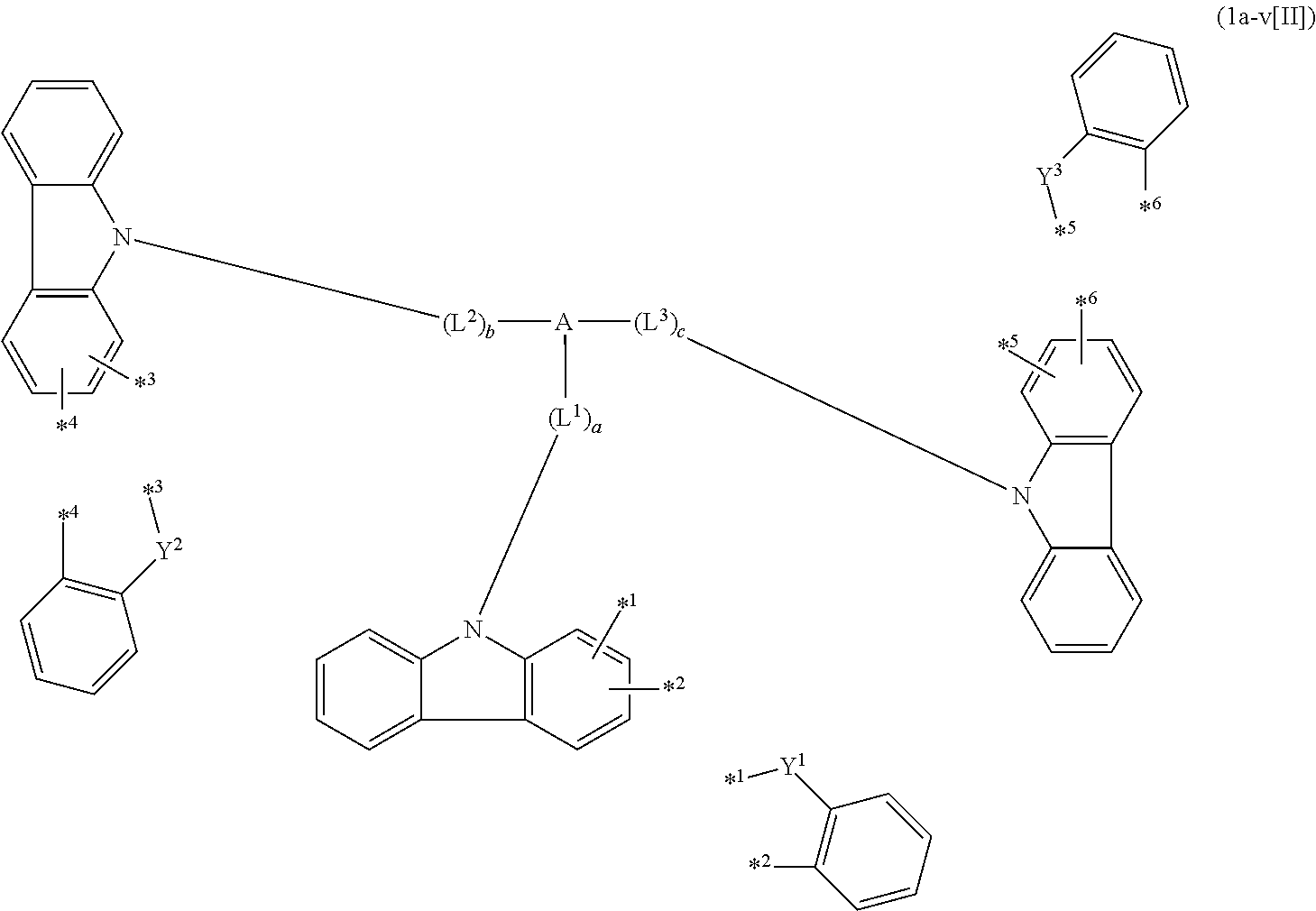
in formula 1a-v[II],
A, L1 to L3, a to c, and Y1 to Y3 are as described above in formula 1[II]; and
two of the carbon atoms at 1-position, 2-position, 3-position and 4-position of the carbazolyl group from which hydrogen atoms are removed are bonded to *1 and *2, *3 and *4, or *5 and *6, respectively.
In an aspect of the invention, the compound 1a-i[II] is more preferably a compound represented by any of formulae 1a-i-1[II] to 1a-i-6[II] (also referred to as “compounds 1a-i-1[II] to 1a-i-6[II]”):


in formulae 1a-i-1[II] to 1a-i-6[II],
A, L1 to L3, a to c, and Y1 to Y are as described above in formula 1[II];
R1 to R36 are as described above with respect R of formula 1[II];
two carbon atoms from which two selected from R13 to R16 are removed are bonded to *3 and *4, respectively; and
two carbon atoms from which two selected from R25 to R28 are removed are bonded to *3 and *4, respectively.
In an aspect, the compound of the invention is more preferably a compound represented by formula 1a-ii[II] (also referred to as “compound 1a-ii[II]”):

in formula 1a-ii[II],
A, L1 to L3, and Y1 to Y3 are as described above in formula 1[II];
R1 to R36 are as described above with respect R of formula 1[II];
two carbon atoms from which two selected from R1 to R4 are removed are bonded to *1 and *2, respectively;
two carbon atoms from which two selected from R13 to R16 are removed are bonded to *3 and *4, respectively; and
two carbon atoms from which two selected from R25 to R28 are removed are bonded to *5 and *6, respectively.
In an aspect, the compound of the invention is more preferably a compound represented by formula 1a-iii[II] (also referred to as “compound 1a-iii[II]”):

in formula 1a-iii[II],
A, L2 to L3, b to c, and Y1 to Y3 are as described above in formula 1[II];
R1 to R36 are as described above with respect R of formula 1[II];
two carbon atoms from which two selected from R1 to R4 are removed are bonded to *1 and *2, respectively;
two carbon atoms from which two selected from R13 to R16 are removed are bonded to *3 and *4, respectively; and
two carbon atoms from which two selected from R25 to R28 are removed are bonded to *5 and *6, respectively.
In an aspect, the compound of the invention is more preferably a compound represented by formula 1a-iv[II] (also referred to as “compound 1a-iv[II]”):

in formula 1a-iv[II],
A and Y1 to Y3 are as described above in formula 1[II];
R1 to R36 are as described above with respect R of formula 1[II];
two carbon atoms from which two selected from R1 to R4 are removed are bonded to *1 and *2, respectively;
two carbon atoms from which two selected from R13 to R16 are removed are bonded to *3 and *4, respectively; and
two carbon atoms from which two selected from R25 to R28 are removed are bonded to *5 and *6, respectively.
In an aspect, the compound of the invention is more preferably a compound represented by formula 1b[II] (also referred to as “compound 1b[II]”):

in formula 1b[II],
A, L1 to L2, a, and Y1 to Y2 are as described above in formula 1[II];
R1 to R24 are as described above with respect R of formula 1[II];
two carbon atoms from which two selected from R1 to R4 are removed are bonded to *1 and *2, respectively; and
two carbon atoms from which two selected from R13 to R16 are removed are bonded to *3 and *4, respectively.
In an aspect of the invention, the compound 1b[II] is preferably a compound wherein two selected from R1 to R24 are not bonded to each other, thereby failing to form a ring and more preferably a compound represented by formula 1b-i[II]:

in formula 1b-i[II],
A, L1 to L2, a, and Y1 to Y2 are as described above in formula 1[II]; and
two of the carbon atoms at 1-position, 2-position, 3-position and 4-position of the carbazolyl group from which hydrogen atoms are removed are bonded to *1 and *2, *3 and *4, or *5 and *6, respectively.
In an aspect, the compound of the invention is preferably a compound represented by any of formulae 1c-i[II] to 1c-iv[II] (also referred to as “compounds 1c-i[II] to 1c-iv[II]”):

in formula 1c-i[II],
L1 to L3, a to c, p to r, X1 to X36, and Y1 to Y3 are as described above in formula 1[II];
X101 to X104 each represent a carbon atom bonded to one of *p to *r, C(Rx), or a nitrogen atom; and
Rx represents a hydrogen atom or a substituent, two or more groups Rx may be the same or different, and two selected from groups Rx may be bonded to each other to form a ring;

in formula 1c-ii[II],
L1 to L3, a to c, p to r, X1 to X36, and Y1 to Y3 are as described above in formula 1[II]; and
X103 represents C(Rx) or a nitrogen atom; and
Rx represents a hydrogen atom or a substituent;

in formula 1c-iii[II],
L1 to L3, a to c, p to r, X1 to X36, and Y1 to Y3 are as described above in formula 1[II];
X101, X102, and X105 to X108 each represent a carbon atom bonded to one of *p to *r, C(Rx), or a nitrogen atom; and
Rx represents a hydrogen atom or a substituent, two or more groups Rx may be the same or different, and two selected from groups Rx may be bonded to each other to form a ring; and

in formula 1c-iv[II],
L1 to L3, a to c, p to r, X1 to X36, and Y1 to Y3 are as described above in formula 1[II];
1 to 3 carbon atoms from which one to three selected from R101, R102, and R105 to R108 are removed are each bonded to one of *p to *r, and the others each independently represent a hydrogen atom or a substituent; and
two selected from R102 and R105 to R18 may be bonded to each other to form a ring.
Examples of the compound 1[II] in an aspect of the invention are shown below, although not limited thereto.


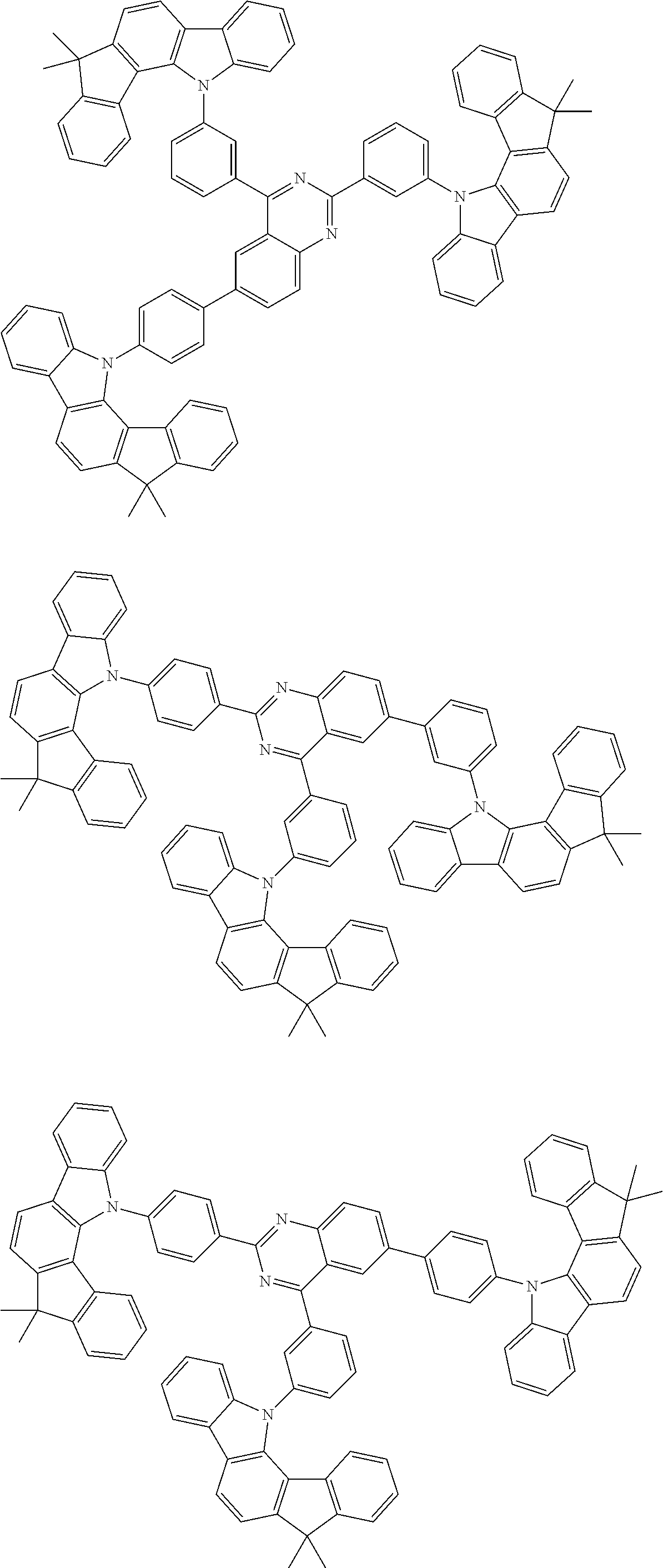


Compound Represented by Formula 1[III]
In an aspect, the invention provides a compound represented by formula 1[III] (also referred as “compound 1[III]”). The compound 1[III] is suitable for use in forming the layer of organic EL device by a coating method and is useful as a material for organic electroluminescence devices.

In formula 1[III],
A represents a substituted or unsubstituted nitrogen-containing heteroaromatic hydrocarbon group having 5 to 30 ring atoms;
L1 to L3 each independently represent a substituted or unsubstituted aromatic hydrocarbon group having 6 to 30 ring carbon atoms, a substituted or unsubstituted heterocyclic group having 5 to 30 ring atoms, or a group wherein 2 to 4 groups selected from the preceding groups are bonded to each other;
a to c each independently represent 0 or 1;
X1 to X24 each represent C(R1) to C(R24), respectively, or a nitrogen atom;
R1 to R24 each independently represent a hydrogen atom or a substituent;
provided that one of X1 to X4 represents a carbon atom which is directly bonded to Z1 or the nitrogen atom to which Ar4 and Ar5 are bonded, one of X9 to X12 represents a carbon atom which is directly bonded to Z2 or the nitrogen atom to which Ar6 and Ar7 are bonded, one of X21 to X24 represents a carbon atom which is directly bonded to Z3 or the nitrogen atom to which Ar8 and Ar9 are bonded, two selected from R1 to R8, two selected from R9 to R16, and two selected from R17 to R24, each not involved in the above direct bonding, may be bonded to each other to form a ring;
Ar1 to Ar3 each independently represent a substituted or unsubstituted aryl group having 6 to 30 ring carbon atoms or a substituted or unsubstituted heteroaryl group having 5 to 30 ring atoms;
Ar4 to Ar9 each independently represent a substituted or unsubstituted aryl group having 6 to 30 ring carbon atoms or a substituted or unsubstituted heteroaryl group having 5 to 30 ring atoms;
Z1 to Z3 each independently represent a substituted or unsubstituted aromatic hydrocarbon group having 6 to 30 ring carbon atoms, a substituted or unsubstituted heterocyclic group having 5 to 30 ring atoms, or a group wherein 2 to 4 groups selected from the preceding groups are bonded to each other;
d to f each independently represent 0 or 1;
p to r each independently represent an integer of 0 to 3, p+q+r=3, and when p, q or r is 2 or 3, 2 or 3 groups in each [ ] may be the same or different, respectively; and
*1 is directly bonded to a nitrogen atom from which one of Ar1 and Ar4 indicated by *1′ is removed, *2 is directly bonded to a nitrogen atom from which one of Ar2 and Ar6 indicated by *2′ is removed, and *3 is directly bonded to a nitrogen atom from which one of Ar3 and Ar8 indicated by *3′ is removed.
Description of Each Group in Formula 1[III]
The nitrogen-containing heteroaromatic hydrocarbon group for A has 5 to 30, preferably 6 and 20, and more preferably 6 to 14 ring carbon atoms. The nitrogen-containing heteroaromatic hydrocarbon group is a monocyclic group or a fused ring group comprising two or three fused rings.
The nitrogen-containing heteroaromatic hydrocarbon group contains preferably 1 to 3 and more preferably 2 or 3 nitrogen atoms. Particularly, the nitrogen-containing heteroaromatic hydrocarbon group contains preferably 2 or 3 and more preferably 3 nitrogen atoms when it is a monocyclic group, and preferably 2 nitrogen atoms when it is a fused ring group having two or three fused rings. On one hand, the nitrogen-containing heteroaromatic hydrocarbon group may contain a hetero atom other than a nitrogen atom, such as an oxygen atom, a sulfur atom, a silicon atom, and selenium atom, bun on the other hand preferably contains only a nitrogen atom as the heteroatom.
Examples of the nitrogen-containing heteroaromatic hydrocarbon group for A include residues of compounds selected from pyrrole, pyridine, pyridazine, pyrimidine, pyrazine, triazine, imidazole, pyrazole, oxadiazole, thiadiazole, triazole, tetrazole, indole, isoindole, indolizine, quinolizine, quinoline, isoquinoline, naphthyridine, cinnoline, phthalazine, quinazoline, benzo[f]quinazoline, benzo[h]quinazoline, quinoxaline, benzimidazole, indazole, carbazole, biscarbazole, phenanthridine, acridine, phenanthroline, phenazine, azatriphenylene, diazatriphenylene, hexaazatriphenylene, azacarbazole, azadibenzofuran, azadibenzothiophene, and dinaphtho[2′,3′: 2,3:2′,3′: 6,7]carbazole.
The residue is a mono valent or more valent group obtained by removing one or more hydrogen atoms from the above compound. The valency of the nitrogen-containing heteroaromatic hydrocarbon group, i.e., the valency of “A” corresponds to the value of “a+b+c.”
The nitrogen-containing heteroaromatic hydrocarbon group mentioned above is preferably a residue of the following compounds:

In an aspect of the invention, the nitrogen-containing heteroaromatic hydrocarbon group for A is preferably a residue of the nitrogen-containing heterocyclic ring represented by formula (A1):

in formula (A1), X101 to X104 each represent C(R101) to C(R104), respectively, or a nitrogen atom; R101 to R104 each independently represent a hydrogen atom or a substituent; and two selected from R102 to R104 may be bonded to each other to form a ring.
In an aspect of the invention, the nitrogen-containing heteroaromatic hydrocarbon group for A is more preferably a residue of the nitrogen-containing heterocyclic ring represented by any of formulae (A2) to (A4):

in formula (A2), X103 represents C(R103) or a nitrogen atom; R101 to R104 each independently represent a hydrogen atom or a substituent; and two selected from R102 to R104 may be bonded to each other to form a ring;

in formula (A3), X101, X102, and X105 to X108 each represent C(R101), C(R102), or C(R105) to C(R108), respectively, or a nitrogen atom; R101, R102, and R105 to R108 each independently represent a hydrogen atom or a substituent; and two selected from R102 and R106 to R108 may be bonded to each other to form a ring; and

in formula (A4), R101, R102, and R105 to R108 each independently represent a hydrogen atom or a substituent; and two selected from R102 and R105 to R108 may be bonded to each other to form a ring.
The nitrogen-containing heteroaromatic hydrocarbon group for A in formula 1[III] may have a substituent.
Examples of the substituent of the nitrogen-containing heteroaromatic hydrocarbon group include the substituents mentioned above and also include, for example, a 9-carbazolyl group having a substituted amino substituent, a substituted amino group having a carbazolyl substituent, an aryl group having a substituted amino substituent, a 9-carbazolyl group having a heteroaryl substituent, an aryl group having a carbazolyl substituent, and a substituted amino group having a heteroaryl substituent.
In formula 1[II], the aromatic hydrocarbon group for L1 to L3 has 6 to 30, preferably 6 to 18, more preferably 6 to 13, still more preferably 6 to 12, and particularly preferably 6 to 10 ring carbon atoms.
The aromatic hydrocarbon group for L1 to L3 is preferably a di- to tetravalent residue of any of the following compounds. In an aspect of the invention, preferably at least one of L1 to L3 and more preferably all thereof are di- to tetravalent residues of any of the following compounds:

wherein each carbon atom in the compound may have a substituent.
The aromatic hydrocarbon group for L1 to L3 is more preferably a group represented by any of the following formulae. In an aspect of the invention, preferably at least one of L1 to L3 and more preferably all thereof are groups represented by any of the following formulae:

wherein * indicates a bonding site and each carbon atom other than that at the bonding site may have a substituent.
The aromatic hydrocarbon group for L1 to L3 is more preferably a group represented by any of the following formulae. Preferably at least one of L1 to L3 and more preferably all thereof are groups represented by any of the following formulae:

wherein * indicates a bonding site and each carbon atom other than that at the bonding site may have a substituent.
The aromatic hydrocarbon group for L1 to L3 is still more preferably a group represented by any of the following formulae. Preferably at least one of L1 to L3 and more preferably all thereof are groups represented by any of the following formulae:

wherein * indicates a bonding site and each carbon atom other than that at the bonding site may have a substituent.
In addition to the above groups, the aromatic hydrocarbon group for L1 to L3 may include the groups represented by the following formulae:

wherein * indicates a bonding site and each carbon atom other than that at the bonding site may have a substituent.
Examples of the divalent aromatic hydrocarbon group for L1 to L3 include the following groups:


wherein * indicates a bonding site and each carbon atom other than that at the bonding site may have a substituent.
The heterocyclic group for L1 to L3 has 5 to 30, preferably 5 to 18, more preferably 5 to 13, particularly preferably 5 to 10 ring atoms.
Examples of the heterocyclic group include a residue of a nitrogen-containing heterocyclic compound, such as pyrrole, pyridine, imidazopyridine, pyrazole, triazole, tetrazole, indole, isoindole, and carbazole; a residue of an oxygen-containing heterocyclic compound, such as furan, benzofuran, isobenzofuran, dibenzofuran, oxazole, oxadiazole, benzoxazole, benzonaphthofuran, and dinaphthofuran; and a residue of a sulfur-containing heterocyclic compound, such as thiophene, benzothiophene, dibenzothiophene, thiazole, thiadiazole, benzothiazole, benzonaphthothiophene, and dinaphthothiophene.
The “group wherein 2 to 4 groups selected from the preceding groups are bonded to each other” for L1 to L3 is a group wherein 2 to 4 groups selected from a substituted or unsubstituted aromatic hydrocarbon group having 6 to 30 ring carbon atoms and a substituted or unsubstituted heterocyclic group having 5 to 30 ring atoms are bonded to each other. The order of bonding is not particularly limited.
In particular, each of L1 to L3 is preferably a substituted or unsubstituted aromatic hydrocarbon group having 6 to 30 ring carbon atoms. The aromatic hydrocarbon group more preferred is as described above.
X1 to X24 each represent C(R1) to C(R24), respectively, or a nitrogen atom, and R1 to R24 each independently represent a hydrogen atom or a substituent.
One of X1 to X4 represents a carbon atom which is directly bonded to Z1 or the nitrogen atom to which Ar4 and Ar5 are bonded. Namely, one of X1 to X4 is a carbon atom directly bonded to the nitrogen atom to which Ar4 and Ar5 are bonded when d is 0, and a carbon atom directly bonded to Z1 when d is 1.
One of X9 to X12 is a carbon atom which is directly bonded to Z2 or the nitrogen atom (N) to which Ar6 and Ar7 are bonded, and one of X21 to X24 is a carbon atom which is directly bonded to Z3 or the nitrogen atom to which Ar8 and Ar9 are bonded. Namely, one of X9 to X12 is a carbon atom directly bonded to the nitrogen atom (N) to which Ar6 and Ar7 are bonded when e is 0, and a carbon atom directly bonded to Z2 when e is 1. One of X21 to X24 is a carbon atom directly bonded to the nitrogen atom (N) to which Ar8 and Ar9 are bonded when f is 0, and a carbon atom directly bonded to Z3 when f is 1.
Two selected from R1 to R8, two selected from R9 to R16, and two selected from R17 to R24, each not involved in the above direct bonding, may be bonded to each other to form a ring. In an aspect of the invention, two selected from R1 to R8, two selected from R9 to R16, and two selected from R17 to R24, each not involved in the above direct bonding, are preferably not bonded to each other, thereby failing to form a ring.
The “direct bond” used herein is generally called a “single bond” in some cases.
X1 to X24 are each preferably C(R1) to C(R24), respectively, and more preferably R1 to R24 are all hydrogen atoms.
Ar1 to Ar3 each independently represent a substituted or unsubstituted aryl group having 6 to 30 ring carbon atoms or a substituted or unsubstituted heteroaryl group having 5 to 30 ring atoms.
Ar4 to Ar9 each independently represent a substituted or unsubstituted aryl group having 6 to 30 ring carbon atoms or a substituted or unsubstituted heteroaryl group having 5 to 30 ring atoms.
The aryl group for Ar1 to Ar3, and Ar4 to Ar9 has 6 to 30, preferably 6 to 18, more preferably 6 to 13, still more preferably 6 to 12, and particularly preferably 6 to 10 ring carbon atoms.
Examples of the aryl group include a phenyl group, a naphthyl group (a 1-naphthyl group, a 2-naphthyl group), a naphthylphenyl group, a biphenylyl group, a terphenylyl group, a quaterphenylyl group, a quinquephenylyl group, an acenaphthylenyl group, an anthryl group, a benzanthryl group, an aceanthryl group, a phenanthryl group, a benzophenanthryl group, a phenalenyl group, a fluorenyl group (inclusive of a 9,9-dimethylfluorenyl group, a 9,9-diphenylfluorenyl group, and a 9,9′-spirobifluorenyl group), a benzofluorenyl group, a dibenzofluorenyl group, a picenyl group, a pentaphenyl group, a pentacenyl group, a pyrenyl group, a chrysenyl group, a benzochrysenyl group, a s-indanyl group, an as-indanyl group, a fluoranthenyl group, a benzofluoranthenyl group, a tetracenyl group, a triphenylenyl group, a benzotriphenylenyl group, a perylenyl group, a coronyl group, and a dibenzanthryl group. The above groups include isomeric groups, if any.
In an aspect of the invention, the aryl group for Ar4 to Ar9 is preferably a fused ring group having 10 to 30, preferably 10 to 20, and more preferably 10 to 14 ring carbon atoms. Examples of the fused ring group include a naphthyl group (a 1-naphthyl group, a 2-naphthyl group), an acenaphthylenyl group, an anthryl group, a benzanthryl group, an aceanthryl group, a phenanthryl group, a benzophenanthryl group, a phenalenyl group, a fluorenyl group (inclusive of a 9,9-dimethylfluorenyl group, a 9,9-diphenylfluorenyl group, and a 9,9′-spirobifluorenyl group), a benzofluorenyl group, a dibenzofluorenyl group, a picenyl group, a pentacenyl group, a pyrenyl group, a chrysenyl group, a benzochrysenyl group, a fluoranthenyl group, a benzofluoranthenyl group, a tetracenyl group, a perylenyl group, a coronyl group, and a dibenzanthryl group.
The aryl group is preferably selected from the following groups:


wherein * indicates a bonding site and each carbon atom other than that at the bonding site may have a substituent.
The heteroaryl group for Ar1 to Ar3, and Ar4 to Ar9 has 5 to 30, preferably 5 to 20, more preferably 5 to 14, and still more preferably 5 to 10 ring atoms.
The heteroaryl group contains at least one, preferably 1 to 5, more preferably 1 to 3, and still more preferably 1 to 2 hetero atoms which may be the same or different. The hetero atom may include, for example, a nitrogen atom, a sulfur atom, an oxygen atom, and a phosphorus atom, and preferably selected from these atoms.
Examples of the heteroaryl group include a pyrrolyl group, a furyl group, a thienyl group, a pyridyl group, a pyridazinyl group, a pyrimidinyl group, a pyrazinyl group, a triazinyl group, an imidazolyl group, an oxazolyl group, a thiazolyl group, a pyrazolyl group, an isoxazolyl group, an isothiazolyl group, an oxadiazolyl group, a thiadiazolyl group, a triazolyl group, a tetrazolyl group, an indolyl group, an isoindolyl group, a benzofuranyl group, an isobenzofuranyl group, a benzothiophenyl group, an isobenzothiophenyl group, an indolizinyl group, a quinolizinyl group, a quinolyl group, an isoquinolyl group, a cinnolyl group, a phthalazinyl group, a quinazolinyl group, a quinoxalinyl group, a benzimidazolyl group, a benzoxazolyl group, a benzothiazolyl group, an indazolyl group, a benzisoxazolyl group, a benzisothiazolyl group, a dibenzofuranyl group, a dibenzothiophenyl group, a carbazolyl group, a biscarbazolyl group, a phenanthridinyl group, an acridinyl group, a phenanthrolinyl group, a phenazinyl group, a phenothiazinyl group, a phenoxazinyl group, an azatriphenylenyl group, a diazatriphenylenyl group, a xanthenyl group, an azacarbazolyl group, an azadibenzofuranyl group, an azadibenzothiophenyl group, a benzofuranobenzothiophenyl group, a benzothienobenzothiophenyl group, a dibenzofuranonaphthyl group, a dibenzothienonaphthyl group, a dinaphthothienothiophenyl group, and dinaphtho[2′,3′: 2,3:2′,3′: 6,7]carbazolyl group.
Each of Ar1 to Ar3 and Ar4 to Ar9 is preferably a substituted or unsubstituted aryl group having 6 to 30 ring carbon atoms. More preferred examples of the aryl group are as described above.
The aromatic hydrocarbon group, the heterocyclic group, and the group wherein 2 to 4 groups selected from the preceding groups are bonded to each other for Z1 to Z3 in formula 1[III] and preferred examples thereof are as described above with respect to L1 to L3. The aromatic hydrocarbon group for Z1 to Z3 is preferably a phenylene group or a naphthylene group and more preferably a phenylene group.
Of the above, Z1 to Z3 is preferably a substituted or unsubstituted aromatic hydrocarbon group having 6 to 30 ring carbon atoms. The aromatic hydrocarbon group more preferred is as described above.
In formula 1[III], d to f are preferably all 0, all 1, or one is 0 and each of the other two is 1.
As described above, p to r in formula 1[III] each independently represent an integer of 0 to 3, and p+q+r is 3. Preferably, two selected from p to r cannot be 0 at the same time, although not particularly limited thereto.
In formula 1[III], *1 is directly bonded to a nitrogen atom from which one of Ar1 and Ar4 indicated by *1′ is removed, *2 is directly bonded to a nitrogen atom from which one of Ar2 and Ar6 indicated by *2′ is removed, and *3 is directly bonded to a nitrogen atom from which one of Ar3 and Ar8 indicated by *3′ is removed.
For example, formula 1[III] wherein *1 is directly bonded to a nitrogen atom from which Ar1 indicated by *1′ is removed is represented by the following formula (shown partially):

Formula 1[III] wherein *1 is directly bonded to a nitrogen atom from which Ar4 indicated by *1′ is removed is represented by the following formula (shown partially):

Examples of the group in [ ] of formula 1[III] are shown below, and the group can be arbitrarily selected from the following groups.


Formulae of preferred examples of compound 1[III] are shown below, wherein the definition of each group and preferred example thereof are as described above in formula 1[III]:

in formula 1a[III], A, L1 to L3, a to f, X1 to X24, Ar1 to Ar9, Z1 to Z3, *1 to *3, *1′ to *3′, and preferred examples thereof are as described above in formula 1[III];

in formula 1a′[III], A, L1 to L3, a to f, R1 to R24, Ar1 to Ar9, Z1 to Z3, *1 to *3, *1′ to *3′, and preferred examples thereof are as described above in formula 1[III];

in formula 2′[III], A, L1 to L3, a to f, p to r, R1 to R24, Ar4 to Ar9, Z1 to Z3, and preferred examples thereof are as described above in formula 1[III]; and when p, q or r is 2 or 3, 2 or 3 groups in each [ ] may be the same or different;

in formula 3′[III], A, L1 to L3, a to f, p to r, R1 to R24, Ar1 to Ar3, Ar5, Ar7, Ar9, Z1 to Z3, and preferred examples thereof are as described above in formula 1[III]; and when p, q or r is 2 or 3, 2 or 3 groups in each [ ] may be the same or different;

in formula 2-1[III], A, L1 to L3, a to f, p to r, R1, R2, R4 to R10, R12 to R21, R23, R24, Ar4 to Ar9, Z1 to Z3, and preferred examples thereof are as described above in formula 1[III]; and when p, q or r is 2 or 3, 2 or 3 groups in each [ ] may be the same or different;

in formula 1a-i[III], A, L1 to L3, d to f, X1 to X24, Ar1 to Ar9, Z1 to Z3, *1 to *3, *1′ to *3′, and preferred examples thereof are as described above in formula 1[III];

in formula 1a′-i[III], A, L1 to L3, d to f, R1 to R24, Ar1 to Ar9, Z1 to Z3, *1 to *3, *1′ to *3′, and preferred examples thereof are as described above in formula 1[III];

in formula 2a′-i[III], A, L1 to L3, d to f, R1 to R24, Ar4 to Ar9, Z1 to Z3, and preferred examples thereof are as described above in formula 1[III];

in formula 3a′-i[III], A, L1 to L3, d to f, R1 to R24, Ar1 to Ar3, Ar5, Ar7, Ar9, Z1 to Z3, and preferred examples thereof are as described above in formula 1[III];

in formula 1a-ii[III], A, L2, L3, b to f, X1 to X24, Ar1 to Ar9, Z1 to Z3, *1 to *3, *1′ to *3′, and preferred examples thereof are as described above in formula 1[III];

in formula 1a′-ii[III], A, L2, L3, b to f, R1 to R24, Ar1 to Ar9, Z1 to Z3, *1 to *3, *1′ to *3′, and preferred examples thereof are as described above in formula 1[III];

in formula 2a′-ii[III], A, L2, L3, b to f, R1 to R24, Ar4 to Ar9, Z1 to Z3, and preferred examples thereof are as described above in formula 1[III];

in formula 3a′-ii[III], A, L2, L3, b to f, R1 to R24, Ar1 to Ar3, Ar5, Ar7, Ar9, Z1 to Z3, and preferred examples thereof are as described above in formula 1[III];

in formula 1a-iii[III], A, d to f, X1 to X24, Ar1 to Ar9, Z1 to Z3, *1 to *3, *1′ to *3′, and preferred examples thereof are as described above in formula 1[III];

in formula 1a′-iii[III], A, d to f, R1 to R24, Ar1 to Ar19, Z1 to Z3, *1 to *3, *1′ to *3′, and preferred examples thereof are as described above in formula 1[III];

in formula 2a′-iii[III], A, d to f, R1 to R24, Ar4 to Ar9, Z1 to Z3, and preferred examples thereof are as described above in formula 1[III];

in formula 3a′-iii[III], A, d to f, R1 to R24, Ar1 to Ar3, Ar5, Ar7, Ar9, Z1 to Z3, and preferred examples thereof are as described above in formula 1[III];

in formula 1a-iv[III], A, L1, L2, a, d, e, X1 to X16, Ar1, Ar2, Ar4 to Ar7, Z1, Z2, *1, *2, *1′, * 2′, and preferred examples thereof are as described above in formula 1[III]; and two or more groups represented by the same symbol may be the same or different;

in formula 1a′-iv[III], A, L1, L2, a, d, e, R1 to R16, Ar1, Ar2, Ar4 to Ar7, Z1, Z2, *1, *2, *1′, *2′, and preferred examples thereof are as described above in formula 1[III]; and two or more groups represented by the same symbol may be the same or different;

in formula 2a′-iv[III], A, L1, L2, a, d, e, R1 to R16, Ar4 to Ar7, Z1, Z2, and preferred examples thereof are as described above in formula 1[III]; and two or more groups represented by the same symbol may be the same or different;

in formula 3a′-iv[III], A, L1, L2, a, d, e, R1 to R16, Ar1, Ar2, Ar6, Ar7, Z1, Z2, and preferred examples thereof are as described above in formula 1[III]; and two or more groups represented by the same symbol may be the same or different;

in formula 2[III], A, L1 to L3, a to f, p to r, X1 to X24, Ar4 to Ar9, Z1 to Z3, and preferred examples thereof are as described above in formula 1[III]; and when p, q or r is 2 or 3, 2 or 3 groups in each [ ] may be the same or different;

in formula 2-1[III], A, L1 to L3, a to f, p to r, X1, X2, X4 to X10, X12 to X21, X23, X24, Ar4 to Ar9, Z1 to Z3, and preferred examples thereof are as described above in formula 1[III]; and when p, q or r is 2 or 3, 2 or 3 groups in each [ ] may be the same or different;

in formula 3[III], A, L1 to L3, a to f, p to r, X1 to X24, Ar1 to Ar3, Ar5, Ar7, Ar9, Z1 to Z3, and preferred examples thereof are as described above in formula 1[III];

in formula 1a′-H[III], A, L1 to L3, a to f, Ar1 to Ar9, Z1 to Z3, *1 to *3, *1′ to *3′, and preferred examples thereof are as described above in formula 1[III]; and a bond extending from each of Z1 to Z3 toward a benzene ring is bonded to one of four carbon atoms of a benzene ring, which contains the terminal end of the bond, in place of a hydrogen atom removed therefrom;

in formula 1a′-iv-H[III], A, L1, L2, a, d, e, Ar1, Ar2, Ar4 to Ar7, Z1, Z2, *1, *2, *1′, *2′, and preferred examples thereof are as described above in formula 1[III]; two or more groups represented by the same symbol may be the same or different; and a bond extending from each of Z1 to Z3 toward a benzene ring is bonded to one of four carbon atoms of a benzene ring, which contains the terminal end of the bond, in place of a hydrogen atom removed therefrom;

in formula 1b-i[III], L1 to L3, a to f, p to r, X1 to X24, Ar1 to Ar3, Ar4 to Ar9, *1 to *3, *1′ to *3′, and preferred examples thereof are as described above in formula 1[III]; when p, q or r is 2 or 3, 2 or 3 groups in each [ ] may be the same or different; X101 to X104 each represent a carbon atom bonded to one of *10 to *12, C(Rx), or a nitrogen atom; Rx represents a hydrogen atom or a substituent; two or more groups Rx may be the same or different; and two selected from groups Rx may be bonded to each other to form a ring;

in formula 1b-ii[III], L1 to L3, a to f, p to r, X1 to X24, Ar1 to Ar3, Ar4 to Ar9, *1 to *3, *1′ to *3′, and preferred examples thereof are as described above in formula 1[III]; when p, q or r is 2 or 3, 2 or 3 groups in each [ ] may be the same or different; X103 represents C(Rx) or a nitrogen atom; and Rx represents a hydrogen atom or a substituent;

in formula 1b-iii[III], L1 to L3, a to f, p to r, X1 to X24, Ar1 to Ar3, Ar4 to Ar9, *1 to *3, *1′ to *3′, and preferred examples thereof are as described above in formula 1[III]; when p, q or r is 2 or 3, 2 or 3 groups in each [ ] may be the same or different; X101, X102, and X105 to X108 each represent a carbon atom bonded to one of *10 to *12, C(Rx), or a nitrogen atom; Rx represents a hydrogen atom or a substituent; two or more groups Rx may be the same or different; and two selected from groups Rx may be bonded to each other to form a ring; and

in formula 1b-iv[III], L1 to L3, a to f, p to r, X1 to X24, Ar1 to Ar3, Ar4 to Ar9, *1 to *3, *1′ to *3′, and preferred examples thereof are as described above in formula [III]; when p, q or r is 2 or 3, 2 or 3 groups in each [ ] may be the same or different; 1 to 3 carbon atoms from which one to three selected from R101, R102, and R105 to R108 are removed are each bonded to one of *10 to *12, and the others each independently represent a hydrogen atom or a substituent; and two selected from R102 and R105 to R108 may be bonded to each other to form a ring.
Examples of compound 1[III] in an aspect of the invention are shown below, although not limited there to.


Compound Represented by Formula 1[IV]
In an aspect of the invention, a compound represented by formula 1[IV](also referred to as “compound 1[IV]”) is used as material for organic electroluminescence devices. The compound is suitable for use in forming the layer of organic EL device by a coating method and is useful as a material for organic electroluminescence devices.

in formula 1[IV],
A represents a substituted or unsubstituted nitrogen-containing heteroaromatic hydrocarbon group having 5 to 30 ring atoms;
L1 to L3 each independently represent a substituted or unsubstituted aromatic hydrocarbon group having 6 to 30 ring carbon atoms, a substituted or unsubstituted heterocyclic group having 5 to 30 ring atoms, or a group wherein 2 to 4 groups selected from the preceding groups are bonded to each other;
a to c each independently represent 0 or 1;
X1 to X48 each represent C(R1) to C(R48), respectively, or a nitrogen atom;
R1 to R48 each independently represent a hydrogen atom or a substituent;
provided that one of X1 to X4 represents a carbon atom which is directly bonded to a carbon atom represented by one of X13 to X16, one of X17 to X20 represents a carbon atom which is directly bonded to a carbon atom represented by one of X29 to X32, one of X37 to X40 represents a carbon atom which is directly bonded to a carbon atom represented by one of X41 to X44, and two selected from R1 to R48 not involved in the above direct bonding may be bonded to each other to form a ring;
Y1 to Y3 each independently represent an oxygen atom, a sulfur atom, C(RA)(RB), Si(RC)(RD), P(RE), P(═O)(RF), S(═O)2, or P(═S)(RG);
RA, RB, RC, RD, RE, RF, and RG each independently represent represents a hydrogen atom or a substituent, and RA and RB, and RC and RD may be bonded to each other to form a ring; and
p to r each independently represent an integer of 0 to 3, p+q+r=3, and when p, q or r is 2 or 3, 2 or 3 groups in each [ ] may be the same or different, respectively.
Description of Each Group in Formula 1[IV]
The nitrogen-containing heteroaromatic hydrocarbon group for A has 5 to 30, preferably 6 and 20, and more preferably 6 to 14 ring carbon atoms. The nitrogen-containing heteroaromatic hydrocarbon group is a monocyclic group or a fused ring group comprising two or three fused rings.
The nitrogen-containing heteroaromatic hydrocarbon group contains preferably 1 to 3 and more preferably 2 or 3 nitrogen atoms. Particularly, the nitrogen-containing heteroaromatic hydrocarbon group contains preferably 2 or 3 and more preferably 3 nitrogen atoms when it is a monocyclic group, and preferably 2 nitrogen atoms when it is a fused ring group having two or three fused rings. On one hand, the nitrogen-containing heteroaromatic hydrocarbon group may contain a hetero atom other than a nitrogen atom, such as an oxygen atom, a sulfur atom, a silicon atom, and selenium atom, burr on the other hand preferably contains only a nitrogen atom as the heteroatom.
Examples of the nitrogen-containing heteroaromatic hydrocarbon group for A include residues of compounds selected from pyrrole, pyridine, pyridazine, pyrimidine, pyrazine, triazine, imidazole, pyrazole, oxadiazole, thiadiazole, triazole, tetrazole, indole, isoindole, indolizine, quinolizine, quinoline, isoquinoline, naphthyridine, cinnoline, phthalazine, quinazoline, benzo[f]quinazoline, benzo[h]quinazoline, quinoxaline, benzimidazole, indazole, carbazole, biscarbazole, phenanthridine, acridine, phenanthroline, phenazine, azatriphenylene, diazatriphenylene, hexaazatriphenylene, azacarbazole, azadibenzofuran, azadibenzothiophene, and dinaphtho[2′,3′: 2,3:2′,3′: 6,7]carbazole. The valency of the nitrogen-containing heteroaromatic hydrocarbon group, i.e., the valency of “A” corresponds to the value of “a+b+c.”
The nitrogen-containing heteroaromatic hydrocarbon group mentioned above is preferably a residue of the following compounds:

In an aspect of the invention, the nitrogen-containing heteroaromatic hydrocarbon group for A is preferably a residue of the nitrogen-containing heterocyclic ring represented by formula (A1):

in formula (A1), X101 to X104 each represent C(R101) to C(R104), respectively, or a nitrogen atom; R101 to R104 each independently represent a hydrogen atom or a substituent; and two selected from R102 to R104 may be bonded to each other to form a ring.
In an aspect of the invention, the nitrogen-containing heteroaromatic hydrocarbon group for A is more preferably a residue of the nitrogen-containing heterocyclic ring represented by any of formulae (A2) to (A4):

in formula (A2), X103 represents C(R103) or a nitrogen atom; R101 to R104 each independently represent a hydrogen atom or a substituent; and two selected from R102 to R104 may be bonded to each other to form a ring;

in formula (A3), X101, X102, and X105 to X108 each represent C(R101), C(R102), or C(R105) to C(R108), respectively, or a nitrogen atom; R101, R102, and R105 to R108 each independently represent a hydrogen atom or a substituent; and two selected from R102 and R105 to R108 may be bonded to each other to form a ring; and

in formula (A4), R101, R102, and R105 to R108 each independently represent a hydrogen atom or a substituent; and two selected from R102 and R105 to R108 may be bonded to each other to form a ring.
The nitrogen-containing heteroaromatic hydrocarbon group for A in formula 1[IV] may have a substituent.
Examples of the substituent of the nitrogen-containing heteroaromatic hydrocarbon group include the substituents mentioned above and also include, for example, a 9-carbazolyl group having an aryl substituent or a heteroaryl substituent and an aryl group or a heteroaryl group each having a 9-carbazolyl substituent which further has an aryl substituent or a heteroaryl substituent.
In formula 1[IV], the aromatic hydrocarbon group for L1 to L3 has 6 to 30, preferably 6 to 18, more preferably 6 to 13, still more preferably 6 to 12, and particularly preferably 6 to 10 ring carbon atoms.
The aromatic hydrocarbon group for L1 to L3 is preferably a di- to tetravalent residue of any of the following compounds. In an aspect of the invention, preferably at least one of L1 to L3 and more preferably all thereof are di- to tetravalent residues of any of the following compounds:

wherein each carbon atom in the compound may have a substituent.
The aromatic hydrocarbon group for L1 to L3 is more preferably a group represented by any of the following formulae. In an aspect of the invention, preferably at least one of L1 to L3 and more preferably all thereof are groups represented by any of the following formulae:

wherein * indicates a bonding site and each carbon atom other than that at the bonding site may have a substituent.
The aromatic hydrocarbon group for L1 to L3 is more preferably a group represented by any of the following formulae. Preferably at least one of L1 to L3 and more preferably all thereof are groups represented by any of the following formulae:

wherein * indicates a bonding site and each carbon atom other than that at the bonding site may have a substituent.
The aromatic hydrocarbon group for L1 to L3 is still more preferably a group represented by any of the following formulae. Preferably at least one of L1 to L3 and more preferably all thereof are groups represented by any of the following formulae:

wherein * indicates a bonding site and each carbon atom other than that at the bonding site may have a substituent.
In addition to the above groups, the aromatic hydrocarbon group for L1 to L3 may include the groups represented by the following formulae:

wherein * indicates a bonding site and each carbon atom other than that at the bonding site may have a substituent.
Examples of the divalent aromatic hydrocarbon group for L1 to L3 include the following groups:


wherein * indicates a bonding site and each carbon atom other than that at the bonding site may have a substituent.
The heterocyclic group for L1 to L3 has 5 to 30, preferably 5 to 18, more preferably 5 to 13, particularly preferably 5 to 10 ring atoms.
Examples of the heterocyclic group include a residue of a nitrogen-containing heterocyclic compound, such as pyrrole, pyridine, imidazopyridine, pyrazole, triazole, tetrazole, indole, isoindole, and carbazole; a residue of an oxygen-containing heterocyclic compound, such as furan, benzofuran, isobenzofuran, dibenzofuran, oxazole, oxadiazole, benzoxazole, benzonaphthofuran, and dinaphthofuran; and a residue of a sulfur-containing heterocyclic compound, such as thiophene, benzothiophene, dibenzothiophene, thiazole, thiadiazole, benzothiazole, benzonaphthothiophene, and dinaphthothiophene.
The “group wherein 2 to 4 groups selected from the preceding groups are bonded to each other” for L1 to L3 is a group wherein 2 to 4 groups selected from a substituted or unsubstituted aromatic hydrocarbon group having 6 to 30 ring carbon atoms and a substituted or unsubstituted heterocyclic group having 5 to 30 ring atoms are bonded to each other. The order of bonding is not particularly limited.
In particular, each of L1 to L3 is preferably a substituted or unsubstituted aromatic hydrocarbon group having 6 to 30 ring carbon atoms. The aromatic hydrocarbon group more preferred is as described above.
X1 to X48 each represent C(R1) to C(R48), respectively, or a nitrogen atom;
R1 to R48 each independently represent a hydrogen atom or a substituent;
provided that one of X1 to X4 represents a carbon atom which is directly bonded to a carbon atom represented by one of X13 to X16, one of X17 to X20 represents a carbon atom which is directly bonded to a carbon atom represented by one of X29 to X32, and one of X37 to X40 represents a carbon atom which is directly bonded to a carbon atom represented by one of X41 to X44.
Two selected from R1 to R8, two selected from R9 to R16, and two selected from R17 to R24, two selected from R25 to R32, two selected from R33 to R40, and two selected from R41 to R48, each not involved in the above direct bonding, may be bonded to each other to form a ring. In an aspect of the invention, two selected from R1 to R8, two selected from R9 to R16, two selected from R17 to R24, two selected from R25 to R32, two selected from R33 to R40, and two selected from R41 to R48, each not involved in the above direct bonding, are preferably not bonded to each other, thereby failing to form a ring.
The “direct bond” used herein is generally called a “single bond” in some cases.
X1 to X48 are each preferably C(R1) to C(R48), respectively, and more preferably R1 to R48 are all hydrogen atoms.
Y1 to Y3 each independently represent an oxygen atom, a sulfur atom, C(RA)(RB), Si(RC)(RD), P(RE), P(═O)(RF), S(═O)2, or P(═S)(RG). Preferably each of Y1 to Y3 represents an oxygen atom or a sulfur atom, more preferably all of Y1 to Y3 represent oxygen atoms or sulfur atoms, and still more preferably all of Y1 to Y3 represent oxygen atoms or all of Y1 to Y3 represent sulfur atoms.
RA, RB, RC, RD, RE, RF, and RG each independently represent a hydrogen atom or a substituent. RA and RB, and RC and RD may be bonded to each other to form a ring.
RA, RB, RC, RD, RE, RF, and RG are preferably all aryl groups which are preferably selected from the following groups:


wherein * indicates a bonding site and each carbon atom other than that at the bonding site may have a substituent.
The structures wherein RA and RB in C(RA)(RB) or RC and RD in Si(RC)(RD) are bonded to each other to form a ring are shown below:

As described above, p to r in formula 1[IV] each independently represent an integer of 0 to 3, and p+q+r is 3. Preferably, two selected from p to r cannot be 0 at the same time, although not particularly limited thereto.
Examples of the group in [ ] of formula 1[IV] are shown below, and the group can be arbitrarily selected from the following groups.


Formulae of preferred examples of compound 1[IV] are shown below, wherein the definition of each group and preferred examples thereof are as described above in formula 1[IV];

in formula 1a[IV], A, L1 to L3, a to c, X1 to X48, Y1 to Y3, and preferred examples thereof are as described above in formula 1[IV];

in formula 1-ii-1[IV], A, L2, L3, c, p to r, X1 to X48, Y1 to Y3, and preferred examples thereof are as described above in formula 1[IV]; and when p, q or r is 2 or 3, 2 or 3 groups in each [ ] may be the same or different;

in formula 1a-ii-1[IV], A, L2, L3, c, X1 to X48, Y1 to Y3, and preferred examples thereof are as described above in formula 1[IV];

in formula 1a′[IV], A, L1 to L3, a to c, R1 to R48, Y1 to Y3, and preferred examples thereof are as described above in formula 1[IV];

in formula 1a-i[IV], A, L1 to L3, X1 to X48, Y1 to Y3, and preferred examples thereof are as described above in formula 1[IV];

in formula 1a′-i[IV], A, L1 to L3, R1 to R48, Y1 to Y3, and preferred examples thereof are as described above in formula 1[IV];

in formula 1a-ii[IV], A, L1, L3, b, c, X1 to X48, Y1 to Y2, and preferred examples thereof are as described above in formula 1[IV];

in formula 1a′-ii[IV], A, L2, L3, b, c, R1 to R48, Y1 to Y3, and preferred examples thereof are as described above in formula 1[IV];

in formula 1a-iii[IV], A, X1 to X48, Y1 to Y3, and preferred examples thereof are as described above in formula 1[IV];

in formula 1a′-iii[IV], A, R1 to R48, Y1 to Y3, and preferred examples thereof are as described above in formula 1[IV];

in formula 1a-iv[IV], A, L1, L2, a, X1 to X32, Y1 to Y3, and preferred examples thereof are as described above in formula 1[IV]; and two or more groups represented by the same symbol may be the same or different;

in formula 1a′-iv[IV], A, L1, L2, a, R1 to R32, Y1, Y2, and preferred examples thereof are as described above in formula 1[IV]; and two or more groups represented by the same symbol may be the same or different;

in formula 1a′-H[IV], A, L1 to L3, a to c, Y1 to Y3, and preferred examples thereof are as described above in formula 1[IV]; and each terminal end of a bond extending from a benzene ring in a carbazolyl group is bonded to one of four carbon atoms of a benzene ring, each containing the terminal end of the bond, in place of a hydrogen atom removed therefrom;

in formula 1a′-iv-H[IV], A, L1, L2, a, Y1, Y2, and preferred examples thereof are as described above in formula 1[IV]; two or more groups represented by the same symbol may be the same or different; and each terminal end of a bond extending from a benzene ring in a carbazolyl group is bonded to one of four carbon atoms of a benzene ring, each containing the terminal end of the bond, in place of a hydrogen atom removed therefrom;

in formula 1b-i[IV],
L1 to L2, a to c, p to r, X1 to X48, Y1 to Y3, and preferred examples thereof are as described above in formula 1[IV];
when p, q or r is 2 or 3, 2 or 3 groups in each [ ] may be the same or different;
X101 to X104 each represent a carbon atom bonded to one of *10 to *12, C(Rx), or a nitrogen atom; and
Rx represents a hydrogen atom or a substituent, two or more groups Rx may be the same or different, and two selected from groups Rx may be bonded to each other to form a ring;

in formula 1b-ii[IV], L1 to L3, a to c, p to r, X1 to X48, Y1 to Y3, and preferred examples thereof are as described above in formula 1[IV]; when p, q or r is 2 or 3, 2 or 3 groups in each [ ] may be the same or different; X103 represents C(Rx) or a nitrogen atom; and Rx represents a hydrogen atom or a substituent;

in formula 1b-iii[IV],
L1 to L3, a to c, p to r, X1 to X48, Y1 to Y3, and preferred examples thereof are as described above in formula 1[IV];
when p, q or r is 2 or 3, 2 or 3 groups in each [ ] may be the same or different;
X101, X102, X105 to X108 each represent a carbon atom bonded to one of *10 to *12, C(Rx), or a nitrogen atom; and
Rx represents a hydrogen atom or a substituent, two or more groups Rx may be the same or different, and two selected from groups Rx may be bonded to each other to form a ring; and

in formula 1b-iv[IV],
L1 to L3, a to c, p to r, X1 to X48, Y1 to Y3, and preferred examples thereof are as described above in formula 1[IV];
when p, q or r is 2 or 3, 2 or 3 groups in each [ ] may be the same or different;
1 to 3 carbon atoms from which one to three selected from R101, R102, and R105 to R108 are removed are each bonded to one of *10 to *12 and the others each independently represent a hydrogen atom or a substituent; and
two selected from R102 and R105 to R108 may be bonded to each other to form a ring.
The compounds represented by the following formulae are particularly preferably used as compound 1[IV]:

in formula 1-ii-1[IV],
A represents a substituted or unsubstituted nitrogen-containing heteroaromatic hydrocarbon group having 5 to 30 ring atoms;
L2 and L3 each independently represent a substituted or unsubstituted aromatic hydrocarbon group having 6 to 30 ring carbon atoms, a substituted or unsubstituted heterocyclic group having 5 to 30 ring atoms, or a group wherein 2 to 4 groups selected from the preceding groups are bonded to each other;
c represents 0 or 1;
X1 to X48 each represent C(R1) to C(R48), respectively, or a nitrogen atom;
R1 to R48 each independently represent a hydrogen atom or a substituent, provided that one of X1 to X4 represents a carbon atom which is directly bonded to a carbon atom represented by one of X13 to X16, one of X17 to X20 represents a carbon atom which is directly bonded to a carbon atom represented by one of X20 to X32, one of X37 to X40 represents a carbon atom which is directly bonded to a carbon atom represented by one of X41 to X44, and two selected from R1 to R8, two selected from R9 to R16, two selected from R17 to R24, two selected from R25 to R32, two selected from R33 to R40, and two selected from R41 to R48, each not involved in the above direct bonding, may be bonded to each other to form a ring;
Y1 to Y3 each independently represent an oxygen atom, a sulfur atom, C(RA)(RB), Si(RC)(RD), P(RE), P(═O)(RF), S(═O)2, or P(═S)(RG);
RA, RB, RC, RD, RE, RF, and RG each independently represent a hydrogen atom or a substituent, and RA and RB, and RC and RD may be bonded to each other to form a ring; and
p to r each independently represent an integer of 0 to 3, p+q+r=3, and when p, q or r is 2 or 3, 2 or 3 groups in each [ ] may be the same or different, respectively;

in formula 1a-ii-1[IV], A, L2, L3, c, X1 to X48, Y1 to Y3, and preferred examples thereof are as described above in formula 1-ii-1[IV];

in formula 1a′-ii-1[IV], A, L2, L3, c, R1 to R48, Y1 to Y3, and preferred examples thereof are as described above in formula 1-ii-1[IV];

in formula 1b-i-1[IV],
L2, L3, c, p to r, X1 to X48, Y1 to Y3, and preferred examples thereof are as described above in formula 1-ii-1[IV];
when p, q or r is 2 or 3, 2 or 3 groups in each [ ] may be the same or different;
X101 to X104 each represent a carbon atom bonded to one of *10 to *12, C(Rx), or a nitrogen atom; and
Rx represents a hydrogen atom or a substituent, two or more groups Rx may be the same or different, and two selected from groups Rx may be bonded to each other to form a ring;

in formula 1b-ii-1[IV], L2, L3, c, p to r, X1 to X4, Y1 to Y3, and preferred examples thereof are as described above in formula 1-ii-1[IV]; when p, q or r is 2 or 3, 2 or 3 groups in each [ ] may be the same or different; X103 represents C(Rx) or a nitrogen atom; and Rx represents a hydrogen atom or a substituent;

in formula 1b-iii-1[IV],
L2, L3, c, p to r, X1 to X4, Y1 to Y3, and preferred examples thereof are as described above in formula 1-ii-1[IV];
when p, q or r is 2 or 3, 2 or 3 groups in each [ ] may be the same or different;
X101, X102, X105 to X108 each represent a carbon atom bonded to one of *10 to *12, C(Rx), or a nitrogen atom; and
Rx represents a hydrogen atom or a substituent, two or more groups Rx may be the same or different, and two selected from groups Rx may be bonded to each other to form a ring; and

in formula 1b-iv-1[IV], L2, L3, c, p to r, X1 to X48, Y1 to Y3, and preferred examples thereof are as described above in formula 1-ii-1[IV];
when p, q or r is 2 or 3, 2 or 3 groups in each [ ] may be the same or different;
1 to 3 carbon atoms from which one to three selected from R101, R102, and R105 to R108 are removed are each bonded to one of *10 to *12, and the others each independently represent a hydrogen atom or a substituent; and
two selected from R102 and R105 to R108 may be bonded to each other to form a ring.
Examples of compound 1[IV] in an aspect of the invention are shown below, although not limited thereto.


Compound Represented by Formula 1[V]
In an aspect, the invention provides a compound represented by formula 1[V] (also referred to as “compound 1[V]”). The compound is suitable for use in forming the layer of organic EL device by a coating method and is useful as a material for organic electroluminescence devices.
Compound 1[V] corresponds to compound (1) wherein at least two selected from D1 to D3 are selected from different groups of Group A to Group D.

in formula 1[V],
A represents a substituted or unsubstituted nitrogen-containing heteroaromatic hydrocarbon group having 5 to 30 ring atoms;
L1 to L3 each independently represent a substituted or unsubstituted aromatic hydrocarbon group having 6 to 30 ring carbon atoms, a substituted or unsubstituted heterocyclic group having 5 to 30 ring atoms, or a group wherein 2 to 4 groups selected from the preceding groups are bonded to each other;
a to c each independently represent 0 or 1;
p to r each independently represent an integer of 0 to 3, p+q+r=3, and two or more groups D1, two or more groups D2 and two or more groups D3 when p, q or r is 2 or 3 may be the same or different, respectively;
*1 to *3 are respectively bonded to D1 to D3;
D1 to D3 each independently represent a substituent selected from Group A to Group D each independently represented by formulae (DA) to (DD), and at least two of D1 to D3 are selected from different groups of Group A to Group D:

in formula (DA) which represents the substituent belonging to Group A,
one of *4 and *5 is bonded to one of *1 to *3 of formula 1[V] and the other is bonded to Ar1;
Ar1 and Ar2 each independently represent a substituted or unsubstituted aryl group having 6 to 30 ring carbon atoms or a substituted or unsubstituted heteroaryl group having 5 to 30 ring atoms
one of X1 to X4 and one of X13 to X16 represent carbon atoms which are respectively bonded to *10 and *11, and the other six each independently represent C(R) or a nitrogen atom;
one of X9 and X12 and one of X21 to X24 represent carbon atoms which are respectively bonded to *12 and *13, and the other six each independently represent C(R) or a nitrogen atom;
X5 to X8 and X17 to X20 each independently represent C(R) or a nitrogen atom; and
R represents a hydrogen atom or a substituent, two or more groups R may be the same or different, and two selected from groups R may be bonded to each other to form a ring;
in formula (DB) which represents the substituent belonging to Group B,
two of X1 to X4 represent carbon atoms which are respectively bonded to *21 and *22 and the other two independently represent C(R) or a nitrogen atom;
X5 to X12 each independently represent C(R) or a nitrogen atom;
R represents a hydrogen atom or a substituent, two or more groups R may be the same or different, and two selected from groups R may be bonded to each other to form a ring;
Y1 represents an oxygen atom, a sulfur atom, —C(RA)(RB)—, —Si(RC)(RD)—, —P(RE)—, —P(═O)(RF)—, —S(═O)2—, —P(═S)(RG)—, or —N(RH)—;
RA to RH each independently represent a hydrogen atom or a substituent, and RA and RB, and RC and RD may be bonded to each other to form a ring; and
* is bonded to one of *1 to *3 of formula 1[V];
in formula (DC) which represents the substituent belonging to Group C,
X1 to X8 each represent C(R1) to C(R8), respectively, or a nitrogen atom;
R1 to R8 each independently represent a hydrogen atom or a substituent, provided that one of X1 to X4 represents a carbon atom which is directly bonded to Z1 or the nitrogen atom to which Ar1 and Ar6 are bonded, and two selected from R1 to R8 not involved in the above direct bonding may be bonded to each other to form a ring;
Ar1, Ar4 and Ar5 each independently represent a substituted or unsubstituted aryl group having 6 to 30 ring carbon atoms or a substituted or unsubstituted heteroaryl group having 5 to 30 ring atoms;
Z1 independently represents a substituted or unsubstituted aromatic hydrocarbon group having 6 to 30 ring carbon atoms, a substituted or unsubstituted heterocyclic group having 5 to 30 ring atoms, or a group wherein 2 to 4 groups selected from the preceding groups are bonded to each other;
d is 0 or 1; and
one of *1 to *3 of formula 1[V] is directly bonded to a nitrogen atom from which one of Ar1 and Ar4 indicated by *6′ is removed; and
in formula (DD) which represents the substituent belonging to Group D,
X1 to X16 each represent C(R1) to C(R16), respectively, or a nitrogen atom;
R1 to R16 each independently represent a hydrogen atom or a substituent, provided that one of X1 to X4 represents a carbon atom which is directly bonded to a carbon atom represented by one of X13 to X16, and tow selected from R1 to R8 and two selected from R9 to R16, each not involved in the above direct bonding, may be bonded to each other to form a ring
Y1 represents an oxygen atom, a sulfur atom, C(RA)(RB), Si(RC)(RD), P(RE), P(═O)(RF), S(═O)2, P(═S)(RG), or —N(RH)—;
RA to RH each independently represent a hydrogen atom or a substituent;
RA and RB, and RC and RD may be bonded to each other to form a ring; and
* is bonded to one of *1 to *3 of formula 1[V].
Description of A in Formula 1[V]
The nitrogen-containing heteroaromatic hydrocarbon group for A of formula 1[V] has 5 to 30, preferably 6 and 20, and more preferably 6 to 14 ring carbon atoms.
The nitrogen-containing heteroaromatic hydrocarbon group is preferably a monocyclic group or a fused ring group comprising two or three fused rings.
The nitrogen-containing heteroaromatic hydrocarbon group contains preferably 1 to 3 and more preferably 2 or 3 nitrogen atoms. Particularly, the nitrogen-containing heteroaromatic hydrocarbon group contains preferably 2 or 3 and more preferably 3 nitrogen atoms when it is a monocyclic group, and preferably 2 nitrogen atoms when it is a fused ring group having two or three fused rings.
The nitrogen-containing heteroaromatic hydrocarbon group may contain a hetero atom other than a nitrogen atom, such as an oxygen atom, a sulfur atom, a silicon atom, and selenium atom, but preferably contains only a nitrogen atom as the heteroatom.
Examples of the nitrogen-containing heteroaromatic hydrocarbon group for A in formula 1[V] includes residues of compounds selected from pyrrole, pyridine, pyridazine, pyrimidine, pyrazine, triazine, imidazole, pyrazole, oxadiazole, thiadiazole, triazole, tetrazole, indole, isoindole, indolizine, quinolizine, quinoline, isoquinoline, naphthyridine, cinnoline, phthalazine, quinazoline, benzo[f]quinazoline, benzo[h]quinazoline, quinoxaline, benzimidazole, indazole, carbazole, biscarbazole, phenanthridine, acridine, phenanthroline, phenazine, azatriphenylene, diazatriphenylene, hexaazatriphenylene, azacarbazole, azadibenzofuran, azadibenzothiophene, and dinaphtho[2′,3′: 2,3:2′,3′: 6,7]carbazole.
The residue is a mono valent or more valent group obtained by removing one or more hydrogen atoms from the above compound. The valency of the nitrogen-containing heteroaromatic hydrocarbon group, i.e., the valency of “A” corresponds to the value of “a+b+c” in formula 1[V].
The nitrogen-containing heteroaromatic hydrocarbon group mentioned above is preferably a residue of the following compounds:

In an aspect of the invention, the nitrogen-containing heteroaromatic hydrocarbon group for A is preferably a residue of the nitrogen-containing heterocyclic ring represented by formula (A1):

in formula (A1), X101 to X104 each represent C(R101) to C(R104), respectively, or a nitrogen atom; R101 to R104 each independently represent a hydrogen atom or a substituent; and two selected from R102 to R104 may be bonded to each other to form a ring.
In an aspect of the invention, the nitrogen-containing heteroaromatic hydrocarbon group for A is more preferably a residue of the nitrogen-containing heterocyclic ring represented by any of formulae (A2) to (A4):

in formula (A2), X103 represents C(R103) or a nitrogen atom; R101 to R104 each independently represent a hydrogen atom or a substituent; and two selected from R102 to R104 may be bonded to each other to form a ring;

in formula (A3), X101, X102, and X105 to X108 each represent C(R101), C(R102), or C(R105) to C(R108), respectively, or a nitrogen atom; R101, R102, and R105 to R108 each independently represent a hydrogen atom or a substituent; and two selected from R102 and R105 to R108 may be bonded to each other to form a ring; and

in formula (A4), R101, R102, and R105 to R108 each independently represent a hydrogen atom or a substituent; and two selected from R102 and R105 to R108 may be bonded to each other to form a ring.
The nitrogen-containing heteroaromatic hydrocarbon group for A in formula 1[V] may have a substituent. Examples of the substituent of the nitrogen-containing heteroaromatic hydrocarbon group include the substituents mentioned above and also include the following substituents (a) to (d):
(a): an (aza)carbazolyl group having two (aza)carbazolyl substituents and an aryl group or a heteroaryl group each having an (aza)carbazolyl substituent which further has two (aza)carbazolyl substituents;
(b): an (aza) carbazolyl group wherein two substituents are bonded to each other to form a ring and an aryl group or a heteroaryl group each having an (aza) carbazolyl substituent wherein two substituents are bonded to each other to form a ring;
(c): a 9-carbazolyl group having a substituted amino substituent; a substituted amino group having a carbazolyl substituent; a 9-carbazolyl group having an aryl substituent or a heteroaryl substituent, each further having a substituted amino substituent; a substituted amino group having an aryl substituent or a heteroaryl substituent, each further having a carbazolyl substituent; and an aryl group or a heteroaryl group having a substituent selected from the above substituted 9-carbazolyl group or substituted amino group; and
(d): a 9-carbazolyl group having an aryl substituent or a heteroaryl substituent and an aryl group or a heteroaryl group having a 9-carbazolyl substituent which further has an aryl substituent or a heteroaryl substituent.
(d): a 9-carbazolyl group having an aryl substituent or a heteroaryl substituent and an aryl group or a heteroaryl group having a 9-carbazolyl substituent which further has an aryl substituent or a heteroaryl substituent.
Description of “L1 to L3” in formula 1[V]
In formula 1[V], the aromatic hydrocarbon group for L1 to L3 has 6 to 30, preferably 6 to 18, more preferably 6 to 13, still more preferably 6 to 12, and particularly preferably 6 to 10 ring carbon atoms.
In an aspect of the invention, at least one of the aromatic hydrocarbon groups for L1 to L3 is preferably a di- to tetravalent residue of any of the following compounds, and more preferably L1 to L3 are all di- to tetravalent residues of any of the following compounds:

wherein each carbon atom in the compound may have a substituent.
In an aspect of the invention, at least one of the aromatic hydrocarbon groups for L1 to L3 is preferably a group represented by any of the following formulae, and more preferably L1 to L3 are all groups represented by any of the following formulae:

wherein * indicates a bonding site and each carbon atom other than that at the bonding site may have a substituent.
More preferably, at least one of the aromatic hydrocarbon groups for L1 to L3 is a group represented by any of the following formulae, and still more preferably L1 to L3 are all groups represented by any of the following formulae:

wherein * indicates a bonding site and each carbon atom other than that at the bonding site may have a substituent.
More preferably, at least one of the aromatic hydrocarbon groups for L1 to L3 is a group represented by any of the following formulae, and still more preferably L1 to L3 are all groups represented by any of the following formulae:

wherein * indicates a bonding site and each carbon atom other than that at the bonding site may have a substituent.
In addition to the above groups, the aromatic hydrocarbon group for L1 to L3 may include the groups represented by the following formulae:

wherein * indicates a bonding site and each carbon atom other than that at the bonding site may have a substituent.
Examples of the divalent aromatic hydrocarbon group for L1 to L3 include the following groups:


wherein * indicates a bonding site and each carbon atom other than that at the bonding site may have a substituent.
In formula 1[V], the heterocyclic group for L1 to L3 has 5 to 30, preferably 5 to 18, more preferably 5 to 13, particularly preferably 5 to 10 ring atoms.
Examples of the heterocyclic group include a residue of a nitrogen-containing heterocyclic compound, such as pyrrole, pyridine, imidazopyridine, pyrazole, triazole, tetrazole, indole, isoindole, and carbazole; a residue of an oxygen-containing heterocyclic compound, such as furan, benzofuran, isobenzofuran, dibenzofuran, oxazole, oxadiazole, benzoxazole, benzonaphthofuran, and dinaphthofuran; and a residue of a sulfur-containing heterocyclic compound, such as thiophene, benzothiophene, dibenzothiophene, thiazole, thiadiazole, benzothiazole, benzonaphthothiophene, and dinaphthothiophene.
The “group wherein 2 to 4 groups selected from the preceding groups are bonded to each other” for L1 to L3 is a group wherein 2 to 4 groups selected from a substituted or unsubstituted aromatic hydrocarbon group having 6 to 30 ring carbon atoms and a substituted or unsubstituted heterocyclic group having 5 to 30 ring atoms are bonded to each other. The 2 to 4 groups to be selected may be bonded to each other to form a ring structure. The order of bonding the groups selected from the aromatic hydrocarbon group and heterocyclic group is not particularly limited.
In particular, each of L1 to L3 is preferably a substituted or unsubstituted aromatic hydrocarbon group having 6 to 30 ring carbon atoms. The aromatic hydrocarbon group more preferred is as described above.
Description of “a to c” in Formula 1[V]
In formula 1[V], a to c each independently represent 0 or 1.
When a is zero, L1 is not present, i.e., A is directly bonded to the group in [ ]. When a is 1, A is bonded to the group in [ ] via L1. The same applies to b and c.
Description of “p to r” in Formula 1[V]
As described above, p to r in formula 1[V] each independently represent an integer of 0 to 3, and p+q+r is 3. Preferably, two selected from p to r cannot be 0 at the same time, although not particularly limited thereto.
When p, q or r is 2 or 3, 2 or 3 groups in each [ ] may be the same or different.
Description of “D1 to D3” in Formula 1[V]
In formula 1[V], *1 to *3 are respectively bonded to D1 to D3.
D1 to D3 each independently represent a substituent selected from Group A to Group D each respectively represented by formulae (DA) to (DD), and at least two thereof are selected from different groups of Group A to Group D.
The words, “at least two thereof are selected from different groups of Group A to Group D” mean that D1 to D3 cannot be all selected from the same Group. Therefore, D1 to D3 represent substituents belonging to at least two of Group A to Group D.
In a preferred aspect of the invention, two of D to D3 are selected from the same Group and the other one is selected from the other three Groups.
In another preferred aspect of the invention, D1 to D3 are selected from three different Groups, respectively.
In another preferred aspect of the invention, at least one selected from D1 to D3 is selected from Group A.
Group A to Group D respectively represented by formulae (DA) to (DD) for D1 to D3 are described below.
Description of Substituents Belonging to Group a Represented by Formula (DA)
In formula (DA), one of *4 and *5 is bonded to one of *1 to *3 in formula 1[V], and the other is bonded to Ar1.
In an aspect of the invention, *5 is preferably bonded to one of *1 to *3, and *4 is preferably bonded to Ar1.
Ar1 and Ar2 each independently represent a substituted or unsubstituted aryl group having 6 to 30 ring carbon atoms or a substituted or unsubstituted heteroaryl group having 5 to 30 ring atoms.
The aryl group for Ar1 and Ar2 has 6 to 30, preferably 6 to 18, more preferably 6 to 15, still more preferably 6 to 12, particularly preferably 6 to 10 ring carbon atoms.
The aryl group may be any of a non-fused aryl group, a fused aryl group, and a combination thereof.
Examples of the aryl group include a phenyl group, a biphenylyl group, a terphenylyl group, a quaterphenylyl group, a quinquephenylyl group, a naphthyl group (a 1-naphthyl group, a 2-naphthyl group), an acenaphthylenyl group, an anthryl group, a benzanthryl group, an aceanthryl group, a phenanthryl group, a benzophenanthryl group, a phenalenyl group, a fluorenyl group (inclusive of a 9,9-dimethylfluorenyl group, a 9,9-diphenylfluorenyl group, and a 9,9′-spirobifluorenyl group), a benzofluorenyl group, a dibenzofluorenyl group, a picenyl group, a pentaphenyl group, a pentacenyl group, a pyrenyl group, a chrysenyl group, a benzochrysenyl group, a fluoranthenyl group, a benzofluoranthenyl group, a tetracenyl group, a perylenyl group, a coronyl group, a dibenzanthryl group, a naphthylphenyl group, a s-indanyl group, an as-indanyl group, a triphenylenyl group, and a benzotriphenylenyl group. The above groups include isomeric groups, if any.
The aryl group for Ar1 and Ar2 is preferably selected from the following groups:


wherein * indicates a bonding site and each carbon atom other than that at the bonding site may have a substituent.
The heteroaryl group for Ar1 and Ar2 has 5 to 30, preferably 5 to 20, more preferably 5 to 14, and still more preferably 5 to 10 ring atoms.
The heteroaryl group contains at least one, preferably 1 to 5, more preferably 1 to 3, and still more preferably 1 to 2 hetero atoms which may be the same or different.
Examples of the heteroaryl group include a pyrrolyl group, a furyl group, a thienyl group, a pyridyl group, a pyridazinyl group, a pyrimidinyl group, a pyrazinyl group, a triazinyl group, an imidazolyl group, an oxazolyl group, a thiazolyl group, a pyrazolyl group, an isoxazolyl group, an isothiazolyl group, an oxadiazolyl group, a thiadiazolyl group, a triazolyl group, a tetrazolyl group, an indolyl group, an isoindolyl group, a benzofuranyl group, an isobenzofuranyl group, a benzothiophenyl group, an isobenzothiophenyl group, an indolizinyl group, a quinolizinyl group, a quinolyl group, an isoquinolyl group, a cinnolyl group, a phthalazinyl group, a quinazolinyl group, a quinoxalinyl group, a benzimidazolyl group, a benzoxazolyl group, a benzothiazolyl group, an indazolyl group, a benzisoxazolyl group, a benzisothiazolyl group, a dibenzofuranyl group, a dibenzothiophenyl group, a carbazolyl group, a biscarbazolyl group, a phenanthridinyl group, an acridinyl group, a phenanthrolinyl group, a phenazinyl group, a phenothiazinyl group, a phenoxazinyl group, an azatriphenylenyl group, a diazatriphenylenyl group, a xanthenyl group, an azacarbazolyl group, an azadibenzofuranyl group, an azadibenzothiophenyl group, a benzofuranobenzothiophenyl group, a benzothienobenzothiophenyl group, a dibenzofuranonaphthyl group, a dibenzothienonaphthyl group, a dinaphthothienothiophenyl group, and dinaphtho[2′,3′: 2,3:2′,3′: 6,7]carbazolyl group.
Each of Ar1 and Ar2 is preferably a substituted or unsubstituted aryl group having 6 to 30 ring carbon atoms. More preferred examples of the aryl group are as described above.
In formula (DA), one of X1 to X4 and one of X13 to X16 represent carbon atoms which are respectively bonded to *10 and *11, and the other six each independently represent C(R) or a nitrogen atom.
One of X9 and X12 and one of X21 to X24 represent carbon atoms which are respectively bonded to *12 and *13, and the other six each independently represent C(R) or a nitrogen atom.
The above limitations are described below with reference to, for example, the limitation to “X1 to X4 and X13 to X16.” Assuming that X1 is a carbon atom bonded to *10 and X13 is a carbon atom bonded to *11, two carbon atoms represented by X1 and X13 are bonded to each other, thereby linking two (aza)carbazolyl groups. The other six, i.e., X2 to X4 and X14 to X16 each independently represent C(R) or a nitrogen atom. The same applies to the other limitations.
Namely, each of *10 and *12 in formula (DA) is bonded to a carbon atom at 1-position, 2-position, 3-position or 4-position of the respective (aza)carbazolyl group, i.e., one of X1 to X4 and one of X9 to X12, respectively.
On the other hand, each of *11 and *13 in formula (DA) is bonded to a carbon atom at 5-position, 6-position, 7-position, or 8-position of the respective (aza)carbazolyl group, i.e., one of X13 to X16 and one of X21 to X24, respectively.
Thus, two (aza)carbazolyl groups are linked by each of *10-*11 and *12-*13.
In formula (DA), X5 to X8 and X17 to X20 each independently represent C(R) or a nitrogen atom.
Namely, X1 to X24 not involved in the linking between two (aza)carbazolyl groups each independently represent C(R) or a nitrogen atom, with each being preferably C(R) in an aspect of the invention.
R represents a hydrogen atom or a substituent, two or more groups R may be the same or different, and two selected from groups R may be bonded to each other to form a ring.
In the compound in an aspect of the invention, two selected from groups R are preferably not bonded to each other, thereby failing to form a ring.
In an aspect of the invention, the group represented by formula (DA) is preferably a group represented by formula (DA1):

in formula (DA1), R1 to R24 may be the same or different and each independently represent a hydrogen atom or a substituent; two selected from R1 to R24 may be bonded to each other to form a ring; and the other symbols are as defined above in formula (DA).
*10-*11 is a bond between carbon atoms from which one of R1 to R4 and one of R13 to R16 are removed, and *12-*13 is a bond between carbon atoms from which one of R9 to R12 and one of R21 to R24 are removed.
Namely, each of *10 and *12 is bonded to a carbon atom at 1-position, 2-position, 3-position or 4-position of a carbazolyl group, and each of *11 and *13 is bonded to a carbon atom at 5-position, 6-position, 7-position or 8-position of another carbazolyl group, thereby linking two carbazolyl groups via *10-*11 and *12-*13, respectively.
In an aspect of the invention, the group represented by formula (DA1) is preferably a group represented by formula (DA1-1) and more preferably a group represented by any of formulae (DA1-1-1) to (DA1-1-6):

in formula (DA1-1), each symbol is as defined above in formula (DA1); and

in formulae (DA1-1-1) to (DA1-1-6), each symbol is as defined above in formula (DA1).
When two selected from R1 to R24 in formula (DA) are bonded to each other to form a ring, one or more pairs selected from R5 and R6, R6 and R7, R7 and R8, R17 and R18, R18 and R19, and R19 and R20 are preferably bonded to each other to form a ring.
In the compound in an aspect of the invention, two selected from R1 to R24 in formula (DA) are preferably not bonded to each other, thereby failing to form a ring, and the group represented by formula (DA) is preferably a group represented by formula (DA2):

in formula (DA2), each of *10-*11 and *12-*13 is a bond between carbon atoms in each benzene ring from which hydrogen atoms are removed, and the other symbols are as defined above in formula (DA).
Examples of the group represented by formula (DA1) are preferably selected from the following groups, wherein * represents a bonding site to one of *1 to *3 in formula 1[V], and a hydrogen atom bonded to a carbon atom may be substituted with the substituent mentioned above.


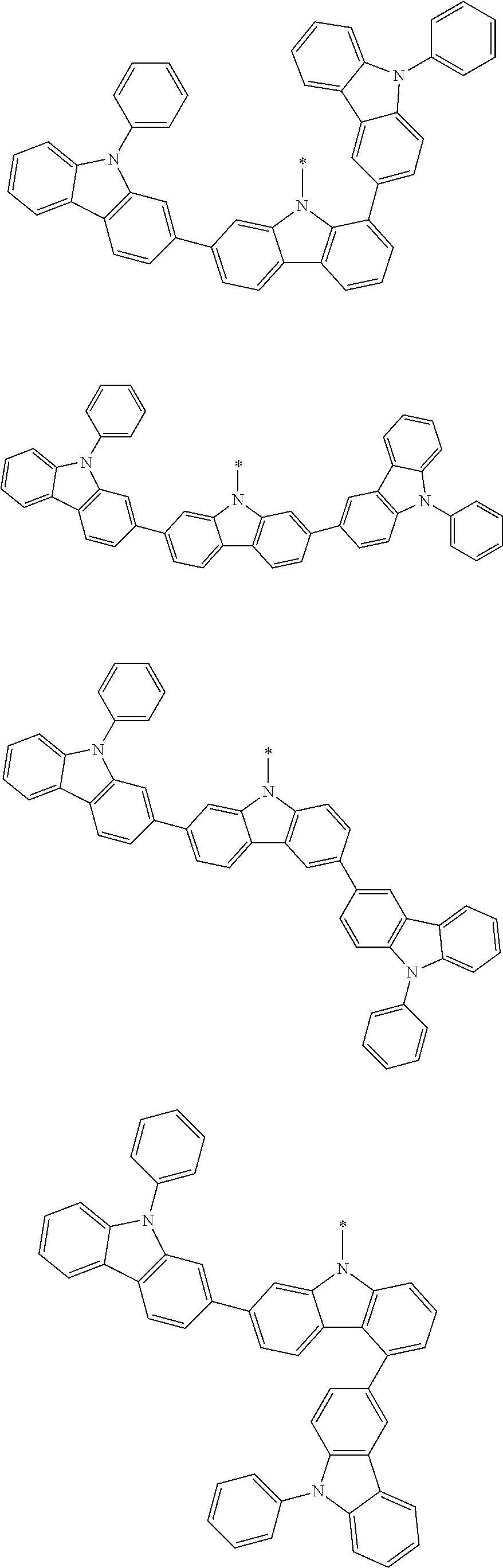


Description of Substituents Belonging to Group B Represented by Formula (DB)
In formula (DB), two of X1 to X4 represent carbon atoms which are respectively bonded to *21 and *22, and the other two independently represent C(R) or a nitrogen atom.
In an aspect of the invention, two of X1 to X4 which represent carbon atoms bonded to *21 and *22 are preferably selected from X1 and X2, X2 and X3, and X3 and X4.
X5 to X12 each independently represent C(R) or a nitrogen atom.
Namely, X1 to X12 not involved in the formation of the ring structure specified in formula (DB) each independently represent C(R) or a nitrogen atom, with each being preferably C(R) in an aspect of the invention.
R represents a hydrogen atom or a substituent, two or more groups R may be the same or different, and two selected from groups R may be bonded to each other to form a ring.
In an aspect of the invention, two selected from groups R are preferably not bonded to each other, thereby failing to form a ring.
Y1 in formula (DB) represents an oxygen atom, a sulfur atom, —C(RA)(RB)—, —Si(RC)(RD)—, —P(RF)—, —P(═O)(RF)—, —S(═O)2—, —P(═S)(RG)—, or —N(RH)—.
RA to R11 each independently represent a hydrogen atom or a substituent, and RA and RB, and RC and RD may be bonded to each other to form a ring.
* is bonded to one of *1 to *3 in formula 1[V].
The substituent for RA to RG is selected from those mentioned above, preferably a substituted or unsubstituted aryl group having 6 to 30 ring carbon atoms or a substituted or unsubstituted heteroaryl group having 5 to 30 ring atoms and more preferably a substituted or unsubstituted aryl group having 6 to 30 ring carbon atoms.
The aryl group for RA to RG has 6 to 30, preferably 6 to 18, more preferably 6 to 13, still more preferably 6 to 12, and particularly preferably 6 to 10 ring carbon atoms. The aryl group may be any of a non-fused aryl group, a fused aryl group, and a combination thereof.
The heteroaryl group for RA to RG has 5 to 30, preferably 5 to 20, more preferably 5 to 14, and still more preferably 5 to 10 ring atoms.
The heteroaryl group contains at least one, preferably 1 to 5, more preferably 1 to 3, and still more preferably 1 to 2 hetero atoms which may be the same or different.
Examples and preferred examples of the aryl group and the heteroaryl group for RA to RG are as described above with respect to Ar1 and Ar2 in formula (DA).
In an aspect of the invention, the group represented by formula (DB) is preferably a group represented by formula (DB1):

In formula (DB1), R1 to R12 may be the same or different and each independently represent a hydrogen atom or a substituent; two selected from R1 to R12 may be bonded to each other to form a ring; and the other symbols are as defined above in formula (DB).
Two carbon atoms from which two selected from R1 to R4 are removed are bonded to *21 and *22, respectively.
In an aspect of the invention, the group represented by formula (DB1) is a group represented by any of formulae (DB1-1) to (DB1-6):

in formulae (DB1-1) to (DB1-6), each symbol is as defined above in formula (DB1).
In formula (DB), when two selected from R1 to R24 are bonded to each other to form a ring, one or more pairs selected from R5 and R6, R6 and R7, and R7 and R8 are preferably bonded to form a ring.
In the compound in an aspect of the invention, two selected from R1 to R24 in formula (DB) are preferably not bonded to each other, thereby failing to form a ring, and the group represented by formula (DB) is more preferably a group represented by formula (DB2):

In formula (DB2), two of the carbon atoms at 1-position, 2-position, 3-position and 4-position of the carbazolyl group from which hydrogen atoms are removed are bonded to *21 and *22, respectively, and the other symbols are as defined above in formula (DB).
The group represented by formula (DB) is preferably selected from the following groups, wherein * represents a bonding site to one of *1 to *3 in formula 1[V] and a hydrogen atom bonded to a carbon atom may be substituted with the substituent mentioned above.


Description of Substituents Belonging to Group C Represented by Formula (DC)
In formula (DC), X1 to X8 each represent C(R1) to C(R8), respectively, or a nitrogen atom, and R1 to R8 each independently represent a hydrogen atom or a substituent.
One of X1 to X4 represents a carbon atom which is directly bonded to Z1 or the nitrogen atom to which Ar4 and Ar5 are bonded. Namely, one of X1 to X4 is a carbon atom directly bonded to the nitrogen atom to which Ar4 and Ar5 are bonded when d is 0, and a carbon atom directly bonded to Z1 when d is 1.
Two selected from R1 to R8, each not involved in the above direct bonding, may be bonded to each other to form a ring. In an aspect of the invention, two selected from R1 to R8, each not involved in the above direct bonding, are preferably not bonded to each other, thereby failing to form a ring.
The “direct bond” used herein is generally called a “single bond” in some cases.
X1 to X8 are each preferably C(R1) to C(R8), and more preferably R1 to R8 are all hydrogen atoms.
In formula (DC), Ar1, Ar4 and Ar5 each independently represent a substituted or unsubstituted aryl group having 6 to 30 ring carbon atoms or a substituted or unsubstituted heteroaryl group having 5 to 30 ring atoms.
The aryl group for Ar1, Ar4 and Ar5 has 6 to 30, preferably 6 to 18, more preferably 6 to 13, still more preferably 6 to 12, and particularly preferably 6 to 10 ring carbon atoms. The aryl group may be any of a non-fused aryl group, a fused aryl group, and a combination thereof.
The heteroaryl group for Ar1, A4 and Ar5 has 5 to 30, preferably 5 to 20, more preferably 5 to 14, and still more preferably 5 to 10 ring atoms.
The heteroaryl group contains at least one, preferably 1 to 5, more preferably 1 to 3, and still more preferably 1 to 2 hetero atoms which may be the same or different. The hetero atom may include, for example, a nitrogen atom, a sulfur atom, an oxygen atom, and a phosphorus atom, and preferably selected from these atoms.
Examples and preferred examples of the aryl group and the heteroaryl group for Ar1, Ar4 and Ar5 are as described above with respect to Ar1 and Ar2 in formula (DA).
In formula (DC), Z1 independently represents a substituted or unsubstituted aromatic hydrocarbon group having 6 to 30 ring carbon atoms, a substituted or unsubstituted heterocyclic group having 5 to 30 ring atoms, or a group wherein 2 to 4 groups selected from the preceding groups are bonded to each other.
The aromatic hydrocarbon group, the heterocyclic group, the group wherein 2 to 4 groups selected from the preceding groups are bonded to each other for Z in formula (DC), and preferred examples thereof are as described above with respect to L1 to L3. The aromatic hydrocarbon group for Z1 to Z3 is preferably a phenylene group and a naphthylene group and more preferably a phenylene group.
Z1 is preferably a substituted or unsubstituted aromatic hydrocarbon group having 6 to 30 ring carbon atoms. The aromatic hydrocarbon group more preferred is as described above.
In formula (DC), d is 0 or 1.
One of *1 to *3 of formula 1[V] is directly bonded to a nitrogen atom from which one of Ar1 and Ar4 indicated by *6′ in formula (DC) is removed.
For example, formula 1[V] wherein *1 is directly bonded to a nitrogen atom from which Ar1 indicated by *6′ is removed is represented by the following formula (shown partially):

When *1 is directly bonded to a nitrogen atom from which Ar4 indicated by *6′ is removed, formula 1[V] is represented by the following formula (shown partially):

In an aspect of the invention, the group represented by formula (DC) is preferably a group represented by formula (DC1):

in formula (DC1), each symbol is as defined above in formula (DC).
In an aspect of the invention, the group represented by formula (DC) is preferably a group represented by formula (DC2):

in formula (DC2), each symbol is as defined above in formula (DC).
Examples of the group represented by formula (DC) are preferably selected from the following groups, wherein a hydrogen atom bonded to a carbon atom may be substituted with the substituent mentioned above.


Description of Substituents Belonging to Group D Represented by Formula (DD)
In formula (DD), X1 to X16 each represent C(R1) to C(R16), respectively, or a nitrogen atom, and R1 to R16 each independently represent a hydrogen atom or a substituent.
One of X1 to X4 represents a carbon atom which is directly bonded to a carbon atom represented by one of X13 to X16.
Two selected from R1 to R8 and two selected from R9 to R16 each not involved in the above direct bonding may be bonded to each other to form a ring.
In an aspect of the invention, two selected from R1 to R8 and two selected from R9 to R16, each not involved in the above direct bonding, are preferably not bonded to each other, thereby failing to form a ring.
The “direct bond” used herein is generally called a “single bond” in some cases.
X1 to X16 are each preferably C(R1) to C(R16), respectively, and more preferably R1 to R16 are all hydrogen atoms.
In formula (DD), Y1 represents an oxygen atom, a sulfur atom, C(RA)(RD), Si(RC)(RD), P(RE), P(═O)(RF), S(═O)2, P(═S)(RG), or —N(RH)—, with an oxygen atom or a sulfur atom being preferred.
RA to RH each independently represent a hydrogen atom or a substituent. RA and RB, and RC and RD may be bonded to each other to form a ring.
* is bonded to one of *1 to *3 in formula 1[V].
RA to RH each preferably represent an aryl group, which is preferably selected from the following aryl groups:


wherein * indicates a bonding site and each carbon atom other than that at the bonding site may have a substituent.
The structures wherein RA and RB in C(RA)(RB) or RC and RD in Si(RC)(RD) are bonded to each other to form a ring are shown below:

In an aspect of the invention, the group represented by formula (DD) is preferably a group represented by formula (DD1):

in formula (DD1), each symbol is as defined above in formula (DD).
In an aspect of the invention, the group represented by formula (DD) is preferably a group represented by formula (DD2):

in formula (DD2), each symbol is as defined above in formula (DD).
Examples of the group represented by formula (DD) are preferably selected from the following groups, wherein a hydrogen atom bonded to a carbon atom may be substituted with the substituent mentioned above.


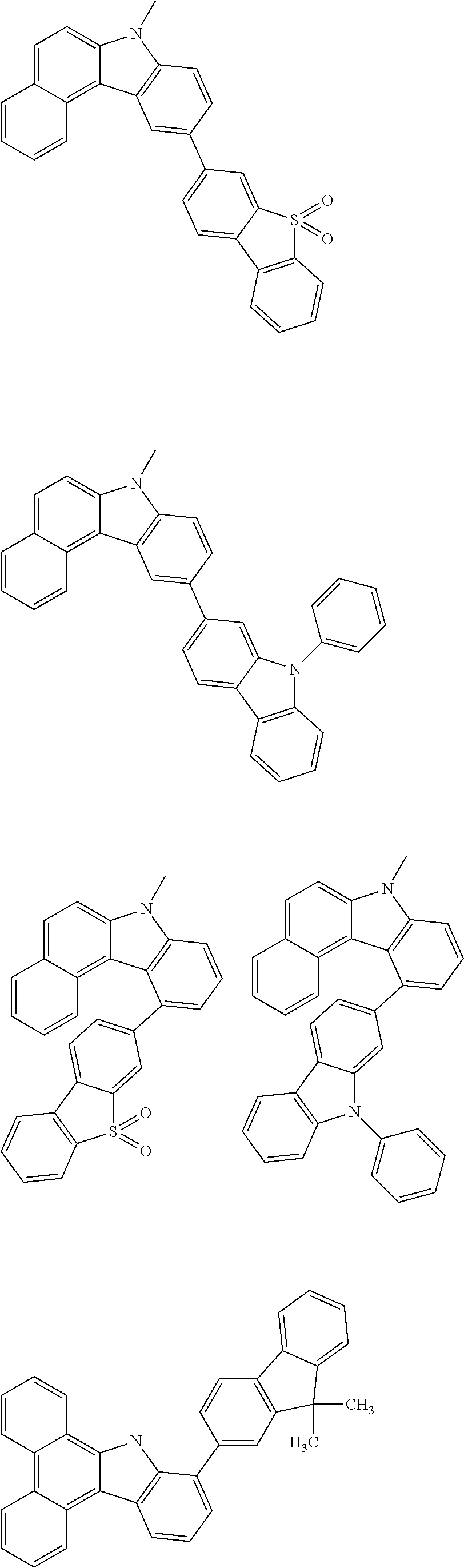





Compound in an Aspect of the Invention
In an aspect, the compound of the invention is preferably a compound represented by formula 1a[V] (also referred to as “compound 1a[V]”):

in formula 1a[V], each symbol is as defined above in formula 1[V].
In an aspect, the compound (1a) of the invention is more preferably a compound represented by any of formulae 1a-1[V] to 1a-4[V] (also referred to as “compounds 1a-1[V] to 1a-4[V]”):

in formula 1a-1[V], DA represents a group represented by formula (DA) which is belong to Group A described in formula 1[V], DD represents a group represented by formula (DD) which is belong to Group D described in formula 1[V], and the other symbols are as defined above in formula 1[V];

in formula 1a-2[V], DA represents a group represented by formula (DA) which is belong to Group A described in formula 1[V], DB represents a group represented by formula (DB) which is belong to Group B described in formula 1[V], DD represents a group represented by formula (DD) which is belong to Group D described in formula 1[V], and the other symbols are as defined above in formula 1[V];

in formula 1a-3[V], DA represents a group represented by formula (DA) which is belong to Group A described in formula 1[V], DB represents a group represented by formula (DB) which is belong to Group B described above in formula 1[V], DC represents a group represented by formula (DC) which is belong to Group C described in formula 1[V], and the other symbols are as defined above in formula 1[V]; and

in formula 1a-4[V], DA represents a group represented by formula (DA) which is belong to Group A described in formula 1[V], DC represents a group represented by formula (DC) which is belong to Group C described in formula 1[V], DD represents a group represented by formula (DD) which is belong to Group D described in formula 1[V], and the other symbols are as defined above in formula 1[V].
In an aspect of the invention, the compound 1[V] or the compound 1a[V] is more preferably a compound represented by formula 1a-i[V] (also referred to as “compound 1a-i[V]”):

in formula 1a-i[V], each symbol is as defined above in formula 1[V].
In an aspect of the invention, the compound 1a-i[V] is more preferably a compound represented by formula 1a-4-i[V] (also referred to as “compound 1a-4-i[V]”):

in formula 1a-4-i[V], DA represents a group represented by formula (DA) which is belong to Group A described with respect to formula 1[V], DC represents a group represented by formula (DC) which is belong to Group C described with respect to formula 1[V], DD represents a group represented by formula (DD) which is belong to Group D described with respect to formula 1[V], and the other symbols are as defined above in formula 1[V].
In an aspect of the invention, the compound 1[V] or the compound 1a[V] is more preferably a compound represented by formula 1a-ii[V] (also referred to as “compound 1a-ii[V]”):

in formula 1a-ii[V], each symbol is as defined above in formula 1[V].
In an aspect of the invention, the compound 1[V] or the compound 1a[V] is more preferably a compound represented by formula 1a-iii[V] (also referred to as “compound 1a-iii[V]”):

in formula 1a-iii[V], each symbol is as defined above in formula 1[V].
In an aspect of the invention, the compound 1a-iii[V] is more preferably a compound represented by any of formulae 1a-1-iii[V] to 1a-3-iii[V] (also referred to as “compounds 1a-1-iii[V] to 1a-3-iii[V]”):

in formula 1a-1-iii[V], DA represents a group represented by formula (DA) which is belong to Group A described with respect to formula 1[V], DD represents a group represented by formula (DD) which is belong to Group D described with respect to formula 1[V], and the other symbols are as defined above in formula 1[V];

in formula 1a-2-iii[V], DA represents a group represented by formula (DA) which is belong to Group A described with respect to formula 1[V], DB represents a group represented by formula (DB) which is belong to Group B described above with respect to formula 1[V], DD represents a group represented by formula (DD) which is belong to Group D described with respect to formula 1[V], and the other symbols are as defined above in formula 1[V]; and
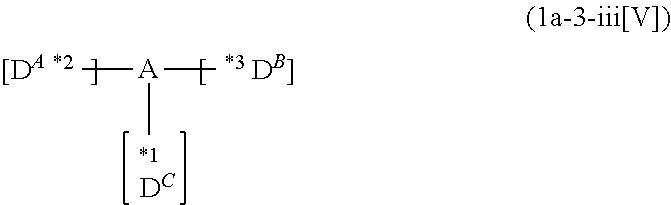
in formula 1a-3-iii[V], DA represents a group represented by formula (DA) which is belong to Group A described with respect to formula 1[V], DB represents a group represented by formula (DB) which is belong to Group B described above with respect to formula 1[V], DC represents a group represented by formula (DC) which is belong to Group C described with respect to formula 1[V], the other symbols are as defined above in formula 1[V].
In an aspect of the invention, the compound 1[V] or the compound 1a[V] is more preferably a compound represented by formula 1a-iv[V] (also referred to as “compound 1a-iv[V]”):

in formula 1a-iv[V], each symbol is as defined above in formula 1[V].
In an aspect of the invention, the compound 1[V] is more preferably a compound represented by any of formulae 1b-i[V] to 1b-iv[V] (also referred to as “compounds 1b-i[V] to 1b-iv[V]”):

in formula 1b-i[V], each symbol is as defined above in formula 1[V]; X101 to X104 each represent a carbon atom bonded to one of *p to *r, C(Rx), or a nitrogen atom; Rx represents a hydrogen atom or a substituent; two or more groups Rx may be the same or different; and two selected from groups Rx may be bonded to each other to form a ring;

in formula 1b-ii[V], each symbol is as defined above in formula 1[V]; X103 represents C(Rx) or a nitrogen atom, and Rx represents a hydrogen atom or a substituent;

in formula 1b-iii[V], each symbol is as defined above in formula 1[V]; X101, X102, and X105 to X108 each represent a carbon atom bonded to one of *p to *r, C(Rx), or a nitrogen atom; Rx represents a hydrogen atom or a substituent, two or more groups Rx may be the same or different, and two selected from groups Rx may be bonded to each other to form a ring; and

in formula 1b-iv[V], each symbol is as defined above in formula 1[V]; 1 to 3 carbon atoms from which one to three selected from R101, R102, and R105 to R108 are removed are each bonded to one of *p to *r; the others each independently represent a hydrogen atom or a substituent; and two selected from R102 and R105 to R108 may be bonded to each other to form a ring.
Examples of the compound 1[V] in an aspect of the invention are shown below, although not limited thereto.


As described above, in an aspect of the invention, the invention relates to a composition comprising the compound of the invention mentioned above and at least one compound selected from the compounds represented by any of formulae (CH1), (CH3), (CH4), (CH5), (CH6), (CH14), and (CH15) (also referred to as compound (CH1), compound (CH3), compound (CH4), compound (CH5), compound (CH6), compound (CH14), and compound (CH15), respectively.
However, the compound (CH1), the compound (CH3), the compound (CH4), the compound (CH5), the compound (CH6), the compound (CH14), and the compound (CH15) are different form the compound of the invention mentioned above. Therefore, the compound overlapped with the compound of the invention is removed from the scope of each of the formulae (CH1), (CH3), (CH4), (CH5), (CH6), (CH14), and (CH15).
In the composition, the ratio of the compound of the invention and at least one compound selected from the compound (CH1), the compound (CH3), the compound (CH4), the compound (CH5), the compound (CH6), the compound (CH14), and the compound (CH15) is not particularly limited. In an aspect of the invention, the ratio of (compound of the invention):(at least one compound selected from the compound (CH1), the compound (CH3), the compound (CH4), the compound (CH5), the compound (CH6), the compound (CH14), and the compound (CH15)) is preferably 5:95 to 95:5, more preferably 10:90 to 90:10, still more preferably 20:80 to 80:20, and particularly preferably 40:60 to 60:40, each based on mass.
In another aspect of the invention, the ratio of (compound of the invention):(at least one compound selected from the compound (CH1), the compound (CH3), the compound (CH4), the compound (CH5), the compound (CH6), the compound (CH14), and the compound (CH15)) is preferably 5:95 to 90:10, more preferably 10:90 to 60:40, and still more preferably 20:80 to 40:60, each based on mass.
In another aspect of the invention, the ratio of (compound of the invention):(at least one compound selected from the compound (CH1), the compound (CH3), the compound (CH4), the compound (CH5), the compound (CH6), the compound (CH14), and the compound (CH15)) is preferably 10:90 to 95:5, more preferably 40:60 to 90:10, and still more preferably 60:40 to 80:20, each based on mass.
In the composition, the total content of the compound of the invention and at least one compound selected from selected from the compound (CH1), the compound (CH3), the compound (CH4), the compound (CH5), the compound (CH6), the compound (CH14), and the compound (CH15) is preferably 20% by mass or more, more preferably 50% by mass or more, still more preferably 70% by mass or more, still further preferably 80% by mass or more, particularly preferably 90% by mass or more, and most preferably substantially 100% by mass.
The compound (CH1), the compound (CH3), the compound (CH4), the compound (CH5), the compound (CH6), the compound (CH14), and the compound (CH15) are described below.
Compound (CH1)
Compound (CH1) preferably combines a hole transporting skeleton and an electron transporting skeleton in its molecule. More preferably, the structure B comprises a hole transporting skeleton and the structure A comprises an electron transporting skeleton.
AL1-B)m (CH1)
in formula (CH1),
A
in formula (CH1),
A represents a substituted or unsubstituted aromatic heterocyclic group;
L1 represents a single bond, a substituted or unsubstituted aromatic hydrocarbon group, or a substituted or unsubstituted aromatic heterocyclic group; and
B represents a residue of a structure represented by formula (CH2) described below.
The subscript m represents an integer of 2 or more. The upper limit of m depends on the structure of A and is preferably 2 to about 10 in view of increasing a glass transition temperature and more preferably 2 or 3, although not particularly limited thereto. The composition of the invention is preferably capable of forming the layer of an organic EL device by a coating method, in which an organic thin film is generally formed by forming a coating film and then evaporating the solvent under heating. A material having a high glass transition temperature is advantageous for forming an amorphous organic thin film.
Two or more groups L1 may be the same or different, and two or more groups B may be the same or different. In view of solubility, two or more structures -L1-B are preferably different so as to make the compound asymmetric with respect to A.
The compound (CH1) is preferably a compound represented by formula (CHi) or (CH1-A):

in formula (CH1-A′), a represents an integer of 1 or more; b represents an integer of 1 or more; a+b is m−k in formula (CH1-A); Ax, Rx, L1, B, and k are as defined above in formula (CH1-A); two or more groups L1 may be the same or different; and two or more groups B may be the same or different.
Formula (CH2) will be described below, in which Z1, X1, Y1, Z2, X2, Y2, or L2 is bonded to L1 or A when L1 is a single bond to form a compound of formula (CH1).

In formula (CH2), one of X1 and Y1 represents a single bond, —CR2—, —NR—, —O—, —S—, or —SiR2— and the other represents —NR—, —O—, —S— or —SiR2—; and one of X2 and Y2 represents a single bond, —CR2—, —NR—, —O—, —S—, or —SiR2— and the other represents —NR—, —O—, —S—, or —SiR2—.
R represents a hydrogen atom, a substituted or unsubstituted alkyl group, a substituted or unsubstituted cycloalkyl group, a substituted or unsubstituted aromatic hydrocarbon group, or a substituted or unsubstituted aromatic heterocyclic group.
Z1 and Z2 each independently represent a substituted or unsubstituted aliphatic hydrocarbon group, a substituted or unsubstituted aliphatic heterocyclic group, a substituted or unsubstituted aromatic hydrocarbon group, or a substituted or unsubstituted aromatic heterocyclic group.
L2 represents a linking group, for example, —CR2—, —CR2CR2—, —CR═CR—, —NR—, —N═CR—, a substituted or unsubstituted aliphatic hydrocarbon group, a substituted or unsubstituted aliphatic heterocyclic group, a substituted or unsubstituted aromatic hydrocarbon group, or a substituted or unsubstituted aromatic heterocyclic group.
R in L2 is as defined above with respect to R in X1, X2, Y1 and Y2.
The subscript n represents an integer of 0 to 5, preferably 0 to 2, and particularly preferably 0 or 1. When n is an integer of 2 or more, two or more groups Z2 may be the same or different, two or more groups X2 may be the same or different, and two or more groups Y2 may be the same or different.
The structure represented by formula (CH2) is preferably a structure represented by formula (CH2-a) or (CH2-b). The compound represented by formula (CH1) may comprise both the structure represented by formula (CH2-a) and the structure represented by formula (CH2-b).

Formula (CH2-a) will be described below, which corresponds to formula (CH2) wherein L2 is Za3. One of Za1, Xa1, Ya1, Za2, Xa2, Ya2, and Za3 in formula (CH2-a) is bonded to L1 or A when L1 is a single bond to form a compound of formula (CH1).
One of Xa1 and Ya1 represents a single bond, —CR2—, —NR—, —O—, —S—, or —SiR2—, and the other represents —NR—, —O—, —S—, or —SiR2—.
One of Xa2 and Ya2 represents a single bond, —CR2—, —NR—, —O—, —S—, or —SiR2—, the other represents —NR—, —O—, —S—, or —SiR2—.
R in Xa1, Xa2, Ya1, and Ya2 is as defined above with respect to R in X1, X2, Y1, and Y2 of formula (CH2).
Za1, Za2 and Za3 each independently represent a substituted or unsubstituted aliphatic hydrocarbon group, a substituted or unsubstituted aliphatic heterocyclic group, a substituted or unsubstituted aromatic hydrocarbon group, or a substituted or unsubstituted aromatic heterocyclic group.
The subscript na represents an integer of 0 to 5, preferably 0 to 2, and particularly preferably 0 or 1. When na is an integer of 2 or more, two or more groups Za2 may be the same or different, two or more groups Xa2 may be the same or different, and two or more groups Ya2 may be the same or different.
Formula (CH2-b) will be described below, which corresponds to formula (CH2) wherein n is 0 and L2 is an aromatic hydrocarbon ring group or an aromatic heterocyclic group each having a substituent comprising 3 or more fused rings. One of Zb1, Xb1, Yb1, Zb2, Zb3, Xb2, Yb2, and Zb4 is bonded to L1 or A when L1 is a single bond to form the compound of formula (CH1). The ring Zb2 and the ring Zb3 are bonded to each other via a single bond. In view of the solubility, formula (CH2-b) is preferred.
One of Xb1 and Yb1 represents a single bond, —CR2—, —NR—, —O—, —S—, or —SiR2—, and the other represents —NR—, —O—, —S—, or —SiR2—.
One of Xb2 and Yb2 represents a single bond, —CR2—, —NR—, —O—, —S—, or —SiR2—, and the other represents —NR—, —O—, —S—, or —SiR2—.
R in Xb1, Xb2, Yb1, and Yb2 is as defined above with respect to R in X1, X2, Y1, and Y2 of formula (CH2).
Zb1, Zb2, Zb3, and Zb4 each independently represent a substituted or unsubstituted aliphatic hydrocarbon group, a substituted or unsubstituted aliphatic heterocyclic group, a substituted or unsubstituted aromatic hydrocarbon group, or a substituted or unsubstituted aromatic heterocyclic group.
The structure represented by formula (CH2-a) wherein na is 1 is preferably a structure represented by any of formulae (CH2-a-1) to (CH2-a-6), which correspond to formula (CH2-a) wherein na is 1, each of Za1, Za2, and Za3 is a benzene ring, one of Xa1 and Ya1 is a single bond, and one of Xa2 and Ya2 is a single bond.

In the above formulae, Xa11 and Xa12 in formula (CH2-a-1), Xa21 and Xa22 in formula (CH2-a-2), Xa31 and Xa32 in formula (CH2-a-3), Xa41 and Xa42 in formula (CH2-a-4), Xa51 and Xa52 in formula (CH2-a-5), and XaG1 and XaG2 in formula (CH2-a-6) each independently represent —CR2—, —NR—, —O—, —S—, or —SiR2—.
R in Xa11, Xa12, Xa21, Xa22, Xa31, Xa32, Xa41, Xa42, Xa51, Xa52, Xa61, and Xa62 is as defined above with respect to R in X1, X2, Y1, and Y2 of formula (CH2).
Ra1 in formula (CH2-a-1), Ra2 in formula (CH2-a-2), Ra3 in formula (CH2-a-3), Ra4 in formula (CH2-a-4), Ra5 in formula (CH2-a-5), and Ra6 in formula (CH2-a-6) each independently represent a substituted or unsubstituted alkyl group having 1 to 20 carbon atoms, a substituted or unsubstituted cycloalkyl group having 3 to 20 ring carbon atoms, a substituted or unsubstituted alkoxy group having 1 to 20 carbon atoms, a substituted or unsubstituted aralkyl group having 7 to 24 carbon atoms, a substituted or unsubstituted silyl group, a substituted or unsubstituted aromatic hydrocarbon ring group having 6 to 24 ring carbon atoms, or a substituted or unsubstituted aromatic heterocyclic group having 2 to 24 ring carbon atoms.
Two or more groups Ra1 may be the same or different, two or more groups Ra2 may be the same or different, two or more groups Ra3 may be the same or different, two or more groups Ra4 may be the same or different, two or more groups Ra5 may be the same or different, and two or more groups Ra6 may be the same or different.
In Formulae (CH2-a-1) to (CH2-a-6),
p1 in formula (CH2-a-1), p2 in formula (CH2-a-2), p3 in formula (CH2-a-3), p4 in formula (CH2-a-4), p5 in formula (CH2-a-5), and p6 in formula (CH2-a-6) each independently represent an integer of 0 to 4;
q1 in formula (CH2-a-1), q2 in formula (CH2-a-2), q3 in formula (CH2-a-3), q4 in formula (CH2-a-4), q5 in formula (CH2-a-5), and q6 in formula (CH2-a-6) each independently represent an integer of 0 to 2; and
r1 in formula (CH2-a-1), r2 in formula (CH2-a-2), r3 in formula (CH2-a-3), r4 in formula (CH2-a-4), r5 in formula (CH2-a-5), and r6 in formula (CH2-a-6) each independently represent an integer of 0 to 4.
In view of increasing the solubility, the structure represented by formula (CH2-b) is more preferably a structure represented by formula (CH2-b-1), which corresponds to formula (CH2-b) wherein each of Zb1, Zb2, Zb3, and Zb4 is a benzene ring, one of Xb1 and Yb1 is a single bond, and one of Xb2 and Yb2 is a single bond.

in formula (CH2-b-1), Xb11 and Xb12 each independently represent —NR—, —O—, —S—, or —SiR2—;
R is as defined above with respect to R in X1, X2, Y1, and Y2 of formula (CH2);
Rb11, Rb12, Rb13, and Rb14 each independently represent a substituted or unsubstituted alkyl group having 1 to 20 carbon atoms, a substituted or unsubstituted cycloalkyl group having 3 to 20 ring carbon atoms, a substituted or unsubstituted alkoxy group having 1 to 20 carbon atoms, a substituted or unsubstituted aralkyl group having 7 to 24 carbon atoms, a substituted or unsubstituted silyl group, a substituted or unsubstituted aromatic hydrocarbon ring group having 6 to 24 ring carbon atoms, or a substituted or unsubstituted aromatic heterocyclic group having 2 to 24 ring carbon atoms;
s1 represents an integer of 0 to 4 and two or more groups Rb11 when s1 is an integer of 2 or more may be the same or different;
t1 represents an integer of 0 to 3 and two or more groups Rb12 when t1 is an integer of 2 or more may be the same or different;
u1 represents an integer of 0 to 3 and two or more groups Rb13 when u1 is an integer of 2 or more may be the same or different; and
v1 represents an integer of 0 to 4 and two or more groups Rb14 when v1 is an integer of 2 or more may be the same or different.
B in formula (CH1) is preferably a group represented by formula (CH2-A) or (CH2-B):

in formula (CH2-A), Xb12, Rb11, Rb12, Rb13, Rb14, s1, t1, u1 and v1 are as defined above in formula (CH2-b-1), and * represents a bonding site to L1 of formula (CH1); and
in formula (CH2-B),
s1 represents an integer of 0 to 3;
Xb12, R, Rb11, Rb12, Rb13, Rb14, t1, u1, and v1 are as defined above in formula (CH2-b-1), with Xb12 being preferably NR in view of increasing the solubility; and
* represents a bonding site to L1 of formula (CH1).
R in formula (CH2-B) is preferably a substituted or unsubstituted alkyl group, a substituted or unsubstituted cycloalkyl group, a substituted or unsubstituted aromatic hydrocarbon group, or a substituted or unsubstituted aromatic heterocyclic group.
The group represented by formula (CH2-A) is preferably a group represented by formula (CH2-A-i) or (CH2-A-ii):

In formula (CH2-A-i),
Rb11, Rb12, Rb13, Rb14, s1, t1, u1, and v1 are as defined above in formula (CH2-A); and
R is as defined above with respect to R in X1, X2, Y1, and Y2 of formula (CH2);
* represents a bonding site to L1 of formula (CH1).
R in formula (CH2-A-i) is preferably a substituted or unsubstituted alkyl group, a substituted or unsubstituted cycloalkyl group, a substituted or unsubstituted aromatic hydrocarbon group, or a substituted or unsubstituted aromatic heterocyclic group.
In formula (CH2-A-ii),
s1 represents an integer of 0 to 3;
Rb11, Rb12, Rb13, Rb14, t1, u1, and v1 are as defined above in formula (CH2-A);
Rb15 and Rb16 each independently represent a substituted or unsubstituted alkyl group having 1 to 20 carbon atoms, a substituted or unsubstituted cycloalkyl group having 3 to 20 ring carbon atoms, a substituted or unsubstituted alkoxy group having 1 to 20 carbon atoms, a substituted or unsubstituted aralkyl group having 7 to 24 carbon atoms, a substituted or unsubstituted silyl group, a substituted or unsubstituted aromatic hydrocarbon ring group having 6 to 24 ring carbon atoms, or a substituted or unsubstituted aromatic heterocyclic group having 2 to 24 ring carbon atoms;
R is as defined above with respect to R of X1, X2, Y1, and Y2 in formula (CH2), with a substituted or unsubstituted alkyl group, a substituted or unsubstituted cycloalkyl group, a substituted or unsubstituted aromatic hydrocarbon group, or a substituted or unsubstituted aromatic heterocyclic group being preferred;
w1 represents an integer of 0 to 3 and two or more groups Rb15 when w1 is an integer of 2 or more may be the same or different;
z1 represents an integer of 0 to 4 and two or more groups Rb16 when z1 is an integer of 2 or more may be the same or different; and
* represents a bonding site to L1 of formula (CH1).
The group represented by formula (CH2-A-i) is preferably a group represented by any of formulae CH2-A-1) to (CH2-A-3):

in formulae (CH2-A-1) to (CH2-A-3), R, Rb11, Rb12, Rb13, Rb14, s1, t1, u1, and v1 are as defined above in formula (CH2-b-1), and * represents a bonding site to L1 of formula (CH1).
R in formulae (CH2-A-1) to (CH2-A-3) is preferably a substituted or unsubstituted alkyl group, a substituted or unsubstituted cycloalkyl group, a substituted or unsubstituted aromatic hydrocarbon group, or a substituted or unsubstituted aromatic heterocyclic group.
The group represented by formula (CH2-B) is a group represented by formula (CH2-B-i) or (CH2-B-ii):

In formula (CH2-B-i), R, Rb11, Rb12, Rb13, Rb14, s1, t1, u1, and v1 are as defined above in formula (CH2-B), and * represents a bonding site to L1 of formula (CH1).
R in formula (CH2-B-i) is preferably a substituted or unsubstituted alkyl group, a substituted or unsubstituted cycloalkyl group, a substituted or unsubstituted aromatic hydrocarbon group, or a substituted or unsubstituted aromatic heterocyclic group.
In formula (CH2-B-ii),
s1 represents an integer of 0 to 2;
R, Rb11, Rb12, Rb13, Rb14, t1, u1, and v1 are as defined above in formula (CH2-B);
Rb15 and Rb16 each independently represent a substituted or unsubstituted alkyl group having 1 to 20 carbon atoms, a substituted or unsubstituted cycloalkyl group having 3 to 20 ring carbon atoms, a substituted or unsubstituted alkoxy group having 1 to 20 carbon atoms, a substituted or unsubstituted aralkyl group having 7 to 24 carbon atoms, a substituted or unsubstituted silyl group, a substituted or unsubstituted aromatic hydrocarbon ring group having 6 to 24 ring carbon atoms, or a substituted or unsubstituted aromatic heterocyclic group having 2 to 24 ring carbon atoms;
w1 represents an integer of 0 to 3 and two or more groups Rb15 when w1 is an integer of 2 or more may be the same or different;
z1 represents an integer of 0 to 4 and two or more groups Rb16 when z1 is an integer of 2 or more may be the same or different; and
* represents a bonding site to L1 of formula (CH1).
R in formula (CH2-B-ii) is preferably a substituted or unsubstituted alkyl group, a substituted or unsubstituted cycloalkyl group, a substituted or unsubstituted aromatic hydrocarbon group, or a substituted or unsubstituted aromatic heterocyclic group.
B in formula (CH1) is more preferably a group represented by formula (CH2-C) or (CH2-D):

in formula (CH2-C),
u1 represents an integer of 0 to 4;
Rb11, Rb12, Rb13, Rb14, s1, t1, and v1 are as defined above in formula (CH2-b-1); and
* represents a bonding site to L1 of formula (CH1); and
in formula (CH2-D).
s1 represents an integer of 0 to 3;
u1 represents an integer of 0 to 4;
R, Rb11, Rb12, Rb13, Rb14, t1, and v1 are as defined above in formula (CH12-b-1); and
* represents a bonding site to L1 of formula (CH1).
R in formula (CH2-D) is preferably a substituted or unsubstituted alkyl group, a substituted or unsubstituted cycloalkyl group, a substituted or unsubstituted aromatic hydrocarbon group, or a substituted or unsubstituted aromatic heterocyclic group.
The group represented by formula (CH2-C) is more preferably a group represented by formula (CH2-C-1) or (CH2-C-2):

In formula (CH2-C-1),
R, Rb11, Rb12, Rb13, Rb14, s1, t1, and v1 are as defined above in formula (CH2-b-1);
u1 represents an integer of 0 to 4; and
* represents a bonding site to L1 of formula (CH1).
R in formula (CH2-C-1) is preferably a substituted or unsubstituted alkyl group, a substituted or unsubstituted cycloalkyl group, a substituted or unsubstituted aromatic hydrocarbon group, or a substituted or unsubstituted aromatic heterocyclic group.
In formula (CH2-C-2),
R, Rb11, Rb12, Rb13, Rb14, s1, t1, and v1 are as defined above in formula (CH2-b-1);
u1 represents an integer of 0 to 4; and
* represents a bonding site to L1 of formula (CH1).
R in formula (CH2-C-2) is preferably a substituted or unsubstituted alkyl group, a substituted or unsubstituted cycloalkyl group, a substituted or unsubstituted aromatic hydrocarbon group, or a substituted or unsubstituted aromatic heterocyclic group.
B in formula (CH1) is more preferably a group represented by formula (CH2-E) or (CH2-F):

in formula (CH2-E),
s1 represents an integer of 0 to 3;
u1 represents an integer of 0 to 4;
w1 represents an integer of 0 to 4;
Rb11, Rb12, Rb13, Rb14, t1, and v1 are as defined above in formula (CH2-b-1):
Rb15 and Rb16 each independently represent a substituted or unsubstituted alkyl group having 1 to 20 carbon atoms, a substituted or unsubstituted cycloalkyl group having 3 to 20 ring carbon atoms, a substituted or unsubstituted alkoxy group having 1 to 20 carbon atoms, a substituted or unsubstituted aralkyl group having 7 to 24 carbon atoms, a substituted or unsubstituted silyl group, a substituted or unsubstituted aromatic hydrocarbon ring group having 6 to 24 ring carbon atoms, or a substituted or unsubstituted aromatic heterocyclic group having 2 to 24 ring carbon atoms;
R is as defined above with respect to R of X1, X2, Y1, and Y2 in formula (CH2), with a substituted or unsubstituted alkyl group, a substituted or unsubstituted cycloalkyl group, a substituted or unsubstituted aromatic hydrocarbon group, or a substituted or unsubstituted aromatic heterocyclic group being preferred;
w1 represents an integer of 0 to 4 and two or more groups Rb15 when w1 is an integer of 2 or more may be the same or different;
z1 represents an integer of 0 to 4 and two or more groups Rb16 when z1 is an integer of 2 or more may be the same or different; and
* represents a bonding site to L1 of formula (CH1); and
in formula (CH2-F),
s1 represents an integer of 0 to 2;
u1 represents an integer of 0 to 4;
Rb11, Rb12, Rb13, Rb14, t1, and v1 are as defined above in formula (CH2-b-1);
Rb15 and Rb16 are as defined above in formula (CH2-E);
R is as defined above with respect to R of X1, X2, Y1, and Y2 in formula (CH2), with a substituted or unsubstituted alkyl group, a substituted or unsubstituted cycloalkyl group, a substituted or unsubstituted aromatic hydrocarbon group, or a substituted or unsubstituted aromatic heterocyclic group being preferred;
w1 represents an integer of 0 to 4 and two or more groups Rb15 when w1 is an integer of 2 or more may be the same or different;
z1 represents an integer of 0 to 4 and two or more groups Rb16 when z1 is an integer of 2 or more may be the same or different; and
* represents a bonding site to L1 of formula (CH1).
The details of each group represented by symbol in the above formulae are described below.
Preferably, the substituted or unsubstituted aromatic hydrocarbon group for L1 in formula (CH1); L1 in formula (CHi); L1 in formula (CH1-A); L1 in formula (CH1-A′); R, Z1, Z2, and L2 in formula (CH2); R and Za1 to Za3 in formula (CH2-a); R and Zb1 to Zb4 in formula (CH2-b); R in formulae (CH2-a-1) to (CH2-a-6); R in formula (CH2-b-1); R in formula (CH2-A); R in formula (CH2-B); R in formula (CH2-D); R in formula (CH2-F); R in formula (CH2-A-i); R in formula (CH2-A-ii); R in formula (CH2-B-i); R in formula (CH2-B-ii); and R in formulae (CH2-A-1) to (CH2-A-3) is each independently a residue of a substituted or unsubstituted aromatic hydrocarbon ring having 6 to 30 ring carbon atoms.
Examples of the aromatic hydrocarbon ring having 6 to 30 ring carbon atoms include benzene, naphthalene, biphenyl, terphenyl, fluorene, phenanthrene, triphenylene, perylene, chrysene, fluoranthene, benzofluorene, benzotriphenylene, benzochrysene, anthracene, benzene-fused analogues thereof, and cross-linked analogues thereof, with benzene, naphthalene, biphenyl, terphenyl, fluorene, and phenanthrene being preferred.
Preferred examples of the aromatic hydrocarbon ring group having 6 to 30 ring carbon atoms for L1 in formula (CH1), L1 in formula (CHi), L1 in formula (CH1-A), and L1 in formula (CH1-A′) include a m-phenylene group, a p-phenylene group, a 4,4′-biphenylene group, a 4,3′-biphenylene group, a 1,4-naphthylene group, and a 2,6-naphthylene group.
The aromatic hydrocarbon ring having 6 to 30 ring carbon atoms for R in formula (CH2); R in formula (CH2-a) or (CH2-b); R in formulae (CH2-a-1) to (CH2-a-6); R in formula (CH2-b-1); R in formula (CH2-A) or (CH2-B); R in formula (CH2-D); R in formula (CH2-F); R in formula (CH2-A-i); R in formula (CH2-A-ii); R in formula (CH2-B-i); R in formula (CH2-B-ii); and R in formulae (CH2-A-1) to (CH2-A-3) is preferably a benzene which may have an electron transporting substituent, for example, a cyano group.
The aromatic hydrocarbon ring having 6 to 30 ring carbon atoms for Z1 and Z2 in formula (CH2); Za1 to Za3 in formula (CH2-a); and Zb1 to Zb4 in formula (CH2-b) is preferably a benzene ring.
Preferably, the substituted or unsubstituted aromatic heterocyclic group for A and L1 in formula (CH1); A and L1 in formula (CHi); Ax and L1 in formula (CH1-A); Ax and L1 in formula (CH1-A′); R, Z1, Z2, and L2 in formula (CH2); R and Za1 to Za3 in formula (CH2-a); R and Zb1 to Zb4 in formula (CH2-b); R in formulae (CH2-a-1) to (CH2-a-6); R in formula (CH2-b-1); R in formula (CH2-A); R in formula (CH2-B); R in formula (CH2-D), R in formula (CH2-F); R in formula (CH2-A-i); R in formula (CH2-A-ii); R in formula (CH2-B-i); R in formula (CH2-B-ii); and R in formulae (CH2-A-1) to (CH2-A-3) independently represents a residue of a substituted or unsubstituted aromatic heterocyclic group having 2 to 30 ring carbon atoms.
Examples of the aromatic heterocyclic group having 2 to 30 ring carbon atoms include pyrrole, pyridine, pyrazine, pyrimidine, pyridazine, triazine, indole, isoindole, quinoline, isoquinoline, quinoxaline, acridine, pyrrolidine, dioxane, piperidine, morpholine, piperazine, carbazole, phenanthridine, phenanthroline, furan, benzofuran, isobenzofuran, thiophene, oxazole, oxadiazole, benzoxazole, thiazole, thiadiazole, benzothiazole, triazole, imidazole, benzimidazole, pyran, dibenzofuran, dibenzothiophene, azafluorene, benzo[f]quinazoline, benzo[h]quinazoline, azafluoranthene, diazafluoranthene, azacarbazole, benzene-fused analogues thereof, and cross-linked analogues thereof.
Examples of the aromatic heterocyclic group having 2 to 30 ring carbon atoms for A in formula (CH1); A in formula (CHi); Ax in formula (CH1-A); and Ax in formula (CH1-A′) preferably include pyridine, pyrazine, pyrimidine, pyridazine, triazine, quinoline, isoquinoline, quinoxaline, quinazoline, aziridine, azaindolizine, indolizine, imidazole, indole, isoindole, indazole, purine, pteridine, β-carboline, naphthyridine, benzo[f]quinazoline, benzo[h]quinazoline, azafluoranthene, diazafluoranthene, pyrazole, tetrazole, quinolizine, cinnoline, phthalazine, biscarbazole, phenazine, azatriphenylene, diazatriphenylene, hexaazatriphenylene, azacarbazole, azadibenzofuran, azadibenzothiophene, and dinaphtho[2′,3′: 2,3:2′,3′: 6,7]carbazole, with the residue of the compound selected from the following group being more preferred:

wherein pyridine, pyrimidine, triazine, quinoline, isoquinoline, quinoxaline, and quinazoline are still more preferred, and pyrimidine and triazine are particularly preferred.
Preferably, the substituted or unsubstituted alkyl group for R in formula (CH2); R in formula (CH2-a); R in formula (CH2-b); R in formulae (CH2-a-1) to (CH2-a-6); R in formula (CH2-b-1); R in formula (CH2-A); R in formula (CH2-B); R in formula (CH2-D); R in formula (CH2-F); R in formula (CH2-A-i); R in formula (CH2-A-ii); R in formula (CH2-B-i); R in formula (CH2-B-ii); and R in formulae (CH2-A-1) to (CH2-A-3) is independently a substituted or unsubstituted alkyl group having 1 to 30 carbon atoms.
Examples of the alkyl group having 1 to 30 carbon atoms preferably include a methyl group, an ethyl group, a propyl group, an isopropyl group, a n-butyl group, a s-butyl group, an isobutyl group, a t-butyl group, a n-pentyl group, a n-hexyl group, a n-heptyl group, a n-octyl group, a n-nonyl group, a n-decyl group, a n-undecyl group, a n-dodecyl group, a n-tridecyl group, a n-tetradecyl group, a n-pentadecyl group, a n-hexadecyl group, a n-heptadecyl group, a n-octadecyl group, a neopentyl group, a 1-methylpentyl group, a 2-methylpentyl group, a 1-pentylhexyl group, a 1-butylpentyl group, a 1-heptyloctyl group, and a 3-methylpentyl group, with a methyl group, an ethyl group, a propyl group, an isopropyl group, a n-butyl group, a s-butyl group, an isobutyl group, and a t-butyl group being preferred.
The substituted or unsubstituted cycloalkyl group for R in formula (CH2); R in formula (CH2-a); R in formula (CH2-b); R in formulae (CH2-a-1) to (CH2-a-6); R in formula (CH2-b-1); R in formula (CH2-A); R in formula (CH2-B); R in formula (CH2-D); R in formula (CH2-F); R in formula (CH2-A-i); R in formula (CH2-A-ii); R in formula (CH2-B-i); and R in formula (CH2-B-ii); R in formulae (CH2-A-1) to (CH2-A-3) is independently represent a substituted or unsubstituted cycloalkyl group having 3 to 30 ring carbon atoms. Examples of the cycloalkyl group having 3 to 30 ring carbon atoms preferably include a cyclopropyl group, a cyclobutyl group, a cyclopentyl group, a cyclohexyl group, a cyclooctyl group, and an adamantyl group, with a cyclopentyl group and a cyclohexyl group being more preferred.
Preferably, the substituted or unsubstituted aliphatic hydrocarbon group for Z1, Z2 and L2 in formula (CH2); Za1 to Za3 in formula (CH2-a); and Zb1 to Zb4 in formula (CH2-b) is independently represent is a residue of a substituted or unsubstituted cycloalkane having 3 to 30 ring carbon atoms or a residue of a substituted or unsubstituted cycloalkene having 3 to 30 ring carbon atoms.
Examples of the cycloalkane having 3 to 30 ring carbon atoms include cyclopropane, cyclobutane, cyclopentane, cyclohexane, cyclooctane, and adamantane, with cyclopentane and cyclohexane being preferred.
Examples of the cycloalkene having 3 to 30 ring carbon atoms include cyclopropene, cyclobutene, cyclopentene, cyclohexene, and cyclooctene, with cyclopentene and cyclohexene being preferred.
Preferably, the substituted or unsubstituted aliphatic heterocyclic group for Z1, Z2 and L2 in formula (CH2); Za1 to Za3 in formula (CH2-a); and Zb1 to Zb4 in formula (CH2-b) is independently a group derived from the substituted or unsubstituted aliphatic hydrocarbon group mentioned above by replacing one or more ring carbon atoms with a hetero atom, such as an oxygen atom, a nitrogen atom, and a sulfur atom.
Examples of the alkyl group having 1 to 20 carbon atoms in the substituted or unsubstituted alkyl group having 1 to 20 carbon atoms for Ra1 in formula (CH2-a-1); Ra2 in formula (CH2-a-2); Ra3 in formula (CH2-a-3); Ra4 in formula (CH2-a-4); Ra5 in formula (CH2-a-5); Ra6 in formula (CH2-a-6); Rb11 to Rb14 in formula (CH2-b-1); Rb11 to Rb14 in formula (CH2-A); Rb11 to Rb14 in formula (CH2-B); Rb11 to Rb14 in formula (CH2-C); Rb11 to Rb14 in formula (CH2-D); Rb11 to Rb16 in formula (CH2-E); Rb11 to Rb16 in formula (CH2-F); Rb11 to Rb14 in formula (CH2-A-i); Rb11 to Rb16 in formula (CH2-A-ii); Rb11 to Rb14 in formula (CH2-B-i); Rb11 to Rb16 in formula (CH2-B-ii); Rb11 to Rb14 in formula (CH2-A-1); Rb11 to Rb14 in formula (CH2-A-2); Rb11 to Rb14 in formula (CH2-A-3); Rb11 to Rb14 in formula (CH2-C-1); and Rb11 to Rb14 in formula (CH2-C-2) include a methyl group, an ethyl group, a propyl group, an isopropyl group, a n-butyl group, a s-butyl group, a t-butyl group, an isobutyl group, a n-pentyl group, a n-hexyl group, a n-heptyl group, a n-octyl group, a n-nonyl group, a n-decyl group, a n-undecyl group, a n-dodecyl group, a n-tridecyl group, a n-tetradecyl group, a n-pentadecyl group, a n-hexadecyl group, a n-heptadecyl group, a n-octadecyl group, a neopentyl group, a 1-methylpentyl group, a 2-methylpentyl group, a 1-pentylhexyl group, a 1-butylpentyl group, a 1-heptyloctyl group, and a 3-methylpentyl group. Preferred examples are a methyl group, an ethyl group, a propyl group, an isopropyl group, a n-butyl group, a s-butyl group, an isobutyl group, a t-butyl group, a n-pentyl group, a n-hexyl group, a n-heptyl group, a n-octyl group, a n-nonyl group, a n-decyl group, a n-undecyl group, a n-dodecyl group, a n-tridecyl group, a n-tetradecyl group, a n-pentadecyl group, a n-hexadecyl group, a n-heptadecyl group, a n-octadecyl group, a neopentyl group, a 1-methylpentyl group, a 1-pentylhexyl group, a 1-butylpentyl group, and a 1-heptyloctyl group.
Examples of the cycloalkyl group having 3 to 20 carbon atoms in the substituted or unsubstituted cycloalkyl group having 3 to 20 ring carbon atoms for Ra1 in formula (CH2-a-1); Ra2 in formula (CH2-a-2); Ra3 in formula (CH2-a-3); Ra4 in formula (CH2-a-4); Ra5 in formula (CH2-a-5); Ra6 in formula (CH2-a-6); Rb11 to Rb14 in formula (CH2-b-1); Rb11 to Rb14 in formula (CH2-A); Rb11 to Rb14 in formula (CH2-B); Rb11 to Rb14 in formula (CH2-C); Rb11 to Rb14 in formula (CH2-D); Rb11 to Rb16 in formula (CH2-E); Rb11 to Rb16 in formula (CH2-F); Rb11 to Rb14 in formula (CH2-A-i); Rb11 to Rb16 in formula (CH2-A-ii); Rb11 to Rb14 in formula (CH2-B-i); Rb11 to Rb16 in formula (CH2-B-ii); Rb11 to Rb14 in formula (CH2-A-1); Rb11 to Rb14 in formula (CH2-A-2); Rb11 to Rb14 in formula (CH2-A-3); Rb11 to Rb14 in formula (CH2-C-1); and Rb11 to Rb14 in formula (CH2-C-2) include a cyclopropyl group, a cyclobutyl group, a cyclopentyl group, and a cyclohexyl group, with a cyclobutyl group, a cyclopentyl group and a cyclohexyl group being preferred.
Examples of the alkoxy group having 1 to 20 carbon atoms in the substituted or unsubstituted alkoxy group having 1 to 20 carbon atoms for Ra1 in formula (CH2-a-1); Ra2 in formula (CH2-a-2); Ra3 in formula (CH2-a-3); Ra4 in formula (CH2-a-4); Ra5 in formula (CH2-a-5); Ra6 in formula (CH2-a-6); Rb11 to Rb14 in formula (CH2-b-1); Rb11 to Rb14 in formula (CH2-A); Rb11 to Rb14 in formula (CH2-B); Rb11 to Rb14 in formula (CH2-C); Rb11 to Rb14 in formula (CH2-D); Rb11 to Rb16 in formula (CH2-E); Rb11 to Rb16 in formula (CH2-F); Rb11 to Rb14 in formula (CH2-A-i); Rb11 to Rb16 in formula (CH2-A-ii); Rb11 to Rb14 in formula (CH2-B-i); Rb11 to Rb16 in formula (CH2-B-ii); Rb11 to Rb14 in formula (CH2-A-1); Rb11 to Rb14 in formula (CH2-A-2); Rb11 to Rb14 in formula (CH2-A-3); Rb11 to Rb14 in formula (CH2-C-1); and Rb11 to Rb14 in formula (CH2-C-2) include a methoxy group, an ethoxy group, an isopropoxy group, a n-propoxy group, a n-butoxy group, a s-butoxy group, and a t-butoxy group, with a methoxy group, an ethoxy group, an isopropoxy group, and a n-propoxy group being preferred.
Examples of the aralkyl group having 7 to 24 carbon atoms in the substituted or unsubstituted aralkyl group having 7 to 24 carbon atoms for Ra1 in formula (CH2-a-1); Ra2 in formula (CH2-a-2); Ra3 in formula (CH2-a-3); Ra4 in formula (CH2-a-4); Ra5 in formula (CH2-a-5); Ra6 in formula (CH2-a-6); Rb11 to Rb14 in formula (CH2-b-1); Rb11 to Rb14 in formula (CH2-A); Rb11 to Rb14 in formula (CH2-B); Rb11 to Rb14 in formula (CH2-C); Rb11 to Rb14 in formula (CH2-D); Rb11 to Rb16 in formula (CH2-E); Rb11 to Rb16 in formula (CH2-F); Rb11 to Rb14 in formula (CH2-A-i); Rb11 to Rb16 in formula (CH2-A-ii); Rb11 to Rb14 in formula (CH2-B-i); Rb11 to Rb16 in formula (CH2-B-ii); Rb11 to Rb14 in formula (CH2-A-1); Rb11 to Rb14 in formula (CH2-A-2); Rb11 to Rb14 in formula (CH2-A-3); Rb11 to Rb14 in formula (CH2-C-1); and Rb11 to Rb14 in formula (CH2-C-2) include a benzyl group, a phenethyl group, and a phenylpropyl group, with a benzyl group being preferred.
Examples of the substituted or unsubstituted silyl group for Ra1 in formula (CH2-a-1); Ra2 in formula (CH2-a-2); Ra3 in formula (CH2-a-3); Ra4 in formula (CH2-a-4); Ra5 in formula (CH2-a-5); Ra6 in formula (CH2-a-6); Rb11 to Rb14 in formula (CH2-b-1); Rb11 to Rb14 in formula (CH2-A); Rb11 to Rb14 in formula (CH2-B); Rb11 to Rb14 in formula (CH2-C); Rb11 to Rb14 in formula (CH2-D); Rb11 to Rb16 in formula (CH2-E); Rb11 to Rb16 in formula (CH2-F); Rb11 to Rb14 in formula (CH2-A-i); Rb11 to Rb16 in formula (CH2-A-ii); Rb11 to Rb14 in formula (CH2-B-i); Rb11 to Rb16 in formula (CH2-B-ii); Rb11 to Rb14 in formula (CH2-A-1); Rb11 to Rb14 in formula (CH2-A-2); Rb11 to Rb14 in formula (CH2-A-3); Rb11 to Rb14 in formula (CH2-C-1); and Rb11 to Rb14 in formula (CH2-C-2) include an alkylsilyl group having 1 to 10, preferably 1 to 5 carbon atoms and an arylsilyl group having 6 to 30, preferably 6 to 18 ring carbon atoms. Examples of the alkylsilyl group having 1 to 10 carbon atoms include a trimethylsilyl group and a triethylsilyl group. Examples of the arylsilyl group having 6 to 30 ring carbon atoms include a triphenylsilyl group.
Examples of the aromatic hydrocarbon ring group having 6 to 24 ring carbon atoms for Ra1 in formula (CH2-a-1); Ra2 in formula (CH2-a-2); Ra3 in formula (CH2-a-3); Ra4 in formula (CH2-a-4); Ra5 in formula (CH2-a-5); Ra6 in formula (CH2-a-6); Rb11 to Rb14 in formula (CH2-b-1); Rb11 to Rb14 in formula (CH2-A); Rb11 to Rb14 in formula (CH2-B); Rb11 to Rb14 in formula (CH2-C); Rb11 to Rb14 in formula (CH2-D); Rb11 to Rb16 in formula (CH2-E); Rb11 to Rb16 in formula (CH2-F); Rb11 to Rb14 in formula (CH2-A-i); Rb11 to Rb16 in formula (CH2-A-ii); Rb11 to Rb14 in formula (CH2-B-i); Rb11 to Rb16 in formula (CH2-B-ii); Rb11 to Rb14 in formula (CH2-A-1); Rb11 to Rb14 in formula (CH2-A-2); Rb11 to Rb14 in formula (CH2-A-3); Rb11 to Rb14 in formula (CH2-C-1); and Rb11 to Rb14 in formula (CH2-C-2) include a residue of an aromatic hydrocarbon ring, such as benzene, naphthalene, biphenyl, terphenyl, fluorene, phenanthrene, triphenylene, perylene, chrysene, fluoranthene, benzofluorene, benzotriphenylene, benzochrysene, and anthracene, with a residue of benzene, naphthalene, biphenyl, terphenyl, fluorene or phenanthrene being preferred.
Examples of the aromatic heterocyclic group having 2 to 24 ring carbon atoms for Ra1 in formula (CH2-a-1); Ra2 in formula (CH2-a-2); Ra3 in formula (CH2-a-3); Ra4 in formula (CH2-a-4); Ra5 in formula (CH2-a-5); Ra6 in formula (CH2-a-6); Rb11 to Rb14 in formula (CH2-b-1); Rb11 to Rb14 in formula (CH2-A); Rb11 to Rb14 in formula (CH2-B); Rb11 to Rb14 in formula (CH2-C); Rb11 to Rb14 in formula (CH2-D); Rb11 to Rb16 in formula (CH2-E); Rb11 to Rb16 in formula (CH2-F); Rb11 to Rb14 in formula (CH2-A-i); Rb11 to Rb16 in formula (CH2-A-ii); Rb11 to Rb14 in formula (CH2-B-i); Rb11 to Rb16 in formula (CH2-B-ii); Rb11 to Rb14 in formula (CH2-A-1); Rb11 to Rb14 in formula (CH2-A-2); Rb11 to Rb14 in formula (CH2-A-3); Rb11 to Rb14 in formula (CH2-C-1); and Rb11 to Rb14 in formula (CH2-C-2) include a residue of an aromatic heterocyclic ring, such as pyridine, pyridazine, pyrimidine, pyrazine, 1,3,5-triazine, carbazole, dibenzofuran, dibenzothiophene, phenoxazine, phenothiazine, and dihydroacridine, with a residue of pyridine, pyridazine, pyrimidine, pyrazine, carbazole, dibenzofuran, dibenzothiophene, phenoxazine, or dihydroacridine being preferred.
Examples of the compound (CH1) are described below, although not limited thereto.


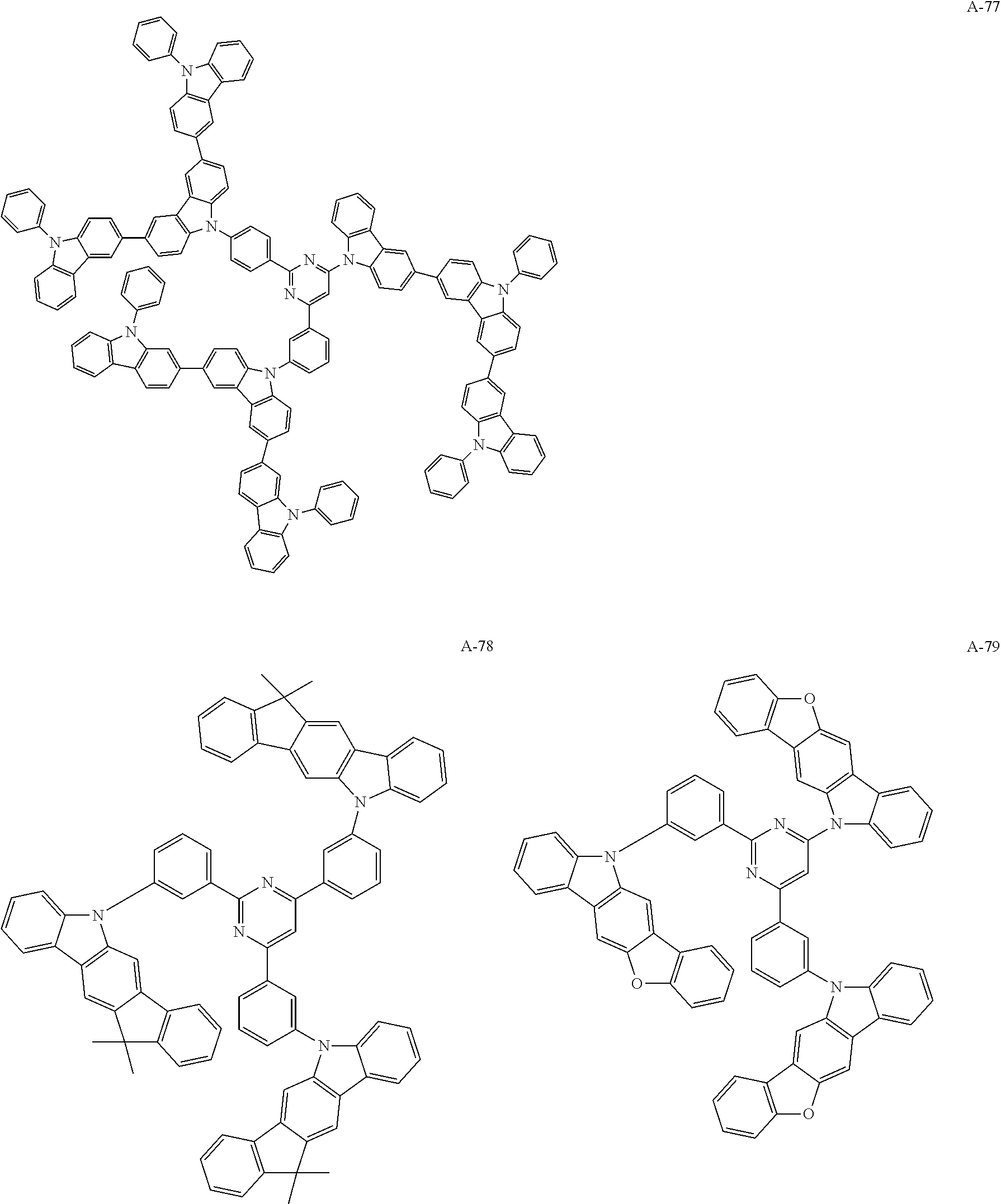


The production method of compound (CH1) is not particularly limited and compound (CH1) can be produced by a known method, for example, by Ullmann reaction or Buchwald reaction generally used in the reaction between a halogen compound and carbazole or a reaction between a halogen compound and a salt of carbazole which is formed by eliminating a hydrogen atom by a base, such as sodium hydride and potassium carbonate.
For example, the method described in WO 2012/086170 is applicable.
Compound (CH3)
Compound (CH3) will be described below. Compound (CH3) has an effect of facilitating the generation of excitons to increase the emission efficiency of organic EL devices.
In an aspect, compound (CH3) preferably comprises an electron transporting skeleton. In another aspect, compound (CH3) is preferably free from an amino group, such as a triarylamino group.
The electron transporting skeleton is a skeleton in which the electron transporting ability is dominant to the hole transporting ability, for example, a nitrogen-containing aromatic heterocyclic ring and a cyano group.

In formula (CH3), one of Z7, X5, Y5, and Z8 is bonded to L3.
X5 and Y5 each represent a single bond, —CR2—, —NR—, —O—, —S—, or —SiR2—, provided that X5 and Y5 cannot all be single bonds. R is as defined above and examples thereof include those described above with respect to formula (CH2).
In view of increasing the energy gap between the excited state and the ground state, at least one of X5 and Y5 is preferably —NR—. To prevent the increase in the hole transporting ability, R is preferably a residue of an electron transporting skeleton, such as pyridine, pyrazine, pyrimidine, pyridazine, and triazine. The residue may have a substituent, such as a phenyl group, a biphenyl group, and a fluorenyl group. The residue of an electron transporting skeleton may be bonded to the nitrogen atom via a linking group, such as a phenylene group. A phenyl group having a phenyl substituent or a cyano substituent is also preferred as R.
Z7 and Z8 are the same as defined with respect to Z1 and Z2. However, each of Z7 and Z8 does not represent an alicyclic hydrocarbon group having three or more fused rings, an aliphatic heterocyclic group having three or more fused rings, an aromatic hydrocarbon ring group having three or more fused rings, or an aromatic heterocyclic group having three or more fused rings. Examples thereof include those described above with respect to formula (CH2) except for excluding, for example, an aromatic heterocyclic ring having three fused rings, such as carbazole, dibenzofuran, and dibenzothiophene.
The subscript t is an integer of 1 or more. The upper limit of t is determined depending on the structure of L3 and t is preferably 1 to 4 and more preferably 1 to 3, although not limited thereto.
L3 represents a single bond, a substituted or unsubstituted aromatic hydrocarbon ring group, or a substituted or unsubstituted aromatic heterocyclic group. Examples thereof include those described above with respect to the aromatic hydrocarbon ring group and the unsubstituted aromatic heterocyclic group for L1 of formula (CH1). When t is 1, L3 is not a single bond.
When L3 represents a substituted or unsubstituted aromatic hydrocarbon ring group or a substituted or unsubstituted aromatic heterocyclic group, the substituent may be a heteroaryl group having 2 to 30, preferably 2 to 18 ring carbon atoms mentioned above which may have an aromatic hydrocarbon substituent having 6 to 20, preferably 6 to 18 ring carbon atoms. Examples of the aromatic hydrocarbon substituent include a phenyl group, a biphenyl group, a 9,9-dimethylfluorenyl group, and a phenyl group having a 9,9-dimethylfluorenyl substituent.
The compound represented by formula (CH3) is preferably a compound represented by formula (CH3-A):

in formula (CH3-A),
t and L3 are as defined above in formula (3);
Xc represents —CR2—, —NR—, —O—, —S—, or —SiR2—, wherein R represents a single bond which is directly bonded to L3 at position *u, a hydrogen atom, a substituted or unsubstituted alkyl group, a substituted or unsubstituted cycloalkyl group, a substituted or unsubstituted aromatic hydrocarbon ring group, or a substituted or unsubstituted aromatic heterocyclic group;
Y15 and Y16 each independently represent a single bond which is directly bonded to L3 at position *u, a hydrogen atom, a fluorine atom, a cyano group, a substituted or unsubstituted alkyl group having 1 to 20 carbon atoms, a substituted or unsubstituted alkoxy group having 1 to 20 carbon atoms, a substituted or unsubstituted haloalkyl group having 1 to 20 carbon atoms, a substituted or unsubstituted haloalkoxy group having 1 to 20 carbon atoms, a substituted or unsubstituted alkylsilyl group having 1 to 20 carbon atoms, a substituted or unsubstituted arylsilyl group having 6 to 30 carbon atoms, a substituted or unsubstituted aromatic hydrocarbon ring group having 6 to 30 ring carbon atoms, a substituted or unsubstituted fused aromatic hydrocarbon ring group having 6 to 30 ring carbon atoms, a substituted or unsubstituted aromatic heterocyclic group having 2 to 30 ring carbon atoms, or a substituted or unsubstituted fused aromatic heterocyclic group having 2 to 30 ring carbon atoms;
adjacent groups Y15 and adjacent groups Y16 may be bonded to each other to form a linking group, provided that adjacent groups Y15 and adjacent groups Y16 do not form an alicyclic hydrocarbon group having two or more fused rings, an aliphatic heterocyclic group having two or more fused rings, an aromatic hydrocarbon ring group having two or more fused rings, and an aromatic heterocyclic group having two or more fused rings;
m1 is an integer of 1 to 4;
when R is a single bond which is directly bonded to L3 at position *u, n1 is an integer of 1 to 3, and when R is not a single bond which is directly bonded to L3 at position *u, n1 is an integer of 1 to 4; and
when m1 is 2 or more, two or more groups Y15 may be the same or different, and when n1 is 2 or more, two or more groups Y16 may be the same or different.
The compound represented by formula (CH3-A) is preferably a compound represented by formula (CH3-A-1):

in formula (CH3-A-1),
t, Xc, Y15, Y16, m1, and n1 are as defined above in formula (CH3-A);
A14 represents a substituted or unsubstituted nitrogen-containing heterocyclic group having 1 to 30 ring carbon atoms; and
X14 represents a single bond or a residue of a ring selected from a substituted or unsubstituted aromatic hydrocarbon ring having 6 to 30 ring carbon atoms, a substituted or unsubstituted fused aromatic hydrocarbon ring having 6 to 30 ring carbon atoms, a substituted or unsubstituted aromatic heterocyclic ring having 2 to 30 ring carbon atoms, and a substituted or unsubstituted fused aromatic heterocyclic ring having 2 to 30 ring carbon atoms.
The compound represented by formula (CH3-A) is preferably a compound represented by formula (CH3-A-2):

in formula (CH3-A-2),
L3, Xc, Y15, Y16, m1, and n1 are as defined in formula (CH3-A);
u represents an integer of 1 or more;
Xd represents —CR2—, —NR—, —O—, —S—, or —SiR2—; and
R represents a hydrogen atom, a substituted or unsubstituted alkyl group, a substituted or unsubstituted cycloalkyl group, a substituted or unsubstituted aromatic hydrocarbon ring group, or a substituted or unsubstituted aromatic heterocyclic group.
Also, the compound represented by formula (CH3) is preferably a compound represented by formula (CH8) or (CH9). Formula (CH8) corresponds to formula (CH3) wherein t is 2, L3 is a single bond, and one of groups X5 is NAr. Formula (CH9) corresponds to formula (CH3) wherein t is 2 and X5 is N.

in formula (CH8) or (CH9),
X5, Y8, Z7, and Z8 are as defined above in formula (CH3), examples thereof include those described above with respect to formula (CH3), and two or more groups Y5, two or more groups Z7, and two or more groups Z8 may be the same or different, respectively;
L6 represents a substituted or unsubstituted aromatic hydrocarbon ring group, a substituted or unsubstituted aromatic heterocyclic group, or a combination thereof, and examples thereof include those mentioned above with respect to the aromatic hydrocarbon ring group and the aromatic heterocyclic group of L1 of formula (CH1); and
Ar represents a substituted or unsubstituted alicyclic hydrocarbon group, a substituted or unsubstituted aliphatic heterocyclic group, a substituted or unsubstituted aromatic hydrocarbon ring group, or a substituted or unsubstituted aromatic heterocyclic group, and examples thereof include monovalent groups corresponding to the groups mentioned above with respect to R and Z1 of formula (CH2).
Also, the compound represented by formula (CH3) is preferably a compound represented by formula (CH10) or (CH1):

in formula (CH10) and (CH11),
A11 represents a substituted or unsubstituted nitrogen-containing heterocyclic group having 1 to 30 ring carbon atoms;
A13 represents a substituted or unsubstituted nitrogen-containing divalent heterocyclic group having 1 to 30 ring carbon atoms or a substituted or unsubstituted oxygen-containing divalent heterocyclic group having 2 to 30 ring carbon atoms;
A12 represents a substituted or unsubstituted aromatic hydrocarbon ring group having 6 to 30 ring carbon atoms or a substituted or unsubstituted nitrogen-containing heterocyclic group having 2 to 30 ring carbon atoms;
X11, X12 and X13 each represents a linking group and each independently represent a single bond, a substituted or unsubstituted divalent aromatic hydrocarbon ring group having 6 to 30 ring carbon atoms, a substituted or unsubstituted divalent fused aromatic hydrocarbon ring group having 6 to 30 ring carbon atoms, a substituted or unsubstituted divalent aromatic heterocyclic group having 2 to 30 ring carbon atoms, or a substituted or unsubstituted divalent fused aromatic heterocyclic group having 2 to 30 ring carbon atoms;
X13 of formula (11) preferably represents a substituted or unsubstituted divalent aromatic hydrocarbon ring group having 6 to 30 ring carbon atoms;
Y11 to Y14 each independently represent a hydrogen atom, a fluorine atom, a cyano group, a substituted or unsubstituted alkyl group having 1 to 20 carbon atoms, a substituted or unsubstituted alkoxy group having 1 to 20 carbon atoms, a substituted or unsubstituted haloalkyl group having 1 to 20 carbon atoms, a substituted or unsubstituted haloalkoxy group having 1 to 20 carbon atoms, a substituted or unsubstituted alkylsilyl group having 1 to 20 carbon atoms, a substituted or unsubstituted arylsilyl group having 6 to 30 carbon atoms, a substituted or unsubstituted aromatic hydrocarbon ring group having 6 to 30 ring carbon atoms, a substituted or unsubstituted fused aromatic hydrocarbon ring group having 6 to 30 ring carbon atoms, a substituted or unsubstituted aromatic heterocyclic group having 2 to 30 ring carbon atoms, or a substituted or unsubstituted fused aromatic heterocyclic group having 2 to 30 ring carbon atoms;
adjacent groups of Y11 to Y14 may be bonded to each other to form a linking group;
p1 and q1 are each an integer of 1 to 4 and r1 and s1 are each an integer of 1 to 3; and
two or more groups Y11 to Y14 when p1, q1, r1, and s1 are each 2 or more may be the same or different, respectively.
Examples of the aromatic hydrocarbon ring group for A12 include those mentioned above with respect to R and Z1 of formula (CH2).
Examples of the nitrogen-containing heterocyclic group for A11 and A12 include monovalent residues of pyrrole, pyridine, pyrazine, pyridine, pyrimidine, pyridazine, triazine, indole, isoindole, indazole, purine, pteridine, β-carboline, naphthyridine, quinoline, isoquinoline, quinoxaline, quinazoline, aziridine, azaindolizine, indolizine, acridine, pyrrolidine, piperidine, morpholine, piperazine, carbazole, phenanthridine, phenanthroline, oxazole, oxadiazole, benzoxazole, thiazole, thiadiazole, benzothiazole, triazole, imidazole, benzimidazole, azafluorene, azacarbazole, a benzene-fused analogue thereof, and a crosslinked analogue thereof.
Of the above, preferred are pyridine, pyrazine, pyrimidine, pyridazine, triazine, quinoline, isoquinoline, quinoxaline, quinazoline, aziridine, azaindolizine, indolizine, imidazole, indole, isoindole, indazole, purine, pteridine, β-carboline, and naphthyridine; more preferred are pyridine, pyrimidine, triazine, quinoline, isoquinoline, quinoxaline, and quinazoline; and particularly preferred are pyrimidine and triazine.
Examples and preferred examples of the divalent nitrogen-containing heterocyclic group for A13 include divalent residues of the nitrogen-containing heterocyclic group mentioned above with respect to A11 and A12. Examples and preferred examples of the oxygen-containing divalent heterocyclic group for A13 include a dibenzofuranylene group.
Examples of the aromatic hydrocarbon ring group and the fused aromatic hydrocarbon ring group for X11, X12 and X13 include divalent residues corresponding to those exemplified as the aromatic hydrocarbon ring group for R and Z1 of formula (CH2). Examples of the aromatic heterocyclic group and the fused aromatic heterocyclic group for X11, X12 and X13 include divalent residues corresponding to those exemplified as the aromatic heterocyclic group for R and Z1 of formula (CH2). Preferred examples of X11 and X12 include a m-phenylene group, a p-phenylene group, a 4,4′-biphenylene group, a 4,3′-biphenylene group, a 1,4-naphthylene group, and a 2,6-naphthylene group.
Examples of the alkyl group for Y11 to Y14 include those mentioned above in formula (CH2). Examples of the alkoxy group and the thioalkoxy group include those wherein the alkyl groups mentioned above are bonded to an oxygen atom or a sulfur atom. Examples of the haloalkyl group and the haloalkoxy group include those derived from the above alkyl groups and the above alkoxy groups by replacing a hydrogen atom with a halogen atom. Examples of the alkylsilyl group include a trimethylsilyl group, a triethylsilyl group, a tributylsilyl group, a dimethylethylsilyl group, a dimethylisopropylsilyl group, a dimethylpropylsilyl group, a dimethylbutylsilyl group, a dimethyl-t-butylsilyl group, and a diethylisopropylsilyl group. Examples of the arylsilyl group include a phenyldimethylsilyl group, a diphenylmethylsilyl group, a diphenyl-t-butylsilyl group, and a triphenylsilyl group.
Examples of the aromatic hydrocarbon ring group and the fuse aromatic hydrocarbon ring group represented by Y11 to Y14 include those exemplified as the aromatic hydrocarbon ring group for R and Z1 of formula (CH2). Examples of the aromatic heterocyclic group and the fused aromatic heterocyclic group for X11 and X12 include those exemplified as the aromatic heterocyclic group for R and Z1 of formula (CH2).
The compound of formula (CH10) is preferably represented by any of formulae (CH10-1) to (CH10-4):

Examples of the compound of formula (CH3) are shown below, although not limited thereto.


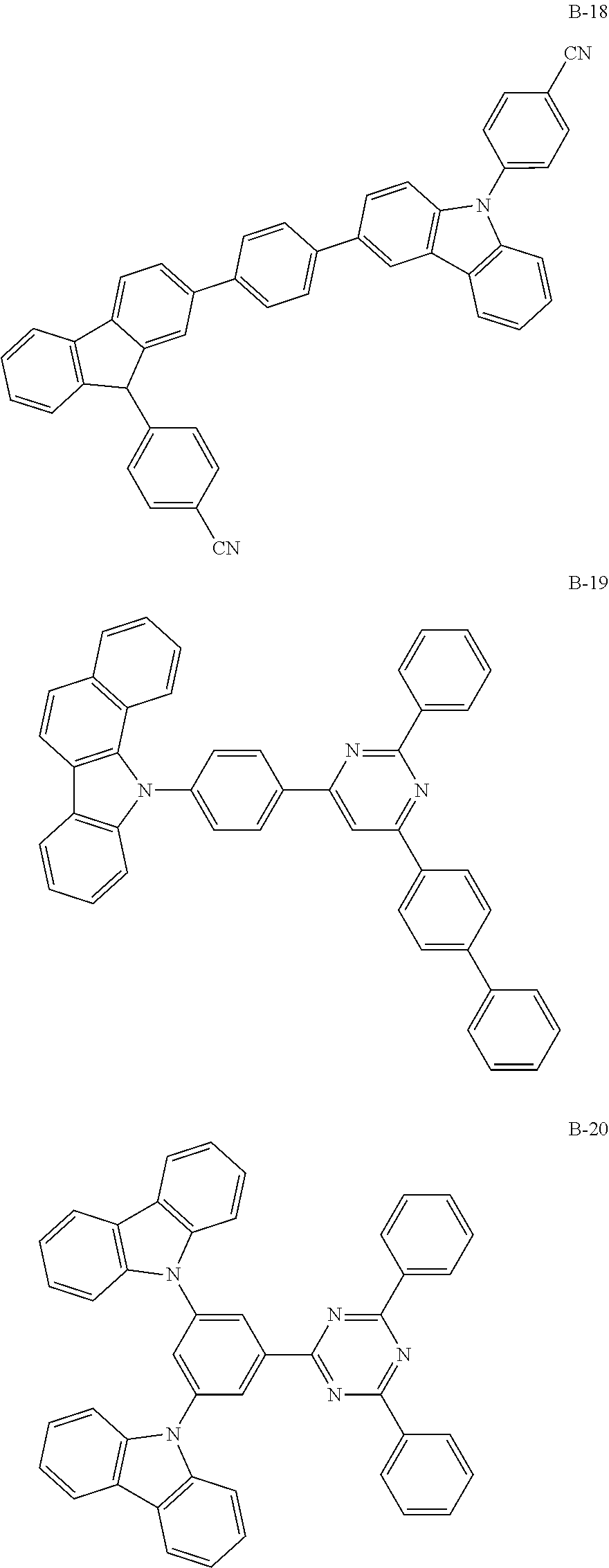


A polymer comprising a unit corresponding to formula (CH3) may be also usable as compound (CH3). However, a low molecular compound is preferred, because the balance between the structure contributing to hole transport and the structure contributing to electron transport can be finely controlled.
The compound represented by formula (3) is also preferably a compound represented by formula (CH12) or (CH13):

in formulae (CH12) and (CH13), X5, Y5, Z7, and Z8 are as defined above in formula (CH3) and examples thereof include those mentioned above with respect to formula (CH2); and
L7 and L8 each represent a substituted or unsubstituted aliphatic hydrocarbon group, a substituted or unsubstituted aliphatic heterocyclic group, a substituted or unsubstituted aromatic hydrocarbon group, or a substituted or unsubstituted aromatic heterocyclic group, and examples thereof include those mentioned above with respect to R and Z1 of formula (CH2).
The compound of formula (CH3) can be produced by the same method as described above with respect to the production of the compound of formula (CH1). In addition, it can be produced by a coupling reaction, for example, a coupling reaction of a carbazole compound and a halogenated aromatic compound in the presence of a copper catalyst described in Tetrahedron, 40 (1984), 1433 to 1456 or Journal of the American Chemical Society, 123(2001), 7727 to 7729.
Compounds (CH4) to (CH6) will be explained below. These compounds are characterized by an arylamino group and a carbazolyl group in their chemical structures. In an organic EL device produced by forming the composition of the invention into a film by a coating method (one of the embodiments for using the composition), it is advantageous in some cases to localize the emission region in the light emitting layer at a distance from the hole transporting layer. In this case, a compound having a group contributing to hole transport is effective and a composition comprising a compound represented by any of formulae (CH4) to (CH6) is preferably used.
Compound (CH4)
The compound of formula (CH4) will be described below.

I formula (CH4), A1 to A3 each represent a substituted or unsubstituted aromatic hydrocarbon ring group or a substituted or unsubstituted aromatic heterocyclic group and preferably a substituted or unsubstituted aromatic hydrocarbon ring group having 6 to 30 ring carbon atoms. Examples thereof include monovalent residues mentioned above with respect to Z1 and Z2 in formula (CH2), and preferably a phenyl group, a biphenyl group, a terphenyl group, a quaterphenyl group, a naphthyl group, a phenanthryl group, and fluorenyl group, each optionally having a substituent. Examples of the substituent include those mentioned above with respect to formula (CH1), with a heteroaryl group having 2 to 30 ring carbon atoms being preferred and a heteroaryl group having 2 to 18 ring carbon atoms being more preferred. Such a substituent includes a carbazolyl group and a dibenzofuranyl group.
Compound (CH5)
The compound of formula (CH5) will be described below.

In formula (CH5), L4 represents a substituted or unsubstituted divalent group wherein 1 to 4 aromatic hydrocarbon rings are bonded to each other or included or a substituted or unsubstituted divalent group wherein 1 to 4 aromatic heterocyclic rings are bonded to each other. L4 may comprise an aromatic hydrocarbon ring and an aromatic heterocyclic ring combinedly. A4 to A6 each represent a substituted or unsubstituted aromatic hydrocarbon group or a substituted or unsubstituted aromatic heterocyclic group. A4 and A5 may be bonded to each other to form a ring structure.
Examples of L4 include those wherein the aromatic hydrocarbon ring groups and the aromatic heterocyclic groups mentioned above with respect to Z1 and Z2 of formula (CH2) are linked together, such as divalent residues of benzene, naphthalene, biphenyl, terphenyl, fluorene, phenanthrene, triphenylene, binaphthalene, bianthracene, perylene, chrysene, fluoranthene, benzofluorene, benzotriphenylene, benzochrysene, anthracene, pyrrole, pyridine, pyrazine, pyridine, pyrimidine, pyridazine, triazine, indole, isoindole, quinoline, isoquinoline, quinoxaline, acridine, pyrrolidine, dioxane, piperidine, morpholine, piperazine, carbazole, phenanthridine, phenanthroline, furan, benzofuran, isobenzofuran, thiophene, oxazole, oxadiazole, benzoxazole, thiazole, thiadiazole, benzothiazole, triazole, imidazole, benzimidazole, pyran, dibenzofuran, dibenzothiophene, azafluorene, biazacarbazole, benzene-fused analogues thereof, and cross-linked analogues thereof. Preferred are a phenylene group, a biphenylene group, and a fluorenylene group.
Examples of A4 to A6 include monovalent residues mentioned above with respect to Z1 and Z2 of formula (CH2). Preferred are those mentioned above with respect to A1 to A3 of formula (CH4).
Examples of compound (CH4) and compound (CH5) are shown below, although not limited thereto.


Compound (CH6)
Compound (CH6) will be described below.

In formula (CH6), L5 represents a substituted or unsubstituted divalent group wherein 1 to 6 aromatic hydrocarbon rings are bonded to each other or included or a substituted or unsubstituted divalent group wherein 1 to 6 aromatic heterocyclic rings are bonded to each other. L5 may comprise an aromatic hydrocarbon ring and aromatic heterocyclic ring combinedly. A7 to A10 each represent a group in which 1 to 10 substituted or unsubstituted aromatic hydrocarbon rings are linked together or a group in which 1 to 10 substituted or unsubstituted aromatic heterocyclic rings are linked together.
Examples of L5 include those wherein the aromatic hydrocarbon ring group and the aromatic heterocyclic group mentioned above with respect to Z1 and Z2 in formula (CH2) are linked together, for example, divalent residues of benzene, naphthalene, biphenyl, terphenyl, fluorene, phenanthrene, triphenylene, binaphthalene, bianthracene, perylene, chrysene, fluoranthene, benzofluorene, benzotriphenylene, benzochrysene, anthracene, pyrrole, pyridine, pyrazine, pyridine, pyrimidine, pyridazine, triazine, indole, isoindole, quinoline, isoquinoline, quinoxaline, acridine, pyrrolidine, dioxane, piperidine, morpholine, piperazine, carbazole, phenanthridine, phenanthroline, furan, benzofuran, isobenzofuran, thiophene, oxazole, oxadiazole, benzoxazole, thiazole, thiadiazole, benzothiazole, triazole, imidazole, benzimidazole, pyran, dibenzofuran, dibenzothiophene, azafluorene, azacarbazole, benzene-fused analogues thereof, and cross-linked analogues thereof. Preferred are divalent residues of benzene, biphenyl, spirofluorene, dibenzofuran, and dibenzothiophene.
Examples of A7 to A10 include monovalent groups wherein 1 to 10 rings selected from the aromatic hydrocarbon rings and the aromatic heterocyclic rings described above with respect to Z1 and Z2 in formula (CH2) are linked together, for example, monovalent groups of benzene, naphthalene, biphenyl, terphenyl, fluorene, phenanthrene, triphenylene, binaphthalene, bianthracene, perylene, chrysene, fluoranthene, benzofluorene, benzotriphenylene, benzochrysene, anthracene, pyrrole, pyridine, pyrazine, pyridine, pyrimidine, pyridazine, triazine, indole, isoindole, quinoline, isoquinoline, quinoxaline, acridine, pyrrolidine, dioxane, piperidine, morpholine, piperazine, carbazole, phenanthridine, phenanthroline, furan, benzofuran, isobenzofuran, thiophene, oxazole, oxadiazole, benzoxazole, thiazole, thiadiazole, benzothiazole, triazole, imidazole, benzimidazole, pyran, dibenzofuran, dibenzothiophene, azafluorene, azacarbazole, benzene-fused analogues thereof, and cross-linked analogues thereof. Preferred are those mentioned above with respect to A1 to A3 in formula (CH5). A dibenzofuranyl group is also preferred.
Examples of the compound of formula (CH6) are shown below, although not limited thereto.

The compounds of formulae (CH4) to (CH6) can be produced according to a known production method, for example, the production method described in WO 2010/061824.
Compound (CH7).
Formula (CH7) will be explained below. The compound of formula (CH7) is excellent in the stability and contributes to improvement of the durability.
Ar1—Ar2—Ar3 (CH7)
Ar1—Ar2—Ar3 (CH7)
In formula (CH7), Ar1 and Ar3 each represent a substituted or unsubstituted monovalent aromatic hydrocarbon ring group or a substituted or unsubstituted monovalent aromatic heterocyclic group, and Ar2 represents a divalent group wherein 1 to 10 substituted or unsubstituted aromatic hydrocarbon rings are linked together or 1 to 10 substituted or unsubstituted aromatic heterocyclic rings are linked together. In view of the stability, Ar1, Ar2, and Ar3 are preferably all aromatic hydrocarbon groups.
Examples of Ar1 and Ar3 include monovalent residues described with respect to Z1 and Z2 in formula (CH2), and examples of Ar2 include divalent residues wherein 1 to 10 rings selected from the rings described above with respect to Z1 and Z2 of formula (CH2) are linked together. Ar2 is preferably a divalent residue comprising one or two aromatic hydrocarbon groups which are linked together. Ar1 to Ar3 each preferably represent a residue of a benzene ring, a naphthalene ring, a benzophenanthrene ring, a dibenzophenanthrene ring, a chrysene ring, a benzochrysene ring, a dibenzochrysene ring, a fluoranthene ring, a benzofluoranthene ring, a triphenylene ring, a benzotriphenylene ring, a dibenzotriphenylene ring, a picene ring, a benzopicene ring, or a dibenzopicene ring, because an organic EL device with a high emission efficiency is obtained when combinedly used with a phosphorescent emitting material.
The compound of formula (CH7) can be synthesized by Suzuki-Miyaura cross-coupling reaction, for example, according to the following reaction scheme:
(Ra—B(OH)2)+(I—Ar1—Br)→(Ra—Ar1—Br)
(Ra—Ar1—Br)+((OH)2—Ar2—Rb)→Ra—Ar1—Ar2—Rb
(Ra—B(OH)2)+(I—Ar1—Br)→(Ra—Ar1—Br)
(Ra—Ar1—Br)+((OH)2—Ar2—Rb)→Ra—Ar1—Ar2—Rb
For example, the method described in WO 2009/008215 may be employed.
Examples of the compound of formula (CH7) are shown below, although not limited thereto.


Compound (CH14)
Compound (CH14) will be described below.

In formula (CH14), X9, X10, Y9, and Y10 each represent a single bond, —CR2—, —NR—, —O—, —S—, —PR—, or —SiR2—, and cannot all be single bonds. R is as defined above in formula (CH2) and examples thereof include those described with respect to formula (CH2).
Z9, Z10, and Z11 are as defined above with respect to Z1 and Z2 of formula (CH2) and examples thereof include those described with respect to formula (CH2).
aa is an integer of 1 to 5, preferably an integer of 1 to 2, and particularly preferably 1, and when aa is 2 or more, two or more groups Z10 may be the same or different, two or more groups X10 may be the same or different, and two or more groups Y10 may be the same or different.
Formula (CH14) dose not include the compound represented by formula (CH1).
The compound represented by formula (CH14) is preferably represented by any of formulae (CH14-a-1) to (CH14-a-6) which correspond to formula (CH14) wherein aa is 1, Z9, Z10, and Z11 are each a benzene ring, one of X9 and Y9 is a single bond, and one of X10 and Y10 is a single bond.

Xc11 and Xc12 in formula (CH14-a-1), Xc21 and Xc22 in formula (CH14-a-2), Xc31 and Xc32 in formula (CH14-a-3), Xc41 and Xc42 in formula (CH14-a-4), Xc51 and Xc52 in formula (CH14-a-5), and Xc61 and Xc62 in formula (CH14-a-6) each independently represent —CR2—, —NR—, —O—, —S—, —PR—, or —SiR2—.
R in Xc11, Xc12, Xc21, Xc22, Xc31, Xc32, Xc41, Xc42, Xc51, Xc52, Xc61, and Xc62 is as defined above with respect to R in X1, X2, Y1, and Y2 of formula (CH2).
Rc1 in formula (14-a-1), Rc2 in formula (14-a-2), Rc3 in formula (14-a-3), Rc4 in formula (14-a-4), Rc5 in formula (14-a-5), and Rc6 in formula (14-a-6) each independently represent a substituted or unsubstituted alkyl group having 1 to 20 carbon atoms, a substituted or unsubstituted cycloalkyl group having 3 to 20 ring carbon atoms, a substituted or unsubstituted alkoxy group having 1 to 20 carbon atoms, a substituted or unsubstituted aralkyl group having 7 to 24 carbon atoms, a substituted or unsubstituted amino group, a substituted or unsubstituted silyl group, a substituted or unsubstituted aromatic hydrocarbon ring group having 6 to 24 ring carbon atoms, or a substituted or unsubstituted aromatic heterocyclic group having 2 to 24 ring carbon atoms.
Rc1 present in two or more occurrences may be the same or different, Rc2 present in two or more occurrences may be the same or different, Rc3 present in two or more occurrences may be the same or different, Rc4 present in two or more occurrences may be the same or different, Rc5 present in two or more occurrences may be the same or different, and Rc6 present in two or more occurrences may be the same or different.
p1 in formula (CH14-a-1), p2 in formula (CH14-a-2), p3 in formula (CH14-a-3), p4 in formula (CH14-a-4), p5 in formula (CH14-a-5), and p6 in formula (CH14-a-6) each independently represent an integer of 0 to 4.
q1 in formula (CH14-a-1), q2 in formula (CH14-a-2), q3 in formula (CH14-a-3), q4 in formula (CH14-a-4), q5 in formula (CH14-a-5), and q6 in formula (CH14-a-6) each independently represent an integer of 0 to 2.
r1 in formula (CH14-a-1), r2 in formula (CH14-a-2), r3 in formula (CH14-a-3), r4 in formula (CH14-a-4), r5 in formula (CH14-a-5), and r6 in formula (CH14-a-6) each independently represent an integer of 0 to 4.
Examples of the compound of formula (CH14) are shown below, although not limited thereto.


Compound (H15)
The compound of formula (CH15) preferably comprises both a hole transporting skeleton and an electron transporting skeleton in its molecule. More preferably, B2 comprises a hole transporting skeleton and Aa comprises an electron transporting skeleton.

Formula (CH15) is described below.
Aa is as defined above with respect to A of formula (CH1), L11 is as defined above with respect to L1 of formula (CH1), and B2 is a residue of the structure represented by formula (CH2);
h is an integer of 1 or more and an upper limit of h is determined according to the structure of Aa, with 1 to 10 being preferred, 1 to 3 being more preferred, and 1 or 2 being still more preferred, although not particularly limited thereto;
j is an integer of 1 or more and an upper limit of j is determined according to the structure of L11, with 2 or 3 being preferred, although not limited thereto;
h+j is an integer of 3 or more; and
two or more groups L11 may be the same or different and two or more groups B2 may be the same or different.
In view of the solubility, a compound asymmetric with respect to Aa wherein the structures formed by L11 and B2 are different from each other is preferred.
The compound represented by formula (CH15) is preferably a compound represented by formula (CH15-i) or (CH15-ii):

in formula (CH15-i), Aa, L11, and B2 are as defined above in formula (CH15), two or more groups L11 may be the same or different, and two or more groups B2 may be the same or different; and
in formula CH15-ii), Aa, L11, and B2 are as defined above in formula (CH15), two or more groups L11 may be the same or different, and two or more groups B2 may be the same or different.
Organic Electroluminescence Device
The organic EL device in an aspect of the invention will be described below.
The organic EL device comprises a cathode, an anode, and one or more organic thin film layers between the cathode and the anode. The one or more organic thin film layers comprise a light emitting layer, and at least one layer of the one or more organic thin film layers comprises the composition of the invention or the compound of the invention.
Examples of the organic thin film layer which comprises the composition or compound of the invention include an anode-side organic thin film layer formed between an anode and a light emitting layer (hole transporting layer, hole injecting layer, etc.), a light emitting layer, a cathode-side organic thin film layer formed between a cathode and a light emitting layer (electron transporting layer, electron injecting layer, etc.), a space layer, and a blocking layer, although not limited thereto. The composition or compound of the invention may be used in any of the above layers and is usable as, for example, a host material or a dopant material for use in a light emitting layer of a fluorescent emission unit, a host material for use in a light emitting layer of a phosphorescent emission unit, and a hole transporting layer material or an electron transporting layer material in an emission unit.
In an aspect of the invention, the organic EL device may be any of a fluorescent or phosphorescent single color emitting device, a white-emitting device of fluorescent-phosphorescent hybrid type, a simple-type emitting device having a single emission unit, and a tandem emitting device having two or more emission units, with a phosphorescent device being preferred. The “emission unit” referred to herein is the smallest unit for emitting light by the recombination of injected holes and injected electrons, which comprises one or more organic layers wherein at least one layer is a light emitting layer.
Representative device structures of the simple-type organic EL device are shown below:
(1) Anode/Emission Unit/Cathode
The emission unit may be a laminated unit comprising two or more layers selected from a phosphorescent light emitting layer and a fluorescent light emitting layer. A space layer may be disposed between the light emitting layers to prevent the diffusion of excitons generated in the phosphorescent light emitting layer into the fluorescent light emitting layer. Representative layered structures of the emission unit are shown below:
(a) hole transporting layer/light emitting layer (/electron transporting layer);
(b) hole transporting layer/first phosphorescent emitting layer/second phosphorescent emitting layer (/electron transporting layer);
(c) hole transporting layer/phosphorescent emitting layer/space layer/fluorescent emitting layer (/electron transporting layer);
(d) hole transporting layer/first phosphorescent emitting layer/second phosphorescent emitting layer/space layer/fluorescent emitting layer (/electron transporting layer);
(e) hole transporting layer/first phosphorescent emitting layer/space layer/second phosphorescent emitting layer/space layer/fluorescent emitting layer (/electron transporting layer);
(f) hole transporting layer/phosphorescent emitting layer/space layer/first fluorescent emitting layer/second fluorescent emitting layer (/electron transporting layer);
(g) hole transporting layer/electron blocking layer/light emitting layer (/electron transporting layer);
(h) hole transporting layer/light emitting layer/hole blocking layer (/electron transporting layer); and
(i) hole transporting layer/fluorescent emitting layer/triplet blocking layer (/electron transporting layer).
The emission color of the fluorescent emitting layer and that of the phosphorescent emitting layer may be different. For example, the layered structure of the laminated emission unit (d) may be hole transporting layer/first phosphorescent emitting layer (red emission)/second phosphorescent emitting layer (green emission)/space layer/fluorescent emitting layer (blue emission)/electron transporting layer.
An electron blocking layer may be disposed between the light emitting layer and the hole transporting layer or between the light emitting layer and the space layer, if necessary. Also, a hole blocking layer may be disposed between the light emitting layer and the electron transporting layer, if necessary. With such an electron blocking layer or a hole blocking layer, electrons and holes are confined in the light emitting layer to increase the charge recombination in the light emitting layer, thereby improving the emission efficiency.
Representative device structure of the tandem-type organic EL device is shown below:
(2) Anode/First Emission Unit/Intermediate Layer/Second Emission Unit/Cathode.
The layered structure of the first emission unit and the second emission unit may be selected from those described above with respect to the emission unit.
Generally, the intermediate layer is also called an intermediate electrode, an intermediate conductive layer, a charge generation layer, an electron withdrawing layer, a connecting layer, or an intermediate insulating layer. The intermediate layer may be formed by known materials which can supply electrons to the first emission unit and holes to the second emission unit.
A schematic structure of an example of the organic EL device is shown in FIG. 1 , wherein the organic EL device 1 comprises a substrate 2, an anode 3, a cathode 4, and an emission unit 10 disposed between the anode 3 and the cathode 4. The emission unit 10 comprises a light emitting layer 5 which comprises at least one phosphorescent emitting layer comprising a phosphorescent host material and a phosphorescent dopant material (phosphorescent material). A hole injecting/transporting layer 6 (anode-side organic thin film layer) may be disposed between the light emitting layer 5 and the anode 3, and an electron injecting/transporting layer 7 (cathode-side organic thin film layer) may be disposed between the light emitting layer 5 and the cathode 4. An electron blocking layer (not shown) may be disposed on the side of anode 3 of the light emitting layer 5, and a hole blocking layer (not shown) may be disposed on the side of cathode 4 of the light emitting layer 5. With these blocking layers, electrons and holes are confined in the light emitting layer 5 to increase the exciton generation in the light emitting layer 5.
In the present specification, a host is referred to as a fluorescent host when combinedly used with a fluorescent dopant (fluorescent emitting material) and as a phosphorescent host when combinedly used with a phosphorescent dopant. Therefore, the fluorescent host and the phosphorescent host are not distinguished from each other merely by the difference in their molecular structures. Namely, in the present invention, the term “phosphorescent host” means a material for constituting a phosphorescent emitting layer containing a phosphorescent dopant and does not mean a material that cannot be utilized as a material for a fluorescent emitting layer. The same applies to the fluorescent host.
Substrate
The substrate is a support for the emitting device and made of, for example, glass, quartz, and plastics. The substrate may be a flexible substrate, for example, a plastic substrate made of, for example, polycarbonate and poly vinyl chloride.
Anode
The anode is formed on the substrate preferably from a metal, an alloy, an electrically conductive compound, and a mixture thereof, each having a large work function, for example, a work function of 4.5 eV or more. Examples of the material for the anode include indium oxide-tin oxide (ITO: Indium Tin Oxide), indium oxide-tin oxide containing silicon or silicon oxide, indium oxide-zinc oxide, tungsten oxide, indium oxide containing zinc oxide, and grapheme. In addition, gold (Au), platinum (Pt), and metal nitride (for example, titanium nitride) are also usable.
Cathode
The cathode is formed preferably from a metal, an alloy, an electrically conductive compound, and a mixture thereof, each having a small work function, for example, a work function of 3.8 eV or less. Examples of the material for the cathode include a metal belonging to the group 1 or 2 of the periodic table, for example, an alkali metal, such as lithium (Li) and cesium (Cs), an alkaline earth metal, such as magnesium (Mg), an alloy containing these metals (for example, MgAg and AlLi), a rare earth metal, and an alloy containing a rare earth metal.
Guest Material for Light Emitting Layer
The light emitting layer may comprise a highly light-emitting substance and may be formed from a various kind of materials. For example, a fluorescent compound and a phosphorescent component are usable as the highly light-emitting substance. The fluorescent compound is a compound capable of emitting light from a singlet excited state and the phosphorescent compound is a compound capable of emitting light from a triplet excited state.
Example of blue fluorescent material usable in the light emitting layer includes a pyrene derivative, a styrylamine derivative, a chrysene derivative, a fluoranthene derivative, a fluorene derivative, a diamine derivative, and a triarylamine derivative, such as, N,N′-bis[4-(9H-carbazole-9-yl)phenyl]-N,N′-diphenylstilbene-4,4′-diamine (YGA2S), 4-(9H-carbazole-9-yl)-4′-(10-phenyl-9-anthryl)triphenylamine (YGAPA), and 4-(10-phenyl-9-anthryl)-4′-(9-phenyl-9H-carbazole-3-yl)triphenylamine (PCBAPA).
Example of green fluorescent material usable in the light emitting layer includes an aromatic amine derivative, such as N-(9,10-diphenyl-2-anthryl)-N,9-diphenyl-9H-carbazole-3-amine (2PCAPA), N-[9,10-bis(1,1′-biphenyl-2-yl)-2-anthryl]-N,9-diphenyl-9H-carbazole-3-amine (2PCABPhA), N-(9,10-diphenyl-2-anthryl)-N,N′,N′-triphenyl-1,4-phenylenediamine (abbreviated as 2DPAPA), N-[9,10-bis(1,1′-biphenyl-2-yl)-2-anthryl]-N,N′,N′-triphenyl-1,4-phenylenediamine (2DPABPhA), N-[9,10-bis(1,1′-biphenyl-2-yl)]-N-[4-(9H-carbazole-9-yl)phenyl]-N-phenylanthracene-2-amine (2YGABPhA), and N,N,9-triphenylanthracene-9-amine (DPhAPhA).
Example of red fluorescent material usable in the light emitting layer includes a tetracene derivative and a diamine derivative, such as N,N,N′,N′-tetrakis(4-methylphenyl)tetracene-5,11-diamine (p-mPhTD) and 7,14-diphenyl-N,N,N′,N′-tetrakis(4-methylphenyl)acenaphtho[1,2-a]fluoranthene-3,10-diamine (p-mPhAFD).
Examples of blue phosphorescent emitting material usable in the light emitting layer include a metal complex, such as an iridium complex, an osmium complex, and a platinum complex, with an ortho-metallated complex of iridium, osmium or platinum. Examples thereof include bis[2-(4′,6′-difluorophenyl)pyridinato-N,C2′]iridium(III) tetrakis(1-pyrazolyl)borato (FIr6), bis[2-(4′,6′-difluorophenyl)pyridinato-N,C2′]iridium(III) picolinato (FIrpic), bis[2-(3′,5′-bistrifluoromethylphenyl)pyridinato-N,C2′]iridium(III) picolinato (Ir(CF3ppy)2(pic)), and bis[2-(4′,6′-difluorophenyl)pyridinato-N,C2′]iridium(III) acetylacetonato (FIracac).
Examples of green phosphorescent emitting material usable in the light emitting layer include an iridium complex, such as tris(2-phenylpyridinato-N,C2′)iridium(III) (Ir(ppy)a), bis(2-phenylpyridinato-N,C2′)iridium(III) acetylacetonato (Ir(ppy)2(acac)), bis(1,2-diphenyl-1H-benzimidazolato)iridium(III) acetylacetonato (Ir(pbi)2(acac)), and bis(benzo[h]quinolinato)iridium(III) acetylacetonato (Ir(bzq)2(acac)).
Examples of red phosphorescent emitting material usable in the light emitting layer include a metal complex, such as an iridium complex, a platinum complex, a terbium complex, and a europium complex. Examples thereof include an organometallic complex, such as bis[2-(2′-benzo[4,5-α]thienyl)pyridinato-N,C3′]iridium(III) acetylacetonato (Ir(btp)2(acac)), bis(1-phenylisoquinolinato-N,C2′)iridium(III) acetylacetonato (Ir(piq)2(acac)), (acetylacetonato)bis[2,3-bis(4-fluorophenyl)quinoxalinato]iridium(III) (Ir(Fdpq)2(acac)), and 2,3,7,8,12,13,17,18-octaethyl-21H,23H-porphyrin platinum(II) (PtOEP).
The following rare earth metal complex, such as tris(acetylacetonato) (monophenanthroline)terbium(III) (Tb(acac)3(Phen)), tris(1,3-diphenyl-1,3-propanedionato)(monophenanthroline)europium(III) (Eu(DBM)3(Phen)), and tris[1-(2-thenoyl)-3,3,3-trifluoroacetonato](monophenanthroline)europium(III) (Eu(TTA)3(Phen)), are also usable as a phosphorescent emitting compound, because these complexes emit light from the rare earth metal ion (electron transition between different multiple states).
Host Material for Light Emitting Layer
The light emitting layer may be formed by dispersing the highly light-emitting material (guest material) mentioned above in another material (host material). The material in which the highly light-emitting material is to be dispersed may be selected from various kinds of materials and is preferably a material having a lowest unoccupied molecular orbital level (LUMO level) higher than that of the highly light-emitting material and a highest occupied molecular orbital level (HOMO level) lower than that of the highly light-emitting material.
The composition or compound of the invention is preferably used as the material in which the highly light-emitting material is to be dispersed.
In addition to the compound of the invention, also usable are, for example, (1) a metal complex, such as an aluminum complex, a beryllium complex, and a zinc complex; (2) a heterocyclic compound, such as an oxadiazole derivative, a benzimidazole derivative, and a phenanthroline derivative; (3) a fused aromatic compound, such as a carbazole derivative, an anthracene derivative, a phenanthrene derivative, a pyrene derivative, and a chrysene derivative; and (4) an aromatic amine compound, such as a triarylamine derivative and a fused aromatic polycyclic amine derivative. Examples thereof include a metal complex, such as tris(8-quinolinolato)aluminum (III) (Alq), tris(4-methyl-8-quinolinolato)aluminum(III) (Almq;), bis(10-hydroxybenzo[h]quinolinato)beryllium (II) (BeBq2), bis(2-methyl-8-quinolinolato)(4-phenylphenolato)aluminum(III) (BAlq), bis(8-quinolinolato)zinc(II) (Znq), bis[2-(2-benzoxazolyl)phenolato]zinc(II) (ZnPBO), and bis[2-(2-benzothiazolyl)phenolato]zinc(II) (ZnBTZ); a heterocyclic compound, such as 2-(4-biphenylyl)-5-(4-tert-butylphenyl)-1,3,4-oxadiazole (PBD), 1,3-bis[5-(p-tert-butylphenyl)-1,3,4-oxadiazole-2-yl]benzene (OXD-7), 3-(4-biphenylyl)-4-phenyl-5-(4-tert-butylphenyl)-1,2,4-triazole (TAZ), 2,2′,2″-(1,3,5-benzenetriyl)tris(1-phenyl-1H-benzimidazole) (TPBI), bathophenanthroline (BPhen), and bathocuproin (BCP); a fused aromatic compound, such as 9-[4-(10-phenyl-9-anthryl)phenyl]-9H-carbazole (CzPA), 3,6-diphenyl-9-[4-(10-phenyl-9-anthryl)phenyl]-9H-carbazole (DPCzPA), 9,10-bis(3,5-diphenylphenyl)anthracene (DPPA), 9,10-di(2-naphthyl)anthracene (DNA), 2-tert-butyl-9,10-di(2-naphthyl)anthracene (t-BuDNA), 9,9′-bianthryl (BANT), 9,9′-(stilbene-3,3′-diyl)diphenanthrene (DPNS), 9,9′-(stilbene-4,4′-diyl)diphenanthrene (DPNS2), 3,3′,3″-(benzene-1,3,5-triyl)tripyrene (TPB3), 9,10-diphenylanthracene (DPAnth), and 6,12-dimethoxy-5,11-diphenylchrysene; and an aromatic amine compound, such as N,N-diphenyl-9-[4-(10-phenyl-9-anthryl)phenyl]-9H-carbazole-3-amine (CzA1PA), 4-(10-phenyl-9-anthryl)triphenylamine (DPhPA), N,9-diphenyl-N-[4-(10-phenyl-9-anthryl)phenyl]-9H-carbazole-3-amine (PCAPA), N,9-diphenyl-N-{4-[4-(10-phenyl-9-anthryl)phenyl]phenyl}-9H-carbazole-3-amine (PCAPBA), N-(9,10-diphenyl-2-anthryl)-N,9-diphenyl-9H-carbazole-3-amine (2PCAPA), NPB (or α-NPD), TPD, DFLDPBi, and BSPB. The material (host material) for dispersing the highly light-emitting material (guest material) may be used alone or in combination of two or more.
Electron Transporting Layer
The electron transporting layer comprises a highly electron-transporting material, for example, (1) a metal complex, such as an aluminum complex, a beryllium complex, and a zinc complex, (2) a heteroaromatic compound, such as an imidazole derivative, a benzimidazole derivative, an azine derivative, a carbazole derivative, and a phenanthroline derivative, and (3) a macromolecular compound.
Electron Injecting Layer
The electron injecting layer comprises a highly electron-injecting material, for example, an alkali metal, an alkaline earth metal, and a compound of these metals, such as lithium (Li), lithium fluoride (LiF), cesium fluoride (CsF), calcium fluoride (CaF2), and lithium oxide (LiOx).
Hole Injecting Layer
The hole injecting layer is comprises a highly hole-transporting material, for example, molybdenum oxide, titanium oxide, vanadium oxide, rhenium oxide, ruthenium oxide, chromium oxide, zirconium oxide, hafnium oxide, tantalum oxide, silver oxide, tungsten oxide, manganese oxide, an aromatic amine compound, and a macromolecular compound, such as oligomer, dendrimer, and polymer.
Hole Transporting Layer
The hole transporting layer comprises a highly hole-transporting material, for example, an aromatic amine compound, a carbazole derivative, an anthracene derivative, and a macromolecular compound, such as poly(N-vinyl carbazole) (abbreviated as PVK) and poly(4-vinyltriphenylamine) (abbreviated as PVTPA). Other materials are also usable if their hole transporting ability is higher than their electron transporting ability. The layer comprising a highly hole-transporting material may be a single layer or a laminate of two or more layers each comprising the highly hole-transporting material.
In an aspect of the invention, each layer of the organic EL device can be formed by a known method, such as a vacuum vapor deposition method and a spin coating method. For example, each layer can be formed by a known method, such as a vacuum vapor deposition method, a molecular beam evaporation method (MBE method), and a coating method using a solution of the compound for forming the layer, such as a dipping method, a spin coating method, a casting method, a bar coating method, and a roll coating method.
The thickness of each organic thin film layer is not particularly limited and preferably several nanometers to 1 μm, because an excessively small thickness may cause defects such as pin holes and an excessively large thickness may require a high driving voltage.
The layer containing the composition or compound of the invention (a light emitting layer, a hole transporting layer, and an electron transporting layer) is preferably formed by a coating method using a solution (ink composition) comprising a solvent and the composition or compound of the invention. The solution may comprise another material, such as dopant, if necessary.
The coating method is preferably a wet film-forming method, for example, a letterpress printing method, an intaglio printing method, a lithographic printing method, a stencil printing method, a combination of the preceding methods with an offset printing method, an inkjet printing method, a dispenser coating method, a spin coating method, a bar coating method, a dip coating method, a spray coating method, a slit coating method, a roll coating method, a cap coating method, a rotogravure roll coating method, and a meniscus coating method. If a fine patterning is required, a letterpress printing method, an intaglio printing method, a lithographic printing method, a stencil printing method, a combination of the preceding methods with an offset printing method, an inkjet printing method, and a dispenser coating method are preferred. A transfer coating method is also usable, in which the polymer is preformed into a film on a substrate by the wet film-foaming method described above and then the preformed film is transferred onto a substrate having an electrode printed thereon by a laser light or hot press.
The film formation by the above methods can be made under the conditions well known to a person skilled in the art and the details thereof are omitted for conciseness.
The coating liquid (ink composition) for use in the coating method is not particularly limited as long as it contains at least one kind of the composition and compound of the invention, and may be in the form of either a solution or a dispersion.
The content of the composition or compound of the invention in the coating liquid (ink composition) is preferably 0.1 to 15% by mass, more preferably 0.1 to 10% by mass, still more preferably 0.3 to 5% by mass, and particularly preferably 0.3 to 3% by mass, each based on the total of the coating liquid.
An organic solvent is preferably used as the solvent. Examples of the organic solvent include a chlorine-containing solvent, such as chloroform, chlorobenzene, chlorotoluene, chloroxylene, chloroanisole, dichloromethane, dichlorobenzene, dichlorotoluene, dichloroethane, trichloroethane, trichlorobenzene, trichloromethylbenzene, bromobenzene, dibromobenzene, and bromoanisole; an ether solvent, such as tetrahydrofuran, dioxane, dioxolane, oxazole, methylbenzoxazole, benzisoxazole, furan, furazan, benzofuran, and dihydrobenzofuran; an aromatic hydrocarbon solvent, such as ethylbenzene, diethylbenzene, triethylbenzene, trimethylbenzene, trimethoxybenzene, propylbenzene, isopropylbenzene, diisopropylbenzene, dibutylbenzene, amylbenzene, dihexylbenzene, cyclohexylbenzene, tetramethylbenzene, dodecylbenzene, benzonitrile, acetophenone, methylacetophenone, methoxyacetophenone, ethyl toluate, toluene, ethyltoluene, methoxytoluene, dimethoxytoluene, trimethoxytoluene, isopropyltoluene, xylene, butylxylene, isopropylxylene, anisole, ethylanisole, dimethylanisole, trimethylanisole, propylanisole, isopropylanisole, butylanisole, methylethylanisole, anethole, anisyl alcohol, methyl benzoate, ethyl benzoate, propyl benzoate, butyl benzoate, diphenyl ether, butyl phenyl ether, benzyl methyl ether, benzyl ethyl ether, methylenedioxybenzene, methylnaphthalene, tetrahydronaphthalene, aniline, methylaniline, ethylaniline, butylaniline, biphenyl, methylbiphenyl, and isopropylbiphenyl; an aliphatic hydrocarbon solvent, such as cyclohexane, methylcyclohexane, n-pentane, n-hexane, n-heptane, n-octane, n-nonane, n-decane, tetradecane, decalin, and isopropylcyclohexane; a ketone solvent, such as acetone, methyl ethyl ketone, cyclohexanone, and acetophenone; an ester solvent, such as ethyl acetate, butyl acetate, ethyl cellosolve acetate, methyl benzoate, and phenyl acetate; a polyhydric alcohol and its derivatives, such as ethylene glycol, ethylene glycol monobutyl ether, ethylene glycol monoethyl ether, ethylene glycol monomethyl ether, dimethoxyethane, propylene glycol, diethoxymethane, triethylene glycol monoethyl ether, glycerin, and 1,2-hexanediol; an alcoholic solvent, such as methanol, ethanol, propanol, isopropanol, and cyclohexanol; a sulfoxide solvent, such as dimethyl sulfoxide; and an amide solvent, such as N-methyl-2-pyrrolidone and N,N-dimethylformamide. These solvents may be used alone or in combination of two or more.
Of the above solvents, in view of solubility, uniform film formation, viscosity, etc., a solvent comprising at least one selected from toluene, xylene, ethylbenzene, amylbenzene, anisole, 4-methoxytoluene, 2-methoxytoluene, 1,2-dimethoxybenzene, mesitylene, tetrahydronaphthalene, cyclohexylbenzene, 2,3-dihydrobenzofuran, cyclohexanone, and methylcyclocyclohexanone is preferred.
The coating liquid (ink composition) for film formation may include, if necessary, a viscosity modifier, a surface tension modifier, a crosslinking initiator, or a crosslinking catalyst, which are preferably selected from those not adversely affecting the device performance even if remaining in the film or those capable of removing from the film during the film formation.
In an aspect of the invention, the organic electroluminescence device can be used in an electronic device, for example, as display parts, such as organic EL panel module, display devices of television sets, mobile phones, personal computer, etc., and light emitting sources of lighting equipment and vehicle lighting equipment.
The invention will be described in more detail with reference to the examples and comparative examples. It should be noted that the scope of the invention is not limited to the following examples.
(1) The synthesis method of compound 1[I], the production method of organic EL devices employing compound 1[I], and the evaluation results thereof are described below.


Under argon atmosphere, 9-phenylcarbazole-3-boronic acid (12.06 g, 42 mmol), 3,6-dibromocarbazole (5.60 g, 20 mmol), dichloro(diphenylphosphinoferrocene)palladium-methylene chloride complex (0.32 g, 0.4 mmol), 1,4-dioxane (60 mL), and a 2 M aqueous solution of sodium carbonate (60 mL) were successively mixed, and the resultant mixture was refluxed under heating for 7 h.
After cooling the reaction liquid to room temperature, the precipitated solid was collected by filtration, washed with 1,4-dioxane and then water, and dried under reduced pressure. The obtained residue was purified by silica gel column chromatography and then recrystallized from 1,4-dioxane to obtain tricarbazolyl intermediate A1 (11.05 g, yield: 85%).
After adding sodium hydroxide (0.584 g, 14.6 mmol) to a solution of 3-bromobenzaldehyde (17.0 mL, 146 mmol) and 3-bromoacetophenone (19.3 mL, 146 mmol) in methanol (300 mL), the resultant solution was stirred at room temperature for 10.5 h.
The precipitated solid was collected by filtration, washed with methanol, and then dried under vacuum to obtain a cream-colored powder (47.8 g, yield: 90%).
After adding sodium hydroxide (0.745 g, 18.6 mmol) and then ethanol (35 mL) to a mixture of the obtained powder (12.4 g, 33.9 mmol) and 3-bromobenzamidine hydrochloride (4.00 g, 16.9 mmol), the reaction was allowed to proceed for 12.5 h while refluxing under heating. The white powder formed was collected by filtration, washed with ethanol until the washings were made colorless, further washed with water and then ethanol, and then dried under vacuum to obtain target pyrimidine intermediate B1 (5.75 g, yield: 62%).
Under argon atmosphere, tricarbazolyl intermediate A1 (3.58 g, 5.50 mmol), pyrimidine intermediate B1 (1.00 g, 1.83 mmol), tris(dibenzylideneacetone)dipalladium (0.0336 g, 0.0732 mmol), tri-t-butylphosphonium tetrafluoroborate (0.269 g, 0.293 mmol), sodium t-butoxide (0.528 g, 9.0 mmol), and anhydrous toluene (36 mL) were successively mixed, and the resultant mixture was refluxed for 11 h under heating.
After cooling the reaction liquid to room temperature, the insolubles were removed by filtration, and the organic solvent was evaporated off under reduced pressure. The obtained residue was purified by silica gel column chromatography to obtain compound H-1[I] (2.25 g, yield: 55%).
The results of analysis by HPLC (High Performance Liquid Chromatography) and LC-MS (Liquid Chromatography-Mass Spectrometry) on compound H-1[I] are shown below.
HPLC purity: 99.0%
LC-MS: calcd for C166H103N11=2249.
found m/z=2249 (M+, 100).


After mixing 3-bromobenzaldehyde (1.85 g, 10.0 mmol), 3-bromobenzamidine hydrochloride (4.71 g, 20.0 mmol), sodium hydroxide (1.20 g, 30.0 mmol), and ethanol (200 mL), the reaction was allowed to proceed for 7 h while refluxing under heating. The solid formed was collected by filtration. The filtrate was evaporated off under reduced pressure, and chloranil (0.776 g, 3.16 mmol) and dichloromethane (120 mL) were added to the obtained solid. The resultant mixture was stirred at room temperature for one hour. The solid formed was collected by filtration, combined with the solid obtained previously, and recrystallized twice from dichloromethane and then ethanol. The precipitated white powder was collected by filtration and dried under vacuum to obtain target triazine intermediate C1 (4.44 g, yield: 81%).
Under argon atmosphere, tricarbazolyl intermediate A1 (5.30 g, 8.13 mmol), triazine intermediate C1 (1.48 g, 2.71 mmol), tris(dibenzylideneacetone)dipalladium (0.0993 g, 0.108 mmol), tri-t-butylphosphonium tetrafluoroborate (0.126 g, 0.433 mmol), sodium t-butoxide (0.78 g, 8.13 mmol), and anhydrous xylene (50 mL) were successively mixed, and the resultant mixture was refluxed for 8 h under heating.
After cooling the reaction liquid to room temperature, the insolubles were removed by filtration, and the organic solvent was evaporated off under reduced pressure. The obtained residue was purified by silica gel column chromatography to obtain compound H-2[I] (4.27 g, yield: 70%).
The results of analysis by HPLC (High Performance Liquid Chromatography) and LC-MS (Liquid Chromatography-Mass Spectrometry) on compound H-2[I] are shown below.
HPLC purity: 99.0%
LC-MS: calcd for C165H102N12=2250.
found m/z=2250 (M+, 100).


Under argon atmosphere, 9-phenylcarbazole-3-boronic acid (12.06 g, 42 mmol),2,7-dibromocarbazole (5.60 g, 20 mmol), dichloro(diphenylphosphinoferrocene)palladium-methylene chloride complex (0.320 g, 0.4 mmol), 1,4-dioxane (60 mL), and a 2 M aqueous solution of sodium carbonate (60 mL) were successively mixed, and the resultant mixture was refluxed under heating for 7 h.
After cooling the reaction liquid to room temperature, the precipitated solid was collected by filtration, washed with 1,4-dioxane and then water, and dried under reduced pressure. The obtained residue was purified by silica gel column chromatography to obtain tricarbazolyl intermediate D1 (9.00 g, yield: 69%).
After adding sodium hydroxide (0.584 g, 14.6 mmol) to a solution of 4-bromobenzaldehyde (17.0 mL, 146 mmol) and 4-bromoacetophenone (19.3 mL, 146 mmol) in methanol (300 mL), the resultant solution was stirred at room temperature for 10.5 h.
The precipitated solid was collected by filtration, washed with methanol, and then dried under vacuum to obtain a powder (47.8 g, yield: 90%).
After adding 4-bromobenzamidine hydrochloride (4.00 g, 16.9 mmol) and sodium hydroxide (0.745 g, 18.6 mmol) and then ethanol (35 mL) to the obtained powder (12.4 g, 33.9 mmol), the reaction was allowed to proceed for 12.5 h while refluxing under heating. The white powder formed was collected by filtration, washed with ethanol until the washings were made colorless, further washed with water and then ethanol, and then dried under vacuum to obtain target pyrimidine intermediate E1 (7.42 g, yield: 80%).
Under argon atmosphere, tricarbazolyl intermediate D1 (3.58 g, 5.50 mmol), pyrimidine intermediate E1 (1.00 g, 1.83 mmol), tris(dibenzylideneacetone)dipalladium (0.0336 g, 0.0732 mmol), tri-t-butylphosphonium tetrafluoroborate (0.269 g, 0.293 mmol), sodium t-butoxide (0.528 g, 9.0 mmol), and anhydrous toluene (36 mL) were successively mixed, and the resultant mixture was refluxed for 11 h under heating.
After cooling the reaction liquid to room temperature, the insolubles were removed by filtration, and the organic solvent was evaporated off under reduced pressure. The obtained residue was purified by silica gel column chromatography to obtain compound H-3[I] (2.86 g, yield: 70%).
The results of analysis by HPLC (High Performance Liquid Chromatography) and LC-MS (Liquid Chromatography-Mass Spectrometry) on compound H-3[I] are shown below.
HPLC purity: 99.0%
LC-MS: calcd for C166H103N11=2249.
found m/z=2249 (M+, 100).


Under argon atmosphere, boronic acid F1 (14.00 g, 37.3 mmol), 3,6-dibromocarbazole (5.77 g, 17.8 mmol), dichloro(diphenylphosphinoferrocene)palladium-methylene chloride complex (0.290 g, 0.355 mmol), 1,4-dioxane (90 mL), and a 2 M aqueous solution of sodium carbonate (55 mL) were successively mixed, and the resultant mixture was refluxed for 10 h under heating.
After cooling the reaction liquid to room temperature, the precipitated solid was collected by filtration, washed with 1,4-dioxane and then water, and dried under reduced pressure. The obtained residue was purified by silica gel column chromatography to obtain tricarbazolyl intermediate G1 (12.1 g, yield: 77%).
Under argon atmosphere, tricarbazolyl intermediate G1 (5.29 g, 6.00 mmol), triazine intermediate C1 (1.09 g, 2.00 mmol), tris(dibenzylideneacetone)dipalladium (0.0733 g, 0.0800 mmol), tri-t-butylphosphonium tetrafluoroborate (0.0928 g, 0.320 mmol), sodium t-butoxide (0.577 g, 6.0 mmol), and anhydrous xylene (40 mL) were successively mixed, and the resultant mixture was refluxed for 11 h under heating.
After cooling the reaction liquid to room temperature, the insolubles were removed by filtration and the organic solvent was evaporated off under reduced pressure. The obtained residue was purified by silica gel column chromatography to obtain compound H-4[I] (3.83 g, yield: 65%).
The results of analysis by HPLC (High Performance Liquid Chromatography) and LC-MS (Liquid Chromatography-Mass Spectrometry) on compound H-4[I] are shown below.
HPLC purity: 98.6%
LC-MS: calcd for C219H150N12=2948.
found m/z=2948 (M+, 100).


After adding sodium hydroxide (0.584 g, 14.6 mmol) to a solution of 3-bromobenzaldehyde (17.0 mL, 146 mmol) and 3-bromoacetophenone (19.3 mL, 146 mmol) in methanol (300 mL), the resultant solution was stirred at room temperature for 10.5 h.
The precipitated solid was collected by filtration, washed with methanol, and then dried under vacuum to obtain a cream-colored powder (47.8 g, yield: 90%).
After adding 3-chlorobenzamidine hydrochloride (3.23 g, 16.9 mmol) and sodium hydroxide (0.745 g, 18.6 mmol) and then ethanol (35 mL) to the obtained powder (12.4 g, 33.9 mmol), the reaction was allowed to proceed for 12.5 h while refluxing under heating. The white powder formed was collected by filtration, washed with ethanol until the washings were made colorless, further washed with water and then ethanol, and then dried under vacuum to obtain the target pyrimidine intermediate J1 (5.25 g, yield: 62%).
Under argon atmosphere, tricarbazolyl intermediate A1 (3.90 g, 6.00 mmol), pyrimidine intermediate J1 (1.50 g, 3.00 mmol), tris(dibenzylideneacetone)dipalladium (0.110 g, 0.120 mmol, tri-t-butylphosphonium tetrafluoroborate (0.139 g, 0.48 mmol), sodium t-butoxide (0.288 g, 3.00 mmol), and anhydrous toluene (60 mL) were successively mixed, and the resultant mixture was refluxed for 11 h under heating.
After cooling the reaction liquid to room temperature, the insolubles were removed by filtration and the organic solvent was evaporated off under reduced pressure. The obtained residue was purified by silica gel column chromatography to obtain compound K1 (2.70 g, yield: 55%).
Under argon atmosphere, compound K1 (2.70 g, 3.00 mmol), carbazolyl intermediate D1 (1.95 g, 3.00 mmol), tris(dibenzylideneacetone)dipalladium (0.110 g, 0.120 mmol), tri-t-butylphosphonium tetrafluoroborate (0.139 g, 0.48 mmol), sodium t-butoxide (0.288 g, 3.00 mmol), and anhydrous toluene (60 mL) were successively mixed, and the resultant mixture was refluxed for 11 h under heating.
After cooling the reaction liquid to room temperature, the insolubles were removed by filtration and the organic solvent was evaporated off under reduced pressure. The obtained residue was purified by silica gel column chromatography to obtain compound H-5[I] (5.74 g, yield: 85%).
The results of analysis by HPLC (High Performance Liquid Chromatography) and LC-MS (Liquid Chromatography-Mass Spectrometry) on compound H-5[I] are shown below.
HPLC purity: 99.0%
LC-MS: calcd for C166H103N11=2249.
found m/z=2249 (M+, 100).

Under argon atmosphere, tricarbazolyl intermediate A1 (5.85 g, 9.00 mmol), pyrimidine intermediate L1 (0.550 g, 3.00 mmol), tris(dibenzylideneacetone)dipalladium (0.110 g, 0.120 mmol), tri-t-butylphosphonium tetrafluoroborate (0.139 g, 0.48 mmol), sodium t-butoxide (0.288 g, 3.00 mmol), and anhydrous toluene (60 mL) were successively mixed, and the resultant mixture was refluxed for 11 h under heating.
After cooling the reaction liquid to room temperature, the insolubles were removed by filtration, the organic solvent was evaporated off under reduced pressure. The obtained residue was purified by silica gel column chromatography to obtain compound H-6[I] (4.86 g, yield: 80%).
The results of analysis by HPLC (High Performance Liquid Chromatography) and LC-MS (Liquid Chromatography-Mass Spectrometry) on compound H-6[I] are shown below.
HPLC purity: 99.0%
LC-MS: calcd for C148H91N11=2021.
found m/z=2021 (M+, 100).
The compounds within the scope of the claims of this application can be synthesized by referring to the above synthetic reactions while using a known synthetic reaction and a starting material in accordance with the target compound.
Cleaning of Substrate
A glass substrate of 25 mm×25 mm×1.1 mm thickness having an ITO transparent electrode (product of Geomatec Company) was cleaned by ultrasonic cleaning in isopropyl alcohol for 5 min and then UV ozone cleaning for 5 min.
Formation of Underlayers
Clevious AI4083 (tradename) manufactured by Heraeus as a hole transporting material was spin-coated on the ITO substrate to form a hole transporting layer with a thickness of 30 nm. Thereafter, unnecessary portion was removed by acetone and then a base substrate was produced by baking in air for 10 min on a hot plate at 200° C.
Formation of Light Emitting Layer
A 1.6% by mass toluene solution containing the compound H-1[I] obtained in Synthesis Example 1[I] as a host material and the following compound D-i as a dopant material was prepared in a mixing ratio of compound H-1[I]:compound D-i=95:5 by mass. The toluene solution was spin-coated on the base substrate into a thickness of 50 nm. Thereafter, unnecessary portion was removed by toluene and then the coated film was dried under heating at 150° C. on a hot plate to obtain a coat-laminated substrate having a light emitting layer. The film-forming operations for forming the light emitting layer were all conducted in a glove box under a nitrogen atmosphere.
Vapor Deposition and Sealing
The coat-laminated substrate was conveyed into a vapor deposition chamber and the following compound ET-1 as an electron transporting material was vapor-deposited into a thickness of 50 nm to form an electron transporting layer. Then, lithium fluoride was vapor-deposited into a thickness of 1 nm and aluminum was vapor-deposited into a thickness of 80 nm. After completing all the vapor deposition processes, the substrate with laminated films was sealed with a bored glass in a glove box under a nitrogen atmosphere to produce an organic EL device.
Evaluation of Device
By driving at a direct current, the obtained organic EL device was allowed to emit light to measure the external quantum efficiency (EQE) at a current density of 10 mA/cm2. The result is shown in Table 1.
An organic EL device was produced in the same manner as described above except for drying the coated film at 200° C. under heating in the formation of the light emitting layer. The obtained organic EL device was measured for the external quantum efficiency (EQE) in the same manner as described above. The result is shown in Table 1.
Each organic EL device wherein the coated film was dried at 150° C., or 200° C. under heating was produced in the same manner as in Example 1[I] except for using compound H-2[I] obtained in Synthesis Example 2[I] as a host material. The measured external quantum efficiency (EQE) of each organic EL device is shown in Table 1.
Each organic EL device wherein the coated film was dried at 150° C., or 200° C. under heating was produced in the same manner as in Example 1[I] except for using compound H-3[I] obtained in Synthesis Example 3[I] as a host material. The measured external quantum efficiency (EQE) of each organic EL device is shown in Table 1.
Each organic EL device wherein the coated film was dried at 150° C., or 200° C. under heating was produced in the same manner as in Example 1[I] except for using compound H-4[I] obtained in Synthesis Example 4[I] as a host material. The measured external quantum efficiency (EQE) of each organic EL device is shown in Table 1.
Each organic EL device wherein the coated film was dried at 150° C., or 200° C. under heating was produced in the same manner as in Example 1[I] except for using compound H-5[I] obtained in Synthesis Example 5[I] as a host material. The measured external quantum efficiency (EQE) of each organic EL device is shown in Table 1.
Each organic EL device wherein the coated film was dried at 150° C., or 200° C. under heating was produced in the same manner as in Example 1[I] except for using compound H-6[I] obtained in Synthesis Example 6[I] as a host material. The measured external quantum efficiency (EQE) of each organic EL device is shown in Table 1.
An organic EL device wherein the coated film was dried at 150° C. under heating was produced in the same manner as in Example 1[I] except for using compound Q-1[I] described in WO 2012/086170 as a host material. The measured external quantum efficiency (EQE) of the organic EL device is shown in Table 1.
Each organic EL device wherein the coated film was dried at 150° C., or 200° C. under heating was produced in the same manner as in Example 1[I] except for using compound Q-2[I] as a host material. The measured external quantum efficiency (EQE) of each organic EL device is shown in Table 1.


| TABLE 1 | ||
| External quantum efficiency (%) | ||
| Host | dried at | dried at | |
| material | 150° C. | 200° C. | |
| Example 1[I] | H-1[I] | 5.1 | 4.9 | |
| Example 2[I] | H-2[I] | 5.2 | 5.0 | |
| Example 3[I] | H-3[I] | 4.3 | 4.3 | |
| Example 4[I] | H-4[I] | 4.9 | 4.7 | |
| Example 5[I] | H-5[I] | 4.7 | 4.6 | |
| Example 6[I] | H-6[I] | 4.5 | 4.1 | |
| Comparative | Q-1[I] | 2.1 | —*1 | |
| Example 1[I] | ||||
| Comparative | Q-2[I] | 4.8 | 2.7 | |
| Example 2[I] | ||||
| *1not measured because the external quantum efficiency was low when dried at 150° C. | ||||
(2) Next, the synthesis method of compound 1[II], the production method of organic EL devices employing compound 1[II], and the evaluation results thereof are described below.

After adding sodium hydroxide (0.584 g, 14.6 mmol) to a solution of 3-bromobenzaldehyde (17.0 mL, 146 mmol) and 3-bromoacetophenone (19.3 mL, 146 mmol) in methanol (300 mL), the resultant solution was stirred at room temperature for 10.5 h.
The precipitated solid was collected by filtration, washed with methanol, and then dried under vacuum to obtain a powder (47.8 g, yield: 90%).
Then, after adding 3-bromobenzamidine hydrochloride (4.00 g, 16.9 mmol) and sodium hydroxide (0.745 g, 18.6 mmol) and then ethanol (35 mL) to the obtained powder (12.4 g, 33.9 mmol), the reaction was allowed to proceed for 12.5 h while refluxing under heating. The white powder formed was collected by filtration, washed with ethanol until the washings were made colorless, further washed with water and then ethanol, and then dried under vacuum to obtain target pyrimidine intermediate A1 (7.42 g, yield: 80%).
Under argon atmosphere, carbazolyl intermediate B1 (2.55 g, 9.00 mmol), pyrimidine intermediate A1 (1.64 g, 3.00 mmol), tris(dibenzylideneacetone)dipalladium (0.110 g, 0.120 mmol), tri-t-butylphosphonium tetrafluoroborate (0.139 g, 0.480 mmol), sodium t-butoxide (0.965 g, 9.00 mmol), and anhydrous toluene (60 mL) were successively mixed, and the resultant mixture was refluxed for 8 h under heating.
After cooling the reaction liquid to room temperature, the insolubles were removed by filtration, and the organic solvent was evaporated off under reduced pressure. The obtained residue was purified by silica gel column chromatography to obtain compound H-1[II] (2.25 g, yield: 65%).
The results of analysis by HPLC (High Performance Liquid Chromatography) and LC-MS (Liquid Chromatography-Mass Spectrometry) on compound H-1[II] are shown below.
HPLC purity: 99.2%
LC-MS: calcd for C85H61N5=1151.
found m/z=1151 (M+, 100).

After mixing 3-bromobenzaldehyde (1.85 g, 10.0 mmol), 3-bromobenzamidine hydrochloride (4.71 g, 20.0 mmol), sodium hydroxide (1.20 g, 30.0 mmol), and ethanol (200 mL), the reaction was allowed to proceed for 7 h while refluxing under heating. The solid formed was collected by filtration. The filtrate was evaporated off under reduced pressure, and chloranil (0.776 g, 3.16 mmol) and dichloromethane (120 mL) were added to the obtained solid. The resultant mixture was stirred at room temperature for one hour. The solid formed was collected by filtration, combined with the solid obtained previously, and recrystallized twice from dichloromethane and then ethanol. The precipitated white powder was collected by filtration and dried under vacuum to obtain target triazine intermediate C1 (4.44 g, yield: 81%).
Under argon atmosphere, carbazolyl intermediate D1 (2.32 g, 9.00 mmol), triazine intermediate C1 (1.64 g, 3.00 mmol), tris(dibenzylideneacetone)dipalladium (0.110 g, 0.120 mmol), tri-t-butylphosphonium tetrafluoroborate (0.139 g, 0.480 mmol), sodium t-butoxide (0.965 g, 9.00 mmol), and anhydrous xylene (60 mL) were successively mixed, and the resultant mixture was refluxed for 8 h under heating.
After cooling the reaction liquid to room temperature, the insolubles were removed by filtration, and the organic solvent was evaporated off under reduced pressure. The obtained residue was purified by silica gel column chromatography to obtain compound H-2[II] (2.26 g, yield: 70%).
The results of analysis by HPLC (High Performance Liquid Chromatography) and LC-MS (Liquid Chromatography-Mass Spectrometry) on compound H-2[II] are shown below.
HPLC purity: 99.4%
LC-MS: calcd for C75H42N6O3=1074.
found m/z=1074 (M+, 100).


After adding sodium hydroxide (0.584 g, 14.6 mmol) to a solution of 4-bromobenzaldehyde (17.0 mL, 146 mmol) and 4-bromoacetophenone (19.3 mL, 146 mmol) in methanol (300 mL), the resultant solution was stirred at room temperature for 10.5 h.
The precipitated solid was collected by filtration, washed with methanol, and then dried under vacuum to obtain a powder (47.8 g, yield: 90%).
Then, after adding 4-bromobenzamidine hydrochloride (4.00 g, 16.9 mmol) and sodium hydroxide (0.745 g, 18.6 mmol) and then ethanol (35 mL) to the obtained powder (12.4 g, 33.9 mmol), the reaction was allowed to proceed for 12.5 h while refluxing under heating. The white powder formed was collected by filtration, washed with ethanol until the washings were made colorless, further washed with water and then ethanol, and then dried under vacuum to obtain target pyrimidine intermediate E1 (7.42 g, yield: 80%).
Under argon atmosphere, carbazolyl intermediate F1 (2.46 g, 9.00 mmol), pyrimidine intermediate E1 (1.64 g, 3.00 mmol), tris(dibenzylideneacetone)dipalladium (0.110 g, 0.120 mmol, tri-t-butylphosphonium tetrafluoroborate (0.139 g, 0.480 mmol), sodium t-butoxide (0.965 g, 9.00 mmol), and anhydrous xylene (60 mL) were successively mixed, and the resultant mixture was refluxed for 8 h under heating.
After cooling the reaction liquid to room temperature, the insolubles were removed by filtration, the organic solvent was evaporated off under reduced pressure. The obtained residue was purified by silica gel column chromatography to obtain compound H-3[II] (2.19 g, yield: 65%).
The results of analysis by HPLC (High Performance Liquid Chromatography) and LC-MS (Liquid Chromatography-Mass Spectrometry) on compound H-3[II] are shown below.
HPLC purity: 99.2%
LC-MS: calcd for C76H43N5S3=1121.
found m/z=1121 (M+, 100).
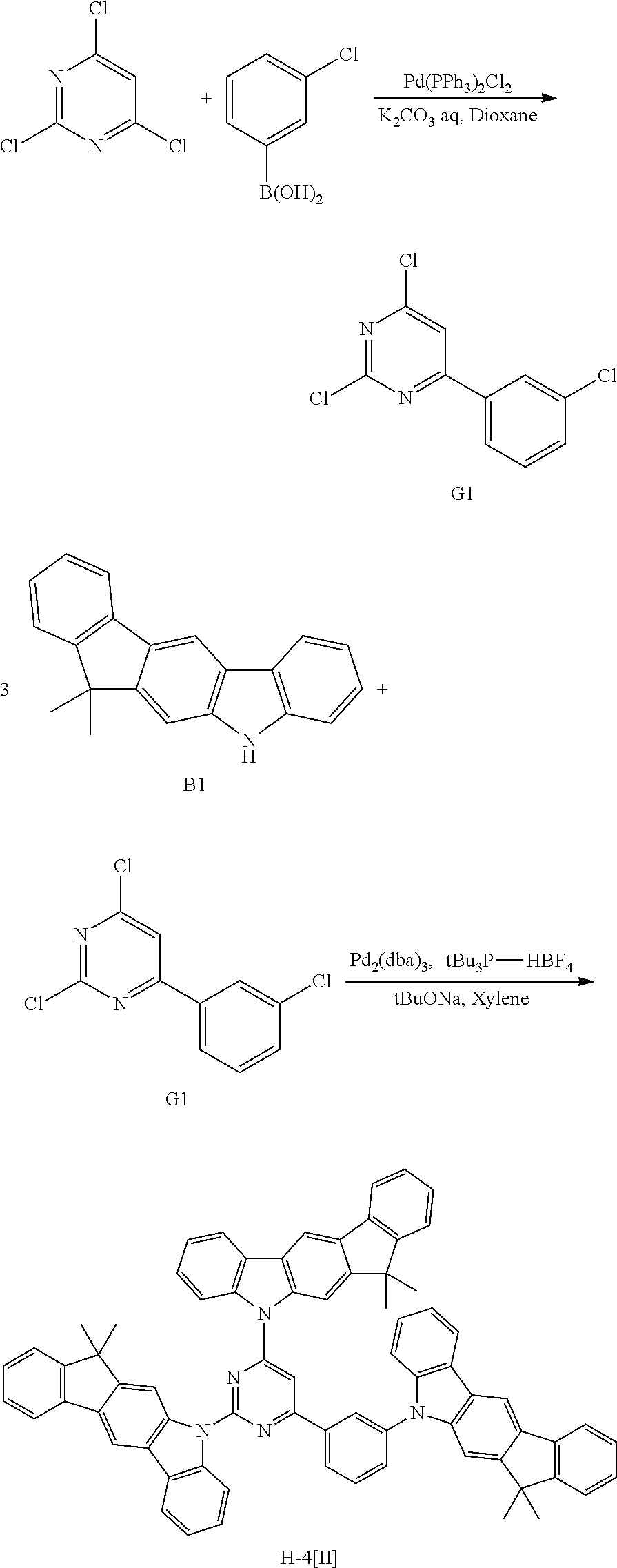
Under argon atmosphere, 2,4,6-trichloropyrimidine (3.67 g, 20 mmol), 3-chlorophenylboronic acid (3.13 g, 20 mmol), dichloro(bistriphenylphosphine)palladium complex (0.351 g, 0.5 mmol), 1,4-dioxane (80 mL), and a 2 M aqueous solution of potassium carbonate (40 mL) were successively mixed, and the resultant mixture was refluxed for 8 h under heating. After cooling to room temperature, the reaction liquid was diluted with toluene, washed with water, and dried under reduced pressure. The obtained residue was purified by silica gel column chromatography to obtain pyrimidine intermediate G1 (4.05 g, yield: 78%).
Under argon atmosphere, carbazolyl intermediate B1 (2.55 g, 9.00 mmol), pyrimidine intermediate G1 (0.779 g, 3.00 mmol), tris(dibenzylideneacetone)dipalladium (0.110 g, 0.120 mmol), tri-t-butylphosphonium tetrafluoroborate (0.139 g, 0.480 mmol), sodium t-butoxide (0.965 g, 9.00 mmol), and anhydrous xylene (60 mL) were successively mixed, and the resultant mixture was refluxed for 8 h under heating.
After cooling the reaction liquid to room temperature, the insolubles were removed by filtration, and the organic solvent was evaporated off under reduced pressure. The obtained residue was purified by silica gel column chromatography to obtain compound H-4[II] (1.65 g, yield: 55%).
The results of analysis by HPLC (High Performance Liquid Chromatography) and LC-MS (Liquid Chromatography-Mass Spectrometry) on compound H-4[II] are shown below.
HPLC purity: 98.6%
LC-MS: calcd for C73H53N5=999.
found m/z=999 (M+, 100).


After adding sodium hydroxide (0.584 g, 14.6 mmol) to a solution of 3-bromobenzaldehyde (17.0 mL, 146 mmol) and 3-bromoacetophenone (19.3 mL, 146 mmol) in methanol (300 mL), the resultant solution was stirred at room temperature for 10.5 h.
The precipitated solid was collected by filtration, washed with methanol, and then dried under vacuum to obtain a cream-colored powder (47.8 g, yield: 90%).
Then, after adding 3-chlorobenzamidine hydrochloride (3.23 g, 16.9 mmol), sodium hydroxide (0.745 g, 18.6 mmol) and then ethanol (35 mL) to the obtained powder (12.4 g, 33.9 mmol), the reaction was allowed to proceed for 12.5 h while refluxing under heating. The white powder formed was collected by filtration, washed with ethanol until the washings were made colorless, further washed with water and then ethanol, and then dried under vacuum to obtain target pyrimidine intermediate J1 (5.25 g, yield: 62%).
Under argon atmosphere, carbazolyl intermediate B1 (1.70 g, 6.00 mmol), pyrimidine intermediate J1 (1.50 g, 3.00 mmol), tris(dibenzylideneacetone)dipalladium (0.110 g, 0.120 mmol), tri-t-butylphosphonium tetrafluoroborate (0.139 g, 0.48 mmol), sodium t-butoxide (0.288 g, 3.00 mmol), and anhydrous toluene (60 mL) were successively mixed, and the resultant mixture was refluxed for 11 h under heating.
After cooling the reaction liquid to room temperature, the insolubles were removed by filtration, and the organic solvent was evaporated off under reduced pressure. The obtained residue was purified by silica gel column chromatography to obtain compound K1 (1.90 g, yield: 70%).
Under argon atmosphere, compound K1 (1.90 g, 3.00 mmol), carbazolyl intermediate L1 (0.850 g, 3.00 mmol), tris(dibenzylideneacetone)dipalladium (0.110 g, 0.120 mmol), tri-t-butylphosphonium tetrafluoroborate (0.139 g, 0.48 mmol), sodium t-butoxide (0.288 g, 3.00 mmol), and anhydrous toluene (60 mL) were successively mixed, and the resultant mixture was refluxed for 11 h under heating.
After cooling the reaction liquid to room temperature, the insolubles were removed by filtration, and the organic solvent was evaporated off under reduced pressure. The obtained residue was purified by silica gel column chromatography to obtain compound H-5[II] (2.94 g, yield: 85%).
The results of analysis by HPLC (High Performance Liquid Chromatography) and LC-MS (Liquid Chromatography-Mass Spectrometry) on compound H-5[II] are shown below.
HPLC purity: 99.0%
LC-MS: calcd for C85H61N5=1151.
found m/z=1379 (M+, 100).

Under argon atmosphere, carbazolyl intermediate F1 (2.46 g, 9.00 mmol), triazine intermediate M1 (0.553 g, 3.00 mmol), tris(dibenzylideneacetone)dipalladium (0.110 g, 0.120 mmol), tri-t-butylphosphonium tetrafluoroborate (0.139 g, 0.48 mmol), sodium t-butoxide (0.288 g, 3.00 mmol), and anhydrous xylene (60 mL) were successively mixed, and the resultant mixture was refluxed for 11 h under heating.
After cooling the reaction liquid to room temperature, the insolubles were removed by filtration, and the organic solvent was evaporated off under reduced pressure. The obtained residue was purified by silica gel column chromatography to obtain compound H-6[II] (2.15 g, yield: 80%).
The results of analysis by HPLC (High Performance Liquid Chromatography) and LC-MS (Liquid Chromatography-Mass Spectrometry) on compound H-6[II] are shown below.
HPLC purity: 99.0%
LC-MS: calcd for C57H30N6S3=894.
found m/z=894 (M+, 100).
The compounds within the scope of the claims of this application can be synthesized by referring to the above synthetic reactions while using a known synthetic reaction and a starting material in accordance with the target compound.
Cleaning of Substrate
A glass substrate of 25 mm×25 mm×1.1 mm thickness having an ITO transparent electrode (product of Geomatec Company) was cleaned by ultrasonic cleaning in isopropyl alcohol for 5 min and then UV ozone cleaning for 5 min.
Formation of Underlayers
Clevious AI4083 (tradename) manufactured by Heraeus as a hole transporting material was spin-coated on the ITO substrate to form a hole transporting layer with a thickness of 30 nm. Thereafter, unnecessary portion was removed by acetone and then a base substrate was produced by baking in air for 10 min on a hot plate at 200° C.
Formation of Light Emitting Layer
A 1.6% by mass toluene solution containing the compound H-1[II] obtained in Synthesis Example 1[II] as a host material and the following compound D-ii as a dopant material was prepared in a mixing ratio of compound H-1[II]:compound D-ii=90:10 by mass. The toluene solution was spin-coated on the base substrate into a thickness of 50 nm. Thereafter, unnecessary portion was removed by toluene and then the coated film was dried under heating at 150° C. on a hot plate to obtain a coat-laminated substrate having a light emitting layer. The film-forming operations for forming the light emitting layer were all conducted in a glove box under a nitrogen atmosphere.
Vapor Deposition and Sealing
The coat-laminated substrate was conveyed into a vapor deposition chamber and the following compound ET-1 as an electron transporting material was vapor-deposited into a thickness of 50 nm to form an electron transporting layer. Then, lithium fluoride was vapor-deposited into a thickness of 1 nm and aluminum was vapor-deposited into a thickness of 80 nm. After completing all the vapor deposition processes, the substrate with laminated films was sealed with a bored glass in a glove box under a nitrogen atmosphere to produce an organic EL device.
Evaluation of Device
By driving at a direct current, the obtained organic EL device was allowed to emit light to measure the external quantum efficiency (EQE) at a current density of 10 mA/cm2. The organic EL device was further allowed to continuously emit light by driving at a direct current, and the time taken until the luminance was reduced from 1000 cd/m2 to 800 cd/m2 (LT80) was measured. The results are shown in Table 2.
An organic EL device was produced in the same manner as described above except for drying the coated film at 200° C. under heating in the formation of the light emitting layer. The obtained organic EL device was measured for the external quantum efficiency (EQE) in the same manner as described above. The result is shown in Table 2.
Each organic EL device wherein the coated film was dried at 150° C., or 200° C. under heating was produced in the same manner as in Example 1[II]except for using compound H-2[II] obtained in Synthesis Example 2[II] as a host material. The evaluation results obtained in the same manner as in Example 1[II] are shown in Table 2.
Each organic EL device wherein the coated film was dried at 150° C., or 200° C. under heating was produced in the same manner as in Example 1[II] except for using compound H-3[II] obtained in Synthesis Example 3[II] as a host material. The evaluation results obtained in the same manner as in Example 1[II] are shown in Table 2.
Each organic EL device wherein the coated film was dried at 150° C., or 200° C. under heating was produced in the same manner as in Example 1[II] except for using compound H-4[II] obtained in Synthesis Example 4[II] as a host material. The evaluation results obtained in the same manner as in Example 1[II] are shown in Table 2.
Each organic EL device wherein the coated film was dried at 150° C., or 200° C. under heating was produced in the same manner as in Example 1[II] except for using compound H-5[II] obtained in Synthesis Example 5[II] as a host material. The evaluation results obtained in the same manner as in Example 1[II] are shown in Table 2.
Each organic EL device wherein the coated film was dried at 150° C., or 200° C. under heating was produced in the same manner as in Example 1[II] except for using compound H-6[II] obtained in Synthesis Example 6[II] as a host material. The evaluation results obtained in the same manner as in Example 1[II] are shown in Table 2.
Each organic EL device wherein the coated film was dried at 150° C., or 200° C. under heating was produced in the same manner as in Example 1[II] except for using compound Q-1[II] described in WO 2012/086170 as a host material. The evaluation results obtained in the same manner as in Example 1[II] are shown in Table 2.
Each organic EL device wherein the coated film was dried at 150° C., or 200° C. under heating was produced in the same manner as in Example 1[II] except for using compound Q-2[II] described in WO 2011/108902 as a host material. The measured external quantum efficiency (EQE) of each organic EL device is shown in Table 2.
It was tried to produce an organic EL device in the same manner as in Example 1[II] except for using compound Q-3[II] described in WO 2007/063754. However, the solubility to toluene was low and a device capable of emitting light was not obtained.


| TABLE 2 | ||
| External quantum efficiency (%) | ||
| Host | dried at | dried at | LT(80) | |
| material | 150° C. | 200° C. | (h) | |
| Example 1[II] | H-1[II] | 7.1 | 7.2 | 47 |
| Example 2[II] | H-2[II] | 6.9 | 7.0 | 44 |
| Example 3[II] | H-3[II] | 6.5 | 6.4 | 48 |
| Example 4[II] | H-4[II] | 7.9 | 8.1 | 42 |
| Example 5[II] | H-5[II] | 8.0 | 7.9 | 50 |
| Example 6[II] | H-6[II] | 7.1 | 6.5 | 46 |
| Comparative | Q-1[II] | 7.6 | 7.3 | 5 |
| Example 1[II] | ||||
| Comparative | Q-2[II] | 6.8 | 3.2 | — |
| Example 2[II] | ||||
(3) Next, the synthesis method of compound 1[III], the production method of organic EL devices employing compound 1[III], and the evaluation results thereof are described below.


After adding sodium hydroxide (0.584 g, 14.6 mmol) to a solution of 3-bromobenzaldehyde (17.0 mL, 146 mmol) and 3-bromoacetophenone (19.3 mL, 146 mmol) in methanol (300 mL), the resultant solution was stirred at room temperature for 10.5 h.
The precipitated solid was collected by filtration, washed with methanol, and then dried under vacuum to obtain a cream-colored powder (47.8 g, yield: 90%).
Then, after adding 3-bromobenzamidine hydrochloride (4.00 g, 16.9 mmol) and sodium hydroxide (0.745 g, 18.6 mmol) and then ethanol (35 mL) to the obtained powder (12.4 g, 33.9 mmol), the reaction was allowed to proceed for 12.5 h while refluxing under heating. The white powder formed was collected by filtration, washed with ethanol until the washings were made colorless, further washed with water and then ethanol, and then dried under vacuum to obtain target pyrimidine intermediate A1 (5.75 g, yield: 62%).
Under argon atmosphere, carbazolyl intermediate B1 (4.91 g, 9.00 mmol), pyrimidine intermediate A1 (1.23 g, 3.00 mmol), tris(dibenzylideneacetone)dipalladium (0.110 g, 0.120 mmol), tri-t-butylphosphonium tetrafluoroborate (0.139 g, 0.480 mmol), sodium t-butoxide (0.965 g, 9.00 mmol), and anhydrous toluene (60 mL) were successively mixed, and the resultant mixture was refluxed for 8 h under heating.
After cooling the reaction liquid to room temperature, the insolubles were removed by filtration, and the organic solvent was evaporated off under reduced pressure. The obtained residue was purified by silica gel column chromatography to obtain compound H-1[III] (3.22 g, yield: 70%).
The results of analysis by HPLC (High Performance Liquid Chromatography) and LC-MS (Liquid Chromatography-Mass Spectrometry) on compound H-1[III] are shown below.
HPLC purity: 99.0%
LC-MS: calcd for C112H76N8=1532.
found m/z=1532 (M+, 100).


After mixing 3-bromobenzaldehyde (1.85 g, 10.0 mmol), 3-bromobenzamidine hydrochloride (4.71 g, 20.0 mmol), sodium hydroxide (1.20 g, 30.0 mmol), and ethanol (200 mL), the reaction was allowed to proceed for 7 h while refluxing under heating. The solid formed was collected by filtration. The filtrate was evaporated off under reduced pressure. After adding chloranil (0.776 g, 3.16 mmol) and dichloromethane (120 mL) to the obtained solid, the resultant mixture was stirred at room temperature for one hour. The solid formed was collected by filtration, combined with the solid obtained previously, and recrystallized twice from dichloromethane and then ethanol. The precipitated white powder was collected by filtration and dried under vacuum to obtain target triazine intermediate C1 (4.44 g, yield: 81%).
Under argon atmosphere, carbazolyl intermediate B1 (4.91 g, 9.00 mmol), triazine intermediate C1 (1.64 g, 3.00 mmol), tris(dibenzylideneacetone)dipalladium (0.110 g, 0.120 mmol), tri-t-butylphosphonium tetrafluoroborate (0.139 g, 0.480 mmol), sodium t-butoxide (0.965 g, 9.00 mmol), and anhydrous toluene (60 mL) were successively mixed, and the resultant mixture was refluxed for 8 h under heating.
After cooling the reaction liquid to room temperature, the insolubles were removed by filtration, and the organic solvent was evaporated off under reduced pressure. The obtained residue was purified by silica gel column chromatography to obtain compound H-2[III] (3.22 g, yield: 70%).
The results of analysis by HPLC (High Performance Liquid Chromatography) and LC-MS (Liquid Chromatography-Mass Spectrometry) on compound H-2[III] are shown below.
HPLC purity: 99.4%
LC-MS: calcd for C111H75N9=1533.
found m/z=1533 (M+, 100).


After adding sodium hydroxide (0.584 g, 14.6 mmol) to a solution of 4-bromobenzaldehyde (17.0 mL, 146 mmol) and 4-bromoacetophenone (19.3 mL, 146 mmol) in methanol (300 mL), the resultant solution was stirred at room temperature for 10.5 h.
The precipitated solid was collected by filtration, washed with methanol, and then dried under vacuum to obtain a powder (47.8 g, yield: 90%).
Then, after adding 4-bromobenzamidine hydrochloride (4.00 g, 16.9 mmol) and sodium hydroxide (0.745 g, 18.6 mmol) and then ethanol (35 mL) to the obtained powder (12.4 g, 33.9 mmol), the reaction was allowed to proceed for 12.5 h while refluxing under heating. The white powder formed was collected by filtration, washed with ethanol until the washings were made colorless, further washed with water and then ethanol, and then dried under vacuum to obtain target pyrimidine intermediate E1 (7.42 g, yield: 80%).
Under argon atmosphere, carbazolyl intermediate D1 (3.01 g, 9.00 mmol), pyrimidine intermediate E1 (1.23 g, 3.00 mmol), tris(dibenzylideneacetone)dipalladium (0.110 g, 0.120 mmol), tri-t-butylphosphonium tetrafluoroborate (0.139 g, 0.480 mmol), sodium t-butoxide (0.965 g, 9.00 mmol), and anhydrous toluene (60 mL) were successively mixed, and the resultant mixture was refluxed for 8 h under heating.
After cooling the reaction liquid to room temperature, the insolubles were removed by filtration, and the organic solvent was evaporated off under reduced pressure. The obtained residue was purified by silica gel column chromatography to obtain compound H-3[III] (2.55 g, yield: 65%).
The results of analysis by HPLC (High Performance Liquid Chromatography) and LC-MS (Liquid Chromatography-Mass Spectrometry) on compound H-3[III] are shown below.
HPLC purity: 99.2%
LC-MS: calcd for C94H64N8=1304.
found m/z=1304 (M+, 100).

Under argon atmosphere, carbazolyl intermediate F1 (4.06 g, 9.00 mmol), triazine intermediate C1 (1.64 g, 3.00 mmol), tris(dibenzylideneacetone)dipalladium (0.110 g, 0.120 mmol), tri-t-butylphosphonium tetrafluoroborate (0.139 g, 0.480 mmol), sodium t-butoxide (0.965 g, 9.00 mmol), and anhydrous toluene (60 mL) were successively mixed, and the resultant mixture was refluxed for 8 h under heating.
After cooling the reaction liquid to room temperature, the insolubles were removed by filtration, and the organic solvent was evaporated off under reduced pressure. The obtained residue was purified by silica gel column chromatography to obtain compound H-4[III] (2.73 g, yield: 55%).
The results of analysis by HPLC (High Performance Liquid Chromatography) and LC-MS (Liquid Chromatography-Mass Spectrometry) on compound H-4[III] are shown below.
HPLC purity: 98.6%
LC-MS: calcd for C120H87N9=1653.
found m/z=1653 (M+, 100).


After adding sodium hydroxide (0.584 g, 14.6 mmol) to a solution of 3-bromobenzaldehyde (17.0 mL, 146 mmol) and 3-bromoacetophenone (19.3 mL, 146 mmol) in methanol (300 mL), the resultant solution was stirred at room temperature for 10.5 h.
The precipitated solid was collected by filtration, washed with methanol, and then dried under vacuum to obtain a cream-colored powder (47.8 g, yield: 90%).
Then, after adding 3-chlorobenzamidine hydrochloride (3.23 g, 16.9 mmol) and sodium hydroxide (0.745 g, 18.6 mmol) and then ethanol (35 mL) to the obtained powder (12.4 g, 33.9 mmol), the reaction was allowed to proceed for 12.5 h while refluxing under heating. The white powder formed was collected by filtration, washed with ethanol until the washings were made colorless, further washed with water and then ethanol, and then dried under vacuum to obtain target pyrimidine intermediate J1 (5.25 g, yield: 62%).
Under argon atmosphere, carbazolyl intermediate B1 (2.46 g, 6.00 mmol), pyrimidine intermediate J1 (1.50 g, 3.00 mmol), tris(dibenzylideneacetone)dipalladium (0.110 g, 0.120 mmol), tri-t-butylphosphonium tetrafluoroborate (0.139 g, 0.48 mmol), sodium t-butoxide (0.288 g, 3.00 mmol), and anhydrous toluene (60 mL) were successively mixed, and the resultant mixture was refluxed for 11 h under heating.
After cooling the reaction liquid to room temperature, the insolubles were removed by filtration, and the organic solvent was evaporated off under reduced pressure. The obtained residue was purified by silica gel column chromatography to obtain compound K1 (1.91 g, yield: 55%).
Under argon atmosphere, compound K1 (1.91 g, 3.00 mmol), carbazolyl intermediate D1 (1.00 g, 3.00 mmol), tris(dibenzylideneacetone)dipalladium (0.110 g, 0.120 mmol), tri-t-butylphosphonium tetrafluoroborate (0.139 g, 0.48 mmol), sodium t-butoxide (0.288 g, 3.00 mmol), and anhydrous toluene (60 mL) were successively mixed, and the resultant mixture was refluxed for 11 h under heating.
After cooling the reaction liquid to room temperature, the insolubles were removed by filtration, and the organic solvent was evaporated off under reduced pressure. The obtained residue was purified by silica gel column chromatography to obtain compound H-5[III] (3.72 g, yield: 85%).
The results of analysis by HPLC (High Performance Liquid Chromatography) and LC-MS (Liquid Chromatography-Mass Spectrometry) on compound H-5[III] are shown below.
HPLC purity: 99.0%
LC-MS: calcd for C106H72N8=1456.
found m/z=1456 (M+, 100).

Under argon atmosphere, carbazolyl intermediate B1 (3.01 g, 9.00 mmol)), triazine intermediate L1 (0.553 g, 3.00 mmol), tris(dibenzylideneacetone)dipalladium (0.110 g, 0.120 mmol), tri-t-butylphosphonium tetrafluoroborate (0.139 g, 0.48 mmol), sodium t-butoxide (0.288 g, 3.00 mmol), and anhydrous xylene (60 mL) were successively mixed, and the resultant mixture was refluxed for 11 h under heating.
After cooling the reaction liquid to room temperature, the insolubles were removed by filtration, and the organic solvent was evaporated off under reduced pressure. The obtained residue was purified by silica gel column chromatography to obtain compound H-6[III] (2.59 g, yield: 80%).
The results of analysis by HPLC (High Performance Liquid Chromatography) and LC-MS (Liquid Chromatography-Mass Spectrometry) on compound H-6[III] are shown below.
HPLC purity: 99.0%
LC-MS: calcd for C75H51N9=1077.
found m/z=1077 (M+, 100).
The compounds within the scope of the claims of this application can be synthesized by referring to the above synthetic reactions while using a known synthetic reaction and a starting material in accordance with the target compound.
Cleaning of Substrate
A glass substrate of 25 mm×25 mm×1.1 mm thickness having an ITO transparent electrode (product of Geomatec Company) was cleaned by ultrasonic cleaning in isopropyl alcohol for 5 min and then UV ozone cleaning for 5 min.
Formation of Underlayers
Clevious AI4083 (tradename) manufactured by Heraeus as a hole transporting material was spin-coated on the ITO substrate to form a hole transporting layer with a thickness of 30 nm. Thereafter, unnecessary portion was removed by acetone and then a base substrate was produced by baking in air for 10 min on a hot plate at 200° C.
Formation of Light Emitting Layer
A 1.6% by mass toluene solution containing the compound H-1[III] obtained in Synthesis Example 1[III] as a host material and the following compound D-i as a dopant material was prepared in a mixing ratio of compound H-1[III]:compound D-i=95:5 by mass. The toluene solution was spin-coated on the base substrate into a thickness of 50 nm. Thereafter, unnecessary portion was removed by toluene and then a coat-laminated substrate with a light emitting layer was obtained by drying under heating at 150° C. on a hot plate. The film-forming operations for forming the light emitting layer were all conducted in a glove box under a nitrogen atmosphere.
Vapor Deposition and Sealing
The coat-laminated substrate was conveyed into a vapor deposition chamber and the following compound ET-1 as an electron transporting material was vapor-deposited into a thickness of 50 nm to form an electron transporting layer. Then, lithium fluoride was vapor-deposited into a thickness of 1 nm and aluminum was vapor-deposited into a thickness of 80 nm. After completing all the vapor deposition processes, the substrate with laminated films was sealed with a bored glass in a glove box under a nitrogen atmosphere to produce an organic EL device.
Evaluation of Device
By driving at a direct current, the obtained organic EL device was allowed to emit light to measure the external quantum efficiency (EQE) at a current density of 10 mA/cm2. The result is shown in Table 3.
An organic EL device was produced in the same manner as described above except for drying the coated film at 200° C. under heating in the formation of the light emitting layer. The obtained organic EL device was measured for the external quantum efficiency (EQE) in the same manner as described above. The result is shown in Table 3.

Each organic EL device was produced in the same manner as in Example 1[III] except for using compound H-2[III] obtained in Synthesis Example 2[III] as a host material. The results are shown in Table 3.
Each organic EL device was produced in the same manner as in Example 1[III] except for using compound H-3[III] obtained in Synthesis Example 3[III] as a host material. The results are shown in Table 3.
Each organic EL device was produced in the same manner as in Example 1[III] except for using compound H-4[III] obtained in Synthesis Example 4[III] as a host material. The results are shown in Table 3.
Each organic EL device was produced in the same manner as in Example 1[III] except for using compound H-5[III] obtained in Synthesis Example 5[III] as a host material. The results are shown in Table 3.
Each organic EL device was produced in the same manner as in Example 1[III] except for using compound H-6[II] obtained in Synthesis Example 6[II] as a host material. The results are shown in Table 3.
Each organic EL device was produced in the same manner as in Example 1[II] except for using compound Q-1[III] described in WO 2012/086170 as a host material. The results are shown in Table 3.
Each organic EL device was produced in the same manner as in Example 1[III] except for using compound Q-2[III] described in WO 2013/081088 as a host material. The results are shown in Table 3.

| TABLE 1 | ||
| External quantum efficiency (%) | ||
| Host | dried at | dried at | |
| material | 150° C. | 200° C. | |
| Example 1[III] | H-1[III] | 4.8 | 4.8 | |
| Example 2[III] | H-2[III] | 4.9 | 4.7 | |
| Example 3[III] | H-3[III] | 4.3 | 4.2 | |
| Example 4[III] | H-4[III] | 4.4 | 4.2 | |
| Example 5[III] | H-5[III] | 4.6 | 4.5 | |
| Example 6[III] | H-6[III] | 4.4 | 4.3 | |
| Comparative | Q-1[III] | 2.1 | —*1 | |
| Example 1[III] | ||||
| Comparative | Q-2[III] | 4.3 | 2.3 | |
| Example 2[III] | ||||
| *1not measured because the external quantum efficiency was low even when dried at 150° C. | ||||
(4) Next, the synthesis method of compound 1[IV], the production method of organic EL devices employing compound 1[IV], and the evaluation results thereof are described below.


After adding sodium hydroxide (0.584 g, 14.6 mmol) to a solution of 3-bromobenzaldehyde (17.0 mL, 146 mmol) and 3-bromoacetophenone (19.3 mL, 146 mmol) in methanol (300 mL), the resultant solution was stirred at room temperature for 10.5 h.
The precipitated solid was collected by filtration, washed with methanol, and then dried under vacuum to obtain a cream-colored powder (47.8 g, yield: 90%).
Then, after adding 3-bromobenzamidine hydrochloride (4.00 g, 16.9 mmol) and sodium hydroxide (0.745 g, 18.6 mmol) and then ethanol (35 mL) to the obtained powder (12.4 g, 33.9 mmol, the reaction was allowed to proceed for 12.5 h while refluxing under heating. The white powder formed was collected by filtration, washed with ethanol until the washings were made colorless, further washed with water and then ethanol, and then dried under vacuum to obtain target pyrimidine intermediate A1 (5.75 g, yield: 62%).
Under argon atmosphere, carbazolyl intermediate B1 (3.00 g, 9.00 mmol), pyrimidine intermediate A1 (1.23 g, 3.00 mmol), tris(dibenzylideneacetone)dipalladium (0.110 g, 0.120 mmol, tri-t-butylphosphonium tetrafluoroborate (0.139 g, 0.480 mmol), sodium t-butoxide (0.965 g, 9.00 mmol), and anhydrous toluene (60 mL) were successively mixed, and the resultant mixture was refluxed for 8 h under heating.
After cooling the reaction liquid to room temperature, the insolubles were removed by filtration, and the organic solvent was evaporated off under reduced pressure. The obtained residue was purified by silica gel column chromatography to obtain compound H-1[IV] (2.74 g, yield: 70%).
The results of analysis by HPLC (High Performance Liquid Chromatography) and LC-MS (Liquid Chromatography-Mass Spectrometry) on compound H-1[IV] are shown below.
HPLC purity: 99.0%
LC-MS: calcd for C94H55N5O3=1301.
found m/z=13012 (M+, 100).

After mixing 3-bromobenzaldehyde (1.85 g, 10.0 mmol), 3-bromobenzamidine hydrochloride (4.71 g, 20.0 mmol), sodium hydroxide (1.20 g, 30.0 mmol), and ethanol (200 mL), the reaction was allowed to proceed for 7 h while refluxing under heating. The solid formed was collected by filtration. The filtrate was evaporated off under reduced pressure. After adding chloranil (0.776 g, 3.16 mmol) and dichloromethane (120 mL) to the obtained solid, the resultant mixture was stirred at room temperature for one hour. The solid formed was collected by filtration, combined with the solid obtained previously, and recrystallized twice from dichloromethane and then ethanol. The precipitated white powder was collected by filtration and dried under vacuum to obtain target triazine intermediate C1 (4.44 g, yield: 81%).
Under argon atmosphere, carbazolyl intermediate D1 (3.24 g, 9.00 mmol), triazine intermediate C1 (1.64 g, 3.00 mmol), tris(dibenzylideneacetone)dipalladium (0.110 g, 0.120 mmol), tri-t-butylphosphonium tetrafluoroborate (0.139 g, 0.480 mmol), sodium t-butoxide (0.965 g, 9.00 mmol), and anhydrous toluene (60 mL) were successively mixed, and the resultant mixture was refluxed for 8 h under heating.
After cooling the reaction liquid to room temperature, the insolubles were removed by filtration, and the organic solvent was evaporated off under reduced pressure. The obtained residue was purified by silica gel column chromatography to obtain compound H-2[IV] (2.90 g, yield: 70%).
The results of analysis by HPLC (High Performance Liquid Chromatography) and LC-MS (Liquid Chromatography-Mass Spectrometry) on compound H-2[IV] are shown below.
HPLC purity: 99.4%
LC-MS: calcd for C102H72N6=1380.
found m/z=1380 (M+, 100).


After adding sodium hydroxide (0.584 g, 14.6 mmol) to a solution of 4-bromobenzaldehyde (17.0 mL, 146 mmol) and 4-bromoacetophenone (19.3 mL, 146 mmol) in methanol (300 mL), the resultant solution was stirred at room temperature for 10.5 h.
The precipitated solid was collected by filtration, washed with methanol, and then dried under vacuum to obtain a powder (47.8 g, yield: 90%).
Then, after adding 4-bromobenzamidine hydrochloride (4.00 g, 16.9 mmol) and sodium hydroxide (0.745 g, 18.6 mmol) and then ethanol (35 mL) to the obtained powder (12.4 g, 33.9 mmol), the reaction was allowed to proceed for 12.5 h while refluxing under heating. The white powder formed was collected by filtration, washed with ethanol until the washings were made colorless, further washed with water and then ethanol, and then dried under vacuum to obtain target pyrimidine intermediate E1 (7.42 g, yield: 80%).
Under argon atmosphere, carbazolyl intermediate F1 (3.15 g, 9.00 mmol), pyrimidine intermediate E1 (1.23 g, 3.00 mmol), tris(dibenzylideneacetone)dipalladium (0.110 g, 0.120 mmol), tri-t-butylphosphonium tetrafluoroborate (0.139 g, 0.480 mmol), sodium t-butoxide (0.965 g, 9.00 mmol), and anhydrous toluene (60 mL) were successively mixed, and the resultant mixture was refluxed for 8 h under heating.
After cooling the reaction liquid to room temperature, the insolubles were removed by filtration, and the organic solvent was evaporated off under reduced pressure. The obtained residue was purified by silica gel column chromatography to obtain compound H-3[IV] (2.63 g, yield: 65%).
The results of analysis by HPLC (High Performance Liquid Chromatography) and LC-MS (Liquid Chromatography-Mass Spectrometry) on compound H-3[IV] are shown below.
HPLC purity: 99.2%
LC-MS: calcd for C94H55N5S3=1349.
found m/z=1349 (M+, 100).

Under argon atmosphere, 2,4,6-trichloropyrimidine (3.67 g, 20 mmol), 3-chlorophenylboronic acid (3.13 g, 20 mmol), dichloro(bistriphenylphosphine)palladium complex (0.351 g, 0.5 mmol), 1,4-dioxane (80 mL), and a 2 M aqueous solution of potassium carbonate (40 mL) were successively mixed, and the resultant mixture was refluxed for 8 h under heating. After cooling to room temperature, the reaction liquid was diluted with toluene, washed with water, and dried under reduced pressure. The obtained residue was purified by silica gel column chromatography to obtain pyrimidine intermediate G1 (4.05 g, yield: 78%).
Under argon atmosphere, carbazolyl intermediate J1 (3.15 g, 9.00 mmol), pyrimidine intermediate G1 (0.779 g, 3.00 mmol), tris(dibenzylideneacetone)dipalladium (0.110 g, 0.120 mmol), tri-t-butylphosphonium tetrafluoroborate (0.139 g, 0.480 mmol), sodium t-butoxide (0.965 g, 9.00 mmol), and anhydrous toluene (60 mL) were successively mixed, and the resultant mixture was refluxed for 8 h under heating.
After cooling the reaction liquid to room temperature, the insolubles were removed by filtration, and the organic solvent was evaporated off under reduced pressure. The obtained residue was purified by silica gel column chromatography to obtain compound H-4[IV] (1.98 g, yield: 55%).
The results of analysis by HPLC (High Performance Liquid Chromatography) and LC-MS (Liquid Chromatography-Mass Spectrometry) on compound H-4[IV] are shown below.
HPLC purity: 98.6%
LC-MS: calcd for C82H47N5S3=1197.
found m/z=1197 (M+, 100).


After adding sodium hydroxide (0.584 g, 14.6 mmol) to a solution of 3-bromobenzaldehyde (17.0 mL, 146 mmol) and 3-bromoacetophenone (19.3 mL, 146 mmol) in methanol (300 mL), the resultant solution was stirred at room temperature for 10.5 h.
The precipitated solid was collected by filtration, washed with methanol, and then dried under vacuum to obtain a cream-colored powder (47.8 g, yield: 90%).
Then, after adding 3-chlorobenzamidine hydrochloride (3.23 g, 16.9 mmol) and sodium hydroxide (0.745 g, 18.6 mmol) and then ethanol (35 mL) to the obtained powder (12.4 g, 33.9 mmol), the reaction was allowed to proceed for 12.5 h while refluxing under heating. The white powder formed was collected by filtration, washed with ethanol until the washings were made colorless, further washed with water and then ethanol, and then dried under vacuum to obtain target pyrimidine intermediate J1 (5.25 g, yield: 62%).
Under argon atmosphere, carbazolyl intermediate D1 (2.16 g, 6.00 mmol), pyrimidine intermediate J1 (1.50 g, 3.00 mmol), tris(dibenzylideneacetone)dipalladium (0.110 g, 0.120 mmol), tri-t-butylphosphonium tetrafluoroborate (0.139 g, 0.48 mmol), sodium t-butoxide (0.288 g, 3.00 mmol), and anhydrous toluene (60 mL) were successively mixed, and the resultant mixture was refluxed for 11 h under heating.
After cooling the reaction liquid to room temperature, the insolubles were removed by filtration, and the organic solvent was evaporated off under reduced pressure. The obtained residue was purified by silica gel column chromatography to obtain compound K1 (2.22 g, yield: 70%).
Under argon atmosphere, compound K1 (2.22 g, 3.00 mmol), carbazolyl intermediate L1 (1.08 g, 3.00 mmol), tris(dibenzylideneacetone)dipalladium (0.110 g, 0.120 mmol), tri-t-butylphosphonium tetrafluoroborate (0.139 g, 0.48 mmol), sodium t-butoxide (0.288 g, 3.00 mmol), and anhydrous toluene (60 mL) were successively mixed, and the resultant mixture was refluxed for 11 h under heating.
After cooling the reaction liquid to room temperature, the insolubles were removed by filtration, and the organic solvent was evaporated off under reduced pressure. The obtained residue was purified by silica gel column chromatography to obtain compound H-5[IV] (3.52 g, yield: 85%).
The results of analysis by HPLC (High Performance Liquid Chromatography) and LC-MS (Liquid Chromatography-Mass Spectrometry) on compound H-5[IV] are shown below.
HPLC purity: 99.0%
LC-MS: calcd for C103H73N5=1379.
found m/z=1379 (M+, 100).

Under argon atmosphere, carbazolyl intermediate B1 (3.00 g, 9.00 mmol), pyrimidine intermediate M1 (0.550 g, 3.00 mmol), tris(dibenzylideneacetone)dipalladium (0.110 g, 0.120 mmol), tri-t-butylphosphonium tetrafluoroborate (0.139 g, 0.48 mmol), sodium t-butoxide (0.288 g, 3.00 mmol), and anhydrous toluene (60 mL) were successively mixed, and the resultant mixture was refluxed for 11 h under heating.
After cooling the reaction liquid to room temperature, the insolubles were removed by filtration, and the organic solvent was evaporated off under reduced pressure. The obtained residue was purified by silica gel column chromatography to obtain compound H-6[IV] (2.58 g, yield: 80%).
The results of analysis by HPLC (High Performance Liquid Chromatography) and LC-MS (Liquid Chromatography-Mass Spectrometry) on compound H-6[IV] are shown below.
HPLC purity: 99.0%
LC-MS: calcd for C76H43N5O3=1073.
found m/z=1073 (M+, 100).
The compounds within the scope of the claims of this application can be synthesized by referring to the above synthetic reactions while using a known synthetic reaction and a starting material in accordance with the target compound.
Cleaning of Substrate
A glass substrate of 25 mm×25 mm×1.1 mm thickness having an ITO transparent electrode (product of Geomatec Company) was cleaned by ultrasonic cleaning in isopropyl alcohol for 5 min and then UV ozone cleaning for 5 min.
Formation of Underlayers
Clevious AI4083 (tradename) manufactured by Heraeus as a hole transporting material was spin-coated on the ITO substrate to form a hole transporting layer with a thickness of 30 nm. Thereafter, unnecessary portion was removed by acetone and then a base substrate was produced by baking in air for 10 min on a hot plate at 200° C.
Formation of Light Emitting Layer
A 1.6% by mass toluene solution containing the compound H-1[IV] obtained in Synthesis Example 1[IV] as a host material and the following compound D-ii as a dopant material was prepared in a mixing ratio of compound H-1[IV]:compound D-ii=90:10 by mass. The toluene solution was spin-coated on the base substrate into a thickness of 50 nm. Thereafter, unnecessary portion was removed by toluene and then the coated film was dried under heating at 150° C. on a hot plate to obtain a coat-laminated substrate having a light emitting layer. The film-forming operations for forming the light emitting layer were all conducted in a glove box under a nitrogen atmosphere.
Vapor Deposition and Sealing
The coat-laminated substrate was conveyed into a vapor deposition chamber and the following compound ET-1 as an electron transporting material was vapor-deposited into a thickness of 50 nm to form an electron transporting layer. Then, lithium fluoride was vapor-deposited into a thickness of 1 nm and aluminum was vapor-deposited into a thickness of 80 nm. After completing all the vapor deposition processes, the substrate with laminated films was sealed with a bored glass in a glove box under a nitrogen atmosphere to produce an organic EL device.
Evaluation of Device
By driving at a direct current, the obtained organic EL device was allowed to emit light to measure the external quantum efficiency (EQE) at a current density of 10 mA/cm2. The result is shown in Table 4.
The organic EL device was further allowed to continuously emit light by driving at a direct current, and the time taken until the luminance was reduced from 1000 cd/m2 to 800 cd/m2 (LT80) was measured. The result is shown in Table 4.
An organic EL device was produced in the same manner as described above except for drying the coated film at 200° C. under heating in the formation of the light emitting layer. The obtained organic EL device was measured for the external quantum efficiency (EQE) in the same manner as described above. The result is shown in Table 4.

Each organic EL device was produced in the same manner as in Example 1[IV] except for using compound H-2[IV] obtained in Synthesis Example 2[IV] as a host material. The results are shown in Table 4.
Each organic EL device was produced in the same manner as in Example 1[IV] except for using compound H-3[IV] obtained in Synthesis Example 3[IV] as a host material. The results are shown in Table 4.
Each organic EL device was produced in the same manner as in Example 1[IV] except for using compound H-4[IV] obtained in Synthesis Example 4[IV] as a host material. The results are shown in Table 4.
Each organic EL device was produced in the same manner as in Example 1[IV] except for using compound H-5[IV] obtained in Synthesis Example 5[IV] as a host material. The results are shown in Table 4.
Each organic EL device was produced in the same manner as in Example 1[IV] except for using compound H-6[IV] obtained in Synthesis Example 6[IV] as a host material. The results are shown in Table 4.
Each organic EL device was produced in the same manner as in Example 1[IV] except for using compound Q-1[IV] described in WO 2012/086170 as a host material. The results are shown in Table 4.
Each organic EL device was produced in the same manner as in Example 1[IV] except for using compound Q-2[IV] described in WO 2013/081088 as a host material. The results are shown in Table 4.

| TABLE 4 | ||
| External quantum efficiency (%) | ||
| Host | dried at | dried at | LT(80) | |
| material | 150° C. | 200° C. | (h) | |
| Example 1[IV] | H-1[IV] | 7.2 | 7.1 | 55 |
| Example 2[IV] | H-2[IV] | 7.1 | 6.9 | 58 |
| Example 3[IV] | H-3[IV] | 7.8 | 7.3 | 60 |
| Example 4[IV] | H-4[IV] | 7.7 | 7.6 | 54 |
| Example 5[IV] | H-5[IV] | 7.7 | 7.8 | 49 |
| Example 6[IV] | H-6[IV] | 7.3 | 7.0 | 48 |
| Comparative | Q-1[IV] | 7.6 | 7.3 | 5 |
| Example 1[IV] | ||||
| Comparative | Q-2[IV] | 7.4 | 3.8 | — |
| Example 2[IV] | ||||
(5) Next, the synthesis method of compound 1[V], the production method of organic EL devices employing compound 1[V], and the evaluation results thereof are described below.


Under argon atmosphere, compound A1 (0.550 g, 3.00 mmol), carbazolyl intermediate B1 (3.90 g, 6.00 mmol), tris(dibenzylideneacetone)dipalladium (0.110 g, 0.120 mmol), tri-t-butylphosphonium tetrafluoroborate (0.139 g, 0.48 mmol), sodium t-butoxide (0.288 g, 3.00 mmol), and anhydrous toluene (60 mL) were successively mixed, and the resultant mixture was refluxed for 11 h under heating.
After cooling the reaction liquid to room temperature, the insolubles were removed by filtration, and the organic solvent was evaporated off under reduced pressure. The obtained residue was purified by silica gel column chromatography to obtain compound C1 (3.60 g, yield: 85%).
Under argon atmosphere, compound C1 (3.60 g, 3.00 mmol), carbazolyl intermediate D1 (1.23 g, 3.00 mmol), tris(dibenzylideneacetone)dipalladium (0.110 g, 0.120 mmol), tri-t-butylphosphonium tetrafluoroborate (0.139 g, 0.48 mmol), sodium t-butoxide (0.288 g, 3.00 mmol), and anhydrous toluene (60 mL) were successively mixed, and the resultant mixture was refluxed for 11 h under heating.
After cooling the reaction liquid to room temperature, the insolubles were removed by filtration, and the organic solvent was evaporated off under reduced pressure. The obtained residue was purified by silica gel column chromatography to obtain compound H-1[V] (4.54 g, yield: 85%).
The results of analysis by HPLC (High Performance Liquid Chromatography) and LC-MS (Liquid Chromatography-Mass Spectrometry) on compound H-1[V] are shown below.
HPLC purity: 99.0%
LC-MS: calcd for C130H80N10=1780.
found m/z=1780 (M+, 100).


Under argon atmosphere, compound A1 (0.550 g, 3.00 mmol), carbazolyl intermediate B1 (1.95 g, 3.00 mmol), tris(dibenzylideneacetone)dipalladium (0.110 g, 0.120 mmol), tri-t-butylphosphonium tetrafluoroborate (0.139 g, 0.48 mmol), sodium t-butoxide (0.288 g, 3.00 mmol), and anhydrous toluene (60 mL) were successively mixed, and the resultant mixture was refluxed for 11 h under heating.
After cooling the reaction liquid to room temperature, the insolubles were removed by filtration, and the organic solvent was evaporated off under reduced pressure. The obtained residue was purified by silica gel column chromatography to obtain compound E1 (1.91 g, yield: 80%).
Under argon atmosphere, compound E1 (1.91 g, 3.00 mmol), carbazolyl intermediate F1 (0.771 g, 3.00 mmol), tris(dibenzylideneacetone)dipalladium (0.110 g, 0.120 mmol), tri-t-butylphosphonium tetrafluoroborate (0.139 g, 0.48 mmol), sodium t-butoxide (0.288 g, 3.00 mmol), and anhydrous toluene (60 mL) were successively mixed, and the resultant mixture was refluxed for 11 h under heating.
After cooling the reaction liquid to room temperature, the insolubles were removed by filtration, and the organic solvent was evaporated off under reduced pressure. The obtained residue was purified by silica gel column chromatography to obtain compound G1 (2.44 g, yield: 80%).
Under argon atmosphere, compound G1 (2.44 g, 3.00 mmol), carbazolyl intermediate J1 (1.00 g, 3.00 mmol), tris(dibenzylideneacetone)dipalladium (0.110 g, 0.120 mmol), tri-t-butylphosphonium tetrafluoroborate (0.139 g, 0.48 mmol), sodium t-butoxide (0.288 g, 3.00 mmol), and anhydrous toluene (60 mL) were successively mixed, and the resultant mixture was refluxed for 11 h under heating.
After cooling the reaction liquid to room temperature, the insolubles were removed by filtration, and the organic solvent was evaporated off under reduced pressure. The obtained residue was purified by silica gel column chromatography to obtain compound H-2[V] (3.15 g, yield: 80%).
The results of analysis by HPLC (High Performance Liquid Chromatography) and LC-MS (Liquid Chromatography-Mass Spectrometry) on compound H-2[V] are shown below.
HPLC purity: 99.0%
LC-MS: calcd for C94H55N7O2=1313.
found m/z=1313 (M+, 100).


Under argon atmosphere, compound K1 (0.553 g, 3.00 mmol), carbazolyl intermediate B1 (1.95 g, 3.00 mmol), tris(dibenzylideneacetone)dipalladium (0.110 g, 0.120 mmol), tri-t-butylphosphonium tetrafluoroborate (0.139 g, 0.48 mmol), sodium t-butoxide (0.288 g, 3.00 mmol), and anhydrous toluene (60 mL) were successively mixed, and the resultant mixture was refluxed for 11 h under heating.
After cooling the reaction liquid to room temperature, the insolubles were removed by filtration, and the organic solvent was evaporated off under reduced pressure. The obtained residue was purified by silica gel column chromatography to obtain compound L1 (1.91 g, yield: 80%).
Under argon atmosphere, compound L1 (1.91 g, 3.00 mmol), carbazolyl intermediate F1 (0.772 g, 3.00 mmol), tris(dibenzylideneacetone)dipalladium (0.110 g, 0.120 mmol), tri-t-butylphosphonium tetrafluoroborate (0.139 g, 0.48 mmol), sodium t-butoxide (0.288 g, 3.00 mmol), and anhydrous toluene (60 mL) were successively mixed, and the resultant mixture was refluxed for 11 h under heating.
After cooling the reaction liquid to room temperature, the insolubles were removed by filtration, and the organic solvent was evaporated off under reduced pressure. The obtained residue was purified by silica gel column chromatography to obtain compound M1 (2.44 g, yield: 80%).
Under argon atmosphere, compound M1 (2.44 g, 3.00 mmol), carbazolyl intermediate N1 (1.00 g, 3.00 mmol), tris(dibenzylideneacetone)dipalladium (0.110 g, 0.120 mmol), tri-t-butylphosphonium tetrafluoroborate (0.139 g, 0.48 mmol), sodium t-butoxide (0.288 g, 3.00 mmol), and anhydrous toluene (60 mL) were successively mixed, and the resultant mixture was refluxed for 11 h under heating.
After cooling the reaction liquid to room temperature, the insolubles were removed by filtration, and the organic solvent was evaporated off under reduced pressure. The obtained residue was purified by silica gel column chromatography to obtain compound H-3[V] (3.16 g, yield: 80%).
The results of analysis by HPLC (High Performance Liquid Chromatography) and LC-MS (Liquid Chromatography-Mass Spectrometry) on compound H-3[V] are shown below.
HPLC purity: 99.0%
LC-MS: calcd for C93H57N9O=1315.
found m/z=1315 (M+, 100).


Under argon atmosphere, compound 01 (1.64 g, 3.00 mmol), carbazolyl intermediate B1 (1.95 g, 3.00 mmol), tris(dibenzylideneacetone)dipalladium (0.110 g, 0.120 mmol), tri-t-butylphosphonium tetrafluoroborate (0.139 g, 0.48 mmol), sodium t-butoxide (0.288 g, 3.00 mmol), and anhydrous toluene (60 mL) were successively mixed, and the resultant mixture was refluxed for 11 h under heating.
After cooling the reaction liquid to room temperature, the insolubles were removed by filtration, and the organic solvent was evaporated off under reduced pressure. The obtained residue was purified by silica gel column chromatography to obtain compound P1 (2.67 g, yield: 80%).
Under argon atmosphere, compound P1 (2.67 g, 3.00 mmol), carbazolyl intermediate D1 (1.23 g, 3.00 mmol), tris(dibenzylideneacetone)dipalladium (0.110 g, 0.120 mmol), tri-t-butylphosphonium tetrafluoroborate (0.139 g, 0.48 mmol), sodium t-butoxide (0.288 g, 3.00 mmol), and anhydrous toluene (60 mL) were successively mixed, and the resultant mixture was refluxed for 11 h under heating.
After cooling the reaction liquid to room temperature, the insolubles were removed by filtration, and the organic solvent was evaporated off under reduced pressure. The obtained residue was purified by silica gel column chromatography to obtain compound Q1 (3.46 g, yield: 80%).
Under argon atmosphere, compound Q1 (3.46 g, 3.00 mmol), carbazolyl intermediate N1 (1.00 g, 3.00 mmol), tris(dibenzylideneacetone)dipalladium (0.110 g, 0.120 mmol), tri-t-butylphosphonium tetrafluoroborate (0.139 g, 0.48 mmol), sodium t-butoxide (0.288 g, 3.00 mmol), and anhydrous toluene (60 mL) were successively mixed, and the resultant mixture was refluxed for 11 h under heating.
After cooling the reaction liquid to room temperature, the insolubles were removed by filtration, and the organic solvent was evaporated off under reduced pressure. The obtained residue was purified by silica gel column chromatography to obtain compound H-4[V] (4.07 g, yield: 80%).
The results of analysis by HPLC (High Performance Liquid Chromatography) and LC-MS (Liquid Chromatography-Mass Spectrometry) on compound H-4[V] are shown below.
HPLC purity: 99.0%
LC-MS: calcd for CH124H79N9=1693.
found m/z=1693 (M+, 100).
The compounds within the scope of the claims of this application can be synthesized by referring to the above synthetic reactions while using a known synthetic reaction and a starting material in accordance with the target compound.
Cleaning of Substrate
A glass substrate of 25 mm×25 mm×1.1 mm thickness having an ITO transparent electrode (product of Geomatec Company) was cleaned by ultrasonic cleaning in isopropyl alcohol for 5 min and then UV ozone cleaning for 5 min.
Formation of Underlayers
Clevious AI4083 (tradename) manufactured by Heraeus as a hole transporting material was spin-coated on the ITO substrate to form a hole transporting layer with a thickness of 30 nm. Thereafter, unnecessary portion was removed by acetone and then a base substrate was produced by baking in air for 10 min on a hot plate at 200° C.
Formation of Light Emitting Layer
A 1.6% by mass toluene solution containing the compound H-1[V] obtained in Synthesis Example 1[V] as a host material and the following compound D-ii as a dopant material was prepared in a mixing ratio of compound H-1[V]:compound D-ii=90:10 by mass. The toluene solution was spin-coated on the base substrate into a thickness of 50 nm. Thereafter, unnecessary portion was removed by toluene and then the coated film was dried under heating at 150° C. on a hot plate to obtain a coat-laminated substrate having a light emitting layer. The film-forming operations for forming the light emitting layer were all conducted in a glove box under a nitrogen atmosphere.
Vapor Deposition and Sealing
The coat-laminated substrate was conveyed into a vapor deposition chamber and the following compound ET-1 as an electron transporting material was vapor-deposited into a thickness of 50 nm to form an electron transporting layer. Then, lithium fluoride was vapor-deposited into a thickness of 1 nm and aluminum was vapor-deposited into a thickness of 80 nm. After completing all the vapor deposition processes, the substrate with laminated films was sealed with a bored glass in a glove box under a nitrogen atmosphere to produce an organic EL device.
Evaluation of Device
By driving at a direct current, the obtained organic EL device was allowed to emit light to measure the external quantum efficiency (EQE) at a current density of 10 mA/cm2. The result is shown in Table 5.
An organic EL device was produced in the same manner as in Example 1[V] except for using compound H-2[V] obtained in Synthesis Example 2[V] as a host material. The obtained organic EL device was allowed to emit light by driving at a direct current to measure the external quantum efficiency (EQE) at a current density of 10 mA/cm2. The result is shown in Table 5.
An organic EL device was produced in the same manner as in Example 1[V] except for using compound H-3[V] obtained in Synthesis Example 3[V] as a host material. The obtained organic EL device was allowed to emit light by driving at a direct current to measure the external quantum efficiency (EQE) at a current density of 10 mA/cm2. The result is shown in Table 5.
An organic EL device was produced in the same manner as in Example 1[V] except for using compound H-4[V] obtained in Synthesis Example 4[V] as a host material. The obtained organic EL device was allowed to emit light by driving at a direct current to measure the external quantum efficiency (EQE) at a current density of 10 mA/cm2. The result is shown in Table 5.
An organic EL device was produced in the same manner as in Example 1[V] except for using compound D-i as a dopant material in a host material to dopant material ratio of 90:10 by mass. The obtained organic EL device was allowed to emit light by driving at a direct current to measure the external quantum efficiency (EQE) at a current density of 10 mA/cm2. The result is shown in Table 5.
An organic EL device was produced in the same manner as in Example 2[V] except for using compound D-i as a dopant material in a host material to dopant material ratio of 90:10 by mass. The obtained organic EL device was allowed to emit light by driving at a direct current to measure the external quantum efficiency (EQE) at a current density of 10 mA/cm2. The result is shown in Table 5.
An organic EL device was produced in the same manner as in Example 3[V] except for using compound D-i as a dopant material in a host material to dopant material ratio of 90:10 by mass. The obtained organic EL device was allowed to emit light by driving at a direct current to measure the external quantum efficiency (EQE) at a current density of 10 mA/cm2. The result is shown in Table 5.
An organic EL device was produced in the same manner as in Example 4[V] except for using compound D-i as a dopant material in a host material to dopant material ratio of 90:10 by mass. The obtained organic EL device was allowed to emit light by driving at a direct current to measure the external quantum efficiency (EQE) at a current density of 10 mA/cm2. The result is shown in Table 5.

| TABLE 5 | |||
| Host | Dopant | EQE | |
| material | material | (%) | |
| Example 1[V] | H-1[V] | D-ii | 9.2 | |
| Example 2[V] | H-2[V] | D-ii | 8.7 | |
| Example 3[V] | H-3[V] | D-ii | 10.1 | |
| Example 4[V] | H-4[V] | D-ii | 9.8 | |
| Example 5[V] | H-1[V] | D-i | 5.9 | |
| Example 6[V] | H-2[V] | D-i | 6.2 | |
| Example 7[V] | H-3[V] | D-i | 7.1 | |
| Example 8[V] | H-4[V] | D-i | 6.7 | |
Cleaning of Substrate
A glass substrate of 25 mm×25 mm×1.1 mm thickness having an ITO transparent electrode (product of Geomatec Company) was cleaned by ultrasonic cleaning in isopropyl alcohol for 5 min and then UV ozone cleaning for 5 min.
Formation of Underlayers
Clevious AI4083 (tradename) manufactured by Heraeus as a hole transporting material was spin-coated on the ITO substrate to form a hole transporting layer with a thickness of 30 nm. Thereafter, unnecessary portion was removed by acetone and then a base substrate was produced by baking in air for 10 min on a hot plate at 200° C.
Formation of Light Emitting Layer
A 1.6% by mass toluene solution containing two host materials (1:1 by mass) and the following compound D-ii as a dopant material was prepared in a mixing ratio of host materials:compound D-ii=90:10 by mass. The toluene solution was spin-coated on the base substrate into a thickness of 50 nm. Thereafter, unnecessary portion was removed by toluene and then the coated film was dried under heating at 150° C. on a hot plate to obtain a coat-laminated substrate having a light emitting layer. The film-forming operations for forming the light emitting layer were all conducted in a glove box under a nitrogen atmosphere.
Vapor Deposition and Sealing
The coat-laminated substrate was conveyed into a vapor deposition chamber and the following compound ET-1 as an electron transporting material was vapor-deposited into a thickness of 50 nm to form an electron transporting layer. Then, lithium fluoride was vapor-deposited into a thickness of 1 nm and aluminum was vapor-deposited into a thickness of 80 nm. After completing all the vapor deposition processes, the substrate with laminated films was sealed with a bored glass in a glove box under a nitrogen atmosphere to produce an organic EL device.
Evaluation of Device
By driving at a direct current, the obtained organic EL device was allowed to emit light to measure the external quantum efficiency (EQE) at a current density of 10 mA/cm2. The results are shown in Tables 6 and 7.

| TABLE 6 | ||||
| Host | Dopant | EQE | ||
| material | material | (%) | ||
| Example 1 | H-1[I] | A-2 | D-ii | 7.6 | |
| Example 2 | H-1[I] | B-1 | D-ii | 6.8 | |
| Example 3 | H-1[I] | B-4 | D-ii | 7.2 | |
| Example 4 | H-1[I] | B-10 | D-ii | 7.3 | |
| Example 5 | H-1[I] | B-13 | D-ii | 7.4 | |
| Example 6 | H-1[I] | B-32 | D-ii | 6.5 | |
| Example 7 | H-1[I] | C-219 | D-ii | 5.8 | |
| Example 8 | H-1[I] | C-222 | D-ii | 5.7 | |
| Example 9 | H-1[I] | C-225 | D-ii | 6.7 | |
| Example 10 | H-1[I] | D-2 | D-ii | 6.0 | |
| Example 11 | H-1[I] | D-3 | D-ii | 6.1 | |
| Example 12 | H-2[I] | A-2 | D-ii | 7.3 | |
| Example 13 | H-2[I] | B-1 | D-ii | 6.5 | |
| Example 14 | H-2[I] | B-4 | D-ii | 7.1 | |
| Example 15 | H-2[I] | B-10 | D-ii | 7.2 | |
| Example 16 | H-2[I] | B-13 | D-ii | 7.1 | |
| Example 17 | H-2[I] | B-32 | D-ii | 6.4 | |
| Example 18 | H-2[I] | C-219 | D-ii | 5.4 | |
| Example 19 | H-2[I] | C-222 | D-ii | 5.7 | |
| Example 20 | H-2[I] | C-225 | D-ii | 6.6 | |
| Example 21 | H-2[I] | D-2 | D-ii | 5.9 | |
| Example 22 | H-2[I] | D-3 | D-ii | 6.0 | |
| Example 23 | H-5[II] | A-2 | D-ii | 8.0 | |
| Example 24 | H-5[II] | B-1 | D-ii | 7.9 | |
| Example 25 | H-5[II] | B-4 | D-ii | 7.8 | |
| Example 26 | H-5[II] | B-10 | D-ii | 7.9 | |
| Example 27 | H-5[II] | B-13 | D-ii | 7.7 | |
| Example 28 | H-5[II] | B-32 | D-ii | 7.7 | |
| Example 29 | H-5[II] | C-219 | D-ii | 6.5 | |
| Example 30 | H-5[II] | C-222 | D-ii | 6.5 | |
| Example 31 | H-5[II] | C-225 | D-ii | 6.7 | |
| Example 32 | H-5[II] | D-2 | D-ii | 5.8 | |
| Example 33 | H-5[II] | D-3 | D-ii | 5.8 | |
| TABLE 7 | ||||
| Host | Dopant | EQE | ||
| material | material | (%) | ||
| Example 34 | H-4[III] | A-2 | D-ii | 6.7 | |
| Example 35 | H-4[III] | B-1 | D-ii | 6.3 | |
| Example 36 | H-4[III] | B-4 | D-ii | 6.6 | |
| Example 37 | H-4[III] | B-10 | D-ii | 6.6 | |
| Example 38 | H-4[III] | B-13 | D-ii | 6.3 | |
| Example 39 | H-4[III] | B-32 | D-ii | 6.2 | |
| Example 40 | H-4[III] | C-219 | D-ii | 5.3 | |
| Example 41 | H-4[III] | C-222 | D-ii | 5.2 | |
| Example 42 | H-4[III] | C-225 | D-ii | 5.8 | |
| Example 43 | H-4[III] | D-2 | D-ii | 5.2 | |
| Example 44 | H-4[III] | D-3 | D-ii | 5.3 | |
| Example 45 | H-1[IV] | A-2 | D-ii | 6.7 | |
| Example 46 | H-1[IV] | B-1 | D-ii | 6.8 | |
| Example 47 | H-1[IV] | B-4 | D-ii | 6.3 | |
| Example 48 | H-1[IV] | B-10 | D-ii | 6.2 | |
| Example 49 | H-1[IV] | B-13 | D-ii | 6.2 | |
| Example 50 | H-1[IV] | B-32 | D-ii | 6.1 | |
| Example 51 | H-1[IV] | C-219 | D-ii | 6.0 | |
| Example 52 | H-1[IV] | C-222 | D-ii | 5.9 | |
| Example 53 | H-1[IV] | C-225 | D-ii | 5.4 | |
| Example 54 | H-1[IV] | D-2 | D-ii | 4.8 | |
| Example 55 | H-1[IV] | D-3 | D-ii | 5.0 | |
| Example 56 | H-1[V] | A-2 | D-ii | 7.4 | |
| Example 57 | H-1[V] | B-1 | D-ii | 7.4 | |
| Example 58 | H-1[V] | B-4 | D-ii | 7.1 | |
| Example 59 | H-1[V] | B-10 | D-ii | 7.0 | |
| Example 60 | H-1[V] | B-13 | D-ii | 7.1 | |
| Example 61 | H-1[V] | B-32 | D-ii | 7.2 | |
| Example 62 | H-1[V] | C-219 | D-ii | 6.1 | |
| Example 63 | H-1[V] | C-222 | D-ii | 6.0 | |
| Example 64 | H-1[V] | C-225 | D-ii | 6.3 | |
| Example 65 | H-1[V] | D-2 | D-ii | 5.9 | |
| Example 66 | H-1[V] | D-3 | D-ii | 5.8 | |
- 1. Organic EL device
- 2. Substrate
- 3. Anode
- 4. Cathode
- 5. Light emitting layer
- 6. Anode-side organic thin film layer
- 7. Cathode-side organic thin film layer
- 10. Emission unit
Claims (18)
1. A compound represented by formula 1[I]:


wherein in formula 1[I]
A represents a substituted or unsubstituted nitrogen-containing heteroaromatic hydrocarbon group having 5 to 30 ring atoms;
L1 to L3 each independently represent a substituted or unsubstituted aromatic hydrocarbon group having 6 to 30 ring carbon atoms, a substituted or unsubstituted heterocyclic group having 5 to 30 ring atoms, or a group wherein 2 to 4 groups selected from the preceding groups are bonded to each other;
a to c each independently represent 0 or 1;
one of *4 and *5 is bonded to *1 and the other is bonded to Ar1;
one of *6 and *7 is bonded to *2 and the other is bonded to Ar3;
one of *8 and *9 is bonded to *3 and the other is bonded to Ar5;
Ar1 to Ar6 each independently represent a substituted or unsubstituted aryl group having 6 to 30 ring carbon atoms or a substituted or unsubstituted heteroaryl group having 5 to 30 ring atoms;
one of X1 to X4 and one of X13 to X16 represent carbon atoms which are respectively bonded to * 10 and * 11, and the other six each independently represent C(R) or a nitrogen atom;
one of X9 and X12 and one of X21 to X24 represent carbon atoms which are respectively bonded to *12 and *13, and the other six each independently represent C(R) or a nitrogen atom;
one of X25 to X28 and one of X37 to X40 are carbon atoms which are respectively bonded to *14 and *15, and the other six each independently represent C(R) or a nitrogen atom;
one of X33 to X36 and one of X45 to X48 are carbon atoms which are respectively bonded to * 16 and * 17, and the other six each independently represent C(R) or a nitrogen atom;
one of X49 to X52 and one of X61 to X64 are carbon atoms which are respectively bonded to * 18 and * 19, and the other six each independently represent C(R) or a nitrogen atom;
one of X57 to X60 and one of X69 to X72 are carbon atoms which are respectively bonded to *20 and *21, and the other six each independently represent C(R) or a nitrogen atom;
X5 to X8, X17 to X20, X29 to X32, X41 to X44, X53 to X36, and X65 to X68 each independently represent C(R) or a nitrogen atom;
R represents a hydrogen atom or a substituent, two or more groups R may be the same or different, and two selected from groups R may be bonded to each other to form a ring; and
p to r each independently represent an integer of 0 to 3, p+q+r=3, and when p, q or r is 2 or 3, 2 or 3 groups in each [ ] may be the same or different, respectively.
2. A composition comprising the compound of claim 1 and at least one selected from the group of compounds represented by formulae (CH1), (CH3), (CH4), (CH5), (CH6), and (CH14);
wherein (CH1) is:

wherein A represents a substituted or unsubstituted aromatic heterocyclic group; L1 represents a single bond, a substituted or unsubstituted aromatic hydrocarbon group, or a substituted or unsubstituted aromatic heterocyclic group; B represents a residue of a structure represented by formula (CH2); m represents an integer of 2 or more; two or more groups L1 may be the same or different; and two or more groups B may be the same or different;
wherein (CH2) is:

wherein one of X1 and Y1 represents a single bond, —CR2—, —NR—, —O—, —S—, or —SiR2— and the other represents —NR—, —O—, —S— or —SiR2—; one of X2 and Y2 represents a single bond, —CR2—, —NR—, —O—, —S—, or —SiR2— and the other represents —NR—, —O—, —S—, or —SiR2—; R represents a hydrogen atom, a substituted or unsubstituted alkyl group, a substituted or unsubstituted cycloalkyl group, a substituted or unsubstituted aromatic hydrocarbon group, or a substituted or unsubstituted aromatic heterocyclic group; Z1 and Z2 each independently represent a substituted or unsubstituted aliphatic hydrocarbon group, a substituted or unsubstituted aliphatic heterocyclic group, a substituted or unsubstituted aromatic hydrocarbon group, or a substituted or unsubstituted aromatic heterocyclic group; L2 represents a linking group; n represents an integer of 0 to 5, and when n is two or more, two or more groups Z2 may be the same or different two or more groups X2 may be the same or different, and two or more groups Y2 may be the same or different;
wherein (CH3) is:

wherein X5 and Y5 each represent a single bond, —CR2—, —NR—, —O—, —S—, or —SiR2—, and X5 and Y5 cannot all be single bonds; R is as defined above; Z7 and Z8 are as defined above with respect to Z1 and Z2, provided that each of Z7 and Z8 cannot be an aliphatic hydrocarbon ring group having 3 or more fused rings, an aliphatic heterocyclic group having 3 or more fused rings, an aromatic hydrocarbon ring group having 3 or more fused rings, or a aromatic heterocyclic group having 3 or more fused rings; t represents an integer of 1 or more; L3 represents a single bond, a substituted or unsubstituted aromatic hydrocarbon group, a substituted or unsubstituted aromatic heterocyclic group, or a combination thereof, provided that when t is 1, L3 is not a single bond;
wherein (CH4) is:

wherein A1 to A3 each represent a substituted or unsubstituted aromatic hydrocarbon group or a substituted or unsubstituted aromatic heterocyclic group;
wherein (CH5) is:

wherein L4 represents a substituted or unsubstituted divalent group wherein 1 to 4 aromatic hydrocarbon rings are bonded to each other or included or a substituted or unsubstituted divalent group wherein 1 to 4 aromatic heterocyclic rings are bonded to each other; A4 to A6 each represent a substituted or unsubstituted aromatic hydrocarbon group or a substituted or unsubstituted aromatic heterocyclic group; and A4 and A5 may be bonded to each other to form a ring structure;
wherein (CH6) is:

wherein L5 represents a substituted or unsubstituted divalent group wherein 1 to 6 aromatic hydrocarbon rings are bonded to each other or included or a substituted or unsubstituted divalent group wherein 1 to 6 aromatic heterocyclic rings are bonded to each other; A7 to A10 each represent a substituted or unsubstituted group wherein 1 to 10 aromatic hydrocarbon rings are bonded to each other or a substituted or unsubstituted group wherein 1 to 10 aromatic heterocyclic rings are bonded to each other;
wherein (CH14) is:

wherein X9, X10, Y9, and Y10 each represent a single bond, —CR2—, —NR—, —O—, —S—, —PR—, or —SiR2—, and cannot all be single bonds; R is as defined above with respect to R of X1, X2, Y1, and Y2 in formula (CH2); Z9, Z10, and Z11 are as defined above with respect to Z1 and Z2 of formula (CH2); and aa is an integer of 1 to 5, and when aa is an integer of 2 or more, two or more groups Z10 may be the same or different, two or more groups X10 may be the same or different, and two or more groups Y10 may be the same or different.
3. The compound according to claim 1 , wherein the compound is represented by formula 1a[I]:

in formula 1a[I], A, L1 to L3, a to c, X1 to X72, *1 to *21, Ar2, Ar4, and Ar6 are as defined in claim 1 .
4. The compound according to claim 3 , wherein the compound is represented by formula 1a-i[I]:

wherein in formula 1a-i[I],
10-*11 is a bond between carbon atoms from which one of R1 to R4 and one of R13 to R16 are removed;
12-*13 is a bond between carbon atoms from which one of R9 to R12 and one of R21 to R24 are removed;
14-*15 is a bond between carbon atoms from which one of R25 to R28 and one of R37 to R40 are removed;
16-*17 is a bond between carbon atoms from which one of R33 to R36 and one of R45 to R48 are removed;
18-*19 is a bond between carbon atoms from which one of R49 to R52 and one of R61 to R64 are removed; and
20-*21 is a bond between carbon atoms from which one of R57 to R60 and one of R69 to R72 are removed.
5. The compound according to claim 4 , wherein the compound is represented by formula 1a-ii[I]:

6. The compound according to claim 5 , wherein the compound is represented by any of formulae 1a-ii-1[I] to 1a-ii-6[I]:


7. The compound according to claim 4 , wherein the compound is represented by formula 1a-iii[I]:

8. The compound according to claim 4 , wherein the compound is represented by formula 1a-iv[I]:

9. The compound according to claim 4 , wherein the compound is represented by formula 1a-v[I]:

10. The compound according to claim 1 , wherein the compound is represented by formula 1b[I]:

in formula 1b[I],
A, L1, L2, a, to *7, Ar2, and Ar are as defined in claim 1 ;
R1 to R48 are as defined above with respect R of claim 1 ;
10-*11 is a bond between carbon atoms from which one of R1 to R4 and one of R13 to R16 are removed;
12-*13 is a bond between carbon atoms from which one of R9 to R12 and one of R21 to R24 are removed;
14-*15 is a bond between carbon atoms from which one of R25 to R28 and one of R37 to R40 are removed; and
16-*17 is a bond between carbon atoms from which one of R33 to R36 and one of R45 to R48 are removed.
11. The compound according to claim 1 , wherein two selected from groups R are not bonded to each other, thereby failing to form a ring.
12. The compound according to claim 1 , wherein the compound is represented by formula 1a-vi[I]:

in formula 1a-vi[I],
A, L1 to L3, a to c, *1 to *9, Ar2, Ar4, and Ar6 are as defined in claim 1 ; and
10-*11, *12-*13, * 14-*15, * 16-*17, * 18-*19, and *20-*21 each represent a bond between carbon atoms in each benzene ring from which hydrogen atoms are removed.
13. The compound according to claim 1 , wherein the compound is represented by formula 1b-i[I]:

in formula 1b-i[I],
A, L1, L2, a, *1 to *7, Ar2, Ar4 are as defined in claim 1 ; and
*10-*11, *12-*13, *14-*15, and *16-*17 each represent a bond between carbon atoms in each benzene ring from which hydrogen atoms are removed.
14. The compound according to claim 1 , wherein the compound is represented by formula 1c-i[I]:

in formula 1c-i[I],
L1 to L3, a to c, X1 to X72, *1 to *21, Ar2, Ar4, and Ar6 are as defined in claim 1 ;
X101 to X104 each represent a carbon atom bonded to one of *p to *r, C(Rx), or a nitrogen atom; and
Rx represents a hydrogen atom or a substituent, two or more groups Rx may be the same or different, and two selected from groups Rx may be bonded to each other to form a ring.
15. The compound according to claim 1 , wherein the compound is represented by formula 1c-ii[I]:

in formula 1c-ii[I],
L1 to L3, a to c, X1 to X72, *1 to *21, Ar2, Ar4, and Ar6 are as defined in claim 1 ;
X103 represents C(Rx) or a nitrogen atom; and
Rx represents a hydrogen atom or a substituent.
16. The compound according to claim 1 , wherein the compound is represented by formula 1c-iii[I]:

in formula 1c-iii[I],
L1 to L3, a to c, X1 to X72, *1 to *21, Ar2, Ar4, and Ar6 are as defined in claim 1 ;
X101, X102, and X105 to X108 each represent a carbon atom bonded to one of *p to *r, C(Rx), or a nitrogen atom;
Rx represents a hydrogen atom or a substituent, two or more groups Rx may be the same or different, and two selected from groups Rx may be bonded to each other to form a ring.
17. The compound according to claim 1 , wherein the compound is represented by formula 1c-iv[I]:

in formula 1c-iv[I],
L1 to L3, a to c, X1 to X72, *1 to *21, Ar2, Ar4, and Ar6 are as defined in claim 1 ;
1 to 3 carbon atoms from which one to three selected from R101, R102, and R105 to R108 are removed are each bonded to one of *p to *r, and the others each independently represent a hydrogen atom or a substituent; and
two selected from R102 and R105 to R108 may be bonded to each other to form a ring.
18. The compound according to claim 1 , wherein each of Ar1 to Ar6 represents a substituted or unsubstituted aryl group having 6 to 30 ring carbon atoms.
Applications Claiming Priority (11)
| Application Number | Priority Date | Filing Date | Title |
|---|---|---|---|
| JP2014-049547 | 2014-03-12 | ||
| JP2014049547 | 2014-03-12 | ||
| JP2014049548 | 2014-03-12 | ||
| JP2014-049546 | 2014-03-12 | ||
| JP2014-049548 | 2014-03-12 | ||
| JP2014049545 | 2014-03-12 | ||
| JP2014049546 | 2014-03-12 | ||
| JP2014-049545 | 2014-03-12 | ||
| JP2014064788 | 2014-03-26 | ||
| JP2014-064788 | 2014-03-26 | ||
| PCT/JP2015/057392 WO2015137472A1 (en) | 2014-03-12 | 2015-03-12 | Composition, compound, material for organic electroluminescence element, ink composition, organic electroluminescence element, and electronic device |
Publications (2)
| Publication Number | Publication Date |
|---|---|
| US20170062733A1 US20170062733A1 (en) | 2017-03-02 |
| US10290815B2 true US10290815B2 (en) | 2019-05-14 |
Family
ID=54071909
Family Applications (1)
| Application Number | Title | Priority Date | Filing Date |
|---|---|---|---|
| US15/125,085 Active 2035-07-25 US10290815B2 (en) | 2014-03-12 | 2015-03-12 | Composition, compound, material for organic electroluminescence element, ink composition, organic electroluminescence element, and electronic device |
Country Status (5)
| Country | Link |
|---|---|
| US (1) | US10290815B2 (en) |
| JP (1) | JP6446028B2 (en) |
| KR (1) | KR20160132025A (en) |
| CN (1) | CN106103428B (en) |
| WO (1) | WO2015137472A1 (en) |
Cited By (1)
| Publication number | Priority date | Publication date | Assignee | Title |
|---|---|---|---|---|
| US12435073B2 (en) | 2019-08-19 | 2025-10-07 | Idemitsu Kosan Co., Ltd. | Compound, material for organic electroluminescent element, organic electroluminescent element, and electronic device |
Families Citing this family (8)
| Publication number | Priority date | Publication date | Assignee | Title |
|---|---|---|---|---|
| JP2016056169A (en) * | 2014-09-05 | 2016-04-21 | 株式会社半導体エネルギー研究所 | Organic compound, light emitting element, light emitting device, electronic device, and lighting device |
| CA3298593A1 (en) * | 2016-12-02 | 2026-03-02 | The Research Foundation For The State University Of New York | Fabrication method for fused multi-layer amorphous selenium sensor |
| US11706977B2 (en) | 2018-01-11 | 2023-07-18 | Samsung Electronics Co., Ltd. | Heterocyclic compound, composition including the same, and organic light-emitting device including the heterocyclic compound |
| JP7551273B2 (en) * | 2018-01-11 | 2024-09-17 | 三星電子株式会社 | Compound, material for organic electroluminescence device, composition for organic electroluminescence device, and organic electroluminescence device |
| CN114286851B (en) * | 2019-09-20 | 2024-08-20 | 广州华睿光电材料有限公司 | Composition and organic electronic device |
| CN111548342B (en) * | 2020-05-12 | 2024-01-19 | 中国科学院长春应用化学研究所 | Dendritic bipolar host material with triazine as central core, preparation method and application in organic electroluminescent devices |
| GB202017406D0 (en) * | 2020-11-03 | 2020-12-16 | Univ Court Univ St Andrews | Compounds |
| CN119391245A (en) * | 2024-12-02 | 2025-02-07 | 苏州科技大学 | A method for preparing conductive metal anti-corrosion coating |
Citations (11)
| Publication number | Priority date | Publication date | Assignee | Title |
|---|---|---|---|---|
| WO2010136109A1 (en) | 2009-05-29 | 2010-12-02 | Merck Patent Gmbh | Materials for organic electroluminescent devices |
| WO2011080972A1 (en) | 2009-12-28 | 2011-07-07 | 新日鐵化学株式会社 | Organic electroluminescent element |
| WO2011137072A1 (en) | 2010-04-26 | 2011-11-03 | Universal Display Corporation | Bicarbazole containing compounds for oleds |
| WO2011136755A1 (en) | 2010-04-28 | 2011-11-03 | Universal Display Corporation | Depositing premixed materials |
| CN102265424A (en) | 2008-12-26 | 2011-11-30 | 出光兴产株式会社 | Material for organic electroluminescence element and organic electroluminescence element |
| CN102439004A (en) | 2010-04-20 | 2012-05-02 | 出光兴产株式会社 | Biscarbazole derivative, material for organic electroluminescent device, and organic electroluminescent device using same |
| WO2012086170A1 (en) | 2010-12-20 | 2012-06-28 | 出光興産株式会社 | Aromatic heterocycle derivative and organic electroluminescent element using same |
| WO2013081088A1 (en) | 2011-12-02 | 2013-06-06 | 国立大学法人九州大学 | Organic light emitting device and delayed fluorescent material and compound used therein |
| CN103254113A (en) | 2006-11-24 | 2013-08-21 | 出光兴产株式会社 | Aromatic amine derivative and organic electroluminescent device using same |
| US20140048745A1 (en) | 2010-05-03 | 2014-02-20 | Merck Patent Gmbh | Formulations and electronic devices |
| WO2015020217A1 (en) | 2013-08-09 | 2015-02-12 | 出光興産株式会社 | Organic electroluminescence composition, material for organic electroluminescence element, solution of material for organic electroluminescence element, and organic electroluminescence element |
Family Cites Families (2)
| Publication number | Priority date | Publication date | Assignee | Title |
|---|---|---|---|---|
| WO2007063754A1 (en) * | 2005-12-01 | 2007-06-07 | Nippon Steel Chemical Co., Ltd. | Compound for organic electroluminescent element and organic electroluminescent element |
| KR102176965B1 (en) * | 2012-09-07 | 2020-11-10 | 이데미쓰 고산 가부시키가이샤 | Novel aromatic heterocyclic derivative, organic electroluminescent element material, organic electroluminescent element material solution, and organic electroluminescent element |
-
2015
- 2015-03-12 KR KR1020167024919A patent/KR20160132025A/en not_active Ceased
- 2015-03-12 US US15/125,085 patent/US10290815B2/en active Active
- 2015-03-12 WO PCT/JP2015/057392 patent/WO2015137472A1/en not_active Ceased
- 2015-03-12 JP JP2016507838A patent/JP6446028B2/en not_active Expired - Fee Related
- 2015-03-12 CN CN201580013540.6A patent/CN106103428B/en not_active Expired - Fee Related
Patent Citations (16)
| Publication number | Priority date | Publication date | Assignee | Title |
|---|---|---|---|---|
| CN103254113A (en) | 2006-11-24 | 2013-08-21 | 出光兴产株式会社 | Aromatic amine derivative and organic electroluminescent device using same |
| CN102265424A (en) | 2008-12-26 | 2011-11-30 | 出光兴产株式会社 | Material for organic electroluminescence element and organic electroluminescence element |
| WO2010136109A1 (en) | 2009-05-29 | 2010-12-02 | Merck Patent Gmbh | Materials for organic electroluminescent devices |
| CN102448946A (en) | 2009-05-29 | 2012-05-09 | 默克专利有限公司 | Materials for Organic Electroluminescent Devices |
| US20120235133A1 (en) | 2009-12-28 | 2012-09-20 | Takahiro Kai | Organic electroluminescent device |
| WO2011080972A1 (en) | 2009-12-28 | 2011-07-07 | 新日鐵化学株式会社 | Organic electroluminescent element |
| CN102439004A (en) | 2010-04-20 | 2012-05-02 | 出光兴产株式会社 | Biscarbazole derivative, material for organic electroluminescent device, and organic electroluminescent device using same |
| WO2011137072A1 (en) | 2010-04-26 | 2011-11-03 | Universal Display Corporation | Bicarbazole containing compounds for oleds |
| WO2011136755A1 (en) | 2010-04-28 | 2011-11-03 | Universal Display Corporation | Depositing premixed materials |
| US20130112952A1 (en) * | 2010-04-28 | 2013-05-09 | Nippon Steel Chemical Co., Ltd. | Depositing premixed materials |
| US20140048745A1 (en) | 2010-05-03 | 2014-02-20 | Merck Patent Gmbh | Formulations and electronic devices |
| WO2012086170A1 (en) | 2010-12-20 | 2012-06-28 | 出光興産株式会社 | Aromatic heterocycle derivative and organic electroluminescent element using same |
| CN103270032A (en) | 2010-12-20 | 2013-08-28 | 出光兴产株式会社 | Aromatic heterocyclic derivative and organic electroluminescence device using same |
| US20130306959A1 (en) | 2010-12-20 | 2013-11-21 | Idemitsu Kosan Co., Ltd. | Aromatic heterocycle derivative and organic electroluminescent element using same |
| WO2013081088A1 (en) | 2011-12-02 | 2013-06-06 | 国立大学法人九州大学 | Organic light emitting device and delayed fluorescent material and compound used therein |
| WO2015020217A1 (en) | 2013-08-09 | 2015-02-12 | 出光興産株式会社 | Organic electroluminescence composition, material for organic electroluminescence element, solution of material for organic electroluminescence element, and organic electroluminescence element |
Non-Patent Citations (4)
| Title |
|---|
| Combined Chinese Office Action and Search Report dated Jul. 10, 2018 in Patent Application No. 201580013540.6. |
| International Search Report dated May 26, 2015, in PCT/JP2015/057392 filed Mar. 12, 2015. |
| Office Action as received in the corresponding Chinese patent application No. 201580013540.6 dated Jan. 24, 2019 w/English translation. |
| Yamoto et al., Synthesis of Novel Carbazole Dendrimers Having a Metal Coordination Site, 2003, Chemistry Letters vol. 32, No. 8, pp. 674-675). (Year: 2003). * |
Cited By (1)
| Publication number | Priority date | Publication date | Assignee | Title |
|---|---|---|---|---|
| US12435073B2 (en) | 2019-08-19 | 2025-10-07 | Idemitsu Kosan Co., Ltd. | Compound, material for organic electroluminescent element, organic electroluminescent element, and electronic device |
Also Published As
| Publication number | Publication date |
|---|---|
| CN106103428B (en) | 2019-10-08 |
| US20170062733A1 (en) | 2017-03-02 |
| KR20160132025A (en) | 2016-11-16 |
| CN106103428A (en) | 2016-11-09 |
| JP6446028B2 (en) | 2018-12-26 |
| WO2015137472A1 (en) | 2015-09-17 |
| JPWO2015137472A1 (en) | 2017-04-06 |
Similar Documents
| Publication | Publication Date | Title |
|---|---|---|
| US20220285625A1 (en) | Organic electroluminescence device and electronic apparatus | |
| US10424740B2 (en) | Compound, material for organic electroluminescence devices, organic electroluminescence device, and electronic device | |
| US10290815B2 (en) | Composition, compound, material for organic electroluminescence element, ink composition, organic electroluminescence element, and electronic device | |
| US10243148B2 (en) | Aromatic amine compound, and organic electroluminescent elements including the compound | |
| US11939279B2 (en) | Compound, material for organic electroluminescent elements, organic electroluminescent element and electronic device | |
| US11479544B2 (en) | Compound, material for organic electroluminescence element, organic electroluminescence element, and electronic device | |
| US10756275B2 (en) | Compound, material for organic electroluminescence devices, organic electroluminescence device, and electronic equipment | |
| US11765972B2 (en) | Compound and organic electroluminescence device using the same | |
| US11053229B2 (en) | Compound, material for organic electroluminescent element, organic electroluminescent element, and electronic device | |
| US12356850B2 (en) | Compound, and organic electroluminescence device and electronic apparatus using the same | |
| US20210094937A1 (en) | Compound, material for organic electroluminescent elements, organic electroluminescent element, and electronic device | |
| US12615959B2 (en) | Organic electroluminescence device and electronic apparatus provided with the same | |
| WO2018164265A1 (en) | Compound, organic electroluminescent element material, organic electroluminescent element, and electronic device | |
| US10840456B2 (en) | Compound, material for organic electroluminescence devices, organic electroluminescence device, and electronic device | |
| US20210253546A1 (en) | Compound, material for organic electroluminescent element, organic electroluminescent element, and electronic device | |
| US20170018719A1 (en) | Compound, material for organic electroluminescence element, ink composition, organic electroluminescence element, and electronic device | |
| US20180219157A1 (en) | Compound, material for organic electroluminescence elements, organic electroluminescence element, and electronic device | |
| US20170005274A1 (en) | Compound, organic electroluminescent device material, organic electroluminescent device, and electronic equipment | |
| US10547007B2 (en) | Compound, organic electroluminescent material, organic electroluminescent element, and electronic apparatus | |
| US10629821B2 (en) | Compound, material for organic electroluminescent elements using same, and organic electroluminescent element and electronic device each using same | |
| US20230200226A1 (en) | Compound, material for organic electroluminescence device, organic electroluminescence device, and electronic apparatus |
Legal Events
| Date | Code | Title | Description |
|---|---|---|---|
| AS | Assignment |
Owner name: IDEMITSU KOSAN CO., LTD., JAPAN Free format text: ASSIGNMENT OF ASSIGNORS INTEREST;ASSIGNORS:YAMAKI, TARO;IKEDA, KIYOSHI;KAWAKAMI, HIRONORI;REEL/FRAME:039692/0027 Effective date: 20160704 |
|
| STPP | Information on status: patent application and granting procedure in general |
Free format text: PUBLICATIONS -- ISSUE FEE PAYMENT VERIFIED |
|
| STCF | Information on status: patent grant |
Free format text: PATENTED CASE |
|
| CC | Certificate of correction | ||
| CC | Certificate of correction | ||
| MAFP | Maintenance fee payment |
Free format text: PAYMENT OF MAINTENANCE FEE, 4TH YEAR, LARGE ENTITY (ORIGINAL EVENT CODE: M1551); ENTITY STATUS OF PATENT OWNER: LARGE ENTITY Year of fee payment: 4 |