US10276864B2 - Anode active material for lithium secondary battery and lithium secondary battery comprising the same - Google Patents

Anode active material for lithium secondary battery and lithium secondary battery comprising the same Download PDF

Info

Publication number
US10276864B2
US10276864B2 US14/326,582 US201414326582A US10276864B2 US 10276864 B2 US10276864 B2 US 10276864B2 US 201414326582 A US201414326582 A US 201414326582A US 10276864 B2 US10276864 B2 US 10276864B2
Authority
US
United States
Prior art keywords
silicon
based particles
active material
anode active
alloy
Prior art date
Legal status (The legal status is an assumption and is not a legal conclusion. Google has not performed a legal analysis and makes no representation as to the accuracy of the status listed.)
Active, expires
Application number
US14/326,582
Other versions
US20140322601A1 (en
Inventor
Yong-Ju Lee
Yoon-Ah Kang
Je-Young Kim
Seung-Youn Choi
Mi-Rim Lee
Hye-Ran JUNG
Jung-Woo Yoo
Current Assignee (The listed assignees may be inaccurate. Google has not performed a legal analysis and makes no representation or warranty as to the accuracy of the list.)
LG Energy Solution Ltd
Original Assignee
LG Chem Ltd
Priority date (The priority date is an assumption and is not a legal conclusion. Google has not performed a legal analysis and makes no representation as to the accuracy of the date listed.)
Filing date
Publication date
Application filed by LG Chem Ltd filed Critical LG Chem Ltd
Assigned to LG CHEM, LTD. reassignment LG CHEM, LTD. ASSIGNMENT OF ASSIGNORS INTEREST (SEE DOCUMENT FOR DETAILS). Assignors: LEE, Mi-Rim, CHOI, Seung-Youn, JUNG, HYE-RAN, KANG, Yoon-Ah, KIM, JE-YOUNG, LEE, YONG-JU, YOO, Jung-Woo
Publication of US20140322601A1 publication Critical patent/US20140322601A1/en
Application granted granted Critical
Publication of US10276864B2 publication Critical patent/US10276864B2/en
Assigned to LG ENERGY SOLUTION, LTD. reassignment LG ENERGY SOLUTION, LTD. ASSIGNMENT OF ASSIGNOR'S INTEREST Assignors: LG CHEM, LTD.
Active legal-status Critical Current
Adjusted expiration legal-status Critical

Links

Images

Classifications

    • HELECTRICITY
    • H01ELECTRIC ELEMENTS
    • H01MPROCESSES OR MEANS, e.g. BATTERIES, FOR THE DIRECT CONVERSION OF CHEMICAL ENERGY INTO ELECTRICAL ENERGY
    • H01M4/00Electrodes
    • H01M4/02Electrodes composed of, or comprising, active material
    • H01M4/04Processes of manufacture in general
    • H01M4/0471Processes of manufacture in general involving thermal treatment, e.g. firing, sintering, backing particulate active material, thermal decomposition, pyrolysis
    • HELECTRICITY
    • H01ELECTRIC ELEMENTS
    • H01MPROCESSES OR MEANS, e.g. BATTERIES, FOR THE DIRECT CONVERSION OF CHEMICAL ENERGY INTO ELECTRICAL ENERGY
    • H01M4/00Electrodes
    • H01M4/02Electrodes composed of, or comprising, active material
    • H01M4/04Processes of manufacture in general
    • H01M4/0483Processes of manufacture in general by methods including the handling of a melt
    • HELECTRICITY
    • H01ELECTRIC ELEMENTS
    • H01MPROCESSES OR MEANS, e.g. BATTERIES, FOR THE DIRECT CONVERSION OF CHEMICAL ENERGY INTO ELECTRICAL ENERGY
    • H01M4/00Electrodes
    • H01M4/02Electrodes composed of, or comprising, active material
    • H01M4/04Processes of manufacture in general
    • H01M4/0483Processes of manufacture in general by methods including the handling of a melt
    • H01M4/0488Alloying
    • HELECTRICITY
    • H01ELECTRIC ELEMENTS
    • H01MPROCESSES OR MEANS, e.g. BATTERIES, FOR THE DIRECT CONVERSION OF CHEMICAL ENERGY INTO ELECTRICAL ENERGY
    • H01M4/00Electrodes
    • H01M4/02Electrodes composed of, or comprising, active material
    • H01M4/13Electrodes for accumulators with non-aqueous electrolyte, e.g. for lithium-accumulators; Processes of manufacture thereof
    • H01M4/134Electrodes based on metals, Si or alloys
    • HELECTRICITY
    • H01ELECTRIC ELEMENTS
    • H01MPROCESSES OR MEANS, e.g. BATTERIES, FOR THE DIRECT CONVERSION OF CHEMICAL ENERGY INTO ELECTRICAL ENERGY
    • H01M4/00Electrodes
    • H01M4/02Electrodes composed of, or comprising, active material
    • H01M4/13Electrodes for accumulators with non-aqueous electrolyte, e.g. for lithium-accumulators; Processes of manufacture thereof
    • H01M4/139Processes of manufacture
    • H01M4/1395Processes of manufacture of electrodes based on metals, Si or alloys
    • HELECTRICITY
    • H01ELECTRIC ELEMENTS
    • H01MPROCESSES OR MEANS, e.g. BATTERIES, FOR THE DIRECT CONVERSION OF CHEMICAL ENERGY INTO ELECTRICAL ENERGY
    • H01M4/00Electrodes
    • H01M4/02Electrodes composed of, or comprising, active material
    • H01M4/36Selection of substances as active materials, active masses, active liquids
    • H01M4/38Selection of substances as active materials, active masses, active liquids of elements or alloys
    • HELECTRICITY
    • H01ELECTRIC ELEMENTS
    • H01MPROCESSES OR MEANS, e.g. BATTERIES, FOR THE DIRECT CONVERSION OF CHEMICAL ENERGY INTO ELECTRICAL ENERGY
    • H01M4/00Electrodes
    • H01M4/02Electrodes composed of, or comprising, active material
    • H01M4/36Selection of substances as active materials, active masses, active liquids
    • H01M4/38Selection of substances as active materials, active masses, active liquids of elements or alloys
    • H01M4/386Silicon or alloys based on silicon
    • HELECTRICITY
    • H01ELECTRIC ELEMENTS
    • H01MPROCESSES OR MEANS, e.g. BATTERIES, FOR THE DIRECT CONVERSION OF CHEMICAL ENERGY INTO ELECTRICAL ENERGY
    • H01M4/00Electrodes
    • H01M4/02Electrodes composed of, or comprising, active material
    • H01M4/36Selection of substances as active materials, active masses, active liquids
    • H01M4/48Selection of substances as active materials, active masses, active liquids of inorganic oxides or hydroxides
    • CCHEMISTRY; METALLURGY
    • C22METALLURGY; FERROUS OR NON-FERROUS ALLOYS; TREATMENT OF ALLOYS OR NON-FERROUS METALS
    • C22CALLOYS
    • C22C1/00Making non-ferrous alloys
    • C22C1/10Alloys containing non-metals
    • HELECTRICITY
    • H01ELECTRIC ELEMENTS
    • H01MPROCESSES OR MEANS, e.g. BATTERIES, FOR THE DIRECT CONVERSION OF CHEMICAL ENERGY INTO ELECTRICAL ENERGY
    • H01M10/00Secondary cells; Manufacture thereof
    • H01M10/05Accumulators with non-aqueous electrolyte
    • H01M10/052Li-accumulators
    • HELECTRICITY
    • H01ELECTRIC ELEMENTS
    • H01MPROCESSES OR MEANS, e.g. BATTERIES, FOR THE DIRECT CONVERSION OF CHEMICAL ENERGY INTO ELECTRICAL ENERGY
    • H01M4/00Electrodes
    • H01M4/02Electrodes composed of, or comprising, active material
    • H01M2004/021Physical characteristics, e.g. porosity, surface area
    • HELECTRICITY
    • H01ELECTRIC ELEMENTS
    • H01MPROCESSES OR MEANS, e.g. BATTERIES, FOR THE DIRECT CONVERSION OF CHEMICAL ENERGY INTO ELECTRICAL ENERGY
    • H01M4/00Electrodes
    • H01M4/02Electrodes composed of, or comprising, active material
    • H01M2004/026Electrodes composed of, or comprising, active material characterised by the polarity
    • H01M2004/027Negative electrodes
    • YGENERAL TAGGING OF NEW TECHNOLOGICAL DEVELOPMENTS; GENERAL TAGGING OF CROSS-SECTIONAL TECHNOLOGIES SPANNING OVER SEVERAL SECTIONS OF THE IPC; TECHNICAL SUBJECTS COVERED BY FORMER USPC CROSS-REFERENCE ART COLLECTIONS [XRACs] AND DIGESTS
    • Y02TECHNOLOGIES OR APPLICATIONS FOR MITIGATION OR ADAPTATION AGAINST CLIMATE CHANGE
    • Y02EREDUCTION OF GREENHOUSE GAS [GHG] EMISSIONS, RELATED TO ENERGY GENERATION, TRANSMISSION OR DISTRIBUTION
    • Y02E60/00Enabling technologies; Technologies with a potential or indirect contribution to GHG emissions mitigation
    • Y02E60/10Energy storage using batteries

Definitions

  • the present invention relates to an anode active material for a lithium secondary battery and a lithium secondary battery using the same. More specifically, the present invention relates to an anode active material comprising a silicon oxide which can provide improved life characteristics and high capacity.
  • Electrochemical devices have been widely used as energy sources in the fields of cellular phones, camcorders, notebook computers, PCs and electric cars, resulting in intensive research and development into them.
  • electrochemical devices are one of the subjects of great interest.
  • development of rechargeable secondary batteries has been the focus of attention.
  • research and development of such batteries are focused on the designs of new electrodes and batteries to improve capacity density and specific energy.
  • lithium secondary batteries developed in the early 1990's have drawn particular attention due to their advantages of higher operating voltages and much higher energy densities than conventional aqueous electrolyte-based batteries, for example, Ni-MH, Ni—Cd, and H 2 SO 4 —Pb batteries.
  • a lithium secondary battery is prepared by using a cathode and an anode which are each made of a material capable of intercalating and disintercalating lithium ions, and filling an organic or polymer electrolyte solution between the cathode and the anode, and the battery produces electrical energy by oxidation and reduction when the lithium ions are intercalated and disintercalated in the cathode and the anode.
  • an anode In lithium secondary batteries which are currently available, an anode is mostly made of carbon-based materials as an electrode active material. Particularly, graphite which has been commercially available has a real capacity of about 350 to 360 mAh/g which approaches its theoretical capacity of about 372 mAh/g. Although a carbon-based material such as graphite has a capacity of such a degree, it does not meet the demand for high-capacity lithium secondary batteries as an anode active material.
  • metals as an anode active material, for example, Si, Sn, an oxide and an alloy thereof, that have a higher charge/discharge capacity than the carbon materials and that allow electrochemical alloying with lithium.
  • this metal-based electrode active material has a great change in volume during charging/discharging, which may cause cracks and micronization to the active material. Secondary batteries using this metal-based anode active material may suddenly be deteriorated in capacity and have reduced cycle life during repeated charging/discharging cycles. Accordingly, there is a need for solving the deterioration of capacity and cycle life by the use of such a metal-based electrode active material.
  • an anode active material comprising silicon-based particles obtained from at least one of silicon, a silicon oxide and a silicon alloy, the silicon-based particles having a faceted shape.
  • the silicon-based particles are a faceted type of anode active material and such a faceted type of silicon-based particles may come into contact with each other by at least one of line contact and area contact.
  • the faceted type of silicon-based particles may have a polyhedral shape consisting of only facets as a whole.
  • the silicon-based particles having a faceted shape may have a surface area greater than that of spherical silicon-based particles by 1.01 to 5 times when their volume is in the same level as volume of the spherical silicon-based particles.
  • the silicon-based particles having a faceted shape may have an average diameter of 0.1 to 30 ⁇ M.
  • the silicon-based particles having a faceted shape may be a silicon alloy which comprises silicon and at least one element selected from the group consisting of Sn, Zr, Mn, Ni, Fe, Ca, Ce, La, Cr, Al, Co, Sb, Bi, As, Ge, Pb, Zn, Cd, In, Ti, Cu, Bi, Mo and Ga.
  • the anode active material may be a single phase consisting of only silicon-based particles obtained from at least one of silicon, a silicon oxide and a silicon alloy.
  • an anode for a lithium secondary battery comprising a current collector and an anode active material layer formed on at least one surface of the current collector, wherein the anode active material layer comprises the anode active material according to the present invention.
  • a lithium secondary battery comprising a cathode, an anode, and a separator interposed between the cathode and the anode, wherein the anode is one defined in the present invention.
  • the anode active material of the present invention comprises silicon-based particles obtained from at least one of silicon, a silicon oxide and a silicon alloy, and the silicon-based particles have a faceted shape, thereby providing high capacity and good life characteristics without causing any deterioration which has been generated in the use of conventional silicon-based particles, and eventually providing a lithium secondary battery having such characteristics.
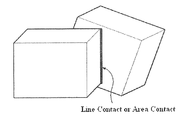
  • FIG. 1 shows Si alloy particles having a faceted shape, prepared in Example 1.
  • FIG. 2 shows Si alloy particles having spherical shape, prepared in Comparative Example 1.
  • FIG. 3 is an SEM photograph of Si alloy particles having a faceted shape, prepared in Example 1.
  • FIG. 4 is an SEM photograph of Si alloy particles having spherical shape, prepared in Comparative Example 1.
  • FIG. 5 is an apparatus of preparing Si alloy particles having a faceted shape, used in Example 1.
  • FIGS. 6 and 7 are apparatuses of preparing Si alloy particles having spherical shape, used in Comparative Example 1.
  • the anode active material of the present invention is characterized by comprising silicon-based particles obtained from at least one of silicon, a silicon oxide and a silicon alloy, the silicon-based particles having a faceted shape.
  • the present inventors have endeavored to control the external shape of silicon-based particles used as an anode active material, not the internal structure thereof, thereby preventing life characteristics from being deteriorated by the volume change of the anode active material during charging and discharging, and specifically found that the use of silicon-based particles having a faceted shape, instead of conventional spherical particles, can provide good life characteristics even if volume expansion occurs because the faceted particles can come into easy contact with each other, as compared with the spherical particles.
  • FIG. 1 schematically shows the faceted shape of particles, and the present invention is not limited to the shape shown.
  • the term “faceted” for the external shape of Si-based particles refers to a three-dimensional solid object bounded by polygonal facets, i.e., encompasses any particles consisting of various polygons, not a spherical form. Such a faceted form includes a convex polyhedron, a concave polyhedron, or both.
  • the external shape of the Si-based particles i.e. all polygonal faces (facets) consisting of the outer surfaces of such particles, may be constant or not be constant (i.e., amorphous). Also, multiple Si-based particles may have shapes different from each other.
  • the faceted type of Si-based particles according to the present invention may have a polyhedral shape consisting of only facets (planes) as a whole, or a polyhedral shape having facets (planes) in a substantial part thereof, i.e., partially not being spherical.
  • the silicon-based particles having a faceted shape may have a surface area greater than that of spherical silicon-based particles by 1.01 to 5 times, preferably 1.5 to 4 times when their volume is in the same level as volume of the spherical silicon-based particles.
  • the silicon-based particles having a faceted shape may have an average diameter of 0.1 to 30 ⁇ m.
  • the anode active material of the present invention may be a silicon-based substance obtained from at least one of silicon, a silicon oxide and a silicon alloy, and among these, the silicon alloy is preferred.
  • the silicon alloy comprises silicon and at least one element selected from the group consisting of Sn, Zr, Mn, Ni, Fe, Ca, Ce, La, Cr, Al, Co, Sb, Bi, As, Ge, Pb, Zn, Cd, In, Ti, Cu, Bi, Mo and Ga. If the silicon alloy is used as a silicon-based substance, a phase of only Si functions to develop capacity, while an alloy phase of Si and two kinds of elements other than Si or an alloy phase of two kinds of elements acts as the matrix of Si.
  • the silicon alloy has superior life characteristics and the ability of thickness expansion, as compared with a simple Si-based substance, and also the silicon alloy is free of oxygen to provide high initial efficiency, as compared with SiO. Accordingly, the silicon alloy is preferably used, but other silicon-based substances mentioned above may also be used in the present invention without being limited to only the silicon alloy.
  • the anode active material of the present invention may be a single phase consisting of only silicon-based particles obtained from at least one of silicon, a silicon oxide and a silicon alloy, i.e., not comprising other kinds of substances except the silicon-based particles.
  • the silicon-based particles having a faceted shape may be prepared by the following method.
  • the silicon-based substance as mentioned is provided, and is subject to milling using a ball-mill, a jet-mill or a vibration mill so that the substance is milled by way of collision and then has a faceted shape.
  • the anode active material thus prepared can be used in the preparation of an anode according to a conventional method known in the art.
  • a cathode may be prepared by a conventional method known in the art, similar to the preparation of an anode.
  • the anode active material of the present invention is mixed with a binder, a solvent, and optionally a conducting material and a dispersing agent, followed by stirring, to produce a slurry and applying the slurry on a current collector, followed by compression, to prepare an electrode.
  • the binder which may be used in the present invention includes various kinds of binder polymers including vinylidenefluoride-hexafluoropropylene copolymer (PVDF-co-HFP), polyvinylidenefluoride, polyacrylonitrile, and polymethylmethacrylate.
  • PVDF-co-HFP vinylidenefluoride-hexafluoropropylene copolymer
  • PVDF-co-HFP polyvinylidenefluoride
  • polyacrylonitrile polyacrylonitrile
  • polymethylmethacrylate polymethylmethacrylate
  • a conventional lithium secondary battery including the cathode, the anode, a separator interposed between the cathode and the anode, and an electrolyte solution may be prepared.
  • the electrolyte solution used in the present invention comprises a lithium salt as an electrolyte salt.
  • the lithium salt may be any one which is conventionally used in an electrolyte solution for a lithium secondary battery.
  • an anion of the lithium salt may be any one selected from the group consisting of F ⁇ , Cl ⁇ , Br ⁇ , I ⁇ , NO 3 ⁇ , N(CN) 2 ⁇ , BF 4 ⁇ , ClO 4 ⁇ , PF 6 ⁇ , (CF 3 ) 2 PF 4 ⁇ , (CF 3 ) 3 PF 3 ⁇ , (CF 3 ) 4 PF 2 ⁇ , (CF 3 ) 5 PF ⁇ , (CF 3 ) 6 P ⁇ , CF 3 SO 3 ⁇ , CF 3 CF 2 SO 3 ⁇ , (CF 3 SO 2 ) 2 N ⁇ , (FSO 2 ) 2 N ⁇ , CF 3 CF 2 (CF 3 ) 2 CO ⁇ , (
  • the electrolyte solution used in the present invention comprises an organic solvent which is conventionally used in an electrolyte solution for a lithium secondary battery, for example, propylene carbonate (PC), ethylene carbonate (EC), diethyl carbonate (DEC), dimethyl carbonate (DMC), ethylmethyl carbonate (EMC), methylpropyl carbonate, dipropyl carbonate, dimethylsulfoxide, acetonitrile, di methoxyethane, diethoxyethane, vinylene carbonate, sulforane, ⁇ -buryrolactone, propylene sulfite, and tetrahydrofuran and a mixture thereof.
  • PC propylene carbonate
  • EC ethylene carbonate
  • DEC diethyl carbonate
  • DMC dimethyl carbonate
  • EMC ethylmethyl carbonate
  • methylpropyl carbonate dipropyl carbonate
  • dimethylsulfoxide acetonitrile
  • ethylene carbonate and propylene carbonate that are cyclic carbonates are preferred, since they have high viscosity and consequently a high dielectric constant to easily dissociate the lithium salt in the electrolyte.
  • a cyclic carbonate is used as a mixture with a linear carbonate having a low viscosity and a low dielectric constant, such as dimethyl carbonate and diethyl carbonate in a suitable ratio, to provide an electrolyte having a high electric conductivity.
  • the electrolyte solution used in the present invention may further include an additive, such as an overcharge inhibitor which is conventionally used in an electrolyte.
  • an additive such as an overcharge inhibitor which is conventionally used in an electrolyte.
  • the separator which may be used in the present invention includes a single-layered or multi-layered porous polymer film conventionally used as a separator, and a porous non-woven fabric conventionally used as a separator, and the like.
  • the porous polymer film may be made of polyolefin-based polymer, for example, ethylene homopolymer, propylene homopolymer, ethylene/butene copolymer, ethylene/hexene copolymer, and ethylene/methacrylate copolymer
  • the porous non-woven fabric may be made of, for example, high-melting glass fibers, polyethylene terephthalate fibers, and the like.
  • the present invention is not limited thereto.
  • a battery case used in the present invention may be any one conventionally used in the art, and the shape of the battery case is not particularly limited depending on its uses.
  • the shape of the battery case may be cylindrical, prismatic, pouch, or coin.
  • Example 1 Anode Active Material Comprising Silicon-Based Articles Having a Faceted Shape
  • Si, Al and Fe were mixed in an atomic ratio of 75/15/10(%) and heated to obtain a molten Si alloy.
  • the molten alloy was sprayed on a rotary copper wheel using argon gas under vacuum, as shown in FIG. 5 , to produce a Si/Al/Fe alloy in the form of a thin plate.
  • the alloy was milled and distributed so that D 50 is 5 ⁇ m.
  • the anode active material thus prepared was analyzed by a scanning electron microscope (SEM), and the SEM image thereof is shown in FIG. 3 .
  • Comparative Example 1 Anode Active Material Comprising Silicon-Based Articles Having Spherical Shape
  • a molten Si alloy was prepared by the same procedure as Example 1, and the molten alloy was emitted through the nozzle of a gas atomizer, as shown in FIGS. 6 and 7 , and then cooled down under argon gas atmosphere, to produce spherical particles of the Si alloy.
  • the particles were measured for their particle size, in which the particles were confirmed to have D 50 of 5 ⁇ m. Also, the SEM image of the particles is shown in FIG. 4 .
  • Example 1 The anode active materials prepared in Example 1 and Comparative Example 1 were each used to obtain electrode slurries. Each slurry obtained was coated on one surface of a copper current collector in a thickness of 65 ⁇ m, dried and compressed, followed by punching to the desired size, to obtain an electrode.
  • Metallic lithium was used as a cathode, and a polyolefin separator was interposed between the anode and the cathode obtained above, to obtain an electrode assembly.
  • Ethylene carbonate (EC) and diethyl carbonate (DEC) were mixed at a ratio of 30:70 (vol %), to which LiPF 6 and 5% of FEC were added, to obtain 1M LiPF 6 of non-aqueous electrolyte solution.
  • Charge condition Charging of the batteries was conducted up to 5 mV at constant current, and completed when a current density reached 0.005 C.
  • Discharge condition Discharging of the batteries was conducted up to 1.0 V at constant current.

Landscapes

  • Chemical & Material Sciences (AREA)
  • Chemical Kinetics & Catalysis (AREA)
  • Electrochemistry (AREA)
  • General Chemical & Material Sciences (AREA)
  • Engineering & Computer Science (AREA)
  • Manufacturing & Machinery (AREA)
  • Materials Engineering (AREA)
  • Inorganic Chemistry (AREA)
  • Battery Electrode And Active Subsutance (AREA)
  • Silicon Compounds (AREA)
  • Secondary Cells (AREA)

Abstract

The anode active material of the present invention comprises silicon-based particles obtained from at least one of silicon, a silicon oxide and a silicon alloy, and the silicon-based particles have a faceted shape, thereby providing high capacity and good life characteristics without causing any deterioration which has been generated in the use of conventional silicon-based particles, and eventually providing a lithium secondary battery having such characteristics.

Description

CROSS-REFERENCE TO RELATED APPLICATION
This application is a continuation of International Application No. PCT/KR2013/011031 filed on Nov. 29, 2013, which claims priority under 35 USC 119(a) to Korean Patent Application Nos. 10-2012-0138258 and 10-2013-0147707 filed in the Republic of Korea on Nov. 30, 2012 and Nov. 29, 2013, respectively, the entire contents of which are incorporated herein by reference.
TECHNICAL FIELD
The present invention relates to an anode active material for a lithium secondary battery and a lithium secondary battery using the same. More specifically, the present invention relates to an anode active material comprising a silicon oxide which can provide improved life characteristics and high capacity.
BACKGROUND ART
Recently, there has been an increasing interest in energy storage technology. Electrochemical devices have been widely used as energy sources in the fields of cellular phones, camcorders, notebook computers, PCs and electric cars, resulting in intensive research and development into them.
In this regard, electrochemical devices are one of the subjects of great interest. Particularly, development of rechargeable secondary batteries has been the focus of attention. Recently, research and development of such batteries are focused on the designs of new electrodes and batteries to improve capacity density and specific energy.
Many secondary batteries are currently available. Among these, lithium secondary batteries developed in the early 1990's have drawn particular attention due to their advantages of higher operating voltages and much higher energy densities than conventional aqueous electrolyte-based batteries, for example, Ni-MH, Ni—Cd, and H2SO4—Pb batteries.
Generally, a lithium secondary battery is prepared by using a cathode and an anode which are each made of a material capable of intercalating and disintercalating lithium ions, and filling an organic or polymer electrolyte solution between the cathode and the anode, and the battery produces electrical energy by oxidation and reduction when the lithium ions are intercalated and disintercalated in the cathode and the anode.
In lithium secondary batteries which are currently available, an anode is mostly made of carbon-based materials as an electrode active material. Particularly, graphite which has been commercially available has a real capacity of about 350 to 360 mAh/g which approaches its theoretical capacity of about 372 mAh/g. Although a carbon-based material such as graphite has a capacity of such a degree, it does not meet the demand for high-capacity lithium secondary batteries as an anode active material.
In order to meet such a demand, attempts have been made to use metals as an anode active material, for example, Si, Sn, an oxide and an alloy thereof, that have a higher charge/discharge capacity than the carbon materials and that allow electrochemical alloying with lithium.
However, this metal-based electrode active material has a great change in volume during charging/discharging, which may cause cracks and micronization to the active material. Secondary batteries using this metal-based anode active material may suddenly be deteriorated in capacity and have reduced cycle life during repeated charging/discharging cycles. Accordingly, there is a need for solving the deterioration of capacity and cycle life by the use of such a metal-based electrode active material.
DISCLOSURE Technical Problem
Therefore, it is an object of the present invention to provide a silicon-based anode active material which can provide high capacity and does not deteriorate life characteristics, and an anode and a secondary battery comprising the anode active material.
Technical Solution
In order to achieve the object, in accordance with one aspect of the present invention, there is provided an anode active material, comprising silicon-based particles obtained from at least one of silicon, a silicon oxide and a silicon alloy, the silicon-based particles having a faceted shape.
In accordance with one embodiment of the present invention, the silicon-based particles are a faceted type of anode active material and such a faceted type of silicon-based particles may come into contact with each other by at least one of line contact and area contact.
In accordance with one embodiment of the present invention, the faceted type of silicon-based particles may have a polyhedral shape consisting of only facets as a whole.
In accordance with one embodiment of the present invention, the silicon-based particles having a faceted shape may have a surface area greater than that of spherical silicon-based particles by 1.01 to 5 times when their volume is in the same level as volume of the spherical silicon-based particles.
In accordance with one embodiment of the present invention, the silicon-based particles having a faceted shape may have an average diameter of 0.1 to 30 μM.
In accordance with one embodiment of the present invention, the silicon-based particles having a faceted shape may be a silicon alloy which comprises silicon and at least one element selected from the group consisting of Sn, Zr, Mn, Ni, Fe, Ca, Ce, La, Cr, Al, Co, Sb, Bi, As, Ge, Pb, Zn, Cd, In, Ti, Cu, Bi, Mo and Ga.
In accordance with one embodiment of the present invention, the anode active material may be a single phase consisting of only silicon-based particles obtained from at least one of silicon, a silicon oxide and a silicon alloy.
In accordance with another aspect of the present invention, there is provided an anode for a lithium secondary battery, comprising a current collector and an anode active material layer formed on at least one surface of the current collector, wherein the anode active material layer comprises the anode active material according to the present invention.
Further, in accordance with yet another aspect of the present invention, there is provided a lithium secondary battery, comprising a cathode, an anode, and a separator interposed between the cathode and the anode, wherein the anode is one defined in the present invention.
Advantageous Effects
The anode active material of the present invention comprises silicon-based particles obtained from at least one of silicon, a silicon oxide and a silicon alloy, and the silicon-based particles have a faceted shape, thereby providing high capacity and good life characteristics without causing any deterioration which has been generated in the use of conventional silicon-based particles, and eventually providing a lithium secondary battery having such characteristics.
DESCRIPTION OF THE DRAWINGS
The accompanying drawings illustrate preferred embodiments of the present invention and, together with the foregoing disclosure, serve to provide further understanding of the technical spirit of the present invention. However, the present invention is not to be construed as being limited to the drawings.
FIG. 1 shows Si alloy particles having a faceted shape, prepared in Example 1.
FIG. 2 shows Si alloy particles having spherical shape, prepared in Comparative Example 1.
FIG. 3 is an SEM photograph of Si alloy particles having a faceted shape, prepared in Example 1.
FIG. 4 is an SEM photograph of Si alloy particles having spherical shape, prepared in Comparative Example 1.
FIG. 5 is an apparatus of preparing Si alloy particles having a faceted shape, used in Example 1.
FIGS. 6 and 7 are apparatuses of preparing Si alloy particles having spherical shape, used in Comparative Example 1.
BEST MODE
Hereinafter, the present invention will be described in detail. Prior to the description, it should be understood that the terms used in the specification and the appended claims should not be construed as limited to general and dictionary meanings, but interpreted based on the meanings and concepts corresponding to technical aspects of the present invention on the basis of the principle that the inventor is allowed to define terms appropriately for the best explanation.
The anode active material of the present invention is characterized by comprising silicon-based particles obtained from at least one of silicon, a silicon oxide and a silicon alloy, the silicon-based particles having a faceted shape.
In the case that conventional silicon-based particles are used as an anode active material, these particles are subject to volume change while lithium is charged and discharged, and thus may be cracked and micronized. For this reason, secondary batteries using such an anode active material may suddenly be deteriorated in capacity and have reduced cycle life during repeated charging/discharging cycles. In order to minimize such a volume expansion, attempts have been made to control the crystallinity of silicon-based particles or form a Si-activated core part and an inactive matrix structure. However, such attempts are merely relevant to the internal structure of silicon-based particles. As another attempt, the present inventors have endeavored to control the external shape of silicon-based particles used as an anode active material, not the internal structure thereof, thereby preventing life characteristics from being deteriorated by the volume change of the anode active material during charging and discharging, and specifically found that the use of silicon-based particles having a faceted shape, instead of conventional spherical particles, can provide good life characteristics even if volume expansion occurs because the faceted particles can come into easy contact with each other, as compared with the spherical particles. That is, the present inventors have applied a faceted shape in the external structure of silicon-based particles, based on the probability that if initial contact between active materials becomes increased from the beginning of charging and discharging cycles under the conditions of the same composition and the same particle size, a contact area between the active materials can continuously increase even after the cycles are progressed. In reference to FIGS. 1 and 2, FIG. 2 shows spherical anode active materials which come into point contact with each other, while FIG. 1 shows faceted anode active materials which satisfy at least one of line contact or area contact with each other. On the basis of this matter, when an active material has a faceted shape, a contact area between the active materials increases. FIG. 1 schematically shows the faceted shape of particles, and the present invention is not limited to the shape shown.
As used herein, the term “faceted” for the external shape of Si-based particles refers to a three-dimensional solid object bounded by polygonal facets, i.e., encompasses any particles consisting of various polygons, not a spherical form. Such a faceted form includes a convex polyhedron, a concave polyhedron, or both. The external shape of the Si-based particles, i.e. all polygonal faces (facets) consisting of the outer surfaces of such particles, may be constant or not be constant (i.e., amorphous). Also, multiple Si-based particles may have shapes different from each other.
In addition, the faceted type of Si-based particles according to the present invention may have a polyhedral shape consisting of only facets (planes) as a whole, or a polyhedral shape having facets (planes) in a substantial part thereof, i.e., partially not being spherical.
In accordance with one embodiment of the present invention, the silicon-based particles having a faceted shape may have a surface area greater than that of spherical silicon-based particles by 1.01 to 5 times, preferably 1.5 to 4 times when their volume is in the same level as volume of the spherical silicon-based particles.
By satisfying such a surface area range, more easy contact between particles can be achieved, and secondary battery comprising such particles can exhibit good life characteristics.
In accordance with another embodiment of the present invention, the silicon-based particles having a faceted shape may have an average diameter of 0.1 to 30 μm.
The anode active material of the present invention may be a silicon-based substance obtained from at least one of silicon, a silicon oxide and a silicon alloy, and among these, the silicon alloy is preferred. The silicon alloy comprises silicon and at least one element selected from the group consisting of Sn, Zr, Mn, Ni, Fe, Ca, Ce, La, Cr, Al, Co, Sb, Bi, As, Ge, Pb, Zn, Cd, In, Ti, Cu, Bi, Mo and Ga. If the silicon alloy is used as a silicon-based substance, a phase of only Si functions to develop capacity, while an alloy phase of Si and two kinds of elements other than Si or an alloy phase of two kinds of elements acts as the matrix of Si. Therefore, the silicon alloy has superior life characteristics and the ability of thickness expansion, as compared with a simple Si-based substance, and also the silicon alloy is free of oxygen to provide high initial efficiency, as compared with SiO. Accordingly, the silicon alloy is preferably used, but other silicon-based substances mentioned above may also be used in the present invention without being limited to only the silicon alloy.
In addition, the anode active material of the present invention may be a single phase consisting of only silicon-based particles obtained from at least one of silicon, a silicon oxide and a silicon alloy, i.e., not comprising other kinds of substances except the silicon-based particles.
In the present invention, the silicon-based particles having a faceted shape may be prepared by the following method.
Specifically, the silicon-based substance as mentioned is provided, and is subject to milling using a ball-mill, a jet-mill or a vibration mill so that the substance is milled by way of collision and then has a faceted shape.
The anode active material thus prepared can be used in the preparation of an anode according to a conventional method known in the art. Also, in the present invention, a cathode may be prepared by a conventional method known in the art, similar to the preparation of an anode. For example, the anode active material of the present invention is mixed with a binder, a solvent, and optionally a conducting material and a dispersing agent, followed by stirring, to produce a slurry and applying the slurry on a current collector, followed by compression, to prepare an electrode.
The binder which may be used in the present invention includes various kinds of binder polymers including vinylidenefluoride-hexafluoropropylene copolymer (PVDF-co-HFP), polyvinylidenefluoride, polyacrylonitrile, and polymethylmethacrylate.
A cathode active material which may be used in the present invention preferably includes a lithium-containing transition metal oxide, for example, any one selected from the group consisting of LixCoO2 (0.5<x<1.3), LixNiO2 (0.5<x<1.3), LixMnO2 (0.5<x<1.3), LixMn2O4 (0.5<x<1.3), Lix(NiaCobMnc)O2 (0.5<x<1.3, 0<a<1, 0<b<1, 0<c<1, a+b+c=1), LixNi1-yCoyO2 (0.5<x<1.3, 0<y<1), LixCo1-yMnyO2 (0.5<x<1.3, 0≤y<1), LixNi1-yMnyO2 (0.5<x<1.3, O≤y<1), Lix(NiaCobMnc)O4 (0.5<x<1.3, 0<a<2, 0<b<2, 0<c<2, a+b+c=2), (0.5<x<1.3, 0<z<2), LixMn2-zCoxO4 (0.5<x<1.3, 0<z<2), LixCoPO4 (0.5<x<1.3), LixFePO4 (0.5<x<1.3), and a mixture thereof. The lithium-containing transition metal oxide may be coated with a metal such as Al or a metal oxide. In addition, lithium-containing transition metal sulfide, selenide, or halide may also be used.
After the electrode is prepared, a conventional lithium secondary battery including the cathode, the anode, a separator interposed between the cathode and the anode, and an electrolyte solution may be prepared.
The electrolyte solution used in the present invention comprises a lithium salt as an electrolyte salt. The lithium salt may be any one which is conventionally used in an electrolyte solution for a lithium secondary battery. For example, an anion of the lithium salt may be any one selected from the group consisting of F, Cl, Br, I, NO3 , N(CN)2 , BF4 , ClO4 , PF6 , (CF3)2PF4 , (CF3)3PF3 , (CF3)4PF2 , (CF3)5PF, (CF3)6P, CF3SO3 , CF3CF2SO3 , (CF3SO2)2N, (FSO2)2N, CF3CF2(CF3)2CO, (CF3SO2)2CH, (SF5)3C, (CF3SO2)3C, CF3(CF2)7SO3 , CF3CO2 , CH3CO2 , SCN and (CF3CF2SO2)2N.
The electrolyte solution used in the present invention comprises an organic solvent which is conventionally used in an electrolyte solution for a lithium secondary battery, for example, propylene carbonate (PC), ethylene carbonate (EC), diethyl carbonate (DEC), dimethyl carbonate (DMC), ethylmethyl carbonate (EMC), methylpropyl carbonate, dipropyl carbonate, dimethylsulfoxide, acetonitrile, di methoxyethane, diethoxyethane, vinylene carbonate, sulforane, γ-buryrolactone, propylene sulfite, and tetrahydrofuran and a mixture thereof. In particular, among the above carbonate-based organic solvents, ethylene carbonate and propylene carbonate that are cyclic carbonates are preferred, since they have high viscosity and consequently a high dielectric constant to easily dissociate the lithium salt in the electrolyte. More preferably, such a cyclic carbonate is used as a mixture with a linear carbonate having a low viscosity and a low dielectric constant, such as dimethyl carbonate and diethyl carbonate in a suitable ratio, to provide an electrolyte having a high electric conductivity.
Optionally, the electrolyte solution used in the present invention may further include an additive, such as an overcharge inhibitor which is conventionally used in an electrolyte.
Also, the separator which may be used in the present invention includes a single-layered or multi-layered porous polymer film conventionally used as a separator, and a porous non-woven fabric conventionally used as a separator, and the like. The porous polymer film may be made of polyolefin-based polymer, for example, ethylene homopolymer, propylene homopolymer, ethylene/butene copolymer, ethylene/hexene copolymer, and ethylene/methacrylate copolymer, and the porous non-woven fabric may be made of, for example, high-melting glass fibers, polyethylene terephthalate fibers, and the like. However, the present invention is not limited thereto.
A battery case used in the present invention may be any one conventionally used in the art, and the shape of the battery case is not particularly limited depending on its uses. For example, the shape of the battery case may be cylindrical, prismatic, pouch, or coin.
Hereinafter, the present invention will be described in detail through specific examples. However, the description proposed herein is just a preferable example for the purpose of illustrations only, not intended to limit the scope of the invention, so it should be understood that the examples are provided for a more definite explanation to an ordinary person skilled in the art.
Example 1: Anode Active Material Comprising Silicon-Based Articles Having a Faceted Shape
Si, Al and Fe were mixed in an atomic ratio of 75/15/10(%) and heated to obtain a molten Si alloy. The molten alloy was sprayed on a rotary copper wheel using argon gas under vacuum, as shown in FIG. 5, to produce a Si/Al/Fe alloy in the form of a thin plate. The alloy was milled and distributed so that D50 is 5 μm. The anode active material thus prepared was analyzed by a scanning electron microscope (SEM), and the SEM image thereof is shown in FIG. 3.
Comparative Example 1: Anode Active Material Comprising Silicon-Based Articles Having Spherical Shape
A molten Si alloy was prepared by the same procedure as Example 1, and the molten alloy was emitted through the nozzle of a gas atomizer, as shown in FIGS. 6 and 7, and then cooled down under argon gas atmosphere, to produce spherical particles of the Si alloy. The particles were measured for their particle size, in which the particles were confirmed to have D50 of 5 μm. Also, the SEM image of the particles is shown in FIG. 4.
Preparation Example 1: Preparation of Coin-Type Half-Cell
The anode active materials prepared in Example 1 and Comparative Example 1 were each used to obtain electrode slurries. Each slurry obtained was coated on one surface of a copper current collector in a thickness of 65 μm, dried and compressed, followed by punching to the desired size, to obtain an electrode.
Metallic lithium was used as a cathode, and a polyolefin separator was interposed between the anode and the cathode obtained above, to obtain an electrode assembly.
Ethylene carbonate (EC) and diethyl carbonate (DEC) were mixed at a ratio of 30:70 (vol %), to which LiPF6 and 5% of FEC were added, to obtain 1M LiPF6 of non-aqueous electrolyte solution.
Experimental Example 1: Charge/Discharge Characteristics of Batteries
The half-cells prepared in Preparation Example 1, in which the anode active materials of Example 1 and Comparative Example 1 were each used, were evaluated for their charge/discharge characteristics and life characteristics, and the results thereof are shown in Table 1.
<Charge/Discharge Conditions of Coin-Type Half-Cells>
Charge condition: Charging of the batteries was conducted up to 5 mV at constant current, and completed when a current density reached 0.005 C.
Discharge condition: Discharging of the batteries was conducted up to 1.0 V at constant current.
TABLE 1
Capacity
Discharge before Initial Normalized
Capacity charging Efficienty Capacity (%)
(mAh/g) (mAh/g) (%) @ 50th cycle
Ex. 1 1050 1235 85.0 86
Com. Ex. 2 1042 1229 84.8 64

Claims (15)

What is claimed is:
1. An anode active material, comprising silicon-based particles obtained from at least one of silicon, a silicon oxide and a silicon alloy, the silicon-based particles being solid and having a faceted shape,
wherein the silicon-based particles having a faceted shape comprise a silicon alloy which comprises silicon and at least one element selected from the group consisting of Mn and Ce, and
wherein the silicon-based particles having a faceted shape have a surface area greater than that of spherical silicon-based particles by 1.5 to 4 times when their volume is in the same level as volume of the spherical silicon-based particles.
2. The anode active material of claim 1, wherein the silicon-based particles are a faceted anode active material and the faceted silicon-based particles come into contact with each other by at least one of line contact whereby edges of particles are in contact with one another and area contact whereby surface areas of particles are in contact with one another.
3. The anode active material of claim 1, wherein the faceted silicon-based particles have a polyhedral shape consisting of a plurality of polygons.
4. The anode active material of claim 1, wherein the silicon-based particles having a faceted shape have an average diameter of 0.1 to 30 μm.
5. The anode active material of claim 1, which is a single phase consisting of only silicon-based particles obtained from at least one of silicon, a silicon oxide and a silicon alloy.
6. An anode for a lithium secondary battery, comprising a current collector; and an anode active material layer formed on at least one surface of the current collector,
wherein the anode active material layer comprises the anode active material of claim 1.
7. A lithium secondary battery, comprising a cathode, an anode, and a separator interposed between the cathode and the anode,
wherein the anode is defined in claim 6.
8. An anode for a lithium secondary battery, comprising a current collector and an anode active material layer formed on at least one surface of the current collector, the anode active material layer comprising an anode active material including silicon-based particles obtained from at least one of a silicon oxide and a silicon alloy, the silicon-based particles being solid and having a faceted shape, characterized in that the silicon-based particles having a faceted shape have an average diameter of 0.1 to 30 μm,
wherein the silicon-based particles having a faceted shape are obtained by heating one or both of 1) a compound consisting of a silicon oxide and 2) a combination of elements consisting of a silicon mixed with at least one element selected from the group consisting of Mn, Fe, Ca, Ce, La, Cr, Co, Bi, Pb, Cd, and Mo to obtain a molten product, spraying the molten product on a rotary copper wheel using argon gas under vacuum to produce a thin plate, and then milling the thin plate, an output of the milling being the silicon-based particles having a faceted shape, and
wherein the silicon-based particles come into contact with each other by at least one of line contact whereby edges of particles are in contact with one another and area contact whereby surface areas of particles are in contact with one another.
9. A method for preparing an anode for a lithium secondary battery comprising:
obtaining silicon-based particles having a faceted shape as defined in claim 8 through the performance of steps comprising:
mixing and heating a combination of elements consisting of a silicon and at least one element selected from the group consisting of Mn, Fe, Ca, Ce, La, Cr, Co, Bi, Pb, Cd and Mo to obtain a Si alloy;
spraying the Si alloy on a rotary copper wheel using argon gas under vacuum to produce the Si alloy in the form of a thin plate; and
milling the Si alloy in the form of the thin plate,
wherein subsequent to milling, silicon-based particles are obtained having a solid faceted shape with an average diameter of 0.1 to 30 μm;
applying the silicon-based particles on a current collector; and
compressing the silicon-based particles on the current collector to form the anode for the lithium secondary battery.
10. The method for preparing an anode for a lithium secondary battery of claim 9, wherein the combination of elements consists of a silicon and at least one element selected from the group consisting of Mn, Ce and Pb.
11. An anode for a lithium secondary battery, comprising a current collector and an anode active material layer formed on at least one surface of the current collector, the anode active material layer comprising an anode active material including silicon-based particles obtained from a silicon alloy, the silicon-based particles having a faceted shape, characterized in that the silicon-based particles having a faceted shape have an average diameter of 0.1 to 30 μm,
wherein the silicon-based particles having a faceted shape are obtained by mixing and heating a combination of elements consisting of silicon and at least one element selected from the group consisting of Mn, Fe, Ca, Ce, La, Cr, Co, Bi, Pb, Cd, and Mo to obtain a molten alloy, spraying the molten alloy on a rotary copper wheel using argon gas under vacuum to produce the silicon alloy in the form of a thin plate, and then milling the thin plate, an output of the milling being the silicon-based particles having a faceted shape,
wherein the silicon alloy is free of oxygen, and
wherein the silicon-based particles come into contact with each other by at least one of line contact whereby edges of particles are in contact with one another and area contact whereby surface areas of particles are in contact with one another.
12. The anode for a lithium secondary battery of claim 11, wherein the silicon-based particles having a faceted shape comprises a silicon alloy which comprises silicon and at least one element selected from the group consisting of Mn, Ce and Pb.
13. An anode active material, comprising silicon-based particles obtained from an Si/Al/Fe alloy, the silicon-based particles having a faceted shape, characterized in that the silicon-based particles having a faceted shape have an average diameter of 0.1 to 30 μm,
wherein the silicon-based particles having a faceted shape are obtained by mixing and heating Si, Al and Fe to obtain a molten alloy, spraying the molten alloy on a rotary copper wheel using argon gas under vacuum to produce the Si/Al/Fe alloy in the form of a thin plate, and then milling the thin plate, an output of the milling being the silicon-based particles having a faceted shape, and
wherein the Si/Al/Fe alloy is free of oxygen.
14. The anode active material of claim 13, wherein the atomic ratio of Si, Al and Fe is 75/15/10(%).
15. An anode for a lithium secondary battery, comprising a current collector and an anode active material layer formed on at least one surface of the current collector,
wherein the anode active material layer comprises the anode active material of claim 13.
US14/326,582 2012-11-30 2014-07-09 Anode active material for lithium secondary battery and lithium secondary battery comprising the same Active 2036-11-24 US10276864B2 (en)

Applications Claiming Priority (5)

Application Number Priority Date Filing Date Title
KR20120138258 2012-11-30
KR10-2012-0138258 2012-11-30
KR10-2013-0147707 2013-11-29
KR1020130147707A KR20140070475A (en) 2012-11-30 2013-11-29 Anode active material for lithium secondary battery and Lithium secondary battery comprising the same
PCT/KR2013/011031 WO2014084678A1 (en) 2012-11-30 2013-11-29 Anode active material for lithium secondary battery and lithium secondary battery including same

Related Parent Applications (1)

Application Number Title Priority Date Filing Date
PCT/KR2013/011031 Continuation WO2014084678A1 (en) 2012-11-30 2013-11-29 Anode active material for lithium secondary battery and lithium secondary battery including same

Publications (2)

Publication Number Publication Date
US20140322601A1 US20140322601A1 (en) 2014-10-30
US10276864B2 true US10276864B2 (en) 2019-04-30

Family

ID=51125294

Family Applications (1)

Application Number Title Priority Date Filing Date
US14/326,582 Active 2036-11-24 US10276864B2 (en) 2012-11-30 2014-07-09 Anode active material for lithium secondary battery and lithium secondary battery comprising the same

Country Status (10)

Country Link
US (1) US10276864B2 (en)
EP (1) EP2840630B1 (en)
JP (1) JP2015524988A (en)
KR (2) KR20140070475A (en)
CN (1) CN104396063B (en)
BR (1) BR112014029724A2 (en)
IN (1) IN2014MN02589A (en)
PL (1) PL2840630T3 (en)
TW (1) TWI504050B (en)
WO (1) WO2014084678A1 (en)

Families Citing this family (9)

* Cited by examiner, † Cited by third party
Publication number Priority date Publication date Assignee Title
JP6581771B2 (en) * 2014-12-04 2019-09-25 山陽特殊製鋼株式会社 Conductive filler powder
WO2016052643A1 (en) * 2014-10-02 2016-04-07 山陽特殊製鋼株式会社 Powder for conductive fillers
JP6546384B2 (en) * 2014-10-02 2019-07-17 山陽特殊製鋼株式会社 Conductive filler powder
KR20180001066A (en) * 2016-06-24 2018-01-04 삼성에스디아이 주식회사 Negative active material for rechargeable lithium battery, method of preparing the same and rechargeable lithium battery including the same
KR20200065514A (en) * 2018-11-30 2020-06-09 현대자동차주식회사 Silicon-based composite anode active material for secondary battery, negative electrode comprising same
CN110828794B (en) * 2019-10-28 2021-01-15 珠海格力绿色再生资源有限公司 Preparation method of multiple modified silicon-manganese alloy composite negative electrode material
US11591478B2 (en) * 2021-05-25 2023-02-28 Ionobell, Inc. Silicon material and method of manufacture
WO2023114211A2 (en) 2021-12-13 2023-06-22 Ionobell, Inc. Porous silicon material and method of manufacture
WO2024010903A1 (en) 2022-07-08 2024-01-11 Ionobell, Inc. Electrode slurry and method of manufacture

Citations (17)

* Cited by examiner, † Cited by third party
Publication number Priority date Publication date Assignee Title
JPH11323215A (en) * 1998-05-11 1999-11-26 Cashew Kk Coating composition with excellent fractional characteristic
WO2004086539A1 (en) 2003-03-26 2004-10-07 Canon Kabushiki Kaisha Electrode material for lithium secondary battery and electrode structure having the electrode material
US20070037063A1 (en) 2005-07-07 2007-02-15 Nam-Soon Choi Lithium secondary battery
KR20090054834A (en) 2007-11-27 2009-06-01 삼성에스디아이 주식회사 Anode active material for lithium secondary battery, method for preparing same, and lithium secondary battery comprising same
US20090202911A1 (en) 2008-02-07 2009-08-13 Hirofumi Fukuoka Non-aqueous electrolyte secondary battery negative electrode material, making method, lithium ion secondary battery, and electrochemical capacitor
US20100258759A1 (en) * 2006-06-06 2010-10-14 Cornell Research Foundation, Inc. Nanostructured Metal Oxides Comprising Internal Voids and Methods of Use Thereof
EP2246922A1 (en) 2009-04-29 2010-11-03 Samsung SDI Co., Ltd. Rechargeable Lithium Battery
US20100301276A1 (en) 2009-05-27 2010-12-02 Joong Kee Lee Method of preparing bundle type silicon nanorod composite through electroless etching process using metal ions and anode active material for lithium secondary cells comprising the same
JP2011065983A (en) 2009-08-21 2011-03-31 Oike Ind Co Ltd Scale-like thin film fine powder dispersion liquid or scale-like thin film fine powder, and paste using the same, electrode for battery, and lithium secondary battery
JP4703785B2 (en) 2008-12-24 2011-06-15 日本碍子株式会社 Plate-like particles for positive electrode active material of lithium secondary battery, and lithium secondary battery
US8105699B2 (en) * 2006-09-08 2012-01-31 Nippon Steel Corporation Zn alloy particles for high corrosion resistance rust protection paint, method of production of particles, high corrosion resistance rust protection paint containing particles, high corrosion resistance steel material coated with paint, and steel structure having steel material
KR20120051828A (en) 2010-11-15 2012-05-23 주식회사 케이씨씨 Anode active material for lithium secondary battery with silicon nano particles and lithium secondary battery comprising the same
KR20120066745A (en) 2010-12-15 2012-06-25 김태형 Dried persimmon using used water from washing rice which is fermented by effective micro organism and making process thereof
JP2012178299A (en) 2011-02-28 2012-09-13 Furukawa Electric Co Ltd:The Anode active material for lithium ion secondary battery, anode using the same, and lithium ion secondary battery
US20130045424A1 (en) 2008-12-24 2013-02-21 Ngk Insulators, Ltd. Plate-like particle for cathode active material for lithium secondary battery, cathode active material film for lithium secondary battery, methods for manufacturing the particle and film, method for manufacturing cathode active material for lithium secondary battery, and lithium secondary battery
JP2013122905A (en) 2011-11-10 2013-06-20 Sanyo Special Steel Co Ltd Scale-like silicon-based alloy negative electrode material
US20150099185A1 (en) * 2012-03-02 2015-04-09 Cornell University Lithium ion batteries comprising nanofibers

Family Cites Families (7)

* Cited by examiner, † Cited by third party
Publication number Priority date Publication date Assignee Title
JP2004087264A (en) * 2002-08-26 2004-03-18 Mitsui Mining & Smelting Co Ltd Negative electrode material for non-aqueous electrolyte secondary battery and method for producing the same
US7498100B2 (en) * 2003-08-08 2009-03-03 3M Innovative Properties Company Multi-phase, silicon-containing electrode for a lithium-ion battery
WO2007015508A1 (en) * 2005-08-02 2007-02-08 Showa Denko K.K. Alloy for negative electrode of lithium secondary battery
US20110183209A1 (en) * 2010-01-27 2011-07-28 3M Innovative Properties Company High capacity lithium-ion electrochemical cells
JP2012014866A (en) * 2010-06-29 2012-01-19 Daido Steel Co Ltd Negative electrode active substance for lithium secondary battery, and method of manufacturing the same
KR20130119447A (en) * 2011-02-28 2013-10-31 후루카와 덴키 고교 가부시키가이샤 Negative electrode active material for lithium ion secondary cell, negative electrode for lithium ion secondary cell, and lithium ion secondary cell
WO2014007183A1 (en) * 2012-07-03 2014-01-09 日本電気株式会社 Lithium ion secondary battery

Patent Citations (24)

* Cited by examiner, † Cited by third party
Publication number Priority date Publication date Assignee Title
JPH11323215A (en) * 1998-05-11 1999-11-26 Cashew Kk Coating composition with excellent fractional characteristic
WO2004086539A1 (en) 2003-03-26 2004-10-07 Canon Kabushiki Kaisha Electrode material for lithium secondary battery and electrode structure having the electrode material
US20060040182A1 (en) * 2003-03-26 2006-02-23 Canon Kabushiki Kaisha Electrode material for lithium secondary battery and electrode structure having the electrode material
US20090061322A1 (en) * 2003-03-26 2009-03-05 Canon Kabushiki Kaisha Electrode material for lithium secondary battery and electrode structure having the electrode material
US20070037063A1 (en) 2005-07-07 2007-02-15 Nam-Soon Choi Lithium secondary battery
US20100258759A1 (en) * 2006-06-06 2010-10-14 Cornell Research Foundation, Inc. Nanostructured Metal Oxides Comprising Internal Voids and Methods of Use Thereof
US8105699B2 (en) * 2006-09-08 2012-01-31 Nippon Steel Corporation Zn alloy particles for high corrosion resistance rust protection paint, method of production of particles, high corrosion resistance rust protection paint containing particles, high corrosion resistance steel material coated with paint, and steel structure having steel material
US20090186273A1 (en) * 2007-11-27 2009-07-23 Lee Sang-Min Negative active material, method of preparing the same, and rechargeable lithium battery including the same
KR20090054834A (en) 2007-11-27 2009-06-01 삼성에스디아이 주식회사 Anode active material for lithium secondary battery, method for preparing same, and lithium secondary battery comprising same
US20090202911A1 (en) 2008-02-07 2009-08-13 Hirofumi Fukuoka Non-aqueous electrolyte secondary battery negative electrode material, making method, lithium ion secondary battery, and electrochemical capacitor
JP2009212074A (en) 2008-02-07 2009-09-17 Shin Etsu Chem Co Ltd Negative electrode material for nonaqueous electrolyte secondary battery, manufacturing method therefor, lithium ion secondary battery, and electrochemical capacitor
JP4703785B2 (en) 2008-12-24 2011-06-15 日本碍子株式会社 Plate-like particles for positive electrode active material of lithium secondary battery, and lithium secondary battery
US20130045424A1 (en) 2008-12-24 2013-02-21 Ngk Insulators, Ltd. Plate-like particle for cathode active material for lithium secondary battery, cathode active material film for lithium secondary battery, methods for manufacturing the particle and film, method for manufacturing cathode active material for lithium secondary battery, and lithium secondary battery
EP2246922A1 (en) 2009-04-29 2010-11-03 Samsung SDI Co., Ltd. Rechargeable Lithium Battery
US20100279172A1 (en) * 2009-04-29 2010-11-04 Samsung Sdi Co., Ltd. Rechargeable lithium battery
US20100301276A1 (en) 2009-05-27 2010-12-02 Joong Kee Lee Method of preparing bundle type silicon nanorod composite through electroless etching process using metal ions and anode active material for lithium secondary cells comprising the same
KR20100127990A (en) 2009-05-27 2010-12-07 한국과학기술연구원 Method for producing bundle silicon nanorods by electroless etching method using metal ions and anode active material for lithium secondary battery containing same
JP2011065983A (en) 2009-08-21 2011-03-31 Oike Ind Co Ltd Scale-like thin film fine powder dispersion liquid or scale-like thin film fine powder, and paste using the same, electrode for battery, and lithium secondary battery
KR20120051828A (en) 2010-11-15 2012-05-23 주식회사 케이씨씨 Anode active material for lithium secondary battery with silicon nano particles and lithium secondary battery comprising the same
WO2012067298A1 (en) 2010-11-15 2012-05-24 Kcc Corporation Anode active material for a lithium secondary battery with silicon nanoparticles and lithium secondary battery comprising the same
KR20120066745A (en) 2010-12-15 2012-06-25 김태형 Dried persimmon using used water from washing rice which is fermented by effective micro organism and making process thereof
JP2012178299A (en) 2011-02-28 2012-09-13 Furukawa Electric Co Ltd:The Anode active material for lithium ion secondary battery, anode using the same, and lithium ion secondary battery
JP2013122905A (en) 2011-11-10 2013-06-20 Sanyo Special Steel Co Ltd Scale-like silicon-based alloy negative electrode material
US20150099185A1 (en) * 2012-03-02 2015-04-09 Cornell University Lithium ion batteries comprising nanofibers

Non-Patent Citations (2)

* Cited by examiner, † Cited by third party
Title
International Search Report for PCT/KR2013/011031 dated Mar. 20, 2014.
Supplemental search report from European Application No. 13857715, dated Apr. 20, 2015.

Also Published As

Publication number Publication date
EP2840630B1 (en) 2020-05-20
KR20140070475A (en) 2014-06-10
WO2014084678A1 (en) 2014-06-05
JP2015524988A (en) 2015-08-27
EP2840630A1 (en) 2015-02-25
CN104396063B (en) 2018-11-09
TW201444155A (en) 2014-11-16
PL2840630T3 (en) 2020-11-16
IN2014MN02589A (en) 2015-07-24
BR112014029724A2 (en) 2017-06-27
EP2840630A4 (en) 2015-05-27
US20140322601A1 (en) 2014-10-30
KR20150133167A (en) 2015-11-27
CN104396063A (en) 2015-03-04
TWI504050B (en) 2015-10-11

Similar Documents

Publication Publication Date Title
US10276864B2 (en) Anode active material for lithium secondary battery and lithium secondary battery comprising the same
US11271194B2 (en) Lithium secondary battery and method of manufacturing the same
KR100599602B1 (en) Positive electrode for lithium secondary battery and lithium secondary battery comprising same
US9276260B2 (en) Anode active material for lithium secondary battery, lithium secondary battery comprising the same, and method of preparing the same
US7682741B2 (en) Composite particle for lithium rechargeable battery, manufacturing method of the same, and lithium rechargeable battery using the same
US12068475B2 (en) Cathode active material for lithium secondary battery and lithium secondary battery including the same
KR102564970B1 (en) Negative electrode and secondary battery comprising the same
CN111480251A (en) Negative electrode for lithium secondary battery, method for producing the same, and lithium secondary battery including the negative electrode for lithium secondary battery
US20200274147A1 (en) Negative electrode active material for lithium secondary battery and method for preparing the same
EP3016197A1 (en) Lithium secondary battery
KR20230130421A (en) Anode for secondary battery, method for preparing the same, and secondary battery comprising the anode
KR20240109114A (en) Anode active material for lithium secondary battery and lithium secondary battery including the same
KR20230087005A (en) Cathode active material for lithium secondary battery, and cathode for lithium secondary battery and lithium secondary battery including the same
US20230299284A1 (en) Cathode composition for lithium secondary battery and lithium secondary battery manufactured using the same
KR102446270B1 (en) Lithium secondary battery
KR102759977B1 (en) Anode for lithium secondary battery, method of manufacturing the same and lithium secondary battery comprising the same
KR20120046104A (en) Lithium ion secondary battery
KR102475433B1 (en) Anode, Preparation Method Thereof and Lithium Secandary Battery Comprising Same
KR102446269B1 (en) Lithium secondary battery
US20250253322A1 (en) Composition for lithium metal protective layer, lithium electrode and method of fabricating lithium electrode
KR102660852B1 (en) Cathode active material for lithium secondary battery and lithium secondary battery including the same
EP4629312A1 (en) Lithium secondary battery
US20220149352A1 (en) Lithium secondary battery and method of manufacturing the same
KR20180138395A (en) Lithium secondary battery
KR20240078904A (en) Positive electrode for lithium secondary battery and lithium secondary battery including same

Legal Events

Date Code Title Description
AS Assignment

Owner name: LG CHEM, LTD., KOREA, REPUBLIC OF

Free format text: ASSIGNMENT OF ASSIGNORS INTEREST;ASSIGNORS:LEE, YONG-JU;KANG, YOON-AH;KIM, JE-YOUNG;AND OTHERS;SIGNING DATES FROM 20140515 TO 20140602;REEL/FRAME:033270/0290

STPP Information on status: patent application and granting procedure in general

Free format text: AWAITING TC RESP, ISSUE FEE PAYMENT VERIFIED

STCF Information on status: patent grant

Free format text: PATENTED CASE

AS Assignment

Owner name: LG ENERGY SOLUTION, LTD., KOREA, REPUBLIC OF

Free format text: ASSIGNMENT OF ASSIGNORS INTEREST;ASSIGNOR:LG CHEM, LTD.;REEL/FRAME:058295/0068

Effective date: 20211027

Owner name: LG ENERGY SOLUTION, LTD., KOREA, REPUBLIC OF

Free format text: ASSIGNMENT OF ASSIGNOR'S INTEREST;ASSIGNOR:LG CHEM, LTD.;REEL/FRAME:058295/0068

Effective date: 20211027

MAFP Maintenance fee payment

Free format text: PAYMENT OF MAINTENANCE FEE, 4TH YEAR, LARGE ENTITY (ORIGINAL EVENT CODE: M1551); ENTITY STATUS OF PATENT OWNER: LARGE ENTITY

Year of fee payment: 4