US10253023B2 - Heteroaryl compounds as BTK inhibitors and uses thereof - Google Patents
Heteroaryl compounds as BTK inhibitors and uses thereof Download PDFInfo
- Publication number
- US10253023B2 US10253023B2 US14/876,224 US201514876224A US10253023B2 US 10253023 B2 US10253023 B2 US 10253023B2 US 201514876224 A US201514876224 A US 201514876224A US 10253023 B2 US10253023 B2 US 10253023B2
- Authority
- US
- United States
- Prior art keywords
- mmol
- compound
- methyl
- pyridin
- ring
- Prior art date
- Legal status (The legal status is an assumption and is not a legal conclusion. Google has not performed a legal analysis and makes no representation as to the accuracy of the status listed.)
- Active
Links
- 125000001072 heteroaryl group Chemical group 0.000 title claims description 20
- 229940124291 BTK inhibitor Drugs 0.000 title abstract description 9
- 150000001875 compounds Chemical class 0.000 claims description 200
- 201000006417 multiple sclerosis Diseases 0.000 claims description 143
- IJGRMHOSHXDMSA-UHFFFAOYSA-N nitrogen Substances N#N IJGRMHOSHXDMSA-UHFFFAOYSA-N 0.000 claims description 142
- 238000000034 method Methods 0.000 claims description 131
- 229910052757 nitrogen Inorganic materials 0.000 claims description 96
- 102100029823 Tyrosine-protein kinase BTK Human genes 0.000 claims description 94
- 208000037265 diseases, disorders, signs and symptoms Diseases 0.000 claims description 67
- -1 3H-indolyl Chemical group 0.000 claims description 61
- 125000005842 heteroatom Chemical group 0.000 claims description 55
- 150000003839 salts Chemical class 0.000 claims description 55
- NINIDFKCEFEMDL-UHFFFAOYSA-N Sulfur Chemical group [S] NINIDFKCEFEMDL-UHFFFAOYSA-N 0.000 claims description 52
- 229910052717 sulfur Chemical group 0.000 claims description 52
- 239000011593 sulfur Chemical group 0.000 claims description 52
- QVGXLLKOCUKJST-UHFFFAOYSA-N atomic oxygen Chemical group [O] QVGXLLKOCUKJST-UHFFFAOYSA-N 0.000 claims description 51
- 239000001301 oxygen Chemical group 0.000 claims description 51
- 229910052760 oxygen Inorganic materials 0.000 claims description 51
- QJGQUHMNIGDVPM-UHFFFAOYSA-N nitrogen group Chemical group [N] QJGQUHMNIGDVPM-UHFFFAOYSA-N 0.000 claims description 47
- 201000010099 disease Diseases 0.000 claims description 46
- 229920006395 saturated elastomer Polymers 0.000 claims description 35
- 125000003118 aryl group Chemical group 0.000 claims description 26
- 125000001931 aliphatic group Chemical group 0.000 claims description 25
- 230000000694 effects Effects 0.000 claims description 24
- 208000035475 disorder Diseases 0.000 claims description 21
- 125000000623 heterocyclic group Chemical group 0.000 claims description 21
- 229910052739 hydrogen Inorganic materials 0.000 claims description 21
- 239000001257 hydrogen Substances 0.000 claims description 20
- 125000004429 atom Chemical group 0.000 claims description 16
- 229910052736 halogen Inorganic materials 0.000 claims description 16
- 150000002367 halogens Chemical class 0.000 claims description 15
- 230000001404 mediated effect Effects 0.000 claims description 15
- 230000001363 autoimmune Effects 0.000 claims description 14
- JUJWROOIHBZHMG-UHFFFAOYSA-N Pyridine Chemical compound C1=CC=NC=C1 JUJWROOIHBZHMG-UHFFFAOYSA-N 0.000 claims description 12
- 239000012472 biological sample Substances 0.000 claims description 12
- 125000002837 carbocyclic group Chemical group 0.000 claims description 12
- 125000004435 hydrogen atom Chemical group [H]* 0.000 claims description 10
- 230000002401 inhibitory effect Effects 0.000 claims description 10
- 125000001997 phenyl group Chemical group [H]C1=C([H])C([H])=C(*)C([H])=C1[H] 0.000 claims description 10
- 125000000172 C5-C10 aryl group Chemical group 0.000 claims description 9
- 201000000596 systemic lupus erythematosus Diseases 0.000 claims description 9
- 239000000460 chlorine Substances 0.000 claims description 8
- 125000005843 halogen group Chemical group 0.000 claims description 8
- 125000004076 pyridyl group Chemical group 0.000 claims description 8
- 206010039073 rheumatoid arthritis Diseases 0.000 claims description 8
- 229910052731 fluorine Inorganic materials 0.000 claims description 7
- 206010025135 lupus erythematosus Diseases 0.000 claims description 7
- 210000000056 organ Anatomy 0.000 claims description 7
- 125000000160 oxazolidinyl group Chemical group 0.000 claims description 7
- 125000000714 pyrimidinyl group Chemical group 0.000 claims description 7
- 125000001544 thienyl group Chemical group 0.000 claims description 7
- 206010020751 Hypersensitivity Diseases 0.000 claims description 6
- 239000002671 adjuvant Substances 0.000 claims description 6
- 230000007815 allergy Effects 0.000 claims description 6
- 230000001684 chronic effect Effects 0.000 claims description 6
- 125000004594 isoindolinyl group Chemical group C1(NCC2=CC=CC=C12)* 0.000 claims description 6
- 239000008194 pharmaceutical composition Substances 0.000 claims description 6
- UMJSCPRVCHMLSP-UHFFFAOYSA-N pyridine Natural products COC1=CC=CN=C1 UMJSCPRVCHMLSP-UHFFFAOYSA-N 0.000 claims description 6
- 206010021245 Idiopathic thrombocytopenic purpura Diseases 0.000 claims description 5
- 208000031981 Thrombocytopenic Idiopathic Purpura Diseases 0.000 claims description 5
- 208000026935 allergic disease Diseases 0.000 claims description 5
- 208000006673 asthma Diseases 0.000 claims description 5
- 201000003710 autoimmune thrombocytopenic purpura Diseases 0.000 claims description 5
- 229910052801 chlorine Inorganic materials 0.000 claims description 5
- 125000001559 cyclopropyl group Chemical group [H]C1([H])C([H])([H])C1([H])* 0.000 claims description 5
- 206010012601 diabetes mellitus Diseases 0.000 claims description 5
- 125000001495 ethyl group Chemical group [H]C([H])([H])C([H])([H])* 0.000 claims description 5
- 125000002496 methyl group Chemical group [H]C([H])([H])* 0.000 claims description 5
- 201000008482 osteoarthritis Diseases 0.000 claims description 5
- 125000003226 pyrazolyl group Chemical group 0.000 claims description 5
- 125000000719 pyrrolidinyl group Chemical group 0.000 claims description 5
- VSWICNJIUPRZIK-UHFFFAOYSA-N 2-piperideine Chemical compound C1CNC=CC1 VSWICNJIUPRZIK-UHFFFAOYSA-N 0.000 claims description 4
- 208000009137 Behcet syndrome Diseases 0.000 claims description 4
- 208000011231 Crohn disease Diseases 0.000 claims description 4
- 206010012438 Dermatitis atopic Diseases 0.000 claims description 4
- 208000030836 Hashimoto thyroiditis Diseases 0.000 claims description 4
- 206010059176 Juvenile idiopathic arthritis Diseases 0.000 claims description 4
- 206010035664 Pneumonia Diseases 0.000 claims description 4
- 201000001263 Psoriatic Arthritis Diseases 0.000 claims description 4
- 208000036824 Psoriatic arthropathy Diseases 0.000 claims description 4
- 206010039710 Scleroderma Diseases 0.000 claims description 4
- 208000021386 Sjogren Syndrome Diseases 0.000 claims description 4
- DHXVGJBLRPWPCS-UHFFFAOYSA-N Tetrahydropyran Chemical compound C1CCOCC1 DHXVGJBLRPWPCS-UHFFFAOYSA-N 0.000 claims description 4
- 206010047115 Vasculitis Diseases 0.000 claims description 4
- 201000008937 atopic dermatitis Diseases 0.000 claims description 4
- 229910052794 bromium Inorganic materials 0.000 claims description 4
- 125000002541 furyl group Chemical group 0.000 claims description 4
- 125000002883 imidazolyl group Chemical group 0.000 claims description 4
- 125000003387 indolinyl group Chemical group N1(CCC2=CC=CC=C12)* 0.000 claims description 4
- 125000003406 indolizinyl group Chemical group C=1(C=CN2C=CC=CC12)* 0.000 claims description 4
- 125000001041 indolyl group Chemical group 0.000 claims description 4
- 125000000904 isoindolyl group Chemical group C=1(NC=C2C=CC=CC12)* 0.000 claims description 4
- 125000001449 isopropyl group Chemical group [H]C([H])([H])C([H])(*)C([H])([H])[H] 0.000 claims description 4
- 125000001786 isothiazolyl group Chemical group 0.000 claims description 4
- 125000000842 isoxazolyl group Chemical group 0.000 claims description 4
- 125000001715 oxadiazolyl group Chemical group 0.000 claims description 4
- 125000002971 oxazolyl group Chemical group 0.000 claims description 4
- XUWHAWMETYGRKB-UHFFFAOYSA-N piperidin-2-one Chemical compound O=C1CCCCN1 XUWHAWMETYGRKB-UHFFFAOYSA-N 0.000 claims description 4
- 125000000561 purinyl group Chemical group N1=C(N=C2N=CNC2=C1)* 0.000 claims description 4
- 125000003373 pyrazinyl group Chemical group 0.000 claims description 4
- 125000002098 pyridazinyl group Chemical group 0.000 claims description 4
- 125000001422 pyrrolinyl group Chemical group 0.000 claims description 4
- 125000000168 pyrrolyl group Chemical group 0.000 claims description 4
- 125000000999 tert-butyl group Chemical group [H]C([H])([H])C(*)(C([H])([H])[H])C([H])([H])[H] 0.000 claims description 4
- 125000000335 thiazolyl group Chemical group 0.000 claims description 4
- 125000004502 1,2,3-oxadiazolyl group Chemical group 0.000 claims description 3
- 125000001399 1,2,3-triazolyl group Chemical group N1N=NC(=C1)* 0.000 claims description 3
- 125000004504 1,2,4-oxadiazolyl group Chemical group 0.000 claims description 3
- 125000001376 1,2,4-triazolyl group Chemical group N1N=C(N=C1)* 0.000 claims description 3
- 125000001781 1,3,4-oxadiazolyl group Chemical group 0.000 claims description 3
- 125000005955 1H-indazolyl group Chemical group 0.000 claims description 3
- GAMYYCRTACQSBR-UHFFFAOYSA-N 4-azabenzimidazole Chemical compound C1=CC=C2NC=NC2=N1 GAMYYCRTACQSBR-UHFFFAOYSA-N 0.000 claims description 3
- 208000026872 Addison Disease Diseases 0.000 claims description 3
- 206010003011 Appendicitis Diseases 0.000 claims description 3
- 208000023328 Basedow disease Diseases 0.000 claims description 3
- 206010009900 Colitis ulcerative Diseases 0.000 claims description 3
- 201000004624 Dermatitis Diseases 0.000 claims description 3
- 208000004232 Enteritis Diseases 0.000 claims description 3
- 208000007882 Gastritis Diseases 0.000 claims description 3
- 208000024869 Goodpasture syndrome Diseases 0.000 claims description 3
- 208000015023 Graves' disease Diseases 0.000 claims description 3
- 208000035895 Guillain-Barré syndrome Diseases 0.000 claims description 3
- 208000003456 Juvenile Arthritis Diseases 0.000 claims description 3
- 201000009906 Meningitis Diseases 0.000 claims description 3
- 206010049567 Miller Fisher syndrome Diseases 0.000 claims description 3
- 208000009525 Myocarditis Diseases 0.000 claims description 3
- 201000002481 Myositis Diseases 0.000 claims description 3
- 206010033645 Pancreatitis Diseases 0.000 claims description 3
- 208000031845 Pernicious anaemia Diseases 0.000 claims description 3
- 206010035742 Pneumonitis Diseases 0.000 claims description 3
- 201000004681 Psoriasis Diseases 0.000 claims description 3
- 206010039085 Rhinitis allergic Diseases 0.000 claims description 3
- 206010052779 Transplant rejections Diseases 0.000 claims description 3
- 201000006704 Ulcerative Colitis Diseases 0.000 claims description 3
- 208000016025 Waldenstroem macroglobulinemia Diseases 0.000 claims description 3
- 208000033559 Waldenström macroglobulinemia Diseases 0.000 claims description 3
- BBAWTPDTGRXPDG-UHFFFAOYSA-N [1,3]thiazolo[4,5-b]pyridine Chemical compound C1=CC=C2SC=NC2=N1 BBAWTPDTGRXPDG-UHFFFAOYSA-N 0.000 claims description 3
- 201000010105 allergic rhinitis Diseases 0.000 claims description 3
- 125000000484 butyl group Chemical group [H]C([*])([H])C([H])([H])C([H])([H])C([H])([H])[H] 0.000 claims description 3
- 208000025302 chronic primary adrenal insufficiency Diseases 0.000 claims description 3
- 201000001981 dermatomyositis Diseases 0.000 claims description 3
- 206010014599 encephalitis Diseases 0.000 claims description 3
- 125000003838 furazanyl group Chemical group 0.000 claims description 3
- 208000006454 hepatitis Diseases 0.000 claims description 3
- 231100000283 hepatitis Toxicity 0.000 claims description 3
- 125000002632 imidazolidinyl group Chemical group 0.000 claims description 3
- 125000002636 imidazolinyl group Chemical group 0.000 claims description 3
- 125000004926 indolenyl group Chemical group 0.000 claims description 3
- 208000002551 irritable bowel syndrome Diseases 0.000 claims description 3
- 125000005438 isoindazolyl group Chemical group 0.000 claims description 3
- 125000002183 isoquinolinyl group Chemical group C1(=NC=CC2=CC=CC=C12)* 0.000 claims description 3
- 206010028417 myasthenia gravis Diseases 0.000 claims description 3
- 201000008383 nephritis Diseases 0.000 claims description 3
- QNNHQVPFZIFNFK-UHFFFAOYSA-N oxazolo[4,5-b]pyridine Chemical compound C1=CC=C2OC=NC2=N1 QNNHQVPFZIFNFK-UHFFFAOYSA-N 0.000 claims description 3
- 125000001436 propyl group Chemical group [H]C([*])([H])C([H])([H])C([H])([H])[H] 0.000 claims description 3
- 125000004309 pyranyl group Chemical group O1C(C=CC=C1)* 0.000 claims description 3
- 125000003072 pyrazolidinyl group Chemical group 0.000 claims description 3
- 125000002755 pyrazolinyl group Chemical group 0.000 claims description 3
- 201000009890 sinusitis Diseases 0.000 claims description 3
- 125000004306 triazinyl group Chemical group 0.000 claims description 3
- 208000008190 Agammaglobulinemia Diseases 0.000 claims description 2
- 201000004384 Alopecia Diseases 0.000 claims description 2
- 201000001320 Atherosclerosis Diseases 0.000 claims description 2
- 208000006545 Chronic Obstructive Pulmonary Disease Diseases 0.000 claims description 2
- 206010018364 Glomerulonephritis Diseases 0.000 claims description 2
- 206010020983 Hypogammaglobulinaemia Diseases 0.000 claims description 2
- 206010021067 Hypopituitarism Diseases 0.000 claims description 2
- 206010031252 Osteomyelitis Diseases 0.000 claims description 2
- 208000018737 Parkinson disease Diseases 0.000 claims description 2
- 208000029082 Pelvic Inflammatory Disease Diseases 0.000 claims description 2
- 208000020424 Polyglandular disease Diseases 0.000 claims description 2
- 206010040070 Septic Shock Diseases 0.000 claims description 2
- 206010042496 Sunburn Diseases 0.000 claims description 2
- 206010047642 Vitiligo Diseases 0.000 claims description 2
- 230000010398 acute inflammatory response Effects 0.000 claims description 2
- 231100000360 alopecia Toxicity 0.000 claims description 2
- 208000007565 gingivitis Diseases 0.000 claims description 2
- 230000002949 hemolytic effect Effects 0.000 claims description 2
- 125000004051 hexyl group Chemical group [H]C([H])([H])C([H])([H])C([H])([H])C([H])([H])C([H])([H])C([H])([H])* 0.000 claims description 2
- 229910052740 iodine Inorganic materials 0.000 claims description 2
- 201000005962 mycosis fungoides Diseases 0.000 claims description 2
- 125000001147 pentyl group Chemical group C(CCCC)* 0.000 claims description 2
- 125000002914 sec-butyl group Chemical group [H]C([H])([H])C([H])([H])C([H])(*)C([H])([H])[H] 0.000 claims description 2
- 230000036303 septic shock Effects 0.000 claims description 2
- 230000003582 thrombocytopenic effect Effects 0.000 claims description 2
- 208000000143 urethritis Diseases 0.000 claims description 2
- 125000004169 (C1-C6) alkyl group Chemical group 0.000 claims 2
- 125000006570 (C5-C6) heteroaryl group Chemical group 0.000 claims 1
- 239000000203 mixture Substances 0.000 abstract description 164
- 125000004857 imidazopyridinyl group Chemical class N1C(=NC2=C1C=CC=N2)* 0.000 abstract 1
- XEKOWRVHYACXOJ-UHFFFAOYSA-N Ethyl acetate Chemical compound CCOC(C)=O XEKOWRVHYACXOJ-UHFFFAOYSA-N 0.000 description 239
- 238000006243 chemical reaction Methods 0.000 description 137
- YMWUJEATGCHHMB-UHFFFAOYSA-N Dichloromethane Chemical compound ClCCl YMWUJEATGCHHMB-UHFFFAOYSA-N 0.000 description 132
- 230000002829 reductive effect Effects 0.000 description 117
- XLYOFNOQVPJJNP-UHFFFAOYSA-N water Substances O XLYOFNOQVPJJNP-UHFFFAOYSA-N 0.000 description 117
- 239000000243 solution Substances 0.000 description 113
- 229910001868 water Inorganic materials 0.000 description 112
- IAZDPXIOMUYVGZ-WFGJKAKNSA-N Dimethyl sulfoxide Chemical compound [2H]C([2H])([2H])S(=O)C([2H])([2H])[2H] IAZDPXIOMUYVGZ-WFGJKAKNSA-N 0.000 description 108
- OKKJLVBELUTLKV-UHFFFAOYSA-N Methanol Chemical compound OC OKKJLVBELUTLKV-UHFFFAOYSA-N 0.000 description 93
- 108010029445 Agammaglobulinaemia Tyrosine Kinase Proteins 0.000 description 92
- 239000007787 solid Substances 0.000 description 92
- 239000011541 reaction mixture Substances 0.000 description 90
- 238000004128 high performance liquid chromatography Methods 0.000 description 84
- 235000019439 ethyl acetate Nutrition 0.000 description 83
- ZMXDDKWLCZADIW-UHFFFAOYSA-N N,N-Dimethylformamide Chemical compound CN(C)C=O ZMXDDKWLCZADIW-UHFFFAOYSA-N 0.000 description 78
- 238000005160 1H NMR spectroscopy Methods 0.000 description 70
- WYURNTSHIVDZCO-UHFFFAOYSA-N Tetrahydrofuran Chemical compound C1CCOC1 WYURNTSHIVDZCO-UHFFFAOYSA-N 0.000 description 63
- PMZURENOXWZQFD-UHFFFAOYSA-L Sodium Sulfate Chemical compound [Na+].[Na+].[O-]S([O-])(=O)=O PMZURENOXWZQFD-UHFFFAOYSA-L 0.000 description 62
- 229910052938 sodium sulfate Inorganic materials 0.000 description 60
- RTZKZFJDLAIYFH-UHFFFAOYSA-N Diethyl ether Chemical compound CCOCC RTZKZFJDLAIYFH-UHFFFAOYSA-N 0.000 description 56
- 239000012044 organic layer Substances 0.000 description 55
- 235000011152 sodium sulphate Nutrition 0.000 description 55
- VYPSYNLAJGMNEJ-UHFFFAOYSA-N Silicium dioxide Chemical compound O=[Si]=O VYPSYNLAJGMNEJ-UHFFFAOYSA-N 0.000 description 54
- 235000002639 sodium chloride Nutrition 0.000 description 53
- WEVYAHXRMPXWCK-UHFFFAOYSA-N Acetonitrile Chemical compound CC#N WEVYAHXRMPXWCK-UHFFFAOYSA-N 0.000 description 49
- 239000012071 phase Substances 0.000 description 49
- 239000000741 silica gel Substances 0.000 description 42
- 229910002027 silica gel Inorganic materials 0.000 description 42
- 239000012298 atmosphere Substances 0.000 description 37
- OKKJLVBELUTLKV-MZCSYVLQSA-N Deuterated methanol Chemical compound [2H]OC([2H])([2H])[2H] OKKJLVBELUTLKV-MZCSYVLQSA-N 0.000 description 32
- 238000011282 treatment Methods 0.000 description 28
- 239000003208 petroleum Substances 0.000 description 27
- 239000003921 oil Substances 0.000 description 26
- 235000019198 oils Nutrition 0.000 description 26
- 238000003756 stirring Methods 0.000 description 24
- JGFZNNIVVJXRND-UHFFFAOYSA-N N,N-Diisopropylethylamine (DIPEA) Chemical compound CCN(C(C)C)C(C)C JGFZNNIVVJXRND-UHFFFAOYSA-N 0.000 description 23
- GNQDBVOMYHQUNI-UHFFFAOYSA-N [2-fluoro-4-[2-(1-methylpyrazol-4-yl)-1H-imidazo[4,5-b]pyridin-7-yl]phenyl]methanamine Chemical compound FC1=C(CN)C=CC(=C1)C1=C2C(=NC=C1)NC(=N2)C=1C=NN(C=1)C GNQDBVOMYHQUNI-UHFFFAOYSA-N 0.000 description 23
- YLQBMQCUIZJEEH-UHFFFAOYSA-N tetrahydrofuran Natural products C=1C=COC=1 YLQBMQCUIZJEEH-UHFFFAOYSA-N 0.000 description 23
- XKRFYHLGVUSROY-UHFFFAOYSA-N Argon Chemical compound [Ar] XKRFYHLGVUSROY-UHFFFAOYSA-N 0.000 description 22
- HEMHJVSKTPXQMS-UHFFFAOYSA-M Sodium hydroxide Chemical compound [OH-].[Na+] HEMHJVSKTPXQMS-UHFFFAOYSA-M 0.000 description 21
- 238000004895 liquid chromatography mass spectrometry Methods 0.000 description 21
- 239000000047 product Substances 0.000 description 21
- 239000003814 drug Substances 0.000 description 20
- 238000003818 flash chromatography Methods 0.000 description 20
- 239000002904 solvent Substances 0.000 description 20
- 125000001424 substituent group Chemical group 0.000 description 20
- LFQSCWFLJHTTHZ-UHFFFAOYSA-N Ethanol Chemical compound CCO LFQSCWFLJHTTHZ-UHFFFAOYSA-N 0.000 description 18
- YXFVVABEGXRONW-UHFFFAOYSA-N Toluene Chemical compound CC1=CC=CC=C1 YXFVVABEGXRONW-UHFFFAOYSA-N 0.000 description 18
- 210000003719 b-lymphocyte Anatomy 0.000 description 18
- 238000002953 preparative HPLC Methods 0.000 description 18
- 210000004027 cell Anatomy 0.000 description 17
- UIIMBOGNXHQVGW-UHFFFAOYSA-M Sodium bicarbonate Chemical compound [Na+].OC([O-])=O UIIMBOGNXHQVGW-UHFFFAOYSA-M 0.000 description 16
- DIRINUVNYFAWQF-UHFFFAOYSA-N 4-chloro-3-nitropyridin-2-amine Chemical compound NC1=NC=CC(Cl)=C1[N+]([O-])=O DIRINUVNYFAWQF-UHFFFAOYSA-N 0.000 description 14
- BWHMMNNQKKPAPP-UHFFFAOYSA-L potassium carbonate Chemical compound [K+].[K+].[O-]C([O-])=O BWHMMNNQKKPAPP-UHFFFAOYSA-L 0.000 description 14
- 229910052705 radium Inorganic materials 0.000 description 14
- 230000001225 therapeutic effect Effects 0.000 description 14
- CDBYLPFSWZWCQE-UHFFFAOYSA-L Sodium Carbonate Chemical compound [Na+].[Na+].[O-]C([O-])=O CDBYLPFSWZWCQE-UHFFFAOYSA-L 0.000 description 12
- 125000000217 alkyl group Chemical group 0.000 description 12
- 239000012267 brine Substances 0.000 description 12
- 239000003795 chemical substances by application Substances 0.000 description 12
- HPALAKNZSZLMCH-UHFFFAOYSA-M sodium;chloride;hydrate Chemical compound O.[Na+].[Cl-] HPALAKNZSZLMCH-UHFFFAOYSA-M 0.000 description 12
- 206010028980 Neoplasm Diseases 0.000 description 11
- ZMANZCXQSJIPKH-UHFFFAOYSA-N Triethylamine Chemical compound CCN(CC)CC ZMANZCXQSJIPKH-UHFFFAOYSA-N 0.000 description 11
- 229910052786 argon Inorganic materials 0.000 description 11
- 238000004519 manufacturing process Methods 0.000 description 11
- 239000000126 substance Substances 0.000 description 11
- VEXZGXHMUGYJMC-UHFFFAOYSA-N Hydrochloric acid Chemical compound Cl VEXZGXHMUGYJMC-UHFFFAOYSA-N 0.000 description 10
- GUBGYTABKSRVRQ-QKKXKWKRSA-N Lactose Natural products OC[C@H]1O[C@@H](O[C@H]2[C@H](O)[C@@H](O)C(O)O[C@@H]2CO)[C@H](O)[C@@H](O)[C@H]1O GUBGYTABKSRVRQ-QKKXKWKRSA-N 0.000 description 10
- 239000004480 active ingredient Substances 0.000 description 10
- IPWKHHSGDUIRAH-UHFFFAOYSA-N bis(pinacolato)diboron Chemical compound O1C(C)(C)C(C)(C)OB1B1OC(C)(C)C(C)(C)O1 IPWKHHSGDUIRAH-UHFFFAOYSA-N 0.000 description 10
- 239000002552 dosage form Substances 0.000 description 10
- 238000000746 purification Methods 0.000 description 10
- 239000000725 suspension Substances 0.000 description 10
- MYFZXSOYJVWTBL-UHFFFAOYSA-N 1-methylpyrazole-4-carbaldehyde Chemical compound CN1C=C(C=O)C=N1 MYFZXSOYJVWTBL-UHFFFAOYSA-N 0.000 description 9
- MEUHZEGDNTUZMA-UHFFFAOYSA-N 7-bromo-2-(1-methylpyrazol-4-yl)-1H-imidazo[4,5-b]pyridine Chemical compound BrC1=C2C(=NC=C1)NC(=N2)C=1C=NN(C=1)C MEUHZEGDNTUZMA-UHFFFAOYSA-N 0.000 description 9
- IAZDPXIOMUYVGZ-UHFFFAOYSA-N Dimethylsulphoxide Chemical compound CS(C)=O IAZDPXIOMUYVGZ-UHFFFAOYSA-N 0.000 description 9
- 241001465754 Metazoa Species 0.000 description 9
- OAICVXFJPJFONN-UHFFFAOYSA-N Phosphorus Chemical compound [P] OAICVXFJPJFONN-UHFFFAOYSA-N 0.000 description 9
- BXOGOZXISOLMPB-UHFFFAOYSA-N [2-(8-cyclopropyl-6-fluoro-5-oxo-2,3-dihydro-1,4-benzoxazepin-4-yl)-6-(2,3-diaminopyridin-4-yl)phenyl]methyl acetate Chemical compound C(C)(=O)OCC1=C(C=CC=C1C1=C(C(=NC=C1)N)N)N1CCOC2=C(C1=O)C(=CC(=C2)C1CC1)F BXOGOZXISOLMPB-UHFFFAOYSA-N 0.000 description 9
- 201000011510 cancer Diseases 0.000 description 9
- 239000000706 filtrate Substances 0.000 description 9
- 239000003112 inhibitor Substances 0.000 description 9
- 238000002360 preparation method Methods 0.000 description 9
- 208000024891 symptom Diseases 0.000 description 9
- WVDVJQSVTBHGQL-UHFFFAOYSA-N 4-(morpholine-4-carbonyl)benzaldehyde Chemical compound C1=CC(C=O)=CC=C1C(=O)N1CCOCC1 WVDVJQSVTBHGQL-UHFFFAOYSA-N 0.000 description 8
- 108091008875 B cell receptors Proteins 0.000 description 8
- YZCKVEUIGOORGS-OUBTZVSYSA-N Deuterium Chemical compound [2H] YZCKVEUIGOORGS-OUBTZVSYSA-N 0.000 description 8
- WMFOQBRAJBCJND-UHFFFAOYSA-M Lithium hydroxide Chemical compound [Li+].[OH-] WMFOQBRAJBCJND-UHFFFAOYSA-M 0.000 description 8
- DTQVDTLACAAQTR-UHFFFAOYSA-N Trifluoroacetic acid Chemical compound OC(=O)C(F)(F)F DTQVDTLACAAQTR-UHFFFAOYSA-N 0.000 description 8
- 229910052799 carbon Inorganic materials 0.000 description 8
- 229910052805 deuterium Inorganic materials 0.000 description 8
- 238000000338 in vitro Methods 0.000 description 8
- 208000027866 inflammatory disease Diseases 0.000 description 8
- VLKZOEOYAKHREP-UHFFFAOYSA-N n-Hexane Chemical class CCCCCC VLKZOEOYAKHREP-UHFFFAOYSA-N 0.000 description 8
- KDLHZDBZIXYQEI-UHFFFAOYSA-N palladium Substances [Pd] KDLHZDBZIXYQEI-UHFFFAOYSA-N 0.000 description 8
- SCVFZCLFOSHCOH-UHFFFAOYSA-M potassium acetate Chemical compound [K+].CC([O-])=O SCVFZCLFOSHCOH-UHFFFAOYSA-M 0.000 description 8
- 230000000069 prophylactic effect Effects 0.000 description 8
- 230000002441 reversible effect Effects 0.000 description 8
- 229910000030 sodium bicarbonate Inorganic materials 0.000 description 8
- DYHSDKLCOJIUFX-UHFFFAOYSA-N tert-butoxycarbonyl anhydride Chemical compound CC(C)(C)OC(=O)OC(=O)OC(C)(C)C DYHSDKLCOJIUFX-UHFFFAOYSA-N 0.000 description 8
- RYHBNJHYFVUHQT-UHFFFAOYSA-N 1,4-Dioxane Chemical compound C1COCCO1 RYHBNJHYFVUHQT-UHFFFAOYSA-N 0.000 description 7
- PAQZWJGSJMLPMG-UHFFFAOYSA-N 2,4,6-tripropyl-1,3,5,2$l^{5},4$l^{5},6$l^{5}-trioxatriphosphinane 2,4,6-trioxide Chemical compound CCCP1(=O)OP(=O)(CCC)OP(=O)(CCC)O1 PAQZWJGSJMLPMG-UHFFFAOYSA-N 0.000 description 7
- FHJXCPARNFHMSZ-UHFFFAOYSA-N 5-tert-butyl-1,2,4-oxadiazole-3-carboxylic acid Chemical compound CC(C)(C)C1=NC(C(O)=O)=NO1 FHJXCPARNFHMSZ-UHFFFAOYSA-N 0.000 description 7
- NMNIVJWJLQVQQB-UHFFFAOYSA-N 7-chloro-2-(1-methylpyrazol-4-yl)-1H-imidazo[4,5-b]pyridine Chemical compound ClC1=C2C(=NC=C1)NC(=N2)C=2C=NN(C2)C NMNIVJWJLQVQQB-UHFFFAOYSA-N 0.000 description 7
- 208000023275 Autoimmune disease Diseases 0.000 description 7
- XTHFKEDIFFGKHM-UHFFFAOYSA-N Dimethoxyethane Chemical compound COCCOC XTHFKEDIFFGKHM-UHFFFAOYSA-N 0.000 description 7
- KFZMGEQAYNKOFK-UHFFFAOYSA-N Isopropanol Chemical compound CC(C)O KFZMGEQAYNKOFK-UHFFFAOYSA-N 0.000 description 7
- LGIHXCIQMRUXGT-UHFFFAOYSA-N [4-(2-cyclopropyl-1H-imidazo[4,5-b]pyridin-7-yl)-2-fluorophenyl]methanamine Chemical compound C1(CC1)C1=NC=2C(=NC=CC=2C2=CC(=C(CN)C=C2)F)N1 LGIHXCIQMRUXGT-UHFFFAOYSA-N 0.000 description 7
- 125000002947 alkylene group Chemical group 0.000 description 7
- 238000004458 analytical method Methods 0.000 description 7
- 239000002775 capsule Substances 0.000 description 7
- NXQGGXCHGDYOHB-UHFFFAOYSA-L cyclopenta-1,4-dien-1-yl(diphenyl)phosphane;dichloropalladium;iron(2+) Chemical compound [Fe+2].Cl[Pd]Cl.[CH-]1C=CC(P(C=2C=CC=CC=2)C=2C=CC=CC=2)=C1.[CH-]1C=CC(P(C=2C=CC=CC=2)C=2C=CC=CC=2)=C1 NXQGGXCHGDYOHB-UHFFFAOYSA-L 0.000 description 7
- 235000019441 ethanol Nutrition 0.000 description 7
- 238000009472 formulation Methods 0.000 description 7
- 150000002431 hydrogen Chemical class 0.000 description 7
- IXCSERBJSXMMFS-UHFFFAOYSA-N hydrogen chloride Substances Cl.Cl IXCSERBJSXMMFS-UHFFFAOYSA-N 0.000 description 7
- 229910000041 hydrogen chloride Inorganic materials 0.000 description 7
- 239000002609 medium Substances 0.000 description 7
- 238000012544 monitoring process Methods 0.000 description 7
- 239000012074 organic phase Substances 0.000 description 7
- 239000000546 pharmaceutical excipient Substances 0.000 description 7
- 229920001223 polyethylene glycol Polymers 0.000 description 7
- 239000003826 tablet Substances 0.000 description 7
- 239000003981 vehicle Substances 0.000 description 7
- PUPZLCDOIYMWBV-UHFFFAOYSA-N (+/-)-1,3-Butanediol Chemical compound CC(O)CCO PUPZLCDOIYMWBV-UHFFFAOYSA-N 0.000 description 6
- NGNBDVOYPDDBFK-UHFFFAOYSA-N 2-[2,4-di(pentan-2-yl)phenoxy]acetyl chloride Chemical compound CCCC(C)C1=CC=C(OCC(Cl)=O)C(C(C)CCC)=C1 NGNBDVOYPDDBFK-UHFFFAOYSA-N 0.000 description 6
- APGDUAJEMRMIJU-UHFFFAOYSA-N 4-chloropyridine-2,3-diamine Chemical compound NC1=NC=CC(Cl)=C1N APGDUAJEMRMIJU-UHFFFAOYSA-N 0.000 description 6
- LVGNVGPYJSRULV-UHFFFAOYSA-N 5-cyclopropyl-N-[[2-fluoro-4-[2-(1-methylpyrazol-4-yl)-1H-imidazo[4,5-b]pyridin-7-yl]phenyl]methyl]-1,2,4-oxadiazole-3-carboxamide Chemical compound C1(CC1)C1=NC(=NO1)C(=O)NCC1=C(C=C(C=C1)C1=C2C(=NC=C1)NC(=N2)C=1C=NN(C=1)C)F LVGNVGPYJSRULV-UHFFFAOYSA-N 0.000 description 6
- IOFQVMUCCOQTAD-UHFFFAOYSA-N 8-cyclopropyl-6-fluoro-3,4-dihydro-2h-1,4-benzoxazepin-5-one Chemical compound C=1C=2OCCNC(=O)C=2C(F)=CC=1C1CC1 IOFQVMUCCOQTAD-UHFFFAOYSA-N 0.000 description 6
- NLXLAEXVIDQMFP-UHFFFAOYSA-N Ammonia chloride Chemical compound [NH4+].[Cl-] NLXLAEXVIDQMFP-UHFFFAOYSA-N 0.000 description 6
- WVDDGKGOMKODPV-UHFFFAOYSA-N Benzyl alcohol Chemical compound OCC1=CC=CC=C1 WVDDGKGOMKODPV-UHFFFAOYSA-N 0.000 description 6
- PEDCQBHIVMGVHV-UHFFFAOYSA-N Glycerine Chemical compound OCC(O)CO PEDCQBHIVMGVHV-UHFFFAOYSA-N 0.000 description 6
- 239000007821 HATU Substances 0.000 description 6
- UFHFLCQGNIYNRP-UHFFFAOYSA-N Hydrogen Chemical compound [H][H] UFHFLCQGNIYNRP-UHFFFAOYSA-N 0.000 description 6
- HBVFTEZRJAHDNL-UHFFFAOYSA-N N-[[2-fluoro-4-[2-(1-methylpyrazol-4-yl)-1H-imidazo[4,5-b]pyridin-7-yl]phenyl]methyl]-4-(trifluoromethoxy)benzamide Chemical compound FC1=C(CNC(C2=CC=C(C=C2)OC(F)(F)F)=O)C=CC(=C1)C1=C2C(=NC=C1)NC(=N2)C=1C=NN(C=1)C HBVFTEZRJAHDNL-UHFFFAOYSA-N 0.000 description 6
- 239000007832 Na2SO4 Substances 0.000 description 6
- DNIAPMSPPWPWGF-UHFFFAOYSA-N Propylene glycol Chemical compound CC(O)CO DNIAPMSPPWPWGF-UHFFFAOYSA-N 0.000 description 6
- VMHLLURERBWHNL-UHFFFAOYSA-M Sodium acetate Chemical compound [Na+].CC([O-])=O VMHLLURERBWHNL-UHFFFAOYSA-M 0.000 description 6
- 229940121363 anti-inflammatory agent Drugs 0.000 description 6
- 239000002260 anti-inflammatory agent Substances 0.000 description 6
- 230000015572 biosynthetic process Effects 0.000 description 6
- 239000000872 buffer Substances 0.000 description 6
- KRKNYBCHXYNGOX-UHFFFAOYSA-N citric acid Chemical compound OC(=O)CC(O)(C(O)=O)CC(O)=O KRKNYBCHXYNGOX-UHFFFAOYSA-N 0.000 description 6
- SNRCKKQHDUIRIY-UHFFFAOYSA-L cyclopenta-1,4-dien-1-yl(diphenyl)phosphane;dichloromethane;dichloropalladium;iron(2+) Chemical compound [Fe+2].ClCCl.Cl[Pd]Cl.C1=C[CH-]C(P(C=2C=CC=CC=2)C=2C=CC=CC=2)=C1.C1=C[CH-]C(P(C=2C=CC=CC=2)C=2C=CC=CC=2)=C1 SNRCKKQHDUIRIY-UHFFFAOYSA-L 0.000 description 6
- 230000002950 deficient Effects 0.000 description 6
- 229940079593 drug Drugs 0.000 description 6
- 239000003937 drug carrier Substances 0.000 description 6
- 210000003630 histaminocyte Anatomy 0.000 description 6
- 230000003993 interaction Effects 0.000 description 6
- 239000008101 lactose Substances 0.000 description 6
- HQKMJHAJHXVSDF-UHFFFAOYSA-L magnesium stearate Chemical compound [Mg+2].CCCCCCCCCCCCCCCCCC([O-])=O.CCCCCCCCCCCCCCCCCC([O-])=O HQKMJHAJHXVSDF-UHFFFAOYSA-L 0.000 description 6
- 231100000252 nontoxic Toxicity 0.000 description 6
- 230000003000 nontoxic effect Effects 0.000 description 6
- KJIFKLIQANRMOU-UHFFFAOYSA-N oxidanium;4-methylbenzenesulfonate Chemical compound O.CC1=CC=C(S(O)(=O)=O)C=C1 KJIFKLIQANRMOU-UHFFFAOYSA-N 0.000 description 6
- 230000004783 oxidative metabolism Effects 0.000 description 6
- 230000011664 signaling Effects 0.000 description 6
- 235000017557 sodium bicarbonate Nutrition 0.000 description 6
- 229910000029 sodium carbonate Inorganic materials 0.000 description 6
- 210000001519 tissue Anatomy 0.000 description 6
- JOXIMZWYDAKGHI-UHFFFAOYSA-N toluene-4-sulfonic acid Chemical compound CC1=CC=C(S(O)(=O)=O)C=C1 JOXIMZWYDAKGHI-UHFFFAOYSA-N 0.000 description 6
- RIOQSEWOXXDEQQ-UHFFFAOYSA-N triphenylphosphine Chemical compound C1=CC=CC=C1P(C=1C=CC=CC=1)C1=CC=CC=C1 RIOQSEWOXXDEQQ-UHFFFAOYSA-N 0.000 description 6
- KZPYGQFFRCFCPP-UHFFFAOYSA-N 1,1'-bis(diphenylphosphino)ferrocene Chemical compound [Fe+2].C1=CC=C[C-]1P(C=1C=CC=CC=1)C1=CC=CC=C1.C1=CC=C[C-]1P(C=1C=CC=CC=1)C1=CC=CC=C1 KZPYGQFFRCFCPP-UHFFFAOYSA-N 0.000 description 5
- GAFAPHNKLFIZQU-UHFFFAOYSA-N 4-[7-[4-(aminomethyl)-3-fluorophenyl]-1H-imidazo[4,5-b]pyridin-2-yl]piperidin-2-one Chemical compound NCC1=C(C=C(C=C1)C1=C2C(=NC=C1)NC(=N2)C1CC(NCC1)=O)F GAFAPHNKLFIZQU-UHFFFAOYSA-N 0.000 description 5
- LSFGIIFVORRZHC-UHFFFAOYSA-N 4-tert-butyl-N-[2-methyl-3-[2-(1-methylpyrazol-4-yl)-1H-imidazo[4,5-b]pyridin-7-yl]phenyl]benzamide Chemical compound C(C)(C)(C)C1=CC=C(C(=O)NC2=C(C(=CC=C2)C2=C3C(=NC=C2)NC(=N3)C=2C=NN(C=2)C)C)C=C1 LSFGIIFVORRZHC-UHFFFAOYSA-N 0.000 description 5
- IWPTYZQLDWQHRK-UHFFFAOYSA-N 4-tert-butyl-N-[[2-fluoro-4-[2-(1-methylpyrazol-4-yl)-1H-imidazo[4,5-b]pyridin-7-yl]phenyl]methyl]benzamide Chemical compound C(C)(C)(C)C1=CC=C(C(=O)NCC2=C(C=C(C=C2)C2=C3C(=NC=C2)NC(=N3)C=2C=NN(C=2)C)F)C=C1 IWPTYZQLDWQHRK-UHFFFAOYSA-N 0.000 description 5
- WNLMYNASWOULQY-UHFFFAOYSA-N 4-tert-butylbenzoyl chloride Chemical compound CC(C)(C)C1=CC=C(C(Cl)=O)C=C1 WNLMYNASWOULQY-UHFFFAOYSA-N 0.000 description 5
- METBSPXZFRUAAR-UHFFFAOYSA-N 8-cyclopropyl-6-fluoro-4-[2-(hydroxymethyl)-3-[2-[4-(morpholine-4-carbonyl)phenyl]-1H-imidazo[4,5-b]pyridin-7-yl]phenyl]-2,3-dihydro-1,4-benzoxazepin-5-one Chemical compound C1(CC1)C1=CC2=C(C(N(CCO2)C2=C(C(=CC=C2)C2=C3C(=NC=C2)NC(=N3)C2=CC=C(C=C2)C(=O)N2CCOCC2)CO)=O)C(=C1)F METBSPXZFRUAAR-UHFFFAOYSA-N 0.000 description 5
- FBOZXECLQNJBKD-ZDUSSCGKSA-N L-methotrexate Chemical compound C=1N=C2N=C(N)N=C(N)C2=NC=1CN(C)C1=CC=C(C(=O)N[C@@H](CCC(O)=O)C(O)=O)C=C1 FBOZXECLQNJBKD-ZDUSSCGKSA-N 0.000 description 5
- 241000699670 Mus sp. Species 0.000 description 5
- 108091000080 Phosphotransferase Proteins 0.000 description 5
- FAPWRFPIFSIZLT-UHFFFAOYSA-M Sodium chloride Chemical compound [Na+].[Cl-] FAPWRFPIFSIZLT-UHFFFAOYSA-M 0.000 description 5
- ISFAFINZQPYUKY-UHFFFAOYSA-N [2-amino-6-[2-(1-methylpyrazol-4-yl)-1H-imidazo[4,5-b]pyridin-7-yl]phenyl]methanol Chemical compound NC1=C(C(=CC=C1)C1=C2C(=NC=C1)NC(=N2)C=1C=NN(C=1)C)CO ISFAFINZQPYUKY-UHFFFAOYSA-N 0.000 description 5
- 239000002246 antineoplastic agent Substances 0.000 description 5
- 150000001721 carbon Chemical group 0.000 description 5
- 239000000969 carrier Substances 0.000 description 5
- 238000000576 coating method Methods 0.000 description 5
- 125000000753 cycloalkyl group Chemical group 0.000 description 5
- 239000002270 dispersing agent Substances 0.000 description 5
- QGYKRMZPOOILBA-UHFFFAOYSA-N ethyl (2e)-2-amino-2-hydroxyiminoacetate Chemical compound CCOC(=O)C(\N)=N\O QGYKRMZPOOILBA-UHFFFAOYSA-N 0.000 description 5
- GFVSTGOEPQIEAQ-UHFFFAOYSA-N ethyl 5-tert-butyl-1,2,4-oxadiazole-3-carboxylate Chemical compound CCOC(=O)C1=NOC(C(C)(C)C)=N1 GFVSTGOEPQIEAQ-UHFFFAOYSA-N 0.000 description 5
- 239000002050 international nonproprietary name Substances 0.000 description 5
- 239000007788 liquid Substances 0.000 description 5
- 239000002207 metabolite Substances 0.000 description 5
- 229960000485 methotrexate Drugs 0.000 description 5
- 125000000325 methylidene group Chemical group [H]C([H])=* 0.000 description 5
- 125000002950 monocyclic group Chemical group 0.000 description 5
- 102000020233 phosphotransferase Human genes 0.000 description 5
- 239000006187 pill Substances 0.000 description 5
- 229910000027 potassium carbonate Inorganic materials 0.000 description 5
- 235000011181 potassium carbonates Nutrition 0.000 description 5
- 230000008569 process Effects 0.000 description 5
- 235000018102 proteins Nutrition 0.000 description 5
- 102000004169 proteins and genes Human genes 0.000 description 5
- 108090000623 proteins and genes Proteins 0.000 description 5
- 239000000523 sample Substances 0.000 description 5
- 230000019491 signal transduction Effects 0.000 description 5
- 239000007909 solid dosage form Substances 0.000 description 5
- NKHICAIBPUODKL-UHFFFAOYSA-N tert-butyl N-[[4-(2,3-diaminopyridin-4-yl)-2-fluorophenyl]methyl]carbamate Chemical compound NC1=NC=CC(=C1N)C1=CC(=C(C=C1)CNC(OC(C)(C)C)=O)F NKHICAIBPUODKL-UHFFFAOYSA-N 0.000 description 5
- GPTFYDISJWQUFE-UHFFFAOYSA-N 1-[2-fluoro-4-[2-(1-methylpyrazol-4-yl)-1H-imidazo[4,5-b]pyridin-7-yl]phenyl]cyclopropan-1-amine Chemical compound FC1=C(C=CC(=C1)C1=C2C(=NC=C1)NC(=N2)C=1C=NN(C=1)C)C1(CC1)N GPTFYDISJWQUFE-UHFFFAOYSA-N 0.000 description 4
- QOUCUFVJTYIJSC-UHFFFAOYSA-N 10-[3-(hydroxymethyl)-4-[2-(1-methylpyrazol-4-yl)-1H-imidazo[4,5-b]pyridin-7-yl]pyridin-2-yl]-4,4-dimethyl-1,10-diazatricyclo[6.4.0.02,6]dodeca-2(6),7-dien-9-one Chemical compound OCC=1C(=NC=CC=1C1=C2C(=NC=C1)NC(=N2)C=1C=NN(C=1)C)N1C(C=2N(CC1)C1=C(C=2)CC(C1)(C)C)=O QOUCUFVJTYIJSC-UHFFFAOYSA-N 0.000 description 4
- WPPZAYWZKRQOLW-UHFFFAOYSA-N 10-[5-fluoro-2-(hydroxymethyl)-3-[2-(1-methylpyrazol-4-yl)-1H-imidazo[4,5-b]pyridin-7-yl]phenyl]-4,4-dimethyl-1,10-diazatricyclo[6.4.0.02,6]dodeca-2(6),7-dien-9-one Chemical compound FC=1C=C(C(=C(C=1)N1C(C=2N(CC1)C1=C(C=2)CC(C1)(C)C)=O)CO)C1=C2C(=NC=C1)NC(=N2)C=1C=NN(C=1)C WPPZAYWZKRQOLW-UHFFFAOYSA-N 0.000 description 4
- SVHFHTWLFXDRNN-UHFFFAOYSA-N 4-cyclopropyl-N-[[2-fluoro-4-[2-(2-methoxyphenyl)-1H-imidazo[4,5-b]pyridin-7-yl]phenyl]methyl]benzamide Chemical compound C1(CC1)C1=CC=C(C(=O)NCC2=C(C=C(C=C2)C2=C3C(=NC=C2)NC(=N3)C2=C(C=CC=C2)OC)F)C=C1 SVHFHTWLFXDRNN-UHFFFAOYSA-N 0.000 description 4
- QLWQQTBFWRFQFY-UHFFFAOYSA-N 4-cyclopropyl-N-[[2-fluoro-4-[2-(3-methoxyphenyl)-1H-imidazo[4,5-b]pyridin-7-yl]phenyl]methyl]benzamide Chemical compound C1(CC1)C1=CC=C(C(=O)NCC2=C(C=C(C=C2)C2=C3C(=NC=C2)NC(=N3)C2=CC(=CC=C2)OC)F)C=C1 QLWQQTBFWRFQFY-UHFFFAOYSA-N 0.000 description 4
- TUYUIIJJZIORRS-UHFFFAOYSA-N 4-tert-butyl-N-[1-[4-[2-[5-(dimethylamino)pyridin-2-yl]-1H-imidazo[4,5-b]pyridin-7-yl]phenyl]cyclopropyl]benzamide Chemical compound C(C)(C)(C)C1=CC=C(C(=O)NC2(CC2)C2=CC=C(C=C2)C2=C3C(=NC=C2)NC(=N3)C2=NC=C(C=C2)N(C)C)C=C1 TUYUIIJJZIORRS-UHFFFAOYSA-N 0.000 description 4
- CMNOPGSZOYYDCD-UHFFFAOYSA-N 4-tert-butyl-N-[2-methyl-3-[2-[4-(morpholine-4-carbonyl)phenyl]-1H-imidazo[4,5-b]pyridin-7-yl]phenyl]benzamide Chemical compound C(C)(C)(C)C1=CC=C(C(=O)NC2=C(C(=CC=C2)C2=C3C(=NC=C2)NC(=N3)C2=CC=C(C=C2)C(=O)N2CCOCC2)C)C=C1 CMNOPGSZOYYDCD-UHFFFAOYSA-N 0.000 description 4
- JCBPFHRJMZZLQB-UHFFFAOYSA-N 4-tert-butyl-N-[3-(2,3-diaminopyridin-4-yl)-2-methylphenyl]benzamide Chemical compound C(C)(C)(C)C1=CC=C(C(=O)NC2=C(C(=CC=C2)C2=C(C(=NC=C2)N)N)C)C=C1 JCBPFHRJMZZLQB-UHFFFAOYSA-N 0.000 description 4
- ZZWMOKXDOXRQHJ-UHFFFAOYSA-N 4-tert-butyl-N-[[2-fluoro-4-[2-(4-methoxyphenyl)-1H-imidazo[4,5-b]pyridin-7-yl]phenyl]methyl]benzamide Chemical compound C(C)(C)(C)C1=CC=C(C(=O)NCC2=C(C=C(C=C2)C2=C3C(=NC=C2)NC(=N3)C2=CC=C(C=C2)OC)F)C=C1 ZZWMOKXDOXRQHJ-UHFFFAOYSA-N 0.000 description 4
- GXOOQBYTMWXRKR-UHFFFAOYSA-N 4-tert-butyl-N-[[2-fluoro-4-[2-[4-(1,2,3,6-tetrahydropyridin-4-yl)phenyl]-1H-imidazo[4,5-b]pyridin-7-yl]phenyl]methyl]benzamide Chemical compound C(C)(C)(C)C1=CC=C(C(=O)NCC2=C(C=C(C=C2)C2=C3C(=NC=C2)NC(=N3)C2=CC=C(C=C2)C=2CCNCC=2)F)C=C1 GXOOQBYTMWXRKR-UHFFFAOYSA-N 0.000 description 4
- ATTNKONWSRSBKY-UHFFFAOYSA-N 4-tert-butyl-n-[2-methyl-3-(4,4,5,5-tetramethyl-1,3,2-dioxaborolan-2-yl)phenyl]benzamide Chemical compound C1=CC=C(B2OC(C)(C)C(C)(C)O2)C(C)=C1NC(=O)C1=CC=C(C(C)(C)C)C=C1 ATTNKONWSRSBKY-UHFFFAOYSA-N 0.000 description 4
- QTKNXMMRIYLQTM-UHFFFAOYSA-N 5-(2-aminopropan-2-yl)-N-[[2-fluoro-4-[2-(1-methylpyrazol-4-yl)-1H-imidazo[4,5-b]pyridin-7-yl]phenyl]methyl]-1,2,4-oxadiazole-3-carboxamide Chemical compound NC(C)(C)C1=NC(=NO1)C(=O)NCC1=C(C=C(C=C1)C1=C2C(=NC=C1)NC(=N2)C=1C=NN(C=1)C)F QTKNXMMRIYLQTM-UHFFFAOYSA-N 0.000 description 4
- ITSFYYSDAGAMGK-UHFFFAOYSA-N 5-(dimethylamino)-N-[[2-fluoro-4-[2-(1-methylpyrazol-4-yl)-1H-imidazo[4,5-b]pyridin-7-yl]phenyl]methyl]-1,2,4-oxadiazole-3-carboxamide 2,2,2-trifluoroacetic acid Chemical compound OC(=O)C(F)(F)F.CN(C)c1nc(no1)C(=O)NCc1ccc(cc1F)-c1ccnc2nc([nH]c12)-c1cnn(C)c1 ITSFYYSDAGAMGK-UHFFFAOYSA-N 0.000 description 4
- JTRWCDQGOOUVRG-UHFFFAOYSA-N 5-(dimethylamino)pyridine-2-carbaldehyde Chemical compound CN(C)C1=CC=C(C=O)N=C1 JTRWCDQGOOUVRG-UHFFFAOYSA-N 0.000 description 4
- MOJUKHACBLWADC-UHFFFAOYSA-N 5-cyclopropyl-N-[2-(hydroxymethyl)-3-[2-(1-methylpyrazol-4-yl)-1H-imidazo[4,5-b]pyridin-7-yl]phenyl]-1,2,4-oxadiazole-3-carboxamide Chemical compound C1(CC1)C1=NC(=NO1)C(=O)NC1=C(C(=CC=C1)C1=C2C(=NC=C1)NC(=N2)C=1C=NN(C=1)C)CO MOJUKHACBLWADC-UHFFFAOYSA-N 0.000 description 4
- MRBJXOITDRDHLU-UHFFFAOYSA-N 5-tert-butyl-N-[1-[2-fluoro-4-[2-(1-methylpyrazol-4-yl)-1H-imidazo[4,5-b]pyridin-7-yl]phenyl]cyclopropyl]-1,2,4-oxadiazole-3-carboxamide Chemical compound C(C)(C)(C)C1=NC(=NO1)C(=O)NC1(CC1)C1=C(C=C(C=C1)C1=C2C(=NC=C1)NC(=N2)C=1C=NN(C=1)C)F MRBJXOITDRDHLU-UHFFFAOYSA-N 0.000 description 4
- LLEDDNWTVQHQMY-UHFFFAOYSA-N 5-tert-butyl-N-[1-[4-[2-(1-methylpyrazol-4-yl)-1H-imidazo[4,5-b]pyridin-7-yl]phenyl]cyclopropyl]-1,2,4-oxadiazole-3-carboxamide Chemical compound C(C)(C)(C)C1=NC(=NO1)C(=O)NC1(CC1)C1=CC=C(C=C1)C1=C2C(=NC=C1)NC(=N2)C=1C=NN(C=1)C LLEDDNWTVQHQMY-UHFFFAOYSA-N 0.000 description 4
- ZECLLIXPRHOYSR-UHFFFAOYSA-N 5-tert-butyl-N-[2-(hydroxymethyl)-3-[2-(1-methylpyrazol-4-yl)-1H-imidazo[4,5-b]pyridin-7-yl]phenyl]-1,2,4-oxadiazole-3-carboxamide Chemical compound C(C)(C)(C)C1=NC(=NO1)C(=O)NC1=C(C(=CC=C1)C1=C2C(=NC=C1)NC(=N2)C=1C=NN(C=1)C)CO ZECLLIXPRHOYSR-UHFFFAOYSA-N 0.000 description 4
- BBJONBDESPRKIZ-UHFFFAOYSA-N 5-tert-butyl-N-[2-(hydroxymethyl)-3-[2-[4-(morpholine-4-carbonyl)phenyl]-1H-imidazo[4,5-b]pyridin-7-yl]phenyl]-1,2,4-oxadiazole-3-carboxamide Chemical compound C(C)(C)(C)C1=NC(=NO1)C(=O)NC1=C(C(=CC=C1)C1=C2C(=NC=C1)NC(=N2)C1=CC=C(C=C1)C(=O)N1CCOCC1)CO BBJONBDESPRKIZ-UHFFFAOYSA-N 0.000 description 4
- FGYNFVQBUROCBO-KDURUIRLSA-N 5-tert-butyl-N-[3-[2-[4-[(2S,6R)-2,6-dimethylmorpholin-4-yl]phenyl]-1H-imidazo[4,5-b]pyridin-7-yl]-2-(hydroxymethyl)phenyl]-1,2,4-oxadiazole-3-carboxamide Chemical compound C(C)(C)(C)C1=NC(=NO1)C(=O)NC1=C(C(=CC=C1)C1=C2C(=NC=C1)NC(=N2)C1=CC=C(C=C1)N1C[C@H](O[C@H](C1)C)C)CO FGYNFVQBUROCBO-KDURUIRLSA-N 0.000 description 4
- DJOGQLAJUKKQBL-UHFFFAOYSA-N 5-tert-butyl-N-[[2-fluoro-4-[2-(2-oxopiperidin-4-yl)-1H-imidazo[4,5-b]pyridin-7-yl]phenyl]methyl]-1,2-oxazole-3-carboxamide Chemical compound FC1=C(CNC(=O)C2=NOC(=C2)C(C)(C)C)C=CC(=C1)C1=C2C(=NC=C1)NC(=N2)C1CC(NCC1)=O DJOGQLAJUKKQBL-UHFFFAOYSA-N 0.000 description 4
- GMAUBAYPXILVCP-UHFFFAOYSA-N 5-tert-butyl-N-[[2-fluoro-4-[2-[1-(2-hydroxyethyl)pyrazol-4-yl]-1H-imidazo[4,5-b]pyridin-7-yl]phenyl]methyl]-1,2,4-oxadiazole-3-carboxamide Chemical compound C(C)(C)(C)C1=NC(=NO1)C(=O)NCC1=C(C=C(C=C1)C1=C2C(=NC=C1)NC(=N2)C=1C=NN(C=1)CCO)F GMAUBAYPXILVCP-UHFFFAOYSA-N 0.000 description 4
- GCBKMEGLKJWVFQ-UHFFFAOYSA-N 5-tert-butyl-N-[[2-fluoro-4-[2-[4-[(4-methylpiperazin-1-yl)methyl]phenyl]-1H-imidazo[4,5-b]pyridin-7-yl]phenyl]methyl]-1,2,4-oxadiazole-3-carboxamide Chemical compound C(C)(C)(C)C1=NC(=NO1)C(=O)NCC1=C(C=C(C=C1)C1=C2C(=NC=C1)N=C(N2)C1=CC=C(C=C1)CN1CCN(CC1)C)F GCBKMEGLKJWVFQ-UHFFFAOYSA-N 0.000 description 4
- BIDKQDUJGBAECK-UHFFFAOYSA-N 5-tert-butyl-N-[[2-fluoro-4-[2-[5-[(4-methylpiperazin-1-yl)methyl]pyridin-2-yl]-1H-imidazo[4,5-b]pyridin-7-yl]phenyl]methyl]-1,2,4-oxadiazole-3-carboxamide Chemical compound C(C)(C)(C)C1=NC(=NO1)C(=O)NCC1=C(C=C(C=C1)C1=C2C(=NC=C1)NC(=N2)C1=NC=C(C=C1)CN1CCN(CC1)C)F BIDKQDUJGBAECK-UHFFFAOYSA-N 0.000 description 4
- ZRHGFCJJGOXTPL-UHFFFAOYSA-N 5-tert-butyl-N-[[3-fluoro-5-[2-(1-methylpyrazol-4-yl)-1H-imidazo[4,5-b]pyridin-7-yl]pyridin-2-yl]methyl]-1,2,4-oxadiazole-3-carboxamide Chemical compound FC=1C(=NC=C(C=1)C1=C2C(=NC=C1)NC(=N2)C=1C=NN(C=1)C)CNC(=O)C1=NOC(=N1)C(C)(C)C ZRHGFCJJGOXTPL-UHFFFAOYSA-N 0.000 description 4
- HOFRBLDHFCOZSJ-UHFFFAOYSA-N 5-tert-butyl-N-[[4-(2-cyclopropyl-1H-imidazo[4,5-b]pyridin-7-yl)-2-fluorophenyl]methyl]-1,3,4-oxadiazole-2-carboxamide Chemical compound C1(CC1)C1=NC=2C(=NC=CC=2C2=CC(=C(CNC(=O)C=3OC(=NN=3)C(C)(C)C)C=C2)F)N1 HOFRBLDHFCOZSJ-UHFFFAOYSA-N 0.000 description 4
- IEDRNARHGKUFEM-UHFFFAOYSA-N 6-cyclopropyl-2-[2-(hydroxymethyl)-3-[2-(1-methylpyrazol-4-yl)-1H-imidazo[4,5-b]pyridin-7-yl]phenyl]-3,4-dihydroisoquinolin-1-one Chemical compound C1(CC1)C=1C=C2CCN(C(C2=CC=1)=O)C1=C(C(=CC=C1)C1=C2C(=NC=C1)NC(=N2)C=1C=NN(C=1)C)CO IEDRNARHGKUFEM-UHFFFAOYSA-N 0.000 description 4
- ASDISEGGKCJHQC-UHFFFAOYSA-N 6-cyclopropyl-2-[2-(hydroxymethyl)-3-[2-[4-(morpholine-4-carbonyl)phenyl]-1H-imidazo[4,5-b]pyridin-7-yl]phenyl]-3,4-dihydroisoquinolin-1-one Chemical compound C1(CC1)C=1C=C2CCN(C(C2=CC=1)=O)C1=C(C(=CC=C1)C1=C2C(=NC=C1)NC(=N2)C1=CC=C(C=C1)C(=O)N1CCOCC1)CO ASDISEGGKCJHQC-UHFFFAOYSA-N 0.000 description 4
- BRDZVUQIIIVKFV-UHFFFAOYSA-N 6-cyclopropyl-N-[2-(hydroxymethyl)-3-[2-(1-methylpyrazol-4-yl)-1H-imidazo[4,5-b]pyridin-7-yl]phenyl]pyridine-3-carboxamide Chemical compound C1(CC1)C1=CC=C(C=N1)C(=O)NC1=C(C(=CC=C1)C1=C2C(=NC=C1)NC(=N2)C=1C=NN(C=1)C)CO BRDZVUQIIIVKFV-UHFFFAOYSA-N 0.000 description 4
- CXKWWXZNXMQDGB-UHFFFAOYSA-N 8-cyclopropyl-4-[3-[2-[4-(dimethylamino)phenyl]-1H-imidazo[4,5-b]pyridin-7-yl]-2-(hydroxymethyl)phenyl]-6-fluoro-2,3-dihydro-1,4-benzoxazepin-5-one Chemical compound C1(CC1)C1=CC2=C(C(N(CCO2)C2=C(C(=CC=C2)C2=C3C(=NC=C2)NC(=N3)C2=CC=C(C=C2)N(C)C)CO)=O)C(=C1)F CXKWWXZNXMQDGB-UHFFFAOYSA-N 0.000 description 4
- ARDLHEQCLSBWBB-UHFFFAOYSA-N 8-cyclopropyl-4-[3-[2-[5-(dimethylamino)pyridin-2-yl]-1H-imidazo[4,5-b]pyridin-7-yl]-2-(hydroxymethyl)phenyl]-6-fluoro-2,3-dihydro-1,4-benzoxazepin-5-one Chemical compound C1(CC1)C1=CC2=C(C(N(CCO2)C2=C(C(=CC=C2)C2=C3C(=NC=C2)NC(=N3)C2=NC=C(C=C2)N(C)C)CO)=O)C(=C1)F ARDLHEQCLSBWBB-UHFFFAOYSA-N 0.000 description 4
- QWWIAQQUTILQIK-UHFFFAOYSA-N 8-cyclopropyl-6-fluoro-4-[2-(hydroxymethyl)-3-[2-[4-(1-methyl-3,6-dihydro-2H-pyridin-4-yl)phenyl]-1H-imidazo[4,5-b]pyridin-7-yl]phenyl]-2,3-dihydro-1,4-benzoxazepin-5-one Chemical compound C1(CC1)C1=CC2=C(C(N(CCO2)C2=C(C(=CC=C2)C2=C3C(=NC=C2)NC(=N3)C2=CC=C(C=C2)C=2CCN(CC=2)C)CO)=O)C(=C1)F QWWIAQQUTILQIK-UHFFFAOYSA-N 0.000 description 4
- GRRUXOLHSZEKKE-UHFFFAOYSA-N 8-cyclopropyl-6-fluoro-4-[2-(hydroxymethyl)-3-[2-[5-[(4-methylpiperazin-1-yl)methyl]pyridin-2-yl]-1H-imidazo[4,5-b]pyridin-7-yl]phenyl]-2,3-dihydro-1,4-benzoxazepin-5-one Chemical compound C1(CC1)C1=CC2=C(C(N(CCO2)C2=C(C(=CC=C2)C2=C3C(=NC=C2)NC(=N3)C2=NC=C(C=C2)CN2CCN(CC2)C)CO)=O)C(=C1)F GRRUXOLHSZEKKE-UHFFFAOYSA-N 0.000 description 4
- HXKIEOMSXFKWBK-UHFFFAOYSA-N 8-cyclopropyl-6-fluoro-4-[5-fluoro-2-(hydroxymethyl)-3-[2-(1-methylpyrazol-4-yl)-1H-imidazo[4,5-b]pyridin-7-yl]phenyl]-2,3-dihydro-1,4-benzoxazepin-5-one Chemical compound C1(CC1)C1=CC2=C(C(N(CCO2)C2=C(C(=CC(=C2)F)C2=C3C(=NC=C2)NC(=N3)C=2C=NN(C=2)C)CO)=O)C(=C1)F HXKIEOMSXFKWBK-UHFFFAOYSA-N 0.000 description 4
- AQVQFONRATUVRJ-UHFFFAOYSA-N 8-cyclopropyl-6-fluoro-4-[[2-fluoro-4-(4,4,5,5-tetramethyl-1,3,2-dioxaborolan-2-yl)phenyl]methyl]-2,3-dihydro-1,4-benzoxazepin-5-one Chemical compound C1(CC1)C1=CC2=C(C(N(CCO2)CC2=C(C=C(C=C2)B2OC(C(O2)(C)C)(C)C)F)=O)C(=C1)F AQVQFONRATUVRJ-UHFFFAOYSA-N 0.000 description 4
- MIWVZZJIYXOZIS-UHFFFAOYSA-N 8-cyclopropyl-6-fluoro-4-[[2-fluoro-4-[2-(1-methylpyrazol-4-yl)-1H-imidazo[4,5-b]pyridin-7-yl]phenyl]methyl]-2,3-dihydro-1,4-benzoxazepin-5-one Chemical compound C1(CC1)C1=CC2=C(C(N(CCO2)CC2=C(C=C(C=C2)C2=C3C(=NC=C2)NC(=N3)C=2C=NN(C=2)C)F)=O)C(=C1)F MIWVZZJIYXOZIS-UHFFFAOYSA-N 0.000 description 4
- UACGQIFZVRAXPL-UHFFFAOYSA-N 8-cyclopropyl-6-fluoro-4-[[3-(hydroxymethyl)-4-[2-(1-methylpyrazol-4-yl)-1H-imidazo[4,5-b]pyridin-7-yl]phenyl]methyl]-2,3-dihydro-1,4-benzoxazepin-5-one Chemical compound C1(CC1)C1=CC2=C(C(N(CCO2)CC2=CC(=C(C=C2)C2=C3C(=NC=C2)NC(=N3)C=2C=NN(C=2)C)CO)=O)C(=C1)F UACGQIFZVRAXPL-UHFFFAOYSA-N 0.000 description 4
- GUBGYTABKSRVRQ-XLOQQCSPSA-N Alpha-Lactose Chemical compound O[C@@H]1[C@@H](O)[C@@H](O)[C@@H](CO)O[C@H]1O[C@@H]1[C@@H](CO)O[C@H](O)[C@H](O)[C@H]1O GUBGYTABKSRVRQ-XLOQQCSPSA-N 0.000 description 4
- VHUUQVKOLVNVRT-UHFFFAOYSA-N Ammonium hydroxide Chemical compound [NH4+].[OH-] VHUUQVKOLVNVRT-UHFFFAOYSA-N 0.000 description 4
- 239000004215 Carbon black (E152) Substances 0.000 description 4
- 102000004190 Enzymes Human genes 0.000 description 4
- 108090000790 Enzymes Proteins 0.000 description 4
- 241000282412 Homo Species 0.000 description 4
- 208000031422 Lymphocytic Chronic B-Cell Leukemia Diseases 0.000 description 4
- 241000124008 Mammalia Species 0.000 description 4
- 208000034578 Multiple myelomas Diseases 0.000 description 4
- KKGCVWZHPVVYMB-UHFFFAOYSA-N N-[2-(hydroxymethyl)-3-[2-(1-methylpyrazol-4-yl)-1H-imidazo[4,5-b]pyridin-7-yl]phenyl]-4,5,6,7-tetrahydro-1-benzothiophene-2-carboxamide Chemical compound OCC1=C(C=CC=C1C1=C2C(=NC=C1)NC(=N2)C=1C=NN(C=1)C)NC(=O)C=1SC2=C(C=1)CCCC2 KKGCVWZHPVVYMB-UHFFFAOYSA-N 0.000 description 4
- KFFZSKKUCWKATE-UHFFFAOYSA-N N-[5-fluoro-2-methyl-3-[2-[4-(morpholine-4-carbonyl)phenyl]-1H-imidazo[4,5-b]pyridin-7-yl]phenyl]-3,3-dimethyl-2H-1-benzofuran-6-carboxamide Chemical compound FC=1C=C(C(=C(C=1)NC(=O)C1=CC2=C(C(CO2)(C)C)C=C1)C)C1=C2C(=NC=C1)NC(=N2)C1=CC=C(C=C1)C(=O)N1CCOCC1 KFFZSKKUCWKATE-UHFFFAOYSA-N 0.000 description 4
- LNJNLXUYTJCBRG-UHFFFAOYSA-N N-[[2-fluoro-4-[2-(1-methylpyrazol-4-yl)-1H-imidazo[4,5-b]pyridin-7-yl]phenyl]methyl]-3-[(2-methylpropan-2-yl)oxy]azetidine-1-carboxamide Chemical compound C(C)(C)(C)OC1CN(C1)C(=O)NCC1=C(C=C(C=C1)C1=C2C(=NC=C1)NC(=N2)C=1C=NN(C=1)C)F LNJNLXUYTJCBRG-UHFFFAOYSA-N 0.000 description 4
- KCPHMWCIWGTKFV-UHFFFAOYSA-N N-[[2-fluoro-4-[2-(1-methylpyrazol-4-yl)-1H-imidazo[4,5-b]pyridin-7-yl]phenyl]methyl]-3-[(2-methylpropan-2-yl)oxy]cyclobutane-1-carboxamide Chemical compound C(C)(C)(C)OC1CC(C1)C(=O)NCC1=C(C=C(C=C1)C1=C2C(=NC=C1)NC(=N2)C=1C=NN(C=1)C)F KCPHMWCIWGTKFV-UHFFFAOYSA-N 0.000 description 4
- FIHAIRRRAGEYLC-UHFFFAOYSA-N N-[[2-fluoro-4-[2-(1-methylpyrazol-4-yl)-1H-imidazo[4,5-b]pyridin-7-yl]phenyl]methyl]-5,5-dimethylhexanamide Chemical compound FC1=C(CNC(CCCC(C)(C)C)=O)C=CC(=C1)C1=C2C(=NC=C1)NC(=N2)C=1C=NN(C=1)C FIHAIRRRAGEYLC-UHFFFAOYSA-N 0.000 description 4
- MXSYYFYRRYROCR-UHFFFAOYSA-N N-[[4-[2-[1-(2-aminoethyl)pyrazol-4-yl]-1H-imidazo[4,5-b]pyridin-7-yl]-2-fluorophenyl]methyl]-5-tert-butyl-1,2,4-oxadiazole-3-carboxamide Chemical compound NCCN1N=CC(=C1)C1=NC=2C(=NC=CC=2C2=CC(=C(C=C2)CNC(=O)C2=NOC(=N2)C(C)(C)C)F)N1 MXSYYFYRRYROCR-UHFFFAOYSA-N 0.000 description 4
- MUBZPKHOEPUJKR-UHFFFAOYSA-N Oxalic acid Chemical compound OC(=O)C(O)=O MUBZPKHOEPUJKR-UHFFFAOYSA-N 0.000 description 4
- 206010035226 Plasma cell myeloma Diseases 0.000 description 4
- KEAYESYHFKHZAL-UHFFFAOYSA-N Sodium Chemical compound [Na] KEAYESYHFKHZAL-UHFFFAOYSA-N 0.000 description 4
- 108060008682 Tumor Necrosis Factor Proteins 0.000 description 4
- UVJZGGTTWZAQMV-UHFFFAOYSA-N [2-(6-cyclopropyl-1-oxo-3,4-dihydroisoquinolin-2-yl)-6-(2,3-diaminopyridin-4-yl)phenyl]methyl acetate Chemical compound C(C)(=O)OCC1=C(C=CC=C1C1=C(C(=NC=C1)N)N)N1C(C2=CC=C(C=C2CC1)C1CC1)=O UVJZGGTTWZAQMV-UHFFFAOYSA-N 0.000 description 4
- BIXAGUIJDZSNKC-UHFFFAOYSA-N [2-fluoro-4-[2-(4-methoxyphenyl)-1H-imidazo[4,5-b]pyridin-7-yl]phenyl]methanamine Chemical compound FC1=C(C=CC(=C1)C1=C2C(=NC=C1)NC(=N2)C1=CC=C(C=C1)OC)CN BIXAGUIJDZSNKC-UHFFFAOYSA-N 0.000 description 4
- HOFYPLPXUYJZCR-UHFFFAOYSA-N [4-(aminomethyl)-3-fluorophenyl]boronic acid;hydrochloride Chemical compound Cl.NCC1=CC=C(B(O)O)C=C1F HOFYPLPXUYJZCR-UHFFFAOYSA-N 0.000 description 4
- OAGGDWVYOODELU-UHFFFAOYSA-N [4-[7-[3-amino-2-(hydroxymethyl)phenyl]-1H-imidazo[4,5-b]pyridin-2-yl]phenyl]-morpholin-4-ylmethanone Chemical compound NC1=C(C(=CC=C1)C1=C2C(=NC=C1)NC(=N2)C1=CC=C(C=C1)C(=O)N1CCOCC1)CO OAGGDWVYOODELU-UHFFFAOYSA-N 0.000 description 4
- 238000010521 absorption reaction Methods 0.000 description 4
- 238000003556 assay Methods 0.000 description 4
- 230000008901 benefit Effects 0.000 description 4
- 125000001797 benzyl group Chemical group [H]C1=C([H])C([H])=C(C([H])=C1[H])C([H])([H])* 0.000 description 4
- 125000002619 bicyclic group Chemical group 0.000 description 4
- 230000037396 body weight Effects 0.000 description 4
- 210000000988 bone and bone Anatomy 0.000 description 4
- 238000004113 cell culture Methods 0.000 description 4
- 230000001413 cellular effect Effects 0.000 description 4
- 230000008859 change Effects 0.000 description 4
- 239000003153 chemical reaction reagent Substances 0.000 description 4
- 239000012043 crude product Substances 0.000 description 4
- 230000003247 decreasing effect Effects 0.000 description 4
- 235000014113 dietary fatty acids Nutrition 0.000 description 4
- 239000003085 diluting agent Substances 0.000 description 4
- ZPWVASYFFYYZEW-UHFFFAOYSA-L dipotassium hydrogen phosphate Chemical compound [K+].[K+].OP([O-])([O-])=O ZPWVASYFFYYZEW-UHFFFAOYSA-L 0.000 description 4
- 239000003995 emulsifying agent Substances 0.000 description 4
- 229940088598 enzyme Drugs 0.000 description 4
- 239000000194 fatty acid Substances 0.000 description 4
- 229930195729 fatty acid Natural products 0.000 description 4
- 235000013305 food Nutrition 0.000 description 4
- 210000001035 gastrointestinal tract Anatomy 0.000 description 4
- 229930195733 hydrocarbon Natural products 0.000 description 4
- 238000001727 in vivo Methods 0.000 description 4
- 239000003701 inert diluent Substances 0.000 description 4
- 239000000463 material Substances 0.000 description 4
- VUSMPJKNLRIFDS-UHFFFAOYSA-N methyl 6-cyclopropylpyridine-3-carboxylate Chemical compound C1(CC1)C1=CC=C(C=N1)C(=O)OC VUSMPJKNLRIFDS-UHFFFAOYSA-N 0.000 description 4
- 239000000346 nonvolatile oil Substances 0.000 description 4
- CTSLXHKWHWQRSH-UHFFFAOYSA-N oxalyl chloride Chemical compound ClC(=O)C(Cl)=O CTSLXHKWHWQRSH-UHFFFAOYSA-N 0.000 description 4
- 229920000642 polymer Polymers 0.000 description 4
- 239000000843 powder Substances 0.000 description 4
- 230000000644 propagated effect Effects 0.000 description 4
- 238000011160 research Methods 0.000 description 4
- 125000006413 ring segment Chemical group 0.000 description 4
- 239000001632 sodium acetate Substances 0.000 description 4
- 235000017281 sodium acetate Nutrition 0.000 description 4
- 239000012312 sodium hydride Substances 0.000 description 4
- 229910000104 sodium hydride Inorganic materials 0.000 description 4
- 241000894007 species Species 0.000 description 4
- 239000000375 suspending agent Substances 0.000 description 4
- OGKPRQJBHNBHFA-UHFFFAOYSA-N tert-butyl N-[2-[3-[[2-fluoro-4-[2-(1-methylpyrazol-4-yl)-1H-imidazo[4,5-b]pyridin-7-yl]phenyl]methylcarbamoyl]-1,2,4-oxadiazol-5-yl]propan-2-yl]carbamate Chemical compound FC1=C(C=CC(=C1)C1=C2C(=NC=C1)NC(=N2)C=1C=NN(C=1)C)CNC(=O)C1=NOC(=N1)C(C)(C)NC(OC(C)(C)C)=O OGKPRQJBHNBHFA-UHFFFAOYSA-N 0.000 description 4
- 125000000147 tetrahydroquinolinyl group Chemical group N1(CCCC2=CC=CC=C12)* 0.000 description 4
- FYSNRJHAOHDILO-UHFFFAOYSA-N thionyl chloride Chemical compound ClS(Cl)=O FYSNRJHAOHDILO-UHFFFAOYSA-N 0.000 description 4
- 230000000699 topical effect Effects 0.000 description 4
- 102000003390 tumor necrosis factor Human genes 0.000 description 4
- 239000001993 wax Substances 0.000 description 4
- 239000000080 wetting agent Substances 0.000 description 4
- OGWBVTDYXWQJSM-UHFFFAOYSA-N (2-amino-6-bromophenyl)methanol Chemical compound NC1=CC=CC(Br)=C1CO OGWBVTDYXWQJSM-UHFFFAOYSA-N 0.000 description 3
- VFYTYIOYCWGXQW-UHFFFAOYSA-N 1-(2-hydroxyethyl)pyrazole-4-carbaldehyde Chemical compound OCCN1C=C(C=O)C=N1 VFYTYIOYCWGXQW-UHFFFAOYSA-N 0.000 description 3
- NDHUWRXHQBUQGL-UHFFFAOYSA-N 1-(4-bromo-2-fluorophenyl)cyclopropan-1-amine Chemical compound C=1C=C(Br)C=C(F)C=1C1(N)CC1 NDHUWRXHQBUQGL-UHFFFAOYSA-N 0.000 description 3
- DDNNDWJXAOSLNP-UHFFFAOYSA-N 1-[2-(1,3-dioxoisoindol-2-yl)ethyl]pyrazole-4-carbaldehyde Chemical compound O=C1N(C(C2=CC=CC=C12)=O)CCN1N=CC(=C1)C=O DDNNDWJXAOSLNP-UHFFFAOYSA-N 0.000 description 3
- FDBKRWIPBNJLHB-UHFFFAOYSA-N 1-ethyl-N-[[2-fluoro-4-[2-(1-methylpyrazol-4-yl)-1H-imidazo[4,5-b]pyridin-7-yl]phenyl]methyl]pyrazole-4-carboxamide Chemical compound FC1=C(CNC(=O)C=2C=NN(C=2)CC)C=CC(=C1)C1=C2C(=NC=C1)NC(=N2)C=1C=NN(C=1)C FDBKRWIPBNJLHB-UHFFFAOYSA-N 0.000 description 3
- ULSMYJACTJXCRB-UHFFFAOYSA-N 2,6-dibromo-4-fluorobenzaldehyde Chemical compound FC1=CC(Br)=C(C=O)C(Br)=C1 ULSMYJACTJXCRB-UHFFFAOYSA-N 0.000 description 3
- WUZHBWPHDCHGFC-UHFFFAOYSA-N 2-bromo-5-[(8-cyclopropyl-6-fluoro-5-oxo-2,3-dihydro-1,4-benzoxazepin-4-yl)methyl]benzoic acid Chemical compound BrC1=C(C(=O)O)C=C(C=C1)CN1CCOC2=C(C1=O)C(=CC(=C2)C1CC1)F WUZHBWPHDCHGFC-UHFFFAOYSA-N 0.000 description 3
- QZVAWJBASLXCPV-UHFFFAOYSA-N 2-bromo-6-(8-cyclopropyl-6-fluoro-5-oxo-2,3-dihydro-1,4-benzoxazepin-4-yl)benzaldehyde Chemical compound BrC1=C(C=O)C(=CC=C1)N1CCOC2=C(C1=O)C(=CC(=C2)C1CC1)F QZVAWJBASLXCPV-UHFFFAOYSA-N 0.000 description 3
- CFFQHLOQMRIHTJ-UHFFFAOYSA-N 3,3-dimethyl-2h-1-benzofuran-6-carboxylic acid Chemical compound OC(=O)C1=CC=C2C(C)(C)COC2=C1 CFFQHLOQMRIHTJ-UHFFFAOYSA-N 0.000 description 3
- XXQQDDXBUSNVBQ-UHFFFAOYSA-N 3-[(2-methylpropan-2-yl)oxy]cyclobutane-1-carboxylic acid Chemical compound CC(C)(C)OC1CC(C(O)=O)C1 XXQQDDXBUSNVBQ-UHFFFAOYSA-N 0.000 description 3
- GYVHPEXOWALTED-UHFFFAOYSA-N 3-fluoro-5-[2-(1-methylpyrazol-4-yl)-1H-imidazo[4,5-b]pyridin-7-yl]pyridine-2-carbonitrile Chemical compound FC=1C(=NC=C(C=1)C1=C2C(=NC=C1)NC(=N2)C=1C=NN(C=1)C)C#N GYVHPEXOWALTED-UHFFFAOYSA-N 0.000 description 3
- FIQWBFGZRBZGQV-UHFFFAOYSA-N 3-tert-butyl-N-[[2-fluoro-4-[2-(2-oxopiperidin-4-yl)-1H-imidazo[4,5-b]pyridin-7-yl]phenyl]methyl]-1,2,4-oxadiazole-5-carboxamide Chemical compound FC1=C(CNC(=O)C2=NC(=NO2)C(C)(C)C)C=CC(=C1)C1=C2C(=NC=C1)NC(=N2)C1CC(NCC1)=O FIQWBFGZRBZGQV-UHFFFAOYSA-N 0.000 description 3
- QWQCLCVJZVSJFE-UHFFFAOYSA-N 3-tert-butyl-N-[[4-(2-cyclopropyl-1H-imidazo[4,5-b]pyridin-7-yl)-2-fluorophenyl]methyl]-1,2,4-oxadiazole-5-carboxamide Chemical compound C1(CC1)C1=NC=2C(=NC=CC=2C2=CC(=C(CNC(=O)C3=NC(=NO3)C(C)(C)C)C=C2)F)N1 QWQCLCVJZVSJFE-UHFFFAOYSA-N 0.000 description 3
- JVZUVGKKGHVPAG-UHFFFAOYSA-N 4-(1-methyl-3,6-dihydro-2H-pyridin-4-yl)benzaldehyde Chemical compound CN1CCC(=CC1)C1=CC=C(C=O)C=C1 JVZUVGKKGHVPAG-UHFFFAOYSA-N 0.000 description 3
- OLYQODWPDFZIMJ-UHFFFAOYSA-N 4-(7-chloro-1H-imidazo[4,5-b]pyridin-2-yl)piperidin-2-one Chemical compound ClC1=C2C(=NC=C1)NC(=N2)C1CC(NCC1)=O OLYQODWPDFZIMJ-UHFFFAOYSA-N 0.000 description 3
- OGVXOBJOPFDWIY-PHIMTYICSA-N 4-[(2s,6r)-2,6-dimethylmorpholin-4-yl]benzaldehyde Chemical compound C1[C@@H](C)O[C@@H](C)CN1C1=CC=C(C=O)C=C1 OGVXOBJOPFDWIY-PHIMTYICSA-N 0.000 description 3
- GALSYGMWMKWXBI-UHFFFAOYSA-N 4-[(4-bromo-2-fluorophenyl)methyl]-8-cyclopropyl-6-fluoro-2,3-dihydro-1,4-benzoxazepin-5-one Chemical compound BrC1=CC(=C(C=C1)CN1CCOC2=C(C1=O)C(=CC(=C2)C1CC1)F)F GALSYGMWMKWXBI-UHFFFAOYSA-N 0.000 description 3
- DJJFKXUSAXIMLS-UHFFFAOYSA-N 4-[(4-methylpiperazin-1-yl)methyl]benzaldehyde Chemical compound C1CN(C)CCN1CC1=CC=C(C=O)C=C1 DJJFKXUSAXIMLS-UHFFFAOYSA-N 0.000 description 3
- IVSYNRMJMLDSIB-UHFFFAOYSA-N 4-[(4-methylpiperazin-1-yl)methyl]benzonitrile Chemical compound C1CN(C)CCN1CC1=CC=C(C#N)C=C1 IVSYNRMJMLDSIB-UHFFFAOYSA-N 0.000 description 3
- RRVHNRVBSURMHA-UHFFFAOYSA-N 4-[3-bromo-2-(hydroxymethyl)phenyl]-8-cyclopropyl-6-fluoro-2,3-dihydro-1,4-benzoxazepin-5-one Chemical compound BrC=1C(=C(C=CC=1)N1CCOC2=C(C1=O)C(=CC(=C2)C1CC1)F)CO RRVHNRVBSURMHA-UHFFFAOYSA-N 0.000 description 3
- APQJWMWULXKSKW-UHFFFAOYSA-N 4-[[4-bromo-3-(hydroxymethyl)phenyl]methyl]-8-cyclopropyl-6-fluoro-2,3-dihydro-1,4-benzoxazepin-5-one Chemical compound BrC1=C(C=C(C=C1)CN1CCOC2=C(C1=O)C(=CC(=C2)C1CC1)F)CO APQJWMWULXKSKW-UHFFFAOYSA-N 0.000 description 3
- OZGQVNNAIIAHBE-UHFFFAOYSA-N 4-chloro-2-fluoro-6-[2-[(2-methylpropan-2-yl)oxycarbonylamino]ethoxy]benzoic acid Chemical compound C(C)(C)(C)OC(=O)NCCOC1=C(C(=O)O)C(=CC(=C1)Cl)F OZGQVNNAIIAHBE-UHFFFAOYSA-N 0.000 description 3
- RREMYYANOAHVKR-UHFFFAOYSA-N 4-cyclopentyl-N-[[2-fluoro-4-[2-(1-methylpyrazol-4-yl)-1H-imidazo[4,5-b]pyridin-7-yl]phenyl]methyl]butanamide Chemical compound C1(CCCC1)CCCC(=O)NCC1=C(C=C(C=C1)C1=C2C(=NC=C1)NC(=N2)C=1C=NN(C=1)C)F RREMYYANOAHVKR-UHFFFAOYSA-N 0.000 description 3
- VZHTYUSWFXZGIS-UHFFFAOYSA-N 4-cyclopropyl-N-[[2-fluoro-4-[2-(4-methoxyphenyl)-1H-imidazo[4,5-b]pyridin-7-yl]phenyl]methyl]benzamide Chemical compound C1(CC1)C1=CC=C(C(=O)NCC2=C(C=C(C=C2)C2=C3C(=NC=C2)NC(=N3)C2=CC=C(C=C2)OC)F)C=C1 VZHTYUSWFXZGIS-UHFFFAOYSA-N 0.000 description 3
- PFLSDXYKTMMDEA-UHFFFAOYSA-N 4-cyclopropylbenzoyl chloride Chemical compound C1=CC(C(=O)Cl)=CC=C1C1CC1 PFLSDXYKTMMDEA-UHFFFAOYSA-N 0.000 description 3
- ALJLWLTUDCGASO-UHFFFAOYSA-N 4-tert-butyl-N-[2-(hydroxymethyl)-3-[2-[4-(morpholine-4-carbonyl)phenyl]-1H-imidazo[4,5-b]pyridin-7-yl]phenyl]benzamide Chemical compound C(C)(C)(C)C1=CC=C(C(=O)NC2=C(C(=CC=C2)C2=C3C(=NC=C2)NC(=N3)C2=CC=C(C=C2)C(=O)N2CCOCC2)CO)C=C1 ALJLWLTUDCGASO-UHFFFAOYSA-N 0.000 description 3
- SFKQBKGSOGLWDP-UHFFFAOYSA-N 4-tert-butyl-N-[[4-(2-cyclopropyl-1H-imidazo[4,5-b]pyridin-7-yl)-2-fluorophenyl]methyl]benzamide Chemical compound C(C)(C)(C)C1=CC=C(C(=O)NCC2=C(C=C(C=C2)C2=C3C(=NC=C2)NC(=N3)C2CC2)F)C=C1 SFKQBKGSOGLWDP-UHFFFAOYSA-N 0.000 description 3
- XTYUPTXMRCWVKE-UHFFFAOYSA-N 5-(2,3-diaminopyridin-4-yl)-1,4-dihydro-3,1-benzoxazin-2-one Chemical compound NC1=NC=CC(=C1N)C1=CC=CC2=C1COC(N2)=O XTYUPTXMRCWVKE-UHFFFAOYSA-N 0.000 description 3
- IVVRJOIDTXBEND-UHFFFAOYSA-N 5-(4,4,5,5-tetramethyl-1,3,2-dioxaborolan-2-yl)-1,4-dihydro-3,1-benzoxazin-2-one Chemical compound CC1(C(OB(O1)C1=CC=CC2=C1COC(N2)=O)(C)C)C IVVRJOIDTXBEND-UHFFFAOYSA-N 0.000 description 3
- MMASXIXWNYEECC-UHFFFAOYSA-N 5-(dimethylamino)-1,2,4-oxadiazole-3-carbonyl chloride Chemical compound CN(C)C1=NC(=NO1)C(Cl)=O MMASXIXWNYEECC-UHFFFAOYSA-N 0.000 description 3
- YVKISIRWHBVXNS-UHFFFAOYSA-N 5-(dimethylamino)-1,2,4-oxadiazole-3-carboxylic acid Chemical compound CN(C1=NC(=NO1)C(=O)O)C YVKISIRWHBVXNS-UHFFFAOYSA-N 0.000 description 3
- NMMDGMAAICFCAD-UHFFFAOYSA-N 5-[(4-methylpiperazin-1-yl)methyl]pyridine-2-carbaldehyde Chemical compound CN1CCN(CC1)CC=1C=CC(=NC=1)C=O NMMDGMAAICFCAD-UHFFFAOYSA-N 0.000 description 3
- IKOAVWVOJCSSQZ-UHFFFAOYSA-N 5-[2-(1-methylpyrazol-4-yl)-1H-imidazo[4,5-b]pyridin-7-yl]-1,4-dihydro-3,1-benzoxazin-2-one Chemical compound CN1N=CC(=C1)C1=NC=2C(=NC=CC=2C2=CC=CC3=C2COC(N3)=O)N1 IKOAVWVOJCSSQZ-UHFFFAOYSA-N 0.000 description 3
- PXTYJGSZZYAMCT-UHFFFAOYSA-N 5-[2-[(2-methylpropan-2-yl)oxycarbonylamino]propan-2-yl]-1,2,4-oxadiazole-3-carboxylic acid Chemical compound C(C)(C)(C)OC(=O)NC(C)(C)C1=NC(=NO1)C(=O)O PXTYJGSZZYAMCT-UHFFFAOYSA-N 0.000 description 3
- GHCSYXGGJWEJAM-UHFFFAOYSA-N 5-[2-[4-(morpholine-4-carbonyl)phenyl]-1H-imidazo[4,5-b]pyridin-7-yl]-1,4-dihydro-3,1-benzoxazin-2-one Chemical compound N1(CCOCC1)C(=O)C1=CC=C(C=C1)C1=NC=2C(=NC=CC=2C2=CC=CC3=C2COC(N3)=O)N1 GHCSYXGGJWEJAM-UHFFFAOYSA-N 0.000 description 3
- BXXDGQKEMGNRDZ-IYBDPMFKSA-N 5-[2-[4-[(2R,6S)-2,6-dimethylmorpholin-4-yl]phenyl]-1H-imidazo[4,5-b]pyridin-7-yl]-1,4-dihydro-3,1-benzoxazin-2-one Chemical compound C[C@@H]1CN(C[C@@H](O1)C)C1=CC=C(C=C1)C1=NC=2C(=NC=CC=2C2=CC=CC3=C2COC(N3)=O)N1 BXXDGQKEMGNRDZ-IYBDPMFKSA-N 0.000 description 3
- XZVJGIWTWBRGBL-UHFFFAOYSA-N 5-bromo-1,4-dihydro-3,1-benzoxazin-2-one Chemical compound N1C(=O)OCC2=C1C=CC=C2Br XZVJGIWTWBRGBL-UHFFFAOYSA-N 0.000 description 3
- BAWYAMGBXFPWIX-UHFFFAOYSA-N 5-tert-butyl-N-[3-[2-[4-(4,4-difluoropiperidin-1-yl)phenyl]-1H-imidazo[4,5-b]pyridin-7-yl]-2-(hydroxymethyl)phenyl]-1,2,4-oxadiazole-3-carboxamide Chemical compound C(C)(C)(C)C1=NC(=NO1)C(=O)NC1=C(C(=CC=C1)C1=C2C(=NC=C1)NC(=N2)C1=CC=C(C=C1)N1CCC(CC1)(F)F)CO BAWYAMGBXFPWIX-UHFFFAOYSA-N 0.000 description 3
- LODNCFLMSONXNV-UHFFFAOYSA-N 5-tert-butyl-N-[[2-fluoro-4-[2-(1-methylpyrazol-4-yl)-1H-imidazo[4,5-b]pyridin-7-yl]phenyl]methyl]-1,2-oxazole-3-carboxamide Chemical compound C(C)(C)(C)C1=CC(=NO1)C(=O)NCC1=C(C=C(C=C1)C1=C2C(=NC=C1)NC(=N2)C=1C=NN(C=1)C)F LODNCFLMSONXNV-UHFFFAOYSA-N 0.000 description 3
- LZMNGVWQWVHXMQ-UHFFFAOYSA-N 5-tert-butyl-N-[[2-fluoro-4-[2-(2-oxopiperidin-4-yl)-1H-imidazo[4,5-b]pyridin-7-yl]phenyl]methyl]-1,2,4-oxadiazole-3-carboxamide Chemical compound FC1=C(CNC(=O)C2=NOC(=N2)C(C)(C)C)C=CC(=C1)C1=C2C(=NC=C1)NC(=N2)C1CC(NCC1)=O LZMNGVWQWVHXMQ-UHFFFAOYSA-N 0.000 description 3
- YQNGBNNFBUNMDQ-UHFFFAOYSA-N 5-tert-butyl-N-[[3-fluoro-5-[2-(1-methylpyrazol-4-yl)-1H-imidazo[4,5-b]pyridin-7-yl]pyridin-2-yl]methyl]-1,3,4-oxadiazole-2-carboxamide Chemical compound FC=1C(=NC=C(C=1)C1=C2C(=NC=C1)NC(=N2)C=1C=NN(C=1)C)CNC(=O)C=1OC(=NN=1)C(C)(C)C YQNGBNNFBUNMDQ-UHFFFAOYSA-N 0.000 description 3
- JWMSHZKKQRGURD-UHFFFAOYSA-N 5-tert-butyl-N-[[4-(2-cyclopropyl-1H-imidazo[4,5-b]pyridin-7-yl)-2-fluorophenyl]methyl]-1,2,4-oxadiazole-3-carboxamide Chemical compound C1(CC1)C1=NC=2C(=NC=CC=2C2=CC(=C(CNC(=O)C3=NOC(=N3)C(C)(C)C)C=C2)F)N1 JWMSHZKKQRGURD-UHFFFAOYSA-N 0.000 description 3
- VVWCISOLOWMSAD-UHFFFAOYSA-N 5-tert-butyl-N-[[4-[2-[1-[2-(1,3-dioxoisoindol-2-yl)ethyl]pyrazol-4-yl]-1H-imidazo[4,5-b]pyridin-7-yl]-2-fluorophenyl]methyl]-1,2,4-oxadiazole-3-carboxamide Chemical compound C(C)(C)(C)C1=NC(=NO1)C(=O)NCC1=C(C=C(C=C1)C1=C2C(=NC=C1)NC(=N2)C=1C=NN(C=1)CCN1C(C2=CC=CC=C2C1=O)=O)F VVWCISOLOWMSAD-UHFFFAOYSA-N 0.000 description 3
- FORJIVORYMNVNS-UHFFFAOYSA-N 6-[7-[4-(1-aminocyclopropyl)phenyl]-1H-imidazo[4,5-b]pyridin-2-yl]-N,N-dimethylpyridin-3-amine Chemical compound NC1(CC1)C1=CC=C(C=C1)C1=C2C(=NC=C1)NC(=N2)C1=CC=C(C=N1)N(C)C FORJIVORYMNVNS-UHFFFAOYSA-N 0.000 description 3
- CWSPHFGGRKSJLI-UHFFFAOYSA-N 6-cyclopropyl-N-[[2-fluoro-4-[2-(1-methylpyrazol-4-yl)-1H-imidazo[4,5-b]pyridin-7-yl]phenyl]methyl]pyridine-3-carboxamide Chemical compound C1(CC1)C1=CC=C(C=N1)C(=O)NCC1=C(C=C(C=C1)C1=C2C(=NC=C1)NC(=N2)C=1C=NN(C=1)C)F CWSPHFGGRKSJLI-UHFFFAOYSA-N 0.000 description 3
- NUDWVPZPHFONJB-UHFFFAOYSA-N 6-tert-butyl-N-[[4-(2-cyclopropyl-1H-imidazo[4,5-b]pyridin-7-yl)-2-fluorophenyl]methyl]pyridine-3-carboxamide Chemical compound C(C)(C)(C)C1=NC=C(C(=O)NCC2=C(C=C(C=C2)C2=C3C(=NC=C2)NC(=N3)C2CC2)F)C=C1 NUDWVPZPHFONJB-UHFFFAOYSA-N 0.000 description 3
- IXMYWOKUFVCWBE-UHFFFAOYSA-N 7-chloro-2-cyclopropyl-1h-imidazo[4,5-b]pyridine Chemical compound N=1C=2C(Cl)=CC=NC=2NC=1C1CC1 IXMYWOKUFVCWBE-UHFFFAOYSA-N 0.000 description 3
- AXWFAMYQHWENKC-UHFFFAOYSA-N 8-chloro-6-fluoro-3,4-dihydro-2h-1,4-benzoxazepin-5-one Chemical compound O1CCNC(=O)C2=C1C=C(Cl)C=C2F AXWFAMYQHWENKC-UHFFFAOYSA-N 0.000 description 3
- HRGOSFIGNJETIY-UHFFFAOYSA-N 8-cyclopropyl-6-fluoro-4-[2-(hydroxymethyl)-3-(2-pyridin-3-yl-1H-imidazo[4,5-b]pyridin-7-yl)phenyl]-2,3-dihydro-1,4-benzoxazepin-5-one Chemical compound C1(CC1)C1=CC2=C(C(N(CCO2)C2=C(C(=CC=C2)C2=C3C(=NC=C2)NC(=N3)C=2C=NC=CC=2)CO)=O)C(=C1)F HRGOSFIGNJETIY-UHFFFAOYSA-N 0.000 description 3
- NUAPADKRXCUIPN-UHFFFAOYSA-N 8-cyclopropyl-6-fluoro-4-[2-(hydroxymethyl)-3-[2-(1-methylpyrazol-4-yl)-1H-imidazo[4,5-b]pyridin-7-yl]phenyl]-2,3-dihydro-1,4-benzoxazepin-5-one Chemical compound C1(CC1)C1=CC2=C(C(N(CCO2)C2=C(C(=CC=C2)C2=C3C(=NC=C2)N=C(N3)C=2C=NN(C=2)C)CO)=O)C(=C1)F NUAPADKRXCUIPN-UHFFFAOYSA-N 0.000 description 3
- OSIUMCUMOLRQBT-UHFFFAOYSA-N 8-cyclopropyl-6-fluoro-4-[[2-fluoro-4-[2-(5-methoxypyridin-2-yl)-1H-imidazo[4,5-b]pyridin-7-yl]phenyl]methyl]-2,3-dihydro-1,4-benzoxazepin-5-one Chemical compound C1(CC1)C1=CC2=C(C(N(CCO2)CC2=C(C=C(C=C2)C2=C3C(=NC=C2)NC(=N3)C2=NC=C(C=C2)OC)F)=O)C(=C1)F OSIUMCUMOLRQBT-UHFFFAOYSA-N 0.000 description 3
- QTBSBXVTEAMEQO-UHFFFAOYSA-N Acetic acid Chemical compound CC(O)=O QTBSBXVTEAMEQO-UHFFFAOYSA-N 0.000 description 3
- 208000024893 Acute lymphoblastic leukemia Diseases 0.000 description 3
- 208000014697 Acute lymphocytic leukaemia Diseases 0.000 description 3
- 241000937413 Axia Species 0.000 description 3
- 208000010839 B-cell chronic lymphocytic leukemia Diseases 0.000 description 3
- 206010005949 Bone cancer Diseases 0.000 description 3
- 208000018084 Bone neoplasm Diseases 0.000 description 3
- 201000010717 Bruton-type agammaglobulinemia Diseases 0.000 description 3
- IHOVRUIPPHCJDG-UHFFFAOYSA-N CC(=O)OCc1c(Br)cccc1N1CCOc2cc(cc(F)c2C1=O)C1CC1 Chemical compound CC(=O)OCc1c(Br)cccc1N1CCOc2cc(cc(F)c2C1=O)C1CC1 IHOVRUIPPHCJDG-UHFFFAOYSA-N 0.000 description 3
- OKTJSMMVPCPJKN-UHFFFAOYSA-N Carbon Chemical compound [C] OKTJSMMVPCPJKN-UHFFFAOYSA-N 0.000 description 3
- KZBUYRJDOAKODT-UHFFFAOYSA-N Chlorine Chemical compound ClCl KZBUYRJDOAKODT-UHFFFAOYSA-N 0.000 description 3
- 102000004127 Cytokines Human genes 0.000 description 3
- 108090000695 Cytokines Proteins 0.000 description 3
- 208000017604 Hodgkin disease Diseases 0.000 description 3
- 208000021519 Hodgkin lymphoma Diseases 0.000 description 3
- 208000010747 Hodgkins lymphoma Diseases 0.000 description 3
- 102000009438 IgE Receptors Human genes 0.000 description 3
- 108010073816 IgE Receptors Proteins 0.000 description 3
- 206010025323 Lymphomas Diseases 0.000 description 3
- CSNNHWWHGAXBCP-UHFFFAOYSA-L Magnesium sulfate Chemical compound [Mg+2].[O-][S+2]([O-])([O-])[O-] CSNNHWWHGAXBCP-UHFFFAOYSA-L 0.000 description 3
- YVZRSUOBRKHCQO-UHFFFAOYSA-N N-(3-bromo-5-fluoro-2-methylphenyl)-3,3-dimethyl-2H-1-benzofuran-6-carboxamide Chemical compound BrC=1C(=C(C=C(C=1)F)NC(=O)C1=CC2=C(C(CO2)(C)C)C=C1)C YVZRSUOBRKHCQO-UHFFFAOYSA-N 0.000 description 3
- AJVQGSOCQDRSCL-UHFFFAOYSA-N N-[1-[2-fluoro-4-[2-(1-methylpyrazol-4-yl)-1H-imidazo[4,5-b]pyridin-7-yl]phenyl]cyclopropyl]-3-[(2-methylpropan-2-yl)oxy]azetidine-1-carboxamide Chemical compound C(C)(C)(C)OC1CN(C1)C(=O)NC1(CC1)C1=C(C=C(C=C1)C1=C2C(=NC=C1)NC(=N2)C=1C=NN(C=1)C)F AJVQGSOCQDRSCL-UHFFFAOYSA-N 0.000 description 3
- SMEAKMMGXIGWCR-UHFFFAOYSA-N N-[[2-fluoro-4-[2-(1-methylpyrazol-4-yl)-1H-imidazo[4,5-b]pyridin-7-yl]phenyl]methyl]-2-(trifluoromethyl)-1,3-thiazole-4-carboxamide Chemical compound FC1=C(CNC(=O)C=2N=C(SC=2)C(F)(F)F)C=CC(=C1)C1=C2C(=NC=C1)NC(=N2)C=1C=NN(C=1)C SMEAKMMGXIGWCR-UHFFFAOYSA-N 0.000 description 3
- SDUHTQJVTKBNJU-UHFFFAOYSA-N N-[[2-fluoro-4-[2-(1-methylpyrazol-4-yl)-1H-imidazo[4,5-b]pyridin-7-yl]phenyl]methyl]-3-[(2-methylpropan-2-yl)oxy]propanamide Chemical compound C(C)(C)(C)OCCC(=O)NCC1=C(C=C(C=C1)C1=C2C(=NC=C1)NC(=N2)C=1C=NN(C=1)C)F SDUHTQJVTKBNJU-UHFFFAOYSA-N 0.000 description 3
- ORKNLVNZQBGBDW-UHFFFAOYSA-N N-[[2-fluoro-4-[2-(1-methylpyrazol-4-yl)-1H-imidazo[4,5-b]pyridin-7-yl]phenyl]methyl]-4,4-dimethylpentanamide Chemical compound FC1=C(CNC(CCC(C)(C)C)=O)C=CC(=C1)C1=C2C(=NC=C1)NC(=N2)C=1C=NN(C=1)C ORKNLVNZQBGBDW-UHFFFAOYSA-N 0.000 description 3
- YZHMIJXZRFMSIL-UHFFFAOYSA-N N-[[2-fluoro-4-[2-(1-methylpyrazol-4-yl)-1H-imidazo[4,5-b]pyridin-7-yl]phenyl]methyl]-5-methoxypyridine-2-carboxamide Chemical compound FC1=C(CNC(=O)C2=NC=C(C=C2)OC)C=CC(=C1)C1=C2C(=NC=C1)NC(=N2)C=1C=NN(C=1)C YZHMIJXZRFMSIL-UHFFFAOYSA-N 0.000 description 3
- VPMDMFODNRNCOX-UHFFFAOYSA-N N-[[2-fluoro-4-[2-(1-methylpyrazol-4-yl)-1H-imidazo[4,5-b]pyridin-7-yl]phenyl]methyl]-6-methyl-2-azaspiro[3.3]heptane-2-carboxamide Chemical compound FC1=C(C=CC(=C1)C1=C2C(=NC=C1)NC(=N2)C=1C=NN(C=1)C)CNC(=O)N1CC2(C1)CC(C2)C VPMDMFODNRNCOX-UHFFFAOYSA-N 0.000 description 3
- 238000005481 NMR spectroscopy Methods 0.000 description 3
- 208000015914 Non-Hodgkin lymphomas Diseases 0.000 description 3
- 229910019142 PO4 Inorganic materials 0.000 description 3
- 239000002202 Polyethylene glycol Substances 0.000 description 3
- 208000006664 Precursor Cell Lymphoblastic Leukemia-Lymphoma Diseases 0.000 description 3
- OFOBLEOULBTSOW-UHFFFAOYSA-N Propanedioic acid Natural products OC(=O)CC(O)=O OFOBLEOULBTSOW-UHFFFAOYSA-N 0.000 description 3
- 102000001253 Protein Kinase Human genes 0.000 description 3
- 102000004022 Protein-Tyrosine Kinases Human genes 0.000 description 3
- 108090000412 Protein-Tyrosine Kinases Proteins 0.000 description 3
- 229920002472 Starch Polymers 0.000 description 3
- 229930006000 Sucrose Natural products 0.000 description 3
- CZMRCDWAGMRECN-UGDNZRGBSA-N Sucrose Chemical compound O[C@H]1[C@H](O)[C@@H](CO)O[C@@]1(CO)O[C@@H]1[C@H](O)[C@@H](O)[C@H](O)[C@@H](CO)O1 CZMRCDWAGMRECN-UGDNZRGBSA-N 0.000 description 3
- QAOWNCQODCNURD-UHFFFAOYSA-N Sulfuric acid Chemical compound OS(O)(=O)=O QAOWNCQODCNURD-UHFFFAOYSA-N 0.000 description 3
- 208000016349 X-linked agammaglobulinemia Diseases 0.000 description 3
- FNFRSDPWQYKTKE-UHFFFAOYSA-N [2-(2-amino-3-nitropyridin-4-yl)-6-(6-cyclopropyl-1-oxo-3,4-dihydroisoquinolin-2-yl)phenyl]methyl acetate Chemical compound C(C)(=O)OCC1=C(C=CC=C1N1C(C2=CC=C(C=C2CC1)C1CC1)=O)C1=C(C(=NC=C1)N)[N+](=O)[O-] FNFRSDPWQYKTKE-UHFFFAOYSA-N 0.000 description 3
- GEWCXZKABHRXEA-UHFFFAOYSA-N [2-(2-amino-3-nitropyridin-4-yl)-6-(8-cyclopropyl-6-fluoro-5-oxo-2,3-dihydro-1,4-benzoxazepin-4-yl)phenyl]methyl acetate Chemical compound C(C)(=O)OCC1=C(C=CC=C1N1CCOC2=C(C1=O)C(=CC(=C2)C1CC1)F)C1=C(C(=NC=C1)N)[N+](=O)[O-] GEWCXZKABHRXEA-UHFFFAOYSA-N 0.000 description 3
- RVEUMGPEADQHKW-UHFFFAOYSA-N [2-(4,4-dimethyl-9-oxo-1,10-diazatricyclo[6.4.0.02,6]dodeca-2(6),7-dien-10-yl)-4-[2-(1-methylpyrazol-4-yl)-1H-imidazo[4,5-b]pyridin-7-yl]pyridin-3-yl]methyl acetate Chemical compound C(C)(=O)OCC=1C(=NC=CC=1C1=C2C(=NC=C1)NC(=N2)C=1C=NN(C=1)C)N1C(C=2N(CC1)C1=C(C=2)CC(C1)(C)C)=O RVEUMGPEADQHKW-UHFFFAOYSA-N 0.000 description 3
- JCXQGNQMKNHGAG-UHFFFAOYSA-N [2-(4,4-dimethyl-9-oxo-1,10-diazatricyclo[6.4.0.02,6]dodeca-2(6),7-dien-10-yl)-4-fluoro-6-[2-(1-methylpyrazol-4-yl)-1H-imidazo[4,5-b]pyridin-7-yl]phenyl]methyl acetate Chemical compound C(C)(=O)OCC1=C(C=C(C=C1C1=C2C(=NC=C1)NC(=N2)C=1C=NN(C=1)C)F)N1C(C=2N(CC1)C1=C(C=2)CC(C1)(C)C)=O JCXQGNQMKNHGAG-UHFFFAOYSA-N 0.000 description 3
- AECYETIUSHNHJJ-UHFFFAOYSA-N [2-(6-cyclopropyl-1-oxo-3,4-dihydroisoquinolin-2-yl)-6-(4,4,5,5-tetramethyl-1,3,2-dioxaborolan-2-yl)phenyl]methyl acetate Chemical compound CC(=O)OCC1=C(B2OC(C)(C)C(C)(C)O2)C=CC=C1N(C(C1=CC=2)=O)CCC1=CC=2C1CC1 AECYETIUSHNHJJ-UHFFFAOYSA-N 0.000 description 3
- AKQKLLOOELGMTA-UHFFFAOYSA-N [2-(6-cyclopropyl-1-oxo-3,4-dihydroisoquinolin-2-yl)-6-[2-(1-methylpyrazol-4-yl)-1H-imidazo[4,5-b]pyridin-7-yl]phenyl]methyl acetate Chemical compound C(C)(=O)OCC1=C(C=CC=C1C1=C2C(=NC=C1)NC(=N2)C=1C=NN(C=1)C)N1C(C2=CC=C(C=C2CC1)C1CC1)=O AKQKLLOOELGMTA-UHFFFAOYSA-N 0.000 description 3
- QSJMVNZXRIGRHI-UHFFFAOYSA-N [2-(6-cyclopropyl-1-oxo-3,4-dihydroisoquinolin-2-yl)-6-[2-[4-(morpholine-4-carbonyl)phenyl]-1H-imidazo[4,5-b]pyridin-7-yl]phenyl]methyl acetate Chemical compound C(C)(=O)OCC1=C(C=CC=C1C1=C2C(=NC=C1)NC(=N2)C1=CC=C(C=C1)C(=O)N1CCOCC1)N1C(C2=CC=C(C=C2CC1)C1CC1)=O QSJMVNZXRIGRHI-UHFFFAOYSA-N 0.000 description 3
- YYEKBSGNHSOWFU-UHFFFAOYSA-N [2-(8-cyclopropyl-6-fluoro-5-oxo-2,3-dihydro-1,4-benzoxazepin-4-yl)-6-(4,4,5,5-tetramethyl-1,3,2-dioxaborolan-2-yl)phenyl]methyl acetate Chemical compound CC(=O)OCc1c(cccc1N1CCOc2cc(cc(F)c2C1=O)C1CC1)B1OC(C)(C)C(C)(C)O1 YYEKBSGNHSOWFU-UHFFFAOYSA-N 0.000 description 3
- ZOQOCHOEKGMQTM-UHFFFAOYSA-N [2-(8-cyclopropyl-6-fluoro-5-oxo-2,3-dihydro-1,4-benzoxazepin-4-yl)-6-[2-[4-(dimethylamino)phenyl]-1H-imidazo[4,5-b]pyridin-7-yl]phenyl]methyl acetate Chemical compound C(C)(=O)OCC1=C(C=CC=C1C1=C2C(=NC=C1)NC(=N2)C1=CC=C(C=C1)N(C)C)N1CCOC2=C(C1=O)C(=CC(=C2)C1CC1)F ZOQOCHOEKGMQTM-UHFFFAOYSA-N 0.000 description 3
- DWNVBTHJEHZMLR-UHFFFAOYSA-N [2-(8-cyclopropyl-6-fluoro-5-oxo-2,3-dihydro-1,4-benzoxazepin-4-yl)-6-[2-[4-(morpholine-4-carbonyl)phenyl]-1H-imidazo[4,5-b]pyridin-7-yl]phenyl]methyl acetate Chemical compound C(C)(=O)OCC1=C(C=CC=C1C1=C2C(=NC=C1)NC(=N2)C1=CC=C(C=C1)C(=O)N1CCOCC1)N1CCOC2=C(C1=O)C(=CC(=C2)C1CC1)F DWNVBTHJEHZMLR-UHFFFAOYSA-N 0.000 description 3
- CHNHNJCSTUQGDN-UHFFFAOYSA-N [2-bromo-5-[(8-cyclopropyl-6-fluoro-5-oxo-2,3-dihydro-1,4-benzoxazepin-4-yl)methyl]phenyl]methyl acetate Chemical compound C(C)(=O)OCC1=C(C=CC(=C1)CN1CCOC2=C(C1=O)C(=CC(=C2)C1CC1)F)Br CHNHNJCSTUQGDN-UHFFFAOYSA-N 0.000 description 3
- XKLGSEYTRITKCK-UHFFFAOYSA-N [2-fluoro-4-[2-(1-methylpyrazol-4-yl)-1H-imidazo[4,5-b]pyridin-7-yl]phenyl]methanol Chemical compound FC1=C(C=CC(=C1)C1=C2C(=NC=C1)NC(=N2)C=1C=NN(C=1)C)CO XKLGSEYTRITKCK-UHFFFAOYSA-N 0.000 description 3
- KTZVIAILUGFNFA-UHFFFAOYSA-N [2-fluoro-4-[2-(3-methoxyphenyl)-1H-imidazo[4,5-b]pyridin-7-yl]phenyl]methanamine Chemical compound FC1=C(C=CC(=C1)C1=C2C(=NC=C1)NC(=N2)C1=CC(=CC=C1)OC)CN KTZVIAILUGFNFA-UHFFFAOYSA-N 0.000 description 3
- FRDZHOXMZQHNLW-UHFFFAOYSA-N [2-fluoro-4-[2-[5-[(4-methylpiperazin-1-yl)methyl]pyridin-2-yl]-1H-imidazo[4,5-b]pyridin-7-yl]phenyl]methanamine Chemical compound FC1=C(C=CC(=C1)C1=C2C(=NC=C1)NC(=N2)C1=NC=C(C=C1)CN1CCN(CC1)C)CN FRDZHOXMZQHNLW-UHFFFAOYSA-N 0.000 description 3
- CFWVNAMBSJCBLR-UHFFFAOYSA-N [3-fluoro-5-[2-(1-methylpyrazol-4-yl)-1H-imidazo[4,5-b]pyridin-7-yl]pyridin-2-yl]methanamine Chemical compound Cn1cc(cn1)-c1nc2nccc(-c3cnc(CN)c(F)c3)c2[nH]1 CFWVNAMBSJCBLR-UHFFFAOYSA-N 0.000 description 3
- RATUVIZENXJHHA-UHFFFAOYSA-N [4-[[(4-tert-butylbenzoyl)amino]methyl]-3-fluorophenyl]boronic acid Chemical compound C(C)(C)(C)C1=CC=C(C(=O)NCC2=C(C=C(C=C2)B(O)O)F)C=C1 RATUVIZENXJHHA-UHFFFAOYSA-N 0.000 description 3
- JBTCPNLXXFHIJY-UHFFFAOYSA-N [5-[(4-methylpiperazin-1-yl)methyl]pyridin-2-yl]methanol Chemical compound CN1CCN(CC1)CC=1C=CC(=NC=1)CO JBTCPNLXXFHIJY-UHFFFAOYSA-N 0.000 description 3
- SQMBDDAGFRHFHI-UHFFFAOYSA-N [5-[(8-cyclopropyl-6-fluoro-5-oxo-2,3-dihydro-1,4-benzoxazepin-4-yl)methyl]-2-(4,4,5,5-tetramethyl-1,3,2-dioxaborolan-2-yl)phenyl]methyl acetate Chemical compound C(C)(=O)OCC1=C(C=CC(=C1)CN1CCOC2=C(C1=O)C(=CC(=C2)C1CC1)F)B1OC(C(O1)(C)C)(C)C SQMBDDAGFRHFHI-UHFFFAOYSA-N 0.000 description 3
- 239000013543 active substance Substances 0.000 description 3
- 235000010443 alginic acid Nutrition 0.000 description 3
- 229920000615 alginic acid Polymers 0.000 description 3
- 229910052784 alkaline earth metal Inorganic materials 0.000 description 3
- 125000003342 alkenyl group Chemical group 0.000 description 3
- 125000004450 alkenylene group Chemical group 0.000 description 3
- 239000005557 antagonist Substances 0.000 description 3
- 239000000427 antigen Substances 0.000 description 3
- 102000036639 antigens Human genes 0.000 description 3
- 108091007433 antigens Proteins 0.000 description 3
- 235000019437 butane-1,3-diol Nutrition 0.000 description 3
- 239000001768 carboxy methyl cellulose Substances 0.000 description 3
- 208000032852 chronic lymphocytic leukemia Diseases 0.000 description 3
- 239000012230 colorless oil Substances 0.000 description 3
- 239000003246 corticosteroid Substances 0.000 description 3
- 230000003111 delayed effect Effects 0.000 description 3
- 125000004431 deuterium atom Chemical group 0.000 description 3
- 238000011161 development Methods 0.000 description 3
- 230000018109 developmental process Effects 0.000 description 3
- 229940111685 dibasic potassium phosphate Drugs 0.000 description 3
- 239000000839 emulsion Substances 0.000 description 3
- 239000002532 enzyme inhibitor Substances 0.000 description 3
- HTYGGZHEWYYNSE-UHFFFAOYSA-N ethyl (2E)-2-hydroxyimino-2-[[2-methyl-2-[(2-methylpropan-2-yl)oxycarbonylamino]propanoyl]amino]acetate Chemical compound C(C)(C)(C)OC(=O)NC(C(=O)N/C(/C(=O)OCC)=N/O)(C)C HTYGGZHEWYYNSE-UHFFFAOYSA-N 0.000 description 3
- BDYXSBNXDQVTEB-UHFFFAOYSA-N ethyl 5-(dimethylamino)-1,2,4-oxadiazole-3-carboxylate Chemical compound CCOC(=O)C1=NOC(N(C)C)=N1 BDYXSBNXDQVTEB-UHFFFAOYSA-N 0.000 description 3
- FCWWEISVDXDJAE-UHFFFAOYSA-N ethyl 5-(trichloromethyl)-1,2,4-oxadiazole-3-carboxylate Chemical compound CCOC(=O)C1=NOC(C(Cl)(Cl)Cl)=N1 FCWWEISVDXDJAE-UHFFFAOYSA-N 0.000 description 3
- MYSNOWIQLXRZEX-UHFFFAOYSA-N ethyl 5-[2-[(2-methylpropan-2-yl)oxycarbonylamino]propan-2-yl]-1,2,4-oxadiazole-3-carboxylate Chemical compound C(C)(C)(C)OC(=O)NC(C)(C)C1=NC(=NO1)C(=O)OCC MYSNOWIQLXRZEX-UHFFFAOYSA-N 0.000 description 3
- TVQFAFUQWCOIBI-UHFFFAOYSA-N ethyl 5-cyclopropyl-1,2,4-oxadiazole-3-carboxylate Chemical compound CCOC(=O)C1=NOC(C2CC2)=N1 TVQFAFUQWCOIBI-UHFFFAOYSA-N 0.000 description 3
- 239000000284 extract Substances 0.000 description 3
- 150000004665 fatty acids Chemical class 0.000 description 3
- 239000000945 filler Substances 0.000 description 3
- 239000008187 granular material Substances 0.000 description 3
- 230000036541 health Effects 0.000 description 3
- 150000002430 hydrocarbons Chemical group 0.000 description 3
- 229960003444 immunosuppressant agent Drugs 0.000 description 3
- 239000003018 immunosuppressive agent Substances 0.000 description 3
- 230000001976 improved effect Effects 0.000 description 3
- 230000006872 improvement Effects 0.000 description 3
- 208000015181 infectious disease Diseases 0.000 description 3
- 230000005764 inhibitory process Effects 0.000 description 3
- 150000002500 ions Chemical class 0.000 description 3
- 239000003446 ligand Substances 0.000 description 3
- 239000000314 lubricant Substances 0.000 description 3
- 235000019359 magnesium stearate Nutrition 0.000 description 3
- 230000002503 metabolic effect Effects 0.000 description 3
- ZYQFQWWHMVUFJY-UHFFFAOYSA-N methyl 3,3-dimethyl-2h-1-benzofuran-6-carboxylate Chemical compound COC(=O)C1=CC=C2C(C)(C)COC2=C1 ZYQFQWWHMVUFJY-UHFFFAOYSA-N 0.000 description 3
- LSQXCEYDCWUHCE-UHFFFAOYSA-N methyl 3-[(2-methylpropan-2-yl)oxy]cyclobutane-1-carboxylate Chemical compound C(C)(C)(C)OC1CC(C1)C(=O)OC LSQXCEYDCWUHCE-UHFFFAOYSA-N 0.000 description 3
- AQRLTIVDZZNPBO-UHFFFAOYSA-N methyl 4-bromo-3-(2-methylprop-2-enoxy)benzoate Chemical compound COC(=O)C1=CC=C(Br)C(OCC(C)=C)=C1 AQRLTIVDZZNPBO-UHFFFAOYSA-N 0.000 description 3
- YAKDQVXTYIIAKU-UHFFFAOYSA-N methyl 4-chloro-2,6-difluorobenzoate Chemical compound COC(=O)C1=C(F)C=C(Cl)C=C1F YAKDQVXTYIIAKU-UHFFFAOYSA-N 0.000 description 3
- VTHIYPYCHWPXTL-UHFFFAOYSA-N methyl 4-chloro-2-fluoro-6-[2-[(2-methylpropan-2-yl)oxycarbonylamino]ethoxy]benzoate Chemical compound COC(=O)C1=C(F)C=C(Cl)C=C1OCCNC(=O)OC(C)(C)C VTHIYPYCHWPXTL-UHFFFAOYSA-N 0.000 description 3
- OHYKRCDJSNSVQM-UHFFFAOYSA-N methyl 5-[(4-methylpiperazin-1-yl)methyl]pyridine-2-carboxylate Chemical compound CN1CCN(CC1)CC=1C=CC(=NC=1)C(=O)OC OHYKRCDJSNSVQM-UHFFFAOYSA-N 0.000 description 3
- 238000013508 migration Methods 0.000 description 3
- XXPZPNNJFZAXFB-UHFFFAOYSA-N n-[(4-bromo-2-fluorophenyl)methyl]-4-tert-butylbenzamide Chemical compound C1=CC(C(C)(C)C)=CC=C1C(=O)NCC1=CC=C(Br)C=C1F XXPZPNNJFZAXFB-UHFFFAOYSA-N 0.000 description 3
- 230000007935 neutral effect Effects 0.000 description 3
- 239000012299 nitrogen atmosphere Substances 0.000 description 3
- 239000000041 non-steroidal anti-inflammatory agent Substances 0.000 description 3
- 229940021182 non-steroidal anti-inflammatory drug Drugs 0.000 description 3
- 239000002674 ointment Substances 0.000 description 3
- ZQPPMHVWECSIRJ-KTKRTIGZSA-N oleic acid Chemical compound CCCCCCCC\C=C/CCCCCCCC(O)=O ZQPPMHVWECSIRJ-KTKRTIGZSA-N 0.000 description 3
- 230000001575 pathological effect Effects 0.000 description 3
- 230000002093 peripheral effect Effects 0.000 description 3
- 125000004934 phenanthridinyl group Chemical group C1(=CC=CC2=NC=C3C=CC=CC3=C12)* 0.000 description 3
- 235000021317 phosphate Nutrition 0.000 description 3
- 229910052698 phosphorus Inorganic materials 0.000 description 3
- 239000011574 phosphorus Substances 0.000 description 3
- 235000014786 phosphorus Nutrition 0.000 description 3
- 108060006633 protein kinase Proteins 0.000 description 3
- 150000003254 radicals Chemical class 0.000 description 3
- 230000004044 response Effects 0.000 description 3
- 238000004366 reverse phase liquid chromatography Methods 0.000 description 3
- 239000000377 silicon dioxide Substances 0.000 description 3
- 210000003491 skin Anatomy 0.000 description 3
- 239000011734 sodium Substances 0.000 description 3
- 239000008247 solid mixture Substances 0.000 description 3
- 239000012453 solvate Substances 0.000 description 3
- 235000019698 starch Nutrition 0.000 description 3
- 239000005720 sucrose Substances 0.000 description 3
- 239000000829 suppository Substances 0.000 description 3
- YLLOMCPHWCOEMG-UHFFFAOYSA-N tert-butyl 4-(4-formylphenyl)-3,6-dihydro-2h-pyridine-1-carboxylate Chemical compound C1N(C(=O)OC(C)(C)C)CCC(C=2C=CC(C=O)=CC=2)=C1 YLLOMCPHWCOEMG-UHFFFAOYSA-N 0.000 description 3
- QXAMBIHEHZUYIC-UHFFFAOYSA-N tert-butyl N-[1-[2-fluoro-4-(4,4,5,5-tetramethyl-1,3,2-dioxaborolan-2-yl)phenyl]cyclopropyl]carbamate Chemical compound FC1=C(C=CC(=C1)B1OC(C(O1)(C)C)(C)C)C1(CC1)NC(OC(C)(C)C)=O QXAMBIHEHZUYIC-UHFFFAOYSA-N 0.000 description 3
- OUFCJOGUTCBWMA-UHFFFAOYSA-N tert-butyl n-[1-(4-bromo-2-fluorophenyl)cyclopropyl]carbamate Chemical compound C=1C=C(Br)C=C(F)C=1C1(NC(=O)OC(C)(C)C)CC1 OUFCJOGUTCBWMA-UHFFFAOYSA-N 0.000 description 3
- ZJEMFURAGDYBTG-UHFFFAOYSA-N tert-butyl n-[1-(4-bromophenyl)cyclopropyl]carbamate Chemical compound C=1C=C(Br)C=CC=1C1(NC(=O)OC(C)(C)C)CC1 ZJEMFURAGDYBTG-UHFFFAOYSA-N 0.000 description 3
- 125000003039 tetrahydroisoquinolinyl group Chemical group C1(NCCC2=CC=CC=C12)* 0.000 description 3
- 238000002560 therapeutic procedure Methods 0.000 description 3
- VZCYOOQTPOCHFL-UHFFFAOYSA-N trans-butenedioic acid Natural products OC(=O)C=CC(O)=O VZCYOOQTPOCHFL-UHFFFAOYSA-N 0.000 description 3
- 125000002023 trifluoromethyl group Chemical group FC(F)(F)* 0.000 description 3
- LWIHDJKSTIGBAC-UHFFFAOYSA-K tripotassium phosphate Chemical compound [K+].[K+].[K+].[O-]P([O-])([O-])=O LWIHDJKSTIGBAC-UHFFFAOYSA-K 0.000 description 3
- 229910000404 tripotassium phosphate Inorganic materials 0.000 description 3
- 238000004724 ultra fast liquid chromatography Methods 0.000 description 3
- RLTFBWCBGIZCDQ-UHFFFAOYSA-N (4-bromo-2-fluorophenyl)methanamine Chemical compound NCC1=CC=C(Br)C=C1F RLTFBWCBGIZCDQ-UHFFFAOYSA-N 0.000 description 2
- WRIDQFICGBMAFQ-UHFFFAOYSA-N (E)-8-Octadecenoic acid Natural products CCCCCCCCCC=CCCCCCCC(O)=O WRIDQFICGBMAFQ-UHFFFAOYSA-N 0.000 description 2
- 125000004506 1,2,5-oxadiazolyl group Chemical group 0.000 description 2
- LMDZBCPBFSXMTL-UHFFFAOYSA-N 1-Ethyl-3-(3-dimethylaminopropyl)carbodiimide Substances CCN=C=NCCCN(C)C LMDZBCPBFSXMTL-UHFFFAOYSA-N 0.000 description 2
- PVOAHINGSUIXLS-UHFFFAOYSA-N 1-Methylpiperazine Chemical compound CN1CCNCC1 PVOAHINGSUIXLS-UHFFFAOYSA-N 0.000 description 2
- UPPPWUOZCSMDTR-UHFFFAOYSA-N 1-methyl-pyrazole-4-carboxylic acid Chemical compound CN1C=C(C(O)=O)C=N1 UPPPWUOZCSMDTR-UHFFFAOYSA-N 0.000 description 2
- VBICKXHEKHSIBG-UHFFFAOYSA-N 1-monostearoylglycerol Chemical compound CCCCCCCCCCCCCCCCCC(=O)OCC(O)CO VBICKXHEKHSIBG-UHFFFAOYSA-N 0.000 description 2
- LRGBDJBDJXZTTD-UHFFFAOYSA-N 1h-pyrazole-4-carbaldehyde Chemical compound O=CC=1C=NNC=1 LRGBDJBDJXZTTD-UHFFFAOYSA-N 0.000 description 2
- RXIJSHOKLZYPHZ-UHFFFAOYSA-N 2-(2-aminoethoxy)-4-chloro-6-fluorobenzoic acid Chemical compound NCCOC1=C(C(=O)O)C(=CC(=C1)Cl)F RXIJSHOKLZYPHZ-UHFFFAOYSA-N 0.000 description 2
- KPPCPQREZHKKRA-UHFFFAOYSA-N 2-(trifluoromethyl)-1,3-thiazole-4-carboxylic acid Chemical compound OC(=O)C1=CSC(C(F)(F)F)=N1 KPPCPQREZHKKRA-UHFFFAOYSA-N 0.000 description 2
- PKZJLOCLABXVMC-UHFFFAOYSA-N 2-Methoxybenzaldehyde Chemical compound COC1=CC=CC=C1C=O PKZJLOCLABXVMC-UHFFFAOYSA-N 0.000 description 2
- JKMHFZQWWAIEOD-UHFFFAOYSA-N 2-[4-(2-hydroxyethyl)piperazin-1-yl]ethanesulfonic acid Chemical compound OCC[NH+]1CCN(CCS([O-])(=O)=O)CC1 JKMHFZQWWAIEOD-UHFFFAOYSA-N 0.000 description 2
- YEDUAINPPJYDJZ-UHFFFAOYSA-N 2-hydroxybenzothiazole Chemical compound C1=CC=C2SC(O)=NC2=C1 YEDUAINPPJYDJZ-UHFFFAOYSA-N 0.000 description 2
- LQJBNNIYVWPHFW-UHFFFAOYSA-N 20:1omega9c fatty acid Natural products CCCCCCCCCCC=CCCCCCCCC(O)=O LQJBNNIYVWPHFW-UHFFFAOYSA-N 0.000 description 2
- FPQQSJJWHUJYPU-UHFFFAOYSA-N 3-(dimethylamino)propyliminomethylidene-ethylazanium;chloride Chemical compound Cl.CCN=C=NCCCN(C)C FPQQSJJWHUJYPU-UHFFFAOYSA-N 0.000 description 2
- OFIHLJVSTBCYEM-UHFFFAOYSA-N 3-[(2-methylpropan-2-yl)oxy]azetidine Chemical compound CC(C)(C)OC1CNC1 OFIHLJVSTBCYEM-UHFFFAOYSA-N 0.000 description 2
- WMPDAIZRQDCGFH-UHFFFAOYSA-N 3-methoxybenzaldehyde Chemical compound COC1=CC=CC(C=O)=C1 WMPDAIZRQDCGFH-UHFFFAOYSA-N 0.000 description 2
- VHYFNPMBLIVWCW-UHFFFAOYSA-N 4-Dimethylaminopyridine Chemical compound CN(C)C1=CC=NC=C1 VHYFNPMBLIVWCW-UHFFFAOYSA-N 0.000 description 2
- ZRYZBQLXDKPBDU-UHFFFAOYSA-N 4-bromobenzaldehyde Chemical compound BrC1=CC=C(C=O)C=C1 ZRYZBQLXDKPBDU-UHFFFAOYSA-N 0.000 description 2
- VDWHUTJUOZXVQW-UHFFFAOYSA-N 4-bromopyridine-2,3-diamine Chemical compound NC1=NC=CC(Br)=C1N VDWHUTJUOZXVQW-UHFFFAOYSA-N 0.000 description 2
- UOQXIWFBQSVDPP-UHFFFAOYSA-N 4-fluorobenzaldehyde Chemical compound FC1=CC=C(C=O)C=C1 UOQXIWFBQSVDPP-UHFFFAOYSA-N 0.000 description 2
- GOUHYARYYWKXHS-UHFFFAOYSA-N 4-formylbenzoic acid Chemical compound OC(=O)C1=CC=C(C=O)C=C1 GOUHYARYYWKXHS-UHFFFAOYSA-N 0.000 description 2
- KDVYCTOWXSLNNI-UHFFFAOYSA-N 4-t-Butylbenzoic acid Chemical compound CC(C)(C)C1=CC=C(C(O)=O)C=C1 KDVYCTOWXSLNNI-UHFFFAOYSA-N 0.000 description 2
- UHPUEKMMMVHFPJ-UHFFFAOYSA-N 4-tert-butyl-N-[[2-fluoro-4-[2-(1-methylpyrazol-4-yl)-1H-imidazo[4,5-b]pyridin-7-yl]phenyl]methyl]cyclohexane-1-carboxamide Chemical compound FC1=C(CNC(=O)C2CCC(CC2)C(C)(C)C)C=CC(=C1)C1=C2C(=NC=C1)NC(=N2)C=1C=NN(C=1)C UHPUEKMMMVHFPJ-UHFFFAOYSA-N 0.000 description 2
- 125000002471 4H-quinolizinyl group Chemical group C=1(C=CCN2C=CC=CC12)* 0.000 description 2
- VZFYYDVXLBNMTN-UHFFFAOYSA-N 5-cyclopropyl-1,2,4-oxadiazole-3-carboxylic acid Chemical compound OC(=O)C1=NOC(C2CC2)=N1 VZFYYDVXLBNMTN-UHFFFAOYSA-N 0.000 description 2
- GBFOGDDBEDQGJW-UHFFFAOYSA-N 5-tert-butyl-1,2-oxazole-3-carboxylic acid Chemical compound CC(C)(C)C1=CC(C(O)=O)=NO1 GBFOGDDBEDQGJW-UHFFFAOYSA-N 0.000 description 2
- GICHIVOHAVLORQ-UHFFFAOYSA-N 5-tert-butyl-1,3,4-oxadiazole-2-carboxylic acid Chemical compound CC(C)(C)C1=NN=C(C(O)=O)O1 GICHIVOHAVLORQ-UHFFFAOYSA-N 0.000 description 2
- QSBYPNXLFMSGKH-UHFFFAOYSA-N 9-Heptadecensaeure Natural products CCCCCCCC=CCCCCCCCC(O)=O QSBYPNXLFMSGKH-UHFFFAOYSA-N 0.000 description 2
- 208000030507 AIDS Diseases 0.000 description 2
- QGZKDVFQNNGYKY-UHFFFAOYSA-O Ammonium Chemical compound [NH4+] QGZKDVFQNNGYKY-UHFFFAOYSA-O 0.000 description 2
- CIWBSHSKHKDKBQ-JLAZNSOCSA-N Ascorbic acid Chemical compound OC[C@H](O)[C@H]1OC(=O)C(O)=C1O CIWBSHSKHKDKBQ-JLAZNSOCSA-N 0.000 description 2
- BSYNRYMUTXBXSQ-UHFFFAOYSA-N Aspirin Chemical compound CC(=O)OC1=CC=CC=C1C(O)=O BSYNRYMUTXBXSQ-UHFFFAOYSA-N 0.000 description 2
- 208000003950 B-cell lymphoma Diseases 0.000 description 2
- 230000003844 B-cell-activation Effects 0.000 description 2
- KZMGYPLQYOPHEL-UHFFFAOYSA-N Boron trifluoride etherate Chemical compound FB(F)F.CCOCC KZMGYPLQYOPHEL-UHFFFAOYSA-N 0.000 description 2
- 208000011691 Burkitt lymphomas Diseases 0.000 description 2
- VTYYLEPIZMXCLO-UHFFFAOYSA-L Calcium carbonate Chemical compound [Ca+2].[O-]C([O-])=O VTYYLEPIZMXCLO-UHFFFAOYSA-L 0.000 description 2
- 229920002134 Carboxymethyl cellulose Polymers 0.000 description 2
- DLGOEMSEDOSKAD-UHFFFAOYSA-N Carmustine Chemical compound ClCCNC(=O)N(N=O)CCCl DLGOEMSEDOSKAD-UHFFFAOYSA-N 0.000 description 2
- HEDRZPFGACZZDS-UHFFFAOYSA-N Chloroform Chemical compound ClC(Cl)Cl HEDRZPFGACZZDS-UHFFFAOYSA-N 0.000 description 2
- 229920002261 Corn starch Polymers 0.000 description 2
- CMSMOCZEIVJLDB-UHFFFAOYSA-N Cyclophosphamide Chemical compound ClCCN(CCCl)P1(=O)NCCCO1 CMSMOCZEIVJLDB-UHFFFAOYSA-N 0.000 description 2
- FEWJPZIEWOKRBE-JCYAYHJZSA-N Dextrotartaric acid Chemical compound OC(=O)[C@H](O)[C@@H](O)C(O)=O FEWJPZIEWOKRBE-JCYAYHJZSA-N 0.000 description 2
- AOJJSUZBOXZQNB-TZSSRYMLSA-N Doxorubicin Chemical compound O([C@H]1C[C@@](O)(CC=2C(O)=C3C(=O)C=4C=CC=C(C=4C(=O)C3=C(O)C=21)OC)C(=O)CO)[C@H]1C[C@H](N)[C@H](O)[C@H](C)O1 AOJJSUZBOXZQNB-TZSSRYMLSA-N 0.000 description 2
- YCKRFDGAMUMZLT-UHFFFAOYSA-N Fluorine atom Chemical compound [F] YCKRFDGAMUMZLT-UHFFFAOYSA-N 0.000 description 2
- DHMQDGOQFOQNFH-UHFFFAOYSA-N Glycine Chemical compound NCC(O)=O DHMQDGOQFOQNFH-UHFFFAOYSA-N 0.000 description 2
- WTDHULULXKLSOZ-UHFFFAOYSA-N Hydroxylamine hydrochloride Chemical compound Cl.ON WTDHULULXKLSOZ-UHFFFAOYSA-N 0.000 description 2
- DGAQECJNVWCQMB-PUAWFVPOSA-M Ilexoside XXIX Chemical compound C[C@@H]1CC[C@@]2(CC[C@@]3(C(=CC[C@H]4[C@]3(CC[C@@H]5[C@@]4(CC[C@@H](C5(C)C)OS(=O)(=O)[O-])C)C)[C@@H]2[C@]1(C)O)C)C(=O)O[C@H]6[C@@H]([C@H]([C@@H]([C@H](O6)CO)O)O)O.[Na+] DGAQECJNVWCQMB-PUAWFVPOSA-M 0.000 description 2
- 208000005777 Lupus Nephritis Diseases 0.000 description 2
- 206010027476 Metastases Diseases 0.000 description 2
- YNAVUWVOSKDBBP-UHFFFAOYSA-N Morpholine Chemical compound C1COCCN1 YNAVUWVOSKDBBP-UHFFFAOYSA-N 0.000 description 2
- NWIBSHFKIJFRCO-WUDYKRTCSA-N Mytomycin Chemical compound C1N2C(C(C(C)=C(N)C3=O)=O)=C3[C@@H](COC(N)=O)[C@@]2(OC)[C@@H]2[C@H]1N2 NWIBSHFKIJFRCO-WUDYKRTCSA-N 0.000 description 2
- PXYISEXRDIEUJM-UHFFFAOYSA-N N-[3-(2-amino-3-nitropyridin-4-yl)-2-methylphenyl]-4-tert-butylbenzamide Chemical compound NC1=NC=CC(=C1[N+](=O)[O-])C=1C(=C(C=CC=1)NC(C1=CC=C(C=C1)C(C)(C)C)=O)C PXYISEXRDIEUJM-UHFFFAOYSA-N 0.000 description 2
- 229910002651 NO3 Inorganic materials 0.000 description 2
- NHNBFGGVMKEFGY-UHFFFAOYSA-N Nitrate Chemical compound [O-][N+]([O-])=O NHNBFGGVMKEFGY-UHFFFAOYSA-N 0.000 description 2
- 239000005642 Oleic acid Substances 0.000 description 2
- ZQPPMHVWECSIRJ-UHFFFAOYSA-N Oleic acid Natural products CCCCCCCCC=CCCCCCCCC(O)=O ZQPPMHVWECSIRJ-UHFFFAOYSA-N 0.000 description 2
- 208000001132 Osteoporosis Diseases 0.000 description 2
- 229930012538 Paclitaxel Natural products 0.000 description 2
- NBIIXXVUZAFLBC-UHFFFAOYSA-N Phosphoric acid Chemical compound OP(O)(O)=O NBIIXXVUZAFLBC-UHFFFAOYSA-N 0.000 description 2
- 102100038280 Prostaglandin G/H synthase 2 Human genes 0.000 description 2
- 108050003267 Prostaglandin G/H synthase 2 Proteins 0.000 description 2
- KYQCOXFCLRTKLS-UHFFFAOYSA-N Pyrazine Chemical compound C1=CN=CC=N1 KYQCOXFCLRTKLS-UHFFFAOYSA-N 0.000 description 2
- 208000033464 Reiter syndrome Diseases 0.000 description 2
- 206010038563 Reocclusion Diseases 0.000 description 2
- QAOWNCQODCNURD-UHFFFAOYSA-L Sulfate Chemical compound [O-]S([O-])(=O)=O QAOWNCQODCNURD-UHFFFAOYSA-L 0.000 description 2
- 201000009594 Systemic Scleroderma Diseases 0.000 description 2
- 206010042953 Systemic sclerosis Diseases 0.000 description 2
- NKANXQFJJICGDU-QPLCGJKRSA-N Tamoxifen Chemical compound C=1C=CC=CC=1C(/CC)=C(C=1C=CC(OCCN(C)C)=CC=1)/C1=CC=CC=C1 NKANXQFJJICGDU-QPLCGJKRSA-N 0.000 description 2
- YZCKVEUIGOORGS-NJFSPNSNSA-N Tritium Chemical compound [3H] YZCKVEUIGOORGS-NJFSPNSNSA-N 0.000 description 2
- 206010067584 Type 1 diabetes mellitus Diseases 0.000 description 2
- JXLYSJRDGCGARV-WWYNWVTFSA-N Vinblastine Natural products O=C(O[C@H]1[C@](O)(C(=O)OC)[C@@H]2N(C)c3c(cc(c(OC)c3)[C@]3(C(=O)OC)c4[nH]c5c(c4CCN4C[C@](O)(CC)C[C@H](C3)C4)cccc5)[C@@]32[C@H]2[C@@]1(CC)C=CCN2CC3)C JXLYSJRDGCGARV-WWYNWVTFSA-N 0.000 description 2
- XSMVECZRZBFTIZ-UHFFFAOYSA-M [2-(aminomethyl)cyclobutyl]methanamine;2-oxidopropanoate;platinum(4+) Chemical compound [Pt+4].CC([O-])C([O-])=O.NCC1CCC1CN XSMVECZRZBFTIZ-UHFFFAOYSA-M 0.000 description 2
- SFJQZGDAVSJZHN-UHFFFAOYSA-N [4-(2,3-diaminopyridin-4-yl)-2-fluorophenyl]methylcarbamic acid Chemical compound Nc1nccc(c1N)-c1ccc(CNC(O)=O)c(F)c1 SFJQZGDAVSJZHN-UHFFFAOYSA-N 0.000 description 2
- WETWJCDKMRHUPV-UHFFFAOYSA-N acetyl chloride Chemical compound CC(Cl)=O WETWJCDKMRHUPV-UHFFFAOYSA-N 0.000 description 2
- 239000012346 acetyl chloride Substances 0.000 description 2
- 229960001138 acetylsalicylic acid Drugs 0.000 description 2
- 125000000641 acridinyl group Chemical group C1(=CC=CC2=NC3=CC=CC=C3C=C12)* 0.000 description 2
- RJURFGZVJUQBHK-UHFFFAOYSA-N actinomycin D Natural products CC1OC(=O)C(C(C)C)N(C)C(=O)CN(C)C(=O)C2CCCN2C(=O)C(C(C)C)NC(=O)C1NC(=O)C1=C(N)C(=O)C(C)=C2OC(C(C)=CC=C3C(=O)NC4C(=O)NC(C(N5CCCC5C(=O)N(C)CC(=O)N(C)C(C(C)C)C(=O)OC4C)=O)C(C)C)=C3N=C21 RJURFGZVJUQBHK-UHFFFAOYSA-N 0.000 description 2
- 230000009471 action Effects 0.000 description 2
- 230000004913 activation Effects 0.000 description 2
- 229940100198 alkylating agent Drugs 0.000 description 2
- 239000002168 alkylating agent Substances 0.000 description 2
- 238000002399 angioplasty Methods 0.000 description 2
- 230000006907 apoptotic process Effects 0.000 description 2
- 238000013459 approach Methods 0.000 description 2
- 239000007900 aqueous suspension Substances 0.000 description 2
- 206010003246 arthritis Diseases 0.000 description 2
- GRHLMSBCOPRFNA-UHFFFAOYSA-M azanide 2-oxidoacetate platinum(4+) Chemical compound N[Pt]1(N)OCC(=O)O1 GRHLMSBCOPRFNA-UHFFFAOYSA-M 0.000 description 2
- 229960002170 azathioprine Drugs 0.000 description 2
- LMEKQMALGUDUQG-UHFFFAOYSA-N azathioprine Chemical compound CN1C=NC([N+]([O-])=O)=C1SC1=NC=NC2=C1NC=N2 LMEKQMALGUDUQG-UHFFFAOYSA-N 0.000 description 2
- 239000002585 base Substances 0.000 description 2
- 125000003785 benzimidazolyl group Chemical group N1=C(NC2=C1C=CC=C2)* 0.000 description 2
- 125000000499 benzofuranyl group Chemical group O1C(=CC2=C1C=CC=C2)* 0.000 description 2
- 125000001164 benzothiazolyl group Chemical group S1C(=NC2=C1C=CC=C2)* 0.000 description 2
- 125000004196 benzothienyl group Chemical group S1C(=CC2=C1C=CC=C2)* 0.000 description 2
- 235000019445 benzyl alcohol Nutrition 0.000 description 2
- SESFRYSPDFLNCH-UHFFFAOYSA-N benzyl benzoate Chemical compound C=1C=CC=CC=1C(=O)OCC1=CC=CC=C1 SESFRYSPDFLNCH-UHFFFAOYSA-N 0.000 description 2
- 229920002988 biodegradable polymer Polymers 0.000 description 2
- 239000004621 biodegradable polymer Substances 0.000 description 2
- 210000004369 blood Anatomy 0.000 description 2
- 239000008280 blood Substances 0.000 description 2
- 239000006172 buffering agent Substances 0.000 description 2
- FJDQFPXHSGXQBY-UHFFFAOYSA-L caesium carbonate Chemical compound [Cs+].[Cs+].[O-]C([O-])=O FJDQFPXHSGXQBY-UHFFFAOYSA-L 0.000 description 2
- 125000000609 carbazolyl group Chemical group C1(=CC=CC=2C3=CC=CC=C3NC12)* 0.000 description 2
- 125000004432 carbon atom Chemical group C* 0.000 description 2
- 235000010948 carboxy methyl cellulose Nutrition 0.000 description 2
- 239000008112 carboxymethyl-cellulose Substances 0.000 description 2
- 239000004359 castor oil Substances 0.000 description 2
- 229960000590 celecoxib Drugs 0.000 description 2
- RZEKVGVHFLEQIL-UHFFFAOYSA-N celecoxib Chemical compound C1=CC(C)=CC=C1C1=CC(C(F)(F)F)=NN1C1=CC=C(S(N)(=O)=O)C=C1 RZEKVGVHFLEQIL-UHFFFAOYSA-N 0.000 description 2
- 230000005754 cellular signaling Effects 0.000 description 2
- 150000005829 chemical entities Chemical class 0.000 description 2
- 230000003034 chemosensitisation Effects 0.000 description 2
- 229940044683 chemotherapy drug Drugs 0.000 description 2
- LNAMMBFJMYMQTO-FNEBRGMMSA-N chloroform;(1e,4e)-1,5-diphenylpenta-1,4-dien-3-one;palladium Chemical compound [Pd].[Pd].ClC(Cl)Cl.C=1C=CC=CC=1\C=C\C(=O)\C=C\C1=CC=CC=C1.C=1C=CC=CC=1\C=C\C(=O)\C=C\C1=CC=CC=C1.C=1C=CC=CC=1\C=C\C(=O)\C=C\C1=CC=CC=C1 LNAMMBFJMYMQTO-FNEBRGMMSA-N 0.000 description 2
- 125000003016 chromanyl group Chemical group O1C(CCC2=CC=CC=C12)* 0.000 description 2
- 125000000259 cinnolinyl group Chemical group N1=NC(=CC2=CC=CC=C12)* 0.000 description 2
- 229940110456 cocoa butter Drugs 0.000 description 2
- 235000019868 cocoa butter Nutrition 0.000 description 2
- 230000001276 controlling effect Effects 0.000 description 2
- 239000008120 corn starch Substances 0.000 description 2
- 229940099112 cornstarch Drugs 0.000 description 2
- 230000008878 coupling Effects 0.000 description 2
- 238000010168 coupling process Methods 0.000 description 2
- 238000005859 coupling reaction Methods 0.000 description 2
- 239000006071 cream Substances 0.000 description 2
- 230000009260 cross reactivity Effects 0.000 description 2
- 239000013078 crystal Substances 0.000 description 2
- 125000000113 cyclohexyl group Chemical group [H]C1([H])C([H])([H])C([H])([H])C([H])(*)C([H])([H])C1([H])[H] 0.000 description 2
- 229960004397 cyclophosphamide Drugs 0.000 description 2
- WLVKDFJTYKELLQ-UHFFFAOYSA-N cyclopropylboronic acid Chemical compound OB(O)C1CC1 WLVKDFJTYKELLQ-UHFFFAOYSA-N 0.000 description 2
- 125000004856 decahydroquinolinyl group Chemical group N1(CCCC2CCCCC12)* 0.000 description 2
- 238000001514 detection method Methods 0.000 description 2
- 229960003957 dexamethasone Drugs 0.000 description 2
- UREBDLICKHMUKA-CXSFZGCWSA-N dexamethasone Chemical compound C1CC2=CC(=O)C=C[C@]2(C)[C@]2(F)[C@@H]1[C@@H]1C[C@@H](C)[C@@](C(=O)CO)(O)[C@@]1(C)C[C@@H]2O UREBDLICKHMUKA-CXSFZGCWSA-N 0.000 description 2
- MXFYYFVVIIWKFE-UHFFFAOYSA-N dicyclohexyl-[2-[2,6-di(propan-2-yloxy)phenyl]phenyl]phosphane Chemical compound CC(C)OC1=CC=CC(OC(C)C)=C1C1=CC=CC=C1P(C1CCCCC1)C1CCCCC1 MXFYYFVVIIWKFE-UHFFFAOYSA-N 0.000 description 2
- WDVGNXKCFBOKDF-UHFFFAOYSA-N dicyclohexyl-[3,6-dimethoxy-2-[2,4,6-tri(propan-2-yl)phenyl]phenyl]phosphane Chemical compound COC1=CC=C(OC)C(C=2C(=CC(=CC=2C(C)C)C(C)C)C(C)C)=C1P(C1CCCCC1)C1CCCCC1 WDVGNXKCFBOKDF-UHFFFAOYSA-N 0.000 description 2
- 235000005911 diet Nutrition 0.000 description 2
- 230000037213 diet Effects 0.000 description 2
- 206010012818 diffuse large B-cell lymphoma Diseases 0.000 description 2
- XHFGWHUWQXTGAT-UHFFFAOYSA-N dimethylamine hydrochloride Natural products CNC(C)C XHFGWHUWQXTGAT-UHFFFAOYSA-N 0.000 description 2
- IQDGSYLLQPDQDV-UHFFFAOYSA-N dimethylazanium;chloride Chemical compound Cl.CNC IQDGSYLLQPDQDV-UHFFFAOYSA-N 0.000 description 2
- ZUOUZKKEUPVFJK-UHFFFAOYSA-N diphenyl Chemical compound C1=CC=CC=C1C1=CC=CC=C1 ZUOUZKKEUPVFJK-UHFFFAOYSA-N 0.000 description 2
- MOTZDAYCYVMXPC-UHFFFAOYSA-N dodecyl hydrogen sulfate Chemical compound CCCCCCCCCCCCOS(O)(=O)=O MOTZDAYCYVMXPC-UHFFFAOYSA-N 0.000 description 2
- 229940043264 dodecyl sulfate Drugs 0.000 description 2
- 231100000673 dose–response relationship Toxicity 0.000 description 2
- 239000008298 dragée Substances 0.000 description 2
- 238000000132 electrospray ionisation Methods 0.000 description 2
- 230000001804 emulsifying effect Effects 0.000 description 2
- 239000002158 endotoxin Substances 0.000 description 2
- 238000005516 engineering process Methods 0.000 description 2
- 239000003623 enhancer Substances 0.000 description 2
- 239000002702 enteric coating Substances 0.000 description 2
- 238000009505 enteric coating Methods 0.000 description 2
- 229940125532 enzyme inhibitor Drugs 0.000 description 2
- 150000002148 esters Chemical class 0.000 description 2
- AEDZKIACDBYJLQ-UHFFFAOYSA-N ethane-1,2-diol;hydrate Chemical compound O.OCCO AEDZKIACDBYJLQ-UHFFFAOYSA-N 0.000 description 2
- PQVSTLUFSYVLTO-UHFFFAOYSA-N ethyl n-ethoxycarbonylcarbamate Chemical compound CCOC(=O)NC(=O)OCC PQVSTLUFSYVLTO-UHFFFAOYSA-N 0.000 description 2
- VJJPUSNTGOMMGY-MRVIYFEKSA-N etoposide Chemical compound COC1=C(O)C(OC)=CC([C@@H]2C3=CC=4OCOC=4C=C3[C@@H](O[C@H]3[C@@H]([C@@H](O)[C@@H]4O[C@H](C)OC[C@H]4O3)O)[C@@H]3[C@@H]2C(OC3)=O)=C1 VJJPUSNTGOMMGY-MRVIYFEKSA-N 0.000 description 2
- 229960005420 etoposide Drugs 0.000 description 2
- 230000029142 excretion Effects 0.000 description 2
- 230000002349 favourable effect Effects 0.000 description 2
- 238000001914 filtration Methods 0.000 description 2
- 239000000796 flavoring agent Substances 0.000 description 2
- 239000012530 fluid Substances 0.000 description 2
- MHMNJMPURVTYEJ-UHFFFAOYSA-N fluorescein-5-isothiocyanate Chemical compound O1C(=O)C2=CC(N=C=S)=CC=C2C21C1=CC=C(O)C=C1OC1=CC(O)=CC=C21 MHMNJMPURVTYEJ-UHFFFAOYSA-N 0.000 description 2
- 238000001943 fluorescence-activated cell sorting Methods 0.000 description 2
- 239000011737 fluorine Substances 0.000 description 2
- 235000019000 fluorine Nutrition 0.000 description 2
- 229940060037 fluorine Drugs 0.000 description 2
- 239000000499 gel Substances 0.000 description 2
- 239000007903 gelatin capsule Substances 0.000 description 2
- 238000007429 general method Methods 0.000 description 2
- 125000005456 glyceride group Chemical group 0.000 description 2
- 150000002344 gold compounds Chemical class 0.000 description 2
- 230000005283 ground state Effects 0.000 description 2
- 125000004475 heteroaralkyl group Chemical group 0.000 description 2
- NPZTUJOABDZTLV-UHFFFAOYSA-N hydroxybenzotriazole Substances O=C1C=CC=C2NNN=C12 NPZTUJOABDZTLV-UHFFFAOYSA-N 0.000 description 2
- 230000028993 immune response Effects 0.000 description 2
- 230000001861 immunosuppressant effect Effects 0.000 description 2
- 230000001771 impaired effect Effects 0.000 description 2
- 125000003392 indanyl group Chemical group C1(CCC2=CC=CC=C12)* 0.000 description 2
- CGIGDMFJXJATDK-UHFFFAOYSA-N indomethacin Chemical compound CC1=C(CC(O)=O)C2=CC(OC)=CC=C2N1C(=O)C1=CC=C(Cl)C=C1 CGIGDMFJXJATDK-UHFFFAOYSA-N 0.000 description 2
- 239000007972 injectable composition Substances 0.000 description 2
- 229940102223 injectable solution Drugs 0.000 description 2
- 229940102213 injectable suspension Drugs 0.000 description 2
- 238000011835 investigation Methods 0.000 description 2
- 208000028867 ischemia Diseases 0.000 description 2
- 125000000959 isobutyl group Chemical group [H]C([H])([H])C([H])(C([H])([H])[H])C([H])([H])* 0.000 description 2
- QXJSBBXBKPUZAA-UHFFFAOYSA-N isooleic acid Natural products CCCCCCCC=CCCCCCCCCC(O)=O QXJSBBXBKPUZAA-UHFFFAOYSA-N 0.000 description 2
- 230000005445 isotope effect Effects 0.000 description 2
- 230000000155 isotopic effect Effects 0.000 description 2
- 229940043355 kinase inhibitor Drugs 0.000 description 2
- 239000010410 layer Substances 0.000 description 2
- 229960000681 leflunomide Drugs 0.000 description 2
- VHOGYURTWQBHIL-UHFFFAOYSA-N leflunomide Chemical compound O1N=CC(C(=O)NC=2C=CC(=CC=2)C(F)(F)F)=C1C VHOGYURTWQBHIL-UHFFFAOYSA-N 0.000 description 2
- 229920006008 lipopolysaccharide Polymers 0.000 description 2
- 238000004811 liquid chromatography Methods 0.000 description 2
- 239000008297 liquid dosage form Substances 0.000 description 2
- 229940040692 lithium hydroxide monohydrate Drugs 0.000 description 2
- GLXDVVHUTZTUQK-UHFFFAOYSA-M lithium hydroxide monohydrate Substances [Li+].O.[OH-] GLXDVVHUTZTUQK-UHFFFAOYSA-M 0.000 description 2
- 229950008991 lobaplatin Drugs 0.000 description 2
- 239000006210 lotion Substances 0.000 description 2
- IUYHWZFSGMZEOG-UHFFFAOYSA-M magnesium;propane;chloride Chemical compound [Mg+2].[Cl-].C[CH-]C IUYHWZFSGMZEOG-UHFFFAOYSA-M 0.000 description 2
- VZCYOOQTPOCHFL-UPHRSURJSA-N maleic acid Chemical compound OC(=O)\C=C/C(O)=O VZCYOOQTPOCHFL-UPHRSURJSA-N 0.000 description 2
- NUJOXMJBOLGQSY-UHFFFAOYSA-N manganese dioxide Chemical compound O=[Mn]=O NUJOXMJBOLGQSY-UHFFFAOYSA-N 0.000 description 2
- 238000004949 mass spectrometry Methods 0.000 description 2
- 210000003519 mature b lymphocyte Anatomy 0.000 description 2
- 238000012961 medicinal therapy Methods 0.000 description 2
- 229960001924 melphalan Drugs 0.000 description 2
- SGDBTWWWUNNDEQ-LBPRGKRZSA-N melphalan Chemical compound OC(=O)[C@@H](N)CC1=CC=C(N(CCCl)CCCl)C=C1 SGDBTWWWUNNDEQ-LBPRGKRZSA-N 0.000 description 2
- 239000012528 membrane Substances 0.000 description 2
- 230000009401 metastasis Effects 0.000 description 2
- DRUHJJUOXRIIEJ-UHFFFAOYSA-N methyl 4,5,6,7-tetrahydro-1-benzothiophene-2-carboxylate Chemical compound C1CCCC2=C1C=C(C(=O)OC)S2 DRUHJJUOXRIIEJ-UHFFFAOYSA-N 0.000 description 2
- SIMKVUKTEMRUSF-UHFFFAOYSA-N methyl 5-(bromomethyl)pyridine-2-carboxylate Chemical compound COC(=O)C1=CC=C(CBr)C=N1 SIMKVUKTEMRUSF-UHFFFAOYSA-N 0.000 description 2
- 239000004530 micro-emulsion Substances 0.000 description 2
- 230000005012 migration Effects 0.000 description 2
- 239000002480 mineral oil Substances 0.000 description 2
- 235000010446 mineral oil Nutrition 0.000 description 2
- 150000007522 mineralic acids Chemical class 0.000 description 2
- 238000002156 mixing Methods 0.000 description 2
- 230000004048 modification Effects 0.000 description 2
- 238000012986 modification Methods 0.000 description 2
- 125000002757 morpholinyl group Chemical group 0.000 description 2
- 238000010172 mouse model Methods 0.000 description 2
- 230000035772 mutation Effects 0.000 description 2
- 125000001624 naphthyl group Chemical group 0.000 description 2
- 125000004593 naphthyridinyl group Chemical group N1=C(C=CC2=CC=CN=C12)* 0.000 description 2
- 239000007922 nasal spray Substances 0.000 description 2
- 229950007221 nedaplatin Drugs 0.000 description 2
- 231100000344 non-irritating Toxicity 0.000 description 2
- 239000004006 olive oil Substances 0.000 description 2
- 150000007524 organic acids Chemical class 0.000 description 2
- 235000005985 organic acids Nutrition 0.000 description 2
- 230000003647 oxidation Effects 0.000 description 2
- 238000007254 oxidation reaction Methods 0.000 description 2
- ZRSNZINYAWTAHE-UHFFFAOYSA-N p-methoxybenzaldehyde Chemical compound COC1=CC=C(C=O)C=C1 ZRSNZINYAWTAHE-UHFFFAOYSA-N 0.000 description 2
- 229960001592 paclitaxel Drugs 0.000 description 2
- YJVFFLUZDVXJQI-UHFFFAOYSA-L palladium(ii) acetate Chemical compound [Pd+2].CC([O-])=O.CC([O-])=O YJVFFLUZDVXJQI-UHFFFAOYSA-L 0.000 description 2
- 230000001717 pathogenic effect Effects 0.000 description 2
- 230000007170 pathology Effects 0.000 description 2
- VLTRZXGMWDSKGL-UHFFFAOYSA-N perchloric acid Chemical compound OCl(=O)(=O)=O VLTRZXGMWDSKGL-UHFFFAOYSA-N 0.000 description 2
- 235000019271 petrolatum Nutrition 0.000 description 2
- 125000001791 phenazinyl group Chemical group C1(=CC=CC2=NC3=CC=CC=C3N=C12)* 0.000 description 2
- 125000001484 phenothiazinyl group Chemical group C1(=CC=CC=2SC3=CC=CC=C3NC12)* 0.000 description 2
- 125000001644 phenoxazinyl group Chemical group C1(=CC=CC=2OC3=CC=CC=C3NC12)* 0.000 description 2
- PHEDXBVPIONUQT-RGYGYFBISA-N phorbol 13-acetate 12-myristate Chemical compound C([C@]1(O)C(=O)C(C)=C[C@H]1[C@@]1(O)[C@H](C)[C@H]2OC(=O)CCCCCCCCCCCCC)C(CO)=C[C@H]1[C@H]1[C@]2(OC(C)=O)C1(C)C PHEDXBVPIONUQT-RGYGYFBISA-N 0.000 description 2
- 239000010452 phosphate Substances 0.000 description 2
- NBIIXXVUZAFLBC-UHFFFAOYSA-K phosphate Chemical compound [O-]P([O-])([O-])=O NBIIXXVUZAFLBC-UHFFFAOYSA-K 0.000 description 2
- 239000002953 phosphate buffered saline Substances 0.000 description 2
- XHXFXVLFKHQFAL-UHFFFAOYSA-N phosphoryl trichloride Chemical compound ClP(Cl)(Cl)=O XHXFXVLFKHQFAL-UHFFFAOYSA-N 0.000 description 2
- 239000003757 phosphotransferase inhibitor Substances 0.000 description 2
- 125000004592 phthalazinyl group Chemical group C1(=NN=CC2=CC=CC=C12)* 0.000 description 2
- 229950005566 picoplatin Drugs 0.000 description 2
- IIMIOEBMYPRQGU-UHFFFAOYSA-L picoplatin Chemical compound N.[Cl-].[Cl-].[Pt+2].CC1=CC=CC=N1 IIMIOEBMYPRQGU-UHFFFAOYSA-L 0.000 description 2
- 125000004193 piperazinyl group Chemical group 0.000 description 2
- 125000003386 piperidinyl group Chemical group 0.000 description 2
- 229920003023 plastic Polymers 0.000 description 2
- 239000004033 plastic Substances 0.000 description 2
- 235000015320 potassium carbonate Nutrition 0.000 description 2
- 229960005205 prednisolone Drugs 0.000 description 2
- OIGNJSKKLXVSLS-VWUMJDOOSA-N prednisolone Chemical compound O=C1C=C[C@]2(C)[C@H]3[C@@H](O)C[C@](C)([C@@](CC4)(O)C(=O)CO)[C@@H]4[C@@H]3CCC2=C1 OIGNJSKKLXVSLS-VWUMJDOOSA-N 0.000 description 2
- 239000003755 preservative agent Substances 0.000 description 2
- 229940002612 prodrug Drugs 0.000 description 2
- 239000000651 prodrug Substances 0.000 description 2
- 230000002062 proliferating effect Effects 0.000 description 2
- 230000035755 proliferation Effects 0.000 description 2
- 238000011321 prophylaxis Methods 0.000 description 2
- 229960004063 propylene glycol Drugs 0.000 description 2
- 125000001042 pteridinyl group Chemical group N1=C(N=CC2=NC=CN=C12)* 0.000 description 2
- 125000002294 quinazolinyl group Chemical group N1=C(N=CC2=CC=CC=C12)* 0.000 description 2
- 125000001567 quinoxalinyl group Chemical group N1=C(C=NC2=CC=CC=C12)* 0.000 description 2
- 125000004621 quinuclidinyl group Chemical group N12C(CC(CC1)CC2)* 0.000 description 2
- 239000000376 reactant Substances 0.000 description 2
- 208000002574 reactive arthritis Diseases 0.000 description 2
- 238000011084 recovery Methods 0.000 description 2
- 210000000664 rectum Anatomy 0.000 description 2
- 208000037803 restenosis Diseases 0.000 description 2
- 229960004641 rituximab Drugs 0.000 description 2
- 150000003873 salicylate salts Chemical group 0.000 description 2
- 229960005399 satraplatin Drugs 0.000 description 2
- 190014017285 satraplatin Chemical compound 0.000 description 2
- 229910052708 sodium Inorganic materials 0.000 description 2
- 229940083542 sodium Drugs 0.000 description 2
- 239000012279 sodium borohydride Substances 0.000 description 2
- 229910000033 sodium borohydride Inorganic materials 0.000 description 2
- 239000011780 sodium chloride Substances 0.000 description 2
- 238000002415 sodium dodecyl sulfate polyacrylamide gel electrophoresis Methods 0.000 description 2
- 239000007921 spray Substances 0.000 description 2
- 239000008107 starch Substances 0.000 description 2
- 239000007858 starting material Substances 0.000 description 2
- 230000000638 stimulation Effects 0.000 description 2
- 238000005556 structure-activity relationship Methods 0.000 description 2
- 239000000758 substrate Substances 0.000 description 2
- KDYFGRWQOYBRFD-UHFFFAOYSA-N succinic acid Chemical compound OC(=O)CCC(O)=O KDYFGRWQOYBRFD-UHFFFAOYSA-N 0.000 description 2
- 239000003765 sweetening agent Substances 0.000 description 2
- 238000003786 synthesis reaction Methods 0.000 description 2
- RCINICONZNJXQF-MZXODVADSA-N taxol Chemical compound O([C@@H]1[C@@]2(C[C@@H](C(C)=C(C2(C)C)[C@H](C([C@]2(C)[C@@H](O)C[C@H]3OC[C@]3([C@H]21)OC(C)=O)=O)OC(=O)C)OC(=O)[C@H](O)[C@@H](NC(=O)C=1C=CC=CC=1)C=1C=CC=CC=1)O)C(=O)C1=CC=CC=C1 RCINICONZNJXQF-MZXODVADSA-N 0.000 description 2
- CBMMXWAEFJBHDO-UHFFFAOYSA-N tert-butyl 6-methylidene-2-azaspiro[3.3]heptane-2-carboxylate Chemical compound C1N(C(=O)OC(C)(C)C)CC21CC(=C)C2 CBMMXWAEFJBHDO-UHFFFAOYSA-N 0.000 description 2
- NMCYWJWWQPXFDG-UHFFFAOYSA-N tert-butyl N-[1-[2-fluoro-4-[2-(1-methylpyrazol-4-yl)-1H-imidazo[4,5-b]pyridin-7-yl]phenyl]cyclopropyl]carbamate Chemical compound FC1=C(C=CC(=C1)C1=C2C(=NC=C1)NC(=N2)C=1C=NN(C=1)C)C1(CC1)NC(OC(C)(C)C)=O NMCYWJWWQPXFDG-UHFFFAOYSA-N 0.000 description 2
- PFJWKVSAPTVWGD-UHFFFAOYSA-N tert-butyl N-[1-[4-(2,3-diaminopyridin-4-yl)-2-fluorophenyl]cyclopropyl]carbamate Chemical compound NC1=NC=CC(=C1N)C1=CC(=C(C=C1)C1(CC1)NC(OC(C)(C)C)=O)F PFJWKVSAPTVWGD-UHFFFAOYSA-N 0.000 description 2
- OPYRDLUPGHULHS-UHFFFAOYSA-N tert-butyl N-[[2-fluoro-4-[2-(2-methoxyphenyl)-1H-imidazo[4,5-b]pyridin-7-yl]phenyl]methyl]carbamate Chemical compound FC1=C(C=CC(=C1)C1=C2C(=NC=C1)NC(=N2)C1=C(C=CC=C1)OC)CNC(OC(C)(C)C)=O OPYRDLUPGHULHS-UHFFFAOYSA-N 0.000 description 2
- 238000012360 testing method Methods 0.000 description 2
- VZGDMQKNWNREIO-UHFFFAOYSA-N tetrachloromethane Chemical compound ClC(Cl)(Cl)Cl VZGDMQKNWNREIO-UHFFFAOYSA-N 0.000 description 2
- 125000003718 tetrahydrofuranyl group Chemical group 0.000 description 2
- 125000001712 tetrahydronaphthyl group Chemical group C1(CCCC2=CC=CC=C12)* 0.000 description 2
- 229940124597 therapeutic agent Drugs 0.000 description 2
- 229960000303 topotecan Drugs 0.000 description 2
- UCFGDBYHRUNTLO-QHCPKHFHSA-N topotecan Chemical compound C1=C(O)C(CN(C)C)=C2C=C(CN3C4=CC5=C(C3=O)COC(=O)[C@]5(O)CC)C4=NC2=C1 UCFGDBYHRUNTLO-QHCPKHFHSA-N 0.000 description 2
- 230000014616 translation Effects 0.000 description 2
- 238000002054 transplantation Methods 0.000 description 2
- WLPUWLXVBWGYMZ-UHFFFAOYSA-N tricyclohexylphosphine Chemical compound C1CCCCC1P(C1CCCCC1)C1CCCCC1 WLPUWLXVBWGYMZ-UHFFFAOYSA-N 0.000 description 2
- UCPYLLCMEDAXFR-UHFFFAOYSA-N triphosgene Chemical compound ClC(Cl)(Cl)OC(=O)OC(Cl)(Cl)Cl UCPYLLCMEDAXFR-UHFFFAOYSA-N 0.000 description 2
- 229910052722 tritium Inorganic materials 0.000 description 2
- 229960003048 vinblastine Drugs 0.000 description 2
- JXLYSJRDGCGARV-XQKSVPLYSA-N vincaleukoblastine Chemical compound C([C@@H](C[C@]1(C(=O)OC)C=2C(=CC3=C([C@]45[C@H]([C@@]([C@H](OC(C)=O)[C@]6(CC)C=CCN([C@H]56)CC4)(O)C(=O)OC)N3C)C=2)OC)C[C@@](C2)(O)CC)N2CCC2=C1NC1=CC=CC=C21 JXLYSJRDGCGARV-XQKSVPLYSA-N 0.000 description 2
- LSPHULWDVZXLIL-UHFFFAOYSA-N (+/-)-Camphoric acid Chemical compound CC1(C)C(C(O)=O)CCC1(C)C(O)=O LSPHULWDVZXLIL-UHFFFAOYSA-N 0.000 description 1
- AAFJXZWCNVJTMK-GUCUJZIJSA-N (1s,2r)-1-[(2s)-oxiran-2-yl]-2-[(2r)-oxiran-2-yl]ethane-1,2-diol Chemical compound C([C@@H]1[C@H](O)[C@H](O)[C@H]2OC2)O1 AAFJXZWCNVJTMK-GUCUJZIJSA-N 0.000 description 1
- MEFKFJOEVLUFAY-UHFFFAOYSA-N (2,2,2-trichloroacetyl) 2,2,2-trichloroacetate Chemical compound ClC(Cl)(Cl)C(=O)OC(=O)C(Cl)(Cl)Cl MEFKFJOEVLUFAY-UHFFFAOYSA-N 0.000 description 1
- FWFGIHPGRQZWIW-SQNIBIBYSA-N (2S)-2-[[(2R)-2-[(1S)-1-hydroxy-2-(hydroxyamino)-2-oxoethyl]-4-methyl-1-oxopentyl]amino]-2-phenylacetic acid cyclopentyl ester Chemical compound O=C([C@@H](NC(=O)[C@@H]([C@H](O)C(=O)NO)CC(C)C)C=1C=CC=CC=1)OC1CCCC1 FWFGIHPGRQZWIW-SQNIBIBYSA-N 0.000 description 1
- UUBHZHZSIKRVIV-KCXSXWJSSA-N (2e,6e,10e)-3,7,11,15-tetramethylhexadeca-2,4,6,10,14-pentaenoic acid Chemical compound CC(C)=CCC\C(C)=C\CC\C(C)=C\C=C\C(\C)=C\C(O)=O UUBHZHZSIKRVIV-KCXSXWJSSA-N 0.000 description 1
- JNYAEWCLZODPBN-JGWLITMVSA-N (2r,3r,4s)-2-[(1r)-1,2-dihydroxyethyl]oxolane-3,4-diol Chemical compound OC[C@@H](O)[C@H]1OC[C@H](O)[C@H]1O JNYAEWCLZODPBN-JGWLITMVSA-N 0.000 description 1
- WDQLRUYAYXDIFW-RWKIJVEZSA-N (2r,3r,4s,5r,6r)-4-[(2s,3r,4s,5r,6r)-3,5-dihydroxy-4-[(2r,3r,4s,5s,6r)-3,4,5-trihydroxy-6-(hydroxymethyl)oxan-2-yl]oxy-6-[[(2r,3r,4s,5s,6r)-3,4,5-trihydroxy-6-(hydroxymethyl)oxan-2-yl]oxymethyl]oxan-2-yl]oxy-6-(hydroxymethyl)oxane-2,3,5-triol Chemical compound O[C@@H]1[C@@H](CO)O[C@@H](O)[C@H](O)[C@H]1O[C@H]1[C@H](O)[C@@H](O[C@H]2[C@@H]([C@@H](O)[C@H](O)[C@@H](CO)O2)O)[C@H](O)[C@@H](CO[C@H]2[C@@H]([C@@H](O)[C@H](O)[C@@H](CO)O2)O)O1 WDQLRUYAYXDIFW-RWKIJVEZSA-N 0.000 description 1
- NWZSZGALRFJKBT-KNIFDHDWSA-N (2s)-2,6-diaminohexanoic acid;(2s)-2-hydroxybutanedioic acid Chemical compound OC(=O)[C@@H](O)CC(O)=O.NCCCC[C@H](N)C(O)=O NWZSZGALRFJKBT-KNIFDHDWSA-N 0.000 description 1
- LOGFVTREOLYCPF-KXNHARMFSA-N (2s,3r)-2-[[(2r)-1-[(2s)-2,6-diaminohexanoyl]pyrrolidine-2-carbonyl]amino]-3-hydroxybutanoic acid Chemical compound C[C@@H](O)[C@@H](C(O)=O)NC(=O)[C@H]1CCCN1C(=O)[C@@H](N)CCCCN LOGFVTREOLYCPF-KXNHARMFSA-N 0.000 description 1
- PSVUJBVBCOISSP-SPFKKGSWSA-N (2s,3r,4s,5s,6r)-2-bis(2-chloroethylamino)phosphoryloxy-6-(hydroxymethyl)oxane-3,4,5-triol Chemical compound OC[C@H]1O[C@@H](OP(=O)(NCCCl)NCCCl)[C@H](O)[C@@H](O)[C@@H]1O PSVUJBVBCOISSP-SPFKKGSWSA-N 0.000 description 1
- HNVIQLPOGUDBSU-OLQVQODUSA-N (2s,6r)-2,6-dimethylmorpholine Chemical compound C[C@H]1CNC[C@@H](C)O1 HNVIQLPOGUDBSU-OLQVQODUSA-N 0.000 description 1
- KCOYQXZDFIIGCY-CZIZESTLSA-N (3e)-4-amino-5-fluoro-3-[5-(4-methylpiperazin-1-yl)-1,3-dihydrobenzimidazol-2-ylidene]quinolin-2-one Chemical compound C1CN(C)CCN1C1=CC=C(N\C(N2)=C/3C(=C4C(F)=CC=CC4=NC\3=O)N)C2=C1 KCOYQXZDFIIGCY-CZIZESTLSA-N 0.000 description 1
- DEQANNDTNATYII-OULOTJBUSA-N (4r,7s,10s,13r,16s,19r)-10-(4-aminobutyl)-19-[[(2r)-2-amino-3-phenylpropanoyl]amino]-16-benzyl-n-[(2r,3r)-1,3-dihydroxybutan-2-yl]-7-[(1r)-1-hydroxyethyl]-13-(1h-indol-3-ylmethyl)-6,9,12,15,18-pentaoxo-1,2-dithia-5,8,11,14,17-pentazacycloicosane-4-carboxa Chemical compound C([C@@H](N)C(=O)N[C@H]1CSSC[C@H](NC(=O)[C@H]([C@@H](C)O)NC(=O)[C@H](CCCCN)NC(=O)[C@@H](CC=2C3=CC=CC=C3NC=2)NC(=O)[C@H](CC=2C=CC=CC=2)NC1=O)C(=O)N[C@H](CO)[C@H](O)C)C1=CC=CC=C1 DEQANNDTNATYII-OULOTJBUSA-N 0.000 description 1
- MWTUOSWPJOUADP-XDJHFCHBSA-N (5z)-5-(4-hydroxy-6-oxo-3-propan-2-ylcyclohexa-2,4-dien-1-ylidene)-4-(1-methylindol-5-yl)-1,2,4-triazolidin-3-one Chemical compound O=C1C=C(O)C(C(C)C)=C\C1=C\1N(C=2C=C3C=CN(C)C3=CC=2)C(=O)NN/1 MWTUOSWPJOUADP-XDJHFCHBSA-N 0.000 description 1
- FPVKHBSQESCIEP-UHFFFAOYSA-N (8S)-3-(2-deoxy-beta-D-erythro-pentofuranosyl)-3,6,7,8-tetrahydroimidazo[4,5-d][1,3]diazepin-8-ol Natural products C1C(O)C(CO)OC1N1C(NC=NCC2O)=C2N=C1 FPVKHBSQESCIEP-UHFFFAOYSA-N 0.000 description 1
- 125000004178 (C1-C4) alkyl group Chemical group 0.000 description 1
- 125000004209 (C1-C8) alkyl group Chemical group 0.000 description 1
- FDKXTQMXEQVLRF-ZHACJKMWSA-N (E)-dacarbazine Chemical compound CN(C)\N=N\c1[nH]cnc1C(N)=O FDKXTQMXEQVLRF-ZHACJKMWSA-N 0.000 description 1
- LKJPYSCBVHEWIU-KRWDZBQOSA-N (R)-bicalutamide Chemical compound C([C@@](O)(C)C(=O)NC=1C=C(C(C#N)=CC=1)C(F)(F)F)S(=O)(=O)C1=CC=C(F)C=C1 LKJPYSCBVHEWIU-KRWDZBQOSA-N 0.000 description 1
- 125000004511 1,2,3-thiadiazolyl group Chemical group 0.000 description 1
- JYEUMXHLPRZUAT-UHFFFAOYSA-N 1,2,3-triazine Chemical compound C1=CN=NN=C1 JYEUMXHLPRZUAT-UHFFFAOYSA-N 0.000 description 1
- 125000004514 1,2,4-thiadiazolyl group Chemical group 0.000 description 1
- 125000004517 1,2,5-thiadiazolyl group Chemical group 0.000 description 1
- 125000004520 1,3,4-thiadiazolyl group Chemical group 0.000 description 1
- 229940058015 1,3-butylene glycol Drugs 0.000 description 1
- LIWKANDEJFABTQ-UHFFFAOYSA-N 1,3-dibromo-5-fluoro-2-iodobenzene Chemical compound FC1=CC(Br)=C(I)C(Br)=C1 LIWKANDEJFABTQ-UHFFFAOYSA-N 0.000 description 1
- PGTDLVUAYUMZNU-UHFFFAOYSA-N 1-(4-bromophenyl)cyclopropan-1-amine Chemical compound C=1C=C(Br)C=CC=1C1(N)CC1 PGTDLVUAYUMZNU-UHFFFAOYSA-N 0.000 description 1
- SPMVMDHWKHCIDT-UHFFFAOYSA-N 1-[2-chloro-4-[(6,7-dimethoxy-4-quinolinyl)oxy]phenyl]-3-(5-methyl-3-isoxazolyl)urea Chemical compound C=12C=C(OC)C(OC)=CC2=NC=CC=1OC(C=C1Cl)=CC=C1NC(=O)NC=1C=C(C)ON=1 SPMVMDHWKHCIDT-UHFFFAOYSA-N 0.000 description 1
- FPIRBHDGWMWJEP-UHFFFAOYSA-N 1-hydroxy-7-azabenzotriazole Chemical compound C1=CN=C2N(O)N=NC2=C1 FPIRBHDGWMWJEP-UHFFFAOYSA-N 0.000 description 1
- SQMVRFXDBRYXFQ-UHFFFAOYSA-N 1-methyl-4-(4,4,5,5-tetramethyl-1,3,2-dioxaborolan-2-yl)-3,6-dihydro-2h-pyridine Chemical compound C1N(C)CCC(B2OC(C)(C)C(C)(C)O2)=C1 SQMVRFXDBRYXFQ-UHFFFAOYSA-N 0.000 description 1
- IIZPXYDJLKNOIY-JXPKJXOSSA-N 1-palmitoyl-2-arachidonoyl-sn-glycero-3-phosphocholine Chemical compound CCCCCCCCCCCCCCCC(=O)OC[C@H](COP([O-])(=O)OCC[N+](C)(C)C)OC(=O)CCC\C=C/C\C=C/C\C=C/C\C=C/CCCCC IIZPXYDJLKNOIY-JXPKJXOSSA-N 0.000 description 1
- FUFLCEKSBBHCMO-UHFFFAOYSA-N 11-dehydrocorticosterone Natural products O=C1CCC2(C)C3C(=O)CC(C)(C(CC4)C(=O)CO)C4C3CCC2=C1 FUFLCEKSBBHCMO-UHFFFAOYSA-N 0.000 description 1
- VOXZDWNPVJITMN-ZBRFXRBCSA-N 17β-estradiol Chemical compound OC1=CC=C2[C@H]3CC[C@](C)([C@H](CC4)O)[C@@H]4[C@@H]3CCC2=C1 VOXZDWNPVJITMN-ZBRFXRBCSA-N 0.000 description 1
- CHHHXKFHOYLYRE-UHFFFAOYSA-M 2,4-Hexadienoic acid, potassium salt (1:1), (2E,4E)- Chemical compound [K+].CC=CC=CC([O-])=O CHHHXKFHOYLYRE-UHFFFAOYSA-M 0.000 description 1
- BOMZMNZEXMAQQW-UHFFFAOYSA-N 2,5,11-trimethyl-6h-pyrido[4,3-b]carbazol-2-ium-9-ol;acetate Chemical compound CC([O-])=O.C[N+]1=CC=C2C(C)=C(NC=3C4=CC(O)=CC=3)C4=C(C)C2=C1 BOMZMNZEXMAQQW-UHFFFAOYSA-N 0.000 description 1
- YDYNSAUGVGAOLO-UHFFFAOYSA-N 2,6-dibromobenzaldehyde Chemical compound BrC1=CC=CC(Br)=C1C=O YDYNSAUGVGAOLO-UHFFFAOYSA-N 0.000 description 1
- UEJJHQNACJXSKW-UHFFFAOYSA-N 2-(2,6-dioxopiperidin-3-yl)-1H-isoindole-1,3(2H)-dione Chemical compound O=C1C2=CC=CC=C2C(=O)N1C1CCC(=O)NC1=O UEJJHQNACJXSKW-UHFFFAOYSA-N 0.000 description 1
- CHZXTOCAICMPQR-UHFFFAOYSA-N 2-(2-bromoethyl)isoindole-1,3-dione Chemical compound C1=CC=C2C(=O)N(CCBr)C(=O)C2=C1 CHZXTOCAICMPQR-UHFFFAOYSA-N 0.000 description 1
- OZAIFHULBGXAKX-UHFFFAOYSA-N 2-(2-cyanopropan-2-yldiazenyl)-2-methylpropanenitrile Chemical compound N#CC(C)(C)N=NC(C)(C)C#N OZAIFHULBGXAKX-UHFFFAOYSA-N 0.000 description 1
- HDWGUBKBOQWZIY-UHFFFAOYSA-N 2-(3,4-dimethylphenyl)ethanimidamide Chemical compound CC1=CC=C(CC(N)=N)C=C1C HDWGUBKBOQWZIY-UHFFFAOYSA-N 0.000 description 1
- LBLYYCQCTBFVLH-UHFFFAOYSA-N 2-Methylbenzenesulfonic acid Chemical compound CC1=CC=CC=C1S(O)(=O)=O LBLYYCQCTBFVLH-UHFFFAOYSA-N 0.000 description 1
- PIMQWRZWLQKKBJ-SFHVURJKSA-N 2-[(2S)-1-[3-ethyl-7-[(1-oxido-3-pyridin-1-iumyl)methylamino]-5-pyrazolo[1,5-a]pyrimidinyl]-2-piperidinyl]ethanol Chemical compound C=1C(N2[C@@H](CCCC2)CCO)=NC2=C(CC)C=NN2C=1NCC1=CC=C[N+]([O-])=C1 PIMQWRZWLQKKBJ-SFHVURJKSA-N 0.000 description 1
- QXLQZLBNPTZMRK-UHFFFAOYSA-N 2-[(dimethylamino)methyl]-1-(2,4-dimethylphenyl)prop-2-en-1-one Chemical compound CN(C)CC(=C)C(=O)C1=CC=C(C)C=C1C QXLQZLBNPTZMRK-UHFFFAOYSA-N 0.000 description 1
- RZHKDBRREKOZEW-AAXZNHDCSA-N 2-[4-[2-[[(2r)-1-[[(4r,7s,10s,13r,16s,19r)-10-(4-aminobutyl)-4-[[(2r,3r)-1,3-dihydroxybutan-2-yl]carbamoyl]-7-[(1r)-1-hydroxyethyl]-16-[(4-hydroxyphenyl)methyl]-13-(1h-indol-3-ylmethyl)-6,9,12,15,18-pentaoxo-1,2-dithia-5,8,11,14,17-pentazacycloicos-19-yl] Chemical compound C([C@H](C(=O)N[C@H]1CSSC[C@H](NC(=O)[C@H]([C@@H](C)O)NC(=O)[C@H](CCCCN)NC(=O)[C@@H](CC=2C3=CC=CC=C3NC=2)NC(=O)[C@H](CC=2C=CC(O)=CC=2)NC1=O)C(=O)N[C@H](CO)[C@H](O)C)NC(=O)CN1CCN(CC(O)=O)CCN(CC(O)=O)CCN(CC(O)=O)CC1)C1=CC=CC=C1 RZHKDBRREKOZEW-AAXZNHDCSA-N 0.000 description 1
- RTQWWZBSTRGEAV-PKHIMPSTSA-N 2-[[(2s)-2-[bis(carboxymethyl)amino]-3-[4-(methylcarbamoylamino)phenyl]propyl]-[2-[bis(carboxymethyl)amino]propyl]amino]acetic acid Chemical compound CNC(=O)NC1=CC=C(C[C@@H](CN(CC(C)N(CC(O)=O)CC(O)=O)CC(O)=O)N(CC(O)=O)CC(O)=O)C=C1 RTQWWZBSTRGEAV-PKHIMPSTSA-N 0.000 description 1
- BNQPROAXWQCNKO-UHFFFAOYSA-N 2-amino-6-bromobenzoic acid Chemical compound NC1=CC=CC(Br)=C1C(O)=O BNQPROAXWQCNKO-UHFFFAOYSA-N 0.000 description 1
- LDLCZOVUSADOIV-UHFFFAOYSA-N 2-bromoethanol Chemical compound OCCBr LDLCZOVUSADOIV-UHFFFAOYSA-N 0.000 description 1
- CRIDPMCDKOTMAL-UHFFFAOYSA-N 2-cyclopropyl-1,3-oxazole-5-carboxylic acid Chemical compound O1C(C(=O)O)=CN=C1C1CC1 CRIDPMCDKOTMAL-UHFFFAOYSA-N 0.000 description 1
- MFNXWZGIFWJHMI-UHFFFAOYSA-N 2-methyl-2-[(2-methylpropan-2-yl)oxycarbonylamino]propanoic acid Chemical compound CC(C)(C)OC(=O)NC(C)(C)C(O)=O MFNXWZGIFWJHMI-UHFFFAOYSA-N 0.000 description 1
- JMKMGPGFYMANCA-UHFFFAOYSA-N 2-methyl-3-(4,4,5,5-tetramethyl-1,3,2-dioxaborolan-2-yl)aniline Chemical compound CC1=C(N)C=CC=C1B1OC(C)(C)C(C)(C)O1 JMKMGPGFYMANCA-UHFFFAOYSA-N 0.000 description 1
- 229940080296 2-naphthalenesulfonate Drugs 0.000 description 1
- LEACJMVNYZDSKR-UHFFFAOYSA-N 2-octyldodecan-1-ol Chemical compound CCCCCCCCCCC(CO)CCCCCCCC LEACJMVNYZDSKR-UHFFFAOYSA-N 0.000 description 1
- BKZYLQVOHBJVPC-UHFFFAOYSA-N 2-oxopiperidine-4-carboxylic acid Chemical compound OC(=O)C1CCNC(=O)C1 BKZYLQVOHBJVPC-UHFFFAOYSA-N 0.000 description 1
- GPWHFPWZAPOYNO-UHFFFAOYSA-N 3,3-dimethylbutan-1-amine Chemical compound CC(C)(C)CCN GPWHFPWZAPOYNO-UHFFFAOYSA-N 0.000 description 1
- NDMPLJNOPCLANR-UHFFFAOYSA-N 3,4-dihydroxy-15-(4-hydroxy-18-methoxycarbonyl-5,18-seco-ibogamin-18-yl)-16-methoxy-1-methyl-6,7-didehydro-aspidospermidine-3-carboxylic acid methyl ester Natural products C1C(CC)(O)CC(CC2(C(=O)OC)C=3C(=CC4=C(C56C(C(C(O)C7(CC)C=CCN(C67)CC5)(O)C(=O)OC)N4C)C=3)OC)CN1CCC1=C2NC2=CC=CC=C12 NDMPLJNOPCLANR-UHFFFAOYSA-N 0.000 description 1
- AXRCEOKUDYDWLF-UHFFFAOYSA-N 3-(1-methyl-3-indolyl)-4-[1-[1-(2-pyridinylmethyl)-4-piperidinyl]-3-indolyl]pyrrole-2,5-dione Chemical compound C12=CC=CC=C2N(C)C=C1C(C(NC1=O)=O)=C1C(C1=CC=CC=C11)=CN1C(CC1)CCN1CC1=CC=CC=N1 AXRCEOKUDYDWLF-UHFFFAOYSA-N 0.000 description 1
- ZZUBHVMHNVYXRR-UHFFFAOYSA-N 3-(4-hydroxyphenyl)-2h-chromen-7-ol Chemical compound C1=CC(O)=CC=C1C1=CC2=CC=C(O)C=C2OC1 ZZUBHVMHNVYXRR-UHFFFAOYSA-N 0.000 description 1
- YVERTTHONCYHKW-UHFFFAOYSA-N 3-[(4-methylpiperazin-1-yl)methyl]pyridine-2-carbaldehyde Chemical compound CN1CCN(CC1)CC=1C(=NC=CC=1)C=O YVERTTHONCYHKW-UHFFFAOYSA-N 0.000 description 1
- UZFPOOOQHWICKY-UHFFFAOYSA-N 3-[13-[1-[1-[8,12-bis(2-carboxyethyl)-17-(1-hydroxyethyl)-3,7,13,18-tetramethyl-21,24-dihydroporphyrin-2-yl]ethoxy]ethyl]-18-(2-carboxyethyl)-8-(1-hydroxyethyl)-3,7,12,17-tetramethyl-22,23-dihydroporphyrin-2-yl]propanoic acid Chemical compound N1C(C=C2C(=C(CCC(O)=O)C(C=C3C(=C(C)C(C=C4N5)=N3)CCC(O)=O)=N2)C)=C(C)C(C(C)O)=C1C=C5C(C)=C4C(C)OC(C)C1=C(N2)C=C(N3)C(C)=C(C(O)C)C3=CC(C(C)=C3CCC(O)=O)=NC3=CC(C(CCC(O)=O)=C3C)=NC3=CC2=C1C UZFPOOOQHWICKY-UHFFFAOYSA-N 0.000 description 1
- NHFDRBXTEDBWCZ-ZROIWOOFSA-N 3-[2,4-dimethyl-5-[(z)-(2-oxo-1h-indol-3-ylidene)methyl]-1h-pyrrol-3-yl]propanoic acid Chemical compound OC(=O)CCC1=C(C)NC(\C=C/2C3=CC=CC=C3NC\2=O)=C1C NHFDRBXTEDBWCZ-ZROIWOOFSA-N 0.000 description 1
- BMYNFMYTOJXKLE-UHFFFAOYSA-N 3-azaniumyl-2-hydroxypropanoate Chemical compound NCC(O)C(O)=O BMYNFMYTOJXKLE-UHFFFAOYSA-N 0.000 description 1
- USEGQJLHQSTGHW-UHFFFAOYSA-N 3-bromo-2-methylprop-1-ene Chemical compound CC(=C)CBr USEGQJLHQSTGHW-UHFFFAOYSA-N 0.000 description 1
- DSYSVUWIAUMZDQ-UHFFFAOYSA-N 3-bromo-5-fluoro-2-methylaniline Chemical compound CC1=C(N)C=C(F)C=C1Br DSYSVUWIAUMZDQ-UHFFFAOYSA-N 0.000 description 1
- ZRPLANDPDWYOMZ-UHFFFAOYSA-N 3-cyclopentylpropionic acid Chemical compound OC(=O)CCC1CCCC1 ZRPLANDPDWYOMZ-UHFFFAOYSA-N 0.000 description 1
- QCANCVFRTNPQIZ-UHFFFAOYSA-N 3-fluoro-5-(4,4,5,5-tetramethyl-1,3,2-dioxaborolan-2-yl)pyridine-2-carbonitrile Chemical compound O1C(C)(C)C(C)(C)OB1C1=CN=C(C#N)C(F)=C1 QCANCVFRTNPQIZ-UHFFFAOYSA-N 0.000 description 1
- RRRCPCOJPQLWEP-UHFFFAOYSA-N 3-hydroxytriazolo[4,5-b]pyridine Chemical compound C1=CN=C2N(O)N=NC2=C1.C1=CN=C2N(O)N=NC2=C1 RRRCPCOJPQLWEP-UHFFFAOYSA-N 0.000 description 1
- XMIIGOLPHOKFCH-UHFFFAOYSA-M 3-phenylpropionate Chemical compound [O-]C(=O)CCC1=CC=CC=C1 XMIIGOLPHOKFCH-UHFFFAOYSA-M 0.000 description 1
- KXCQFZZGMDXNGS-UHFFFAOYSA-N 3-tert-butyl-1,2,4-oxadiazole-5-carboxylic acid Chemical compound CC(C)(C)C1=NOC(C(O)=O)=N1 KXCQFZZGMDXNGS-UHFFFAOYSA-N 0.000 description 1
- AOJJSUZBOXZQNB-VTZDEGQISA-N 4'-epidoxorubicin Chemical compound O([C@H]1C[C@@](O)(CC=2C(O)=C3C(=O)C=4C=CC=C(C=4C(=O)C3=C(O)C=21)OC)C(=O)CO)[C@H]1C[C@H](N)[C@@H](O)[C@H](C)O1 AOJJSUZBOXZQNB-VTZDEGQISA-N 0.000 description 1
- OABUKBBBSMNNPM-UHFFFAOYSA-N 4,4-difluoropiperidin-1-ium;chloride Chemical compound Cl.FC1(F)CCNCC1 OABUKBBBSMNNPM-UHFFFAOYSA-N 0.000 description 1
- HMMSZUQCCUWXRA-UHFFFAOYSA-N 4,4-dimethyl valeric acid Chemical compound CC(C)(C)CCC(O)=O HMMSZUQCCUWXRA-UHFFFAOYSA-N 0.000 description 1
- ROLXOQXKNDKXTA-UHFFFAOYSA-N 4,5,6,7-tetrahydro-1-benzothiophene-2-carboxylic acid Chemical compound C1CCCC2=C1C=C(C(=O)O)S2 ROLXOQXKNDKXTA-UHFFFAOYSA-N 0.000 description 1
- CLPFFLWZZBQMAO-UHFFFAOYSA-N 4-(5,6,7,8-tetrahydroimidazo[1,5-a]pyridin-5-yl)benzonitrile Chemical compound C1=CC(C#N)=CC=C1C1N2C=NC=C2CCC1 CLPFFLWZZBQMAO-UHFFFAOYSA-N 0.000 description 1
- UMLFTCYAQPPZER-UHFFFAOYSA-N 4-(bromomethyl)benzonitrile Chemical compound BrCC1=CC=C(C#N)C=C1 UMLFTCYAQPPZER-UHFFFAOYSA-N 0.000 description 1
- BGNGWHSBYQYVRX-UHFFFAOYSA-N 4-(dimethylamino)benzaldehyde Chemical compound CN(C)C1=CC=C(C=O)C=C1 BGNGWHSBYQYVRX-UHFFFAOYSA-N 0.000 description 1
- ZXKKOFJYPRJFIE-UHFFFAOYSA-N 4-(trifluoromethoxy)benzoyl chloride Chemical compound FC(F)(F)OC1=CC=C(C(Cl)=O)C=C1 ZXKKOFJYPRJFIE-UHFFFAOYSA-N 0.000 description 1
- XXJWYDDUDKYVKI-UHFFFAOYSA-N 4-[(4-fluoro-2-methyl-1H-indol-5-yl)oxy]-6-methoxy-7-[3-(1-pyrrolidinyl)propoxy]quinazoline Chemical compound COC1=CC2=C(OC=3C(=C4C=C(C)NC4=CC=3)F)N=CN=C2C=C1OCCCN1CCCC1 XXJWYDDUDKYVKI-UHFFFAOYSA-N 0.000 description 1
- ZLHFILGSQDJULK-UHFFFAOYSA-N 4-[[9-chloro-7-(2-fluoro-6-methoxyphenyl)-5H-pyrimido[5,4-d][2]benzazepin-2-yl]amino]-2-methoxybenzoic acid Chemical compound C1=C(C(O)=O)C(OC)=CC(NC=2N=C3C4=CC=C(Cl)C=C4C(=NCC3=CN=2)C=2C(=CC=CC=2F)OC)=C1 ZLHFILGSQDJULK-UHFFFAOYSA-N 0.000 description 1
- XMHNLZXYPAULDF-UHFFFAOYSA-N 4-bromo-1-(bromomethyl)-2-fluorobenzene Chemical compound FC1=CC(Br)=CC=C1CBr XMHNLZXYPAULDF-UHFFFAOYSA-N 0.000 description 1
- HGXWRDPQFZKOLZ-UHFFFAOYSA-N 4-bromo-2-fluorobenzonitrile Chemical compound FC1=CC(Br)=CC=C1C#N HGXWRDPQFZKOLZ-UHFFFAOYSA-N 0.000 description 1
- SIAVMDKGVRXFAX-UHFFFAOYSA-N 4-carboxyphenylboronic acid Chemical compound OB(O)C1=CC=C(C(O)=O)C=C1 SIAVMDKGVRXFAX-UHFFFAOYSA-N 0.000 description 1
- ZCJKTGPZLLGECQ-UHFFFAOYSA-N 4-chloro-2,6-difluorobenzoic acid Chemical compound OC(=O)C1=C(F)C=C(Cl)C=C1F ZCJKTGPZLLGECQ-UHFFFAOYSA-N 0.000 description 1
- RQMWVVBHJMUJNZ-UHFFFAOYSA-N 4-chloropyridin-2-amine Chemical compound NC1=CC(Cl)=CC=N1 RQMWVVBHJMUJNZ-UHFFFAOYSA-N 0.000 description 1
- YIDKMWJJCIUSPI-UHFFFAOYSA-N 4-cyclopentylbutanoic acid Chemical compound OC(=O)CCCC1CCCC1 YIDKMWJJCIUSPI-UHFFFAOYSA-N 0.000 description 1
- MDOJTZQKHMAPBK-UHFFFAOYSA-N 4-iodo-3-nitrobenzamide Chemical compound NC(=O)C1=CC=C(I)C([N+]([O-])=O)=C1 MDOJTZQKHMAPBK-UHFFFAOYSA-N 0.000 description 1
- VBHRLSQLJDHSCO-UHFFFAOYSA-N 5,5-dimethylhexanoic acid Chemical compound CC(C)(C)CCCC(O)=O VBHRLSQLJDHSCO-UHFFFAOYSA-N 0.000 description 1
- DJLXCJIHLRAPSZ-UHFFFAOYSA-N 5-(bromomethyl)pyridine-2-carboxylic acid Chemical compound OC(=O)C1=CC=C(CBr)C=N1 DJLXCJIHLRAPSZ-UHFFFAOYSA-N 0.000 description 1
- IDPUKCWIGUEADI-UHFFFAOYSA-N 5-[bis(2-chloroethyl)amino]uracil Chemical compound ClCCN(CCCl)C1=CNC(=O)NC1=O IDPUKCWIGUEADI-UHFFFAOYSA-N 0.000 description 1
- UPALIKSFLSVKIS-UHFFFAOYSA-N 5-amino-2-[2-(dimethylamino)ethyl]benzo[de]isoquinoline-1,3-dione Chemical compound NC1=CC(C(N(CCN(C)C)C2=O)=O)=C3C2=CC=CC3=C1 UPALIKSFLSVKIS-UHFFFAOYSA-N 0.000 description 1
- XAUDJQYHKZQPEU-KVQBGUIXSA-N 5-aza-2'-deoxycytidine Chemical compound O=C1N=C(N)N=CN1[C@@H]1O[C@H](CO)[C@@H](O)C1 XAUDJQYHKZQPEU-KVQBGUIXSA-N 0.000 description 1
- NMUSYJAQQFHJEW-KVTDHHQDSA-N 5-azacytidine Chemical compound O=C1N=C(N)N=CN1[C@H]1[C@H](O)[C@H](O)[C@@H](CO)O1 NMUSYJAQQFHJEW-KVTDHHQDSA-N 0.000 description 1
- IACCXWQKIQUVFQ-UHFFFAOYSA-N 5-fluoropyridine-2-carbaldehyde Chemical compound FC1=CC=C(C=O)N=C1 IACCXWQKIQUVFQ-UHFFFAOYSA-N 0.000 description 1
- CTYUCLSCBVSTAA-UHFFFAOYSA-N 5-methoxypyridine-2-carbaldehyde Chemical compound COC1=CC=C(C=O)N=C1 CTYUCLSCBVSTAA-UHFFFAOYSA-N 0.000 description 1
- YPKUGKJFOOZLHN-UHFFFAOYSA-N 5-methoxypyridine-2-carboxylic acid Chemical compound COC1=CC=C(C(O)=O)N=C1 YPKUGKJFOOZLHN-UHFFFAOYSA-N 0.000 description 1
- WYWHKKSPHMUBEB-UHFFFAOYSA-N 6-Mercaptoguanine Natural products N1C(N)=NC(=S)C2=C1N=CN2 WYWHKKSPHMUBEB-UHFFFAOYSA-N 0.000 description 1
- OZPFIJIOIVJZMN-SFHVURJKSA-N 6-[(7s)-7-hydroxy-5,6-dihydropyrrolo[1,2-c]imidazol-7-yl]-n-methylnaphthalene-2-carboxamide Chemical compound C1=CC2=CC(C(=O)NC)=CC=C2C=C1[C@]1(O)C2=CN=CN2CC1 OZPFIJIOIVJZMN-SFHVURJKSA-N 0.000 description 1
- AZQLYGCISPLJER-UHFFFAOYSA-N 6-cyclopropylpyridine-3-carboxylic acid Chemical compound N1=CC(C(=O)O)=CC=C1C1CC1 AZQLYGCISPLJER-UHFFFAOYSA-N 0.000 description 1
- CVGXKEVUQXTBGM-UHFFFAOYSA-N 6-tert-butylpyridine-3-carboxylic acid Chemical compound CC(C)(C)C1=CC=C(C(O)=O)C=N1 CVGXKEVUQXTBGM-UHFFFAOYSA-N 0.000 description 1
- FHVDTGUDJYJELY-UHFFFAOYSA-N 6-{[2-carboxy-4,5-dihydroxy-6-(phosphanyloxy)oxan-3-yl]oxy}-4,5-dihydroxy-3-phosphanyloxane-2-carboxylic acid Chemical compound O1C(C(O)=O)C(P)C(O)C(O)C1OC1C(C(O)=O)OC(OP)C(O)C1O FHVDTGUDJYJELY-UHFFFAOYSA-N 0.000 description 1
- STQGQHZAVUOBTE-UHFFFAOYSA-N 7-Cyan-hept-2t-en-4,6-diinsaeure Natural products C1=2C(O)=C3C(=O)C=4C(OC)=CC=CC=4C(=O)C3=C(O)C=2CC(O)(C(C)=O)CC1OC1CC(N)C(O)C(C)O1 STQGQHZAVUOBTE-UHFFFAOYSA-N 0.000 description 1
- XKVCSBGWAGHAFX-UHFFFAOYSA-N 8-bromo-4-chloro-7-methylquinoline-3-carboxamide Chemical compound BrC=1C(=CC=C2C(=C(C=NC=12)C(=O)N)Cl)C XKVCSBGWAGHAFX-UHFFFAOYSA-N 0.000 description 1
- SHGAZHPCJJPHSC-ZVCIMWCZSA-N 9-cis-retinoic acid Chemical compound OC(=O)/C=C(\C)/C=C/C=C(/C)\C=C\C1=C(C)CCCC1(C)C SHGAZHPCJJPHSC-ZVCIMWCZSA-N 0.000 description 1
- OZAIFHULBGXAKX-VAWYXSNFSA-N AIBN Substances N#CC(C)(C)\N=N\C(C)(C)C#N OZAIFHULBGXAKX-VAWYXSNFSA-N 0.000 description 1
- BUROJSBIWGDYCN-GAUTUEMISA-N AP 23573 Chemical compound C1C[C@@H](OP(C)(C)=O)[C@H](OC)C[C@@H]1C[C@@H](C)[C@H]1OC(=O)[C@@H]2CCCCN2C(=O)C(=O)[C@](O)(O2)[C@H](C)CC[C@H]2C[C@H](OC)/C(C)=C/C=C/C=C/[C@@H](C)C[C@@H](C)C(=O)[C@H](OC)[C@H](O)/C(C)=C/[C@@H](C)C(=O)C1 BUROJSBIWGDYCN-GAUTUEMISA-N 0.000 description 1
- 241000238876 Acari Species 0.000 description 1
- 208000031261 Acute myeloid leukaemia Diseases 0.000 description 1
- 206010001052 Acute respiratory distress syndrome Diseases 0.000 description 1
- 229920001817 Agar Polymers 0.000 description 1
- 206010001767 Alopecia universalis Diseases 0.000 description 1
- 239000005995 Aluminium silicate Substances 0.000 description 1
- 208000024827 Alzheimer disease Diseases 0.000 description 1
- 206010002198 Anaphylactic reaction Diseases 0.000 description 1
- 206010002383 Angina Pectoris Diseases 0.000 description 1
- 206010002412 Angiocentric lymphomas Diseases 0.000 description 1
- 206010002556 Ankylosing Spondylitis Diseases 0.000 description 1
- 208000003343 Antiphospholipid Syndrome Diseases 0.000 description 1
- MXPOCMVWFLDDLZ-NSCUHMNNSA-N Apaziquone Chemical compound CN1C(\C=C\CO)=C(CO)C(C2=O)=C1C(=O)C=C2N1CC1 MXPOCMVWFLDDLZ-NSCUHMNNSA-N 0.000 description 1
- 235000003276 Apios tuberosa Nutrition 0.000 description 1
- 208000032467 Aplastic anaemia Diseases 0.000 description 1
- 101100261173 Arabidopsis thaliana TPS7 gene Proteins 0.000 description 1
- 244000105624 Arachis hypogaea Species 0.000 description 1
- 235000010777 Arachis hypogaea Nutrition 0.000 description 1
- 235000010744 Arachis villosulicarpa Nutrition 0.000 description 1
- BFYIZQONLCFLEV-DAELLWKTSA-N Aromasine Chemical compound O=C1C=C[C@]2(C)[C@H]3CC[C@](C)(C(CC4)=O)[C@@H]4[C@@H]3CC(=C)C2=C1 BFYIZQONLCFLEV-DAELLWKTSA-N 0.000 description 1
- 108010024976 Asparaginase Proteins 0.000 description 1
- 102000015790 Asparaginase Human genes 0.000 description 1
- 206010003827 Autoimmune hepatitis Diseases 0.000 description 1
- 208000031212 Autoimmune polyendocrinopathy Diseases 0.000 description 1
- 206010003840 Autonomic nervous system imbalance Diseases 0.000 description 1
- 208000004736 B-Cell Leukemia Diseases 0.000 description 1
- 208000032568 B-cell prolymphocytic leukaemia Diseases 0.000 description 1
- 102100022005 B-lymphocyte antigen CD20 Human genes 0.000 description 1
- MLDQJTXFUGDVEO-UHFFFAOYSA-N BAY-43-9006 Chemical compound C1=NC(C(=O)NC)=CC(OC=2C=CC(NC(=O)NC=3C=C(C(Cl)=CC=3)C(F)(F)F)=CC=2)=C1 MLDQJTXFUGDVEO-UHFFFAOYSA-N 0.000 description 1
- 208000032791 BCR-ABL1 positive chronic myelogenous leukemia Diseases 0.000 description 1
- CWHUFRVAEUJCEF-UHFFFAOYSA-N BKM120 Chemical compound C1=NC(N)=CC(C(F)(F)F)=C1C1=CC(N2CCOCC2)=NC(N2CCOCC2)=N1 CWHUFRVAEUJCEF-UHFFFAOYSA-N 0.000 description 1
- VGGGPCQERPFHOB-MCIONIFRSA-N Bestatin Chemical compound CC(C)C[C@H](C(O)=O)NC(=O)[C@@H](O)[C@H](N)CC1=CC=CC=C1 VGGGPCQERPFHOB-MCIONIFRSA-N 0.000 description 1
- 208000008439 Biliary Liver Cirrhosis Diseases 0.000 description 1
- 208000033222 Biliary cirrhosis primary Diseases 0.000 description 1
- 241001674044 Blattodea Species 0.000 description 1
- 108010006654 Bleomycin Proteins 0.000 description 1
- 102000004506 Blood Proteins Human genes 0.000 description 1
- 108010017384 Blood Proteins Proteins 0.000 description 1
- BTBUEUYNUDRHOZ-UHFFFAOYSA-N Borate Chemical compound [O-]B([O-])[O-] BTBUEUYNUDRHOZ-UHFFFAOYSA-N 0.000 description 1
- 241000283690 Bos taurus Species 0.000 description 1
- 206010006187 Breast cancer Diseases 0.000 description 1
- 208000026310 Breast neoplasm Diseases 0.000 description 1
- 206010006448 Bronchiolitis Diseases 0.000 description 1
- 208000023611 Burkitt leukaemia Diseases 0.000 description 1
- 206010006811 Bursitis Diseases 0.000 description 1
- 108010037003 Buserelin Proteins 0.000 description 1
- COVZYZSDYWQREU-UHFFFAOYSA-N Busulfan Chemical compound CS(=O)(=O)OCCCCOS(C)(=O)=O COVZYZSDYWQREU-UHFFFAOYSA-N 0.000 description 1
- FERIUCNNQQJTOY-UHFFFAOYSA-M Butyrate Chemical compound CCCC([O-])=O FERIUCNNQQJTOY-UHFFFAOYSA-M 0.000 description 1
- FERIUCNNQQJTOY-UHFFFAOYSA-N Butyric acid Natural products CCCC(O)=O FERIUCNNQQJTOY-UHFFFAOYSA-N 0.000 description 1
- 125000004648 C2-C8 alkenyl group Chemical group 0.000 description 1
- 125000004649 C2-C8 alkynyl group Chemical group 0.000 description 1
- VSEIDZLLWQQJGK-CHOZPQDDSA-N CCC1=C(C)C2=N\C\1=C/C1=C(C)C(C(O)=O)=C(N1)\C(CC(=O)N[C@@H](CC(O)=O)C(O)=O)=C1/N=C(/C=C3\N/C(=C\2)C(C=C)=C3C)[C@@H](C)[C@@H]1CCC(O)=O Chemical compound CCC1=C(C)C2=N\C\1=C/C1=C(C)C(C(O)=O)=C(N1)\C(CC(=O)N[C@@H](CC(O)=O)C(O)=O)=C1/N=C(/C=C3\N/C(=C\2)C(C=C)=C3C)[C@@H](C)[C@@H]1CCC(O)=O VSEIDZLLWQQJGK-CHOZPQDDSA-N 0.000 description 1
- OYPRJOBELJOOCE-UHFFFAOYSA-N Calcium Chemical compound [Ca] OYPRJOBELJOOCE-UHFFFAOYSA-N 0.000 description 1
- 241001164374 Calyx Species 0.000 description 1
- KLWPJMFMVPTNCC-UHFFFAOYSA-N Camptothecin Natural products CCC1(O)C(=O)OCC2=C1C=C3C4Nc5ccccc5C=C4CN3C2=O KLWPJMFMVPTNCC-UHFFFAOYSA-N 0.000 description 1
- 241000282472 Canis lupus familiaris Species 0.000 description 1
- GAGWJHPBXLXJQN-UORFTKCHSA-N Capecitabine Chemical compound C1=C(F)C(NC(=O)OCCCCC)=NC(=O)N1[C@H]1[C@H](O)[C@H](O)[C@@H](C)O1 GAGWJHPBXLXJQN-UORFTKCHSA-N 0.000 description 1
- GAGWJHPBXLXJQN-UHFFFAOYSA-N Capecitabine Natural products C1=C(F)C(NC(=O)OCCCCC)=NC(=O)N1C1C(O)C(O)C(C)O1 GAGWJHPBXLXJQN-UHFFFAOYSA-N 0.000 description 1
- OKTJSMMVPCPJKN-NJFSPNSNSA-N Carbon-14 Chemical compound [14C] OKTJSMMVPCPJKN-NJFSPNSNSA-N 0.000 description 1
- SHHKQEUPHAENFK-UHFFFAOYSA-N Carboquone Chemical compound O=C1C(C)=C(N2CC2)C(=O)C(C(COC(N)=O)OC)=C1N1CC1 SHHKQEUPHAENFK-UHFFFAOYSA-N 0.000 description 1
- 208000005623 Carcinogenesis Diseases 0.000 description 1
- 208000024172 Cardiovascular disease Diseases 0.000 description 1
- AOCCBINRVIKJHY-UHFFFAOYSA-N Carmofur Chemical compound CCCCCCNC(=O)N1C=C(F)C(=O)NC1=O AOCCBINRVIKJHY-UHFFFAOYSA-N 0.000 description 1
- 102000011727 Caspases Human genes 0.000 description 1
- 108010076667 Caspases Proteins 0.000 description 1
- JWBOIMRXGHLCPP-UHFFFAOYSA-N Chloditan Chemical compound C=1C=CC=C(Cl)C=1C(C(Cl)Cl)C1=CC=C(Cl)C=C1 JWBOIMRXGHLCPP-UHFFFAOYSA-N 0.000 description 1
- ZAMOUSCENKQFHK-UHFFFAOYSA-N Chlorine atom Chemical compound [Cl] ZAMOUSCENKQFHK-UHFFFAOYSA-N 0.000 description 1
- 208000010833 Chronic myeloid leukaemia Diseases 0.000 description 1
- KRKNYBCHXYNGOX-UHFFFAOYSA-K Citrate Chemical compound [O-]C(=O)CC(O)(CC([O-])=O)C([O-])=O KRKNYBCHXYNGOX-UHFFFAOYSA-K 0.000 description 1
- PTOAARAWEBMLNO-KVQBGUIXSA-N Cladribine Chemical compound C1=NC=2C(N)=NC(Cl)=NC=2N1[C@H]1C[C@H](O)[C@@H](CO)O1 PTOAARAWEBMLNO-KVQBGUIXSA-N 0.000 description 1
- 208000015943 Coeliac disease Diseases 0.000 description 1
- 102100031162 Collagen alpha-1(XVIII) chain Human genes 0.000 description 1
- 206010009944 Colon cancer Diseases 0.000 description 1
- 208000001333 Colorectal Neoplasms Diseases 0.000 description 1
- 206010010741 Conjunctivitis Diseases 0.000 description 1
- 206010010744 Conjunctivitis allergic Diseases 0.000 description 1
- MFYSYFVPBJMHGN-ZPOLXVRWSA-N Cortisone Chemical compound O=C1CC[C@]2(C)[C@H]3C(=O)C[C@](C)([C@@](CC4)(O)C(=O)CO)[C@@H]4[C@@H]3CCC2=C1 MFYSYFVPBJMHGN-ZPOLXVRWSA-N 0.000 description 1
- MFYSYFVPBJMHGN-UHFFFAOYSA-N Cortisone Natural products O=C1CCC2(C)C3C(=O)CC(C)(C(CC4)(O)C(=O)CO)C4C3CCC2=C1 MFYSYFVPBJMHGN-UHFFFAOYSA-N 0.000 description 1
- 241000699800 Cricetinae Species 0.000 description 1
- PMATZTZNYRCHOR-CGLBZJNRSA-N Cyclosporin A Chemical compound CC[C@@H]1NC(=O)[C@H]([C@H](O)[C@H](C)C\C=C\C)N(C)C(=O)[C@H](C(C)C)N(C)C(=O)[C@H](CC(C)C)N(C)C(=O)[C@H](CC(C)C)N(C)C(=O)[C@@H](C)NC(=O)[C@H](C)NC(=O)[C@H](CC(C)C)N(C)C(=O)[C@H](C(C)C)NC(=O)[C@H](CC(C)C)N(C)C(=O)CN(C)C1=O PMATZTZNYRCHOR-CGLBZJNRSA-N 0.000 description 1
- 108010036949 Cyclosporine Proteins 0.000 description 1
- UHDGCWIWMRVCDJ-CCXZUQQUSA-N Cytarabine Chemical compound O=C1N=C(N)C=CN1[C@H]1[C@@H](O)[C@H](O)[C@@H](CO)O1 UHDGCWIWMRVCDJ-CCXZUQQUSA-N 0.000 description 1
- FBPFZTCFMRRESA-KVTDHHQDSA-N D-Mannitol Chemical compound OC[C@@H](O)[C@@H](O)[C@H](O)[C@H](O)CO FBPFZTCFMRRESA-KVTDHHQDSA-N 0.000 description 1
- RGHNJXZEOKUKBD-SQOUGZDYSA-M D-gluconate Chemical compound OC[C@@H](O)[C@@H](O)[C@H](O)[C@@H](O)C([O-])=O RGHNJXZEOKUKBD-SQOUGZDYSA-M 0.000 description 1
- 108020004414 DNA Proteins 0.000 description 1
- 229940123780 DNA topoisomerase I inhibitor Drugs 0.000 description 1
- 229940124087 DNA topoisomerase II inhibitor Drugs 0.000 description 1
- 206010011841 Dacryoadenitis acquired Diseases 0.000 description 1
- 108010092160 Dactinomycin Proteins 0.000 description 1
- ZBNZXTGUTAYRHI-UHFFFAOYSA-N Dasatinib Chemical compound C=1C(N2CCN(CCO)CC2)=NC(C)=NC=1NC(S1)=NC=C1C(=O)NC1=C(C)C=CC=C1Cl ZBNZXTGUTAYRHI-UHFFFAOYSA-N 0.000 description 1
- WEAHRLBPCANXCN-UHFFFAOYSA-N Daunomycin Natural products CCC1(O)CC(OC2CC(N)C(O)C(C)O2)c3cc4C(=O)c5c(OC)cccc5C(=O)c4c(O)c3C1 WEAHRLBPCANXCN-UHFFFAOYSA-N 0.000 description 1
- 206010051055 Deep vein thrombosis Diseases 0.000 description 1
- GJKXGJCSJWBJEZ-XRSSZCMZSA-N Deslorelin Chemical compound CCNC(=O)[C@@H]1CCCN1C(=O)[C@H](CCCN=C(N)N)NC(=O)[C@H](CC(C)C)NC(=O)[C@H](NC(=O)[C@H](CC=1C=CC(O)=CC=1)NC(=O)[C@H](CO)NC(=O)[C@H](CC=1C2=CC=CC=C2NC=1)NC(=O)[C@H](CC=1NC=NC=1)NC(=O)[C@H]1NC(=O)CC1)CC1=CNC2=CC=CC=C12 GJKXGJCSJWBJEZ-XRSSZCMZSA-N 0.000 description 1
- 235000019739 Dicalciumphosphate Nutrition 0.000 description 1
- 229940117937 Dihydrofolate reductase inhibitor Drugs 0.000 description 1
- 229940083266 Dihydroorotate dehydrogenase inhibitor Drugs 0.000 description 1
- 206010061818 Disease progression Diseases 0.000 description 1
- 238000002965 ELISA Methods 0.000 description 1
- XXPXYPLPSDPERN-UHFFFAOYSA-N Ecteinascidin 743 Natural products COc1cc2C(NCCc2cc1O)C(=O)OCC3N4C(O)C5Cc6cc(C)c(OC)c(O)c6C(C4C(S)c7c(OC(=O)C)c(C)c8OCOc8c37)N5C XXPXYPLPSDPERN-UHFFFAOYSA-N 0.000 description 1
- 108700038672 Edotreotide Proteins 0.000 description 1
- FLFGNMFWNBOBGE-FNNZEKJRSA-N Elacytarabine Chemical compound O[C@H]1[C@H](O)[C@@H](COC(=O)CCCCCCC/C=C/CCCCCCCC)O[C@H]1N1C(=O)N=C(N)C=C1 FLFGNMFWNBOBGE-FNNZEKJRSA-N 0.000 description 1
- 241000196324 Embryophyta Species 0.000 description 1
- 201000009273 Endometriosis Diseases 0.000 description 1
- 208000004145 Endometritis Diseases 0.000 description 1
- 108010079505 Endostatins Proteins 0.000 description 1
- 241000792859 Enema Species 0.000 description 1
- SAMRUMKYXPVKPA-VFKOLLTISA-N Enocitabine Chemical compound O=C1N=C(NC(=O)CCCCCCCCCCCCCCCCCCCCC)C=CN1[C@H]1[C@@H](O)[C@H](O)[C@@H](CO)O1 SAMRUMKYXPVKPA-VFKOLLTISA-N 0.000 description 1
- 201000011275 Epicondylitis Diseases 0.000 description 1
- HTIJFSOGRVMCQR-UHFFFAOYSA-N Epirubicin Natural products COc1cccc2C(=O)c3c(O)c4CC(O)(CC(OC5CC(N)C(=O)C(C)O5)c4c(O)c3C(=O)c12)C(=O)CO HTIJFSOGRVMCQR-UHFFFAOYSA-N 0.000 description 1
- OBMLHUPNRURLOK-XGRAFVIBSA-N Epitiostanol Chemical compound C1[C@@H]2S[C@@H]2C[C@]2(C)[C@H]3CC[C@](C)([C@H](CC4)O)[C@@H]4[C@@H]3CC[C@H]21 OBMLHUPNRURLOK-XGRAFVIBSA-N 0.000 description 1
- 241000283086 Equidae Species 0.000 description 1
- 241000975394 Evechinus chloroticus Species 0.000 description 1
- HKVAMNSJSFKALM-GKUWKFKPSA-N Everolimus Chemical compound C1C[C@@H](OCCO)[C@H](OC)C[C@@H]1C[C@@H](C)[C@H]1OC(=O)[C@@H]2CCCCN2C(=O)C(=O)[C@](O)(O2)[C@H](C)CC[C@H]2C[C@H](OC)/C(C)=C/C=C/C=C/[C@@H](C)C[C@@H](C)C(=O)[C@H](OC)[C@H](O)/C(C)=C/[C@@H](C)C(=O)C1 HKVAMNSJSFKALM-GKUWKFKPSA-N 0.000 description 1
- 208000009386 Experimental Arthritis Diseases 0.000 description 1
- 206010016228 Fasciitis Diseases 0.000 description 1
- 241000282326 Felis catus Species 0.000 description 1
- 208000001640 Fibromyalgia Diseases 0.000 description 1
- 239000004606 Fillers/Extenders Substances 0.000 description 1
- GHASVSINZRGABV-UHFFFAOYSA-N Fluorouracil Chemical compound FC1=CNC(=O)NC1=O GHASVSINZRGABV-UHFFFAOYSA-N 0.000 description 1
- BDAGIHXWWSANSR-UHFFFAOYSA-M Formate Chemical compound [O-]C=O BDAGIHXWWSANSR-UHFFFAOYSA-M 0.000 description 1
- VWUXBMIQPBEWFH-WCCTWKNTSA-N Fulvestrant Chemical compound OC1=CC=C2[C@H]3CC[C@](C)([C@H](CC4)O)[C@@H]4[C@@H]3[C@H](CCCCCCCCCS(=O)CCCC(F)(F)C(F)(F)F)CC2=C1 VWUXBMIQPBEWFH-WCCTWKNTSA-N 0.000 description 1
- 208000005577 Gastroenteritis Diseases 0.000 description 1
- 108010010803 Gelatin Proteins 0.000 description 1
- 241000206672 Gelidium Species 0.000 description 1
- 208000007465 Giant cell arteritis Diseases 0.000 description 1
- WQZGKKKJIJFFOK-GASJEMHNSA-N Glucose Natural products OC[C@H]1OC(O)[C@H](O)[C@@H](O)[C@@H]1O WQZGKKKJIJFFOK-GASJEMHNSA-N 0.000 description 1
- 239000004471 Glycine Substances 0.000 description 1
- AEMRFAOFKBGASW-UHFFFAOYSA-N Glycolic acid Polymers OCC(O)=O AEMRFAOFKBGASW-UHFFFAOYSA-N 0.000 description 1
- 108010069236 Goserelin Proteins 0.000 description 1
- BLCLNMBMMGCOAS-URPVMXJPSA-N Goserelin Chemical compound C([C@@H](C(=O)N[C@H](COC(C)(C)C)C(=O)N[C@@H](CC(C)C)C(=O)N[C@@H](CCCN=C(N)N)C(=O)N1[C@@H](CCC1)C(=O)NNC(N)=O)NC(=O)[C@H](CO)NC(=O)[C@H](CC=1C2=CC=CC=C2NC=1)NC(=O)[C@H](CC=1NC=NC=1)NC(=O)[C@H]1NC(=O)CC1)C1=CC=C(O)C=C1 BLCLNMBMMGCOAS-URPVMXJPSA-N 0.000 description 1
- 208000009329 Graft vs Host Disease Diseases 0.000 description 1
- 206010072579 Granulomatosis with polyangiitis Diseases 0.000 description 1
- 229910004039 HBF4 Inorganic materials 0.000 description 1
- 239000007995 HEPES buffer Substances 0.000 description 1
- 208000035186 Hemolytic Autoimmune Anemia Diseases 0.000 description 1
- 201000004331 Henoch-Schoenlein purpura Diseases 0.000 description 1
- 206010019617 Henoch-Schonlein purpura Diseases 0.000 description 1
- 241000238631 Hexapoda Species 0.000 description 1
- 239000004705 High-molecular-weight polyethylene Substances 0.000 description 1
- 101000897405 Homo sapiens B-lymphocyte antigen CD20 Proteins 0.000 description 1
- 101000611023 Homo sapiens Tumor necrosis factor receptor superfamily member 6 Proteins 0.000 description 1
- 101001047681 Homo sapiens Tyrosine-protein kinase Lck Proteins 0.000 description 1
- 102000008100 Human Serum Albumin Human genes 0.000 description 1
- 108091006905 Human Serum Albumin Proteins 0.000 description 1
- 108010023610 IL13-PE38 Proteins 0.000 description 1
- MPBVHIBUJCELCL-UHFFFAOYSA-N Ibandronate Chemical compound CCCCCN(C)CCC(O)(P(O)(O)=O)P(O)(O)=O MPBVHIBUJCELCL-UHFFFAOYSA-N 0.000 description 1
- HEFNNWSXXWATRW-UHFFFAOYSA-N Ibuprofen Chemical compound CC(C)CC1=CC=C(C(C)C(O)=O)C=C1 HEFNNWSXXWATRW-UHFFFAOYSA-N 0.000 description 1
- XDXDZDZNSLXDNA-TZNDIEGXSA-N Idarubicin Chemical compound C1[C@H](N)[C@H](O)[C@H](C)O[C@H]1O[C@@H]1C2=C(O)C(C(=O)C3=CC=CC=C3C3=O)=C3C(O)=C2C[C@@](O)(C(C)=O)C1 XDXDZDZNSLXDNA-TZNDIEGXSA-N 0.000 description 1
- XDXDZDZNSLXDNA-UHFFFAOYSA-N Idarubicin Natural products C1C(N)C(O)C(C)OC1OC1C2=C(O)C(C(=O)C3=CC=CC=C3C3=O)=C3C(O)=C2CC(O)(C(C)=O)C1 XDXDZDZNSLXDNA-UHFFFAOYSA-N 0.000 description 1
- 208000031814 IgA Vasculitis Diseases 0.000 description 1
- 208000010159 IgA glomerulonephritis Diseases 0.000 description 1
- 208000001718 Immediate Hypersensitivity Diseases 0.000 description 1
- 108060003951 Immunoglobulin Proteins 0.000 description 1
- 102000018071 Immunoglobulin Fc Fragments Human genes 0.000 description 1
- 108010091135 Immunoglobulin Fc Fragments Proteins 0.000 description 1
- 206010061218 Inflammation Diseases 0.000 description 1
- 208000022559 Inflammatory bowel disease Diseases 0.000 description 1
- 108010078049 Interferon alpha-2 Proteins 0.000 description 1
- 108010005716 Interferon beta-1a Proteins 0.000 description 1
- 108010047761 Interferon-alpha Proteins 0.000 description 1
- 102000006992 Interferon-alpha Human genes 0.000 description 1
- 108010050904 Interferons Proteins 0.000 description 1
- 102000014150 Interferons Human genes 0.000 description 1
- 108090000193 Interleukin-1 beta Proteins 0.000 description 1
- 102000003777 Interleukin-1 beta Human genes 0.000 description 1
- 208000005615 Interstitial Cystitis Diseases 0.000 description 1
- 208000029523 Interstitial Lung disease Diseases 0.000 description 1
- 208000000209 Isaacs syndrome Diseases 0.000 description 1
- BKCJZNIZRWYHBN-UHFFFAOYSA-N Isophosphamide mustard Chemical compound ClCCNP(=O)(O)NCCCl BKCJZNIZRWYHBN-UHFFFAOYSA-N 0.000 description 1
- UETNIIAIRMUTSM-UHFFFAOYSA-N Jacareubin Natural products CC1(C)OC2=CC3Oc4c(O)c(O)ccc4C(=O)C3C(=C2C=C1)O UETNIIAIRMUTSM-UHFFFAOYSA-N 0.000 description 1
- CKLJMWTZIZZHCS-REOHCLBHSA-N L-aspartic acid Chemical compound OC(=O)[C@@H](N)CC(O)=O CKLJMWTZIZZHCS-REOHCLBHSA-N 0.000 description 1
- OUYCCCASQSFEME-QMMMGPOBSA-N L-tyrosine Chemical compound OC(=O)[C@@H](N)CC1=CC=C(O)C=C1 OUYCCCASQSFEME-QMMMGPOBSA-N 0.000 description 1
- NHTGHBARYWONDQ-JTQLQIEISA-N L-α-methyl-Tyrosine Chemical compound OC(=O)[C@](N)(C)CC1=CC=C(O)C=C1 NHTGHBARYWONDQ-JTQLQIEISA-N 0.000 description 1
- 239000005517 L01XE01 - Imatinib Substances 0.000 description 1
- 239000005411 L01XE02 - Gefitinib Substances 0.000 description 1
- 239000005551 L01XE03 - Erlotinib Substances 0.000 description 1
- 239000002147 L01XE04 - Sunitinib Substances 0.000 description 1
- 239000005511 L01XE05 - Sorafenib Substances 0.000 description 1
- 239000002067 L01XE06 - Dasatinib Substances 0.000 description 1
- 239000002136 L01XE07 - Lapatinib Substances 0.000 description 1
- 239000005536 L01XE08 - Nilotinib Substances 0.000 description 1
- 239000003798 L01XE11 - Pazopanib Substances 0.000 description 1
- 239000002118 L01XE12 - Vandetanib Substances 0.000 description 1
- 239000002145 L01XE14 - Bosutinib Substances 0.000 description 1
- 239000002146 L01XE16 - Crizotinib Substances 0.000 description 1
- 239000002144 L01XE18 - Ruxolitinib Substances 0.000 description 1
- 239000002138 L01XE21 - Regorafenib Substances 0.000 description 1
- 239000002139 L01XE22 - Masitinib Substances 0.000 description 1
- 239000002137 L01XE24 - Ponatinib Substances 0.000 description 1
- 239000002176 L01XE26 - Cabozantinib Substances 0.000 description 1
- 239000002177 L01XE27 - Ibrutinib Substances 0.000 description 1
- UCEQXRCJXIVODC-PMACEKPBSA-N LSM-1131 Chemical compound C1CCC2=CC=CC3=C2N1C=C3[C@@H]1C(=O)NC(=O)[C@H]1C1=CNC2=CC=CC=C12 UCEQXRCJXIVODC-PMACEKPBSA-N 0.000 description 1
- JVTAAEKCZFNVCJ-UHFFFAOYSA-M Lactate Chemical compound CC(O)C([O-])=O JVTAAEKCZFNVCJ-UHFFFAOYSA-M 0.000 description 1
- 208000031671 Large B-Cell Diffuse Lymphoma Diseases 0.000 description 1
- 201000008197 Laryngitis Diseases 0.000 description 1
- 229920001491 Lentinan Polymers 0.000 description 1
- 240000007472 Leucaena leucocephala Species 0.000 description 1
- 235000010643 Leucaena leucocephala Nutrition 0.000 description 1
- 108010000817 Leuprolide Proteins 0.000 description 1
- HLFSDGLLUJUHTE-SNVBAGLBSA-N Levamisole Chemical compound C1([C@H]2CN3CCSC3=N2)=CC=CC=C1 HLFSDGLLUJUHTE-SNVBAGLBSA-N 0.000 description 1
- 229910010084 LiAlH4 Inorganic materials 0.000 description 1
- WHXSMMKQMYFTQS-UHFFFAOYSA-N Lithium Chemical compound [Li] WHXSMMKQMYFTQS-UHFFFAOYSA-N 0.000 description 1
- GQYIWUVLTXOXAJ-UHFFFAOYSA-N Lomustine Chemical compound ClCCN(N=O)C(=O)NC1CCCCC1 GQYIWUVLTXOXAJ-UHFFFAOYSA-N 0.000 description 1
- 208000008551 Lyme Neuroborreliosis Diseases 0.000 description 1
- 208000016604 Lyme disease Diseases 0.000 description 1
- 206010052178 Lymphocytic lymphoma Diseases 0.000 description 1
- 201000003791 MALT lymphoma Diseases 0.000 description 1
- FYYHWMGAXLPEAU-UHFFFAOYSA-N Magnesium Chemical compound [Mg] FYYHWMGAXLPEAU-UHFFFAOYSA-N 0.000 description 1
- MPCRDALPQLDDFX-UHFFFAOYSA-L Magnesium perchlorate Chemical compound [Mg+2].[O-]Cl(=O)(=O)=O.[O-]Cl(=O)(=O)=O MPCRDALPQLDDFX-UHFFFAOYSA-L 0.000 description 1
- MQHWFIOJQSCFNM-UHFFFAOYSA-L Magnesium salicylate Chemical class [Mg+2].OC1=CC=CC=C1C([O-])=O.OC1=CC=CC=C1C([O-])=O MQHWFIOJQSCFNM-UHFFFAOYSA-L 0.000 description 1
- OFOBLEOULBTSOW-UHFFFAOYSA-L Malonate Chemical compound [O-]C(=O)CC([O-])=O OFOBLEOULBTSOW-UHFFFAOYSA-L 0.000 description 1
- 240000003183 Manihot esculenta Species 0.000 description 1
- 235000016735 Manihot esculenta subsp esculenta Nutrition 0.000 description 1
- 229930195725 Mannitol Natural products 0.000 description 1
- 208000025205 Mantle-Cell Lymphoma Diseases 0.000 description 1
- AFVFQIVMOAPDHO-UHFFFAOYSA-N Methanesulfonic acid Chemical compound CS(O)(=O)=O AFVFQIVMOAPDHO-UHFFFAOYSA-N 0.000 description 1
- QXKHYNVANLEOEG-UHFFFAOYSA-N Methoxsalen Chemical compound C1=CC(=O)OC2=C1C=C1C=COC1=C2OC QXKHYNVANLEOEG-UHFFFAOYSA-N 0.000 description 1
- FQISKWAFAHGMGT-SGJOWKDISA-M Methylprednisolone sodium succinate Chemical compound [Na+].C([C@@]12C)=CC(=O)C=C1[C@@H](C)C[C@@H]1[C@@H]2[C@@H](O)C[C@]2(C)[C@@](O)(C(=O)COC(=O)CCC([O-])=O)CC[C@H]21 FQISKWAFAHGMGT-SGJOWKDISA-M 0.000 description 1
- 229920000168 Microcrystalline cellulose Polymers 0.000 description 1
- 102000029749 Microtubule Human genes 0.000 description 1
- 108091022875 Microtubule Proteins 0.000 description 1
- VFKZTMPDYBFSTM-KVTDHHQDSA-N Mitobronitol Chemical compound BrC[C@@H](O)[C@@H](O)[C@H](O)[C@H](O)CBr VFKZTMPDYBFSTM-KVTDHHQDSA-N 0.000 description 1
- 241001529936 Murinae Species 0.000 description 1
- 241000699666 Mus <mouse, genus> Species 0.000 description 1
- 208000003926 Myelitis Diseases 0.000 description 1
- 208000033761 Myelogenous Chronic BCR-ABL Positive Leukemia Diseases 0.000 description 1
- 208000033776 Myeloid Acute Leukemia Diseases 0.000 description 1
- VIUAUNHCRHHYNE-JTQLQIEISA-N N-[(2S)-2,3-dihydroxypropyl]-3-(2-fluoro-4-iodoanilino)-4-pyridinecarboxamide Chemical compound OC[C@@H](O)CNC(=O)C1=CC=NC=C1NC1=CC=C(I)C=C1F VIUAUNHCRHHYNE-JTQLQIEISA-N 0.000 description 1
- ZDZOTLJHXYCWBA-VCVYQWHSSA-N N-debenzoyl-N-(tert-butoxycarbonyl)-10-deacetyltaxol Chemical compound O([C@H]1[C@H]2[C@@](C([C@H](O)C3=C(C)[C@@H](OC(=O)[C@H](O)[C@@H](NC(=O)OC(C)(C)C)C=4C=CC=CC=4)C[C@]1(O)C3(C)C)=O)(C)[C@@H](O)C[C@H]1OC[C@]12OC(=O)C)C(=O)C1=CC=CC=C1 ZDZOTLJHXYCWBA-VCVYQWHSSA-N 0.000 description 1
- 150000001204 N-oxides Chemical class 0.000 description 1
- JOOXLOJCABQBSG-UHFFFAOYSA-N N-tert-butyl-3-[[5-methyl-2-[4-[2-(1-pyrrolidinyl)ethoxy]anilino]-4-pyrimidinyl]amino]benzenesulfonamide Chemical compound N1=C(NC=2C=C(C=CC=2)S(=O)(=O)NC(C)(C)C)C(C)=CN=C1NC(C=C1)=CC=C1OCCN1CCCC1 JOOXLOJCABQBSG-UHFFFAOYSA-N 0.000 description 1
- LYPFDBRUNKHDGX-SOGSVHMOSA-N N1C2=CC=C1\C(=C1\C=CC(=N1)\C(=C1\C=C/C(/N1)=C(/C1=N/C(/CC1)=C2/C1=CC(O)=CC=C1)C1=CC(O)=CC=C1)\C1=CC(O)=CC=C1)C1=CC(O)=CC=C1 Chemical compound N1C2=CC=C1\C(=C1\C=CC(=N1)\C(=C1\C=C/C(/N1)=C(/C1=N/C(/CC1)=C2/C1=CC(O)=CC=C1)C1=CC(O)=CC=C1)\C1=CC(O)=CC=C1)C1=CC(O)=CC=C1 LYPFDBRUNKHDGX-SOGSVHMOSA-N 0.000 description 1
- 238000012565 NMR experiment Methods 0.000 description 1
- BLXXJMDCKKHMKV-UHFFFAOYSA-N Nabumetone Chemical compound C1=C(CCC(C)=O)C=CC2=CC(OC)=CC=C21 BLXXJMDCKKHMKV-UHFFFAOYSA-N 0.000 description 1
- 108010021717 Nafarelin Proteins 0.000 description 1
- CMWTZPSULFXXJA-UHFFFAOYSA-N Naproxen Natural products C1=C(C(C)C(O)=O)C=CC2=CC(OC)=CC=C21 CMWTZPSULFXXJA-UHFFFAOYSA-N 0.000 description 1
- 206010072359 Neuromyotonia Diseases 0.000 description 1
- PVNIIMVLHYAWGP-UHFFFAOYSA-N Niacin Chemical compound OC(=O)C1=CC=CN=C1 PVNIIMVLHYAWGP-UHFFFAOYSA-N 0.000 description 1
- PXHVJJICTQNCMI-UHFFFAOYSA-N Nickel Chemical compound [Ni] PXHVJJICTQNCMI-UHFFFAOYSA-N 0.000 description 1
- GRYLNZFGIOXLOG-UHFFFAOYSA-N Nitric acid Chemical compound O[N+]([O-])=O GRYLNZFGIOXLOG-UHFFFAOYSA-N 0.000 description 1
- 206010029461 Nodal marginal zone B-cell lymphomas Diseases 0.000 description 1
- 108091028043 Nucleic acid sequence Proteins 0.000 description 1
- 229910004749 OS(O)2 Inorganic materials 0.000 description 1
- 108010016076 Octreotide Proteins 0.000 description 1
- 240000007817 Olea europaea Species 0.000 description 1
- 208000005225 Opsoclonus-Myoclonus Syndrome Diseases 0.000 description 1
- 208000003435 Optic Neuritis Diseases 0.000 description 1
- 241000283973 Oryctolagus cuniculus Species 0.000 description 1
- 206010031149 Osteitis Diseases 0.000 description 1
- 208000005141 Otitis Diseases 0.000 description 1
- 229910019213 POCl3 Inorganic materials 0.000 description 1
- 206010061902 Pancreatic neoplasm Diseases 0.000 description 1
- 206010034038 Parotitis Diseases 0.000 description 1
- 206010034277 Pemphigoid Diseases 0.000 description 1
- 201000011152 Pemphigus Diseases 0.000 description 1
- 108010057150 Peplomycin Proteins 0.000 description 1
- 239000004264 Petrolatum Substances 0.000 description 1
- 201000007100 Pharyngitis Diseases 0.000 description 1
- PCNDJXKNXGMECE-UHFFFAOYSA-N Phenazine Natural products C1=CC=CC2=NC3=CC=CC=C3N=C21 PCNDJXKNXGMECE-UHFFFAOYSA-N 0.000 description 1
- KMSKQZKKOZQFFG-HSUXVGOQSA-N Pirarubicin Chemical compound O([C@H]1[C@@H](N)C[C@@H](O[C@H]1C)O[C@H]1C[C@@](O)(CC=2C(O)=C3C(=O)C=4C=CC=C(C=4C(=O)C3=C(O)C=21)OC)C(=O)CO)[C@H]1CCCCO1 KMSKQZKKOZQFFG-HSUXVGOQSA-N 0.000 description 1
- 208000007452 Plasmacytoma Diseases 0.000 description 1
- 229920003171 Poly (ethylene oxide) Polymers 0.000 description 1
- 229920002732 Polyanhydride Polymers 0.000 description 1
- 229920000954 Polyglycolide Polymers 0.000 description 1
- 229920001710 Polyorthoester Polymers 0.000 description 1
- 229920001214 Polysorbate 60 Polymers 0.000 description 1
- ZLMJMSJWJFRBEC-UHFFFAOYSA-N Potassium Chemical compound [K] ZLMJMSJWJFRBEC-UHFFFAOYSA-N 0.000 description 1
- HFVNWDWLWUCIHC-GUPDPFMOSA-N Prednimustine Chemical compound O=C([C@@]1(O)CC[C@H]2[C@H]3[C@@H]([C@]4(C=CC(=O)C=C4CC3)C)[C@@H](O)C[C@@]21C)COC(=O)CCCC1=CC=C(N(CCCl)CCCl)C=C1 HFVNWDWLWUCIHC-GUPDPFMOSA-N 0.000 description 1
- 206010065857 Primary Effusion Lymphoma Diseases 0.000 description 1
- 208000012654 Primary biliary cholangitis Diseases 0.000 description 1
- 206010036711 Primary mediastinal large B-cell lymphomas Diseases 0.000 description 1
- 241000288906 Primates Species 0.000 description 1
- 206010036774 Proctitis Diseases 0.000 description 1
- 208000035416 Prolymphocytic B-Cell Leukemia Diseases 0.000 description 1
- XBDQKXXYIPTUBI-UHFFFAOYSA-M Propionate Chemical compound CCC([O-])=O XBDQKXXYIPTUBI-UHFFFAOYSA-M 0.000 description 1
- 102000004005 Prostaglandin-endoperoxide synthases Human genes 0.000 description 1
- 108090000459 Prostaglandin-endoperoxide synthases Proteins 0.000 description 1
- 206010060862 Prostate cancer Diseases 0.000 description 1
- 208000000236 Prostatic Neoplasms Diseases 0.000 description 1
- 102000007327 Protamines Human genes 0.000 description 1
- 108010007568 Protamines Proteins 0.000 description 1
- 208000010378 Pulmonary Embolism Diseases 0.000 description 1
- 206010037596 Pyelonephritis Diseases 0.000 description 1
- CZPWVGJYEJSRLH-UHFFFAOYSA-N Pyrimidine Chemical compound C1=CN=CN=C1 CZPWVGJYEJSRLH-UHFFFAOYSA-N 0.000 description 1
- 239000005464 Radotinib Substances 0.000 description 1
- AHHFEZNOXOZZQA-ZEBDFXRSSA-N Ranimustine Chemical compound CO[C@H]1O[C@H](CNC(=O)N(CCCl)N=O)[C@@H](O)[C@H](O)[C@H]1O AHHFEZNOXOZZQA-ZEBDFXRSSA-N 0.000 description 1
- 241000700159 Rattus Species 0.000 description 1
- 206010063837 Reperfusion injury Diseases 0.000 description 1
- 208000013616 Respiratory Distress Syndrome Diseases 0.000 description 1
- 235000004443 Ricinus communis Nutrition 0.000 description 1
- 241000283984 Rodentia Species 0.000 description 1
- YJDYDFNKCBANTM-QCWCSKBGSA-N SDZ PSC 833 Chemical compound C\C=C\C[C@@H](C)C(=O)[C@@H]1N(C)C(=O)[C@H](C(C)C)N(C)C(=O)[C@H](CC(C)C)N(C)C(=O)[C@H](CC(C)C)N(C)C(=O)[C@@H](C)NC(=O)[C@H](C)NC(=O)[C@H](CC(C)C)N(C)C(=O)[C@H](C(C)C)NC(=O)[C@H](CC(C)C)N(C)C(=O)CN(C)C(=O)[C@H](C(C)C)NC1=O YJDYDFNKCBANTM-QCWCSKBGSA-N 0.000 description 1
- 229910006074 SO2NH2 Inorganic materials 0.000 description 1
- 208000007893 Salpingitis Diseases 0.000 description 1
- MTCFGRXMJLQNBG-UHFFFAOYSA-N Serine Natural products OCC(N)C(O)=O MTCFGRXMJLQNBG-UHFFFAOYSA-N 0.000 description 1
- 229920000519 Sizofiran Polymers 0.000 description 1
- OCOKWVBYZHBHLU-UHFFFAOYSA-N Sobuzoxane Chemical compound C1C(=O)N(COC(=O)OCC(C)C)C(=O)CN1CCN1CC(=O)N(COC(=O)OCC(C)C)C(=O)C1 OCOKWVBYZHBHLU-UHFFFAOYSA-N 0.000 description 1
- 239000004280 Sodium formate Substances 0.000 description 1
- DBMJMQXJHONAFJ-UHFFFAOYSA-M Sodium laurylsulphate Chemical compound [Na+].CCCCCCCCCCCCOS([O-])(=O)=O DBMJMQXJHONAFJ-UHFFFAOYSA-M 0.000 description 1
- ABBQHOQBGMUPJH-UHFFFAOYSA-M Sodium salicylate Chemical compound [Na+].OC1=CC=CC=C1C([O-])=O ABBQHOQBGMUPJH-UHFFFAOYSA-M 0.000 description 1
- 235000002595 Solanum tuberosum Nutrition 0.000 description 1
- 244000061456 Solanum tuberosum Species 0.000 description 1
- HVUMOYIDDBPOLL-XWVZOOPGSA-N Sorbitan monostearate Chemical compound CCCCCCCCCCCCCCCCCC(=O)OC[C@@H](O)[C@H]1OC[C@H](O)[C@H]1O HVUMOYIDDBPOLL-XWVZOOPGSA-N 0.000 description 1
- 206010041591 Spinal osteoarthritis Diseases 0.000 description 1
- SSZBUIDZHHWXNJ-UHFFFAOYSA-N Stearinsaeure-hexadecylester Natural products CCCCCCCCCCCCCCCCCC(=O)OCCCCCCCCCCCCCCCC SSZBUIDZHHWXNJ-UHFFFAOYSA-N 0.000 description 1
- 201000008736 Systemic mastocytosis Diseases 0.000 description 1
- 210000001744 T-lymphocyte Anatomy 0.000 description 1
- QJJXYPPXXYFBGM-LFZNUXCKSA-N Tacrolimus Chemical compound C1C[C@@H](O)[C@H](OC)C[C@@H]1\C=C(/C)[C@@H]1[C@H](C)[C@@H](O)CC(=O)[C@H](CC=C)/C=C(C)/C[C@H](C)C[C@H](OC)[C@H]([C@H](C[C@H]2C)OC)O[C@@]2(O)C(=O)C(=O)N2CCCC[C@H]2C(=O)O1 QJJXYPPXXYFBGM-LFZNUXCKSA-N 0.000 description 1
- 208000001106 Takayasu Arteritis Diseases 0.000 description 1
- NAVMQTYZDKMPEU-UHFFFAOYSA-N Targretin Chemical compound CC1=CC(C(CCC2(C)C)(C)C)=C2C=C1C(=C)C1=CC=C(C(O)=O)C=C1 NAVMQTYZDKMPEU-UHFFFAOYSA-N 0.000 description 1
- FEWJPZIEWOKRBE-UHFFFAOYSA-N Tartaric acid Natural products [H+].[H+].[O-]C(=O)C(O)C(O)C([O-])=O FEWJPZIEWOKRBE-UHFFFAOYSA-N 0.000 description 1
- GKLVYJBZJHMRIY-OUBTZVSYSA-N Technetium-99 Chemical compound [99Tc] GKLVYJBZJHMRIY-OUBTZVSYSA-N 0.000 description 1
- NCLGDOBQAWBXRA-PGRDOPGGSA-N Telotristat Chemical compound N1=C(C)C=CN1C1=CC(Cl)=CC=C1[C@H](C(F)(F)F)OC1=CC(C=2C=CC(C[C@H](N)C(O)=O)=CC=2)=NC(N)=N1 NCLGDOBQAWBXRA-PGRDOPGGSA-N 0.000 description 1
- BPEGJWRSRHCHSN-UHFFFAOYSA-N Temozolomide Chemical compound O=C1N(C)N=NC2=C(C(N)=O)N=CN21 BPEGJWRSRHCHSN-UHFFFAOYSA-N 0.000 description 1
- CBPNZQVSJQDFBE-FUXHJELOSA-N Temsirolimus Chemical compound C1C[C@@H](OC(=O)C(C)(CO)CO)[C@H](OC)C[C@@H]1C[C@@H](C)[C@H]1OC(=O)[C@@H]2CCCCN2C(=O)C(=O)[C@](O)(O2)[C@H](C)CC[C@H]2C[C@H](OC)/C(C)=C/C=C/C=C/[C@@H](C)C[C@@H](C)C(=O)[C@H](OC)[C@H](O)/C(C)=C/[C@@H](C)C(=O)C1 CBPNZQVSJQDFBE-FUXHJELOSA-N 0.000 description 1
- 208000000491 Tendinopathy Diseases 0.000 description 1
- 206010043255 Tendonitis Diseases 0.000 description 1
- ZMZDMBWJUHKJPS-UHFFFAOYSA-M Thiocyanate anion Chemical compound [S-]C#N ZMZDMBWJUHKJPS-UHFFFAOYSA-M 0.000 description 1
- FOCVUCIESVLUNU-UHFFFAOYSA-N Thiotepa Chemical compound C1CN1P(N1CC1)(=S)N1CC1 FOCVUCIESVLUNU-UHFFFAOYSA-N 0.000 description 1
- 108010078233 Thymalfasin Proteins 0.000 description 1
- 108010066702 Thyrotropin Alfa Proteins 0.000 description 1
- IVTVGDXNLFLDRM-HNNXBMFYSA-N Tomudex Chemical compound C=1C=C2NC(C)=NC(=O)C2=CC=1CN(C)C1=CC=C(C(=O)N[C@@H](CCC(O)=O)C(O)=O)S1 IVTVGDXNLFLDRM-HNNXBMFYSA-N 0.000 description 1
- 239000000365 Topoisomerase I Inhibitor Substances 0.000 description 1
- 239000000317 Topoisomerase II Inhibitor Substances 0.000 description 1
- YCPOZVAOBBQLRI-WDSKDSINSA-N Treosulfan Chemical compound CS(=O)(=O)OC[C@H](O)[C@@H](O)COS(C)(=O)=O YCPOZVAOBBQLRI-WDSKDSINSA-N 0.000 description 1
- 108010050144 Triptorelin Pamoate Proteins 0.000 description 1
- 102000004243 Tubulin Human genes 0.000 description 1
- 108090000704 Tubulin Proteins 0.000 description 1
- 102100040403 Tumor necrosis factor receptor superfamily member 6 Human genes 0.000 description 1
- 206010045240 Type I hypersensitivity Diseases 0.000 description 1
- 102100024036 Tyrosine-protein kinase Lck Human genes 0.000 description 1
- 208000006374 Uterine Cervicitis Diseases 0.000 description 1
- 206010046851 Uveitis Diseases 0.000 description 1
- 206010046914 Vaginal infection Diseases 0.000 description 1
- 201000008100 Vaginitis Diseases 0.000 description 1
- 238000005411 Van der Waals force Methods 0.000 description 1
- 206010047249 Venous thrombosis Diseases 0.000 description 1
- 208000003728 Vulvodynia Diseases 0.000 description 1
- 206010069055 Vulvovaginal pain Diseases 0.000 description 1
- PCWZKQSKUXXDDJ-UHFFFAOYSA-N Xanthotoxin Natural products COCc1c2OC(=O)C=Cc2cc3ccoc13 PCWZKQSKUXXDDJ-UHFFFAOYSA-N 0.000 description 1
- 240000008042 Zea mays Species 0.000 description 1
- 235000005824 Zea mays ssp. parviglumis Nutrition 0.000 description 1
- 235000002017 Zea mays subsp mays Nutrition 0.000 description 1
- 239000001089 [(2R)-oxolan-2-yl]methanol Substances 0.000 description 1
- ZVLWUMPAHCEZAW-KRNLDFAISA-N [(2r)-3-[2-[[(2s)-2-[[(4r)-4-[[(2s)-2-[[(2r)-2-[(2r,3r,4r,5r)-2-acetamido-4,5,6-trihydroxy-1-oxohexan-3-yl]oxypropanoyl]amino]propanoyl]amino]-5-amino-5-oxopentanoyl]amino]propanoyl]amino]ethoxy-hydroxyphosphoryl]oxy-2-hexadecanoyloxypropyl] hexadecanoate Chemical compound CCCCCCCCCCCCCCCC(=O)OC[C@@H](OC(=O)CCCCCCCCCCCCCCC)COP(O)(=O)OCCNC(=O)[C@H](C)NC(=O)CC[C@@H](NC(=O)[C@H](C)NC(=O)[C@@H](C)O[C@@H]([C@H](O)[C@H](O)CO)[C@@H](NC(C)=O)C=O)C(N)=O ZVLWUMPAHCEZAW-KRNLDFAISA-N 0.000 description 1
- LPTCUYGPZMAHMM-GPJOBVNKSA-L [(4r,5r)-5-(azanidylmethyl)-2-propan-2-yl-1,3-dioxolan-4-yl]methylazanide;platinum(4+);propanedioate Chemical compound [Pt+4].[O-]C(=O)CC([O-])=O.CC(C)C1O[C@H](C[NH-])[C@@H](C[NH-])O1 LPTCUYGPZMAHMM-GPJOBVNKSA-L 0.000 description 1
- ZXOSWSQEBWOPQN-UHFFFAOYSA-N [1-[2-fluoro-4-[2-(1-methylpyrazol-4-yl)-1H-imidazo[4,5-b]pyridin-7-yl]phenyl]cyclopropyl]carbamic acid Chemical compound Cn1cc(cn1)-c1nc2nccc(-c3ccc(c(F)c3)C3(CC3)NC(O)=O)c2[nH]1 ZXOSWSQEBWOPQN-UHFFFAOYSA-N 0.000 description 1
- WWRBGSQRXAZXAM-UHFFFAOYSA-N [2-(7,7-dimethyl-4-oxo-1,2,6,8-tetrahydrocyclopenta[3,4]pyrrolo[3,5-b]pyrazin-3-yl)-4-(4,4,5,5-tetramethyl-1,3,2-dioxaborolan-2-yl)pyridin-3-yl]methyl acetate Chemical compound C1=CN=C(N2C(C3=CC=4CC(C)(C)CC=4N3CC2)=O)C(COC(=O)C)=C1B1OC(C)(C)C(C)(C)O1 WWRBGSQRXAZXAM-UHFFFAOYSA-N 0.000 description 1
- XGECHGJBDGZREI-UHFFFAOYSA-N [2-(7,7-dimethyl-4-oxo-1,2,6,8-tetrahydrocyclopenta[3,4]pyrrolo[3,5-b]pyrazin-3-yl)-4-fluoro-6-(4,4,5,5-tetramethyl-1,3,2-dioxaborolan-2-yl)phenyl]methyl acetate Chemical compound C1=C(F)C=C(N2C(C3=CC=4CC(C)(C)CC=4N3CC2)=O)C(COC(=O)C)=C1B1OC(C)(C)C(C)(C)O1 XGECHGJBDGZREI-UHFFFAOYSA-N 0.000 description 1
- RBIJWVLFWXZZDI-UHFFFAOYSA-N [2-bromo-6-(6-cyclopropyl-1-oxo-3,4-dihydroisoquinolin-2-yl)phenyl]methyl acetate Chemical compound CC(=O)OCC1=C(Br)C=CC=C1N1C(=O)C2=CC=C(C3CC3)C=C2CC1 RBIJWVLFWXZZDI-UHFFFAOYSA-N 0.000 description 1
- VGKPWWJCBADFFH-UHFFFAOYSA-N [2-fluoro-4-[2-(2-methoxyphenyl)-1H-imidazo[4,5-b]pyridin-7-yl]phenyl]methanamine Chemical compound FC1=C(C=CC(=C1)C1=C2C(=NC=C1)NC(=N2)C1=C(C=CC=C1)OC)CN VGKPWWJCBADFFH-UHFFFAOYSA-N 0.000 description 1
- ZAGFMKDDCAZZOI-UHFFFAOYSA-N [3-fluoro-4-(hydroxymethyl)phenyl]boronic acid Chemical compound OCC1=CC=C(B(O)O)C=C1F ZAGFMKDDCAZZOI-UHFFFAOYSA-N 0.000 description 1
- VCVJSWDSNWXXJT-UHFFFAOYSA-N [4-(1-methylpyrazol-3-yl)phenyl]methanol Chemical compound CN1C=CC(C=2C=CC(CO)=CC=2)=N1 VCVJSWDSNWXXJT-UHFFFAOYSA-N 0.000 description 1
- KDNKUMIEPMKTLD-UHFFFAOYSA-N [4-(2,3-diaminopyridin-4-yl)-2-fluorophenyl]methyl-[(2-methylpropan-2-yl)oxycarbonyl]carbamic acid Chemical compound CC(C)(C)OC(=O)N(Cc1ccc(cc1F)-c1ccnc(N)c1N)C(O)=O KDNKUMIEPMKTLD-UHFFFAOYSA-N 0.000 description 1
- IFIPBYLZGYVPMU-UHFFFAOYSA-N [4-[[(3-tert-butyl-1,2,4-oxadiazole-5-carbonyl)amino]methyl]-3-fluorophenyl]boronic acid Chemical compound C(C)(C)(C)C1=NOC(=N1)C(=O)NCC1=C(C=C(C=C1)B(O)O)F IFIPBYLZGYVPMU-UHFFFAOYSA-N 0.000 description 1
- GLQOALGKMKUSBF-UHFFFAOYSA-N [amino(diphenyl)silyl]benzene Chemical compound C=1C=CC=CC=1[Si](C=1C=CC=CC=1)(N)C1=CC=CC=C1 GLQOALGKMKUSBF-UHFFFAOYSA-N 0.000 description 1
- 229960002184 abarelix Drugs 0.000 description 1
- 108010023617 abarelix Proteins 0.000 description 1
- AIWRTTMUVOZGPW-HSPKUQOVSA-N abarelix Chemical compound C([C@@H](C(=O)N[C@H](CC(N)=O)C(=O)N[C@@H](CC(C)C)C(=O)N[C@@H](CCCCNC(C)C)C(=O)N1[C@@H](CCC1)C(=O)N[C@H](C)C(N)=O)N(C)C(=O)[C@H](CO)NC(=O)[C@@H](CC=1C=NC=CC=1)NC(=O)[C@@H](CC=1C=CC(Cl)=CC=1)NC(=O)[C@@H](CC=1C=C2C=CC=CC2=CC=1)NC(C)=O)C1=CC=C(O)C=C1 AIWRTTMUVOZGPW-HSPKUQOVSA-N 0.000 description 1
- 230000001594 aberrant effect Effects 0.000 description 1
- 229960000853 abiraterone Drugs 0.000 description 1
- GZOSMCIZMLWJML-VJLLXTKPSA-N abiraterone Chemical compound C([C@H]1[C@H]2[C@@H]([C@]3(CC[C@H](O)CC3=CC2)C)CC[C@@]11C)C=C1C1=CC=CN=C1 GZOSMCIZMLWJML-VJLLXTKPSA-N 0.000 description 1
- 230000002159 abnormal effect Effects 0.000 description 1
- 239000002250 absorbent Substances 0.000 description 1
- 230000002745 absorbent Effects 0.000 description 1
- 239000003655 absorption accelerator Substances 0.000 description 1
- 229940124532 absorption promoter Drugs 0.000 description 1
- DPXJVFZANSGRMM-UHFFFAOYSA-N acetic acid;2,3,4,5,6-pentahydroxyhexanal;sodium Chemical compound [Na].CC(O)=O.OCC(O)C(O)C(O)C(O)C=O DPXJVFZANSGRMM-UHFFFAOYSA-N 0.000 description 1
- 108010052004 acetyl-2-naphthylalanyl-3-chlorophenylalanyl-1-oxohexadecyl-seryl-4-aminophenylalanyl(hydroorotyl)-4-aminophenylalanyl(carbamoyl)-leucyl-ILys-prolyl-alaninamide Proteins 0.000 description 1
- 239000002253 acid Substances 0.000 description 1
- USZYSDMBJDPRIF-SVEJIMAYSA-N aclacinomycin A Chemical compound O([C@H]1[C@@H](O)C[C@@H](O[C@H]1C)O[C@H]1[C@H](C[C@@H](O[C@H]1C)O[C@H]1C[C@]([C@@H](C2=CC=3C(=O)C4=CC=CC(O)=C4C(=O)C=3C(O)=C21)C(=O)OC)(O)CC)N(C)C)[C@H]1CCC(=O)[C@H](C)O1 USZYSDMBJDPRIF-SVEJIMAYSA-N 0.000 description 1
- 229960004176 aclarubicin Drugs 0.000 description 1
- DUYNJNWVGIWJRI-LJAQVGFWSA-N acolbifene Chemical compound C1=CC([C@H]2C(=C(C3=CC=C(O)C=C3O2)C)C=2C=CC(O)=CC=2)=CC=C1OCCN1CCCCC1 DUYNJNWVGIWJRI-LJAQVGFWSA-N 0.000 description 1
- 229950002421 acolbifene Drugs 0.000 description 1
- RJURFGZVJUQBHK-IIXSONLDSA-N actinomycin D Chemical compound C[C@H]1OC(=O)[C@H](C(C)C)N(C)C(=O)CN(C)C(=O)[C@@H]2CCCN2C(=O)[C@@H](C(C)C)NC(=O)[C@H]1NC(=O)C1=C(N)C(=O)C(C)=C2OC(C(C)=CC=C3C(=O)N[C@@H]4C(=O)N[C@@H](C(N5CCC[C@H]5C(=O)N(C)CC(=O)N(C)[C@@H](C(C)C)C(=O)O[C@@H]4C)=O)C(C)C)=C3N=C21 RJURFGZVJUQBHK-IIXSONLDSA-N 0.000 description 1
- 230000003213 activating effect Effects 0.000 description 1
- 208000002552 acute disseminated encephalomyelitis Diseases 0.000 description 1
- 125000005073 adamantyl group Chemical group C12(CC3CC(CC(C1)C3)C2)* 0.000 description 1
- WNLRTRBMVRJNCN-UHFFFAOYSA-L adipate(2-) Chemical compound [O-]C(=O)CCCCC([O-])=O WNLRTRBMVRJNCN-UHFFFAOYSA-L 0.000 description 1
- 201000000028 adult respiratory distress syndrome Diseases 0.000 description 1
- 229960001686 afatinib Drugs 0.000 description 1
- ULXXDDBFHOBEHA-CWDCEQMOSA-N afatinib Chemical compound N1=CN=C2C=C(O[C@@H]3COCC3)C(NC(=O)/C=C/CN(C)C)=CC2=C1NC1=CC=C(F)C(Cl)=C1 ULXXDDBFHOBEHA-CWDCEQMOSA-N 0.000 description 1
- 229960002833 aflibercept Drugs 0.000 description 1
- 108010081667 aflibercept Proteins 0.000 description 1
- 235000010419 agar Nutrition 0.000 description 1
- 108700025316 aldesleukin Proteins 0.000 description 1
- 229960005310 aldesleukin Drugs 0.000 description 1
- 229960000548 alemtuzumab Drugs 0.000 description 1
- 229940072056 alginate Drugs 0.000 description 1
- 239000000783 alginic acid Substances 0.000 description 1
- 229960001126 alginic acid Drugs 0.000 description 1
- 150000004781 alginic acids Chemical class 0.000 description 1
- 229950009447 alisertib Drugs 0.000 description 1
- 229960001445 alitretinoin Drugs 0.000 description 1
- 239000003513 alkali Substances 0.000 description 1
- 229910052783 alkali metal Inorganic materials 0.000 description 1
- 150000001340 alkali metals Chemical class 0.000 description 1
- 150000001342 alkaline earth metals Chemical class 0.000 description 1
- 125000003545 alkoxy group Chemical group 0.000 description 1
- 125000000304 alkynyl group Chemical group 0.000 description 1
- 125000004419 alkynylene group Chemical group 0.000 description 1
- SHGAZHPCJJPHSC-YCNIQYBTSA-N all-trans-retinoic acid Chemical compound OC(=O)\C=C(/C)\C=C\C=C(/C)\C=C\C1=C(C)CCCC1(C)C SHGAZHPCJJPHSC-YCNIQYBTSA-N 0.000 description 1
- 208000002205 allergic conjunctivitis Diseases 0.000 description 1
- 208000032775 alopecia universalis congenita Diseases 0.000 description 1
- AWUCVROLDVIAJX-UHFFFAOYSA-N alpha-glycerophosphate Natural products OCC(O)COP(O)(O)=O AWUCVROLDVIAJX-UHFFFAOYSA-N 0.000 description 1
- 229960000473 altretamine Drugs 0.000 description 1
- PNEYBMLMFCGWSK-UHFFFAOYSA-N aluminium oxide Inorganic materials [O-2].[O-2].[O-2].[Al+3].[Al+3] PNEYBMLMFCGWSK-UHFFFAOYSA-N 0.000 description 1
- 229910000147 aluminium phosphate Inorganic materials 0.000 description 1
- 235000012211 aluminium silicate Nutrition 0.000 description 1
- CEGOLXSVJUTHNZ-UHFFFAOYSA-K aluminium tristearate Chemical compound [Al+3].CCCCCCCCCCCCCCCCCC([O-])=O.CCCCCCCCCCCCCCCCCC([O-])=O.CCCCCCCCCCCCCCCCCC([O-])=O CEGOLXSVJUTHNZ-UHFFFAOYSA-K 0.000 description 1
- 229940063655 aluminum stearate Drugs 0.000 description 1
- 125000003277 amino group Chemical group 0.000 description 1
- 229960003437 aminoglutethimide Drugs 0.000 description 1
- ROBVIMPUHSLWNV-UHFFFAOYSA-N aminoglutethimide Chemical compound C=1C=C(N)C=CC=1C1(CC)CCC(=O)NC1=O ROBVIMPUHSLWNV-UHFFFAOYSA-N 0.000 description 1
- 235000019270 ammonium chloride Nutrition 0.000 description 1
- 229960004701 amonafide Drugs 0.000 description 1
- 229960002550 amrubicin Drugs 0.000 description 1
- VJZITPJGSQKZMX-XDPRQOKASA-N amrubicin Chemical compound O([C@H]1C[C@](CC2=C(O)C=3C(=O)C4=CC=CC=C4C(=O)C=3C(O)=C21)(N)C(=O)C)[C@H]1C[C@H](O)[C@H](O)CO1 VJZITPJGSQKZMX-XDPRQOKASA-N 0.000 description 1
- 229960001220 amsacrine Drugs 0.000 description 1
- XCPGHVQEEXUHNC-UHFFFAOYSA-N amsacrine Chemical compound COC1=CC(NS(C)(=O)=O)=CC=C1NC1=C(C=CC=C2)C2=NC2=CC=CC=C12 XCPGHVQEEXUHNC-UHFFFAOYSA-N 0.000 description 1
- 230000036783 anaphylactic response Effects 0.000 description 1
- 208000003455 anaphylaxis Diseases 0.000 description 1
- 229960002932 anastrozole Drugs 0.000 description 1
- YBBLVLTVTVSKRW-UHFFFAOYSA-N anastrozole Chemical compound N#CC(C)(C)C1=CC(C(C)(C#N)C)=CC(CN2N=CN=C2)=C1 YBBLVLTVTVSKRW-UHFFFAOYSA-N 0.000 description 1
- 238000010171 animal model Methods 0.000 description 1
- 239000003242 anti bacterial agent Substances 0.000 description 1
- 230000002424 anti-apoptotic effect Effects 0.000 description 1
- 230000001093 anti-cancer Effects 0.000 description 1
- 230000003110 anti-inflammatory effect Effects 0.000 description 1
- 230000000340 anti-metabolite Effects 0.000 description 1
- 229940088710 antibiotic agent Drugs 0.000 description 1
- 210000000628 antibody-producing cell Anatomy 0.000 description 1
- 238000011394 anticancer treatment Methods 0.000 description 1
- 239000003146 anticoagulant agent Substances 0.000 description 1
- 229940100197 antimetabolite Drugs 0.000 description 1
- 239000002256 antimetabolite Substances 0.000 description 1
- 229940045985 antineoplastic platinum compound Drugs 0.000 description 1
- 229940027983 antiseptic and disinfectant quaternary ammonium compound Drugs 0.000 description 1
- 229960004676 antithrombotic agent Drugs 0.000 description 1
- 229960003982 apatinib Drugs 0.000 description 1
- 229950002465 apaziquone Drugs 0.000 description 1
- 239000007864 aqueous solution Substances 0.000 description 1
- 239000003886 aromatase inhibitor Substances 0.000 description 1
- 229940046844 aromatase inhibitors Drugs 0.000 description 1
- 125000003710 aryl alkyl group Chemical group 0.000 description 1
- 125000005160 aryl oxy alkyl group Chemical group 0.000 description 1
- 125000005228 aryl sulfonate group Chemical group 0.000 description 1
- 229940072107 ascorbate Drugs 0.000 description 1
- 235000010323 ascorbic acid Nutrition 0.000 description 1
- 239000011668 ascorbic acid Substances 0.000 description 1
- 229960003272 asparaginase Drugs 0.000 description 1
- DCXYFEDJOCDNAF-UHFFFAOYSA-M asparaginate Chemical compound [O-]C(=O)C(N)CC(N)=O DCXYFEDJOCDNAF-UHFFFAOYSA-M 0.000 description 1
- 229940009098 aspartate Drugs 0.000 description 1
- 208000010216 atopic IgE responsiveness Diseases 0.000 description 1
- 208000024998 atopic conjunctivitis Diseases 0.000 description 1
- 230000002238 attenuated effect Effects 0.000 description 1
- AUJRCFUBUPVWSZ-XTZHGVARSA-M auranofin Chemical compound CCP(CC)(CC)=[Au]S[C@@H]1O[C@H](COC(C)=O)[C@@H](OC(C)=O)[C@H](OC(C)=O)[C@H]1OC(C)=O AUJRCFUBUPVWSZ-XTZHGVARSA-M 0.000 description 1
- 229960005207 auranofin Drugs 0.000 description 1
- 201000005000 autoimmune gastritis Diseases 0.000 description 1
- 201000000448 autoimmune hemolytic anemia Diseases 0.000 description 1
- 229960003005 axitinib Drugs 0.000 description 1
- RITAVMQDGBJQJZ-FMIVXFBMSA-N axitinib Chemical compound CNC(=O)C1=CC=CC=C1SC1=CC=C(C(\C=C\C=2N=CC=CC=2)=NN2)C2=C1 RITAVMQDGBJQJZ-FMIVXFBMSA-N 0.000 description 1
- 229960002756 azacitidine Drugs 0.000 description 1
- 125000002393 azetidinyl group Chemical group 0.000 description 1
- 125000004931 azocinyl group Chemical group N1=C(C=CC=CC=C1)* 0.000 description 1
- 235000013871 bee wax Nutrition 0.000 description 1
- 239000012166 beeswax Substances 0.000 description 1
- 229960003094 belinostat Drugs 0.000 description 1
- NCNRHFGMJRPRSK-MDZDMXLPSA-N belinostat Chemical compound ONC(=O)\C=C\C1=CC=CC(S(=O)(=O)NC=2C=CC=CC=2)=C1 NCNRHFGMJRPRSK-MDZDMXLPSA-N 0.000 description 1
- 229950011276 belotecan Drugs 0.000 description 1
- LNHWXBUNXOXMRL-VWLOTQADSA-N belotecan Chemical compound C1=CC=C2C(CCNC(C)C)=C(CN3C4=CC5=C(C3=O)COC(=O)[C@]5(O)CC)C4=NC2=C1 LNHWXBUNXOXMRL-VWLOTQADSA-N 0.000 description 1
- 229960002707 bendamustine Drugs 0.000 description 1
- YTKUWDBFDASYHO-UHFFFAOYSA-N bendamustine Chemical compound ClCCN(CCCl)C1=CC=C2N(C)C(CCCC(O)=O)=NC2=C1 YTKUWDBFDASYHO-UHFFFAOYSA-N 0.000 description 1
- 230000009286 beneficial effect Effects 0.000 description 1
- 239000000440 bentonite Substances 0.000 description 1
- 229910000278 bentonite Inorganic materials 0.000 description 1
- SVPXDRXYRYOSEX-UHFFFAOYSA-N bentoquatam Chemical compound O.O=[Si]=O.O=[Al]O[Al]=O SVPXDRXYRYOSEX-UHFFFAOYSA-N 0.000 description 1
- 229940077388 benzenesulfonate Drugs 0.000 description 1
- SRSXLGNVWSONIS-UHFFFAOYSA-M benzenesulfonate Chemical compound [O-]S(=O)(=O)C1=CC=CC=C1 SRSXLGNVWSONIS-UHFFFAOYSA-M 0.000 description 1
- 125000004604 benzisothiazolyl group Chemical group S1N=C(C2=C1C=CC=C2)* 0.000 description 1
- 125000004603 benzisoxazolyl group Chemical group O1N=C(C2=C1C=CC=C2)* 0.000 description 1
- 229940050390 benzoate Drugs 0.000 description 1
- WPYMKLBDIGXBTP-UHFFFAOYSA-N benzoic acid Chemical compound OC(=O)C1=CC=CC=C1 WPYMKLBDIGXBTP-UHFFFAOYSA-N 0.000 description 1
- 125000004541 benzoxazolyl group Chemical group O1C(=NC2=C1C=CC=C2)* 0.000 description 1
- 125000005512 benztetrazolyl group Chemical group 0.000 description 1
- 229960002903 benzyl benzoate Drugs 0.000 description 1
- 125000000649 benzylidene group Chemical group [H]C(=[*])C1=C([H])C([H])=C([H])C([H])=C1[H] 0.000 description 1
- 229950010559 besilesomab Drugs 0.000 description 1
- WQZGKKKJIJFFOK-VFUOTHLCSA-N beta-D-glucose Chemical compound OC[C@H]1O[C@@H](O)[C@H](O)[C@@H](O)[C@@H]1O WQZGKKKJIJFFOK-VFUOTHLCSA-N 0.000 description 1
- XMIIGOLPHOKFCH-UHFFFAOYSA-N beta-phenylpropanoic acid Natural products OC(=O)CCC1=CC=CC=C1 XMIIGOLPHOKFCH-UHFFFAOYSA-N 0.000 description 1
- 229960000397 bevacizumab Drugs 0.000 description 1
- 229960002938 bexarotene Drugs 0.000 description 1
- 229960000997 bicalutamide Drugs 0.000 description 1
- 125000002618 bicyclic heterocycle group Chemical group 0.000 description 1
- 239000011230 binding agent Substances 0.000 description 1
- 238000004166 bioassay Methods 0.000 description 1
- 239000003124 biologic agent Substances 0.000 description 1
- 239000013060 biological fluid Substances 0.000 description 1
- 239000012620 biological material Substances 0.000 description 1
- 238000001574 biopsy Methods 0.000 description 1
- 235000010290 biphenyl Nutrition 0.000 description 1
- 239000004305 biphenyl Substances 0.000 description 1
- SIPUZPBQZHNSDW-UHFFFAOYSA-N bis(2-methylpropyl)aluminum Chemical compound CC(C)C[Al]CC(C)C SIPUZPBQZHNSDW-UHFFFAOYSA-N 0.000 description 1
- 229950008548 bisantrene Drugs 0.000 description 1
- 229960001561 bleomycin Drugs 0.000 description 1
- OYVAGSVQBOHSSS-UAPAGMARSA-O bleomycin A2 Chemical compound N([C@H](C(=O)N[C@H](C)[C@@H](O)[C@H](C)C(=O)N[C@@H]([C@H](O)C)C(=O)NCCC=1SC=C(N=1)C=1SC=C(N=1)C(=O)NCCC[S+](C)C)[C@@H](O[C@H]1[C@H]([C@@H](O)[C@H](O)[C@H](CO)O1)O[C@@H]1[C@H]([C@@H](OC(N)=O)[C@H](O)[C@@H](CO)O1)O)C=1N=CNC=1)C(=O)C1=NC([C@H](CC(N)=O)NC[C@H](N)C(N)=O)=NC(N)=C1C OYVAGSVQBOHSSS-UAPAGMARSA-O 0.000 description 1
- 208000010217 blepharitis Diseases 0.000 description 1
- 230000000903 blocking effect Effects 0.000 description 1
- 210000001124 body fluid Anatomy 0.000 description 1
- 239000010839 body fluid Substances 0.000 description 1
- 230000036760 body temperature Effects 0.000 description 1
- 238000010504 bond cleavage reaction Methods 0.000 description 1
- 238000006664 bond formation reaction Methods 0.000 description 1
- 208000018339 bone inflammation disease Diseases 0.000 description 1
- 210000001185 bone marrow Anatomy 0.000 description 1
- 229960001467 bortezomib Drugs 0.000 description 1
- GXJABQQUPOEUTA-RDJZCZTQSA-N bortezomib Chemical compound C([C@@H](C(=O)N[C@@H](CC(C)C)B(O)O)NC(=O)C=1N=CC=NC=1)C1=CC=CC=C1 GXJABQQUPOEUTA-RDJZCZTQSA-N 0.000 description 1
- 229960003736 bosutinib Drugs 0.000 description 1
- UBPYILGKFZZVDX-UHFFFAOYSA-N bosutinib Chemical compound C1=C(Cl)C(OC)=CC(NC=2C3=CC(OC)=C(OCCCN4CCN(C)CC4)C=C3N=CC=2C#N)=C1Cl UBPYILGKFZZVDX-UHFFFAOYSA-N 0.000 description 1
- 229960000455 brentuximab vedotin Drugs 0.000 description 1
- 229950005993 brivanib alaninate Drugs 0.000 description 1
- LTEJRLHKIYCEOX-OCCSQVGLSA-N brivanib alaninate Chemical compound C1=C2NC(C)=CC2=C(F)C(OC2=NC=NN3C=C(C(=C32)C)OC[C@@H](C)OC(=O)[C@H](C)N)=C1 LTEJRLHKIYCEOX-OCCSQVGLSA-N 0.000 description 1
- 125000001246 bromo group Chemical group Br* 0.000 description 1
- 206010006451 bronchitis Diseases 0.000 description 1
- 229950004271 brostallicin Drugs 0.000 description 1
- RXOVOXFAAGIKDQ-UHFFFAOYSA-N brostallicin Chemical compound C1=C(C(=O)NCCN=C(N)N)N(C)C=C1NC(=O)C1=CC(NC(=O)C=2N(C=C(NC(=O)C=3N(C=C(NC(=O)C(Br)=C)C=3)C)C=2)C)=CN1C RXOVOXFAAGIKDQ-UHFFFAOYSA-N 0.000 description 1
- 208000000594 bullous pemphigoid Diseases 0.000 description 1
- 229950003628 buparlisib Drugs 0.000 description 1
- 229960002719 buserelin Drugs 0.000 description 1
- CUWODFFVMXJOKD-UVLQAERKSA-N buserelin Chemical compound CCNC(=O)[C@@H]1CCCN1C(=O)[C@H](CCCN=C(N)N)NC(=O)[C@H](CC(C)C)NC(=O)[C@@H](COC(C)(C)C)NC(=O)[C@@H](NC(=O)[C@H](CO)NC(=O)[C@H](CC=1C2=CC=CC=C2NC=1)NC(=O)[C@H](CC=1NC=NC=1)NC(=O)[C@H]1NC(=O)CC1)CC1=CC=C(O)C=C1 CUWODFFVMXJOKD-UVLQAERKSA-N 0.000 description 1
- 229960002092 busulfan Drugs 0.000 description 1
- 229960001573 cabazitaxel Drugs 0.000 description 1
- BMQGVNUXMIRLCK-OAGWZNDDSA-N cabazitaxel Chemical compound O([C@H]1[C@@H]2[C@]3(OC(C)=O)CO[C@@H]3C[C@@H]([C@]2(C(=O)[C@H](OC)C2=C(C)[C@@H](OC(=O)[C@H](O)[C@@H](NC(=O)OC(C)(C)C)C=3C=CC=CC=3)C[C@]1(O)C2(C)C)C)OC)C(=O)C1=CC=CC=C1 BMQGVNUXMIRLCK-OAGWZNDDSA-N 0.000 description 1
- 229960001292 cabozantinib Drugs 0.000 description 1
- ONIQOQHATWINJY-UHFFFAOYSA-N cabozantinib Chemical compound C=12C=C(OC)C(OC)=CC2=NC=CC=1OC(C=C1)=CC=C1NC(=O)C1(C(=O)NC=2C=CC(F)=CC=2)CC1 ONIQOQHATWINJY-UHFFFAOYSA-N 0.000 description 1
- 229910000024 caesium carbonate Inorganic materials 0.000 description 1
- 239000011575 calcium Substances 0.000 description 1
- 229910052791 calcium Inorganic materials 0.000 description 1
- 229910000019 calcium carbonate Inorganic materials 0.000 description 1
- 235000010216 calcium carbonate Nutrition 0.000 description 1
- FATUQANACHZLRT-KMRXSBRUSA-L calcium glucoheptonate Chemical compound [Ca+2].OC[C@@H](O)[C@@H](O)[C@H](O)[C@@H](O)C(O)C([O-])=O.OC[C@@H](O)[C@@H](O)[C@H](O)[C@@H](O)C(O)C([O-])=O FATUQANACHZLRT-KMRXSBRUSA-L 0.000 description 1
- 229960001921 calcium levofolinate Drugs 0.000 description 1
- 239000001506 calcium phosphate Substances 0.000 description 1
- CJZGTCYPCWQAJB-UHFFFAOYSA-L calcium stearate Chemical compound [Ca+2].CCCCCCCCCCCCCCCCCC([O-])=O.CCCCCCCCCCCCCCCCCC([O-])=O CJZGTCYPCWQAJB-UHFFFAOYSA-L 0.000 description 1
- 239000008116 calcium stearate Substances 0.000 description 1
- 235000013539 calcium stearate Nutrition 0.000 description 1
- KVUAALJSMIVURS-QNTKWALQSA-L calcium;(2s)-2-[[4-[[(6s)-2-amino-5-formyl-4-oxo-1,6,7,8-tetrahydropteridin-6-yl]methylamino]benzoyl]amino]pentanedioate Chemical compound [Ca+2].C([C@@H]1N(C=O)C=2C(=O)N=C(NC=2NC1)N)NC1=CC=C(C(=O)N[C@@H](CCC([O-])=O)C([O-])=O)C=C1 KVUAALJSMIVURS-QNTKWALQSA-L 0.000 description 1
- IVFYLRMMHVYGJH-PVPPCFLZSA-N calusterone Chemical compound C1C[C@]2(C)[C@](O)(C)CC[C@H]2[C@@H]2[C@@H](C)CC3=CC(=O)CC[C@]3(C)[C@H]21 IVFYLRMMHVYGJH-PVPPCFLZSA-N 0.000 description 1
- 229950009823 calusterone Drugs 0.000 description 1
- MIOPJNTWMNEORI-UHFFFAOYSA-N camphorsulfonic acid Chemical compound C1CC2(CS(O)(=O)=O)C(=O)CC1C2(C)C MIOPJNTWMNEORI-UHFFFAOYSA-N 0.000 description 1
- 229940127093 camptothecin Drugs 0.000 description 1
- VSJKWCGYPAHWDS-FQEVSTJZSA-N camptothecin Chemical compound C1=CC=C2C=C(CN3C4=CC5=C(C3=O)COC(=O)[C@]5(O)CC)C4=NC2=C1 VSJKWCGYPAHWDS-FQEVSTJZSA-N 0.000 description 1
- 230000036952 cancer formation Effects 0.000 description 1
- 229960004117 capecitabine Drugs 0.000 description 1
- 125000004623 carbolinyl group Chemical group 0.000 description 1
- 229960004562 carboplatin Drugs 0.000 description 1
- YAYRGNWWLMLWJE-UHFFFAOYSA-L carboplatin Chemical compound O=C1O[Pt](N)(N)OC(=O)C11CCC1 YAYRGNWWLMLWJE-UHFFFAOYSA-L 0.000 description 1
- 229960002115 carboquone Drugs 0.000 description 1
- 150000007942 carboxylates Chemical class 0.000 description 1
- 231100000504 carcinogenesis Toxicity 0.000 description 1
- 229960003261 carmofur Drugs 0.000 description 1
- 229960005243 carmustine Drugs 0.000 description 1
- 239000012876 carrier material Substances 0.000 description 1
- 235000019438 castor oil Nutrition 0.000 description 1
- 239000003054 catalyst Substances 0.000 description 1
- 229960000419 catumaxomab Drugs 0.000 description 1
- 229960002412 cediranib Drugs 0.000 description 1
- 230000020411 cell activation Effects 0.000 description 1
- 230000011712 cell development Effects 0.000 description 1
- 230000024245 cell differentiation Effects 0.000 description 1
- 230000003915 cell function Effects 0.000 description 1
- 230000010261 cell growth Effects 0.000 description 1
- 230000012292 cell migration Effects 0.000 description 1
- 230000004663 cell proliferation Effects 0.000 description 1
- 239000001913 cellulose Substances 0.000 description 1
- 235000010980 cellulose Nutrition 0.000 description 1
- 229920002678 cellulose Polymers 0.000 description 1
- 229950001357 celmoleukin Drugs 0.000 description 1
- 206010008323 cervicitis Diseases 0.000 description 1
- 229940081733 cetearyl alcohol Drugs 0.000 description 1
- 229960005395 cetuximab Drugs 0.000 description 1
- 229960000541 cetyl alcohol Drugs 0.000 description 1
- 150000001793 charged compounds Chemical class 0.000 description 1
- 229910052729 chemical element Inorganic materials 0.000 description 1
- 125000003636 chemical group Chemical group 0.000 description 1
- 238000000451 chemical ionisation Methods 0.000 description 1
- 238000002512 chemotherapy Methods 0.000 description 1
- 229960004630 chlorambucil Drugs 0.000 description 1
- JCKYGMPEJWAADB-UHFFFAOYSA-N chlorambucil Chemical compound OC(=O)CCCC1=CC=C(N(CCCl)CCCl)C=C1 JCKYGMPEJWAADB-UHFFFAOYSA-N 0.000 description 1
- 235000017168 chlorine Nutrition 0.000 description 1
- BFPSDSIWYFKGBC-UHFFFAOYSA-N chlorotrianisene Chemical compound C1=CC(OC)=CC=C1C(Cl)=C(C=1C=CC(OC)=CC=1)C1=CC=C(OC)C=C1 BFPSDSIWYFKGBC-UHFFFAOYSA-N 0.000 description 1
- 229960002559 chlorotrianisene Drugs 0.000 description 1
- 208000003167 cholangitis Diseases 0.000 description 1
- 201000001352 cholecystitis Diseases 0.000 description 1
- OEYIOHPDSNJKLS-UHFFFAOYSA-N choline Chemical compound C[N+](C)(C)CCO OEYIOHPDSNJKLS-UHFFFAOYSA-N 0.000 description 1
- 229960001231 choline Drugs 0.000 description 1
- 238000004587 chromatography analysis Methods 0.000 description 1
- 125000004230 chromenyl group Chemical group O1C(C=CC2=CC=CC=C12)* 0.000 description 1
- 229960001265 ciclosporin Drugs 0.000 description 1
- 229950009003 cilengitide Drugs 0.000 description 1
- AMLYAMJWYAIXIA-VWNVYAMZSA-N cilengitide Chemical compound N1C(=O)[C@H](CC(O)=O)NC(=O)CNC(=O)[C@H](CCCN=C(N)N)NC(=O)[C@H](C(C)C)N(C)C(=O)[C@H]1CC1=CC=CC=C1 AMLYAMJWYAIXIA-VWNVYAMZSA-N 0.000 description 1
- 229950010810 cintredekin besudotox Drugs 0.000 description 1
- 229960004316 cisplatin Drugs 0.000 description 1
- DQLATGHUWYMOKM-UHFFFAOYSA-L cisplatin Chemical compound N[Pt](N)(Cl)Cl DQLATGHUWYMOKM-UHFFFAOYSA-L 0.000 description 1
- 229960002436 cladribine Drugs 0.000 description 1
- 239000004927 clay Substances 0.000 description 1
- 229960000928 clofarabine Drugs 0.000 description 1
- WDDPHFBMKLOVOX-AYQXTPAHSA-N clofarabine Chemical compound C1=NC=2C(N)=NC(Cl)=NC=2N1[C@@H]1O[C@H](CO)[C@@H](O)[C@@H]1F WDDPHFBMKLOVOX-AYQXTPAHSA-N 0.000 description 1
- 238000002288 cocrystallisation Methods 0.000 description 1
- 206010009887 colitis Diseases 0.000 description 1
- 239000008119 colloidal silica Substances 0.000 description 1
- 239000003086 colorant Substances 0.000 description 1
- 238000004440 column chromatography Methods 0.000 description 1
- 229940039116 combination diclofenac Drugs 0.000 description 1
- 229960005527 combretastatin A-4 phosphate Drugs 0.000 description 1
- WDOGQTQEKVLZIJ-WAYWQWQTSA-N combretastatin a-4 phosphate Chemical compound C1=C(OP(O)(O)=O)C(OC)=CC=C1\C=C/C1=CC(OC)=C(OC)C(OC)=C1 WDOGQTQEKVLZIJ-WAYWQWQTSA-N 0.000 description 1
- 238000001816 cooling Methods 0.000 description 1
- 235000005822 corn Nutrition 0.000 description 1
- 229960001334 corticosteroids Drugs 0.000 description 1
- 229960004544 cortisone Drugs 0.000 description 1
- 235000012343 cottonseed oil Nutrition 0.000 description 1
- 229960005061 crizotinib Drugs 0.000 description 1
- KTEIFNKAUNYNJU-GFCCVEGCSA-N crizotinib Chemical compound O([C@H](C)C=1C(=C(F)C=CC=1Cl)Cl)C(C(=NC=1)N)=CC=1C(=C1)C=NN1C1CCNCC1 KTEIFNKAUNYNJU-GFCCVEGCSA-N 0.000 description 1
- 238000004132 cross linking Methods 0.000 description 1
- 125000004122 cyclic group Chemical group 0.000 description 1
- 125000000392 cycloalkenyl group Chemical group 0.000 description 1
- 125000001995 cyclobutyl group Chemical group [H]C1([H])C([H])([H])C([H])(*)C1([H])[H] 0.000 description 1
- 125000000582 cycloheptyl group Chemical group [H]C1([H])C([H])([H])C([H])([H])C([H])([H])C([H])(*)C([H])([H])C1([H])[H] 0.000 description 1
- 125000000640 cyclooctyl group Chemical group [H]C1([H])C([H])([H])C([H])([H])C([H])([H])C([H])(*)C([H])([H])C([H])([H])C1([H])[H] 0.000 description 1
- 125000001511 cyclopentyl group Chemical group [H]C1([H])C([H])([H])C([H])([H])C([H])(*)C1([H])[H] 0.000 description 1
- ZOOSILUVXHVRJE-UHFFFAOYSA-N cyclopropanecarbonyl chloride Chemical compound ClC(=O)C1CC1 ZOOSILUVXHVRJE-UHFFFAOYSA-N 0.000 description 1
- YMGUBTXCNDTFJI-UHFFFAOYSA-N cyclopropanecarboxylic acid Chemical compound OC(=O)C1CC1 YMGUBTXCNDTFJI-UHFFFAOYSA-N 0.000 description 1
- 229930182912 cyclosporin Natural products 0.000 description 1
- XUJNEKJLAYXESH-UHFFFAOYSA-N cysteine Natural products SCC(N)C(O)=O XUJNEKJLAYXESH-UHFFFAOYSA-N 0.000 description 1
- 235000018417 cysteine Nutrition 0.000 description 1
- 201000003146 cystitis Diseases 0.000 description 1
- 229960000684 cytarabine Drugs 0.000 description 1
- 229960002465 dabrafenib Drugs 0.000 description 1
- BFSMGDJOXZAERB-UHFFFAOYSA-N dabrafenib Chemical compound S1C(C(C)(C)C)=NC(C=2C(=C(NS(=O)(=O)C=3C(=CC=CC=3F)F)C=CC=2)F)=C1C1=CC=NC(N)=N1 BFSMGDJOXZAERB-UHFFFAOYSA-N 0.000 description 1
- 229960003901 dacarbazine Drugs 0.000 description 1
- 229950002205 dacomitinib Drugs 0.000 description 1
- LVXJQMNHJWSHET-AATRIKPKSA-N dacomitinib Chemical compound C=12C=C(NC(=O)\C=C\CN3CCCCC3)C(OC)=CC2=NC=NC=1NC1=CC=C(F)C(Cl)=C1 LVXJQMNHJWSHET-AATRIKPKSA-N 0.000 description 1
- 201000004400 dacryoadenitis Diseases 0.000 description 1
- 229960000640 dactinomycin Drugs 0.000 description 1
- POZRVZJJTULAOH-LHZXLZLDSA-N danazol Chemical compound C1[C@]2(C)[C@H]3CC[C@](C)([C@](CC4)(O)C#C)[C@@H]4[C@@H]3CCC2=CC2=C1C=NO2 POZRVZJJTULAOH-LHZXLZLDSA-N 0.000 description 1
- 229960000766 danazol Drugs 0.000 description 1
- 229960002448 dasatinib Drugs 0.000 description 1
- STQGQHZAVUOBTE-VGBVRHCVSA-N daunorubicin Chemical compound O([C@H]1C[C@@](O)(CC=2C(O)=C3C(=O)C=4C=CC=C(C=4C(=O)C3=C(O)C=21)OC)C(C)=O)[C@H]1C[C@H](N)[C@H](O)[C@H](C)O1 STQGQHZAVUOBTE-VGBVRHCVSA-N 0.000 description 1
- DEZRYPDIMOWBDS-UHFFFAOYSA-N dcm dichloromethane Chemical compound ClCCl.ClCCl DEZRYPDIMOWBDS-UHFFFAOYSA-N 0.000 description 1
- 230000034994 death Effects 0.000 description 1
- 229960003603 decitabine Drugs 0.000 description 1
- 229960002272 degarelix Drugs 0.000 description 1
- MEUCPCLKGZSHTA-XYAYPHGZSA-N degarelix Chemical compound C([C@H](C(=O)N[C@@H](CC(C)C)C(=O)N[C@@H](CCCCNC(C)C)C(=O)N1[C@@H](CCC1)C(=O)N[C@H](C)C(N)=O)NC(=O)[C@H](CC=1C=CC(NC(=O)[C@H]2NC(=O)NC(=O)C2)=CC=1)NC(=O)[C@H](CO)NC(=O)[C@@H](CC=1C=NC=CC=1)NC(=O)[C@@H](CC=1C=CC(Cl)=CC=1)NC(=O)[C@@H](CC=1C=C2C=CC=CC2=CC=1)NC(C)=O)C1=CC=C(NC(N)=O)C=C1 MEUCPCLKGZSHTA-XYAYPHGZSA-N 0.000 description 1
- 230000002939 deleterious effect Effects 0.000 description 1
- 238000012217 deletion Methods 0.000 description 1
- 230000037430 deletion Effects 0.000 description 1
- 229960002923 denileukin diftitox Drugs 0.000 description 1
- 108010017271 denileukin diftitox Proteins 0.000 description 1
- 229960001251 denosumab Drugs 0.000 description 1
- 230000001419 dependent effect Effects 0.000 description 1
- 230000002074 deregulated effect Effects 0.000 description 1
- 108700025485 deslorelin Proteins 0.000 description 1
- 229960005408 deslorelin Drugs 0.000 description 1
- 125000002576 diazepinyl group Chemical group N1N=C(C=CC=C1)* 0.000 description 1
- NEFBYIFKOOEVPA-UHFFFAOYSA-K dicalcium phosphate Chemical compound [Ca+2].[Ca+2].[O-]P([O-])([O-])=O NEFBYIFKOOEVPA-UHFFFAOYSA-K 0.000 description 1
- 229940038472 dicalcium phosphate Drugs 0.000 description 1
- 229910000390 dicalcium phosphate Inorganic materials 0.000 description 1
- 229960001193 diclofenac sodium Drugs 0.000 description 1
- RGLYKWWBQGJZGM-ISLYRVAYSA-N diethylstilbestrol Chemical compound C=1C=C(O)C=CC=1C(/CC)=C(\CC)C1=CC=C(O)C=C1 RGLYKWWBQGJZGM-ISLYRVAYSA-N 0.000 description 1
- 229960000452 diethylstilbestrol Drugs 0.000 description 1
- 230000004069 differentiation Effects 0.000 description 1
- 229960000616 diflunisal Drugs 0.000 description 1
- HUPFGZXOMWLGNK-UHFFFAOYSA-N diflunisal Chemical compound C1=C(O)C(C(=O)O)=CC(C=2C(=CC(F)=CC=2)F)=C1 HUPFGZXOMWLGNK-UHFFFAOYSA-N 0.000 description 1
- 239000003166 dihydrofolate reductase inhibitor Substances 0.000 description 1
- 239000003363 dihydroorotate dehydrogenase inhibitor Substances 0.000 description 1
- GXGAKHNRMVGRPK-UHFFFAOYSA-N dimagnesium;dioxido-bis[[oxido(oxo)silyl]oxy]silane Chemical compound [Mg+2].[Mg+2].[O-][Si](=O)O[Si]([O-])([O-])O[Si]([O-])=O GXGAKHNRMVGRPK-UHFFFAOYSA-N 0.000 description 1
- UXGNZZKBCMGWAZ-UHFFFAOYSA-N dimethylformamide dmf Chemical compound CN(C)C=O.CN(C)C=O UXGNZZKBCMGWAZ-UHFFFAOYSA-N 0.000 description 1
- 230000003292 diminished effect Effects 0.000 description 1
- 229950009859 dinaciclib Drugs 0.000 description 1
- 125000000532 dioxanyl group Chemical group 0.000 description 1
- 125000005879 dioxolanyl group Chemical group 0.000 description 1
- 229910000396 dipotassium phosphate Inorganic materials 0.000 description 1
- 235000019797 dipotassium phosphate Nutrition 0.000 description 1
- LOKCTEFSRHRXRJ-UHFFFAOYSA-I dipotassium trisodium dihydrogen phosphate hydrogen phosphate dichloride Chemical compound P(=O)(O)(O)[O-].[K+].P(=O)(O)([O-])[O-].[Na+].[Na+].[Cl-].[K+].[Cl-].[Na+] LOKCTEFSRHRXRJ-UHFFFAOYSA-I 0.000 description 1
- 230000005750 disease progression Effects 0.000 description 1
- BNIILDVGGAEEIG-UHFFFAOYSA-L disodium hydrogen phosphate Chemical compound [Na+].[Na+].OP([O-])([O-])=O BNIILDVGGAEEIG-UHFFFAOYSA-L 0.000 description 1
- 238000004090 dissolution Methods 0.000 description 1
- 238000009826 distribution Methods 0.000 description 1
- VHJLVAABSRFDPM-QWWZWVQMSA-N dithiothreitol Chemical compound SC[C@@H](O)[C@H](O)CS VHJLVAABSRFDPM-QWWZWVQMSA-N 0.000 description 1
- VSJKWCGYPAHWDS-UHFFFAOYSA-N dl-camptothecin Natural products C1=CC=C2C=C(CN3C4=CC5=C(C3=O)COC(=O)C5(O)CC)C4=NC2=C1 VSJKWCGYPAHWDS-UHFFFAOYSA-N 0.000 description 1
- UZZWBUYVTBPQIV-UHFFFAOYSA-N dme dimethoxyethane Chemical compound COCCOC.COCCOC UZZWBUYVTBPQIV-UHFFFAOYSA-N 0.000 description 1
- CETRZFQIITUQQL-UHFFFAOYSA-N dmso dimethylsulfoxide Chemical compound CS(C)=O.CS(C)=O CETRZFQIITUQQL-UHFFFAOYSA-N 0.000 description 1
- 239000003534 dna topoisomerase inhibitor Substances 0.000 description 1
- 229960003668 docetaxel Drugs 0.000 description 1
- POULHZVOKOAJMA-UHFFFAOYSA-M dodecanoate Chemical compound CCCCCCCCCCCC([O-])=O POULHZVOKOAJMA-UHFFFAOYSA-M 0.000 description 1
- 229950005778 dovitinib Drugs 0.000 description 1
- 229950005454 doxifluridine Drugs 0.000 description 1
- ZWAOHEXOSAUJHY-ZIYNGMLESA-N doxifluridine Chemical compound O[C@@H]1[C@H](O)[C@@H](C)O[C@H]1N1C(=O)NC(=O)C(F)=C1 ZWAOHEXOSAUJHY-ZIYNGMLESA-N 0.000 description 1
- 229960004679 doxorubicin Drugs 0.000 description 1
- 239000006196 drop Substances 0.000 description 1
- 239000000890 drug combination Substances 0.000 description 1
- 238000009510 drug design Methods 0.000 description 1
- 239000003596 drug target Substances 0.000 description 1
- 239000000428 dust Substances 0.000 description 1
- 208000019479 dysautonomia Diseases 0.000 description 1
- 239000003221 ear drop Substances 0.000 description 1
- 229940047652 ear drops Drugs 0.000 description 1
- 208000019258 ear infection Diseases 0.000 description 1
- 229960002224 eculizumab Drugs 0.000 description 1
- 229950006595 edotreotide Drugs 0.000 description 1
- 229950003430 elacytarabine Drugs 0.000 description 1
- 239000003792 electrolyte Substances 0.000 description 1
- 229950000549 elliptinium acetate Drugs 0.000 description 1
- 229960004137 elotuzumab Drugs 0.000 description 1
- 239000003480 eluent Substances 0.000 description 1
- 239000008387 emulsifying waxe Substances 0.000 description 1
- 206010014665 endocarditis Diseases 0.000 description 1
- 239000007920 enema Substances 0.000 description 1
- 229940095399 enema Drugs 0.000 description 1
- 229950011487 enocitabine Drugs 0.000 description 1
- 208000010227 enterocolitis Diseases 0.000 description 1
- INVTYAOGFAGBOE-UHFFFAOYSA-N entinostat Chemical compound NC1=CC=CC=C1NC(=O)C(C=C1)=CC=C1CNC(=O)OCC1=CC=CN=C1 INVTYAOGFAGBOE-UHFFFAOYSA-N 0.000 description 1
- 229950005837 entinostat Drugs 0.000 description 1
- 229950002189 enzastaurin Drugs 0.000 description 1
- 201000010063 epididymitis Diseases 0.000 description 1
- 229960001904 epirubicin Drugs 0.000 description 1
- 229950002973 epitiostanol Drugs 0.000 description 1
- 229950009760 epratuzumab Drugs 0.000 description 1
- 229950006835 eptaplatin Drugs 0.000 description 1
- 229960003649 eribulin Drugs 0.000 description 1
- UFNVPOGXISZXJD-XJPMSQCNSA-N eribulin Chemical compound C([C@H]1CC[C@@H]2O[C@@H]3[C@H]4O[C@H]5C[C@](O[C@H]4[C@H]2O1)(O[C@@H]53)CC[C@@H]1O[C@H](C(C1)=C)CC1)C(=O)C[C@@H]2[C@@H](OC)[C@@H](C[C@H](O)CN)O[C@H]2C[C@@H]2C(=C)[C@H](C)C[C@H]1O2 UFNVPOGXISZXJD-XJPMSQCNSA-N 0.000 description 1
- 229960001433 erlotinib Drugs 0.000 description 1
- AAKJLRGGTJKAMG-UHFFFAOYSA-N erlotinib Chemical compound C=12C=C(OCCOC)C(OCCOC)=CC2=NC=NC=1NC1=CC=CC(C#C)=C1 AAKJLRGGTJKAMG-UHFFFAOYSA-N 0.000 description 1
- 229960005309 estradiol Drugs 0.000 description 1
- 229930182833 estradiol Natural products 0.000 description 1
- 229960001842 estramustine Drugs 0.000 description 1
- FRPJXPJMRWBBIH-RBRWEJTLSA-N estramustine Chemical compound ClCCN(CCCl)C(=O)OC1=CC=C2[C@H]3CC[C@](C)([C@H](CC4)O)[C@@H]4[C@@H]3CCC2=C1 FRPJXPJMRWBBIH-RBRWEJTLSA-N 0.000 description 1
- WCDWBPCFGJXFJZ-UHFFFAOYSA-N etanidazole Chemical compound OCCNC(=O)CN1C=CN=C1[N+]([O-])=O WCDWBPCFGJXFJZ-UHFFFAOYSA-N 0.000 description 1
- 229950006566 etanidazole Drugs 0.000 description 1
- CCIVGXIOQKPBKL-UHFFFAOYSA-M ethanesulfonate Chemical compound CCS([O-])(=O)=O CCIVGXIOQKPBKL-UHFFFAOYSA-M 0.000 description 1
- BEFDCLMNVWHSGT-UHFFFAOYSA-N ethenylcyclopentane Chemical compound C=CC1CCCC1 BEFDCLMNVWHSGT-UHFFFAOYSA-N 0.000 description 1
- 229940093499 ethyl acetate Drugs 0.000 description 1
- MSMGXWFHBSCQFB-UHFFFAOYSA-N ethyl cyanoformate Chemical compound CCOC(=O)C#N MSMGXWFHBSCQFB-UHFFFAOYSA-N 0.000 description 1
- 229960005293 etodolac Drugs 0.000 description 1
- XFBVBWWRPKNWHW-UHFFFAOYSA-N etodolac Chemical compound C1COC(CC)(CC(O)=O)C2=N[C]3C(CC)=CC=CC3=C21 XFBVBWWRPKNWHW-UHFFFAOYSA-N 0.000 description 1
- 229960004945 etoricoxib Drugs 0.000 description 1
- MNJVRJDLRVPLFE-UHFFFAOYSA-N etoricoxib Chemical compound C1=NC(C)=CC=C1C1=NC=C(Cl)C=C1C1=CC=C(S(C)(=O)=O)C=C1 MNJVRJDLRVPLFE-UHFFFAOYSA-N 0.000 description 1
- 238000011156 evaluation Methods 0.000 description 1
- 229960005167 everolimus Drugs 0.000 description 1
- 229950009988 evofosfamide Drugs 0.000 description 1
- UGJWRPJDTDGERK-UHFFFAOYSA-N evofosfamide Chemical compound CN1C(COP(=O)(NCCBr)NCCBr)=CN=C1[N+]([O-])=O UGJWRPJDTDGERK-UHFFFAOYSA-N 0.000 description 1
- 229960000255 exemestane Drugs 0.000 description 1
- 239000003889 eye drop Substances 0.000 description 1
- 229940012356 eye drops Drugs 0.000 description 1
- 229950011548 fadrozole Drugs 0.000 description 1
- 229950009929 farletuzumab Drugs 0.000 description 1
- 206010016256 fatigue Diseases 0.000 description 1
- 235000019197 fats Nutrition 0.000 description 1
- 210000003608 fece Anatomy 0.000 description 1
- 229950003487 fedratinib Drugs 0.000 description 1
- 229960005341 fenoprofen calcium Drugs 0.000 description 1
- VHUXSAWXWSTUOD-UHFFFAOYSA-L fenoprofen calcium (anhydrous) Chemical compound [Ca+2].[O-]C(=O)C(C)C1=CC=CC(OC=2C=CC=CC=2)=C1.[O-]C(=O)C(C)C1=CC=CC(OC=2C=CC=CC=2)=C1 VHUXSAWXWSTUOD-UHFFFAOYSA-L 0.000 description 1
- 229960000961 floxuridine Drugs 0.000 description 1
- ODKNJVUHOIMIIZ-RRKCRQDMSA-N floxuridine Chemical compound C1[C@H](O)[C@@H](CO)O[C@H]1N1C(=O)NC(=O)C(F)=C1 ODKNJVUHOIMIIZ-RRKCRQDMSA-N 0.000 description 1
- 229960000390 fludarabine Drugs 0.000 description 1
- GIUYCYHIANZCFB-FJFJXFQQSA-N fludarabine phosphate Chemical compound C1=NC=2C(N)=NC(F)=NC=2N1[C@@H]1O[C@H](COP(O)(O)=O)[C@@H](O)[C@@H]1O GIUYCYHIANZCFB-FJFJXFQQSA-N 0.000 description 1
- GAKMQHDJQHZUTJ-ULHLPKEOSA-N fluocortolone Chemical compound C1([C@@H](F)C2)=CC(=O)C=C[C@]1(C)[C@@H]1[C@@H]2[C@@H]2C[C@@H](C)[C@H](C(=O)CO)[C@@]2(C)C[C@@H]1O GAKMQHDJQHZUTJ-ULHLPKEOSA-N 0.000 description 1
- 229960003973 fluocortolone Drugs 0.000 description 1
- 125000003983 fluorenyl group Chemical group C1(=CC=CC=2C3=CC=CC=C3CC12)* 0.000 description 1
- 229960002949 fluorouracil Drugs 0.000 description 1
- YLRFCQOZQXIBAB-RBZZARIASA-N fluoxymesterone Chemical compound C1CC2=CC(=O)CC[C@]2(C)[C@]2(F)[C@@H]1[C@@H]1CC[C@](C)(O)[C@@]1(C)C[C@@H]2O YLRFCQOZQXIBAB-RBZZARIASA-N 0.000 description 1
- 229960001751 fluoxymesterone Drugs 0.000 description 1
- 229960002390 flurbiprofen Drugs 0.000 description 1
- SYTBZMRGLBWNTM-UHFFFAOYSA-N flurbiprofen Chemical compound FC1=CC(C(C(O)=O)C)=CC=C1C1=CC=CC=C1 SYTBZMRGLBWNTM-UHFFFAOYSA-N 0.000 description 1
- 229960002074 flutamide Drugs 0.000 description 1
- MKXKFYHWDHIYRV-UHFFFAOYSA-N flutamide Chemical compound CC(C)C(=O)NC1=CC=C([N+]([O-])=O)C(C(F)(F)F)=C1 MKXKFYHWDHIYRV-UHFFFAOYSA-N 0.000 description 1
- 230000004907 flux Effects 0.000 description 1
- 201000003444 follicular lymphoma Diseases 0.000 description 1
- 229960004421 formestane Drugs 0.000 description 1
- OSVMTWJCGUFAOD-KZQROQTASA-N formestane Chemical compound O=C1CC[C@]2(C)[C@H]3CC[C@](C)(C(CC4)=O)[C@@H]4[C@@H]3CCC2=C1O OSVMTWJCGUFAOD-KZQROQTASA-N 0.000 description 1
- 229960004783 fotemustine Drugs 0.000 description 1
- YAKWPXVTIGTRJH-UHFFFAOYSA-N fotemustine Chemical compound CCOP(=O)(OCC)C(C)NC(=O)N(CCCl)N=O YAKWPXVTIGTRJH-UHFFFAOYSA-N 0.000 description 1
- 229960002258 fulvestrant Drugs 0.000 description 1
- VZCYOOQTPOCHFL-OWOJBTEDSA-L fumarate(2-) Chemical compound [O-]C(=O)\C=C\C([O-])=O VZCYOOQTPOCHFL-OWOJBTEDSA-L 0.000 description 1
- 238000002825 functional assay Methods 0.000 description 1
- 229950004161 ganetespib Drugs 0.000 description 1
- 239000007789 gas Substances 0.000 description 1
- 229960002584 gefitinib Drugs 0.000 description 1
- XGALLCVXEZPNRQ-UHFFFAOYSA-N gefitinib Chemical compound C=12C=C(OCCCN3CCOCC3)C(OC)=CC2=NC=NC=1NC1=CC=C(F)C(Cl)=C1 XGALLCVXEZPNRQ-UHFFFAOYSA-N 0.000 description 1
- 229920000159 gelatin Polymers 0.000 description 1
- 239000008273 gelatin Substances 0.000 description 1
- 235000019322 gelatine Nutrition 0.000 description 1
- 235000011852 gelatine desserts Nutrition 0.000 description 1
- 229960005277 gemcitabine Drugs 0.000 description 1
- SDUQYLNIPVEERB-QPPQHZFASA-N gemcitabine Chemical compound O=C1N=C(N)C=CN1[C@H]1C(F)(F)[C@H](O)[C@@H](CO)O1 SDUQYLNIPVEERB-QPPQHZFASA-N 0.000 description 1
- 229960000578 gemtuzumab Drugs 0.000 description 1
- 230000009395 genetic defect Effects 0.000 description 1
- 230000002068 genetic effect Effects 0.000 description 1
- 229940050410 gluconate Drugs 0.000 description 1
- 239000008103 glucose Substances 0.000 description 1
- 235000001727 glucose Nutrition 0.000 description 1
- 229950011595 glufosfamide Drugs 0.000 description 1
- YQEMORVAKMFKLG-UHFFFAOYSA-N glycerine monostearate Natural products CCCCCCCCCCCCCCCCCC(=O)OC(CO)CO YQEMORVAKMFKLG-UHFFFAOYSA-N 0.000 description 1
- SVUQHVRAGMNPLW-UHFFFAOYSA-N glycerol monostearate Natural products CCCCCCCCCCCCCCCCC(=O)OCC(O)CO SVUQHVRAGMNPLW-UHFFFAOYSA-N 0.000 description 1
- ZEMPKEQAKRGZGQ-XOQCFJPHSA-N glycerol triricinoleate Natural products CCCCCC[C@@H](O)CC=CCCCCCCCC(=O)OC[C@@H](COC(=O)CCCCCCCC=CC[C@@H](O)CCCCCC)OC(=O)CCCCCCCC=CC[C@H](O)CCCCCC ZEMPKEQAKRGZGQ-XOQCFJPHSA-N 0.000 description 1
- 229960002449 glycine Drugs 0.000 description 1
- 150000002334 glycols Chemical class 0.000 description 1
- 229940015045 gold sodium thiomalate Drugs 0.000 description 1
- 229960002913 goserelin Drugs 0.000 description 1
- 208000024908 graft versus host disease Diseases 0.000 description 1
- 210000004209 hair Anatomy 0.000 description 1
- 201000009277 hairy cell leukemia Diseases 0.000 description 1
- 150000004820 halides Chemical class 0.000 description 1
- 125000001188 haloalkyl group Chemical group 0.000 description 1
- MNWFXJYAOYHMED-UHFFFAOYSA-N heptanoic acid Chemical compound CCCCCCC(O)=O MNWFXJYAOYHMED-UHFFFAOYSA-N 0.000 description 1
- 125000000592 heterocycloalkyl group Chemical group 0.000 description 1
- 125000004415 heterocyclylalkyl group Chemical group 0.000 description 1
- BXWNKGSJHAJOGX-UHFFFAOYSA-N hexadecan-1-ol Chemical compound CCCCCCCCCCCCCCCCO BXWNKGSJHAJOGX-UHFFFAOYSA-N 0.000 description 1
- IPCSVZSSVZVIGE-UHFFFAOYSA-M hexadecanoate Chemical compound CCCCCCCCCCCCCCCC([O-])=O IPCSVZSSVZVIGE-UHFFFAOYSA-M 0.000 description 1
- UUVWYPNAQBNQJQ-UHFFFAOYSA-N hexamethylmelamine Chemical compound CN(C)C1=NC(N(C)C)=NC(N(C)C)=N1 UUVWYPNAQBNQJQ-UHFFFAOYSA-N 0.000 description 1
- FUZZWVXGSFPDMH-UHFFFAOYSA-N hexanoic acid Chemical compound CCCCCC(O)=O FUZZWVXGSFPDMH-UHFFFAOYSA-N 0.000 description 1
- 208000002557 hidradenitis Diseases 0.000 description 1
- 201000007162 hidradenitis suppurativa Diseases 0.000 description 1
- 108700020746 histrelin Proteins 0.000 description 1
- HHXHVIJIIXKSOE-QILQGKCVSA-N histrelin Chemical compound CCNC(=O)[C@@H]1CCCN1C(=O)[C@H](CCCNC(N)=N)NC(=O)[C@H](CC(C)C)NC(=O)[C@H](NC(=O)[C@H](CC=1C=CC(O)=CC=1)NC(=O)[C@H](CO)NC(=O)[C@H](CC=1C2=CC=CC=C2NC=1)NC(=O)[C@H](CC=1N=CNC=1)NC(=O)[C@H]1NC(=O)CC1)CC(N=C1)=CN1CC1=CC=CC=C1 HHXHVIJIIXKSOE-QILQGKCVSA-N 0.000 description 1
- 229960002193 histrelin Drugs 0.000 description 1
- 229940088597 hormone Drugs 0.000 description 1
- 239000005556 hormone Substances 0.000 description 1
- 239000003906 humectant Substances 0.000 description 1
- 230000008348 humoral response Effects 0.000 description 1
- IKDUDTNKRLTJSI-UHFFFAOYSA-N hydrazine monohydrate Substances O.NN IKDUDTNKRLTJSI-UHFFFAOYSA-N 0.000 description 1
- XMBWDFGMSWQBCA-UHFFFAOYSA-N hydrogen iodide Chemical compound I XMBWDFGMSWQBCA-UHFFFAOYSA-N 0.000 description 1
- ZMZDMBWJUHKJPS-UHFFFAOYSA-N hydrogen thiocyanate Natural products SC#N ZMZDMBWJUHKJPS-UHFFFAOYSA-N 0.000 description 1
- 238000005984 hydrogenation reaction Methods 0.000 description 1
- QAOWNCQODCNURD-UHFFFAOYSA-M hydrogensulfate Chemical compound OS([O-])(=O)=O QAOWNCQODCNURD-UHFFFAOYSA-M 0.000 description 1
- MSYBLBLAMDYKKZ-UHFFFAOYSA-N hydron;pyridine-3-carbonyl chloride;chloride Chemical compound Cl.ClC(=O)C1=CC=CN=C1 MSYBLBLAMDYKKZ-UHFFFAOYSA-N 0.000 description 1
- 230000002209 hydrophobic effect Effects 0.000 description 1
- XLYOFNOQVPJJNP-UHFFFAOYSA-M hydroxide Chemical compound [OH-] XLYOFNOQVPJJNP-UHFFFAOYSA-M 0.000 description 1
- 125000004356 hydroxy functional group Chemical group O* 0.000 description 1
- XXSMGPRMXLTPCZ-UHFFFAOYSA-N hydroxychloroquine Chemical compound ClC1=CC=C2C(NC(C)CCCN(CCO)CC)=CC=NC2=C1 XXSMGPRMXLTPCZ-UHFFFAOYSA-N 0.000 description 1
- 229960004171 hydroxychloroquine Drugs 0.000 description 1
- 230000003463 hyperproliferative effect Effects 0.000 description 1
- 229960005236 ibandronic acid Drugs 0.000 description 1
- 229960001001 ibritumomab tiuxetan Drugs 0.000 description 1
- 229960001680 ibuprofen Drugs 0.000 description 1
- 229950007440 icotinib Drugs 0.000 description 1
- QQLKULDARVNMAL-UHFFFAOYSA-N icotinib Chemical compound C#CC1=CC=CC(NC=2C3=CC=4OCCOCCOCCOC=4C=C3N=CN=2)=C1 QQLKULDARVNMAL-UHFFFAOYSA-N 0.000 description 1
- 229960000908 idarubicin Drugs 0.000 description 1
- 229950008268 idronoxil Drugs 0.000 description 1
- 229960001101 ifosfamide Drugs 0.000 description 1
- HOMGKSMUEGBAAB-UHFFFAOYSA-N ifosfamide Chemical compound ClCCNP1(=O)OCCCN1CCCl HOMGKSMUEGBAAB-UHFFFAOYSA-N 0.000 description 1
- 229960002411 imatinib Drugs 0.000 description 1
- KTUFNOKKBVMGRW-UHFFFAOYSA-N imatinib Chemical compound C1CN(C)CCN1CC1=CC=C(C(=O)NC=2C=C(NC=3N=C(C=CN=3)C=3C=NC=CC=3)C(C)=CC=2)C=C1 KTUFNOKKBVMGRW-UHFFFAOYSA-N 0.000 description 1
- 150000005232 imidazopyridines Chemical class 0.000 description 1
- 229960002751 imiquimod Drugs 0.000 description 1
- DOUYETYNHWVLEO-UHFFFAOYSA-N imiquimod Chemical compound C1=CC=CC2=C3N(CC(C)C)C=NC3=C(N)N=C21 DOUYETYNHWVLEO-UHFFFAOYSA-N 0.000 description 1
- 230000036039 immunity Effects 0.000 description 1
- 102000018358 immunoglobulin Human genes 0.000 description 1
- 208000015446 immunoglobulin a vasculitis Diseases 0.000 description 1
- 239000002596 immunotoxin Substances 0.000 description 1
- 229940051026 immunotoxin Drugs 0.000 description 1
- 230000002637 immunotoxin Effects 0.000 description 1
- 231100000608 immunotoxin Toxicity 0.000 description 1
- 229950008097 improsulfan Drugs 0.000 description 1
- DBIGHPPNXATHOF-UHFFFAOYSA-N improsulfan Chemical compound CS(=O)(=O)OCCCNCCCOS(C)(=O)=O DBIGHPPNXATHOF-UHFFFAOYSA-N 0.000 description 1
- 239000012535 impurity Substances 0.000 description 1
- 238000011065 in-situ storage Methods 0.000 description 1
- 238000010348 incorporation Methods 0.000 description 1
- 125000003453 indazolyl group Chemical group N1N=C(C2=C1C=CC=C2)* 0.000 description 1
- 229960000905 indomethacin Drugs 0.000 description 1
- 230000001939 inductive effect Effects 0.000 description 1
- 230000002458 infectious effect Effects 0.000 description 1
- 230000002757 inflammatory effect Effects 0.000 description 1
- 230000004054 inflammatory process Effects 0.000 description 1
- 229960000598 infliximab Drugs 0.000 description 1
- 238000001802 infusion Methods 0.000 description 1
- 229950002133 iniparib Drugs 0.000 description 1
- 239000003999 initiator Substances 0.000 description 1
- 230000000977 initiatory effect Effects 0.000 description 1
- 239000007924 injection Substances 0.000 description 1
- 238000002347 injection Methods 0.000 description 1
- 229950004101 inotuzumab ozogamicin Drugs 0.000 description 1
- 229940079322 interferon Drugs 0.000 description 1
- 229950000038 interferon alfa Drugs 0.000 description 1
- 229960003521 interferon alfa-2a Drugs 0.000 description 1
- 229960004461 interferon beta-1a Drugs 0.000 description 1
- 238000007917 intracranial administration Methods 0.000 description 1
- 238000007918 intramuscular administration Methods 0.000 description 1
- 238000010255 intramuscular injection Methods 0.000 description 1
- 239000007927 intramuscular injection Substances 0.000 description 1
- 238000007919 intrasynovial administration Methods 0.000 description 1
- 238000007913 intrathecal administration Methods 0.000 description 1
- 208000026876 intravascular large B-cell lymphoma Diseases 0.000 description 1
- 238000001990 intravenous administration Methods 0.000 description 1
- PDWUPXJEEYOOTR-IUAIQHPESA-N iobenguane (123I) Chemical compound NC(N)=NCC1=CC=CC([123I])=C1 PDWUPXJEEYOOTR-IUAIQHPESA-N 0.000 description 1
- 229960003795 iobenguane (123i) Drugs 0.000 description 1
- 238000005342 ion exchange Methods 0.000 description 1
- 229960005386 ipilimumab Drugs 0.000 description 1
- 229960004768 irinotecan Drugs 0.000 description 1
- UWKQSNNFCGGAFS-XIFFEERXSA-N irinotecan Chemical compound C1=C2C(CC)=C3CN(C(C4=C([C@@](C(=O)OC4)(O)CC)C=4)=O)C=4C3=NC2=CC=C1OC(=O)N(CC1)CCC1N1CCCCC1 UWKQSNNFCGGAFS-XIFFEERXSA-N 0.000 description 1
- XEEYBQQBJWHFJM-UHFFFAOYSA-N iron Substances [Fe] XEEYBQQBJWHFJM-UHFFFAOYSA-N 0.000 description 1
- 230000007794 irritation Effects 0.000 description 1
- SUMDYPCJJOFFON-UHFFFAOYSA-N isethionic acid Chemical compound OCCS(O)(=O)=O SUMDYPCJJOFFON-UHFFFAOYSA-N 0.000 description 1
- 125000001977 isobenzofuranyl group Chemical group C=1(OC=C2C=CC=CC12)* 0.000 description 1
- 125000003384 isochromanyl group Chemical group C1(OCCC2=CC=CC=C12)* 0.000 description 1
- 239000012948 isocyanate Substances 0.000 description 1
- 150000002513 isocyanates Chemical class 0.000 description 1
- 125000005956 isoquinolyl group Chemical group 0.000 description 1
- 229960002014 ixabepilone Drugs 0.000 description 1
- FABUFPQFXZVHFB-CFWQTKTJSA-N ixabepilone Chemical compound C/C([C@@H]1C[C@@H]2O[C@]2(C)CCC[C@@H]([C@@H]([C@H](C)C(=O)C(C)(C)[C@H](O)CC(=O)N1)O)C)=C\C1=CSC(C)=N1 FABUFPQFXZVHFB-CFWQTKTJSA-N 0.000 description 1
- 229960003648 ixazomib Drugs 0.000 description 1
- MXAYKZJJDUDWDS-LBPRGKRZSA-N ixazomib Chemical compound CC(C)C[C@@H](B(O)O)NC(=O)CNC(=O)C1=CC(Cl)=CC=C1Cl MXAYKZJJDUDWDS-LBPRGKRZSA-N 0.000 description 1
- 201000002215 juvenile rheumatoid arthritis Diseases 0.000 description 1
- NLYAJNPCOHFWQQ-UHFFFAOYSA-N kaolin Chemical compound O.O.O=[Al]O[Si](=O)O[Si](=O)O[Al]=O NLYAJNPCOHFWQQ-UHFFFAOYSA-N 0.000 description 1
- DKYWVDODHFEZIM-UHFFFAOYSA-N ketoprofen Chemical compound OC(=O)C(C)C1=CC=CC(C(=O)C=2C=CC=CC=2)=C1 DKYWVDODHFEZIM-UHFFFAOYSA-N 0.000 description 1
- 229960000991 ketoprofen Drugs 0.000 description 1
- 238000002372 labelling Methods 0.000 description 1
- 229940001447 lactate Drugs 0.000 description 1
- 229940099584 lactobionate Drugs 0.000 description 1
- JYTUSYBCFIZPBE-AMTLMPIISA-M lactobionate Chemical compound [O-]C(=O)[C@H](O)[C@@H](O)[C@@H]([C@H](O)CO)O[C@@H]1O[C@H](CO)[C@H](O)[C@H](O)[C@H]1O JYTUSYBCFIZPBE-AMTLMPIISA-M 0.000 description 1
- 229960004891 lapatinib Drugs 0.000 description 1
- BCFGMOOMADDAQU-UHFFFAOYSA-N lapatinib Chemical compound O1C(CNCCS(=O)(=O)C)=CC=C1C1=CC=C(N=CN=C2NC=3C=C(Cl)C(OCC=4C=C(F)C=CC=4)=CC=3)C2=C1 BCFGMOOMADDAQU-UHFFFAOYSA-N 0.000 description 1
- 239000004816 latex Substances 0.000 description 1
- 229920000126 latex Polymers 0.000 description 1
- 229940070765 laurate Drugs 0.000 description 1
- 239000000787 lecithin Substances 0.000 description 1
- 235000010445 lecithin Nutrition 0.000 description 1
- 229940067606 lecithin Drugs 0.000 description 1
- 229960004942 lenalidomide Drugs 0.000 description 1
- GOTYRUGSSMKFNF-UHFFFAOYSA-N lenalidomide Chemical compound C1C=2C(N)=CC=CC=2C(=O)N1C1CCC(=O)NC1=O GOTYRUGSSMKFNF-UHFFFAOYSA-N 0.000 description 1
- 229940115286 lentinan Drugs 0.000 description 1
- 229960003784 lenvatinib Drugs 0.000 description 1
- WOSKHXYHFSIKNG-UHFFFAOYSA-N lenvatinib Chemical compound C=12C=C(C(N)=O)C(OC)=CC2=NC=CC=1OC(C=C1Cl)=CC=C1NC(=O)NC1CC1 WOSKHXYHFSIKNG-UHFFFAOYSA-N 0.000 description 1
- 229960003881 letrozole Drugs 0.000 description 1
- HPJKCIUCZWXJDR-UHFFFAOYSA-N letrozole Chemical compound C1=CC(C#N)=CC=C1C(N1N=CN=C1)C1=CC=C(C#N)C=C1 HPJKCIUCZWXJDR-UHFFFAOYSA-N 0.000 description 1
- 208000032839 leukemia Diseases 0.000 description 1
- 210000000265 leukocyte Anatomy 0.000 description 1
- GFIJNRVAKGFPGQ-LIJARHBVSA-N leuprolide Chemical compound CCNC(=O)[C@@H]1CCCN1C(=O)[C@H](CCCNC(N)=N)NC(=O)[C@H](CC(C)C)NC(=O)[C@@H](CC(C)C)NC(=O)[C@@H](NC(=O)[C@H](CO)NC(=O)[C@H](CC=1C2=CC=CC=C2NC=1)NC(=O)[C@H](CC=1N=CNC=1)NC(=O)[C@H]1NC(=O)CC1)CC1=CC=C(O)C=C1 GFIJNRVAKGFPGQ-LIJARHBVSA-N 0.000 description 1
- 229960004338 leuprorelin Drugs 0.000 description 1
- 229960001614 levamisole Drugs 0.000 description 1
- 229950002216 linifanib Drugs 0.000 description 1
- MPVGZUGXCQEXTM-UHFFFAOYSA-N linifanib Chemical compound CC1=CC=C(F)C(NC(=O)NC=2C=CC(=CC=2)C=2C=3C(N)=NNC=3C=CC=2)=C1 MPVGZUGXCQEXTM-UHFFFAOYSA-N 0.000 description 1
- 229950001762 linsitinib Drugs 0.000 description 1
- PKCDDUHJAFVJJB-VLZXCDOPSA-N linsitinib Chemical compound C1[C@](C)(O)C[C@@H]1C1=NC(C=2C=C3N=C(C=CC3=CC=2)C=2C=CC=CC=2)=C2N1C=CN=C2N PKCDDUHJAFVJJB-VLZXCDOPSA-N 0.000 description 1
- 239000002502 liposome Substances 0.000 description 1
- 238000002514 liquid chromatography mass spectrum Methods 0.000 description 1
- 239000006194 liquid suspension Substances 0.000 description 1
- 229910052744 lithium Inorganic materials 0.000 description 1
- 239000012280 lithium aluminium hydride Substances 0.000 description 1
- 210000004185 liver Anatomy 0.000 description 1
- 229960002247 lomustine Drugs 0.000 description 1
- 229960003538 lonidamine Drugs 0.000 description 1
- WDRYRZXSPDWGEB-UHFFFAOYSA-N lonidamine Chemical compound C12=CC=CC=C2C(C(=O)O)=NN1CC1=CC=C(Cl)C=C1Cl WDRYRZXSPDWGEB-UHFFFAOYSA-N 0.000 description 1
- 229960000994 lumiracoxib Drugs 0.000 description 1
- KHPKQFYUPIUARC-UHFFFAOYSA-N lumiracoxib Chemical compound OC(=O)CC1=CC(C)=CC=C1NC1=C(F)C=CC=C1Cl KHPKQFYUPIUARC-UHFFFAOYSA-N 0.000 description 1
- 210000004698 lymphocyte Anatomy 0.000 description 1
- 208000006116 lymphomatoid granulomatosis Diseases 0.000 description 1
- 201000007919 lymphoplasmacytic lymphoma Diseases 0.000 description 1
- 239000011777 magnesium Substances 0.000 description 1
- 229910052749 magnesium Inorganic materials 0.000 description 1
- 239000000391 magnesium silicate Substances 0.000 description 1
- 229910052943 magnesium sulfate Inorganic materials 0.000 description 1
- 235000019341 magnesium sulphate Nutrition 0.000 description 1
- 229910000386 magnesium trisilicate Inorganic materials 0.000 description 1
- 235000019793 magnesium trisilicate Nutrition 0.000 description 1
- 229940099273 magnesium trisilicate Drugs 0.000 description 1
- FRIJBUGBVQZNTB-UHFFFAOYSA-M magnesium;ethane;bromide Chemical compound [Mg+2].[Br-].[CH2-]C FRIJBUGBVQZNTB-UHFFFAOYSA-M 0.000 description 1
- 229940049920 malate Drugs 0.000 description 1
- BJEPYKJPYRNKOW-UHFFFAOYSA-L malate(2-) Chemical compound [O-]C(=O)C(O)CC([O-])=O BJEPYKJPYRNKOW-UHFFFAOYSA-L 0.000 description 1
- 239000011976 maleic acid Substances 0.000 description 1
- 230000036210 malignancy Effects 0.000 description 1
- 208000015486 malignant pancreatic neoplasm Diseases 0.000 description 1
- 239000000594 mannitol Substances 0.000 description 1
- 235000010355 mannitol Nutrition 0.000 description 1
- 229960004655 masitinib Drugs 0.000 description 1
- WJEOLQLKVOPQFV-UHFFFAOYSA-N masitinib Chemical compound C1CN(C)CCN1CC1=CC=C(C(=O)NC=2C=C(NC=3SC=C(N=3)C=3C=NC=CC=3)C(C)=CC=2)C=C1 WJEOLQLKVOPQFV-UHFFFAOYSA-N 0.000 description 1
- 201000006512 mast cell neoplasm Diseases 0.000 description 1
- 208000000516 mast-cell leukemia Diseases 0.000 description 1
- 201000008749 mast-cell sarcoma Diseases 0.000 description 1
- 208000004396 mastitis Diseases 0.000 description 1
- 208000006971 mastocytoma Diseases 0.000 description 1
- 239000011159 matrix material Substances 0.000 description 1
- 230000035800 maturation Effects 0.000 description 1
- 229950008001 matuzumab Drugs 0.000 description 1
- 229960004961 mechlorethamine Drugs 0.000 description 1
- HAWPXGHAZFHHAD-UHFFFAOYSA-N mechlorethamine Chemical compound ClCCN(C)CCCl HAWPXGHAZFHHAD-UHFFFAOYSA-N 0.000 description 1
- 229940127554 medical product Drugs 0.000 description 1
- 229960001786 megestrol Drugs 0.000 description 1
- RQZAXGRLVPAYTJ-GQFGMJRRSA-N megestrol acetate Chemical compound C1=C(C)C2=CC(=O)CC[C@]2(C)[C@@H]2[C@@H]1[C@@H]1CC[C@@](C(C)=O)(OC(=O)C)[C@@]1(C)CC2 RQZAXGRLVPAYTJ-GQFGMJRRSA-N 0.000 description 1
- 201000008350 membranous glomerulonephritis Diseases 0.000 description 1
- GLVAUDGFNGKCSF-UHFFFAOYSA-N mercaptopurine Chemical compound S=C1NC=NC2=C1NC=N2 GLVAUDGFNGKCSF-UHFFFAOYSA-N 0.000 description 1
- 229960001428 mercaptopurine Drugs 0.000 description 1
- QSHDDOUJBYECFT-UHFFFAOYSA-N mercury Chemical compound [Hg] QSHDDOUJBYECFT-UHFFFAOYSA-N 0.000 description 1
- 229910052753 mercury Inorganic materials 0.000 description 1
- UKVIEHSSVKSQBA-UHFFFAOYSA-N methane;palladium Chemical compound C.[Pd] UKVIEHSSVKSQBA-UHFFFAOYSA-N 0.000 description 1
- 229960004469 methoxsalen Drugs 0.000 description 1
- LRHPDLMVLCHAEP-UHFFFAOYSA-N methyl 2-bromo-5-(bromomethyl)benzoate Chemical compound COC(=O)C1=CC(CBr)=CC=C1Br LRHPDLMVLCHAEP-UHFFFAOYSA-N 0.000 description 1
- BYKHAEUVLSBWSU-UHFFFAOYSA-N methyl 3-hydroxycyclobutane-1-carboxylate Chemical compound COC(=O)C1CC(O)C1 BYKHAEUVLSBWSU-UHFFFAOYSA-N 0.000 description 1
- VYOFPLOREOHCDP-UHFFFAOYSA-N methyl 4-bromo-3-hydroxybenzoate Chemical compound COC(=O)C1=CC=C(Br)C(O)=C1 VYOFPLOREOHCDP-UHFFFAOYSA-N 0.000 description 1
- GLXLMXAFURBIEZ-UHFFFAOYSA-N methyl 5-methylpyridine-2-carboxylate Chemical compound COC(=O)C1=CC=C(C)C=N1 GLXLMXAFURBIEZ-UHFFFAOYSA-N 0.000 description 1
- YDURMRVDBDQNDR-UHFFFAOYSA-N methyl 5-tert-butyl-1,2,4-oxadiazole-3-carboxylate Chemical compound C(C)(C)(C)C1=NC(=NO1)C(=O)OC YDURMRVDBDQNDR-UHFFFAOYSA-N 0.000 description 1
- NFLROFLPSNZIAH-UHFFFAOYSA-N methyl 6-bromopyridine-3-carboxylate Chemical compound COC(=O)C1=CC=C(Br)N=C1 NFLROFLPSNZIAH-UHFFFAOYSA-N 0.000 description 1
- OJLOPKGSLYJEMD-URPKTTJQSA-N methyl 7-[(1r,2r,3r)-3-hydroxy-2-[(1e)-4-hydroxy-4-methyloct-1-en-1-yl]-5-oxocyclopentyl]heptanoate Chemical compound CCCCC(C)(O)C\C=C\[C@H]1[C@H](O)CC(=O)[C@@H]1CCCCCCC(=O)OC OJLOPKGSLYJEMD-URPKTTJQSA-N 0.000 description 1
- LSEFCHWGJNHZNT-UHFFFAOYSA-M methyl(triphenyl)phosphanium;bromide Chemical compound [Br-].C=1C=CC=CC=1[P+](C=1C=CC=CC=1)(C)C1=CC=CC=C1 LSEFCHWGJNHZNT-UHFFFAOYSA-M 0.000 description 1
- 229960004584 methylprednisolone Drugs 0.000 description 1
- 125000004092 methylthiomethyl group Chemical group [H]C([H])([H])SC([H])([H])* 0.000 description 1
- 229960001980 metirosine Drugs 0.000 description 1
- 229940016286 microcrystalline cellulose Drugs 0.000 description 1
- 235000019813 microcrystalline cellulose Nutrition 0.000 description 1
- 239000008108 microcrystalline cellulose Substances 0.000 description 1
- 230000003228 microsomal effect Effects 0.000 description 1
- 210000004688 microtubule Anatomy 0.000 description 1
- 229950010895 midostaurin Drugs 0.000 description 1
- BMGQWWVMWDBQGC-IIFHNQTCSA-N midostaurin Chemical compound CN([C@H]1[C@H]([C@]2(C)O[C@@H](N3C4=CC=CC=C4C4=C5C(=O)NCC5=C5C6=CC=CC=C6N2C5=C43)C1)OC)C(=O)C1=CC=CC=C1 BMGQWWVMWDBQGC-IIFHNQTCSA-N 0.000 description 1
- 229960005225 mifamurtide Drugs 0.000 description 1
- 108700007621 mifamurtide Proteins 0.000 description 1
- 229960003775 miltefosine Drugs 0.000 description 1
- PQLXHQMOHUQAKB-UHFFFAOYSA-N miltefosine Chemical compound CCCCCCCCCCCCCCCCOP([O-])(=O)OCC[N+](C)(C)C PQLXHQMOHUQAKB-UHFFFAOYSA-N 0.000 description 1
- 229940042472 mineral oil Drugs 0.000 description 1
- 229960005249 misoprostol Drugs 0.000 description 1
- CFCUWKMKBJTWLW-BKHRDMLASA-N mithramycin Chemical compound O([C@@H]1C[C@@H](O[C@H](C)[C@H]1O)OC=1C=C2C=C3C[C@H]([C@@H](C(=O)C3=C(O)C2=C(O)C=1C)O[C@@H]1O[C@H](C)[C@@H](O)[C@H](O[C@@H]2O[C@H](C)[C@H](O)[C@H](O[C@@H]3O[C@H](C)[C@@H](O)[C@@](C)(O)C3)C2)C1)[C@H](OC)C(=O)[C@@H](O)[C@@H](C)O)[C@H]1C[C@@H](O)[C@H](O)[C@@H](C)O1 CFCUWKMKBJTWLW-BKHRDMLASA-N 0.000 description 1
- 229960005485 mitobronitol Drugs 0.000 description 1
- VFKZTMPDYBFSTM-GUCUJZIJSA-N mitolactol Chemical compound BrC[C@H](O)[C@@H](O)[C@@H](O)[C@H](O)CBr VFKZTMPDYBFSTM-GUCUJZIJSA-N 0.000 description 1
- 229950010913 mitolactol Drugs 0.000 description 1
- 229960004857 mitomycin Drugs 0.000 description 1
- 229960000350 mitotane Drugs 0.000 description 1
- 229960001156 mitoxantrone Drugs 0.000 description 1
- KKZJGLLVHKMTCM-UHFFFAOYSA-N mitoxantrone Chemical compound O=C1C2=C(O)C=CC(O)=C2C(=O)C2=C1C(NCCNCCO)=CC=C2NCCNCCO KKZJGLLVHKMTCM-UHFFFAOYSA-N 0.000 description 1
- 239000003607 modifier Substances 0.000 description 1
- 229950007699 mogamulizumab Drugs 0.000 description 1
- 210000001616 monocyte Anatomy 0.000 description 1
- CQDGTJPVBWZJAZ-UHFFFAOYSA-N monoethyl carbonate Chemical compound CCOC(O)=O CQDGTJPVBWZJAZ-UHFFFAOYSA-N 0.000 description 1
- 229950003968 motesanib Drugs 0.000 description 1
- RAHBGWKEPAQNFF-UHFFFAOYSA-N motesanib Chemical compound C=1C=C2C(C)(C)CNC2=CC=1NC(=O)C1=CC=CN=C1NCC1=CC=NC=C1 RAHBGWKEPAQNFF-UHFFFAOYSA-N 0.000 description 1
- 229960004866 mycophenolate mofetil Drugs 0.000 description 1
- RTGDFNSFWBGLEC-SYZQJQIISA-N mycophenolate mofetil Chemical compound COC1=C(C)C=2COC(=O)C=2C(O)=C1C\C=C(/C)CCC(=O)OCCN1CCOCC1 RTGDFNSFWBGLEC-SYZQJQIISA-N 0.000 description 1
- 210000000066 myeloid cell Anatomy 0.000 description 1
- 208000010125 myocardial infarction Diseases 0.000 description 1
- NJSMWLQOCQIOPE-OCHFTUDZSA-N n-[(e)-[10-[(e)-(4,5-dihydro-1h-imidazol-2-ylhydrazinylidene)methyl]anthracen-9-yl]methylideneamino]-4,5-dihydro-1h-imidazol-2-amine Chemical compound N1CCN=C1N\N=C\C(C1=CC=CC=C11)=C(C=CC=C2)C2=C1\C=N\NC1=NCCN1 NJSMWLQOCQIOPE-OCHFTUDZSA-N 0.000 description 1
- XNSAINXGIQZQOO-UHFFFAOYSA-N n-[1-(2-carbamoylpyrrolidin-1-yl)-3-(1h-imidazol-5-yl)-1-oxopropan-2-yl]-5-oxopyrrolidine-2-carboxamide Chemical compound NC(=O)C1CCCN1C(=O)C(NC(=O)C1NC(=O)CC1)CC1=CN=CN1 XNSAINXGIQZQOO-UHFFFAOYSA-N 0.000 description 1
- WPEWQEMJFLWMLV-UHFFFAOYSA-N n-[4-(1-cyanocyclopentyl)phenyl]-2-(pyridin-4-ylmethylamino)pyridine-3-carboxamide Chemical compound C=1C=CN=C(NCC=2C=CN=CC=2)C=1C(=O)NC(C=C1)=CC=C1C1(C#N)CCCC1 WPEWQEMJFLWMLV-UHFFFAOYSA-N 0.000 description 1
- WOOWBQQQJXZGIE-UHFFFAOYSA-N n-ethyl-n-propan-2-ylpropan-2-amine Chemical compound CCN(C(C)C)C(C)C.CCN(C(C)C)C(C)C WOOWBQQQJXZGIE-UHFFFAOYSA-N 0.000 description 1
- 229960004270 nabumetone Drugs 0.000 description 1
- 229960002333 nafarelin Drugs 0.000 description 1
- RWHUEXWOYVBUCI-ITQXDASVSA-N nafarelin Chemical compound C([C@@H](C(=O)N[C@H](CC=1C=C2C=CC=CC2=CC=1)C(=O)N[C@@H](CC(C)C)C(=O)N[C@@H](CCCN=C(N)N)C(=O)N1[C@@H](CCC1)C(=O)NCC(N)=O)NC(=O)[C@H](CO)NC(=O)[C@H](CC=1C2=CC=CC=C2NC=1)NC(=O)[C@H](CC=1NC=NC=1)NC(=O)[C@H]1NC(=O)CC1)C1=CC=C(O)C=C1 RWHUEXWOYVBUCI-ITQXDASVSA-N 0.000 description 1
- 229960004719 nandrolone Drugs 0.000 description 1
- NPAGDVCDWIYMMC-IZPLOLCNSA-N nandrolone Chemical compound O=C1CC[C@@H]2[C@H]3CC[C@](C)([C@H](CC4)O)[C@@H]4[C@@H]3CCC2=C1 NPAGDVCDWIYMMC-IZPLOLCNSA-N 0.000 description 1
- KVBGVZZKJNLNJU-UHFFFAOYSA-M naphthalene-2-sulfonate Chemical compound C1=CC=CC2=CC(S(=O)(=O)[O-])=CC=C21 KVBGVZZKJNLNJU-UHFFFAOYSA-M 0.000 description 1
- 229960002009 naproxen Drugs 0.000 description 1
- CMWTZPSULFXXJA-VIFPVBQESA-N naproxen Chemical compound C1=C([C@H](C)C(O)=O)C=CC2=CC(OC)=CC=C21 CMWTZPSULFXXJA-VIFPVBQESA-N 0.000 description 1
- 229960003940 naproxen sodium Drugs 0.000 description 1
- CDBRNDSHEYLDJV-FVGYRXGTSA-M naproxen sodium Chemical compound [Na+].C1=C([C@H](C)C([O-])=O)C=CC2=CC(OC)=CC=C21 CDBRNDSHEYLDJV-FVGYRXGTSA-M 0.000 description 1
- 229950009793 naptumomab estafenatox Drugs 0.000 description 1
- 229940097496 nasal spray Drugs 0.000 description 1
- 229960000513 necitumumab Drugs 0.000 description 1
- 229960000801 nelarabine Drugs 0.000 description 1
- IXOXBSCIXZEQEQ-UHTZMRCNSA-N nelarabine Chemical compound C1=NC=2C(OC)=NC(N)=NC=2N1[C@@H]1O[C@H](CO)[C@@H](O)[C@@H]1O IXOXBSCIXZEQEQ-UHTZMRCNSA-N 0.000 description 1
- QZGIWPZCWHMVQL-UIYAJPBUSA-N neocarzinostatin chromophore Chemical compound O1[C@H](C)[C@H](O)[C@H](O)[C@@H](NC)[C@H]1O[C@@H]1C/2=C/C#C[C@H]3O[C@@]3([C@@H]3OC(=O)OC3)C#CC\2=C[C@H]1OC(=O)C1=C(O)C=CC2=C(C)C=C(OC)C=C12 QZGIWPZCWHMVQL-UIYAJPBUSA-N 0.000 description 1
- 229950008835 neratinib Drugs 0.000 description 1
- JWNPDZNEKVCWMY-VQHVLOKHSA-N neratinib Chemical compound C=12C=C(NC(=O)\C=C\CN(C)C)C(OCC)=CC2=NC=C(C#N)C=1NC(C=C1Cl)=CC=C1OCC1=CC=CC=N1 JWNPDZNEKVCWMY-VQHVLOKHSA-N 0.000 description 1
- 235000001968 nicotinic acid Nutrition 0.000 description 1
- 239000011664 nicotinic acid Substances 0.000 description 1
- 229960001346 nilotinib Drugs 0.000 description 1
- HHZIURLSWUIHRB-UHFFFAOYSA-N nilotinib Chemical compound C1=NC(C)=CN1C1=CC(NC(=O)C=2C=C(NC=3N=C(C=CN=3)C=3C=NC=CC=3)C(C)=CC=2)=CC(C(F)(F)F)=C1 HHZIURLSWUIHRB-UHFFFAOYSA-N 0.000 description 1
- 229960002653 nilutamide Drugs 0.000 description 1
- XWXYUMMDTVBTOU-UHFFFAOYSA-N nilutamide Chemical compound O=C1C(C)(C)NC(=O)N1C1=CC=C([N+]([O-])=O)C(C(F)(F)F)=C1 XWXYUMMDTVBTOU-UHFFFAOYSA-N 0.000 description 1
- 229960004918 nimorazole Drugs 0.000 description 1
- MDJFHRLTPRPZLY-UHFFFAOYSA-N nimorazole Chemical compound [O-][N+](=O)C1=CN=CN1CCN1CCOCC1 MDJFHRLTPRPZLY-UHFFFAOYSA-N 0.000 description 1
- 229950010203 nimotuzumab Drugs 0.000 description 1
- 229960001420 nimustine Drugs 0.000 description 1
- VFEDRRNHLBGPNN-UHFFFAOYSA-N nimustine Chemical compound CC1=NC=C(CNC(=O)N(CCCl)N=O)C(N)=N1 VFEDRRNHLBGPNN-UHFFFAOYSA-N 0.000 description 1
- 229960004378 nintedanib Drugs 0.000 description 1
- XZXHXSATPCNXJR-ZIADKAODSA-N nintedanib Chemical compound O=C1NC2=CC(C(=O)OC)=CC=C2\C1=C(C=1C=CC=CC=1)\NC(C=C1)=CC=C1N(C)C(=O)CN1CCN(C)CC1 XZXHXSATPCNXJR-ZIADKAODSA-N 0.000 description 1
- 230000000802 nitrating effect Effects 0.000 description 1
- 229910017604 nitric acid Inorganic materials 0.000 description 1
- 150000002825 nitriles Chemical class 0.000 description 1
- 150000002829 nitrogen Chemical class 0.000 description 1
- 125000004433 nitrogen atom Chemical group N* 0.000 description 1
- PSACHCMMPFMFAJ-UHFFFAOYSA-N nmm n-methylmorpholine Chemical compound CN1CCOCC1.CN1CCOCC1 PSACHCMMPFMFAJ-UHFFFAOYSA-N 0.000 description 1
- 125000006574 non-aromatic ring group Chemical group 0.000 description 1
- 229960003347 obinutuzumab Drugs 0.000 description 1
- 229950009090 ocaratuzumab Drugs 0.000 description 1
- GLDOVTGHNKAZLK-UHFFFAOYSA-N octadecan-1-ol Chemical compound CCCCCCCCCCCCCCCCCCO GLDOVTGHNKAZLK-UHFFFAOYSA-N 0.000 description 1
- QIQXTHQIDYTFRH-UHFFFAOYSA-N octadecanoic acid Chemical compound CCCCCCCCCCCCCCCCCC(O)=O QIQXTHQIDYTFRH-UHFFFAOYSA-N 0.000 description 1
- 125000004930 octahydroisoquinolinyl group Chemical group C1(NCCC2CCCC=C12)* 0.000 description 1
- 229960002700 octreotide Drugs 0.000 description 1
- 229960002450 ofatumumab Drugs 0.000 description 1
- 229940049964 oleate Drugs 0.000 description 1
- 235000008390 olive oil Nutrition 0.000 description 1
- 208000005963 oophoritis Diseases 0.000 description 1
- 229950009057 oportuzumab monatox Drugs 0.000 description 1
- 239000006186 oral dosage form Substances 0.000 description 1
- 239000000668 oral spray Substances 0.000 description 1
- 229940041678 oral spray Drugs 0.000 description 1
- 229950006354 orantinib Drugs 0.000 description 1
- 201000005737 orchitis Diseases 0.000 description 1
- 229950007283 oregovomab Drugs 0.000 description 1
- 150000002894 organic compounds Chemical class 0.000 description 1
- 229950004023 orteronel Drugs 0.000 description 1
- 235000006408 oxalic acid Nutrition 0.000 description 1
- 229960001756 oxaliplatin Drugs 0.000 description 1
- DWAFYCQODLXJNR-BNTLRKBRSA-L oxaliplatin Chemical compound O1C(=O)C(=O)O[Pt]11N[C@@H]2CCCC[C@H]2N1 DWAFYCQODLXJNR-BNTLRKBRSA-L 0.000 description 1
- 229960002739 oxaprozin Drugs 0.000 description 1
- OFPXSFXSNFPTHF-UHFFFAOYSA-N oxaprozin Chemical compound O1C(CCC(=O)O)=NC(C=2C=CC=CC=2)=C1C1=CC=CC=C1 OFPXSFXSNFPTHF-UHFFFAOYSA-N 0.000 description 1
- 125000003566 oxetanyl group Chemical group 0.000 description 1
- 230000001590 oxidative effect Effects 0.000 description 1
- 125000004043 oxo group Chemical group O=* 0.000 description 1
- 229950007318 ozogamicin Drugs 0.000 description 1
- 229950000755 palifosfamide Drugs 0.000 description 1
- WRUUGTRCQOWXEG-UHFFFAOYSA-N pamidronate Chemical compound NCCC(O)(P(O)(O)=O)P(O)(O)=O WRUUGTRCQOWXEG-UHFFFAOYSA-N 0.000 description 1
- 229960003978 pamidronic acid Drugs 0.000 description 1
- 201000002528 pancreatic cancer Diseases 0.000 description 1
- 208000008443 pancreatic carcinoma Diseases 0.000 description 1
- 229960001972 panitumumab Drugs 0.000 description 1
- 229960005184 panobinostat Drugs 0.000 description 1
- FWZRWHZDXBDTFK-ZHACJKMWSA-N panobinostat Chemical compound CC1=NC2=CC=C[CH]C2=C1CCNCC1=CC=C(\C=C\C(=O)NO)C=C1 FWZRWHZDXBDTFK-ZHACJKMWSA-N 0.000 description 1
- 239000012188 paraffin wax Substances 0.000 description 1
- 230000036961 partial effect Effects 0.000 description 1
- 239000002245 particle Substances 0.000 description 1
- 239000006072 paste Substances 0.000 description 1
- 244000052769 pathogen Species 0.000 description 1
- 230000008506 pathogenesis Effects 0.000 description 1
- 229960000639 pazopanib Drugs 0.000 description 1
- CUIHSIWYWATEQL-UHFFFAOYSA-N pazopanib Chemical compound C1=CC2=C(C)N(C)N=C2C=C1N(C)C(N=1)=CC=NC=1NC1=CC=C(C)C(S(N)(=O)=O)=C1 CUIHSIWYWATEQL-UHFFFAOYSA-N 0.000 description 1
- 229960001744 pegaspargase Drugs 0.000 description 1
- 108010001564 pegaspargase Proteins 0.000 description 1
- 229960005547 pelareorep Drugs 0.000 description 1
- 239000008188 pellet Substances 0.000 description 1
- 229960005079 pemetrexed Drugs 0.000 description 1
- QOFFJEBXNKRSPX-ZDUSSCGKSA-N pemetrexed Chemical compound C1=N[C]2NC(N)=NC(=O)C2=C1CCC1=CC=C(C(=O)N[C@@H](CCC(O)=O)C(O)=O)C=C1 QOFFJEBXNKRSPX-ZDUSSCGKSA-N 0.000 description 1
- 201000001976 pemphigus vulgaris Diseases 0.000 description 1
- 229960002340 pentostatin Drugs 0.000 description 1
- FPVKHBSQESCIEP-JQCXWYLXSA-N pentostatin Chemical compound C1[C@H](O)[C@@H](CO)O[C@H]1N1C(N=CNC[C@H]2O)=C2N=C1 FPVKHBSQESCIEP-JQCXWYLXSA-N 0.000 description 1
- 229950003180 peplomycin Drugs 0.000 description 1
- QIMGFXOHTOXMQP-GFAGFCTOSA-N peplomycin Chemical compound N([C@H](C(=O)N[C@H](C)[C@@H](O)[C@H](C)C(=O)N[C@@H]([C@H](O)C)C(=O)NCCC=1SC=C(N=1)C=1SC=C(N=1)C(=O)NCCCN[C@@H](C)C=1C=CC=CC=1)[C@@H](O[C@H]1[C@H]([C@@H](O)[C@H](O)[C@H](CO)O1)O[C@@H]1[C@H]([C@@H](OC(N)=O)[C@H](O)[C@@H](CO)O1)O)C=1NC=NC=1)C(=O)C1=NC([C@H](CC(N)=O)NC[C@H](N)C(N)=O)=NC(N)=C1C QIMGFXOHTOXMQP-GFAGFCTOSA-N 0.000 description 1
- 229950010307 peretinoin Drugs 0.000 description 1
- 239000002304 perfume Substances 0.000 description 1
- 208000008494 pericarditis Diseases 0.000 description 1
- 229950010632 perifosine Drugs 0.000 description 1
- SZFPYBIJACMNJV-UHFFFAOYSA-N perifosine Chemical compound CCCCCCCCCCCCCCCCCCOP([O-])(=O)OC1CC[N+](C)(C)CC1 SZFPYBIJACMNJV-UHFFFAOYSA-N 0.000 description 1
- 230000000737 periodic effect Effects 0.000 description 1
- 210000003819 peripheral blood mononuclear cell Anatomy 0.000 description 1
- 206010034674 peritonitis Diseases 0.000 description 1
- JRKICGRDRMAZLK-UHFFFAOYSA-L peroxydisulfate Chemical compound [O-]S(=O)(=O)OOS([O-])(=O)=O JRKICGRDRMAZLK-UHFFFAOYSA-L 0.000 description 1
- 229940066842 petrolatum Drugs 0.000 description 1
- 229950003203 pexelizumab Drugs 0.000 description 1
- 230000000144 pharmacologic effect Effects 0.000 description 1
- 125000004625 phenanthrolinyl group Chemical group N1=C(C=CC2=CC=C3C=CC=NC3=C12)* 0.000 description 1
- ISWSIDIOOBJBQZ-UHFFFAOYSA-N phenol group Chemical group C1(=CC=CC=C1)O ISWSIDIOOBJBQZ-UHFFFAOYSA-N 0.000 description 1
- 125000005954 phenoxathiinyl group Chemical group 0.000 description 1
- WVDDGKGOMKODPV-ZQBYOMGUSA-N phenyl(114C)methanol Chemical compound O[14CH2]C1=CC=CC=C1 WVDDGKGOMKODPV-ZQBYOMGUSA-N 0.000 description 1
- 208000001297 phlebitis Diseases 0.000 description 1
- 125000002467 phosphate group Chemical group [H]OP(=O)(O[H])O[*] 0.000 description 1
- 150000003013 phosphoric acid derivatives Chemical class 0.000 description 1
- 239000003504 photosensitizing agent Substances 0.000 description 1
- 125000005545 phthalimidyl group Chemical group 0.000 description 1
- 238000000053 physical method Methods 0.000 description 1
- 229950002592 pimasertib Drugs 0.000 description 1
- NJBFOOCLYDNZJN-UHFFFAOYSA-N pipobroman Chemical compound BrCCC(=O)N1CCN(C(=O)CCBr)CC1 NJBFOOCLYDNZJN-UHFFFAOYSA-N 0.000 description 1
- 229960000952 pipobroman Drugs 0.000 description 1
- 229960001221 pirarubicin Drugs 0.000 description 1
- 229960002702 piroxicam Drugs 0.000 description 1
- QYSPLQLAKJAUJT-UHFFFAOYSA-N piroxicam Chemical compound OC=1C2=CC=CC=C2S(=O)(=O)N(C)C=1C(=O)NC1=CC=CC=N1 QYSPLQLAKJAUJT-UHFFFAOYSA-N 0.000 description 1
- IUGYQRQAERSCNH-UHFFFAOYSA-M pivalate Chemical compound CC(C)(C)C([O-])=O IUGYQRQAERSCNH-UHFFFAOYSA-M 0.000 description 1
- 229950010765 pivalate Drugs 0.000 description 1
- 229960004403 pixantrone Drugs 0.000 description 1
- PEZPMAYDXJQYRV-UHFFFAOYSA-N pixantrone Chemical compound O=C1C2=CN=CC=C2C(=O)C2=C1C(NCCN)=CC=C2NCCN PEZPMAYDXJQYRV-UHFFFAOYSA-N 0.000 description 1
- 210000004180 plasmocyte Anatomy 0.000 description 1
- 150000003058 platinum compounds Chemical class 0.000 description 1
- 208000008423 pleurisy Diseases 0.000 description 1
- 229960003171 plicamycin Drugs 0.000 description 1
- 229950008499 plitidepsin Drugs 0.000 description 1
- 108010049948 plitidepsin Proteins 0.000 description 1
- UUSZLLQJYRSZIS-LXNNNBEUSA-N plitidepsin Chemical compound CN([C@H](CC(C)C)C(=O)N[C@@H]1C(=O)N[C@@H]([C@H](CC(=O)O[C@H](C(=O)[C@H](C)C(=O)N[C@@H](CC(C)C)C(=O)N2CCC[C@H]2C(=O)N(C)[C@@H](CC=2C=CC(OC)=CC=2)C(=O)O[C@@H]1C)C(C)C)O)[C@@H](C)CC)C(=O)[C@@H]1CCCN1C(=O)C(C)=O UUSZLLQJYRSZIS-LXNNNBEUSA-N 0.000 description 1
- 231100000614 poison Toxicity 0.000 description 1
- 239000002574 poison Substances 0.000 description 1
- 229920000058 polyacrylate Polymers 0.000 description 1
- 208000005987 polymyositis Diseases 0.000 description 1
- 239000001818 polyoxyethylene sorbitan monostearate Substances 0.000 description 1
- 235000010989 polyoxyethylene sorbitan monostearate Nutrition 0.000 description 1
- 229920000137 polyphosphoric acid Polymers 0.000 description 1
- 229920001451 polypropylene glycol Polymers 0.000 description 1
- 229920000136 polysorbate Polymers 0.000 description 1
- 229940113124 polysorbate 60 Drugs 0.000 description 1
- 239000001267 polyvinylpyrrolidone Substances 0.000 description 1
- 229920000036 polyvinylpyrrolidone Polymers 0.000 description 1
- 235000013855 polyvinylpyrrolidone Nutrition 0.000 description 1
- 229960000688 pomalidomide Drugs 0.000 description 1
- UVSMNLNDYGZFPF-UHFFFAOYSA-N pomalidomide Chemical compound O=C1C=2C(N)=CC=CC=2C(=O)N1C1CCC(=O)NC1=O UVSMNLNDYGZFPF-UHFFFAOYSA-N 0.000 description 1
- 229960001131 ponatinib Drugs 0.000 description 1
- PHXJVRSECIGDHY-UHFFFAOYSA-N ponatinib Chemical compound C1CN(C)CCN1CC(C(=C1)C(F)(F)F)=CC=C1NC(=O)C1=CC=C(C)C(C#CC=2N3N=CC=CC3=NC=2)=C1 PHXJVRSECIGDHY-UHFFFAOYSA-N 0.000 description 1
- 229960004293 porfimer sodium Drugs 0.000 description 1
- 239000011591 potassium Substances 0.000 description 1
- 229910052700 potassium Inorganic materials 0.000 description 1
- 235000011056 potassium acetate Nutrition 0.000 description 1
- 239000004302 potassium sorbate Substances 0.000 description 1
- 235000010241 potassium sorbate Nutrition 0.000 description 1
- 229940069338 potassium sorbate Drugs 0.000 description 1
- OGSBUKJUDHAQEA-WMCAAGNKSA-N pralatrexate Chemical compound C1=NC2=NC(N)=NC(N)=C2N=C1CC(CC#C)C1=CC=C(C(=O)N[C@@H](CCC(O)=O)C(O)=O)C=C1 OGSBUKJUDHAQEA-WMCAAGNKSA-N 0.000 description 1
- 229960000214 pralatrexate Drugs 0.000 description 1
- 239000002244 precipitate Substances 0.000 description 1
- 239000002243 precursor Substances 0.000 description 1
- 229960004694 prednimustine Drugs 0.000 description 1
- JDOZJEUDSLGTLU-VWUMJDOOSA-N prednisolone phosphate Chemical compound O=C1C=C[C@]2(C)[C@H]3[C@@H](O)C[C@](C)([C@@](CC4)(O)C(=O)COP(O)(O)=O)[C@@H]4[C@@H]3CCC2=C1 JDOZJEUDSLGTLU-VWUMJDOOSA-N 0.000 description 1
- 229960002943 prednisolone sodium phosphate Drugs 0.000 description 1
- 229960004618 prednisone Drugs 0.000 description 1
- XOFYZVNMUHMLCC-ZPOLXVRWSA-N prednisone Chemical compound O=C1C=C[C@]2(C)[C@H]3C(=O)C[C@](C)([C@@](CC4)(O)C(=O)CO)[C@@H]4[C@@H]3CCC2=C1 XOFYZVNMUHMLCC-ZPOLXVRWSA-N 0.000 description 1
- 125000002924 primary amino group Chemical group [H]N([H])* 0.000 description 1
- 208000018290 primary dysautonomia Diseases 0.000 description 1
- 230000000861 pro-apoptotic effect Effects 0.000 description 1
- 229960000624 procarbazine Drugs 0.000 description 1
- CPTBDICYNRMXFX-UHFFFAOYSA-N procarbazine Chemical compound CNNCC1=CC=C(C(=O)NC(C)C)C=C1 CPTBDICYNRMXFX-UHFFFAOYSA-N 0.000 description 1
- 102000004196 processed proteins & peptides Human genes 0.000 description 1
- 108090000765 processed proteins & peptides Proteins 0.000 description 1
- XYWJNTOURDMTPI-UHFFFAOYSA-N procodazole Chemical compound C1=CC=C2NC(CCC(=O)O)=NC2=C1 XYWJNTOURDMTPI-UHFFFAOYSA-N 0.000 description 1
- 229950000989 procodazole Drugs 0.000 description 1
- 230000000770 proinflammatory effect Effects 0.000 description 1
- BDERNNFJNOPAEC-UHFFFAOYSA-N propan-1-ol Chemical compound CCCO BDERNNFJNOPAEC-UHFFFAOYSA-N 0.000 description 1
- 235000013772 propylene glycol Nutrition 0.000 description 1
- 201000007094 prostatitis Diseases 0.000 description 1
- 229950008679 protamine sulfate Drugs 0.000 description 1
- 238000001243 protein synthesis Methods 0.000 description 1
- PBMFSQRYOILNGV-UHFFFAOYSA-N pyridazine Chemical compound C1=CC=NN=C1 PBMFSQRYOILNGV-UHFFFAOYSA-N 0.000 description 1
- QJZUKDFHGGYHMC-UHFFFAOYSA-N pyridine-3-carbaldehyde Chemical compound O=CC1=CC=CN=C1 QJZUKDFHGGYHMC-UHFFFAOYSA-N 0.000 description 1
- HAMAGKWXRRTWCJ-UHFFFAOYSA-N pyrido[2,3-b][1,4]oxazin-3-one Chemical compound C1=CN=C2OC(=O)C=NC2=C1 HAMAGKWXRRTWCJ-UHFFFAOYSA-N 0.000 description 1
- 150000003856 quaternary ammonium compounds Chemical class 0.000 description 1
- 125000001453 quaternary ammonium group Chemical group 0.000 description 1
- 125000002943 quinolinyl group Chemical group N1=C(C=CC2=CC=CC=C12)* 0.000 description 1
- 125000005493 quinolyl group Chemical group 0.000 description 1
- 229950011613 racotumomab Drugs 0.000 description 1
- 238000001959 radiotherapy Methods 0.000 description 1
- 229950004043 radotinib Drugs 0.000 description 1
- DUPWHXBITIZIKZ-UHFFFAOYSA-N radotinib Chemical compound C1=NC(C)=CN1C1=CC(NC(=O)C=2C=C(NC=3N=C(C=CN=3)C=3N=CC=NC=3)C(C)=CC=2)=CC(C(F)(F)F)=C1 DUPWHXBITIZIKZ-UHFFFAOYSA-N 0.000 description 1
- GZUITABIAKMVPG-UHFFFAOYSA-N raloxifene Chemical compound C1=CC(O)=CC=C1C1=C(C(=O)C=2C=CC(OCCN3CCCCC3)=CC=2)C2=CC=C(O)C=C2S1 GZUITABIAKMVPG-UHFFFAOYSA-N 0.000 description 1
- 229960004622 raloxifene Drugs 0.000 description 1
- 229960004432 raltitrexed Drugs 0.000 description 1
- 229960002633 ramucirumab Drugs 0.000 description 1
- 229960002185 ranimustine Drugs 0.000 description 1
- 238000009790 rate-determining step (RDS) Methods 0.000 description 1
- BMKDZUISNHGIBY-UHFFFAOYSA-N razoxane Chemical compound C1C(=O)NC(=O)CN1C(C)CN1CC(=O)NC(=O)C1 BMKDZUISNHGIBY-UHFFFAOYSA-N 0.000 description 1
- 229960000460 razoxane Drugs 0.000 description 1
- 229940100618 rectal suppository Drugs 0.000 description 1
- 239000006215 rectal suppository Substances 0.000 description 1
- 230000009467 reduction Effects 0.000 description 1
- 229960004836 regorafenib Drugs 0.000 description 1
- FNHKPVJBJVTLMP-UHFFFAOYSA-N regorafenib Chemical compound C1=NC(C(=O)NC)=CC(OC=2C=C(F)C(NC(=O)NC=3C=C(C(Cl)=CC=3)C(F)(F)F)=CC=2)=C1 FNHKPVJBJVTLMP-UHFFFAOYSA-N 0.000 description 1
- 230000001105 regulatory effect Effects 0.000 description 1
- 230000008844 regulatory mechanism Effects 0.000 description 1
- 230000027425 release of sequestered calcium ion into cytosol Effects 0.000 description 1
- 239000003340 retarding agent Substances 0.000 description 1
- OAKGNIRUXAZDQF-TXHRRWQRSA-N retaspimycin Chemical compound N1C(=O)\C(C)=C\C=C/[C@H](OC)[C@@H](OC(N)=O)\C(C)=C\[C@H](C)[C@@H](O)[C@@H](OC)C[C@H](C)CC2=C(O)C1=CC(O)=C2NCC=C OAKGNIRUXAZDQF-TXHRRWQRSA-N 0.000 description 1
- 229950002836 retaspimycin Drugs 0.000 description 1
- 206010039083 rhinitis Diseases 0.000 description 1
- 229960001302 ridaforolimus Drugs 0.000 description 1
- 229950006764 rigosertib Drugs 0.000 description 1
- OWBFCJROIKNMGD-BQYQJAHWSA-N rigosertib Chemical compound COC1=CC(OC)=CC(OC)=C1\C=C\S(=O)(=O)CC1=CC=C(OC)C(NCC(O)=O)=C1 OWBFCJROIKNMGD-BQYQJAHWSA-N 0.000 description 1
- 229950003238 rilotumumab Drugs 0.000 description 1
- 229960005560 rindopepimut Drugs 0.000 description 1
- 229960003452 romidepsin Drugs 0.000 description 1
- OHRURASPPZQGQM-GCCNXGTGSA-N romidepsin Chemical compound O1C(=O)[C@H](C(C)C)NC(=O)C(=C/C)/NC(=O)[C@H]2CSSCC\C=C\[C@@H]1CC(=O)N[C@H](C(C)C)C(=O)N2 OHRURASPPZQGQM-GCCNXGTGSA-N 0.000 description 1
- 108010091666 romidepsin Proteins 0.000 description 1
- OHRURASPPZQGQM-UHFFFAOYSA-N romidepsin Natural products O1C(=O)C(C(C)C)NC(=O)C(=CC)NC(=O)C2CSSCCC=CC1CC(=O)NC(C(C)C)C(=O)N2 OHRURASPPZQGQM-UHFFFAOYSA-N 0.000 description 1
- 229960000215 ruxolitinib Drugs 0.000 description 1
- HFNKQEVNSGCOJV-OAHLLOKOSA-N ruxolitinib Chemical compound C1([C@@H](CC#N)N2N=CC(=C2)C=2C=3C=CNC=3N=CN=2)CCCC1 HFNKQEVNSGCOJV-OAHLLOKOSA-N 0.000 description 1
- HNMATTJJEPZZMM-BPKVFSPJSA-N s-[(2r,3s,4s,6s)-6-[[(2r,3s,4s,5r,6r)-5-[(2s,4s,5s)-5-[acetyl(ethyl)amino]-4-methoxyoxan-2-yl]oxy-6-[[(2s,5z,9r,13e)-13-[2-[[4-[(2e)-2-[1-[4-(4-amino-4-oxobutoxy)phenyl]ethylidene]hydrazinyl]-2-methyl-4-oxobutan-2-yl]disulfanyl]ethylidene]-9-hydroxy-12-(m Chemical compound C1[C@H](OC)[C@@H](N(CC)C(C)=O)CO[C@H]1O[C@H]1[C@H](O[C@@H]2C\3=C(NC(=O)OC)C(=O)C[C@@](C/3=C/CSSC(C)(C)CC(=O)N\N=C(/C)C=3C=CC(OCCCC(N)=O)=CC=3)(O)C#C\C=C/C#C2)O[C@H](C)[C@@H](NO[C@@H]2O[C@H](C)[C@@H](SC(=O)C=3C(=C(OC)C(O[C@H]4[C@@H]([C@H](OC)[C@@H](O)[C@H](C)O4)O)=C(I)C=3C)OC)[C@@H](O)C2)[C@@H]1O HNMATTJJEPZZMM-BPKVFSPJSA-N 0.000 description 1
- 229960001860 salicylate Drugs 0.000 description 1
- 210000003296 saliva Anatomy 0.000 description 1
- 229950006896 sapacitabine Drugs 0.000 description 1
- LBGFKUUHOPIEMA-PEARBKPGSA-N sapacitabine Chemical compound O=C1N=C(NC(=O)CCCCCCCCCCCCCCC)C=CN1[C@H]1[C@@H](C#N)[C@H](O)[C@@H](CO)O1 LBGFKUUHOPIEMA-PEARBKPGSA-N 0.000 description 1
- 238000012216 screening Methods 0.000 description 1
- 210000000582 semen Anatomy 0.000 description 1
- 210000002966 serum Anatomy 0.000 description 1
- 239000008159 sesame oil Substances 0.000 description 1
- 235000011803 sesame oil Nutrition 0.000 description 1
- 150000004760 silicates Chemical class 0.000 description 1
- RMAQACBXLXPBSY-UHFFFAOYSA-N silicic acid Chemical compound O[Si](O)(O)O RMAQACBXLXPBSY-UHFFFAOYSA-N 0.000 description 1
- 235000012239 silicon dioxide Nutrition 0.000 description 1
- 229960003323 siltuximab Drugs 0.000 description 1
- 238000009097 single-agent therapy Methods 0.000 description 1
- 229950001403 sizofiran Drugs 0.000 description 1
- 150000003384 small molecules Chemical class 0.000 description 1
- AWUCVROLDVIAJX-GSVOUGTGSA-N sn-glycerol 3-phosphate Chemical compound OC[C@@H](O)COP(O)(O)=O AWUCVROLDVIAJX-GSVOUGTGSA-N 0.000 description 1
- 229950010372 sobuzoxane Drugs 0.000 description 1
- 235000019812 sodium carboxymethyl cellulose Nutrition 0.000 description 1
- 229920001027 sodium carboxymethylcellulose Polymers 0.000 description 1
- 239000001509 sodium citrate Substances 0.000 description 1
- NLJMYIDDQXHKNR-UHFFFAOYSA-K sodium citrate Chemical compound O.O.[Na+].[Na+].[Na+].[O-]C(=O)CC(O)(CC([O-])=O)C([O-])=O NLJMYIDDQXHKNR-UHFFFAOYSA-K 0.000 description 1
- HLBBKKJFGFRGMU-UHFFFAOYSA-M sodium formate Chemical compound [Na+].[O-]C=O HLBBKKJFGFRGMU-UHFFFAOYSA-M 0.000 description 1
- 235000019254 sodium formate Nutrition 0.000 description 1
- 235000019333 sodium laurylsulphate Nutrition 0.000 description 1
- 229960004025 sodium salicylate Drugs 0.000 description 1
- JGMJQSFLQWGYMQ-UHFFFAOYSA-M sodium;2,6-dichloro-n-phenylaniline;acetate Chemical compound [Na+].CC([O-])=O.ClC1=CC=CC(Cl)=C1NC1=CC=CC=C1 JGMJQSFLQWGYMQ-UHFFFAOYSA-M 0.000 description 1
- AGHLUVOCTHWMJV-UHFFFAOYSA-J sodium;gold(3+);2-sulfanylbutanedioate Chemical compound [Na+].[Au+3].[O-]C(=O)CC(S)C([O-])=O.[O-]C(=O)CC(S)C([O-])=O AGHLUVOCTHWMJV-UHFFFAOYSA-J 0.000 description 1
- 230000003381 solubilizing effect Effects 0.000 description 1
- 229960003787 sorafenib Drugs 0.000 description 1
- 235000010199 sorbic acid Nutrition 0.000 description 1
- 239000004334 sorbic acid Substances 0.000 description 1
- 229940075582 sorbic acid Drugs 0.000 description 1
- 239000001587 sorbitan monostearate Substances 0.000 description 1
- 235000011076 sorbitan monostearate Nutrition 0.000 description 1
- 229940035048 sorbitan monostearate Drugs 0.000 description 1
- 238000001228 spectrum Methods 0.000 description 1
- 206010062113 splenic marginal zone lymphoma Diseases 0.000 description 1
- 201000005671 spondyloarthropathy Diseases 0.000 description 1
- 208000005801 spondylosis Diseases 0.000 description 1
- 238000010186 staining Methods 0.000 description 1
- 239000008223 sterile water Substances 0.000 description 1
- 239000003206 sterilizing agent Substances 0.000 description 1
- 208000003265 stomatitis Diseases 0.000 description 1
- 238000003860 storage Methods 0.000 description 1
- 229960001052 streptozocin Drugs 0.000 description 1
- ZSJLQEPLLKMAKR-GKHCUFPYSA-N streptozocin Chemical compound O=NN(C)C(=O)N[C@H]1[C@@H](O)O[C@H](CO)[C@@H](O)[C@@H]1O ZSJLQEPLLKMAKR-GKHCUFPYSA-N 0.000 description 1
- 238000007920 subcutaneous administration Methods 0.000 description 1
- 238000010254 subcutaneous injection Methods 0.000 description 1
- 239000007929 subcutaneous injection Substances 0.000 description 1
- 125000005017 substituted alkenyl group Chemical group 0.000 description 1
- 125000000547 substituted alkyl group Chemical group 0.000 description 1
- 125000004426 substituted alkynyl group Chemical group 0.000 description 1
- 125000003107 substituted aryl group Chemical group 0.000 description 1
- KDYFGRWQOYBRFD-UHFFFAOYSA-L succinate(2-) Chemical compound [O-]C(=O)CCC([O-])=O KDYFGRWQOYBRFD-UHFFFAOYSA-L 0.000 description 1
- 239000001384 succinic acid Substances 0.000 description 1
- NCEXYHBECQHGNR-QZQOTICOSA-N sulfasalazine Chemical compound C1=C(O)C(C(=O)O)=CC(\N=N\C=2C=CC(=CC=2)S(=O)(=O)NC=2N=CC=CC=2)=C1 NCEXYHBECQHGNR-QZQOTICOSA-N 0.000 description 1
- 229960001940 sulfasalazine Drugs 0.000 description 1
- NCEXYHBECQHGNR-UHFFFAOYSA-N sulfasalazine Natural products C1=C(O)C(C(=O)O)=CC(N=NC=2C=CC(=CC=2)S(=O)(=O)NC=2N=CC=CC=2)=C1 NCEXYHBECQHGNR-UHFFFAOYSA-N 0.000 description 1
- BDHFUVZGWQCTTF-UHFFFAOYSA-M sulfonate Chemical compound [O-]S(=O)=O BDHFUVZGWQCTTF-UHFFFAOYSA-M 0.000 description 1
- MLKXDPUZXIRXEP-MFOYZWKCSA-N sulindac Chemical compound CC1=C(CC(O)=O)C2=CC(F)=CC=C2\C1=C/C1=CC=C(S(C)=O)C=C1 MLKXDPUZXIRXEP-MFOYZWKCSA-N 0.000 description 1
- 229960000894 sulindac Drugs 0.000 description 1
- 229960001796 sunitinib Drugs 0.000 description 1
- WINHZLLDWRZWRT-ATVHPVEESA-N sunitinib Chemical compound CCN(CC)CCNC(=O)C1=C(C)NC(\C=C/2C3=CC(F)=CC=C3NC\2=O)=C1C WINHZLLDWRZWRT-ATVHPVEESA-N 0.000 description 1
- 239000004094 surface-active agent Substances 0.000 description 1
- 238000001356 surgical procedure Methods 0.000 description 1
- 230000004083 survival effect Effects 0.000 description 1
- 208000011580 syndromic disease Diseases 0.000 description 1
- 230000002195 synergetic effect Effects 0.000 description 1
- 201000004595 synovitis Diseases 0.000 description 1
- 239000006188 syrup Substances 0.000 description 1
- 235000020357 syrup Nutrition 0.000 description 1
- 229960001967 tacrolimus Drugs 0.000 description 1
- QJJXYPPXXYFBGM-SHYZHZOCSA-N tacrolimus Natural products CO[C@H]1C[C@H](CC[C@@H]1O)C=C(C)[C@H]2OC(=O)[C@H]3CCCCN3C(=O)C(=O)[C@@]4(O)O[C@@H]([C@H](C[C@H]4C)OC)[C@@H](C[C@H](C)CC(=C[C@@H](CC=C)C(=O)C[C@H](O)[C@H]2C)C)OC QJJXYPPXXYFBGM-SHYZHZOCSA-N 0.000 description 1
- 229950010924 talaporfin Drugs 0.000 description 1
- 239000000454 talc Substances 0.000 description 1
- 229910052623 talc Inorganic materials 0.000 description 1
- 235000012222 talc Nutrition 0.000 description 1
- MUTNCGKQJGXKEM-UHFFFAOYSA-N tamibarotene Chemical compound C=1C=C2C(C)(C)CCC(C)(C)C2=CC=1NC(=O)C1=CC=C(C(O)=O)C=C1 MUTNCGKQJGXKEM-UHFFFAOYSA-N 0.000 description 1
- 229950010130 tamibarotene Drugs 0.000 description 1
- 229960001603 tamoxifen Drugs 0.000 description 1
- 238000002626 targeted therapy Methods 0.000 description 1
- 239000011975 tartaric acid Substances 0.000 description 1
- 235000002906 tartaric acid Nutrition 0.000 description 1
- 229940095064 tartrate Drugs 0.000 description 1
- 229960003102 tasonermin Drugs 0.000 description 1
- 229950001899 tasquinimod Drugs 0.000 description 1
- ONDYALNGTUAJDX-UHFFFAOYSA-N tasquinimod Chemical compound OC=1C=2C(OC)=CC=CC=2N(C)C(=O)C=1C(=O)N(C)C1=CC=C(C(F)(F)F)C=C1 ONDYALNGTUAJDX-UHFFFAOYSA-N 0.000 description 1
- 238000003419 tautomerization reaction Methods 0.000 description 1
- 210000001138 tear Anatomy 0.000 description 1
- 229950001699 teceleukin Drugs 0.000 description 1
- LMBFAGIMSUYTBN-MPZNNTNKSA-N teixobactin Chemical compound C([C@H](C(=O)N[C@@H]([C@@H](C)CC)C(=O)N[C@@H](CO)C(=O)N[C@H](CCC(N)=O)C(=O)N[C@H]([C@@H](C)CC)C(=O)N[C@@H]([C@@H](C)CC)C(=O)N[C@@H](CO)C(=O)N[C@H]1C(N[C@@H](C)C(=O)N[C@@H](C[C@@H]2NC(=N)NC2)C(=O)N[C@H](C(=O)O[C@H]1C)[C@@H](C)CC)=O)NC)C1=CC=CC=C1 LMBFAGIMSUYTBN-MPZNNTNKSA-N 0.000 description 1
- 229950002246 telotristat Drugs 0.000 description 1
- 229960002197 temoporfin Drugs 0.000 description 1
- 229960004964 temozolomide Drugs 0.000 description 1
- 206010043207 temporal arteritis Diseases 0.000 description 1
- 229960000235 temsirolimus Drugs 0.000 description 1
- QFJCIRLUMZQUOT-UHFFFAOYSA-N temsirolimus Natural products C1CC(O)C(OC)CC1CC(C)C1OC(=O)C2CCCCN2C(=O)C(=O)C(O)(O2)C(C)CCC2CC(OC)C(C)=CC=CC=CC(C)CC(C)C(=O)C(OC)C(O)C(C)=CC(C)C(=O)C1 QFJCIRLUMZQUOT-UHFFFAOYSA-N 0.000 description 1
- 201000004415 tendinitis Diseases 0.000 description 1
- NRUKOCRGYNPUPR-QBPJDGROSA-N teniposide Chemical compound COC1=C(O)C(OC)=CC([C@@H]2C3=CC=4OCOC=4C=C3[C@@H](O[C@H]3[C@@H]([C@@H](O)[C@@H]4O[C@@H](OC[C@H]4O3)C=3SC=CC=3)O)[C@@H]3[C@@H]2C(OC3)=O)=C1 NRUKOCRGYNPUPR-QBPJDGROSA-N 0.000 description 1
- 229960001278 teniposide Drugs 0.000 description 1
- VVDCRJGWILREQH-UHFFFAOYSA-N tert-butyl 4-(4,4,5,5-tetramethyl-1,3,2-dioxaborolan-2-yl)-3,6-dihydro-2h-pyridine-1-carboxylate Chemical compound C1N(C(=O)OC(C)(C)C)CCC(B2OC(C)(C)C(C)(C)O2)=C1 VVDCRJGWILREQH-UHFFFAOYSA-N 0.000 description 1
- HQHRAGXKFOTSQE-UHFFFAOYSA-N tert-butyl 6-oxo-2-azaspiro[3.3]heptane-2-carboxylate Chemical compound C1N(C(=O)OC(C)(C)C)CC21CC(=O)C2 HQHRAGXKFOTSQE-UHFFFAOYSA-N 0.000 description 1
- ZKAKRUJVPSQUGX-UHFFFAOYSA-N tert-butyl N-[1-[4-(2,3-diaminopyridin-4-yl)phenyl]cyclopropyl]carbamate Chemical compound NC1=NC=CC(=C1N)C1=CC=C(C=C1)C1(CC1)NC(OC(C)(C)C)=O ZKAKRUJVPSQUGX-UHFFFAOYSA-N 0.000 description 1
- GPTXCAZYUMDUMN-UHFFFAOYSA-N tert-butyl n-(2-hydroxyethyl)carbamate Chemical compound CC(C)(C)OC(=O)NCCO GPTXCAZYUMDUMN-UHFFFAOYSA-N 0.000 description 1
- 125000005931 tert-butyloxycarbonyl group Chemical group [H]C([H])([H])C(OC(*)=O)(C([H])([H])[H])C([H])([H])[H] 0.000 description 1
- 229950009016 tesetaxel Drugs 0.000 description 1
- MODVSQKJJIBWPZ-VLLPJHQWSA-N tesetaxel Chemical compound O([C@H]1[C@@H]2[C@]3(OC(C)=O)CO[C@@H]3CC[C@@]2(C)[C@H]2[C@@H](C3=C(C)[C@@H](OC(=O)[C@H](O)[C@@H](NC(=O)OC(C)(C)C)C=4C(=CC=CN=4)F)C[C@]1(O)C3(C)C)O[C@H](O2)CN(C)C)C(=O)C1=CC=CC=C1 MODVSQKJJIBWPZ-VLLPJHQWSA-N 0.000 description 1
- 229950003046 tesevatinib Drugs 0.000 description 1
- 229960005353 testolactone Drugs 0.000 description 1
- BPEWUONYVDABNZ-DZBHQSCQSA-N testolactone Chemical compound O=C1C=C[C@]2(C)[C@H]3CC[C@](C)(OC(=O)CC4)[C@@H]4[C@@H]3CCC2=C1 BPEWUONYVDABNZ-DZBHQSCQSA-N 0.000 description 1
- MHXBHWLGRWOABW-UHFFFAOYSA-N tetradecyl octadecanoate Chemical compound CCCCCCCCCCCCCCCCCC(=O)OCCCCCCCCCCCCCC MHXBHWLGRWOABW-UHFFFAOYSA-N 0.000 description 1
- CALLTGJPWMIDPC-UHFFFAOYSA-M tetraethylazanium;chloride;hydrate Chemical compound O.[Cl-].CC[N+](CC)(CC)CC CALLTGJPWMIDPC-UHFFFAOYSA-M 0.000 description 1
- BSYVTEYKTMYBMK-UHFFFAOYSA-N tetrahydrofurfuryl alcohol Chemical compound OCC1CCCO1 BSYVTEYKTMYBMK-UHFFFAOYSA-N 0.000 description 1
- CZDYPVPMEAXLPK-UHFFFAOYSA-N tetramethylsilane Chemical compound C[Si](C)(C)C CZDYPVPMEAXLPK-UHFFFAOYSA-N 0.000 description 1
- 125000003831 tetrazolyl group Chemical group 0.000 description 1
- WROMPOXWARCANT-UHFFFAOYSA-N tfa trifluoroacetic acid Chemical compound OC(=O)C(F)(F)F.OC(=O)C(F)(F)F WROMPOXWARCANT-UHFFFAOYSA-N 0.000 description 1
- 229960003433 thalidomide Drugs 0.000 description 1
- 125000001113 thiadiazolyl group Chemical group 0.000 description 1
- 125000004627 thianthrenyl group Chemical group C1(=CC=CC=2SC3=CC=CC=C3SC12)* 0.000 description 1
- 125000005308 thiazepinyl group Chemical group S1N=C(C=CC=C1)* 0.000 description 1
- 229960001196 thiotepa Drugs 0.000 description 1
- 125000000464 thioxo group Chemical group S=* 0.000 description 1
- 230000009424 thromboembolic effect Effects 0.000 description 1
- 229960004231 thymalfasin Drugs 0.000 description 1
- NZVYCXVTEHPMHE-ZSUJOUNUSA-N thymalfasin Chemical compound CC(=O)N[C@@H](CO)C(=O)N[C@@H](CC(O)=O)C(=O)N[C@@H](C)C(=O)N[C@@H](C)C(=O)N[C@@H](C(C)C)C(=O)N[C@@H](CC(O)=O)C(=O)N[C@@H]([C@@H](C)O)C(=O)N[C@@H](CO)C(=O)N[C@@H](CO)C(=O)N[C@@H](CCC(O)=O)C(=O)N[C@@H]([C@@H](C)CC)C(=O)N[C@@H]([C@@H](C)O)C(=O)N[C@@H]([C@@H](C)O)C(=O)N[C@@H](CCCCN)C(=O)N[C@@H](CC(O)=O)C(=O)N[C@@H](CC(C)C)C(=O)N[C@@H](CCCCN)C(=O)N[C@@H](CCC(O)=O)C(=O)N[C@@H](CCCCN)C(=O)N[C@@H](CCCCN)C(=O)N[C@@H](CCC(O)=O)C(=O)N[C@@H](C(C)C)C(=O)N[C@@H](C(C)C)C(=O)N[C@@H](CCC(O)=O)C(=O)N[C@@H](CCC(O)=O)C(=O)N[C@@H](C)C(=O)N[C@@H](CCC(O)=O)C(=O)N[C@@H](CC(N)=O)C(O)=O NZVYCXVTEHPMHE-ZSUJOUNUSA-N 0.000 description 1
- 210000001541 thymus gland Anatomy 0.000 description 1
- 206010043778 thyroiditis Diseases 0.000 description 1
- 229960000902 thyrotropin alfa Drugs 0.000 description 1
- 229960003087 tioguanine Drugs 0.000 description 1
- MNRILEROXIRVNJ-UHFFFAOYSA-N tioguanine Chemical compound N1C(N)=NC(=S)C2=NC=N[C]21 MNRILEROXIRVNJ-UHFFFAOYSA-N 0.000 description 1
- 229950009158 tipifarnib Drugs 0.000 description 1
- PLHJCIYEEKOWNM-HHHXNRCGSA-N tipifarnib Chemical compound CN1C=NC=C1[C@](N)(C=1C=C2C(C=3C=C(Cl)C=CC=3)=CC(=O)N(C)C2=CC=1)C1=CC=C(Cl)C=C1 PLHJCIYEEKOWNM-HHHXNRCGSA-N 0.000 description 1
- 229950002376 tirapazamine Drugs 0.000 description 1
- QVMPZNRFXAKISM-UHFFFAOYSA-N tirapazamine Chemical compound C1=CC=C2[N+]([O-])=NC(=N)N(O)C2=C1 QVMPZNRFXAKISM-UHFFFAOYSA-N 0.000 description 1
- 238000003354 tissue distribution assay Methods 0.000 description 1
- 229950005976 tivantinib Drugs 0.000 description 1
- 229960000940 tivozanib Drugs 0.000 description 1
- 229960003989 tocilizumab Drugs 0.000 description 1
- 229960002044 tolmetin sodium Drugs 0.000 description 1
- 206010044008 tonsillitis Diseases 0.000 description 1
- 238000011200 topical administration Methods 0.000 description 1
- 239000012049 topical pharmaceutical composition Substances 0.000 description 1
- 229940044693 topoisomerase inhibitor Drugs 0.000 description 1
- XFCLJVABOIYOMF-QPLCGJKRSA-N toremifene Chemical compound C1=CC(OCCN(C)C)=CC=C1C(\C=1C=CC=CC=1)=C(\CCCl)C1=CC=CC=C1 XFCLJVABOIYOMF-QPLCGJKRSA-N 0.000 description 1
- 229960005026 toremifene Drugs 0.000 description 1
- 229950005801 tosedostat Drugs 0.000 description 1
- 229950004288 tosilate Drugs 0.000 description 1
- 229960005267 tositumomab Drugs 0.000 description 1
- 231100000331 toxic Toxicity 0.000 description 1
- 230000002588 toxic effect Effects 0.000 description 1
- 231100000419 toxicity Toxicity 0.000 description 1
- 230000001988 toxicity Effects 0.000 description 1
- 239000003053 toxin Substances 0.000 description 1
- 229960000977 trabectedin Drugs 0.000 description 1
- PKVRCIRHQMSYJX-AIFWHQITSA-N trabectedin Chemical compound C([C@@]1(C(OC2)=O)NCCC3=C1C=C(C(=C3)O)OC)S[C@@H]1C3=C(OC(C)=O)C(C)=C4OCOC4=C3[C@H]2N2[C@@H](O)[C@H](CC=3C4=C(O)C(OC)=C(C)C=3)N(C)[C@H]4[C@@H]21 PKVRCIRHQMSYJX-AIFWHQITSA-N 0.000 description 1
- 229950002824 trabedersen Drugs 0.000 description 1
- FNCMIJWGZNHSBF-UHFFFAOYSA-N trabedersen Chemical compound CC1=CN(C2CC(O)C(COP(=O)(S)OC3CC(OC3COP(=O)(S)OC4CC(OC4COP(=O)(S)OC5CC(OC5COP(=O)(S)OC6CC(OC6COP(=O)(S)OC7CC(OC7COP(=O)(S)OC8CC(OC8COP(=O)(S)OC9CC(OC9COP(=O)(S)OC%10CC(OC%10COP(=O)(S)OC%11CC(OC%11COP(=O)(S)OC%12CC(OC%12COP(=O)(S)OC%13CC(OC%13COP(=O)(S)OC%14CC(OC%14COP(=O)(S)OC%15CC(OC%15CO)N%16C=CC(=NC%16=O)N)n%17cnc%18C(=O)NC(=Nc%17%18)N)n%19cnc%20C(=O)NC(=Nc%19%20)N)N%21C=CC(=NC%21=O)N)n%22cnc%23c(N)ncnc%22%23)N%24C=C(C)C(=O)NC%24=O)n%25cnc%26C(=O)NC(=Nc%25%26)N)N%27C=C(C)C(=O)NC%27=O)N%28C=CC(=NC%28=O)N)N%29C=C(C)C(=O)NC%29=O)n%30cnc%31c(N)ncnc%30%31)N%32C=C(C)C(=O)NC%32=O)N%33C=C(C)C(=O)NC%33=O)O2)C(=O)NC1=O.CC%34=CN(C%35CC(OP(=O)(S)OCC%36OC(CC%36OP(=O)(S)OCC%37OC(CC%37OP(=O)(S)OCC%38OC(CC%38O)n%39cnc%40c(N)ncnc%39%40)N%41C=C(C)C(=O)NC%41=O)n%42cnc%43C(=O)NC(=Nc%42%43)N)C(COP(=O)S)O%35)C(=O)NC%34=O FNCMIJWGZNHSBF-UHFFFAOYSA-N 0.000 description 1
- 229960004066 trametinib Drugs 0.000 description 1
- LIRYPHYGHXZJBZ-UHFFFAOYSA-N trametinib Chemical compound CC(=O)NC1=CC=CC(N2C(N(C3CC3)C(=O)C3=C(NC=4C(=CC(I)=CC=4)F)N(C)C(=O)C(C)=C32)=O)=C1 LIRYPHYGHXZJBZ-UHFFFAOYSA-N 0.000 description 1
- 230000009261 transgenic effect Effects 0.000 description 1
- 238000013519 translation Methods 0.000 description 1
- 229960000575 trastuzumab Drugs 0.000 description 1
- 229960001612 trastuzumab emtansine Drugs 0.000 description 1
- 238000011269 treatment regimen Methods 0.000 description 1
- 229960003181 treosulfan Drugs 0.000 description 1
- 229960001727 tretinoin Drugs 0.000 description 1
- 125000004665 trialkylsilyl group Chemical group 0.000 description 1
- 125000001425 triazolyl group Chemical group 0.000 description 1
- KVJXBPDAXMEYOA-CXANFOAXSA-N trilostane Chemical compound OC1=C(C#N)C[C@]2(C)[C@H]3CC[C@](C)([C@H](CC4)O)[C@@H]4[C@@H]3CC[C@@]32O[C@@H]31 KVJXBPDAXMEYOA-CXANFOAXSA-N 0.000 description 1
- 229960001670 trilostane Drugs 0.000 description 1
- JLTRXTDYQLMHGR-UHFFFAOYSA-N trimethylaluminium Chemical compound C[Al](C)C JLTRXTDYQLMHGR-UHFFFAOYSA-N 0.000 description 1
- NOYPYLRCIDNJJB-UHFFFAOYSA-N trimetrexate Chemical compound COC1=C(OC)C(OC)=CC(NCC=2C(=C3C(N)=NC(N)=NC3=CC=2)C)=C1 NOYPYLRCIDNJJB-UHFFFAOYSA-N 0.000 description 1
- 229960001099 trimetrexate Drugs 0.000 description 1
- 229960004824 triptorelin Drugs 0.000 description 1
- VXKHXGOKWPXYNA-PGBVPBMZSA-N triptorelin Chemical compound C([C@@H](C(=O)N[C@H](CC=1C2=CC=CC=C2NC=1)C(=O)N[C@@H](CC(C)C)C(=O)N[C@@H](CCCNC(N)=N)C(=O)N1[C@@H](CCC1)C(=O)NCC(N)=O)NC(=O)[C@H](CO)NC(=O)[C@H](CC=1C2=CC=CC=C2NC=1)NC(=O)[C@H](CC=1N=CNC=1)NC(=O)[C@H]1NC(=O)CC1)C1=CC=C(O)C=C1 VXKHXGOKWPXYNA-PGBVPBMZSA-N 0.000 description 1
- 229960000875 trofosfamide Drugs 0.000 description 1
- UMKFEPPTGMDVMI-UHFFFAOYSA-N trofosfamide Chemical compound ClCCN(CCCl)P1(=O)OCCCN1CCCl UMKFEPPTGMDVMI-UHFFFAOYSA-N 0.000 description 1
- 230000006433 tumor necrosis factor production Effects 0.000 description 1
- 230000009959 type I hypersensitivity Effects 0.000 description 1
- OUYCCCASQSFEME-UHFFFAOYSA-N tyrosine Natural products OC(=O)C(N)CC1=CC=C(O)C=C1 OUYCCCASQSFEME-UHFFFAOYSA-N 0.000 description 1
- 125000001493 tyrosinyl group Chemical group [H]OC1=C([H])C([H])=C(C([H])=C1[H])C([H])([H])C([H])(N([H])[H])C(*)=O 0.000 description 1
- 229950009811 ubenimex Drugs 0.000 description 1
- ZDPHROOEEOARMN-UHFFFAOYSA-N undecanoic acid Chemical compound CCCCCCCCCCC(O)=O ZDPHROOEEOARMN-UHFFFAOYSA-N 0.000 description 1
- 238000011144 upstream manufacturing Methods 0.000 description 1
- 229960001055 uracil mustard Drugs 0.000 description 1
- 210000002700 urine Anatomy 0.000 description 1
- 229960005486 vaccine Drugs 0.000 description 1
- 229960002004 valdecoxib Drugs 0.000 description 1
- LNPDTQAFDNKSHK-UHFFFAOYSA-N valdecoxib Chemical compound CC=1ON=C(C=2C=CC=CC=2)C=1C1=CC=C(S(N)(=O)=O)C=C1 LNPDTQAFDNKSHK-UHFFFAOYSA-N 0.000 description 1
- NQPDZGIKBAWPEJ-UHFFFAOYSA-N valeric acid Chemical class CCCCC(O)=O NQPDZGIKBAWPEJ-UHFFFAOYSA-N 0.000 description 1
- 229960000653 valrubicin Drugs 0.000 description 1
- ZOCKGBMQLCSHFP-KQRAQHLDSA-N valrubicin Chemical compound O([C@H]1C[C@](CC2=C(O)C=3C(=O)C4=CC=CC(OC)=C4C(=O)C=3C(O)=C21)(O)C(=O)COC(=O)CCCC)[C@H]1C[C@H](NC(=O)C(F)(F)F)[C@H](O)[C@H](C)O1 ZOCKGBMQLCSHFP-KQRAQHLDSA-N 0.000 description 1
- 229950010938 valspodar Drugs 0.000 description 1
- 108010082372 valspodar Proteins 0.000 description 1
- 229960000241 vandetanib Drugs 0.000 description 1
- UHTHHESEBZOYNR-UHFFFAOYSA-N vandetanib Chemical compound COC1=CC(C(/N=CN2)=N/C=3C(=CC(Br)=CC=3)F)=C2C=C1OCC1CCN(C)CC1 UHTHHESEBZOYNR-UHFFFAOYSA-N 0.000 description 1
- 235000013311 vegetables Nutrition 0.000 description 1
- 229960003862 vemurafenib Drugs 0.000 description 1
- GPXBXXGIAQBQNI-UHFFFAOYSA-N vemurafenib Chemical compound CCCS(=O)(=O)NC1=CC=C(F)C(C(=O)C=2C3=CC(=CN=C3NC=2)C=2C=CC(Cl)=CC=2)=C1F GPXBXXGIAQBQNI-UHFFFAOYSA-N 0.000 description 1
- 229960004528 vincristine Drugs 0.000 description 1
- OGWKCGZFUXNPDA-XQKSVPLYSA-N vincristine Chemical compound C([N@]1C[C@@H](C[C@]2(C(=O)OC)C=3C(=CC4=C([C@]56[C@H]([C@@]([C@H](OC(C)=O)[C@]7(CC)C=CCN([C@H]67)CC5)(O)C(=O)OC)N4C=O)C=3)OC)C[C@@](C1)(O)CC)CC1=C2NC2=CC=CC=C12 OGWKCGZFUXNPDA-XQKSVPLYSA-N 0.000 description 1
- OGWKCGZFUXNPDA-UHFFFAOYSA-N vincristine Natural products C1C(CC)(O)CC(CC2(C(=O)OC)C=3C(=CC4=C(C56C(C(C(OC(C)=O)C7(CC)C=CCN(C67)CC5)(O)C(=O)OC)N4C=O)C=3)OC)CN1CCC1=C2NC2=CC=CC=C12 OGWKCGZFUXNPDA-UHFFFAOYSA-N 0.000 description 1
- 229960004355 vindesine Drugs 0.000 description 1
- UGGWPQSBPIFKDZ-KOTLKJBCSA-N vindesine Chemical compound C([C@@H](C[C@]1(C(=O)OC)C=2C(=CC3=C([C@]45[C@H]([C@@]([C@H](O)[C@]6(CC)C=CCN([C@H]56)CC4)(O)C(N)=O)N3C)C=2)OC)C[C@@](C2)(O)CC)N2CCC2=C1N=C1[C]2C=CC=C1 UGGWPQSBPIFKDZ-KOTLKJBCSA-N 0.000 description 1
- 229960000922 vinflunine Drugs 0.000 description 1
- NMDYYWFGPIMTKO-HBVLKOHWSA-N vinflunine Chemical compound C([C@@](C1=C(C2=CC=CC=C2N1)C1)(C2=C(OC)C=C3N(C)[C@@H]4[C@@]5(C3=C2)CCN2CC=C[C@]([C@@H]52)([C@H]([C@]4(O)C(=O)OC)OC(C)=O)CC)C(=O)OC)[C@H]2C[C@@H](C(C)(F)F)CN1C2 NMDYYWFGPIMTKO-HBVLKOHWSA-N 0.000 description 1
- 229960002066 vinorelbine Drugs 0.000 description 1
- GBABOYUKABKIAF-GHYRFKGUSA-N vinorelbine Chemical compound C1N(CC=2C3=CC=CC=C3NC=22)CC(CC)=C[C@H]1C[C@]2(C(=O)OC)C1=CC([C@]23[C@H]([C@]([C@H](OC(C)=O)[C@]4(CC)C=CCN([C@H]34)CC2)(O)C(=O)OC)N2C)=C2C=C1OC GBABOYUKABKIAF-GHYRFKGUSA-N 0.000 description 1
- 229960004449 vismodegib Drugs 0.000 description 1
- BPQMGSKTAYIVFO-UHFFFAOYSA-N vismodegib Chemical compound ClC1=CC(S(=O)(=O)C)=CC=C1C(=O)NC1=CC=C(Cl)C(C=2N=CC=CC=2)=C1 BPQMGSKTAYIVFO-UHFFFAOYSA-N 0.000 description 1
- 229960000237 vorinostat Drugs 0.000 description 1
- WAEXFXRVDQXREF-UHFFFAOYSA-N vorinostat Chemical compound ONC(=O)CCCCCCC(=O)NC1=CC=CC=C1 WAEXFXRVDQXREF-UHFFFAOYSA-N 0.000 description 1
- XZAFZXJXZHRNAQ-STQMWFEESA-N vosaroxin Chemical compound C1[C@H](OC)[C@@H](NC)CN1C1=CC=C2C(=O)C(C(O)=O)=CN(C=3SC=CN=3)C2=N1 XZAFZXJXZHRNAQ-STQMWFEESA-N 0.000 description 1
- 208000002003 vulvitis Diseases 0.000 description 1
- 239000003871 white petrolatum Substances 0.000 description 1
- 210000002268 wool Anatomy 0.000 description 1
- 238000002424 x-ray crystallography Methods 0.000 description 1
- 125000001834 xanthenyl group Chemical group C1=CC=CC=2OC3=CC=CC=C3C(C12)* 0.000 description 1
- UGOMMVLRQDMAQQ-UHFFFAOYSA-N xphos Chemical compound CC(C)C1=CC(C(C)C)=CC(C(C)C)=C1C1=CC=CC=C1P(C1CCCCC1)C1CCCCC1 UGOMMVLRQDMAQQ-UHFFFAOYSA-N 0.000 description 1
- 229950008250 zalutumumab Drugs 0.000 description 1
- 229950009002 zanolimumab Drugs 0.000 description 1
- 150000003751 zinc Chemical class 0.000 description 1
- 229950009268 zinostatin Drugs 0.000 description 1
- 229960004276 zoledronic acid Drugs 0.000 description 1
- XRASPMIURGNCCH-UHFFFAOYSA-N zoledronic acid Chemical compound OP(=O)(O)C(P(O)(O)=O)(O)CN1C=CN=C1 XRASPMIURGNCCH-UHFFFAOYSA-N 0.000 description 1
- 229960000641 zorubicin Drugs 0.000 description 1
- FBTUMDXHSRTGRV-ALTNURHMSA-N zorubicin Chemical compound O([C@H]1C[C@@](O)(CC=2C(O)=C3C(=O)C=4C=CC=C(C=4C(=O)C3=C(O)C=21)OC)C(\C)=N\NC(=O)C=1C=CC=CC=1)[C@H]1C[C@H](N)[C@H](O)[C@H](C)O1 FBTUMDXHSRTGRV-ALTNURHMSA-N 0.000 description 1
Classifications
-
- C—CHEMISTRY; METALLURGY
- C07—ORGANIC CHEMISTRY
- C07D—HETEROCYCLIC COMPOUNDS
- C07D471/00—Heterocyclic compounds containing nitrogen atoms as the only ring hetero atoms in the condensed system, at least one ring being a six-membered ring with one nitrogen atom, not provided for by groups C07D451/00 - C07D463/00
- C07D471/02—Heterocyclic compounds containing nitrogen atoms as the only ring hetero atoms in the condensed system, at least one ring being a six-membered ring with one nitrogen atom, not provided for by groups C07D451/00 - C07D463/00 in which the condensed system contains two hetero rings
- C07D471/04—Ortho-condensed systems
-
- A—HUMAN NECESSITIES
- A61—MEDICAL OR VETERINARY SCIENCE; HYGIENE
- A61K—PREPARATIONS FOR MEDICAL, DENTAL OR TOILETRY PURPOSES
- A61K31/00—Medicinal preparations containing organic active ingredients
- A61K31/33—Heterocyclic compounds
- A61K31/395—Heterocyclic compounds having nitrogen as a ring hetero atom, e.g. guanethidine or rifamycins
- A61K31/435—Heterocyclic compounds having nitrogen as a ring hetero atom, e.g. guanethidine or rifamycins having six-membered rings with one nitrogen as the only ring hetero atom
- A61K31/4353—Heterocyclic compounds having nitrogen as a ring hetero atom, e.g. guanethidine or rifamycins having six-membered rings with one nitrogen as the only ring hetero atom ortho- or peri-condensed with heterocyclic ring systems
- A61K31/437—Heterocyclic compounds having nitrogen as a ring hetero atom, e.g. guanethidine or rifamycins having six-membered rings with one nitrogen as the only ring hetero atom ortho- or peri-condensed with heterocyclic ring systems the heterocyclic ring system containing a five-membered ring having nitrogen as a ring hetero atom, e.g. indolizine, beta-carboline
-
- A—HUMAN NECESSITIES
- A61—MEDICAL OR VETERINARY SCIENCE; HYGIENE
- A61K—PREPARATIONS FOR MEDICAL, DENTAL OR TOILETRY PURPOSES
- A61K31/00—Medicinal preparations containing organic active ingredients
- A61K31/33—Heterocyclic compounds
- A61K31/395—Heterocyclic compounds having nitrogen as a ring hetero atom, e.g. guanethidine or rifamycins
- A61K31/55—Heterocyclic compounds having nitrogen as a ring hetero atom, e.g. guanethidine or rifamycins having seven-membered rings, e.g. azelastine, pentylenetetrazole
- A61K31/553—Heterocyclic compounds having nitrogen as a ring hetero atom, e.g. guanethidine or rifamycins having seven-membered rings, e.g. azelastine, pentylenetetrazole having at least one nitrogen and one oxygen as ring hetero atoms, e.g. loxapine, staurosporine
-
- A—HUMAN NECESSITIES
- A61—MEDICAL OR VETERINARY SCIENCE; HYGIENE
- A61P—SPECIFIC THERAPEUTIC ACTIVITY OF CHEMICAL COMPOUNDS OR MEDICINAL PREPARATIONS
- A61P1/00—Drugs for disorders of the alimentary tract or the digestive system
- A61P1/02—Stomatological preparations, e.g. drugs for caries, aphtae, periodontitis
-
- A—HUMAN NECESSITIES
- A61—MEDICAL OR VETERINARY SCIENCE; HYGIENE
- A61P—SPECIFIC THERAPEUTIC ACTIVITY OF CHEMICAL COMPOUNDS OR MEDICINAL PREPARATIONS
- A61P1/00—Drugs for disorders of the alimentary tract or the digestive system
- A61P1/04—Drugs for disorders of the alimentary tract or the digestive system for ulcers, gastritis or reflux esophagitis, e.g. antacids, inhibitors of acid secretion, mucosal protectants
-
- A—HUMAN NECESSITIES
- A61—MEDICAL OR VETERINARY SCIENCE; HYGIENE
- A61P—SPECIFIC THERAPEUTIC ACTIVITY OF CHEMICAL COMPOUNDS OR MEDICINAL PREPARATIONS
- A61P1/00—Drugs for disorders of the alimentary tract or the digestive system
- A61P1/16—Drugs for disorders of the alimentary tract or the digestive system for liver or gallbladder disorders, e.g. hepatoprotective agents, cholagogues, litholytics
-
- A—HUMAN NECESSITIES
- A61—MEDICAL OR VETERINARY SCIENCE; HYGIENE
- A61P—SPECIFIC THERAPEUTIC ACTIVITY OF CHEMICAL COMPOUNDS OR MEDICINAL PREPARATIONS
- A61P1/00—Drugs for disorders of the alimentary tract or the digestive system
- A61P1/18—Drugs for disorders of the alimentary tract or the digestive system for pancreatic disorders, e.g. pancreatic enzymes
-
- A—HUMAN NECESSITIES
- A61—MEDICAL OR VETERINARY SCIENCE; HYGIENE
- A61P—SPECIFIC THERAPEUTIC ACTIVITY OF CHEMICAL COMPOUNDS OR MEDICINAL PREPARATIONS
- A61P11/00—Drugs for disorders of the respiratory system
-
- A—HUMAN NECESSITIES
- A61—MEDICAL OR VETERINARY SCIENCE; HYGIENE
- A61P—SPECIFIC THERAPEUTIC ACTIVITY OF CHEMICAL COMPOUNDS OR MEDICINAL PREPARATIONS
- A61P11/00—Drugs for disorders of the respiratory system
- A61P11/02—Nasal agents, e.g. decongestants
-
- A—HUMAN NECESSITIES
- A61—MEDICAL OR VETERINARY SCIENCE; HYGIENE
- A61P—SPECIFIC THERAPEUTIC ACTIVITY OF CHEMICAL COMPOUNDS OR MEDICINAL PREPARATIONS
- A61P11/00—Drugs for disorders of the respiratory system
- A61P11/06—Antiasthmatics
-
- A—HUMAN NECESSITIES
- A61—MEDICAL OR VETERINARY SCIENCE; HYGIENE
- A61P—SPECIFIC THERAPEUTIC ACTIVITY OF CHEMICAL COMPOUNDS OR MEDICINAL PREPARATIONS
- A61P13/00—Drugs for disorders of the urinary system
- A61P13/02—Drugs for disorders of the urinary system of urine or of the urinary tract, e.g. urine acidifiers
-
- A—HUMAN NECESSITIES
- A61—MEDICAL OR VETERINARY SCIENCE; HYGIENE
- A61P—SPECIFIC THERAPEUTIC ACTIVITY OF CHEMICAL COMPOUNDS OR MEDICINAL PREPARATIONS
- A61P13/00—Drugs for disorders of the urinary system
- A61P13/12—Drugs for disorders of the urinary system of the kidneys
-
- A—HUMAN NECESSITIES
- A61—MEDICAL OR VETERINARY SCIENCE; HYGIENE
- A61P—SPECIFIC THERAPEUTIC ACTIVITY OF CHEMICAL COMPOUNDS OR MEDICINAL PREPARATIONS
- A61P17/00—Drugs for dermatological disorders
-
- A—HUMAN NECESSITIES
- A61—MEDICAL OR VETERINARY SCIENCE; HYGIENE
- A61P—SPECIFIC THERAPEUTIC ACTIVITY OF CHEMICAL COMPOUNDS OR MEDICINAL PREPARATIONS
- A61P17/00—Drugs for dermatological disorders
- A61P17/06—Antipsoriatics
-
- A—HUMAN NECESSITIES
- A61—MEDICAL OR VETERINARY SCIENCE; HYGIENE
- A61P—SPECIFIC THERAPEUTIC ACTIVITY OF CHEMICAL COMPOUNDS OR MEDICINAL PREPARATIONS
- A61P17/00—Drugs for dermatological disorders
- A61P17/14—Drugs for dermatological disorders for baldness or alopecia
-
- A—HUMAN NECESSITIES
- A61—MEDICAL OR VETERINARY SCIENCE; HYGIENE
- A61P—SPECIFIC THERAPEUTIC ACTIVITY OF CHEMICAL COMPOUNDS OR MEDICINAL PREPARATIONS
- A61P17/00—Drugs for dermatological disorders
- A61P17/16—Emollients or protectives, e.g. against radiation
-
- A—HUMAN NECESSITIES
- A61—MEDICAL OR VETERINARY SCIENCE; HYGIENE
- A61P—SPECIFIC THERAPEUTIC ACTIVITY OF CHEMICAL COMPOUNDS OR MEDICINAL PREPARATIONS
- A61P19/00—Drugs for skeletal disorders
-
- A—HUMAN NECESSITIES
- A61—MEDICAL OR VETERINARY SCIENCE; HYGIENE
- A61P—SPECIFIC THERAPEUTIC ACTIVITY OF CHEMICAL COMPOUNDS OR MEDICINAL PREPARATIONS
- A61P19/00—Drugs for skeletal disorders
- A61P19/02—Drugs for skeletal disorders for joint disorders, e.g. arthritis, arthrosis
-
- A—HUMAN NECESSITIES
- A61—MEDICAL OR VETERINARY SCIENCE; HYGIENE
- A61P—SPECIFIC THERAPEUTIC ACTIVITY OF CHEMICAL COMPOUNDS OR MEDICINAL PREPARATIONS
- A61P21/00—Drugs for disorders of the muscular or neuromuscular system
-
- A—HUMAN NECESSITIES
- A61—MEDICAL OR VETERINARY SCIENCE; HYGIENE
- A61P—SPECIFIC THERAPEUTIC ACTIVITY OF CHEMICAL COMPOUNDS OR MEDICINAL PREPARATIONS
- A61P21/00—Drugs for disorders of the muscular or neuromuscular system
- A61P21/04—Drugs for disorders of the muscular or neuromuscular system for myasthenia gravis
-
- A—HUMAN NECESSITIES
- A61—MEDICAL OR VETERINARY SCIENCE; HYGIENE
- A61P—SPECIFIC THERAPEUTIC ACTIVITY OF CHEMICAL COMPOUNDS OR MEDICINAL PREPARATIONS
- A61P25/00—Drugs for disorders of the nervous system
-
- A—HUMAN NECESSITIES
- A61—MEDICAL OR VETERINARY SCIENCE; HYGIENE
- A61P—SPECIFIC THERAPEUTIC ACTIVITY OF CHEMICAL COMPOUNDS OR MEDICINAL PREPARATIONS
- A61P25/00—Drugs for disorders of the nervous system
- A61P25/14—Drugs for disorders of the nervous system for treating abnormal movements, e.g. chorea, dyskinesia
- A61P25/16—Anti-Parkinson drugs
-
- A—HUMAN NECESSITIES
- A61—MEDICAL OR VETERINARY SCIENCE; HYGIENE
- A61P—SPECIFIC THERAPEUTIC ACTIVITY OF CHEMICAL COMPOUNDS OR MEDICINAL PREPARATIONS
- A61P25/00—Drugs for disorders of the nervous system
- A61P25/28—Drugs for disorders of the nervous system for treating neurodegenerative disorders of the central nervous system, e.g. nootropic agents, cognition enhancers, drugs for treating Alzheimer's disease or other forms of dementia
-
- A—HUMAN NECESSITIES
- A61—MEDICAL OR VETERINARY SCIENCE; HYGIENE
- A61P—SPECIFIC THERAPEUTIC ACTIVITY OF CHEMICAL COMPOUNDS OR MEDICINAL PREPARATIONS
- A61P29/00—Non-central analgesic, antipyretic or antiinflammatory agents, e.g. antirheumatic agents; Non-steroidal antiinflammatory drugs [NSAID]
-
- A—HUMAN NECESSITIES
- A61—MEDICAL OR VETERINARY SCIENCE; HYGIENE
- A61P—SPECIFIC THERAPEUTIC ACTIVITY OF CHEMICAL COMPOUNDS OR MEDICINAL PREPARATIONS
- A61P3/00—Drugs for disorders of the metabolism
- A61P3/08—Drugs for disorders of the metabolism for glucose homeostasis
- A61P3/10—Drugs for disorders of the metabolism for glucose homeostasis for hyperglycaemia, e.g. antidiabetics
-
- A—HUMAN NECESSITIES
- A61—MEDICAL OR VETERINARY SCIENCE; HYGIENE
- A61P—SPECIFIC THERAPEUTIC ACTIVITY OF CHEMICAL COMPOUNDS OR MEDICINAL PREPARATIONS
- A61P31/00—Antiinfectives, i.e. antibiotics, antiseptics, chemotherapeutics
- A61P31/04—Antibacterial agents
-
- A—HUMAN NECESSITIES
- A61—MEDICAL OR VETERINARY SCIENCE; HYGIENE
- A61P—SPECIFIC THERAPEUTIC ACTIVITY OF CHEMICAL COMPOUNDS OR MEDICINAL PREPARATIONS
- A61P37/00—Drugs for immunological or allergic disorders
-
- A—HUMAN NECESSITIES
- A61—MEDICAL OR VETERINARY SCIENCE; HYGIENE
- A61P—SPECIFIC THERAPEUTIC ACTIVITY OF CHEMICAL COMPOUNDS OR MEDICINAL PREPARATIONS
- A61P37/00—Drugs for immunological or allergic disorders
- A61P37/02—Immunomodulators
-
- A—HUMAN NECESSITIES
- A61—MEDICAL OR VETERINARY SCIENCE; HYGIENE
- A61P—SPECIFIC THERAPEUTIC ACTIVITY OF CHEMICAL COMPOUNDS OR MEDICINAL PREPARATIONS
- A61P37/00—Drugs for immunological or allergic disorders
- A61P37/02—Immunomodulators
- A61P37/06—Immunosuppressants, e.g. drugs for graft rejection
-
- A—HUMAN NECESSITIES
- A61—MEDICAL OR VETERINARY SCIENCE; HYGIENE
- A61P—SPECIFIC THERAPEUTIC ACTIVITY OF CHEMICAL COMPOUNDS OR MEDICINAL PREPARATIONS
- A61P37/00—Drugs for immunological or allergic disorders
- A61P37/08—Antiallergic agents
-
- A—HUMAN NECESSITIES
- A61—MEDICAL OR VETERINARY SCIENCE; HYGIENE
- A61P—SPECIFIC THERAPEUTIC ACTIVITY OF CHEMICAL COMPOUNDS OR MEDICINAL PREPARATIONS
- A61P43/00—Drugs for specific purposes, not provided for in groups A61P1/00-A61P41/00
-
- A—HUMAN NECESSITIES
- A61—MEDICAL OR VETERINARY SCIENCE; HYGIENE
- A61P—SPECIFIC THERAPEUTIC ACTIVITY OF CHEMICAL COMPOUNDS OR MEDICINAL PREPARATIONS
- A61P5/00—Drugs for disorders of the endocrine system
- A61P5/14—Drugs for disorders of the endocrine system of the thyroid hormones, e.g. T3, T4
-
- A—HUMAN NECESSITIES
- A61—MEDICAL OR VETERINARY SCIENCE; HYGIENE
- A61P—SPECIFIC THERAPEUTIC ACTIVITY OF CHEMICAL COMPOUNDS OR MEDICINAL PREPARATIONS
- A61P5/00—Drugs for disorders of the endocrine system
- A61P5/38—Drugs for disorders of the endocrine system of the suprarenal hormones
-
- A—HUMAN NECESSITIES
- A61—MEDICAL OR VETERINARY SCIENCE; HYGIENE
- A61P—SPECIFIC THERAPEUTIC ACTIVITY OF CHEMICAL COMPOUNDS OR MEDICINAL PREPARATIONS
- A61P7/00—Drugs for disorders of the blood or the extracellular fluid
-
- A—HUMAN NECESSITIES
- A61—MEDICAL OR VETERINARY SCIENCE; HYGIENE
- A61P—SPECIFIC THERAPEUTIC ACTIVITY OF CHEMICAL COMPOUNDS OR MEDICINAL PREPARATIONS
- A61P7/00—Drugs for disorders of the blood or the extracellular fluid
- A61P7/04—Antihaemorrhagics; Procoagulants; Haemostatic agents; Antifibrinolytic agents
-
- A—HUMAN NECESSITIES
- A61—MEDICAL OR VETERINARY SCIENCE; HYGIENE
- A61P—SPECIFIC THERAPEUTIC ACTIVITY OF CHEMICAL COMPOUNDS OR MEDICINAL PREPARATIONS
- A61P7/00—Drugs for disorders of the blood or the extracellular fluid
- A61P7/06—Antianaemics
-
- A—HUMAN NECESSITIES
- A61—MEDICAL OR VETERINARY SCIENCE; HYGIENE
- A61P—SPECIFIC THERAPEUTIC ACTIVITY OF CHEMICAL COMPOUNDS OR MEDICINAL PREPARATIONS
- A61P9/00—Drugs for disorders of the cardiovascular system
-
- A—HUMAN NECESSITIES
- A61—MEDICAL OR VETERINARY SCIENCE; HYGIENE
- A61P—SPECIFIC THERAPEUTIC ACTIVITY OF CHEMICAL COMPOUNDS OR MEDICINAL PREPARATIONS
- A61P9/00—Drugs for disorders of the cardiovascular system
- A61P9/10—Drugs for disorders of the cardiovascular system for treating ischaemic or atherosclerotic diseases, e.g. antianginal drugs, coronary vasodilators, drugs for myocardial infarction, retinopathy, cerebrovascula insufficiency, renal arteriosclerosis
-
- C—CHEMISTRY; METALLURGY
- C07—ORGANIC CHEMISTRY
- C07D—HETEROCYCLIC COMPOUNDS
- C07D519/00—Heterocyclic compounds containing more than one system of two or more relevant hetero rings condensed among themselves or condensed with a common carbocyclic ring system not provided for in groups C07D453/00 or C07D455/00
Definitions
- the present invention relates to imidazo pyridine compounds that are useful as inhibitors of Bruton's Tyrosine Kinase (BTK).
- BTK Bruton's Tyrosine Kinase
- the invention also provides pharmaceutically acceptable compositions comprising compounds of the present invention and methods of using said compositions in the treatment of various disorders.
- Protein kinases constitute one of the largest families of human enzymes and regulate many different signaling processes by adding phosphate groups to proteins (T. Hunter, Cell 1987 50:823-829). Specifically, tyrosine kinases phosphorylate proteins on the phenolic moiety of tyrosine residues. The tyrosine kinase family includes members that control cell growth, migration, and differentiation. Abnormal kinase activity has been implicated in a variety of human diseases including cancers, autoimmune and inflammatory diseases. Since protein kinases are among the key regulators of cell signaling, they provide a target to modulate cellular function with small molecular kinase inhibitors and thus make good drug targets. In addition to treatment of kinase-mediated disease processes, selective and efficacious inhibitors of kinase activity are also useful for investigation of cell signaling processes and identification of other cellular targets of therapeutic interest.
- B-cells play a key role in the pathogenesis of autoimmune and/or inflammatory disease.
- Protein-based therapeutics that deplete B cells such as Rituxan are effective against autoantibody-driven inflammatory diseases such as rheumatoid arthritis (Rastetter et al. Annu Rev Med 2004 55:477). Therefore inhibitors of the protein kinases that play a role in B-cell activation should be useful therapeutics for B-cell mediated disease pathology, such as autoantibody production.
- BCR B-cell receptor
- the BCR is a key regulatory point for B-cell activity and aberrant signaling can cause deregulated B-cell proliferation and formation of pathogenic autoantibodies that lead to multiple autoimmune and/or inflammatory diseases.
- Bruton's Tyrosine Kinase (BTK) is a non-BCR associated kinase that is membrane proximal and immediately downstream from BCR. Lack of BTK has been shown to block BCR signaling and therefore inhibition of BTK could be a useful therapeutic approach to block B-cell mediated disease processes. Also, BTK has been reported to play a role in apoptosis (Islam and Smith Immunol. Rev. 2000 178:49,) and thus BTK inhibitors would be useful for the treatment of certain B-cell lymphomas and leukemias (Feldhahn et al. J. Exp. Med. 2005 201:1837).
- BTK is a member of the Tec family of tyrosine kinases, and has been shown to be a critical regulator of early B-cell development and mature B-cell activation and survival (Khan et al. Immunity 1995 3:283; Ellmeier et al. J. Exp. Med. 2000 192:1611). Mutation of BTK in humans leads to the condition X-linked agammaglobulinemia (XLA) (reviewed in Rosen et al. New Eng. J. Med. 1995 333:431 and Lindvall et al. Immunol. Rev. 2005 203:200). These patients are immune-compromised and show impaired maturation of B-cells, decreased immunoglobulin and peripheral B-cell levels, diminished T-cell independent immune responses as well as attenuated calcium mobilization following BCR stimulation.
- XLA X-linked agammaglobulinemia
- BTK-deficient mice show marked amelioration of disease progression.
- BTK-deficient mice are resistant to collagen-induced arthritis (Jansson and Holmdahl Clin. Exp. Immunol. 1993 94:459).
- a selective BTK inhibitor has demonstrated dose-dependent efficacy in a mouse arthritis model (Z. Pan et al., Chem. Med Chem. 2007 2:58-61).
- BTK is also expressed by cells other than B-cells that may be involved in disease processes.
- BTK is key component of Fc-gamma signaling in myeloid cells.
- BTK is expressed by mast cells and BTK-deficient bone marrow derived mast cells demonstrate impaired antigen induced degranulation (Iwaki et al. J. Biol. Chem. 2005 280:40261). This shows BTK could be useful to treat pathological mast cells responses such as allergy and asthma.
- monocytes from XLA patients, in which BTK activity is absent show decreased TNF alpha production following stimulation (Horwood et al. J Exp Med 197:1603, 2003). Therefore TNF alpha mediated inflammation could be modulated by small molecular BTK inhibitors.
- R 1 , R 2 , R 3 , R a , Ring A, Ring Z, n, and p is as defined and described in embodiments herein.
- the present invention provides for inhibitors of BTK.
- such compounds include those of the formulae described herein, or a pharmaceutically acceptable salt thereof, wherein each variable is as defined and described herein.
- aliphatic or “aliphatic group”, as used herein, means a straight-chain (i.e., unbranched) or branched, substituted or unsubstituted hydrocarbon chain that is completely saturated or that contains one or more units of unsaturation, or a monocyclic hydrocarbon or bicyclic hydrocarbon that is completely saturated or that contains one or more units of unsaturation, but which is not aromatic (also referred to herein as “carbocycle” “cycloaliphatic” or “cycloalkyl”), that has a single point of attachment to the rest of the molecule.
- aliphatic groups contain 1-6 aliphatic carbon atoms.
- aliphatic groups contain 1-5 aliphatic carbon atoms. In other embodiments, aliphatic groups contain 1-4 aliphatic carbon atoms. In still other embodiments, aliphatic groups contain 1-3 aliphatic carbon atoms, and in yet other embodiments, aliphatic groups contain 1-2 aliphatic carbon atoms.
- “cycloaliphatic” (or “carbocycle” or “cycloalkyl”) refers to a monocyclic C 3 -C 6 hydrocarbon that is completely saturated or that contains one or more units of unsaturation, but which is not aromatic, that has a single point of attachment to the rest of the molecule.
- Exemplary aliphatic groups are linear or branched, substituted or unsubstituted C 1 -C 8 alkyl, C 2 -C 8 alkenyl, C 2 -C 8 alkynyl groups and hybrids thereof such as (cycloalkyl)alkyl, (cycloalkenyl)alkyl or (cycloalkyl)alkenyl.
- lower alkyl refers to a C 1-4 straight or branched alkyl group.
- exemplary lower alkyl groups are methyl, ethyl, propyl, isopropyl, butyl, isobutyl, and tert-butyl.
- lower haloalkyl refers to a C 1-4 straight or branched alkyl group that is substituted with one or more halogen atoms.
- heteroatom means one or more of oxygen, sulfur, nitrogen, or phosphorus (including, any oxidized form of nitrogen, sulfur, or phosphorus; the quaternized form of any basic nitrogen or; a substitutable nitrogen of a heterocyclic ring, for example N (as in 3,4-dihydro-2H-pyrrolyl), NH (as in pyrrolidinyl) or NR + (as in N-substituted pyrrolidinyl)).
- unsaturated means that a moiety has one or more units of unsaturation.
- bivalent C 1-8 (or C 1-6 ) saturated or unsaturated, straight or branched, hydrocarbon chain refers to bivalent alkylene, alkenylene, and alkynylene chains that are straight or branched as defined herein.
- alkylene refers to a bivalent alkyl group.
- An “alkylene chain” is a polymethylene group, i.e., —(CH 2 ) n —, wherein n is a positive integer, preferably from 1 to 6, from 1 to 4, from 1 to 3, from 1 to 2, or from 2 to 3.
- a substituted alkylene chain is a polymethylene group in which one or more methylene hydrogen atoms are replaced with a substituent. Suitable substituents include those described below for a substituted aliphatic group.
- alkenylene refers to a bivalent alkenyl group.
- a substituted alkenylene chain is a polymethylene group containing at least one double bond in which one or more hydrogen atoms are replaced with a substituent. Suitable substituents include those described below for a substituted aliphatic group.
- halogen means F, Cl, Br, or I.
- aryl used alone or as part of a larger moiety as in “aralkyl”, “aralkoxy”, or “aryloxyalkyl”, refers to monocyclic and bicyclic ring systems having a total of five to fourteen ring members, wherein at least one ring in the system is aromatic and wherein each ring in the system contains three to seven ring members.
- aryl is used interchangeably with the term “aryl ring”.
- aryl refers to an aromatic ring system.
- Exemplary aryl groups are phenyl, biphenyl, naphthyl, anthracyl and the like, which optionally includes one or more substituents.
- aryl is a group in which an aromatic ring is fused to one or more nonaromatic rings, such as indanyl, phthalimidyl, naphthimidyl, phenanthridinyl, or tetrahydronaphthyl, and the like.
- heteroaryl and “heteroar”, used alone or as part of a larger moiety e.g., “heteroaralkyl”, or “heteroaralkoxy”, refer to groups having 5 to 10 ring atoms, preferably 5, 6, or 9 ring atoms; having 6, 10, or 14 ⁇ electrons shared in a cyclic array; and having, in addition to carbon atoms, from one to five heteroatoms.
- heteroatom refers to nitrogen, oxygen, or sulfur, and includes any oxidized form of nitrogen or sulfur, and any quaternized form of a basic nitrogen.
- Heteroaryl groups include, without limitation, thienyl, furanyl, pyrrolyl, imidazolyl, pyrazolyl, triazolyl, tetrazolyl, oxazolyl, isoxazolyl, oxadiazolyl, thiazolyl, isothiazolyl, thiadiazolyl, pyridyl, pyridazinyl, pyrimidinyl, pyrazinyl, indolizinyl, purinyl, naphthyridinyl, and pteridinyl.
- heteroaryl and “heteroar-”, as used herein, also include groups in which a heteroaromatic ring is fused to one or more aryl, cycloaliphatic, or heterocyclyl rings, where the radical or point of attachment is on the heteroaromatic ring.
- Nonlimiting examples include indolyl, isoindolyl, benzothienyl, benzofuranyl, dibenzofuranyl, indazolyl, benzimidazolyl, benzthiazolyl, quinolyl, isoquinolyl, cinnolinyl, phthalazinyl, quinazolinyl, quinoxalinyl, 4H-quinolizinyl, carbazolyl, acridinyl, phenazinyl, phenothiazinyl, phenoxazinyl, tetrahydroquinolinyl, tetrahydroisoquinolinyl, and pyrido[2,3-b]-1,4-oxazin-3(4H)-one.
- heteroaryl group is optionally mono or bicyclic.
- heteroaryl is used interchangeably with the terms “heteroaryl ring”, “heteroaryl group”, or “heteroaromatic”, any of which terms include rings that are optionally substituted.
- heteroarylkyl refers to an alkyl group substituted by a heteroaryl, wherein the alkyl and heteroaryl portions independently are optionally substituted.
- heterocycle As used herein, the terms “heterocycle”, “heterocyclyl”, “heterocyclic radical”, and “heterocyclic ring” are used interchangeably and refer to a stable 5- to 7-membered monocyclic or 7-10-membered bicyclic heterocyclic moiety that is either saturated or partially unsaturated, and having, in addition to carbon atoms, one or more, preferably one to four, heteroatoms, as defined above.
- nitrogen includes a substituted nitrogen.
- the nitrogen is N (as in 3,4-dihydro-2H-pyrrolyl), NH (as in pyrrolidinyl), or + NR (as in N-substituted pyrrolidinyl).
- a heterocyclic ring can be attached to its pendant group at any heteroatom or carbon atom that results in a stable structure and any of the ring atoms can be optionally substituted.
- saturated or partially unsaturated heterocyclic radicals include, without limitation, tetrahydrofuranyl, tetrahydrothiophenyl pyrrolidinyl, piperidinyl, pyrrolinyl, tetrahydroquinolinyl, tetrahydroisoquinolinyl, decahydroquinolinyl, oxazolidinyl, piperazinyl, dioxanyl, dioxolanyl, diazepinyl, oxazepinyl, thiazepinyl, morpholinyl, and quinuclidinyl.
- heterocycle refers to an alkyl group substituted by a heterocyclyl, wherein the alkyl and heterocyclyl portions independently are optionally substituted.
- partially unsaturated refers to a ring moiety that includes at least one double or triple bond.
- partially unsaturated is intended to encompass rings having multiple sites of unsaturation, but is not intended to include aryl or heteroaryl moieties, as herein defined.
- substituted As described herein, certain compounds of the invention contain “optionally substituted” moieties.
- substituted whether preceded by the term “optionally” or not, means that one or more hydrogens of the designated moiety are replaced with a suitable substituent. “Substituted” applies to one or more hydrogens that are either explicit or implicit from the structure (e.g.,
- an “optionally substituted” group has a suitable substituent at each substitutable position of the group, and when more than one position in any given structure is substituted with more than one substituent selected from a specified group, the substituent is either the same or different at every position.
- Combinations of substituents envisioned by this invention are preferably those that result in the formation of stable or chemically feasible compounds.
- stable refers to compounds that are not substantially altered when subjected to conditions to allow for their production, detection, and, in certain embodiments, their recovery, purification, and use for one or more of the purposes disclosed herein.
- Suitable monovalent substituents on a substitutable carbon atom of an “optionally substituted” group are independently deuterium; halogen; —(CH 2 ) 0-4 R ⁇ ; —(CH 2 ) 0-4 OR ⁇ ; —O—(CH 2 ) 0-4 R ⁇ , —O—(CH 2 ) 0-4 C(O)OR ⁇ ; —(CH 2 ) 0-4 CH(OR ⁇ ) 2 ; —(CH 2 ) 0-4 SR ⁇ ; —(CH 2 ) 0-4 Ph, which are optionally substituted with R ⁇ ; —(CH 2 ) 0-4 O(CH 2 ) 0-1 Ph which is optionally substituted with R ⁇ ; —CH ⁇ CHPh, which is optionally substituted with R ⁇ ; —(CH 2 ) 0-4 O(CH 2 ) 0-1 -pyridyl which is optionally substituted with R ⁇ ; —
- Suitable monovalent substituents on R ⁇ are independently deuterium, halogen, —(CH 2 ) 0-2 R ⁇ , -(haloR ⁇ ), —(CH 2 ) 0-2 OH, —(CH 2 ) 0-2 OR ⁇ , —(CH 2 ) 0-2 CH(OR ⁇ ) 2 ; —O(haloR ⁇ ), —CN, —N 3 , —(CH 2 ) 0-2 C(O)R ⁇ , —(CH 2 ) 0-2 C(O)OH, —(CH 2 ) 0-2 C(O)OR ⁇ , —(CH 2 ) 0-2 SR ⁇ , —(CH 2 ) 0-2 SH, —(CH 2 ) 0-2 NH 2 , —(CH 2 ) 0-2 NHR ⁇ ,
- Suitable divalent substituents on a saturated carbon atom of an “optionally substituted” group include the following: ⁇ O, ⁇ S, ⁇ NNR* 2 , ⁇ NNHC(O)R*, ⁇ NNHC(O)OR*, ⁇ NNHS(O) 2 R*, ⁇ NR*, ⁇ NOR*, —O(C(R* 2 )) 2-3 O—, or —S(C(R* 2 )) 2-3 S—, wherein each independent occurrence of R* is selected from hydrogen, C 1-6 aliphatic which is substituted as defined below, or an unsubstituted 5-6-membered saturated, partially unsaturated, or aryl ring having 0-4 heteroatoms independently selected from nitrogen, oxygen, or sulfur.
- Suitable divalent substituents that are bound to vicinal substitutable carbons of an “optionally substituted” group include: —O(CR* 2 ) 2-3 O—, wherein each independent occurrence of R* is selected from hydrogen, C 1-6 aliphatic which is optionally substituted as defined below, or an unsubstituted 5-6-membered saturated, partially unsaturated, or aryl ring having 0-4 heteroatoms independently selected from nitrogen, oxygen, or sulfur.
- Suitable substituents on the aliphatic group of R* include halogen, —R ⁇ , -(haloR ⁇ ), —OH, —OR ⁇ , —O(haloR ⁇ ), —CN, —C(O)OH, —C(O)OR ⁇ , —NH 2 , —NHR ⁇ , —NR ⁇ 2 , or —NO 2 , wherein each R ⁇ is unsubstituted or where preceded by “halo” is substituted only with one or more halogens, and is independently C 1-4 aliphatic, —CH 2 Ph, —O(CH 2 ) 0-1 Ph, or a 5-6-membered saturated, partially unsaturated, or aryl ring having 0-4 heteroatoms independently selected from nitrogen, oxygen, or sulfur.
- Suitable substituents on a substitutable nitrogen of an “optionally substituted” group include —R ⁇ , —NR ⁇ 2 , —C(O)R ⁇ , —C(O)OR ⁇ , —C(O)C(O)R ⁇ , —C(O)CH 2 C(O)R ⁇ , —S(O) 2 R ⁇ , —S(O) 2 NR ⁇ 2 , —C(S)NR ⁇ 2 , —C(NH)NR ⁇ 2 , or —N(R ⁇ )S(O) 2 R ⁇ ; wherein each R ⁇ is independently hydrogen, C 1-6 aliphatic which is optionally substituted as defined below, unsubstituted —OPh, or an unsubstituted 5-6-membered saturated, partially unsaturated, or aryl ring having 0-4 heteroatoms independently selected from nitrogen, oxygen, or sulfur, or, notwithstanding the definition above, two independent
- Suitable substituents on the aliphatic group of R ⁇ are independently halogen, —R ⁇ , -(haloR ⁇ ), —OH, —OR ⁇ , —O(haloR ⁇ ), —CN, —C(O)OH, —C(O)OR ⁇ , —NH 2 , —NHR ⁇ , —NR ⁇ 2 , or —NO 2 , wherein each R ⁇ is unsubstituted or where preceded by “halo” is substituted only with one or more halogens, and is independently C 1 ⁇ aliphatic, —CH 2 Ph, —O(CH 2 ) 0-1 Ph, or a 5-6-membered saturated, partially unsaturated, or aryl ring having 0-4 heteroatoms independently selected from nitrogen, oxygen, or sulfur.
- the terms “optionally substituted”, “optionally substituted alkyl,” “optionally substituted “optionally substituted alkenyl,” “optionally substituted alkynyl”, “optionally substituted carbocyclic,” “optionally substituted aryl”, “optionally substituted heteroaryl,” “optionally substituted heterocyclic,” and any other optionally substituted group as used herein, refer to groups that are substituted or unsubstituted by independent replacement of one, two, or three or more of the hydrogen atoms thereon with typical substituents including, but not limited to:
- —NH 2 protected amino, —NH alkyl, —NH alkenyl, —NH alkynyl, —NH cycloalkyl, —NH-aryl, —NH-heteroaryl, —NH-heterocyclic, -dialkylamino, -diarylamino, -diheteroarylamino,
- -alkyl -alkenyl, -alkynyl, -aryl, -arylalkyl, -heteroaryl, -heteroarylalkyl, heterocycloalkyl, -cycloalkyl, -carbocyclic, -heterocyclic, polyalkoxyalkyl, polyalkoxy, -methoxymethoxy, -methoxyethoxy, —SH, —S— alkyl, —S— alkenyl, —S— alkynyl, —S— carbocyclyl, —S-aryl, —S-heteroaryl, —S-heterocyclyl, or methylthiomethyl.
- the term “pharmaceutically acceptable salt” refers to those salts which are, within the scope of sound medical judgment, suitable for use in contact with the tissues of humans and lower animals without undue toxicity, irritation, allergic response and the like, and are commensurate with a reasonable benefit/risk ratio.
- Pharmaceutically acceptable salts are well known in the art. For example, S. M. Berge et al., describe pharmaceutically acceptable salts in detail in J. Pharmaceutical Sciences, 1977, 66, 1-19, incorporated herein by reference.
- Pharmaceutically acceptable salts of the compounds of this invention include those derived from suitable inorganic and organic acids and bases.
- Examples of pharmaceutically acceptable, nontoxic acid addition salts are salts of an amino group formed with inorganic acids such as hydrochloric acid, hydrobromic acid, phosphoric acid, sulfuric acid and perchloric acid or with organic acids such as acetic acid, oxalic acid, maleic acid, tartaric acid, citric acid, succinic acid or malonic acid or by using other methods used in the art such as ion exchange.
- inorganic acids such as hydrochloric acid, hydrobromic acid, phosphoric acid, sulfuric acid and perchloric acid
- organic acids such as acetic acid, oxalic acid, maleic acid, tartaric acid, citric acid, succinic acid or malonic acid or by using other methods used in the art such as ion exchange.
- salts include adipate, alginate, ascorbate, aspartate, benzenesulfonate, benzoate, bisulfate, borate, butyrate, camphorate, camphorsulfonate, citrate, cyclopentanepropionate, digluconate, dodecylsulfate, ethanesulfonate, formate, fumarate, glucoheptonate, glycerophosphate, gluconate, hemisulfate, heptanoate, hexanoate, hydroiodide, 2-hydroxy-ethanesulfonate, lactobionate, lactate, laurate, lauryl sulfate, malate, maleate, malonate, methanesulfonate, 2-naphthalenesulfonate, nicotinate, nitrate, oleate, oxalate, palmitate, pamoate, pectinate,
- Salts derived from appropriate bases include alkali metal, alkaline earth metal, ammonium and N + (C 1-4 alkyl) 4 salts.
- Representative alkali or alkaline earth metal salts include sodium, lithium, potassium, calcium, magnesium, and the like.
- Further pharmaceutically acceptable salts include, when appropriate, nontoxic ammonium, quaternary ammonium, and amine cations formed using counterions such as halide, hydroxide, carboxylate, sulfate, phosphate, nitrate, loweralkyl sulfonate and aryl sulfonate.
- structures depicted herein are also meant to include all isomeric (e.g., enantiomeric, diastereomeric, and geometric (or conformational)) forms of the structure; for example, the R and S configurations for each asymmetric center, Z and E double bond isomers, and Z and E conformational isomers. Therefore, single stereochemical isomers as well as enantiomeric, diastereomeric, and geometric (or conformational) mixtures of the present compounds are within the scope of the invention. Unless otherwise stated, all tautomeric forms of the compounds of the invention are within the scope of the invention.
- tautomer means each of two or more isomers of a compound that exist together in equilibrium, and are readily interchanged by migration of an atom or group within the molecule.
- Tautomers are constitutional isomers of organic compounds that readily interconvert by a chemical reaction called tautomerization. This reaction commonly results in the formal migration of a hydrogen atom or proton, accompanied by a switch of a single bond and adjacent double bond. For example, see
- structures depicted herein are also meant to include compounds that differ only in the presence of one or more isotopically enriched atoms.
- compounds having the present structures including the replacement of hydrogen by deuterium or tritium, or the replacement of a carbon by a 13 C- or 14 C-enriched carbon are within the scope of this invention.
- the group comprises one or more deuterium atoms.
- a compound of the formula I includes isotope-labeled forms thereof.
- An isotope-labeled form of a compound of the formula I is identical to this compound apart from the fact that one or more atoms of the compound have been replaced by an atom or atoms having an atomic mass or mass number which differs from the atomic mass or mass number of the atom which usually occurs naturally.
- isotopes which are readily commercially available and which can be incorporated into a compound of the formula I by well-known methods include isotopes of hydrogen, carbon, nitrogen, oxygen, phos-phorus, fluo-rine and chlorine, for example 2 H, 3 H, 13 C, 14 C, 15 N, 18 O, 17 O, 31 P, 32 P, 35 S, 18 F and 36 CI, respectively.
- a compound of the formula I, a prodrug, thereof or a pharmaceutically acceptable salt of either which contains one or more of the above-mentioned isotopes and/or other isotopes of other atoms is intended to be part of the present invention.
- An isotope-labeled compound of the formula I can be used in a number of beneficial ways.
- an isotope-labeled compound of the formula I into which, for example, a radioisotope, such as 3 H or 14 C, has been incorporated is suitable for medicament and/or substrate tissue distribution assays.
- radioisotopes i.e. tritium ( 3 H) and carbon-14 ( 14 C)
- 3 H tritium
- 14 C carbon-14
- Incorporation of heavier isotopes, for example deuterium ( 2 H) into a compound of the formula I has therapeutic advantages owing to the higher metabolic stability of this isotope-labeled compound. Higher metabolic stability translates directly into an increased in vivo half-life or lower dosages, which under most circumstances would represent a preferred embodiment of the present invention.
- An isotope-labeled compound of the formula I can usually be prepared by carrying out the procedures disclosed in the synthesis schemes and the related description, in the example part and in the preparation part in the present text, replacing a non-isotope-labeled reactant by a readily available isotope-labeled reactant.
- Deuterium ( 2 H) can also be incorporated into a compound of the formula I for the purpose in order to manipulate the oxidative metabolism of the compound by way of the primary kinetic isotope effect.
- the primary kinetic isotope effect is a change of the rate for a chemical reaction that results from exchange of isotopic nuclei, which in turn is caused by the change in ground state energies necessary for covalent bond formation after this isotopic exchange.
- Exchange of a heavier isotope usually results in a lowering of the ground state energy for a chemical bond and thus causes a reduction in the rate in rate-limiting bond breakage. If the bond breakage occurs in or in the vicinity of a saddle-point region along the coordinate of a multi-product reaction, the product distribution ratios can be altered substantially.
- a compound of the formula I which has multiple potential sites of attack for oxidative metabolism for example benzylic hydrogen atoms and hydrogen atoms bonded to a nitrogen atom, is prepared as a series of analogues in which various combinations of hydrogen atoms are replaced by deuterium atoms, so that some, most or all of these hydrogen atoms have been replaced by deuterium atoms.
- Half-life determinations enable favorable and accurate determination of the extent of the extent to which the improvement in resistance to oxidative metabolism has improved. In this way, it is determined that the half-life of the parent compound can be extended by up to 100% as the result of deuterium-hydrogen exchange of this type.
- Deuterium-hydrogen exchange in a compound of the formula I can also be used to achieve a favorable modification of the metabolite spectrum of the starting compound in order to diminish or eliminate undesired toxic metabolites. For example, if a toxic metabolite arises through oxidative carbon-hydrogen (C—H) bond cleavage, it can reasonably be assumed that the deuterated analogue will greatly diminish or eliminate production of the unwanted metabolite, even if the particular oxidation is not a rate-determining step. Further information on the state of the art with respect to deuterium-hydrogen exchange may be found, for example in Hanzlik et al., J. Org. Chem. 55, 3992-3997, 1990, Reider et al., J.
- a modulator is defined as a compound that binds to and/or inhibits the target with measurable affinity.
- a modulator has an IC 50 and/or binding constant of less about 50 ⁇ M, less than about 5 ⁇ M, less than about 1 ⁇ M, less than about 500 nM, less than about 100 nM, or less than about 10 nM.
- measurable affinity and “measurably inhibit,” as used herein, means a measurable change in BTK activity between a sample comprising a compound of the present invention, or composition thereof, and BTK, and an equivalent sample comprising BTK, in the absence of said compound, or composition thereof.
- stable refers to compounds which possess stability sufficient to allow manufacture and which maintains the integrity of the compound for a sufficient period of time to be useful for the purposes detailed herein (e.g., therapeutic or prophylactic administration to a subject).
- the present invention provides a compound of formula I,
- Ring A is phenyl, pyridine, pyrazine, pyrimidine, pyridazine, or triazine.
- Ring A is phenyl. In certain embodiments, Ring A is pyridine.
- Ring A is N-(2-aminoethyl)-2-aminoethyl-N-(2-aminoethyl)-2-aminoethyl-N-(2-aminoethyl)-2-aminoethyl-N-(2-aminoethyl)-2-aminoethyl-N-(2-aminoethyl)-2-aminoethyl
- R 1 is H. In certain embodiments, R 1 is F, Cl, Br, or I. In certain embodiments, R 1 is F.
- R 1 is (C(R 5 )(R 5 )) m NR 2 , N(R 4 )C(O)R, N(R 4 )C(O)NR 2 , N(R 4 )CO 2 R, N(R 4 )S(O) 2 R, N(R 4 )S(O)R, N(R 4 )(R 4 ), optionally substituted 3-7 membered heterocylic ring having 1-4 heteroatoms independently selected from nitrogen, oxygen, or sulfur, or optionally substituted 5-6 membered monocyclic heteroaryl ring having 1-4 heteroatoms independently selected from nitrogen, oxygen, or sulfur.
- R 1 is (C(R 5 )(R 5 )) m NR 2 , N(R 4 )C(O)R, N(R 4 )C(O)NR 2 , N(R 4 )(R 4 ), optionally substituted 3-7 membered heterocylic ring having 1-4 heteroatoms independently selected from nitrogen, oxygen, or sulfur, or optionally substituted 5-6 membered monocyclic heteroaryl ring having 1-4 heteroatoms independently selected from nitrogen, oxygen, or sulfur.
- R 1 is (C(R 5 )(R 5 )) m NR 2 . In certain embodiments, R 1 is N(R 4 )C(O)R. In certain embodiments, R 1 is N(R 4 )C(O)NR 2 . In certain embodiments, R 1 is N(R 4 )(R 4 ). In certain embodiments, R 1 is optionally substituted 3-7 membered heterocylic ring having 1-4 heteroatoms independently selected from nitrogen, oxygen, or sulfur. In certain embodiments, R 1 is optionally substituted 5-6 membered monocyclic heteroaryl ring having 1-4 heteroatoms independently selected from nitrogen, oxygen, or sulfur.
- R 1 is optionally substituted 3-7 membered heterocylic ring having 1-4 heteroatoms independently selected from nitrogen, oxygen, or sulfur, wherein the heterocyclic ring is further substituted by a fused ring.
- R 1 is optionally substituted 5-6 membered monocyclic heteroaryl ring having 1-4 heteroatoms independently selected from nitrogen, oxygen, or sulfur, wherein the heteroaryl ring is further substituted by a fused ring.
- R 1 is absent.
- R 1 is selected from:
- R 2 is hydrogen
- R 2 is (C(R 5 )(R 5 )) m OR 4 , (C(R 5 )(R 5 )) m N(R 4 )COR, (C(R 5 )(R 5 )) m N(R 4 )C(O)C(O)NR 2 , (C(R 5 )(R 5 )) m N(R 4 )(R 4 ), optionally substituted 3-7 membered heterocylic ring having 1-4 heteroatoms independently selected from nitrogen, oxygen, or sulfur, or optionally substituted 5-6 membered monocyclic heteroaryl ring having 1-4 heteroatoms independently selected from nitrogen, oxygen, or sulfur.
- R 2 is (C(R 5 )(R 5 )) m N(R 4 )(R 4 ). In certain embodiments, R 2 is (C(R 5 )(R 5 )) m OR 4 . In certain embodiments, R 2 is (C(R 5 )(R 5 )) m N(R 4 )COR. In certain embodiments, R 2 is (C(R 5 )(R 5 )) m N(R 4 )C(O)C(O)NR 2 . In certain embodiments, R 2 is optionally substituted 3-7 membered heterocylic ring having 1-4 heteroatoms independently selected from nitrogen, oxygen, or sulfur. In certain embodiments, R 2 is optionally substituted 5-6 membered monocyclic heteroaryl ring having 1-4 heteroatoms independently selected from nitrogen, oxygen, or sulfur.
- R 2 is (CH 2 ) m N(R 4 )(R 4 ). In certain embodiments, R 2 is (CH 2 ) m OR 4 . In certain embodiments, R 2 is (CH 2 ) m N(R 4 )COR. In certain embodiments, R 2 is (CH 2 ) m N(R 4 )C(O)C(O)NR 2 .
- R 2 is —CH 2 OOH, —CH 2 NH 2 ,
- R 1 and R 2 together form
- each R is independently halogen. In certain embodiments, each R 3 is independently an optionally substituted C 1 6 aliphatic. In certain embodiments, each R 3 is independently an optionally substituted C 5-10 aryl. In certain embodiments, each R 3 is independently an optionally substituted a 3-8 membered saturated or partially unsaturated carbocyclic ring. In certain embodiments, each R 3 is independently an optionally substituted a 3-7 membered heterocylic ring having 1-4 heteroatoms independently selected from nitrogen, oxygen, or sulfur. In certain embodiments, each R 3 is independently an optionally substituted or a 5-6 membered monocyclic heteroaryl ring having 1-4 heteroatoms independently selected from nitrogen, oxygen, or sulfur.
- each R 3 is independently halogen or an optionally substituted C 1-6 aliphatic.
- each R 3 is independently F, Cl, Br, I, methyl, ethyl, ethyl, propyl, i-propyl, butyl, s-butyl, t-butyl, straight or branched pentyl, or straight or branched hexyl; each of which is optionally substituted.
- each R 3 is independently F, methyl, —CF 3 , or —CH 2 OH.
- Ring Z is an optionally substituted C 5-10 aryl. In certain embodiments, Ring Z is an optionally substituted a 3-8 membered saturated or partially unsaturated carbocyclic ring. In certain embodiments, Ring Z is an optionally substituted a 3-7 membered heterocylic ring having 1-4 heteroatoms independently selected from nitrogen, oxygen, or sulfur. In certain embodiments, Ring Z is an optionally substituted or a 5-6 membered monocyclic heteroaryl ring having 1-4 heteroatoms independently selected from nitrogen, oxygen, or sulfur.
- Ring Z is phenyl, naphthyl, cyclopropyl, cyclobutyl, cyclopentyl, cyclohexyl, cycloheptyl, adamantyl, cyclooctyl, [3.3.0]bicyclooctanyl, [4.3.0]bicyclononanyl, [4.4.0]bicyclodecanyl, [2.2.2]bicyclooctanyl, fluorenyl, indanyl, tetrahydronaphthyl, acridinyl, azocinyl, benzimidazolyl, benzofuranyl, benzothiofuranyl, benzothiophenyl, benzoxazolyl, benzthiazolyl, benztriazolyl, benztetrazolyl, benzisoxazolyl, benzisothiazolyl, benzimidazolinyl, carbazolyl,
- Ring Z is cyclopropyl, phenyl, furanyl, furazanyl, imidazolidinyl, imidazolinyl, imidazolyl, 1H-indazolyl, indolenyl, indolinyl, indolizinyl, indolyl, 3H-indolyl, isoindolinyl, isoindolenyl, isoindazolyl, isoindolinyl, isoindolyl, isoquinolinyl, isothiazolyl, isoxazolyl, oxadiazolyl, 1,2,3-oxadiazolyl, 1,2,4-oxadiazolyl; 1,2,5oxadiazolyl, 1,3,4-oxadiazolyl, oxazolidinyl, oxazolyl, oxazolidinyl, piperidine-one, pyrimidinyl, purinyl,
- Ring Z is cyclopropyl, piperidine-one, phenyl, pyrazolyl, pyridinyl, tetrahydropyridine, or tetrahydropyran; each of which is optionally substituted.
- Ring Z is
- Ring Z is
- Ring Z is absent and R a is —CF 3 , i-Pr, or i-Bu.
- each of R 1 , R 2 , R 3 , Ring Z, and n is as defined above and described in embodiments, classes and subclasses above and herein, singly or in combination.
- the present invention provides a compound of formula II,
- Ring Z, R 1 , R 2 , R 3 , R a , n, and p is as defined above and described in embodiments, classes and subclasses above and herein, singly or in combination.
- the present invention provides a compound of formula II-a,
- R 1 , R 2 , R 3 , R a , n, and p is as defined above and described in embodiments, classes and subclasses above and herein, singly or in combination.
- the present invention provides a compound of formula II-b,
- R 1 , R 2 , R 3 , R a , n, and p is as defined above and described in embodiments, classes and subclasses above and herein, singly or in combination.
- the present invention provides a compound of formula II-c,
- R 1 , R 2 , R 3 , R a , n, and p is as defined above and described in embodiments, classes and subclasses above and herein, singly or in combination.
- the present invention provides a compound of formula II-d,
- R 1 , R 2 , R 3 , R a , n, and p is as defined above and described in embodiments, classes and subclasses above and herein, singly or in combination.
- the present invention provides a compound of formula II-e,
- R 1 , R 2 , R 3 , R a , n, and p is as defined above and described in embodiments, classes and subclasses above and herein, singly or in combination.
- the present invention provides a compound of formula II-f,
- R 1 , R 2 , R 3 , R a , n, and p is as defined above and described in embodiments, classes and subclasses above and herein, singly or in combination.
- the present invention provides a compound of formula II-g,
- R 1 , R 2 , R 3 , R a , n, and p is as defined above and described in embodiments, classes and subclasses above and herein, singly or in combination.
- the present invention provides a compound of formula II-h,
- R 1 , R 2 , R 3 , R a , n, and p is as defined above and described in embodiments, classes and subclasses above and herein, singly or in combination.
- the present invention provides a compound of formula II-i,
- R 1 , R 2 , R 3 , R a , n, and p is as defined above and described in embodiments, classes and subclasses above and herein, singly or in combination.
- the present invention provides a compound of formula III,
- Ring Z, R 1 , R 3 , R a , n, and p is as defined above and described in embodiments, classes and subclasses above and herein, singly or in combination.
- the present invention provides a compound of formula III-a,
- R 1 , R 2 , R a , n, and p is as defined above and described in embodiments, classes and subclasses above and herein, singly or in combination.
- the present invention provides a compound of formula III,
- Ring Z, R 1 , R 2 , R 3 , R a , n, and p is as defined above and described in embodiments, classes and subclasses above and herein, singly or in combination.
- the present invention provides a compound of formula III-a,
- R 1 , R 2 , R 3 , R a , n, and p is as defined above and described in embodiments, classes and subclasses above and herein, singly or in combination.
- the invention provides a compound selected from Table 1:
- the present invention provides a compound selected from those depicted above, or a pharmaceutically acceptable salt thereof.
- the compounds of the invention were synthesized in accordance with the schemes provided in the Examples below.
- the invention provides a composition comprising a compound of this invention or a pharmaceutically acceptable derivative thereof and a pharmaceutically acceptable carrier, adjuvant, or vehicle.
- the amount of compound in compositions of this invention is such that is effective to measurably inhibit BTK, or a mutant thereof, in a biological sample or in a patient.
- the amount of compound in compositions of this invention is such that is effective to measurably inhibit BTK, or a mutant thereof, in a biological sample or in a patient.
- a composition of this invention is formulated for administration to a patient in need of such composition.
- patient or “subject”, as used herein, means an animal, preferably a mammal, and most preferably a human.
- compositions of this invention refers to a non-toxic carrier, adjuvant, or vehicle that does not destroy the pharmacological activity of the compound with which it is formulated.
- Pharmaceutically acceptable carriers, adjuvants or vehicles that are used in the compositions of this invention include, but are not limited to, ion exchangers, alumina, aluminum stearate, lecithin, serum proteins, such as human serum albumin, buffer substances such as phosphates, glycine, sorbic acid, potassium sorbate, partial glyceride mixtures of saturated vegetable fatty acids, water, salts or electrolytes, such as protamine sulfate, disodium hydrogen phosphate, potassium hydrogen phosphate, sodium chloride, zinc salts, colloidal silica, magnesium trisilicate, polyvinyl pyrrolidone, cellulose-based substances, polyethylene glycol, sodium carboxymethylcellulose, polyacrylates, waxes, polyethylene-polyoxypropylene-block poly
- a “pharmaceutically acceptable derivative” means any non-toxic salt, ester, salt of an ester or other derivative of a compound of this invention that, upon administration to a recipient, is capable of providing, either directly or indirectly, a compound of this invention or an inhibitorily active metabolite or residue thereof.
- compositions of the present invention are administered orally, parenterally, by inhalation spray, topically, rectally, nasally, buccally, vaginally or via an implanted reservoir.
- parenteral as used herein includes subcutaneous, intravenous, intramuscular, intra-articular, intra-synovial, intrasternal, intrathecal, intrahepatic, intralesional and intracranial injection or infusion techniques.
- the compositions are administered orally, intraperitoneally or intravenously.
- Sterile injectable forms of the compositions of this invention include aqueous or oleaginous suspension. These suspensions are formulated according to techniques known in the art using suitable dispersing or wetting agents and suspending agents.
- the sterile injectable preparation may also be a sterile injectable solution or suspension in a non-toxic parenterally acceptable diluent or solvent, for example as a solution in 1,3-butanediol.
- a non-toxic parenterally acceptable diluent or solvent for example as a solution in 1,3-butanediol.
- acceptable vehicles and solvents that are employed are water, Ringer's solution and isotonic sodium chloride solution.
- sterile, fixed oils are conventionally employed as a solvent or suspending medium.
- any bland fixed oil employed includes synthetic mono- or diglycerides.
- Fatty acids such as oleic acid and its glyceride derivatives are useful in the preparation of injectables, as are natural pharmaceutically-acceptable oils, such as olive oil or castor oil, especially in their polyoxyethylated versions.
- These oil solutions or suspensions also contain a long-chain alcohol diluent or dispersant, such as carboxymethyl cellulose or similar dispersing agents that are commonly used in the formulation of pharmaceutically acceptable dosage forms including emulsions and suspensions.
- Other commonly used surfactants such as Tweens, Spans and other emulsifying agents or bioavailability enhancers which are commonly used in the manufacture of pharmaceutically acceptable solid, liquid, or other dosage forms are also be used for the purposes of formulation.
- compositions of this invention are orally administered in any orally acceptable dosage form.
- exemplary oral dosage forms are capsules, tablets, aqueous suspensions or solutions.
- carriers commonly used include lactose and corn starch.
- Lubricating agents such as magnesium stearate, are also typically added.
- useful diluents include lactose and dried cornstarch.
- aqueous suspensions are required for oral use, the active ingredient is combined with emulsifying and suspending agents. If desired, certain sweetening, flavoring or coloring agents are optionally also added.
- compositions of this invention are administered in the form of suppositories for rectal administration.
- suppositories can be prepared by mixing the agent with a suitable non-irritating excipient that is solid at room temperature but liquid at rectal temperature and therefore will melt in the rectum to release the drug.
- suitable non-irritating excipient include cocoa butter, beeswax and polyethylene glycols.
- compositions of this invention are also administered topically, especially when the target of treatment includes areas or organs readily accessible by topical application, including diseases of the eye, the skin, or the lower intestinal tract. Suitable topical formulations are readily prepared for each of these areas or organs.
- Topical application for the lower intestinal tract can be effected in a rectal suppository formulation (see above) or in a suitable enema formulation. Topically-transdermal patches are also used.
- compositions are formulated in a suitable ointment containing the active component suspended or dissolved in one or more carriers.
- exemplary carriers for topical administration of compounds of this are mineral oil, liquid petrolatum, white petrolatum, propylene glycol, polyoxyethylene, polyoxypropylene compound, emulsifying wax and water.
- provided pharmaceutically acceptable compositions can be formulated in a suitable lotion or cream containing the active components suspended or dissolved in one or more pharmaceutically acceptable carriers.
- Suitable carriers include, but are not limited to, mineral oil, sorbitan monostearate, polysorbate 60, cetyl esters wax, cetearyl alcohol, 2-octyldodecanol, benzyl alcohol and water.
- compositions of this invention are optionally administered by nasal aerosol or inhalation.
- Such compositions are prepared according to techniques well-known in the art of pharmaceutical formulation and are prepared as solutions in saline, employing benzyl alcohol or other suitable preservatives, absorption promoters to enhance bioavailability, fluorocarbons, and/or other conventional solubilizing or dispersing agents.
- compositions of this invention are formulated for oral administration. Such formulations may be administered with or without food. In some embodiments, pharmaceutically acceptable compositions of this invention are administered without food. In other embodiments, pharmaceutically acceptable compositions of this invention are administered with food.
- compositions of the present invention that are optionally combined with the carrier materials to produce a composition in a single dosage form will vary depending upon the host treated, the particular mode of administration.
- provided compositions should be formulated so that a dosage of between 0.01-100 mg/kg body weight/day of the compound can be administered to a patient receiving these compositions.
- a specific dosage and treatment regimen for any particular patient will depend upon a variety of factors, including the activity of the specific compound employed, the age, body weight, general health, sex, diet, time of administration, rate of excretion, drug combination, and the judgment of the treating physician and the severity of the particular disease being treated.
- the amount of a compound of the present invention in the composition will also depend upon the particular compound in the composition.
- the invention provides a method for inhibiting BTK, or a mutant thereof, in a patient or in a biological sample comprising the step of administering to said patient or contacting said biological sample with a compound according to the invention.
- the invention is directed to the use of compounds of the invention and/or physiologically acceptable salts thereof, for modulating or inhibiting a BTK enzyme.
- modulation denotes any change in BTK-mediated signal transduction, which is based on the action of the specific inventive compounds capable to interact with the BTK target in such a manner that makes recognition, binding and activating possible.
- the compounds are characterized by such a high affinity to BTK, which ensures a reliable binding of BTK.
- the substances are highly selective for BTK over most other kinases in order to guarantee an exclusive and directed recognition with the single BTK target.
- the term “recognition” relates to any type of interaction between the specific compounds and the target, particularly covalent or non-covalent binding or association, such as a covalent bond, hydrophobic/hydrophilic interactions, van der Waals forces, ion pairs, hydrogen bonds, ligand-receptor (enzyme-inhibitor) interactions, and the like.
- association may also encompass the presence of other molecules such as peptides, proteins or nucleotide sequences.
- the present protein/ligand (enzyme-inhibitor)-interaction is characterized by high affinity, high selectivity and minimal or even lacking cross-reactivity to other target molecules to exclude unhealthy and harmful impacts to the treated subject.
- the present invention relates to a method for inhibiting a BTK enzyme, with at least one compound of formula (I) according to the invention and/or physiologically acceptable salts thereof, under conditions such that said BTK enzyme is inhibited.
- the system is a cellular system.
- the system is an in-vitro translation which is based on the protein synthesis without living cells.
- the cellular system is defined to be any subject provided that the subject comprises cells. Hence, the cellular system can be selected from the group of single cells, cell cultures, tissues, organs and animals.
- the method for modulating a BTK enzyme is performed in-vitro.
- the prior teaching of the present specification concerning the compounds of formula (I), including any embodiments thereof, is valid and applicable without restrictions to the compounds according to formula (I) and their salts when used in the method for inhibiting BTK.
- the prior teaching of the present specification concerning the compounds of formula (I), including any embodiments thereof, is valid and applicable without restrictions to the compounds according to formula (I) and their salts when used in the method for inhibiting BTK.
- BTK also plays a crucial role in mast cell activation through the high-affinity IgE receptor (Fc epsilon RI). BTK deficient murine mast cells have reduced degranulation and decreased production of proinflammatory cytokines following Fc epsilon RI cross-linking (Kawakami et al. Journal of Leukocyte Biology 65: 286-290).
- the present invention provides a method for treating a BTK-mediated disorder comprising the step of administering to a patient in need thereof a compound of the present invention, or pharmaceutically acceptable composition thereof.
- the term “BTK-mediated” disorders or conditions as used herein means any disease or other deleterious condition in which BTK, or a mutant thereof, is known to play a role. Accordingly, another embodiment of the present invention relates to treating or lessening the severity of one or more diseases in which BTK, or a mutant thereof, is known to play a role. Specifically, the present invention relates to a method of treating or lessening the severity of a disease or condition selected from a proliferative disorder or an autoimmune disorder, wherein said method comprises administering to a patient in need thereof a compound or composition according to the present invention.
- the present invention provides a method for treating or lessening the severity of one or more diseases and conditions associated with BTK.
- the disease or condition is an autoimmune disease, e.g., inflammatory bowel disease, arthritis, systemic lupus erythematosus (SLE or lupus), lupus nephritis, vasculitis, idiopathic thrombocytopenic purpura (ITP), rheumatoid arthritis (RA), psoriatic arthritis, osteoarthritis, Still's disease, juvenile arthritis, diabetes, myasthenia gravis, Hashimoto's thyroiditis, Ord's thyroiditis, Graves' disease, autoimmune thyroiditis, Sjogren's syndrome, multiple sclerosis (MS), systemic sclerosis, Lyme neuroborreliosis, Guillain-Barre syndrome, acute disseminated encephalomyelitis, Addison's disease, opsoclonus-
- autoimmune disease e
- the disease or condition is systemic lupus erythematosus (SLE or lupus) or lupus nephritis. In certain embodiments, the disease or condition is RA. In certain embodiments, the disease or condition is MS.
- the disease or condition is a hyperproliferative disease or immunologically-mediated diseases including rejection of transplanted organs or tissues and Acquired Immunodeficiency Syndrome (AIDS, also known as HIV).
- AIDS Acquired Immunodeficiency Syndrome
- the present invention provides a method for treating or lessening the severity of one or more diseases and conditions associated with BTK, wherein the disease or condition is selected from heteroimmune conditions or diseases, which include, but are not limited to graft versus host disease, transplantation, transfusion, anaphylaxis, allergies (e.g., allergies to plant pollens, latex, drugs, foods, insect poisons, animal hair, animal dander, dust mites, or cockroach calyx), type I hypersensitivity, allergic conjunctivitis, allergic rhinitis, and atopic dermatitis.
- heteroimmune conditions or diseases include, but are not limited to graft versus host disease, transplantation, transfusion, anaphylaxis, allergies (e.g., allergies to plant pollens, latex, drugs, foods, insect poisons, animal hair, animal dander, dust mites, or cockroach calyx), type I hypersensitivity, allergic conjunctivitis, allergic rhinitis, and a
- the present invention provides a method for treating or lessening the severity of one or more diseases and conditions associated with BTK, wherein the disease or condition is selected from an inflammatory disease, e.g., asthma, appendicitis, atopic dermatitis, asthma, allergy, blepharitis, bronchiolitis, bronchitis, bursitis, cervicitis, cholangitis, cholecystitis, chronic graft rejection, colitis, conjunctivitis, Crohn's disease, cystitis, dacryoadenitis, dermatitis, dermatomyositis, encephalitis, endocarditis, endometritis, enteritis, enterocolitis, epicondylitis, epididymitis, fasciitis, fibrositis, gastritis, gastroenteritis, Henoch-Schonlein purpura, hepatitis, hidradenitis suppurativa, immunoglobin, e
- the present invention provides a method for treating or lessening the severity of one or more diseases and conditions associated with BTK, wherein the disease or condition is cancer.
- the cancer is a B-cell proliferative disorder, e.g., diffuse large B cell lymphoma, follicular lymphoma, chronic lymphocytic lymphoma, chronic lymphocytic leukemia, acute lymphocytic leukemia, B-cell prolymphocytic leukemia, lymphoplasmacytic lymphoma/Waldenstrom macroglobulinemia, splenic marginal zone lymphoma, multiple myeloma (also known as plasma cell myeloma), non-Hodgkin's lymphoma, Hodgkin's lymphoma, plasmacytoma, extranodal marginal zone B cell lymphoma, nodal marginal zone B cell lymphoma, mantle cell lymphoma, mediastinal (thymic) large B cell lymph lymph
- the cancer is breast cancer, prostate cancer, or cancer of the mast cells (e.g., mastocytoma, mast cell leukemia, mast cell sarcoma, systemic mastocytosis).
- the cancer is bone cancer.
- the cancer is of other primary origin and metastasizes to the bone.
- the cancer is colorectal cancer or pancreatic cancer.
- the present invention provides a method for treating or lessening the severity of one or more diseases or conditions associated with BTK including diseases of the bone and joints including, without limitation, rheumatoid arthritis, seronegative spondyloarthropathies (including ankylosing spondylitis, psoriatic arthritis and Reiter's disease), Behcet's disease, Sjogren's syndrome, systemic sclerosis, osteoporosis, bone cancer, and bone metastasis.
- diseases of the bone and joints including, without limitation, rheumatoid arthritis, seronegative spondyloarthropathies (including ankylosing spondylitis, psoriatic arthritis and Reiter's disease), Behcet's disease, Sjogren's syndrome, systemic sclerosis, osteoporosis, bone cancer, and bone metastasis.
- the present invention provides a method for treating or lessening the severity of one or more diseases and conditions associated with BTK, wherein the disease or condition is selected from a thromboembolic disorder or cardiovascular disorder, e.g., myocardial infarct, angina pectoris, reocclusion after angioplasty, restenosis after angioplasty, reocclusion after aortocoronary bypass, restenosis after aortocoronary bypass, stroke, transitory ischemia, a peripheral arterial occlusive disorder, pulmonary embolism, or deep venous thrombosis.
- a thromboembolic disorder or cardiovascular disorder e.g., myocardial infarct, angina pectoris, reocclusion after angioplasty, restenosis after angioplasty, reocclusion after aortocoronary bypass, restenosis after aortocoronary bypass, stroke, transitory ischemia, a peripheral arterial occlusive
- the present invention provides a method for treating or lessening the severity of one or more diseases and conditions associated with BTK, including infectious and noninfectious inflammatory events and autoimmune and other inflammatory diseases.
- autoimmune and inflammatory diseases, disorders, and syndromes include inflammatory pelvic disease, urethritis, skin sunburn, sinusitis, pneumonitis, encephalitis, meningitis, myocarditis, nephritis, osteomyelitis, myositis, hepatitis, gastritis, enteritis, dermatitis, gingivitis, appendicitis, pancreatitis, cholocystitus, agammaglobulinemia, psoriasis, allergy, Crohn's disease, irritable bowel syndrome, ulcerative colitis, Sjogren's disease, tissue graft rejection, hyperacute rejection of transplanted organs, asthma, allergic rhinitis, chronic obstructive pulmonary disease (COPD), autoimmune
- the present invention provides a method for treating or lessening the severity of one or more diseases and conditions associated with BTK, selected from rheumatoid arthritis, multiple sclerosis, B-cell chronic lymphocytic leukemia, acute lymphocytic leukemia, hairy cell leukemia, non-Hodgkin's lymphoma, Hodgkin's lymphoma, multiple myeloma, bone cancer, bone metastasis, osteoporosis, diabetes (e.g. type I diabetes), irritable bowel syndrome, Crohn's disease, lupus and renal transplant.
- BTK chronic lymphocytic leukemia
- acute lymphocytic leukemia hairy cell leukemia
- non-Hodgkin's lymphoma Hodgkin's lymphoma
- multiple myeloma multiple myeloma
- bone cancer bone metastasis
- osteoporosis e.g. type I diabetes
- diabetes e.g.
- the invention provides a method for treating lupus, wherein at least one compound of formula (I) according to the invention and/or physiologically acceptable salts thereof is administered to a mammal in need of such treatment.
- the compound is administered in an effective amount as defined above.
- the treatment is an oral administration.
- the method of the invention can be performed either in-vitro or in-vivo.
- the susceptibility of a particular cell to treatment with the compounds according to the invention can be particularly determined by in-vitro tests, whether in the course of research or clinical application.
- a culture of the cell is combined with a compound according to the invention at various concentrations for a period of time which is sufficient to allow the active agents to inhibit BTK activity, usually between about one hour and one week.
- In-vitro treatment can be carried out using cultivated cells from a biopsy sample or cell line.
- the host or patient can belong to any mammalian species, for example a primate species, particularly humans; rodents, including mice, rats and hamsters; rabbits; horses, cows, dogs, cats, etc. Animal models are of interest for experimental investigations, providing a model for treatment of human disease.
- Suitable models or model systems for example cell culture models and models of transgenic animals.
- interacting compounds can be utilized in order to modulate the signal.
- the compounds according to the invention can also be used as reagents for testing BTK-dependent signal transduction pathways in animals and/or cell culture models or in the clinical diseases mentioned in this application.
- the invention also relates to the use of compounds according to formula (I) and/or physiologically acceptable salts thereof for the prophylactic or therapeutic treatment and/or monitoring of diseases that are caused, mediated and/or propagated by BTK activity.
- the invention relates to the use of compounds according to formula (I) and/or physiologically acceptable salts thereof for the production of a medicament for the prophylactic or therapeutic treatment and/or monitoring of diseases that are caused, mediated and/or propagated by BTK activity.
- the invention provides the use of a compound according to formula I or physiologically acceptable salts thereof, for the production of a medicament for the prophylactic or therapeutic treatment of a BTK-mediated disorder.
- Compounds of formula (I) and/or a physiologically acceptable salt thereof can furthermore be employed as intermediate for the preparation of further medicament active ingredients.
- the medicament is preferably prepared in a non-chemical manner, e.g. by combining the active ingredient with at least one solid, fluid and/or semi-fluid carrier or excipient, and optionally in conjunction with a single or more other active substances in an appropriate dosage form.
- Another object of the present invention are compounds of formula (I) according to the invention and/or physiologically acceptable salts thereof for use in the prophylactic or therapeutic treatment and/or monitoring of diseases that are caused, mediated and/or propagated by BTK activity.
- Another preferred object of the invention concerns compounds of formula (I) according to the invention and/or physiologically acceptable salts thereof for use in the prophylactic or therapeutic treatment and/or monitoring of lupus.
- the prior teaching of the present specification concerning the compounds of formula (I), including any preferred embodiment thereof, is valid and applicable without restrictions to the compounds according to formula (I) and their salts for use in the prophylactic or therapeutic treatment and/or monitoring of lupus.
- the compounds of formula (I) according to the invention can be administered before or following an onset of disease once or several times acting as therapy.
- the aforementioned compounds and medical products of the inventive use are particularly used for the therapeutic treatment.
- a therapeutically relevant effect relieves to some extent one or more symptoms of a disorder, or returns to normality, either partially or completely, one or more physiological or biochemical parameters associated with or causative of a disease or pathological condition.
- Monitoring is considered as a kind of treatment provided that the compounds are administered in distinct intervals, e.g. in order to boost the response and eradicate the pathogens and/or symptoms of the disease completely. Either the identical compound or different compounds can be applied.
- the methods of the invention can also be used to reduce the likelihood of developing a disorder or even prevent the initiation of disorders associated with BTK activity in advance or to treat the arising and continuing symptoms.
- prophylactic treatment is advisable if the subject possesses any preconditions for the aforementioned physiological or pathological conditions, such as a familial disposition, a genetic defect, or a previously incurred disease.
- the invention furthermore relates to a medicament comprising at least one compound according to the invention and/or pharmaceutically usable derivatives, salts, solvates and stereoisomers thereof, including mixtures thereof in all ratios.
- the invention relates to a medicament comprising at least one compound according to the invention and/or physiologically acceptable salts thereof.
- a “medicament” in the meaning of the invention is any agent in the field of medicine, which comprises one or more compounds of formula (I) or preparations thereof (e.g. a pharmaceutical composition or pharmaceutical formulation) and can be used in prophylaxis, therapy, follow-up or aftercare of patients who suffer from diseases, which are associated with BTK activity, in such a way that a pathogenic modification of their overall condition or of the condition of particular regions of the organism could establish at least temporarily.
- the active ingredient may be administered alone or in combination with other treatments.
- a synergistic effect may be achieved by using more than one compound in the pharmaceutical composition, i.e. the compound of formula (I) is combined with at least another agent as active ingredient, which is either another compound of formula (I) or a compound of different structural scaffold.
- the active ingredients can be used either simultaneously or sequentially.
- Anti-inflammatory agents include but are not limited to NSAIDs, non-specific and COX-2 specific cyclooxygenase enzyme inhibitors, gold compounds, corticosteroids, methotrexate, tumor necrosis factor (TNF) antagonists, immunosuppressants and methotrexate.
- NSAIDs include, but are not limited to, ibuprofen, flurbiprofen, naproxen and naproxen sodium, diclofenac, combinations of diclofenac sodium and misoprostol, sulindac, oxaprozin, diflunisal, piroxicam, indomethacin, etodolac, fenoprofen calcium, ketoprofen, sodium nabumetone, sulfasalazine, tolmetin sodium, and hydroxychloroquine.
- NSAIDs also include COX-2 specific inhibitors such as celecoxib, valdecoxib, lumiracoxib and/or etoricoxib.
- the anti-inflammatory agent is a salicylate.
- Salicylates include by are not limited to acetylsalicylic acid or aspirin, sodium salicylate, and choline and magnesium salicylates.
- the anti-inflammatory agent may also be a corticosteroid.
- the corticosteroid may be cortisone, dexamethasone, methylprednisolone, prednisolone, prednisolone sodium phosphate, or prednisone.
- the anti-inflammatory agent is a gold compound such as gold sodium thiomalate or auranofin.
- the invention also includes embodiments in which the anti-inflammatory agent is a metabolic inhibitor such as a dihydrofolate reductase inhibitor, such as methotrexate or a dihydroorotate dehydrogenase inhibitor, such as leflunomide.
- a metabolic inhibitor such as a dihydrofolate reductase inhibitor, such as methotrexate or a dihydroorotate dehydrogenase inhibitor, such as leflunomide.
- At least one anti-inflammatory compound is an anti-monoclonal antibody (such as eculizumab or pexelizumab), a TNF antagonist, such as entanercept, or infliximab, which is an anti-TNF alpha monoclonal antibody.
- an anti-monoclonal antibody such as eculizumab or pexelizumab
- TNF antagonist such as entanercept, or infliximab
- Still other embodiments of the invention pertain to combinations in which at least one active agent is an immunosuppressant compound such as an immunosuppressant compound chosen from methotrexate, leflunomide, cyclosporine, tacrolimus, azathioprine, and mycophenolate mofetil.
- an immunosuppressant compound such as an immunosuppressant compound chosen from methotrexate, leflunomide, cyclosporine, tacrolimus, azathioprine, and mycophenolate mofetil.
- B-cells and B-cell precursors expressing BTK have been implicated in the pathology of B-cell malignancies, including, but not limited to, B-cell lymphoma, lymphoma (including Hodgkin's and non-Hodgkin's lymphoma), hairy cell lymphoma, multiple myeloma, chronic and acute myelogenous leukemia and chronic and acute lymphocytic leukemia.
- BTK has been shown to be an inhibitor of the Fas/APO-1 (CD-95) death inducing signaling complex (DISC) in B-lineage lymphoid cells.
- DISC Fas/APO-1
- the fate of leukemia/lymphoma cells may reside in the balance between the opposing proapoptotic effects of caspases activated by DISC and an upstream anti-apoptotic regulatory mechanism involving BTK and/or its substrates (Vassilev et al., J. Biol. Chem. 1998, 274, 1646-1656).
- BTK inhibitors are useful as chemosensitizing agents, and, thus, are useful in combination with other chemotherapeutic drugs, in particular, drugs that induce apoptosis.
- chemotherapeutic drugs that can be used in combination with chemosensitizing BTK inhibitors include topoisomerase I inhibitors (camptothecin or topotecan), topoisomerase II inhibitors (e.g. daunomycin and etoposide), alkylating agents (e.g. cyclophosphamide, melphalan and BCNU), tubulin directed agents (e.g. taxol and vinblastine), and biological agents (e.g. antibodies such as anti CD20 antibody, IDEC 8, immunotoxins, and cytokines).
- topoisomerase I inhibitors camptothecin or topotecan
- topoisomerase II inhibitors e.g. daunomycin and etoposide
- alkylating agents e.g. cyclophospham
- anticancer agent relates to any agent which is administered to a patient with cancer for the purposes of treating the cancer.
- anti-cancer treatment may be applied as a monotherapy or may involve, in addition to the herein disclosed compounds of formula I, conventional surgery or radiotherapy or medicinal therapy.
- Such medicinal therapy e.g. a chemotherapy or a targeted therapy, may include one or more, but preferably one, of the following anti-tumor agents:
- Alkylating agents such as altretamine, bendamustine, busulfan, carmustine, chlorambucil, chlormethine, cyclophosphamide, dacarbazine, ifosfamide, improsulfan, tosilate, lomustine, melphalan, mitobronitol, mitolactol, nimustine, ranimustine, temozolomide, thiotepa, treosulfan, mechloretamine, carboquone; apaziquone, fotemustine, glufosfamide, palifosfamide, pipobroman, trofosfamide, uramustine, TH-302 4 , VAL-083 4 ; Platinum Compounds: such as carboplatin, cisplatin, eptaplatin, miriplatine hydrate, oxaliplatin, lobaplatin, nedaplatin, picoplatin, satrap
- the invention provides for a kit consisting of separate packs of an effective amount of a compound according to the invention and/or pharmaceutically acceptable salts, derivatives, solvates and stereoisomers thereof, including mixtures thereof in all ratios, and optionally, an effective amount of a further active ingredient.
- the kit comprises suitable containers, such as boxes, individual bottles, bags or ampoules.
- the kit may, for example, comprise separate ampoules, each containing an effective amount of a compound according to the invention and/or pharmaceutically acceptable salts, derivatives, solvates and stereoisomers thereof, including mixtures thereof in all ratios, and an effective amount of a further active ingredient in dissolved or lyophilized form.
- treatment refers to reversing, alleviating, delaying the onset of, or inhibiting the progress of a disease or disorder, or one or more symptoms thereof, as described herein.
- treatment is administered after one or more symptoms have developed.
- treatment is administered in the absence of symptoms.
- treatment is administered to a susceptible individual prior to the onset of symptoms (e.g., in light of a history of symptoms and/or in light of genetic or other susceptibility factors). Treatment is also continued after symptoms have resolved, for example to prevent or delay their recurrence.
- the compounds and compositions, according to the method of the present invention are administered using any amount and any route of administration effective for treating or lessening the severity of a disorder provided above.
- the exact amount required will vary from subject to subject, depending on the species, age, and general condition of the subject, the severity of the infection, the particular agent, its mode of administration, and the like.
- Compounds of the invention are preferably formulated in dosage unit form for ease of administration and uniformity of dosage.
- dosage unit form refers to a physically discrete unit of agent appropriate for the patient to be treated. It will be understood, however, that the total daily usage of the compounds and compositions of the present invention will be decided by the attending physician within the scope of sound medical judgment.
- the specific effective dose level for any particular patient or organism will depend upon a variety of factors including the disorder being treated and the severity of the disorder; the activity of the specific compound employed; the specific composition employed; the age, body weight, general health, sex and diet of the patient; the time of administration, route of administration, and rate of excretion of the specific compound employed; the duration of the treatment; drugs used in combination or coincidental with the specific compound employed, and like factors well known in the medical arts.
- compositions of this invention can be administered to humans and other animals orally, rectally, parenterally, intracisternally, intravaginally, intraperitoneally, topically (as by powders, ointments, or drops), bucally, as an oral or nasal spray, or the like, depending on the severity of the infection being treated.
- the compounds of the invention are administered orally or parenterally at dosage levels of about 0.01 mg/kg to about 100 mg/kg and preferably from about 1 mg/kg to about 50 mg/kg, of subject body weight per day, one or more times a day, to obtain the desired therapeutic effect.
- Liquid dosage forms for oral administration include, but are not limited to, pharmaceutically acceptable emulsions, microemulsions, solutions, suspensions, syrups and elixirs.
- the liquid dosage forms optionally contain inert diluents commonly used in the art such as, for example, water or other solvents, solubilizing agents and emulsifiers such as ethyl alcohol, isopropyl alcohol, ethyl carbonate, ethyl acetate, benzyl alcohol, benzyl benzoate, propylene glycol, 1,3-butylene glycol, dimethylformamide, oils (in particular, cottonseed, groundnut, corn, germ, olive, castor, and sesame oils), glycerol, tetrahydrofurfuryl alcohol, polyethylene glycols and fatty acid esters of sorbitan, and mixtures thereof.
- the oral compositions can also include adjuvants
- Injectable preparations for example, sterile injectable aqueous or oleaginous suspensions are formulated according to the known art using suitable dispersing or wetting agents and suspending agents.
- the sterile injectable preparation are also a sterile injectable solution, suspension or emulsion in a nontoxic parenterally acceptable diluent or solvent, for example, as a solution in 1,3-butanediol.
- acceptable vehicles and solvents that may be employed are water, Ringer's solution, U.S.P. and isotonic sodium chloride solution.
- sterile, fixed oils are conventionally employed as a solvent or suspending medium.
- any bland fixed oil can be employed including synthetic mono- or diglycerides.
- fatty acids such as oleic acid are used in the preparation of injectables.
- Injectable formulations can be sterilized, for example, by filtration through a bacterial-retaining filter, or by incorporating sterilizing agents in the form of sterile solid compositions which can be dissolved or dispersed in sterile water or other sterile injectable medium prior to use.
- the rate of compound release can be controlled.
- biodegradable polymers include poly(orthoesters) and poly(anhydrides).
- Depot injectable formulations are also prepared by entrapping the compound in liposomes or microemulsions that are compatible with body tissues.
- compositions for rectal or vaginal administration are preferably suppositories which can be prepared by mixing the compounds of this invention with suitable non-irritating excipients or carriers such as cocoa butter, polyethylene glycol or a suppository wax which are solid at ambient temperature but liquid at body temperature and therefore melt in the rectum or vaginal cavity and release the active compound.
- suitable non-irritating excipients or carriers such as cocoa butter, polyethylene glycol or a suppository wax which are solid at ambient temperature but liquid at body temperature and therefore melt in the rectum or vaginal cavity and release the active compound.
- Solid dosage forms for oral administration include capsules, tablets, pills, powders, and granules.
- the active compound is mixed with at least one inert, pharmaceutically acceptable excipient or carrier such as sodium citrate or dicalcium phosphate and/or a) fillers or extenders such as starches, lactose, sucrose, glucose, mannitol, and silicic acid, b) binders such as, for example, carboxymethylcellulose, alginates, gelatin, polyvinylpyrrolidinone, sucrose, and acacia, c) humectants such as glycerol, d) disintegrating agents such as agar-agar, calcium carbonate, potato or tapioca starch, alginic acid, certain silicates, and sodium carbonate, e) solution retarding agents such as paraffin, f) absorption accelerators such as quaternary ammonium compounds, g) wetting agents such as, for example, cetyl alcohol and gly
- Solid compositions of a similar type are also employed as fillers in soft and hard-filled gelatin capsules using such excipients as lactose or milk sugar as well as high molecular weight polyethylene glycols and the like.
- the solid dosage forms of tablets, dragees, capsules, pills, and granules can be prepared with coatings and shells such as enteric coatings and other coatings well known in the pharmaceutical formulating art. They optionally contain opacifying agents and can also be of a composition that they release the active ingredient(s) only, or preferentially, in a certain part of the intestinal tract, optionally, in a delayed manner. Examples of embedding compositions that can be used include polymeric substances and waxes.
- Solid compositions of a similar type are also employed as fillers in soft and hard-filled gelatin capsules using such excipients as lactose or milk sugar as well as high molecular weight polethylene glycols and the like.
- the active compounds can also be in micro-encapsulated form with one or more excipients as noted above.
- the solid dosage forms of tablets, dragees, capsules, pills, and granules can be prepared with coatings and shells such as enteric coatings, release controlling coatings and other coatings well known in the pharmaceutical formulating art.
- the active compound may be admixed with at least one inert diluent such as sucrose, lactose or starch.
- Such dosage forms also comprise, as is normal practice, additional substances other than inert diluents, e.g., tableting lubricants and other tableting aids such a magnesium stearate and microcrystalline cellulose.
- the dosage forms optionally also comprise buffering agents. They optionally contain opacifying agents and can also be of a composition that they release the active ingredient(s) only, or preferentially, in a certain part of the intestinal tract, optionally, in a delayed manner.
- buffering agents optionally contain opacifying agents and can also be of a composition that they release the active ingredient(s) only, or preferentially, in a certain part of the intestinal tract, optionally, in a delayed manner.
- embedding compositions that can be used include polymeric substances and waxes.
- Dosage forms for topical or transdermal administration of a compound of this invention include ointments, pastes, creams, lotions, gels, powders, solutions, sprays, inhalants or patches.
- the active component is admixed under sterile conditions with a pharmaceutically acceptable carrier and any needed preservatives or buffers as required.
- Ophthalmic formulation, ear drops, and eye drops are also contemplated as being within the scope of this invention.
- the present invention contemplates the use of transdermal patches, which have the added advantage of providing controlled delivery of a compound to the body.
- Such dosage forms can be made by dissolving or dispensing the compound in the proper medium.
- Absorption enhancers can also be used to increase the flux of the compound across the skin. The rate can be controlled by either providing a rate controlling membrane or by dispersing the compound in a polymer matrix or gel.
- the invention relates to a method of inhibiting BTK activity in a biological sample comprising the step of contacting said biological sample with a compound of this invention, or a composition comprising said compound.
- the invention relates to a method of inhibiting BTK, or a mutant thereof, activity in a biological sample in a positive manner, comprising the step of contacting said biological sample with a compound of this invention, or a composition comprising said compound.
- the compounds of the invention are useful in-vitro as unique tools for understanding the biological role of BTK, including the evaluation of the many factors thought to influence, and be influenced by, the production of BTK and the interaction of BTK.
- the present compounds are also useful in the development of other compounds that interact with BTK since the present compounds provide important structure-activity relationship (SAR) information that facilitate that development.
- SAR structure-activity relationship
- Compounds of the present invention that bind to BTK can be used as reagents for detecting BTK in living cells, fixed cells, in biological fluids, in tissue homogenates, in purified, natural biological materials, etc. For example, by labeling such compounds, one can identify cells expressing BTK.
- compounds of the present invention can be used in in-situ staining, FACS (fluorescence-activated cell sorting), sodium dodecyl sulfate polyacrylamide gel electrophoresis (SDS-PAGE), ELISA (enzyme-linked immunoadsorptive assay), etc., enzyme purification, or in purifying cells expressing BTK inside permeabilized cells.
- the compounds of the invention can also be utilized as commercial research reagents for various medical research and diagnostic uses. Such uses can include but are not limited to: use as a calibration standard for quantifying the activities of candidate BTK inhibitors in a variety of functional assays; use as blocking reagents in random compound screening, i.e.
- the compounds can be used to block recovery of the presently claimed BTK compounds; use in the co-crystallization with BTK enzyme, i.e. the compounds of the present invention will allow formation of crystals of the compound bound to BTK, enabling the determination of enzyme/compound structure by x-ray crystallography; other research and diagnostic applications, wherein BTK is preferably activated or such activation is conveniently calibrated against a known quantity of an BTKinhibitor, etc.; use in assays as probes for determining the expression of BTK in cells; and developing assays for detecting compounds which bind to the same site as the BTK binding ligands.
- the compounds of the invention can be applied either themselves and/or in combination with physical measurements for diagnostics of treatment effectiveness.
- Pharmaceutical compositions containing said compounds and the use of said compounds to treat BTK-mediated conditions is a promising, novel approach for a broad spectrum of therapies causing a direct and immediate improvement in the state of health, whether in human or animal.
- the orally bioavailable and active new chemical entities of the invention improve convenience for patients and compliance for physicians.
- the compounds of formula (I), their salts, isomers, tautomers, enantiomeric forms, diastereomers, racemates, derivatives, prodrugs and/or metabolites are characterized by a high specificity and stability, low manufacturing costs and convenient handling. These features form the basis for a reproducible action, wherein the lack of cross-reactivity is included, and for a reliable and safe interaction with the target structure.
- biological sample includes, without limitation, cell cultures or extracts thereof; biopsied material obtained from a mammal or extracts thereof; and blood, saliva, urine, feces, semen, tears, or other body fluids or extracts thereof.
- Modulation of BTK, or a mutant thereof, activity in a biological sample is useful for a variety of purposes that are known to one of skill in the art. Examples of such purposes include, but are not limited to, blood transfusion, organ transplantation, biological specimen storage, and biological assays.
- ACN acetonitrile Aq. Aqueous BBFO Broad band fluorine observation BCR B cell receptor Boc tert-butyloxycarbonyl BrettPhos 2-(Dicyclohexylphosphino)3,6-dimethoxy-2′,4′,6′- triisopropyl-1,1′-biphenyl BTK Bruton's tyrosine kinaes C cysteine CN nitrile CV column volume Cy cyclohexyl ⁇ chemical shift d deuterium or doublet dd doublet of doublets DCM dichloromethane DIEA, diisopropylethylamine DIPEA DME Dimethoxyethane DMF dimethylformamide DMSO dimethylsulfoxide dppf 1,1′-bis(diphenylphosphino)ferrocene DTT Dithiothreitol ELISA enzyme-linked immunosorbent assay eq.
- LC-MS analyses were performed on a SHIMADZU LC-MS machine consisting of an UFLC 20-AD system and LC-MS 2020 MS detector.
- the column used was a Shim-pack XR-ODS, 2.2 ⁇ m, 3.0 ⁇ 50 mm.
- a linear gradient was applied, starting at 95% A (A: 0.05% TFA in water) and ending at 100% B (B: 0.05% TFA in ACN) over 2.2 min with a total run time of 3.6 min.
- the column temperature was at 40° C. with the flow rate at 1.0 mL/min.
- the Diode Array Detector was scanned from 200-400 nm.
- the mass spectrometer was equipped with an electrospray ion source (ES) operated in a positive or negative mode. The mass spectrometer was scanned between m/z 90-900 with a scan time of 0.6 S.
- ES electrospray ion source
- LC-MS analyses were performed using an XBridge C8 (50 ⁇ 4.6 mm, 3.5 ⁇ m) in positive mode. A gradient was applied, using buffer A (0.1% TFA in H 2 O) and buffer B (0.1% TFA in acetonitrile) at a flow rate of 2.0 mL/min. HPLC was performed using the same conditions.
- LC-MS spectra were obtained on Agilent 1200 Series mass spectrometers from Agilent technologies, using either Atmospheric Chemical Ionization (APCI) or Electrospray Ionization (ESI).
- APCI Atmospheric Chemical Ionization
- ESI Electrospray Ionization
- HPLC data were obtained using Agilent 1100 series HPLC from Agilent technologies using XBridge column (C8, 3.5 ⁇ m, 4.6 ⁇ 50 mm).
- Mobile Phase A water+0.1% TFA; Mobile Phase B: ACN; Flow: 2 ml/min; Gradient: 0 min: 5% Mobile Phase B, 8 min: 100% Mobile Phase B, 8.1 min: 100% Mobile Phase B, 8.5 min: 5% Mobile Phase B, 10 min 5% Mobile Phase B.
- the microwave reactions were conducted using Biotage Initiator Microwave Synthesizer using standard protocols that are known in the art.
- tert-butyl N-(2-hydroxyethyl)carbamate (4.68 g, 29.04 mmol, 1.20 equiv) was dissolved in tetrahydrofuran (50 mL), to which was added sodium hydride (1.26 g, 31.46 mmol, 60%, 1.30 equiv) in portions at ⁇ 40° C.
- sodium hydride (1.26 g, 31.46 mmol, 60%, 1.30 equiv) in portions at ⁇ 40° C.
- the resulting suspension was stirred for 10 min and was added by methyl 4-chloro-2,6-difluorobenzoate (5.0 g, 24.2 mmol, 1.0 equiv) at ⁇ 40° C.
- HATU 7.81 g, 20.55 mmol, 1.50 equiv
- NMM 3.88 g, 38.35 mmol, 2.80 equiv
- 2-(2-aminoethoxy)-4-chloro-6-fluorobenzoic acid 3.20 g, 13.70 mmol, 1.00 equiv
- N,N-dimethylformamide 50 mL
- Method 1C 4-[3-Bromo-2-(hydroxymethyl)phenyl]-8-cyclopropyl-6-fluoro-2,3,4,5-tetrahydro-1,4-benzoxazepin-5-one
- the resulting mixture was stirred for 5 h at 100° C. After the reaction was done, the reaction mixture was diluted with 30 mL water and extracted with ethyl acetate (3 ⁇ 100 mL). The organic layers were combined, dried over sodium sulfate and concentrated under reduced pressure.
- the resulting solution was stirred for 1 h at 80° C. After the reaction was done, the reaction mixture was diluted with 30 mL water and extracted with ethyl acetate (3 ⁇ 100 mL). The organic layers were combined, dried over sodium sulfate and concentrated under reduced pressure.
- methyl 4-bromo-3-hydroxybenzoate (5.0 g, 21.64 mmol, 1.00 equiv) and 3-bromo-2-methylprop-1-ene (2.92 g, 21.63 mmol, 1.00 equiv) were dissolved in N,N-dimethylformamide (100 mL), to which was added potassium carbonate (4.49 g, 32.49 mmol, 1.50 equiv) at room temperature. The resulting solution was then stirred for 18 h at room temperature. After the reaction was done, the reaction mixture was diluted with a mixture of ethyl acetate (20 mL) and hexanes (80 mL).
- methyl 4-bromo-3-[(2-methylprop-2-en-1-yl)oxy]benzoate (6.900 g, 24.20 mmol, 1.00 equiv), sodium acetate (4.963 g, 60.50 mmol, 2.50 equiv), sodium formate (1.975 g, 29.04 mmol, 1.20 equiv), tetraethylazanium chloride hydrate (5.335 g, 29.04 mmol, 1.20 equiv) and Pd(OAc) 2 (543 mg, 2.42 mmol, 0.10 equiv) were mixed in N,N-dimethylformamide (150 mL) at room temperature.
- a pressure tube was charged with 4-chloro-3-nitropyridin-2-amine (300 mg, 1.73 mmol), 4-(tert-butyl)-N-(2-methyl-3-(4,4,5,5-tetramethyl-1,3,2-dioxaborolan-2-yl)phenyl)benzamide (744, 1.89 mmol), DME (10 mL) and Na 2 CO 3 (294 mg, 3.4 mmol) and then degassed for 10 min. Pd 2 Cl 2 (PPh 3 ) 2 (120 mg, 0.171 mmol) was then added and the reaction mixture was heated to 80° C. for 1 h.
- the vial was sealed and flushed with argon.
- the reaction mixture was then treated with dioxane (10.00 ml; 117.36 mmol; 97.24 eq.) via syringe, degassed with argon, and heated to 65° C. overnight with stirring.
- the reaction mixture was cooled to RT and filtered.
- the filtrate was concentrated under reduced pressure, then loaded on to a 25 g KP-sil samplet cartridge, and purified by flash chromatography using a Biotage system (KP-silica column; mobile phase 5%-50% EtOAc/hex 15 column volumes).
- the tube was sealed and flushed with argon.
- aqueous dibasic potassium phosphate (1M; 2.88 ml; 2.88 mmol; 2.00 eq.)
- aqueous sodium acetate (2.88 ml; 2.88 mmol; 2.00 eq.)
- ACN 7.50 ml; 143.59 mmol; 99.69 eq.
- the reaction was quenched by the addition of water (10 mL), poured into a separatory funnel, and then extracted with EtOAc (3 ⁇ 10 mL). The organic phases were combined, washed with brine, dried over anhydrous Na 2 SO 4 , and concentrated under reduced pressure. The residue was loaded onto a 25 g samplet and subjected to flash chromatography on a Biotage system (KP-NH column; mobile phase 20-100% EtOAc/hexanes; 15 column volumes).
- reaction mixture heated to 30° C. with stirring for 2 h.
- reaction mixture was partitioned between EtOAc and water and then extracted with EtOAc (3 ⁇ 10 mL).
- EtOAc 3 ⁇ 10 mL
- the organic phases were combined, dried over anhydrous magnesium sulfate, and concentrated under reduced pressure.
- the residue was loaded onto 10 g samplet and purified by flash chromatography using a Biotage system (KP-Silica column; mobile phase 2-20% MeOH/DCM).
- reaction mixture was then treated with p-toluenesulfonic acid monohydrate (3.22 mg; 0.02 mmol; 0.10 eq.) and heated to 85° C. for 12 h.
- the reaction mixture was quenched by the addition of water (5 mL) and extracted with ethyl acetate (3 ⁇ 10 mL). The organic phases were combined, washed with saturated aq. NaHCO3 and brine, dried over anhydrous sodium sulfate, and concentrated under reduced pressure.
- the reaction mixture was heated to 30° C. with stirring for 2 h.
- the reaction mixture was partitioned between EtOAc and water and extracted with EtOAc (3 ⁇ 10 mL).
- the organic phases were combined, dried over magnesium sulfate, and concentrated under reduced pressure.
- the residue was loaded onto a 10 g samplet and subjected to flash chromatography on a Biotage system (KP-Silica column; 2-20% MeOH/DCM eluent).
- the tube was sealed and flushed with argon.
- dibasic potassium phosphate solution (0.25 ml; 1M; 2.00 eq.)
- sodium acetate solution (0.25 ml; 0.25 mmol; 2.00 eq.)
- ACN (1.50 ml; 28.72 mmol; 228.20 eq.
- the tube was sealed and flushed with argon.
- dibasic potassium phosphate (1 M solution, 2.00 eq.)
- sodium acetate (0.25 ml; 0.25 mmol; 2.00 eq.
- ACN (1.50 ml; 28.72 mmol; 228.20 eq.)
- the reaction tube was degassed with argon and then heated to 110° C. for 2 h.
- the suspension was chilled at 5° C. in ice for 30 min then filtered through a plastic filter unit.
- the precipitate was dried under high vacuum to afford the desired product 7-Bromo-2-(1-methyl-1H-pyrazol-4-yl)-3H-imidazo[4,5-b]pyridine (1293.00 mg; 4.65 mmol) as a beige amorphous solid.
- MS: m/z 278.1 [M+H] + .
- the reaction mixture was irradiated with microwave for 1 h at 90° C.
- the reaction was quenched with 15 mL water and the resulting mixture was extracted with ethyl acetate (3 ⁇ 50 mL).
- the organic layers were combined, dried over sodium sulfate and concentrated under reduced pressure.
- the residue was purified by prep-HPLC with the following conditions: column, XBridge C18 OBD Prep Column, 5 um, 19 mm ⁇ 150 mm; mobile phase, acetonitrile in water (with 10 mM NH 4 HCO 3 ); 33% to 46% gradient in 8 min; detector, UV 254 nm.
- NBS 14.13 g, 79.38 mmol, 1.20 equiv
- AIBN 217 mg, 1.32 mmol, 0.02 equiv
- reaction mixture was slowly warmed up to room temperature over 1 h period and stirred at room temperature for another 1.5 h.
- the mixture was extracted with ethyl acetate (3 ⁇ 50 mL) and the organic layers were combined, dried over sodium sulfate and concentrated under reduced pressure.
- the residue was purified in a silica gel column eluting with ethyl acetate in petroleum ether (5% to 10% gradient) to give 2,6-dibromo-4-fluorobenzaldehyde (1.8 g, 49%) as yellow solid.
- the reaction mixture was allowed to warm up to RT and stirred for 4 h. When the reaction was done, it was quenched by 20 mL water. The pH value of the mixture was adjusted to 4 using hydrogen chloride solution (3 M) and the resulting mixture was extracted with ethyl acetate (3 ⁇ 20 mL). The organic layers were combined, dried over sodium sulfate and concentrated under reduced pressure.
- the resulting mixture was stirred for 4 h at 120° C. After the reaction was done, the reaction mixture was cooled to room temperature, diluted with 20 mL H 2 O and extracted with ethyl acetate (3 ⁇ 30 mL). The organic layers were combined, dried over sodium sulfate and concentrated under reduced pressure.
- reaction mixture was cooled to room temperature, diluted with 10 mL H 2 O and extracted with ethyl acetate (3 ⁇ 10 mL). The organic layers were combined, dried over sodium sulfate and concentrated under reduced pressure. The residue was purified by reverse phase flash chromatography using the following conditions: column, C18 silica gel; mobile phase, ACN in water, 0% to 35% gradient in 15 min; detector, UV 254 nm.
- tert-butyl N-[1-(4-bromo-2-fluorophenyl)cyclopropyl]carbamate 450 mg, 1.36 mmol, 1.00 equiv
- 4,4,5,5-tetramethyl-2-(tetramethyl-1,3,2-dioxaborolan-2-yl)-1,3,2-dioxaborolane 520 mg, 2.05 mmol, 1.50 equiv
- KOAc 270 mg, 2.75 mmol, 2.02 equiv
- Pd(dppf)Cl2.CH2Cl2 111.7 mg, 0.14 mmol, 0.10 equiv
- tert-butyl N-[1-[4-(2,3-diaminopyridin-4-yl)-2-fluorophenyl]cyclopropyl]carbamate (460 mg, 1.28 mmol, 1.00 equiv) was dissolved in N,N-dimethylformamide (10 mL), to which was added 1-methyl-1H-pyrazole-4-carbaldehyde (141 mg, 1.28 mmol, 1.00 equiv) at room temperature. The resulting solution was stirred for 18 h at 120° C. After the reaction was done, the reaction mixture was concentrated under reduced pressure.
- 1-(4-bromophenyl)cyclopropan-1-amine (1 g, 4.48 mmol, 1.00 equiv) and di-tert-butyl dicarbonate (3.1 g, 13.49 mmol, 3.01 equiv) were mixed in tetrahydrofuran (20 mL), to which was added a solution of sodium bicarbonate (5 g, 59.5 mmol, 13.29 equiv) in water (10 mL) at room temperature. The resulting solution was stirred overnight at room temperature.
- 6-[7-[4-(1-aminocyclopropyl)phenyl]-3H-imidazo[4,5-b]pyridin-2-yl]-N,N-dimethylpyridin-3-amine (78 mg, 0.19 mmol, 1.00 equiv) was dissolved in tetrahydrofuran (4 mL), to which was added a solution of sodium bicarbonate (106 mg, 1.26 mmol, 5.99 equiv) in water (0.4 mL) at room temperature. Then 4-tert-butylbenzoyl chloride (41 mg, 0.20 mmol, 0.99 equiv) was added slowly. The resulting solution was stirred overnight at room temperature.
- oxalic dichloride (60.2 mg, 0.47 mmol, 1.49 equiv) was added dropwise to the solution of 5-(dimethylamino)-1,2,4-oxadiazole-3-carboxylic acid (50 mg, 0.32 mmol, 1.00 equiv) in dichloromethane (3 mL, 47.19 mmol, 148.30 equiv) at room temperature. The resulting solution was stirred for 2 h at room temperature.
- reaction mixture was diluted with 10 mL DCM and washed with brine (3 ⁇ 3 mL).
- the organic phase was separated, dried over sodium sulfate and concentrated under reduced pressure.
- the residue was purified by prep-HPLC with the following conditions: column, XBridge BEH C18 OBD Prep Column, 5 um, 19 mm 250 mm; mobile phase, acetonitrile in water (with 0.05% TFA), 26% to 36% gradient in 8 min; detector, UV 254 nm.
Landscapes
- Health & Medical Sciences (AREA)
- Chemical & Material Sciences (AREA)
- Organic Chemistry (AREA)
- Medicinal Chemistry (AREA)
- Pharmacology & Pharmacy (AREA)
- Veterinary Medicine (AREA)
- Public Health (AREA)
- General Health & Medical Sciences (AREA)
- Animal Behavior & Ethology (AREA)
- Life Sciences & Earth Sciences (AREA)
- Engineering & Computer Science (AREA)
- Bioinformatics & Cheminformatics (AREA)
- Nuclear Medicine, Radiotherapy & Molecular Imaging (AREA)
- General Chemical & Material Sciences (AREA)
- Chemical Kinetics & Catalysis (AREA)
- Immunology (AREA)
- Diabetes (AREA)
- Neurology (AREA)
- Neurosurgery (AREA)
- Biomedical Technology (AREA)
- Pulmonology (AREA)
- Epidemiology (AREA)
- Dermatology (AREA)
- Physical Education & Sports Medicine (AREA)
- Hematology (AREA)
- Urology & Nephrology (AREA)
- Orthopedic Medicine & Surgery (AREA)
- Endocrinology (AREA)
- Rheumatology (AREA)
- Heart & Thoracic Surgery (AREA)
- Cardiology (AREA)
- Pain & Pain Management (AREA)
- Hospice & Palliative Care (AREA)
- Toxicology (AREA)
- Communicable Diseases (AREA)
- Psychiatry (AREA)
- Psychology (AREA)
- Transplantation (AREA)
- Vascular Medicine (AREA)
- Oncology (AREA)
Abstract
The present invention relates to imidazo pyridine compounds, and pharmaceutically acceptable compositions thereof, useful as BTK inhibitors.
Description
This application claims the benefit of U.S. Provisional application 62/060,249, filed on Oct. 6, 2014, the content of which is hereby incorporated by reference in its entirety.
The present invention relates to imidazo pyridine compounds that are useful as inhibitors of Bruton's Tyrosine Kinase (BTK). The invention also provides pharmaceutically acceptable compositions comprising compounds of the present invention and methods of using said compositions in the treatment of various disorders.
Protein kinases constitute one of the largest families of human enzymes and regulate many different signaling processes by adding phosphate groups to proteins (T. Hunter, Cell 1987 50:823-829). Specifically, tyrosine kinases phosphorylate proteins on the phenolic moiety of tyrosine residues. The tyrosine kinase family includes members that control cell growth, migration, and differentiation. Abnormal kinase activity has been implicated in a variety of human diseases including cancers, autoimmune and inflammatory diseases. Since protein kinases are among the key regulators of cell signaling, they provide a target to modulate cellular function with small molecular kinase inhibitors and thus make good drug targets. In addition to treatment of kinase-mediated disease processes, selective and efficacious inhibitors of kinase activity are also useful for investigation of cell signaling processes and identification of other cellular targets of therapeutic interest.
There is good evidence that B-cells play a key role in the pathogenesis of autoimmune and/or inflammatory disease. Protein-based therapeutics that deplete B cells such as Rituxan are effective against autoantibody-driven inflammatory diseases such as rheumatoid arthritis (Rastetter et al. Annu Rev Med 2004 55:477). Therefore inhibitors of the protein kinases that play a role in B-cell activation should be useful therapeutics for B-cell mediated disease pathology, such as autoantibody production.
Signaling through the B-cell receptor (BCR) controls a range of B-cell responses including proliferation and differentiation into mature antibody producing cells. The BCR is a key regulatory point for B-cell activity and aberrant signaling can cause deregulated B-cell proliferation and formation of pathogenic autoantibodies that lead to multiple autoimmune and/or inflammatory diseases. Bruton's Tyrosine Kinase (BTK) is a non-BCR associated kinase that is membrane proximal and immediately downstream from BCR. Lack of BTK has been shown to block BCR signaling and therefore inhibition of BTK could be a useful therapeutic approach to block B-cell mediated disease processes. Also, BTK has been reported to play a role in apoptosis (Islam and Smith Immunol. Rev. 2000 178:49,) and thus BTK inhibitors would be useful for the treatment of certain B-cell lymphomas and leukemias (Feldhahn et al. J. Exp. Med. 2005 201:1837).
BTK is a member of the Tec family of tyrosine kinases, and has been shown to be a critical regulator of early B-cell development and mature B-cell activation and survival (Khan et al. Immunity 1995 3:283; Ellmeier et al. J. Exp. Med. 2000 192:1611). Mutation of BTK in humans leads to the condition X-linked agammaglobulinemia (XLA) (reviewed in Rosen et al. New Eng. J. Med. 1995 333:431 and Lindvall et al. Immunol. Rev. 2005 203:200). These patients are immune-compromised and show impaired maturation of B-cells, decreased immunoglobulin and peripheral B-cell levels, diminished T-cell independent immune responses as well as attenuated calcium mobilization following BCR stimulation.
Evidence for a role for BTK in autoimmune and inflammatory diseases has also been provided by BTK-deficient mouse models. In preclinical murine models of systemic lupus erythematosus (SLE), BTK-deficient mice show marked amelioration of disease progression. In addition, BTK-deficient mice are resistant to collagen-induced arthritis (Jansson and Holmdahl Clin. Exp. Immunol. 1993 94:459). A selective BTK inhibitor has demonstrated dose-dependent efficacy in a mouse arthritis model (Z. Pan et al., Chem. Med Chem. 2007 2:58-61).
BTK is also expressed by cells other than B-cells that may be involved in disease processes. BTK is key component of Fc-gamma signaling in myeloid cells. For example, BTK is expressed by mast cells and BTK-deficient bone marrow derived mast cells demonstrate impaired antigen induced degranulation (Iwaki et al. J. Biol. Chem. 2005 280:40261). This shows BTK could be useful to treat pathological mast cells responses such as allergy and asthma. Also monocytes from XLA patients, in which BTK activity is absent, show decreased TNF alpha production following stimulation (Horwood et al. J Exp Med 197:1603, 2003). Therefore TNF alpha mediated inflammation could be modulated by small molecular BTK inhibitors.
It has now been found that compounds of this invention, and pharmaceutically acceptable compositions thereof, are effective as inhibitors of BTK. Such compounds have general formula I:

or a tautomer, or a pharmaceutically acceptable salt thereof, wherein each of R1, R2, R3, Ra, Ring A, Ring Z, n, and p, is as defined and described in embodiments herein.
Compounds of the present invention, and pharmaceutically acceptable compositions thereof, are useful for treating a variety of diseases, disorders or conditions, associated with BTK. Such diseases, disorders, or conditions include those described herein.
1. General Description of Compounds of the Invention
In certain aspects, the present invention provides for inhibitors of BTK. In some embodiments, such compounds include those of the formulae described herein, or a pharmaceutically acceptable salt thereof, wherein each variable is as defined and described herein.
2. Compounds and Definitions
Compounds of this invention include those described generally above, and are further illustrated by the classes, subclasses, and species disclosed herein. As used herein, the following definitions shall apply unless otherwise indicated. For purposes of this invention, the chemical elements are identified in accordance with the Periodic Table of the Elements, CAS version, Handbook of Chemistry and Physics, 75th Ed. Additionally, general principles of organic chemistry are described in “Organic Chemistry”, Thomas Sorrell, University Science Books, Sausalito: 1999, and “March's Advanced Organic Chemistry”, 5th Ed., Ed.: Smith, M. B. and March, J., John Wiley & Sons, New York: 2001, the entire contents of which are hereby incorporated by reference.
The term “aliphatic” or “aliphatic group”, as used herein, means a straight-chain (i.e., unbranched) or branched, substituted or unsubstituted hydrocarbon chain that is completely saturated or that contains one or more units of unsaturation, or a monocyclic hydrocarbon or bicyclic hydrocarbon that is completely saturated or that contains one or more units of unsaturation, but which is not aromatic (also referred to herein as “carbocycle” “cycloaliphatic” or “cycloalkyl”), that has a single point of attachment to the rest of the molecule. Unless otherwise specified, aliphatic groups contain 1-6 aliphatic carbon atoms. In some embodiments, aliphatic groups contain 1-5 aliphatic carbon atoms. In other embodiments, aliphatic groups contain 1-4 aliphatic carbon atoms. In still other embodiments, aliphatic groups contain 1-3 aliphatic carbon atoms, and in yet other embodiments, aliphatic groups contain 1-2 aliphatic carbon atoms. In some embodiments, “cycloaliphatic” (or “carbocycle” or “cycloalkyl”) refers to a monocyclic C3-C6 hydrocarbon that is completely saturated or that contains one or more units of unsaturation, but which is not aromatic, that has a single point of attachment to the rest of the molecule. Exemplary aliphatic groups are linear or branched, substituted or unsubstituted C1-C8 alkyl, C2-C8 alkenyl, C2-C8 alkynyl groups and hybrids thereof such as (cycloalkyl)alkyl, (cycloalkenyl)alkyl or (cycloalkyl)alkenyl.
The term “lower alkyl” refers to a C1-4 straight or branched alkyl group. Exemplary lower alkyl groups are methyl, ethyl, propyl, isopropyl, butyl, isobutyl, and tert-butyl.
The term “lower haloalkyl” refers to a C1-4 straight or branched alkyl group that is substituted with one or more halogen atoms.
The term “heteroatom” means one or more of oxygen, sulfur, nitrogen, or phosphorus (including, any oxidized form of nitrogen, sulfur, or phosphorus; the quaternized form of any basic nitrogen or; a substitutable nitrogen of a heterocyclic ring, for example N (as in 3,4-dihydro-2H-pyrrolyl), NH (as in pyrrolidinyl) or NR+ (as in N-substituted pyrrolidinyl)).
The term “unsaturated”, as used herein, means that a moiety has one or more units of unsaturation.
As used herein, the term “bivalent C1-8 (or C1-6) saturated or unsaturated, straight or branched, hydrocarbon chain”, refers to bivalent alkylene, alkenylene, and alkynylene chains that are straight or branched as defined herein.
The term “alkylene” refers to a bivalent alkyl group. An “alkylene chain” is a polymethylene group, i.e., —(CH2)n—, wherein n is a positive integer, preferably from 1 to 6, from 1 to 4, from 1 to 3, from 1 to 2, or from 2 to 3. A substituted alkylene chain is a polymethylene group in which one or more methylene hydrogen atoms are replaced with a substituent. Suitable substituents include those described below for a substituted aliphatic group.
The term “alkenylene” refers to a bivalent alkenyl group. A substituted alkenylene chain is a polymethylene group containing at least one double bond in which one or more hydrogen atoms are replaced with a substituent. Suitable substituents include those described below for a substituted aliphatic group.
The term “halogen” means F, Cl, Br, or I.
The term “aryl” used alone or as part of a larger moiety as in “aralkyl”, “aralkoxy”, or “aryloxyalkyl”, refers to monocyclic and bicyclic ring systems having a total of five to fourteen ring members, wherein at least one ring in the system is aromatic and wherein each ring in the system contains three to seven ring members. The term “aryl” is used interchangeably with the term “aryl ring”. In certain embodiments of the present invention, “aryl” refers to an aromatic ring system. Exemplary aryl groups are phenyl, biphenyl, naphthyl, anthracyl and the like, which optionally includes one or more substituents. Also included within the scope of the term “aryl”, as it is used herein, is a group in which an aromatic ring is fused to one or more nonaromatic rings, such as indanyl, phthalimidyl, naphthimidyl, phenanthridinyl, or tetrahydronaphthyl, and the like.
The terms “heteroaryl” and “heteroar”, used alone or as part of a larger moiety, e.g., “heteroaralkyl”, or “heteroaralkoxy”, refer to groups having 5 to 10 ring atoms, preferably 5, 6, or 9 ring atoms; having 6, 10, or 14 π electrons shared in a cyclic array; and having, in addition to carbon atoms, from one to five heteroatoms. The term “heteroatom” refers to nitrogen, oxygen, or sulfur, and includes any oxidized form of nitrogen or sulfur, and any quaternized form of a basic nitrogen. Heteroaryl groups include, without limitation, thienyl, furanyl, pyrrolyl, imidazolyl, pyrazolyl, triazolyl, tetrazolyl, oxazolyl, isoxazolyl, oxadiazolyl, thiazolyl, isothiazolyl, thiadiazolyl, pyridyl, pyridazinyl, pyrimidinyl, pyrazinyl, indolizinyl, purinyl, naphthyridinyl, and pteridinyl. The terms “heteroaryl” and “heteroar-”, as used herein, also include groups in which a heteroaromatic ring is fused to one or more aryl, cycloaliphatic, or heterocyclyl rings, where the radical or point of attachment is on the heteroaromatic ring. Nonlimiting examples include indolyl, isoindolyl, benzothienyl, benzofuranyl, dibenzofuranyl, indazolyl, benzimidazolyl, benzthiazolyl, quinolyl, isoquinolyl, cinnolinyl, phthalazinyl, quinazolinyl, quinoxalinyl, 4H-quinolizinyl, carbazolyl, acridinyl, phenazinyl, phenothiazinyl, phenoxazinyl, tetrahydroquinolinyl, tetrahydroisoquinolinyl, and pyrido[2,3-b]-1,4-oxazin-3(4H)-one. A heteroaryl group is optionally mono or bicyclic. The term “heteroaryl” is used interchangeably with the terms “heteroaryl ring”, “heteroaryl group”, or “heteroaromatic”, any of which terms include rings that are optionally substituted. The term “heteroaralkyl” refers to an alkyl group substituted by a heteroaryl, wherein the alkyl and heteroaryl portions independently are optionally substituted.
As used herein, the terms “heterocycle”, “heterocyclyl”, “heterocyclic radical”, and “heterocyclic ring” are used interchangeably and refer to a stable 5- to 7-membered monocyclic or 7-10-membered bicyclic heterocyclic moiety that is either saturated or partially unsaturated, and having, in addition to carbon atoms, one or more, preferably one to four, heteroatoms, as defined above. When used in reference to a ring atom of a heterocycle, the term “nitrogen” includes a substituted nitrogen. As an example, in a saturated or partially unsaturated ring having 0-3 heteroatoms selected from oxygen, sulfur or nitrogen, the nitrogen is N (as in 3,4-dihydro-2H-pyrrolyl), NH (as in pyrrolidinyl), or +NR (as in N-substituted pyrrolidinyl).
A heterocyclic ring can be attached to its pendant group at any heteroatom or carbon atom that results in a stable structure and any of the ring atoms can be optionally substituted. Examples of such saturated or partially unsaturated heterocyclic radicals include, without limitation, tetrahydrofuranyl, tetrahydrothiophenyl pyrrolidinyl, piperidinyl, pyrrolinyl, tetrahydroquinolinyl, tetrahydroisoquinolinyl, decahydroquinolinyl, oxazolidinyl, piperazinyl, dioxanyl, dioxolanyl, diazepinyl, oxazepinyl, thiazepinyl, morpholinyl, and quinuclidinyl. The terms “heterocycle”, “heterocyclyl”, “heterocyclyl ring”, “heterocyclic group”, “heterocyclic moiety”, and “heterocyclic radical”, are used interchangeably herein, and also include groups in which a heterocyclyl ring is fused to one or more aryl, heteroaryl, or cycloaliphatic rings, such as indolinyl, 3H-indolyl, chromanyl, phenanthridinyl, or tetrahydroquinolinyl, where the radical or point of attachment is on the heterocyclyl ring. A heterocyclyl group is optionally mono or bicyclic. The term “heterocyclylalkyl” refers to an alkyl group substituted by a heterocyclyl, wherein the alkyl and heterocyclyl portions independently are optionally substituted.
As used herein, the term “partially unsaturated” refers to a ring moiety that includes at least one double or triple bond. The term “partially unsaturated” is intended to encompass rings having multiple sites of unsaturation, but is not intended to include aryl or heteroaryl moieties, as herein defined.
As described herein, certain compounds of the invention contain “optionally substituted” moieties. In general, the term “substituted”, whether preceded by the term “optionally” or not, means that one or more hydrogens of the designated moiety are replaced with a suitable substituent. “Substituted” applies to one or more hydrogens that are either explicit or implicit from the structure (e.g.,

refers to at least

refers to at least

Unless otherwise indicated, an “optionally substituted” group has a suitable substituent at each substitutable position of the group, and when more than one position in any given structure is substituted with more than one substituent selected from a specified group, the substituent is either the same or different at every position. Combinations of substituents envisioned by this invention are preferably those that result in the formation of stable or chemically feasible compounds. The term “stable”, as used herein, refers to compounds that are not substantially altered when subjected to conditions to allow for their production, detection, and, in certain embodiments, their recovery, purification, and use for one or more of the purposes disclosed herein.
Suitable monovalent substituents on a substitutable carbon atom of an “optionally substituted” group are independently deuterium; halogen; —(CH2)0-4R◯; —(CH2)0-4OR◯; —O—(CH2)0-4R◯, —O—(CH2)0-4C(O)OR◯; —(CH2)0-4CH(OR◯)2; —(CH2)0-4SR◯; —(CH2)0-4Ph, which are optionally substituted with R◯; —(CH2)0-4O(CH2)0-1Ph which is optionally substituted with R◯; —CH═CHPh, which is optionally substituted with R◯; —(CH2)0-4O(CH2)0-1-pyridyl which is optionally substituted with R◯; —NO2; —CN; —N3; —(CH2)0-4N(R◯)2; —(CH2)0-4N(R◯)C(O)R◯; —N(R◯)C(S)R◯; —(CH2)0-4N(R◯)C(O)NR◯ 2; —N(R◯)C(S)NR◯ 2; —(CH2)0-4N(R◯)C(O)OR; —N(R◯)N(R◯)C(O)R◯; —N(R◯)N(R◯)C(O)NR◯ 2; —N(R◯)N(R◯)C(O)OR◯; —(CH2)0-4C(O)R◯; —C(S)R◯; —(CH2)0-4C(O)OR◯; —(CH2)0-4C(O)SR◯; —(CH2)0-4C(O)OSiR◯ 3; —(CH2)0-4C(O)R◯; —OC(O)(CH2)0-4SR◯, SC(S)SR◯; —(CH2)0-4SC(O)R◯; —(CH2)0-4C(O)NR◯ 2; —C(S)NR◯ 2; —C(S)SR◯; —SC(S)SR◯, —(CH2)0-4C(O)NR◯ 2; —C(O)N(OR◯)R◯; —C(O)C(O)R◯; —C(O)CH2C(O)R; —C(NOR◯)R◯; —(CH2)0-4SSR◯; —(CH2)0-4S(O)2R◯; —(CH2)0-4S(O)2OR◯; —(CH2)0-4OS(O)2R; —S(O)2NR◯ 2; —(CH2)0-4S(O)R; —N(R◯)S(O)2NR◯ 2; —N(R◯)S(O)2R; —N(OR◯)R◯; —C(NH)NR◯ 2; —P(O)2R◯; —P(O)R◯ 2; —OP(O)R◯ 2; —OP(O)(OR◯)2; SiR◯ 3; —(C1-4 straight or branched alkylene)O—N(R◯)2; or —(C1-4 straight or branched alkylene)C(O)O—N(R◯)2, wherein each R◯ is optionally substituted as defined below and is independently hydrogen, C1-6 aliphatic, —CH2Ph, —O(CH2)0-1Ph, —CH2-(5-6 membered heteroaryl ring), or a 5-6-membered saturated, partially unsaturated, or aryl ring having 0-4 heteroatoms independently selected from nitrogen, oxygen, or sulfur, or, notwithstanding the definition above, two independent occurrences of R◯, taken together with their intervening atom(s), form a 3-12-membered saturated, partially unsaturated, or aryl mono- or bicyclic ring having 0-4 heteroatoms independently selected from nitrogen, oxygen, or sulfur, which is optionally substituted as defined below.
Suitable monovalent substituents on R◯(or the ring formed by taking two independent occurrences of R◯ together with their intervening atoms), are independently deuterium, halogen, —(CH2)0-2R●, -(haloR●), —(CH2)0-2OH, —(CH2)0-2OR●, —(CH2)0-2CH(OR●)2; —O(haloR●), —CN, —N3, —(CH2)0-2C(O)R●, —(CH2)0-2C(O)OH, —(CH2)0-2C(O)OR●, —(CH2)0-2SR●, —(CH2)0-2SH, —(CH2)0-2NH2, —(CH2)0-2NHR●, —(CH2)0-2NR● 2, —NO2, —SiR● 3, —OSiR● 3, —C(O)SR●, —(C1-4 straight or branched alkylene)C(O)OR●, or —SSR● wherein each R● is unsubstituted or where preceded by “halo” is substituted only with one or more halogens, and is independently selected from C1-4 aliphatic, —CH2Ph, —O(CH2)0-1Ph, or a 5-6-membered saturated, partially unsaturated, or aryl ring having 0-4 heteroatoms independently selected from nitrogen, oxygen, or sulfur. Suitable divalent substituents on a saturated carbon atom of R◯ include ═O and ═S.
Suitable divalent substituents on a saturated carbon atom of an “optionally substituted” group include the following: ═O, ═S, ═NNR*2, ═NNHC(O)R*, ═NNHC(O)OR*, ═NNHS(O)2R*, ═NR*, ═NOR*, —O(C(R*2))2-3O—, or —S(C(R*2))2-3S—, wherein each independent occurrence of R* is selected from hydrogen, C1-6 aliphatic which is substituted as defined below, or an unsubstituted 5-6-membered saturated, partially unsaturated, or aryl ring having 0-4 heteroatoms independently selected from nitrogen, oxygen, or sulfur. Suitable divalent substituents that are bound to vicinal substitutable carbons of an “optionally substituted” group include: —O(CR*2)2-3O—, wherein each independent occurrence of R* is selected from hydrogen, C1-6 aliphatic which is optionally substituted as defined below, or an unsubstituted 5-6-membered saturated, partially unsaturated, or aryl ring having 0-4 heteroatoms independently selected from nitrogen, oxygen, or sulfur.
Suitable substituents on the aliphatic group of R* include halogen, —R●, -(haloR●), —OH, —OR●, —O(haloR●), —CN, —C(O)OH, —C(O)OR●, —NH2, —NHR●, —NR● 2, or —NO2, wherein each R● is unsubstituted or where preceded by “halo” is substituted only with one or more halogens, and is independently C1-4 aliphatic, —CH2Ph, —O(CH2)0-1Ph, or a 5-6-membered saturated, partially unsaturated, or aryl ring having 0-4 heteroatoms independently selected from nitrogen, oxygen, or sulfur.
Suitable substituents on a substitutable nitrogen of an “optionally substituted” group include —R†, —NR† 2, —C(O)R†, —C(O)OR†, —C(O)C(O)R†, —C(O)CH2C(O)R†, —S(O)2R†, —S(O)2NR† 2, —C(S)NR† 2, —C(NH)NR† 2, or —N(R†)S(O)2R†; wherein each R† is independently hydrogen, C1-6 aliphatic which is optionally substituted as defined below, unsubstituted —OPh, or an unsubstituted 5-6-membered saturated, partially unsaturated, or aryl ring having 0-4 heteroatoms independently selected from nitrogen, oxygen, or sulfur, or, notwithstanding the definition above, two independent occurrences of R†, taken together with their intervening atom(s) form an unsubstituted 3-12-membered saturated, partially unsaturated, or aryl mono- or bicyclic ring having 0-4 heteroatoms independently selected from nitrogen, oxygen, or sulfur.
Suitable substituents on the aliphatic group of R† are independently halogen, —R●, -(haloR●), —OH, —OR●, —O(haloR●), —CN, —C(O)OH, —C(O)OR●, —NH2, —NHR●, —NR● 2, or —NO2, wherein each R● is unsubstituted or where preceded by “halo” is substituted only with one or more halogens, and is independently C1∝ aliphatic, —CH2Ph, —O(CH2)0-1Ph, or a 5-6-membered saturated, partially unsaturated, or aryl ring having 0-4 heteroatoms independently selected from nitrogen, oxygen, or sulfur.
In certain embodiments, the terms “optionally substituted”, “optionally substituted alkyl,” “optionally substituted “optionally substituted alkenyl,” “optionally substituted alkynyl”, “optionally substituted carbocyclic,” “optionally substituted aryl”, “optionally substituted heteroaryl,” “optionally substituted heterocyclic,” and any other optionally substituted group as used herein, refer to groups that are substituted or unsubstituted by independent replacement of one, two, or three or more of the hydrogen atoms thereon with typical substituents including, but not limited to:
—F, —Cl, —Br, —I, deuterium,
—OH, protected hydroxy, alkoxy, oxo, thiooxo,
—NO2, —CN, CF3, N3,
—NH2, protected amino, —NH alkyl, —NH alkenyl, —NH alkynyl, —NH cycloalkyl, —NH-aryl, —NH-heteroaryl, —NH-heterocyclic, -dialkylamino, -diarylamino, -diheteroarylamino,
—O— alkyl, —O— alkenyl, —O— alkynyl, —O— cycloalkyl, —O-aryl, —O-heteroaryl, —O-heterocyclic,
—C(O)— alkyl, —C(O)— alkenyl, —C(O)— alkynyl, —C(O)— carbocyclyl, —C(O)-aryl, —C(O)— heteroaryl, —C(O)-heterocyclyl,
—CONH2, —CONH— alkyl, —CONH— alkenyl, —CONH— alkynyl, —CONH-carbocyclyl, —CONH-aryl, —CONH-heteroaryl, —CONH-heterocyclyl,
—OCO2— alkyl, —OCO2— alkenyl, —OCO2— alkynyl, —OCO2— carbocyclyl, —OCO2-aryl, —OCO2-heteroaryl, —OCO2-heterocyclyl, —OCONH2, —OCONH— alkyl, —OCONH— alkenyl, —OCONH— alkynyl, —OCONH— carbocyclyl, —OCONH— aryl, —OCONH— heteroaryl, —OCONH— heterocyclyl,
—NHC(O)— alkyl, —NHC(O)— alkenyl, —NHC(O)— alkynyl, —NHC(O)— carbocyclyl, —NHC(O)-aryl, —NHC(O)-heteroaryl, —NHC(O)-heterocyclyl, —NHCO2— alkyl, —NHCO2— alkenyl, —NHCO2— alkynyl, —NHCO2— carbocyclyl, —NHCO2— aryl, —NHCO2— heteroaryl, —NHCO2— heterocyclyl, —NHC(O)NH2, —NHC(O)NH— alkyl, —NHC(O)NH— alkenyl, —NHC(O)NH— alkenyl, —NHC(O)NH— carbocyclyl, —NHC(O)NH-aryl, —NHC(O)NH-heteroaryl, —NHC(O)NH— heterocyclyl, NHC(S)NH2, —NHC(S)NH— alkyl, —NHC(S)NH— alkenyl, —NHC(S)NH— alkynyl, —NHC(S)NH— carbocyclyl, —NHC(S)NH-aryl, —NHC(S)NH-heteroaryl, —NHC(S)NH-heterocyclyl, —NHC(NH)NH2, —NHC(NH)NH— alkyl, —NHC(NH)NH— -alkenyl, —NHC(NH)NH— alkenyl, —NHC(NH)NH— carbocyclyl, —NHC(NH)NH-aryl, —NHC(NH)NH-heteroaryl, —NHC(NH)NH— heterocyclyl, —NHC(NH)— alkyl, —NHC(NH)— alkenyl, —NHC(NH)— alkenyl, —NHC(NH)— carbocyclyl, —NHC(NH)-aryl, —NHC(NH)-heteroaryl, —NHC(NH)-heterocyclyl,
—C(NH)NH— alkyl, —C(NH)NH— alkenyl, —C(NH)NH— alkynyl, —C(NH)NH— carbocyclyl, —C(NH)NH-aryl, —C(NH)NH-heteroaryl, —C(NH)NH-heterocyclyl,
—S(O)— alkyl, —S(O)— alkenyl, —S(O)— alkynyl, —S(O)— carbocyclyl, —S(O)-aryl, —S(O)— heteroaryl, —S(O)-heterocyclyl —SO2NH2, —SO2NH— alkyl, —SO2NH— alkenyl, —SO2NH— alkynyl, —SO2NH— carbocyclyl, —SO2NH— aryl, —SO2NH— heteroaryl, —SO2NH— heterocyclyl,
—NHSO2— alkyl, —NHSO2— alkenyl, —NHSO2— alkynyl, —NHSO2— carbocyclyl, —NHSO2— aryl, —NHSO2-heteroaryl, —NHSO2-heterocyclyl,
—CH2NH2, —CH2SO2CH3,
-mono-, di-, or tri-alkyl silyl,
-alkyl, -alkenyl, -alkynyl, -aryl, -arylalkyl, -heteroaryl, -heteroarylalkyl, heterocycloalkyl, -cycloalkyl, -carbocyclic, -heterocyclic, polyalkoxyalkyl, polyalkoxy, -methoxymethoxy, -methoxyethoxy, —SH, —S— alkyl, —S— alkenyl, —S— alkynyl, —S— carbocyclyl, —S-aryl, —S-heteroaryl, —S-heterocyclyl, or methylthiomethyl.
As used herein, the term “pharmaceutically acceptable salt” refers to those salts which are, within the scope of sound medical judgment, suitable for use in contact with the tissues of humans and lower animals without undue toxicity, irritation, allergic response and the like, and are commensurate with a reasonable benefit/risk ratio. Pharmaceutically acceptable salts are well known in the art. For example, S. M. Berge et al., describe pharmaceutically acceptable salts in detail in J. Pharmaceutical Sciences, 1977, 66, 1-19, incorporated herein by reference. Pharmaceutically acceptable salts of the compounds of this invention include those derived from suitable inorganic and organic acids and bases. Examples of pharmaceutically acceptable, nontoxic acid addition salts are salts of an amino group formed with inorganic acids such as hydrochloric acid, hydrobromic acid, phosphoric acid, sulfuric acid and perchloric acid or with organic acids such as acetic acid, oxalic acid, maleic acid, tartaric acid, citric acid, succinic acid or malonic acid or by using other methods used in the art such as ion exchange. Other pharmaceutically acceptable salts include adipate, alginate, ascorbate, aspartate, benzenesulfonate, benzoate, bisulfate, borate, butyrate, camphorate, camphorsulfonate, citrate, cyclopentanepropionate, digluconate, dodecylsulfate, ethanesulfonate, formate, fumarate, glucoheptonate, glycerophosphate, gluconate, hemisulfate, heptanoate, hexanoate, hydroiodide, 2-hydroxy-ethanesulfonate, lactobionate, lactate, laurate, lauryl sulfate, malate, maleate, malonate, methanesulfonate, 2-naphthalenesulfonate, nicotinate, nitrate, oleate, oxalate, palmitate, pamoate, pectinate, persulfate, 3-phenylpropionate, phosphate, pivalate, propionate, stearate, succinate, sulfate, tartrate, thiocyanate, p-toluenesulfonate, undecanoate, valerate salts, and the like.
Salts derived from appropriate bases include alkali metal, alkaline earth metal, ammonium and N+(C1-4alkyl)4 salts. Representative alkali or alkaline earth metal salts include sodium, lithium, potassium, calcium, magnesium, and the like. Further pharmaceutically acceptable salts include, when appropriate, nontoxic ammonium, quaternary ammonium, and amine cations formed using counterions such as halide, hydroxide, carboxylate, sulfate, phosphate, nitrate, loweralkyl sulfonate and aryl sulfonate.
Unless otherwise stated, structures depicted herein are also meant to include all isomeric (e.g., enantiomeric, diastereomeric, and geometric (or conformational)) forms of the structure; for example, the R and S configurations for each asymmetric center, Z and E double bond isomers, and Z and E conformational isomers. Therefore, single stereochemical isomers as well as enantiomeric, diastereomeric, and geometric (or conformational) mixtures of the present compounds are within the scope of the invention. Unless otherwise stated, all tautomeric forms of the compounds of the invention are within the scope of the invention.
As used herein, the term “tautomer” means each of two or more isomers of a compound that exist together in equilibrium, and are readily interchanged by migration of an atom or group within the molecule. Tautomers are constitutional isomers of organic compounds that readily interconvert by a chemical reaction called tautomerization. This reaction commonly results in the formal migration of a hydrogen atom or proton, accompanied by a switch of a single bond and adjacent double bond. For example, see

Additionally, unless otherwise stated, structures depicted herein are also meant to include compounds that differ only in the presence of one or more isotopically enriched atoms. For example, compounds having the present structures including the replacement of hydrogen by deuterium or tritium, or the replacement of a carbon by a 13C- or 14C-enriched carbon are within the scope of this invention. In some embodiments, the group comprises one or more deuterium atoms.
There is furthermore intended that a compound of the formula I includes isotope-labeled forms thereof. An isotope-labeled form of a compound of the formula I is identical to this compound apart from the fact that one or more atoms of the compound have been replaced by an atom or atoms having an atomic mass or mass number which differs from the atomic mass or mass number of the atom which usually occurs naturally. Examples of isotopes which are readily commercially available and which can be incorporated into a compound of the formula I by well-known methods include isotopes of hydrogen, carbon, nitrogen, oxygen, phos-phorus, fluo-rine and chlorine, for example 2H, 3H, 13C, 14C, 15N, 18O, 17O, 31P, 32P, 35S, 18F and 36CI, respectively. A compound of the formula I, a prodrug, thereof or a pharmaceutically acceptable salt of either which contains one or more of the above-mentioned isotopes and/or other isotopes of other atoms is intended to be part of the present invention. An isotope-labeled compound of the formula I can be used in a number of beneficial ways. For example, an isotope-labeled compound of the formula I into which, for example, a radioisotope, such as 3H or 14C, has been incorporated, is suitable for medicament and/or substrate tissue distribution assays. These radioisotopes, i.e. tritium (3H) and carbon-14 (14C), are particularly preferred owing to simple preparation and excellent detectability. Incorporation of heavier isotopes, for example deuterium (2H), into a compound of the formula I has therapeutic advantages owing to the higher metabolic stability of this isotope-labeled compound. Higher metabolic stability translates directly into an increased in vivo half-life or lower dosages, which under most circumstances would represent a preferred embodiment of the present invention. An isotope-labeled compound of the formula I can usually be prepared by carrying out the procedures disclosed in the synthesis schemes and the related description, in the example part and in the preparation part in the present text, replacing a non-isotope-labeled reactant by a readily available isotope-labeled reactant.
Deuterium (2H) can also be incorporated into a compound of the formula I for the purpose in order to manipulate the oxidative metabolism of the compound by way of the primary kinetic isotope effect. The primary kinetic isotope effect is a change of the rate for a chemical reaction that results from exchange of isotopic nuclei, which in turn is caused by the change in ground state energies necessary for covalent bond formation after this isotopic exchange. Exchange of a heavier isotope usually results in a lowering of the ground state energy for a chemical bond and thus causes a reduction in the rate in rate-limiting bond breakage. If the bond breakage occurs in or in the vicinity of a saddle-point region along the coordinate of a multi-product reaction, the product distribution ratios can be altered substantially. For explanation: if deuterium is bonded to a carbon atom at a non-exchangeable position, rate differences of kM/kD=2-7 are typical. If this rate difference is successfully applied to a com-pound of the formula I that is susceptible to oxidation, the profile of this compound in vivo can be drastically modified and result in improved pharmacokinetic properties.
When discovering and developing therapeutic agents, the person skilled in the art is able to optimize pharmacokinetic parameters while retaining desirable in vitro properties. It is reasonable to assume that many compounds with poor pharmacokinetic profiles are susceptible to oxidative metabolism. In vitro liver microsomal assays currently available provide valuable information on the course of oxidative metabolism of this type, which in turn permits the rational design of deuterated compounds of the formula I with improved stability through resistance to such oxidative metabolism. Significant improvements in the pharmacokinetic profiles of compounds of the formula I are thereby obtained, and can be expressed quantitatively in terms of increases in the in vivo half-life (t/2), concentration at maximum therapeutic effect (Cmax), area under the dose response curve (AUC), and F; and in terms of reduced clearance, dose and materials costs.
The following is intended to illustrate the above: a compound of the formula I which has multiple potential sites of attack for oxidative metabolism, for example benzylic hydrogen atoms and hydrogen atoms bonded to a nitrogen atom, is prepared as a series of analogues in which various combinations of hydrogen atoms are replaced by deuterium atoms, so that some, most or all of these hydrogen atoms have been replaced by deuterium atoms. Half-life determinations enable favorable and accurate determination of the extent of the extent to which the improvement in resistance to oxidative metabolism has improved. In this way, it is determined that the half-life of the parent compound can be extended by up to 100% as the result of deuterium-hydrogen exchange of this type.
Deuterium-hydrogen exchange in a compound of the formula I can also be used to achieve a favorable modification of the metabolite spectrum of the starting compound in order to diminish or eliminate undesired toxic metabolites. For example, if a toxic metabolite arises through oxidative carbon-hydrogen (C—H) bond cleavage, it can reasonably be assumed that the deuterated analogue will greatly diminish or eliminate production of the unwanted metabolite, even if the particular oxidation is not a rate-determining step. Further information on the state of the art with respect to deuterium-hydrogen exchange may be found, for example in Hanzlik et al., J. Org. Chem. 55, 3992-3997, 1990, Reider et al., J. Org. Chem. 52, 3326-3334, 1987, Foster, Adv. Drug Res. 14, 1-40, 1985, Gillette et al, Biochemistry 33(10) 2927-2937, 1994, and Jarman et al. Carcinogenesis 16(4), 683-688, 1993.
As used herein, the term “modulator” is defined as a compound that binds to and/or inhibits the target with measurable affinity. In certain embodiments, a modulator has an IC50 and/or binding constant of less about 50 μM, less than about 5 μM, less than about 1 μM, less than about 500 nM, less than about 100 nM, or less than about 10 nM.
The terms “measurable affinity” and “measurably inhibit,” as used herein, means a measurable change in BTK activity between a sample comprising a compound of the present invention, or composition thereof, and BTK, and an equivalent sample comprising BTK, in the absence of said compound, or composition thereof.
Combinations of substituents and variables envisioned by this invention are only those that result in the formation of stable compounds. The term “stable”, as used herein, refers to compounds which possess stability sufficient to allow manufacture and which maintains the integrity of the compound for a sufficient period of time to be useful for the purposes detailed herein (e.g., therapeutic or prophylactic administration to a subject).
The recitation of a listing of chemical groups in any definition of a variable herein includes definitions of that variable as any single group or combination of listed groups. The recitation of an embodiment for a variable herein includes that embodiment as any single embodiment or in combination with any other embodiments or portions thereof.
3. Description of Exemplary Compounds
According to one aspect, the present invention provides a compound of formula I,

or a tautomer, or a pharmaceutically acceptable salt thereof, wherein:
- Ring A is a 5-6 membered aryl or heteroaryl;
- R1 is H, halo, (C(R5)(R5))mNR2, N(R4)C(O)R, N(R4)C(O)NR2, N(R4)CO2R, N(R4)S(O)2R, N(R4)S(O)R, N(R4)(R4), optionally substituted 3-7 membered heterocylic ring having 1-4 heteroatoms independently selected from nitrogen, oxygen, or sulfur, or optionally substituted 5-6 membered monocyclic heteroaryl ring having 1-4 heteroatoms independently selected from nitrogen, oxygen, or sulfur; or R1 is absent;
- R2 is H, (C(R5)(R5))mOR4, (C(R5)(R5))mN(R4)COR, (C(R5)(R5))mN(R4)C(O)C(O)NR2, (C(R5)(R5))mN(R4)(R4), optionally substituted 3-7 membered heterocylic ring having 1-4 heteroatoms independently selected from nitrogen, oxygen, or sulfur, or optionally substituted 5-6 membered monocyclic heteroaryl ring having 1-4 heteroatoms independently selected from nitrogen, oxygen, or sulfur; or R2 is absent;
- or R1 and R2 together with the atoms to which they are connected, form a fused 3-7 membered ring which is optionally substituted;
- wherein R1 and R2 are both not H; and wherein R1 and R2 are both not absent;
- each R3 is independently halogen, C1-6 aliphatic, C5-10 aryl, a 3-8 membered saturated or partially unsaturated carbocyclic ring, a 3-7 membered heterocylic ring having 1-4 heteroatoms independently selected from nitrogen, oxygen, or sulfur, or a 5-6 membered monocyclic heteroaryl ring having 1-4 heteroatoms independently selected from nitrogen, oxygen, or sulfur; each of which is optionally substituted;
- each R4 is independently —R, —SO2R, —SOR, —C(O)R, —CO2R, or —C(O)N(R)2;
- each R5 is independently —R, halogen, —OR, —SR, —CN, —NO2, —SO2R, —SOR, —C(O)R, —CO2R, —C(O)N(R)2, —NRC(O)R, —NRC(O)N(R)2, —NRSO2R, or —N(R)2;
- each R is independently hydrogen, C1-6 aliphatic, C5-10 aryl, a 3-8 membered saturated or partially unsaturated carbocyclic ring, a 3-7 membered heterocylic ring having 1-4 heteroatoms independently selected from nitrogen, oxygen, or sulfur, or a 5-6 membered monocyclic heteroaryl ring having 1-4 heteroatoms independently selected from nitrogen, oxygen, or sulfur; each of which is optionally substituted; or
- two R groups on the same atom are taken together with the atom to which they are attached to form a C5-10 aryl, a 3-8 membered saturated or partially unsaturated carbocyclic ring, a 3-7 membered heterocylic ring having 1-4 heteroatoms independently selected from nitrogen, oxygen, or sulfur, a 5-6 membered monocyclic heteroaryl ring having 1-4 heteroatoms independently selected from nitrogen, oxygen, or sulfur; a 10-15 membered fused aryl ring; a 6-15 membered saturated or partially unsaturated fused carbocyclic ring; a 10-15 membered fused heteroaryl ring; or a 6-15 membered saturated or partially unsaturated fused heterocyclic ring; each of which is optionally substituted;
Ring Z is C5-10 aryl, a 3-8 membered saturated or partially unsaturated carbocyclic ring, a 3-7 membered heterocylic ring having 1-4 heteroatoms independently selected from nitrogen, oxygen, or sulfur, or a 5-6 membered monocyclic heteroaryl ring having 1-4 heteroatoms independently selected from nitrogen, oxygen, or sulfur; each of which is optionally substituted; or Ring Z is absent; - each Ra is independently —R, halogen, —OR, —SR, —CN, —NO2, —SO2R, —SOR, —C(O)R, —CO2R, —C(O)N(R)2, —NRC(O)R, —NRC(O)N(R)2, —NRSO2R, or —N(R)2;
- m is 1, 2, or 3;
- n is 0, 1, or 2; and
- p is 0, 1, 2, or 3.
In certain embodiments, Ring A is phenyl, pyridine, pyrazine, pyrimidine, pyridazine, or triazine.
In certain embodiments, Ring A is phenyl. In certain embodiments, Ring A is pyridine.
In certain embodiments, Ring A is

In certain embodiments, R1 is H. In certain embodiments, R1 is F, Cl, Br, or I. In certain embodiments, R1 is F.
In certain embodiments, R1 is (C(R5)(R5))mNR2, N(R4)C(O)R, N(R4)C(O)NR2, N(R4)CO2R, N(R4)S(O)2R, N(R4)S(O)R, N(R4)(R4), optionally substituted 3-7 membered heterocylic ring having 1-4 heteroatoms independently selected from nitrogen, oxygen, or sulfur, or optionally substituted 5-6 membered monocyclic heteroaryl ring having 1-4 heteroatoms independently selected from nitrogen, oxygen, or sulfur.
In certain embodiments, R1 is (C(R5)(R5))mNR2, N(R4)C(O)R, N(R4)C(O)NR2, N(R4)(R4), optionally substituted 3-7 membered heterocylic ring having 1-4 heteroatoms independently selected from nitrogen, oxygen, or sulfur, or optionally substituted 5-6 membered monocyclic heteroaryl ring having 1-4 heteroatoms independently selected from nitrogen, oxygen, or sulfur.
In certain embodiments, R1 is (C(R5)(R5))mNR2. In certain embodiments, R1 is N(R4)C(O)R. In certain embodiments, R1 is N(R4)C(O)NR2. In certain embodiments, R1 is N(R4)(R4). In certain embodiments, R1 is optionally substituted 3-7 membered heterocylic ring having 1-4 heteroatoms independently selected from nitrogen, oxygen, or sulfur. In certain embodiments, R1 is optionally substituted 5-6 membered monocyclic heteroaryl ring having 1-4 heteroatoms independently selected from nitrogen, oxygen, or sulfur.
In certain embodiments, R1 is optionally substituted 3-7 membered heterocylic ring having 1-4 heteroatoms independently selected from nitrogen, oxygen, or sulfur, wherein the heterocyclic ring is further substituted by a fused ring.
In certain embodiments, R1 is optionally substituted 5-6 membered monocyclic heteroaryl ring having 1-4 heteroatoms independently selected from nitrogen, oxygen, or sulfur, wherein the heteroaryl ring is further substituted by a fused ring.
In certain embodiments, R1 is absent.
In certain embodiments, R1 is selected from:
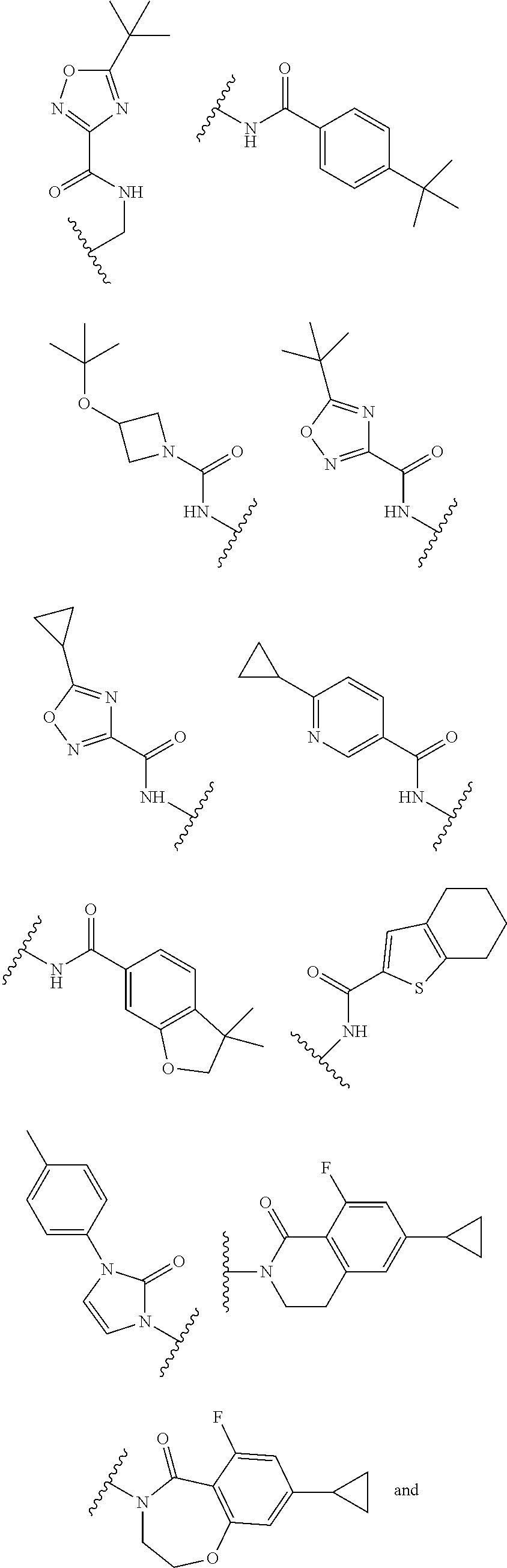

In certain embodiments, R2 is hydrogen.
In certain embodiments, R2 is (C(R5)(R5))mOR4, (C(R5)(R5))mN(R4)COR, (C(R5)(R5))mN(R4)C(O)C(O)NR2, (C(R5)(R5))mN(R4)(R4), optionally substituted 3-7 membered heterocylic ring having 1-4 heteroatoms independently selected from nitrogen, oxygen, or sulfur, or optionally substituted 5-6 membered monocyclic heteroaryl ring having 1-4 heteroatoms independently selected from nitrogen, oxygen, or sulfur.
In certain embodiments, R2 is (C(R5)(R5))mN(R4)(R4). In certain embodiments, R2 is (C(R5)(R5))mOR4. In certain embodiments, R2 is (C(R5)(R5))mN(R4)COR. In certain embodiments, R2 is (C(R5)(R5))mN(R4)C(O)C(O)NR2. In certain embodiments, R2 is optionally substituted 3-7 membered heterocylic ring having 1-4 heteroatoms independently selected from nitrogen, oxygen, or sulfur. In certain embodiments, R2 is optionally substituted 5-6 membered monocyclic heteroaryl ring having 1-4 heteroatoms independently selected from nitrogen, oxygen, or sulfur.
In certain embodiments, R2 is (CH2)mN(R4)(R4). In certain embodiments, R2 is (CH2)mOR4. In certain embodiments, R2 is (CH2)mN(R4)COR. In certain embodiments, R2 is (CH2)mN(R4)C(O)C(O)NR2.
In certain embodiments, R2 is —CH2OOH, —CH2NH2,


In certain embodiments, R1 and R2 together form

In certain embodiments, each R is independently halogen. In certain embodiments, each R3 is independently an optionally substituted C1 6 aliphatic. In certain embodiments, each R3 is independently an optionally substituted C5-10 aryl. In certain embodiments, each R3 is independently an optionally substituted a 3-8 membered saturated or partially unsaturated carbocyclic ring. In certain embodiments, each R3 is independently an optionally substituted a 3-7 membered heterocylic ring having 1-4 heteroatoms independently selected from nitrogen, oxygen, or sulfur. In certain embodiments, each R3 is independently an optionally substituted or a 5-6 membered monocyclic heteroaryl ring having 1-4 heteroatoms independently selected from nitrogen, oxygen, or sulfur.
In certain embodiments, each R3 is independently halogen or an optionally substituted C1-6 aliphatic.
In certain embodiments, each R3 is independently F, Cl, Br, I, methyl, ethyl, ethyl, propyl, i-propyl, butyl, s-butyl, t-butyl, straight or branched pentyl, or straight or branched hexyl; each of which is optionally substituted.
In certain embodiments, each R3 is independently F, methyl, —CF3, or —CH2OH.
In certain embodiments, Ring Z is an optionally substituted C5-10 aryl. In certain embodiments, Ring Z is an optionally substituted a 3-8 membered saturated or partially unsaturated carbocyclic ring. In certain embodiments, Ring Z is an optionally substituted a 3-7 membered heterocylic ring having 1-4 heteroatoms independently selected from nitrogen, oxygen, or sulfur. In certain embodiments, Ring Z is an optionally substituted or a 5-6 membered monocyclic heteroaryl ring having 1-4 heteroatoms independently selected from nitrogen, oxygen, or sulfur.
In certain embodiments, Ring Z is phenyl, naphthyl, cyclopropyl, cyclobutyl, cyclopentyl, cyclohexyl, cycloheptyl, adamantyl, cyclooctyl, [3.3.0]bicyclooctanyl, [4.3.0]bicyclononanyl, [4.4.0]bicyclodecanyl, [2.2.2]bicyclooctanyl, fluorenyl, indanyl, tetrahydronaphthyl, acridinyl, azocinyl, benzimidazolyl, benzofuranyl, benzothiofuranyl, benzothiophenyl, benzoxazolyl, benzthiazolyl, benztriazolyl, benztetrazolyl, benzisoxazolyl, benzisothiazolyl, benzimidazolinyl, carbazolyl, NH-carbazolyl, carbolinyl, chromanyl, chromenyl, cinnolinyl, decahydroquinolinyl, 2H,6H-1,5,2-dithiazinyl, dihydrofuro[2,3-b]tetrahydrofuran, furanyl, furazanyl, imidazolidinyl, imidazolinyl, imidazolyl, 1H-indazolyl, indolenyl, indolinyl, indolizinyl, indolyl, 3H-indolyl, isoindolinyl, isoindolenyl, isobenzofuranyl, isochromanyl, isoindazolyl, isoindolinyl, isoindolyl, isoquinolinyl, isothiazolyl, isoxazolyl, morpholinyl, naphthyridinyl, octahydroisoquinolinyl, oxadiazolyl, 1,2,3-oxadiazolyl, 1,2,4-oxadiazolyl; 1,2,5oxadiazolyl, 1,3,4-oxadiazolyl, oxazolidinyl, oxazolyl, oxazolidinyl, pyrimidinyl, phenanthridinyl, phenanthrolinyl, phenazinyl, phenothiazinyl, phenoxathiinyl, phenoxazinyl, phthalazinyl, piperazinyl, piperidinyl, piperidine-one, pteridinyl, purinyl, pyranyl, pyrazinyl, pyrazolidinyl, pyrazolinyl, pyrazolyl, pyridazinyl, pyridooxazole, pyridoimidazole, pyridothiazole, pyridinyl, pyridyl, pyrimidinyl, pyrrolidinyl, pyrrolinyl, 2H-pyrrolyl, pyrrolyl, quinazolinyl, quinolinyl, 4H-quinolizinyl, quinoxalinyl, quinuclidinyl, tetrahydrofuranyl, tetrahydroisoquinolinyl, tetrahydroquinolinyl, tetrahydropyridine, tetrahydropyran, 6H-1,2,5-thiadiazinyl, 1,2,3-thiadiazolyl, 1,2,4-thiadiazolyl, 1,2,5-thiadiazolyl, 1,3,4thiadiazolyl, thianthrenyl, thiazolyl, thienyl, thienothiazolyl, thienooxazolyl, thienoimidazolyl, thiophenyl, triazinyl, 1,2,3-triazolyl, 1,2,4-triazolyl, 1,2,5-triazolyl, 1,3,4-triazolyl, oxetanyl, azetidinyl, or xanthenyl; each of which is optionally substituted.
In certain embodiments, Ring Z is cyclopropyl, phenyl, furanyl, furazanyl, imidazolidinyl, imidazolinyl, imidazolyl, 1H-indazolyl, indolenyl, indolinyl, indolizinyl, indolyl, 3H-indolyl, isoindolinyl, isoindolenyl, isoindazolyl, isoindolinyl, isoindolyl, isoquinolinyl, isothiazolyl, isoxazolyl, oxadiazolyl, 1,2,3-oxadiazolyl, 1,2,4-oxadiazolyl; 1,2,5oxadiazolyl, 1,3,4-oxadiazolyl, oxazolidinyl, oxazolyl, oxazolidinyl, piperidine-one, pyrimidinyl, purinyl, pyranyl, pyrazinyl, pyrazolidinyl, pyrazolinyl, pyrazolyl, pyridazinyl, pyridooxazole, pyridoimidazole, pyridothiazole, pyridinyl, pyridyl, pyrimidinyl, pyrrolidinyl, pyrrolinyl, 2H-pyrrolyl, pyrrolyl, tetrahydropyridine, tetrahydropyran, thiazolyl, thienyl, thienothiazolyl, thienooxazolyl, thienoimidazolyl, thiophenyl, triazinyl, 1,2,3-triazolyl, 1,2,4-triazolyl, 1,2,5-triazolyl, or 1,3,4-triazolyl; each of which is optionally substituted.
In certain embodiments, Ring Z is cyclopropyl, piperidine-one, phenyl, pyrazolyl, pyridinyl, tetrahydropyridine, or tetrahydropyran; each of which is optionally substituted.
In certain embodiments, Ring Z is

In certain embodiments, Ring Z is


In certain embodiments, Ring Z is absent and Ra is —CF3, i-Pr, or i-Bu.
In certain embodiments, each of R1, R2, R3, Ring Z, and n, is as defined above and described in embodiments, classes and subclasses above and herein, singly or in combination.
In certain embodiments, the present invention provides a compound of formula II,

or a pharmaceutically acceptable salt thereof, wherein each of Ring Z, R1, R2, R3, Ra, n, and p, is as defined above and described in embodiments, classes and subclasses above and herein, singly or in combination.
In certain embodiments, the present invention provides a compound of formula II-a,

or a pharmaceutically acceptable salt thereof, wherein each of R1, R2, R3, Ra, n, and p, is as defined above and described in embodiments, classes and subclasses above and herein, singly or in combination.
In certain embodiments, the present invention provides a compound of formula II-b,

or a pharmaceutically acceptable salt thereof, wherein each of R1, R2, R3, Ra, n, and p, is as defined above and described in embodiments, classes and subclasses above and herein, singly or in combination.
In certain embodiments, the present invention provides a compound of formula II-c,

or a pharmaceutically acceptable salt thereof, wherein each of R1, R2, R3, Ra, n, and p, is as defined above and described in embodiments, classes and subclasses above and herein, singly or in combination.
In certain embodiments, the present invention provides a compound of formula II-d,

or a pharmaceutically acceptable salt thereof, wherein each of R1, R2, R3, Ra, n, and p, is as defined above and described in embodiments, classes and subclasses above and herein, singly or in combination.
In certain embodiments, the present invention provides a compound of formula II-e,

or a pharmaceutically acceptable salt thereof, wherein each of R1, R2, R3, Ra, n, and p, is as defined above and described in embodiments, classes and subclasses above and herein, singly or in combination.
In certain embodiments, the present invention provides a compound of formula II-f,

or a pharmaceutically acceptable salt thereof, wherein each of R1, R2, R3, Ra, n, and p, is as defined above and described in embodiments, classes and subclasses above and herein, singly or in combination.
In certain embodiments, the present invention provides a compound of formula II-g,

or a pharmaceutically acceptable salt thereof, wherein each of R1, R2, R3, Ra, n, and p, is as defined above and described in embodiments, classes and subclasses above and herein, singly or in combination.
In certain embodiments, the present invention provides a compound of formula II-h,

or a pharmaceutically acceptable salt thereof, wherein each of R1, R2, R3, Ra, n, and p, is as defined above and described in embodiments, classes and subclasses above and herein, singly or in combination.
In certain embodiments, the present invention provides a compound of formula II-i,

or a pharmaceutically acceptable salt thereof, wherein each of R1, R2, R3, Ra, n, and p, is as defined above and described in embodiments, classes and subclasses above and herein, singly or in combination.
In certain embodiments, the present invention provides a compound of formula III,

or a pharmaceutically acceptable salt thereof, wherein each of Ring Z, R1, R3, Ra, n, and p, is as defined above and described in embodiments, classes and subclasses above and herein, singly or in combination.
In certain embodiments, the present invention provides a compound of formula III-a,

or a pharmaceutically acceptable salt thereof, wherein each of R1, R2, Ra, n, and p, is as defined above and described in embodiments, classes and subclasses above and herein, singly or in combination.
In certain embodiments, the present invention provides a compound of formula III,

or a pharmaceutically acceptable salt thereof, wherein each of Ring Z, R1, R2, R3, Ra, n, and p, is as defined above and described in embodiments, classes and subclasses above and herein, singly or in combination.
In certain embodiments, the present invention provides a compound of formula III-a,

or a pharmaceutically acceptable salt thereof, wherein each of R1, R2, R3, Ra, n, and p, is as defined above and described in embodiments, classes and subclasses above and herein, singly or in combination.
In certain embodiments, the invention provides a compound selected from Table 1:
| TABLE 1 | |
 |
1 |
 |
2 |
 |
3 |
 |
4 |
 |
5 |
 |
6 |
 |
7 |
 |
8 |
 |
9 |
 |
10 |
 |
11 |
 |
12 |
 |
13 |
 |
14 |
 |
15 |
 |
16 |
 |
17 |
 |
18 |
 |
19 |
 |
20 |
 |
21 |
 |
22 |
 |
23 |
 |
24 |
 |
25 |
 |
26 |
 |
27 |
 |
28 |
 |
29 |
 |
30 |
 |
31 |
 |
32 |
 |
34 |
 |
35 |
 |
37 |
 |
38 |
 |
39 |
 |
40 |
 |
41 |
 |
42 |
 |
43 |
 |
44 |
 |
45 |
 |
46 |
 |
47 |
 |
48 |
 |
49 |
 |
50 |
 |
51 |
 |
52 |
 |
53 |
 |
54 |
 |
55 |
 |
56 |
 |
57 |
 |
58 |
 |
59 |
 |
60 |
 |
61 |
 |
62 |
 |
63 |
 |
64 |
 |
65 |
 |
66 |
 |
67 |
 |
68 |
 |
69 |
 |
70 |
 |
71 |
 |
72 |
 |
73 |
 |
74 |
 |
75 |
 |
76 |
 |
77 |
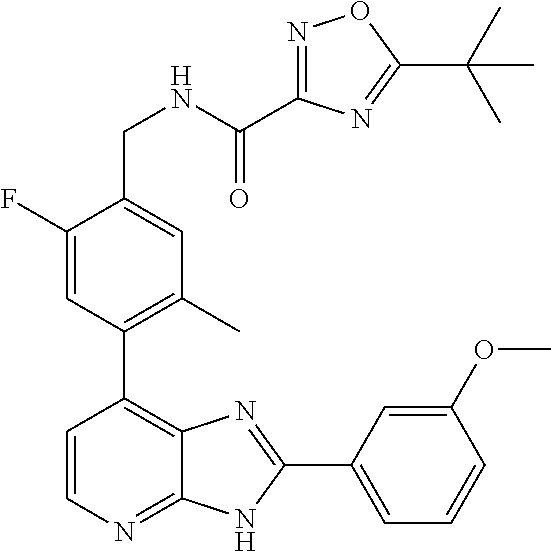 |
78 |
 |
79 |
 |
80 |
 |
81 |
 |
82 |
 |
83 |
 |
84 |
 |
85 |
 |
86 |
 |
87 |
 |
88 |
 |
89 |
 |
90 |
 |
91 |
 |
92 |
 |
93 |
 |
95 |
 |
96 |
 |
97 |
 |
98 |
 |
99 |
 |
100 |
 |
101 |
 |
102 |
 |
103 |
 |
104 |
 |
105 |
 |
106 |
 |
107 |
 |
108 |
 |
109 |
 |
110 |
 |
111 |
 |
112 |
 |
113 |
 |
114 |
 |
115 |
 |
116 |
 |
118 |
 |
119 |
 |
120 |
 |
121 |
 |
122 |
 |
124 |
 |
125 |
 |
126 |
 |
127 |
 |
129 |
 |
130 |
 |
131 |
 |
132 |
 |
133 |
 |
134 |
 |
135 |
 |
136 |
 |
137 |
 |
138 |
 |
139 |
 |
140 |
 |
142 |
 |
143 |
 |
144 |
 |
145 |
 |
146 |
 |
148 |
 |
149 |
 |
150 |
 |
151 |
 |
152 |
 |
153 |
 |
155 |
 |
156 |
 |
157 |
 |
158 |
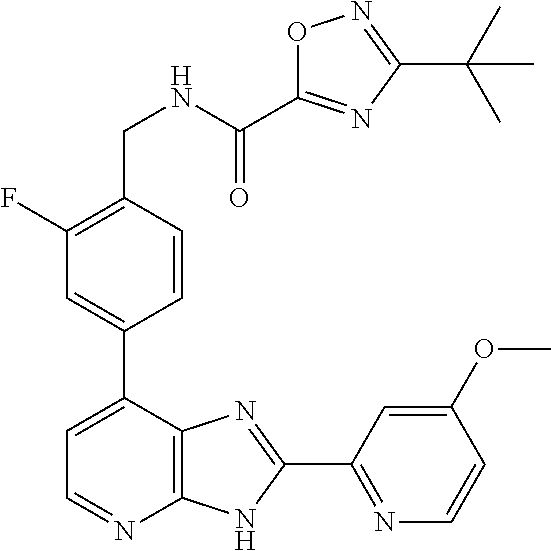 |
159 |
 |
160 |
 |
161 |
 |
162 |
 |
163 |
 |
164 |
 |
165 |
 |
166 |
 |
167 |
 |
168 |
 |
169 |
 |
170 |
 |
171 |
 |
172 |
 |
173 |
 |
174 |
 |
175 |
 |
176 |
 |
177 |
 |
178 |
 |
179 |
 |
180 |
 |
181 |
 |
182 |
 |
183 |
 |
184 |
 |
185 |
 |
186 |
 |
187 |
 |
188 |
In some embodiments, the present invention provides a compound selected from those depicted above, or a pharmaceutically acceptable salt thereof.
Various structural depictions may show a heteroatom without an attached group, radical, charge, or counterion. Those of ordinary skill in the art are aware that such depictions are meant to indicate that the heteroatom is attached to hydrogen (e.g.,

is understood to be

In certain embodiments, the compounds of the invention were synthesized in accordance with the schemes provided in the Examples below.
4. Uses, Formulation and Administration
Pharmaceutically Acceptable Compositions
According to another embodiment, the invention provides a composition comprising a compound of this invention or a pharmaceutically acceptable derivative thereof and a pharmaceutically acceptable carrier, adjuvant, or vehicle. The amount of compound in compositions of this invention is such that is effective to measurably inhibit BTK, or a mutant thereof, in a biological sample or in a patient. In certain embodiments, the amount of compound in compositions of this invention is such that is effective to measurably inhibit BTK, or a mutant thereof, in a biological sample or in a patient. In certain embodiments, a composition of this invention is formulated for administration to a patient in need of such composition.
The term “patient” or “subject”, as used herein, means an animal, preferably a mammal, and most preferably a human.
The term “pharmaceutically acceptable carrier, adjuvant, or vehicle” refers to a non-toxic carrier, adjuvant, or vehicle that does not destroy the pharmacological activity of the compound with which it is formulated. Pharmaceutically acceptable carriers, adjuvants or vehicles that are used in the compositions of this invention include, but are not limited to, ion exchangers, alumina, aluminum stearate, lecithin, serum proteins, such as human serum albumin, buffer substances such as phosphates, glycine, sorbic acid, potassium sorbate, partial glyceride mixtures of saturated vegetable fatty acids, water, salts or electrolytes, such as protamine sulfate, disodium hydrogen phosphate, potassium hydrogen phosphate, sodium chloride, zinc salts, colloidal silica, magnesium trisilicate, polyvinyl pyrrolidone, cellulose-based substances, polyethylene glycol, sodium carboxymethylcellulose, polyacrylates, waxes, polyethylene-polyoxypropylene-block polymers, polyethylene glycol and wool fat.
A “pharmaceutically acceptable derivative” means any non-toxic salt, ester, salt of an ester or other derivative of a compound of this invention that, upon administration to a recipient, is capable of providing, either directly or indirectly, a compound of this invention or an inhibitorily active metabolite or residue thereof.
Compositions of the present invention are administered orally, parenterally, by inhalation spray, topically, rectally, nasally, buccally, vaginally or via an implanted reservoir. The term “parenteral” as used herein includes subcutaneous, intravenous, intramuscular, intra-articular, intra-synovial, intrasternal, intrathecal, intrahepatic, intralesional and intracranial injection or infusion techniques. Preferably, the compositions are administered orally, intraperitoneally or intravenously. Sterile injectable forms of the compositions of this invention include aqueous or oleaginous suspension. These suspensions are formulated according to techniques known in the art using suitable dispersing or wetting agents and suspending agents. The sterile injectable preparation may also be a sterile injectable solution or suspension in a non-toxic parenterally acceptable diluent or solvent, for example as a solution in 1,3-butanediol. Among the acceptable vehicles and solvents that are employed are water, Ringer's solution and isotonic sodium chloride solution. In addition, sterile, fixed oils are conventionally employed as a solvent or suspending medium.
For this purpose, any bland fixed oil employed includes synthetic mono- or diglycerides. Fatty acids, such as oleic acid and its glyceride derivatives are useful in the preparation of injectables, as are natural pharmaceutically-acceptable oils, such as olive oil or castor oil, especially in their polyoxyethylated versions. These oil solutions or suspensions also contain a long-chain alcohol diluent or dispersant, such as carboxymethyl cellulose or similar dispersing agents that are commonly used in the formulation of pharmaceutically acceptable dosage forms including emulsions and suspensions. Other commonly used surfactants, such as Tweens, Spans and other emulsifying agents or bioavailability enhancers which are commonly used in the manufacture of pharmaceutically acceptable solid, liquid, or other dosage forms are also be used for the purposes of formulation.
Pharmaceutically acceptable compositions of this invention are orally administered in any orally acceptable dosage form. Exemplary oral dosage forms are capsules, tablets, aqueous suspensions or solutions. In the case of tablets for oral use, carriers commonly used include lactose and corn starch. Lubricating agents, such as magnesium stearate, are also typically added. For oral administration in a capsule form, useful diluents include lactose and dried cornstarch. When aqueous suspensions are required for oral use, the active ingredient is combined with emulsifying and suspending agents. If desired, certain sweetening, flavoring or coloring agents are optionally also added.
Alternatively, pharmaceutically acceptable compositions of this invention are administered in the form of suppositories for rectal administration. These can be prepared by mixing the agent with a suitable non-irritating excipient that is solid at room temperature but liquid at rectal temperature and therefore will melt in the rectum to release the drug. Such materials include cocoa butter, beeswax and polyethylene glycols.
Pharmaceutically acceptable compositions of this invention are also administered topically, especially when the target of treatment includes areas or organs readily accessible by topical application, including diseases of the eye, the skin, or the lower intestinal tract. Suitable topical formulations are readily prepared for each of these areas or organs.
Topical application for the lower intestinal tract can be effected in a rectal suppository formulation (see above) or in a suitable enema formulation. Topically-transdermal patches are also used.
For topical applications, provided pharmaceutically acceptable compositions are formulated in a suitable ointment containing the active component suspended or dissolved in one or more carriers. Exemplary carriers for topical administration of compounds of this are mineral oil, liquid petrolatum, white petrolatum, propylene glycol, polyoxyethylene, polyoxypropylene compound, emulsifying wax and water. Alternatively, provided pharmaceutically acceptable compositions can be formulated in a suitable lotion or cream containing the active components suspended or dissolved in one or more pharmaceutically acceptable carriers. Suitable carriers include, but are not limited to, mineral oil, sorbitan monostearate, polysorbate 60, cetyl esters wax, cetearyl alcohol, 2-octyldodecanol, benzyl alcohol and water.
Pharmaceutically acceptable compositions of this invention are optionally administered by nasal aerosol or inhalation. Such compositions are prepared according to techniques well-known in the art of pharmaceutical formulation and are prepared as solutions in saline, employing benzyl alcohol or other suitable preservatives, absorption promoters to enhance bioavailability, fluorocarbons, and/or other conventional solubilizing or dispersing agents.
Most preferably, pharmaceutically acceptable compositions of this invention are formulated for oral administration. Such formulations may be administered with or without food. In some embodiments, pharmaceutically acceptable compositions of this invention are administered without food. In other embodiments, pharmaceutically acceptable compositions of this invention are administered with food.
The amount of compounds of the present invention that are optionally combined with the carrier materials to produce a composition in a single dosage form will vary depending upon the host treated, the particular mode of administration. Preferably, provided compositions should be formulated so that a dosage of between 0.01-100 mg/kg body weight/day of the compound can be administered to a patient receiving these compositions.
It should also be understood that a specific dosage and treatment regimen for any particular patient will depend upon a variety of factors, including the activity of the specific compound employed, the age, body weight, general health, sex, diet, time of administration, rate of excretion, drug combination, and the judgment of the treating physician and the severity of the particular disease being treated. The amount of a compound of the present invention in the composition will also depend upon the particular compound in the composition.
Uses of Compounds and Pharmaceutically Acceptable Compositions
In certain embodiments, the invention provides a method for inhibiting BTK, or a mutant thereof, in a patient or in a biological sample comprising the step of administering to said patient or contacting said biological sample with a compound according to the invention.
In certain embodiments, the invention is directed to the use of compounds of the invention and/or physiologically acceptable salts thereof, for modulating or inhibiting a BTK enzyme. The term “modulation” denotes any change in BTK-mediated signal transduction, which is based on the action of the specific inventive compounds capable to interact with the BTK target in such a manner that makes recognition, binding and activating possible. The compounds are characterized by such a high affinity to BTK, which ensures a reliable binding of BTK. In certain embodiments, the substances are highly selective for BTK over most other kinases in order to guarantee an exclusive and directed recognition with the single BTK target. In the context of the present invention, the term “recognition”—without being limited thereto—relates to any type of interaction between the specific compounds and the target, particularly covalent or non-covalent binding or association, such as a covalent bond, hydrophobic/hydrophilic interactions, van der Waals forces, ion pairs, hydrogen bonds, ligand-receptor (enzyme-inhibitor) interactions, and the like. Such association may also encompass the presence of other molecules such as peptides, proteins or nucleotide sequences. The present protein/ligand (enzyme-inhibitor)-interaction is characterized by high affinity, high selectivity and minimal or even lacking cross-reactivity to other target molecules to exclude unhealthy and harmful impacts to the treated subject.
In certain embodiments, the present invention relates to a method for inhibiting a BTK enzyme, with at least one compound of formula (I) according to the invention and/or physiologically acceptable salts thereof, under conditions such that said BTK enzyme is inhibited. In certain embodiments, the system is a cellular system. In other embodiments, the system is an in-vitro translation which is based on the protein synthesis without living cells. The cellular system is defined to be any subject provided that the subject comprises cells. Hence, the cellular system can be selected from the group of single cells, cell cultures, tissues, organs and animals. In certain embodiments, the method for modulating a BTK enzyme is performed in-vitro. The prior teaching of the present specification concerning the compounds of formula (I), including any embodiments thereof, is valid and applicable without restrictions to the compounds according to formula (I) and their salts when used in the method for inhibiting BTK. The prior teaching of the present specification concerning the compounds of formula (I), including any embodiments thereof, is valid and applicable without restrictions to the compounds according to formula (I) and their salts when used in the method for inhibiting BTK.
Patients with mutations in BTK have a profound block in B cell development, resulting in the almost complete absence of mature B lymphocytes and plasma cells, severely reduced Ig levels and a profound inhibition of humoral response to recall antigens (reviewed in Vihinen et al Frontiers in Bioscience 5: d917-928). Mice deficient in BTK also have a reduced number of peripheral B cells and greatly decreased serum levels of IgM and IgG3. BTK deletion in mice has a profound effect on B cell proliferation induced by anti-IgM, and inhibits immune responses to thymus-independent type II antigens (Ellmeier et al, J Exp Med 192: 1611-1623 (2000)). BTK also plays a crucial role in mast cell activation through the high-affinity IgE receptor (Fc epsilon RI). BTK deficient murine mast cells have reduced degranulation and decreased production of proinflammatory cytokines following Fc epsilon RI cross-linking (Kawakami et al. Journal of Leukocyte Biology 65: 286-290).
Provided compounds are inhibitors of BTK and are therefore useful for treating one or more disorders associated with activity of BTK. Thus, in some embodiments, the present invention provides a method for treating a BTK-mediated disorder comprising the step of administering to a patient in need thereof a compound of the present invention, or pharmaceutically acceptable composition thereof.
As used herein, the term “BTK-mediated” disorders or conditions as used herein means any disease or other deleterious condition in which BTK, or a mutant thereof, is known to play a role. Accordingly, another embodiment of the present invention relates to treating or lessening the severity of one or more diseases in which BTK, or a mutant thereof, is known to play a role. Specifically, the present invention relates to a method of treating or lessening the severity of a disease or condition selected from a proliferative disorder or an autoimmune disorder, wherein said method comprises administering to a patient in need thereof a compound or composition according to the present invention.
In some embodiments, the present invention provides a method for treating or lessening the severity of one or more diseases and conditions associated with BTK. In some embodiments, the disease or condition is an autoimmune disease, e.g., inflammatory bowel disease, arthritis, systemic lupus erythematosus (SLE or lupus), lupus nephritis, vasculitis, idiopathic thrombocytopenic purpura (ITP), rheumatoid arthritis (RA), psoriatic arthritis, osteoarthritis, Still's disease, juvenile arthritis, diabetes, myasthenia gravis, Hashimoto's thyroiditis, Ord's thyroiditis, Graves' disease, autoimmune thyroiditis, Sjogren's syndrome, multiple sclerosis (MS), systemic sclerosis, Lyme neuroborreliosis, Guillain-Barre syndrome, acute disseminated encephalomyelitis, Addison's disease, opsoclonus-myoclonus syndrome, ankylosing spondylosis, antiphospholipid antibody syndrome, aplastic anemia, autoimmune hepatitis, autoimmune gastritis, pernicious anemia, celiac disease, Goodpasture's syndrome, idiopathic thrombocytopenic purpura, optic neuritis, scleroderma, primary biliary cirrhosis, Reiter's syndrome, Takayasu's arteritis, temporal arteritis, warm autoimmune hemolytic anemia, Wegener's granulomatosis, psoriasis, alopecia universalis, Behcet's disease, chronic fatigue, dysautonomia, membranous glomerulonephropathy, endometriosis, interstitial cystitis, pemphigus vulgaris, bullous pemphigoid, neuromyotonia, scleroderma, or vulvodynia. In certain embodiments, the disease or condition is systemic lupus erythematosus (SLE or lupus) or lupus nephritis. In certain embodiments, the disease or condition is RA. In certain embodiments, the disease or condition is MS.
In some embodiments, the disease or condition is a hyperproliferative disease or immunologically-mediated diseases including rejection of transplanted organs or tissues and Acquired Immunodeficiency Syndrome (AIDS, also known as HIV).
In some embodiments, the present invention provides a method for treating or lessening the severity of one or more diseases and conditions associated with BTK, wherein the disease or condition is selected from heteroimmune conditions or diseases, which include, but are not limited to graft versus host disease, transplantation, transfusion, anaphylaxis, allergies (e.g., allergies to plant pollens, latex, drugs, foods, insect poisons, animal hair, animal dander, dust mites, or cockroach calyx), type I hypersensitivity, allergic conjunctivitis, allergic rhinitis, and atopic dermatitis.
In some embodiments, the present invention provides a method for treating or lessening the severity of one or more diseases and conditions associated with BTK, wherein the disease or condition is selected from an inflammatory disease, e.g., asthma, appendicitis, atopic dermatitis, asthma, allergy, blepharitis, bronchiolitis, bronchitis, bursitis, cervicitis, cholangitis, cholecystitis, chronic graft rejection, colitis, conjunctivitis, Crohn's disease, cystitis, dacryoadenitis, dermatitis, dermatomyositis, encephalitis, endocarditis, endometritis, enteritis, enterocolitis, epicondylitis, epididymitis, fasciitis, fibrositis, gastritis, gastroenteritis, Henoch-Schonlein purpura, hepatitis, hidradenitis suppurativa, immunoglobulin A nephropathy, interstitial lung disease, laryngitis, mastitis, meningitis, myelitis myocarditis, myositis, nephritis, oophoritis, orchitis, osteitis, otitis, pancreatitis, parotitis, pericarditis, peritonitis, pharyngitis, pleuritis, phlebitis, pneumonitis, pneumonia, polymyositis, proctitis, prostatitis, pyelonephritis, rhinitis, salpingitis, sinusitis, stomatitis, synovitis, tendonitis, tonsillitis, ulcerative colitis, uveitis, vaginitis, vasculitis, or vulvitis.
In some embodiments, the present invention provides a method for treating or lessening the severity of one or more diseases and conditions associated with BTK, wherein the disease or condition is cancer. In one embodiment, the cancer is a B-cell proliferative disorder, e.g., diffuse large B cell lymphoma, follicular lymphoma, chronic lymphocytic lymphoma, chronic lymphocytic leukemia, acute lymphocytic leukemia, B-cell prolymphocytic leukemia, lymphoplasmacytic lymphoma/Waldenstrom macroglobulinemia, splenic marginal zone lymphoma, multiple myeloma (also known as plasma cell myeloma), non-Hodgkin's lymphoma, Hodgkin's lymphoma, plasmacytoma, extranodal marginal zone B cell lymphoma, nodal marginal zone B cell lymphoma, mantle cell lymphoma, mediastinal (thymic) large B cell lymphoma, intravascular large B cell lymphoma, primary effusion lymphoma, Burkitt lymphoma/leukemia, or lymphomatoid granulomatosis. In some embodiments, the cancer is breast cancer, prostate cancer, or cancer of the mast cells (e.g., mastocytoma, mast cell leukemia, mast cell sarcoma, systemic mastocytosis). In one embodiment, the cancer is bone cancer. In another embodiment, the cancer is of other primary origin and metastasizes to the bone. In certain embodiments, the cancer is colorectal cancer or pancreatic cancer.
In some embodiments, the present invention provides a method for treating or lessening the severity of one or more diseases or conditions associated with BTK including diseases of the bone and joints including, without limitation, rheumatoid arthritis, seronegative spondyloarthropathies (including ankylosing spondylitis, psoriatic arthritis and Reiter's disease), Behcet's disease, Sjogren's syndrome, systemic sclerosis, osteoporosis, bone cancer, and bone metastasis.
In some embodiments, the present invention provides a method for treating or lessening the severity of one or more diseases and conditions associated with BTK, wherein the disease or condition is selected from a thromboembolic disorder or cardiovascular disorder, e.g., myocardial infarct, angina pectoris, reocclusion after angioplasty, restenosis after angioplasty, reocclusion after aortocoronary bypass, restenosis after aortocoronary bypass, stroke, transitory ischemia, a peripheral arterial occlusive disorder, pulmonary embolism, or deep venous thrombosis. In certain embodiments, the present invention provides an anti-thrombotic agent because Btk is also involved in the activation of platelets.
In some embodiments, the present invention provides a method for treating or lessening the severity of one or more diseases and conditions associated with BTK, including infectious and noninfectious inflammatory events and autoimmune and other inflammatory diseases. These autoimmune and inflammatory diseases, disorders, and syndromes include inflammatory pelvic disease, urethritis, skin sunburn, sinusitis, pneumonitis, encephalitis, meningitis, myocarditis, nephritis, osteomyelitis, myositis, hepatitis, gastritis, enteritis, dermatitis, gingivitis, appendicitis, pancreatitis, cholocystitus, agammaglobulinemia, psoriasis, allergy, Crohn's disease, irritable bowel syndrome, ulcerative colitis, Sjogren's disease, tissue graft rejection, hyperacute rejection of transplanted organs, asthma, allergic rhinitis, chronic obstructive pulmonary disease (COPD), autoimmune polyglandular disease (also known as autoimmune polyglandular syndrome), autoimmune alopecia, pernicious anemia, glomerulonephritis, dermatomyositis, multiple sclerosis, scleroderma, vasculitis, autoimmune hemolytic and thrombocytopenic states, Goodpasture's syndrome, atherosclerosis, Addison's disease, Parkinson's disease, Alzheimer's disease, diabetes, septic shock, systemic lupus erythematosus (SLE), rheumatoid arthritis, psoriatic arthritis, juvenile arthritis, osteoarthritis, chronic idiopathic thrombocytopenic purpura, Waldenstrom macroglobulinemia, myasthenia gravis, Hashimoto's thyroiditis, atopic dermatitis, degenerative joint disease, vitiligo, autoimmune hypopituitarism, Guillain-Barre syndrome, Behcet's disease, scleraderma, mycosis fungoides, acute inflammatory responses (such as acute respiratory distress syndrome and ischemia/reperfusion injury), and Graves' disease. In certain embodiments, the diabetes is type I diabetes.
In some embodiments, the present invention provides a method for treating or lessening the severity of one or more diseases and conditions associated with BTK, selected from rheumatoid arthritis, multiple sclerosis, B-cell chronic lymphocytic leukemia, acute lymphocytic leukemia, hairy cell leukemia, non-Hodgkin's lymphoma, Hodgkin's lymphoma, multiple myeloma, bone cancer, bone metastasis, osteoporosis, diabetes (e.g. type I diabetes), irritable bowel syndrome, Crohn's disease, lupus and renal transplant.
It is another object of the invention to provide a method for treating diseases that are caused, mediated and/or propagated by BTK activity, wherein at least one compound of formula (I) according to the invention and/or physiologically acceptable salts thereof is administered to a mammal in need of such treatment. In certain embodiments, the invention provides a method for treating lupus, wherein at least one compound of formula (I) according to the invention and/or physiologically acceptable salts thereof is administered to a mammal in need of such treatment. In certain embodiments, the compound is administered in an effective amount as defined above. In certain embodiments, the treatment is an oral administration.
The method of the invention can be performed either in-vitro or in-vivo. The susceptibility of a particular cell to treatment with the compounds according to the invention can be particularly determined by in-vitro tests, whether in the course of research or clinical application. Typically, a culture of the cell is combined with a compound according to the invention at various concentrations for a period of time which is sufficient to allow the active agents to inhibit BTK activity, usually between about one hour and one week. In-vitro treatment can be carried out using cultivated cells from a biopsy sample or cell line.
The host or patient can belong to any mammalian species, for example a primate species, particularly humans; rodents, including mice, rats and hamsters; rabbits; horses, cows, dogs, cats, etc. Animal models are of interest for experimental investigations, providing a model for treatment of human disease.
For identification of a signal transduction pathway and for detection of interactions between various signal transduction pathways, various scientists have developed suitable models or model systems, for example cell culture models and models of transgenic animals. For the determination of certain stages in the signal transduction cascade, interacting compounds can be utilized in order to modulate the signal. The compounds according to the invention can also be used as reagents for testing BTK-dependent signal transduction pathways in animals and/or cell culture models or in the clinical diseases mentioned in this application.
Moreover, the subsequent teaching of the present specification concerning the use of the compounds according to formula (I) and its derivatives for the production of a medicament for the prophylactic or therapeutic treatment and/or monitoring is considered as valid and applicable without restrictions to the use of the compound for the inhibition of BTK activity if expedient.
The invention also relates to the use of compounds according to formula (I) and/or physiologically acceptable salts thereof for the prophylactic or therapeutic treatment and/or monitoring of diseases that are caused, mediated and/or propagated by BTK activity.
Furthermore, the invention relates to the use of compounds according to formula (I) and/or physiologically acceptable salts thereof for the production of a medicament for the prophylactic or therapeutic treatment and/or monitoring of diseases that are caused, mediated and/or propagated by BTK activity. In certain embodiments, the invention provides the use of a compound according to formula I or physiologically acceptable salts thereof, for the production of a medicament for the prophylactic or therapeutic treatment of a BTK-mediated disorder.
Compounds of formula (I) and/or a physiologically acceptable salt thereof can furthermore be employed as intermediate for the preparation of further medicament active ingredients. The medicament is preferably prepared in a non-chemical manner, e.g. by combining the active ingredient with at least one solid, fluid and/or semi-fluid carrier or excipient, and optionally in conjunction with a single or more other active substances in an appropriate dosage form.
Another object of the present invention are compounds of formula (I) according to the invention and/or physiologically acceptable salts thereof for use in the prophylactic or therapeutic treatment and/or monitoring of diseases that are caused, mediated and/or propagated by BTK activity. Another preferred object of the invention concerns compounds of formula (I) according to the invention and/or physiologically acceptable salts thereof for use in the prophylactic or therapeutic treatment and/or monitoring of lupus. The prior teaching of the present specification concerning the compounds of formula (I), including any preferred embodiment thereof, is valid and applicable without restrictions to the compounds according to formula (I) and their salts for use in the prophylactic or therapeutic treatment and/or monitoring of lupus.
The compounds of formula (I) according to the invention can be administered before or following an onset of disease once or several times acting as therapy. The aforementioned compounds and medical products of the inventive use are particularly used for the therapeutic treatment. A therapeutically relevant effect relieves to some extent one or more symptoms of a disorder, or returns to normality, either partially or completely, one or more physiological or biochemical parameters associated with or causative of a disease or pathological condition. Monitoring is considered as a kind of treatment provided that the compounds are administered in distinct intervals, e.g. in order to boost the response and eradicate the pathogens and/or symptoms of the disease completely. Either the identical compound or different compounds can be applied. The methods of the invention can also be used to reduce the likelihood of developing a disorder or even prevent the initiation of disorders associated with BTK activity in advance or to treat the arising and continuing symptoms.
In the meaning of the invention, prophylactic treatment is advisable if the subject possesses any preconditions for the aforementioned physiological or pathological conditions, such as a familial disposition, a genetic defect, or a previously incurred disease.
The invention furthermore relates to a medicament comprising at least one compound according to the invention and/or pharmaceutically usable derivatives, salts, solvates and stereoisomers thereof, including mixtures thereof in all ratios. In certain embodiments, the invention relates to a medicament comprising at least one compound according to the invention and/or physiologically acceptable salts thereof.
A “medicament” in the meaning of the invention is any agent in the field of medicine, which comprises one or more compounds of formula (I) or preparations thereof (e.g. a pharmaceutical composition or pharmaceutical formulation) and can be used in prophylaxis, therapy, follow-up or aftercare of patients who suffer from diseases, which are associated with BTK activity, in such a way that a pathogenic modification of their overall condition or of the condition of particular regions of the organism could establish at least temporarily.
In various embodiments, the active ingredient may be administered alone or in combination with other treatments. A synergistic effect may be achieved by using more than one compound in the pharmaceutical composition, i.e. the compound of formula (I) is combined with at least another agent as active ingredient, which is either another compound of formula (I) or a compound of different structural scaffold. The active ingredients can be used either simultaneously or sequentially.
Included herein are methods of treatment in which at least one chemical entity provided herein is administered in combination with an anti-inflammatory agent. Anti-inflammatory agents include but are not limited to NSAIDs, non-specific and COX-2 specific cyclooxygenase enzyme inhibitors, gold compounds, corticosteroids, methotrexate, tumor necrosis factor (TNF) antagonists, immunosuppressants and methotrexate.
Examples of NSAIDs include, but are not limited to, ibuprofen, flurbiprofen, naproxen and naproxen sodium, diclofenac, combinations of diclofenac sodium and misoprostol, sulindac, oxaprozin, diflunisal, piroxicam, indomethacin, etodolac, fenoprofen calcium, ketoprofen, sodium nabumetone, sulfasalazine, tolmetin sodium, and hydroxychloroquine. Examples of NSAIDs also include COX-2 specific inhibitors such as celecoxib, valdecoxib, lumiracoxib and/or etoricoxib.
In some embodiments, the anti-inflammatory agent is a salicylate. Salicylates include by are not limited to acetylsalicylic acid or aspirin, sodium salicylate, and choline and magnesium salicylates.
The anti-inflammatory agent may also be a corticosteroid. For example, the corticosteroid may be cortisone, dexamethasone, methylprednisolone, prednisolone, prednisolone sodium phosphate, or prednisone.
In additional embodiments the anti-inflammatory agent is a gold compound such as gold sodium thiomalate or auranofin.
The invention also includes embodiments in which the anti-inflammatory agent is a metabolic inhibitor such as a dihydrofolate reductase inhibitor, such as methotrexate or a dihydroorotate dehydrogenase inhibitor, such as leflunomide.
Other embodiments of the invention pertain to combinations in which at least one anti-inflammatory compound is an anti-monoclonal antibody (such as eculizumab or pexelizumab), a TNF antagonist, such as entanercept, or infliximab, which is an anti-TNF alpha monoclonal antibody.
Still other embodiments of the invention pertain to combinations in which at least one active agent is an immunosuppressant compound such as an immunosuppressant compound chosen from methotrexate, leflunomide, cyclosporine, tacrolimus, azathioprine, and mycophenolate mofetil.
B-cells and B-cell precursors expressing BTK have been implicated in the pathology of B-cell malignancies, including, but not limited to, B-cell lymphoma, lymphoma (including Hodgkin's and non-Hodgkin's lymphoma), hairy cell lymphoma, multiple myeloma, chronic and acute myelogenous leukemia and chronic and acute lymphocytic leukemia.
BTK has been shown to be an inhibitor of the Fas/APO-1 (CD-95) death inducing signaling complex (DISC) in B-lineage lymphoid cells. The fate of leukemia/lymphoma cells may reside in the balance between the opposing proapoptotic effects of caspases activated by DISC and an upstream anti-apoptotic regulatory mechanism involving BTK and/or its substrates (Vassilev et al., J. Biol. Chem. 1998, 274, 1646-1656).
It has also been discovered that BTK inhibitors are useful as chemosensitizing agents, and, thus, are useful in combination with other chemotherapeutic drugs, in particular, drugs that induce apoptosis. Examples of other chemotherapeutic drugs that can be used in combination with chemosensitizing BTK inhibitors include topoisomerase I inhibitors (camptothecin or topotecan), topoisomerase II inhibitors (e.g. daunomycin and etoposide), alkylating agents (e.g. cyclophosphamide, melphalan and BCNU), tubulin directed agents (e.g. taxol and vinblastine), and biological agents (e.g. antibodies such as anti CD20 antibody, IDEC 8, immunotoxins, and cytokines).
The disclosed compounds of the formula I can be administered in combination with other known therapeutic agents, including anticancer agents. As used here, the term “anticancer agent” relates to any agent which is administered to a patient with cancer for the purposes of treating the cancer.
The anti-cancer treatment defined above may be applied as a monotherapy or may involve, in addition to the herein disclosed compounds of formula I, conventional surgery or radiotherapy or medicinal therapy. Such medicinal therapy, e.g. a chemotherapy or a targeted therapy, may include one or more, but preferably one, of the following anti-tumor agents:
Alkylating agents: such as altretamine, bendamustine, busulfan, carmustine, chlorambucil, chlormethine, cyclophosphamide, dacarbazine, ifosfamide, improsulfan, tosilate, lomustine, melphalan, mitobronitol, mitolactol, nimustine, ranimustine, temozolomide, thiotepa, treosulfan, mechloretamine, carboquone; apaziquone, fotemustine, glufosfamide, palifosfamide, pipobroman, trofosfamide, uramustine, TH-3024, VAL-0834;
Platinum Compounds: such as carboplatin, cisplatin, eptaplatin, miriplatine hydrate, oxaliplatin, lobaplatin, nedaplatin, picoplatin, satraplatin; lobaplatin, nedaplatin, picoplatin, satraplatin;
DNA altering agents: such as amrubicin, bisantrene, decitabine, mitoxantrone, procarbazine, trabectedin, clofarabine; amsacrine, brostallicin, pixantrone, laromustine1,3;
Topoisomerase Inhibitors: such as etoposide, irinotecan, razoxane, sobuzoxane, teniposide, topotecan; amonafide, belotecan, elliptinium acetate, voreloxin;
Microtubule modifiers: such as cabazitaxel, docetaxel, eribulin, ixabepilone, paclitaxel, vinblastine, vincristine, vinorelbine, vindesine, vinflunine; fosbretabulin, tesetaxel;
Antimetabolites: such as asparaginase3, azacitidine, calcium levofolinate, capecitabine, cladribine, cytarabine, enocitabine, floxuridine, fludarabine, fluorouracil, gemcitabine, mercaptopurine, methotrexate, nelarabine, pemetrexed, pralatrexate, azathioprine, thioguanine, carmofur; doxifluridine, elacytarabine, raltitrexed, sapacitabine, tegafur2,3, trimetrexate;
Anticancer antibiotics: such as bleomycin, dactinomycin, doxorubicin, epirubicin, idarubicin, levamisole, miltefosine, mitomycin C, romidepsin, streptozocin, valrubicin, zinostatin, zorubicin, daunurobicin, plicamycin; aclarubicin, peplomycin, pirarubicin;
Hormones/Antagonists: such as abarelix, abiraterone, bicalutamide, buserelin, calusterone, chlorotrianisene, degarelix, dexamethasone, estradiol, fluocortolone fluoxymesterone, flutamide, fulvestrant, goserelin, histrelin, leuprorelin, megestrol, mitotane, nafarelin, nandrolone, nilutamide, octreotide, prednisolone, raloxifene, tamoxifen, thyrotropin alfa, toremifene, trilostane, triptorelin, diethylstilbestrol; acolbifene, danazol, deslorelin, epitiostanol, orteronel, enzalutamide1,3;
Aromatase inhibitors: such as aminoglutethimide, anastrozole, exemestane, fadrozole, letrozole, testolactone; formestane;
Small molecule kinase inhibitors: such as crizotinib, dasatinib, erlotinib, imatinib, lapatinib, nilotinib, pazopanib, regorafenib, ruxolitinib, sorafenib, sunitinib, vandetanib, vemurafenib, bosutinib, gefitinib, axitinib; afatinib, alisertib, dabrafenib, dacomitinib, dinaciclib, dovitinib, enzastaurin, nintedanib, lenvatinib, linifanib, linsitinib, masitinib, midostaurin, motesanib, neratinib, orantinib, perifosine, ponatinib, radotinib, rigosertib, tipifarnib, tivantinib, tivozanib, trametinib, pimasertib, brivanib alaninate, cediranib, apatinib4, cabozantinib S-malate1,3, ibrutinib1,3, icotinib4, buparlisib2, cipatinib4, cobimetinib1,3, idelalisib1,3, fedratinib1, XL-6474;
Photosensitizers: such as methoxsalen3; porfimer sodium, talaporfin, temoporfin;
Antibodies: such as alemtuzumab, besilesomab, brentuximab vedotin, cetuximab, denosumab, ipilimumab, ofatumumab, panitumumab, rituximab, tositumomab, trastuzumab, bevacizumab, pertuzumab2,3; catumaxomab, elotuzumab, epratuzumab, farletuzumab, mogamulizumab, necitumumab, nimotuzumab, obinutuzumab, ocaratuzumab, oregovomab, ramucirumab, rilotumumab, siltuximab, tocilizumab, zalutumumab, zanolimumab, matuzumab, dalotuzumab1,2,3, onartuzumab1,3, racotumomab1, tabalumab1,3, EMD-5257974, nivolumab1,3;
Cytokines: such as aldesleukin, interferon alfa2, interferon alfa2a3, interferon alfa2b2,3; celmoleukin, tasonermin, teceleukin, oprelvekin1,3, recombinant interferon beta-1a4;
Drug Conjugates: such as denileukin diftitox, ibritumomab tiuxetan, iobenguane I123, prednimustine, trastuzumab emtansine, estramustine, gemtuzumab, ozogamicin, aflibercept; cintredekin besudotox, edotreotide, inotuzumab ozogamicin, naptumomab estafenatox, oportuzumab monatox, technetium (99mTc) arcitumomab1,3, vintafolide1,3;
Vaccines: such as sipuleucel3; vitespen3, emepepimut-S3, oncoVAX4, rindopepimut3, troVax4, MGN-16014, MGN-17034; and
Miscellaneous: alitretinoin, bexarotene, bortezomib, everolimus, ibandronic acid, imiquimod, lenalidomide, lentinan, metirosine, mifamurtide, pamidronic acid, pegaspargase, pentostatin, sipuleucel3, sizofiran, tamibarotene, temsirolimus, thalidomide, tretinoin, vismodegib, zoledronic acid, vorinostat; celecoxib, cilengitide, entinostat, etanidazole, ganetespib, idronoxil, iniparib, ixazomib, lonidamine, nimorazole, panobinostat, peretinoin, plitidepsin, pomalidomide, procodazol, ridaforolimus, tasquinimod, telotristat, thymalfasin, tirapazamine, tosedostat, trabedersen, ubenimex, valspodar, gendicine4, picibanil4, reolysin4, retaspimycin hydrochloride1,3, trebananib2,3, virulizin4, carfilzomib1,3, endostatin4, immucothel4, belinostat3, MGN-17034. (1Prop. INN (Proposed International Nonproprietary Name); 2Rec. INN (Recommended International Nonproprietary Names); 3USAN (United States Adopted Name); 4no INN).
Platinum Compounds: such as carboplatin, cisplatin, eptaplatin, miriplatine hydrate, oxaliplatin, lobaplatin, nedaplatin, picoplatin, satraplatin; lobaplatin, nedaplatin, picoplatin, satraplatin;
DNA altering agents: such as amrubicin, bisantrene, decitabine, mitoxantrone, procarbazine, trabectedin, clofarabine; amsacrine, brostallicin, pixantrone, laromustine1,3;
Topoisomerase Inhibitors: such as etoposide, irinotecan, razoxane, sobuzoxane, teniposide, topotecan; amonafide, belotecan, elliptinium acetate, voreloxin;
Microtubule modifiers: such as cabazitaxel, docetaxel, eribulin, ixabepilone, paclitaxel, vinblastine, vincristine, vinorelbine, vindesine, vinflunine; fosbretabulin, tesetaxel;
Antimetabolites: such as asparaginase3, azacitidine, calcium levofolinate, capecitabine, cladribine, cytarabine, enocitabine, floxuridine, fludarabine, fluorouracil, gemcitabine, mercaptopurine, methotrexate, nelarabine, pemetrexed, pralatrexate, azathioprine, thioguanine, carmofur; doxifluridine, elacytarabine, raltitrexed, sapacitabine, tegafur2,3, trimetrexate;
Anticancer antibiotics: such as bleomycin, dactinomycin, doxorubicin, epirubicin, idarubicin, levamisole, miltefosine, mitomycin C, romidepsin, streptozocin, valrubicin, zinostatin, zorubicin, daunurobicin, plicamycin; aclarubicin, peplomycin, pirarubicin;
Hormones/Antagonists: such as abarelix, abiraterone, bicalutamide, buserelin, calusterone, chlorotrianisene, degarelix, dexamethasone, estradiol, fluocortolone fluoxymesterone, flutamide, fulvestrant, goserelin, histrelin, leuprorelin, megestrol, mitotane, nafarelin, nandrolone, nilutamide, octreotide, prednisolone, raloxifene, tamoxifen, thyrotropin alfa, toremifene, trilostane, triptorelin, diethylstilbestrol; acolbifene, danazol, deslorelin, epitiostanol, orteronel, enzalutamide1,3;
Aromatase inhibitors: such as aminoglutethimide, anastrozole, exemestane, fadrozole, letrozole, testolactone; formestane;
Small molecule kinase inhibitors: such as crizotinib, dasatinib, erlotinib, imatinib, lapatinib, nilotinib, pazopanib, regorafenib, ruxolitinib, sorafenib, sunitinib, vandetanib, vemurafenib, bosutinib, gefitinib, axitinib; afatinib, alisertib, dabrafenib, dacomitinib, dinaciclib, dovitinib, enzastaurin, nintedanib, lenvatinib, linifanib, linsitinib, masitinib, midostaurin, motesanib, neratinib, orantinib, perifosine, ponatinib, radotinib, rigosertib, tipifarnib, tivantinib, tivozanib, trametinib, pimasertib, brivanib alaninate, cediranib, apatinib4, cabozantinib S-malate1,3, ibrutinib1,3, icotinib4, buparlisib2, cipatinib4, cobimetinib1,3, idelalisib1,3, fedratinib1, XL-6474;
Photosensitizers: such as methoxsalen3; porfimer sodium, talaporfin, temoporfin;
Antibodies: such as alemtuzumab, besilesomab, brentuximab vedotin, cetuximab, denosumab, ipilimumab, ofatumumab, panitumumab, rituximab, tositumomab, trastuzumab, bevacizumab, pertuzumab2,3; catumaxomab, elotuzumab, epratuzumab, farletuzumab, mogamulizumab, necitumumab, nimotuzumab, obinutuzumab, ocaratuzumab, oregovomab, ramucirumab, rilotumumab, siltuximab, tocilizumab, zalutumumab, zanolimumab, matuzumab, dalotuzumab1,2,3, onartuzumab1,3, racotumomab1, tabalumab1,3, EMD-5257974, nivolumab1,3;
Cytokines: such as aldesleukin, interferon alfa2, interferon alfa2a3, interferon alfa2b2,3; celmoleukin, tasonermin, teceleukin, oprelvekin1,3, recombinant interferon beta-1a4;
Drug Conjugates: such as denileukin diftitox, ibritumomab tiuxetan, iobenguane I123, prednimustine, trastuzumab emtansine, estramustine, gemtuzumab, ozogamicin, aflibercept; cintredekin besudotox, edotreotide, inotuzumab ozogamicin, naptumomab estafenatox, oportuzumab monatox, technetium (99mTc) arcitumomab1,3, vintafolide1,3;
Vaccines: such as sipuleucel3; vitespen3, emepepimut-S3, oncoVAX4, rindopepimut3, troVax4, MGN-16014, MGN-17034; and
Miscellaneous: alitretinoin, bexarotene, bortezomib, everolimus, ibandronic acid, imiquimod, lenalidomide, lentinan, metirosine, mifamurtide, pamidronic acid, pegaspargase, pentostatin, sipuleucel3, sizofiran, tamibarotene, temsirolimus, thalidomide, tretinoin, vismodegib, zoledronic acid, vorinostat; celecoxib, cilengitide, entinostat, etanidazole, ganetespib, idronoxil, iniparib, ixazomib, lonidamine, nimorazole, panobinostat, peretinoin, plitidepsin, pomalidomide, procodazol, ridaforolimus, tasquinimod, telotristat, thymalfasin, tirapazamine, tosedostat, trabedersen, ubenimex, valspodar, gendicine4, picibanil4, reolysin4, retaspimycin hydrochloride1,3, trebananib2,3, virulizin4, carfilzomib1,3, endostatin4, immucothel4, belinostat3, MGN-17034. (1Prop. INN (Proposed International Nonproprietary Name); 2Rec. INN (Recommended International Nonproprietary Names); 3USAN (United States Adopted Name); 4no INN).
In another aspect, the invention provides for a kit consisting of separate packs of an effective amount of a compound according to the invention and/or pharmaceutically acceptable salts, derivatives, solvates and stereoisomers thereof, including mixtures thereof in all ratios, and optionally, an effective amount of a further active ingredient. The kit comprises suitable containers, such as boxes, individual bottles, bags or ampoules. The kit may, for example, comprise separate ampoules, each containing an effective amount of a compound according to the invention and/or pharmaceutically acceptable salts, derivatives, solvates and stereoisomers thereof, including mixtures thereof in all ratios, and an effective amount of a further active ingredient in dissolved or lyophilized form.
As used herein, the terms “treatment,” “treat,” and “treating” refer to reversing, alleviating, delaying the onset of, or inhibiting the progress of a disease or disorder, or one or more symptoms thereof, as described herein. In some embodiments, treatment is administered after one or more symptoms have developed. In other embodiments, treatment is administered in the absence of symptoms. For example, treatment is administered to a susceptible individual prior to the onset of symptoms (e.g., in light of a history of symptoms and/or in light of genetic or other susceptibility factors). Treatment is also continued after symptoms have resolved, for example to prevent or delay their recurrence.
The compounds and compositions, according to the method of the present invention, are administered using any amount and any route of administration effective for treating or lessening the severity of a disorder provided above. The exact amount required will vary from subject to subject, depending on the species, age, and general condition of the subject, the severity of the infection, the particular agent, its mode of administration, and the like. Compounds of the invention are preferably formulated in dosage unit form for ease of administration and uniformity of dosage. The expression “dosage unit form” as used herein refers to a physically discrete unit of agent appropriate for the patient to be treated. It will be understood, however, that the total daily usage of the compounds and compositions of the present invention will be decided by the attending physician within the scope of sound medical judgment. The specific effective dose level for any particular patient or organism will depend upon a variety of factors including the disorder being treated and the severity of the disorder; the activity of the specific compound employed; the specific composition employed; the age, body weight, general health, sex and diet of the patient; the time of administration, route of administration, and rate of excretion of the specific compound employed; the duration of the treatment; drugs used in combination or coincidental with the specific compound employed, and like factors well known in the medical arts.
Pharmaceutically acceptable compositions of this invention can be administered to humans and other animals orally, rectally, parenterally, intracisternally, intravaginally, intraperitoneally, topically (as by powders, ointments, or drops), bucally, as an oral or nasal spray, or the like, depending on the severity of the infection being treated. In certain embodiments, the compounds of the invention are administered orally or parenterally at dosage levels of about 0.01 mg/kg to about 100 mg/kg and preferably from about 1 mg/kg to about 50 mg/kg, of subject body weight per day, one or more times a day, to obtain the desired therapeutic effect.
Liquid dosage forms for oral administration include, but are not limited to, pharmaceutically acceptable emulsions, microemulsions, solutions, suspensions, syrups and elixirs. In addition to the active compounds, the liquid dosage forms optionally contain inert diluents commonly used in the art such as, for example, water or other solvents, solubilizing agents and emulsifiers such as ethyl alcohol, isopropyl alcohol, ethyl carbonate, ethyl acetate, benzyl alcohol, benzyl benzoate, propylene glycol, 1,3-butylene glycol, dimethylformamide, oils (in particular, cottonseed, groundnut, corn, germ, olive, castor, and sesame oils), glycerol, tetrahydrofurfuryl alcohol, polyethylene glycols and fatty acid esters of sorbitan, and mixtures thereof. Besides inert diluents, the oral compositions can also include adjuvants such as wetting agents, emulsifying and suspending agents, sweetening, flavoring, and perfuming agents.
Injectable preparations, for example, sterile injectable aqueous or oleaginous suspensions are formulated according to the known art using suitable dispersing or wetting agents and suspending agents. The sterile injectable preparation are also a sterile injectable solution, suspension or emulsion in a nontoxic parenterally acceptable diluent or solvent, for example, as a solution in 1,3-butanediol. Among the acceptable vehicles and solvents that may be employed are water, Ringer's solution, U.S.P. and isotonic sodium chloride solution. In addition, sterile, fixed oils are conventionally employed as a solvent or suspending medium. For this purpose any bland fixed oil can be employed including synthetic mono- or diglycerides. In addition, fatty acids such as oleic acid are used in the preparation of injectables.
Injectable formulations can be sterilized, for example, by filtration through a bacterial-retaining filter, or by incorporating sterilizing agents in the form of sterile solid compositions which can be dissolved or dispersed in sterile water or other sterile injectable medium prior to use.
In order to prolong the effect of a compound of the present invention, it is often desirable to slow the absorption of the compound from subcutaneous or intramuscular injection. This is accomplished by the use of a liquid suspension of crystalline or amorphous material with poor water solubility. The rate of absorption of the compound then depends upon its rate of dissolution that, in turn, may depend upon crystal size and crystalline form. Alternatively, delayed absorption of a parenterally administered compound form is accomplished by dissolving or suspending the compound in an oil vehicle. Injectable depot forms are made by forming microencapsule matrices of the compound in biodegradable polymers such as polylactide-polyglycolide. Depending upon the ratio of compound to polymer and the nature of the particular polymer employed, the rate of compound release can be controlled. Examples of other biodegradable polymers include poly(orthoesters) and poly(anhydrides). Depot injectable formulations are also prepared by entrapping the compound in liposomes or microemulsions that are compatible with body tissues.
Compositions for rectal or vaginal administration are preferably suppositories which can be prepared by mixing the compounds of this invention with suitable non-irritating excipients or carriers such as cocoa butter, polyethylene glycol or a suppository wax which are solid at ambient temperature but liquid at body temperature and therefore melt in the rectum or vaginal cavity and release the active compound.
Solid dosage forms for oral administration include capsules, tablets, pills, powders, and granules. In such solid dosage forms, the active compound is mixed with at least one inert, pharmaceutically acceptable excipient or carrier such as sodium citrate or dicalcium phosphate and/or a) fillers or extenders such as starches, lactose, sucrose, glucose, mannitol, and silicic acid, b) binders such as, for example, carboxymethylcellulose, alginates, gelatin, polyvinylpyrrolidinone, sucrose, and acacia, c) humectants such as glycerol, d) disintegrating agents such as agar-agar, calcium carbonate, potato or tapioca starch, alginic acid, certain silicates, and sodium carbonate, e) solution retarding agents such as paraffin, f) absorption accelerators such as quaternary ammonium compounds, g) wetting agents such as, for example, cetyl alcohol and glycerol monostearate, h) absorbents such as kaolin and bentonite clay, and i) lubricants such as talc, calcium stearate, magnesium stearate, solid polyethylene glycols, sodium lauryl sulfate, and mixtures thereof. In the case of capsules, tablets and pills, the dosage form also optionally comprises buffering agents.
Solid compositions of a similar type are also employed as fillers in soft and hard-filled gelatin capsules using such excipients as lactose or milk sugar as well as high molecular weight polyethylene glycols and the like. The solid dosage forms of tablets, dragees, capsules, pills, and granules can be prepared with coatings and shells such as enteric coatings and other coatings well known in the pharmaceutical formulating art. They optionally contain opacifying agents and can also be of a composition that they release the active ingredient(s) only, or preferentially, in a certain part of the intestinal tract, optionally, in a delayed manner. Examples of embedding compositions that can be used include polymeric substances and waxes. Solid compositions of a similar type are also employed as fillers in soft and hard-filled gelatin capsules using such excipients as lactose or milk sugar as well as high molecular weight polethylene glycols and the like.
The active compounds can also be in micro-encapsulated form with one or more excipients as noted above. The solid dosage forms of tablets, dragees, capsules, pills, and granules can be prepared with coatings and shells such as enteric coatings, release controlling coatings and other coatings well known in the pharmaceutical formulating art. In such solid dosage forms the active compound may be admixed with at least one inert diluent such as sucrose, lactose or starch. Such dosage forms also comprise, as is normal practice, additional substances other than inert diluents, e.g., tableting lubricants and other tableting aids such a magnesium stearate and microcrystalline cellulose. In the case of capsules, tablets and pills, the dosage forms optionally also comprise buffering agents. They optionally contain opacifying agents and can also be of a composition that they release the active ingredient(s) only, or preferentially, in a certain part of the intestinal tract, optionally, in a delayed manner. Examples of embedding compositions that can be used include polymeric substances and waxes.
Dosage forms for topical or transdermal administration of a compound of this invention include ointments, pastes, creams, lotions, gels, powders, solutions, sprays, inhalants or patches. The active component is admixed under sterile conditions with a pharmaceutically acceptable carrier and any needed preservatives or buffers as required. Ophthalmic formulation, ear drops, and eye drops are also contemplated as being within the scope of this invention. Additionally, the present invention contemplates the use of transdermal patches, which have the added advantage of providing controlled delivery of a compound to the body. Such dosage forms can be made by dissolving or dispensing the compound in the proper medium. Absorption enhancers can also be used to increase the flux of the compound across the skin. The rate can be controlled by either providing a rate controlling membrane or by dispersing the compound in a polymer matrix or gel.
According to one embodiment, the invention relates to a method of inhibiting BTK activity in a biological sample comprising the step of contacting said biological sample with a compound of this invention, or a composition comprising said compound.
According to another embodiment, the invention relates to a method of inhibiting BTK, or a mutant thereof, activity in a biological sample in a positive manner, comprising the step of contacting said biological sample with a compound of this invention, or a composition comprising said compound.
The compounds of the invention are useful in-vitro as unique tools for understanding the biological role of BTK, including the evaluation of the many factors thought to influence, and be influenced by, the production of BTK and the interaction of BTK. The present compounds are also useful in the development of other compounds that interact with BTK since the present compounds provide important structure-activity relationship (SAR) information that facilitate that development. Compounds of the present invention that bind to BTK can be used as reagents for detecting BTK in living cells, fixed cells, in biological fluids, in tissue homogenates, in purified, natural biological materials, etc. For example, by labeling such compounds, one can identify cells expressing BTK. In addition, based on their ability to bind BTK, compounds of the present invention can be used in in-situ staining, FACS (fluorescence-activated cell sorting), sodium dodecyl sulfate polyacrylamide gel electrophoresis (SDS-PAGE), ELISA (enzyme-linked immunoadsorptive assay), etc., enzyme purification, or in purifying cells expressing BTK inside permeabilized cells. The compounds of the invention can also be utilized as commercial research reagents for various medical research and diagnostic uses. Such uses can include but are not limited to: use as a calibration standard for quantifying the activities of candidate BTK inhibitors in a variety of functional assays; use as blocking reagents in random compound screening, i.e. in looking for new families of BTK ligands, the compounds can be used to block recovery of the presently claimed BTK compounds; use in the co-crystallization with BTK enzyme, i.e. the compounds of the present invention will allow formation of crystals of the compound bound to BTK, enabling the determination of enzyme/compound structure by x-ray crystallography; other research and diagnostic applications, wherein BTK is preferably activated or such activation is conveniently calibrated against a known quantity of an BTKinhibitor, etc.; use in assays as probes for determining the expression of BTK in cells; and developing assays for detecting compounds which bind to the same site as the BTK binding ligands.
The compounds of the invention can be applied either themselves and/or in combination with physical measurements for diagnostics of treatment effectiveness. Pharmaceutical compositions containing said compounds and the use of said compounds to treat BTK-mediated conditions is a promising, novel approach for a broad spectrum of therapies causing a direct and immediate improvement in the state of health, whether in human or animal. The orally bioavailable and active new chemical entities of the invention improve convenience for patients and compliance for physicians.
The compounds of formula (I), their salts, isomers, tautomers, enantiomeric forms, diastereomers, racemates, derivatives, prodrugs and/or metabolites are characterized by a high specificity and stability, low manufacturing costs and convenient handling. These features form the basis for a reproducible action, wherein the lack of cross-reactivity is included, and for a reliable and safe interaction with the target structure.
The term “biological sample”, as used herein, includes, without limitation, cell cultures or extracts thereof; biopsied material obtained from a mammal or extracts thereof; and blood, saliva, urine, feces, semen, tears, or other body fluids or extracts thereof.
Modulation of BTK, or a mutant thereof, activity in a biological sample is useful for a variety of purposes that are known to one of skill in the art. Examples of such purposes include, but are not limited to, blood transfusion, organ transplantation, biological specimen storage, and biological assays.
As depicted in the Examples below, in certain exemplary embodiments, compounds were prepared according to the following general procedures. It will be appreciated that, although the general methods depict the synthesis of certain compounds of the present invention, the following general methods, and other methods known to one of ordinary skill in the art, can be applied to all compounds and subclasses and species of each of these compounds, as described herein.
The symbols and conventions used in the following descriptions of processes, schemes, and examples are consistent with those used in the contemporary scientific literature, for example, the Journal of the American Chemical Society or the Journal of Biological Chemistry.
Compound numbers utilized in the Examples below correspond to compound numbers set forth supra.
| ACN | acetonitrile |
| Aq. | Aqueous |
| BBFO | Broad band fluorine observation |
| BCR | B cell receptor |
| Boc | tert-butyloxycarbonyl |
| BrettPhos | 2-(Dicyclohexylphosphino)3,6-dimethoxy-2′,4′,6′- |
| triisopropyl-1,1′-biphenyl | |
| BTK | Bruton's tyrosine kinaes |
| C | cysteine |
| CN | nitrile |
| CV | column volume |
| Cy | cyclohexyl |
| δ | chemical shift |
| d | deuterium or doublet |
| dd | doublet of doublets |
| DCM | dichloromethane |
| DIEA, | diisopropylethylamine |
| DIPEA | |
| DME | Dimethoxyethane |
| DMF | dimethylformamide |
| DMSO | dimethylsulfoxide |
| dppf | 1,1′-bis(diphenylphosphino)ferrocene |
| DTT | Dithiothreitol |
| ELISA | enzyme-linked immunosorbent assay |
| eq. | equivalent |
| ES | electrospray |
| Fc | fragment crystallizable |
| FITC | Fluorescein isothiocyanate |
| g | gas |
| h, hr | hour |
| 1H | proton |
| HATU | N-[(Dimethylamino)-1H-1,2,3-triazolo- |
| [4,5-b]pyridin-1-ylmethylene]-N- | |
| methylmethanaminium hexafluorophosphate N-oxide | |
| HEPES | (4-(2-hydroxyethyl)-1-piperazineethanesulfonic acid |
| HOAt | 1-Hydroxy-7-azabenzotriazole |
| HPLC | high pressure liquid chromatography |
| IC50 | half maximal inhibitory concentration |
| IL-1β | interleukin-1 beta |
| IR | infrared |
| J | coupling constant |
| K | kelvin |
| LC | liquid chromatography |
| LCK | lymphocyte-specific protein tyrosine kinase |
| LC-MS | Liquid chromatography coupled to mass spectrometry |
| LPS | lipopolysaccharide |
| m | Multiplet or meta |
| M | molecular ion |
| Me | methyl |
| MHz | Megahertz |
| min | minute |
| mL | milliliter |
| MS | mass spectrometry |
| m/z | mass-to-charge ratio |
| N | Normality (equivalent per liter) |
| NMM | N-methyl morpholine |
| NMR | nuclear magnetic resonance |
| ODS | octadecylsilyl |
| p | para |
| PBMC | Peripheral blood mononuclear cell |
| PBS | Phosphate buffered saline |
| Pet | petroleum |
| Ph | phenyl |
| PMA | phorbol myristate acetate |
| ppm | Parts per million |
| PSI | Pounds per square inch |
| PyBOP | (Benzotriazol-1-yloxy)tripyrrolidinophosphonium |
| hexafluorophosphate | |
| PyBroP | Bromotripyrrolidinophosphonium hexafluorophosphate |
| RBF | Round Bottom Flask |
| rpm | Revolutions per minute |
| RT | room temperature |
| RuPhos | 2-dicyclohexylphosphino-2′,6′-diisopropoxybiphenyl |
| s | singlet |
| S | serine |
| Super- | lithium triethylborohydride |
| Hydride | |
| T3P | Propylphosphonic anhydride solution |
| TEA | triethylamine |
| TFA | trifluoroacetic acid |
| THF | tetrhydrofuran |
| TLC | thin layer chromatography |
| TSA | toluenesulfonic acid |
| TsOH | p-toluenesulfonic acid |
| UFLC | ultra fast liquid chromatography |
| URL | uniform resource locator |
| UV | ultraviolet |
| V | Volume |
| VT | Variable temperature |
All solvents used were commercially available and were used without further purification. Reactions were typically run using anhydrous solvents under an inert atmosphere of nitrogen unless otherwise noted.
NMR experiments were recorded on a Bruker Mercury Plus 400 NMR Spectrometer equipped with a Bruker 400 BBFO probe, or a Bruker Avance III 400 MHz. Deuterated solvents typically contained 0.03% to 0.05% v/v tetramethylsilane, which was used as the reference signal (set at δ 0.00 for both 1H and 13C). Chemical shifts (δ) are reported in ppm. Coupling constants are in units of Hertz (Hz). Splitting patterns describe apparent multiplicities and are designated as s (singlet), d (doublet), t (triplet), q (quartet), m (multiplet), or br (broad).
For examples 1-4 and examples 33-96, LC-MS analyses were performed on a SHIMADZU LC-MS machine consisting of an UFLC 20-AD system and LC-MS 2020 MS detector. The column used was a Shim-pack XR-ODS, 2.2 μm, 3.0×50 mm. A linear gradient was applied, starting at 95% A (A: 0.05% TFA in water) and ending at 100% B (B: 0.05% TFA in ACN) over 2.2 min with a total run time of 3.6 min. The column temperature was at 40° C. with the flow rate at 1.0 mL/min. The Diode Array Detector was scanned from 200-400 nm. The mass spectrometer was equipped with an electrospray ion source (ES) operated in a positive or negative mode. The mass spectrometer was scanned between m/z 90-900 with a scan time of 0.6 S.
For example 5, LC-MS analyses were performed using an XBridge C8 (50×4.6 mm, 3.5 μm) in positive mode. A gradient was applied, using buffer A (0.1% TFA in H2O) and buffer B (0.1% TFA in acetonitrile) at a flow rate of 2.0 mL/min. HPLC was performed using the same conditions.
For all other examples, LC-MS spectra were obtained on Agilent 1200 Series mass spectrometers from Agilent technologies, using either Atmospheric Chemical Ionization (APCI) or Electrospray Ionization (ESI). Column: XBridge C8, 3.5 μm, 4.6×50 mm; Solvent A: water+0.1% TFA; Solvent B: CAN; Flow: 2 ml/min; Gradient: 0 min: 5% B, 8 min: 100% B, 8.1 min: 100% B, 8.5 min: 5% B, 10 min 5% B. HPLC data were obtained using Agilent 1100 series HPLC from Agilent technologies using XBridge column (C8, 3.5 μm, 4.6×50 mm). Mobile Phase A: water+0.1% TFA; Mobile Phase B: ACN; Flow: 2 ml/min; Gradient: 0 min: 5% Mobile Phase B, 8 min: 100% Mobile Phase B, 8.1 min: 100% Mobile Phase B, 8.5 min: 5% Mobile Phase B, 10 min 5% Mobile Phase B.
The microwave reactions were conducted using Biotage Initiator Microwave Synthesizer using standard protocols that are known in the art.


In a 500-mL round bottom flask with magnetic stir bar, 4-chloro-2,6-difluorobenzoic acid (5.0 g, 25.97 mmol, 1.0 equiv) was dissolved in thionyl chloride (15.45 g, 129.84 mmol, 5.00 equiv) at room temperature. The resulting solution was stirred for 1 h at 60° C. After the reaction was done, the reaction mixture was concentrated under reduced pressure to give the acid chloride intermediate, which was then dissolved in DCM (10 mL). The prepared acid chloride solution was then added dropwise to methanol (100 mL) at 0° C. The resulting solution was stirred for another 30 min at room temperature. After the reaction was done, the reaction mixture was concentrated under reduced pressure to give methyl 4-chloro-2,6-difluorobenzoate (5 g, 92%) as yellow oil.
In a 100-mL round bottom flask with magnetic stir bar, tert-butyl N-(2-hydroxyethyl)carbamate (4.68 g, 29.04 mmol, 1.20 equiv) was dissolved in tetrahydrofuran (50 mL), to which was added sodium hydride (1.26 g, 31.46 mmol, 60%, 1.30 equiv) in portions at −40° C. The resulting suspension was stirred for 10 min and was added by methyl 4-chloro-2,6-difluorobenzoate (5.0 g, 24.2 mmol, 1.0 equiv) at −40° C. The reaction mixture was stirred for 30 min at −40° C., then slowly warmed up to −20° C. over 1 h period while stirring. When the reaction was done, it was quenched by the addition of 100 mL sat.NH4Cl solution and the mixture was extracted with ethyl acetate (3×150 mL). The organic layers were combined, dried over sodium sulfate and concentrated under reduced pressure. The residue was purified in a silica gel column eluting with ethyl acetate in petroleum ether (1% to 10% gradient) to afford methyl 2-(2-[[(tert-butoxy)carbonyl]amino]ethoxy)-4-chloro-6-fluorobenzoate (5 g, 56%) as yellow oil. MS: m/z=248.0 [M+H−100]+.
In a 250-mL round bottom flask with magnetic stir bar, methyl 2-(2-[[(tert-butoxy)carbonyl]amino]ethoxy)-4-chloro-6-fluorobenzoate (5.00 g, 14.38 mmol, 1.00 equiv) was dissolved in a mixture of methanol (50 mL) and water (30 mL) at room temperature. Then sodium hydroxide (2.88 g, 72.00 mmol, 5.01 equiv) was added slowly. The resulting solution was stirred for 1 h at 60° C. After the reaction was done, the reaction mixture was concentrated under reduced pressure. The pH value of the remaining solution was adjusted to 4 using citric acid solution (10% w/w) and the mixture was extracted with ethyl acetate (3×100 mL). The organic layers were combined, dried over sodium sulfate and concentrated under reduced pressure to afford 2-(2-[[(tert-butoxy)carbonyl]amino]ethoxy)-4-chloro-6-fluorobenzoic acid (4.3 g, crude) as yellow oil.
In a 100-mL round bottom flask with magnetic stir bar, 2-(2-[[(tert-butoxy)carbonyl]amino]ethoxy)-4-chloro-6-fluorobenzoic acid (2 g, 5.99 mmol, 1.00 equiv) was dissolved in a solution of HCl in methanol (4N, 30 mL) at room temperature. The resulting mixture was stirred for 2 h at room temperature. After the reaction was done, the reaction mixture was concentrated under reduced pressure to afford 2-(2-aminoethoxy)-4-chloro-6-fluorobenzoic acid (1.6 g, crude) as white solid.
In a 100-mL round bottom flask with magnetic stir bar, HATU (7.81 g, 20.55 mmol, 1.50 equiv) and NMM (3.88 g, 38.35 mmol, 2.80 equiv) were added to a solution of 2-(2-aminoethoxy)-4-chloro-6-fluorobenzoic acid (3.20 g, 13.70 mmol, 1.00 equiv) in N,N-dimethylformamide (50 mL) at room temperature. The resulting solution was stirred for 3 h at room temperature. After the reaction was done, the reaction mixture was concentrated under reduced pressure and the residue was purified in a silica gel column eluting with methanol in dichloromethane (1% to 10% gradient) to afford 8-chloro-6-fluoro-2,3,4,5-tetrahydro-1,4-benzoxazepin-5-one (2.3 g, 46% for three steps) as off-white solid. MS: m/z=216.0 [M+H]+.
In a 100-mL round bottom flask purged and maintained with an inert atmosphere of nitrogen, 8-chloro-6-fluoro-2,3,4,5-tetrahydro-1,4-benzoxazepin-5-one (3.4 g, 15.77 mmol, 1.00 equiv), cyclopropylboronic acid (4.06 g, 47.31 mmol, 3.00 equiv), PCy3.HBF4 (2.32 g, 6.31 mmol, 0.40 equiv), Pd(OAc)2 (708 mg, 3.15 mmol, 0.20 equiv) and K3PO4 (10.04 g, 47.31 mmol, 3.00 equiv) were mixed in a mixture of toluene and water (10:1, 55 mL) at room temperature. The resulting mixture was stirred for 12 h at 90° C. After the reaction was done, the reaction mixture was diluted with water (50 mL) and extracted with ethyl acetate (3×150 mL). The organic layers were combined, dried over sodium sulfate and concentrated under reduced pressure. The residue was purified in a silica gel column eluting with ethyl acetate in petroleum ether (5% to 50% gradient) to afford 8-cyclopropyl-6-fluoro-2,3,4,5-tetrahydro-1,4-benzoxazepin-5-one (3.2 g, 87%) as yellow solid. MS: m/z=222.0 [M+H]+.
In a 100-mL round bottom flask purged and maintained with an inert atmosphere of nitrogen, 8-cyclopropyl-6-fluoro-2,3,4,5-tetrahydro-1,4-benzoxazepin-5-one (3.1 g, 14.01 mmol, 1.00 equiv), 2,6-dibromobenzaldehyde (11.11 g, 42.10 mmol, 3.00 equiv), CuI (533.2 mg, 2.80 mmol, 0.20 equiv), potassium carbonate (3.85 g, 27.86 mmol, 1.99 equiv) were mixed in N,N-dimethylformamide (30 mL) at room temperature. The resulting mixture was stirred for 12 h at 110° C. After cooling to RT, the reaction mixture was diluted with 100 mL H2O and extracted with ethyl acetate (3×200 ml). The organic layers were combined and concentrated under reduced pressure. The residue was purified in a silica gel column eluting with ethyl acetate in petroleum ether (5% to 60% gradient) to afford 2-bromo-6-(8-cyclopropyl-6-fluoro-5-oxo-2,3,4,5-tetrahydro-1,4-benzoxazepin-4-yl)benzaldehyde (2 g, 35%) as yellow solid. MS: m/z=404.0 [M+H]+.
In a 100-mL round bottom flask with magnetic stir bar, to solution of 2-bromo-6-(8-cyclopropyl-6-fluoro-5-oxo-2,3,4,5-tetrahydro-1,4-benzoxazepin-4-yl)benzaldehyde (2 g, 4.95 mmol, 1.00 equiv) in tetrahydrofuran (30 mL) was added lithium triethylborohydride (1.58 g, 14.91 mmol, 3.01 equiv) in portions at room temperature. The resulting solution was stirred for 40 min at room temperature. When the reaction was done, it was quenched by 20 mL H2O and the mixture was extracted with ethyl acetate (3×50 mL). The organic layers were combined, dried over sodium sulfate and concentrated under reduced pressure. The residue was purified in a silica gel column eluting with ethyl acetate in petroleum ether (5% to 60% gradient) to afford 4-[3-bromo-2-(hydroxymethyl)phenyl]-8-cyclopropyl-6-fluoro-2,3,4,5-tetrahydro-1,4-benzoxazepin-5-one (1.7 g, 85%) as yellow solid. MS: m/z=406.0 [M+H]+.
In a 100-mL round bottom flask with magnetic stir bar, 4-[3-bromo-2-(hydroxymethyl)phenyl]-8-cyclopropyl-6-fluoro-2,3,4,5-tetrahydro-1,4-benzoxazepin-5-one (1.7 g, 4.01 mmol, 1.00 equiv) and TEA (1.27 g, 12.54 mmol, 3.00 equiv) were dissolved in dichloromethane (20 mL) at room temperature. The mixture was cooled to 0° C. and was added by acetyl chloride (986 mg, 12.56 mmol, 3.00 equiv) dropwise. The resulting solution was then stirred for 3 h at room temperature. After the reaction was done, the reaction mixture was diluted with 20 mL H2O and extracted with ethyl acetate (3×50 mL). The organic layers were combined and concentrated under reduced pressure to afford [2-bromo-6-(8-cyclopropyl-6-fluoro-5-oxo-2,3,4,5-tetrahydro-1,4-benzoxazepin-4-yl)phenyl]methyl acetate (1.67 g, 93%) as yellow solid. MS: m/z=447.9 [M+H]+
In a 30-mL sealed tube purged and maintained with an inert atmosphere of argon, [2-bromo-6-(8-cyclopropyl-6-fluoro-5-oxo-2,3,4,5-tetrahydro-1,4-benzoxazepin-4-yl)phenyl]methyl acetate (1.67 g, 3.57 mmol, 1.00 equiv), KOAc (733 mg, 7.47 mmol, 2.00 equiv), 4,4,5,5-tetramethyl-2-(tetramethyl-1,3,2-dioxaborolan-2-yl)-1,3,2-dioxaborolane (1.14 g, 4.49 mmol, 1.21 equiv), Pd(dppf)Cl2.CH2Cl2 (305.6 mg, 0.37 mmol, 0.10 equiv) were mixed in DMSO (10 mL) at room temperature. The resulting mixture was stirred for 5 h at 100° C. After the reaction was done, the reaction mixture was diluted with 30 mL water and extracted with ethyl acetate (3×100 mL). The organic layers were combined, dried over sodium sulfate and concentrated under reduced pressure. The residue was purified in a silica gel column eluting with methanol in dichloromethane (1% to 6% gradient) to afford [2-(8-cyclopropyl-6-fluoro-5-oxo-2,3,4,5-tetrahydro-1,4-benzoxazepin-4-yl)-6-(tetramethyl-1,3,2-dioxaborolan-2-yl)phenyl]methyl acetate (2 g, crude) as yellow solid.
In a 100-mL round bottom flask purged and maintained with an inert atmosphere of nitrogen, [2-(8-cyclopropyl-6-fluoro-5-oxo-2,3,4,5-tetrahydro-1,4-benzoxazepin-4-yl)-6-(tetramethyl-1,3,2-dioxaborolan-2-yl)phenyl]methyl acetate (2 g, 2.58 mmol, 1.00 equiv) 4-chloro-3-nitropyridin-2-amine (773.3 mg, 4.46 mmol, 1.72 equiv), Pd(PPh3)2Cl2 (283.6 mg, 0.40 mmol, 0.16 equiv) and sodium carbonate (856.5 mg, 8.08 mmol, 3.13 equiv) were mixed in a mixture of ethylene glycol dimethyl ether and water (5:1, 25 mL) at room temperature. The resulting solution was stirred for 1 h at 80° C. After the reaction was done, the reaction mixture was diluted with 30 mL water and extracted with ethyl acetate (3×100 mL). The organic layers were combined, dried over sodium sulfate and concentrated under reduced pressure. The residue was purified in a silica gel column eluting with methanol in dichloromethane (1% to 6% gradient) to afford [2-(2-amino-3-nitropyridin-4-yl)-6-(8-cyclopropyl-6-fluoro-5-oxo-2,3,4,5-tetrahydro-1,4-benzoxazepin-4-yl)phenyl]methyl acetate (900 mg, 47.6% for two steps) as yellow solid. MS: m/z=529.4 [M+Na]+
In a 100-mL round bottom flask, [2-(2-amino-3-nitropyridin-4-yl)-6-(8-cyclopropyl-6-fluoro-5-oxo-2,3,4,5-tetrahydro-1,4-benzoxazepin-4-yl)phenyl]methyl acetate (500 mg, 0.98 mmol, 1.00 equiv) was dissolved in methanol (50 mL) at room temperature. Then palladium carbon (10%, 100 mg, 0.0089 mmol, 0.1 equiv) was added under nitrogen atmosphere. The reaction flask was vacuumed and flushed with hydrogen and the mixture was hydrogenated at room temperature for 3 hours under hydrogen atmosphere using a hydrogen balloon. After the reaction was done, the reaction mixture was filtered through a celite pad and the filtrate was concentrated under reduced pressure to afford [2-(8-cyclopropyl-6-fluoro-5-oxo-2,3,4,5-tetrahydro-1,4-benzoxazepin-4-yl)-6-(2,3-diaminopyridin-4-yl)phenyl]methyl acetate (470 mg, 100%) as yellow solid. MS: m/z=477.1 [M+H]+.
In a 250-mL round bottom flask, 4-formylbenzoic acid (1.50 g, 9.99 mmol, 1.00 equiv), 3H-[1,2,3]triazolo[4,5-b]pyridin-3-ol (1.49 g, 10.99 mmol, 1.10 equiv) and HATU (4.56 g, 11.99 mmol, 1.20 equiv) were mixed in dichloromethane (140 mL), to which were added DIEA (3.87 g, 29.9 mmol, 3.00 equiv) and morpholine (1.09 g, 12.5 mmol, 1.25 equiv) at room temperature. The resulting solution was stirred for 16 h at room temperature. After the reaction was done, the reaction mixture was concentrated under reduced pressure. The residue was purified in a silica gel column eluting with ethyl acetate in petroleum ether (5% to 3% gradient) to afford 4-[(morpholin-4-yl)carbonyl]benzaldehyde (1.5 g, 68%) as colorless oil. MS: m/z=477.1 [M+H]+
In a 8-mL vial purged and maintained with an inert atmosphere of nitrogen, [2-(8-cyclopropyl-6-fluoro-5-oxo-2,3,4,5-tetrahydro-1,4-benzoxazepin-4-yl)-6-(2,3-diaminopyridin-4-yl)phenyl]methyl acetate (200 mg, 0.42 mmol, 1.00 equiv) was dissolved in 5 mL N,N-dimethylformamide, to which were added 4-[(morpholin-4-yl)carbonyl]benzaldehyde (110.4 mg, 0.50 mmol, 1.20 equiv) and pTSA (93.9 mg, 0.55 mmol, 1.30 equiv) at room temperature. The resulting solution was stirred for 4 h at 80° C. After the reaction was done, the reaction mixture was concentrated under reduced pressure. The residue was purified by reverse flash chromatography with the following conditions: column, C18 silica gel; mobile phase, MeOH in water, 10% to 50% gradient in 10 min; detector, UV 254 nm. [2-(8-cyclopropyl-6-fluoro-5-oxo-2,3,4,5-tetrahydro-1,4-benzoxazepin-4-yl)-6-(2-[4-[(morpholin-4-yl)carbonyl]phenyl]-3H-imidazo[4,5-b]pyridin-7-yl)phenyl]methyl acetate (120 mg, 40%) was obtained as yellow solid.
In a 50 mL round bottom flask, [2-(8-cyclopropyl-6-fluoro-5-oxo-2,3,4,5-tetrahydro-1,4-benzoxazepin-4-yl)-6-(2-[4-[(morpholin-4-yl)carbonyl]phenyl]-3H-imidazo[4,5-b]pyridin-7-yl)phenyl]methyl acetate (100 mg, 0.15 mmol, 1.00 equiv) was dissolved in a mixture of methanol and water (3:1, 4 mL), to which LiOH (17.7 mg, 0.74 mmol, 4.99 equiv) was added at room temperature. The resulting solution was then stirred for 1 h at room temperature. After the reaction was done, the reaction mixture was concentrated under reduced pressure. The pH value of the remaining solution was adjusted to 7 using HCl solution (1 M) and the resulting solution was extracted with ethyl acetate (3×30 mL). The organic layers were combined, dried over sodium sulfate and concentrated under reduced pressure. The residue was purified by prep-HPLC using the following conditions: column, SunFire Prep C18 OBD Column, 19*150 mm 5 um 10 nm; mobile phase, acetonitrile in water (with 10 mM NH4HCO3), 43% to 50% gradient in 9 min; detector, UV 254 nm. 8-cyclopropyl-6-fluoro-4-[2-(hydroxymethyl)-3-(2-[4-[(morpholin-4-yl)carbonyl]phenyl]-3H-imidazo[4,5-b]pyridin-7-yl)phenyl]-2,3,4,5-tetrahydro-1,4-benzoxazepin-5-one (10 mg, 11%) was obtained as white solid. HPLC: 99.3% purity. MS: m/z=634.2 [M+H]+. 1H NMR (400 MHz, CD3OD): δ 8.50 (s, 1H), 8.26 (br s, 2H), 7.77-7.54 (m, 5H), 7.39 (d, J=5.1 Hz, 1H), 6.85-6.75 (m, 2H), 4.66-4.49 (m, 3H), 4.41-4.40 (m, 1H), 4.08-4.03 (m, 2H), 3.81-3.58 (m, 6H), 3.50-3.48 (m, 2H), 2.07-1.95 (m, 1H), 1.16-1.05 (m, 2H), 0.88-0.82 (m, 2H).

8-cyclopropyl-6-fluoro-4-[2-(hydroxymethyl)-3-[2-(pyridin-3-yl)-3H-imidazo[4,5-b]pyridin-7-yl]phenyl]-2,3,4,5-tetrahydro-1,4-benzoxazepin-5-one 4.9 mg (8%) was prepared from [2-(8-cyclopropyl-6-fluoro-5-oxo-2,3,4,5-tetrahydro-1,4-benzoxazepin-4-yl)-6-(2,3-diaminopyridin-4-yl)phenyl]methyl acetate, pyridine-3-carbaldehyde, LiOH using method 1H and 1I from Example 1. HPLC: 98.5% purity. MS: m/z=522.1 [M+H]+. 1H-NMR (400 MHz, DMSO-d6): δ 9.32 (s, 1H), 8.69-8.68 (m, 1H), 8.49-8.43 (m, 2H), 7.61-7.53 (m, 3H), 7.46 (d, J=8 Hz, 1H), 7.34 (d, J=4 Hz, 1H), 6.84-6.77 (m, 2H), 4.51-4.45 (m, 3H), 4.40-4.38 (m, 1H), 4.26-4.23 (m, 1H), 3.97-3.93 (m, 2H), 2.01-1.99 (m, 1H), 1.04-1.02 (m, 2H), 0.80-0.77 (m, 2H).


In a 30 mL sealed tube purged and maintained with an inert atmosphere of argon, 4-bromobenzaldehyde (500 mg, 2.70 mmol, 1.00 equiv), 1-methyl-4-(tetramethyl-1,3,2-dioxaborolan-2-yl)-1,2,3,6-tetrahydropyridine (723.6 mg, 3.24 mmol, 1.20 equiv), Pd(PPh3)2Cl2 (189.7 mg, 0.27 mmol, 0.10 equiv) and a solution of sodium carbonate (572.8 mg, 5.40 mmol, 2.00 equiv) were mixed in a mixture of ethylene glycol dimethyl ether/water (10:3, 13 mL) at room temperature. The resulting mixture was stirred for 16 h at 80° C. After the reaction was done, the reaction mixture was concentrated under reduced pressure. The residue was purified in a silica gel column eluting with ethyl acetate in (10% to 30% gradient) petroleum ether to afford 4-(1-methyl-1,2,3,6-tetrahydropyridin-4-yl)benzaldehyde (490 mg, 86%) as a yellow solid.
8-cyclopropyl-6-fluoro-4-[2-(hydroxymethyl)-3-[2-[4-(1-methyl-1,2,3,6-tetrahydropyridin-4-yl)phenyl]-3H-imidazo[4,5-b]pyridin-7-yl]phenyl]-2,3,4,5-tetrahydro-1,4-benzoxazepin-5-one 25 mg (17.5% for two steps) was prepared from [2-(8-cyclopropyl-6-fluoro-5-oxo-2,3,4,5-tetrahydro-1,4-benzoxazepin-4-yl)-6-(2,3-diaminopyridin-4-yl)phenyl]methyl acetate and 4-(1-methyl-1,2,3,6-tetrahydropyridin-4-yl)benzaldehyde using method 1H and 1I. HPLC: 99.7% purity. MS: m/z=616.1 [M+H]+. 1H NMR (400 MHz, DMSO-d6): δ 8.46 (d, J=5.6 Hz, 1H), 8.15-8.05 (m, 2H), 7.71-7.53 (m, 5H), 7.35 (d, J=4.8 Hz, 1H), 6.83-6.73 (m, 2H), 6.32 (s, 1H), 4.65-4.32 (m, 4H), 4.05-3.85 (m, 2H), 3.26-3.20 (m, 2H), 2.81-2.75 (m, 2H), 2.66-2.60 (m, 2H), 2.42 (s, 3H), 2.01-1.92 (m, 1H), 1.10-1.05 (m, 2H), 0.84-0.80 (m, 2H).


In a 250-mL round bottom flask, methyl 4-bromo-3-hydroxybenzoate (5.0 g, 21.64 mmol, 1.00 equiv) and 3-bromo-2-methylprop-1-ene (2.92 g, 21.63 mmol, 1.00 equiv) were dissolved in N,N-dimethylformamide (100 mL), to which was added potassium carbonate (4.49 g, 32.49 mmol, 1.50 equiv) at room temperature. The resulting solution was then stirred for 18 h at room temperature. After the reaction was done, the reaction mixture was diluted with a mixture of ethyl acetate (20 mL) and hexanes (80 mL). The insoluble solids in the mixture were filtered out and the filtrate was concentrated under reduced pressure. The residue was purified in a silica gel column eluting with ethyl acetate in petroleum ether (1% to 10% gradient) to afford methyl 4-bromo-3-[(2-methylprop-2-en-1-yl)oxy]benzoate (5.1 g, 79%) as colorless oil. MS: m/z=284.9 [M+H]+.
In a 250-mL round bottom flask purged and maintained with an inert atmosphere of nitrogen, methyl 4-bromo-3-[(2-methylprop-2-en-1-yl)oxy]benzoate (6.900 g, 24.20 mmol, 1.00 equiv), sodium acetate (4.963 g, 60.50 mmol, 2.50 equiv), sodium formate (1.975 g, 29.04 mmol, 1.20 equiv), tetraethylazanium chloride hydrate (5.335 g, 29.04 mmol, 1.20 equiv) and Pd(OAc)2 (543 mg, 2.42 mmol, 0.10 equiv) were mixed in N,N-dimethylformamide (150 mL) at room temperature. The resulting mixture was then stirred for 3 h at 90° C. After the reaction was done, the reaction mixture was cooled to room temperature, diluted with 600 mL ethyl acetate and washed with brine (5×150 mL). The organic layer was dried over sodium sulfate and concentrated under reduced pressure. The residue was purified in a silica gel column eluting with ethyl acetate in petroleum ether (1% to 20% gradient) to afford methyl 3,3-dimethyl-2,3-dihydro-1-benzofuran-6-carboxylate (4.5 g, 86%) as yellow oil. MS: m/z=206.9 [M+H]+.
3,3-dimethyl-2,3-dihydro-1-benzofuran-6-carboxylic acid 399 mg (77%) was prepared from methyl 3,3-dimethyl-2,3-dihydro-1-benzofuran-6-carboxylate using Method 1I. MS: m/z=192.9 [M+H]+.
In a 50-mL round-bottom flask purged and maintained with an inert atmosphere of nitrogen, 3,3-dimethyl-2,3-dihydro-1-benzofuran-6-carboxylic acid (500 mg, 2.45 mmol, 1.00 equiv) was dissolved in thionyl chloride (5 mL) at room temperature. The resulting solution was stirred for 1 h at 60° C. After the reaction was done, the reaction mixture was concentrated under reduced pressure to afford acid chloride intermediate (600 mg), which was used in next step without further purification. In a 50-mL round-bottom flask, the acid chloride (600 mg) prepared above was slowly added to a solution of 3-bromo-5-fluoro-2-methylaniline (637 mg, 3.31 mmol, 1.35 equiv) in pyridine (5 mL) at 0° C. The mixture was then stirred 2 h at room temperature. After the reaction was done, the reaction mixture was concentrated under reduced pressure. The residue was purified in a silica gel column eluting with methanol in dichloromethane (1% to 20% gradient) to afford N-(3-bromo-5-fluoro-2-methylphenyl)-3,3-dimethyl-2,3-dihydro-1-benzofuran-6-carboxamide (430 mg, 45%) as white solid. MS: m/z=379.8 [M+H]+
N-[5-fluoro-2-methyl-3-(2-[4-[(morpholin-4-yl)carbonyl]phenyl]-3H-imidazo[4,5-b]pyridin-7-yl)phenyl]-3,3-dimethyl-2,3-dihydro-1-benzofuran-6-carboxamide 20 mg (3.5% for 4 steps) was prepared from N-(3-bromo-5-fluoro-2-methylphenyl)-3,3-dimethyl-2,3-dihydro-1-benzofuran-6-carboxamide, 4-chloro-3-nitropyridin-2-amine, 4-[(morpholin-4-yl)carbonyl]benzaldehyde using Method 1E, 1F 1G and 1H. HPLC: 97.8% purity. MS: m/z=606.2 [M+H]+. 1H-NMR (400 MHz, DMSO-d6): δ 13.82 (br s, 1H), 9.96 (s, 1H), 8.51 (s, 1H), 8.30-8.29 (m, 2H), 7.57-7.55 (m, 3H), 7.38-7.35 (m, 3H), 7.15-7.13 (m, 2H), 4.28 (s, 2H), 3.55-3.45 (m, 6H), 3.31-3.30 (m, 2H), 2.06 (s, 3H), 1.32 (s, 6H).

A nitrating mixture (HNO3:H2SO4, 5 mL) was added to 4-chloropyridin-2-amine (2.56 g, 20 mmol) at 0° C. and stirred for 16 h. After completion of the reaction, the mixture was diluted with water and ethyl acetate, extracted with ethyl acetate, washed with water, brine, dried over anhydrous Na2SO4, and then concentrated under reduced pressure. The resulting crude product was purified by flash chromatography to afford 4-chloro-3-nitropyridin-2-amine as a yellow solid (1.211 g, 35% yield). HPLC: 97.2% purity. MS: 74.0 [M+H]+. 1H NMR: 400 MHz, DMSO-d6: δ 8.11 (d, J=5.24 Hz, 1H), 7.23 (s, 2H), 6.85 (d, −=5.24 Hz, 1H).
A pressure tube was charged with 4-chloro-3-nitropyridin-2-amine (300 mg, 1.73 mmol), 4-(tert-butyl)-N-(2-methyl-3-(4,4,5,5-tetramethyl-1,3,2-dioxaborolan-2-yl)phenyl)benzamide (744, 1.89 mmol), DME (10 mL) and Na2CO3 (294 mg, 3.4 mmol) and then degassed for 10 min. Pd2Cl2(PPh3)2 (120 mg, 0.171 mmol) was then added and the reaction mixture was heated to 80° C. for 1 h. After completion of the reaction, the reaction was quenched by the addition of water, extracted with ethyl acetate, washed with water and brine, and then dried over anhydrous Na2SO4. The solvent was evaporated under reduced pressure to afford the crude compound, which was purified by flash chromatography to afford N-(3-(2-amino-3-nitropyridin-4-yl)-2-methylphenyl)-4-(tert-butyl)benzamide (0.400 g, 57% yield). HPLC: 86.8% purity. MS: 405.2 [M+H]+
A solution of 4-(tert-butyl)-N-(3-(2,3-diaminopyridin-4-yl)-2-methylphenyl)benzamide (50 mg, 0.124 mmol) in MeOH (10 mL) was reduced using an H-cube at 30° C. (flow rate=0.9 mL/min) and a 10% Pd/C cartridge. Upon completion of the reaction, the solvent was evaporated under reduced pressure to afford 4-(tert-butyl)-N-(3-(2,3-diaminopyridin-4-yl)-2-methylphenyl)benzamide as a pale yellow liquid (0.043 g, 93%). HPLC: 97.5% purity. MS: 375.3 [M+H]+. 1H NMR: 400 MHz, DMSO-d6: δ 9.84 (s, 1H), 7.91-7.95 (m, 2H), 7.54 (dd, J=1.92, 6.64 Hz, 2H), 7.42 (d, J=7.04 Hz, 1H), 7.36 (d, J=5.16 Hz, 1H), 7.31 (t, J=7.76 Hz, 1H), 7.03 (dd, J=1.16, 7.46 Hz, 1H), 5.70 (s, 2H), 2.00 (s, 3H), 1.31 (s, 9H).
To a solution of 4-(tert-butyl)-N-(3-(2,3-diaminopyridin-4-yl)-2-methylphenyl)benzamide and 4-(morpholine-4-carbonyl)benzaldehyde (85 mg, 0.227 mmol) in DMF (3 mL) was added pTSA (43 mg, 0.25 mmol) and heated to 85° C. for 12 h. After completion of the reaction, the reaction was quenched by addition of water, extracted with ethyl acetate, washed with water, brine, and then dried over anhydrous Na2SO4. The solvent was evaporated under reduced pressure. The resulting crude compound which was then purified by flash chromatography to afford 4-(tert-butyl)-N-(2-methyl-3-(2-(4-(morpholine-4-carbonyl)phenyl)-3H-imidazo[4,5-b]pyridin-7-yl)phenyl)benzamide as an off-white solid (17 mg, 13% yield). HPLC: 96.2% purity. MS: 574.3 [M+H]+. 1H NMR (400 MHz, DMSO-d6): δ 9.95 (s, 1H), 8.35-8.46 (m, 1H), 8.25 (d, J=7.48 Hz, 2H), 7.96 (d, J=7.88 Hz, 2H), 7.47-7.61 (m, 6H), 7.28-7.39 (m, 2H), 7.17 (d, J=4.84 Hz, 1H), 3.61-0.00 (m, 6H), 3.32-0.00 (m, 2H), 2.11 (s, 3H), 1.32 (s, 9H).

To a 20 mL reaction vial charged with a stir bar was added 2-bromo-6-(6-cyclopropyl-1-oxo-3,4-dihydroisoquinolin-2(1H)-yl)benzyl acetate (500.00 mg; 1.21 mmol; 1.00 eq.), bis(pinacolato)diboron (612.95 mg; 2.41 mmol; 2.00 eq.), tris(dibenzylideneacetone)dipalladium-chloroform adduct (124.92 mg; 0.12 mmol; 0.10 eq.), dicyclohexyl-(2′,4′,6′-triisopropyl-biphenyl-2-yl)-phosphane (115.07 mg; 0.24 mmol; 0.20 eq.), and potassium acetate (355.34 mg; 3.62 mmol; 3.00 eq.). The vial was sealed and flushed with argon. The reaction mixture was then treated with dioxane (10.00 ml; 117.36 mmol; 97.24 eq.) via syringe, degassed with argon, and heated to 65° C. overnight with stirring. Upon completion of the reaction (monitored by LC-MS), the reaction mixture was cooled to RT and filtered. The filtrate was concentrated under reduced pressure, then loaded on to a 25 g KP-sil samplet cartridge, and purified by flash chromatography using a Biotage system (KP-silica column; mobile phase 5%-50% EtOAc/hex 15 column volumes). The product fractions were concentrated under reduced pressure to afford 2-(6-cyclopropyl-1-oxo-3,4-dihydroisoquinolin-2(1H)-yl)-6-(4,4,5,5-tetramethyl-1,3,2-dioxaborolan-2-yl)benzyl acetate as a brown, waxy solid (729 mg, 131%). LC-MS analysis showed the presence of des-bromo starting material as an impurity. MS: [M+H]+ 462.
To a 30 mL reaction tube charged with a stir bar was added 2-amino-4-chloro-3-nitropyridine (250.00 mg; 1.44 mmol; 1.00 eq.), 2-(6-cyclopropyl-1-oxo-3,4-dihydroisoquinolin-2(1H)-yl)-6-(4,4,5,5-tetramethyl-1,3,2-dioxaborolan-2-yl)benzyl acetate (731.02 mg; 1.58 mmol; 1.10 eq.), and 1,1′-bis(diphenylphosphino)ferrocene-palladium(ii)dichloride dichloromethane complex (117.63 mg; 0.14 mmol; 0.10 eq.). The tube was sealed and flushed with argon. To the reaction mixture was then added aqueous dibasic potassium phosphate (1M; 2.88 ml; 2.88 mmol; 2.00 eq.), aqueous sodium acetate (2.88 ml; 2.88 mmol; 2.00 eq.), and ACN (7.50 ml; 143.59 mmol; 99.69 eq.) via syringe. The reaction tube was degassed with argon and heated to 110° C. for 2 h. Upon completion of the reaction (as monitored by LC-MS), the reaction was quenched by the addition of water (10 mL), poured into a separatory funnel, and then extracted with EtOAc (3×10 mL). The organic phases were combined, washed with brine, dried over anhydrous Na2SO4, and concentrated under reduced pressure. The residue was loaded onto a 25 g samplet and subjected to flash chromatography on a Biotage system (KP-NH column; mobile phase 20-100% EtOAc/hexanes; 15 column volumes). The product fractions were concentrated under reduced pressure to afford 2-(2-amino-3-nitropyridin-4-yl)-6-(6-cyclopropyl-1-oxo-3,4-dihydroisoquinolin-2(1H)-yl)benzyl acetate as a yellow solid (353 mg, 52%). HPLC: 97% purity. MS: 473 [M+H]+
2-(2-amino-3-nitropyridin-4-yl)-6-(6-cyclopropyl-1-oxo-3,4-dihydroisoquinolin-2(1H)-yl)benzyl acetate (350.00 mg; 0.74 mmol; 1.00 eq.) was dissolved in methanol (30.00 ml; 740.59 mmol; 999.78 eq.) and subjected to hydrogenation on an H-Cube system (1 mL/min, 30° C., full hydrogen pressure) over a 10% Pd/C cartridge. Upon completion of the reaction (as monitored by LC-MS), the solution was concentrated under reduced pressure to afford 2-(6-cyclopropyl-1-oxo-3,4-dihydroisoquinolin-2(1H)-yl)-6-(2,3-diaminopyridin-4-yl)benzyl acetate as a brown, waxy solid (308 mg, 94%). The crude product was used in further reactions without further purification.
To a 10 mL reaction tube charged with a stir bar was added a solution of 2-(6-cyclopropyl-1-oxo-3,4-dihydroisoquinolin-2(1H)-yl)-6-(2,3-diaminopyridin-4-yl)benzyl acetate (75.00 mg; 0.17 mmol; 1.00 eq.) and 4-(morpholine-4-carbonyl)-benzaldehyde (40.87 mg; 0.19 mmol; 1.10 eq.) in DMF (2.00 ml; 25.94 mmol; 153.04 eq.). To this mixture was then was added p-toluenesulfonic acid monohydrate (3.22 mg; 0.02 mmol; 0.10 eq.). The reaction mixture was heated to 85° C. for 12 h. Upon completion of the reaction (as monitored by LC-MS), the reaction was quenched by the addition of water (5 mL), and extracted with ethyl acetate (3×10 mL). The organic phases were combined, washed with sat. aq. NaHCO3 and brine, dried over anhydrous Na2SO4, and concentrated under reduced pressure. The residue was dissolved residue and subjected to preparative HPLC (Interchim system; C-18 (10 μm) column, 30×150 mm), using mobile phase A (0.1% NH4OH in water) and mobile phase B ((0.1% NH4OH in acetonitrile). The method used 35% mobile phase B for 1 min then a gradient from 35% to 95% mobile phase B over 10 min at flow rate of 60 mL/min. The product eluted with 59% mobile phase B. The product fractions were combined and concentrated to afford 2-(6-cyclopropyl-1-oxo-3,4-dihydroisoquinolin-2(1H)-yl)-6-(2-(4-(morpholine-4-carbonyl)phenyl)-3H-imidazo[4,5-b]pyridin-7-yl)benzyl acetate as a white solid (37 mg, 34% yield).
To a 10 mL reaction vial charged with a stir bar was added 2-(6-cyclopropyl-1-oxo-3,4-dihydroisoquinolin-2(1H)-yl)-6-(2-(4-(morpholine-4-carbonyl)phenyl)-3H-imidazo[4,5-b]pyridin-7-yl)benzyl acetate (37.00 mg; 0.06 mmol; 1.00 eq.), lithium hydroxide monohydrate (120.98 mg; 2.88 mmol; 50.00 eq.), isopropanol (1.00 ml; 13.06 mmol; 226.55 eq.), THF (1.00 ml; 12.34 mmol; 214.07 eq.), and water (0.50 ml; 27.75 mmol; 481.37 eq.). The reaction mixture heated to 30° C. with stirring for 2 h. Upon completion of the reaction (as monitored by LC-MS), the reaction mixture was partitioned between EtOAc and water and then extracted with EtOAc (3×10 mL). The organic phases were combined, dried over anhydrous magnesium sulfate, and concentrated under reduced pressure. The residue was loaded onto 10 g samplet and purified by flash chromatography using a Biotage system (KP-Silica column; mobile phase 2-20% MeOH/DCM). The product fractions were combined and concentrated to dryness to afford 6-cyclopropyl-2-(2-hydroxymethyl-3-{2-[4-(morpholine-4-carbonyl)-phenyl]-3H-imidazo[4,5-b]pyridin-7-yl}-phenyl)-3,4-dihydro-2H-isoquinolin-1-one as an off-white solid (27 mg, 78% yield). HPLC: 96% purity. MS: 600 [M+H]+. 1H NMR (500 MHz, DMSO-d6) δ 13.96 (s, 1H), 8.45 (d, J=5.0 Hz, 1H), 8.22 (d, J=7.9 Hz, 2H), 7.79 (d, J=8.0 Hz, 1H), 7.60 (d, J=7.9 Hz, 2H), 7.57 (d, J=7.5 Hz, 1H), 7.52 (d, J=7.6 Hz, 1H), 7.49 (d, J=7.7 Hz, 1H), 7.39 (d, J=5.0 Hz, 1H), 7.09 (d, J=8.0 Hz, 1H), 7.08 (s, 1H), 5.53 (s, 1H), 4.42-4.28 (m, 1H), 4.23 (d, J=11.4 Hz, 1H), 4.08-3.88 (m, 2H), 3.64 (s, 6H), 3.36 (s, 2H), 3.30-3.19 (m, 1H), 3.06 (dt, J=16.0, 5.1 Hz, 1H), 2.00 (tt, J=8.7, 4.9 Hz, 1H), 1.09-0.97 (m, 2H), 0.77 (q, J=5.4 Hz, 2H).

To a 10 mL reaction tube charged with a stir bar was added a solution of 2-(6-cyclopropyl-1-oxo-3,4-dihydroisoquinolin-2(1H)-yl)-6-(2,3-diaminopyridin-4-yl)benzyl acetate (75.00 mg; 0.17 mmol; 1.00 eq.) and 1-methyl-1H-pyrazole-4-carbaldehyde (18.66 μl; 0.19 mmol; 1.10 eq.) in DMF (2.00 ml; 25.94 mmol; 153.04 eq.). The reaction mixture was then treated with p-toluenesulfonic acid monohydrate (3.22 mg; 0.02 mmol; 0.10 eq.) and heated to 85° C. for 12 h. The reaction mixture was quenched by the addition of water (5 mL) and extracted with ethyl acetate (3×10 mL). The organic phases were combined, washed with saturated aq. NaHCO3 and brine, dried over anhydrous sodium sulfate, and concentrated under reduced pressure. The resulting was dissolved in DMSO and subjected to preparative HPLC (Interchim system; C-18 column (10 μm), 30×150 mm; mobile phase A: 0.1% NH4OH in water; mobile phase B: 0.1% NH4OH in acetonitrile) using 35% mobile phase B for 1 min and then a gradient from 35% to 95% mobile phase B over 10 min at a flow rate of 60 mL/min. The product eluted with 60% mobile phase B. The product fractions were combined and concentrated to afford 2-(6-cyclopropyl-1-oxo-3,4-dihydroisoquinolin-2(1H)-yl)-6-(2-(1-methyl-1H-pyrazol-4-yl)-3H-imidazo[4,5-b]pyridin-7-yl)benzyl acetate as an off-white solid (30 mg, 33% yield).
To a 10 mL reaction vial charged with a stir bar was added 2-(6-cyclopropyl-1-oxo-3,4-dihydroisoquinolin-2(1H)-yl)-6-(2-(1-methyl-1H-pyrazol-4-yl)-3H-imidazo[4,5-b]pyridin-7-yl)benzyl acetate (30.00 mg; 0.06 mmol; 1.00 eq.), lithium hydroxide monohydrate (118.19 mg; 2.82 mmol; 50.00 eq.), isopropanol (1.00 ml; 13.06 mmol; 231.90 eq.), THF (1.00 ml; 12.34 mmol; 219.13 eq.), and water (0.50 ml; 27.75 mmol; 492.73 eq.). The reaction mixture was heated to 30° C. with stirring for 2 h. The reaction mixture was partitioned between EtOAc and water and extracted with EtOAc (3×10 mL). The organic phases were combined, dried over magnesium sulfate, and concentrated under reduced pressure. The residue was loaded onto a 10 g samplet and subjected to flash chromatography on a Biotage system (KP-Silica column; 2-20% MeOH/DCM eluent). The product fractions were concentrated under reduced pressure to afford 6-cyclopropyl-2-(2-(hydroxymethyl)-3-(2-(1-methyl-1H-pyrazol-4-yl)-3H-imidazo[4,5-b]pyridin-7-yl)phenyl)-3,4-dihydroisoquinolin-1(2H)-one as an off-white solid (21 mg, 76% yield). HPLC: 94% purity. MS: 491 [M+H]+1H NMR (500 MHz, DMSO-d6) δ 13.53 (s, 1H), 8.36 (s, 1H), 8.33 (d, J=5.0 Hz, 1H), 8.06 (s, 1H), 7.78 (d, J=7.9 Hz, 1H), 7.55 (t, J=7.7 Hz, 1H), 7.45 (d, J=7.4 Hz, 2H), 7.27 (d, J=5.2 Hz, 1H), 7.11-7.05 (m, 2H), 5.71 (s, 1H), 4.29 (t, J=9.5 Hz, 1H), 4.15 (d, J=11.6 Hz, 1H), 4.05-3.85 (m, 5H), 3.29-3.21 (m, 1H), 3.05 (dt, J=16.1, 5.1 Hz, 1H), 1.99 (ddd, J=13.4, 8.6, 4.9 Hz, 1H), 1.02 (dt, J=9.1, 3.1 Hz, 2H), 0.77 (td, J=5.9, 3.9 Hz, 2H).


To a 10 mL reaction tube charged with a stir bar was added a solution of 2,3-diamino-4-bromopyridine (75.00 mg; 0.40 mmol; 1.00 eq.) and 1-methyl-1h-pyrazole-4-carbaldehyde (41.93 μl; 0.42 mmol; 1.05 eq.) in DMF (2.00 ml; 25.94 mmol; 65.03 eq.). The reaction mixture was then treated with p-toluenesulfonic acid monohydrate (7.59 mg; 0.04 mmol; 0.10 eq.) and heated to 85° C. for 12 h. Upon completion of the reaction, the mixture was poured into saturated aq. NaHCO3 (20 mL) and transferred to a separatory funnel. The product was extracted with ethyl acetate (3×10 mL), washed with saturated aq. NaHCO3 and brine, dried over anhydrous Na2SO4, and concentrated under reduced pressure. The crude product was loaded onto a 10 g KP-NH samplet and purified on a Biotage system by flash chromatography (KP-NH column; 2-10% MeOH/CH2Cl2 over 15 column volumes). The product fractions were concentrated to afford 7-bromo-2-(1-methyl-1H-pyrazol-4-yl)-3H-imidazo[4,5-b]pyridine as a beige solid (68% yield). HPLC: 99% purity. MS: 279 [M+H]+
To a 20 mL reaction vial was added 4-(aminomethyl)-3-fluorophenylboronic acid, hcl (500.00 mg; 2.43 mmol; 1.00 eq.) and sodium bicarbonate (511.18 mg; 6.09 mmol; 2.50 eq.). The mixture was suspended in water (0.80 ml; 44.41 mmol; 18.24 eq.) and THF (8.00 ml; 98.74 mmol; 40.57 eq.) and then cooled to 0° C. The reaction mixture was then treated with 4-tert-butyl-benzoyl chloride (0.49 ml; 2.68 mmol; 1.10 eq.) and allowed to slowly warm to ambient temperature with stirring overnight. Upon completion of the reaction (as monitored by LC-MS), the mixture was concentrated under reduced pressure, loaded onto a 50 g Biotage samplet, and subjected to flash chromatography on a Biotage column chromatography (50 g column, eluted with 20-70% EtOAc/Hexanes). The product fractions were collected, concentrated, and dried to afford [4-[[(4-tert-butylbenzoyl)amino]methyl]-3-fluoro-phenyl]boronic acid as a white solid (650 mg, 81% yield). HPLC: 99% purity. MS: 330 [M+H]+
To a 5 mL reaction tube with charged with a stir bar was added 7-bromo-2-(1-methyl-1H-pyrazol-4-yl)-3H-imidazo[4,5-b]pyridine (35.00 mg; 0.13 mmol; 1.00 eq.), [4-[[(4-tert-butylbenzoyl)amino]methyl]-3-fluoro-phenyl]boronic acid (53.85 mg; 0.16 mmol; 1.30 eq.), and 1,1′-bis(diphenylphosphino)ferrocene-palladium(ii)dichloride dichloromethane complex (10.28 mg; 0.01 mmol; 0.10 eq.). The tube was sealed and flushed with argon. To the reaction mixture was added dibasic potassium phosphate solution (0.25 ml; 1M; 2.00 eq.), sodium acetate solution (0.25 ml; 0.25 mmol; 2.00 eq.), and ACN (1.50 ml; 28.72 mmol; 228.20 eq.) via syringe. The reaction tube was degassed with argon and heated to 110° C. for 2 h. Upon completion of the reaction (monitored by LC-MS), the mixture was loaded onto 25 g KP-Sil samplet and subjected to flash chromatography to afford 4-tert-butyl-N-{2-fluoro-4-[2-(1-methyl-1H-pyrazol-4-yl)-3H-imidazo[4,5-b]pyridin-7-yl]-benzyl}-benzamide as a brown solid (44 mg, 72% yield). HPLC: 99% purity. MS: 483 [M+H]+. 1H NMR (500 MHz, DMSO-d6) δ 13.38 (s, 1H), 9.04 (t, J=5.8 Hz, 1H), 8.44 (s, 1H), 8.29-8.23 (m, 2H), 8.14 (d, J=10.4 Hz, 2H), 7.87 (d, J=8.2 Hz, 2H), 7.53-7.46 (m, 4H), 4.59 (d, J=5.8 Hz, 2H), 3.93 (s, 3H), 1.30 (s, 9H).

To a 20 mL reaction vial was added 2-methyl-3-(4,4,5,5-tetramethyl-[1,3,2]dioxaborolan-2-yl)-phenylamine (300.00 mg; 1.29 mmol; 1.00 eq.) and sodium bicarbonate (162.16 mg; 1.93 mmol; 1.50 eq.). The mixture was suspended in water (0.50 ml; 27.75 mmol; 21.57 eq.) and THF (5.00 ml; 61.71 mmol; 47.96 eq.), and then cooled to 0° C. The mixture was then treated with 4-tert-butyl-benzoyl chloride (0.28 ml; 1.54 mmol; 1.20 eq.) The reaction mixture was allowed to warm to ambient temperature while stirring overnight. Upon completion of the reaction (as monitored by LC-MS), the crude product was subjected to flash chromatography on a Biotage system ((25 g column, using 10-60% EtOAc/Hexanes). Product fractions were collected and concentrated to afford 4-tert-butyl-N-[2-methyl-3-(4,4,5,5-tetramethyl-[1,3,2]dioxaborolan-2-yl)-phenyl]-benzamide as a white solid (300 mg, 59% yield). HPLC: 99% purity. MS: 394 [M+H]+.
To a 5 mL reaction tube charged with a stir bar was added 7-bromo-2-(1-methyl-1H-pyrazol-4-yl)-3H-imidazo[4,5-b]pyridine (35.00 mg; 0.13 mmol; 1.00 eq.), 4-tert-butyl-N-[2-methyl-3-(4,4,5,5-tetramethyl-[1,3,2]dioxaborolan-2-yl)-phenyl]-benzamide (64.35 mg; 0.16 mmol; 1.30 eq.), and 1,1′-bis(diphenylphosphino)ferrocene-palladium(ii)dichloride dichloromethane complex (10.28 mg; 0.01 mmol; 0.10 eq.). The tube was sealed and flushed with argon. To the reaction mixture was added dibasic potassium phosphate (1 M solution, 2.00 eq.), sodium acetate (0.25 ml; 0.25 mmol; 2.00 eq.), and ACN (1.50 ml; 28.72 mmol; 228.20 eq.) via syringe. The reaction tube was degassed with argon and then heated to 110° C. for 2 h. Upon completion of the reaction (monitored by LC-MS), the reaction mixture was loaded onto a 25 g KP-Sil samplet and then subjected to flash chromatography to afford 4-tert-butyl-N-{2-methyl-3-[2-(1-methyl-1H-pyrazol-4-yl)-3H-imidazo[4,5-b]pyridin-7-yl]-phenyl}-benzamide as an off-white solid (30 mg, 51% yield). HPLC: 99% purity. MS: 465 [M+H]+. 1H NMR (500 MHz, DMSO-d6) δ 13.31 (s, 1H), 9.92 (s, 1H), 8.37 (s, 1H), 8.27 (d, J=5.0 Hz, 1H), 8.06 (s, 1H), 7.94 (d, J=8.2 Hz, 2H), 7.54 (d, J=8.2 Hz, 2H), 7.45 (d, J=7.8 Hz, 1H), 7.34 (t, J=7.8 Hz, 1H), 7.25 (d, J=7.5 Hz, 1H), 7.05 (d, J=5.0 Hz, 1H), 3.89 (s, 3H), 2.07 (s, 3H), 1.32 (s, 9H).

To a solution of 4-chloropyridine-2,3-diamine (1.80 g, 12.5 mmol) in DMF (20 mL) was added TPSA (410 mg, 2.38 mmol) and 1-methyl-1H-pyrazole-4-carbaldehyde (1.38 g, 12.5 mmol). The mixture was stirred at 80° C. for 10 hrs. After LC-MS showed the reaction was completed, the reaction mixture was concentrated under reduced pressure to give a residue which was purified by preparative HPLC (neutral condition)s to give 7-chloro-2-(1-methyl-1H-pyrazol-4-yl)-3H-imidazo[4,5-b]pyridine (1.58 g, 53.9% yield) as a yellow solid. 1H NMR (400 MHz, DMSO-d6) δ: 8.49 (s, 1H), 8.22 (d, J=5.2 Hz, 1H), 8.17 (s, 1H), 7.36 (d, J=5.6 Hz, 1H), 3.95 (s, 3H).
The mixture of 2-(7,7-dimethyl-1-oxo-3,4,7,8-tetrahydro-1H-cyclopenta[4,5]pyrrolo[1,2-a]pyrazin-2(6H)-yl)-4-fluoro-6-(4,4,5,5-tetramethyl-1,3,2-dioxaborolan-2-yl)benzyl acetate (600 mg, 1.21 mmol), 7-chloro-2-(1-methyl-1H-pyrazol-4-yl)-3H-imidazo[4,5-b]pyridine (282 mg, 1.21 mmol), Pd (dppf)Cl2 (106 mg, 120 umol), NaOAc (297 mg, 3.63 mmol) and K3PO4 (768 mg, 3.63 mmol) in ACN (10 mL) and H2O (5 mL) was degassed and purged with N2 for 3 times, and then the mixture was stirred at 110° C. for 3 hrs under N2 atmosphere. After LC-MS showed the reaction was completed, the reaction mixture was filtered and the solvent was concentrated under reduced pressure to give 2-(7,7-dimethyl-1-oxo-3,4,7,8-tetrahydro-1H-cyclopenta[4,5]pyrrolo[1,2-a]pyrazin-2(6H)-yl)-4-fluoro-6-(2-(1-methyl-1H-pyrazol-4-yl)-3H-imidazo[4,5-b]pyridin-7-yl)benzyl acetate (300 mg, 43.6% yield) which was used for the next step without further purification.
To a solution of 2-(7,7-dimethyl-1-oxo-3,4,7,8-tetrahydro-1H-cyclopenta[4,5]pyrrolo[1,2-a]pyrazin-2(6H)-yl)-4-fluoro-6-(2-(1-methyl-1H-pyrazol-4-yl)-3H-imidazo[4,5-b]pyridin-7-yl)benzyl acetate (300 mg, 528 umol) in THF (10 mL) was added a solution of NaOH (21.1 mg, 528 umol) in H2O (3 mL). The mixture was stirred at 70° C. for 1 hour. After LC-MS showed the reaction was completed, the reaction mixture was concentrated under reduced pressure to give a residue which was purified by preparative HPLC (neutral conditions) to give 2-(5-fluoro-2-(hydroxymethyl)-3-(2-(1-methyl-1H-pyrazol-4-yl)-3H-imidazo[4,5-b]pyridin-7-yl)phenyl)-7,7-dimethyl-2,3,4,6,7,8-hexahydro-1H-cyclopenta[4,5]pyrrolo[1,2-a]pyrazin-1-one (36 mg, 12.9% yield) as a white solid. 1H NMR (400 MHz, DMSO-d6): δ: 8.38 (s, 1H), 8.34 (d, J=4.8 Hz, 1H), 8.07 (s, 1H), 7.45 (d, J=7.6 Hz, 1H), 7.32-7.35 (m, 2H), 6.50 (s, 1H), 4.01-4.27 (m, 6H), 3.92 (s, 3H), 2.56 (s, 2H), 2.41 (s, 2H), 1.21 (s, 6H).

A mixture of (2-(7,7-dimethyl-1-oxo-3,4,7,8-tetrahydro-1H-cyclopenta[4,5]pyrrolo[1,2-a]pyrazin-2(6H)-yl)-4-(4,4,5,5-tetramethyl-1,3,2-dioxaborolan-2-yl)pyridin-3-yl)methyl acetate (900.0 mg, 1.88 mmol, 1.00 eq), 7-chloro-2-(1-methyl-1H-pyrazol-4-yl)-3H-imidazo[4,5-b]pyridine (438 mg, 1.88 mmol), Pd (dppf)Cl2 (1.10 g, 1.88 mmol), NaOAc (308 mg, 3.75 mmol) and K3PO4 (796 mg, 3.75 mmol) in dioxane (50 mL) was degassed and purged with N2 for 3 times, and then the mixture was stirred at 110° C. for 2.5 hrs under N2 atmosphere. After LC-MS showed the reaction was completed, the reaction mixture was filtered and the solvent was concentrated under reduced pressure to give (2-(7,7-dimethyl-1-oxo-3,4,7,8-tetrahydro-1H-cyclopenta[4,5]pyrrolo[1,2-a]pyrazin-2(6H)-yl)-4-(2-(1-methyl-1H-pyrazol-4-yl)-3H-imidazo[4,5-b]pyridin-7-yl)pyridin-3-yl)methyl acetate (900 mg, 86.9% yield) as a red solid which was used for the next step without further purification.
To a solution of (2-(7,7-dimethyl-1-oxo-3,4,7,8-tetrahydro-1H-cyclopenta[4,5]pyrrolo[1,2-a]pyrazin-2(6H)-yl)-4-(2-(1-methyl-1H-pyrazol-4-yl)-3H-imidazo[4,5-b]pyridin-7-yl)pyridin-3-yl)methyl acetate (900 mg, 1.63 mmol) in THF (10 mL) was added a solution of NaOH (65.2 mg, 1.63 mmol) in H2O (3 mL). The mixture was stirred at 70° C. for 2 hrs. After LC-MS showed the reaction was completed, the reaction mixture was concentrated under reduced pressure to give a residue, which was purified by preparative HPLC (neutral conditions) to give 2-(3-(hydroxymethyl)-4-(2-(1-methyl-1H-pyrazol-4-yl)-3H-imidazo[4,5-b]pyridin-7-yl)pyridin-2-yl)-7,7-dimethyl-2,3,4,6,7,8-hexahydro-1H-cyclopenta[4,5]pyrrolo[1,2-a]pyrazin-1-one (37.0 mg, 4.46% yield) as a white solid. 1H NMR (400 MHz, DMSO-d6): δ 8.58 (d, J=5.2 Hz, 1H), 8.32-8.36 (m, 2H), 8.06 (s, 1H), 7.49 (d, J=4.8 Hz, 1H), 7.28 (d, J=5.2 Hz, 1H), 6.55 (s, 1H), 4.15-4.38 (m, 5H), 3.85-3.92 (m, 4H), 2.58 (d, J=6.0 Hz, 2H), 2.43 (s, 2H), 1.22 (s, 6H).


A mixture of 2,3-diamino-4-bromopyridine (1000.00 mg; 5.32 mmol; 1.00 eq.), 1-methyl-1h-pyrazole-4-carboxylic acid (737.80 mg; 5.85 mmol; 1.10 eq.) and polyphosphoric acid (20.00 g) was heated at 130° C. overnight. LC-MS analysis indicated the reaction was complete. The reaction mixture was dissolved in water/ice (25 ml) and the pH was adjusted with ammonium chloride (1000.00 mg; 18.69 mmol; 3.52 eq.) followed by NaOH (11000.00 mg; 200.02 mmol; 37.61 eq.) (Pellets, portionwise addition, exothermic reaction) to pH=7 when the product precipitated. The suspension was chilled at 5° C. in ice for 30 min then filtered through a plastic filter unit. The precipitate was dried under high vacuum to afford the desired product 7-Bromo-2-(1-methyl-1H-pyrazol-4-yl)-3H-imidazo[4,5-b]pyridine (1293.00 mg; 4.65 mmol) as a beige amorphous solid. MS: m/z=278.1 [M+H]+.
In a microwave vial containing 3-fluoro-5-(4,4,5,5-tetramethyl-1,3,2-dioxaborolan-2-yl)picolinonitrile (256.44 mg; 1.03 mmol; 1.15 eq.), 7-Bromo-2-(1-methyl-1H-pyrazol-4-yl)-3H-imidazo[4,5-b]pyridine (250.00 mg; 0.90 mmol; 1.00 eq.), [1,1′-bis(diphenylphosphino)ferrocene]dichloropalladium(ii), complex with dichloromethane (36.71 mg; 0.04 mmol; 0.05 eq.) and dipotassium carbonate (496.95 mg; 3.60 mmol; 4.00 eq.) was added dioxane (10.00 ml; 117.36 mmol; 130.56 eq.) and water (0.75 ml; 41.63 mmol; 46.31 eq.). The solution was evacuated and backfilled with nitrogen two times then stirred at 125° C. for 2 hours in the microwave reactor (Biotage). LC-MS-5 analysis indicated the reaction was complete. The reaction mixture was filtered and the residue was purified by medium pressure reverse phase chromatography on ARMEN-1 instrument (basic buffer) to afford the desired product 3-Fluoro-5-[2-(1-methyl-1H-pyrazol-4-yl)-3H-imidazo[4,5-b]pyridin-7-yl]-pyridine-2-carbonitrile as a beige amorphous solid. MS: m/z=320.2 [M+H]+.
3-Fluoro-5-[2-(1-methyl-1H-pyrazol-4-yl)-3H-imidazo[4,5-b]pyridin-7-yl]-pyridine-2-carbonitrile (287.02 mg; 0.90 mmol; 1.00 eq.) was dissolved in Methanol (100 ml) and passed through a RaNi catalyst cartridge on H-Cube from ThalesNano (full hydrogen, temperature: 35° C.; flow: 1 ml/min) to afford the desired product C-{3-Fluoro-5-[2-(1-methyl-1H-pyrazol-4-yl)-3H-imidazo[4,5-b]pyridin-7-yl]-pyridin-2-yl}-methylamine (90.00 mg; 0.28 mmol) to be used as such in the next synthetic step. MS: m/z=324.3 [M+H]+.
In a scintillation vial containing C-{3-Fluoro-5-[2-(1-methyl-1H-pyrazol-4-yl)-3H-imidazo[4,5-b]pyridin-7-yl]-pyridin-2-yl}-methylamine (20.00 mg; 0.06 mmol; 1.00 eq.), 5-tert-butyl-1,2,4-oxadiazole-3-carboxylic acid (13.16 mg; 0.08 mmol; 1.25 eq.), DIPEA (0.03 ml; 0.19 mmol; 3.00 eq.), DCM (10.00 ml) and DMF (1.00 ml) was added 2,4,6-Tripropyl-[1,3,5,2,4,6]trioxatriphosphinane 2,4,6-trioxide (0.05 ml; 0.08 mmol; 1.25 eq.). The reaction mixture was stirred at room temperature for 3 hours. LC-MS-5 analysis indicated the reaction was complete. The solvent was evaporated and the residue was dissolved in methanol/water. Purification by medium pressure reverse phase chromatography on ARMEN-1 instrument (basic buffer; Interchim 15 um particle size 55 g C18-Reverse Phase plastic column; flow: 30 ml/min; gradient: 20-80% water/acetonitrile in 20 min) afforded the desired product 5-tert-Butyl-[1,2,4]oxadiazole-3-carboxylic acid {3-fluoro-5-[2-(1-methyl-1H-pyrazol-4-yl)-3H-imidazo[4,5-b]pyridin-7-yl]-pyridin-2-ylmethyl}-amide (3.10 mg; 0.01 mmol) as a white amorphous solid. MS: m/z=476.2 [M+H]+.

5-tert-Butyl-[1,3,4]oxadiazole-2-carboxylic acid {3-fluoro-5-[2-(1-methyl-1H-pyrazol-4-yl)-3H-imidazo[4,5-b]pyridin-7-yl]-pyridin-2-ylmethyl}-amide (2.50 mg; 0.01 mmol)) was prepared from C-{3-Fluoro-5-[2-(1-methyl-1H-pyrazol-4-yl)-3H-imidazo[4,5-b]pyridin-7-yl]-pyridin-2-yl}-methylamine (20.00 mg; 0.06 mmol; 1.00 eq.) and 5-tert-butyl-1,3,4-oxadiazole-2-carboxylic acid (10.53 mg; 0.06 mmol; 1.00 eq.) using Method E from Example 12. HPLC: 91.5% purity. MS: m/z=476.2 [M+H]+


In a microwave vial containing 4-(aminomethyl)-3-fluorophenylboronic acid, HCl salt (221.59 mg; 1.08 mmol; 1.20 eq.), 7-Bromo-2-(1-methyl-1H-pyrazol-4-yl)-3H-imidazo[4,5-b]pyridine (250.00 mg; 0.90 mmol; 1.00 eq.), [1,1′-bis(diphenylphosphino)ferrocene]dichloropalladium(ii), complex with dichloromethane (36.71 mg; 0.04 mmol; 0.05 eq.) and dipotassium carbonate (496.95 mg; 3.60 mmol; 4.00 eq.) was added dioxane (7.00 ml; 117.36 mmol; 130.55 eq.) and water (0.75 ml; 41.63 mmol; 46.31 eq.). The solution was evacuated and backfilled with nitrogen two times then stirred at 125° C. for 2 h in the microwave reactor (Biotage). The reaction mixture was purified by medium pressure reverse phase chromatography to afford the desired product 2-Fluoro-4-[2-(1-methyl-1H-pyrazol-4-yl)-3H-imidazo[4,5-b]pyridin-7-yl]-benzylamine (256.00 mg; 0.79 mmol) as a dark brown solid. HPLC: 95.0% purity. MS: m/z=323.2 [M+H]+
5,5-Dimethyl-hexanoic acid 2-fluoro-4-[2-(1-methyl-1H-pyrazol-4-yl)-3H-imidazo[4,5-b]pyridin-7-yl]-benzylamide (27.70 mg; 0.06 mmol) was prepared from 2-Fluoro-4-[2-(1-methyl-1H-pyrazol-4-yl)-3H-imidazo[4,5-b]pyridin-7-yl]-benzylamine (25.00 mg; 0.08 mmol; 1.00 eq.) and 5,5-Dimethyl-hexanoic acid (12.30 mg; 0.09 mmol; 1.10 eq.) using Method E from Example 12. HPLC: 99.0% purity. MS: m/z=449.4 [M+H]+. 1H NMR (400 MHz, DMSO-d6) δ 8.44 (s, 1H), 8.37 (t, J=5.8 Hz, 1H), 8.33-8.00 (m, 4H), 7.48 (m, 2H), 4.38 (d, J=5.8 Hz, 2H), 3.96 (s, 3H), 2.15 (t, J=7.4 Hz, 2H), 1.62-1.41 (m, 2H), 1.26-1.07 (m, 2H), 0.87 (s, 9H).

2-fluoro-4-[2-(1-methyl-1H-pyrazol-4-yl)-3H-imidazo[4,5-b]pyridin-7-yl]-benzylamide (15.60 mg; 0.03 mmol, 41.2% yield) was prepared from 2-Fluoro-4-[2-(1-methyl-1H-pyrazol-4-yl)-3H-imidazo[4,5-b]pyridin-7-yl]-benzylamine (25.00 mg; 0.08 mmol; 1.00 eq.) and 4-tert-butylcyclohexanecarboxylic acid (17.86 mg; 0.10 mmol; 1.25 eq.) using Method E from Example 12. HPLC: 99.0% purity. MS: m/z=489.5 [M+H]+. 1H NMR (400 MHz, DMSO-d6) δ 8.46 (s, 1H), 8.37-8.06 (m, 4H), 7.70-7.30 (m, 3H), 4.39 (dd, J=11.4, 5.7 Hz, 2H), 3.96 (s, 4H), 2.27-2.01 (m, 1H), 1.94-1.70 (m, 4H), 1.59-1.21 (m, 3H), 1.10-0.90 (m, 4H), 0.90-0.74 (m, 11H).

4-Cyclopentyl-N-{2-fluoro-4-[2-(1-methyl-1H-pyrazol-4-yl)-3H-imidazo[4,5-b]pyridin-7-yl]-benzyl}-butyramide (26.00 mg; 0.06 mmol, 72.8% yield) was prepared from 2-Fluoro-4-[2-(1-methyl-1H-pyrazol-4-yl)-3H-imidazo[4,5-b]pyridin-7-yl]-benzylamine (25.00 mg; 0.08 mmol; 1.00 eq.) and 4-Cyclopentyl-butyric acid (13.3 mg; 0.09 mmol; 1.1 eq.) using Method E from Example 12. HPLC: 99.0% purity. MS: m/z=461.4 [M+H]+. 1H NMR (400 MHz, DMSO-d6) δ 8.45 (s, 1H), 8.37 (t, J=5.8 Hz, 1H), 8.27 (dd, J=17.3, 8.1 Hz, 2H), 8.15 (s, 1H), 7.65-7.33 (m, 2H), 4.38 (d, J=5.8 Hz, 2H), 3.96 (s, 3H), 2.17 (t, J=7.4 Hz, 2H), 1.86-1.64 (m, 3H), 1.64-1.34 (m, 5H), 1.34-1.15 (m, 2H), 1.05 (m, 2H).

N-{2-Fluoro-4-[2-(1-methyl-1H-pyrazol-4-yl)-3H-imidazo[4,5-b]pyridin-7-yl]-benzyl}-4-trifluoromethoxy-benzamide (21.5 mg, 0.05 nmol, 81.1% yield) was prepared from 2-Fluoro-4-[2-(1-methyl-1H-pyrazol-4-yl)-3H-imidazo[4,5-b]pyridin-7-yl]-benzylamine (25.00 mg; 0.08 mmol; 1.00 eq.) and 4-(trifluoromethoxy)benzoyl chloride (20.9 mg; 0.09 mmol; 1.2 eq.) using Method E from Example 12. HPLC: 99.0% purity. MS: m/z=511.3 [M+H]+. 1H NMR (400 MHz, DMSO-d6) δ 10.20 (s, OH), 9.26 (t, J=5.7 Hz, 1H), 8.46 (s, 1H), 8.41-8.24 (m, 2H), 8.16 (d, J=7.4 Hz, 2H), 8.13-7.99 (m, 2H), 7.71-7.37 (m, 4H), 4.62 (d, J=5.7 Hz, 2H), 3.95 (s, 3H).

N-{2-Fluoro-4-[2-(1-methyl-1H-pyrazol-4-yl)-3H-imidazo[4,5-b]pyridin-7-yl]-benzyl}-4-trifluoromethoxy-benzamide (21.0 mg, 0.05 mmol, 59.2% yield) was prepared from 2-Fluoro-4-[2-(1-methyl-1H-pyrazol-4-yl)-3H-imidazo[4,5-b]pyridin-7-yl]-benzylamine (25.00 mg; 0.08 mmol; 1.00 eq.) and 2-Cyclopropyl-oxazole-5-carboxylic acid (14.3 mg; 0.09 mmol; 1.2 eq.) using Method E from Example 12. HPLC: 98.0% purity. MS: m/z=458.3 [M+H]+. 1H NMR (400 MHz, DMSO-d6) δ 8.38 (s, 1H), 8.24 (d, J=5.1 Hz, 1H), 8.21-8.09 (m, 2H), 8.09-7.98 (m, 1H), 7.62 (s, 1H), 7.50 (t, J=8.1 Hz, 1H), 7.41 (d, J=5.2 Hz, 1H), 4.55 (s, 2H), 3.93 (s, 3H), 2.25-2.02 (m, 1H), 1.07 (ddt, J=13.6, 7.2, 2.4 Hz, 4H).

5-Methoxy-pyridine-2-carboxylic acid 2-fluoro-4-[2-(1-methyl-1H-pyrazol-4-yl)-3H-imidazo[4,5-b]pyridin-7-yl]-benzylamide (15.1 mg, 0.03 mmol, 56.0% yield) was prepared from 2-Fluoro-4-[2-(1-methyl-1H-pyrazol-4-yl)-3H-imidazo[4,5-b]pyridin-7-yl]-benzylamine (19.0 mg; 0.06 mmol; 1.00 eq.) and 5-methoxypyridine-2-carboxylic acid (10.8 mg; 0.07 mmol; 1.2 eq.) using Method E from Example 12. HPLC: 99.0% purity. MS: m/z=458.4 [M+H]+. 1H NMR (400 MHz, DMSO-d6) δ 9.20 (t, J=6.3 Hz, 1H), 8.45 (s, 1H), 8.36 (d, J=2.9 Hz, 1H), 8.29 (d, J=5.2 Hz, 1H), 8.18-7.94 (m, 2H), 7.58 (dd, J=8.8, 2.9 Hz, 1H), 7.50 (t, J=8.0 Hz, 2H), 4.63 (d, J=6.3 Hz, 2H), 3.95 (s, 3H), 3.93 (s, 3H).

1-Ethyl-1H-pyrazole-4-carboxylic acid 2-fluoro-4-[2-(1-methyl-1H-pyrazol-4-yl)-3H-imidazo[4,5-b]pyridin-7-yl]-benzylamide (21.6 mg, 0.05 mmol, 62.7% yield) was prepared from 2-Fluoro-4-[2-(1-methyl-1H-pyrazol-4-yl)-3H-imidazo[4,5-b]pyridin-7-yl]-benzylamine (25.0 mg; 0.08 mmol; 1.00 eq.) and 1-ethyl-1h-pyrazole-4-carboxylic acid (11.9 mg; 0.09 mmol; 1.1 eq.) using Method E from Example 12. HPLC: 98.0% purity. MS: m/z=445.3 [M+H]+. 1H NMR (400 MHz, DMSO-d6) δ 8.65 (t, J=5.8 Hz, 1H), 8.44 (s, 1H), 8.37-8.19 (m, 2H), 8.14 (s, 2H), 7.92 (s, 1H), 7.64-7.37 (m, 2H), 4.54 (d, J=5.8 Hz, 2H), 4.17 (q, J=7.3 Hz, 2H), 3.95 (s, 3H), 1.39 (t, J=7.3 Hz, 3H).

4,4-Dimethyl-pentanoic acid 2-fluoro-4-[2-(1-methyl-1H-pyrazol-4-yl)-3H-imidazo[4,5-b]pyridin-7-yl]-benzylamide (25.8 mg, 0.06 mmol, 76.6% yield) was prepared from 2-Fluoro-4-[2-(1-methyl-1H-pyrazol-4-yl)-3H-imidazo[4,5-b]pyridin-7-yl]-benzylamine (25.0 mg; 0.08 mmol; 1.00 eq.) and 4,4-dimethylpentanoic acid (11.1 mg; 0.09 mmol; 1.1 eq.) using Method E from Example 12. HPLC: 99.0% purity. MS: m/z=435.4 [M+H]+. 1H NMR (400 MHz, DMSO-d6) δ 8.45 (s, 1H), 8.39 (t, J=5.6 Hz, 1H), 8.34-8.21 (m, 2H), 8.14 (d, J=7.9 Hz, 2H), 7.70-7.29 (m, 2H), 4.37 (d, J=5.7 Hz, 2H), 2.26-2.03 (m, 2H), 1.58-1.33 (m, 2H), 0.88 (s, 9H).

2-Trifluoromethyl-thiazole-4-carboxylic acid 2-fluoro-4-[2-(1-methyl-1H-pyrazol-4-yl)-3H-imidazo[4,5-b]pyridin-7-yl]-benzylamide (11.5 mg, 0.02 mmol, 29.6% yield) was prepared from 2-Fluoro-4-[2-(1-methyl-1H-pyrazol-4-yl)-3H-imidazo[4,5-b]pyridin-7-yl]-benzylamine (25.0 mg; 0.08 mmol; 1.00 eq.) and 2-(trifluoromethyl)-1,3-thiazole-4-carboxylic acid (18.4 mg; 0.09 mmol; 1.2 eq.) using Method E from Example 12. HPLC: 99.0% purity. MS: m/z=435.4 [M+H]+. 1H NMR (400 MHz, DMSO-d6) δ 9.29 (t, J=6.1 Hz, 1H), 8.75 (s, 1H), 8.46 (s, 1H), 8.27 (dd, J=17.1, 5.9 Hz, 1H), 8.15 (s, 1H), 7.53 (t, J=7.9 Hz, 2H), 4.62 (d, J=6.1 Hz, 2H), 3.95 (s, 3H).

3-tert-Butoxy-N-{2-fluoro-4-[2-(1-methyl-1H-pyrazol-4-yl)-3H-imidazo[4,5-b]pyridin-7-yl]-benzyl}-propionamide (21.2 mg, 0.05 mmol, 60.7% yield)) was prepared from 2-Fluoro-4-[2-(1-methyl-1H-pyrazol-4-yl)-3H-imidazo[4,5-b]pyridin-7-yl]-benzylamine (25.0 mg; 0.08 mmol; 1.00 eq.) and 2-(trifluoromethyl)-1,3-thiazole-4-carboxylic acid (18.4 mg; 0.09 mmol; 1.2 eq.) using Method E from Example 12. HPLC: 99.0% purity. MS: m/z=451.4 [M+H]+. 1H NMR (400 MHz, DMSO-d6) δ 8.43 (s, 1H), 8.40 (t, J=5.9 Hz, 1H), 8.29 (d, J=5.2 Hz, 1H), 8.14 (d, J=0.7 Hz, 1H), 7.52 (t, J=8.1 Hz, 2H), 4.40 (d, J=5.8 Hz, 2H), 3.96 (s, 3H), 3.58 (t, J=6.3 Hz, 2H), 2.36 (t, J=6.3 Hz, 2H), 1.16 (s, 9H).

7-Chloro-2-cyclopropyl-3H-imidazo[4,5-b]pyridine (255.0 mg, 1.32 mmol, 63.0% yield) was obtained from 4-Chloro-pyridine-2,3-diamine (300.0 mg, 2.1 mmol, 1 eq) and cyclopropanecarboxylic acid (269.83 mg, 3.13 mmol, 1.5 eq) using Method C from Example 12. HPLC: 94.0% purity. MS: m/z=194.1 [M+H]+. 1H NMR (400 MHz, DMSO-d6) δ 13.12 (s, 1H, exch.), 8.14 (d, J=5.3 Hz, 1H), 7.27 (d, J=5.3 Hz, 1H), 2.16 (tt, J=7.7, 5.3 Hz, 1H), 1.13 (dtd, J=7.5, 4.2, 2.0 Hz, 4H).
4-(2-Cyclopropyl-3H-imidazo[4,5-b]pyridin-7-yl)-2-fluoro-benzylamine (168.4 mg, 0.6 mmol, 66.0% yield) was obtained from 7-Chloro-2-cyclopropyl-3H-imidazo[4,5-b]pyridine (175.0 mg, 0.9 mmol, 1 eq) and 4-(aminomethyl)-3-fluorophenylboronic acid, HCl salt (222.8 mg, 1.1 mmol, 1.2 eq) using Method D from Example 12. HPLC: 91.0% purity. MS: m/z=283.3 [M+H]+. 1H NMR (400 MHz, DMSO-d6) δ 8.40-7.87 (m, 2H), 7.64 (t, J=8.1 Hz, 1H), 7.48 (s, 1H), 3.85 (s, 2H), 2.28-2.09 (m, 1H), 1.13 (d, J=6.7 Hz, 4H).
5-tert-Butyl-[1,3,4]oxadiazole-2-carboxylic acid 4-(2-cyclopropyl-3H-imidazo[4,5-b]pyridin-7-yl)-2-fluoro-benzylamide (17.5 mg, 0.04 mmol, 45.4% yield) was obtained from 4-(2-Cyclopropyl-3H-imidazo[4,5-b]pyridin-7-yl)-2-fluoro-benzylamine (25.0 mg, 0.09 mmol, 1.0 eq) and 5-tert-butyl-1,3,4-oxadiazole-2-carboxylic acid (18.1 mg, 0.1 mmol, 1.2 eq) using Method E from Example 12. HPLC: 92.0% purity. MS: m/z=435.4 [M+H]+. 1H NMR (400 MHz, DMSO-d6) δ 9.84 (s, 1H), 8.50-8.15 (m, 2H), 8.09 (d, J=8.1 Hz, 1H), 7.77-7.40 (m, 2H), 4.58 (d, J=5.7 Hz, 2H), 2.19 (td, J=9.0, 7.8, 4.5 Hz, 1H), 1.41 (s, 9H), 1.13 (m, 4H).

6-tert-Butyl-N-[4-(2-cyclopropyl-3H-imidazo[4,5-b]pyridin-7-yl)-2-fluoro-benzyl]-nicotinamide (23.4 mg, 0.05 mmol, 49.7% yield) was obtained using 4-(2-Cyclopropyl-3H-imidazo[4,5-b]pyridin-7-yl)-2-fluoro-benzylamine (30 mg, 0.1 mmol, 1 eq) and 6-tert-butylnicotinic acid (23.8 mg, 0.13 mmol, 1.25 eq) using Method E from Example 12. HPLC: 95.5% purity. MS: m/z=444.2 [M+H]+. 1H NMR (400 MHz, DMSO-d6) δ 9.21 (t, J=5.8 Hz, 1H), 9.01 (dd, J=2.5, 0.9 Hz, 1H), 8.36-7.92 (m, 4H), 7.66-7.31 (m, 3H), 4.61 (d, J=5.7 Hz, 2H), 2.19 (tt, J=7.6, 6.1 Hz, 1H), 1.35 (s, 9H), 1.18-1.03 (m, 4H).

4-tert-Butyl-N-[4-(2-cyclopropyl-3H-imidazo[4,5-b]pyridin-7-yl)-2-fluoro-benzyl]-benzamide was obtained using 4-(2-Cyclopropyl-3H-imidazo[4,5-b]pyridin-7-yl)-2-fluoro-benzylamine (20 mg, 0.07 mmol, 1 eq) and 4-tert-butylbenzoyl chloride (17.42 mg, 0.09 mmol, 1.25 eq) using Method E from Example 12. HPLC: 93.7% purity. MS: m/z=443.2 [M+H]+. 1H NMR (400 MHz, DMSO-d6) δ 9.02 (s, 1H), 8.36-8.16 (m, 1H), 8.07 (d, J=8.0 Hz, 1H), 7.97-7.82 (m, 2H), 7.68-7.35 (m, 3H), 4.59 (d, J=5.7 Hz, 2H), 2.19 (p, J=6.7 Hz, 1H), 1.32 (s, 9H), 1.17-1.02 (m, 4H).

5-tert-Butyl-[1,2,4]oxadiazole-3-carboxylic acid 4-(2-cyclopropyl-3H-imidazo[4,5-b]pyridin-7-yl)-2-fluoro-benzylamide was obtained using 4-(2-Cyclopropyl-3H-imidazo[4,5-b]pyridin-7-yl)-2-fluoro-benzylamine (25.0 mg, 0.09 mmol, 1 eq) and 5-tert-butyl-1,2,4-oxadiazole-3-carboxylic acid (18.84 mg, 0.11 mmol, 1.25 eq) using Method E from Example 12. HPLC: 95.4% purity. MS: m/z=435.4 [M+H]+.

3-tert-Butyl-[1,2,4]oxadiazole-5-carboxylic acid 4-(2-cyclopropyl-3H-imidazo[4,5-b]pyridin-7-yl)-2-fluoro-benzylamide (13.0 mg, 0.03 mmol, 33.8% yield) was obtained using 4-(2-Cyclopropyl-3H-imidazo[4,5-b]pyridin-7-yl)-2-fluoro-benzylamine (25.0 mg, 0.09 mmol, 1 eq) and 3-tert-butyl-1,2,4-oxadiazole-5-carboxylic acid (18.1 mg, 0.11 mmol, 1.2 eq) using Method E from Example 12. HPLC: 96.0% purity. MS: m/z=435.3 [M+H]+. 1H NMR (400 MHz, DMSO-d6) δ 9.91 (s, 1H), 8.38-7.91 (m, 2H), 7.80-7.24 (m, 2H), 4.59 (s, 2H), 2.24-2.11 (m, 1H), 1.37 (s, 9H), 1.13 (m, 4H).

4-(7-Chloro-3H-imidazo[4,5-b]pyridin-2-yl)-piperidin-2-one (519 mg, 2.1 mmol, 99.1% yield) was obtained from 4-Chloro-pyridine-2,3-diamine (300.0 mg, 2.1 mmol, 1 eq) and 2-oxopiperidine-4-carboxylic acid (358.9 mg, 2.5 mmol, 1.2 eq) using Method C from Example 12. HPLC: 94.0% purity. MS: m/z=251.2 [M+H]+. 1H NMR (400 MHz, DMSO-d6) δ 8.23 (d, J=5.3 Hz, 1H), 7.60 (s, 1H), 7.34 (d, J=5.3 Hz, 1H), 3.63-3.04 (m, 3H), 2.62 (d, J=7.8 Hz, 2H), 2.21 (m, 1H), 2.09-1.82 (m, 1H).
4-[7-(4-Aminomethyl-3-fluoro-phenyl)-3H-imidazo[4,5-b]pyridin-2-yl]-piperidin-2-one (128.2 mg, 0.38 mmol, 54.1% yield) was obtained from 4-(7-Chloro-3H-imidazo[4,5-b]pyridin-2-yl)-piperidin-2-one (175.0 mg, 0.7 mmol, 1 eq) and 4-(aminomethyl)-3-fluorophenylboronic acid, HCl salt (172.1 mg, 1.2 mmol, 1.2 eq) using Method D from Example 12. HPLC: 99.0% purity. MS: m/z=340.1 [M+H]+.
5-tert-Butyl-isoxazole-3-carboxylic acid 2-fluoro-4-[2-(2-oxo-piperidin-4-yl)-3H-imidazo[4,5-b]pyridin-7-yl]-benzylamide (23.0 mg, 0.05 mmol, 53.0% yield) was obtained using 4-[7-(4-Aminomethyl-3-fluoro-phenyl)-3H-imidazo[4,5-b]pyridin-2-yl]-piperidin-2-one (30.0 mg, 0.09 mmol, 1.0 eq) and 5-tert-butylisoxazole-3-carboxylic acid (15.0 mg, 0.09 mmol, 1.0 eq) using Method E from Example 12. HPLC: 99.0% purity. MS: m/z=491.5 [M+H]+.

5-tert-Butyl-[1,2,4]oxadiazole-3-carboxylic acid 2-fluoro-4-[2-(2-oxo-piperidin-4-yl)-3H-imidazo[4,5-b]pyridin-7-yl]-benzylamide (7.0 mg, 0.01 mmol, 16.1% yield) was obtained using 4-[7-(4-Aminomethyl-3-fluoro-phenyl)-3H-imidazo[4,5-b]pyridin-2-yl]-piperidin-2-one (30.0 mg, 0.09 mmol, 1.0 eq) and 5-tert-butyl-1,2,4-oxadiazole-3-carboxylic acid (13.5 mg, 0.08 mmol, 0.9 eq) using Method E from Example 12. HPLC: 99.0% purity. MS: m/z=492.5 [M+H]+. 1H NMR (400 MHz, DMSO-d6) δ 9.52 (t, J=6.0 Hz, 1H), 8.46-7.91 (m, 3H), 7.79-7.40 (m, 3H), 4.59 (d, J=5.8 Hz, 2H), 3.33 (m, 3H), 2.72-2.55 (m, 1H), 2.32-1.87 (m, 2H), 1.44 (s, 9H).

3-tert-Butyl-[1,2,4]oxadiazole-5-carboxylic acid 2-fluoro-4-[2-(2-oxo-piperidin-4-yl)-3H-imidazo[4,5-b]pyridin-7-yl]-benzylamide (15.0 mg, 0.03 mmol, 25.5% yield) was obtained using 4-[7-(4-Aminomethyl-3-fluoro-phenyl)-3H-imidazo[4,5-b]pyridin-2-yl]-piperidin-2-one (30.0 mg, 0.12 mmol, 1.0 eq) and [4-[[(3-tert-butyl-1,2,4-oxadiazole-5-carbonyl)amino]methyl]-3-fluoro-phenyl]boronic acid (38.4 mg, 0.12 mmol, 1.0 eq) using Method E from Example 12. HPLC: 95.0% purity. MS: m/z=492.4 [M+H]+.

{2-Fluoro-4-[2-(1-methyl-1H-pyrazol-4-yl)-3H-imidazo[4,5-b]pyridin-7-yl]-phenyl}-methanol (60.0 mg, 0.19 mmol, 51.6% yield) was obtained from 7-Bromo-2-(1-methyl-1H-pyrazol-4-yl)-3H-imidazo[4,5-b]pyridine (100.0 mg, 0.36 mmol, 1 eq) and (3-fluoro-4-(hydroxymethyl)phenyl)boronic acid (170.0 mg, 1.2 mmol, 1.2 eq) using Method D from Example 12. HPLC: 98.0% purity. MS: m/z=324.3 [M+H]+.


In a 100-mL round bottom flask, 4-chloro-3-nitropyridin-2-amine (2 g, 11.52 mmol, 1.00 equiv) was dissolved in propanol (20 mL) and water (10 mL), to which was added Fe powder (3.23 g, 57.84 mmol, 5.02 equiv) and NH4Cl (3.06 g, 57.21 mmol, 4.96 equiv) in sequence at room temperature. The resulting mixture was stirred for 2 h at 70° C. After the reaction was done, the reaction mixture was cooled to room temperature and filtered through a Celite pad. The filtrate was concentrated under reduced pressure to afford 4-chloropyridine-2,3-diamine (1.6 g, 97%) as black solid.
In a 30-mL sealed tube, 4-chloropyridine-2,3-diamine (300 mg, 2.09 mmol, 1.00 equiv) and 1-methyl-1H-pyrazole-4-carboxylic acid (264 mg, 2.09 mmol, 1.00 equiv) were mixed in POCl3 (8 mL) at room temperature. The mixture was irradiated with microwave for 30 min at 120° C. After the reaction was done, the reaction mixture was cooled to room temperature and concentrated under reduced pressure. The residue was purified by reverse phase flash chromatography using the following conditions: column, C18 silica gel; mobile phase, methanol in water, 0% to 50% gradient in 20 min; detector, UV 254 nm. 4-[7-chloro-3H-imidazo[4,5-b]pyridin-2-yl]-1-methyl-1H-pyrazole 1(50 mg, 31%) was obtained as brown solid.
In a 50-mL round bottom flask, 8-cyclopropyl-6-fluoro-2,3,4,5-tetrahydro-1,4-benzoxazepin-5-one (400 mg, 1.81 mmol, 1.00 equiv) was dissolved in N,N-dimethylformamide (8 mL), to which was added sodium hydride (60% in oil, 144.8 mg, 3.62 mmol, 2.00 equiv) slowly at 0° C. The mixture was stirred for 1 h at room temperature, and then was cooled to 0° C. again and was added by 4-bromo-1-(bromomethyl)-2-fluorobenzene (577.7 mg, 2.16 mmol, 1.19 equiv). The reaction mixture was allowed to warm up to room temperature and stirred for 4 h at room temperature. When the reaction was done, it was quenched by 20 mL water and the mixture was extracted with ethyl acetate (3×30 mL). The combined organic layer was dried over sodium sulfate, dried over sodium sulfate and concentrated under reduced pressure. The residue was purified in a silica gel column eluting with ethyl acetate in petroleum ether (10% to 60% gradient) to afford 4-[(4-bromo-2-fluorophenyl)methyl]-8-cyclopropyl-6-fluoro-2,3,4,5-tetrahydro-1,4-benzoxazepin-5-one (450 mg, 61%) as white solid. MS: m/z=408.1 [M+H]+
In a 30-mL sealed tube, 4-[(4-bromo-2-fluorophenyl)methyl]-8-cyclopropyl-6-fluoro-2,3,4,5-tetrahydro-1,4-benzoxazepin-5-one (200 mg, 0.49 mmol, 1.00 equiv), 4,4,5,5-tetramethyl-2-(tetramethyl-1,3,2-dioxaborolan-2-yl)-1,3,2-dioxaborolane (149.8 mg, 0.59 mmol, 1.20 equiv), Pd(dppf)Cl2.CH2Cl2 (40.9 mg, 0.05 mmol, 0.10 equiv) and KOAc (96.1 mg, 0.98 mmol, 2.00 equiv) were mixed in dioxane (8 mL) at room temperature. The resulting mixture was stirred for 5 h at 90° C. After the reaction was done, the reaction mixture was cooled to room temperature, diluted with 30 mL water and extracted with ethyl acetate (3×100 mL). The organic layers were combined, dried over sodium sulfate and concentrated under reduced pressure to afford 8-cyclopropyl-6-fluoro-4-[[2-fluoro-4-(tetramethyl-1,3,2-dioxaborolan-2-yl)phenyl]methyl]-2,3,4,5-tetrahydro-1,4-benzoxazepin-5-one (200 mg, 90%) as yellow oil.
In a 30-mL sealed tube purged and maintained with an inert atmosphere of argon, 8-cyclopropyl-6-fluoro-4-[[2-fluoro-4-(tetramethyl-1,3,2-dioxaborolan-2-yl)phenyl]methyl]-2,3,4,5-tetrahydro-1,4-benzoxazepin-5-one (200 mg, 0.44 mmol, 1.00 equiv), 4-[7-chloro-3H-imidazo[4,5-b]pyridin-2-yl]-1-methyl-1H-pyrazole (112.7 mg, 0.48 mmol, 1.10 equiv), sodium carbonate (98.3 mg, 0.93 mmol, 2.11 equiv) and Pd(dppf)Cl2.CH2Cl2 (35.9 mg, 0.04 mmol, 0.10 equiv) were mixed in tetrahydrofuran (18 mL) and water (2 mL) at room temperature. The reaction mixture was irradiated with microwave for 1 h at 90° C. When the reaction was done, the reaction was quenched with 15 mL water and the resulting mixture was extracted with ethyl acetate (3×50 mL). The organic layers were combined, dried over sodium sulfate and concentrated under reduced pressure. The residue was purified by prep-HPLC with the following conditions: column, XBridge C18 OBD Prep Column, 5 um, 19 mm×150 mm; mobile phase, acetonitrile in water (with 10 mM NH4HCO3); 33% to 46% gradient in 8 min; detector, UV 254 nm. 8-cyclopropyl-6-fluoro-4-([2-fluoro-4-[2-(1-methyl-1H-pyrazol-4-yl)-3H-imidazo[4,5-b]pyridin-7-yl]phenyl]methyl)-2,3,4,5-tetrahydro-1,4-benzoxazepin-5-one (30 mg, 13%) was obtained as off-white solid. HPLC: 99.1% purity. MS: m/z=527.3 [M+H]+. 1H NMR (400 MHz, DMSO-d6): δ 8.44 (s, 1H), 8.37-8.16 (m, 3H), 8.14 (d, J=6.7 Hz, 1H), 7.53-7.51 (m, 2H), 6.92-6.73 (m, 1H), 6.68 (s, 1H), 4.86 (s, 2H), 4.43-4.13 (m, 2H), 3.93 (s, 3H), 3.71-3.51 (m, 2H), 2.01-1.95 (m, 1H), 1.10-0.94 (m, 2H), 0.85-0.57 (m, 2H).


In a 500-mL round bottom flask, NBS (14.13 g, 79.38 mmol, 1.20 equiv) and AIBN (217 mg, 1.32 mmol, 0.02 equiv) were added to a solution of methyl 5-methylpyridine-2-carboxylate (10 g, 66.15 mmol, 1.00 equiv) in CCl4 (200 mL) at room temperature. The resulting solution was stirred for 16 h at 80° C. After the reaction was done, the reaction mixture was concentrated under reduced pressure. The residue was purified in a silica gel column eluting with ethyl acetate in petroleum ether (5% to 25% gradient) to afford methyl 5-(bromomethyl)pyridine-2-carboxylate (9.6 g, 57%) as yellow solid. MS: m/z=229.9 [M+H]+
In a 50-mL round bottom flask with magnetic stir bar, methyl 5-(bromomethyl)pyridine-2-carboxylate (940 mg, 4.09 mmol, 1.00 equiv) and 1-methylpiperazine (449.6 mg, 4.49 mmol, 1.10 equiv) were dissolved in ACN (10 mL), to which DIEA (790.8 mg, 6.12 mmol, 1.50 equiv) was added at room temperature. The resulting solution was stirred for 4 h at room temperature. After the reaction was done, the reaction mixture was concentrated under reduced pressure. The residue was purified in a silica gel column eluting with methanol in dichloromethane (1% to 10% gradient) to afford methyl 5-[(4-methylpiperazin-1-yl)methyl]pyridine-2-carboxylate (500 mg, 49%) as brown solid.
In a 25-mL round bottom flask, methyl 5-[(4-methylpiperazin-1-yl)methyl]pyridine-2-carboxylate (1.00 g, 4.01 mmol, 1.00 equiv) was dissolved in ethanol (5 mL) at 0° C. Then NaBH4 (455.2 mg, 12.03 mmol, 3.00 equiv) was added slowly at 0° C. The resulting mixture was stirred for 12 h at room temperature. When the reaction was done, it was quenched by the addition of 15 mL sat. NH4Cl solution and the mixture was extracted with ethyl acetate (3×50 mL). The organic layers were combined and concentrated under reduced pressure. The residue was purified by reverse phase flash chromatography using the following conditions: column, C18 silica gel; mobile phase, methanol in water, 0% to 99% gradient in 15 min; detector, UV 254 nm. [5-[(4-methylpiperazin-1-yl)methyl]pyridin-2-yl]methanol (720 mg, 77%) was obtained as a white solid.
In a 50-mL round bottom flask, MnO2 (5.89 g, 67.75 mmol, 50.0 equiv) was added to the solution of [5-[(4-methylpiperazin-1-yl)methyl]pyridin-2-yl]methanol (300 mg, 1.36 mmol, 1.00 equiv) in DMF (20 mL) at room temperature. The resulting solution was stirred for 12 h at room temperature. After the reaction was done, the insoluble solids in the reaction mixture were filtered out and the filtrate was concentrated under reduced pressure to afford 5-[(4-methylpiperazin-1-yl)methyl]pyridine-2-carbaldehyde (120 mg, 38%) as a white solid.
8-cyclopropyl-6-fluoro-4-[2-(hydroxymethyl)-3-(2-[5-[(4-methylpiperazin-1-yl)methyl]pyridin-2-yl]-3H-imidazo[4,5-b]pyridin-7-yl)phenyl]-2,3,4,5-tetrahydro-1,4-benzoxazepin-5-one 60 mg (42.5% for two steps) was prepared from [2-(8-cyclopropyl-6-fluoro-5-oxo-2,3,4,5-tetrahydro-1,4-benzoxazepin-4-yl)-6-(2,3-diaminopyridin-4-yl)phenyl]methyl acetate and [(4-methylpiperazin-1-yl)methyl]pyridine-2-carbaldehyde using Method 1H and 1I. HPLC: 97.7% purity. MS: m/z=634.2 [M+H]+. 1H NMR (400 MHz, CD3OD): δ 8.78 (s, 1H), 8.65 (d, J=5.6 Hz, 1H), 8.42 (d, J=6.6 Hz, 1H), 8.06 (d, J=6.8 Hz, 1H), 7.75-7.55 (m, 4H), 6.82-6.76 (m, 2H), 4.62-4.40 (m, 4H), 4.05-3.98 (m, 2H), 3.80 (s, 2H), 3.28-3.02 (m, 5H), 2.87 (s, 3H), 2.76-2.42 (m, 3H), 2.02-1.96 (m, 1H), 1.15-1.10 (m, 2H), 0.81-0.75 (m, 2H).


In a 100-mL round bottom flask, the solution of 1,3-dibromo-5-fluoro-2-iodobenzene (5.0 g, 13.2 mmol) in anhydrous toluene (30 mL) was cooled to −35° C. and was added by a solution of isopropylmagnesium chloride in THF (2.0 M, 8.4 mL, 17.1 mmol) dropwise over a period of 30 minutes while maintaining the internal temperature below −25° C. The resulting mixture was stirred for 1.5 h at −35° C. Then anhydrous DMF (4.7 mL, 60.73 mmol, 4.61 equiv) was added dropwise at −35° C. The reaction mixture was slowly warmed up to room temperature over 1 h period and stirred at room temperature for another 1.5 h. When the reaction was done, it was quenched by the addition of 30 mL hydrogen chloride solution (3 M). The mixture was extracted with ethyl acetate (3×50 mL) and the organic layers were combined, dried over sodium sulfate and concentrated under reduced pressure. The residue was purified in a silica gel column eluting with ethyl acetate in petroleum ether (5% to 10% gradient) to give 2,6-dibromo-4-fluorobenzaldehyde (1.8 g, 49%) as yellow solid.
8-cyclopropyl-6-fluoro-4-[5-fluoro-2-(hydroxymethyl)-3-[2-(1-methyl-1H-pyrazol-4-yl)-3H-imidazo[4,5-b]pyridin-7-yl]phenyl]-2,3,4,5-tetrahydro-1,4-benzoxazepin-5-one 10 mg (1.8% for eight steps) was prepared from 2,6-dibromo-4-fluorobenzaldehyde, 8-cyclopropyl-6-fluoro-2,3,4,5-tetrahydro-1,4-benzoxazepin-5-one, 4,4,5,5-tetramethyl-2-(tetramethyl-1,3,2-dioxaborolan-2-yl)-1,3,2-dioxaborolane, 4-chloro-3-nitropyridin-2-amine, 1-methyl-1H-pyrazole-4-carbaldehyde using Method 1B, 1C, 1D, 1E, 1F, 1G, 1H and 1I. HPLC: 98.7% purity. MS: m/z=543.2 [M+H]+. 1H NMR (300 MHz, DMSO-d6): δ 13.51 (br s, 1H), 8.51-8.30 (m, 2H), 8.07 (s, 1H), 7.61-7.25 (m, 3H), 6.96-6.74 (m, 2H), 5.80 (br s, 1H), 4.52-4.49 (m, 2H), 4.30-4.18 (m, 2H), 3.92 (m, 5H), 1.98-1.97 (m, 1H), 1.10-0.97 (m, 2H), 0.85-0.74 (m, 2H).


In a 50-mL round bottom flask, sodium hydride (60% in oil, 72.2 mg, 1.80 mmol, 2.1 equiv) was added to a solution of 8-cyclopropyl-6-fluoro-2,3,4,5-tetrahydro-1,4-benzoxazepin-5-one (200 mg, 0.86 mmol, 1.00 equiv) in N,N-dimethylformamide (20 mL) at 0° C. The resulting mixture was stirred for 1 h at 0° C., and then was added by methyl 2-bromo-5-(bromomethyl)benzoate (306.3 mg, 0.94 mmol, 1.10 equiv). The reaction mixture was allowed to warm up to RT and stirred for 4 h. When the reaction was done, it was quenched by 20 mL water. The pH value of the mixture was adjusted to 4 using hydrogen chloride solution (3 M) and the resulting mixture was extracted with ethyl acetate (3×20 mL). The organic layers were combined, dried over sodium sulfate and concentrated under reduced pressure. The residue was purified in a silica gel column eluting with methanol in DCM (1% to 20% gradient) to afford 2-bromo-5-[(8-cyclopropyl-6-fluoro-5-oxo-2,3,4,5-tetrahydro-1,4-benzoxazepin-4-yl)methyl]benzoic acid (550 mg, crude) as yellow oil. MS: m/z=408.1 [M+H]+
In a 25-mL round bottom flask, NaBH4 (264 mg, 6.63 mmol, 6.19 equiv) and BF3.Et2O (472 mg, 3.16 mmol, 2.95 equiv) were slowly added to a solution of 2-bromo-5-[(8-cyclopropyl-6-fluoro-5-oxo-2,3,4,5-tetrahydro-1,4-benzoxazepin-4-yl)methyl]benzoic acid (500 mg, 1.07 mmol, 1.00 equiv) in ethylene glycol dimethyl ether (5 mL) at 0° C. The resulting solution was then stirred for 2 h at room temperature. When the reaction was done, it was quenched by the addition of 20 ml H2O. The mixture was extracted with ethyl acetate (3×20 ml) and the organic layers were combined, dried over sodium sulfate and concentrated under reduced pressure. The residue was purified in a silica gel column eluting with ethyl acetate in petroleum ether (5% to 50% gradient) to afford 4-[[4-bromo-3-(hydroxymethyl)phenyl]methyl]-8-cyclopropyl-6-fluoro-2,3,4,5-tetrahydro-1,4-benzoxazepin-5-one (200 mg, 58% for two steps) as colorless oil. MS: m/z=420.0 [M+H]+.
At 0° C., in a 25-mL round bottom flask, 4-[[4-bromo-3-(hydroxymethyl)phenyl]methyl]-8-cyclopropyl-6-fluoro-2,3,4,5-tetrahydro-1,4-benzoxazepin-5-one (200 mg, 0.43 mmol, 1.00 equiv) and TEA (144.4 mg, 1.36 mmol, 3.12 equiv) were mixed in dichloromethane (3 mL), to which was added acetyl chloride (112.4 mg, 1.36 mmol, 3.13 equiv) dropwise. The resulting solution was then stirred for 2 h at room temperature. When the reaction was done, it was quenched by the addition of 5 mL of water/ice. The mixture was extracted with dichloromethane (3×20 mL) and the organic layers were combined, dried over sodium sulfate and concentrated under reduced pressure to afford [2-bromo-5-[(8-cyclopropyl-6-fluoro-5-oxo-2,3,4,5-tetrahydro-1,4-benzoxazepin-4-yl)methyl]phenyl]methyl acetate (191 mg, 95%) as yellow solid. MS: m/z=462.2 [M+H]+.
In a 10-mL sealed tube purged and maintained with an inert atmosphere of nitrogen, [2-bromo-5-[(8-cyclopropyl-6-fluoro-5-oxo-2,3,4,5-tetrahydro-1,4-benzoxazepin-4-yl)methyl]phenyl]methyl acetate (230 mg, 0.47 mmol, 1.00 equiv), 4,4,4′,4′,5,5,5′,5′-octamethyl-2,2′-bi(1,3,2-dioxaborolane) (198.4 mg, 0.74 mmol, 1.60 equiv), Pd(dppf)Cl2.CH2Cl2 (57.2 mg, 0.07 mmol, 0.14 equiv), KOAc (63.8 mg, 0.62 mmol, 1.33 equiv) were mixed in tetrahydrofuran (5 mL). The resulting mixture was stirred for 12 h at 70° C. After the reaction was done, the reaction mixture was diluted with 30 mL water and extracted with ethyl acetate (3×100 mL). The organic layers were combined, dried over sodium sulfate and concentrated under reduced pressure to afford [5-[(8-cyclopropyl-6-fluoro-5-oxo-2,3,4,5-tetrahydro-1,4-benzoxazepin-4-yl)methyl]-2-(tetramethyl-1,3,2-dioxaborolan-2-yl)phenyl]methyl acetate (480 mg, crude) as yellow oil. MS: m/z=510.2 [M+H]+.
8-cyclopropyl-6-fluoro-4-[[3-(hydroxymethyl)-4-[2-(1-methyl-1H-pyrazol-4-yl)-3H-imidazo[4,5-b]pyridin-7-yl]phenyl]methyl]-2,3,4,5-tetrahydro-1,4-benzoxazepin-5-one 10 mg (5% for four steps) was prepared from [5-[(8-cyclopropyl-6-fluoro-5-oxo-2,3,4,5-tetrahydro-1,4-benzoxazepin-4-yl)methyl]-2-(tetramethyl-1,3,2-dioxaborolan-2-yl)phenyl]methyl acetate, 4-chloro-3-nitropyridin-2-amine and 1-methyl-1H-pyrazole-4-carbaldehyde using Method 2J, 1G, 1H and 1I. HPLC: 98.1% purity. MS: m/z=539.1 [M+H]+. 1H NMR (300 MHz, DMSO-d6): δ 13.34 (br s, 1H), 8.37-8.27 (m, 2H), 8.06 (s, 1H), 7.64 (s, 1H), 7.37-7.36 (m, 2H), 7.12-7.10 (m, 1H), 6.80-6.79 (m, 1H), 6.69 (s, 1H), 5.40 (s, 1H), 4.84 (s, 2H), 4.38 (s, 2H), 4.24 (s, 2H), 3.90 (s, 3H), 3.58-3.54 (m, 2H), 1.98-1.95 (m, 1H), 1.04-0.98 (m, 2H), 0.79-0.75 (m, 2H).


In a 10-mL sealed tube, [2-(8-cyclopropyl-6-fluoro-5-oxo-2,3,4,5-tetrahydro-1,4-benzoxazepin-4-yl)-6-(2,3-diaminopyridin-4-yl)phenyl]methyl acetate (90 mg, 0.19 mmol, 1.00 equiv) and 4-(dimethylamino)benzaldehyde (47.27 mg, 0.32 mmol, 1.51 equiv) were dissolved in N,N-dimethylformamide (5 mL), to which was added 4-methylbenzene-1-sulfonic acid (3.6 mg, 0.02 mmol, 0.10 equiv) slowly at room temperature. The resulting mixture was stirred for 4 h at 120° C. After the reaction was done, the reaction mixture was cooled to room temperature, diluted with 20 mL H2O and extracted with ethyl acetate (3×30 mL). The organic layers were combined, dried over sodium sulfate and concentrated under reduced pressure. The residue was purified in a silica gel column eluting with methanol in dichloromethane (1% to 10% gradient) to afford [2-(8-cyclopropyl-6-fluoro-5-oxo-2,3,4,5-tetrahydro-1,4-benzoxazepin-4-yl)-6-[2-[4-(dimethylamino)phenyl]-3H-imidazo[4,5-b]pyridin-7-yl]phenyl]methyl acetate (90 mg, 78%) as yellow oil.
In a 50-mL round bottom flask, LiOH (10.7 mg, 0.45 mmol, 4.80 equiv) was added to the solution of [2-(8-cyclopropyl-6-fluoro-5-oxo-2,3,4,5-tetrahydro-1,4-benzoxazepin-4-yl)-6-[2-[4-(dimethylamino)phenyl]-3H-imidazo[4,5-b]pyridin-7-yl]phenyl]methyl acetate (90 mg, 0.09 mmol, 1.00 equiv, 62.6%) in tetrahydrofuran (7 mL) and water (4 mL) at room temperature. The resulting mixture was then stirred for 1 h at 40° C. After the reaction was done, the reaction mixture was cooled to room temperature, diluted with 10 mL H2O and extracted with ethyl acetate (3×10 mL). The organic layers were combined, dried over sodium sulfate and concentrated under reduced pressure. The residue was purified by prep-HPLC using the following conditions: column, XBridge BEH C18 OBD Prep Column, 5 um, 19 mm, 250 mm; mobile phase, acetonitrile in water (with 10 mM NH4HCO3), 53% to 63% gradient in 9 min; detector, UV 254 nm. 8-cyclopropyl-4-(3-[2-[4-(dimethylamino)phenyl]-3H-imidazo[4,5-b]pyridin-7-yl]-2-(hydroxymethyl)phenyl)-6-fluoro-2,3,4,5-tetrahydro-1,4-benzoxazepin-5-one (30 mg, 57%) was obtained as off-white solid. HPLC: 98.8% purity. MS: m/z=564.2 [M+H]+. 1H NMR (300 MHz, DMSO-d6): δ 13.44 (br s, 1H), 8.32 (d, J=5.1 Hz, 1H), 7.96 (d, J=9.0 Hz, 2H), 7.62-7.44 (m, 3H), 7.24-7.23 (m, 1H), 6.85-6.78 (m, 4H), 6.35 (br s, 1H), 4.50-4.33 (m, 3H), 4.22-4.18 (m, 1H), 3.96-3.95 (m, 2H), 2.99 (s, 6H), 2.01-1.98 (m, 1H), 1.04-1.02 (m, 2H), 0.79-0.77 (m, 2H).


8-cyclopropyl-6-fluoro-4-([2-fluoro-4-[2-(5-methoxypyridin-2-yl)-3H-imidazo[4,5-b]pyridin-7-yl]phenyl]methyl)-2,3,4,5-tetrahydro-1,4-benzoxazepin-5-one 20 mg (8% for three steps) was prepared from 8-cyclopropyl-6-fluoro-4-[[2-fluoro-4-(tetramethyl-1,3,2-dioxaborolan-2-yl)phenyl]methyl]-2,3,4,5-tetrahydro-1,4-benzoxazepin-5-one, 4-chloro-3-nitropyridin-2-amine and 5-methoxypyridine-2-carbaldehyde using Method 2J, 1G and 7K. HPLC: 95.8% purity. MS: m/z=554.2 [M+H]+. 1H NMR (300 MHz, DMSO-d6): δ 13.74 (br s, 1H), 8.47 (s, 1H), 8.39-8.35 (m, 3H), 8.28-8.25 (m, 1H), 7.64-7.54 (m, 3H), 6.83-6.80 (m, 1H), 6.69 (s, 1H), 4.88 (s, 1H), 4.23-4.19 (m, 2H), 3.94 (s, 3H), 3.63-3.59 (m, 2H), 2.01-1.92 (m, 1H), 1.05-1.00 (m, 2H), 0.78-0.70 (m, 2H).


In a 10-mL sealed tube, 5-fluoropyridine-2-carbaldehyde (500 mg, 4.00 mmol, 1.00 equiv), dimethylamine hydrochloride (640 mg, 7.85 mmol, 1.96 equiv) and DIEA (3.1 g, 23.99 mmol, 6.00 equiv) were dissolved in tetrahydrofuran (5 mL) at room temperature. The resulting solution was then irradiated with microwave for 1 h at 100° C. After the reaction was done, the reaction mixture was cooled to room temperature, diluted with 50 mL DCM and washed with water (3×20 mL). The organic layer was dried over sodium sulfate and concentrated under reduced pressure. The residue was purified in a silica gel column eluting with methanol in dichloromethane (1% to 10% gradient) to afford 5-(dimethylamino)pyridine-2-carbaldehyde (450 mg, 75%) as yellow solid.
8-cyclopropyl-4-(3-[2-[5-(dimethylamino)pyridin-2-yl]-3H-imidazo[4,5-b]pyridin-7-yl]-2-(hydroxymethyl)phenyl)-6-fluoro-2,3,4,5-tetrahydro-1,4-benzoxazepin-5-one 30 mg (42% for two steps) was prepared from [2-(8-cyclopropyl-6-fluoro-5-oxo-2,3,4,5-tetrahydro-1,4-benzoxazepin-4-yl)-6-(2,3-diaminopyridin-4-yl)phenyl]methyl acetate, 5-(dimethylamino)pyridine-2-carbaldehyde using Method 7K and 7L. HPLC: 95.1% purity. MS: m/z=565.2 [M+H]+. 1H NMR (300 MHz, DMSO-d6): δ 13.65 (br s, 1H), 8.37 (s, 1H), 8.36 (s, 1H), 8.07-7.96 (m, 1H), 7.69-7.45 (m, 3H), 7.29-7.21 (m, 2H), 6.86-6.78 (m, 2H), 6.08-6.07 (m, 1H), 4.49-4.47 (m, 2H), 4.40-4.33 (m, 1H), 4.24-4.20 (m, 1H), 3.97-3.96 (m, 2H), 3.10 (s, 6H), 2.07-2.00 (m, 1H), 1.05-1.03 (m, 2H), 0.78-0.70 (m, 2H).

8-cyclopropyl-6-fluoro-4-[2-(hydroxymethyl)-3-[2-(1-methyl-1H-pyrazol-4-yl)-1H-imidazo[4,5-b]pyridin-7-yl]phenyl]-2,3,4,5-tetrahydro-1,4-benzoxazepin-5-one 20 mg (37% for two steps) was prepared from [2-(8-cyclopropyl-6-fluoro-5-oxo-2,3,4,5-tetrahydro-1,4-benzoxazepin-4-yl)-6-(2,3-diaminopyridin-4-yl)phenyl]methyl acetate, 1-methyl-1H-pyrazole-4-carbaldehyde using Method 1H and 1I. HPLC: 97.0% purity. MS: m/z=525.2 [M+H]+. 1H NMR (400 MHz, DMSO-d6): δ 13.53 (br s, 1H), 8.42-8.38 (m, 2H), 8.08 (s, 1H), 7.60-7.52 (m, 1H), 7.48-7.40 (m, 2H), 7.22 (d, J=6.3 Hz, 1H), 6.85-6.75 (m, 2H), 6.00 (br s, 1H), 4.52-4.40 (m, 2H), 4.40-4.15 (m, 2H), 3.97-3.82 (m, 5H), 2.01-1.95 (m, 1H), 1.09-0.99 (m, 2H), 0.80-0.72 (m, 2H).


In a 1-L round bottom flask, 2-amino-6-bromobenzoic acid (15 g, 69.43 mmol, 1.00 equiv) was dissolved in tetrahydrofuran (300 mL), to which was added a solution of LiAlH4 (7.906 g, 208.30 mmol, 3.00 equiv) in tetrahydrofuran (60 mL) dropwise at 0° C. The resulting solution was then stirred for 16 h at room temperature. When the reaction was done, it was quenched by the addition of NaSO4.10H2O (10 g). The resulting mixture was then filtered through a celite pad and the filtrate was concentrated under reduced pressure to afford (2-amino-6-bromophenyl)methanol (12.6 g, 72%) as a brown solid.
In a 1-L round-bottom flask purged and maintained with an inert atmosphere of nitrogen, (2-amino-6-bromophenyl)methanol (10.8 g, 49.89 mmol, 1.00 equiv) was dissolved in tetrahydrofuran (450 mL) at room temperature, to which was added ditrichloromethyl carbonate (6.48 g, 21.83 mmol, 0.35 equiv) slowly. The resulting solution was stirred for 1 h at 50° C. When the reaction was done, it was quenched by the addition of 500 mL water and the mixture was extracted with ethyl acetate (3×400 mL). The organic layers were combined, dried over sodium sulfate and concentrated under reduced pressure. The residue was purified in a silica gel column eluting with ethyl acetate/petroleum ether (30% to 60% gradient) to afford 5-bromo-2,4-dihydro-1H-3,1-benzoxazin-2-one (9 g, 75%) as a yellow solid.
In a 500-mL round bottom flask purged and maintained with an inert atmosphere of nitrogen, 5-bromo-2,4-dihydro-1H-3,1-benzoxazin-2-one (4.500 g, 18.75 mmol, 1.00 equiv) 4,4,5,5-tetramethyl-2-(tetramethyl-1,3,2-dioxaborolan-2-yl)-1,3,2-dioxaborolane (6.013 g, 23.68 mmol, 1.20 equiv), Pd(dppf)Cl2.CH2Cl2 (1.611 g, 1.97 mmol, 0.10 equiv) and KOAc (2.905 g, 29.60 mmol, 1.50 equiv) were mixed in dioxane (150 mL). The resulting mixture was stirred for 16 h at 80° C. After the reaction was done, the reaction mixture was concentrated under reduced pressure to afford 5-(tetramethyl-1,3,2-dioxaborolan-2-yl)-2,4-dihydro-1H-3,1-benzoxazin-2-one (5.428 g, crude) as brown solid which was used for next step without further purification. MS: m/z=276.1 [M+H]+.
5-[2-(1-methyl-1H-pyrazol-4-yl)-3H-imidazo[4,5-b]pyridin-7-yl]-2,4-dihydro-1H-3,1-benzoxazin-2-one 380 mg (42% for four steps) was prepared from 5-(tetramethyl-1,3,2-dioxaborolan-2-yl)-2,4-dihydro-1H-3,1-benzoxazin-2-one, 4-chloro-3-nitropyridin-2-amine and 1-methyl-1H-pyrazole-4-carbaldehyde using Method 2J, 1G and 1H. MS: m/z=347.0 [M+H]+.
In a 250-mL round bottom flask, 5-[2-(1-methyl-1H-pyrazol-4-yl)-3H-imidazo[4,5-b]pyridin-7-yl]-2,4-dihydro-1H-3,1-benzoxazin-2-one (380 mg, 1.04 mmol, 1.00 equiv) was dissolved in ethanol (100 mL), to which was added a solution of sodium hydroxide (2 g, 50.0 mmol, 48.0 equiv) in water (100 mL) at room temperature. The resulting mixture was stirred for 2 h at 50° C. After the reaction was done, the reaction mixture was concentrated under reduced pressure and the remaining solution was extracted with ethyl acetate (3×100 mL). The organic layers were combined, dried over sodium sulfate and concentrated under reduced pressure to give [2-amino-6-[2-(1-methyl-1H-pyrazol-4-yl)-3H-imidazo[4,5-b]pyridin-7-yl]phenyl]methanol (330 mg, 94%) of as yellow solid. MS: m/z=321.1 [M+H]+.
In a 25-mL round bottom flask purged and maintained with an inert atmosphere of nitrogen, [2-amino-6-[2-(1-methyl-1H-pyrazol-4-yl)-3H-imidazo[4,5-b]pyridin-7-yl]phenyl]methanol (110 mg, 0.33 mmol, 1.00 equiv) was dissolved in toluene (5 mL), to which was added a solution of AlMe3 (74.2 mg, 1.03 mmol, 3.00 equiv) in toluene (0.5 mL) dropwise at 0° C. The resulting mixture was stirred for 2 h at room temperature. Then ethyl 5-tert-butyl-1,2,4-oxadiazole-3-carboxylate (68.1 mg, 0.34 mmol, 1.00 equiv) was added. The reaction mixture was stirred for 16 h at 110° C. After the reaction was done, the reaction mixture was cooled to room temperature, quenched with 10 mL sat. NH4Cl solution and extracted with ethyl acetate (3×10 mL). The organic layers were combined, dried over sodium sulfate and concentrated under reduced pressure. The residue was purified by reverse phase flash chromatography using the following conditions: column, C18 silica gel; mobile phase, methanol in water, 0% to 55% gradient in 10 min; detector, UV 254 nm. 5-tert-butyl-N-[2-(hydroxymethyl)-3-[2-(1-methyl-1H-pyrazol-4-yl)-3H-imidazo[4,5-b]pyridin-7-yl]phenyl]-1,2,4-oxadiazole-3-carboxamide (15 mg, 9%) was obtained as yellow solid. HPLC: 99.2% purity. MS: m/z=473.1 [M+H]+. 1H NMR (400 MHz, DMSO-d6): δ 13.52 (br s, 1H), 10.94 (br s, 1H), 8.41 (s, 1H), 8.33 (d, J=4.2 Hz, 1H), 8.18 (s, 1H), 8.10 (s, 1H), 7.52 (t, J=6.0 Hz, 1H), 7.26 (d, j=4.8 Hz, 1H), 7.27 (s, 1H), 5.95 (br s, 1H), 4.52 (s, 2H), 3.91 (s, 3H), 1.46 (s, 9H).


In a 25-mL round bottom flask, ethyl [(Z)-N-hydroxycarbamimidoyl]formate (500 mg, 3.78 mmol, 1.00 equiv) and DIEA (978 mg, 7.57 mmol, 2.00 equiv) were mixed in dichloromethane (5 mL), to which was added cyclopropanecarbonyl chloride (393 mg, 3.76 mmol, 0.99 equiv) dropwise at −15° C. The resulting solution was stirred for 16 h at room temperature. When the reaction was done, it was quenched by 10 mL water and the mixture was extracted with dichloromethane (3×5 mL). The organic layers were combined, dried over anhydrous sodium sulfate and concentrated under reduce pressure. The residue was then re-dissolved in pyridine (5 mL) at room temperature and the resulting solution was stirred for 16 h at 110° C. After the reaction was done, the reaction mixture was concentrated under reduced pressure and the residue was purified in a silica gel column eluting with ethyl acetate in petroleum ether (1% to 10% gradient) to afford ethyl 5-cyclopropyl-1,2,4-oxadiazole-3-carboxylate (180 mg, 26%) as yellow oil. MS: m/z=183.0 [M+H]+.
5-cyclopropyl-N-[2-(hydroxyl methyl)-3-[2-(1-methyl-1H-pyrazol-4-yl)-3H-imidazo[4,5-b]pyridin-7-yl]phenyl]-1,2,4-oxadiazole-3-carboxamide 15 mg (10%) was prepared from 2-amino-6-[2-(1-methyl-1H-pyrazol-4-yl)-3H-imidazo[4,5-b]pyridin-7-yl]phenyl]methanol, ethyl 5-cyclopropyl-1,2,4-oxadiazole-3-carboxylate using Method 11N. HPLC: 96.3% purity. MS: m/z=457.1 [M+H]+. 1H NMR (400 MHz, DMSO-d6): δ 13.24 (br s, 1H), 10.86 (br s, 1H), 8.41 (s, 1H), 8.33 (d, J=4.2 Hz, 1H), 8.18 (s, 1H), 8.10 (s, 1H), 7.52 (t, J=6.0 Hz, 1H), 7.26 (d, J=4.8 Hz, 1H), 7.18 (s, 1H), 5.95 (br s, 1H), 4.52 (s, 2H), 3.91 (s, 3H), 2.40-2.45 (m, 1H), 1.35-1.28 (m, 2H), 1.25-1.18 (m, 2H).


5-(2-[4-[(morpholin-4-yl)carbonyl]phenyl]-3H-imidazo[4,5-b]pyridin-7-yl)-2,4-dihydro-1H-3,1-benzoxazin-2-one 120 mg (26%) was prepared from 5-(2,3-diaminopyridin-4-yl)-2,4-dihydro-1H-3,1-benzoxazin-2-one and 4-[(morpholin-4-yl)carbonyl]benzaldehyde using Method 1H. MS: m/z=456.0 [M+H]+.
In a 100-mL round bottom flask, 5-(2-[4-[(morpholin-4-yl)carbonyl]phenyl]-3H-imidazo[4,5-b]pyridin-7-yl)-2,4-dihydro-1H-3,1-benzoxazin-2-one (120 mg, 0.25 mmol, 1.00 equiv) was dissolved in ethanol (20 mL), to which was added a solution of sodium hydroxide (105.4 mg, 2.63 mmol, 10.00 equiv) in water (20 mL) at room temperature. The resulting solution was stirred for 2 h at 60° C. After the reaction was done, the reaction mixture was concentrated under reduced pressure and remaining mixture was extracted with ethyl acetate (5×15 mL). The organic layers were combined, dried over sodium sulfate and concentrated under reduced pressure to afford [2-amino-6-(2-[4-[(morpholin-4-yl)carbonyl]phenyl]-3H-imidazo[4,5-b]pyridin-7-yl)phenyl]methanol (70 mg, 63%) of as yellow solid. MS: m/z=430.0 [M+H]+.
5-tert-butyl-N-[2-(hydroxymethyl)-3-(2-[4-[(morpholin-4-yl)carbonyl]phenyl]-3H-imidazo[4,5-b]pyridin-7-yl)phenyl]-1,2,4-oxadiazole-3-carboxamide 45 mg (33%) was prepared from [2-amino-6-(2-[4-[(morpholin-4-yl)carbonyl]phenyl]-3H-imidazo[4,5-b]pyridin-7-yl)phenyl]methanol, ethyl 5-tert-butyl-1,2,4-oxadiazole-3-carboxylate using Method 11N. HPLC: 95.2% purity. MS: m/z=582.3 [M+H]+. 1H NMR (300 MHz, CD3OD): δ 8.49 (s, 1H), 8.34-8.25 (m, 3H); 7.64-7.56 (m, 3H); 7.38-7.32 (m, 2H); 4.64 (s, 2H); 3.78-3.33 (m, 8H); 1.53 (s, 9H).

In a 8-mL vial, [2-amino-6-(2-[4-[(morpholin-4-yl)carbonyl]phenyl]-3H-imidazo[4,5-b]pyridin-7-yl)phenyl]methanol (43.0 mg, 0.10 mmol, 1.00 equiv) was dissolved in N,N-dimethylformamide (3 mL), to which were added 4-tert-butylbenzoic acid (19.6 mg, 0.11 mmol, 1.10 equiv), HOBT (14.9 mg, 0.11 mmol, 1.10 equiv), EDCI (25.0 mg, 0.13 mmol, 1.30 equiv) and DIEA (19.4 mg, 0.15 mmol, 1.50 equiv) at room temperature. The resulting solution was stirred overnight at room temperature. After the reaction was done, it was quenched by the addition of water (5 mL) and the resulting mixture was extracted with dichloromethane (3×20 mL). The organic layers were combined, dried over sodium sulfate and concentrated under reduced pressure. The residue was purified by reverse phase flash chromatography using the following conditions: column, C18 silica gel; mobile phase, ACN in water, 40% to 60% gradient in 20 min; detector, UV 254 nm. 4-tert-butyl-N-[2-(hydroxymethyl)-3-(2-[4-[(morpholin-4-yl)carbonyl]phenyl]-3H-imidazo[4,5-b]pyridin-7-yl)phenyl]benzamide (35 mg, 59%) was obtained as yellow solid. HPLC: 95.7% purity. MS: m/z=590.2 [M+H]+. 1H-NMR (300 MHz, CD3OD): δ 8.45-8.36 (m, 1H), 8.08-8.07 (m, 2H), 7.90-7.87 (m, 2H), 7.45-7.26 (m, 5H), 7.20 (d, J=4.0 Hz, 1H), 6.99 (d, J=5.2 Hz, 1H), 6.89-6.82 (m, 1H), 5.18-5.09 (m, 2H), 3.89-3.41 (m,


In a 100-mL round bottom flask, 4-fluorobenzaldehyde (2 g, 16.11 mmol, 1.00 equiv) and (2R,6S)-2,6-dimethylmorpholine (1.86 g, 16.15 mmol, 1.00 equiv) were mixed in N,N-dimethylformamide (20 mL), to which was added potassium carbonate (6.68 g, 48.3 mmol, 3.00 equiv) at room temperature. The resulting mixture was stirred overnight at 120° C. After the reaction was done, the reaction mixture was concentrated under reduced pressure, and then diluted with 50 mL H2O. The resulting mixture was extracted with ethyl acetate (3×50 mL) and the organic layers were combined, dried over sodium sulfate and concentrated under reduced pressure. The residue was purified in a silica gel column eluting with ethyl acetate in petroleum ether (1% to 10% gradient) to afford 4-[(2R,6S)-2,6-dimethylmorpholin-4-yl]benzaldehyde (2.7 g, 77%) as yellow oil. MS: m/z=220.0 [M+H]+.
In a 30-mL sealed tube, 5-(2,3-diaminopyridin-4-yl)-2,4-dihydro-1H-3,1-benzoxazin-2-one (160 mg, 0.62 mmol, 1.00 equiv), 4-[(2R,6S)-2,6-dimethylmorpholin-4-yl]benzaldehyde (171 mg, 0.76 mmol, 1.22 equiv) and 4-methylbenzene-1-sulfonic acid (13.5 mg, 0.08 mmol, 0.13 equiv) were mixed in N,N-dimethylformamide (10 mL). The resulting mixture was stirred overnight at 90° C. After the reaction was done, the reaction mixture was cooled to room temperature, diluted with 10 mL H2O and extracted with ethyl acetate (3×10 mL). The organic layers were combined, dried over sodium sulfate and concentrated under reduced pressure. The residue was purified by reverse phase flash chromatography using the following conditions: column, C18 silica gel; mobile phase, ACN in water, 0% to 35% gradient in 15 min; detector, UV 254 nm. 5-(2-[4-[(2R,6S)-2,6-dimethylmorpholin-4-yl]phenyl]-3H-imidazo[4,5-b]pyridin-7-yl)-2,4-dihydro-1H-3,1-benzoxazin-2-one (35 mg, 12%) was obtained as yellow solid. MS: m/z=456.2 [M+H]+.
5-tert-butyl-N-[3-(2-[4-[(2R,6S)-2,6-dimethylmorpholin-4-yl]phenyl]-3H-imidazo[4,5-b]pyridin-7-yl)-2-(hydroxymethyl)phenyl]-1,2,4-oxadiazole-3-carboxamide 10 mg (19% for 2 steps) was prepared from 5-(2-[4-[(2R,6S)-2,6-dimethylmorpholin-4-yl]phenyl]-3H-imidazo[4,5-b]pyridin-7-yl)-2,4-dihydro-1H-3,1-benzoxazin-2-one and ethyl 5-tert-butyl-1,2,4-oxadiazole-3-carboxylate using Method 11M and 11N. HPLC: 98.5% purity. MS: m/z=582.3 [M+H]+. 1H-NMR (400 MHz, CD3OD): δ 8.37-8.36 (m, 1H), 8.30-8.28 (m, 1H), 8.02-7.99 (m, 2H), 7.58-7.53 (m, 1H), 7.34-7.32 (m, 1H), 7.24-7.22 (m, 1H), 7.08-7.05 (m, 1H), 4.60 (s, 2H), 3.793.70 (m, 4H), 2.46-2.40 (m, 2H), 1.51 (s, 9H), 1.25 (m, 6H).


5-tert-butyl-N-(3-[2-[4-(4,4-difluoropiperidin-1-yl)phenyl]-3H-imidazo[4,5-b]pyridin-7-yl]-2-(hydroxymethyl)phenyl)-1,2,4-oxadiazole-3-carboxamide (6 mg, 11% for 4 steps) was prepared from 4-fluorobenzaldehyde, 4,4-difluoropiperidine hydrochloride, 5-(2,3-diaminopyridin-4-yl)-2,4-dihydro-1H-3,1-benzoxazin-2-one and 5-tert-butyl-1,2,4-oxadiazole-3-carboxylate using Method 15O, 15P, 11M and 11N. HPLC: 97.4% purity. MS: m/z=588.3 [M+H]+. 1H-NMR (300 MHz, CD3OD): δ 8.34-8.25 (m, 2H), 7.99-7.94 (m, 2H), 7.52 (t, J=6.0 Hz, 1H), 7.29 (d, J=4.2 Hz, 1H), 7.20 (s, 1H), 7.10-7.08 (m, 2H), 4.57 (s, 2H), 3.46-3.55 (m, 4H), 1.92-2.09 (m, 4H), 1.48 (s, 9H).


In a 250-mL round bottom flask purged and maintained with an inert atmosphere of nitrogen, methyl 6-bromopyridine-3-carboxylate (2 g, 9.26 mmol, 1.00 equiv), cyclopropylboronic acid (1 g, 11.64 mmol, 1.26 equiv), tricyclohexylphosphane (778 mg, 2.77 mmol, 0.30 equiv), Pd2(dba)3.CHCl3 (958 mg, 0.93 mmol, 0.10 equiv) and potassium carbonate (3.83 g, 27.71 mmol, 2.99 equiv) were mixed in a mixture of toluene and water (10:1, 44 mL) at room temperature. The resulting mixture was stirred overnight at 100° C. After the reaction was done, the reaction mixture was cooled to room temperature and filtered through a celite pad. The filtrate was concentrated under reduced pressure and the residue was purified in a silica gel column eluting with ethyl acetate in petroleum ether (5% to 15% gradient) to afford methyl 6-cyclopropylpyridine-3-carboxylate (1.6 g, 98%) as brown solid. MS: m/z=178.0 [M+H]+.
6-cyclopropyl-N-[2-(hydroxymethyl)-3-[2-(1-methyl-1H-pyrazol-4-yl)-3H-imidazo[4,5-b]pyridin-7-yl]phenyl]pyridine-3-carboxamide (7.4 mg, 5%) was prepared from [2-amino-6-[2-(1-methyl-1H-pyrazol-4-yl)-3H-imidazo[4,5-b]pyridin-7-yl]phenyl]methanol and methyl 6-cyclopropylpyridine-3-carboxylate using Method 11N. HPLC: 99.4% purity. MS: m/z=466.3 [M+H]+. 1H NMR (400 MHz, CD3OD): δ 9.03 (s, 1H), 8.55 (d, J=5.6 Hz, 1H), 8.47 (s, 1H), 8.34-8.31 (m, 1H), 8.26 (s, 1H), 8.04 (d, J=8.0 Hz, 1H), 7.64 (t, J=8.0 Hz, 1H), 7.56 (d, J=5.6 Hz, 1H), 7.48 (d, J=8.0 Hz, 1H), 7.42 (d, J=7.6 Hz, 1H), 4.59 (s, 2H), 4.03 (s, 3H), 2.29-2.22 (m, 1H), 1.31-1.11 (m, 4H).


In a 10-mL round bottom flask with magnetic stir bar, 4,5,6,7-tetrahydro-1-benzothiophene-2-carboxylic acid (50 mg, 0.27 mmol, 1.00 equiv) was dissolved in dichloromethane (1 mL), to which was added oxalic dichloride (52 mg, 0.41 mmol, 1.49 equiv) dropwise at room temperature. The resulting solution was stirred for 2 h at room temperature. After the reaction was done, the reaction mixture was concentrated under reduced pressure to afford the acid chloride intermediate, which was used directly in the next step. The acid chloride intermediate prepared above was re-dissolved in MeOH (5 mL) at 0° C. The resulting solution was stirred for 1 h at room temperature. After the reaction was done, the reaction mixture was concentrated under reduced pressure and the residue was purified in prep-TLC eluting with ethyl acetate in petroleum ether (1:1) to afford methyl 4,5,6,7-tetrahydro-1-benzothiophene-2-carboxylate (54 mg, 99%) as yellow oil. MS: m/z=197.1 [M+H]+.
N-[2-(hydroxymethyl)-3-[2-(1-methyl-1H-pyrazol-4-yl)-3H-imidazo[4,5-b]pyridin-7-yl]phenyl]-4,5,6,7-tetrahydro-1-benzothiophene-2-carboxamide 3.8 mg (4%) was prepared from [2-amino-6-[2-(1-methyl-1H-pyrazol-4-yl)-3H-imidazo[4,5-b]pyridin-7-yl]phenyl]methanol, methyl 4,5,6,7-tetrahydro-1-benzothiophene-2-carboxylate using Method 11N. HPLC: 97.1% purity. MS: m/z=485.1 [M+H]+. 1H NMR (400 MHz, DMSO-d6): δ 13.45 (br s, 1H), 10.23 (s, 1H), 8.41-8.32 (m, 2H), 8.25-8.09 (m, 2H), 7.47-7.46 (m, 2H), 7.23-7.21 (m, 2H), 5.96 (s, 1H), 4.53 (s, 2H), 3.91 (s, 3H), 2.79-2.78 (m, 2H), 2.65-2.63 (m, 2H), 1.82-1.77 (m, 4H).


At −78° C., in a 250-mL round bottom flask purged and maintained with an inert atmosphere of nitrogen, 4-bromo-2-fluorobenzonitrile (5.0 g, 25. mmol, 1.00 equiv) and Ti(Oi-Pr)4 (7.85 g, 27.62 mmol, 1.10 equiv) were dissolved in ether (50 mL), to which was added ethyl magnesium bromide (7.260 g, 54.48 mmol, 2.18 equiv) dropwise. The resulting mixture was stirred at −78° C. for 10 min, warmed up to room temperature and stirred for 1 h at room temperature. Then BF3.Et2O (6.25 mL, 5.99 mmol, 0.24 equiv) was added dropwise and the resulting mixture was stirred for another 2 h at room temperature. When the reaction was done, it was quenched by the addition of 30 mL hydrogen chloride solution (1 M) and the mixture was washed with ethyl acetate (3×10 mL). The pH value of the aqueous layer was adjusted to 10 using NaOH solution (2 M) and the resulting mixture was exacted with EtOAc (3×100 mL). The organic layers were combined, dried over sodium sulfate and concentrated under reduced pressure to afford 1-(4-bromo-2-fluorophenyl)cyclopropan-1-amine (1 g, 17%) as yellow oil. MS: m/z=229.9[M+H]+
In a 100-mL round bottom flask, 1-(4-bromo-2-fluorophenyl)cyclopropan-1-amine (950 mg, 4.13 mmol, 1.00 equiv) was dissolved in dichloromethane (15 mL), to which were added di-tert-butyl dicarbonate (1.13 g, 5.18 mmol, 1.25 equiv) and 4-dimethylaminopyridine (25.3 mg, 0.21 mmol, 0.05 equiv) at room temperature. The resulting mixture was stirred overnight at room temperature. After the reaction was done, the reaction mixture was diluted with 5 mL H2O and extracted with ethyl acetate (3×6 mL). The organic layers were combined, dried over sodium sulfate and concentrated reduced pressure. The residue was purified in a silica gel column eluting with ethyl acetate in petroleum ether (10% to 50% gradient) to afford tert-butyl N-[1-(4-bromo-2-fluorophenyl)cyclopropyl]carbamate (0.55 g, 40%) as yellow solid. MS: m/z=273.8[M+H−56]+
In a 50-mL round bottom flask purged and maintained with an inert atmosphere of nitrogen, tert-butyl N-[1-(4-bromo-2-fluorophenyl)cyclopropyl]carbamate (450 mg, 1.36 mmol, 1.00 equiv), 4,4,5,5-tetramethyl-2-(tetramethyl-1,3,2-dioxaborolan-2-yl)-1,3,2-dioxaborolane (520 mg, 2.05 mmol, 1.50 equiv), KOAc (270 mg, 2.75 mmol, 2.02 equiv) and Pd(dppf)Cl2.CH2Cl2 (111.7 mg, 0.14 mmol, 0.10 equiv) were mixed in N,N-dimethylformamide (6 mL). The resulting mixture was stirred overnight at 110° C. After the reaction was done, the reaction mixture was concentrated under vacuum to remove DMF, and then diluted with 50 mL DCM. The insoluble solids in the mixture were filtered out and the filtrate was washed with brine (4×5 mL). The organic layer was dried over sodium sulfate and concentrated under reduced pressure to afford tert-butyl N-[1-[2-fluoro-4-(tetramethyl-1,3,2-dioxaborolan-2-yl)phenyl]cyclopropyl]carbamate (0.516 g, crude) as black oil.
Tert-butyl N-[1-[4-(2,3-diaminopyridin-4-yl)-2-fluorophenyl]cyclopropyl]carbamate 70 mg (84% for three steps) was prepared from tert-butyl N-[1-[2-fluoro-4-(tetramethyl-1,3,2-dioxaborolan-2-yl)phenyl]cyclopropyl]carbamate and 4-chloro-3-nitropyridin-2-amine using Method 2J and 1G. MS: m/z=359.0 [M+H]+.
In a 30-mL sealed tube, tert-butyl N-[1-[4-(2,3-diaminopyridin-4-yl)-2-fluorophenyl]cyclopropyl]carbamate (460 mg, 1.28 mmol, 1.00 equiv) was dissolved in N,N-dimethylformamide (10 mL), to which was added 1-methyl-1H-pyrazole-4-carbaldehyde (141 mg, 1.28 mmol, 1.00 equiv) at room temperature. The resulting solution was stirred for 18 h at 120° C. After the reaction was done, the reaction mixture was concentrated under reduced pressure. The residue was purified by reverse phase flash chromatography using the following conditions: column, C18 silica gel; mobile phase, acetonitrile in water, 0% to 50% gradient in 20 min; detector, UV 254 nm. tert-butyl N-(1-[2-fluoro-4-[2-(1-methyl-1H-pyrazol-4-yl)-3H-imidazo[4,5-b]pyridin-7-yl]phenyl]cyclopropyl)carbamate (500 mg, 87%) was obtained as brown oil. MS: m/z=449.0 [M+H]+.
In a 8-mL vial, tert-butyl N-(1-[2-fluoro-4-[2-(1-methyl-1H-pyrazol-4-yl)-3H-imidazo[4,5-b]pyridin-7-yl]phenyl]cyclopropyl)carbamate (500 mg, 1.11 mmol, 1.00 equiv) was dissolved in a solution of hydrogen chloride in methanol (4 M, 2 mL). The resulting solution was stirred for 1.5 h at room temperature. After the reaction was done, the reaction mixture was concentrated under reduced pressure to afford 1-[2-fluoro-4-[2-(1-methyl-1H-pyrazol-4-yl)-3H-imidazo[4,5-b]pyridine-7-yl]phenyl]cyclopropan-1-amine (380 mg, 98%) as brown oil.
5-tert-butyl-N-(1-[2-fluoro-4-[2-(1-methyl-1H-pyrazol-4-yl)-3H-imidazo[4,5-b]pyridin-7-yl]phenyl]cyclopropyl)-1,2,4-oxadiazole-3-carboxamide 10 mg (3%) was prepared from 1-[2-fluoro-4-[2-(1-methyl-1H-pyrazol-4-yl)-3H-imidazo[4,5-b]pyridin-7-yl]phenyl]cyclopropan-1-amine and 5-tert-butyl-1,2,4-oxadiazole-3-carboxylate using method 11N. HPLC: 95.9% purity. MS: m/z=501.2 [M+H]+. 1H NMR (400 MHz, DMSO-d6): δ 13.40 (br s, 1H), 9.72 (s, 1H), 8.46 (s, 1H), 8.29 (d, J=5.2 Hz, 1H), 8.25-8.02 (m, 3H), 7.78-7.65 (m, 1H), 7.50-7.49 (m, 1H), 3.95 (s, 3H), 1.41 (s, 9H), 1.33-1.32 (m, 4H).

In a 25-mL round bottom flask, 1-[2-fluoro-4-[2-(1-methyl-1H-pyrazol-4-yl)-3H-imidazo[4,5-b]pyridin-7-yl]phenyl]cyclopropan-1-amine (90 mg, 0.26 mmol, 1.00 equiv) was dissolved in tetrahydrofuran (3 mL), to which were added triphosgene (169 mg, 0.57 mmol, 1.98 equiv) and DIEA (222 mg, 1.72 mmol, 5.98 equiv) in sequence at room temperature. The resulting solution was then stirred for 4 hours at room temperature. When the reaction was done, it was quenched by 3 mL H2O and the resulting mixture was extracted with ethyl acetate (3×5 mL). The organic layers were combined, dried over sodium sulfate and concentrated reduced pressure to give the isocyanate intermediate, which was used directly in the next step. The residue obtained above was re-dissolved in tetrahydrofuran (3 mL), to which were added DIEA (222 mg, 1.72 mmol, 5.98 equiv) and 3-(tert-butoxy)azetidine (55.6 mg, 0.41 mmol, 1.50 equiv) at room temperature. The mixture was stirred overnight at room temperature. After the reaction was done, the reaction mixture was concentrated under reduced pressure and the residue was purified by prep-HPLC using the following conditions: column, Gemini-NX 5u C18 110A, AXIA Packed, 150×21.2 mm; mobile phase, acetonitrile in water (with 10 mM NH4HCO3), 32% to 40% gradient in 8 min; detector, UV 220 nm. 3-(tert-butoxy)-N-(1-[2-fluoro-4-[2-(1-methyl-1H-pyrazol-4-yl)-3H-imidazo[4,5-b]pyridin-7-yl]phenyl]cyclopropyl)azetidine-1-carboxamide (10 mg, 8%) product was obtained as white solid. HPLC: 97.3% purity. MS: m/z=504.3 [M+H]+. 1H NMR (400 MHz, CD3OD): δ 8.50-8.15 (m, 3H), 7.95-7.65 (m, 2H), 7.55-7.25 (m, 2H), 4.55-4.51 (m, 1H), 4.12-4.08 (m, 2H), 4.02 (s, 3H), 3.73-3.68 (m, 2H), 1.31-1.29 (m, 2H), 1.27-1.20 (m, 2H), 1.19 (s, 9H).


In a 100-mL round bottom flask, 1-(4-bromophenyl)cyclopropan-1-amine (1 g, 4.48 mmol, 1.00 equiv) and di-tert-butyl dicarbonate (3.1 g, 13.49 mmol, 3.01 equiv) were mixed in tetrahydrofuran (20 mL), to which was added a solution of sodium bicarbonate (5 g, 59.5 mmol, 13.29 equiv) in water (10 mL) at room temperature. The resulting solution was stirred overnight at room temperature. After the reaction was done, the reaction mixture was extracted with ethyl acetate (3×10 mL) and the organic layers were combined, dried over sodium sulfate and concentrated under reduced pressure. The residue was purified in a silica gel column eluting with ethyl acetate in petroleum ether (10% to 50% gradient) to afford tert-butyl N-[1-(4-bromophenyl)cyclopropyl]carbamate (1.47 g, 99%) as light yellow solid. MS: m/z=255.7 [M+H−56]+.
5-tert-butyl-N-(1-[4-[2-(1-methyl-1H-pyrazol-4-yl)-3H-imidazo[4,5-b]pyridin-7-yl]phenyl]cyclopropyl)-1,2,4-oxadiazole-3-carboxamide 22.6 mg (2.1% for 6 steps) was prepared from tert-butyl N-[1-(4-bromophenyl)cyclopropyl]carbamate, 4,4,5,5-tetramethyl-2-(tetramethyl-1,3,2-dioxaborolan-2-yl)-1,3,2-dioxaborolane, 4-chloro-3-nitropyridin-2-amine and 5-tert-butyl-1,2,4-oxadiazole-3-carboxylate using Method 19R, 2J, 1G, 15P, 19T and 11N. HPLC: 99.9% purity. MS: m/z=483.1 [M+H]+. 1H NMR (400 MHz, CD3OD): δ 8.45-8.25 (m, 2H), 8.23-8.15 (m, 1H), 8.05-8.01 (m, 1H), 7.75 (s, 1H), 7.53-7.52 (m, 2H), 7.35-7.25 (m, 1H), 4.01 (s, 3H), 1.52 (s, 9H), 1.48 (s, 4H).


6-[7-[4-(1-aminocyclopropyl)phenyl]-3H-imidazo[4,5-b]pyridine-2-yl]-N,N-dimethylpyridin-3-amine 78 mg (61% for 2 steps) was prepared from tert-butyl N-[1-[4-(2,3-diaminopyridin-4-yl)phenyl]cyclopropyl]carbamate and 5-(dimethylamino)pyridine-2-carbaldehyd using Method 7K and 19T. MS: m/z=371.1 [M+H]+.
In a 25-mL round bottom flask, 6-[7-[4-(1-aminocyclopropyl)phenyl]-3H-imidazo[4,5-b]pyridin-2-yl]-N,N-dimethylpyridin-3-amine (78 mg, 0.19 mmol, 1.00 equiv) was dissolved in tetrahydrofuran (4 mL), to which was added a solution of sodium bicarbonate (106 mg, 1.26 mmol, 5.99 equiv) in water (0.4 mL) at room temperature. Then 4-tert-butylbenzoyl chloride (41 mg, 0.20 mmol, 0.99 equiv) was added slowly. The resulting solution was stirred overnight at room temperature. After the reaction was done, the insoluble solids in the reaction mixture were collected by filtration, rinsed with methanol (3×5 mL) and ether (2×5 mL). The obtained solids were dried in an oven under reduced pressure to afford 4-tert-butyl-N-[1-(4-[2-[5-(dimethylamino)pyridin-2-yl]-3H-imidazo[4,5-b]pyridin-7-yl]phenyl)cyclopropyl]benzamide (36 mg, 35%) as yellow solid. HPLC: 95.4% purity. MS: m/z=531.2 [M+H]+. 1H NMR (400 MHz, CD3OD): δ 9.38 (s, 1H), 8.57 (d, J=5.6 Hz, 1H), 8.48 (d, J=9.2 Hz, 1H), 8.21 (s, 1H), 7.95-7.85 (m, 4H), 7.75-7.68 (m, 1H), 7.60-7.52 (m, 1H), 7.45-7.35 (m, 4H), 3.12 (s, 6H), 1.36-1.26 (m, 4H), 1.25 (s, 9H).


[2-fluoro-4-[2-(1-methyl-1H-pyrazol-4-yl)-3H-imidazo[4,5-b]pyridin-7-yl]phenyl]methanamine 230 mg (32% for 6 steps) was prepared from (4-bromo-2-fluorophenyl)methanamine, di-tert-butyl dicarbonate, 4,4,5,5-tetramethyl-2-(tetramethyl-1,3,2-dioxaborolan-2-yl)-1,3,2-dioxaborolane, 4-chloro-3-nitropyridin-2-amine, 1-methyl-1H-pyrazole-4-carbaldehyde, 4-(dihydroxyboranyl)benzoic acid and 3,3-dimethylbutan-1-amine using Method 19Q, 19R, 2J, 1G, 19S, and 19T. MS: m/z=323.0 [M+H]+.
In a 25-mL round bottom flask purged and maintained with an inert atmosphere of nitrogen, [2-fluoro-4-[2-(1-methyl-1H-pyrazol-4-yl)-3H-imidazo[4,5-b]pyridin-7-yl]phenyl]methanamine (100 mg, 0.31 mmol, 1.00 equiv) was dissolved in N,N-dimethylformamide (5 mL), to which were added CDI (100 mg, 0.62 mmol, 1.99 equiv) and DIPEA (200 mg, 1.55 mmol, 4.99 equiv) at room temperature. The mixture was stirred 1 h at room temperature, and then was added by 3-(tert-butoxy)azetidine (60 mg, 0.46 mmol, 1.50 equiv). The resulting mixture was stirred for 12 h at room temperature. After the reaction was done, the reaction mixture was diluted with 15 mL ethyl acetate and washed with brine (5×5 mL). The organic phase was dried over sodium sulfate and concentrated under reduced pressure. The residue was purified by prep-HPLC using the following conditions: column, Gemini-NX 5u C18 110A, AXIA Packed, 150×21.2 mm; mobile phase, acetonitrile in water (with 10 mM NH4HCO3), 25% to 50% gradient in 8 min; detector, UV 254 nm. 3-(tert-butoxy)-N-([2-fluoro-4-[2-(1-methyl-1H-pyrazol-4-yl)-3H-imidazo[4,5-b]pyridin-7-yl]phenyl]methyl)azetidine-1-carboxamide (30 mg, 20%) was obtained as white solid. HPLC: 98.3% purity. MS: m/z=478.1 [M+H]+. 1H NMR (400 MHz, DMSO-d6): δ 13.33 (br s, 1H), 8.46 (s, 1H), 8.29-8.21 (m, 2H), 8.14-8.13 (m, 2H), 7.57-7.45 (m, 2H), 7.00-6.95 (m, 1H), 4.55-4.45 (m, 1H), 4.47 (d, J=4.8 Hz, 2H), 4.04 (t, J=8 Hz, 2H), 3.95 (s, 3H), 3.63-3.60 (m, 2H), 1.13 (s, 9H)

In a 10-mL round bottom flask purged and maintained with an inert atmosphere of nitrogen, [2-fluoro-4-[2-(1-methyl-1H-pyrazol-4-yl)-3H-imidazo[4,5-b]pyridin-7-yl]phenyl]methanamine (100 mg, 0.31 mmol, 1.00 equiv) and 6-cyclopropylpyridine-3-carboxylic acid (60.7 mg, 0.37 mmol, 1.20 equiv) were dissolved in N,N-dimethylformamide (2 mL), to which were added HATU (176.9 mg, 0.47 mmol, 1.50 equiv) and DIEA (120.3 mg, 0.93 mmol, 3.00 equiv) in sequence at room temperature. The resulting solution was stirred for 16 h at room temperature. When the reaction was done, it was quenched by the addition of 5 mL water and the mixture was extracted with dichloromethane (3×10 mL). The organic layers were combined, dried over sodium sulfate and concentrated under reduced pressure. The residue was purified by prep-HPLC using the following conditions: column, X Bridge C18, 19*150 mm, 5 um; mobile phase, acetonitrile in water (with 0.05% TFA), 30% to 70% gradient in 10 min; detector, UV, 254 nm. 6-cyclopropyl-N-([2-fluoro-4-[2-(1-methyl-1H-pyrazol-4-yl)-3H-imidazo[4,5-b]pyridin-7-yl]phenyl]methyl)pyridine-3-carboxamide (20 mg, 13%) was obtained as white solid. HPLC: 97.7% purity. MS: m/z=468.1 [M+H]+. 1H NMR (400 MHz, DMSO-d6): δ 13.39 (br s, 1H), 9.20-9.17 (m, 1H), 8.91 (d, J=2.0 Hz, 1H), 8.44 (s, 1H), 8.29-8.20 (m, 2H), 8.14-8.11 (m, 3H), 7.56-7.52 (m, 2H), 7.42 (d, J=8.0 Hz, 1H), 4.60 (s, 2H), 3.94 (s, 3H), 2.33-2.15 (m, 1H), 1.05-1.01 (m, 4H).


In a 250-mL round bottom flask purged and maintained with an inert atmosphere of nitrogen, 2-ethoxy-2-oxoacetonitrile (5 g, 50.46 mmol, 1.00 equiv) and sodium carbonate (8 g, 75.48 mmol, 1.50 equiv) was mixed in a mixture of ethanol (50 mL) and water (30 mL), to which was added hydroxylamine hydrochloride (5.2 g, 74.83 mmol, 1.48 equiv). The resulting mixture was stirred overnight at room temperature. After the reaction was done, the reaction mixture was concentrated under reduced pressure and the remaining solution was extracted with dichloromethane (3×30 mL). The organic layers were combined, dried over sodium sulfate and concentrated under reduced pressure to afford ethyl [(Z)-N-hydroxycarbamimidoyl]formate (1.3 g, 19%) as off-white solid. MS: m/z=133.0 [M+H]+.
In a 100-mL round bottom flask, trichloroacetyl 2,2,2-trichloroacetate (695 mg, 2.25 mmol, 1.00 equiv) and ethyl [(Z)-N-hydroxycarbamimidoyl]formate (300 mg, 2.27 mmol, 1.01 equiv) were dissolved in toluene (5 mL) at room temperature. The resulting solution was stirred overnight at 110° C. After the reaction was done, the reaction mixture was concentrated under reduced pressure, and then the residue was dissolved in 30 mL ethyl acetate and washed with brine (3×10 mL). The organic layer was dried over sodium sulfate and concentrated under reduced pressure to afford ethyl 5-(trichloromethyl)-1,2,4-oxadiazole-3-carboxylate (470 mg, 80%) as red oil.
In a 100-mL round bottom flask, ethyl 5-(trichloromethyl)-1,2,4-oxadiazole-3-carboxylate (330 mg, 1.27 mmol, 1.00 equiv) was dissolved in N,N-dimethylformamide (5 mL), to which were added dimethylamine hydrochloride (124 mg, 1.52 mmol, 1.20 equiv) and DIEA (495 mg, 3.83 mmol, 3.01 equiv) at room temperature. The resulting solution was stirred for 4 h at 50° C. After the reaction was done, the reaction mixture was cooled to room temperature, diluted with 20 mL H2O and extracted with ethyl acetate (4×30 mL). The organic layers were combined, dried over sodium sulfate and concentrated under reduced pressure to afford ethyl 5-(dimethylamino)-1,2,4-oxadiazole-3-carboxylate (220 mg, 99%) as red oil. MS: m/z=186.1[M+H]+.
In a 100-mL round bottom flask, ethyl 5-(dimethylamino)-1,2,4-oxadiazole-3-carboxylate (214 mg, 1.02 mmol, 1.00 equiv) was dissolved in a mixture of tetrahydrofuran (7 mL) and water (4 mL), to which was added LiOH (155 mg, 6.47 mmol, 6.32 equiv) at room temperature. The resulting mixture was stirred for 2 h at room temperature. After the reaction was done, the reaction mixture was concentrated under reduce pressure. The pH value of the remaining solution was adjusted to 2 using hydrogen chloride solution (1 M) and concentrated under reduced pressure. The residue was purified by reverse phase flash chromatography using the following conditions: column, C18 silica gel; mobile phase, water, 100% isocratic; detector, UV 254 nm. 5-(dimethylamino)-1,2,4-oxadiazole-3-carboxylic acid (150 mg, 93%) was obtained as yellow solid.
In a 8-mL vial, oxalic dichloride (60.2 mg, 0.47 mmol, 1.49 equiv) was added dropwise to the solution of 5-(dimethylamino)-1,2,4-oxadiazole-3-carboxylic acid (50 mg, 0.32 mmol, 1.00 equiv) in dichloromethane (3 mL, 47.19 mmol, 148.30 equiv) at room temperature. The resulting solution was stirred for 2 h at room temperature. After the reaction was done, the reaction mixture was concentrated under reduce pressure to afford 5-(dimethylamino)-1,2,4-oxadiazole-3-carbonyl chloride 56 mg (crude) as white solid, which was used in the next step directly without further purification.
Into a 8-mL vial, [2-fluoro-4-[2-(1-methyl-1H-pyrazol-4-yl)-3H-imidazo[4,5-b]pyridin-7-yl]phenyl]methanamine (103 mg, 0.32 mmol, 1.00 equiv) was dissolved in tetrahydrofuran (2 mL), to which were added 5-(dimethylamino)-1,2,4-oxadiazole-3-carbonyl chloride (56 mg, 0.32 mmol, 1.00 equiv) and DIEA (124 mg, 0.96 mmol, 3.00 equiv) in sequence at room temperature. The resulting solution was stirred overnight at room temperature. After the reaction was done, the reaction mixture was diluted with 10 mL DCM and washed with brine (3×3 mL). The organic phase was separated, dried over sodium sulfate and concentrated under reduced pressure. The residue was purified by prep-HPLC with the following conditions: column, XBridge BEH C18 OBD Prep Column, 5 um, 19 mm 250 mm; mobile phase, acetonitrile in water (with 0.05% TFA), 26% to 36% gradient in 8 min; detector, UV 254 nm. 5-(dimethylamino)-N-(2-fluoro-4-(2-(1-methyl-1H-pyrazol-4-yl)-3H-imidazo[4,5-b]pyridin-7-yl)benzyl)-1,2,4-oxadiazole-3-carboxamide 2,2,2-trifluoroacetate (9 mg, 5% for 2 steps) was obtained as yellow solid. HPLC: 95.4% purity. MS: m/z=462.0 [M+H]+. 1H NMR (400 MHz, CD3OD): δ 8.46-8.45 (m, 2H), 8.27 (s, 1H), 7.81-7.75 (m, 2H), 7.69-7.64 (m, 1H), 7.57 (d, J=6.4 Hz, 1H), 4.73 (s, 2H), 4.04 (s, 3H), 3.21 (s, 6H).


In a 50-mL round bottom flask purged and maintained with an inert atmosphere of nitrogen, ethyl [(Z)-N-hydroxycarbamimidoyl]formate (820 mg, 6.21 mmol, 1.00 equiv) was dissolved in N,N-dimethylformamide (10 mL), to which were added HATU (3.54 g, 9.31 mmol, 1.50 equiv), DIEA (2.4 g, 18.57 mmol, 2.99 equiv) and 2-[[(tert-butoxy)carbonyl]amino]-2-methyl propanoic acid (1.26 g, 6.20 mmol, 1.00 equiv) at room temperature. The resulting solution was stirred overnight at room temperature. When the reaction was done, it was quenched by the addition of 10 mL water and the resulting mixture was extracted with dichloromethane (3×15 mL). The organic layers were combined, dried over sodium sulfate and concentrated under reduced pressure. The residue was purified in a silica gel column eluting with ethyl acetate in petroleum ether (10% to 50% gradient) to afford ethyl (2E)-2-(2-[[(tert-butoxy)carbonyl]amino]-2-methylpropanamido)-2-(hydroxyimino)acetate (300 mg, 15%) as light yellow solid.
In a 25-mL round bottom flask purged and maintained with an inert atmosphere of nitrogen, ethyl (2E)-2-(2-[[(tert-butoxy)carbonyl]amino]-2-methylpropanamido)-2-(hydroxyimino)acetate (300 mg, 0.95 mmol, 1.00 equiv) was dissolved in pyridine (10 mL) at room temperature. The resulting solution was then stirred overnight at 110° C. After the reaction was done, the reaction mixture was concentrated under reduced pressure and the residue was purified in a silica gel column eluting with ethyl acetate in petroleum ether (10% to 50% gradient) to afford ethyl 5-(2-[[(tert-butoxy)carbonyl]amino]propan-2-yl)-1,2,4-oxadiazole-3-carboxylate (120 mg, 42%) as off-white solid. MS: m/z=300.1 [M+H]+.
5-(2-[[(tert-butoxy)carbonyl]amino]propan-2-yl)-1,2,4-oxadiazole-3-carboxylic acid 80 mg (74%) was prepared from ethyl 5-(2-[[(tert-butoxy)carbonyl]amino]propan-2-yl)-1,2,4-oxadiazole-3-carboxylate using Method 7L. MS: m/z=272.0 [M+H]+.
In a 8-mL vial purged and maintained with an inert atmosphere of nitrogen, [2-fluoro-4-[2-(1-methyl-1H-pyrazol-4-yl)-3H-imidazo[4,5-b]pyridin-7-yl]phenyl]methanamine (55 mg, 0.17 mmol, 1.00 equiv) was dissolved in N,N-dimethylformamide (1.5 mL), to which were added T3P (326 mg, inf equiv), DIEA (133 mg, 1.03 mmol, 6.03 equiv) and 5-(2-[[(tert-butoxy)carbonyl]amino]propan-2-yl)-1,2,4-oxadiazole-3-carboxylic acid (70 mg, 0.26 mmol, 1.51 equiv) at room temperature. The resulting solution was then stirred for 1 h at room temperature. When the reaction was done, it was quenched by the addition of 5 mL water and the mixture was extracted with dichloromethane (3×5 mL). The organic layers were combined, dried over sodium sulfate and concentrated under reduced pressure to afford tert-butyl N-(2-[3-[([2-fluoro-4-[2-(1-methyl-1H-pyrazol-4-yl)-3H-imidazo[4,5-b]pyridin-7-yl]phenyl]methyl)carbamoyl]-1,2,4-oxadiazol-5-yl]propan-2-yl)carbamate (60 mg, 61%) as yellow oil.
5-(2-aminopropan-2-yl)-N-([2-fluoro-4-[2-(1-methyl-1H-pyrazol-4-yl)-3H-imidazo[4,5-b]pyridin-7-yl]phenyl]methyl)-1,2,4-oxadiazole-3-carboxamide 5 mg (10%) was prepared from tert-butyl N-(2-[3-[([2-fluoro-4-[2-(1-methyl-1H-pyrazol-4-yl)-3H-imidazo[4,5-b]pyridin-7-yl]phenyl]methyl)carbamoyl]-1,2,4-oxadiazol-5-yl]propan-2-yl)carbamate using Method 19T. HPLC: 98.2% purity. MS: m/z=476.3 [M+H]+. 1H NMR (300 MHz, DMSO-d6): δ 13.25 (br s, 1H), 9.58-9.54 (m, 1H), 8.45 (s, 1H), 8.29 (d, J=6.0 Hz, 2H), 8.14-8.12 (m, 2H), 7.54-7.49 (m, 2H), 4.59 (d, J=6.0 Hz, 2H), 3.94 (s, 3H), 2.51-2.43 (m, 2H), 1.49 (m, 6H).

5-cyclopropyl-N-([2-fluoro-4-[2-(1-methyl-1H-pyrazol-4-yl)-3H-imidazo[4,5-b]pyridin-7-yl]phenyl]methyl)-1,2,4-oxadiazole-3-carboxamide 15 mg (21%) was prepared from 5-cyclopropyl-1,2,4-oxadiazole-3-carboxylic acid, [2-fluoro-4-[2-(1-methyl-1H-pyrazol-4-yl)-3H-imidazo[4,5-b]pyridin-7-yl]phenyl]methanamine using Method 26X. HPLC: 98.5% purity. MS: m/z=459.2 [M+H]+. 1H NMR (400 MHz, DMSO-d6): δ 13.17 (br s, 1H), 9.53-9.52 (m, 1H), 8.45 (s, 1H), 8.30-8.24 (m, 2H), 8.14-8.13 (m, 2H), 7.56-7.46 (m, 2H), 4.57 (d, J=5.6 Hz, 2H), 3.95 (s, 3H), 2.50-2.39 (m, 1H), 1.35-1.28 (m, 2H), 1.25-1.15 (m, 2H).


In a 30-mL round bottom flask purged and maintained with an inert atmosphere of nitrogen, methyl 3-hydroxycyclobutane-1-carboxylate (200 mg, 1.54 mmol, 1.00 equiv) and di-tert-butyl dicarbonate (771.4 mg, 3.53 mmol, 2.30 equiv) were mixed in dichloromethane (10 mL), to which was added magnesium perchlorate (34.3 mg, 0.15 mmol, 0.10 equiv) at room temperature. The resulting solution was then stirred for 16 h at 40° C. When the reaction was done, it was quenched with 10 mL water and the mixture was extracted with dichloromethane (3×10 mL). The organic layers were combined, dried over sodium sulfate and concentrated under reduced pressure. The residue was purified by prep-TLC eluting with ethyl acetate in petroleum ether (50%) to afford methyl 3-(tert-butoxy)cyclobutane-1-carboxylate (200 mg, 70%) as yellow oil. MS: m/z=187.1 [M+H]+.
3-(tert-butoxy)cyclobutane-1-carboxylic acid 85 mg (70%) was prepared from methyl 3-(tert-butoxy)cyclobutane-1-carboxylate using Method 7L. MS: m/z=173.0 [M+H]+.
In a 20-mL round bottom flask purged and maintained with a atmosphere of nitrogen, [2-fluoro-4-[2-(1-methyl-1H-pyrazol-4-yl)-3H-imidazo[4,5-b]pyridine-7-yl]phenyl]methanamine (100 mg, 0.31 mmol, 1.00 equiv) was dissolved in N,N-dimethylformamide (5 ml), to which were added 3-(tert-butoxy)cyclobutane-1-carboxylic acid (80 mg, 0.46 mmol, 1.50 equiv), HATU (180 mg, 0.47 mmol, 1.50 equiv) and DIEA (240 mg, 1.86 mmol, 6.00 equiv) at room temperature. The resulting solution was stirred for 16 h at room temperature. When the reaction was done, it was quenched by 10 mL water and the mixture was extracted with dichloromethane (3×10 ml). The organic layers were combined, dried over sodium sulfate and concentrated under reduced pressure. The residue was purified by prep-HPLC with the following conditions: column, XBridge C18 OBD Prep Column, 5 um, 19 mm, 250 mm; mobile phase, actonitrile in water (with 10 mM NH4HCO3), 32% to 45% gradient in 9 min; detector, UV 254 nm. 3-(tert-butoxy)-N-([2-fluoro-4-[2-(1-methyl-1H-pyrazol-4-yl)-3H-imidazo[4,5-b]pyridin-7-yl]phenyl]methyl)cyclobutane-1-carboxamide (20 mg, 13%) was obtained as white solid. HPLC: 98.4% purity. MS: m/z=477.2 [M+H]+. 1H NMR (300 MHz, CD3OD): δ 8.33-8.32 (m, 2H), 8.18 (s, 1H), 7.80-7.60 (m, 2H), 7.50 (t, J=7.6 Hz, 1H), 7.39 (d, J=5.2 Hz, 1H), 4.50 (s, 2H), 4.12-4.10 (m, 1H), 4.00 (s, 3H), 2.75-2.59 (m, 1H), 2.52-2.36 (m, 2H), 2.18 (m, 2H), 1.19 (s, 9H).


In a 25-mL round bottom flask purged and maintained with an inert atmosphere of nitrogen, sodium hydride (60% in oil, 12.50 mg, 0.52 mmol, 1.10 equiv) was suspended in tetrahydrofuran (5 ml), to which was added a solution of methyltriphenylphosphanium bromide (507.3 mg, 1.42 mmol, 3.0 equiv) in DMSO (2 ml) dropwise at 0° C. The mixture was warmed up to room temperature and stirred for 2 h. Then a solution of tert-butyl 6-oxo-2-azaspiro[3.3]heptane-2-carboxylate (100 mg, 0.47 mmol, 1.00 equiv) in tetrahydrofuran (2 ml) was added at room temperature. The resulting mixture was stirred for another 16 h at room temperature. When the reaction was done, it was quenched by the addition of 10 mL water and the mixture was extracted with ethyl acetate (3×10 ml). The organic layers were combined, dried over sodium sulfate and concentrated under reduce pressure. The residue was purified in a silica gel column eluting with ethyl acetate in petroleum ether (5% to 20% gradient) to afford tert-butyl 6-methylidene-2-azaspiro[3.3]heptane-2-carboxylate (50 mg, 50%) as yellow solid.
N-([2-fluoro-4-[2-(1-methyl-1H-pyrazol-4-yl)-3H-imidazo[4,5-b]pyridin-7-yl]phenyl]methyl)-6-methyl-2-azaspiro[3.3]heptane-2-carboxamide 30 mg (27% for 3 steps) was prepared from tert-butyl 6-methylidene-2-azaspiro[3.3]heptane-2-carboxylate and [2-fluoro-4-[2-(1-methyl-1H-pyrazol-4-yl)-3H-imidazo[4,5-b]pyridin-7-yl]phenyl]methanamine using Method 1G, 19T and 23W. HPLC: 99.8% purity. MS: m/z=460.1 [M+H]+. 1H NMR (300 MHz, CD3OD): δ 8.31-8.21 (m, 2H), 8.10 (s, 1H), 7.82-7.75 (m, 2H), 7.49 (t, J=7.8 Hz, 1H), 7.35 (br s, 1H), 4.42 (s, 2H), 3.95-3.94 (m, 5H), 3.83 (s, 2H), 2.37-2.13 (m, 3H), 1.78-1.73 (m, 2H), 1.04-1.02 (m, 3H).


[2-fluoro-4-[2-(4-methoxyphenyl)-3H-imidazo[4,5-b]pyridin-7-yl]phenyl]methanamine 200 mg (45% for 2 steps) was prepared from tert-butyl N-[[4-(2,3-diaminopyridin-4-yl)-2-fluorophenyl]methyl]carbamate and 4-methoxybenzaldehyde using Method 19S and 19T. MS: m/z=349.0 [M+H]+.
At 0° C., in a 10-mL 3-necked round-bottom flask purged and maintained with an inert atmosphere of nitrogen, [2-fluoro-4-[2-(4-methoxyphenyl)-3H-imidazo[4,5-b]pyridin-7-yl]phenyl]methanamine (100 mg, 0.29 mmol, 1.00 equiv) and DIEA (185.5 mg, 1.44 mmol, 5.00 equiv) were dissolved in tetrahydrofuran (2 mL), to which was added 4-tert-butylbenzoyl chloride (67.7 mg, 0.34 mmol, 1.20 equiv) slowly. The resulting solution was stirred for 30 min at 0° C. When the reaction was done, it was quenched by 10 mL water and the mixture was extracted with dichloromethane (3×10 ml). The organic layers were combined, dried over sodium sulfate and concentrated under reduced pressure. The residue was purified by prep-HPLC with the following conditions: column, XBridge C18 OBD Prep Column, 5 um, 19 mm, 250 mm; mobile phase, actonitrile in water (with 10 mM NH4HCO3), 58% to 61% gradient in 11 min; detector, UV 254 nm. 4-tert-butyl-N-([2-fluoro-4-[2-(4-methoxyphenyl)-3H-imidazo[4,5-b]pyridin-7-yl]phenyl]methyl)benzamide 30 mg (21%) was obtained as white solid. HPLC: 98.9% purity. MS: m/z=509.0 [M+H]+. 1H NMR (400 MHz, DMSO-d6): δ 13.54 (br s, 1H), 9.06-9.04 (m, 1H), 8.33-8.22 (m, 5H), 7.89-7.87 (m, 2H), 7.55-7.50 (m, 4H), 7.15-7.13 (m, 2H), 4.60 (s, 2H), 3.85 (s, 3H), 3.32-3.30 (m, 1H), 1.30 (s, 9H).

At −10° C., in a 10-mL round-bottom flask purged and maintained with an inert atmosphere of nitrogen, [2-fluoro-4-[2-(4-methoxyphenyl)-3H-imidazo[4,5-b]pyridin-7-yl]phenyl]methanamine (100 mg, 0.29 mmol, 1.00 equiv) and DIEA (185.5 mg, 1.44 mmol, 5.00 equiv) were dissolved in tetrahydrofuran (2 mL), to which was added 4-cyclopropylbenzoyl chloride (62.2 mg, 0.34 mmol, 1.20 equiv) slowly. The mixture was stirred for 30 min at −10° C. When the reaction was done, it was quenched by 10 mL water and the mixture was extracted with dichloromethane (3×10 ml). The organic layers were combined, dried over sodium sulfate and concentrated under reduced pressure. The residue was purified by prep-HPLC with the following conditions: column, XBridge C18 OBD Prep Column, 5 um, 19 mm, 250 mm; mobile phase, actonitrile in water (with 10 mM NH4HCO3), 20% to 50% gradient in 10 min; detector, UV 254 nm. 4-cyclopropyl-N-([2-fluoro-4-[2-(4-methoxyphenyl)-3H-imidazo[4,5-b]pyridin-7-yl]phenyl]methyl)benzamide 30 mg (21%) was obtained as a white solid. HPLC: 97.4% purity. MS: m/z=493.1 [M+H]+. 1H NMR (400 MHz, DMSO-d6): δ 13.20 (br s, 1H), 9.03-9.00 (m, 1H), 8.34-8.22 (m, 5H), 7.84-7.82 (m, 2H), 7.55-7.51 (m, 2H), 7.19-7.13 (m, 4H), 4.60 (s, 2H), 3.85 (s, 3H), 2.02-1.95 (m, 1H), 1.04-0.99 (m, 2H), 0.77-0.74 (m, 2H).


[2-fluoro-4-[2-(3-methoxyphenyl)-3H-imidazo[4,5-b]pyridin-7-yl]phenyl]methanamine 120 mg (59% for 2 steps) was prepared from N-[[4-(2,3-diaminopyridin-4-yl)-2-fluorophenyl]methyl]carbamate, 3-methoxybenzaldehyde using Method 19S and 19T. MS: m/z=349.0 [M+H]+.
At −10° C., in a 10-mL round-bottom flask purged and maintained with an inert atmosphere of nitrogen, [2-fluoro-4-[2-(3-methoxyphenyl)-3H-imidazo[4,5-b]pyridin-7-yl]phenyl]methanamine (60 mg, 0.17 mmol, 1.00 equiv) and DIEA (111 mg, 1.72 mmol, 5.00 equiv) were dissolved in tetrahydrofuran (2 mL), to which was added 4-cyclopropylbenzoyl chloride (37 mg, 0.41 mmol, 1.20 equiv) slowly. The resulting solution was stirred for 30 min at −10° C. When the reaction was done, it was quenched by 10 mL water and the mixture was extracted with dichloromethane (3×10 ml). The organic layers were combined, dried over sodium sulfate and concentrated under reduced pressure. The residue was purified by prep-HPLC with the following conditions: Column: X Bridge C18, 19*150 mm, 5 um; Mobile Phase actonitrile in water (with 0.05% TFA) 30% to 70% gradient in 10 min. detector, UV 254 nm. 4-cyclopropyl-N-([2-fluoro-4-[2-(3-methoxyphenyl)-3H-imidazo[4,5-b]pyridin-7-yl]phenyl]methyl)benzamide 30 mg (36%) was obtained as a white solid. HPLC: 98.4% purity. MS: m/z=493.1[M+H]+. 1H NMR (400 MHz, DMSO-d6): δ 12.31 (br s, 1H), 9.04-9.01 (m, 1H), 8.46-8.41 (m, 3H), 7.88-7.82 (m, 4H), 7.59-7.47 (m, 3H), 7.19-7.11 (m, 3H), 4.60 (s, 2H), 3.87 (s, 3H), 2.02-1.95 (m, 1H), 1.02-1.01 (m, 2H), 0.75-0.74 (m, 2H).


tert-butyl N-([2-fluoro-4-[2-(2-methoxyphenyl)-3H-imidazo[4,5-b]pyridin-7-yl]phenyl]methyl)carbamate 120 mg (45% for 2 steps) was prepared from N-[[4-(2,3-diaminopyridin-4-yl)-2-fluorophenyl]methyl]carbamate, 2-methoxybenzaldehyde using Method 19S and 19T. MS: m/z=349.0 [M+H]+.
At −10° C., in a 10-mL round-bottom flask purged and maintained with an inert atmosphere of nitrogen, [2-fluoro-4-[2-(2-methoxyphenyl)-3H-imidazo[4,5-b]pyridin-7-yl]phenyl]methanamine (100 mg, 0.29 mmol, 1.00 equiv) and DIEA (185 mg, 1.44 mmol, 5.00 equiv) were dissolved in tetrahydrofuran (2 ml), to which was added 4-cyclopropylbenzoyl chloride (62.22 mg, 0.34 mmol, 1.20 equiv) slowly. The mixture was then stirred for 30 min at −10° C. When the reaction was done, it was quenched by 10 mL water and the mixture was extracted with dichloromethane (3×10 ml). The organic layers were combined, dried over sodium sulfate and concentrated under reduced pressure. The residue was purified by prep-HPLC with the following conditions: column, XBridge C18 OBD Prep Column, 5 um, 19 mm, 250 mm; mobile phase, actonitrile in water (with 10 mM NH4HCO3), 57% to 61% gradient in 10 min; detector, UV 254 nm. 4-cyclopropyl-N-([2-fluoro-4-[2-(2-methoxyphenyl)-3H-imidazo[4,5-b]pyridin-7-yl]phenyl]methyl)benzamide 30 mg (21%) was obtained as a white solid. HPLC: 98.7% purity. MS: m/z=509.3 [M+H]+. 1H NMR (400 MHz, DMSO-d6): δ 12.88 (br s, 1H), 9.02-9.00 (m, 1H), 8.39-8.23 (m, 4H), 7.84-7.82 (m, 2H), 7.61-7.51 (m, 3H), 7.26-7.13 (m, 4H), 4.59 (s, 2H), 4.01 (s, 3H), 2.50-1.95 (m, 1H), 1.04-0.99 (m, 2H), 0.77-0.73 (m, 2H).


In a 25-mL round bottom flask purged and maintained with an inert atmosphere of nitrogen, 4-bromobenzaldehyde (200 mg, 1.08 mmol, 1.00 equiv), tert-butyl 4-(tetramethyl-1,3,2-dioxaborolan-2-yl)-1,2,3,6-tetrahydropyridine-1-carboxylate (501. mg, 1.62 mmol, 1.50 equiv), Pd(dppf)Cl2 (79. mg, 0.11 mmol, 0.10 equiv) and KOAc (212 mg, 2.16 mmol, 2.00 equiv) were mixed in dioxane (5 mL) at room temperature. The resulting mixture was stirred for 16 h at 100° C. After the reaction was done, the reaction was cooled to room temperature, diluted with 5 mL water and extracted with ethyl acetate (3×20 mL). The organic layers were combined, dried over sodium sulfate and concentrated under reduced pressure. The residue was purified in a silica gel column eluting with ethyl acetate in petroleum ether (5% to 30% gradient) to afford tert-butyl 4-(4-formylphenyl)-1,2,3,6-tetrahydropyridine-1-carboxylate (120 mg, 39%) as white solid.
In a 25-mL round bottom flask purged and maintained with an inert atmosphere of nitrogen, (4-bromo-2-fluorophenyl)methanamine (1.000 g, 4.90 mmol, 1.00 equiv) was dissolved in dichloromethane (20 mL), to which were added 4-tert-butylbenzoic acid (1.310 g, 7.35 mmol, 1.50 equiv), HOBT (993 mg, 7.35 mmol, 1.50 equiv), EDCI (1.409 g, 7.35 mmol, 1.50 equiv) and DIEA (1.267 g, 9.80 mmol, 2.00 equiv) in sequence at room temperature. The resulting solution was stirred for 16 h at room temperature. When the reaction was done, it was quenched by the addition of 10 mL water and the mixture was extracted with ethyl acetate (3×20 mL). The organic layers were combined, dried over sodium sulfate and concentrated under reduced pressure. The residue was purified in a silica gel column eluting with ethyl acetate in petroleum ether (5% to 30% gradient) to afford N-[(4-bromo-2-fluorophenyl)methyl]-4-tert-butylbenzamide (700 mg, 39%) as yellow solid.
4-tert-butyl-N-[(2-fluoro-4-[2-[4-(1,2,3,6-tetrahydropyridin-4-yl)phenyl]-3H-imidazo[4,5-b]pyridin-7-yl]phenyl)methyl]benzamide 10 mg (2% for 5 steps) was prepared from N-[(4-bromo-2-fluorophenyl)methyl]-4-tert-butylbenzamide, 4,4,4′,4′,5,5,5′,5′-octamethyl-2,2′-bi(1,3,2-dioxaborolane) and tert-butyl 4-(4-formylphenyl)-1,2,3,6-tetrahydropyridine-1-carboxylate using Method 19R, 2J, 1G, 19S and 19T. HPLC: 96.9% purity. MS: m/z=560.3 [M+H]+. 1H NMR (400 MHz, CD3OD): δ 8.52 (s, 1H), 8.31 (d, J=8.4 Hz, 2H), 7.92-7.83 (m, 4H), 7.74-7.65 (m, 4H), 7.55 (d, J=8.4 Hz, 2H), 6.38 (s, 1H), 4.75 (s, 2H), 3.92-3.91 (m, 2H), 3.54-3.51 (m, 2H), 2.90-2.89 (m, 2H), 1.37 (m, 9H).

5-tert-butyl-N-([2-fluoro-4-[2-(1-methyl-1H-pyrazol-4-yl)-3H-imidazo[4,5-b]pyridin-7-yl]phenyl]methyl)-1,2-oxazole-3-carboxamide 20 mg (14%) was prepared from [2-fluoro-4-[2-(1-methyl-1H-pyrazol-4-yl)-3H-imidazo[4,5-b]pyridin-7-yl]phenyl]methanamine and 5-tert-butyl-1,2-oxazole-3-carboxylic acid using Method 26X. HPLC: 98.8% purity. MS: m/z=474.3 [M+H]+. 1H NMR (400 MHz, DMSO-d6): δ 13.40 (br s, 1H), 9.35-9.34 (m, 1H), 8.45 (s, 1H), 8.30-8.25 (m, 2H), 8.16-8.14 (m, 2H), 7.54-7.49 (m, 2H), 6.61 (s, 1H), 4.58-4.56 (m, 2H), 3.95 (s, 3H), 1.34 (s, 9H).

5-cyclopropyl-N-([2-fluoro-4-[2-(1-methyl-1H-pyrazol-4-yl)-3H-imidazo[4,5-b]pyridin-7-yl]phenyl]methyl)-1,2,4-oxadiazole-3-carboxamide 15 mg (9.7% for 3 steps) was prepared from 5 N-[(tert-butoxy)carbonyl]-N-[[4-(2,3-diaminopyridin-4-yl)-2-fluorophenyl]methyl]carbamate, 4-[(morpholin-4-yl)carbonyl]benzaldehyde and 5-cyclopropyl-1,2,4-oxadiazole-3-carboxylic acid using Method 7K, 19T and 26X. HPLC: 98.2% purity. MS: m/z=584.3 [M+H]+. 1H-NMR (400 MHz, DMSO-d6): δ 9.58-9.55 (m, 1H), 8.40-8.31 (m, 4H), 8.21 (d, J=4.0 Hz, 1H), 7.62-7.53 (m, 4H), 4.61-4.59 (m, 2H), 3.65-3.33 (m, 8H), 1.44 (s, 9H).


[2-fluoro-4-(2-[5-[(4-methylpiperazin-1-yl)methyl]pyridin-2-yl]-3H-imidazo[4,5-b]pyridin-7-yl)phenyl]methanamine 100 mg (38% for 2 steps) was prepared from tert-butyl N-[[4-(2,3-diaminopyridin-4-yl)-2-fluorophenyl]methyl]carbamate and 5-[(4-methylpiperazin-1-yl)methyl]pyridine-2-carbaldehyde using Method 19S and 19T. MS: m/z=432.1 [M+H]+
In a 25-mL round bottom flask purged and maintained with an inert atmosphere of nitrogen, [2-fluoro-4-(2-[5-[(4-methylpiperazin-1-yl)methyl]pyridin-2-yl]-3H-imidazo[4,5-b]pyridin-7-yl)phenyl]methanamine (80 mg, 0.19 mmol, 1.00 equiv) was dissolved in methanol (3 ml), to which were added ethyl 5-tert-butyl-1,2,4-oxadiazole-3-carboxylate (44 mg, 0.22 mmol, 1.20 equiv) and TEA (93.80 mg, 0.93 mmol, 5.00 equiv) at room temperature. The resulting solution was stirred for 16 h at room temperature. When the reaction was done, it was quenched by the addition of 5 mL water and the mixture was extracted with ethyl acetate (3×20 mL). The organic layers were combined, dried over sodium sulfate and concentrated under reduced pressure. The residue was purified by prep-HPLC using the following conditions: column: Gemini-NX 5u C18 110A, AXIA Packed 150×21.2 mm; mobile phase, acetonitrile in water (with 10 mM NH4HCO3), 30% to 60% gradient in 10 min; detector, UV 254 nm. 5-tert-butyl-N-[[2-fluoro-4-(2-[5-[(4-methylpiperazin-1-yl)methyl]pyridin-2-yl]-3H-imidazo[4,5-b]pyridin-7-yl)phenyl]methyl]-1,2,4-oxadiazole-3-carboxamide (10 mg, 9%) was obtained as white solid. HPLC: 98.1% purity. MS: m/z=584.5 [M+H]+. 1H-NMR (300 MHz, DMSO-d6): δ 13.84 (br s, 1H), 9.56 (t, J=6.3 Hz, 1H), 8.66 (s, 1H), 8.42-8.19 (m, 4H), 7.95-7.92 (m, 1H), 7.62-7.52 (m, 2H), 4.61-4.59 (m, 2H), 3.60 (s, 2H), 2.42-2.27 (m, 8H), 2.15 (s, 3H), 1.43 (s, 9H).


In a 30-mL sealed tube, 1H-pyrazole-4-carbaldehyde (500 mg, 5.20 mmol, 1.00 equiv), potassium carbonate (1.08 mg, 7.80 mmol, 1.50 equiv) and 2-bromoethan-1-ol (775.3 mg, 6.20 mmol, 1.19 equiv) were mixed in CH3CN (10 mL) at room temperature. The reaction mixture was then irradiated with microwave for 40 min at 150° C. After the reaction was done, the reaction mixture was cooled to room temperature, filtered through a celite pad and the filtrate was concentrated under reduced pressure. The residue was purified in a silica gel column eluting with dichloromethane/methanol (1% to 5% gradient) to afford 1-(2-hydroxyethyl)-1H-pyrazole-4-carbaldehyde (650 mg, 89%) as yellow solid. MS: m/z=140.8 [M+H]+
5-tert-butyl-N-[(2-fluoro-4-[2-[1-(2-hydroxyethyl)-1H-pyrazol-4-yl]-3H-imidazo[4,5-b]pyridin-7-yl]phenyl)methyl]-1,2,4-oxadiazole-3-carboxamide 10 mg (10% for 3 steps) was prepared from tert-butyl N-[[4-(2,3-diaminopyridin-4-yl)-2-fluorophenyl]methyl]carbamate, 1-(2-hydroxyethyl)-1H-pyrazole-4-carbaldehyde and 5-tert-butyl-1,2,4-oxadiazole-3-carboxylic acid using Method 15P, 19T and 26X. HPLC: 97.2% purity. MS: m/z=505.1 [M+H]+. 1H-NMR (300 MHz, CD3OD): δ 8.56 (s, 1H), 8.48 (br s, 1H), 8.31 (s, 1H), 7.77-7.58 (m, 4H), 4.75-4.74 (m, 2H), 4.38-4.34 (m, 2H), 3.96-3.95 (m, 2H), 1.49 (s, 9H).


In a 100-mL round bottom flask purged and maintained with an inert atmosphere of nitrogen, 1-methylpiperazine (5 g, 47.42 mmol, 1.72 equiv) was dissolved in chloroform (50 mL), to which was added 4-(bromomethyl)benzonitrile (5.68 g, 27.52 mmol, 1.00 equiv) dropwise at 0° C. The resulting mixture was then stirred for 4 h at room temperature. When the reaction was done, it was quenched by the addition of 10 mL water and the mixture was extracted with dichloromethane (3×15 mL). The organic layers were combined, dried over sodium sulfate and concentrated under reduced pressure to afford 4-[(4-methylpiperazin-1-yl)methyl]benzonitrile (5.1 g, 86%) as yellow solid. MS: m/z=215.1 [M+H]+.
In a 50-mL round bottom flask purged and maintained with an inert atmosphere of nitrogen, 4-[(4-methylpiperazin-1-yl)methyl]benzonitrile (2 g, 8.83 mmol, 1.00 equiv) was dissolved in tetrahydrofuran (20 mL), to which was added DIBAL solution (1 M in THF, 14 mL, 141.2 mmol, 16.0 equiv) dropwise over 5 min period at 0° C. The resulting solution was stirred for 2 h at room temperature. When the reaction was done, it was quenched by 5 mL water and the mixture was extracted with dichloromethane (3×50 mL). The organic layers were combined, dried over sodium sulfate and concentrated under reduced pressure to afford 4-[(4-methylpiperazin-1-yl)methyl]benzaldehyde (1.7 g, 88%) as yellow solid. MS: m/z=219.0 [M+H]+.
5-tert-butyl-N-[[2-fluoro-4-(2-[4-[(4-methylpiperazin-1-yl)methyl]phenyl]-1H-imidazo[4,5-b]pyridin-7-yl)phenyl]methyl]-1,2,4-oxadiazole-3-carboxamide 10 mg (5.9% for 3 steps) was prepared from tert-butyl N-[[4-(2,3-diaminopyridin-4-yl)-2-fluorophenyl]methyl]carbamate, 4-[(4-methylpiperazin-1-yl)methyl]benzaldehyde and methyl 5-tert-butyl-1,2,4-oxadiazole-3-carboxylate using Method 15P, 19T and 37Y. HPLC: 98.8% purity. MS: m/z=483.4 [M+H]+. 1H-NMR (400 MHz, DMSO-d6): δ 13.70 (br s, 1H), 9.57-9.54 (m, 1H), 8.38-8.30 (m, 2H), 8.24-8.22 (m, 3H), 7.61-7.49 (m, 4H), 4.61-4.59 (m, 2H), 3.54 (s, 2H), 2.51-2.50 (m, 8H), 2.16 (s, 3H), 1.44 (s, 9H).


In a 30-mL vial, 1H-pyrazole-4-carbaldehyde (2.0 g, 20.81 mmol, 1.00 equiv), 2-(2-bromoethyl)-2,3-dihydro-1H-isoindole-1,3-dione (6.3 g, 24.98 mmol, 1.20 equiv) and Cs2CO3 (13.5 g, 41.63 mmol, 2.00 equiv) were mixed in CH3CN (10 mL) at room temperature. The resulting mixture was irradiated with microwave for 40 min at 150° C. After the reaction was done, the reaction mixture was cooled to room temperature, diluted with 10 mL water and extracted with ethyl acetate (3×10 ml). The organic layers were combined, dried over sodium sulfate and concentrated under reduced pressure. The residue was purified in a silica gel column eluting with ethyl acetate in petroleum ether (1% to 50% gradient) to afford 1-[2-(1,3-dioxo-2,3-dihydro-1H-isoindol-2-yl)ethyl]-1H-pyrazole-4-carbaldehyde (800 mg, 14%) as white solid. MS: m/z=270.0 [M+H]+.
5-tert-butyl-N-[[4-(2-[1-[2-(1,3-dioxo-2,3-dihydro-1H-isoindol-2-yl)ethyl]-1H-pyrazol-4-yl]-3H-imidazo[4,5-b]pyridin-7-yl)-2-fluorophenyl]methyl]-1,2,4-oxadiazole-3-carboxamide 150 mg (76% for 3 steps) was prepared from tert-butyl N-[[4-(2,3-diaminopyridin-4-yl)-2-fluorophenyl]methyl]carbamate, 1-[2-(1,3-dioxo-2,3-dihydro-1H-isoindol-2-yl)ethyl]-1H-pyrazole-4-carbaldehyde and ethyl 5-tert-butyl-1,2,4-oxadiazole-3-carboxylate using Method 19S, 19T and 37Y. MS: m/z=634.1 [M+H]+.
In a 10-mL round bottom flask purged and maintained with an inert atmosphere of nitrogen, 5-tert-butyl-N-[[4-(2-[1-[2-(1,3-dioxo-2,3-dihydro-1H-isoindol-2-yl)ethyl]-1H-pyrazol-4-yl]-3H-imidazo[4,5-b]pyridin-7-yl)-2-fluorophenyl]methyl]-1,2,4-oxadiazole-3-carboxamide (120 mg, 0.19 mmol, 1.00 equiv) was dissolved in ethanol (3 mL), to which was added hydrazine hydrate (18.9 mg, 0.38 mmol, 2.00 equiv) at room temperature. The resulting solution was then stirred for 2 h at 60° C. After the reaction was done, the reaction mixture was cooled to room temperature, diluted with 5 mL water and extracted with dichloromethane (3×10 mL). The organic layers were combined, dried over sodium sulfate and concentrated under reduced pressure. The residue was purified in a silica gel column eluting with methanol in dichloromethane (5% to 20% gradient) to afford N-[(4-[2-[1-(2-aminoethyl)-1H-pyrazol-4-yl]-3H-imidazo[4,5-b]pyridin-7-yl]-2-fluorophenyl)methyl]-5-tert-butyl-1,2,4-oxadiazole-3-carboxamide (10 mg, 10%) as white solid. HPLC: 99.3% purity. MS: m/z=504.2 [M+H]+. 1H-NMR (400 MHz, CD3OD): δ 8.42 (s, 1H), 8.34 (d, J=5.2 Hz, 1H), 8.25 (s, 1H), 7.88-7.86 (m, 2H), 7.64-7.60 (m, 1H), 7.43-7.41 (m, 1H), 4.89 (s, 2H), 4.34 (t, J=6.0 Hz, 2H), 3.18-3.15 (m, 2H), 1.50 (s, 9H).

5-tert-butyl-N-([2-fluoro-4-[2-(3-methoxyphenyl)-3H-imidazo[4,5-b]pyridin-7-yl]phenyl]methyl)-1,2,4-oxadiazole-3-carboxamide 10 mg (3% for 3 steps) was prepared from tert-butyl N-[[4-(2,3-diaminopyridin-4-yl)-2-fluorophenyl]methyl]carbamate, 3-methoxybenzaldehyde and 5-tert-butyl-1,2,4-oxadiazole-3-carboxylate using Method 19S, 19T and 37Y. HPLC: 99.4% purity. MS: m/z=501.3 [M+H]+. 1H-NMR (400 MHz, DMSO-d6): δ 9.55 (t, J=6.0 Hz, 1H), 8.36-8.35 (m, 2H), 8.21 (s, 1H), 7.93-7.88 (m, 2H), 7.86 (m, 3H), 7.55 (t, J=8.0 Hz, 1H), 7.48 (t, J=7.9 Hz, 1H), 4.61-4.59 (m, 2H), 3.87 (s, 3H), 1.43 (s, 9H).

5-tert-butyl-N-[(2-fluoro-4-[2-[3-(trifluoromethoxy)phenyl]-3H-imidazo[4,5-b]pyridin-7-yl]phenyl)methyl]-1,2,4-oxadiazole-3-carboxamide; trifluoroacetic acid 10 mg (4.8% for 3 steps) was prepared from tert-butyl N-[[4-(2,3-diaminopyridin-4-yl)-2-fluorophenyl]methyl]carbamate, 3-(trifluoromethoxy)benzaldehyde, 5-tert-butyl-1,2,4-oxadiazole-3-carboxylate using Method 19P, 19T and 37Y. HPLC: 99.6% purity. MS: m/z=555.6 [M+H]+. 1H-NMR (300 MHz, DMSO-d6): δ 13.81 (br s, 1H), 9.54 (t, J=6.1 Hz, 1H), 8.43 (d, J=5.1 Hz, 1H), 8.35-8.34 (m, 2H), 8.22 (d, J=13.1 Hz, 2H), 7.70 (t, J=8.0 Hz, 1H), 7.67-7.50 (m, 3H), 4.64-4.55 (m, 2H), 1.43 (s, 9H).


In a 30-mL round bottom flask purged and maintained with an inert atmosphere of nitrogen, tert-butyl N-[[4-(2,3-diaminopyridin-4-yl)-2-fluorophenyl]methyl]carbamate (150 mg, 0.45 mmol, 1.00 equiv) and 4-methoxypyridine-2-carbaldehyde (74 mg, 0.54 mmol, 1.20 equiv) were dissolved in N,N-dimethylformamide (5 ml) at room temperature. The resulting solution was then stirred for 16 h at 130° C. After the reaction was done, the reaction mixture was concentrated under reduced pressure. The residue was purified in a silica gel column eluting with methanol in dichloromethane (1% to 10% gradient) to afford tert-butyl N-([2-fluoro-4-[2-(4-methoxypyridin-2-yl)-3H-imidazo[4,5-b]pyridin-7-yl]phenyl]methyl)carbamate (130 mg, 64%) as yellow solid. MS: m/z=450.2[M+H]+.
5-tert-butyl-N-([2-fluoro-4-[2-(4-methoxypyridin-2-yl)-3H-imidazo[4,5-b]pyridin-7-yl]phenyl]methyl)-1,2,4-oxadiazole-3-carboxamide 15 mg (12% for 2 steps) was prepared from tert-butyl N-([2-fluoro-4-[2-(4-methoxypyridin-2-yl)-3H-imidazo[4,5-b]pyridin-7-yl]phenyl]methyl)carbamate and 5-tert-butyl-1,2,4-oxadiazole-3-carboxylate using Method 19T and 37Y. HPLC: 99.3% purity. MS: m/z=502.1 [M+H]+. 1H-NMR (300 MHz, CD3OD): δ 8.73 (d, J=6.6 Hz, 1H), 8.66 (d, J=5.7 Hz 1H), 8.32 (d, J=2.6 Hz, 1H), 8.11-7.94 (m, 2H), 7.84 (d, J=5.7 Hz, 1H), 7.70 (t, J=7.8 Hz, 1H), 7.57-7.55 (m, 1H), 4.77 (s, 2H), 4.23 (s, 3H), 1.50 (s, 9H).


At −78° C., in a 500-mL round bottom flask purged and maintained with an inert atmosphere of nitrogen, 2,5-dibromopyridine (10 g, 42.2 mmol, 1.00 equiv) was dissolved in Et2O (200 mL), to which was added the solution of n-BuLi (1 M in THF, 21.23 mL, 212.3 mmol, 5.03 equiv) dropwise. The resulting solution was stirred at −78° C. for 1 h under nitrogen, and then was added by diethyl oxalate (8 mL, 38.32 mmol, 0.91 equiv) dropwise. The reaction was allowed to stir at −78° C. for 10 min, warmed up to 0° C. and stirred for another 2 h at 0° C. When the reaction was done, it was quenched by 50 mL sat. NH4Cl solution and the mixture was extracted with DCM (2×100 mL). The organic layers were combined, dried over sodium sulfate and concentrated under reduced pressure. The residue was purified in a silica gel column eluting with ethyl acetate in petroleum ether (5% to 20% gradient) to afford ethyl 2-(6-bromopyridin-3-yl)-2-oxoacetate (1.8 g, 17%) as yellow oil. MS: m/z=258.2 [M+H]+.
In a 100-mL round bottom flask, ethyl 2-(6-bromopyridin-3-yl)-2-oxoacetate (1.8 g, 6.97 mmol, 1.00 equiv) was dissolved in ethanol (20 mL), to which was slowly added NaBH4 (480 mg, 12.69 mmol, 1.82 equiv) at 0° C. The resulting solution was then stirred for 4 h at room temperature. When the reaction was done, it was quenched by 15 mL water and the mixture was extracted with dichloromethane (3×20 mL). The organic layers were combined, dried over sodium sulfate and concentrated under reduced pressure to afford 1-(6-bromopyridin-3-yl)ethane-1,2-diol (1.2 g, 79%) as yellow solid. MS: m/z=218.0 [M+H]+.
In a 100-mL round bottom flask purged and maintained with an inert atmosphere of nitrogen, 1-(6-bromopyridin-3-yl)ethane-1,2-diol (900 mg, 4.13 mmol, 1.00 equiv) was dissolved in acetone (15 mL), to which was added pyridinium ptoluenesulfonate (320 mg, 5.51 mmol, 1.33 equiv) at room temperature. The resulting solution was then stirred for 3 h at 60° C. After the reaction was done, the reaction mixture was diluted with 45 mL dichloromethane and washed with 10 mL water. The organic layer was separated, dried over sodium sulfate and concentrated under reduced pressure. The residue was purified in a silica gel column eluting with ethyl acetate in petroleum ether (5% to 50% gradient) to afford 2-bromo-5-(2,2-dimethyl-1,3-dioxolan-4-yl)pyridine (450 mg, 42%) as yellow oil. MS: m/z=258.1 [M+H]+.
In a 25-mL round bottom flask purged and maintained with an inert atmosphere of nitrogen, 2-bromo-5-(2,2-dimethyl-1,3-dioxolan-4-yl)pyridine (150 mg, 0.58 mmol, 1.00 equiv), tributyl(ethenyl)stannane (277 mg, 0.87 mmol, 1.48 equiv) and Pd(PPh3)4(67 mg, 0.06 mmol, 0.10 equiv) were mixed in toluene (5 mL) at room temperature. The resulting mixture was then stirred overnight at 120° C. After the reaction was done, the reaction mixture was concentrated under reduced pressure. The residue was diluted with 30 mL dichloromethane and washed with 10 mL water. The organic layer was separated, dried over sodium sulfate and concentrated under reduced pressure. The residue was purified in a silica gel column eluting with ethyl acetate in petroleum ether (5% to 50% gradient) to afford 5-(2,2-dimethyl-1,3-dioxolan-4-yl)-2-ethenylpyridine (40 mg, 34%) as yellow oil. MS: m/z=206.0 [M+H]+.
In a 50-mL round bottom flask, 5-(2,2-dimethyl-1,3-dioxolan-4-yl)-2-ethenylpyridine (300 mg, 1.46 mmol, 1.00 equiv) was dissolved in a mixture of tetrahydrofuran (2 mL) and water (0.4 mL), to which was added NaIO4 (1.25 g, 5.84 mmol, 4.00 equiv) and OsO4 solution (17 M in water, 0.4 mL, 7.73 mmol, 5.29 equiv) at room temperature. The resulting mixture was then stirred for 2 h at room temperature. After the reaction was done, the reaction mixture was diluted with 5 ml water and extracted with ethyl acetate (3×5 ml). The organic layers were combined, dried over sodium sulfate and concentrated under reduced pressure to afford 5-(2,2-dimethyl-1,3-dioxolan-4-yl)pyridine-2-carbaldehyde (280 mg, 92%) as black oil. MS: m/z=208.0[M+H]+.
5-tert-butyl-N-[(4-[2-[5-(1,2-dihydroxyethyl)pyridin-2-yl]-3H-imidazo[4,5-b]pyridin-7-yl]-2-fluorophenyl)methyl]-1,2,4-oxadiazole-3-carboxamide 5.5 mg (6% for 3 steps) was prepared from tert-butyl N-[[4-(2,3-diaminopyridin-4-yl)-2-fluorophenyl]methyl]carbamate, 5-(2,2-dimethyl-1,3-dioxolan-4-yl)pyridine-2-carbaldehyde, 5-tert-butyl-1,2,4-oxadiazole-3-carboxylate using Method 1H, 19T and 37Y. HPLC: 98.3% purity. MS: m/z=532.2 [M+H]+. 1H-NMR (400 MHz, DMSO-d6): δ 13.90 (br s, 1H), 9.54 (t, J=6.0 Hz, 1H), 8.72 (d, J=1.9 Hz, 1H), 8.45-8.33 (m, 2H), 8.22-8.19 (m, 2H), 8.01-7.97 (m, 1H), 7.69-7.50 (m, 2H), 4.71 (t, J=5.9 Hz, 1H), 4.60-4.59 (m, 2H), 3.66-3.45 (m, 4H), 1.43 (s, 9H).


In a 100-mL round bottom flask, 4-bromo-2-fluoro-5-methylbenzonitrile (5 g, 23.36 mmol, 1.00 equiv) was dissolved in a mixture of sulfuric acid (40 mL) and trifluoroacetic acid (10 mL) at room temperature. The resulting solution was then stirred overnight at 80° C. When the reaction was done, it was diluted with 200 mL water/ice and precipitation happened. The resulting precipitate was collected by filtration, rinsed with water and dried under reduced pressure to afford 4-bromo-2-fluoro-5 methylbenzamide (4.8 g, 89%) as white solid. MS: m/z=232.1 [M+H]+.
In a 100-mL round bottom flask, 4-bromo-2-fluoro-5-methylbenzamide (2.14 g, 9.22 mmol, 1.00 equiv) was dissolved in THF (920 mL), to which was added the BH3 solution (1M in THF, 20.9 mL, 209 mmol, 22.66 equiv) at room temperature. The resulting solution was stirred overnight at 60° C. When the reaction was done, it was quenched by the slow addition of 5 mL hydrogen chloride solution (6 N) and the pH value of resulting mixture was adjusted to 9 using NaHCO3. The mixture was extracted with ethyl acetate (3×20 mL) and the organic layers were combined, dried over sodium sulfate and concentrated under reduced pressure to afford (4-bromo-2-fluoro-5-methylphenyl)methanamine (2.0 g, 99%) as light yellow oil. MS: m/z=218.1 [M+H]+.
5-tert-butyl-N-([2-fluoro-5-methyl-4-[2-(1-methyl-1H-pyrazol-4-yl)-3H-imidazo[4,5-b]pyridin-7-yl]phenyl]methyl)-1,2,4-oxadiazole-3-carboxamide 15 mg (1.6% for 7 steps) was prepared from (4-bromo-2-fluoro-5-methylphenyl)methanamine, di-tert-butyl dicarbonate, 4,4,4′,4′,5,5,5′,5′-octamethyl-2,2′-bi(1,3,2-dioxaborolane), 4-chloro-3-nitropyridin-2-amine, 1-methyl-1H-pyrazole-4-carbaldehyde and 5-tert-butyl-1,2,4-oxadiazole-3-carboxylate using Method 19Q, 1E, 2J, 1G, 19S, 19T and 37Y. HPLC: 99.8% purity. MS: m/z=489.1 [M+H]+. 1H-NMR (400 MHz, CD3OD): δ 8.36-8.30 (m, 2H), 8.15 (s, 1H), 7.45-7.42 (m, 1H), 7.17-7.13 (m, 2H), 4.70 (s, 2H), 3.98 (s, 3H), 2.17 (s, 3H), 1.50 (s, 9H).

5-tert-butyl-N-([2-fluoro-4-[2-(3-methoxyphenyl)-3H-imidazo[4,5-b]pyridin-7-yl]-5-methylphenyl]methyl)-1,2,4-oxadiazole-3-carboxamide 15 mg (6% for 3 steps) was prepared from tert-butyl N-([2-fluoro-4-[2-(3-methoxyphenyl)-3H-imidazo[4,5-b]pyridin-7-yl]-5-methylphenyl]methyl)carbamate, 3-methoxybenzaldehyde, 5-tert-butyl-1,2,4-oxadiazole-3-carboxylate using Method 15P, 19T and 37Y. HPLC: 98.2% purity. MS: m/z=515.2 [M+H]+. 1H-NMR (300 MHz, CD3OD): δ 8.46-8.39 (m, 2H), 7.78-7.70 (m, 2H), 7.47-7.41 (m, 2H), 7.20-7.18 (m, 2H), 7.12-7.08 (m, 1H), 4.71 (s, 2H), 3.88 (s, 3H), 2.2-2.17 (m, 3H), 1.52 (s, 9H).

5-tert-butyl-N-[(2-fluoro-4-[2-[5-(4-methylpiperazin-1-yl)pyridin-2-yl]-3H-imidazo[4,5-b]pyridin-7-yl]phenyl)methyl]-1,2,4-oxadiazole-3-carboxamide 13 mg (7.2% for 4 steps) was prepared from 5-fluoropyridine-2-carbaldehyde, 1-methylpiperazine, tert-butyl N-[[4-(2,3-diaminopyridin-4-yl)-2-fluorophenyl]methyl]carbamate, 5-tert-butyl-1,2,4-oxadiazole-3-carboxylate using Method 15O, 15P, 19T and 37Y. HPLC: 99.1% purity. MS: m/z=570.4 [M+H]+. 1H-NMR (400 MHz, CD3OD): δ 8.46 (s, 1H), 8.40 (s, 1H), 8.29 (d, J=8.8 Hz, 1H), 8.25-7.90 (m, 2H), 7.70-7.58 (m, 1H), 7.55-7.45 (m, 2H), 4.76 (s, 2H), 3.47-3.44 (m, 4H), 2.68-2.65 (m, 4H), 2.66 (s, 3H), 1.51 (s, 9H).

5-tert-butyl-N-[(2-fluoro-4-[2-[5-(pyrrolidin-1-yl)pyridin-2-yl]-3H-imidazo[4,5-b]pyridin-7-yl]phenyl)methyl]-1,2,4-oxadiazole-3-carboxamide 10 mg (4% for 4 steps) was prepared from 5-fluoropyridine-2-carbaldehyde, pyrrolidine, tert-butyl N-[[4-(2,3-diaminopyridin-4-yl)-2-fluorophenyl]methyl]carbamate and 5-tert-butyl-1,2,4-oxadiazole-3-carboxylate using Method 15O, 15P, 19T and 37Y. HPLC: 92.0% purity. MS: m/z=541.4 [M+H]+. 1H-NMR (300 MHz, DMSO-d6): δ 13.42 (br s, 1H), 9.54 (s, 1H), 8.35-8.33 (m, 2H), 8.29-8.26 (m, 2H), 8.07 (s, 1H), 7.63-7.55 (m, 2H), 7.10-7.09 (m, 1H), 4.60-4.58 (m, 2H), 3.39-3.36 (m, 4H), 2.01-2.00 (m, 4H), 1.44 (s, 9H).

5-tert-butyl-N-[(4-[2-[5-(2,6-dimethylmorpholin-4-yl)pyridin-2-yl]-3H-imidazo[4,5-b]pyridin-7-yl]-2-fluorophenyl)methyl]-1,2,4-oxadiazole-3-carboxamide 30 mg (13.8% for 4 steps) was prepared from 5-fluoropyridine-2-carbaldehyde, 2,6-dimethylmorpholine, tert-butyl N-[[4-(2,3-diaminopyridin-4-yl)-2-fluorophenyl]methyl]carbamate, 5-tert-butyl-1,2,4-oxadiazole-3-carboxylate using Method 15O, 15P, 19T and 37Y. HPLC: 97.8% purity. MS: m/z=585.3 [M+H]+. 1H-NMR (400 MHz, DMSO-d6): δ 9.57 (s, 1H), 8.46-8.44 (m, 1H), 8.37-8.27 (m, 2H), 8.27-8.16 (m, 2H), 7.60-7.48 (m, 3H), 4.61-4.59 (m, 2H), 3.87-3.85 (m, 2H), 3.74-3.65 (m, 2H), 2.46-2.40 (m, 2H), 1.45 (s, 9H), 1.23-1.18 (m, 6H).

5-tert-butyl-N-[(4-[2-[5-(4,4-difluoropiperidin-1-yl)pyridin-2-yl]-3H-imidazo[4,5-b]pyridin-7-yl]-2-fluorophenyl)methyl]-1,2,4-oxadiazole-3-carboxamide 20 mg (12.3% for 4 steps) was prepared from 5-fluoropyridine-2-carbaldehyde, 4,4-difluoropiperidine hydrochloride, tert-butyl N-[[4-(2,3-diaminopyridin-4-yl)-2-fluorophenyl]methyl]carbamate, 5-tert-butyl-1,2,4-oxadiazole-3-carboxylate using Method 15O, 15P, 19T and 37Y. HPLC: 96.5% purity. MS: m/z=591.1 [M+H]+. 1H-NMR (300 MHz, DMSO-d6): δ 13.65 (br s, 1H), 9.59-9.48 (m, 1H), 8.50 (d, J=2.8 Hz, 1H), 8.39-8.11 (m, 4H), 7.64-7.48 (m, 3H), 4.61-4.59 (m, 2H), 3.59-3.57 (t, J=5.9 Hz, 4H), 2.10-2.06 (m, 4H), 1.43 (s, 9H).

5-tert-butyl-N-[(2-fluoro-4-[2-[5-(piperidin-1-yl)pyridin-2-yl]-3H-imidazo[4,5-b]pyridin-7-yl]phenyl)methyl]-1,2,4-oxadiazole-3-carboxamide 20 mg (7% for 4 steps) was prepared from 5-fluoropyridine-2-carbaldehyde, piperidine, tert-butyl N-[[4-(2,3-diaminopyridin-4-yl)-2-fluorophenyl]methyl]carbamate and 5-tert-butyl-1,2,4-oxadiazole-3-carboxylate using Method 15O, 15P, 19T and 37Y. HPLC: 98.9% purity. MS: m/z=555.2 [M+H]+. 1H-NMR (300 MHz, DMSO-d6): δ 9.57-9.54 (m, 1H), 8.43-8.36 (m, 2H), 8.26-8.11 (m, 3H), 7.60-7.45 (m, 3H), 4.61-4.59 (m, 2H), 3.40-3.39 (m, 4H), 1.63-1.59 (m, 6H), 1.43 (s, 9H).

5-tert-butyl-N-[(2-fluoro-4-[2-[5-(4-hydroxypiperidin-1-yl)pyridin-2-yl]-3H-imidazo[4,5-b]pyridin-7-yl]phenyl)methyl]-1,2,4-oxadiazole-3-carboxamide 18 mg (13% for 4 steps) was prepared from 5-fluoropyridine-2-carbaldehyde, piperidin-4-ol, tert-butyl N-[[4-(2,3-diaminopyridin-4-yl)-2-fluorophenyl]methyl]carbamate, 5-tert-butyl-1,2,4-oxadiazole-3-carboxylate using Method 15O, 15P, 19T and 37Y. HPLC: 96.7% purity. MS: m/z=571.3 [M+H]+. 1H-NMR (400 MHz, DMSO-d6): δ 9.56 (t, J=6.0 Hz, 1H), 8.44-8.40 (m, 1H), 8.35-8.30 (m, 2H), 8.28-8.16 (m, 2H), 7.88 (m, 1H), 7.58-7.50 (m, 3H), 4.61-4.60 (m, 2H), 3.79-3.71 (m, 3H), 3.13-3.08 (m, 2H), 2.12-1.61 (m, 2H), 1.53-1.43 (m, 12H).

5-tert-butyl-N-[(2-fluoro-4-[2-[5-(1-methyl-1,2,3,6-tetrahydropyridin-4-yl)pyridin-2-yl]-3H-imidazo[4,5-b]pyridin-7-yl]phenyl)methyl]-1,2,4-oxadiazole-3-carboxamide; trifluoroacetic acid 3 mg (0.8% for 4 steps) was prepared from 5-bromopyridine-2-carbaldehyde, 1-methyl-4-(tetramethyl-1,3,2-dioxaborolan-2-yl)-1,2,3,6-tetrahydropyridine, tert-butyl N-[[4-(2,3-diaminopyridin-4-yl)-2-fluorophenyl]methyl]carbamate, 5-tert-butyl-1,2,4-oxadiazole-3-carboxylate using Method 1F, 15O, 19T and 37Y. HPLC: 96.0% purity. MS: m/z=567.4 [M+H]+. 1H-NMR (400 MHz, DMSO-d6): δ 13.92 (s, 1H), 9.84 (br s, 1H), 9.55 (t, J=6.0 Hz, 1H), 8.95-8.88 (m, 1H), 8.48-8.28 (m, 3H), 8.26-8.09 (m, 2H), 7.68-7.51 (m, 2H), 6.51 (s, 1H), 4.61-4.59 (m, 2H), 3.92-3.91 (s, 2H), 3.44-3.31 (m, 3H), 2.90-2.89 (m, 4H), 1.44 (s, 9H).

5-tert-butyl-N-[(2-fluoro-4-[2-[4-(1-methyl-1,2,3,6-tetrahydropyridin-4-yl)phenyl]-3H-imidazo[4,5-b]pyridin-7-yl]phenyl)methyl]-1,2,4-oxadiazole-3-carboxamide, trifluoroacetic acid salt 5 mg (0.6% for 3 steps) was prepared from tert-butyl N-[[4-(2,3-diaminopyridin-4-yl)-2-fluorophenyl]methyl]carbamate, 4-(1-methyl-1,2,3,6-tetrahydropyridin-4-yl)benzaldehyde and 5-tert-butyl-1,2,4-oxadiazole-3-carboxylate using Method 15O, 19T and 37Y. HPLC: 96.2% purity. MS: m/z=566.4 [M+H]+. 1H-NMR (300 MHz, DMSO-d6): δ 9.56 (t, J=5.6 Hz, 1H), 8.41-8.29 (m, 5H), 8.22-8.19 (m, 4H), 7.72 (d, J=8.4 Hz, 1H), 7.65-7.49 (m, 2H), 4.60 (d, J=4.1 Hz, 2H), 3.91 (s, 1H), 3.37 (s, 1H), 2.87-2.85 (m, 5H), 1.42 (s, 9H).

5-tert-butyl-N-([3-[2-(1-methyl-1H-pyrazol-4-yl)-3H-imidazo[4,5-b]pyridin-7-yl]phenyl]methyl)-1,2,4-oxadiazole-3-carboxamide 31.4 mg (1.2% for 7 steps) was prepared from (3-bromophenyl)methanamine, di-tert-butyl dicarbonate, 4,4,4′,4′,5,5,5′,5′-octamethyl-2,2′-bi(1,3,2-dioxaborolane), 4-chloro-3-nitropyridin-2-amine, 1-methyl-1H-pyrazole-4-carbaldehyde, 5-tert-butyl-1,2,4-oxadiazole-3-carboxylate using Method 19Q, 19R, 2J, 1G, 19S, 19T and 37Y. HPLC: 99.8% purity. MS: m/z=557.1 [M+H]+. 1H-NMR (400 MHz, DMSO): δ 13.33 (br s, 1H), 9.58-9.54 (m, 1H), 8.40-8.37 (m, 2H), 8.29-8.27 (m, 1H), 8.21-8.18 (m, 1H), 8.07 (s, 1H), 7.54-7.40 (m, 3H), 4.60-4.58 (m, 2H), 3.95 (s, 3H), 1.40 (s, 9H).


In a 50-mL round bottom flask, 3-bromo-2-methylbenzaldehyde (2 g, 10.0 mmol, 0.34 equiv) was dissolved in acetonitrile (24 mL), to which were added tert-butyl carbamate (3.5 g, 29.88 mmol, 1.00 equiv), Et3SiH (3.5 g, 30.10 mmol, 1.01 equiv) and trifluoroacetic acid (940 mg, 8.24 mmol, 0.28 equiv) at room temperature. The resulting solution was then stirred for 5 days at room temperature. After the reaction was done and the reaction mixture was concentrated under reduced pressure to afford tert-butyl N-[(3-bromo-2-methylphenyl)methyl]carbamate (1.5 g, 17%) as yellow solid.
5-tert-butyl-N-([2-methyl-3-[2-(1-methyl-1H-pyrazol-4-yl)-3H-imidazo[4,5-b]pyridin-7-yl]phenyl]methyl)-1,2,4-oxadiazole-3-carboxamide 40.5 mg (14.9% for 6 steps) was prepared from (tert-butyl N-[(3-bromo-2-methylphenyl)methyl]carbamate, 4,4,4′,4′,5,5,5′,5′-octamethyl-2,2′-bi(1,3,2-dioxaborolane), 4-chloro-3-nitropyridin-2-amine, 1-methyl-1H-pyrazole-4-carbaldehyde and 5-tert-butyl-1,2,4-oxadiazole-3-carboxylate using Method 19Q, 19R, 2J, 1G, 7K, 19T and 37Y. HPLC: 98.2% purity. MS: m/z=471.2 [M+H]+. 1H-NMR (300 MHz, DMSO-d6): δ 13.30 (br s, 1H), 12.55 (br s, 1H), 9.48 (t, J=6.0 Hz, 1H), 8.48-8.33 (m, 2H), 8.08-8.05 (m, 1H), 7.48-7.21 (m, 3H), 7.05-7.03 (m, 1H), 4.56 (d, J=6.0 Hz, 2H), 3.92-3.89 (m, 3H), 2.14-2.13 (m, 3H), 1.45 (s, 9H).

4-tert-butyl-N-[(4-[2-[5-(dimethylamino)pyridin-2-yl]-3H-imidazo[4,5-b]pyridin-7-yl]-2-fluorophenyl)methyl]benzamide 20 mg (7.3% for 3 steps) was prepared from tert-butyl N-[[4-(2,3-diaminopyridin-4-yl)-2-fluorophenyl]methyl]carbamate, 5-(dimethylamino)pyridine-2-carbaldehyde, 4-tert-butylbenzoyl chloride using Method 7K, 19T and 22V. HPLC: 98.9% purity. MS: m/z=523.2 [M+H]+. 1H-NMR (400 MHz, DMSO-d6): δ 13.48 (br s, 1H), 9.04 (t, J=5.8 Hz, 1H), 8.29-8.27 (m, 2H), 8.23-8.11 (m, 3H), 7.90-7.83 (m, 2H), 7.55-7.46 (m, 4H), 7.24-7.21 (m, 1H), 4.61-4.59 (m, 2H), 3.05 (s, 6H), 1.29 (s, 9H).

3-(tert-butoxy)-N-[(4-[2-[5-(dimethylamino)pyridin-2-yl]-3H-imidazo[4,5-b]pyridin-7-yl]-2-fluorophenyl)methyl]azetidine-1-carboxamide 20 mg (14.0%) was prepared from (6-[7-[4-(aminomethyl)-3-fluorophenyl]-3H-imidazo[4,5-b]pyridin-2-yl]-N,N-dimethylpyridin-3-amine and 3-(tert-butoxy)azetidine using Method 23W. HPLC: 97.5% purity. MS: m/z=518.2 [M+H]+. 1H-NMR (300 MHz, DMSO-d6): δ 13.48 (s, 1H), 8.33 (t, J=5.4 Hz, 1H), 8.23-8.20 (m, 3H), 8.12 (d, J=7.8 Hz, 1H), 7.55-7.47 (m, 2H), 7.29-7.25 (m, 1H), 6.94 (t, J=5.9 Hz, 1H), 4.47 (t, J=6.3 Hz, 1H), 4.32-4.31 (m, 2H), 4.07-4.02 (m, 2H), 3.64-3.59 (m, 2H), 3.07 (s, 6H), 1.12 (s, 9H).


At 0° C., in a 100-mL round bottom flask, (2-amino-6-bromophenyl)methanol (950 mg, 4.70 mmol, 1.00 equiv) and imidazole (1.01 g, 14.09 mmol, 3.00 equiv) were dissolved in N,N-dimethylformamide (15 mL), to which was added TBSCl (1.49 g, 9.39 mmol, 2.00 equiv). The resulting solution was then stirred overnight at room temperature. After the reaction was done, the reaction mixture was concentrated under reduced pressure and the residue was diluted with 30 mL ethyl acetate. The mixture was washed with brine (4×10 mL), and then the organic phase was dried over sodium sulfate and concentrated under reduced pressure. The residue was purified in a silica gel column eluting with ethyl acetate in petroleum ether (5% to 25% gradient) to afford 3-bromo-2-[[(tert-butyldimethylsilyl)oxy]methyl]aniline (0.95 g, 61%) as brown oil. MS: m/z=316.2 [M+H]+.
3-(tert-butoxy)-N-[2-(hydroxymethyl)-3-[2-(1-methyl-1H-pyrazol-4-yl)-3H-imidazo[4,5-b]pyridin-7-yl]phenyl]azetidine-1-carboxamide 20 mg (6.6% for 5 steps) was prepared from 3-bromo-2-[[(tert-butyldimethylsilyl)oxy]methyl]aniline, 3-(tert-butoxy)azetidine, 4,4,4′,4′,5,5,5′,5′-octamethyl-2,2′-bi(1,3,2-dioxaborolane), 4-chloro-3-nitropyridin-2-amine, 1-methyl-1H-pyrazole-4-carbaldehyde using Method 20U, 19R, 2J, 1G and 15P. HPLC: 96.1% purity. MS: m/z=476.1 [M+H]+. 1H-NMR (400 MHz, DMSO-d6): δ 13.45 (br s, 1H), 8.59-8.25 (m, 3H), 8.22-8.01 (m, 1H), 7.98-7.85 (m, 1H), 7.49-7.31 (m, 1H), 7.15-7.14 (m, 1H), 7.05-7.03 (m, 1H), 5.85 (s, 1H), 4.65-4.55 (m, 1H), 4.42-4.41 (m, 2H), 4.25-4.15 (m, 2H), 3.91 (s, 3H), 3.85-3.65 (m, 2H), 1.15 (s, 9H).


In a 100-mL round bottom flask, methyl 5-tert-butyl-3-methylthiophene-2-carboxylate (1.00 g, 4.71 mmol, 1.00 equiv) was dissolved in CCl4 (40 mL), to which were added NBS (1.01 g, 5.67 mmol, 1.20 equiv) and AIBN (77.34 mg, 0.47 mmol, 0.10 equiv) at room temperature. The resulting solution was then stirred for 16 h at 90° C. After the reaction was done, the reaction mixture was concentrated under reduced pressure and the residue was diluted with 30 mL ethyl acetate. The mixture was washed with brine (4×10 mL) and dried over sodium sulfate. The solvent was removed under reduced pressure to afford methyl 3-(bromomethyl)-5-tert-butylthiophene-2-carboxylate (1.2 g, 87%) as yellow oil.
In a 50-mL round bottom flask, methyl 3-(bromomethyl)-5-tert-butylthiophene-2-carboxylate (700 mg, 2.40 mmol, 1.00 equiv) was dissolved in acetonitrile (10 mL), to which were added (4-bromo-2-fluorophenyl)methanamine (1.47 g, 7.21 mmol, 3.00 equiv) and Cs2CO3 (861.53 mg, 2.64 mmol, 1.10 equiv) at room temperature. The resulting mixture was then stirred for 16 h at room temperature. After the reaction was done, the reaction mixture was concentrated under reduced pressure and the residue was purified in a silica gel column eluting with ethyl acetate in petroleum ether (5% to 50% gradient) to afford methyl 3-([[(4-bromo-2-fluorophenyl)methyl]amino]methyl)-5-tert-butylthiophene-2-carboxylate (750 mg, 75%) as yellow solid. MS: m/z=414.0 [M+H]+.
3-([[(4-bromo-2-fluorophenyl)methyl]amino]methyl)-5-tert-butylthiophene-2-carboxylic acid 700 mg (90%) was prepared from methyl 3-([[(4-bromo-2-fluorophenyl)methyl]amino]methyl)-5-tert-butylthiophene-2-carboxylate using Method 7L.
In a 100-mL round-bottom flask, 3-([[(4-bromo-2-fluorophenyl)methyl]amino]methyl)-5-tert-butylthiophene-2-carboxylic acid (700 mg, 1.46 mmol, 1.00 equiv) was dissolved in N,N-dimethylformamide (10 mL), to which were added PyBOP (591.4 mg, 1.14 mmol, 1.30 equiv) and DIEA (339 mg, 2.62 mmol, 3.00 equiv) at room temperature. The resulting solution was then stirred for 16 h at room temperature. After the reaction was done, the reaction mixture was concentrated under reduced pressure and the residue was diluted with 30 mL ethyl acetate. The mixture was washed with brine (4×10 mL) and dried over sodium sulfate. The solvent was removed under reduced pressure and the residue was purified in a silica gel column eluting with ethyl acetate in petroleum ether (5% to 25% gradient) to afford 5-[(4-bromo-2-fluorophenyl)methyl]-2-tert-butyl-4H,5H,6H-thieno[2,3-c]pyrrol-6-one (700 mg, 95%) as yellow solid. MS: m/z=381.2 [M+H]+.
In a 50-mL round bottom flask purged and maintained with an inert atmosphere of nitrogen, 5-[(4-bromo-2-fluorophenyl)methyl]-2-tert-butyl-4H,5H,6H-thieno[2,3-c]pyrrol-6-one (700 mg, 1.74 mmol, 1.00 equiv) 4,4,5,5-tetramethyl-2-(tetramethyl-1,3,2-dioxaborolan-2-yl)-1,3,2-dioxaborolane (557.98 mg, 2.09 mmol, 1.20 equiv), KOAc (359.40 mg, 3.48 mmol, 2.00 equiv) and Pd(dppf)Cl2.CH2Cl2 (149.53 mg, 0.18 mmol, 0.10 equiv) were mixed in tetrahydrofuran (10 mL) at room temperature. The resulting solution was then stirred for 16 h at 70° C. After the reaction was done, the reaction mixture was concentrated under reduced pressure and the residue was purified in a silica gel column eluting with ethyl acetate in petroleum ether (5% to 50% gradient) to afford 2-tert-butyl-5-[[2-fluoro-4-(tetramethyl-1,3,2-dioxaborolan-2-yl)phenyl]methyl]-4H,5H,6H-thieno[2,3-c]pyrrol-6-one (300 mg. 40%) as yellow solid.
2-tert-butyl-5-([2-fluoro-4-[2-(1-methyl-1H-pyrazol-4-yl)-3H-imidazo[4,5-b]pyridin-7-yl]phenyl]methyl)-4H,5H,6H-thieno[2,3-c]pyrrol-6-one 23 mg (11% for 3 steps) was prepared from 2-tert-butyl-5-[[2-fluoro-4-(tetramethyl-1,3,2-dioxaborolan-2-yl)phenyl]methyl]-4H,5H,6H-thieno[2,3-c]pyrrol-6-one, 4-chloro-3-nitropyridin-2-amine, 1-methyl-1H-pyrazole-4-carbaldehyde using Method 2J, 1G and 15P. HPLC: 98.9% purity. MS: m/z=501.1 [M+H]+. 1H-NMR (400 MHz, DMSO-d6): δ 8.45 (s, 1H), 8.30-8.29 (m, 2H), 8.17-8.14 (m, 2H), 7.47-7.44 (m, 2H), 7.05 (s, 1H), 4.81 (s, 2H), 4.38 (s, 2H), 3.95 (s, 3H), 1.39 (s, 9H).


In a 250-mL round bottom flask purged and maintained with an inert atmosphere of nitrogen, methyl 3-methylthiophene-2-carboxylate (10 g, 64.02 mmol, 1.00 equiv) was dissolved in CCl4 (120 mL), to which were added NBS (17.09 g, 96.03 mmol, 1.50 equiv) and AIBN (2.103 g, 12.81 mmol, 0.20 equiv) at room temperature. The resulting solution was then stirred for 16 h at 80° C. When the reaction was done, it was quenched by 50 mL water and the mixture was extracted with ethyl acetate (3×100 mL). The organic layers were combined, dried over sodium sulfate and concentrated under reduced pressure. The residue was purified in a silica gel column eluting with ethyl acetate in petroleum ether (5% to 30% gradient) to afford methyl 3-(bromomethyl)thiophene-2-carboxylate (12 g, 80%) as yellow solid. MS: m/z=235.1 [M+H]+.
In a 250-mL round bottom flask purged and maintained with an inert atmosphere of nitrogen, methyl 3-(bromomethyl)thiophene-2-carboxylate (7 g, 29.77 mmol, 1.00 equiv) was dissolved in the solution of NH3 in methanol (7N, 100 mL) at room temperature. The resulting solution was then stirred for 2 h at room temperature. After the reaction was done, the reaction mixture was concentrated under reduced pressure to afford methyl 3-(aminomethyl)thiophene-2-carboxylate (3.2 g, 63%) as a yellow solid. MS: m/z=172.0 [M+H]+.
In a 500-mL round bottom flask purged and maintained with an inert atmosphere of nitrogen, methyl 3-(aminomethyl)thiophene-2-carboxylate (2.2 g, 12.85 mmol, 1.0 equiv) was dissolved in methanol (300 mL), to which was added potassium carbonate (3.552 g, 25.70 mmol, 2.0 equiv) at room temperature. The resulting mixture was then stirred for 16 h at 80° C. After the reaction was done, the reaction mixture was concentrated under reduced pressure. The residue was diluted with 50 mL water and extracted with ethyl acetate (3×100 mL). The organic layers were combined, dried over sodium sulfate and concentrated under reduced pressure. The residue was purified in a silica gel column eluting with methanol in dichloromethane (5% to 10% gradient) to afford 4H,5H,6H-thieno[2,3-c]pyrrol-6-one (1.1 g, 62%) as white solid.
In a 100-mL round bottom flask purged and maintained with an inert atmosphere of nitrogen, 4H,5H,6H-thieno[2,3-c]pyrrol-6-one (1 g, 7.19 mmol, 1.00 equiv) was dissolved in a mixture of water (2 mL) and AcOH (10 mL), to which was added Br2 (1.72 g, 10.78 mmol, 1.50 equiv) dropwise at room temperature. The resulting solution was stirred for 2 h at room temperature. After the reaction was done, the reaction mixture was extracted with ethyl acetate (3×10 mL). The organic layers were combined, dried over sodium sulfate and concentrated reduced pressure. The residue was purified in a silica gel column eluting with methanol in dichloromethane (5% to 10% gradient) to afford 2-bromo-4H,5H,6H-thieno[2,3-c]pyrrol-6-one 1.3 g (83%) as yellow solid. MS: m/z=218.0 [M+H]+.
In a 30-mL sealed tube purged and maintained with an inert atmosphere of nitrogen, 2-bromo-4H,5H,6H-thieno[2,3-c]pyrrol-6-one (1.200 g, 5.50 mmol, 1.00 equiv), cyclopropylboronic acid (567 mg, 6.60 mmol, 1.20 equiv), Pd(dppf)Cl2 (403 mg, 0.55 mmol, 0.10 equiv) and potassium carbonate (1.521 g, 11.01 mmol, 2.00 equiv) were mixed in ethylene glycol dimethyl ether (15 mL) at room temperature. The resulting mixture was stirred for 30 min at 80° C. After the reaction was done and the reaction mixture was cooled to room temperature, diluted with 60 mL ethyl acetate and washed with water (3×10 mL). The organic layer was dried over sodium sulfate and concentrated under reduced pressure. The residue was purified in a silica gel column eluting with methanol in dichloromethane (5% to 10% gradient) to afford 2-cyclopropyl-4H,5H,6H-thieno[2,3-c]pyrrol-6-one (950 mg, 95%) as yellow solid. MS: m/z=180.2 [M+H]+.
At 0° C., in a 100-mL round-bottom flask purged and maintained with an inert atmosphere of nitrogen, 2-cyclopropyl-4H,5H,6H-thieno[2,3-c]pyrrol-6-one (1.000 g, 5.58 mmol, 1.00 equiv) was dissolved in tetrahydrofuran (20 mL), to which was added sodium hydride (60% in oil, 245 mg, 6.13 mmol, 1.10 equiv) slowly. The mixture was stirred at 0° C. for 15 min and then was added by 4-bromo-1-(bromomethyl)-2-fluorobenzene (1.644 g, 6.14 mmol, 1.10 equiv). The reaction mixture was allowed to warm up to room temperature and stirred for 16 h at room temperature. When the reaction was done, it was quenched by 20 mL water and the mixture was extracted with ethyl acetate (3×20 mL). The organic layers were combined, dried over sodium sulfate and concentrated under reduced pressure. The residue was purified in a silica gel column eluting with ethyl acetate in petroleum ether (5% to 50% gradient) to afford 5-[(4-bromo-2-fluorophenyl)methyl]-2-cyclopropyl-4H,5H,6H-thieno[2,3-c]pyrrol-6-one (800 mg, 39%) as yellow solid. MS: m/z=366.1 [M+H]+.
In a 100-mL round bottom flask purged and maintained with an inert atmosphere of nitrogen, 5-[(4-bromo-2-fluorophenyl)methyl]-2-cyclopropyl-4H,5H,6H-thieno[2,3-c]pyrrol-6-one (800 mg, 2.18 mmol, 1.00 equiv), 4,4,5,5-tetramethyl-2-(tetramethyl-1,3,2-dioxaborolan-2-yl)-1,3,2-dioxaborolane (832. mg, 3.28 mmol, 1.50 equiv), Pd(dppf)Cl2 (159.8 mg, 0.22 mmol, 0.10 equiv) and potassium carbonate (603. mg, 4.37 mmol, 2.00 equiv) were mixed in dioxane (20 mL). The resulting mixture was then stirred for 16 h at 100° C. After the reaction was done and the reaction mixture was concentrated under reduced pressure and the residue was purified in a silica gel column eluting with ethyl acetate in petroleum ether (5% to 10% gradient) to afford 2-cyclopropyl-5-[[2-fluoro-4-(tetramethyl-1,3,2-dioxaborolan-2-yl)phenyl]methyl]-4H,5H,6H-thieno[2,3-c]pyrrol-6-one (700 mg, 78%) as a yellow solid.
2-cyclopropyl-5-([2-fluoro-4-[2-(1-methyl-1H-pyrazol-4-yl)-3H-imidazo[4,5-b]pyridin-7-yl]phenyl]methyl)-4H,5H,6H-thieno[2,3-c]pyrrol-6-one 20 mg (9% for 3 steps) was prepared from 2-cyclopropyl-5-[[2-fluoro-4-(tetramethyl-1,3,2-dioxaborolan-2-yl)phenyl]methyl]-4H,5H,6H-thieno[2,3-c]pyrrol-6-one, 4-chloro-3-nitropyridin-2-amine, 1-methyl-1H-pyrazole-4-carbaldehyde using Method 2J, 1G and 19S. HPLC: 97.7% purity. MS: m/z=485.1 [M+H]+. 1H-NMR (400 MHz, DMSO-d6): δ 13.41 (br s, 1H), 8.44 (s, 1H), 8.31-8.28 (m, 2H), 8.18-8.14 (m, 2H), 7.53-7.41 (m, 2H), 6.93 (s, 1H), 4.78 (s, 2H), 4.35 (s, 2H), 3.94 (s, 3H), 2.28-2.21 (m, 1H), 1.11-1.06 (m, 2H), 0.78-0.74 (m, 2H).


In a 100-mL round bottom flask purged and maintained with an inert atmosphere of nitrogen, 3-bromo-2-methylaniline (2.00 g, 10.75 mmol, 1.00 equiv) and TEA (2.24 ml 3.00 equiv) were dissolved in tetrahydrofuran (25 ml), to which were added triphosgene (1.59 g, 5.36 mmol, 0.50 equiv) slowly at 0° C. The resulting solution was stirred for 3 h at 0° C., and then was added by 2,2-diethoxyethan-1-amine (1.72 g, 12.91 mmol, 1.20 equiv) and TEA (2.24 ml 3.00 equiv) in sequence. The reaction mixture was then stirred for another 18 h at room temperature. When the reaction was done, it was quenched by 10 mL water and the mixture was extracted with ethyl acetate (3×10 mL). The organic layers were combined, dried over sodium sulfate and concentrated under reduced pressure. The residue was purified in a silica gel column eluting with acetone in petroleum ether (10% to 50% gradient) to afford 1-(3-bromo-2-methylphenyl)-3-(2,2-diethoxyethyl)urea (1.3 g, 35%) as white solid. MS: m/z=345.2 [M+H]+.
In a 100-mL round bottom flask purged and maintained with an inert atmosphere of nitrogen, 1-(3-bromo-2-methylphenyl)-3-(2,2-diethoxyethyl)urea (1.20 g, 3.48 mmol, 1.00 equiv) was dissolved in sulfuric acid solution (2 N, 10 mL). The resulting solution was then stirred for 6 h at 80° C. After the reaction was done, the reaction mixture as cooled to room temperature and the pH value of the mixture was adjusted to 9 using sodium bicarbonate. The resulting mixture was extracted with ethyl acetate (3×10 mL) and the organic layers were combined, dried over sodium sulfate and concentrated under reduced pressure to afford 1-(3-bromo-2-methylphenyl)-2,3-dihydro-1H-imidazol-2-one (800 mg, 91%) as yellow solid. MS: m/z=253.0 [M+H]+.
In a 25-mL round bottom flask purged and maintained with an inert atmosphere of nitrogen, 1-(3-bromo-2-methylphenyl)-2,3-dihydro-1H-imidazol-2-one (300 mg, 1.19 mmol, 1.00 equiv), 1-iodo-4-methylbenzene (439.4 mg, 2.02 mmol, 1.70 equiv), (2-aminoethyl) dimethylamine (62.7 mg, 0.71 mmol, 0.60 equiv), Cs2CO3 (656.5 mg, 2.02 mmol, 1.70 equiv) and CuI (56.4 mg, 0.30 mmol, 0.25 equiv) were mixed in dioxane (5 ml) at room temperature. The resulting mixture was then stirred for 18 h at 120° C. After the reaction was done, the reaction mixture was diluted with 10 mL water and extracted with ethyl acetate (3×20 ml). The organic layers were combined and dried over sodium sulfate and concentrated under reduced pressure. The residue was purified in a silica gel column eluting with ethyl acetate in petroleum ether (1% to 20% gradient) to afford 1-(3-bromo-2-methylphenyl)-3-(4-methylphenyl)-2,3-dihydro-1H-imidazol-2-one (200 mg, 49%) as yellow oil. MS: m/z=343.2[M+H]+.
In a 10-mL round bottom flask purged and maintained with an inert atmosphere of nitrogen, 1-(3-bromo-2-methylphenyl)-3-(4-methylphenyl)-2,3-dihydro-1H-imidazol-2-one (200.0 mg, 0.58 mmol, 1.00 equiv) 4,4,5,5-tetramethyl-2-(tetramethyl-1,3,2-dioxaborolan-2-yl)-1,3,2-dioxaborolane (222.0 mg, 0.87 mmol, 1.50 equiv), Pd(dppf)Cl2 (42.6 mg, 0.06 mmol, 0.10 equiv) and KOAc (379.7 mg, 1.17 mmol, 2.00 equiv) were mixed in dioxane (5 ml) at room temperature. The resulting mixture was then stirred for 18 h at 110° C. After the reaction was done, the reaction mixture was diluted with 5 mL water and extracted with ethyl acetate (3×20 ml). The organic layers were combined, dried over sodium sulfate and concentrated under reduced pressure to afford 1-[2-methyl-3-(tetramethyl-1,3,2-dioxaborolan-2-yl)phenyl]-3-(4-methylphenyl)-2,3-dihydro-1H-imidazol-2-one (250 mg, crude) as brown oil.
In a 25-mL round bottom flask purged and maintained with an inert atmosphere of nitrogen, 1-[2-methyl-3-(tetramethyl-1,3,2-dioxaborolan-2-yl)phenyl]-3-(4-methylphenyl)-2,3-dihydro-1H-imidazol-2-one (100.0 mg, 0.26 mmol, 1.00 equiv), 4-chloro-3-nitropyridin-2-amine (66.7 mg, 0.38 mmol, 1.50 equiv), Pd(PCy3)2Cl2 (35 mg, 0.05 mmol, 0.18 equiv) and Cs2CO3 (167.0 mg, 0.51 mmol, 2.00 equiv) were mixed in dioxane (5 ml) at room temperature. The resulting mixture was then stirred for 18 h at 120° C. After the reaction was done, the reaction mixture was diluted with 5 mL water and extracted with ethyl acetate (3×10 ml). The organic layers were combined, dried over sodium sulfate and concentrated under reduced pressure. The residue was purified in a silica gel column eluting with ethyl acetate in petroleum ether (1% to 20% gradient) to afford 1-[3-(2-amino-3-nitropyridin-4-yl)-2-methylphenyl]-3-(4-methylphenyl)-2,3-dihydro-1H-imidazol-2-one (80 mg, 78% for 2 steps) as yellow solid. MS: m/z=402.2[M+H]+.
1-[2-methyl-3-(2-[4-[(morpholin-4-yl)carbonyl]phenyl]-3H-imidazo[4,5-b]pyridin-7-yl)phenyl]-3-(4-methylphenyl)-2,3-dihydro-1H-imidazol-2-one 30 mg (14% for 2 steps) was prepared from 1-[3-(2-amino-3-nitropyridin-4-yl)-2-methylphenyl]-3-(4-methylphenyl)-2,3-dihydro-1H-imidazol-2-one, 4-[(morpholin-4-yl)carbonyl]benzaldehyde using Method 1G and 1H. HPLC: 98.2% purity. MS: m/z=571.1 [M+H]+. 1H-NMR (400 MHz, CD3OD): δ 8.53 (s, 1H), 8.39-8.33 (m, 2H), 7.63-7.56 (m, 7H), 7.34-7.28 (m, 3H), 7.08 (s, 1H), 6.88 (s, 1H), 3.79-3.68 (m, 6H), 3.50-3.45 (m, 2H), 2.41 (s, 3H), 2.10 (s, 3H).


3-(2,2-diethoxyethyl)-1-(4-methylphenyl)urea 1.5 g (30%) was prepared from 4-methylaniline, 2,2-diethoxyethan-1-amine using Method 63Z. MS: m/z=267.2 [M+H]+.
In a 100-mL round bottom flask purged and maintained with an inert atmosphere of nitrogen, 3-(2,2-diethoxyethyl)-1-(4-methylphenyl)urea (800 mg, 3.00 mmol, 1.00 equiv) was dissolved in sulfuric acid solution (0.5 N, 10 mL) at room temperature. The resulting solution was then stirred for 6 h at room temperature. After the reaction was done, the reaction mixture as cooled to room temperature and the pH value of the mixture was adjusted to 9 with sodium bicarbonate. The resulting mixture was extracted with ethyl acetate (3×10 mL) and the organic layers were combined, dried over sodium sulfate and concentrated under reduced pressure to afford 1-(4-methylphenyl)-2,3-dihydro-1H-imidazol-2-one 200 mg (38%) as brown oil. MS: m/z=174.2 [M+H]+.
In a 25-mL round bottom flask purged and maintained with an inert atmosphere of nitrogen, 1-(4-methylphenyl)-2,3-dihydro-1H-imidazol-2-one (200 mg, 1.15 mmol, 1.00 equiv), (2-aminoethyl) dimethylamine (60.7 mg, 0.69 mmol, 0.60 equiv), 2,6-dibromobenzaldehyde (515.1 mg, 1.95 mmol, 1.70 equiv), Cs2CO3 (635.9 mg, 1.95 mmol, 1.70 equiv) and CuI (54.6 mg, 0.29 mmol, 0.25 equiv) were mixed in dioxane (5 mL). The resulting mixture was then stirred for 16 h at 120° C. After the reaction was done, the reaction mixture was cooled to room temperature, diluted with 10 mL water and extracted with dichloromethane (3×10 mL). The organic layers were combined, dried over sodium sulfate and concentrated under reduced pressure. The residue was purified in a silica gel column eluting with methanol in dichloromethane (1% to 20% gradient) to afford 2-bromo-6-[3-(4-methylphenyl)-2-oxo-2,3-dihydro-1H-imidazol-1-yl]benzaldehyde (300 mg, 73%) as yellow solid. MS: m/z=357.0 [M+H]+.
In a 50-mL round bottom flask, 2-bromo-6-[3-(4-methylphenyl)-2-oxo-2,3-dihydro-1H-imidazol-1-yl]benzaldehyde (200 mg, 0.56 mmol, 1.00 equiv) was dissolved in methanol (20 mL), to which was added NaBH4 (40 mg, 1.00 mmol, 1.79 equiv) slowly at 0° C. The resulting mixture was then stirred for 16 h at room temperature. When the reaction was done, it was quenched by 10 mL water and the mixture was extracted with dichloromethane (3×10 mL). The organic layers were combined, dried over sodium sulfate and concentrated under reduced pressure to afford 1-[3-bromo-2-(hydroxymethyl)phenyl]-3-(4-methylphenyl)-2,3-dihydro-1H-imidazol-2-one (180 mg, 89%) as white solid. MS: m/z=359.0 [M+H]+.
In a 50-mL round bottom flask, 1H-imidazole (113.7 mg, 1.67 mmol, 2.00 equiv) and 1-[3-bromo-2-(hydroxymethyl)phenyl]-3-(4-methylphenyl)-2,3-dihydro-1H-imidazol-2-one (300 mg, 0.84 mmol, 1.00 equiv) were dissolved in dichloromethane (10 ml), to which was added TBSCl (188.8 mg, 1.25 mmol, 1.50 equiv) slowly at room temperature. The resulting solution was then stirred for 18 h at room temperature. After the reaction was done, the reaction mixture was diluted with 10 mL water and extracted with ethyl acetate (3×10 ml). The organic layers were combined, dried over sodium sulfate and concentrated under reduced pressure. The residue was purified in a silica gel column eluting with ethyl acetate in petroleum ether (1% to 20% gradient) to afford 1-(3-bromo-2-[[(tert-butyldimethylsilyl)oxy]methyl]phenyl)-3-(4-methylphenyl)-2,3-dihydro-1H-imidazol-2-one (200 mg, 51%) as white solid. MS: m/z=472.2 [M+H]+.
In a 25-mL round bottom flask purged and maintained with an inert atmosphere of nitrogen, 1-(3-bromo-2-[[(tert-butyldimethylsilyl)oxy]methyl]phenyl)-3-(4-methylphenyl)-2,3-dihydro-1H-imidazol-2-one (200 mg, 0.42 mmol, 1.00 equiv), 4,4,5,5-tetramethyl-2-(tetramethyl-1,3,2-dioxaborolan-2-yl)-1,3,2-dioxaborolane (160.9 mg, 0.63 mmol, 1.50 equiv), Pd(dppf)Cl2 (30.9 mg, 0.04 mmol, 0.10 equiv) and KOAc (82.91 mg, 0.84 mmol, 2.00 equiv) were mixed in dioxane (10 ml) at room temperature. The resulting mixture was then irradiated with microwave for 1 h at 100° C. After the reaction was done, the reaction mixture was cooled to room temperature, diluted with 10 mL water and extracted with ethyl acetate (3×10 ml). The organic layers were combined, dried over sodium sulfate and concentrated under reduced pressure. The residue was purified in a silica gel column eluting with ethyl acetate in petroleum ether (1% to 20% gradient) to afford 1-(2-[[(tert-butyldimethylsilyl)oxy]methyl]-3-(tetramethyl-1,3,2-dioxaborolan-2-yl)phenyl)-3-(4-methylphenyl)-2,3-dihydro-1H-imidazol-2-one (200 mg, 91%) as brown solid.
A 10-mL round bottom flask purged and maintained with an inert atmosphere of nitrogen, 1-(2-[[(tert-butyldimethylsilyl)oxy]methyl]-3-(tetramethyl-1,3,2-dioxaborolan-2-yl)phenyl)-3-(4-methylphenyl)-2,3-dihydro-1H-imidazol-2-one (100 mg, 0.19 mmol, 1.00 equiv), 4-chloro-3-nitropyridin-2-amine (50 mg, 0.29 mmol, 1.50 equiv), Pd(PPh3)4(22 mg, 0.02 mmol, 0.10 equiv) and KOAc (37.7 mg, 0.38 mmol, 2.00 equiv) were mixed in dioxane (5 ml) at room temperature. The resulting mixture was then stirred for 18 h at 120° C. After the reaction was done, the reaction mixture was cooled to room temperature, diluted with 10 mL water and extracted with ethyl acetate (3×10 ml). The organic layers were combined, dried over sodium sulfate and concentrated under reduced pressure. The residue was purified in a silica gel column eluting with methanol in dichloromethane (1% to 20% gradient) to afford 1-[3-(2-amino-3-nitropyridin-4-yl)-2-[[(tert-butyldimethylsilyl)oxy]methyl]phenyl]-3-(4-methyl phenyl)-2,3-dihydro-1H-imidazol-2-one (50 mg, 49%) as yellow solid. MS: m/z=532.4 [M+H]+.
1-(2-[[(tert-butyldimethylsilyl)oxy]methyl]-3-(2,3-diaminopyridin-4-yl)phenyl)-3-(4-methylphenyl)-2,3-dihydro-1H-imidazol-2-one 90 mg (95%) was prepared from 1-[3-(2-amino-3-nitropyridin-4-yl)-2-[[(tert-butyldimethylsilyl)oxy]methyl]phenyl]-3-(4-methylphenyl)-2,3-dihydro-1H-imidazol-2-one using method 1G.
In a 25-mL round bottom flask purged and maintained with an inert atmosphere of nitrogen, 1-(2-[[(tert-butyldimethylsilyl)oxy]methyl]-3-(2,3-diaminopyridin-4-yl)phenyl)-3-(4-methylphenyl)-2,3-dihydro-1H-imidazol-2-one (90 mg, 0.18 mmol, 1.00 equiv) was dissolved in N,N-dimethylformamide (20 mL), to which was added 4-[(morpholin-4-yl)carbonyl]benzaldehyde (87 mg, 0.40 mmol, 2.21 equiv) at room temperature. The resulting solution was then stirred for 18 h at 140° C. After the reaction was done, the reaction mixture was cooled to room temperature, diluted with 10 mL water and extracted with ethyl acetate (3×10 ml). The organic layers were combined, dried over sodium sulfate and concentrated under reduced pressure. The residue was purified in a silica gel column eluting with methanol in dichloromethane (1% to 20% gradient) to afford 1-(2-[[(tert-butyldimethylsilyl)oxy]methyl]-3-(2-[4-[(morpholin-4-yl)carbonyl]phenyl]-3H-imidazo[4,5-b]pyridin-7-yl)phenyl)-3-(4-methylphenyl)-2,3-dihydro-1H-imidazol-2-one (150 mg, crude) as yellow solid. MS: m/z=701.4 [M+H]+.
In a 25-mL round bottom flask purged and maintained with an inert atmosphere of nitrogen, 1-(2-[[(tert-butyldimethyl silyl)oxy]methyl]-3-(2-[4-[(morpholin-4-yl)carbonyl]phenyl]-3H-imidazo[4,5-b]pyridin-7-yl)phenyl)-3-(4-methylphenyl)-2,3-dihydro-1H-imidazol-2-one (80 mg, 0.11 mmol, 1.00 equiv) was dissolved in tetrahydrofuran (5 ml), to which was added TBAF (59.69 mg, 0.23 mmol, 2.00 equiv) at room temperature. The resulting solution was then stirred for 18 h at room temperature. After the reaction was done, the reaction mixture was concentrated. The residue was diluted with 10 mL water and extracted with ethyl acetate (3×10 ml). The organic layers were combined, dried over sodium sulfate and concentrated under reduced pressure. The residue was purified in a silica gel column eluting with methanol in dichloromethane (1% to 15% gradient) to afford 1-[2-(hydroxymethyl)-3-(2-[4-[(morpholin-4-yl)carbonyl]phenyl]-3H-imidazo[4,5-b]pyridin-7-yl)phenyl]-3-(4-methylphenyl)-2,3-dihydro-1H-imidazol-2-one (10 mg, 5% for 2 steps) as white solid. HPLC: 95.1% purity. MS: m/z=587.2 [M+H]+. 1H-NMR (300 MHz, CD3OD): δ 8.45 (d, J=5.1 Hz, 1H), 8.24-8.22 (m, 2H), 7.67-7.51 (m, 7H), 7.33-7.26 (m, 3H), 7.02-6.96 (m, 2H), 4.42 (s, 2H), 3.83-3.57 (m, 6H), 3.56-3.35 (m, 2H), 2.35 (s, 3H).

To a 20 mL vial with stirbar was added 1-(4-(4,4,5,5-tetramethyl-1,3,2-dioxaborolan-2-yl)phenyl)cyclopropanamine (150.00 mg; 0.58 mmol; 1.00 eq.), 5-tert-butyl-1,3,4-oxadiazole-2-carboxylic acid (98.49 mg; 0.58 mmol; 1.00 eq.), propylphosphonic anhydride (50% in DMF) (0.43 ml; 0.72 mmol; 1.25 eq.), and DIPEA (0.29 ml; 1.74 mmol; 3.00 eq.) in DCM (5.00 ml; 78.00 mmol; 134.76 eq.). Reaction stirred at RT overnight. To the reaction mixture was added 10 mL DCM and the reaction mixture was washed with 20 mL 2N aq HCl, 20 mL 2N aq NaOH, and 20 mL brine. The organic phase were dried (Na2SO4), concentrated, and purified by flash chromatography (KP-sil column, 25 g; 5-50% EtOAc/hexanes 15 CV). Concentrated product fractions and dried to afford 30 mg (13%) of the title compound as a white solid. HPLC: 82% purity. MS: 412 [M+H]+
To a 10 mL reaction tube with a stir bar was added 7-bromo-2-(1-methyl-1H-pyrazol-4-yl)-3H-imidazo[4,5-b]pyridine (20.00 mg; 0.07 mmol; 1.00 eq.), 5-tert-Butyl-[1,3,4]oxadiazole-2-carboxylic acid {1-[4-(4,4,5,5-tetramethyl-[1,3,2]dioxaborolan-2-yl)-phenyl]-cyclopropyl}-amide (30.91 mg; 0.08 mmol; 1.10 eq.), and 1,1′-bis(diphenylphosphino)ferrocene-palladium(ii)dichloride dichloromethane complex (5.58 mg; 0.01 mmol; 0.10 eq.). The tube was sealed and flushed with argon. To the reaction mixture was added 1M potassium phosphate, dibasic (0.14 ml; 0.14 mmol; 2.00 eq.), 1M sodium acetate (0.14 ml; 0.14 mmol; 2.00 eq.), and ACN (1.00 ml; 19.15 mmol; 280.24 eq.) via syringe. The reaction tube was degassed with argon and heated to 110° C. for 2 h. The reaction mixture was allowed to cool to RT, filtered through celite, and concentrated under reduced pressure. The residue was purified by flash chromatography (10 g KP-sil column; 2-10% MeOH/CH2Cl2 15 CV). Concentrated product containing fractions under reduced pressure and dried to afford 16 mg (49%) of the title compound as a beige solid. HPLC: 94% purity. MS: 483 [M+H]+. 1H NMR (500 MHz, DMSO-d6) δ 13.31 (s, 1H), 10.08 (s, 1H), 8.41 (s, 1H), 8.28-8.20 (m, 3H), 8.11 (s, 1H), 7.43 (d, J=5.1 Hz, 1H), 7.41-7.35 (m, 2H), 3.93 (s, 3H), 1.41 (s, 9H), 1.38 (s, 4H).

Prepared via method analogous to compound 97 using 1-(4-(4,4,5,5-tetramethyl-1,3,2-dioxaborolan-2-yl)phenyl)cyclopropanamine (150.00 mg; 0.58 mmol; 1.00 eq.), 3-tert-butyl-1,2,4-oxadiazole-5-carboxylic acid (98.49 mg; 0.58 mmol; 1.00 eq.), propylphosphonic anhydride (0.43 ml; 0.72 mmol; 1.25 eq.), and DIPEA (0.29 ml; 1.74 mmol; 3.00 eq.) in DCM (5.00 ml; 78.00 mmol; 134.76 eq.) to afford 108 mg (45%) of the title compound as a white solid. HPLC: 84% purity. MS: 412 [M+H]+.
Prepared via method analogous to compound 97 using 7-Bromo-2-(1-methyl-1H-pyrazol-4-yl)-3H-imidazo[4,5-b]pyridine (40.00 mg; 0.14 mmol; 1.00 eq.), 3-tert-Butyl-[1,2,4]oxadiazole-5-carboxylic acid {1-[4-(4,4,5,5-tetramethyl-[1,3,2]dioxaborolan-2-yl)-phenyl]-cyclopropyl}-amide (67.44 mg; 0.16 mmol; 1.20 eq.), 1,1′-bis(diphenylphosphino)ferrocene-palladium(ii)dichloride dichloromethane complex (11.16 mg; 0.01 mmol; 0.10 eq.), 1M potassium phosphate, dibasic (0.27 ml; 0.27 mmol; 2.00 eq.), 1M sodium acetate (0.27 ml; 0.27 mmol; 2.00 eq.), and ACN (2.00 ml; 38.29 mmol; 280.24 eq.) to afford 35 mg (53%) of the title compound as a beige solid. HPLC: 94% purity. MS: 483 [M+H]+. 1H NMR (500 MHz, DMSO-d6) δ 13.31 (s, 1H), 10.14 (s, 1H), 8.41 (s, 1H), 8.28-8.20 (m, 3H), 8.12 (s, 1H), 7.44 (d, J=5.1 Hz, 1H), 7.41-7.36 (m, 2H), 3.94 (s, 3H), 1.41-1.37 (m, 13H).

To a 20 mL reaction vial with stirbar was added 6-(tert-butyl)-8-fluorophthalazin-1(2h)-one (200.00 mg; 0.91 mmol; 1.00 eq.), 4-bromo-2-fluorobenzyl bromide (267.63 mg; 1.00 mmol; 1.10 eq.), and cesium carbonate (591.75 mg; 1.82 mmol; 2.00 eq.) in ACN (6.00 ml; 114.88 mmol; 126.50 eq.). The reaction vial was sealed and heated to 80° C. overnight. Concentrated and purified by flash chromatography (KP-sil column, 10 g; 5-50% EtOAc/hexanes 15 CV). Concentrated product fractions and dried to afford 218 mg (59%) of the title compound as a orange solid. HPLC: 97% purity. MS: 408 [M+H]+
To a 10 mL reaction vial with stirbar was added 2-(4-Bromo-2-fluoro-benzyl)-6-tert-butyl-8-fluoro-2H-phthalazin-1-one (100.00 mg; 0.25 mmol; 1.00 eq.), bis(pinacolato)diboron (124.71 mg; 0.49 mmol; 2.00 eq.), tris(dibenzylideneacetone)dipalladium(0)-chloroform adduct (25.42 mg; 0.02 mmol; 0.10 eq.), Dicyclohexyl-(2′,4′,6′-triisopropyl-biphenyl-2-yl)-phosphane (23.41 mg; 0.05 mmol; 0.20 eq.), and potassium acetate (72.30 mg; 0.74 mmol; 3.00 eq.). The vial was sealed and flushed with Ar. To this was added dioxane (2.00 ml; 23.47 mmol; 95.59 eq.) via syringe. The reaction mixture was degassed with Ar and then heated to 65° C. overnight with stirring. Loaded directly onto 25 g KP-sil samplet and purified by flash chromatography (KP-sil, 25 g; 0%-50% EtOAc/hex 15 CV). Concentrated product fractions and dried on pump to afford 106 mg (95%) of the title compound as a brown solid. HPLC: 64% purity. MS: 455 [M+H]+.
Prepared via method analogous to compound 97 using 7-Bromo-2-(1-methyl-1H-pyrazol-4-yl)-3H-imidazo[4,5-b]pyridine (50.00 mg; 0.17 mmol; 1.00 eq.), 6-tert-Butyl-8-fluoro-2-[2-fluoro-4-(4,4,5,5-tetramethyl-[1,3,2]dioxaborolan-2-yl)-benzyl]-2H-phthalazin-1-one (96.99 mg; 0.21 mmol; 1.25 eq.), 1,1′-bis(diphenylphosphino)ferrocene-palladium(ii)dichloride dichloromethane complex (13.95 mg; 0.02 mmol; 0.10 eq.), 1M potassium phosphate, dibasic (0.34 ml; 0.34 mmol; 2.00 eq.), 1M sodium acetate (0.34 ml; 0.34 mmol; 2.00 eq.), and ACN (2.50 ml; 47.86 mmol; 280.24 eq.) to give 53 mg (59%) of the title compound as a beige solid. HPLC: 97% purity. MS: 526 [M+H]+. 1H NMR (500 MHz, DMSO-d6) δ 13.40 (s, 1H), 8.51-8.40 (m, 2H), 8.31-8.21 (m, 2H), 8.16-8.07 (m, 2H), 7.81 (s, 1H), 7.73 (dt, J=13.3, 2.1 Hz, 1H), 7.51 (dd, J=5.3, 2.5 Hz, 1H), 7.41 (td, J=8.0, 2.1 Hz, 1H), 5.42 (d, J=2.5 Hz, 2H), 3.32 (d, J=3.0 Hz, 2H), 1.36 (d, J=2.4 Hz, 9H).

Prepared via method analogous to compound 99 using 6-tert-butyl-3,4-dihydroisoquinolin-1(2h)-one (125.00 mg; 0.61 mmol; 1.00 eq.), 4-bromo-2-fluorobenzyl bromide (181.22 mg; 0.68 mmol; 1.10 eq.), and cesium carbonate (0.05 ml; 0.68 mmol; 1.10 eq.) in ACN (5.00 ml; 95.73 mmol; 155.68 eq.) to afford 58 mg (24%) of the title compound as a white solid. HPLC: 92% purity. MS: 391 [M+H]+.
Prepared via method analogous to compound 99 using 2-(4-Bromo-2-fluoro-benzyl)-6-tert-butyl-3,4-dihydro-2H-isoquinolin-1-one (45.00 mg; 0.12 mmol; 1.00 eq.), bis(pinacolato)diboron (58.56 mg; 0.23 mmol; 2.00 eq.), tris(dibenzylideneacetone)dipalladium(0)-chloroform adduct (11.93 mg; 0.01 mmol; 0.10 eq.), dicyclohexyl-(2′,4′,6′-triisopropyl-biphenyl-2-yl)-phosphane (10.99 mg; 0.02 mmol; 0.20 eq.), and potassium acetate (33.95 mg; 0.35 mmol; 3.00 eq.) in dioxane (2.00 ml; 23.47 mmol; 203.57 eq.) to afford 40 mg (79%) of the title compound as a brown solid. HPLC: 88% purity. MS: 438 [M+H]+.
Prepared via method analogous to compound 97 using 7-Bromo-2-(1-methyl-1H-pyrazol-4-yl)-3H-imidazo[4,5-b]pyridine (25.00 mg; 0.09 mmol; 1.00 eq.), 6-tert-Butyl-2-[2-fluoro-4-(4,4,5,5-tetramethyl-[1,3,2]dioxaborolan-2-yl)-benzyl]-3,4-dihydro-2H-isoquinolin-1-one (42.95 mg; 0.10 mmol; 1.15 eq.), 1,1′-bis(diphenylphosphino)ferrocene-palladium(ii)dichloride dichloromethane complex (6.97 mg; 0.01 mmol; 0.10 eq.) 1M potassium phosphate, dibasic (0.17 ml; 0.17 mmol; 2.00 eq.), 1M sodium acetate (0.17 ml; 0.17 mmol; 2.00 eq.), and ACN to afford 18 mg (41%) of the title compound as a brown solid. HPLC: 99% purity. MS: 509 [M+H]+. 1H NMR (500 MHz, DMSO-d6) δ 13.40 (s, 1H), 8.44 (s, 1H), 8.33-8.24 (m, 2H), 8.17 (d, J=8.0 Hz, 1H), 8.13 (s, 1H), 7.86 (d, J=8.2 Hz, 1H), 7.56-7.52 (m, 1H), 7.49 (t, J=7.9 Hz, 1H), 7.41 (dd, J=8.3, 1.9 Hz, 1H), 7.33 (s, 1H), 4.83 (s, 2H), 3.94 (s, 3H), 3.62 (t, J=6.6 Hz, 2H), 3.03 (t, J=6.5 Hz, 2H), 1.30 (s, 9H).

Prepared via method analogous to compound 97 using (4-bromo-2-methylphenyl)methanamine (200.00 mg; 1.00 mmol; 1.00 eq.), 3-tert-butyl-1,2,4-oxadiazole-5-carboxylic acid (170.10 mg; 1.00 mmol; 1.00 eq.), 50% propylphosphonic anhydride in DMF (0.74 ml; 1.25 mmol; 1.25 eq.), DIPEA (0.50 ml; 3.00 mmol; 3.00 eq.), and DCM (8.00 ml; 124.80 mmol; 124.85 eq.) to afford 161 mg (46%) of the title compound as a pale yellow oil. HPLC: 100% purity. MS: 353 [M+H]+.
Prepared via method analogous to compound 99 using 3-tert-Butyl-[1,2,4]oxadiazole-5-carboxylic acid 4-bromo-2-methyl-benzylamide (160.00 mg; 0.45 mmol; 1.00 eq.), bis(pinacolato)diboron (230.71 mg; 0.91 mmol; 2.00 eq.), tris(dibenzylideneacetone)dipalladium(0)-chloroform adduct (47.02 mg; 0.05 mmol; 0.10 eq.), dicyclohexyl-(2′,4′,6′-triisopropyl-biphenyl-2-yl)-phosphane (43.31 mg; 0.09 mmol; 0.20 eq.), and potassium acetate (133.74 mg; 1.36 mmol; 3.00 eq.) in dioxane (4.00 ml; 46.94 mmol; 103.34 eq.) to afford 122 mg (67%) of the title compound as a brown solid. HPLC: 66% purity. MS: 400 [M+H]+.
To a 10 mL reaction tube with stirbar was added 7-bromo-2-(1-methyl-1H-pyrazol-4-yl)-3H-imidazo[4,5-b]pyridine (60.00 mg; 0.20 mmol; 1.00 eq.), 3-tert-Butyl-[1,2,4]oxadiazole-5-carboxylic acid 2-methyl-4-(4,4,5,5-tetramethyl-[1,3,2]dioxaborolan-2-yl)-benzylamide (122.76 mg; 0.31 mmol; 1.50 eq.), and 1,1′-bis(diphenylphosphino)ferrocene-palladium(ii)dichloride dichloromethane complex (16.74 mg; 0.02 mmol; 0.10 eq.). The tube was sealed and flushed with Ar. To the reaction mixture was added 1M potassium phosphate, dibasic (0.41 ml; 0.41 mmol; 2.00 eq.), 1M sodium acetate (0.41 ml; 0.41 mmol; 2.00 eq.), and ACN (2.50 ml; 47.86 mmol; 233.54 eq.) via syringe. The reaction tube was degassed with Ar and heated to 130° C. for 1 h in microwave reactor. The reaction mixture was filtered through celite and concentrated. Purified by flash chromatography (10 g KP-sil column; 2-10% MeOH/CH2Cl2 20 CV). Concentrated product fractions and dried on pump to afford 28 mg (35%) of the title compound as a beige solid. HPLC: 100% purity. MS: 390 [M+H]+. 1H NMR (500 MHz, DMSO-d6) δ 13.30 (s, 1H), 9.22 (t, J=6.3 Hz, 1H), 8.43 (s, 1H), 8.25 (d, J=5.2 Hz, 1H), 8.18-8.09 (m, 3H), 8.08 (s, 1H), 7.84 (s, 1H), 7.45 (d, J=5.2 Hz, 1H), 7.32 (d, J=8.1 Hz, 1H), 4.39 (s, 2H), 3.94 (s, 3H), 2.42 (s, 3H).

Prepared via method analogous to compound 97 using 2-(4-bromo-2-fluorophenyl)propan-2-amine (200.00 mg; 0.86 mmol; 1.00 eq.), 3-tert-butyl-1,2,4-oxadiazole-5-carboxylic acid (146.64 mg; 0.86 mmol; 1.00 eq.), 50% propylphosphonic anhydride in DMF (0.64 ml; 1.08 mmol; 1.25 eq.), and DIPEA (0.43 ml; 2.59 mmol; 3.00 eq.) in DCM (8.00 ml; 124.80 mmol; 144.83 eq.) to afford 132 mg (40%) of the title compound as an off-white solid. HPLC: 100% purity. MS: 385 [M+H]+.
Prepared via method analogous to compound 99 using 3-tert-Butyl-[1,2,4]oxadiazole-5-carboxylic acid [1-(4-bromo-2-fluoro-phenyl)-1-methyl-ethyl]-amide (130.00 mg; 0.34 mmol; 1.00 eq.), bis(pinacolato)diboron (171.83 mg; 0.68 mmol; 2.00 eq.), tris(dibenzylideneacetone)dipalladium(0)-chloroform adduct (35.02 mg; 0.03 mmol; 0.10 eq.), dicyclohexyl-(2′,4′,6′-triisopropyl-biphenyl-2-yl)-phosphane (32.26 mg; 0.07 mmol; 0.20 eq.), and potassium acetate (99.61 mg; 1.01 mmol; 3.00 eq.) in dioxane (3.00 ml; 35.21 mmol; 104.06 eq.) to afford 125 mg (86%) of the title compound as a beige solid. HPLC: 65% purity. MS: 431 [M+H]+.
Prepared via method analogous to compound 101 using 7-bromo-2-(1-methyl-1H-pyrazol-4-yl)-3H-imidazo[4,5-b]pyridine (55.00 mg; 0.19 mmol; 1.00 eq.), 3-tert-Butyl-[1,2,4]oxadiazole-5-carboxylic acid {1-[2-fluoro-4-(4,4,5,5-tetramethyl-[1,3,2]dioxaborolan-2-yl)-phenyl]-1-methyl-ethyl}-amide (121.55 mg; 0.28 mmol; 1.50 eq.), 1,1′-bis(diphenylphosphino)ferrocene-palladium(ii)dichloride dichloromethane complex (15.34 mg; 0.02 mmol; 0.10 eq.), 1M potassium phosphate, dibasic (0.38 ml; 0.38 mmol; 2.00 eq.), sodium acetate (0.38 ml; 0.38 mmol; 2.00 eq.), and ACN (2.50 ml; 47.86 mmol; 254.77 eq.) to afford 43 mg (54%) of the title compound as a beige solid. HPLC: 100% purity. MS: 422 [M+H]+. 1H NMR (500 MHz, DMSO-d6) δ 13.32 (s, 1H), 8.53 (s, 1H), 8.46 (s, 1H), 8.28 (d, J=5.2 Hz, 1H), 8.23-7.95 (m, 4H), 7.81 (d, J=2.1 Hz, 1H), 7.54-7.42 (m, 2H), 3.94 (s, 3H), 1.75 (s, 6H).

Prepared via method analogous to compound 97 using (4-bromo-2-methylphenyl)methanamine (200.00 mg; 1.00 mmol; 1.00 eq.), 5-tert-butyl-1,3,4-oxadiazole-2-carboxylic acid (170.10 mg; 1.00 mmol; 1.00 eq.), 50% propylphosphonic anhydride in DMF (0.74 ml; 1.25 mmol; 1.25 eq.), and DIPEA (0.50 ml; 3.00 mmol; 3.00 eq.) in DCM (8.00 ml; 124.80 mmol; 124.85 eq.) to afford 175 mg (50%) of the title compound as a pale yellow oil. HPLC: 100% purity. MS: 353 [M+H]+.
Prepared via method analogous to compound 99 using 5-tert-Butyl-[1,3,4]oxadiazole-2-carboxylic acid 4-bromo-2-methyl-benzylamide (170.00 mg; 0.48 mmol; 1.00 eq.), bis(pinacolato)diboron (245.12 mg; 0.97 mmol; 2.00 eq.), tris(dibenzylideneacetone)dipalladium(0)-chloroform adduct (49.96 mg; 0.05 mmol; 0.10 eq.), dicyclohexyl-(2′,4′,6′-triisopropyl-biphenyl-2-yl)-phosphane (46.02 mg; 0.10 mmol; 0.20 eq.), and potassium acetate (142.10 mg; 1.45 mmol; 3.00 eq.) in dioxane (4.50 ml; 52.81 mmol; 109.42 eq.) to afford 213 mg (111%) of the title compound as a yellow oil. HPLC: 78% purity. MS: 400 [M+H]+.
Prepared via method analogous to compound 97 using 7-bromo-2-(1-methyl-1H-pyrazol-4-yl)-3H-imidazo[4,5-b]pyridine (60.00 mg; 0.20 mmol; 1.00 eq.), 5-tert-Butyl-[1,3,4]oxadiazole-2-carboxylic acid 2-methyl-4-(4,4,5,5-tetramethyl-[1,3,2]dioxaborolan-2-yl)-benzylamide (122.76 mg; 0.31 mmol; 1.50 eq.), 1,1′-bis(diphenylphosphino)ferrocene-palladium(ii)dichloride dichloromethane complex (16.74 mg; 0.02 mmol; 0.10 eq.), 1M potassium phosphate, dibasic (0.41 ml; 0.41 mmol; 2.00 eq.), 1M sodium acetate (0.41 ml; 0.41 mmol; 2.00 eq.), and ACN (2.50 ml; 47.86 mmol; 233.54 eq.) to afford 61 mg (63%) of the title compound as a brown solid. HPLC: 96% purity. MS: 471 [M+H]+. 1H NMR (500 MHz, DMSO-d6) δ 13.30 (s, 1H), 9.79 (t, J=5.7 Hz, 1H), 8.41 (d, J=3.5 Hz, 1H), 8.30-8.23 (m, 1H), 8.20-8.11 (m, 2H), 8.09 (d, J=2.4 Hz, 1H), 7.48-7.39 (m, 2H), 4.55-4.50 (m, 2H), 3.94 (s, 3H), 2.45 (s, 3H), 1.40 (s, 9H).

Prepared via method analogous to compound 97.1 using 2-(4-bromo-2-fluorophenyl)propan-2-amine (200.00 mg; 0.86 mmol; 1.00 eq.), 5-tert-butyl-1,3,4-oxadiazole-2-carboxylic acid (146.64 mg; 0.86 mmol; 1.00 eq.), 50% propylphosphonic anhydride in DMF (0.64 ml; 1.08 mmol; 1.25 eq.), and DIPEA (0.43 ml; 2.59 mmol; 3.00 eq.) in DCM (8.00 ml; 124.80 mmol; 144.83 eq.) to afford 113 mg (34%) of the title compound as a yellow solid. HPLC: 94% purity. MS: 385 [M+H]+.
Prepared via method analogous to compound 99.2 using 5-tert-butyl-[1,3,4]oxadiazole-2-carboxylic acid [1-(4-bromo-2-fluoro-phenyl)-1-methyl-ethyl]-amide (110.00 mg; 0.29 mmol; 1.00 eq.), bis(pinacolato)diboron (145.39 mg; 0.57 mmol; 2.00 eq.), tris(dibenzylideneacetone)dipalladium(0)-chloroform adduct (29.63 mg; 0.03 mmol; 0.10 eq.), dicyclohexyl-(2′,4′,6′-triisopropyl-biphenyl-2-yl)-phosphane (27.29 mg; 0.06 mmol; 0.20 eq.), and potassium acetate (84.29 mg; 0.86 mmol; 3.00 eq.) in dioxane (3.00 ml; 35.21 mmol; 122.99 eq.) to afford 123 mg (100%) of the title compound as a beige solid. HPLC: 90% purity. MS: 432 [M+H]+.
Prepared via method analogous to compound 97 using 7-bromo-2-(1-methyl-1H-pyrazol-4-yl)-3H-imidazo[4,5-b]pyridine (55.00 mg; 0.19 mmol; 1.00 eq.), 5-tert-butyl-[1,3,4]oxadiazole-2-carboxylic acid {1-[2-fluoro-4-(4,4,5,5-tetramethyl-[1,3,2]dioxaborolan-2-yl)-phenyl]-1-methyl-ethyl}-amide (121.55 mg; 0.28 mmol; 1.50 eq.), 1,1′-bis(diphenylphosphino)ferrocene-palladium(ii)dichloride dichloromethane complex (15.34 mg; 0.02 mmol; 0.10 eq.) 1M potassium phosphate, dibasic (0.38 ml; 0.38 mmol; 2.00 eq.), 1M sodium acetate (0.38 ml; 0.38 mmol; 2.00 eq.), and ACN (2.50 ml; 47.86 mmol; 254.77 eq.) to afford 49 mg (52%) of the title compound as a beige solid. HPLC: 100% purity. MS: 503 [M+H]+. 1H NMR (500 MHz, DMSO-d6) δ 13.39 (s, 1H), 9.41 (s, 1H), 8.45 (s, 1H), 8.29 (d, J=5.4 Hz, 1H), 8.24-8.12 (m, 2H), 8.09 (dd, J=8.3, 1.9 Hz, 1H), 7.57 (t, J=8.7 Hz, 1H), 7.51 (d, J=5.3 Hz, 1H), 3.94 (s, 3H), 1.80 (s, 6H), 1.39 (s, 9H).

To a 20 mL reaction vial with stirbar was added 2,1-benzoxaborole-5-methanamine, 1,3-dihydro-1-hydroxy-(200.00 mg; 1.23 mmol; 1.00 eq.), 3-tert-butyl-1,2,4-oxadiazole-5-carboxylic acid (261.02 mg; 1.53 mmol; 1.25 eq.) and PyBrop (715.08 mg; 1.53 mmol; 1.25 eq.). The vial was sealed and flushed with Ar. To this mixture was added DMF (8.00 ml; 103.76 mmol; 84.55 eq.) and n,n-diisopropylethylamine (610.00 μl; 3.68 mmol; 3.00 eq.). The reaction mixture was stirred at RT for 12 h and was then poured into 30 mL water. The mixture was extracted with 20 mL EtOAc (3×), dried over anhydrous Na2SO4, and concentrated. Purified by flash chromatography (25 g 15 uM PF-Sil column, 2-10% MeOH/CH2Cl2 15 CV. 40 mL/min). Concentrated product fractions and dried to afford 180 mg (47%) of the title compound as a pale yellow oil. HPLC: 95% purity. MS: 316 [M+H]+.
To a 10 mL reaction tube with stirbar was added 7-bromo-2-(1-methyl-1H-pyrazol-4-yl)-3H-imidazo[4,5-b]pyridine (60.00 mg; 0.20 mmol; 1.00 eq.), 3-tert-butyl-[1,2,4]oxadiazole-5-carboxylic acid (1-hydroxy-1,3-dihydro-benzo[c][1,2]oxaborol-5-ylmethyl)-amide (96.88 mg; 0.31 mmol; 1.50 eq.), and 1,1′-bis(diphenylphosphino)ferrocene-palladium(ii)dichloride dichloromethane complex (16.74 mg; 0.02 mmol; 0.10 eq.). The tube was sealed and flushed with Ar. To the reaction mixture was added 1M potassium phosphate, dibasic (0.41 ml; 0.41 mmol; 2.00 eq.), 1M sodium acetate (0.41 ml; 0.41 mmol; 2.00 eq.), and ACN (2.50 ml; 47.86 mmol; 233.54 eq.) via syringe. The reaction tube was degassed with Ar and heated to 130 C for 1 h in microwave reactor. The reaction mixture was filtered through celite and concentrated. Purified by HPLC. (Interchim prep HPLC: C-18 (10 um), 30×150 mm, 0.1% NH4OH modified mobile phases (A=water, B=ACN), Method 35% ACN isocratic for 1 min then ramp to 80% ACN over 12 min at 60 mL/min to afford 33 mg (33%) of the title compound as an off-white solid. HPLC: 100% purity. MS: 487 [M+H]+. 1H NMR (500 MHz, DMSO-d6) δ 13.37 (s, 1H), 9.98 (t, J=6.1 Hz, 1H), 8.38 (s, 1H), 8.28 (d, J=4.9 Hz, 1H), 8.06 (s, 1H), 7.63 (s, 1H), 7.43-7.27 (m, 2H), 7.09 (s, 1H), 5.37 (s, 1H), 4.55 (d, J=6.2 Hz, 2H), 4.38 (s, 2H), 3.90 (s, 3H), 1.37 (s, 9H).

To a 20 mL reaction vial with stirbar was added 2-(4-bromo-2-fluorophenyl)propan-2-amine (150.00 mg; 0.65 mmol; 1.00 eq.) and sodium bicarbonate (135.73 mg; 1.62 mmol; 2.50 eq.) suspended in water (0.15 ml; 8.33 mmol; 12.88 eq.) and THF (1.50 ml; 18.51 mmol; 28.65 eq.). Cooled to 0° C. Added 4-tert-butyl-benzoyl chloride (129.22 μl; 0.71 mmol; 1.10 eq.) and allowed to slowly warm to RT with stirring overnight. Concentrated under reduced pressure and purified using flash chromatography (10 g KP-Sil column, 20-70% EtOAc/Hexanes). Collected fractions containing the desired product, concentrated, and dried to afford 183 mg (72%) of the title compound as an off-white solid. HPLC: 100% purity. MS: 393 [M+H]+.
Prepared via method analogous to compound 99 using N-[1-(4-Bromo-2-fluoro-phenyl)-1-methyl-ethyl]-4-tert-butyl-benzamide (100.00 mg; 0.25 mmol; 1.00 eq.), bis(pinacolato)diboron (129.46 mg; 0.51 mmol; 2.00 eq.), tris(dibenzylideneacetone)dipalladium(0)-chloroform adduct (26.38 mg; 0.03 mmol; 0.10 eq.), dicyclohexyl-(2′,4′,6′-triisopropyl-biphenyl-2-yl)-phosphane (24.30 mg; 0.05 mmol; 0.20 eq.), and potassium acetate (75.05 mg; 0.76 mmol; 3.00 eq.) in dioxane (2.50 ml; 29.34 mmol; 115.10 eq.) to afford 219 mg of the title compound as a brown wax. HPLC: 75% purity. MS: 440 [M+H]+.
Prepared via method analogous to compound 97 using 7-bromo-2-(1-methyl-1H-pyrazol-4-yl)-3H-imidazo[4,5-b]pyridine (50.00 mg; 0.17 mmol; 1.00 eq.), 4-tert-Butyl-N-{1-[2-fluoro-4-(4,4,5,5-tetramethyl-[1,3,2]dioxaborolan-2-yl)-phenyl]-1-methyl-ethyl}-benzamide (112.56 mg; 0.26 mmol; 1.50 eq.), 1,1′-bis(diphenylphosphino)ferrocene-palladium(ii)dichloride dichloromethane complex (13.95 mg; 0.02 mmol; 0.10 eq.), 1M potassium phosphate, dibasic (0.34 ml; 0.34 mmol; 2.00 eq.), sodium acetate (0.34 ml; 0.34 mmol; 2.00 eq.), and ACN (2.50 ml; 47.86 mmol; 280.24 eq.) to afford 44 mg (50%) of the title compound as a beige solid. HPLC: 97% purity. MS: 511 [M+H]+. 1H NMR (500 MHz, DMSO-d6) δ 13.37 (s, 1H), 8.46 (d, J=16.9 Hz, 2H), 8.27 (d, J=5.3 Hz, 1H), 8.17-8.09 (m, 2H), 8.05 (d, J=8.3 Hz, 1H), 7.79 (d, J=8.1 Hz, 2H), 7.56-7.43 (m, 4H), 3.93 (s, 3H), 1.79 (s, 6H), 1.30 (s, 9H).

Prepared via method analogous to compound 106 using (4-bromo-2-methylphenyl)methanamine (150.00 mg; 0.75 mmol; 1.00 eq.) and sodium bicarbonate (157.45 mg; 1.87 mmol; 2.50 eq.) suspended in water (0.15 ml; 8.33 mmol; 11.11 eq.) and THF (1.50 ml; 18.51 mmol; 24.70 eq.) to afford 179 mg (66%) of the title compound as a white solid. HPLC: 100% purity. MS: 361 [M+H]+.
Prepared via method analogous to compound 99 using N-(4-Bromo-2-methyl-benzyl)-4-tert-butyl-benzamide (100.00 mg; 0.28 mmol; 1.00 eq.), bis(pinacolato)diboron (140.96 mg; 0.56 mmol; 2.00 eq.), tris(dibenzylideneacetone)dipalladium(0)-chloroform adduct (28.73 mg; 0.03 mmol; 0.10 eq.), dicyclohexyl-(2′,4′,6′-triisopropyl-biphenyl-2-yl)-phosphane (26.46 mg; 0.06 mmol; 0.20 eq.), and potassium acetate (81.72 mg; 0.83 mmol; 3.00 eq.) in dioxane (2.50 ml; 29.34 mmol; 105.71 eq.) to afford 195 mg (172%) of the title compound as a beige solid. HPLC: 80% purity. MS: 408 [M+H]+.
Prepared via method analogous to compound 97 using 7-bromo-2-(1-methyl-1H-pyrazol-4-yl)-3H-imidazo[4,5-b]pyridine (50.00 mg; 0.17 mmol; 1.00 eq.), 4-tert-Butyl-N-[2-methyl-4-(4,4,5,5-tetramethyl-[1,3,2]dioxaborolan-2-yl)-benzyl]-benzamide (104.36 mg; 0.26 mmol; 1.50 eq.), 1,1′-bis(diphenylphosphino)ferrocene-palladium(ii)dichloride dichloromethane complex (13.95 mg; 0.02 mmol; 0.10 eq.), 1M potassium phosphate, dibasic (0.34 ml; 0.34 mmol; 2.00 eq.), 1M sodium acetate (0.34 ml; 0.34 mmol; 2.00 eq.), and ACN (2.50 ml; 47.86 mmol; 280.24 eq.) to afford 42 mg (51%) of the title compound as a beige solid. HPLC: 100% purity. MS: 479 [M+H]+. 1H NMR (500 MHz, DMSO-d6) δ 13.30 (s, 1H), 8.94 (t, J=5.8 Hz, 1H), 8.42 (s, 1H), 8.25 (d, J=5.5 Hz, 1H), 8.16 (d, J=8.0 Hz, 1H), 8.11 (d, J=12.0 Hz, 2H), 7.91-7.85 (m, 2H), 7.53-7.49 (m, 2H), 7.45 (d, J=5.3 Hz, 1H), 7.38 (d, J=8.1 Hz, 1H), 4.54 (d, J=5.8 Hz, 2H), 3.93 (s, 3H), 2.46 (s, 3H), 1.31 (s, 9H).

Prepared via method analogous to compound 106 using [4-bromo-2-(trifluoromethyl)phenyl]methanamine (62.50 μl; 0.39 mmol; 1.00 eq.), sodium bicarbonate (82.67 mg; 0.98 mmol; 2.50 eq.) suspended in water (0.10 ml; 5.55 mmol; 14.10 eq.) and THF (1.00 ml; 12.34 mmol; 31.36 eq.) to afford 114 mg (70%) of the title compound as a white solid. HPLC: 98% purity. MS: 415 [M+H]+.
Prepared via method analogous to compound 99 using N-(4-Bromo-2-trifluoromethyl-benzyl)-4-tert-butyl-benzamide (110.00 mg; 0.27 mmol; 1.00 eq.), bis(pinacolato)diboron (134.86 mg; 0.53 mmol; 2.00 eq.), tris(dibenzylideneacetone)dipalladium-chloroform adduct (27.49 mg; 0.03 mmol; 0.10 eq.), 2-(dicyclohexylphosphino)-2′,4′,6′-triisopropylbiphenyl (25.32 mg; 0.05 mmol; 0.20 eq.), and potassium acetate (78.18 mg; 0.80 mmol; 3.00 eq.) in dioxane (2.00 ml; 23.47 mmol; 88.40 eq.) to afford 150 mg (122%) of the title compound as a brown solid. MS: 462 [M+H]+.
Prepared via method analogous to compound 97 using 7-bromo-2-(1-methyl-1H-pyrazol-4-yl)-3H-imidazo[4,5-b]pyridine (50.00 mg; 0.17 mmol; 1.00 eq.), 4-tert-Butyl-N-[4-(4,4,5,5-tetramethyl-[1,3,2]dioxaborolan-2-yl)-2-trifluoromethyl-benzyl]-benzamide (102.43 mg; 0.22 mmol; 1.30 eq.), 1,1′-bis(diphenylphosphino)ferrocene-palladium(ii)dichloride dichloromethane complex (13.95 mg; 0.02 mmol; 0.10 eq.), 1M potassium phosphate, dibasic (0.34 ml; 0.34 mmol; 2.00 eq.), 1M sodium acetate (0.34 ml; 0.34 mmol; 2.00 eq.), and ACN (2.50 ml; 47.86 mmol; 280.24 eq.) to afford 39 mg (43%) of the title compound as a beige solid. HPLC: 97% purity. MS: 533 [M+H]+. 1H NMR (500 MHz, DMSO-d6) δ 13.43 (s, 1H), 9.15 (t, J=5.8 Hz, 1H), 8.82 (s, 1H), 8.57 (d, J=8.3 Hz, 1H), 8.39 (s, 1H), 8.31 (d, J=5.0 Hz, 1H), 8.12 (s, 1H), 7.91 (d, J=8.3 Hz, 2H), 7.67 (d, J=8.2 Hz, 1H), 7.58 (d, J=5.3 Hz, 1H), 7.54 (d, J=8.3 Hz, 2H), 4.74 (d, J=5.9 Hz, 2H), 3.95 (s, 3H), 1.32 (s, 9H).

To a 100 mL pressure flask with stirbar was added 2-bromo-7-chloro-3H-imidazo[4,5-b]pyridine (1500.00 mg; 6.45 mmol; 1.00 eq.), 1-methylpyrazole-4-boronic acid pinacol ester (1611.07 mg; 7.74 mmol; 1.20 eq.), and 1,1′-bis(diphenylphosphino)ferrocene-palladium(ii)dichloride dichloromethane complex (790.41 mg; 0.97 mmol; 0.15 eq.). The flask was sealed and flushed with Ar. To the reaction mixture was added potassium phosphate, dibasic (12.91 ml; 12.91 mmol; 2.00 eq.), Sodium acetate (12.91 ml; 12.91 mmol; 2.00 eq.), and ACN (40.00 ml; 765.84 mmol; 118.69 eq.) via syringe. The reaction flask was degassed with Ar, sealed with a threaded teflon pressure cap and heated to 120 C for 2 h. The reaction mixture was cooled to RT and filtered through celite, washing with dichloromethane. Concentrated under reduced pressure and the residue was purified by flash chromatography (15 uM 200 g silica column; 5-20% MeOH/CH2Cl2 10 CV.). Concentrated product containing fractions and dried to afford 795 mg (53%) of the title compound as a brown solid. HPLC: 98% purity. MS: 234 [M+H]+. 1H NMR (500 MHz, DMSO-d6) δ 13.55 (s, 1H), 8.46 (s, 1H), 8.17 (d, J=5.4 Hz, 1H), 8.13 (s, 1H), 7.32 (d, J=5.5 Hz, 1H), 3.94 (s, 3H).
Prepared via method analogous to compound 97 using 7-chloro-2-(1-methyl-1H-pyrazol-4-yl)-3H-imidazo[4,5-b]pyridine (250.00 mg; 1.07 mmol; 1.00 eq.), 4-aminomethylphenylboronic acid, pinacol ester, hcl (374.96 mg; 1.39 mmol; 1.30 eq.), 1,1′-bis(diphenylphosphino)ferrocene-palladium(ii)dichloride dichloromethane complex (87.38 mg; 0.11 mmol; 0.10 eq.) 1M potassium phosphate, dibasic (3.21 ml; 3.21 mmol; 3.00 eq.), 1M sodium acetate (3.21 ml; 3.21 mmol; 3.00 eq.), and ACN (10.00 ml; 191.46 mmol; 178.94 eq.) to afford 187 mg (57%) of the title compound as a brown solid. HPLC: 74% purity. MS: 305 [M+H]+.
To a 10 mL reaction tube with stirbar was added 5-tert-butyl-1,3,4-oxadiazole-2-carboxylic acid (41.93 mg; 0.25 mmol; 1.25 eq.), 4-[2-(1-Methyl-1H-pyrazol-4-yl)-3H-imidazo[4,5-b]pyridin-7-yl]-benzylamine (60.00 mg; 0.20 mmol; 1.00 eq.) and pybop (153.89 mg; 0.30 mmol; 1.50 eq.). Tube was sealed and flushed with Ar. To this mixture was added DMF (2.50 ml; 32.42 mmol; 164.47 eq.) and n,n-diisopropylethylamine (98.00 μl; 0.59 mmol; 3.00 eq.). The reaction was stirred at RT for 12 h. Added 20 mL of water and transferred into sep funnel. Extracted with 20 mL EtOAc (3×), dichloromethane (1×) and washed combined organics with brine, dried over anhydrous Na2SO4 and concentrated under reduced pressure. Purified by flash chromatography (4 g PF-Si-HP 15 uM column; 5-10% % MeOH/CH2Cl2 15 column vol.). Concentrated product fractions and dried to afford 38 mg (42%) of the title compound as a white solid. HPLC: 98% purity. MS: 457 [M+H]+. 1H NMR (500 MHz, DMSO-d6) δ 13.35 (s, 1H), 9.89 (t, J=6.2 Hz, 1H), 8.45 (s, 1H), 8.38-8.05 (m, 4H), 7.52 (d, J=8.1 Hz, 2H), 7.45 (d, J=5.2 Hz, 1H), 4.55 (d, J=6.3 Hz, 2H), 3.94 (s, 3H), 1.41 (s, 9H).

Prepared via method analogous to compound 106 using 4-aminomethylphenylboronic acid, pinacol ester, hcl (250.00 mg; 0.93 mmol; 1.00 eq.), sodium bicarbonate (194.76 mg; 2.32 mmol; 2.50 eq.) suspended in water (0.40 ml; 22.20 mmol; 23.94 eq.) and THF (4.00 ml; 49.37 mmol; 53.24 eq.) to afford 310 mg (85%) of the title compound as a white solid. MS: 394 [M+H]+.
Prepared via method analogous to compound 97 using 7-chloro-2-(1-methyl-1H-pyrazol-4-yl)-3H-imidazo[4,5-b]pyridine (30.00 mg; 0.13 mmol; 1.00 eq.), 4-tert-Butyl-N-[4-(4,4,5,5-tetramethyl-[1,3,2]dioxaborolan-2-yl)-benzyl]-benzamide (60.60 mg; 0.15 mmol; 1.20 eq.), 1,1′-bis(diphenylphosphino)ferrocene-palladium(ii)dichloride dichloromethane complex (10.49 mg; 0.01 mmol; 0.10 eq.), 1M potassium phosphate, dibasic (0.26 ml; 0.26 mmol; 2.00 eq.), 1M sodium acetate (0.26 ml; 0.26 mmol; 2.00 eq.), and ACN (1.50 ml; 38.29 mmol; 298.24 eq.) to afford 22 mg (37%) of the title compound as a beige solid. HPLC: 100% purity. MS: 465 [M+H]+. 1H NMR (500 MHz, DMSO-d6) δ 13.31 (s, 1H), 9.06 (t, J=6.0 Hz, 1H), 8.42 (s, 1H), 8.32-8.23 (m, 3H), 8.12 (s, 1H), 7.88 (d, J=8.3 Hz, 2H), 7.53-7.43 (m, 5H), 4.57 (d, J=6.0 Hz, 2H), 3.93 (s, 3H), 1.31 (s, 9H).

Prepared via method analogous to compound 97 using 7-chloro-2-(1-methyl-1H-pyrazol-4-yl)-3H-imidazo[4,5-b]pyridine (250.00 mg; 1.07 mmol; 1.00 eq.), 4-(aminomethyl)-3-fluorophenylboronic acid, hcl (285.73 mg; 1.39 mmol; 1.30 eq.), 1,1′-bis(diphenylphosphino)ferrocene-palladium(ii)dichloride dichloromethane complex (87.38 mg; 0.11 mmol; 0.10 eq.), 1M potassium phosphate, dibasic (3.21 ml; 3.21 mmol; 3.00 eq.), 1M sodium acetate (3.21 ml; 3.21 mmol; 3.00 eq.), and ACN (10.00 ml; 191.46 mmol; 178.94 eq.) to afford 118 mg (34%) of the title compound as a beige solid. HPLC: 95% purity. MS: 323 [M+H]+.
Prepared via method analogous to compound 105 using 2-fluoro-4-[2-(1-methyl-1H-pyrazol-4-yl)-3H-imidazo[4,5-b]pyridin-7-yl]-benzylamine (60.00 mg; 0.19 mmol; 1.00 eq.), 5-tert-butyl-1,3,4-oxadiazole-2-carboxylic acid (38.01 mg; 0.22 mmol; 1.20 eq.), PyBrop (112.81 mg; 0.24 mmol; 1.30 eq.), DMF (3.00 ml; 38.91 mmol; 209.03 eq.) and n,n-diisopropylethylamine (92.53 μl; 0.56 mmol; 3.00 eq.) to afford 43 mg (49%) of the title compound as a white solid. HPLC: 100% purity. MS: 475 [M+H]+. 1H NMR (500 MHz, DMSO-d6) δ 13.40 (s, 1H), 9.86 (t, J=6.1 Hz, 1H), 8.44 (s, 1H), 8.32-8.23 (m, 2H), 8.19-8.11 (m, 2H), 7.59-7.51 (m, 2H), 4.59 (d, J=6.0 Hz, 2H), 3.94 (s, 3H), 1.40 (s, 9H).

Prepared via method analogous to compound 105 using 2-fluoro-4-[2-(1-methyl-1H-pyrazol-4-yl)-3H-imidazo[4,5-b]pyridin-7-yl]-benzylamine (60.00 mg; 0.19 mmol; 1.00 eq.), 3-tert-butyl-1,2,4-oxadiazole-5-carboxylic acid (41.18 mg; 0.24 mmol; 1.30 eq.), PyBrop (112.81 mg; 0.24 mmol; 1.30 eq.), DMF (3.00 ml; 38.91 mmol; 209.03 eq.) and n,n-diisopropylethylamine (92.53 μl; 0.56 mmol; 3.00 eq.) to afford 20 mg (23%) of the title compound as a white solid. HPLC: 100% purity. MS: 475 [M+H]+. 1H NMR (500 MHz, DMSO-d6) δ 1H NMR (500 MHz, DMSO-d6) δ 9.93 (s, 1H), 8.41 (s, 1H), 8.31-8.18 (m, 2H), 8.17-8.05 (m, 2H), 7.56 (t, J=8.1 Hz, 1H), 7.46 (d, J=5.4 Hz, 1H), 4.59 (s, 2H), 3.94 (s, 3H), 1.37 (s, 9H).

Prepared via method analogous to compound 106 using 1-(4-(4,4,5,5-tetramethyl-1,3,2-dioxaborolan-2-yl)phenyl)cyclopropanamine (200.00 mg; 0.77 mmol; 1.00 eq.), sodium bicarbonate (162.08 mg; 1.93 mmol; 2.50 eq.) suspended in water (0.40 ml; 22.20 mmol; 28.77 eq.) and THF (4.00 ml; 49.37 mmol; 63.97 eq.) to afford 71 mg (22%) of the title compound as a white solid. MS: 420 [M+H]+.
Prepared via method analogous to compound 97 using 7-chloro-2-(1-methyl-1H-pyrazol-4-yl)-3H-imidazo[4,5-b]pyridine (25.00 mg; 0.11 mmol; 1.00 eq.), 4-tert-Butyl-N-{1-[4-(4,4,5,5-tetramethyl-[1,3,2]dioxaborolan-2-yl)-phenyl]-cyclopropyl}-benzamide (53.84 mg; 0.13 mmol; 1.20 eq.), 1,1′-bis(diphenylphosphino)ferrocene-palladium(ii)dichloride dichloromethane complex (8.74 mg; 0.01 mmol; 0.10 eq.), 1M potassium phosphate, dibasic (0.21 ml; 0.21 mmol; 2.00 eq.), 1M sodium acetate (0.21 ml; 0.21 mmol; 2.00 eq.), and ACN (1.00 ml; 19.15 mmol; 178.94 eq.) to afford 28 mg (53%) of the title compound as a white solid. HPLC: 82% purity. MS: 491 [M+H]+. 1H NMR (500 MHz, DMSO-d6) δ 13.22 (s, 1H), 9.19 (s, 1H), 8.42 (s, 1H), 8.24 (t, J=7.4 Hz, 2H), 8.12 (s, 1H), 7.88 (d, J=8.3 Hz, 2H), 7.50 (d, J=8.3 Hz, 2H), 7.33 (d, J=8.2 Hz, 2H), 7.06-7.00 (m, 1H), 6.64 (d, J=8.7 Hz, 1H), 3.93 (s, 3H), 1.36 (dd, J=12.0, 2.4 Hz, 4H), 1.31 (s, 9H).

To a 20 mL reaction tube with stirbar was added a solution of 2,3-diamino-4-bromopyridine (500.00 mg; 2.66 mmol; 1.00 eq.) and 4-(morpholine-4-carbonyl)-benzaldehyde (612.15 mg; 2.79 mmol; 1.05 eq.) in DMF (10.00 ml; 129.70 mmol; 48.77 eq.). To this was added p-toluenesulfonic acid monohydrate (50.58 mg; 0.27 mmol; 0.10 eq.) and the reaction mixture was heated at 85° C. for 12 h. The reaction was allowed to cool to RT and was then poured into 20 mL sat. aq. NaHCO3 and transferred to a sep funnel. Extracted with ethyl acetate (3×10 mL). The combined organics were washed with sat. aq. NaHCO3 (20 mL) and brine (20 mL), dried over anhydrous Na2SO4, and concentrated under reduced pressure. Purified by flash chromatography (50 g KP-NH column; 2-10% MeOH/CH2Cl2 15 CV). Concentrated product containing fractions and dried to afford 240 mg (23%) of the title compound as a beige solid. HPLC: 99% purity. MS: 388 [M+H]+. 1H NMR (500 MHz, DMSO-d6) δ 14.01 (s, 1H), 8.32 (d, J=7.9 Hz, 2H), 8.21 (d, J=5.3 Hz, 1H), 7.62 (d, J=8.0 Hz, 2H), 7.56 (d, J=5.3 Hz, 1H), 3.73-3.53 (m, 6H), 3.49-3.34 (m, 2H).
Prepared via method analogous to compound 97 using [4-(7-Bromo-3H-imidazo[4,5-b]pyridin-2-yl)-phenyl]-morpholin-4-yl-methanone (30.00 mg; 0.08 mmol; 1.00 eq.), 2-(3-hydroxy-3-methylbutyl)-5-(tetramethyl-1,3,2-dioxaborolan-2-yl)-2,3-dihydro-1H-isoindol-1-one (32.10 mg; 0.09 mmol; 1.20 eq.), 1,1′-bis(diphenylphosphino)ferrocene-palladium(ii)dichloride dichloromethane complex (6.33 mg; 0.01 mmol; 0.10 eq.), 1M potassium phosphate, dibasic (0.15 ml; 0.15 mmol; 2.00 eq.), 1M sodium acetate (0.15 ml; 0.15 mmol; 2.00 eq.), and ACN (1.50 ml; 28.72 mmol; 370.70 eq.) to afford 14 mg (34%) of the title compound as an off white solid. HPLC: 100% purity. MS: 526 [M+H]+. 1H NMR (500 MHz, DMSO-d6) δ 8.65 (s, 1H), 8.49 (d, J=8.1 Hz, 1H), 8.37 (d, J=8.1 Hz, 2H), 8.34 (d, J=5.1 Hz, 1H), 7.82 (d, J=7.9 Hz, 1H), 7.57 (d, J=8.0 Hz, 2H), 7.50 (d, J=5.1 Hz, 1H), 4.62 (s, 2H), 4.37 (s, 1H), 3.72-3.41 (m, 10OH), 1.77-1.70 (m, 2H), 1.17 (s, 6H).

Prepared via method analogous to compound 99 using 6-tert-butyl-3,4-dihydroisoquinolin-1(2h)-one (125.00 mg; 0.61 mmol; 1.00 eq.), 4-bromobenzyl bromide (169.05 mg; 0.68 mmol; 1.10 eq.), and cesium carbonate (0.05 ml; 0.68 mmol; 1.10 eq.) in ACN (5.00 ml; 95.73 mmol; 155.68 eq.) to afford 103 mg (45%) of the title compound as a white solid. MS: 373 [M+H]+.
Prepared via method analogous to compound 99 using 2-(4-bromo-benzyl)-6-tert-butyl-3,4-dihydro-2H-isoquinolin-1-one (100.00 mg; 0.27 mmol; 1.00 eq.), bis(pinacolato)diboron (136.42 mg; 0.54 mmol; 2.00 eq.), tris(dibenzylideneacetone)dipalladium-chloroform adduct (27.80 mg; 0.03 mmol; 0.10 eq.), 2-(dicyclohexylphosphino)-2′,4′,6′-triisopropylbiphenyl (25.61 mg; 0.05 mmol; 0.20 eq.), and potassium acetate (79.08 mg; 0.81 mmol; 3.00 eq.) in dioxane (2.00 ml; 23.47 mmol; 87.39 eq.) to afford 55 mg (49%) of the title compound as a purple solid. HPLC: 82% purity. MS: 420 [M+H]+.
Prepared via method analogous to compound 97 using [4-(7-bromo-3H-imidazo[4,5-b]pyridin-2-yl)-phenyl]-morpholin-4-yl-methanone (40.00 mg; 0.10 mmol; 1.00 eq.), 6-tert-Butyl-2-[4-(4,4,5,5-tetramethyl-[1,3,2]dioxaborolan-2-yl)-benzyl]-3,4-dihydro-2H-isoquinolin-1-one (56.32 mg; 0.13 mmol; 1.30 eq.), 1,1′-bis(diphenylphosphino)ferrocene-palladium(ii)dichloride dichloromethane complex (8.44 mg; 0.01 mmol; 0.10 eq.) 1M potassium phosphate, dibasic (0.21 ml; 0.21 mmol; 2.00 eq.), 1M sodium acetate (0.21 ml; 0.21 mmol; 2.00 eq.), and ACN (2.00 ml; 38.29 mmol; 370.70 eq.) to afford 21 mg (34%) of the title compound as a beige solid. HPLC: 94% purity. MS: 600 [M+H]+. 1H NMR (500 MHz, DMSO-d6) δ 8.43-8.35 (m, 3H), 8.34 (d, J=8.0 Hz, 2H), 7.89 (d, J=8.1 Hz, 1H), 7.59 (d, J=7.9 Hz, 2H), 7.56-7.46 (m, 3H), 7.42 (d, J=8.2 Hz, 1H), 7.32 (s, 1H), 4.81 (s, 2H), 3.77-3.58 (m, 6H), 3.57 (t, J=6.7 Hz, 2H), 3.47-3.35 (m, 2H), 3.01 (t, J=6.5 Hz, 2H), 1.30 (s, 9H).

Prepared via method analogous to compound 105 using 2-fluoro-4-[2-(1-methyl-1H-pyrazol-4-yl)-3H-imidazo[4,5-b]pyridin-7-yl]-benzylamine (75.00 mg; 0.23 mmol; 1.00 eq.), 5-tert-butyl-[1,2,4]oxadiazole-3-carboxylic acid sodium (55.88 mg; 0.29 mmol; 1.25 eq.), PyBrop (135.58 mg; 0.29 mmol; 1.25 eq.), DMF (3.00 ml; 38.91 mmol; 167.22 eq.) and n,n-diisopropylethylamine (115.66 μl; 0.70 mmol; 3.00 eq.) to afford 65 mg (59%) of the title compound as a white solid. HPLC: 100% purity. MS: 475 [M+H]+. 1H NMR (500 MHz, DMSO-d6) δ 13.40 (s, 1H), 9.54 (t, J=6.0 Hz, 1H), 8.45 (s, 1H), 8.31-8.23 (m, 2H), 8.20-8.10 (m, 2H), 7.56-7.49 (m, 2H), 4.59 (d, J=6.0 Hz, 2H), 3.95 (s, 3H), 1.44 (s, 9H).

Prepared via method analogous to compound 114 using 4-tert-butyl-N-[4-(2,3-diamino-pyridin-4-yl)-2-fluoro-benzyl]-benzamide (50.00 mg; 0.13 mmol; 1.00 eq.), 4-(morpholine-4-carbonyl)-benzaldehyde (30.72 mg; 0.14 mmol; 1.10 eq.), DMF (1.50 ml; 19.45 mmol; 152.70 eq.) and p-toluenesulfonic acid monohydrate (2.42 mg; 0.01 mmol; 0.10 eq.) to afford 26 mg (34%) of the title compound as a pale yellow solid. HPLC: 91% purity. MS: 592 [M+H]+. 1H NMR (500 MHz, DMSO-d6) δ 13.85 (s, 1H), 9.05 (t, J=5.9 Hz, 1H), 8.40 (d, J=5.2 Hz, 1H), 8.38-8.28 (m, 3H), 8.22 (d, J=8.2 Hz, 1H), 7.88 (d, J=8.3 Hz, 2H), 7.66-7.58 (m, 3H), 7.58-7.48 (m, 3H), 4.61 (d, J=5.7 Hz, 2H), 3.76-3.51 (m, 6H), 3.48-3.32 (m, 2H), 1.31 (s, 9H).

2-Bromo-7-chloro-3H-imidazo[4,5-b]pyridine (450.00 mg; 1.94 mmol; 1.00 eq.), 4-{2-[4-(4,4,5,5-Tetramethyl-[1,3,2]dioxaborolan-2-yl)-pyrazol-1-yl]-ethyl}-morpholine (713.59 mg; 2.32 mmol; 1.20 eq.), disodium carbonate (3.87 ml; 3.87 mmol; 2.00 eq.), Sodium acetate (3.87 ml; 3.87 mmol; 2.00 eq.), and ACN (10.00 ml; 191.46 mmol; 98.91 eq.) were combined under N2 (g) and cyclopentyl(diphenyl)phosphane; dichloromethane; dichloropalladium; iron (237.12 mg; 0.29 mmol; 0.15 eq.) was added. The vial was capped and purged with N2 (g) for 15 min, then heated to 120° C. for 2 h then cooled to RT. The reaction mixture was filtered through Celite and washed with MeOH/DCM. The solvent was evaporated to a brown residue, which was purified by flash column chromatography (Biotage, 0-20% MeOH/DCM, 55 g KPNH silica). The title compound 5-tert-Butyl-[1,2,4]oxadiazole-3-carboxylic acid 2-fluoro-4-{2-[1-(2-morpholin-4-yl-ethyl)-1H-pyrazol-4-yl]-3H-imidazo[4,5-b]pyridin-7-yl}-benzylamide was obtained as a brown solid (544 mg, 100% yield). LC-MS: 334.2 [M+2H]2+.
7-Chloro-2-[1-(2-morpholin-4-yl-ethyl)-1H-pyrazol-4-yl]-3H-imidazo[4,5-b]pyridine (100.00 mg; 0.30 mmol; 1.00 eq.), [4-(aminomethyl)-3-fluoro-phenyl]boronic acid (101.54 mg; 0.60 mmol; 2.00 eq.), potassium carbonate (166.12 mg; 1.20 mmol; 4.00 eq.), water (0.20 ml), THF (2.00 ml) were combined under N2 (g) as cyclopentyl(diphenyl)phosphane; dichloromethane; dichloropalladium; iron (24.54 mg; 0.03 mmol; 0.10 eq.) was added. The vial was capped and purged with N2 (g) 15 min, then heated to 140° C. for 45 min in the Biotage microwave (high absorption) and cooled to RT. LC-MS after this time shows target mass (423.1). The reaction mixture was filtered through Celite, washed with DCM/MeOH, and evaporated to a brown solid, which was subjected to flash chromatography (Biotage, 0-20% MeOH/DCM, KPNH silica) to afford desired target 2-Fluoro-4-{2-[1-(2-morpholin-4-yl-ethyl)-1H-pyrazol-4-yl]-3H-imidazo[4,5-b]pyridin-7-yl}-benzylamine as a brown solid (42.1 mg, 33.2% purity). HPLC: 84.9% purity. MS: 423.3 [M+2H]2+. 1H NMR (500 MHz, Methanol-d4): δ 8.44 (br s, 1H), 8.32 (br s, 1H), 8.20 (br s, 1H), 7.82 (m, 2H), 7.61 (t, 1H), 7.39 (br m, 1H), 4.38 (br t, 2H), 3.95 (br s, 2H), 3.67 (br s, 4H), 2.87 (br t, 2H), 2.52 (br s, 4H).
2-Fluoro-4-{2-[1-(2-morpholin-4-yl-ethyl)-1H-pyrazol-4-yl]-3H-imidazo[4,5-b]pyridin-7-yl}-benzylamine (66.00 mg; 0.16 mmol; 1.00 eq.), 5-tert-Butyl-[1,2,4]oxadiazole-3-carboxylic acid (34.64 mg; 0.20 mmol; 1.30 eq.), 2,4,6-Tripropyl-[1,3,5,2,4,6]trioxatriphosphinane 2,4,6-trioxide (0.50 ml; 1.12 mmol; 7.12 eq.), DIPEA (0.08 ml; 0.47 mmol; 3.00 eq.), and ACN (0.50 ml; 9.57 mmol; 61.13 eq.) were combined and stirred under N2 (g) at RT overnight. LC-MS after this time shows total conversion to product (1.404 min, 575.3). The reaction mixture was concentrated and the residue was subjected to preparative HPLC (Interchim system; 120 g C-18 silica, mobile phase A: 0.1% formic acid in water; mobile phase B: acetonitrile) to afford 5-tert-Butyl-[1,2,4]oxadiazole-3-carboxylic acid 2-fluoro-4-{2-[1-(2-morpholin-4-yl-ethyl)-1H-pyrazol-4-yl]-3H-imidazo[4,5-b]pyridin-7-yl}-benzylamide as a beige solid (13.2 mg, 15% yield). HPLC: 100% purity. LC-MS: 574.3 [M+H]+. 1H NMR (500 MHz, DMSO-d6): δ 9.54 (br s, 1H), 8.62 (br s, 1H), 8.32 (br s, 1H), 8.23 (br s, 1H), 8.10 (br m, 1H), 7.53 (br s, 2H), 4.59 (br s, 4H), 3.77 (br s, 4H), 3.50 (br s, 2H), 3.12 (br s, 4H), 1.43 (s, 9H).

2-Bromo-7-chloro-3H-imidazo[4,5-b]pyridine (200.00 mg; 0.86 mmol; 1.00 eq.), 4-{2-[4-(4,4,5,5-Tetramethyl-[1,3,2]dioxaborolan-2-yl)-pyrazol-1-yl]-ethyl}-morpholine (317.15 mg; 1.03 mmol; 1.20 eq.), disodium carbonate (1.72 ml; 1.72 mmol; 2.00 eq.), Sodium acetate (1.72 ml; 1.72 mmol; 2.00 eq.), and ACN (4.30 ml; 82.33 mmol; 95.69 eq.) were combined under N2 (g) and cyclopentyl(diphenyl)phosphane; dichloromethane; dichloropalladium; iron (105.39 mg; 0.13 mmol; 0.15 eq.) was added. The flask was capped and purged with N2 (g) for 15 min, then heated to 120° C. for 2 h, and then cooled to RT. The reaction mixture was filtered through Celite, which was washed with MeOH/DCM. The filtrate was concentrated under reduced pressure to afford a brown residue which was then dissolved in DCm and subjected to flash chromatography (Biotage, 0 to 20% MeOH/DCM, KPNH silica column) to obtain 7-Chloro-2-[1-(2-morpholin-4-yl-ethyl)-1H-pyrazol-4-yl]-3H-imidazo[4,5-b]pyridine as a brown solid (220 mg, 77% purity). LC-MS: 334.1 [M+2H]2+. HPLC: 92.4% purity. 1H NMR (500 MHz, DMSO-d6): δ 8.52 (br s, 2H), 8.16 (br m, 2H), 7.32 (br m, 1H), 3.91 (br t, 2H), 3.30 (br s, 4H), 2.75 br t, 2H), 2.44 (br s, 4H).
7-Chloro-2-[1-(2-morpholin-4-yl-ethyl)-1H-pyrazol-4-yl]-3H-imidazo[4,5-b]pyridine (100.00 mg; 0.30 mmol; 1.00 eq.), [4-(aminomethyl)-3-fluoro-phenyl]boronic acid (101.54 mg; 0.60 mmol; 2.00 eq.), potassium carbonate (166.12 mg; 1.20 mmol; 4.00 eq.), water (0.20 ml), THF (2.00 ml) were combined under N2 (g) as cyclopentyl(diphenyl)phosphane; dichloromethane; dichloropalladium; iron (24.54 mg; 0.03 mmol; 0.10 eq.) was added. The reaction was purged with N2 (g) for 15 min, then heated to 140° C. for 45 min in the Biotage microwave (high absorption) and cooled to RT. The reaction mixture was filtered through Celite, washed with DCM/MeOH, and evaporated to a brown solid. The solid was subjected to flash chromatography (Biotage, 0-20% MeOH/DCM, 28 g KPNH silica) to afford 2-Fluoro-4-{2-[1-(2-morpholin-4-yl-ethyl)-1H-pyrazol-4-yl]-3H-imidazo[4,5-b]pyridin-7-yl}-benzylamine as a brown solid (26.5 mg, 21% yield). LC-MS: 422.2 [M+H]+. HPLC: 85% purity.
2-Fluoro-4-{2-[1-(2-morpholin-4-yl-ethyl)-1H-pyrazol-4-yl]-3H-imidazo[4,5-b]pyridin-7-yl}-benzylamine (36.00 mg; 0.09 mmol; 1.00 eq.), 5-tert-Butyl-[1,3,4]oxadiazole-2-carboxylic acid (18.90 mg; 0.11 mmol; 1.30 eq.), 2,4,6-Tripropyl-[1,3,5,2,4,6]trioxatriphosphinane 2,4,6-trioxide (0.30 ml; 0.67 mmol; 7.83 eq.), DIPEA (0.04 ml; 0.26 mmol; 3.00 eq.), and ACN (0.45 ml; 8.62 mmol; 100.87 eq.) were combined under N2 (g) and stirred at RT for an hour. The reaction mixture was subjected to preparative HPLC (Interchim system; 120 g C-18 silica, mobile phase A: 0.1% formic acid in water; mobile phase B: acetonitrile). The fractions were combined, concentrated, and lyophilized to afford 5-tert-Butyl-[1,3,4]oxadiazole-2-carboxylic acid 2-fluoro-4-{2-[1-(2-morpholin-4-yl-ethyl)-1H-pyrazol-4-yl]-3H-imidazo[4,5-b]pyridin-7-yl}-benzylamide as a beige solid (42 mg, 86% yield). LC-MS: 575.2 [M+2H]2+. HPLC: 95.5% purity. 1H NMR (500 MHz, DMSO-d6): δ 7.70 (br s, 1H), 7.56 (br s, 1H), 7.49 (br s, 1H), 7.09 (d, 1H), 7.06 (m, 1H), 6.83 (br t, 1H), 6.65 (br m, 1H), 3.98 (br s, 2H), 3.89 (br s, 1H), 3.10 (br s, 2H), 2.85 (br s, 2H), 2.67 (br s, 2H), 2.32 (br s, 2H), 0.66 (s, 9H).

To a microwave vial with stirbar was added 2-bromo-7-chloro-3H-imidazo[4,5-b]pyridine (0.40 g; 1.72 mmol; 1.00 eq.), 1-methylpyrazole-4-boronic acid pinacol ester (0.43 g; 2.06 mmol; 1.20 eq.) under N2 (g), then 1,1′-bis(diphenylphosphino)ferrocene-palladium(ii)dichloride dichloromethane complex (0.21 g; 0.26 mmol; 0.15 eq.), disodium carbonate (3.44 ml; 3.44 mmol; 2.00 eq.), Sodium acetate (3.44 ml; 3.44 mmol; 2.00 eq.), and ACN (8.00 ml; 153.17 mmol; 89.02 eq.). The flask was capped and purged with N2 (g) for 15 min, then heated to 120° C. for 2 hours, then cooled to RT. The reaction mixture was filtered through Celite, and the Celite was washed with DCM/MeOH. The filtrate was concentrated and subjected to flash chromatography (Biotage, 55 g KPNH silica, 0-20% MeOH/DCM). 7-Chloro-2-(1-methyl-1H-pyrazol-4-yl)-3H-imidazo[4,5-b]pyridine was isolated as a purple-white solid (402 mg, 100%). LC-MS: 233.3 [MH]. HPLC: 100% purity.
7-Chloro-2-(1-methyl-1H-pyrazol-4-yl)-3H-imidazo[4,5-b]pyridine (50.00 mg; 0.21 mmol; 1.00 eq.), 2-[4-(4,4,5,5-Tetramethyl-[1,3,2]dioxaborolan-2-yl)-phenyl]-pyrrolidine-1-carboxylic acid tert-butyl ester (95.86 mg; 0.26 mmol; 1.20 eq.), potassium phosphate, dibasic (0.43 ml; 0.43 mmol; 2.00 eq.), Sodium acetate (0.43 ml; 0.43 mmol; 2.00 eq.), and ACN (2.00 ml) were combined under N2 (g) as cyclopentyl(diphenyl)phosphane; dichloromethane; dichloropalladium; iron (17.48 mg; 0.02 mmol; 0.10 eq.) was added. The flask was capped and purged with N2 (g) for 15 min. The reaction mixture was then heated to 110° C. for 4 h, and then allowed to cool to RT. The reaction mixture was filtered through Celite, and the Celite was washed with MeOH/DCM. The filtrate was concentrated to a brown oil that was subjected to preparative HPLC (Interchim system; 120 g C-18 silica, mobile phase A: 0.1% formic acid in water; mobile phase B: acetonitrile). The purer fractions were concentrated and lyophilized to afford 2-{4-[2-(1-Methyl-1H-pyrazol-4-yl)-3H-imidazo[4,5-b]pyridin-7-yl]-phenyl}-pyrrolidine-1-carboxylic acid tert-butyl ester as a tan solid (62 mg, 65% yield). LC-MS: 444.2 [MH]. HPLC: 87% purity. 1H NMR (500 MHz, methanol-d4): δ 8.35 (s, 1H), 8.19 (s, 1H), 7.90 (br m, 1H), 7.68 (br m, 1H), 7.65 (m, 1H), 7.55 (m, 1H), 7.42 (m, 2H), 4.96 (br m, 2H), 4.00 (s, 3H), 3.64 (br m, 3H), 2.66 (br m, 2H), 1.48 (s, 4H), 1.26 (s, 5H).
2-{4-[2-(1-Methyl-1H-pyrazol-4-yl)-3H-imidazo[4,5-b]pyridin-7-yl]-phenyl}-pyrrolidine-1-carboxylic acid tert-butyl ester (62.00 mg; 0.14 mmol; 1.00 eq.), hydrogen chloride (6.00 ml; 12.00 mmol; 86.04 eq.), and methanol (1.20 ml; 29.62 mmol; 212.40 eq.) were combined under N2 (g), the vial was capped, and reaction mixture was stirred at RT 3 h. After this time, LC-MS showed full conversion to product. The solvent was evaporated under reduced pressure and the residue was purified by flash column chromatography (Biotage, 28 g KPNH silica, 0-50% MeOH/ethyl acetate). 2-(1-Methyl-1H-pyrazol-4-yl)-7-(4-pyrrolidin-2-yl-phenyl)-3H-imidazo[4,5-b]pyridine was obtained as a brown residue (12.4 mg, 26% yield). LC-MS: 345.1 [M+H]+. HPLC: 100% purity. 1H NMR (500 MHz, Methanol-d4): δ 8.36 (br s, 2H), 8.19 (d, 2H), 8.07 (br s, 1H), 7.45 (br s, 2H), 7.35 (br s, 1H), 4.20 (br t, 2H), 3.23 (m, 2H), 3.07 (m, 2H), 2.23 (m, 1H).
2-(1-Methyl-1H-pyrazol-4-yl)-7-(4-pyrrolidin-2-yl-phenyl)-3H-imidazo[4,5-b]pyridine (12.00 mg; 0.03 mmol; 1.00 eq.), 4-tert-butyl-benzoyl chloride (0.02 ml; 0.11 mmol; 3.16 eq.), sodium hydrogen carbonate (4.39 mg; 0.05 mmol; 1.50 eq.), water (0.01 ml; 0.56 mmol; 15.93 eq.), and THF (0.13 ml; 1.60 mmol; 46.05 eq.) were combined at 0° C. (ice bath) and capped under N2 (g). The reaction mixture was allowed to warm to RT overnight. The reaction mixture was concentrated and subjected to preparative HPLC (Interchim system; 120 g C-18 silica, mobile phase A: 0.1% formic acid in water; mobile phase B: acetonitrile). The pure fractions were concentrated and lyophilized to afford (4-tert-butyl-phenyl)-(2-{4-[2-(1-methyl-1H-pyrazol-4-yl)-3H-imidazo[4,5-b]pyridin-7-yl]-phenyl}-pyrrolidin-1-yl)-methanone as a yellow solid (17 mg, 100% yield). LC-MS: 505.2 [M+H]+. HPLC: 95.4% purity. 1H NMR (500 MHz, DMSO-d6): δ 7.65 (m, 2H), 7.15 (d, 2H), 7.09 (m, 2H), 5.76 (m, 6H), 4.56 (br t, 1H), 3.16 (br m, 2H), 2.93 (br m, 2H), 1.79 (m, 2H), 0.57 (s, 9H).

2-Bromo-7-chloro-3H-imidazo[4,5-b]pyridine (200.00 mg; 0.86 mmol; 1.00 eq.), 4-{2-[4-(4,4,5,5-Tetramethyl-[1,3,2]dioxaborolan-2-yl)-pyrazol-1-yl]-ethyl}-morpholine (317.15 mg; 1.03 mmol; 1.20 eq.), disodium carbonate (1.72 ml; 1.72 mmol; 2.00 eq.), sodium acetate (1.72 ml; 1.72 mmol; 2.00 eq.), and ACN (4.30 ml; 82.33 mmol; 95.69 eq.) were combined under N2 (g) and cyclopentyl(diphenyl)phosphane; dichloromethane; dichloropalladium; iron (105.39 mg; 0.13 mmol; 0.15 eq.) was added. The flask was capped and purged with N2 (g) for 15 min, then heated to 120° C. for 2 h, after which it was then cooled to RT. The reaction mixture was filtered through Celite and the Celite pad was washed with MeOH/DCM. The filtrate was concentrated to afford a brown residue which was dissolved in DCM and subjected to flash chromatography (Biotage, 0 to 20% MeOH/DCM, 55 g KPNH-silica). The product eluted with 10% MeOH/DCM. 7-Chloro-2-[1-(2-morpholin-4-yl-ethyl)-1H-pyrazol-4-yl]-3H-imidazo[4,5-b]pyridine was obtained as a brown solid (255 mg, 77% yield). LC-MS: 334.1 [M+H]+. HPLC: 92.4% purity.
2-Fluoro-4-{2-[1-(2-morpholin-4-yl-ethyl)-1H-pyrazol-4-yl]-3H-imidazo[4,5-b]pyridin-7-yl}-benzylamine (36.00 mg; 0.09 mmol; 1.00 eq.), 5-tert-butyl-[1,3,4]oxadiazole-2-carboxylic acid (18.90 mg; 0.11 mmol; 1.30 eq.), 2,4,6-tripropyl-[1,3,5,2,4,6]trioxatriphosphinane 2,4,6-trioxide (0.30 ml; 0.67 mmol; 7.83 eq.), DIPEA (0.04 ml; 0.26 mmol; 3.00 eq.), and ACN (0.45 ml; 8.62 mmol; 100.87 eq.) were combined under N2 (g) and stirred at RT. The cloudy brown mixture turned into a clear brown solution within an hour. The reaction mixture was concentrated and subjected to preparative HPLC (Interchim system; 120 g C-18 silica, mobile phase A: 0.1% formic acid in water; mobile phase B: acetonitrile). The pure fractions were concentrated and lyophilized to afford 2-fluoro-4-{2-[1-(2-morpholin-4-yl-ethyl)-1H-pyrazol-4-yl]-3H-imidazo[4,5-b]pyridin-7-yl}-benzylamine as a beige solid (41 mg, 83% yield). LC-MS: 575.2 [M+H]+. HPLC: 98.0% purity.
2-Fluoro-4-{2-[1-(2-morpholin-4-yl-ethyl)-1H-pyrazol-4-yl]-3H-imidazo[4,5-b]pyridin-7-yl}-benzylamine (66.00 mg; 0.16 mmol; 1.00 eq.), 5-(tetrahydro-pyran-4-yl)-[1,3,4]oxadiazole-2-carboxylic acid ethyl ester (46.05 mg; 0.20 mmol; 1.30 eq.), ethyl-diisopropyl-amine (0.10 ml; 0.63 mmol; 4.00 eq.), and acetonitrile (0.50 ml) were combined and capped under N2 (g) and stirred at RT overnight. The reaction mixture was concentrated and subjected to preparative HPLC (Interchim system; 120 g C-18 silica, mobile phase A: 0.1% formic acid in water; mobile phase B: acetonitrile). The purer fractions were concentrated and lyophilized to afford 5-(tetrahydro-pyran-4-yl)-[1,3,4]oxadiazole-2-carboxylic acid 2-fluoro-4-{2-[1-(2-morpholin-4-yl-ethyl)-1H-pyrazol-4-yl]-3H-imidazo[4,5-b]pyridin-7-yl}-benzylamide as a light yellow solid (18.4 mg, 20% yield). LC-MS: 602.3 [M+H]+. HPLC: 98.3% purity. 1H NMR (500 MHz, Methanol-d4): δ 8.51 (br s, 1H), 8.37 (br m, 1H), 8.30 (br s, 1H), 7.87 (d, 1H), 7.80 (d, 1H), 7.47 (br m, 1H), 4.74 (br m, 3H), 4.01 (m, 2H), 3.92 (br m, 2H), 3.71 (br m, 2H), 2.06 (br m, 2H), 1.96 (q, 2H), 1.38 (s, 9H).

2-Bromo-7-chloro-3H-imidazo[4,5-b]pyridine (450.00 mg; 1.94 mmol; 1.00 eq.), 1-(tetrahydro-pyran-4-yl)-4-(4,4,5,5-tetramethyl-[1,3,2]dioxaborolan-2-yl)-1H-pyrazole (646.13 mg; 2.32 mmol; 1.20 eq.), disodium carbonate (3.87 ml; 3.87 mmol; 2.00 eq.), sodium acetate (3.87 ml; 3.87 mmol; 2.00 eq.), and ACN (10.00 ml; 191.46 mmol; 98.91 eq.) were combined under N2 (g) and then cyclopentyl(diphenyl)phosphane; dichloromethane; dichloropalladium; iron (237.12 mg; 0.29 mmol; 0.15 eq.) were added. The flask was capped and purged with N2 (g) for 15 min. The reaction mixture was heated to 120° C. for 2 h, and then allowed to cool to RT. The reaction mixture was filtered through Celite, which was then washed with MeOH/DCM. The filtrate was concentrated to a brown oil, which was subjected to flash chromatography twice (Biotage, 0 to 20% MeOH/DCM, 55 g KPNH silica) to afford 7-chloro-2-[1-(tetrahydro-pyran-4-yl)-1H-pyrazol-4-yl]-3H-imidazo[4,5-b]pyridine as a brown solid (513 mg, 87% yield). LC-MS: 304.1 [M+2H]2+. HPLC: 90.2% purity.
7-Chloro-2-[1-(tetrahydro-pyran-4-yl)-1H-pyrazol-4-yl]-3H-imidazo[4,5-b]pyridine (120.00 mg; 0.40 mmol; 1.00 eq.), [4-(aminomethyl)-3-fluoro-phenyl]boronic acid hydrochloride (162.31 mg; 0.79 mmol; 2.00 eq.), dipotassium carbonate (218.40 mg; 1.58 mmol; 4.00 eq.), ACN (2.00 ml; 38.29 mmol; 96.93 eq.), and water (0.20 ml; 11.10 mmol; 28.10 eq.) were combined under N2 (g) as cyclopentyl(diphenyl)phosphane; dichloromethane; dichloropalladium; iron (32.26 mg; 0.04 mmol; 0.10 eq.) were added. The flask was capped and purged with N2(g) for 15 min, then heated to 120° C. in the Biotage microwave for 2 h (high absorption), and then cooled to RT. The reaction mixture was loaded directly onto KPNH silica and subjected to flash chromatography (Biotage system; 0-20% MeOH/DCM) to afford 2-fluoro-4-{2-[1-(tetrahydro-pyran-4-yl)-1H-pyrazol-4-yl]-3H-imidazo[4,5-b]pyridin-7-yl}-benzylamine as a brown solid (134 mg, 87% yield). LC-MS: 397 [M+2H]2+.
2-Fluoro-4-{2-[1-(tetrahydro-pyran-4-yl)-1H-pyrazol-4-yl]-3H-imidazo[4,5-b]pyridin-7-yl}-benzylamine (30.00 mg; 0.08 mmol; 1.00 eq.), 3-tert-Butyl-[1,2,4]oxadiazole-5-carboxylic acid (18.60 mg; 0.11 mmol; 1.30 eq.), 2,4,6-tripropyl-[1,3,5,2,4,6]trioxatriphosphinane 2,4,6-trioxide (0.30 ml; 0.66 mmol; 7.83 eq.), ethyl-diisopropyl-amine (0.04 ml; 0.25 mmol; 3.00 eq.), and acetonitrile (0.50 ml) were combined under N2(g) and stirred at RT overnight. The reaction mixture was loaded onto Interchim column and subjected to preparative HPLC (Interchim, 120 g C-18 silica, 0-100% 0.1% formic acid (aq)/ACN) to afford 3-tert-butyl-[1,2,4]oxadiazole-5-carboxylic acid 2-fluoro-4-{2-[1-(tetrahydro-pyran-4-yl)-1H-pyrazol-4-yl]-3H-imidazo[4,5-b]pyridin-7-yl}-benzylamide as a beige solid (5 mg, 10% yield). LC-MS: 545.3 [M+H]+. HPLC: 100% purity. 1H NMR (DMSO-d6): δ 9.96 (br s, 2H), 8.56 (br s, @H), 8.33 (s, 1H), 8.22 (s, 1H), 7.60 (m, 1H), 7.53 (br s, 1H), 4.61 (br m, 2H), 4.56 (br m, 1H), 4.02 (d, 2H), 2.05 (br m, 6H), 1.36 (s, 9H).

2-Bromo-7-chloro-3H-imidazo[4,5-b]pyridine (200.00 mg; 0.86 mmol; 1.00 eq.), 1-xxetan-3-yl-4-(4,4,5,5-tetramethyl-[1,3,2]dioxaborolan-2-yl)-1H-pyrazole (258.21 mg; 1.03 mmol; 1.20 eq.), disodium carbonate (1.72 ml; 1.72 mmol; 2.00 eq.), sodium acetate (1.72 ml; 1.72 mmol; 2.00 eq.), and ACN (4.30 ml; 82.33 mmol; 95.69 eq.) were combined under N2 (g), then cyclopentyl(diphenyl)phosphane; dichloromethane; dichloropalladium; iron (105.39 mg; 0.13 mmol; 0.15 eq.) were added. The flask was capped and purged with N2 (g) for 15 min. The reaction mixture was heated to 120° C. for 2 hours, and then allowed to cool to RT. The reaction mixture was filtered through Celite and the filtrate was concentrated to afford a brown residue that was dissolved in DCM and subjected to flash chromatography (Biotage, 0 to 20% MeOH/DCM, 55 g KPNH-silica) to afford 7-chloro-2-(1-oxetan-3-yl-1H-pyrazol-4-yl)-3H-imidazo[4,5-b]pyridine as a brown solid (263 mg, 94% yield). LC-MS: 276.0 [M+H]+. HPLC: 94.2% purity.
7-Chloro-2-(1-oxetan-3-yl-1H-pyrazol-4-yl)-3H-imidazo[4,5-b]pyridine (276.80 mg; 1.00 mmol; 1.00 eq.), [4-(aminomethyl)-3-fluoro-phenyl]boronic acid hydrochloride (412.49 mg; 2.01 mmol; 2.00 eq.), dipotassium carbonate (555.04 mg; 4.02 mmol; 4.00 eq.), THF (10.00 ml; 123.43 mmol; 122.94 eq.), and water (1.00 ml; 55.51 mmol; 55.29 eq.) were combined under N2 (g) as cyclopentyl(diphenyl)phosphane; dichloromethane; dichloropalladium; iron (81.99 mg; 0.10 mmol; 0.10 eq.) were added. The flask was capped and purged with N2 (g) for 15 min, then heated for 2 h in the Biotage microwave at 130° C. (high absorption), and then allowed to cool to RT. The mixture was filtered through Celite and the Celite pad was washed with MeOH/DCM. The filtrate was concentrated to give a brown residue that was subjected to flash chromatography (Biotage, 55 g KPNH silica, 0-20% MeOH/DCM) to afford 2-fluoro-4-[2-(1-oxetan-3-yl-1H-pyrazol-4-yl)-3H-imidazo[4,5-b]pyridin-7-yl]-benzylamine as a brown solid (298.3 mg, 82% yield). LC-MS: 366.2 [M+2H]2+.
2-Fluoro-4-[2-(1-oxetan-3-yl-1H-pyrazol-4-yl)-3H-imidazo[4,5-b]pyridin-7-yl]-benzylamine (40.00 mg; 0.11 mmol; 1.00 eq.), 5-tert-butyl-[1,3,4]thiadiazole-2-carboxylic acid sodium (28.57 mg; 0.14 mmol; 1.25 eq.), bromo(tripyrrolidin-1-yl)phosphonium hexafluorophosphate (63.97 mg; 0.14 mmol; 1.25 eq.), ethyl-diisopropyl-amine (0.05 ml; 0.33 mmol; 3.00 eq.), and DMF (2.00 ml; 25.94 mmol; 236.29 eq.) were combined, capped under N2 (g), and stirred at RT overnight. The reaction mixture was loaded onto an Interchim column and subjected to preparative HPLC (120 g C-18 silica, 0-100% 0.1% formic acid (aq)/ACN) to afford 5-tert-butyl-[1,3,4]thiadiazole-2-carboxylic acid 2-fluoro-4-[2-(1-oxetan-3-yl-1H-pyrazol-4-yl)-3H-imidazo[4,5-b]pyridin-7-yl]-benzylamide as a beige solid (9 mg, 15% yield). LC-MS: 533.2 [M+H]+. HPLC: 99.0% purity. 1H NMR (DMSO-d6) δ 9.80 (br m, 1H), 8.64 (s, 1H), 8.33 (s, 1H), 8.20 (m, 1H), 8.08 (m, 1H), 7.52 (m, 2H), 5.73 (m, 1H), 4.98 (m, 3H), 4.63 (d, 2H), 3.03 (br m, 2H), 1.48 (s, 9H).

2-Bromo-7-chloro-3H-imidazo[4,5-b]pyridine (450.00 mg; 1.94 mmol; 1.00 eq.), 1-(tetrahydro-pyran-4-yl)-4-(4,4,5,5-tetramethyl-[1,3,2]dioxaborolan-2-yl)-1H-pyrazole (646.13 mg; 2.32 mmol; 1.20 eq.), disodium carbonate (3.87 ml; 3.87 mmol; 2.00 eq.), sodium acetate (3.87 ml; 3.87 mmol; 2.00 eq.), and ACN (10.00 ml; 191.46 mmol; 98.91 eq.) were combined under N2 (g) and then cyclopentyl(diphenyl)phosphane; dichloromethane; dichloropalladium; iron (237.12 mg; 0.29 mmol; 0.15 eq.) were added. The flask was capped and then purged with N2 (g) for 15 min. The reaction mixture was heated to 120° C. for 2 h and allowed to cool to RT. The reaction mixture was filtered through Celite and the pad was washed with MeOH/DCM. The filtrated was concentrated to a brown oil, which was subjected to flash chromatography twice (Biotage, 0 to 20% MeOH/DCM, 55 g KPNH silica) to afford 7-chloro-2-[1-(2-morpholin-4-yl-ethyl)-1H-pyrazol-4-yl]-3H-imidazo[4,5-b]pyridine as a brown solid (513 mg, 87% yield). LC-MS: 304.1 [M+H]+. HPLC: 90.2% purity.
7-Chloro-2-[1-(tetrahydro-pyran-4-yl)-1H-pyrazol-4-yl]-3H-imidazo[4,5-b]pyridine (120.00 mg; 0.40 mmol; 1.00 eq.), [4-(aminomethyl)-3-fluoro-phenyl]boronic acid hydrochloride (162.31 mg; 0.79 mmol; 2.00 eq.), dipotassium carbonate (218.40 mg; 1.58 mmol; 4.00 eq.), ACN (2.00 ml; 38.29 mmol; 96.93 eq.), and water (0.20 ml; 11.10 mmol; 28.10 eq.) were combined under N2 (g) and then cyclopentyl(diphenyl)phosphane; dichloromethane; dichloropalladium; iron (32.26 mg; 0.04 mmol; 0.10 eq.) were added. The flask was capped and purged with N2 (g) for 15 min, then heated to 120° C. in the Biotage microwave for 2 h (high absorption) and then cooled to RT. The reaction mixture was loaded onto 55 g KPNH silica and subjected to flash chromatography (Biotage system; 0-20% MeOH/DCM) to afford 2-fluoro-4-{2-[1-(tetrahydro-pyran-4-yl)-1H-pyrazol-4-yl]-3H-imidazo[4,5-b]pyridin-7-yl}-benzylamine as a brown solid (134 mg, 87% yield). LC-MS: 394.0 [M+2H]2+.
2-Fluoro-4-{2-[1-(tetrahydro-pyran-4-yl)-1H-pyrazol-4-yl]-3H-imidazo[4,5-b]pyridin-7-yl}-benzylamine (30.00 mg; 0.08 mmol; 1.00 eq.), 5-tert-butyl-[1,3,4]oxadiazole-2-carboxylic acid (18.60 mg; 0.11 mmol; 1.30 eq.), ethyl-diisopropyl-amine (0.04 ml; 0.25 mmol; 3.00 eq.), and acetonitrile (0.50 ml) were capped under N2 (g), and stirred at RT overnight. The reaction mixture was subjected to preparative HPLC (Interchim, 120 g C-18 silica, 0-100% 0.1% formic acid (aq)/ACN) to afford 5-tert-butyl-[1,3,4]oxadiazole-2-carboxylic acid 2-fluoro-4-{2-[1-(tetrahydro-pyran-4-yl)-1H-pyrazol-4-yl]-3H-imidazo[4,5-b]pyridin-7-yl}-benzylamide as a beige solid (7.1 mg, 16% yield). LC-MS: 545.3 [M+H]+. HPLC: 100% purity. 1H NMR (DMSO-d6): δ 9.88 (br s, 1H), 8.56 (s, 1H), 8.34 (s, 1H), 8.22 (s, 1H), 7.60 (br m, 2H), 0.54 (br s, 1H), 5.96 (s, 1H), 4.61 (m, 4H), 3.99 (m, 2H), 2.05 (br m, 4H), 1.37 (s, 9H).

2-Fluoro-4-{2-[1-(tetrahydro-pyran-4-yl)-1H-pyrazol-4-yl]-3H-imidazo[4,5-b]pyridin-7-yl}-benzylamine (30.00 mg; 0.08 mmol; 1.00 eq.), 5-tert-butyl-[1,2,4]oxadiazole-3-carboxylic acid (18.60 mg; 0.11 mmol; 1.30 eq.), 2,4,6-tripropyl-[1,3,5,2,4,6]trioxatriphosphinane 2,4,6-trioxide (0.30 ml; 0.66 mmol; 7.83 eq.), ethyl-diisopropyl-amine (0.04 ml; 0.25 mmol; 3.00 eq.), and acetonitrile (0.50 ml) were combined under N2 (g), capped, and stirred at RT overnight. The reaction mixture was subjected to preparative HPLC (Interchim, 120 g C-18 silica, 0-100% 0.1% formic acid (aq)/ACN) to afford 5-tert-butyl-[1,2,4]oxadiazole-3-carboxylic acid 2-fluoro-4-{2-[1-(tetrahydro-pyran-4-yl)-1H-pyrazol-4-yl]-3H-imidazo[4,5-b]pyridin-7-yl}-benzylamide as a beige solid (19 mg, 42% yield). HPLC: 100% purity. 1H NMR (DMSO-d6): δ 9.53 (br t, 1H), 8.56 (s, 1H), 8.32 (m, 1H), 8.21 (s, 1H), 8.18 (br m, 1H), 8.10 (br m, 1H), 7.52 (m, 2H), 4.60 (br m, 2H), 9.55 (m, 1H), 4.01 (br d, 2H), 2.03 (br m, 6H), 1.43 (s, 9H).
2-Fluoro-4-[2-(1-oxetan-3-yl-1H-pyrazol-4-yl)-3H-imidazo[4,5-b]pyridin-7-yl]-benzylamine (40.00 mg; 0.11 mmol; 1.00 eq.), 3-tert-butyl-[1,2,4]oxadiazole-5-carboxylic acid (23.35 mg; 0.14 mmol; 1.25 eq.), bromo(tripyrrolidin-1-yl)phosphonium hexafluorophosphate (63.97 mg; 0.14 mmol; 1.25 eq.), ethyl-diisopropyl-amine (0.05 ml; 0.33 mmol; 3.00 eq.), and DMF (2.00 ml) were combined at RT, capped under N2 (g) and stirred overnight. The reaction mixture was subjected to preparative HPLC (Interchim, 120 g C-18 silica, 0-100% 0.1% formic acid (aq)/ACN) to afford 3-tert-butyl-[1,2,4]oxadiazole-5-carboxylic acid 2-fluoro-4-[2-(1-oxetan-3-yl-1H-pyrazol-4-yl)-3H-imidazo[4,5-b]pyridin-7-yl]-benzylamide as a white solid (18.6 mg, 33% yield). LC-MS: 517.3 [M+H]+. HPLC: 100% purity. 1H NMR (500 MHz, DMSO-d6): δ 9.94 (br m, 1H), 8.63 (s, 1H), 8.32 (br m, 2H), 8.19 (br s, 1H), 8.10 (br s, 1H), 7.59 (br t, 1H), 7.53 (br m, 1H), 5.72 (br m, 1H), 4.95 (br m, 3H), 4.61 (br m, 2H), 1.37 (s, 9H).

2-Fluoro-4-[2-(1-oxetan-3-yl-1H-pyrazol-4-yl)-3H-imidazo[4,5-b]pyridin-7-yl]-benzylamine (40.00 mg; 0.11 mmol; 1.00 eq.), 5-tert-butyl-[1,2,4]oxadiazole-3-carboxylic acid (23.35 mg; 0.14 mmol; 1.25 eq.), bromo(tripyrrolidin-1-yl)phosphonium hexafluorophosphate (63.97 mg; 0.14 mmol; 1.25 eq.), ethyl-diisopropyl-amine (0.05 ml; 0.33 mmol; 3.00 eq.), and DMF (2.00 ml; 25.94 mmol; 236.29 eq.) were combined at RT and capped under N2 (g). The reaction mixture was stirred overnight and then subjected to preparative HPLC (Interchim, 120 g C-18 silica, 0-100% 0.1% FA (aq)/ACN) to afford 5-tert-butyl-[1,2,4]oxadiazole-3-carboxylic acid 2-fluoro-4-[2-(1-oxetan-3-yl-1H-pyrazol-4-yl)-3H-imidazo[4,5-b]pyridin-7-yl]-benzylamide as a white fluffy solid (26.5 mg, 27% yield). LC-MS: 516.4 [MH]. HPLC: 98.9% purity. 1H NMR (500 MHz, DMSO-d6): δ 9.53 (br m, 1H), 8.63 (s, 1H), 8.32 (s, 2H), 8.18 (br m, 1H), 8.10 (br m, 1H), 7.53 (br m, 2H), 5.72 (br m, 1H), 4.95 (br m, 4H), 4.60 (br m, 2H), 1.43 (s, 9H).

2-Bromo-7-chloro-3H-imidazo[4,5-b]pyridine (2.15 mmol; 1.00 eq.; 500.00 mg), 1-Ethyl-4-(4,4,5,5-tetramethyl-[1,3,2]dioxaborolan-2-yl)-1H-pyrazole (2.58 mmol; 1.20 eq.; 573.23 mg), and 1,1′-bis(diphenylphosphino)ferrocene-palladium(ii)dichloride dichloromethane complex (0.43 mmol; 0.20 eq.; 351.29 mg). The tube was sealed and flushed with Ar. To the reaction mixture was added potassium carbonate (5.38 mmol; 2.50 eq.; 743.15 mg), dioxane, and water via syringe. The reaction tube was degassed (vacuum followed by nitrogen) and heated to 120 C for 2 h in microwave. The reaction was cooled to room temperature and the catalyst was removed via filtration. The filtrant was diluted with 50 mL ETOAc at which point a gray solid formed. The solid was removed via filtration and dried on the filter. LC-MS is consistent with desired product. Gives 7-Chloro-2-(1-ethyl-1H-pyrazol-4-yl)-3H-imidazo[4,5-b]pyridine (126.00 mg; 0.46 mmol). MS: m/z=248.7 [M+H]+.
To a 20 mL reaction tube with stir bar was added 7-Chloro-2-(1-ethyl-1H-pyrazol-4-yl)-3H-imidazo[4,5-b]pyridine (0.97 mmol; 1.00 eq.; 240.00 mg), 4-(aminomethyl)-3-fluorophenylboronic acid, HCl (1.26 mmol; 1.30 eq.; 258.76 mg), 1,1′-bis(diphenylphosphino)ferrocene-palladium(ii)dichloride dichloromethane complex (0.10 mmol; 0.10 eq.; 79.13 mg) along with potassium carbonate (2.91 mmol; 3.00 eq.; 401.75 mg). dioxane (46.94 mmol; 48.45 eq.; 4136.00 mg; 4.00 ml) was added to the solids followed by water (55.51 mmol; 57.29 eq.; 1000.00 mg; 1.00 ml). The reaction tube was vacuum evacuated and then degassed with nitrogen. The mixture was then heated to 140 C overnight in a metal heating block. Filtered using one of the 45 micron filters to remove the catalyst. The reaction was then purified on 75 g of silica using a gradient of 0-10% MeOH/EtOAc for 10 CV's then increased to 20% MeOH for 4 CV then increased to 50% MeOH/EtOAc at which point the desired product eluted as a wide peak (254 nm). Combined relevant fractions and concentrated to dryness to give 4-[2-(1-Ethyl-1H-pyrazol-4-yl)-3H-imidazo[4,5-b]pyridin-7-yl]-2-fluoro-benzylamine (221.00 mg; 0.64 mmol). MS: m/z=337 [M+H]+. 1H NMR (400 MHz, DMSO-d6) δ 8.51 (d, J=6.7 Hz, 1H), 8.39-8.00 (m, 4H), 7.67 (t, J=8.0 Hz, 1H), 7.51 (br. s, 1H), 4.26 (q, J=7.5 Hz, 2H), 3.35 (s, 2H), 1.61-1.34 (m, 3H).
4-[2-(1-Ethyl-1H-pyrazol-4-yl)-3H-imidazo[4,5-b]pyridin-7-yl]-2-fluoro-benzylamine (0.25 mmol; 1.00 eq.; 120.00 mg) was combined with 2,4,6-Tripropyl-[1,3,5,2,4,6]trioxatriphosphinane 2,4,6-trioxide (0.30 mmol; 1.20 eq.; 190.70 mg; 0.19 ml) DIPEA (0.75 mmol; 3.00 eq.; 96.83 mg; 0.12 ml)n into DCM. was then added and the reaction was stirred at RT for 2 hrs. Note: Solubility of the starting material was very poor in DCM. Added a few drops of anhydrous DMF to dissolve solids. Added 20 mg of and 100 uL of 2,4,6-Tripropyl-[1,3,5,2,4,6]trioxatriphosphinane 2,4,6-trioxide (0.30 mmol; 1.20 eq.; 190.70 mg; 0.19 ml) and continued stirring for 5 hrs. The reaction was diluted with 1 mL DMSO then purified on the ISCO Puriflash system on 125 g C18 using a gradient of 5-100% CH3CN/H2O (0.1% NH4OH). Fractions containing the desired product were frozen then concentrated to dryness on the Lyophilizer to give 4,5,6,7-Tetrahydro-benzo[b]thiophene-2-carboxylic acid 4-[2-(1-ethyl-1H-pyrazol-4-yl)-3H-imidazo[4,5-b]pyridin-7-yl]-2-fluoro-benzylamide (8.60 mg; 0.02 mmol). MS: m/z=337.4 [M+H]+. 1H NMR (400 MHz, DMSO-d6) δ 13.43 (s, 1H), 8.93 (s, 1H), 8.64-8.02 (m, 5H), 7.73-7.28 (m, 2H), 4.47-4.37 (m, 2H), 3.96 (s, 3H), 2.79-2.51 (m, 4H), 2.10-1.39 (m, 4H) 1.89-1.47 (m, 3H).

The title compound was made in manner to that described for example 130 using 4-[2-(1-Ethyl-1H-pyrazol-4-yl)-3H-imidazo[4,5-b]pyridin-7-yl]-2-fluoro-benzylamine (0.28 mmol; 1.00 eq.; 95.00 mg), 2,4,6-Tripropyl-[1,3,5,2,4,6]trioxatriphosphinane 2,4,6-trioxide (0.34 mmol; 1.20 eq.; 215.67 mg; 0.22 ml), DIPEA (0.85 mmol; 3.00 eq.; 109.51 mg; 0.14 ml), and 5-tert-Butyl-[1,2,4]oxadiazole-3-carboxylic acid (0.34 mmol; 1.20 eq.; 57.67 mg) 7 mg) to give 5-tert-Butyl-[1,2,4]oxadiazole-3-carboxylic acid 4-[2-(1-ethyl-1H-pyrazol-4-yl)-3H-imidazo[4,5-b]pyridin-7-yl]-2-fluoro-benzylamide (7.10 mg; 0.01 mmol). MS: m/z=489.2 [M+H]+. 1H NMR (400 MHz, DMSO-d6) δ 9.52 (s, 1H), 8.37 (s, 2H), 8.12 (d, J=37.0 Hz, 3H), 7.50 (t, J=8.0 Hz, 1H), 7.34 (s, 1H), 4.59 (s, 2H), 4.23 (q, J=7.3 Hz, 2H), 1.73-1.16 (m, 12H).

To a 20 mL reaction tube with stirbar was added 7-Chloro-2-(1-ethyl-1H-pyrazol-4-yl)-3H-imidazo[4,5-b]pyridine (0.50 mmol; 1.00 eq.; 123.00 mg), 4-(aminomethyl)-3-fluorophenylboronic acid, hcl (0.65 mmol; 1.30 eq.; 132.62 mg), and 1,1′-bis(diphenylphosphino)ferrocene-palladium(ii)dichloride dichloromethane complex (0.05 mmol; 0.10 eq.; 40.55 mg). The tube was sealed and flushed with argon. To the reaction mixture was added potassium phosphate, dibasic (1.49 mmol; 3.00 eq.; 1683.48 mg; 1.49 ml), Sodium acetate (1.49 mmol; 3.00 eq.; 1.49 ml), and ACN (191.46 mmol; 385.54 eq.; 7860.00 mg; 10.00 ml) via syringe. The reaction tube was degassed with argon and heated to 110 C overnight. The reaction was purified directly by flash chromatography (Silica; 2-10% MeOH/CH2Cl2) to give 4-[2-(1-Ethyl-1H-pyrazol-4-yl)-3H-imidazo[4,5-b]pyridin-7-yl]-2-fluoro-benzylamine (100.00 mg; 0.24 mmol). MS: m/z=337.3 [M+H]+. 1H NMR (400 MHz, DMSO-d6) δ 8.46 (s, 1H), 8.40-8.03 (m, 4H), 7.69 (t, J=8.0 Hz, 1H), 7.54 (s, 1H), 3.97 (s, 3H), 3.91 (2, 2H), 3.32 (br. s, 2H).
The title compound was made in a manner similar to analogs described above using 2-Fluoro-4-[2-(1-methyl-1H-pyrazol-4-yl)-3H-imidazo[4,5-b]pyridin-7-yl]-benzylamine (0.22 mmol; 1.00 eq.; 100.00 mg), 2,4,6-Tripropyl-[1,3,5,2,4,6]trioxatriphosphinane 2,4,6-trioxide (0.26 mmol; 1.20 eq.; 165.83 mg; 0.17 ml), DIPEA (0.65 mmol; 3.00 eq.; 84.20 mg; 0.11 ml), 2 mL DCM. Give 4,5,6,7-Tetrahydro-benzo[b]thiophene-2-carboxylic acid 2-fluoro-4-[2-(1-methyl-1H-pyrazol-4-yl)-3H-imidazo[4,5-b]pyridin-7-yl]-benzylamide (12.10 mg; 0.02 mmol). MS: m/z=486.5 [M+H]+. 1H NMR (400 MHz, DMSO-d6) δ 13.40 (s, 1H), 8.93 (s, 1H), 8.65-8.07 (m, 5H), 7.73-7.28 (m, 2H), 4.47-4.37 (m, 2H), 3.96 (s, 3H), 2.79-2.51 (m, 4H), 2.10-1.39 (m, 4H).

The title compound was made in a manner similar as to that described for example 130 using 4-[2-(1-Ethyl-1H-pyrazol-4-yl)-3H-imidazo[4,5-b]pyridin-7-yl]-2-fluoro-benzylamine (0.51 mmol; 1.00 eq.; 171.00 mg) was combined with DIPEA (1.53 mmol; 3.00 eq.; 197.11 mg; 0.25 ml) and 5-tert-Butyl-isoxazole-3-carboxylic acid (0.61 mmol; 1.20 eq.; 103.21 mg) into DCM. DIPEA (1.53 mmol; 3.00 eq.; 197.11 mg; 0.25 ml) was then added followed by 2,4,6-Tripropyl-[1,3,5,2,4,6]trioxatriphosphinane 2,4,6-trioxide (0.61 mmol; 1.20 eq.; 388.21 mg; 0.39 ml) (T3P). After 5 hours LC-MS shows about 15% desired product with starting material remaining. The reaction was quenched with MeOH (2 mL) then purified directly on waters reverse phase system using a gradient of 5-95% CH3CN/H2O (0.1% ammonium hydroxide) (4 injections of 1 mL each) to give 5-tert-Butyl-isoxazole-3-carboxylic acid 4-[2-(1-ethyl-1H-pyrazol-4-yl)-3H-imidazo[4,5-b]pyridin-7-yl]-2-fluoro-benzylamide (2.80 mg; 0.01 mmol). NMR has some solvent peaks in aliphatic region otherwise clean. Give 3 mg (1%) of the title compound as a. HPLC(Column): (percent area) %. MS: m/z=487.2 [M+H]+. 1H NMR (400 MHz, DMSO-d6) δ 9.53 (s, 1H), 8.35 (s, 2H), 8.23-8.09 (m, 3H), 7.49 (t, J=8.0 Hz, 1H), 7.31 (s, 1H), 4.60 (s, 2H), 4.40-4.28 (m, 2H), 1.73-1.16 (m, 9H), 1.02-0.75 (m, 3H).

4-[7-(4-{[(5-tert-Butyl-[1,2,4]oxadiazole-3-carbonyl)-amino]-methyl}-3-fluoro-phenyl)-3H-imidazo[4,5-b]pyridin-2-yl]-3,6-dihydro-2H-pyridine-1-carboxylic acid tert-butyl ester (0.19 mmol; 1.00 eq.; 120.00 mg) was combined with DCM (156.01 mmol; 831.50 eq.; 13250.00 mg; 5.00 ml) and then treated with TFA (134.62 mmol; 717.53 eq.; 15350.00 mg; 5.00 ml). The mixture was stirred under nitrogen for 1.5 hours. TLC (5% MeOH/EtOAC) shows reaction has gone to completion. The reaction was then concentrated to dryness and placed on the pump for 24 hours to give 5-tert-Butyl-[1,2,4]oxadiazole-3-carboxylic acid 2-fluoro-4-[2-(1,2,3,6-tetrahydro-pyridin-4-yl)-3H-imidazo[4,5-b]pyridin-7-yl]-benzylamide (11.18 mg; 0.02 mmol). MS: m/z=476.5 [M+H]+. 1H NMR (400 MHz, Methanol-d4) δ 8.38 (d, J=5.2 Hz, 1H), 7.93 (s, 1H), 7.59 (t, J=7.9 Hz, 1H), 7.49 (d, J=5.2 Hz, 1H), 6.89 (dd, J=3.8, 2.1 Hz, 1H), 4.74 (s, 2H), 3.90-3.81 (m, 2H), 3.47-3.33 (m, 2H), 3.03-2.85 (m, 2H), 1.51 (s, 9H).

The title compound was made in manner to that described for example 130 using 4-[2-(1-Ethyl-1H-pyrazol-4-yl)-3H-imidazo[4,5-b]pyridin-7-yl]-2-fluoro-benzylamine (0.33 mmol; 1.00 eq.; 110.00 mg), 5-tert-Butyl-[1,3,4]oxadiazole-2-carboxylic acid (0.39 mmol; 1.20 eq.; 66.78 mg), DIPEA (0.98 mmol; 3.00 eq.; 126.80 mg; 0.16 ml), and 2,4,6-Tripropyl-[1,3,5,2,4,6]trioxatriphosphinane 2,4,6-trioxide (0.47 mmol; 1.44 eq.; 300.00 mg; 0.30 ml) (T3P) to give 5-tert-Butyl-[1,3,4]oxadiazole-2-carboxylic acid 4-[2-(1-ethyl-1H-pyrazol-4-yl)-3H-imidazo[4,5-b]pyridin-7-yl]-2-fluoro-benzylamide (24.10 mg; 0.05 mmol) as a white solid. MS: m/z=489.5 [M+H]+. 1H NMR (400 MHz, DMSO-d6) δ 13.21 (s, 1H), 9.53 (s, 1H), 8.37 (s, 2H), 8.12 (d, J=37.0 Hz, 3H), 7.51 (t, J=8.0 Hz, 1H), 7.33 (s, 1H), 4.55 (s, 2H), 4.21 (q, J=7.3 Hz, 2H), 1.75-1.17 (m, 12H).

4-[7-(4-Aminomethyl-3-fluoro-phenyl)-3H-imidazo[4,5-b]pyridin-2-yl]-3,6-dihydro-2H-pyridine-1-carboxylic acid tert-butyl ester (0.12 mmol; 1.00 eq.; 51.00 mg) was combined with 3-tert-Butyl-[1,2,4]oxadiazole-5-carboxylic acid (0.14 mmol; 1.20 eq.; 24.59 mg) into a solution of DIPEA (0.36 mmol; 3.00 eq.; 46.69 mg; 0.06 ml) in DCM. 2,4,6-Tripropyl-[1,3,5,2,4,6]trioxatriphosphinane 2,4,6-trioxide (0.47 mmol; 3.91 eq.; 300.00 mg; 0.30 ml) (T3P) was then added and the reaction was stirred at RT for 1 hr. All solvent was then removed and the residue was dissolved in 5 mL DMSO. The reaction was then purified on 175 g of C18 (15 micron) column and a gradient of 20-100% CH3CN/H20 (0.1% ammonium hydroxide) to give 4-[7-(4-{[(3-tert-Butyl-[1,2,4]oxadiazole-5-carbonyl)-amino]-methyl}-3-fluoro-phenyl)-3H-imidazo[4,5-b]pyridin-2-yl]-3,6-dihydro-2H-pyridine-1-carboxylic acid tert-butyl ester (13.00 mg; 0.02 mmol) as a white solid. MS: m/z=576.6 [M+H]+.
4-[7-(4-{[(3-tert-Butyl-[1,2,4]oxadiazole-5-carbonyl)-amino]-methyl}-3-fluoro-phenyl)-3H-imidazo[4,5-b]pyridin-2-yl]-3,6-dihydro-2H-pyridine-1-carboxylic acid tert-butyl ester (0.04 mmol; 1.00 eq.; 24.00 mg) was combined with TFA (2.00 ml) into DCM (31.20 mmol; 831.50 eq.; 2650.00 mg; 2.00 ml). The mixture was stirred at RT for 2 hours. All solvent was then removed and the residue was purified on the Waters-2 Prep System using a gradient of 20-80% CHeCN/Water (0.1% Ammonium Hydroxde) over 27 minutes. The desired product elutes around 18 minutes. Fractions containing the desired product (as judged by LC-MS analysis) were combined then concentrated to dryness on the Genevac EZ-2 Plus to give 3-tert-Butyl-[1,2,4]oxadiazole-5-carboxylic acid 2-fluoro-4-[2-(1,2,3,6-tetrahydro-pyridin-4-yl)-3H-imidazo[4,5-b]pyridin-7-yl]-benzylamide (12.00 mg; 0.02 mmol). MS: m/z=576.6 [M+H]+. 1H NMR (400 MHz, Methanol-d4) δ 8.36 (s, 1H), 7.93 (s, 1H), 7.59 (t, J=7.9 Hz, 1H), 7.49 (d, J=5.2 Hz, 1H), 6.89 (dd, J=3.8, 2.1 Hz, 1H), 4.74 (s, 2H), 3.90-3.81 (m, 2H), 3.47-3.33 (m, 2H), 3.01-2.88 (m, 2H), 1.49 (s, 9H).

2-Bromo-7-chloro-3H-imidazo[4,5-b]pyridine (4.30 mmol; 1.00 eq.; 1000.00 mg), potassium carbonate (12.91 mmol; 3.00 eq.; 1783.57 mg), and 1,1′-bis(diphenylphosphino)ferrocene-palladium(ii)dichloride dichloromethane complex (0.43 mmol; 0.10 eq.; 351.29 mg). The tube was sealed and flushed with argon. To the reaction mixture was added dioxane (117.36 mmol; 27.28 eq.; 10340.00 mg; 10.00 ml) and water (55.51 mmol; 12.90 eq.; 1000.00 mg; 1.00 ml) via syringe. The reaction tube was degassed with argon and heated to 120 C for 2 h in microwave. Cooled to room temperature and filtered through celite, washing with dichloromethane/MeOH 1:1 (75 mL total). Purified by flash chromatography (SiO2 50 g; 2-10% MeOH/CH2Cl2 10 CV.) Concentrated product fractions and dried on pump. The material will be carried forward without additional purification. Obtained 4-(7-Chloro-3H-imidazo[4,5-b]pyridin-2-yl)-3,6-dihydro-2H-pyridine-1-carboxylic acid tert-butyl ester (1001.60 mg; 2.57 mmol) brown solid as product. MS: m/z=335.8 [M+H]+.
4-(7-Chloro-3H-imidazo[4,5-b]pyridin-2-yl)-3,6-dihydro-2H-pyridine-1-carboxylic acid tert-butyl ester (1.33 mmol; 1.00 eq.; 444.00 mg), 4-(aminomethyl)-3-fluorophenylboronic acid, hcl (1.72 mmol; 1.30 eq.; 354.15 mg), and 1,1′-bis(diphenylphosphino)ferrocene-palladium(ii)dichloride dichloromethane complex (0.13 mmol; 0.10 eq.; 108.30 mg). The tube was sealed and flushed with Ar. The reaction tube was degassed with Ar and heated to 140° C. overnight. Purified on 100 g SiO2 using a gradient of 0-100% of 50% MeOH/EtOAC to give 4-[7-(4-Aminomethyl-3-fluoro-phenyl)-3H-imidazo[4,5-b]pyridin-2-yl]-3,6-dihydro-2H-pyridine-1-carboxylic acid tert-butyl ester (171.00 mg; 0.40 mmol). MS: m/z=423.2 [M+H]+.
To a 5 mL reaction tube with stirbar was added 4-[7-(4-Aminomethyl-3-fluoro-phenyl)-3H-imidazo[4,5-b]pyridin-2-yl]-3,6-dihydro-2H-pyridine-1-carboxylic acid tert-butyl ester (0.09 mmol; 1.00 eq.; 40.00 mg), 5-tert-Butyl-[1,2,4]oxadiazole-3-carboxylic acid (0.11 mmol; 1.20 eq.; 19.29 mg) and DIPEA (0.28 mmol; 3.00 eq.; 36.62 mg; 0.05 ml). Tube was sealed and flushed with Ar. To this mixture was added 2,4,6-Tripropyl-[1,3,5,2,4,6]trioxatriphosphinane 2,4,6-trioxide (0.11 mmol; 1.20 eq.; 72.13 mg; 0.07 ml) via syringe. Reaction was stirred at rt 1.5 hrs. The reaction was then purified on 175 g of C18 (15 micron) column and a gradient of 20-100% CH3CN/H2O (0.1% ammonium hydroxide) over 38 minutes (COMPOUND ELUTES VERY LATE AT 100%) to give 4-[7-(4-{[(5-tert-Butyl-[1,2,4]oxadiazole-3-carbonyl)-amino]-methyl}-3-fluoro-phenyl)-3H-imidazo[4,5-b]pyridin-2-yl]-3,6-dihydro-2H-pyridine-1-carboxylic acid tert-butyl ester (110.00 mg; 0.18 mmol). MS: m/z=576.3 [M+H]+. 1H NMR (400 MHz, Chloroform-d) ?8.39 (s, 1H), 8.28-7.86 (m, 2H), 7.62 (t, J=8.1 Hz, 1H), 7.42 (d, J=25.8 Hz, 2H), 6.87 (s, 1H), 4.82 (s, 2H), 4.29 (s, 1H), 3.75 (s, 2H), 2.91 (s, 1H), 2.35 (s, 1H), 1.66-1.49 (m, 18H).

The title compound was made in a manner similar to that described for example 139 using 7-Chloro-2-(3,6-dihydro-2H-pyran-4-yl)-3H-imidazo[4,5-b]pyridine (0.31 mmol; 1.00 eq.; 72.00 mg), (4-((5-(tert-butyl)-1,3,4-oxadiazole-2-carboxamido)methyl)-3-fluorophenyl)boronic acid (0.37 mmol; 1.20 eq.; 117.72 mg), potassium carbonate (1.22 mmol; 4.00 eq.; 168.89 mg) and 1,1′-bis(diphenylphosphino)ferrocene-palladium(ii)dichloride dichloromethane complex (0.03 mmol; 0.10 eq.; 24.95 mg). Dioxane (23.47 mmol; 76.83 eq.; 2068.00 mg; 2.00 ml) and water (27.75 mmol; 90.85 eq.; 500.00 mg; 0.50 ml) to give 5-tert-Butyl-[1,3,4]oxadiazole-2-carboxylic acid 4-[2-(3,6-dihydro-2H-pyran-4-yl)-3H-imidazo[4,5-b]pyridin-7-yl]-2-fluoro-benzylamide (11.00 mg; 0.02 mmol.) MS: m/z=477.5 [M+H]+.

7-Chloro-2-(1-methyl-1,2,3,6-tetrahydro-pyridin-4-yl)-3H-imidazo[4,5-b]pyridine (0.85 mmol; 1.00 eq.; 212.00 mg), 4-(aminomethyl)-3-fluorophenylboronic acid, hcl (1.11 mmol; 1.30 eq.; 227.63 mg), and 1,1′-bis(diphenylphosphino)ferrocene-palladium(ii)dichloride dichloromethane complex (0.09 mmol; 0.10 eq.; 69.61 mg). The tube was sealed and flushed with Ar. To the reaction mixture was added potassium carbonate (1.70 mmol; 2.00 eq.; 235.61 mg), dioxane (46.94 mmol; 55.07 eq.; 4136.00 mg; 4.00 ml), and water (55.51 mmol; 65.12 eq.; 1000.00 mg; 1.00 ml) via syringe. The reaction tube was degassed with argon and heated to 140° C. overnight. The reaction was then filtered through Celite and purified directly on C18 using a gradient 20-60% CH3CN/H2O (0.1% Ammonium Hydroxide.) Gives 2-Fluoro-4-[2-(1-methyl-1,2,3,6-tetrahydro-pyridin-4-yl)-3H-imidazo[4,5-b]pyridin-7-yl]-benzylamine (51.00 mg; 0.14 mmol.) MS: m/z=338.2 [M+H]+.
2-Fluoro-4-[2-(1-methyl-1,2,3,6-tetrahydro-pyridin-4-yl)-3H-imidazo[4,5-b]pyridin-7-yl]-benzylamine (0.15 mmol; 1.00 eq.; 51.00 mg) was combined with 5-tert-Butyl-[1,3,4]oxadiazole-2-carboxylic acid (0.18 mmol; 1.20 eq.; 30.87 mg) into a solution of DIPEA (0.45 mmol; 3.00 eq.; 58.61 mg; 0.08 ml) in DCM. 2,4,6-Tripropyl-[1,3,5,2,4,6]trioxatriphosphinane 2,4,6-trioxide (0.47 mmol; 3.12 eq.; 300.00 mg; 0.30 ml) (T3P) was then added and the reaction was stirred at RT for 1 hr. All solvent was then removed and the residue was dissolved in 5 mL DMSO. Reaction was then purified on the waters reverse phase purification system using a gradient of 10-60% CH3CN/H2O (0.1% ammonium hydroxide.) Gives 5-tert-Butyl-[1,3,4]oxadiazole-2-carboxylic acid 2-fluoro-4-[2-(1-methyl-1,2,3,6-tetrahydro-pyridin-4-yl)-3H-imidazo[4,5-b]pyridin-7-yl]-benzylamide (10.70 mg; 0.02 mmol) as a white solid. MS: m/z=248.7 [M+H]+.

2-Bromo-7-chloro-3H-imidazo[4,5-b]pyridine (4.30 mmol; 1.00 eq.; 1000.00 mg), potassium carbonate (12.91 mmol; 3.00 eq.; 1783.57 mg), and 1,1′-bis(diphenylphosphino)ferrocene-palladium(ii)dichloride dichloromethane complex (0.43 mmol; 0.10 eq.; 351.29 mg). The tube was sealed and flushed with argon. To the reaction mixture was added dioxane (117.36 mmol; 27.28 eq.; 10340.00 mg; 10.00 ml) and water (55.51 mmol; 12.90 eq.; 1000.00 mg; 1.00 ml) via syringe. The reaction tube was degassed with argon and heated to 120° C. for 2 h in microwave. Reaction then left standing overnight at RT. The reaction mix was then filtered through celite and the filter was washed with DCM/MeOH 1:1 (150 mL total). The filtrate was concentrated and loaded onto 25 g KP-NH samplet (dryload method with 25 g SiO2) Purified by column chromatography (HP-Si 50 g; 2-10% MeOH/DCM 10 CV.) Gives 4-(7-Chloro-3H-imidazo[4,5-b]pyridin-2-yl)-3,6-dihydro-2H-pyridine-1-carboxylic acid tert-butyl ester (1001.60 mg; 2.57 mmol) as a brown solid as product. MS: m/z=335.1 [M+H]+.
4-(7-Chloro-3H-imidazo[4,5-b]pyridin-2-yl)-3,6-dihydro-2H-pyridine-1-carboxylic acid tert-butyl ester (1.49 mmol; 1.00 eq.; 500.00 mg), 4-(aminomethyl)-3-fluorophenylboronic acid, HCl (1.94 mmol; 1.30 eq.; 398.82 mg), potassium carbonate (2.99 mmol; 2.00 eq.; 412.80 mg) and 1,1′-bis(diphenylphosphino)ferrocene-palladium(ii)dichloride dichloromethane complex (0.15 mmol; 0.10 eq.; 121.96 mg). The tube was sealed and flushed with argon. To the reaction mixture was added dioxane (46.94 mmol; 31.43 eq.; 4136.00 mg; 4.00 ml) and water (55.51 mmol; 37.17 eq.; 1000.00 mg; 1.00 ml) via syringe. The reaction tube was degassed with argon and heated to 140° C. overnight. Purified on 100 g SiO2 using a gradient of 0-100% of 50% MeOH/EtOAc to give 4-[7-(4-Aminomethyl-3-fluoro-phenyl)-3H-imidazo[4,5-b]pyridin-2-yl]-3,6-dihydro-2H-pyridine-1-carboxylic acid tert-butyl ester (186.00 mg; 0.43 mmol) which was used without additional purification. MS: m/z=424.2 [M+H]+.
4-[7-(4-Aminomethyl-3-fluoro-phenyl)-3H-imidazo[4,5-b]pyridin-2-yl]-3,6-dihydro-2H-pyridine-1-carboxylic acid tert-butyl ester (0.12 mmol; 1.00 eq.; 51.00 mg) was combined with 5-tert-Butyl-[1,3,4]oxadiazole-2-carboxylic acid (0.14 mmol; 1.20 eq.; 24.59 mg) into a solution of DIPEA (0.36 mmol; 3.00 eq.; 46.69 mg; 0.06 ml) in DCM. 2,4,6-Tripropyl-[1,3,5,2,4,6]trioxatriphosphinane 2,4,6-trioxide (0.47 mmol; 3.91 eq.; 300.00 mg; 0.30 ml) (T3P) was then added and the reaction was stirred at RT for 1 hr. All solvent was then removed and the residue was dissolved in 5 mL DMSO. The material was purified on via reverse phase chromatography using 80 g of C18 (30 micron) and a gradient of 20-90% CH3CN/H2O (0.1% ammonium hydroxide) to give 4-[7-(4-{[(5-tert-Butyl-[1,3,4]oxadiazole-2-carbonyl)-amino]-methyl}-3-fluoro-phenyl)-3H-imidazo[4,5-b]pyridin-2-yl]-3,6-dihydro-2H-pyridine-1-carboxylic acid tert-butyl ester (51.00 mg; 0.09 mmol) as a white solid. MS: m/z=576.2 [M+H]+.
4-[7-(4-{[(5-tert-Butyl-[1,3,4]oxadiazole-2-carbonyl)-amino]-methyl}-3-fluoro-phenyl)-3H-imidazo[4,5-b]pyridin-2-yl]-3,6-dihydro-2H-pyridine-1-carboxylic acid tert-butyl ester (0.02 mmol; 1.00 eq.; 14.00 mg) was combined with 4N HCl in Dioxane (1.00 ml) into DCM (31.20 mmol; 1425.43 eq.; 2650.00 mg; 2.00 ml). The mixture was stirred at RT for 1 hr. The material was then concentrated to dryness and purified via reverse phase chromatography using 80 g of C18 (30 micron) and a gradient of 20-90% CH3CN/H2O (0.1% ammonium hydroxide) to give 5-tert-Butyl-[1,3,4]oxadiazole-2-carboxylic acid 2-fluoro-4-[2-(1,2,3,6-tetrahydro-pyridin-4-yl)-3H-imidazo[4,5-b]pyridin-7-yl]-benzylamide (3.2 mg, 0.01 mmol) as a white solid. MS: m/z=576.6 [M+H]+. 1H NMR (400 MHz, Methanol-d4) δ 8.36 (s, 1H), 7.93 (s, 1H), 7.59 (t, J=7.9 Hz, 1H), 7.49 (d, J=5.2 Hz, 1H), 6.89 (dd, J=3.8, 2.1 Hz, 1H), 4.73 (s, 2H), 3.89-3.80 (m, 2H), 3.46-3.31 (m, 2H), 3.01-2.87 (m, 2H), 1.51 (s, 9H)
4-(7-Chloro-3H-imidazo[4,5-b]pyridin-2-yl)-1-methyl-1H-pyridin-2-one (0.25 mmol; 1.00 eq.; 64.00 mg), (4-((5-(tert-butyl)-1,3,4-oxadiazole-2-carboxamido)methyl)-3-fluorophenyl)boronic acid (0.29 mmol; 1.20 eq.; 94.60 mg), potassium carbonate (0.98 mmol; 4.00 eq.; 135.73 mg) and 1,1′-bis(diphenylphosphino)ferrocene-palladium(ii)dichloride dichloromethane complex (0.02 mmol; 0.10 eq.; 20.05 mg). dioxane (117.36 mmol; 478.02 eq.; 10340.00 mg; 2.00 ml) and water (55.51 mmol; 226.10 eq.; 1000.00 mg; 0.50 ml) were then added and the reaction tube was evacuated then back filled with nitrogen three times. The mixture was then heated to 140° C. overnight. The crude reaction was then purified directly on 175 g 15 micron C18 using a gradient of 5-95% CH3CN/H2O (0.1% ammonium hydroxide).
Fractions containing desired product were combined and concentrated to dryness on rotovap then dried on high vac for 1 hr. 5-tert-Butyl-[1,3,4]oxadiazole-2-carboxylic acid 2-fluoro-4-[2-(1-methyl-2-oxo-1,2-dihydro-pyridin-4-yl)-3H-imidazo[4,5-b]pyridin-7-yl]-benzylamide (3.60 mg; 0.01 mmol) as a dark brown solid. MS: m/z=502.2 [M+H]+. 1H NMR (400 MHz, Chloroform-d) d 8.40 (s, 1H), 8.22 (d, J=20.0 Hz, 2H), 8.10-7.79 (m, 3H), 7.58-7.31 (m, 3H), 6.50 (s, 1H), 5.77-5.68 (m, 2H), 4.62-4.50 (m, 2H), 3.38 (s, 3H), 1.48 (s, 9H).

To a 5 mL reaction tube with stirbar was added 4-[7-(4-Aminomethyl-3-fluoro-phenyl)-3H-imidazo[4,5-b]pyridin-2-yl]-3,6-dihydro-2H-pyridine-1-carboxylic acid tert-butyl ester (0.14 mmol; 1.00 eq.; 60.00 mg) described above, 5-Isopropyl-[1,3,4]oxadiazole-2-carboxylic acid (0.18 mmol; 1.25 eq.; 27.65 mg) and pybrop (0.18 mmol; 1.25 eq.; 82.56 mg). Tube was sealed and flushed with Ar. To this mixture was added DMF (25.94 mmol; 183.08 eq.; 1896.00 mg; 2.00 ml) and n,n-diisopropylethylamine (0.43 mmol; 3.00 eq.; 54.94 mg; 70.43 μl). Reaction was stirred at RT overnight. 1.5 mL of DMSO as added to the reaction and this material was purified on using a 175 g C18 (15 micron) column and a gradient of 20-100% CH3CN/H2O (0.1% ammonium hydroxide) to give 4-[7-(3-Fluoro-4-{[(5-isopropyl-[1,3,4]oxadiazole-2-carbonyl)-amino]-methyl}-phenyl)-3H-imidazo[4,5-b]pyridin-2-yl]-3,6-dihydro-2H-pyridine-1-carboxylic acid tert-butyl ester (10.00 mg; 0.02 mmol). MS: m/z=562.6 [M+H]+.
4-[7-(3-Fluoro-4-{[(5-isopropyl-[1,3,4]oxadiazole-2-carbonyl)-amino]-methyl}-phenyl)-3H-imidazo[4,5-b]pyridin-2-yl]-3,6-dihydro-2H-pyridine-1-carboxylic acid tert-butyl ester (0.02 mmol; 1.00 eq.; 13.00 mg) was combined with DCM (156.01 mmol; 7488.36 eq.; 13250.00 mg; 1.50 ml) and then treated with TFA (134.62 mmol; 6462.00 eq.; 15350.00 mg; 1.50 ml). The mixture was stirred under nitrogen for 1.5 hours. The reaction was then purified directly on 55 g of C18 using a gradient of 20-80% CH3CN/H2O (0.1% Ammonium Hydroxide) to give 5-Isopropyl-[1,3,4]oxadiazole-2-carboxylic acid 2-fluoro-4-[2-(1,2,3,6-tetrahydro-pyridin-4-yl)-3H-imidazo[4,5-b]pyridin-7-yl]-benzylamide (2.00 mg; 0.00 mmol). MS: m/z=462.4 [M+H]+. 1H NMR (400 MHz, Methanol-d4) δ 8.36 (s, 1H), 7.93 (s, 1H), 7.59 (t, J=7.9 Hz, 1H), 7.49 (d, J=5.2 Hz, 1H), 6.89 (dd, J=3.8, 2.1 Hz, 1H), 4.73 (s, 2H), 3.89-3.80 (m, 2H), 3.46-3.31 (m, 3H), 3.01-2.87 (m, 2H), 1.49-1.39 (m, 6H).

5-tert-Butyl-[1,2,4]oxadiazole-3-carboxylic acid 2-fluoro-4-[2-(1,2,3,6-tetrahydro-pyridin-4-yl)-3H-imidazo[4,5-b]pyridin-7-yl]-benzylamide (0.02 mmol; 1.00 eq.; 11.20 mg) was dissolved in DCM along with DIPEA (0.24 mmol; 10.00 eq.; 30.44 mg; 0.04 ml). dimethylcarbamoyl chloride (0.04 mmol; 1.50 eq.; 3.80 mg) was then added in one portion. The reaction was then stirred at RT for 1 hr. The reaction was quenched with a saturated solution of sodium bicarbonate. 10 mL of DCM was added. The reaction was shaken then the phases were allowed to separate. The organic (bottom) phase was removed with a pipette and then combined and concentrated to dryness. Residue was dissolved in 5 mL DMSO then purified using reverse phase C18 (10 micron) with a gradient of 5-95% MeOH in Water (0.1% ammonium hydroxide) to give 4-[7-(4-{[(5-tert-Butyl-[1,2,4]oxadiazole-3-carbonyl)-amino]-methyl}-3-fluoro-phenyl)-3H-imidazo[4,5-b]pyridin-2-yl]-3,6-dihydro-2H-pyridine-1-carboxylic acid dimethylamide (6.20 mg; 0.01 mmol) as a white solid. MS: m/z=547.6 [M+H]+. 1H NMR (400 MHz, DMSO-d6) δ 13.30 (s, 1H), 9.53 (s, 1H), 8.52-7.99 (m, 2H), 7.83-7.35 (m, 2H), 6.93 (s, 1H), 4.68-4.42 (m, 2H), 3.95 (s, 2H), 2.91-2.67 (m, 10H), 1.48 (s, 9H).

Into a dry 40 mL reaction vial was combined 2-Fluoro-4-[2-(1-methyl-1H-pyrazol-4-yl)-3H-imidazo[4,5-b]pyridin-7-yl]-benzylamine (0.43 mmol; 1.00 eq.; 200.00 mg), DIPEA (1.30 mmol; 3.00 eq.; 168.40 mg; 0.22 ml), and DCM (78.00 mmol; 179.60 eq.; 6625.00 mg; 5.00 ml). 3-tert-Butyl-isoxazole-5-carbonyl chloride (0.48 mmol; 1.10 eq.; 89.64 mg) was then added drop wise to the reaction via syringe addition and the reaction was stirred at RT for 1 hour. The reaction was quenched with a saturated solution of sodium hydrogen carbonate (10 mL) then diluted with DCM (20 mL). The reaction was capped and shaken and the phases were allowed to separate for 15 minutes. The organic (bottom) phase was collected. The organic phase was then purified on Biotage-2 using 100 g of KPH SiO2 using a gradient of 0-15% MeOH in EtOAC over 38 minutes (compound elutes at 10% MeOH/EtOAC) to give 3-tert-Butyl-isoxazole-5-carboxylic acid 2-fluoro-4-[2-(1-methyl-1H-pyrazol-4-yl)-3H-imidazo[4,5-b]pyridin-7-yl]-benzylamide (194.00 mg; 0.40 mmol) as a white solid upon drying. MS: m/z=474.5 [M+H]+. 1H NMR (400 MHz, Chloroform-d) δ 8.40 (s, 1H), 8.22 (d, J=20.0 Hz, 2H), 8.10-7.79 (m, 2H), 7.58-7.31 (m, 3H), 6.50 (s, 1H), 4.82-4.70 (m, 2H), 4.05 (s, 3H), 1.49 (s, 9H).

4-Chloro-pyridine-2,3-diamine (2.09 mmol; 1.00 eq.; 300.00 mg), polyphosphoric acid (12750.00 mg) and 4-dimethylaminobenzoic acid (2.51 mmol; 1.20 eq.; 414.20 mg) were heated at 130° C. overnight. The reaction mixture was poured into water/ice (50 ml) and the pH was adjusted with ammonium chloride (18.69 mmol; 8.95 eq.; 1000.00 mg) and NaOH (200.02 mmol; 95.72 eq.; 8000.00 mg) to neutral. Additional Sodium hydroxide was added as single pellets so that the temperature of the aqueous solution not to exceed 50 C (cooling by adding ice pellets from time to time). The product precipitated at pH=8 (litmus paper) and the suspension was chilled at 5° C. in ice for 30 min then filtered on a plastic filter unit. The precipitate was dried under high vacuum to afford the desired compound [4-(7-Chloro-3H-imidazo[4,5-b]pyridin-2-yl)-phenyl]-dimethyl-amine (582.00 mg; 2.13 mmol) as a tan amorphous solid. MS: m/z=273.1 [M+H]+.
To a 20 mL reaction tube with stirbar was added [4-(7-Bromo-3H-imidazo[4,5-b]pyridin-2-yl)-phenyl]-dimethyl-amine (1.86 mmol; 1.00 eq.; 589.00 mg), 4-(aminomethyl)-3-fluorophenylboronic acid, hcl (2.23 mmol; 1.20 eq.; 457.75 mg), potassium carbonate (7.43 mmol; 4.00 eq.; 1026.58 mg) and 1,1′-bis(diphenylphosphino)ferrocene-palladium(ii)dichloride dichloromethane complex (0.19 mmol; 0.10 eq.; 151.65 mg). Dioxane (117.36 mmol; 63.20 eq.; 10340.00 mg; 10.00 ml) and water (55.51 mmol; 29.89 eq.; 1000.00 mg; 1.00 ml) were then added and the reaction tube was evacuated then back filled with nitrogen three times. The mixture was then heated to 140° C. overnight. The reaction was loaded directly onto 50 g SiO2 and purified by flash chromatography (2-10% MeOH/CH2Cl2 15 CV) to give {4-[7-(4-Aminomethyl-3-fluoro-phenyl)-3H-imidazo[4,5-b]pyridin-2-yl]-phenyl}-dimethyl-amine (77.00 mg; 0.21 mmol). MS: m/z=362.4 [M+H]+.
To a 5 mL reaction tube with stirbar was added {4-[7-(4-Aminomethyl-3-fluoro-phenyl)-3H-imidazo[4,5-b]pyridin-2-yl]-phenyl}-dimethyl-amine (0.21 mmol; 1.00 eq.; 77.00 mg), 5-tert-Butyl-[1,2,4]oxadiazole-3-carboxylic acid sodium (0.27 mmol; 1.25 eq.; 51.17 mg) and pybrop (0.27 mmol; 1.25 eq.; 124.15 mg). Tube was sealed and flushed with Ar. To this mixture was added DMF (12.97 mmol; 60.88 eq.; 948.00 mg; 2.00 ml) and n,n-diisopropylethylamine (0.64 mmol; 3.00 eq.; 82.61 mg; 105.91 μl). Reaction was stirred at rt overnight. 1 mL of the DMF was removed on rotovap and the reaction was diluted with DCM (20 mL). Washed with a solution of bicarbonate (sat.) followed by water (2×s). Organic layer was concentrated to about 2 mL on rotory evaporator, then loaded on 25 g SiO2 and purified by flash chromatography (0-10% MeOH/CH2Cl2). Added MeOH (5 mL) to the resulting residue and a light yellow solid formed which was collected via filtration. Solids were washed three times with MeOH (5 mL each) and then dried on the pump to give 5-tert-Butyl-[1,2,4]oxadiazole-3-carboxylic acid 4-[2-(4-dimethylamino-phenyl)-3H-imidazo[4,5-b]pyridin-7-yl]-2-fluoro-benzylamide (41.30 mg; 0.08 mmol) MS: m/z=514.5 [M+H]+. 1H NMR (400 MHz, DMSO-d6) δ 9.51 (s, 1H), 8.48 (d, J=11.8 Hz, 1H), 8.17 (dd, J=25.2, 7.7 Hz, 4H), 7.58-7.21 (m, 2H), 6.83 (d, J=8.1 Hz, 2H), 4.59 (s, 2H), 3.00 (s, 6H), 1.47 (s, 9H).

4-Chloro-pyridine-2,3-diamine (1.39 mmol; 1.00 eq.; 200.00 mg), polyphosphoric acid (12750.00 mg) and 5-Dimethylamino-pyridine-2-carboxylic acid (1.67 mmol; 1.20 eq.; 277.78 mg) were heated at 130° C. over 2 days. The reaction mixture was then treated with water (50 ml). A spatula was then used to break apart the thick viscous material and dissolve into the water. Some ice was then added and the pH was adjusted with ammonium chloride (18.69 mmol; 13.42 eq.; 1000.00 mg) and NaOH (200.02 mmol; 143.58 eq.; 8000.00 mg) to neutral. The product precipitated at pH=8 (litmus paper) and the suspension was chilled at 5° C. in ice for 30 min then filtered on a plastic filter unit. The precipitate was dried under high vacuum to afford the desired compound [6-(7-Chloro-3H-imidazo[4,5-b]pyridin-2-yl)-pyridin-3-yl]-dimethyl-amine (445.00 mg; 1.63 mmol) as a tan amorphous solid. The material was carried forward without purification. MS: m/z=248.7 [M+H]+.
[6-(7-Bromo-3H-imidazo[4,5-b]pyridin-2-yl)-pyridin-3-yl]-dimethyl-amine (1.40 mmol; 1.00 eq.; 446.00 mg), 4-(aminomethyl)-3-fluorophenylboronic acid, hcl (1.68 mmol; 1.20 eq.; 345.54 mg), potassium carbonate (5.61 mmol; 4.00 eq.; 774.93 mg) and 1,1′-bis(diphenylphosphino)ferrocene-palladium(ii)dichloride dichloromethane complex (0.14 mmol; 0.10 eq.; 114.47 mg). dioxane (117.36 mmol; 83.72 eq.; 10340.00 mg; 10.00 ml) and water (55.51 mmol; 39.60 eq.; 1000.00 mg; 1.00 ml) were then added and the reaction tube was evacuated then back filled with nitrogen three times. The mixture was then heated to 140 C overnight. Loaded directly onto 50 g SiO2 and purified by Biotage chromatography (2-10% MeOH/CH2Cl2 15 CV). Concentrated product fractions and dried on pump. Gives {6-[7-(4-Aminomethyl-3-fluoro-phenyl)-3H-imidazo[4,5-b]pyridin-2-yl]-pyridin-3-yl}-dimethyl-amine (59.00 mg; 0.10 mmol.) MS: m/z=363.2 [M+H]+.
{6-[7-(4-Aminomethyl-3-fluoro-phenyl)-3H-imidazo[4,5-b]pyridin-2-yl]-pyridin-3-yl}-dimethyl-amine (0.16 mmol; 1.00 eq.; 59.00 mg), 5-tert-Butyl-[1,2,4]oxadiazole-3-carboxylic acid sodium (0.20 mmol; 1.25 eq.; 39.10 mg) and pybrop (0.20 mmol; 1.25 eq.; 94.87 mg). Tube was sealed and flushed with Ar. To this mixture was added DMF (25.94 mmol; 159.33 eq.; 1896.00 mg; 2.00 ml) and n,n-diisopropylethylamine (0.49 mmol; 3.00 eq.; 63.12 mg; 80.93 μl). Reaction was stirred at rt overnight. About 1 mL of the DMF was removed on rotovap and the reaction was diluted with DCM (20 mL). Washed with sodium hydrogen carbonate (sat.) followed by water (2×s). Organic layer was concentrated to about 10 mL on rotovap then attempted purification of half (5 mL) on 25 g SiO2 (15 micron) by flash chromatography using a gradient of 0-10% MeOH/CH2Cl2 over 38 minutes, then 10-20% for 10 minutes, then flushed with 40% MeOH/DCM for 5 min). This material was purified using a 30 mm×250 mm Sunfire OBD C18 column and a gradient of 5-95% CH3CN/H2O (0.1% ammonium hydroxide) over 25 minutes to give 5-tert-Butyl-[1,2,4]oxadiazole-3-carboxylic acid 4-[2-(5-dimethylamino-pyridin-2-yl)-3H-imidazo[4,5-b]pyridin-7-yl]-2-fluoro-benzylamide (26.30 mg; 0.05 mmol.) MS: m/z=514.2 [M+H]+. 1H NMR (400 MHz, DMSO-d6) δ 9.53 (s, 1H), 8.42-8.12 (m, 4H), 7.56 (s, 2H), 7.27 (d, J=9.0 Hz, 1H), 4.61 (s, 2H), 3.08 (s, 6H), 1.44 (s, 9H).


To a reaction flask with a magnetic stirbar was added 3-tert-butyl-1,2,4-oxadiazole-5-carboxylic acid (4.56 g; 26.77 mmol; 1.10 eq.), DCM (100.00 ml), and N,N-diisopropylethylamine (16.96 ml; 97.36 mmol; 4.00 eq.). The stirring suspension was then treated with a 50% ethyl acetate solution of 2,4,6-tripropyl-[1,3,5,2,4,6]trioxatriphosphinane 2,4,6-trioxide (23.20 ml; 36.51 mmol; 1.50 eq.). The solids were not completely dissolved after 5 min so DMF (15 mL) was added. The reaction mixture was stirred at room temperature and after 15 min the murky solution was treated with 4-(aminomethyl)-3-fluorophenylboronic acid HCl salt (5.00 g; 24.34 mmol; 1.00 eq.) as a solid. Stirring was continued at RT (pH=9). After 3 hr an additional 5.0 mL T3P (50% in ethyl acetate) was added and the reaction was stirred over the weekend. LC-MS analysis 3 days later showed no change. The reaction was partially concentrated, taken up in ethyl acetate (150 mL), washed with water (3×50 mL) and brine (1×25 mL), dried (Na2SO4), filtered, and concentrated to a yield 4.27 g of a golden oil which was purified via flash chromatography (Biotage): 100 g column using 0-10% MeOH/DCM over 20 min at a flow rate of 50 mL/min. Product eluted ˜16 min. The product fractions were combined, concentrated and dried to yield 3.32 g (43%) of (4-((3-(tert-butyl)-1,2,4-oxadiazole-5-carboxamido)methyl)-3-fluorophenyl)boronic acid as a golden oil. HPLC: 93% purity. MS: 322 [M+H]+
4-Bromo-pyridine-2,3-diamine (1.60 g; 8.51 mmol; 1.00 eq.), [4-[[(3-tert-butyl-1,2,4-oxadiazole-5-carbonyl)amino]methyl]-3-fluoro-phenyl]boronic acid (3.28 g; 10.21 mmol; 1.20 eq.), 1,1′-bis(diphenylphosphino)ferrocene-palladium(ii)dichloride dichloromethane complex (694.92 mg; 0.85 mmol; 0.10 eq.), and potassium carbonate (4.70 g; 34.04 mmol; 4.00 eq.) were combined in a microwave tube. The tube was sealed and then evacuated/N2-backfilled (3×). Then THF/water (5:1, 24 mL) was then added. The tube was evacuated/N2-backfilled (3×) again and irradiated in a microwave at 120 degrees C. for 1 hr. LC-MS indicated product as the major UV peak (MSES+: 385) and no starting material. The reaction was diluted with water (100 mL) and ethyl acetate (100 mL), filtered through Celite, and partially concentrated. The black solution was diluted with ethyl acetate (50 mL) and then filtered through Celite again. The resulting layers were separated and the aqueous layer was extracted with ethyl acetate (2×30 mL). The combined ethyl acetate layer was concentrated on SiO2 and purified on a 100 g Biotage column using 80-100% ethyl acetate/hexane over 10 min at a flow rate of 50 mL/min. The product fractions were combined, concentrated, and dried to yield 2.08 g (64%) of 3-(tert-butyl)-N-(4-(2,3-diaminopyridin-4-yl)-2-fluorobenzyl)-1,2,4-oxadiazole-5-carboxamide as a tan brittle foam. HPLC: 98% purity. MS: 385 [M+H]+.
Into a 20-mL reaction vial was added 3-tert-butyl-[1,2,4]oxadiazole-5-carboxylic acid 4-(2,3-diamino-pyridin-4-yl)-2-fluoro-benzylamide (150.00 mg; 0.39 mmol; 1.00 eq.), 5-dimethylamino-pyridine-2-carbaldehyde (73.25 mg; 0.49 mmol; 1.25 eq.), and DMF (3.00 mL). The vial was sealed and the resulting solution was stirred for 15 h at 120 degrees Celsius. LC-MS at 15 h r indicated both starting materials were present in addition to product. The reaction was then quenched by the addition of water (20 mL). The resulting solution was extracted with dichloromethane (3×25 mL) and the organic layers were combined. The DCM layer had solids present which were filtered and rinsed with DCM. LC-MS of the DCM filtrate showed no product present. The solid was dried under high vacuum to yield 62 mg (31%) of 3-(tert-butyl)-N-(4-(2-(5-(dimethylamino)pyridin-2-yl)-3H-imidazo[4,5-b]pyridin-7-yl)-2-fluorobenzyl)-1,2,4-oxadiazole-5-carboxamide (MSC2578488A-1) as a yellow solid. HPLC: 100% purity. MS: 515 [M+H]+ ion. 1H NMR (400 MHz, DMSO-d6) δ 13.46 (s, 1H), 9.92 (s, 1H), 8.36-8.20 (m, 4H), 7.63-7.55 (m, 2H), 7.29-7.26 (d, 1H), 4.63-4.61 (bs, 2H), 3.08 (s, 6H), 1.39 (s, 9H).

Into a 20-mL reaction vial was added 3-tert-Butyl-[1,2,4]oxadiazole-5-carboxylic acid 4-(2,3-diamino-pyridin-4-yl)-2-fluoro-benzylamide (150.00 mg; 0.39 mmol; 1.00 eq.), pyridine-3-carbaldehyde (52.24 mg; 0.49 mmol; 1.25 eq.), and DMF (3.00 ml; 38.77 mmol; 99.34 eq.). The resulting solution was placed under nitrogen atmosphere and stirred overnight at 130 degrees Celsius. After 20 hr the reaction was then quenched by the addition of water (20 mL). The resulting solution was extracted with dichloromethane (3×25 mL) and the organic layers were combined. The DCM was concentrated and the residue was dissolved in DMSO (2.0 mL) and purified directly via prep HPLC (Interchim P4250; 30×150 mm C-18 column; 0.1% formic acid modified mobile phases (A=water, B=ACN); gradient 20-55% B over 15 min at 60 mL/min). The product eluted at 47% ACN. The product fractions were combined and lyophilized to yield 28 mg of 3-(tert-butyl)-N-(2-fluoro-4-(2-(pyridin-3-yl)-3H-imidazo[4,5-b]pyridin-7-yl)benzyl)-1,2,4-oxadiazole-5-carboxamide as a white solid. HPLC: 100% purity. MS: 472 [M+H]+ ion. 1H NMR (400 MHz, DMSO-d6) δ 13.95 (s, 1H), 9.93 (s, 1H), 9.45 (s, 1H), 8.75 (bs, 1H), 8.61 (d, 1H), 8.45 (d, 1H), 8.32 (d, 1H), 8.26 (d, 1H), 7.65 (m, 3H), 4.62 (s, 2H), 1.39 (s, 9H).

Into a 20-mL reaction vial was added 3-tert-butyl-[1,2,4]oxadiazole-5-carboxylic acid 4-(2,3-diamino-pyridin-4-yl)-2-fluoro-benzylamide (150.00 mg; 0.39 mmol; 1.00 eq.), pyridine-4-carbaldehyde (52.24 mg; 0.49 mmol; 1.25 eq.), and DMF (3.00 ml; 38.77 mmol; 99.34 eq.). The resulting solution was placed under nitrogen atmosphere and stirred overnight at 130 degrees Celsius. After 20 hr the reaction was then quenched by the addition of water (20 mL). The resulting solution was extracted with dichloromethane (3×25 mL) and the organic layers were combined. The DCM was concentrated and the residue was dissolved in DMSO (2.0 mL) and purified directly via prep HPLC (Interchim P4250; 30×150 mm C-18 column; 0.1% formic acid modified mobile phases (A=water, B=ACN); gradient 20-55% B over 15 min at 60 mL/min). The product eluted at 45% ACN. The product fractions were combined and lyophilized to yield 5 mg (3%) of 3-(tert-butyl)-N-(2-fluoro-4-(2-(pyridin-3-yl)-3H-imidazo[4,5-b]pyridin-7-yl)benzyl)-1,2,4-oxadiazole-5-carboxamide as a white solid. HPLC: 100% purity. MS: 472 [M+H]+ ion. 1H NMR (400 MHz, DMSO-d6) δ 9.95 (t, 1H), 8.80 (d, 2H), 8.47 (d, 1H), 8.29 (d, 1H), 8.22 (d, 3H), 7.63 (m, 2H), 4.63 (s, 2H), 1.39 (s, 9H).

Into a 20-mL reaction vial was added 3-tert-butyl-[1,2,4]oxadiazole-5-carboxylic acid 4-(2,3-diamino-pyridin-4-yl)-2-fluoro-benzylamide (150.00 mg; 0.39 mmol; 1.00 eq.), 2-methoxy-pyridine-3-carbaldehyde (66.89 mg; 0.49 mmol; 1.25 eq.), and DMF (3.00 ml; 38.77 mmol; 99.34 eq.). The resulting solution was placed under nitrogen atmosphere and stirred overnight at 130 degrees Celsius. After 20 hr the reaction was then quenched by the addition of water (20 mL). The resulting solution was extracted with dichloromethane (3×25 mL) and the organic layers were combined. The DCM was concentrated and the residue was dissolved in DMSO (2.0 mL) and purified directly via prep HPLC (Interchim P4250; 30×150 mm C-18 column; 0.1% formic acid modified mobile phases (A=water, B=ACN); gradient 20-70% B over 15 min at 60 mL/min). The product eluted with 68% ACN. The product fractions were combined and lyophilized to yield 16 mg (8%) of 3-(tert-butyl)-N-(2-fluoro-4-(2-(2-methoxypyridin-3-yl)-3H-imidazo[4,5-b]pyridin-7-yl)benzyl)-1,2,4-oxadiazole-5-carboxamide as a white solid. HPLC: 98% purity. MS: 502 [M+H]+ ion. 1H NMR (400 MHz, DMSO-d6) δ 13.07 (s, 1H), 9.93 (s, 1H), 8.63 (d, 1H), 8.45 (bs, 1H), 8.38 (bs, 1H), 8.32 (d, 1H), 8.24 (d, 1H), 7.59 (m, 2H), 7.25 (t, 1H), 4.62 (d, 2H), 4.10 (s, 3H), 1.39 (s, 9H).

Into a 20-mL reaction vial was added 3-tert-butyl-[1,2,4]oxadiazole-5-carboxylic acid 4-(2,3-diamino-pyridin-4-yl)-2-fluoro-benzylamide (150.00 mg; 0.39 mmol; 1.00 eq.), 3-methoxy-pyridine-2-carbaldehyde (66.89 mg; 0.49 mmol; 1.25 eq.), and DMF (3.00 ml; 38.77 mmol; 99.34 eq.). The resulting solution was placed under nitrogen atmosphere and stirred overnight at 130 degrees Celsius. After 20 hr the reaction was then quenched by the addition of water (20 mL). The resulting solution was extracted with dichloromethane (3×25 mL) and the organic layers were combined. The DCM was concentrated and the residue was dissolved in DMSO (2.0 mL) and purified directly via prep HPLC (Interchim P4250; 30×150 mm C-18 column; 0.1% formic acid modified mobile phases (A=water, B=ACN); gradient 20-55% B over 15 min at 60 mL/min). The product eluted with 47% ACN. The product fractions were combined and lyophilized to yield 36 mg (18%) of 3-(tert-butyl)-N-(2-fluoro-4-(2-(3-methoxypyridin-2-yl)-3H-imidazo[4,5-b]pyridin-7-yl)benzyl)-1,2,4-oxadiazole-5-carboxamide as a white solid. HPLC: 94% purity. MS: 502 [M+H]+ ion. 1H NMR (400 MHz, DMSO-d6) δ 13.40 (s, 1H), 9.93 (t, 1H), 8.46 (m, 2H), 8.38 (bs, 1H), 8.22 (d, 1H), 7.75 (d, 1H), 7.66 (bs, 1H), 7.56 (m, 2H), 4.61 (d, 2H), 3.98 (s, 3H), 1.38 (s, 9H).


In a microwave vial containing 2-bromo-7-chloro-3H-imidazo[4,5-b]pyridine (150.00 mg; 0.65 mmol; 1.00 eq.) and p-toluenesulfonyl chloride (141.47 mg; 0.74 mmol; 1.15 eq.) in 1,2-dichloroethane (2.00 ml) was added DIPEA (320.76 μl; 1.94 mmol; 3.00 eq.) and catalytic amount of DMAP (3.94 mg; 0.03 mmol; 0.05 eq.). The turbid mixture was stirred at rt for 16 and concentrated. 10 mL EtOH was added into the residue, filtered and dried to afford the title compound with an off-white solid. No further purification was performed and the crude intermediate was directly used in the next step.
In a microwave vial containing 2-bromo-7-chloro-3-(toluene-4-sulfonyl)-3H-imidazo[4,5-b]pyridine (100.00 mg; 0.26 mmol; 1.00 eq.), 4-(4,4,5,5-tetramethyl-[1,3,2]dioxaborolan-2-yl)-benzoic acid (76.99 mg; 0.31 mmol; 1.20 eq.) and dipotassium carbonate (78.64 mg; 0.57 mmol; 2.20 eq.) was added dioxane (6.00 ml; 93.89 mmol; 363.02 eq.) and water (1.50 ml; 111.02 mmol; 429.26 eq.). The solution was purged with N2 for 1 min before [1,1′-bis(diphenylphosphino)ferrocene]dichloropalladium(ii), complex with dichloromethane (21.12 mg; 0.03 mmol; 0.10 eq.) was added. The reaction mixture was stirred at 115° C. for 1 h before it was filtered through Celite pad, concentrated and used in the next step without further purification.
In a microwave vial containing 4-tert-butyl-N-[2-methyl-3-(4,4,5,5-tetramethyl-[1,3,2]dioxaborolan-2-yl)-phenyl]-benzamide (122.72 mg; 0.31 mmol; 1.20 eq.), 4-(7-Chloro-3H-imidazo[4,5-b]pyridin-2-yl)-benzoic acid (71.16 mg; 0.26 mmol; 1.00 eq.) in Propan-2-ol (6.00 ml; 78.48 mmol; 301.83 eq.) and water (1.80 ml; 99.92 mmol; 384.30 eq.) was added dipotassium carbonate (79.05 mg; 0.57 mmol; 2.20 eq.). The reaction was degassed for lmin before tetrakis(triphenylphosphine)palladium(0) (45.07 mg; 0.04 mmol; 0.15 eq.) (solid supported 0.02 mmol/g) was added. The reaction mixture was stirred at 85° C. for 24 h before it was filtered through a Celite pad and subjected to preparative HPLC (0.1% NH4OH in ACN). The collected fractions of the desired product were lyophilized to afford the title product (7.5 mg, 5.7%) as a white solid. HPLC: 98%, RT=2.90 min. MS: m/z=505 [M+H]+. 1H-NMR (DMSO-D6) 6 9.91 (s, 1H), 8.46 (m, 1H), 8.31 (m, 2H), 8.13 (m, 2H), 8.02 (m, 2H), 7.54 (m, 3H), 7.36 (m, 1H), 7.27 (m, 1H), 7.19 (m, 1H), 2.07 (s, 3H), 1.25 (s, 9H).


In a microwave vial containing 2-bromo-7-chloro-3h-imidazo[4,5-b]pyridine (300.00 mg; 1.29 mmol; 1.00 eq.), 1-methylpyrazole-4-boronic acid pinacol ester (268.51 mg; 1.29 mmol; 1.00 eq.), [1,1′-bis(diphenylphosphino)ferrocene]dichloropalladium(ii), complex with dichloromethane (105.39 mg; 0.13 mmol; 0.10 eq.) and dipotassium carbonate (535.07 mg; 3.87 mmol; 3.00 eq.) was added dioxane (5.00 ml; 58.68 mmol; 45.47 eq.) and water (0.50 ml; 27.75 mmol; 21.51 eq.). The vial was evacuated and filled with nitrogen. The reaction mixture was stirred at 130° C. for 16 h before it was filtered with a Celite pad, concentrated and used in the next step directly.
In a microwave vial containing the concentrated crude 7-chloro-2-(1-methyl-1H-pyrazol-4-yl)-3H-imidazo[4,5-b]pyridine (100.00 mg; 0.43 mmol; 1.00 eq.) was added 6-(4,4,5,5-Tetramethyl-[1,3,2]dioxaborolan-2-yl)-3,4-dihydro-1H-isoquinoline-2-carboxylic acid tert-butyl ester (230.64 mg; 0.64 mmol; 1.50 eq.), palladium(ii)acetate (14.41 mg; 0.06 mmol; 0.15 eq.), 2-dicyclohexylphosphino-2′,6′-dimethoxybiphenyl (52.71 mg; 0.13 mmol; 0.30 eq.), dipotassium carbonate (130.13 mg; 0.94 mmol; 2.20 eq.) in dioxane (4.00 ml; 35.21 mmol; 82.27 eq.) and water (1.00 ml; 41.63 mmol; 97.28 eq.). The mixture was stirred at 130° C. for 24 h before it was filtered through a Celite pad, dried and carried to the next step.
In a round bottom flask containing 6-[2-(1-Methyl-1H-pyrazol-4-yl)-3H-imidazo[4,5-b]pyridin-7-yl]-3,4-dihydro-1H-isoquinoline-2-carboxylic acid tert-butyl ester (184.25 mg; 0.43 mmol; 1.00 eq.) was added methanol (6.00 ml) and hydrogen chloride (1.10 ml; 4.28 mmol; 10.00 eq.). The reaction mixture was stirred at rt for 16 before it was concentrated and used in the next step.
In a round bottom flask containing 6-[2-(1-Methyl-1H-pyrazol-4-yl)-3H-imidazo[4,5-b]pyridin-7-yl]-1,2,3,4-tetrahydro-isoquinoline hydrochloride (146.74 mg; 0.40 mmol; 1.00 eq.) and 3-tert-Butyl-[1,2,4]oxadiazole-5-carboxylic acid (68.07 mg; 0.40 mmol; 1.00 eq.) in DCM (3.00 ml; 46.80 mmol; 117.00 eq.) was added DIPEA (0.53 ml; 3.20 mmol; 8.00 eq.). After stirring for 10 min, 2,4,6-Tripropyl-[1,3,5,2,4,6]trioxatriphosphinane 2,4,6-trioxide (127.27 mg; 0.40 mmol; 1.00 eq.) was slowly added. The mixture was stirred for 30 min before it was purified with basic Waters prep-HPLC system (44% ACN/H2O). The collected fractions of the desired product were lyophilized to afford the title product (52 mg, 26.7%) as a white solid. HPLC: 99%, RT=2.83 min. MS: m/z=483 [M+H]+. 1H-NMR (DMSO-D6) 6 8.43 (m, 1H), 8.08-8.25 (m, 3H), 7.51 (m, 1H), 4.91 (m, 2H), 4.0 (m, 5H), 3.07 (m, 2H), 1.38 (s, 9H).

(3-tert-Butyl-[1,2,4]oxadiazol-5-yl)-{7-[2-(1-methyl-1H-pyrazol-4-yl)-3H-imidazo[4,5-b]pyridin-7-yl]-3,4-dihydro-1H-isoquinolin-2-yl}-methanone was prepared from 7-Bromo-2-(1-methyl-1H-pyrazol-4-yl)-3H-imidazo[4,5-b]pyridine, 7-(4,4,5,5-Tetramethyl-[1,3,2]dioxaborolan-2-yl)-3,4-dihydro-1H-isoquinoline-2-carboxylic acid tert-butyl ester and 3-tert-Butyl-[1,2,4]oxadiazole-5-carboxylic acid using Methods G, H and I as a white solid (50 mg, 35.7%). HPLC: 99%, RT=2.86 min. MS: m/z=483 [M+H]+. 1H-NMR (DMSO-D6) 6 8.0-8.44 (m, 4H), 7.37 (m, 2H), 5.0 (m, 2H), 3.92 (m, 5H), 3.01 (m, 2H), 1.38 (s, 9H).

(3-tert-Butyl-[1,2,4]oxadiazol-5-yl)-{5-[2-(1-methyl-1H-pyrazol-4-yl)-3H-imidazo[4,5-b]pyridin-7-yl]-1,3-dihydro-isoindol-2-yl}-methanone was prepared from 7-Bromo-2-(1-methyl-1H-pyrazol-4-yl)-3H-imidazo[4,5-b]pyridine, tert-butyl 5-(4,4,5,5-tetramethyl-1,3,2-dioxaborolan-2-yl)isoindoline-2-carboxylate and 3-tert-Butyl-[1,2,4]oxadiazole-5-carboxylic acid using Methods G, H, and I as a white solid (14 mg, 24.7%). HPLC: 99%, RT=2.77 min. MS: m/z=469 [M+H]+. 1H-NMR (DMSO-D6) 6 8.25-8.47 (m, 4H), 8.19 (m, 1H), 7.53 (m, 1H), 7.49 (m, 1H), 5.29 (m, 2H), 5.0 (m, 2H), 4.0 (m, 3H), 1.48 (s, 9H). This is a mixture of two isomers.


In a 100-mL round bottom flask with magnetic stir bar, (Z)-N-hydroxy-2,2-dimethylpropimidamide (2 g, 16.36 mmol, 1.00 equiv) and pyridine (4.1 g, 51.83 mmol, 3.17 equiv) were dissolved in DCE (20 mL), to which was added methyl 2-chloro-2-oxoacetate (2.3 g, 17.84 mmol, 1.09 equiv) dropwise at 0° C. The resulting solution was then stirred for 2 h at 80° C. After the reaction was done, the reaction mixture was diluted with 40 mL hydrogen chloride solution (2 N) and extracted with dichloromethane (3×40 mL). The organic layers were combined, dried over sodium sulfate and concentrated under reduced pressure to afford methyl 3-tert-butyl-1,2,4-oxadiazole-5-carboxylate as yellow oil (2.5 g, 83% yield). MS: m/z=185.0 [M+H]+.
3-tert-butyl-N-[(2-fluoro-4-[2-[5-(piperidin-1-yl)pyridin-2-yl]-3H-imidazo[4,5-b]pyridin-7-yl]phenyl)methyl]-1,2,4-oxadiazole-5-carboxamide 13 mg (27%) was prepared from (2-fluoro-4-[2-[5-(piperidin-1-yl)pyridin-2-yl]-3H-imidazo[4,5-b]pyridin-7-yl]phenyl)methanamine and methyl 3-tert-butyl-1,2,4-oxadiazole-5-carboxylate using Method 37Y. HPLC: 98.9% purity. MS: m/z=555.4 [M+H]+. 1H-NMR (300 MHz, DMSO-d6): δ 13.53 (br s, 1H), 9.92 (t, J=5.9 Hz, 1H), 8.45-8.27 (m, 3H), 8.25-8.15 (m, 2H), 7.65-7.43 (m, 3H), 4.60 (d, J=5.9 Hz, 2H), 3.32 (m, 4H), 1.69-1.59 (m, 6H), 1.37 (s, 9H).


In a 100-mL round bottom flask with magnetic stir bar, 2,2-dimethylpropanehydrazide (1.0 g, 8.61 mmol, 1.00 equiv) and TEA (1.132 g, 11.19 mmol, 1.30 equiv) were dissolved in dichloromethane (20 mL), to which was added methyl 2-chloro-2-oxoacetate (1.160 g, 9.47 mmol, 1.10 equiv) dropwise at 0° C. The resulting mixture was warmed up to room temperature and stirred for 16 h at room temperature. After the reaction was done, the reaction mixture was diluted with 20 mL water and extracted with dichloromethane (3×40 mL). The organic layers were combined, dried over sodium sulfate and concentrated under reduced pressure to afford methyl 2-(2,2-dimethylpropanehydrazido)-2-oxoacetate as light yellow solid (1.01 g, 58%).
In a 100-mL round bottom flask with magnetic stir bar, methyl 2-(2,2-dimethylpropanehydrazido)-2-oxoacetate (900 mg, 4.45 mmol, 1.0 equiv) and TEA (585.5 mg, 5.79 mmol, 1.30 equiv) were dissolved in dichloromethane (30 mL), to which was added 4-methylbenzene-1-sulfonyl chloride (933.4 mg, 4.90 mmol, 1.10 equiv) slowly at 0° C. The resulting solution was warmed up to room temperature and stirred for 12 h at room temperature. After the reaction was done, the reaction mixture was diluted with 10 mL water and extracted with dichloromethane (3×10 mL). The organic layers were combined, dried over sodium sulfate and concentrated under reduced pressure. The residue was purified in a silica gel column eluting with methanol in dichloromethane (1% to 10% gradient) to afford methyl 5-tert-butyl-1,3,4-oxadiazole-2-carboxylate (650 mg, 79% yield) as yellow solid. MS: m/z=184.9 [M+H]+.
5-tert-butyl-N-([2-fluoro-4-[2-(5-methoxypyridin-2-yl)-3H-imidazo[4,5-b]pyridin-7-yl]phenyl]methyl)-1,3,4-oxadiazole-2-carboxamide 10 mg (11%) was prepared from [2-fluoro-4-[2-(5-methoxypyridin-2-yl)-3H-imidazo[4,5-b]pyridin-7-yl]phenyl]methanamine and methyl 5-tert-butyl-1,3,4-oxadiazole-2-carboxylate using Method 37Y. HPLC: 97.7% purity. MS: m/z=502.3 [M+H]+. 1H-NMR (400 MHz, DMSO-d6): δ 13.17 (br s, 1H), 9.90-9.87 (m, 1H), 8.48 (s, 1H), 8.38-8.36 (m, 2H), 8.32-8.29 (m, 1H), 8.22-8.20 (m, 1H), 7.51-7.64 (m, 3H), 4.64-4.60 (m, 2H), 3.98 (s, 3H), 1.48 (s, 9H).

3-tert-butyl-N-([2-fluoro-4-[2-(4-methoxypyridin-2-yl)-3H-imidazo[4,5-b]pyridin-7-yl]phenyl]methyl)-1,2,4-oxadiazole-5-carboxamide 10 mg (15% for three steps) was prepared from tert-butyl N-[[4-(2,3-diaminopyridin-4-yl)-2-fluorophenyl]methyl]carbamate, 4-methoxypyridine-2-carbaldehyde and methyl 3-tert-butyl-1,2,4-oxadiazole-5-carboxylate using Method 15P, 19T and 37Y. HPLC: 95.1% purity. MS: m/z=502.2 [M+H]+. 1H-NMR (400 MHz, DMSO-d6): δ 13.89 (br s, 1H), 9.94 (m, 1H), 8.60-8.58 (m, 1H), 8.43-8.42 (m, 1H), 8.30-8.20 (m, 2H), 7.90-7.89 (m, 1H), 7.63-7.59 (m, 2H), 7.18-7.16 (m, 1H), 4.62-4.60 (m, 2H), 3.96 (s, 3H), 1.36 (s, 9H).


tert-butyl N-([2-fluoro-4-[2-(2-nitrophenyl)-3H-imidazo[4,5-b]pyridin-7-yl]phenyl]methyl)carbamate 100 mg (33%) was prepared from tert-butyl N-[[4-(2,3-diaminopyridin-4-yl)-2-fluorophenyl]methyl]carbamat, 2-nitrobenzaldehyde using Method 15P. MS: m/z=464.2 [M+H]+.
In a 25-ml round bottom flask with magnetic stir bar, Raney-Ni (20 mg, 0.23 mmol, 1.00 equiv) was added to a solution of tert-butyl N-([2-fluoro-4-[2-(2-nitrophenyl)-3H-imidazo[4,5-b]pyridin-7-yl]phenyl]methyl)carbamate (100 mg, 0.22 mmol, 1.00 equiv) in tetrahydrofuran (5 mL) under nitrogen atmosphere at room temperature. The reaction flask was then vacuumed and flushed with hydrogen. The reaction mixture was hydrogenated at room temperature for 2 hours under hydrogen atmosphere using a hydrogen balloon. After the reaction was done, the reaction mixture was filtered through a Celite pad and concentrated under reduced pressure to afford tert-butyl N-([4-[2-(2-aminophenyl)-3H-imidazo[4,5-b]pyridin-7-yl]-2-fluorophenyl]methyl)carbamate (90 mg, 96%) as yellow oil. MS: m/z=434.2 [M+H]+.
In a 25-mL round bottom flask with magnetic stir bar, tert-butyl N-([4-[2-(2-aminophenyl)-3H-imidazo[4,5-b]pyridin-7-yl]-2-fluorophenyl]methyl)carbamate (85 mg, 0.20 mmol, 1.00 equiv) was dissolved in tetrahydrofuran (5 mL), to which was added a solution of HCl in Et2O (4 N, 30 mL) at room temperature. The resulting mixture was then stirred for 1 h at room temperature. After the reaction was done, the reaction mixture was concentrated under reduced pressure to afford 2-[7-[4-(aminomethyl)-3-fluorophenyl]-3H-imidazo[4,5-b]pyridin-2-yl]aniline (80 mg, crude) as a yellow solid. MS: m/z=334.2 [M+H]+.
N-([4-[2-(2-aminophenyl)-3H-imidazo[4,5-b]pyridin-7-yl]-2-fluorophenyl]methyl)-3-tert-butyl-1,2,4-oxadiazole-5-carboxamide 60 mg (65% for two steps) was prepared from 2-[7-[4-(aminomethyl)-3-fluorophenyl]-3H-imidazo[4,5-b]pyridin-2-yl]aniline and methyl 3-tert-butyl-1,2,4-oxadiazole-5-carboxylate using Method 37Y. MS: m/z=486.3 [M+H]+.
In a 25-mL round-bottom flask, N-([4-[2-(2-aminophenyl)-3H-imidazo[4,5-b]pyridin-7-yl]-2-fluorophenyl]methyl)-3-tert-butyl-1,2,4-oxadiazole-5-carboxamide (45 mg, 0.09 mmol, 1.00 equiv) and DIEA (12.6 mg, 0.10 mmol, 1.05 equiv) were dissolved in tetrahydrofuran (5 mL), to which was added prop-2-enoyl chloride (8.8 mg, 0.10 mmol, 1.05 equiv) dropwise at −10° C. The resulting solution was then stirred for 0.5 h at −10° C. After the reaction was done, the reaction mixture was diluted with 30 mL water and extracted with dichloromethane (3×20 mL). The organic layers were combined, dried over sodium sulfate and concentrated under reduced pressure. The residue was purified by prep-HPLC using the following conditions: column, S XBridge C18 OBD Prep Column, 5 um, 19 mm×250 mm; mobile phase, acetonitrile in water (with 10 mM NH4HCO3), 52% to 62% gradient in 8 min; detector, UV 254 nm. 3-tert-butyl-N-[(2-fluoro-4-[2-[2-(prop-2-enamido)phenyl]-3H-imidazo[4,5-b]pyridin-7-yl]phenyl)methyl]-1,2,4-oxadiazole-5-carboxamide (20 mg, 40%) was obtained as yellow solid. HPLC: 95.9% purity. MS: m/z=540.3 [M+H]+. 1H-NMR (400 MHz, DMSO-d6): δ 13.20 (br s, 1H), 10.00-9.99 (m, 1H), 8.80-8.78 (m, 1H), 8.45-8.43 (m, 1H), 8.34-8.32 (m, 1H), 8.05-8.03 (m, 2H), 7.64-7.50 (m, 3H), 7.3

3-tert-butyl-N-([2-fluoro-4-[2-(5-methoxypyridin-2-yl)-3H-imidazo[4,5-b]pyridin-7-yl]phenyl]methyl)-1,2,4-oxadiazole-5-carboxamide 23.4 mg (25% for 3 steps) was prepared from tert-butyl N-[[4-(2,3-diaminopyridin-4-yl)-2-fluorophenyl]methyl]carbamate, 5-methoxypyridine-2-carbaldehyde, HCl in MeOH and methyl 3-tert-butyl-1,2,4-oxadiazole-5-carboxylate using Method 15P, 19T and 37Y. HPLC: 97.6% purity. MS: m/z=502.2 [M+H]+. 1H-NMR (400 MHz, DMSO-d6): δ 13.75 (br s, 1H), 9.96-9.92 (m, 1H), 8.47 (s, 1H), 8.46-8.36 (m, 2H), 8.36-8.30 (m, 1H), 8.21 (d, J=8.0 Hz, 1H), 7.64-7.58 (m, 3H), 4.61 (d, J=6.0 Hz, 2H), 3.95 (s, 3H), 1.37 (s, 9H).


In a 50-mL round bottom flask, 6-bromopyridine-3-carbaldehyde (1.200 g, 6.45 mmol, 1.00 equiv) and morpholine (843 mg, 9.68 mmol, 1.50 equiv) were dissolved in 1,2-dichloroethane (15 mL), to which were added NaBH(OAc)3 (4.102 g, 19.35 mmol, 3.00 equiv) and acetic acid (416 mg, 10.35 mmol 1.07 equiv) at 0° C. The resulting solution was warmed up to room temperature and stirred for 5 h at room temperature. When the reaction was done, it was quenched by the addition of 20 mL sat. sodium bicarbonate solution and the pH value of the resulting mixture was adjusted to 9 using sodium hydroxide solution (1 M). The mixture was then extracted with ethyl acetate (3×30 mL) and the organic layers were combined, dried over anhydrous sodium sulfate and concentrated under reduced pressure. The residue was purified in a silica gel column eluting with ethyl acetate in petroleum ether (5% to 50% gradient) to afford 4-[(6-bromopyridin-3-yl)methyl]morpholine (1.2 g, 72%) as light yellow solid.
In a 50-mL round bottom flask purged and maintained with an inert atmosphere of nitrogen, 4-[(6-bromopyridin-3-yl)methyl]morpholine (256 mg, 1.00 mmol, 1.00 equiv), tributyl(ethenyl)stannane (748 mg, 2.24 mmol, 1.52 equiv) and Pd(PPh3)4(181 mg, 0.14 mmol, 0.10 equiv, 90%) were mixed in toluene (6 mL) at room temperature. The resulting mixture was then stirred overnight at 110° C. After the reaction was done, the reaction mixture was diluted with water (50 mL) and extracted with dichloromethane (3×150 mL). The organic layers were combined, dried over sodium sulfate and concentrated under reduced pressure. The residue was purified in a silica gel column eluting with methanol in dichloromethane (1% to 10% gradient) to afford 4-[(6-ethenylpyridin-3-yl)methyl]morpholine (310 mg, crude) as yellow oil. MS: m/z=205.0 [M+H]+.
In a 25-mL round bottom flask, 4-[(6-ethenylpyridin-3-yl)methyl]morpholine (179.8 mg, 0.88 mmol, 1.00 equiv) was dissolved in tetrahydrofuran (5 mL), to which were added NaIO4 (1300 mg, 5.77 mmol, 4.00 equiv) and a suspension of OsO4 (284 mg, 1.18 mmol, 1.27 equiv) in water (1 ml). The resulting mixture was then stirred for 2 days at room temperature. When the reaction was done, it was quenched by the addition of 10 mL Na2S2O3 and the mixture was extracted with dichloromethane (3×15 mL). The organic layers were combined, dried over sodium sulfate and concentrated under reduced pressure to afford 5-(morpholin-4-ylmethyl)pyridine-2-carbaldehyde (300 mg, crude) as brown oil.
In a 10-mL vial with magnetic stir bar, tert-butyl N-[[4-(2,3-diaminopyridin-4-yl)-2-fluorophenyl]methyl]carbamate (135 mg, 0.41 mmol, 1.08 equiv) and 5-(morpholin-4-ylmethyl)pyridine-2-carbaldehyde (77 mg, 0.37 mmol, 1.00 equiv) were dissolved in N,N-dimethylformamide (2 mL) at room temperature. The resulting solution was then stirred for 5 h at 140° C. After the reaction was done, the reaction mixture was concentrated under reduced pressure and the residue was purified in a silica gel column eluting with methanol in dicloromethane (1% to 10% gradient) to afford tert-butyl N-[(2-fluoro-4-[2-[5-(morpholin-4-ylmethyl)pyridin-2-yl]-1H-imidazo[4,5-b]pyridin-7-yl]phenyl)methyl]carbamate (55 mg, 18% for 3 steps) as yellow solid. MS: m/z=519.5 [M+H]+.
3-tert-butyl-N-[(2-fluoro-4-[2-[5-(morpholin-4-ylmethyl)pyridin-2-yl]-3H-imidazo[4,5-b]pyridin-7-yl]phenyl)methyl]-1,2,4-oxadiazole-5-carboxamide 5 mg (14% for two steps) was prepared from tert-butyl N-[(2-fluoro-4-[2-[5-(morpholin-4-ylmethyl)pyridin-2-yl]-3H-imidazo[4,5-b]pyridin-7-yl]phenyl)methyl]carbamate, methyl 3-tert-butyl-1,2,4-oxadiazole-5-carboxylate using Method 19T and 37Y. HPLC: 98.9% purity. MS: m/z=571.3 [M+H]+. 1H NMR (300 MHz, DMSO-d6): 13.89 (br s, 1H), 9.94 (t, J=5.9 Hz, 1H), 8.72-8.64 (m, 1H), 8.45-8.16 (m, 4H), 7.96 (dd, J=8.1, 2.1 Hz, 1H), 7.63-7.59 (m, 2H), 4.61 (d, J=5.9 Hz, 2H), 3.64-3.55 (m, 6H), 2.41 (t, J=4.5 Hz, 4H), 1.37 (s, 9H).


tert-butyl N-([2-fluoro-4-[2-(3-nitrophenyl)-3H-imidazo[4,5-b]pyridin-7-yl]phenyl]methyl)carbamate 156 mg (37%) was prepared from tert-butyl N-[[4-(2,3-diaminopyridin-4-yl)-2-fluorophenyl]methyl]carbamate and 3-nitrobenzaldehyde using Method 15P. MS: m/z=464.2 [M+H]+.
At room temperature, in a 25-mL round bottom flask, tert-butyl N-([2-fluoro-4-[2-(3-nitrophenyl)-3H-imidazo[4,5-b]pyridin-7-yl]phenyl]methyl)carbamate (120.0 mg, 0.26 mmol, 1.00 equiv) was dissolved in tetrahydrofuran (6 mL), to which was added palladium carbon (10%, 27.5 mg, 0.03 mmol, 0.10 equiv) under nitrogen atmosphere. The reaction flask was then vacuumed and flushed with hydrogen. The reaction mixture was hydrogenated at room temperature for 3 hours under hydrogen atmosphere using a hydrogen balloon. After the reaction was done, the reaction mixture was filtered through a Celite pad and concentrated under reduced pressure to afford tert-butyl N-([4-[2-(3-aminophenyl)-3H-imidazo[4,5-b]pyridin-7-yl]-2-fluorophenyl]methyl)carbamate 105 mg (93%) as yellow solid. MS: m/z=434.0 [M+H]+.
N-([4-[2-(3-aminophenyl)-3H-imidazo[4,5-b]pyridin-7-yl]-2-fluorophenyl]methyl)-3-tert-butyl-1,2,4-oxadiazole-5-carboxamide 70 mg (52% for two steps) was prepared from tert-butyl N-([4-[2-(3-aminophenyl)-3H-imidazo[4,5-b]pyridin-7-yl]-2-fluorophenyl]methyl)carbamate, HCl in MeOH and methyl 3-tert-butyl-1,2,4-oxadiazole-5-carboxylate using Method 19T and 37Y. MS: m/z=486.1 [M+H]+.
In a 25-mL round bottom flask, N-([4-[2-(3-aminophenyl)-3H-imidazo[4,5-b]pyridin-7-yl]-2-fluorophenyl]methyl)-3-tert-butyl-1,2,4-oxadiazole-5-carboxamide (60.0 mg, 0.12 mmol, 1.00 equiv) and DIEA (16.0 mg, 0.12 mmol, 1.00 equiv) were dissolved in tetrahydrofuran (6 mL), to which was added prop-2-enoyl chloride (11.19 mg, 0.12 mmol, 1.00 equiv) dropwise at −10° C. The resulting mixture was then stirred for 1 h at −10° C. When the reaction was done, it was quenched by the addition of 10 mL water and the mixture was extracted with dichloromethane (3×10 ml). The organic layers were combined, dried over sodium sulfate and concentrated under reduced pressure. The residue was purified by prep-HPLC using the following: column, XBridge BEH130 Prep C18 OBD Column, 19*100 mm 5 um 13 nm; mobile phase, actonitrile in water (with 10 mM NH4HCO3), 43% to 53% gradient in 9 min; detector, UV 254 nm. 3-tert-butyl-N-[(2-fluoro-4-[2-[3-(prop-2-enamido)phenyl]-3H-imidazo[4,5-b]pyridin-7-yl]phenyl)methyl]-1,2,4-oxadiazole-5-carboxamide (16 mg, 24%) was obtained as white solid. HPLC: 99.2% purity. MS: m/z=540.3 [M+H]+. 1H NMR (400 MHz, DMSO-d6): δ 13.74 (br s, 1H), 10.41 (s, 1H), 9.98-9.95 (m, 1H), 8.40-8.38 (m, 1H), 8.28-8.25 (m, 1H), 8.18-8.17 (m, 2H), 7.96-7.94 (m, 2H), 7.63-7.51 (m, 3H), 6.53-6.46 (m, 1H), 6.33-6.28 (m, 1H), 5.82-5.79 (m, 1H), 4.62-4.61 (m, 2H), 1.53 (s, 9H).

3-tert-butyl-N-[(4-[2-[5-(4,4-difluoropiperidin-1-yl)pyridin-2-yl]-3H-imidazo[4,5-b]pyridin-7-yl]-2-fluorophenyl)methyl]-1,2,4-oxadiazole-5-carboxamide 7.4 mg (8%) was prepared from (4-[2-[5-(4,4-difluoropiperidin-1-yl)pyridin-2-yl]-3H-imidazo[4,5-b]pyridin-7-yl]-2-fluorophenyl)methanamine, methyl 3-tert-butyl-1,2,4-oxadiazole-5-carboxylate using Method 37Y. HPLC: 93.0% purity. MS: m/z=591.2 [M+H]+. 1H-NMR (400 MHz, DMSO-d6): δ 13.61 (br s, 1H), 10.05-9.95 (m, 1H), 8.34 (s, 1H), 8.38-8.28 (m, 2H), 8.25-8.15 (m, 2H), 7.65-7.55 (m, 3H), 4.60 (d, J=6.0 Hz, 2H), 3.59-3.56 (m, 4H), 2.2.0-2.02 (m, 4H), 1.37 (s, 9H).


In a 30-mL sealed tube, 1-methylcyclopropane-1-carboxamide (800 mg, 8.07 mmol, 1.00 equiv) was dissolved in tetrahydrofuran (20 mL), to which was added TFAA (8.4 g, 39.99 mmol, 4.96 equiv) at room temperature. The resulting solution was then stirred for 12 h at 60° C. After the reaction was done, the reaction mixture was concentrated under reduced pressure and the residue was dissolved in 5 mL water. The pH value of the resulting mixture was adjusted to 8 using sat. sodium bicarbonate solution and the mixture was extracted with dichloromethane (3×30 mL). The organic layers were combined, dried over sodium sulfate and concentrated under reduced pressure to afford 1-methylcyclopropane-1-carbonitrile (2 g, crude) as yellow oil.
In a 50-mL round bottom flask, 1-methylcyclopropane-1-carbonitrile (1.6 g, 0.2 mmol, 1.00 equiv) was dissolved in ethanol (20 mL), to which was added a solution of hydroxylamine (1 g, 0.3 mmol, 1.54 equiv) in MeOH at room temperature. The resulting solution was then stirred overnight at 80° C. After the reaction was done, the reaction mixture was concentrated under reduced pressure to afford (Z)-N-hydroxy-1-methylcycloprop-1-carboximidamide (700 mg, 71% for 2 steps) as yellow oil.
In a 25-mL round bottom flask, (Z)-N-hydroxy-1-methylcycloprop-1-carboximidamide (544 mg, 4.77 mmol, 1.00 equiv) and pyridine (1.4 g, 17.70 mmol, 3.71 equiv) were dissolved in DCE (10 mL), to which was added methyl 2-chloro-2-oxoacetate (853.4 mg, 6.97 mmol, 1.46 equiv) dropwise at 0° C. The resulting mixture was stirred for 0.5 h at room temperature, and then heated to 80° C. and stirred for another 2 h at 80° C. When the reaction was done, it was quenched by 10 mL water and the mixture was extracted with dichloromethane (3×10 ml). The organic layers were combined, dried over sodium sulfate and concentrated under reduced pressure to afford methyl 3-(1-methylcyclopropyl)-1,2,4-oxadiazole-5-carboxylate (400 mg, 46%) as yellow oil
N-([2-fluoro-4-[2-(1-methyl-1H-pyrazol-4-yl)-3H-imidazo[4,5-b]pyridin-7-yl]phenyl]methyl)-3-(1-methylcyclopropyl)-1,2,4-oxadiazole-5-carboxamide 10 mg (9%) was prepared from [2-fluoro-4-[2-(1-methyl-1H-pyrazol-4-yl)-3H-imidazo[4,5-b]pyridin-7-yl]phenyl]methanamine, methyl 3-(1-methylcyclopropyl)-1,2,4-oxadiazole-5-carboxylate using Method 37Y. HPLC: 96.9% purity. MS: m/z=473.2 [M+H]+. 1H-NMR (400 MHz, DMSO-d6): δ 13.39 (br s, 1H), 9.88-9.86 (m, 1H), 8.44 (s, 1H), 8.29-8.25 (m, 2H), 8.15-8.13 (m, 2H), 7.55-7.53 (m, 2H), 4.58-4.56 (m, 2H), 3.95 (s, 3H), 1.49 (s, 3H), 1.19-1.18 (m, 2H), 1.00-0.99 (m, 2H).


In a 30-mL sealed tube, 5-fluoropyridine-2-carbaldehyde (300 mg, 2.28 mmol, 1.00 equiv) and (3S,4S)-piperidine-3,4-diol (281 mg, 2.28 mmol, 1.00 equiv) were dissolved in DMSO (5 mL), to which was added potassium carbonate (993 mg, 6.83 mmol, 3.00 equiv) at room temperature. The resulting mixture was then stirred for 2 days at 120° C. After the reaction was done, the reaction mixture was concentrated under reduced pressure and the residue was diluted with 50 mL H2O. The resulting mixture was extracted with ethyl acetate (3×50 mL) and the organic layers were combined, dried over sodium sulfate and concentrated under reduced pressure. The residue was purified in a silica gel column eluting with methanol in dicloromethane (1% to 10% gradient) to afford 5-[(3S,4S)-3,4-dihydroxypiperidin-1-yl]pyridine-2-carbaldehyde (280 mg, 55%) as yellow oil. MS: m/z=223.0 [M+H]+.
In a 20-mL vial, tert-butyl N-[[4-(2,3-diaminopyridin-4-yl)-2-fluorophenyl]methyl]carbamate (135 mg, 0.41 mmol, 1.00 equiv) and 5-[(3S,4S)-3,4-dihydroxypiperidin-1-yl]pyridine-2-carbaldehyde (95 mg, 0.43 mmol, 1.00 equiv) were dissolved in N,N-dimethylformamide (3 mL) at room temperature. The resulting solution was then stirred for 12 h at 140° C. After the reaction was done, the reaction mixture was concentrated under reduced pressure and the residue was purified in a silica gel column eluting with methanol in dicloromethane (1% to 10% gradient) to afford tert-butyl N-[[4-(2-[5-[(3S,4S)-3,4-dihydroxypiperidin-1-yl]pyridin-2-yl]-3H-imidazo[4,5-b]pyridin-7-yl)-2-fluorophenyl]methyl]carbamate (80 mg, 37%) as yellow solid. MS: m/z=535.1 [M+H]+.
3-tert-butyl-N-[[4-(2-[5-[(3S,4S)-3,4-dihydroxypiperidin-1-yl]pyridin-2-yl]-3H-imidazo[4,5-b]pyridin-7-yl)-2-fluorophenyl]methyl]-1,2,4-oxadiazole-5-carboxamide 29.1 mg (52% for two steps) was prepared from tert-butyl N-[[4-(2-[5-[(3S,4S)-3,4-dihydroxypiperidin-1-yl]pyridin-2-yl]-3H-imidazo[4,5-b]pyridin-7-yl)-2-fluorophenyl]methyl]carbamate, methyl 3-tert-butyl-1,2,4-oxadiazole-5-carboxylate using Method 19T and 37Y. HPLC: 95.3% purity. MS: m/z=587.3 [M+H]+. 1H-NMR (300 MHz, DMSO-d6): δ 13.54 (br s, 1H), 9.92 (t, J=6.0 Hz, 1H), 8.44-8.26 (m, 3H), 8.25-8.14 (m, 2H), 7.65-7.42 (m, 3H), 5.03 (d, J=4.1 Hz, 1H), 4.87 (d, J=4.0 Hz, 1H), 4.60 (d, J=5.9 Hz, 2H), 3.84-3.68 (m, 2H), 3.41-3.40 (m, 2H), 3.12-2.98 (m, 1H), 2.88-2.86 (m, 1H), 1.93 (d, J=13.1 Hz, 1H), 1.46-1.45 (m, 1H), 1.37 (s, 9H).


In a 8-mL vial, 5-fluoropyridine-2-carbaldehyde (300 mg, 2.28 mmol, 1.00 equiv) and 4-fluoropiperidine (243 mg, 2.24 mmol, 0.98 equiv) were dissolved in N,N-dimethylformamide (3 mL), to which was added potassium carbonate (993.6 mg, 6.83 mmol, 3.00 equiv) at room temperature. The resulting mixture was then stirred overnight at 120° C. After the reaction was done, the reaction mixture was concentrated under reduced pressure and the residue was diluted with 50 mL H2O. The resulting mixture was extracted with ethyl acetate (3×50 mL) and the organic layers were combined, dried over sodium sulfate and concentrated under reduced pressure. The residue was purified in a silica gel column eluting with methanol in dicloromethane (1% to 10% gradient) to afford 5-(4-fluoropiperidin-1-yl)pyridine-2-carbaldehyde 300 mg (63%) as brown solid. MS: m/z=209.0 [M+H]+.
In a 8-mL vial, tert-butyl N-[[4-(2,3-diaminopyridin-4-yl)-2-fluorophenyl]methyl]carbamate (108 mg, 0.32 mmol, 1.00 equiv) was dissolved in N,N-dimethylformamide (2 mL), to which was added 5-(4-fluoropiperidin-1-yl)pyridine-2-carbaldehyde (67.5 mg, 0.32 mmol, 1.00 equiv) at room temperature. The resulting solution was then stirred for 11 h at 140° C. After the reaction was done, the reaction mixture was concentrated under reduced pressure and the residue was purified in a silica gel column eluting with methanol in dicloromethane (1% to 10% gradient) to afford tert-butyl N-[(2-fluoro-4-[2-[5-(4-fluoropiperidin-1-yl)pyridin-2-yl]-3H-imidazo[4,5-b]pyridin-7-yl]phenyl)methyl]carbamate (150 mg, 71%) as brown solid. MS: m/z=521.2 [M+H]+.
5-tert-butyl-N-[(2-fluoro-4-[2-[5-(4-fluoropiperidin-1-yl)pyridin-2-yl]-3H-imidazo[4,5-b]pyridin-7-yl]phenyl)methyl]-1,2,4-oxadiazole-3-carboxamide 21.9 mg (20.3% for two steps) was prepared from tert-butyl N-[(2-fluoro-4-[2-[5-(4-fluoropiperidin-1-yl)pyridin-2-yl]-3H-imidazo[4,5-b]pyridin-7-yl]phenyl)methyl]carbamate, ethyl 5-tert-butyl-1,2,4-oxadiazole-3-carboxylate using Method 19T and 37Y. HPLC: 93.0% purity. MS: m/z=573.2 [M+H]+. 1H-NMR (300 MHz, DMSO-d6): δ 13.58 (br s, 1H), 9.55 (m, 1H), 8.47 (s, 1H), 8.34-8.30 (m, 2H), 8.23-8.18 (m, 2H), 7.58-7.52 (m, 3H), 4.99-4.75 (m, 1H), 4.59 (d, J=6.0 Hz, 2H), 3.65-3.51 (m, 2H), 3.43-3.37 (m, 2H), 2.09-1.95 (m, 2H), 1.88-1.75 (m, 2H), 1.44 (s, 9H).


In a 25-mL pressure tank, 5-tert-butyl-2-chloropyridine (100 mg, 0.59 mmol, 1.00 equiv) was dissolved in 10 mL MeOH, to which were added Pd(dppf)Cl2.CH2Cl2 (10 mg, 0.01 mmol, 0.02 equiv) and TEA (121 mg, 1.20 mmol, 1.00 equiv) at room temperature. The resulting mixture was purged with nitrogen for 5 minutes, and then was pressurized to 30 atm with carbon monoxide at 120° C. and stirred for 12 hours at 120° C. After the reaction was done, the reaction mixture was cooled to room temperature and filtered to remove insoluble solids. The filtrate was concentrated under reduced pressure to afford methyl 5-tert-butylpyridine-2-carboxylate (110 mg, crude) yellow solid. MS: m/z=194.0[M+H]+
In a 50-mL round bottom flask, methyl 5-tert-butylpyridine-2-carboxylate (90 mg, 0.47 mmol, 1.00 equiv) was dissolved in a mixture of tetrahydrofuran and water (2:1, 3 mL), to which was added LiOH (40 mg, 1.67 mmol, 3.59 equiv) at room temperature. The resulting solution was then stirred for 1 h at 50° C. After the reaction was done, the reaction mixture was concentrated under reduced pressure. The pH value of the remaining solution was adjusted to 6 using HCl solution (1 M) and the resulting solution was extracted with ethyl acetate (3×30 mL). The organic layers were combined, dried over sodium sulfate and concentrated under reduced pressure to afford 5-tert-butylpyridine-2-carboxylic acid (60 mg, 68% for 2 steps) as yellow oil. MS: m/z=180.0[M+H]+
In a 50-mL round bottom flask, [2-fluoro-4-[2-(1-methyl-1H-pyrazol-4-yl)-3H-imidazo[4,5-b]pyridin-7-yl]phenyl]methanamine (90 mg, 0.28 mmol, 1.00 equiv) was dissolvent in N,N-dimethylformamide (15 mL), to which were added 5-tert-butylpyridine-2-carboxylic acid (60.3 mg, 0.34 mmol, 1.21 equiv), HATU (176 mg, 0.46 mmol, 1.66 equiv) and DIEA (120 mg, 0.93 mmol, 3.33 equiv) in sequence at room temperature. The resulting solution was then stirred overnight at room temperature. After the reaction was done, it was quenched by the addition of water (5 mL) and the resulting mixture was extracted with dichloromethane (3×20 mL). The organic layers were combined, dried over sodium sulfate and concentrated under reduced pressure. The residue was purified by prep-HPLC with the following conditions: column, XBridge Shield RP18 OBD Column, 5 um, 19*150 mm; mobile phase, MeCN in water (with 10 mM NH4HCO3), 40% to 57% gradient in 6 min; detector, UV 254 nm 5-tert-butyl-N-([2-fluoro-4-[2-(1-methyl-1H-pyrazol-4-yl)-3H-imidazo[4,5-b]pyridin-7-yl]phenyl]methyl)pyridine-2-carboxamide (20 mg, 15%) was obtained as white solid. HPLC: 95.5% purity. MS: m/z=484.3 [M+H]+. 1H-NMR (400 MHz, DMSO-d6): δ 13.42 (br s, 1H), 9.35 (m, 1H), 8.73-8.72 (m, 1H), 8.44 (s, 1H), 8.27 (m, 2H), 8.13 (s, 2H), 8.02-8.00 (m, 2H), 7.48 (m, 2H), 4.64-4.62 (m, 2H), 3.94 (s, 3H), 1.36 (s, 9H).

5-tert-butyl-N-[(2-fluoro-4-[2-[5-(1-methylpiperidin-4-yl)pyridin-2-yl]-3H-imidazo[4,5-b]pyridin-7-yl]phenyl)methyl]-1,2,4-oxadiazole-3-carboxamide 4.6 mg (6% for three steps) was prepared from tert-butyl N-[(2-fluoro-4-[2-[5-(1-methyl-1,2,3,6-tetrahydropyridin-4-yl)pyridin-2-yl]-3H-imidazo[4,5-b]pyridin-7-yl]phenyl)methyl]carbamate, ethyl 5-tert-butyl-1,2,4-oxadiazole-3-carboxylate using Method 1G, 19T and 37Y. HPLC: 98.0% purity. MS: m/z=569.7 [M+H]+. 1H-NMR (300 MHz, DMSO-d6): δ 13.59 (br s, 1H), 9.55 (t, J=5.9 Hz, 1H), 8.67 (d, J=2.1 Hz, 1H), 8.67 (s, 1H), 8.41-8.33 (m, 4H), 8.00-7.81 (m, 1H), 8.00-7.81 (m, 1H), 7.70-7.41 (m, 2H), 4.68-4.50 (m, 2H), 3.04-2.78 (m, 2H), 2.77-2.56 (m, 1H), 2.21 (s, 3H), 2.10-1.86 (m, 2H), 1.90-1.63 (m, 4H), 1.43 (s, 9H).


In a 50-mL round bottom flask, 5-fluoropyridine-2-carbaldehyde (560 mg, 4.48 mmol, 1.00 equiv) and (2,2-dimethyl-1,3-dioxolan-4-yl)methanol (2.96 g, 22.40 mmol, 5.00 equiv) were mixed in DCE (8.00 mL, 101.05 mmol, 22.57 equiv) at room temperature. The resulting solution was then stirred overnight at 80° C. When the reaction is done, it was quenched by the addition of sat.NH4Cl solution (200 mL) and the resulting mixture was extracted with ethyl acetate (3×150 mL). The organic layers were combined, dried over sodium sulfate and concentrated under reduced pressure. The residue was purified in a silica gel column eluting with ethyl acetate in petroleum ether (1% to 20% gradient) to afford 400 mg (38%) 5-[(2,2-dimethyl-1,3-dioxolan-4-yl)methoxy]pyridine-2-carbaldehyde as light yellow oil. MS: m/z=238.2 [M+H]+.
5-(2,3-dihydroxypropoxy)pyridine-2-carbaldehyde 160 mg (90%) was prepared from 5-[(2,2-dimethyl-1,3-dioxolan-4-yl)methoxy]pyridine-2-carbaldehyde using Method 19T. MS: m/z=198.0 [M+H]+.
In a 100-mL round bottom flask with magnetic stir bar, 8-cyclopropyl-6-fluoro-2,3,4,5-tetrahydro-1,4-benzoxazepin-5-one (540 mg, 2.44 mmol, 1.00 equiv) was dissolved in N,N-dimethylformamide (10 mL), to which was added sodium hydride (216 mg, 5.40 mmol, 2.21 equiv, 60%) in portions at 0° C. The mixture was stirred at 0° C. for 10 min and was added by 4-bromo-1-(bromomethyl)-2-methylbenzene (853.6 mg, 3.23 mmol, 1.32 equiv) slowly at 0° C. The reaction mixture was warmed up to room temperature and stirred for 1 h at room temperature. When the reaction was done, it was quenched by the addition of 20 mL sat. NH4Cl solution and the mixture was extracted with ethyl acetate (3×50 mL). The organic layers were combined, dried over sodium sulfate and concentrated under reduced pressure. The residue was purified in a silica gel column eluting with ethyl acetate in petroleum ether (1% to 20% gradient) to afford 4-[(4-bromo-2-methylphenyl)methyl]-8-cyclopropyl-6-fluoro-2,3,4,5-tetrahydro-1,4-benzoxazepin-5-one (900 mg, 90%) as white solid. MS: m/z=404.0 [M+H]+
8-cyclopropyl-4-[(4-[2-[5-(2,3-dihydroxypropoxy)pyridin-2-yl]-3H-imidazo[4,5-b]pyridin-7-yl]-2-methylphenyl)methyl]-6-fluoro-2,3,4,5-tetrahydro-1,4-benzoxazepin-5-one 20 mg (16% for four steps) was prepared from 4-[(4-bromo-2-methylphenyl)methyl]-8-cyclopropyl-6-fluoro-2,3,4,5-tetrahydro-1,4-benzoxazepin-5-one, 4-chloro-3-nitropyridin-2-amine, 4,4,5,5-tetramethyl-2-(tetramethyl-1,3,2-dioxaborolan-2-yl)-1,3,2-dioxaborolane, 5-(2,3-dihydroxypropoxy)pyridine-2-carbaldehyde using Method 19R, 2J, 1G, 15P. HPLC: 97.6% purity. MS: m/z=610.3 [M+H]+. 1H-NMR (400 MHz, DMSO-d6): δ 8.47 (d, J=2.9 Hz, 1H), 8.45-8.30 (m, 2H), 8.31-8.10 (m, 2H), 7.71-7.63 (m, 1H), 7.60-7.52 (m, 1H), 7.49-7.37 (m, 1H), 6.78-6.77 (m, 1H), 6.70 (s, 1H), 4.86 (s, 2H), 4.35-4.02 (m, 4H), 3.79-3.78 (m, 2H), 3.32-3.31 (m, 5H), 2.05-.1.99 (m, 1H), 1.08-0.89 (m, 2H), 0.85-0.70 (m, 2H).


In a 50-mL round bottom flask, (5-bromopyridin-2-yl)methanol (500 mg, 2.66 mmol, 1.00 equiv) and TEA (210 mg, 2.08 mmol, 1.00 equiv) were dissolved in dichloromethane (10 mL), to which was added methanesulfonyl chloride (300 mg, 2.62 mmol, 1.00 equiv) slowly at 0° C. The resulting solution was then stirred overnight at room temperature. When the reaction was done, it was quenched by 20 mL water and the resulting mixture was extracted with dichloromethane (3×20 mL). The organic layers were combined, dried over sodium sulfate and concentrated under reduced pressure to afford (5-bromopyridin-2-yl)methyl methanesulfonate (500 mg, 71%) as yellow oil.
In a 50-mL round-bottom flask, 8-cyclopropyl-6-fluoro-2,3,4,5-tetrahydro-1,4-benzoxazepin-5-one (180 mg, 0.81 mmol, 1.00 equiv) was dissolved in tetrahydrofuran (5 mL), to which was added sodium hydride (60% in oil, 72. mg, 1.80 mmol, 2.21 equiv) in portions at 0° C. The resulting mixture was stirred for 1 h at room temperature, and then was cooled to 0° C. and was added by (5-bromopyridin-2-yl)methyl methanesulfonate (360 mg, 1.35 mmol, 1.66 equiv). The reaction mixture was stirred for 2 h at 60° C. When the reaction was done, it was quenched by the addition of 20 mL water and the pH value of the resulting mixture was adjusted to 4 using hydrogen chloride solution (3 M). The mixture was extracted with ethyl acetate (3×20 mL) and the organic layers were combined, dried over sodium sulfate and concentrated under reduced pressure. The residue was purified in a silica gel column eluting with ethyl acetate in petroleum ether (5% to 30% gradient) to afford 4-[(5-bromopyridin-2-yl)methyl]-8-cyclopropyl-6-fluoro-2,3,4,5-tetrahydro-1,4-benzoxazepin-5-one (220 mg, 69%) as white solid. MS: m/z=391.1 [M+H]+
8-cyclopropyl-6-fluoro-4-([5-[2-(1-methyl-1H-pyrazol-4-yl)-3H-imidazo[4,5-b]pyridin-7-yl]pyridin-2-yl]methyl)-2,3,4,5-tetrahydro-1,4-benzoxazepin-5-one 20 mg (17% for four steps) was prepared from 4-[(5-bromopyridin-2-yl)methyl]-8-cyclopropyl-6-fluoro-2,3,4,5-tetrahydro-1,4-benzoxazepin-5-one, 4,4,5,5-tetramethyl-2-(tetramethyl-1,3,2-dioxaborolan-2-yl)-1,3,2-dioxaborolane, 4-chloro-3-nitropyridin-2-amine, 1-methyl-1H-pyrazole-4-carbaldehyde using Method 19R, 2J, 1G and 15P. HPLC: 99.5% purity. MS: m/z=510.2 [M+H]+. 1H-NMR (400 MHz, DMSO-d6): δ 13.45 (brs, 1H), 9.52 (d, J=4.8 Hz, 1H), 8.72 (s, 1H), 8.48 (s, 1H), 8.33 (d, J=5.2 Hz, 1H), 8.16 (s, 1H), 7.70-7.35 (m, 2H), 6.83 (dd, J=11.4, 1.6 Hz, 1H), 6.80-6.51 (m, 1H), 4.93 (s, 2H), 4.30 (t, J=5.5 Hz, 2H), 3.95 (s, 3H), 3.69 (t, J=5.4 Hz, 2H).

5-tert-butyl-N-[(4-[2-[5-(dimethylamino)pyridin-2-yl]-3H-imidazo[4,5-b]pyridin-7-yl]-2-fluorophenyl)methyl]-1,3,4-oxadiazole-2-carboxamide 8 mg (5.5% for three steps) was prepared from tert-butyl N-[[4-(2,3-diaminopyridin-4-yl)-2-fluorophenyl]methyl]carbamate, 5-(dimethylamino)pyridine-2-carbaldehyde and methyl 5-tert-butyl-1,3,4-oxadiazole-2-carboxylate using Method 15P, 19T and 37Y. HPLC: 98.1% purity. MS: m/z=515.1 [M+H]+. 1H-NMR (300 MHz, DMSO-d6): δ 9.87 (s, 1H), 8.49-8.25 (m, 2H), 8.25-8.01 (m, 3H), 7.66-7.39 (m, 2H), 7.36-7.06 (m, 1H), 4.59 (d, J=5.0 Hz, 2H), 3.06 (s, 6H), 1.40 (s, 9H).

To a reaction vial was added 2-Fluoro-4-[2-(1-methyl-1H-pyrazol-4-yl)-3H-imidazo[4,5-b]pyridin-7-yl]-benzylamine hydrochloride (2) (30.00 mg; 0.08 mmol; 1.00 eq.), methanol (2 mL), Pyridine-3-carbaldehyde (7.12 μl; 0.08 mmol; 1.00 eq.) and TEA (31.74 μl; 0.23 mmol; 3.00 eq.). The reaction mixture was heated to 60° C. and stirred overnight.
LCMS at 20 hr indicated the reaction was complete. The reaction mixture was poured into saturated NaHCO3 (10 mL) and was extracted with ethyl acetate (2×10 mL). The combined organic phases were concentrated. The crude product was purified by prep HPLC (Interchim P4250; 30×150 mm C-18 column; 0.1% formic acid modified mobile phases (A=water, B=ACN); gradient 10-50% B over 15 min at 60 mL/min). The product fractions were combined and lyophilized to provide 3 mg (10%) of N-(2-fluoro-4-(2-(1-methyl-1H-pyrazol-4-yl)-3H-imidazo[4,5-b]pyridin-7-yl)benzyl)-1-(pyridin-3-yl)methanamine as a white solid. HPLC: 100% purity. MS: 414 [M+H]+. 1H NMR (400 MHz, Methanol-d4): δ 8.60 (s, 1H), 8.49 (s, 1H), 8.36 (m, 2H), 8.20 (s, 1H), 7.93 (d, 1H), 7.87 (bs, 1H), 7.65 (t, 1H), 7.49-7.39 (m, 2H), 4.02 (s, 3H), 3.99 (s, 2H), 3.94 (s, 2H).

To a solution of 2-Fluoro-4-[2-(1-methyl-1H-pyrazol-4-yl)-3H-imidazo[4,5-b]pyridin-7-yl]-benzylamine hydrochloride (2) (30.00 mg; 0.08 mmol; 1.00 eq.) in methanol (2 mL) was added 3,4-Difluoro-benzaldehyde (8.39 μl; 0.08 mmol; 1.00 eq.) and TEA (31.74 al; 0.23 mmol; 3.00 eq.). The reaction mixture was heated to 60° C. and stirred overnight.
LCMS at 20 hr indicated the reaction was complete. The reaction mixture was poured into saturated NaHCO3 (10 mL) and was extracted with ethyl acetate (2×10 mL). The combined organic phases were concentrated. The crude product was purified by prep HPLC (Interchim P4250; 30×150 mm C-18 column; 0.1% formic acid modified mobile phases (A=water, B=ACN); gradient 60% B over 15 min at 60 mL/min). The product fractions were combined and lyophilized to provide 3 mg (9%) of N-(3,4-difluorobenzyl)-1-(2-fluoro-4-(2-(1-methyl-1H-pyrazol-4-yl)-3H-imidazo[4,5-b]pyridin-7-yl)phenyl)methanamine as a white solid. HPLC: 92% purity. MS: 449 [M+H]+. 1H NMR (400 MHz, Methanol-d4): δ 8.36 (bs, 2H), 8.21 (s, 1H), 7.89 (bs, 2H), 7.64 (t, 1H), 7.43 (bs, 1H), 7.35 (t, 1H), 7.30-7.16 (m, 2H), 4.03 (s, 3H), 3.93 (s, 2H), 3.83 (s, 2H).

To a solution of 2-Fluoro-4-[2-(1-methyl-1H-pyrazol-4-yl)-3H-imidazo[4,5-b]pyridin-7-yl]-benzylamine hydrochloride (2) (30.00 mg; 0.08 mmol; 1.00 eq.) in ACN (2 mL) was added DIPEA (39.66 μl; 0.23 mmol; 3.00 eq.) and 4-methyl-benzenesulfonyl chloride (15.92 mg; 0.08 mmol; 1.10 eq.). The reaction mixture was stirred at room temperature. The reaction was concentrated and the resulting semi-solid was triturated with ethyl acetate (3.0 mL). Filtration afforded 26 mg of N-(2-fluoro-4-(2-(1-methyl-1H-pyrazol-4-yl)-3H-imidazo[4,5-b]pyridin-7-yl)benzyl)-4-methylbenzenesulfonamide as an off-white solid post high vacuum. HPLC: 90% purity. MS: 477 [M+H]+. 1H NMR (400 MHz, DMSO-d6) δ 13.43 (s, 1H), 9.15 (bs, 2H), 8.47 (s, 1H), 8.30 (s, 1H), 8.21 (m, 2H), 8.16 (s, 1H), 8.10 (d, 1H), 7.73 (d, 2H), 7.51 (m, 2H), 7.39 (d, 2H), 4.10 (d, 2H), 3.97 (s, 3H), 2.36 (s, 3H).

To a solution of 2-Fluoro-4-[2-(1-methyl-1H-pyrazol-4-yl)-3H-imidazo[4,5-b]pyridin-7-yl]-benzylamine hydrochloride (2) (30.00 mg; 0.08 mmol; 1.00 eq.) in ACN (2 mL) was added DIPEA (39.66 μl; 0.23 mmol; 3.00 eq.) and methanesulfonyl chloride (8.81 μl; 0.11 mmol; 1.50 eq.). The reaction mixture was stirred at room temperature. LCMS after 16 hr indicated the reaction complete. The reaction was partially concentrated and purified directly via prep HPLC (Interchim P4250; 30×150 mm C-18 column; 0.1% formic acid modified mobile phases (A=water, B=ACN); gradient 10-45% B over 12 min at 60 mL/min). The product fractions were combined and lyophilized to provide 9 mg of N-(2-fluoro-4-(2-(1-methyl-1H-pyrazol-4-yl)-3H-imidazo[4,5-b]pyridin-7-yl)benzyl)methanesulfonamide as a white solid. HPLC: 97% purity. MS: 401 [M+H]+. 1H NMR (500 MHz, DMSO-d6) δ 13.39 (s, 1H), 8.46 (s, 1H), 8.32-8.26 (m, 2H), 8.19 (d, 1H), 8.14 (s, 1H), 7.67 (t, 1H), 7.62 (t, 1H), 7.55 (d, 1H), 4.30 (d, 2H), 3.95 (s, 3H), 2.95 (s, 3H).

To a solution of 2-Fluoro-4-[2-(1-methyl-1H-pyrazol-4-yl)-3H-imidazo[4,5-b]pyridin-7-yl]-benzylamine hydrochloride (2) (30.00 mg; 0.08 mmol; 1.00 eq.) in DMF (2 mL) was added DIPEA (39.66 μl; 0.23 mmol; 3.00 eq.) and (1-Cyanomethyl-cyclopropyl)-methanesulfonyl chloride (22.05 mg; 0.11 mmol; 1.50 eq.). The reaction mixture was stirred at room temperature.
LCMS at 2 hr indicated the reaction was complete. The reaction was partially concentrated and purified directly via prep HPLC (Interchim P4250; 30×150 mm C-18 column; 0.1% formic acid modified mobile phases (A=water, B=ACN); gradient 10-50% B over 10 min at 60 mL/min). The product fractions were combined and lyophilized to provide 23 mg (63%) of 1-(1-(cyanomethyl)cyclopropyl)-N-(2-fluoro-4-(2-(1-methyl-1H-pyrazol-4-yl)-3H-imidazo[4,5-b]pyridin-7-yl)benzyl)methanesulfonamide as a white solid. HPLC: 100% purity. MS: 480 [M+H]+. 1H NMR (400 MHz, DMSO-d6) δ 13.41 (s, 1H), 8.47 (s, 1H), 8.31 (d, 2H), 8.21 (d, 1H), 8.16 (s, 1H), 7.89 (bs, 1H), 7.64 (t, 1H), 7.57 (bs, 1H), 4.32 (s, 2H), 3.97 (s, 3H), 3.22 (s, 2H), 2.85 (s, 2H), 0.82 (s, 2H), 0.71 (s, 2H).

To a solution of 2-Fluoro-4-[2-(1-methyl-1H-pyrazol-4-yl)-3H-imidazo[4,5-b]pyridin-7-yl]-benzylamine hydrochloride (2) (30.00 mg; 0.08 mmol; 1.00 eq.) in DMF (2 mL) was added DIPEA (39.66 μl; 0.23 mmol; 3.00 eq.) and 2-cyclobutyl-ethanesulfonyl chloride (20.80 mg; 0.11 mmol; 1.50 eq.). The reaction mixture was stirred at room temperature.
LCMS at 2 hr indicated the reaction was complete. The reaction was partially concentrated and purified directly via prep HPLC (Interchim P4250; 30×150 mm C-18 column; 0.1% formic acid modified mobile phases (A=water, B=ACN); gradient 10-55% B over 12 min at 60 mL/min). The product fractions were combined and lyophilized to provide 7 mg (20%) of 2-cyclobutyl-N-(2-fluoro-4-(2-(1-methyl-1H-pyrazol-4-yl)-3H-imidazo[4,5-b]pyridin-7-yl)benzyl)ethanesulfonamide as a white solid. HPLC: 100% purity. MS: 469 [M+H]+. 1H NMR (400 MHz, DMSO-d6) δ 13.41 (s, 1H), 8.46 (s, 1H), 8.31 (m, 2H), 8.21 (d, 1H), 8.16 (s, 1H), 7.72 (bs, 1H), 7.62 (t, 1H), 7.56 (bs, 1H), 4.30 (s, 2H), 3.97 (s, 3H), 2.90 (t, 2H), 2.30 (m, 1H), 1.99 (bs, 2H), 1.75 (m, 4H), 1.55 (m, 2H).

To a solution of 2-Fluoro-4-[2-(1-methyl-1H-pyrazol-4-yl)-3H-imidazo[4,5-b]pyridin-7-yl]-benzylamine hydrochloride (2) (30.00 mg; 0.08 mmol; 1.00 eq.) in DMF (2 mL) was added DIPEA (39.66 μl; 0.23 mmol; 3.00 eq.) and (1,1-Dioxo-hexahydro-1lambda6-thiopyran-3-yl)-methanesulfonyl chloride (28.09 mg; 0.11 mmol; 1.50 eq.). The reaction mixture was stirred at room temperature. LCMS at 2 hr indicated the reaction was complete. The reaction was partially concentrated and purified directly via prep HPLC (Interchim P4250; 30×150 mm C-18 column; 0.1% formic acid modified mobile phases (A=water, B=ACN); gradient 10-55% B over 12 min at 60 mL/min). The product fractions were combined and lyophilized to provide 16 mg (40%) of 1-(1,1-dioxidotetrahydro-2H-thiopyran-3-yl)-N-(2-fluoro-4-(2-(1-methyl-1H-pyrazol-4-yl)-3H-imidazo[4,5-b]pyridin-7-yl)benzyl)methanesulfonamide as a white solid. HPLC: 100% purity. MS: 533 [M+H]+. 1H NMR (400 MHz, DMSO-d6) δ 13.41 (s, 1H), 8.46 (s, 1H), 8.31 (m, 2H), 8.21 (d, 1H), 8.16 (s, 1H), 7.96 (t, 1H), 7.64 (t, 1H), 7.56 (d, 1H), 4.31 (d, 2H), 3.96 (s, 3H), 3.29-2.96 (m, 7H), 2.05 (m, 1H), 1.92 (m, 1H), 1.84 (m, 1H), 1.35 (m, 1H).

To a solution of 2-Fluoro-4-[2-(1-methyl-1H-pyrazol-4-yl)-3H-imidazo[4,5-b]pyridin-7-yl]-benzylamine hydrochloride (2) (30.00 mg; 0.08 mmol; 1.00 eq.) in DCE (1.5 mL) was added DIPEA (37.73 μl; 0.23 mmol; 3.00 eq.). The stirring solution was then treated with 3-tert-butylbenzaldehyde (12.31 mg; 0.08 mmol; 1.00 eq.) in DCE (0.5 mL) followed by sodium triacetoxyborohydride (24.13 mg; 0.11 mmol; 1.50 eq.). The reaction mixture was stirred at room temperature under N2 atmosphere. After 16 hr the reaction was diluted with DCM (20 mL) and washed with saturated sodium bicarbonate (2×10 mL). The DCM layer was dried (MgSO4), filtered, and concentrated to yield 30 mg of a golden film. The crude was re-dissolved in DMSO (2.0 mL) and purified directly via prep HPLC (Interchim P4250; 30×150 mm C-18 column; 0.1% formic acid modified mobile phases (A=water, B=ACN); gradient 10-55% B over 15 min at 60 mL/min). The product fraction was lyophilized to yield 11 mg (31%) of N-(3-(tert-butyl)benzyl)-1-(2-fluoro-4-(2-(1-methyl-1H-pyrazol-4-yl)-3H-imidazo[4,5-b]pyridin-7-yl)phenyl)methanamine as a white solid. HPLC: 100% purity. MS: 469 [M+H]+. 1H NMR (400 MHz, DMSO-d6) δ 13.40 (s, 1H), 8.46 (s, 1H), 8.28 (m, 2H), 8.18 (m, 2H), 7.70 (t, 1H), 7.55 (bs, 1H), 7.42 (s, 1H), 7.30-7.23 (m, 2H), 7.19 (bs, 1H), 3.97 (s, 3H), 3.83 (s, 2H), 3.77 (s, 2H), 1.30 (s, 9H).

In an 8 mL reaction vial with magnetic stirbar 2-Fluoro-4-[2-(1-methyl-1H-pyrazol-4-yl)-3H-imidazo[4,5-b]pyridin-7-yl]-benzylamine hydrochloride (2) (50.00 mg; 0.13 mmol; 1.00 eq.) was suspended in DMF (2.0 mL) and treated with DIPEA (88.14 μl; 0.51 mmol; 4.00 eq.). The homogeneous stirring solution was then heated at 75 degrees C. and treated with 4-tert-butylbenzyl bromide (28.73 mg; 0.13 mmol; 1.00 eq.) in DMF (1.0 mL) under nitrogen atmosphere. The reaction mixture was stirred at 75 degrees C. After 3 hr the reaction was partially concentrated and purified directly via prep HPLC (Interchim P4250; 30×150 mm C-18 column; 0.1% formic acid modified mobile phases (A=water, B=ACN); gradient 15-55% B over 15 min at 60 mL/min). The product fraction was lyophilized to yield 10 mg (17%) of N-(4-(tert-butyl)benzyl)-1-(2-fluoro-4-(2-(1-methyl-1H-pyrazol-4-yl)-3H-imidazo[4,5-b]pyridin-7-yl)phenyl)methanamine as a white solid. HPLC: 100% purity. MS: 469 [M+H]+. 1HNMR (400 MHz, DMSO-d6): δ 13.39 (s, 1H), 8.46 (s, 1H), 8.34-8.23 (m, 2H), 8.17 (m, 2H), 7.70 (t, 1H), 7.56 (bs, 1H), 7.40-7.26 (m, 4H), 3.96 (s, 3H), 3.82 (s, 2H), 3.73 (s, 2H), 1.29 (s, 9H).

Into a 20 mL vial was placed 3-tert-Butyl-[1,2,4]oxadiazole-5-carboxylic acid 4-(2,3-diamino-pyridin-4-yl)-2-fluoro-benzylamide (75.00 mg; 0.20 mmol; 1.00 eq.), trifluoro-acetic acid (16.43 μl; 0.21 mmol; 1.10 eq.), dioxane (7.00 ml), DIPEA (136.30 μl; 0.78 mmol; 4.00 eq.) and 2,4,6-tripropyl-[1,3,5,2,4,6]trioxatriphosphinane 2,4,6-trioxide (232.29 μl; 0.39 mmol; 2.00 eq.). The resulting solution was stirred overnight at 110° C. LCMS at 20 hr indicated the reaction was not complete. Additional trifluoro-acetic acid (16.43 μl; 0.21 mmol; 1.10 eq.) and 2,4,6-tripropyl-[1,3,5,2,4,6]trioxatriphosphinane 2,4,6-trioxide (232.29 μl; 0.39 mmol; 2.00 eq.) were added and the reaction was stirred overnight again at 110° C. LCMS 20 hr later indicated the reaction was complete. The reaction was concentrated dissolved in DMSO and purified via prep HPLC (Interchim P4250; 30×150 mm C-18 column; 0.1% formic acid modified mobile phases (A=water, B=ACN); gradient 15-90% B over 17 min at 60 mL/min). The product fractions were combined and lyophilized to yield 55 mg (61%) of 3-tert-Butyl-[1,2,4]oxadiazole-5-carboxylic acid 2-fluoro-4-(2-trifluoromethyl-3H-imidazo[4,5-b]pyridin-7-yl)-benzylamide as a white solid. HPLC: 92% purity. MS: 463 [M+H]+. 1H NMR (400 MHz, DMSO-d6) δ 14.93 (bs, 1H), 9.92 (s, 1H), 8.61 (s, 1H), 8.18 (m, 2H), 7.77 (bs, 1H), 7.64 (t, 1H), 4.62 (d, 2H), 1.38 (s, 9H).

To a 20-mL reaction vial was added 3-tert-butyl-[1,2,4]oxadiazole-5-carboxylic acid 4-(2,3-diamino-pyridin-4-yl)-2-fluoro-benzylamide (75.00 mg; 0.20 mmol; 1.00 eq.), isovaleraldehyde (0.02 ml; 0.20 mmol; 1.00 eq.), and DMF (2.00 ml; 25.84 mmol; 132.46 eq.). The resulting solution was placed under nitrogen atmosphere and stirred overnight at 130 degrees Celsius. LCMS at 22 hr showed complete conversion of starting material to desired product. The reaction mixture was directly loaded onto SiO2 and purified via flash chromatography (Biotage, SiO2, 80-100% ethyl acetate/hexanes). The product fractions were concentrated, dissolved in DMSO (2 mL), and purified via prep HPLC (Interchim P4250; 30×150 mm C-18 column; 0.1% formic acid modified mobile phases (A=water, B=ACN); gradient 10-60% B over 15 min at 60 mL/min). The product fractions were combined and lyophilized to yield 40.5 mg (46%) of 3-tert-butyl-[1,2,4]oxadiazole-5-carboxylic acid 2-fluoro-4-(2-isobutyl-3H-imidazo[4,5-b]pyridin-7-yl)-benzylamide as a light yellow solid. MS: 452 [M+H]+. HPLC: 97% purity. 1H NMR (400 MHz, DMSO-d6) δ 12.97 (s, 1H), 9.90 (t, 1H), 8.29 (d, 1H), 8.26 (dd, 1H), 8.12 (dd, 1H), 7.57 (t, 2H), 7.53 (d, 1H), 4.59 (d, 2H), 2.76 (d, 2H), 1.38 (s, 9H), 0.97 (d, 6H).
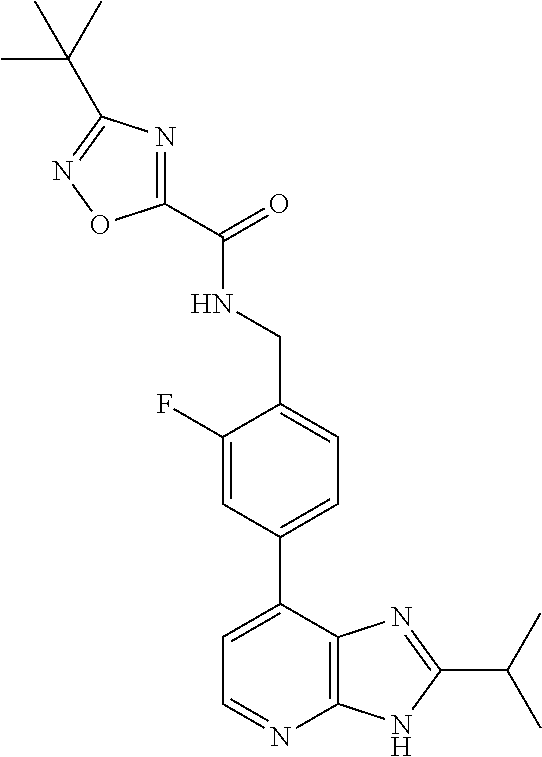
To a 20-mL reaction vial was added 3-tert-Butyl-[1,2,4]oxadiazole-5-carboxylic acid 4-(2,3-diamino-pyridin-4-yl)-2-fluoro-benzylamide (75.00 mg; 0.20 mmol; 1.00 eq.), 2-methyl-propionaldehyde (14.07 mg; 0.20 mmol; 1.00 eq.), and DMF (2.00 ml; 25.84 mmol; 132.46 eq.). The resulting solution was placed under nitrogen atmosphere and stirred overnight at 130 degrees Celsius. LCMS at 22 hr showed minor amounts of starting material. The reaction was cooled to room temperature and then quenched by the addition of water (10 mL). The mixture was extracted with ethyl acetate (3×20 mL) and the combined organic layer was dried over Na2SO4, filtered, and concentrated. The crude material was dissolved in DMSO (2 mL) and purified via prep HPLC (Interchim P4250; 30×150 mm C-18 column; 0.1% formic acid modified mobile phases (A=water, B=ACN); gradient 10-60% B over 15 min at 60 mL/min). The product fractions were combined and lyophilized to yield 17 mg (20%) of 3-tert-butyl-[1,2,4]oxadiazole-5-carboxylic acid 2-fluoro-4-(2-isopropyl-3H-imidazo[4,5-b]pyridine-7-yl)-benzyl as an off white solid. HPLC: 90% purity. MS: 437 [M+H]+. 1H NMR (400 MHz, DMSO-d6) δ 12.96 (s, 1H), 8.30 (d, 1H), 8.26 (dd, 1H), 8.15 (dd, 1H), 7.57 (t, 2H), 7.53 (d, 1H), 4.59 (d, 2H), 1.39 (d, 6H), 1.38 (s, 9H), 1.27 (s, 1H).

To a microwave vial with stir bar was added 2-Fluoro-4-[2-(1-methyl-1H-pyrazol-4-yl)-3H-imidazo[4,5-b]pyridin-7-yl]-benzylamine (59.81 mg; 0.19 mmol; 1.20 eq.), 5-iodo-2,3-dihydro-pyrido[3,4-b][1,4]oxazine-1-carboxylic acid tert-butyl ester (56.00 mg; 0.15 mmol; 1.00 eq.), sodium tert-butoxide (74.30 mg; 0.77 mmol; 5.00 eq.), racemic-2,2′-bis(diphenylphosphino)-1,1′-binaphthyl (9.63 mg; 0.02 mmol; 0.10 eq.), and bis(dibenzylideneacetone)palladium(0) (5.33 mg; 0.01 mmol; 0.06 eq.). The vial was evacuated and backfilled with nitrogen and dry dioxane (2.00 ml) was added. The reaction was irradiated in the microwave for 1 hr at 120 degrees Celsius and then filtered through celite. The filtrate was concentrated, dissolved in DMSO (2 mL), and reaction was purified via prep HPLC (Interchim P4250; 30×150 mm C-18 column; 0.1% formic acid modified mobile phases (A=water, B=ACN); gradient 10-60% B over 15 min at 60 mL/min). The product fractions were combined and lyophilized to yield 11.5 mg (13%) of 5-{2-fluoro-4-[2-(1-methyl-1H-pyrazol-4-yl)-3H-imidazo[4,5-b]pyridin-7-yl]-benzylamino}-2,3-dihydro-pyrido[3,4-b][1,4]oxazine-1-carboxylic acid tert-butyl ester as a white solid. MS: 558 [M+H]+. HPLC: 92% purity. 1H NMR (400 MHz, DMSO-d6) δ 13.37 (s, 1H), 8.45 (s, 1H), 8.28 (m, 1H), 8.23 (d, J=11.8 Hz, 1H), 8.15 (s, 1H), 8.09 (d, J=8.2 Hz, 1H), 7.51 (d, 1H), 7.45 (t, J=6.4 Hz, 2H), 7.11 (m, 1H), 6.57 (m, 2H), 4.68 (d, J=5.3 Hz, 2H), 4.33 (s, 2H), 3.96 (s, 3H), 3.86 (s, 2H), 1.51 (s, 9H).

To a 20-mL reaction vial was added 3-tert-Butyl-[1,2,4]oxadiazole-5-carboxylic acid 4-(2,3-diamino-pyridin-4-yl)-2-fluoro-benzylamide (75.00 mg; 0.20 mmol; 1.00 eq.), cyclopropanecarboxaldehyde, 2-phenyl-, (1r,2r)-(28.52 mg; 0.20 mmol; 1.00 eq.), and DMF (2.0 ml). The resulting solution was placed under nitrogen atmosphere and stirred overnight at 130 degrees celsius. LCMS at 22 hr showed complete conversion of starting material to desired product. The reaction mixture was cooled to room temperature, loaded directly onto SiO2 and purified via flash chromatography (Biotage SiO2 column; gradient 50-100% EtOAc/Hex over 10 minutes). The product fractions were combined and concentrated. The material was then dissolved in DMSO (2 mL) and purified via prep HPLC (Interchim P4250; 30×150 mm C-18 column; 0.1% formic acid modified mobile phases (A=water, B=ACN); gradient 10-60% B over 15 min at 60 mL/min). The product fractions were combined and lyophilized to yield 8 mg (8%) of 3-tert-Butyl-[1,2,4]oxadiazole-5-carboxylic acid 2-fluoro-4-[2-((1R,2R)-2-phenyl-cyclopropyl)-3H-imidazo[4,5-b]pyridin-7-yl]-benzylamide as a white solid. MS: 512 [M+H]+. HPLC: 100% purity. 1H NMR (400 MHz, DMSO-d6) δ 13.0 (s, 1H), 9.90 (m, 1H), 8.27 (d, 1H), 8.23 (dd, 1H), 8.13 (d, 1H), 7.57 (t, 1H), 7.52 (d, 1H), 7.33 (m, 2H), 7.27 (s, 1H), 7.24 (m, 1H), 7.21 (dt, 1H), 4.59 (d, 2H), 2.63 (m, 2H), 2.45 (s, 1H), 1.91 (m, 1H), 1.69 (m, 1H), 1.38 (s, 9H).

2-Fluoro-4-{2-[1-(2-morpholin-4-yl-ethyl)-1H-pyrazol-4-yl]-3H-imidazo[4,5-b]pyridin-7-yl}-benzylamine (66.00 mg; 0.16 mmol; 1.00 eq.), 3-tert-Butyl-[1,2,4]oxadiazole-5-carboxylic acid (34.64 mg; 0.20 mmol; 1.30 eq.), 2,4,6-Tripropyl-[1,3,5,2,4,6]trioxatriphosphinane 2,4,6-trioxide (0.50 ml; 1.12 mmol; 7.12 eq.), DIPEA (0.08 ml; 0.47 mmol; 3.00 eq.), and MeCN (0.50 ml; 9.57 mmol; 61.13 eq.) were combined under N2(g) and stirred at room temperature overnight. After LCMS indicated completion of reaction, directly loaded onto Interchim HPLC for purification (0-100% 0.1% formic acid (aq)/MeCN). The title compound 3-tert-Butyl-[1,2,4]oxadiazole-5-carboxylic acid 2-fluoro-4-{2-[1-(2-morpholin-4-yl-ethyl)-1H-pyrazol-4-yl]-3H-imidazo[4,5-b]pyridin-7-yl}-benzylamide was isolated as 15 mg of a beige solid (17% yield. LC-MS: 567.2 [M+H]+. HPLC: 100% purity. 1H NMR (500 MHz, Methanol-d4): δ 8.41 (br s, 1H), 8.33 (br s, 1H), 7.87 (d, 1H), 7.82 (br m, 1H), 7.66 (br m, 2H), 7.63 (br m, 1H), 7.50 (br s, 1H), 4.76 (s, 2H), 3.95 (br s, 4H), 1.67 (br m, 5H), 1.44 (s, 9H), 1.02 (br m, 4H).

7-Chloro-2-(1-cyclobutyl-1H-pyrazol-4-yl)-3H-imidazo[4,5-b]pyridine (222.10 mg; 0.81 mmol; 1.00 eq.), [4-(aminomethyl)-3-fluoro-phenyl]boronic acid (274.19 mg; 1.62 mmol; 2.00 eq.), dipotassium carbonate (448.57 mg; 3.25 mmol; 4.00 eq.), and MeCN (4.00 ml; 76.58 mmol; 94.38 eq.) were combined under N2(g) as cyclopentyl(diphenyl)phosphane; dichloromethane; dichloropalladium; iron (66.26 mg; 0.08 mmol; 0.10 eq.) was added. Capped and degassed with N2(g) 15 min, then heated to 130° C. in the microwave (Biotage, high absorption) for 2 hours, then cooled to RT. Filtered through Celite, washed with methanol and DCM, and evaporated solvent, then purified by flash column chromatography (Biotage, KPNH silica, 0-20% MeOH/DCM) to afford the desired product 4-[2-(1-Cyclobutyl-1H-pyrazol-4-yl)-3H-imidazo[4,5-b]pyridin-7-yl]-2-fluoro-benzylamine as a white solid (161 mg, 55% yield). LC-MS: 362.1 [MH]. HPLC: 91.1% purity. 1H NMR (500 MHz, DMSO-d6): δ 13.2 (br m, 1H), 8.81 (s, 1H), 8.55 (s, 1H), 8.49 (s, 1H), 8.23 (s, 1H), 8.15 (br m, 1H), 7.57 (br m, 1H), 7.51 (br m, 1H), 7.45 (br m, 1H), 4.98 (br m, 3H), 4.51 (s, 1H), 4.23 (s, 1H), 2.57 (m, 4H), 2.45 (m, 2H).
Assay A: Microfluidic Off-Chip Mobility Shift Assay Protocol for Potency Assessment Against BTK Enzyme
The protocol below describes microfluidic, off-chip mobility shift kinase assay to measure inherent potency of compounds against BTK enzyme. The mechanics of the assay platform are best described by the vendor (Caliper Life Sciences, a PerkinElmer Company, Hopkinton, Mass.) on their website at the following URL:
http://caliperls.com/ or http://caliperls.com/apps/drug-discovery-and-pre-clinical-development/target-id-validation.htm.
Briefly, 2.5× stocks of full-length human BTK (08-080) from CarnaBio USA, Inc., Natick, Mass., 1.6×ATP and appropriate kinKDR peptide substrate (FITC-AHA-EEPLYWSFPAKKK-NH2; developed in-house) were prepared in kinase reaction buffer consisting of 25 mM MgCl2, 0.015% Brij-35 (30%), 100 mM HEPES, pH 7.5, and 10 mM DTT. 5 uL of enzyme buffer and 7.5 uL of ATP/kinKDR peptide substrate mix were added to Matrix (#115304) 384-well, sterile, polypropylene plates (Thermo Fisher Scientific, Hudson, N.H.) with 125 nL of serially diluted compounds prepared in 100% DMSO, and incubated for 90 min. at 27° C. Following the incubation period, reactions were stopped by adding 60 uL stop buffer consisting of 100 mM HEPES, pH 7.5, 0.015% Brij-35 (30%), 0.277% Coating Reagent #3 (Caliper Life Sciences, Mountain View, Calif.), 5% DMSO. Stopped reactions were monitored at −2 PSI, −3000 V/−700 V in a LabChip 3000 plate reader from Caliper Life Sciences, a PerkinElmer Company (Hopkinton, Mass.), and the activity was measured by off-chip mobility shift assay measuring the charge/mass difference between substrate and product resulting from peptide phosphorilation. IC50 and efficacy were determined by plotting log [Inhibitor] vs. % Activity in GeneData Screener (Basel, Switzerland).
Assay B: Microfluidic Off-Chip Mobility Shift Assay Protocol for Potency Assessment Against BTK C481S Enzyme
The protocol below describes a microfluidic, off-chip mobility shift kinase assay to measure inherent potency of compounds against BTK C481S enzyme. The mechanics of the assay platform are described by the vendor (PerkinElmer, Hopkinton, Mass.) on their website at the following URL: http://caliperls.com.
Briefly, 2.5× stocks of His-TEV-hsBTK(328-659)(C481S) from the Merck Serono Protein Purification Laboratory in Darmstadt, Germany (PCS, Q27/234), 1.6×ATP and appropriate KinKDR peptide substrate (FITC-AHA-EEPLYWSFPAKKK-NH2; Tufts University Core Facility custom synthesis) were prepared in kinase reaction buffer consisting of 25 mM MgCl2, 0.015% Brij-35 (30%), 100 mM HEPES, pH 7.5, and 10 mM DTT.
5 uL of enzyme buffer and 7.5 uL of ATP/KinKDR peptide substrate mix were added to Matrix (#4315) 384-well, sterile, flat-bottom polypropylene plates (Thermo Fisher Scientific, Hudson, N.H.) with 125 nL of serially diluted compounds prepared in 100% DMSO, and incubated for 90 min. at 25° C. Following the incubation period, reactions were terminated by adding 65 uL quench buffer consisting of 100 mM HEPES, pH 7.5, 0.015% Brij-35 (30%), 0.277% Coating Reagent #3 (PerkinElmer, Mountain View, Calif.), 5% DMSO. Terminated reactions were monitored at −2 PSI, −3000 V/−700 Volts in a LabChip 3000 plate reader from Caliper Life Sciences, a PerkinElmer Company (Hopkinton, Mass.), and the activity was quantified by laser-induced fluorescence measuring the charge/mass difference between substrate and product resulting from peptide phosphorylation. IC50 and efficacy were determined by plotting log [Inhibitor] vs. % Activity in GeneData Screener (Basel, Switzerland).
Btk is critical for mediating the signalling of B cell antigen receptor (BCR) after anti-IgM stimulation. Based on this principle, a functional cell-based assay was established to determine the potency of compounds at inhibiting anti-IgM-induced expression of CD69, a downstream BCR signaling event, in freshly isolated human peripheral blood mononuclear cells (PBMCs). In the assay, a 90 μl PBMC suspension containing 2.5×10⁵ cells was pre-treated with 10 μl of test compound at various concentrations for an hour, and then incubated overnight (approximately 16-18 hours) with 5 μl 420 μg/ml affiniPure F(ab′)2 fragment goat anti-human IgM Fc fragment per well (Dianova, Cat. No.: 109-006-129). After the incubation, the cells were washed and immunostained with an APC-labeled mouse anti-human CD69 (BD Biosciences; clone: FN50), a PerCP-Cy5.5 labelled mouse anti-human CD19 (BD Biosciences; clone: SJ25C1) and a FITC-labelled mouse anti-human CD3 (BD Biosciences; clone: HIT3a), and fixed for flow cytometric analysis of CD69 expression on CD19 positive cells (B cells). The percentage of CD69 expressing CD19 positive cells was plotted against the concentrations of test compounds to obtain a concentration response curve, and calculate an IC50 value as a measure of the potency of test compounds in the assay.
The assay measures IL-1β release by human THP-1 cells after treatment with PMA and LPS in response to BzATP stimulation in order to evaluate the potency of P2×7 inhibitors. THP-1 cells (2×10⁵ cells/mL) in culture medium (RPMI1640 (Gibco, #22400-089)+10% HI-FBS (Gibco, #10082-147)+1% L-Glutamine (Gibco, #25030)+1% Pen/Strep (Gibco, #15140) complemented with 0.5 μM PMA (Sigma, #P8139) were incubated for 30 min at 37° C. At the end of the incubation time, the cells were titrated and washed gently in PBS. The cells were then re-suspended to a density of 1.5×10⁵ cell/mL in culture medium complemented with 10 ng/mL LPS (Sigma, #L5293). The cell suspension was dispensed (40 μL/well) into a Corning 384-well plate. After 4 hr of incubation at 37° C., the cells were treated with 20 μL of test compounds at various concentrations. The plate was incubated for 30 min at 37° C. and then the cells were treated with 20 μL of 3.2 mM BzATP (Sigma, #B6396) (0.8 mM final concentration). The plate was incubated for an additional 30 min at 37° C., and then subjected to centrifugation (4 min, 1000 rpm). Supernatant (60 μL) from each well was transferred to a 384-matrix PP plate. The plate was then stored at 4° C. (overnight) or −20° C. for longer term storage. The next day, the IL-1β levels were measured using a human IL-1β ELISA Kit (R & D systems, catalog #DY201) and read using a SpectraMax Plus 384 Microplate Reader.
The standard protocol below describes the standard HotSpot Kinase Assay run by the Reaction Biology Corporation as a service.
The substrate (poly(EY) (Glu:Tyr (4:1)) and the cofactors were prepared in fresh Reaction Buffer (20 mM Hepes (pH 7.5), 10 mM MgCl2, 2 mM MnCl2, 1 mM EGTA, 0.02% Brij35, 0.02 mg/ml BSA, 0.1 mM Na3VO4, 2 mM DTT, 2% DMSO). To the substrate solution was then added the enzyme (LCK; recombinant human full-length (Genbank Accession #NP_005347); C-terminal His-tagged, expressed in insect cells), and the resulting solution was then gently mixed. The test compounds were dissolved in DMSO and then delivered into the kinase reaction mixture using acoustic liquid handling technology (Echo550; nanoliter range). The reaction mixture was incubated for 20 min at RT and then treated with 33P-ATP to initiate the reaction. After 2 hours of incubation at RT, kinase activity was detected using Reaction Biology Corporation's proprietary P81 filter-binding method.
The data is interpreted according to the following:
| BTK IC50 | |||
| Example Number | (Assay A) | ||
| 1 | ++++ | ||
| 2 | ++++ | ||
| 3 | ++++ | ||
| 4 | ++++ | ||
| 5 | ++++ | ||
| 6 | ++++ | ||
| 7 | ++++ | ||
| 8 | ++++ | ||
| 9 | ++++ | ||
| 10 | ++++ | ||
| 11 | ++++ | ||
| 12 | ++++ | ||
| 13 | +++ | ||
| 14 | ++++ | ||
| 15 | ++++ | ||
| 16 | ++++ | ||
| 17 | ++++ | ||
| 18 | ++++ | ||
| 19 | ++++ | ||
| 20 | ++++ | ||
| 21 | ++++ | ||
| 22 | +++ | ||
| 23 | +++ | ||
| 24 | +++ | ||
| 25 | +++ | ||
| 26 | ++++ | ||
| 27 | ++++ | ||
| 28 | ++++ | ||
| 29 | ++ | ||
| 30 | ++ | ||
| 31 | ++ | ||
| 32 | ++ | ||
| 34 | ++++ | ||
| 35 | ++++ | ||
| 37 | ++++ | ||
| 38 | +++ | ||
| 39 | ++++ | ||
| 40 | ++++ | ||
| 41 | ++++ | ||
| 42 | ++++ | ||
| 43 | +++ | ||
| 44 | ++ | ||
| 45 | ++++ | ||
| 46 | ++ | ||
| 47 | +++ | ||
| 48 | +++ | ||
| 49 | ++++ | ||
| 50 | ++++ | ||
| 51 | ++++ | ||
| 52 | ++++ | ||
| 53 | ++++ | ||
| 54 | ++++ | ||
| 55 | ++++ | ||
| 56 | ++++ | ||
| 57 | ++++ | ||
| 58 | ++++ | ||
| 59 | ++++ | ||
| 60 | +++ | ||
| 61 | ++++ | ||
| 62 | ++++ | ||
| 63 | ++++ | ||
| 64 | ++++ | ||
| 65 | ++ | ||
| 66 | ++++ | ||
| 67 | ++++ | ||
| 68 | ++++ | ||
| 69 | ++++ | ||
| 70 | ++++ | ||
| 71 | ++++ | ||
| 72 | ++++ | ||
| 73 | ++++ | ||
| 74 | ++++ | ||
| 75 | ++++ | ||
| 76 | ++++ | ||
| 77 | ++++ | ||
| 78 | ++++ | ||
| 79 | ++++ | ||
| 80 | ++++ | ||
| 81 | ++++ | ||
| 82 | ++++ | ||
| 83 | ++++ | ||
| 84 | ++++ | ||
| 85 | ++++ | ||
| 86 | ++++ | ||
| 87 | ++ | ||
| 88 | ++ | ||
| 89 | ++++ | ||
| 90 | ++++ | ||
| 91 | ++++ | ||
| 92 | ++++ | ||
| 93 | ++++ | ||
| 95 | ++ | ||
| 96 | +++ | ||
| 97 | ++++ | ||
| 98 | ++++ | ||
| 99 | ++++ | ||
| 100 | ++++ | ||
| 101 | ++ | ||
| 102 | ++ | ||
| 103 | ++++ | ||
| 104 | ++++ | ||
| 105 | ++++ | ||
| 106 | ++++ | ||
| 107 | ++++ | ||
| 108 | ++++ | ||
| 109 | ++++ | ||
| 110 | ++++ | ||
| 111 | ++++ | ||
| 112 | ++++ | ||
| 113 | ++++ | ||
| 114 | + | ||
| 115 | ++++ | ||
| 116 | ++++ | ||
| 118 | ++++ | ||
| 119 | ++++ | ||
| 120 | ++++ | ||
| 121 | ++++ | ||
| 122 | +++ | ||
| 124 | ++++ | ||
| 125 | ++++ | ||
| 126 | ++++ | ||
| 127 | ++++ | ||
| 129 | ++++ | ||
| 130 | ++++ | ||
| 131 | ++++ | ||
| 132 | ++++ | ||
| 133 | ++++ | ||
| 134 | ++++ | ||
| 135 | ++++ | ||
| 136 | ++++ | ||
| 137 | ++++ | ||
| 138 | ++++ | ||
| 139 | ++++ | ||
| 140 | ++++ | ||
| 141 | ++++ | ||
| 142 | +++ | ||
| 143 | ++++ | ||
| 144 | ++++ | ||
| 145 | ++++ | ||
| 146 | ++++ | ||
| 148 | ++++ | ||
| 149 | ++++ | ||
| 150 | ++++ | ||
| 151 | ++++ | ||
| 152 | ++++ | ||
| 153 | ++++ | ||
| 154 | + | ||
| 155 | + | ||
| 156 | +++ | ||
| 157 | ++++ | ||
| 158 | ++++ | ||
| 159 | ++++ | ||
| 160 | ++++ | ||
| 161 | ++++ | ||
| 162 | ++++ | ||
| 163 | ++++ | ||
| 164 | ++++ | ||
| 165 | ++++ | ||
| 166 | ++++ | ||
| 167 | ++++ | ||
| 168 | ++++ | ||
| 169 | ++++ | ||
| 170 | ++++ | ||
| 171 | ++++ | ||
| 172 | ++++ | ||
| 173 | + | ||
| 174 | + | ||
| 175 | + | ||
| 176 | + | ||
| 177 | ++ | ||
| 178 | ++ | ||
| 179 | + | ||
| 180 | + | ||
| 181 | + | ||
| 183 | +++ | ||
| 184 | +++ | ||
| 185 | + | ||
| 186 | + | ||
| 187 | ++++ | ||
| 188 | ++ | ||
| + >5 μM; | |||
| ++ >1-5 μM; | |||
| +++ 100 nM-1 μM; | |||
| ++++ <100 nM. | |||
| BTK (C481S) IC50 | |||
| Example Number | (Assay B) | ||
| 2 | ++++ | ||
| 5 | ++++ | ||
| 6 | ++++ | ||
| 10 | ++++ | ||
| 11 | ++++ | ||
| 13 | +++ | ||
| 14 | ++++ | ||
| 15 | ++++ | ||
| 16 | ++++ | ||
| 17 | ++++ | ||
| 18 | ++++ | ||
| 19 | ++++ | ||
| 20 | ++++ | ||
| 21 | ++++ | ||
| 22 | +++ | ||
| 23 | +++ | ||
| 24 | +++ | ||
| 25 | +++ | ||
| 26 | ++++ | ||
| 27 | ++++ | ||
| 29 | +++ | ||
| 30 | +++ | ||
| 31 | +++ | ||
| 32 | ++ | ||
| 34 | ++++ | ||
| 35 | ++++ | ||
| 37 | ++++ | ||
| 38 | +++ | ||
| 39 | ++++ | ||
| 40 | ++++ | ||
| 41 | ++++ | ||
| 42 | ++++ | ||
| 43 | +++ | ||
| 44 | +++ | ||
| 45 | +++ | ||
| 46 | ++ | ||
| 47 | +++ | ||
| 48 | +++ | ||
| 49 | ++++ | ||
| 50 | ++++ | ||
| 52 | ++++ | ||
| 53 | ++++ | ||
| 54 | ++++ | ||
| 55 | ++++ | ||
| 56 | ++++ | ||
| 57 | ++++ | ||
| 58 | ++++ | ||
| 60 | +++ | ||
| 61 | ++++ | ||
| 62 | ++++ | ||
| 63 | ++++ | ||
| 65 | +++ | ||
| 66 | ++++ | ||
| 67 | ++++ | ||
| 70 | ++++ | ||
| 71 | ++++ | ||
| 72 | ++++ | ||
| 74 | ++++ | ||
| 75 | ++++ | ||
| 76 | ++++ | ||
| 77 | ++++ | ||
| 78 | ++++ | ||
| 79 | ++++ | ||
| 80 | ++++ | ||
| 81 | ++++ | ||
| 83 | ++++ | ||
| 84 | ++++ | ||
| 86 | ++++ | ||
| 87 | ++ | ||
| 88 | + | ||
| 89 | ++++ | ||
| 90 | ++++ | ||
| 91 | ++++ | ||
| 92 | ++++ | ||
| 93 | ++++ | ||
| 95 | ++ | ||
| 98 | ++++ | ||
| 99 | ++++ | ||
| 100 | ++++ | ||
| 101 | ++ | ||
| 102 | ++ | ||
| 103 | ++++ | ||
| 104 | ++++ | ||
| 105 | ++++ | ||
| 106 | ++++ | ||
| 107 | ++++ | ||
| 108 | ++++ | ||
| 109 | ++++ | ||
| 110 | ++++ | ||
| 111 | ++++ | ||
| 113 | ++++ | ||
| 114 | + | ||
| 115 | ++++ | ||
| 116 | ++++ | ||
| 118 | ++++ | ||
| 119 | ++++ | ||
| 120 | ++++ | ||
| 121 | ++++ | ||
| 122 | +++ | ||
| 124 | ++++ | ||
| 125 | ++++ | ||
| 126 | ++++ | ||
| 127 | ++++ | ||
| 128 | ++++ | ||
| 129 | ++++ | ||
| 130 | ++++ | ||
| 132 | ++++ | ||
| 136 | ++++ | ||
| 139 | ++++ | ||
| 140 | ++++ | ||
| 141 | ++++ | ||
| 142 | +++ | ||
| 144 | ++++ | ||
| 145 | ++++ | ||
| 147 | ++++ | ||
| 148 | ++++ | ||
| 149 | ++++ | ||
| 150 | ++++ | ||
| 151 | ++++ | ||
| 152 | ++++ | ||
| 153 | ++++ | ||
| 155 | + | ||
| 156 | +++ | ||
| PBMC IC50 | |||
| Example Number | (Assay C) | ||
| 1 | ++ | ||
| 2 | ++ | ||
| 3 | +++ | ||
| 4 | +++ | ||
| 5 | ++ | ||
| 6 | ++ | ||
| 7 | ++ | ||
| 8 | +++ | ||
| 9 | ++ | ||
| 10 | ++++ | ||
| 11 | +++ | ||
| 12 | +++ | ||
| 14 | ++ | ||
| 15 | ++ | ||
| 16 | + | ||
| 27 | ++ | ||
| 28 | ++ | ||
| 34 | +++ | ||
| 35 | +++ | ||
| 37 | +++ | ||
| 39 | ++ | ||
| 40 | +++ | ||
| 41 | ++ | ||
| 42 | +++ | ||
| 49 | +++ | ||
| 50 | +++ | ||
| 51 | ++++ | ||
| 52 | +++ | ||
| 53 | ++++ | ||
| 54 | +++ | ||
| 55 | +++ | ||
| 56 | ++ | ||
| 57 | ++ | ||
| 58 | ++ | ||
| 59 | +++ | ||
| 61 | ++++ | ||
| 62 | +++ | ||
| 63 | ++ | ||
| 64 | +++ | ||
| 66 | +++ | ||
| 67 | ++++ | ||
| 68 | ++++ | ||
| 69 | ++++ | ||
| 70 | +++ | ||
| 71 | ++++ | ||
| 72 | +++ | ||
| 73 | +++ | ||
| 74 | +++ | ||
| 75 | +++ | ||
| 76 | ++++ | ||
| 77 | ++ | ||
| 79 | ++++ | ||
| 80 | +++ | ||
| 81 | ++++ | ||
| 82 | ++++ | ||
| 83 | ++++ | ||
| 84 | ++++ | ||
| 85 | +++ | ||
| 86 | ++++ | ||
| 89 | ++ | ||
| 90 | ++ | ||
| 91 | +++ | ||
| 92 | +++ | ||
| 93 | +++ | ||
| 103 | ++++ | ||
| 104 | ++ | ||
| 105 | ++ | ||
| 106 | +++ | ||
| 107 | ++++ | ||
| 108 | ++++ | ||
| 109 | ++ | ||
| 110 | +++ | ||
| 111 | +++ | ||
| 112 | ++++ | ||
| 113 | +++ | ||
| 115 | +++ | ||
| 116 | ++++ | ||
| 118 | ++++ | ||
| 122 | + | ||
| 130 | +++ | ||
| 131 | ++++ | ||
| 132 | +++ | ||
| 134 | +++ | ||
| 135 | ++++ | ||
| 138 | +++ | ||
| 139 | ++ | ||
| 140 | ++ | ||
| 143 | ++++ | ||
| 144 | ++++ | ||
| 145 | ++++ | ||
| 146 | +++ | ||
| 148 | ++++ | ||
| 153 | + | ||
| 160 | ++++ | ||
| 161 | ++++ | ||
| 162 | ++++ | ||
| 163 | ++++ | ||
| 164 | +++ | ||
| 165 | +++ | ||
| 166 | ++++ | ||
| IL-1β release IC50 | |||
| Example Number | (Assay D) | ||
| 3 | +++ | ||
| 5 | ++++ | ||
| 6 | +++ | ||
| 8 | ++++ | ||
| 9 | +++ | ||
| 55 | ++ | ||
| 95 | ++++ | ||
| 114 | ++ | ||
| 115 | ++++ | ||
| 118 | ++++ | ||
| 153 | +++ | ||
| LCK IC50 (μM) or LCK % | |||
| Example | inhibition at 1 μM test | ||
| Number | concentration (Assay E) | ||
| 81 | 15% | ||
| 82 | 7.30% | ||
| 84 | 585 | ||
| 92 | 29% | ||
| 108 | 17% | ||
| 112 | 0.084 | ||
| 116 | 0.37 | ||
| 138 | 40% | ||
| 144 | 49% | ||
| 146 | 11% | ||
(A) Injection vials: A solution of 100 g of an active ingredient according to the invention and 5 g of disodium hydrogen phosphate in 3 l of bidistilled water is adjusted to pH 6.5 using 2 N hydrochloric acid, sterile filtered, transferred into injection vials, is lyophilized under sterile conditions and is sealed under sterile conditions. Each injection vial contains 5 mg of active ingredient.
(B) Suppositories: A mixture of 20 g of an active ingredient according to the invention is melted with 100 g of soy lecithin and 1400 g of cocoa butter, is poured into moulds and is allowed to cool. Each suppository contains 20 mg of active ingredient.
(C) Solution: A solution is prepared from 1 g of an active ingredient according to the invention, 9.38 g of NaH2PO4.2H2O, 28.48 g of Na2HPO4.12H2O and 0.1 g of benzalkonium chloride in 940 ml of bidistilled water. The pH is adjusted to 6.8, and the solution is made up to 1 1 and sterilized by irradiation. This solution could be used in the form of eye drops.
(D) Ointment: 500 mg of an active ingredient according to the invention is mixed with 99.5 g of Vaseline under aseptic conditions.
(E) Tablets: A mixture of 1 kg of an active ingredient according to the invention, 4 kg of lactose, 1.2 kg of potato starch, 0.2 kg of talc and 0.1 kg of magnesium stearate is pressed to give tablets in a conventional manner in such a way that each tablet contains 10 mg of active ingredient.
(F) Coated tablets: Tablets are pressed analogously to Example E and subsequently are coated in a conventional manner with a coating of sucrose, potato starch, talc, tragacanth and dye.
(G) Capsules: 2 kg of an active ingredient according to the invention are introduced into hard gelatin capsules in a conventional manner in such a way that each capsule contains 20 mg of the active ingredient.
(H) Ampoules: A solution of 1 kg of an active ingredient according to the invention in 60 l of bidistilled water is sterile filtered, transferred into ampoules, is lyophilized under sterile conditions and is sealed under sterile conditions. Each ampoule contains 10 mg of active ingredient.
(I) Inhalation spray: 14 g of an active ingredient according to the invention are dissolved in 10 l of isotonic NaCl solution, and the solution is transferred into commercially available spray containers with a pump mechanism. The solution could be sprayed into the mouth or nose. One spray shot (about 0.1 ml) corresponds to a dose of about 0.14 mg.
While a number of embodiments of this invention are described herein, it is apparent that the basic examples may be altered to provide other embodiments that utilize the compounds and methods of this invention. Therefore, it will be appreciated that the scope of this invention is to be defined by the appended claims rather than by the specific embodiments that have been represented by way of example.
Claims (17)
1. A compound of formula I,

or a tautomer, or a pharmaceutically acceptable salt thereof, wherein:
Ring A is a phenyl or pyridine;
R1 is H, halo, (C(R5)(R5))mNR2, N(R4)C(O)R, N(R4)C(O)NR2, N(R4)CO2R, N(R4)S(O)2R, N(R4)S(O)R, N(R4)(R4), 3-7 membered heterocyclic ring having 1-4 heteroatoms independently selected from nitrogen, oxygen, and sulfur, optionally substituted with one or more of C1-C6 alkyl, C5-C6 aryl, 5-6 membered heteroaryl, or halo, or R1 is 5-6 membered monocyclic heteroaryl ring having 1-4 heteroatoms independently selected from nitrogen, oxygen, and sulfur, optionally substituted with aryl; or R1 is absent;
R2 is H, (C(R5)(R5))mOR4, (C(R5)(R5))mN(R4)COR, (C(R5)(R5))mN(R4)C(O)C(O)NR2, or (C(R5)(R5))mN(R4)(R4); or R2 is absent;
or R1 and R2 together with the atoms to which they are connected, form a fused 3-7 membered ring which is optionally substituted with C1-C6 alkyl or C(O)R;
wherein R1 and R2 are both not H; and wherein R1 and R2 are both not absent;
each R3 is independently halogen, C1-6 aliphatic, C5-10 aryl, a 3-8 membered saturated or partially unsaturated carbocyclic ring, a 3-7 membered heterocyclic ring having 1-4 heteroatoms independently selected from nitrogen, oxygen, and sulfur, or a 5-6 membered monocyclic heteroaryl ring having 1-4 heteroatoms independently selected from nitrogen, oxygen, and sulfur; each of which is optionally substituted;
each R4 is independently —R, —SO2R, —SOR, —C(O)R, —CO2R, or —C(O)N(R)2;
each R5 is independently —R, halogen, —OR, —SR, —CN, —NO2, —SO2R, —SOR, —C(O)R, —CO2R, —C(O)N(R)2, —NRC(O)R, —NRC(O)N(R)2, —NRSO2R, or —N(R)2;
each R is independently hydrogen, C1-6 aliphatic, C5-10 aryl, a 3-8 membered saturated or partially unsaturated carbocyclic ring, a 3-7 membered heterocyclic ring having 1-4 heteroatoms independently selected from nitrogen, oxygen, and sulfur, or a 5-6 membered monocyclic heteroaryl ring having 1-4 heteroatoms independently selected from nitrogen, oxygen, and sulfur; each of which is optionally substituted; or
two R groups on the same atom are taken together with the atom to which they are attached to form a C5-10 aryl, a 3-8 membered saturated or partially unsaturated carbocyclic ring, a 3-7 membered heterocyclic ring having 1-4 heteroatoms independently selected from nitrogen, oxygen, and sulfur, a 5-6 membered monocyclic heteroaryl ring having 1-4 heteroatoms independently selected from nitrogen, oxygen, and sulfur; a 10-15 membered fused aryl ring; a 6-15 membered saturated or partially unsaturated fused carbocyclic ring; a 10-15 membered fused heteroaryl ring; or a 6-15 membered saturated or partially unsaturated fused heterocyclic ring; each of which is optionally substituted;
Ring Z is

each Ra is independently —R, halogen, —OR, —SR, —CN, —NO2, —SO2R, —SOR, —C(O)R, —CO2R, —C(O)N(R)2, —NRC(O)R, —NRC(O)N(R)2, —NRSO2R, or —N(R)2;
m is 1, 2, or 3;
n is 0, 1, or 2; and
p is 0, 1, 2, or 3.
2. The compound of claim 1 , wherein Ring A is

3. The compound of claim 1 , wherein R1 is H, F, (C(R5)(R5))mNR2, N(R4)C(O)R, N(R4)C(O)NR2, N(R4)(R4), 3-7 membered heterocyclic ring having 1-4 heteroatoms independently selected from nitrogen, oxygen, and sulfur, or 5-6 membered monocyclic heteroaryl ring having 1-4 heteroatoms independently selected from nitrogen, oxygen, and sulfur.
4. The compound of claim 3 , wherein R1 is


5. The compound of claim 1 , wherein R1 is absent.
6. The compound of claim 1 , wherein R2 is H or R2 is (C(R5)(R5))mOR4, (C(R5)(R5))mN(R4)COR, (C(R5)(R5))mN(R4)C(O)C(O)NR2, or (C(R5)(R5))mN(R4)(R4).
7. The compound of claim 6 , wherein R2 is —CH2OH, —CH2NH2,


8. The compound of claim 1 , wherein R1 and R2 together form

9. The compound of claim 1 , wherein each R3 is independently F, Cl, Br, I, methyl, ethyl, ethyl, propyl, i-propyl, butyl, s-butyl, t-butyl, straight or branched pentyl, or straight or branched hexyl; each of which is optionally substituted.
10. The compound of claim 1 , wherein each R3 is independently is cyclopropyl, phenyl, furanyl, furazanyl, imidazolidinyl, imidazolinyl, imidazolyl, 1H-indazolyl, indolenyl, indolinyl, indolizinyl, indolyl, 3H-indolyl, isoindolinyl, isoindolenyl, isoindazolyl, isoindolinyl, isoindolyl, isoquinolinyl, isothiazolyl, isoxazolyl, oxadiazolyl, 1,2,3-oxadiazolyl, 1,2,4-oxadiazolyl; -1,2,5oxadiazolyl, 1,3,4-oxadiazolyl, oxazolidinyl, oxazolyl, oxazolidinyl, piperidine-one, pyrimidinyl, purinyl, pyranyl, pyrazinyl, pyrazolidinyl, pyrazolinyl, pyrazolyl, pyridazinyl, pyridooxazole, pyridoimidazole, pyridothiazole, pyridinyl, pyridyl, pyrimidinyl, pyrrolidinyl, pyrrolinyl, 2H-pyrrolyl, pyrrolyl, tetrahydropyridine, tetrahydropyran, thiazolyl, thienyl, thienothiazolyl, thienooxazolyl, thienoimidazolyl, thiophenyl, triazinyl, 1,2,3-triazolyl, 1,2,4-triazolyl, 1,2,5-triazolyl, or 1,3,4-triazolyl; each of which is optionally substituted.
11. The compound of claim 1 , of formula II,

or a tautomer, or a pharmaceutically acceptable salt thereof.
12. The compound of claim 1 , of formula II-c,

or a tautomer, or a pharmaceutically acceptable salt thereof.
13. The compound of claim 1 , selected from Table 1:


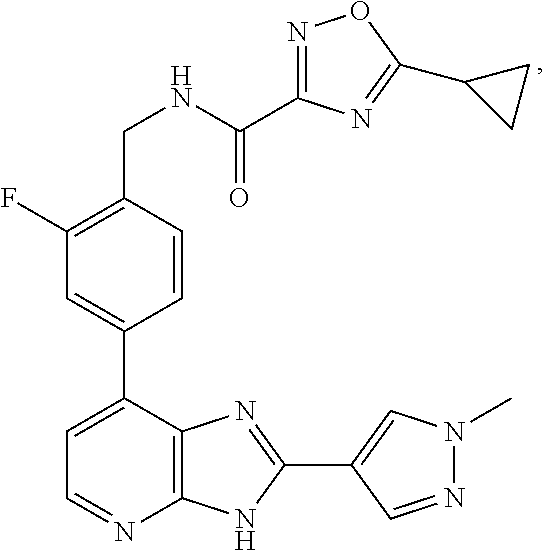


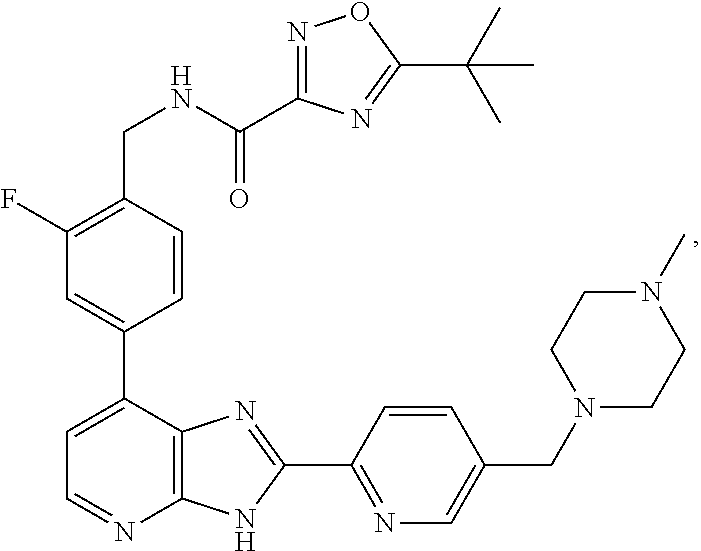


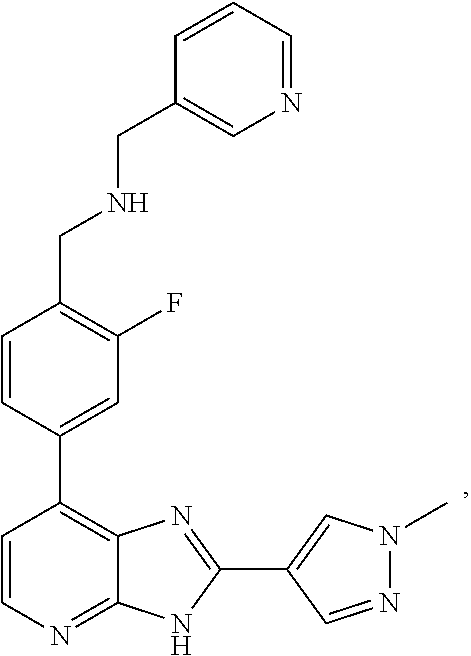


14. A pharmaceutical composition comprising a compound of claim 1 , and a pharmaceutically acceptable adjuvant, carrier, or vehicle.
15. A method for inhibiting BTK, activity in a patient in need thereof or in a biological sample, comprising:
administering to said patient or contacting said biological sample with a compound of claim 1 , or a physiologically acceptable salt thereof.
16. A method for treating a BTK-mediated disorder in a patient in need thereof, comprising:
administering to said patient a compound of claim 1 ; wherein the disorder is at least one disease selected from the group consisting of inflammatory pelvic disease, urethritis, skin sunburn, sinusitis, pneumonitis, encephalitis, meningitis, myocarditis, nephritis, osteomyelitis, myositis, hepatitis, gastritis, enteritis, dermatitis, gingivitis, appendicitis, pancreatitis, cholocystitus, agammaglobulinemia, psoriasis, allergy, Crohn's disease, irritable bowel syndrome, ulcerative colitis, Sjogren's disease, tissue graft rejection, hyperacute rejection of transplanted organs, asthma, allergic rhinitis, chronic obstructive pulmonary disease, autoimmune polyglandular disease, autoimmune alopecia, pernicious anemia, glomerulonephritis, dermatomyositis, multiple sclerosis, scleroderma, vasculitis, autoimmune hemolytic and thrombocytopenic states, Goodpasture's syndrome, atherosclerosis, Addison's disease, Parkinson's disease, diabetes, septic shock, systemic lupus erythematosus, rheumatoid arthritis, psoriatic arthritis, juvenile arthritis, osteoarthritis, chronic idiopathic thrombocytopenic purpura, Waldenstrom macroglobulinemia, myasthenia gravis, Hashimoto's thyroiditis, atopic dermatitis, degenerative joint disease, vitiligo, autoimmune hypopituitarism, Guillain-Barre syndrome, Behcet's disease, scleraderma, mycosis fungoides, acute inflammatory responses, and Graves' disease.
17. A method for treating lupus in a subject in need thereof, comprising:
administering to said subject a compound of claim 1 , or a physiologically acceptable salt thereof.
Priority Applications (2)
| Application Number | Priority Date | Filing Date | Title |
|---|---|---|---|
| US14/876,224 US10253023B2 (en) | 2014-10-06 | 2015-10-06 | Heteroaryl compounds as BTK inhibitors and uses thereof |
| US16/378,383 US11098041B2 (en) | 2014-10-06 | 2019-04-08 | Heteroaryl compounds as BTK inhibitors and uses thereof |
Applications Claiming Priority (2)
| Application Number | Priority Date | Filing Date | Title |
|---|---|---|---|
| US201462060249P | 2014-10-06 | 2014-10-06 | |
| US14/876,224 US10253023B2 (en) | 2014-10-06 | 2015-10-06 | Heteroaryl compounds as BTK inhibitors and uses thereof |
Related Child Applications (1)
| Application Number | Title | Priority Date | Filing Date |
|---|---|---|---|
| US16/378,383 Division US11098041B2 (en) | 2014-10-06 | 2019-04-08 | Heteroaryl compounds as BTK inhibitors and uses thereof |
Publications (2)
| Publication Number | Publication Date |
|---|---|
| US20160096834A1 US20160096834A1 (en) | 2016-04-07 |
| US10253023B2 true US10253023B2 (en) | 2019-04-09 |
Family
ID=54337891
Family Applications (2)
| Application Number | Title | Priority Date | Filing Date |
|---|---|---|---|
| US14/876,224 Active US10253023B2 (en) | 2014-10-06 | 2015-10-06 | Heteroaryl compounds as BTK inhibitors and uses thereof |
| US16/378,383 Active US11098041B2 (en) | 2014-10-06 | 2019-04-08 | Heteroaryl compounds as BTK inhibitors and uses thereof |
Family Applications After (1)
| Application Number | Title | Priority Date | Filing Date |
|---|---|---|---|
| US16/378,383 Active US11098041B2 (en) | 2014-10-06 | 2019-04-08 | Heteroaryl compounds as BTK inhibitors and uses thereof |
Country Status (20)
| Country | Link |
|---|---|
| US (2) | US10253023B2 (en) |
| EP (1) | EP3204382B1 (en) |
| JP (1) | JP6856526B2 (en) |
| KR (1) | KR102523111B1 (en) |
| CN (1) | CN107001362A (en) |
| AR (1) | AR102177A1 (en) |
| AU (1) | AU2015328285B2 (en) |
| BR (1) | BR112017006305B1 (en) |
| CA (1) | CA2960401C (en) |
| CL (1) | CL2017000786A1 (en) |
| ES (1) | ES2907622T3 (en) |
| IL (1) | IL251441B (en) |
| MX (1) | MX385082B (en) |
| NZ (1) | NZ729603A (en) |
| PH (1) | PH12017500408A1 (en) |
| RU (1) | RU2742122C2 (en) |
| SG (1) | SG11201701573QA (en) |
| UA (1) | UA125061C2 (en) |
| WO (1) | WO2016057500A1 (en) |
| ZA (1) | ZA201701501B (en) |
Cited By (2)
| Publication number | Priority date | Publication date | Assignee | Title |
|---|---|---|---|---|
| US20220389004A1 (en) * | 2018-08-28 | 2022-12-08 | Merck Patent Gmbh | Fused imidazopyridines as reversible inhibitors of brutons tyrosine kinase (btk) |
| US12172992B2 (en) | 2022-03-22 | 2024-12-24 | Abbvie Inc. | Pyrimidines for degrading Bruton's tyrosine kinase |
Families Citing this family (73)
| Publication number | Priority date | Publication date | Assignee | Title |
|---|---|---|---|---|
| AR098721A1 (en) * | 2013-12-11 | 2016-06-08 | Biogen Idec Inc | INHIBITORS OF TIROSINA QUINASA DE BRUTON BIARILO |
| ES2928164T3 (en) | 2015-10-19 | 2022-11-15 | Incyte Corp | Heterocyclic compounds as immunomodulators |
| ES2928856T3 (en) | 2015-11-19 | 2022-11-23 | Incyte Corp | Heterocyclic compounds as immunomodulators |
| TW201726623A (en) | 2015-12-17 | 2017-08-01 | 英塞特公司 | Heterocyclic compound as an immunomodulator |
| EP3394033B1 (en) | 2015-12-22 | 2020-11-25 | Incyte Corporation | Heterocyclic compounds as immunomodulators |
| ES2906460T3 (en) | 2016-05-06 | 2022-04-18 | Incyte Corp | Heterocyclic compounds as immunomodulators |
| TWI808055B (en) | 2016-05-11 | 2023-07-11 | 美商滬亞生物國際有限公司 | Combination therapies of hdac inhibitors and pd-1 inhibitors |
| TWI794171B (en) | 2016-05-11 | 2023-03-01 | 美商滬亞生物國際有限公司 | Combination therapies of hdac inhibitors and pd-l1 inhibitors |
| EP3464279B1 (en) | 2016-05-26 | 2021-11-24 | Incyte Corporation | Heterocyclic compounds as immunomodulators |
| CA3028685A1 (en) | 2016-06-20 | 2017-12-28 | Incyte Corporation | Heterocyclic compounds as immunomodulators |
| WO2018013789A1 (en) | 2016-07-14 | 2018-01-18 | Incyte Corporation | Heterocyclic compounds as immunomodulators |
| US10266528B2 (en) | 2016-08-16 | 2019-04-23 | Merck Patent Gmbh | 2-oxo-imidazopyridines as reversible BTK inhibitors and uses thereof |
| WO2018044783A1 (en) * | 2016-08-29 | 2018-03-08 | Incyte Corporation | Heterocyclic compounds as immunomodulators |
| WO2018049152A1 (en) | 2016-09-09 | 2018-03-15 | Incyte Corporation | Pyrazolopyrimidine derivatives as hpk1 modulators and uses thereof for the treatment of cancer |
| AR109596A1 (en) | 2016-09-09 | 2018-12-26 | Incyte Corp | PIRAZOLOPIRIDINE COMPOUNDS AND THEIR USES |
| US20180072718A1 (en) | 2016-09-09 | 2018-03-15 | Incyte Corporation | Pyrazolopyridine compounds and uses thereof |
| US10280164B2 (en) | 2016-09-09 | 2019-05-07 | Incyte Corporation | Pyrazolopyridone compounds and uses thereof |
| MX391980B (en) | 2016-12-22 | 2025-03-21 | Incyte Corp | TETRAHYDROIMIDAZO[4,5-C]PYRIDINE DERIVATIVES AS INDUCERS OF PROGRAMMED DEATH LIGAND 1 (PD-L1) INTERNALIZATION. |
| PE20191532A1 (en) | 2016-12-22 | 2019-10-23 | Incyte Corp | HETEROCYCLIC COMPOUNDS AS IMMUNOMODULATORS |
| TW201835049A (en) | 2016-12-22 | 2018-10-01 | 美商英塞特公司 | Heterocyclic compounds as immunomodulators |
| ES2874756T3 (en) | 2016-12-22 | 2021-11-05 | Incyte Corp | Triazolo [1,5-A] pyridine derivatives as immunomodulators |
| EP3558973B1 (en) | 2016-12-22 | 2021-09-15 | Incyte Corporation | Pyridine derivatives as immunomodulators |
| US20180228786A1 (en) | 2017-02-15 | 2018-08-16 | Incyte Corporation | Pyrazolopyridine compounds and uses thereof |
| CN106939009A (en) * | 2017-03-31 | 2017-07-11 | 牡丹江医学院 | It is a kind of to be used to treat medicine of cerebral concussion and preparation method thereof |
| JOP20190233A1 (en) * | 2017-04-14 | 2019-10-02 | Biogen Ma Inc | Benzoazepine analogs as inhibiting agents for bruton's tyrosine kinase |
| WO2018215070A1 (en) * | 2017-05-24 | 2018-11-29 | Johann Wolfgang Goethe-Universität Frankfurt am Main | Dual modulators of farnesoid x receptor and soluble epoxide hydrolase |
| WO2019051199A1 (en) | 2017-09-08 | 2019-03-14 | Incyte Corporation | 6-cyano-indazole compounds as hematopoietic progenitor kinase 1 (hpk1) modulators |
| US11498904B2 (en) * | 2017-11-14 | 2022-11-15 | Merck Sharp & Dohme Llc | Substituted biaryl compounds as indoleamine 2,3-dioxygenase (IDO) inhibitors |
| LT3755703T (en) | 2018-02-20 | 2022-10-10 | Incyte Corporation | N-(PHENYL)-2-(PHENYL)PYRIMIDINE-4-CARBOXAMIDE DERIVATIVES AND RELATED COMPOUNDS AS HPK1 INHIBITORS FOR THE TREATMENT OF CANCER |
| US10752635B2 (en) | 2018-02-20 | 2020-08-25 | Incyte Corporation | Indazole compounds and uses thereof |
| US10745388B2 (en) | 2018-02-20 | 2020-08-18 | Incyte Corporation | Indazole compounds and uses thereof |
| IL313101A (en) | 2018-03-30 | 2024-07-01 | Incyte Corp | Heterocyclic compounds as immunomodulators |
| US11299473B2 (en) | 2018-04-13 | 2022-04-12 | Incyte Corporation | Benzimidazole and indole compounds and uses thereof |
| US20190330226A1 (en) * | 2018-04-26 | 2019-10-31 | Vanderbilt University | Positive allosteric modulators of the muscarinic acetylcholine receptor m1 |
| MD3790877T2 (en) | 2018-05-11 | 2023-08-31 | Incyte Corp | Tetrahydro-imidazo[4,5-c]pyridine derivatives as pd-l1 immunomodulators |
| CN110256446B (en) * | 2018-08-01 | 2021-12-14 | 上海海雁医药科技有限公司 | Benzo-heterocycle substituted cyclopenta [4,5] pyrrolopyrazine-1-one derivatives and application thereof |
| US10899755B2 (en) | 2018-08-08 | 2021-01-26 | Incyte Corporation | Benzothiazole compounds and uses thereof |
| EP3856348B1 (en) | 2018-09-25 | 2024-01-03 | Incyte Corporation | Pyrazolo[4,3-d]pyrimidine compounds as alk2 and/or fgfr modulators |
| EP3942045A1 (en) | 2019-03-21 | 2022-01-26 | Onxeo | A dbait molecule in combination with kinase inhibitor for the treatment of cancer |
| JP7747523B2 (en) * | 2019-05-15 | 2025-10-01 | バイオジェン・エムエイ・インコーポレイテッド | Bruton's tyrosine kinase inhibitors |
| WO2020240586A1 (en) * | 2019-05-28 | 2020-12-03 | Mankind Pharma Ltd. | Novel compounds for inhibition of janus kinase 1 |
| US11066394B2 (en) | 2019-08-06 | 2021-07-20 | Incyte Corporation | Solid forms of an HPK1 inhibitor |
| TW202115059A (en) | 2019-08-09 | 2021-04-16 | 美商英塞特公司 | Salts of a pd-1/pd-l1 inhibitor |
| AU2020337720B2 (en) * | 2019-08-30 | 2024-02-15 | Tsd Life Sciences Co., Ltd. | Imidazopyridine derivative and pharmaceutical composition comprising same as active ingredient |
| WO2021060307A1 (en) * | 2019-09-25 | 2021-04-01 | 富士フイルム株式会社 | Imidazopyridine compound or salt thereof, and pharmaceutical composition |
| JP7559059B2 (en) | 2019-09-30 | 2024-10-01 | インサイト・コーポレイション | Pyrido[3,2-D]pyrimidine compounds as immunomodulators - Patents.com |
| JP7758665B2 (en) * | 2019-10-30 | 2025-10-22 | バイオジェン・エムエイ・インコーポレイテッド | Fused pyridazines or pyrimidines as Btk inhibitors |
| US12391697B2 (en) * | 2019-10-30 | 2025-08-19 | Biogen Ma Inc. | Condensed bi-heterocycles as inhibiting agents for Bruton's tyrosine kinase |
| EP4055011A1 (en) * | 2019-11-05 | 2022-09-14 | Dermira, Inc | Mrgprx2 antagonists and uses thereof |
| EP4054554A1 (en) | 2019-11-05 | 2022-09-14 | Dermira, Inc | Mrgprx2 antagonists for the treatment of inflammatory disorders |
| JP2023500906A (en) | 2019-11-08 | 2023-01-11 | インサーム(インスティテュ ナシオナル ドゥ ラ サンテ エ ドゥ ラ ルシェルシェ メディカル) | Methods of treating cancers with acquired resistance to kinase inhibitors |
| WO2021096849A1 (en) | 2019-11-11 | 2021-05-20 | Incyte Corporation | Salts and crystalline forms of a pd-1/pd-l1 inhibitor |
| EP4059933A4 (en) | 2019-11-13 | 2023-11-15 | Nippon Shinyaku Co., Ltd. | Azabenzimidazole compound and medicine |
| IL294560A (en) | 2020-01-20 | 2022-09-01 | Genzyme Corp | Therapeutic tyrosine kinase inhibitors for relapsing multiple sclerosis (rms) |
| WO2021148581A1 (en) | 2020-01-22 | 2021-07-29 | Onxeo | Novel dbait molecule and its use |
| AU2021222197A1 (en) | 2020-02-20 | 2022-09-08 | Hutchison Medipharma Limited | Heteroaryl heterocyclic compounds and uses thereof |
| CN111171065A (en) * | 2020-02-26 | 2020-05-19 | 上海博黑生物科技有限公司 | Synthesis method of (4- (1- ((tert-butoxycarbonyl) amino) cyclopropyl) phenyl) borate |
| CN111423435B (en) * | 2020-03-30 | 2021-10-15 | 厦门大学 | (1H-imidazo[4,5-b]pyridin-6-yl)pyridine derivatives and their applications |
| CN115461343B (en) * | 2020-04-30 | 2024-08-23 | 百济神州(北京)生物科技有限公司 | Preparation method of PTOTAC BTK degradation agent |
| CN116917279A (en) * | 2020-08-07 | 2023-10-20 | 渤健马萨诸塞州股份有限公司 | BTK inhibitors |
| AU2021343591A1 (en) * | 2020-09-21 | 2023-05-04 | Hutchison Medipharma Limited | Heteroaryl heterocyclic compounds and uses thereof |
| US20240360154A1 (en) * | 2020-09-23 | 2024-10-31 | Genfleet Therapeutics (Shanghai) Inc. | Aroyl substituted tricyclic compound, preparation method therefor and use thereof |
| CN114478528A (en) * | 2020-10-28 | 2022-05-13 | 劲方医药科技(上海)有限公司 | Aroyl-substituted tricyclic compound, preparation method and application thereof |
| TW202233615A (en) | 2020-11-06 | 2022-09-01 | 美商英塞特公司 | Crystalline form of a pd-1/pd-l1 inhibitor |
| US11780836B2 (en) | 2020-11-06 | 2023-10-10 | Incyte Corporation | Process of preparing a PD-1/PD-L1 inhibitor |
| JP2023548859A (en) | 2020-11-06 | 2023-11-21 | インサイト・コーポレイション | Process for making PD-1/PD-L1 inhibitors and their salts and crystalline forms |
| CA3201936A1 (en) | 2020-12-10 | 2022-06-16 | Minhua Chen | Crystal form of tolebrutinib and preparation method thereof |
| AU2022424178A1 (en) | 2021-12-30 | 2024-07-11 | Beone Medicines I Gmbh | Degradation of bruton's tyrosine kinase (btk) by conjugation of btk inhibitors with e3 ligase ligand and methods of use |
| CN116768896A (en) * | 2022-03-15 | 2023-09-19 | 劲方医药科技(上海)有限公司 | Crystal forms of BTK inhibitor, acid salt thereof and crystal forms of acid salt thereof |
| CN116854709A (en) * | 2022-03-28 | 2023-10-10 | 药雅科技(上海)有限公司 | Bruton's tyrosine kinase reversible inhibitors and their applications |
| CN117050073B (en) * | 2022-05-05 | 2025-06-10 | 中国药科大学 | Polysubstituted phenyl bisimidazopyridine compound and synthetic method and application thereof |
| WO2024129395A1 (en) * | 2022-12-16 | 2024-06-20 | Gwynant Therapeutics, Inc. | Btk inhibitors |
| US20240352029A1 (en) | 2023-04-14 | 2024-10-24 | Prelude Therapeutics Incorporated | CDK Inhibitors And Their Use As Pharmaceuticals |
Citations (5)
| Publication number | Priority date | Publication date | Assignee | Title |
|---|---|---|---|---|
| WO2003057696A1 (en) | 2002-01-07 | 2003-07-17 | Eisai Co. Ltd. | Deazapurines and uses thereof |
| WO2007040438A2 (en) | 2005-10-03 | 2007-04-12 | Astrazeneca Ab | Novel imidazo [4,5 -b] pyridine derivatives as inhibitors of glycogen synthase kinase 3 for use in the treatment of dementia and neurodegenerative disorders |
| US20110201599A1 (en) * | 2008-07-03 | 2011-08-18 | Exelixis, Inc. | CDK Modulators |
| EP2487180A1 (en) | 2009-10-06 | 2012-08-15 | Riken | Novel artificial fluorescent bases |
| WO2012175513A1 (en) | 2011-06-20 | 2012-12-27 | Bayer Intellectual Property Gmbh | Thienylpyri(mi)dinylpyrazole |
Family Cites Families (7)
| Publication number | Priority date | Publication date | Assignee | Title |
|---|---|---|---|---|
| WO2008011560A2 (en) * | 2006-07-20 | 2008-01-24 | Mehmet Kahraman | Benzothiophene inhibitors of rho kinase |
| WO2010036316A1 (en) * | 2008-09-24 | 2010-04-01 | Yangbo Feng | Urea and carbamate compounds and analogs as kinase inhibitors |
| MX2014000338A (en) * | 2011-07-08 | 2014-05-01 | Novartis Ag | Novel pyrrolo pyrimidine derivatives. |
| WO2013157021A1 (en) * | 2012-04-20 | 2013-10-24 | Advinus Therapeutics Limited | Bicyclic compounds, compositions and medicinal applications thereof |
| JP6182593B2 (en) * | 2012-04-20 | 2017-08-16 | アドヴィーナス セラピューティクス リミテッド | Substituted heterobicyclic compounds, compositions and medicaments and uses thereof |
| CA2881070A1 (en) * | 2012-10-26 | 2014-05-01 | F. Hoffmann-La Roche Ag | Inhibitors of bruton's tyrosine kinase |
| EP3080122B1 (en) * | 2013-12-11 | 2018-10-31 | Biogen MA Inc. | Biaryl compounds useful for the treatment of human diseases in oncology, neurology and immunology |
-
2015
- 2015-10-06 CA CA2960401A patent/CA2960401C/en active Active
- 2015-10-06 US US14/876,224 patent/US10253023B2/en active Active
- 2015-10-06 NZ NZ729603A patent/NZ729603A/en unknown
- 2015-10-06 CN CN201580066142.0A patent/CN107001362A/en active Pending
- 2015-10-06 WO PCT/US2015/054221 patent/WO2016057500A1/en not_active Ceased
- 2015-10-06 SG SG11201701573QA patent/SG11201701573QA/en unknown
- 2015-10-06 ES ES15784212T patent/ES2907622T3/en active Active
- 2015-10-06 AU AU2015328285A patent/AU2015328285B2/en active Active
- 2015-10-06 RU RU2017115852A patent/RU2742122C2/en active
- 2015-10-06 JP JP2017518323A patent/JP6856526B2/en active Active
- 2015-10-06 MX MX2017004200A patent/MX385082B/en unknown
- 2015-10-06 EP EP15784212.1A patent/EP3204382B1/en active Active
- 2015-10-06 BR BR112017006305-0A patent/BR112017006305B1/en active IP Right Grant
- 2015-10-06 AR ARP150103209A patent/AR102177A1/en active IP Right Grant
- 2015-10-06 KR KR1020177012190A patent/KR102523111B1/en active Active
- 2015-10-06 UA UAA201704444A patent/UA125061C2/en unknown
-
2017
- 2017-02-28 ZA ZA2017/01501A patent/ZA201701501B/en unknown
- 2017-03-03 PH PH12017500408A patent/PH12017500408A1/en unknown
- 2017-03-29 IL IL251441A patent/IL251441B/en active IP Right Grant
- 2017-03-31 CL CL2017000786A patent/CL2017000786A1/en unknown
-
2019
- 2019-04-08 US US16/378,383 patent/US11098041B2/en active Active
Patent Citations (5)
| Publication number | Priority date | Publication date | Assignee | Title |
|---|---|---|---|---|
| WO2003057696A1 (en) | 2002-01-07 | 2003-07-17 | Eisai Co. Ltd. | Deazapurines and uses thereof |
| WO2007040438A2 (en) | 2005-10-03 | 2007-04-12 | Astrazeneca Ab | Novel imidazo [4,5 -b] pyridine derivatives as inhibitors of glycogen synthase kinase 3 for use in the treatment of dementia and neurodegenerative disorders |
| US20110201599A1 (en) * | 2008-07-03 | 2011-08-18 | Exelixis, Inc. | CDK Modulators |
| EP2487180A1 (en) | 2009-10-06 | 2012-08-15 | Riken | Novel artificial fluorescent bases |
| WO2012175513A1 (en) | 2011-06-20 | 2012-12-27 | Bayer Intellectual Property Gmbh | Thienylpyri(mi)dinylpyrazole |
Non-Patent Citations (27)
| Title |
|---|
| Berge et al., J. Pharmaceutical Sciences, 1977, 66(1):1-19. |
| Ellmeier et al., J. Exp. Med. 2000, 192(11):1611-1623. |
| Feldhahn et al., J. Exp. Med., 2005, 201(11):1837-1852. |
| Foster, Adv. Drug Res., 1985, 14:1-40. |
| Gillette et al., Biochemistry, 1994, 33(10):2927-2937. |
| Hanzlik et al., J. Org. Chem., 1990, 55(13):3992-3997. |
| Horwood et al., J Exp Med, 2003, 197(12):1603-1611. |
| Hunter T., Cell, 1987, 50(5):823-829. |
| Islam and Smith, Immunol. Rev., 2000, 178:49-63. |
| Iwaki et al., J. Biol. Chem., 2005, 280(48):40261-40270. |
| Jansson and Holmdahl, Clin. Exp. Immunol.,1993, 94:459-465. |
| Jarman et al., Carcinogenesis, 1995, 16(4):683-688. |
| Kawakami et al., Journal of Leukocyte Biology, 1999, 65:286-290. |
| Khan et al., Immunity, 1995, 3:283-299. |
| Lindvall et al., Immunol. Rev., 2005, 203:200-215. |
| Pan et al., Chem. Med Chem., 2007, 2:58-61. |
| Periodic Table of the Elements, CAS version, Handbook of Chemistry and Physics, 75th Ed. |
| Rastette et al., Annu Rev Med, 2004, 55:477-503. |
| Reider et al., J. Org. Chem., 1987, 52:3326-3334. |
| Rosen et al., New Eng. J. Med., 1995, 333(7):431-440. |
| Smith M.B. and March J., "March's Advanced Organic Chemistry", 5th Ed., Ed., John Wiley & Sons, New York, 2001. |
| Song et al., Bioorganic & Medicinal Chemistry Letters, 2012, 22:1611-1614. |
| Sorrell Thomas Organic Chemistry University Science Books, Sausalito, 1999. |
| Vassilev et al., J. Biol. Chem., 1999, 274(3):1646-1656. |
| Vihinen et al., Frontiers in Bioscience, 2000, 5:d917-928. |
| Yngve et al., Chemistry & Biodiversity, 2012, 9:2442-2452. |
| Zhao et al., Bioorganic & Medicinal Chemistry, 2015, 23:4344-4353. |
Cited By (3)
| Publication number | Priority date | Publication date | Assignee | Title |
|---|---|---|---|---|
| US20220389004A1 (en) * | 2018-08-28 | 2022-12-08 | Merck Patent Gmbh | Fused imidazopyridines as reversible inhibitors of brutons tyrosine kinase (btk) |
| US12415803B2 (en) * | 2018-08-28 | 2025-09-16 | Merck Patent Gmbh | Fused imidazopyridines as reversible inhibitors of Brutons Tyrosine Kinase (BTK) |
| US12172992B2 (en) | 2022-03-22 | 2024-12-24 | Abbvie Inc. | Pyrimidines for degrading Bruton's tyrosine kinase |
Also Published As
Similar Documents
| Publication | Publication Date | Title |
|---|---|---|
| US11098041B2 (en) | Heteroaryl compounds as BTK inhibitors and uses thereof | |
| US10030013B2 (en) | Heteroaryl compounds as IRAK inhibitors and uses thereof | |
| US10392375B2 (en) | Heteroaryl compounds as IRAK inhibitors and uses thereof | |
| US10329270B2 (en) | Heteroaryl compounds as BTK inhibitors and uses thereof | |
| US10266528B2 (en) | 2-oxo-imidazopyridines as reversible BTK inhibitors and uses thereof | |
| US12415803B2 (en) | Fused imidazopyridines as reversible inhibitors of Brutons Tyrosine Kinase (BTK) | |
| US10493073B2 (en) | Heteroaryl compounds as BTK inhibitors and uses thereof | |
| US20210163487A1 (en) | Heteroaryl compounds as type ii irak inhibitors and uses thereof | |
| HK1240917A1 (en) | Heteroaryl compounds as btk inhibitors and uses thereof |
Legal Events
| Date | Code | Title | Description |
|---|---|---|---|
| AS | Assignment |
Owner name: MERCK PATENT GMBH, GERMANY Free format text: ASSIGNMENT OF ASSIGNORS INTEREST;ASSIGNORS:CALDWELL, RICHARD D.;GAILLARD, PASCALE;GARDBERG, ANNA;AND OTHERS;SIGNING DATES FROM 20151027 TO 20160323;REEL/FRAME:038230/0058 |
|
| STCF | Information on status: patent grant |
Free format text: PATENTED CASE |
|
| MAFP | Maintenance fee payment |
Free format text: PAYMENT OF MAINTENANCE FEE, 4TH YEAR, LARGE ENTITY (ORIGINAL EVENT CODE: M1551); ENTITY STATUS OF PATENT OWNER: LARGE ENTITY Year of fee payment: 4 |