US10187891B2 - Methods of scheduling a carrier component - Google Patents
Methods of scheduling a carrier component Download PDFInfo
- Publication number
- US10187891B2 US10187891B2 US13/817,037 US201113817037A US10187891B2 US 10187891 B2 US10187891 B2 US 10187891B2 US 201113817037 A US201113817037 A US 201113817037A US 10187891 B2 US10187891 B2 US 10187891B2
- Authority
- US
- United States
- Prior art keywords
- cell
- information
- secondary cell
- carrier component
- cif
- Prior art date
- Legal status (The legal status is an assumption and is not a legal conclusion. Google has not performed a legal analysis and makes no representation as to the accuracy of the status listed.)
- Expired - Fee Related, expires
Links
- 238000000034 method Methods 0.000 title claims abstract description 28
- 238000010586 diagram Methods 0.000 description 4
- 230000002776 aggregation Effects 0.000 description 2
- 238000004220 aggregation Methods 0.000 description 2
- 230000000694 effects Effects 0.000 description 2
- 238000005516 engineering process Methods 0.000 description 2
- 238000013507 mapping Methods 0.000 description 2
- 238000013468 resource allocation Methods 0.000 description 2
- 230000005540 biological transmission Effects 0.000 description 1
- 208000029632 chronic intestinal failure Diseases 0.000 description 1
- 238000004891 communication Methods 0.000 description 1
- 230000001419 dependent effect Effects 0.000 description 1
- 238000007726 management method Methods 0.000 description 1
- 238000010295 mobile communication Methods 0.000 description 1
- 230000011664 signaling Effects 0.000 description 1
Images


Classifications
-
- H—ELECTRICITY
- H04—ELECTRIC COMMUNICATION TECHNIQUE
- H04W—WIRELESS COMMUNICATION NETWORKS
- H04W72/00—Local resource management
- H04W72/04—Wireless resource allocation
- H04W72/044—Wireless resource allocation based on the type of the allocated resource
- H04W72/0453—Resources in frequency domain, e.g. a carrier in FDMA
-
- H—ELECTRICITY
- H04—ELECTRIC COMMUNICATION TECHNIQUE
- H04L—TRANSMISSION OF DIGITAL INFORMATION, e.g. TELEGRAPHIC COMMUNICATION
- H04L5/00—Arrangements affording multiple use of the transmission path
- H04L5/0001—Arrangements for dividing the transmission path
- H04L5/0003—Two-dimensional division
- H04L5/0005—Time-frequency
- H04L5/0007—Time-frequency the frequencies being orthogonal, e.g. OFDM(A) or DMT
- H04L5/001—Time-frequency the frequencies being orthogonal, e.g. OFDM(A) or DMT the frequencies being arranged in component carriers
-
- H—ELECTRICITY
- H04—ELECTRIC COMMUNICATION TECHNIQUE
- H04L—TRANSMISSION OF DIGITAL INFORMATION, e.g. TELEGRAPHIC COMMUNICATION
- H04L5/00—Arrangements affording multiple use of the transmission path
- H04L5/003—Arrangements for allocating sub-channels of the transmission path
- H04L5/0042—Intra-user or intra-terminal allocation
-
- H—ELECTRICITY
- H04—ELECTRIC COMMUNICATION TECHNIQUE
- H04L—TRANSMISSION OF DIGITAL INFORMATION, e.g. TELEGRAPHIC COMMUNICATION
- H04L5/00—Arrangements affording multiple use of the transmission path
- H04L5/0091—Signalling for the administration of the divided path, e.g. signalling of configuration information
- H04L5/0094—Indication of how sub-channels of the path are allocated
-
- H—ELECTRICITY
- H04—ELECTRIC COMMUNICATION TECHNIQUE
- H04W—WIRELESS COMMUNICATION NETWORKS
- H04W36/00—Hand-off or reselection arrangements
- H04W36/0005—Control or signalling for completing the hand-off
- H04W36/0055—Transmission or use of information for re-establishing the radio link
- H04W36/0069—Transmission or use of information for re-establishing the radio link in case of dual connectivity, e.g. decoupled uplink/downlink
- H04W36/00692—Transmission or use of information for re-establishing the radio link in case of dual connectivity, e.g. decoupled uplink/downlink using simultaneous multiple data streams, e.g. cooperative multipoint [CoMP], carrier aggregation [CA] or multiple input multiple output [MIMO]
-
- H—ELECTRICITY
- H04—ELECTRIC COMMUNICATION TECHNIQUE
- H04W—WIRELESS COMMUNICATION NETWORKS
- H04W72/00—Local resource management
- H04W72/12—Wireless traffic scheduling
-
- H—ELECTRICITY
- H04—ELECTRIC COMMUNICATION TECHNIQUE
- H04W—WIRELESS COMMUNICATION NETWORKS
- H04W72/00—Local resource management
- H04W72/20—Control channels or signalling for resource management
- H04W72/23—Control channels or signalling for resource management in the downlink direction of a wireless link, i.e. towards a terminal
Definitions
- the present invention relates to a wireless communication technology, and more particularly, to a technology of cross-scheduling of multiple carrier components in a carrier aggregation scenario.
- each user may support up to 5 carrier components.
- PCC primary carrier component
- SCC secondary carrier components
- Another related concept is primary cell (Pcell) and secondary cell (Scell) adopted by 3GPP, wherein a primary cell refers to a downlink/uplink PCC pair, and a secondary cell refers to a downlink/uplink SCC pair or a single downlink carrier.
- a primary cell is established by R8 radio resource control (RRC) connection procedure, and a secondary cell is established by new Release-10 secondary cell adding message. It has been agreed that each secondary cell will be assigned with one cell index to identify its corresponding downlink and uplink carrier components or corresponding downlink carrier.
- RRC radio resource control
- Cross-scheduling has been agreed for LTE-A carrier aggregation so that physical downlink control channel (PDCCH) in one carrier component can indicate resource information of other carrier component(s).
- PDCH physical downlink control channel
- a carrier identification field is inserted into PDCCH to indicate target carrier component(s) at which the resource information is located.
- CIF carrier identification field
- One basic consensus on CIF is that CIF and cell index should be defined separately.
- SIB2 system information block 2
- the CIF is determined on the basis of the cell index of a carrier component or frequency information of a carrier component.
- Such kind of implicit assignment helps to save signaling overhead, but the gain is very small since at most 15 bits can be saved even in a case where a UE is configured with 5 carrier components.
- this implicit CIF assignment based on cell index violates the current consensus that CIF and cell index should be defined separately.
- Another drawback is that this solution may probably cause specification complexity when the CIF of a carrier component is reconfigured (e.g., the CIF of a carrier component is reconfigured from one PDCCH of a downlink carrier component to another) and also restrict reconfiguration flexibility (e.g., the network may need to assign a particular CIF value for a carrier component, instead of any cell order or frequency order).
- Another drawback of this solution is that potential loss of synchronization may happen with the CIF of the carrier components between an evolved Node B (eNB) and a UE. For example, one possibility for primary cell index assignment is to reserve a default value for the primary cell.
- this implicit assignment method must further define a specific mapping strategy between CIF and cell index or frequency information, thereby increasing specification complexity is caused.
- the present invention provides solutions of scheduling a carrier component between a base station and a user equipment by assigning a CIF.
- a method, in a base station, of scheduling a carrier component for a user equipment includes: transmitting a configuration message to configure cells of the user equipment, wherein the configuration message includes respective first information for carrier identification of each cell.
- a method, in a base station, of scheduling a carrier component for a user equipment includes: transmitting a handover command for the handover of the user equipment, wherein the handover command includes an information element carrying first information of each cell, the first information being utilized for carrier identification.
- a method, in a base station, of scheduling a carrier component for a user equipment includes: transmitting a RRC layer message relating to primary cell change of the user equipment, wherein the RRC layer message includes: a first information to indicate a carrier identification of a cell; and at least one of a second information to indicate the index(es) of the cell(s) served by the cell and a third information to indicate an index of a cell serving the cell.
- the technical solutions provided by the present invention can guarantee the flexibility of carrier component configuration, avoid the need for a specific CIF mapping strategy, and reduce specification complexity.
- FIG. 1 is a block diagram illustrating a system according to an embodiment of the present invention
- FIG. 2 is a structural diagram illustrating an information element for a carrier component pair according to an embodiment of the present invention
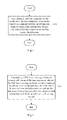
- FIG. 3 is a flowchart illustrating a method, in a base station, of scheduling a carrier component for a user equipment according to an embodiment of the present invention
- FIG. 4 is a flowchart illustrating a method, in a base station, of scheduling a carrier component for a user equipment according to another embodiment of the present invention
- FIG. 5 is a flowchart illustrating a method, in a base station, of scheduling a carrier component for a user equipment according to yet another embodiment of the present invention
- Cell a downlink/uplink carrier component pair between a base station and a user equipment.
- Primary cell a downlink/uplink primary carrier component pair.
- Secondary cell a downlink/uplink secondary carrier component pair.
- FIG. 1 is a block diagram illustrating a system according to an embodiment of the present invention.
- the mobile communication system includes a base station 10 and a user equipment 20 .
- one primary cell and one or more secondary cells are included between the base station 10 and the user equipment 20 .
- FIG. 2 is a structural diagram illustrating an information element for a carrier component pair according to an embodiment of the present invention.
- the information element shown is usually assigned to each cell in some control messages to indicate configuration of the cell.
- a first information is utilized to carry CIF information, i.e., information for carrier identification.
- a second information is utilized to indicate cell index(es) of secondary cell(s) that a certain cell is intended to serve.
- a third information is utilized to indicate the cell index of a cell serving a certain cell.
- the second and third information is invalid for the configuration of a self-scheduling cell.
- the second and third information is needed only for the configuration of a cross-scheduling cell.
- FIG. 2 is a structural diagram illustrating an information element for a carrier component pair according to an embodiment of the present invention.
- the first information, the second information, and the third information in the information element may employ any permutation and combination, depending on the requirements of specific applications.
- the CIF here is defined in each cell, the downlink/uplink carrier components of a cell linked by SIB2 share the same CIF. Therefore, only one information element is needed for each cell, and there is no need to design information elements separately for the downlink carrier component and the uplink carrier component. This helps to optimize the size of carrier component management messages.
- FIG. 3 is a flowchart illustrating a method, in a base station, of scheduling a carrier component for a user equipment according to an embodiment of the present invention. Description will be given in connection with FIGS. 1-3 as follows.
- the flowchart of the method includes a step S 11 .
- the base station 10 When the base station 10 schedules a carrier component for the user equipment 20 , in the step S 11 , the base station 10 transmits a configuration message to configure cells of the user equipment 20 , wherein the configuration message includes respective first information for carrier identification of each cell.
- the user equipment 20 may get to know whether the resource is allocated to this cell or other cell(s). Resource allocation to the cell itself corresponds to self-scheduling, and resource allocation to other cell(s) corresponds to cross-scheduling.
- the first information may employ 3 bits to indicate which cell a corresponding resource pertains to.
- the primary cell is configured to serve other secondary cell(s)
- the first information of the primary cell is mandatory; otherwise, it is dispensable. Hence it is dispensable to assign CIF value for a primary cell during its setup procedure.
- primary cell setup is based on LTE-A Release-8 RRC connection setup procedure, and thus backward compatibility of the system can be guaranteed without introducing new information element such as the first information into primary cell setup procedure.
- the configuration message transmitted from the base station 10 to the user equipment 20 to reconfigure a primary cell includes a first information and a second information of the primary cell.
- the first information includes a carrier identification of the primary cell to indicate that corresponding resource pertains to the primary cell.
- the second information is utilized to indicate cell index(es) of secondary cell(s) that the primary cell is intended to serve.
- the configuration message transmitted from the base station 10 to the user equipment 20 to add or update a secondary cell includes a first information of the secondary cell, and at least one of a second information and a third information thereof.
- the first information is utilized to indicate that the secondary cell is a cross-scheduling cell.
- the configuration message further includes a second information of the secondary cell to indicate cell index(es) of the other secondary cell(s) that the secondary cell is intended to serve.
- the configuration message further includes a third information of the secondary cell to indicate cell index(es) of the other cell(s) serving the secondary cell. If the third information is empty, the secondary cell is scheduled by its own downlink carrier component. If the second information is empty, the secondary cell doesn't serve other secondary cell(s). And if both the second information and the third information is empty, the first information is dispensable.
- the first information assignment of a primary cell may be achieved via the following options:
- Option 1 a default first information value is reserved for the primary cell.
- Option 2 the first information of the primary cell is assigned in the configuration message used to reconfigure the primary cell when the primary cell is configured to serve other secondary cell(s).
- Option 3 when the primary cell is configured to serve other secondary cell(s), the first information of the primary cell is assigned in the configuration message used to add or update the secondary cell(s).
- the first information assignment of a secondary cell may be achieved via the following options:
- Option 1 when a secondary cell is added, the first information of the secondary cell is assigned in the configuration message used to add the secondary cell.
- Option 2 when a secondary cell is configured to serve other secondary cell(s), the first information of the secondary cell is assigned in the configuration message used to update the secondary cell.
- Option 3 when other cell(s) (a primary cell or other secondary cell(s)) is/are configured to serve a secondary cell, the first information of the secondary cell is assigned in the configuration message relating to the other cell(s).
- a first information is utilized to assign a CIF value for the primary cell
- a second information is utilized to identify a list of secondary cell(s) that the primary cell is intended to serve, wherein the list includes index information of the secondary cell(s) that the primary cell is intended to serve.
- the first information may be empty too.
- a first information is utilized to assign a CIF value for the secondary cell. If the CIF of the secondary cell was assigned previously, or the secondary cell is scheduled by itself and doesn't serve any other secondary cell, the first information may be empty.
- a second information is utilized to identify a list of other secondary cell(s) that the secondary cell is intended to serve.
- a third information is utilized to identify information of downlink carrier component(s) scheduled by the secondary cell, i.e., information of downlink carrier component(s) serving the secondary cell, including cell index(es) of the primary cell or secondary cell(s). If the third information is empty, the secondary cell is scheduled by itself.
- a fourth information is utilized to assign a CIF value for a primary cell if the primary cell is intended to serve the secondary cell. If the CIF of the primary cell was assigned previously, the fourth information element may be empty.
- the CIF of a secondary cell may be assigned by the following options:
- Option 1 the CIF value of the secondary cell is assigned in a secondary cell adding message.
- Option 2 the CIF value of the secondary cell is assigned in a secondary cell adding/updating message when the secondary cell is scheduled by other secondary cell(s).
- Option 3 the CIF value of the secondary cell is assigned in a secondary cell adding/updating message when the secondary cell is intended to serve other secondary cell(s).
- Option 4 the CIF value of the secondary cell is assigned in a primary cell reconfiguration message when a primary cell is intended to serve the secondary cell.
- FIG. 4 is a flowchart illustrating a method, in a base station, of scheduling a carrier component for a user equipment according to another embodiment of the present invention. Description will be given in connection with FIGS. 1-4 as follows.
- the flowchart of the method includes a step S 21 .
- the base station 10 When the base station 10 schedules a carrier component for the user equipment 20 , in the step S 21 , the base station 10 transmits a handover command for the handover of the user equipment 20 , wherein the handover command includes an information element carrying first information of each cell, and the first information is utilized for carrier identification. In general, this corresponds to a scenario where the access service of the user equipment 20 is handed-over from another base station to the base station 10 .
- the handover command transmitted from the base station 10 for the handover of the user equipment 20 includes the first information of a cross-scheduling cell. And the first information of remaining cross-scheduling cell(s) is deducible according to the first information of the cross-scheduling cell.
- a base station may include information of a primary cell and optionally information of one or more secondary cells.
- CIF assignment there are two options for CIF assignment in the handover scenario: one is to assign the CIF value in the handover command; the other is to assign the CIF value after the handover command and before transmission/reception operation.
- the method in the embodiment shown in FIG. 3 may be employed to assign the CIF value.
- the CIF may be assigned for a primary cell and configured secondary cell(s) by the following solution.
- An information element of first information of the primary cell and each configured secondary cell is included in the handover command.
- the first information element may be empty.
- the first information element is mandatory.
- the first information element when the secondary cell is scheduled by other cell(s) (secondary cell(s) or the primary cell) or is intended to serve other secondary cell(s), the first information element is mandatory. And when the secondary cell is neither scheduled by other cell(s) nor intended to serve other secondary cell(s), the first information element may be empty.
- CIF value may be assigned for only one cell, and CIF value of other cells may be calculated according to that CIF value.
- the handover command may include the first information element of only the primary cell for its CIF value assignment.
- the CIF value of other configured secondary cells may be calculated according to the CIF value of the primary cell.
- the handover command may include the first information element of only the first secondary cell for its CIF value assignment.
- the CIF value of the primary cell and other configured secondary cells may be calculated according to the CIF value of the first secondary cell.
- the handover command further includes a secondary information element of the primary cell to include a list of configured secondary cell(s) that the primary cell is intended to serve.
- the handover command further includes a secondary information element of the secondary cell to indicate the other secondary cell(s) that the secondary cell is intended to serve.
- the handover command further includes a third information element of the secondary cell to indicate its scheduling cell.
- FIG. 5 is a flowchart illustrating a method, in a base station, of scheduling a carrier component for a user equipment according to yet another embodiment of the present invention. Description will be given in connection with FIGS. 1-5 as follows.
- the flowchart of the method includes a step S 31 .
- the base station 10 When the base station 10 schedules a carrier component for the user equipment 20 , in the step S 31 , the base station 10 transmits a RRC layer message relating to primary cell change of the user equipment 20 .
- the RRC layer message includes: a first information to indicate a carrier identification of a cell; and at least one of a second information to indicate the index(es) of the cell(s) served by the cell and a third information to indicate an index of a cell serving the cell.
- a cross-scheduling primary cell of the user equipment 20 is changed to a newly configured secondary cell
- the RRC layer message transmitted by the base station 10 and relating to primary cell change of the user equipment 20 includes: the first information to indicate the carrier identification of the newly configured secondary cell; and at least one of the second information to indicate the index(es) of the cell(s) served by the newly configured secondary cell and the third information to indicate the index of the cell serving the newly configured secondary cell.
- the CIF may be reused and the first information element is dispensable.
- the first information element may be empty. In other words, the newly configured secondary cell isn't configured with cross-scheduling function.
- a cross-scheduling secondary cell of the user equipment 20 is changed to a new primary cell
- the RRC layer message transmitted by the base station 10 and relating to primary cell change of the user equipment 20 includes: the first information of the new primary cell to indicate the carrier identification of the new primary cell; and the second information of the primary cell to indicate the index(es) of the cell(s) served by the new primary cell.
- the first information element of the new primary cell is utilized to assign the CIF for the new primary cell.
- a newly configured cell of the user equipment 20 is changed to a new primary cell
- the RRC layer message transmitted by the base station 10 and relating to primary cell change of the user equipment 20 includes: the first information of the new primary cell to indicate the carrier identification of the new primary cell; and the second information of the new primary cell to indicate the index(es) of the cell(s) served by the new primary cell.
- the cell may reuse the previously assigned CIF and the first information in the above RRC layer message may be empty.
- the information element for each cell includes a fourth information to indicate whether the first information of the corresponding cell is mandatory or optional.
- the base station 10 may add the fourth information to the aforementioned configuration message utilized to configure the cells of the user equipment 20 , the handover command for the handover of the user equipment 20 , and the RRC layer message relating to primary cell change of the user equipment 20 .
- the user equipment 20 monitors the corresponding first information on the PDCCH, and configures or updates the CIF value of the corresponding cell according to the monitored first information.
- the user equipment 20 may not monitor the first information in the same downlink frame.
- the CIF assignment is valid in all configured cells.
- the CIF of each cell should be unique among all configured cells, and the life period of the CIF is valid until the cell is released.
- the CIF assignment is valid in the cells scheduled by the same downlink carrier component.
- the CIF of each cell is unique among the cells scheduled by the same downlink carrier component.
- the life period of the CIF continues until the scheduling downlink carrier component is reconfigured. This means that when a scheduling downlink carrier component of a cell is reconfigured, its CIF must be reconfigured to avoid collision with other cells scheduled by the same downlink carrier component.
Landscapes
- Engineering & Computer Science (AREA)
- Signal Processing (AREA)
- Computer Networks & Wireless Communication (AREA)
- Mobile Radio Communication Systems (AREA)
Abstract
Description
Claims (5)
Applications Claiming Priority (4)
| Application Number | Priority Date | Filing Date | Title |
|---|---|---|---|
| CN201010254849.3 | 2010-08-16 | ||
| CN201010254849.3A CN102378372B (en) | 2010-08-16 | 2010-08-16 | Carrier component scheduling method |
| CN201010254849 | 2010-08-16 | ||
| PCT/IB2011/002081 WO2012023040A2 (en) | 2010-08-16 | 2011-08-09 | Methods of scheduling a carrier component |
Publications (2)
| Publication Number | Publication Date |
|---|---|
| US20130142162A1 US20130142162A1 (en) | 2013-06-06 |
| US10187891B2 true US10187891B2 (en) | 2019-01-22 |
Family
ID=45478365
Family Applications (1)
| Application Number | Title | Priority Date | Filing Date |
|---|---|---|---|
| US13/817,037 Expired - Fee Related US10187891B2 (en) | 2010-08-16 | 2011-08-09 | Methods of scheduling a carrier component |
Country Status (7)
| Country | Link |
|---|---|
| US (1) | US10187891B2 (en) |
| EP (1) | EP2606602A2 (en) |
| JP (1) | JP5809271B2 (en) |
| KR (1) | KR101509438B1 (en) |
| CN (1) | CN102378372B (en) |
| BR (1) | BR112013003478A2 (en) |
| WO (1) | WO2012023040A2 (en) |
Families Citing this family (6)
| Publication number | Priority date | Publication date | Assignee | Title |
|---|---|---|---|---|
| JP2014049932A (en) * | 2012-08-31 | 2014-03-17 | Ntt Docomo Inc | Base station in mobile communication system |
| JP2014049931A (en) * | 2012-08-31 | 2014-03-17 | Ntt Docomo Inc | Base station in mobile communication system |
| WO2014157393A1 (en) * | 2013-03-27 | 2014-10-02 | 京セラ株式会社 | Mobile communication system, base station, and user terminal |
| US9923690B2 (en) * | 2013-08-06 | 2018-03-20 | Texas Instruments Incorporated | Dynamic signaling of the downlink and uplink subframe allocation for a TDD wireless communication system |
| JP6989378B2 (en) * | 2015-04-09 | 2022-01-05 | 株式会社Nttドコモ | Terminals, wireless communication methods, base stations, and systems |
| KR20190073105A (en) * | 2017-12-18 | 2019-06-26 | 한국전자통신연구원 | Method and apparatus for obtaining control information |
Citations (11)
| Publication number | Priority date | Publication date | Assignee | Title |
|---|---|---|---|---|
| US20050085265A1 (en) | 2003-10-16 | 2005-04-21 | Rajiv Laroia | Methods and apparatus of improving inter-sector and/or inter-cell handoffs in a multi-carrier wireless communications system |
| CN101478824A (en) | 2009-02-02 | 2009-07-08 | 中兴通讯股份有限公司 | Method and base station for identifying downlink component carrier in random access process |
| WO2010048178A1 (en) | 2008-10-20 | 2010-04-29 | Interdigital Patent Holdings, Inc. | Carrier aggregation |
| WO2010068069A2 (en) | 2008-12-11 | 2010-06-17 | 엘지전자 주식회사 | Method for control channel detection in a multicarrier system |
| US20110134774A1 (en) * | 2009-11-19 | 2011-06-09 | Interdigital Patent Holdings, Inc. | Component carrier activation/deactivation in multi-carrier systems |
| US20110205978A1 (en) * | 2010-02-20 | 2011-08-25 | Motorola, Inc. | Multi-Carrier Control Signaling in Wireless Communication System |
| US20110243066A1 (en) * | 2009-10-01 | 2011-10-06 | Interdigital Patent Holdings, Inc. | Uplink Control Data Transmission |
| US20110317645A1 (en) * | 2010-06-25 | 2011-12-29 | Yu-Chih Jen | Method of Handling Downlink Control Information Indication and Related Communication Device |
| JP2012039467A (en) | 2010-08-09 | 2012-02-23 | Panasonic Corp | Wireless communication device |
| US20120113941A1 (en) * | 2009-07-07 | 2012-05-10 | Jae Hoon Chung | Method and Apparatus for Carrier Scheduling in a Multi-Carrier System |
| JP2013507821A (en) | 2009-10-12 | 2013-03-04 | パンテック カンパニー リミテッド | Method and apparatus for transmitting / receiving control information in wireless communication system |
Family Cites Families (4)
| Publication number | Priority date | Publication date | Assignee | Title |
|---|---|---|---|---|
| US8168447B2 (en) | 2005-10-07 | 2012-05-01 | University Of Florida Research Foundation, Inc. | Multiple component nanoparticles for multiplexed signaling and optical encoding |
| EP2328620A2 (en) | 2008-07-31 | 2011-06-08 | Alma Mater Studiorum - Università di Bologna | Active particles for bio-analytical applications and methods for their preparation |
| IT1391530B1 (en) | 2008-07-31 | 2012-01-11 | Cyanagen S R L | ACTIVE PARTICLES FOR BIO-ANALYTICAL APPLICATIONS AND METHODS FOR THEIR PREPARATION |
| JP5325593B2 (en) * | 2009-02-04 | 2013-10-23 | 株式会社ヒダン | Cartridge type cosmetic container |
-
2010
- 2010-08-16 CN CN201010254849.3A patent/CN102378372B/en active Active
-
2011
- 2011-08-09 US US13/817,037 patent/US10187891B2/en not_active Expired - Fee Related
- 2011-08-09 KR KR1020137005764A patent/KR101509438B1/en not_active Expired - Fee Related
- 2011-08-09 BR BR112013003478A patent/BR112013003478A2/en not_active IP Right Cessation
- 2011-08-09 JP JP2013524496A patent/JP5809271B2/en not_active Expired - Fee Related
- 2011-08-09 WO PCT/IB2011/002081 patent/WO2012023040A2/en not_active Ceased
- 2011-08-09 EP EP11808310.4A patent/EP2606602A2/en not_active Withdrawn
Patent Citations (12)
| Publication number | Priority date | Publication date | Assignee | Title |
|---|---|---|---|---|
| US20050085265A1 (en) | 2003-10-16 | 2005-04-21 | Rajiv Laroia | Methods and apparatus of improving inter-sector and/or inter-cell handoffs in a multi-carrier wireless communications system |
| WO2010048178A1 (en) | 2008-10-20 | 2010-04-29 | Interdigital Patent Holdings, Inc. | Carrier aggregation |
| WO2010068069A2 (en) | 2008-12-11 | 2010-06-17 | 엘지전자 주식회사 | Method for control channel detection in a multicarrier system |
| US20110299489A1 (en) | 2008-12-11 | 2011-12-08 | So Yeon Kim | Method for control channel detection in a multicarrier system |
| CN101478824A (en) | 2009-02-02 | 2009-07-08 | 中兴通讯股份有限公司 | Method and base station for identifying downlink component carrier in random access process |
| US20120113941A1 (en) * | 2009-07-07 | 2012-05-10 | Jae Hoon Chung | Method and Apparatus for Carrier Scheduling in a Multi-Carrier System |
| US20110243066A1 (en) * | 2009-10-01 | 2011-10-06 | Interdigital Patent Holdings, Inc. | Uplink Control Data Transmission |
| JP2013507821A (en) | 2009-10-12 | 2013-03-04 | パンテック カンパニー リミテッド | Method and apparatus for transmitting / receiving control information in wireless communication system |
| US20110134774A1 (en) * | 2009-11-19 | 2011-06-09 | Interdigital Patent Holdings, Inc. | Component carrier activation/deactivation in multi-carrier systems |
| US20110205978A1 (en) * | 2010-02-20 | 2011-08-25 | Motorola, Inc. | Multi-Carrier Control Signaling in Wireless Communication System |
| US20110317645A1 (en) * | 2010-06-25 | 2011-12-29 | Yu-Chih Jen | Method of Handling Downlink Control Information Indication and Related Communication Device |
| JP2012039467A (en) | 2010-08-09 | 2012-02-23 | Panasonic Corp | Wireless communication device |
Non-Patent Citations (9)
| Title |
|---|
| Alcatel-Lucent, Alcatel-Lucent Shanghai Bell, "RRC Connection Reconfiguration Message Structure for CA," TGS-RAN WG2#70bis, Jun. 28-Jul. 2, 2010, Stockholm, Sweden, Agenda Item 7.1.2.4, Document for Discussion, pp. 1-6. |
| ETSI MCC, "Report of 3GPP TSG RAN WG2 meeting #70, Montreal, Canada, May 10-14, 2010," 3rd Generation Partnership Project (3GPP), XP050451445, TSG-RAN Working Group 2 meeting #70bis, R2-104199, pp. 1-154, Stockholm, Sweden, Jun. 28-Jul. 2, 2010. |
| ETSI MCC: "Report of 3GPP TSG RAN WG2 meeting #70, Montreal, Canada, May 10 - 14, 2010", 3GPP DRAFT; R2-104199_REPORT_RAN2_70_MONTREAL, 3RD GENERATION PARTNERSHIP PROJECT (3GPP), MOBILE COMPETENCE CENTRE ; 650, ROUTE DES LUCIOLES ; F-06921 SOPHIA-ANTIPOLIS CEDEX ; FRANCE, vol. RAN WG2, no. Stockholm, Sweden; 20100628, R2-104199_report_RAN2_70_Montreal, 5 July 2010 (2010-07-05), Mobile Competence Centre ; 650, route des Lucioles ; F-06921 Sophia-Antipolis Cedex ; France, XP050451445 |
| HTC, "CIF Content Mapping," 3rd Generation Partnership Project (3GPP), XP050449500, 3GPP TSG-RAN WG1 #61bis, R1-103609, pp. 1-3, Dresden, Germany, Jun. 28-Jul. 2, 2010. |
| HTC: "CIF Content Mapping", 3GPP DRAFT; R1-103609 CIF CONTENT MAPPING, 3RD GENERATION PARTNERSHIP PROJECT (3GPP), MOBILE COMPETENCE CENTRE ; 650, ROUTE DES LUCIOLES ; F-06921 SOPHIA-ANTIPOLIS CEDEX ; FRANCE, vol. RAN WG1, no. Dresden, Germany; 20100628, R1-103609 CIF Content Mapping, 24 June 2010 (2010-06-24), Mobile Competence Centre ; 650, route des Lucioles ; F-06921 Sophia-Antipolis Cedex ; France, XP050449500 |
| International Search Report for PCT/IB2011/002081 dated Dec. 14, 2012. |
| Nokia Siemens Networks (Rapporteur), "Corrections and new Agreements on Carrier Aggregation," 3rd Generation Partnership Project (3GPP), XP050451450, 3GPP TSG-RAN WG2 Meeting #70bis, R2-104195, pp. 1-15, Stockholm, Sweden, Jun. 28-Jul. 2, 2010. |
| NOKIA SIEMENS NETWORKS (RAPPORTEUR): "Corrections and new Agreements on Carrier Aggregation", 3GPP DRAFT; 36300_CR0XXX-(REL-10)_R2-104195 ON CA STAGE 2, 3RD GENERATION PARTNERSHIP PROJECT (3GPP), MOBILE COMPETENCE CENTRE ; 650, ROUTE DES LUCIOLES ; F-06921 SOPHIA-ANTIPOLIS CEDEX ; FRANCE, vol. RAN WG2, no. Stockholm, Sweden; 20100628, 36300_CR0xxx-(Rel-10)_R2-104195 on CA Stage 2, 10 August 2010 (2010-08-10), Mobile Competence Centre ; 650, route des Lucioles ; F-06921 Sophia-Antipolis Cedex ; France, XP050451450 |
| Pantech, "CA Handover Considerations," 3GPP TSG-RAN WG2 Meeting #70, Montreal, Canada, May 10-14, 2010, Agenda Item 7.1.5, Document for Discussion and Decision, pp. 1/3-3/3. |
Also Published As
| Publication number | Publication date |
|---|---|
| BR112013003478A2 (en) | 2016-06-21 |
| KR20130060285A (en) | 2013-06-07 |
| JP5809271B2 (en) | 2015-11-10 |
| JP2013537768A (en) | 2013-10-03 |
| KR101509438B1 (en) | 2015-04-07 |
| WO2012023040A3 (en) | 2013-01-31 |
| WO2012023040A2 (en) | 2012-02-23 |
| US20130142162A1 (en) | 2013-06-06 |
| EP2606602A2 (en) | 2013-06-26 |
| CN102378372B (en) | 2014-11-05 |
| CN102378372A (en) | 2012-03-14 |
Similar Documents
| Publication | Publication Date | Title |
|---|---|---|
| US10455612B2 (en) | Methods and apparatus for enabling further L1 enhancements in LTE heterogeneous networks | |
| JP7074764B2 (en) | Transmission direction configuration method, device and system | |
| JP5540110B2 (en) | Method and apparatus for reconfiguring mapping of carrier identification field to component carrier | |
| EP2835025B1 (en) | Cell deployment with different channel bandwidth for carrier aggregation | |
| US10264535B2 (en) | Method and apparatus for controlling transmission signal power by terminal in wireless communication system | |
| US8619617B2 (en) | Data transmission method, system and device in multi-carrier system | |
| WO2019029366A1 (en) | Method, apparatus and system for adjusting frequency domain resource and sending indication information | |
| US8948110B2 (en) | Apparatus and method for scheduling in carrier aggregated communication systems based on a transmit-receive-frequency gap band | |
| US20210314981A1 (en) | Communication system | |
| CN104956612A (en) | Method for receiving control information in wireless communications system and apparatus therefor | |
| JP2018500821A (en) | Nested system behavior | |
| US10187891B2 (en) | Methods of scheduling a carrier component | |
| US12156188B2 (en) | User equipment and scheduling device | |
| JP2019506039A (en) | Data signal transmission in wireless communication systems with reduced end-to-end latency | |
| US10616920B1 (en) | System and method of uplink bandwidth part management in unlicensed spectrum | |
| EP3205038B1 (en) | Activation of carriers | |
| US10264581B1 (en) | Providing cellular service on partially-overlapping carriers | |
| CN110870239A (en) | Common PDCCH configuration |
Legal Events
| Date | Code | Title | Description |
|---|---|---|---|
| AS | Assignment |
Owner name: ALCATEL LUCENT, FRANCE Free format text: ASSIGNMENT OF ASSIGNORS INTEREST;ASSIGNOR:YANG, TAO;REEL/FRAME:029813/0466 Effective date: 20130125 |
|
| AS | Assignment |
Owner name: CREDIT SUISSE AG, NEW YORK Free format text: SECURITY AGREEMENT;ASSIGNOR:ALCATEL LUCENT;REEL/FRAME:030322/0222 Effective date: 20130422 |
|
| AS | Assignment |
Owner name: ALCATEL LUCENT, NEW JERSEY Free format text: RELEASE OF SECURITY INTEREST;ASSIGNOR:CREDIT SUISSE AG;REEL/FRAME:033654/0968 Effective date: 20140819 |
|
| STCF | Information on status: patent grant |
Free format text: PATENTED CASE |
|
| FEPP | Fee payment procedure |
Free format text: MAINTENANCE FEE REMINDER MAILED (ORIGINAL EVENT CODE: REM.); ENTITY STATUS OF PATENT OWNER: LARGE ENTITY |
|
| LAPS | Lapse for failure to pay maintenance fees |
Free format text: PATENT EXPIRED FOR FAILURE TO PAY MAINTENANCE FEES (ORIGINAL EVENT CODE: EXP.); ENTITY STATUS OF PATENT OWNER: LARGE ENTITY |
|
| STCH | Information on status: patent discontinuation |
Free format text: PATENT EXPIRED DUE TO NONPAYMENT OF MAINTENANCE FEES UNDER 37 CFR 1.362 |
|
| FP | Lapsed due to failure to pay maintenance fee |
Effective date: 20230122 |