US10185757B2 - Non-uniform multi-row text file loading - Google Patents
Non-uniform multi-row text file loading Download PDFInfo
- Publication number
- US10185757B2 US10185757B2 US14/922,444 US201514922444A US10185757B2 US 10185757 B2 US10185757 B2 US 10185757B2 US 201514922444 A US201514922444 A US 201514922444A US 10185757 B2 US10185757 B2 US 10185757B2
- Authority
- US
- United States
- Prior art keywords
- row
- uniform multi
- text file
- task
- row text
- Prior art date
- Legal status (The legal status is an assumption and is not a legal conclusion. Google has not performed a legal analysis and makes no representation as to the accuracy of the status listed.)
- Active, expires
Links
Images




Classifications
-
- G06F17/30557—
-
- G—PHYSICS
- G06—COMPUTING OR CALCULATING; COUNTING
- G06F—ELECTRIC DIGITAL DATA PROCESSING
- G06F16/00—Information retrieval; Database structures therefor; File system structures therefor
- G06F16/20—Information retrieval; Database structures therefor; File system structures therefor of structured data, e.g. relational data
- G06F16/25—Integrating or interfacing systems involving database management systems
Definitions
- a company may spend time and resources creating customized applications and programming code for parsing, extracting, and loading data from text files in different formats. For example, a first client may specify account records where respective rows correspond to a first name, a last name, an address, and an account number, while a second client may specify account records where respective rows correspond to a full name, an address, an age, and an account number.
- These text files may have rows that adhere to the same established norm where each row has the same fields in the same order with the same attributes as other rows (e.g., a uniform row text file).
- a non-uniform multi-row text file may be received (e.g., an auto dealer may provide inventor data to an online auto exchange website).
- the non-uniform multi-row text file may comprise a first row with data formatted according to a first format (e.g., a row comprising a car model field, a car manufacturer field, a year field, a color field, and an owner field), a second row with data formatted according to a second format (e.g., a row comprising a motorcycle model field, a year field, a vehicle identification number field, and a motorcycle manufacturer field), and/or other rows with similar or different formats.
- a first format e.g., a row comprising a car model field, a car manufacturer field, a year field, a color field, and an owner field
- a second row with data formatted according to a second format e.g., a row comprising a motorcycle model field, a year field, a vehicle identification number field, and a motorcycle
- a profile for the non-uniform multi-row text file may be identified (e.g., metadata describing the non-uniform multi-row text file and/or a file type of the non-uniform multi-row text file such as an add inventory file type may be used to identify the profile; the profile may be dynamically generated based upon the metadata and/or the file type; etc.).
- the profile may comprise metadata (e.g., a provider of the non-uniform multi-row text file may specify what fields, field order, and/or attributes are to be expected on particular rows of the non-uniform multi-row text file) describing a set of tasks used to load a file type of the non-uniform multi-row text file.
- the profile may be evaluated to generate a task list based upon the set of tasks.
- Tasks within the task list may be executed to extract, calculate, normalize, or update data from the non-uniform multi-row text file.
- task execution code For each task within the task list, task execution code may be generated. The task execution code may be executed upon the non-uniform multi-row text file to generate result data for the task.
- parsed output data for the non-uniform multi-row text file may be generated based upon result data for the tasks. The parsed output data may correspond to data extracted from fields within the non-uniform multi-row text file.
- the parsed output data may be outputted to a single staging area for client access (e.g., a staging table with a static structure regardless of any text file load that is to add a new staging field(s)), such as for population into a database or other use.
- a single staging area for client access e.g., a staging table with a static structure regardless of any text file load that is to add a new staging field(s)
- FIG. 1 is a flow diagram illustrating an exemplary method of loading non-uniform multi-row text files.
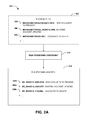
- FIG. 2A is a component block diagram illustrating an exemplary system for of loading non-uniform multi-row text files.
- FIG. 2B illustrates an example of a non-uniform multi-row text file.
- FIG. 3A is a component block diagram illustrating an exemplary system for of loading non-uniform multi-row text files, where one or more non-uniform multi-row text files are retrieved from a file storage location.
- FIG. 3B is a component block diagram illustrating an exemplary system for of loading non-uniform multi-row text files, where a profile is identified.
- FIG. 3C is a component block diagram illustrating an exemplary system for of loading non-uniform multi-row text files, where a non-uniform multi-row text file is processed.
- FIG. 4 is an illustration of an exemplary computer readable medium wherein processor-executable instructions configured to embody one or more of the provisions set forth herein may be comprised.
- FIG. 5 illustrates an exemplary computing environment wherein one or more of the provisions set forth herein may be implemented.
- a company may receive and process disparate text files having data specified according to different formats (e.g., different numbers of fields, data types, field orders, attributes, etc.). Development of applications to parse, extract, and load data from such text files may become complex and customized when such text files correspond to non-uniform multi-row text files where not all rows within a text file comprise the same data format (e.g., a row may have 3 fields corresponding to first name, last name, and age, while a different row may have 2 fields corresponding to address and gender). Thus, extensive amounts of time and resources may be devoted to creating customized applications for parsing different types of non-uniform multi-row text files.
- different formats e.g., different numbers of fields, data types, field orders, attributes, etc.
- various types of non-uniform multi-row text files may be loaded using a metadata driven process, such as where a single loading application may be used to load various types of non-uniform multi-row text files with little to no custom code modification.
- a load technique for disparate non-uniform multi-row text files may be distilled down into discrete sequential components (e.g., task execution code may be dynamically generated for a task defined by metadata within a profile for a file type of a non-uniform multi-row text file) where attributes of each component comprise information used to perform a specific load process task.
- a single loading application may dynamically retrieve and reconstitute metadata into task execution code used to load different types of non-uniform multi-row text files without custom programming code and/or code modification.
- the loading technique may map source values, of disparate non-uniform multi-row text files from various clients, to normalized standard values without custom programming code and/or code modifications. Because the loading technique is metadata driven (e.g., a client that provided the non-uniform multi-row text file may provide metadata describing what fields, field ordering, and/or data types to expect on particular rows, which may be consumed by the loading technique without additional custom coding), time and/or resources otherwise devoted to modifying code of a load application for processing a particular non-uniform multi-row text file may be saved.
- the parsed output data may be loaded into a single staging area, such as a staging table, regardless of a layout of a source non-uniform multi-row text file, and thus the stage table's schema may be static.
- the loading technique may process text files having a record management service (RMS) format, an AIM format (e.g., a proprietary file save/export format generated by an AIM Latitude application), a CACS format (e.g., a proprietary file save/export format generated by CACS application), a NAN format, a YGC format (e.g., a proprietary file save/export format generated by YGC application), and/or other formats.
- the loading technique may process dollar values with or without implied decimals and/or represented as IBM signed numbers without custom coding.
- the loading technique may report out fields having values that are incompatible with expected data types.
- the loading technique may be self-documenting because the loading technique is metadata driven. In this way, a single loading application and/or staging table format may be used to process various types of non-uniform multi-row text files without code modification, which may significantly reduce processing resources otherwise used for customizing loading applications.
- a non-uniform multi-row text file may be received.
- a non-uniform multi-row text file may be received.
- an auto dealer may provide a vehicle text file to an online auto trading website for processing.
- the non-uniform multi-row text file may comprise a first row with data formatted according to a first format such as 4 fields relating to car data, a second row with data formatted according to a second format such as 4 fields relating to ownership data, and/or other rows with other data formats.
- a first format such as 4 fields relating to car data
- a second row such as 4 fields relating to ownership data
- not all rows within the non-uniform multi-row text file have the same data format, such as fields, ordering, data types, and/or other attributes.
- the non-uniform multi-row text file may be renamed based upon a source that provided the non-uniform multi-row text file (e.g., an abbreviation or identifier for the auto dealer), timestamp information, and a file type (e.g., a file type used to update existing records, a file type used to add new records, a file type used to delete records, etc.) to create a renamed non-uniform multi-row text file.
- a source e.g., an abbreviation or identifier for the auto dealer
- timestamp information e.g., a file type used to update existing records, a file type used to add new records, a file type used to delete records, etc.
- a file type e.g., a file type used to update existing records, a file type used to add new records, a file type used to delete records, etc.
- metadata describing what fields, ordering of fields, data types, and/or other attributes are
- a profile for the non-uniform multi-row text file may be identified.
- the profile may comprise metadata defining a set of sequential tasks used to load the file type of the non-uniform multi-row text file.
- the profile and associated tasks may correspond to an object model structured with the necessary attribute values needed to dynamically generate code for each task at runtime.
- the profile may be evaluated to generate a task list based upon the set of tasks.
- the task corresponds to a user mapping of an original value to a user predefined value (e.g., OH ⁇ OHIO).
- the task may correspond to a procedure to perform a routine that could not be implemented using metadata (e.g., a custom or generic procedure to perform a routine such as parsing a name, removing duplicates rows, etc.).
- the task may correspond to a user mapping from a source field of the non-uniform multi-row text file to a destination field within a staging area within which the parsed output data is to be outputted (e.g., a mapping: Client Account No ⁇ account_ID; a mapping: Middle Initial ⁇ MI; etc.).
- the task may correspond to an extraction of data from the non-uniform multi-row text file for processing a subsequent non-uniform multi-row text file.
- respective tasks within the task list are processed.
- task execution code for a task may be generated.
- the task execution code may correspond to dynamically generated code, structured query language command (e.g., a T-SQL statement), etc.
- the task execution code may be executed upon the non-uniform multi-row text file to generate result data for the task (e.g., the task and/or other tasks may be executed to extract data from one or more fields and/or rows of the non-uniform multi-row text file). If a data field within the non-uniform multi-row text file does not correspond to an expected data type, the data field may be excluded from parsed output data or may be replaced with a placeholder value.
- parsed output data may be generated for the non-uniform multi-row text file based upon result data for the tasks.
- the parsed output data may be outputted into a staging area (e.g., a staging table) that is exposed for client access (e.g., a client may access car data, ownership data, and/or other data that was parsed, extracted, and cleaned from the non-uniform multi-row text file).
- multiple non-uniform multi-row text files may be received and processed to populate the staging area (e.g., the staging table may have a static schema that does not need to be changed for various data formats and/or file types of disparate non-uniform multi-row text files, such as non-uniform multi-row text files having different numbers and/or types of fields on various rows).
- a set of non-uniform multi-row text files may be received.
- the set of non-uniform multi-row text files may be renamed based upon sources that provided the set of non-uniform multi-row text files, timestamp information, and/or file types to create a set of renamed non-uniform multi-row text files.
- the set of renamed non-uniform multi-row text files may be stored within a location, such as a network folder accessible to a load process.
- the load process may be initiated to retrieve one or more renamed non-uniform multi-row text files from the network folder based upon a path-to-file parameter (e.g., a query used to retrieve renamed non-uniform multi-row text files having names that satisfy the query).
- the path-to-file parameter may comprise a wildcard character (e.g., *.*) used to filter or include renamed non-uniform multi-row text files.
- a target profile for a renamed non-uniform multi-row text file may be identified.
- the target profile may be evaluated to generate a target task list.
- target task execution code For respective target tasks within the target task list, target task execution code is generated for a target task.
- the target task execution code may be executed upon the renamed non-uniform multi-row text file to generate target result data for the target task.
- target parsed output data for the renamed non-uniform multi-row text file may be generated based upon target result data for the target tasks.
- the target parsed output data may be loaded into a staging area, such as a staging table, for client access.
- the staging area may provide access to parsed output data from a first renamed non-uniform multi-row text file having a first data format (e.g., rows with 3 fields) and a second renamed non-uniform multi-row text file having a second data format (e.g., rows with 5 fields).
- a first data format e.g., rows with 3 fields
- a second renamed non-uniform multi-row text file having a second data format (e.g., rows with 5 fields).
- FIGS. 2A-2B illustrate examples of a system 200 for loading a non-uniform multi-row text file.
- FIG. 2A illustrates the system 200 comprising a file processing component 210 .
- the file processing component 210 is configured to receive one or more incoming non-uniform multi-row text files 202 from a client.
- the client may provide a new accounts file 204 , an update accounts file 206 , a delete accounts file 208 , and/or other non-uniform multi-row text files.
- the file processing component 210 may rename the one or more incoming non-uniform multi-row text files 202 based upon a source that provided the incoming non-uniform multi-row text files 202 (e.g., an identifier “MS” may be used to designate the incoming non-uniform multi-row text files 202 as coming from a Michigan Storage company), timestamp information (e.g., a date and time represented by “20150312_0945”), and/or a file type (e.g., create new accounts “.NEW”, update existing accounts “.UPD”, delete current accounts “.DEL”, etc.) to create a renamed new accounts file 204 a , a renamed update accounts file 206 a , and a renamed delete accounts file 208 a , which may be stored within a file storage location 212 .
- a source that provided the incoming non-uniform multi-row text files 202 e.g., an identifier
- FIG. 2B illustrates an example of one or more rows within the renamed new accounts file 204 a .
- the renamed new accounts file 204 a may comprise a first row 250 , a second row 252 , a third row 254 , a fourth row 256 , and/or other rows not illustrated.
- the first row 250 may be formatted according to a first format 250 , such that the first row 250 comprises a first name field populated with “Joe”, a last name field populated with “Smith”, an address field populated with “910 First Street”, a zip code field populated with “44303”, and a row identifier field populated with an “x” to identify what type of fields, ordering of fields, and/or attributes are to be expected on the first row 250 .
- the second row 252 may be formatted according to a second format, such that the second row 252 comprises an occupation field populated with “Doctor”, a gender field populated with “Male”, a marital status field populated with “Single”, an age field populated with “32”, and a row identifier field populated with an “a” to identify what type of fields, ordering of fields, and/or attributes are to be expected on the second row 252 .
- the third row 254 may be formatted according to the first format, and thus may be populated with a row identifier field populated with the “x”.
- the fourth row 256 may be formatted according to the second format, and thus may be populated with a row identifier field populated with the “a”.
- FIGS. 3A-3C illustrate examples of a system 300 , comprising a file processing component 302 , for loading a non-uniform multi-row text file.
- FIG. 3A illustrates a file storage location 316 comprising one or more non-uniform multi-row text files, such as a first file 304 for creating new accounts for a Michigan Storage company, a second file 306 to update existing accounts of the Michigan Storage company, a third file 308 for deleting accounts of the Michigan Storage company, a fourth file 310 for adding new accounts for a Data Keeper company, a fifth file 312 for adding new accounts for the Data Keeper company, etc.
- the file processing component 302 may query the file storage location 316 using a path-to-file parameter 314 to retrieve 318 one or more non-uniform multi-row text files satisfying the path-to-file parameter 314 .
- the fourth file 310 and the fifth file 312 may be retrieved 318 based upon the fourth file 310 and the fifth file 312 comprising names that satisfy the path-to-file parameter 314 of “ ⁇ load ⁇ process ⁇ clients ⁇ datakeeper ⁇ dk_2105*.*”, where *.* is used as a wildcard.
- FIG. 3B illustrates the file processing component 314 identifying 340 profiles corresponding to the fourth file 310 and the fifth file 312 .
- a profile repository 330 may comprise profiles corresponding to different file types (e.g., an add new accounts file type, a delete accounts file type, and/or other attributes or metadata that may correspond to how data is formatted within a non-uniform multi-row text file) and/or sources (e.g., clients that provided files for loading).
- a profile (UPD) 332 for a file type (UPD) may comprise user defined formulas, calculations, constants, conditional statements, mappings to predefined values, procedure to routine mappings, extractions of data for subsequent non-uniform multi-row text file processing, mappings to destination fields within a staging area, and/or other metadata that is dynamically transformable at runtime into task execution code for parsing, evaluating, and extract data from fields within disparate rows of files having the file type (UPD), such as files for updating existing client accounts.
- UPD file type
- the file processing component 314 may utilize a file type of the fourth file 310 and/or the fifth file 312 (e.g., a file type (NEW) corresponding to an add new accounts file type) and/or client supplied metadata describing how data is formatted within the fourth file 310 and/or the fifth file 312 to query the profile repository 330 to identify a profile (NEW) 336 as comprising metadata describing a set of tasks used to load files having the file type (NEW) for adding new accounts.
- the file processing component may identify the profile (NEW) 336 based upon a source (e.g., a client that provided the fourth file 310 and/or the fifth file 312 ) and the file type.
- FIG. 3C illustrates the file processing component 314 sequentially processing a set of tasks 350 , derived from the profile (NEW) 336 , for extracting parsed output data 352 from the fourth file 310 .
- the profile (NEW) 336 may comprise metadata of a first task (e.g., a RAW task to prep raw data for later processing), which may be used to dynamically generate first task execution code for the first task.
- the dynamically generated first task execution code may be executed upon the fourth file 310 to generate first result data.
- the profile (NEW) 336 may comprise metadata of a second task, which may be used to dynamically generate second task execution code for the second task.
- the dynamically generated second task execution code may be executed upon the fourth file 310 to generate second result data.
- tasks within the task list 350 may be performed to generate result data used to generate parsed output data 352 for the fourth file 310 (e.g., an STD task that parses and formats data, such as by mapping a client account number from a source file, such as the fourth file 310 , to an account number in a staging area 354 ; a MAP task that normalizes a value to a normalized value/format, such as mapping OH to OHIO; a CALC task for calculating a value, such as a formula to calculate a commission rate; a PROC task for performing a procedure; etc.).
- the parsed output data 352 may be outputted into the staging area 354 for client access.
- parsed output data may be generated for the fifth file 312 , and outputting into the staging area 354 .
- Still another embodiment involves a computer-readable medium comprising processor-executable instructions configured to implement one or more of the techniques presented herein.
- An example embodiment of a computer-readable medium or a computer-readable device is illustrated in FIG. 4 , wherein the implementation 400 comprises a computer-readable medium 408 , such as a CD-R, DVD-R, flash drive, a platter of a hard disk drive, etc., on which is encoded computer-readable data 406 .
- This computer-readable data 406 such as binary data comprising at least one of a zero or a one, in turn comprises a set of computer instructions 404 configured to operate according to one or more of the principles set forth herein.
- the set of computer instructions 404 are configured to perform a method 402 , such as at least some of the exemplary method 100 of FIG. 1 , for example.
- the set of computer instructions 404 are configured to implement a system, such as at least some of the exemplary system 200 of FIGS. 2A-2B and/or at least some of the exemplary system 300 of FIGS. 3A-3C , for example.
- Many such computer-readable media are devised by those of ordinary skill in the art that are configured to operate in accordance with the techniques presented herein.
- a component may be, but is not limited to being, a process running on a processor, a processor, an object, an executable, a thread of execution, a program, and/or a computer.
- an application running on a controller and the controller can be a component.
- One or more components may reside within a process and/or thread of execution and a component may be localized on one computer and/or distributed between two or more computers.
- the claimed subject matter may be implemented as a method, apparatus, or article of manufacture using standard programming and/or engineering techniques to produce software, firmware, hardware, or any combination thereof to control a computer to implement the disclosed subject matter.
- article of manufacture as used herein is intended to encompass a computer program accessible from any computer-readable device, carrier, or media.
- FIG. 5 and the following discussion provide a brief, general description of a suitable computing environment to implement embodiments of one or more of the provisions set forth herein.
- the operating environment of FIG. 5 is only one example of a suitable operating environment and is not intended to suggest any limitation as to the scope of use or functionality of the operating environment.
- Example computing devices include, but are not limited to, personal computers, server computers, hand-held or laptop devices, mobile devices (such as mobile phones, Personal Digital Assistants (PDAs), media players, and the like), multiprocessor systems, consumer electronics, mini computers, mainframe computers, distributed computing environments that include any of the above systems or devices, and the like.
- Computer readable instructions may be distributed via computer readable media (discussed below).
- Computer readable instructions may be implemented as program modules, such as functions, objects, Application Programming Interfaces (APIs), data structures, and the like, that perform particular tasks or implement particular abstract data types.
- APIs Application Programming Interfaces
- the functionality of the computer readable instructions may be combined or distributed as desired in various environments.
- FIG. 5 illustrates an example of a system 500 comprising a computing device 512 configured to implement one or more embodiments provided herein.
- computing device 512 includes at least one processing unit 516 and memory 518 .
- memory 518 may be volatile (such as RAM, for example), non-volatile (such as ROM, flash memory, etc., for example) or some combination of the two. This configuration is illustrated in FIG. 5 by dashed line 514 .
- device 512 may include additional features and/or functionality.
- device 512 may also include additional storage (e.g., removable and/or non-removable) including, but not limited to, magnetic storage, optical storage, and the like.
- additional storage is illustrated in FIG. 5 by storage 520 .
- computer readable instructions to implement one or more embodiments provided herein may be in storage 520 .
- Storage 520 may also store other computer readable instructions to implement an operating system, an application program, and the like.
- Computer readable instructions may be loaded in memory 518 for execution by processing unit 516 , for example.
- Computer storage media includes volatile and nonvolatile, removable and non-removable media implemented in any method or technology for storage of information such as computer readable instructions or other data.
- Memory 518 and storage 520 are examples of computer storage media.
- Computer storage media includes, but is not limited to, RAM, ROM, EEPROM, flash memory or other memory technology, CD-ROM, Digital Versatile Disks (DVDs) or other optical storage, magnetic cassettes, magnetic tape, magnetic disk storage or other magnetic storage devices, or any other medium which can be used to store the desired information and which can be accessed by device 512 .
- Computer storage media does not, however, include propagated signals. Rather, computer storage media excludes propagated signals. Any such computer storage media may be part of device 512 .
- Device 512 may also include communication connection(s) 526 that allows device 512 to communicate with other devices.
- Communication connection(s) 526 may include, but is not limited to, a modem, a Network Interface Card (NIC), an integrated network interface, a radio frequency transmitter/receiver, an infrared port, a USB connection, or other interfaces for connecting computing device 512 to other computing devices.
- Communication connection(s) 526 may include a wired connection or a wireless connection. Communication connection(s) 526 may transmit and/or receive communication media.
- Computer readable media may include communication media.
- Communication media typically embodies computer readable instructions or other data in a “modulated data signal” such as a carrier wave or other transport mechanism and includes any information delivery media.
- modulated data signal may include a signal that has one or more of its characteristics set or changed in such a manner as to encode information in the signal.
- Device 512 may include input device(s) 524 such as keyboard, mouse, pen, voice input device, touch input device, infrared cameras, video input devices, and/or any other input device.
- Output device(s) 522 such as one or more displays, speakers, printers, and/or any other output device may also be included in device 512 .
- Input device(s) 524 and output device(s) 522 may be connected to device 512 via a wired connection, wireless connection, or any combination thereof.
- an input device or an output device from another computing device may be used as input device(s) 524 or output device(s) 522 for computing device 512 .
- Components of computing device 512 may be connected by various interconnects, such as a bus.
- interconnects may include a Peripheral Component Interconnect (PCI), such as PCI Express, a Universal Serial Bus (USB), firewire (IEEE 1394), an optical bus structure, and the like.
- PCI Peripheral Component Interconnect
- USB Universal Serial Bus
- IEEE 1394 Firewire
- optical bus structure and the like.
- components of computing device 512 may be interconnected by a network.
- memory 518 may be comprised of multiple physical memory units located in different physical locations interconnected by a network.
- a computing device 530 accessible via a network 528 may store computer readable instructions to implement one or more embodiments provided herein.
- Computing device 512 may access computing device 530 and download a part or all of the computer readable instructions for execution.
- computing device 512 may download pieces of the computer readable instructions, as needed, or some instructions may be executed at computing device 512 and some at computing device 530 .
- one or more of the operations described may constitute computer readable instructions stored on one or more computer readable media, which if executed by a computing device, will cause the computing device to perform the operations described.
- the order in which some or all of the operations are described should not be construed as to imply that these operations are necessarily order dependent. Alternative ordering will be appreciated by one skilled in the art having the benefit of this description. Further, it will be understood that not all operations are necessarily present in each embodiment provided herein. Also, it will be understood that not all operations are necessary in some embodiments.
- first,” “second,” and/or the like are not intended to imply a temporal aspect, a spatial aspect, an ordering, etc. Rather, such terms are merely used as identifiers, names, etc. for features, elements, items, etc.
- a first object and a second object generally correspond to object A and object B or two different or two identical objects or the same object.
- exemplary is used herein to mean serving as an example, instance, illustration, etc., and not necessarily as advantageous.
- “or” is intended to mean an inclusive “or” rather than an exclusive “or”.
- “a” and “an” as used in this application are generally be construed to mean “one or more” unless specified otherwise or clear from context to be directed to a singular form.
- at least one of A and B and/or the like generally means A or B and/or both A and B.
- such terms are intended to be inclusive in a manner similar to the term “comprising”.
Landscapes
- Engineering & Computer Science (AREA)
- Databases & Information Systems (AREA)
- Theoretical Computer Science (AREA)
- Data Mining & Analysis (AREA)
- Physics & Mathematics (AREA)
- General Engineering & Computer Science (AREA)
- General Physics & Mathematics (AREA)
- Information Retrieval, Db Structures And Fs Structures Therefor (AREA)
Abstract
Description
Claims (19)
Priority Applications (1)
| Application Number | Priority Date | Filing Date | Title |
|---|---|---|---|
| US14/922,444 US10185757B2 (en) | 2015-10-26 | 2015-10-26 | Non-uniform multi-row text file loading |
Applications Claiming Priority (1)
| Application Number | Priority Date | Filing Date | Title |
|---|---|---|---|
| US14/922,444 US10185757B2 (en) | 2015-10-26 | 2015-10-26 | Non-uniform multi-row text file loading |
Publications (2)
| Publication Number | Publication Date |
|---|---|
| US20170116208A1 US20170116208A1 (en) | 2017-04-27 |
| US10185757B2 true US10185757B2 (en) | 2019-01-22 |
Family
ID=58558861
Family Applications (1)
| Application Number | Title | Priority Date | Filing Date |
|---|---|---|---|
| US14/922,444 Active 2037-02-24 US10185757B2 (en) | 2015-10-26 | 2015-10-26 | Non-uniform multi-row text file loading |
Country Status (1)
| Country | Link |
|---|---|
| US (1) | US10185757B2 (en) |
Families Citing this family (7)
| Publication number | Priority date | Publication date | Assignee | Title |
|---|---|---|---|---|
| US10318451B2 (en) | 2016-06-30 | 2019-06-11 | Ge Aviation Systems Llc | Management of data transfers |
| CN110929485B (en) * | 2019-12-06 | 2023-09-19 | 中国银联股份有限公司 | File generation method, device, equipment and medium |
| CN111221787B (en) * | 2020-01-03 | 2025-07-25 | 深圳前海微众银行股份有限公司 | File processing method and device |
| CN111459889B (en) * | 2020-03-08 | 2023-06-16 | 中电海康集团有限公司 | Equipment data model generation method and device for Internet of things platform |
| CN111666327A (en) * | 2020-06-10 | 2020-09-15 | 山东汇贸电子口岸有限公司 | Text-based structured data description method and system |
| CN116644713A (en) * | 2023-04-21 | 2023-08-25 | 湖北三赢兴光电科技股份有限公司 | A method and system for quickly generating specified format files |
| US12488006B2 (en) * | 2023-04-28 | 2025-12-02 | American Express Travel Related Services Company, Inc. | Democratized data profiling and validation |
Citations (4)
| Publication number | Priority date | Publication date | Assignee | Title |
|---|---|---|---|---|
| US20030055835A1 (en) * | 2001-08-23 | 2003-03-20 | Chantal Roth | System and method for transferring biological data to and from a database |
| US20060112133A1 (en) * | 2001-11-14 | 2006-05-25 | Ljubicich Philip A | System and method for creating and maintaining data records to improve accuracy thereof |
| US20140164408A1 (en) * | 2012-12-10 | 2014-06-12 | International Business Machines Corporation | Electronic document source ingestion for natural language processing systems |
| US20150186668A1 (en) * | 2013-12-30 | 2015-07-02 | Moka5, Inc. | Protecting data in insecure cloud storage |
-
2015
- 2015-10-26 US US14/922,444 patent/US10185757B2/en active Active
Patent Citations (4)
| Publication number | Priority date | Publication date | Assignee | Title |
|---|---|---|---|---|
| US20030055835A1 (en) * | 2001-08-23 | 2003-03-20 | Chantal Roth | System and method for transferring biological data to and from a database |
| US20060112133A1 (en) * | 2001-11-14 | 2006-05-25 | Ljubicich Philip A | System and method for creating and maintaining data records to improve accuracy thereof |
| US20140164408A1 (en) * | 2012-12-10 | 2014-06-12 | International Business Machines Corporation | Electronic document source ingestion for natural language processing systems |
| US20150186668A1 (en) * | 2013-12-30 | 2015-07-02 | Moka5, Inc. | Protecting data in insecure cloud storage |
Also Published As
| Publication number | Publication date |
|---|---|
| US20170116208A1 (en) | 2017-04-27 |
Similar Documents
| Publication | Publication Date | Title |
|---|---|---|
| US20170116208A1 (en) | Non-uniform multi-row text file loading | |
| US10540383B2 (en) | Automatic ontology generation | |
| EP2199904B1 (en) | Flexible multi-tenant support of metadata extensions | |
| WO2019076062A1 (en) | Function page customization method and application server | |
| US10936539B2 (en) | Source data assignment based on metadata | |
| US20250086173A1 (en) | Creating virtualized data assets using existing definitions of etl/elt jobs | |
| CN110275861A (en) | Data storage method and device, storage medium, electronic device | |
| US20120233186A1 (en) | Exposing and using metadata and meta-metadata | |
| CN106557307B (en) | Service data processing method and system | |
| AU2015331030A1 (en) | System generator module for electronic document and electronic file | |
| US11087296B1 (en) | Programmatic reconciliation of electronic receivables | |
| US20140067810A1 (en) | Methods and apparatus for partitioning data | |
| US9652740B2 (en) | Fan identity data integration and unification | |
| US20100161682A1 (en) | Metadata model repository | |
| CN110879808A (en) | Information processing method and device | |
| CN111221698A (en) | Task data collection method and device | |
| US20240220876A1 (en) | Artificial intelligence (ai) based data product provisioning | |
| CN112395850B (en) | A method, device and electronic device for checking data definition consistency | |
| US9201937B2 (en) | Rapid provisioning of information for business analytics | |
| CN114741531A (en) | Enterprise data dictionary construction method and device | |
| CN113779016B (en) | Data management method and device | |
| CN114356945A (en) | Data processing method, data processing device, computer equipment and storage medium | |
| CN111625548B (en) | Query method, system, device and computer readable medium | |
| US11551464B2 (en) | Line based matching of documents | |
| CN105868380A (en) | Heterogenous data reading method and electronic equipment |
Legal Events
| Date | Code | Title | Description |
|---|---|---|---|
| AS | Assignment |
Owner name: DATAIQ,LLC, OHIO Free format text: ASSIGNMENT OF ASSIGNORS INTEREST;ASSIGNOR:BLAKE, FREDERICK G.;REEL/FRAME:036880/0325 Effective date: 20151022 |
|
| FEPP | Fee payment procedure |
Free format text: ENTITY STATUS SET TO MICRO (ORIGINAL EVENT CODE: MICR); ENTITY STATUS OF PATENT OWNER: MICROENTITY |
|
| STCF | Information on status: patent grant |
Free format text: PATENTED CASE |
|
| FEPP | Fee payment procedure |
Free format text: MAINTENANCE FEE REMINDER MAILED (ORIGINAL EVENT CODE: REM.); ENTITY STATUS OF PATENT OWNER: MICROENTITY |
|
| FEPP | Fee payment procedure |
Free format text: SURCHARGE FOR LATE PAYMENT, MICRO ENTITY (ORIGINAL EVENT CODE: M3554); ENTITY STATUS OF PATENT OWNER: MICROENTITY |
|
| MAFP | Maintenance fee payment |
Free format text: PAYMENT OF MAINTENANCE FEE, 4TH YEAR, MICRO ENTITY (ORIGINAL EVENT CODE: M3551); ENTITY STATUS OF PATENT OWNER: MICROENTITY Year of fee payment: 4 |
|
| MAFP | Maintenance fee payment |
Free format text: PAYMENT OF MAINTENANCE FEE, 8TH YEAR, MICRO ENTITY (ORIGINAL EVENT CODE: M3552); ENTITY STATUS OF PATENT OWNER: MICROENTITY Year of fee payment: 8 |