US10185582B2 - Monitoring the progress of the processes executing in a virtualization environment - Google Patents
Monitoring the progress of the processes executing in a virtualization environment Download PDFInfo
- Publication number
- US10185582B2 US10185582B2 US13/687,324 US201213687324A US10185582B2 US 10185582 B2 US10185582 B2 US 10185582B2 US 201213687324 A US201213687324 A US 201213687324A US 10185582 B2 US10185582 B2 US 10185582B2
- Authority
- US
- United States
- Prior art keywords
- command
- execution
- operations
- progress
- action
- Prior art date
- Legal status (The legal status is an assumption and is not a legal conclusion. Google has not performed a legal analysis and makes no representation as to the accuracy of the status listed.)
- Active, expires
Links
Images




Classifications
-
- G—PHYSICS
- G06—COMPUTING OR CALCULATING; COUNTING
- G06F—ELECTRIC DIGITAL DATA PROCESSING
- G06F9/00—Arrangements for program control, e.g. control units
- G06F9/06—Arrangements for program control, e.g. control units using stored programs, i.e. using an internal store of processing equipment to receive or retain programs
- G06F9/44—Arrangements for executing specific programs
- G06F9/455—Emulation; Interpretation; Software simulation, e.g. virtualisation or emulation of application or operating system execution engines
- G06F9/45533—Hypervisors; Virtual machine monitors
-
- G—PHYSICS
- G06—COMPUTING OR CALCULATING; COUNTING
- G06F—ELECTRIC DIGITAL DATA PROCESSING
- G06F11/00—Error detection; Error correction; Monitoring
- G06F11/30—Monitoring
- G06F11/3003—Monitoring arrangements specially adapted to the computing system or computing system component being monitored
- G06F11/3017—Monitoring arrangements specially adapted to the computing system or computing system component being monitored where the computing system is implementing multitasking
-
- G—PHYSICS
- G06—COMPUTING OR CALCULATING; COUNTING
- G06F—ELECTRIC DIGITAL DATA PROCESSING
- G06F11/00—Error detection; Error correction; Monitoring
- G06F11/30—Monitoring
- G06F11/3055—Monitoring arrangements for monitoring the status of the computing system or of the computing system component, e.g. monitoring if the computing system is on, off, available, not available
-
- G—PHYSICS
- G06—COMPUTING OR CALCULATING; COUNTING
- G06F—ELECTRIC DIGITAL DATA PROCESSING
- G06F11/00—Error detection; Error correction; Monitoring
- G06F11/30—Monitoring
- G06F11/34—Recording or statistical evaluation of computer activity, e.g. of down time, of input/output operation ; Recording or statistical evaluation of user activity, e.g. usability assessment
- G06F11/3466—Performance evaluation by tracing or monitoring
- G06F11/3476—Data logging
-
- G—PHYSICS
- G06—COMPUTING OR CALCULATING; COUNTING
- G06F—ELECTRIC DIGITAL DATA PROCESSING
- G06F17/00—Digital computing or data processing equipment or methods, specially adapted for specific functions
- G06F17/40—Data acquisition and logging
-
- G—PHYSICS
- G06—COMPUTING OR CALCULATING; COUNTING
- G06F—ELECTRIC DIGITAL DATA PROCESSING
- G06F9/00—Arrangements for program control, e.g. control units
- G06F9/06—Arrangements for program control, e.g. control units using stored programs, i.e. using an internal store of processing equipment to receive or retain programs
- G06F9/44—Arrangements for executing specific programs
- G06F9/455—Emulation; Interpretation; Software simulation, e.g. virtualisation or emulation of application or operating system execution engines
- G06F9/45533—Hypervisors; Virtual machine monitors
- G06F9/45558—Hypervisor-specific management and integration aspects
-
- G—PHYSICS
- G06—COMPUTING OR CALCULATING; COUNTING
- G06F—ELECTRIC DIGITAL DATA PROCESSING
- G06F11/00—Error detection; Error correction; Monitoring
- G06F11/30—Monitoring
- G06F11/3003—Monitoring arrangements specially adapted to the computing system or computing system component being monitored
- G06F11/3006—Monitoring arrangements specially adapted to the computing system or computing system component being monitored where the computing system is distributed, e.g. networked systems, clusters, multiprocessor systems
-
- G—PHYSICS
- G06—COMPUTING OR CALCULATING; COUNTING
- G06F—ELECTRIC DIGITAL DATA PROCESSING
- G06F2201/00—Indexing scheme relating to error detection, to error correction, and to monitoring
- G06F2201/815—Virtual
Definitions
- This disclosure relates to the field of virtualization and, in particular, to self-monitored commands in a virtualization environment.
- Virtualization allows multiplexing of the underlying host machine between different virtual machines.
- the host computer allocates a certain amount of its resources to each of the virtual machines.
- Each virtual machine is then able to use the allocated resources to execute applications, including operating systems (referred to as guest operating systems).
- the software layer providing the virtualization is commonly referred to as a hypervisor and is also known as a virtual machine monitor (VMM) or a kernel-based hypervisor.
- the hypervisor emulates the underlying hardware of the host computer, making the use of the virtual machine transparent to the guest operating system and the user of the virtual machine.
- Virtual machines can be provided by a centralized host that is coupled to multiple clients over a network. Each client can provide a virtual desktop environment indistinguishable from a physical desktop. A large organization with many different departments and multiple offices at various locations may have a system with thousands of virtual machines. Management of numerous virtual machines is a complex task that typically requires a large degree of system scalability. Certain virtual machine management systems may include a task manager that monitors the status of commands and processes being executed on the hosts running the hypervisors and tracks their progress. Not all systems include a task manager, however. In systems without a centralized task manager, monitoring the progress of commands and processes can be a complex and resource intensive undertaking.
- FIG. 1 is a block diagram illustrating an exemplary network architecture in which embodiment of the present invention may operate.
- FIG. 2 is a block diagram illustrating a host controller for self-monitored commands, according to an embodiment.
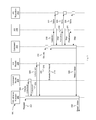
- FIG. 3 is a block diagram illustrating a processing flow for self-monitored synchronous commands, according to an embodiment.
- FIG. 4 is a block diagram illustrating a processing flow for self-monitored asynchronous commands, according to an embodiment.
- FIG. 5 is a flow diagram illustrating a method for self-monitored commands, according to an embodiment.
- FIG. 6 is a block diagram illustrating a computer system, according to an embodiment.
- a virtualized computing environment includes a host controller configured to monitor the progress of processes executing in the computing environment without the need for a centralized task manager.
- the host controller receives a request to perform an action in the virtualized computing environment (e.g., a request to start a virtual machine)
- the host controller creates a command to handle the request.
- a command may represent a directive to a computer program in order to perform the action.
- the command may include a series of instructions, which when executed, cause a computer to perform the action.
- the host controller also creates a job to monitor the progress of the command execution.
- the job publishes an API, that when called records the status of intermediate steps of the command in a command status database.
- an API that when called records the status of intermediate steps of the command in a command status database.
- the instructions associated with the command call the API published by the job to report its status. This status is recorded in the command status database.
- each command's status is automatically reported during execution.
- FIG. 1 illustrates an exemplary network architecture 100 in which embodiments of the present invention may operate.
- the network architecture 100 includes one or more host servers 103 - 1 , 103 - 2 coupled to clients 101 over a network 102 .
- the network 102 may be a private network (e.g., a local area network (LAN), wide area network (WAN), intranet, etc.) or a public network (e.g., the Internet).
- the host servers 103 - 1 , 103 - 2 may also be coupled to a host controller 107 (via a network or directly).
- Host controller 107 may be an independent machine such as a server computer, a desktop computer, etc. Alternatively, the host controller 107 may be part of the host servers 103 - 1 , 103 - 2 .
- the clients 101 - 1 , 101 -N may include computing devices that have a wide range of processing capabilities. Some or all of the clients 101 - 1 , 101 -N may be thin clients, which serve as access terminals for users and depend primarily on the host servers 103 - 1 , 103 - 2 for processing activities.
- the clients 101 - 1 , 101 -N may be a desktop computer, laptop computer, cellular phone, personal digital assistant (PDA), etc.
- the clients 101 - 1 , 101 -N may run client applications such as a Web browser.
- the clients 101 - 1 , 101 -N may also run other client applications, which receive multimedia data streams or other data from the host servers 103 - 1 , 1032 and re-direct the received data to a local display or other user interface.
- Host servers 103 - 1 , 103 - 2 may include server computers or any other computing devices capable of running one or more virtual machines 131 - 11 - 131 - 1 N, 131 - 21 - 131 - 2 N. Each virtual machine 131 runs a guest operating system (OS) that may be different from one virtual machine to another.
- the guest OS may include Microsoft Windows, Linux, Solaris, Mac OS, etc.
- the host servers 103 - 1 , 103 - 2 may include a respective hypervisor 132 - 1 , 131 - 2 that emulates the underlying hardware platform for the virtual machines 131 - 11 - 131 - 1 N, 131 - 21 - 131 - 2 N.
- the hypervisor 132 - 1 , 131 - 2 may also be known as a virtual machine monitor (VMM), a kernel-based hypervisor or a host operating system.
- VMM virtual machine monitor
- Each virtual machine 131 - 11 - 131 - 1 N, 131 - 21 - 131 - 2 N can be accessed by one or more of the clients 101 - 1 , 101 -N over the network 102 and can provide a virtual desktop for the client(s) 101 - 1 , 101 -N. From the user's point of view, the virtual desktop functions as a physical desktop (e.g., a personal computer) and is indistinguishable from a physical desktop.
- Each virtual machine 131 - 11 - 131 - 1 N, 131 - 21 - 131 - 2 N may be linked to one or more virtual disks.
- These virtual disks can be logical partitions of a physical disk managed by hypervisor 132 - 1 , 132 - 2 , can be cloud based storage devices, or can be some other type of virtual storage device. In one embodiment, virtual disks may form a whole or part of a logical data center. In one embodiment, virtual machines 131 - 11 - 131 - 1 N, 131 - 21 - 131 - 2 N and virtual disks, together with host servers 103 - 1 , 103 - 2 , may be collectively referred to as entities in a virtual machine system.
- the virtual machines 131 - 11 - 131 - 1 N, 131 - 21 - 131 - 2 N and virtual disks are managed by the host controller 107 .
- Host controller 107 may manage the allocation of resources from host server 103 - 1 , 103 - 2 to virtual machines 131 - 11 - 131 - 1 N, 131 - 21 - 131 - 2 N.
- host controller may monitor the status of virtual machines 131 - 11 - 131 - 1 N, 131 - 21 - 131 - 2 N as well as the progress of commands and processes being executed by virtual machines 131 - 11 - 131 - 1 N, 131 - 21 - 131 - 2 N and/or on virtual machines 131 - 11 - 131 - 1 N, 131 - 21 - 131 - 2 N.
- a request may be made by a user or application (e.g., through one of clients 101 - 1 , 101 -N) to perform some action.
- the request may be received by host controller 107 , which generates a command in response to the request.
- the request may be a request to start a new virtual machine 131 - 11 - 131 - 1 N, 131 - 21 - 131 - 2 N, stop a virtual machine 131 - 11 - 131 - 1 N, 131 - 21 - 131 - 2 N, create a virtual disk, or some other request.
- the command generated by host controller 107 may include executable instructions to perform an action to satisfy the request.
- the command may be of a certain type and include certain parameters as specified in the request.
- the command may be one of two types: a synchronous command or an asynchronous command. Synchronous commands terminate automatically when their execution has completed. Asynchronous commands, however, do not terminate until the action is completed by the event listener or by Asynchronous Task Manager 208 after detecting that the task logic is completed on the host, and thus, that the command can be completed.
- host controller creates a persisted Job entity (“job”) to describe and monitor the command.
- job may include a representation of the command (e.g., an entry in command status database 106 ) that is updated each time a meaningful portion of the command (referred to as a “step”) is started and/or completed.
- the command may call an action application programming interface (API) published by the job in order to update its status.
- API action application programming interface
- the command may update its own progress or status, without the need for a centralized task manager to actively monitor the progress of the commands or query the command for an update of the command's status.
- the job may be cleared from command status database 106 .
- command status database is stored on a data storage device 105 attached to host controller 107 .
- the data storage device 105 may share the machine with the host controller 107 (e.g., a disk drive in the host controller computer) or be an independent device coupled to the host controller directly or via a network (e.g., as a network-attached storage device (NAS)).
- NAS network-attached storage device
- FIG. 2 is a block diagram illustrating a host controller for self-monitored commands, according to an embodiment of the present invention.
- the host controller 107 may include virtualization manager 202 , command module 204 , job module 206 and asynchronous task manager 208 .
- host controller 107 is connected to command status database 106 , which may be a file system, database or other data management layer resident on a data storage device, such as storage devices 105 , and may include a disk drive, RAM, ROM, database, etc.
- virtualization manager 202 receives and handles requests pertaining to host servers 103 - 1 , 103 - 2 or virtual machines 131 - 11 - 131 - 1 N, 131 - 21 - 131 - 2 N.
- a request may be received from a user or application (e.g., from client 101 - 1 , 101 -N) through network 102 at host controller 107 .
- the request may be a scheduled in host controller 107 , and does not require user or client interaction.
- the request may be automatically generated in response to the occurrence of an event in the system (e.g., if a host server 103 - 1 - 103 -N is non-responsive).
- the requests may be received by virtualization manager 202 .
- virtualization manager 202 is a software backend running on host controller 107 .
- the request may include an action type (e.g., start a virtual machine 131 - 11 - 131 - 1 N, 131 - 21 - 131 - 2 N), parameters and optionally a correlation identifier, which may be encapsulated in the parameters.
- the correlation identifier is a pass-through identifier of an action which the client 101 - 1 , 101 -N defines.
- the client 101 - 1 , 101 -N can associate any action with the correlation identifier, which may be used for action related logging in command status database 106 . If the client does not provide a correlation identifier, virtualization manager 202 may generate one itself.
- virtualization manager 202 may issue a create command instruction to command module 204 .
- command module 204 creates an executable command in order to perform the action specified in the received request.
- the command may include instructions to allocate resources of host server 103 - 1 , 103 - 2 for virtual machine 131 - 11 - 131 - 1 N, 131 - 21 - 131 - 2 N.
- command module 204 may retrieve the instructions to perform the action from command data 210 in command status database 106 .
- virtualization manager 202 may also issue a create job instruction to job module 206 .
- job module 206 creates a job that describes and monitors the execution of the command.
- the job may include a representation of the command (e.g., an entry in job repository 212 ) that is updated each time a meaningful portion of the command (referred to as a “step”) is started and/or completed.
- the command may call an action application programming interface (API) published by the job in order to update its status in job repository 212 .
- API application programming interface
- job in job repository 212 may expose an API for performing saveJob/updateJob and/or other job persistence actions.
- job repository 212 is the persistence mechanism for job and step entries.
- job repository 212 may also maintain obsolete jobs in an archive.
- virtualization manager 202 may issue an execute command instruction to begin execution of the command.
- the command may be a simple command including two steps: validation (CanDoAction) and execution. In this case, the job ends when the command associated with the job ends.
- the command may include Virtual Desktop Server Management (VDSM) tasks and include three steps: validation (CanDoAction), execution and finalization (endAction). In this case, the job ends when the tasks are reported from VDSM as completed and the instruction endAction is invoked.
- the command may invoke internal instructions. By default, these internal instructions may not be present as a step of the parent command.
- the command may be a customized command including an asynchronous job where the termination is decided by an event other than the tasks. For example, commands which implement a IVdsAsyncCommand interface triggered by VDSBrokerFrontendlmpl.RunAsyncVdsCommand, maintain the command instance with its context and are finalized by a third-party.
- the command execution is ended, but the resolution for the success of the action is determined by some other event in the system.
- the command may be a multiple action runner that describes multiple commands invoked in a single API call. In this case, each command may be reflected as a single job.
- asynchronous task manager 208 is responsible for creating and polling tasks running on hosts, such as host servers 103 - 1 , 103 - 2 .
- hosts such as host servers 103 - 1 , 103 - 2 .
- information about the tasks is kept by the job in job repository 212 (i.e., as the steps of the job).
- job repository 212 i.e., as the steps of the job.
- Asynchronous task manager 208 may poll the host periodically for task information, and based on the task status, determine how to handle the command.
- FIG. 3 is a block diagram illustrating a processing flow for self-monitored synchronous commands, according to an embodiment of the present invention.
- the various modules and components may be described in regards to their roles in how synchronous commands automatically self-report their status and/or progress without the need for an active process manager.
- the processing flow 300 begins with virtualization manager 202 receiving a request 302 pertaining to the virtual machine system (e.g., host servers 103 - 1 , 103 - 2 or virtual machines 131 - 11 - 131 - 1 N, 131 - 21 - 131 - 2 N).
- the request 302 may be received from a user or application (e.g., from client 101 ) through network 102 at host controller 107 .
- the request 302 may be scheduled in host controller 107 , and does not require user or client interaction.
- the request 302 may be automatically generated in response to the occurrence of an event in the system (e.g., if a host server 103 is non-responsive).
- the request 302 may include an action type (e.g., start a virtual machine 131 - 11 - 131 - 1 N, 131 - 21 - 131 - 2 N), parameters and optionally a correlation identifier, which may be encapsulated in the parameters.
- an action type e.g., start a virtual machine 131 - 11 - 131 - 1 N, 131 - 21 - 131 - 2 N
- parameters optionally a correlation identifier, which may be encapsulated in the parameters.
- virtualization manager 202 may issue a create command instruction 304 to command module 204 .
- command module 204 creates an executable command 306 in order to perform the action specified in the received request 302 .
- the command 306 may include instructions to allocate resources of host server 103 for virtual machine 131 - 11 - 131 - 1 N, 131 - 21 - 131 - 2 N.
- command module 204 may retrieve the instructions to perform the action from command data 210 in command status database 106 .
- virtualization manager 202 may also issue a create job instruction 308 to job module 206 .
- job module 206 creates a job 310 that describes and monitors the execution of the command 306 .
- the job 310 may include a representation of the command (e.g., an entry in job repository 212 ) that is updated each time a meaningful portion of the command 306 (referred to as a “step”) is started and/or completed.
- the command 306 may call an action application programming interface (API) published by the job 310 in order to update its status in job repository 212 .
- API action application programming interface
- virtualization manager 202 may issue a set job instruction 312 and an execute command instruction 314 to begin execution of the command 306 .
- the job set instruction 312 may associate the command 306 to be executed with the job 310 that monitors the execution of command 306 .
- the command 306 has three steps: validation 316 , execution 318 and finalization 320 .
- the finalization 320 step may be optionally omitted, leaving a two step command.
- the execute command instruction 314 causes the command 306 to create the validation step 316 with a status of “started.”
- the validation step 316 verifies that the parameters provided to the command 306 are correct and that the virtualization manager 202 is capable of executing the command 306 using the given parameters. For example, when updating an IP address of the host network interface card, the IP address provided by the user is validated to ensure that it has the correct format.
- Command 306 determines how the validation step 316 ends. If the validation 316 failed, the job 310 associated with command 306 saves 322 the status of validation 316 (e.g., marks it as failed), along with the time the validation step 316 was completed, to job repository 212 . If the validation 316 is successful, the job 310 saves 322 the status of validation 316 (e.g., marks it as finished).
- the execute command instruction 314 causes the command 306 to create the execution step 318 with a status of “started.”
- the execution step performs the action associated with the command 306 (e.g., starting a virtual machine).
- Command 306 determines how the execution step 318 ends. If the execution 318 failed, the job 310 associated with command 306 saves 324 the status of execution 318 (e.g., marks it as failed), along with the time the execution step 318 was completed, to job repository 212 . If the execution 318 is successful, the job 310 verifies that there are no additional tasks associated with the command saves 324 the status of execution 318 (e.g., marks it as finished) to the job repository 212 .
- the command 306 When the finalization step 320 is executed, the command 306 performs a set of actions to finalize its flow. Upon a failure, the command 306 will usually release resources allocated by the command during the execution step 310 . Job 310 saves 326 the result of the finalization set 320 to job repository 212 .
- command 306 Upon completion of all of the steps of the command 306 , command 306 will return a value 328 to virtualization manager 202 indicating that the command 306 was successfully completed. If command 306 was unable to be completed (e.g., there were insufficient resources), the value 328 will indicate the failure. Virtualization manager 202 can forward the value 330 indicating the result of the command to the requestor.
- FIG. 4 is a block diagram illustrating a processing flow for self-monitored asynchronous commands, according to an embodiment.
- the various modules and components may be described in regards to their roles in how asynchronous commands automatically self-report their status and/or progress without the need for an active process manager.
- the processing flow 400 begins as a result of a call to endAction 404 , which is invoked asynchronously (as a result of the asynchronous on Timer method 402 ).
- asynchronous command 406 has an execution step 418 .
- command 406 creates a task(s) that will run on the host, such as host server 103 .
- asynchronous task manager 208 periodically polls the task statuses that are run on the host, and upon completion of the tasks, the asynchronous task manager 208 finalizes the command flow as explained above. This may occur after the execution step 418 of the command 406 has ended. This is in contrast to the synchronous invocation where the command flow ends upon the command execution.
- FIG. 5 is a flow diagram illustrating one embodiment of a method 500 for self-reporting commands in a virtualization environment.
- the method 500 may be performed by processing logic that may comprise hardware (e.g., circuitry, dedicated logic, programmable logic, microcode, etc.), software (e.g., instructions run on a processing device to perform hardware simulation), or a combination thereof.
- the method 500 allows commands to self-report their status and/or progress without the need for an active process manager
- the method 500 is performed by a host controller (e.g., host controller 107 of FIGS. 1 and 2 ).
- method 500 receives a request to perform an action.
- a request may be received from a user or application (e.g., from client 101 - 1 , 101 -N) through network 102 at host controller 107 .
- the request may be scheduled in host controller 107 , and does not require user or client interaction.
- the request may be automatically generated in response to the occurrence of an event in the system (e.g., if a host server 103 - 1 , 103 - 2 is non-responsive).
- the requests may be received by virtualization manager 202 .
- the request may include an action type (e.g., start a virtual machine 131 - 11 - 131 - 1 N, 131 - 21 - 131 - 2 N), parameters and optionally a correlation identifier, which may be encapsulated in the parameters.
- the correlation identifier is a pass-through identifier of an action which the client 101 - 1 , 101 -N defines.
- the client 101 - 1 , 101 -N can associate any action with the correlation identifier, which may be used for action related logging in command status database 106 . If the client does not provide a correlation identifier, virtualization manager 202 may generate one itself.
- method 500 creates a command to handle the request received at block 510 .
- virtualization manager 202 may issue a create command instruction to command module 204 .
- command module 204 creates an executable command in order to perform the action specified in the received request.
- the command may include instructions to allocate resources of host server 103 - 1 , 103 - 2 for virtual machine 101 .
- command module 204 may retrieve the instructions to perform the action from command data 210 in command status database 106 .
- method 500 creates a job to monitor the command created at block 520 .
- Virtualization manager 202 may also issue a create job instruction to job module 206 .
- job module 206 creates a job that describes and monitors the execution of the command.
- the job may include a representation of the command (e.g., an entry in job repository 212 ) that is updated each time a meaningful portion of the command (referred to as a “step”) is started and/or completed.
- method 500 executes the command created at block 520 to perform the action.
- virtualization manager 202 may issue an execute command instruction 314 to begin execution of the command 306 .
- the command 306 has three steps: validation 316 , execution 318 and finalization 320 .
- the finalization 320 step may be optionally omitted, leaving a two step command.
- method 500 receives an indication of the status of the command.
- the command reports its status.
- the command may call an action application programming interface (API) published by the job in order to update its status.
- API action application programming interface
- the status may be stored in an entry associated with the command in job repository 212 .
- method 500 determines whether the command has completed execution or failed to complete.
- the command fails if any of the steps return a value to job repository 212 indicating a failure of that particular step.
- a command completes execution if each step returns a value indicating “finished,” as well as the finalization step being completed, if included in the command.
- the command is deemed not to have either finished or failed if there are still remaining tasks and/or steps associated with the command to be performed. If the command has not finished and/or failed (i.e., there are remaining steps to be executed), method 500 returns to block 550 and continues to received indications of the status of the command. If the command has finished and/or failed, method 500 continues at block 570 .
- method 500 reports the status of the command to the requestor.
- command 306 Upon completion of all of the steps of the command 306 , command 306 will return a value 328 to virtualization manager 202 indicating that the command 306 was successfully completed. If command 306 was unable to be completed (e.g., there were insufficient resources), or otherwise failed, the value 328 will indicate the failure. Virtualization manager 202 can forward the value 330 indicating the result of the command to the requestor.
- FIG. 6 illustrates a diagrammatic representation of a machine in the exemplary form of a computer system 600 within which a set of instructions, for causing the machine to perform any one or more of the methodologies discussed herein, may be executed.
- the machine may be connected (e.g., networked) to other machines in a local area network (LAN), an intranet, an extranet, or the Internet.
- the machine may operate in the capacity of a server or a client machine in a client-server network environment, or as a peer machine in a peer-to-peer (or distributed) network environment.
- the machine may be a personal computer (PC), a tablet PC, a set-top box (STB), a Personal Digital Assistant (PDA), a cellular telephone, a web appliance, a server, a network router, switch or bridge, or any machine capable of executing a set of instructions (sequential or otherwise) that specify actions to be taken by that machine.
- PC personal computer
- PDA Personal Digital Assistant
- STB set-top box
- WPA Personal Digital Assistant
- a cellular telephone a web appliance
- server a server
- network router switch or bridge
- computer system 600 may be representative of a computing device, such as client 101 , host server 103 or host controller 107 used in a system 100 for self-monitored commands.
- the exemplary computer system 600 includes a processing device 602 , a main memory 604 (e.g., read-only memory (ROM), flash memory, dynamic random access memory (DRAM) (such as synchronous DRAM (SDRAM) or Rambus DRAM (RDRAM), etc.), a static memory 606 (e.g., flash memory, static random access memory (SRAM), etc.), and a data storage device 618 , which communicate with each other via a bus 630 .
- ROM read-only memory
- DRAM dynamic random access memory
- SDRAM synchronous DRAM
- RDRAM Rambus DRAM
- static memory 606 e.g., flash memory, static random access memory (SRAM), etc.
- SRAM static random access memory
- data storage device 618 which communicate with each other via a bus 630 .
- Any of the signals provided over various buses described herein may be time multiplexed with other signals and provided over one or more common buses.
- the interconnection between circuit components or blocks may be shown as buses or as single signal
- Processing device 602 represents one or more general-purpose processing devices such as a microprocessor, central processing unit, or the like. More particularly, the processing device may be complex instruction set computing (CISC) microprocessor, reduced instruction set computer (RISC) microprocessor, very long instruction word (VLIW) microprocessor, or processor implementing other instruction sets, or processors implementing a combination of instruction sets. Processing device 602 may also be one or more special-purpose processing devices such as an application specific integrated circuit (ASIC), a field programmable gate array (FPGA), a digital signal processor (DSP), network processor, or the like. The processing device 602 is configured to execute processing logic 626 for performing the operations and steps discussed herein.
- CISC complex instruction set computing
- RISC reduced instruction set computer
- VLIW very long instruction word
- ASIC application specific integrated circuit
- FPGA field programmable gate array
- DSP digital signal processor
- network processor or the like.
- the processing device 602 is configured to execute processing logic 626 for performing the operations and steps discussed here
- the computer system 600 may further include a network interface device 608 .
- the computer system 600 also may include a video display unit 610 (e.g., a liquid crystal display (LCD) or a cathode ray tube (CRT)), an alphanumeric input device 612 (e.g., a keyboard), a cursor control device 614 (e.g., a mouse), and a signal generation device 616 (e.g., a speaker).
- a video display unit 610 e.g., a liquid crystal display (LCD) or a cathode ray tube (CRT)
- an alphanumeric input device 612 e.g., a keyboard
- a cursor control device 614 e.g., a mouse
- a signal generation device 616 e.g., a speaker
- the data storage device 618 may include a machine-accessible storage medium 628 , on which is stored one or more set of instructions 622 (e.g., software) embodying any one or more of the methodologies of functions described herein.
- the instructions 622 may also reside, completely or at least partially, within the main memory 604 and/or within the processing device 602 during execution thereof by the computer system 600 ; the main memory 604 and the processing device 602 also constituting machine-accessible storage media.
- the instructions 622 may further be transmitted or received over a network 620 via the network interface device 608 .
- the machine-readable storage medium 628 may also be used to store instructions for self-monitored commands, as described herein. While the machine-readable storage medium 628 is shown in an exemplary embodiment to be a single medium, the term “machine-readable storage medium” should be taken to include a single medium or multiple media (e.g., a centralized or distributed database, and/or associated caches and servers) that store the one or more sets of instructions.
- a machine-readable medium includes any mechanism for storing information in a form (e.g., software, processing application) readable by a machine (e.g., a computer).
- the machine-readable medium may include, but is not limited to, magnetic storage medium (e.g., floppy diskette); optical storage medium (e.g., CD-ROM); magneto-optical storage medium; read-only memory (ROM); random-access memory (RAM); erasable programmable memory (e.g., EPROM and EEPROM); flash memory; or another type of medium suitable for storing electronic instructions.
- magnetic storage medium e.g., floppy diskette
- optical storage medium e.g., CD-ROM
- magneto-optical storage medium e.g., magneto-optical storage medium
- ROM read-only memory
- RAM random-access memory
- EPROM and EEPROM erasable programmable memory
- flash memory or another type of medium suitable for storing electronic instructions.
Landscapes
- Engineering & Computer Science (AREA)
- Theoretical Computer Science (AREA)
- General Engineering & Computer Science (AREA)
- Physics & Mathematics (AREA)
- Software Systems (AREA)
- General Physics & Mathematics (AREA)
- Quality & Reliability (AREA)
- Computing Systems (AREA)
- Computer Hardware Design (AREA)
- Mathematical Physics (AREA)
- Data Mining & Analysis (AREA)
- Databases & Information Systems (AREA)
- Debugging And Monitoring (AREA)
Abstract
A host controller receives a request to perform an action in a virtual computing system. The host controller, creates a command to execute operations associated with the request and creates a job to monitor a progress of the operations of the command. As the command is executing the operations, the host controller receives an indication of the progress of the command execution, wherein the operations report the progress to the job each time an operation is completed.
Description
This disclosure relates to the field of virtualization and, in particular, to self-monitored commands in a virtualization environment.
Virtualization allows multiplexing of the underlying host machine between different virtual machines. The host computer allocates a certain amount of its resources to each of the virtual machines. Each virtual machine is then able to use the allocated resources to execute applications, including operating systems (referred to as guest operating systems). The software layer providing the virtualization is commonly referred to as a hypervisor and is also known as a virtual machine monitor (VMM) or a kernel-based hypervisor. The hypervisor emulates the underlying hardware of the host computer, making the use of the virtual machine transparent to the guest operating system and the user of the virtual machine.
Virtual machines can be provided by a centralized host that is coupled to multiple clients over a network. Each client can provide a virtual desktop environment indistinguishable from a physical desktop. A large organization with many different departments and multiple offices at various locations may have a system with thousands of virtual machines. Management of numerous virtual machines is a complex task that typically requires a large degree of system scalability. Certain virtual machine management systems may include a task manager that monitors the status of commands and processes being executed on the hosts running the hypervisors and tracks their progress. Not all systems include a task manager, however. In systems without a centralized task manager, monitoring the progress of commands and processes can be a complex and resource intensive undertaking.
The present disclosure is illustrated by way of example, and not by way of limitation, in the figures of the accompanying drawings.
The following description sets forth numerous specific details such as examples of specific systems, components, methods, and so forth, in order to provide a good understanding of several embodiments of the present invention. It will be apparent to one skilled in the art, however, that at least some embodiments of the present invention may be practiced without these specific details. In other instances, well-known components or methods are not described in detail or are presented in simple block diagram format in order to avoid unnecessarily obscuring the present invention. Thus, the specific details set forth are merely exemplary. Particular implementations may vary from these exemplary details and still be contemplated to be within the scope of the present invention.
Described herein is a method and system for self-monitoring commands. In one embodiment, a virtualized computing environment includes a host controller configured to monitor the progress of processes executing in the computing environment without the need for a centralized task manager. When the host controller receives a request to perform an action in the virtualized computing environment (e.g., a request to start a virtual machine), the host controller creates a command to handle the request. A command may represent a directive to a computer program in order to perform the action. The command may include a series of instructions, which when executed, cause a computer to perform the action. The host controller also creates a job to monitor the progress of the command execution. The job publishes an API, that when called records the status of intermediate steps of the command in a command status database. When the command is executed, each time a step of the command is started and/or completed, the instructions associated with the command call the API published by the job to report its status. This status is recorded in the command status database. Thus, each command's status is automatically reported during execution. There is no need for a centralized task process manager in the virtualized computing environment that would actively monitor executing processes (e.g., by periodically requesting status updates). This simplifies the host controller and saves computing resources for other uses.
In one embodiment, the clients 101-1, 101-N may include computing devices that have a wide range of processing capabilities. Some or all of the clients 101-1, 101-N may be thin clients, which serve as access terminals for users and depend primarily on the host servers 103-1, 103-2 for processing activities. For example, the clients 101-1, 101-N may be a desktop computer, laptop computer, cellular phone, personal digital assistant (PDA), etc. The clients 101-1, 101-N may run client applications such as a Web browser. The clients 101-1, 101-N may also run other client applications, which receive multimedia data streams or other data from the host servers 103-1, 1032 and re-direct the received data to a local display or other user interface.
Host servers 103-1, 103-2 may include server computers or any other computing devices capable of running one or more virtual machines 131-11-131-1N, 131-21-131-2N. Each virtual machine 131 runs a guest operating system (OS) that may be different from one virtual machine to another. The guest OS may include Microsoft Windows, Linux, Solaris, Mac OS, etc. The host servers 103-1, 103-2 may include a respective hypervisor 132-1, 131-2 that emulates the underlying hardware platform for the virtual machines 131-11-131-1N, 131-21-131-2N. The hypervisor 132-1, 131-2 may also be known as a virtual machine monitor (VMM), a kernel-based hypervisor or a host operating system.
Each virtual machine 131-11-131-1N, 131-21-131-2N can be accessed by one or more of the clients 101-1, 101-N over the network 102 and can provide a virtual desktop for the client(s) 101-1, 101-N. From the user's point of view, the virtual desktop functions as a physical desktop (e.g., a personal computer) and is indistinguishable from a physical desktop. Each virtual machine 131-11-131-1N, 131-21-131-2N may be linked to one or more virtual disks. These virtual disks can be logical partitions of a physical disk managed by hypervisor 132-1, 132-2, can be cloud based storage devices, or can be some other type of virtual storage device. In one embodiment, virtual disks may form a whole or part of a logical data center. In one embodiment, virtual machines 131-11-131-1N, 131-21-131-2N and virtual disks, together with host servers 103-1, 103-2, may be collectively referred to as entities in a virtual machine system.
The virtual machines 131-11-131-1N, 131-21-131-2N and virtual disks are managed by the host controller 107. Host controller 107 may manage the allocation of resources from host server 103-1, 103-2 to virtual machines 131-11-131-1N, 131-21-131-2N. In addition, host controller may monitor the status of virtual machines 131-11-131-1N, 131-21-131-2N as well as the progress of commands and processes being executed by virtual machines 131-11-131-1N, 131-21-131-2N and/or on virtual machines 131-11-131-1N, 131-21-131-2N. In one embodiment, a request may be made by a user or application (e.g., through one of clients 101-1, 101-N) to perform some action. The request may be received by host controller 107, which generates a command in response to the request. For example, the request may be a request to start a new virtual machine 131-11-131-1N, 131-21-131-2N, stop a virtual machine 131-11-131-1N, 131-21-131-2N, create a virtual disk, or some other request.
The command generated by host controller 107 may include executable instructions to perform an action to satisfy the request. The command may be of a certain type and include certain parameters as specified in the request. In one embodiment, the command may be one of two types: a synchronous command or an asynchronous command. Synchronous commands terminate automatically when their execution has completed. Asynchronous commands, however, do not terminate until the action is completed by the event listener or by Asynchronous Task Manager 208 after detecting that the task logic is completed on the host, and thus, that the command can be completed.
In one embodiment, host controller creates a persisted Job entity (“job”) to describe and monitor the command. The job may include a representation of the command (e.g., an entry in command status database 106) that is updated each time a meaningful portion of the command (referred to as a “step”) is started and/or completed. For example, the command may call an action application programming interface (API) published by the job in order to update its status. In this manner, the command may update its own progress or status, without the need for a centralized task manager to actively monitor the progress of the commands or query the command for an update of the command's status. Once the command is completed, the job may be cleared from command status database 106. In one embodiment, command status database is stored on a data storage device 105 attached to host controller 107. The data storage device 105 may share the machine with the host controller 107 (e.g., a disk drive in the host controller computer) or be an independent device coupled to the host controller directly or via a network (e.g., as a network-attached storage device (NAS)).
In one embodiment virtualization manager 202 receives and handles requests pertaining to host servers 103-1, 103-2 or virtual machines 131-11-131-1N, 131-21-131-2N. For example, a request may be received from a user or application (e.g., from client 101-1, 101-N) through network 102 at host controller 107. In another embodiment, the request may be a scheduled in host controller 107, and does not require user or client interaction. In another embodiment, the request may be automatically generated in response to the occurrence of an event in the system (e.g., if a host server 103-1-103-N is non-responsive). The requests may be received by virtualization manager 202. In one embodiment, virtualization manager 202 is a software backend running on host controller 107. The request may include an action type (e.g., start a virtual machine 131-11-131-1N, 131-21-131-2N), parameters and optionally a correlation identifier, which may be encapsulated in the parameters. The correlation identifier is a pass-through identifier of an action which the client 101-1, 101-N defines. The client 101-1, 101-N can associate any action with the correlation identifier, which may be used for action related logging in command status database 106. If the client does not provide a correlation identifier, virtualization manager 202 may generate one itself.
In response to receiving the request, virtualization manager 202 may issue a create command instruction to command module 204. In one embodiment, command module 204 creates an executable command in order to perform the action specified in the received request. In the example where the request was to start a virtual machine 101-11-131-1N, 131-21-131-2N, the command may include instructions to allocate resources of host server 103-1, 103-2 for virtual machine 131-11-131-1N, 131-21-131-2N. In one embodiment, command module 204 may retrieve the instructions to perform the action from command data 210 in command status database 106.
In addition, virtualization manager 202 may also issue a create job instruction to job module 206. In one embodiment, job module 206 creates a job that describes and monitors the execution of the command. The job may include a representation of the command (e.g., an entry in job repository 212) that is updated each time a meaningful portion of the command (referred to as a “step”) is started and/or completed. For example, the command may call an action application programming interface (API) published by the job in order to update its status in job repository 212. For example the job in job repository 212 may expose an API for performing saveJob/updateJob and/or other job persistence actions. Thus, job repository 212 is the persistence mechanism for job and step entries. It is used for create, read, update and delete (CRUD) operations for jobs and steps. When a job is created, it is persisted to the job repository in order to reflect the immediate job status to the user. In one embodiment, job repository 212 may also maintain obsolete jobs in an archive.
Once both the command and the job associated with the command have been created, virtualization manager 202 may issue an execute command instruction to begin execution of the command. In one embodiment, the command may be a simple command including two steps: validation (CanDoAction) and execution. In this case, the job ends when the command associated with the job ends. In another embodiment, the command may include Virtual Desktop Server Management (VDSM) tasks and include three steps: validation (CanDoAction), execution and finalization (endAction). In this case, the job ends when the tasks are reported from VDSM as completed and the instruction endAction is invoked. In another embodiment, the command may invoke internal instructions. By default, these internal instructions may not be present as a step of the parent command. In another embodiment, the command may be a customized command including an asynchronous job where the termination is decided by an event other than the tasks. For example, commands which implement a IVdsAsyncCommand interface triggered by VDSBrokerFrontendlmpl.RunAsyncVdsCommand, maintain the command instance with its context and are finalized by a third-party. In another example, the command execution is ended, but the resolution for the success of the action is determined by some other event in the system. In another embodiment, the command may be a multiple action runner that describes multiple commands invoked in a single API call. In this case, each command may be reflected as a single job.
In one embodiment, asynchronous task manager 208 is responsible for creating and polling tasks running on hosts, such as host servers 103-1, 103-2. When a job is created as an asynchronous job (i.e., a job with tasks on host server 103-1, 103-2), information about the tasks is kept by the job in job repository 212 (i.e., as the steps of the job). Upon completion of each task on the host, the corresponding steps of the job can be marked completed by asynchronous task manager 208 (e.g., success or failure). Asynchronous task manager 208 may poll the host periodically for task information, and based on the task status, determine how to handle the command.
In one embodiment, the processing flow 300 begins with virtualization manager 202 receiving a request 302 pertaining to the virtual machine system (e.g., host servers 103-1, 103-2 or virtual machines 131-11-131-1N, 131-21-131-2N). For example, the request 302 may be received from a user or application (e.g., from client 101) through network 102 at host controller 107. In another embodiment, the request 302 may be scheduled in host controller 107, and does not require user or client interaction. In another embodiment, the request 302 may be automatically generated in response to the occurrence of an event in the system (e.g., if a host server 103 is non-responsive). The request 302 may include an action type (e.g., start a virtual machine 131-11-131-1N, 131-21-131-2N), parameters and optionally a correlation identifier, which may be encapsulated in the parameters.
In response to receiving the request, virtualization manager 202 may issue a create command instruction 304 to command module 204. In one embodiment, command module 204 creates an executable command 306 in order to perform the action specified in the received request 302. In the example where the request was to start a virtual machine 131-11-131-1N, 131-21-131-2N, the command 306 may include instructions to allocate resources of host server 103 for virtual machine 131-11-131-1N, 131-21-131-2N. In one embodiment, command module 204 may retrieve the instructions to perform the action from command data 210 in command status database 106.
In addition, virtualization manager 202 may also issue a create job instruction 308 to job module 206. In one embodiment, job module 206 creates a job 310 that describes and monitors the execution of the command 306. The job 310 may include a representation of the command (e.g., an entry in job repository 212) that is updated each time a meaningful portion of the command 306 (referred to as a “step”) is started and/or completed. For example, the command 306 may call an action application programming interface (API) published by the job 310 in order to update its status in job repository 212.
Once both the command and the job associated with the command have been created, virtualization manager 202 may issue a set job instruction 312 and an execute command instruction 314 to begin execution of the command 306. The job set instruction 312 may associate the command 306 to be executed with the job 310 that monitors the execution of command 306. In one embodiment, the command 306 has three steps: validation 316, execution 318 and finalization 320. In other embodiments, the finalization 320 step may be optionally omitted, leaving a two step command. The execute command instruction 314 causes the command 306 to create the validation step 316 with a status of “started.” In one embodiment, the validation step 316 verifies that the parameters provided to the command 306 are correct and that the virtualization manager 202 is capable of executing the command 306 using the given parameters. For example, when updating an IP address of the host network interface card, the IP address provided by the user is validated to ensure that it has the correct format. Command 306 determines how the validation step 316 ends. If the validation 316 failed, the job 310 associated with command 306 saves 322 the status of validation 316 (e.g., marks it as failed), along with the time the validation step 316 was completed, to job repository 212. If the validation 316 is successful, the job 310 saves 322 the status of validation 316 (e.g., marks it as finished).
The execute command instruction 314 causes the command 306 to create the execution step 318 with a status of “started.” The execution step performs the action associated with the command 306 (e.g., starting a virtual machine). Command 306 determines how the execution step 318 ends. If the execution 318 failed, the job 310 associated with command 306 saves 324 the status of execution 318 (e.g., marks it as failed), along with the time the execution step 318 was completed, to job repository 212. If the execution 318 is successful, the job 310 verifies that there are no additional tasks associated with the command saves 324 the status of execution 318 (e.g., marks it as finished) to the job repository 212. When the finalization step 320 is executed, the command 306 performs a set of actions to finalize its flow. Upon a failure, the command 306 will usually release resources allocated by the command during the execution step 310. Job 310 saves 326 the result of the finalization set 320 to job repository 212.
Upon completion of all of the steps of the command 306, command 306 will return a value 328 to virtualization manager 202 indicating that the command 306 was successfully completed. If command 306 was unable to be completed (e.g., there were insufficient resources), the value 328 will indicate the failure. Virtualization manager 202 can forward the value 330 indicating the result of the command to the requestor.
In one embodiment, the processing flow 400 begins as a result of a call to endAction 404, which is invoked asynchronously (as a result of the asynchronous on Timer method 402). Like synchronous command 306, asynchronous command 406 has an execution step 418. However, during the execution step 418 of asynchronous command 406, command 406 creates a task(s) that will run on the host, such as host server 103. During the asynchronous invocation sequence, asynchronous task manager 208 periodically polls the task statuses that are run on the host, and upon completion of the tasks, the asynchronous task manager 208 finalizes the command flow as explained above. This may occur after the execution step 418 of the command 406 has ended. This is in contrast to the synchronous invocation where the command flow ends upon the command execution.
Referring to FIG. 5 , at block 510, method 500 receives a request to perform an action. For example, a request may be received from a user or application (e.g., from client 101-1, 101-N) through network 102 at host controller 107. In another embodiment, the request may be scheduled in host controller 107, and does not require user or client interaction. In another embodiment, the request may be automatically generated in response to the occurrence of an event in the system (e.g., if a host server 103-1, 103-2 is non-responsive). The requests may be received by virtualization manager 202. The request may include an action type (e.g., start a virtual machine 131-11-131-1N, 131-21-131-2N), parameters and optionally a correlation identifier, which may be encapsulated in the parameters. The correlation identifier is a pass-through identifier of an action which the client 101-1, 101-N defines. The client 101-1, 101-N can associate any action with the correlation identifier, which may be used for action related logging in command status database 106. If the client does not provide a correlation identifier, virtualization manager 202 may generate one itself.
At block 520, method 500 creates a command to handle the request received at block 510. In one embodiment, virtualization manager 202 may issue a create command instruction to command module 204. In one embodiment, command module 204 creates an executable command in order to perform the action specified in the received request. In the example where the request was to start a virtual machine 131-11-131-1N, 131-21-131-2N, the command may include instructions to allocate resources of host server 103-1, 103-2 for virtual machine 101. In one embodiment, command module 204 may retrieve the instructions to perform the action from command data 210 in command status database 106.
At block 530, method 500 creates a job to monitor the command created at block 520. Virtualization manager 202 may also issue a create job instruction to job module 206. In one embodiment, job module 206 creates a job that describes and monitors the execution of the command. The job may include a representation of the command (e.g., an entry in job repository 212) that is updated each time a meaningful portion of the command (referred to as a “step”) is started and/or completed.
At block 540, method 500 executes the command created at block 520 to perform the action. In one embodiment, once both the command and the job associated with the command have been created, virtualization manager 202 may issue an execute command instruction 314 to begin execution of the command 306. In one embodiment, the command 306 has three steps: validation 316, execution 318 and finalization 320. In other embodiments, the finalization 320 step may be optionally omitted, leaving a two step command.
At block 550, method 500 receives an indication of the status of the command. In one embodiment, at the start and/or completion of each step in the command, the command reports its status. For example, the command may call an action application programming interface (API) published by the job in order to update its status. In one embodiment, the status may be stored in an entry associated with the command in job repository 212.
At block 560, method 500 determines whether the command has completed execution or failed to complete. In one embodiment, the command fails if any of the steps return a value to job repository 212 indicating a failure of that particular step. Similarly, a command completes execution if each step returns a value indicating “finished,” as well as the finalization step being completed, if included in the command. The command is deemed not to have either finished or failed if there are still remaining tasks and/or steps associated with the command to be performed. If the command has not finished and/or failed (i.e., there are remaining steps to be executed), method 500 returns to block 550 and continues to received indications of the status of the command. If the command has finished and/or failed, method 500 continues at block 570.
At block 570, method 500 reports the status of the command to the requestor. Upon completion of all of the steps of the command 306, command 306 will return a value 328 to virtualization manager 202 indicating that the command 306 was successfully completed. If command 306 was unable to be completed (e.g., there were insufficient resources), or otherwise failed, the value 328 will indicate the failure. Virtualization manager 202 can forward the value 330 indicating the result of the command to the requestor.
The exemplary computer system 600 includes a processing device 602, a main memory 604 (e.g., read-only memory (ROM), flash memory, dynamic random access memory (DRAM) (such as synchronous DRAM (SDRAM) or Rambus DRAM (RDRAM), etc.), a static memory 606 (e.g., flash memory, static random access memory (SRAM), etc.), and a data storage device 618, which communicate with each other via a bus 630. Any of the signals provided over various buses described herein may be time multiplexed with other signals and provided over one or more common buses. Additionally, the interconnection between circuit components or blocks may be shown as buses or as single signal lines. Each of the buses may alternatively be one or more single signal lines and each of the single signal lines may alternatively be buses.
The computer system 600 may further include a network interface device 608. The computer system 600 also may include a video display unit 610 (e.g., a liquid crystal display (LCD) or a cathode ray tube (CRT)), an alphanumeric input device 612 (e.g., a keyboard), a cursor control device 614 (e.g., a mouse), and a signal generation device 616 (e.g., a speaker).
The data storage device 618 may include a machine-accessible storage medium 628, on which is stored one or more set of instructions 622 (e.g., software) embodying any one or more of the methodologies of functions described herein. The instructions 622 may also reside, completely or at least partially, within the main memory 604 and/or within the processing device 602 during execution thereof by the computer system 600; the main memory 604 and the processing device 602 also constituting machine-accessible storage media. The instructions 622 may further be transmitted or received over a network 620 via the network interface device 608.
The machine-readable storage medium 628 may also be used to store instructions for self-monitored commands, as described herein. While the machine-readable storage medium 628 is shown in an exemplary embodiment to be a single medium, the term “machine-readable storage medium” should be taken to include a single medium or multiple media (e.g., a centralized or distributed database, and/or associated caches and servers) that store the one or more sets of instructions. A machine-readable medium includes any mechanism for storing information in a form (e.g., software, processing application) readable by a machine (e.g., a computer). The machine-readable medium may include, but is not limited to, magnetic storage medium (e.g., floppy diskette); optical storage medium (e.g., CD-ROM); magneto-optical storage medium; read-only memory (ROM); random-access memory (RAM); erasable programmable memory (e.g., EPROM and EEPROM); flash memory; or another type of medium suitable for storing electronic instructions.
Although the operations of the methods herein are shown and described in a particular order, the order of the operations of each method may be altered so that certain operations may be performed in an inverse order or so that certain operation may be performed, at least in part, concurrently with other operations. In another embodiment, instructions or sub-operations of distinct operations may be in an intermittent and/or alternating manner.
Claims (18)
1. A method comprising:
receiving, by a processing device of a host machine of a virtual computing system, a request to perform an action in the virtual computing system, the request comprising parameters for the action;
responsive to receiving the request, generating a command and a monitoring job associated with the command, the command to cause execution of:
a validation process to validate a capability of the processing device to execute a plurality of operations for the action in view of the parameters,
an execution process to execute the plurality of operations for the action, and
a reporting process to report a status of the execution of the validation process and the execution process independent of a centralized task managing process,
wherein the monitoring job is to monitor, independent of a centralized task managing process, a progress of execution of the command comprising execution of the plurality of operations in the execution process,
wherein generating the monitoring job comprises creating an entry in a command status database to store the progress of execution of the command comprising the execution of the plurality of operations in the execution process;
after generating the command and prior to executing the command, initiating the monitoring job associated with the command to expose an application programming interface (API) of the monitoring job to record the status of the execution of the validation process and the execution process;
executing the command, wherein executing the command comprises:
reporting, to the exposed API of the monitoring job, a notification to cause an update of the entry representing the command each time execution of the validation process and the execution process comprising the plurality of operations is completed, wherein the reporting is in accordance with the command and independent of the centralized task managing process; and
responsive to completing the execution of the command:
terminating execution of the monitoring job; and
clearing, from the command status database, the entry that stores the progress of the execution of the command.
2. The method of claim 1 , wherein the command calls the API each time one of the plurality of operations is completed to report the progress of the execution of the command.
3. The method of claim 2 , wherein the command calls the API each time one of the plurality of operations is started to report the progress of the execution of the command.
4. The method of claim 1 , wherein the command is a synchronous command that terminates when execution of all operations associated with the command is completed.
5. The method of claim 1 , wherein the command is an asynchronous command that is terminated by an asynchronous task manager responsive to detecting one of the plurality of operations associated with the command is completed.
6. The method of claim 1 , wherein the virtual computing system does not include a centralized task process manager to concurrently monitor more than one action.
7. A system comprising:
a memory; and
a processing device, operatively coupled to the memory, to execute a virtual computing system, the processing device to:
receive a request to perform an action in the virtual computing system, the request comprising parameters for the action;
responsive to receiving the request, generate a command comprising and a monitoring job associated with the command, the command to cause execution of:
a validation process to validate a capability of the processing device to execute a plurality of operations for the action in view of the parameters,
an execution process to execute the plurality of operations for the action, and
a reporting process to start a status of the execution of the validation process and the execution process independent of a centralized task managing process,
wherein the monitoring job is to monitor, independent of a centralized task managing process, a progress of execution of the command comprising execution of the plurality of operations in the execution process,
wherein generating the monitoring job comprises creating an entry in a command status database to store the progress of execution of the command comprising the execution of the plurality of operations in the execution process;
after generating the command and prior to executing the command, initiate the monitoring job associated with the command to expose an application programming interface (API) of the monitoring job to record the status of the execution of the validation process and the execution process;
execute the command, wherein to execute the command, the processing device is to:
report, to the exposed API of the monitoring job, a notification to cause an update of the entry representing the command each time execution of the validation process and the execution process comprising the plurality of operations is completed, wherein the reporting is in accordance with the command and independent of the centralized task managing process; and
responsive to completing the execution of the command:
terminate execution of the monitoring job; and
clear, from the command status database, the entry that stores the progress of the execution of the command.
8. The system of claim 7 , wherein the command calls the API each time one of the plurality of operations is completed to report the progress of the execution of the command.
9. The system of claim 8 , wherein the command is to call the API each time one of the plurality of operations is started to report the progress of the execution of the command.
10. The system of claim 7 , wherein the command is a synchronous command that terminates when execution of all operations associated with the command is completed.
11. The system of claim 7 , wherein the command is an asynchronous command that that is terminated by an asynchronous task manager responsive to detecting one of the plurality of operations associated with the command is completed.
12. The system of claim 7 , wherein the virtual computing system does not include a centralized task process manager to concurrently monitor more than one action.
13. A non-transitory machine-readable storage medium storing instructions which, when executed, cause a processing device to:
receive, by the processing device of a host machine of a virtual computing system, a request to perform an action in the virtual computing system, the request comprising parameters for the action;
responsive to receiving the request, generate a command comprising and a monitoring job associated with the command, the command to cause execution of:
a validation process to validate a capability of the processing device to execute a plurality of operations for the action in view of the parameters,
an execution process to execute the plurality of operations for the action, and
a reporting process to report a status of the execution of the validation process and the execution process independent of a centralized task managing process,
wherein the monitoring job is to monitor, independent of a centralized task managing process, a progress of execution of the command comprising execution of the plurality of operations in the execution process,
wherein generating the monitoring job comprises creating an entry in a command status database to store the progress of execution of the command comprising the execution of the plurality of operations in the execution process;
after generating the command and prior to executing the command, initiate the monitoring job associated with the command to expose an application programming interface (API) of the monitoring job to record the status of the execution of the validation process and the execution process;
execute the command, wherein to execute the command, the processing device is to:
report, to the exposed API of the monitoring job, a notification to cause an update of the entry representing the command each time execution of the validation process and the execution process comprising the plurality of operations is completed, wherein the reporting is in accordance with the command and independent of the centralized task managing process; and
responsive to completing execution of the command:
terminate execution of the monitoring job; and
clear, from the command status database, the entry that stores the progress of the execution of the command.
14. The non-transitory machine-readable storage medium of claim 13 , wherein the command calls the API each time one of the plurality of operations is completed to report the progress of the execution of the command.
15. The non-transitory machine-readable storage medium of claim 14 , wherein the command calls the API each time one of the plurality of operations is started to report the progress of the execution of the command.
16. The non-transitory machine-readable storage medium of claim 13 , wherein the command is a synchronous command that terminates when execution of all operations associated with the command is completed.
17. The non-transitory machine-readable storage medium of claim 13 , wherein the command is an asynchronous command that is terminated by an asynchronous task manager responsive to detecting one of the plurality of operations associated with the command is completed.
18. The non-transitory machine-readable storage medium of claim 13 , wherein the virtual computing system does not include a centralized task process manager to concurrently monitor more than one action.
Priority Applications (1)
| Application Number | Priority Date | Filing Date | Title |
|---|---|---|---|
| US13/687,324 US10185582B2 (en) | 2012-11-28 | 2012-11-28 | Monitoring the progress of the processes executing in a virtualization environment |
Applications Claiming Priority (1)
| Application Number | Priority Date | Filing Date | Title |
|---|---|---|---|
| US13/687,324 US10185582B2 (en) | 2012-11-28 | 2012-11-28 | Monitoring the progress of the processes executing in a virtualization environment |
Publications (2)
| Publication Number | Publication Date |
|---|---|
| US20140149982A1 US20140149982A1 (en) | 2014-05-29 |
| US10185582B2 true US10185582B2 (en) | 2019-01-22 |
Family
ID=50774496
Family Applications (1)
| Application Number | Title | Priority Date | Filing Date |
|---|---|---|---|
| US13/687,324 Active 2033-12-26 US10185582B2 (en) | 2012-11-28 | 2012-11-28 | Monitoring the progress of the processes executing in a virtualization environment |
Country Status (1)
| Country | Link |
|---|---|
| US (1) | US10185582B2 (en) |
Families Citing this family (5)
| Publication number | Priority date | Publication date | Assignee | Title |
|---|---|---|---|---|
| US9223598B1 (en) * | 2012-11-26 | 2015-12-29 | Parallels IP Holdings GmbH | Displaying guest operating system statistics in host task manager |
| US10061780B2 (en) * | 2014-04-28 | 2018-08-28 | Bank Of America Corporation | Information management command process device |
| US9552229B2 (en) * | 2015-05-14 | 2017-01-24 | Atlassian Pty Ltd | Systems and methods for task scheduling |
| US10498606B1 (en) * | 2016-06-07 | 2019-12-03 | Cisco Technology Inc. | Methods and systems for neighbor-acknowledged graceful insertion/removal protocol |
| US11347564B2 (en) * | 2019-04-24 | 2022-05-31 | Red Hat, Inc. | Synchronizing batch job status across nodes on a clustered system |
Citations (46)
| Publication number | Priority date | Publication date | Assignee | Title |
|---|---|---|---|---|
| US20020080389A1 (en) * | 2000-04-17 | 2002-06-27 | International Business Machines Corporation | Method and apparatus for providing printer recognition and management of a print job entity |
| US20040006403A1 (en) * | 2002-07-05 | 2004-01-08 | Validationcommerce, Llc | Automated validation processing and workflow management |
| US6694345B1 (en) * | 1999-10-05 | 2004-02-17 | International Business Machines Corporatioin | External job scheduling within a distributed processing system having a local job control system |
| US6718370B1 (en) * | 2000-03-31 | 2004-04-06 | Intel Corporation | Completion queue management mechanism and method for checking on multiple completion queues and processing completion events |
| US20040230625A1 (en) * | 2003-03-05 | 2004-11-18 | Tsunehiko Baba | Method, apparatus, and computer readable medium for managing multiple system |
| US20040250249A1 (en) * | 2003-06-03 | 2004-12-09 | Chiho Fukunari | Job status monitoring method, system and program |
| US20050015437A1 (en) * | 2003-06-11 | 2005-01-20 | International Business Machines Corporation | Peer to peer job monitoring and control in grid computing systems |
| US20050060704A1 (en) * | 2003-09-17 | 2005-03-17 | International Business Machines Corporation | Managing processing within computing environments including initiation of virtual machines |
| US20050088295A1 (en) * | 2003-08-20 | 2005-04-28 | Sony Corporation | Monitoring system, method and apparatus for processing information, storage medium, and program |
| US6957363B2 (en) * | 2002-03-27 | 2005-10-18 | International Business Machines Corporation | Method and apparatus for controlling the termination of processes in response to a shutdown command |
| US20060041660A1 (en) * | 2000-02-28 | 2006-02-23 | Microsoft Corporation | Enterprise management system |
| US7017071B2 (en) * | 2000-11-17 | 2006-03-21 | Canon Kabushiki Kaisha | Apparatus for managing a device, program for managing a device, storage medium on which a program for managing a device is stored, and method of managing a device |
| US20070220341A1 (en) * | 2006-02-28 | 2007-09-20 | International Business Machines Corporation | Software testing automation framework |
| US20080005297A1 (en) * | 2006-05-16 | 2008-01-03 | Kjos Todd J | Partially virtualizing an I/O device for use by virtual machines |
| US20080134178A1 (en) * | 2006-10-17 | 2008-06-05 | Manageiq, Inc. | Control and management of virtual systems |
| US7451445B1 (en) * | 2004-03-29 | 2008-11-11 | Sun Microsystems, Inc. | Mechanism for tracking the execution progress of a parent task which spawns one or more concurrently executing child tasks |
| US20080301296A1 (en) * | 2007-05-30 | 2008-12-04 | Jeremy Dwayne York | System and method for creating, tracking and analyzing tasks |
| US7464385B1 (en) * | 2003-05-09 | 2008-12-09 | Vignette Corporation | Method and system for performing bulk operations on transactional items |
| US20090086262A1 (en) * | 2007-10-01 | 2009-04-02 | Brother Kogyo Kabushiki Kaisha | Job executing apparatus for executing a job in response to a received command and method of executing a job in response to a received command |
| US20090177731A1 (en) * | 2008-01-03 | 2009-07-09 | International Business Machines Corporation | Virtual state machine for managing operation requests in a client server environment |
| US20090199191A1 (en) * | 2008-02-01 | 2009-08-06 | Arimilli Lakshminarayana B | Notification to Task of Completion of GSM Operations by Initiator Node |
| US7624174B2 (en) * | 2003-05-22 | 2009-11-24 | Microsoft Corporation | Self-learning method and system for detecting abnormalities |
| US20090307660A1 (en) * | 2008-10-14 | 2009-12-10 | Edss, Inc. | Ticc-paradigm to build verified parallel software for multi-core chips |
| US7823021B2 (en) * | 2005-05-26 | 2010-10-26 | United Parcel Service Of America, Inc. | Software process monitor |
| US20110106928A1 (en) * | 2008-02-28 | 2011-05-05 | Junichi Gokurakuji | Processing state management device, processing state management method, and program |
| US20110126202A1 (en) * | 2009-11-23 | 2011-05-26 | International Business Machines Corporation | Thread folding tool |
| US20110131316A1 (en) * | 2009-11-30 | 2011-06-02 | James Michael Ferris | Methods and systems for detecting events in cloud computing environments and performing actions upon occurrence of the events |
| US20110179417A1 (en) * | 2010-01-15 | 2011-07-21 | Fujitsu Limited | Virtual machine, virtual machine monitor and computer control method |
| US8037317B2 (en) * | 2004-07-14 | 2011-10-11 | Panasonic Corporation | Method for authenticating and executing a program |
| US20110276396A1 (en) * | 2005-07-22 | 2011-11-10 | Yogesh Chunilal Rathod | System and method for dynamically monitoring, recording, processing, attaching dynamic, contextual and accessible active links and presenting of physical or digital activities, actions, locations, logs, life stream, behavior and status |
| US20110296386A1 (en) * | 2010-05-28 | 2011-12-01 | Salesforce.Com, Inc. | Methods and Systems for Validating Changes Submitted to a Source Control System |
| US20110314311A1 (en) * | 2010-06-21 | 2011-12-22 | Konica Minolta Business Technologies, Inc. | Communication control device, communication control method, and computer readable medium |
| WO2012018248A1 (en) * | 2010-08-04 | 2012-02-09 | Mimos Berhad | System and method for job management |
| US20120079096A1 (en) * | 2010-09-29 | 2012-03-29 | Schneider Electric USA, Inc. | Networked devices for monitoring utility usage and methods of using the same |
| US20120124588A1 (en) * | 2006-12-01 | 2012-05-17 | Synopsys, Inc. | Generating Hardware Accelerators and Processor Offloads |
| US20120278478A1 (en) * | 2011-04-28 | 2012-11-01 | International Business Machines Corporation | Method and system for monitoring a monitoring-target process |
| US20120296928A1 (en) * | 2011-05-16 | 2012-11-22 | Post Pro Finance Co., Inc. | System and method for tracking progress of media processing jobs |
| US8321928B2 (en) * | 2000-04-03 | 2012-11-27 | Software Secure, Inc. | Securely executing an application on a computer system |
| US8321558B1 (en) * | 2009-03-31 | 2012-11-27 | Amazon Technologies, Inc. | Dynamically monitoring and modifying distributed execution of programs |
| US20130003115A1 (en) * | 2011-06-29 | 2013-01-03 | Canon Kabushiki Kaisha | Pull-print system, print job management method, print server, control method therefor and computer-readable medium |
| US20130024718A1 (en) * | 2010-11-05 | 2013-01-24 | Ibm Corporation | Multiple Node/Virtual Input/Output (I/O) Server (VIOS) Failure Recovery in Clustered Partition Mobility |
| US20130031353A1 (en) * | 2011-07-28 | 2013-01-31 | Fujitsu Limited | Information processing device, non-transitory, computer readable storage medium, and method of controlling information processing device |
| US8381212B2 (en) * | 2007-10-09 | 2013-02-19 | International Business Machines Corporation | Dynamic allocation and partitioning of compute nodes in hierarchical job scheduling |
| US20140006612A1 (en) * | 2010-12-20 | 2014-01-02 | Telefonaktiebolaget L M Ericsson (Publ) | Method of and device for service monitoring and service monitoring management |
| US8635629B2 (en) * | 2009-03-31 | 2014-01-21 | Fujitsu Limited | Status notification system, status notification device, status monitoring device, status detector, method for status notification, and storage medium including status notification program |
| US9164824B2 (en) * | 2011-12-20 | 2015-10-20 | Fujitsu Limited | Information processing apparatus and operation status monitoring method |
-
2012
- 2012-11-28 US US13/687,324 patent/US10185582B2/en active Active
Patent Citations (47)
| Publication number | Priority date | Publication date | Assignee | Title |
|---|---|---|---|---|
| US6694345B1 (en) * | 1999-10-05 | 2004-02-17 | International Business Machines Corporatioin | External job scheduling within a distributed processing system having a local job control system |
| US20060041660A1 (en) * | 2000-02-28 | 2006-02-23 | Microsoft Corporation | Enterprise management system |
| US6718370B1 (en) * | 2000-03-31 | 2004-04-06 | Intel Corporation | Completion queue management mechanism and method for checking on multiple completion queues and processing completion events |
| US8321928B2 (en) * | 2000-04-03 | 2012-11-27 | Software Secure, Inc. | Securely executing an application on a computer system |
| US20020080389A1 (en) * | 2000-04-17 | 2002-06-27 | International Business Machines Corporation | Method and apparatus for providing printer recognition and management of a print job entity |
| US7017071B2 (en) * | 2000-11-17 | 2006-03-21 | Canon Kabushiki Kaisha | Apparatus for managing a device, program for managing a device, storage medium on which a program for managing a device is stored, and method of managing a device |
| US6957363B2 (en) * | 2002-03-27 | 2005-10-18 | International Business Machines Corporation | Method and apparatus for controlling the termination of processes in response to a shutdown command |
| US20040006403A1 (en) * | 2002-07-05 | 2004-01-08 | Validationcommerce, Llc | Automated validation processing and workflow management |
| US20040230625A1 (en) * | 2003-03-05 | 2004-11-18 | Tsunehiko Baba | Method, apparatus, and computer readable medium for managing multiple system |
| US7464385B1 (en) * | 2003-05-09 | 2008-12-09 | Vignette Corporation | Method and system for performing bulk operations on transactional items |
| US7624174B2 (en) * | 2003-05-22 | 2009-11-24 | Microsoft Corporation | Self-learning method and system for detecting abnormalities |
| US20040250249A1 (en) * | 2003-06-03 | 2004-12-09 | Chiho Fukunari | Job status monitoring method, system and program |
| US20050015437A1 (en) * | 2003-06-11 | 2005-01-20 | International Business Machines Corporation | Peer to peer job monitoring and control in grid computing systems |
| US20050088295A1 (en) * | 2003-08-20 | 2005-04-28 | Sony Corporation | Monitoring system, method and apparatus for processing information, storage medium, and program |
| US20050060704A1 (en) * | 2003-09-17 | 2005-03-17 | International Business Machines Corporation | Managing processing within computing environments including initiation of virtual machines |
| US7451445B1 (en) * | 2004-03-29 | 2008-11-11 | Sun Microsystems, Inc. | Mechanism for tracking the execution progress of a parent task which spawns one or more concurrently executing child tasks |
| US8037317B2 (en) * | 2004-07-14 | 2011-10-11 | Panasonic Corporation | Method for authenticating and executing a program |
| US7823021B2 (en) * | 2005-05-26 | 2010-10-26 | United Parcel Service Of America, Inc. | Software process monitor |
| US20110276396A1 (en) * | 2005-07-22 | 2011-11-10 | Yogesh Chunilal Rathod | System and method for dynamically monitoring, recording, processing, attaching dynamic, contextual and accessible active links and presenting of physical or digital activities, actions, locations, logs, life stream, behavior and status |
| US20070220341A1 (en) * | 2006-02-28 | 2007-09-20 | International Business Machines Corporation | Software testing automation framework |
| US20080005297A1 (en) * | 2006-05-16 | 2008-01-03 | Kjos Todd J | Partially virtualizing an I/O device for use by virtual machines |
| US20080134178A1 (en) * | 2006-10-17 | 2008-06-05 | Manageiq, Inc. | Control and management of virtual systems |
| US20120124588A1 (en) * | 2006-12-01 | 2012-05-17 | Synopsys, Inc. | Generating Hardware Accelerators and Processor Offloads |
| US20080301296A1 (en) * | 2007-05-30 | 2008-12-04 | Jeremy Dwayne York | System and method for creating, tracking and analyzing tasks |
| US20090086262A1 (en) * | 2007-10-01 | 2009-04-02 | Brother Kogyo Kabushiki Kaisha | Job executing apparatus for executing a job in response to a received command and method of executing a job in response to a received command |
| US8381212B2 (en) * | 2007-10-09 | 2013-02-19 | International Business Machines Corporation | Dynamic allocation and partitioning of compute nodes in hierarchical job scheduling |
| US20090177731A1 (en) * | 2008-01-03 | 2009-07-09 | International Business Machines Corporation | Virtual state machine for managing operation requests in a client server environment |
| US8255913B2 (en) * | 2008-02-01 | 2012-08-28 | International Business Machines Corporation | Notification to task of completion of GSM operations by initiator node |
| US20090199191A1 (en) * | 2008-02-01 | 2009-08-06 | Arimilli Lakshminarayana B | Notification to Task of Completion of GSM Operations by Initiator Node |
| US20110106928A1 (en) * | 2008-02-28 | 2011-05-05 | Junichi Gokurakuji | Processing state management device, processing state management method, and program |
| US20090307660A1 (en) * | 2008-10-14 | 2009-12-10 | Edss, Inc. | Ticc-paradigm to build verified parallel software for multi-core chips |
| US8321558B1 (en) * | 2009-03-31 | 2012-11-27 | Amazon Technologies, Inc. | Dynamically monitoring and modifying distributed execution of programs |
| US8635629B2 (en) * | 2009-03-31 | 2014-01-21 | Fujitsu Limited | Status notification system, status notification device, status monitoring device, status detector, method for status notification, and storage medium including status notification program |
| US20110126202A1 (en) * | 2009-11-23 | 2011-05-26 | International Business Machines Corporation | Thread folding tool |
| US20110131316A1 (en) * | 2009-11-30 | 2011-06-02 | James Michael Ferris | Methods and systems for detecting events in cloud computing environments and performing actions upon occurrence of the events |
| US20110179417A1 (en) * | 2010-01-15 | 2011-07-21 | Fujitsu Limited | Virtual machine, virtual machine monitor and computer control method |
| US20110296386A1 (en) * | 2010-05-28 | 2011-12-01 | Salesforce.Com, Inc. | Methods and Systems for Validating Changes Submitted to a Source Control System |
| US20110314311A1 (en) * | 2010-06-21 | 2011-12-22 | Konica Minolta Business Technologies, Inc. | Communication control device, communication control method, and computer readable medium |
| WO2012018248A1 (en) * | 2010-08-04 | 2012-02-09 | Mimos Berhad | System and method for job management |
| US20120079096A1 (en) * | 2010-09-29 | 2012-03-29 | Schneider Electric USA, Inc. | Networked devices for monitoring utility usage and methods of using the same |
| US20130024718A1 (en) * | 2010-11-05 | 2013-01-24 | Ibm Corporation | Multiple Node/Virtual Input/Output (I/O) Server (VIOS) Failure Recovery in Clustered Partition Mobility |
| US20140006612A1 (en) * | 2010-12-20 | 2014-01-02 | Telefonaktiebolaget L M Ericsson (Publ) | Method of and device for service monitoring and service monitoring management |
| US20120278478A1 (en) * | 2011-04-28 | 2012-11-01 | International Business Machines Corporation | Method and system for monitoring a monitoring-target process |
| US20120296928A1 (en) * | 2011-05-16 | 2012-11-22 | Post Pro Finance Co., Inc. | System and method for tracking progress of media processing jobs |
| US20130003115A1 (en) * | 2011-06-29 | 2013-01-03 | Canon Kabushiki Kaisha | Pull-print system, print job management method, print server, control method therefor and computer-readable medium |
| US20130031353A1 (en) * | 2011-07-28 | 2013-01-31 | Fujitsu Limited | Information processing device, non-transitory, computer readable storage medium, and method of controlling information processing device |
| US9164824B2 (en) * | 2011-12-20 | 2015-10-20 | Fujitsu Limited | Information processing apparatus and operation status monitoring method |
Also Published As
| Publication number | Publication date |
|---|---|
| US20140149982A1 (en) | 2014-05-29 |
Similar Documents
| Publication | Publication Date | Title |
|---|---|---|
| US11494233B2 (en) | Baselining for compute resource allocation | |
| US9098578B2 (en) | Interactive search monitoring in a virtual machine environment | |
| US8984506B2 (en) | Techniques for dynamically discovering and adapting resource and relationship information in virtualized computing environments | |
| US11023267B2 (en) | Composite virtual machine template for virtualized computing environment | |
| US9135140B2 (en) | Identifying software responsible for a change in system stability | |
| US10873501B2 (en) | Methods, systems and apparatus to propagate node configuration changes to services in a distributed environment | |
| US8527466B2 (en) | Handling temporary files of a virtual machine | |
| US8930652B2 (en) | Method for obtaining a snapshot image of a disk shared by multiple virtual machines | |
| US11099909B2 (en) | Methods and apparatus for adaptive workflow adjustment during resource provisioning using meta-topics | |
| US11481239B2 (en) | Apparatus and methods to incorporate external system to approve deployment provisioning | |
| US9596157B2 (en) | Server restart management via stability time | |
| US11675611B2 (en) | Software service intervention in a computing system | |
| US20180157542A1 (en) | Methods and apparatus for event-based extensibility of system logic | |
| US20170310738A1 (en) | Configuration change realization assessment and timeline builder | |
| US20140149982A1 (en) | Self-monitored commands | |
| US20170250857A1 (en) | Managing computing infrastructure events having different event notification formats | |
| US10972350B2 (en) | Asynchronous imaging of computing nodes | |
| US10747567B2 (en) | Cluster check services for computing clusters | |
| US20200225972A1 (en) | Autonomously reproducing and destructing virtual machines | |
| US20240028418A1 (en) | Cross-cloud resource mobility optimization | |
| US20230409361A1 (en) | Generating, aggregating, and querying virtualization service execution metrics using in-memory processing | |
| US12229031B2 (en) | Generating, aggregating, and querying virtualization service execution metrics for cloud diagnostics at scale | |
| US11782772B1 (en) | Speculative service execution | |
| US9483300B2 (en) | Importing a running VM | |
| US20250315331A1 (en) | Self-Tagging |
Legal Events
| Date | Code | Title | Description |
|---|---|---|---|
| AS | Assignment |
Owner name: RED HAT ISRAEL, LTD., ISRAEL Free format text: ASSIGNMENT OF ASSIGNORS INTEREST;ASSIGNORS:ASAYAG, MOTI;ZASLAVSKY, YAIR;REEL/FRAME:029371/0909 Effective date: 20121128 |
|
| STCF | Information on status: patent grant |
Free format text: PATENTED CASE |
|
| MAFP | Maintenance fee payment |
Free format text: PAYMENT OF MAINTENANCE FEE, 4TH YEAR, LARGE ENTITY (ORIGINAL EVENT CODE: M1551); ENTITY STATUS OF PATENT OWNER: LARGE ENTITY Year of fee payment: 4 |