US10182347B2 - Wireless communications device and control method for wireless communications device - Google Patents
Wireless communications device and control method for wireless communications device Download PDFInfo
- Publication number
- US10182347B2 US10182347B2 US15/128,083 US201515128083A US10182347B2 US 10182347 B2 US10182347 B2 US 10182347B2 US 201515128083 A US201515128083 A US 201515128083A US 10182347 B2 US10182347 B2 US 10182347B2
- Authority
- US
- United States
- Prior art keywords
- encryption key
- call
- encryption
- communication
- case
- Prior art date
- Legal status (The legal status is an assumption and is not a legal conclusion. Google has not performed a legal analysis and makes no representation as to the accuracy of the status listed.)
- Active, expires
Links
- 238000004891 communication Methods 0.000 title claims abstract description 109
- 238000000034 method Methods 0.000 title claims abstract description 15
- 230000005540 biological transmission Effects 0.000 description 17
- 230000004913 activation Effects 0.000 description 13
- 238000010586 diagram Methods 0.000 description 10
- 230000006870 function Effects 0.000 description 8
- 238000012790 confirmation Methods 0.000 description 7
- 230000003247 decreasing effect Effects 0.000 description 3
- 230000000694 effects Effects 0.000 description 3
- 230000007704 transition Effects 0.000 description 3
- 230000015556 catabolic process Effects 0.000 description 2
- 238000006731 degradation reaction Methods 0.000 description 2
- NRNCYVBFPDDJNE-UHFFFAOYSA-N pemoline Chemical compound O1C(N)=NC(=O)C1C1=CC=CC=C1 NRNCYVBFPDDJNE-UHFFFAOYSA-N 0.000 description 2
- 230000005236 sound signal Effects 0.000 description 2
- 230000003213 activating effect Effects 0.000 description 1
- 238000005516 engineering process Methods 0.000 description 1
Images




Classifications
-
- H—ELECTRICITY
- H04—ELECTRIC COMMUNICATION TECHNIQUE
- H04W—WIRELESS COMMUNICATION NETWORKS
- H04W12/00—Security arrangements; Authentication; Protecting privacy or anonymity
- H04W12/04—Key management, e.g. using generic bootstrapping architecture [GBA]
-
- H—ELECTRICITY
- H04—ELECTRIC COMMUNICATION TECHNIQUE
- H04L—TRANSMISSION OF DIGITAL INFORMATION, e.g. TELEGRAPHIC COMMUNICATION
- H04L9/00—Cryptographic mechanisms or cryptographic arrangements for secret or secure communications; Network security protocols
- H04L9/08—Key distribution or management, e.g. generation, sharing or updating, of cryptographic keys or passwords
- H04L9/0891—Revocation or update of secret information, e.g. encryption key update or rekeying
-
- H—ELECTRICITY
- H04—ELECTRIC COMMUNICATION TECHNIQUE
- H04L—TRANSMISSION OF DIGITAL INFORMATION, e.g. TELEGRAPHIC COMMUNICATION
- H04L9/00—Cryptographic mechanisms or cryptographic arrangements for secret or secure communications; Network security protocols
- H04L9/14—Cryptographic mechanisms or cryptographic arrangements for secret or secure communications; Network security protocols using a plurality of keys or algorithms
- H04L9/16—Cryptographic mechanisms or cryptographic arrangements for secret or secure communications; Network security protocols using a plurality of keys or algorithms the keys or algorithms being changed during operation
-
- H—ELECTRICITY
- H04—ELECTRIC COMMUNICATION TECHNIQUE
- H04M—TELEPHONIC COMMUNICATION
- H04M1/00—Substation equipment, e.g. for use by subscribers
- H04M1/72—Mobile telephones; Cordless telephones, i.e. devices for establishing wireless links to base stations without route selection
- H04M1/725—Cordless telephones
-
- H—ELECTRICITY
- H04—ELECTRIC COMMUNICATION TECHNIQUE
- H04W—WIRELESS COMMUNICATION NETWORKS
- H04W12/00—Security arrangements; Authentication; Protecting privacy or anonymity
- H04W12/03—Protecting confidentiality, e.g. by encryption
- H04W12/037—Protecting confidentiality, e.g. by encryption of the control plane, e.g. signalling traffic
-
- H—ELECTRICITY
- H04—ELECTRIC COMMUNICATION TECHNIQUE
- H04W—WIRELESS COMMUNICATION NETWORKS
- H04W12/00—Security arrangements; Authentication; Protecting privacy or anonymity
- H04W12/04—Key management, e.g. using generic bootstrapping architecture [GBA]
- H04W12/041—Key generation or derivation
-
- H—ELECTRICITY
- H04—ELECTRIC COMMUNICATION TECHNIQUE
- H04L—TRANSMISSION OF DIGITAL INFORMATION, e.g. TELEGRAPHIC COMMUNICATION
- H04L2209/00—Additional information or applications relating to cryptographic mechanisms or cryptographic arrangements for secret or secure communication H04L9/00
- H04L2209/80—Wireless
-
- H—ELECTRICITY
- H04—ELECTRIC COMMUNICATION TECHNIQUE
- H04W—WIRELESS COMMUNICATION NETWORKS
- H04W12/00—Security arrangements; Authentication; Protecting privacy or anonymity
- H04W12/02—Protecting privacy or anonymity, e.g. protecting personally identifiable information [PII]
-
- H—ELECTRICITY
- H04—ELECTRIC COMMUNICATION TECHNIQUE
- H04W—WIRELESS COMMUNICATION NETWORKS
- H04W84/00—Network topologies
- H04W84/18—Self-organising networks, e.g. ad-hoc networks or sensor networks
- H04W84/20—Leader-follower arrangements
Definitions
- the present invention relates to a wireless communications device that is capable of being used as a cordless telephone or the like, and a control method for the wireless communications device.
- a technology in which encryption is performed for transmission and reception of control data for negotiation for establishing a communication path or of audio data that is to be transmitted and received during a call and thus communication is performed is used in wireless communication that is used for a cordless telephone or the like.
- a common key encryption schemes that use the same key for encryption and decoding are widely employed.
- a key that is used in the common key encryption scheme is automatically generated using wireless communication, and the generated key is stored in a non-volatile memory of each of the master and slave devices, such as an EEPROM and is used for encryption communication, in the wireless communications device, such as a cordless telephone, that is used by an ordinary person.
- NPL 1, NPL 2, NPL 3, and NPL 4, and NPL 5 a procedure and the like in a case where audio communication such as in a cordless telephone is performed using a master device and a slave device that perform communication with the DECT scheme is stipulated, and an early-encryption method in which the encryption communication is activated immediately after a wireless link is established between the master device and the slave device and a Re-keying during a call method in which the encryption communication continues while changing a key for the encryption communication at suitable intervals are stipulated.
- DECT Digital Enhanced Cordless Telecommunications
- a wireless communications device that is constituted from a control station and a slave station that perform encryption communication using an encryption key and that changes the encryption key in a call state in a predetermined procedure
- the control station is constituted to include a controller that monitors communication quality of a state of a call to the slave station and, in a case where the communication quality degrades to below the same level as a state that is determined in advance, operates in such a manner that a procedure for changing the encryption key, which is determined in advance, is not activated.
- FIG. 1 is a diagram illustrating an example of a cordless telephone for which a wireless communications device according to a first exemplary embodiment of the present invention is used.
- FIG. 2 is a block diagram illustrating an example of a constitution of a master device according to the first exemplary embodiment of the present invention.
- FIG. 3 is a block diagram illustrating an example of a constitution of a slave device according to the first exemplary embodiment of the present invention.
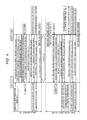
- FIG. 4 is a diagram illustrating an example of a signal that is transmitted and received in wireless communication and an operation between the master device and the slave device from when placing a call to when the call is in progress, according to the first exemplary embodiment of the present invention.
- FIG. 5 is a diagram illustrating an example of a signal that is transmitted and received in the wireless communication and an operation when making a determination of communication quality during a call and changing a key for encryption communication, according to the first exemplary embodiment of the present invention.
- FIG. 6 is a flowchart illustrating an example of an operation of the master device during the call according to the first exemplary embodiment of the present invention.
- FIG. 1 is a diagram illustrating an example of a cordless telephone for which the wireless communications device according to the present exemplary embodiment is used.
- the cordless telephone for which the wireless communications device according to the present invention is used which is illustrated in FIG. 1 is an example of a cordless telephone that is constituted from master device 1 and slave devices 2 and 3 .
- Master device 1 is connected to a telephone line.
- Master device 1 as a control station and slave devices 2 and 3 as slave stations, for example, may be able to perform wireless communication in compliance with a DECT scheme, and slave devices 2 and 3 may be able to carry out an external-line call or an internal-line call through master device 1 .
- FIG. 2 is a block diagram illustrating a configuration example of master device 1 .
- master device 1 has wireless communicator 10 , wireless quality detector 11 , audio processor 12 , information reporting unit 13 , operator 14 , display unit 15 , information storage 16 , timer unit 18 , and controller 19 .
- Wireless communicator 10 performs transmission and reception of control data or audio data for establishment of a wireless link or the external-line call, using a prescribed scheme, and in the case of encryption communication, performs encryption of transmission data and decoding of reception data.
- the “wireless communication” is assumed to include wireless transmission and wireless reception.
- Wireless quality detector 11 determines whether the quality of the reception signal is good, from a level of a reception signal that is received from wireless communicator 10 and the frequency with which a reception error occurs.
- Audio processor 12 converts into a digital signal an audio signal that is input from a telephone line or a microphone (not illustrated), generates audio data for transmission, converts the received audio data into an analog signal, and outputs the resulting analog signal to the telephone line or a speaker (not illustrated).
- a reception error occurs, and when a sequence error is detected at the time of changing an encryption key, an amount of audio output is reduced and the frequency of occurrence of noise is decreased.
- Information reporting unit 13 receives an incoming call from the external line or is called up from slave devices 2 and 3 through an internal line, and outputs information reporting sound.
- An example of the information reporting sound, ringer sound is given.
- Operation unit 14 is a button for receiving a user operation. Examples of the user operation, an operation (an outgoing-call operation) of placing a call, an operation of receiving a call (an incoming-call operation), an operation (slave device registration operation) of performing registration of a slave device, and the like are given.
- Information on the user is displayed on display unit 15 .
- a telephone number, registration information, an operation menu for slave devices 2 and 3 , and the like are given.
- An identification code (which is hereinafter referred to as an ID of the master device) of master device 1 and information on the slave device that is registered with master device 1 are stored in information storage 16 .
- Information storage 16 is constituted as a non-volatile memory such as an EEPROM. Pieces of information on the slave device that is stored in information storage 16 are an identification code (which is hereinafter referred to as an ID of the slave device) and an authentication key for identifying and authenticating the registered slave device, and an encryption key that is used for the encryption communication.
- Timer unit 18 measures an interval at which the encryption key changes, and a time, such as an interval for retrying changing the encryption key.
- Controller 19 controls operation of entire master device 1 in cooperation with each unit described above. Control by controller 19 will be described below.
- Master device 1 for example, has a Central Processing Unit (CPU), a storage medium, such as a Read Only Memory (ROM) in which a control program is stored, and a memory for operation, such as a Random Access Memory (RAM).
- CPU Central Processing Unit
- ROM Read Only Memory
- RAM Random Access Memory
- controller 19 a function of controller 19 is realized by the CPU executing the control program.
- Functional units that are included in master device 1 are not limited to the functional units whose reference numbers are 10 to 19 , which are illustrated in FIG. 2 and other functional units may be included.
- Other functional units may be functional units that realize main functions of master device 1 , and may be functional units that realize auxiliary functions that assist the main functions.
- FIG. 3 is a block diagram illustrating an example of the constitution of slave device 2 . Because a constitution of slave device 3 is the same as that of slave device 2 , a description relating to slave device 3 is omitted.
- slave device 2 has wireless communicator 20 , audio processor 22 , information reporting unit 23 , operator 24 , display unit 25 , information storage 26 , and controller 27 .
- Wireless communicator 20 performs transmission and reception of control data or audio data for establishment of a wireless link or the external-line call, using a prescribed scheme, and in the case of encryption communication, performs encryption of transmission data and decoding of reception data.
- Audio processing unit 22 converts into a digital signal an audio signal that is input from a microphone (not illustrated), generates audio data for transmission, converts the received audio data into an analog signal, and outputs the resulting analog signal to a speaker (not illustrated).
- a reception error occurs, and when a sequence error is detected at the time of changing an encryption key, an amount of reception audio output is reduced and the frequency of occurrence of noise is decreased.
- Information reporting unit 23 receives an incoming call from the external line or is called up from master device 1 and slave device 3 through the internal line, and outputs information reporting sound.
- information reporting sound ringer sound is given.
- Operation unit 24 is a button for receiving a user operation.
- the user operation an operation (an outgoing-call operation) of placing a call, an operation of receiving a call (an incoming-call operation), an operation (slave device registration operation) of performing registration of a slave device, and the like are given.
- Information on the user is displayed on display unit 25 .
- a telephone number, an operation menu for slave device 2 , and the like are given.
- information storage 26 includes a slave ID of slave device 2 , a master ID and an authentication key of the registered master device, that is, master device 1 , and an encryption key that is used for the encryption communication.
- Information storage 26 is constituted as a non-volatile memory such as an EEPROM.
- Controller 27 controls operation of entire slave device 2 in cooperation with each unit described above. Control by controller 27 will be described below.
- Slave device 2 for example, has a CPU, a storage medium, such as a ROM in which the control program is stored, and a memory for operation, such as a RAM. In this case, a function of controller 27 is realized by the CPU executing the control program.
- Functional units that are included in slave device 2 is not limited to the functional units whose reference numbers are 20 to 27 and which are illustrated in FIG. 3 and other functional units may be included.
- Other functional units may be functional units that realize main functions of slave device 2 , and may be functional units that realize auxiliary functions that assist the main functions.
- FIG. 4 is a diagram illustrating an example of a signal that is transmitted and received in wireless communication and an operation between the master device and the slave device from when placing a call to when the call is in progress.
- a call activation phase is a phase for establishing a wireless link between master device 1 and slave device 2 , notifying telephone number information and the like of a connection destination, and establishing a path for communication with the other party that is a call destination.
- a telephone line that is connected to audio processor 12 of master device 1 and a microphone and a speaker (which are not illustrated) that are connected to audio processor 22 of slave device 2 are connected to each other through the wireless communication, and are in a state where the communication is in progress.
- the other communication party sends a reply, a state in which it is possible to place a call is attained.
- the encryption key change phase is a phase in which an encryption key is reissued during the communication and the existing encryption key is made not to be available.
- a wireless link establishment request for example, access_request that is a control message of a MAC layer, in the case of the wireless communication in compliance with the DECT scheme
- master device 1 replies with a wireless link establishment confirmation (for example, bearer_confirm that is a control message of the MAC layer, in the case of the wireless communication in compliance with the DECT scheme), and thus the wireless link between the master device and the slave device is established.
- slave device 2 transmits a call request (for example, CC-SETUP that is a control message of an NWK layer, in the case of the wireless communication in compliance with the DECT scheme) that includes the slave device ID for identifying slave device 2 , the telephone number information of the other communication party, and the like.
- a call request for example, CC-SETUP that is a control message of an NWK layer, in the case of the wireless communication in compliance with the DECT scheme
- Master device 1 that receives the call request transmits a message (for example, ⁇ AUTHENTICATION-REQUEST ⁇ that is a message of the NWK layer, in the case of the wireless communication in compliance with the DECT scheme) for an encryption key generation authentication request, and slave device 2 transmits an encryption key generation authentication reply (for example, ⁇ AUTHENTICATION-REPLY ⁇ ) that is a message of the NWK layer, in the case of the wireless communication in compliance with the DECT scheme).
- a message for example, ⁇ AUTHENTICATION-REQUEST ⁇ that is a message of the NWK layer, in the case of the wireless communication in compliance with the DECT scheme
- an encryption key generation authentication reply for example, ⁇ AUTHENTICATION-REPLY ⁇
- the authentication and the generation of the encryption key is performed by carrying out an arithmetic operation (which is hereinafter expressed as an authentication encryption key generation arithmetic operation) that is determined in advance by using the random numbers that are transmitted and received with the encryption key generation authentication request, the authentication reply value that is transmitted and received with the encryption key generation authentication reply, and the authentication keys that are stored in information storage 16 of master device 1 and information storage 26 of slave device 2 . That is, the random numbers that are transmitted and received with the encryption key generation authentication request and the authentication keys that have the same value, which are stored in advance in the master device and the slave device respectively, are set to be inputs, and thus the authentication encryption key generation arithmetic operation is carried out and an authentication reply value and an encryption key are calculated in each of master device and slave device.
- an arithmetic operation which is hereinafter expressed as an authentication encryption key generation arithmetic operation
- slave device 2 transmits only the obtained authentication reply value. If the authentication reply value that is received with the encryption key generation authentication reply and the authentication reply value that is calculated and obtained by master device 1 itself are compared with each other and the result is the two authentication reply values are the same, the communication that is illustrated in FIG. 4 is continued and activation of the encryption communication is started. In a case where the two authentication reply values are different from each other, the communication is discontinued (this is not illustrated).
- an encryption request for example, ⁇ CIPHER-REQUEST ⁇ that is a message of the NWK layer, in the case of the wireless communication in compliance with the DECT scheme
- an encryption start request for example, start encryption: request that is a control message of the MAC layer, in the case of the wireless communication in compliance with the DECT scheme
- an encryption start confirmation for example, start encryption: confirm that is a control message of the MAC layer, in the case of the wireless communication in compliance with the DECT scheme
- an encryption start grant for example, start encryption: grant that is a control message of the MAC layer, in the case of the wireless communication in compliance with the DECT scheme
- the encryption start request is transmitted, decoding processing of the reception signal is started in the following frame, and when the encryption start confirmation is received, encryption of a transmission signal is started.
- master device 1 when the encryption start request is received, the encryption of the transmission signal is started, and the decoding processing of the reception signal is started with reception of the following frame in which the encryption start confirmation is transmitted.
- Master device 1 activates encryption key change timer T 1 that measures a time at which timer unit 18 activates the encryption key change phase.
- master device 1 transmits connection notification (for example, ⁇ CC-CONNECT ⁇ that is a message of the NWK layer, in the case of the wireless communication in compliance with the DECT scheme), transmits to slave device 2 a signal that is input from a telephone line, and outputs to the telephone line a signal that is received from slave device 2 . Furthermore, when receiving a connection notification, slave device 2 outputs to the speaker the signal that is received from master device 1 , starts to transmit to master device 1 a signal that is input from the microphone, and proceeds to a state where the call is in progress.
- connection notification for example, ⁇ CC-CONNECT ⁇ that is a message of the NWK layer, in the case of the wireless communication in compliance with the DECT scheme
- wireless quality detector 11 of master device 1 monitors a reception level of a signal from slave device 2 , which is received in wireless communicator 10 , and a state where the reception error occurs, and makes a determination of whether the reception level exceeds a threshold that is determined in advance and the frequency with which the reception error occurs falls below a threshold that is determined in advance.
- the encryption key change phase is described in detail.
- encryption key change timer T 1 of timer unit 18 of master device 1 expires
- the encryption key change phase is started.
- encryption key change timer T 1 of timer unit 18 of master device 1 expires, based on a result of the determination by wireless quality detector 11 , a determination of whether or not to change the encryption key is made.
- transmission and reception of a message for changing the encryption key are started.
- the change of the encryption key is made by transmitting and receiving the encryption key generation authentication request and the encryption key generation authentication reply as is the case with the generation of the encryption key in the call activation phase.
- Master device 1 transmits to the slave device random numbers that are newly generated with the encryption key generation authentication request.
- the master device and slave device 2 generate new encryption key CK 2 by carrying out an operation (which is hereinafter expressed as an authentication encryption key generation arithmetic operation) that is determined in advance by using these random numbers and the authentication keys that are stored in information storage 16 of master device 1 and information storage 26 of slave device 2 .
- the encryption communication temporarily stops, and control for changing the encryption key to the new encryption key and resuming the encryption communication is started.
- the encryption request is transmitted from master device 1 , in the same manner as when the encryption communication is activated in the call activation phase.
- slave device 2 When receiving the encryption request, slave device 2 transmits an encryption stop request (for example, stop encryption: request that is a control message of the MAC layer, in the case of the wireless communication in compliance with the DECT scheme) for temporarily stopping the encryption communication, stops the decoding for the reception from the next frame, and proceeds to an unencrypted-text reception state (a state where a signal that is not encrypted is received).
- an encryption stop request for example, stop encryption: request that is a control message of the MAC layer, in the case of the wireless communication in compliance with the DECT scheme
- master device 1 When receiving the encryption stop request, master device 1 stops the decoding for the reception from the next frame, stops the encryption for the transmission, and proceeds to an unencrypted-text transmission and reception state (a state where a signal that is not encrypted is transmitted and received). Master device 1 transmits an encryption stop confirmation (for example, stop encryption: confirm that is a control message of a MAC layer, in the case of the DECT scheme).
- an encryption stop confirmation for example, stop encryption: confirm that is a control message of a MAC layer, in the case of the DECT scheme.
- slave device 2 When receiving the encryption stop confirmation, slave device 2 stops the encryption for the transmission, and proceeds to an unencrypted-text transmission and reception state (state in which a signal that is not encrypted is transmitted and received).
- the encryption start request for example, start encryption: request that is a control message of the MAC layer, in the case of the wireless communication in compliance with the DECT scheme
- the encryption start confirmation for example, start encryption: confirm that is a control message of the MAC layer, in the case of the wireless communication in compliance with the DECT scheme
- the encryption start grant for example, start encryption: grant that is a control message of the MAC layer, in the case of the wireless communication in compliance with the DECT scheme
- Master device 1 activates encryption key change timer T 1 that measures the time at which timer unit 18 activates the encryption key change phase, and master device 1 and slave device 2 return to the state where the call is in progress.
- master device 1 activates a wireless encryption key change phase whenever encryption key change timer T 1 expires, makes a determination of whether or not to change the encryption key based on the result of the determination by wireless quality detector 11 , and changes the encryption key based on a result of the determination.
- FIG. 5 is a diagram illustrating an example of a signal that is transmitted and received and an operation when making a determination of communication quality during the call and changing the key of the encryption communication, and illustrates an example of an operation in a case where the communication quality is NG in an initial encryption key change phase and the communication quality is OK in the next encryption key change phase.
- encryption key change timer T 1 of timer unit 18 of master device 1 during the call expires
- the encryption key change phase is started.
- encryption key change timer T 1 of timer unit 18 of master device 1 expires, based on a result of the determination by wireless quality detector 11 , a determination of whether or not to change the encryption key is made.
- the encryption key is not changed, encryption key change timer T 1 of timer unit 18 of master device 1 is reactivated, the encryption key change phase is ended, and transition to the state where the call is in progress takes place.
- the encryption key change phase is started.
- FIG. 5 an example is illustrated that in the second encryption key change phase, it is determined that the communication quality is OK and the encryption key is replaced.
- An operation in which it is determined that the communication quality in FIG. 5 is OK and the encryption key is replaced is the same as the operation in the encryption key change phase in FIG. 4 , which is described above, and thus a description thereof is omitted.
- FIG. 6 is a flowchart illustrating one example of the operation by the master device during the call.
- master device 1 When proceeding to the in-process call to slave device 2 , master device 1 is in a state where the encryption key change timer is activated at the time of activating the call (this is not illustrated) and where the expiration of the encryption key change timer in Step: 101 is awaited. In a case where the encryption key change timer does not expire (No in Step: 101 ) the state where the expiration of the encryption key change timer in Step: 101 is awaited is maintained.
- Step: 101 a determination of whether or not the reception level exceeds the threshold is made (Step: 102 ).
- Step: 103 a determination of whether or not the frequency with which the reception error occurs is lower than the threshold
- Step: 104 the encryption key is changed (Step: 104 ).
- the encryption key change timer is activated (Step: 105 ), and transition to the state where the expiration of the encryption key change timer in Step: 101 is awaited takes place.
- the encryption key change timer is activated without changing the encryption key (Step: 105 ) and the transition to the state where the expiration of the encryption key change timer in Step: 101 is awaited takes place.
- the wireless communications device evaluates wireless communication quality, and only in a case where the communication quality is good, the encryption key is made to be changed. Because of this, the frequency with which the reception error occurs when the message for changing the encryption key is transmitted and received can be reduced. Furthermore, the number of times that noise occurs that results from a shift from timings of the stopping or the replacing of the encryption key that takes place due to the reception error when the message for changing the encryption key is transmitted and received, or the number of times that muting processing for reducing the noise is performed can be decreased. Thus, an effect is achieved in which, while reducing degradation in call quality, the replacement of the encryption key can be realized during the call.
- each of the messages that are transmitted and received for changing the encryption key may be able to be retransmitted, in Re-keying during a call, which replaces the encryption key during the call, is stipulated. It is stipulated that in a case where the transmission and reception of the message are not completed up to a prescribed number of times of retransmission, the communication is discontinued. That is, in a state where the wireless quality is poor, in a case where a wireless device that performs the communication with the DECT scheme activates the changing of the encryption key, when the reception errors successively occur, the communication is discontinued. As a result, the inconvenience is provided.
- the threshold for the determination of the reception level and the threshold for the determination of the frequency with which the reception error occurs may be stored in information storage 16 , and may be able to be changed with an operation from operation unit 14 .
- the threshold for the determination of the reception level and the threshold for the determination of the frequency with which the reception error occurs
- the communication is performed without depending on a state of the wireless quality while periodically changing the encryption key.
- the wireless communications device according to the present invention is useful as a wireless communications device such as a cordless telephone.
Landscapes
- Engineering & Computer Science (AREA)
- Computer Security & Cryptography (AREA)
- Computer Networks & Wireless Communication (AREA)
- Signal Processing (AREA)
- Mobile Radio Communication Systems (AREA)
- Telephone Function (AREA)
Abstract
A wireless communications device, that is constituted from a control station and a slave station that perform encryption communication using an encryption key, includes a controller that monitors communication quality of a state of a call to the slave station and, in a case where the communication quality degrades to below the same level as a state that is determined in advance, operates in such a manner that a procedure for changing the encryption key, which is determined in advance, is not activated.
Description
The present invention relates to a wireless communications device that is capable of being used as a cordless telephone or the like, and a control method for the wireless communications device.
In order to improve security performance, a technology in which encryption is performed for transmission and reception of control data for negotiation for establishing a communication path or of audio data that is to be transmitted and received during a call and thus communication is performed is used in wireless communication that is used for a cordless telephone or the like. In the wireless communication such as in the cordless telephone, a common key encryption schemes that use the same key for encryption and decoding are widely employed. In order to improve convenience, a key that is used in the common key encryption scheme is automatically generated using wireless communication, and the generated key is stored in a non-volatile memory of each of the master and slave devices, such as an EEPROM and is used for encryption communication, in the wireless communications device, such as a cordless telephone, that is used by an ordinary person. For example, encryption specifications, which are used for wireless communication in compliance with Digital Enhanced Cordless Telecommunications (DECT) schemes that are in wide use around the world as communication schemes for a digital cordless telephone, are stipulated in NPL 1, NPL 2, NPL 3, and NPL 4, and NPL 5. In NPL 5, a procedure and the like in a case where audio communication such as in a cordless telephone is performed using a master device and a slave device that perform communication with the DECT scheme is stipulated, and an early-encryption method in which the encryption communication is activated immediately after a wireless link is established between the master device and the slave device and a Re-keying during a call method in which the encryption communication continues while changing a key for the encryption communication at suitable intervals are stipulated.
- NPL 1: ETSI EN 300 175-2: “Digital Enhanced Cordless Telecommunications (DECT); Common Interface (CI); Part 2: Physical Layer (PHL)”
- NPL 2: ETSI EN 300 175-3: “Digital Enhanced Cordless Telecommunications (DECT); Common Interface (CI); Part 3: Medium Access Control (MAC) layer”
- NPL 3: ETSI EN 300 175-5: “Digital Enhanced Cordless Telecommunications (DECT); Common Interface (CI); Part 5: Network (NWK) layer”
- NPL 4: ETSI EN 300 175-7: “Digital Enhanced Cordless Telecommunications (DECT); Common Interface (CI); Part 7: Security features”
- NPL 5: ETSI EN 300 444: “Digital Enhanced Cordless Telecommunications (DECT); Generic Access Profile (GAP)”
According to an aspect of the present invention, there is provided a wireless communications device that is constituted from a control station and a slave station that perform encryption communication using an encryption key and that changes the encryption key in a call state in a predetermined procedure, in which the control station is constituted to include a controller that monitors communication quality of a state of a call to the slave station and, in a case where the communication quality degrades to below the same level as a state that is determined in advance, operates in such a manner that a procedure for changing the encryption key, which is determined in advance, is not activated.
Embodiments of the present invention will be described below.
[Constitution of a Cordless Telephone]
An example of a constitution of a wireless communications device according to a first exemplary embodiment is described. FIG. 1 is a diagram illustrating an example of a cordless telephone for which the wireless communications device according to the present exemplary embodiment is used.
The cordless telephone for which the wireless communications device according to the present invention is used, which is illustrated in FIG. 1 is an example of a cordless telephone that is constituted from master device 1 and slave devices 2 and 3.
[Constitution of a Master Device]
An example of a constitution of a master device is described. FIG. 2 is a block diagram illustrating a configuration example of master device 1.
In FIG. 2 , master device 1 has wireless communicator 10, wireless quality detector 11, audio processor 12, information reporting unit 13, operator 14, display unit 15, information storage 16, timer unit 18, and controller 19.
Information on the user is displayed on display unit 15. As example of the information, a telephone number, registration information, an operation menu for slave devices 2 and 3, and the like are given.
An identification code (which is hereinafter referred to as an ID of the master device) of master device 1 and information on the slave device that is registered with master device 1 are stored in information storage 16. Information storage 16 is constituted as a non-volatile memory such as an EEPROM. Pieces of information on the slave device that is stored in information storage 16 are an identification code (which is hereinafter referred to as an ID of the slave device) and an authentication key for identifying and authenticating the registered slave device, and an encryption key that is used for the encryption communication.
Functional units that are included in master device 1 are not limited to the functional units whose reference numbers are 10 to 19, which are illustrated in FIG. 2 and other functional units may be included. Other functional units may be functional units that realize main functions of master device 1, and may be functional units that realize auxiliary functions that assist the main functions.
[Constitution of the Slave Device]
An example of a constitution of the slave device is described. FIG. 3 is a block diagram illustrating an example of the constitution of slave device 2. Because a constitution of slave device 3 is the same as that of slave device 2, a description relating to slave device 3 is omitted.
In FIG. 3 , slave device 2 has wireless communicator 20, audio processor 22, information reporting unit 23, operator 24, display unit 25, information storage 26, and controller 27.
Information on the user is displayed on display unit 25. As example of the information, a telephone number, an operation menu for slave device 2, and the like are given.
Included in information storage 26 are a slave ID of slave device 2, a master ID and an authentication key of the registered master device, that is, master device 1, and an encryption key that is used for the encryption communication. Information storage 26 is constituted as a non-volatile memory such as an EEPROM.
Functional units that are included in slave device 2 is not limited to the functional units whose reference numbers are 20 to 27 and which are illustrated in FIG. 3 and other functional units may be included. Other functional units may be functional units that realize main functions of slave device 2, and may be functional units that realize auxiliary functions that assist the main functions.
[Operation of Each of Master Device 1 and Slave Device 2]
An example of operation of the cordless telephone that uses the wireless communications device according to the present invention, which is described above, will be described below.
First, the call activation phase will be described in detail below. When an operation in which a telephone number of the other party is designated and an outgoing call is requested is performed in operator 24 in slave device 2, controller 27 starts an operation for an outgoing call and the call activation phase is started. In the call activation phase, a wireless link establishment request (for example, access_request that is a control message of a MAC layer, in the case of the wireless communication in compliance with the DECT scheme) is transmitted by slave device 2, master device 1 replies with a wireless link establishment confirmation (for example, bearer_confirm that is a control message of the MAC layer, in the case of the wireless communication in compliance with the DECT scheme), and thus the wireless link between the master device and the slave device is established.
Subsequently, slave device 2 transmits a call request (for example, CC-SETUP that is a control message of an NWK layer, in the case of the wireless communication in compliance with the DECT scheme) that includes the slave device ID for identifying slave device 2, the telephone number information of the other communication party, and the like.
When the authentication ends and the generation of encryption key CK1 is completed, the activation of the encryption communication is started. In a case where an encryption request (for example, {CIPHER-REQUEST} that is a message of the NWK layer, in the case of the wireless communication in compliance with the DECT scheme) from master device 1, an encryption start request (for example, start encryption: request that is a control message of the MAC layer, in the case of the wireless communication in compliance with the DECT scheme) from slave device 2, an encryption start confirmation (for example, start encryption: confirm that is a control message of the MAC layer, in the case of the wireless communication in compliance with the DECT scheme) from the master device, an encryption start grant (for example, start encryption: grant that is a control message of the MAC layer, in the case of the wireless communication in compliance with the DECT scheme) from slave device 2 are sequentially transmitted and received, and the activation of the encryption communication is completed. On the slave device 2 side, the encryption start request is transmitted, decoding processing of the reception signal is started in the following frame, and when the encryption start confirmation is received, encryption of a transmission signal is started. In master device 1, when the encryption start request is received, the encryption of the transmission signal is started, and the decoding processing of the reception signal is started with reception of the following frame in which the encryption start confirmation is transmitted. Master device 1 activates encryption key change timer T1 that measures a time at which timer unit 18 activates the encryption key change phase.
When the activation of the encryption communication is completed, master device 1 transmits connection notification (for example, {CC-CONNECT} that is a message of the NWK layer, in the case of the wireless communication in compliance with the DECT scheme), transmits to slave device 2 a signal that is input from a telephone line, and outputs to the telephone line a signal that is received from slave device 2. Furthermore, when receiving a connection notification, slave device 2 outputs to the speaker the signal that is received from master device 1, starts to transmit to master device 1 a signal that is input from the microphone, and proceeds to a state where the call is in progress. During the call, wireless quality detector 11 of master device 1 monitors a reception level of a signal from slave device 2, which is received in wireless communicator 10, and a state where the reception error occurs, and makes a determination of whether the reception level exceeds a threshold that is determined in advance and the frequency with which the reception error occurs falls below a threshold that is determined in advance.
Next, the encryption key change phase is described in detail. When encryption key change timer T1 of timer unit 18 of master device 1 expires, the encryption key change phase is started. When encryption key change timer T1 of timer unit 18 of master device 1 expires, based on a result of the determination by wireless quality detector 11, a determination of whether or not to change the encryption key is made. When making the determination, in a case where the latest reception level exceeds the threshold that is determined in advance and the frequency with which the reception error occurs falls below the threshold that is determined in advance, transmission and reception of a message for changing the encryption key are started.
The change of the encryption key is made by transmitting and receiving the encryption key generation authentication request and the encryption key generation authentication reply as is the case with the generation of the encryption key in the call activation phase. Master device 1 transmits to the slave device random numbers that are newly generated with the encryption key generation authentication request. The master device and slave device 2 generate new encryption key CK2 by carrying out an operation (which is hereinafter expressed as an authentication encryption key generation arithmetic operation) that is determined in advance by using these random numbers and the authentication keys that are stored in information storage 16 of master device 1 and information storage 26 of slave device 2.
When the generation of new encryption key CK2 is completed, the encryption communication temporarily stops, and control for changing the encryption key to the new encryption key and resuming the encryption communication is started.
First, the encryption request is transmitted from master device 1, in the same manner as when the encryption communication is activated in the call activation phase.
When receiving the encryption request, slave device 2 transmits an encryption stop request (for example, stop encryption: request that is a control message of the MAC layer, in the case of the wireless communication in compliance with the DECT scheme) for temporarily stopping the encryption communication, stops the decoding for the reception from the next frame, and proceeds to an unencrypted-text reception state (a state where a signal that is not encrypted is received).
When receiving the encryption stop request, master device 1 stops the decoding for the reception from the next frame, stops the encryption for the transmission, and proceeds to an unencrypted-text transmission and reception state (a state where a signal that is not encrypted is transmitted and received). Master device 1 transmits an encryption stop confirmation (for example, stop encryption: confirm that is a control message of a MAC layer, in the case of the DECT scheme).
When receiving the encryption stop confirmation, slave device 2 stops the encryption for the transmission, and proceeds to an unencrypted-text transmission and reception state (state in which a signal that is not encrypted is transmitted and received).
When the stopping of the encryption communication is completed, in the same manner as when the encryption communication is activated in the call activation phase, the encryption start request (for example, start encryption: request that is a control message of the MAC layer, in the case of the wireless communication in compliance with the DECT scheme) from slave device 2, the encryption start confirmation (for example, start encryption: confirm that is a control message of the MAC layer, in the case of the wireless communication in compliance with the DECT scheme) from the master device, the encryption start grant (for example, start encryption: grant that is a control message of the MAC layer, in the case of the wireless communication in compliance with the DECT scheme) from slave device 2 are sequentially transmitted and received, the activation of the encryption communication is completed, and the encryption communication is started using new encryption key CK2.
Subsequently, master device 1 activates a wireless encryption key change phase whenever encryption key change timer T1 expires, makes a determination of whether or not to change the encryption key based on the result of the determination by wireless quality detector 11, and changes the encryption key based on a result of the determination.
Next, an operation in a case where the encryption key is not changed in the wireless encryption key change phase is described referring to FIG. 5 . FIG. 5 is a diagram illustrating an example of a signal that is transmitted and received and an operation when making a determination of communication quality during the call and changing the key of the encryption communication, and illustrates an example of an operation in a case where the communication quality is NG in an initial encryption key change phase and the communication quality is OK in the next encryption key change phase.
As illustrated in FIG. 5 , when encryption key change timer T1 of timer unit 18 of master device 1 during the call expires, the encryption key change phase is started. When encryption key change timer T1 of timer unit 18 of master device 1 expires, based on a result of the determination by wireless quality detector 11, a determination of whether or not to change the encryption key is made. When making the determination, in a case where the latest reception level does not exceed the threshold that is determined in advance, or in a case where the frequency with which the reception error does not fall below the threshold that is determined in advance, the result of the determination of the communication quality is NG, the encryption key is not changed, encryption key change timer T1 of timer unit 18 of master device 1 is reactivated, the encryption key change phase is ended, and transition to the state where the call is in progress takes place.
When encryption key change timer T1 of timer unit 18 of master device 1 during the call expires, the encryption key change phase is started. In FIG. 5 , an example is illustrated that in the second encryption key change phase, it is determined that the communication quality is OK and the encryption key is replaced. An operation in which it is determined that the communication quality in FIG. 5 is OK and the encryption key is replaced is the same as the operation in the encryption key change phase in FIG. 4 , which is described above, and thus a description thereof is omitted.
Next, an operation of changing the encryption key in a wireless manner, which is performed by master device 1, is described referring to FIG. 6 . FIG. 6 is a flowchart illustrating one example of the operation by the master device during the call.
When proceeding to the in-process call to slave device 2, master device 1 is in a state where the encryption key change timer is activated at the time of activating the call (this is not illustrated) and where the expiration of the encryption key change timer in Step: 101 is awaited. In a case where the encryption key change timer does not expire (No in Step: 101) the state where the expiration of the encryption key change timer in Step: 101 is awaited is maintained.
When the encryption key change timer expires (Yes in Step: 101), a determination of whether or not the reception level exceeds the threshold is made (Step: 102).
When the reception level exceeds the threshold (Yes in Step: 102), a determination of whether or not the frequency with which the reception error occurs is lower than the threshold (Step: 103).
In a case where the frequency with which the reception error is lower than the threshold (Yes in Step: 103), the encryption key is changed (Step: 104). The encryption key change timer is activated (Step: 105), and transition to the state where the expiration of the encryption key change timer in Step: 101 is awaited takes place.
In a case where the reception level does not exceed the threshold in Step: 102 (No in Step: 102), and in a case where the frequency with which the reception error occurs is higher than the threshold in Step: 103 (No in Step: 103), the encryption key change timer is activated without changing the encryption key (Step: 105) and the transition to the state where the expiration of the encryption key change timer in Step: 101 is awaited takes place.
The exemplary embodiment of the present invention is described above. As described above, in a case where the encryption key is changed, the wireless communications device according to the present invention evaluates wireless communication quality, and only in a case where the communication quality is good, the encryption key is made to be changed. Because of this, the frequency with which the reception error occurs when the message for changing the encryption key is transmitted and received can be reduced. Furthermore, the number of times that noise occurs that results from a shift from timings of the stopping or the replacing of the encryption key that takes place due to the reception error when the message for changing the encryption key is transmitted and received, or the number of times that muting processing for reducing the noise is performed can be decreased. Thus, an effect is achieved in which, while reducing degradation in call quality, the replacement of the encryption key can be realized during the call.
The number of times that with the DECT scheme, each of the messages that are transmitted and received for changing the encryption key may be able to be retransmitted, in Re-keying during a call, which replaces the encryption key during the call, is stipulated. It is stipulated that in a case where the transmission and reception of the message are not completed up to a prescribed number of times of retransmission, the communication is discontinued. That is, in a state where the wireless quality is poor, in a case where a wireless device that performs the communication with the DECT scheme activates the changing of the encryption key, when the reception errors successively occur, the communication is discontinued. As a result, the inconvenience is provided. In a case where the present invention is applied to the wireless device that performs the communication with the DECT scheme, although control by the Re-keying during a call, which replaces the encryption key during the call, is performed, an effect is achieved in which the number of times that the communication discontinuance due to the degradation in the wireless quality at the time of replacing the encryption key occurs is reduced.
According to the exemplary embodiment of the present invention, the threshold for the determination of the reception level and the threshold for the determination of the frequency with which the reception error occurs may be stored in information storage 16, and may be able to be changed with an operation from operation unit 14. In this case, in a case where the communication that focuses on confidentiality is performed, by making it possible to change the threshold, it is possible that the communication is performed without depending on a state of the wireless quality while periodically changing the encryption key. Thus, an effect that can improve the convenience is achieved.
The wireless communications device according to the present invention is useful as a wireless communications device such as a cordless telephone.
-
- 1 MASTER DEVICE
- 2 SLAVE DEVICE
- 3 SLAVE DEVICE
- 10, 20 WIRELESS COMMUNICATOR
- 11 WIRELESS QUALITY DETECTOR
- 12, 22 AUDIO PROCESSOR
- 13, 23 INFORMATION REPORTING UNIT
- 14, 24 OPERATOR
- 15, 25 DISPLAY UNIT
- 16, 26 INFORMATION STORAGE
- 18 TIMER UNIT
- 19, 27 CONTROLLER
Claims (2)
1. A wireless communications device that is constituted from a control station and a slave station, wherein the control station includes:
a wireless communicator which, in operation, performs communication between the control station and the slave station using an encryption key; and
a controller which, in operation, determines whether or not to change the encryption key based on a communication quality of a call after a prescribed time elapses during the call;
wherein the communication quality includes a latest reception level;
wherein to determine to change the encryption key includes a plurality of determinations performed by the controller:
a determination that the latest reception level does not exceeds a threshold of a prescribed level;
wherein the communication quality further includes a frequency with which a reception error occurs; and
a determination that the frequency with which the reception error occurs is lower than a prescribed frequency threshold;
wherein, in a case where the controller determines that the encryption key is to be changed, the controller performs a procedure that changes the encryption key to a different key during the call; and
wherein, in a case where the controller determines that the encryption key is not to be changed, the controller does not perform the procedure that changes the encryption key and determines again whether or not to change the encryption key after the prescribed time elapses one more time during the call.
2. A control method for a wireless communications device that is constituted from a control station and a slave station, the method comprising:
performing communication between the control station and the slave station using an encryption key;
determining whether or not to change the encryption key based on a communication quality of a call after a prescribed time elapses during the call;
wherein the communication quality includes a latest reception level; and
wherein to determine to change the encryption key includes a plurality of determinations:
a determination that the latest reception level does not exceeds a threshold of a prescribed level;
wherein the communication quality further includes a frequency with which a reception error occurs; and
a determination that the frequency with which the reception error occurs is lower than a prescribed frequency threshold;
in a case where a result of the determining is that the encryption key is to be changed, performing a procedure that changes the encryption key to a different key during the call; and
in a case where the result of the determining is that the encryption key is not to be changed, not performing the procedure that changes the encryption key and determining again whether or not to change the encryption key after the prescribed time elapses one more time during the call.
Applications Claiming Priority (3)
| Application Number | Priority Date | Filing Date | Title |
|---|---|---|---|
| JP2014075916A JP6364611B2 (en) | 2014-04-02 | 2014-04-02 | Radio communication apparatus and control method for control station of radio communication apparatus |
| JP2014-075916 | 2014-04-02 | ||
| PCT/JP2015/001821 WO2015151495A1 (en) | 2014-04-02 | 2015-03-30 | Wireless communications device and control method for wireless communications device |
Publications (2)
| Publication Number | Publication Date |
|---|---|
| US20170094504A1 US20170094504A1 (en) | 2017-03-30 |
| US10182347B2 true US10182347B2 (en) | 2019-01-15 |
Family
ID=54239840
Family Applications (1)
| Application Number | Title | Priority Date | Filing Date |
|---|---|---|---|
| US15/128,083 Active 2035-04-13 US10182347B2 (en) | 2014-04-02 | 2015-03-30 | Wireless communications device and control method for wireless communications device |
Country Status (4)
| Country | Link |
|---|---|
| US (1) | US10182347B2 (en) |
| EP (1) | EP3128694B1 (en) |
| JP (1) | JP6364611B2 (en) |
| WO (1) | WO2015151495A1 (en) |
Citations (4)
| Publication number | Priority date | Publication date | Assignee | Title |
|---|---|---|---|---|
| US20040158704A1 (en) * | 2003-02-12 | 2004-08-12 | Avaya Technology Corp. | Providing encrypted real time data transmissions on a network |
| US20060089149A1 (en) * | 2004-10-26 | 2006-04-27 | Toshiki Kizu | Radio communication apparatus and radio communication method |
| US20100146091A1 (en) * | 2008-12-05 | 2010-06-10 | Concert Technology | Method of providing proximity-based quality for multimedia content |
| US20130072106A1 (en) * | 2011-09-16 | 2013-03-21 | Renasas Mobile Corporation | Efficient Enablement For Wireless Communication On License-Exempt Bands |
Family Cites Families (2)
| Publication number | Priority date | Publication date | Assignee | Title |
|---|---|---|---|---|
| JP4815917B2 (en) * | 2005-07-21 | 2011-11-16 | 日本電気株式会社 | Traffic detection device, communication quality monitoring device, method, and program |
| JP5413225B2 (en) * | 2010-02-05 | 2014-02-12 | 富士通株式会社 | Program, in-vehicle device, and information processing device |
-
2014
- 2014-04-02 JP JP2014075916A patent/JP6364611B2/en active Active
-
2015
- 2015-03-30 US US15/128,083 patent/US10182347B2/en active Active
- 2015-03-30 WO PCT/JP2015/001821 patent/WO2015151495A1/en not_active Ceased
- 2015-03-30 EP EP15772733.0A patent/EP3128694B1/en active Active
Patent Citations (4)
| Publication number | Priority date | Publication date | Assignee | Title |
|---|---|---|---|---|
| US20040158704A1 (en) * | 2003-02-12 | 2004-08-12 | Avaya Technology Corp. | Providing encrypted real time data transmissions on a network |
| US20060089149A1 (en) * | 2004-10-26 | 2006-04-27 | Toshiki Kizu | Radio communication apparatus and radio communication method |
| US20100146091A1 (en) * | 2008-12-05 | 2010-06-10 | Concert Technology | Method of providing proximity-based quality for multimedia content |
| US20130072106A1 (en) * | 2011-09-16 | 2013-03-21 | Renasas Mobile Corporation | Efficient Enablement For Wireless Communication On License-Exempt Bands |
Non-Patent Citations (7)
| Title |
|---|
| ETSI EN 300 175-2 V1.9.1, "Digital Enhanced Cordless Telecommunications (DECT); Common Interface (CI); Part 2: Physical Layer (PHL)," Sep. 2005, 64 pages. |
| ETSI EN 300 175-3 V1.9.1, "Digital Enhanced Cordless Telecommunication (DECT); Common Interface (CI); Part 3: Medium Access Control (MAC) layer," Sep. 2005, 235 pages. |
| ETSI EN 300 175-5 V1.9.1, "Digital Enhanced Cordless Telecommunication (DECT); Common Interface (CI); Part 5: Network (NWK) layer," Sep. 2005, 309 pages. |
| ETSI EN 300 175-7 V2.4.0, Digital Cordless Telecommunication (DECT); Common Interface (CI); Part 7: Security features, Dec. 2011, 142 pages. |
| ETSI EN 300 444 V2.2.6, "Digital Enhanced Cordless Telecommunication (DECT); Generic Access Profile (GAP)," Dec. 2011, 154 pages. |
| Extended European Search Report, dated Dec. 15, 2016, for corresponding EP Application No. 15772733.0-1870, 9 pages. |
| International Search Report dated May 26, 2015, for corresponding International Application No. PCT/JP2015/001821, 4 pages. |
Also Published As
| Publication number | Publication date |
|---|---|
| EP3128694A1 (en) | 2017-02-08 |
| JP2015198375A (en) | 2015-11-09 |
| EP3128694A4 (en) | 2017-02-08 |
| WO2015151495A1 (en) | 2015-10-08 |
| EP3128694B1 (en) | 2020-12-09 |
| US20170094504A1 (en) | 2017-03-30 |
| JP6364611B2 (en) | 2018-08-01 |
Similar Documents
| Publication | Publication Date | Title |
|---|---|---|
| CN109005540B (en) | A method, device and computer-readable storage medium for key deduction | |
| US8762715B2 (en) | Event triggered pairing of wireless communication devices based on time measurements | |
| DK2926574T3 (en) | WIRELESS STREAMING OF A SOUND SIGNAL FOR SEVERAL SOUND RECEIVERS APPLIANCES | |
| US20110126014A1 (en) | Event Triggered Pairing of Wireless Communication Devices Based on Time Measurements | |
| US9585012B2 (en) | System and method for establishing a secure connection in communications systems | |
| US10680817B2 (en) | Wireless communications device and control method for wireless communications device | |
| EP3358861B1 (en) | Radio activation and pairing through an acoustic signal between a personal communication device and a head-worn device | |
| CN106797566A (en) | Communicator, communication means, system and computer program product | |
| EP3410635B1 (en) | Method and device for radio bearer security configuration | |
| US20250219837A1 (en) | Information processing method and apparatus, communication device, and storage medium | |
| US9775030B2 (en) | Wireless communication device | |
| JP2005236490A (en) | Mobile communication terminal and network connection device of mobile communication network system, shared secret key update method and shared secret key update program | |
| EP2809045B1 (en) | Information security attachment device for voice communication and information security method for voice communication using the same | |
| US9843444B2 (en) | Communication apparatus, control method, and storage medium | |
| JP4774047B2 (en) | Communication decoding method and apparatus | |
| US9113337B2 (en) | Radio communication apparatus | |
| CN107070659B (en) | Certification of Base Stations and Headsets | |
| JP2024537820A (en) | COMMUNICATION METHOD, APPARATUS AND SYSTEM | |
| EP3128694B1 (en) | Wireless communications device and control method for wireless communications device | |
| WO2014156100A1 (en) | Method for providing wireless communication access, first device and medium | |
| JP2020063605A (en) | Locking/unlocking system and wireless communication method | |
| CN104584605B (en) | Encryption parameter treating method and apparatus | |
| JP4973116B2 (en) | Wireless LAN access point | |
| US20230291768A1 (en) | Method and Apparatus for MoCA Network With Protected Set-Up | |
| JPWO2008072292A1 (en) | Mobile communication system, mobile device, and radio control apparatus |
Legal Events
| Date | Code | Title | Description |
|---|---|---|---|
| AS | Assignment |
Owner name: PANASONIC INTELLECTUAL PROPERTY MANAGEMENT CO., LT Free format text: ASSIGNMENT OF ASSIGNORS INTEREST;ASSIGNOR:SUGITANI, TOSHIYUKI;REEL/FRAME:041036/0193 Effective date: 20160915 |
|
| STCF | Information on status: patent grant |
Free format text: PATENTED CASE |
|
| MAFP | Maintenance fee payment |
Free format text: PAYMENT OF MAINTENANCE FEE, 4TH YEAR, LARGE ENTITY (ORIGINAL EVENT CODE: M1551); ENTITY STATUS OF PATENT OWNER: LARGE ENTITY Year of fee payment: 4 |