US10178587B2 - System and method for traffic offloading for optimal network performance in a wireless heterogeneous broadband network - Google Patents
System and method for traffic offloading for optimal network performance in a wireless heterogeneous broadband network Download PDFInfo
- Publication number
- US10178587B2 US10178587B2 US14/618,919 US201514618919A US10178587B2 US 10178587 B2 US10178587 B2 US 10178587B2 US 201514618919 A US201514618919 A US 201514618919A US 10178587 B2 US10178587 B2 US 10178587B2
- Authority
- US
- United States
- Prior art keywords
- radio access
- access network
- performance parameters
- offloading
- hardware processors
- Prior art date
- Legal status (The legal status is an assumption and is not a legal conclusion. Google has not performed a legal analysis and makes no representation as to the accuracy of the status listed.)
- Active
Links
Images




Classifications
-
- H—ELECTRICITY
- H04—ELECTRIC COMMUNICATION TECHNIQUE
- H04W—WIRELESS COMMUNICATION NETWORKS
- H04W24/00—Supervisory, monitoring or testing arrangements
- H04W24/02—Arrangements for optimising operational condition
-
- H—ELECTRICITY
- H04—ELECTRIC COMMUNICATION TECHNIQUE
- H04W—WIRELESS COMMUNICATION NETWORKS
- H04W36/00—Hand-off or reselection arrangements
- H04W36/0005—Control or signalling for completing the hand-off
- H04W36/0055—Transmission or use of information for re-establishing the radio link
- H04W36/0058—Transmission of hand-off measurement information, e.g. measurement reports
-
- H—ELECTRICITY
- H04—ELECTRIC COMMUNICATION TECHNIQUE
- H04W—WIRELESS COMMUNICATION NETWORKS
- H04W36/00—Hand-off or reselection arrangements
- H04W36/0005—Control or signalling for completing the hand-off
- H04W36/0055—Transmission or use of information for re-establishing the radio link
-
- H—ELECTRICITY
- H04—ELECTRIC COMMUNICATION TECHNIQUE
- H04W—WIRELESS COMMUNICATION NETWORKS
- H04W24/00—Supervisory, monitoring or testing arrangements
- H04W24/06—Testing, supervising or monitoring using simulated traffic
-
- H—ELECTRICITY
- H04—ELECTRIC COMMUNICATION TECHNIQUE
- H04W—WIRELESS COMMUNICATION NETWORKS
- H04W28/00—Network traffic management; Network resource management
- H04W28/02—Traffic management, e.g. flow control or congestion control
- H04W28/0231—Traffic management, e.g. flow control or congestion control based on communication conditions
- H04W28/0236—Traffic management, e.g. flow control or congestion control based on communication conditions radio quality, e.g. interference, losses or delay
-
- H—ELECTRICITY
- H04—ELECTRIC COMMUNICATION TECHNIQUE
- H04W—WIRELESS COMMUNICATION NETWORKS
- H04W28/00—Network traffic management; Network resource management
- H04W28/02—Traffic management, e.g. flow control or congestion control
- H04W28/08—Load balancing or load distribution
-
- H—ELECTRICITY
- H04—ELECTRIC COMMUNICATION TECHNIQUE
- H04W—WIRELESS COMMUNICATION NETWORKS
- H04W28/00—Network traffic management; Network resource management
- H04W28/02—Traffic management, e.g. flow control or congestion control
- H04W28/10—Flow control between communication endpoints
-
- H—ELECTRICITY
- H04—ELECTRIC COMMUNICATION TECHNIQUE
- H04W—WIRELESS COMMUNICATION NETWORKS
- H04W28/00—Network traffic management; Network resource management
- H04W28/02—Traffic management, e.g. flow control or congestion control
- H04W28/0268—Traffic management, e.g. flow control or congestion control using specific QoS parameters for wireless networks, e.g. QoS class identifier [QCI] or guaranteed bit rate [GBR]
Definitions
- the present disclosure relates generally to offloading data, and more particularly but not limited to traffic offloading from a LTE (long term evolution) network to WLAN (wireless local area network) for optimizing network performance and optimizing resource utilization.
- LTE long term evolution
- WLAN wireless local area network
- LTE Long-Term Evolution
- EUTRAN evolved radio access network
- EPC evolved packet core
- 3GPP has listed a set of requirements that the LTE architecture should fulfill, including downlink and uplink peak data rates of 100 Mbits/s and 50 Mbits/s, respectively and enhanced multimedia broadcast multicast service (EMBMS) through paired and unpaired spectrum arrangements.
- EMBMS enhanced multimedia broadcast multicast service
- the method may include monitoring, by one or more hardware processors, first values of one or more first performance parameters of the first radio access network at one or more instants of time prior to a predetermined transmission time interval; predicting, by the one or more hardware processors, second values of the one or more first performance parameters based on the first values of one or more first performance parameters, the second values being predicted at the end of the predetermined transmission time interval; comparing, by the one or more hardware processors, the second values of the one or more first performance parameters to corresponding predetermined threshold values of the one or more first performance parameters; and triggering, by the one or more hardware processors, offloading of the one or more data packets from the first radio access network to the second radio access network based on the comparison.
- a system for offloading one or more data packets from a first radio access network to a second radio access network may include one or more hardware processors; and a memory storing instructions that, when executed by the one or more hardware processors, cause the one or more hardware processors to perform operations.
- the operations may include monitoring, by one or more hardware processors, first values of one or more first performance parameters of the first radio access network at one or more instants of time prior to a predetermined transmission time interval; predicting, by the one or more hardware processors, second values of the one or more first performance parameters based on the first values of one or more first performance parameters, the second values being predicted at the end of the predetermined transmission time interval; comparing, by the one or more hardware processors, the second values of the one or more first performance parameters to corresponding predetermined threshold values of the one or more first performance parameters; and triggering, by the one or more hardware processors, offloading of the one or more data packets from the first radio access network to the second radio access network based on the comparison.
- a non-transitory computer—readable medium storing instructions for offloading one or more data packets from a first radio access network to a second radio access network.
- the instructions when executed by a processor cause the processor to perform operations.
- the operations may include monitoring first values of one or more first performance parameters of the first radio access network at one or more instants of time prior to a predetermined transmission time interval; predicting, by the processor, second values of the one or more first performance parameters based on the first values of one or more first performance parameters, the second values being predicted at the end of the predetermined transmission time interval; comparing the second values of the one or more first performance parameters to corresponding predetermined threshold values of the one or more first performance parameters; and triggering offloading of the one or more data packets from the first radio access network to the second radio access network based on the comparison.
- FIG. 1 illustrates an exemplary wireless communication system for implementing methods and systems consistent with the present disclosure.
- FIG. 2 illustrates an improved architecture of packet gateway (PGW) incorporating intelligent predictive traffic offloader (IPTO) in accordance with some embodiment of the present disclosure.
- PGW packet gateway
- IPTO intelligent predictive traffic offloader
- FIG. 3 illustrates system architecture of the intelligent predictive traffic offloader (IPTO) in accordance with some embodiments of the present disclosure.
- IPTO intelligent predictive traffic offloader
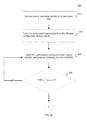
- FIGS. 4A-B illustrate a flowchart of an exemplary method for offloading the data traffic from the first radio access network to one of the one or more second radio access network in accordance with an embodiment of the present disclosure.
- FIGS. 5A-D illustrate a flowchart of an exemplary method for offloading the data traffic from the first radio access network to one of the one or more second radio access network in accordance with another embodiment of the present disclosure.
- FIG. 6 is a block diagram of an exemplary computer system for implementing embodiments consistent with the present disclosure.
- the terms “comprise,” “comprises,” “comprising,” “includes,” “including,” “has,” “having,” “contains,” or “containing,” or any other variation thereof, are intended to cover a non-exclusive inclusion.
- a composition, process, method, article, system, apparatus, etc. that comprises a list of elements is not necessarily limited to only those elements but may include other elements not expressly listed.
- the present disclosure discloses an intelligent traffic offloading mechanism that takes into account the network configuration parameters and current and future performance parameters of the LTE network for triggering offloading of data, selection of appropriate network to offload for effective offloading keeping in mind the optimized network performance and resource utilization in a dynamic traffic load scenario across the networks (LTE & WLAN).
- the triggering is based on the current load (for example, number of active sessions) on source network (LTE) using network configuration parameters (for example maximum number of allowed active sessions).
- the triggering is based on performance threshold of predicted performance of immediate future (t+1) of the source network (LTE) before offloading, based on network parameters like physical resource block (PRB) utilization, average inter scheduling interval, interference/noise power level, average packet discard rate, etc.
- PRB physical resource block
- the selection of the appropriate target network (WLAN) is based on the user perceived signal strength and interference/noise power level of the target network (WLAN).
- FIG. 1 illustrates an exemplary wireless communication system 100 for implementing methods and systems consistent with the present disclosure.
- the wireless communication system 100 shown in FIG. 1 includes at least one base station 102 and one or more WLAN (wireless local area network) access points 104 - 1 , 104 - 2 (collectively referred to as 104 ).
- the at least one base station is shown as evolved NodeBs (eNB) 102 .
- Base station is a node that can relay signals for mobile devices, also referred to herein as an user equipment UE 108 .
- the term “base station” (BS) can be interchangeably used with a network node, an access node, or a network component.
- the exemplary wireless communication system 100 may include a first radio access network 110 /first cell and one or more second radio access networks/second cells 112 - 1 , 112 - 2 (collectively referred to as 112 ), evolved packet core (EPC) networks 114 , and external networks 116 .
- the first radio access network 110 and the one or more second radio access networks 112 may constitute Evolved Universal Terrestrial Radio Access networks (EUTRANs).
- the first radio access network 110 may be a Long-Term Evolution (LTE) wireless communication network.
- the one or more second radio access networks 112 may be WLAN networks that may include IEEE802.11 WLAN, IEEE802.16 WiMAX network, etc.
- the UE 108 operates within the overlapping region of the first radio access network 110 and the one or more second radio access networks 112 .
- UE 108 may be served by both eNB 102 and WLAN access point 104 .
- 2G/3G systems Global System for Mobile Communication (GSM), Interim Standard 95 (IS-95), Universal Mobile Telecommunications systems (UMTS) and/or Code Division Multiple Access (CDMA2000) may also be integrated into first radio access network 110 .
- GSM Global System for Mobile Communication
- IS-95 Interim Standard 95
- UMTS Universal Mobile Telecommunications systems
- CDMA2000 Code Division Multiple Access
- the first cell 110 may be service area of eNB 102 and one or more second cells 112 may be the service area of the one or more WLAN (wireless local area network) access points 104 - 1 , 104 - 2 (collectively referred to as 104 ).
- WLAN networks may be trusted or untrusted networks.
- the first cell 110 and the one or more second cells 112 may overlap.
- the eNB 102 may include a processing module.
- the processing module may include one or more processing components (alternatively referred to as “processors” or “central processing units” (CPUs)) operable to execute instructions related to one or more of the processes, steps, or actions described in connection with one or more of the embodiments disclosed herein.
- the processing module may include other auxiliary components, such as random access memory (RAM), read only memory (ROM), secondary storage (for example, a hard disk drive or flash memory). Additionally, the processing module may execute certain instructions and commands to provide wireless or wired communication, using a wired communication subsystem or a wireless communication subsystem of the eNB.
- RAM random access memory
- ROM read only memory
- secondary storage for example, a hard disk drive or flash memory.
- the processing module may execute certain instructions and commands to provide wireless or wired communication, using a wired communication subsystem or a wireless communication subsystem of the eNB.
- the UE 108 may be any wireless electronic device used by an end-user to communicate, for example, within the wireless communication system 100 .
- the UE 108 may transmit voice, video, multimedia, text, web content and/or any other user/client-specific content.
- the transmission of some contents, e.g., video and web content, may require high channel throughput to satisfy the end-user demand.
- the UE 108 may generate requests, send responses or otherwise communicate in different means with Evolved Packet Core (EPC) 114 and/or Internet Protocol (IP) networks 116 through the eNBs 102 .
- EPC Evolved Packet Core
- IP Internet Protocol
- Examples of UE include, but are not limited to, a mobile phone, a smart phone, a telephone, a television, a remote controller, a set-top box, a computer monitor, a computer (including a tablet computer, a desktop computer, a handheld or laptop computer, a netbook computer), a personal digital assistant (PDA), etc.
- a mobile phone a smart phone
- a telephone a television
- a remote controller a set-top box
- a computer monitor including a tablet computer, a desktop computer, a handheld or laptop computer, a netbook computer
- PDA personal digital assistant
- the EPC may include one or more mobility management entities (MME)/a serving gateways (SGW) 118 , and a packet data network gateway (PGW) 120 .
- the PGW 120 may provide connectivity to the services domain comprising external networks 116 , such as the IP networks.
- the PGW 120 may control data traffic flowing to the eNB 102 and the WLAN access points 104 - 1 , 104 - 2 (collectively referred to as 104 ). Finally, the data traffic is transmitted to UE 108 . So, the PGW 120 is in a position to control the offloading of the data traffic from the eNB 102 to the WLAN access points 104 - 1 , 104 - 2 (collectively referred to as 104 ). or vice versa.
- MME mobility management entities
- SGW serving gateways
- PGW packet data network gateway
- the WLAN access points 104 - 1 , 104 - 2 are directly controlled by the PGW 120 .
- evolved packet data gateway (ePDG) 121 acts as the aggregation point for all WLANs.
- the PGW (PDN GW) 120 is the main network component responsible for controlling the offloading mechanism in the LTE network and hence in the WLAN as well. Offloading of the data traffic may be one of the core functionality of the PGW 120 .
- the PGW 120 may include a processing module.
- the processing module may include one or more processing components (alternatively referred to as “processors” or “central processing units” (CPUs)) operable to execute instructions related to one or more of the processes, steps, or actions described in connection with one or more of the embodiments disclosed herein.
- the processing module may include other auxiliary components, such as random access memory (RAM), read only memory (ROM), secondary storage (for example, a hard disk drive or flash memory).
- RAM random access memory
- ROM read only memory
- secondary storage for example, a hard disk drive or flash memory
- FIG. 2 illustrates an improved architecture of the PGW 120 in accordance with some embodiment of the present disclosure.
- the PGW 120 may include a physical layer 122 , layer 2 protocol engines 123 , layer 3 protocol engines 125 , control application 124 , OAM (operation and maintenance) application 126 , and data plane application 128 .
- the control application 124 may include a source network controller 130 , a target network controller 132 , and a neighbor discovery function module 134 .
- the source network controller 130 may control the functionalities of the eNB 102 .
- the target network controller 132 may control the functionalities of the one or more WLAN access points 104 - 1 , 104 - 2 (collectively referred to as 104 ).
- the neighbor discovery module 134 may discover the WLAN access points nearest to the eNB 102 based at least on received signal strength.
- the data plane application 128 may include intelligent predictive traffic offloader (IPTO) 136 , a data plane filter 138 , and a packet receiver module 140 .
- IPTO intelligent predictive traffic offloader
- the data plane filter 138 may be responsible for filtering the data packets received from external networks 110 .
- the packet receiver module 140 may receive incoming data packets and forwards them to the data plane filter 138 for filtering.
- FIG. 3 illustrates system architecture of the intelligent predictive traffic offloader (IPTO) 132 in accordance with some embodiments of the present disclosure.
- the IPTO 134 may include an offloader configuration module (OCM) 142 , a source network performance monitoring module (SNPMM) 144 , a target network performance monitoring module (TNPMM) 146 , an offloading trigger module (OTM) 148 , a target network selection module (TNSM) 150 .
- OAM offloader configuration module
- SNPMM source network performance monitoring module
- TPMM target network performance monitoring module
- OFTM offloading trigger module
- TNSM target network selection module
- the IPTO 132 is in electronic communication with the OAM application 126 , the neighbor discovery function module (NDFM) 134 , the source network controller (SNC) 130 , the target network controller (TNC) 132 , the data plane filter 138 .
- NDFM neighbor discovery function module
- SNC source network controller
- TNC target network controller
- the source network controller 130 is communicatively coupled to the source network performance monitoring module 144 .
- the target network controller 132 is communicatively coupled to the target network performance monitoring module 146 .
- the OAM application 126 provides one or more configuration parameters to the offloader configuration module 142 in order to initialize the IPTO 132 .
- the offloader configuration module 142 stores the one or more configuration parameters.
- MAXIMUM NUMBER OF ACTIVE FLOWS PER SERVICE TYPE FOR A CELL— ⁇ SERVICE MAX This defines the maximum number of active sessions of a particular service type for a cell. This parameter may be used in the offloading trigger module 148 .
- MAX INTERFERENCE/NOISE POWER LEVEL OF TARGET NETWORK— ⁇ MAX This defines the maximum Interference/Noise power level of the target network. This parameter shall be used in the target network selection module 150 .
- MINIMUM PERCIEVED SIGNAL STREGTH BETWEEN USER AND TARGET NETWORK— ⁇ MIN This defines the minimum perceived signal strength between UE 108 and a target network, the target network being one of the one or more second radio access networks 112 . This parameter may be used in the target network selection module 150 .
- the source network performance monitoring module (SNPMM) 144 may dynamically monitor performance of the first radio access network (LTE) 110 .
- the SNPMM 144 may obtain the following performance statistics from the source network controller 130 that controls the functionalities of the eNB 102 .
- the offloading trigger module (OTM) 148 may be responsible for triggering an offload decision based on the performance statistics of the SNPMM 144 .
- the OTM 148 may decide whether to offload the data traffic or not.
- the OTM 148 may receive the data packets from the data plane filter 138 .
- the OTM 148 may also fetch the configuration parameters from the OCM 142 .
- the OTM 148 may take a decision on whether to offload this traffic or not.
- the OTM 148 may forward the offload decision to the target network selection module 150 .
- the TNSM 150 may be responsible for selecting an appropriate target network.
- the TNSM 150 may fetch the offload decision from the OTM 148 .
- the TNSM may fetch the data flow to be offloaded from the source network controller (SNC) 130 .
- the TNSM 150 may fetch a list of the potential target radio access networks for the data flow from the neighbor discovery function module 134 .
- the TNSM 150 may also fetch the configuration parameters from the OCM 142 .
- the TNSM 150 may then decide the appropriate target network and offloads the traffic to the selected network through the target network controller 132 .
- the TNPMM 146 may be responsible for dynamically monitoring the performance of the target network. As explained earlier, the target network is one of the one or more second radio access network 112 . The TNPMM 146 may interact with the target network controller 132 and fetch the performance parameters (Interference/Noise Power level and UE perceived signal strength) of the target network.
- the target network is one of the one or more second radio access network 112 .
- the TNPMM 146 may interact with the target network controller 132 and fetch the performance parameters (Interference/Noise Power level and UE perceived signal strength) of the target network.
- FIGS. 4A-B illustrate a flowchart 400 of an exemplary method for offloading the data traffic from the first radio access network 110 to one of the one or more second radio access network 112 in accordance with an embodiment of the present disclosure.
- the one of the one or more radio access networks may be the target network.
- the exemplary method is explained in conjunction with the FIG. 3 .
- one or more data packets from the data plane filter 138 may be received by the OTM 148 through a communication interface or in-memory data sharing.
- the OTM 148 may identify the service type of the one or more data packets from the QCI field of the data packet.
- the OTM 148 may fetch the configuration parameters from the OCM 142 .
- the configuration parameters are adaptive in nature and may be changed according to the network behavior. Some of the illustrative configuration parameters are as follows:
- the OTM 148 may obtain the following performance parameters from the SNPMM 144 .
- Some of the illustrative performance parameters are as follows:
- the TNSM 150 fetches the data traffic to be offloaded from the SNC 130 .
- the TNSM 150 may fetch a list of one or more second radio access networks 112 proximate to the first radio access network 110 for offloading the data traffic. These one or more second radio access networks may also be referred to as potential target radio access networks. The list of the one or more second radio access networks may be obtained from the NFDM 134 .
- the configuration parameters may be fetched by the TNSM 150 .
- Some of the exemplary configuration parameters are as follows:
- the target network being one of the one or more second radio access networks 112 — ⁇ _MIN
- the performance parameters may be fetched by the TNSM 150 .
- Some of the exemplary performance parameters are as follows:
- step 420 choose the target network based on the above configuration parameters and the performance parameters.
- the potential target radio access networks list may be sorted in descending order with respect to user perceived signal strength of the potential target radio access networks and chooses the target network with best perceived signal strength. That is signal strength greater than ⁇ MIN .
- the Interference/Nose power level for each of the potential target radio access networks may be determined.
- the target network with least Interference/Noise power level is chosen. That is less than ⁇ MAX .
- the data traffic is then offloaded to the target network.
- FIGS. 5A-D illustrate a flowchart 500 of an exemplary method for offloading the data traffic from the first radio access network 110 to one of the one or more second radio access network 112 in accordance with another embodiment of the present disclosure.
- the one of the one or more radio access networks may be the target network.
- the exemplary method is explained in conjunction with the FIG. 3 .
- one or more data packets from the data plane filter 138 may be received by the OTM 148 through a communication interface or in-memory data sharing.
- the OTM 148 may identify the service type of the one or more data packets from the QCI field of the data packet.
- the OTM 148 may fetch the configuration parameters associated with the first radio access network 110 from the OCM 142 .
- the configuration parameters are adaptive in nature and may be changed according to the network behavior. Some of the illustrative configuration parameters are as follows:
- the OTM 148 may obtain the following performance parameters from the SNPMM 144 .
- Some of the illustrative performance parameters are as follows:
- step 508 initialize the flag offloading-enabled to true and penalty value ⁇ to zero.
- step 510 collect the past statistics of performance of the first radio access network 110 .
- the past statistics of the performance parameters of the first radio access network 110 are collected till ⁇ MAX , i.e., at time t, the performance parameters are collected till t ⁇ MAX as ⁇ v 1 (t ⁇ 1), v 2 (t ⁇ 2) . . . v n (t ⁇ MAX ) ⁇ , where v i corresponds to value at i th time.
- the network performance parameter can be one or combination of the,
- value of one or more performance parameters of the first radio access network 110 are predicted.
- value of the performance parameter is predicted v(t) predicted .
- the prediction can be based on any of the exemplary techniques, i.e., machine learning, reinforcement learning, and cognitive modelling.
- the TNSM 150 fetches the data traffic to be offloaded from the SNC 130 .
- the TNSM 150 may fetch a list of one or more second radio access networks 112 proximate to the first radio access network 110 for offloading the data traffic. These one or more second radio access networks may also be referred to as potential target radio access networks. The list of the one or more second radio access networks may be obtained from the NFDM 134 .
- step 522 fetch the configuration parameters from the OCM 142 .
- the configuration parameters may be fetched by the TNSM 150 .
- Some of the exemplary configuration parameters are as follows:
- the target network being one of the one or more second radio access networks 112 — ⁇ _MIN
- the performance parameters may be fetched by the TNSM 150 .
- Some of the exemplary performance parameters are as follows:
- step 526 choose the target network based on the above configuration parameters and the performance parameters.
- the potential target radio access networks list may be sorted in descending order with respect to user perceived signal strength of the potential target radio access networks and chooses the target network with best perceived signal strength. That is signal strength greater than ⁇ MIN .
- the Interference/Nose power level for each of the potential target radio access networks may be determined.
- the target network with least Interference/Noise power level is chosen. That is less than ⁇ MAX .
- the data traffic is then offloaded to the target network
- step 528 adjust the penalty value ⁇ based on the comparison between the actual measured value v(t) measured of the performance parameter at time t, and the predicted value.
- the adjustment of the penalty is performed as follows:
- the offloading flag is enabled or disabled. If the penalty value exceeds the maximum penalty value, the offloading flag is disabled and the offloading of the traffic from the first radio access network 110 to the second radio access network 112 is stopped (step 532 ). After a predetermined time interval has elapsed, the past statistics of performance of the first radio access network may be collected. If the penalty value does not exceed the maximum penalty value, the offloading flag remains enabled and the method goes to step 510 .
- FIG. 6 is a block diagram of an exemplary computer system 601 for implementing embodiments consistent with the present disclosure. Variations of computer system 601 may be used for implementing any of the devices and/or device components presented in this disclosure.
- Computer system 601 may comprise a central processing unit (CPU or processor) 602 .
- Processor 602 may comprise at least one data processor for executing program components for executing user- or system-generated requests.
- a user may include a person using a device such as such as those included in this disclosure or such a device itself.
- the processor may include specialized processing units such as integrated system (bus) controllers, memory management control units, floating point units, graphics processing units, digital signal processing units, etc.
- the processor may include a microprocessor, such as AMD Athlon, Duron or Opteron, ARM's application, embedded or secure processors, IBM PowerPC, Intel's Core, Itanium, Xeon, Celeron or other line of processors, etc.
- the processor 602 may be implemented using mainframe, distributed processor, multi-core, parallel, grid, or other architectures. Some embodiments may utilize embedded technologies like application-specific integrated circuits (ASICs), digital signal processors (DSPs), Field Programmable Gate Arrays (FPGAs), etc.
- ASICs application-specific integrated circuits
- DSPs digital signal processors
- FPGAs Field Programmable Gate Arrays
- I/O Processor 602 may be disposed in communication with one or more input/output (I/O) devices via I/O interface 603 .
- the I/O interface 603 may employ communication protocols/methods such as, without limitation, audio, analog, digital, monaural, RCA, stereo, IEEE-1394, serial bus, universal serial bus (USB), infrared, PS/2, BNC, coaxial, component, composite, digital visual interface (DVI), high-definition multimedia interface (HDMI), RF antennas, S-Video, VGA, IEEE 802.n/b/g/n/x, Bluetooth, cellular (e.g., code-division multiple access (CDMA), high-speed packet access (HSPA+), global system for mobile communications (GSM), long-term evolution (LTE), WiMax, or the like), etc.
- CDMA code-division multiple access
- HSPA+ high-speed packet access
- GSM global system for mobile communications
- LTE long-term evolution
- WiMax wireless wide area network
- the computer system 601 may communicate with one or more I/O devices.
- the input device 604 may be an antenna, keyboard, mouse, joystick, (infrared) remote control, camera, card reader, fax machine, dongle, biometric reader, microphone, touch screen, touchpad, trackball, sensor (e.g., accelerometer, light sensor, GPS, gyroscope, proximity sensor, or the like), stylus, scanner, storage device, transceiver, video device/source, visors, etc.
- Output device 605 may be a printer, fax machine, video display (e.g., cathode ray tube (CRT), liquid crystal display (LCD), light-emitting diode (LED), plasma, or the like), audio speaker, etc.
- a transceiver 606 may be disposed in connection with the processor 602 . The transceiver may facilitate various types of wireless transmission or reception.
- the transceiver may include an antenna operatively connected to a transceiver chip (e.g., Texas Instruments WiLink WL1283, Broadcom BCM4750IUB8, Infineon Technologies X-Gold 518-PMB9800, or the like), providing IEEE 802.11a/b/g/n, Bluetooth, FM, global positioning system (GPS), 2G/3G HSDPA/HSUPA communications, etc.
- a transceiver chip e.g., Texas Instruments WiLink WL1283, Broadcom BCM4750IUB8, Infineon Technologies X-Gold 518-PMB9800, or the like
- IEEE 802.11a/b/g/n e.g., Texas Instruments WiLink WL1283, Broadcom BCM4750IUB8, Infineon Technologies X-Gold 518-PMB9800, or the like
- IEEE 802.11a/b/g/n e.g., Bluetooth, FM, global positioning system (GPS), 2G/3G HSDPA/HS
- the processor 602 may be disposed in communication with a communication network 608 via a network interface 607 .
- the network interface 607 may communicate with the communication network 608 .
- the network interface may employ connection protocols including, without limitation, direct connect, Ethernet (e.g., twisted pair 10/100/1000 Base T), transmission control protocol/internet protocol (TCP/IP), token ring, IEEE 802.11a/b/g/n/x, etc.
- the communication network 608 may include, without limitation, a direct interconnection, local area network (LAN), wide area network (WAN), wireless network (e.g., using Wireless Application Protocol), the Internet, etc.
- the computer system 601 may communicate with devices 609 .
- These devices may include, without limitation, personal computer(s), server(s), fax machines, printers, scanners, various mobile devices such as cellular telephones, smartphones (e.g., Apple iPhone, Blackberry, Android-based phones, etc.), tablet computers, eBook readers (Amazon Kindle, Nook, etc.), laptop computers, notebooks, gaming consoles (Microsoft Xbox, Nintendo DS, Sony PlayStation, etc.), or the like.
- the computer system 601 may itself embody one or more of these devices.
- the processor 602 may be disposed in communication with one or more memory devices (e.g., RAM 613 , ROM 614 , etc.) via a storage interface 612 .
- the storage interface may connect to memory devices including, without limitation, memory drives, removable disc drives, etc., employing connection protocols such as serial advanced technology attachment (SATA), integrated drive electronics (IDE), IEEE-1394, universal serial bus (USB), fiber channel, small computer systems interface (SCSI), etc.
- the memory drives may further include a drum, magnetic disc drive, magneto-optical drive, optical drive, redundant array of independent discs (RAID), solid-state memory devices, solid-state drives, etc.
- the memory devices may store a collection of program or database components, including, without limitation, an operating system 616 , user interface application 617 , web browser 618 , mail server 619 , mail client 620 , user/application data 621 (e.g., any data variables or data records discussed in this disclosure), etc.
- the operating system 616 may facilitate resource management and operation of the computer system 301 .
- Operating systems include, without limitation, Apple Macintosh OS X, Unix, Unix-like system distributions (e.g., Berkeley Software Distribution (BSD), FreeBSD, NetBSD, OpenBSD, etc.), Linux distributions (e.g., Red Hat, Ubuntu, Kubuntu, etc.), IBM OS/2, Microsoft Windows (XP, Vista/7/8, etc.), Apple iOS, Google Android, Blackberry OS, or the like.
- User interface 617 may facilitate display, execution, interaction, manipulation, or operation of program components through textual or graphical facilities.
- user interfaces may provide computer interaction interface elements on a display system operatively connected to the computer system 601 , such as cursors, icons, check boxes, menus, scrollers, windows, widgets, etc.
- GUIs Graphical user interfaces
- GUIs may be employed, including, without limitation, Apple Macintosh operating systems' Aqua, IBM OS/2, Microsoft Windows (e.g., Aero, Metro, etc.), Unix X-Windows, web interface libraries (e.g., ActiveX, Java, Javascript, AJAX, HTML, Adobe Flash, etc.), or the like.
- the computer system 301 may implement a web browser 618 stored program component.
- the web browser may be a hypertext viewing application, such as Microsoft Internet Explorer, Google Chrome, Mozilla Firefox, Apple Safari, etc. Secure web browsing may be provided using HTTPS (secure hypertext transport protocol), secure sockets layer (SSL), Transport Layer Security (TLS), etc. Web browsers may utilize facilities such as AJAX, DHTML, Adobe Flash, JavaScript, Java, application programming interfaces (APIs), etc.
- the computer system 601 may implement a mail server 619 stored program component.
- the mail server may be an Internet mail server such as Microsoft Exchange, or the like.
- the mail server may utilize facilities such as ASP, ActiveX, ANSI C++/C#, Microsoft .NET, CGI scripts, Java, JavaScript, PERL, PHP, Python, WebObjects, etc.
- the mail server may utilize communication protocols such as internet message access protocol (IMAP), messaging application programming interface (MAPI), Microsoft Exchange, post office protocol (POP), simple mail transfer protocol (SMTP), or the like.
- IMAP internet message access protocol
- MAPI messaging application programming interface
- POP post office protocol
- SMTP simple mail transfer protocol
- the computer system 301 may implement a mail client 320 stored program component.
- the mail client may be a mail viewing application, such as Apple Mail, Microsoft Entourage, Microsoft Outlook, Mozilla Thunderbird, etc.
- computer system 601 may store user/application data 621 , such as the data, variables, records, etc. as described in this disclosure.
- databases may be implemented as fault-tolerant, relational, scalable, secure databases such as Oracle or Sybase.
- databases may be implemented using standardized data structures, such as an array, hash, linked list, struct, structured text file (e.g., XML), table, or as object-oriented databases (e.g., using ObjectStore, Poet, Zope, etc.).
- object-oriented databases e.g., using ObjectStore, Poet, Zope, etc.
- Such databases may be consolidated or distributed, sometimes among the various computer systems discussed above in this disclosure. It is to be understood that the structure and operation of the any computer or database component may be combined, consolidated, or distributed in any working combination.
- a computer-readable storage medium refers to any type of physical memory on which information or data readable by a processor may be stored.
- a computer-readable storage medium may store instructions for execution by one or more processors, including instructions for causing the processor(s) to perform steps or stages consistent with the embodiments described herein.
- the term “computer-readable medium” should be understood to include tangible items and exclude carrier waves and transient signals, i.e., be non-transitory. Examples include random access memory (RAM), read-only memory (ROM), volatile memory, nonvolatile memory, hard drives, CD ROMs, DVDs, flash drives, disks, and any other known physical storage media.
Landscapes
- Engineering & Computer Science (AREA)
- Computer Networks & Wireless Communication (AREA)
- Signal Processing (AREA)
- Mobile Radio Communication Systems (AREA)
Abstract
Description
-
- 1. Significant data traffic congestion at gateways and also in the base stations leading to increased queuing delays and packet drops finally degrades the QoS (quality of service).
- 2. High wear and tear of the hardware elements of the gateways and base stations causing early outage and hence degrades the QoS
- 3. High power consumptions and heat dissipation at the gateways and base stations leading to unnecessary system breakdowns which leads to degradation of the QoS.
Operators are attempting to address the above stated degradation of QOS challenges by upgrading their wide area networks (WANs) and deploying small cells. However in some scenarios these measures may not be sufficient.
-
- 1. The number of active sessions of all the service types in the source network. Service types pertain to multimedia online gaming, high definition video buffering, live meeting, file sharing, web browsing etc.
- 2. The (Physical Resource Block) PRB utilization in the source network. This means that the performance of the
eNB 102 may be optimized. TheeNB 102 should not work to its fullest potential. If theeNB 102 is working at its maximum capacity, it may lead to the wear and tear of the hardware components of theeNB 102, thereby resulting in the degradation of the QOS. - 3. The Interference/Noise power level at the serving
eNB 102 in the firstradio access network 110. - 4. The average inter scheduling interval at the serving
eNB 102 in the firstradio access network 110. - 5. The average packet discard rate at the serving
eNB 102 due to traffic congestion in the firstradio access network 110.
TheSNPMM 144 stores these statistics in its internal database for use by the offloading trigger module.
-
- i. MAXIMUM NUMBER OF ACTIVE FLOWS FOR THE DETERMINED SERVICE TYPE FOR A CELL—ηSERVICE MAX
- ii. MAXIMUM PAST PERFORMANCE STEP INTERVAL—λMAX
- iii. MAXIMUM VALUE OF THE PERFORMANCE PARAMETERS—ΨMAX
- iv. MEASUREMENT TOLERANCE—ΔTolerance
- v. MAXIMUM PENALTY VALUE—ρMAX
- vi. PENALTY HYSTERESIS—πHYST
-
- a. The number of active sessions of all the service types in the first radio access network 110 (ηSERVICE).
- b. The (Physical Resource Block) PRB utilization in the first
radio access network 110. - c. The Interference/Noise power level at the serving eNB in the first
radio access network 110. - d. The average inter scheduling interval at the serving eNB in the first
radio access network 110. - e. The average packet discard rate at the serving eNB in the first
radio access network 110.
if (ηSERVICE MAX−ηSERVICE)≤0
If the condition is true, the offloading flag is set to be true, i.e., offload=true else offload=false, in case of true outcome, the method jumps to step 410 (see
-
- a. User Perceived signal strength of the target network.
- b. Interference/Noise power level for each of the target network.
-
- a. MAXIMUM NUMBER OF ACTIVE FLOWS FOR THE DETERMINED SERVICE TYPE FOR A CELL—ηSERVICE MAX
- b. MAXIMUM PAST PERFORMANCE STEP INTERVAL—λMAX
- c. MAXIMUM VALUE OF THE PERFORMANCE PARAMETERS—ΨMAX
- d. MEASUREMENT TOLERANCE—ΔTolerance
- e. MAXIMUM PENALTY VALUE—ρMAX
- f. PENALTY HYSTERESIS—πHYST
-
- a. The number of active sessions of all the service types in the first radio access network 110 (ηSERVICE).
- b. The (Physical Resource Block) PRB utilization in the first
radio access network 110. - c. The Interference/Noise power level at the serving eNB in the first
radio access network 110. - d. The average inter scheduling interval at the serving eNB in the first
radio access network 110. - e. The average packet discard rate at the serving eNB in the first
radio access network 110. - These performance parameters are fetched on a regular basis according to some timer.
-
- a) The (Physical Resource Block) PRB utilization.
- b) The Interference/Noise power level at the serving eNB.
- c) The average inter scheduling interval at the serving eNB.
- d) The average packet discard rate at the serving eNB.
-
- a. User Perceived signal strength of the target network
- b. Interference/Nose power level for each of the target network
| if −ΔTolerance + ν(t)measured < ν(t)predicted ≤ ΔTolerance + ν(t)measured | ||
| then, | ||
| ρ ← ρ + 1 |
| else |
| ρ ← ρ − 1 | ||
if ρ+πHYST≤ρMAX
offloading−enabled=true
else if ρ−πHYST>ρMAX
offloading−enabled=false
-
- πHYST is a hysteresis parameter. It is a type of cushion against temporary changes in the value of the penalty value ρ. For example, if penalty threshold is 10 and hyst is 1 and actual penalty value is 12 then 12+1 is not less than 10 but 12-1 is greater than 10 implies offloading_enabled=true
As noted above, the monitoring of the performance parameters is done one after the other. First the performance parameters of the firstradio access network 110 are monitored. Thereafter, the performance parameters of the one or more second radio access networks 112 are monitored. However, it would be apparent to a person skilled in the art that the simultaneous monitoring of the performance parameters of the firstradio access network 110 and one or more second radio access networks 112 may be performed.
Exemplary Computer System
- πHYST is a hysteresis parameter. It is a type of cushion against temporary changes in the value of the penalty value ρ. For example, if penalty threshold is 10 and hyst is 1 and actual penalty value is 12 then 12+1 is not less than 10 but 12-1 is greater than 10 implies offloading_enabled=true
Claims (25)
Priority Applications (1)
| Application Number | Priority Date | Filing Date | Title |
|---|---|---|---|
| EP15191705.1A EP3029984B1 (en) | 2014-12-02 | 2015-10-27 | System and method for traffic offloading for optimal network performance in a wireless heterogeneous broadband network |
Applications Claiming Priority (2)
| Application Number | Priority Date | Filing Date | Title |
|---|---|---|---|
| IN6052/CHE/2014 | 2014-12-02 | ||
| IN6052CH2014 | 2014-12-02 |
Publications (2)
| Publication Number | Publication Date |
|---|---|
| US20160157131A1 US20160157131A1 (en) | 2016-06-02 |
| US10178587B2 true US10178587B2 (en) | 2019-01-08 |
Family
ID=56080057
Family Applications (1)
| Application Number | Title | Priority Date | Filing Date |
|---|---|---|---|
| US14/618,919 Active US10178587B2 (en) | 2014-12-02 | 2015-02-10 | System and method for traffic offloading for optimal network performance in a wireless heterogeneous broadband network |
Country Status (2)
| Country | Link |
|---|---|
| US (1) | US10178587B2 (en) |
| CN (1) | CN105657731B (en) |
Cited By (2)
| Publication number | Priority date | Publication date | Assignee | Title |
|---|---|---|---|---|
| WO2022086230A1 (en) * | 2020-10-23 | 2022-04-28 | 삼성전자 주식회사 | Device and method for allocating resources in wireless communication system |
| US20240333610A1 (en) * | 2023-03-31 | 2024-10-03 | Lockheed Martin Corporation | Method and system for creating data flow architecture of access networks |
Families Citing this family (9)
| Publication number | Priority date | Publication date | Assignee | Title |
|---|---|---|---|---|
| US20210235269A1 (en) * | 2016-04-19 | 2021-07-29 | Nokia Solutions And Networks Oy | Network authorization assistance |
| US20180176845A1 (en) * | 2016-12-19 | 2018-06-21 | Bandwidthx Inc. | Optimized offloading of wireless devices to alternative wireless networks |
| WO2018125704A1 (en) | 2016-12-27 | 2018-07-05 | Bandwidthx Inc. | Radio management based on user intervention |
| US20200100143A1 (en) * | 2018-09-20 | 2020-03-26 | Cisco Technology, Inc. | Traffic shaping methods and apparatus for providing wireless contention reduction and airtime fairness for multimedia traffic flows in a wireless network |
| CN110381515B (en) * | 2019-08-12 | 2022-04-12 | 桔帧科技(江苏)有限公司 | Method for realizing cell network flow resource index prediction based on combination and division mode |
| US11539545B2 (en) | 2019-08-19 | 2022-12-27 | Sonos, Inc. | Multi-network playback devices |
| CN111132196B (en) * | 2019-12-24 | 2023-10-13 | 杭州数群科技有限公司 | A method based on heterogeneous network scheduling optimization |
| CN111541500B (en) * | 2020-04-10 | 2022-04-05 | 东南大学 | Dynamic switching method of base station antenna based on user behavior prediction |
| CN115545371B (en) * | 2021-06-30 | 2025-12-12 | 杭州海康机器人股份有限公司 | Data offloading and processing system, method and apparatus |
Citations (45)
| Publication number | Priority date | Publication date | Assignee | Title |
|---|---|---|---|---|
| US6363127B1 (en) * | 1999-06-23 | 2002-03-26 | At&T Wireless Services, Inc. | Automatic gain control methods and apparatus suitable for use in OFDM receivers |
| US20030161355A1 (en) * | 2001-12-21 | 2003-08-28 | Rocco Falcomato | Multi-mode framer and pointer processor for optically transmitted data |
| US20040016430A1 (en) * | 2002-05-29 | 2004-01-29 | Makinson Ian Douglas | Apparatus for delivery of humidified gases therapy, associated methods and analysis tools |
| US7289921B1 (en) * | 2005-05-26 | 2007-10-30 | National Semiconductor Corporation | System and method for providing an improved voltage monitor for an adjustable supply voltage in adaptive voltage scaling |
| US20110075557A1 (en) | 2009-09-26 | 2011-03-31 | Kuntal Chowdhury | Providing offloads in a communication network |
| US20110317571A1 (en) | 2010-06-28 | 2011-12-29 | Nokia Corporation | Method and Apparatus for Data Offloading |
| US20120020216A1 (en) * | 2010-01-15 | 2012-01-26 | Telcordia Technologies, Inc. | Cognitive network load prediction method and apparatus |
| WO2012099541A1 (en) | 2011-01-17 | 2012-07-26 | Agency For Science, Technology And Research | Method and device for mobile data offload |
| WO2012127280A1 (en) | 2011-03-21 | 2012-09-27 | Nokia Corporation | System and method to exploit offload capability in a wireless communications network |
| US20120297055A9 (en) | 2009-01-28 | 2012-11-22 | Raleigh Gregory G | System and method for wireless network offloading |
| WO2012166110A1 (en) | 2011-05-31 | 2012-12-06 | Research In Motion Limited | Collaborative scheme for selection of optimal accesses and seamless transition between accesses |
| US8391150B2 (en) * | 2009-12-16 | 2013-03-05 | Electronics And Telecommunications Research Institute | Buffer status reporting method for uplink scheduling and communication system using the same |
| WO2013050070A1 (en) | 2011-10-05 | 2013-04-11 | Nokia Siemens Networks Oy | Mechanism for triggering offloading procedure in case of traffic congestion |
| US20130124930A1 (en) * | 2011-11-16 | 2013-05-16 | International Business Machines Corporation | Controlling ipsec offload enablement during hardware failures |
| US20130191317A1 (en) * | 2012-01-25 | 2013-07-25 | Google Inc. | NoGood Generation Based on Search Tree Depth |
| WO2013171365A1 (en) | 2012-05-16 | 2013-11-21 | Nokia Corporation | Method and apparatus for network traffic offloading |
| US20130311640A1 (en) * | 2012-05-18 | 2013-11-21 | Industrial Technology Research Institute | Method for dynamically controlling data paths, mtc gateway and network device using the same |
| US20130329552A1 (en) * | 2011-02-25 | 2013-12-12 | Telefonaktiebolaget Lm Ericsson (Publ) | Method For Introducing Network Congestion Predictions in Policy Decision |
| US20140003252A1 (en) * | 2010-12-15 | 2014-01-02 | Christian Johannes | Disconnection diagnosis |
| US20140079022A1 (en) * | 2012-09-14 | 2014-03-20 | Interdigital Patent Holdings, Inc. | Methods for mobility control for wi-fi offloading in wireless systems |
| US20140092742A1 (en) * | 2012-09-28 | 2014-04-03 | Joey Chou | Management apparatus and method to support wlan offloading |
| US20140161103A1 (en) * | 2012-11-01 | 2014-06-12 | Alexander Sirotkin | Apparatus, system and method of cellular network communications corresponding to a non-cellular network |
| US20140200008A1 (en) * | 2013-01-17 | 2014-07-17 | Broadcom Corporation | Wireless Communication System Utilizing Broadcast-Based Blind Offloading |
| US20140287743A1 (en) * | 2012-01-23 | 2014-09-25 | Shu-Ping Yeh | Network assisted user association and offloading techniques for integrated multi-rat heterogeneous networks |
| GB2512347A (en) | 2013-03-27 | 2014-10-01 | Samsung Electronics Co Ltd | Network interworking |
| US20140307550A1 (en) * | 2013-04-12 | 2014-10-16 | Nokia Siemens Networks Oy | Radio access network based traffic steering to non-cellular access |
| CN104144473A (en) | 2013-05-09 | 2014-11-12 | 中兴通讯股份有限公司 | Method for selecting available access network and UE |
| US20150092553A1 (en) * | 2013-09-27 | 2015-04-02 | Intel IP Corporation | Systems, methods and devices for traffic offloading |
| US20150264597A1 (en) * | 2012-11-30 | 2015-09-17 | Huawei Technologies Co., Ltd. | Communication Method, Base Station, and User Equipment |
| US20150312829A1 (en) * | 2013-01-07 | 2015-10-29 | Huawei Technologies Co., Ltd. | Offload processing method, control unit, and system |
| US20150319662A1 (en) * | 2013-01-21 | 2015-11-05 | Sharp Kabushiki Kaisha | Mobile communication system and ue |
| US20150327110A1 (en) * | 2013-08-30 | 2015-11-12 | Samsung Electronics Co., Ltd. | Method and apparatus for supporting multiple connections in wireless lan system |
| US20150358857A1 (en) * | 2013-02-18 | 2015-12-10 | Huawei Device Co., Ltd. | Network Access Processing Method, and User Equipment |
| US20150365868A1 (en) * | 2013-01-18 | 2015-12-17 | Kyocera Corporation | Communication control method |
| US20150382262A1 (en) * | 2014-06-26 | 2015-12-31 | Lg Electronics Inc. | Data transmitting method using wlan |
| US20160014667A1 (en) * | 2013-04-04 | 2016-01-14 | Alexander Sirotkin | Apparatus, system and method of cellular network communications corresponding to a non-cellular network |
| US20160021025A1 (en) * | 2014-07-18 | 2016-01-21 | Motorola Solutions, Inc. | Method and apparatus for network and resource prediction, identification, and availability |
| US20160029295A1 (en) * | 2013-04-05 | 2016-01-28 | Kyocera Corporation | Network selection control method and user terminal |
| US20160050605A1 (en) * | 2013-03-26 | 2016-02-18 | Samsung Electronics Co., Ltd. | Method for offloading traffic by means of wireless lan in mobile communications system and apparatus therefor |
| US20160073297A1 (en) * | 2013-04-08 | 2016-03-10 | Nokia Solutions And Networks Oy | Control of Offloading by the Network |
| US20160088548A1 (en) * | 2013-09-18 | 2016-03-24 | Huawei Device Co., Ltd. | Circuit, Method, and Related Apparatus for Avoiding Channel Interference |
| US20160119870A1 (en) * | 2014-10-24 | 2016-04-28 | Samsung Electronics Co., Ltd. | Electronic device and method for signal transmission and reception |
| US20160127967A1 (en) * | 2013-06-27 | 2016-05-05 | Huawei Technologies Co., Ltd. | Service offloading method and base station |
| US20160183281A1 (en) * | 2012-11-01 | 2016-06-23 | Intel Corporation | Methods for improving on-time throughput in wireless networks |
| US20160198364A1 (en) * | 2013-08-09 | 2016-07-07 | Nokia Solutions And Networks Oy | Offloading Traffic of a User Equipment Communication Session from a Cellular Communication Network to a Wireless Local Area Network (WLAN) |
Family Cites Families (1)
| Publication number | Priority date | Publication date | Assignee | Title |
|---|---|---|---|---|
| CN102857971B (en) * | 2011-06-30 | 2015-01-21 | 华为技术有限公司 | Method for data transmission, diverging point device, user terminal and system thereof |
-
2015
- 2015-02-10 US US14/618,919 patent/US10178587B2/en active Active
- 2015-11-27 CN CN201510845004.4A patent/CN105657731B/en active Active
Patent Citations (46)
| Publication number | Priority date | Publication date | Assignee | Title |
|---|---|---|---|---|
| US6363127B1 (en) * | 1999-06-23 | 2002-03-26 | At&T Wireless Services, Inc. | Automatic gain control methods and apparatus suitable for use in OFDM receivers |
| US20030161355A1 (en) * | 2001-12-21 | 2003-08-28 | Rocco Falcomato | Multi-mode framer and pointer processor for optically transmitted data |
| US20040016430A1 (en) * | 2002-05-29 | 2004-01-29 | Makinson Ian Douglas | Apparatus for delivery of humidified gases therapy, associated methods and analysis tools |
| US7289921B1 (en) * | 2005-05-26 | 2007-10-30 | National Semiconductor Corporation | System and method for providing an improved voltage monitor for an adjustable supply voltage in adaptive voltage scaling |
| US20120297055A9 (en) | 2009-01-28 | 2012-11-22 | Raleigh Gregory G | System and method for wireless network offloading |
| US20110075557A1 (en) | 2009-09-26 | 2011-03-31 | Kuntal Chowdhury | Providing offloads in a communication network |
| US8391150B2 (en) * | 2009-12-16 | 2013-03-05 | Electronics And Telecommunications Research Institute | Buffer status reporting method for uplink scheduling and communication system using the same |
| US20120020216A1 (en) * | 2010-01-15 | 2012-01-26 | Telcordia Technologies, Inc. | Cognitive network load prediction method and apparatus |
| US20110317571A1 (en) | 2010-06-28 | 2011-12-29 | Nokia Corporation | Method and Apparatus for Data Offloading |
| US20140003252A1 (en) * | 2010-12-15 | 2014-01-02 | Christian Johannes | Disconnection diagnosis |
| WO2012099541A1 (en) | 2011-01-17 | 2012-07-26 | Agency For Science, Technology And Research | Method and device for mobile data offload |
| US20130329552A1 (en) * | 2011-02-25 | 2013-12-12 | Telefonaktiebolaget Lm Ericsson (Publ) | Method For Introducing Network Congestion Predictions in Policy Decision |
| WO2012127280A1 (en) | 2011-03-21 | 2012-09-27 | Nokia Corporation | System and method to exploit offload capability in a wireless communications network |
| WO2012166110A1 (en) | 2011-05-31 | 2012-12-06 | Research In Motion Limited | Collaborative scheme for selection of optimal accesses and seamless transition between accesses |
| WO2013050070A1 (en) | 2011-10-05 | 2013-04-11 | Nokia Siemens Networks Oy | Mechanism for triggering offloading procedure in case of traffic congestion |
| US20130124930A1 (en) * | 2011-11-16 | 2013-05-16 | International Business Machines Corporation | Controlling ipsec offload enablement during hardware failures |
| US20140287743A1 (en) * | 2012-01-23 | 2014-09-25 | Shu-Ping Yeh | Network assisted user association and offloading techniques for integrated multi-rat heterogeneous networks |
| US20130191317A1 (en) * | 2012-01-25 | 2013-07-25 | Google Inc. | NoGood Generation Based on Search Tree Depth |
| WO2013171365A1 (en) | 2012-05-16 | 2013-11-21 | Nokia Corporation | Method and apparatus for network traffic offloading |
| US20130311640A1 (en) * | 2012-05-18 | 2013-11-21 | Industrial Technology Research Institute | Method for dynamically controlling data paths, mtc gateway and network device using the same |
| US20140079022A1 (en) * | 2012-09-14 | 2014-03-20 | Interdigital Patent Holdings, Inc. | Methods for mobility control for wi-fi offloading in wireless systems |
| US20140092742A1 (en) * | 2012-09-28 | 2014-04-03 | Joey Chou | Management apparatus and method to support wlan offloading |
| US20140161103A1 (en) * | 2012-11-01 | 2014-06-12 | Alexander Sirotkin | Apparatus, system and method of cellular network communications corresponding to a non-cellular network |
| US20160183281A1 (en) * | 2012-11-01 | 2016-06-23 | Intel Corporation | Methods for improving on-time throughput in wireless networks |
| US20150264597A1 (en) * | 2012-11-30 | 2015-09-17 | Huawei Technologies Co., Ltd. | Communication Method, Base Station, and User Equipment |
| US20150312829A1 (en) * | 2013-01-07 | 2015-10-29 | Huawei Technologies Co., Ltd. | Offload processing method, control unit, and system |
| US20140200008A1 (en) * | 2013-01-17 | 2014-07-17 | Broadcom Corporation | Wireless Communication System Utilizing Broadcast-Based Blind Offloading |
| US20150365868A1 (en) * | 2013-01-18 | 2015-12-17 | Kyocera Corporation | Communication control method |
| US20150319662A1 (en) * | 2013-01-21 | 2015-11-05 | Sharp Kabushiki Kaisha | Mobile communication system and ue |
| US20150358857A1 (en) * | 2013-02-18 | 2015-12-10 | Huawei Device Co., Ltd. | Network Access Processing Method, and User Equipment |
| US20160050605A1 (en) * | 2013-03-26 | 2016-02-18 | Samsung Electronics Co., Ltd. | Method for offloading traffic by means of wireless lan in mobile communications system and apparatus therefor |
| GB2512347A (en) | 2013-03-27 | 2014-10-01 | Samsung Electronics Co Ltd | Network interworking |
| US20160014667A1 (en) * | 2013-04-04 | 2016-01-14 | Alexander Sirotkin | Apparatus, system and method of cellular network communications corresponding to a non-cellular network |
| US20160029295A1 (en) * | 2013-04-05 | 2016-01-28 | Kyocera Corporation | Network selection control method and user terminal |
| US20160073297A1 (en) * | 2013-04-08 | 2016-03-10 | Nokia Solutions And Networks Oy | Control of Offloading by the Network |
| US20140307550A1 (en) * | 2013-04-12 | 2014-10-16 | Nokia Siemens Networks Oy | Radio access network based traffic steering to non-cellular access |
| US20160127988A1 (en) * | 2013-05-09 | 2016-05-05 | Zte Corporation | Method for Selecting Available Access Network and User Equipment |
| CN104144473A (en) | 2013-05-09 | 2014-11-12 | 中兴通讯股份有限公司 | Method for selecting available access network and UE |
| US20160127967A1 (en) * | 2013-06-27 | 2016-05-05 | Huawei Technologies Co., Ltd. | Service offloading method and base station |
| US20160198364A1 (en) * | 2013-08-09 | 2016-07-07 | Nokia Solutions And Networks Oy | Offloading Traffic of a User Equipment Communication Session from a Cellular Communication Network to a Wireless Local Area Network (WLAN) |
| US20150327110A1 (en) * | 2013-08-30 | 2015-11-12 | Samsung Electronics Co., Ltd. | Method and apparatus for supporting multiple connections in wireless lan system |
| US20160088548A1 (en) * | 2013-09-18 | 2016-03-24 | Huawei Device Co., Ltd. | Circuit, Method, and Related Apparatus for Avoiding Channel Interference |
| US20150092553A1 (en) * | 2013-09-27 | 2015-04-02 | Intel IP Corporation | Systems, methods and devices for traffic offloading |
| US20150382262A1 (en) * | 2014-06-26 | 2015-12-31 | Lg Electronics Inc. | Data transmitting method using wlan |
| US20160021025A1 (en) * | 2014-07-18 | 2016-01-21 | Motorola Solutions, Inc. | Method and apparatus for network and resource prediction, identification, and availability |
| US20160119870A1 (en) * | 2014-10-24 | 2016-04-28 | Samsung Electronics Co., Ltd. | Electronic device and method for signal transmission and reception |
Non-Patent Citations (10)
| Title |
|---|
| Extended European search report dated Apr. 6, 2016, from the European Patent Office in counterpart application No. EP 15 19 1705. |
| First Office Action issued by the Chinese Patent Office in related Foreign Application No. 201510845004.4; dated Jun. 28, 2018 (foreign and English-language version attached) (10 pgs.). |
| TS 23.327 Mobility between 3GPP-Wireless Local Area Network (WLAN) interworking and 3GPP systems, available at http://www.3gpp.org/ftp/Specs/archive/23_series/23.327/23327-b00.zip, Mar. 2012 (27 pages). |
| TS 23.327 Mobility between 3GPP—Wireless Local Area Network (WLAN) interworking and 3GPP systems, available at http://www.3gpp.org/ftp/Specs/archive/23_series/23.327/23327-b00.zip, Mar. 2012 (27 pages). |
| TS 23.401 Release 8.10.0-General Packet Radio Service (GPRS) enhancements for Evolved Universal Terrestrial Radio Access Network, available at http://www.3gpp.org/ftp/Specs/archive/23_series/23.401/23401-8g0.zip, Mar. 2012 (238 pages). |
| TS 23.401 Release 8.10.0—General Packet Radio Service (GPRS) enhancements for Evolved Universal Terrestrial Radio Access Network, available at http://www.3gpp.org/ftp/Specs/archive/23_series/23.401/23401-8g0.zip, Mar. 2012 (238 pages). |
| TS 23.402 Architecture enhancements for non-3GPP accesses, available at http://www.3gpp.org/ftp/Specs/archive/23_series/23.402/23402-a80.zip, Sep. 2012 (232 pages). |
| TS 24.312 Access Network Discovery and Selection Function (ANDSF) Management Object (MO), available at http://www.3gpp.org/ftp/Specs/archive/24_series/24.312/24312-c40.zip, Mar. 2014 (279 pages). |
| TS 36.321 3GPP MAC protocol specification, available at http://www.3gpp.org/ftp/Specs/archive/36_series/36.321/36321-8c0.zip, Mar. 2012 (215 pages). |
| TS 36.331 3GPP RRC protocol specifications, available at http://www3gpp.org/ftp/Specs/archive/36_series/36.331/36331-8h0.zip, Jun. 2012 (47 pages). |
Cited By (3)
| Publication number | Priority date | Publication date | Assignee | Title |
|---|---|---|---|---|
| WO2022086230A1 (en) * | 2020-10-23 | 2022-04-28 | 삼성전자 주식회사 | Device and method for allocating resources in wireless communication system |
| US20240333610A1 (en) * | 2023-03-31 | 2024-10-03 | Lockheed Martin Corporation | Method and system for creating data flow architecture of access networks |
| US12506666B2 (en) * | 2023-03-31 | 2025-12-23 | Lockheed Martin Corporation | Method and system for creating data flow architecture of access networks |
Also Published As
| Publication number | Publication date |
|---|---|
| CN105657731A (en) | 2016-06-08 |
| US20160157131A1 (en) | 2016-06-02 |
| CN105657731B (en) | 2019-03-19 |
Similar Documents
| Publication | Publication Date | Title |
|---|---|---|
| US20160157131A1 (en) | System and method for traffic offloading for optimal network performance in a wireless heterogeneous broadband network | |
| US11277324B2 (en) | Determining an execution policy of a service | |
| US11026133B2 (en) | Flexible quality of service for inter-base station handovers within wireless network | |
| US9788325B2 (en) | Methods and systems for radio carriers management in a wireless broadband network | |
| KR20230151521A (en) | Configuration for collecting QOE measurements | |
| US10524145B1 (en) | Method and system for maintaining user application session performances in a wireless communication network | |
| US10701593B2 (en) | Method and systems for performing orchestration of services in a next generation mobile core network | |
| US9060294B2 (en) | System and method for throttling downlink data notifications in a network environment | |
| US10057915B2 (en) | Methods and systems for adaptive scheduling of packets in a wireless broadband network | |
| US12592859B2 (en) | Data processing method and device, readable storage medium and program product | |
| US10257867B2 (en) | Systems and methods for effective physical cell identifier reuse | |
| US11172432B2 (en) | Cell bar method and apparatus | |
| US10291790B2 (en) | System and method for dynamic charging in communication networks | |
| JP2017103740A (en) | Method and system for cooperative multipoint set determination for wireless networks | |
| US9609660B2 (en) | System and method for adaptive downlink scheduler for wireless networks | |
| US20240187897A1 (en) | Controlling of quality of experience measurement | |
| US10602413B2 (en) | Policy state propagation system | |
| EP3174302B1 (en) | System and method for dynamically optimizing video quality during video transmission | |
| US9979442B2 (en) | Methods and systems for dynamic comp-link maintenance | |
| EP3029984B1 (en) | System and method for traffic offloading for optimal network performance in a wireless heterogeneous broadband network | |
| EP3035759B1 (en) | System and method for adaptive downlink scheduling for wireless networks | |
| US9942812B2 (en) | Methods and systems for dynamic coordinated multi point link maintenance | |
| US10491412B2 (en) | System and a method for multimultimedia broadcast and multicast services |
Legal Events
| Date | Code | Title | Description |
|---|---|---|---|
| AS | Assignment |
Owner name: WIPRO LIMITED, INDIA Free format text: ASSIGNMENT OF ASSIGNORS INTEREST;ASSIGNORS:CHAUDHURI, SAPTARSHI;BAIG, IRFAN;NAIK, GURUPRASAD IRAPPA;REEL/FRAME:034933/0107 Effective date: 20141128 |
|
| STCF | Information on status: patent grant |
Free format text: PATENTED CASE |
|
| MAFP | Maintenance fee payment |
Free format text: PAYMENT OF MAINTENANCE FEE, 4TH YEAR, LARGE ENTITY (ORIGINAL EVENT CODE: M1551); ENTITY STATUS OF PATENT OWNER: LARGE ENTITY Year of fee payment: 4 |
|
| AS | Assignment |
Owner name: TP-LINK USA CORPORATION, CALIFORNIA Free format text: ASSIGNMENT OF ASSIGNORS INTEREST;ASSIGNOR:WIPRO LIMITED;REEL/FRAME:067098/0630 Effective date: 20240324 |
|
| AS | Assignment |
Owner name: TP-LINK SYSTEMS INC., CALIFORNIA Free format text: CHANGE OF NAME;ASSIGNOR:TP-LINK USA CORPORATION;REEL/FRAME:069715/0940 Effective date: 20240715 |
|
| MAFP | Maintenance fee payment |
Free format text: PAYMENT OF MAINTENANCE FEE, 8TH YEAR, LARGE ENTITY (ORIGINAL EVENT CODE: M1552); ENTITY STATUS OF PATENT OWNER: LARGE ENTITY Year of fee payment: 8 |