US10176092B2 - System and method for executing data processing tasks using resilient distributed datasets (RDDs) in a storage device - Google Patents
System and method for executing data processing tasks using resilient distributed datasets (RDDs) in a storage device Download PDFInfo
- Publication number
- US10176092B2 US10176092B2 US15/710,722 US201715710722A US10176092B2 US 10176092 B2 US10176092 B2 US 10176092B2 US 201715710722 A US201715710722 A US 201715710722A US 10176092 B2 US10176092 B2 US 10176092B2
- Authority
- US
- United States
- Prior art keywords
- solid state
- state drive
- intelligent solid
- data
- intelligent
- Prior art date
- Legal status (The legal status is an assumption and is not a legal conclusion. Google has not performed a legal analysis and makes no representation as to the accuracy of the status listed.)
- Active
Links
Images




Classifications
-
- G—PHYSICS
- G06—COMPUTING OR CALCULATING; COUNTING
- G06F—ELECTRIC DIGITAL DATA PROCESSING
- G06F16/00—Information retrieval; Database structures therefor; File system structures therefor
- G06F16/20—Information retrieval; Database structures therefor; File system structures therefor of structured data, e.g. relational data
- G06F16/28—Databases characterised by their database models, e.g. relational or object models
-
- G—PHYSICS
- G06—COMPUTING OR CALCULATING; COUNTING
- G06F—ELECTRIC DIGITAL DATA PROCESSING
- G06F12/00—Accessing, addressing or allocating within memory systems or architectures
- G06F12/02—Addressing or allocation; Relocation
- G06F12/0223—User address space allocation, e.g. contiguous or non contiguous base addressing
- G06F12/023—Free address space management
- G06F12/0238—Memory management in non-volatile memory, e.g. resistive RAM or ferroelectric memory
- G06F12/0246—Memory management in non-volatile memory, e.g. resistive RAM or ferroelectric memory in block erasable memory, e.g. flash memory
-
- G—PHYSICS
- G06—COMPUTING OR CALCULATING; COUNTING
- G06F—ELECTRIC DIGITAL DATA PROCESSING
- G06F16/00—Information retrieval; Database structures therefor; File system structures therefor
- G06F16/10—File systems; File servers
- G06F16/18—File system types
- G06F16/182—Distributed file systems
-
- G—PHYSICS
- G06—COMPUTING OR CALCULATING; COUNTING
- G06F—ELECTRIC DIGITAL DATA PROCESSING
- G06F16/00—Information retrieval; Database structures therefor; File system structures therefor
- G06F16/10—File systems; File servers
- G06F16/18—File system types
- G06F16/182—Distributed file systems
- G06F16/1824—Distributed file systems implemented using Network-attached Storage [NAS] architecture
- G06F16/183—Provision of network file services by network file servers, e.g. by using NFS, CIFS
-
- G—PHYSICS
- G06—COMPUTING OR CALCULATING; COUNTING
- G06F—ELECTRIC DIGITAL DATA PROCESSING
- G06F16/00—Information retrieval; Database structures therefor; File system structures therefor
- G06F16/10—File systems; File servers
- G06F16/18—File system types
- G06F16/182—Distributed file systems
- G06F16/184—Distributed file systems implemented as replicated file system
-
- G—PHYSICS
- G06—COMPUTING OR CALCULATING; COUNTING
- G06F—ELECTRIC DIGITAL DATA PROCESSING
- G06F16/00—Information retrieval; Database structures therefor; File system structures therefor
- G06F16/20—Information retrieval; Database structures therefor; File system structures therefor of structured data, e.g. relational data
- G06F16/24—Querying
- G06F16/245—Query processing
- G06F16/2453—Query optimisation
-
- G—PHYSICS
- G06—COMPUTING OR CALCULATING; COUNTING
- G06F—ELECTRIC DIGITAL DATA PROCESSING
- G06F16/00—Information retrieval; Database structures therefor; File system structures therefor
- G06F16/20—Information retrieval; Database structures therefor; File system structures therefor of structured data, e.g. relational data
- G06F16/25—Integrating or interfacing systems involving database management systems
-
- G06F17/30442—
-
- G06F17/30557—
-
- G06F17/30587—
-
- G—PHYSICS
- G06—COMPUTING OR CALCULATING; COUNTING
- G06F—ELECTRIC DIGITAL DATA PROCESSING
- G06F9/00—Arrangements for program control, e.g. control units
- G06F9/06—Arrangements for program control, e.g. control units using stored programs, i.e. using an internal store of processing equipment to receive or retain programs
- G06F9/46—Multiprogramming arrangements
- G06F9/50—Allocation of resources, e.g. of the central processing unit [CPU]
- G06F9/5061—Partitioning or combining of resources
- G06F9/5066—Algorithms for mapping a plurality of inter-dependent sub-tasks onto a plurality of physical CPUs
-
- G—PHYSICS
- G06—COMPUTING OR CALCULATING; COUNTING
- G06F—ELECTRIC DIGITAL DATA PROCESSING
- G06F2212/00—Indexing scheme relating to accessing, addressing or allocation within memory systems or architectures
- G06F2212/72—Details relating to flash memory management
- G06F2212/7208—Multiple device management, e.g. distributing data over multiple flash devices
Definitions
- the following description relates to cloud data storage systems and, more particularly, to a system and method for efficiently executing data processing tasks on large datasets using resilient distributed datasets (RDDs) under Apache Spark framework, and on data stored in driver-worker hardware configurations.
- RDDs resilient distributed datasets
- HDDs hard disk drives
- SSDs solid state storage drives
- This stored data may also be processed, or be subject to operations, such as during a search, Pattern Mining, Classification, or other processes.
- a processing device e.g., a processing device having a Von Neumann architecture
- a central processing unit CPU
- a server performs operations on the data.
- the data is read from the storage node and processed by the CPU, and the processed data is then sent to the source of a request and/or stored back on the storage node.
- Standard storage nodes generally do not include computational resources to perform such operations on data stored in the storage node.
- standard storage node interfaces and protocols such as Serial Advanced Technology Attachment (SATA), Fibre Channel, NVM Express (NVMe) or Serial Attached SCSI (SAS), do not define commands to trigger the storage node to perform data operations in the storage node. Accordingly, operations are performed outside of the storage node, e.g., in a server CPU.
- a server uses standard read and write commands supported by existing storage node interfaces to move data from and to the storage node. Specifically, the server sends a standard read command to the storage node via a bus. The storage node then sends the stored data over the bus to the server, which typically holds the data in its main memory. The CPU of the server then performs operations on the data to produce a result. Depending on the type of operation, the server provides the result to a requesting source and/or stores the result on the storage node.
- SATA Serial Advanced Technology Attachment
- NVMe NVM Express
- SAS Serial Attached SCSI
- This process also ties up the communication bus between the server and the storage node since data is sent from the storage node to the server and then back to the storage node.
- existing processes for searching and analyzing large distributed unstructured databases are time-consuming and use large amounts of resources such as CPU utilization, memory footprint, or energy.
- Apache Spark framework divides a data processing task into a large number of small fragments of work, each of which may be performed on one of a large number of compute nodes.
- the work may involve Spark transformations, operations, and actions which may be used to categorize and analyze large amounts of data in distributed systems.
- An Apache Spark cluster contains a driver node and a plurality of worker nodes.
- the worker nodes include intelligent solid state drives capable of executing the tasks sent by the driver node, which may include organizing the result data into RDDs.
- intelligent solid state drives reduces the need to exchange data with a CPU in a server and increase the number of worker nodes in the system.
- an intelligent solid state drive including: a storage interface; a processing circuit; a data buffer; and a flash memory; the processing circuit configured to be in communication with the flash memory, and including a central processing unit; the intelligent solid state drive being configured to: receive, through the storage interface, a first command including one or more transformations, and retrieve file data from the flash memory and perform the one or more transformations on the file data to construct a portion of a resilient distributed dataset (RDD).
- RDD resilient distributed dataset
- each of the one or more transformations is selected from the group consisting of map operations, filter operations, join operations, and combinations thereof.
- the intelligent solid state drive is further configured, upon receiving the first command, to construct a lineage including a sequence of transformations corresponding to the first command.
- the intelligent solid state drive is further configured to receive a second command requesting the elements of the portion of the RDD, and to perform the sequence of transformations of the lineage in response to receiving the second command.
- the intelligent solid state drive is further configured, when the first command includes a cache action, to store at least some of the elements of the portion of the RDD in the data buffer.
- the intelligent solid state drive is further configured, upon receipt of a second command, the second command including a collect operation, to transmit, through the storage interface, the elements of the portion of the RDD.
- the intelligent solid state drive is further configured, upon receipt of the second command: to store at least some of the elements of the portion of the RDD in the data buffer when the first command includes a cache action, and to discard the elements of the portion of the RDD when the first command does not include a cache action.
- the intelligent solid state drive is further configured, upon receipt of a second command, the second command including a persist action, to store at least some of the elements of the portion of the RDD in the data buffer.
- the intelligent solid state drive is further configured to receive a broadcast variable as part of a closure, and to store it until instructed to delete it.
- the intelligent solid state drive is further configured to receive an accumulator as a closure and to not perform any operations on the accumulator except to add to it.
- the intelligent solid state drive is configured to run an operating system configured to enable the intelligent solid state drive to execute a high-level object-oriented programming language.
- a distributed computing system includes a cluster of nodes, the cluster of nodes including: a driver node; and a plurality of worker nodes; wherein a worker node of the plurality of worker nodes is an intelligent solid state drive.
- a method of executing a data processing task in a distributed computing system including a driver node and a plurality of worker nodes, a worker node of the plurality of worker nodes including an intelligent solid state drive, the method including: submitting the data processing task to the driver node; assigning a plurality of tasks to the plurality of worker nodes, by the driver node, the plurality of tasks being configured to execute portions of the data processing task; executing the plurality of tasks, by the plurality of worker nodes; returning the results of the execution of the plurality of tasks, by the plurality of worker nodes, to the driver node; and aggregating, by the driver node, the results of the execution of the plurality of tasks.
- the method includes assigning of a task by a first worker node of the plurality of worker nodes to a second worker node of the plurality of worker nodes.
- a task of the plurality of tasks includes an execution of a machine learning function within an Apache Spark framework.
- a task of the plurality of tasks includes an execution of reduce and collect operations within an Apache Spark framework.
- FIG. 1 shows an exemplary block diagram depicting a solid state drive in communication with a server, in accordance with related art systems
- FIG. 2 depicts an exemplary block diagram of a solid state drive in communication with a server, in accordance with an embodiment of the present invention
- FIG. 3 shows a conceptual flow performed by the Apache Spark framework, in accordance with an embodiment of the present invention
- FIG. 4 depicts an exemplary block diagram of a solid state drive controller in communication with a server and flash memory storage, in accordance with an embodiment of the present invention
- FIG. 5 depicts an exemplary block diagram of a solid state drive controller in communication with a server and a plurality of flash memories, in accordance with an embodiment of the present invention
- FIG. 6 shows a cluster of nodes in a distributed computing system according to an embodiment of the present invention
- FIG. 7 shows a data node architecture according to an embodiment of the present invention
- FIG. 8 shows a data node architecture according to another embodiment of the present invention.
- FIG. 9 is a flowchart illustrating acts involved in the storage of unstructured data in a distributed file system according to an embodiment of the present invention.
- FIG. 10 is a flowchart illustrating acts involved in the execution of a query in a distributed file system according to an embodiment of the present invention.
- Big data may be managed and analyzed using the Apache Spark or Hadoop software framework.
- Apache Spark is an open source cluster computing framework that provides distributed task dispatching, scheduling, and basic functionality. The fundamental programming abstraction is called Resilient Distributed Datasets (RDDs), which is a logical collection of data partitioned across machines. RDDs can be created by referencing datasets in external storage systems, or by applying coarse-grained transformations on existing RDDs.
- the Apache Spark framework may implement Map-Reduce functions to distribute the data query, which may be a Map-Reduce job, into a large number of small fragments of work, referred to herein as tasks, each of which may be performed on one of a large number of compute nodes.
- a compute node is a piece of hardware capable of performing operations
- a storage node is a piece of hardware capable of storing data.
- a piece of hardware may be, or contain, both a compute node and a storage node, and, as another example, a compute node may include or contain a storage node.
- Spark In contrast to Hadoop, the two-stage disk-based MapReduce paradigm, Spark's multi-stage in-memory primitives provide considerable performance improvement. Spark uses a cluster manager and a distributed storage system. Spark simplifies programming complexity because the way applications manipulate RDDs is similar to manipulating local collections of data. The RDD abstraction is exposed through a language-integrated application programming interface (API).
- a Spark cluster includes one “driver” Java virtual machine (JVM) (driver node) and one or many “executor” JVMs (worker node), and it also supports the MapReduce paradigm, i.e., it may run on existing Hadoop clusters and data.
- JVM Java virtual machine
- worker node worker node
- a web service may be experiencing errors and an operator may wish to search log files in the Hadoop file system (HDFS) to find the cause.
- HDFS Hadoop file system
- Spark it is possible to load just the error messages from the log files into the server's main memory (DRAM) across a set of nodes and query them interactively.
- DRAM main memory
- an RDD is defined and then a filter transformation is performed to find all lines that contain “ERROR”.
- the user can also perform further transformations on the RDD.
- Spark may store the partitions of errors in memory, considerably speeding up the next computations on them.
- the user may then query different types of information from the RDD, to provide, for example, the number of errors found in the logs with a single line of code.
- Embodiments of the present invention relate to systems and methods for processing large datasets distributed over a large system using solid state storage.
- processing of data stored on an intelligent solid state storage node which may be referred to as an intelligent solid state drive (SSD)
- SSD intelligent solid state drive
- an intelligent storage device other than an intelligent SSD (e.g., an intelligent hard drive, or any other device incorporating persistent storage and suitable processing capabilities) is utilized.
- SSDs typically include a controller for facilitating the transfer of data to and from the SSD.
- the CPU in a typical comparable SSD has limited processing capability, which is an obstacle to running an operating system and to running high-level languages such as Python or Scala. It also typically lacks hardware acceleration engines for performing a word count, computing regular expressions, and/or executing supervised learning algorithms (such as linear regression, logistic regression, k-means, or pattern matching), or unsupervised learning algorithms (e.g., involving an autoencoder or sparse coding).
- supervised learning algorithms such as linear regression, logistic regression, k-means, or pattern matching
- unsupervised learning algorithms e.g., involving an autoencoder or sparse coding
- FIG. 1 is a block diagram of a system which includes a server 110 in communication with a storage node for performing data queries according to prior art implementations.
- FIG. 1 includes a server 110 , which can include a processor, such as a server central processing unit (CPU) 120 , and a comparable SSD 125 , which can include a storage node controller 140 and a non-volatile memory, e.g., a flash memory 150 .
- the server 110 and comparable SSD 125 may be implemented in a cloud-based computing environment.
- the server 110 and comparable SSD 125 may communicate using any storage buses as well as PCIe with any protocol which runs on it.
- storage nodes may be connected to, and controlled by, a host CPU which need not be a server CPU but may be a CPU in an application not configured as a server.
- a server CPU may be an example of a host CPU.
- the phrase “in communication with” refers to in direct communication with or in indirect communication with via one or more components named or unnamed herein.
- the server 110 and the comparable SSD 125 can be in communication with each other via a wired, optical or wireless connection.
- the comparable SSD 125 may comprise pins (or a socket) to mate with a corresponding socket (or pins) on the server 110 to establish an electrical and physical connection.
- the comparable SSD 125 can comprise a wireless transceiver to place the server 110 and the comparable SSD 125 in wireless communication with each other.
- the server 110 and the comparable SSD 125 may be separately housed from each other, or contained in the same housing.
- the server 110 may receive a query, which may, for example, entail finding the number of occurrences of a certain pattern or text.
- a pattern is a combination of strings and logical operations, in which the logical operations determine which combinations of the strings, if they are found in a set of data, will constitute a match for the pattern in the set of data.
- the server 110 may send a data request to the comparable SSD 125 .
- the comparable SSD 125 receives the data request and retrieves the requested data.
- the comparable SSD 125 then sends the data to the server 110 .
- the server CPU 120 processes the data and returns the results.
- the server 110 and the comparable SSD 125 may include additional components, which are not shown in FIG. 1 to simplify the drawing.
- an intelligent SSD 130 may have the capabilities of a comparable SSD 125 in addition to further capabilities discussed in detail below.
- an intelligent SSD 130 may be used in applications in which a comparable SSD 125 might otherwise be used, such as those described above with respect to FIG. 1 .
- FIG. 3 illustrates a flow diagram of an exemplary method for performing data processing, described by transformation functions under a framework referred to herein and in the art as an Apache Spark framework, pursuant to aspects of the present disclosure.
- a user creates Resilient Distributed Datasets (RDDs) from external data, and these RDDs may be distributed over many worker nodes. The user then specifies transformations to the RDDs in order to implement a certain type of distributed data processing. After one or many transformations, one or more actions are triggered to generate the result; examples of actions are count or collect.
- RDDs Resilient Distributed Datasets
- a “resilient distributed dataset” is a read-only collection of objects partitioned across a set of machines (or nodes), that can be rebuilt if a partition is lost.
- the RDD may be defined by a sequence of one or more transformations performed either on data in stable storage, or on other RDDs; the set of transformations is referred to herein (and in the art) as the “lineage” of the RDD.
- the lineage may be represented graphically as a lineage graph, consisting of a chain of boxes, each representing an intermediate RDD or the final RDD, connected by a sequence of arrows, each representing a transformation.
- the RDD may equivalently be defined by its elements, i.e., the data values that result from performing the transformations in the lineage of the RDD. Examples of transformations include map, filter, and join operations.
- the RDD achieves fault tolerance through the notion of lineage; the elements of an RDD need not exist in physical storage; instead, a handle to an RDD contains enough information to “compute” the RDD starting from data in reliable storage.
- RDDs in four ways: (i) from a file in a shared file system, (ii) by parallelizing a Scala collection (e.g., an array) in the driver program, which means dividing it into a number of partitions or “slices” that will be sent to multiple nodes, (iii) by transforming an existing RDD, and (iv) by changing the persistency of an existing RDD.
- RDDs are lazy (in the sense that an RDD's elements are not computed until they are needed) and ephemeral. That is, partitions of a dataset are materialized on demand when they are used in a parallel operation, and are discarded from memory after use.
- a user can alter the persistence of an RDD through two actions: (i) a cache action leaves the dataset lazy, but hints that it should be kept in memory after the first time it is computed, and (ii) a save action evaluates the dataset and writes it to a distributed file system such as the Hadoop distributed file system (HDFS).
- the saved version is used in future operations on the dataset.
- RDDs may be implemented in a cluster of systems including a plurality of “workers” or “worker nodes”.
- each “worker” or “worker node” is an intelligent storage device 130 .
- Each such worker may store files or portions of files, from which RDDs may be created, and it may also create and store RDDs or partitions of RDDs (from files or portions of files, or from other RDDs or partitions of RDDs).
- a “partition” of an RDD is an RDD, or a part of an RDD, for which one worker node is responsible (either by storing the elements of the RDD or the part of the RDD, or by storing one or more predecessor RDDs, files or portions of files, and a lineage specifying how to compute the RDD).
- a “portion” of an RDD is either a partition of the RDD or the entire RDD.
- a worker may receive a command from the driver including one or more transformations, the transformations defining the creation of an RDD from file data (e.g., files or portions of files stored in the worker) and/or from other RDDs.
- the worker may execute the command by (i) performing the transformations, to compute the elements of the final RDD (the “final” RDD being the end result of the transformations), or by (ii) constructing and storing a lineage including the transformations.
- the worker may then perform the transformations (by referring to the stored lineage) when it receives a second command that (i) instructs the worker to return the final RDD of the first command, or that (ii) instructs the worker to return a second final RDD (the second final RDD being one defined by the second command) when the forming of the second final RDD involves a transformation that uses, as input, the first final RDD.
- second commands having this effect are ones that include the reduce or collect operations defined under Spark.
- Each worker may be configured to perform all of the transformations defined under Spark, including map, filter, and join. Each worker may further be configured to perform all of the parallel operations defined under Spark, including reduce, collect, and for each.
- the collect operation may involve sending all of the elements of the RDD to the driver node.
- Each worker may further be configured to perform all operations for changing persistence defined under Spark, including cache, persist, and save.
- the cache and persist actions may indicate to the worker that the last RDD created should be stored, to the greatest extent possible, in memory (i.e., in relatively fast storage). These actions may be employed by the user to speed up processing when an RDD is expected to be used again, e.g., shared across queries.
- the cache action may be prospective in the sense that (i) it may not cause the elements (or “dataset”) of the RDD to be computed (i.e., it may leave the dataset lazy), and that (ii) it may cause the worker to store the RDD elements in fast storage if and when they are computed.
- the worker may respond to a cache or persist action by storing the entire RDD in the data buffer if the size of the buffer is adequate, and otherwise by storing a portion of the RDD in the data buffer and storing the remainder elsewhere (e.g., in the flash memory).
- the RDD may, after sending the elements of the RDD to the driver node, delete the local copies of the elements of the RDD.
- the worker may further be configured to receive variables in closures, as defined under Spark, including broadcast variables and accumulators.
- a broadcast variable may be stored in the worker until the worker is instructed to delete it, making it unnecessary for the driver node to re-send it repeatedly.
- An accumulator may be an “add only” variable, i.e., the worker may be configured to make no changes to this variable except to add to it.
- An accumulator may be a useful programming construct for programming the worker to count occurrences.
- a task performed by a worker node may involve, in response to receiving a suitable command from the driver node, creating a lineage including a plurality of transformations, executing a lineage to compute the elements of an RDD, returning the elements of the RDD to the driver node, or the like.
- FIG. 2 is a block diagram of a system which includes a server 110 ′ containing, and in communication with, an intelligent SSD 130 for performing data queries according to aspects of the present disclosure.
- the server 110 ′ and intelligent SSD 130 may be part of a cloud-based computing environment, a network, or a separate subsystem.
- the server may also contain a processor, such as a server central processing unit (CPU) 120 , and a data buffer 260 , which may be composed of double data rate (DDR) memory.
- DDR double data rate
- storage nodes may be connected to, and controlled by, a host CPU which need not be a server CPU but may be a CPU in an application not configured as a server.
- a “data buffer” of an intelligent SSD 130 is a volatile memory connected to or within the controller of the intelligent SSD 130 , such as the DDR buffer 245 of FIG. 2 or the buffer unit 460 of FIGS. 4 and 5 .
- the server 110 ′ and the intelligent SSD 130 can be in communication with each other via a wired or wireless connection.
- the intelligent SSD 130 may comprise pins (or a socket) to mate with a corresponding socket (or pins) in the server 110 ′ to establish an electrical and physical connection with, e.g., the server CPU 120 .
- the intelligent SSD 130 includes a wireless transceiver to place the server 110 ′ and the intelligent SSD 130 in wireless communication with each other.
- the server 110 ′ and the intelligent SSD 130 may be housed separately from each other, or contained in the same housing.
- the server 110 ′ may receive a query, described as RDD transformation and action functions, which may, for example, entail finding the number of occurrences of a certain pattern or text.
- a pattern is a combination of strings and logical operations, in which the logical operations determine which combinations of the strings, if they are found in a set of data, will constitute a match for the pattern in the set of data.
- the server 110 ′ may send a data request to the intelligent SSD 130 .
- the intelligent SSD 130 receives the data request and retrieves the requested data.
- the intelligent SSD 130 then sends the data to the server 110 ′.
- the server CPU 120 processes the data and returns the results.
- the intelligent SSD 130 includes an SSD controller 240 that is designed for data operations or analytics, such as search and analysis of a large volume of unstructured data.
- the SSD controller 240 can include, for example, a reconfigurable digital signal processing (DSP) core containing arithmetic and logic units and other dedicated hardware units that may be used to perform data analytics, and other operations such as compression, decompression, encryption, and decryption.
- DSP reconfigurable digital signal processing
- the intelligent SSD 130 includes a suitable embedded CPU.
- the intelligent SSD 130 may include an SSD controller 240 , a buffer 245 , and a flash memory 150 .
- the SSD controller may be a processing circuit, as described in further detail below.
- the SSD controller 240 performs querying of data.
- a data processing job may be composed of a request to find a text word, and/or the number of occurrences of that text word in the storage nodes in the server.
- the task can be performed locally within the storage node.
- the server 110 ′ may be configured to receive queries. When the server (which may be a data node) receives a query, the server passes the query to the storage nodes in the server. Each of these storage nodes, which may be SSDs, may then process the query and return the results to the server, which may compile them. While this process is illustrated with reference to a query, described as Apache Spark function calls, a similar process enables data analytics, machine learning algorithms, and other such operations to be performed on the SSD controller 240 .
- a query may include pattern matching, word count, or occurrence counting.
- pattern matching and occurrence counting the data are searched for matches to one or more specified patterns; in pattern matching, the matching data are returned, whereas in occurrence counting only the number of matches is returned.
- the SSD controller 240 may execute code written in high-level languages such as JavaTM, Scala, or Python. The ability to run those high-level programming languages on the SSD controller 240 may enable the SSD controller 240 to participate in an Apache Spark system and to execute its available data processing tasks. It may also enable the storage node to perform more complex operations in response to communications supported by standard storage node interfaces. The ability to run those high-level programming languages may be provided by a higher performance CPU and an operating system.
- the unused computing resources of the SSD controller 240 may be used for running the operating system and the high-level programming language for high level operation. Other operations, such as counting the number of occurrences of a string in the SSD data, for which high speed execution at low power consumption is important, may be performed by purpose-designed processing elements or by a DSP core in the SSD controller 240 .
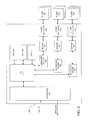
- FIG. 4 is a block diagram of an SSD controller 240 according to an embodiment of the present invention.
- the SSD controller 240 includes a storage interface 400 , a central processing unit (CPU) 410 , a hardware engine 420 , a digital signal processor (DSP) or DSP core 430 , a graphics processing unit (GPU) or GPU core 470 , a buffer unit 460 , and a flash interface 440 .
- CPU central processing unit
- DSP digital signal processor
- GPU graphics processing unit
- buffer unit 460 a buffer unit 460
- flash interface 440 flash interface
- the storage interface 400 may be, for example, Peripheral Component Interconnect Express (PCIe), Non Volatile Memory Express (NVMe), Non Volatile Memory (NVM) over Fabric, Serial Advanced Technology Attachment (SATA), Fibre Channel, Small Computer System Interface (SCSI), Serial Attached SCSI (SAS), SCSI over PCIe, Ethernet, or Universal Serial Bus (USB).
- PCIe Peripheral Component Interconnect Express
- NVMe Non Volatile Memory Express
- NVM Non Volatile Memory
- NVM Non Volatile Memory
- USB Universal Serial Bus
- the SSD controller 240 communicates with any non-volatile memory, e.g., flash memory 150 (which may be NAND flash memory) or other non-volatile memory through the non-volatile memory interface 440 , which may implement a flash channel interface.
- the hardware engine 420 may include a hardware-based search engine.
- the intelligent SSD 130 may conform to a 3.5 inch hard drive form-factor (or “large form factor” (LFF)) standard, or it may conform to a 2.5 inch hard drive form-factor (or “small form factor” (SFF)) standard.
- the storage device 105 may conform to a standard PCIe card form factor, e.g., a full-height, full-length (FH-FL) card outline, or a full-height, half-length (FH-HL) card outline.
- a “search engine” is a digital hardware block designed to test a set of data to determine whether and where it contains matches to a specified pattern.
- a comparator implemented in hardware is an example of a search engine, and a more complex search engine may include, among its functional elements, a comparator implemented in hardware.
- the SSD controller 240 may be a single silicon chip, e.g., a system on a chip (SOC) or Application Specific Integrated Circuit (ASIC), a Field Programmable Gate Array (FPGA), or a combination of integrated circuits comprising SOCs, ASICs, and FPGAs.
- the DSP core is a reconfigurable DSP.
- the CPU 410 , the buffer unit 460 , and the flash interface 440 are all integrated onto a single semiconductor chip (e.g., a single silicon chip), along with a hardware engine 420 and/or a DSP core 430 , and/or a graphics processing unit (GPU) or GPU core 470 .
- a “central processing unit” or “CPU” is a processing circuit that is a stored-program computer, i.e., a circuit that, in operation, repeatedly fetches instructions from memory and executes them.
- a “hardware engine” is a special-purpose processing circuit, such as a hardware search engine.
- the SSD controller 240 may receive a query through the storage interface 400 .
- the CPU 410 processes the query by using the hardware engine 420 to compare the requested content of the query with the data on the non-volatile memory 150 .
- the hardware engine 420 may be a hardware-based search engine and may work in conjunction with the DSP 430 .
- the DSP may perform encryption and decryption and the hardware engine may perform searching.
- the CPU 410 returns the results of the query to the server 110 ′ through the storage interface 400 .
- the results of the query or other operation in the intelligent SSD 130 may, instead of being returned to the server CPU 120 or host CPU, be stored in the flash memory 150 or flash memories 150 ( FIG.
- the GPU core may be used to perform unsupervised learning, such as sparse coding.
- Sparse coding is a class of unsupervised methods for learning sets of over-complete bases to represent data efficiently.
- the intelligent SSD 130 may perform sophisticated analysis including searches and conditional searches.
- a server may have stored in it a very large number of email messages, and a user may wish to find messages satisfying certain criteria, having been sent by a particular sender to any recipient at a particular company. The combination of these two criteria may be tested for by a suitably selected pattern, but if the user wishes to narrow the search further, e.g., with an intelligent search of the body of each email to determine whether a particular transaction was discussed, a more sophisticated algorithm than that used for pattern matching may be used.
- a conditional search may be used in this example, where criteria related to the body of an email are tested for only if an email first meets a first set of criteria, e.g., related to the header of the email; in this case, additional criteria, e.g., a second or third set of criteria related to the body of the email, may be added to the search.
- a system constructed according to the embodiment illustrated in FIG. 4 is suitable for implementing a broad class of analysis algorithms including searches and conditional searches.
- the CPU 410 may be connected to a plurality of hardware engines 420 , each of which may access a plurality of flash memories 150 through a buffer unit 460 and a flash interface 440 .
- This structure allows searches to be performed in parallel, resulting in shorter processing times.
- the disclosed systems and methods have many potential applications, including but not limited to data queries, data analytics, face recognition, security information and event management (SIEM—an approach to security management that uses real-time analysis of security alerts from log data and network hardware), pattern mining, machine learning algorithm, encryption and decryption. While the illustrations above relate to a query, a similar process may be performed, for example, in relation to data analytics, face recognition, SIEM, pattern mining, machine learning algorithm, classification, compression and decompression, and encryption and decryption.
- SIEM security information and event management
- SSDs solid state drives
- HDD hard disk drive
- One or more computer processors operating in accordance with instructions may implement the functions associated with managing use of cache devices in accordance with the present disclosure as described above. If such is the case, it is within the scope of the present disclosure that such instructions may be stored on one or more processor readable non-volatile storage media (e.g., a magnetic disk, non-volatile random-access memory, phase-change memory, 3D XPointTM, or other storage medium). Additionally, modules implementing functions may also be physically located at various positions, including being distributed such that portions of functions are implemented at different physical locations.
- an intelligent SSD 130 containing one or more CPUs is capable of running an operating system on one or more of its CPUs and also of running programs written in high-level languages, e.g., object-oriented languages such as JavaTM, PythonTM, Scala, or C++.
- Such programs may describe distributed data processing functions in a cluster of compute nodes.
- the cluster may include a driver node 810 and a number of worker nodes 820 ; the driver node and the worker nodes may each include or be connected to a storage node 830 .
- Some or all of the storage nodes may be intelligent SSDs 130 , and the remainder may be comparable storage nodes such as comparable SSDs or comparable HDDs.
- the intelligent SSDs 130 may contain hardware accelerated engines to improve the performance of some tasks, for example, search.
- the intelligent SSD 130 is part of a data node 820 in the same way that a comparable SSD 125 or other storage node may be part of a data node 820 , but it is capable of executing tasks under Spark without transferring the data from the intelligent SSD 130 out to the main CPU.
- a data node 820 ′ is an intelligent SSD 130 itself, e.g., the data node 820 ′ consists only of an intelligent storage node 830 (which may be an intelligent SSD 130 ), as illustrated by the data node 820 ′ of FIG. 6 .
- Each data node 820 , 820 ′ may operate as a worker node.
- the data node 820 may have the architecture of a server, with a server CPU 120 , DRAM memory, an Ethernet connection for external communications through a network interface device, e.g., a network interface card (NIC), and a storage node, which, as illustrated, may be an intelligent SSD 130 .
- the intelligent SSD 130 may communicate with the server CPU 120 using vendor-specific commands, i.e., commands specified by the vendor of the intelligent SSD 130 , which may be executed by the server CPU 120 after the installation of appropriate drivers in the data node 820 .
- This embodiment provides value especially in legacy, i.e., existing, installations in which it may be more cost-effective to replace comparable storage nodes with intelligent SSDs 130 when the comparable storage nodes fail, or as performance improvements and power efficiency improvements are implemented.
- the data node 820 ′ may be the intelligent SSD 130 itself, having a NIC as a connection for external communications, a buffer unit 460 , an SSD controller 240 , and a flash array.
- the SSD controller 240 may, for example, include, as shown in FIG. 4 , a CPU 410 , a hardware engine 420 , and a DSP 430 .
- This embodiment may be of particular benefit in new installations, in which the use of an intelligent SSD 130 instead of a data node containing a comparable storage node may provide cost savings, in addition to improvements in performance and reductions in power consumption.
- unstructured data is placed on the data nodes (which may operate as worker nodes under Spark) via the driver node ( FIG. 9 ), and queries are executed on the data using the Apache Spark framework ( FIG. 10 ).
- the process of storing unstructured data on the HadoopTM distributed file system (HDFS) includes three acts.
- the data are chopped into multiple data blocks, which are scattered, in an act 1110 , over multiple data nodes (or worker nodes) 820 .
- Metadata for the data blocks are stored, in an act 1115 , on the driver node.
- Unstructured data may include social feeds, geographic information systems (GIS) data, security log data, documents, extensible markup language (XML), email, web logs, images, audit logs, data from sensors in the field (e.g., weather sensors, traffic sensors, or sensors at processing facilities, such as factories, shipping facilities, or power plants), radio frequency identification (RFID) data, data about world events, data about market events, and closed-circuit television (CCTV) footage.
- GIS geographic information systems
- XML extensible markup language
- RFID radio frequency identification
- a user submits a query to the system. This may be accomplished through an application interface.
- the query is submitted, e.g., by a client machine running the application interface, to the driver node 810 , which, in an act 1215 , assigns sub-jobs for executing the query to worker nodes 820 .
- Each worker node 820 to which a sub job is assigned by the driver node 810 may optionally, in an act 1220 , further assign sub-jobs to other worker nodes 820 .
- the sub jobs are executed in parallel in an act 1225 , the worker nodes 820 return the results to the driver node 810 in an act 1230 , and the driver node 810 , in an act 1235 , aggregates the results.
- processing circuit is used herein to mean any combination of hardware, firmware, and software, employed to process data or digital signals.
- Processing circuit hardware may include, for example, application specific integrated circuits (ASICs), general purpose or special purpose central processing units (CPUs), digital signal processors (DSPs), graphics processing units (GPUs), and programmable logic devices such as field programmable gate arrays (FPGAs).
- ASICs application specific integrated circuits
- CPUs general purpose or special purpose central processing units
- DSPs digital signal processors
- GPUs graphics processing units
- FPGAs programmable logic devices
- each function is performed either by hardware configured, i.e., hard-wired, to perform that function, or by more general purpose hardware, such as a CPU, configured to execute instructions stored in a non-transitory storage medium.
- a processing circuit may be fabricated on a single printed circuit board (PCB) or distributed over several interconnected PCBs.
- a processing circuit may contain other processing circuits; for example, a processing circuit may include two processing circuits, an FPGA and a CPU, interconnected on a PCB.
Landscapes
- Engineering & Computer Science (AREA)
- Theoretical Computer Science (AREA)
- Physics & Mathematics (AREA)
- General Engineering & Computer Science (AREA)
- General Physics & Mathematics (AREA)
- Databases & Information Systems (AREA)
- Data Mining & Analysis (AREA)
- Software Systems (AREA)
- Computational Linguistics (AREA)
- Information Retrieval, Db Structures And Fs Structures Therefor (AREA)
Abstract
Description
Claims (16)
Priority Applications (1)
| Application Number | Priority Date | Filing Date | Title |
|---|---|---|---|
| US15/710,722 US10176092B2 (en) | 2016-09-21 | 2017-09-20 | System and method for executing data processing tasks using resilient distributed datasets (RDDs) in a storage device |
Applications Claiming Priority (2)
| Application Number | Priority Date | Filing Date | Title |
|---|---|---|---|
| US201662397803P | 2016-09-21 | 2016-09-21 | |
| US15/710,722 US10176092B2 (en) | 2016-09-21 | 2017-09-20 | System and method for executing data processing tasks using resilient distributed datasets (RDDs) in a storage device |
Publications (2)
| Publication Number | Publication Date |
|---|---|
| US20180081798A1 US20180081798A1 (en) | 2018-03-22 |
| US10176092B2 true US10176092B2 (en) | 2019-01-08 |
Family
ID=61621124
Family Applications (1)
| Application Number | Title | Priority Date | Filing Date |
|---|---|---|---|
| US15/710,722 Active US10176092B2 (en) | 2016-09-21 | 2017-09-20 | System and method for executing data processing tasks using resilient distributed datasets (RDDs) in a storage device |
Country Status (1)
| Country | Link |
|---|---|
| US (1) | US10176092B2 (en) |
Cited By (9)
| Publication number | Priority date | Publication date | Assignee | Title |
|---|---|---|---|---|
| US10915381B2 (en) | 2018-10-16 | 2021-02-09 | Ngd Systems, Inc. | System and method for computational storage device intercommunication |
| US11106509B2 (en) | 2019-11-18 | 2021-08-31 | Bank Of America Corporation | Cluster tuner |
| US11216446B2 (en) * | 2019-08-29 | 2022-01-04 | Snowflake Inc. | Identifying software regressions based on query retry attempts in a database environment |
| US11429441B2 (en) | 2019-11-18 | 2022-08-30 | Bank Of America Corporation | Workflow simulator |
| US11501109B2 (en) | 2019-06-20 | 2022-11-15 | Western Digital Technologies, Inc. | Non-volatile memory die with on-chip data augmentation components for use with machine learning |
| US11520521B2 (en) | 2019-06-20 | 2022-12-06 | Western Digital Technologies, Inc. | Storage controller having data augmentation components for use with non-volatile memory die |
| US11705191B2 (en) | 2018-12-06 | 2023-07-18 | Western Digital Technologies, Inc. | Non-volatile memory die with deep learning neural network |
| US11836117B2 (en) | 2020-09-17 | 2023-12-05 | Samsung Electronics Co., Ltd. | Storage device, storage system, and method of operating the storage system |
| US12393845B2 (en) | 2018-12-06 | 2025-08-19 | Western Digital Technologies, Inc. | Non-volatile memory die with deep learning neural network |
Families Citing this family (19)
| Publication number | Priority date | Publication date | Assignee | Title |
|---|---|---|---|---|
| US10255320B1 (en) | 2014-01-27 | 2019-04-09 | Microstrategy Incorporated | Search integration |
| US11386085B2 (en) | 2014-01-27 | 2022-07-12 | Microstrategy Incorporated | Deriving metrics from queries |
| US11921715B2 (en) | 2014-01-27 | 2024-03-05 | Microstrategy Incorporated | Search integration |
| US10635669B1 (en) | 2014-01-27 | 2020-04-28 | Microstrategy Incorporated | Data engine integration and data refinement |
| US10268716B2 (en) * | 2015-04-30 | 2019-04-23 | Hamoud ALSHAMMARI | Enhanced hadoop framework for big-data applications |
| US10936644B2 (en) * | 2017-10-02 | 2021-03-02 | International Business Machines Corporation | Differential processing mechanism for spark-based graph computing background |
| CN109408711B (en) * | 2018-09-29 | 2019-12-06 | 北京三快在线科技有限公司 | Data filtering method and device, electronic equipment and storage medium |
| CN111190949B (en) * | 2018-11-15 | 2023-09-26 | 杭州海康威视数字技术股份有限公司 | Data storage and processing methods, devices, equipment, media |
| US10877668B2 (en) | 2018-12-05 | 2020-12-29 | Intel Corporation | Storage node offload of residual part of a portion of compressed and distributed data to a second storage node for decompression |
| US10761779B2 (en) * | 2018-12-05 | 2020-09-01 | Intel Corporation | Storage compute offloads on sharded and erasure-coded data |
| CN109618308A (en) * | 2018-12-28 | 2019-04-12 | 济南浪潮高新科技投资发展有限公司 | A method for processing IoT data based on Spark Streaming |
| CN112860417B (en) * | 2019-11-27 | 2024-07-05 | 马上消费金融股份有限公司 | Data processing method, device, equipment, system and storage medium |
| US11614970B2 (en) * | 2019-12-06 | 2023-03-28 | Microstrategy Incorporated | High-throughput parallel data transmission |
| US11567965B2 (en) | 2020-01-23 | 2023-01-31 | Microstrategy Incorporated | Enhanced preparation and integration of data sets |
| CN113835991B (en) * | 2020-06-23 | 2026-07-03 | 腾讯科技(深圳)有限公司 | Pressure measurement method, device, equipment and computer readable storage medium |
| CN111813512B (en) * | 2020-06-23 | 2022-11-25 | 重庆邮电大学 | High-energy-efficiency Spark task scheduling method based on dynamic partition |
| CN113626207B (en) * | 2021-10-12 | 2022-03-08 | 苍穹数码技术股份有限公司 | Map data processing method, device, equipment and storage medium |
| US20230251918A1 (en) * | 2022-02-10 | 2023-08-10 | Hututa Technologies Limited | Systems and methods for fast and scalable data-intensive computation |
| KR20240058354A (en) * | 2022-10-26 | 2024-05-03 | 삼성에스디에스 주식회사 | Apparatus for executing workflow to perform distributed processing analysis tasks in a container environment and method for the same |
Citations (9)
| Publication number | Priority date | Publication date | Assignee | Title |
|---|---|---|---|---|
| US7650331B1 (en) | 2004-06-18 | 2010-01-19 | Google Inc. | System and method for efficient large-scale data processing |
| US20120137059A1 (en) * | 2009-04-30 | 2012-05-31 | Velobit, Inc. | Content locality-based caching in a data storage system |
| US20120297145A1 (en) | 2011-05-20 | 2012-11-22 | Claris Castillo | System and method to improve i/o performance of data analytic workloads |
| US20130151443A1 (en) | 2011-10-03 | 2013-06-13 | Aol Inc. | Systems and methods for performing contextual classification using supervised and unsupervised training |
| US8549518B1 (en) * | 2011-08-10 | 2013-10-01 | Nutanix, Inc. | Method and system for implementing a maintenanece service for managing I/O and storage for virtualization environment |
| US20130263142A1 (en) | 2012-03-27 | 2013-10-03 | Fujitsu Limited | Control device, control method, computer readable recording medium in which program is recorded, and distributed processing system |
| US8819335B1 (en) | 2013-08-30 | 2014-08-26 | NXGN Data, Inc. | System and method for executing map-reduce tasks in a storage device |
| US20160092557A1 (en) * | 2014-09-26 | 2016-03-31 | Oracle International Corporation | Techniques for similarity analysis and data enrichment using knowledge sources |
| US20160342367A1 (en) * | 2014-07-22 | 2016-11-24 | NXGN Data, Inc. | System and method for consistent performance in a storage device |
-
2017
- 2017-09-20 US US15/710,722 patent/US10176092B2/en active Active
Patent Citations (9)
| Publication number | Priority date | Publication date | Assignee | Title |
|---|---|---|---|---|
| US7650331B1 (en) | 2004-06-18 | 2010-01-19 | Google Inc. | System and method for efficient large-scale data processing |
| US20120137059A1 (en) * | 2009-04-30 | 2012-05-31 | Velobit, Inc. | Content locality-based caching in a data storage system |
| US20120297145A1 (en) | 2011-05-20 | 2012-11-22 | Claris Castillo | System and method to improve i/o performance of data analytic workloads |
| US8549518B1 (en) * | 2011-08-10 | 2013-10-01 | Nutanix, Inc. | Method and system for implementing a maintenanece service for managing I/O and storage for virtualization environment |
| US20130151443A1 (en) | 2011-10-03 | 2013-06-13 | Aol Inc. | Systems and methods for performing contextual classification using supervised and unsupervised training |
| US20130263142A1 (en) | 2012-03-27 | 2013-10-03 | Fujitsu Limited | Control device, control method, computer readable recording medium in which program is recorded, and distributed processing system |
| US8819335B1 (en) | 2013-08-30 | 2014-08-26 | NXGN Data, Inc. | System and method for executing map-reduce tasks in a storage device |
| US20160342367A1 (en) * | 2014-07-22 | 2016-11-24 | NXGN Data, Inc. | System and method for consistent performance in a storage device |
| US20160092557A1 (en) * | 2014-09-26 | 2016-03-31 | Oracle International Corporation | Techniques for similarity analysis and data enrichment using knowledge sources |
Non-Patent Citations (2)
| Title |
|---|
| Zaharia, Matei et al., "Resilient Distributed Datasets: A Fault-Tolerant Abstraction for In-Memory Cluster Computing", NSDI 2012, Apr. 2012, 14 pages. |
| Zaharia, Matei et al., "Spark: Cluster Computing with Working Sets", HotCloud 2010, Jun. 2010, pp. 1-7. |
Cited By (17)
| Publication number | Priority date | Publication date | Assignee | Title |
|---|---|---|---|---|
| US11379277B2 (en) | 2018-10-16 | 2022-07-05 | Ngd Systems, Inc. | System and method for computational storage device intercommunication |
| US10915381B2 (en) | 2018-10-16 | 2021-02-09 | Ngd Systems, Inc. | System and method for computational storage device intercommunication |
| US11360829B2 (en) | 2018-10-16 | 2022-06-14 | Ngd Systems, Inc. | System and method for communicating between computational storage devices |
| US12393845B2 (en) | 2018-12-06 | 2025-08-19 | Western Digital Technologies, Inc. | Non-volatile memory die with deep learning neural network |
| US11705191B2 (en) | 2018-12-06 | 2023-07-18 | Western Digital Technologies, Inc. | Non-volatile memory die with deep learning neural network |
| US11501109B2 (en) | 2019-06-20 | 2022-11-15 | Western Digital Technologies, Inc. | Non-volatile memory die with on-chip data augmentation components for use with machine learning |
| US11520521B2 (en) | 2019-06-20 | 2022-12-06 | Western Digital Technologies, Inc. | Storage controller having data augmentation components for use with non-volatile memory die |
| US12430072B2 (en) | 2019-06-20 | 2025-09-30 | SanDisk Technologies, Inc. | Storage controller having data augmentation components for use with non-volatile memory die |
| US11494369B2 (en) * | 2019-08-29 | 2022-11-08 | Snowflake Inc. | Identifying software regressions based on query retry attempts in a database environment |
| US20220083534A1 (en) * | 2019-08-29 | 2022-03-17 | Snowflake Inc. | Identifying software regressions based on query retry attempts in a database environment |
| US11216446B2 (en) * | 2019-08-29 | 2022-01-04 | Snowflake Inc. | Identifying software regressions based on query retry attempts in a database environment |
| US11874824B2 (en) * | 2019-08-29 | 2024-01-16 | Snowflake Inc. | Identifying software regressions based on query retry attempts in a database environment |
| US12314247B2 (en) * | 2019-08-29 | 2025-05-27 | Snowflake Inc. | Identifying software regressions based on query retry attempts in a database environment |
| US11429441B2 (en) | 2019-11-18 | 2022-08-30 | Bank Of America Corporation | Workflow simulator |
| US11656918B2 (en) | 2019-11-18 | 2023-05-23 | Bank Of America Corporation | Cluster tuner |
| US11106509B2 (en) | 2019-11-18 | 2021-08-31 | Bank Of America Corporation | Cluster tuner |
| US11836117B2 (en) | 2020-09-17 | 2023-12-05 | Samsung Electronics Co., Ltd. | Storage device, storage system, and method of operating the storage system |
Also Published As
| Publication number | Publication date |
|---|---|
| US20180081798A1 (en) | 2018-03-22 |
Similar Documents
| Publication | Publication Date | Title |
|---|---|---|
| US20180081798A1 (en) | System and method for executing data processing tasks using resilient distributed datasets (rdds) in a storage device | |
| US8819335B1 (en) | System and method for executing map-reduce tasks in a storage device | |
| US11681754B2 (en) | Technologies for managing connected data on persistent memory-based systems | |
| US9021189B2 (en) | System and method for performing efficient processing of data stored in a storage node | |
| US9092321B2 (en) | System and method for performing efficient searches and queries in a storage node | |
| Lee et al. | Extrav: boosting graph processing near storage with a coherent accelerator | |
| US10162598B2 (en) | Flash optimized columnar data layout and data access algorithms for big data query engines | |
| Stuedi et al. | Crail: A High-Performance I/O Architecture for Distributed Data Processing. | |
| US10061834B1 (en) | Incremental out-of-place updates for datasets in data stores | |
| US20130227194A1 (en) | Active non-volatile memory post-processing | |
| Mostak | An overview of MapD (massively parallel database) | |
| Salamat et al. | NASCENT2: Generic near-storage sort accelerator for data analytics on SmartSSD | |
| US9336135B1 (en) | Systems and methods for performing search and complex pattern matching in a solid state drive | |
| WO2019000368A1 (en) | Determining optimal data size for data deduplication operation | |
| CN114443680B (en) | Database management system, related apparatus, methods and media | |
| US20150193526A1 (en) | Schemaless data access management | |
| US20200210114A1 (en) | Networked shuffle storage | |
| US20180011905A1 (en) | Accessing electronic databases | |
| You et al. | Spatial join query processing in cloud: Analyzing design choices and performance comparisons | |
| US11907568B2 (en) | Storage controller, storage device, and operation method of storage device | |
| CN118339535A (en) | Context-driven user interface for storage systems | |
| US10860577B2 (en) | Search processing system and method for processing search requests involving data transfer amount unknown to host | |
| US12353763B2 (en) | Hybrid commodity computational storage devices | |
| Wong et al. | TCAM-SSD: A framework for search-based computing in solid-state drives | |
| US12613788B2 (en) | Machine learning pipeline performance acceleration with optimized data access interfaces using in-memory and distributed store |
Legal Events
| Date | Code | Title | Description |
|---|---|---|---|
| FEPP | Fee payment procedure |
Free format text: ENTITY STATUS SET TO UNDISCOUNTED (ORIGINAL EVENT CODE: BIG.); ENTITY STATUS OF PATENT OWNER: SMALL ENTITY |
|
| FEPP | Fee payment procedure |
Free format text: ENTITY STATUS SET TO SMALL (ORIGINAL EVENT CODE: SMAL); ENTITY STATUS OF PATENT OWNER: SMALL ENTITY |
|
| AS | Assignment |
Owner name: NGD SYSTEMS, INC., CALIFORNIA Free format text: ASSIGNMENT OF ASSIGNORS INTEREST;ASSIGNORS:ALCANTARA, JOAO;ALVES, VLADIMIR;CASSIA, RICARDO;AND OTHERS;REEL/FRAME:044527/0820 Effective date: 20170919 |
|
| STCF | Information on status: patent grant |
Free format text: PATENTED CASE |
|
| AS | Assignment |
Owner name: SILICON VALLEY BANK, CALIFORNIA Free format text: SECURITY INTEREST;ASSIGNOR:NGD SYSTEMS, INC.;REEL/FRAME:058012/0289 Effective date: 20211102 |
|
| MAFP | Maintenance fee payment |
Free format text: PAYMENT OF MAINTENANCE FEE, 4TH YR, SMALL ENTITY (ORIGINAL EVENT CODE: M2551); ENTITY STATUS OF PATENT OWNER: SMALL ENTITY Year of fee payment: 4 |
|
| AS | Assignment |
Owner name: NETLIST, INC., CALIFORNIA Free format text: ASSET PURCHASE AGREEMENT;ASSIGNOR:CMBG-FBC NGD SYSTEMS, LLC;REEL/FRAME:069518/0243 Effective date: 20230228 |
|
| AS | Assignment |
Owner name: NETLIST, INC., CALIFORNIA Free format text: CORRECTIVE ASSIGNMENT TO CORRECT THE NAME OF CONVEYING PARTY PREVIOUSLY RECORDED AT REEL: 69518 FRAME: 243. ASSIGNOR(S) HEREBY CONFIRMS THE ASSET PURCHASE AGREEMENT;ASSIGNOR:NGD SYSTEMS, INC.;REEL/FRAME:070163/0719 Effective date: 20230228 |
|
| FEPP | Fee payment procedure |
Free format text: ENTITY STATUS SET TO UNDISCOUNTED (ORIGINAL EVENT CODE: BIG.); ENTITY STATUS OF PATENT OWNER: LARGE ENTITY |
|
| MAFP | Maintenance fee payment |
Free format text: PAYMENT OF MAINTENANCE FEE, 8TH YEAR, LARGE ENTITY (ORIGINAL EVENT CODE: M1552); ENTITY STATUS OF PATENT OWNER: LARGE ENTITY Year of fee payment: 8 |