US10170703B2 - Condensed cyclic compound and organic light-emitting device including the same - Google Patents
Condensed cyclic compound and organic light-emitting device including the same Download PDFInfo
- Publication number
- US10170703B2 US10170703B2 US15/252,258 US201615252258A US10170703B2 US 10170703 B2 US10170703 B2 US 10170703B2 US 201615252258 A US201615252258 A US 201615252258A US 10170703 B2 US10170703 B2 US 10170703B2
- Authority
- US
- United States
- Prior art keywords
- group
- substituted
- salt
- integer
- unsubstituted
- Prior art date
- Legal status (The legal status is an assumption and is not a legal conclusion. Google has not performed a legal analysis and makes no representation as to the accuracy of the status listed.)
- Active, expires
Links
- 0 C*(C)*(C)ClC Chemical compound C*(C)*(C)ClC 0.000 description 60
- MJBTYCFBVFYGSC-RSUGAVFDSA-N C.C.CC.CC.CC.CC.CCC.CCC.C[C@H]1CC2=C([C@H]1C)C1(C3=C2C=CC=C3)C2=C(C=CC=C2)[C@@H](C)[C@H]1C Chemical compound C.C.CC.CC.CC.CC.CCC.CCC.C[C@H]1CC2=C([C@H]1C)C1(C3=C2C=CC=C3)C2=C(C=CC=C2)[C@@H](C)[C@H]1C MJBTYCFBVFYGSC-RSUGAVFDSA-N 0.000 description 4
- GPKSOHOXNCDEBD-VRCAHJHZSA-N C.C.CC.CC.CC.CC.CCC1=CC2=C(C=C1)[C@@H](C)[C@@H](C)C21C2=C(C=CC=C2)C2=C1[C@@H](C)[C@@H](C)C2 Chemical compound C.C.CC.CC.CC.CC.CCC1=CC2=C(C=C1)[C@@H](C)[C@@H](C)C21C2=C(C=CC=C2)C2=C1[C@@H](C)[C@@H](C)C2 GPKSOHOXNCDEBD-VRCAHJHZSA-N 0.000 description 2
- UGHPBNQVWPWANR-UHFFFAOYSA-N C1=CC2=C(C=C1)C1=C(C=C2)C2(C3=C1C=CC=C3)C1=C(C=CC=C1)C1CC3=C(C=CC=C3)C12.C1=CC2=C(C=C1)C1=C(C=C2)C2C(C1)C1=C(C=CC=C1)C21C2=C(C=CC=C2)C2=C1C=CC=C2.C1=CC2=C(C=C1)C1C(C2)C2=C(C=CC=C2)C12C1=C(C=CC=C1)C1=C2C=CC=C1.C1=CC2=CC3=C(C=C2C=C1)C1(C2=C3C=CC=C2)C2=C(C=CC=C2)C2CC3=C(C=CC=C3)C21.C1=CC2=CC3=C(C=C2C=C1)C1C(C3)C2=C(C=CC=C2)C12C1=C(C=CC=C1)C1=C2C=CC=C1.CC.CC.CC.CC.CC.CC.CC.CC.CC.CC.CCC.CCC.CCC.CCC.CCC.CCC.CCC.CCC.CCC.CCC Chemical compound C1=CC2=C(C=C1)C1=C(C=C2)C2(C3=C1C=CC=C3)C1=C(C=CC=C1)C1CC3=C(C=CC=C3)C12.C1=CC2=C(C=C1)C1=C(C=C2)C2C(C1)C1=C(C=CC=C1)C21C2=C(C=CC=C2)C2=C1C=CC=C2.C1=CC2=C(C=C1)C1C(C2)C2=C(C=CC=C2)C12C1=C(C=CC=C1)C1=C2C=CC=C1.C1=CC2=CC3=C(C=C2C=C1)C1(C2=C3C=CC=C2)C2=C(C=CC=C2)C2CC3=C(C=CC=C3)C21.C1=CC2=CC3=C(C=C2C=C1)C1C(C3)C2=C(C=CC=C2)C12C1=C(C=CC=C1)C1=C2C=CC=C1.CC.CC.CC.CC.CC.CC.CC.CC.CC.CC.CCC.CCC.CCC.CCC.CCC.CCC.CCC.CCC.CCC.CCC UGHPBNQVWPWANR-UHFFFAOYSA-N 0.000 description 2
- OMHJOINIMWIERH-UHFFFAOYSA-N C1=CC2=C(C=C1)C1=C(C=C2)C2C(C1)C1=C(C=CC=C1)C21C2=C(C=CC=C2)C2=C1C=CC1=C2C=CC=C1.C1=CC2=CC3=C(C=C2C=C1)C1C(C3)C2=C(C=CC=C2)C12C1=C(C=CC=C1)C1=C2C=CC2=C1C=CC=C2.CC.CC.CC.CC.CCC.CCC.CCC.CCC Chemical compound C1=CC2=C(C=C1)C1=C(C=C2)C2C(C1)C1=C(C=CC=C1)C21C2=C(C=CC=C2)C2=C1C=CC1=C2C=CC=C1.C1=CC2=CC3=C(C=C2C=C1)C1C(C3)C2=C(C=CC=C2)C12C1=C(C=CC=C1)C1=C2C=CC2=C1C=CC=C2.CC.CC.CC.CC.CCC.CCC.CCC.CCC OMHJOINIMWIERH-UHFFFAOYSA-N 0.000 description 2
- VIZUPBYFLORCRA-UHFFFAOYSA-N C1=CC2=CC=C(C3=C4C=CC=CC4=C(C4=CC5=C(C=CC=C5)C=C4)C4=C3C=CC=C4)C=C2C=C1 Chemical compound C1=CC2=CC=C(C3=C4C=CC=CC4=C(C4=CC5=C(C=CC=C5)C=C4)C4=C3C=CC=C4)C=C2C=C1 VIZUPBYFLORCRA-UHFFFAOYSA-N 0.000 description 2
- COWWYPANFSWPGC-UHFFFAOYSA-N C1=CC=C(C2=C3C=CC=CC3=C(C3=CC=C4C(=C3)C3(C5=C(C=CC=C5)C5=C3C3=C(C=CC=C3)O5)C3=C4C4=C(C=CC=C4)C=C3)C3=CC=CC=C32)C=C1.C1=CC=C(C2=C3C=CC=CC3=C(C3=CC=C4C(=C3)C3(C5=C(C=CC=C5)C5=C3C3=C(C=CC=C3)S5)C3=C4C4=C(C=CC=C4)C=C3)C3=CC=CC=C32)C=C1.C1=CC=C(C2=CC=C(C3=C4C=CC=CC4=C(C4=CC=C5C(=C4)C4(C6=C(C=CC=C6)C6=C4C4=C(C=CC=C4)O6)C4=C5N=CC=C4)C4=CC=CC=C43)C=C2)C=C1.C1=CC=C(C2=CC=C(C3=C4C=CC=CC4=C(C4=CC=C5C(=C4)C4(C6=C(C=CC=C6)C6=C4C4=C(C=CC=C4)S6)C4=C5N=CC=C4)C4=CC=CC=C43)C=C2)C=C1.C1=CC=C2C(=C1)C(C1=CC=C3C=CC=CC3=C1)=C1C=CC=CC1=C2C1=CC=C2C(=C1)C1(C3=C(C=CC=C3)C3=C1C1=C(C=CC=C1)O3)C1=C2N=CC=C1 Chemical compound C1=CC=C(C2=C3C=CC=CC3=C(C3=CC=C4C(=C3)C3(C5=C(C=CC=C5)C5=C3C3=C(C=CC=C3)O5)C3=C4C4=C(C=CC=C4)C=C3)C3=CC=CC=C32)C=C1.C1=CC=C(C2=C3C=CC=CC3=C(C3=CC=C4C(=C3)C3(C5=C(C=CC=C5)C5=C3C3=C(C=CC=C3)S5)C3=C4C4=C(C=CC=C4)C=C3)C3=CC=CC=C32)C=C1.C1=CC=C(C2=CC=C(C3=C4C=CC=CC4=C(C4=CC=C5C(=C4)C4(C6=C(C=CC=C6)C6=C4C4=C(C=CC=C4)O6)C4=C5N=CC=C4)C4=CC=CC=C43)C=C2)C=C1.C1=CC=C(C2=CC=C(C3=C4C=CC=CC4=C(C4=CC=C5C(=C4)C4(C6=C(C=CC=C6)C6=C4C4=C(C=CC=C4)S6)C4=C5N=CC=C4)C4=CC=CC=C43)C=C2)C=C1.C1=CC=C2C(=C1)C(C1=CC=C3C=CC=CC3=C1)=C1C=CC=CC1=C2C1=CC=C2C(=C1)C1(C3=C(C=CC=C3)C3=C1C1=C(C=CC=C1)O3)C1=C2N=CC=C1 COWWYPANFSWPGC-UHFFFAOYSA-N 0.000 description 2
- HIHSPILJDNOGAW-UHFFFAOYSA-N C1=CC=C(C2=C3C=CC=CC3=C(C3=CC=C4C(=C3)C3(C5=C(C=CC=C5)C5=C3C3=C(C=CC=C3)O5)C3=C4N=CC=C3)C3=CC=CC=C32)C=C1.C1=CC=C(C2=C3C=CC=CC3=C(C3=CC=C4C(=C3)C3(C5=C(C=CC=C5)C5=C3C3=C(C=CC=C3)S5)C3=C4N=CC=C3)C3=CC=CC=C32)C=C1.C1=CC=C2C(=C1)C(C1=CC=C3C(=C1)C1(C4=C(C=CC=C4)C4=C1C1=C(C=CC=C1)O4)C1=C3N=CC=C1)=C1C=CC=CC1=C2C1=CC=CC2=C1C=CC=C2.C1=CC=C2C(=C1)C(C1=CC=C3C(=C1)C1(C4=C(C=CC=C4)C4=C1C1=C(C=CC=C1)S4)C1=C3N=CC=C1)=C1C=CC=CC1=C2C1=CC=CC2=C1C=CC=C2.C1=CC=C2C(=C1)C(C1=CC=C3C=CC=CC3=C1)=C1C=CC=CC1=C2C1=CC=C2C(=C1)C1(C3=C(C=CC=C3)C3=C1C1=C(C=CC=C1)S3)C1=C2N=CC=C1 Chemical compound C1=CC=C(C2=C3C=CC=CC3=C(C3=CC=C4C(=C3)C3(C5=C(C=CC=C5)C5=C3C3=C(C=CC=C3)O5)C3=C4N=CC=C3)C3=CC=CC=C32)C=C1.C1=CC=C(C2=C3C=CC=CC3=C(C3=CC=C4C(=C3)C3(C5=C(C=CC=C5)C5=C3C3=C(C=CC=C3)S5)C3=C4N=CC=C3)C3=CC=CC=C32)C=C1.C1=CC=C2C(=C1)C(C1=CC=C3C(=C1)C1(C4=C(C=CC=C4)C4=C1C1=C(C=CC=C1)O4)C1=C3N=CC=C1)=C1C=CC=CC1=C2C1=CC=CC2=C1C=CC=C2.C1=CC=C2C(=C1)C(C1=CC=C3C(=C1)C1(C4=C(C=CC=C4)C4=C1C1=C(C=CC=C1)S4)C1=C3N=CC=C1)=C1C=CC=CC1=C2C1=CC=CC2=C1C=CC=C2.C1=CC=C2C(=C1)C(C1=CC=C3C=CC=CC3=C1)=C1C=CC=CC1=C2C1=CC=C2C(=C1)C1(C3=C(C=CC=C3)C3=C1C1=C(C=CC=C1)S3)C1=C2N=CC=C1 HIHSPILJDNOGAW-UHFFFAOYSA-N 0.000 description 2
- BFEDPHOYDBLODL-UHFFFAOYSA-N C1=CC=C(C2=C3C=CC=CC3=C(C3=CC=C4C(=C3)C3(C5=C(C=CC=C5)C5=C3C3=C(C=CC=C3)S5)C3=C4N=CC=C3)C3=CC=CC=C32)N=C1.C1=CC=C2C(=C1)C(C1=CC=C3C(=C1)C1(C4=C3C=CC=C4)C3=C(C=CC=C3)C3=C1C1=C(C=CC=C1)O3)=C1C=CC=CC1=C2C1=CC=CC2=C1N=CC=C2.C1=CC=C2C(=C1)C(C1=CC=C3C(=C1)C1(C4=C3C=CC=C4)C3=C(C=CC=C3)C3=C1C1=C(C=CC=C1)S3)=C1C=CC=CC1=C2C1=CC=CC2=C1N=CC=C2.C1=CC=C2C(=C1)C(C1=CC=CN=C1)=C1C=CC=CC1=C2C1=CC=C2C(=C1)C1(C3=C2C=CC=C3)C2=C(C=CC=C2)C2=C1C1=C(C=CC=C1)O2.C1=CC=C2C(=C1)C(C1=CC=CN=C1)=C1C=CC=CC1=C2C1=CC=C2C(=C1)C1(C3=C2C=CC=C3)C2=C(C=CC=C2)C2=C1C1=C(C=CC=C1)S2 Chemical compound C1=CC=C(C2=C3C=CC=CC3=C(C3=CC=C4C(=C3)C3(C5=C(C=CC=C5)C5=C3C3=C(C=CC=C3)S5)C3=C4N=CC=C3)C3=CC=CC=C32)N=C1.C1=CC=C2C(=C1)C(C1=CC=C3C(=C1)C1(C4=C3C=CC=C4)C3=C(C=CC=C3)C3=C1C1=C(C=CC=C1)O3)=C1C=CC=CC1=C2C1=CC=CC2=C1N=CC=C2.C1=CC=C2C(=C1)C(C1=CC=C3C(=C1)C1(C4=C3C=CC=C4)C3=C(C=CC=C3)C3=C1C1=C(C=CC=C1)S3)=C1C=CC=CC1=C2C1=CC=CC2=C1N=CC=C2.C1=CC=C2C(=C1)C(C1=CC=CN=C1)=C1C=CC=CC1=C2C1=CC=C2C(=C1)C1(C3=C2C=CC=C3)C2=C(C=CC=C2)C2=C1C1=C(C=CC=C1)O2.C1=CC=C2C(=C1)C(C1=CC=CN=C1)=C1C=CC=CC1=C2C1=CC=C2C(=C1)C1(C3=C2C=CC=C3)C2=C(C=CC=C2)C2=C1C1=C(C=CC=C1)S2 BFEDPHOYDBLODL-UHFFFAOYSA-N 0.000 description 2
- OZQMKMCJSLMYGV-UHFFFAOYSA-N c(cc1)ccc1-c1c(cccc2)c2c(-c(cc2)cc3c2-c2ccccc2C3(c2ccccc2-2)c3c-2[o]c2c3cccc2)c2c1cccc2 Chemical compound c(cc1)ccc1-c1c(cccc2)c2c(-c(cc2)cc3c2-c2ccccc2C3(c2ccccc2-2)c3c-2[o]c2c3cccc2)c2c1cccc2 OZQMKMCJSLMYGV-UHFFFAOYSA-N 0.000 description 2
- COLXINIAVLWAEW-DJKVNEOUSA-N BN=P.C.C.C.C1=CC=C(N(C2=CC3=C(C=C2)C2=C(C=C(N(C4=CC=CC=C4)C4=C5C=CC=CC5=CC=C4)C=C2)C32C3=CC=CC=C3C3=C2C=CC=C3)C2=C3C=CC=CC3=CC=C2)C=C1.C1=CC=C(N(C2=CC=C(C3=CC=C(N(C4=CC=CC=C4)C4=C5C=CC=CC5=CC=C4)C=C3)C=C2)C2=CC=CC3=C2C=CC=C3)C=C1.C1=CC=C(N(C2=CC=C(C3=CC=C(N(C4=CC=CC=C4)C4=CC5=C(C=CC=C5)C=C4)C=C3)C=C2)C2=CC3=C(C=CC=C3)C=C2)C=C1.CC1=CC(N(C2=CC=CC=C2)C2=CC3=C(C=C2)C2=C(C=C(N(C4=CC=CC=C4)C4=CC=CC(C)=C4)C=C2)C32C3=CC=CC=C3C3=C2C=CC=C3)=CC=C1.CC1=CC=CC(N(C2=CC=CC=C2)C2=CC=C(C3=CC=C(N(C4=CC=CC=C4)C4=CC=CC(C)=C4)C=C3)C=C2)=C1.[2H]P[3H] Chemical compound BN=P.C.C.C.C1=CC=C(N(C2=CC3=C(C=C2)C2=C(C=C(N(C4=CC=CC=C4)C4=C5C=CC=CC5=CC=C4)C=C2)C32C3=CC=CC=C3C3=C2C=CC=C3)C2=C3C=CC=CC3=CC=C2)C=C1.C1=CC=C(N(C2=CC=C(C3=CC=C(N(C4=CC=CC=C4)C4=C5C=CC=CC5=CC=C4)C=C3)C=C2)C2=CC=CC3=C2C=CC=C3)C=C1.C1=CC=C(N(C2=CC=C(C3=CC=C(N(C4=CC=CC=C4)C4=CC5=C(C=CC=C5)C=C4)C=C3)C=C2)C2=CC3=C(C=CC=C3)C=C2)C=C1.CC1=CC(N(C2=CC=CC=C2)C2=CC3=C(C=C2)C2=C(C=C(N(C4=CC=CC=C4)C4=CC=CC(C)=C4)C=C2)C32C3=CC=CC=C3C3=C2C=CC=C3)=CC=C1.CC1=CC=CC(N(C2=CC=CC=C2)C2=CC=C(C3=CC=C(N(C4=CC=CC=C4)C4=CC=CC(C)=C4)C=C3)C=C2)=C1.[2H]P[3H] COLXINIAVLWAEW-DJKVNEOUSA-N 0.000 description 1
- CHDKUUFTYCHAEF-UHFFFAOYSA-N BrC1=CC2=C(C=C1)C1=C(C=CC=C1)C21C2=C(C=CC=C2)C2=C1C1=C(C=CC=C1)O2.C1=CC=C(/C2=C3\C=CC=C\C3=C(/C3=CC=C4C(=C3)C3(C5=C4C=CC=C5)C4=C(C=CC=C4)C4=C3C3=C(C=CC=C3)O4)C3=C2C=CC=C3)C=C1.OB(O)C1=C2C=CC=CC2=C(C2=CC=CC=C2)C2=C1C=CC=C2 Chemical compound BrC1=CC2=C(C=C1)C1=C(C=CC=C1)C21C2=C(C=CC=C2)C2=C1C1=C(C=CC=C1)O2.C1=CC=C(/C2=C3\C=CC=C\C3=C(/C3=CC=C4C(=C3)C3(C5=C4C=CC=C5)C4=C(C=CC=C4)C4=C3C3=C(C=CC=C3)O4)C3=C2C=CC=C3)C=C1.OB(O)C1=C2C=CC=CC2=C(C2=CC=CC=C2)C2=C1C=CC=C2 CHDKUUFTYCHAEF-UHFFFAOYSA-N 0.000 description 1
- QCENSGJAAOSMHE-UHFFFAOYSA-N BrC1=CC2=C(C=C1)C1=C(C=CC=C1)C21C2=C(C=CC=C2)C2=C1C1=C(C=CC=C1)S2.C1=CC=C(/C2=C3\C=CC=C\C3=C(/C3=CC=C4C(=C3)C3(C5=C4C=CC=C5)C4=C(C=CC=C4)C4=C3C3=C(C=CC=C3)S4)C3=C2C=CC=C3)C=C1.OB(O)C1=C2C=CC=CC2=C(C2=CC=CC=C2)C2=C1C=CC=C2 Chemical compound BrC1=CC2=C(C=C1)C1=C(C=CC=C1)C21C2=C(C=CC=C2)C2=C1C1=C(C=CC=C1)S2.C1=CC=C(/C2=C3\C=CC=C\C3=C(/C3=CC=C4C(=C3)C3(C5=C4C=CC=C5)C4=C(C=CC=C4)C4=C3C3=C(C=CC=C3)S4)C3=C2C=CC=C3)C=C1.OB(O)C1=C2C=CC=CC2=C(C2=CC=CC=C2)C2=C1C=CC=C2 QCENSGJAAOSMHE-UHFFFAOYSA-N 0.000 description 1
- XKLFDXQRLCOYDU-UHFFFAOYSA-N BrC1=CC2=C(C=C1)C1=C(C=CC=N1)C21C2=C(C=CC=C2)C2=C1C1=C(C=CC=C1)O2.C1=CC=C(/C2=C3\C=CC=C\C3=C(/C3=CC=C4C(=C3)C3(C5=C(C=CC=C5)C5=C3C3=C(C=CC=C3)O5)C3=C4N=CC=C3)C3=C2C=CC=C3)C=C1.OB(O)C1=C2C=CC=CC2=C(C2=CC=CC=C2)C2=C1C=CC=C2 Chemical compound BrC1=CC2=C(C=C1)C1=C(C=CC=N1)C21C2=C(C=CC=C2)C2=C1C1=C(C=CC=C1)O2.C1=CC=C(/C2=C3\C=CC=C\C3=C(/C3=CC=C4C(=C3)C3(C5=C(C=CC=C5)C5=C3C3=C(C=CC=C3)O5)C3=C4N=CC=C3)C3=C2C=CC=C3)C=C1.OB(O)C1=C2C=CC=CC2=C(C2=CC=CC=C2)C2=C1C=CC=C2 XKLFDXQRLCOYDU-UHFFFAOYSA-N 0.000 description 1
- ADQHNAGISHPPQT-UHFFFAOYSA-N BrC1=CC2=C(C=C1)C1=C(C=CC=N1)C21C2=C(C=CC=C2)C2=C1C1=C(C=CC=C1)S2.C1=CC=C(/C2=C3\C=CC=C\C3=C(/C3=CC=C4C(=C3)C3(C5=C(C=CC=C5)C5=C3C3=C(C=CC=C3)S5)C3=C4N=CC=C3)C3=C2C=CC=C3)C=C1.OB(O)C1=C2C=CC=CC2=C(C2=CC=CC=C2)C2=C1C=CC=C2 Chemical compound BrC1=CC2=C(C=C1)C1=C(C=CC=N1)C21C2=C(C=CC=C2)C2=C1C1=C(C=CC=C1)S2.C1=CC=C(/C2=C3\C=CC=C\C3=C(/C3=CC=C4C(=C3)C3(C5=C(C=CC=C5)C5=C3C3=C(C=CC=C3)S5)C3=C4N=CC=C3)C3=C2C=CC=C3)C=C1.OB(O)C1=C2C=CC=CC2=C(C2=CC=CC=C2)C2=C1C=CC=C2 ADQHNAGISHPPQT-UHFFFAOYSA-N 0.000 description 1
- OUEPWSPCPBCRPU-UHFFFAOYSA-N Brc(cc1)cc2c1-c1ccccc1C2(c1ccccc1-1)c2c-1[o]c1c2cccc1 Chemical compound Brc(cc1)cc2c1-c1ccccc1C2(c1ccccc1-1)c2c-1[o]c1c2cccc1 OUEPWSPCPBCRPU-UHFFFAOYSA-N 0.000 description 1
- FANUIOXTXGUCNB-UHFFFAOYSA-N C.C.CC1CCCC1 Chemical compound C.C.CC1CCCC1 FANUIOXTXGUCNB-UHFFFAOYSA-N 0.000 description 1
- OTLCWAGAPDKXRJ-UHFFFAOYSA-N C.C.CCCCCC Chemical compound C.C.CCCCCC OTLCWAGAPDKXRJ-UHFFFAOYSA-N 0.000 description 1
- ICFGQUXDIZNCIF-DHYIGNKFSA-N C.C1=CC=C(C(=CC2=CC=C(C3=CC=C(C=C(C4=CC=CC=C4)C4=CC=CC=C4)C=C3)C=C2)C2=CC=CC=C2)C=C1.C1=CC=C(N(C2=CC=CC=C2)C2=CC=C(/C=C/C3=CC=C(C4=CC=C(/C=C/C5=CC=C(N(C6=CC=CC=C6)C6=CC=CC=C6)C=C5)C=C4)C=C3)C=C2)C=C1.CC(C)(C)C1=CC2=CC(C(C)(C)C)=CC3=C2C(=C1)C1=C2\C3=CC(C(C)(C)C)=C\C2=C\C(C(C)(C)C)=C\1.CC1(C)CCN2CCC(C)(C)C3=C2C1=CC1=C3OC(=O)C(C2=NC3=C(C=CC=C3)S2)=C1.CCN(CC)C1=CC2=C(C=C1)C=C(C1=NC3=C(C=CC=C3)S1)C(=O)O2.[2H]P([V])[BiH2].[C-]#[N+]/C(C#N)=C1/C=C(/C=C/C2=CC3=C4C(=C2)C(C)(C)CCN4CCC3(C)C)OC(C(C)(C)C)=C1.[C-]#[N+]/C(C#N)=C1/C=C(C)OC(/C=C/C2=CC3=C4C(=C2)CCCN4CCC3)=C1 Chemical compound C.C1=CC=C(C(=CC2=CC=C(C3=CC=C(C=C(C4=CC=CC=C4)C4=CC=CC=C4)C=C3)C=C2)C2=CC=CC=C2)C=C1.C1=CC=C(N(C2=CC=CC=C2)C2=CC=C(/C=C/C3=CC=C(C4=CC=C(/C=C/C5=CC=C(N(C6=CC=CC=C6)C6=CC=CC=C6)C=C5)C=C4)C=C3)C=C2)C=C1.CC(C)(C)C1=CC2=CC(C(C)(C)C)=CC3=C2C(=C1)C1=C2\C3=CC(C(C)(C)C)=C\C2=C\C(C(C)(C)C)=C\1.CC1(C)CCN2CCC(C)(C)C3=C2C1=CC1=C3OC(=O)C(C2=NC3=C(C=CC=C3)S2)=C1.CCN(CC)C1=CC2=C(C=C1)C=C(C1=NC3=C(C=CC=C3)S1)C(=O)O2.[2H]P([V])[BiH2].[C-]#[N+]/C(C#N)=C1/C=C(/C=C/C2=CC3=C4C(=C2)C(C)(C)CCN4CCC3(C)C)OC(C(C)(C)C)=C1.[C-]#[N+]/C(C#N)=C1/C=C(C)OC(/C=C/C2=CC3=C4C(=C2)CCCN4CCC3)=C1 ICFGQUXDIZNCIF-DHYIGNKFSA-N 0.000 description 1
- COCWKIZMRIKJFY-UHFFFAOYSA-N C.C1=CC=C(C2=CC=NC3=C4/N=C\C=C(\C5=CC=CC=C5)C4=CC=C23)C=C1.CBP.CC1=NC2=C3/N=C(C)\C=C(\C4=CC=CC=C4)C3=CC=C2C(C2=CC=CC=C2)=C1 Chemical compound C.C1=CC=C(C2=CC=NC3=C4/N=C\C=C(\C5=CC=CC=C5)C4=CC=C23)C=C1.CBP.CC1=NC2=C3/N=C(C)\C=C(\C4=CC=CC=C4)C3=CC=C2C(C2=CC=CC=C2)=C1 COCWKIZMRIKJFY-UHFFFAOYSA-N 0.000 description 1
- QZYXQPNRKNXRBY-UHFFFAOYSA-N C1=CC2=C(C=C1)C(C1=C3\C=C/C=C4/C=C(C5=CC=C6C(=C5)C5(C7=C6C=CC=C7)C6=C(C=CC=C6)C6=C5C5=C(C=CC=C5)O6)C5=CC=C/C(=C/1)C5C43)=CC=C2.C1=CC2=C(C=C1)C(C1=C3\C=C/C=C4/C=C(C5=CC=C6C(=C5)C5(C7=C6C=CC=C7)C6=C(C=CC=C6)C6=C5C5=C(C=CC=C5)S6)C5=CC=C/C(=C/1)C5C43)=CC=C2.C1=CC2=CC=C(C3=C4\C=C/C=C5/C=C(C6=CC=C7C(=C6)C6(C8=C7C=CC=C8)C7=C(C=CC=C7)C7=C6C6=C(C=CC=C6)O7)C6=CC=C/C(=C/3)C6C54)C=C2C=C1.C1=CC2=CC=C(C3=C4\C=C/C=C5/C=C(C6=CC=C7C(=C6)C6(C8=C7C=CC=C8)C7=C(C=CC=C7)C7=C6C6=C(C=CC=C6)S7)C6=CC=C/C(=C/3)C6C54)C=C2C=C1.C1=CC=C(C2=C3\C=C/C=C4/C=C(C5=CC=C6C(=C5)C5(C7=C6C=CC=C7)C6=C(C=CC=C6)C6=C5C5=C(C=CC=C5)O6)C5=CC=C/C(=C/2)C5C43)C=C1.C1=CC=C(C2=CC=C(C3=C4\C=C/C=C5/C=C(C6=CC=C7C(=C6)C6(C8=C7C=CC=C8)C7=C(C=CC=C7)C7=C6C6=C(C=CC=C6)S7)C6=CC=C/C(=C/3)C6C54)C=C2)C=C1 Chemical compound C1=CC2=C(C=C1)C(C1=C3\C=C/C=C4/C=C(C5=CC=C6C(=C5)C5(C7=C6C=CC=C7)C6=C(C=CC=C6)C6=C5C5=C(C=CC=C5)O6)C5=CC=C/C(=C/1)C5C43)=CC=C2.C1=CC2=C(C=C1)C(C1=C3\C=C/C=C4/C=C(C5=CC=C6C(=C5)C5(C7=C6C=CC=C7)C6=C(C=CC=C6)C6=C5C5=C(C=CC=C5)S6)C5=CC=C/C(=C/1)C5C43)=CC=C2.C1=CC2=CC=C(C3=C4\C=C/C=C5/C=C(C6=CC=C7C(=C6)C6(C8=C7C=CC=C8)C7=C(C=CC=C7)C7=C6C6=C(C=CC=C6)O7)C6=CC=C/C(=C/3)C6C54)C=C2C=C1.C1=CC2=CC=C(C3=C4\C=C/C=C5/C=C(C6=CC=C7C(=C6)C6(C8=C7C=CC=C8)C7=C(C=CC=C7)C7=C6C6=C(C=CC=C6)S7)C6=CC=C/C(=C/3)C6C54)C=C2C=C1.C1=CC=C(C2=C3\C=C/C=C4/C=C(C5=CC=C6C(=C5)C5(C7=C6C=CC=C7)C6=C(C=CC=C6)C6=C5C5=C(C=CC=C5)O6)C5=CC=C/C(=C/2)C5C43)C=C1.C1=CC=C(C2=CC=C(C3=C4\C=C/C=C5/C=C(C6=CC=C7C(=C6)C6(C8=C7C=CC=C8)C7=C(C=CC=C7)C7=C6C6=C(C=CC=C6)S7)C6=CC=C/C(=C/3)C6C54)C=C2)C=C1 QZYXQPNRKNXRBY-UHFFFAOYSA-N 0.000 description 1
- KEAPIZHFYWJSFK-UHFFFAOYSA-N C1=CC2=C(C=C1)C(C1=C3\CC=CC4=C3C3C(=C/1)\C=C/C=C\3C(C1=CC=C3C(=C1)C1(C5=C3C=CC=C5)C3=C(C=CC=C3)C3=C1C1=C(C=CC=C1)O3)=C4)=CC=C2.C1=CC2=C(C=C1)C(C1=C3\CC=CC4=C3C3C(=C/1)\C=C/C=C\3C(C1=CC=C3C(=C1)C1(C5=C3C=CC=C5)C3=C(C=CC=C3)C3=C1C1=C(C=CC=C1)S3)=C4)=CC=C2.C1=CC=C(C2=C3\C=CC=C4C=C(C5=CC=C6C(=C5)C5(C7=C6C=CC=C7)C6=C(C=CC=C6)C6=C5C5=C(C=CC=C5)O6)/C5=C/C=C/C(=C/2)C5C43)C=C1.C1=CC=C(C2=C3\C=CC=C4C=C(C5=CC=C6C(=C5)C5(C7=C6C=CC=C7)C6=C(C=CC=C6)C6=C5C5=C(C=CC=C5)S6)/C5=C/C=C/C(=C/2)C5C43)C=C1.C1=CC=C(C2=CC3=C(C=C(C4=CC=C5C(=C4)C4(C6=C(C=CC=C6)C6=C4C4=C(C=CC=C4)O6)C4=C5C5=C(C=CC=C5)C=C4)C4=CC=CC=C43)C3=C2C=CC=C3)C=C1 Chemical compound C1=CC2=C(C=C1)C(C1=C3\CC=CC4=C3C3C(=C/1)\C=C/C=C\3C(C1=CC=C3C(=C1)C1(C5=C3C=CC=C5)C3=C(C=CC=C3)C3=C1C1=C(C=CC=C1)O3)=C4)=CC=C2.C1=CC2=C(C=C1)C(C1=C3\CC=CC4=C3C3C(=C/1)\C=C/C=C\3C(C1=CC=C3C(=C1)C1(C5=C3C=CC=C5)C3=C(C=CC=C3)C3=C1C1=C(C=CC=C1)S3)=C4)=CC=C2.C1=CC=C(C2=C3\C=CC=C4C=C(C5=CC=C6C(=C5)C5(C7=C6C=CC=C7)C6=C(C=CC=C6)C6=C5C5=C(C=CC=C5)O6)/C5=C/C=C/C(=C/2)C5C43)C=C1.C1=CC=C(C2=C3\C=CC=C4C=C(C5=CC=C6C(=C5)C5(C7=C6C=CC=C7)C6=C(C=CC=C6)C6=C5C5=C(C=CC=C5)S6)/C5=C/C=C/C(=C/2)C5C43)C=C1.C1=CC=C(C2=CC3=C(C=C(C4=CC=C5C(=C4)C4(C6=C(C=CC=C6)C6=C4C4=C(C=CC=C4)O6)C4=C5C5=C(C=CC=C5)C=C4)C4=CC=CC=C43)C3=C2C=CC=C3)C=C1 KEAPIZHFYWJSFK-UHFFFAOYSA-N 0.000 description 1
- GDIKHRJWZDXWJT-UHFFFAOYSA-N C1=CC2=C(C=C1)C(C1=CC=C(C3=NC(C4=CC5=C(C=CC=C5)C5=C4C=CC=C5)=CC(C4=CC5=C(C=CC=C5)C5=C4C=CC=C5)=N3)C=C1)=NC=C2.C1=CC2=CC(C3=CC=C(C4=NC(C5=CC6=C(C=CC=C6)C6=C5C=CC=C6)=NC(C5=CC6=C(C=CC=C6)C6=C5C=CC=C6)=N4)C=C3)=CN=C2C=C1 Chemical compound C1=CC2=C(C=C1)C(C1=CC=C(C3=NC(C4=CC5=C(C=CC=C5)C5=C4C=CC=C5)=CC(C4=CC5=C(C=CC=C5)C5=C4C=CC=C5)=N3)C=C1)=NC=C2.C1=CC2=CC(C3=CC=C(C4=NC(C5=CC6=C(C=CC=C6)C6=C5C=CC=C6)=NC(C5=CC6=C(C=CC=C6)C6=C5C=CC=C6)=N4)C=C3)=CN=C2C=C1 GDIKHRJWZDXWJT-UHFFFAOYSA-N 0.000 description 1
- AIMVNIBQVWAZAY-UHFFFAOYSA-N C1=CC2=C(C=C1)C1(C3=C2C=CC=C3)C2=C(C=CC=C2)C2=C1C1=C(C=CN=C1)C2.C1=CC2=C(C=C1)C1(C3=C2C=CC=C3)C2=C(C=CC=C2)C2=C1C1=C(C=NC=C1)C2.C1=CC2=C(C=C1)C1=C(C2)C2=C(C=CC=C2)C12C1=C(C=CC=C1)C1=C2C=NC=C1.C1=CC2=C(C=C1)C1=C(C2)C2=C(C=CC=C2)C12C1=C(C=CC=C1)C1=C2N=CC=C1.C1=CC2=C(CC3=C2C2(C4=C(C=CC=C4)C4=C2C=CC=C4)C2=C3C=CC=C2)N=C1.C1=CC2=C(N=C1)C1=C(C2)C2=C(C=CC=C2)C12C1=C(C=CC=C1)C1=C2C=CC=C1.CC.CC.CC.CC.CC.CC.CC.CC.CC.CC.CC.CC.CC.CC.CC.CC.CC.CC.CC.CC.CC.CC.CC.CC.CCC.CCC.CCC.CCC.CCC.CCC.CCC.CCC.CCC.CCC.CCC.CCC Chemical compound C1=CC2=C(C=C1)C1(C3=C2C=CC=C3)C2=C(C=CC=C2)C2=C1C1=C(C=CN=C1)C2.C1=CC2=C(C=C1)C1(C3=C2C=CC=C3)C2=C(C=CC=C2)C2=C1C1=C(C=NC=C1)C2.C1=CC2=C(C=C1)C1=C(C2)C2=C(C=CC=C2)C12C1=C(C=CC=C1)C1=C2C=NC=C1.C1=CC2=C(C=C1)C1=C(C2)C2=C(C=CC=C2)C12C1=C(C=CC=C1)C1=C2N=CC=C1.C1=CC2=C(CC3=C2C2(C4=C(C=CC=C4)C4=C2C=CC=C4)C2=C3C=CC=C2)N=C1.C1=CC2=C(N=C1)C1=C(C2)C2=C(C=CC=C2)C12C1=C(C=CC=C1)C1=C2C=CC=C1.CC.CC.CC.CC.CC.CC.CC.CC.CC.CC.CC.CC.CC.CC.CC.CC.CC.CC.CC.CC.CC.CC.CC.CC.CCC.CCC.CCC.CCC.CCC.CCC.CCC.CCC.CCC.CCC.CCC.CCC AIMVNIBQVWAZAY-UHFFFAOYSA-N 0.000 description 1
- OXRXXRCQAUMRMR-UHFFFAOYSA-N C1=CC2=C(C=C1)C1(C3=C2C=CC=C3)C2=C(C=CC=C2)C2=C1C1=C(C=CN=C1)C2.C1=CC2=C(C=C1)C1(C3=C2C=CC=C3)C2=C(C=CC=C2)C2=C1C1=C(C=NC=C1)C2.C1=CC2=C(C=C1)C1=C(C2)C2=C(C=CC=C2)C12C1=C(C=CC=C1)C1=C2C=NC=C1.C1=CC2=C(C=C1)C1=C(C2)C2=C(C=CC=C2)C12C1=C(C=CC=C1)C1=C2N=CC=C1.C1=CC2=C(N=C1)C1=C(C2)C2=C(C=CC=C2)C12C1=C(C=CC=C1)C1=C2C=CC=C1.CC.CC.CC.CC.CC.CC.CC.CC.CC.CC.CC.CC.CC.CC.CC.CC.CC.CC.CC.CC.CCC.CCC.CCC.CCC.CCC.CCC.CCC.CCC.CCC.CCC Chemical compound C1=CC2=C(C=C1)C1(C3=C2C=CC=C3)C2=C(C=CC=C2)C2=C1C1=C(C=CN=C1)C2.C1=CC2=C(C=C1)C1(C3=C2C=CC=C3)C2=C(C=CC=C2)C2=C1C1=C(C=NC=C1)C2.C1=CC2=C(C=C1)C1=C(C2)C2=C(C=CC=C2)C12C1=C(C=CC=C1)C1=C2C=NC=C1.C1=CC2=C(C=C1)C1=C(C2)C2=C(C=CC=C2)C12C1=C(C=CC=C1)C1=C2N=CC=C1.C1=CC2=C(N=C1)C1=C(C2)C2=C(C=CC=C2)C12C1=C(C=CC=C1)C1=C2C=CC=C1.CC.CC.CC.CC.CC.CC.CC.CC.CC.CC.CC.CC.CC.CC.CC.CC.CC.CC.CC.CC.CCC.CCC.CCC.CCC.CCC.CCC.CCC.CCC.CCC.CCC OXRXXRCQAUMRMR-UHFFFAOYSA-N 0.000 description 1
- SWDFCRSXUUJJJI-UHFFFAOYSA-N C1=CC2=C(C=C1)C1=C(/C=C\2)C2(C3=C(C=CC=C3)C3=C2C2=C(C=CC=C2)C3)C2=C1C=CC=C2.C1=CC2=C(C=C1)C1=C(C2)C2=C(C=CC=C2)C12C1=C(C=CC=C1)C1=C2/C=C2/C=CC=C/C2=C/1.C1=CC2=C(C=C1)C1=C(C2)C2=C(C=CC=C2)C12C1=C(C=CC=C1)C1=C2C=CC=C1.C1=CC2=C(C=C1)C1=C(C2)C2=C(C=CC=C2)C12C1=C(C=CC=C1)C1=C2C=CC=N1.C1=CC2=C(C=C1)C1=C(C2)C2=C(C=CC=C2)C12C1=C(C=CC=C1)C1=C2C=CN=C1.CC.CC.CC.CC.CC.CC.CC.CC.CC.CC.CC.CC.CC.CC.CC.CC.CC.CC.CC.CC.CCC.CCC.CCC.CCC.CCC.CCC.CCC.CCC.CCC.CCC Chemical compound C1=CC2=C(C=C1)C1=C(/C=C\2)C2(C3=C(C=CC=C3)C3=C2C2=C(C=CC=C2)C3)C2=C1C=CC=C2.C1=CC2=C(C=C1)C1=C(C2)C2=C(C=CC=C2)C12C1=C(C=CC=C1)C1=C2/C=C2/C=CC=C/C2=C/1.C1=CC2=C(C=C1)C1=C(C2)C2=C(C=CC=C2)C12C1=C(C=CC=C1)C1=C2C=CC=C1.C1=CC2=C(C=C1)C1=C(C2)C2=C(C=CC=C2)C12C1=C(C=CC=C1)C1=C2C=CC=N1.C1=CC2=C(C=C1)C1=C(C2)C2=C(C=CC=C2)C12C1=C(C=CC=C1)C1=C2C=CN=C1.CC.CC.CC.CC.CC.CC.CC.CC.CC.CC.CC.CC.CC.CC.CC.CC.CC.CC.CC.CC.CCC.CCC.CCC.CCC.CCC.CCC.CCC.CCC.CCC.CCC SWDFCRSXUUJJJI-UHFFFAOYSA-N 0.000 description 1
- NLHIYLHCUBQPSR-UHFFFAOYSA-N C1=CC2=C(C=C1)C1=C(/C=C\2)C2(C3=C(C=CC=C3)C3=C2C2=C(C=CC=N2)C3)C2=C1C=CC=C2.C1=CC2=C(C=C1)C1=C(C2)C2=C(C=CC=C2)C12C1=C(C=CC=C1)C1=C2/C=C\C2=C1C=CC=N2.C1=CC2=C(C=C1)C1=C(C2)C2=C(C=CC=C2)C12C1=C(C=CC=C1)C1=C2/C=N\C2=C1C=CC=C2.C1=CC2=C(N=C1)C1=C(/C=C\2)C2(C3=C(C=CC=C3)C3=C2C2=C(C=CC=C2)C3)C2=C1C=CC=C2.C1=CC2=C(N=C1)C1=C(C2)C2=C(C=CC=C2)C12C1=C(C=CC=C1)C1=C2C=CC=N1.CC.CC.CC.CC.CC.CC.CC.CC.CC.CC.CC.CC.CC.CC.CC.CC.CC.CC.CC.CC.CCC.CCC.CCC.CCC.CCC.CCC.CCC.CCC.CCC.CCC Chemical compound C1=CC2=C(C=C1)C1=C(/C=C\2)C2(C3=C(C=CC=C3)C3=C2C2=C(C=CC=N2)C3)C2=C1C=CC=C2.C1=CC2=C(C=C1)C1=C(C2)C2=C(C=CC=C2)C12C1=C(C=CC=C1)C1=C2/C=C\C2=C1C=CC=N2.C1=CC2=C(C=C1)C1=C(C2)C2=C(C=CC=C2)C12C1=C(C=CC=C1)C1=C2/C=N\C2=C1C=CC=C2.C1=CC2=C(N=C1)C1=C(/C=C\2)C2(C3=C(C=CC=C3)C3=C2C2=C(C=CC=C2)C3)C2=C1C=CC=C2.C1=CC2=C(N=C1)C1=C(C2)C2=C(C=CC=C2)C12C1=C(C=CC=C1)C1=C2C=CC=N1.CC.CC.CC.CC.CC.CC.CC.CC.CC.CC.CC.CC.CC.CC.CC.CC.CC.CC.CC.CC.CCC.CCC.CCC.CCC.CCC.CCC.CCC.CCC.CCC.CCC NLHIYLHCUBQPSR-UHFFFAOYSA-N 0.000 description 1
- CKCJYMQKKODAMQ-UHFFFAOYSA-N C1=CC2=C(C=C1)C1=C(C2)C2=C(C=CC=C2)C12C1=C(C=CC=C1)C1=C2C=CC2=C1C=CC=N2.C1=CC2=C(CC3=C2C2(C4=C(C=CC=C4)C4=C2C=CC=C4)C2=C3C=CC=C2)N=C1.C1=CC2=C(N=C1)C1=C(C2)C2=C(C=CC=C2)C12C1=C(C=CC=C1)C1=C2C=CC=N1.C1=CC2=C(N=C1)C1=C(C=C2)C2(C3=C(C=CC=C3)C3=C2C2=C(C=CC=C2)C3)C2=C1C=CC=C2.CC.CC.CC.CC.CC.CC.CC.CC.CC.CC.CC.CC.CC.CC.CC.CC.CCC.CCC.CCC.CCC.CCC.CCC.CCC.CCC Chemical compound C1=CC2=C(C=C1)C1=C(C2)C2=C(C=CC=C2)C12C1=C(C=CC=C1)C1=C2C=CC2=C1C=CC=N2.C1=CC2=C(CC3=C2C2(C4=C(C=CC=C4)C4=C2C=CC=C4)C2=C3C=CC=C2)N=C1.C1=CC2=C(N=C1)C1=C(C2)C2=C(C=CC=C2)C12C1=C(C=CC=C1)C1=C2C=CC=N1.C1=CC2=C(N=C1)C1=C(C=C2)C2(C3=C(C=CC=C3)C3=C2C2=C(C=CC=C2)C3)C2=C1C=CC=C2.CC.CC.CC.CC.CC.CC.CC.CC.CC.CC.CC.CC.CC.CC.CC.CC.CCC.CCC.CCC.CCC.CCC.CCC.CCC.CCC CKCJYMQKKODAMQ-UHFFFAOYSA-N 0.000 description 1
- BXOMXGGUNLAQQQ-UHFFFAOYSA-N C1=CC2=C(C=C1)C1=C(C2)C2=C(C=CC=C2)C12C1=C(C=CC=C1)C1=C2C=CC=N1.C1=CC2=C(C=C1)C1=C(C2)C2=C(C=CC=C2)C12C1=C(C=CC=C1)C1=C2C=CN=C1.C1=CC2=C(C=C1)C1=C(C=C2)C2(C3=C(C=CC=C3)C3=C2C2=C(C=CC=C2)C3)C2=C1C=CC=C2.C1=CC2=CC3=C(C=C2C=C1)C1(C2=C3C=CC=C2)C2=C(C=CC=C2)C2=C1C1=C(C=CC=C1)C2.CC.CC.CC.CC.CC.CC.CC.CC.CC.CC.CC.CC.CC.CC.CC.CC.CCC.CCC.CCC.CCC.CCC.CCC.CCC.CCC Chemical compound C1=CC2=C(C=C1)C1=C(C2)C2=C(C=CC=C2)C12C1=C(C=CC=C1)C1=C2C=CC=N1.C1=CC2=C(C=C1)C1=C(C2)C2=C(C=CC=C2)C12C1=C(C=CC=C1)C1=C2C=CN=C1.C1=CC2=C(C=C1)C1=C(C=C2)C2(C3=C(C=CC=C3)C3=C2C2=C(C=CC=C2)C3)C2=C1C=CC=C2.C1=CC2=CC3=C(C=C2C=C1)C1(C2=C3C=CC=C2)C2=C(C=CC=C2)C2=C1C1=C(C=CC=C1)C2.CC.CC.CC.CC.CC.CC.CC.CC.CC.CC.CC.CC.CC.CC.CC.CC.CCC.CCC.CCC.CCC.CCC.CCC.CCC.CCC BXOMXGGUNLAQQQ-UHFFFAOYSA-N 0.000 description 1
- QTQXVVDLFYSBEP-UHFFFAOYSA-N C1=CC2=C(C=C1)C1=C(C2)C2=C(C=CC=C2)C12C1=C(C=CC=C1)C1=C2C=NC2=C1C=CC=C2.C1=CC2=C(C=C1)C1=C(C=C2)C2(C3=C(C=CC=C3)C3=C2C2=C(C=CC=N2)C3)C2=C1C=CC=C2.C1=CC2=C(N=C1)C1=C(C2)C2=C(C=CC=C2)C12C1=C(C=CC=C1)C1=C2C=CC2=C1C=CC=N2.C1=CC2=C(N=C1)C1=C(C=C2)C2(C3=C(C=CC=C3)C3=C2C2=C(C=CC=N2)C3)C2=C1C=CC=C2.CC.CC.CC.CC.CC.CC.CC.CC.CC.CC.CC.CC.CC.CC.CC.CC.CCC.CCC.CCC.CCC.CCC.CCC.CCC.CCC Chemical compound C1=CC2=C(C=C1)C1=C(C2)C2=C(C=CC=C2)C12C1=C(C=CC=C1)C1=C2C=NC2=C1C=CC=C2.C1=CC2=C(C=C1)C1=C(C=C2)C2(C3=C(C=CC=C3)C3=C2C2=C(C=CC=N2)C3)C2=C1C=CC=C2.C1=CC2=C(N=C1)C1=C(C2)C2=C(C=CC=C2)C12C1=C(C=CC=C1)C1=C2C=CC2=C1C=CC=N2.C1=CC2=C(N=C1)C1=C(C=C2)C2(C3=C(C=CC=C3)C3=C2C2=C(C=CC=N2)C3)C2=C1C=CC=C2.CC.CC.CC.CC.CC.CC.CC.CC.CC.CC.CC.CC.CC.CC.CC.CC.CCC.CCC.CCC.CCC.CCC.CCC.CCC.CCC QTQXVVDLFYSBEP-UHFFFAOYSA-N 0.000 description 1
- ADFDMJWMKFVLEJ-UHFFFAOYSA-N C1=CC2=C(N=C1)C1=C(/C=C\2)C2(C3=C(C=CC=C3)C3=C2C2=C(C=CC=N2)C3)C2=C1C=CC=C2.C1=CC2=C(N=C1)C1=C(C2)C2=C(C=CC=C2)C12C1=C(C=CC=C1)C1=C2/C=C\C2=C1C=CC=N2.C1=CC2=C(N=C1)C1=C(C2)C2=C(C=CC=C2)C12C1=C(C=CC=C1)C1=C2/C=N\C2=C1C=CC=C2.CC.CC.CC.CC.CC.CC.CC.CC.CC.CC.CC.CC.CCC.CCC.CCC.CCC.CCC.CCC Chemical compound C1=CC2=C(N=C1)C1=C(/C=C\2)C2(C3=C(C=CC=C3)C3=C2C2=C(C=CC=N2)C3)C2=C1C=CC=C2.C1=CC2=C(N=C1)C1=C(C2)C2=C(C=CC=C2)C12C1=C(C=CC=C1)C1=C2/C=C\C2=C1C=CC=N2.C1=CC2=C(N=C1)C1=C(C2)C2=C(C=CC=C2)C12C1=C(C=CC=C1)C1=C2/C=N\C2=C1C=CC=C2.CC.CC.CC.CC.CC.CC.CC.CC.CC.CC.CC.CC.CCC.CCC.CCC.CCC.CCC.CCC ADFDMJWMKFVLEJ-UHFFFAOYSA-N 0.000 description 1
- MRSQIUHMIYSALW-UHFFFAOYSA-N C1=CC2=C(N=C1)C1=C(C2)C2=C(C=CC=C2)C12C1=C(C=CC=C1)C1=C2C=NC2=C1C=CC=C2.CC.CC.CC.CC.CCC.CCC Chemical compound C1=CC2=C(N=C1)C1=C(C2)C2=C(C=CC=C2)C12C1=C(C=CC=C1)C1=C2C=NC2=C1C=CC=C2.CC.CC.CC.CC.CCC.CCC MRSQIUHMIYSALW-UHFFFAOYSA-N 0.000 description 1
- IIDRXVWMSUNHIH-UHFFFAOYSA-M C1=CC2=C3C(=C1)OC1=N4C(=CC=C1)C1=CC=CC5=N1[Pt]34C1=C2C=CC=C1O5.C1=CC=C(C2=CC3=C4C(=C2)N(C2=CC=CC=C2)C2=C5C(=CC(C6=CC=CC=C6)=C2)C2=CC=CC=N2[Pt@@]45N2=C3C=CC=C2)C=C1.C1=CC=C(N(C2=CC=CC=C2)C2=CC=C(N3C4=CC=CC5=C4[Pt@]4(C6=C3C=CC=C6C3=CC=CC=N34)N3=C5C=CC=C3)C=C2)C=C1.C1=CC=C2C(=C1)C1=C(C=CC=C1)N2C1=CC=C(N2C3=CC=CC4=C3[Pt@]3(C5=C2C=CC=C5C2=CC=CC=N23)N2=C4C=CC=C2)C=C1.C1=CC=C2C(=C1)C1=CC=CC3=N1[Pt@@]21OC2=C(SC=C2)C2=CC=CC3=N21 Chemical compound C1=CC2=C3C(=C1)OC1=N4C(=CC=C1)C1=CC=CC5=N1[Pt]34C1=C2C=CC=C1O5.C1=CC=C(C2=CC3=C4C(=C2)N(C2=CC=CC=C2)C2=C5C(=CC(C6=CC=CC=C6)=C2)C2=CC=CC=N2[Pt@@]45N2=C3C=CC=C2)C=C1.C1=CC=C(N(C2=CC=CC=C2)C2=CC=C(N3C4=CC=CC5=C4[Pt@]4(C6=C3C=CC=C6C3=CC=CC=N34)N3=C5C=CC=C3)C=C2)C=C1.C1=CC=C2C(=C1)C1=C(C=CC=C1)N2C1=CC=C(N2C3=CC=CC4=C3[Pt@]3(C5=C2C=CC=C5C2=CC=CC=N23)N2=C4C=CC=C2)C=C1.C1=CC=C2C(=C1)C1=CC=CC3=N1[Pt@@]21OC2=C(SC=C2)C2=CC=CC3=N21 IIDRXVWMSUNHIH-UHFFFAOYSA-M 0.000 description 1
- FRGPQKXWSHJYFK-UHFFFAOYSA-H C1=CC2=C3C(=C1)O[Al]14(OC5=CC=CC6=C5/N1=C\C=C/6)(O/C1=C/C=C\C5=C1N4=CC=C5)N3=CC=C2.C1=CC=C(C2=NN=C(C3=CC=CC=C3)N2C2=CC=CC3=C2C=CC=C3)C=C1.CC(C)(C)C1=CC=C(C2=NN=C(C3=CC=C(C4=CC=CC=C4)C=C3)N2C2=CC=CC=C2)C=C1.CC1=N2C3=C(C=CC=C3O[AlH]23(OC2=CC=C(C4=CC=CC=C4)C=C2)OC2=CC=CC4=C2/N3=C(C)\C=C/4)C=C1 Chemical compound C1=CC2=C3C(=C1)O[Al]14(OC5=CC=CC6=C5/N1=C\C=C/6)(O/C1=C/C=C\C5=C1N4=CC=C5)N3=CC=C2.C1=CC=C(C2=NN=C(C3=CC=CC=C3)N2C2=CC=CC3=C2C=CC=C3)C=C1.CC(C)(C)C1=CC=C(C2=NN=C(C3=CC=C(C4=CC=CC=C4)C=C3)N2C2=CC=CC=C2)C=C1.CC1=N2C3=C(C=CC=C3O[AlH]23(OC2=CC=C(C4=CC=CC=C4)C=C2)OC2=CC=CC4=C2/N3=C(C)\C=C/4)C=C1 FRGPQKXWSHJYFK-UHFFFAOYSA-H 0.000 description 1
- ROTPLYQBJAXRGJ-UHFFFAOYSA-N C1=CC2=CC(C3=CC=C(C4=NC(C5=CC=C(C6=CC7=C(C=CC=C7)C7=C6C=CC=C7)C=C5)=CC(C5=CC6=C(C=CC=C6)C6=C5C=CC=C6)=N4)C=C3)=CN=C2C=C1.C1=CC=C2C(=C1)C(C1=CC=C3C=CC=CC3=C1)=C1C=CC(C3=CC=C(C4=CC5=C(C=CC=C5)N=C4)N=C3)=CC1=C2C1=CC=C2C=CC=CC2=C1.C1=CN=C(C2=CC=C(C3=NC(C4=CC5=C(C=CC=C5)C5=C4C=CC=C5)=CC(C4=CC5=C(C=CC=C5)C5=C4C=CC=C5)=N3)C=C2)C=C1 Chemical compound C1=CC2=CC(C3=CC=C(C4=NC(C5=CC=C(C6=CC7=C(C=CC=C7)C7=C6C=CC=C7)C=C5)=CC(C5=CC6=C(C=CC=C6)C6=C5C=CC=C6)=N4)C=C3)=CN=C2C=C1.C1=CC=C2C(=C1)C(C1=CC=C3C=CC=CC3=C1)=C1C=CC(C3=CC=C(C4=CC5=C(C=CC=C5)N=C4)N=C3)=CC1=C2C1=CC=C2C=CC=CC2=C1.C1=CN=C(C2=CC=C(C3=NC(C4=CC5=C(C=CC=C5)C5=C4C=CC=C5)=CC(C4=CC5=C(C=CC=C5)C5=C4C=CC=C5)=N3)C=C2)C=C1 ROTPLYQBJAXRGJ-UHFFFAOYSA-N 0.000 description 1
- DCFWTSUVDMRZJW-UHFFFAOYSA-N C1=CC2=CC=C(C3=C4\C=CC=C5C=C(C6=CC=C7C(=C6)C6(C8=C7C=CC=C8)C7=C(C=CC=C7)C7=C6C6=C(C=CC=C6)O7)/C6=C/C=C/C(=C/3)C6C54)C=C2C=C1.C1=CC2=CC=C(C3=C4\CC=CC5=C4C4C(=C/3)\C=C/C=C\4C(C3=CC=C4C(=C3)C3(C6=C4C=CC=C6)C4=C(C=CC=C4)C4=C3C3=C(C=CC=C3)S4)=C5)C=C2C=C1.C1=CC=C(C2=C3\C=CC=C4C=C(C5=CC=C6C(=C5)C5(C7=C(C=CC=C7)C7=C5C5=C(C=CC=C5)O7)C5=C6C6=C(C=CC=C6)C=C5)/C5=C/C=C/C(=C/2)C5C43)C=C1.C1=CC=C(C2=C3\C=CC=C4C=C(C5=CC=C6C(=C5)C5(C7=C(C=CC=C7)C7=C5C5=C(C=CC=C5)S7)C5=C6C6=C(C=CC=C6)C=C5)/C5=C/C=C/C(=C/2)C5C43)C=C1.C1=CC=C(C2=CC=C(C3=C4\C=CC=C5C=C(C6=CC=C7C(=C6)C6(C8=C7C=CC=C8)C7=C(C=CC=C7)C7=C6C6=C(C=CC=C6)O7)/C6=C/C=C/C(=C/3)C6C54)C=C2)C=C1.C1=CC=C(C2=CC=C(C3=C4\C=CC=C5C=C(C6=CC=C7C(=C6)C6(C8=C7C=CC=C8)C7=C(C=CC=C7)C7=C6C6=C(C=CC=C6)S7)/C6=C/C=C/C(=C/3)C6C54)C=C2)C=C1 Chemical compound C1=CC2=CC=C(C3=C4\C=CC=C5C=C(C6=CC=C7C(=C6)C6(C8=C7C=CC=C8)C7=C(C=CC=C7)C7=C6C6=C(C=CC=C6)O7)/C6=C/C=C/C(=C/3)C6C54)C=C2C=C1.C1=CC2=CC=C(C3=C4\CC=CC5=C4C4C(=C/3)\C=C/C=C\4C(C3=CC=C4C(=C3)C3(C6=C4C=CC=C6)C4=C(C=CC=C4)C4=C3C3=C(C=CC=C3)S4)=C5)C=C2C=C1.C1=CC=C(C2=C3\C=CC=C4C=C(C5=CC=C6C(=C5)C5(C7=C(C=CC=C7)C7=C5C5=C(C=CC=C5)O7)C5=C6C6=C(C=CC=C6)C=C5)/C5=C/C=C/C(=C/2)C5C43)C=C1.C1=CC=C(C2=C3\C=CC=C4C=C(C5=CC=C6C(=C5)C5(C7=C(C=CC=C7)C7=C5C5=C(C=CC=C5)S7)C5=C6C6=C(C=CC=C6)C=C5)/C5=C/C=C/C(=C/2)C5C43)C=C1.C1=CC=C(C2=CC=C(C3=C4\C=CC=C5C=C(C6=CC=C7C(=C6)C6(C8=C7C=CC=C8)C7=C(C=CC=C7)C7=C6C6=C(C=CC=C6)O7)/C6=C/C=C/C(=C/3)C6C54)C=C2)C=C1.C1=CC=C(C2=CC=C(C3=C4\C=CC=C5C=C(C6=CC=C7C(=C6)C6(C8=C7C=CC=C8)C7=C(C=CC=C7)C7=C6C6=C(C=CC=C6)S7)/C6=C/C=C/C(=C/3)C6C54)C=C2)C=C1 DCFWTSUVDMRZJW-UHFFFAOYSA-N 0.000 description 1
- INUAVPRZKQYOLR-UHFFFAOYSA-N C1=CC2=CC=N3C(=C2C=C1)OC1=CC=CC2=C1[Pt]31C3=C2C=CC=C3OC2=C3C=CC=CC3=CC=N21.C1=CC=N2C(=C1)CC1=CC=CC3=C1[Pt]21C2=C3C=CC=C2CC2=CC=CC=N21.CC1(C)C2=CC=CC3=C2[Pt]2(C4=C3C=CC=C4C(C)(C)C3=CC=CC=N32)N2=CC=CC=C21.FC1=CC(F)=C2CC3=C(F)C=C(F)C4=C3[Pt@@]3(C2=C1C1=CC=CC=N13)N1=C4C=CC=C1.O=C1C2=CC=C3/C=C\C4=CC=C5C(=O)C6=CC=CC=N6[Pt]6(C2=C3C4=C56)N2=CC=CC=C12 Chemical compound C1=CC2=CC=N3C(=C2C=C1)OC1=CC=CC2=C1[Pt]31C3=C2C=CC=C3OC2=C3C=CC=CC3=CC=N21.C1=CC=N2C(=C1)CC1=CC=CC3=C1[Pt]21C2=C3C=CC=C2CC2=CC=CC=N21.CC1(C)C2=CC=CC3=C2[Pt]2(C4=C3C=CC=C4C(C)(C)C3=CC=CC=N32)N2=CC=CC=C21.FC1=CC(F)=C2CC3=C(F)C=C(F)C4=C3[Pt@@]3(C2=C1C1=CC=CC=N13)N1=C4C=CC=C1.O=C1C2=CC=C3/C=C\C4=CC=C5C(=O)C6=CC=CC=N6[Pt]6(C2=C3C4=C56)N2=CC=CC=C12 INUAVPRZKQYOLR-UHFFFAOYSA-N 0.000 description 1
- JHLVDSFMFKCDNY-UHFFFAOYSA-N C1=CC=C(C2(C3=CC=CC=C3)C3=CC=CC=C3C3=C2C2=C(/C=C\C=C/2)N3C2=CC=C(C3=CN4C=CC=CC4=N3)C=C2)C=C1 Chemical compound C1=CC=C(C2(C3=CC=CC=C3)C3=CC=CC=C3C3=C2C2=C(/C=C\C=C/2)N3C2=CC=C(C3=CN4C=CC=CC4=N3)C=C2)C=C1 JHLVDSFMFKCDNY-UHFFFAOYSA-N 0.000 description 1
- TVCCFYGMBDPBSZ-UHFFFAOYSA-N C1=CC=C(C2=C(N3C4=CC=CC5=C4[Pt@]4(C6=C3C=CC=C6C3=CC=CC=N34)N3=C5C=CC=C3)C=CC=C2)C=C1.C1=CC=C(N2C3=CC=CC4=C3[Pt]3(C5=C2C=CC=C5C2=N3C=CS2)N2=C4SC=C2)C=C1.CC12CCC(C3=C4C5=N(C=CC6=CC=CC=C65)[Pt]5(N4N=C31)N1N=C3C(=C1C1=N5C=CC4=CC=CC=C41)C1CCC3(C)C1(C)C)C2(C)C.CCCCCCCCC1=CC=C(N2C3=CC=CC4=C3[Pt]3(C5=C2C=CC=C5C2=CC=CC=N23)N2=C4C=CC=C2)C=C1.O=C1C2=CC=CC3=C2[Pt@]2(C4=C1C=CC=C4C1=CC=CC=N12)N1=C3C=CC=C1 Chemical compound C1=CC=C(C2=C(N3C4=CC=CC5=C4[Pt@]4(C6=C3C=CC=C6C3=CC=CC=N34)N3=C5C=CC=C3)C=CC=C2)C=C1.C1=CC=C(N2C3=CC=CC4=C3[Pt]3(C5=C2C=CC=C5C2=N3C=CS2)N2=C4SC=C2)C=C1.CC12CCC(C3=C4C5=N(C=CC6=CC=CC=C65)[Pt]5(N4N=C31)N1N=C3C(=C1C1=N5C=CC4=CC=CC=C41)C1CCC3(C)C1(C)C)C2(C)C.CCCCCCCCC1=CC=C(N2C3=CC=CC4=C3[Pt]3(C5=C2C=CC=C5C2=CC=CC=N23)N2=C4C=CC=C2)C=C1.O=C1C2=CC=CC3=C2[Pt@]2(C4=C1C=CC=C4C1=CC=CC=N12)N1=C3C=CC=C1 TVCCFYGMBDPBSZ-UHFFFAOYSA-N 0.000 description 1
- HGMPMUHPPBLERD-UHFFFAOYSA-N C1=CC=C(C2=C3C=CC(C4=CC=C(/C5=N/C6=C(C=CC=C6)N5C5=CC=CC=C5)C=C4)=CC3=C(C3=CC=CC=C3)C3=CC=CC=C32)C=C1.C1=CC=C(C2=CC(C3=CC=CC=C3)=CC(C3=C4C=CC(C5=CC=C(/C6=N/C7=C(C=CC=C7)N6C6=CC=CC=C6)C=C5)=CC4=C(C4=CC(C5=CC=CC=C5)=CC(C5=CC=CC=C5)=C4)C4=CC=CC=C43)=C2)C=C1.C1=CC=C(C2=CC=CC=C2C2=C3C=CC(C4=CC=C(/C5=N/C6=C(C=CC=C6)N5C5=CC=CC=C5)C=C4)=CC3=C(C3=CC=CC=C3C3=CC=CC=C3)C3=CC=CC=C32)C=C1.C1=CC=C(N2C3=C(C=CC=C3)/N=C\2C2=CC=C(C3=CC4=C(C5=CC=CC6=C5C=CC=C6)C5=CC=CC=C5C(C5=CC=CC6=C5C=CC=C6)=C4C=C3)C=C2)C=C1 Chemical compound C1=CC=C(C2=C3C=CC(C4=CC=C(/C5=N/C6=C(C=CC=C6)N5C5=CC=CC=C5)C=C4)=CC3=C(C3=CC=CC=C3)C3=CC=CC=C32)C=C1.C1=CC=C(C2=CC(C3=CC=CC=C3)=CC(C3=C4C=CC(C5=CC=C(/C6=N/C7=C(C=CC=C7)N6C6=CC=CC=C6)C=C5)=CC4=C(C4=CC(C5=CC=CC=C5)=CC(C5=CC=CC=C5)=C4)C4=CC=CC=C43)=C2)C=C1.C1=CC=C(C2=CC=CC=C2C2=C3C=CC(C4=CC=C(/C5=N/C6=C(C=CC=C6)N5C5=CC=CC=C5)C=C4)=CC3=C(C3=CC=CC=C3C3=CC=CC=C3)C3=CC=CC=C32)C=C1.C1=CC=C(N2C3=C(C=CC=C3)/N=C\2C2=CC=C(C3=CC4=C(C5=CC=CC6=C5C=CC=C6)C5=CC=CC=C5C(C5=CC=CC6=C5C=CC=C6)=C4C=C3)C=C2)C=C1 HGMPMUHPPBLERD-UHFFFAOYSA-N 0.000 description 1
- UQVFZEYHQJJGPD-UHFFFAOYSA-N C1=CC=C(C2=C3C=CC=CC3=C(C3=CC=C(N4C5=C(C=CC=C5)C5=C4/C=C\C=C/5)C=C3)C3=CC=CC=C32)C=C1 Chemical compound C1=CC=C(C2=C3C=CC=CC3=C(C3=CC=C(N4C5=C(C=CC=C5)C5=C4/C=C\C=C/5)C=C3)C3=CC=CC=C32)C=C1 UQVFZEYHQJJGPD-UHFFFAOYSA-N 0.000 description 1
- ZDZLZCGPOKVUGN-UHFFFAOYSA-N C1=CC=C(C2=C3C=CC=CC3=C(C3=CC=C4C(=C3)C3(C5=C(C=CC=C5)C5=C3C3=C(C=CC=C3)O5)C3=C4C4=C(C=CC=C4)C=C3)C3=CC=CC=C32)C=C1.C1=CC=C(C2=C3C=CC=CC3=C(C3=CC=C4C(=C3)C3(C5=C(C=CC=C5)C5=C3C3=C(C=CC=C3)S5)C3=C4C4=C(C=CC=C4)C=C3)C3=CC=CC=C32)C=C1.C1=CC=C(C2=CC=C(C3=C4C=CC=CC4=C(C4=CC=C5C(=C4)C4(C6=C5C=CC=C6)C5=C(C=CC=C5)C5=C4C4=C(C=CC=C4)O5)C4=CC=CC=C43)C=C2)C=C1.C1=CC=C(C2=CC=C(C3=C4C=CC=CC4=C(C4=CC=C5C(=C4)C4(C6=C5C=CC=C6)C5=C(C=CC=C5)C5=C4C4=C(C=CC=C4)S5)C4=CC=CC=C43)C=C2)C=C1 Chemical compound C1=CC=C(C2=C3C=CC=CC3=C(C3=CC=C4C(=C3)C3(C5=C(C=CC=C5)C5=C3C3=C(C=CC=C3)O5)C3=C4C4=C(C=CC=C4)C=C3)C3=CC=CC=C32)C=C1.C1=CC=C(C2=C3C=CC=CC3=C(C3=CC=C4C(=C3)C3(C5=C(C=CC=C5)C5=C3C3=C(C=CC=C3)S5)C3=C4C4=C(C=CC=C4)C=C3)C3=CC=CC=C32)C=C1.C1=CC=C(C2=CC=C(C3=C4C=CC=CC4=C(C4=CC=C5C(=C4)C4(C6=C5C=CC=C6)C5=C(C=CC=C5)C5=C4C4=C(C=CC=C4)O5)C4=CC=CC=C43)C=C2)C=C1.C1=CC=C(C2=CC=C(C3=C4C=CC=CC4=C(C4=CC=C5C(=C4)C4(C6=C5C=CC=C6)C5=C(C=CC=C5)C5=C4C4=C(C=CC=C4)S5)C4=CC=CC=C43)C=C2)C=C1 ZDZLZCGPOKVUGN-UHFFFAOYSA-N 0.000 description 1
- IQLKBGYKUIQXMU-UHFFFAOYSA-N C1=CC=C(C2=C3C=CC=CC3=C(C3=CC=C4C(=C3)C3(C5=C(C=CC=C5)C5=C3C3=C(C=CC=C3)O5)C3=C4C4=C(C=CC=C4)C=C3)C3=CC=CC=C32)C=C1.C1=CC=C(C2=C3C=CC=CC3=C(C3=CC=C4C(=C3)C3(C5=C(C=CC=C5)C5=C3C3=C(C=CC=C3)S5)C3=C4C4=C(C=CC=C4)C=C3)C3=CC=CC=C32)C=C1.C1=CC=C(C2=CC=C(C3=C4C=CC=CC4=C(C4=CC=C5C(=C4)C4(C6=C5C=CC=C6)C5=C(C=CC=C5)C5=C4C4=C(C=CC=C4)O5)C4=CC=CC=C43)C=C2)C=C1.C1=CC=C(C2=CC=C(C3=C4C=CC=CC4=C(C4=CC=C5C(=C4)C4(C6=C5C=CC=C6)C5=C(C=CC=C5)C5=C4C4=C(C=CC=C4)S5)C4=CC=CC=C43)C=C2)C=C1.C1=CC=C2C(=C1)C(C1=CC=C3C=CC=CC3=C1)=C1C=CC=CC1=C2C1=CC=C2C(=C1)C1(C3=C2C=CC=C3)C2=C(C=CC=C2)C2=C1C1=C(C=CC=C1)O2 Chemical compound C1=CC=C(C2=C3C=CC=CC3=C(C3=CC=C4C(=C3)C3(C5=C(C=CC=C5)C5=C3C3=C(C=CC=C3)O5)C3=C4C4=C(C=CC=C4)C=C3)C3=CC=CC=C32)C=C1.C1=CC=C(C2=C3C=CC=CC3=C(C3=CC=C4C(=C3)C3(C5=C(C=CC=C5)C5=C3C3=C(C=CC=C3)S5)C3=C4C4=C(C=CC=C4)C=C3)C3=CC=CC=C32)C=C1.C1=CC=C(C2=CC=C(C3=C4C=CC=CC4=C(C4=CC=C5C(=C4)C4(C6=C5C=CC=C6)C5=C(C=CC=C5)C5=C4C4=C(C=CC=C4)O5)C4=CC=CC=C43)C=C2)C=C1.C1=CC=C(C2=CC=C(C3=C4C=CC=CC4=C(C4=CC=C5C(=C4)C4(C6=C5C=CC=C6)C5=C(C=CC=C5)C5=C4C4=C(C=CC=C4)S5)C4=CC=CC=C43)C=C2)C=C1.C1=CC=C2C(=C1)C(C1=CC=C3C=CC=CC3=C1)=C1C=CC=CC1=C2C1=CC=C2C(=C1)C1(C3=C2C=CC=C3)C2=C(C=CC=C2)C2=C1C1=C(C=CC=C1)O2 IQLKBGYKUIQXMU-UHFFFAOYSA-N 0.000 description 1
- GOTSONWUMWHXSL-UHFFFAOYSA-N C1=CC=C(C2=C3C=CC=CC3=C(C3=CC=C4C(=C3)C3(C5=C(C=CC=C5)C5=C3C3=C(C=CC=C3)O5)C3=C4N=CC=C3)C3=CC=CC=C32)C=C1 Chemical compound C1=CC=C(C2=C3C=CC=CC3=C(C3=CC=C4C(=C3)C3(C5=C(C=CC=C5)C5=C3C3=C(C=CC=C3)O5)C3=C4N=CC=C3)C3=CC=CC=C32)C=C1 GOTSONWUMWHXSL-UHFFFAOYSA-N 0.000 description 1
- MFWCBQSPWIJVAZ-UHFFFAOYSA-N C1=CC=C(C2=C3C=CC=CC3=C(C3=CC=C4C(=C3)C3(C5=C(C=CC=C5)C5=C3C3=C(C=CC=C3)O5)C3=C4N=CC=C3)C3=CC=CC=C32)N=C1.C1=CC=C2C(=C1)C(C1=CC=C3C(=C1)C1(C4=C(C=CC=C4)C4=C1C1=C(C=CC=C1)O4)C1=C3C3=C(C=CC=C3)C=C1)=C1C=CC=CC1=C2C1=CC=CC2=C1C=CC=C2.C1=CC=C2C(=C1)C(C1=CC=C3C(=C1)C1(C4=C(C=CC=C4)C4=C1C1=C(C=CC=C1)O4)C1=C3N=CC=C1)=C1C=CC=CC1=C2C1=CC=CC2=C1N=CC=C2.C1=CC=C2C(=C1)C(C1=CC=C3C(=C1)C1(C4=C(C=CC=C4)C4=C1C1=C(C=CC=C1)S4)C1=C3C3=C(C=CC=C3)C=C1)=C1C=CC=CC1=C2C1=CC=CC2=C1C=CC=C2.C1=CC=C2C(=C1)C(C1=CC=C3C(=C1)C1(C4=C(C=CC=C4)C4=C1C1=C(C=CC=C1)S4)C1=C3N=CC=C1)=C1C=CC=CC1=C2C1=CC=CC2=C1N=CC=C2 Chemical compound C1=CC=C(C2=C3C=CC=CC3=C(C3=CC=C4C(=C3)C3(C5=C(C=CC=C5)C5=C3C3=C(C=CC=C3)O5)C3=C4N=CC=C3)C3=CC=CC=C32)N=C1.C1=CC=C2C(=C1)C(C1=CC=C3C(=C1)C1(C4=C(C=CC=C4)C4=C1C1=C(C=CC=C1)O4)C1=C3C3=C(C=CC=C3)C=C1)=C1C=CC=CC1=C2C1=CC=CC2=C1C=CC=C2.C1=CC=C2C(=C1)C(C1=CC=C3C(=C1)C1(C4=C(C=CC=C4)C4=C1C1=C(C=CC=C1)O4)C1=C3N=CC=C1)=C1C=CC=CC1=C2C1=CC=CC2=C1N=CC=C2.C1=CC=C2C(=C1)C(C1=CC=C3C(=C1)C1(C4=C(C=CC=C4)C4=C1C1=C(C=CC=C1)S4)C1=C3C3=C(C=CC=C3)C=C1)=C1C=CC=CC1=C2C1=CC=CC2=C1C=CC=C2.C1=CC=C2C(=C1)C(C1=CC=C3C(=C1)C1(C4=C(C=CC=C4)C4=C1C1=C(C=CC=C1)S4)C1=C3N=CC=C1)=C1C=CC=CC1=C2C1=CC=CC2=C1N=CC=C2 MFWCBQSPWIJVAZ-UHFFFAOYSA-N 0.000 description 1
- PQQWJNCHOHVLOX-UHFFFAOYSA-N C1=CC=C(C2=C3C=CC=CC3=C(C3=CC=C4C(=C3)C3(C5=C(C=CC=C5)C5=C3C3=C(C=CC=C3)O5)C3=C4N=CC=C3)C3=CC=CC=C32)N=C1.C1=CC=C2C(=C1)C(C1=CC=C3C(=C1)C1(C4=C(C=CC=C4)C4=C1C1=C(C=CC=C1)O4)C1=C3N=CC=C1)=C1C=CC=CC1=C2C1=CC=CC2=C1N=CC=C2.C1=CC=C2C(=C1)C(C1=CC=C3C(=C1)C1(C4=C(C=CC=C4)C4=C1C1=C(C=CC=C1)S4)C1=C3C3=C(C=CC=C3)C=C1)=C1C=CC=CC1=C2C1=CC=CC2=C1C=CC=C2.C1=CC=C2C(=C1)C(C1=CC=C3C(=C1)C1(C4=C(C=CC=C4)C4=C1C1=C(C=CC=C1)S4)C1=C3N=CC=C1)=C1C=CC=CC1=C2C1=CC=CC2=C1N=CC=C2 Chemical compound C1=CC=C(C2=C3C=CC=CC3=C(C3=CC=C4C(=C3)C3(C5=C(C=CC=C5)C5=C3C3=C(C=CC=C3)O5)C3=C4N=CC=C3)C3=CC=CC=C32)N=C1.C1=CC=C2C(=C1)C(C1=CC=C3C(=C1)C1(C4=C(C=CC=C4)C4=C1C1=C(C=CC=C1)O4)C1=C3N=CC=C1)=C1C=CC=CC1=C2C1=CC=CC2=C1N=CC=C2.C1=CC=C2C(=C1)C(C1=CC=C3C(=C1)C1(C4=C(C=CC=C4)C4=C1C1=C(C=CC=C1)S4)C1=C3C3=C(C=CC=C3)C=C1)=C1C=CC=CC1=C2C1=CC=CC2=C1C=CC=C2.C1=CC=C2C(=C1)C(C1=CC=C3C(=C1)C1(C4=C(C=CC=C4)C4=C1C1=C(C=CC=C1)S4)C1=C3N=CC=C1)=C1C=CC=CC1=C2C1=CC=CC2=C1N=CC=C2 PQQWJNCHOHVLOX-UHFFFAOYSA-N 0.000 description 1
- OESMKHVPIIOXTI-UHFFFAOYSA-N C1=CC=C(C2=C3C=CC=CC3=C(C3=CC=C4C(=C3)C3(C5=C(C=CC=C5)C5=C3C3=C(C=CC=C3)S5)C3=C4N=CC=C3)C3=CC=CC=C32)C=C1 Chemical compound C1=CC=C(C2=C3C=CC=CC3=C(C3=CC=C4C(=C3)C3(C5=C(C=CC=C5)C5=C3C3=C(C=CC=C3)S5)C3=C4N=CC=C3)C3=CC=CC=C32)C=C1 OESMKHVPIIOXTI-UHFFFAOYSA-N 0.000 description 1
- MTWQNCFHHLBGBK-UHFFFAOYSA-N C1=CC=C(C2=C3C=CC=CC3=C(C3=CC=C4C(=C3)C3(C5=C4C=CC=C5)C4=C(C=CC=C4)C4=C3C3=C(C=CC=C3)O4)C3=CC=CC=C32)C=C1.C1=CC=C(C2=C3C=CC=CC3=C(C3=CC=C4C(=C3)C3(C5=C4C=CC=C5)C4=C(C=CC=C4)C4=C3C3=C(C=CC=C3)S4)C3=CC=CC=C32)C=C1.C1=CC=C2C(=C1)C(C1=CC=C3C(=C1)C1(C4=C3C=CC=C4)C3=C(C=CC=C3)C3=C1C1=C(C=CC=C1)O3)=C1C=CC=CC1=C2C1=CC=CC2=C1C=CC=C2.C1=CC=C2C(=C1)C(C1=CC=C3C(=C1)C1(C4=C3C=CC=C4)C3=C(C=CC=C3)C3=C1C1=C(C=CC=C1)S3)=C1C=CC=CC1=C2C1=CC=CC2=C1C=CC=C2.C1=CC=C2C(=C1)C(C1=CC=C3C=CC=CC3=C1)=C1C=CC=CC1=C2C1=CC=C2C(=C1)C1(C3=C2C=CC=C3)C2=C(C=CC=C2)C2=C1C1=C(C=CC=C1)S2 Chemical compound C1=CC=C(C2=C3C=CC=CC3=C(C3=CC=C4C(=C3)C3(C5=C4C=CC=C5)C4=C(C=CC=C4)C4=C3C3=C(C=CC=C3)O4)C3=CC=CC=C32)C=C1.C1=CC=C(C2=C3C=CC=CC3=C(C3=CC=C4C(=C3)C3(C5=C4C=CC=C5)C4=C(C=CC=C4)C4=C3C3=C(C=CC=C3)S4)C3=CC=CC=C32)C=C1.C1=CC=C2C(=C1)C(C1=CC=C3C(=C1)C1(C4=C3C=CC=C4)C3=C(C=CC=C3)C3=C1C1=C(C=CC=C1)O3)=C1C=CC=CC1=C2C1=CC=CC2=C1C=CC=C2.C1=CC=C2C(=C1)C(C1=CC=C3C(=C1)C1(C4=C3C=CC=C4)C3=C(C=CC=C3)C3=C1C1=C(C=CC=C1)S3)=C1C=CC=CC1=C2C1=CC=CC2=C1C=CC=C2.C1=CC=C2C(=C1)C(C1=CC=C3C=CC=CC3=C1)=C1C=CC=CC1=C2C1=CC=C2C(=C1)C1(C3=C2C=CC=C3)C2=C(C=CC=C2)C2=C1C1=C(C=CC=C1)S2 MTWQNCFHHLBGBK-UHFFFAOYSA-N 0.000 description 1
- MVQORLVPCQBZEB-UHFFFAOYSA-N C1=CC=C(C2=C3C=CC=CC3=C(C3=CC=C4C(=C3)C3(C5=C4C=CC=C5)C4=C(C=CC=C4)C4=C3C3=C(C=CC=C3)S4)C3=CC=CC=C32)C=C1 Chemical compound C1=CC=C(C2=C3C=CC=CC3=C(C3=CC=C4C(=C3)C3(C5=C4C=CC=C5)C4=C(C=CC=C4)C4=C3C3=C(C=CC=C3)S4)C3=CC=CC=C32)C=C1 MVQORLVPCQBZEB-UHFFFAOYSA-N 0.000 description 1
- NPIQKTLTJBVNJU-UHFFFAOYSA-N C1=CC=C(C2=C3C=CC=CC3=C(C3=CN=C(C4=C5C=CC=CC5=CC=C4)C=C3)C3=CC=CC=C32)C=C1 Chemical compound C1=CC=C(C2=C3C=CC=CC3=C(C3=CN=C(C4=C5C=CC=CC5=CC=C4)C=C3)C3=CC=CC=C32)C=C1 NPIQKTLTJBVNJU-UHFFFAOYSA-N 0.000 description 1
- NWEDPDQVBWSWHG-UHFFFAOYSA-N C1=CC=C(C2=C3\C=C/C=C4/C=C(C5=CC=C6C(=C5)C5(C7=C(C=CC=C7)C7=C5C5=C(C=CC=C5)O7)C5=C6C6=C(C=CC=C6)C=C5)C5=CC=C/C(=C/2)C5C43)C=C1.C1=CC=C(C2=C3\C=C/C=C4/C=C(C5=CC=C6C(=C5)C5(C7=C(C=CC=C7)C7=C5C5=C(C=CC=C5)S7)C5=C6C6=C(C=CC=C6)C=C5)C5=CC=C/C(=C/2)C5C43)C=C1.C1=CC=C(C2=CC=C(C3=C4\C=C/C=C5/C=C(C6=CC=C7C(=C6)C6(C8=C7C=CC=C8)C7=C(C=CC=C7)C7=C6C6=C(C=CC=C6)O7)C6=CC=C/C(=C/3)C6C54)C=C2)C=C1 Chemical compound C1=CC=C(C2=C3\C=C/C=C4/C=C(C5=CC=C6C(=C5)C5(C7=C(C=CC=C7)C7=C5C5=C(C=CC=C5)O7)C5=C6C6=C(C=CC=C6)C=C5)C5=CC=C/C(=C/2)C5C43)C=C1.C1=CC=C(C2=C3\C=C/C=C4/C=C(C5=CC=C6C(=C5)C5(C7=C(C=CC=C7)C7=C5C5=C(C=CC=C5)S7)C5=C6C6=C(C=CC=C6)C=C5)C5=CC=C/C(=C/2)C5C43)C=C1.C1=CC=C(C2=CC=C(C3=C4\C=C/C=C5/C=C(C6=CC=C7C(=C6)C6(C8=C7C=CC=C8)C7=C(C=CC=C7)C7=C6C6=C(C=CC=C6)O7)C6=CC=C/C(=C/3)C6C54)C=C2)C=C1 NWEDPDQVBWSWHG-UHFFFAOYSA-N 0.000 description 1
- ZIXWROUEXBVBOT-UHFFFAOYSA-N C1=CC=C(C2=C3\C=C/C=C4/C=C(C5=CC=C6C(=C5)C5(C7=C6C=CC=C7)C6=C(C=CC=C6)C6=C5C5=C(C=CC=C5)S6)C5=CC=C/C(=C/2)C5C43)C=C1.C1=CC=C(C2=CC3=C(C=C(C4=CC=C5C(=C4)C4(C6=C(C=CC=C6)C6=C4C4=C(C=CC=C4)O6)C4=C5C5=C(C=CC=C5)C=C4)C4=CC=CC=C43)C3=C2C=CC=C3)C=C1.C1=CC=C(C2=CC3=C(C=C(C4=CC=C5C(=C4)C4(C6=C(C=CC=C6)C6=C4C4=C(C=CC=C4)S6)C4=C5C5=C(C=CC=C5)C=C4)C4=CC=CC=C43)C3=C2C=CC=C3)C=C1.C1=CC=C(C2=CC=C(C3=CC4=C(C=C(C5=CC=C6C(=C5)C5(C7=C(C=CC=C7)C7=C5C5=C(C=CC=C5)O7)C5=C6N=CC=C5)C5=CC=CC=C54)C4=C3C=CC=C4)C=C2)C=C1.C1=CC=C(C2=CC=C(C3=CC4=C(C=C(C5=CC=C6C(=C5)C5(C7=C(C=CC=C7)C7=C5C5=C(C=CC=C5)S7)C5=C6N=CC=C5)C5=CC=CC=C54)C4=C3C=CC=C4)C=C2)C=C1 Chemical compound C1=CC=C(C2=C3\C=C/C=C4/C=C(C5=CC=C6C(=C5)C5(C7=C6C=CC=C7)C6=C(C=CC=C6)C6=C5C5=C(C=CC=C5)S6)C5=CC=C/C(=C/2)C5C43)C=C1.C1=CC=C(C2=CC3=C(C=C(C4=CC=C5C(=C4)C4(C6=C(C=CC=C6)C6=C4C4=C(C=CC=C4)O6)C4=C5C5=C(C=CC=C5)C=C4)C4=CC=CC=C43)C3=C2C=CC=C3)C=C1.C1=CC=C(C2=CC3=C(C=C(C4=CC=C5C(=C4)C4(C6=C(C=CC=C6)C6=C4C4=C(C=CC=C4)S6)C4=C5C5=C(C=CC=C5)C=C4)C4=CC=CC=C43)C3=C2C=CC=C3)C=C1.C1=CC=C(C2=CC=C(C3=CC4=C(C=C(C5=CC=C6C(=C5)C5(C7=C(C=CC=C7)C7=C5C5=C(C=CC=C5)O7)C5=C6N=CC=C5)C5=CC=CC=C54)C4=C3C=CC=C4)C=C2)C=C1.C1=CC=C(C2=CC=C(C3=CC4=C(C=C(C5=CC=C6C(=C5)C5(C7=C(C=CC=C7)C7=C5C5=C(C=CC=C5)S7)C5=C6N=CC=C5)C5=CC=CC=C54)C4=C3C=CC=C4)C=C2)C=C1 ZIXWROUEXBVBOT-UHFFFAOYSA-N 0.000 description 1
- ZEPAIGVKPZCVRL-UHFFFAOYSA-N C1=CC=C(C2=CC(C3=CC=CC=C3)=CC(C3=CC4=C(C5=CC=C(C6=NC=CC=C6)C=C5)C5=CC=CC=C5C(C5=CC=C(C6=CC=CC=N6)C=C5)=C4C=C3)=C2)C=C1.C1=CC=C(C2=CC(C3=CC=CC=C3)=CC(C3=CC4=C(C5=CC=CC(C6=CC=CC=N6)=C5)C5=CC=CC=C5C(C5=CC(C6=NC=CC=C6)=CC=C5)=C4C=C3)=C2)C=C1.C1=CC=C(C2=CC=C(C3=C4C=CC(C5=C6C=CC=CC6=CC=C5)=CC4=C(C4=CC=C(C5=NC=CC=C5)C=C4)C4=CC=CC=C43)C=C2)N=C1 Chemical compound C1=CC=C(C2=CC(C3=CC=CC=C3)=CC(C3=CC4=C(C5=CC=C(C6=NC=CC=C6)C=C5)C5=CC=CC=C5C(C5=CC=C(C6=CC=CC=N6)C=C5)=C4C=C3)=C2)C=C1.C1=CC=C(C2=CC(C3=CC=CC=C3)=CC(C3=CC4=C(C5=CC=CC(C6=CC=CC=N6)=C5)C5=CC=CC=C5C(C5=CC(C6=NC=CC=C6)=CC=C5)=C4C=C3)=C2)C=C1.C1=CC=C(C2=CC=C(C3=C4C=CC(C5=C6C=CC=CC6=CC=C5)=CC4=C(C4=CC=C(C5=NC=CC=C5)C=C4)C4=CC=CC=C43)C=C2)N=C1 ZEPAIGVKPZCVRL-UHFFFAOYSA-N 0.000 description 1
- KZOGYKRCCAHGKX-UHFFFAOYSA-N C1=CC=C(C2=CC3=C(C4=CC=CC(C5=CC=NC=C5)=C4)C4=CC=CC=C4C(C4=CC(C5=CC=NC=C5)=CC=C4)=C3C=C2)C=C1.C1=CC=C(C2=CC3=C(C4=CN=C(C5=NC=CC=C5)C=C4)C4=CC=CC=C4C(C4=CC=C(C5=CC=CC=N5)N=C4)=C3C=C2)C=C1.C1=CC=C(N2C3=C(C=CC=C3)/N=C\2C2=CC=C(C3=CC4=C(C5=CC6=C(C=CC=C6)C=C5)C5=CC=CC=C5C(C5=CC6=C(C=CC=C6)C=C5)=C4C=C3)C=C2)C=C1 Chemical compound C1=CC=C(C2=CC3=C(C4=CC=CC(C5=CC=NC=C5)=C4)C4=CC=CC=C4C(C4=CC(C5=CC=NC=C5)=CC=C4)=C3C=C2)C=C1.C1=CC=C(C2=CC3=C(C4=CN=C(C5=NC=CC=C5)C=C4)C4=CC=CC=C4C(C4=CC=C(C5=CC=CC=N5)N=C4)=C3C=C2)C=C1.C1=CC=C(N2C3=C(C=CC=C3)/N=C\2C2=CC=C(C3=CC4=C(C5=CC6=C(C=CC=C6)C=C5)C5=CC=CC=C5C(C5=CC6=C(C=CC=C6)C=C5)=C4C=C3)C=C2)C=C1 KZOGYKRCCAHGKX-UHFFFAOYSA-N 0.000 description 1
- RJDBZHBTGCMGGY-UHFFFAOYSA-N C1=CC=C(C2=CC3=C(C=C(C4=CC=C5C(=C4)C4(C6=C(C=CC=C6)C6=C4C4=C(C=CC=C4)O6)C4=C5C5=C(C=CC=C5)C=C4)C4=CC=CC=C43)C3=C2C=CC=C3)C=C1.C1=CC=C(C2=CC3=C(C=C(C4=CC=C5C(=C4)C4(C6=C(C=CC=C6)C6=C4C4=C(C=CC=C4)S6)C4=C5C5=C(C=CC=C5)C=C4)C4=CC=CC=C43)C3=C2C=CC=C3)C=C1.C1=CC=C(C2=CC3=C(C=C(C4=CC=C5C(=C4)C4(C6=C(C=CC=C6)C6=C4C4=C(C=CC=C4)S6)C4=C5N=CC=C4)C4=CC=CC=C43)C3=C2C=CC=C3)C=C1.C1=CC=C2C(=C1)C(C1=CC=C3C(=C1)C1(C4=C3C=CC=C4)C3=C(C=CC=C3)C3=C1C1=C(C=CC=C1)O3)=CC1=C2C=C(C2=CC=C3C=CC=CC3=C2)C2=C1C=CC=C2.C1=CC=C2C(=C1)C(C1=CC=C3C(=C1)C1(C4=C3C=CC=C4)C3=C(C=CC=C3)C3=C1C1=C(C=CC=C1)S3)=CC1=C2C=C(C2=CC=C3C=CC=CC3=C2)C2=C1C=CC=C2 Chemical compound C1=CC=C(C2=CC3=C(C=C(C4=CC=C5C(=C4)C4(C6=C(C=CC=C6)C6=C4C4=C(C=CC=C4)O6)C4=C5C5=C(C=CC=C5)C=C4)C4=CC=CC=C43)C3=C2C=CC=C3)C=C1.C1=CC=C(C2=CC3=C(C=C(C4=CC=C5C(=C4)C4(C6=C(C=CC=C6)C6=C4C4=C(C=CC=C4)S6)C4=C5C5=C(C=CC=C5)C=C4)C4=CC=CC=C43)C3=C2C=CC=C3)C=C1.C1=CC=C(C2=CC3=C(C=C(C4=CC=C5C(=C4)C4(C6=C(C=CC=C6)C6=C4C4=C(C=CC=C4)S6)C4=C5N=CC=C4)C4=CC=CC=C43)C3=C2C=CC=C3)C=C1.C1=CC=C2C(=C1)C(C1=CC=C3C(=C1)C1(C4=C3C=CC=C4)C3=C(C=CC=C3)C3=C1C1=C(C=CC=C1)O3)=CC1=C2C=C(C2=CC=C3C=CC=CC3=C2)C2=C1C=CC=C2.C1=CC=C2C(=C1)C(C1=CC=C3C(=C1)C1(C4=C3C=CC=C4)C3=C(C=CC=C3)C3=C1C1=C(C=CC=C1)S3)=CC1=C2C=C(C2=CC=C3C=CC=CC3=C2)C2=C1C=CC=C2 RJDBZHBTGCMGGY-UHFFFAOYSA-N 0.000 description 1
- GHNXSYFJSKETAF-UHFFFAOYSA-N C1=CC=C(C2=CC3=C(C=C(C4=CC=C5C(=C4)C4(C6=C(C=CC=C6)C6=C4C4=C(C=CC=C4)O6)C4=C5C5=C(C=CC=C5)C=C4)C4=CC=CC=C43)C3=C2C=CC=C3)C=C1.C1=CC=C(C2=CC3=C(C=C(C4=CC=C5C(=C4)C4(C6=C(C=CC=C6)C6=C4C4=C(C=CC=C4)S6)C4=C5N=CC=C4)C4=CC=CC=C43)C3=C2C=CC=C3)C=C1.C1=CC=C2C(=C1)C(C1=CC=C3C(=C1)C1(C4=C3C=CC=C4)C3=C(C=CC=C3)C3=C1C1=C(C=CC=C1)O3)=CC1=C2C=C(C2=CC=C3C=CC=CC3=C2)C2=C1C=CC=C2.C1=CC=C2C(=C1)C(C1=CC=C3C(=C1)C1(C4=C3C=CC=C4)C3=C(C=CC=C3)C3=C1C1=C(C=CC=C1)S3)=CC1=C2C=C(C2=CC=C3C=CC=CC3=C2)C2=C1C=CC=C2 Chemical compound C1=CC=C(C2=CC3=C(C=C(C4=CC=C5C(=C4)C4(C6=C(C=CC=C6)C6=C4C4=C(C=CC=C4)O6)C4=C5C5=C(C=CC=C5)C=C4)C4=CC=CC=C43)C3=C2C=CC=C3)C=C1.C1=CC=C(C2=CC3=C(C=C(C4=CC=C5C(=C4)C4(C6=C(C=CC=C6)C6=C4C4=C(C=CC=C4)S6)C4=C5N=CC=C4)C4=CC=CC=C43)C3=C2C=CC=C3)C=C1.C1=CC=C2C(=C1)C(C1=CC=C3C(=C1)C1(C4=C3C=CC=C4)C3=C(C=CC=C3)C3=C1C1=C(C=CC=C1)O3)=CC1=C2C=C(C2=CC=C3C=CC=CC3=C2)C2=C1C=CC=C2.C1=CC=C2C(=C1)C(C1=CC=C3C(=C1)C1(C4=C3C=CC=C4)C3=C(C=CC=C3)C3=C1C1=C(C=CC=C1)S3)=CC1=C2C=C(C2=CC=C3C=CC=CC3=C2)C2=C1C=CC=C2 GHNXSYFJSKETAF-UHFFFAOYSA-N 0.000 description 1
- VPOHYKYRXBZSHN-UHFFFAOYSA-N C1=CC=C(C2=CC3=C(C=C(C4=CC=C5C(=C4)C4(C6=C(C=CC=C6)C6=C4C4=C(C=CC=C4)O6)C4=C5N=CC=C4)C4=CC=CC=C43)C3=C2C=CC=C3)C=C1.C1=CC=C2C(=C1)C(C1=CC=C3C(=C1)C1(C4=C(C=CC=C4)C4=C1C1=C(C=CC=C1)O4)C1=C3N=CC=C1)=CC1=C2C=C(C2=CC=C3C=CC=CC3=C2)C2=C1C=CC=C2.C1=CC=C2C(=C1)C(C1=CC=C3C(=C1)C1(C4=C(C=CC=C4)C4=C1C1=C(C=CC=C1)O4)C1=C3N=CC=C1)=CC1=C2C=C(C2=CC=CC3=C2C=CC=C3)C2=C1C=CC=C2.C1=CC=C2C(=C1)C(C1=CC=C3C(=C1)C1(C4=C(C=CC=C4)C4=C1C1=C(C=CC=C1)S4)C1=C3N=CC=C1)=CC1=C2C=C(C2=CC=C3C=CC=CC3=C2)C2=C1C=CC=C2.C1=CC=C2C(=C1)C(C1=CC=C3C(=C1)C1(C4=C(C=CC=C4)C4=C1C1=C(C=CC=C1)S4)C1=C3N=CC=C1)=CC1=C2C=C(C2=CC=CC3=C2C=CC=C3)C2=C1C=CC=C2 Chemical compound C1=CC=C(C2=CC3=C(C=C(C4=CC=C5C(=C4)C4(C6=C(C=CC=C6)C6=C4C4=C(C=CC=C4)O6)C4=C5N=CC=C4)C4=CC=CC=C43)C3=C2C=CC=C3)C=C1.C1=CC=C2C(=C1)C(C1=CC=C3C(=C1)C1(C4=C(C=CC=C4)C4=C1C1=C(C=CC=C1)O4)C1=C3N=CC=C1)=CC1=C2C=C(C2=CC=C3C=CC=CC3=C2)C2=C1C=CC=C2.C1=CC=C2C(=C1)C(C1=CC=C3C(=C1)C1(C4=C(C=CC=C4)C4=C1C1=C(C=CC=C1)O4)C1=C3N=CC=C1)=CC1=C2C=C(C2=CC=CC3=C2C=CC=C3)C2=C1C=CC=C2.C1=CC=C2C(=C1)C(C1=CC=C3C(=C1)C1(C4=C(C=CC=C4)C4=C1C1=C(C=CC=C1)S4)C1=C3N=CC=C1)=CC1=C2C=C(C2=CC=C3C=CC=CC3=C2)C2=C1C=CC=C2.C1=CC=C2C(=C1)C(C1=CC=C3C(=C1)C1(C4=C(C=CC=C4)C4=C1C1=C(C=CC=C1)S4)C1=C3N=CC=C1)=CC1=C2C=C(C2=CC=CC3=C2C=CC=C3)C2=C1C=CC=C2 VPOHYKYRXBZSHN-UHFFFAOYSA-N 0.000 description 1
- JMRLWQBTLSDIBX-UHFFFAOYSA-N C1=CC=C(C2=CC3=C(C=C(C4=CC=C5C(=C4)C4(C6=C(C=CC=C6)C6=C4C4=C(C=CC=C4)O6)C4=C5N=CC=C4)C4=CC=CC=C43)C3=C2C=CC=C3)C=C1.C1=CC=C2C(=C1)C(C1=CC=C3C(=C1)C1(C4=C(C=CC=C4)C4=C1C1=C(C=CC=C1)O4)C1=C3N=CC=C1)=CC1=C2C=C(C2=CC=CC3=C2C=CC=C3)C2=C1C=CC=C2.C1=CC=C2C(=C1)C(C1=CC=C3C(=C1)C1(C4=C(C=CC=C4)C4=C1C1=C(C=CC=C1)S4)C1=C3N=CC=C1)=CC1=C2C=C(C2=CC=C3C=CC=CC3=C2)C2=C1C=CC=C2.C1=CC=C2C(=C1)C(C1=CC=C3C(=C1)C1(C4=C(C=CC=C4)C4=C1C1=C(C=CC=C1)S4)C1=C3N=CC=C1)=CC1=C2C=C(C2=CC=CC3=C2C=CC=C3)C2=C1C=CC=C2 Chemical compound C1=CC=C(C2=CC3=C(C=C(C4=CC=C5C(=C4)C4(C6=C(C=CC=C6)C6=C4C4=C(C=CC=C4)O6)C4=C5N=CC=C4)C4=CC=CC=C43)C3=C2C=CC=C3)C=C1.C1=CC=C2C(=C1)C(C1=CC=C3C(=C1)C1(C4=C(C=CC=C4)C4=C1C1=C(C=CC=C1)O4)C1=C3N=CC=C1)=CC1=C2C=C(C2=CC=CC3=C2C=CC=C3)C2=C1C=CC=C2.C1=CC=C2C(=C1)C(C1=CC=C3C(=C1)C1(C4=C(C=CC=C4)C4=C1C1=C(C=CC=C1)S4)C1=C3N=CC=C1)=CC1=C2C=C(C2=CC=C3C=CC=CC3=C2)C2=C1C=CC=C2.C1=CC=C2C(=C1)C(C1=CC=C3C(=C1)C1(C4=C(C=CC=C4)C4=C1C1=C(C=CC=C1)S4)C1=C3N=CC=C1)=CC1=C2C=C(C2=CC=CC3=C2C=CC=C3)C2=C1C=CC=C2 JMRLWQBTLSDIBX-UHFFFAOYSA-N 0.000 description 1
- WVHUEHNVZQGHHM-UHFFFAOYSA-N C1=CC=C(C2=CC3=C(C=C(C4=CC=C5C(=C4)C4(C6=C(C=CC=C6)C6=C4C4=C(C=CC=C4)S6)C4=C5C5=C(C=CC=C5)C=C4)C4=CC=CC=C43)C3=C2C=CC=C3)C=C1.C1=CC=C(C2=CC=C(C3=CC4=C(C=C(C5=CC=C6C(=C5)C5(C7=C(C=CC=C7)C7=C5C5=C(C=CC=C5)O7)C5=C6N=CC=C5)C5=CC=CC=C54)C4=C3C=CC=C4)C=C2)C=C1.C1=CC=C(C2=CC=C(C3=CC4=C(C=C(C5=CC=C6C(=C5)C5(C7=C(C=CC=C7)C7=C5C5=C(C=CC=C5)S7)C5=C6N=CC=C5)C5=CC=CC=C54)C4=C3C=CC=C4)C=C2)C=C1.C1=CC=C2C(=C1)C(C1=CC=C3C(=C1)C1(C4=C(C=CC=C4)C4=C1C1=C(C=CC=C1)O4)C1=C3N=CC=C1)=CC1=C2C=C(C2=CC=C3C=CC=CC3=C2)C2=C1C=CC=C2 Chemical compound C1=CC=C(C2=CC3=C(C=C(C4=CC=C5C(=C4)C4(C6=C(C=CC=C6)C6=C4C4=C(C=CC=C4)S6)C4=C5C5=C(C=CC=C5)C=C4)C4=CC=CC=C43)C3=C2C=CC=C3)C=C1.C1=CC=C(C2=CC=C(C3=CC4=C(C=C(C5=CC=C6C(=C5)C5(C7=C(C=CC=C7)C7=C5C5=C(C=CC=C5)O7)C5=C6N=CC=C5)C5=CC=CC=C54)C4=C3C=CC=C4)C=C2)C=C1.C1=CC=C(C2=CC=C(C3=CC4=C(C=C(C5=CC=C6C(=C5)C5(C7=C(C=CC=C7)C7=C5C5=C(C=CC=C5)S7)C5=C6N=CC=C5)C5=CC=CC=C54)C4=C3C=CC=C4)C=C2)C=C1.C1=CC=C2C(=C1)C(C1=CC=C3C(=C1)C1(C4=C(C=CC=C4)C4=C1C1=C(C=CC=C1)O4)C1=C3N=CC=C1)=CC1=C2C=C(C2=CC=C3C=CC=CC3=C2)C2=C1C=CC=C2 WVHUEHNVZQGHHM-UHFFFAOYSA-N 0.000 description 1
- DBSYBSFBZNEEDY-UHFFFAOYSA-N C1=CC=C(C2=CC3=C(C=C(C4=CC=C5C(=C4)C4(C6=C(C=CC=C6)C6=C4C4=C(C=CC=C4)S6)C4=C5C5=C(C=CC=C5)C=C4)C4=CC=CC=C43)C3=C2C=CC=C3)C=C1.C1=CC=C(C2=CC=C(C3=CC4=C(C=C(C5=CC=C6C(=C5)C5(C7=C6C=CC=C7)C6=C(C=CC=C6)C6=C5C5=C(C=CC=C5)O6)C5=CC=CC=C54)C4=C3C=CC=C4)C=C2)C=C1.C1=CC=C(C2=CC=C(C3=CC4=C(C=C(C5=CC=C6C(=C5)C5(C7=C6C=CC=C7)C6=C(C=CC=C6)C6=C5C5=C(C=CC=C5)S6)C5=CC=CC=C54)C4=C3C=CC=C4)C=C2)C=C1.C1=CC=C2C(=C1)C(C1=CC=C3C(=C1)C1(C4=C(C=CC=C4)C4=C1C1=C(C=CC=C1)O4)C1=C3C3=C(C=CC=C3)C=C1)=CC1=C2C=C(C2=CC=C3C=CC=CC3=C2)C2=C1C=CC=C2 Chemical compound C1=CC=C(C2=CC3=C(C=C(C4=CC=C5C(=C4)C4(C6=C(C=CC=C6)C6=C4C4=C(C=CC=C4)S6)C4=C5C5=C(C=CC=C5)C=C4)C4=CC=CC=C43)C3=C2C=CC=C3)C=C1.C1=CC=C(C2=CC=C(C3=CC4=C(C=C(C5=CC=C6C(=C5)C5(C7=C6C=CC=C7)C6=C(C=CC=C6)C6=C5C5=C(C=CC=C5)O6)C5=CC=CC=C54)C4=C3C=CC=C4)C=C2)C=C1.C1=CC=C(C2=CC=C(C3=CC4=C(C=C(C5=CC=C6C(=C5)C5(C7=C6C=CC=C7)C6=C(C=CC=C6)C6=C5C5=C(C=CC=C5)S6)C5=CC=CC=C54)C4=C3C=CC=C4)C=C2)C=C1.C1=CC=C2C(=C1)C(C1=CC=C3C(=C1)C1(C4=C(C=CC=C4)C4=C1C1=C(C=CC=C1)O4)C1=C3C3=C(C=CC=C3)C=C1)=CC1=C2C=C(C2=CC=C3C=CC=CC3=C2)C2=C1C=CC=C2 DBSYBSFBZNEEDY-UHFFFAOYSA-N 0.000 description 1
- PQPJSPRBYKBRRW-UHFFFAOYSA-N C1=CC=C(C2=CC3=C(C=C(C4=CC=C5C(=C4)C4(C6=C5C=CC=C6)C5=C(C=CC=C5)C5=C4C4=C(C=CC=C4)O5)C4=CC=CC=C43)C3=C2C=CC=C3)C=C1.C1=CC=C(C2=CC3=C(C=C(C4=CC=C5C(=C4)C4(C6=C5C=CC=C6)C5=C(C=CC=C5)C5=C4C4=C(C=CC=C4)S5)C4=CC=CC=C43)C3=C2C=CC=C3)C=C1.C1=CC=C2C(=C1)C(C1=CC=C3C(=C1)C1(C4=C3C=CC=C4)C3=C(C=CC=C3)C3=C1C1=C(C=CC=C1)S3)=CC1=C2C=C(C2=CC=CC3=C2C=CC=C3)C2=C1C=CC=C2.C1=CC=C2C(=C1)C(C1=CC=C3C=CC=CC3=C1)=C1C=CC=CC1=C2C1=CC=C2C(=C1)C1(C3=C(C=CC=C3)C3=C1C1=C(C=CC=C1)O3)C1=C2C2=C(C=CC=C2)C=C1.C1=CC=C2C(=C1)C(C1=CC=C3C=CC=CC3=C1)=C1C=CC=CC1=C2C1=CC=C2C(=C1)C1(C3=C(C=CC=C3)C3=C1C1=C(C=CC=C1)S3)C1=C2C2=C(C=CC=C2)C=C1 Chemical compound C1=CC=C(C2=CC3=C(C=C(C4=CC=C5C(=C4)C4(C6=C5C=CC=C6)C5=C(C=CC=C5)C5=C4C4=C(C=CC=C4)O5)C4=CC=CC=C43)C3=C2C=CC=C3)C=C1.C1=CC=C(C2=CC3=C(C=C(C4=CC=C5C(=C4)C4(C6=C5C=CC=C6)C5=C(C=CC=C5)C5=C4C4=C(C=CC=C4)S5)C4=CC=CC=C43)C3=C2C=CC=C3)C=C1.C1=CC=C2C(=C1)C(C1=CC=C3C(=C1)C1(C4=C3C=CC=C4)C3=C(C=CC=C3)C3=C1C1=C(C=CC=C1)S3)=CC1=C2C=C(C2=CC=CC3=C2C=CC=C3)C2=C1C=CC=C2.C1=CC=C2C(=C1)C(C1=CC=C3C=CC=CC3=C1)=C1C=CC=CC1=C2C1=CC=C2C(=C1)C1(C3=C(C=CC=C3)C3=C1C1=C(C=CC=C1)O3)C1=C2C2=C(C=CC=C2)C=C1.C1=CC=C2C(=C1)C(C1=CC=C3C=CC=CC3=C1)=C1C=CC=CC1=C2C1=CC=C2C(=C1)C1(C3=C(C=CC=C3)C3=C1C1=C(C=CC=C1)S3)C1=C2C2=C(C=CC=C2)C=C1 PQPJSPRBYKBRRW-UHFFFAOYSA-N 0.000 description 1
- QXKIOYPSXOFHIT-UHFFFAOYSA-N C1=CC=C(C2=CC3=C(C=C(C4=CC=C5C(=C4)C4(C6=C5C=CC=C6)C5=C(C=CC=C5)C5=C4C4=C(C=CC=C4)O5)C4=CC=CC=C43)C3=C2C=CC=C3)C=C1.C1=CC=C2C(=C1)C(C1=CC=C3C(=C1)C1(C4=C(C=CC=C4)C4=C1C1=C(C=CC=C1)S4)C1=C3C3=C(C=CC=C3)C=C1)=CC1=C2C=C(C2=CC=C3C=CC=CC3=C2)C2=C1C=CC=C2.C1=CC=C2C(=C1)C(C1=CC=C3C(=C1)C1(C4=C3C=CC=C4)C3=C(C=CC=C3)C3=C1C1=C(C=CC=C1)O3)=CC1=C2C=C(C2=CC=CC3=C2C=CC=C3)C2=C1C=CC=C2.C1=CC=C2C(=C1)C(C1=CC=C3C(=C1)C1(C4=C3C=CC=C4)C3=C(C=CC=C3)C3=C1C1=C(C=CC=C1)S3)=CC1=C2C=C(C2=CC=CC3=C2C=CC=C3)C2=C1C=CC=C2 Chemical compound C1=CC=C(C2=CC3=C(C=C(C4=CC=C5C(=C4)C4(C6=C5C=CC=C6)C5=C(C=CC=C5)C5=C4C4=C(C=CC=C4)O5)C4=CC=CC=C43)C3=C2C=CC=C3)C=C1.C1=CC=C2C(=C1)C(C1=CC=C3C(=C1)C1(C4=C(C=CC=C4)C4=C1C1=C(C=CC=C1)S4)C1=C3C3=C(C=CC=C3)C=C1)=CC1=C2C=C(C2=CC=C3C=CC=CC3=C2)C2=C1C=CC=C2.C1=CC=C2C(=C1)C(C1=CC=C3C(=C1)C1(C4=C3C=CC=C4)C3=C(C=CC=C3)C3=C1C1=C(C=CC=C1)O3)=CC1=C2C=C(C2=CC=CC3=C2C=CC=C3)C2=C1C=CC=C2.C1=CC=C2C(=C1)C(C1=CC=C3C(=C1)C1(C4=C3C=CC=C4)C3=C(C=CC=C3)C3=C1C1=C(C=CC=C1)S3)=CC1=C2C=C(C2=CC=CC3=C2C=CC=C3)C2=C1C=CC=C2 QXKIOYPSXOFHIT-UHFFFAOYSA-N 0.000 description 1
- CISJXOOWSUBAPR-UHFFFAOYSA-N C1=CC=C(C2=CC3=C(C=C(C4=CC=C5C(=C4)C4(C6=C5C=CC=C6)C5=C(C=CC=C5)C5=C4C4=C(C=CC=C4)S5)C4=CC=CC=C43)C3=C2C=CC=C3)C=C1.C1=CC=C2C(=C1)C(C1=CC=C3C(=C1)C1(C4=C(C=CC=C4)C4=C1C1=C(C=CC=C1)O4)C1=C3C3=C(C=CC=C3)C=C1)=C1C=CC=CC1=C2C1=CC=CC2=C1C=CC=C2.C1=CC=C2C(=C1)C(C1=CC=C3C=CC=CC3=C1)=C1C=CC=CC1=C2C1=CC=C2C(=C1)C1(C3=C(C=CC=C3)C3=C1C1=C(C=CC=C1)O3)C1=C2C2=C(C=CC=C2)C=C1.C1=CC=C2C(=C1)C(C1=CC=C3C=CC=CC3=C1)=C1C=CC=CC1=C2C1=CC=C2C(=C1)C1(C3=C(C=CC=C3)C3=C1C1=C(C=CC=C1)S3)C1=C2C2=C(C=CC=C2)C=C1 Chemical compound C1=CC=C(C2=CC3=C(C=C(C4=CC=C5C(=C4)C4(C6=C5C=CC=C6)C5=C(C=CC=C5)C5=C4C4=C(C=CC=C4)S5)C4=CC=CC=C43)C3=C2C=CC=C3)C=C1.C1=CC=C2C(=C1)C(C1=CC=C3C(=C1)C1(C4=C(C=CC=C4)C4=C1C1=C(C=CC=C1)O4)C1=C3C3=C(C=CC=C3)C=C1)=C1C=CC=CC1=C2C1=CC=CC2=C1C=CC=C2.C1=CC=C2C(=C1)C(C1=CC=C3C=CC=CC3=C1)=C1C=CC=CC1=C2C1=CC=C2C(=C1)C1(C3=C(C=CC=C3)C3=C1C1=C(C=CC=C1)O3)C1=C2C2=C(C=CC=C2)C=C1.C1=CC=C2C(=C1)C(C1=CC=C3C=CC=CC3=C1)=C1C=CC=CC1=C2C1=CC=C2C(=C1)C1(C3=C(C=CC=C3)C3=C1C1=C(C=CC=C1)S3)C1=C2C2=C(C=CC=C2)C=C1 CISJXOOWSUBAPR-UHFFFAOYSA-N 0.000 description 1
- FGXVVRZVJJNBSF-UHFFFAOYSA-N C1=CC=C(C2=CC=C(C3=CC4=C(C=C(C5=CC=C6C(=C5)C5(C7=C(C=CC=C7)C7=C5C5=C(C=CC=C5)O7)C5=C6C6=C(C=CC=C6)C=C5)C5=CC=CC=C54)C4=C3C=CC=C4)C=C2)C=C1.C1=CC=C(C2=CC=C(C3=CC4=C(C=C(C5=CC=C6C(=C5)C5(C7=C(C=CC=C7)C7=C5C5=C(C=CC=C5)S7)C5=C6C6=C(C=CC=C6)C=C5)C5=CC=CC=C54)C4=C3C=CC=C4)C=C2)C=C1.C1=CC=C2C(=C1)C(C1=CC=C3C(=C1)C1(C4=C(C=CC=C4)C4=C1C1=C(C=CC=C1)O4)C1=C3C3=C(C=CC=C3)C=C1)=CC1=C2C=C(C2=CC=C3C=CC=CC3=C2)C2=C1C=CC=C2.C1=CC=C2C(=C1)C(C1=CC=C3C(=C1)C1(C4=C(C=CC=C4)C4=C1C1=C(C=CC=C1)S4)C1=C3C3=C(C=CC=C3)C=C1)=CC1=C2C=C(C2=CC=C3C=CC=CC3=C2)C2=C1C=CC=C2.C1=CC=C2C(=C1)C(C1=CC=C3C(=C1)C1(C4=C3C=CC=C4)C3=C(C=CC=C3)C3=C1C1=C(C=CC=C1)O3)=CC1=C2C=C(C2=CC=CC3=C2C=CC=C3)C2=C1C=CC=C2 Chemical compound C1=CC=C(C2=CC=C(C3=CC4=C(C=C(C5=CC=C6C(=C5)C5(C7=C(C=CC=C7)C7=C5C5=C(C=CC=C5)O7)C5=C6C6=C(C=CC=C6)C=C5)C5=CC=CC=C54)C4=C3C=CC=C4)C=C2)C=C1.C1=CC=C(C2=CC=C(C3=CC4=C(C=C(C5=CC=C6C(=C5)C5(C7=C(C=CC=C7)C7=C5C5=C(C=CC=C5)S7)C5=C6C6=C(C=CC=C6)C=C5)C5=CC=CC=C54)C4=C3C=CC=C4)C=C2)C=C1.C1=CC=C2C(=C1)C(C1=CC=C3C(=C1)C1(C4=C(C=CC=C4)C4=C1C1=C(C=CC=C1)O4)C1=C3C3=C(C=CC=C3)C=C1)=CC1=C2C=C(C2=CC=C3C=CC=CC3=C2)C2=C1C=CC=C2.C1=CC=C2C(=C1)C(C1=CC=C3C(=C1)C1(C4=C(C=CC=C4)C4=C1C1=C(C=CC=C1)S4)C1=C3C3=C(C=CC=C3)C=C1)=CC1=C2C=C(C2=CC=C3C=CC=CC3=C2)C2=C1C=CC=C2.C1=CC=C2C(=C1)C(C1=CC=C3C(=C1)C1(C4=C3C=CC=C4)C3=C(C=CC=C3)C3=C1C1=C(C=CC=C1)O3)=CC1=C2C=C(C2=CC=CC3=C2C=CC=C3)C2=C1C=CC=C2 FGXVVRZVJJNBSF-UHFFFAOYSA-N 0.000 description 1
- MXXHWAIEFXLUJG-UHFFFAOYSA-N C1=CC=C(C2=CC=C(N(C3=CC=C(C4=CC5=C(C=C4)N(C4=CC=CC=C4)C4=C5C=CC=C4)C=C3)C3=C/C=C4/C5=C(C=CC=C5)C(C5=CC=CC=C5)(C5=CC=CC=C5)/C4=C\3)C=C2)C=C1.CC1(C)C2=C(C=CC=C2)C2=C/C=C(N(C3=CC=CC=C3)C3=CC=C(C4=CC5=C(C=C4)N(C4=CC=C(C6=CC=CC=C6)C=C4)C4=C5C=CC=C4)C=C3)\C=C\21 Chemical compound C1=CC=C(C2=CC=C(N(C3=CC=C(C4=CC5=C(C=C4)N(C4=CC=CC=C4)C4=C5C=CC=C4)C=C3)C3=C/C=C4/C5=C(C=CC=C5)C(C5=CC=CC=C5)(C5=CC=CC=C5)/C4=C\3)C=C2)C=C1.CC1(C)C2=C(C=CC=C2)C2=C/C=C(N(C3=CC=CC=C3)C3=CC=C(C4=CC5=C(C=C4)N(C4=CC=C(C6=CC=CC=C6)C=C4)C4=C5C=CC=C4)C=C3)\C=C\21 MXXHWAIEFXLUJG-UHFFFAOYSA-N 0.000 description 1
- CPQWBFISWZJMES-UHFFFAOYSA-N C1=CC=C(C2=CC=C(N(C3=CC=C(C4=CC5=C(C=C4)N(C4=CC=CC=C4)C4=C5C=CC=C4)C=C3)C3=C/C=C4/C5=C(C=CC=C5)C5(C6=C(C=CC=C6)C6=C5C=CC=C6)/C4=C\3)C=C2)C=C1.CC1(C)C2=C(C=CC=C2)C2=C\C=C(N(C3=CC=C(C4=CC5=C(C=C4)N(C4=CC=CC=C4)C4=C5C=CC=C4)C=C3)C3=C/C=C4/C5=C(C=CC=C5)C(C)(C)/C4=C\3)/C=C\21 Chemical compound C1=CC=C(C2=CC=C(N(C3=CC=C(C4=CC5=C(C=C4)N(C4=CC=CC=C4)C4=C5C=CC=C4)C=C3)C3=C/C=C4/C5=C(C=CC=C5)C5(C6=C(C=CC=C6)C6=C5C=CC=C6)/C4=C\3)C=C2)C=C1.CC1(C)C2=C(C=CC=C2)C2=C\C=C(N(C3=CC=C(C4=CC5=C(C=C4)N(C4=CC=CC=C4)C4=C5C=CC=C4)C=C3)C3=C/C=C4/C5=C(C=CC=C5)C(C)(C)/C4=C\3)/C=C\21 CPQWBFISWZJMES-UHFFFAOYSA-N 0.000 description 1
- GWAQMFGWUPNACP-UHFFFAOYSA-N C1=CC=C(C2=CC=C(N(C3=CC=C(C4=CC=C(N(C5=CC=C(C6=CC=CC=C6)C=C5)C5=CC6=C(C=C5)N(C5=CC=CC=C5)C5=C6C=CC=C5)C=C4)C=C3)C3=CC=C4C(=C3)C3=C(C=CC=C3)N4C3=CC=CC=C3)C=C2)C=C1.C1=CC=C(C2=CC=CC(N(C3=CC=C(C4=CC=C(N(C5=CC=CC(C6=CC=CC=C6)=C5)C5=CC6=C(C=C5)N(C5=CC=CC=C5)C5=C6C=CC=C5)C=C4)C=C3)C3=CC=C4C(=C3)C3=C(C=CC=C3)N4C3=CC=CC=C3)=C2)C=C1.C1=CC=C(N2C3=CC=C(N(C4=CC=C(C5=CC=C(N(C6=CC7=C(C=C6)N(C6=CC=CC=C6)C6=C7C=CC=C6)C6=CC=CC7=C6C=CC=C7)C=C5)C=C4)C4=C5C=CC=CC5=CC=C4)C=C3C3=C2C=CC=C3)C=C1.FC1=CC=C(N2C3=CC=C(N(C4=CC=CC=C4)C4=CC=C(C5=CC=C(N(C6=CC=CC=C6)C6=CC7=C(C=C6)N(C6=CC=C(F)C=C6)C6=C7C=CC=C6)C=C5)C=C4)C=C3C3=C2C=CC=C3)C=C1 Chemical compound C1=CC=C(C2=CC=C(N(C3=CC=C(C4=CC=C(N(C5=CC=C(C6=CC=CC=C6)C=C5)C5=CC6=C(C=C5)N(C5=CC=CC=C5)C5=C6C=CC=C5)C=C4)C=C3)C3=CC=C4C(=C3)C3=C(C=CC=C3)N4C3=CC=CC=C3)C=C2)C=C1.C1=CC=C(C2=CC=CC(N(C3=CC=C(C4=CC=C(N(C5=CC=CC(C6=CC=CC=C6)=C5)C5=CC6=C(C=C5)N(C5=CC=CC=C5)C5=C6C=CC=C5)C=C4)C=C3)C3=CC=C4C(=C3)C3=C(C=CC=C3)N4C3=CC=CC=C3)=C2)C=C1.C1=CC=C(N2C3=CC=C(N(C4=CC=C(C5=CC=C(N(C6=CC7=C(C=C6)N(C6=CC=CC=C6)C6=C7C=CC=C6)C6=CC=CC7=C6C=CC=C7)C=C5)C=C4)C4=C5C=CC=CC5=CC=C4)C=C3C3=C2C=CC=C3)C=C1.FC1=CC=C(N2C3=CC=C(N(C4=CC=CC=C4)C4=CC=C(C5=CC=C(N(C6=CC=CC=C6)C6=CC7=C(C=C6)N(C6=CC=C(F)C=C6)C6=C7C=CC=C6)C=C5)C=C4)C=C3C3=C2C=CC=C3)C=C1 GWAQMFGWUPNACP-UHFFFAOYSA-N 0.000 description 1
- PYICMLJZOJDNAQ-UHFFFAOYSA-N C1=CC=C(N(C2=CC3=C(C=C2)SC2=C3C=CC=C2)C2=CC3=C(C=C(N(C4=CC=CC=C4)C4=CC5=C(C=C4)SC4=C5C=CC=C4)C4=C3C=CC=C4)C3=C2C=CC=C3)C=C1.CC1=CC2=C(C=C1)OC1=C2C=C(N(C2=CC=CC=C2)C2=CC3=C(C=C(N(C4=CC=CC=C4)C4=CC5=C(C=C4)OC4=C5C=C(C)C=C4)C4=C3C=CC=C4)C3=C2C=CC=C3)C=C1.CC1=CC=C(N(C2=CC(C)=C(C)C=C2)C2=CC=C3C=CC4=C(N(C5=CC=C(C)C(C)=C5)C5=CC(C)=C(C)C=C5)C=CC5=C4C3=C2/C=C\5)C=C1C Chemical compound C1=CC=C(N(C2=CC3=C(C=C2)SC2=C3C=CC=C2)C2=CC3=C(C=C(N(C4=CC=CC=C4)C4=CC5=C(C=C4)SC4=C5C=CC=C4)C4=C3C=CC=C4)C3=C2C=CC=C3)C=C1.CC1=CC2=C(C=C1)OC1=C2C=C(N(C2=CC=CC=C2)C2=CC3=C(C=C(N(C4=CC=CC=C4)C4=CC5=C(C=C4)OC4=C5C=C(C)C=C4)C4=C3C=CC=C4)C3=C2C=CC=C3)C=C1.CC1=CC=C(N(C2=CC(C)=C(C)C=C2)C2=CC=C3C=CC4=C(N(C5=CC=C(C)C(C)=C5)C5=CC(C)=C(C)C=C5)C=CC5=C4C3=C2/C=C\5)C=C1C PYICMLJZOJDNAQ-UHFFFAOYSA-N 0.000 description 1
- YDXLFEPTEMNBKP-UHFFFAOYSA-N C1=CC=C(N(C2=CC=C(C3=CC=C(N(C4=CC=CC=C4)C4=CC5=C(C=C4)N(C4=CC=CC=C4)C4=C5C=CC=C4)C=C3)C=C2)C2=CC=C3C(=C2)C2=C(C=CC=C2)N3C2=CC=CC=C2)C=C1.CC1(C)C2=C(C=CC=C2)C2=C/C=C(N(C3=CC=C(C4=CC5=C(C=C4)N(C4=CC=CC=C4)C4=C5C=CC=C4)C=C3)C3=CC=CC(C4=CC=CN=C4)=C3)\C=C\21.CC1(C)C2=C(C=CC=C2)C2=C/C=C(N(C3=CC=C(C4=CC5=C(C=C4)N(C4=CC=CC=C4)C4=C5C=CC=C4)C=C3)C3=CC=CC=N3)\C=C\21 Chemical compound C1=CC=C(N(C2=CC=C(C3=CC=C(N(C4=CC=CC=C4)C4=CC5=C(C=C4)N(C4=CC=CC=C4)C4=C5C=CC=C4)C=C3)C=C2)C2=CC=C3C(=C2)C2=C(C=CC=C2)N3C2=CC=CC=C2)C=C1.CC1(C)C2=C(C=CC=C2)C2=C/C=C(N(C3=CC=C(C4=CC5=C(C=C4)N(C4=CC=CC=C4)C4=C5C=CC=C4)C=C3)C3=CC=CC(C4=CC=CN=C4)=C3)\C=C\21.CC1(C)C2=C(C=CC=C2)C2=C/C=C(N(C3=CC=C(C4=CC5=C(C=C4)N(C4=CC=CC=C4)C4=C5C=CC=C4)C=C3)C3=CC=CC=N3)\C=C\21 YDXLFEPTEMNBKP-UHFFFAOYSA-N 0.000 description 1
- IINSJTHPQNCGOQ-UHFFFAOYSA-N C1=CC=C(N(C2=CC=C3/C=C\C4=C(N(C5=CC=CC=C5)C5=CC=CC6=C5OC5=C6C=CC=C5)C=CC5=C4C3=C2C=C5)C2=CC=CC3=C2OC2=C3C=CC=C2)C=C1.C1=CC=C(N(C2=CC=C3/C=C\C4=C(N(C5=CC=CC=C5)C5=CC=CC6=C5SC5=C6C=CC=C5)C=CC5=C4C3=C2C=C5)C2=CC=CC3=C2SC2=C3C=CC=C2)C=C1.N#CC1=CC(C2=CC=CC=C2)=CC=C1N(C1=CC=CC=N1)C1=CC=C2/C=C\C3=C(N(C4=CC=CC=N4)C4=CC=C(C5=CC=CC=C5)C=C4C#N)C=CC4=C3C2=C1C=C4 Chemical compound C1=CC=C(N(C2=CC=C3/C=C\C4=C(N(C5=CC=CC=C5)C5=CC=CC6=C5OC5=C6C=CC=C5)C=CC5=C4C3=C2C=C5)C2=CC=CC3=C2OC2=C3C=CC=C2)C=C1.C1=CC=C(N(C2=CC=C3/C=C\C4=C(N(C5=CC=CC=C5)C5=CC=CC6=C5SC5=C6C=CC=C5)C=CC5=C4C3=C2C=C5)C2=CC=CC3=C2SC2=C3C=CC=C2)C=C1.N#CC1=CC(C2=CC=CC=C2)=CC=C1N(C1=CC=CC=N1)C1=CC=C2/C=C\C3=C(N(C4=CC=CC=N4)C4=CC=C(C5=CC=CC=C5)C=C4C#N)C=CC4=C3C2=C1C=C4 IINSJTHPQNCGOQ-UHFFFAOYSA-N 0.000 description 1
- SNRBDMZUHVRONW-UHFFFAOYSA-N C1=CC=C(N(C2=CC=CC=C2)C2=CC=C3/C=C\C4=C(N(C5=CC=CC=C5)C5=CC=CC=C5)C=CC5=C4C3=C2C=C5)C=C1.CC1=CC(N(C2=CC=CC3=C2C=CC=C3)C2=NC=CC=C2)=C2/C=C\C3=C(C)C=C(N(C4=CC=CC5=C4C=CC=C5)C4=NC=CC=C4)C4=C3C2=C1C=C4.CC1=CN=C(N(C2=CC=CC=C2)C2=CC=C3/C=C\C4=C(N(C5=CC=CC=C5)C5=NC=C(C)C=C5)C=CC5=C4C3=C2C=C5)C=C1 Chemical compound C1=CC=C(N(C2=CC=CC=C2)C2=CC=C3/C=C\C4=C(N(C5=CC=CC=C5)C5=CC=CC=C5)C=CC5=C4C3=C2C=C5)C=C1.CC1=CC(N(C2=CC=CC3=C2C=CC=C3)C2=NC=CC=C2)=C2/C=C\C3=C(C)C=C(N(C4=CC=CC5=C4C=CC=C5)C4=NC=CC=C4)C4=C3C2=C1C=C4.CC1=CN=C(N(C2=CC=CC=C2)C2=CC=C3/C=C\C4=C(N(C5=CC=CC=C5)C5=NC=C(C)C=C5)C=CC5=C4C3=C2C=C5)C=C1 SNRBDMZUHVRONW-UHFFFAOYSA-N 0.000 description 1
- SZQKJZXKGBOUTE-JJWMQWRXSA-G C1=CC=C(N2C3=CC4=CC=CC5=N4[Pt]4(N3C3=C2C=CC=C3)N2C3=CC=CC=C3N(C3=CC=CC=C3)/C2=C/C2=CC=CC5=N24)C=C1.C1=CC=C2C(=C1)O[Pd]13OC4=C(C=CC=C4)C4=CC=CC(=N41)C1=N3C2=CC=C1.C1=CC=C2C(=C1)O[Pt@@]13OC4=C(C=CC=C4)C4=C5C(=CC=C4)O/C(=N\51)C1=N3C3=C2C=CC=C3O1.CC(C)(C)C1=CC2=N3C(=C1)C1=CC=CC=C1O[Pt]31OC3=C(C=CC=C3)C3=CC(C(C)(C)C)=CC2=N31.CC1=CC(C)=O[Ir@]2(O1)C1=CC3=C(C=C1C1=N2C=CC2=C1C=CC=C2)C(C)(C)C1=C3C=CC=C1 Chemical compound C1=CC=C(N2C3=CC4=CC=CC5=N4[Pt]4(N3C3=C2C=CC=C3)N2C3=CC=CC=C3N(C3=CC=CC=C3)/C2=C/C2=CC=CC5=N24)C=C1.C1=CC=C2C(=C1)O[Pd]13OC4=C(C=CC=C4)C4=CC=CC(=N41)C1=N3C2=CC=C1.C1=CC=C2C(=C1)O[Pt@@]13OC4=C(C=CC=C4)C4=C5C(=CC=C4)O/C(=N\51)C1=N3C3=C2C=CC=C3O1.CC(C)(C)C1=CC2=N3C(=C1)C1=CC=CC=C1O[Pt]31OC3=C(C=CC=C3)C3=CC(C(C)(C)C)=CC2=N31.CC1=CC(C)=O[Ir@]2(O1)C1=CC3=C(C=C1C1=N2C=CC2=C1C=CC=C2)C(C)(C)C1=C3C=CC=C1 SZQKJZXKGBOUTE-JJWMQWRXSA-G 0.000 description 1
- XBRMAMHRPUHHLV-UHFFFAOYSA-L C1=CC=C(N2C3=CC=CC4=C3[Pt@@]3(C5=C2C=CC=C5C2=CC=CC=N23)N2=C4C=CC=C2)C=C1.C1=CC=C2C(=C1)C1=CC=CC3=N1[Pt@]21C2=C(C=CC=C2)C2=N1C(=CC=C2)O3.CC(C)(C)C1=CC(N2C3=CC=CC4=C3[Pt@@]3(C5=C2C=CC=C5C2=CC=CC=N23)N2=C4C=CC=C2)=CC(C(C)(C)C)=C1.CC(C)(C)C1=CC(N2C3=CC=CC4=N3[Pt@]3(C5=CC=CC=C5C5=CC=CC2=N53)C2=C4C=CC=C2)=CC(C(C)(C)C)=C1.CC1=CC(C)=C(N2C3=CC=CC4=C3[Pt@@]3(C5=C2C=CC=C5C2=CC=CC=N23)N2=C4C=CC=C2)C(C)=C1.CC1=O[Pt@@]23/O=C(/C)C4=CC=CC=C4N2C2=CC=CC=C2N3C2=CC=CC=C21 Chemical compound C1=CC=C(N2C3=CC=CC4=C3[Pt@@]3(C5=C2C=CC=C5C2=CC=CC=N23)N2=C4C=CC=C2)C=C1.C1=CC=C2C(=C1)C1=CC=CC3=N1[Pt@]21C2=C(C=CC=C2)C2=N1C(=CC=C2)O3.CC(C)(C)C1=CC(N2C3=CC=CC4=C3[Pt@@]3(C5=C2C=CC=C5C2=CC=CC=N23)N2=C4C=CC=C2)=CC(C(C)(C)C)=C1.CC(C)(C)C1=CC(N2C3=CC=CC4=N3[Pt@]3(C5=CC=CC=C5C5=CC=CC2=N53)C2=C4C=CC=C2)=CC(C(C)(C)C)=C1.CC1=CC(C)=C(N2C3=CC=CC4=C3[Pt@@]3(C5=C2C=CC=C5C2=CC=CC=N23)N2=C4C=CC=C2)C(C)=C1.CC1=O[Pt@@]23/O=C(/C)C4=CC=CC=C4N2C2=CC=CC=C2N3C2=CC=CC=C21 XBRMAMHRPUHHLV-UHFFFAOYSA-L 0.000 description 1
- XUPFUTOFRFJRMH-UHFFFAOYSA-L C1=CC=C(N2C3=CC=CC4=N3[Pt@]3(C5=CC=CC=C54)C4=C(C=CC=C4)C4=N3C2=CC=C4)C=C1.C1=CC=C2C(=C1)S[Pt@@]13SC4=C(C=CC=C4)C4=CC=NC(=N41)C1=N3C2=CC=N1.CC1(C)C2=CC=CC3=N2[Pt@]2(C4=CC(F)=CC(F)=C43)C3=C(C(F)=CC(F)=C3)C3=N2C1=CC=C3.CC1(C)C2=CC=CC3=N2[Pt@]2(C4=NC=CC=C43)C3=C(C=CC=N3)C3=N2C1=CC=C3.FC1=CC(F)=C2C(=C1)[Pt@@]13C4=C(C(F)=CC(F)=C4)C4=N1C(=CC=C4)N(C1=CC=CC=C1)C1=CC=CC2=N13 Chemical compound C1=CC=C(N2C3=CC=CC4=N3[Pt@]3(C5=CC=CC=C54)C4=C(C=CC=C4)C4=N3C2=CC=C4)C=C1.C1=CC=C2C(=C1)S[Pt@@]13SC4=C(C=CC=C4)C4=CC=NC(=N41)C1=N3C2=CC=N1.CC1(C)C2=CC=CC3=N2[Pt@]2(C4=CC(F)=CC(F)=C43)C3=C(C(F)=CC(F)=C3)C3=N2C1=CC=C3.CC1(C)C2=CC=CC3=N2[Pt@]2(C4=NC=CC=C43)C3=C(C=CC=N3)C3=N2C1=CC=C3.FC1=CC(F)=C2C(=C1)[Pt@@]13C4=C(C(F)=CC(F)=C4)C4=N1C(=CC=C4)N(C1=CC=CC=C1)C1=CC=CC2=N13 XUPFUTOFRFJRMH-UHFFFAOYSA-L 0.000 description 1
- IRKQQJGFTJDKGY-UHFFFAOYSA-F C1=CC=C(N2C3=CC=CC4=N3[Pt@]3(OC5=CC=CC=C54)OC4=C(C=CC=C4)C4=N3C2=CC=C4)C=C1.C1=CC=C(N2C=C3C4=CC=CC=C4O[Pt@@]45OC6=C(C=CC=C6)C6=CN(C7=CC=CC=C7)C(=N64)C2=N35)C=C1.CC1(C)C2=CC=CC3=N2[Pt@]2(OC4=CC=CC=C43)OC3=C(C=CC=C3)C3=N2C1=CC=C3.CN1C2=C3C(=CC=C2)C(=O)O[Pt@@]24OC(=O)C5=CC=CC6=C5/N2=C(/C1=N34)N6C.CN1C2=CC=CC=C2C2=N3C4=C(C=CC5=C4N4=C(C=C5C5=CC=CC=C5)C5=C(C=CC=C5)N(C)[Pt@@]134)C(C1=CC=CC=C1)=C2 Chemical compound C1=CC=C(N2C3=CC=CC4=N3[Pt@]3(OC5=CC=CC=C54)OC4=C(C=CC=C4)C4=N3C2=CC=C4)C=C1.C1=CC=C(N2C=C3C4=CC=CC=C4O[Pt@@]45OC6=C(C=CC=C6)C6=CN(C7=CC=CC=C7)C(=N64)C2=N35)C=C1.CC1(C)C2=CC=CC3=N2[Pt@]2(OC4=CC=CC=C43)OC3=C(C=CC=C3)C3=N2C1=CC=C3.CN1C2=C3C(=CC=C2)C(=O)O[Pt@@]24OC(=O)C5=CC=CC6=C5/N2=C(/C1=N34)N6C.CN1C2=CC=CC=C2C2=N3C4=C(C=CC5=C4N4=C(C=C5C5=CC=CC=C5)C5=C(C=CC=C5)N(C)[Pt@@]134)C(C1=CC=CC=C1)=C2 IRKQQJGFTJDKGY-UHFFFAOYSA-F 0.000 description 1
- KBFJIYDOAPXZGH-HMCBTUMNSA-J C1=CC=C2C(=C1)[Ir]N1=C2C2=C(C=CC=C2)C=C1.CC1=CC(C)=O[Ir]2(O1)C1=C(SC3=C1C=CC=C3)C1=CC=CC=N12.CC1=CC2=N(C=C1)[Ir@@]1(OC(=O)C3=N1N(C)C(C)=C3)C1=CC(F)=CC(F)=C12.CC1=CC2=N(N1C)[Ir@]1(OC2=O)C2=CC(F)=CC(F)=C2C2=N1C=CC=C2.CNCC1=CC2=N(C=C1)[Ir@@]1(OC(=O)C3=N1N(C)C(C)=C3)C1=CC(F)=CC(F)=C12 Chemical compound C1=CC=C2C(=C1)[Ir]N1=C2C2=C(C=CC=C2)C=C1.CC1=CC(C)=O[Ir]2(O1)C1=C(SC3=C1C=CC=C3)C1=CC=CC=N12.CC1=CC2=N(C=C1)[Ir@@]1(OC(=O)C3=N1N(C)C(C)=C3)C1=CC(F)=CC(F)=C12.CC1=CC2=N(N1C)[Ir@]1(OC2=O)C2=CC(F)=CC(F)=C2C2=N1C=CC=C2.CNCC1=CC2=N(C=C1)[Ir@@]1(OC(=O)C3=N1N(C)C(C)=C3)C1=CC(F)=CC(F)=C12 KBFJIYDOAPXZGH-HMCBTUMNSA-J 0.000 description 1
- MPYDGKDJLZVEPO-BNAGMJKZSA-J C1=CC=C2C(=C1)[Ir]N1=C2C=CC2=C1C=CC=C2.CC1=CC(C)=O[Ir]2(O1)C1=C(SC3=C1C=CC=C3)C1=C\C=C/C=N\12.CC1=CC(C)=O[Ir]2(O1)C1=CC3=C(C=C1C1=N2C2=C(C=CC=C2)C=C1)C(C)(C)C1=C3C=CC=C1.CC1=CC(C)=O[Ir]2(O1)C1=CC=CC=C1C1=N2C2=C(C=CC=C2)C=C1.CC1=CC(C)=O[Ir]2(O1)C1=CC=CC=C1C1=N2C=CC2=C1C=CC=C2 Chemical compound C1=CC=C2C(=C1)[Ir]N1=C2C=CC2=C1C=CC=C2.CC1=CC(C)=O[Ir]2(O1)C1=C(SC3=C1C=CC=C3)C1=C\C=C/C=N\12.CC1=CC(C)=O[Ir]2(O1)C1=CC3=C(C=C1C1=N2C2=C(C=CC=C2)C=C1)C(C)(C)C1=C3C=CC=C1.CC1=CC(C)=O[Ir]2(O1)C1=CC=CC=C1C1=N2C2=C(C=CC=C2)C=C1.CC1=CC(C)=O[Ir]2(O1)C1=CC=CC=C1C1=N2C=CC2=C1C=CC=C2 MPYDGKDJLZVEPO-BNAGMJKZSA-J 0.000 description 1
- NOSSDKZFXHGVBP-MHXULXQRSA-L C1=CC=C2C(=C1)[Ir]N1=C2C=CC=C1.CC(C)(C)C1=CC(C(C)(C)C)=O[Ir]2(O1)C1=CC(F)=CC(F)=C1C1=N2C=CC(CO)=C1.CN(C)C1=CC2=N(C=C1)[Ir]C1=CC(F)=NC(F)=C12.FC1=C\C(F)=C2C(=C/1)/[Ir]N1=CC=CN/21.O=C1O[Ir@]2(C3=CC(F)=CC(F)=C3C3=N2C=CC=C3)N2=C1C=CC=C2 Chemical compound C1=CC=C2C(=C1)[Ir]N1=C2C=CC=C1.CC(C)(C)C1=CC(C(C)(C)C)=O[Ir]2(O1)C1=CC(F)=CC(F)=C1C1=N2C=CC(CO)=C1.CN(C)C1=CC2=N(C=C1)[Ir]C1=CC(F)=NC(F)=C12.FC1=C\C(F)=C2C(=C/1)/[Ir]N1=CC=CN/21.O=C1O[Ir@]2(C3=CC(F)=CC(F)=C3C3=N2C=CC=C3)N2=C1C=CC=C2 NOSSDKZFXHGVBP-MHXULXQRSA-L 0.000 description 1
- SHDYXYJSJWPPEA-UHFFFAOYSA-N CC.CC.CC.CC.CC.CC.CC.CC.CC.CC.CC.CC.CC.CC.CC1=C2/C=C\C3=CC=CC4=C3C2=C(C=C1)C=C4.CC1=C2/C=C\C3=CC=CC4=C3C2=C(C=C1)C=C4.CC1=C2C(=CC=C1)C1=C(C=CC=C1)[Y]2[Y][Y][Y][Y][Y][Y][Y][Y][Y][Y][Y][Y][Y][Y][Y][Y][Y][Y][Y][Y][Y][Y][Y][Y][Y][Y][Y][Y][Y][Y].CC1=CC2=C3C(=C1)/C=C\C1=CC=CC(=C13)C=C2.CC1=CC2=CC=C3C=CC=CC3=C2C=C1.CC1=CC=C2C(=C1)C1=C(C=CC=C1)[Y]2[Y][Y][Y][Y][Y][Y][Y][Y][Y][Y][Y][Y][Y][Y][Y][Y][Y][Y][Y][Y][Y][Y][Y][Y][Y][Y][Y][Y][Y][Y].CC1=CC=C2C(=C1)[Y]([Y][Y][Y][Y][Y][Y][Y][Y][Y][Y][Y][Y][Y][Y][Y][Y][Y][Y][Y][Y][Y][Y][Y][Y][Y][Y][Y][Y][Y][Y])C1=C2C=CC=C1 Chemical compound CC.CC.CC.CC.CC.CC.CC.CC.CC.CC.CC.CC.CC.CC.CC1=C2/C=C\C3=CC=CC4=C3C2=C(C=C1)C=C4.CC1=C2/C=C\C3=CC=CC4=C3C2=C(C=C1)C=C4.CC1=C2C(=CC=C1)C1=C(C=CC=C1)[Y]2[Y][Y][Y][Y][Y][Y][Y][Y][Y][Y][Y][Y][Y][Y][Y][Y][Y][Y][Y][Y][Y][Y][Y][Y][Y][Y][Y][Y][Y][Y].CC1=CC2=C3C(=C1)/C=C\C1=CC=CC(=C13)C=C2.CC1=CC2=CC=C3C=CC=CC3=C2C=C1.CC1=CC=C2C(=C1)C1=C(C=CC=C1)[Y]2[Y][Y][Y][Y][Y][Y][Y][Y][Y][Y][Y][Y][Y][Y][Y][Y][Y][Y][Y][Y][Y][Y][Y][Y][Y][Y][Y][Y][Y][Y].CC1=CC=C2C(=C1)[Y]([Y][Y][Y][Y][Y][Y][Y][Y][Y][Y][Y][Y][Y][Y][Y][Y][Y][Y][Y][Y][Y][Y][Y][Y][Y][Y][Y][Y][Y][Y])C1=C2C=CC=C1 SHDYXYJSJWPPEA-UHFFFAOYSA-N 0.000 description 1
- VEFUBVWFKBTWSM-UHFFFAOYSA-N CC.CC.CC.CC.CC.CC.CC.CC.CC.CC.CC.CC.CC1=C2C(=CC=C1)C1=C(C=CC3=C1C=CC=C3)[Y]2[Y][Y][Y][Y][Y][Y][Y][Y][Y][Y][Y][Y][Y][Y][Y][Y][Y][Y][Y][Y][Y][Y][Y][Y][Y][Y][Y][Y][Y][Y].CC1=C2C(=CC=C1)[Y]([Y][Y][Y][Y][Y][Y][Y][Y][Y][Y][Y][Y][Y][Y][Y][Y][Y][Y][Y][Y][Y][Y][Y][Y][Y][Y][Y][Y][Y][Y])C1=C2C=CC=C1.CC1=CC=C2C(=C1)C1=C(C=CC3=C1C=CC=C3)[Y]2[Y][Y][Y][Y][Y][Y][Y][Y][Y][Y][Y][Y][Y][Y][Y][Y][Y][Y][Y][Y][Y][Y][Y][Y][Y][Y][Y][Y][Y][Y].CC1=CC=C2C(=C1)[Y]([Y][Y][Y][Y][Y][Y][Y][Y][Y][Y][Y][Y][Y][Y][Y][Y][Y][Y][Y][Y][Y][Y][Y][Y][Y][Y][Y][Y][Y][Y])C1=C2C2=C(C=CC=C2)C=C1.CC1=CC=CC=N1.CC1=CC=CN=C1.CN1C2=CC=CC=C2C2=C1C=CC=C2 Chemical compound CC.CC.CC.CC.CC.CC.CC.CC.CC.CC.CC.CC.CC1=C2C(=CC=C1)C1=C(C=CC3=C1C=CC=C3)[Y]2[Y][Y][Y][Y][Y][Y][Y][Y][Y][Y][Y][Y][Y][Y][Y][Y][Y][Y][Y][Y][Y][Y][Y][Y][Y][Y][Y][Y][Y][Y].CC1=C2C(=CC=C1)[Y]([Y][Y][Y][Y][Y][Y][Y][Y][Y][Y][Y][Y][Y][Y][Y][Y][Y][Y][Y][Y][Y][Y][Y][Y][Y][Y][Y][Y][Y][Y])C1=C2C=CC=C1.CC1=CC=C2C(=C1)C1=C(C=CC3=C1C=CC=C3)[Y]2[Y][Y][Y][Y][Y][Y][Y][Y][Y][Y][Y][Y][Y][Y][Y][Y][Y][Y][Y][Y][Y][Y][Y][Y][Y][Y][Y][Y][Y][Y].CC1=CC=C2C(=C1)[Y]([Y][Y][Y][Y][Y][Y][Y][Y][Y][Y][Y][Y][Y][Y][Y][Y][Y][Y][Y][Y][Y][Y][Y][Y][Y][Y][Y][Y][Y][Y])C1=C2C2=C(C=CC=C2)C=C1.CC1=CC=CC=N1.CC1=CC=CN=C1.CN1C2=CC=CC=C2C2=C1C=CC=C2 VEFUBVWFKBTWSM-UHFFFAOYSA-N 0.000 description 1
- XRDBECRWEBKCOC-UHFFFAOYSA-N CC.CC.CC.CC.CC.CC.CC.CC.CC.CC.CC.CC1=CC2=CC=CN=C2C=C1.CC1=CC2=CC=CN=C2N=C1.CC1=CC2=CC=NC=C2C=N1.CC1=CC2=CN=CC=C2C=N1.CC1=CC2=NC=CC=C2C=N1.CC1=NC2=CC=CC=C2C=N1.CC1=NC2=CC=CC=C2N=C1.CC1=NC2=CC=CN=C2C=C1.CC1=NC2=CC=NC=C2C=C1.CC1=NC2=CN=CC=C2C=C1.CC1=NC2=NC=CC=C2C=C1 Chemical compound CC.CC.CC.CC.CC.CC.CC.CC.CC.CC.CC.CC1=CC2=CC=CN=C2C=C1.CC1=CC2=CC=CN=C2N=C1.CC1=CC2=CC=NC=C2C=N1.CC1=CC2=CN=CC=C2C=N1.CC1=CC2=NC=CC=C2C=N1.CC1=NC2=CC=CC=C2C=N1.CC1=NC2=CC=CC=C2N=C1.CC1=NC2=CC=CN=C2C=C1.CC1=NC2=CC=NC=C2C=C1.CC1=NC2=CN=CC=C2C=C1.CC1=NC2=NC=CC=C2C=C1 XRDBECRWEBKCOC-UHFFFAOYSA-N 0.000 description 1
- MTVVDCMWTLYYJD-UHFFFAOYSA-N CC.CC.CC.CC.CC.CC.CC.CC.CC.CC.CC1=C2C=CC=CC2=C2C=CC=CC2=C1.CC1=C2C=CC=CC2=CC2=C1C=CC=C2.CC1=C2C=CC=CC2=CC=C1.CC1=CC2=C(C=C1)C=C1C=CC=CC1=C2.CC1=CC2=C3C=CC=CC3=CC=C2C=C1.CC1=CC=C2C=CC=CC2=C1.CC1=CC=CC2=C1C=C1C=CC=CC1=C2.CC1=CC=CC=C1 Chemical compound CC.CC.CC.CC.CC.CC.CC.CC.CC.CC.CC1=C2C=CC=CC2=C2C=CC=CC2=C1.CC1=C2C=CC=CC2=CC2=C1C=CC=C2.CC1=C2C=CC=CC2=CC=C1.CC1=CC2=C(C=C1)C=C1C=CC=CC1=C2.CC1=CC2=C3C=CC=CC3=CC=C2C=C1.CC1=CC=C2C=CC=CC2=C1.CC1=CC=CC2=C1C=C1C=CC=CC1=C2.CC1=CC=CC=C1 MTVVDCMWTLYYJD-UHFFFAOYSA-N 0.000 description 1
- GJSDFUAKQRHIOU-UHFFFAOYSA-N CC.CC.CC.CC.CC.CC.CC.CC.CC.CC.CC1=C2C=CC=CC2=CC=N1.CC1=C2C=CC=CC2=CN=C1.CC1=C2C=CC=CC2=NC=C1.CC1=CC2=CC=CC=C2C=N1.CC1=CC2=CC=CC=C2N=C1.CC1=CC2=CC=CN=C2C=C1.CC1=CC2=CC=NC=C2C=C1.CC1=CC2=CN=CC=C2C=C1.CC1=CC2=NC=CC=C2C=C1.CC1=NC2=CC=CC=C2C=C1 Chemical compound CC.CC.CC.CC.CC.CC.CC.CC.CC.CC.CC1=C2C=CC=CC2=CC=N1.CC1=C2C=CC=CC2=CN=C1.CC1=C2C=CC=CC2=NC=C1.CC1=CC2=CC=CC=C2C=N1.CC1=CC2=CC=CC=C2N=C1.CC1=CC2=CC=CN=C2C=C1.CC1=CC2=CC=NC=C2C=C1.CC1=CC2=CN=CC=C2C=C1.CC1=CC2=NC=CC=C2C=C1.CC1=NC2=CC=CC=C2C=C1 GJSDFUAKQRHIOU-UHFFFAOYSA-N 0.000 description 1
- PPAOSMCGXFAIOY-UHFFFAOYSA-N CC.CC.CC.CC.CC.CC.CC.CC.CC.CC.CC1=C2C=CC=NC2=CC=C1.CC1=C2C=CN=CC2=CC=C1.CC1=C2C=NC=CC2=CC=C1.CC1=C2N=CC=CC2=CC=C1.CC1=CC=NC=C1.CC1=CC=NC=N1.CC1=CN=CC=N1.CC1=CN=CN=C1.CC1=NC=CC=N1.CC1=NC=NC=N1 Chemical compound CC.CC.CC.CC.CC.CC.CC.CC.CC.CC.CC1=C2C=CC=NC2=CC=C1.CC1=C2C=CN=CC2=CC=C1.CC1=C2C=NC=CC2=CC=C1.CC1=C2N=CC=CC2=CC=C1.CC1=CC=NC=C1.CC1=CC=NC=N1.CC1=CN=CC=N1.CC1=CN=CN=C1.CC1=NC=CC=N1.CC1=NC=NC=N1 PPAOSMCGXFAIOY-UHFFFAOYSA-N 0.000 description 1
- CNQTXWDNTZQQQS-UHFFFAOYSA-N CC.CC.CC.CC.CC.CC.CC.CC.CC.CC1=CC2=CC=NC=C2N=C1.CC1=CC2=CN=CC=C2N=C1.CC1=CC2=NC=CC=C2N=C1.CC1=CN=CC2=NC=CC=C12.CC1=NC=CC2=CC=CN=C21.CC1=NC=CC2=CC=NC=C21.CC1=NC=CC2=CN=CC=C21.CC1=NC=CC2=NC=CC=C12.CC1=NC=NC2=CC=CC=C21 Chemical compound CC.CC.CC.CC.CC.CC.CC.CC.CC.CC1=CC2=CC=NC=C2N=C1.CC1=CC2=CN=CC=C2N=C1.CC1=CC2=NC=CC=C2N=C1.CC1=CN=CC2=NC=CC=C12.CC1=NC=CC2=CC=CN=C21.CC1=NC=CC2=CC=NC=C21.CC1=NC=CC2=CN=CC=C21.CC1=NC=CC2=NC=CC=C12.CC1=NC=NC2=CC=CC=C21 CNQTXWDNTZQQQS-UHFFFAOYSA-N 0.000 description 1
- OGJXYRANQIDJDI-UHFFFAOYSA-N CC.CC.CC.CC.CC.CC.CC.CC.CC1=CC=NC2=CC=CN=C12.CC1=CC=NC2=CC=NC=C12.CC1=CC=NC2=CN=CC=C12.CC1=CC=NC2=NC=CC=C12.CC1=CN=CC2=CC=CN=C12.CC1=CN=CC2=CC=NC=C12.CC1=CN=CC2=CN=CC=C12.CC1=NC2=C(C=CC=C2)N1C Chemical compound CC.CC.CC.CC.CC.CC.CC.CC.CC1=CC=NC2=CC=CN=C12.CC1=CC=NC2=CC=NC=C12.CC1=CC=NC2=CN=CC=C12.CC1=CC=NC2=NC=CC=C12.CC1=CN=CC2=CC=CN=C12.CC1=CN=CC2=CC=NC=C12.CC1=CN=CC2=CN=CC=C12.CC1=NC2=C(C=CC=C2)N1C OGJXYRANQIDJDI-UHFFFAOYSA-N 0.000 description 1
- RTVCHRCTRAYBIZ-UHFFFAOYSA-N CC.CC.CC.CC.CC.CC1=C(C)N2C=CC=CC2=N1.CC1=C(C)N2C=CC=CC2=N1.CC1=C(C)N2C=CC=NC2=N1.CC1=C(C)N2C=CC=NC2=N1.CC1=NC2=C(C=CC=C2)N1C Chemical compound CC.CC.CC.CC.CC.CC1=C(C)N2C=CC=CC2=N1.CC1=C(C)N2C=CC=CC2=N1.CC1=C(C)N2C=CC=NC2=N1.CC1=C(C)N2C=CC=NC2=N1.CC1=NC2=C(C=CC=C2)N1C RTVCHRCTRAYBIZ-UHFFFAOYSA-N 0.000 description 1
- AWTZLCWHVLPJCP-UHFFFAOYSA-N CC1(C)C2=C(C=CC=C2)C2=C/C=C(N(C3=CC=C(C4=CC5=C(C=C4)N(C4=CC=CC=C4)C4=C5C=CC=C4)C=C3)C3=CC=CC(C4=CC=CC=C4)=C3)\C=C\21.CC1(C)C2=C(C=CC=C2)C2=C/C=C(N(C3=CC=C(C4=CC=CC=C4)C=C3)C3=CC=C(C4=CC5=C(C=C4)N(C4=CC=CC=C4)C4=C5C=CC=C4)C=C3)\C=C\21.CC1(C)C2=C(C=CC=C2)C2=C/C=C(N(C3=CC=CC=C3)C3=CC=C(C4=CC5=C(C=C4)N(C4=CC=CC=C4)C4=C5C=CC=C4)C=C3)\C=C\21 Chemical compound CC1(C)C2=C(C=CC=C2)C2=C/C=C(N(C3=CC=C(C4=CC5=C(C=C4)N(C4=CC=CC=C4)C4=C5C=CC=C4)C=C3)C3=CC=CC(C4=CC=CC=C4)=C3)\C=C\21.CC1(C)C2=C(C=CC=C2)C2=C/C=C(N(C3=CC=C(C4=CC=CC=C4)C=C3)C3=CC=C(C4=CC5=C(C=C4)N(C4=CC=CC=C4)C4=C5C=CC=C4)C=C3)\C=C\21.CC1(C)C2=C(C=CC=C2)C2=C/C=C(N(C3=CC=CC=C3)C3=CC=C(C4=CC5=C(C=C4)N(C4=CC=CC=C4)C4=C5C=CC=C4)C=C3)\C=C\21 AWTZLCWHVLPJCP-UHFFFAOYSA-N 0.000 description 1
- WBXOGXBMABLVPT-UHFFFAOYSA-N CC1(C)C2=C(C=CC=C2)C2=C/C=C(N(C3=CC=C(C4=CN=CC=C4)C=C3)C3=CC=C(C4=CC5=C(C=C4)N(C4=CC=CC=C4)C4=C5C=CC=C4)C=C3)\C=C\21.CC1(C)C2=C(C=CC=C2)C2=C/C=C(N(C3=CC=CC(C4=CC=CC=C4)=C3)C3=CC=C(C4=CC5=C(C=C4)N(C4=CC=CC=C4)C4=C5C=CC=C4)C4=C3C=CC=C4)\C=C\21.CC1(C)C2=C(C=CC=C2)C2=C\C=C(N(C3=CC4=C(C=C3)N(C3=CC=CC=C3)C3=C4C=CC=C3)C3=C/C=C4/C5=C(C=CC=C5)C(C)(C)/C4=C\3)/C=C\21 Chemical compound CC1(C)C2=C(C=CC=C2)C2=C/C=C(N(C3=CC=C(C4=CN=CC=C4)C=C3)C3=CC=C(C4=CC5=C(C=C4)N(C4=CC=CC=C4)C4=C5C=CC=C4)C=C3)\C=C\21.CC1(C)C2=C(C=CC=C2)C2=C/C=C(N(C3=CC=CC(C4=CC=CC=C4)=C3)C3=CC=C(C4=CC5=C(C=C4)N(C4=CC=CC=C4)C4=C5C=CC=C4)C4=C3C=CC=C4)\C=C\21.CC1(C)C2=C(C=CC=C2)C2=C\C=C(N(C3=CC4=C(C=C3)N(C3=CC=CC=C3)C3=C4C=CC=C3)C3=C/C=C4/C5=C(C=CC=C5)C(C)(C)/C4=C\3)/C=C\21 WBXOGXBMABLVPT-UHFFFAOYSA-N 0.000 description 1
- XOLPHDZOAPNTND-UHFFFAOYSA-N CC12CCC(C3=C4C5=N(C=C6C=CC=CC6=C5)[Pt]5(N4N=C31)N1N=C3C(=C1C1=N5C=C4/C=C\C=C/C4=C1)C1CCC3(C)C1(C)C)C2(C)C.CC12CCC(C3=C4C5=N(C=CC=C5)[Pt]5(N4N=C31)N1N=C3C(=C1C1=N5C=CC=C1)C1CCC3(C)C1(C)C)C2(C)C.CC1=NN2C(=C1)C1=N(C=CC=C1)[Pt]21N2N=C(C(F)(F)F)C=C2C2=N1C=CC=C2.CC1=NN2C(=C1)C1=N(C=CC=C1)[Pt]21N2N=C(C)C=C2C2=N1C=CC=C2.CC1=NN2C(=C1)C1=N(C=CN=C1)[Pt]21N2N=C(C)C=C2C2=N1C=CN=C2 Chemical compound CC12CCC(C3=C4C5=N(C=C6C=CC=CC6=C5)[Pt]5(N4N=C31)N1N=C3C(=C1C1=N5C=C4/C=C\C=C/C4=C1)C1CCC3(C)C1(C)C)C2(C)C.CC12CCC(C3=C4C5=N(C=CC=C5)[Pt]5(N4N=C31)N1N=C3C(=C1C1=N5C=CC=C1)C1CCC3(C)C1(C)C)C2(C)C.CC1=NN2C(=C1)C1=N(C=CC=C1)[Pt]21N2N=C(C(F)(F)F)C=C2C2=N1C=CC=C2.CC1=NN2C(=C1)C1=N(C=CC=C1)[Pt]21N2N=C(C)C=C2C2=N1C=CC=C2.CC1=NN2C(=C1)C1=N(C=CN=C1)[Pt]21N2N=C(C)C=C2C2=N1C=CN=C2 XOLPHDZOAPNTND-UHFFFAOYSA-N 0.000 description 1
- DNOHRHWCHKJOBG-UHFFFAOYSA-M CC12CCC(C3=C4C5=N(C=CC6=CC=CC=C65)[Pt]5(OC(=O)C6=N5C=CC=C6)N4N=C31)C2(C)C.CC1=NN2C(=C1)C1=N(C=CC=C1)[Os]21(C=O)(C=O)N2N=C(C)C=C2C2=N1C=CC=C2.CC1=NN2C(=C1)C1=N(C=CC=C1)[Os]21([PH](C)(C2=CC=CC=C2)C2=CC=CC=C2)([PH](C)(C2=CC=CC=C2)C2=CC=CC=C2)N2N=C(C(F)(F)F)C=C2C2=N1C=CC=C2.CC1=NN2C(=C1)C1=N(C=CC=C1)[Pt]2(Cl)Cl.CC1=NN2C(=N1)C1=N(C=CC=C1)[Pt]21N2N=C(C)N=C2C2=N1C=CC=C2 Chemical compound CC12CCC(C3=C4C5=N(C=CC6=CC=CC=C65)[Pt]5(OC(=O)C6=N5C=CC=C6)N4N=C31)C2(C)C.CC1=NN2C(=C1)C1=N(C=CC=C1)[Os]21(C=O)(C=O)N2N=C(C)C=C2C2=N1C=CC=C2.CC1=NN2C(=C1)C1=N(C=CC=C1)[Os]21([PH](C)(C2=CC=CC=C2)C2=CC=CC=C2)([PH](C)(C2=CC=CC=C2)C2=CC=CC=C2)N2N=C(C(F)(F)F)C=C2C2=N1C=CC=C2.CC1=NN2C(=C1)C1=N(C=CC=C1)[Pt]2(Cl)Cl.CC1=NN2C(=N1)C1=N(C=CC=C1)[Pt]21N2N=C(C)N=C2C2=N1C=CC=C2 DNOHRHWCHKJOBG-UHFFFAOYSA-M 0.000 description 1
- UABJPRXECRLFJN-UHFFFAOYSA-N CC1=C(C)C(C)=C(C)C(C)=C1C.CC1=C(C)C=CC=C1.CC1=C2C=CC=CC2=C2/C=C(C)\C=C/C2=C1.CC1=CC(C)=C2C=CC=CC2=C1.CC1=CC2=CC3=C(C=C(C)C=C3)C=C2C=C1.CC1=CC=C(C)C2=C1C=C1C=CC=CC1=C2.CC1=CC=CC2=C1C=C1C=CC=CC1=C2C Chemical compound CC1=C(C)C(C)=C(C)C(C)=C1C.CC1=C(C)C=CC=C1.CC1=C2C=CC=CC2=C2/C=C(C)\C=C/C2=C1.CC1=CC(C)=C2C=CC=CC2=C1.CC1=CC2=CC3=C(C=C(C)C=C3)C=C2C=C1.CC1=CC=C(C)C2=C1C=C1C=CC=CC1=C2.CC1=CC=CC2=C1C=C1C=CC=CC1=C2C UABJPRXECRLFJN-UHFFFAOYSA-N 0.000 description 1
- YZUBWCCIRNVBEP-UHFFFAOYSA-N CC1=C(C)C=CC=C1.CC1=C2C=C3C=CC=CC3=CC2=CC=C1.CC1=C2C=CC=CC2=CC2=CC=CC=C21.CC1=CC(C)=CC(C)=C1.CC1=CC(C2=CC=CC=C2)=CC(C2=CC=CC=C2)=C1.CC1=CC=C2C=C3C=CC=CC3=CC2=C1.CC1=CC=CC(C)=C1.CC1=CC=CC(C)=C1C Chemical compound CC1=C(C)C=CC=C1.CC1=C2C=C3C=CC=CC3=CC2=CC=C1.CC1=C2C=CC=CC2=CC2=CC=CC=C21.CC1=CC(C)=CC(C)=C1.CC1=CC(C2=CC=CC=C2)=CC(C2=CC=CC=C2)=C1.CC1=CC=C2C=C3C=CC=CC3=CC2=C1.CC1=CC=CC(C)=C1.CC1=CC=CC(C)=C1C YZUBWCCIRNVBEP-UHFFFAOYSA-N 0.000 description 1
- IGPRWPOXIXQPFR-UHFFFAOYSA-N CC1=C(C2=CC=CC=C2)C2=C(C=CC=C2)C=N1.CC1=C(C2=CC=CC=C2)N2C=CC=CC2=N1.CC1=C(C2=CC=CC=C2)N2C=CC=NC2=N1.CC1=C(C2=CC=CC=C2)N=C2C=CC=CN21.CC1=C(C2=CC=CC=C2)N=C2N=CC=CN21.CC1=C(C2=CC=CC=C2)N=CC2=C1C=CC=C2.CN1C(C2=CC=CC=C2)=NC2=C1C=CC=C2 Chemical compound CC1=C(C2=CC=CC=C2)C2=C(C=CC=C2)C=N1.CC1=C(C2=CC=CC=C2)N2C=CC=CC2=N1.CC1=C(C2=CC=CC=C2)N2C=CC=NC2=N1.CC1=C(C2=CC=CC=C2)N=C2C=CC=CN21.CC1=C(C2=CC=CC=C2)N=C2N=CC=CN21.CC1=C(C2=CC=CC=C2)N=CC2=C1C=CC=C2.CN1C(C2=CC=CC=C2)=NC2=C1C=CC=C2 IGPRWPOXIXQPFR-UHFFFAOYSA-N 0.000 description 1
- RPJUGFRIHONFOK-DLWXXFMQSA-N CC1=C(F)C(F)=C(C)C(F)=C1.CC1=CC2=C(C=C1)C1=CC=CC=C1N2C.CC1=CC2=C(C=C1)N(C)C1=CC=CC=C12.CC1=CC=CC(C)=N1.CC1=CN=CC(C)=C1.CC1=NC(C)=C(C2=CC=CC=C2)C2=C1C=CC=C2.CC1=NC2=C(C=CC=C2)C(C)=N1.[2H]C1=C([2H])C(C)=C([2H])C([2H])=C1C Chemical compound CC1=C(F)C(F)=C(C)C(F)=C1.CC1=CC2=C(C=C1)C1=CC=CC=C1N2C.CC1=CC2=C(C=C1)N(C)C1=CC=CC=C12.CC1=CC=CC(C)=N1.CC1=CN=CC(C)=C1.CC1=NC(C)=C(C2=CC=CC=C2)C2=C1C=CC=C2.CC1=NC2=C(C=CC=C2)C(C)=N1.[2H]C1=C([2H])C(C)=C([2H])C([2H])=C1C RPJUGFRIHONFOK-DLWXXFMQSA-N 0.000 description 1
- CGXPXURYJASSFR-UHFFFAOYSA-N CC1=C(F)C(F)=C(C)C(F)=C1F.CC1=C2C=CC=CC2=C(C)C2=C1C=CC=C2.CC1=CC2=C(C=C1)C1=C(C=C2)C=C(C)C=C1.CC1=CC=C2C(=C1)C(C)(C)C1=C2C=CC(C)=C1.CC1=CC=C2C(=C1)C1=C(C=CC(C)=C1)N2C1=CC=CC=C1.CC1=CC=C2C(=C1)OC1=C2C=CC(C)=C1.CC1=CC=C2C(=C1)SC1=C2C=CC(C)=C1 Chemical compound CC1=C(F)C(F)=C(C)C(F)=C1F.CC1=C2C=CC=CC2=C(C)C2=C1C=CC=C2.CC1=CC2=C(C=C1)C1=C(C=C2)C=C(C)C=C1.CC1=CC=C2C(=C1)C(C)(C)C1=C2C=CC(C)=C1.CC1=CC=C2C(=C1)C1=C(C=CC(C)=C1)N2C1=CC=CC=C1.CC1=CC=C2C(=C1)OC1=C2C=CC(C)=C1.CC1=CC=C2C(=C1)SC1=C2C=CC(C)=C1 CGXPXURYJASSFR-UHFFFAOYSA-N 0.000 description 1
- XKKKAOXLRRUQAG-UHFFFAOYSA-N CC1=C(F)C=C(C2=CC=CC=C2)C=C1C1=CC=CC=C1.CC1=C2C=CC=CC2=CC=C1.CC1=CC=C([Si](C)(C)C)C=C1.CC1=CC=C2C(=C1)C(C)(C)C1=C2C=CC=C1.CC1=CC=C2C(=C1)C1=C(C=CC=C1)N2C1=CC=CC=C1.CC1=CC=C2C(=C1)OC1=C2C=CC=C1.CC1=CC=C2C(=C1)SC1=C2C=CC=C1 Chemical compound CC1=C(F)C=C(C2=CC=CC=C2)C=C1C1=CC=CC=C1.CC1=C2C=CC=CC2=CC=C1.CC1=CC=C([Si](C)(C)C)C=C1.CC1=CC=C2C(=C1)C(C)(C)C1=C2C=CC=C1.CC1=CC=C2C(=C1)C1=C(C=CC=C1)N2C1=CC=CC=C1.CC1=CC=C2C(=C1)OC1=C2C=CC=C1.CC1=CC=C2C(=C1)SC1=C2C=CC=C1 XKKKAOXLRRUQAG-UHFFFAOYSA-N 0.000 description 1
- XJJDGPSHAJZSKT-UHFFFAOYSA-N CC1=C2C(=CC=C1)OC1=C2C=CC=C1.CC1=C2C(=CC=C1)SC1=C2C=CC=C1.CC1=C2OC3=C(C=CC=C3C3=CC=CC=C3)C2=CC=C1.CC1=CC=C2C(=C1)C1=C(C=CC=C1)C2(C)C.CC1=CC=C2C(=C1)C=CC1=C2C=CC=C1.CC1=CC=C2C=CC3=C(C=CC=C3)C2=C1.CC1=CC=C2OC3=C(C=CC=C3)C2=C1.CC1=CC=C2SC3=C(C=CC=C3)C2=C1 Chemical compound CC1=C2C(=CC=C1)OC1=C2C=CC=C1.CC1=C2C(=CC=C1)SC1=C2C=CC=C1.CC1=C2OC3=C(C=CC=C3C3=CC=CC=C3)C2=CC=C1.CC1=CC=C2C(=C1)C1=C(C=CC=C1)C2(C)C.CC1=CC=C2C(=C1)C=CC1=C2C=CC=C1.CC1=CC=C2C=CC3=C(C=CC=C3)C2=C1.CC1=CC=C2OC3=C(C=CC=C3)C2=C1.CC1=CC=C2SC3=C(C=CC=C3)C2=C1 XJJDGPSHAJZSKT-UHFFFAOYSA-N 0.000 description 1
- BTAUIYZYHHSGJE-UHFFFAOYSA-N CC1=C2C=CC=CC2=C(C)C=C1.CC1=CC(C)=C(C)C=C1C.CC1=CC(C)=CC(C2=CC=CC=C2)=C1.CC1=CC=C(C)C=C1.CC1=CC=C(C)S1.CC1=CC=C2C=C(C)C=CC2=C1.CC1=CC=CC(C)=C1.CC1=CN=C(C)C=C1.CC1=CN=C(C)C=C1 Chemical compound CC1=C2C=CC=CC2=C(C)C=C1.CC1=CC(C)=C(C)C=C1C.CC1=CC(C)=CC(C2=CC=CC=C2)=C1.CC1=CC=C(C)C=C1.CC1=CC=C(C)S1.CC1=CC=C2C=C(C)C=CC2=C1.CC1=CC=CC(C)=C1.CC1=CN=C(C)C=C1.CC1=CN=C(C)C=C1 BTAUIYZYHHSGJE-UHFFFAOYSA-N 0.000 description 1
- BHAXWNZVZSIVLM-UHFFFAOYSA-N CC1=C2C=CC=CC2=CC=N1.CC1=C2C=CC=CC2=CN=C1.CC1=C2C=CC=CC2=NC=C1.CC1=C2C=CC=CC2=NC=N1.CC1=CC=C2C=CC=CC2=N1.CC1=CN=C2C=CC=CC2=C1.CC1=CN=C2C=CC=CC2=N1.CC1=NC=C2C=CC=CC2=C1.CC1=NC=C2C=CC=CC2=N1.CC1=NC=NC=N1 Chemical compound CC1=C2C=CC=CC2=CC=N1.CC1=C2C=CC=CC2=CN=C1.CC1=C2C=CC=CC2=NC=C1.CC1=C2C=CC=CC2=NC=N1.CC1=CC=C2C=CC=CC2=N1.CC1=CN=C2C=CC=CC2=C1.CC1=CN=C2C=CC=CC2=N1.CC1=NC=C2C=CC=CC2=C1.CC1=NC=C2C=CC=CC2=N1.CC1=NC=NC=N1 BHAXWNZVZSIVLM-UHFFFAOYSA-N 0.000 description 1
- SKMNPEJBRFBVDI-UHFFFAOYSA-N CC1=C2C=CC=NC2=CC=C1.CC1=CC=CN=C1C1=CC=CC=C1.CC1=CC=CN=C1C1=CC=NC=C1.CC1=CC=CN=C1C1=CN=CC=C1.CC1=CC=CN=C1C1=NC=CC=C1.CC1=CC=NC=C1C1=CC=CC=C1.CC1=CC=NC=C1C1=NC=CC=C1 Chemical compound CC1=C2C=CC=NC2=CC=C1.CC1=CC=CN=C1C1=CC=CC=C1.CC1=CC=CN=C1C1=CC=NC=C1.CC1=CC=CN=C1C1=CN=CC=C1.CC1=CC=CN=C1C1=NC=CC=C1.CC1=CC=NC=C1C1=CC=CC=C1.CC1=CC=NC=C1C1=NC=CC=C1 SKMNPEJBRFBVDI-UHFFFAOYSA-N 0.000 description 1
- QEFBVIZMXULUQJ-UHFFFAOYSA-N CC1=C2OC3=C(C=CC=C3)C2=CC=C1.CC1=C2SC3=C(C=CC=C3)C2=CC=C1.CC1=C2SC3=C(C=CC=C3C3=CC=CC=C3)C2=CC=C1.CC1=CC(C)=C(C)C(C)=C1.CC1=CC(F)=CC(C2=C3/C=C\C=C/C3=CC=C2)=C1.CC1=CC=C(C(C)(C)C)C=C1.CC1=CC=C(C2=CC=CC=C2)C=C1.CC1=CC=CC=C1C1=CC=CC=C1 Chemical compound CC1=C2OC3=C(C=CC=C3)C2=CC=C1.CC1=C2SC3=C(C=CC=C3)C2=CC=C1.CC1=C2SC3=C(C=CC=C3C3=CC=CC=C3)C2=CC=C1.CC1=CC(C)=C(C)C(C)=C1.CC1=CC(F)=CC(C2=C3/C=C\C=C/C3=CC=C2)=C1.CC1=CC=C(C(C)(C)C)C=C1.CC1=CC=C(C2=CC=CC=C2)C=C1.CC1=CC=CC=C1C1=CC=CC=C1 QEFBVIZMXULUQJ-UHFFFAOYSA-N 0.000 description 1
- LEKMPANEABKABX-AYDYRIFYSA-S CC1=CC(C)=O[Ir@]2(O1)C1=CC=CC=C1C1=N2C=CC=C1.CC1=NN2C(=C1)C1=N(C=CC=C1)[Os]21([PH](C2=CC=CC=C2)(C2=CC=CC=C2)C2=CC=CC=C2)([PH](C2=CC=CC=C2)(C2=CC=CC=C2)C2=CC=CC=C2)N2N=C(C)C=C2C2=N1C=CC=C2.CC1=NN2C(=N1)C1=N(C=CC=C1)[Os]21([PH](C)(C2=CC=CC=C2)C2=CC=CC=C2)([PH](C)(C2=CC=CC=C2)C2=CC=CC=C2)N2N=C(C(F)(F)F)N=C2C2=N1C=CC=C2.C[PH](C)(C1=CC=CC=C1)[Os]12([PH](C)(C)C3=CC=CC=C3)(N3N=C(C#CC(F)(F)(F)(F)(F)(F)F)C=C3C3=N1C=CC=C3)N1N=C(C#CC(F)(F)(F)(F)(F)(F)F)C=C1C1=N2C=CC=C1 Chemical compound CC1=CC(C)=O[Ir@]2(O1)C1=CC=CC=C1C1=N2C=CC=C1.CC1=NN2C(=C1)C1=N(C=CC=C1)[Os]21([PH](C2=CC=CC=C2)(C2=CC=CC=C2)C2=CC=CC=C2)([PH](C2=CC=CC=C2)(C2=CC=CC=C2)C2=CC=CC=C2)N2N=C(C)C=C2C2=N1C=CC=C2.CC1=NN2C(=N1)C1=N(C=CC=C1)[Os]21([PH](C)(C2=CC=CC=C2)C2=CC=CC=C2)([PH](C)(C2=CC=CC=C2)C2=CC=CC=C2)N2N=C(C(F)(F)F)N=C2C2=N1C=CC=C2.C[PH](C)(C1=CC=CC=C1)[Os]12([PH](C)(C)C3=CC=CC=C3)(N3N=C(C#CC(F)(F)(F)(F)(F)(F)F)C=C3C3=N1C=CC=C3)N1N=C(C#CC(F)(F)(F)(F)(F)(F)F)C=C1C1=N2C=CC=C1 LEKMPANEABKABX-AYDYRIFYSA-S 0.000 description 1
- GSSPNIKAQBVUOK-UHFFFAOYSA-N CC1=CC(C2=CC=CC=C2)=CC(C2=CC=CC=C2)=N1.CC1=CN=C(C2=CC=CC=C2)N=C1.CC1=CN=C(C2=CC=NC=C2)N=C1.CC1=CN=C(C2=CN=CC=C2)N=C1.CC1=CN=C(C2=NC=CC=C2)N=C1.CC1=NC=C(C2=CC=NC=C2)C=N1 Chemical compound CC1=CC(C2=CC=CC=C2)=CC(C2=CC=CC=C2)=N1.CC1=CN=C(C2=CC=CC=C2)N=C1.CC1=CN=C(C2=CC=NC=C2)N=C1.CC1=CN=C(C2=CN=CC=C2)N=C1.CC1=CN=C(C2=NC=CC=C2)N=C1.CC1=NC=C(C2=CC=NC=C2)C=N1 GSSPNIKAQBVUOK-UHFFFAOYSA-N 0.000 description 1
- AIDRQSTVKLVTEI-UHFFFAOYSA-N CC1=CC(C2=CC=CC=C2)=CC(C2=CC=NC=C2)=N1.CC1=CC(C2=CC=CC=C2)=CC(C2=CN=CC=C2)=N1.CC1=CC(C2=CC=CC=C2)=CC(C2=NC=CC=C2)=N1.CC1=CC(C2=CC=CC=C2)=NC(C2=CC=CC=C2)=C1.CC1=CC(C2=CC=CC=C2)=NC(C2=NC=CC=C2)=C1 Chemical compound CC1=CC(C2=CC=CC=C2)=CC(C2=CC=NC=C2)=N1.CC1=CC(C2=CC=CC=C2)=CC(C2=CN=CC=C2)=N1.CC1=CC(C2=CC=CC=C2)=CC(C2=NC=CC=C2)=N1.CC1=CC(C2=CC=CC=C2)=NC(C2=CC=CC=C2)=C1.CC1=CC(C2=CC=CC=C2)=NC(C2=NC=CC=C2)=C1 AIDRQSTVKLVTEI-UHFFFAOYSA-N 0.000 description 1
- VRXFYIAJQFNHHJ-UHFFFAOYSA-N CC1=CC(C2=CC=CC=C2)=NC(C2=CC=CC=C2)=N1.CC1=CC(C2=CC=CC=C2)=NC(C2=CC=NC=C2)=C1.CC1=CC(C2=CC=CC=C2)=NC(C2=CN=CC=C2)=C1.CC1=CC(C2=CC=CC=C2)=NC(C2=CN=CC=C2)=N1.CC1=CC(C2=CC=CC=C2)=NC(C2=NC=CC=C2)=N1 Chemical compound CC1=CC(C2=CC=CC=C2)=NC(C2=CC=CC=C2)=N1.CC1=CC(C2=CC=CC=C2)=NC(C2=CC=NC=C2)=C1.CC1=CC(C2=CC=CC=C2)=NC(C2=CN=CC=C2)=C1.CC1=CC(C2=CC=CC=C2)=NC(C2=CN=CC=C2)=N1.CC1=CC(C2=CC=CC=C2)=NC(C2=NC=CC=C2)=N1 VRXFYIAJQFNHHJ-UHFFFAOYSA-N 0.000 description 1
- OIYJDLJHCYGAFM-UHFFFAOYSA-N CC1=CC(C2=CC=CC=C2)=NC(C2=CC=NC=C2)=N1.CC1=NC(C2=CC=CC=C2)=CC(C2=CC=CC=C2)=N1.CC1=NC(C2=CC=CC=C2)=CC(C2=CC=NC=C2)=N1.CC1=NC(C2=CC=CC=C2)=CC(C2=CN=CC=C2)=N1.CC1=NC(C2=CC=CC=C2)=CC(C2=NC=CC=C2)=N1 Chemical compound CC1=CC(C2=CC=CC=C2)=NC(C2=CC=NC=C2)=N1.CC1=NC(C2=CC=CC=C2)=CC(C2=CC=CC=C2)=N1.CC1=NC(C2=CC=CC=C2)=CC(C2=CC=NC=C2)=N1.CC1=NC(C2=CC=CC=C2)=CC(C2=CN=CC=C2)=N1.CC1=NC(C2=CC=CC=C2)=CC(C2=NC=CC=C2)=N1 OIYJDLJHCYGAFM-UHFFFAOYSA-N 0.000 description 1
- LPDYVLMKILCHDE-UHFFFAOYSA-N CC1=CC(C2=CC=CC=C2)=NC2=C1C=CC=C2 Chemical compound CC1=CC(C2=CC=CC=C2)=NC2=C1C=CC=C2 LPDYVLMKILCHDE-UHFFFAOYSA-N 0.000 description 1
- LQCHAUFNPXELRR-UHFFFAOYSA-N CC1=CC(C2=CC=CC=C2)=NC2=C1C=CC=C2.CC1=NC(C2=CC=CC=C2)=NC2=C1C=CC=C2.CC1=NC2=C(C=CC=C2)C(C2=CC=CC=C2)=C1.CC1=NC2=C(C=CC=C2)C(C2=CC=CC=C2)=N1 Chemical compound CC1=CC(C2=CC=CC=C2)=NC2=C1C=CC=C2.CC1=NC(C2=CC=CC=C2)=NC2=C1C=CC=C2.CC1=NC2=C(C=CC=C2)C(C2=CC=CC=C2)=C1.CC1=NC2=C(C=CC=C2)C(C2=CC=CC=C2)=N1 LQCHAUFNPXELRR-UHFFFAOYSA-N 0.000 description 1
- WBNBJHPMFKYPKQ-UHFFFAOYSA-N CC1=CC2=C(C=C(C)C3=C2C=CC=C3)C2=C1C=CC=C2.CC1=CC2=C3C(=C1)/C=C\C1=CC(C)=CC(=C13)C=C2.CC1=CC2=C3C(=CC=C2)/C(C)=C\C2=CC=CC1=C23.CC1=CC=C2/C=C\C3=C(C)C=CC4=C3C2=C1C=C4 Chemical compound CC1=CC2=C(C=C(C)C3=C2C=CC=C3)C2=C1C=CC=C2.CC1=CC2=C3C(=C1)/C=C\C1=CC(C)=CC(=C13)C=C2.CC1=CC2=C3C(=CC=C2)/C(C)=C\C2=CC=CC1=C23.CC1=CC=C2/C=C\C3=C(C)C=CC4=C3C2=C1C=C4 WBNBJHPMFKYPKQ-UHFFFAOYSA-N 0.000 description 1
- LWARGWGPOVEGNE-UHFFFAOYSA-N CC1=CC2=C(C=CC=C2)C2=C1C=CC=C2.CC1=CC=CC=C1.CC1=CC=CC=N1.CC1=CC=CN=C1.CC1=CC=NC=C1.CC1=CC=NC=N1.CC1=CN=CN=C1.CC1=NC=CC=N1.CN1C2=C(C=CC=C2)C2=C1C=CC=C2.CN1C2=C(C=CC=C2)C2=C1C=CC=C2 Chemical compound CC1=CC2=C(C=CC=C2)C2=C1C=CC=C2.CC1=CC=CC=C1.CC1=CC=CC=N1.CC1=CC=CN=C1.CC1=CC=NC=C1.CC1=CC=NC=N1.CC1=CN=CN=C1.CC1=NC=CC=N1.CN1C2=C(C=CC=C2)C2=C1C=CC=C2.CN1C2=C(C=CC=C2)C2=C1C=CC=C2 LWARGWGPOVEGNE-UHFFFAOYSA-N 0.000 description 1
- JOFNDDKPTNFXMI-UHFFFAOYSA-L CC1=CC2=N(C=C1)[Ir@@]1(OC(=O)C3=N1N(C)C(C)=C3)C1=CC(F)=NC(F)=C12.CC1=CC2=N(C=C1)[Ir]1(OC(=O)C3=N1C=CC=C3)C1=CC(F)=NC(F)=C12.CC1=CC2=N(C=C1)[Ir]C1=CC(F)=NC(F)=C12.FC1=NC(F)=C2C(=C1)[Ir]N1=C2C=CC=C1.[C-]#[N+]C1=C(F)C=C2[Ir]N3=C(C=C(C)C=C3)C2=C1F Chemical compound CC1=CC2=N(C=C1)[Ir@@]1(OC(=O)C3=N1N(C)C(C)=C3)C1=CC(F)=NC(F)=C12.CC1=CC2=N(C=C1)[Ir]1(OC(=O)C3=N1C=CC=C3)C1=CC(F)=NC(F)=C12.CC1=CC2=N(C=C1)[Ir]C1=CC(F)=NC(F)=C12.FC1=NC(F)=C2C(=C1)[Ir]N1=C2C=CC=C1.[C-]#[N+]C1=C(F)C=C2[Ir]N3=C(C=C(C)C=C3)C2=C1F JOFNDDKPTNFXMI-UHFFFAOYSA-L 0.000 description 1
- JPOALYBMDIBNSE-BVSYPIBBSA-N CC1=CC=C(C#N)C=C1.CC1=CC=C(C)C=C1.CC1=CC=C(F)C=C1.CC1=CC=C2C=CC=CC2=C1.CC1=CC=CC(C#N)=C1.CC1=CC=CC(C)=C1.CC1=CC=CC(F)=C1.CC1=CC=CC=C1.[2H]C1=C([2H])C([2H])=C(C)C([2H])=C1[2H] Chemical compound CC1=CC=C(C#N)C=C1.CC1=CC=C(C)C=C1.CC1=CC=C(F)C=C1.CC1=CC=C2C=CC=CC2=C1.CC1=CC=CC(C#N)=C1.CC1=CC=CC(C)=C1.CC1=CC=CC(F)=C1.CC1=CC=CC=C1.[2H]C1=C([2H])C([2H])=C(C)C([2H])=C1[2H] JPOALYBMDIBNSE-BVSYPIBBSA-N 0.000 description 1
- GFMWAHDIDVQCRD-UHFFFAOYSA-N CC1=CC=C(C2=CC=CC=C2)C=N1.CC1=CC=C(C2=CN=CC=C2)C=N1.CC1=CC=C(C2=NC=CC=C2)C=N1.CC1=NC=NC(C2=CC=CC=C2)=N1.CC1=NC=NC(C2=CC=NC=C2)=N1.CC1=NC=NC(C2=CN=CC=C2)=N1.CC1=NC=NC(C2=NC=CC=C2)=N1 Chemical compound CC1=CC=C(C2=CC=CC=C2)C=N1.CC1=CC=C(C2=CN=CC=C2)C=N1.CC1=CC=C(C2=NC=CC=C2)C=N1.CC1=NC=NC(C2=CC=CC=C2)=N1.CC1=NC=NC(C2=CC=NC=C2)=N1.CC1=NC=NC(C2=CN=CC=C2)=N1.CC1=NC=NC(C2=NC=CC=C2)=N1 GFMWAHDIDVQCRD-UHFFFAOYSA-N 0.000 description 1
- MYMBIGHZNNJEJO-UHFFFAOYSA-N CC1=CC=C(C2=CC=CC=C2)N=C1.CC1=CC=C(C2=CC=NC=C2)C=N1.CC1=CC=C(C2=CC=NC=C2)N=C1.CC1=CC=C(C2=CN=CC=C2)N=C1.CC1=CC=C(C2=NC=CC=C2)N=C1.CC1=NC=C(C2=CC=CC=C2)C=N1.CC1=NC=C(C2=CN=CC=C2)C=N1.CC1=NC=C(C2=NC=CC=C2)C=N1 Chemical compound CC1=CC=C(C2=CC=CC=C2)N=C1.CC1=CC=C(C2=CC=NC=C2)C=N1.CC1=CC=C(C2=CC=NC=C2)N=C1.CC1=CC=C(C2=CN=CC=C2)N=C1.CC1=CC=C(C2=NC=CC=C2)N=C1.CC1=NC=C(C2=CC=CC=C2)C=N1.CC1=NC=C(C2=CN=CC=C2)C=N1.CC1=NC=C(C2=NC=CC=C2)C=N1 MYMBIGHZNNJEJO-UHFFFAOYSA-N 0.000 description 1
- XZMGUHMUVWHXIR-UHFFFAOYSA-N CC1=CC=C(N(C2=CC=C(C3=CC=C(N(C4=CC=C(C)C=C4)C4=CC5=C(C=C4)N(C4=CC=CC=C4)C4=C5C=CC=C4)C=C3)C=C2)C2=CC=C3C(=C2)C2=C(C=CC=C2)N3C2=CC=CC=C2)C=C1.FC1=CC=C(N(C2=CC=C(C3=CC=C(N(C4=CC=C(F)C=C4)C4=CC5=C(C=C4)N(C4=CC=CC=C4)C4=C5C=CC=C4)C=C3)C=C2)C2=CC=C3C(=C2)C2=C(C=CC=C2)N3C2=CC=CC=C2)C=C1.N#CC1=CC=C(N(C2=CC=C(C3=CC=C(N(C4=CC=C(C#N)C=C4)C4=CC5=C(C=C4)N(C4=CC=CC=C4)C4=C5C=CC=C4)C=C3)C=C2)C2=CC=C3C(=C2)C2=C(C=CC=C2)N3C2=CC=CC=C2)C=C1 Chemical compound CC1=CC=C(N(C2=CC=C(C3=CC=C(N(C4=CC=C(C)C=C4)C4=CC5=C(C=C4)N(C4=CC=CC=C4)C4=C5C=CC=C4)C=C3)C=C2)C2=CC=C3C(=C2)C2=C(C=CC=C2)N3C2=CC=CC=C2)C=C1.FC1=CC=C(N(C2=CC=C(C3=CC=C(N(C4=CC=C(F)C=C4)C4=CC5=C(C=C4)N(C4=CC=CC=C4)C4=C5C=CC=C4)C=C3)C=C2)C2=CC=C3C(=C2)C2=C(C=CC=C2)N3C2=CC=CC=C2)C=C1.N#CC1=CC=C(N(C2=CC=C(C3=CC=C(N(C4=CC=C(C#N)C=C4)C4=CC5=C(C=C4)N(C4=CC=CC=C4)C4=C5C=CC=C4)C=C3)C=C2)C2=CC=C3C(=C2)C2=C(C=CC=C2)N3C2=CC=CC=C2)C=C1 XZMGUHMUVWHXIR-UHFFFAOYSA-N 0.000 description 1
- FCEIRXASPBBTBJ-UHFFFAOYSA-N CC1=CC=CC(C2=CC=CC=C2)=N1.CC1=CC=CC(C2=CC=NC=C2)=N1.CC1=CC=CC(C2=CN=CC=C2)=N1.CC1=CC=CC(C2=NC=CC=C2)=N1.CC1=CC=NC(C2=CC=CC=C2)=C1.CC1=CC=NC(C2=CC=NC=C2)=C1.CC1=CC=NC(C2=CN=CC=C2)=C1.CC1=CC=NC(C2=NC=CC=C2)=C1.CC1=CN=CC(C2=CC=CC=C2)=C1 Chemical compound CC1=CC=CC(C2=CC=CC=C2)=N1.CC1=CC=CC(C2=CC=NC=C2)=N1.CC1=CC=CC(C2=CN=CC=C2)=N1.CC1=CC=CC(C2=NC=CC=C2)=N1.CC1=CC=NC(C2=CC=CC=C2)=C1.CC1=CC=NC(C2=CC=NC=C2)=C1.CC1=CC=NC(C2=CN=CC=C2)=C1.CC1=CC=NC(C2=NC=CC=C2)=C1.CC1=CN=CC(C2=CC=CC=C2)=C1 FCEIRXASPBBTBJ-UHFFFAOYSA-N 0.000 description 1
- JGQWOKSKNSGTQE-UHFFFAOYSA-N CC1=CC=NC(C2=CC=CC=C2)=N1.CC1=CC=NC(C2=CC=NC=C2)=N1.CC1=CC=NC(C2=CN=CC=C2)=N1.CC1=CC=NC(C2=NC=CC=C2)=N1.CC1=NC=CC(C2=CC=CC=C2)=N1.CC1=NC=CC(C2=CC=NC=C2)=N1.CC1=NC=CC(C2=CN=CC=C2)=N1.CC1=NC=CC(C2=NC=CC=C2)=N1 Chemical compound CC1=CC=NC(C2=CC=CC=C2)=N1.CC1=CC=NC(C2=CC=NC=C2)=N1.CC1=CC=NC(C2=CN=CC=C2)=N1.CC1=CC=NC(C2=NC=CC=C2)=N1.CC1=NC=CC(C2=CC=CC=C2)=N1.CC1=NC=CC(C2=CC=NC=C2)=N1.CC1=NC=CC(C2=CN=CC=C2)=N1.CC1=NC=CC(C2=NC=CC=C2)=N1 JGQWOKSKNSGTQE-UHFFFAOYSA-N 0.000 description 1
- YKYKEUAPLAGIFU-UHFFFAOYSA-N CC1=CC=NC=C1C1=CC=NC=C1.CC1=CC=NC=C1C1=CN=CC=C1.CC1=CN=CC=C1C1=CC=CC=C1.CC1=CN=CC=C1C1=CC=NC=C1.CC1=CN=CC=C1C1=CN=CC=C1.CC1=CN=CC=C1C1=NC=CC=C1 Chemical compound CC1=CC=NC=C1C1=CC=NC=C1.CC1=CC=NC=C1C1=CN=CC=C1.CC1=CN=CC=C1C1=CC=CC=C1.CC1=CN=CC=C1C1=CC=NC=C1.CC1=CN=CC=C1C1=CN=CC=C1.CC1=CN=CC=C1C1=NC=CC=C1 YKYKEUAPLAGIFU-UHFFFAOYSA-N 0.000 description 1
- GTNNVMPYXWWJBG-UHFFFAOYSA-N CC1=CN=CC(C2=CC=NC=C2)=C1.CC1=CN=CC(C2=CN=CC=C2)=C1.CC1=CN=CC(C2=NC=CC=C2)=C1.CC1=NC=CC(C2=CC=CC=C2)=C1.CC1=NC=CC(C2=CC=NC=C2)=C1.CC1=NC=CC(C2=CN=CC=C2)=C1.CC1=NC=CC(C2=NC=CC=C2)=C1 Chemical compound CC1=CN=CC(C2=CC=NC=C2)=C1.CC1=CN=CC(C2=CN=CC=C2)=C1.CC1=CN=CC(C2=NC=CC=C2)=C1.CC1=NC=CC(C2=CC=CC=C2)=C1.CC1=NC=CC(C2=CC=NC=C2)=C1.CC1=NC=CC(C2=CN=CC=C2)=C1.CC1=NC=CC(C2=NC=CC=C2)=C1 GTNNVMPYXWWJBG-UHFFFAOYSA-N 0.000 description 1
- XARWFXXLFDGOLO-UHFFFAOYSA-N CC1=CN=CN=C1C1=CC=CC=C1.CC1=CN=CN=C1C1=NC=CC=C1.CC1=NC=CC=C1C1=CC=CC=C1.CC1=NC=CC=C1C1=CC=NC=C1.CC1=NC=CC=C1C1=CN=CC=C1.CC1=NC=CC=C1C1=NC=CC=C1 Chemical compound CC1=CN=CN=C1C1=CC=CC=C1.CC1=CN=CN=C1C1=NC=CC=C1.CC1=NC=CC=C1C1=CC=CC=C1.CC1=NC=CC=C1C1=CC=NC=C1.CC1=NC=CC=C1C1=CN=CC=C1.CC1=NC=CC=C1C1=NC=CC=C1 XARWFXXLFDGOLO-UHFFFAOYSA-N 0.000 description 1
- MGKMBCARLCVDNR-UHFFFAOYSA-N CC1=CN=CN=C1C1=CC=NC=C1.CC1=CN=CN=C1C1=CN=CC=C1.CC1=NC=NC=C1C1=CC=CC=C1.CC1=NC=NC=C1C1=CC=NC=C1.CC1=NC=NC=C1C1=CN=CC=C1.CC1=NC=NC=C1C1=NC=CC=C1 Chemical compound CC1=CN=CN=C1C1=CC=NC=C1.CC1=CN=CN=C1C1=CN=CC=C1.CC1=NC=NC=C1C1=CC=CC=C1.CC1=NC=NC=C1C1=CC=NC=C1.CC1=NC=NC=C1C1=CN=CC=C1.CC1=NC=NC=C1C1=NC=CC=C1 MGKMBCARLCVDNR-UHFFFAOYSA-N 0.000 description 1
- IBCAXNBTCODFAH-UHFFFAOYSA-N CC1=NC(C2=CC=CC=C2)=NC(C2=CC=CC=C2)=N1.CC1=NC(C2=CC=CC=C2)=NC(C2=CC=NC=C2)=N1.CC1=NC(C2=CC=CC=C2)=NC(C2=CN=CC=C2)=N1.CC1=NC(C2=CC=CC=C2)=NC(C2=NC=CC=C2)=N1.CC1=NC2=C(C=CC=C2)N1C1=CC=CC=C1 Chemical compound CC1=NC(C2=CC=CC=C2)=NC(C2=CC=CC=C2)=N1.CC1=NC(C2=CC=CC=C2)=NC(C2=CC=NC=C2)=N1.CC1=NC(C2=CC=CC=C2)=NC(C2=CN=CC=C2)=N1.CC1=NC(C2=CC=CC=C2)=NC(C2=NC=CC=C2)=N1.CC1=NC2=C(C=CC=C2)N1C1=CC=CC=C1 IBCAXNBTCODFAH-UHFFFAOYSA-N 0.000 description 1
- SVKLWBYIMXDDMX-KMHAACEFSA-N CC1C2=C(C=CC=C2)N2=C1C1=N3C(=CC=C1)CC1=CC=CC4=N1[Pt]32N1=C4C(C)C2=C1C=CC=C2.CCC1=C2/C=C3/C(CC)=C(CC)/C4=C/C5=N(C=CC=C5)[Pt@]5(N2C(=C1CC)/C=C1/C(C)=C(C)C(C)=N15)N34.CN1C2=C(C=CC=C2)C2=C1C1=N3C(=CC=C1)CC1=CC=CC4=N1[Pt]23C1=C4N(C)C2=C1C=CC=C2.FC1=CC(F)=C2C(=C1)[Pt@@]13C4=C(C(F)=CC(F)=C4)C4=N1C(=CC=C4)CC1=CC=CC2=N13.O=C1C2=CC=CC3=C2[Pt@@]2(C4=C(C=CC=C14)C1=N2C=CC2=C1C=CC=C2)N1=CC=C2C=CC=CC2=C31 Chemical compound CC1C2=C(C=CC=C2)N2=C1C1=N3C(=CC=C1)CC1=CC=CC4=N1[Pt]32N1=C4C(C)C2=C1C=CC=C2.CCC1=C2/C=C3/C(CC)=C(CC)/C4=C/C5=N(C=CC=C5)[Pt@]5(N2C(=C1CC)/C=C1/C(C)=C(C)C(C)=N15)N34.CN1C2=C(C=CC=C2)C2=C1C1=N3C(=CC=C1)CC1=CC=CC4=N1[Pt]23C1=C4N(C)C2=C1C=CC=C2.FC1=CC(F)=C2C(=C1)[Pt@@]13C4=C(C(F)=CC(F)=C4)C4=N1C(=CC=C4)CC1=CC=CC2=N13.O=C1C2=CC=CC3=C2[Pt@@]2(C4=C(C=CC=C14)C1=N2C=CC2=C1C=CC=C2)N1=CC=C2C=CC=CC2=C31 SVKLWBYIMXDDMX-KMHAACEFSA-N 0.000 description 1
- YHBMLJBQKGYTSL-UHFFFAOYSA-N N#CC(C#N)=C1C(F)=C(F)C(=C(C#N)C#N)C(F)=C1F.[C-]#[N+]C1=NC2=C(N=C1C#N)C1=C(N=C(C#N)C(C#N)=N1)C1=C2N=C([N+]#[C-])C(C#N)=N1 Chemical compound N#CC(C#N)=C1C(F)=C(F)C(=C(C#N)C#N)C(F)=C1F.[C-]#[N+]C1=NC2=C(N=C1C#N)C1=C(N=C(C#N)C(C#N)=N1)C1=C2N=C([N+]#[C-])C(C#N)=N1 YHBMLJBQKGYTSL-UHFFFAOYSA-N 0.000 description 1
- UAEVUFVDJUQWEM-UHFFFAOYSA-L [Li]1OC2=C(C=CC=C2)C2=N1C1=C(C=CC=C1)S2.[Li]1OC2=CC=CC3=C2N1=CC=C3 Chemical compound [Li]1OC2=C(C=CC=C2)C2=N1C1=C(C=CC=C1)S2.[Li]1OC2=CC=CC3=C2N1=CC=C3 UAEVUFVDJUQWEM-UHFFFAOYSA-L 0.000 description 1
Images


Classifications
-
- H—ELECTRICITY
- H10—SEMICONDUCTOR DEVICES; ELECTRIC SOLID-STATE DEVICES NOT OTHERWISE PROVIDED FOR
- H10K—ORGANIC ELECTRIC SOLID-STATE DEVICES
- H10K85/00—Organic materials used in the body or electrodes of devices covered by this subclass
- H10K85/60—Organic compounds having low molecular weight
- H10K85/615—Polycyclic condensed aromatic hydrocarbons, e.g. anthracene
-
- H01L51/0052—
-
- C—CHEMISTRY; METALLURGY
- C07—ORGANIC CHEMISTRY
- C07D—HETEROCYCLIC COMPOUNDS
- C07D307/00—Heterocyclic compounds containing five-membered rings having one oxygen atom as the only ring hetero atom
- C07D307/94—Heterocyclic compounds containing five-membered rings having one oxygen atom as the only ring hetero atom spiro-condensed with carbocyclic rings or ring systems, e.g. griseofulvins
-
- C—CHEMISTRY; METALLURGY
- C07—ORGANIC CHEMISTRY
- C07D—HETEROCYCLIC COMPOUNDS
- C07D333/00—Heterocyclic compounds containing five-membered rings having one sulfur atom as the only ring hetero atom
- C07D333/50—Heterocyclic compounds containing five-membered rings having one sulfur atom as the only ring hetero atom condensed with carbocyclic rings or ring systems
- C07D333/78—Heterocyclic compounds containing five-membered rings having one sulfur atom as the only ring hetero atom condensed with carbocyclic rings or ring systems condensed with rings other than six-membered or with ring systems containing such rings
-
- C—CHEMISTRY; METALLURGY
- C07—ORGANIC CHEMISTRY
- C07D—HETEROCYCLIC COMPOUNDS
- C07D491/00—Heterocyclic compounds containing in the condensed ring system both one or more rings having oxygen atoms as the only ring hetero atoms and one or more rings having nitrogen atoms as the only ring hetero atoms, not provided for by groups C07D451/00 - C07D459/00, C07D463/00, C07D477/00 or C07D489/00
- C07D491/02—Heterocyclic compounds containing in the condensed ring system both one or more rings having oxygen atoms as the only ring hetero atoms and one or more rings having nitrogen atoms as the only ring hetero atoms, not provided for by groups C07D451/00 - C07D459/00, C07D463/00, C07D477/00 or C07D489/00 in which the condensed system contains two hetero rings
- C07D491/10—Spiro-condensed systems
- C07D491/107—Spiro-condensed systems with only one oxygen atom as ring hetero atom in the oxygen-containing ring
-
- C—CHEMISTRY; METALLURGY
- C07—ORGANIC CHEMISTRY
- C07D—HETEROCYCLIC COMPOUNDS
- C07D495/00—Heterocyclic compounds containing in the condensed system at least one hetero ring having sulfur atoms as the only ring hetero atoms
- C07D495/02—Heterocyclic compounds containing in the condensed system at least one hetero ring having sulfur atoms as the only ring hetero atoms in which the condensed system contains two hetero rings
- C07D495/10—Spiro-condensed systems
-
- C—CHEMISTRY; METALLURGY
- C09—DYES; PAINTS; POLISHES; NATURAL RESINS; ADHESIVES; COMPOSITIONS NOT OTHERWISE PROVIDED FOR; APPLICATIONS OF MATERIALS NOT OTHERWISE PROVIDED FOR
- C09K—MATERIALS FOR MISCELLANEOUS APPLICATIONS, NOT PROVIDED FOR ELSEWHERE
- C09K11/00—Luminescent materials, e.g. electroluminescent or chemiluminescent
- C09K11/02—Use of particular materials as binders, particle coatings or suspension media therefor
- C09K11/025—Use of particular materials as binders, particle coatings or suspension media therefor non-luminescent particle coatings or suspension media
-
- C—CHEMISTRY; METALLURGY
- C09—DYES; PAINTS; POLISHES; NATURAL RESINS; ADHESIVES; COMPOSITIONS NOT OTHERWISE PROVIDED FOR; APPLICATIONS OF MATERIALS NOT OTHERWISE PROVIDED FOR
- C09K—MATERIALS FOR MISCELLANEOUS APPLICATIONS, NOT PROVIDED FOR ELSEWHERE
- C09K11/00—Luminescent materials, e.g. electroluminescent or chemiluminescent
- C09K11/06—Luminescent materials, e.g. electroluminescent or chemiluminescent containing organic luminescent materials
-
- H01L51/0073—
-
- H01L51/0074—
-
- H—ELECTRICITY
- H10—SEMICONDUCTOR DEVICES; ELECTRIC SOLID-STATE DEVICES NOT OTHERWISE PROVIDED FOR
- H10K—ORGANIC ELECTRIC SOLID-STATE DEVICES
- H10K85/00—Organic materials used in the body or electrodes of devices covered by this subclass
- H10K85/60—Organic compounds having low molecular weight
- H10K85/649—Aromatic compounds comprising a hetero atom
- H10K85/657—Polycyclic condensed heteroaromatic hydrocarbons
- H10K85/6574—Polycyclic condensed heteroaromatic hydrocarbons comprising only oxygen in the heteroaromatic polycondensed ring system, e.g. cumarine dyes
-
- H—ELECTRICITY
- H10—SEMICONDUCTOR DEVICES; ELECTRIC SOLID-STATE DEVICES NOT OTHERWISE PROVIDED FOR
- H10K—ORGANIC ELECTRIC SOLID-STATE DEVICES
- H10K85/00—Organic materials used in the body or electrodes of devices covered by this subclass
- H10K85/60—Organic compounds having low molecular weight
- H10K85/649—Aromatic compounds comprising a hetero atom
- H10K85/657—Polycyclic condensed heteroaromatic hydrocarbons
- H10K85/6576—Polycyclic condensed heteroaromatic hydrocarbons comprising only sulfur in the heteroaromatic polycondensed ring system, e.g. benzothiophene
-
- C—CHEMISTRY; METALLURGY
- C09—DYES; PAINTS; POLISHES; NATURAL RESINS; ADHESIVES; COMPOSITIONS NOT OTHERWISE PROVIDED FOR; APPLICATIONS OF MATERIALS NOT OTHERWISE PROVIDED FOR
- C09K—MATERIALS FOR MISCELLANEOUS APPLICATIONS, NOT PROVIDED FOR ELSEWHERE
- C09K2211/00—Chemical nature of organic luminescent or tenebrescent compounds
- C09K2211/10—Non-macromolecular compounds
- C09K2211/1003—Carbocyclic compounds
- C09K2211/1007—Non-condensed systems
-
- C—CHEMISTRY; METALLURGY
- C09—DYES; PAINTS; POLISHES; NATURAL RESINS; ADHESIVES; COMPOSITIONS NOT OTHERWISE PROVIDED FOR; APPLICATIONS OF MATERIALS NOT OTHERWISE PROVIDED FOR
- C09K—MATERIALS FOR MISCELLANEOUS APPLICATIONS, NOT PROVIDED FOR ELSEWHERE
- C09K2211/00—Chemical nature of organic luminescent or tenebrescent compounds
- C09K2211/10—Non-macromolecular compounds
- C09K2211/1003—Carbocyclic compounds
- C09K2211/1014—Carbocyclic compounds bridged by heteroatoms, e.g. N, P, Si or B
-
- C—CHEMISTRY; METALLURGY
- C09—DYES; PAINTS; POLISHES; NATURAL RESINS; ADHESIVES; COMPOSITIONS NOT OTHERWISE PROVIDED FOR; APPLICATIONS OF MATERIALS NOT OTHERWISE PROVIDED FOR
- C09K—MATERIALS FOR MISCELLANEOUS APPLICATIONS, NOT PROVIDED FOR ELSEWHERE
- C09K2211/00—Chemical nature of organic luminescent or tenebrescent compounds
- C09K2211/10—Non-macromolecular compounds
- C09K2211/1018—Heterocyclic compounds
- C09K2211/1025—Heterocyclic compounds characterised by ligands
- C09K2211/1029—Heterocyclic compounds characterised by ligands containing one nitrogen atom as the heteroatom
-
- C—CHEMISTRY; METALLURGY
- C09—DYES; PAINTS; POLISHES; NATURAL RESINS; ADHESIVES; COMPOSITIONS NOT OTHERWISE PROVIDED FOR; APPLICATIONS OF MATERIALS NOT OTHERWISE PROVIDED FOR
- C09K—MATERIALS FOR MISCELLANEOUS APPLICATIONS, NOT PROVIDED FOR ELSEWHERE
- C09K2211/00—Chemical nature of organic luminescent or tenebrescent compounds
- C09K2211/10—Non-macromolecular compounds
- C09K2211/1018—Heterocyclic compounds
- C09K2211/1025—Heterocyclic compounds characterised by ligands
- C09K2211/1044—Heterocyclic compounds characterised by ligands containing two nitrogen atoms as heteroatoms
-
- C—CHEMISTRY; METALLURGY
- C09—DYES; PAINTS; POLISHES; NATURAL RESINS; ADHESIVES; COMPOSITIONS NOT OTHERWISE PROVIDED FOR; APPLICATIONS OF MATERIALS NOT OTHERWISE PROVIDED FOR
- C09K—MATERIALS FOR MISCELLANEOUS APPLICATIONS, NOT PROVIDED FOR ELSEWHERE
- C09K2211/00—Chemical nature of organic luminescent or tenebrescent compounds
- C09K2211/10—Non-macromolecular compounds
- C09K2211/1018—Heterocyclic compounds
- C09K2211/1025—Heterocyclic compounds characterised by ligands
- C09K2211/1059—Heterocyclic compounds characterised by ligands containing three nitrogen atoms as heteroatoms
-
- C—CHEMISTRY; METALLURGY
- C09—DYES; PAINTS; POLISHES; NATURAL RESINS; ADHESIVES; COMPOSITIONS NOT OTHERWISE PROVIDED FOR; APPLICATIONS OF MATERIALS NOT OTHERWISE PROVIDED FOR
- C09K—MATERIALS FOR MISCELLANEOUS APPLICATIONS, NOT PROVIDED FOR ELSEWHERE
- C09K2211/00—Chemical nature of organic luminescent or tenebrescent compounds
- C09K2211/10—Non-macromolecular compounds
- C09K2211/1018—Heterocyclic compounds
- C09K2211/1025—Heterocyclic compounds characterised by ligands
- C09K2211/1088—Heterocyclic compounds characterised by ligands containing oxygen as the only heteroatom
-
- C—CHEMISTRY; METALLURGY
- C09—DYES; PAINTS; POLISHES; NATURAL RESINS; ADHESIVES; COMPOSITIONS NOT OTHERWISE PROVIDED FOR; APPLICATIONS OF MATERIALS NOT OTHERWISE PROVIDED FOR
- C09K—MATERIALS FOR MISCELLANEOUS APPLICATIONS, NOT PROVIDED FOR ELSEWHERE
- C09K2211/00—Chemical nature of organic luminescent or tenebrescent compounds
- C09K2211/10—Non-macromolecular compounds
- C09K2211/1018—Heterocyclic compounds
- C09K2211/1025—Heterocyclic compounds characterised by ligands
- C09K2211/1092—Heterocyclic compounds characterised by ligands containing sulfur as the only heteroatom
-
- C—CHEMISTRY; METALLURGY
- C09—DYES; PAINTS; POLISHES; NATURAL RESINS; ADHESIVES; COMPOSITIONS NOT OTHERWISE PROVIDED FOR; APPLICATIONS OF MATERIALS NOT OTHERWISE PROVIDED FOR
- C09K—MATERIALS FOR MISCELLANEOUS APPLICATIONS, NOT PROVIDED FOR ELSEWHERE
- C09K2211/00—Chemical nature of organic luminescent or tenebrescent compounds
- C09K2211/18—Metal complexes
- C09K2211/185—Metal complexes of the platinum group, i.e. Os, Ir, Pt, Ru, Rh or Pd
-
- H01L51/5012—
-
- H—ELECTRICITY
- H10—SEMICONDUCTOR DEVICES; ELECTRIC SOLID-STATE DEVICES NOT OTHERWISE PROVIDED FOR
- H10K—ORGANIC ELECTRIC SOLID-STATE DEVICES
- H10K50/00—Organic light-emitting devices
- H10K50/10—OLEDs or polymer light-emitting diodes [PLED]
- H10K50/11—OLEDs or polymer light-emitting diodes [PLED] characterised by the electroluminescent [EL] layers
Definitions
- Embodiments relate to a condensed cyclic compound and an organic light-emitting device including the same.
- Organic light-emitting devices are self-emission devices that have wide viewing angles, high contrast ratios, short response times, and excellent brightness, driving voltage, and response speed characteristics, and produce full-color images.
- the organic light-emitting device may include a first electrode on a substrate, and a hole transport region, an emission layer, an electron transport region, and a second electrode, which are sequentially disposed on the first electrode. Holes provided from the first electrode may move toward the emission layer through the hole transport region, and electrons provided from the second electrode may move toward the emission layer through the electron transport region. Carriers, such as holes and electrons, recombine in the emission layer to produce excitons. These excitons change from an excited state to a ground state, thereby generating light.
- Embodiments are directed to a condensed cyclic compound and an organic light-emitting device including the same.
- a condensed cyclic compound is represented by Formula 1:
- ring A 1 and ring A 2 may be each independently selected from a benzene, a naphthalene, a pyridine, a pyrimidine, a pyrazine, a quinoline, an isoquinoline, a quinoxaline, a quinazoline, and a cinnoline,
- X 1 may be N-[(L 11 ) a11 -(R 11 ) b11 ], O, or S,
- L 1 , L 2 , and L 11 may be each independently selected from a substituted or unsubstituted C 3 -C 10 cycloalkylene group, a substituted or unsubstituted C 1 -C 10 heterocycloalkylene group, a substituted or unsubstituted C 3 -C 10 cycloalkenylene group, a substituted or unsubstituted C 1 -C 10 heterocycloalkenylene group, a substituted or unsubstituted C 6 -C 60 arylene group, a substituted or unsubstituted C 1 -C 60 heteroarylene group, a substituted or unsubstituted divalent non-aromatic condensed polycyclic group, and a substituted or unsubstituted divalent non-aromatic condensed heteropolycyclic group,
- a1 and a2 may be each independently an integer of 1 to 5, a11 may be selected from integers of 0 to 5, when a1 is 2 or more, two or more L 1 (s) may be identical to or different from each other, when a2 is 2 or more, two or more L 2 (s) may be identical to or different from each other, when a11 is 2 or more, two or more L 11 (s) may be identical to or different from each other,
- R 1 to R 6 , and R 11 may be each independently selected from hydrogen, deuterium, —F, —Cl, —Br, —I, a hydroxyl group, a cyano group, a nitro group, an amino group, an amidino group, a hydrazine group, a hydrazone group, a carboxylic acid group or a salt thereof, a sulfonic acid group or a salt thereof, a phosphoric acid group or a salt thereof, a substituted or unsubstituted C 1 -C 60 alkyl group, a substituted or unsubstituted C 2 -C 60 alkenyl group, a substituted or unsubstituted C 2 -C 60 alkynyl group, a substituted or unsubstituted C 1 -C 60 alkoxy group, a substituted or unsubstituted C 3 -C 10 cycloalkyl group, a substituted or unsubstitute
- b1, b2, b5, b6, and b11 may be each independently an integer of 0 to 4,
- b3 and b4 may be each independently an integer of 0 to 6,
- c1 and c2 may be each independently an integer of 0 to 4, and
- deuterium —F, —Cl, —Br, —I, a hydroxyl group, a cyano group, a nitro group, an amino group, an amidino group, a hydrazine group, a hydrazone group, a carboxylic acid group or a salt thereof, a sulfonic acid group or a salt thereof, a phosphoric acid group or a salt thereof, a C 1 -C 60 alkyl group, a C 2 -C 60 alkenyl group, a C 2 -C 60 alkynyl group, and a C 1 -C 60 alkoxy group;
- Q 1 to Q 7 , Q 11 to Q 17 , Q 21 to Q 27 , and Q 31 to Q 37 may be each independently selected from hydrogen, deuterium, —F, —Cl, —Br, —I, a hydroxyl group, a cyano group, a nitro group, an amino group, an amidino group, a hydrazine group, a hydrazone group, a carboxylic acid group or a salt thereof, a sulfonic acid group or a salt thereof, a phosphoric acid group or a salt thereof, a C 1 -C 60 alkyl group, a C 2 -C 60 alkenyl group, a C 2 -C 60 alkynyl group, a C 1 -C 60 alkoxy group, a C 3 -C 10 cycloalkyl group, a C 1 -C 10 heterocycloalkyl group, a C 3 -C 10 cycloalkenyl group, a C 1
- an organic light-emitting device includes a first electrode, a second electrode facing the first electrode, and an organic layer between the first electrode and the second electrode and including an emission layer, wherein the organic layer includes at least one condensed cyclic compound as described above.
- FIGS. 1 to 4 each schematically illustrate the structure of an organic light-emitting device according to an embodiment.
- a condensed cyclic compound may be represented by Formula 1:
- Each of ring A 1 and ring A 2 in Formula 1 may be fused to a neighboring five-membered ring while sharing carbons.
- Ring A 1 and ring A 2 in Formula 1 may each independently be selected from a benzene, a naphthalene, a pyridine, a pyrimidine, a pyrazine, a quinoline, an isoquinoline, a quinoxaline, a quinazoline, and a cinnoline.
- rings A 1 and A 2 in Formula 1 may each independently be selected from a benzene, a naphthalene, a pyridine, a quinoline, and an isoquinoline.
- the A 1 ring may be a benzene, and A 2 ring may be a benzene, a naphthalene, or a pyridine; or A 1 ring may be a naphthalene, and A 2 ring may be a benzene or a pyridine.
- X 1 in Formula 1 may be N-[(L 11 ) a11 -(R 11 ) b11 ], O, or S.
- L 11 , a11, R 11 , and b11 may be understood by referring to descriptions thereof given below.
- X 1 in Formula 1 may be O or S.
- L 1 , L 2 , and L 11 in Formula 1 may each independently be selected from a substituted or unsubstituted C 3 -C 10 cycloalkylene group, a substituted or unsubstituted C 1 -C 10 heterocycloalkylene group, a substituted or unsubstituted C 3 -C 10 cycloalkenylene group, a substituted or unsubstituted C 1 -C 10 heterocycloalkenylene group, a substituted or unsubstituted C 6 -C 60 arylene group, a substituted or unsubstituted C 1 -C 60 heteroarylene group, a substituted or unsubstituted divalent non-aromatic condensed polycyclic group, and a substituted or unsubstituted divalent non-aromatic condensed heteropolycyclic group.
- L 1 , L 2 , and L 11 in Formula 1 may each independently be selected from
- Q 33 to Q 35 may each independently be selected from a C 1 -C 10 alkyl group, a C 1 -C 10 alkoxy group, a phenyl group, a biphenyl group, a terphenyl group, and a naphthyl group.
- L 1 , L 2 , and L 11 in Formula 1 may each independently be a group represented by one of the following Formulae 3-1 to Formula 3-41.
- Y 1 is O, S, C(Z 3 )(Z 4 ), N(Z 5 ), or Si(Z 6 )(Z 7 ),
- Z 1 to Z 7 may each independently be selected from hydrogen, deuterium, —F, —Cl, —Br, —I, a hydroxyl group, a cyano group, a nitro group, an amino group, an amidino group, a hydrazine group, a hydrazone group, a carboxylic acid group or a salt thereof, a sulfonic acid group or a salt thereof, a phosphoric acid group or a salt thereof, a C 1 -C 20 alkyl group, a C 1 -C 20 alkoxy group, a phenyl group, a biphenyl group, a terphenyl group, a naphthyl group, a fluorenyl group, a spiro-bifluorenyl group, a benzofluorenyl group, a dibenzofluorenyl group, a phenanthrenyl group, an anthracenyl group, a pyr
- Q 33 to Q 35 may be each independently selected from a C 1 -C 10 alkyl group, a C 1 -C 10 alkoxy group, a phenyl group, a biphenyl group, a terphenyl group, and a naphthyl group,
- d2 is 1 or 2
- d3 is an integer of 1 to 3
- d4 is an integer of 1 to 4,
- d5 is an integer of 1 to 5
- d6 is an integer of 1 to 6
- d8 is an integer of 1 to 8
- * and *′ each indicate a binding site to a neighboring atom.
- L 1 , L 2 , and L 11 in Formula 1 may each independently be a group represented by one of the following Formulae 4-1 to 4-35.
- * and *′ in Formulae 4-1 and 4-35 each indicate a binding site to a neighboring atom.
- L 1 and L 2 in Formula 1 may each independently be selected from or include substituted or unsubstituted condensed polycyclic groups having 3 or more carbocyclic groups condensed to each other.
- At least one substituent of the substituted condensed polycyclic groups having 3 or more carbocyclic groups condensed to each other may be selected from:
- deuterium —F, —Cl, —Br, —I, a hydroxyl group, a cyano group, a nitro group, an amino group, an amidino group, a hydrazine group, a hydrazone group, a carboxylic acid group or a salt thereof, a sulfonic acid group or a salt thereof, a phosphoric acid group or a salt thereof, a C 1 -C 60 alkyl group, a C 2 -C 60 alkenyl group, a C 2 -C 60 alkynyl group, and a C 1 -C 60 alkoxy group;
- Q 1 to Q 7 , Q 11 to Q 17 , Q 21 to Q 27 , and Q 31 to Q 37 may be each independently selected from hydrogen, deuterium, —F, —Cl, —Br, —I, a hydroxyl group, a cyano group, a nitro group, an amino group, an amidino group, a hydrazine group, a hydrazone group, a carboxylic acid group or a salt thereof, a sulfonic acid group or a salt thereof, a phosphoric acid group or a salt thereof, a C 1 -C 60 alkyl group, a C 2 -C 60 alkenyl group, a C 2 -C 60 alkynyl group, a C 1 -C 60 alkoxy group, a C 3 -C 10 cycloalkyl group, a C 1 -C 10 heterocycloalkyl group, a C 3 -C 10 cycloalkenyl group, a C 1
- the substituted or unsubstituted condensed polycyclic groups having 3 or more carbocyclic groups condensed to each other may include a carbon atom as a ring-forming atom and may not include a heteroatom (e.g., N, O, S, Si, and P). Accordingly, for example, a naphthylene group may not belong to the substituted or unsubstituted condensed polycyclic group having 3 or more carbocyclic groups condensed to each other, because the naphthylene group is a condensed polycyclic group having only two carbocyclic groups condensed to each other.
- a pyridinylene group may not belong to the substituted or unsubstituted condensed polycyclic group having 3 or more carbocyclic groups condensed to each other, because the pyridinylene group includes N as a ring-forming atom (and only has one ring).
- L 1 and L 2 in Formula 1 may each independently be selected from
- Q 33 to Q 35 may each independently be selected from a C 1 -C 10 alkyl group, a C 1 -C 10 alkoxy group, a phenyl group, a biphenyl group, a terphenyl group, and a naphthyl group.
- L 1 and L 2 in Formula 1 may each independently be selected from
- a phenalenylene group a phenanthrenylene group, an anthracenylene group, a fluoranthenylene group, a triphenylenylene group, a pyrenylene group, a chrysenylene group, and a perylenylene group;
- Q 33 to Q 35 may each independently be selected from a C 1 -C 10 alkyl group, a C 1 -C 10 alkoxy group, a phenyl group, a biphenyl group, a terphenyl group, and a naphthyl group.
- L 1 and L 2 may each independently be a group represented by one of Formulae 4-11, 4-13, 4-27, and 4-29 to 4-35, and L 11 may be a group represented by one of Formulae 4-1 to 4-35.
- a1 and a2 may each independently be an integer of 1 to 5, and a11 may be selected from integers of 0 to 5.
- a1 is 0, *-(L 1 ) a1 -*′ is a single bond, and when a1 is 2 or more, two or more L 1 s may be identical to or different from each other.
- *-(L 2 ) a2 -*′ is a single bond, and when a2 is 2 or more, two or more L e s may be identical to or different from each other.
- *-(L 11 ) a11 -*′ is a single bond, and when a11 is 2 or more, two or more L 11 s may be identical to or different from each other.
- a1 and a2 may be 0, and therefore, in Formula 1, “L 1 ” in a group represented by *-[(L 1 ) a1 -(R 1 ) b1 ] and “L 2 ” in a group represented by *-[(L 2 ) a2 -(R 2 ) b2 ] certainly exist.
- a1 and a2 in Formula 1 may be each independently 1 or 2. In some embodiments, a1 and a2 in Formula 1 may be 1.
- a11 in Formula 1 may be 0, 1, or 2.
- R 1 to R 6 and R 11 in Formula 1 may each independently be selected from or include, e.g., hydrogen, deuterium, —F, —Cl, —Br, —I, a hydroxyl group, a cyano group, a nitro group, an amino group, an amidino group, a hydrazine group, a hydrazone group, a carboxylic acid group or a salt thereof, a sulfonic acid group or a salt thereof, a phosphoric acid group or a salt thereof, a substituted or unsubstituted C 1 -C 60 alkyl group, a substituted or unsubstituted C 2 -C 60 alkenyl group, a substituted or unsubstituted C 2 -C 60 alkynyl group, a substituted or unsubstituted C 1 -C 60 alkoxy group, a substituted or unsubstituted C 3 -C 10 cycloalkyl group,
- R 1 to R 6 and R 11 in Formula 1 may each independently be selected from
- a C 1 -C 20 alkyl group and a C 1 -C 20 alkoxy group each substituted with at least one selected from deuterium, —F, —Cl, —Br, —I, a hydroxyl group, a cyano group, a nitro group, an amino group, an amidino group, a hydrazine group, a hydrazone group, a carboxylic acid group or a salt thereof, a sulfonic acid group or a salt thereof, and a phosphoric acid group or a salt thereof;
- a phenyl group a biphenyl group, a terphenyl group, a pentalenyl group, an indenyl group, a naphthyl group, an azulenyl group, a heptalenyl group, an indacenyl group, an acenaphthyl group, a fluorenyl group, a Spiro-bifluorenyl group, a benzofluorenyl group, a dibenzofluorenyl group, a phenalenyl group, a phenanthrenyl group, an anthracenyl group, a fluoranthenyl group, a triphenylenyl group, a pyrenyl group, a chrysenyl group, a naphthacenyl group, a picenyl group, a perylenyl group, a pentaphenyl group, a hexaceny
- a phenyl group a biphenyl group, a terphenyl group, a pentalenyl group, an indenyl group, a naphthyl group, an azulenyl group, a heptalenyl group, an indacenyl group, an acenaphthyl group, a fluorenyl group, a spiro-bifluorenyl group, a benzofluorenyl group, a dibenzofluorenyl group, a phenalenyl group, a phenanthrenyl group, an anthracenyl group, a fluoranthenyl group, a triphenylenyl group, a pyrenyl group, a chrysenyl group, a naphthacenyl group, a picenyl group, a perylenyl group, a pentaphenyl group, a hexacen
- Q 3 to Q 5 and Q 33 to Q 35 may each independently be selected from a C 1 -C 10 alkyl group, a C 1 -C 10 alkoxy group, a phenyl group, a biphenyl group, a terphenyl group, and a naphthyl group.
- R 1 to R 6 and R 11 in Formula 1 may each independently be selected from hydrogen, deuterium, —F, —Cl, —Br, —I, a hydroxyl group, a cyano group, a nitro group, an amino group, an amidino group, a hydrazine group, a hydrazone group, a carboxylic acid group or a salt thereof, a sulfonic acid group or a salt thereof, a phosphoric acid group or a salt thereof, a C 1 -C 10 alkyl group, a C 1 -C 10 alkoxy group, a group represented by one of Formulae 5-1 to 5-75, and —Si(Q 3 )(Q 4 )(Q 5 ), wherein Q 3 to Q 5 may each independently be selected from a C 1 -C 10 alkyl group, a C 1 -C 10 alkoxy group, a phenyl group, a biphenyl group, a terphen
- Y 31 is O, S, C(Z 33 )(Z 34 ), N(Z 35 ), or Si(Z 36 )(Z 37 ),
- Z 31 to Z 37 may each independently be selected from hydrogen, deuterium, —F, —Cl, —Br, —I, a hydroxyl group, a cyano group, a nitro group, an amino group, an amidino group, a hydrazine group, a hydrazone group, a carboxylic acid group or a salt thereof, a sulfonic acid group or a salt thereof, a phosphoric acid group or a salt thereof, a C 1 -C 20 alkyl group, a C 1 -C 20 alkoxy group, a phenyl group, a biphenyl group, a terphenyl group, a naphthyl group, a fluorenyl group, a spiro-bifluorenyl group, a benzofluorenyl group, a dibenzofluorenyl group, a phenanthrenyl group, an anthracenyl group, a pyr
- Q 33 to Q 35 may each independently be selected from a C 1 -C 10 alkyl group, a C 1 -C 10 alkoxy group, a phenyl group, a biphenyl group, a terphenyl group, and a naphthyl group,
- e2 is 1 or 2
- e3 is an integer of 1 to 3
- e4 is an integer of 1 to 4,
- e5 is an integer of 1 to 5
- e6 is an integer of 1 to 6
- e7 is an integer of 1 to 7
- e8 is an integer of 1 to 8
- e9 is an integer of 1 to 9
- * indicates a binding site to a neighboring atom.
- R 3 to R 6 may each independently be selected from hydrogen, deuterium, —F, —Cl, —Br, —I, a hydroxyl group, a cyano group, a nitro group, an amino group, an amidino group, a hydrazine group, a hydrazone group, a carboxylic acid group or a salt thereof, a sulfonic acid group or a salt thereof, a phosphoric acid group or a salt thereof, a C 1 -C 10 alkyl group, a C 1 -C 10 alkoxy group, a phenyl group, a biphenyl group, a terphenyl group, a naphthyl group, and —Si(Q 3 )(Q 4 )(Q 5 ), and
- R 1 , R 2 , and R 11 may each independently be a group represented by Formulae 6-1 to 6-43 or a group represented by Formulae 10-1 to 10-117, wherein Q 3 to Q 5 may each independently be selected from a C 1 -C 10 alkyl group, a C 1 -C 10 alkoxy group, a phenyl group, a biphenyl group, a terphenyl group, and a naphthyl group:
- R 3 to R 6 may be hydrogen
- R 1 , R 2 , and R 11 may each independently be a group represented by one of Formulae 5-1 to 5-75 (e.g., a group represented by Formulae 6-1 to 6-43 and/or 10-1 to 10-117).
- b1, b2, b5, b6, and b11 may each independently be an integer of 0 to 4, and b3 and b4 may each independently be an integer of 0 to 6.
- R 1 may be identical to or different from each other
- R 2 may be identical to or different from each other
- R 3 may be identical to or different from each other
- R 4 may be identical to or different from each other
- b5 is 2 or more
- R 5 may be identical to or different from each other
- b6 2 or more
- R 6 may be identical to or different from each other.
- b1 to b6 in Formula 1 may each independently be 1 or 2.
- c1 and c2 in Formula 1 may each independently be an integer of 0 to 4.
- c1 and c2 may each independently be 0, 1, or 2.
- c1+c2 (a sum of c1 and c2) in Formula 1 may be 1 or greater.
- the sum of c1 and c2 is 1 or greater, at least one of the group represented by *-[(L 1 ) a1 -(R 1 ) b1 ] and the group represented by *-[(L 2 ) a2 -(R 2 ) b2 ] in Formula 1 is present.
- c1 may be 1, and c2 may be 0;
- c1 may be 1, and c2 may be 1; or
- c1 may be 0, and c2 may be 1.
- L 1 and L 2 may each independently be a group represented by Formulae 3-8, 3-9, 3-25, and 3-35 to 3-41
- L 11 may be a group represented by Formulae 3-1 to 3-41
- c1+c2 may be 1 or greater.
- the condensed cyclic compound represented by Formula 1 may be represented by Formula 1A:
- a 1 ring, A 2 ring, X 1 , L 1 , a1, R 1 , R 3 to R 6 , b1, and b3 to b6 in Formula 1A may be understood by referring to descriptions thereof with respect to Formula 1.
- the condensed cyclic compound represented by Formula 1 may be represented by one of Formulae 1-1 to 1-7.
- X 1 , L 1 , L 2 , a1, a2, R 1 , R 2 , R 5 , R 6 , b1, b2, b5, b6, c1, and c2 may be understood by referring to descriptions thereof provided herein with respect to Formula 1,
- X 21 is N or C(R 21 ), X 22 is N or C(R 22 ), X 23 is N or C(R 23 ), X 24 is N or C(R 24 ), X 25 is N or C(R 25 ), X 26 is N or C(R 26 ), X 31 is N or C(R 31 ), X 32 is N or C(R 32 ), X 33 is N or C(R 33 ), X 34 is N or C(R 34 ), X 35 is N or C(R 35 ), and X 36 is N or C(R 36 ),
- each description of R 21 to R 26 may be the same as the description of R 3 provided herein with respect to Formula 1, and
- each description of R 31 to R 36 may be the same as the description of R 4 provided herein with respect to Formula 1.
- the condensed cyclic compound represented by Formula 1 may be represented by one of Formulae 1(1) to 1(19):
- ba3 and bb3 may be each independently an integer of 0 to 3,
- ba4 and bb4 may be each independently an integer of 0 to 4,
- ba5 and bb5 may be each independently an integer of 0 to 5, and
- ba6 and bb6 may be each independently an integer of 0 to 6.
- the condensed cyclic compound represented by Formula 1 may be represented by one of Formulae 1A-1 to 1A-4:
- X 1 may be O or S
- R 1 may be a group represented by one of Formulae 5-1 to 5-75,
- Z 1 and Z 2 may each be understood by referring to the description of Z 31 , and
- the condensed cyclic compound represented by Formula 1 may be one of Compounds 1 to 64:
- the condensed cyclic compound represented by Formula 1 may have a condensed cyclic core based on spiro-bifluorene. Accordingly, deterioration of the condensed cyclic compound represented by Formula 1 due to electrons may be reduced and/or prevented.
- an electron device e.g., an organic light-emitting device, including the condensed cyclic compound represented by Formula 1 may have a long lifespan.
- the condensed cyclic compound represented by Formula 1 may have a relatively high charge transport capability (holes or electrons), and accordingly, in an emission layer in an organic light-emitting device using the condensed cyclic compound represented by Formula 1, an exciton formation ratio may be increased, providing an organic light-emitting device with high efficiency and low driving voltage.
- the condensed cyclic compound represented by Formula 1 in the case in which: the sum of c1 and c2 is 1 or more, and L 1 and L 2 are each independently selected from or include substituted or unsubstituted condensed polycyclic groups in which “3 or more carbocyclic groups” are condensed with each other; and a ring-forming atom is not a heteroatom [e.g., regarding Formula 1, “L 1 ” in a group represented by *-[(L 1 ) a1 -(R 1 ) b1 ] and “L 2 ” in a group represented by *-[(L 2 ) a2 -(R 2 ) b2 ] are present or essentially exist (each of a1 and a2 is not 0), and L 1 and L 2 are each independently selected from or include substituted or unsubstituted condensed polycyclic groups in which “3 or more carbocyclic groups” are condensed with each other; and a ring-forming
- the condensed cyclic compound represented by Formula 1 may be synthesized by using a suitable organic synthetic method.
- At least one of the condensed cyclic compounds represented by Formula 1 may be used or included between a pair of electrodes of an organic light-emitting device.
- the condensed cyclic compound may be included in an emission layer.
- the condensed cyclic compound represented by Formula 1 may be used as a material for a capping layer on the outside of a pair of electrodes of an organic light-emitting device.
- an organic light-emitting device may include a first electrode, a second electrode facing the first electrode, and an organic layer between the first electrode and the second electrode and including an emission layer.
- the organic layer may include at least one condensed cyclic compound represented by Formula 1.
- the organic layer includes at least one condensed cyclic compound” used herein may be construed as “(the organic layer) includes one of the condensed cyclic compounds of Formula 1 or at least two different condensed cyclic compounds of Formula 1.”
- the organic layer may include only Compound 1 as the condensed cyclic compound.
- Compound 1 may be in the emission layer of the organic light-emitting device.
- the organic layer may include Compound 1 and Compound 2 as the condensed cyclic compounds.
- Compound 1 and Compound 2 may be in the same layer (e.g., Compound 1 and Compound 2 may both be in the emission layer) or may be in different layers from each other (e.g., Compound 1 may be in a hole transport layer, and Compound 2 may be in the emission layer).
- the organic layer may include a hole transport region between the first electrode (anode) and the emission layer, and an electron transport region between the emission layer and the second electrode (cathode).
- the hole transport region may include a hole injection layer, a hole transport layer, a buffer layer, an electron blocking layer, or any combination thereof and the electron transport region may include a hole blocking layer, an electron transport layer, an electron injection layer, or any combination thereof.
- the emission layer of the organic light-emitting device may include at least one of condensed cyclic compounds represented by Formula 1.
- the condensed cyclic compound represented by Formula 1 included in the emission layer may serve as a host, and in this regard, the emission layer may further include a dopant.
- the dopant may be a phosphorescent dopant or a fluorescent dopant. In some embodiments, the dopant may be a fluorescent dopant.
- the organic light-emitting device may further include at least one of a first capping layer disposed in a path along which light generated in the emission layer is extracted toward the outside through the first electrode, and a second capping layer disposed in a path along which light generated in the emission layer is extracted toward the outside through the second electrode, wherein at least one of the first capping layer and the second capping layer may include at least one of the condensed cyclic compounds described above
- the organic light-emitting device may have i) a structure including a first electrode, an organic layer, a second electrode, and a second capping layer, which are sequentially stacked in this stated order, ii) a structure including a first capping layer, a first electrode, an organic layer, and a second electrode, which are sequentially stacked in this stated order, or iii) a structure including a first capping layer, a first electrode, an organic layer, a second electrode, and a second capping layer, which are sequentially stacked in this stated order, wherein the condensed cyclic compound may be included in at least one of the first capping layer and the second capping layer.
- organic layer refers to a single layer and/or a plurality of layers between the first electrode and the second electrode of the organic light-emitting device.
- a material included in the “organic layer” is not limited to an organic compound.
- FIG. 1 illustrates a schematic cross-sectional view of an organic light-emitting device 10 according to an embodiment.
- the organic light-emitting device 10 includes a first electrode 110 , an organic layer 150 , and a second electrode 190 .
- a substrate may be additionally disposed under the first electrode 110 or above the second electrode 190 .
- the substrate may be a glass substrate or transparent plastic substrate, each with excellent mechanical strength, thermal stability, transparency, surface smoothness, ease of handling, and water-resistance.
- the first electrode 110 may be formed by depositing or sputtering a material for forming the first electrode 110 on the substrate.
- the material for the first electrode 110 may be selected from materials with a high work function to facilitate hole injection.
- the first electrode 110 may be a reflective electrode or a transmissive electrode.
- the material for the first electrode 110 may be a transparent and highly conductive material, and examples of such a material are indium tin oxide (ITO), indium zinc oxide (IZO), tin oxide (SnO 2 ), and zinc oxide (ZnO).
- the first electrode 110 is a semi-transmissive electrode or a reflective electrode
- a material for forming the first electrode 110 at least one of magnesium (Mg), aluminum (Al), aluminum-lithium (Al—Li), calcium (Ca), magnesium-indium (Mg—In), magnesium-silver (Mg—Ag) may be used.
- the first electrode 110 may have a single-layer structure, or a multi-layer structure including two or more layers.
- the first electrode 110 may have a three-layered structure of ITO/Ag/ITO.
- An organic layer 150 is disposed on the first electrode 110 .
- the organic layer 150 may include an emission layer.
- the organic layer 150 may further include a hole transport region disposed between the first electrode and the emission layer, and an electron transport region disposed between the emission layer and the second electrode.
- the hole transport region may include at least one selected from a hole injection layer (HIL), a hole transport layer (HTL), a buffer layer, and an electron blocking layer (EBL), and the electron transport region may include at least one selected from a hole blocking layer (HBL), an electron transport layer (ETL), and an electron injection layer (EIL).
- HIL hole injection layer
- HTL hole transport layer
- EBL electron blocking layer
- EIL electron injection layer
- the hole transport region may have a single-layered structure formed of a single material, a single-layered structure formed of a plurality of different materials, or a multi-layered structure having a plurality of layers formed of a plurality of different materials.
- the hole transport region may have a single-layered structure formed of a plurality of different materials, or a structure of hole injection layer/hole transport layer, a structure of hole injection layer/hole transport layer/buffer layer, a structure of hole injection layer/buffer layer, a structure of hole transport layer/buffer layer, or a structure of hole injection layer/hole transport layer/electron blocking layer, wherein layers of each structure are sequentially stacked from the first electrode 110 in this stated order.
- the hole injection layer may be formed on the first electrode 110 by using one or more methods selected from vacuum deposition, spin coating, casting, a Langmuir-Blodgett (LB) method, ink-jet printing, laser-printing, and laser-induced thermal imaging.
- vacuum deposition spin coating
- casting casting
- Langmuir-Blodgett (LB) method ink-jet printing
- laser-printing laser-induced thermal imaging
- the vacuum deposition may be performed at a temperature of a deposition temperature of about 100 to about 500° C., at a vacuum degree of about 10 ⁇ 8 to about 10 ⁇ 3 torr, and at a deposition rate of about 0.01 to about 100 ⁇ /sec by taking into account a compound for a hole injection layer to be deposited, and the structure of a hole injection layer to be formed.
- the spin coating may be performed at a coating rate of about 2000 rpm to about 5000 rpm, and at a temperature of about 80° C. to 200° C. by taking into account a compound for a hole injection layer to be deposited, and the structure of a hole injection layer to be formed.
- the hole transport layer may be formed on the first electrode 110 or the hole injection layer by using one or more methods selected from vacuum deposition, spin coating, casting, a LB method, ink-jet printing, laser-printing, and laser-induced thermal imaging.
- deposition and coating conditions for the hole transport layer may be determined by referring to the deposition and coating conditions for the hole injection layer.
- the hole transport region may include the condensed cyclic compound represented by Formula 1.
- the hole transport region may include the hole transport layer, and the hole transport layer may include the condensed cyclic compound represented by Formula 1.
- the hole transport region may include at least one selected from m-MTDATA, TDATA, 2-TNATA, NPB, 13-NPB, TPD, Spiro-TPD, Spiro-NPB, ⁇ -NPB, TAPC, HMTPD, 4,4′,4′′-tris(N-carbazolyl)triphenylamine (TCTA), polyaniline/dodecylbenzenesulfonic acid (Pani/DBSA), poly(3,4-ethylenedioxythiophene)/poly(4-styrenesulfonate) (PEDOT/PSS), polyaniline/camphor sulfonicacid (Pani/CSA), (polyaniline)/poly(4-styrenesulfonate) (PANI/PSS), a compound represented by Formula 201 below, and a compound represented by Formula 202 below:
- L 201 to L 205 may be each independently understood by referring to the description of L 1 provided herein,
- xa1 to xa4 may be each independently selected from 0, 1, 2, and 3,
- xa5 may be selected from 1, 2, 3, 4, and 5, and
- R 201 to R 204 may be each independently selected from a substituted or unsubstituted C 3 -C 10 cycloalkyl group, a substituted or unsubstituted C 1 -C 10 heterocycloalkyl group, a substituted or unsubstituted C 3 -C 10 cycloalkenyl group, a substituted or unsubstituted C 1 -C 10 heterocycloalkenyl group, a substituted or unsubstituted C 6 -C 60 aryl group, a substituted or unsubstituted C 6 -C 60 aryloxy group, a substituted or unsubstituted C 6 -C 60 arylthio group, a substituted or unsubstituted C 1 -C 60 heteroaryl group, a substituted or unsubstituted monovalent non-aromatic condensed polycyclic group, and a substituted or unsubstituted monovalent non-aromatic condensed
- L 201 to L 205 may be each independently selected from
- xa1 to xa4 may be each independently 0, 1, or 2
- xa5 may be 1, 2, or 3, and
- R 201 to R 204 may be each independently selected from
- a phenyl group a biphenyl group, a terphenyl group, a naphthyl group, a fluorenyl group, a spiro-bifluorenyl group, a benzofluorenyl group, a dibenzofluorenyl group, a phenanthrenyl group, an anthracenyl group, a pyrenyl group, a chrysenyl group, a pyridinyl group, a pyrazinyl group, a pyrimidinyl group, a pyridazinyl group, a quinolinyl group, an isoquinolinyl group, a quinoxalinyl group, a quinazolinyl group, a carbazolyl group, and a triazinyl group; and
- a phenyl group a biphenyl group, a terphenyl group, a naphthyl group, a fluorenyl group, a Spiro-bifluorenyl group, a benzofluorenyl group, a dibenzofluorenyl group, a phenanthrenyl group, an anthracenyl group, a pyrenyl group, a chrysenyl group, a pyridinyl group, a pyrazinyl group, a pyrimidinyl group, a pyridazinyl group, a quinolinyl group, an isoquinolinyl group, a quinoxalinyl group, a quinazolinyl group, a carbazolyl group, and a triazinyl group, each substituted with at least one selected from deuterium, —F, —Cl, —Br, —I, a hydroxy
- the compound represented by Formula 201 may be represented by Formula 201A:
- the compound represented by Formula 201 may be represented by Formula 201A-1:
- the compound represented by Formula 202 may be represented by Formula 202A:
- L 201 to L 203 , xa1 to xa3, xa5, and R 202 to R 204 may be understood by referring to descriptions thereof provided herein
- R 211 and R 212 may be understood by referring to the description of R 203
- R 213 to R 217 may be each independently selected from hydrogen, deuterium, —F, —Cl, —Br, —I, a hydroxyl group, a cyano group, a nitro group, an amino group, an amidino group, a hydrazine group, a hydrazone group, a carboxylic acid group or a salt thereof, a sulfonic acid group or a salt thereof, a phosphoric acid group or a salt thereof, a C 1 -C 60 alkyl group, a C 2 -C 60 alkenyl group, a C 2 -C 60 alkynyl group, a C 1
- the compound represented by Formula 201 and the compound represented by Formula 202 may each include Compounds HT1 to HT20.
- a thickness of the hole transport region may be in a range of about 100 ⁇ to about 10000 ⁇ , for example, about 100 ⁇ to about 1000 ⁇ .
- the thickness of the hole injection layer may be in a range of about 100 ⁇ to about 10,000 ⁇ , and for example, about 100 ⁇ to about 1,000 ⁇ , and the thickness of the hole transport layer may be in a range of about 50 ⁇ to about 2,000 ⁇ , and for example, about 100 ⁇ to about 1500 ⁇ .
- the thicknesses of the hole transport region, the hole injection layer and the hole transport layer are within these ranges, satisfactory hole transporting characteristics may be obtained without a substantial increase in driving voltage.
- the hole transport region may further include, in addition to these materials, a charge-generation material for the improvement of conductive properties.
- the charge-generation material may be homogeneously or unhomogeneously dispersed in the hole transport region.
- the charge-generation material may be, e.g., a p-dopant.
- the p-dopant may be one selected from a quinone derivative, a metal oxide, and a cyano group-containing compound.
- a quinone derivative such as tetracyanoquinonedimethane (TCNQ) or 2,3,5,6-tetrafluoro-tetracyano-1,4-benzoquinonedimethane (F4-TCNQ)
- a metal oxide such as a tungsten oxide or a molybdenum oxide
- Compound HT-D1 illustrated below Compound HT-D1 illustrated below.
- the hole transport region may further include, in addition to the hole injection layer and the hole transport layer, at least one of a buffer layer and an electron blocking layer. Since the buffer layer may compensate for an optical resonance distance according to a wavelength of light emitted from the emission layer, light-emission efficiency of a formed organic light-emitting device may be improved. For use as a material included in the buffer layer, materials that are included in the hole transport region may be used.
- the electron blocking layer prevents injection of electrons from the electron transport region.
- An emission layer is formed on the first electrode 110 or the hole transport region by using one or more methods selected from vacuum deposition, spin coating, casting, a LB method, ink-jet printing, laser-printing, and laser-induced thermal imaging.
- deposition and coating conditions for the emission layer may be determined by referring to the deposition and coating conditions for the hole injection layer.
- the emission layer may be patterned into a red emission layer, a green emission layer, or a blue emission layer, according to a sub pixel.
- the emission layer may have a stacked structure of a red emission layer, a green emission layer, and a blue emission layer, or may include a red-light emission material, a green-light emission material, and a blue-light emission material, which are mixed with each other in a single layer, to emit white light.
- the emission layer may include the host and dopant.
- the host may include the condensed cyclic compound represented by Formula 1.
- the dopant may include a phosphorescent dopant or a fluorescent dopant.
- the phosphorescent dopant may include an organometallic complex represented by Formula 401:
- M may be selected from iridium (Ir), platinum (Pt), osmium (Os), titanium (Ti), zirconium (Zr), hafnium (Hf), europium (Eu), terbium (Tb), and thulium (TM),
- X 401 to X 404 may be each independently nitrogen or carbon
- a 401 and A 402 rings may be each independently selected from a substituted or unsubstituted benzene, a substituted or unsubstituted naphthalene, a substituted or unsubstituted fluorene, a substituted or unsubstituted spiro-bifluorene, a substituted or unsubstituted indene, a substituted or unsubstituted pyrrole, a substituted or unsubstituted thiophene, a substituted or unsubstituted furan, a substituted or unsubstituted imidazole, a substituted or unsubstituted pyrazole, a substituted or unsubstituted thiazole, a substituted or unsubstituted isothiazole, a substituted or unsubstituted oxazole, a substituted or unsubstituted isoxazole, a substituted or un
- deuterium —F, —Cl, —Br, —I, a hydroxyl group, a cyano group, a nitro group, an amino group, an amidino group, a hydrazine group, a hydrazone group, a carboxylic acid group or a salt thereof, a sulfonic acid group or a salt thereof, a phosphoric acid group or a salt thereof, a C 1 -C 60 alkyl group, a C 2 -C 60 alkenyl group, a C 2 -C 60 alkynyl group, and a C 1 -C 60 alkoxy group;
- L 401 is an organic ligand
- xc1 is 1, 2, or 3
- xc2 is 0, 1, 2, or 3.
- L 401 may be a monovalent, divalent, or trivalent organic ligand.
- L 401 may be selected from a halogen ligand (for example, Cl or F), a diketone ligand (for example, acetylacetonate, 1,3-diphenyl-1,3-propandionate, 2,2,6,6-tetramethyl-3,5-heptandionate, or hexafluoroacetonate), a carboxylic acid ligand (for example, picolinate, dimethyl-3-pyrazolecarboxylate, or benzoate), a carbon monooxide ligand, an isonitrile ligand, a cyano ligand, and a phosphorous ligand (for example, phosphine, and phosphite).
- a halogen ligand for example, Cl or F
- a diketone ligand for example, acetylacetonate, 1,3-diphenyl-1,3
- Q 401 to Q 407 , Q 411 to Q 417 , and Q 421 to Q 427 may be each independently selected from hydrogen, a C 1 -C 60 alkyl group, a C 2 -C 60 alkenyl group, a C 6 -C 60 aryl group, and a C 2 -C 60 heteroaryl group.
- a 401 in Formula 401 has two or more substituents
- the substituents of A 402 may be linked to each other to form a saturated or unsaturated ring.
- a 402 in Formula 402 has two or more substituents
- the substituents of A 402 may be linked to each other to form a saturated or unsaturated ring.
- a plurality of ligands in Formula 401 may be identical or different.
- a 401 and A 402 may be respectively directly connected to A 401 and A 402 of other neighboring ligands with or without a linker (for example, a C 1 -C 5 alkylene, or —N(R′)— (wherein R′ may be a C 1 -C 10 alkyl group or a C 6 -C 20 aryl group) or —C( ⁇ O)—) therebetween.
- a linker for example, a C 1 -C 5 alkylene, or —N(R′)— (wherein R′ may be a C 1 -C 10 alkyl group or a C 6 -C 20 aryl group) or —C( ⁇ O)—
- the phosphorescent dopant may be, for example, selected from Compounds PD1 to PD75:
- the fluorescent dopant may include a compound represented by Formula 501:
- Ar 501 may be selected from
- L 501 to L 503 may each be understood by referring to the description of L 1 provided herein,
- R 501 and R 502 may be each independently selected from a phenyl group, a biphenyl group, a terphenyl group, a naphthyl group, a fluorenyl group, a spiro-bifluorenyl group, a benzofluorenyl group, a dibenzofluorenyl group, a phenanthrenyl group, an anthracenyl group, a pyrenyl group, a chrysenyl group, a pyridinyl group, a pyrazinyl group, a pyrimidinyl group, a pyridazinyl group, a quinolinyl group, an isoquinolinyl group, a quinoxalinyl group, a quinazolinyl group, a carbazole group, a triazinyl group, a dibenzofuranyl group, and a dibenzothiophenyl group
- a phenyl group a biphenyl group, a terphenyl group, a naphthyl group, a fluorenyl group, a spiro-bifluorenyl group, a benzofluorenyl group, a dibenzofluorenyl group, a phenanthrenyl group, an anthracenyl group, a pyrenyl group, a chrysenyl group, a pyridinyl group, a pyrazinyl group, a pyrimidinyl group, a pyridazinyl group, a quinolinyl group, an isoquinolinyl group, a quinoxalinyl group, a quinazolinyl group, a carbazolyl group, a triazinyl group, a dibenzofuranyl group, and a dibenzothiophenyl group, each substituted with at least one selected from deuterium
- xd1 to xd3 may be each independently selected from 0, 1, 2, and 3, and
- xd4 may be selected from 1, 2, 3, and 4.
- the fluorescent host may include at least one of Compounds FD1 to FD9:
- the fluorescent dopant may be selected from compounds below.
- An amount of the dopant in the emission layer may be, e.g., in a range of about 0.01 to about 15 parts by weight based on 100 parts by weight of the host.
- a thickness of the emission layer may be in a range of about 100 ⁇ to about 1,000 ⁇ , for example, about 200 ⁇ to about 600 ⁇ . When the thickness of the emission layer is within this range, excellent light-emission characteristics may be obtained without a substantial increase in driving voltage.
- an electron transport region may be disposed on the emission layer.
- the electron transport region may include at least one selected from a hole blocking layer, an electron transport layer (ETL), and an electron injection layer.
- a hole blocking layer an electron transport layer (ETL)
- ETL electron transport layer
- the electron transport region may have a structure of electron transport layer/electron injection layer or a structure of hole blocking layer/electron transport layer/electron injection layer, wherein layers of each structure are sequentially stacked in a direction out of the emission layer in the stated order.
- the organic layer 150 of the organic light-emitting device may include an electron transport region disposed between the emission layer and the second electrode 190 .
- the hole blocking layer may be formed on the emission layer by using one or more methods selected from vacuum deposition, spin coating, casting, a LB method, ink-jet printing, laser-printing, and laser-induced thermal imaging.
- deposition and coating conditions for the hole blocking layer may be determined by referring to the deposition and coating conditions for the hole injection layer.
- the hole blocking layer may include, for example, at least one of BCP and Bphen.
- a thickness of the hole blocking layer may be in a range of about 20 ⁇ to about 1000 ⁇ , for example, about 30 ⁇ to about 300 ⁇ . When the thickness of the hole blocking layer is within these ranges, the hole blocking layer may have improved hole blocking ability without a substantial increase in driving voltage.
- the electron transport region may include an electron transport layer.
- the electron transport layer may be formed on the emission layer or the hole blocking layer by using one or more methods selected from vacuum deposition, spin coating, casting, a LB method, ink-jet printing, laser-printing, and laser-induced thermal imaging.
- deposition and coating conditions for the electron transport layer may be determined by referring to the deposition and coating conditions for the hole injection layer.
- the electron transport layer may include at least one compound selected from a compound represented by Formula 601 and a compound represented by Formula 602 illustrated below: Ar 601 -[(L 601 ) xe1 -E 601 ] xe2 ⁇ Formula 601>
- Ar 601 may be selected from
- L 601 may be understood by referring to the description of L 1 provided herein,
- E 601 may be selected from
- xe1 may be selected from 0, 1, 2, and 3, and
- xe2 may be selected from 1, 2, 3, and 4.
- X 611 is N or C-(L 611 ) xe611 -R 611
- X 612 is N or C-(L 612 ) xe612 -R 612
- X 613 is N or C-(L 613 ) xe613 -R 613
- at least one of X 611 to X 613 is N
- L 611 to L 616 may each be understood by referring to the description of L 1 provided herein,
- R 611 to R 616 may be each independently selected from
- a phenyl group a biphenyl group, a terphenyl group, a naphthyl group, a fluorenyl group, a spiro-bifluorenyl group, a benzofluorenyl group, a dibenzofluorenyl group, a phenanthrenyl group, an anthracenyl group, a pyrenyl group, a chrysenyl group, a pyridinyl group, a pyrazinyl group, a pyrimidinyl group, a pyridazinyl group, a quinolinyl group, an isoquinolinyl group, a quinoxalinyl group, a quinazolinyl group, a carbazolyl group, and a triazinyl group; and
- a phenyl group a biphenyl group, a terphenyl group, a naphthyl group, a fluorenyl group, a Spiro-bifluorenyl group, a benzofluorenyl group, a dibenzofluorenyl group, a phenanthrenyl group, an anthracenyl group, a pyrenyl group, a chrysenyl group, a pyridinyl group, a pyrazinyl group, a pyrimidinyl group, a pyridazinyl group, a quinolinyl group, an isoquinolinyl group, a quinoxalinyl group, a quinazolinyl group, a carbazolyl group, and a triazinyl group, each substituted with at least one selected from deuterium, —F, —Cl, —Br, —I, a hydroxy
- xe611 to xe616 may be each independently selected from 0, 1, 2 and 3.
- the compound represented by Formula 601 and the compound represented by Formula 602 may be each independently selected from Compounds ET1 to ET15:
- the electron transport layer may include at least one of BCP, Bphen, Alq 3 , Balq, TAZ, and NTAZ.
- a thickness of the electron transport layer may be in a range of about 100 ⁇ to about 1,000 ⁇ , for example, about 150 ⁇ to about 500 ⁇ . When the thickness of the electron transport layer is within the range described above, the electron transport layer may have satisfactory electron transport characteristics without a substantial increase in driving voltage.
- the electron transport layer may further include, in addition to the materials described above, a metal-containing material.
- the metal-containing material may include a Li complex.
- the Li complex may include, for example, Compound ET-D1 (lithium quinolate, LiQ) or ET-D2.
- the electron transport region may include an electron injection layer that facilitates the injection of electrons from the second electrode 190 .
- the electron injection layer may be formed on the electron transport layer by using one or more methods selected from vacuum deposition, spin coating, casting, a LB method, ink-jet printing, laser-printing, and laser-induced thermal imaging.
- deposition and coating conditions for the electron injection layer may be determined by referring to the deposition and coating conditions for the hole injection layer.
- the electron injection layer may include at least one selected from, LiF, NaCl, CsF, Li 2 O, BaO, and LiQ.
- a thickness of the electron injection layer may be in a range of about 1 ⁇ to about 100 ⁇ , about 3 ⁇ to about 90 ⁇ . When the thickness of the electron injection layer is within the range described above, the electron injection layer may have satisfactory electron injection characteristics without a substantial increase in driving voltage.
- the second electrode 190 may be disposed on the organic layer 150 having such a structure.
- the second electrode 190 may be a cathode that is an electron injection electrode, and in this regard, a material for forming the second electrode 190 may be a material having a low work function, and such a material may be metal, alloy, an electrically conductive compound, or a mixture thereof.
- Examples of the second electrode 190 are lithium (Li), magnesium (Mg), aluminum (Al), aluminum-lithium (Al—Li), calcium (Ca), magnesium-indium (Mg—In), or magnesium-silver (Mg—Ag).
- the material for forming the second electrode 190 may be ITO or IZO.
- the second electrode 190 may be a semi-transmissive electrode or a transmissive electrode.
- An organic light-emitting device 20 of FIG. 2 may include a first capping layer 210 , a first electrode 110 , an organic layer 150 , and a second electrode 190 which are sequentially stacked in this stated order
- an organic light-emitting device 30 of FIG. 3 may include a first electrode 110 , an organic layer 150 , a second electrode 190 , and a second capping layer 220 which are sequentially stacked in this stated order
- an organic light-emitting device 20 of FIG. 4 may include a first capping layer 210 , a first electrode 110 , an organic layer 150 , a second electrode 190 , and a second capping layer 220 .
- first electrode 110 the organic layer 150
- second electrode 190 may be understood by referring to the description presented in connection with FIG. 1 .
- the organic layer 150 of each of the organic light-emitting devices 20 and 40 light generated in an emission layer may pass through the first electrode 110 , which is a semi-transmissive electrode or a transmissive electrode, and the first capping layer 210 toward the outside, and in the organic layer 150 of each of the organic light-emitting devices 30 and 40 , light generated in an emission layer may pass through the second electrode 190 , which is a semi-transmissive electrode or a transmissive electrode, and the second capping layer 220 toward the outside.
- the first capping layer 210 and the second capping layer 220 may improve external luminescent efficiency according to the principle of constructive interference.
- the first capping layer 210 of FIG. 2 and the second capping layer 220 of FIG. 3 may include the condensed cyclic compound represented by Formula 1.
- At least one of the first capping layer 210 and the second capping layer 220 of FIG. 4 may include the condensed cyclic compound represented by Formula 1.
- the organic layer 150 of FIGS. 2 to 4 may not include the condensed cyclic compound represented by Formula 1.
- the organic light-emitting device has been described above with reference to FIGS. 1 to 4 .
- a C 1 -C 60 alkyl group used herein refers to a linear or branched aliphatic hydrocarbon monovalent group having 1 to 60 carbon atoms, and detailed examples thereof are a methyl group, an ethyl group, a propyl group, an isobutyl group, a sec-butyl group, a tert-butyl group, a pentyl group, an iso-amyl group, and a hexyl group.
- a C 1 -C 60 alkylene group used herein refers to a divalent group having the same structure as the C 1 -C 60 alkyl group.
- a C 1 -C 60 alkoxy group used herein refers to a monovalent group represented by —OA 101 (wherein A 101 is the C 1 -C 60 alkyl group), and detailed examples thereof are a methoxy group, an ethoxy group, and an isopropyloxy group.
- a C 2 -C 60 alkenyl group used herein refers to a hydrocarbon group including at least one carbon double bond in the middle or at the terminal of the C 2 -C 60 alkyl group, and detailed examples thereof are an ethenyl group, a prophenyl group, and a butenyl group.
- a C 2 -C 60 alkenylene group used herein refers to a divalent group having the same structure as the C 2 -C 60 alkenyl group.
- a C 2 -C 60 alkynyl group used herein refers to a hydrocarbon group including at least one carbon triple bond in the middle or at the terminal of the C 2 -C 60 alkyl group, and detailed examples thereof are an ethynyl group and a propynyl group.
- a C 2 -C 60 alkynylene group used herein refers to a divalent group having the same structure as the C 2 -C 60 alkynyl group.
- a C 3 -C 10 cycloalkyl group used herein refers to a monovalent saturated hydrocarbon monocyclic group having 3 to 10 carbon atoms, and detailed examples thereof are a cyclopropyl group, a cyclobutyl group, a cyclopentyl group, a cyclohexyl group, and a cycloheptyl group.
- a C 3 -C 10 cycloalkylene group used herein refers to a divalent group having the same structure as the C 3 -C 10 cycloalkyl group.
- a C 1 -C 10 heterocycloalkyl group used herein refers to a monovalent monocyclic group having at least one heteroatom selected from N, O, Si, P, and S as a ring-forming atom and 1 to 10 carbon atoms, and detailed examples thereof are a tetrahydrofuranyl group and a tetrahydrothiophenyl group.
- a C 1 -C 10 heterocycloalkylene group used herein refers to a divalent group having the same structure as the C 1 -C 10 heterocycloalkyl group.
- a C 3 -C 10 cycloalkenyl group used herein refers to a monovalent monocyclic group that has 3 to 10 carbon atoms and at least one double bond in the ring thereof and does not have aromaticity, and detailed examples thereof are a cyclopentenyl group, a cyclohexenyl group, and a cycloheptenyl group.
- a C 3 -C 10 cycloalkenylene group used herein refers to a divalent group having the same structure as the C 3 -C 10 cycloalkenyl group.
- a C 1 -C 10 heterocycloalkenyl group used herein refers to a monovalent monocyclic group that has at least one heteroatom selected from N, O, Si, P, and S as a ring-forming atom, 1 to 10 carbon atoms, and at least one double bond in its ring.
- Detailed examples of the C 1 -C 10 heterocycloalkenyl group are a 2,3-hydrofuranyl group and a 2,3-hydrothiophenyl group.
- a C 1 -C 10 heterocycloalkenylene group used herein refers to a divalent group having the same structure as the C 1 -C 10 heterocycloalkenyl group.
- a C 6 -C 60 aryl group used herein refers to a monovalent group having a carbocyclic aromatic system having 6 to 60 carbon atoms
- a C 6 -C 60 arylene group used herein refers to a divalent group having a carbocyclic aromatic system having 6 to 60 carbon atoms.
- the C 6 -C 60 aryl group are a phenyl group, a naphthyl group, an anthracenyl group, a phenanthrenyl group, a pyrenyl group, and a chrysenyl group.
- the C 6 -C 60 aryl group and the C 6 -C 60 arylene group each include two or more rings, the rings may be fused to each other.
- a C 1 -C 60 heteroaryl group used herein refers to a monovalent group having a carbocyclic aromatic system that includes at least one heteroatom selected from N, O, Si, P, and S as a ring-forming atom and has 1 to 60 carbon atoms.
- a C 1 -C 60 heteroarylene group used herein refers to a divalent group having a carbocyclic aromatic system that includes at least one heteroatom selected from N, O, P, and S as a ring-forming atom and 1 to 60 carbon atoms.
- Examples of the C 1 -C 60 heteroaryl group are a pyridinyl group, a pyrimidinyl group, a pyrazinyl group, a pyridazinyl group, a triazinyl group, a quinolinyl group, and an isoquinolinyl group.
- the C 1 -C 60 heteroaryl group and the C 1 -C 60 heteroarylene group each include two or more rings, the rings may be fused to each other.
- a C 6 -C 60 aryloxy group used herein indicates —OA 102 (wherein A 102 is the C 6 -C 60 aryl group), and a C 6 -C 60 arylthio group used herein indicates —SA 103 (wherein A 103 is the C 6 -C 60 aryl group).
- a monovalent non-aromatic condensed polycyclic group used herein refers to a monovalent group (for example, having 8 to 60 carbon atoms) that has two or more rings condensed to each other, includes only carbon atoms as a ring forming atom, and has non-aromaticity in the entire molecular structure.
- a detailed example of the monovalent non-aromatic condensed polycyclic group is a fluorenyl group.
- a divalent non-aromatic condensed polycyclic group used herein refers to a divalent group having the same structure as the monovalent non-aromatic condensed polycyclic group.
- a monovalent non-aromatic condensed heteropolycyclic group used herein refers to a monovalent group (for example, having 1 to 60 carbon atoms) that has two or more rings condensed to each other, includes a heteroatom selected from N, O, Si, P, and S, other than carbon atoms, as a ring forming atom, and has non-aromaticity in the entire molecular structure.
- An example of the monovalent non-aromatic condensed heteropolycyclic group is a carbazolyl group.
- a divalent non-aromatic condensed heteropolycyclic group used herein refers to a divalent group having the same structure as the monovalent non-aromatic condensed heteropolycyclic group.
- substituents of the substituted condensed polycyclic group substituted C 3 -C 10 cycloalkylene group, substituted C 1 -C 10 heterocycloalkylene group, substituted C 3 -C 10 cycloalkenylene group, substituted C 1 -C 10 heterocycloalkenylene group, substituted C 6 -C 60 arylene group, substituted C 1 -C 60 heteroarylene group, substituted divalent non-aromatic condensed polycyclic group, substituted divalent non-aromatic condensed heteropolycyclic group, substituted C 1 -C 60 alkyl group, substituted C 2 -C 60 alkenyl group, substituted C 2 -C 60 alkynyl group, substituted C 1 -C 60 alkoxy group, substituted C 3 -C 10 cycloalkyl group, substituted C 1 -C 10 heterocycloalkyl group, substituted C 3 -C 10 cycloalkenyl group
- deuterium —F, —Cl, —Br, —I, a hydroxyl group, a cyano group, a nitro group, an amino group, an amidino group, a hydrazine group, a hydrazone group, a carboxylic acid group or a salt thereof, a sulfonic acid group or a salt thereof, a phosphoric acid group or a salt thereof, a C 1 -C 60 alkyl group, a C 2 -C 60 alkenyl group, a C 2 -C 60 alkynyl group, and a C 1 -C 60 alkoxy group;
- a C 1 -C 60 alkyl group, a C 2 -C 60 alkenyl group, a C 2 -C 60 alkynyl group, and a C 60 alkoxy group each substituted with at least one selected from deuterium, —F, —Cl, —Br, —I, a hydroxyl group, a cyano group, a nitro group, an amino group, an amidino group, a hydrazine group, a hydrazone group, a carboxylic acid group or a salt thereof, a sulfonic acid group or a salt thereof, a phosphoric acid group or a salt thereof, a C 3 -C 10 cycloalkyl group, a C 1 -C 10 heterocycloalkyl group, a C 3 -C 10 cycloalkenyl group, a C 1 -C 10 heterocycloalkenyl group, a C 6 -C 60 aryl group, a C 6
- Q 1 to Q 7 , Q 11 to Q 17 , Q 21 to Q 27 , and Q 31 to Q 37 may be each independently selected from hydrogen, deuterium, —F, —Cl, —Br, —I, a hydroxyl group, a cyano group, a nitro group, an amino group, an amidino group, a hydrazine group, a hydrazone group, a carboxylic acid group or a salt thereof, a sulfonic acid group or a salt thereof, a phosphoric acid group or a salt thereof, a C 1 -C 60 alkyl group, a C 2 -C 60 alkenyl group, a C 2 -C 60 alkynyl group, a C 1 -C 60 alkoxy group, a C 3 -C 10 cycloalkyl group, a C 1 -C 10 heterocycloalkyl group, a C 3 -C 10 cycloalkenyl group, a C 1
- Ph refers to a phenyl group
- Me refers to a methyl group
- Et refers to an ethyl group
- ter-Bu or “Bu t ” used herein refers to a tert-butyl group.
- ITO glass substrate having a thickness of 1,200 ⁇ , available from Corning
- 2-TNATA was vacuum-deposited on the ITO anode of the glass substrate to form a hole injection layer (HIL) having a thickness of 600 ⁇ , and 4,4′-bis[N-(1-naphthyl)-N-phenylan amino group]biphenyl (hereinafter, “NPB”) was then vacuum-deposited on the HIL to form a hole transport layer (HTL) having a thickness of about 300 ⁇ .
- HIL hole injection layer
- NPB 4,4′-bis[N-(1-naphthyl)-N-phenylan amino group]biphenyl
- Compound 1 (as a host) and DPAVBi (as a dopant) were co-deposited on the HTL at a weight ratio of about 95:5 to form an emission layer (EML) having a thickness of about 20 nm.
- EML emission layer
- Compound ET1 was deposited on the EML to form an electron transport layer (ETL) having a thickness of about 300 ⁇ , and then LiF was deposited on the ETL to form an electron injection layer (EIL) having a thickness of about 10 ⁇ .
- ETL electron transport layer
- EIL electron injection layer
- Aluminum (Al) was then vacuum-deposited on the EIL to form a cathode having a thickness of about 3,000 ⁇ , thereby completing the manufacture of an organic light-emitting device.
- Organic light-emitting devices were manufactured in the same manner as in Example 1 except that, instead of Compound 1 of Example 1, the compounds listed in Table 1 were used as hosts to form the respective EMLs of Examples 2 to 4 and Comparative Examples 1 to 4.
- the organic light-emitting devices of Examples 1 to 4 exhibited improved driving voltages, luminances, and efficiencies, compared to the organic light-emitting devices of Comparative Examples 1 to 4.
- An organic light-emitting device including a condensed cyclic compound according to embodiments may have a low driving voltage, high efficiency, and high luminance.
Landscapes
- Chemical & Material Sciences (AREA)
- Organic Chemistry (AREA)
- Engineering & Computer Science (AREA)
- Materials Engineering (AREA)
- Physics & Mathematics (AREA)
- Spectroscopy & Molecular Physics (AREA)
- Electroluminescent Light Sources (AREA)
Abstract

Description


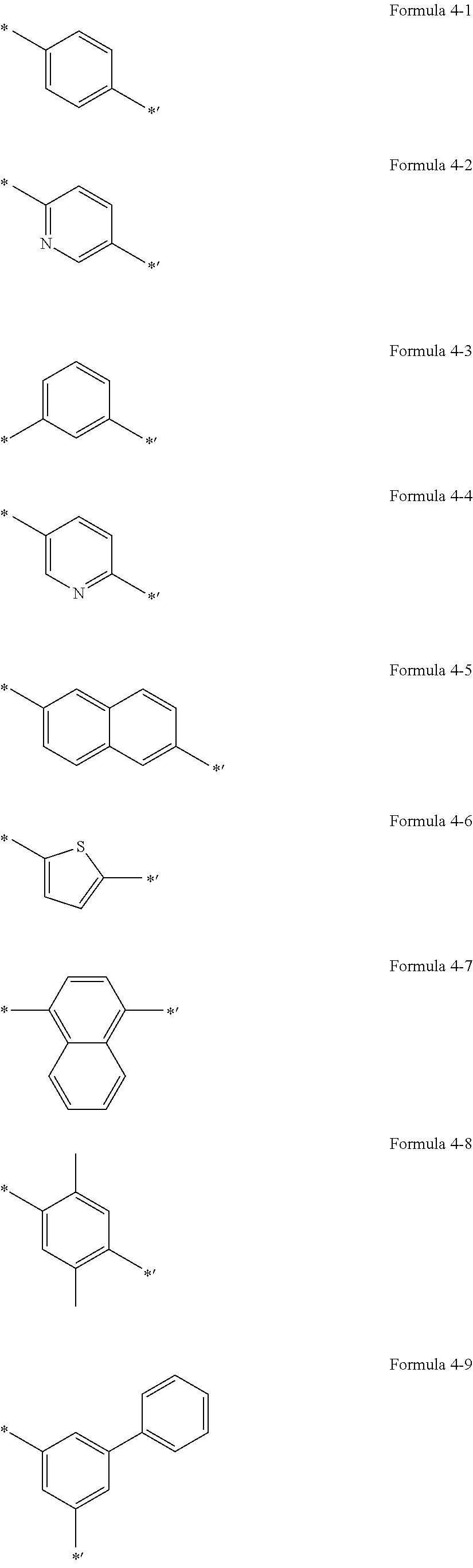

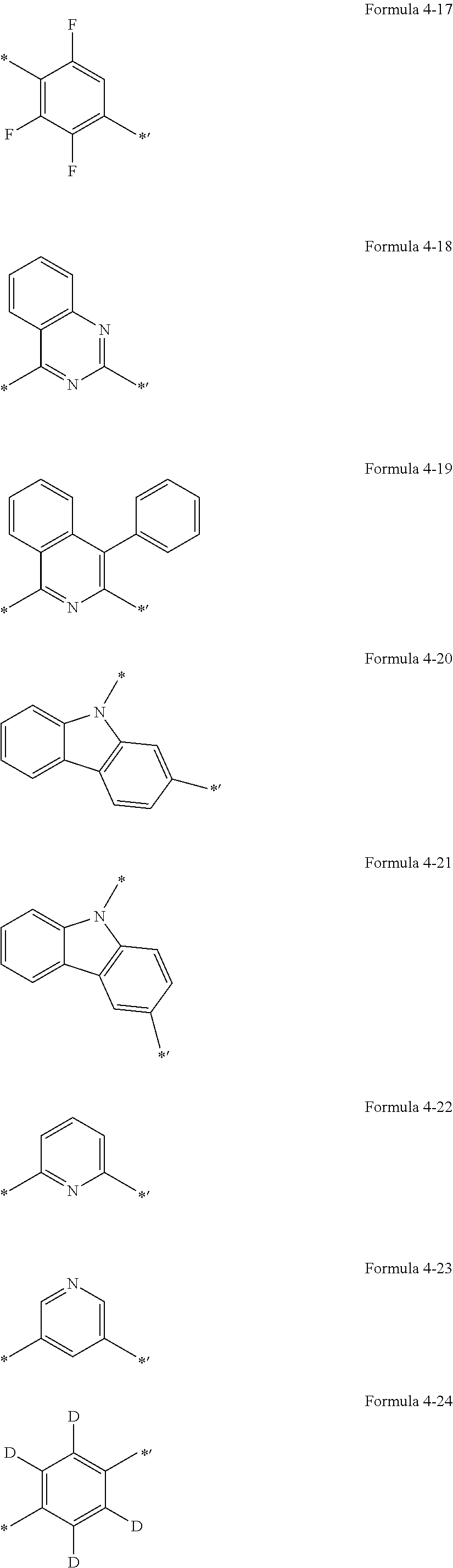


-
- —N(Q421)(Q422), —Si(Q423)(Q424)(Q425), and —B(Q426)(Q427),


Ar601-[(L601)xe1-E601]xe2 <Formula 601>


| TABLE 1 | |||||
| Driving | Current | Eff- | |||
| voltage | density | Luminance | iciency | ||
| Host | (V) | (mA/cm2) | (cd/m2) | (cd/A) | |
| Example 1 | Compound 1 | 3.2 | 10 | 578 | 5.78 |
| Example 2 | Compound 2 | 3.1 | 10 | 545 | 5.45 |
| Example 3 | Compound 11 | 3.8 | 10 | 480 | 4.80 |
| Example 4 | Compound 12 | 3.7 | 10 | 495 | 4.95 |
| Comparative | Compound A | 4.5 | 10 | 311 | 3.11 |
| Example 1 | |||||
| Comparative | Compound B | 4.3 | 10 | 367 | 3.67 |
| Example 2 | |||||
| Comparative | Compound C | 4.2 | 10 | 416 | 4.16 |
| Example 3 | |||||
| Comparative | Compound D | 4.4 | 10 | 422 | 4.22 |
| Example 4 | |||||
        |
|||||
Claims (20)


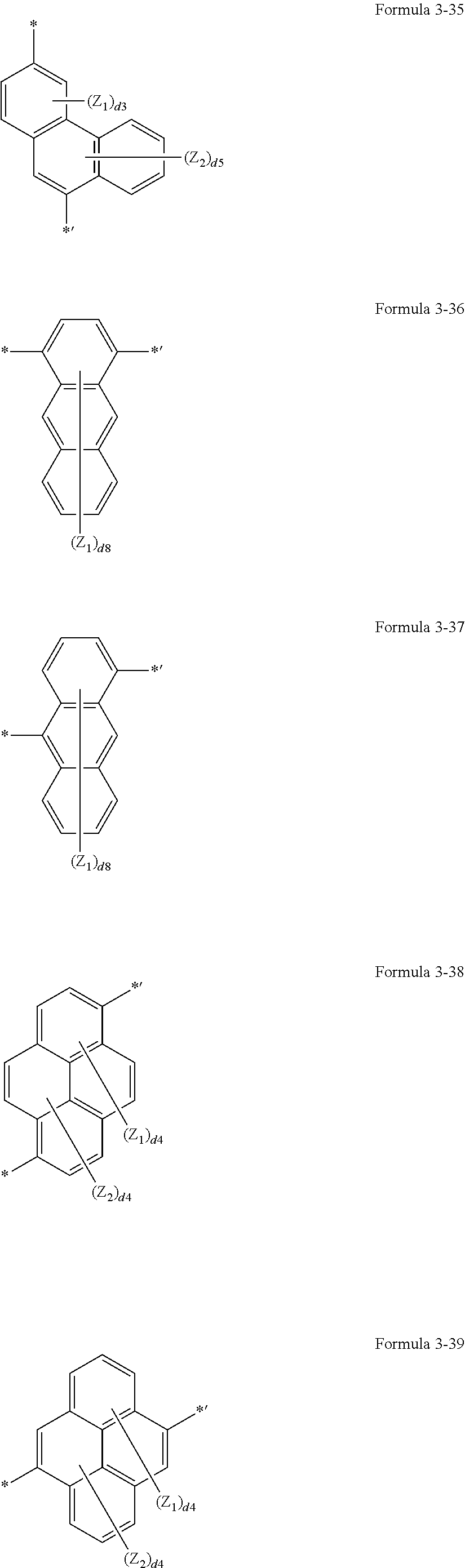


Applications Claiming Priority (2)
| Application Number | Priority Date | Filing Date | Title |
|---|---|---|---|
| KR10-2015-0124940 | 2015-09-03 | ||
| KR1020150124940A KR20170028496A (en) | 2015-09-03 | 2015-09-03 | Condensed-cyclic compound and organic light emitting device comprising the same |
Publications (2)
| Publication Number | Publication Date |
|---|---|
| US20170069847A1 US20170069847A1 (en) | 2017-03-09 |
| US10170703B2 true US10170703B2 (en) | 2019-01-01 |
Family
ID=58191148
Family Applications (1)
| Application Number | Title | Priority Date | Filing Date |
|---|---|---|---|
| US15/252,258 Active 2036-10-04 US10170703B2 (en) | 2015-09-03 | 2016-08-31 | Condensed cyclic compound and organic light-emitting device including the same |
Country Status (2)
| Country | Link |
|---|---|
| US (1) | US10170703B2 (en) |
| KR (1) | KR20170028496A (en) |
Families Citing this family (7)
| Publication number | Priority date | Publication date | Assignee | Title |
|---|---|---|---|---|
| US11495749B2 (en) | 2015-04-06 | 2022-11-08 | Universal Display Corporation | Organic electroluminescent materials and devices |
| US11818949B2 (en) * | 2015-04-06 | 2023-11-14 | Universal Display Corporation | Organic electroluminescent materials and devices |
| US10593890B2 (en) | 2015-04-06 | 2020-03-17 | Universal Display Corporation | Organic electroluminescent materials and devices |
| KR102654929B1 (en) * | 2016-05-10 | 2024-04-05 | 삼성디스플레이 주식회사 | Organic light emitting device |
| CN107162869A (en) * | 2017-05-05 | 2017-09-15 | 吉林奥来德光电材料股份有限公司 | Pyrene analog derivative electroluminescent organic material and preparation method thereof and organic electroluminescence device |
| US11834459B2 (en) | 2018-12-12 | 2023-12-05 | Universal Display Corporation | Host materials for electroluminescent devices |
| CN113698396B (en) * | 2021-09-03 | 2023-06-30 | 北京燕化集联光电技术有限公司 | Thermal activation delay fluorescent material and application thereof |
Citations (10)
| Publication number | Priority date | Publication date | Assignee | Title |
|---|---|---|---|---|
| JP2009054809A (en) | 2007-08-28 | 2009-03-12 | Mitsui Chemicals Inc | Organic transistor |
| JP2009182034A (en) | 2008-01-29 | 2009-08-13 | Mitsui Chemicals Inc | Organic transistor |
| KR20100082676A (en) * | 2009-01-09 | 2010-07-19 | 주식회사 엘지화학 | Novel compound, derivatives thereof and organic electronic device using the same |
| WO2011055933A2 (en) | 2009-11-03 | 2011-05-12 | 제일모직 주식회사 | Composition for an organic photoelectric device, organic photoelectric device using same, and display device comprising same |
| US20120097924A1 (en) | 2010-10-26 | 2012-04-26 | Samsung Mobile Display Co., Ltd. | Organic light-emitting device |
| US20120104379A1 (en) | 2007-03-23 | 2012-05-03 | Semiconductor Energy Laboratory Co., Ltd. | Organic compound, anthracene derivative, and light-emitting element, light-emitting device, and electronic device using anthracene derivative |
| KR20120043623A (en) | 2010-10-26 | 2012-05-04 | 삼성모바일디스플레이주식회사 | Organic light emitting device |
| US20130200350A1 (en) | 2010-09-13 | 2013-08-08 | Yuichi Sawada | Organic electroluminescent device |
| KR20140074286A (en) | 2011-09-09 | 2014-06-17 | 이데미쓰 고산 가부시키가이샤 | Organic electroluminescence element |
| KR20150070928A (en) * | 2013-12-17 | 2015-06-25 | 에스에프씨 주식회사 | An electroluminescent compound and an electroluminescent device comprising the same |
-
2015
- 2015-09-03 KR KR1020150124940A patent/KR20170028496A/en not_active Ceased
-
2016
- 2016-08-31 US US15/252,258 patent/US10170703B2/en active Active
Patent Citations (14)
| Publication number | Priority date | Publication date | Assignee | Title |
|---|---|---|---|---|
| KR20120089223A (en) | 2007-03-23 | 2012-08-09 | 가부시키가이샤 한도오따이 에네루기 켄큐쇼 | Organic compound, anthracene derivative, and light-emitting element, light-emitting device, and electronic device using anthracene derivative |
| US20120104379A1 (en) | 2007-03-23 | 2012-05-03 | Semiconductor Energy Laboratory Co., Ltd. | Organic compound, anthracene derivative, and light-emitting element, light-emitting device, and electronic device using anthracene derivative |
| JP2009054809A (en) | 2007-08-28 | 2009-03-12 | Mitsui Chemicals Inc | Organic transistor |
| JP2009182034A (en) | 2008-01-29 | 2009-08-13 | Mitsui Chemicals Inc | Organic transistor |
| KR20100082676A (en) * | 2009-01-09 | 2010-07-19 | 주식회사 엘지화학 | Novel compound, derivatives thereof and organic electronic device using the same |
| WO2011055933A2 (en) | 2009-11-03 | 2011-05-12 | 제일모직 주식회사 | Composition for an organic photoelectric device, organic photoelectric device using same, and display device comprising same |
| US20120273764A1 (en) | 2009-11-03 | 2012-11-01 | Cheil Industries, Inc. | Composition for organic photoelectric device, organic photoelectric device using the same, and display device including the same |
| US20130200350A1 (en) | 2010-09-13 | 2013-08-08 | Yuichi Sawada | Organic electroluminescent device |
| KR20130107295A (en) | 2010-09-13 | 2013-10-01 | 신닛테츠 수미킨 가가쿠 가부시키가이샤 | Organic electroluminescent element |
| KR20120043623A (en) | 2010-10-26 | 2012-05-04 | 삼성모바일디스플레이주식회사 | Organic light emitting device |
| US20120097924A1 (en) | 2010-10-26 | 2012-04-26 | Samsung Mobile Display Co., Ltd. | Organic light-emitting device |
| KR20140074286A (en) | 2011-09-09 | 2014-06-17 | 이데미쓰 고산 가부시키가이샤 | Organic electroluminescence element |
| US20140217393A1 (en) | 2011-09-09 | 2014-08-07 | Idemitsu Kosan Co., Ltd. | Organic electroluminescence element |
| KR20150070928A (en) * | 2013-12-17 | 2015-06-25 | 에스에프씨 주식회사 | An electroluminescent compound and an electroluminescent device comprising the same |
Non-Patent Citations (2)
| Title |
|---|
| Machine English translation of Bae et al. (KR 10-2010-0082676). Nov. 28, 2017. * |
| Machine English translation of Park et al. (KR 10-2015-0070928). May 8, 2018. * |
Also Published As
| Publication number | Publication date |
|---|---|
| US20170069847A1 (en) | 2017-03-09 |
| KR20170028496A (en) | 2017-03-14 |
Similar Documents
| Publication | Publication Date | Title |
|---|---|---|
| US12336426B2 (en) | Organic light-emitting device | |
| US9601698B2 (en) | Organic light-emitting devices | |
| US10333074B2 (en) | Organic light-emitting device | |
| US9905781B2 (en) | Condensed cyclic compound and organic light-emitting device including the same | |
| US20180019408A1 (en) | Organic light-emitting device | |
| US10825993B2 (en) | Organic light-emitting device and method of manufacturing the same | |
| US9666807B2 (en) | Organic light emitting device | |
| US10978643B2 (en) | Organic light-emitting device | |
| US9911926B2 (en) | Organic light-emitting device | |
| US9461272B2 (en) | Organic light emitting device including light-efficiency improvement layer | |
| US10249830B2 (en) | Carbazole-based compound and organic light-emitting device including the same | |
| US20170069847A1 (en) | Condensed cyclic compound and organic light-emitting device including the same | |
| US11038113B2 (en) | Organic light-emitting device | |
| US10727418B2 (en) | Organic light-emitting device | |
| US20160308144A1 (en) | Condensed cyclic compound and organic light-emitting device comprising the same | |
| US20170133599A1 (en) | Organic light-emitting device | |
| US10211405B2 (en) | Organic light-emitting device | |
| US10418566B2 (en) | Condensed cyclic compound and organic light-emitting device comprising the same | |
| US20160322581A1 (en) | Organic light-emitting device | |
| US10186666B2 (en) | Condensed-cyclic compound and organic light emitting device including the same | |
| US10087145B2 (en) | Condensed cyclic compound and organic light-emitting device comprising the same | |
| US20160293850A1 (en) | Condensed cyclic compound and organic light-emitting device including the same | |
| US9793500B2 (en) | Condensed cyclic compound and organic light-emitting device including the same | |
| US20170077422A1 (en) | Condensed cyclic compound and organic light-emitting device including the same | |
| US9780313B2 (en) | Carbazole-based compound and organic light-emitting device including the same |
Legal Events
| Date | Code | Title | Description |
|---|---|---|---|
| AS | Assignment |
Owner name: SAMSUNG DISPLAY CO., LTD., KOREA, REPUBLIC OF Free format text: ASSIGNMENT OF ASSIGNORS INTEREST;ASSIGNORS:KIM, SUNG-WOOK;KIM, MYEONG-SUK;CHO, HWAN-HEE;AND OTHERS;REEL/FRAME:039593/0807 Effective date: 20160829 Owner name: RESEARCH & BUSINESS FOUNDATION SUNGKYUNKWAN UNIVER Free format text: ASSIGNMENT OF ASSIGNORS INTEREST;ASSIGNORS:KIM, SUNG-WOOK;KIM, MYEONG-SUK;CHO, HWAN-HEE;AND OTHERS;REEL/FRAME:039593/0807 Effective date: 20160829 |
|
| STCF | Information on status: patent grant |
Free format text: PATENTED CASE |
|
| MAFP | Maintenance fee payment |
Free format text: PAYMENT OF MAINTENANCE FEE, 4TH YEAR, LARGE ENTITY (ORIGINAL EVENT CODE: M1551); ENTITY STATUS OF PATENT OWNER: LARGE ENTITY Year of fee payment: 4 |
|
| MAFP | Maintenance fee payment |
Free format text: PAYMENT OF MAINTENANCE FEE, 8TH YEAR, LARGE ENTITY (ORIGINAL EVENT CODE: M1552); ENTITY STATUS OF PATENT OWNER: LARGE ENTITY Year of fee payment: 8 |